The 2026 Marathon des Sables – The Legendary is not just another year in the desert. It marks 40 years of the race. That alone tells you something about what’s coming. This edition matters. It will be longer, tougher, and built to celebrate the history of the event properly.
As we move through March, I will release weekly articles to help you sharpen your preparation. This is the first of four. The aim here is simple: give you clarity. No surprises. No guesswork.
The Shape of the 2026 Race
If you raced in 2025, you already experienced the longest edition in MDS history. In 2026, the format stays similar but the distance increases again.
Six stages. Seven days. All timed.
In previous years, the charity stage was not timed. That changed in 2025 and continues in 2026. Every stage now counts.
The long stage returns to Stage 4, just as it did in 2025. This time it will be 100km. Read that again. One hundred kilometres across two days in the desert.
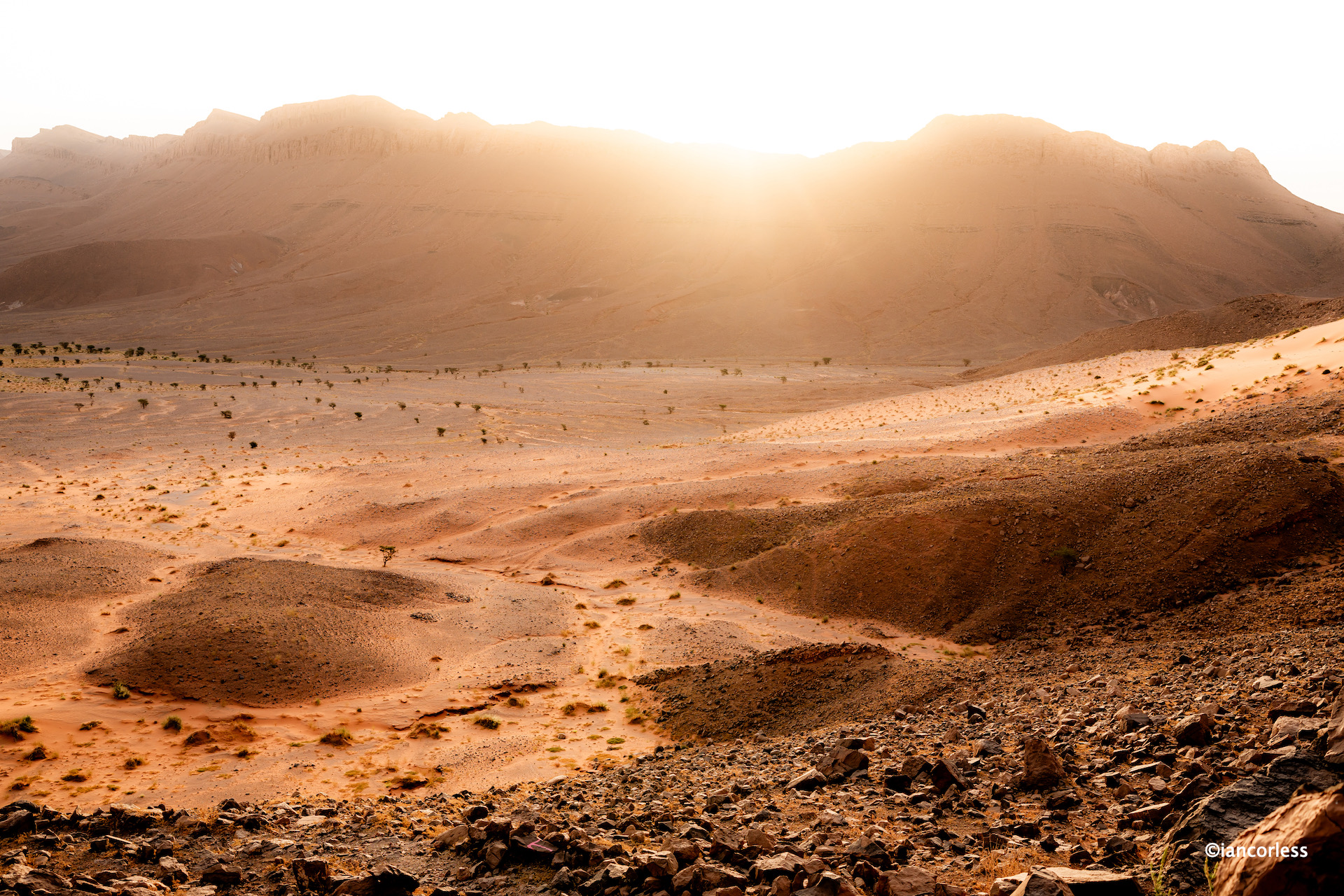
While total distance has fluctuated over the years, 250km has often been the benchmark. For 2026, you should plan for approximately 270km plus or minus. It should not shock you. But it will test you.
One positive? Depending on how quickly you complete the long stage, you may have almost a full day and night to recover before Stages 5 and 6. That recovery window could be valuable.
Daily stage distances are rarely confirmed in advance. It remains unclear whether exact distances will be released before arrival in Morocco. Historically, that information is kept quiet. Still, it’s not hard to estimate how the race could look.
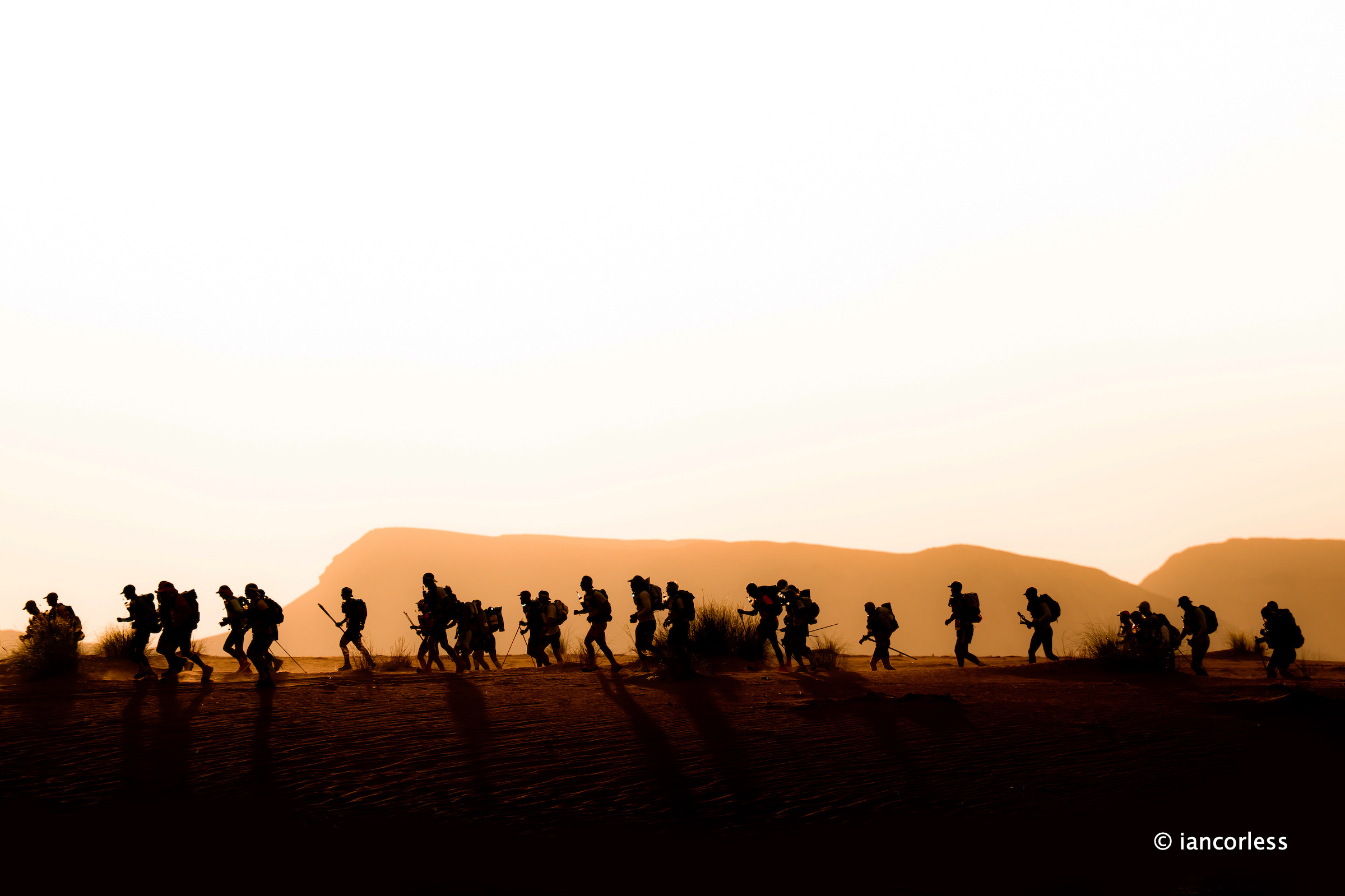
A likely outline might be:
Stage 1: 32km (Day 1) – total 32km
Stage 2: 38km (Day 2) – total 70km
Stage 3: 36km (Day 3) – total 106km
Stage 4: 100km (Days 4 and 5) – total 206km
Stage 5: 42km (Day 6) – total 248km
Stage 6: 21km (Day 7) – total 269km
Total: approximately 269km +/-
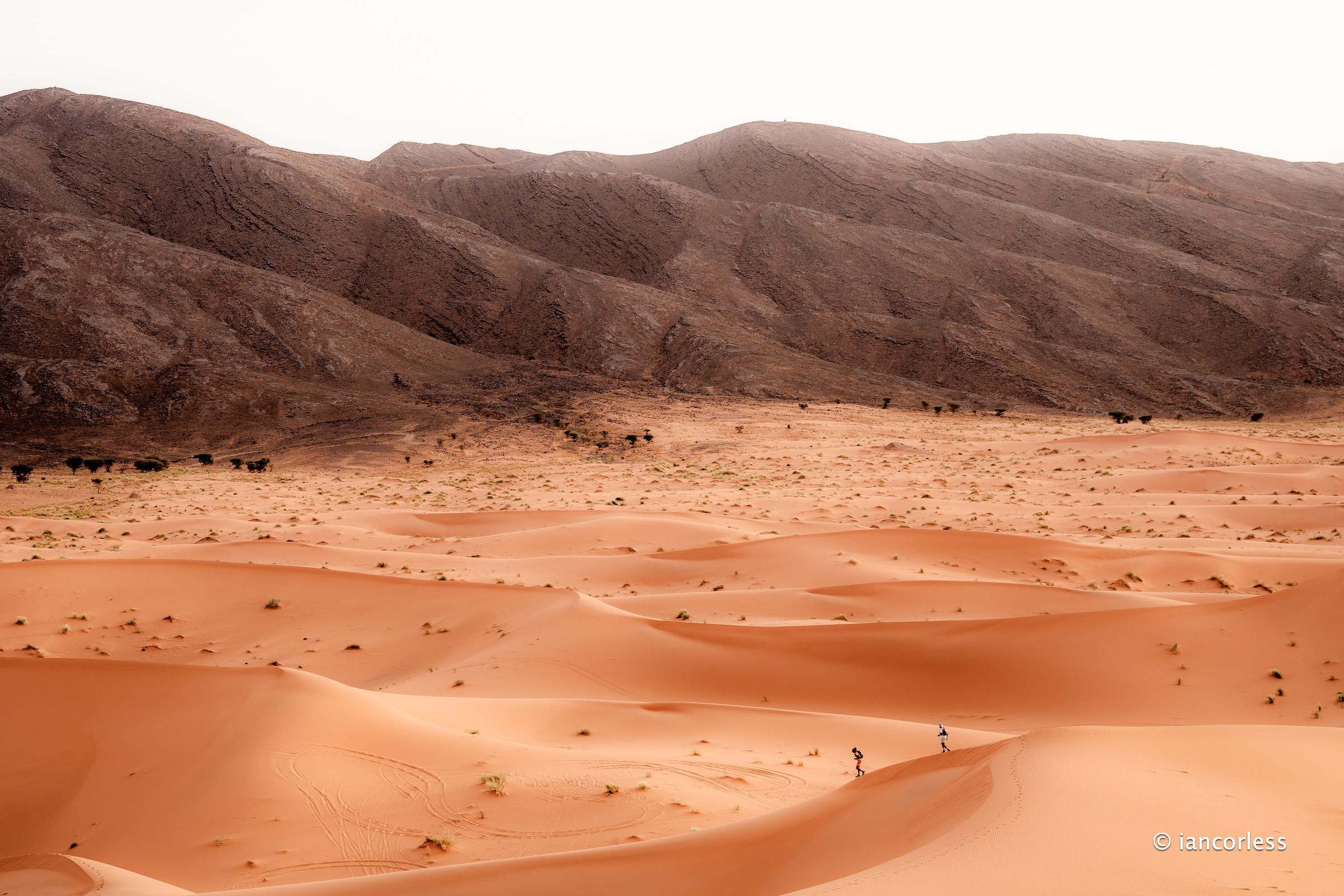
As in 2025, expect sand. A lot of it. Expect the Merzouga Dunes. Do not expect Djebel El Otfal.
You now have a working template to mentally prepare for the challenge ahead.
Before the Race Even Starts
Your race does not begin at the start line. It begins with logistics.
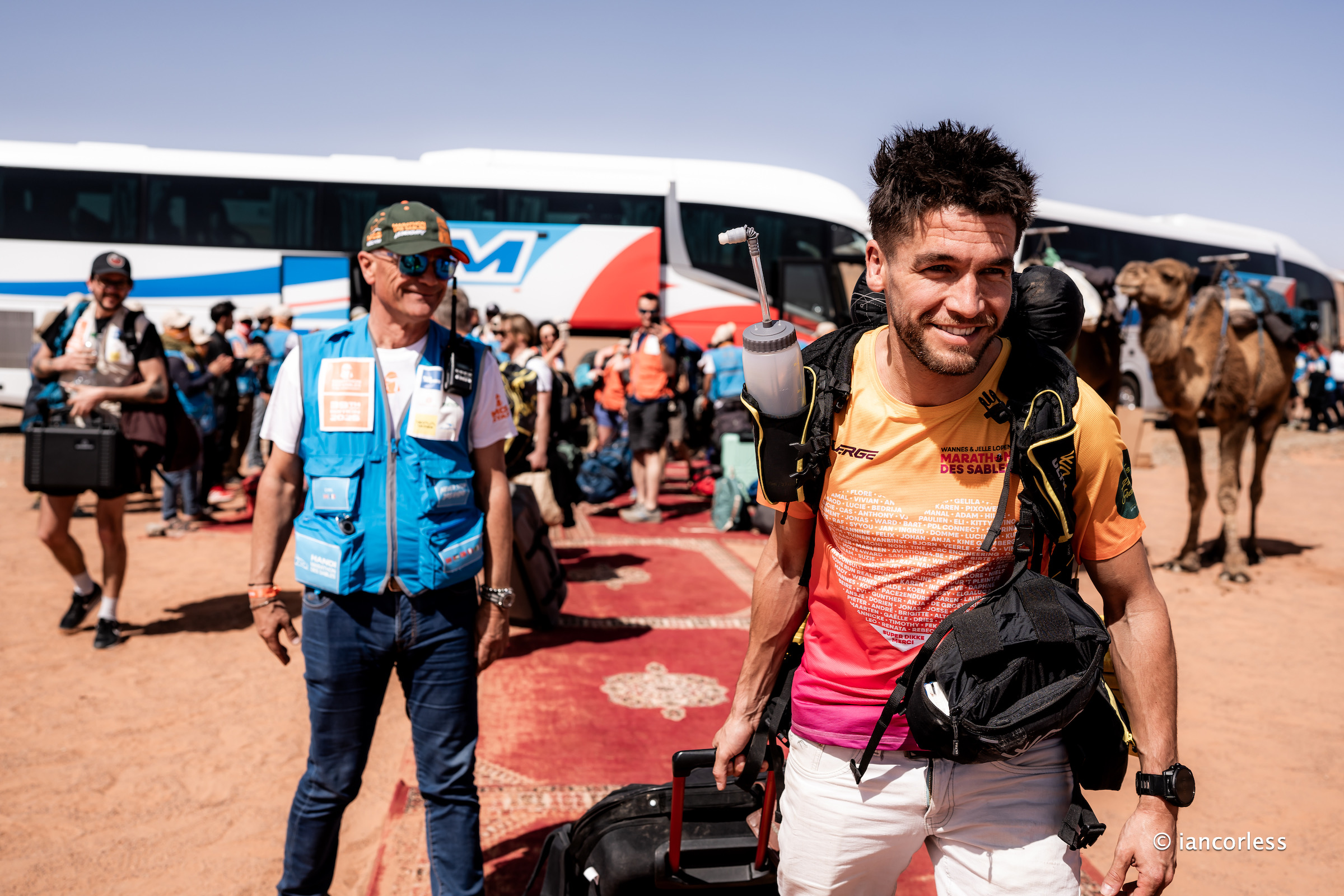
In the final 2 to 3 weeks before the race, taper training back so that you are fresh and strong. Also plan for heat adaptation, this could be specific heat chamber sessions or a series of sauna sessions or similar.
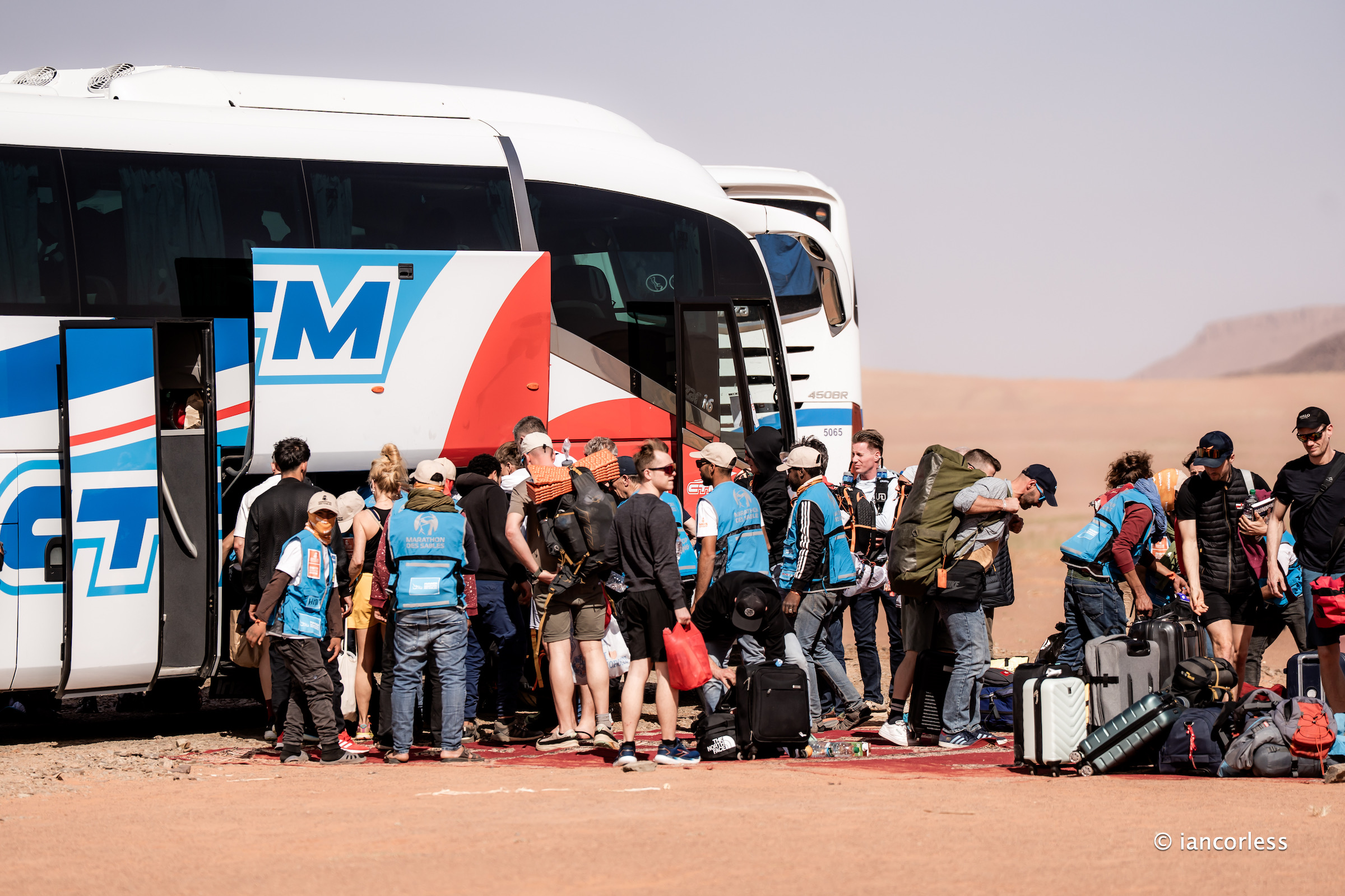
You are responsible for arranging your own accommodation before the official transfer from Ouarzazate to bivouac one. If you fly into Marrakech, you may need a hotel there as well. There are free transfer buses from Marrakech to Ouarzazate. Arrive in Ouarzazate at least one day before required, have a good hotel night and time to relax and prepare before the transfer to the desert. MDS will confirm the dates and times for transfers etc.
From there, the structure usually follows this pattern:
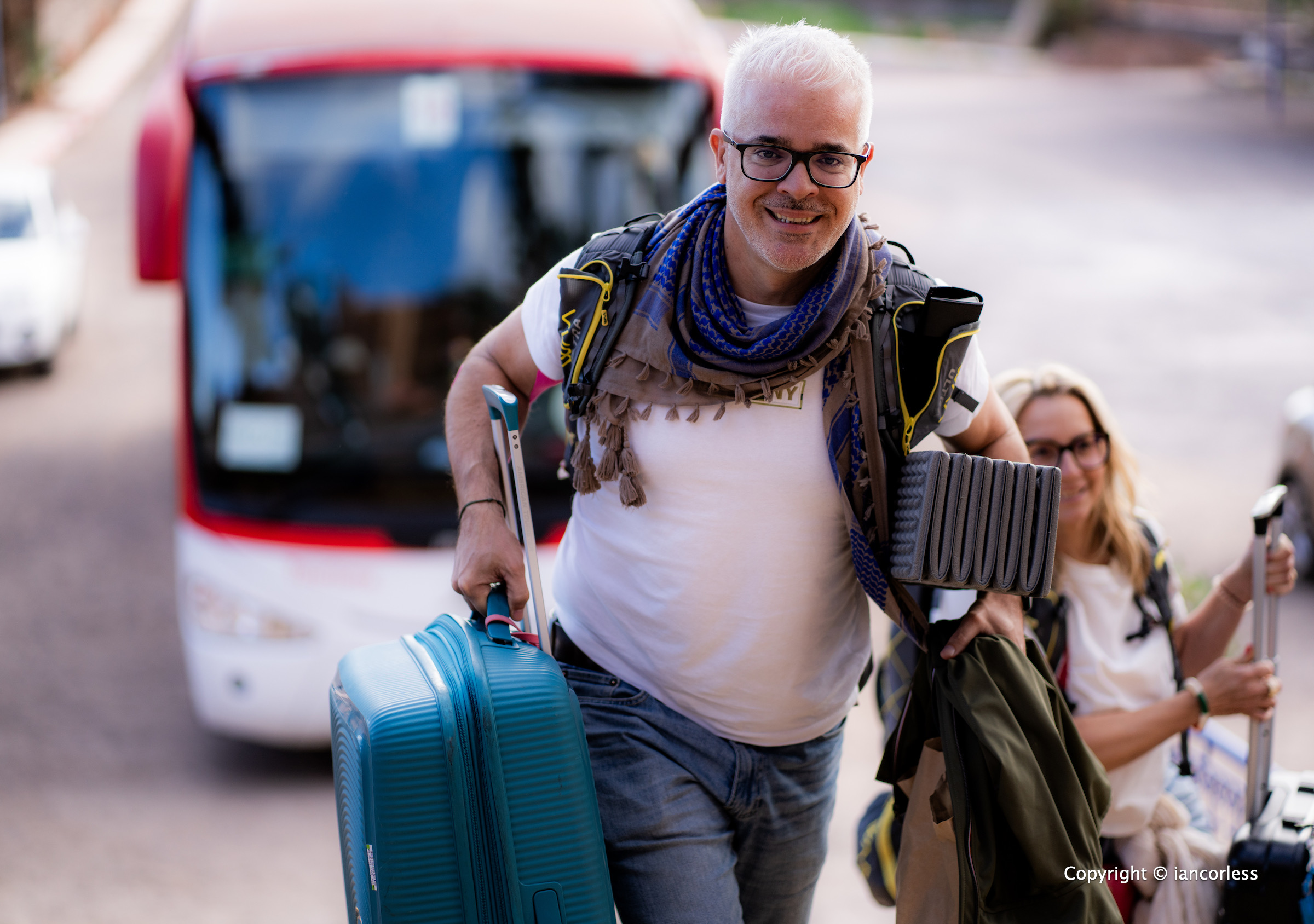
Day 1 – Bus transfer from Ouarzazate to the desert bivouac. You settle in and stay overnight. This is self-sufficient. No meals are provided. Bring enough food for arrival day and admin day. There is no weight restriction at this point, so bring what you want.
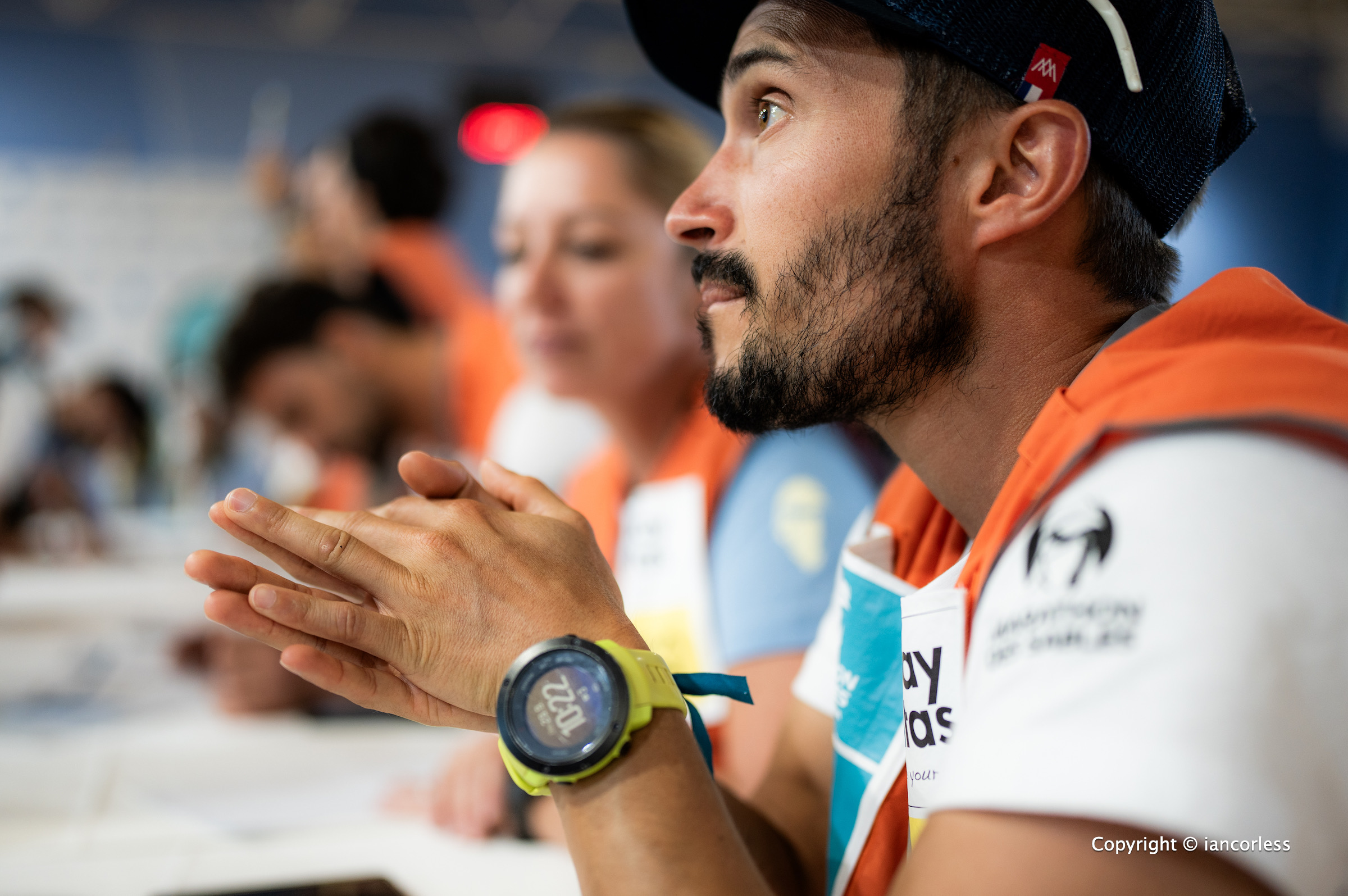
Day 2 – Technical, administrative, and medical checks. Overnight in bivouac, still self-sufficient.
Day 3 – Stage 1
Day 4 – Stage 2
Day 5 – Stage 3
Days 6 and 7 – Stage 4, the 100km long stage
Day 8 – Stage 5
Day 9 – Stage 6, medal at the finish, bus transfer back to Ouarzazate. Overnight hotel with half-board.
Day 10 – Free day in Ouarzazate, awards ceremony and gala evening. Hotel half-board.
Day 11 – Airport transfers. End of the adventure.
Bivouac Reality
From the moment you step into the bivouac, you are self-sufficient. Water is provided. Everything else is your responsibility.
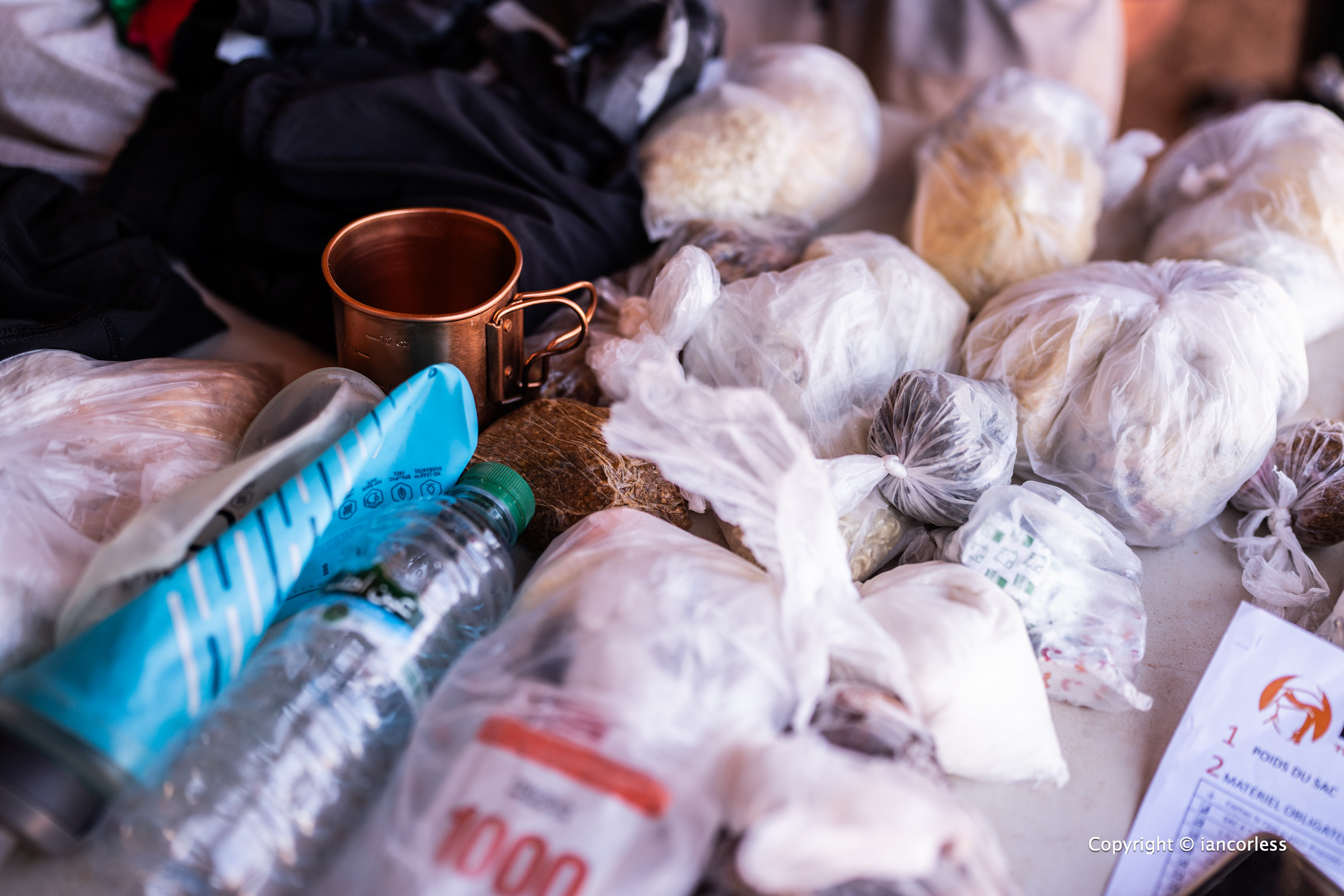
You must bring food and drink to cover arrival day and admin day before racing begins. You do not carry this food during the race, so be smart. Bring proper meals. Rachid, for example, makes a Tagine in camp.
You also have access to your luggage before admin checks. This is valuable. Bring spare kit, extra layers, backup options. You can fine tune your equipment in real desert conditions.
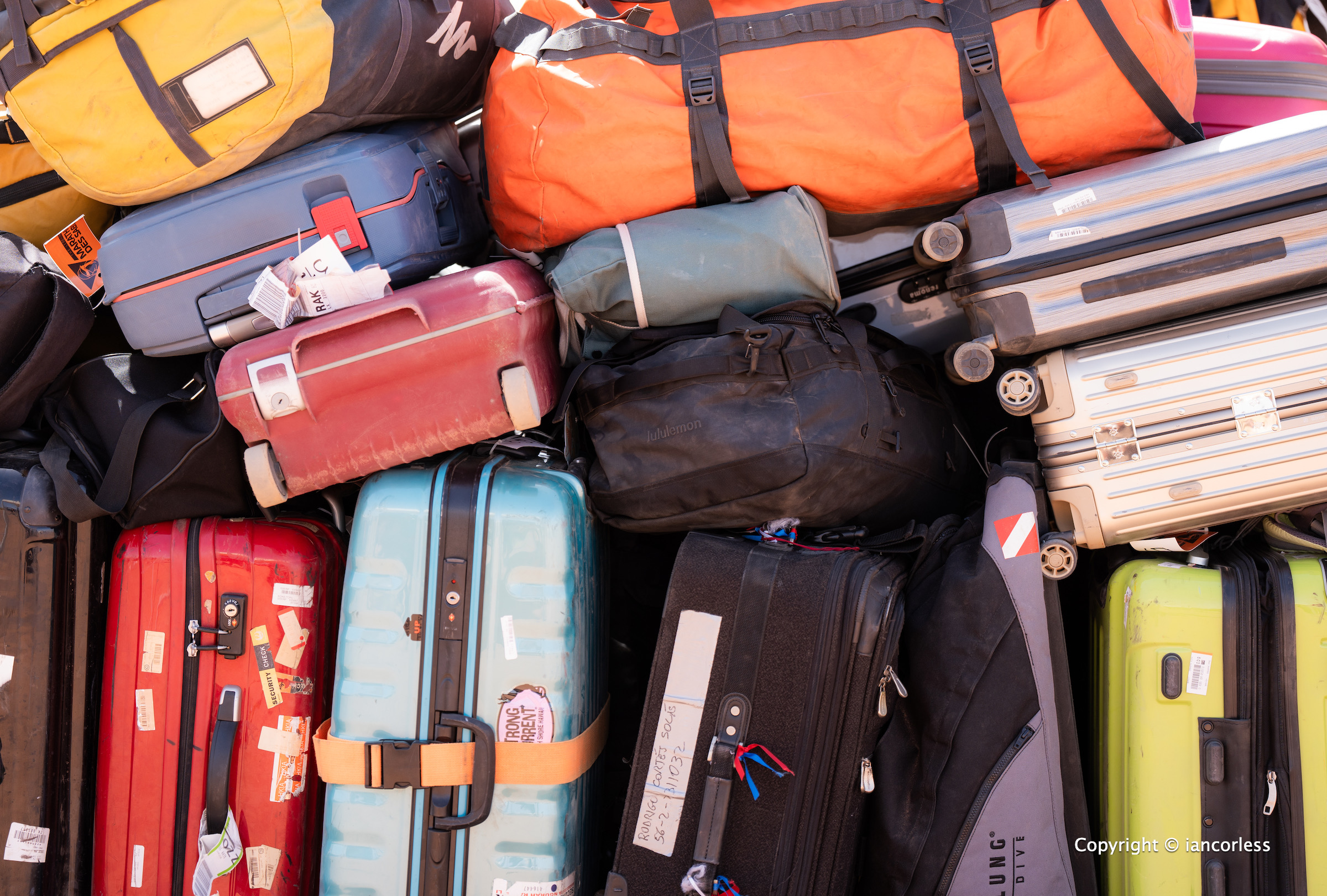
And do not assume MDS = heat. In 2025, we had rain, strong winds and sand storms.
Recent editions have shown how unpredictable conditions can be. The October MDS 120 Morocco race in 2024 saw rain and flooding. The Atlantic Coast edition had extreme wind, cold temperatures and rain. The desert is not always hot and dry. Prepare for variation.
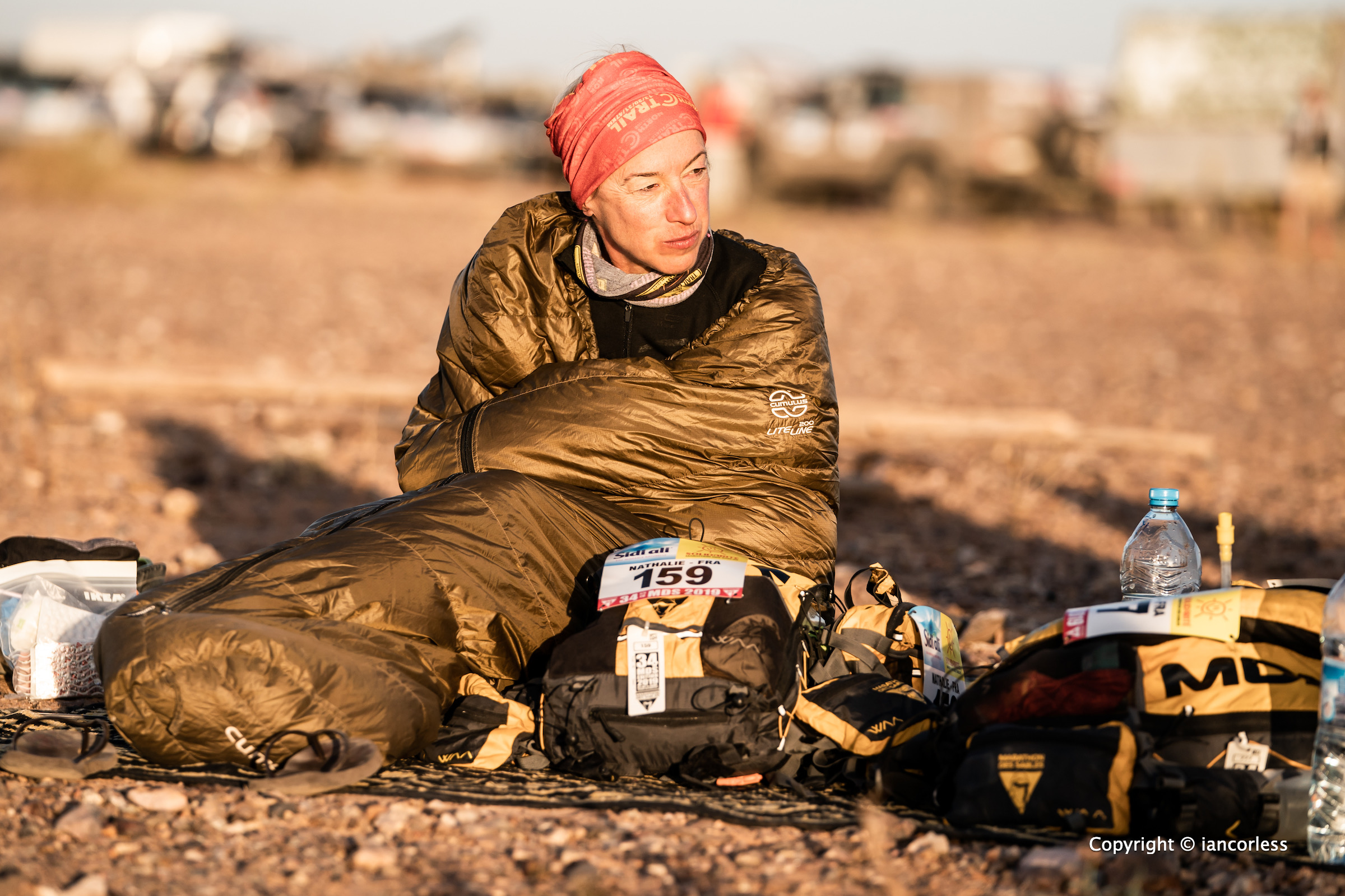
Before admin, you can adjust your race pack. After that, your pack must meet regulations:
Minimum weight: 6.5kg excluding 1.5 lts of water.
Minimum food: 2000 calories per day.
All mandatory kit must be present.
No exceptions.
Water Strategy Has Changed
Since 2024, water provision has evolved.
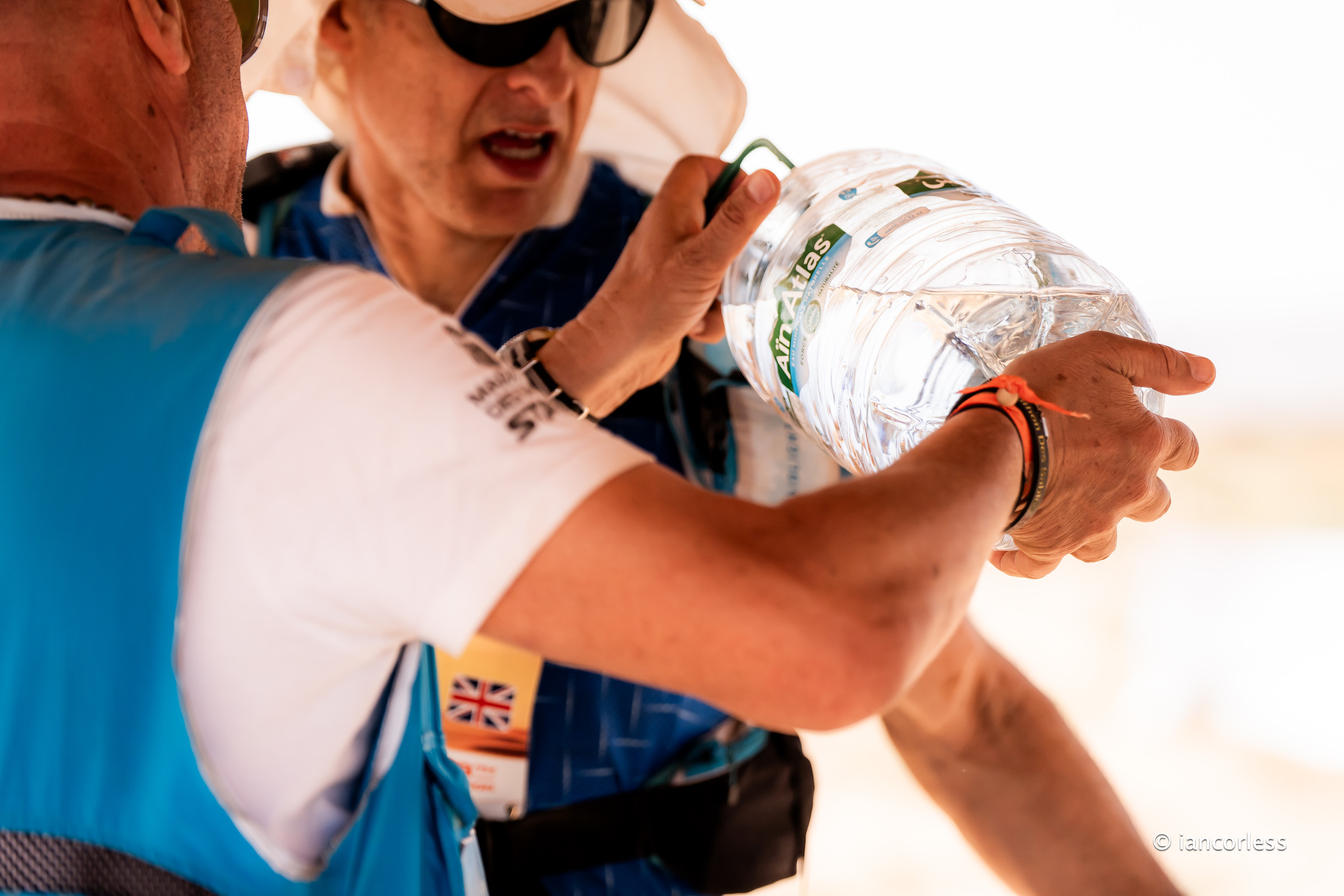
Once Stage 1 begins, water during stages is effectively unlimited. You are no longer handed sealed 1.5L bottles at checkpoints. Instead, volunteers in blue coats pour water from large containers into your bottles.
If you stand at a checkpoint and drink a full bottle, they refill it.
Typically, checkpoints are spaced around 10km apart, terrain permitting. However, if conditions demand it, additional water stations may be placed between checkpoints, for example at 5km. This flexibility is important to combat excessive heat.
For the long stage, there may be a requirement to carry additional water capacity. This could be supplied in a 1.5L bottle. Plan ahead. Either have spare capacity to decant, or a system to carry a full bottle.
After each stage, water is rationed. You receive one 5L bottle. That 5L must cover:
- Post-stage hydration
- Dinner preparation
- Breakfast preparation
- Water allocation to CP1 the next day
If you want to wash, that also comes from the same 5L. Prioritize drinking and eating. Washing is optional. Hydration is not.
Salt Is Now Non-Negotiable
The race rules require 14 broth cubes. They are salty and mandatory.
In 2024, this change was questioned. By the end of the race, feedback was largely positive.
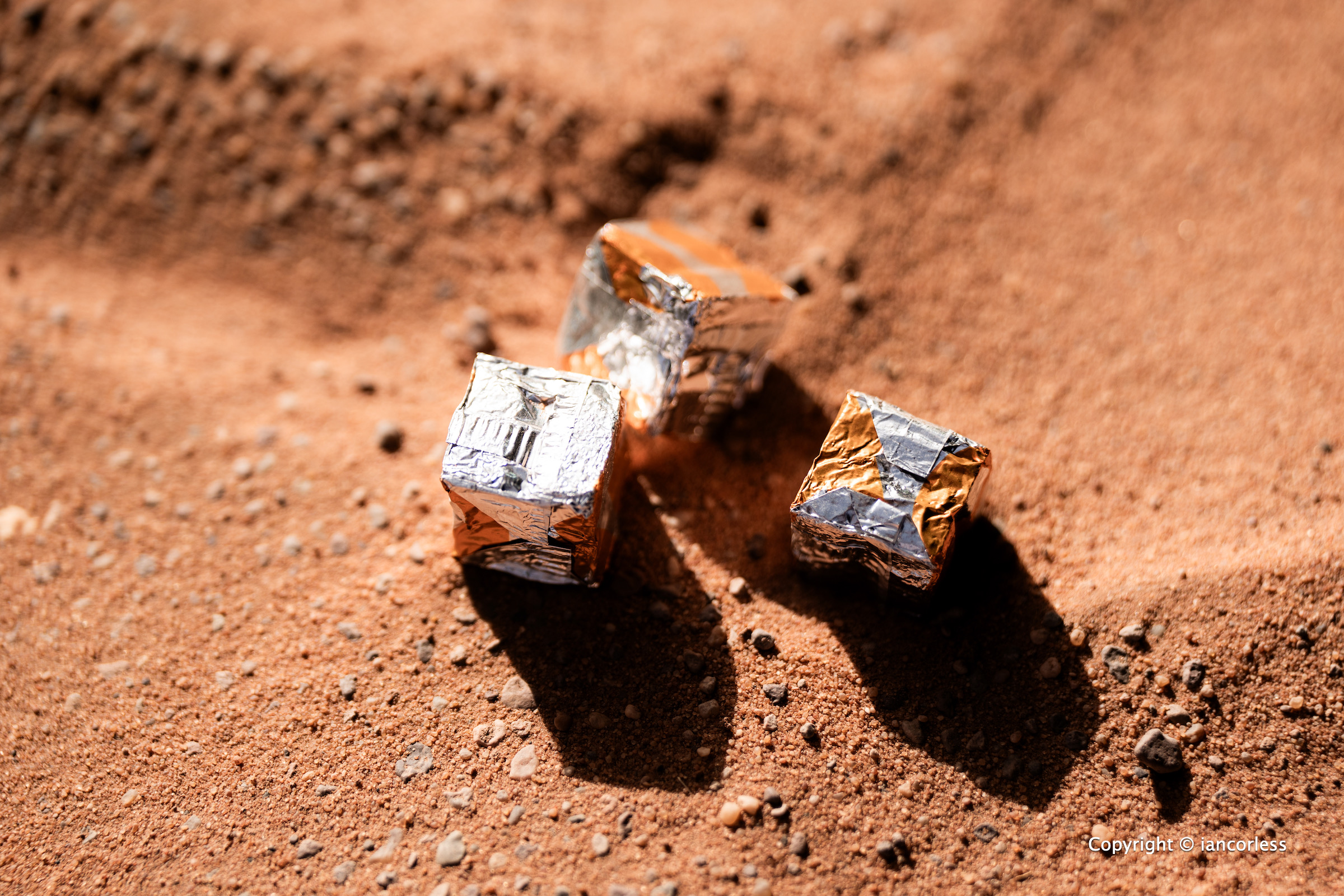
Not all cubes dissolve well. Test them. Many athletes use ‘Knorr’ because it dissolves reliably. Build a salt replacement strategy that works for you. This is a self-sufficient race. You must manage your own electrolyte plan.
Feet: The Deciding Factor
Along with dehydration, damaged feet are one of the main reasons people do not finish.
Your shoes must fit correctly. Your socks must suit you. You must know how to treat hot spots and blisters. Desert sand magnifies small problems quickly.
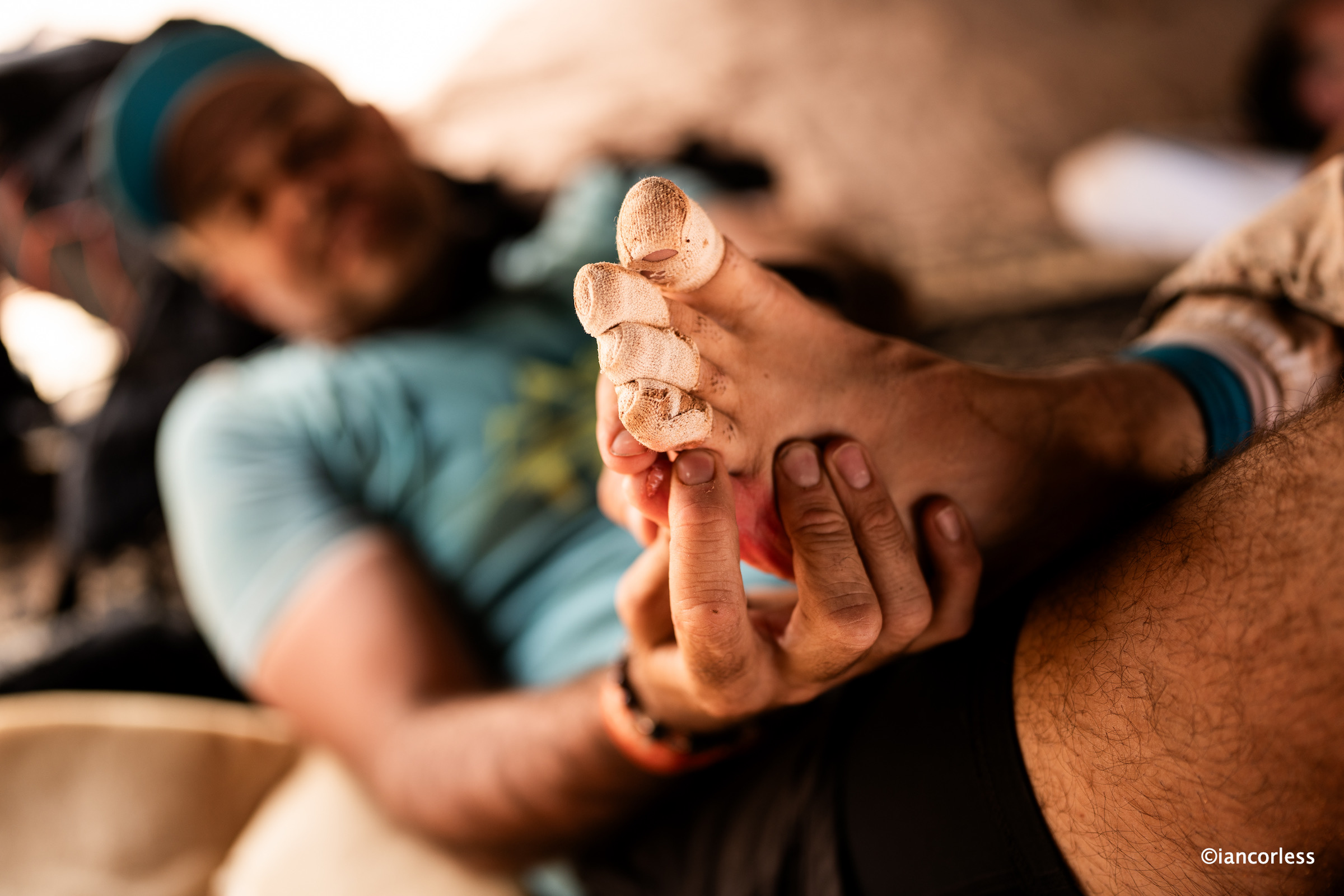
Ignore your feet at your peril.
Advice – A thumb nail of space above your longest toe is ideal. Note, I say longest toe – this may not be your big toe! A wider shoe is a good idea to allow for toe splay. If a shoe is too big, your foot will move when walking or running. A moving foot causes friction, friction means blisters.
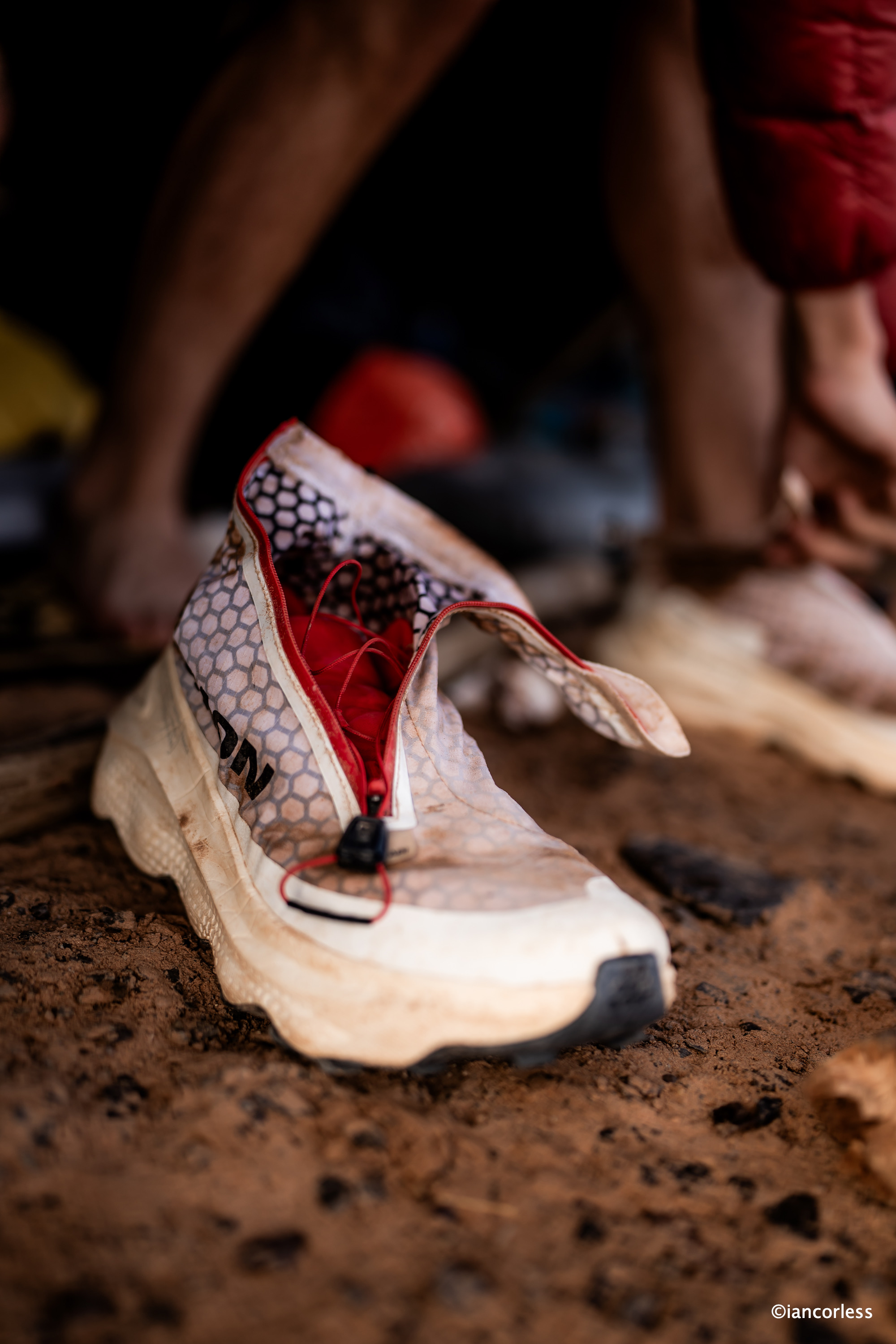
Make sure your shoes have gaiters so no sand can get in the shoe.
Safety on Course
The race operates under strict safety protocols.
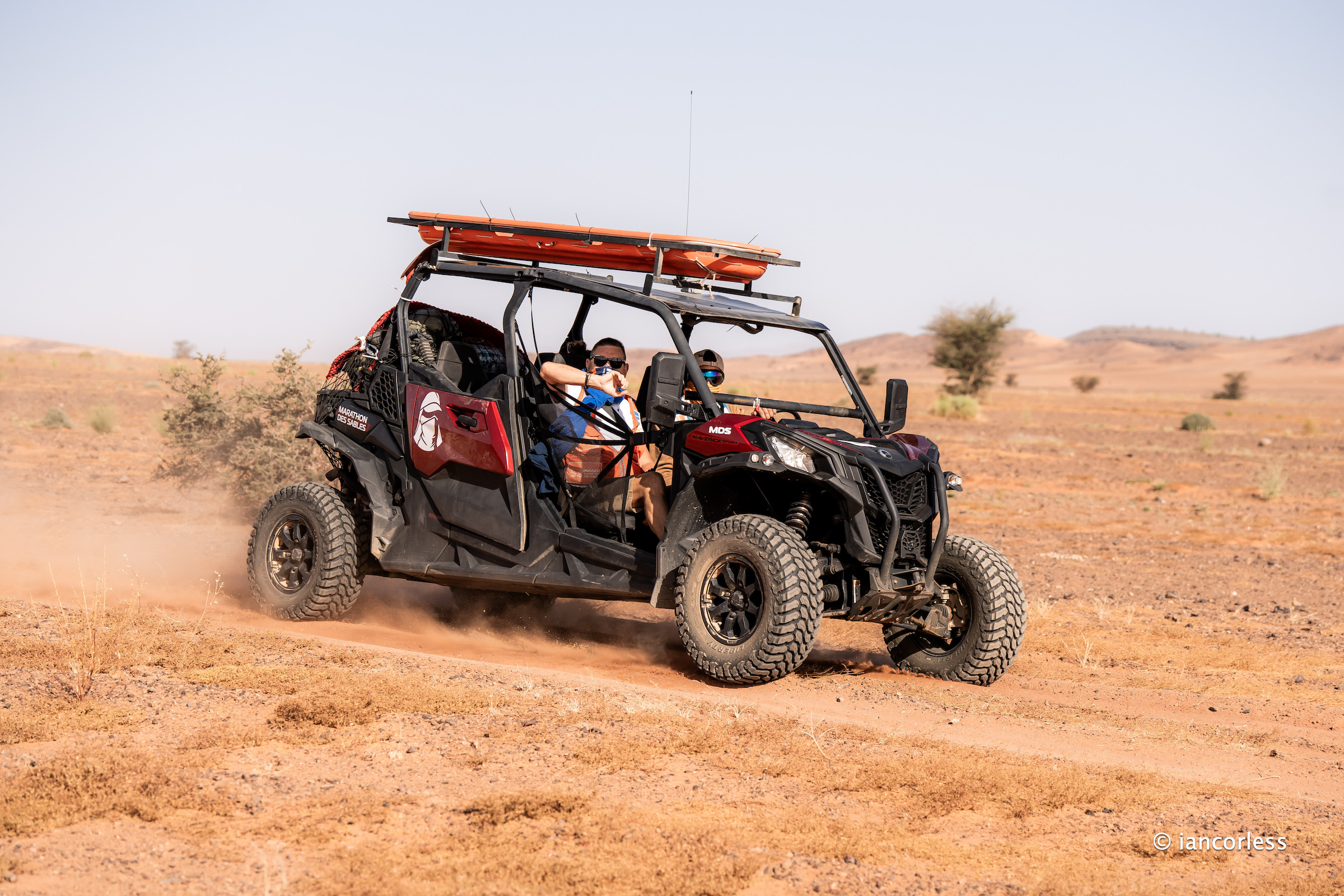
Fast response buggies are positioned to access difficult terrain quickly. 4×4 vehicles are spread across the course.
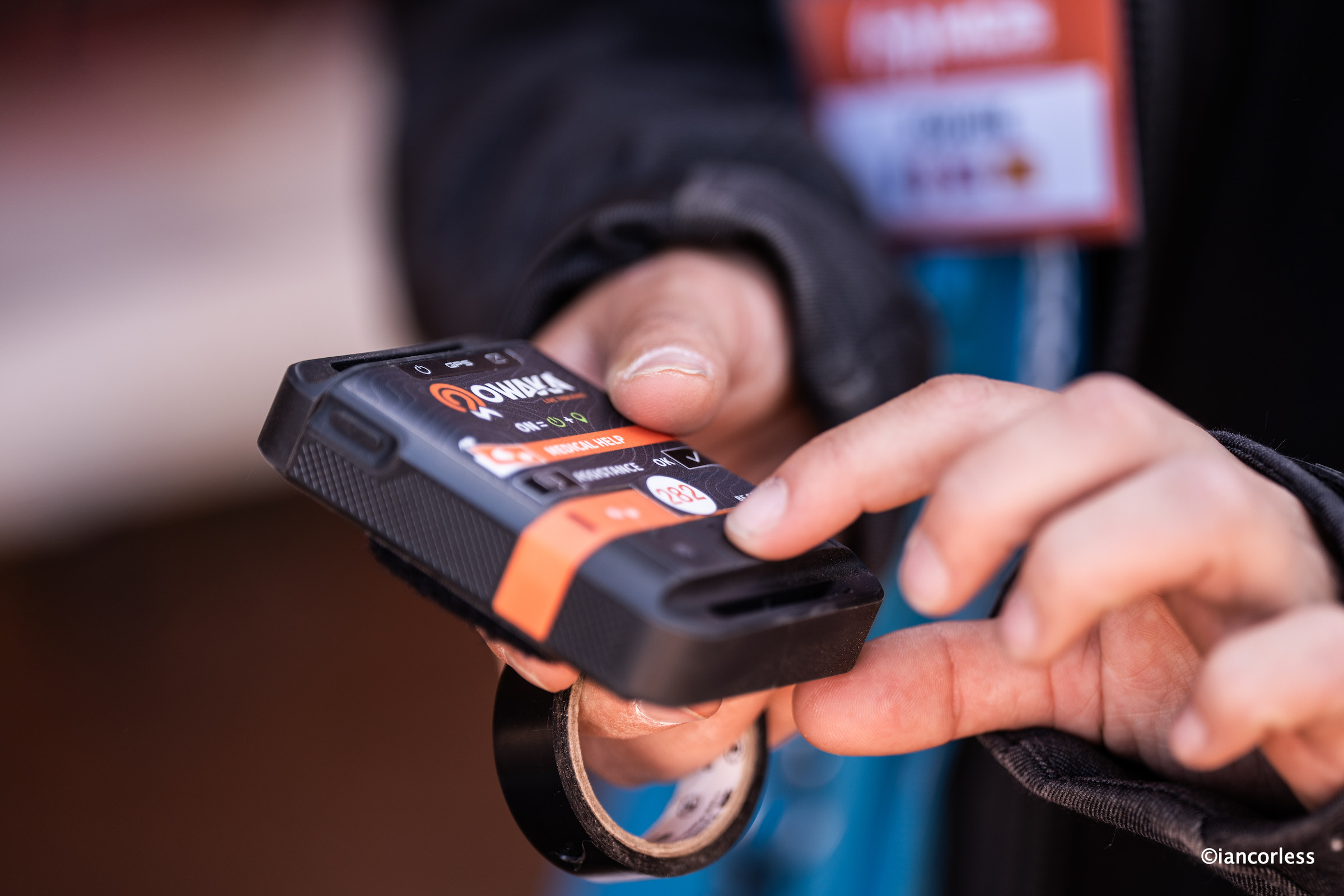
Every runner carries a tracker attached to their pack. This allows the organization to monitor your position in real time. It includes an emergency button for immediate assistance.
There are also medical runners on course. These are trained medical professionals competing in the race. They wear a different colour race number so you can identify them. They can provide immediate care if necessary. In addition, the full medical team is equipped to respond anywhere in the desert.
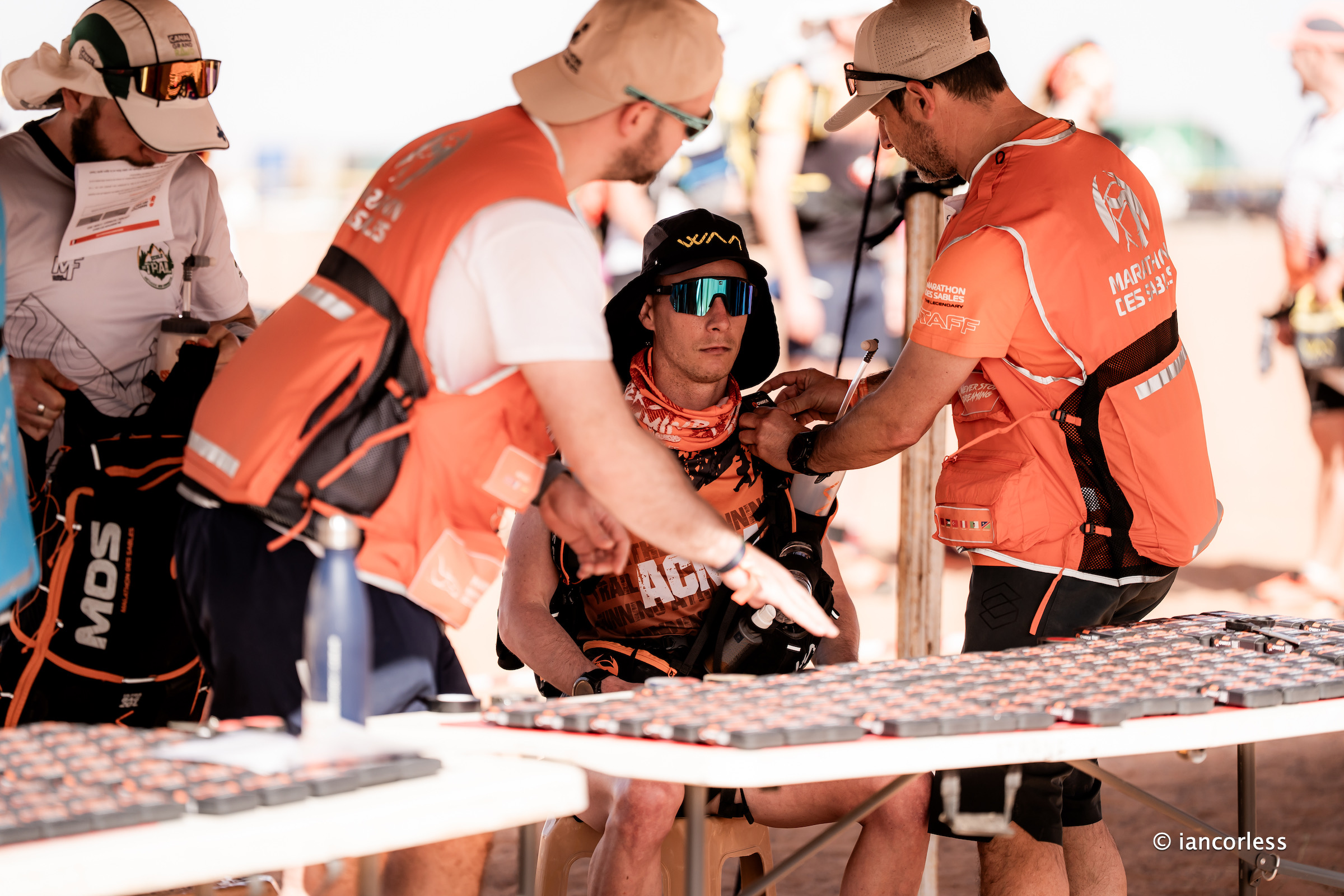
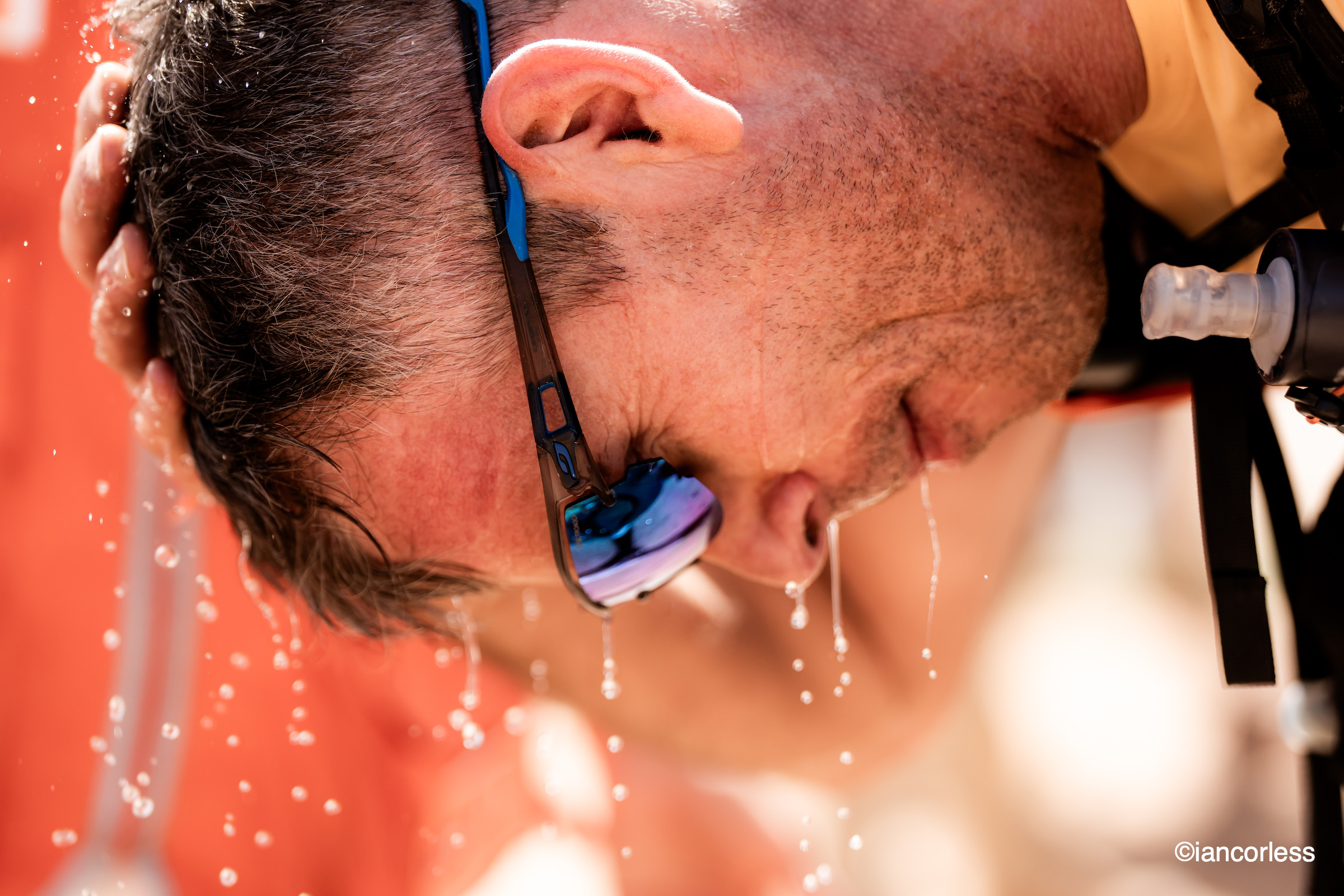
During stages, water is not rationed. If you need more, you can have it. At key checkpoints, iced water is available for cooling and is poured over your head by blue coat volunteers. Orange jackets manage medical incidents.
Mandatory Equipment Means Mandatory
You must carry:
- Pack such as WAA Ultra Bag 20L
- Minimum 1.5L water capacity
- Sleeping bag
- Head torch plus spare batteries (charger or solar charger allowed)
- 10 safety pins
- Compass with 1–2 degree precision
- Lighter
- Whistle
- Knife
- Topical disinfectant
- Signal mirror
- Survival blanket
- 14 broth cubes
- Sun cream
- 200 euros or 2000 dirhams
- Passport or ID card
- Original ECG document and medical certificate
- Roadbook (provided on arrival)
- GPS tracker
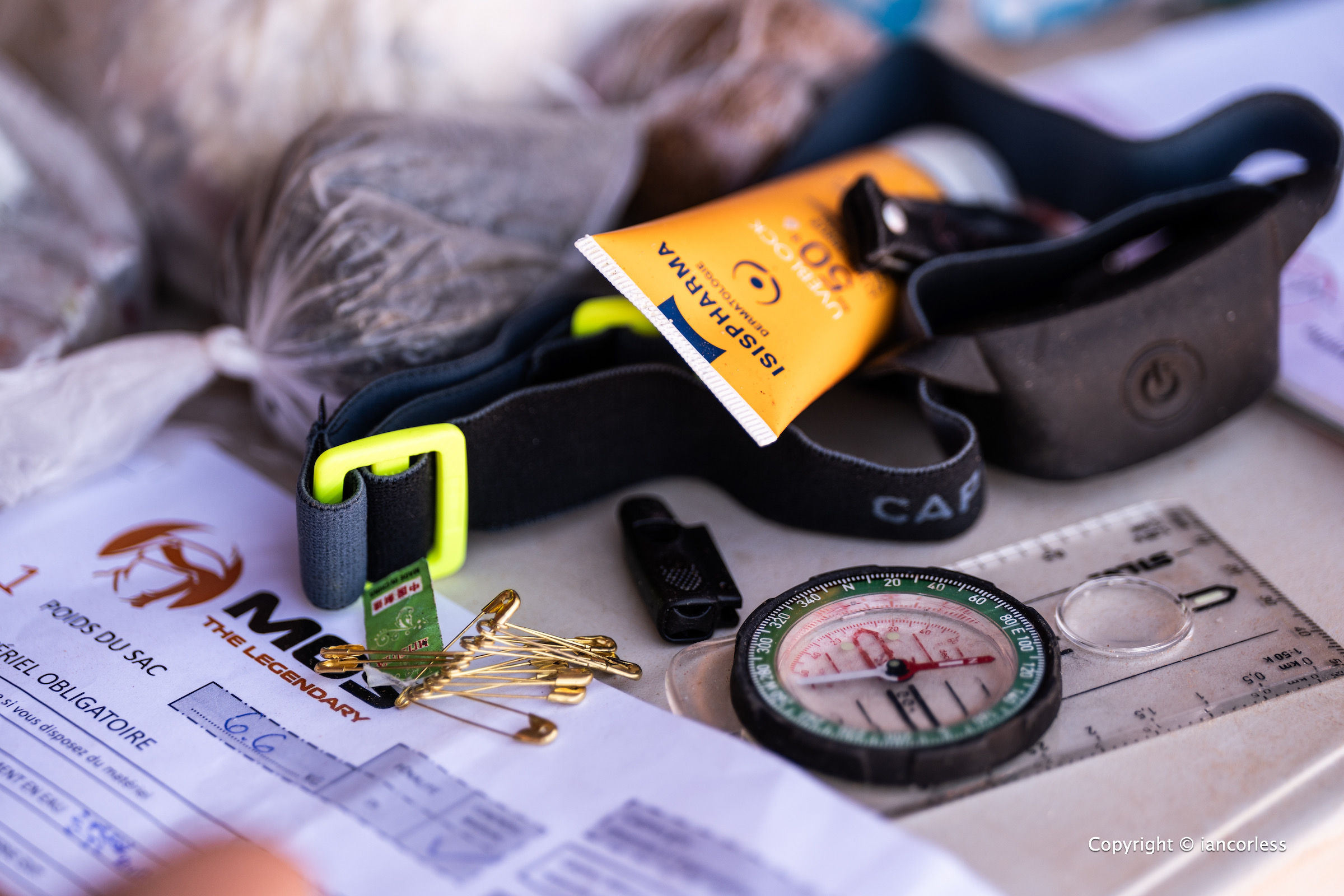
Pay close attention to deadlines and rules for ECG and medical forms. The regulations are strict.
Calories: The Real Numbers
The rules require 2000 calories per day across six stages. That equals 12,000 calories minimum to comply.
However, with the rest period during the long stage, 14,000 calories is a more realistic minimum. You may carry more. For example, a small and slight women weighing 50kg has very different calorie needs to a tall, muscular 90kg male. Understand your calorie needs.
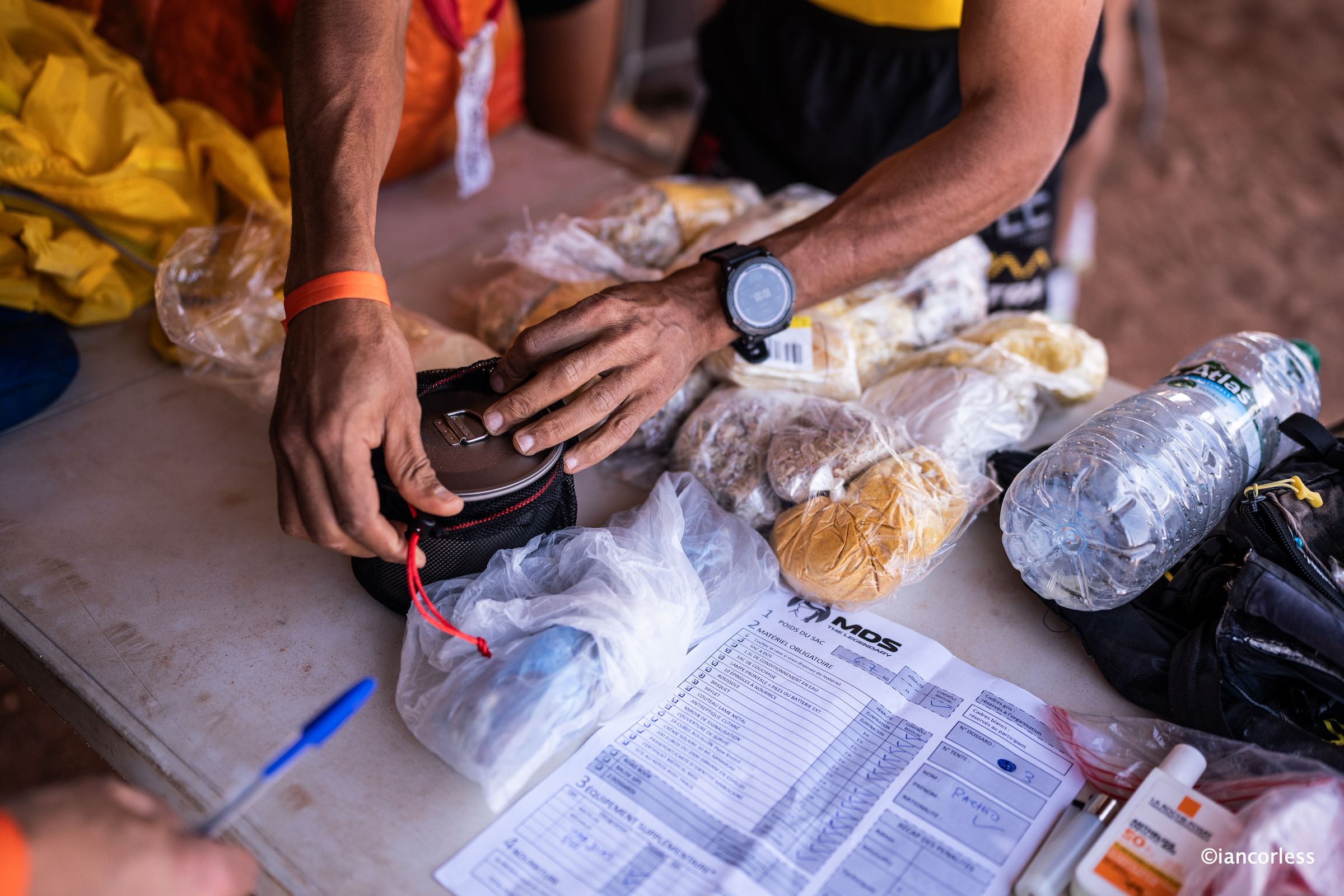
You must be able to prove calorie totals. If you repackage food into lighter containers, keep the nutritional labels.
To break it down clearly:
Stage 1 – 14,000 calories remaining
Stage 2 – 12,000 calories remaining
Stage 3 – 10,000 calories remaining
Stage 4 – 8,000 calories remaining (long stage)
Day 5 – 6,000 calories remaining (rest day, still requires 2000 calories)
Stage 5 – 4,000 calories remaining
Stage 6 – 2,000 calories remaining
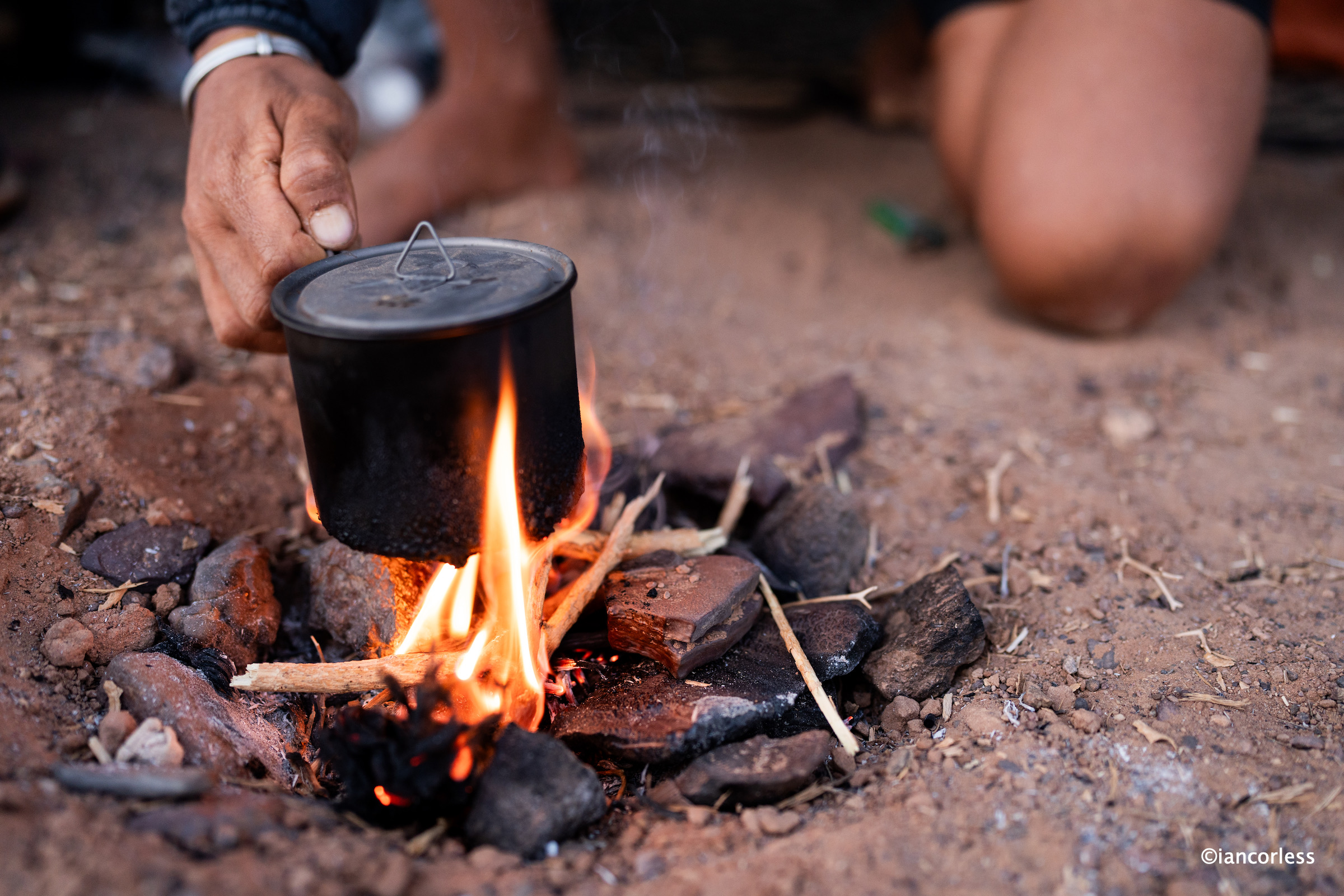
On Day 5, you may still be moving during the long stage or recovering in camp, but you still require 2000 calories. On Stage 6, you technically only need breakfast and race snacks.
Essential Personal Kit
Beyond mandatory equipment and food, you will need:
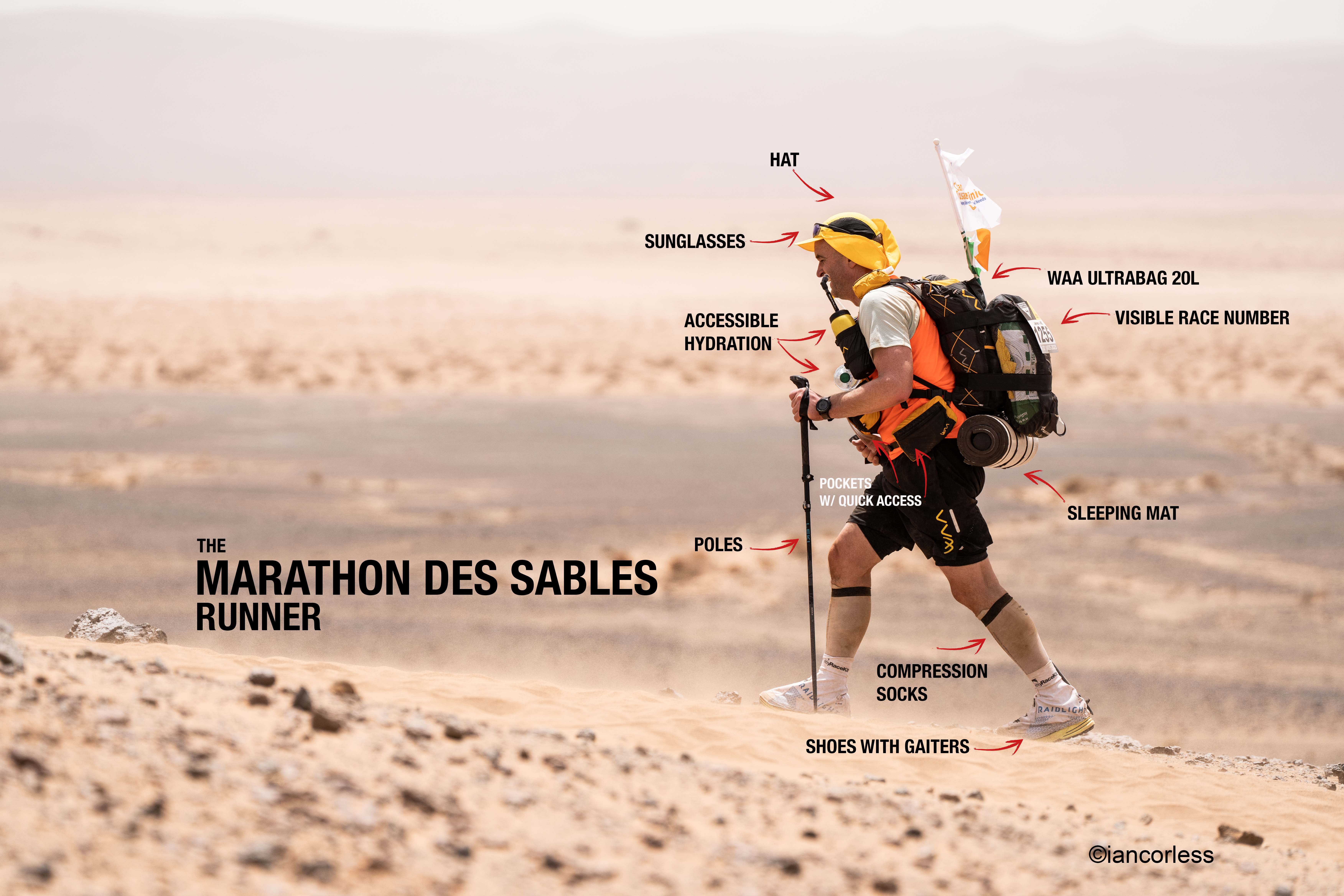
- Running top, possibly long sleeve
- Neck roll or Buff
- Running shorts or skirt
- Socks, and spare pair
- Shoes with gaiters, Velcro sewn securely in advance
- Hat with potential neck cover
- Sunglasses with strong protection and good fit for sandstorms or take extra goggles
- Watch
- Warm layer – windproof and possibly lightweight down jacket
- Foot care supplies
- Hygiene products
- Toilet roll or wipes
- Lip balm
- Blindfold
- Ear plugs
- Spoon
- Pot or bowl
- Stove
- Fuel cubes
- Sleeping mat
- Pillow
- Flip flops or similar
Note – If you plan to NOT heat water, you will not need a stove of fuel cubes. However, you will still need a bowl or something similar to eat food from.
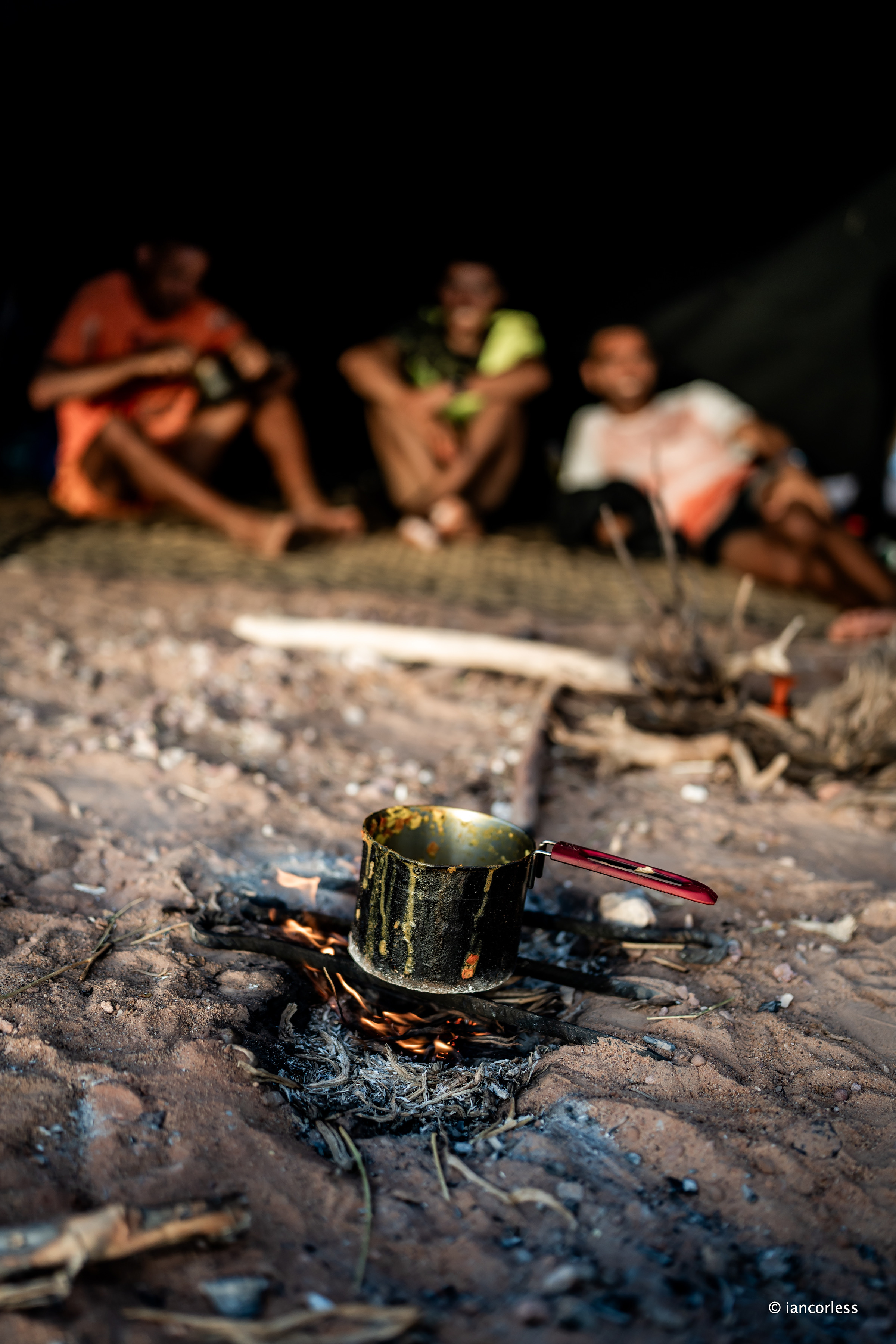
For repairs, consider:
- Zip ties
- Gorilla tape
- Super glue
- Sewing kit
- Cord or thin rope
Equipment can fail. Plan for that.
Final Practical Advice
Keep your pack as close to 6.5kg as possible. Extra weight adds unnecessary stress, especially in the longest edition to date with a 100km long stage.
Limit luxuries. If you take one, make it a lightweight MP3 player with reliable battery and earphones.
Accept the conditions. You may not wash. You will get dirty. You will smell. That is normal
Start conservatively. Ease into the race.
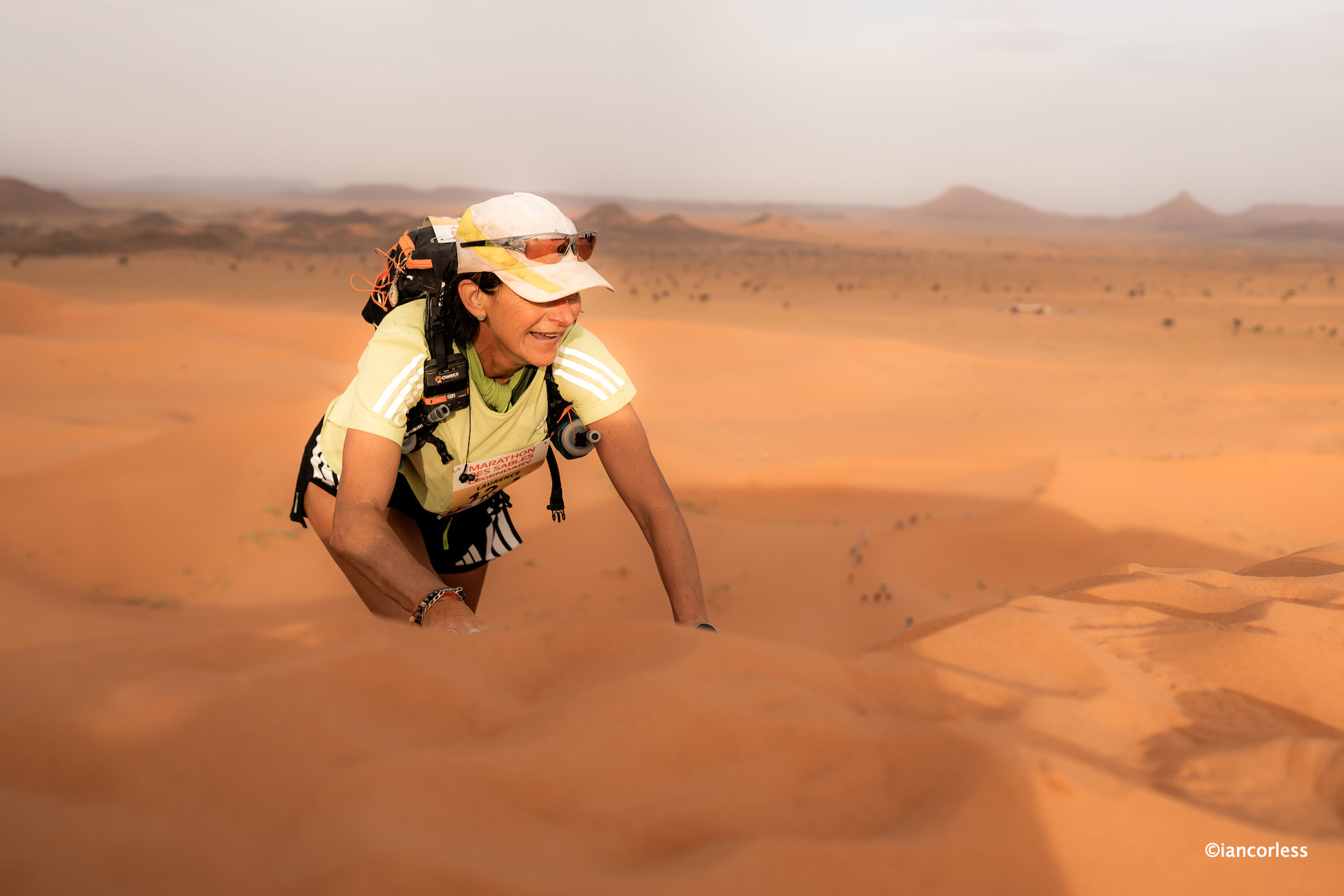
Poles can make a huge difference, but only if you know how to use them properly. Front runners may not need them. Most people benefit from them.
Learn to walk efficiently. Many arrive expecting to run 80 percent and walk 20 percent. In reality, it is often reversed.
Protect your feet from day one.
Take a sleeping mat. In the desert, your job is simple: run, eat, sleep. Good sleep improves recovery. Recovery keeps you in the race.
MDS WEBSITE HERE
MDS Tour and MDS Clubs for 2026
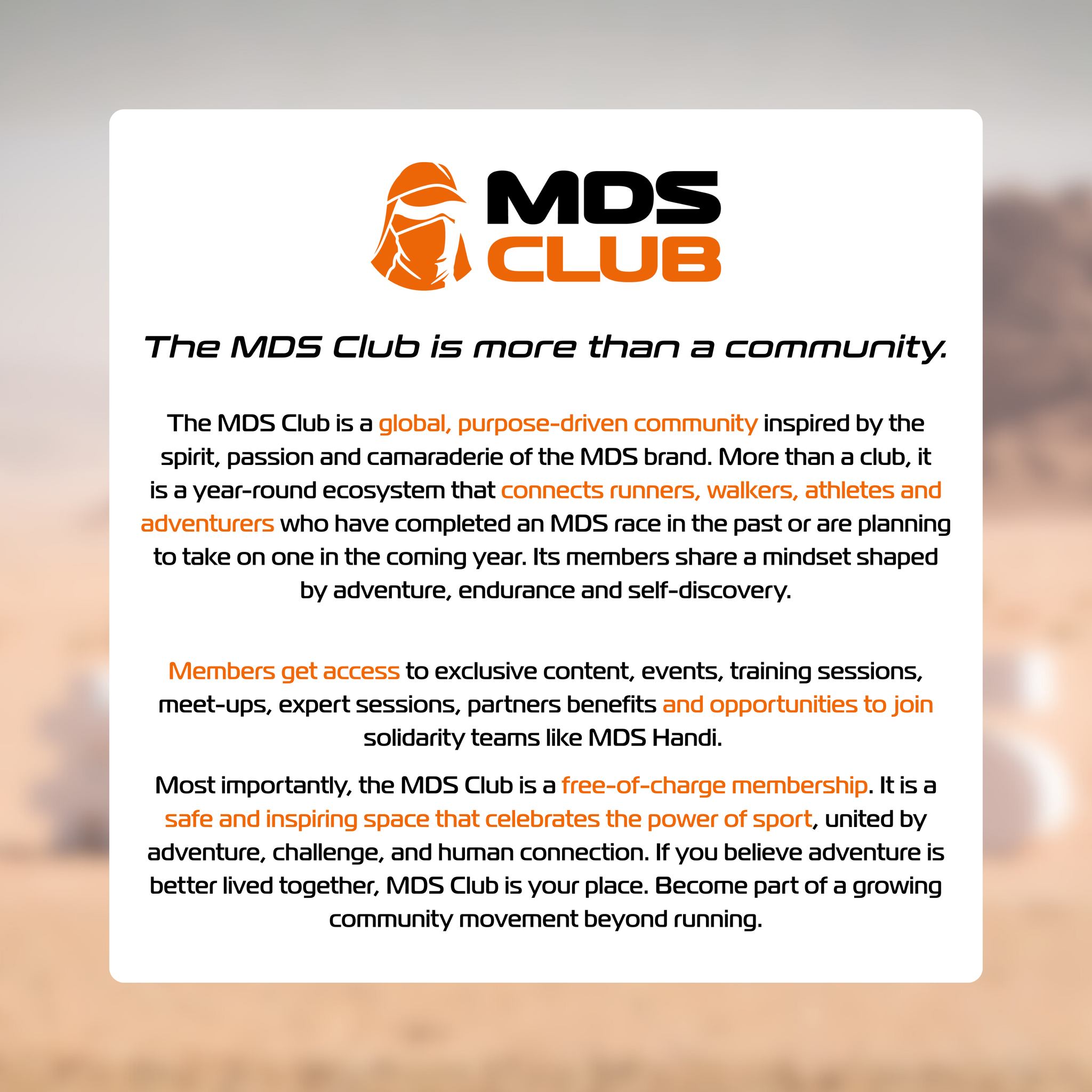
Join the MDS Clubs on HEYLO HERE.
The MDS Tour starts in January and moves from location to location, Register HERE

Instagram – @iancorlessphotography
Twitter – @talkultra
facebook.com/iancorlessphotography
Web – www.iancorless.com
 IAN CORLESS
Pingback: COUNTDOWN TO MDS LEGENDARY 2026 – ISSUE FOUR | IAN CORLESS