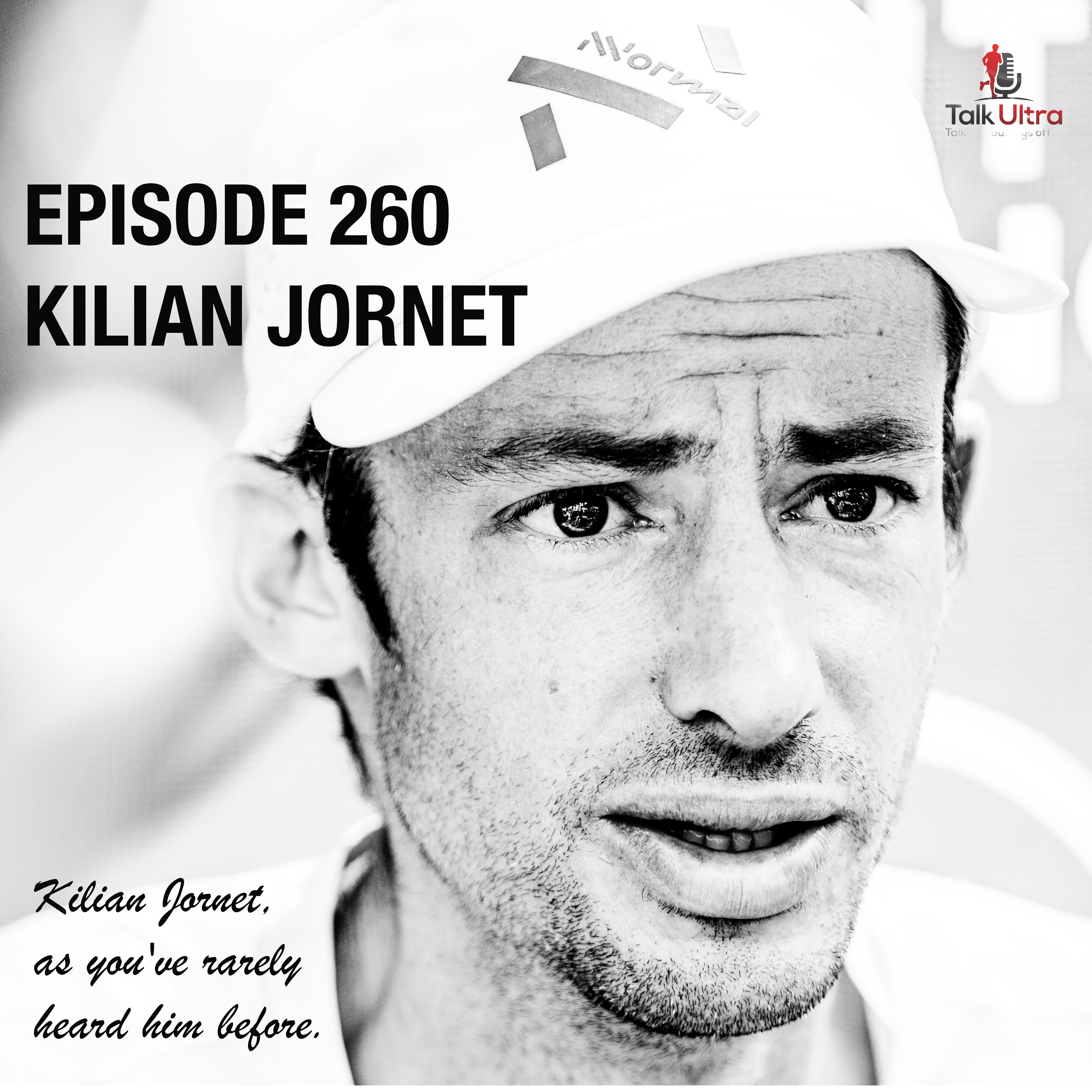
For much of the last twenty years, Kilian Jornet has been the benchmark against which all mountain athletes have been measured. His achievements have transcended trail running, ski mountaineering and alpinism, inspiring an entire generation to think differently about what is possible in the mountains.
But as Kilian approaches 40, has the conversation has changed?
In Episode 260 of Talk Ultra, we sit down for a deep discussion. Following a difficult year marked by injury, surgery and the challenges that inevitably arrive with time, Kilian reflects on identity beyond results, the realities of being elite athlete and how motivation evolves when success is no longer measured solely by victory.
We explore the psychological impact of adversity, the emergence of a new generation of athletes and the question every great competitor must eventually face: what is next?
Beyond racing, we discuss the expanding influence of NNormal, his increasing focus on writing, storytelling and communication, and whether we are witnessing the beginning of a transition from athlete to mentor, thinker and catalyst for change.
The conversation also moves into topics that matter deeply to Kilian: the future of mountain environments, climate responsibility in a global sport, and the lasting impact he hopes to leave on the outdoor world.
Along the way, we touch on mountaineering history, from Mallory and Tenzing to modern Himalayan expeditions, reflecting on how the spirit of exploration continues to evolve or devolve.
This is not a podcast about winning races.
It’s a conversation about purpose, legacy, reinvention and the enduring search for meaning in the mountains.
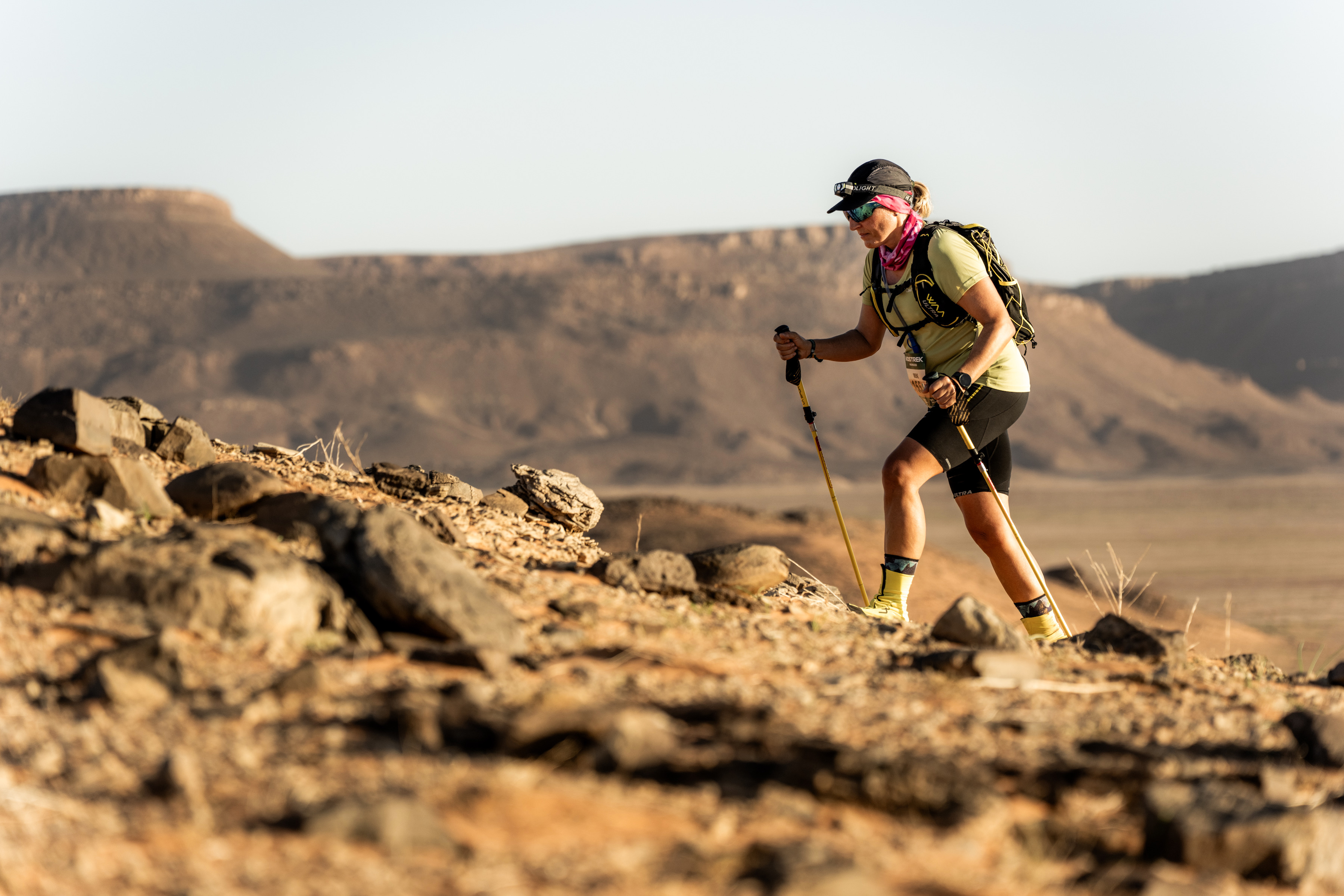
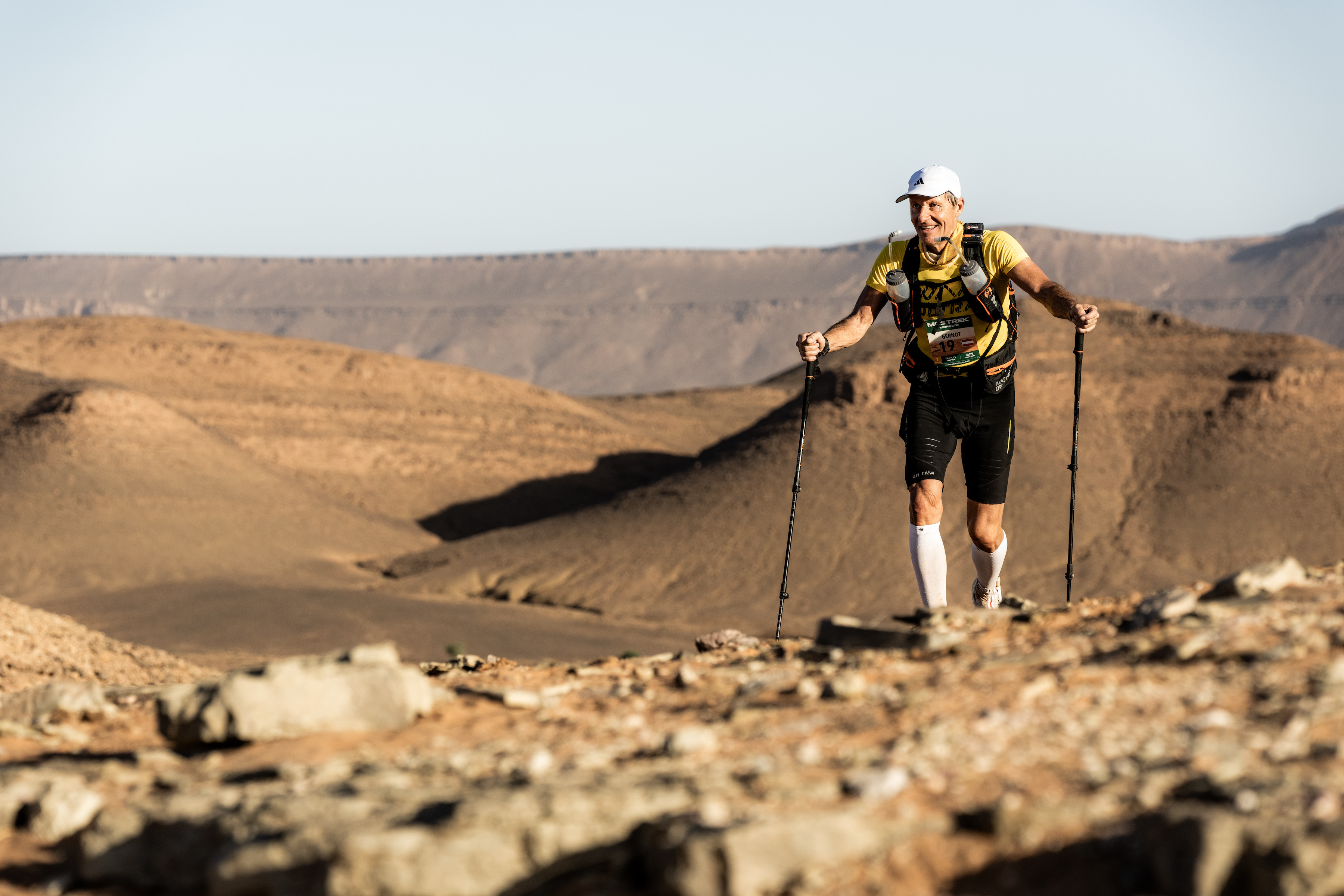
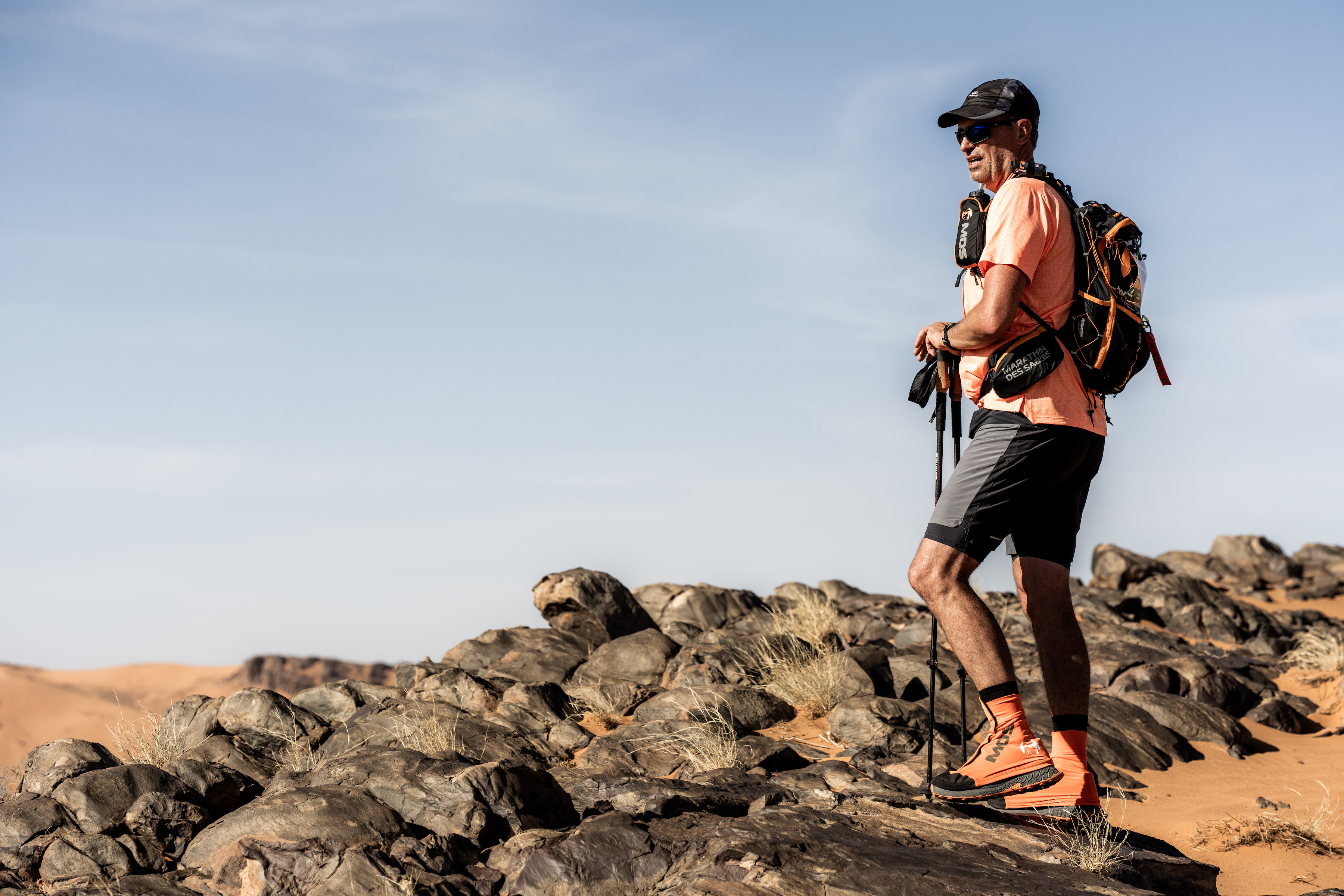
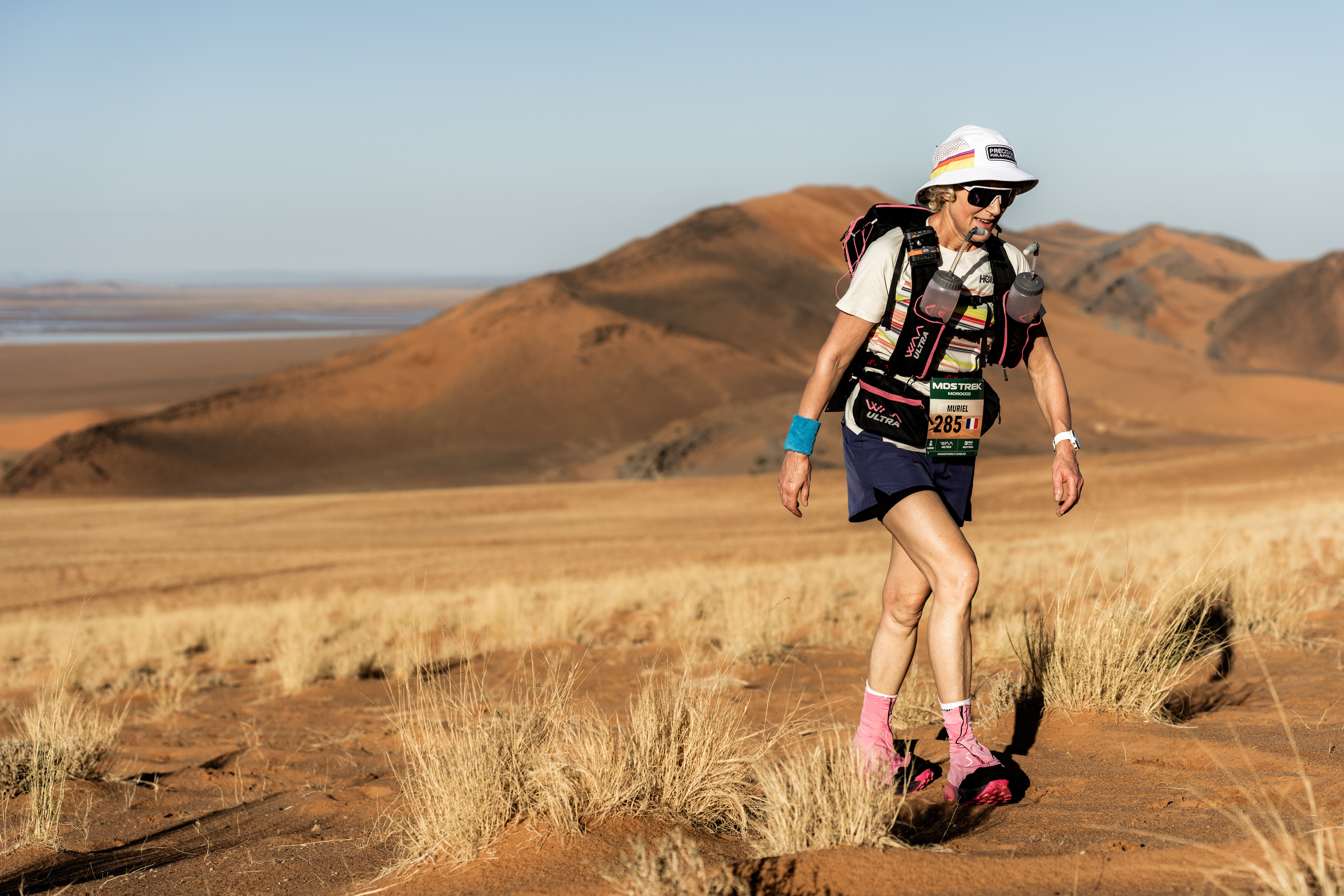
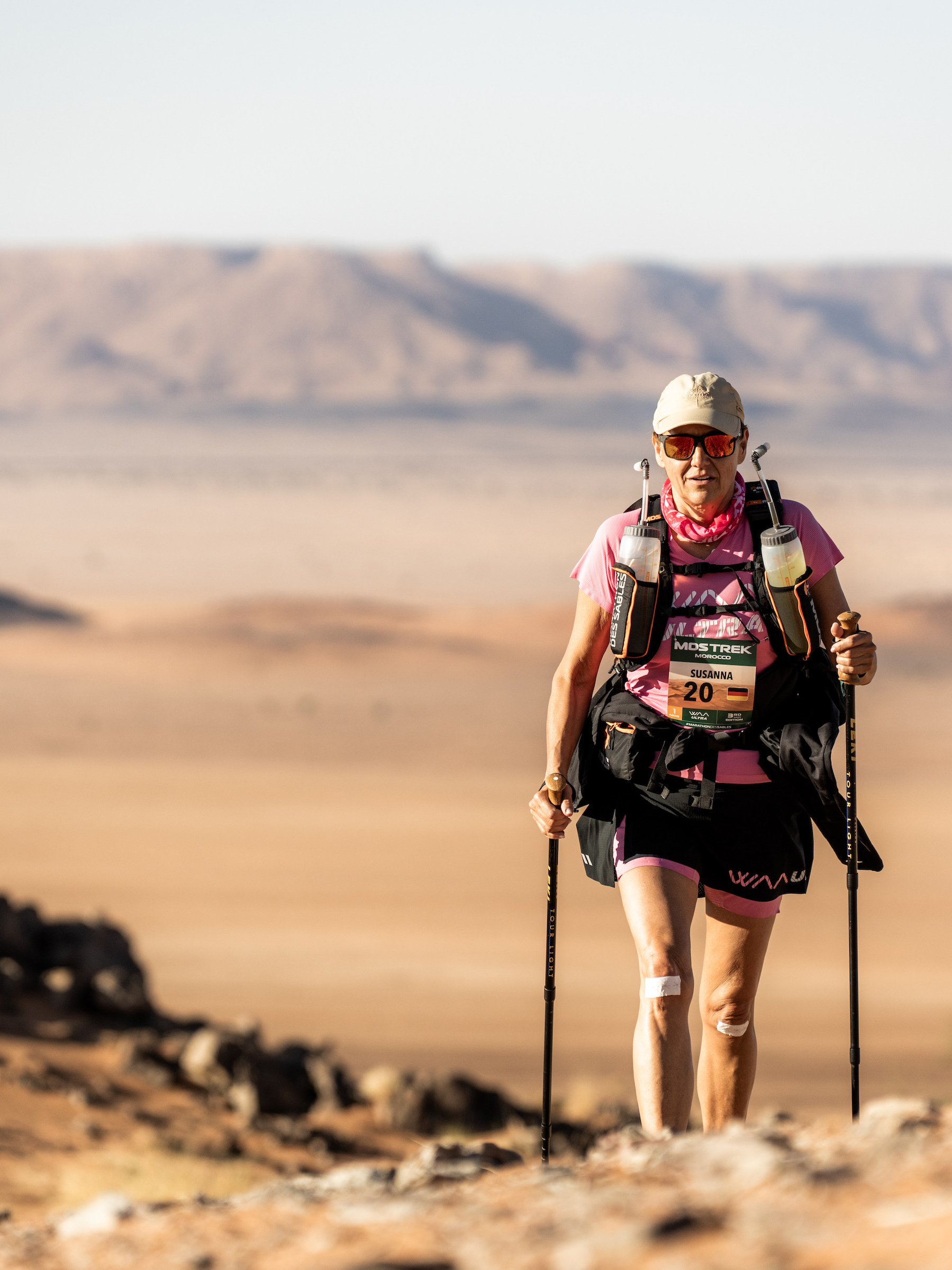
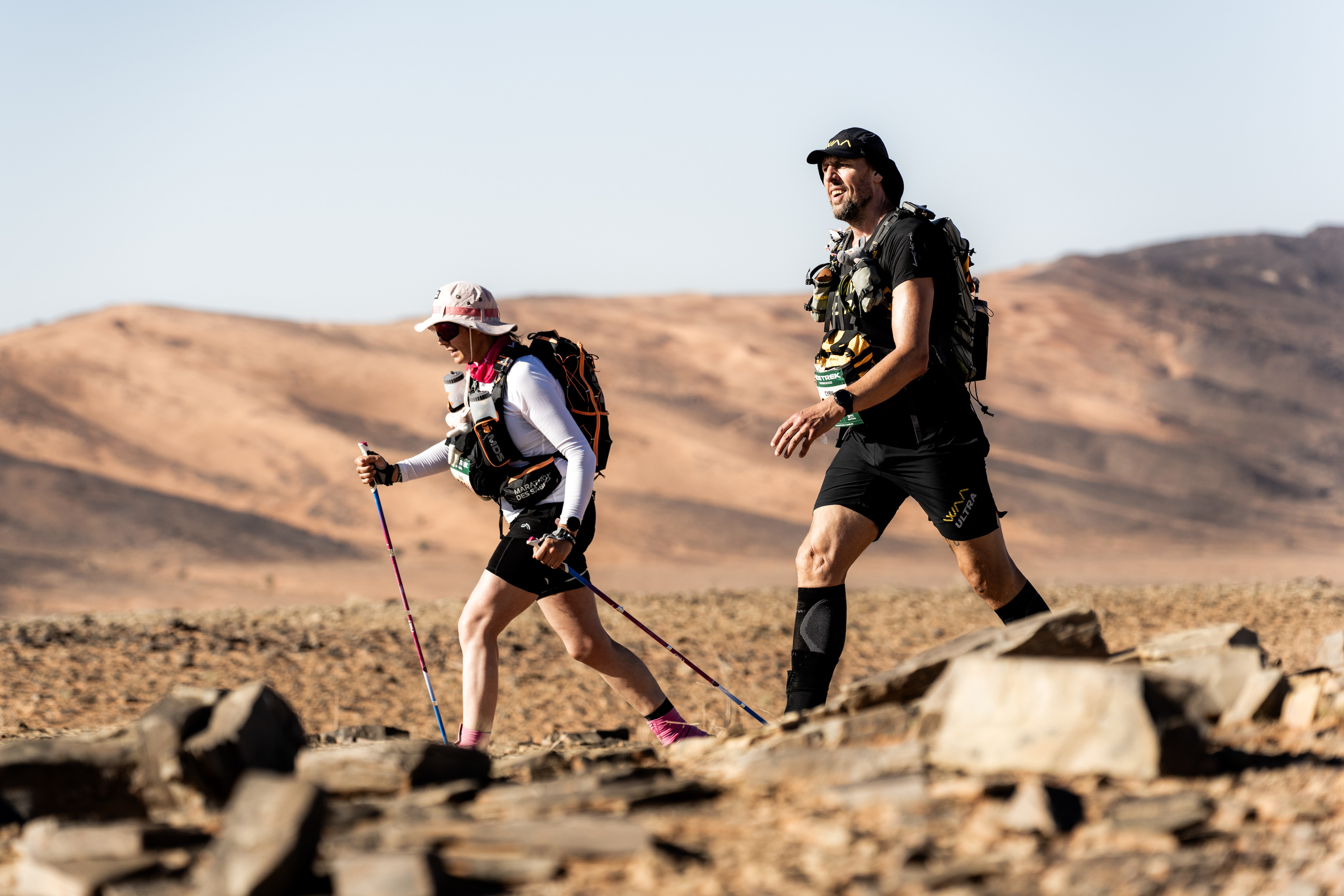
Stage 3 of the MDS Trek is unlike any other. It is not simply a stage. It is an experience that unfolds across two days and one unforgettable night, offering participants something far more valuable than kilometres covered or finish lines crossed.
It is a reminder of what adventure truly means.
The stage begins with choice. Leaving the comfort of the bivouac behind, participants set out across the Sahara on either a 17.3km or 31.2km route. But this day carries a different energy. There is no return to the familiar tents waiting on the horizon. Instead, the finish line lies somewhere beyond, in a temporary camp deep within the desert.
Adding to the sense of anticipation is the knowledge of what is to come: Star Night.
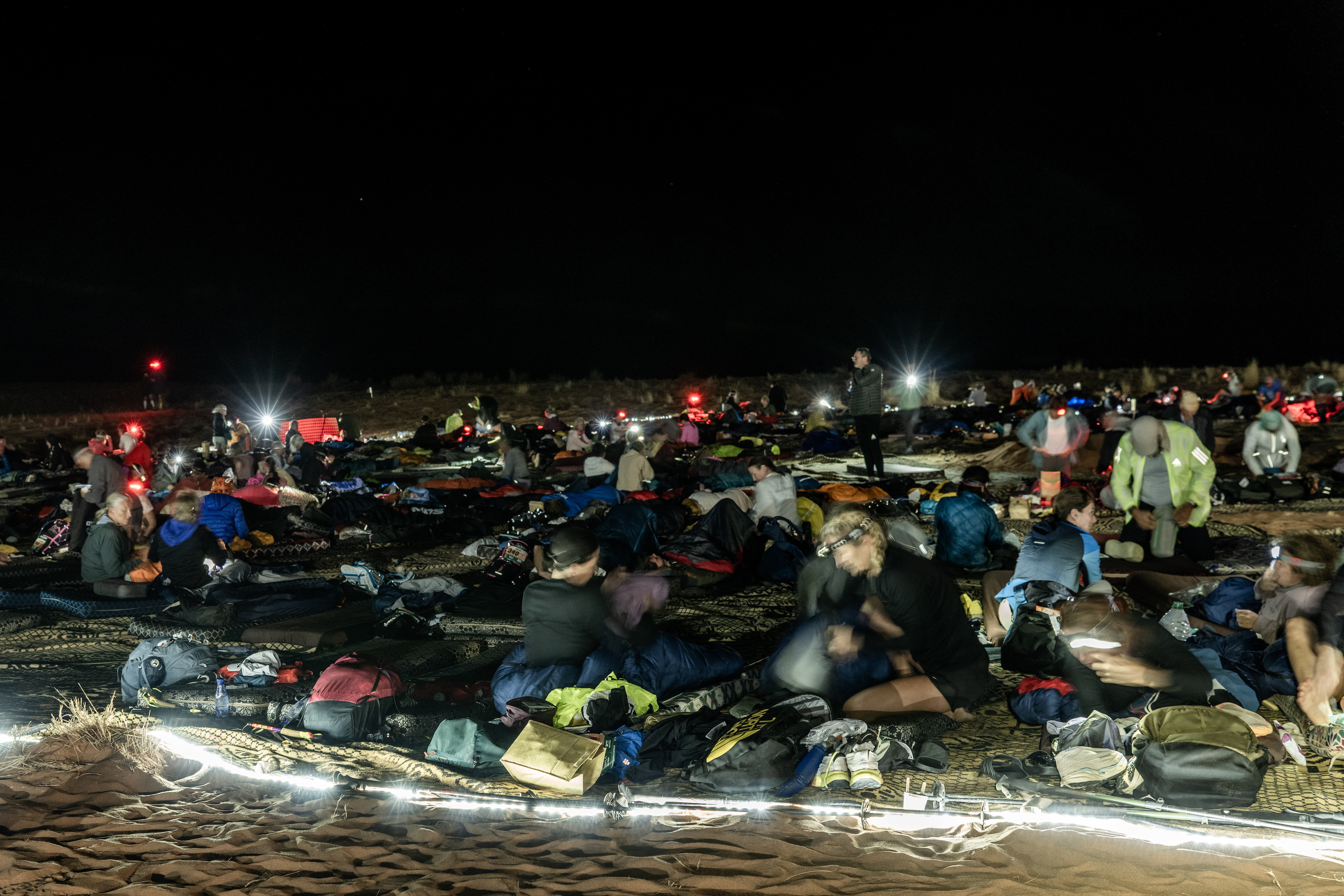
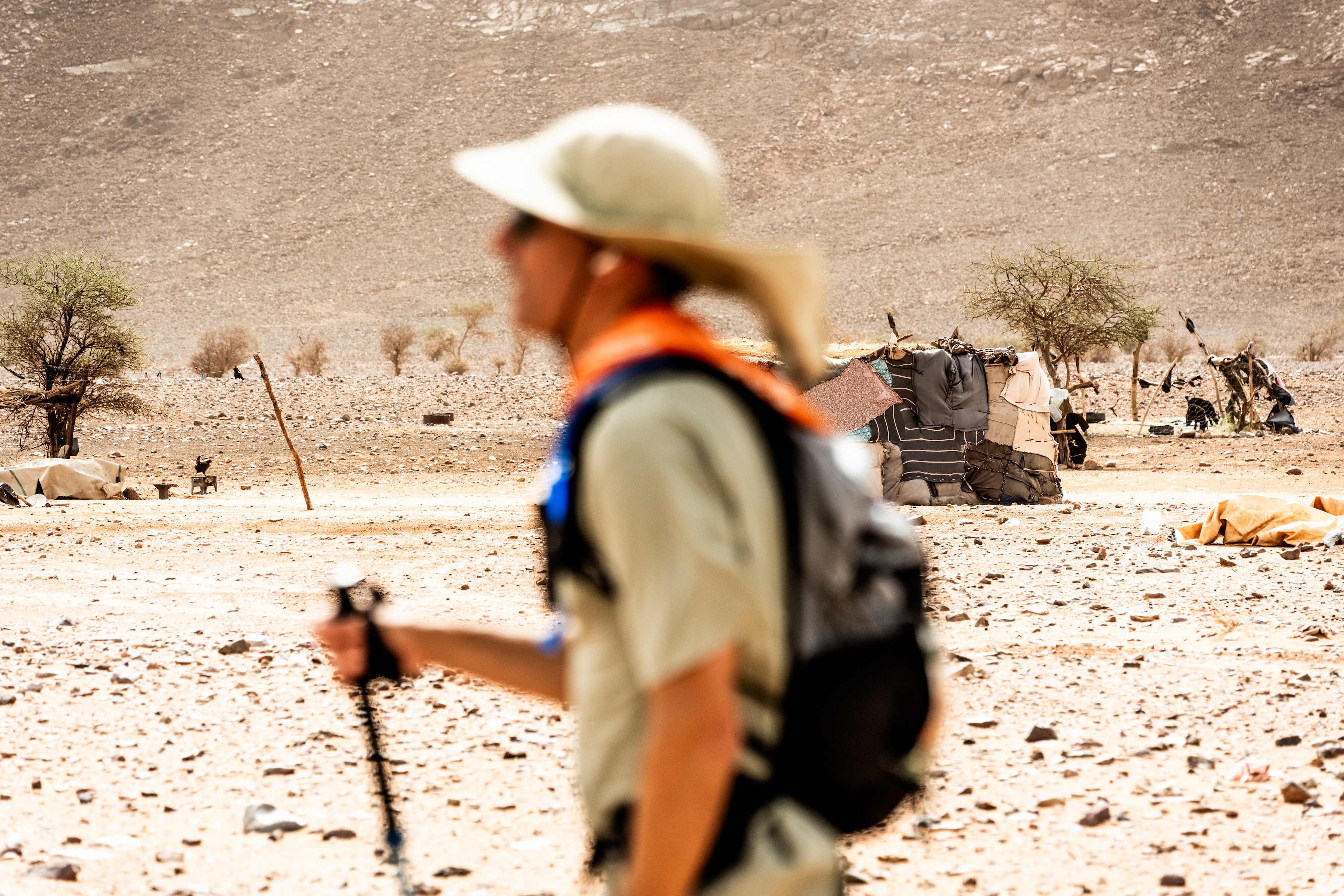
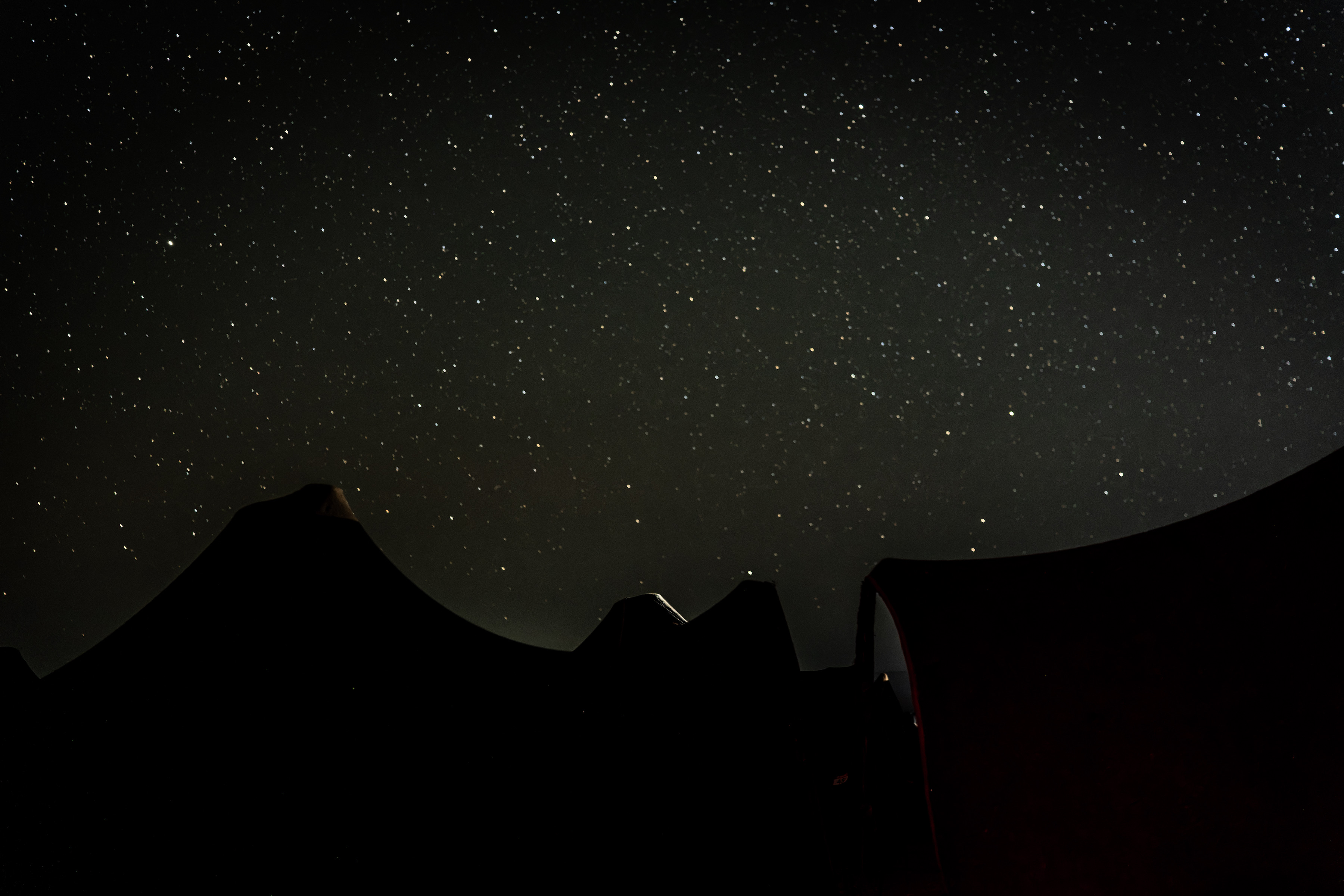
For one evening, participants will sleep beneath the vast Moroccan sky with nothing more than a sleeping bag for shelter. No tent. No walls. No distractions. Just the silence of the Sahara and a canopy of stars stretching endlessly overhead. It is a chance to disconnect from the noise of modern life and experience the desert in a way that has changed little over centuries, much like the Amazigh people who have called this region home for generations.
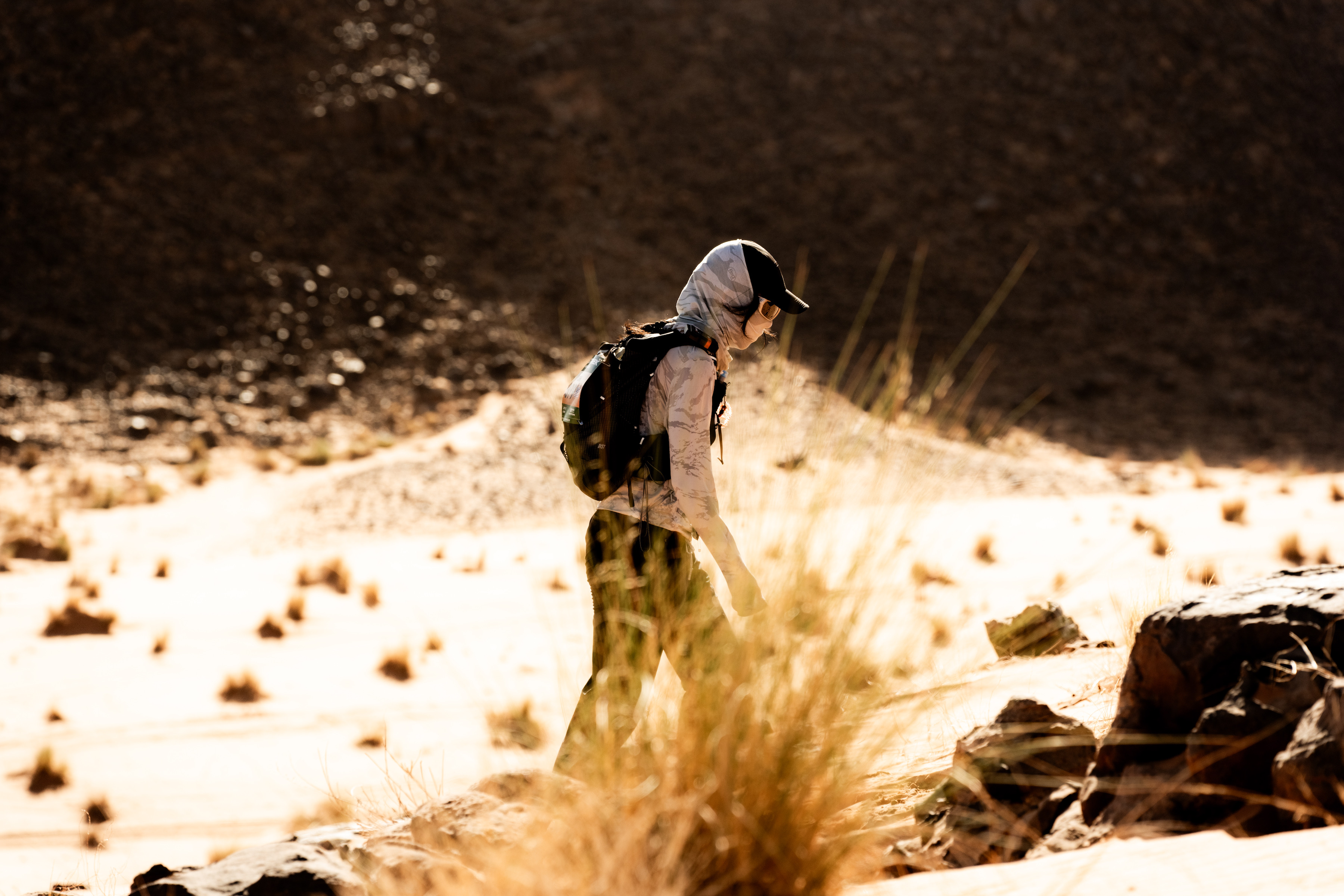
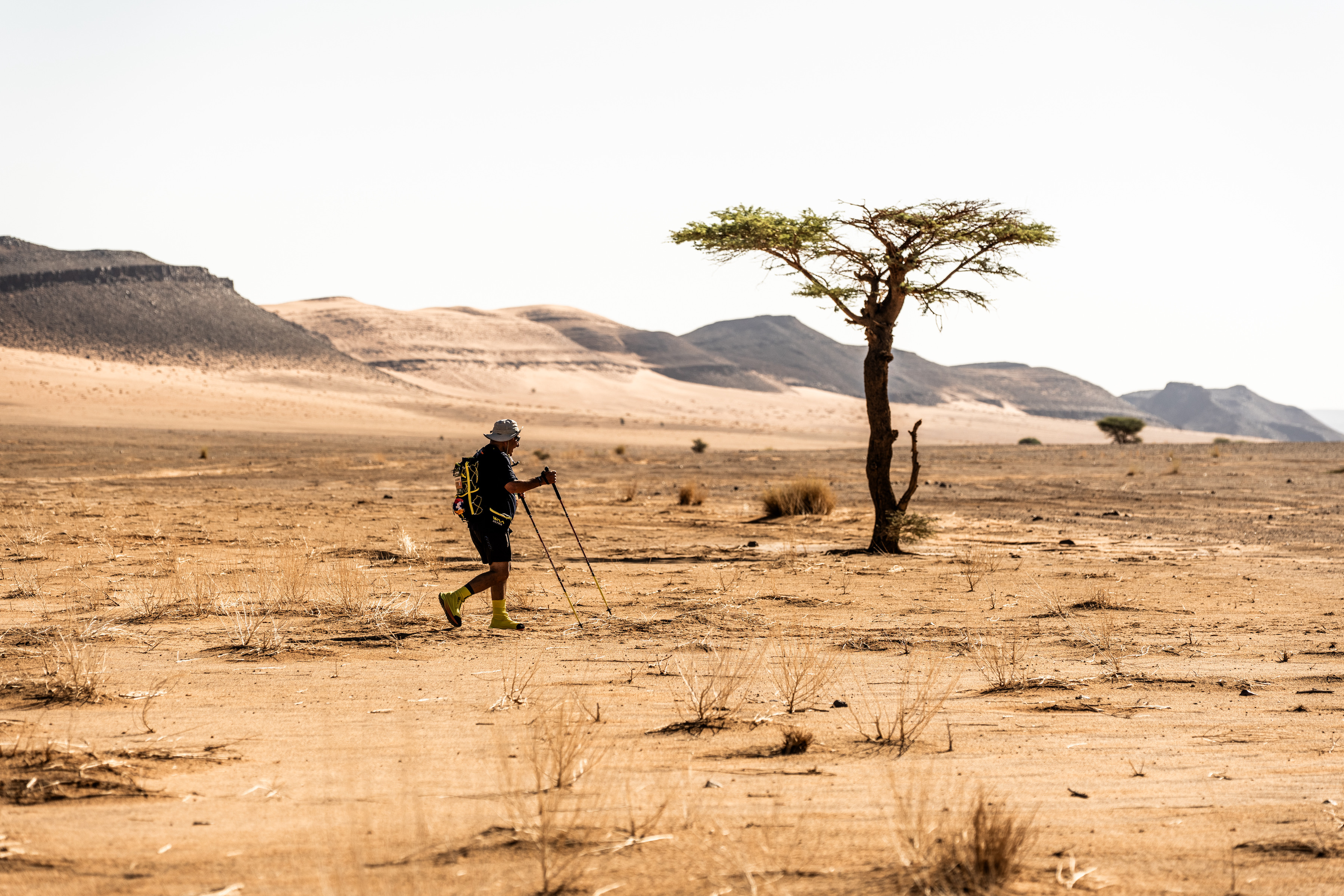
The day began with strong winds and cloudy skies. In most parts of the world such conditions might feel challenging, but in the Sahara they were a gift. The temperature remained cool by desert standards, and participants welcomed the respite. Even so, the longer distances and the prospect of spending a night away from bivouac created an understandable sense of trepidation.
Questions lingered in many minds.
Would the distance prove too much? How would it feel to sleep out in the open desert? What awaited them after sunset? As it turned out, there was little to fear.
Steadily and determinedly, every participant rose to the challenge. Kilometres passed beneath their feet and, one by one, they reached camp having achieved their goals.
If the journey to camp felt adventurous, the evening that followed felt almost surreal.
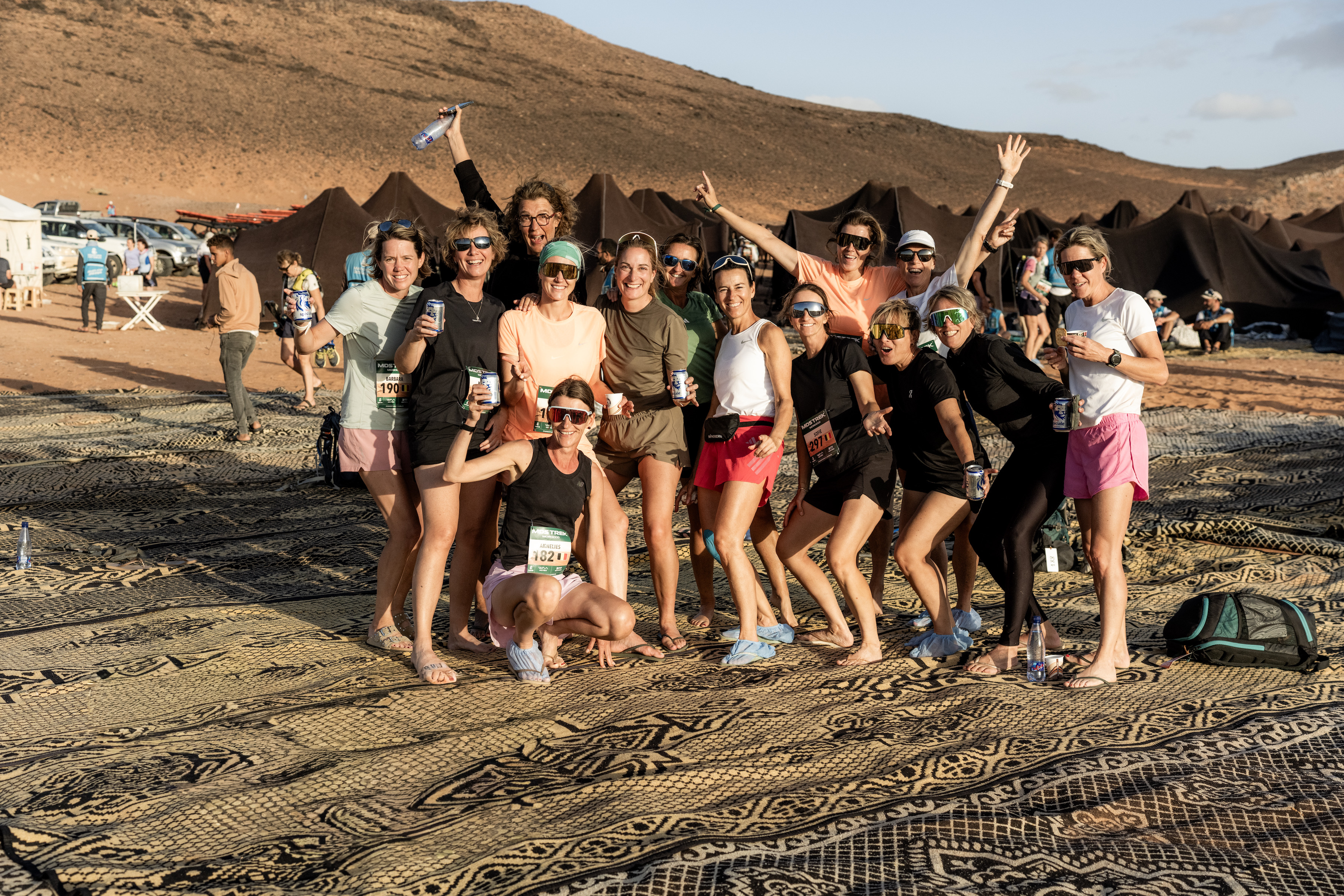
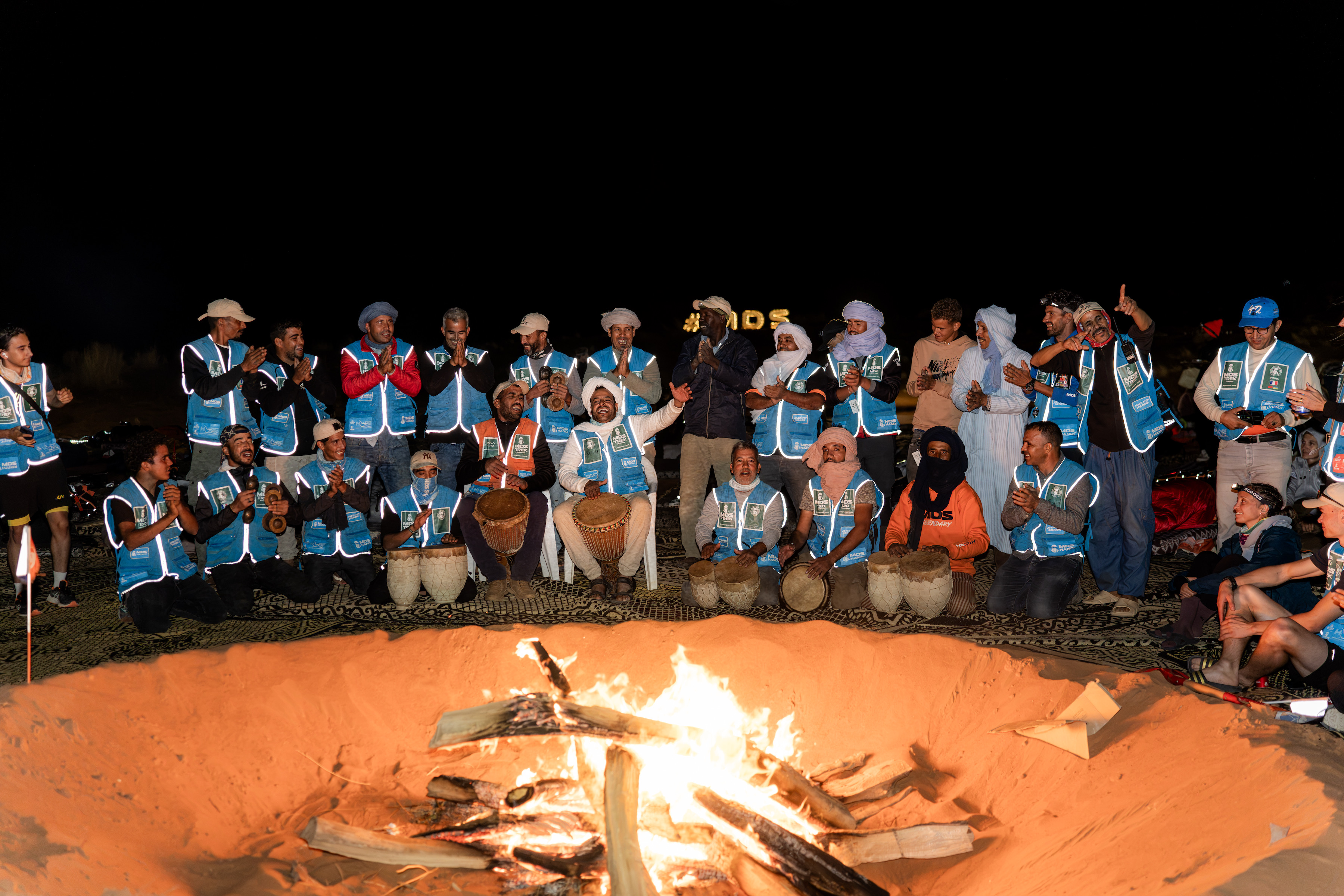
Traditional Berber tents provided welcome shade from the afternoon sun, but as darkness approached, attention shifted towards a large open fire at the heart of the camp. Mats were laid out in a circle and participants gathered together, sharing stories from the trail while the desert slowly cooled around them.
Then came one of the day’s biggest surprises.
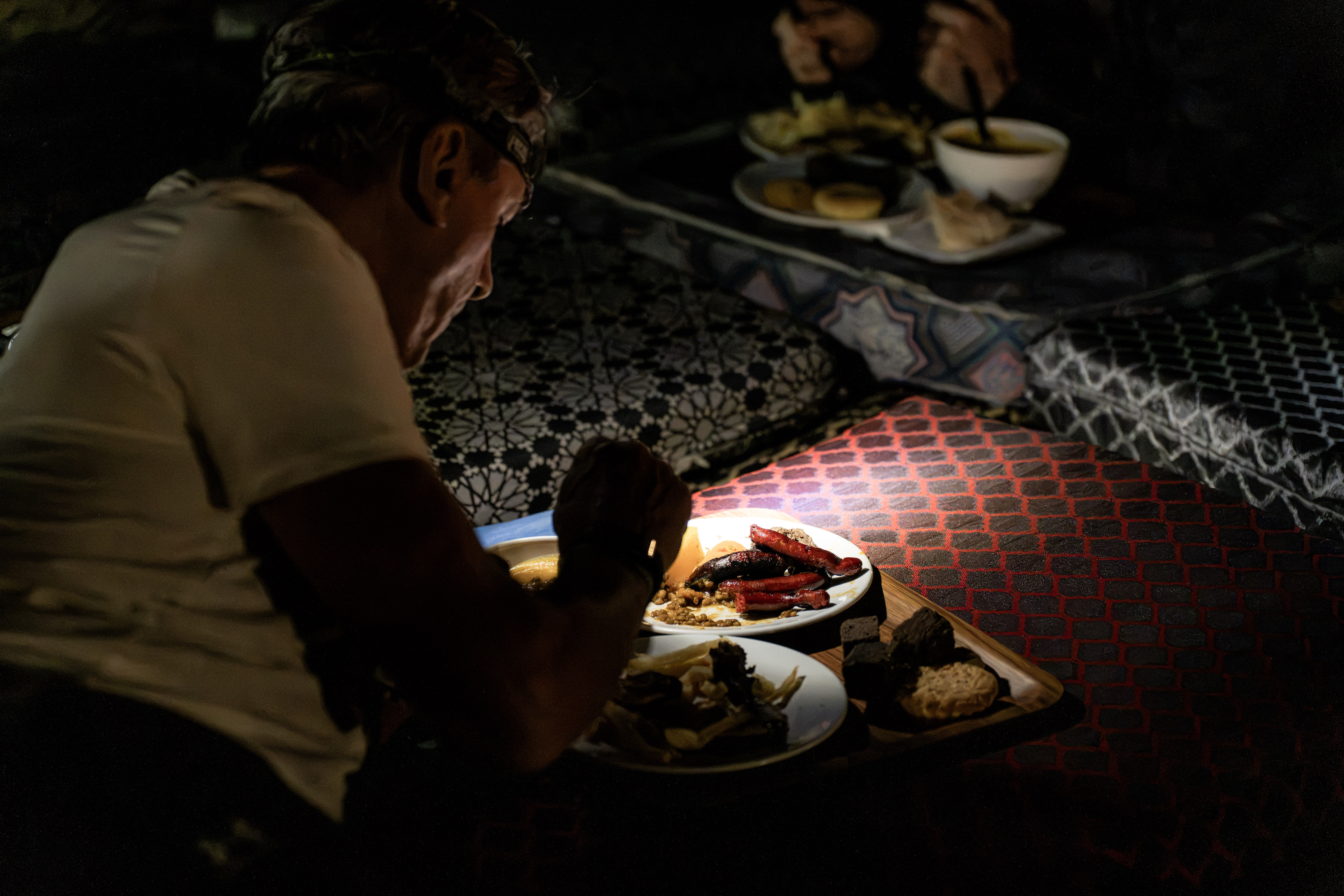
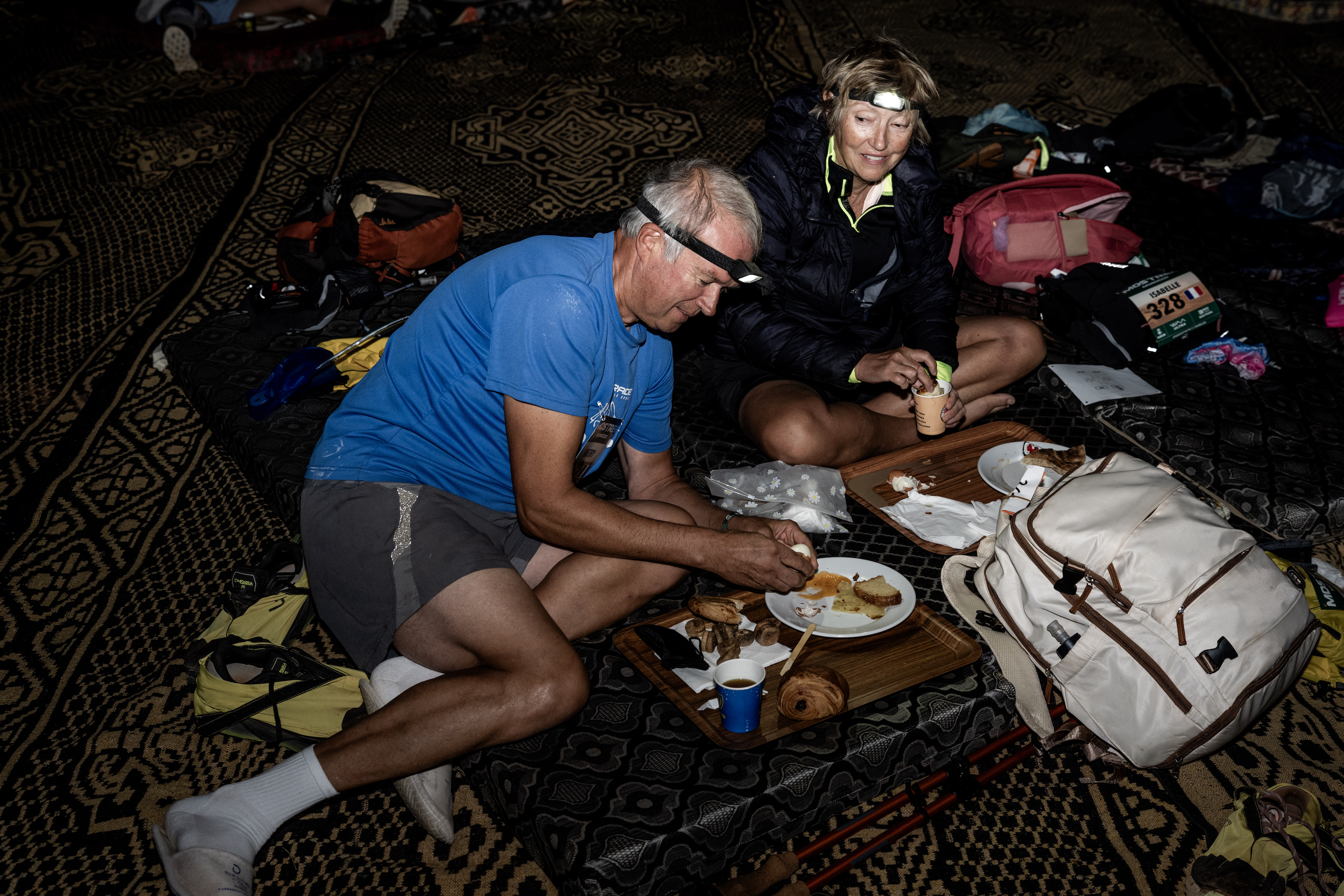
In the middle of nowhere, surrounded by sand and silence, the MDS organisation somehow managed to create a restaurant in the desert. Participants were treated to an impressive selection of food that seemed entirely at odds with their remote surroundings. It was a reminder that adventure does not always mean hardship. Sometimes it means appreciating simple comforts even more deeply because of where you find them.
As the fire burned low and conversations faded, the Sahara took centre stage.
The stars appeared. Thousands upon thousands of them.
With no artificial light to compete against, the night sky revealed itself in all its brilliance. Soon sleeping bags replaced campfire conversations and participants drifted off to sleep with only the stars for company – just like the Amzigah. Then, almost as quickly as it had arrived, the night was gone.
Morning brought smiles, laughter and perhaps a touch of surprise. Everyone had survived. More than that, everyone had loved it.
For many, it was an experience unlike anything they had ever known. A night they will carry with them long after memories of individual checkpoints and finish times have faded. One for the memory banks.
The next challenge arrived early.
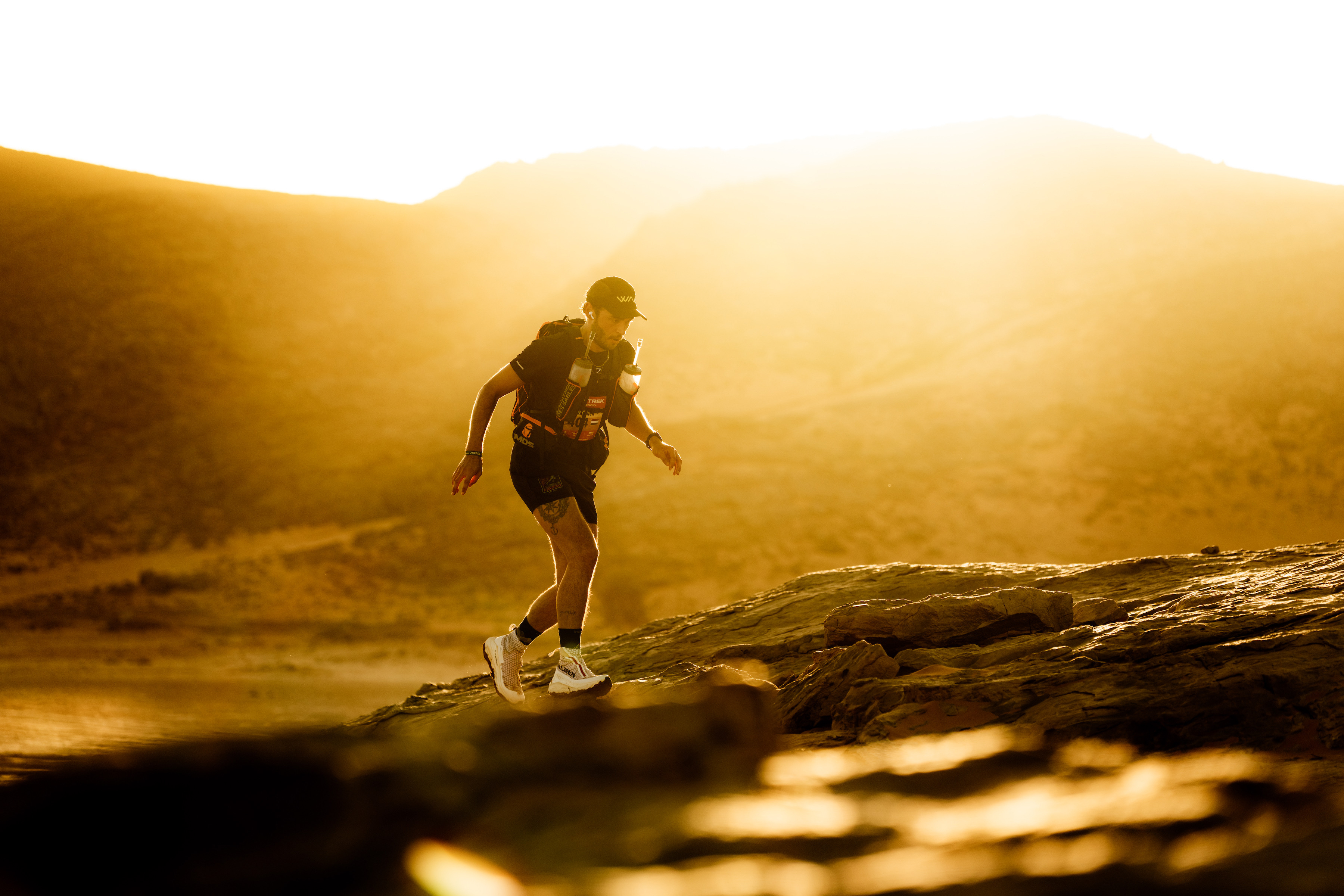
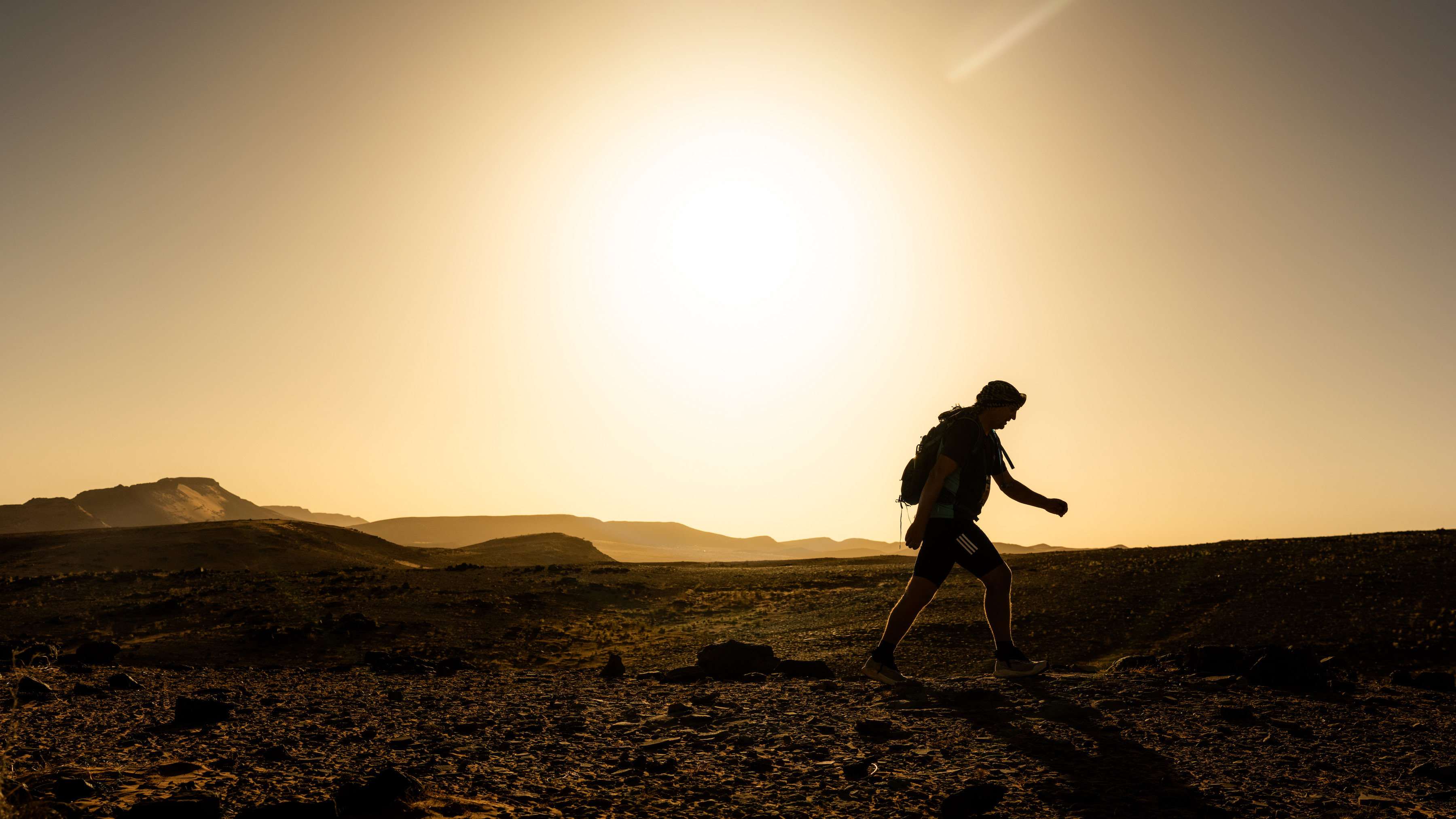
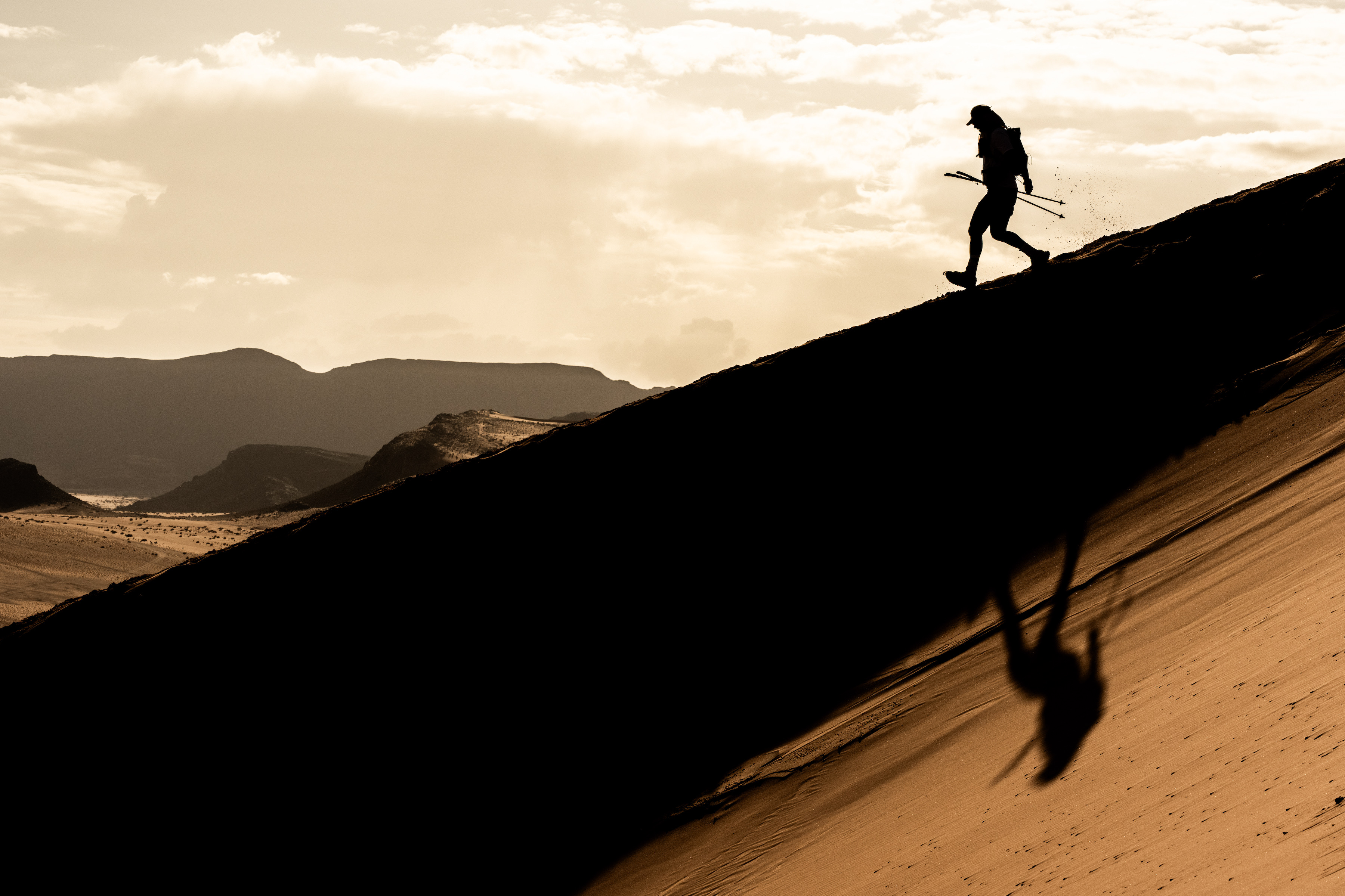
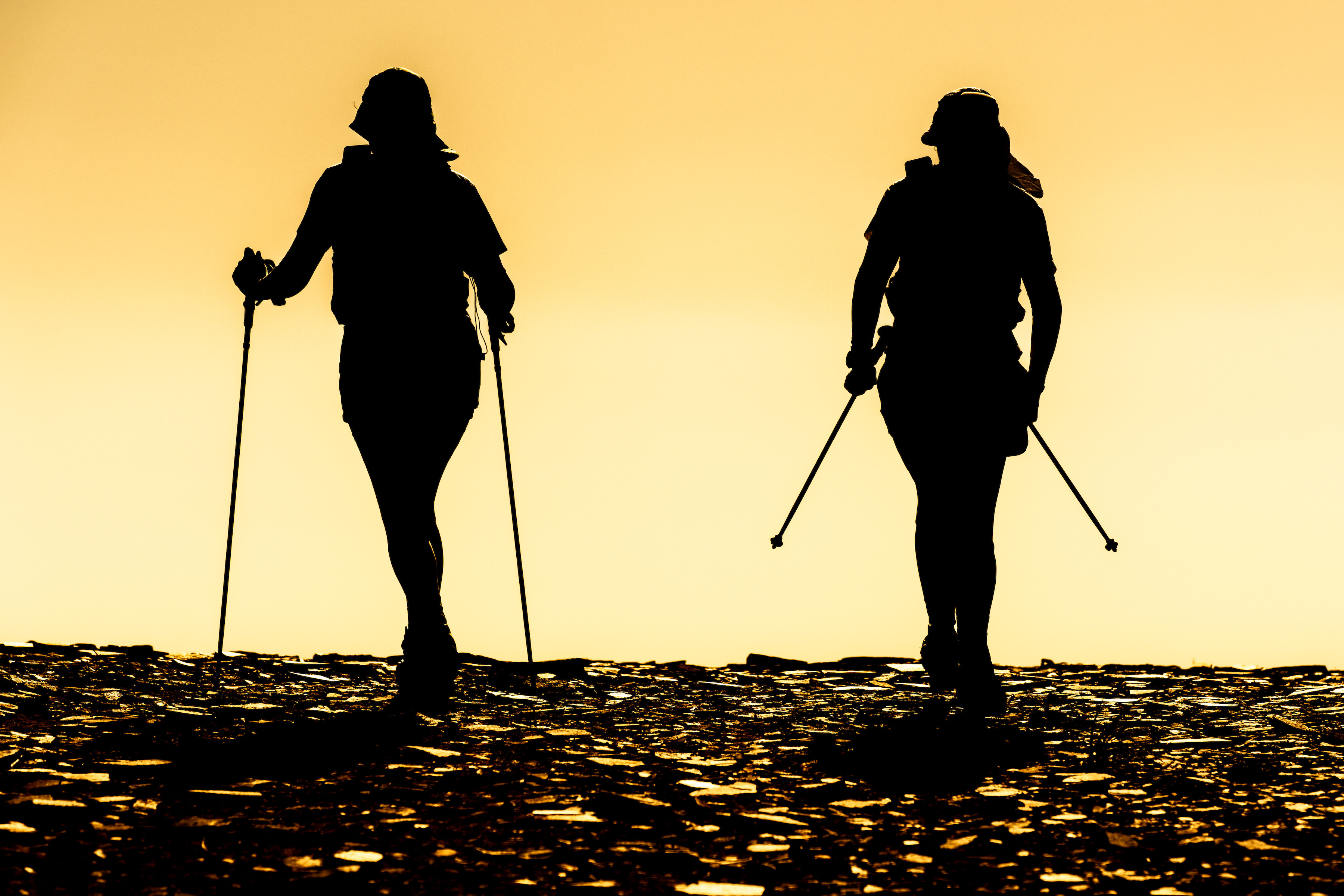
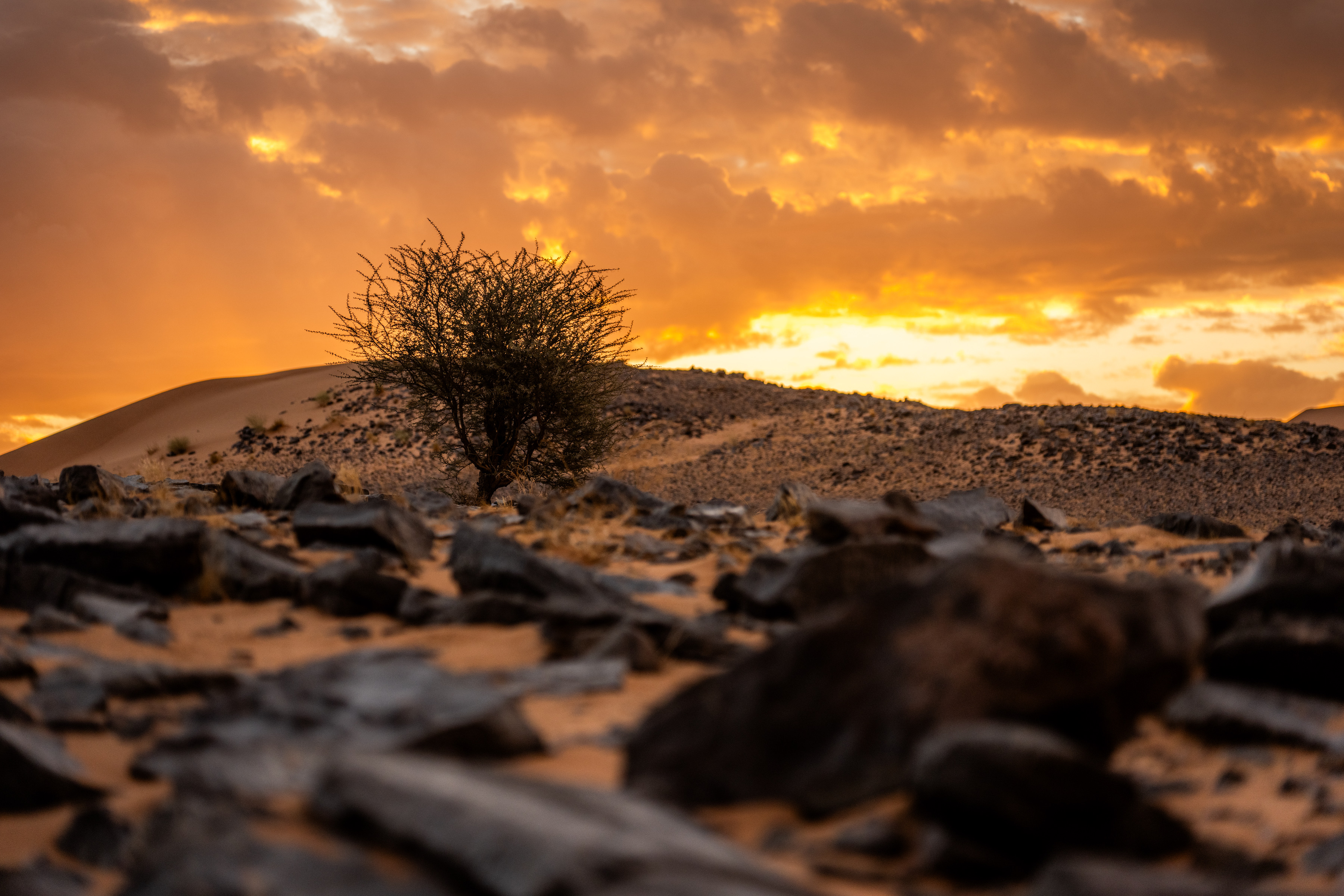
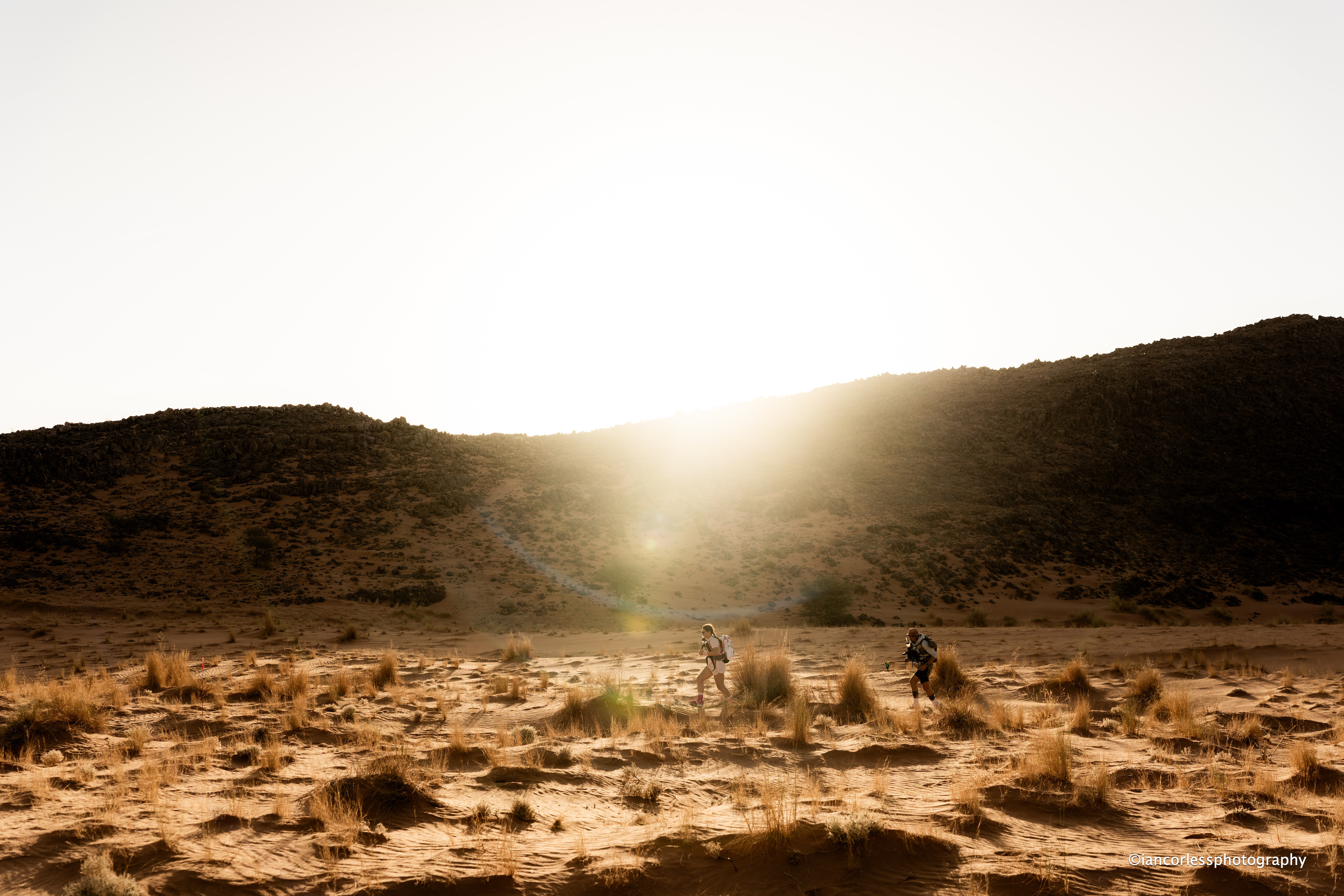
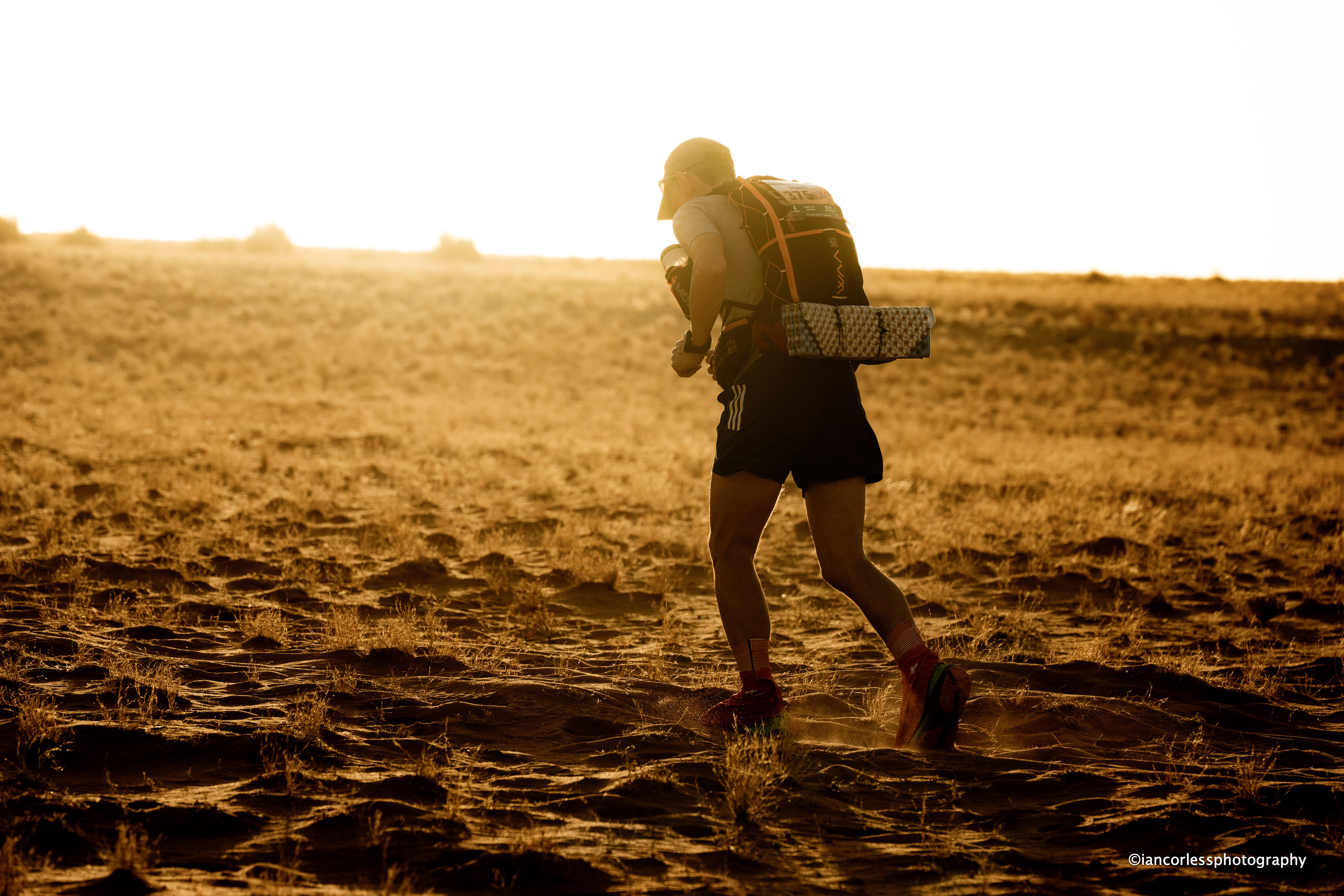
At 06:00, participants once again set off into the desert, choosing between distances of 17.5km and 22.5km. A spectacular sunrise painted the dunes in shades of gold and orange, creating one final gift before the day’s reality emerged.
Heat.
After the unusually cool conditions of the previous day, the return of clear skies and rising temperatures came as a shock to many. The Sahara had revealed its gentler side, and now it was reminding everyone of its true character. Yet the participants responded in the same way they had all week: one step at a time.
By early afternoon, everyone had completed the stage and returned to the welcome familiarity of the bivouac. Two-person tents, lunch and the option of a shower suddenly felt like incredible luxuries.
Perhaps that is one of the greatest lessons the desert teaches.
With just one stage of the MDS Trek remaining, an unexpected feeling is beginning to emerge. Many participants are already dreading the return to normality. Because somewhere between the dunes, the campfires and the endless horizons, they have discovered something rare.
The Sahara strips life back to its essentials. It removes distractions, routines and comforts that are often taken for granted. In doing so, it creates space for gratitude. Gratitude for movement, friendship, challenge and for the simple privilege of being able to explore places that many only dream of visiting.
Stage 3 encapsulates everything the MDS Trek is designed to be: an introduction to new experiences, new ways of moving and new ways of seeing the world.
And for one remarkable night beneath the stars, the desert reminded everyone that adventure is not about escaping life. It is about learning to appreciate it more deeply.
After the excitement and exertions of Stage 1, the atmosphere in bivouac shifted noticeably. The afternoon became a welcome opportunity to recover, recharge and simply absorb the unique experience of life in the Sahara.
Lunch was followed by a wonderfully relaxed few hours. Some participants disappeared into the pages of a good book, others gathered for card games and conversation. Many opted for an afternoon nap, while others simply sat quietly, taking in the silence, the vast open spaces and the incredible surroundings that make MDS Trek so special.
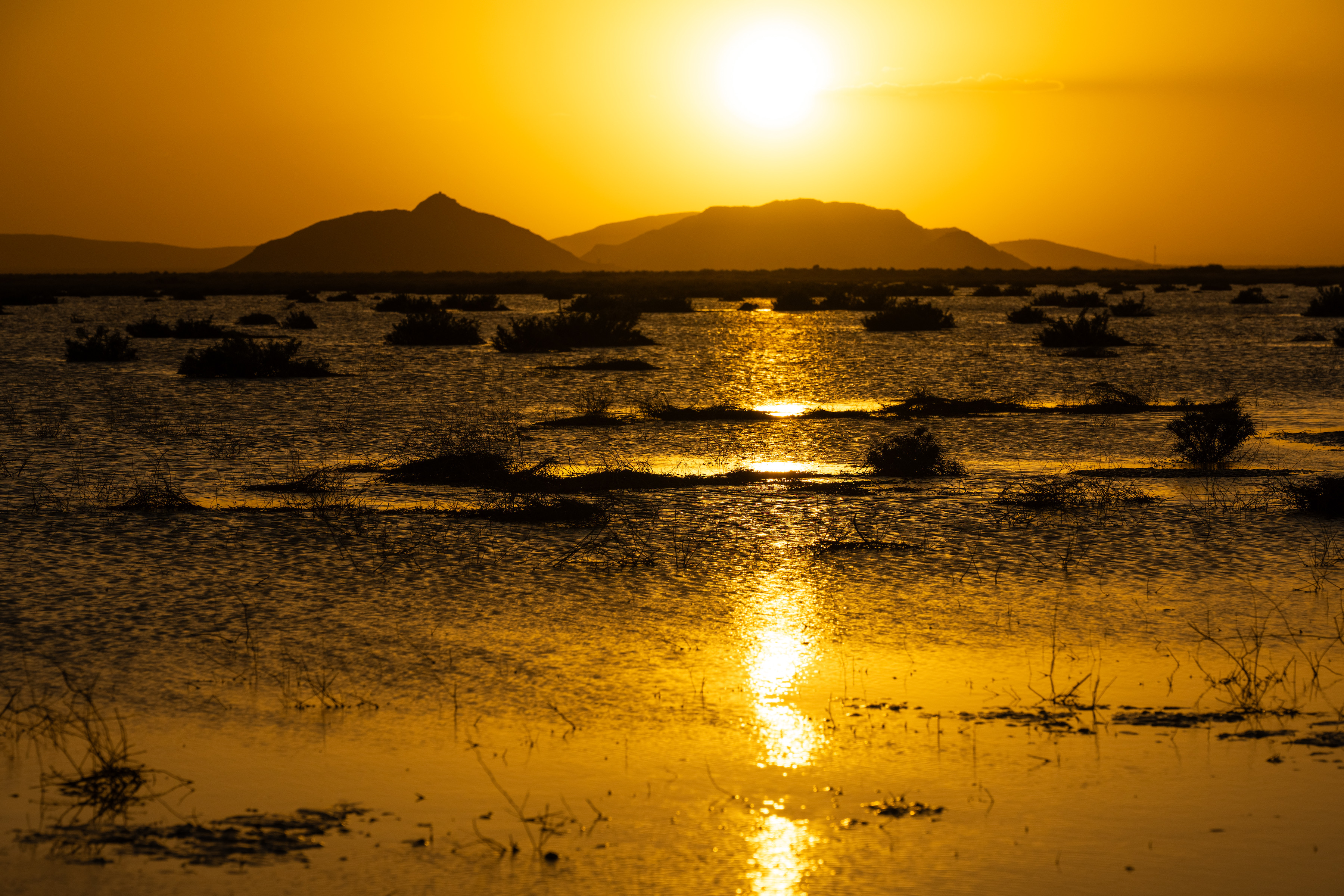
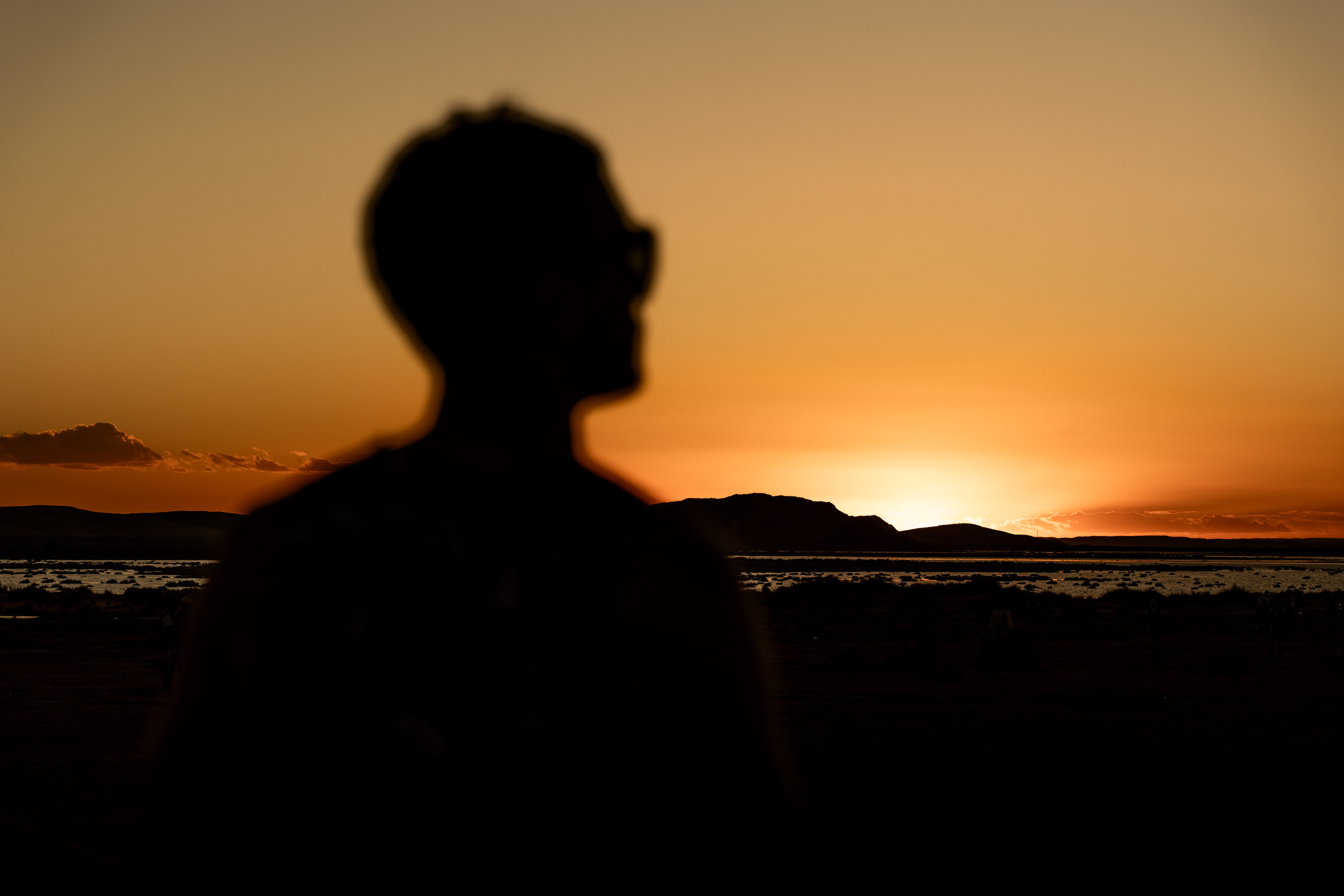
At 16:00, the camp came together for a yoga session in the heart of the bivouac. As bodies stretched and loosened after the previous day’s efforts, the sun gradually sank towards the horizon. The session concluded just as the desert was bathed in the warm glow of sunset, creating one of those moments that participants will remember long after the event is over.
Dinner followed, and with Stage 2 looming, it was an early night for most.
And what a stage awaited.
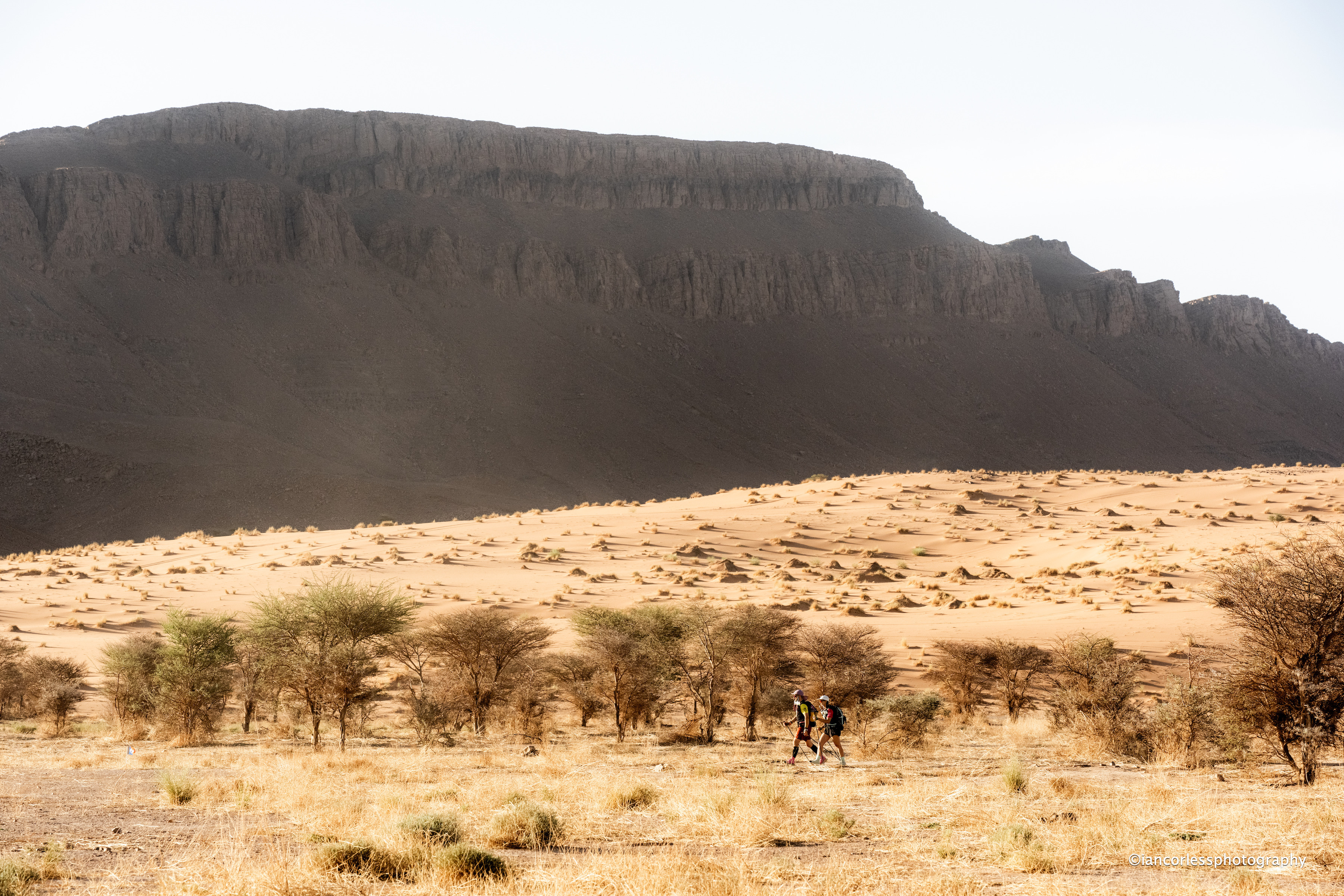
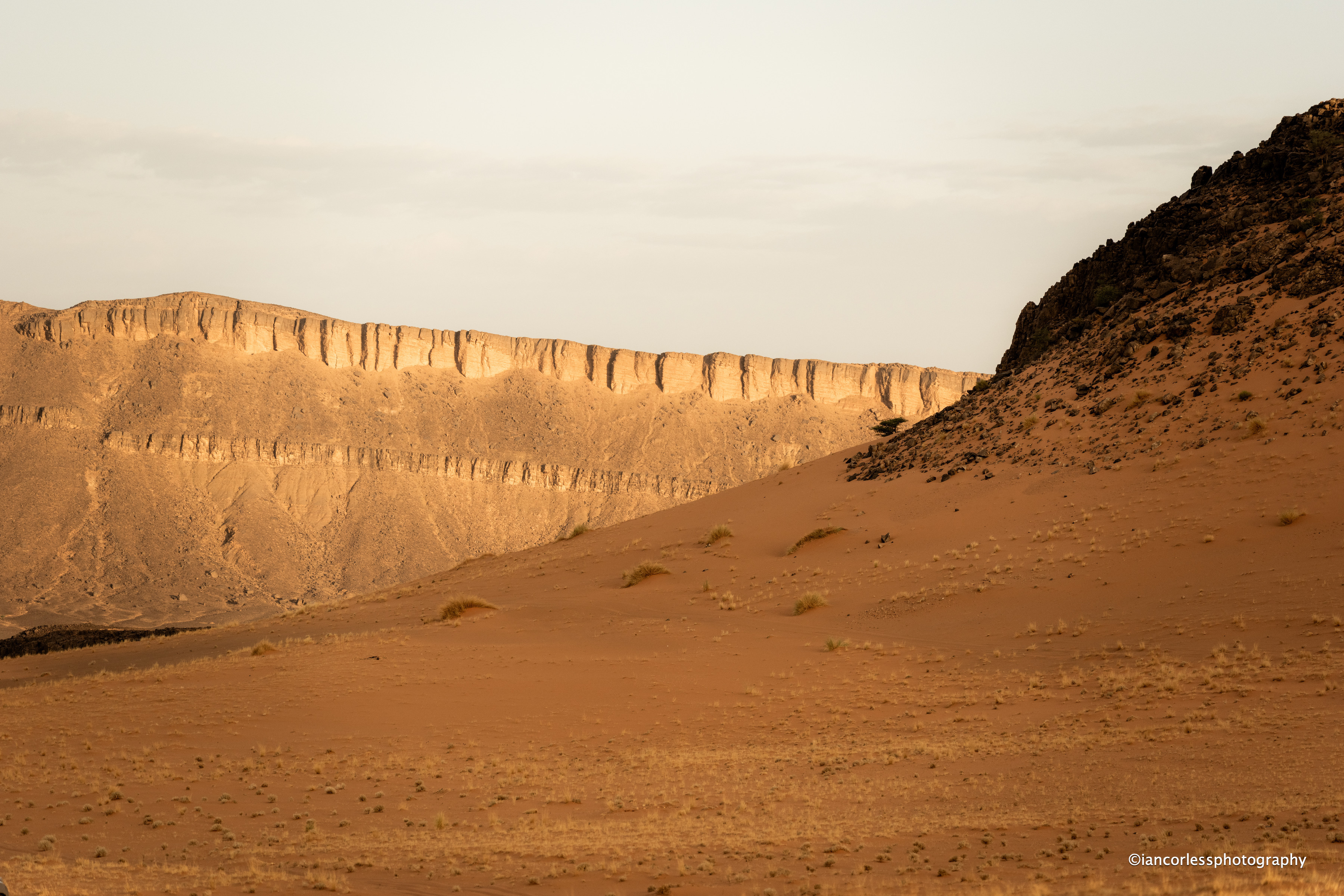
At either 11.7km or 15km, Stage 2 is arguably one of the most spectacular stages not only in MDS Trek history, but across all MDS events. The route showcases everything that makes racing in the Sahara so magical, combining dramatic landscapes, varied terrain and constantly changing scenery.
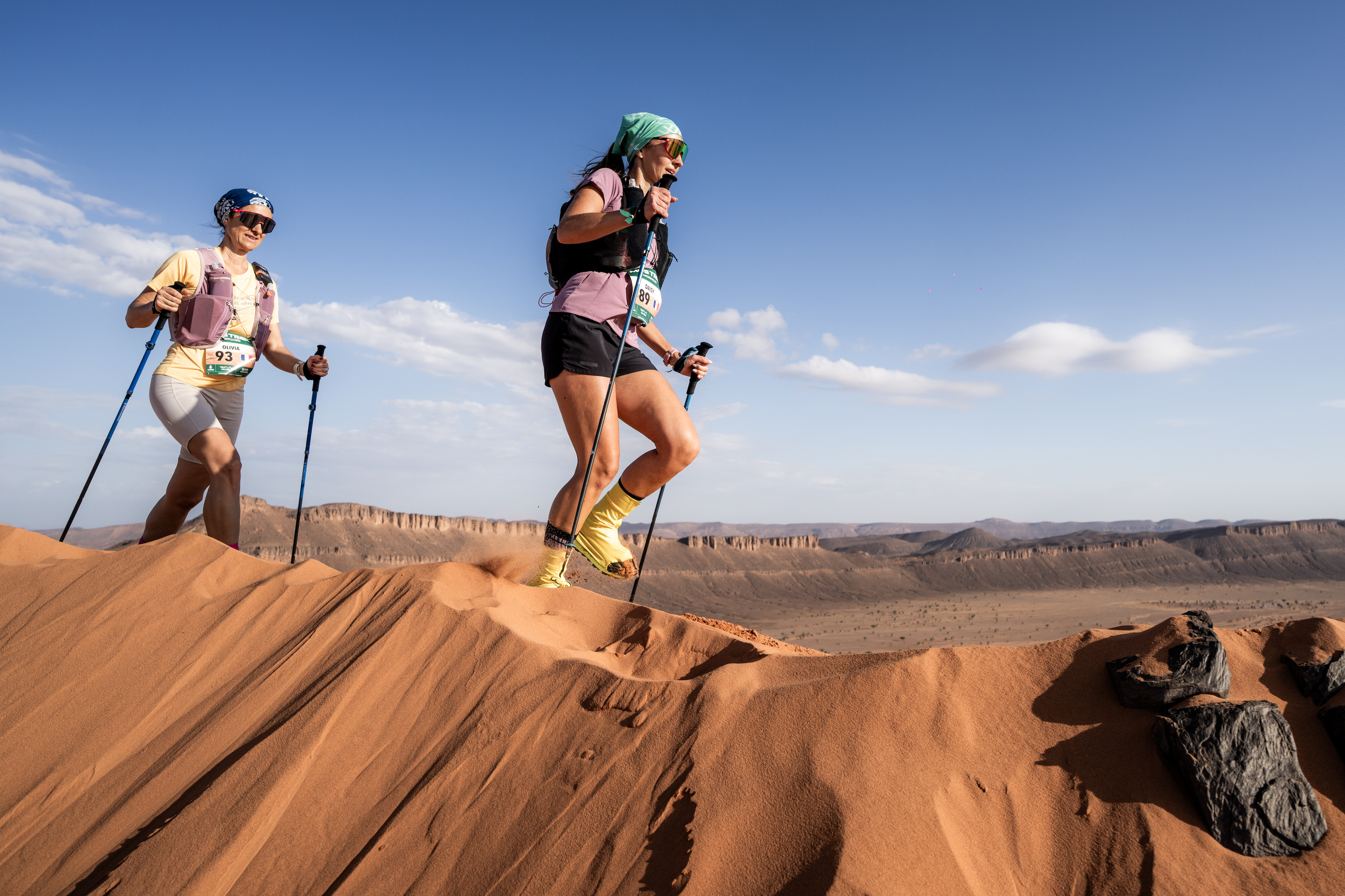
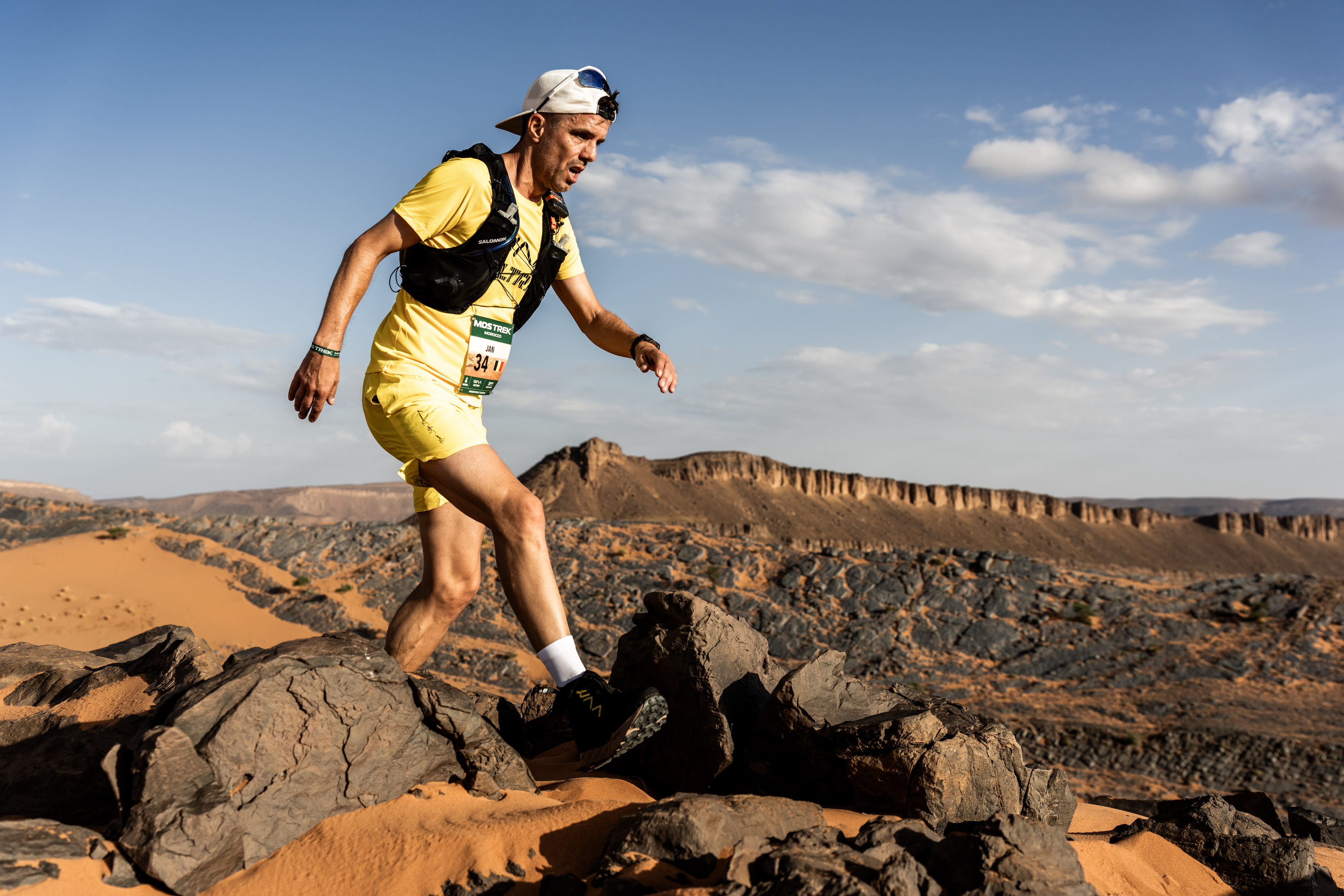
The stage begins gently enough with a flat opening kilometre before the route rises onto a ridge. From there, participants traverse a mixture of rocky ground and sand, gaining ever more impressive views of the surrounding desert.
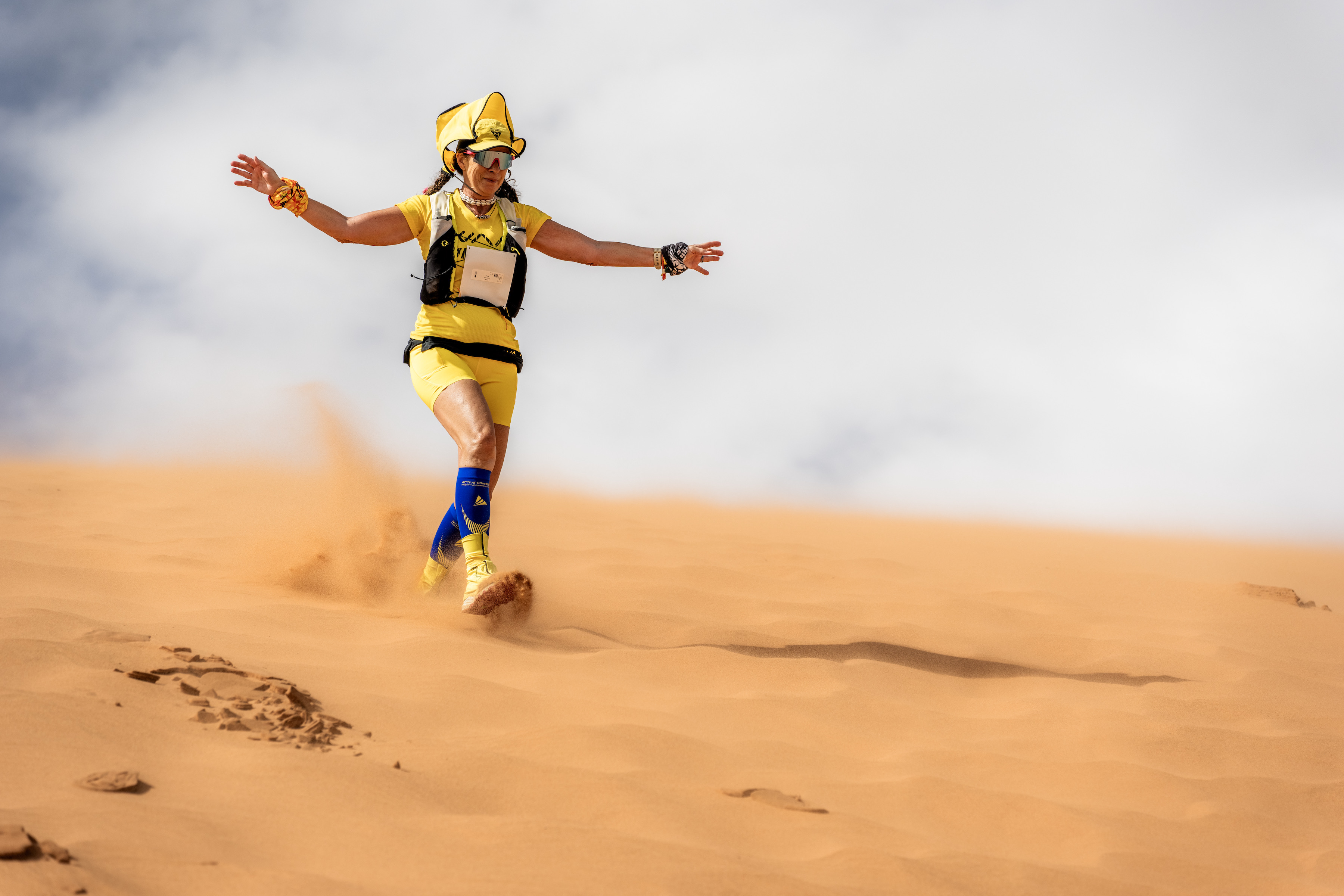
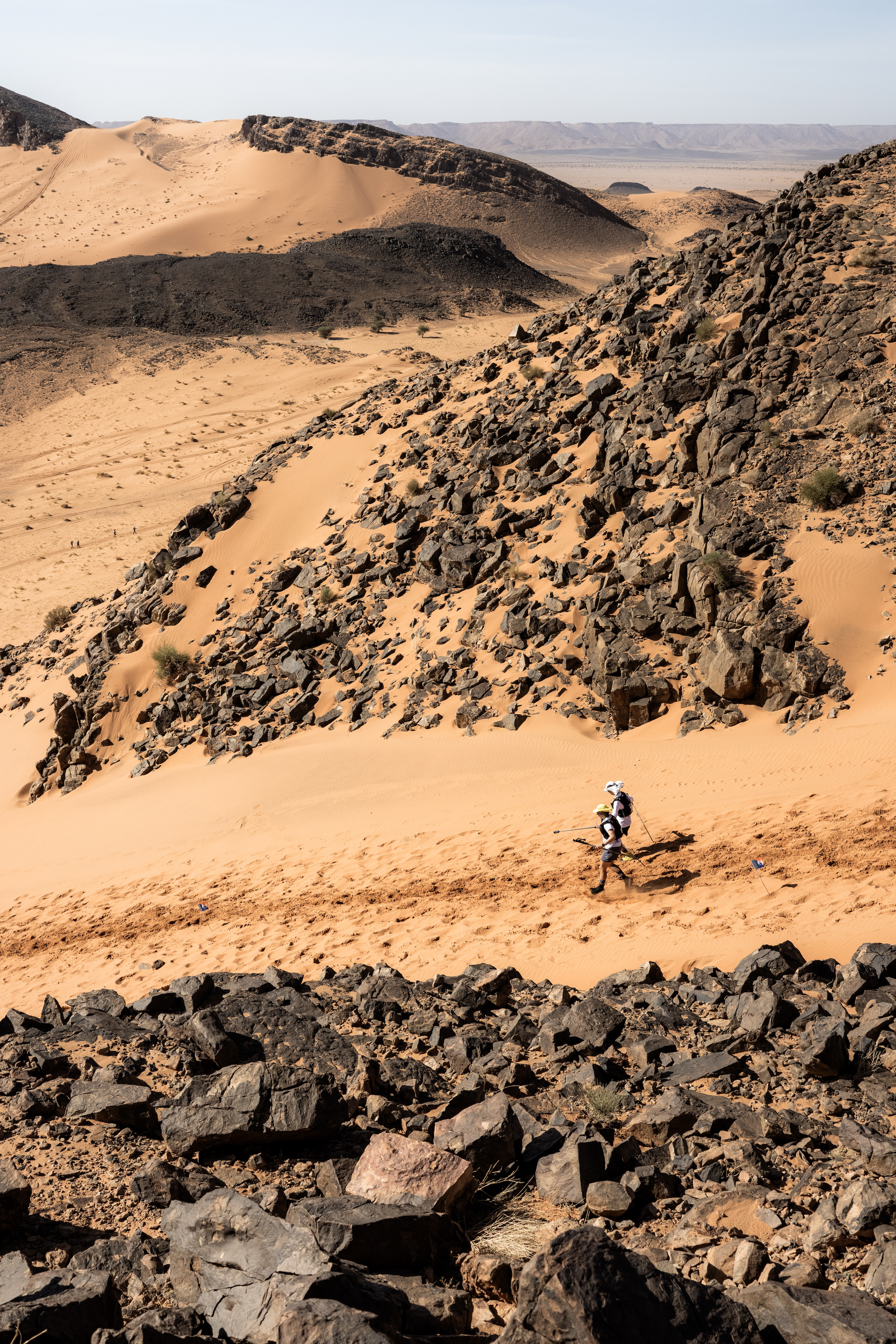
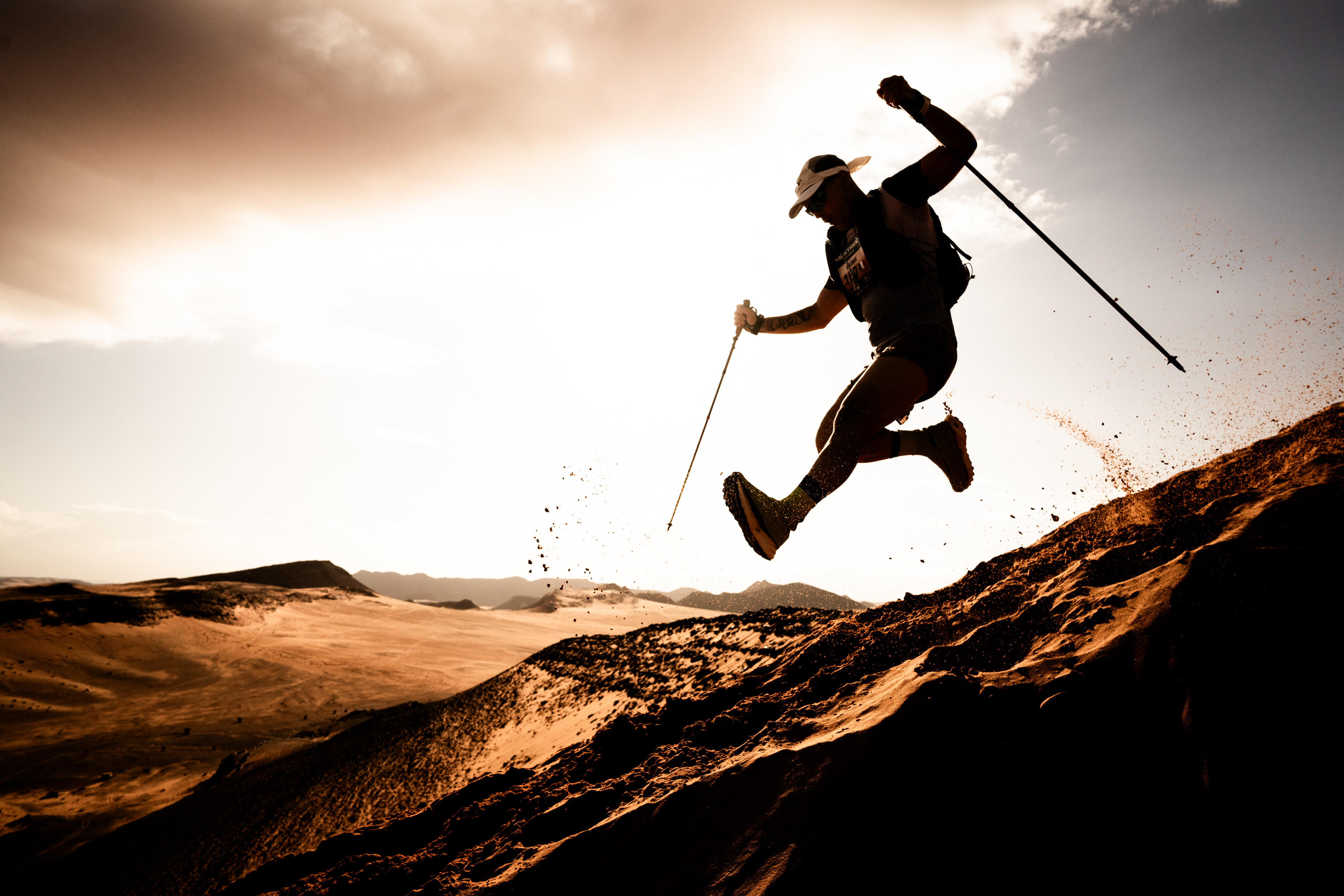
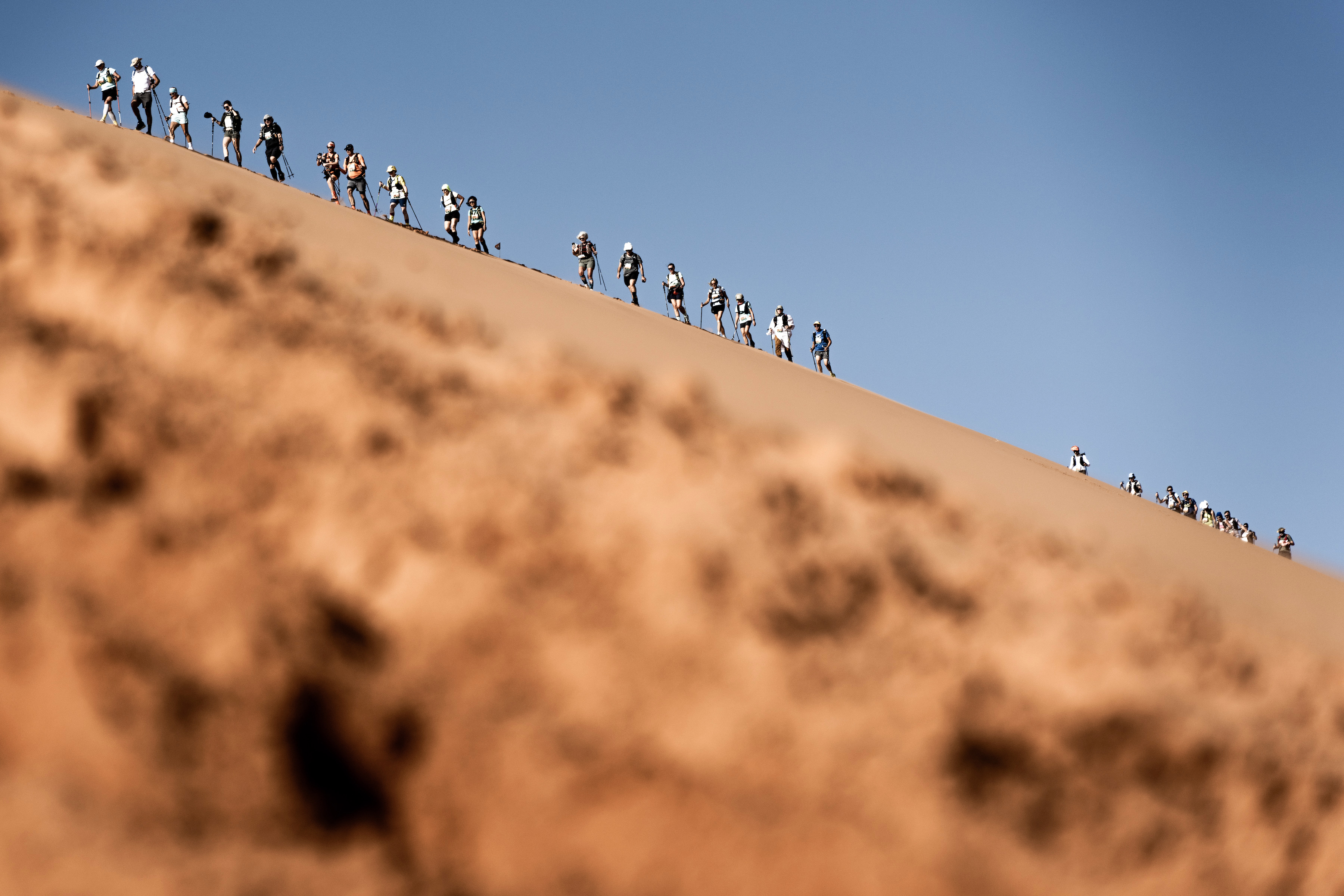
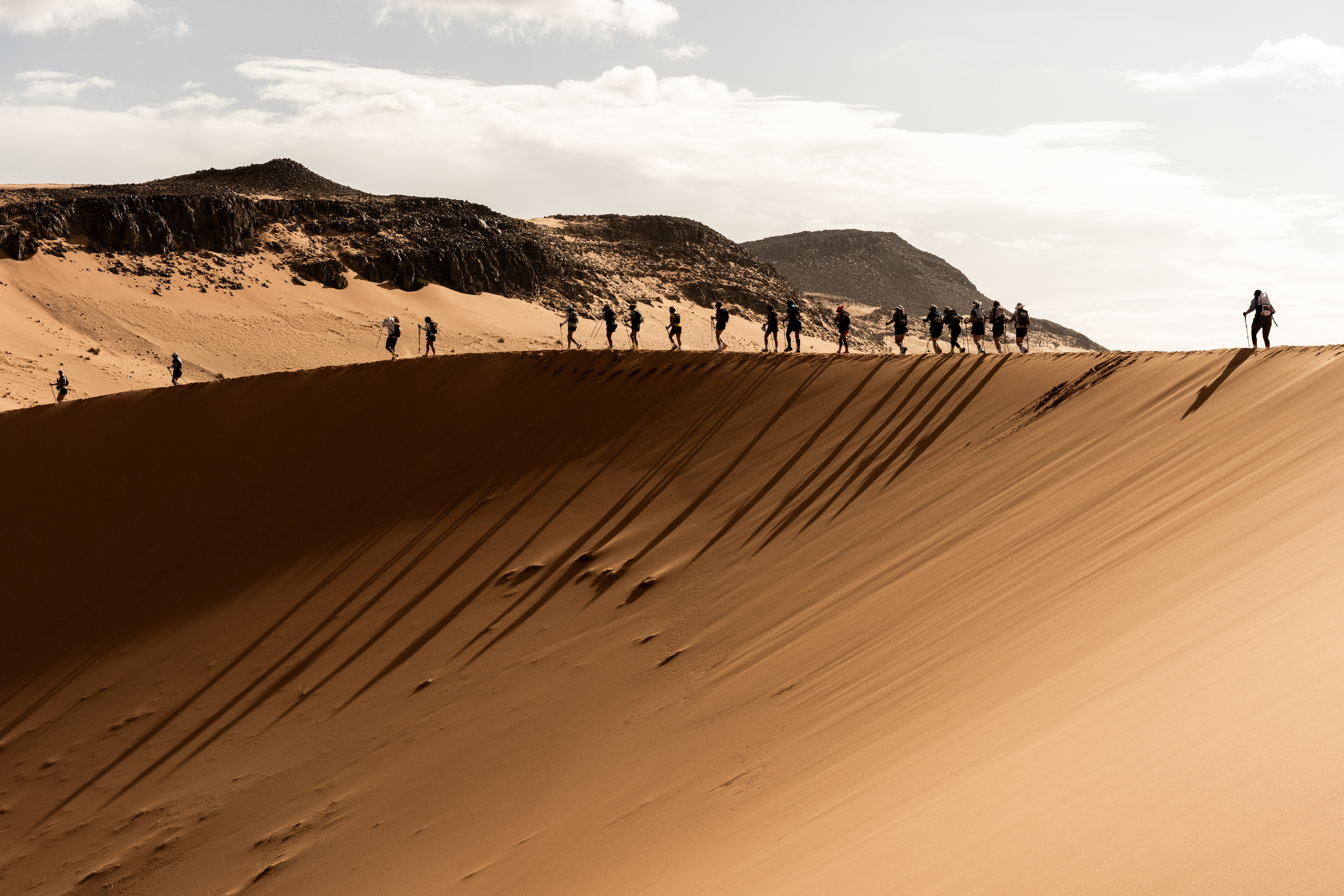
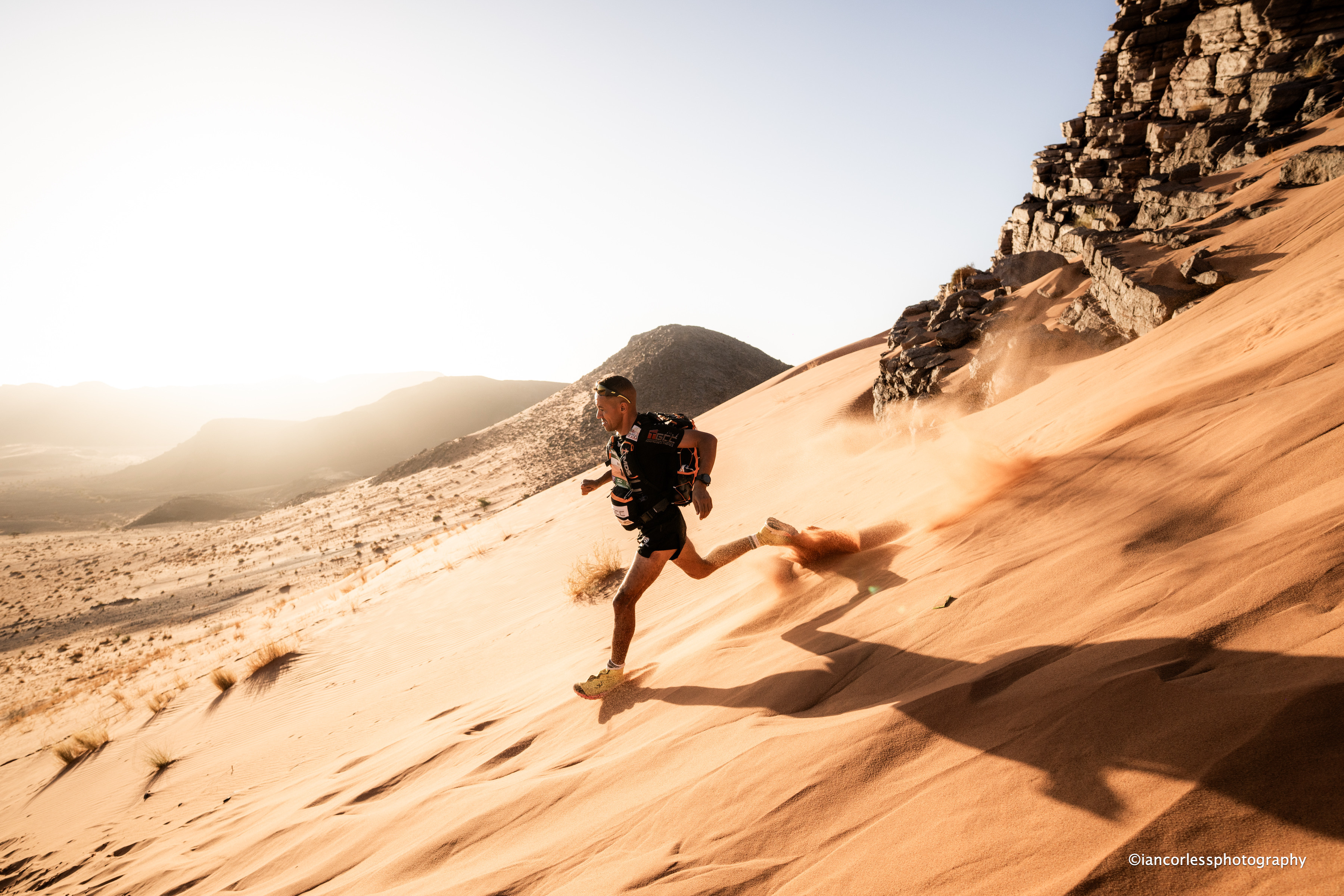
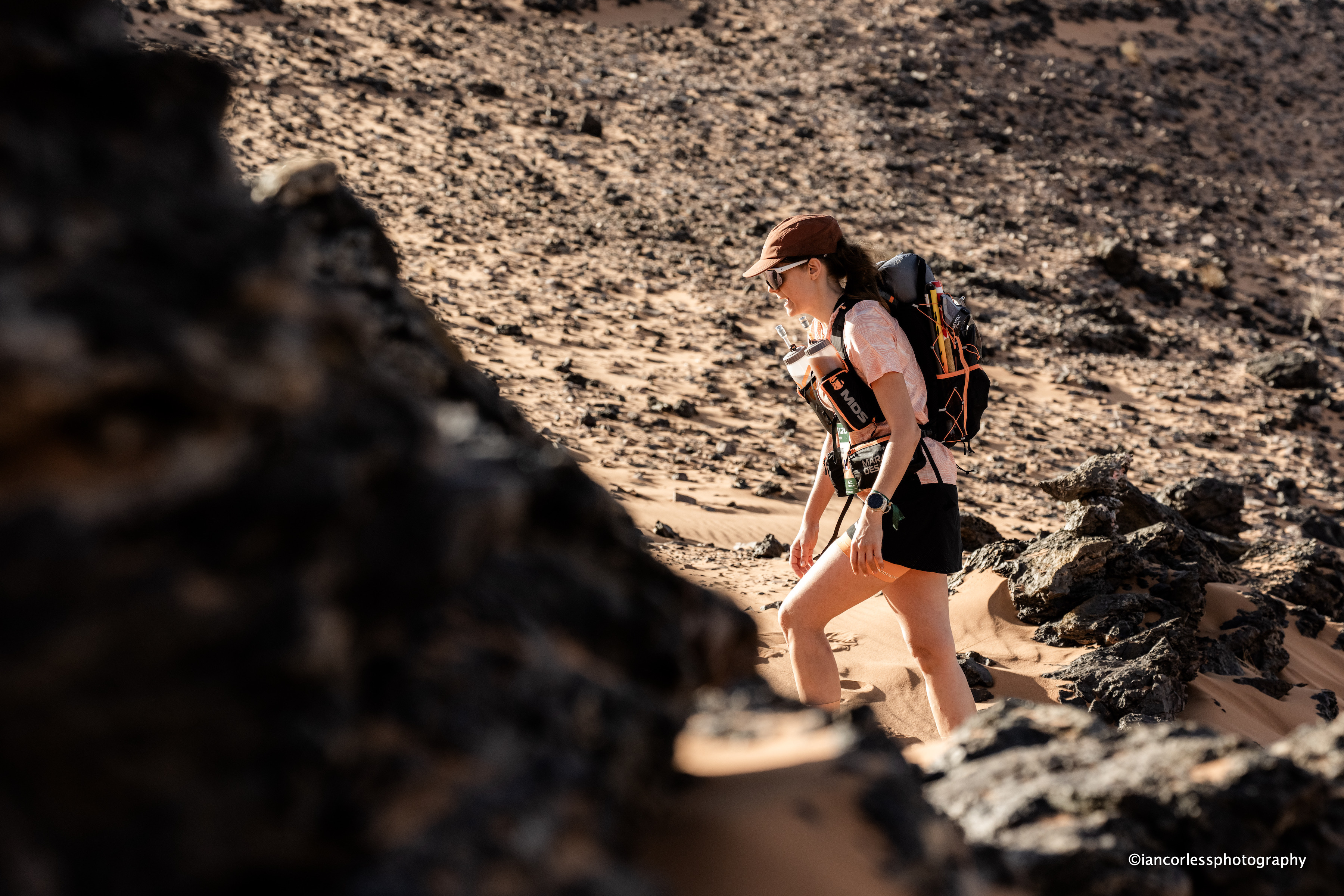
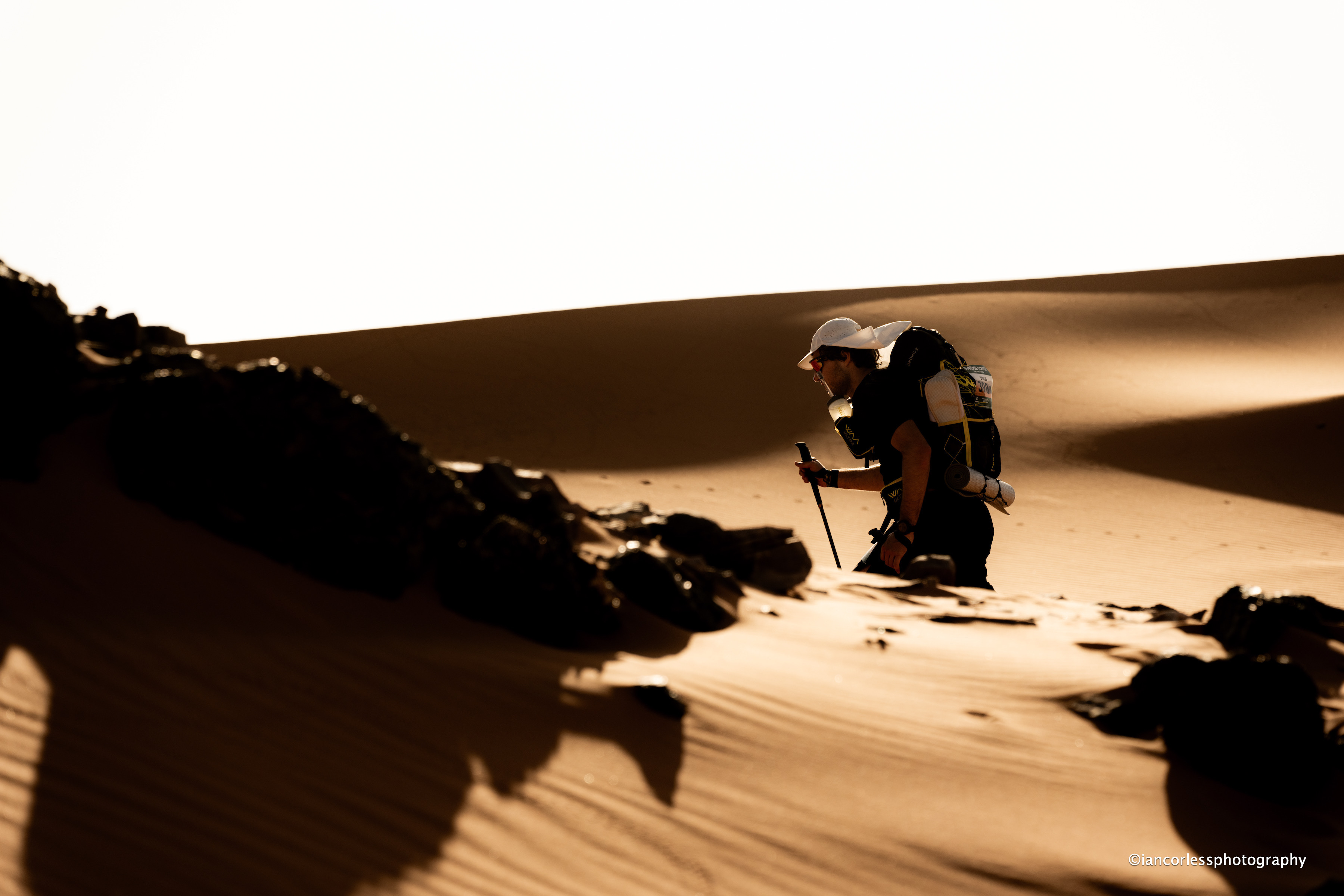
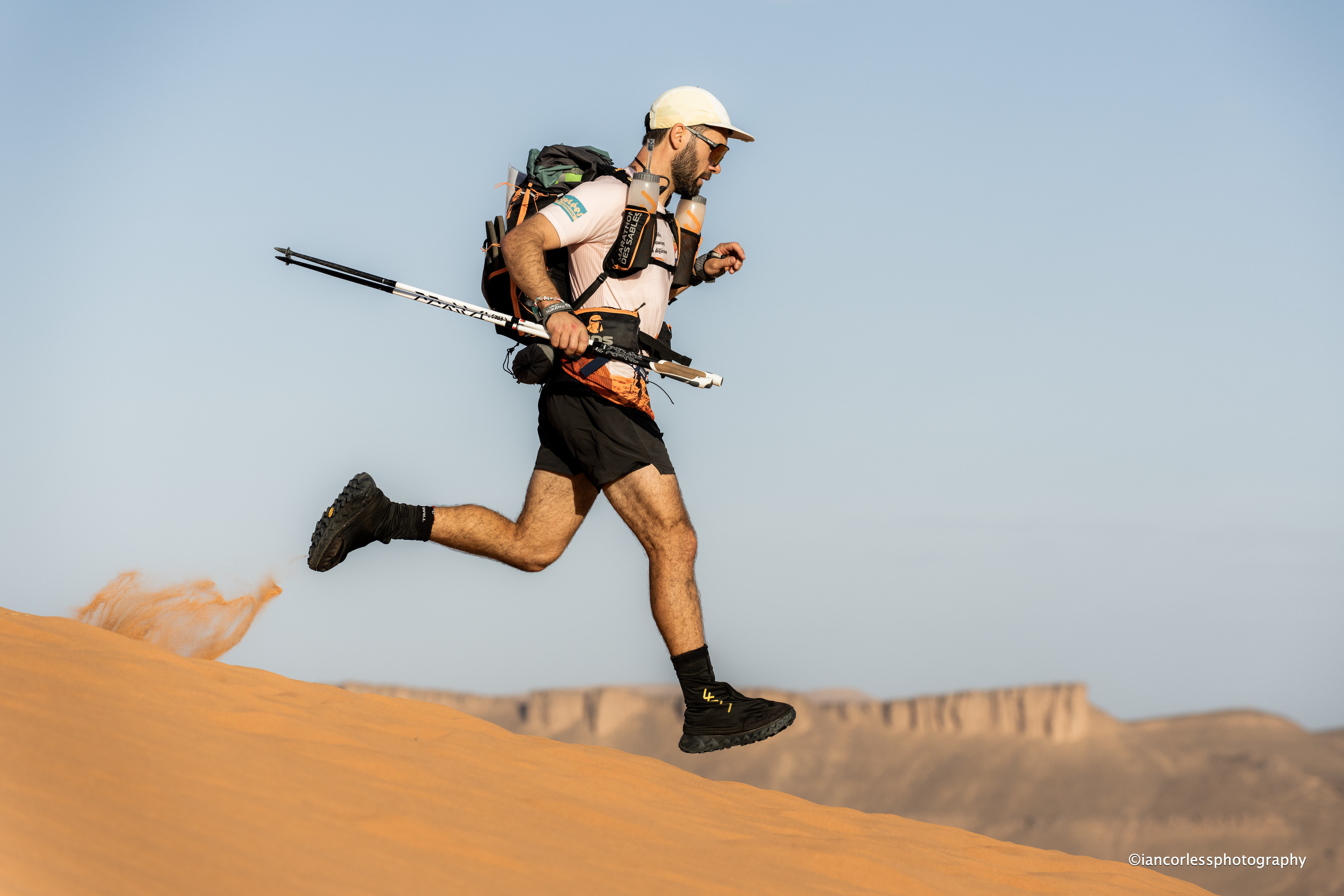
Then comes one of the highlights of the entire race: a thrilling descent down a huge dune. It is pure Sahara running at its finest, with competitors able to bound down the soft sand towards Checkpoint 1.
Waiting at CP1 are water refills, shade for those needing a short respite and, perhaps most welcome of all, ice for cooling necks and helping to manage the steadily rising desert temperatures.
The journey then continues across a relatively flat traverse towards CP2. While the terrain allows runners and walkers to find a rhythm, it is the breathtaking mountain scenery that continually draws participants forward, each turn revealing another stunning vista.
At CP2, the course offers a route choice, with participants selecting between the shorter and longer options. Regardless of the decision, both routes provide a memorable journey through mountain terrain before eventually rejoining for the final push to the finish line.
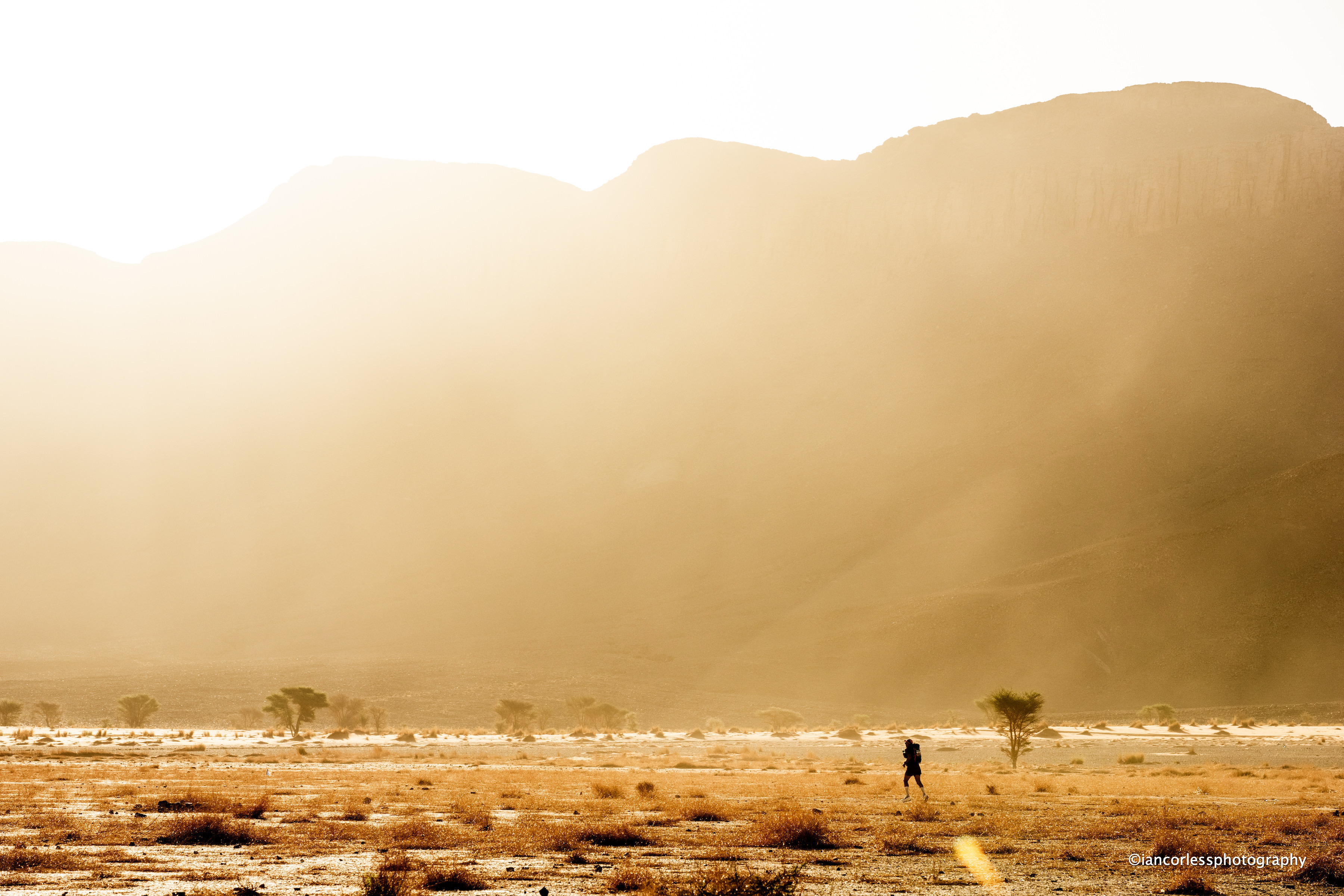
Adding even more magic to the day was a stunning sunrise and the golden desert light that illuminated the landscape throughout the morning. Combined with the incredible route, it created exactly the kind of day that defines MDS Trek.
Tomorrow brings the next chapter of the adventure with Stage 3, Part 1. Participants will choose between routes of 17.3km or 31.2km, but this time there is a significant difference: they will not return to the bivouac at the finish of the day.
Instead, the stage concludes deep in the Sahara, where an unforgettable night beneath a canopy of desert stars awaits.
Following the excitement of MDS 120 Morocco and MDS Handi, the MDS organisation now turns its attention to a very different, yet equally special, desert experience: MDS TREK.
Photo Ferdinand Charriau
If you’ve ever looked at images of runners crossing the Sahara and thought, “I’d love to experience that, but there’s no way I could race across the desert,” then MDS TREK was designed with you in mind.
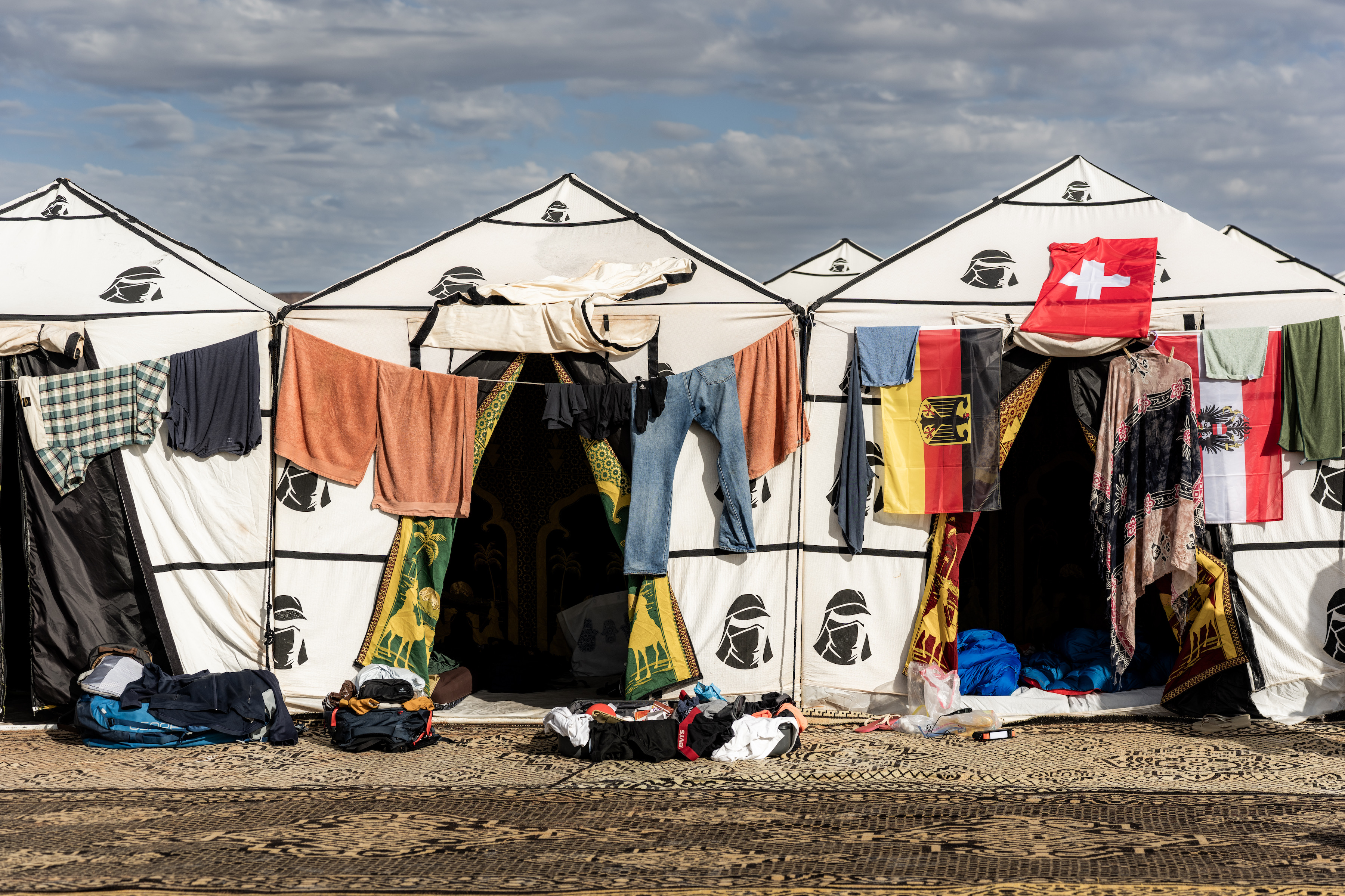
Unlike the self-sufficient MDS events, where participants carry everything they need, MDS TREK offers a more comfortable and accessible way to immerse yourself in the magic of the Sahara. Breakfast, lunch and dinner are provided every day. The iconic MDS bivouac remains, but instead of sleeping under communal tents, participants stay in twin-share individual tents complete with mattresses. Add optional massages, a locally managed bar serving drinks in camp, and the result is something that feels less like a race and more like an unforgettable active adventure holiday.
Of course, this is still the Sahara.
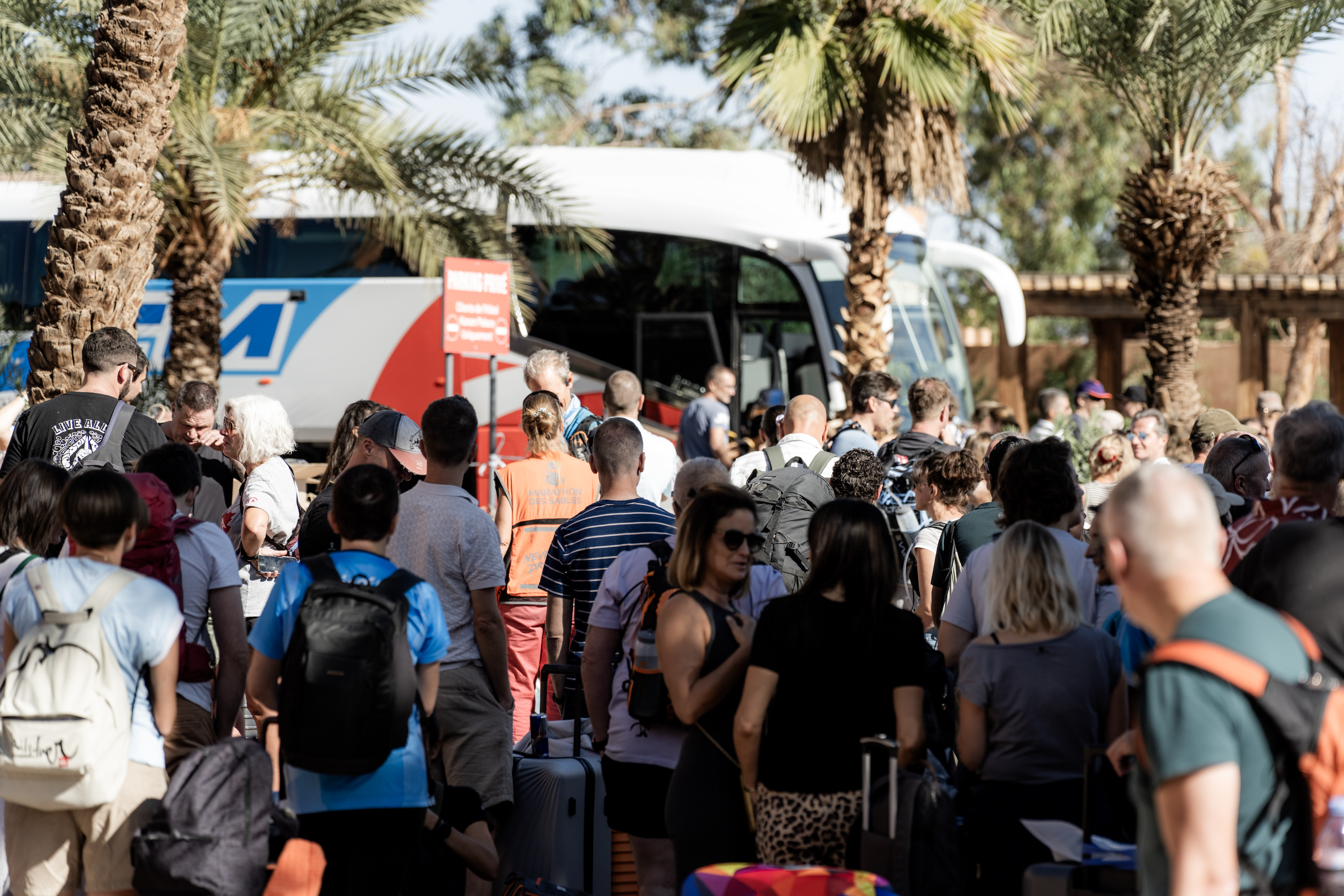
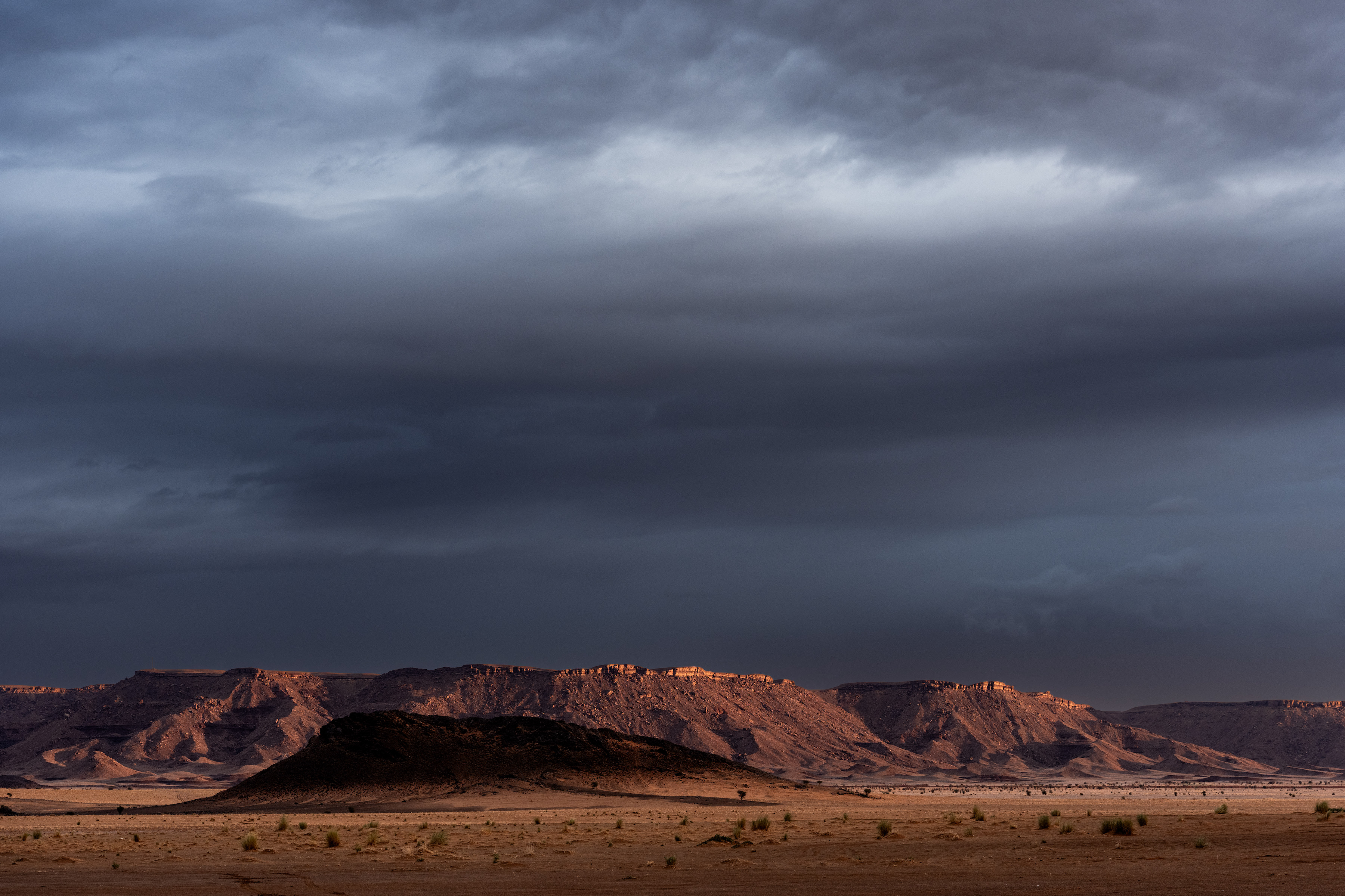
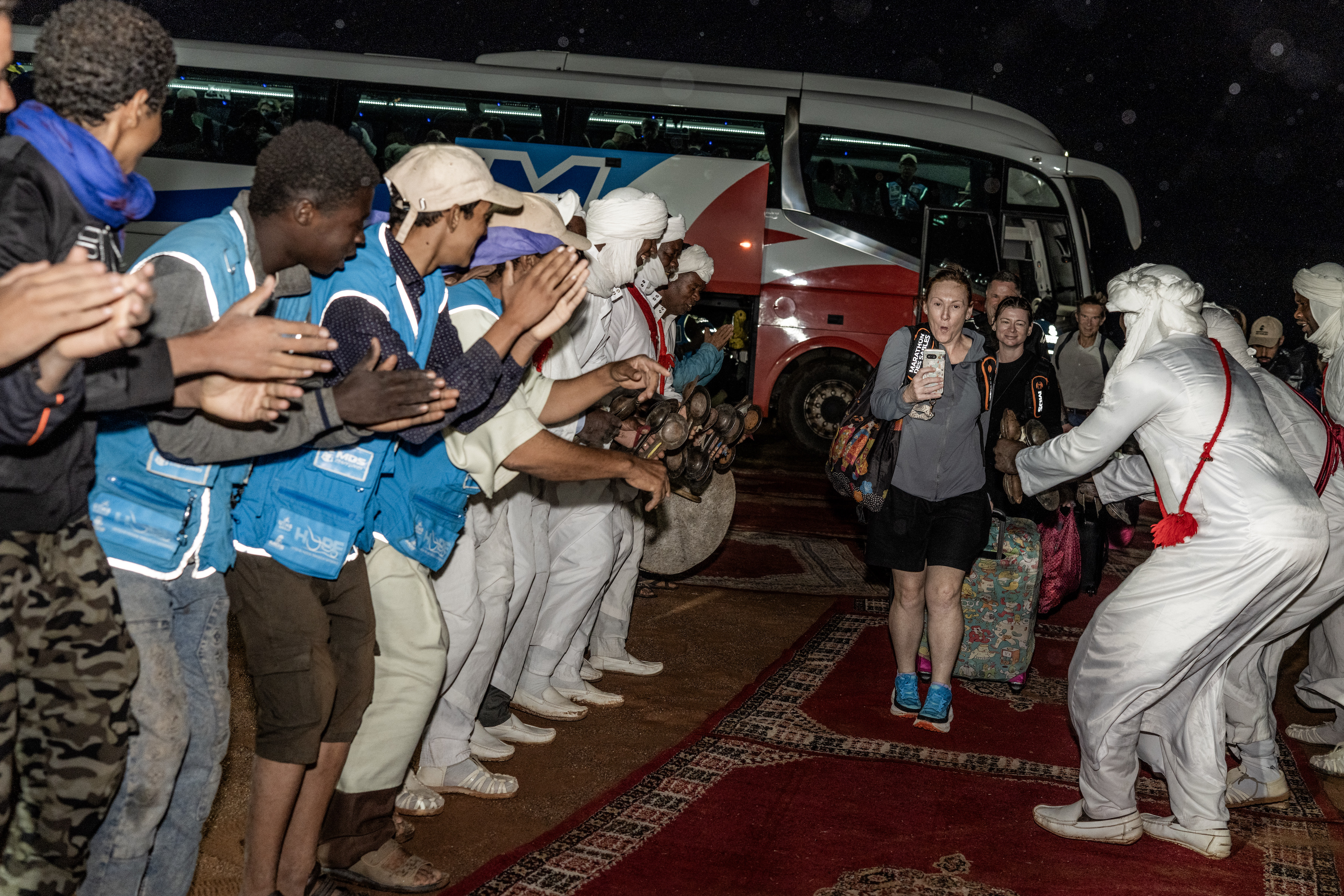
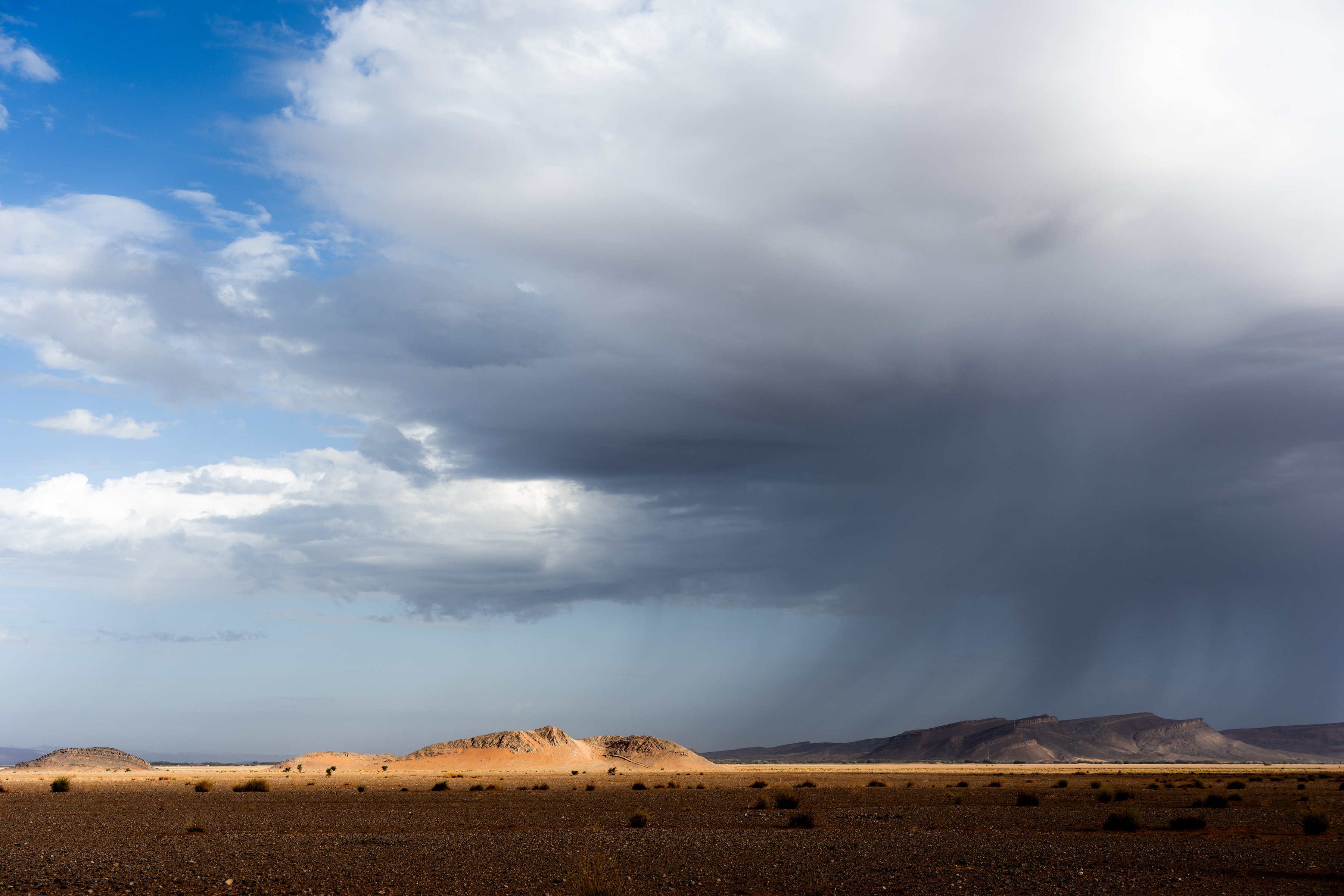
Participants gathered in Ouarzazate several days ago before making the journey south into the desert. Their arrival wasn’t without drama. Unseasonal storms swept through the region, creating challenging conditions for organisers and bivouac crews alike. The desert had delivered an early reminder that nature is always in charge.
Fortunately, by morning the Sahara had transformed once again.
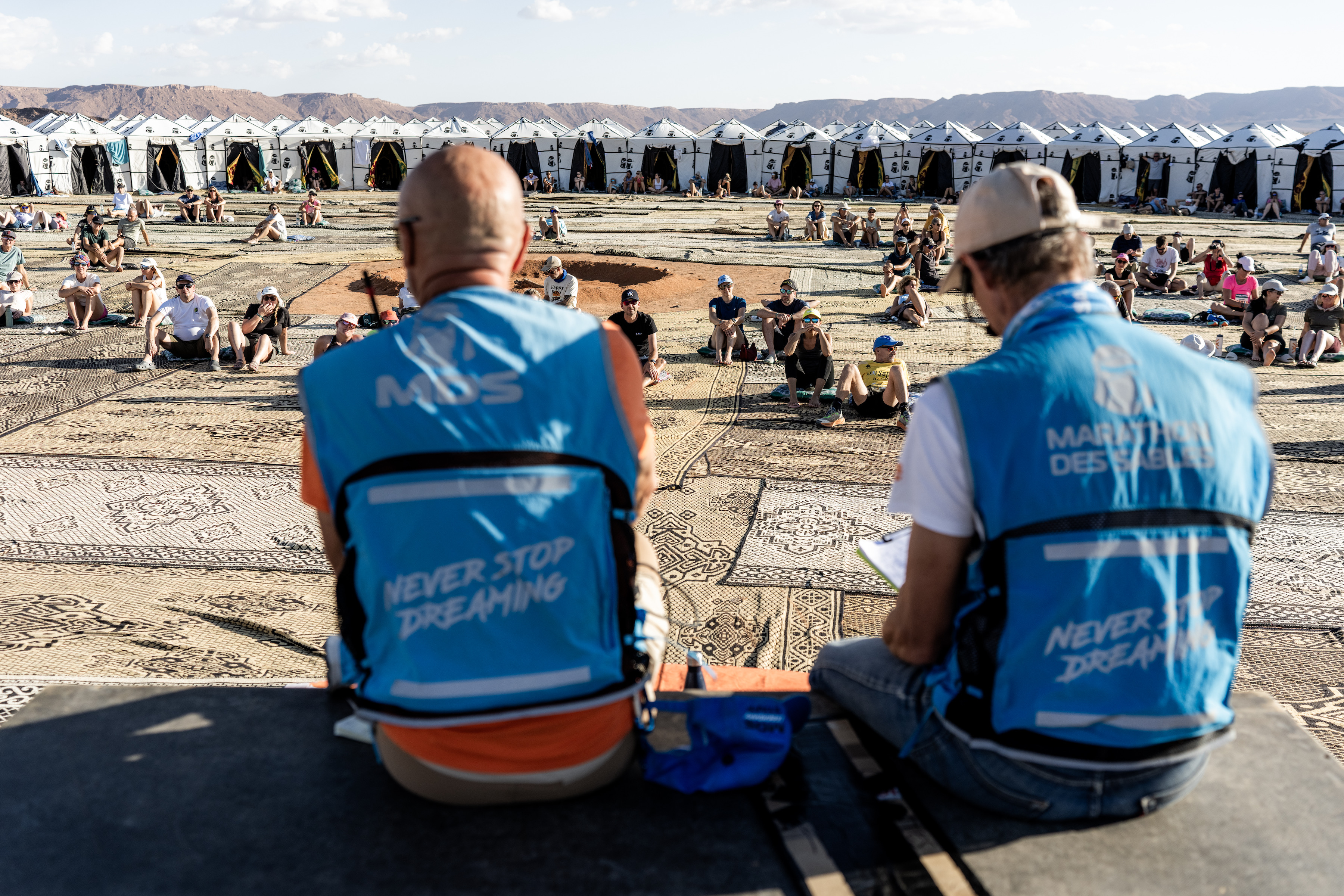
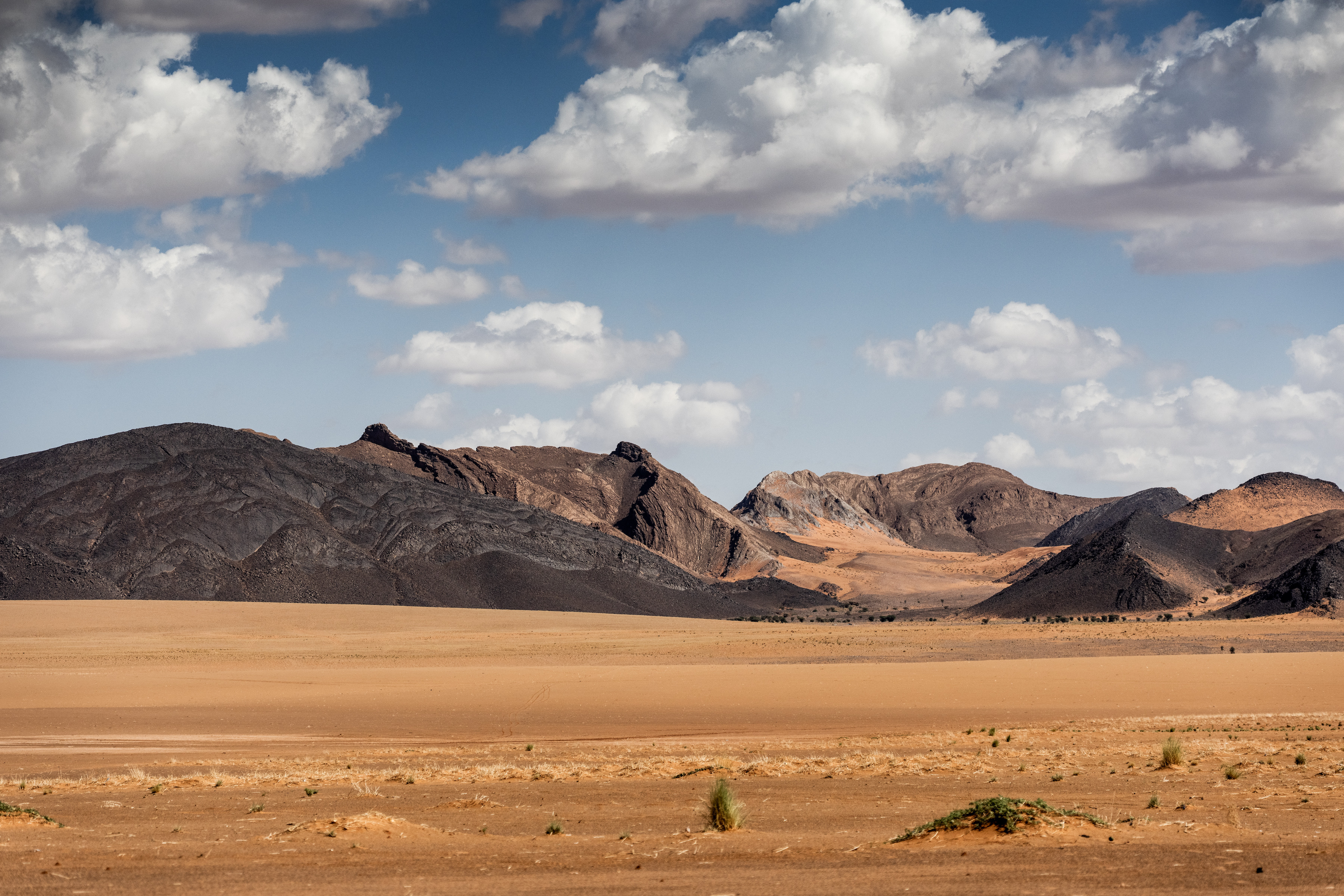
Blue skies replaced the storm clouds, sunshine warmed the camp, and the desert revealed its more familiar face. Day one was intentionally relaxed, allowing participants to settle into camp life with technical checks, a leisurely lunch and an informative afternoon briefing.
As the sun dipped below the dunes, painting the horizon in shades of gold and orange, everyone gathered for dinner before turning in early.
Tomorrow would bring the real adventure.
Stage 1: The Journey Begins
One of the defining features of MDS TREK is choice.
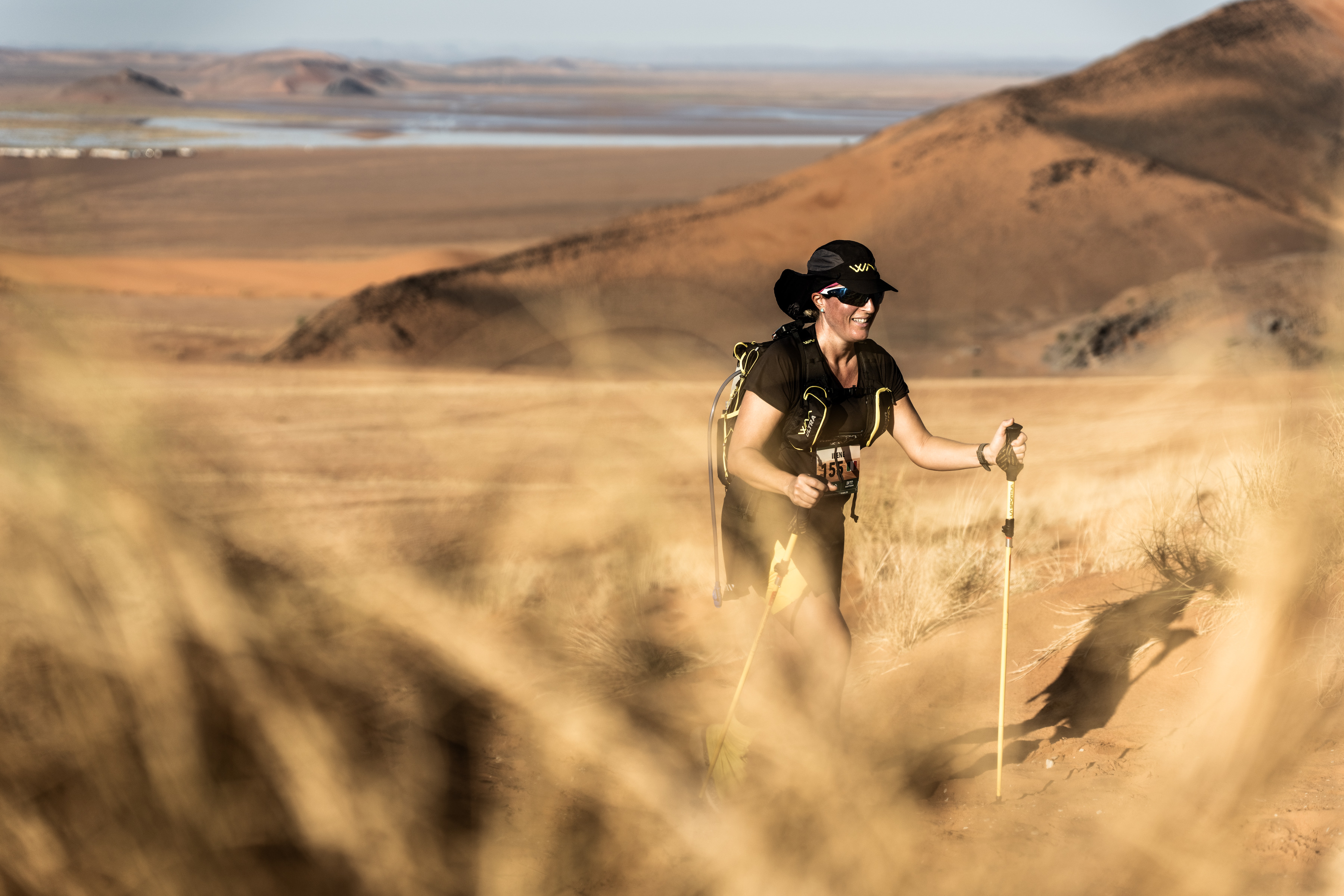
Participants can select between two route options each day, and for Stage 1 those choices were 15.5km or 22km. There are no cut-off times, no pressure and no expectation to race. While running is welcomed, trekking and walking are very much encouraged. The emphasis is on enjoyment, discovery and experiencing the desert at your own pace.
And that is where the real beauty of MDS TREK lies.
For many participants, this is their first time in a desert. For some, it is their first multi-day adventure. Others arrive after years of dreaming about doing something outside their comfort zone. MDS TREK creates an environment where people of all ages, backgrounds and abilities can challenge themselves without the intimidation often associated with traditional endurance events.
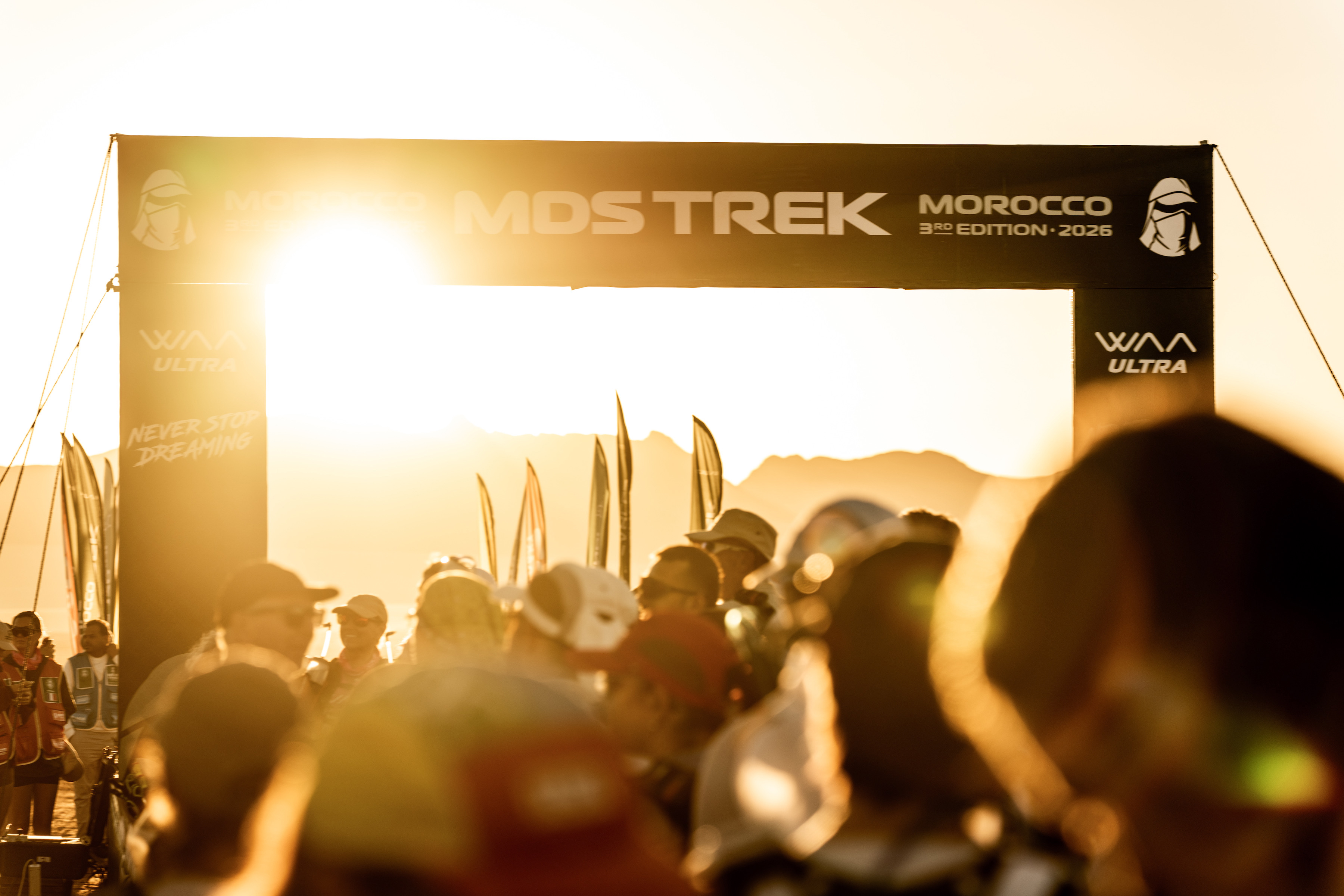

As dawn broke over the Sahara, calm conditions and a spectacular sunrise greeted the 400-strong field. At 7:00am, participants set off into the vastness of the desert, beginning what for many will become one of the most memorable weeks of their lives.
With seven nights spent in the Sahara, MDS TREK is far more than a sporting event. It is a fully immersive experience. Across five days of movement and four stages, participants will explore spectacular landscapes, with Stage 3 split into two parts and featuring the much-loved Star Night, where participants spend a night beneath one of the most breathtaking night skies imaginable.
Results are very much secondary at MDS TREK. This event is about the experience rather than the stopwatch. Nevertheless, there will always be those who like to push the pace. For anyone interested in following the competitive side of the event, live results are available online.
The statistics from Stage 1 tell their own story about the inclusive nature of the event. Of the finishers, 348 participants chose the longer 22km route, while 40 selected the 15.5km option. Different distances, different goals, but exactly the same sense of achievement at the finish line.
Because in MDS TREK, every participant has their own personal victory.
Some are discovering they can walk further than they ever imagined. Some are building confidence with every step across the dunes. Others are sharing an adventure with friends, family and fellow trekkers from around the world. Every story matters, and every finisher is an inspiration.
Looking Ahead
Stage 2 promises one of the highlights of the entire week.
Participants will climb a spectacular ridge at sunrise, a truly unforgettable experience that showcases the beauty and scale of the Sahara at its very best. Once again, there will be two route options, 11.7km and 15km, ensuring everyone can choose the challenge that suits them.
And that perhaps sums up MDS TREK perfectly.
This is not about being the fastest. It is not about elite athletes or extreme performances.
It is about adventure. It is about sharing extraordinary moments in an extraordinary place. It is about discovering that you are capable of far more than you think.
Most of all, it is proof that the magic of the Sahara can be experienced by everyone.
Stage 3 of the MDS 120 Morocco and the MDS Handi 2026 delivered everything that makes the Marathon des Sables so special: challenge, determination, teamwork and unforgettable emotion.
The day began with two starts. At 05:30, the bulk of the MDS 120 field and all MDS Handi teams set off into the Moroccan landscape. An hour later, at 06:30, the top 50 runners launched their pursuit from behind, adding an extra layer of excitement to the stage.
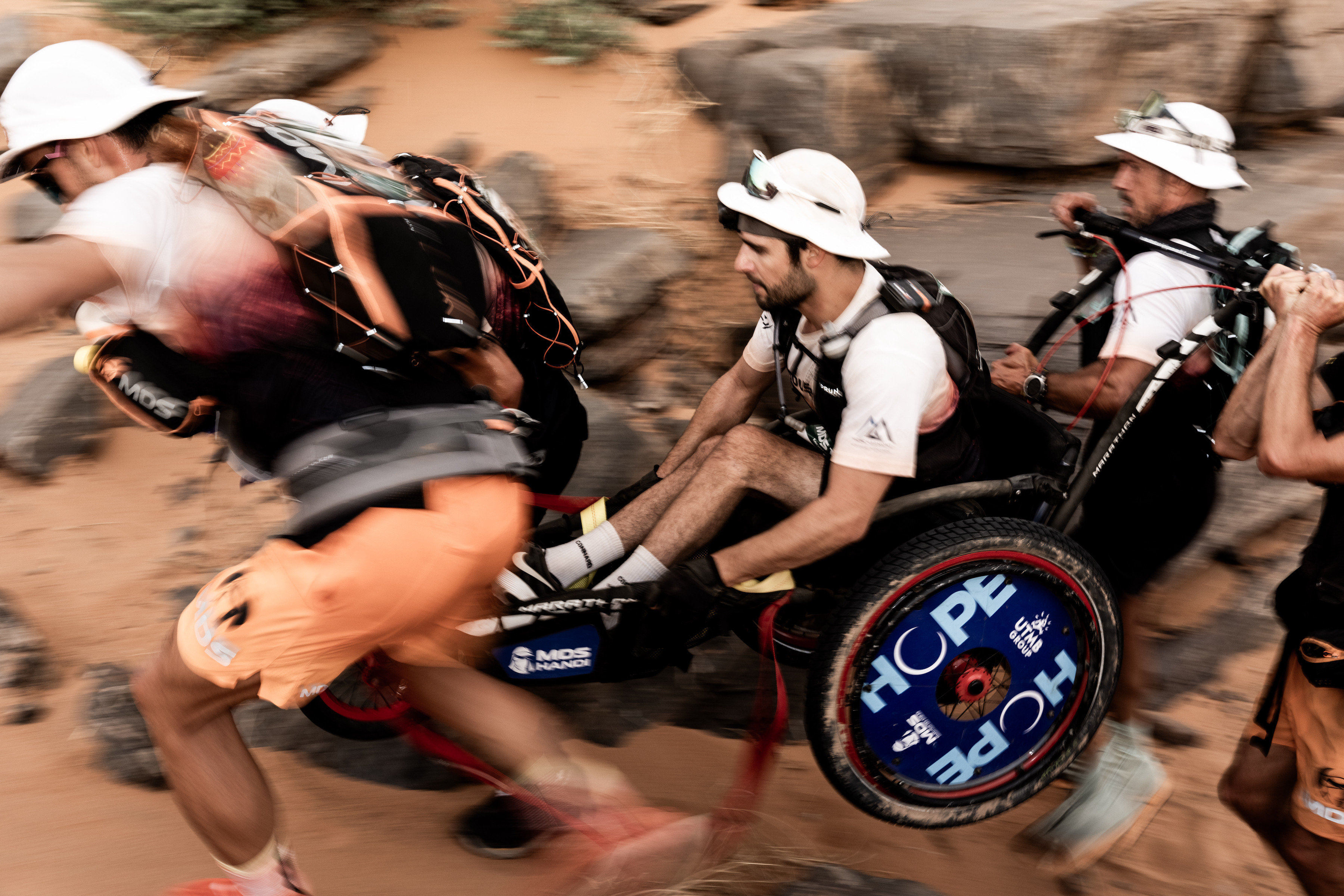
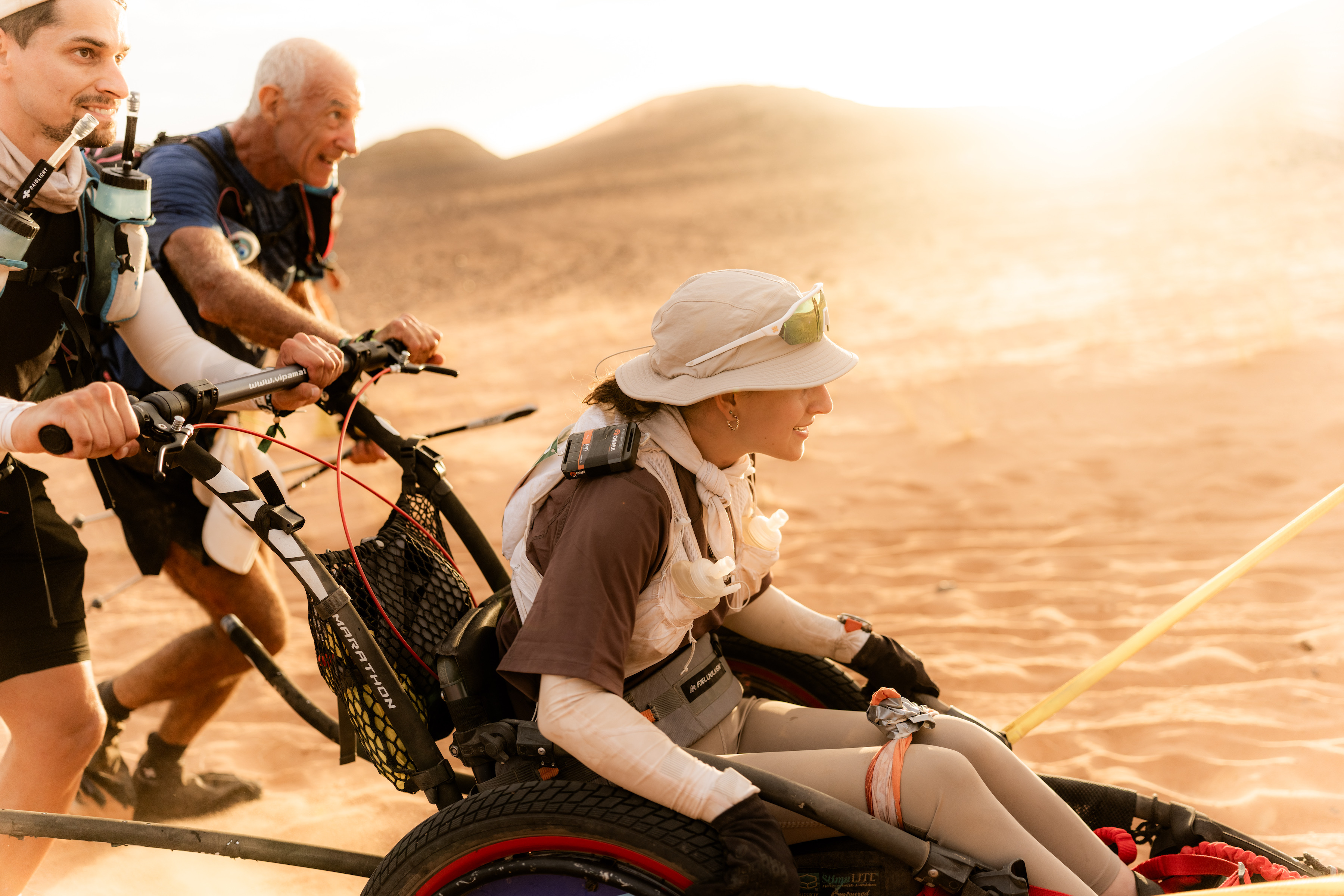
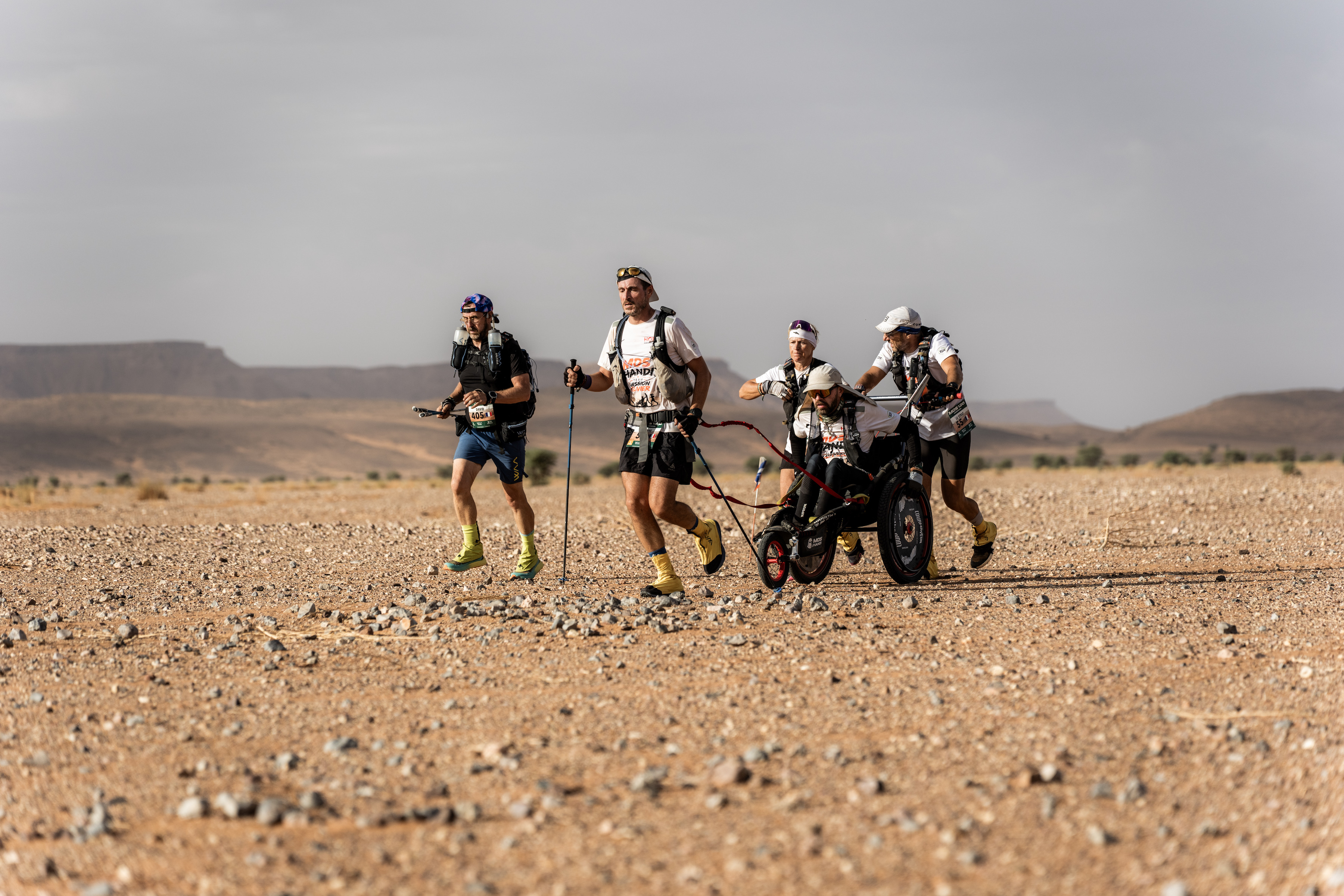
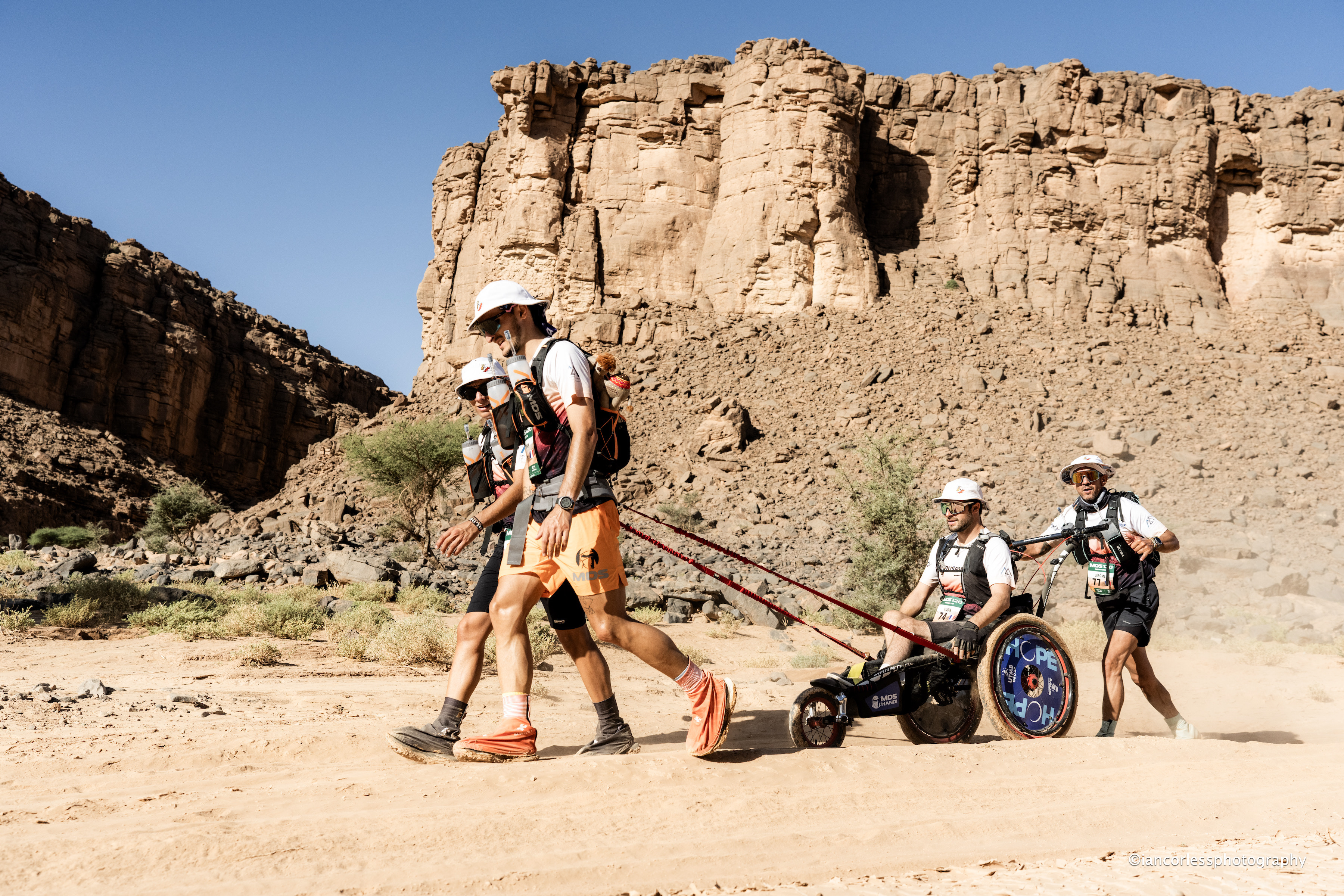
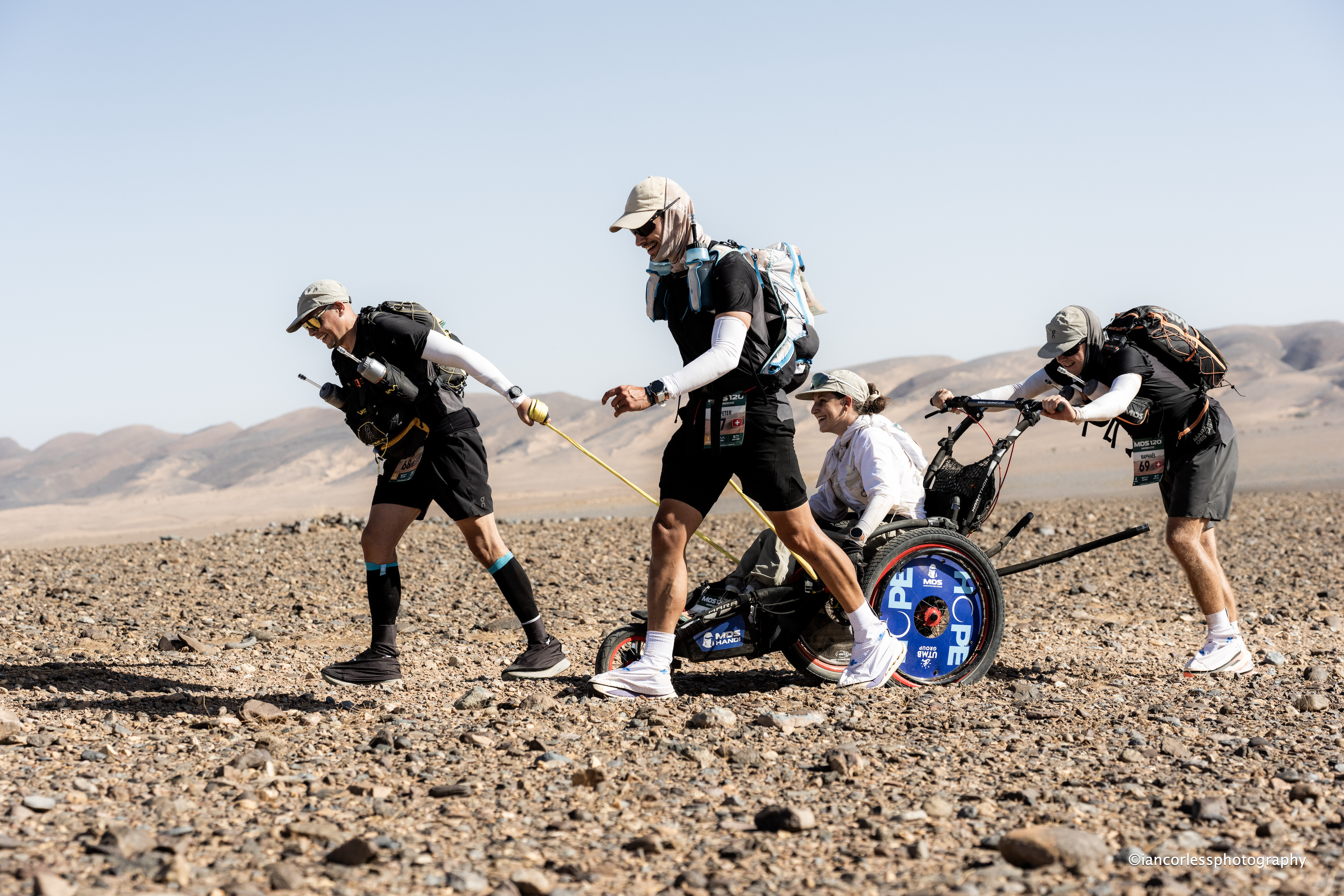
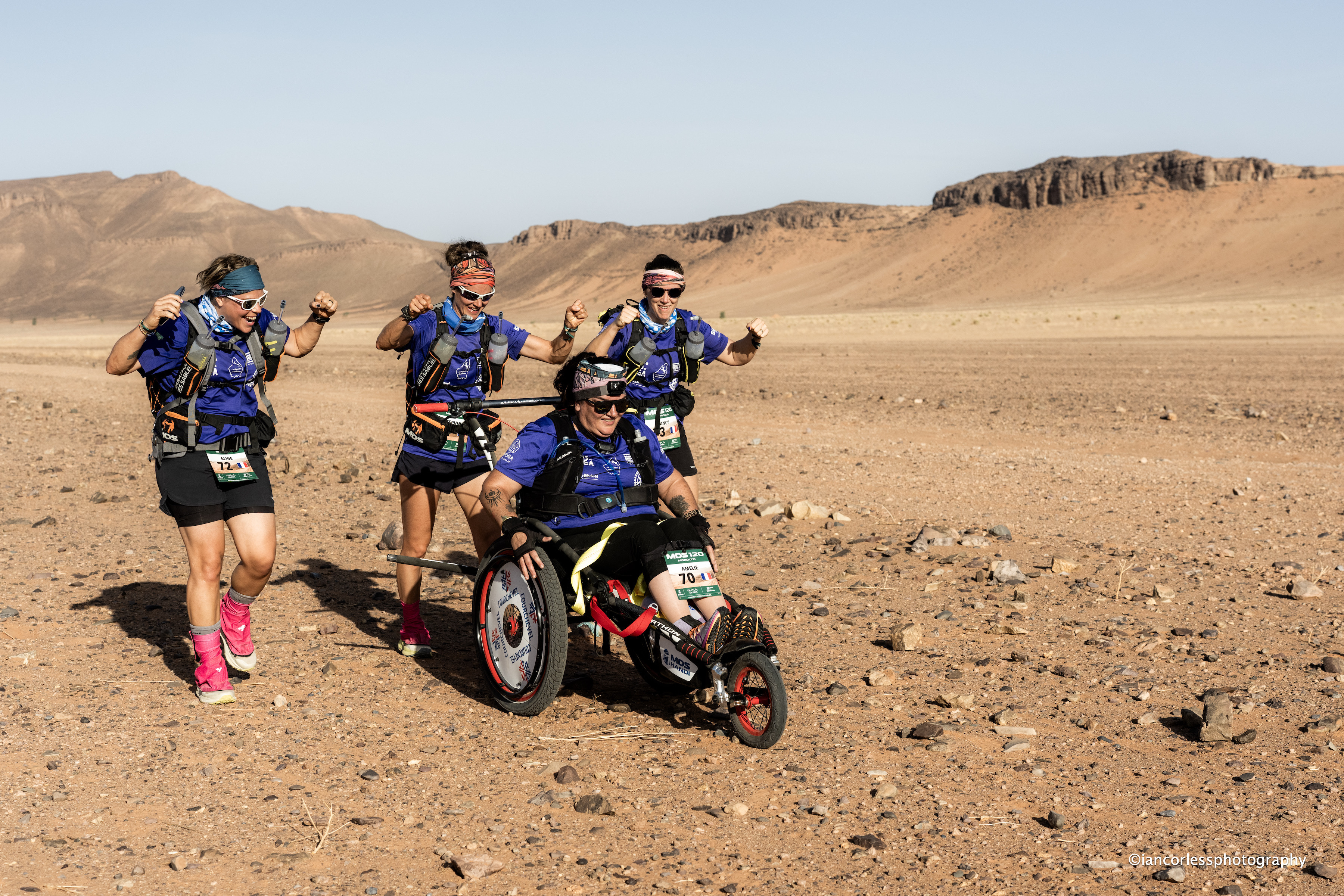
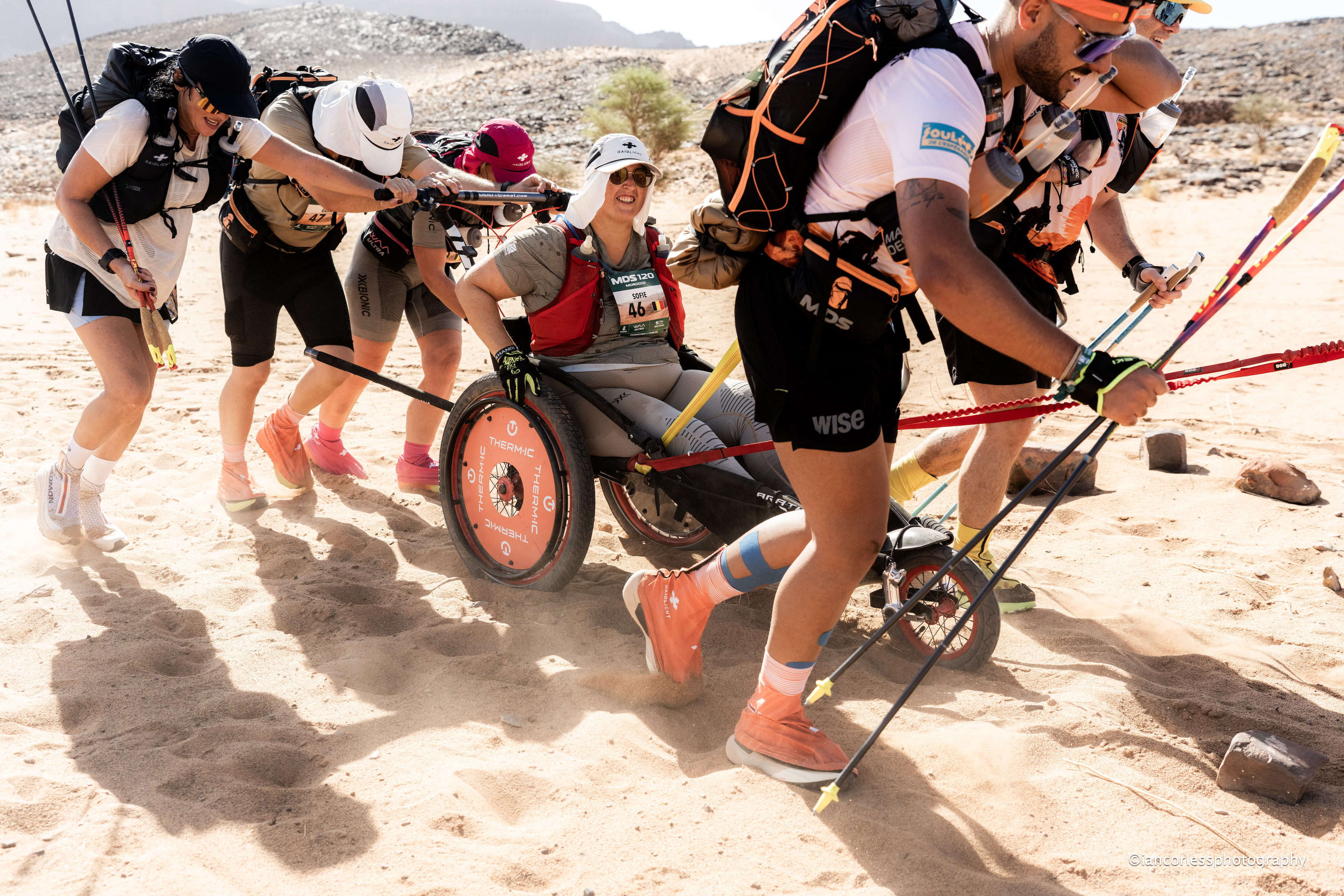
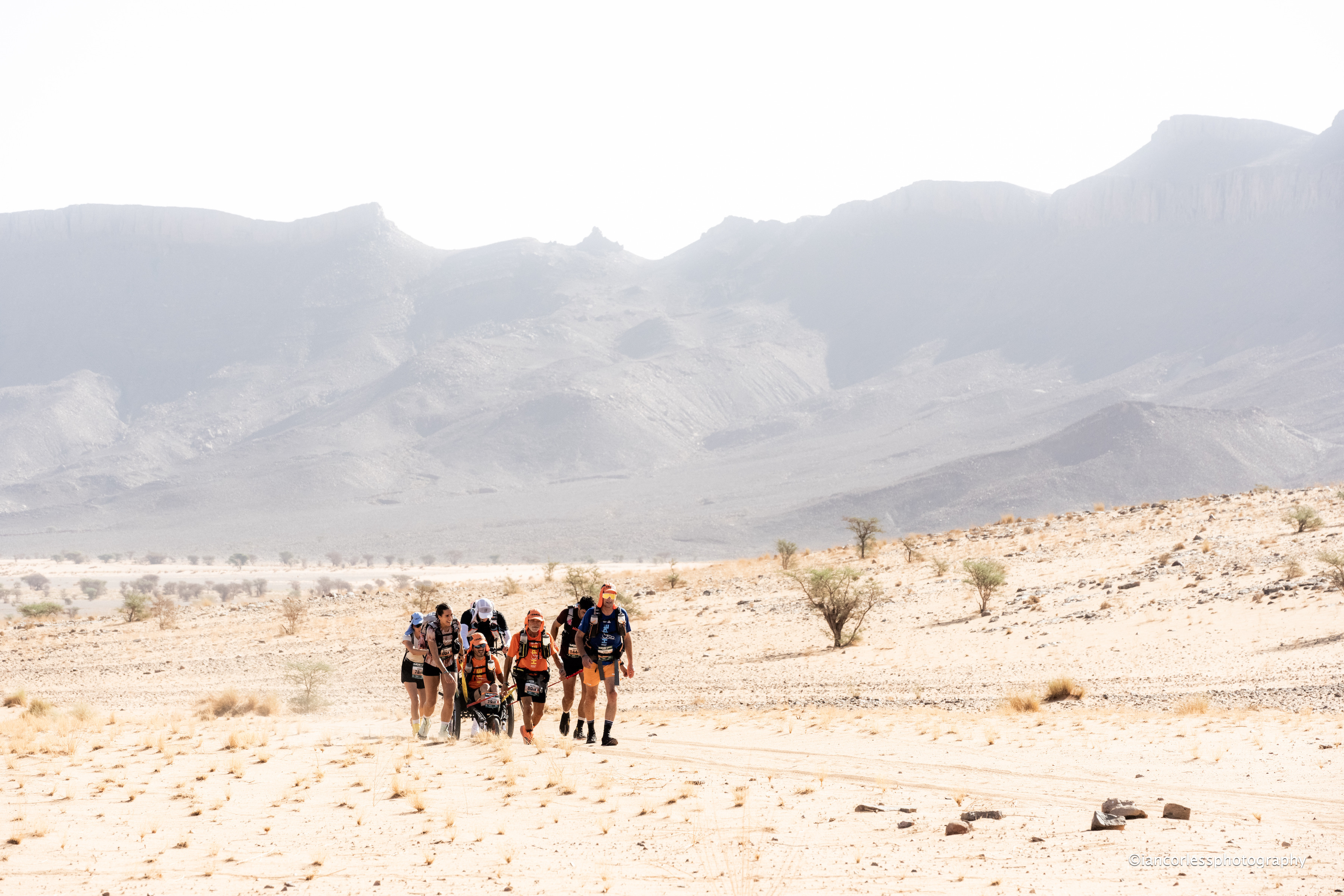
In one of the most inspiring moments of the race so far, the MDS Handi teams were outstanding from the very beginning. Charging through the early kilometres and into the most technical section of the course after CP1, they found themselves at the front of the race. It was a remarkable display of determination, commitment and teamwork. Every obstacle demanded complete trust between team members, and when opportunities arose, MDS 120 runners stepped in to help, pulling on the “Hope Ropes” or assisting through difficult sections using the framework and specialised handles. It was a powerful demonstration of the spirit that defines the Marathon des Sables.
Conditions offered some relief compared to previous days. Cooler temperatures, increased cloud cover and even the occasional drop of rain provided welcome respite. But this is still the Sahara, and whenever the sun broke through, the heat quickly reminded runners where they were.
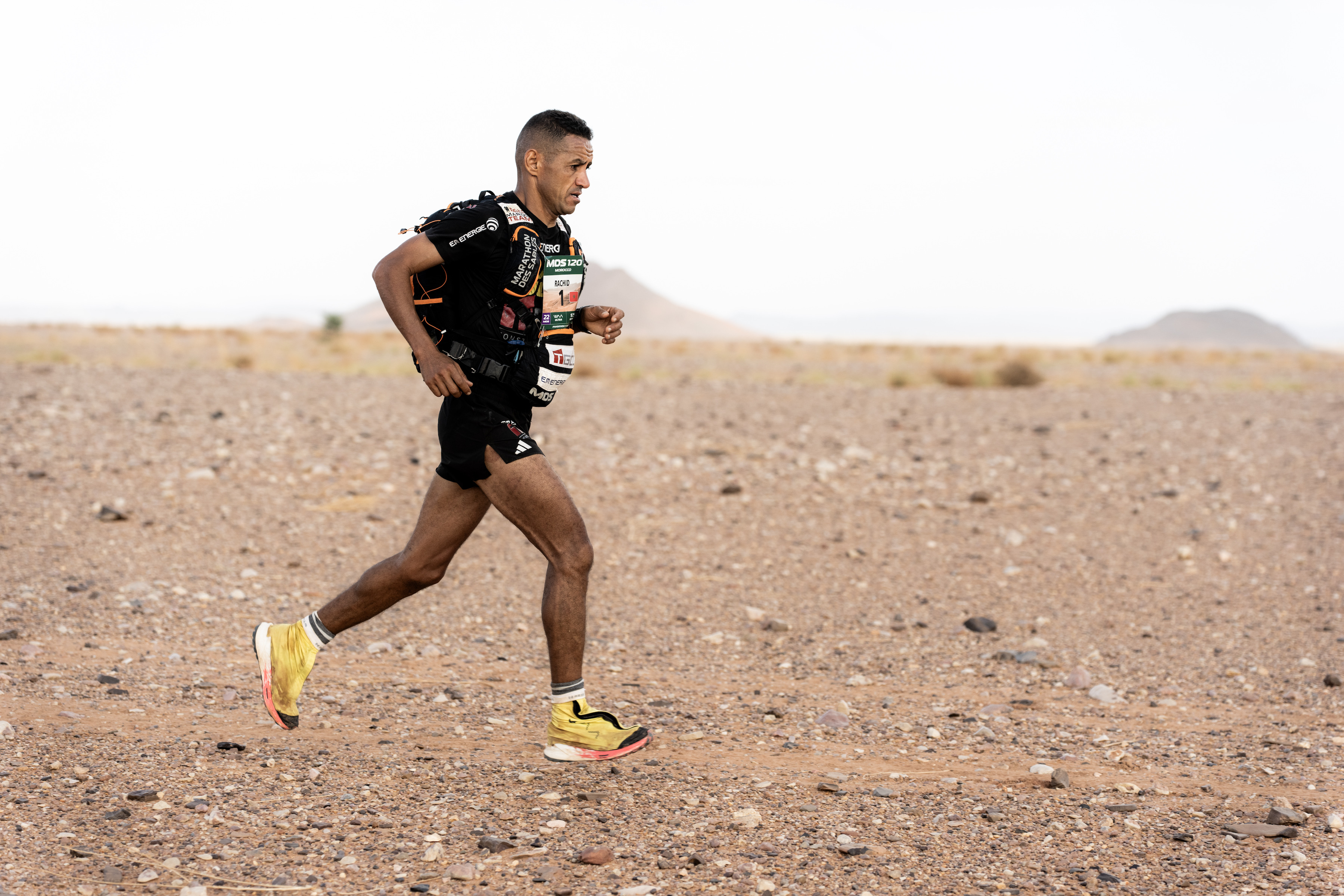
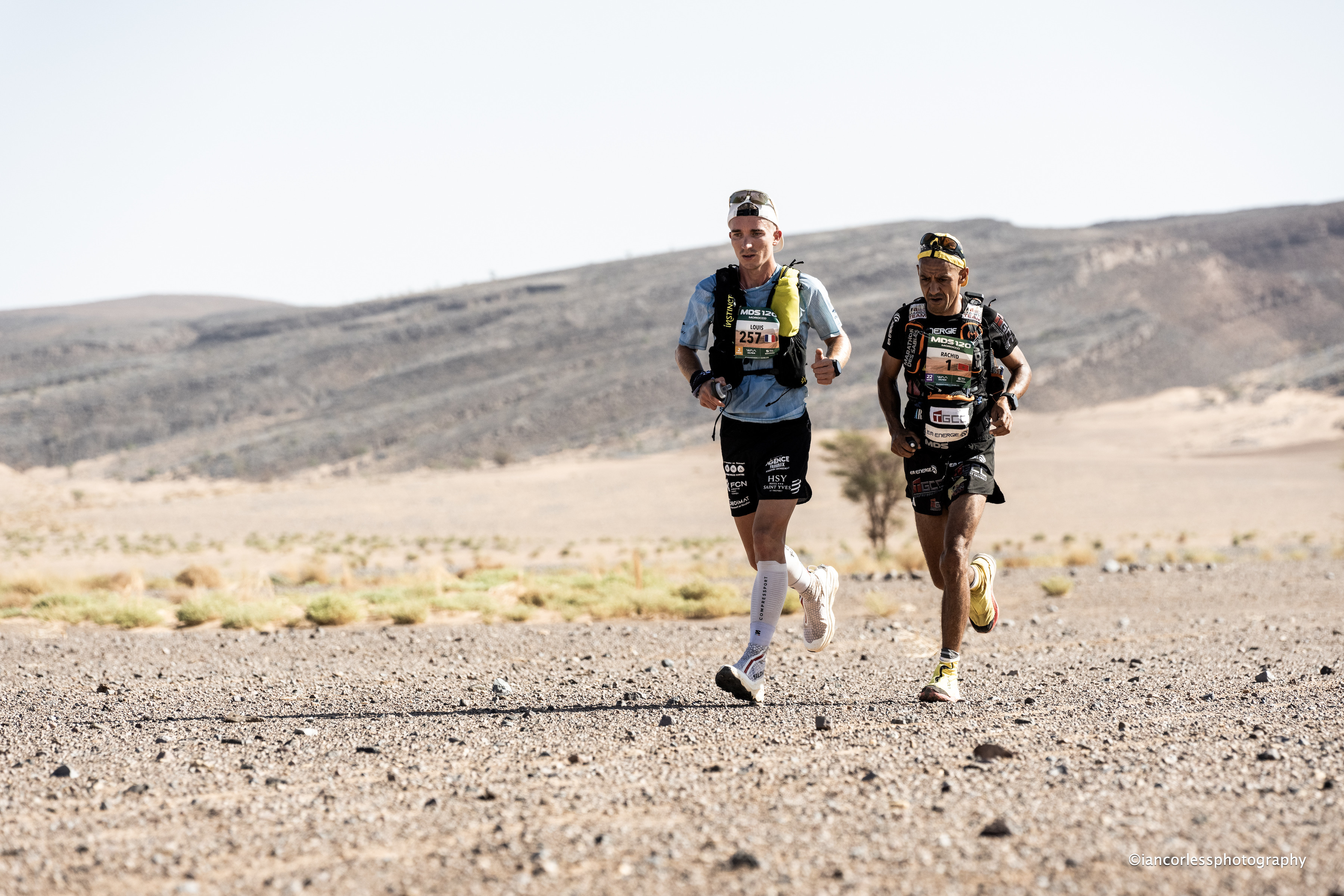
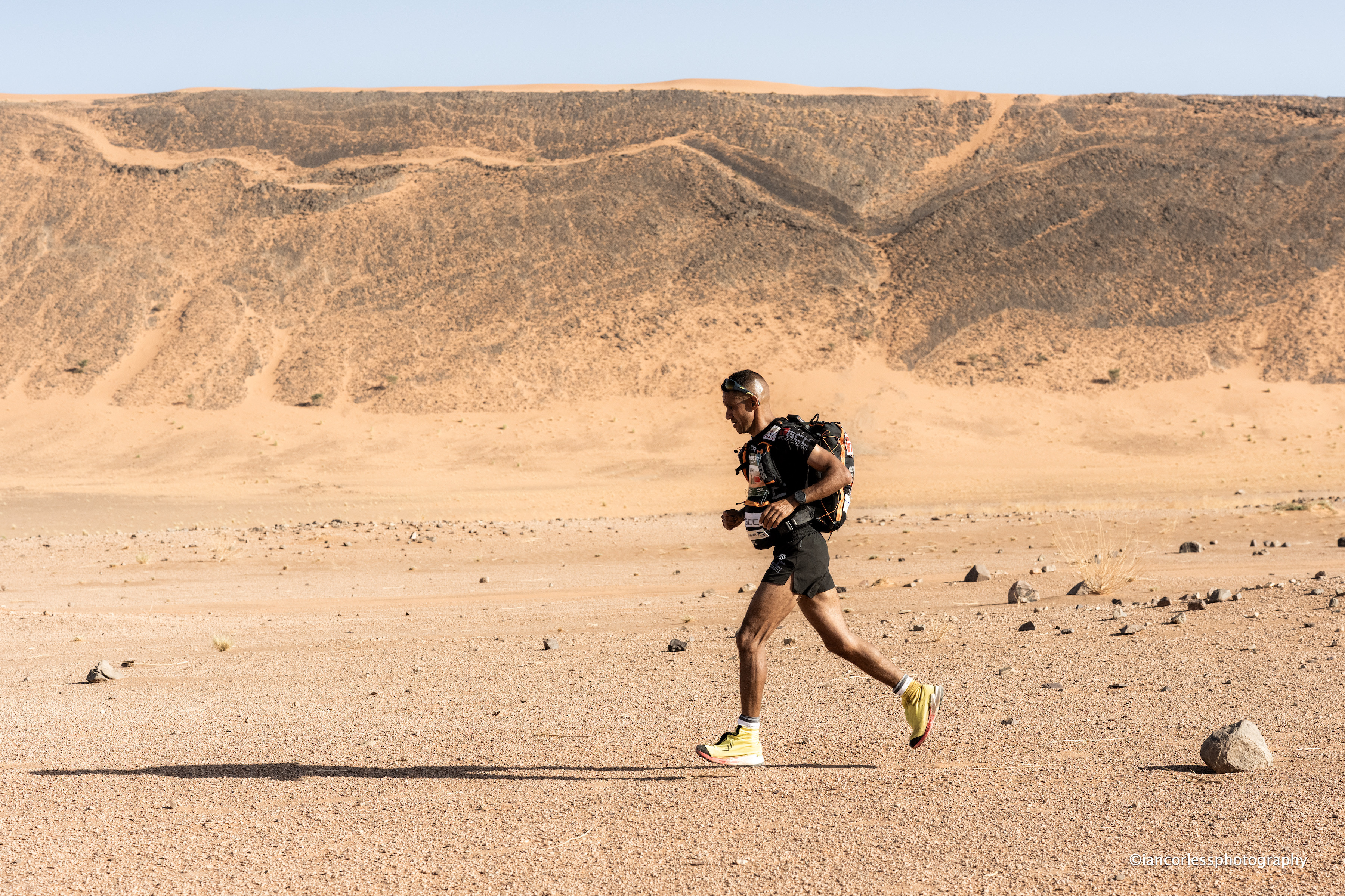
At the front of the MDS 120 race, Rachid El Morabity once again controlled proceedings with the confidence and experience of a champion. Behind him, Louis Godemon and Selim Deterpigny worked hard in pursuit, but El Morabity remained firmly in command throughout the day.
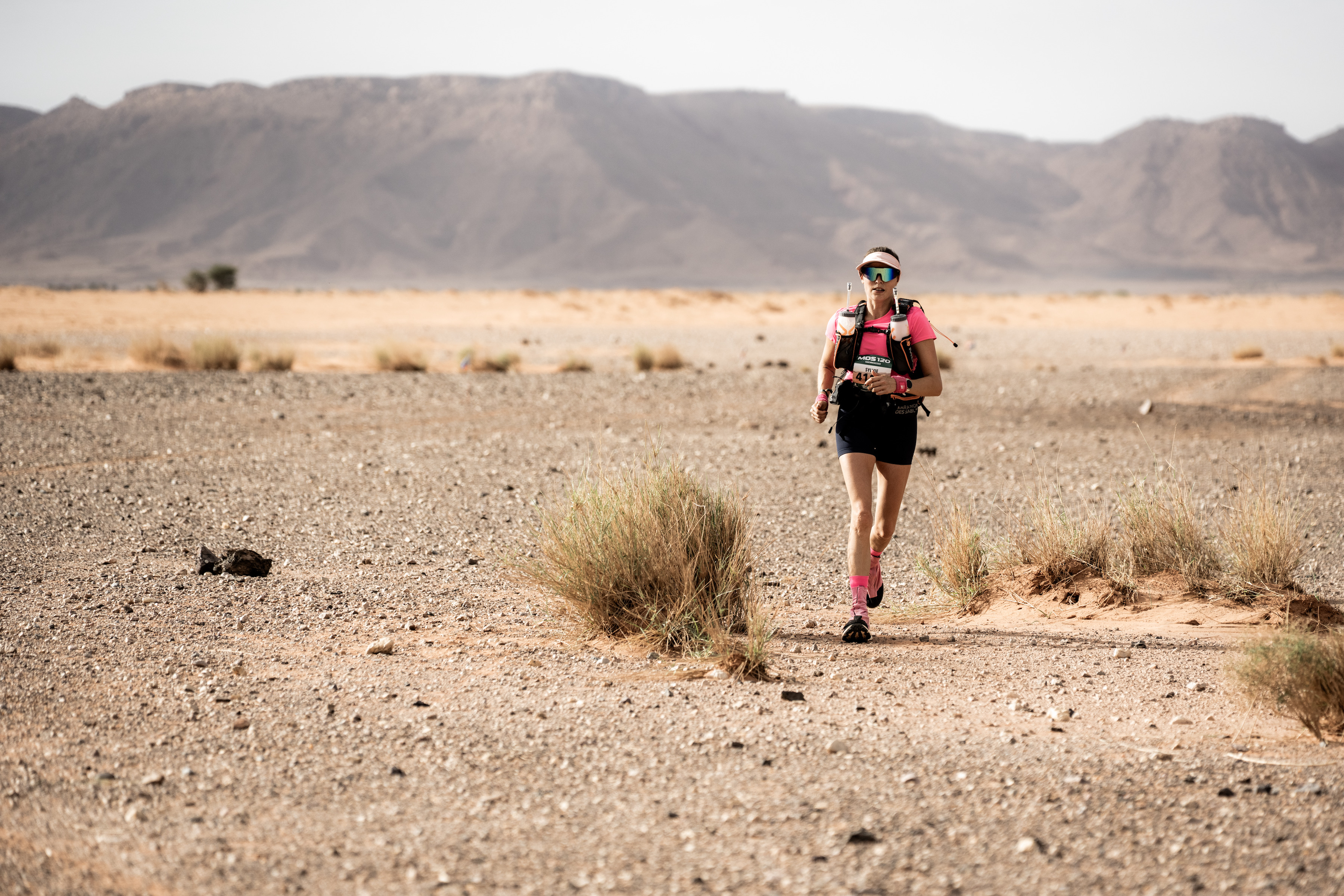
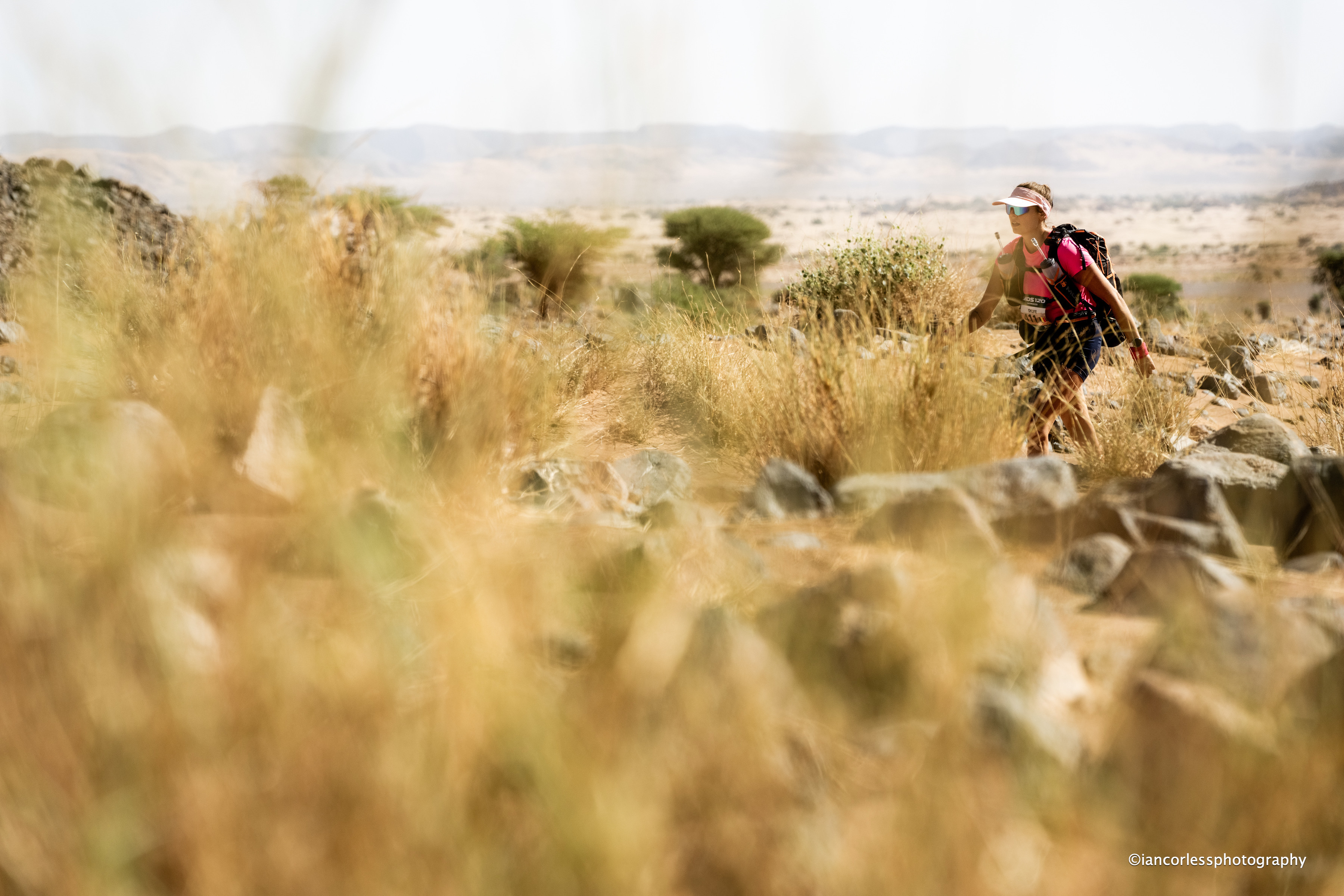
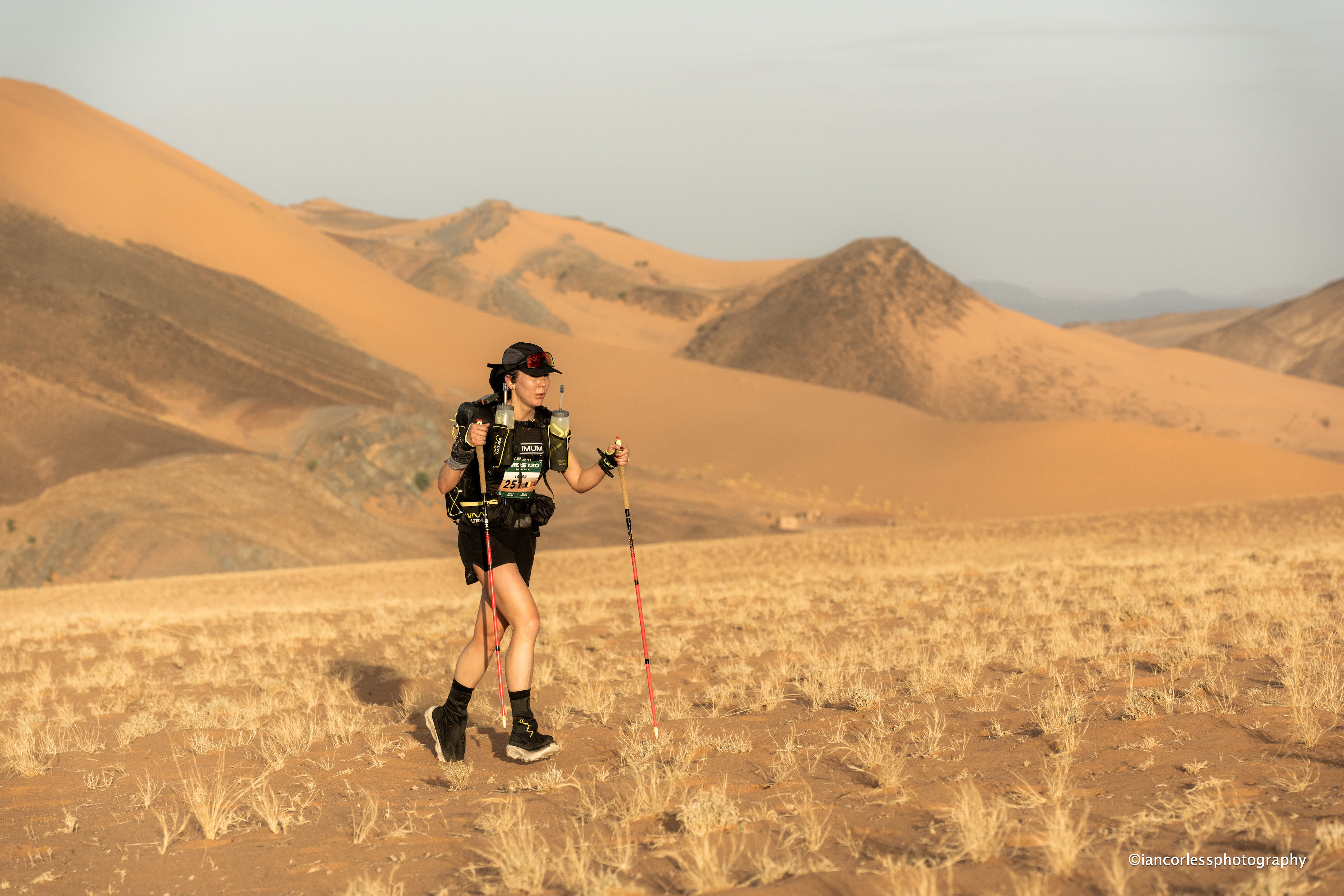
The women’s race produced an exciting battle. Laura Dumortier set an aggressive early pace and led the charge during the opening stages. However, Sylvie Van Baelen patiently closed the gap, moved into the lead and then steadily extended her advantage to secure a memorable stage victory. Marie Kirton completed the podium after another strong performance.
Across the other race formats, victory in the MDS 100 went to Maxime Kerisit and Kristel Verheyen, while the MDS 70 honours were claimed by Erk Renes and Ilenia Taurian.
Yet the results only tell part of the story.
For the athletes of MDS Handi, Stage 3 was far more than a race. It was a journey into the unknown, filled with challenges that tested both body and mind. The 16 teams each brought something unique and special to Morocco, creating moments that inspired everyone fortunate enough to witness them. Their courage, resilience and collective spirit transformed the day into something far greater than competition.
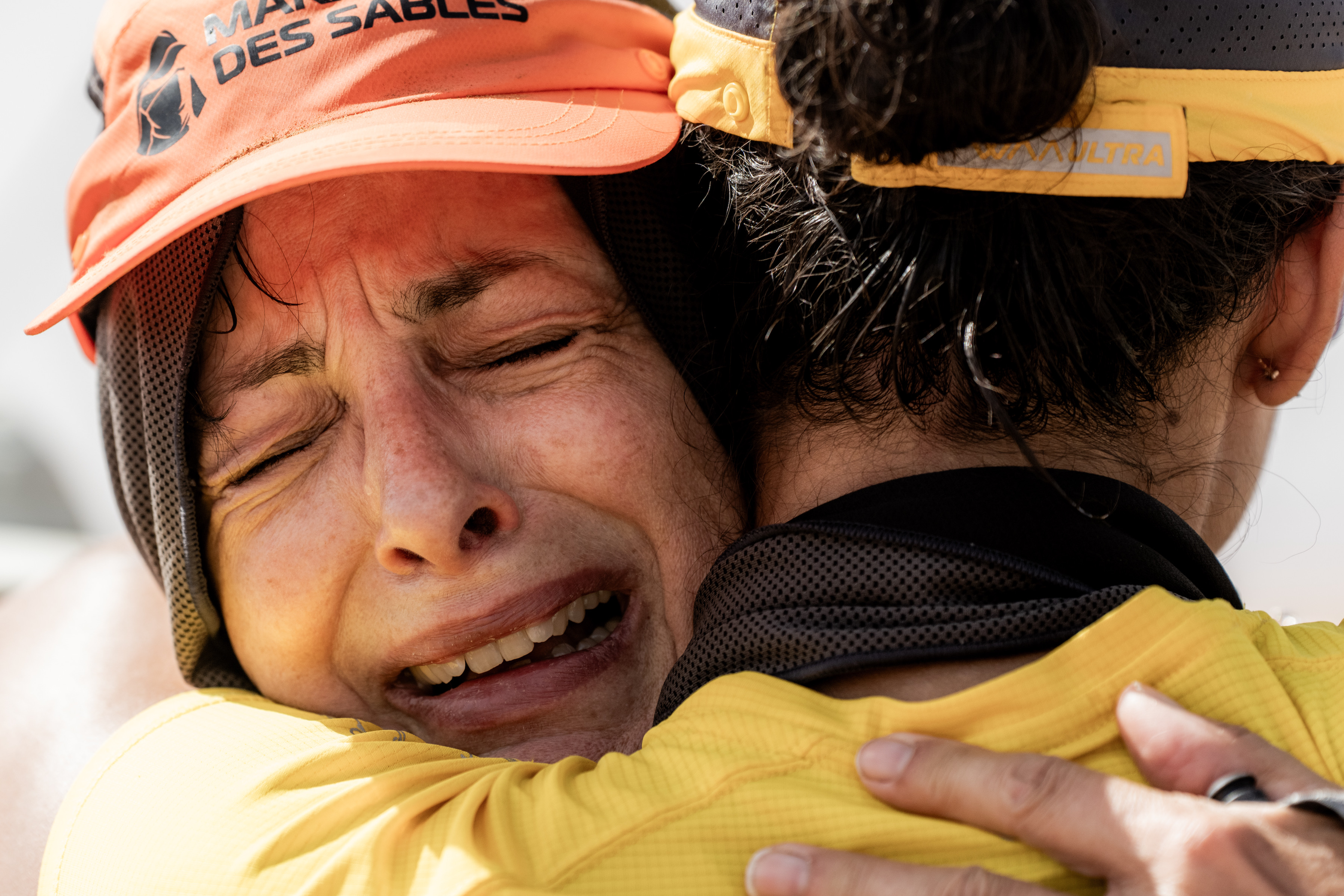
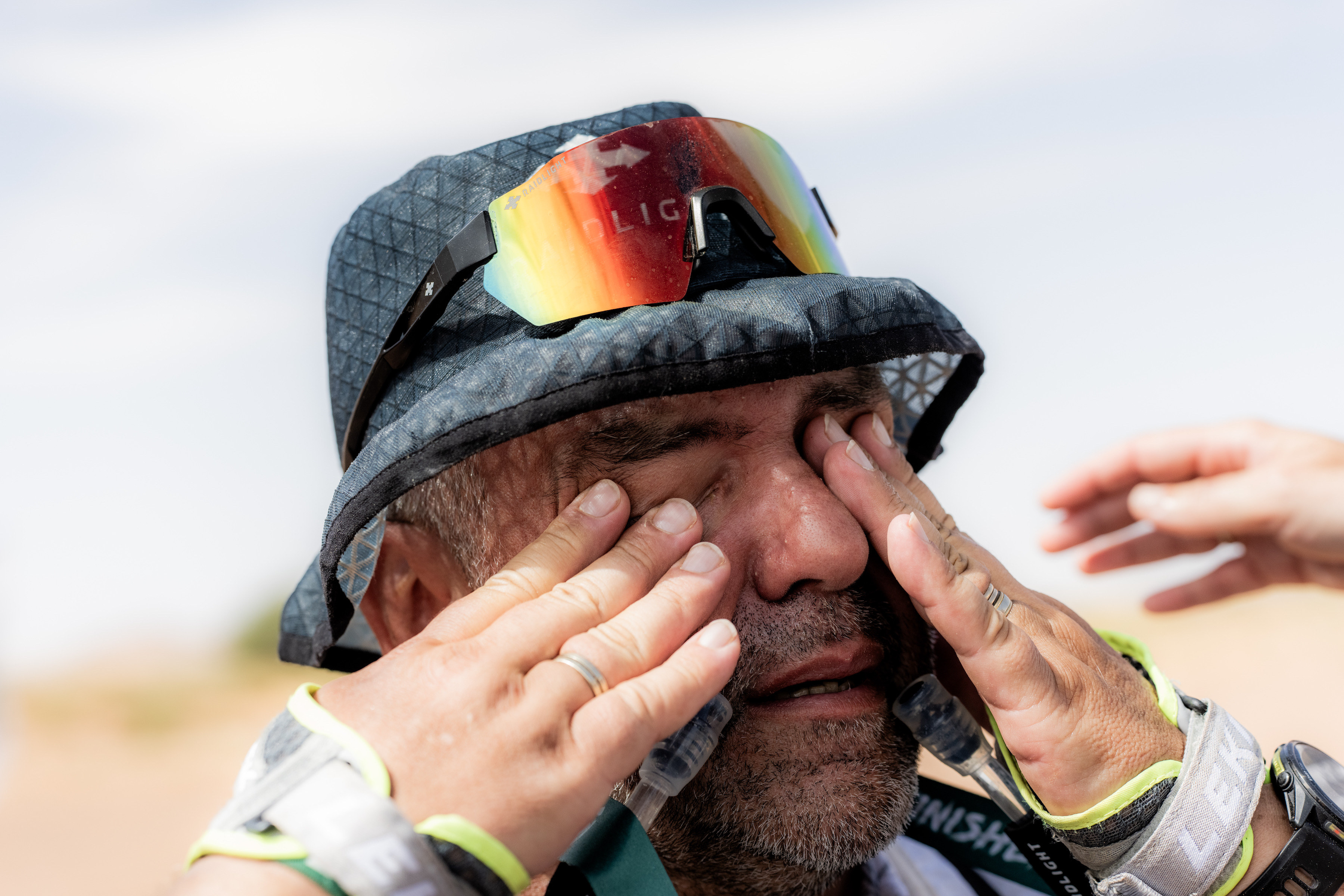
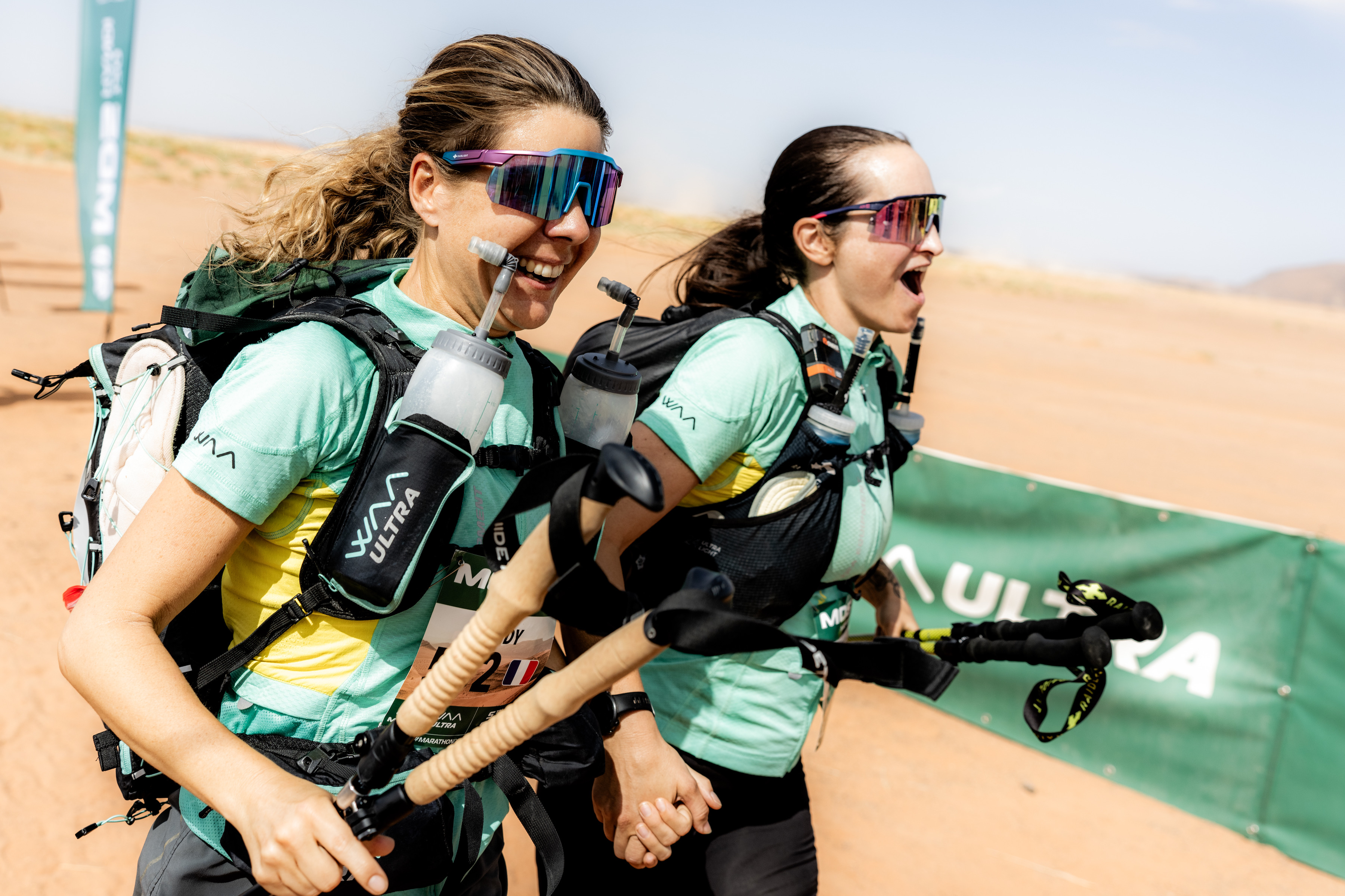
As the finish line came into view, emotions overflowed. Medals were placed around weary necks, tears of joy mixed with laughter, and memories were created that will last a lifetime.
What a race. What an adventure. And for MDS Handi, a truly historic chapter that will remain in the hearts of all who shared the experience.
Another hot night in the Sahara passed with many runners questioning whether they even needed a sleeping bag. The desert offered little relief and, as dawn approached, everyone knew another tough day was waiting.
Stage 2 is known as the day of choice. Competitors in the MDS 120 must decide whether to take on 20km, 40km or 60km. After the demands of Stage 1, those decisions become much harder. Fatigue is already creeping into tired legs and minds.
There were two starts once again. The main field set off at 05:30, while the top 50 runners started an hour later at 06:30.
For the MDS Handi teams, the challenge was a 22km route from Water Station 1 to CP4, followed by the now familiar and emotional final 200m solo effort to conclude the day. As always, that last stretch brought moments of courage, determination and pride.
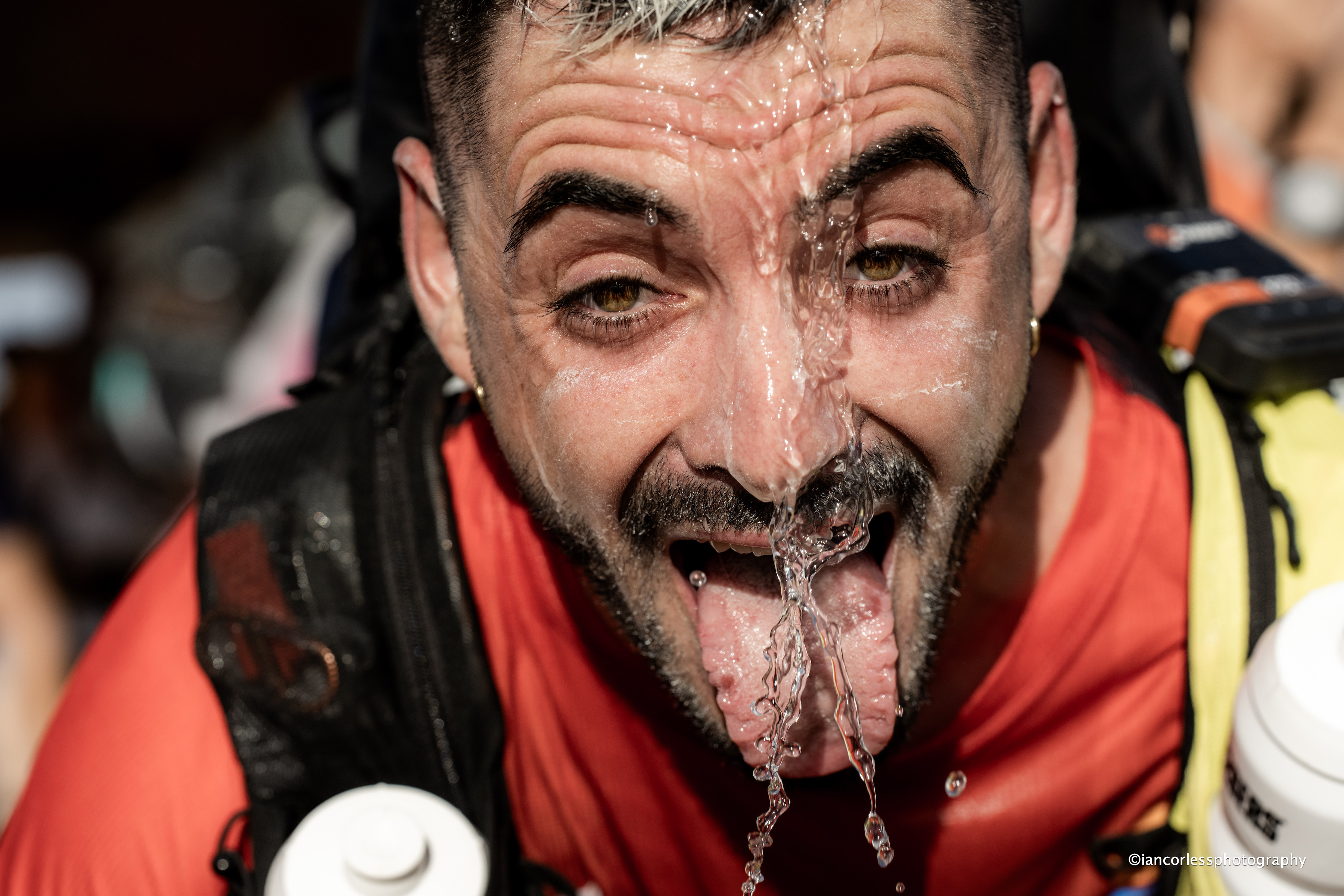
It was already warm before the start. A light breeze drifted across the dunes, offering a welcome illusion of coolness. It did not last long. Before the race was underway, the Sahara began to exert its full force.
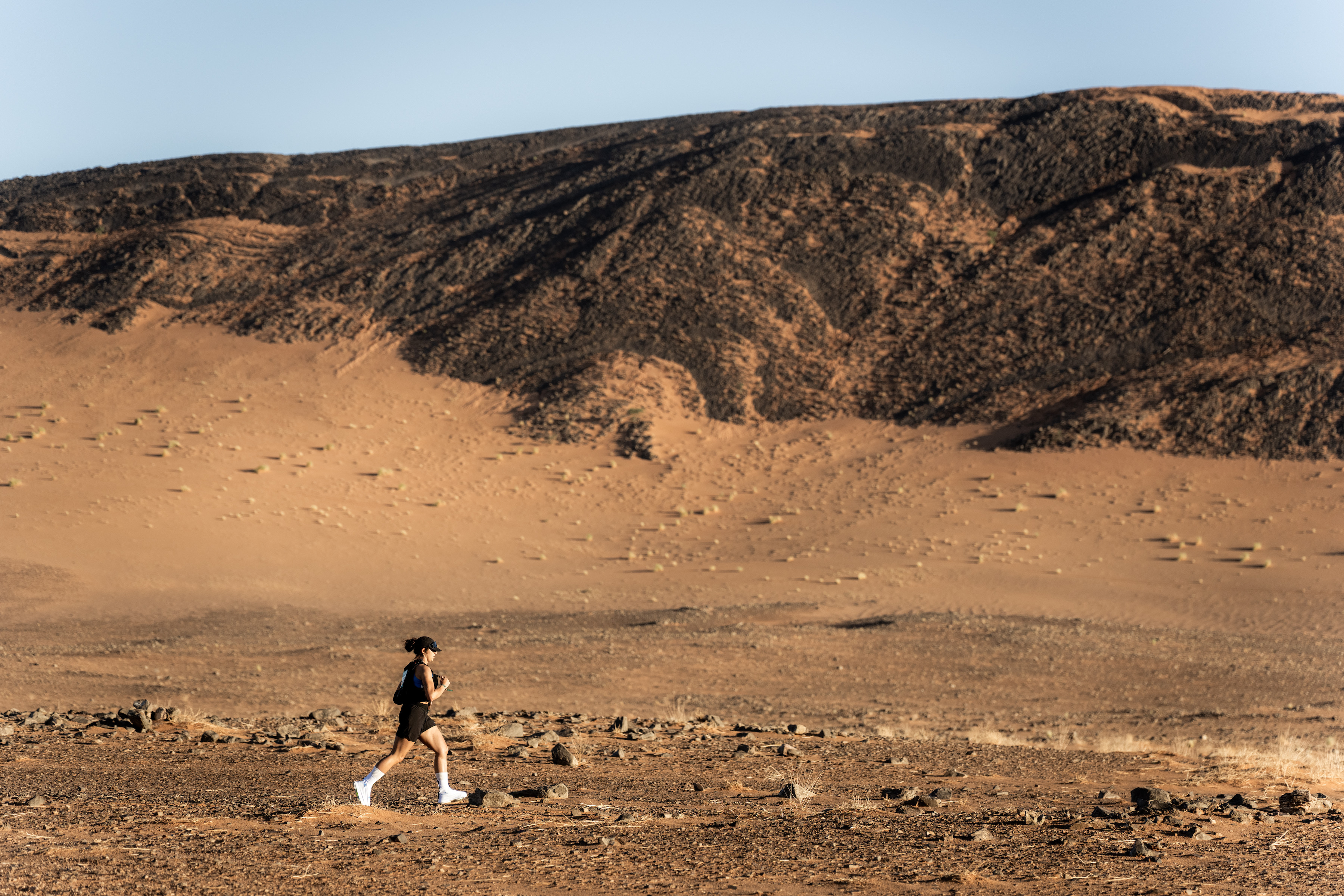
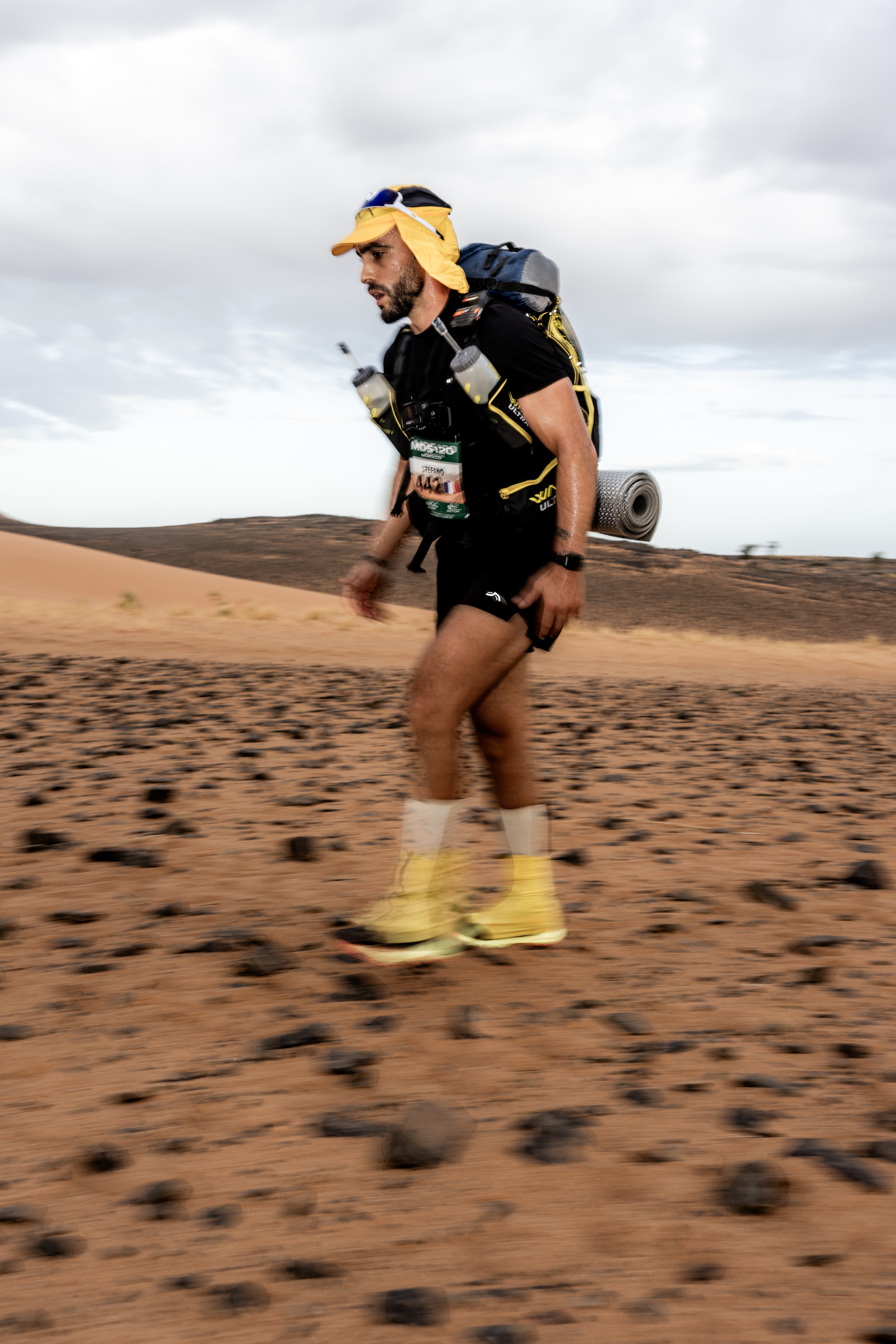
The stage delivered a relentless mix of terrain. Soft sand drained energy with every step. Rocky plateaus punished tired feet. Sandy climbs tested resolve, while steep descents demanded concentration. It was a day that seemed to throw every possible challenge at the runners.
In the men’s 60km race, the battle at the front was captivating. Rachid El Morabity and Louis Godemon traded blows throughout the day. At times Rachid was in control, then Louis would answer. Neither athlete was willing to give an inch.
After hours of racing across the Sahara, there was nothing to separate them. In a fitting end to an intense contest, they crossed the finish line together.
Behind them, Selim Deterpigny delivered another solid and consistent performance to secure third place on the stage.
The overall standings are now:
Rachid El Morabity – 7:45:39
Louis Godemon – 7:48:52
Selim Deterpigny – 8:31:43
With less than four minutes separating the top two, all eyes now turn to Stage 3. The battle for overall victory is very much alive.
In the women’s race, Stage 1 winner Marie Kirton set the early pace and looked determined to extend her advantage.
However, as the kilometres passed and the heat intensified, the race began to change. After CP3, both Sylvie Van Baelen and Laura Dumortier surged forward, overtaking Marie and moving into first and second place.
Marie battled bravely to hold on to third, but it was clearly a challenging day in the desert.
The overall standings are now:
Sylvie Van Baelen – 10:14:24
Laura Dumortier – 10:28:42
Marie Kirton – 11:17:04
With momentum shifting and the desert taking its toll, the women’s race remains wide open.
Full updated results for all race distances (70/100/120) will be on Livetrail HERE
The MDS Handi teams faced a particularly demanding day. Whenever soft sand appeared, progress became slow and hard-earned. Every metre required extra effort, teamwork and trust.
The team of Aubin Barillon was once again the fastest across the course. But in MDS Handi, speed tells only a small part of the story.
What truly stands out is the strength, determination, commitment and solidarity shown by all 16 teams. Together they continue to demonstrate what is possible when people unite around a common goal.
Now comes a well-deserved rest day. Bodies can recover, feet can heal and minds can reset before the adventure continues.
On Thursday, Stage 3 awaits. The Sahara is far from finished, and neither are the athletes.
The fifth edition of the MDS Morocco 120 and the second edition of the MDS Handi began in spectacular fashion today, with runners greeted by a stunning desert sunrise and the promise of an unforgettable adventure ahead.
With high temperatures forecast throughout the day, organisers made the decision to bring the start forward by 1 hour and 30 minutes, sending participants on their way at 06:30 rather than the planned 08:00. It proved to be a wise move. Even before dawn, the warmth of the Moroccan desert could already be felt following a very hot night where sleeping bags remained largely untouched across the bivouac.
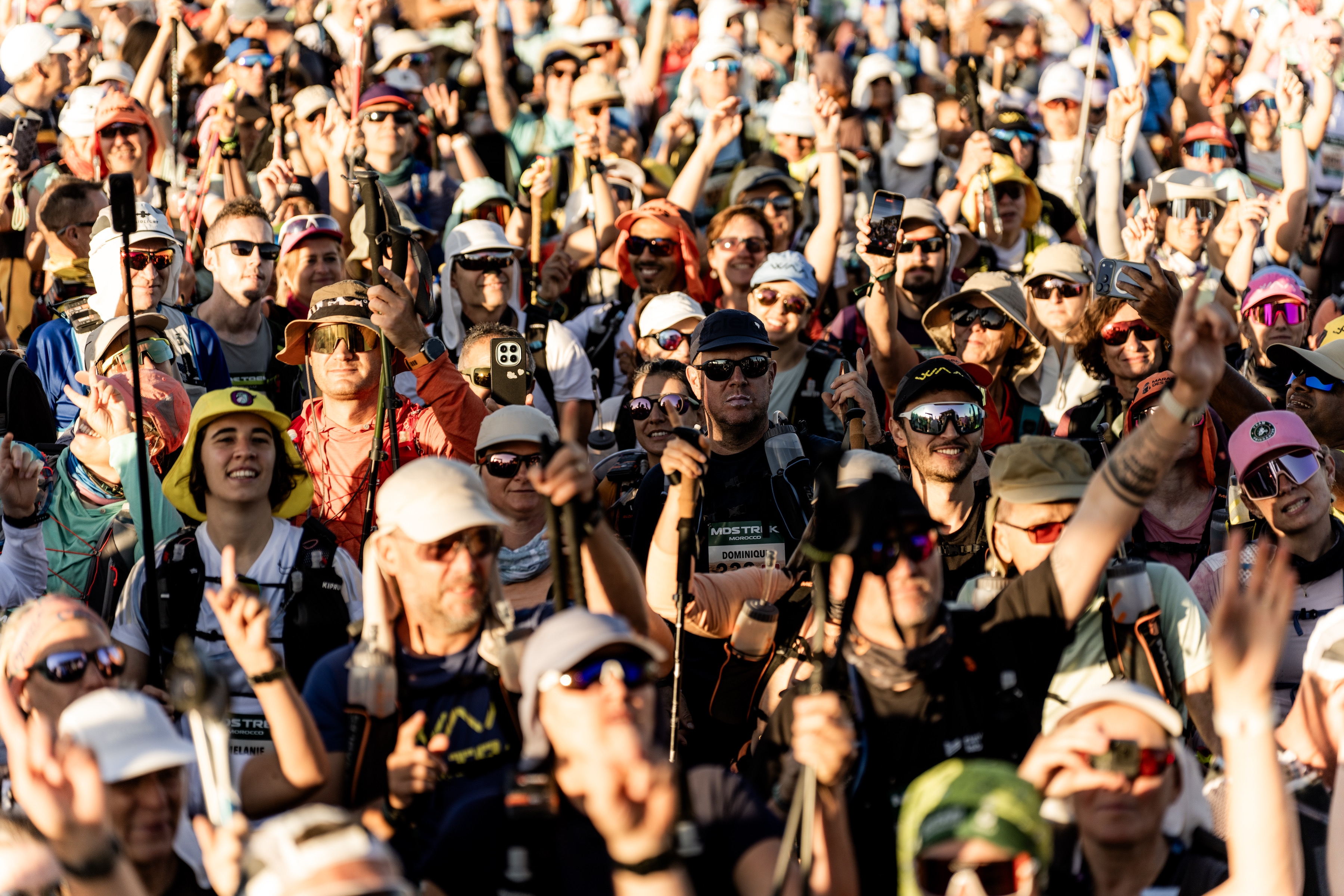
As the first light spread across the landscape, more than 600 participants gathered at the start line. There was excitement, nervous energy and anticipation in equal measure. For some, this was the beginning of a long-awaited personal challenge. For others, a chance to return to the desert they love. Six hundred people, six hundred stories, all heading into the same vast and beautiful terrain.
Stage 1 covered 24 kilometres for the runners tackling the 70 km, 100 km and 120 km race formats, while the 16 MDS Handi teams faced an 18.1 km course. Three checkpoints were positioned along the route, offering welcome opportunities for water, support and encouragement as temperatures steadily climbed.
The MDS Handi teams once again sat at the heart of the event. Their determination, teamwork and spirit inspired everyone around them throughout the day. Through the “Hope Ropes” initiative, runners from the main race are able to join the effort and help propel the teams forward, creating powerful moments of connection across the course.
Adding an extra competitive element, each Handi team faced its own challenge before Checkpoint 2. Around 300 metres from the checkpoint, assisting runners stepped aside, leaving the Handi athlete to continue alone. Those who successfully completed the section independently earned a ten-minute time bonus deduction. It is a simple concept, but one that highlights determination, courage and personal achievement in a very special way.
At the front of the race, Morocco’s own Rachid El Morabity once again showed why he is known as the “Desert King”. Running with his usual calm authority, he claimed the stage victory in 2:03:46. Louis Godemon crossed the line next, 3 minutes and 12 seconds behind, while Selim Deterpigny completed the men’s podium at 5 minutes and 54 seconds.
The women’s race produced its own memorable story. Marie Kirton ran strongly throughout to secure the stage win in 2:39:55, but not without drama. In the closing kilometres, a two-inch thorn pierced her shoe and repeatedly stabbed her foot with every stride. Forced to stop, she carefully removed the thorn before continuing on her way. It was a small but powerful reminder that in the desert, even the tiniest obstacle can become a significant challenge. Good footwear matters.
Sylvie Van Baelen finished second, 5 minutes and 21 seconds behind Kirton, while Laura Dumortier rounded out the podium a further 3 minutes and 23 seconds later.
The Handi teams were equally impressive. The team of Aubin Barillon completing the course in 02:16:47 – full Handi results (here)
As runners returned to the bivouac throughout the afternoon, the effects of the heat were clear, but so too were the smiles, stories and sense of accomplishment. Stage 1 delivered everything the desert is known for: challenging conditions, remarkable landscapes, personal battles and moments of inspiration.
It was a hot day. An inspiring day. And a fitting start to four days of racing in the heart of Morocco.
In Episode 259 of Talk Ultra, we speak with Fred Abramowitz, Race Director of Run Rabbit Run, following the landmark announcement that the RRR ultra will award a $100,000 prize purse to both the men’s and women’s winners in 2027 and 2028.
The news has sent shockwaves through the ultra running community, sparking excitement, debate, and plenty of questions about what this means for the future of the sport. Is this the next evolution of professional trail running, or does such a significant prize purse risk changing the very essence of ultra running?
Fred joins us to explain the thinking behind the decision, the goals of the initiative, and how Run Rabbit Run hopes to elevate the profile of ultra-distance racing. We discuss athlete opportunities, increased media attention, sponsorship, competitive depth, and the potential benefits for the sport as a whole.
Of course, with any major change comes criticism. We also delve into concerns around professionalism, competitive balance, accessibility, race culture, and whether large cash prizes could create unintended consequences for grassroots trail and ultra events.
It’s a wide-ranging and thought-provoking conversation that explores both sides of one of the biggest stories in ultra running today. Whether you think the announcement is a game-changer or a step too far, this episode offers valuable insight into the motivations behind the move and what it could mean for the future of the sport.
Join us for Episode 259 of Talk Ultra with Fred Abramowitz. The good, the bad, and everything in between.
After the deaths of Ida Amelie Robsahm and Kalie McCrystal, how should mountain runners think about risk, responsibility and the desire to live fully?
On Monday, I heard the tragic news that Ida Robsahm had died after a fall while running on Romsdalseggen in Norway.
I knew Ida personally, the news hit hard stopping me in my tracks and resulting in a flood of tears for the terrible loss of someone who had so much to live for.
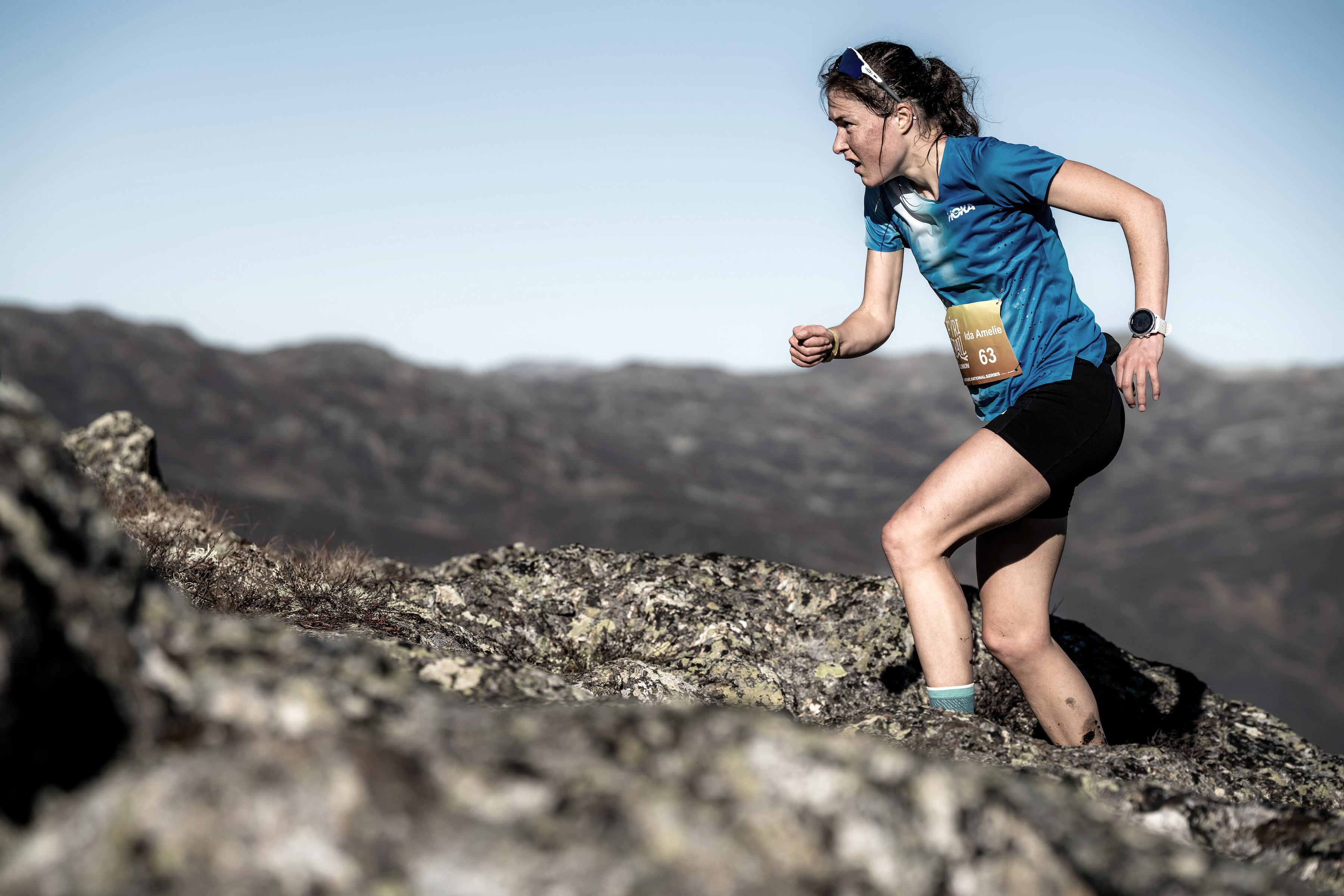
Ida at Fyri Trail, Norway 2024 – Photo by Ian Corless
Because she was doing exactly what all of us in the trail and mountain running community do. Because I had been running on that very Romsdalseggen ridge myself. Because, following the loss of Kalie McCrystal on the Matterhorn just a few weeks before – all these elements combined as another reminder of something many of us know, yet rarely choose to confront.
Life in the mountains is fragile.
We spend our weekends and holidays and free time seeking wild places. We climb ridges, traverse summits and follow faint trails into remote corners of the world. I photograph the beauty, celebrate the adventure and tell stories of freedom, challenge and discovery. What we rarely discuss is how thin the line can sometimes be between a perfect day in the mountains and a devastating tragedy.
A single misplaced foot, one loose rock, a momentary lapse in concentration – a decision that seems insignificant in the moment but mountain terrain often deals in consequences that far outweigh the mistake.
The uncomfortable reality is that every person who ventures into the mountains understands this, at least on some level. We know that nature is indifferent to our ambitions. We know that gravity never takes a day off. We know that weather can change in an instant and that the terrain beneath our feet is never entirely predictable.
Yet despite this knowledge, we keep going back. Why?
Whenever tragedy strikes, questions inevitably follow. Is trail and mountain running too dangerous? Should we be doing this at all? Are we taking unnecessary risks?
The answer is both simpler and more complicated than many people imagine.
Mountain environments are unquestionably dangerous. That is simply a fact. But trail and mountain running, statistically speaking, are relatively safe activities. Across the world, millions of hours are spent each year on mountain paths and trails. The overwhelming majority of runners return home safely without incident.
The problem is not necessarily the frequency of accidents. It is the severity of their consequences.
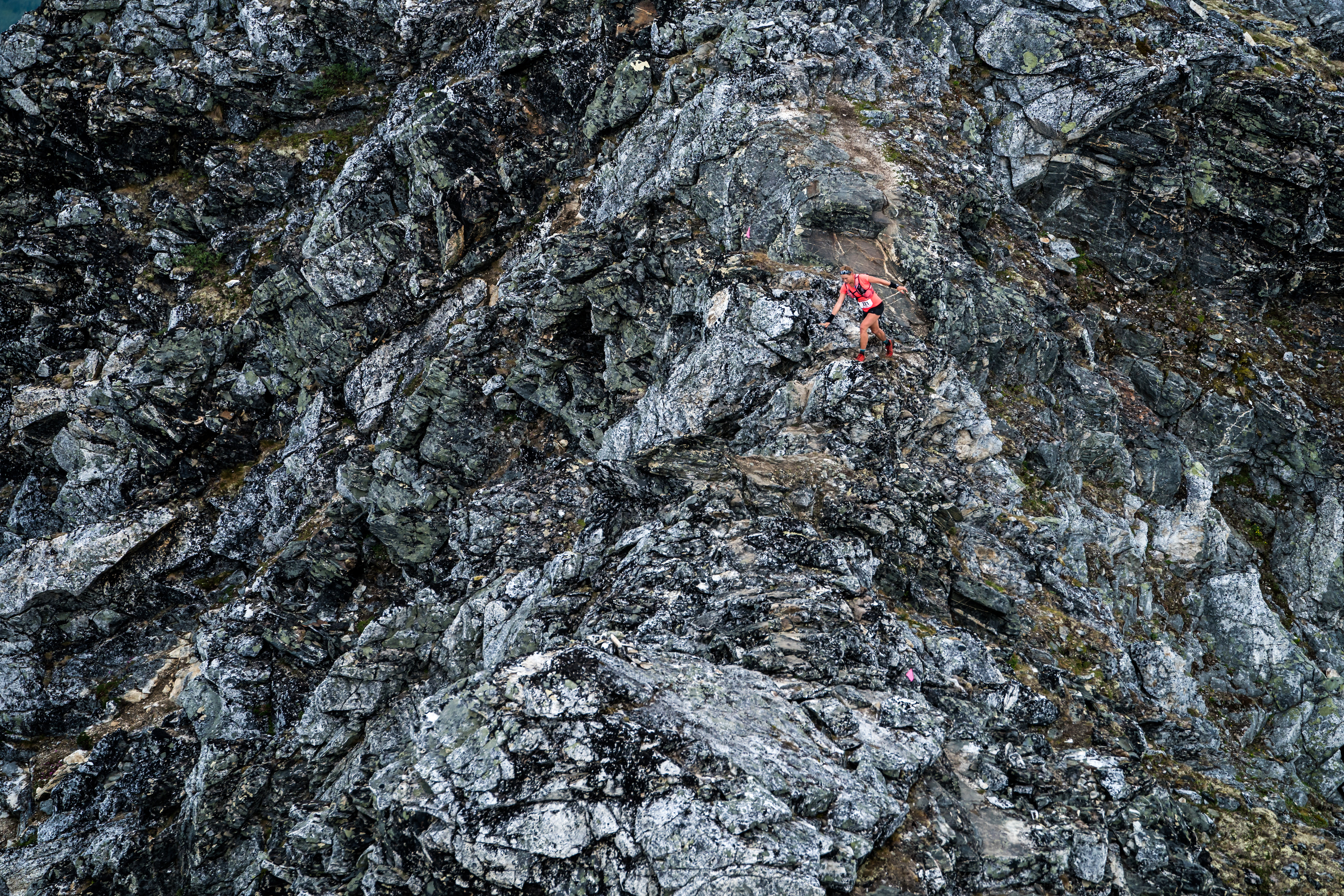
There is an important distinction between different types of risk – some mountain pursuits involve deliberate exposure – a runner moving across a narrow alpine ridge understands exactly what is at stake. The risk is visible. The consequence of a mistake is obvious. In many cases, that exposure forms part of the challenge itself. The commitment required is what makes the experience meaningful.
“If death was not a possibility, coming out (of the mountains) would be nothing. It would be kindergarten, but not an adventure and not an art.” – Reinhold Messner
Whether others agree with that reasoning is beside the point. For the person undertaking the challenge, the risk is understood and consciously accepted.
Trail running often occupies a different space. Most runners are not actively seeking danger. We are following a path, climbing a mountain path or traversing terrain that feels entirely manageable. The objective, usually, is movement, not exposure. We are not hanging from ropes or balancing across technical ground. We are running.
And perhaps that is what makes accidents so difficult to process. The risk feels low. Until it isn’t. One innocent mistake can suddenly escalate into something catastrophic.
When examining fatalities in trail and mountain running, several common factors emerge. Extreme weather leading to hypothermia is one. Cardiac arrest is another. Falls leading to blunt-force trauma remain among the most significant. (Reference here)
The first two can often can be mitigated, to a certain extent.
Hypothermia, for example, is frequently linked to preparation and decision-making. There has always been a culture within endurance sports that celebrates moving fast and light. In many situations that philosophy makes perfect sense. But fast and light should never come at the expense of safety. An extra waterproof jacket, an extra down layer will never make for an exciting story. Spare gloves and a beanie rarely feature in social media posts. Carrying emergency equipment may not feel heroic. Yet these small decisions can dramatically reduce risk when conditions deteriorate. Hence the requirement for mandatory equipment when we race.
Similarly, cardiac events remind us that fitness and health are not necessarily the same thing. Someone may be exceptionally fit yet still harbour an underlying condition. Regular health screening, routine medical checks and an honest understanding of our physical health cannot eliminate every risk, but they can reduce some of the unknowns. Just look at Jeff Browning at the recent TDS. Jeff is one of the most experienced, knowledgeable and respected trail and mountain runners – his near death experience should be a warning shot for us all.
Falls are different.
Falls are the one category that can never be entirely controlled. No one plans a fall. No one starts a run expecting to make a fatal mistake. No one leaves home believing they won’t return. A fall occupies that uncomfortable territory where skill, preparation and experience intersect with simple human error.
And human beings will always make mistakes.
And then we have skyrunning – this sport sits in a different category altogether. Born from the meeting point of trail running and alpinism, it deliberately takes athletes onto steep ridge lines, exposed traverses, loose scree and technical terrain where the consequences of a mistake can be far greater than a twisted ankle or lost minutes. The risk is not an unfortunate by-product of the sport, it is woven into its identity, it is its dna. Competitors sign up precisely because it demands more than fitness and endurance; it requires judgement, composure and the ability to move confidently through terrain that feels wild, remote and uncompromising. This is what separates skyrunning from pure mountain running. The challenge extends beyond covering distance or climbing vertical gain. It introduces an element of exposure and consequence that few other running disciplines can replicate, asking athletes to balance speed with self-preservation on terrain where the mountains retain the final say.
Perhaps because of that reality, my own relationship with risk has evolved over the years. Like many people, there was a time when I valued speed, commitment and determination above almost everything else. Pushing through difficult conditions was something to be proud of, turning back or easing off often felt like failure.
Experience has changed that perspective.
The greatest lesson the mountains have taught me is not how to keep going. It is knowing when not to. The mountains will always be there. That simple truth becomes surprisingly powerful with age.
A summit reached today is not inherently more valuable than one reached next month. A route completed in dangerous conditions is not automatically a greater achievement than one postponed. A race finish line is never worth more than the ability to come back and run another day.
Unfortunately, perspective is often shaped by experience. For me, one such experience occurred in Tromsø at the Tromsø Skyrace in 2017.
Hillary Allen, Tromsø Skyrace 2017 – photo moments before she fell.
I was there when Hillary Allen fell.
I witnessed the accident unfold. I climbed down to her, helped support her and remained involved until she was eventually airlifted to safety. Hillary survived. Her recovery became one of the most remarkable stories in mountain running. But witnessing the accident itself left a lasting impression.
What remains with me all these years later is not simply the severity of the fall. It is how ordinary everything appeared beforehand. There was no drama, on the contrary, I was joking and laughing with Hillary. One moment she was racing towards me and the next, everything had changed.
Seeing that reality up close removes any illusion that accidents only happen to other people.
Many mountain runners carry an unspoken belief: it won’t happen to me.
We may never say those words aloud, but the sentiment exists. We acknowledge risk while quietly believing that our experience, fitness or judgement somehow places us beyond it. The mountains have a ruthless way of correcting that assumption.
Experience can reduce risk, but it cannot eliminate it.
So how do we move forward when confronted by losses such as those of Ida and Kalie?
Perhaps the answer lies somewhere between acceptance and responsibility.
We should never romanticise death in the mountains. Every loss is a tragedy. Families lose daughters, sons, partners, friends and loved ones. The pain left behind is immeasurable. But equally, we cannot pretend that a life completely free of risk exists. Every meaningful pursuit carries risk, adventure contains uncertainty and our passions come with vulnerability.
For those of us drawn to mountains, the attraction is not recklessness. It is something much deeper. Mountains provide perspective in a world increasingly dominated by distraction. They challenge us physically and mentally. They expose weaknesses and reveal strengths. They offer moments of fear, humility, joy, wonder and achievement.
In many ways, mountain running allows us to experience the full spectrum of what it means to be alive.
The lows are real.
The highs are extraordinary.
Perhaps that is why we continue to return, not because we fail to understand the risks, but because we do. Life is finite, certainty is an illusion and to live fully, we want to experience everything that exists between birth and death: success and failure, fear and courage, loss and joy.
The challenge is not to eliminate risk. The challenge is to respect it.
As difficult as it may be to admit, perhaps the answer is that we must learn to live with an uncomfortable truth – mountains are places of extraordinary beauty, freedom and possibility, but they are also places where consequences can be severe – risks can be reduced, managed and understood, but they can never be removed entirely.
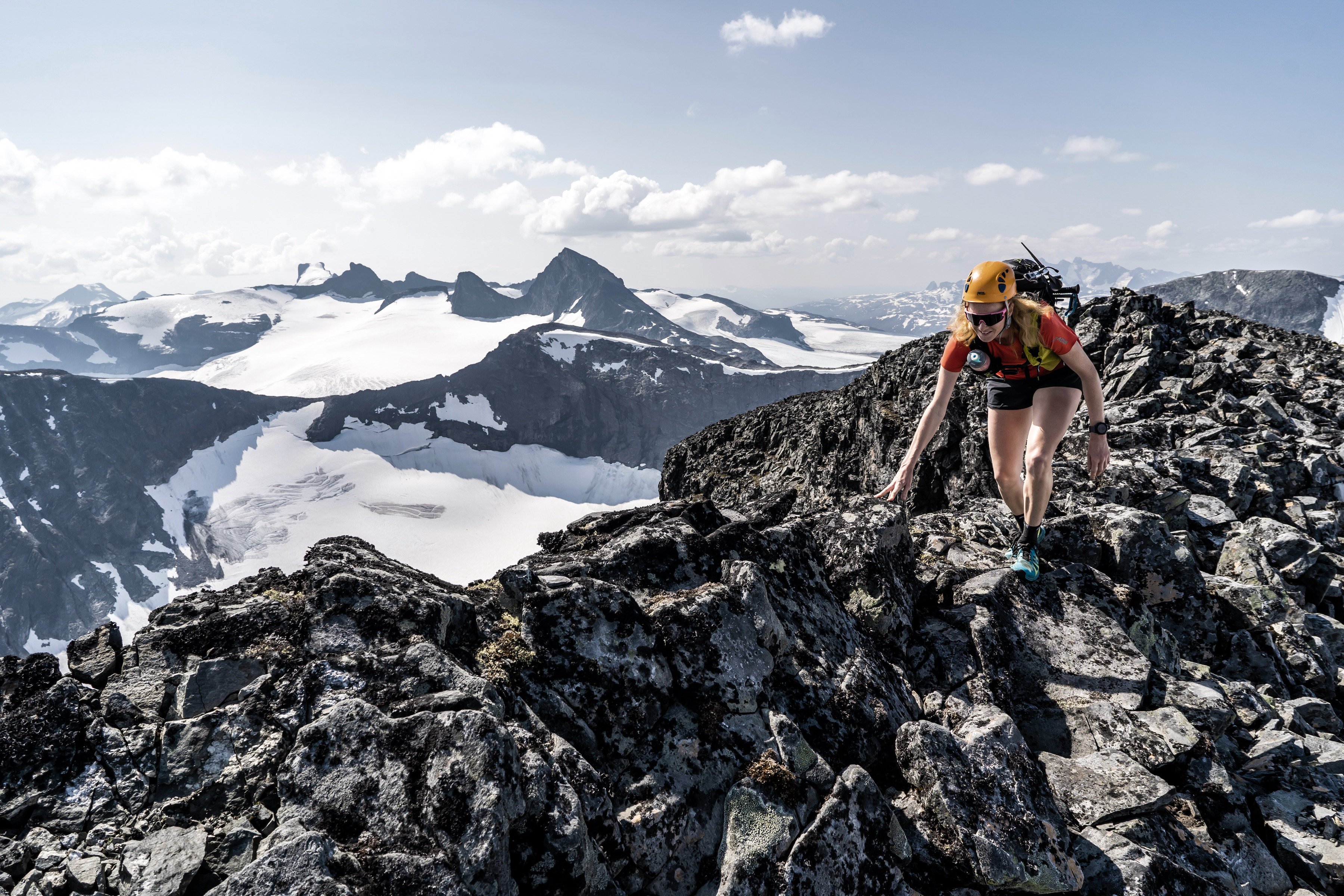
The correct equipment can help mitigate certain scenarios – Jotunheimen, Norway
Experience teaches us that there is wisdom in slowing down when conditions demand it. Wisdom in carrying the extra layer, in choosing safety over speed, in using more equipment rather than less when circumstances require it. Sometimes the strongest decision is to turn around without embarrassment or stop when instinct quietly tells us that today is not the day. Caution is not weakness, retreat is not failure.
Because the mountains do not care about our ambitions, they do not care about our race plans, our summit goals or the expectations we place upon ourselves. Long after we have left, they will still stand exactly where they are today. They will be there tomorrow, next week and next year.
The goal is not to conquer the mountains – they cannot be conquered, they are the boss. The goal is to enjoy a lifetime within them, to return again and again, collecting experiences rather than close calls – memories rather than regrets. To understand that success is not measured by summits reached, ridges traversed or finish lines crossed, but by the opportunity to come back and do it all once more.
Mountains have given many of us some of the most meaningful moments of our lives. They have taught us humility, resilience, perspective and joy. They remind us how precious life is precisely because they reveal how fragile it can be.
And so we continue.
Not because we ignore the risks, but because we acknowledge them.
Not because we believe nothing can happen to us, but because we understand that a meaningful life is not found in avoiding every uncertainty.
__________
And finally, our thoughts, love and deepest sympathy are with everyone affected by these tragedies. To the families, partners, friends and wider communities of Ida and Kalie, and to anyone who has ever lost someone they love in the mountains or elsewhere, there are no words that can lessen such heartbreak. Grief is the price we pay for love, and the depth of that loss reflects the depth of the bond that remains. May you find comfort in the memories shared, strength in those around you and peace in knowing that the lives they touched will continue to be felt for many years to come. We hold you in our hearts.
Henriette’s story is one of obsessive discipline, deliberate practice and a willingness to reject the conventional path. Competitive, fiercely self-reliant and prepared to put in the work when nobody is watching. But there is much more to her story than results.
From obstacle course racing and an early connection with Tromsø that involved her honeymoon, through races such as the Ring of Steel, skyrunning and the World Championships, Henriette steadily built her way into the elite of the sport. A period of serious health issues interrupted that progression, but her return produced a remarkable run of performances – including 6th at OCC and CCC, 6th at Lavaredo 80K, victory at Templiers 47K, a winter Bob Graham Round record of 17:55 across 106 km and 42 peaks, 3rd at Trofeo Kima, victory at UTS 50K, and back-to-back Transgrancanaria wins in 2025 and 2026.
But the results are only part of the conversation.
We talk about leaving a corporate career as an auditor to become a full-time runner, the role Norway has played in shaping her – from the Romsdal mountains and local races to brutal weather and hugely varied terrain.
We also get into some of the less comfortable subjects in elite sport: women’s health and RED-S, body shape and what ‘healthy’ actually means, sponsorship and the freedom to make your own choices, shoe selection, common sense and decision-making, and the pressures surrounding UTMB and the modern ultra-running landscape.
Henriette is refreshingly honest, no BS and unafraid to speak about subjects that many athletes avoid. Through the Ascend Trail, Arc’teryx, her new partnership with Raide Research and the Sufferfest film, she is also building something beyond simply being a professional runner.
An outlier, certainly. But perhaps more importantly, someone prepared to question the rules, take responsibility for her own decisions and find her own way through the sport.