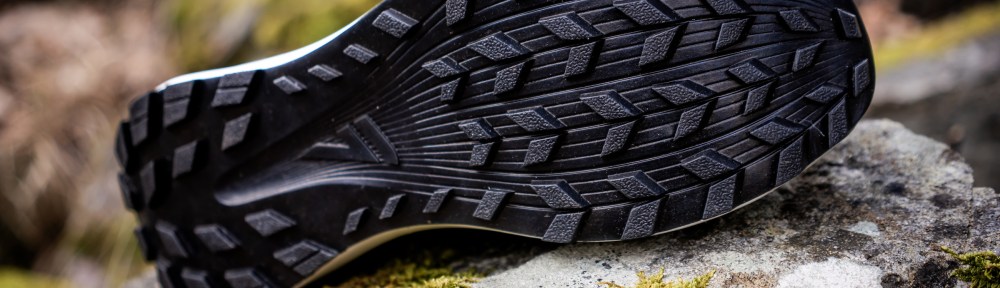
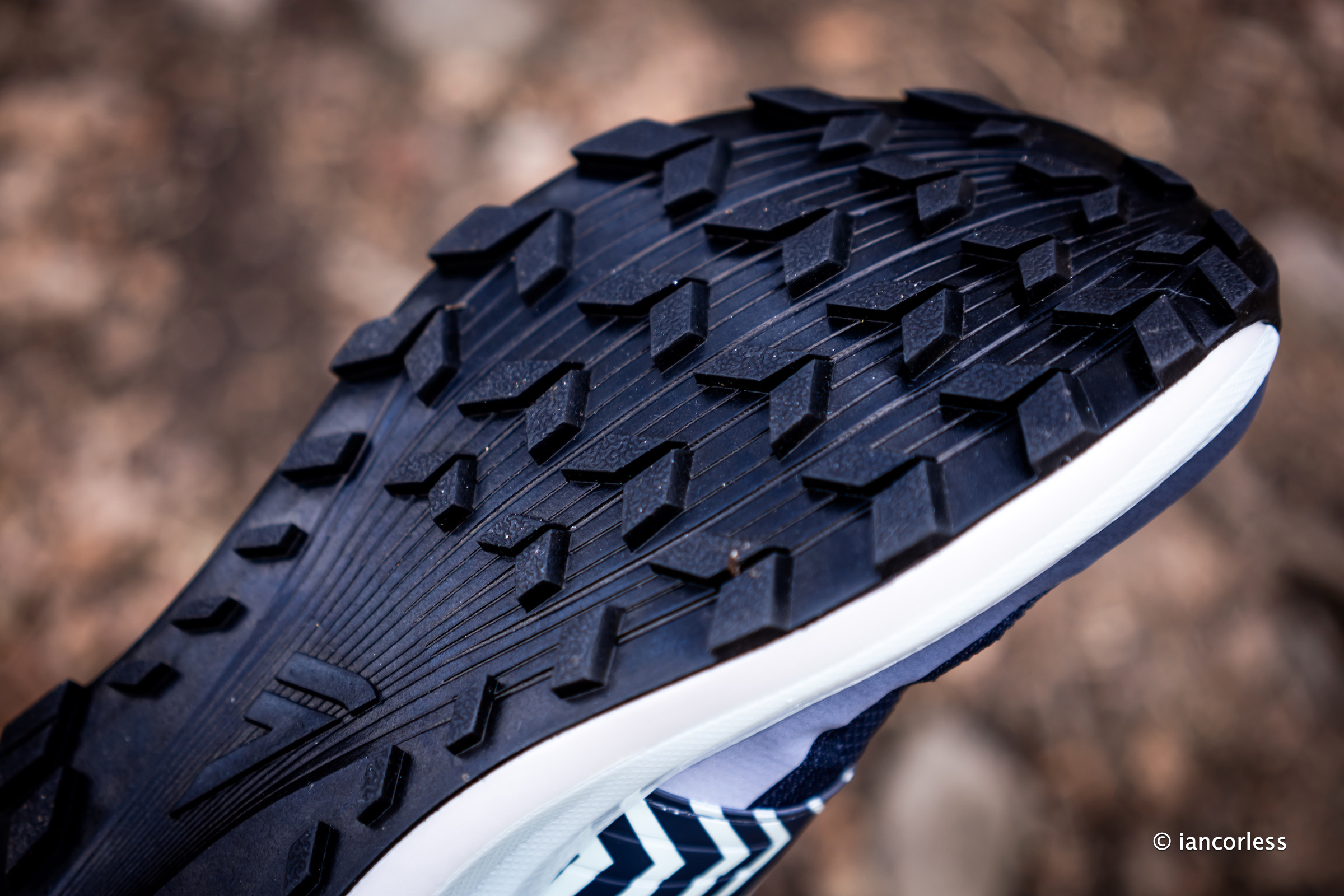
“The grip is excellent.” One of the most common phrases used in running shoe reviews.
But excellent where?
On dry forest trails? Wet rocks? Muddy hillsides? Gravel tracks? Mountain ridges? Roads?
The reality is that grip is one of the most misunderstood aspects of running shoes. Much like tyres on a Formula 1 car, the best outsoles are often designed to excel in very specific conditions. The more specialised the outsole, the better it tends to perform in its intended environment. The challenge comes when runners expect one shoe to perform equally well everywhere.
The Formula 1 Tyre Comparison
Formula 1 teams do not use one tyre for every condition. They have slick tyres for dry weather, intermediate tyres for damp conditions and wet tyres for heavy rain. Each tyre is designed with a specific purpose in mind.
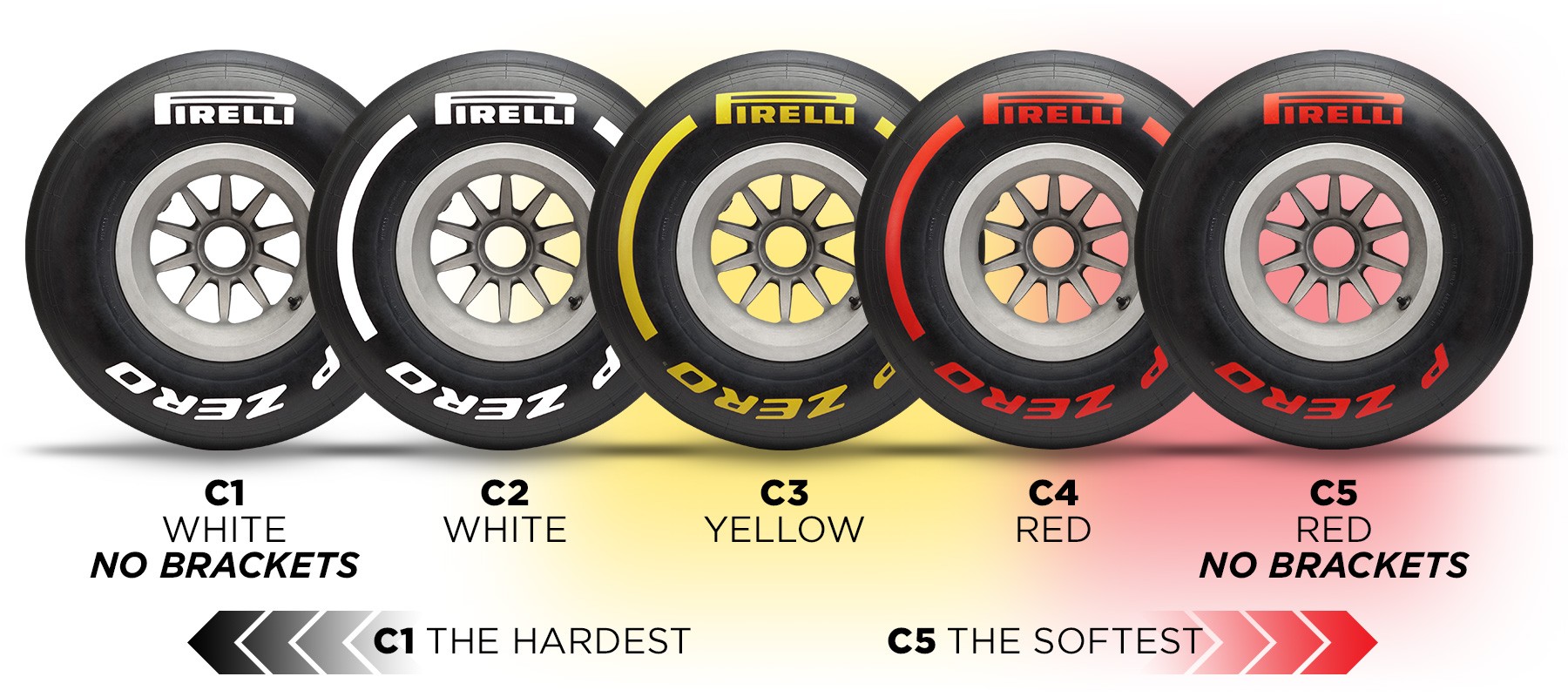
Trail running shoes are no different.
An outsole designed for muddy fell running will almost certainly perform poorly on road sections. Likewise, an outsole designed for mixed road-to-trail use will struggle when faced with steep, wet mountain terrain.
The key point is that grip is always a compromise between different surfaces, conditions and requirements. There is no universal outsole. There are only outsoles that are better suited to certain environments than others.
Grip Is Actually Two Different Things
When runners talk about grip, they are often describing two separate characteristics.
The first is friction.
This is the ability of the rubber compound to adhere to a surface. Friction is what gives confidence on wet rock, slick roots, hard-packed trails and tarmac. It is primarily influenced by the rubber compound itself.
The second is mechanical traction.
This is the ability of the outsole to bite into a surface. Mechanical traction becomes important on mud, loose gravel, soft ground, snow and wet grass. It is primarily influenced by lug design.
Understanding this distinction explains why some shoes perform brilliantly in one environment but poorly in another.
A shoe with soft, sticky rubber may feel exceptional on wet rock but struggle in deep mud if the lugs are too shallow.
Conversely, a mud-specific shoe may offer tremendous traction on a steep hillside while feeling insecure on wet slabs because the rubber compound prioritises penetration into soft ground rather than adhesion to hard surfaces.
When someone says a shoe has “great grip”, it is worth asking whether they mean friction, traction or both.
Rubber Compound: The Foundation of Grip
The first factor that determines how well an outsole performs is the rubber compound itself.
Different brands use different compounds, each balancing grip, durability and performance in varying conditions.
Generally speaking, harder rubber compounds offer:
- Greater durability
- Better longevity
- Increased resistance to wear on road surfaces
- Reduced grip on wet rocks, roots and technical terrain
Softer rubber compounds offer:
- Superior traction on wet rock
- Better adhesion on slick roots
- Increased confidence on technical terrain
- Reduced lifespan due to faster wear
This trade-off is unavoidable.
A rubber compound that delivers exceptional grip on wet mountain rock is usually sacrificing durability somewhere else.
This is why shoes that feel incredible on technical terrain may show noticeable outsole wear after extensive road use, while harder compounds may last for hundreds of miles but feel less reassuring when conditions become wet and technical.
Lug Design: More Than Just Lug Depth
When discussing grip, many runners focus solely on lug depth.
While lug depth is important, it is only one part of a much larger picture.
The following factors all influence performance:
- Lug depth
- Lug shape
- Lug spacing
- Lug orientation
- Lug density
- Surface area of the lug
A road-to-trail shoe may use lugs around 2-3mm deep. These provide smooth transitions onto tarmac, maintain comfort on hard surfaces and offer sufficient traction on light trails and gravel paths.
A dedicated trail shoe might use 4-5mm lugs, creating a balance between versatility and off-road performance.
Meanwhile, a fell running or mud-specific shoe may feature aggressive 6-8mm lugs designed specifically to penetrate soft ground and provide maximum traction.
However, deeper is not always better.
Large, aggressive lugs can feel unstable on road surfaces, wear more quickly and reduce overall efficiency when running on hard-packed terrain.
Directional Grip: Climbing, Descending and Cornering
Grip is not simply about moving forwards. A good outsole must provide traction in multiple directions.
- When climbing, lugs need to generate forward propulsion.
- When descending, they need to provide braking traction.
- When traversing slopes or cornering, they need to resist lateral movement.
This is where lug orientation becomes particularly important.
- Forward-facing lugs often improve climbing traction by helping the shoe bite into the ground.
- Rear-facing lugs can improve braking performance on descents.
- Side lugs can enhance stability when cornering or running across off-camber terrain.
Two shoes may have similar lug depths but feel completely different on technical trails because of how those lugs are positioned and oriented.
Lug Quantity: When More Isn’t Better
Another overlooked aspect of outsole design is the number of lugs used. At first glance, more lugs might seem like a positive feature. More contact points should equal more grip.
Not necessarily.
A higher number of closely packed lugs can increase surface contact on firmer terrain and improve stability. However, in muddy conditions they can become a disadvantage.
Mud needs somewhere to go.

If lugs are packed too closely together, mud can accumulate between them and effectively create a smooth layer underneath the shoe. Once this happens, traction decreases significantly.
This is why many fell-running shoes feature widely spaced lugs. The larger gaps allow mud to be shed more effectively with each stride, keeping the outsole functioning as intended.
The best mud shoes are often those that clear mud efficiently rather than simply those with the deepest lugs.
Different Surfaces Require Different Types of Grip
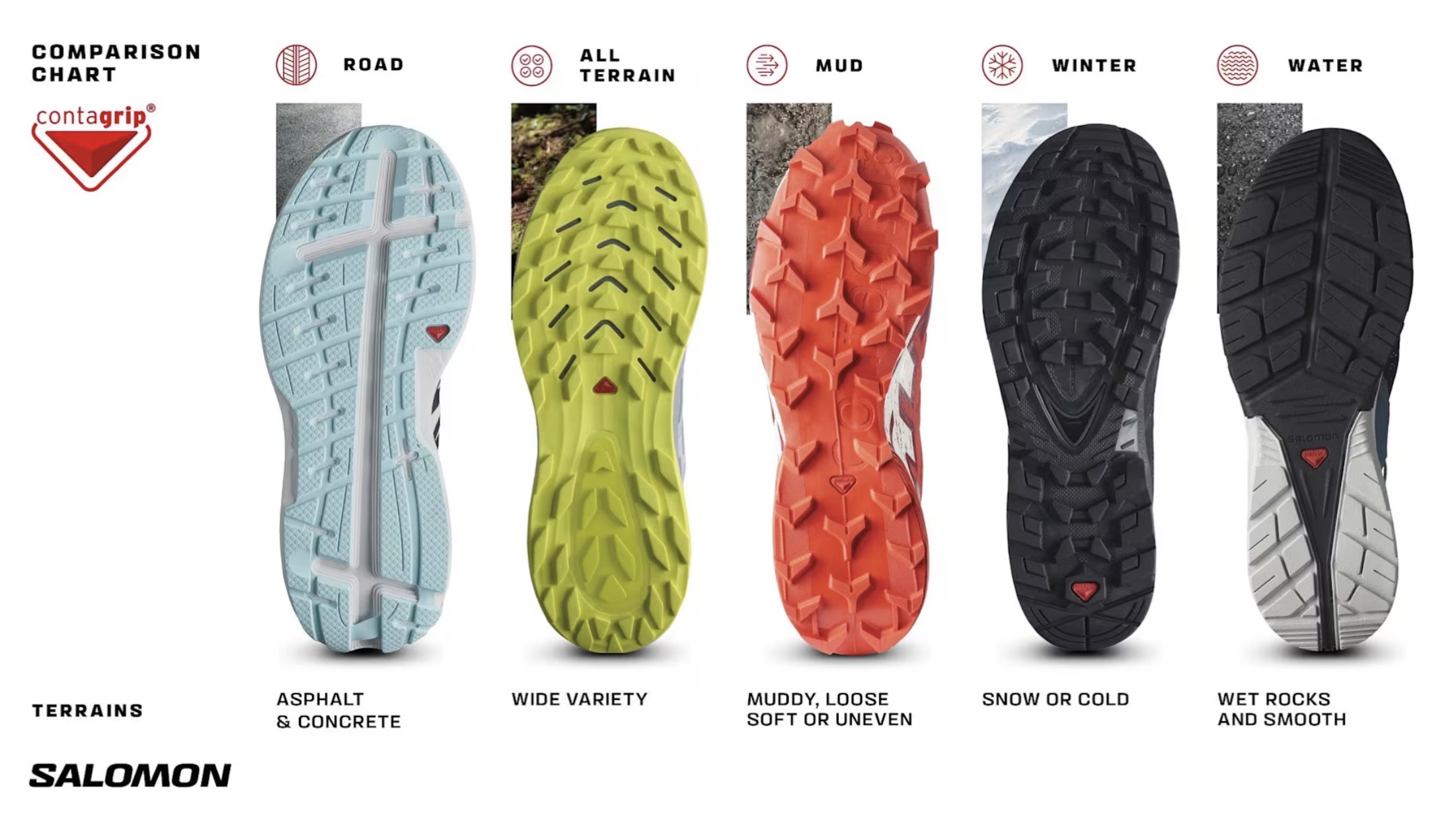
One reason grip is so difficult to evaluate is that every surface places different demands on an outsole.
Wet Rock
- Soft, sticky rubber is often the priority.
- Friction and size matters more than lug depth.
Dry Rock
- Most modern trail shoes perform reasonably well.
- Stability and confidence become more important than outright grip.
Mud
- Deep, widely spaced lugs are critical.
- Mechanical traction is the dominant factor.
Loose Gravel
- Lug penetration and a stable platform help prevent slipping.
Forest Trails
- A balanced outsole usually performs best.
- Extreme lug depth is rarely necessary.
Road and Hardpack
- Surface contact, comfort and durability become increasingly important.
- Aggressive mud lugs can feel inefficient and unstable.
Understanding the terrain is often more useful than understanding the shoe.
Specialist Outsoles and Why They Matter
This is where specialist outsole compounds begin to separate themselves from the competition.
Many brands have invested heavily in developing their own proprietary technologies designed for specific environments.
Examples include:
- adidas Continental (yes, the tyre compnay)
- Scarpa Presa TRN series
- Inov-8 Graphene/ STICKYGRIP and TRI-C
- VJ Sport Superior Contact Butyl Rubber
- La Sportiva FriXion – whites/red/blue/black and eco
- Salomon Contagrip – road, all terrain, mud, winter and water
Some compounds prioritise wet-rock adhesion. Others focus on durability. Others seek a balance between the two.
Perhaps the best example is VJ Sport’s Butyl rubber. Among experienced mountain runners and orienteers, it has developed an outstanding reputation for wet-rock performance. In challenging mountain environments where confidence on slick surfaces is critical, specialised compounds such as this can provide a genuine advantage.
The key point is that these outsoles are often designed with a very specific purpose in mind rather than trying to satisfy every possible use case.
Outsole Flexibility and Ground Contact
Another often overlooked factor is how effectively a shoe maintains contact with the ground. Even the most aggressive outsole can only generate traction if it is actually in contact with the surface beneath it.
On uneven trails, rocky terrain and technical mountain ground, some shoes are able to conform more effectively to irregular surfaces, allowing more of the outsole to engage with the terrain.
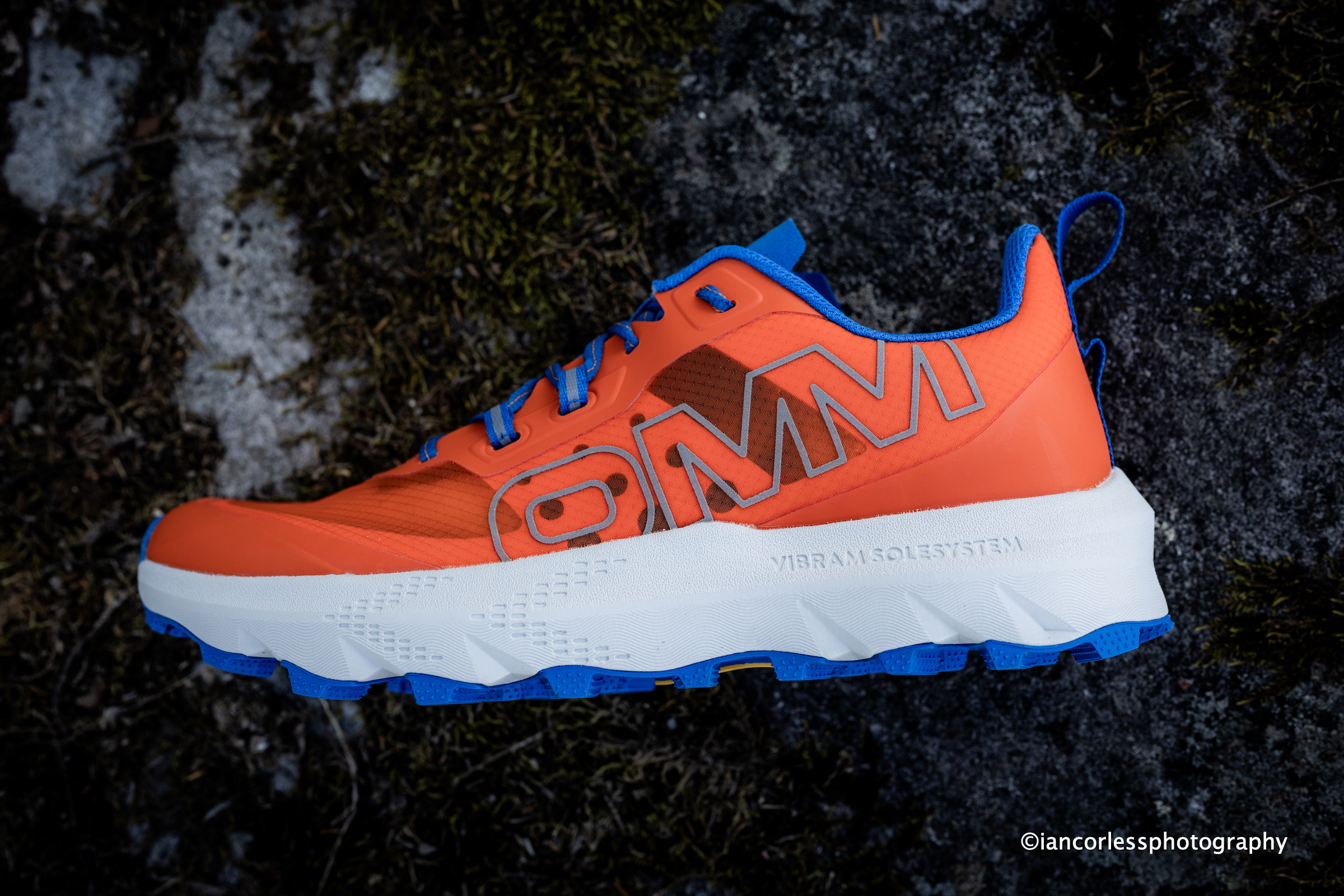
However, flexibility is not always the answer.
A stiffer shoe may provide greater precision, protection and confidence on rocky terrain. Many mountain-running and approach-style shoes deliberately use stiffer platforms because they allow runners to edge more effectively on uneven surfaces.
Ultimately, grip improves when the shoe maintains effective contact with the terrain, whether through flexibility, torsional compliance or structural stability.
As with every aspect of outsole design, the optimal balance depends on the environment for which the shoe was intended.
The Rise of Vibram Megagrip
In recent years, one outsole has become increasingly dominant across the industry: Vibram Megagrip.
There is no doubt that Megagrip is an excellent compound. It offers an impressive balance of durability, traction and all-round performance with a pay-off on grip in wet rock conditions. It has become the default choice for many premium trail shoes for good reason.
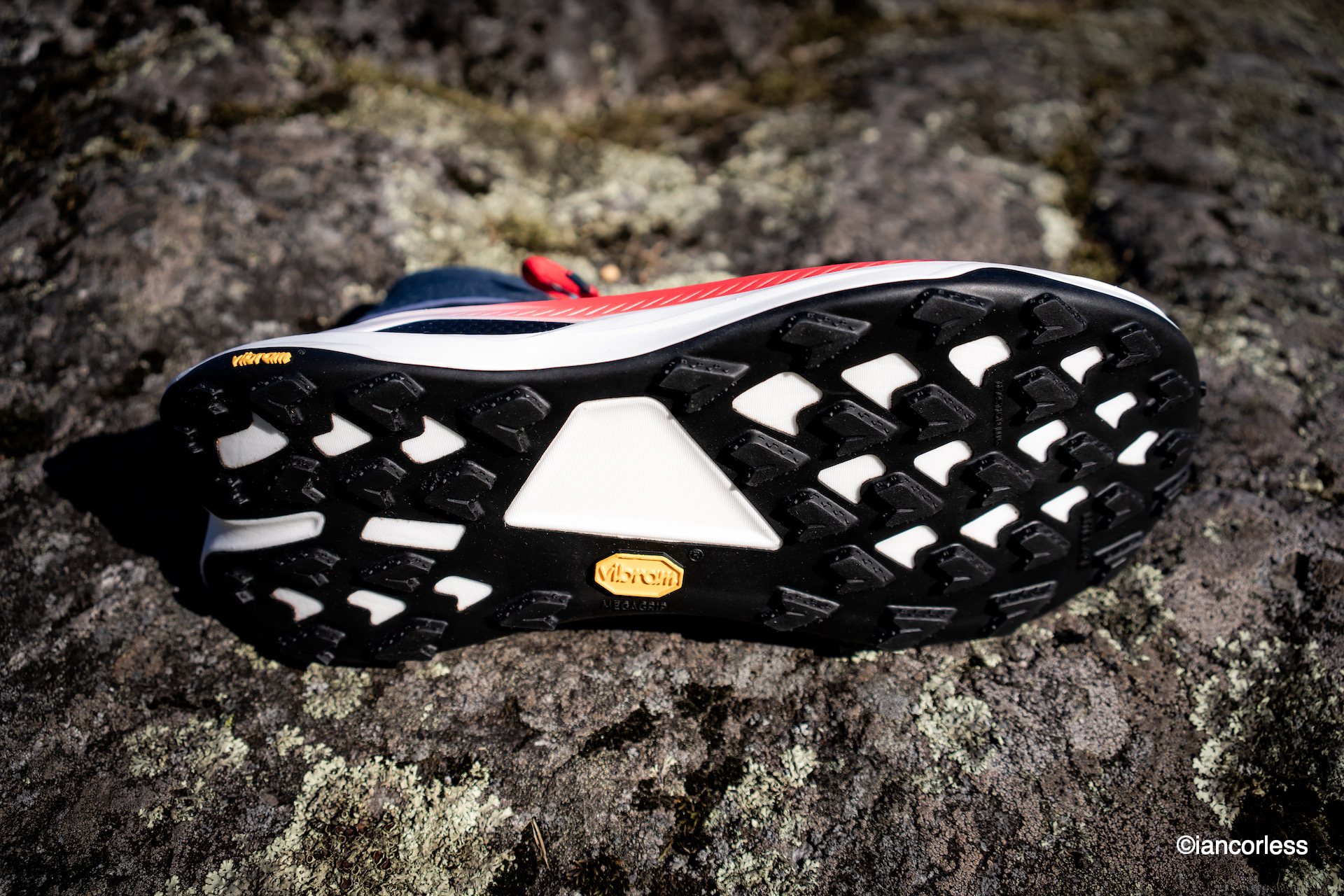
However, the presence of Megagrip alone does not guarantee exceptional grip. Two shoes may use exactly the same rubber compound yet perform very differently in the real world.
Lug geometry, lug spacing, outsole layout, shoe flexibility and overall design remain hugely important.
As more brands adopt the same compound, the differences between shoes increasingly come down to how that compound is implemented rather than the compound itself.
Megagrip remains one of the most versatile options available, but it is only one piece of the overall grip equation.
Why “Good Grip” Depends Entirely on Where You Run
Consider two runners.
The first runs exclusively on dry woodland trails, gravel tracks and flowing singletrack.
For this runner, almost any modern trail shoe with a standard rubber compound and moderate lugs may provide perfectly adequate grip. They may genuinely believe their shoe offers excellent traction because it performs well in their environment.
The second runner starts on roads, moves onto forest trails, then climbs into steep mountain terrain featuring wet rocks, exposed roots and slippery technical sections.
Suddenly, grip becomes a much more demanding requirement.
What felt excellent in dry woodland conditions may feel completely inadequate when the terrain becomes steep, wet and technical.
This is why context matters.
A shoe that provides outstanding grip in one environment may be average in another.
The Search for the Perfect Outsole
The uncomfortable truth is that there is no perfect outsole.
The best grip comes when a runner can be highly specific about their needs and select a shoe built for those exact conditions.
- If your running consists primarily of muddy fell races, choose a mud-specific outsole.
- If your focus is technical mountain running, prioritise compounds that excel on wet rock.
- If your routes combine road, gravel and moderate trails, a less aggressive and more versatile outsole may be the better solution.
The closer the outsole is matched to its intended environment, the better it will perform.
Conclusion
Grip is not a simple yes-or-no characteristic.
It is a complex interaction between rubber compound, friction, traction, lug design, lug spacing, lug depth, terrain, weather and running style.
The most specialised outsoles often provide the highest levels of performance, but only within the conditions they were designed for. Like Formula 1 tyres, they excel when used exactly as intended.
The more a shoe attempts to become a “jack of all trades”, the more compromises inevitably appear.
That said, budget must also be considered.
Running shoes have become increasingly expensive, and for many runners owning multiple pairs for different conditions is simply unrealistic. In these cases, the search for a versatile “one shoe does all” option is entirely sensible.
While such shoes may never be the absolute best in every environment, they often represent the most practical and economical choice.
Ultimately, the question is not whether a shoe has good grip.
The question is whether it has the right grip for the terrain you’re asking it to handle.
Instagram – @iancorlessphotography
Twitter – @talkultra
facebook.com/iancorlessphotography
Web – www.iancorless.com


Pingback: OMM Ultra Shoe Review | IAN CORLESS