My recent trips ‘fastpacking’ in Norway have fuelled many questions about what is my kit list. So, here is an article the lists each item.
Firstly, what is fastpacking?
Essentially, in simple terms, fastpacking is the combination of hiking and running. Instead of running for just a few hours, or maybe for just one day, or hiking with a heavy pack for many days, fastpacking takes elements from the two disciplines – essentially moving FASTER and LIGHTER with all the items you need.
Fastpacking is distance trail running and ultralight backpacking rolled into one epic outdoor adventure. You’re moving fast – running, jogging, or power hiking – while covering long distances and carrying just enough essentials for a multiday journey. – REI
Now, to be clear, there are versions of fastpacking and which version you choose makes a big difference.
In Norway, and for my recent adventures, Abelone and I are moving from cabin-to-cabin and this makes a huge difference. Each night we will get food at the cabin, a place to sleep, warmth if required and the opportunity to (usually) dry clothes. We therefore can be very minimal.
By contast, fastpacking can also be with tent – in this scenario, it’s still possible to be light BUT you must carry a tent, you must have a sleeping mat and you will also need a sleeping bag. In addition, you will need to carry the food you need for the duration of the journey and/ or, you will need to plan for refuel stops.
The equipment list below is for cabin-to-cabin.
MY EQUIPMENT
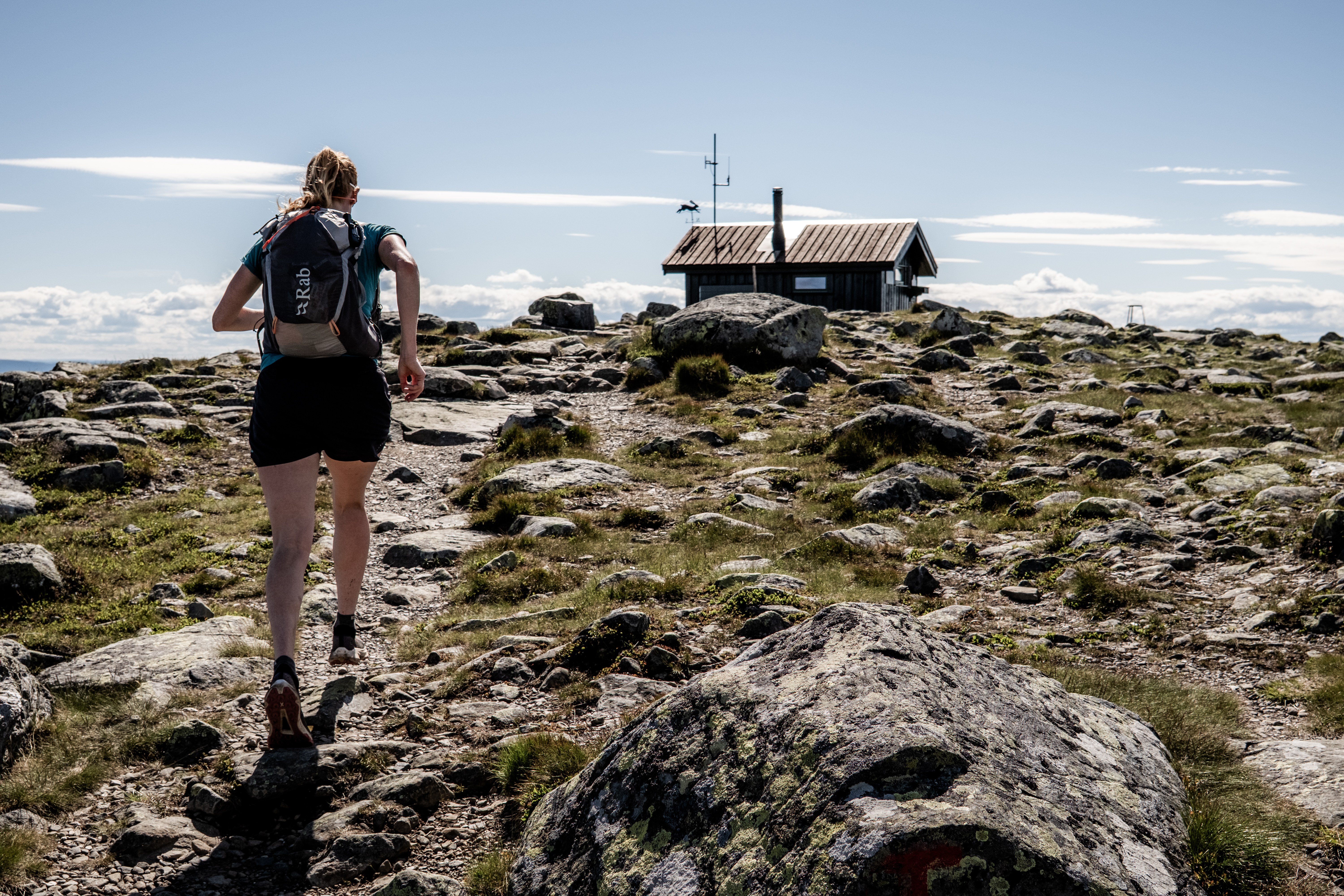
During the SAGA or during the BREHEIMEN TUR, I carried the same equipment as listed below. Importantly, I consider what I am carrying on these tours to be the minimum and should I expect extreme cold, very bad rain conditions or a combination of the two, I would add to the list – I do not cut corners. I never compromise on safety and lightweight doesn’t mean underprepared.
Luxuries are typically kept to a minimum. As a photographer I indulge myself and carry a Fuji 100 VI which weighs 500g. I also carried a Kindle to have some downtime and escape with a book. For many, this would be an immediate 600g +/- saving.
Black Diamond Poles – fixed length not folding 168gr – Non folding poles are stronger and lighter
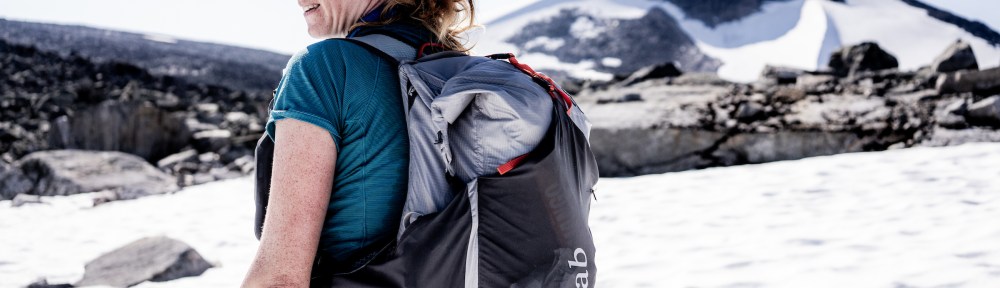
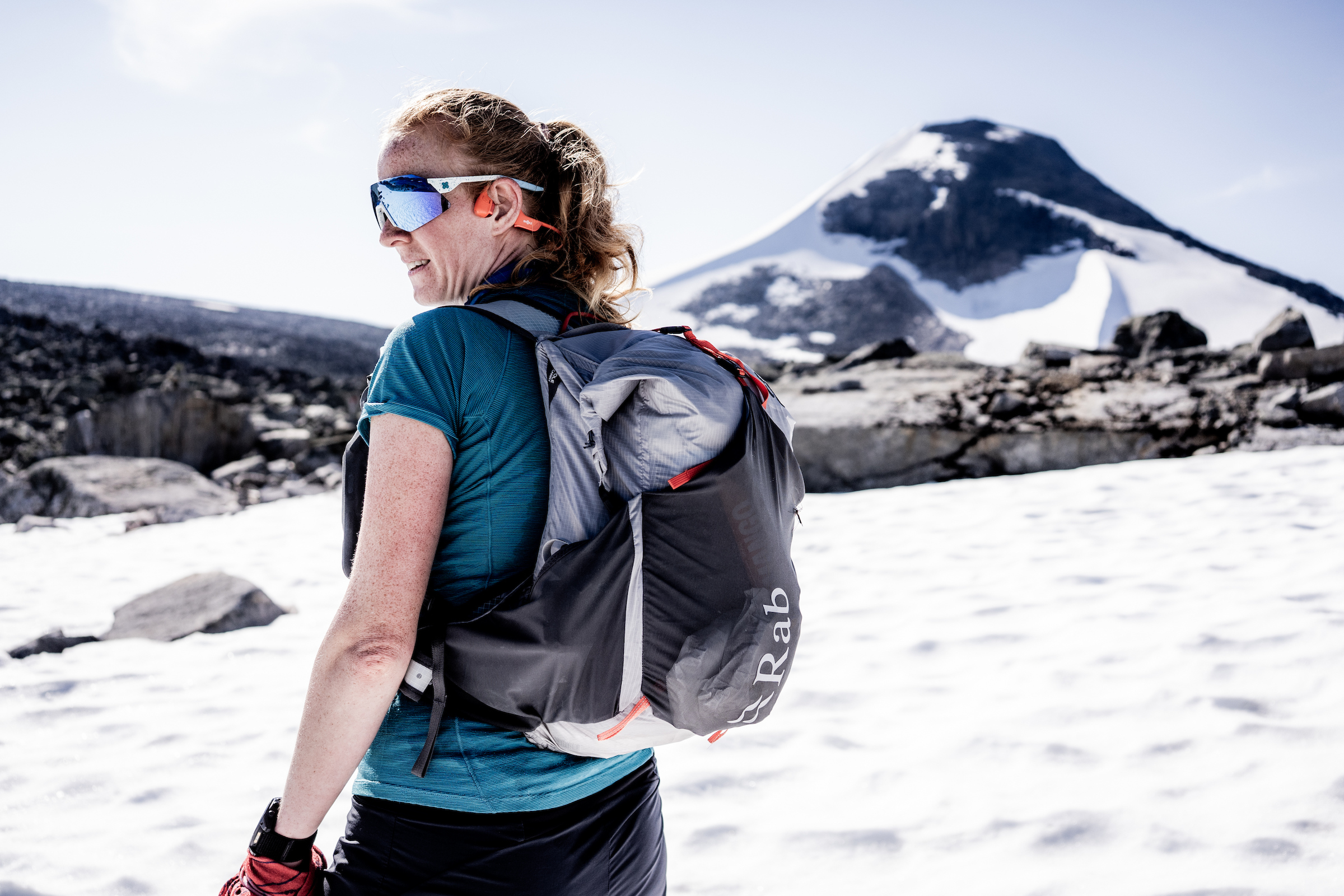
RAB Veil XP 20 Pack 476g – this pack is the best I have used and the main compartment is waterproof
RAB Alpine Light Down Jacket 252g – A little heavier than some options on the market but it is durable and very warm.
RAB Phantom Waterproof Jacket 116g – Super light and ideal for bad conditions in summer. Was I expecting daily rainfall or heavy rainfall for prolonged time or days, I would move up to a heavier and more durable jacket.
RAB Phantom Waterproof Pants 84g – Light and an ideal outer layer for when needed.
RAB Hut Slippers 198g – This was a luxury for SAGA and when I did Breheimen, I did not take them.
Devold LS Merino Top 200g – essential warm layer, I always use merino wool.
Devold Merino Tights 150g – ssential warm layer, I always use merino wool.
RAB Sonic Ultra T 96g – lightweight T should we get some very hot days
RAB Merino underwear 151g – merino is warm but also great for daily use
Injinji Merino Socks 45g – wool socks essential, I carry one spare pair
GORE Run Tights 300g – I debated if I should take or not and I was glad I did, on several days I was happy to have long tights and not shorts.
RAB Filament Beanie 18g – warm and light hat
RAB Filament Neck Tube 28g – great to stop drafts and ideal for other uses.
RAB Liner Gloves 18g – great as a thin warm layer or extra warmth inside other gloves.
RAB Pertex Mitts 65g – these are tthick and warm, essential for when the cold surprises.
Hestra Waterproof Mitts 50g – great protection as a stand alone or with liner gloves inside.
Toiletries – mini toothbrush, mini toothpaste and small deodorant 75g
First Aid kit 95g
RAB Bivvy Bag 105g
Plug and USB cable 60g – ideal for phone recharge, Shokz recharge and Garmin recharge.
Nitecore 10,000 battery 143g – lightweight emergency batter
Garmin InReach 113g – essential for safety.
Sleeping Bag liner 110g – required in DNT cabins.
Inflatable Pillow 46g – this is essential for me, I travel so much I love the consistency my own pillow gives.
Blindfold and Earplugs 10g – essential.
2x 500ml Bottles 49g x2 – 96g I used bottles in contrast to soft-flasks, a little heavier but I prefer the ones I use ny Ultraspire as they have a flat back which sits comfortably against the chest.
Total weight – 3268g
3926g with camera and Kindle
Wearing:
HOKA Mafate 5 315g – The Hoka worked really well except on wet rock, Vibram just does not cut it and without doubt, VJ Sport MAXx2 or ULTRA 3 is the shoe to use.
RAB Hat 52g – peaked hat to keep rain and sun off.
TNF Run Shorts 146g – they have an inner and therefore reduces the need for underwear.
Devold SS Merino Top 219g – I prefer merino, great in hot, cold or wet.
Shokz Openrun Pro 2 – some daily music escape is ideal.
SunGod Glasses – great for all conditions I use photochromatic so they adjust to the conditions.
FOOD AND DRINK
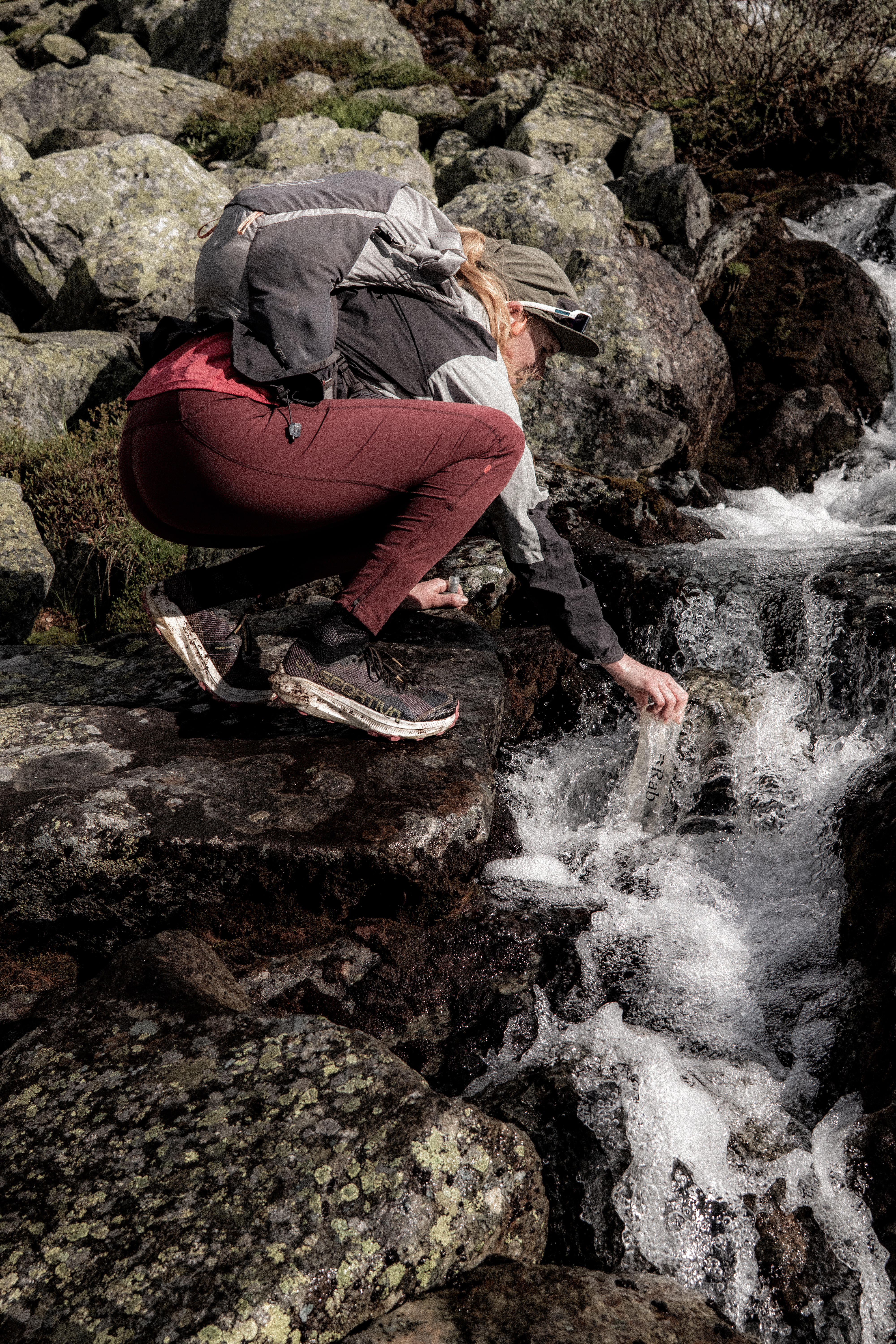
We get water from rivers and streams, there is an abundance of opportunities in Norway and for most of the time, although I have two bottles, I only fill one to save weight.
Importantly, wherever you are fastpacking, you need to research what is and what is not available on the route you take. No water? You need to plan and carry more.
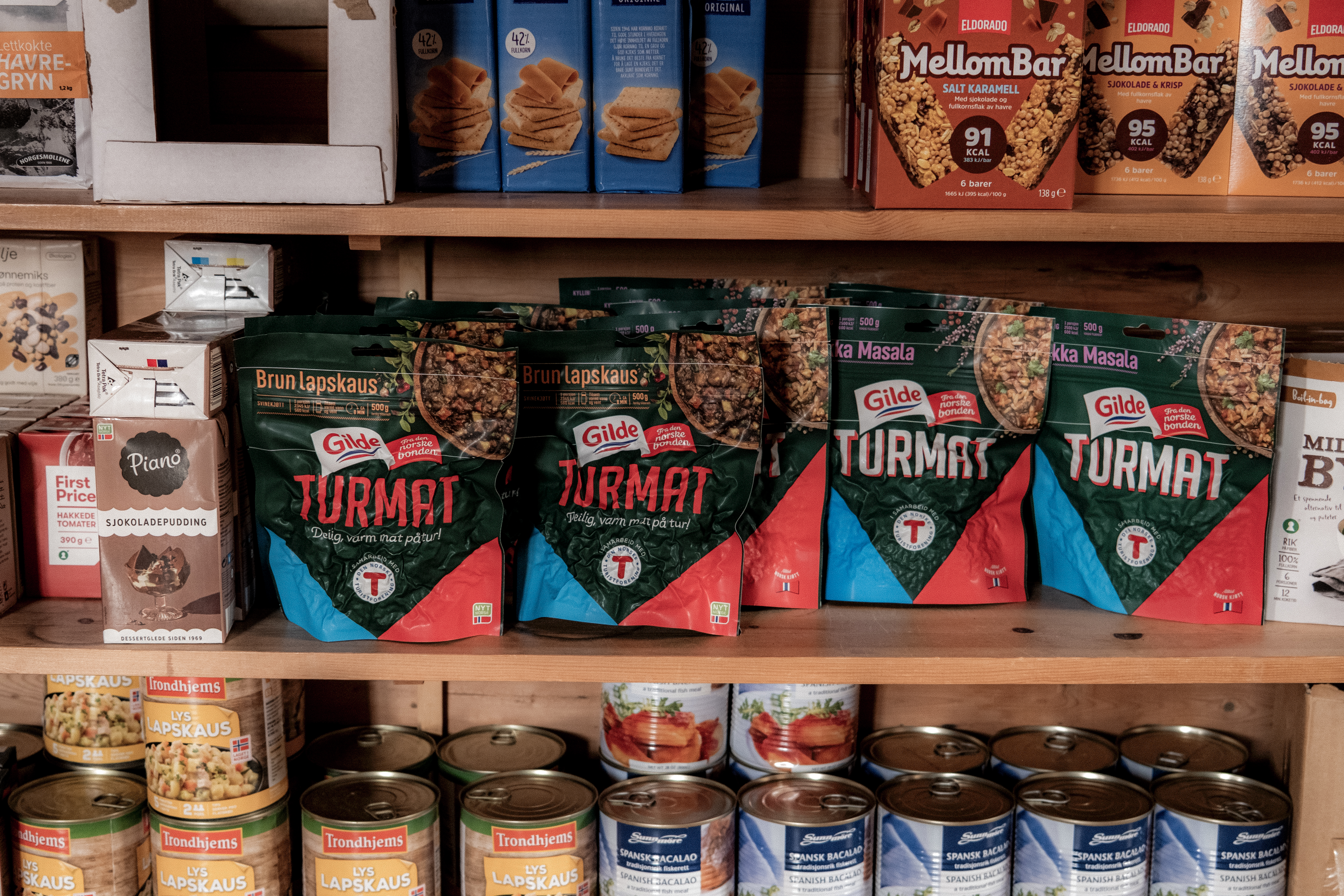
Day snacks I would replenish each night from the cabin we stay at, be that a serviced cabin or an unserviced cabin – there are typically cereal bars, chocolate, snacks etc that you can purchase.
On tough days and when the option exists, I will take a bottle of soda as a backup – Cola, Fanta or similar.
In the cabins, we either have food provided by a serviced cabin, or, we make our own from the food supply shop.
THE REALITY
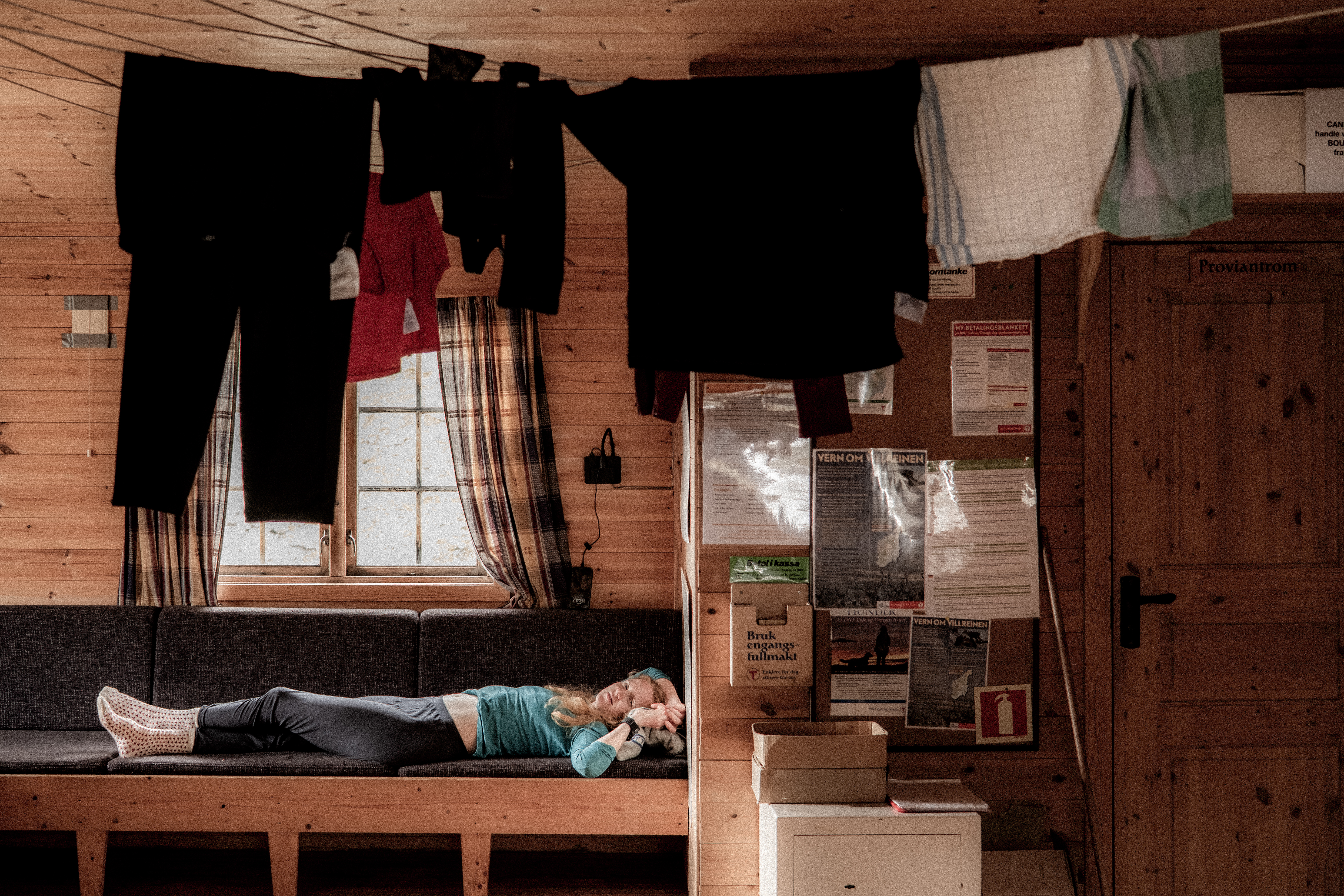
You have one set of clothes to move in.
You have clothes to change into after each day – typically merino top and bottom.
You have minimal extra layers for cold, rain and bad conditions.
Life is very simple and it is liberating.
You need to accept some days you will not wash, you have to accept that you and your clothes will be a little smelly as the days pass.
IN SUMMARY
Fastpacking appeals because of its simplicity. Planning, preparation, bring only the essentials and aim for items that are lightweight and versatile – importantly do not skimp on safety. There is a real pleasure in fine tuning kit, researching the best items and then bringing it all together. Be specific and adapt what you take based on the route and the weather conditions.
Instagram – @iancorlessphotography
Twitter – @talkultra
facebook.com/iancorlessphotography
Web – www.iancorless.com

