Money Money Money

Ultrarunning, money and the future?

It’s a big question and one of the things that we spent three days discussing at the ISF Skyrunning Conference in La Palma, the Canaries.

Ultrarunning is without doubt is becoming more popular and more main stream. When you look at the crowds supporting and participating in many European ultras one can see that the sport has only one way to go; up!

By contrast, the sport in America is so much more niche. This was confirmed by the running elite that came over from America. As Dakota Jones said ‘You camp on the start line, roll out of bed and then go run’. Even Western States, the pinnacle 100 miler does not match the European races. Certainly the start has a buzz and of course the finish. But not much happens between the two.
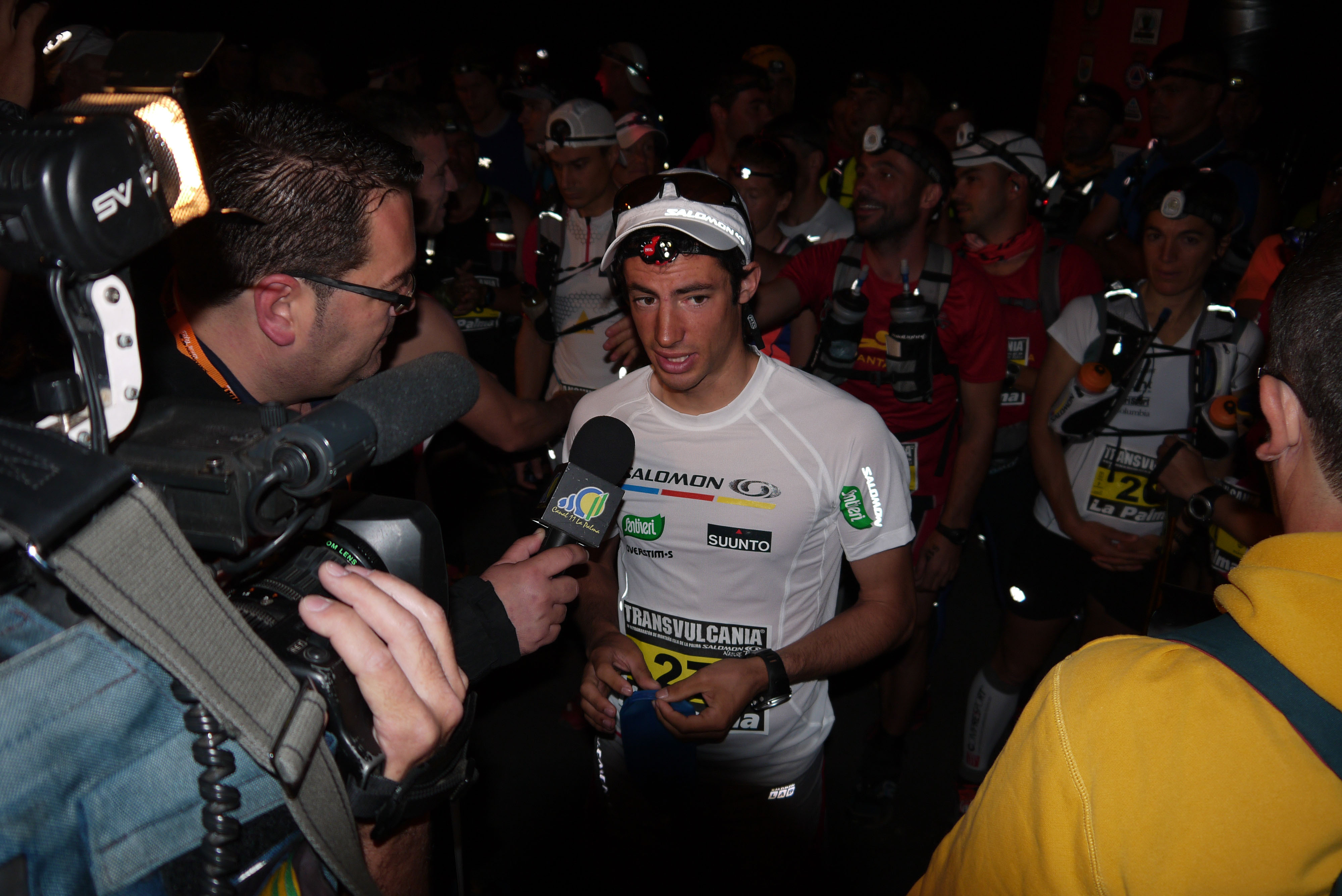
Kilian being interviewed pre Transvulcania La Palma

Transvulcania La Palma and Zegama over the last 10 days had thousands upon thousands of spectators, one would compare it to the Tour de France. They narrow the trail down, cheer and shout at the runners, ring cow bells, blow horns… it’s a party atmosphere and they love the runners.

The sport will progress and the more spectators the races attract, the more the sponsors are likely to invest. Thousands screaming on a start line, all ages, from young girls to old men. Sport has no age criteria and when you get a good looking American finishing in first place you could almost imagine that you are at a rock concert and not an ultra.
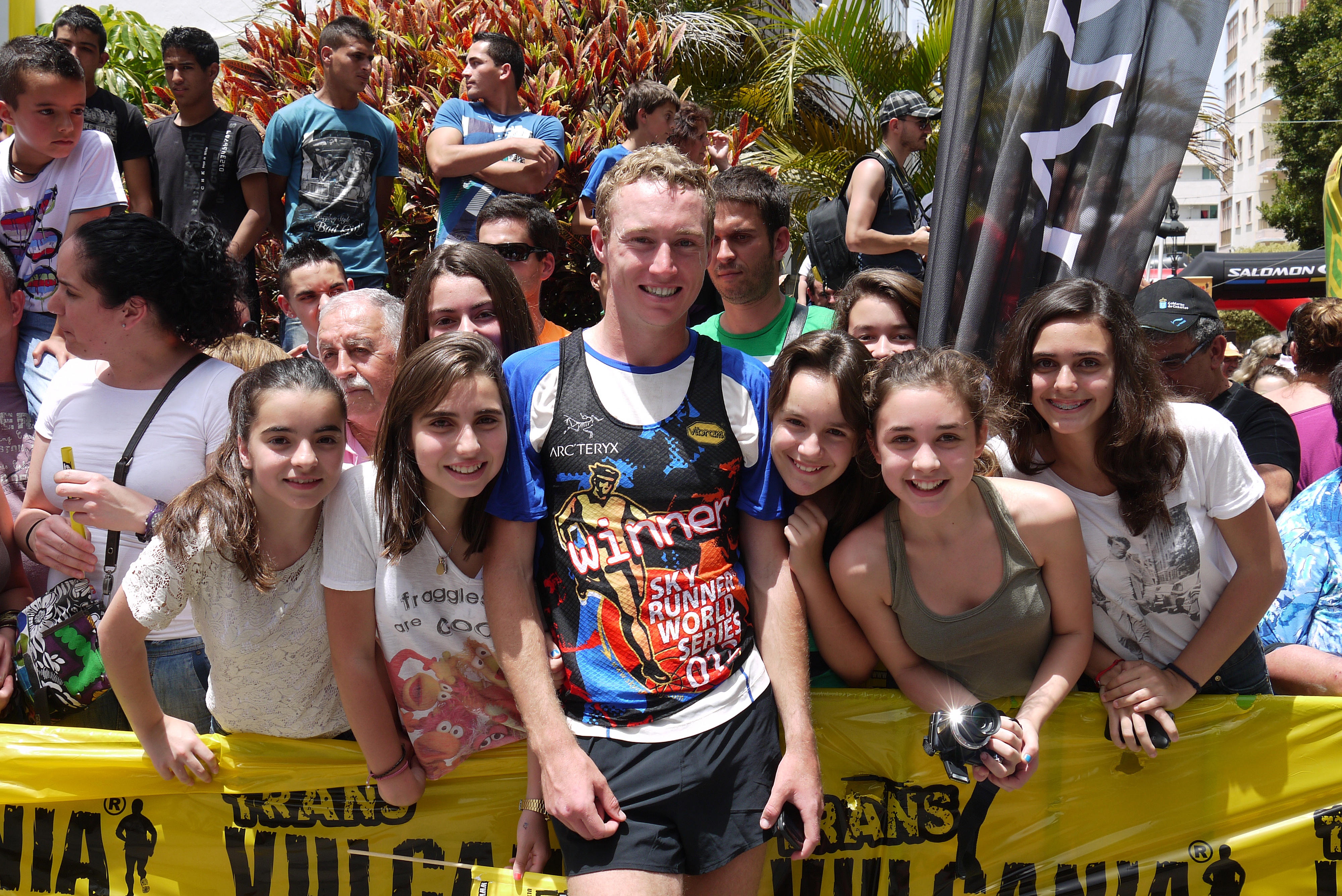
Rock Star Dakota

We all love a quiet trail, we all love the isolation of running with one or two friends but the future of racing, particularly if we want more money, money, money will see bigger crowds, more buzz and I guess a sport that will become more media savvy.

What is important and this is one thing that we discussed in La Palma, is that we don’t want the sport to loose what is so good about it. The unity, the friendship and bonding that we all have.

By pure coincidence the Washington Post has had a related article on the subject. You may like to read it:

Washington Post

In the article, Karl Meltzer who has a regular spot on Talk Ultra says:

“Am I making money running races? No,” said Meltzer, who has consistently won some of the biggest trail races each year since 1996. “Even if you win them all, you would still only be making about $30,000 a year. . . . It’s sponsorships that make it possible for the elites to travel to the races and eke out a living at the sport.”

Of course he is right. However some new races are appearing in America such as UROC (Ultra Race of Champions) and Run Rabbit Run which are offering prize money. However, they still don’t have the buzz of European races. A sponsor needs a return!

One thing that is clear is that we live in a digital age. Social media is now imperative if you want to get a message across. Not only do the runners need to Tweet, Blog and Facebook but so do the teams, the sponsors and everyone related to the sport.

In Transvulcana La Palma and Zegama, I combined forces with iRunFar and ULTRA168 and we lit up Twitter and Facebook. We became the outlet and feed of the race. Not only updating the positions of the runners but importantly feeding back how the runners felt, how they looked and sending photos ‘live’ as it happened. It is the way forward.
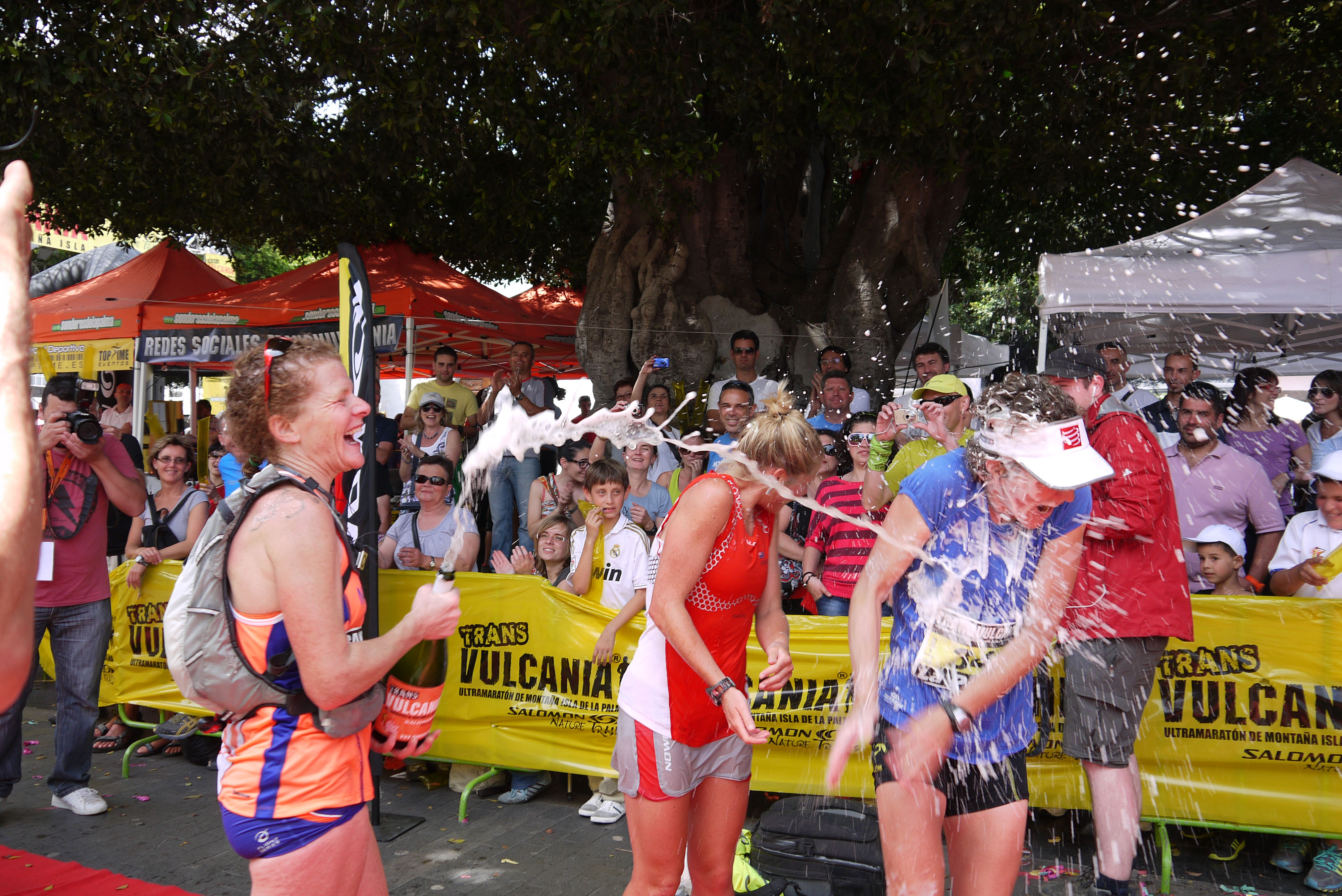
1,2,3 at Transvulcania

Tony Krupicka said in the article:

“In just the last few years, there have been huge gains made in the media aspect of the sport, mainly via following races on Twitter, and in the production of various films”

It’s early days, the sport although well established is now just being born. It is an infant about to move up to a bigger school.

Let’s keep the bullies away and retain the integrity of the sport while at the same time allowing it to expand so that we can make a living but also still love it for what it is; running!

Ian

Scott Jurek is lined up for an interview on Talk Ultra

Scott JUrek

Image Copyright JUSTIN BATIEN

During his college years, Jurek continued to compete in the Minnesota Voyageur, finishing second in 1994 and 1995 and winning the race in 1996, 1997, and 1998, when he set the current course record of 6:41:16. After graduation, he moved to Seattle, where he began competing on a national level, in 1998 winning the Zane Grey Highline Trail 50 Mile Run and the McKenzie River Trail Run 50K, and placing second in his first 100-mile race, the Angeles Crest.

In 1999, Jurek won the prestigious 100-mile Western States Endurance Run on his first attempt, defeating five-time champion Tim Twietmeyer and becoming only the second non-Californian to win the race. He would go on to win Western States a record seven straight times. In 2004, he bested Mike Morton’s 1997 time to set a new course record at the time of 15 hours and 36 minutes.

Over the next five years, Jurek notched victories in the McDonald Forest 50K (1999), the Bull Run Run 50 Mile (1999), the Leona Divide 50 Mile (2000, 2001, 2002, 2004), the Diez Vista 50K (2000-course record, 2003), the Silvertip 50K (2002), the Miwok 100K (2002, 2003, 2004). In 2004, he completed the “Ultra Running Grand Slam” by finishing Western States, the Leadville 100 (in which he was runner-up), the Vermont 100, and the Wasatch Front 100.  He traveled to Hong Kong with Team Montrail to win the 2001 and 2002 OXFAM Trailwalker 100K team trophies, both years setting new course records. Jurek’s 2001 teammates were Dave Terry, Ian Torrence, and Nate McDowell. In 2002, he ran with McDowell, Brandon Sybrowsky, and Karl Meltzer. Jurek was also on the winning team of the 2003 Hasegawa Cup Japan Mountain Endurance Run.

In 2005, just a few weeks after winning Western States, Jurek set a new course record in the Badwater Ultramarathon, widely considered one of the world’s most difficult races. Jurek came from behind to win this race despite temperatures of 120 °F(49 °C), dealing with the heat by periodically stopping to immerse himself in a cooler of ice.

Jurek repeated his Badwater victory in 2006, a year that also saw his first of three consecutive victories in the Spartathlon, a 153-mile race between Athens and Sparta in Greece. Jurek is the only North American to ever win this race, and he holds the two fastest times on the course behind Yiannis Kouros. In 2007, he also won the Hardrock Hundred, setting a new course record at the time.

In 2006, Jurek traveled to Mexico’s remote Copper Canyon with a group of runners including Christopher McDougall and Jenn Shelton to participate in a race against the Tarahumara. Jurek narrowly lost to the fastest Tarahumara runner, Arnulfo Quimare, but in 2007 Jurek returned to win the race. McDougall’s best-selling book about the 2006 trip, “Born to Run,” significantly raised Jurek’s profile.

On May 14, 2010, in Brive-la-Gaillarde, France, Jurek broke the USATF all-surface record for distance run by an American in 24 hours with 165.7 miles. His finish earned him a silver medal and helped the American men’s team take a bronze overall.

He was part of “Dozens of searchers” including of world class ultra-runners like himself and Kyle Skaggs) went to the remote wilderness to search for the inspirational ultramarathoner Micah True, who went missing and was found deceased. Chris McDougall tweeted: “Caballo had the only funeral he would have wanted: his friends spent days running in the wilderness in his honour.”

HIGHLIGHTS

  • United States record for 24 hour distance on all surfaces (165.7 Miles/266.01 Kilometers).
  • Won the Spartathlon 152-mile (245 km) race from Athens to Sparta, Greece three consecutive times (2006-2008).
  • Won the Hardrock Hundred Mile Endurance Run, and held the record time for one year until Kyle Skaggs set a new record in 2008.
  • Won the Western States Endurance Run seven consecutive times (1999–2005), and held the record time (15:36:27 in 2004) until 2010
  • Won the Badwater Ultramarathon twice (2005, 2006), and held the course record for two years (2005).
  • Finished first three times (2002–2004) and second three times (2001, 2005, 2006) in the Miwok 100K Trail Race.
  • Won the Leona Divide 50 Mile Run four times (2000, 2001, 2002, 2004).
  • Won the Diez Vista 50K Trail Run twice (2000, 2003).
  • Won the Montrail Ultra Cup series twice (2002, 2003).
  • Selected as UltraRunning Magazine’s North American Male Ultrarunner of the Year in 2003, 2004, 2005, and 2007.

Scott will hopefully be on episode 10 or 11 of Talk Ultra – check it out HERE