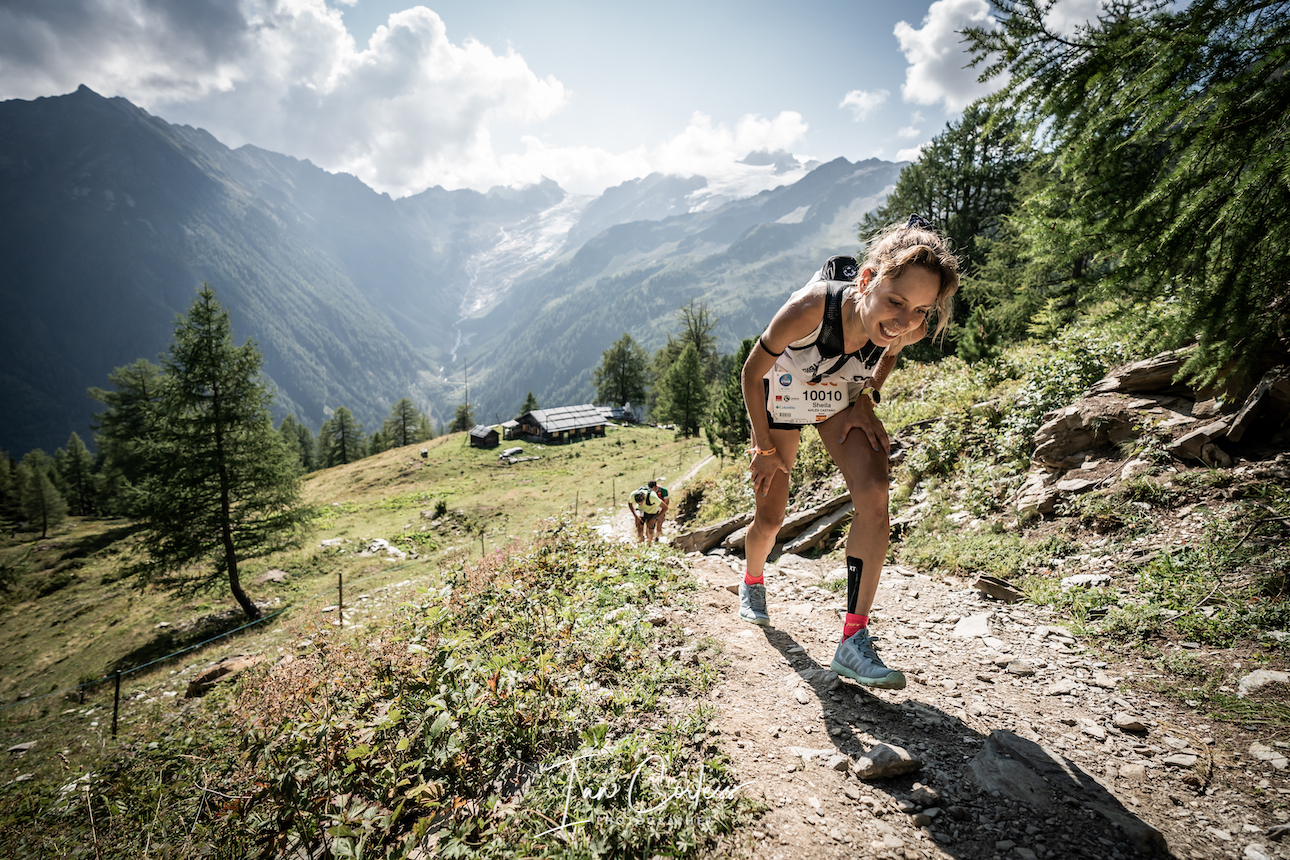
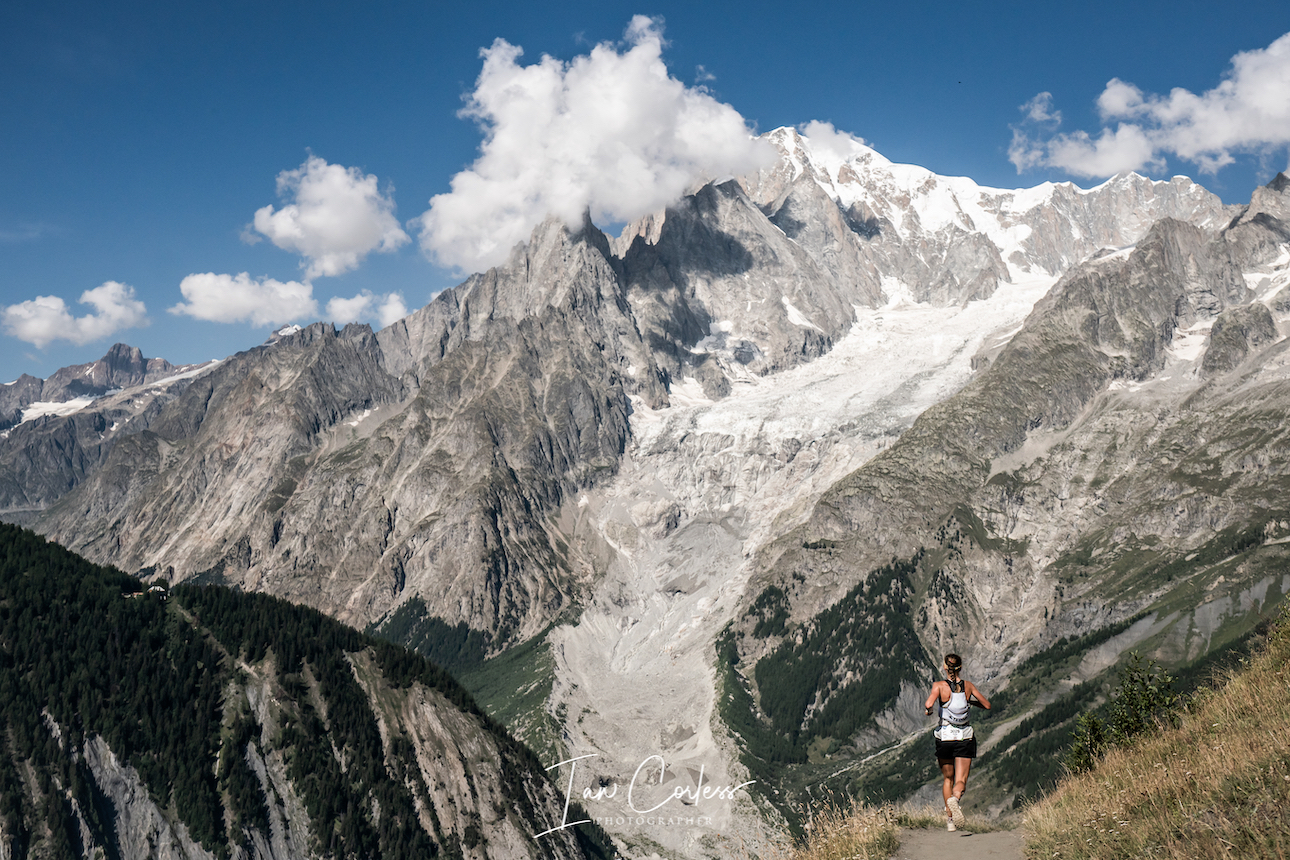
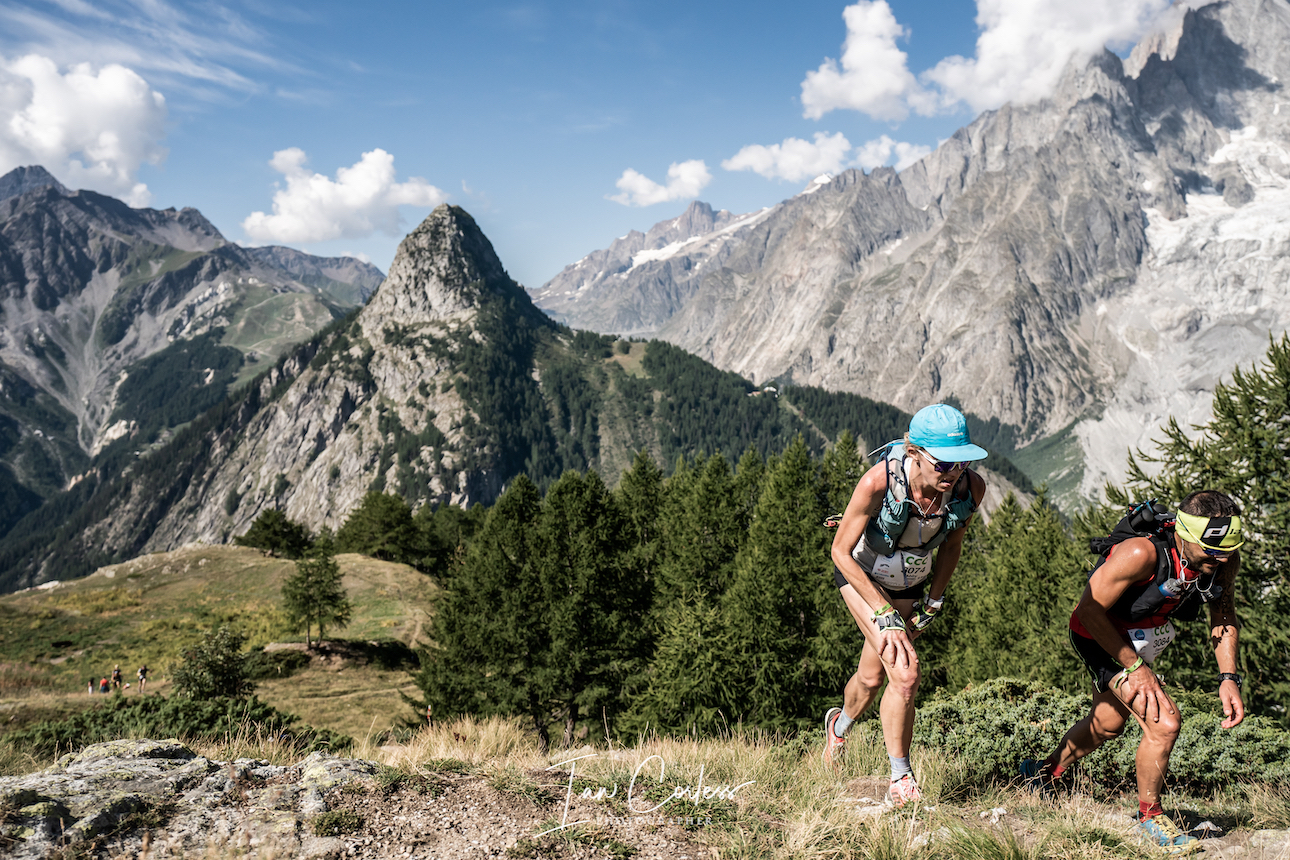
Often described as the world championships of trail and mountain running, it remains the sport’s biggest stage. For elite athletes, it is the pinnacle. A race that demands years of discipline, dedication and unwavering commitment.
Of course, every runner on the start line faces the same mountains and the same distance. But at the front of the field, there is often far more at stake than a finish time. Careers, sponsorships, reputations and legacies can all be influenced by a single day in Chamonix.
The pressure is immense.
At the same time, the sport continues to evolve. Races are getting faster and faster. Training standards are rising. Recovery windows seem smaller. The margin between success and failure is increasingly narrow, and for those who aspire to a top-10 finish at the sport’s most competitive events, operating close to the edge is becoming a necessity rather than a choice.
It is a delicate tightrope to walk.
Every year, some of the sport’s biggest names fail to make the start line. Injury is nothing new. Katie Schide’s absence through long-term injury is one example. Others arrive hoping their final preparations will be enough, only to realise in the closing stages that the risk outweighs the reward. The withdrawals of Kilian Jornet, Jim Walmsley, Tom Evans and Ruth Croft significantly changed what may have been one of the strongest UTMB fields ever assembled.
Then there are the factors no training plan can fully control.
Illness swept through parts of UTMB week. Henriette Albon’s stomach issues before the start were one example, but as the races unfolded it became clear others were also walking a fine line between competing and recovering. Some started with hope and determination, only to discover very early that 2026 was simply not their year. Adriana Moser was one such example.
And then there is a different question altogether. Can athletes still have multiple peak performances in a single season?
Several elite runners arrived in Chamonix after already producing exceptional results elsewhere in 2026. Vincent Bouillard and Courtney Dauwalter had both raced and raced well earlier in the year. Yet UTMB, raced at unprecedented pace and intensity, may have represented one challenge too far. Not because they lacked ability, but because even the best athletes have limits.
The same thought applies to Francesco Puppi and Jennifer Lichter. Both have enjoyed remarkable seasons and both finished in the top five at the 2026 CCC. Outstanding performances by any measure.
But had they arrived completely fresh, fully recovered and without the physical and mental demands of Western States in their legs, would they have finished on the podium? Could they even have won?
The answer is impossible to know. Yet the question itself feels increasingly relevant.
From the outside, the life of a professional trail runner can seem ideal. Your passion becomes your profession. You travel the world. You compete in extraordinary places.
But when passion becomes a job, expectations inevitably follow. Results matter. Contracts matter. Visibility matters. The need to perform creates pressure.
Respected coach Paul Lind once said, “You can only take water from the well so many times.” It’s a simple statement, but perhaps one that resonates more strongly than ever.
At UTMB 2026, Ben Dhiman ran an astonishing time 18:16, and two other athletes also broke 19 hours. Yes, the course was adjusted, but the significance remains. Times once considered unimaginable are now becoming reality. Dhiman prepared for UTMB meticulously and in the process, ran Transvulcania and 90km Du Mont-Blanc as tune ups, he placed 5th and 2nd respectively, I wonder, was there disappointment at not winning both, or, more importantly, where they just stepping stones to the big W at the one that mattered?
Trail running is changing.
The image of ultra running as a relaxed community of dirtbags, hippies and adventurers still exists and, importantly, remains part of its soul. But at the elite level, the sport is becoming increasingly professional, increasingly competitive and increasingly unforgiving.
Miao Yao offers a fascinating glimpse into this evolution.
Earlier in 2026, she won CDH at HOKA Val d’Aran in 13:04:34 without using poles. Her reasoning was simple. She now views races around the 100-kilometre distance, CCC included, as fast-running events rather than traditional mountain ultras. To prepare, she focused accordingly. She even used Sierre-Zinal, a brutal 31-kilometre mountain race, as a speed-focused tune-up before CCC.
A former CCC champion herself, Miao went on to battle fellow former winners Toni McCann and Yngvild Kasperson for third place, later admitting it was a day of real struggle.
That, perhaps, says everything.
The barriers are moving.
Just as the four-minute mile, the two-hour marathon and now the sub-20-hour UTMB once seemed out of reach, the moment something is proven possible, expectations shift. Athletes adapt. Coaches adapt. Training adapts.
The new standard becomes the starting point.
So where does the sport go in 2027?
Many elite athletes have already responded by racing less. One or perhaps two major targets have become the model. Everything else is planned around arriving at those races healthy, fresh and fully prepared.
Yet exceptions still exist.
Rachel Entrekin’s 2026 season has been extraordinary. Victory at Coldwater Rumble 100, third place at Chianti behind Courtney Dauwalter and Yngvild Kasperson, outright victory at Cocodona 250, and then second place at UTMB.
It is difficult not to admire such achievements.
But it also raises another question.
Is it sustainable?
Rachel may be uniquely gifted. Some athletes appear capable of recovering and performing at levels others simply cannot match. Yet history repeatedly shows that athletes who burn brightest often do not burn longest.
That is not criticism. It is observation.
Perhaps the biggest story from UTMB 2026 is not who won, who lost or who withdrew.
Perhaps it is that the sport has reached another turning point.
The demands are higher than ever before. The competition is deeper than ever before. The rewards are greater than ever before.
But so too are the risks.
As trail running enters this new era, the question may no longer be how fast athletes can go.
Instead, the more important question might be this:
How long can they sustain it?
And in the pursuit of ever-faster times and ever-greater performances, what is the true cost of repeatedly going back to the well?
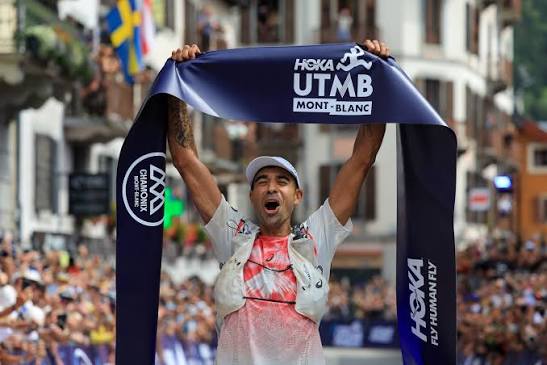
For years, UTMB has been the gravitational centre of trail running, the place where the sport’s limits are tested, stretched, and occasionally shattered. But every so often, a performance arrives that doesn’t just raise the bar; it rewrites the expectations of what is possible. Ben Dhiman’s 2026 victory is exactly that moment.
To understand the scale of his achievement, you have to rewind the clock.
The Sub‑20 Hour Question
Not long ago, the idea of breaking 20 hours at UTMB felt mythical. Pau Capell famously attempted it during the Covid era, running his solo “Breaking 20” project. It was bold, audacious, and – at the time – borderline unimaginable.
Then Jim Walmsley ran 19:37:43 on the full UTMB course.
Just like the two‑hour marathon barrier, once one athlete proves the impossible is possible, the entire landscape shifts. Suddenly, sub‑20 wasn’t a dream; it was a requirement. If you wanted to be in the top 10, you needed to be flirting with 19-hours X minutes.
In 2025, Tom Evans pushed the frontier again, clocking 19:18:58 on an adjusted course. And right behind him, a certain Ben Dhiman arrived in Chamonix in 19:51:37, announcing himself as a future problem for anyone with podium ambitions.
2026: A Race Reshaped Before the Start
UTMB 2026 was chaotic before a single step was taken. Kilian Jornet withdrew. Jim Walmsley withdrew. Tom Evans withdrew. The race lost three titans in quick succession, but the field was still stacked – Vincent Bouillard on the back of a CR at Western States, Baptiste Chassagne, Hannes Namberger, and a dozen more capable of winning on their day.
But the absence of the usual giants did something subtle: it changed the psychology of the race. The script was no longer (kind of) predictable. The hierarchy was no longer fixed.
And into that vacuum stepped Ben Dhiman.
He didn’t hide. He didn’t hedge. He didn’t offer the usual “we’ll see how the legs feel.” He said he was here to win – not with arrogance, but with the calm certainty of someone who had gone away after 2025, studied the problem, and rebuilt himself. Word from his camp suggested he had increased his climbing volume by 30%, sharpening the one area he felt had cost him the win the previous year.
He was on a mission.
A Tactical Masterpiece
What unfolded over 18 hours was one of the most controlled, intelligent, and fearless performances UTMB has ever seen.
The Early Breakaway
Dhiman ran with the lead pack through the opening hours, but around La Balme he found himself alone after speedy transitions in the feed zone. Pushing alone he expected the race to catch up, they never did. By Les Chapieux he had already carved out a meaningful gap over Baptiste Chassagne.
This was not a reckless move. It was a calculated one.
The 90km Solo Time Trial
Once in front, Dhiman committed. For more than 90 kilometers, he ran alone — no pack, no drafting, no psychological shelter. Instead of letting the solitude eat at him, he used it as fuel, stretching the elastic bit by bit until it snapped.
Hammering the Descents
His biggest weapon? Downhill aggression. He attacked descents with intent, choosing specific sections to steal time. It was biomechanical efficiency married to bravery – a runner who trusted his legs, his preparation, and his instincts.
The Broken Pole
On Grand Col Ferret, disaster struck: a trekking pole snapped. Lesser athletes lose minutes; Dhiman lost none. He went “Gandalf style” with a single pole, kept his rhythm, and still produced an incredible split time from the summit to Champex-Lac — under two hours.
Crew Efficiency
Dhiman spent 9 minutes 23 seconds in aid stations, this is arguably one of the most impressive and key stats. Just like in Ironman, when transition is a sport in itself, Dhiman has looked at speedy no nonsense transitions as free time – incredible!
A Year-on-Year Transformation
His splits compared to 2025 tell the story better than any adjective, of course, one has to keep in mind the adjusted course, nonetheless, impressive reading.
Les Contamines: +3:53
Courmayeur: +31:26
Champex-Lac: +1:05:04
Vallorcine: +1:25:31
Finish: +1:35:08
This wasn’t a marginal gain. It was a reinvention.
And then came the number that will echo for years: 18:16.29
Not a course record – the route was adjusted – but even with conservative corrections, his performance sits somewhere in the 18:50 to 19:10 equivalent range. That is off-the-scale running.
Trailwithben on Instagram HERE provides a nice breakdown and analysis, he estimates the time to be 18:55
The Benchmark Has Shifted Again
Dhiman didn’t just win UTMB 2026. He has changed the sport and most certainly has changed the UTMB for future years.
The question “Can anyone break 20 hours?” is gone. The new reality is harsher, sharper, and more electrifying:
To win UTMB in 2026, you must run sub‑20. To contend for the podium, you needed to aim for 19:30. And in 2027, the frontier may be sub‑19.
That is wild progression – but it’s also the natural evolution of a sport where athletes learn from each other, build on each other, and chase the ghosts of performances that once seemed impossible.
Ben Dhiman has become one of those ghosts.
His 2026 run wasn’t just a victory. It is a statement, a recalibration, and a warning to every elite trail runner preparing for 2027. And notably, when asked by Dylan Bowman on Runfreetrail ‘Can you go faster?’ the answer had no pause, ‘yes!’ – Dhiman comments that running solo allows the pace to drop in the latter stages, had he had someone pushing him, there was more to give… And on that note, roll on UTMB 2027!
In the last 4-days I have had around 10-hours broken sleep. That is the reality of working on multiple events during UTMB week.
It all started though the week before, arriving in Chamonix on Thursday to join the adidas TERREX team for a full 10-day UTMB extravaganza. It was my 3rd time at UTMB with the TERREX team so I was under no illusion of what was ahead – amazing friends, quality time with athletes and crew and once the TDS got underway, little sleep.
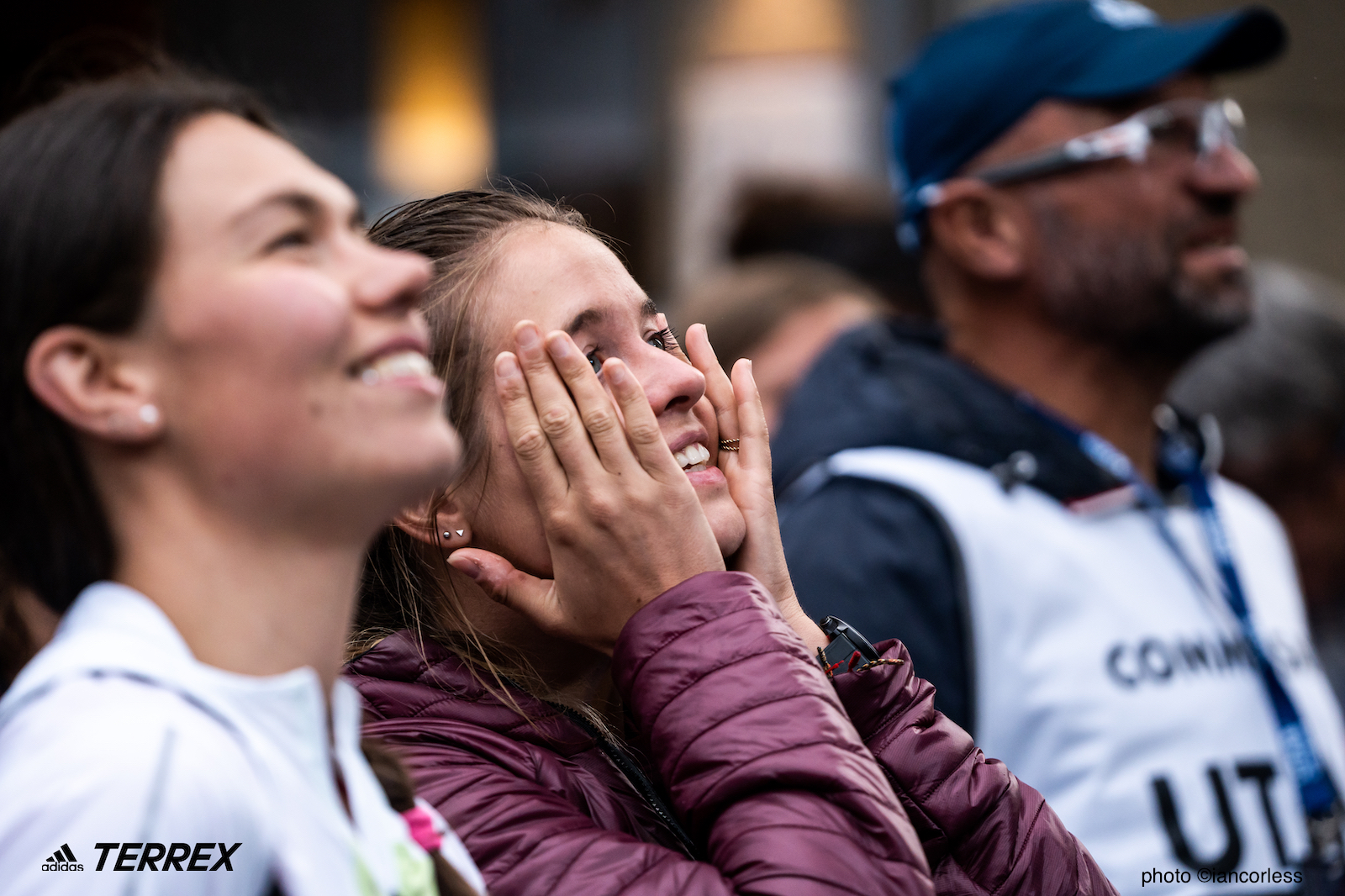
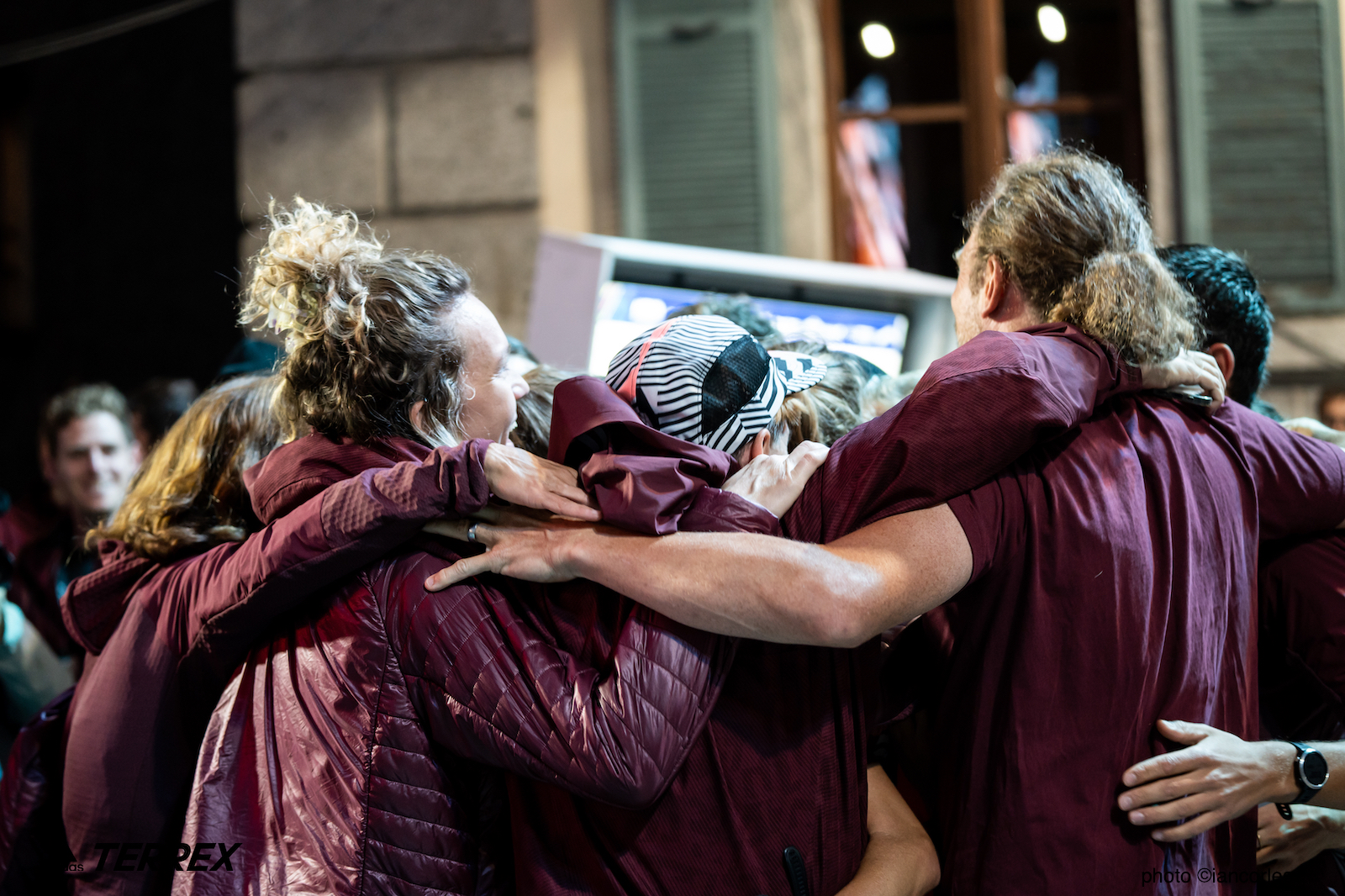
It’s a privilege and honor to work the TERREX team, I have seen them grow and grow in the sport and the ethos of #oneteam personifies what goes on before, during and after every event. Just look at the finish line footage of Emily Hawgood crossing the line to take 6th place at UTMB. The whole team was waiting, they surrounded her and unplanned, went into a frenzied bounce fest to celebrate not only an incredible run but an incredible team effort. No other pro-team does this and it’s noted by all the other media… The TERREX team are doing something very special.
You may well say I am biased. And I am not going to deny that I have a professional and working relationship with the brand. However, this is a choice. Working with the team management, the media crew and the athletes is a dream come true and one that is immensely rewarding.
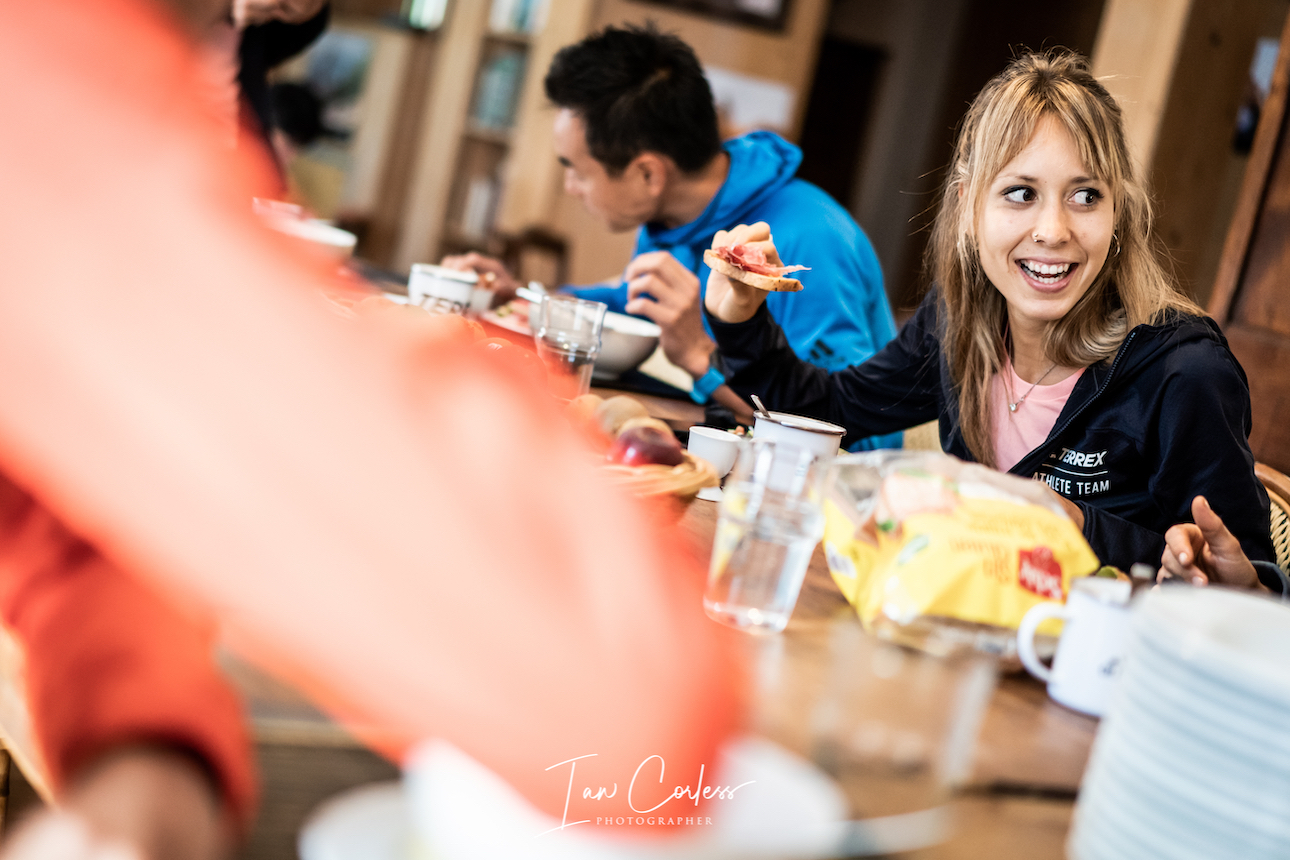
adidas had once again rented multiple chalets and one huge chalet would act as a base for meeting up and all meals. The chalet had three chefs who provided meals for the entire team and in so doing, dietary needs could be looked after and the need to try to find a restaurant in Chamonix was removed. Physios were literally ‘hands-on’ every day from morning and Charlie and Robert managed the day-to-day team plans.
My emphasis pre-racing was to recorded Season 2 of ‘The Chamonix Tapes’ and provide some photo content.
UTMB week may well be what you, the fan or follower sees. But as in all these scenarios, the reality for UTMB 2022 started at the conclusion of UTMB 2021. It’s a 12-month process of building and planning.
This time last year, Tom Evans missed UTMB and instead underwent surgery not knowing if he would be able to run professionally again. However, he there and then set the goal to target UTMB 2022 as a main goal and target. He would put all the processes in place to make that happen. And oh my word, look what happened… He completed the podium with an outstanding and awe-inspiring 3rd place.
But with all the highs, the TERREX team also has lows.
TDS did not go to plan, 4-athletes hovered around the podium for much of the race only have dreams taken away. That is racing. There are no guarantees.
Sabrina Stanley, after meticulously planning and preparing for UTMB had her dream shattered even before the start of UTMB with a positive Covid test. There are no words to help here, just the unity and backing of oneteam.
Toni Mccann placing 5, Martin Dematteis placing 10th and Kim Schreiber, Jeshurun Small, Dioni Gorla, Deborah Marti and Anna Hahner all having solid runs. The team was back on track.
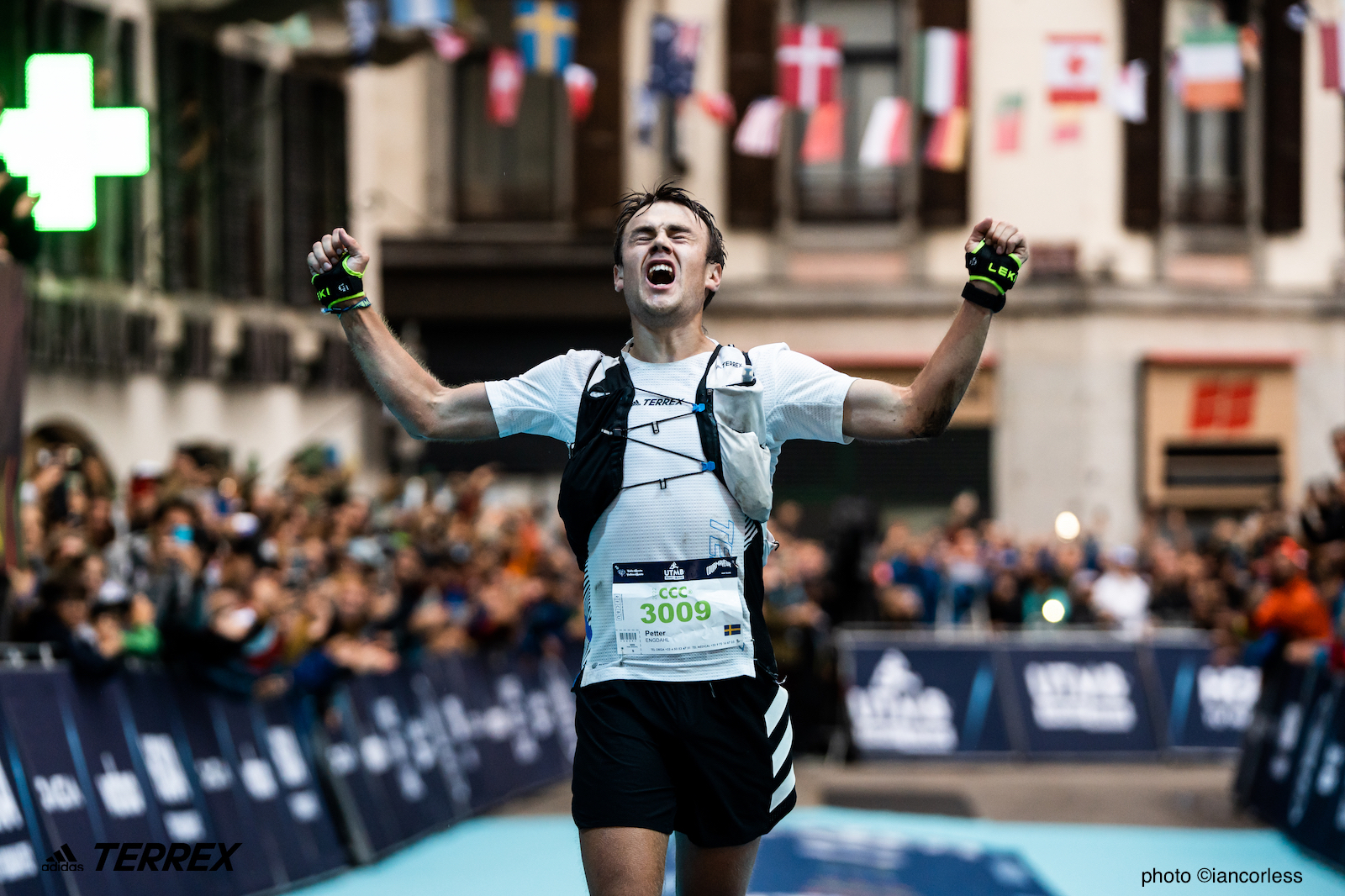
CCC was up next and it’s fair to say that myself, and the whole TERREX team were quietly confident that Petter Engdahl could produce something. Little did we know then that the Swede who lives in Norway would light the fire of the UTMB.
He blazed a trail that made the competition look on in awe as he not only won the race but set a course record. Abby Hall from the USA once again had a stellar run placing 3.
Remigio Huaman, Stephen Kersch, Taylor Nowlin and Yngvild Kaspersen all brought the three stripes home and, on each occasion, the team was waiting with hugs and applause.
The big dance, UTMB would conclude the week. The 171km loop through France, Italy, Switzerland and concluding in France has 10,000m of vertical gain, rugged terrain, variable weather and is arguably, the most competitive ultra of the year. This year, the event was off-the-scale with over 2700 participants and goodness knows how many fans and spectators.
The event is now huge! The TERREX team had Pablo Villa, Luis Alberto Hernando, Tom Evans, Emily Hawgood toeing the line and sadly, the omission of Sabrina Stanley due to Covid. It’s with noting here that a listen to ‘The Chamonix Tapes’ with Tom Evans provides a great insight not only to the event, but how to prepare for it is a ‘must’ listen. The race, despite a quality line-up was always going to be about Jim Walmsley and Kilian Jornet and for much of the race, this was the story. Jim had the lead, lost it to Kilian and and in-form Mathieu Blanchard. Kilian put the hammer down for the win against Mathieu and behind as Jim faded Tom Evans put his plan in action. He left Zach Miller who he had traded run steps with for many an hour and hunted Jim.
With Jim caught, Toms head went down, all the processes were put in place and the Brit placed 3rd in the greater ultra in the world! Tears were shed by all… It’s difficult to put into words the emotions of the finish. Tom walked in, somewhat mind-blown about what he was about to achieve, he held hands together, covered his face and then stood stock still and saluted the world. Job done! The TERREX team were in pieces with emotion.
Hours later, Emily Hawgood arrived at Col de Montes, the TERREX team lining the climb to give her one last big push to the finish. Eventually the finish came and a 6th place. Surrounded by her team, the worlds media were amazed at the unity of the TERREX team as they celebrated en-mass the success of one of their own.
This is the oneteam ethos, victories may be individual, but they are not possible without what goes on behind the scenes. We all had roles, but flexibility is key. Athletes became crew, office workers became car drivers, and everyone became a supporter both in a physical and mental capacity.
Once again, it was a real pleasure to be immersed with the adidas TERREX brand and follow closely the whole process that makes a race and team come together. We use the word family and without a doubt, the TERREX team is family. We are all #unitedbysummits
I spent much of the week with Stefan Durst but a huge thanks to Pfefferminzmich – Rapha, Andy, Yannick, Vinz and Christian.
Welcome to ‘The Chamonix Tapes’ an inside look at the adidas Terrex Team during the 2021 UTMB.
Starting on Tuesday August 24th and running through to Sunday August 29th, there will be a daily podcast release for your audio pleasure. In The Chamonix Tapes 2, we speak with Macy (Marcel Hoeche) and Ekaterina Mityaeva about shoe design and the new, Agravic Ultra shoe.
“Sustainability, materials and who is the consumer? Everyone deserves a perfect shoe… From the very beginning we knew we were on to something super great. I can’t begin to tell you how many different shapes of the plate we used in so many different materials. If you pair five shapes and five materials this is 25 pairs of shoes we need to test… It was a complex process which was definitely worth it.”
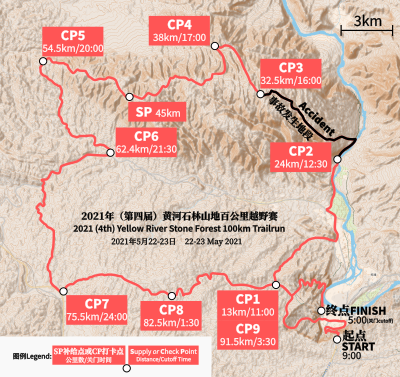
I was notified of the horrific incident in China over breakfast whilst on location in the mountains of Norway.
I immediately typed ‘China’ into a Google search and the headline was everywhere:
“Twenty-one dead as extreme weather hits ultramarathon in China”
The Yellow River Stone Forest 100k, held at Yellow River Stone Forest Park in Gansu Province in northwestern China was organized by the Baiyin Municipal Committee, Sports Bureau, and local branches of the Communist Party of China.
It was clear that a horrific tragedy had occurred and I, like everyone else asked, ‘How could this happen on such a huge scale?’
On the start line 172 participants toed the line, ahead 100km. Reports outlined cool and breezy conditions at the start. But by 1pm in the afternoon, conditions had changed considerably, and the race was hit by freezing rain, gale-force winds and dropping temperatures. With most participants somewhere between 20 and 32km, the weather continued to become more severe, runners were ill prepared and defenseless against the conditions resulting in the death of 21 souls, the main cause hypothermia.
‘The runners were racing along a very narrow mountain path at an altitude of about 2,000-3,000 meters.’
The race was halted at 2pm after messages were sent out by emergency trackers, cell phones and some runner’s posting on social media. Search and rescue efforts were put in place and somewhere between 700 and 1200 rescuers were called in to action – the exact figures vary depending on which news outlets one uses. Using state-of-the-art technology such as drones, thermal imaging, and radar, 151 runners were eventually confirmed safe despite harsh conditions and delays due to landslides.
There has been much debate, many questions asked, and a great deal of blame fired around on all media platforms. The deaths prompted outrage in China, with many questioning the preparedness of the Baiyin Municipal Committee.
In ultra-running circles, worldwide, Twitter, Facebook and other social outlets had continuing heated debates that pointed blame, questioned mandatory kit and the overall experience level of runners, and organising team. To clarify, Jing Liang was one of the poor souls to lose his life, an experienced athlete who has raced at UTMB and Hong Kong 100, so, not a novice. And the Baiyin Municipal Committee had organized previous editions of the race without problem.
“The tragedy in China has weighed on me heavily. It could have been any of us out there pushing through with the ultrarunner mindset,” said Camille Herron. “Part of being an ultra-runner is being able to trouble shoot.”
The Global Times on May 24th published an article titled Deadly cross-country race exposes hidden yet common safety problems in China’s red-hot marathon pursuit – It was an article that did not hold back.
‘While it’s the hypothermia that directly caused their death, several insiders in China’s marathon business said the organising committee should shoulder the main responsibility for failing to provide enough organisational, tactical, rescue, and security support for the event.’
It is only correct questions are asked, and without doubt there is much to learn here, not only by those who organise races but also for those who run them.
As many running friends have commented to me personally, ‘shit happens’ and sometimes you cannot plan for freak occurrences. After all, this is why they are called freak – ‘An incident, especially one that is harmful, occurring under highly unusual and unlikely circumstances.’
However, the required ‘mandatory’ equipment for the Yellow River Stone Forest 100k was at best minimal – cell phone, whistle, water container, headlamp, race bib, GPS tracker, GPX file (I assume on watch or phone) and timing chip.
A jacket, trekking poles, water, energy supplies, first aid, petroleum jelly and Buff were considered ‘recommended’ but not mandatory.
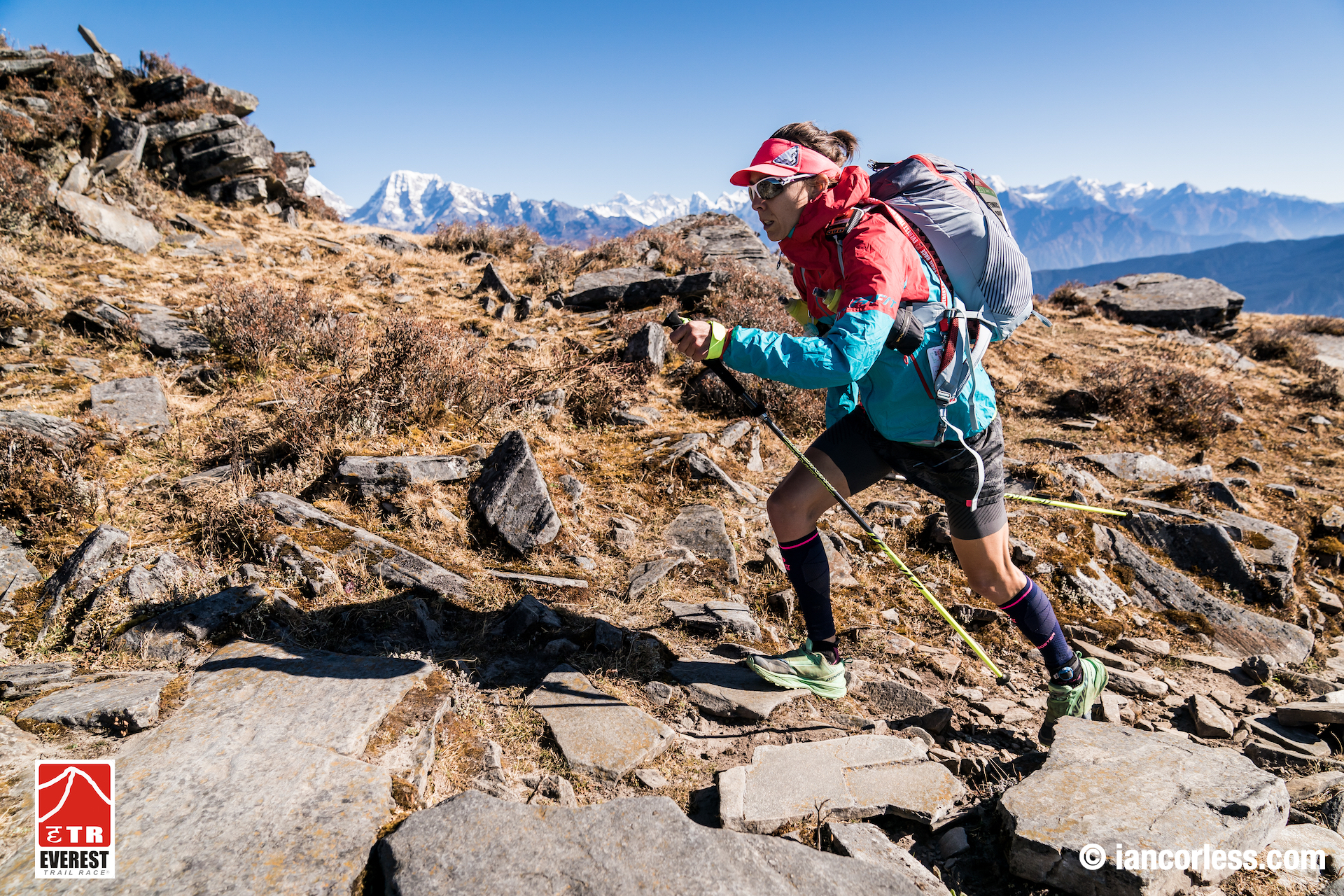
Anna Cometi at Everest Trail Race, Nepal.
It’s fair to say, that even with the ‘recommended’ items, in the freak weather encountered in China, maybe the outcome would have been no different due to the severity of the storm. However, we will never know the answer to this and at best, we should all use this as a lesson to be better prepared.
Remember though, while we tend to associate danger with cold, wet, wind, altitude, snow and ice, the opposite; heat, humidity and sun can be equally as dangerous and fatal. Take for example, The London Marathon. In 2018 the race was hit with 24-degree temperatures which caused havoc; one runner died after collapsing during the race and 73 were hospitalized. Now for some, 24 degrees may be considered a warm day, however, for many British runners who trained through a UK winter, it was exceptionally hot and something they had not trained for.
While mandatory kit is useful, being specific and training for an event is equally, if not far more important than the equipment you will or not wear. An understanding of the event, the challenges it can bring, and the dangers are all part of the process.
“It is essential to adapt yourself and your equipment to your reality, to test it during training outings in various conditions and to bring everything that will be useful and necessary to you for the race.”
UTMB
The nature of an ultra-running event is to push boundaries, go to the unknown and find a new personal level. Safety, to some extent, is an illusion and to assume that because you have entered something ‘official’ does not mean that you are safe. UTMB sum it up well (and they have a great deal of experience in managing route, runners, and weather):
“Choose clothing that really provides good protection in the mountains against cold, wind and snow, and therefore gives better safety and performance. In the event of an incident, your equipment must also allow you to wait for help in sufficient safety conditions.”
UTMB
The above sums it up for me, and quite simply I would summarize:
Know the event.
Understand yourself, your limits, and your expected time on the course.
What are your strengths and weaknesses?
Prepare and plan meticulously with training that simulates the event and conditions.
Don’t compromise.
Imagine the worst conditions possible and then plan for them to deteriorate even more. Remember, shit can happen!
Act quickly and quite simply, be prepared to turnaround and understand (in advance) what exit routes and speedy options exist.
Physically prepare so that you are in the best position possible to achieve your desired goal – be realistic.
Be mentally prepared for the highs and lows and accept that YOU are ultimately responsible for your own safety.
Understand that yes, one day, you may not return from an adventure… And to clarify, there is no guarantee on what day you will die, it could be tomorrow crossing a road, next week through illness or on the top of the mountain in a race – life is a risk we manage daily.
I personally see mandatory kit implemented to protect runners from themselves. The educated, experienced, and knowledgeable know what to bring, I most certainly do, and I usually carry far more than would be required.
However, racing does change the mindset, particularly at the elite level when every gram of additional weight could be seen as a disadvantage.
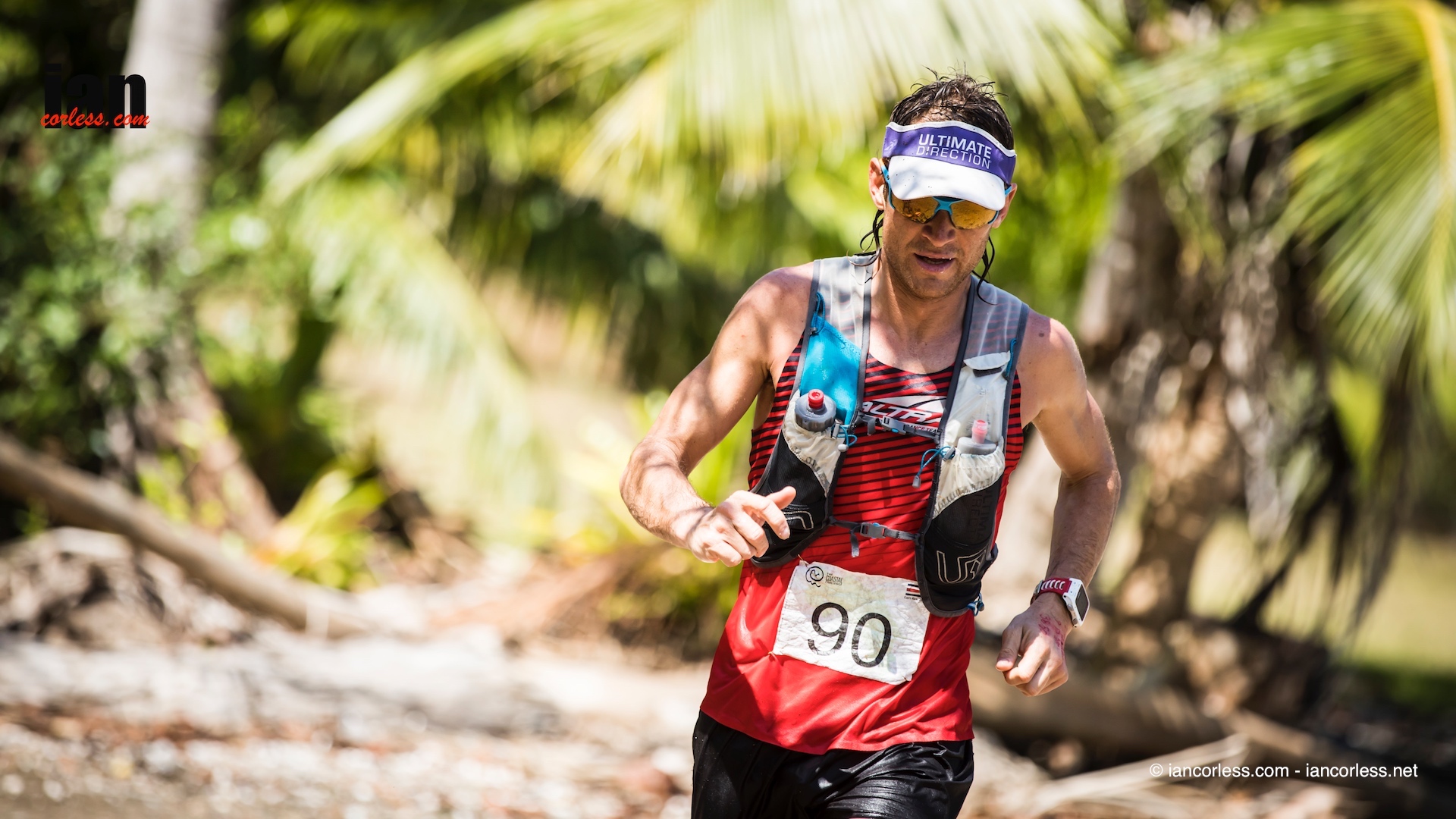
Jason Schlarb in Costa Rica at The Coastal Challenge, mandatory kit here is liquid and electrolytes.
Good friend and elite runner, Jason Schlarb posted on May 24th, ‘This sounds like something that could happen in many, many races or in my own adventures. I know I go as light as I can in races and don’t really prepare to be able to stand around in the cold… it’s a race… I’m embarrassed it took me realizing how this could totally happen to me,’
Choosing the lightest weight clothing possible to gain a few grams is not always the best option, opting for clothing which really offers good protection in the mountains against the cold, wind, and snow, provides better security and ultimately, a better performance.
Therefore, a no compromise approach to mandatory kit levels the playing field and means that every participant should be carrying the same and therefore carrying similar (+/-) additional weight. As UTMB states, ‘All runners must have the mandatory equipment with them at all times or face a penalty.’
In addition, UTMB go one-step further and have options based around kit lists for heatwaves, cold conditions and finally bad weather scenarios. They would implement the necessary list based on weather forecasts pre-race and it is the responsibility of the runner to have all items available.
Contents for ‘winter’ conditions.
Standard UTMB kit list:
Pack destined to transport obligatory equipment throughout the race.
Mobile/cell phone with international roaming allowing for its use in the three countries (load into its memory the organisation’s security numbers, keep the phone on, don’t mask your number and don’t forget to leave with the battery fully charged)
Personal beaker 15 cl minimum (bottles or flasks with lids are not accepted)
Supply of water of 1 liter minimum
2 torches in good working order with spare cells/batteries for each torch
Recommendation: 200 lumens or more for the main torch
Survival blanket of 1.40m x 2m minimum
Whistle
Self-adhesive elasticated bandage which can serve as a bandage or strapping (minimum 100 cm x 6 cm)
Food reserve, recommendation: 800kcal (2 gels + 2 energizing bars each of 65g)
Jacket with hood which will withstand bad weather in the mountains and made with a waterproof* and breathable** membrane – the jacket must, imperatively, be fitted with an integrated hood or one which is attached to the jacket by the original system designed for that purpose by the manufacturer – the seams must be sealed – the jacket must not have sections of fabric which are not waterproof, but air vents fitted by the manufacturer (under-arm, in the back), since they do not damage in any obvious way the impermeability, are accepted.
It is the runner’s responsibility to judge, with these criteria, if their jacket fits the regulations stated and so bad weather in the mountains, but, during a check, the judgment is made by the person in charge of the check or the steward.
Long-legged trousers or race leggings OR a combination of legging and socks which cover the legs completely
Cap or bandana or Buff®
Additional warm second layer: a warm second layer top with long sleeves (cotton excluded) of a weight of a minimum of 180g (men’s size medium (M))
OR the combination of a warm long-sleeved underwear (first or second layer, cotton exclude) of a minimum weight of 110g (men’s size medium (M)) and a durable water repellant (DWR protection) windproof jacket*
The wind-proof jacket does not replace the obligatory waterproof jacket, and vice versa
Hat
Warm and water-proof gloves
Waterproof over trousers
ID – passport/ID card
You may read the above and consider the list to be an overkill. I personally do not. On considerably more than one occasion, I have encountered conditions where the above was completely required. Please don’t cut corners, technically compliant does not always equate to useful.
Ultra-distance and mountain races are designed to push boundaries, but personal responsibility and self-awareness goes a long way. The above, without a doubt, can help should a situation turn badly, but ultimately, a good understanding of one’s ability is a great place to start. Maybe (?) to stand on certain start lines in the first place is already a bad decision.
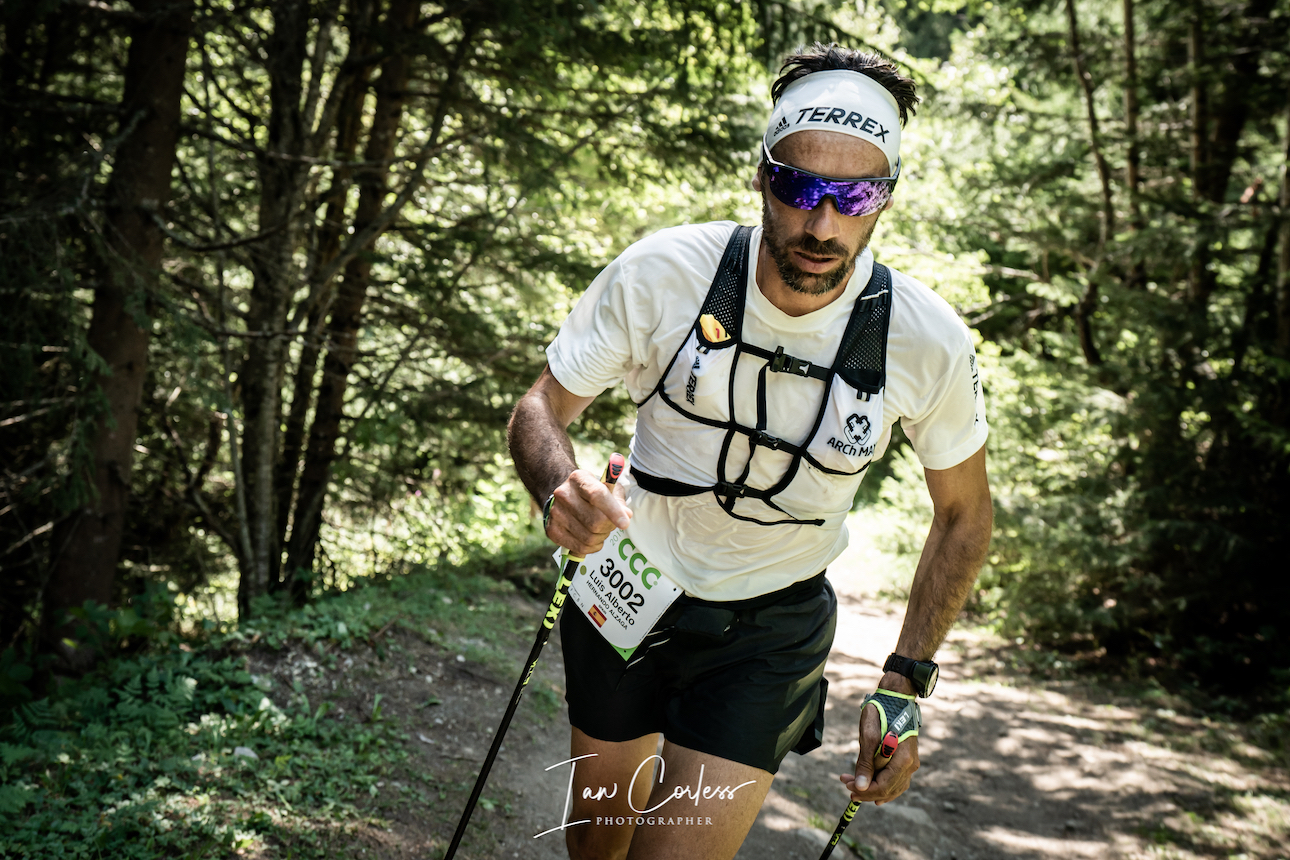
Luis Alberto Hernando at CCC
Will Gadd, a prominent Canadian ice climber, paraglider pilot and mountain guide summed his thoughts up so well in a recent article:
‘If we go into the mountains, we are taking a larger-than-daily-life risk. The only way to totally avoid that is to not go… I’ve spent decades in the mountains and have had three serious accidents in my groups in all that time. Pretty good odds, no? But, to my guest who got hit in the arm by a rock while I was guiding her, and to my partner who I dropped a rock on, that record means very little. I also reviewed the avalanche forecasting where, the next day, an amazing woman, who was very close with my family and deeply loved by hers, died. I didn’t’t think any of those outcomes would happen, but they did. I really can’t keep us—you or me—completely safe. That’s my painfully learned truth after thousands of personal and professional days in the mountains. Days sometimes end badly, even with the best practices and motivations.’
The debate will continue and there are no simple answers, but the situation in China should be a learning curve for all and wake-up to a greater understanding for race organizations and runners. Maybe we will see more in-depth mandatory kits imposed on races worldwide? Also, maybe there will be greater vetting so that races can understand if runner has the required experience to participate.
A good friend, Graham Kelly said recently, ‘I am sitting wondering where personal responsibility, vetting and experience sits in the sport we all love. I am at best mid pack these days (more often chasing cut offs). There are races I won’t enter (that I used to enjoy) knowing the burden on race staff/volunteers could be unacceptable in my mind.’
Hillary Gerardi at Glen Coe Skyline
Vetting in races of an extreme nature, such as Glencoe Skyline already happens, ‘The organisers have an obligation to ensure that the Salomon Glen Coe Skyline® is as safe as possible, but without diminishing the nature of the challenge… The nature of the challenge is very severe and there is a risk of serious injury or death whilst participating in this event… Our route features long and sustained sections of scrambling terrain, which is roughly equivalent to ‘moderate standard rock climbing’. Be under no illusions that a slip or trip on these serious sections of the route could result in death.’
In the above scenario, equipment alone is not enough, so educate, understand and asses.
I for one, like to think I am prepared for most scenarios when going out. I constantly adapt my pack and its contents for the planned adventure, terrain, anticipated conditions, and my expected time out. I also know, through bitter experience, whatever I have planned for, I can expect it all to go wrong, and I then add additional items for the ‘freak’ scenario that unfortunately our runner friends experienced at the Yellow River Stone Forest 100k. I am also never worried about turning around and going home, it can be frustrating for sure, but the trails and mountains will be there for another day.
We can try to plan for every scenario, we can educate and anticipate the worst-case scenario so that we increase not only our individual opportunity to return home but maybe those around us.
Ultimately though, shit happens, and when it does, I want to be as prepared as I possibly can be, I hope you do too.
Please support this website. I believe everyone deserves to read quality, independent and factual articles – that’s why this website is open to all. Free press has never been so vital. I hope I can keep providing independent articles with your help. Any contribution, however big or small, is so valuable to help finance regular content. Please support me on Patreon HERE.
Episode 176 of Talk Ultra brings you an interview with Andy Symonds about UTMB. We also talk with Shane Benzie from Running Reborn about Sub2. Speedgoat is back to co-host and we discuss The Warriors Ultra Run.
*****
Talk Ultra is now on Tunein – just another way to make the show available for those who prefer not to use iTunes – HERE You can download the Tunein APP HERE
Talk Ultra needs your help!
We have set up a Patreon page and we are offering some great benefits for Patrons… you can even join us on the show! This is the easiest way to support Talk Ultra and help us continue to create!
Many thanks to our Patrons who have helped via PATREON
On September 21st, over 30 ultrarunners, dressed in retro gang attire, travelled to New York City to participate in first-ever ‘The Warriors UltraRun’, an utterly unique race that stands to become one of the most unusual and unexpected events in the sport. Held in the middle of the night, this neon-drenched, 28-mile ultra took runners from the Bronx to Coney Island ̶ and through two subway stations ̶ recreating the escape route featured in the iconic 1979 cult film by Walter Hill. – https://thewarriorsultra.com
Please support Talk Ultra by becoming a Patron at www.patreon.com/talkultra and THANKS to all our Patrons who support us. Rand Haley and Simon Darmody get a mention on the show here for ‘Becoming 100k Runners’ with a high-tier Patronage.
I was recently in Chamonix for the UTMB series of events. I have to be honest, I have avoided Chamonix at the end of August for the last few years… The whole UTMB extravaganza just feels too overwhelming, there is no escape. So, I have chose to either have a holiday or work on smaller races.
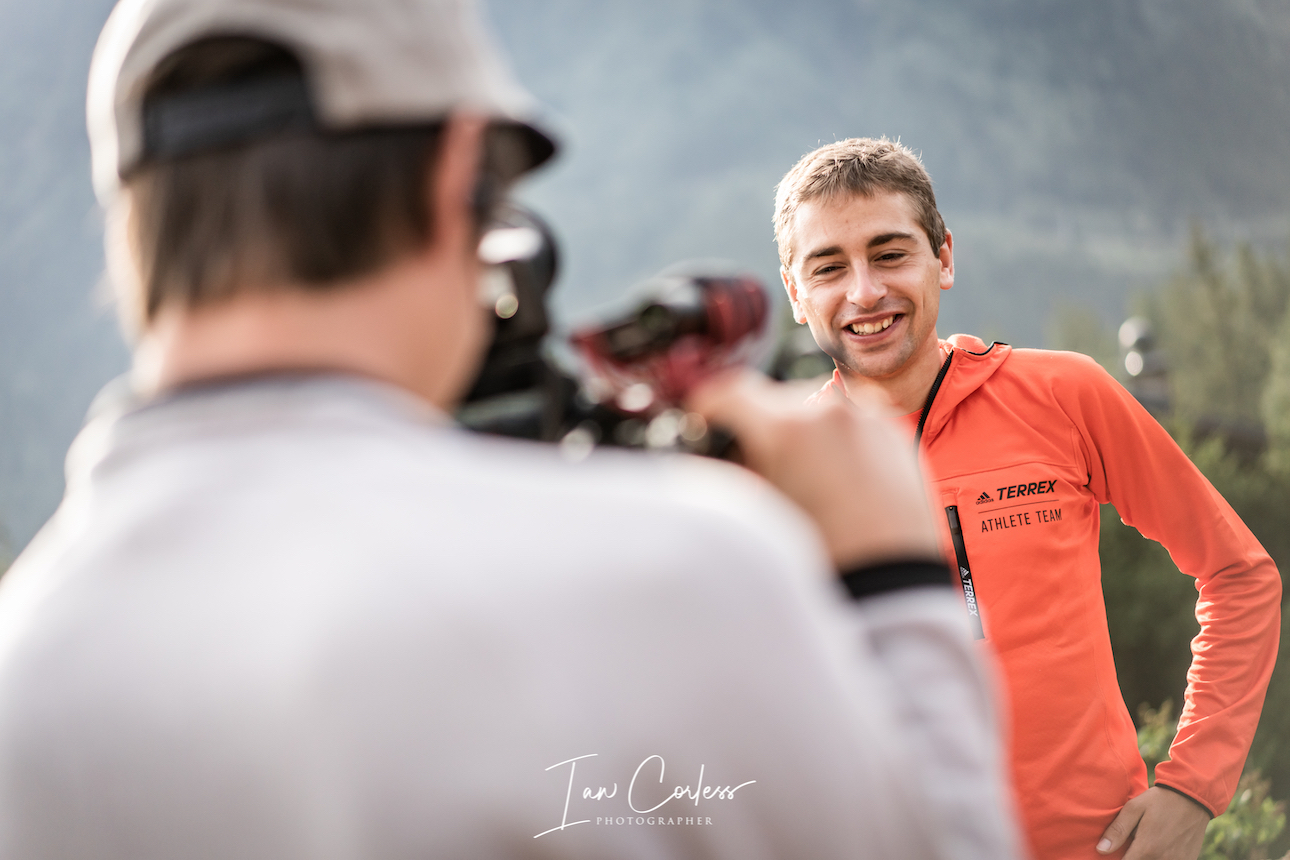
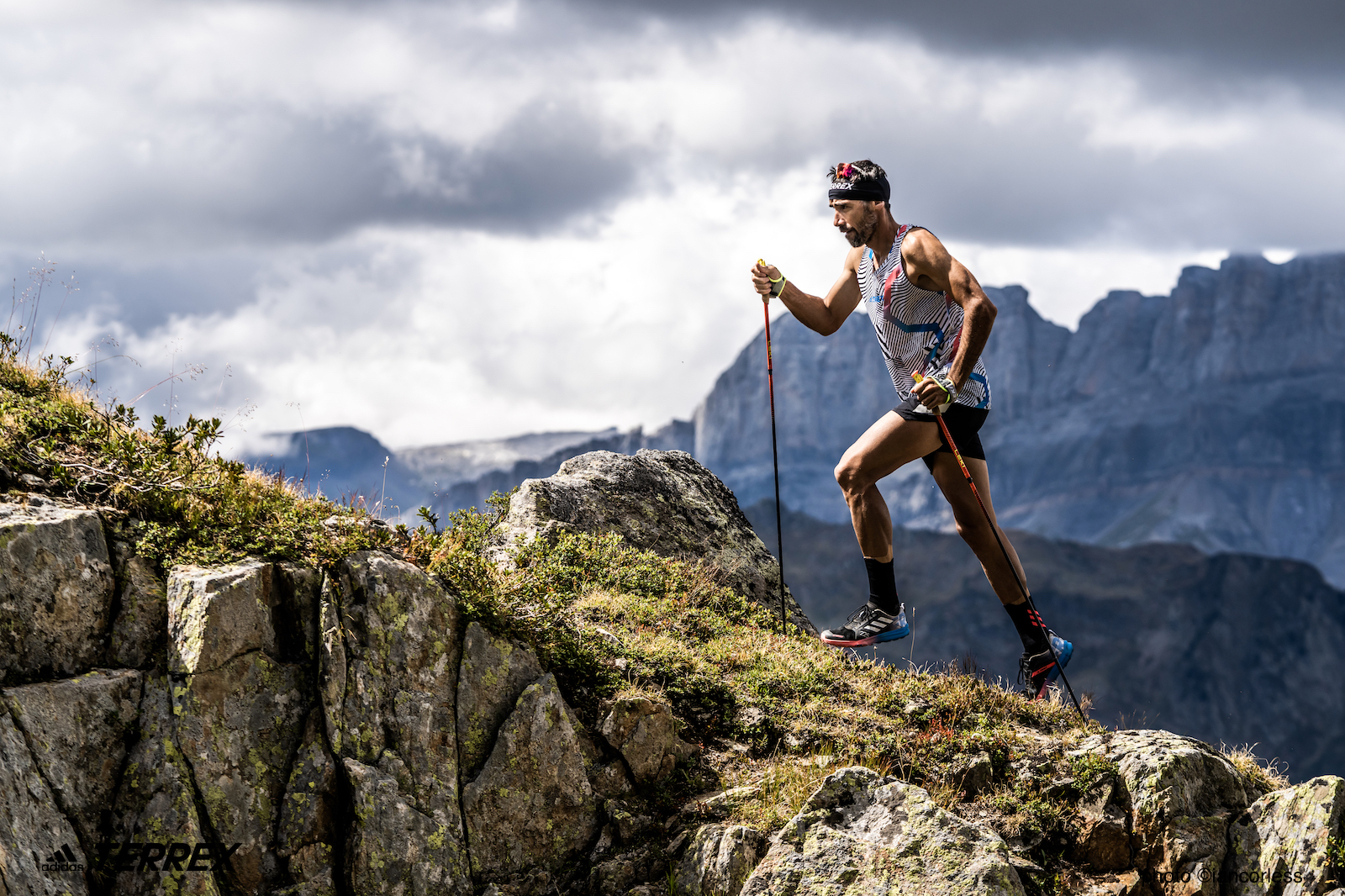
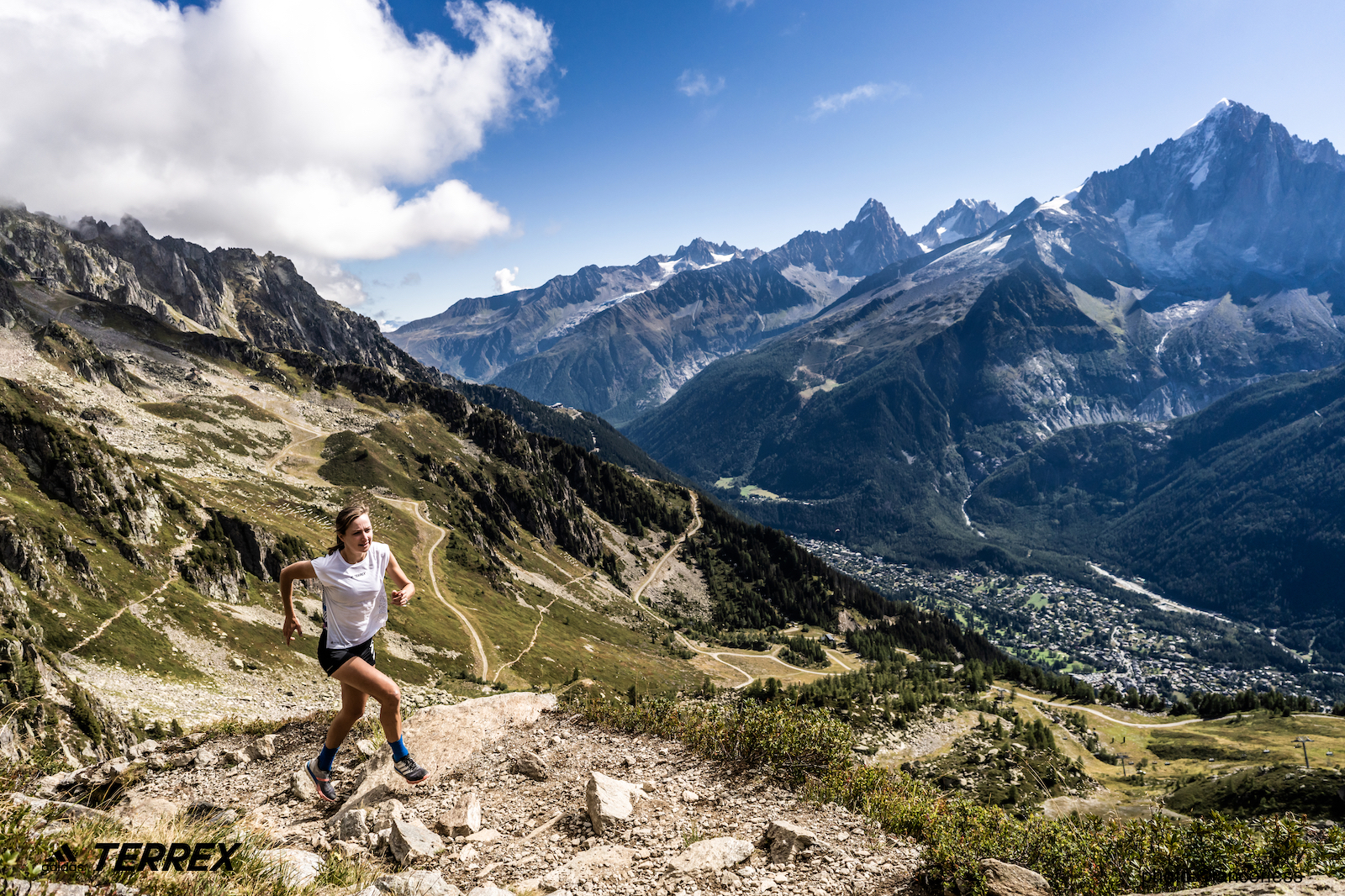
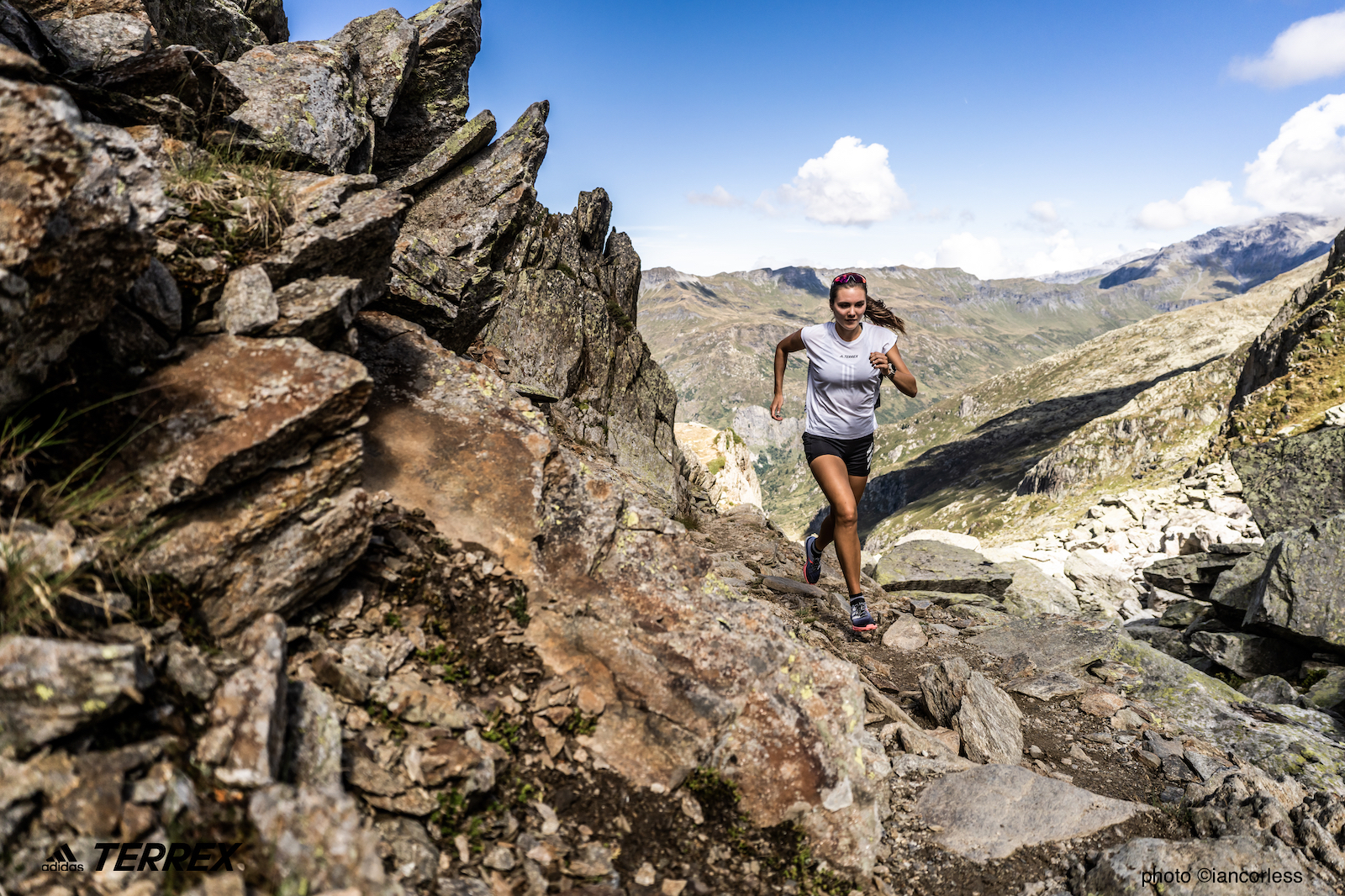
This year I was asked by adidas to work on the event, documenting the experience of their Terrex Team as they prepared to tackle all of the events the UTMB offer, the exception coming with the crazy long PTL.
Working for a brand brings a whole new perspective and experience to an event like UTMB. Instead of chasing multiple runners over multiple locations, my priority would be to follow the favourites within each of the respective races – OCC, CCC and TDS. The UTMB would also be raced and followed by the whole Terrex Team but due to a prior commitment, I would skip the big loop around France, Italy and Switzerland.
UTMB needs no introduction, the series of races have arguably become a flagship for the sport. As UTMB has grown, so has the demand for people to race and for media to cover the event. This brings a whole set of challenges, especially for media. As a brand, adidas were required to pay a fee to allow myself and the film crew access to certain areas of the race, for example aid stations and finish line, and thus we could capture certain required images and also have the license to use them. UTMB provide live coverage of the event and it must be said, they do an incredible job using a helicopter, runners and mountain bikes to cover much of all the race routes. It is quite an incredible logistical problem and in addition, they provide live commentary with an ever-changing group of people providing on the spot analysis of the race. You can pretty much follow every race, start to finish live.
adidas and the UTMB
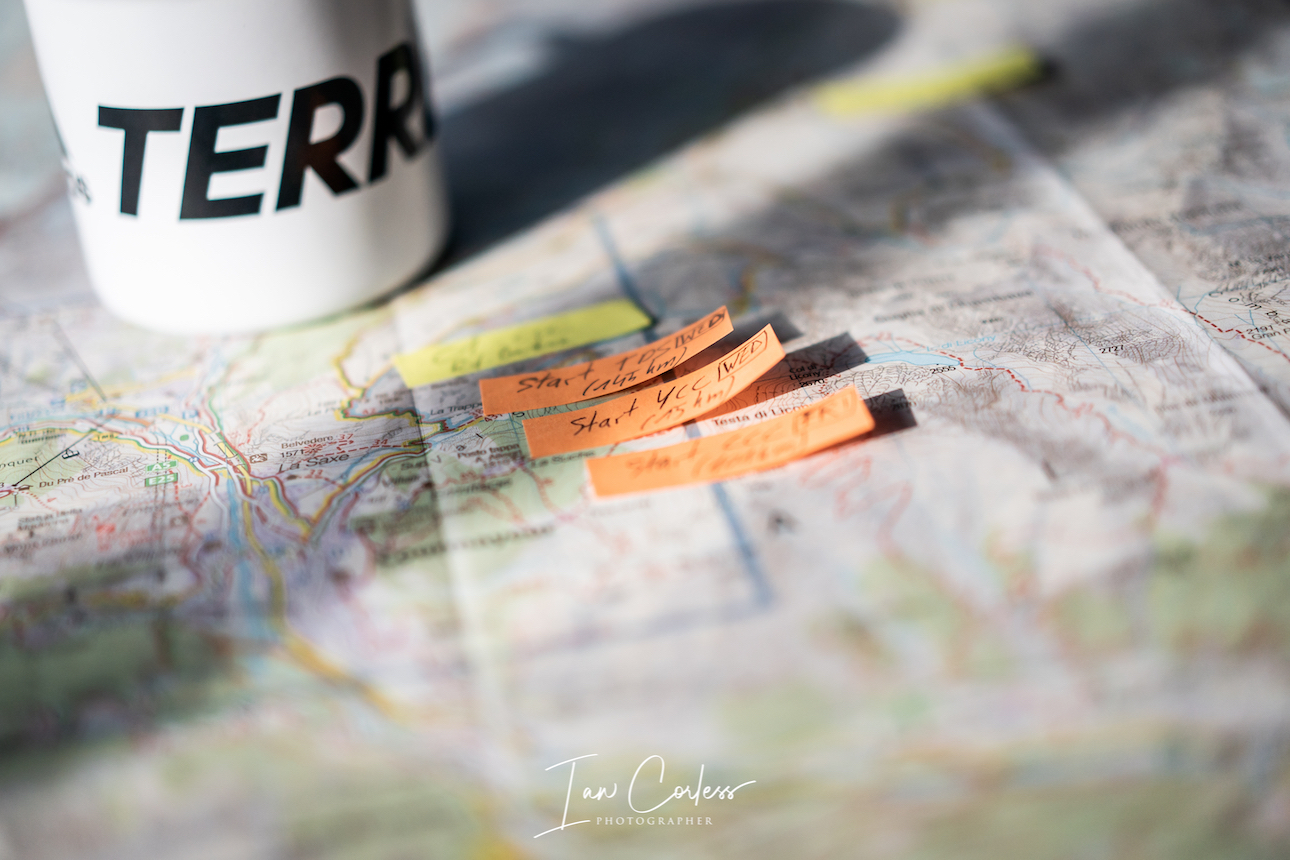
The team arrived in Chamonix one week before the UTMB main event and I arrived on the Monday. This meant the YCC started Tuesday, TDS Wednesday, OCC Thursday, CCC and UTMB starting Friday. You can do the math, that means long days, early starts, late nights and little sleep.
As a team, adidas had rented one huge chalet that would host the whole team, the hashtag #oneteam being a very important motto and ethos not only during race week but it is a hashtag that the team is using to bring the whole Terrex ethos together. It is very much ‘all for one, one for all!’ The chalet had two chefs who provided meals for the entire team and in so doing, dietary needs could be looked after and the need to try to find a restaurant in Chamonix was removed.
A team physio, Dave, was literally ‘hands-on’ everyday from morning to evening to keep the whole team in top condition. In the words of Team Manager, Robert, ‘without his immense treatments, day and night, someone like Luis may well have not raced!’
I am fortunate, after years covering races, I was well acquainted with much of the team; Luis Alberto Hernando, Sheila Aviles, Dmitry Mityaev, Ekaterina Mityaeva, Tom Evans and so many more. This always makes my job easier as to work closely with athletes, particularly in race week, there has to be trust and respect.
I was working alongside the adidas film crew who have been working on the Terrex brand for some time. A great group of guys who know how to work hard, laugh hard and find the time for a beer at the end of the day, no matter how long it may be. Big shout for Rapha, Andy, Patrick, Yannick and then man stuck to an editing stool, Bene. We had a separate chalet as the hours we work are not ideal when athletes are trying to sleep. Meal times were a family affair though and the athlete house was our hub for the week starting with an 0800 breakfast as and when applicable.
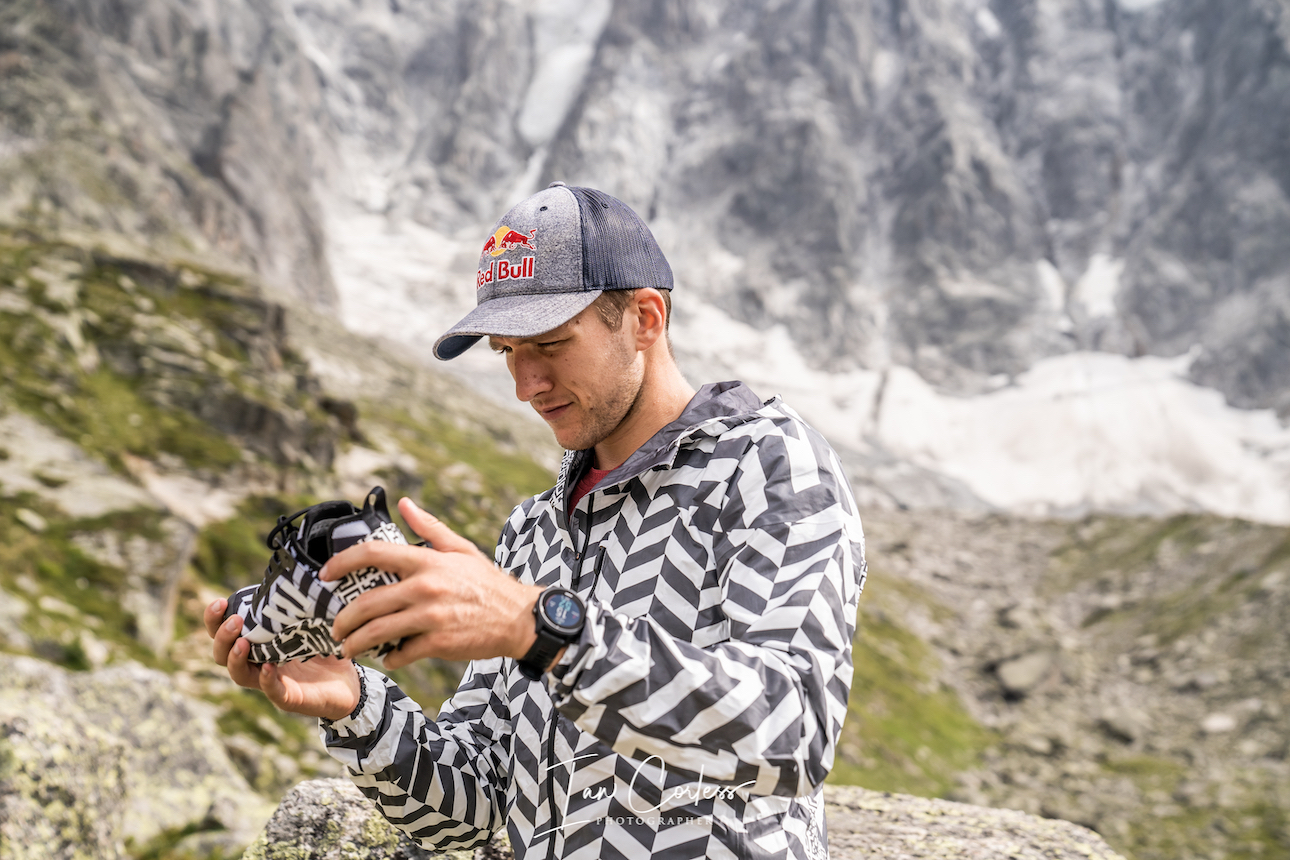
Behind the scenes is always fascinating. Looking at apparel, shoes and new development it was clear to see that adidas’ commitment to trail and mountain running is huge. They had specifically designed waterproof jackets and trousers for the team that complied with UTMB rules while still being light and packing small.
Athletes such as Yngvild Kaspersen and Tom Evans (Yngvild 2nd at Pikes Peak and Tom 3rd at Western States) were flown into Chamonix to be part of #oneteam even though they would not race. It was clear that adidas’ commitment to bringing everyone together is a high priority.
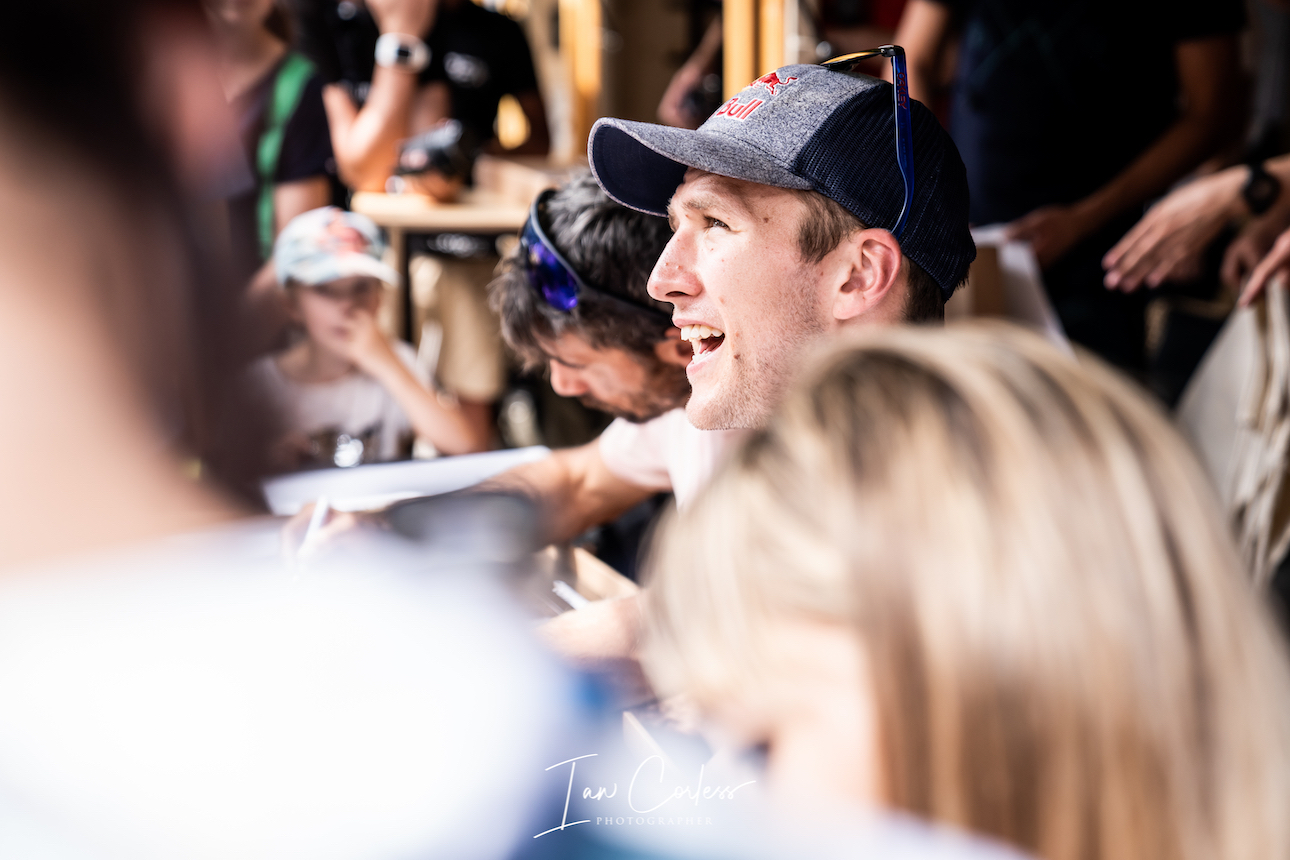
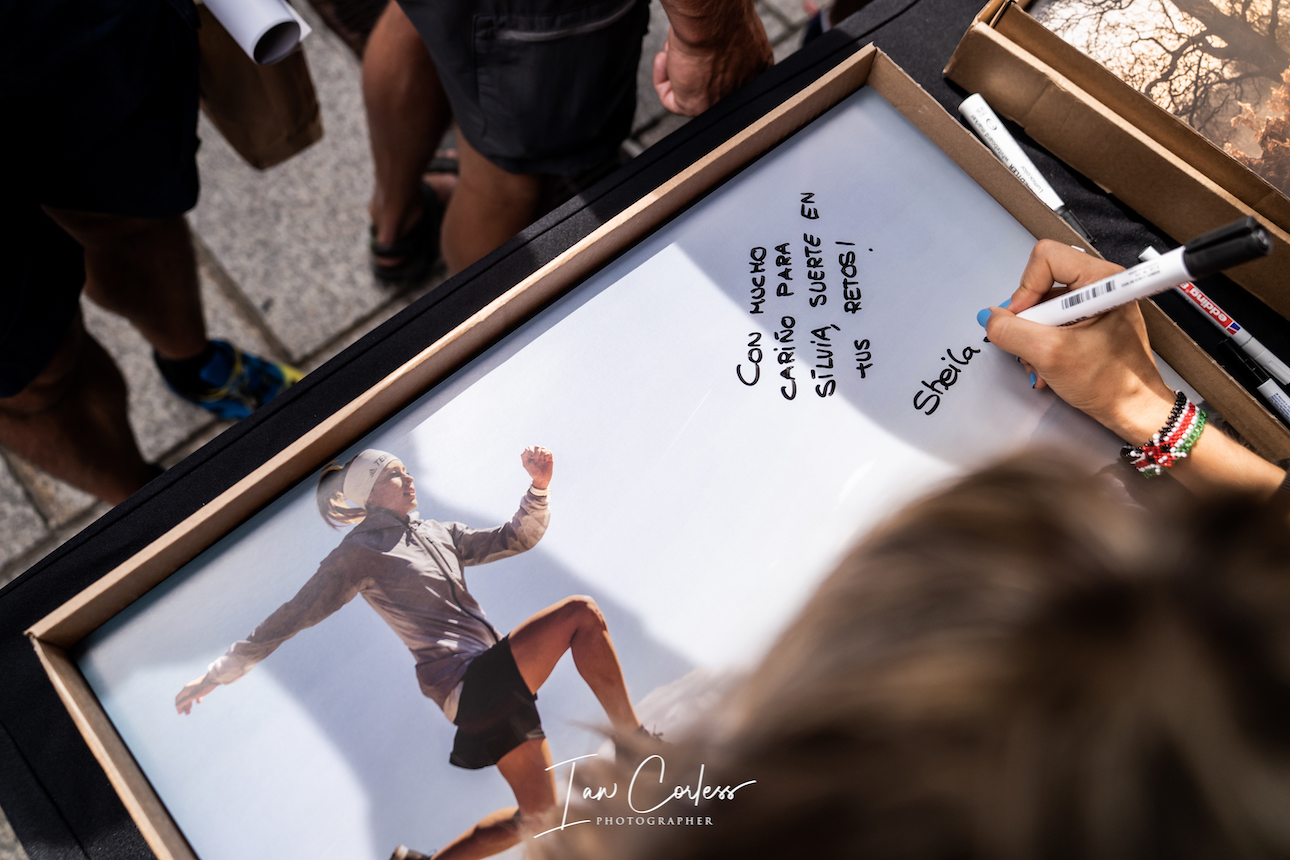
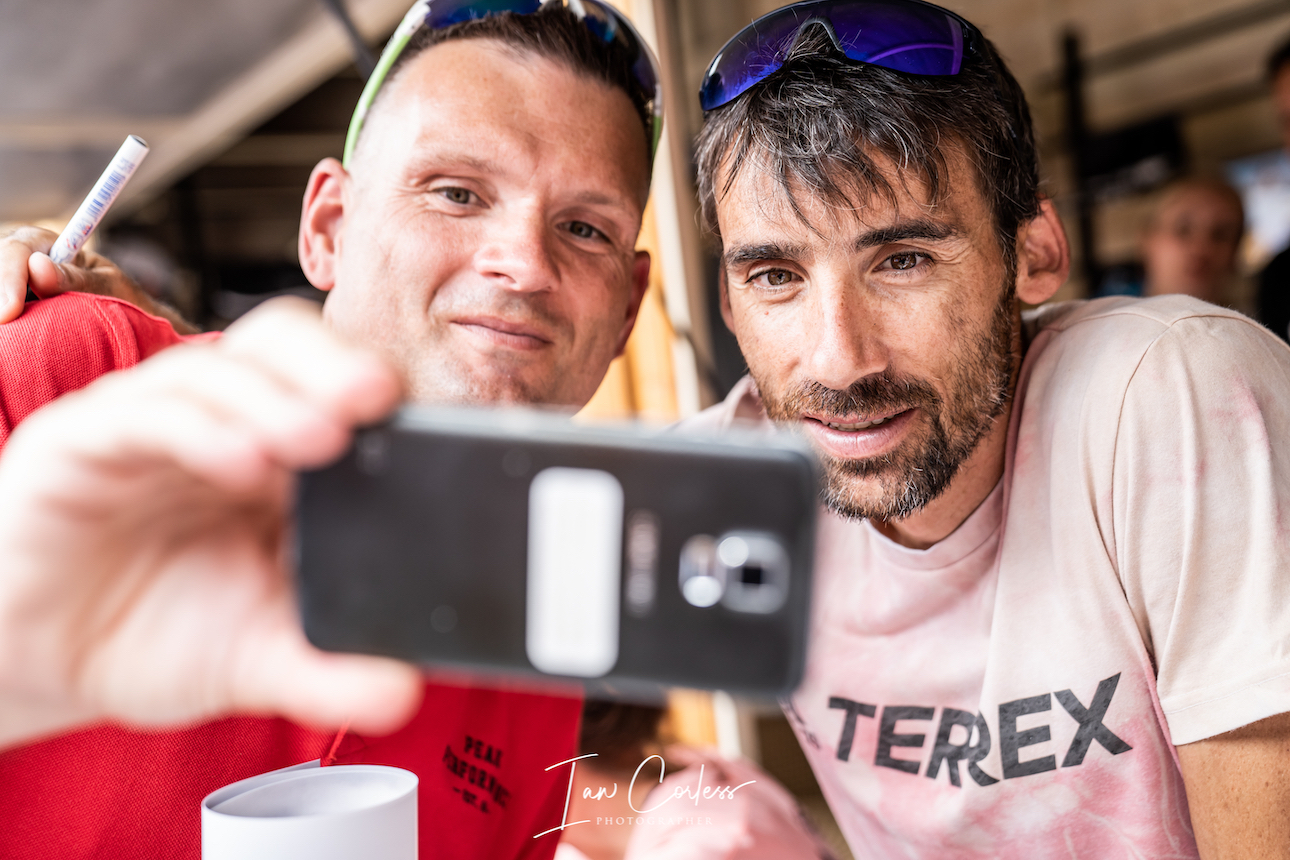
A signing in the UTMB expo allowed fans to get close, chat and get a signed photo from Tom, Luis, Holly and Sheila. The buzz was incredible.
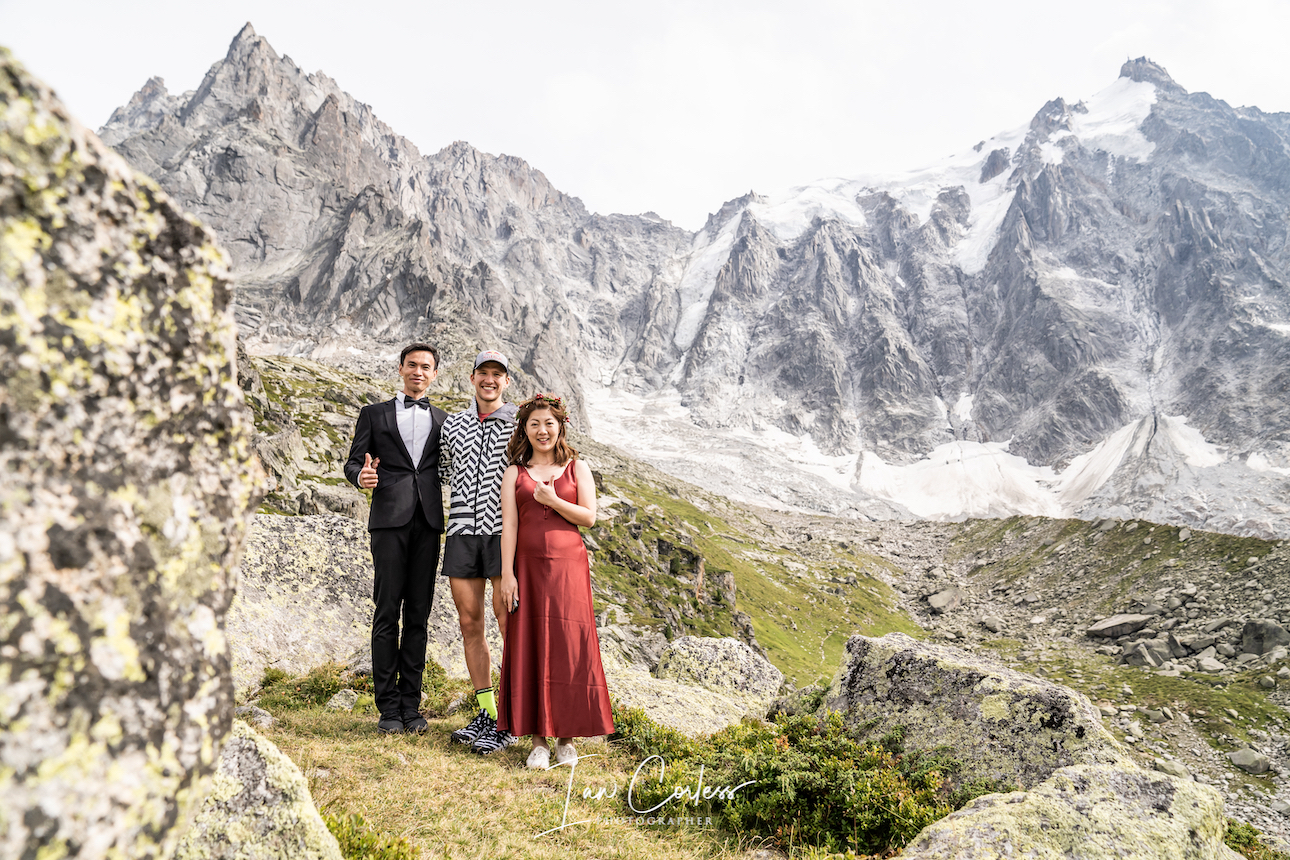
Post the signings, we took Tom in to the mountains for a photo shoot. The most ransom moment of the whole week… A couple just married saw Tom, recognized him and then came for a wedding photo! The groom was running UTMB.
Over the course of the week, racers and non-racers would each continually give up their time to crew, support, follow and cheer on the team. A prime example being Ekaterina crewing for Dmitry during TDS to a stunning 2nd place. Two days later, Ekaterina would run UTMB and place 4th while Dmitry crewed her.
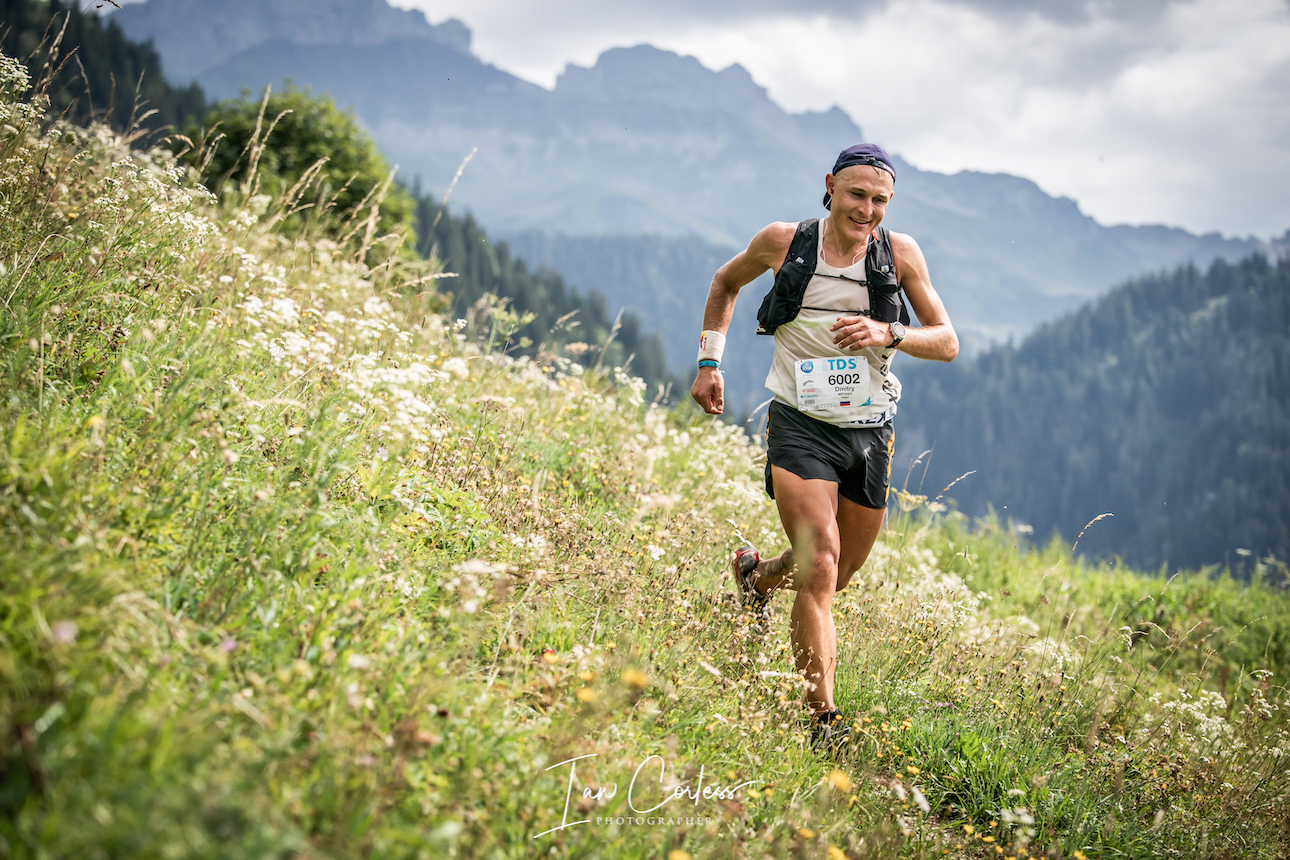
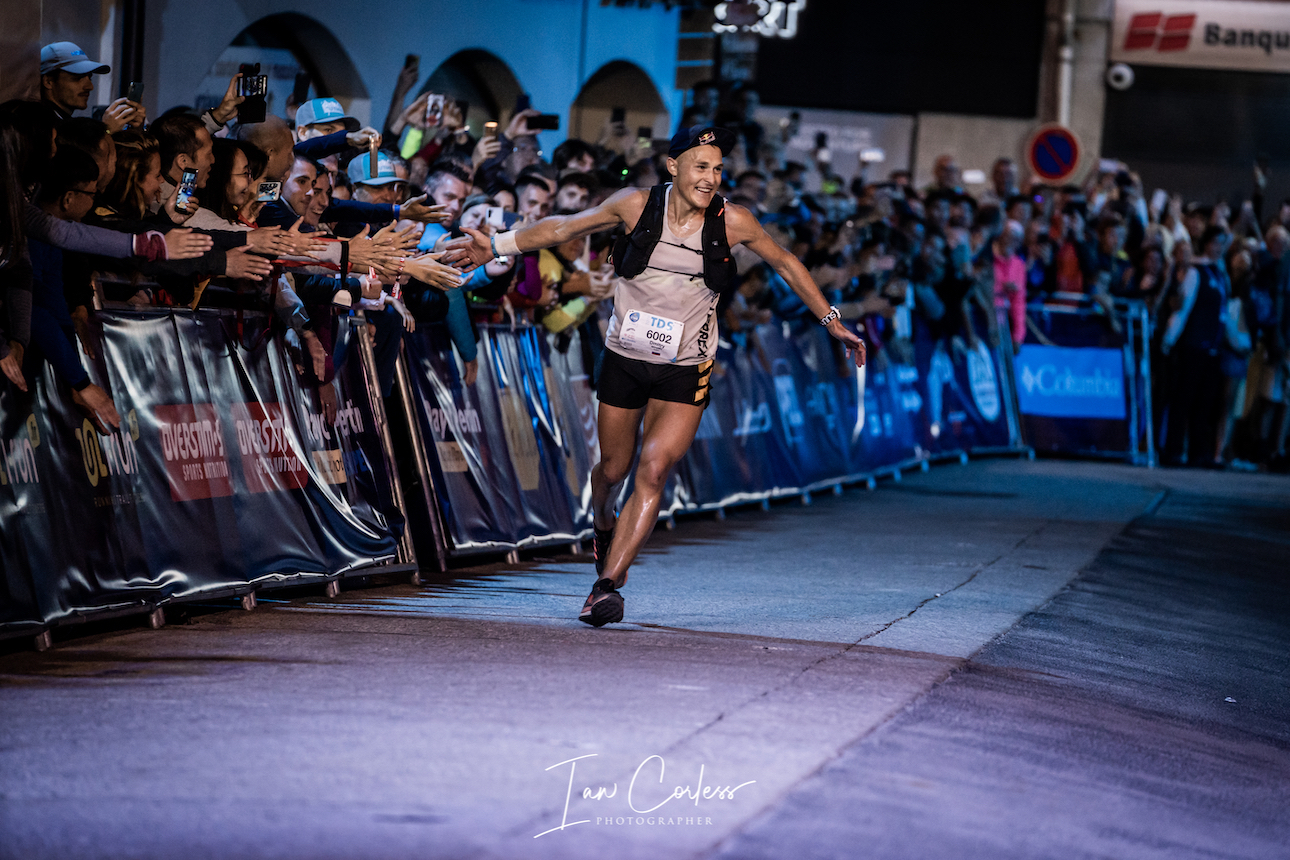
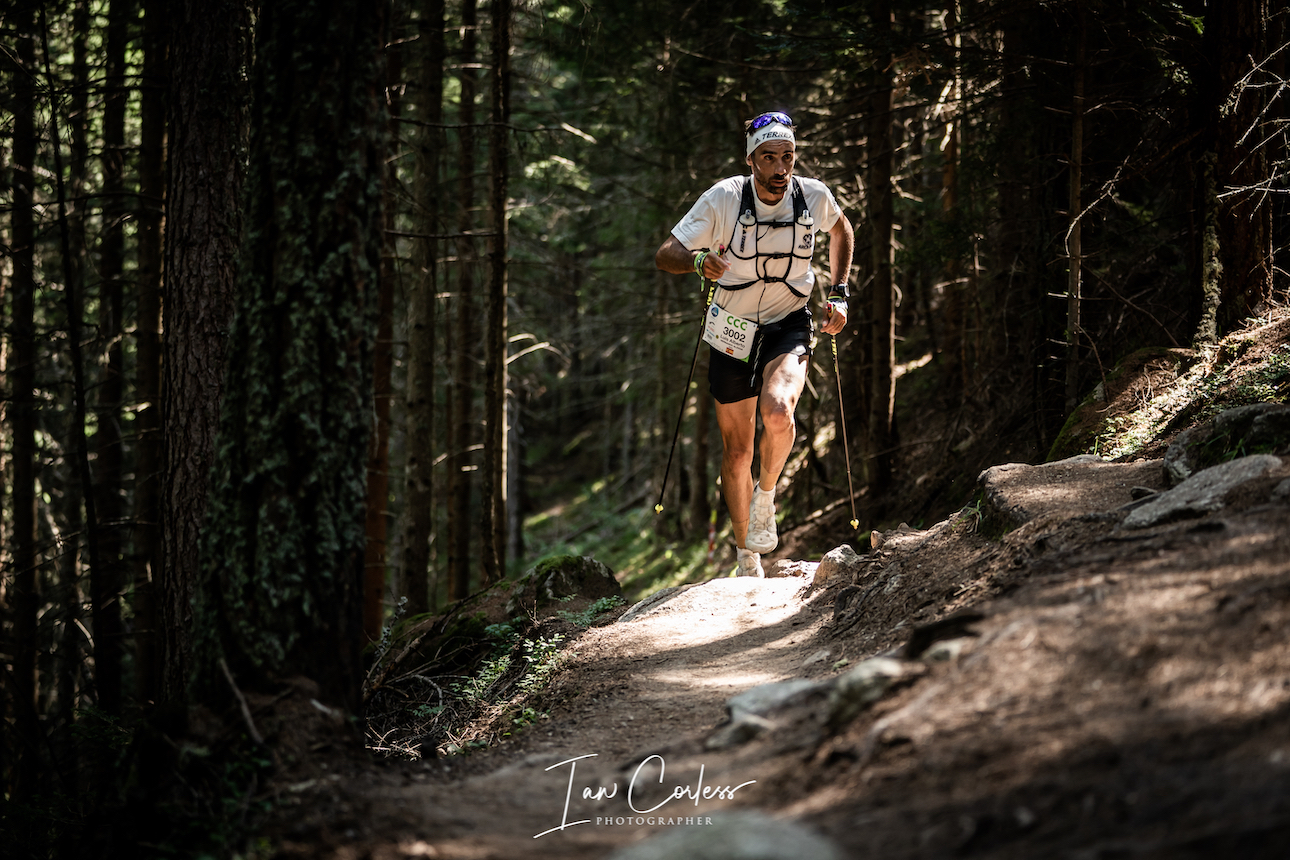
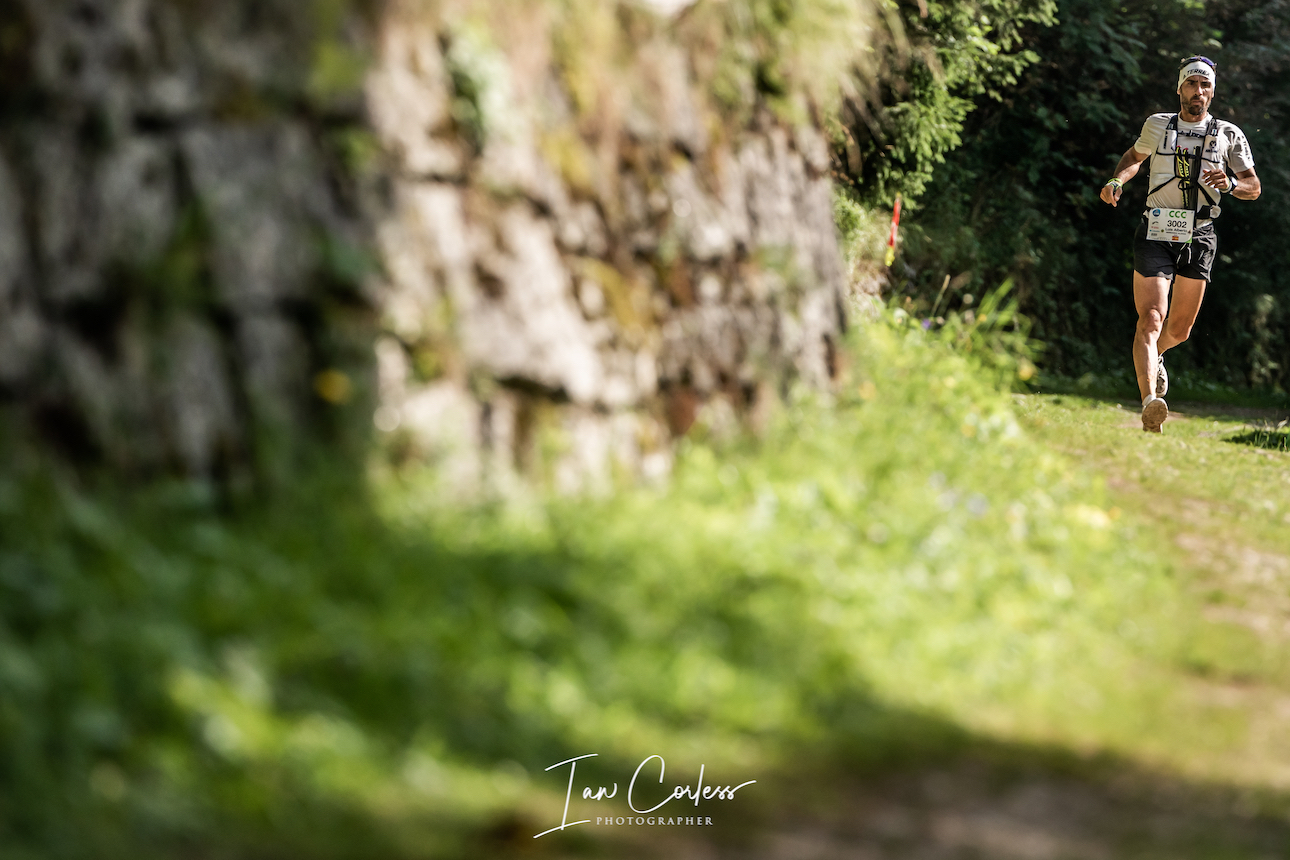
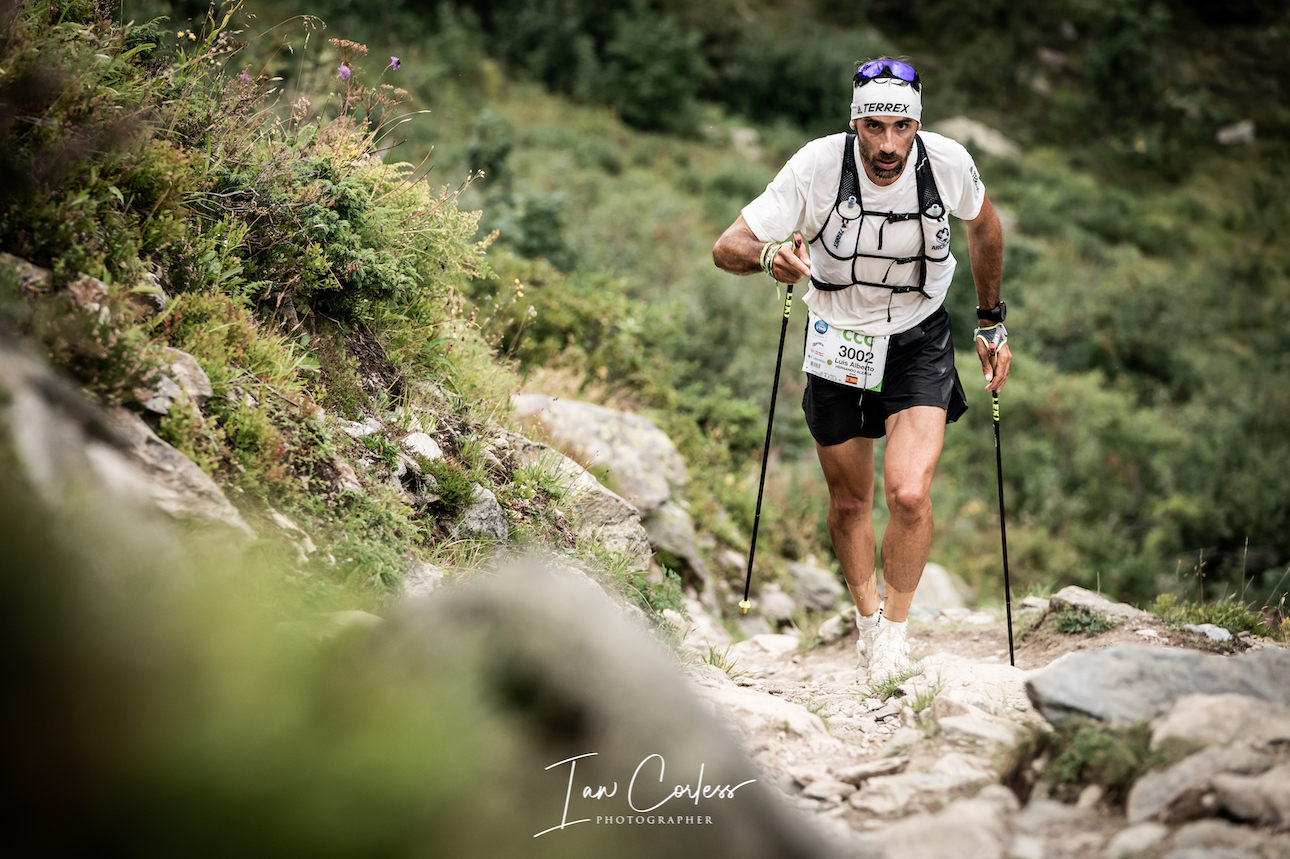
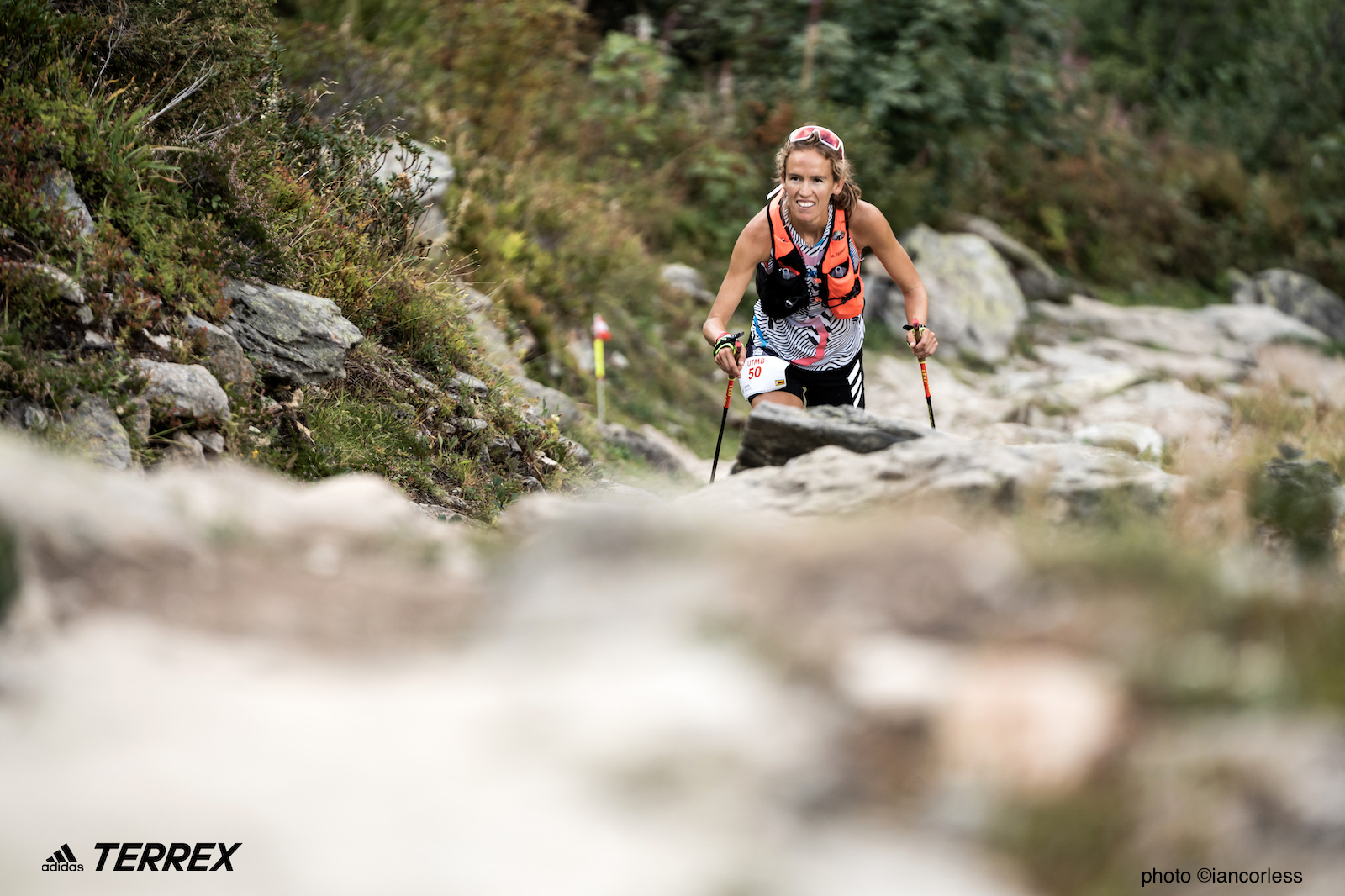
Filming and photographing brings its own challenges of long drives, big hikes and a relentless pace that leaves one drained and exhausted by the end but high on emotion. It’s always a tough call on who to follow? Many of the races had more than one adidas runner participating but from a story and media perspective, we would have to make decisions in advance. The TDS for example, our emphasis was on Dmitry. For CCC, Luis Alberto Hernando was our primary story. Needless to say, it’s incredible when it all comes together, Dmitry placed 2nd and Luis won CCC. To be able to see the journey unfold at close quarters and tell the story is quite special.
While we raced around with cameras, the remaining crew would chase around providing aid and support. Tom Evan’s quite rightly said, ‘I have raced and won CCC, I have also crewed on big races – I know how hard and tiring crewing is.’
But despite the long hours, the short nights and the relentless fatigue, nobody complained. On the contrary. As the week went on and the results came in, everyone was becoming hyped by the experience and results. It was infectious.
But nothing is perfect. Racing is fickle. While racing went well for Dmitry and Luis for example, others had a tough time. It’s here when the #oneteam ethos kicks in. We are all human, sometimes we are ahead and all is going well, other times, things don’t click, for whatever reason. As an athlete, that can be very hard. It takes months to prepare for an event and then on the day, for it not to come together as expected can be hugely disappointing. As one runner said, ‘I have let the team down…’ But the response was unequivocal, ‘You have let no one down!’
Sheila Aviles had stomach issues in OCC, Timothy Olson struggled at UTMB and finally had to withdraw and all along, the support from adidas and the team was 100%.
Holly Page made a last minute decision to run CCC, battled through the first half of the race with terrible stomach problems only to come out of the other side and then race strongly over the latter stages for her first 100km finish. It was a story echoed throughout the whole week, ordinary people doing extraordinary things.
Being ‘In the arena’ to quote Roosevelt is what the sport of trail and mountain running is all about, ‘ The credit belongs to the man who is actually in the arena… who at the best, knows in the end the triumph of high achievement; and who at the worst if he fails, at least fails while daring greatly, so that his place shall never be with those cold and timid souls who know neither victory or defeat.’
Roosevelt in his quote sums up all adidas stand for with the Terrex Team.
A Day at UTMB – Following Luis Alberto Hernando at CCC
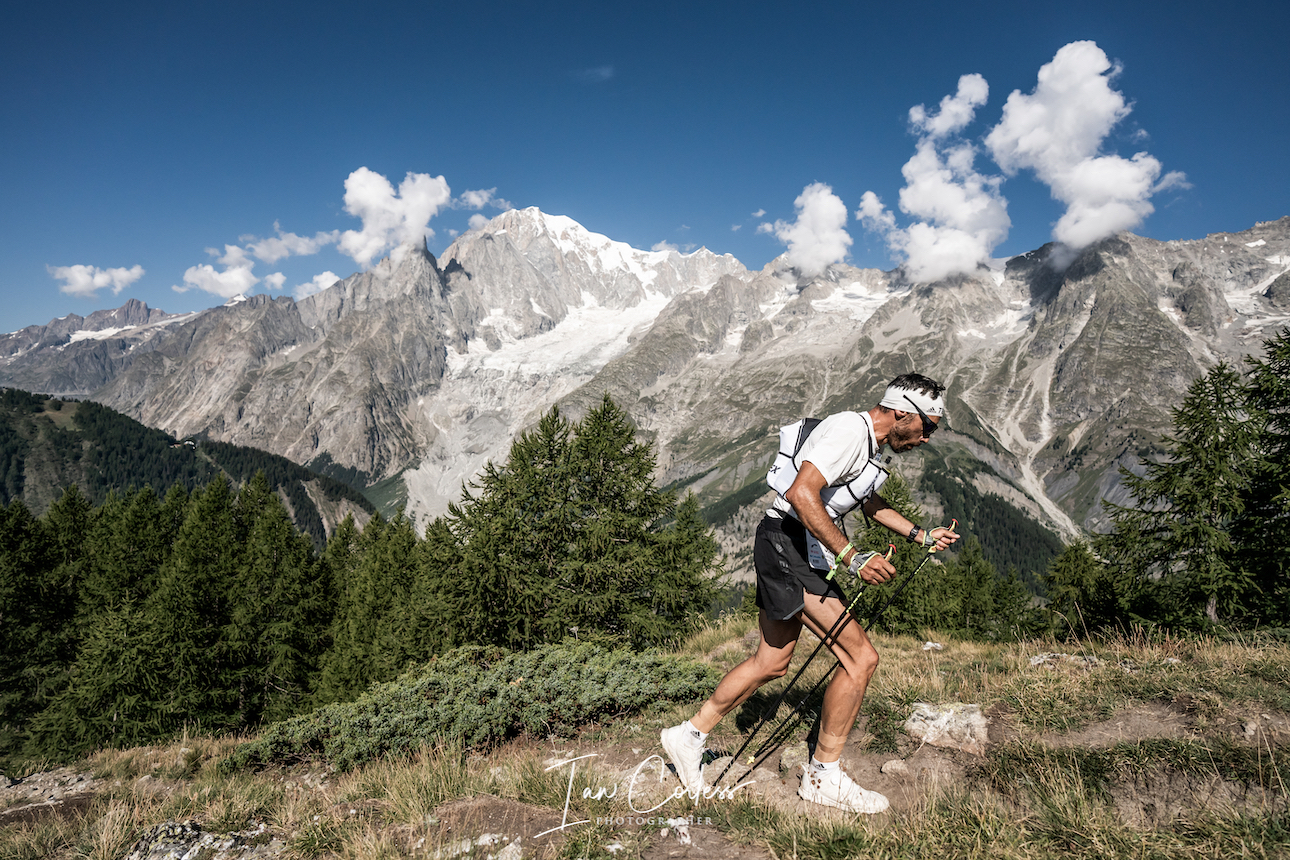
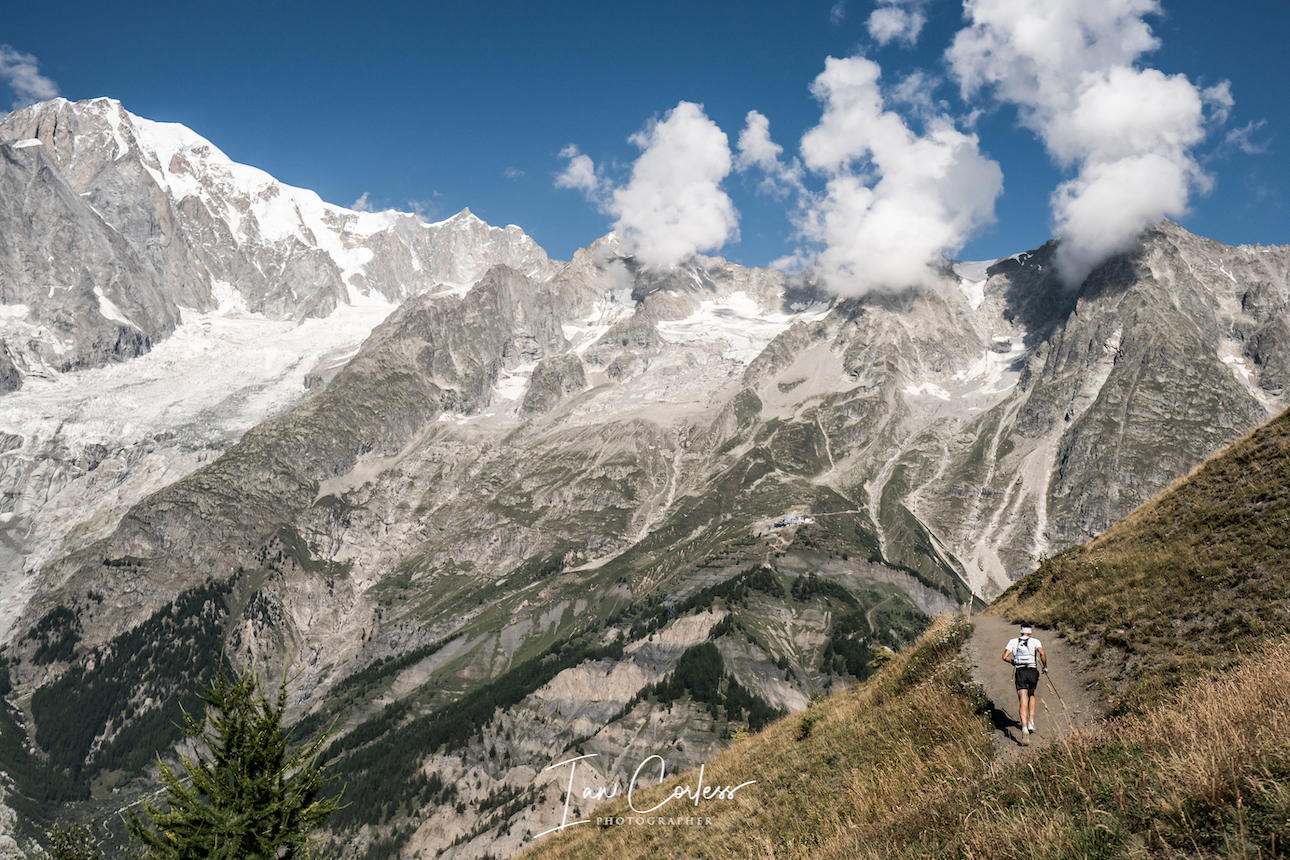
Our day started with an early alarm, a quick breakfast and a drive to Courmayeur – the plan to climb to Refuge Bertone and capture early content with Mont Blanc providing a stunning backdrop.
Plans hit a problem from the off with a long wait to get through the Mont Blanc tunnel. Once in Courmayeur it was gps time to navigate a route to the trail head. This was a constant theme of the whole week… Great gps software and gpx route are essential – we could plan to meet the runners as much as possible during a race.
We started our climb later than we would have liked but we pushed the pace – not that easy with a 15kg camera bag! Once there, the weather was perfect, the scenery magical and we knew we were going to get some great content.
For Luis, we were aware we could capture him on the descent, chase after him and then capture him again after he had visited the aid station.
I positioned myself on the descent knowing that I would get a dynamic shot as Luis dropped in front of me taking a left turn with Mont Blanc behind him.
As Luis approached, disaster struck. A ‘runner’ who was spectating ran ahead of him ruining all my ‘pre’ shots. As I shouted for them to get out of the way, they then stopped directly ahead of me, right in the middle of my shot. I had to compromise… shit happens!
I then raced after Luis on the descent and then got to my second spot. This time all was good with clear shots and I then ran with him capturing more content before he raced off around the mountain.
Being early in the day, we decided to wait and capture the other adidas runners who were participating as the time gaps at this stage would not be too great. Later, it would be impossible if Luis ran the race we anticipated! Abi Hall, Macy were looking good but Holly Page was struggling with a bad stomach.
Dropping bag to the car via the twisty descent, we now had a 2-hour drive to Champex Lac. Luis was motoring and now in the lead. Race projections said he would arrive at 1425. Our navigator said we would arrive 1410.
Once again we used gps software to find an access point pre Champex Lac that would allow us to capture content on steep forest trails. Luis arrived like clockwork powering up the climb using poles to keep the momentum.
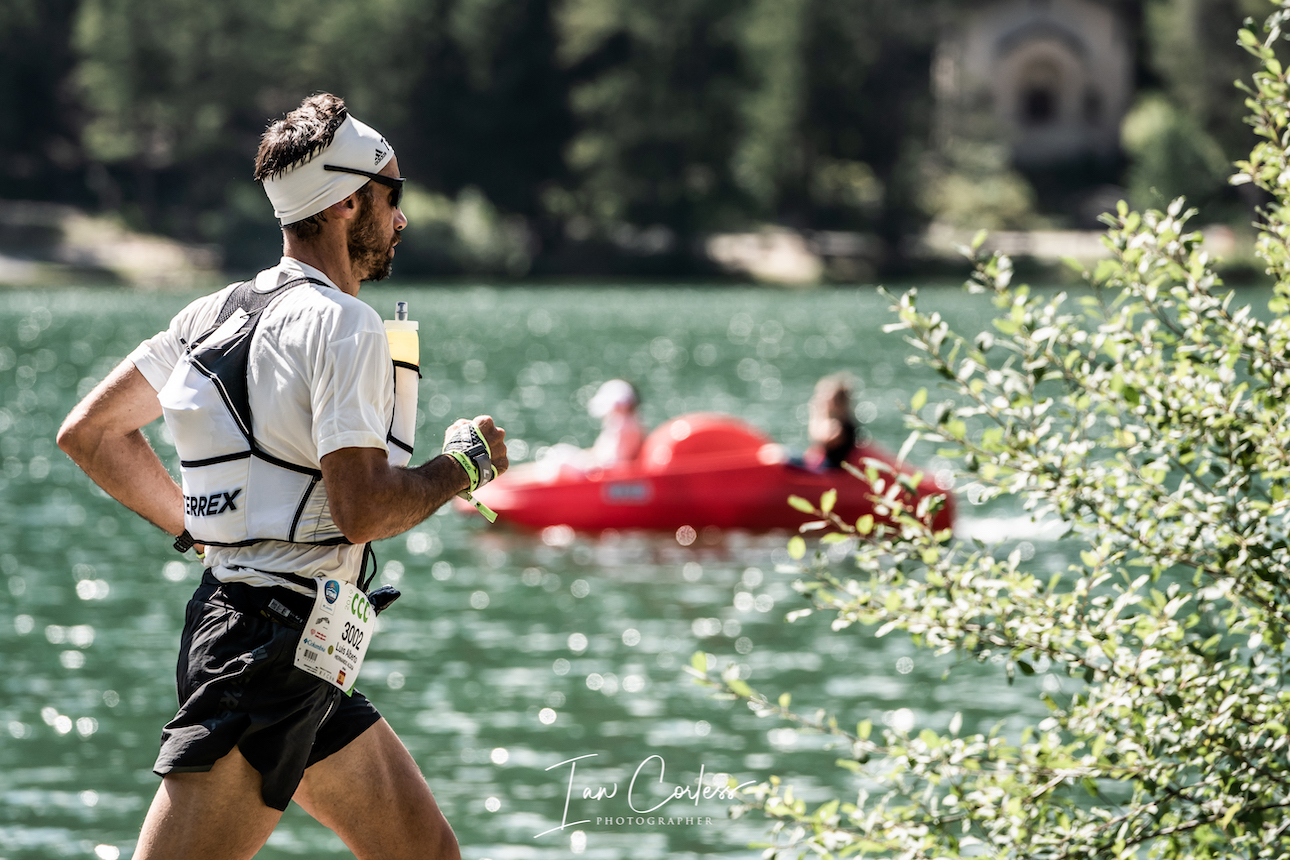
At Champex Lac he ran the footpath and roads around the lake allowing more opportunities before we went off-piste on a dirt road allowing for one last shot before we would then lose him only to re-connect at Trient.
Trient provided a shot before the aid station and then we drove out of Switzerland and back in to France before capturing Luis on the climb of the Col des Montets – our last opportunity before his arrival at the finish.
Now Luis was motoring and opening up a gap on the 2nd place.
At the finish, myself and Patrick (film crew) waited for Luis in the press area while the remaining adidas team watched the huge screens in the square.
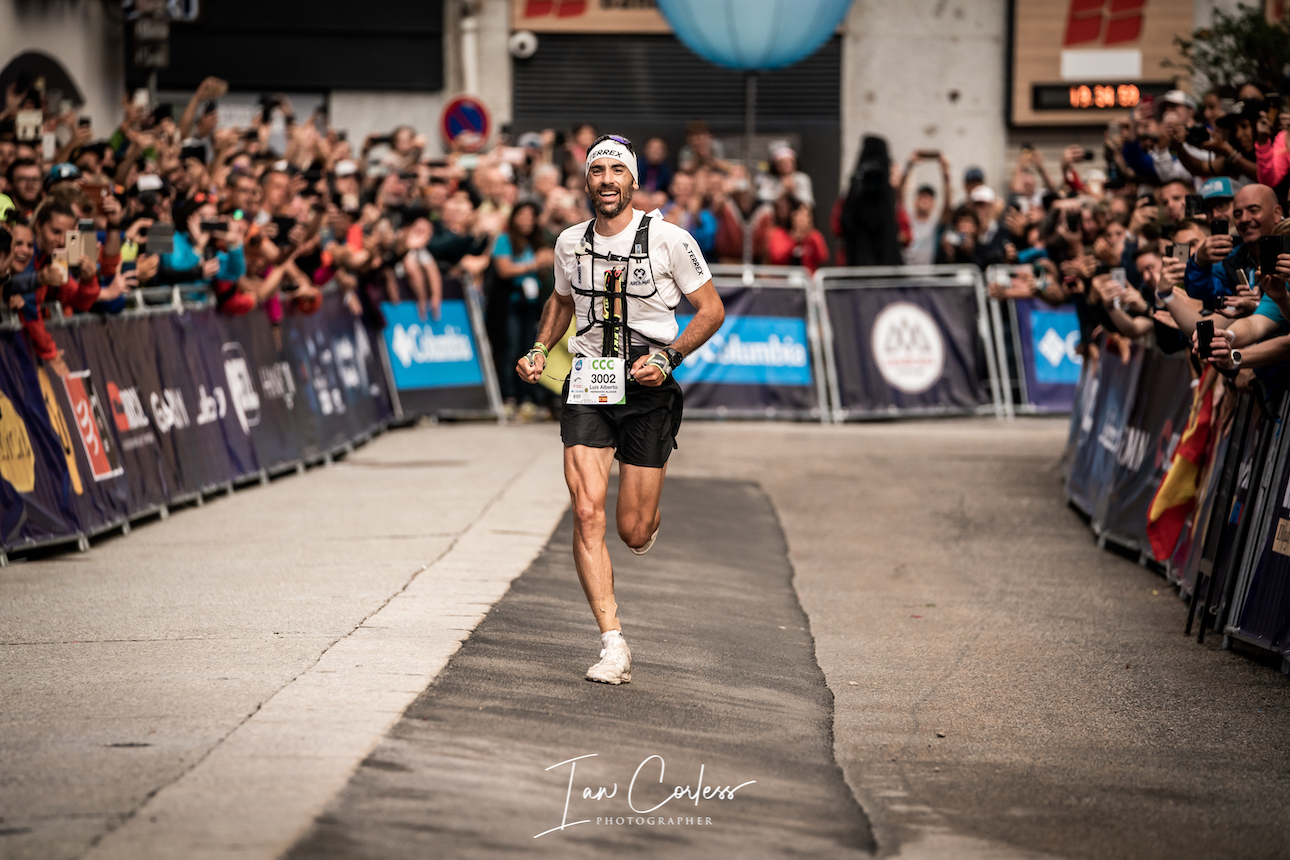
Finally, Luis achieved his coveted UTMB victory. It was an emotional finish. His wife, Nieves, greeted him with open arms. The Terrex team mobbed him as soon as they could… A post-race drug test delaying that process for some time!
Back at the chalet it was time to download the day’s work and release the content.
#ONETEAM
There is no ‘I’ in team and that was personified during this intense UTMB experience. We all had roles but flexibility is key. Athletes became crew, office workers became car drivers and everyone became a supporter both in a physical and mental capacity.
It was a real pleasure to be immersed with a brand and follow closely the whole process that make a race and team come together. Certainly, the UTMB and Chamonix experience made team bonds stronger.
On a personal note, to leave on Saturday am while the UTMB was underway was hard, especially with Ekaterina running. I have witnessed her growth in skyrunning over the last year’s and then to see her rise to 4th at UTMB not only made me really proud but also a little jealous and envious that I wasn’t available to capture that journey in images…. Next time!
UTMB is upon us and the hype just keeps on building and building. The 2018 edition looks set to be another great race and the year when the chances of an American at the top of the podium, have probably never been higher!
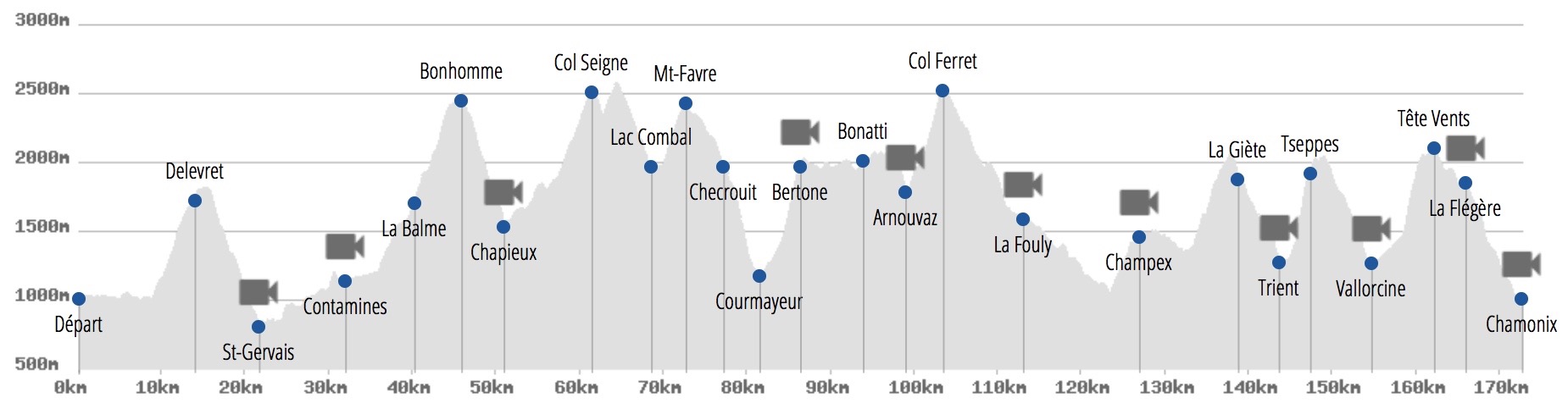
The 170km loop that starts in France, passes through Italy, then Switzerland and once again returns to France with 10,000m of vert is considered the pinnacle of 100-mile mountain running.
It is easy to look at UTMB and the presence of Kilian Jornet on the start line and say, ‘we know who has won!’ To be honest, I think Kilian is the odds-on favourite to win the 2018 edition, particularly with Francoise D’Haene missing the race. What Kilian has achieved in 2018 after a very serious injury has been quite remarkable. What is most impressive is the range of his skill, he can break analmost unbreakable FKT in the UK (Bob Graham Round), win a super-fast and competitive Sierre-Zinal and then win and set a course record at the most technical and pinnacle skyrunning event there is, Trofeo Kima, just 5-days before toeing the line at UTMB. Without doubt, Kilian is the one to beat, however, the one thing he has against him is the lack of specific 100-mile training. For anyone else, that would be a huge problem, for Kilian, no!
Many will say that Jim Walmsley is the prime contender to beat KJ but let’s give a nod and respect to Tim Tollefsonwho has placed 3rd twice and now knows the race like the back of his hand. He prepares specifically and respects the race and the distance. His form seems a little off based on results in 2018, but, I am sure Tim has only ever had his eye on one prize.
Luis Alberto Hernando is for me one of the greatest and most underrated mountain runners in the world. He is pure class. He is a multiple world champ, has placed 2nd at UTMB before and missed the race in 2017 because he knew he didn’t have the necessary form to win. He has been quiet this year which can only mean very specific training. He hasn’t run many 100’s and this has been his downfall in the past, he always races hard and from the front which can mean he blows up. This may be Luis’s year for the win, but everything will need to go right, and Kilian will need to be a little off. A Luis victory would be extremely popular!
Jim Walmsley finally fulfilled his dreams and ability with nailing Western States earlier this year and obliterating the course record. He has earned his 100-mile apprenticeship. Last year at UTMB it was all going well, and Jim was running a smarter race, it went wrong but he rallied and then finished in the top-10 closing hard. He has a tough decision to make at this year’s race, does he go on gut feeling and run at ‘his’ pace early on and hope he can take it to the line (think Zach Miller) or does he hand with Kilian, mark him, stay with him and then make a move late in the race where he then maybe can use his natural run speed to win? It’s important to note, that running and winning UTMB will be at least 20% more time on his feet than the WSER victory. I think Jim will make the podium this year and yes, he could be at the top of it, quite easily!
Xavier Thevenard has done it all at UTMB winning all the main distances over the past 4-years. He will no doubt be reeling from his DQ at Hardrock and that could work either way at UTMB. It may motivate a superb performance or put questions in his mind. Podium potential for sure but not a winner this year.
Alex Nichols is for me the greatest US potential for a win in years. However, it may take this year for him to fully understand the race before he can come back and win next year or the year after. I said many times in the last 18-months that Alex has the greatest potential and he proved it recently with his Nolans 14 FKT. He is one to watch and a dark horse.
The above are my prime podium contenders but as always, it’s a stacked field with the following toeing the line:
Gediminas Grinius
Ryan Sandes
Mark Hammond
Michel Lanne
Stephan Hugenschmidt
Jordi Gamito
Sondre Amdahl
Benoit Cori
Scott Hawker
Timothy Olson
Damian Hall
Sylvain Court
Javi Dominguez
That is an A-list of contenders with Gediminas Grinius and Javi Dominguez as stand outs. It is UTMB, so anything can happen on the big loop. One person to watch is the UK’s Damian Hall. Over the past 3-years he has moved closer and closer to the top-10 and last year placed 11th. He is super motivated this year and although I don’t think he will make the top-5, the chances are high for him to fulfil his top-10 dream.
WOMEN
Mimmi Kotka for me is the 2018 UTMB champion. She has won CCC, TDS and has crushed mountain races such as Madeira Island Ultra Trail, Mont-Blanc 90km and the Maxi-Race in Annecy. She eats mountains and although this is her first 100, something just tells me she is ready for the big loop.
Caroline Chaverot of course should be the odds-on favourite but boy-oh-boy as she had a tough time of things after winning ‘everything’ and I mean ‘everything’ a year or so ago. Her form is a real question mark and she has openly discussed on social media that she has been very unwell. Caroline in form is of course podium potential, anything less and she would be disappointed.
Uxue Fraile has a 5th, 3rd and 2nd at UTMB and that alone sets her up as a prime podium contender. She always runs a savvy race, has loads of experience and for me, she may well match her 2015 2nd place.
Kaori Niwa has been 4th at UTMB and recently took 4th at Hardrock 100, so, we know she has endurance. That is super important here at UTMB and although victory is unlikely with Mimmi and Caroline in the race, the 3rd slot on the podium is possible.
Sephanie Violett was 15th last-year which seems a below par performance based on her experience and skill. But UTMB is not the US and Magdalena Bouletand Kaci Lickteigalso placed out of the top-10. I have a feeling that these three women will change things around this year and impact on the top-10 with Stephanie my tip as the one who does the best of the trio.
Beth Pascall and Jo Meekare two Brits who I believe this year will turn heads. Beth gets the nod over Jo as she has much experience at the long game with success at races such as Lakeland 100, Dragons Back and the Spine. She dropped at UTMB last year after getting cold, this year I am putting my neck on the line and saying top-5! Jo has trained specifically and knows the UTMB mountains after placing 2nd at CCC. This is her first foray to 100-miles and this length of time on her feet. She has all the ability to do well, so, fingers crossed she makes the top-10.
Fernanda Maciel has buckets of experience at the long game, has excelled at UTMB time and time again and I have no reason not to think she will do the same again this year. A prime top-10 contender and for sure, 4th/ 5th is a distinct possibility; she has placed 4th twice before.
Juliette Blanchet was 4th last-year and has buckets of experience and results at long and tough races… She was 2nd at Raid de la Reunion after UTMB in 2017. She will be fighting for the podium and amongst the 2018 women’s field, she has a great chance.
Cat Bradley has won Western States but, in all honesty, I have no idea how she will fare on this monster 170km loop. You don’t win Western by accident which is why she gets a nod here, but let’s look at Kaci and Magdalena last-year, they were both outside the top-10.
Mariya Nikolova is not a name that many will have heard but she has been in the top-10 at UTMB previously and she has won in Turkey at Cappadocia. Her recent form is a little unknown but an improvement from 9th is to be expected.
Strong Contenders:
Emilie Lecomtehas been there and done it in long distances races but seems to be lacking the speed of her prime. Amy Sproston has been 8th before, she will be in the top-10 game but not a podium contender. The UK’s Sophie Grantis another real contender with Beth and Jo, she was 15th last-year. Teresa Nimeswas just outside the top-10 placing 11th in 2017. Aliza Lapierre dnf’d last year but has loads of experience as does Ildiko Wermescher who has been 6th and 7th at UTMB previously… In all honesty, Ildiko should be in the list above. Francesca Canepa is a long-distance specialist. Katia Fori also one to watch after 5th at MIUT.
It is all to fight for. The big loop with all that distance, vertical gain and descending, variable weather and just the many, many hours on foot means nothing is guaranteed. So, expect some surprises!
Episode 143 of Talk Ultra brings you an interview with Emelie Forsberg after her victory and CR at Salomon Glen Coe Skyline. We speak with 3rd placed UTMB finisher, Tim Tollefson and we speak with the inspiring Susan Donnelly who recently completed her 100th 100-mile race at Superior 100! The show is co-hosted by the amazing Hillary Allen.
*****
Talk Ultra is now on Tunein – just another way to make the show available for those who prefer not to use iTunes – HERE You can download the Tunein APP HERE
Talk Ultra needs your help!
We have set up a Patreon page and we are offering some great benefits for Patrons… you can even join us on the show! This is the easiest way to support Talk Ultra and help us continue to create!
Many thanks to our Patrons who have helped via PATREON
What an incredible weekend at Skyline Scotland that elevated the UK mountain running scene on a world platform. Four events, the Salomon Mamores VK, Salomon Ring of Steall, Salomon Ben Nevis Ultra and the Salomon Glen Coe Skyline.
Salomon Mamores VK
Stian Angermund-Vik and Laura Orgue took top honours on the steep and slippery 1000m ascent. Laura setting a new CR. Full results and imagesHERE.
Salomon Ring of Steall
Both Laura Orgue and Stian Angermund-Vik did the double winning VK and SKY with two dominant performances, their times 3:24 and 4:05 both NEW course records. Full results and imagesHERE.
Salomon Ben Nevis Ultra
Local man Donnie Campbell took a proud victory on home soil in 12:20. For the ladies’ it was a return for Nepalese run sensation Mira Rai, her time, 14:24 and she was 5th overall.
Salomon Glen Coe Skyline
The highlight of the weekend saw the mountain power couple of Kilian Jornet and Emelie Forsberg not only take victories but set new course records. An incredible result for both! For Kilian just 2-weeks after UTMB and for Emelie, it was a return after a troubled year after knee surgery. Full results and imagesHERE.
*****
00:25:17 Interview with EMELIE FORSBERG.
*****
Tor Des Geants
330km of craziness and 24.000m of vert, ouch! Javi Dominguez went under 70-hours to set a new CR 67:52. Lisa Borzani took the ladies’ win in 89:40. Results HERE
French Trail Championships
Nico Martin and Sarah Vieuille were crowned champions at Gerardmer running a 62km course. Results HERE.
Plain 100 in the USA
Gina Slaby set a new CR 26:32 and Piotr Chadovich ran 24:47 for overall victory.
John Muir Trail FKT
Hardrock 100 specialist Darcy Piceu (formerly Africa) covered the 223 miles in California to set a new FKT of 3-days, 8-hours beating the previous CR by 12-hours. Notably this was very close the the men’s record and later this year Francois D’Haene will attempt this FKT.
This weekend!
Ultra Pirineu in Spain will see the conclusion of the 2017 Migu Run Skyrunner World Series for the ULTRA distance. Notably, the marathon race which takes place on the same weekend will have a stacked line-up including:
Kilian Jornet
Remi Bonnet
Bhim Gurung
Marc Lauenstein
Andy Wacker
Caroline Chaverot (?)
Anna Frost
Stevie Kremer
Mira Rai
And many more… it’s a stacked race!
*****
01:23:15 Interview with TIM TOLLEFSON
*****
Okay, 100-miles is tough. BUT imagine running 100 100-mile races in the space of 17-years… this September, Susan Donelly ran her 17th Superior 100 and in the process ticked the 100th 100-mile box… here she is!
*****
02:13:03 Interview with SUSAN DONNELLY
*****
UP & COMING RACES
Australia
Queensland
100 km | 100 kilometers | September 30, 2017 | website
Importantly, go to iTunes and subscribe so that you automatically get our show when it’s released we are also available on Stitcher for iOS, Android and Web Player and now Tunein.
Please support Talk Ultra by becoming a Patron at www.patreon.com/talkultra and THANKS to all our Patrons who support us. Rand Haley and Simon Darmody get a mention on the show here for ‘Becoming 100k Runners’ with a high-tier Patronage.
Nuri Picas running to the podium in Tromso earlier I’m 2017
The 2017 UTMB was billed as the ‘best ever’ and as the weather finally improves in and around Chamonix, life returns to normal for everyone and we all have an opportunity to step back and look how important this years race actually was.
I think it may well be a seminal edition and for many reasons.
The ladies race turned out to be far more unpredictable than the men’s with many of the pre-race favourites either having bad days and going slower than expected or dropping through illness or injury. This opened the doorway for an interesting top-10 and several unexpected names.
The TOP 10 Ladies
NO1
Nuria Picas25:46:43 – Came into the race not a dark horse but with a question mark. Nobody doubted the ability of this lady, she has proven time and time again that she is a dominant force in mountain running over any distance. She dominated the UTWT rankings and has placed 2nd twice at UTMB. However, in the latter part of 2015 and pretty much throughout 2016 she was missing from racing. It appeared to me that a really tough calendar and race dominance had taken its toll. 2017 has been quiet and just recently I watched her race in Tromso at the Tromso SkyRace and she placed on the podium. It still left me with a question mark though on UTMB – would she have the endurance for 25-hours of running?Nuria set the pace in the ladies race and produced a dominant performance. She built a huge gap during the night and day and it was only in the latter 20% that the race took its toll forcing her to slow. The margin she had built up so important! At the end, this margin was reduced to less than 5-minutes! Nuria is back and like many long-term fans of the sport, Nuria’s victory is a welcome one. A seminal moment.
NO2
Andrea Huser 25:49:18 – Andrea races and races. She has a physical and mental strength un-matched. A race can start badly but she has the tenacity to push on and this year’s UTMB is no different. She started down the ranking, pushed on and with over half of the race covered took control and moved to 3rd and then second. She hunted Nuria Picas down as she slowed, almost a re-run of 2016 when she hunted Caroline Chaverot down. For two years running, 2nd at UTMB.
NO3
Christelle Bard 26:39:03 – Signifies the excitement and unpredictable nature of 100-miles. Although she has had success at CCC and TDS in past year’s, Bard was not really on my radar for a top-10. My fault, I should have done more research. Experience counts though and a steady start paid dividends as she slowly but surely moved through the field. In the final 80km’s or so she moved through the field from 10th to an eventual podium slot. A seminal year for this lady!
NO4
Kaori Niwa 27:31:39 – Was not a surprise after placing 8th last-year. The 100-mile distance is all about consistency and perseverance and this is how this lady excelled. As the distance and weather conditions took its toll, Niwa pushed on and reaped the rewards. A seminal year for this lady!
NO5
Kellie Emmerson 28:13:06 – Australian Emmerson was a surprise top-10 who I think (?) was running her first 100. She is proficient over the 100km distance and maybe the most significant indicator coming into the 2017 UTMB was her 4th at Tarawera earlier this year. Her race was well executed with patience and consistency and her 100km pace kicked in the latter stages to go past St Laurent.
NO6
Alissa St Laurent 28:13:43 – Had a tough race but persevered to finally have a strong and consistent race to place 6th. She certainly slowed as the race progressed and I am sure she will be frustrated with losing that 5th place in the closing stages.
NO7
Anna-Marie Watson 28:37:16 – What a breakthrough performance for Anne-Marie, last year we had Jasmin Paris from the UK in the top-10 and this year I was expecting Beth Pascall to step up to the mark but this was all surpassed by Watson. Her progress through the sport has been quite the surprise, go back to 2008 and she placed 124th lady at CCC – cut to the 2017 UTMB and she was 7th. Wow! That is some progress and the indicators are there, from 2015 she has a string of victories and top ranked places, 2nd at the 2015 MDS, 1st Cotswold Way Challenge, 1st at Cappadocia Ultra and most recently 1st at Gran Trail Courmayeur – a seminal performance.
NO8
Amy Sproston 28:44:08 – Has a running history the length of my arm and a string of notable runs, highlights coming over many varying distances. She has been top-10 at UTMB before – 8th in 2012. Notably she has also had great results at Western States, 2nd in 2016. So, matching her 2012 position is no surprise, it looks like she paced herself well with a slow first half and then making up ground in the second half. Notably, the USA’s top female finisher!
NO9
Mariya Nikolova 29:04:16 – This Bulgarian lady was 16th at UTMB in 2015 in almost 33-hours. 2017 is breakthrough year for her and her time of 29 hours a significant improvement even when one considers the shorter course.
NO10
Robyn Bruins 29:41:11 – So, the Australian ladies have a seminal year, just like the USA men. Bruin placed 10th and in doing so arguably has one of the best results of her career. She is known in the Southern Hemisphere, but in Europe, no, she is a newbie. This result will no doubt kickstart a renaissance not only in her own running but the running of Emmerson who placed 5th.
NOTABLES:
Pre-race favourite and I think many pundits odds-on for victory, Caroline Chaverot, had a tough race and dropped at midway. Chaverot, like Picas in her hey-day has been unstoppable with many races and a recent victory at Hardrock 100 may well have just taken its toll. It could be a seminal UTMB for this French lady as she decides her plans and calendar moving forward.
As often happens, many of the pre-race favourites had a tough night, day and night at the 2017 UTMB.
Magdalena Boulet, 5th last year had a bad day, Juliette Blanchett 4th last-year dropped early, long distance specialist Emelie Lecomte dropped at Courmayer, Fernanda Maciel withdrew with eye problems from the wind, snow and rain and Stephanie Violett (formerly Howe) battled on for a finish but was not in the top-10 as I and many others expected.







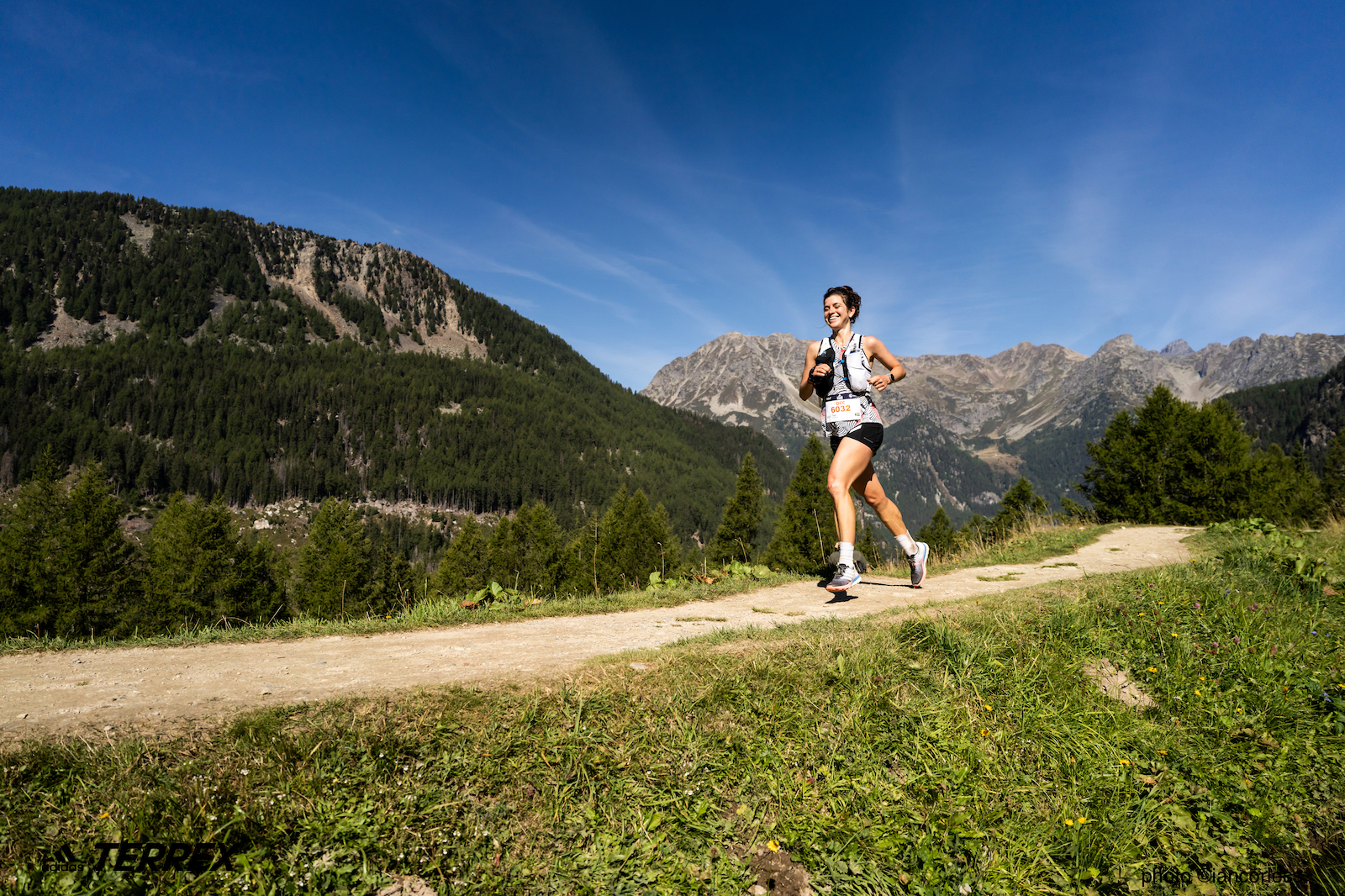
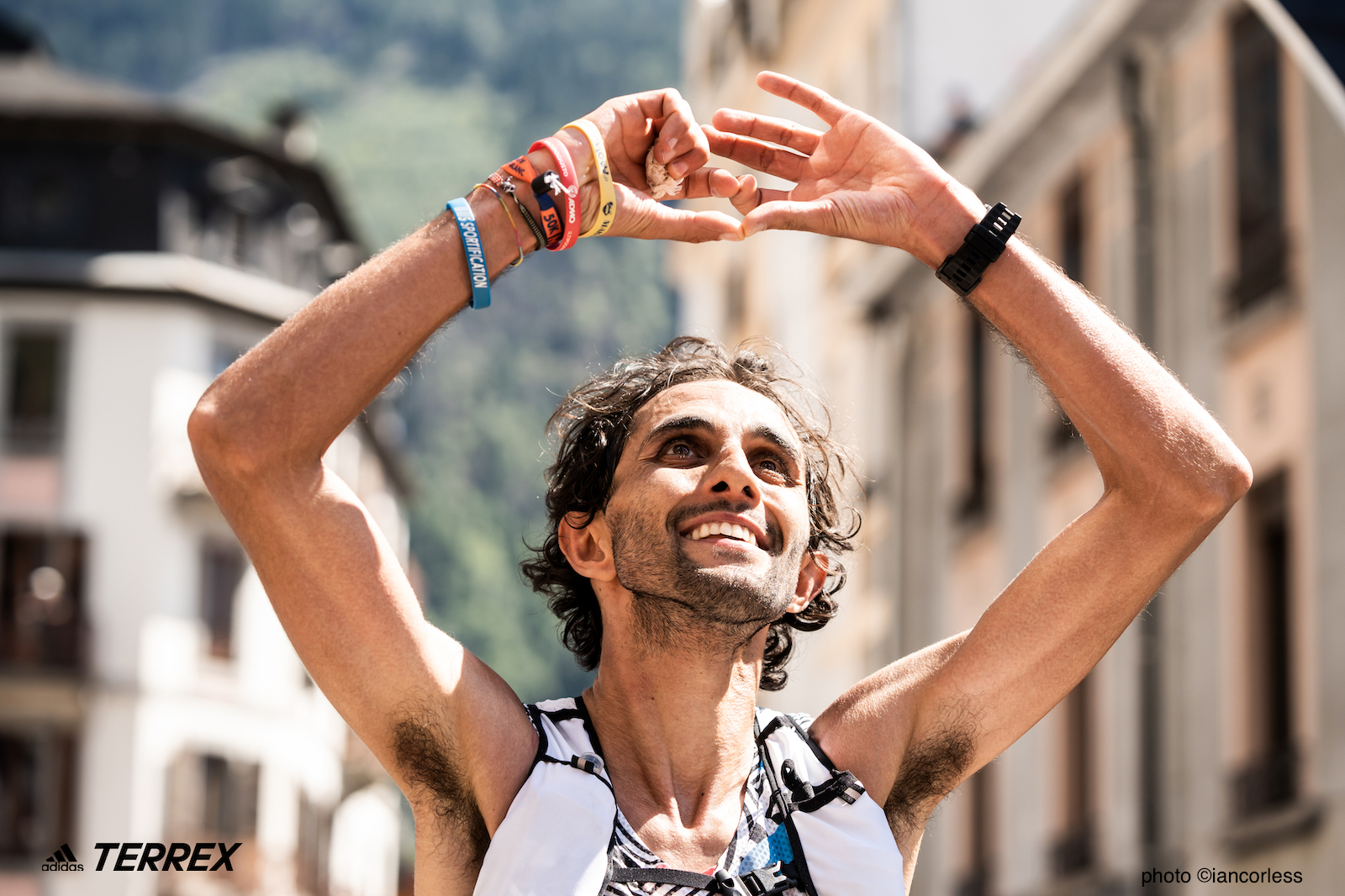

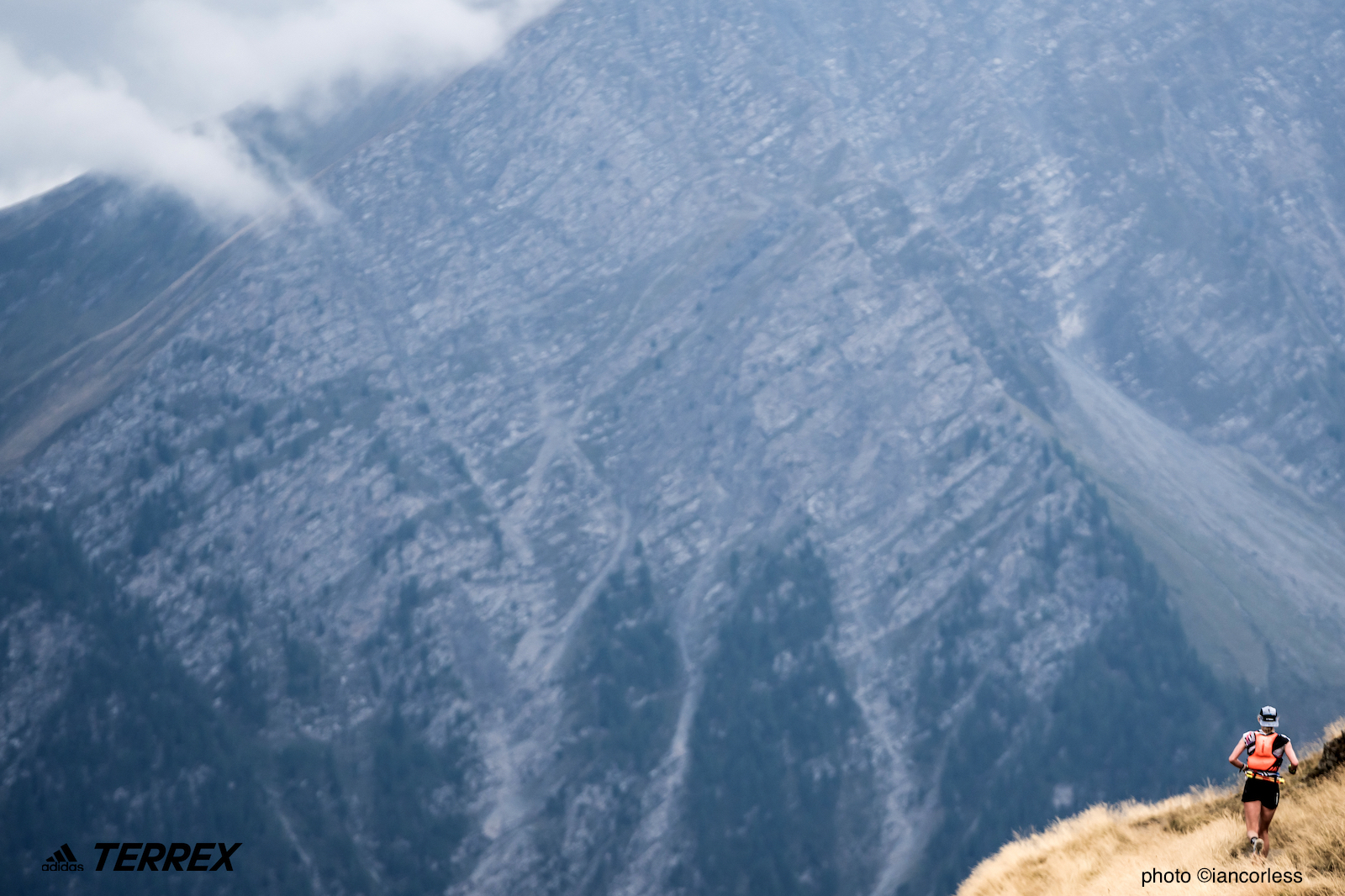




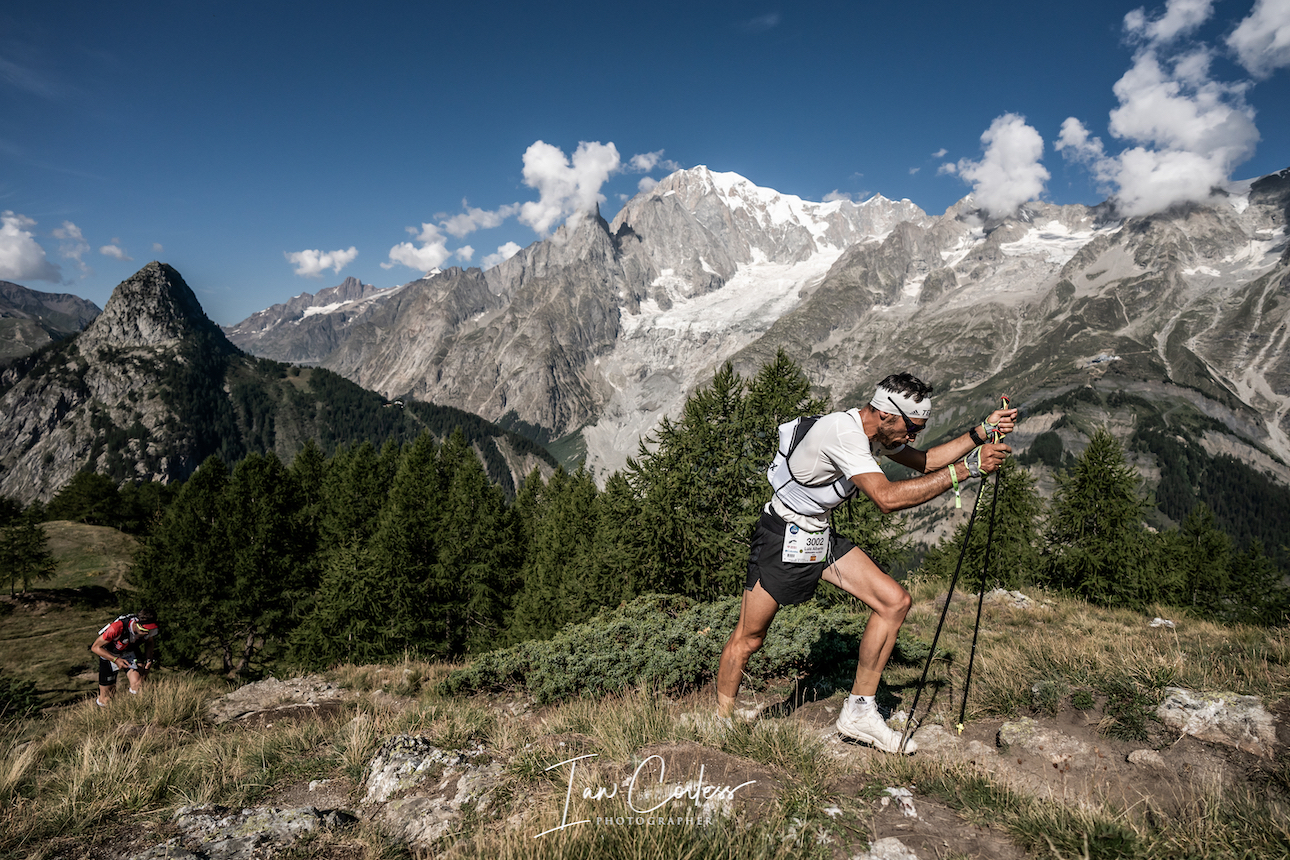
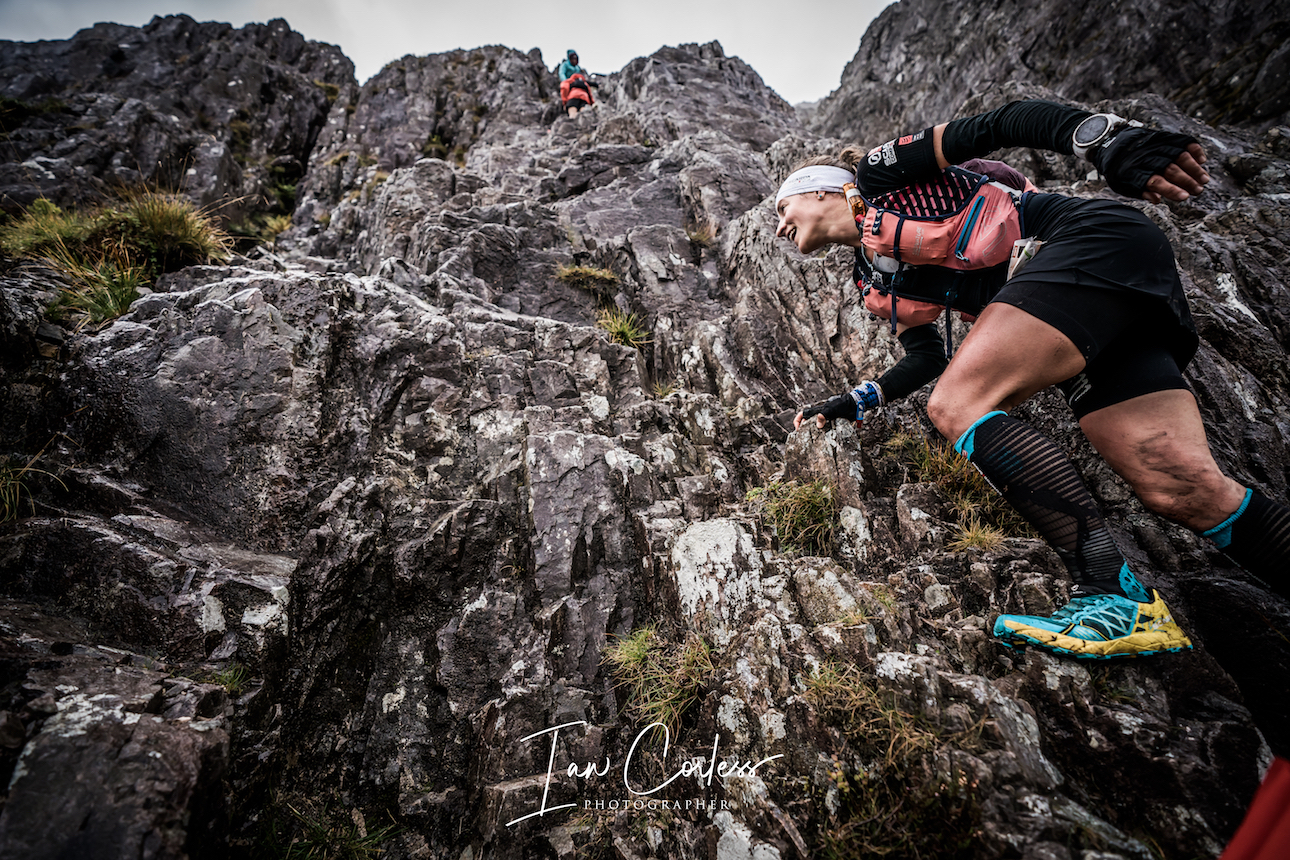


 I was recently in Chamonix for the UTMB series of events. I have to be honest, I have avoided Chamonix at the end of August for the last few years… The whole UTMB extravaganza just feels too overwhelming, there is no escape. So, I have chose to either have a holiday or work on smaller races.