The 2026 and 40th edition of MDS Legendary concluded with the iconic Merzouga Dunes after a 270km, 6-stage journey over 7-days.
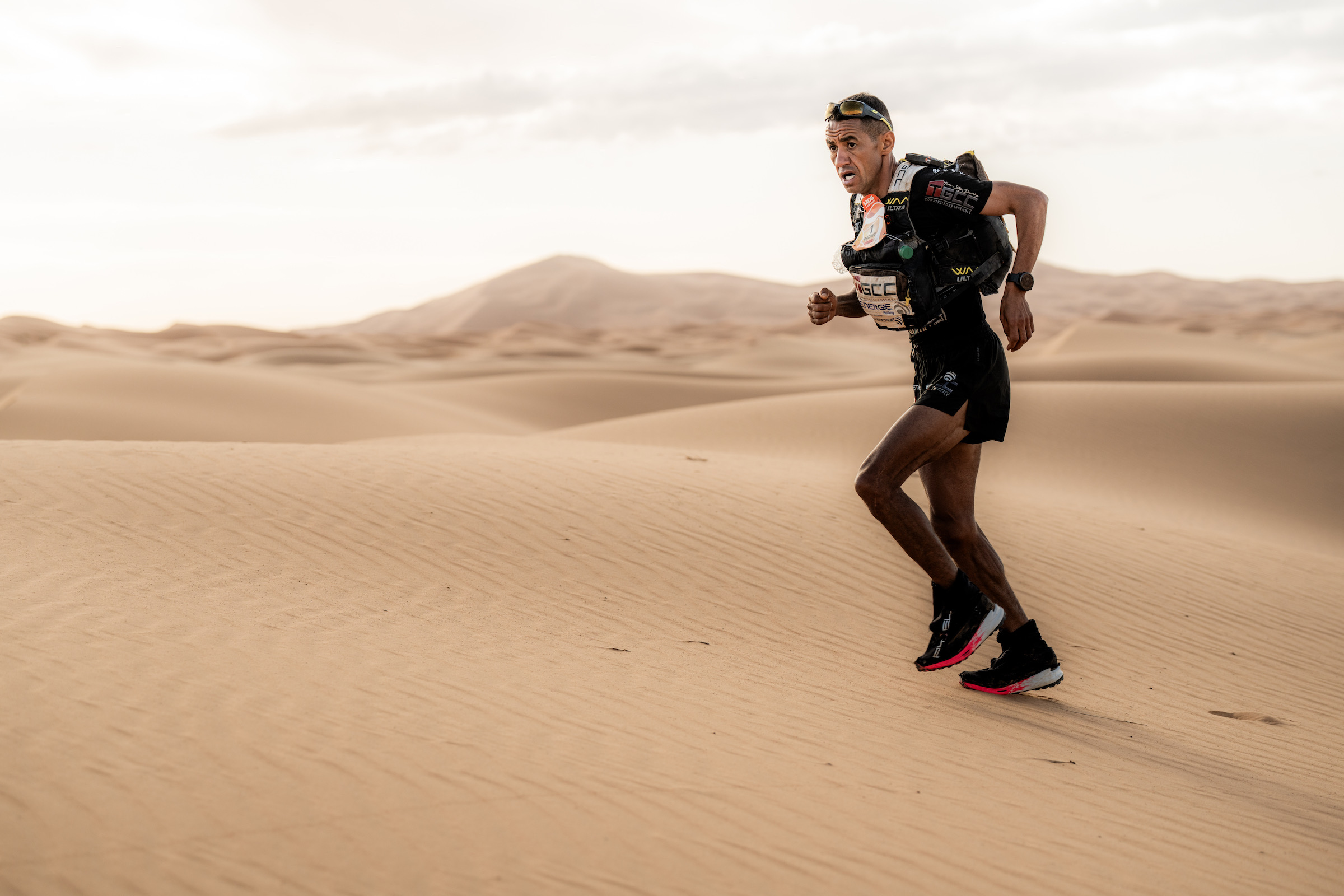
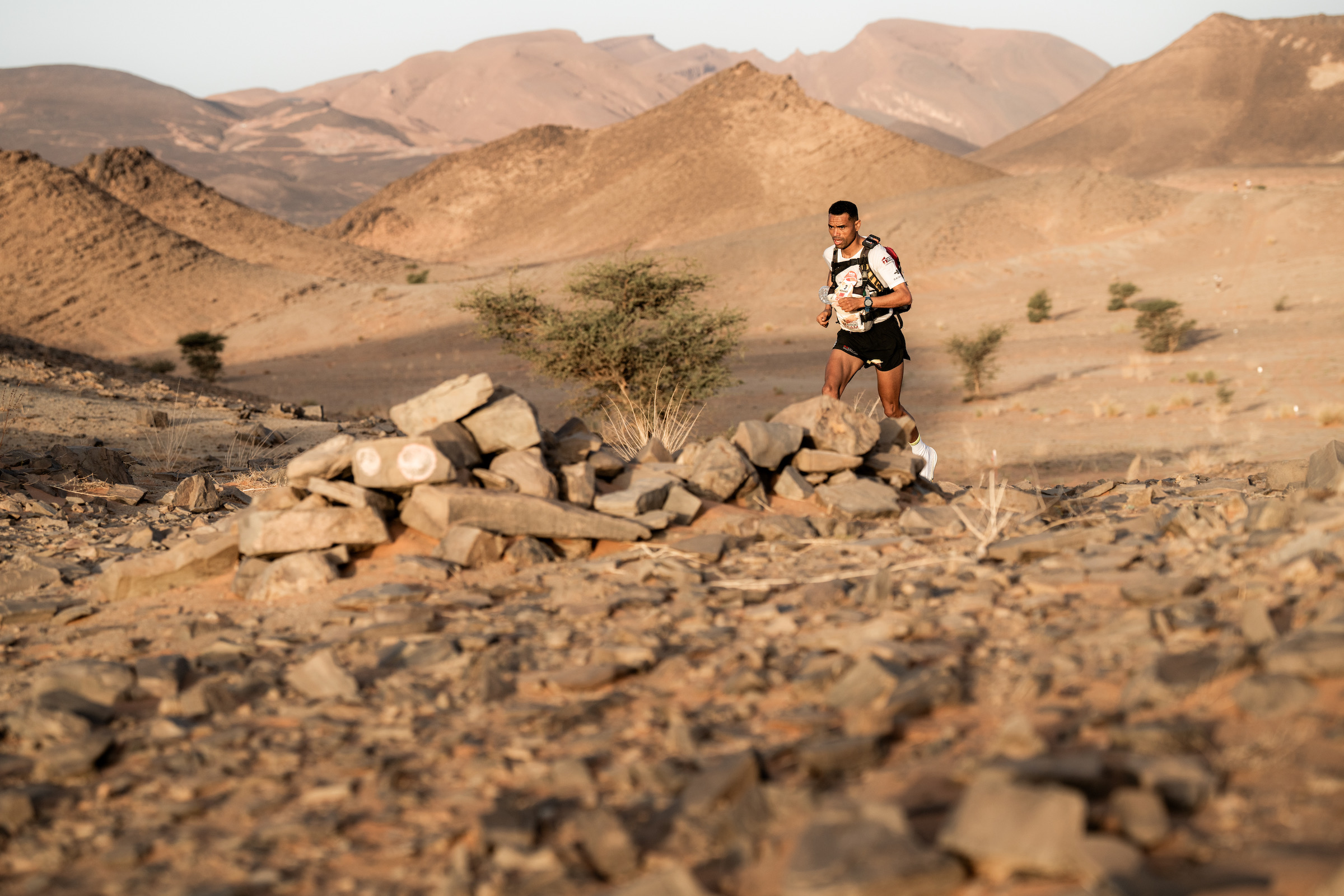
Mohammed El Morabity taking over the reigns of his elder brother, Rachid, and winning the edition in superb way, with final stage victory too.
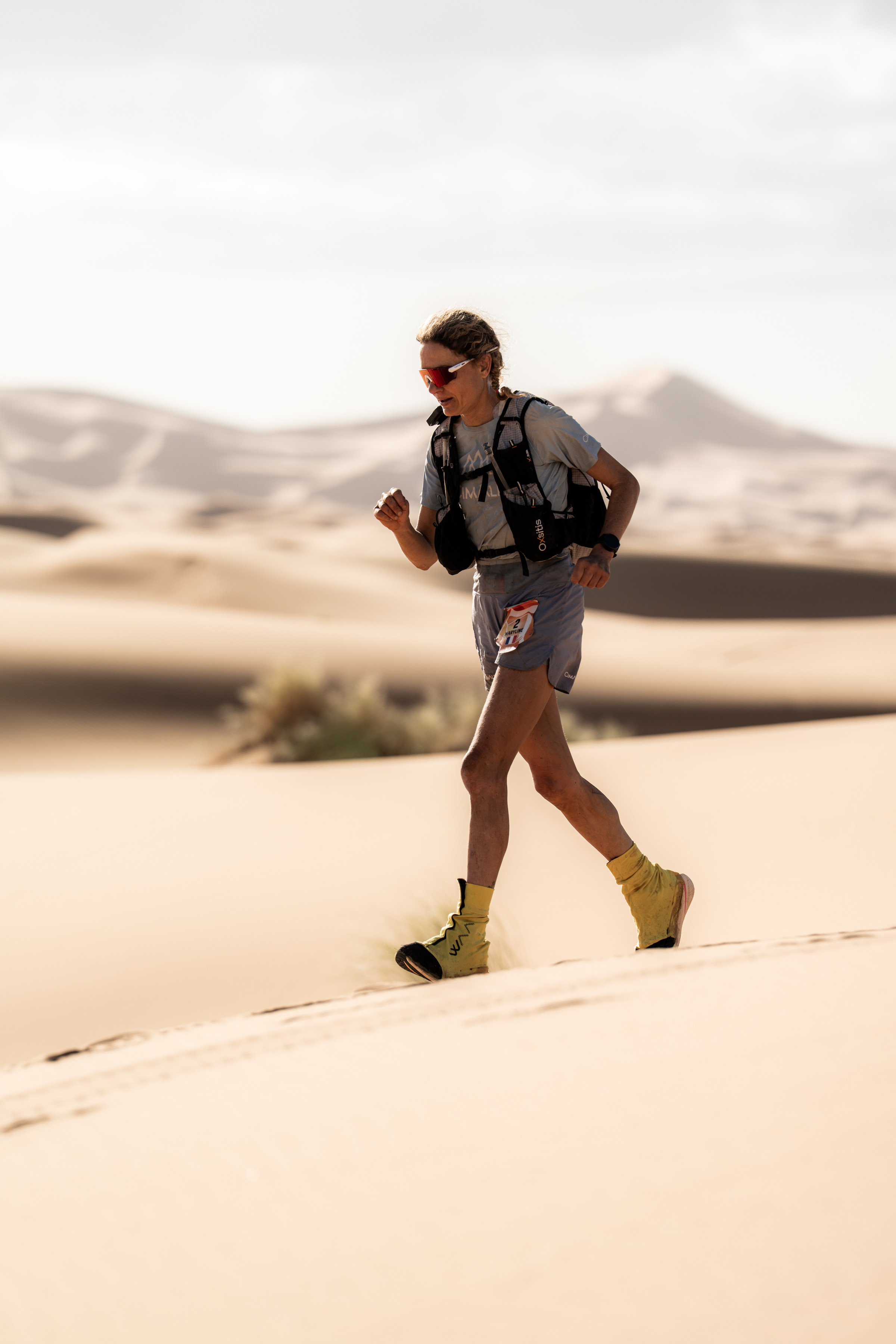
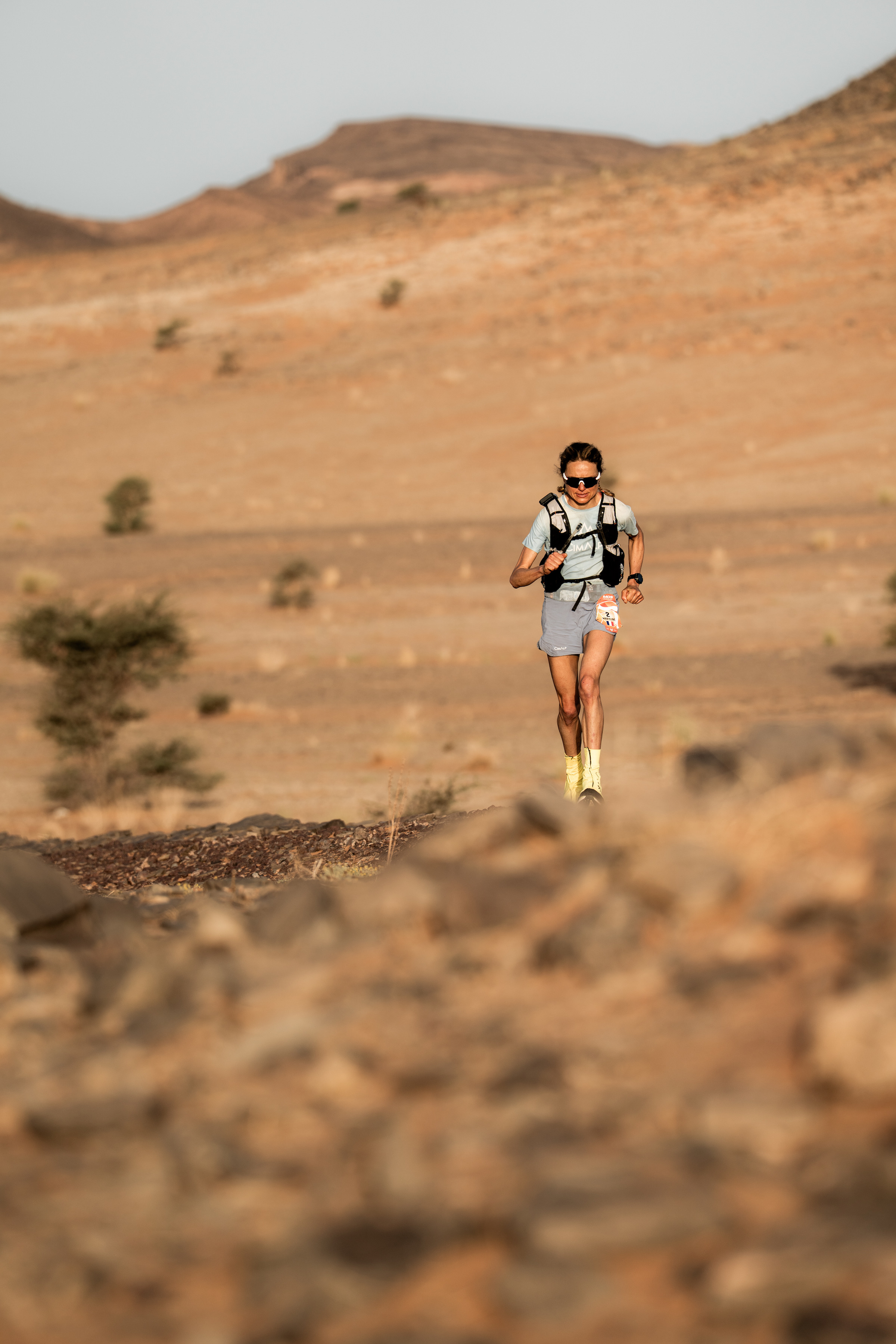
For the women, Maryline Nakache won every stage and cemented her name in MDS history with an incredible fast time and an overall placing of 13th overall.
Many words can be written about this incredible journey through the Sahara. Mohamed ran an incredible pace, the fastest in history, covering the 270km’s in 20:47:39.
Contrast this with the last place finisher, Hiu Tung Tilda Wong who completed the journey in 85:44:26.
From first to last, 1350 finishers – each now a LEGEND and each a unique story in the 40-year history of this incredible stage race.
With 1435 starters, only 85 DNF’d (did not finish) which equates to just 5.92% – an incredible statistic for the longest edition in the race history, a testament to the commitment of each participant and also the organisation. Of the 1350 finishers, 341 were women, 25%.
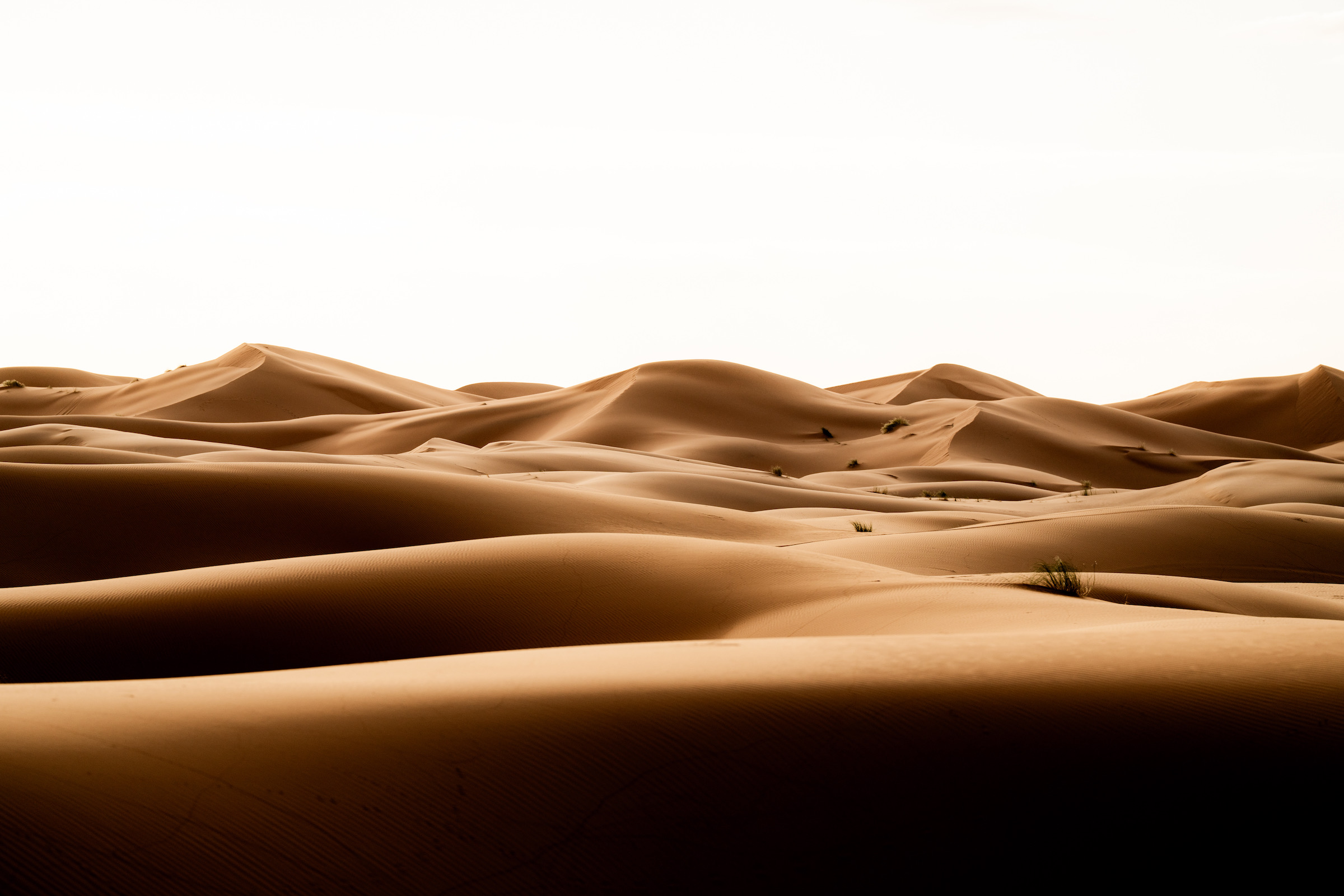
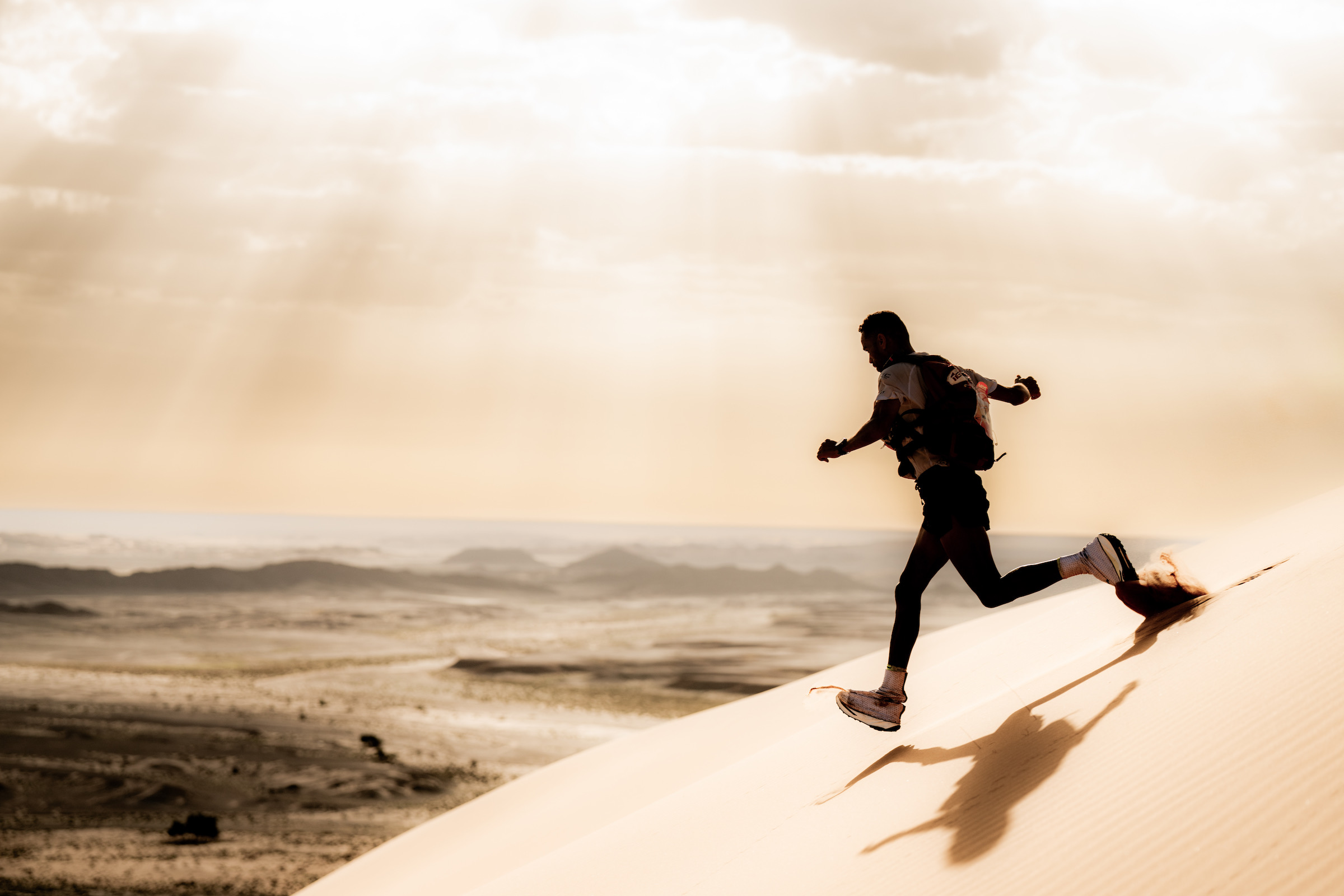
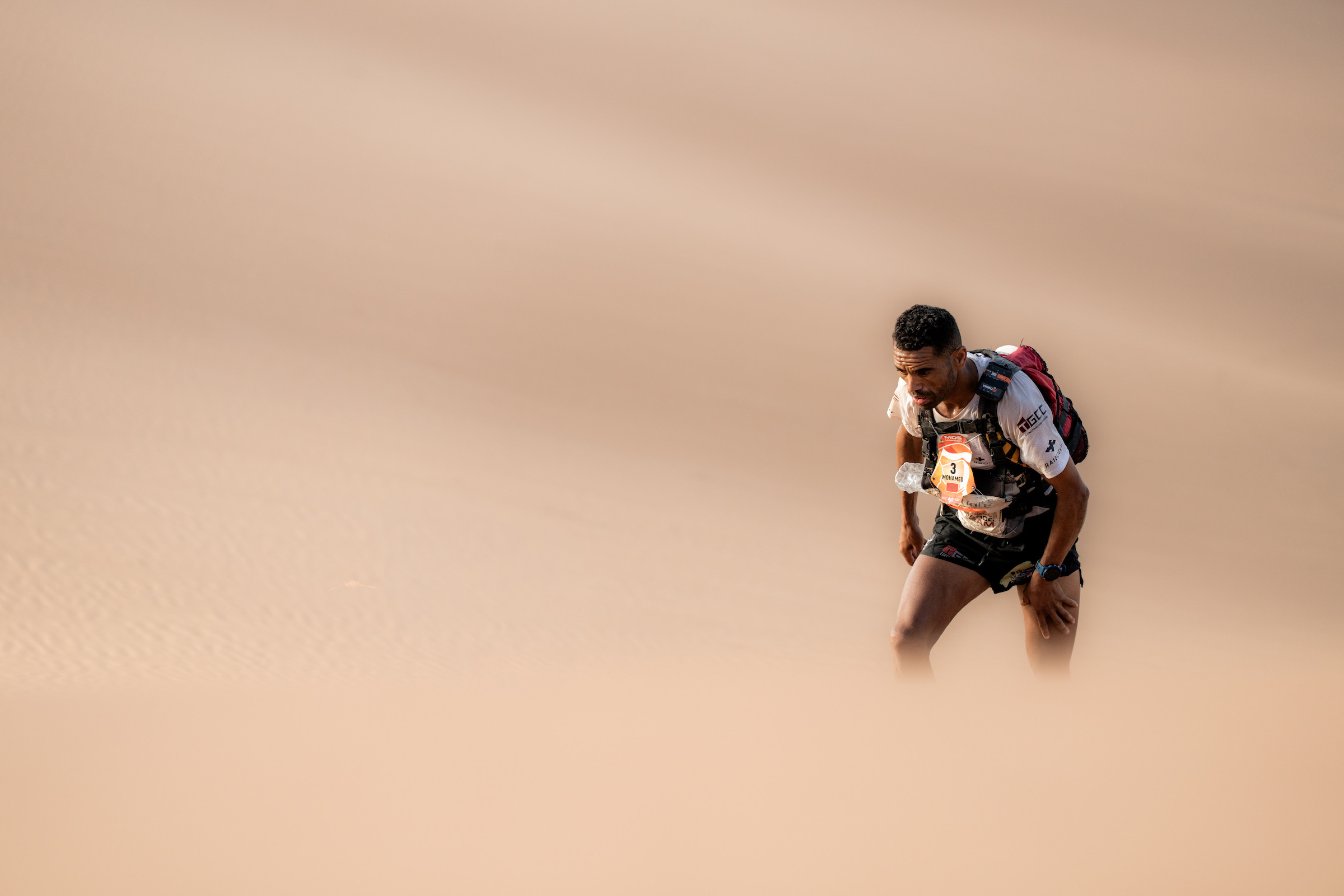
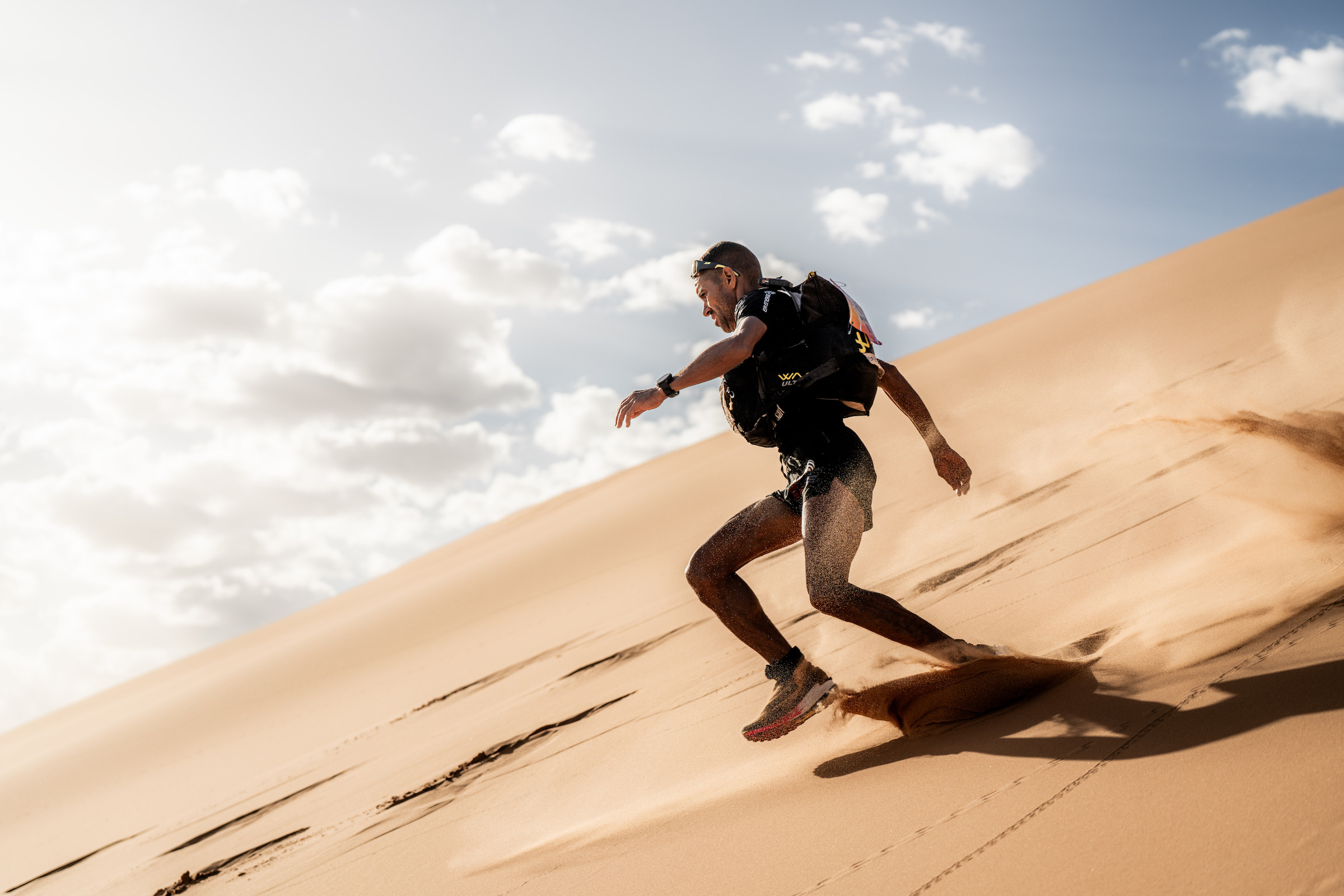
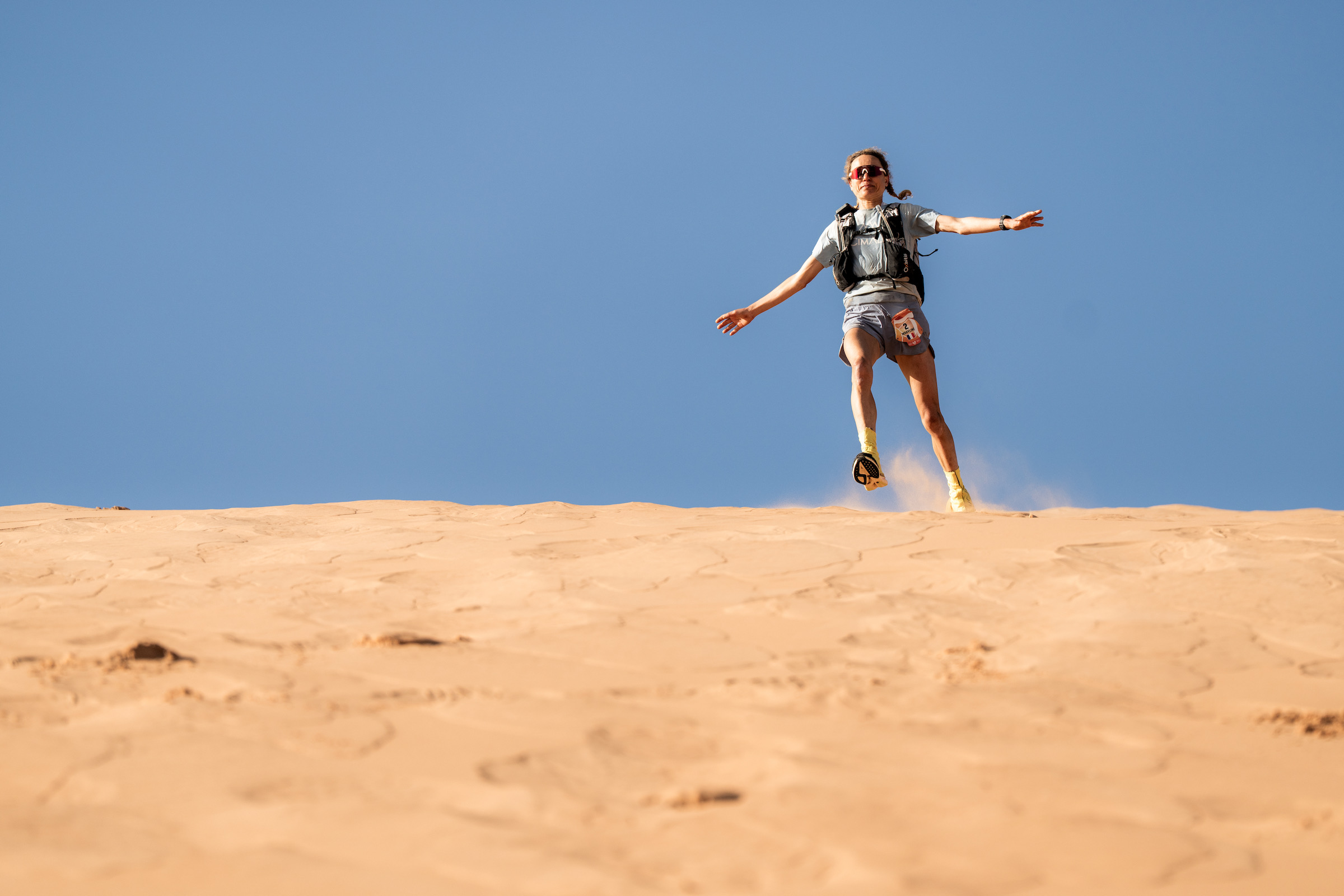
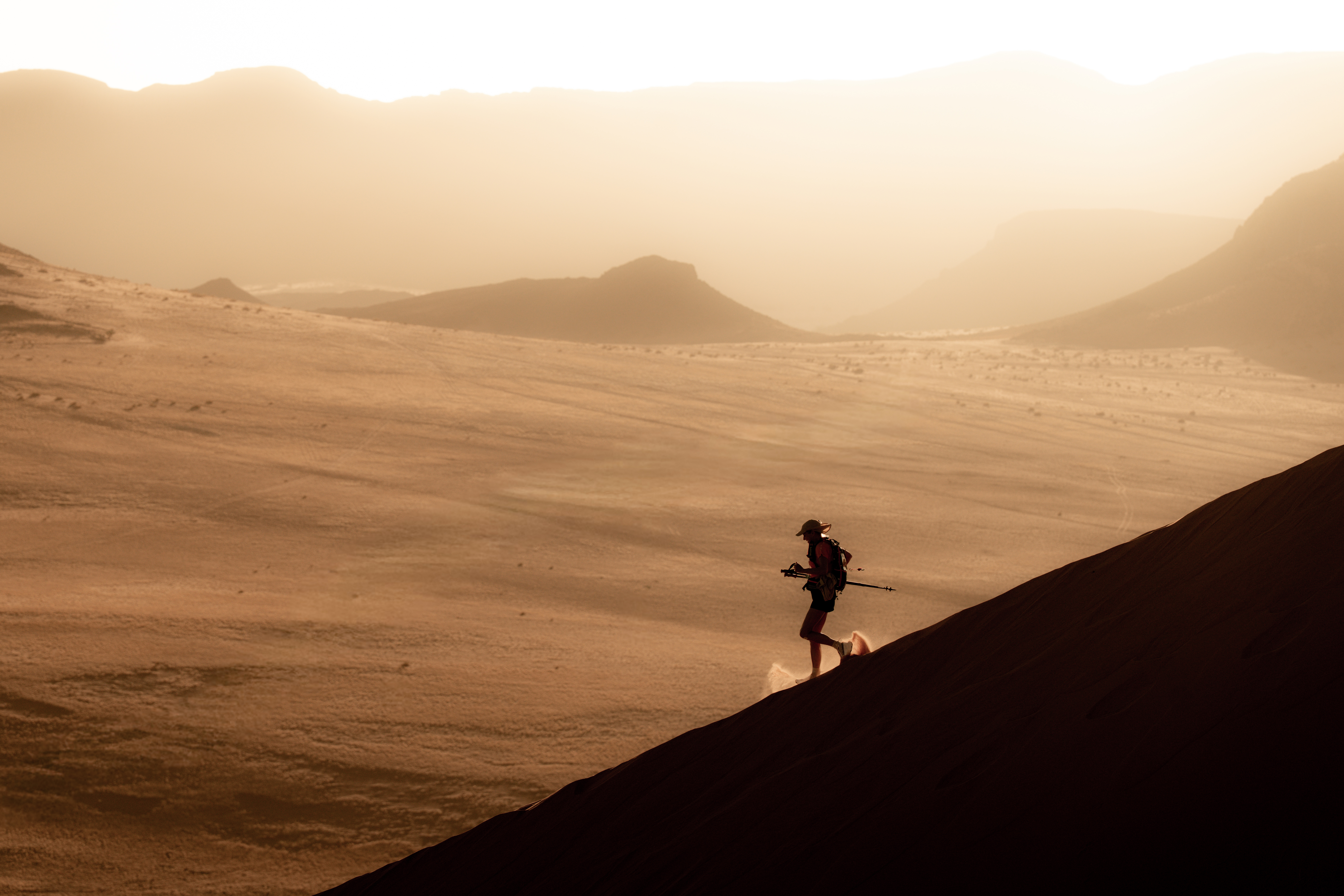
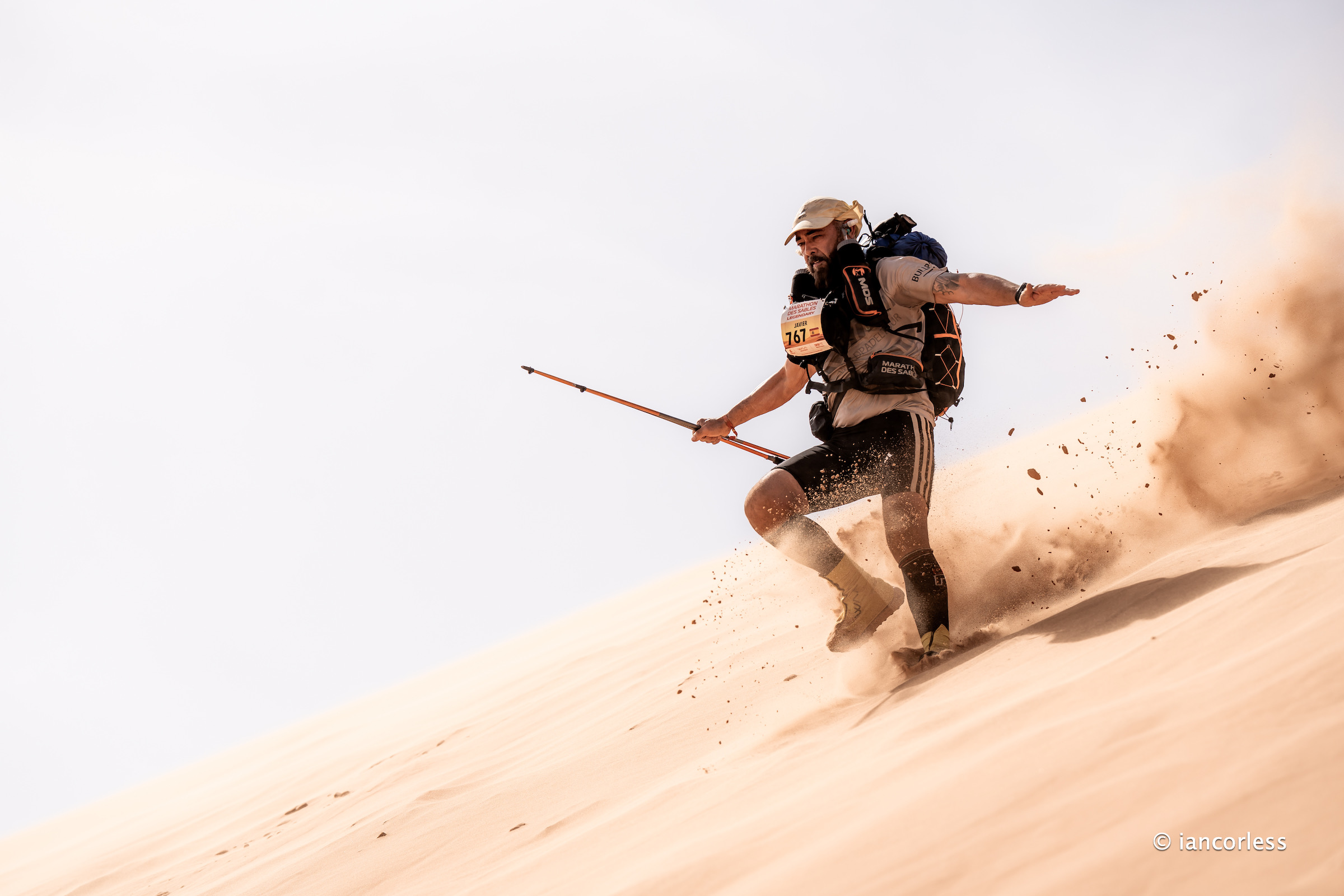
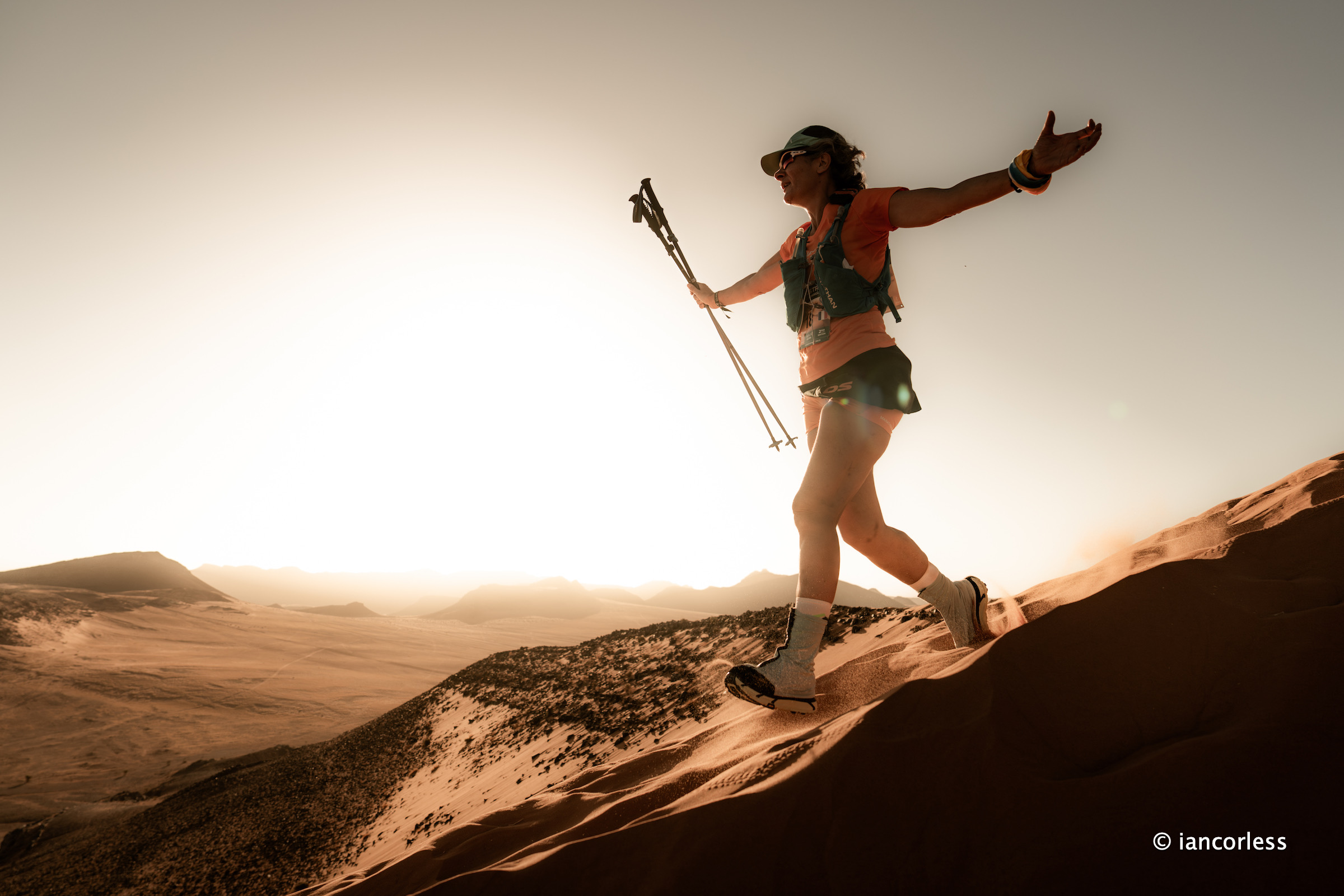
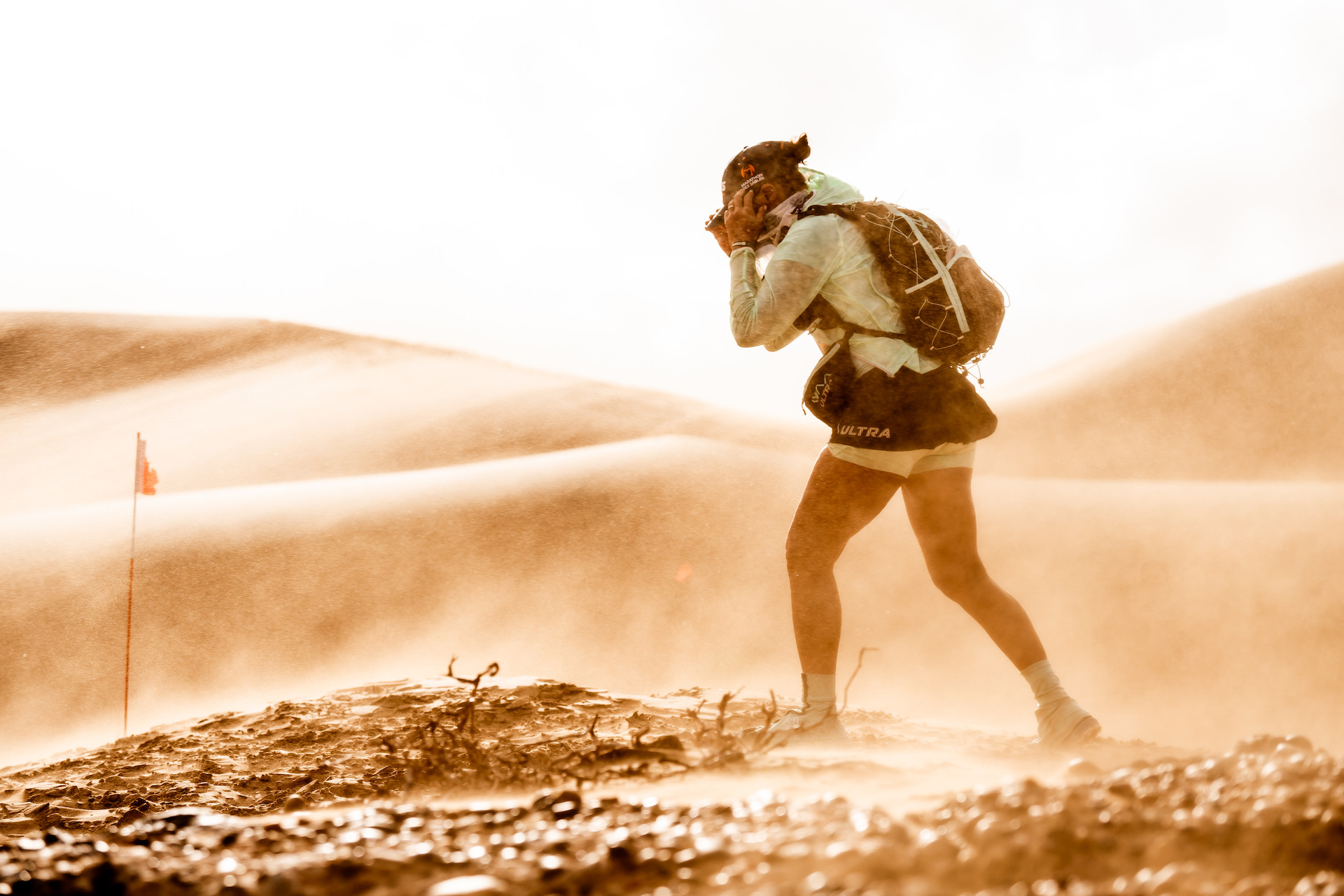
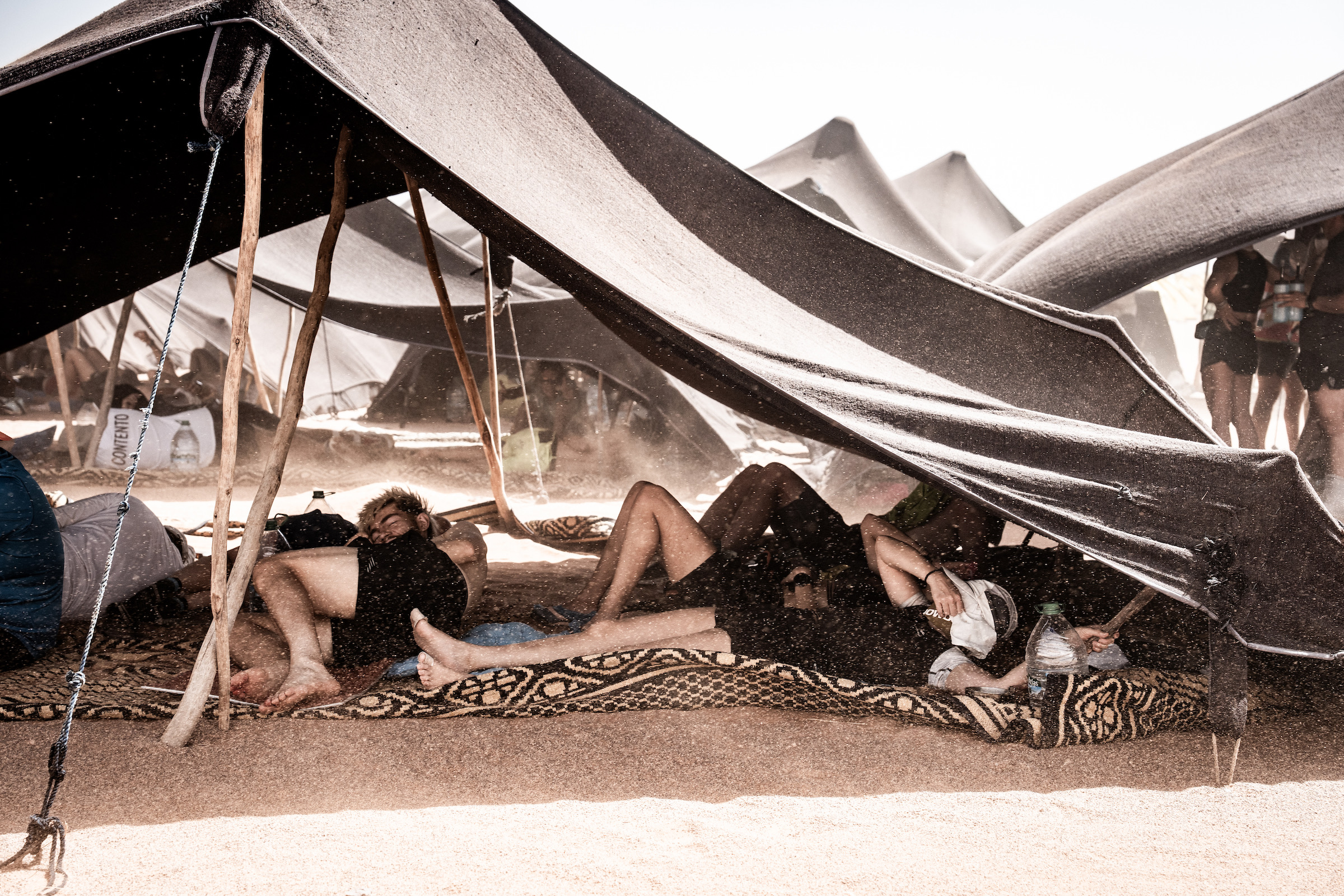
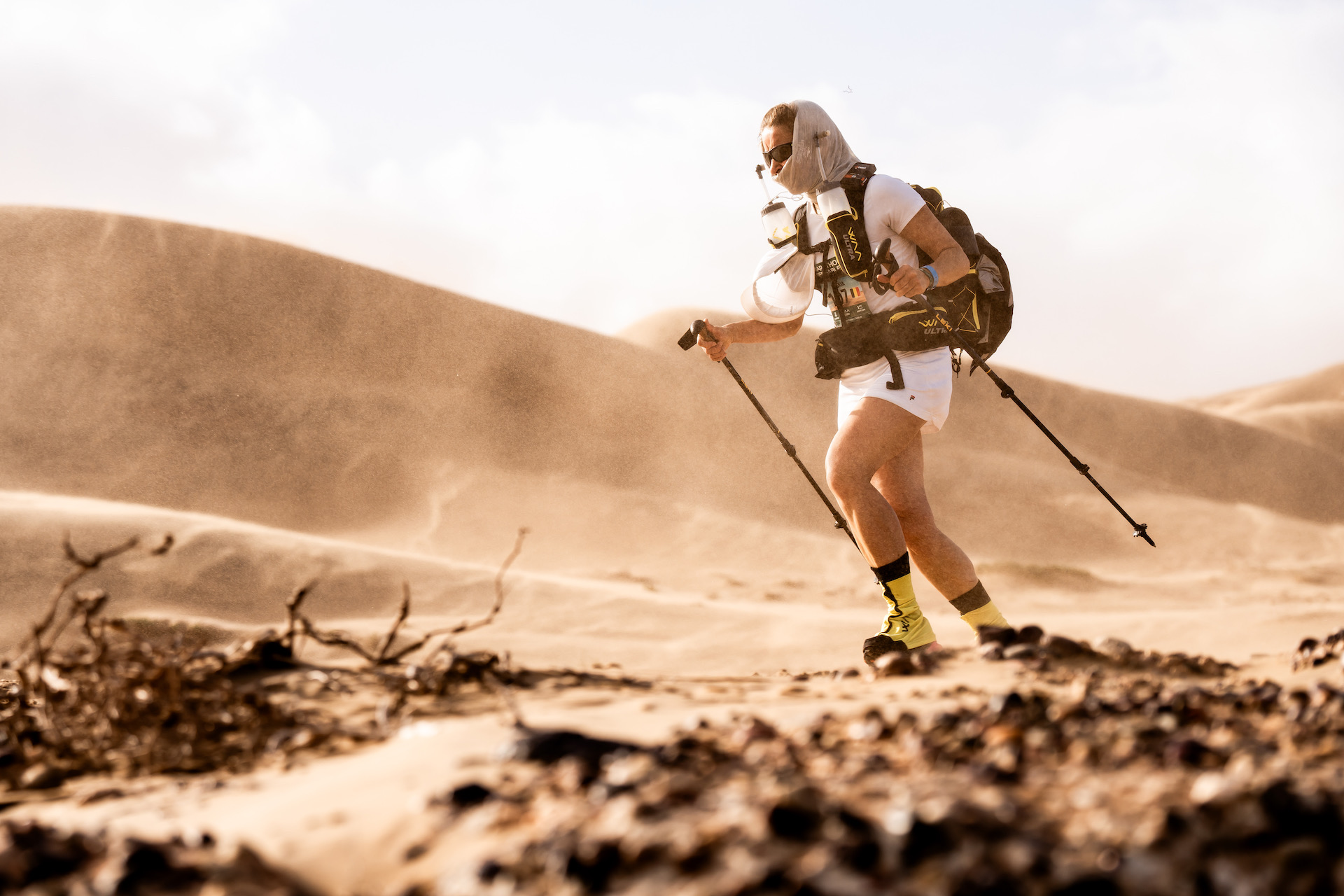
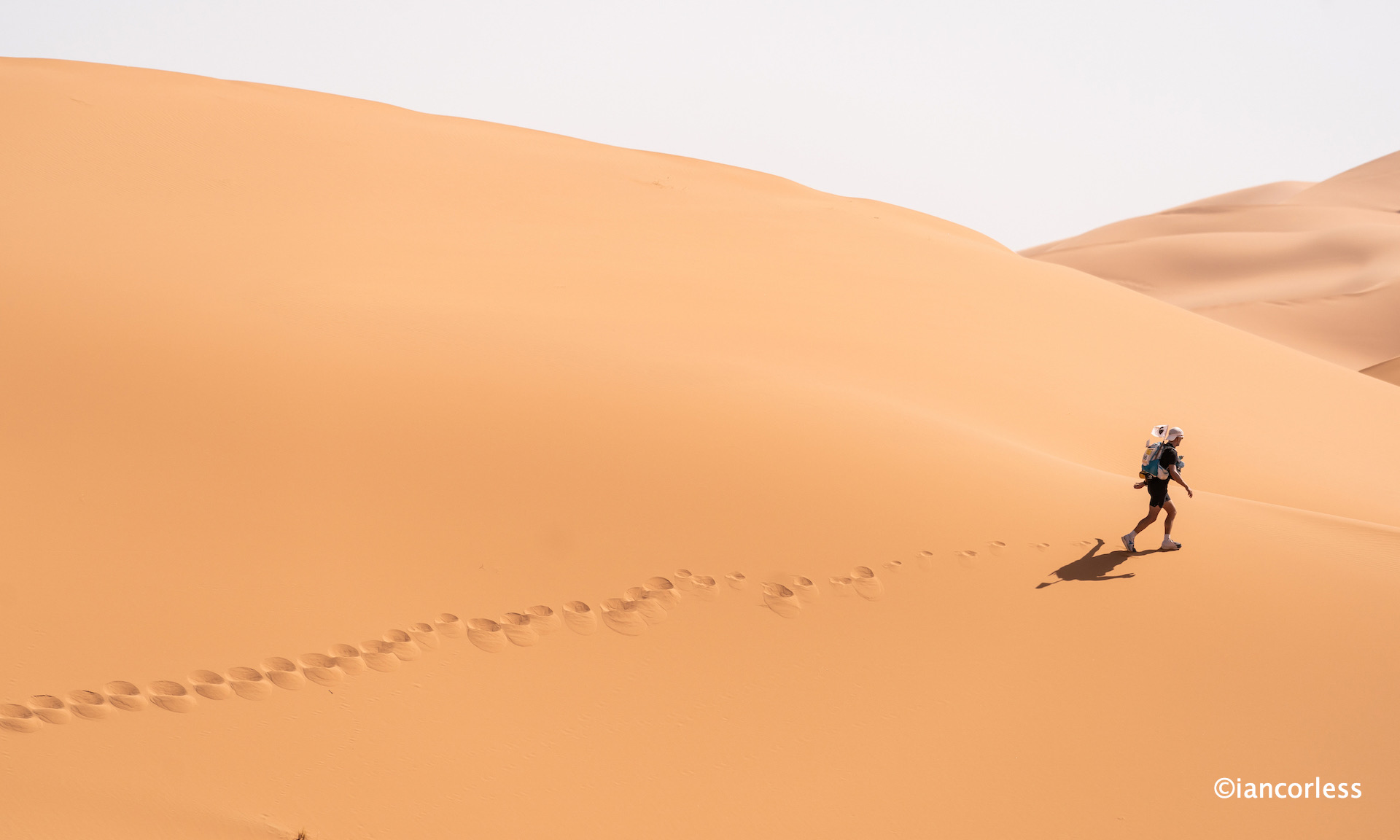
The last day, on paper, a relatively easy 23km’s, particularly after what came before. The kick in the tail, of course, was the Merzouga Dunes and extremely strong winds and sand storms that made conditions especially tough.
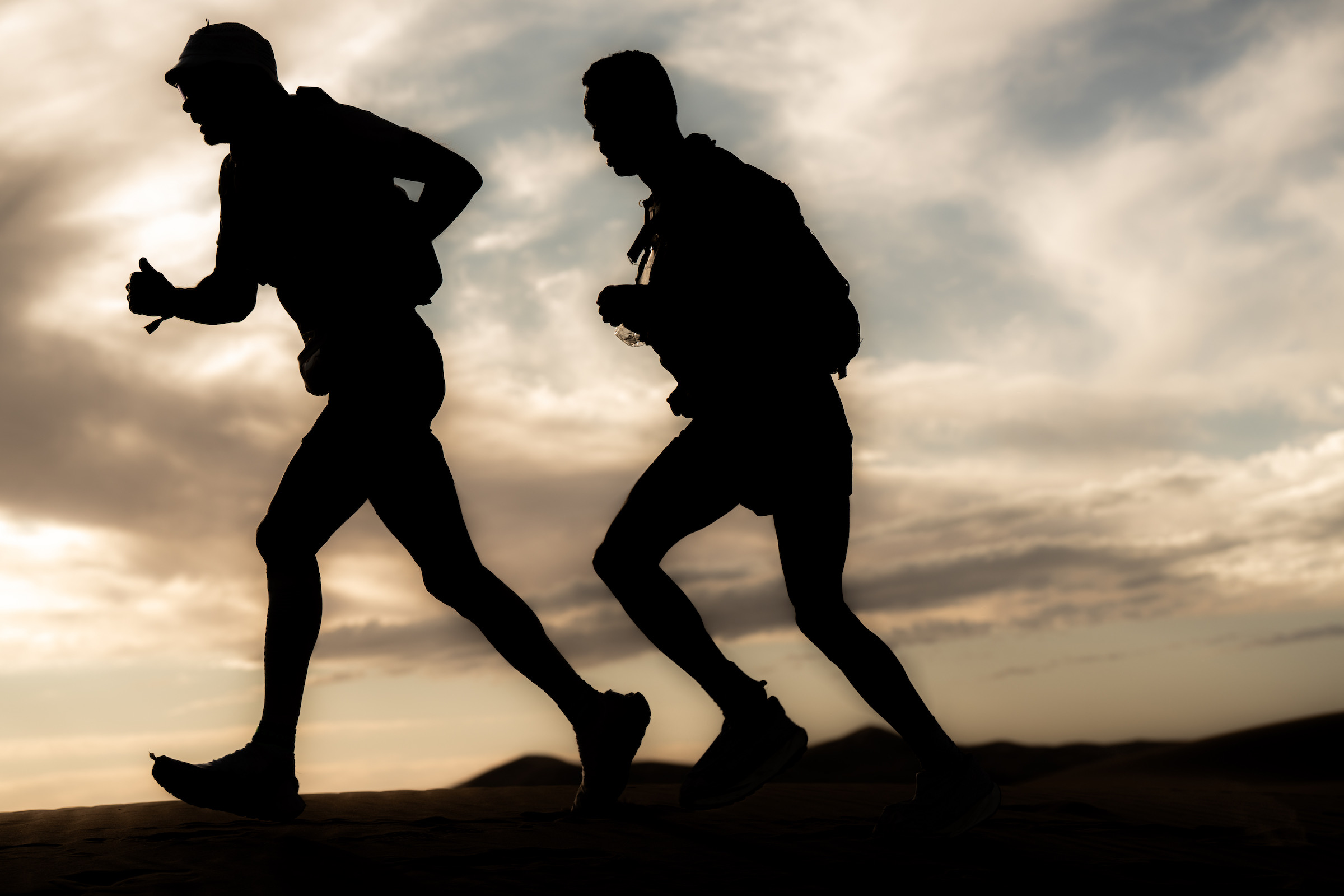
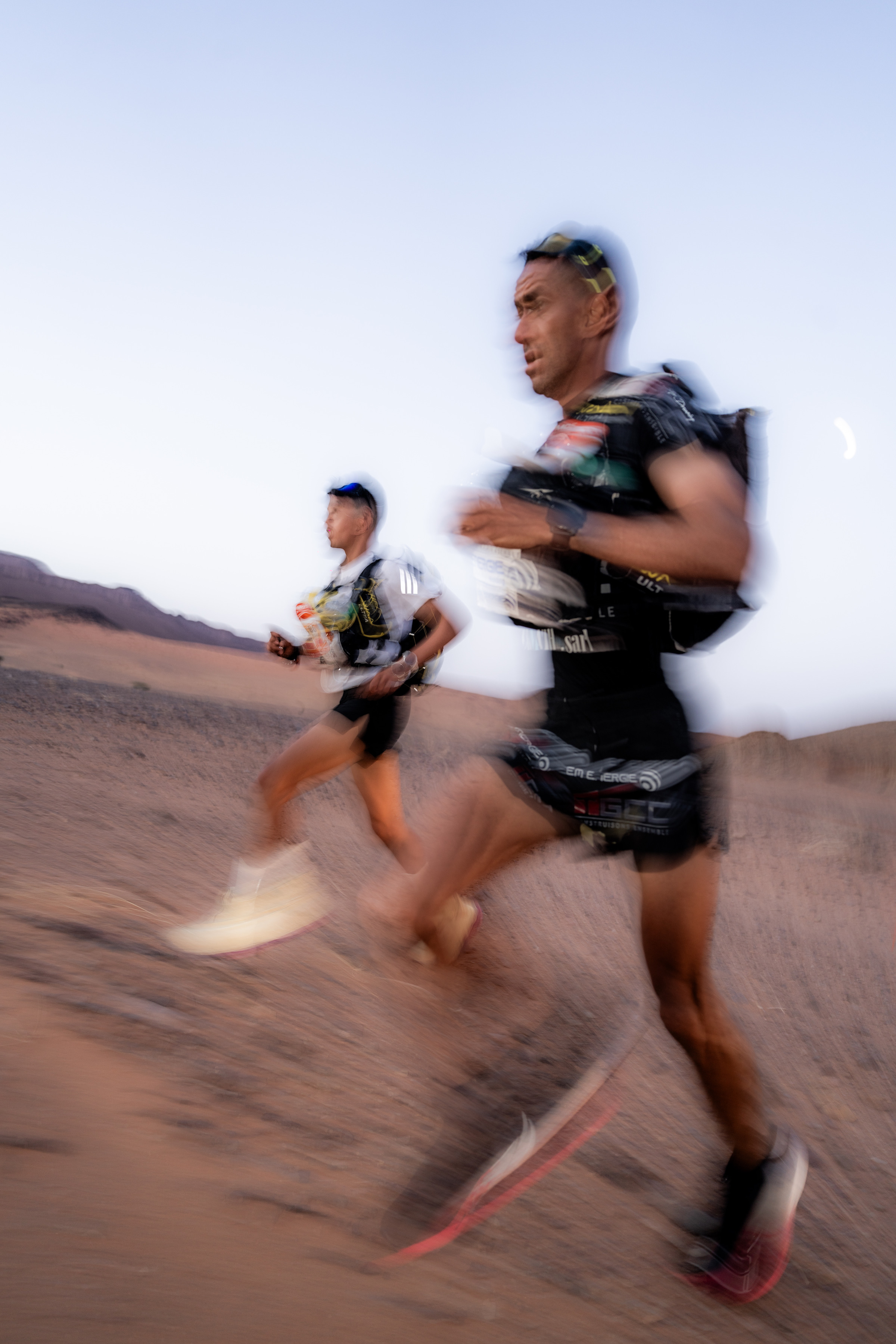
Mohamed and Ludovic Pommeret battled the last stage and Mohamed sealed victory with a sprint, 1:36:37 to 1:36:46. Not far behind was MDS Legendary legend and 11 time champion, Rachid El Morabity 1:42:41.
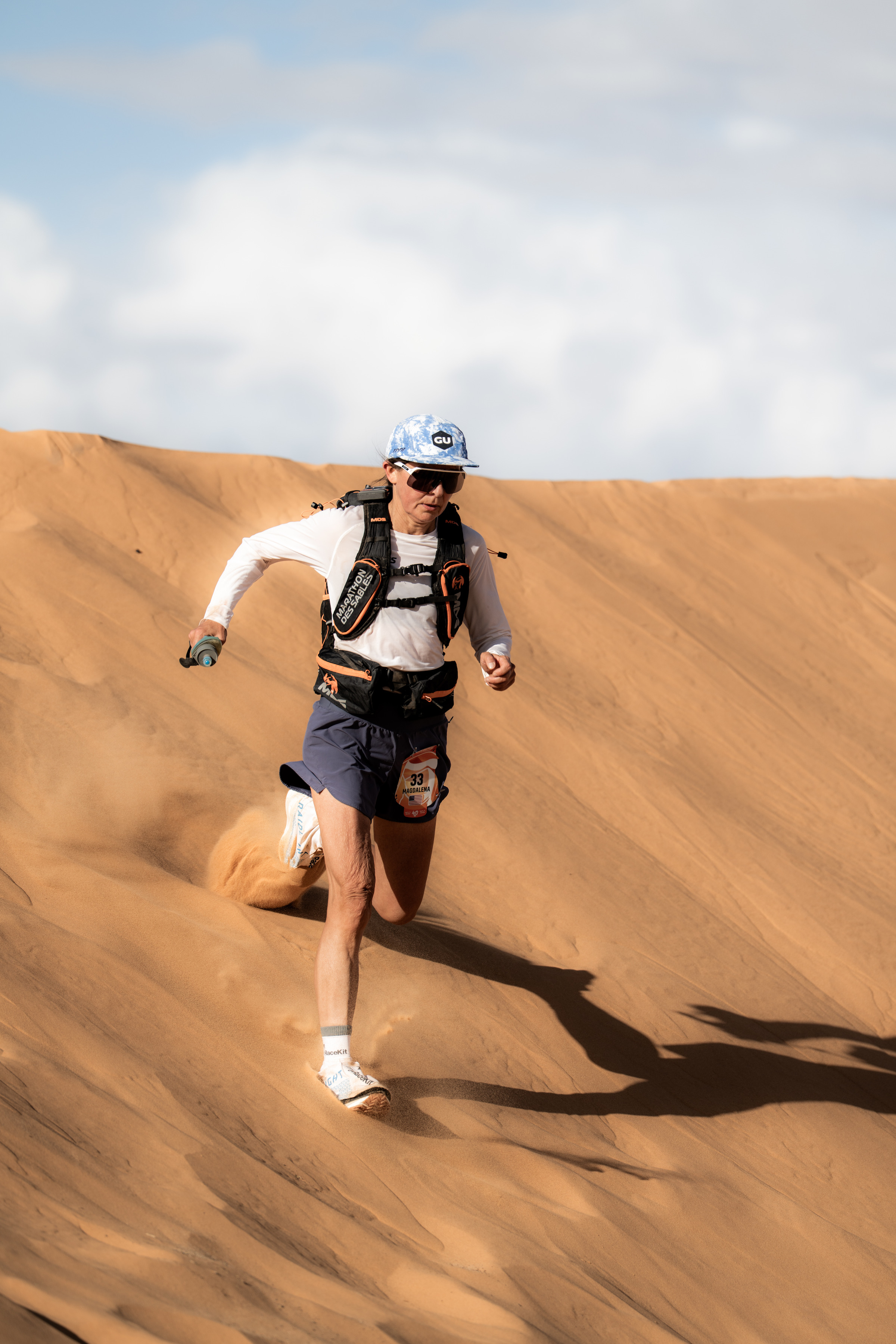
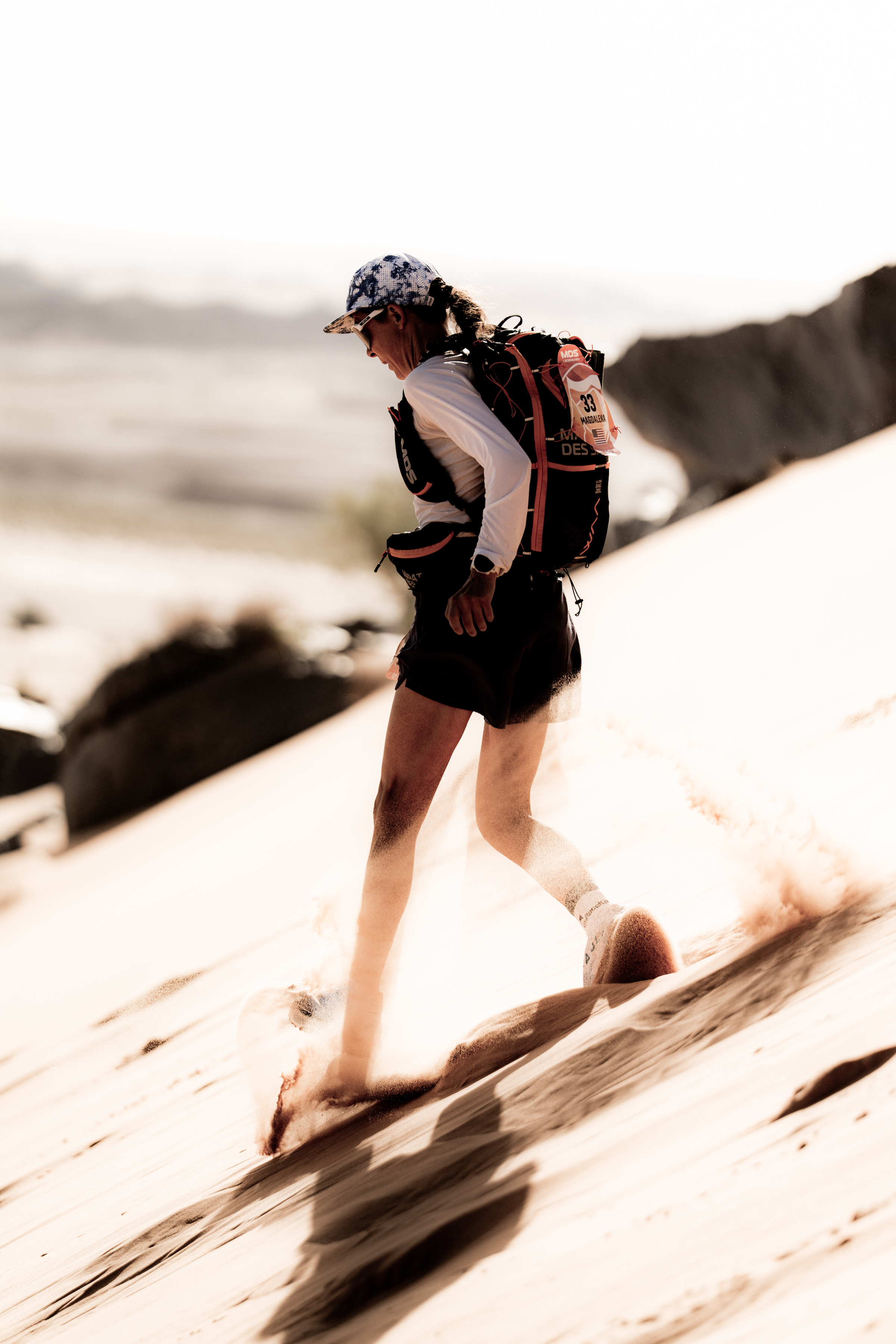
Maryline crossed the line in 2:06:22 and behind, Magdalena Boulet, once again finding incredible form in the latter stages of the race sealed 2nd in 2:11:14.
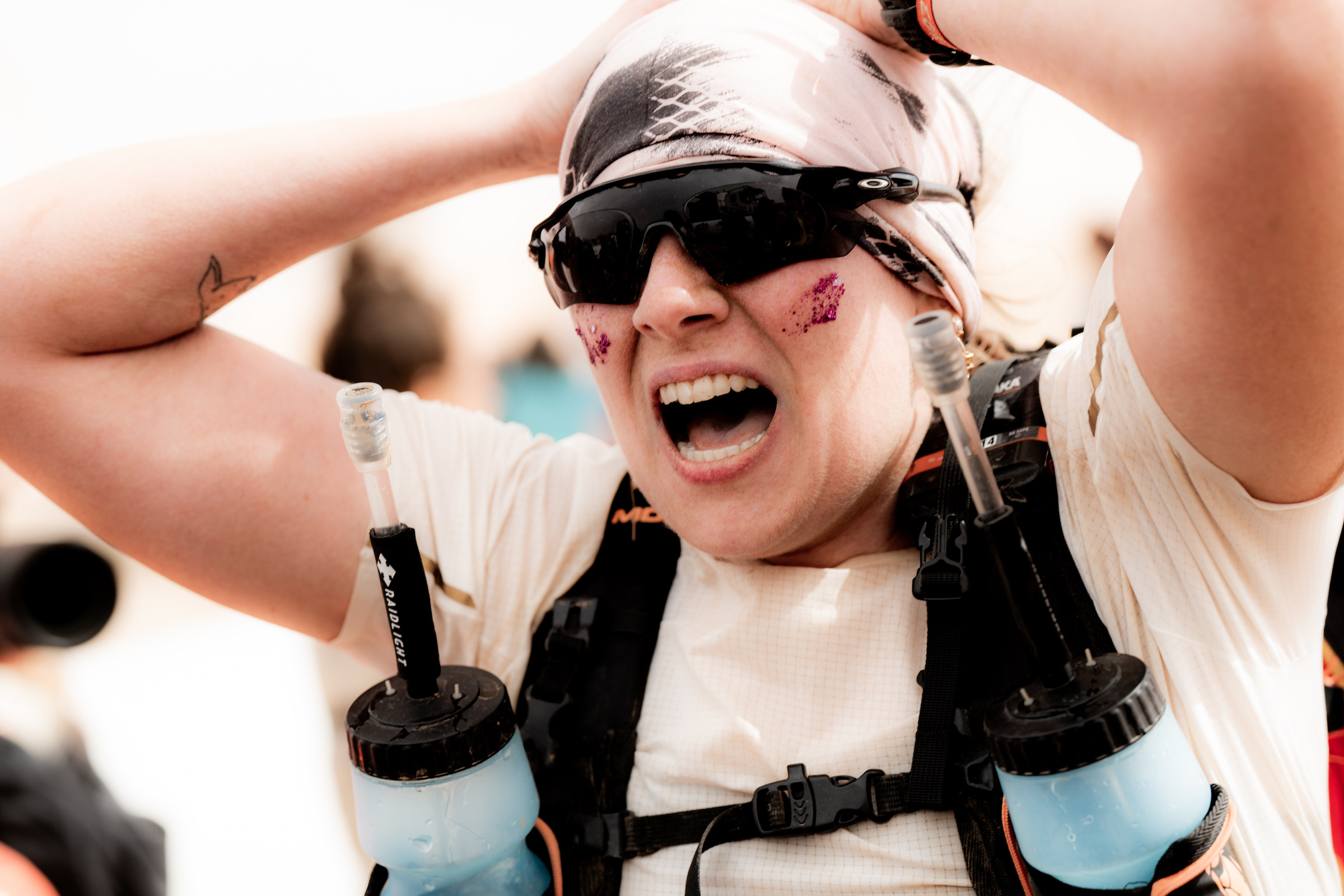
Aziza El Amrany, obviously in pain, battled to the line for 3rd in 2:18:30, ultimately no doubt disappointed that she was unable to battle for the overall victory in the 2026 edition, however, her tenacity really did shine.
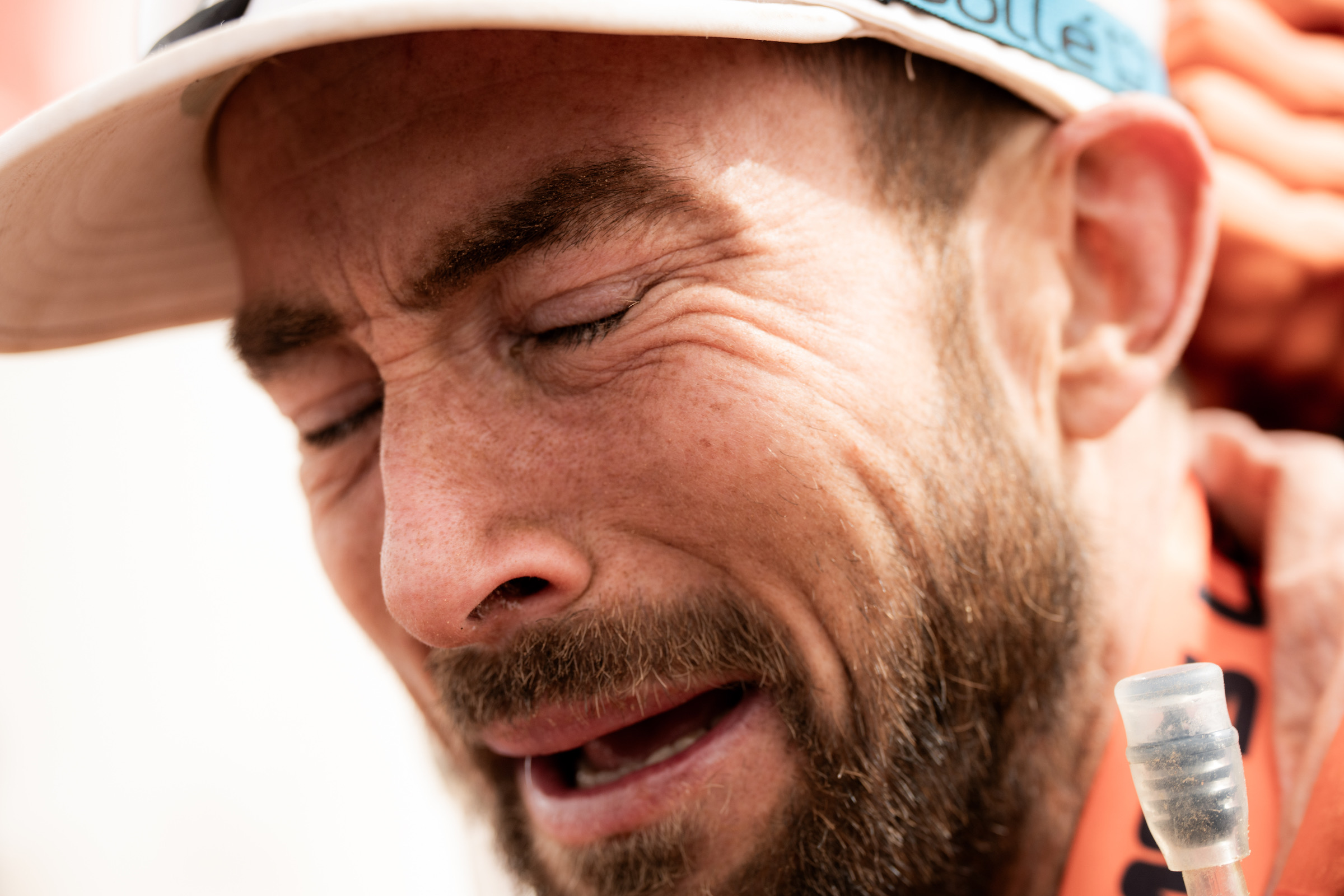
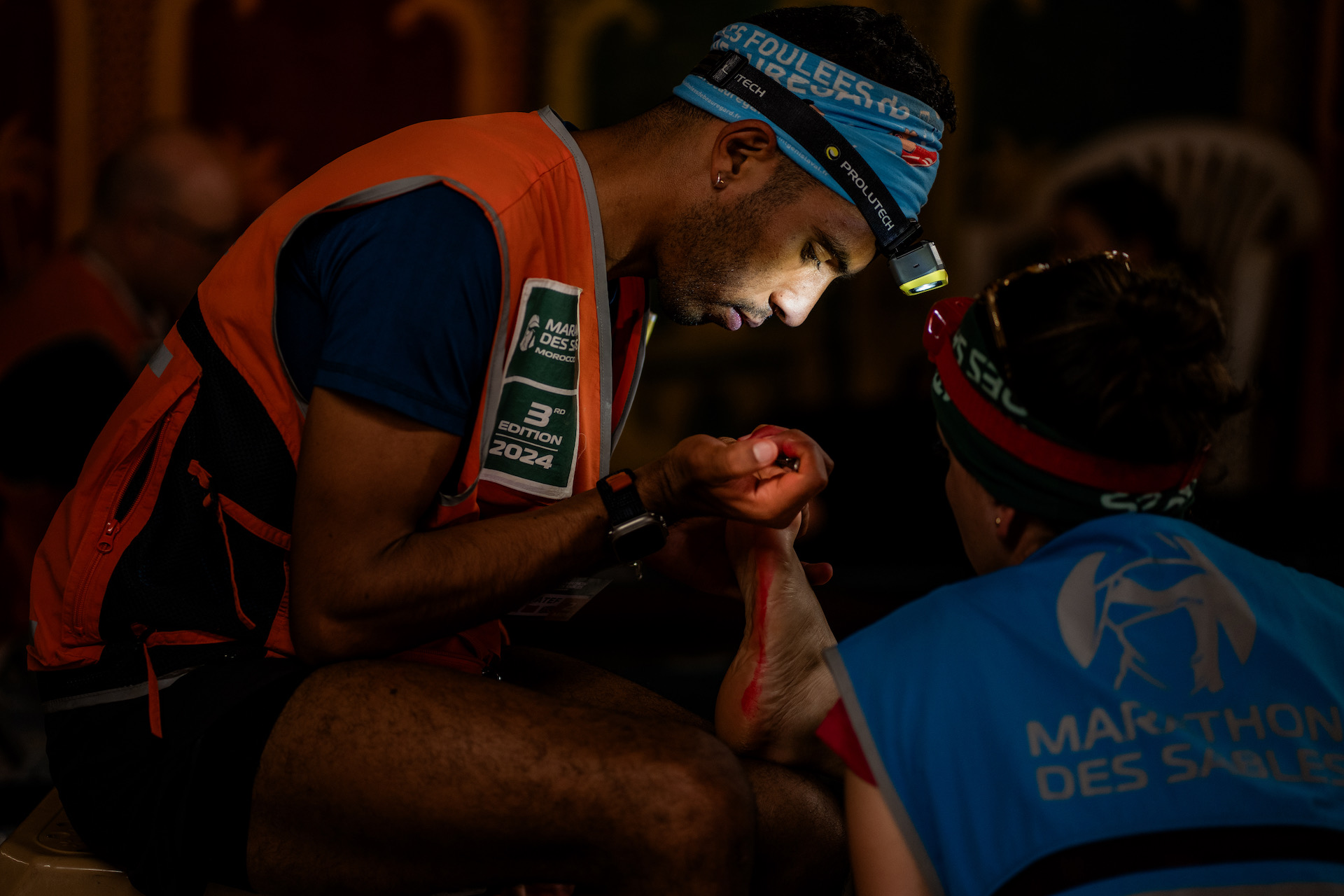
As always, the race is about the human stories – the highs, the lows, the mental game to finish. From sore blistered feet to damaged muscles, the story to become a Legend is a special one. And the words of Roosevelt are apt.
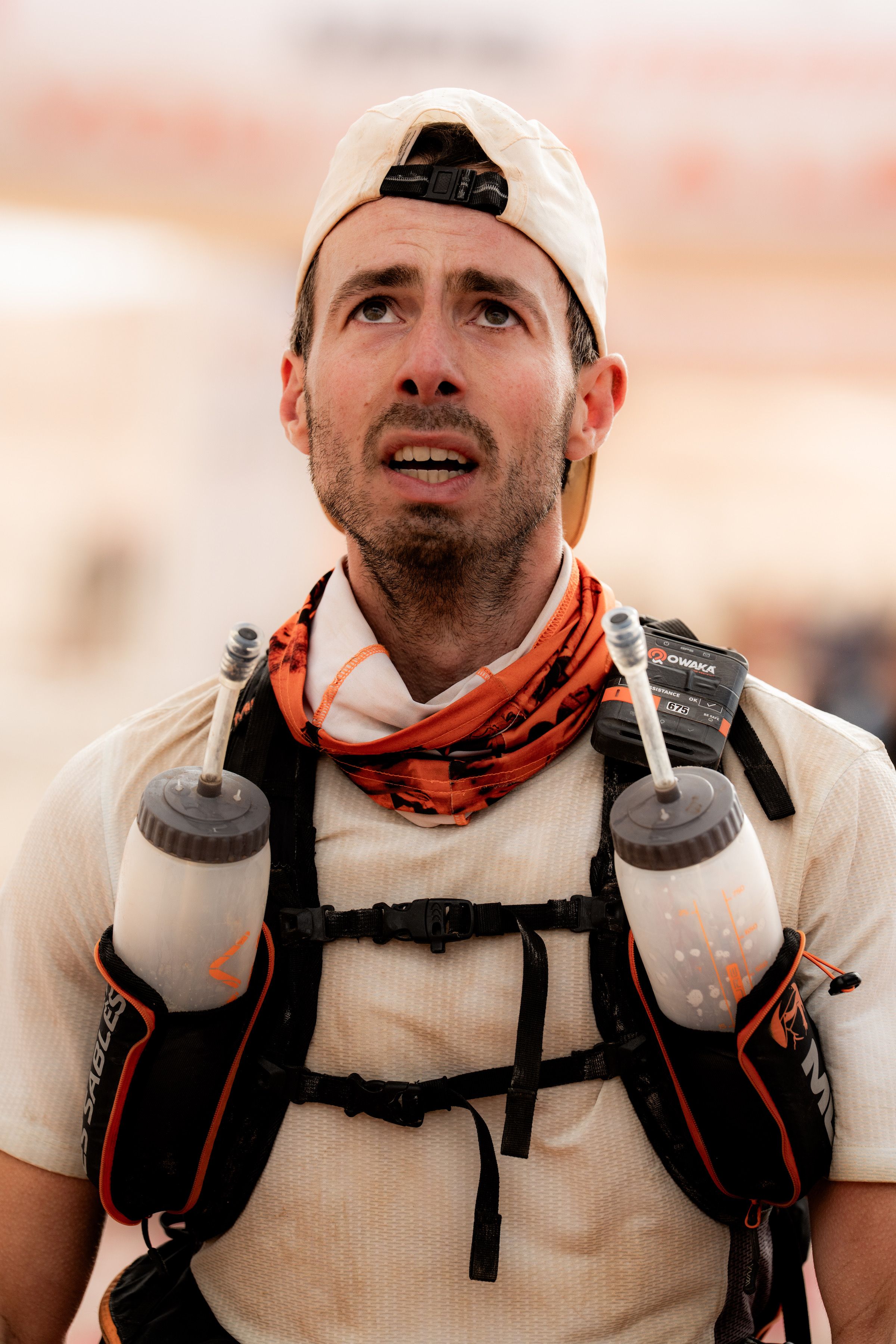
It’s not the critic who counts, not the man or woman who points out how the strong man or woman stumbled, or when the doer of deeds could have done better. The credit belongs to the man or woman who is actually in the arena; whose face is marred by dust and sweat and blood; who strives valiantly; who errs and comes short again and again; who knows the great enthusiasms, the great devotions and spends him or herself in a worth cause; who at the best, knows in the end the triumph of high achievement; and who at the worst if he or she fails, at least fails while daring greatly, so that his or her place shall never be with those cold and timid souls who know neither victory or defeat.
This quote personifies the MDS spirit. One has to be in the arena, fighting to achieve glory and yes, some may not achieve their goal, but they had the bravery to at least try.
To conclude the journey, participants will celebrate on Ouarzazate with a gala dinner, awards ceremony a party that will go into the night and then the next day onward travel.
MDS Legendary is always special, the 2026 edition? Very special.
The penultimate stage of the 40th edition of MDS Legendary and after the excitement of the 100km long stage, what surprises would this day bring? Tired bodies and tired minds, especially after relentless sand storms the previous day, did not stop the enthusiasm for the classic marathon stage.
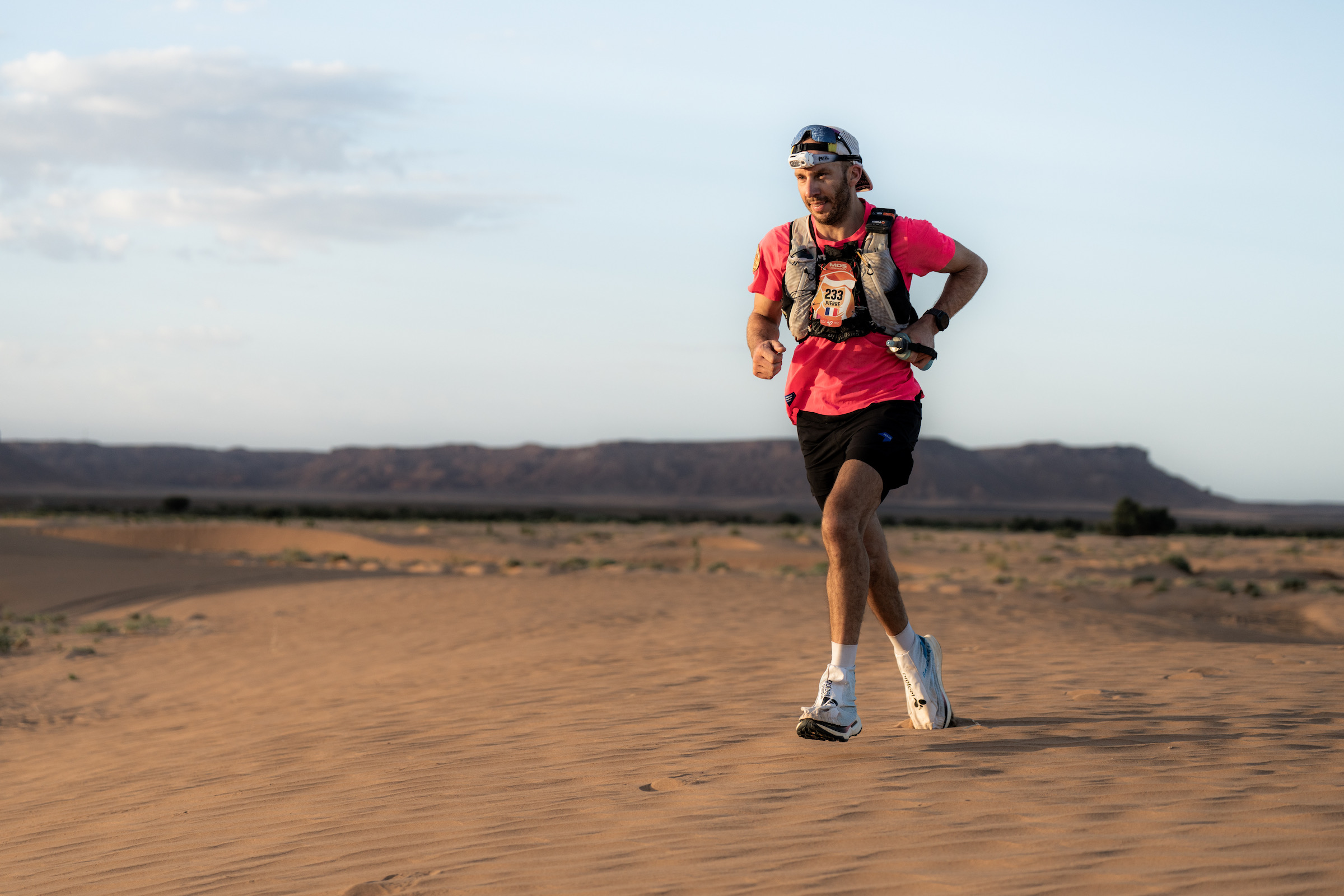
Pierre Meslet pushed the early pace opening a gap and retaining the lead well beyond CP1. Michael Gras also pushed hard along with Ludovic Pommeret. Could this french trio break the Moroccan duo?
Quite simply, no!
Mohammed El Morabity took over after CP3 on a key section of the route and then pushed all the way to the line.
Behind, the pace of the Moroccan could be felt and the rest had to respond or surrender.
Rachid and Ludovic did respond and the gaps started to open, eventually the top 10 men separated by 34-minutes at the finish line.
Mohammed concluded the marathon in 03:08:07 and behind, his brother, Rachid secured 2nd in 3:12:24. Ludovic just 1-minute back in 3:13:23.
Maryline for the women continued the winning form and once again ripped apart the women ranking with a 4:03:03 finish.
Magdalena Boulet, MDS Legendary 2018 champion, today found the form of old and finished 2nd ahead of Aziza El Amrany, 4:28:18 and 4:36:52 respectively.
Mohamed leads the race with 19:11:02 and Rachid is 2nd with 19:33:44, Ludovic is third in 19:41:57 – on paper, these results should not change with a 21km last stage – however, history shows, anything can happen.
For the women, Maryline is unstoppable and barring a disaster, is the 2026 champion. Aziza El Amrany is 2nd, and Desiree Linden is 3rd, the gap between the duo is over 30-minutes.
The final stage awaits. There will be drama, tears and emotion on the line.
Stage 2 of the 40th edition of the MDS Legendary delivered speed, strategy… and something far deeper, a raw fight for survival.
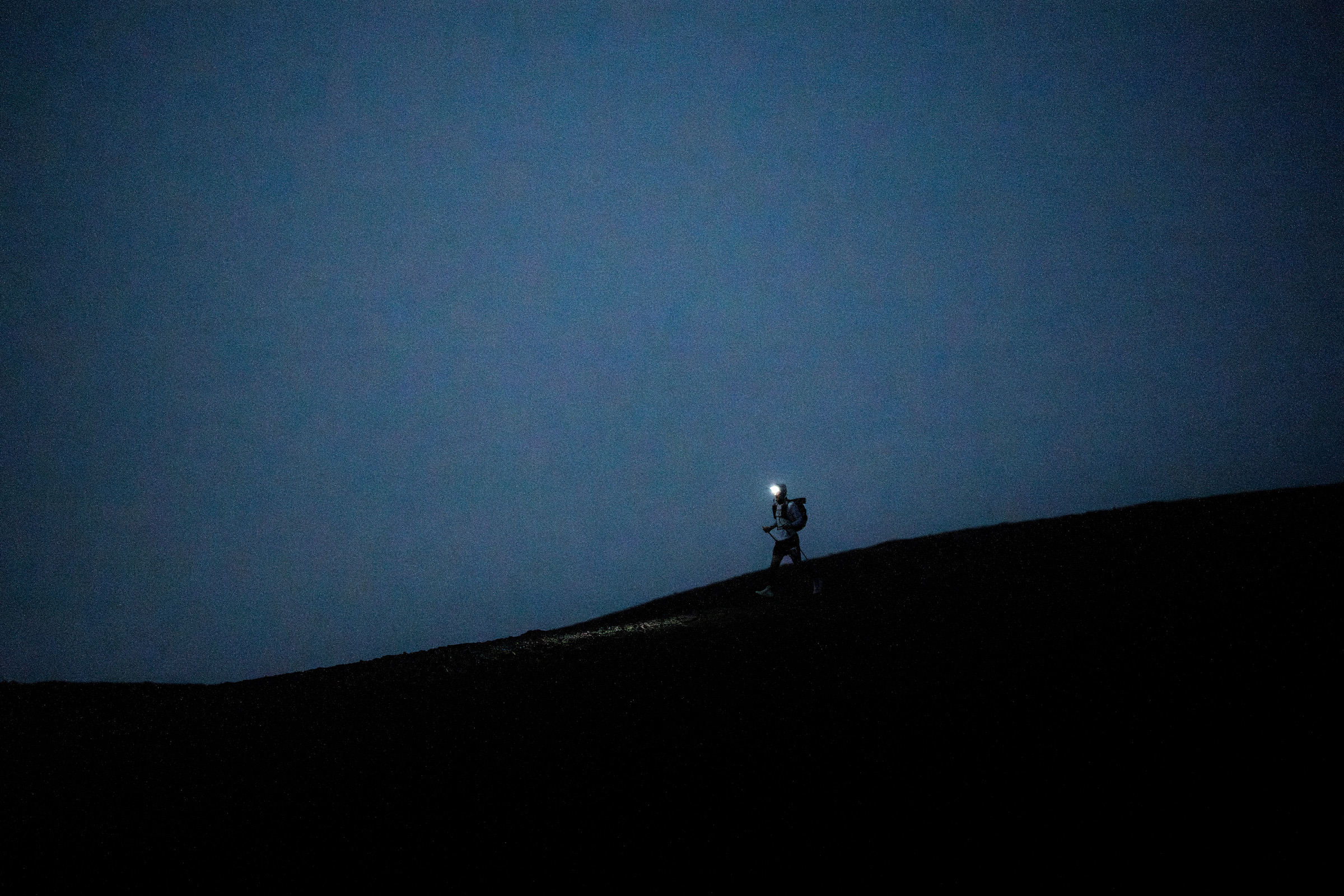
A crisp 06:00 start gave runners a rare gift: cool desert air, fragile and fleeting. In the darkness, the start line shimmered with the glow of head torches, like a moving constellation about to be swallowed by the vastness ahead. For a brief moment, it felt almost forgiving.
But the desert never gives for long.
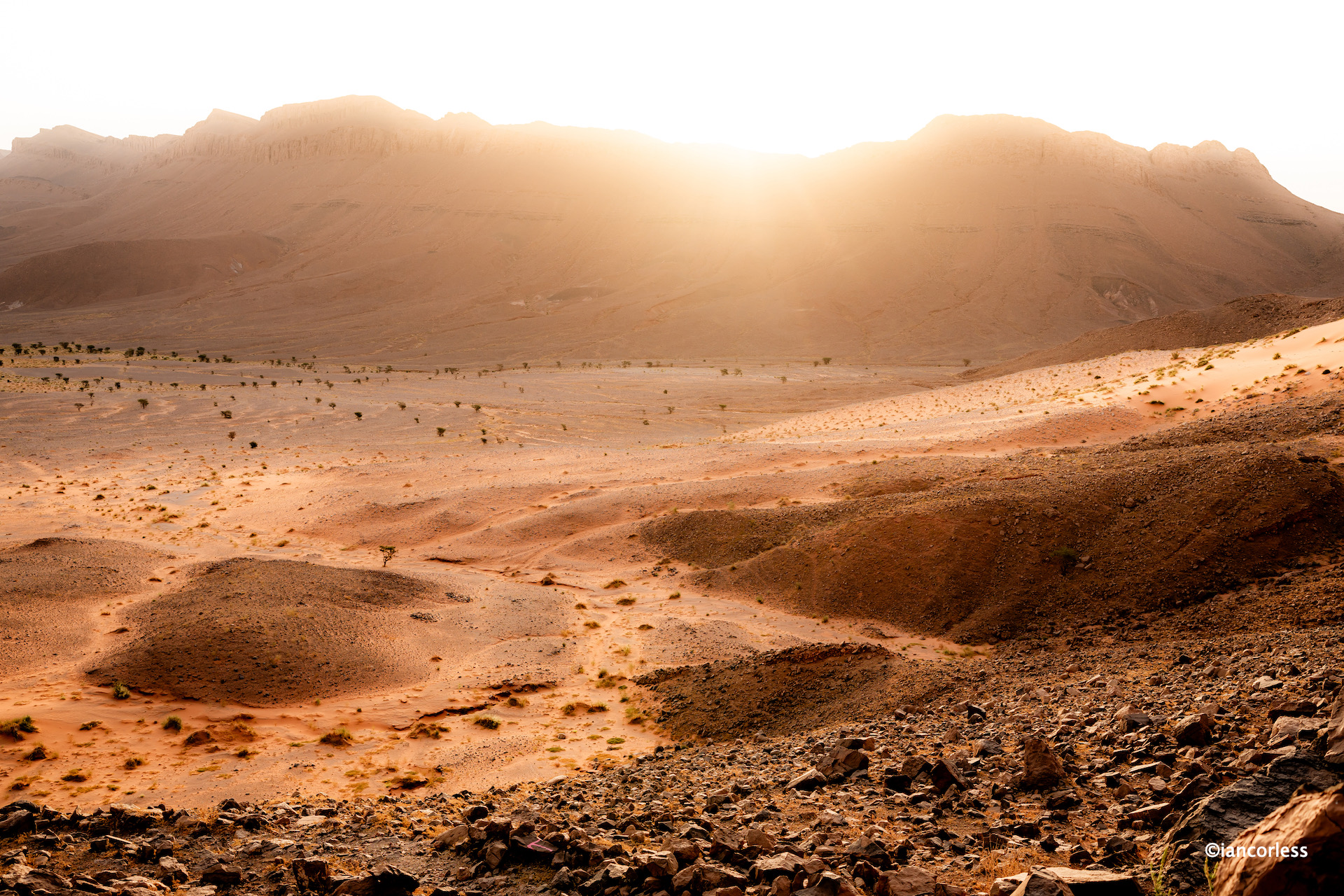
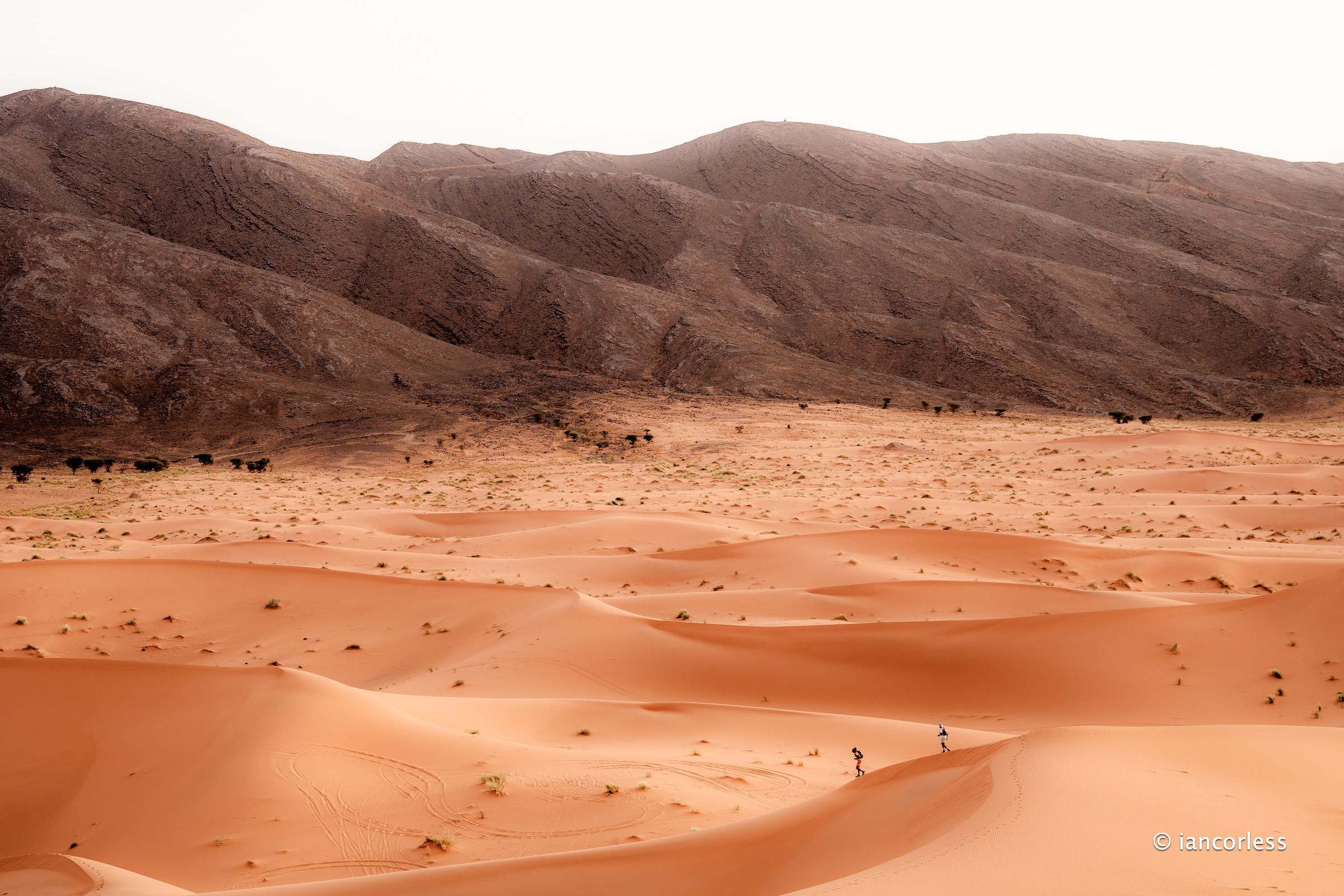
The 40.5km point-to-point stage, stretching across a fast, flat expanse toward a brand-new bivouac, was broken by checkpoints at 8, 15, 21, 28.1, and 33.7km, lifelines scattered across an otherwise merciless landscape. There was no shade. No escape. Only distance, heat, and the quiet question each runner carried: how much more can I endure?
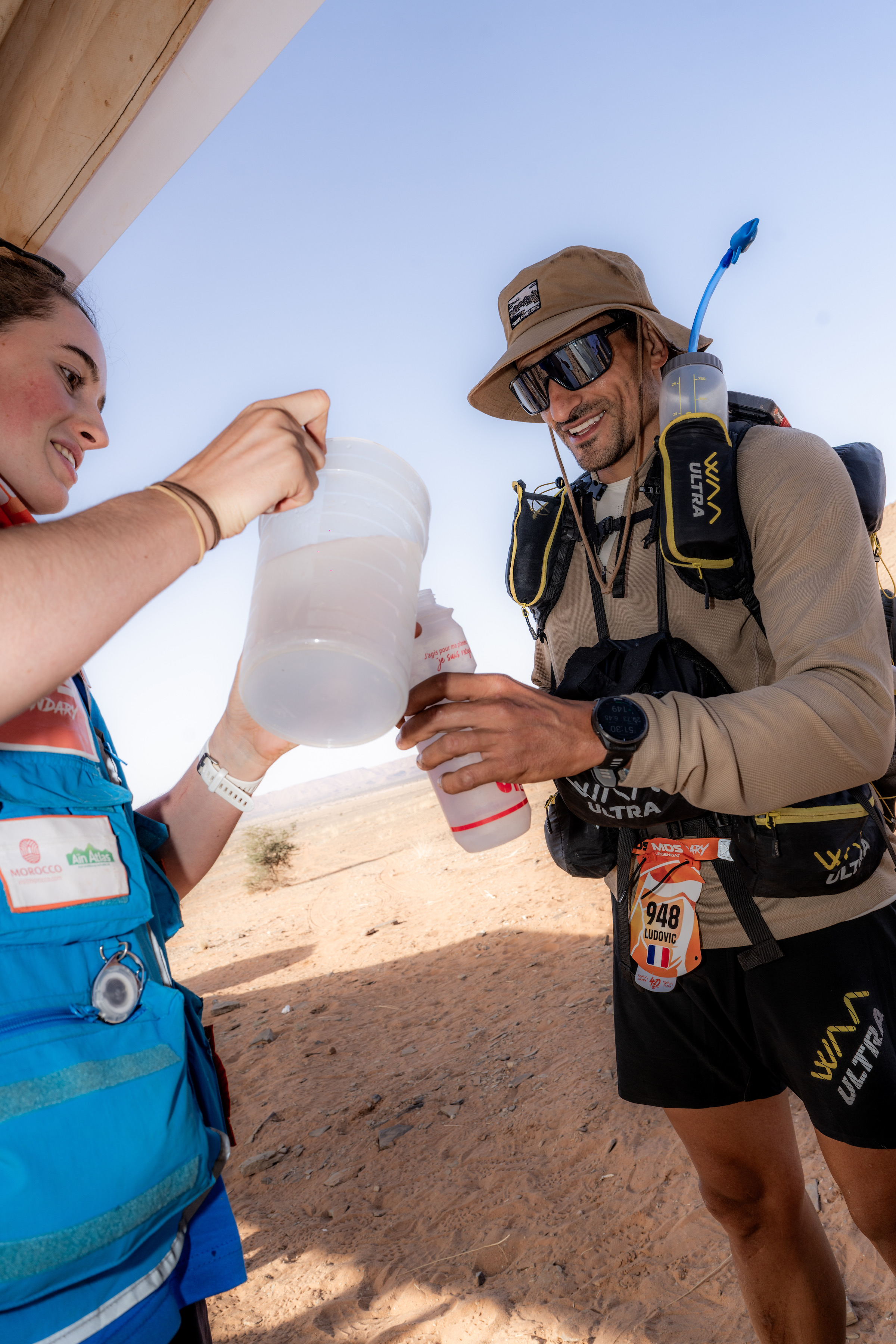
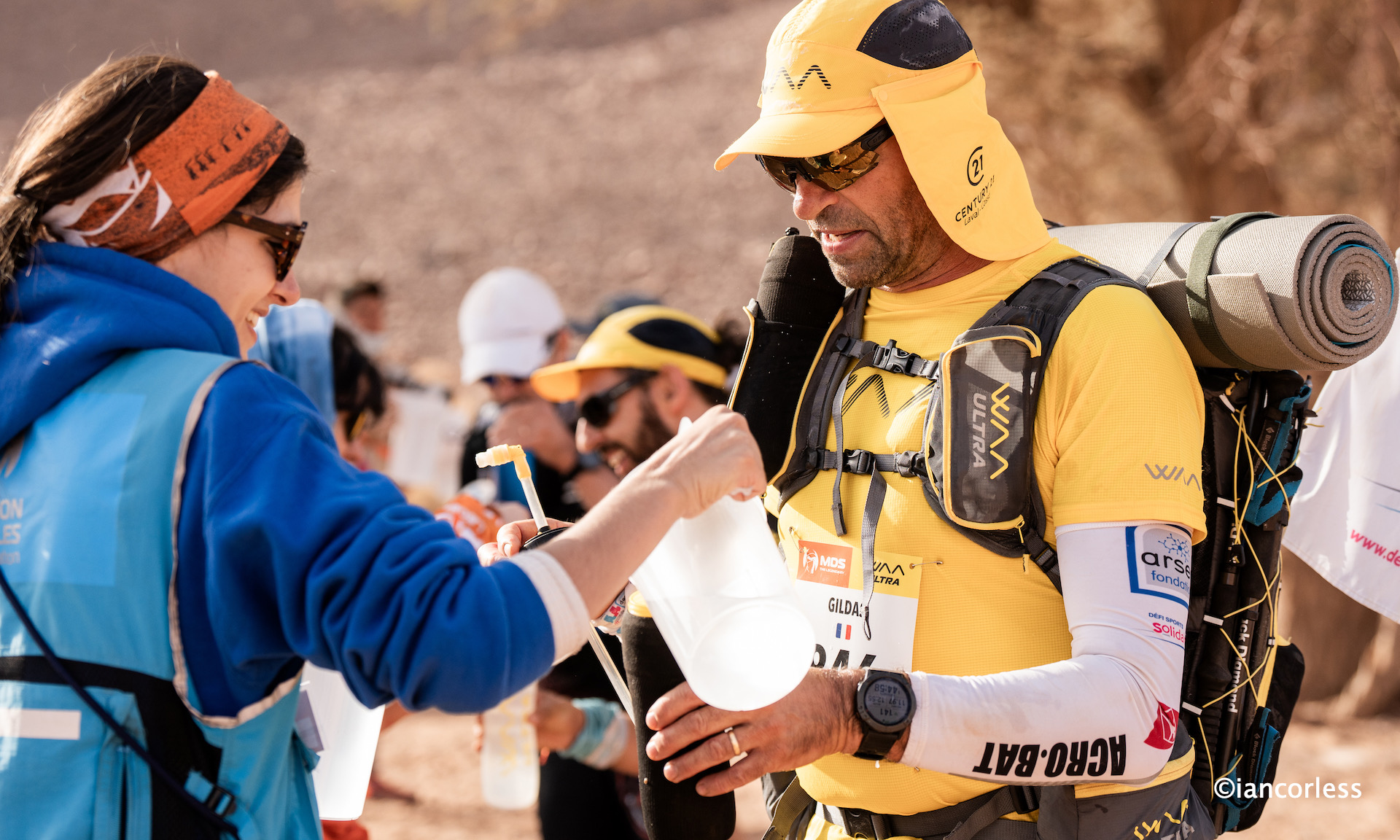
At every CP, blue coats stood as silent heroes in the furnace, offering water, and iced water poured over the neck, brief moments of relief before the long march resumed.
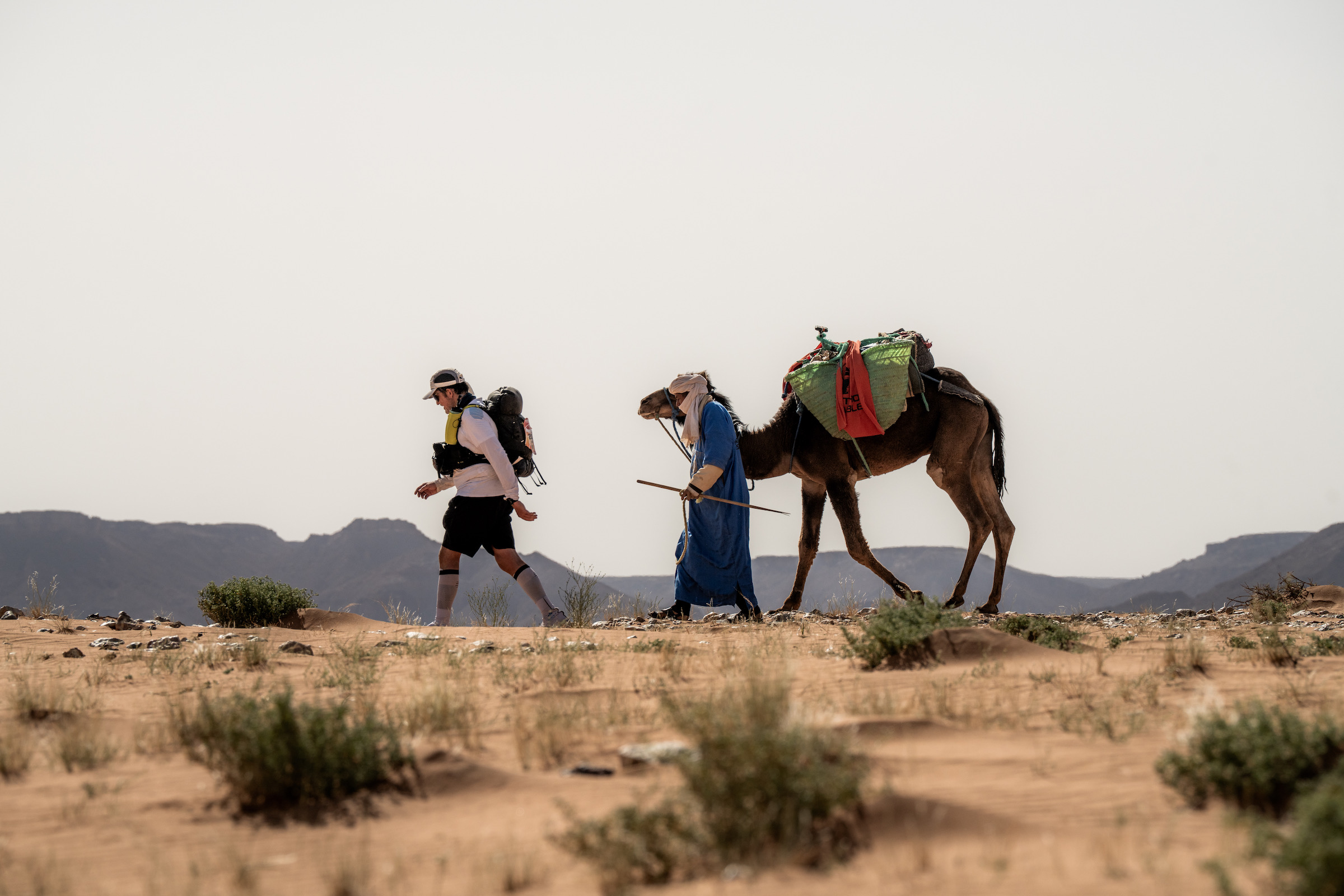
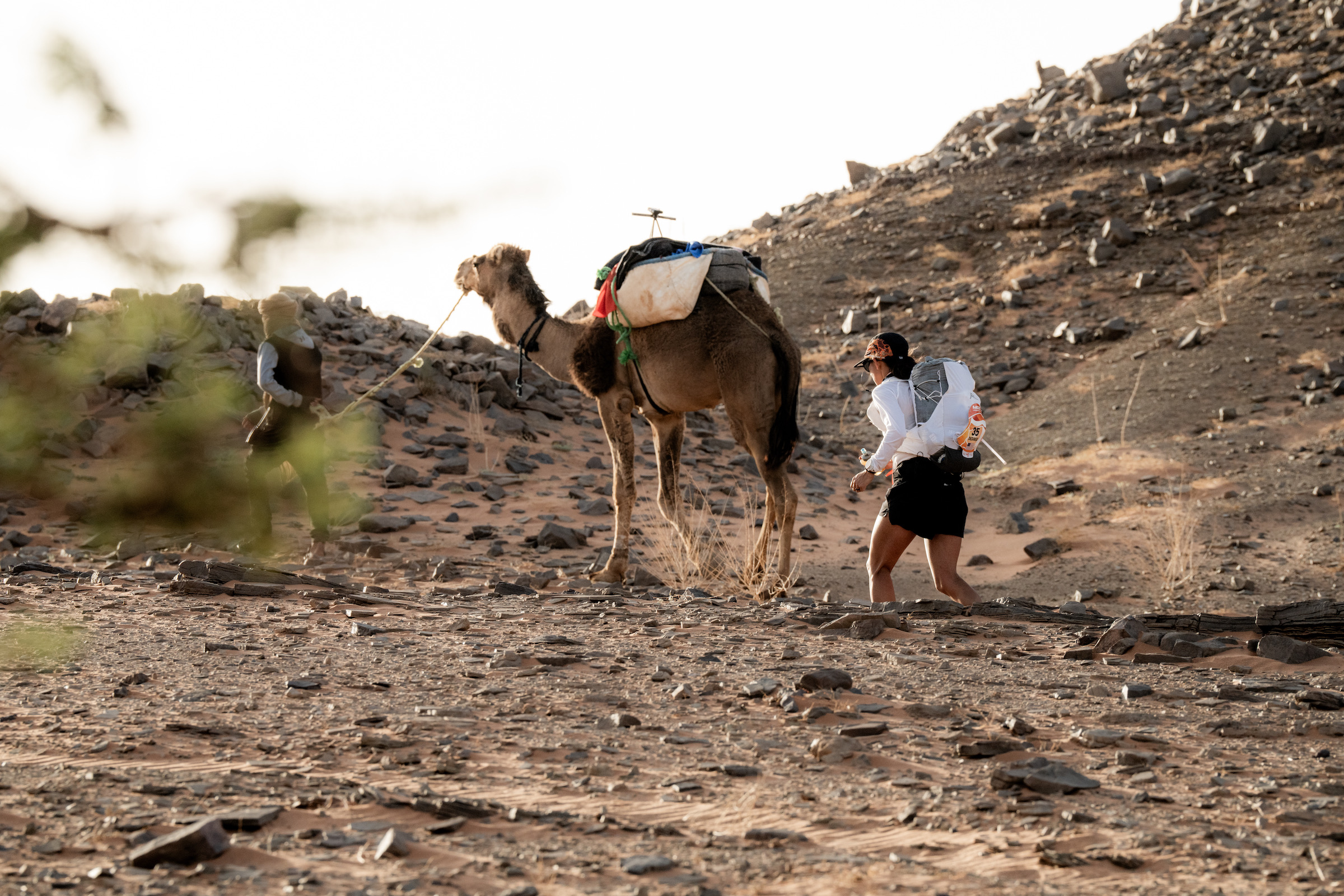
In the distance, the camel safety patrols moved steadily across the horizon, watchful and calm—guardians of the race, there for the moment when determination might tip into danger. A reminder that here, in the heart of the desert, this is more than competition.
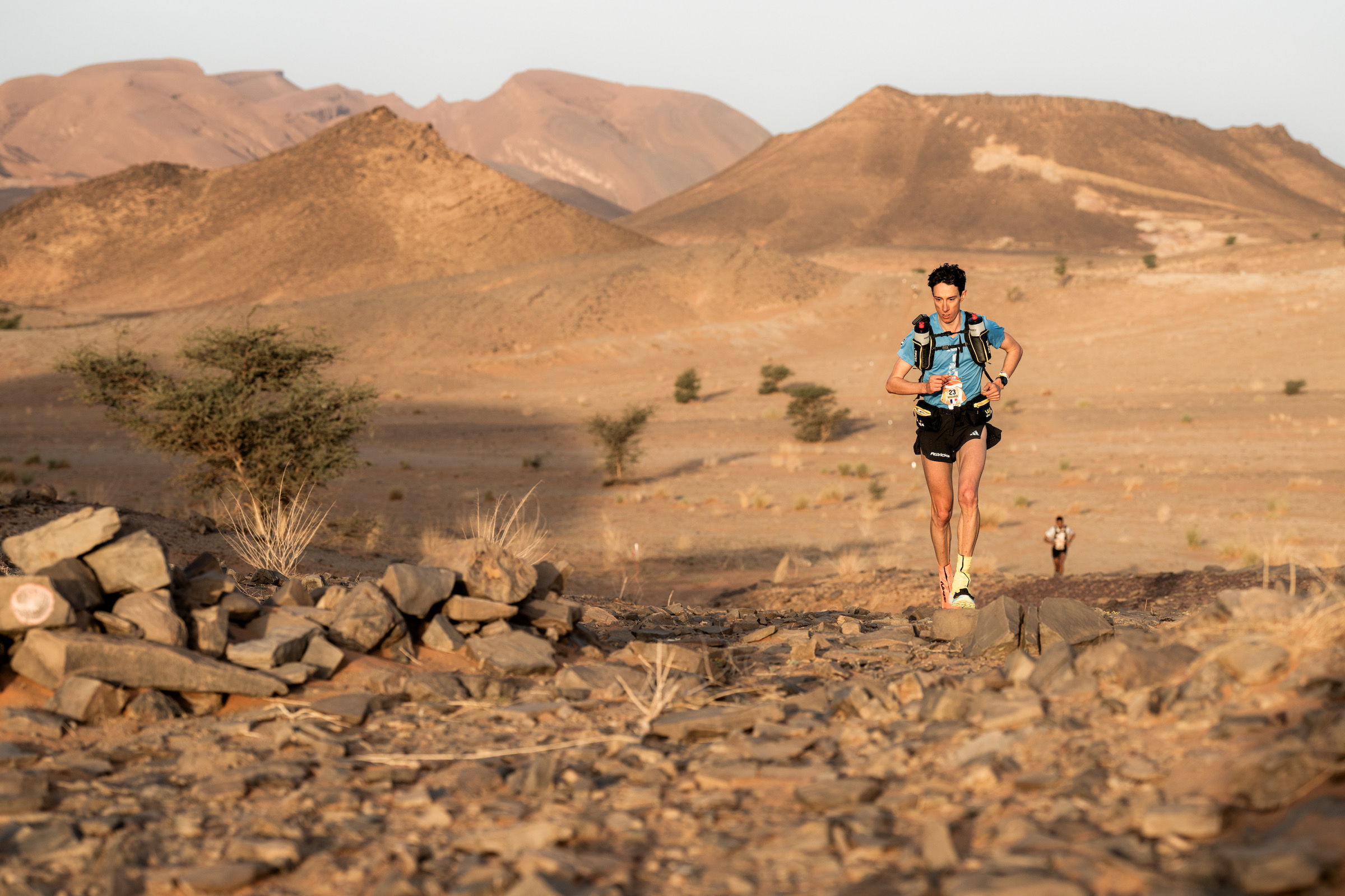
In the men’s race, Michaël Gras ignited the stage early, daring to disrupt the dominance of Mohamed and Rachid El Morabity. For a time, the pace burned hot with ambition. But experience has its own rhythm. By CP3, the El Morabity brothers had taken control, waiting, measuring, then striking. Mohamed surged to victory in 2:58:26, Rachid close behind in 3:03:01. Gras, after a relentless fight against both rivals and the rising heat, held on for third in 3:03:46.
The women’s race told its own story of strength and resilience. Maryline Nakache led from the front with authority, claiming victory in 3:48:21.
Behind her, the desert reshaped the field. Aziza El Amrany faltered under the pressure, and opportunity emerged through the heat haze. Agathe Teillet-Magot and Desiree Linden pushed through to secure their podium places in 4:10:31 and 4:13:00.
But beyond the podiums, beyond the times, every runner was fighting a quieter, more personal battle, against the sun, against fatigue, against the voice that whispers stop.
And still… they kept going. With Stage 3 ahead, a shorter but pivotal test, the focus already shifts to what looms large on the horizon: Stage 4 and its brutal 100km reckoning.
The desert is not done. In truth… it’s only just beginning.
This edition marks the 40th anniversary of the MDS Legendary. Four decades of runners crossing the Sahara under their own power. As we move through March, I’m sharing a short series of weekly articles to help sharpen your preparation. This is the fourth of four.
By now, the nerves are real. Anticipation is building. And yes, stress might be creeping in too. That’s normal. You’re about to take on one of the toughest endurance races on the planet. But here’s the truth: the hard work is already done.
Now, the focus shifts.
Ease Back to Move Forward
It’s tempting to squeeze in one last long run. Don’t.
At this stage, there’s nothing to gain and everything to lose. Fatigue and injury are the only likely outcomes. Instead, keep sessions short and purposeful. Stay loose. Stay sharp. This is taper time. Think of it as recharging your battery so you arrive on the start line fresh, not drained.
Prepare for the Heat
If you can, use these final days to adapt to the heat. It doesn’t need to be perfect, but every little bit helps.
Hot yoga, saunas, hot baths, even treadmill sessions with extra layers can all make a difference. If you have access to a heat chamber, even better. The Sahara is unforgiving, and any adaptation you build now will pay off when it matters most.
Plan Everything, Then Simplify
Now is the time to get meticulous.
Lay everything out. Build a spreadsheet if that helps. Go item by item through your kit. Ask yourself what you truly need.
Weight matters. Every gram counts when it’s on your back for multiple days. Strip out the luxuries. Be ruthless. The goal is to go as light as possible without compromising safety or performance.
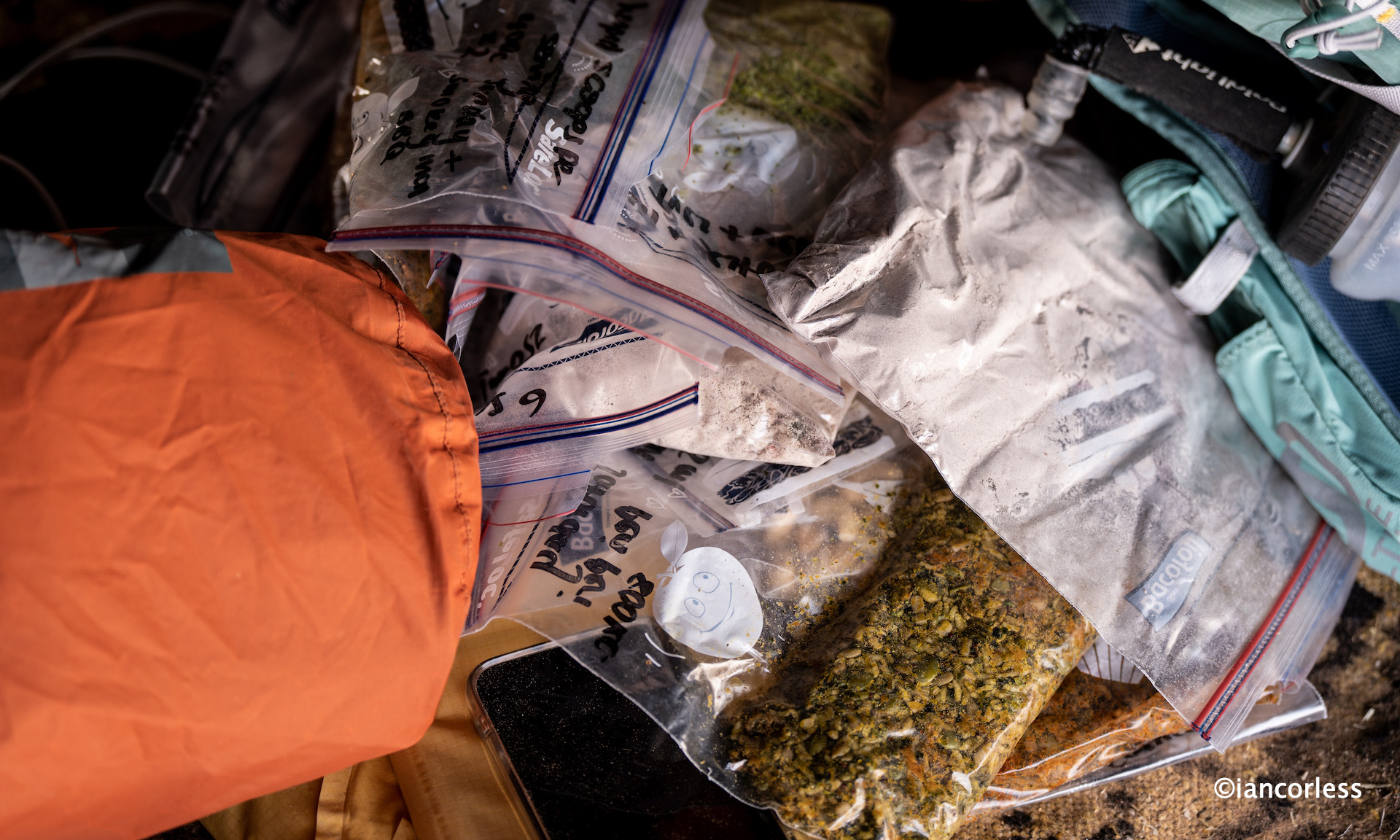
The same applies to food. Check your calories. Repack if needed. Remove excess packaging. Make sure what you carry is efficient, practical, and something you can actually eat under stress.
Get the Admin Right
Details matter here.
Medical certificates must be correct and meet all race requirements, especially your ECG. Don’t assume, double-check.
Photo by Ian Corless
Your passport needs to be valid. It sounds obvious, but it catches people out every year. Confirm your travel documents, bookings, and transfers. Know your plan from departure to arrival.
The goal is simple: remove every possible source of stress before you leave.
Travel Smart
Wear your race kit when you travel. That includes your shoes and gaiters.
Your race pack should go as carry-on, with all essential gear inside. The only items that should go in checked luggage are those that have to, like a knife or trekking poles.
If checked luggage gets delayed, you’ll still be able to race. That’s the mindset.
Protect Your Health
This part might feel extreme, but it’s important.
Avoid unnecessary contact with others. A cold or virus now could undo months of work. Skip handshakes, hugs, and shared food or drinks. A simple “Namaste” with hands together works just fine.
Avoid salads or anything that might carry risk. Stick to well-cooked, straightforward meals. This isn’t the time to experiment with local cuisine.
Bring your own food for travel and the days before the race. Remember, you’re self-sufficient even before the start. Having familiar food and drink helps you stay relaxed and in control.
Use the Bivouac to Your Advantage
Before admin, your luggage stays with you in the bivouac. Use this.
Bring spares. Extra layers. Small options that allow you to adjust based on real conditions. The desert can surprise you, and this is your chance to fine-tune your setup before committing fully.
Be Ready
Have a clear plan for admin. Know what’s required. Be organized.
Then shift your focus forward.
Stage 1 is coming.
Photo by Ian Corless
Trust the Process
You’ve done the training. You’ve made the sacrifices. You’ve earned your place on that start line.
Now it’s about arriving calm, prepared, and ready to embrace what’s ahead.
Because this isn’t just a race.
It’s a journey. An experience that will stay with you long after the dust has settled.
Take a breath. Stay focused. And get ready for the adventure of a lifetime.
Marathon des Sables: What a Week in the Desert Really Looks Like
The Marathon des Sables has always been legendary. In 2026, it becomes something even more special.
This edition marks the 40th anniversary of the race. Four decades of runners crossing the Sahara under their own power. Forty years of stories, struggle, and unforgettable moments. To honour that history, the 2026 race will be longer, tougher, and designed to celebrate everything the event has become.
As we move through March, I’m sharing a short series of weekly articles to help sharpen your preparation. This is the third of four. The goal is simple: remove uncertainty.
When you arrive in the desert, you should know what to expect.
For many runners, especially first-timers, the unknowns can feel overwhelming. What happens when you arrive in Morocco?
How does the bivouac work?
What does a typical day look like?
And how do the logistics of such a remote race actually function?
Let’s walk through it together.
The Evolution of the Race
The Marathon des Sables has changed over the years, and many of those changes focus on reducing environmental impact.
Past participants will notice significant differences. Charter planes have been removed. More transport now happens overland. The race increasingly relies on local staff and local produce. Media presence has been reduced. A storage centre in Morocco limits the need for shipping equipment every year. Transport trucks have been reduced, and power-saving measures are everywhere, including solar energy.
Water management has also evolved. In the past, runners received 1.5-litre bottles. Today, the race distributes 5-litre bottles, dramatically reducing plastic use during the event.
Behind the scenes is a large support structure dedicated to safety.
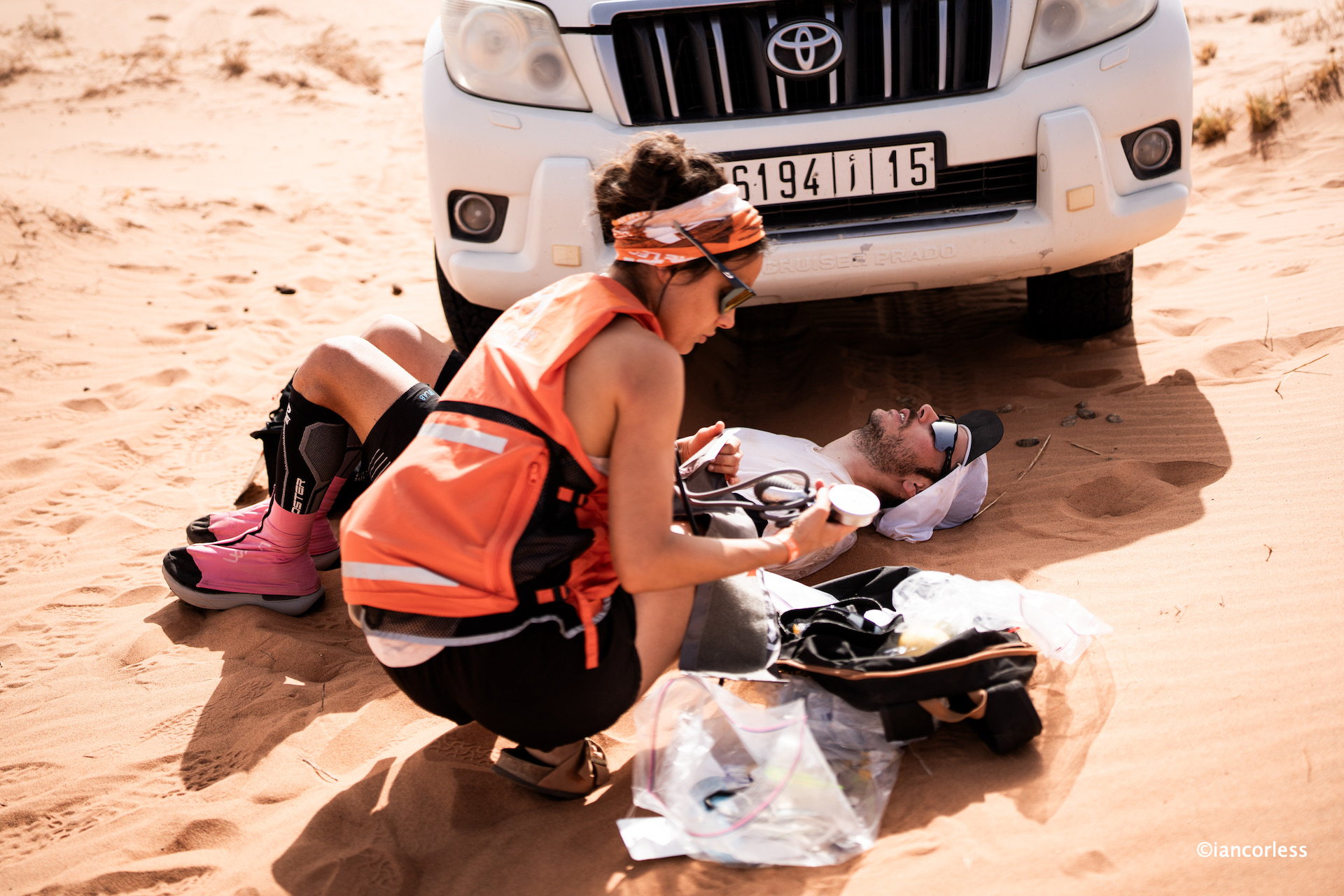
• Around 120 medical staff, known as the Orange Jackets, monitor runner safety 24 hours a day.
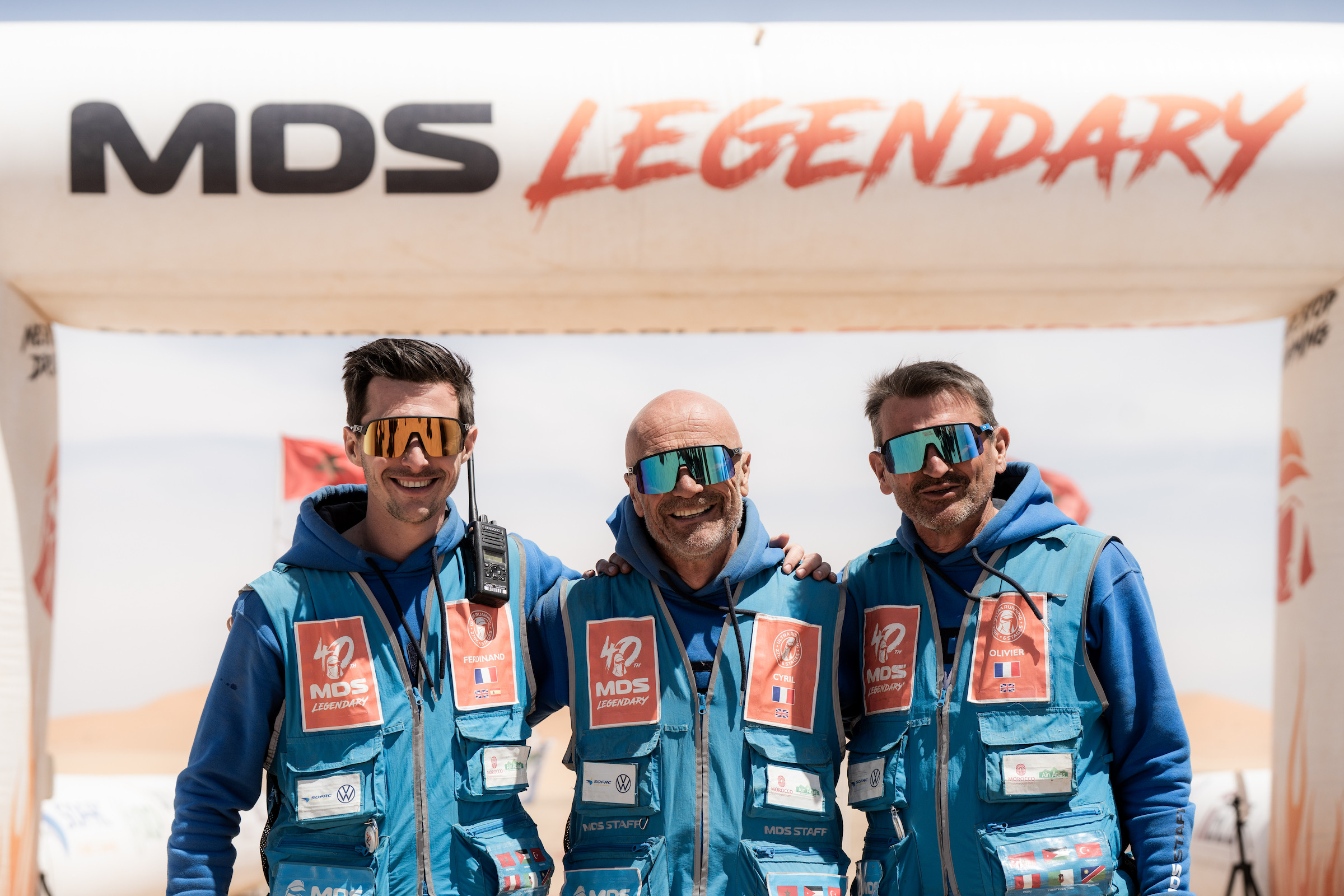
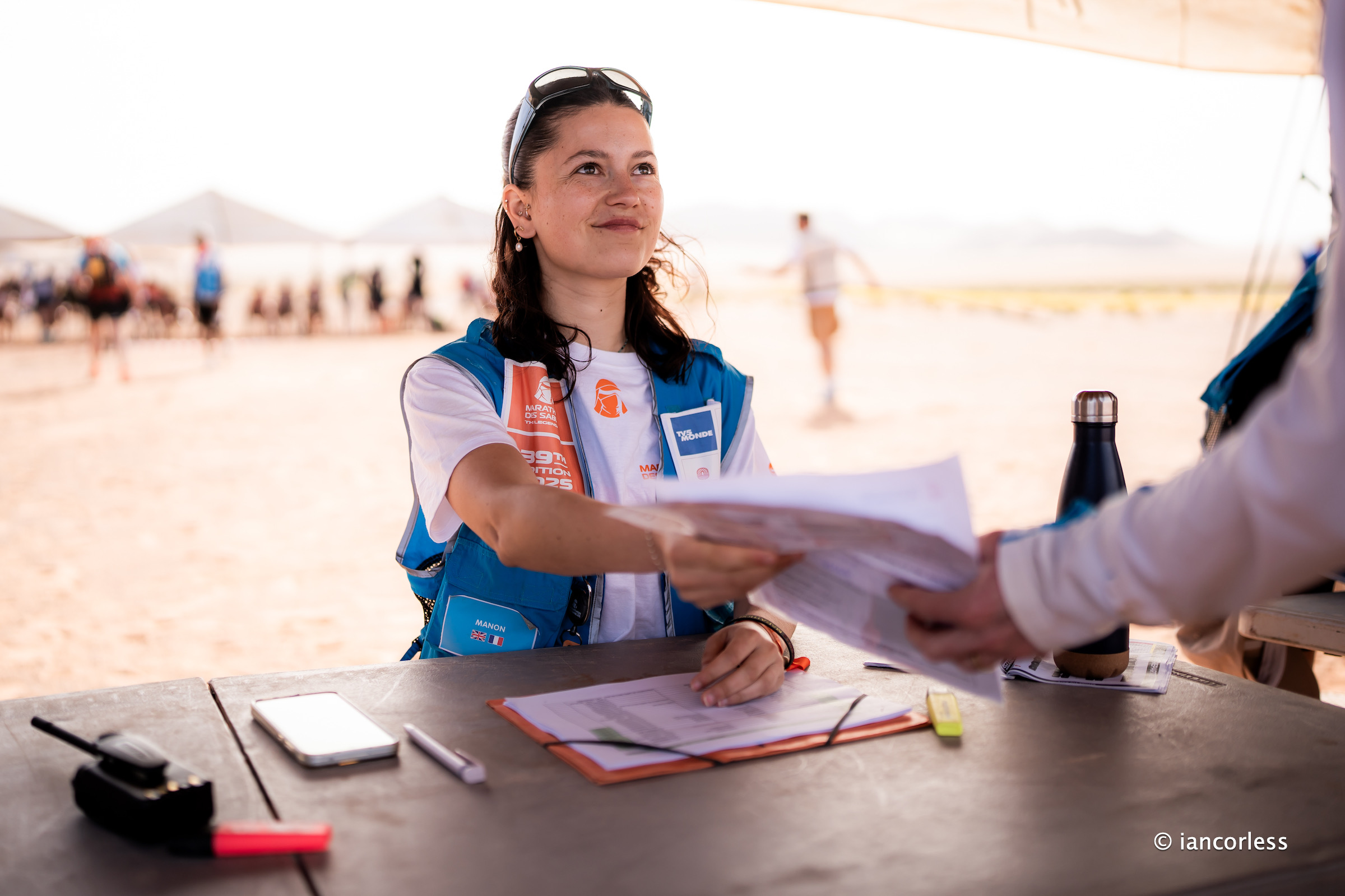
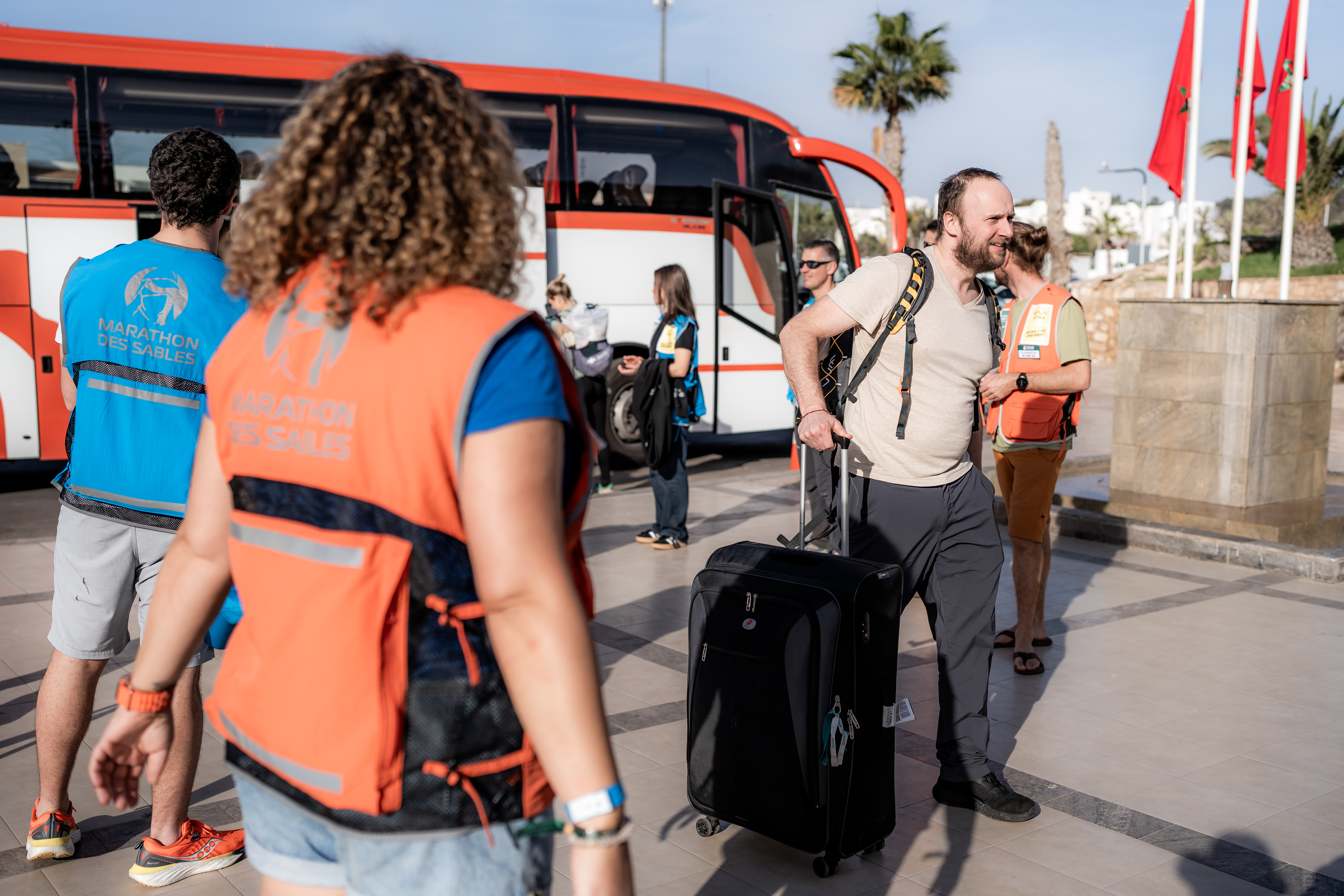
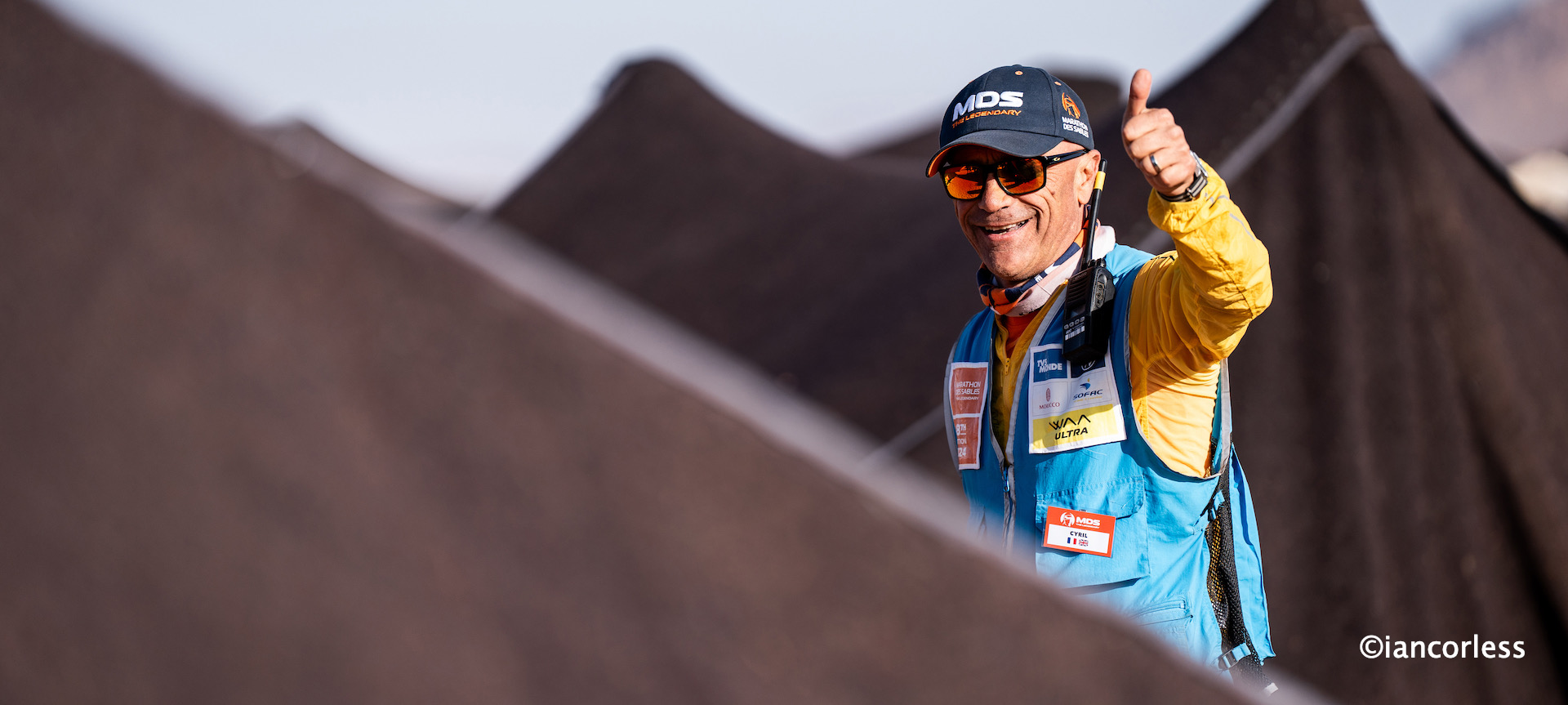
• The Blue Jackets focus on runner relations. They are present in the bivouac, on the course, and at checkpoints. If you have a question or concern, they are your first point of contact.
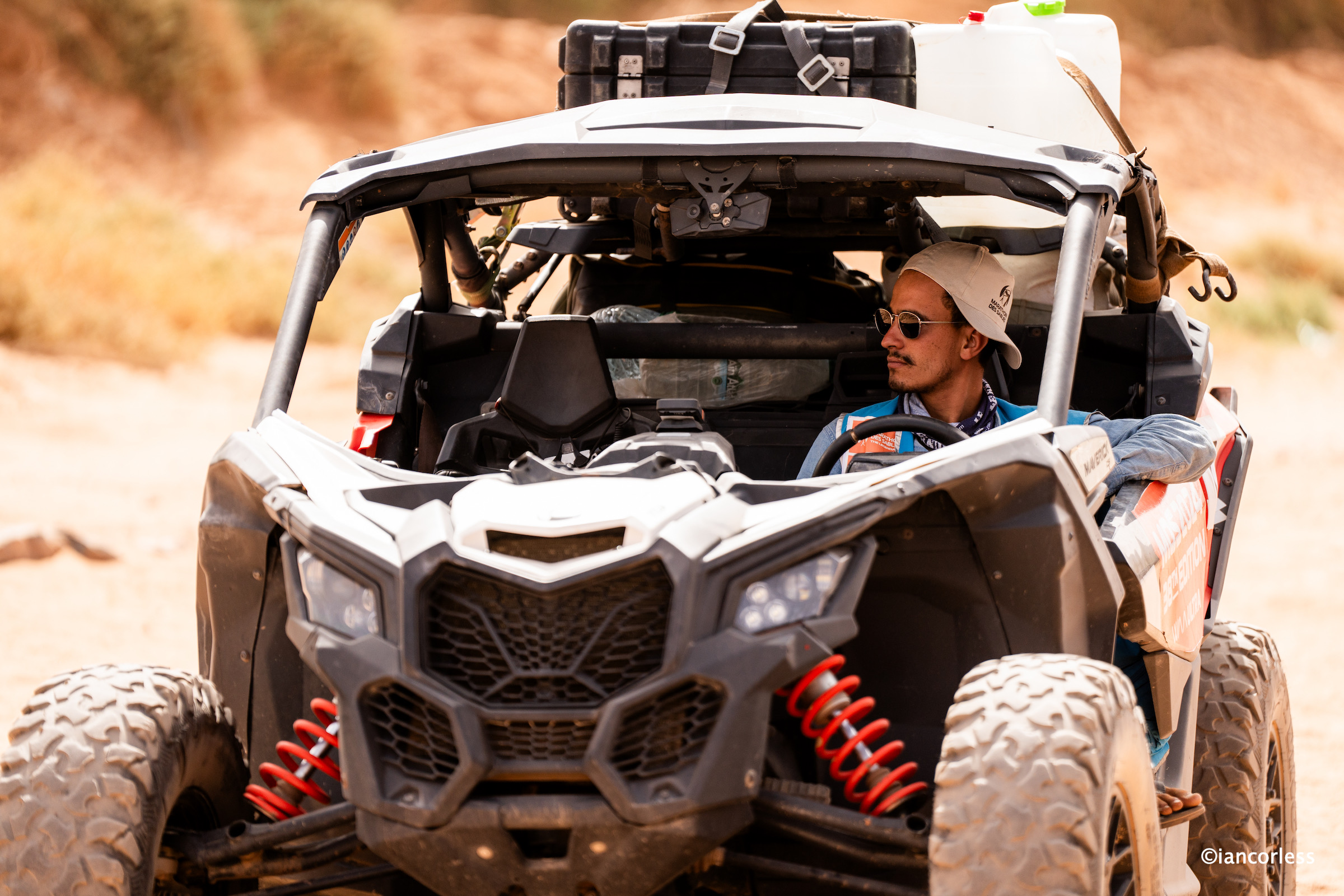
Out on the course, SSV vehicles provide rapid access across the route and carry medical professionals for immediate response. In addition, there are 12 support 4×4 vehicles and a unique system of 40 camel patrol teams. These local teams monitor specific zones and report any issues quickly.
Add to that 20 medical patrol staff on the course and another 25 blue and orange jacket team members, and you begin to see how carefully the race is supported despite its remote setting.
Arriving in Morocco
Your journey begins in Ouarzazate, the meeting point for the race.
Plan to arrive at least one day early. This gives you time to settle in and avoids unnecessary stress before the adventure begins. Hotels are your responsibility to book.
The organisation provides free transfers from Marrakech to Ouarzazate, usually departing from the airport and a designated hotel. Always check official timings before travelling.
Photo by Ian Corless
On Day 1, buses depart from Ouarzazate for the first bivouac. The journey takes roughly six hours across spectacular desert landscapes. A lunch pack is provided, but it’s wise to bring extra snacks and drinks.
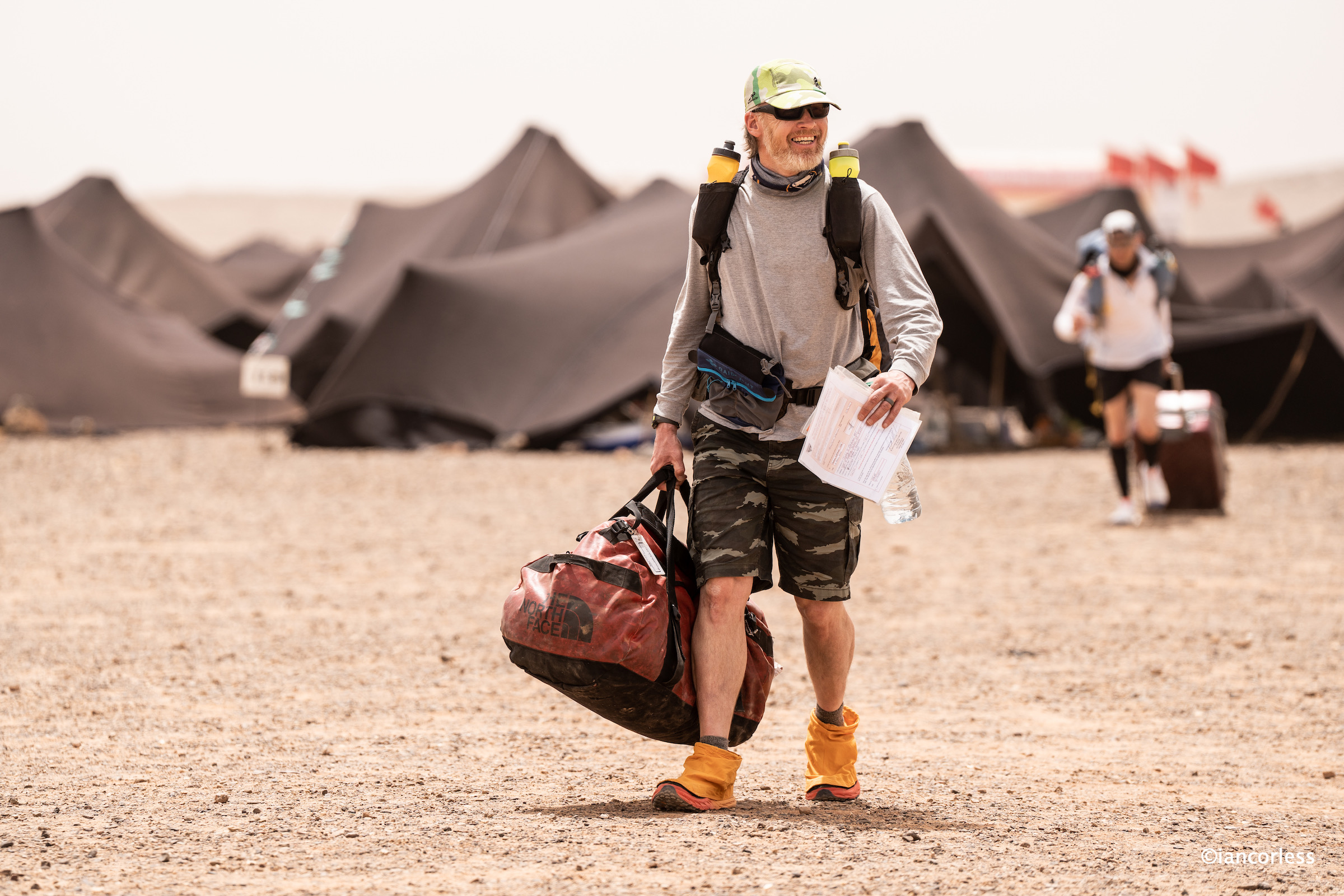
When you arrive at the bivouac, you’ll be assigned a tent number. Remember you are self-sufficient in regard to food, water is provided. For the moment, you still have access to your luggage. The following day, after administrative checks, you will deposit that luggage and begin the self-sufficient part of the race.
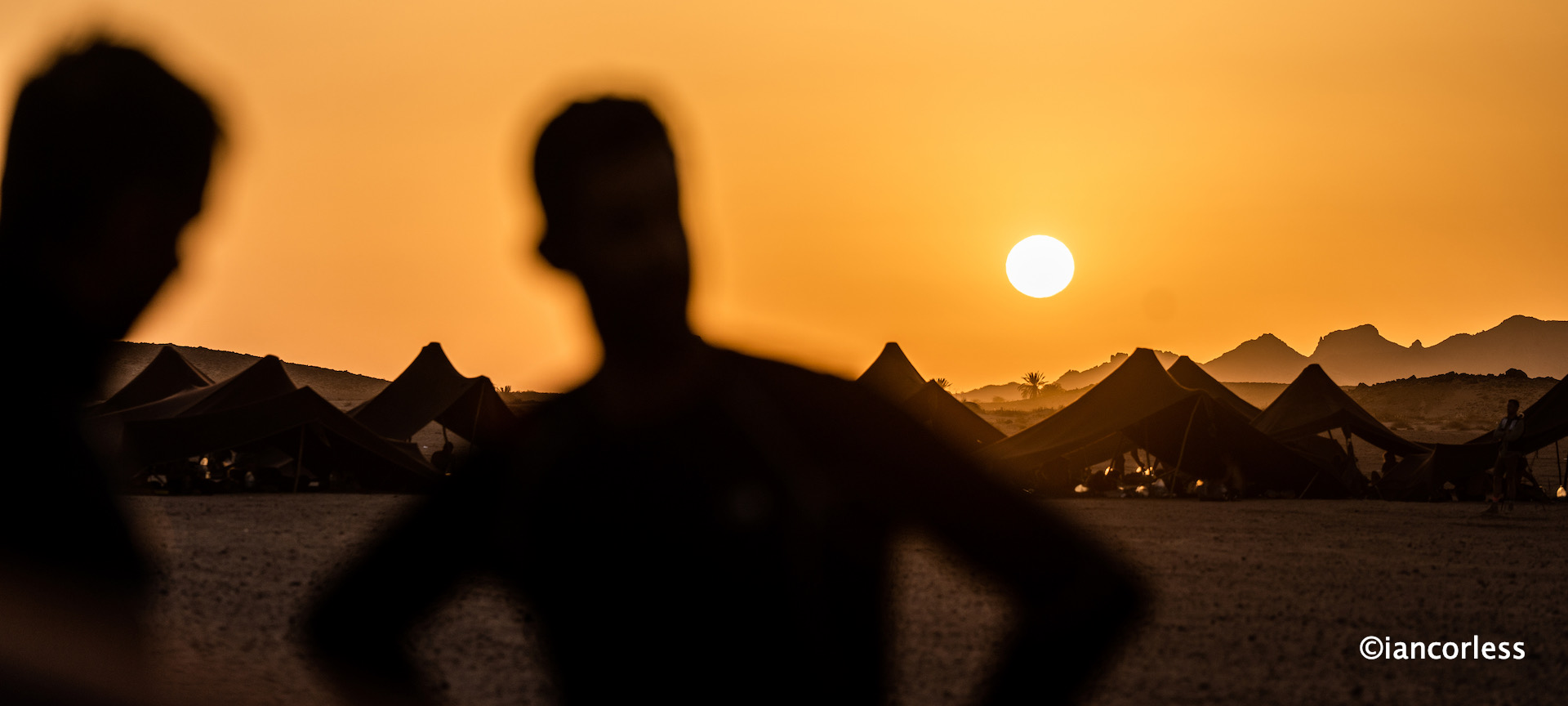
From this point forward, the desert becomes your home.
Life in the Bivouac
Bivouac life is simple. Very simple.
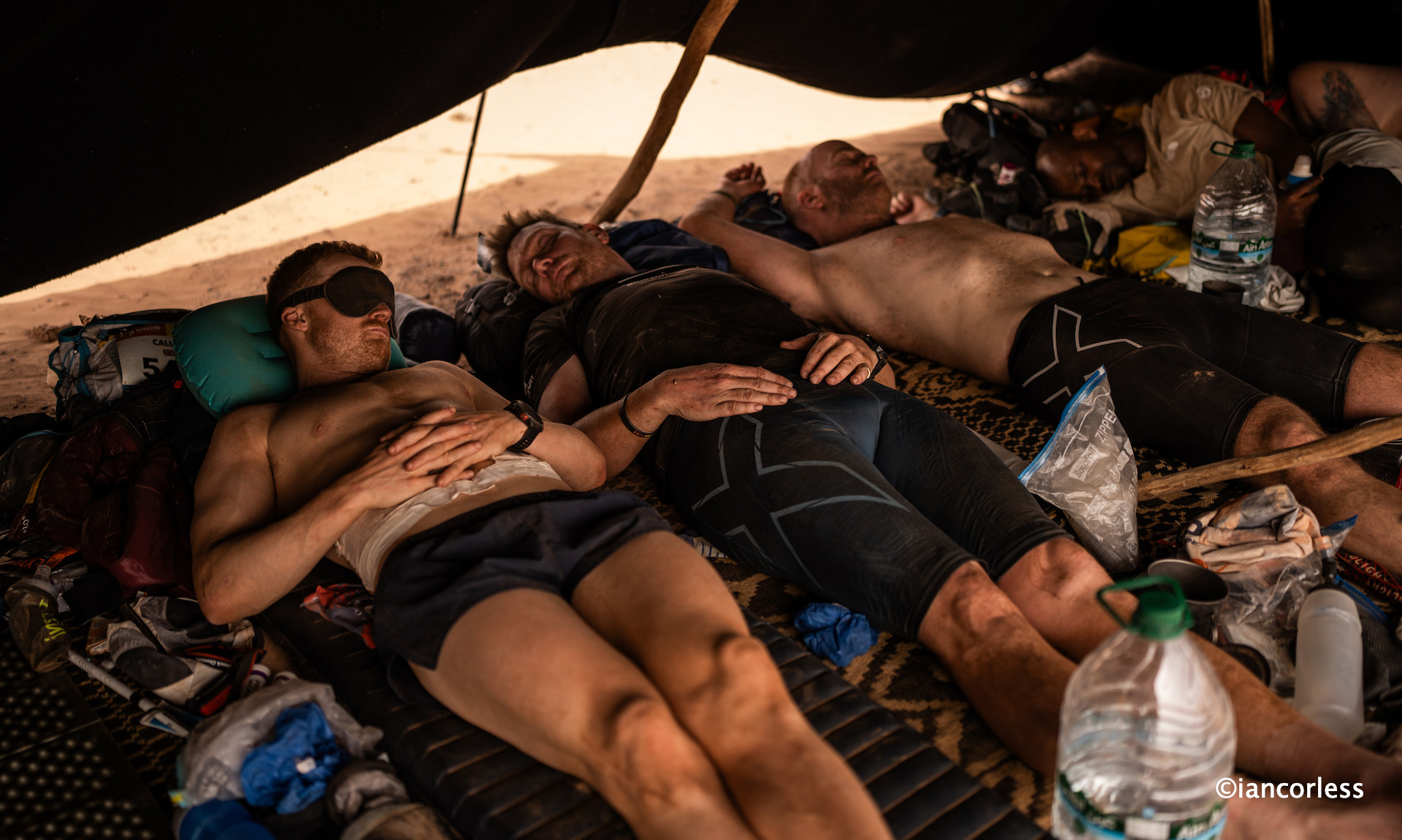
There are no showers and no power. You live under traditional desert tents with seven other runners. It can feel crowded when everyone is organising gear, so respect each other’s space and keep things tidy.
There are a few practical rules that quickly become important:
• Toilets are installed throughout the bivouac and at checkpoints.
• Some toilets are designated women-only or mixed-use, and it’s important to respect those arrangements.
• Biodegradable hygiene bags are provided and waste is separated into organic and sanitary bins.
Phones are strongly discouraged in camp. The bivouac is meant to be a place for rest, conversation, and disconnection. If you need to make an emergency call, move away from camp out of respect for others.
There is also an IP phone available for emergency calls, costing €2 per minute.
Another change from previous years is the removal of the email message system. This reinforces the race’s self-sufficient spirit and saves thousands of sheets of paper that were previously used to print messages.
Instead, runners can use Emotion Boxes to record short video messages that are sent to loved ones. You need to designate before the race who these messages will be sent to.
At the centre of camp sits the Info Tent, where Blue Jackets are always present. This is where you:
• collect your daily water
• ask questions
• check rankings
• access medical support if needed
Additional facilities include women’s changing cabins and sanitary products available both in the bivouac and at checkpoints.
A few other important bivouac rules:
• Never light a fire within 50 cm of tents
• Do not walk barefoot
• Drop empty water bottles at designated recycling points
• On bivouac move days, return containers to the Info Tent
It may sound strict, but these rules keep the camp safe, clean, and functioning smoothly.
You will go through administrative, technical, and medical checks, while the MDS shop opens nearby. At the shop you can purchase WAA apparel, fire bricks and any other last-minute things you may have forgotten or need.
Each runner receives one 5-litre bottle of mineral water, which must last until the first checkpoint of the race.
Before heading to the checks, prepare the required documents:
• Passport
• Completed technical control form
• Medical certificate
• Resting electrocardiogram (ECG)
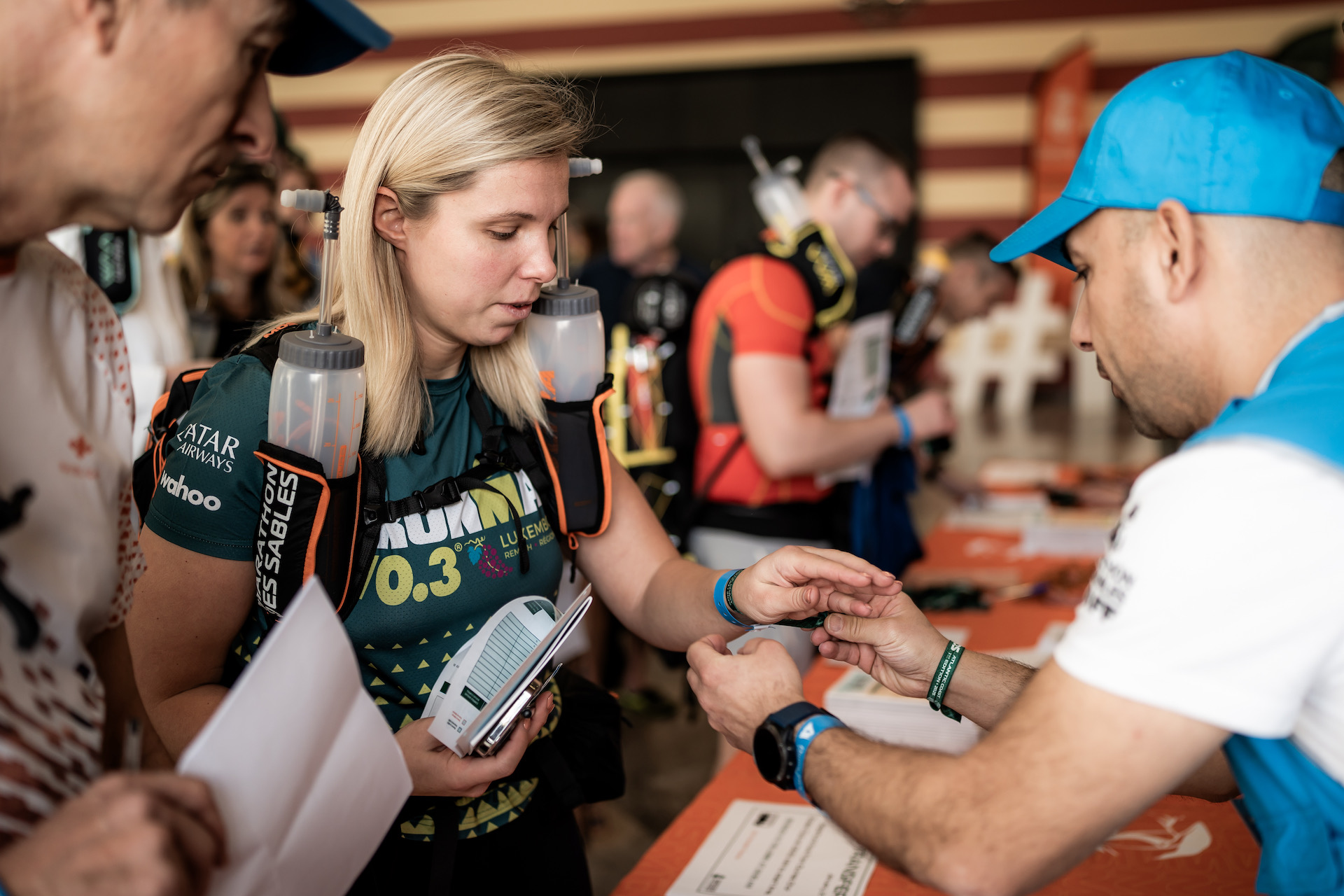
During the admin process you will:
1. Deposit your luggage (it will later be returned to you in Ouarzazate).
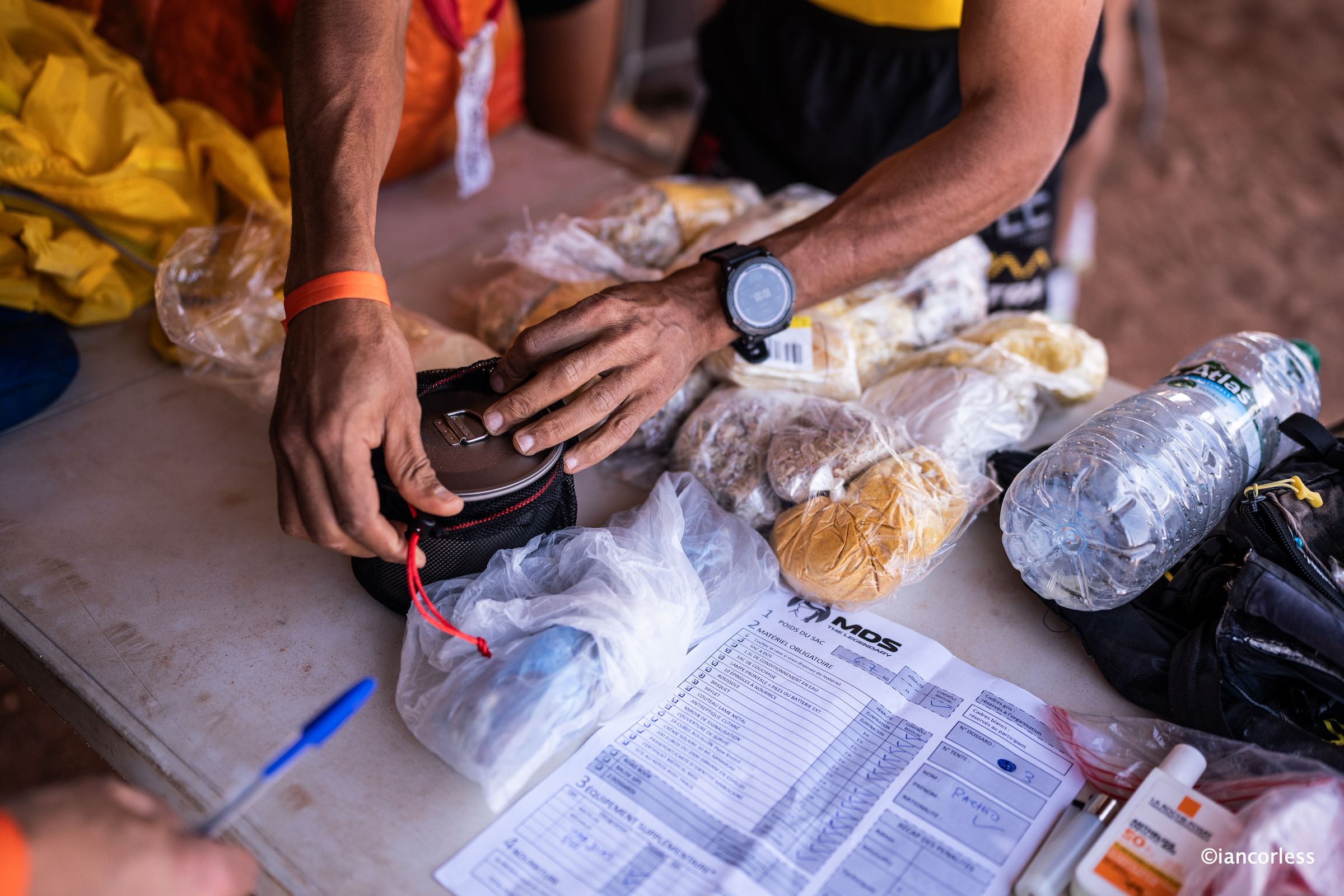
2. Present your documents and mandatory equipment.
3. Have your race pack weighed.
4. Undergo medical verification.
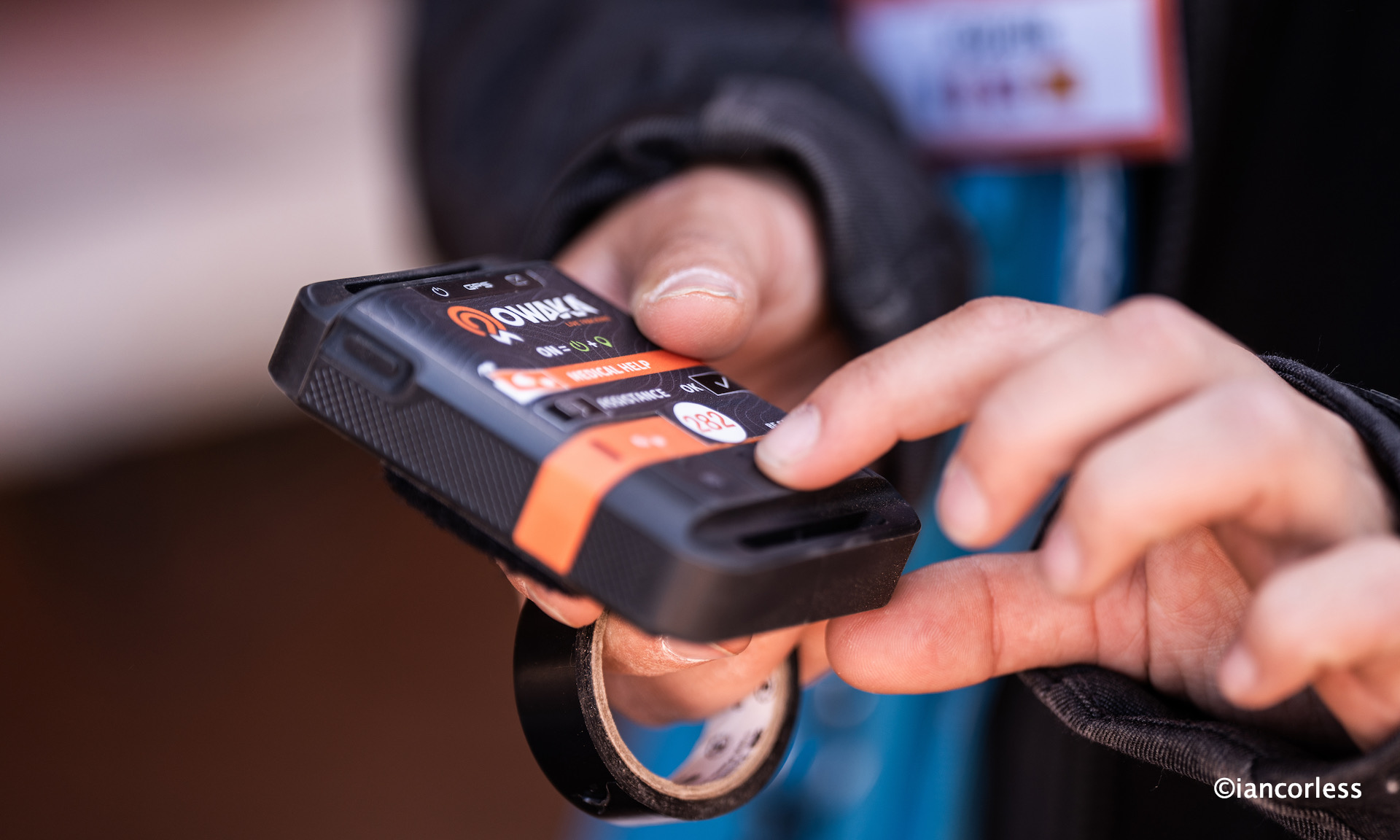
5. Receive your GPS beacon.
6. Submit your technical control form and receive two race bibs.
If you need to discard a personal item listed on your form later, you must inform the organisation or risk a penalty.
Later in the day:
• 4:30 PM – Stage briefing
Photo by Ian Corless
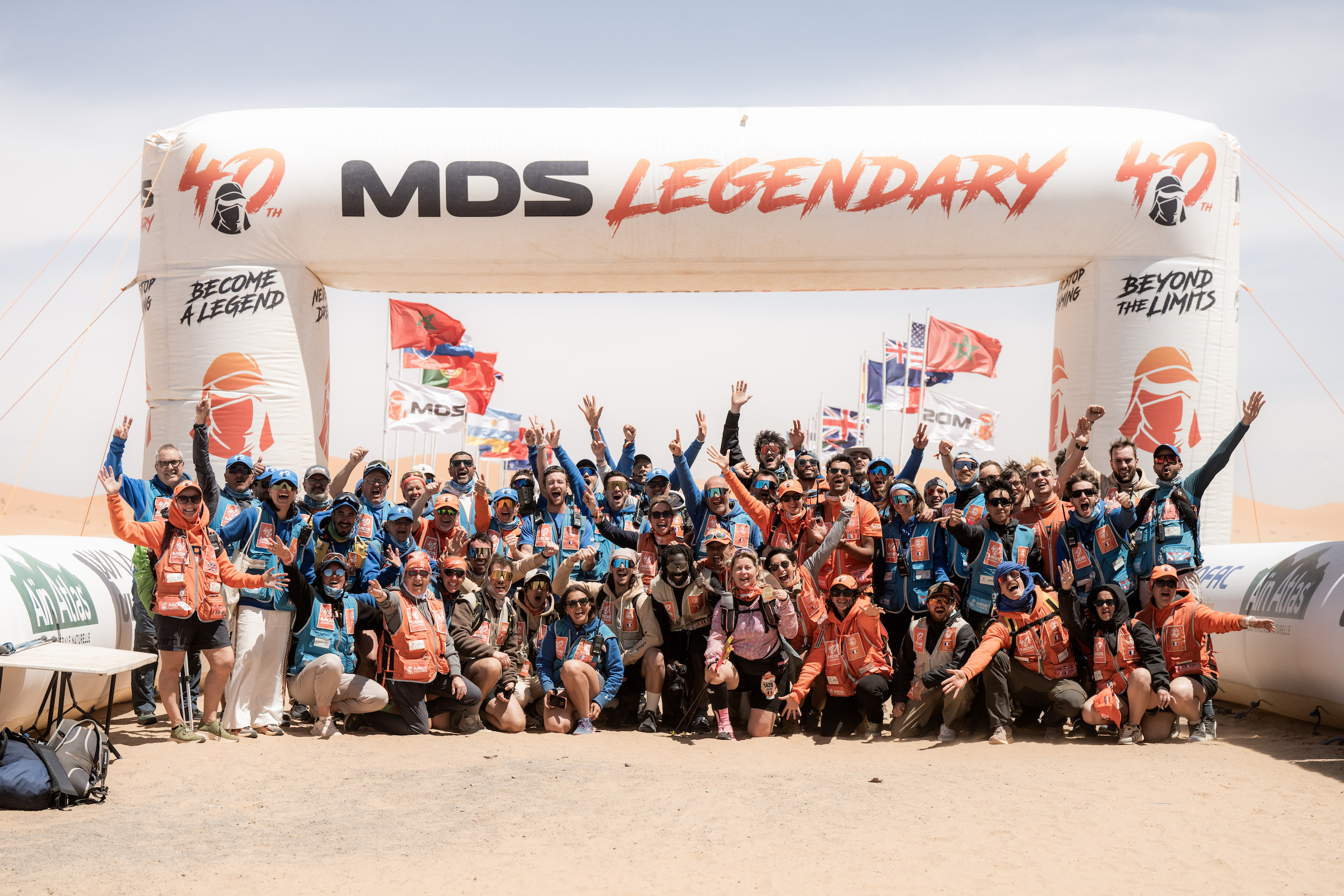
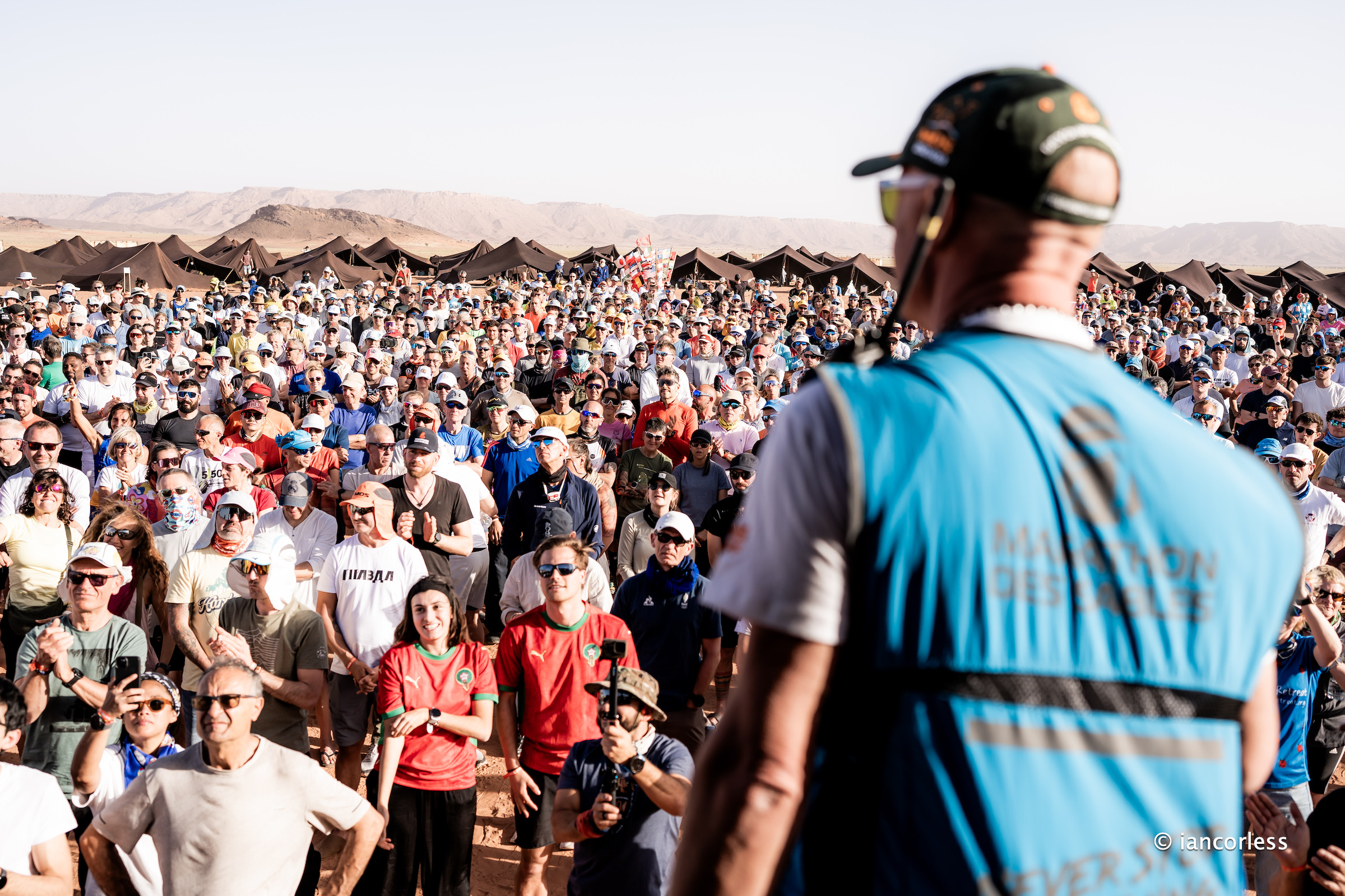
• 6:00 PM – 40th anniversary photo session
The race is now very real.
A Typical Day in the Desert
Every stage day follows a similar rhythm. Wake up will typically be around 0400 to 0500.
Breakfast is self-sufficient, using the food you’ve carried with you.
Stage tart times vary, but be prepared and ready for 05:30. If temperatures are high, the start may move earlier. Plan for at least 90 minutes of preparation before the start.
Thirty minutes before the stage begins, you must be ready. The race starts on time and no one is held back.
Out on the course, each checkpoint typically between 8-10km’s provides:
• water distribution
• medical presence
• toilets and hygiene supplies
At the finish line, you receive a 5-litre bottle of water, which must last until the first checkpoint the following day. To clarify, you need to drink, cook dinner, wash (if you can spare the water), make breakfast and fill bottles ready to last to CP1 all from the 5ltr bottle.
Each evening the Info Tent and medical clinic are open.
Safety in the Desert
Despite the race’s self-sufficient nature, medical support is extensive. Assistance is available before, during, and after every stage. However, runners are expected to understand basic foot care, which is essential during multi-day desert racing.
For more serious problems, the Dokever medical team takes over.
If you must withdraw from the race, you must notify the organisation. In emergencies, medical evacuation will occur. For non-emergency withdrawals, transport will be arranged back to Ouarzazate, but hotel and food costs will be your responsibility.
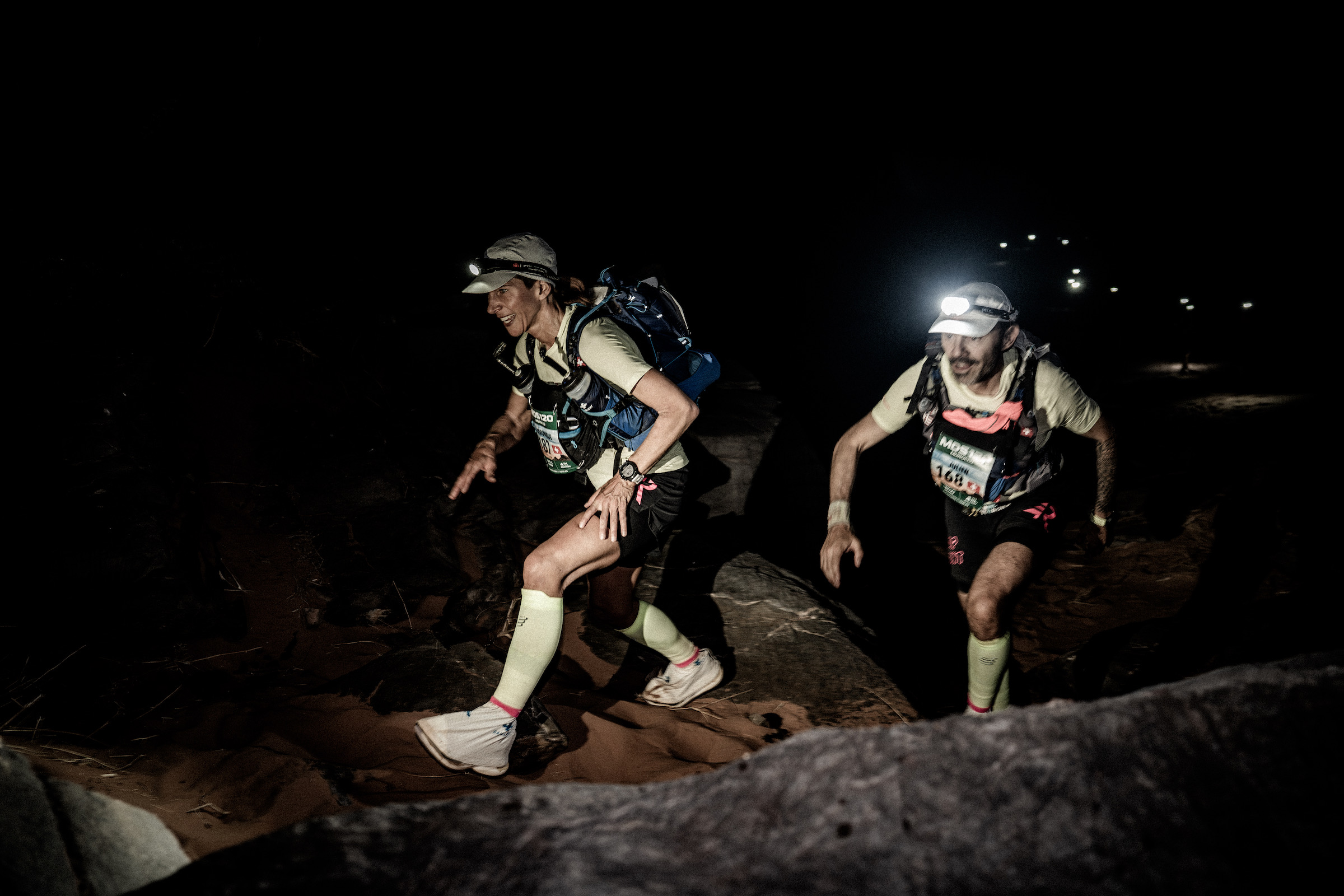
At night during a stage, headlamps are mandatory.
Navigation and Desert Conditions
The course is marked clearly and all checkpoints are mandatory. Cutting across the course is forbidden.
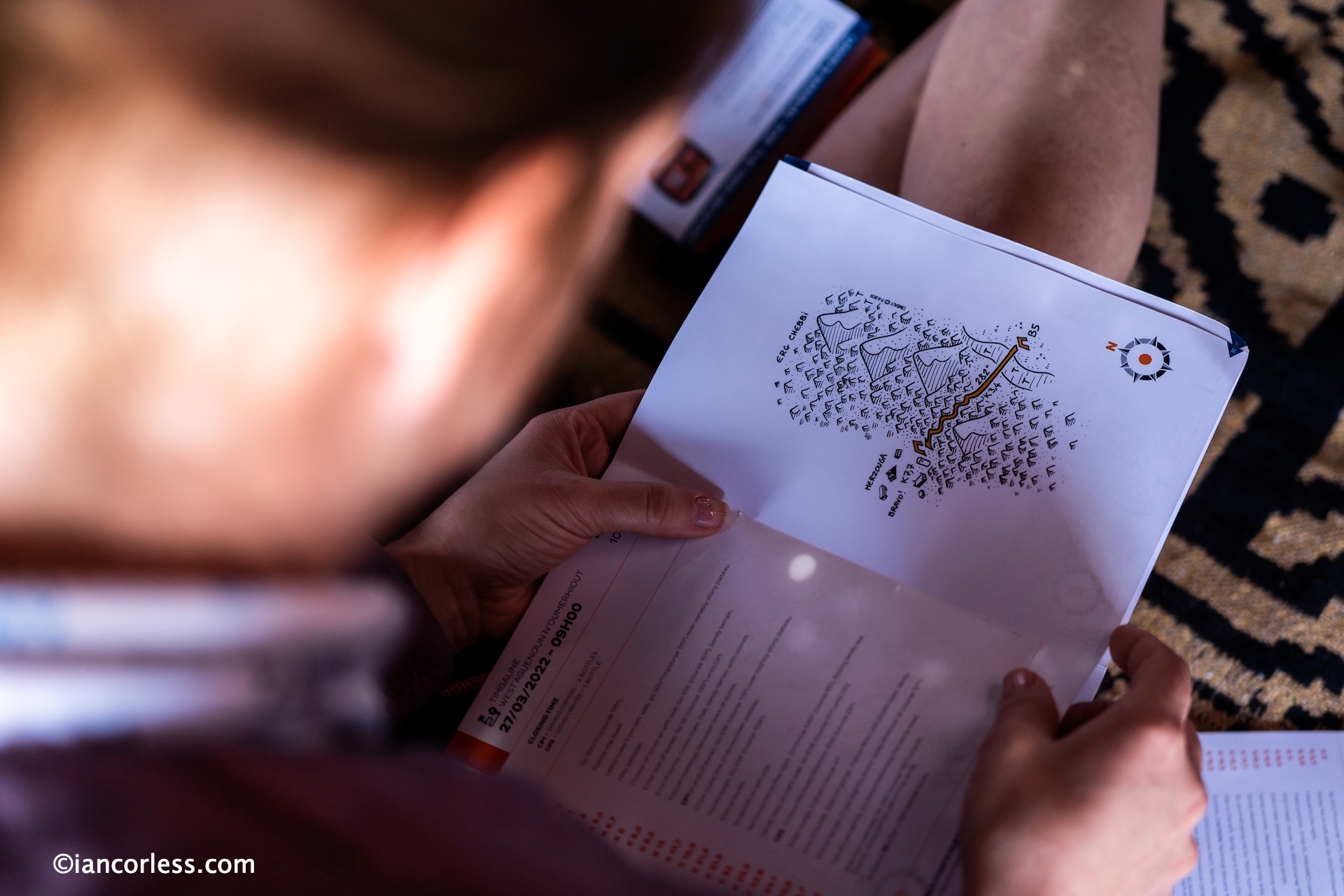
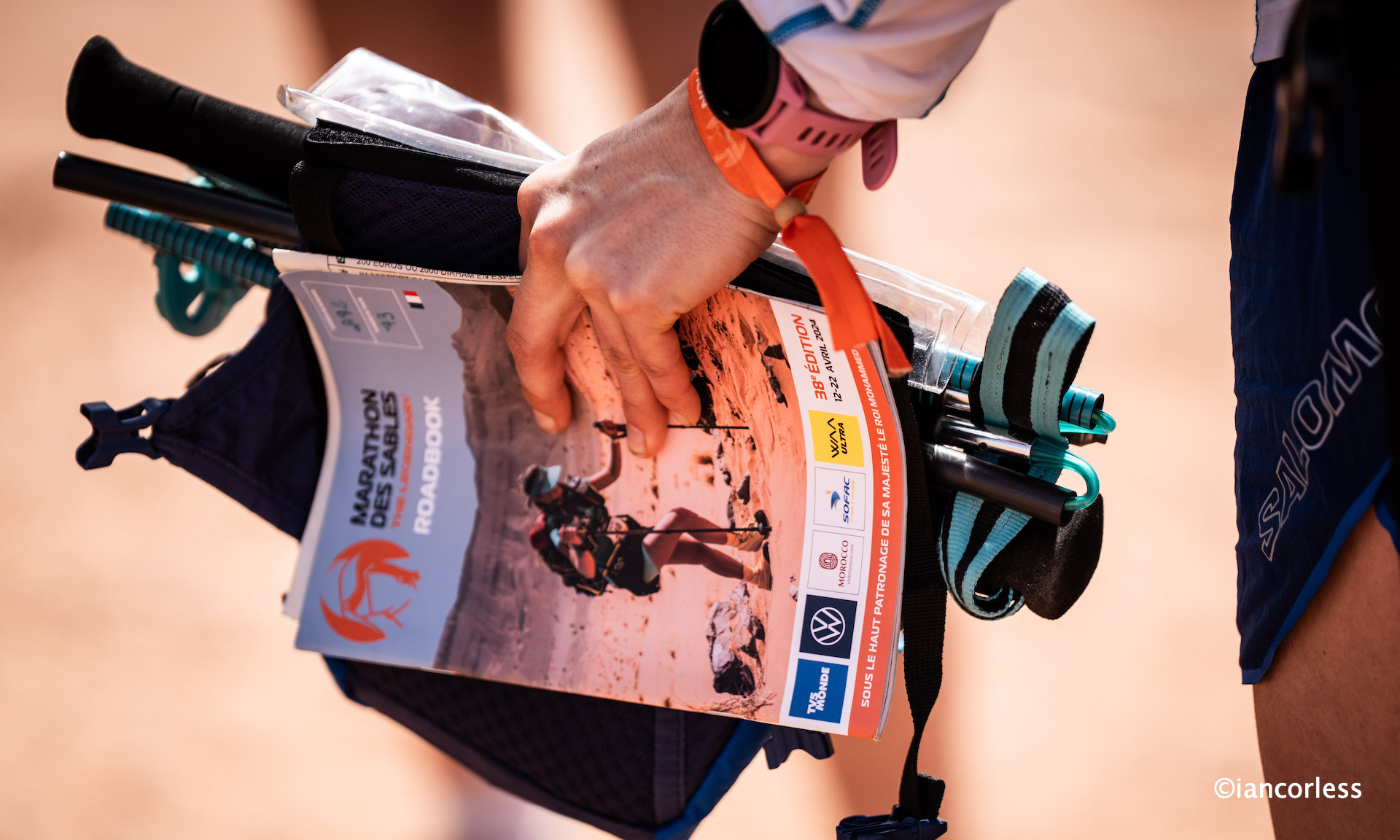
Compass headings in the road book are provided as guidance if visibility becomes poor. Know how to use a compass and take a bearing!
Sandstorms
If a sandstorm arrives:
• protect your eyes – you need good glasses and ideally goggles
• cover your nose and mouth typically with a Buff or similar
• stay close to other runners
Photo by Ian Corless
If visibility drops, stop moving and immediately remove compass and take a bearing for the direction of travel. When conditions improve you can move again relying on the compass bearing to ensure you are going in the correct direction.
If you stray from the course, the organisation will receive an alert from your GPS beacon and locate you.
If You Become Lost
It is highly unlikely that you become lost at MDS, however, it is possible to stray of course and feel disorientated. If you cannot see course markings for ten minutes:
1. Stop and assess your position.
2. Climb a small rise if possible to scan the horizon.
3. Backtrack for up to ten minutes if necessary.
Remember, you have a tracker, so, MDS organisation will know where you are and will be able to find you – do not panic.
As a last resort, activate the SOS function on your GPS beacon.
Distress signals can also be made using whistle blasts or torch flashes at night
To alert SOS with a whistle, the internationally recognized distress signal is three short, sharp blasts, followed by a pause, and then repeated. While the full Morse code for SOS is three short, three long, and three short blasts, the simplified “three blasts” method is more commonly used in disaster preparedness to call for help.
To alert SOS with a torch, flash the light in a repeating pattern of three short flashes, three long flashes, and three short flashes.
Medical Requirements
All runners declare medical information during registration.
During race checks, you must present:
• an original medical certificate
• a resting ECG
Photo by Ian Corless
Failure to provide these documents results in disqualification, though emergency testing may be available on site for a €200 fee.
Medical staff specialise in sports and tropical medicine and operate throughout the race.
They also have the authority to withdraw any runner deemed medically unfit to continue.
The Stages
The 2026 race covers approximately 270 kilometres +/- across the Sahara. Total elevation gain will be around 2500m +/-
Confirmed distances will be in the road book, anticipate the following +/- km’s.
Stages include:
• Stage 1: 37 km
• Stage 2: 41 km
• Stage 3: 29 km
• Stage 4: 100 km (You have two days to complete this stage.)
• Stage 5: 42 km
• Stage 6: 21 km
Photo by Ian Corless
To complete the race properly, runners must carry enough food to provide at least 14,000 calories. Remember, this is the minimum, you may well need more than this, so, balance calorie requirement and weight carefully.
The runner is self-sufficient and must carry ALL they need for the whole race, water the only exception.
After Each Stage
Once you reach the bivouac again, recovery begins immediately. You will receive a 5ltr water allocation which must last to CP1 the next day. Stage 4 an exception due to the rest day where extra water will be allocated.
Photo by Ian Corless
Start with a recovery drink before preparing food.
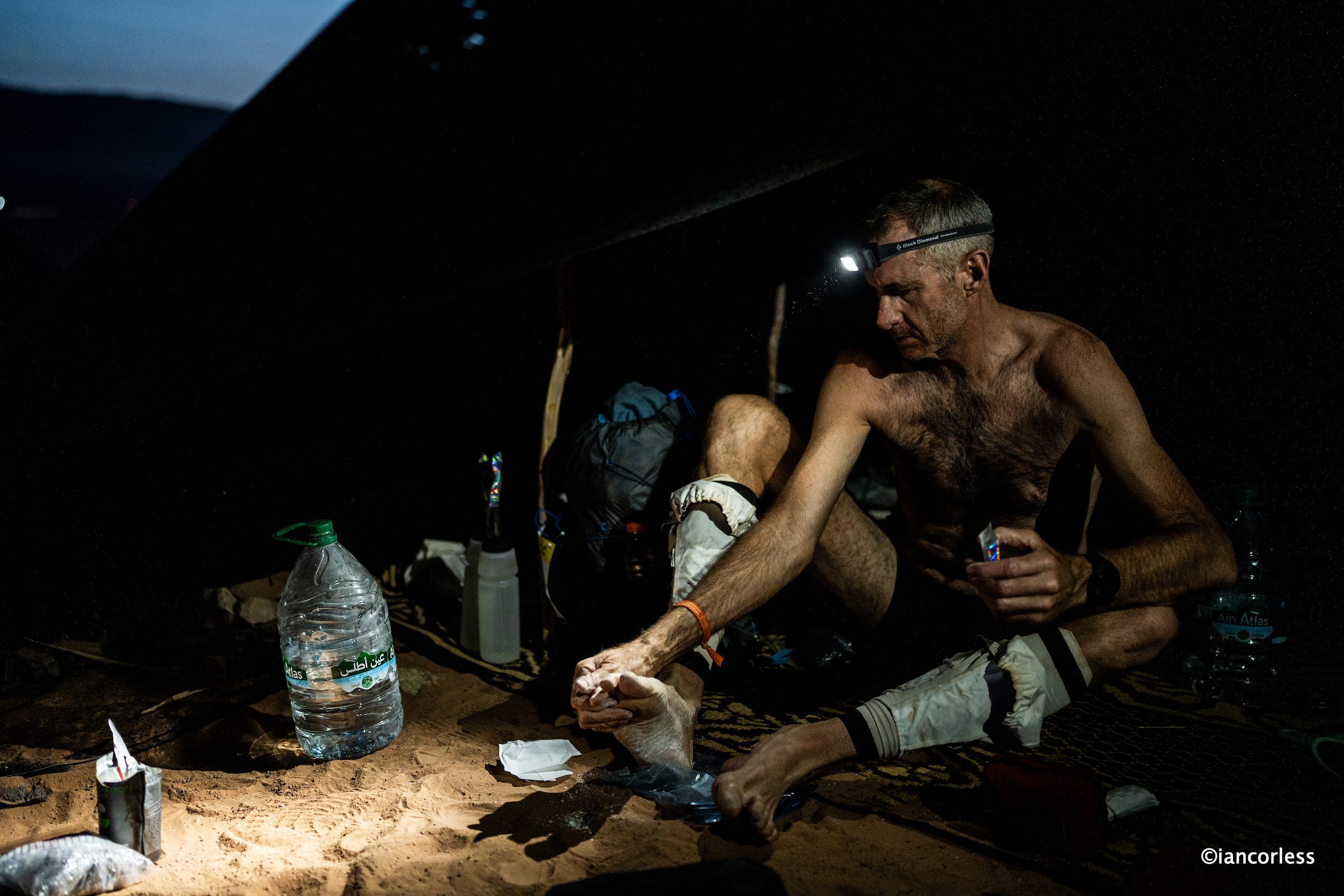
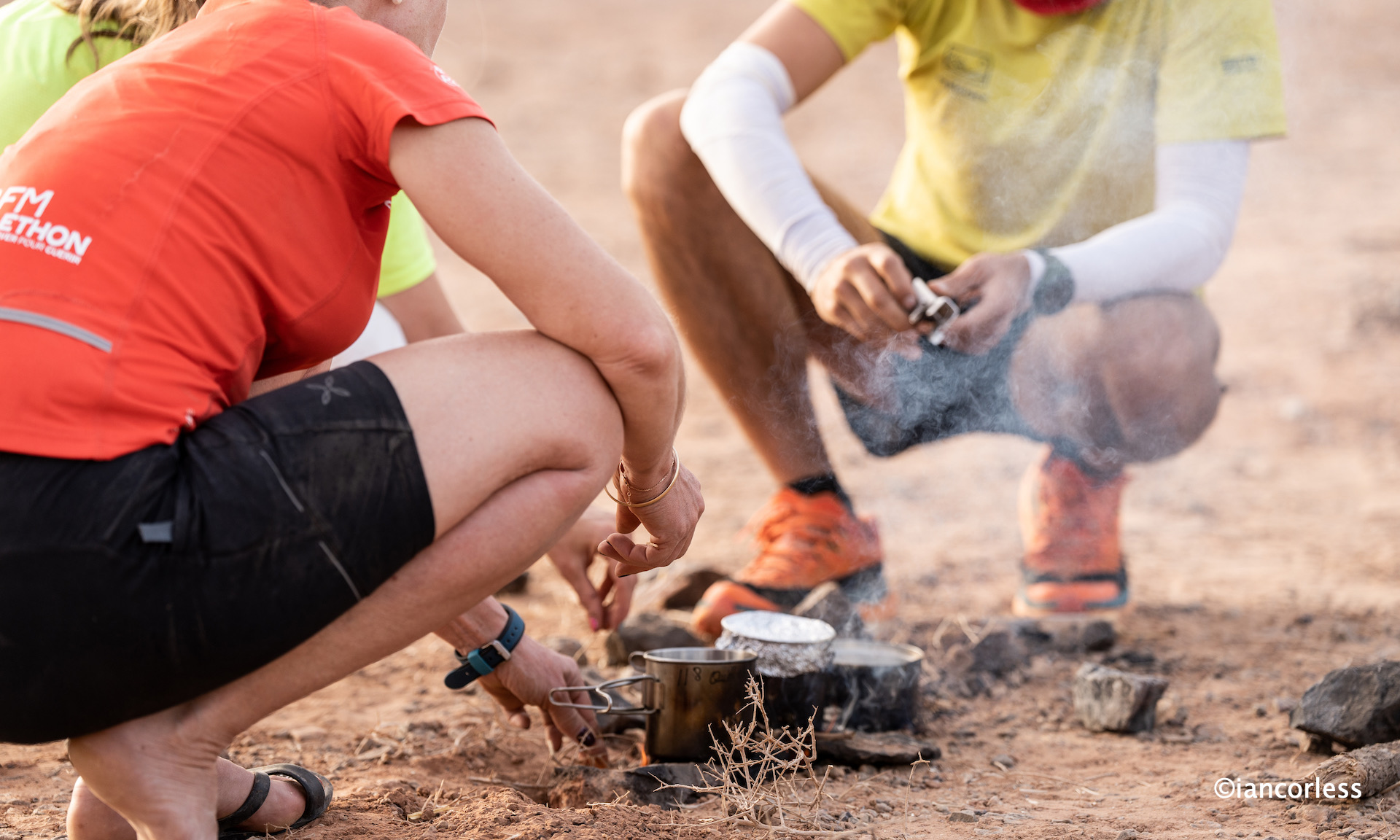
Important – take off your shoes and socks right away. Let your feet breathe and inspect them carefully while you are waiting for water to boil or, you are waiting for a meal to hydrate.
Eat a meal within 1-hour of finishing the stage.
Changing into clean or warmer clothing can make a huge difference. It allows running gear to dry and gives a mental reset for the next day. However, you also need to balance weight – keep ‘extras’ to an absolute minimum.
Sleep and rest is another priority. A sleeping mat helps enormously for rest, relaxation and sleep comfort. Your sleeping bag must be light but warm enough for desert nights. We are all different, so know what you need.
Be meticulous with your gear. Eight runners share each tent, and it can quickly become cluttered. Keep your bag packed and store items immediately after using them. Desert winds or sudden sandstorms can easily carry equipment away, especially lightweight items like sleeping mats.
Photo by Ian Corless
A Buff around your neck is invaluable. It lets you cover your nose, mouth, eyes, and ears quickly when conditions change.
Many tent groups also create a simple cooking area using stones and small branches for fire. Often the first runner back begins preparing the cooking area for everyone else.
Over time, these small routines become part of the experience.
And the bivouac itself becomes something special.
You will share the tent with people from all over the world. You will go through highs and lows together. Some moments will be difficult. Others unforgettable.
Many runners say the friendships formed here last a lifetime.
That is the spirit of Marathon des Sables.
After the Finish on Stage 6
Cross the finish line of the final stage and you will receive your medal, water allocation, and a packed lunch.
Photo by Ian Corless
Then you board a bus back to Ouarzazate. Buses leave as soon as they are full, so, no need to hang around and wait for ages.
The bus will take you to your specific hotel and your luggage will be waiting at your hotel.
What comes next is simple but glorious:
a shower…
then another shower…
and maybe one more.
Clean clothes.
A real bed.
A proper meal.
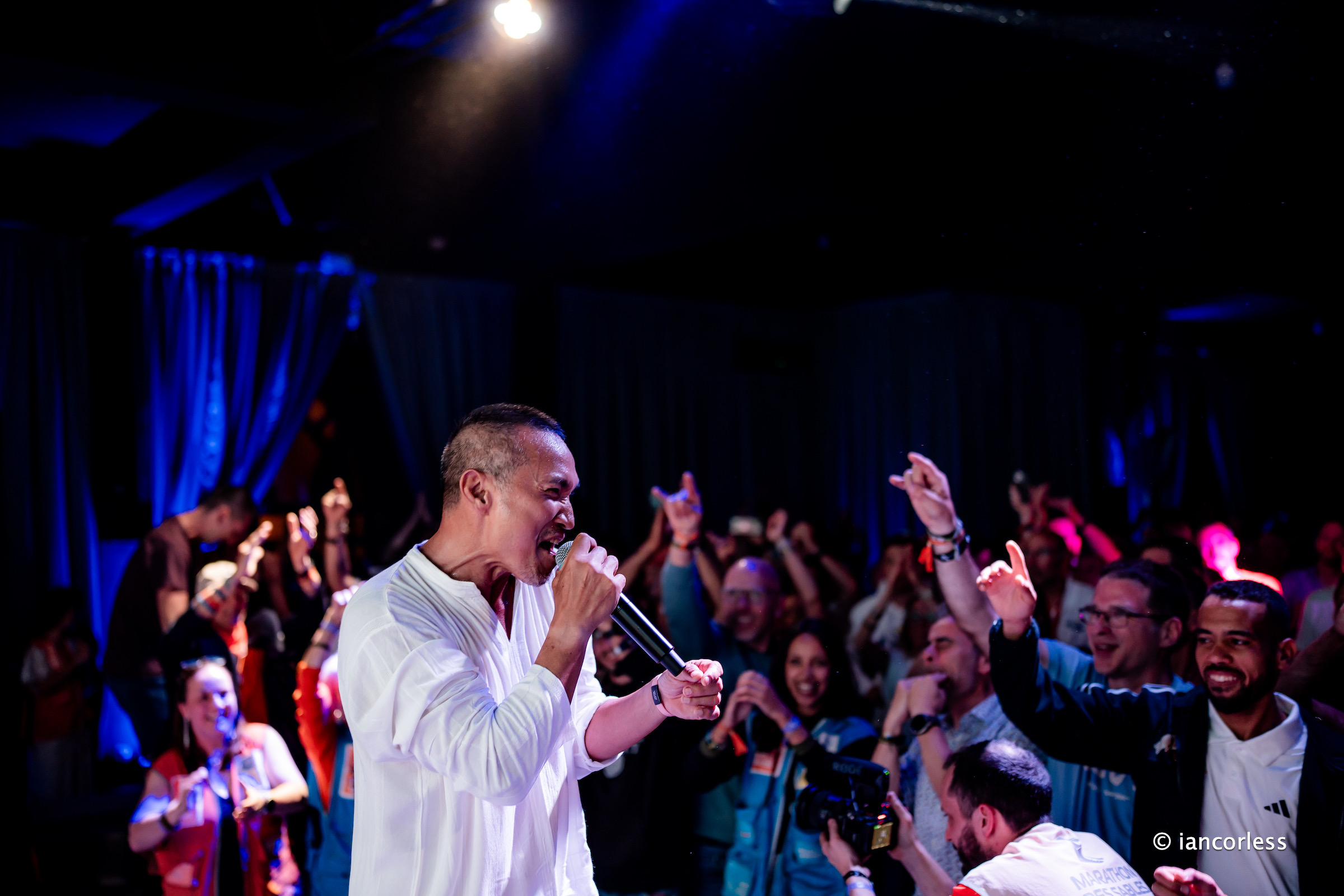
The following day is free to relax and explore. Remember the MDS shop! Later in the afternoon there is a dinner, awards ceremony, and celebration party.
Photo by Ian Corless
After that, the journey home begins.
But the memories of the desert tend to stay with you far longer.
The Coastal Challenge – February 13th to February 20th, 2027
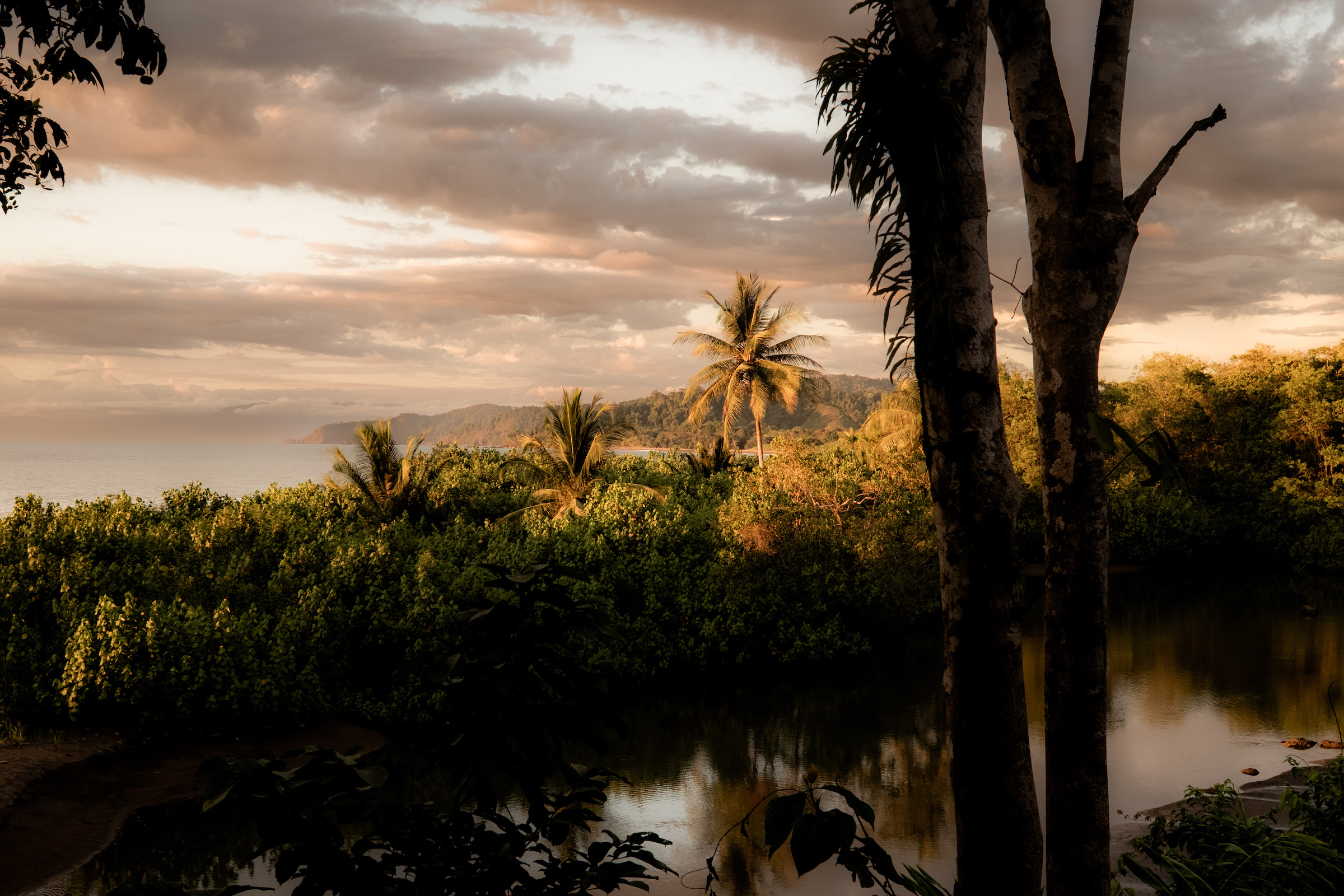
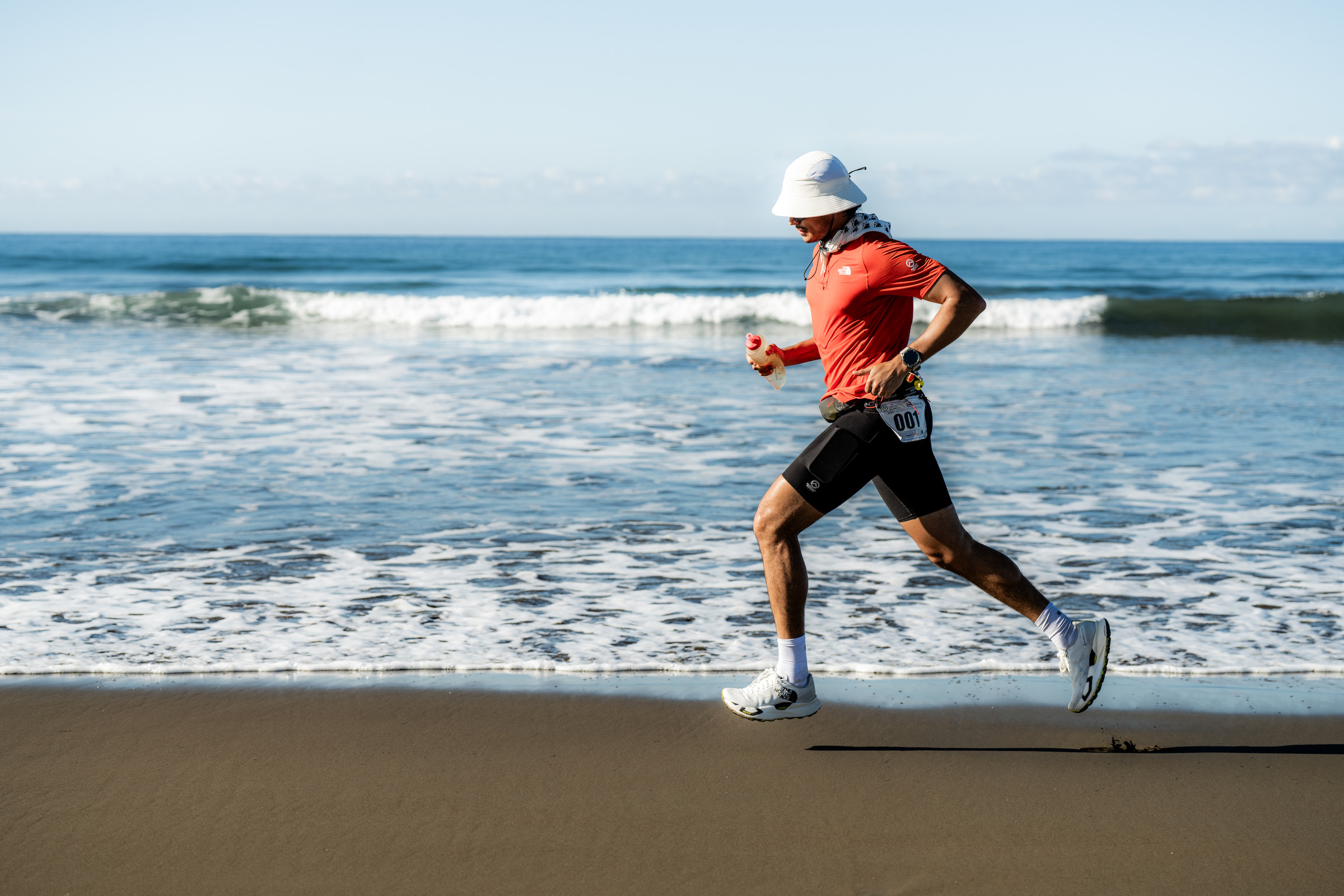
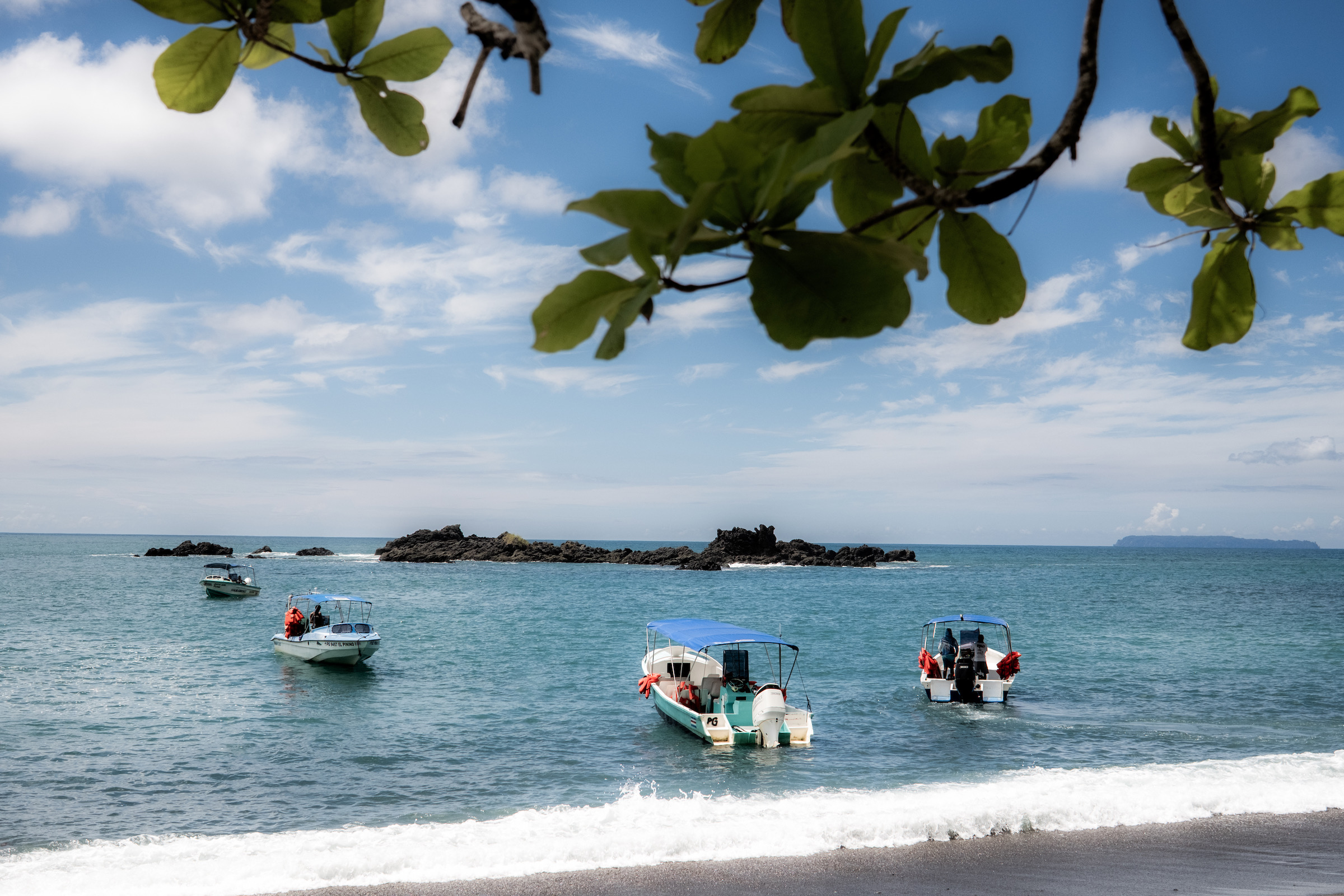
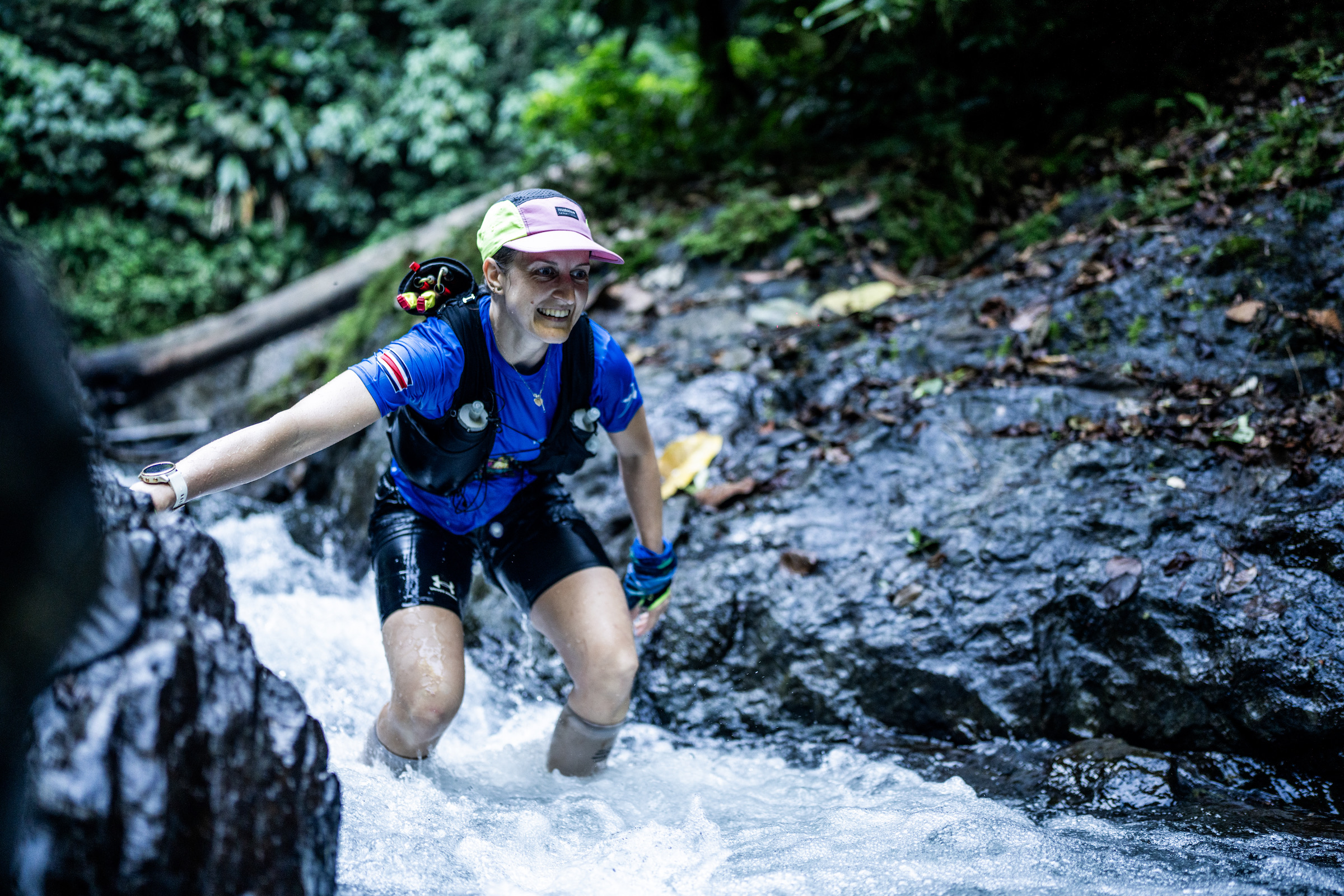
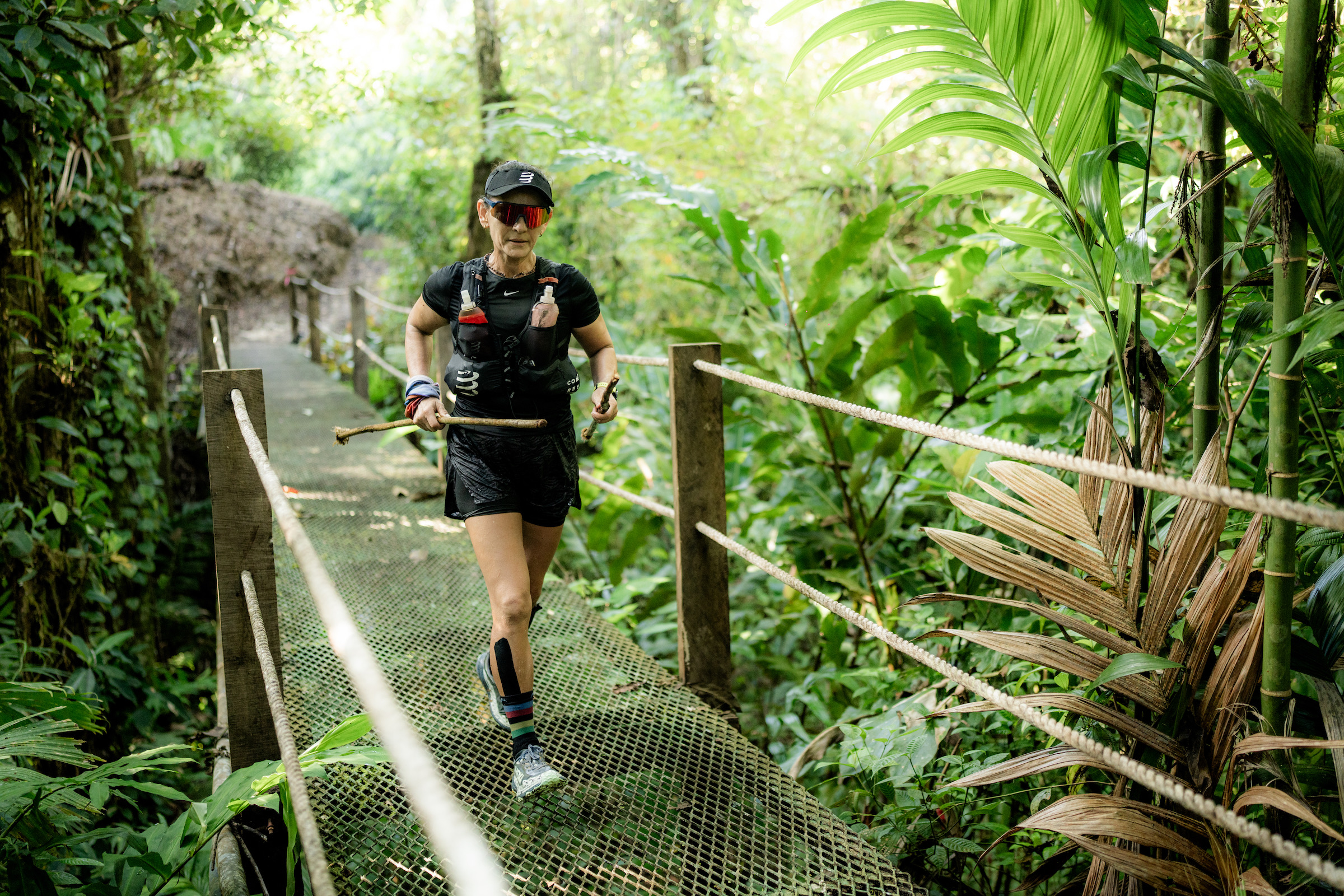
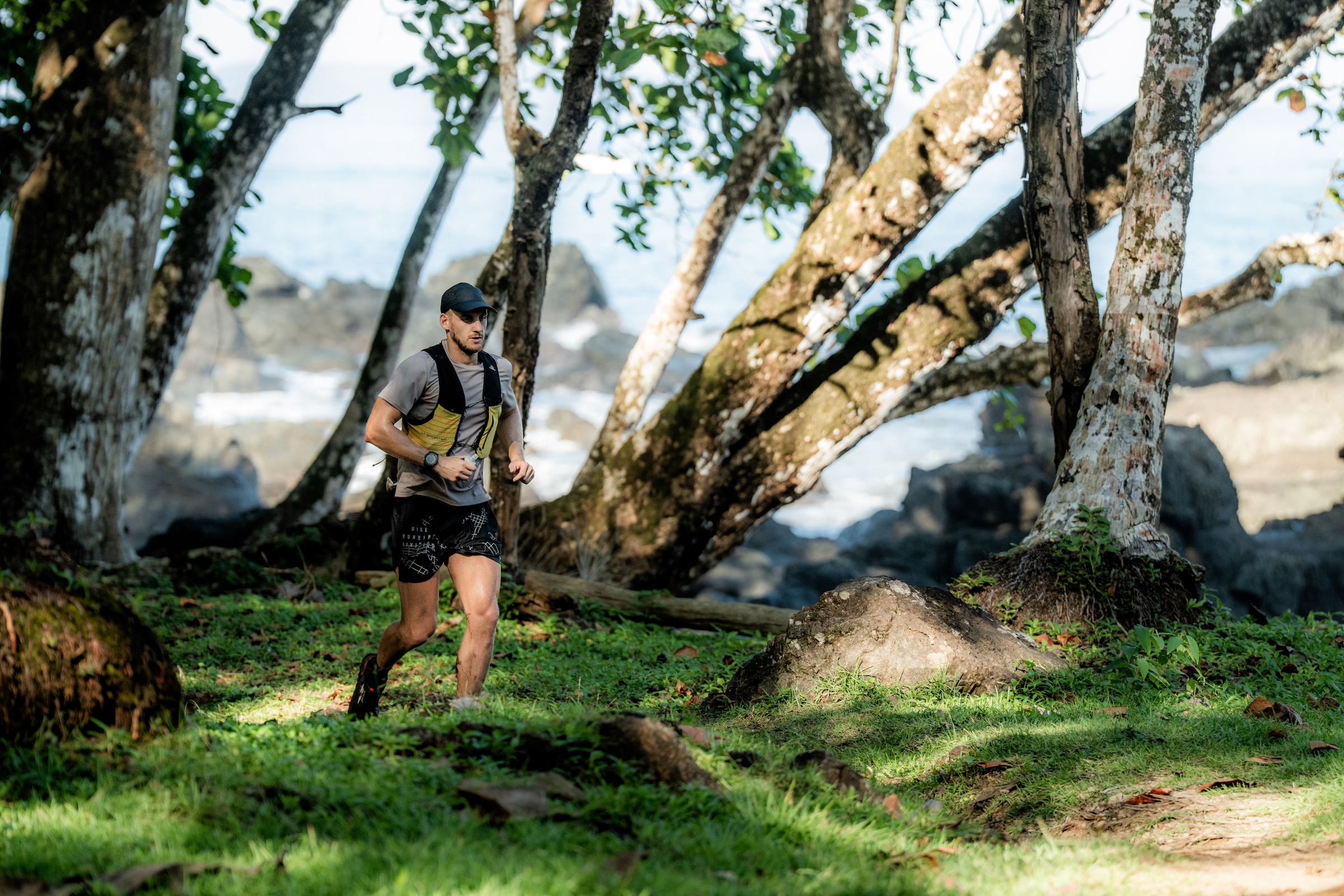
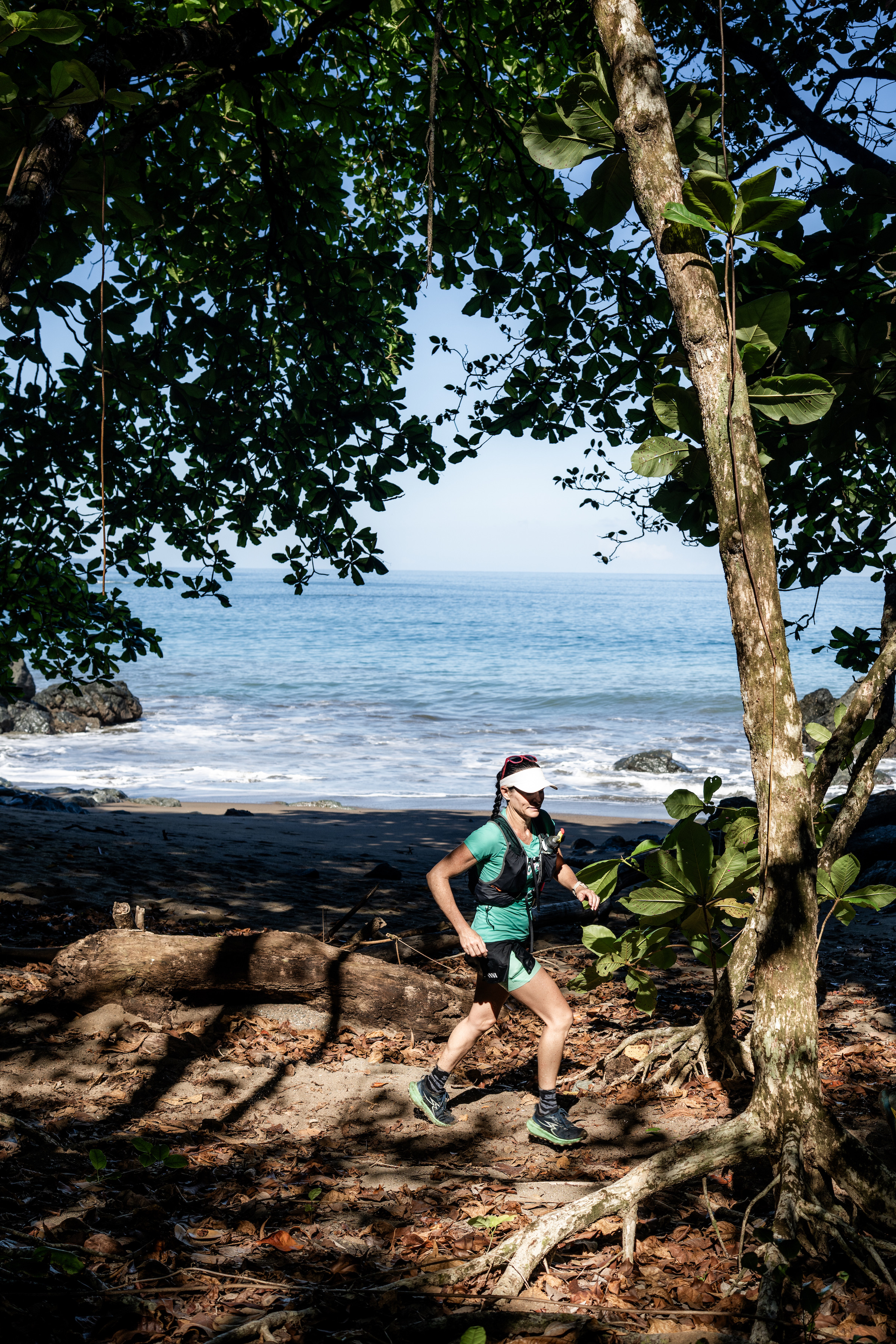
The Coastal Challenge Costa Rica is a six-stage, six-day race along Costa Rica’s Pacific coastline. It’s tough, humid, beautiful, and unpredictable in the best possible way. You’ll run through rainforest trails, cross rivers, climb steep hills, and move along stretches of tropical beach where the ocean feels close enough to touch.
This is not a single-day effort. It’s a week of managing energy, staying consistent, and adapting to changing terrain. Some days feel fast and flowing. Others demand patience and grit. By the time you reach the final stage, you’ll have covered ground that most visitors never see.
Two Race Options: Expedition and Adventure
You can choose between two distances: Expedition and Adventure. Both events run over the same six days and share the same start and finish week. Stages 1 and 6 are almost identical for both races, so everyone begins and ends the journey together.
The difference lies in Stages 2, 3, 4, and 5.
The Expedition race is the full challenge. Longer stages, greater cumulative distance, and a bigger daily physical demand. It’s designed for experienced endurance runners who want the complete test.
The Adventure race offers considerably shorter stages on days 2 through 5. That adjustment makes the event accessible to a much wider range of participants. It’s ideal for runners who prefer a steadier pace, and especially for those who plan to hike or walk sections of the course.
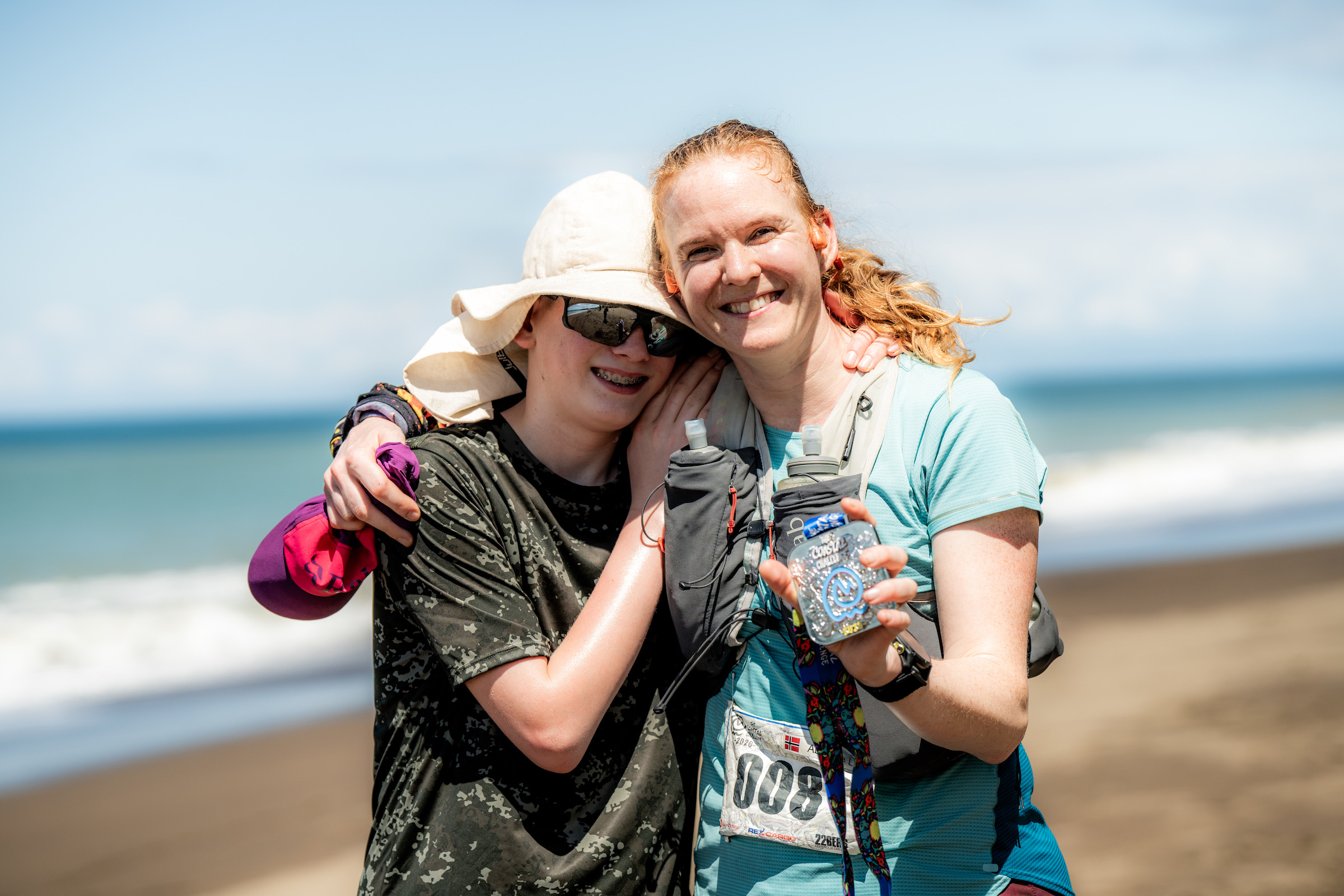
‘Adventure gives the best of both worlds, I got to race in Costa Rica and see the awesome trails, views and terrain, but I also got more time to relax and enjoy camp and the Pura Vida lifestyle.’ – Abelone Lyng
Adventure doesn’t mean easy. The terrain and climate are the same. But the shorter distances allow more time for rest, recovery, and simply taking in the surroundings. You’ll have space to soak up the Pura Vida lifestyle, connect with other runners, and enjoy the unique atmosphere that makes this race special.
Whether you choose Expedition or Adventure, you’ll experience the same wild coastline, the same supportive race community, and the same sense of achievement at the finish.
Ready to Sign Up?
The 2027 race entry is $3,050.
Using the link below, Ian Corless is able to offer a $200 discount, bringing your entry down to $2,850.
If you’ve been thinking about a multi-day race but weren’t sure which one, this is a strong place to start. Six days. A world-class course. Two distance options that make the challenge accessible without losing its edge.
We’ll see you on the start line in February 2027.
More reading
THE COASTAL CHALLENGE COSTA RICA : A 2026 PERSPECTIVE ON ONE OF THE WORLDS TOUGHEST RACES – HERE
You can read daily summaries from the 2026 edition HERE
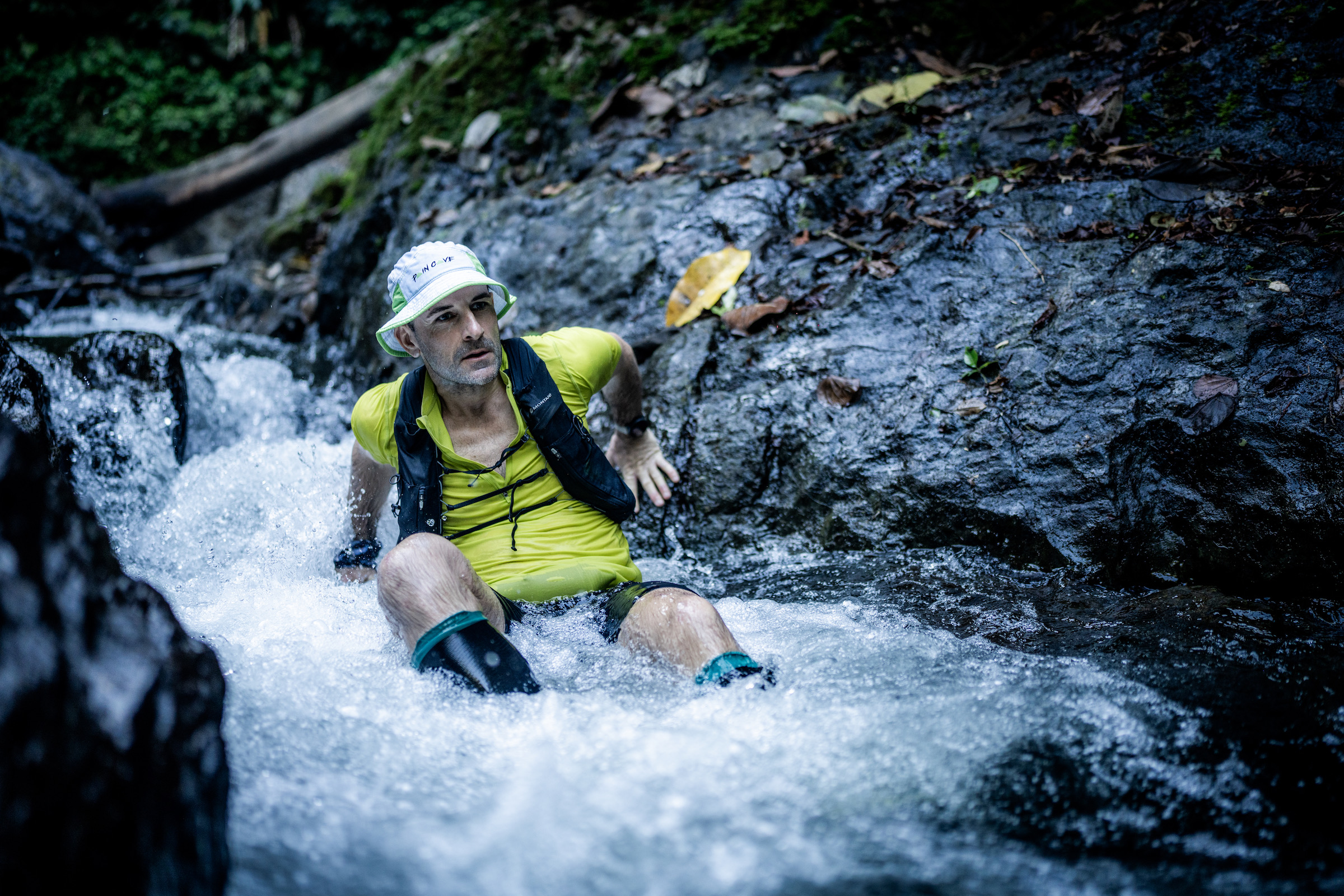
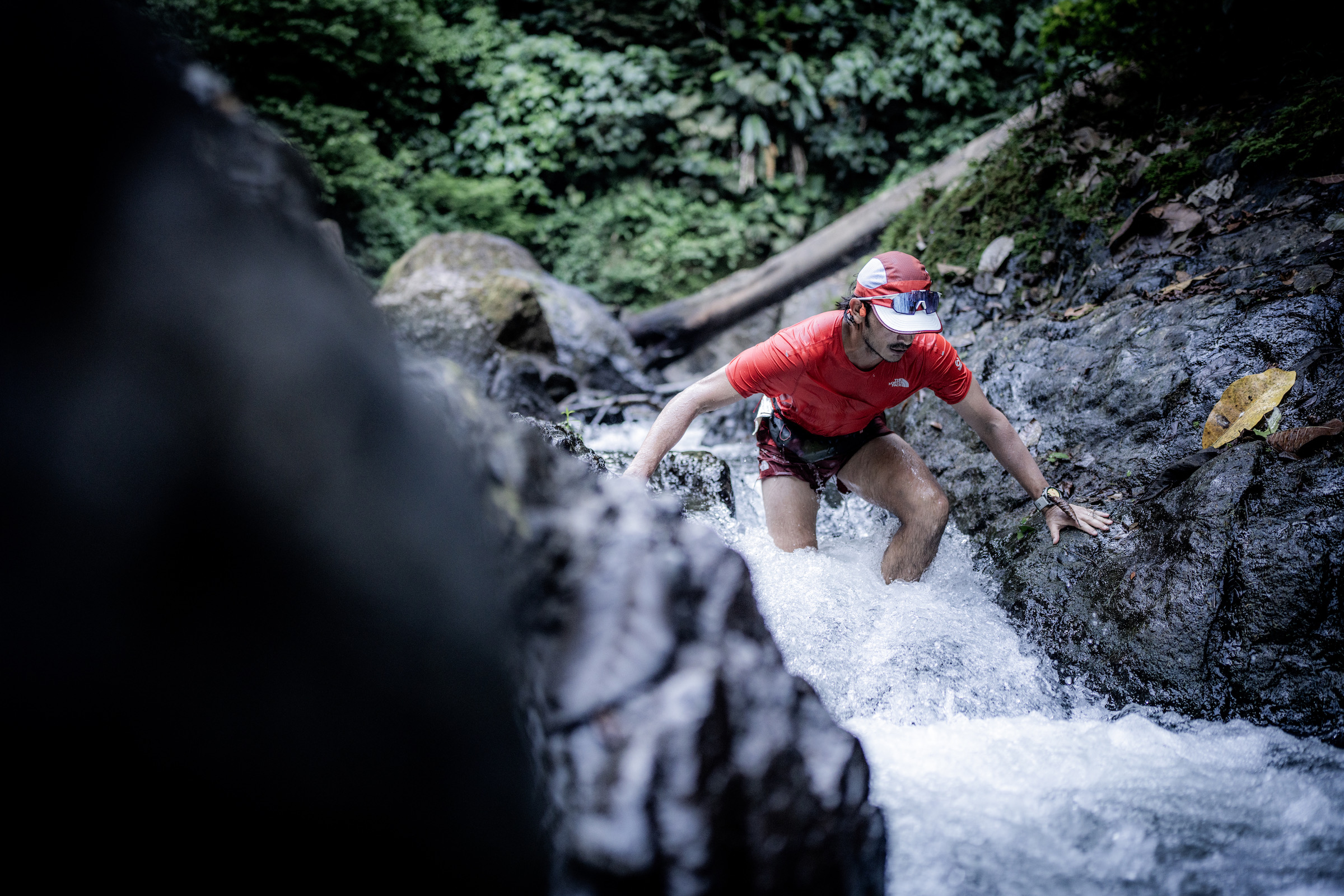
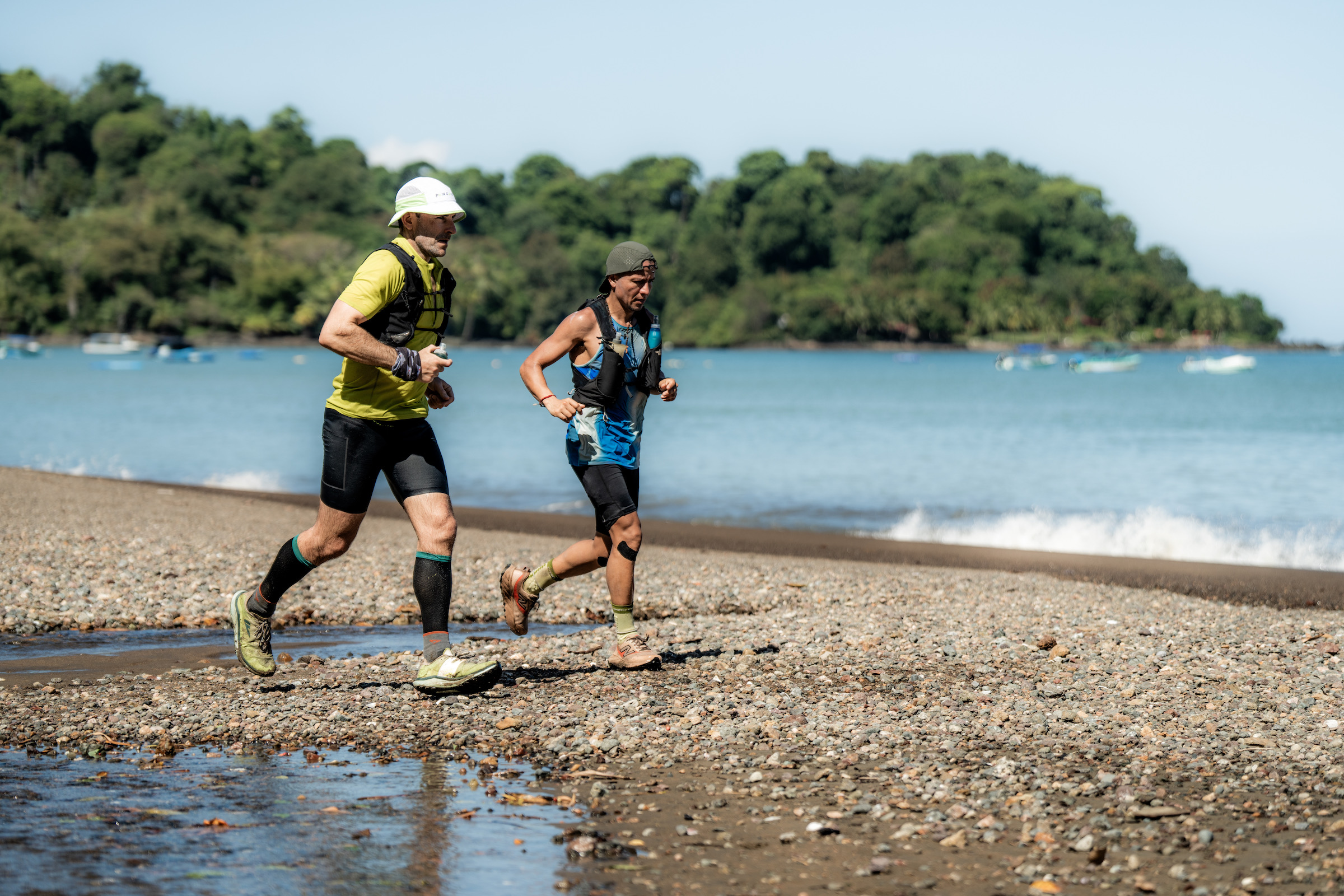
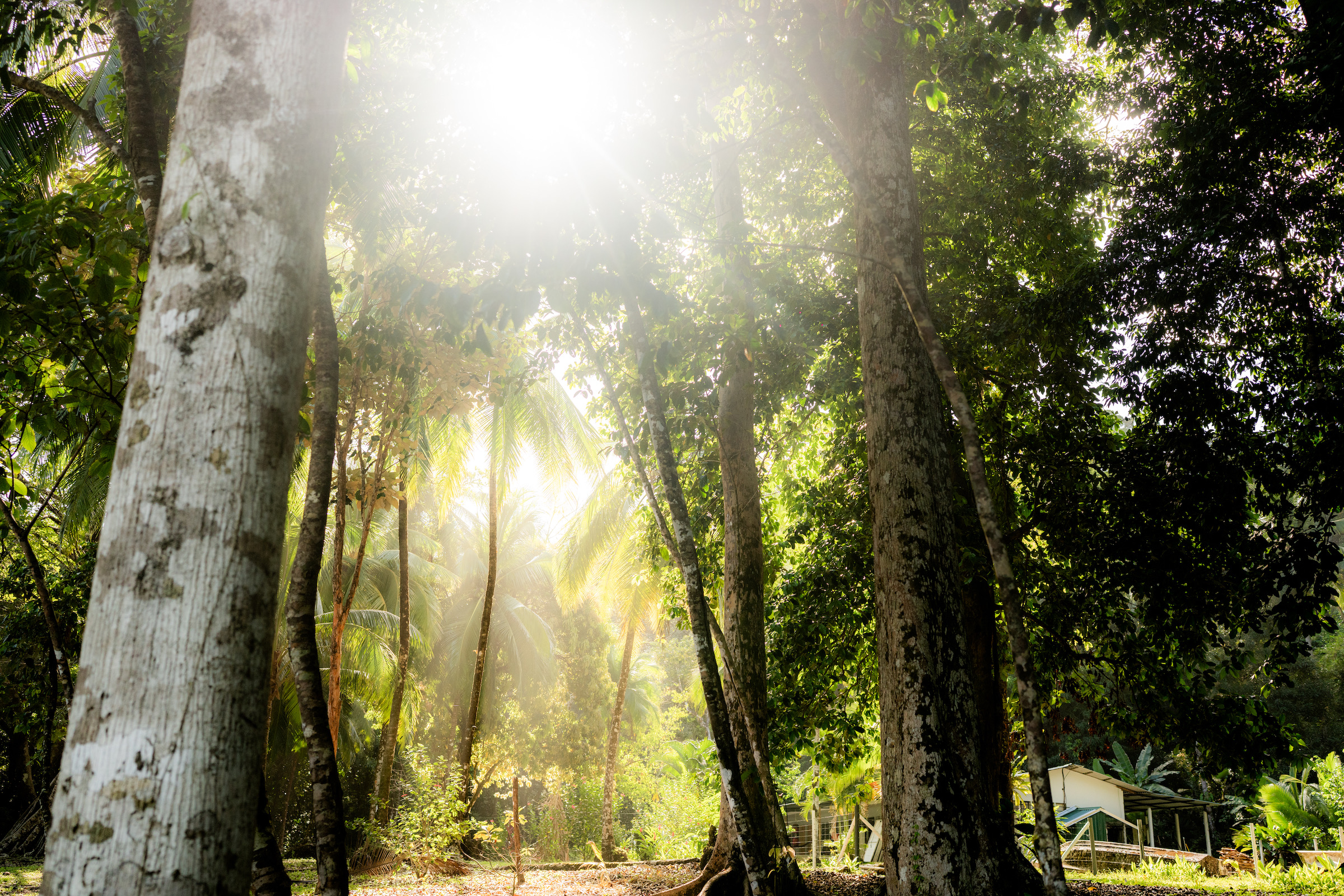
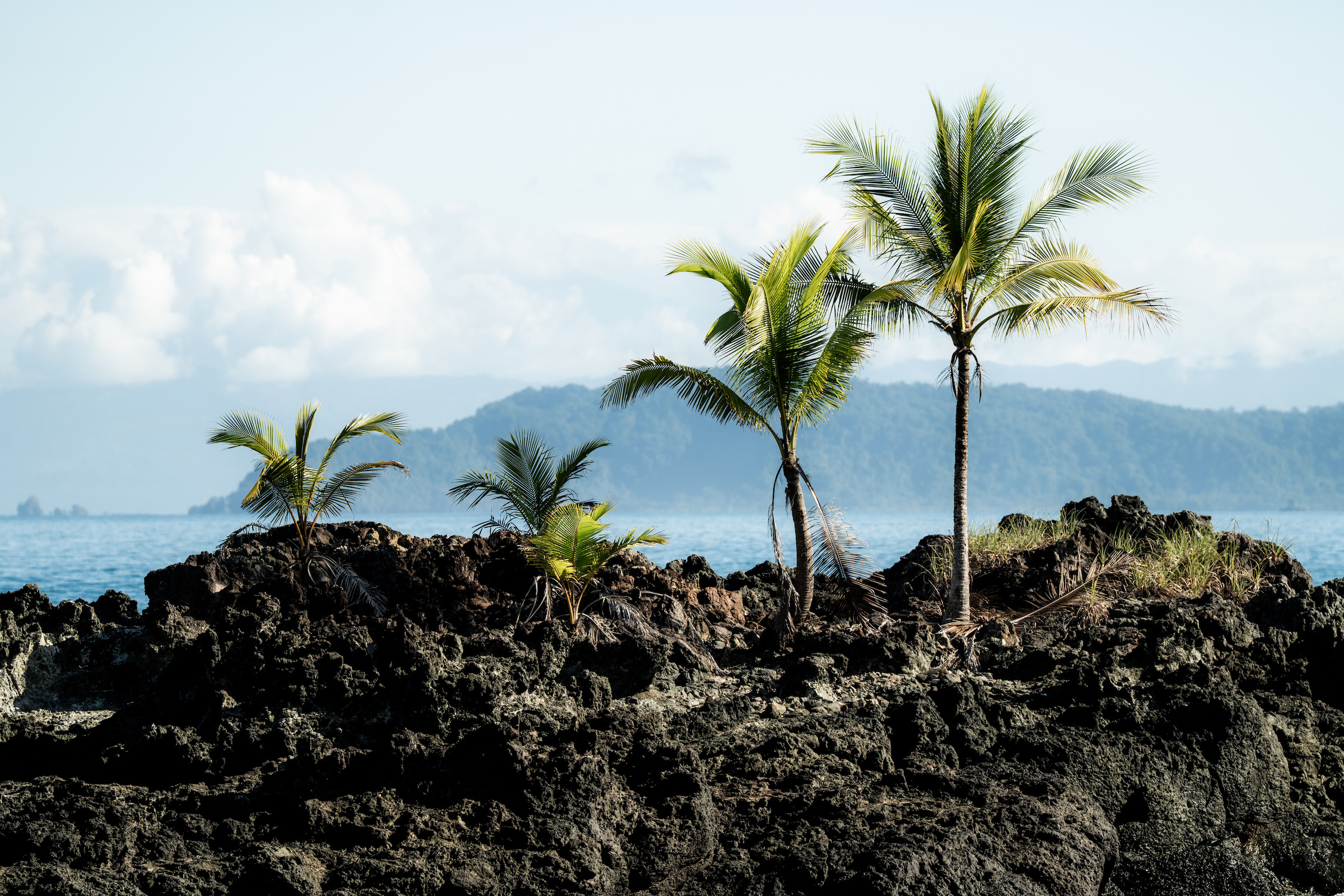
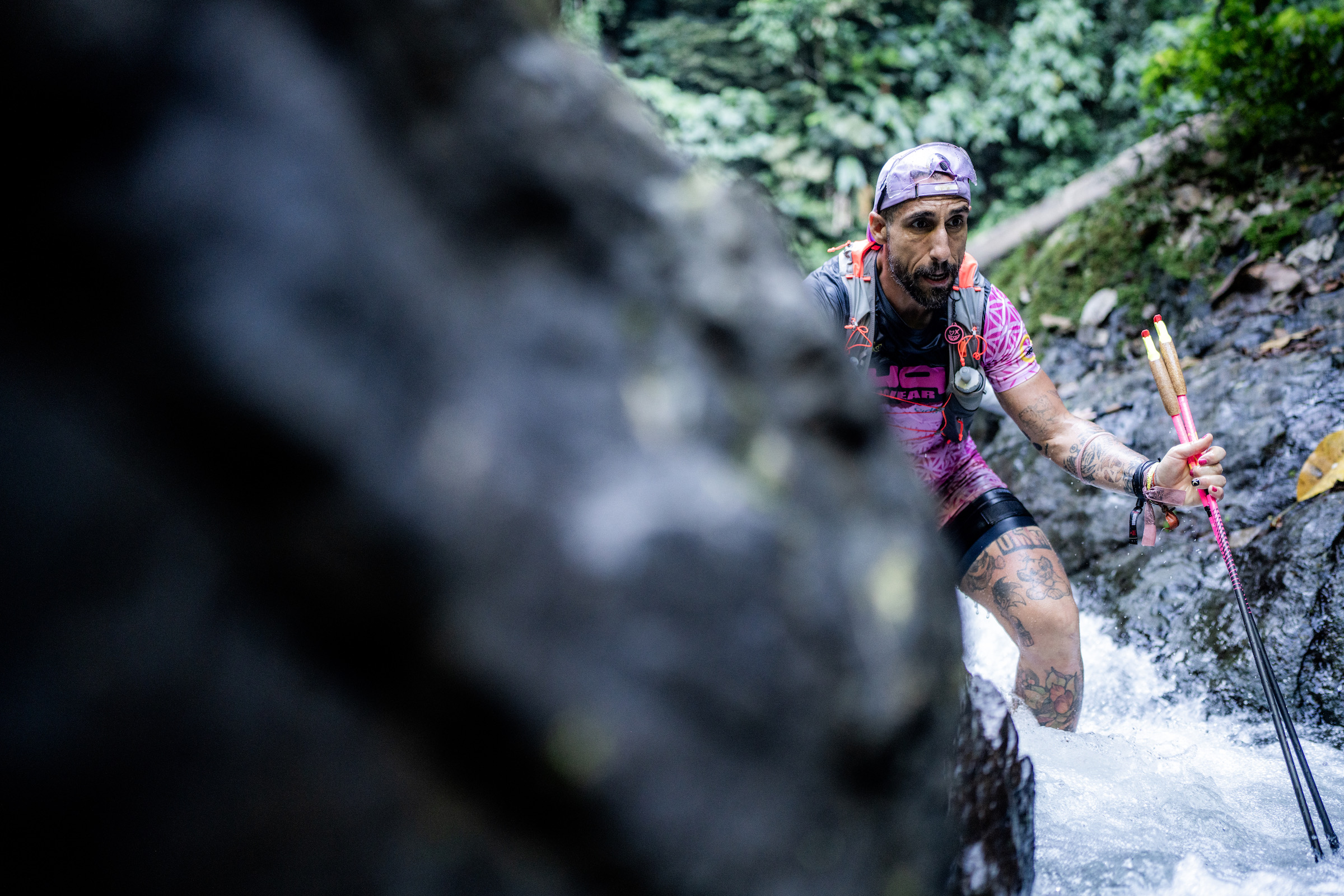
Stage 6 of The Coastal Challenge Costa Rica was always going to be special. It wasn’t just another race day. It was the closing chapter for the Adventure and Expedition categories. A loop that began and ended in the wild beauty of Corcovado and Bahía Drake. A day of waterfalls, gravel roads, jungle trails, river crossings, single track, beaches, and some of the most stunning light the Pacific coast can offer.
For many runners, this stage wasn’t only about time. It was about finishing what they started days ago. It was about earning the medal. It was about emotion.
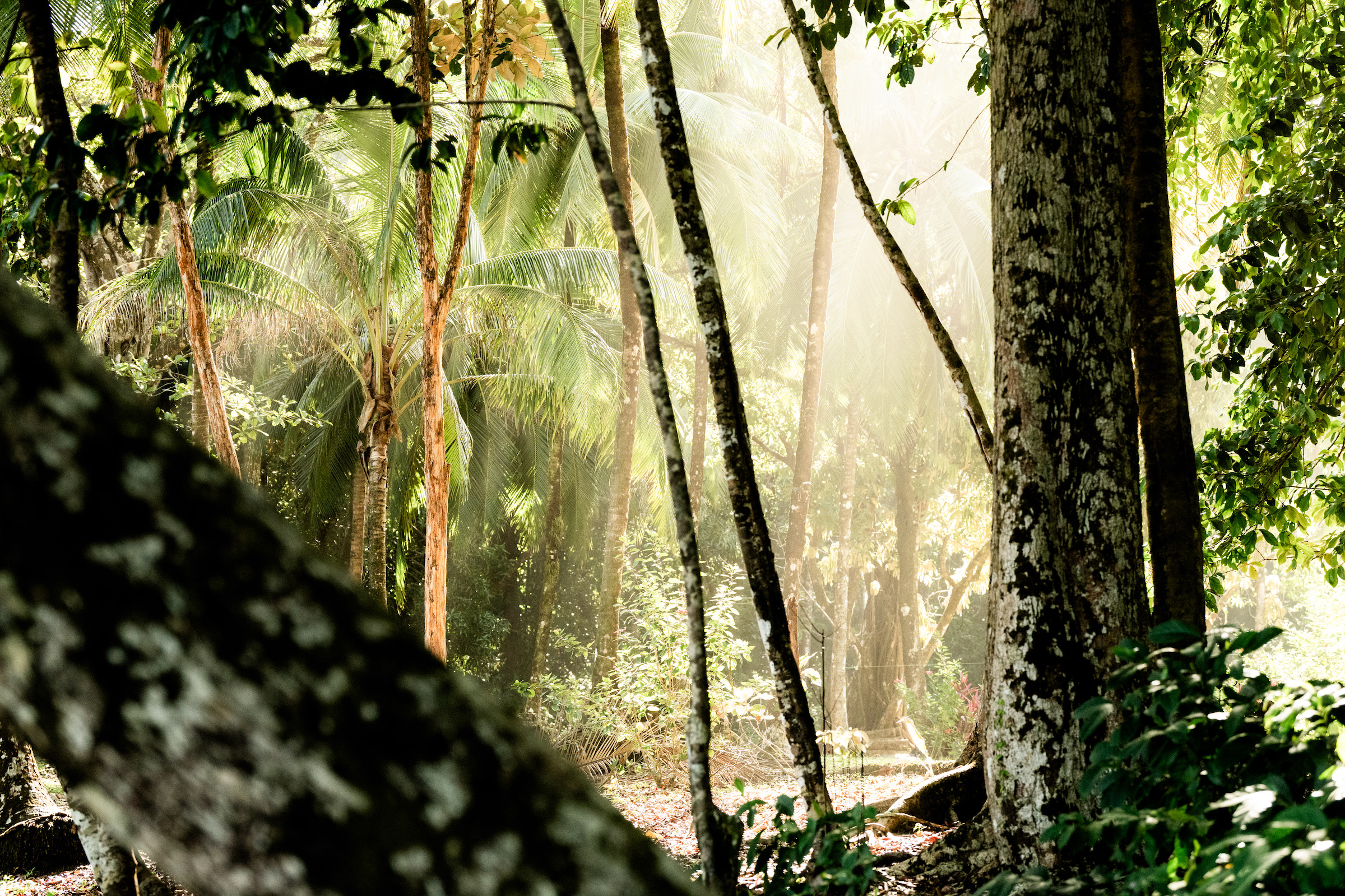
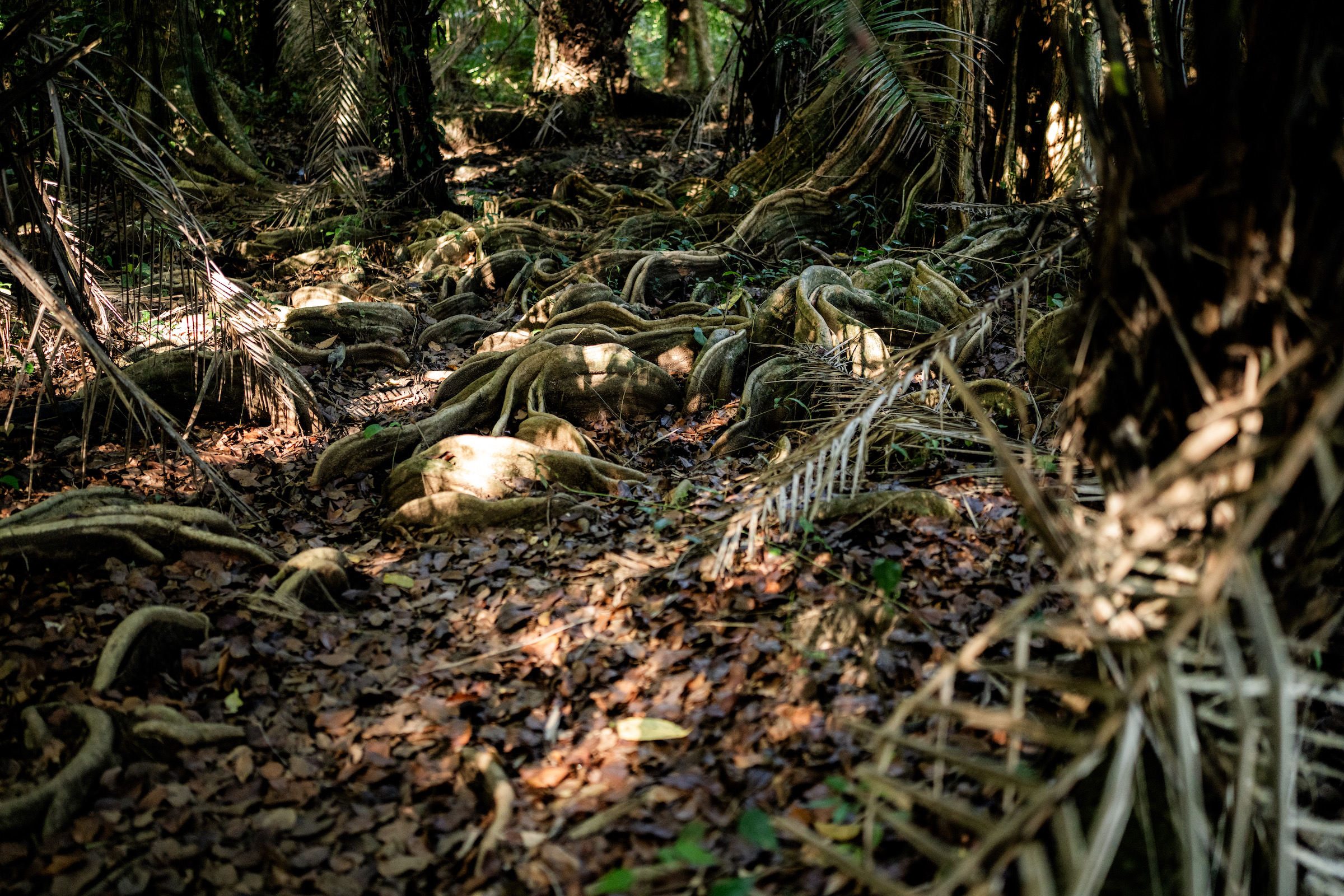
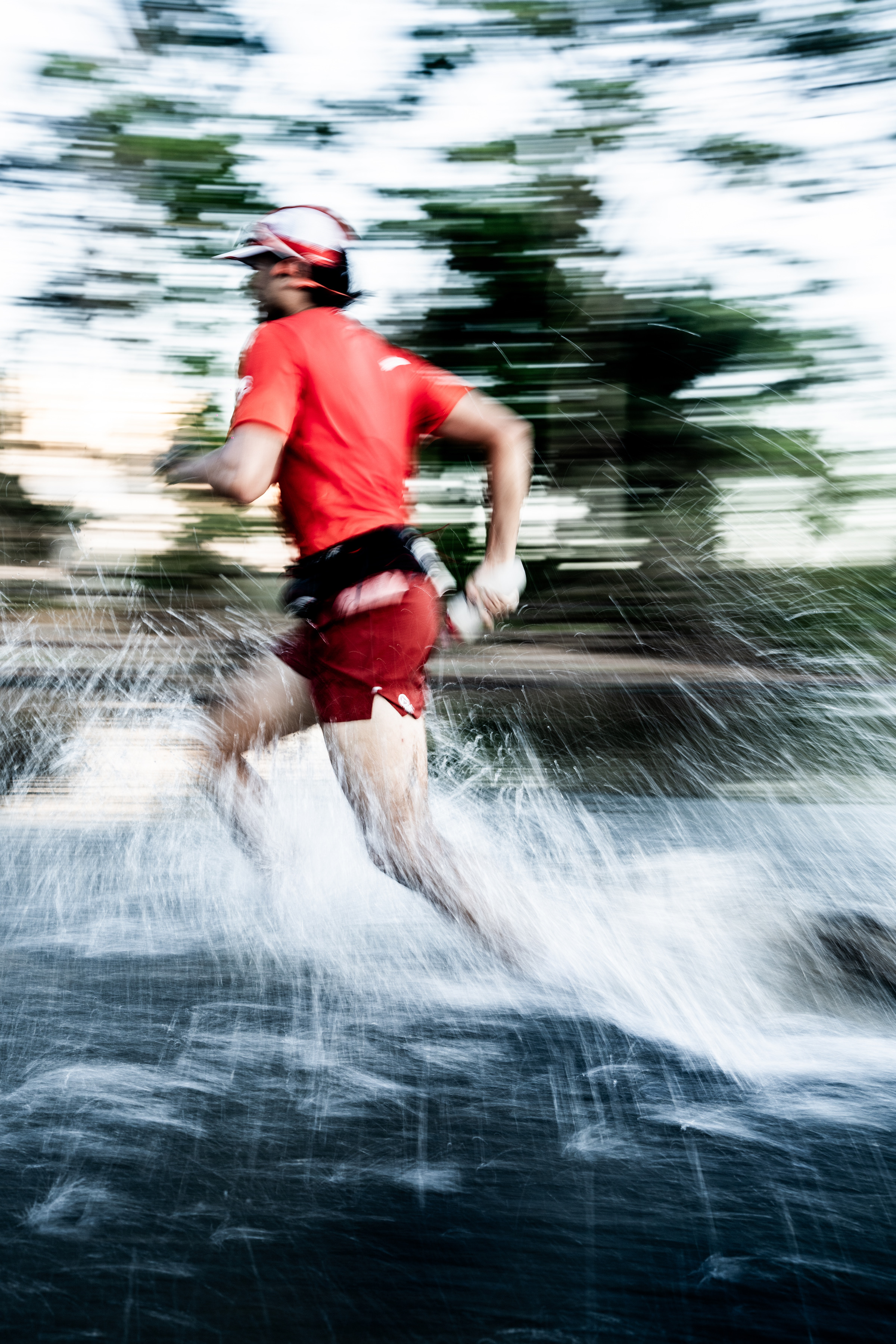
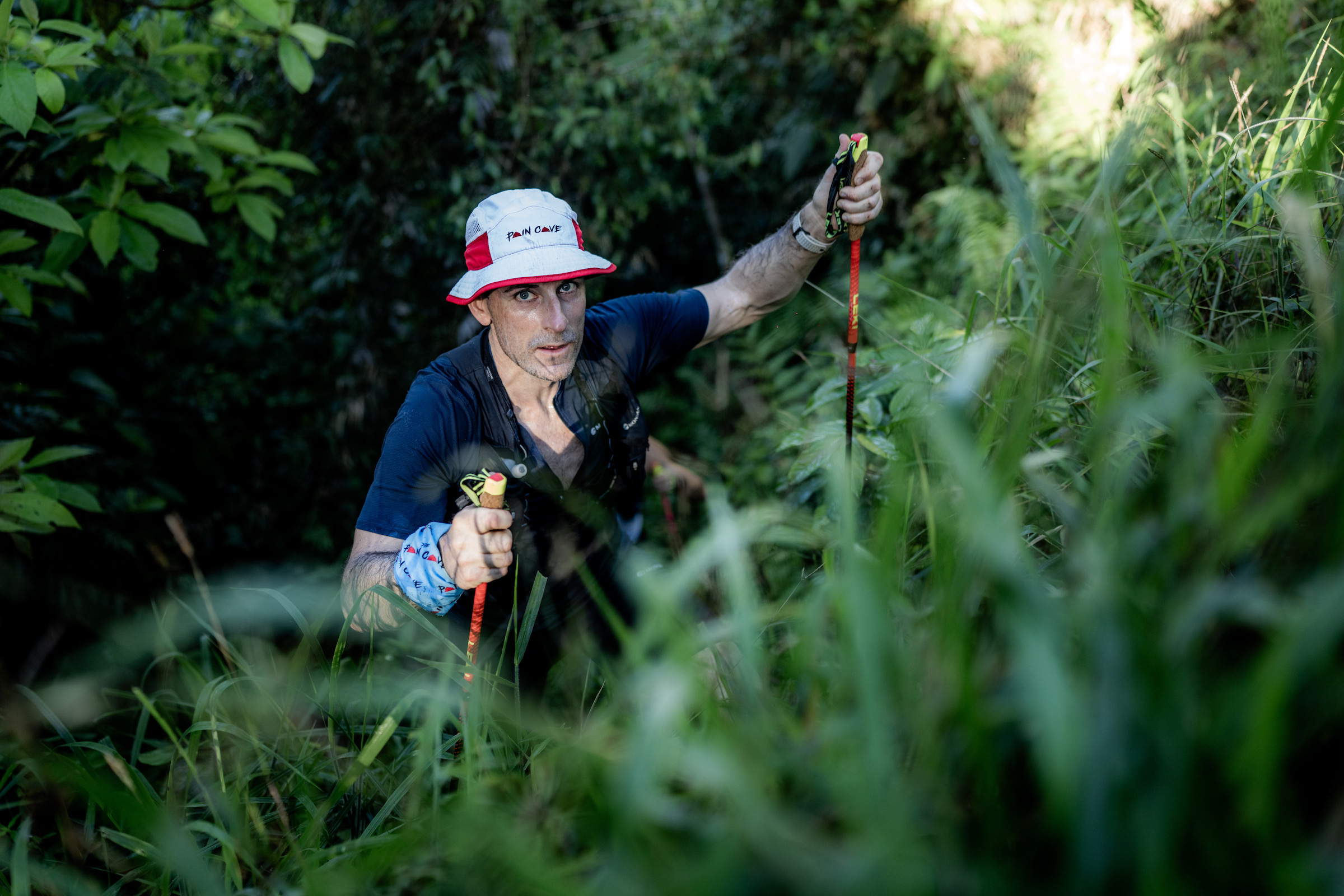
The route delivered everything Costa Rica promises. Thick jungle that swallowed sound and forced focus. Gravel roads that tested tired legs. Technical single track winding through roots and rock.
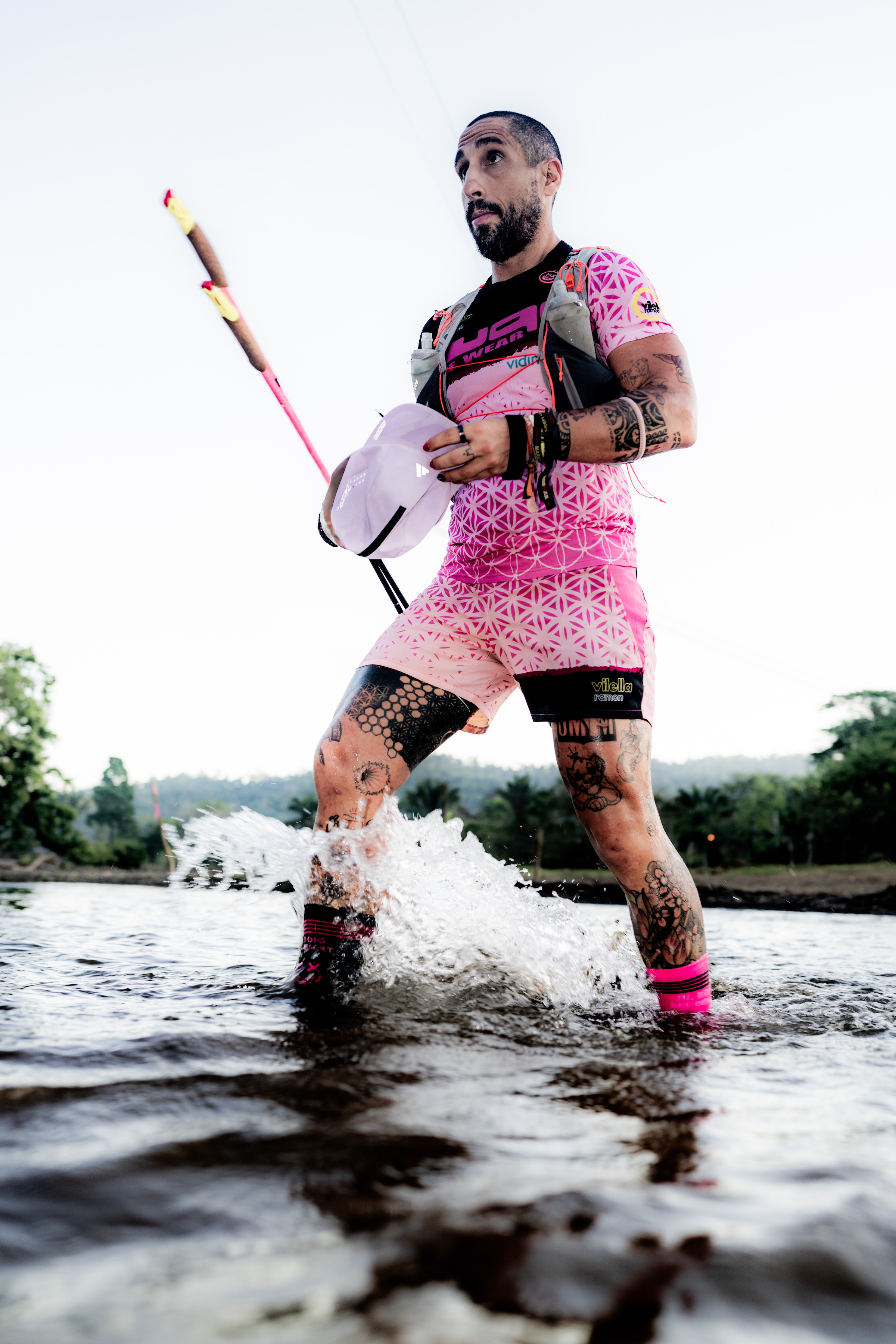
River crossings that cooled sore muscles for a brief moment. Beaches that stretched endlessly under a rising sun. Waterfalls tucked deep in green corridors. Every turn seemed to offer another view, another reason to pause, another reminder of how far everyone had come.
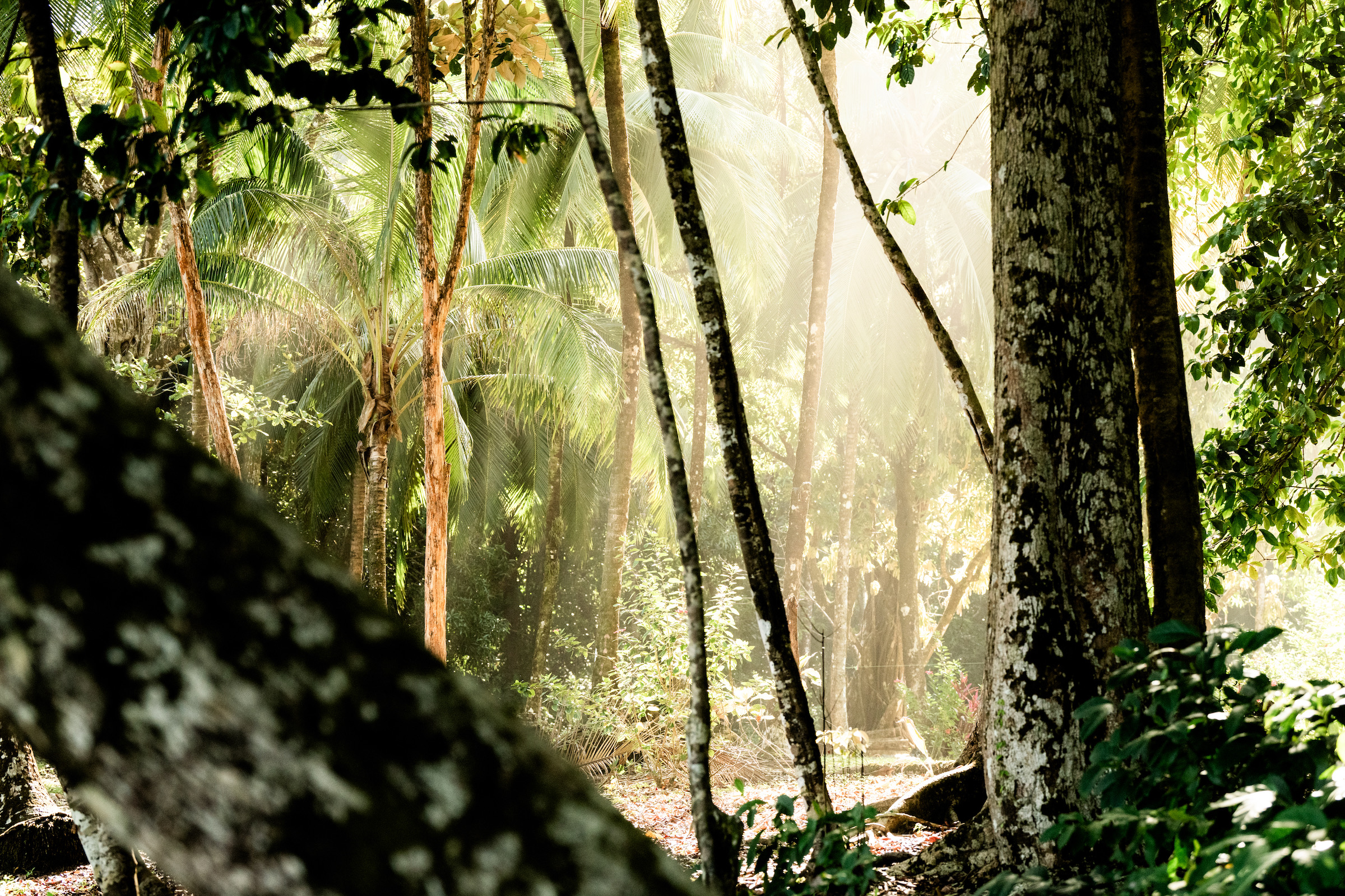
And the light. Early morning gold over the ocean. Sun filtering through canopy leaves. The kind of light that makes even exhausted runners smile.
At the front of the Expedition men’s race, Alejandro Muñoz (#1) delivered a commanding performance, crossing the line in 3:54:46.1 to take the Stage 6 win. He ran with control and strength, managing the varied terrain with precision.
Martin Alonso Mena Jimenez secured second in 4:21:29.0, followed closely by Jon Shield in 4:22:43.9. Both men pushed hard through the jungle and across the beaches, knowing every minute mattered on this final day.
But while Stage 6 had its winners, the greater story in Expedition belonged to Erick Agüero.
After eight participations in The Coastal Challenge, Erick Agüero finally claimed the overall Expedition title. Eight times he stood on the start line. Eight journeys through heat, humidity, hills, rivers, and long lonely stretches of trail. Eight times chasing the dream.
And this year, he did it.
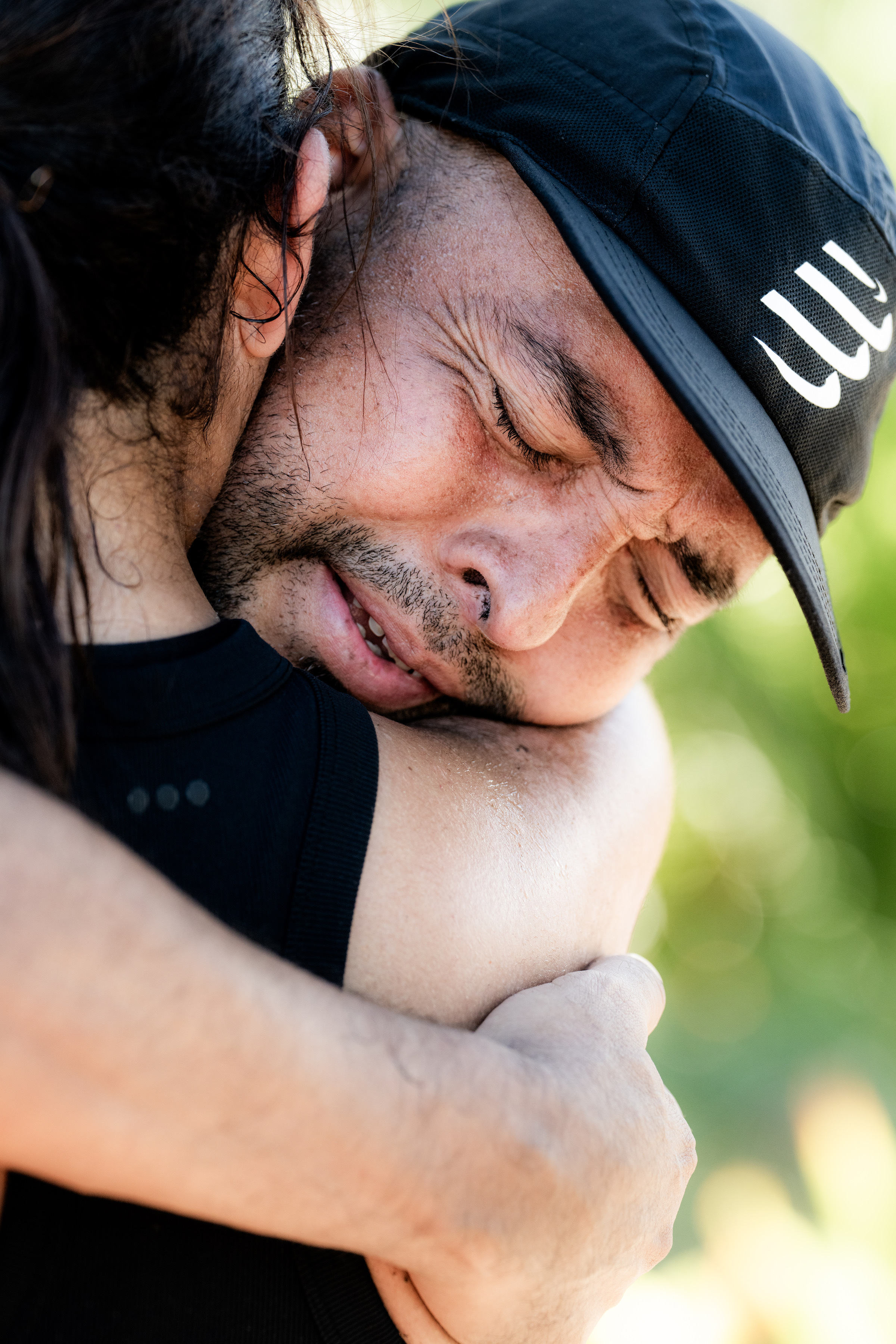
At the finish line there were tears. Real ones. The kind that come from years of effort, setbacks, persistence, and belief. You could see the weight lift from his shoulders as he crossed under the arch. Joy mixed with relief. Pride mixed with exhaustion. Winning after one attempt is impressive. Winning after eight shows something deeper. Commitment. Patience. Heart.It was one of those moments that reminds everyone why this race matters.
Denise Zelaya led the Expedition women home on Stage 6 in 4:24:35.1. She ran strong and steady, handling the technical sections with confidence and finishing her week on a high note.
Janina Beck followed in 5:11:18.6, while Floribeth Pérez (#38) completed the podium in 6:27:05.8. Each of them faced the same rugged loop and found their own way through it.
For the women’s field, the final stage was about resilience. By this point in the week, everyone is carrying fatigue. Legs are heavy. Feet are tender. Yet they kept moving forward. Through river crossings. Along sunlit beaches. Into the final stretch.
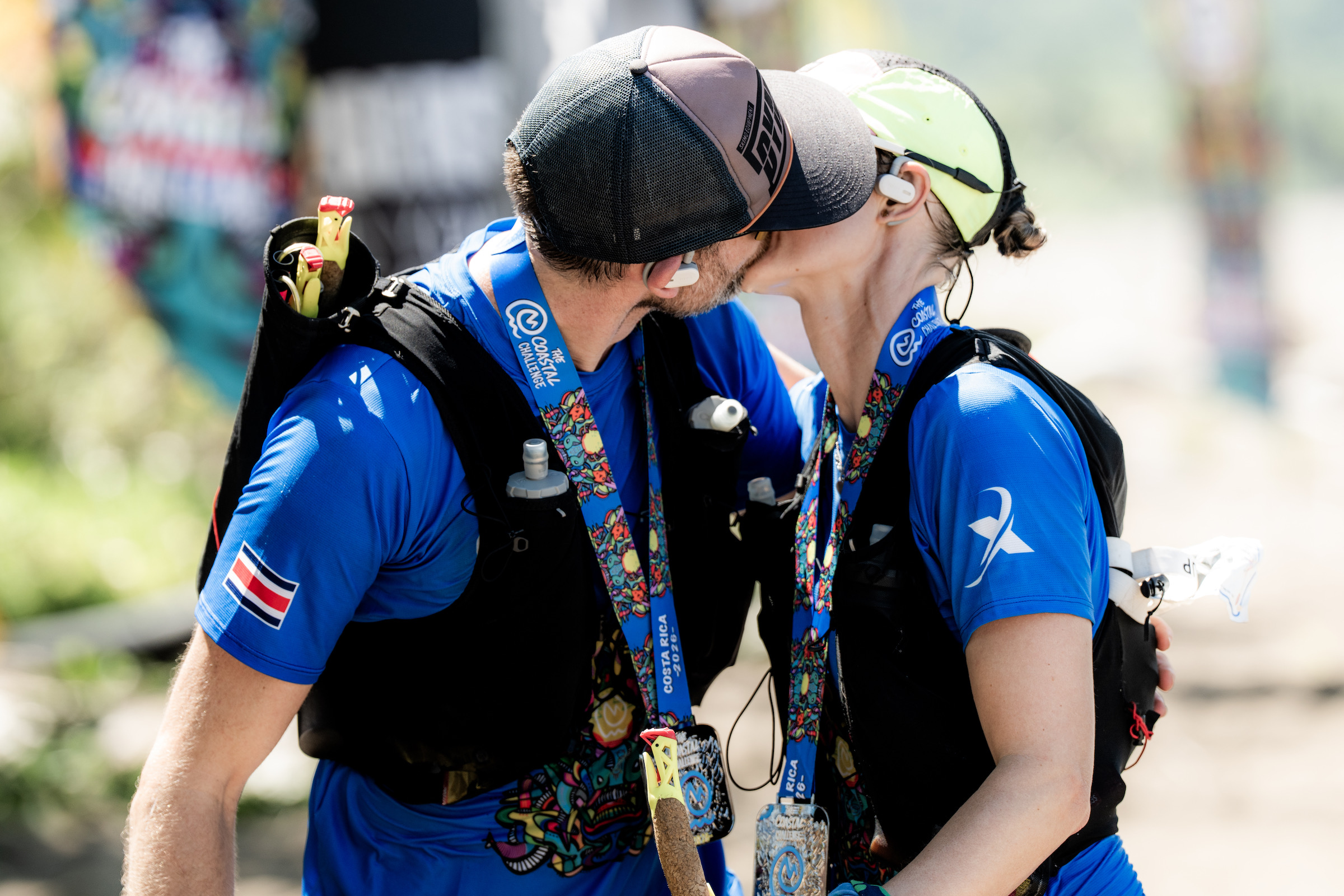
There were hugs at the finish. Long embraces. Shared smiles. The understanding that something meaningful had just been completed.
The Adventure category also closed its journey on Stage 6, and the racing at the front was sharp.
Sammy Francis (#35) took the stage win in an impressive 3:49:24.0, the fastest Adventure male time of the day. He attacked the course with confidence and made the most of the gravel roads and flowing single track.
Emerson Ulloa Avila (#61) finished second in 4:25:00.7, with Roberto Solano Rivera (#60) taking third in 4:32:05.3. All three demonstrated how much strength remains even at the end of a multi-day challenge.
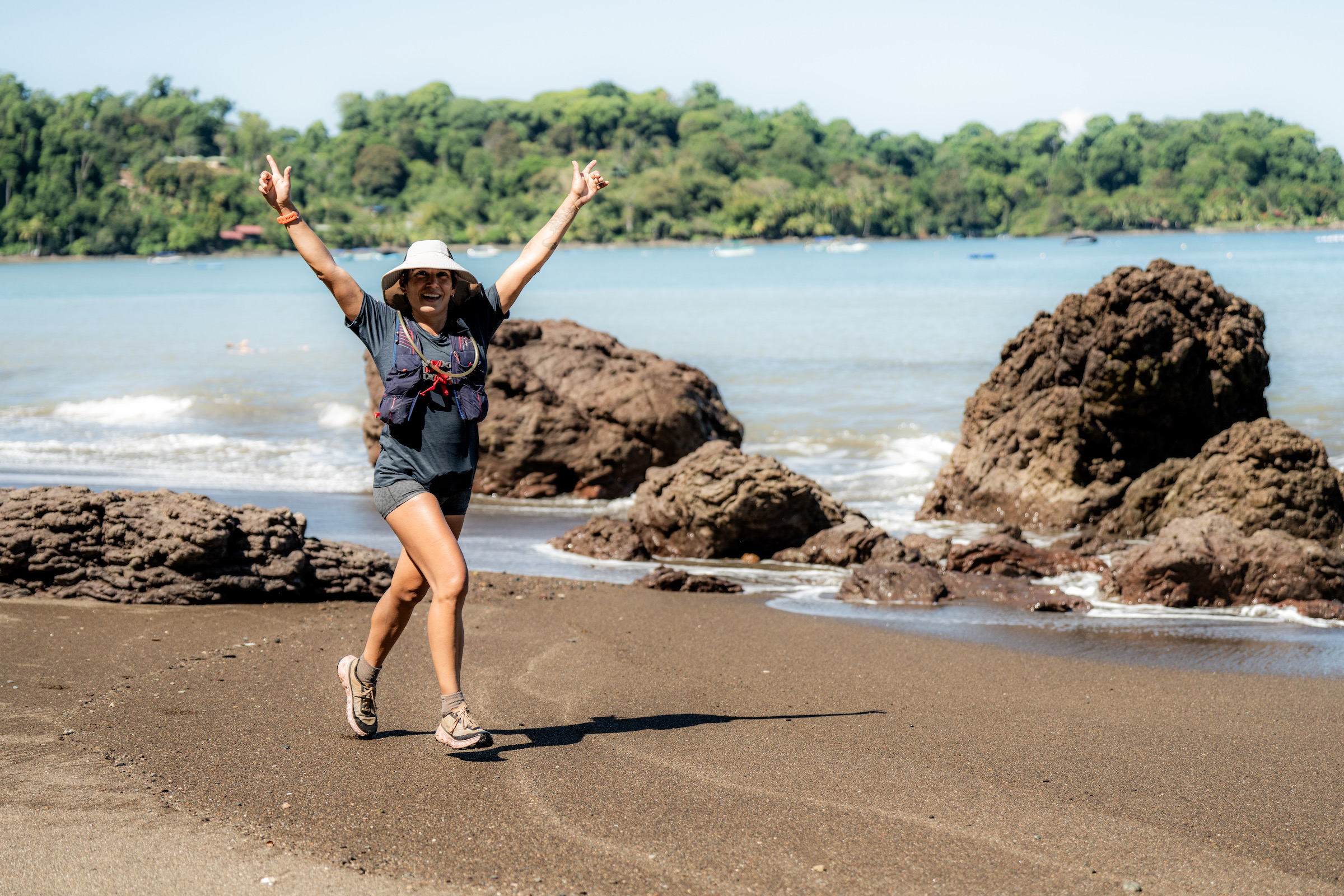
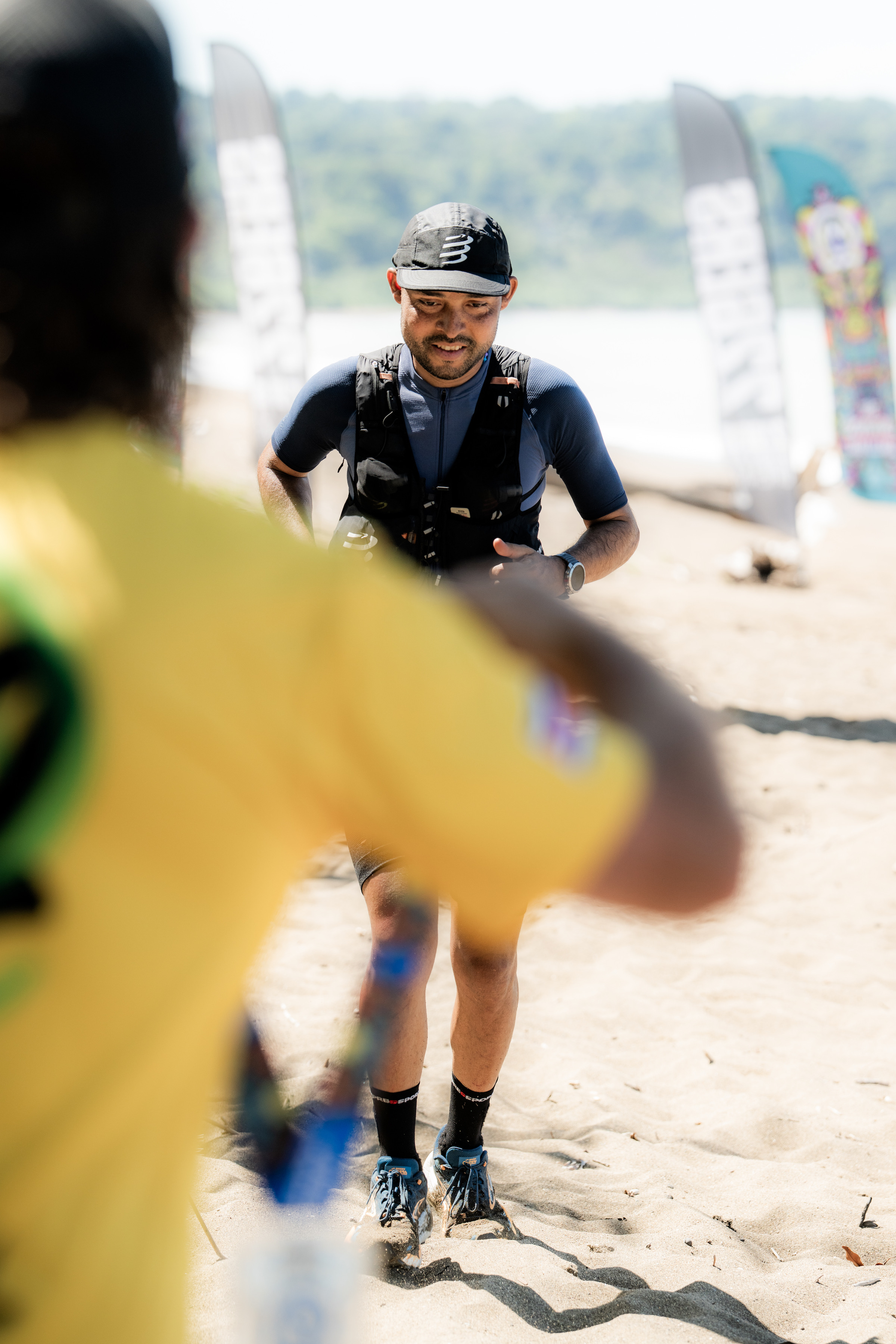
But beyond podium places, the Adventure field showed something just as powerful: joy. Runners crossing the final beach stretch with arms raised. Friends waiting at the line. The relief of knowing the journey was complete.
In the Adventure women’s race, Laura Zúñiga Alcázar claimed the Stage 6 win in 4:23:00.4 with a composed and determined effort.
Behind her, Toni Clarke and Kristel Polet (#34) finished in an exact tie at 4:26:27.0. A rare and beautiful result. Two athletes, side by side on the final day, sharing the moment.
That image said a lot about this race. It is competitive, yes. But it is also shared. Shared struggle. Shared laughter. Shared relief.
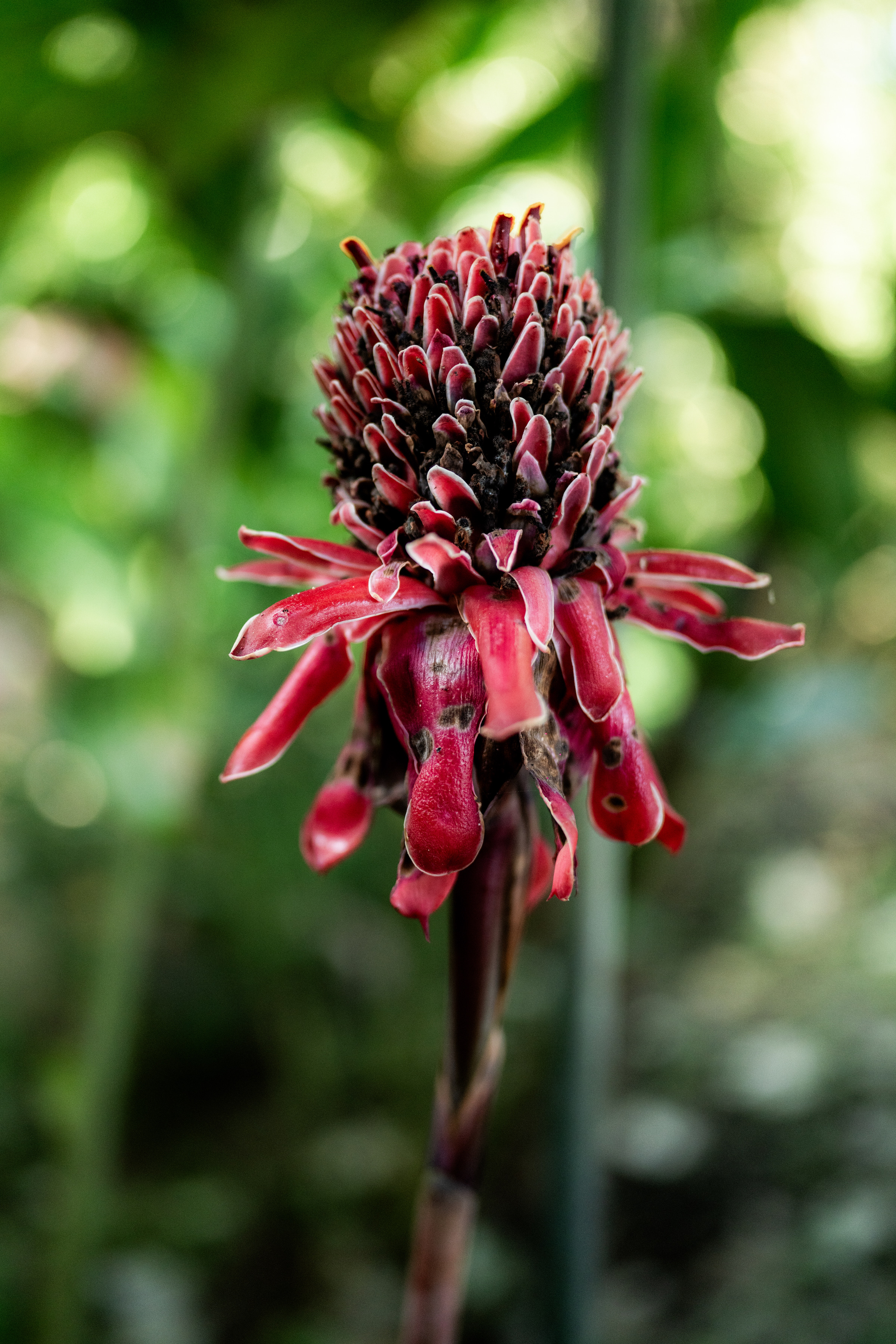
Stage 6 is always emotional. It marks the end of something intense and rare. Days of running through one of the most biodiverse regions on Earth. Corcovado’s wild heart. The raw coastline of Bahía Drake. The rhythm of waves and jungle birds.
This final loop captures everything the Coastal Challenge stands for. Variety in terrain. Beauty in every direction. Difficulty that forces growth. Moments that stay with you long after the medal is packed away.
The waterfalls cool the body. The jungle humbles you. The beaches test your patience. The gravel roads demand grit. The single track rewards focus. The water crossings refresh and surprise. And the views remind you why you signed up in the first place.
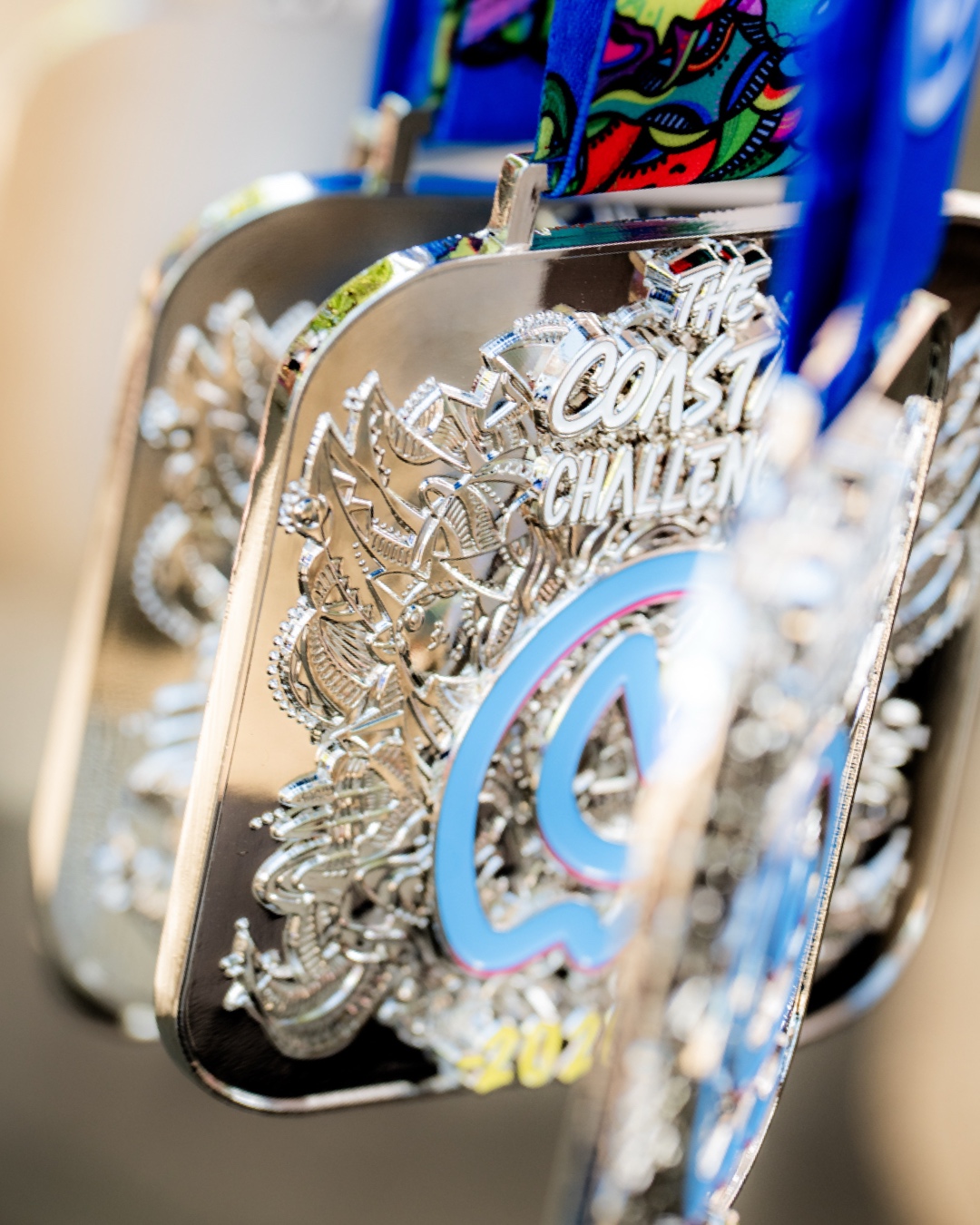
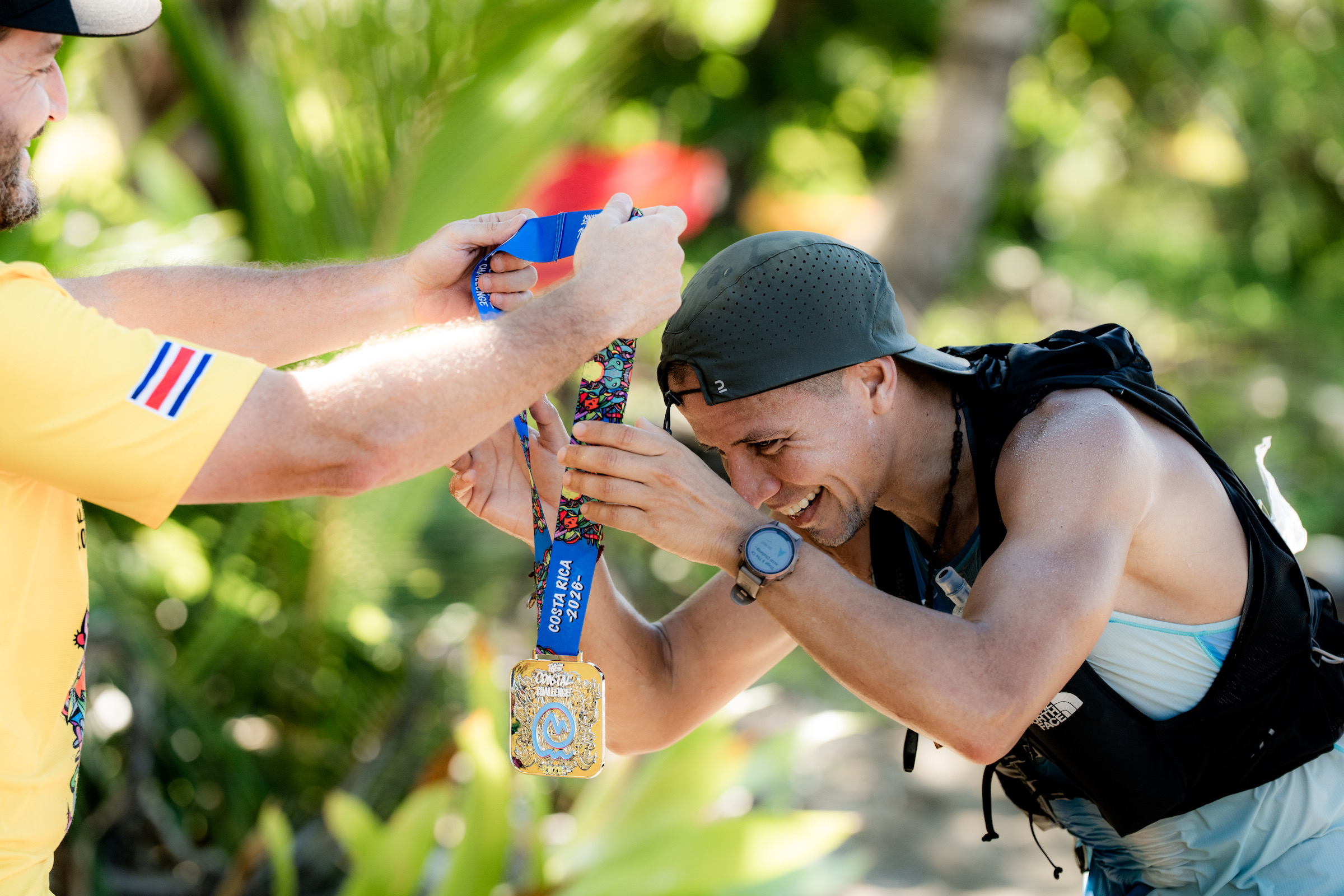
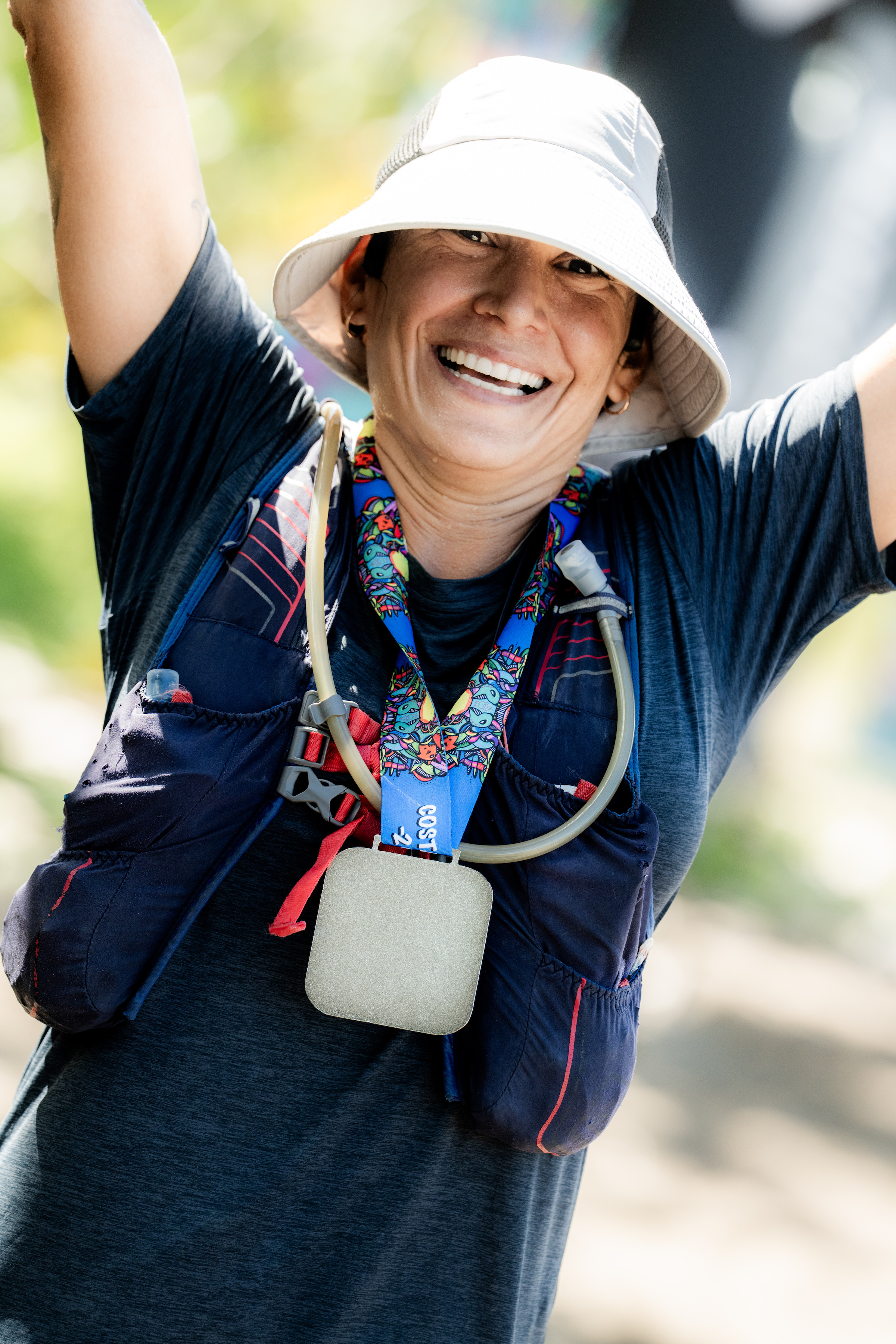
By the time runners reached the finish line on Stage 6, medals waiting, there was a mix of tears and laughter. Some sat quietly, absorbing it. Some embraced teammates. Some looked back toward the ocean.
Happiness doesn’t always arrive loudly. Sometimes it comes in a deep breath after days of effort. In the simple act of standing still after so much forward motion.
For the Adventure and Expedition categories, the journey is now complete. The miles are done. The jungle has been crossed. The beaches have been run.
And for Erick Agüero, after eight attempts, the dream has finally been realized.
Stage 6 wasn’t just the end of a race. It was the celebration of persistence, community, and the unforgettable experience of running through one of the most beautiful corners of the world. Medals were placed around tired necks. Eyes were wet. Smiles were wide.
The Coastal Challenge once again delivered more than a competition. It delivered a journey.
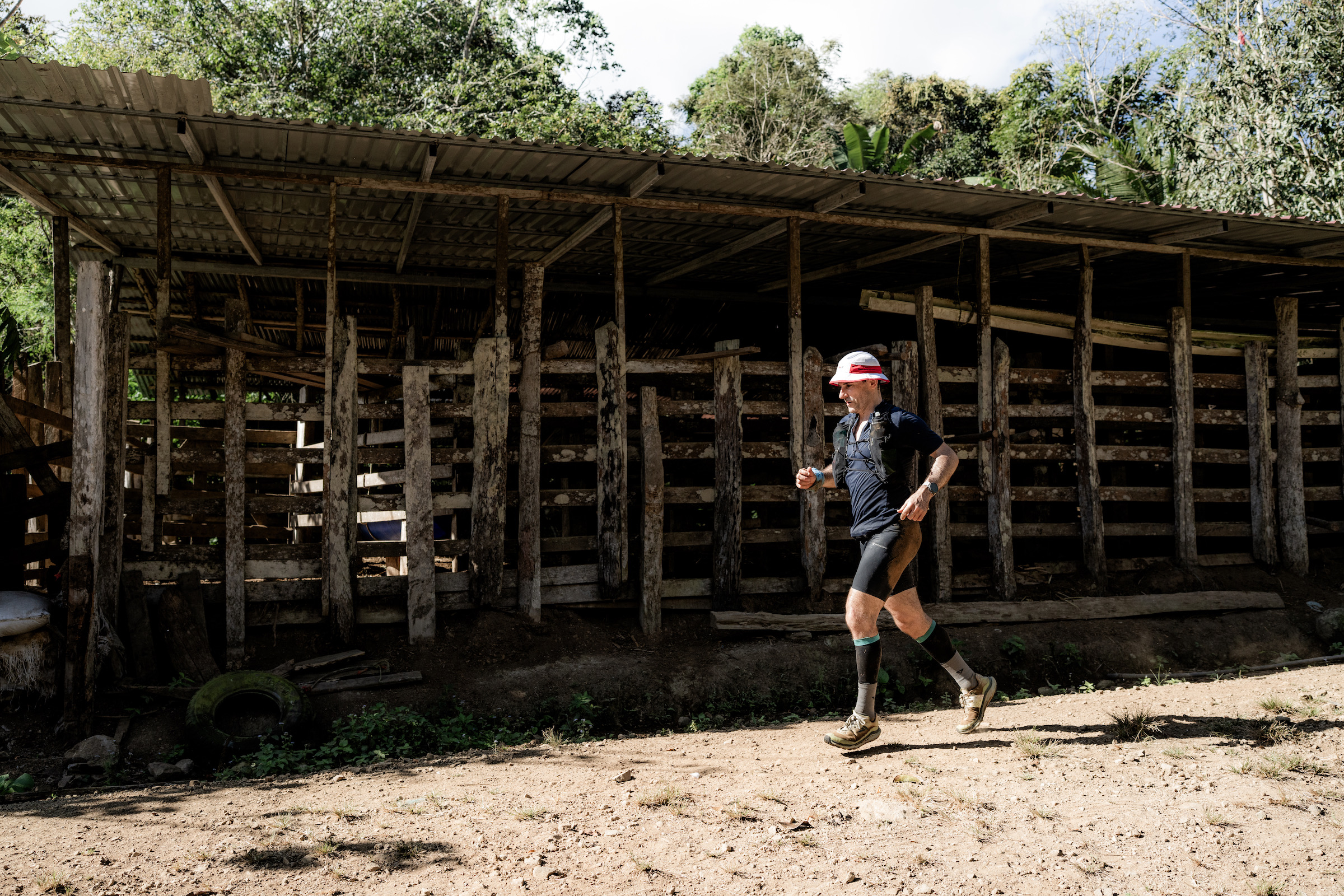
The Coastal Challenge Costa Rica pulled runners away from the coastline and into the high farmlands of the country’s interior. It was a bruising day, 37.7 kilometers with 2,613 meters of climbing for the Expedition category.
No hiding from it. The terrain rolled relentlessly, climbing and plunging through rough rural tracks and exposed hillsides before dropping toward the finish in Palma Norte. It was a stage built to test already tired legs, and it did exactly that.
Men’s Race
Erick Aguirre ran smart. With a solid overall lead, there was no need to take risks. He spent the day alongside Jesus Cerdas, the pair moving steadily across the harsh terrain. They crossed together in 6:05:43, controlled and composed.
Behind them, the real battle unfolded.
Jon Shield fought all day. For much of the stage he sat in fourth, but he never let the gap grow. Gradually he reeled in Martin Alonso Mena. The two arrived at the line almost inseparable after more than six and a half hours of racing. Shield edged it by just three seconds, 6:38:26 to 6:38:29. A long day decided by the smallest of margins.
Women’s Race
Denise Zelaya continues to run her own race. Calm, consistent, and completely dominant, she finished in 7:29, well clear of the field.
Janina Beck followed in 8:27, with Floribeth Perez completing the podium in 8:59. On a day that punished everyone, Zelaya once again showed control and strength.
Adventure Category
The Adventure course was shorter at 12 kilometers, but still far from easy. Sammy Francis ran solo again, crossing in 3:39:22 with another composed performance. In the women’s race, Laura Zuniga finished in 4:13:45, gaining more time on Toni Clark and steadily building her advantage.
*Please note – Adventure times need to deduct 1:49 from the times
With four stages complete, fatigue is real. The coastal humidity has been replaced by exposed climbs and rolling farmland. Every step now carries the weight of the days before.
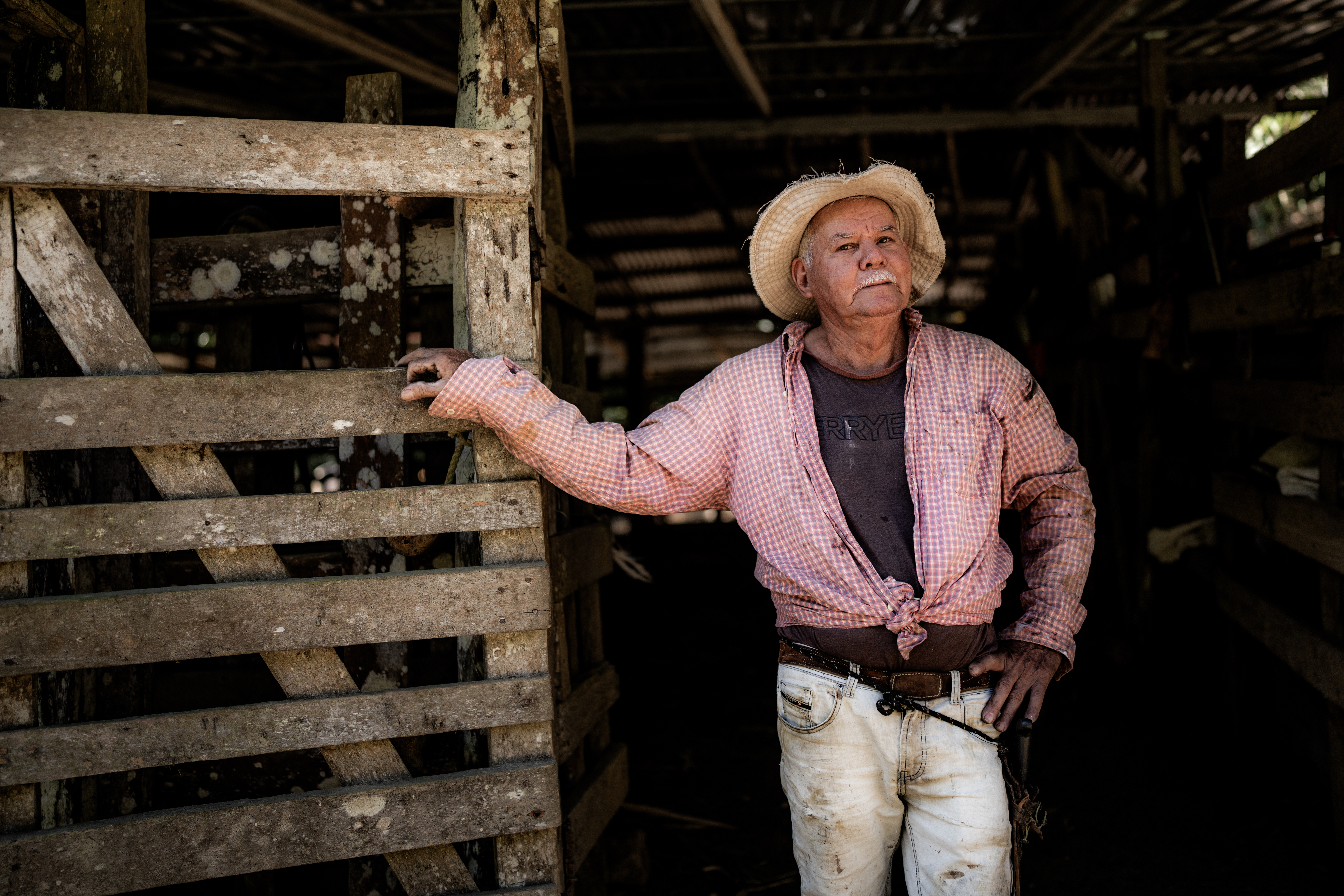
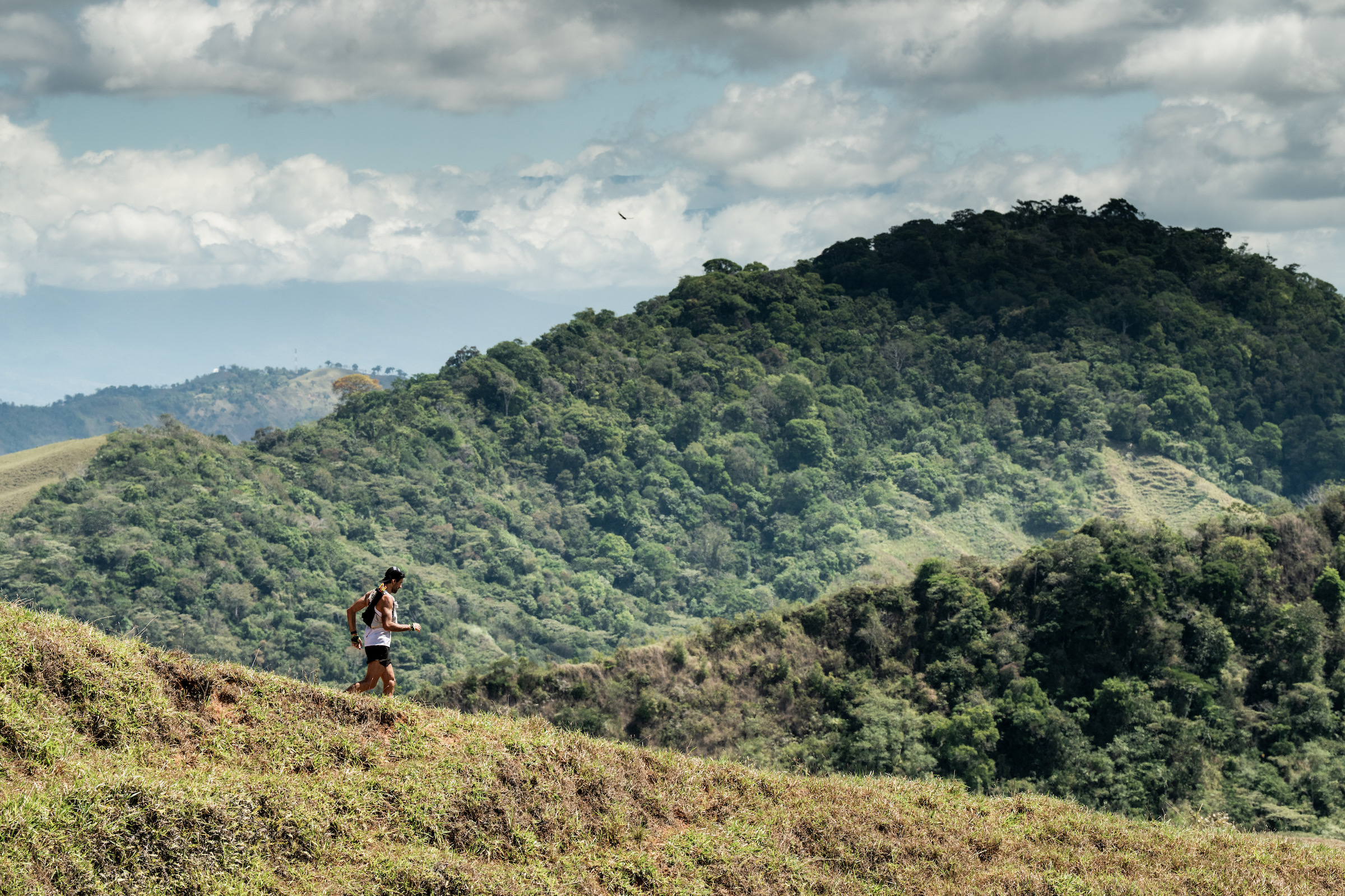
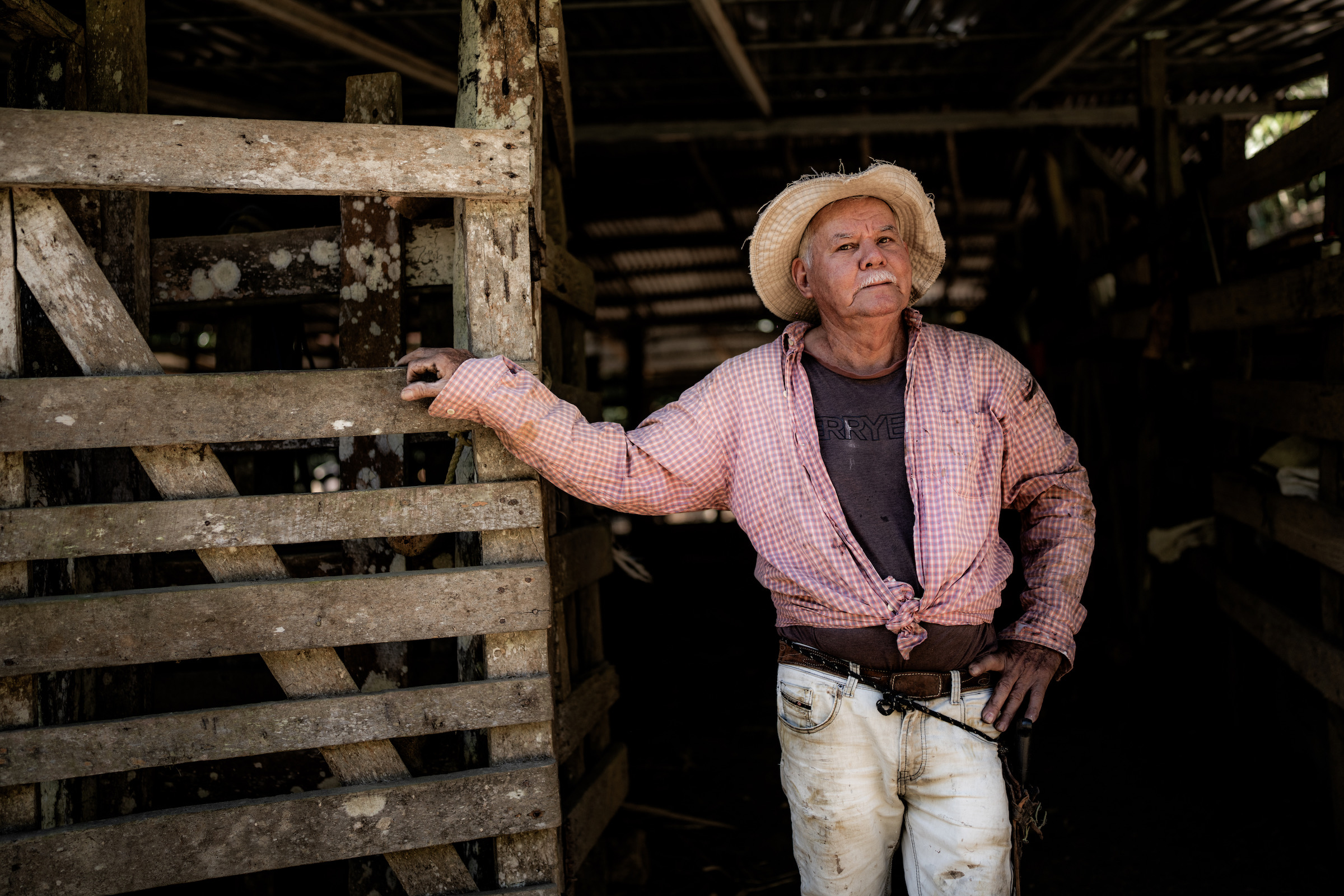
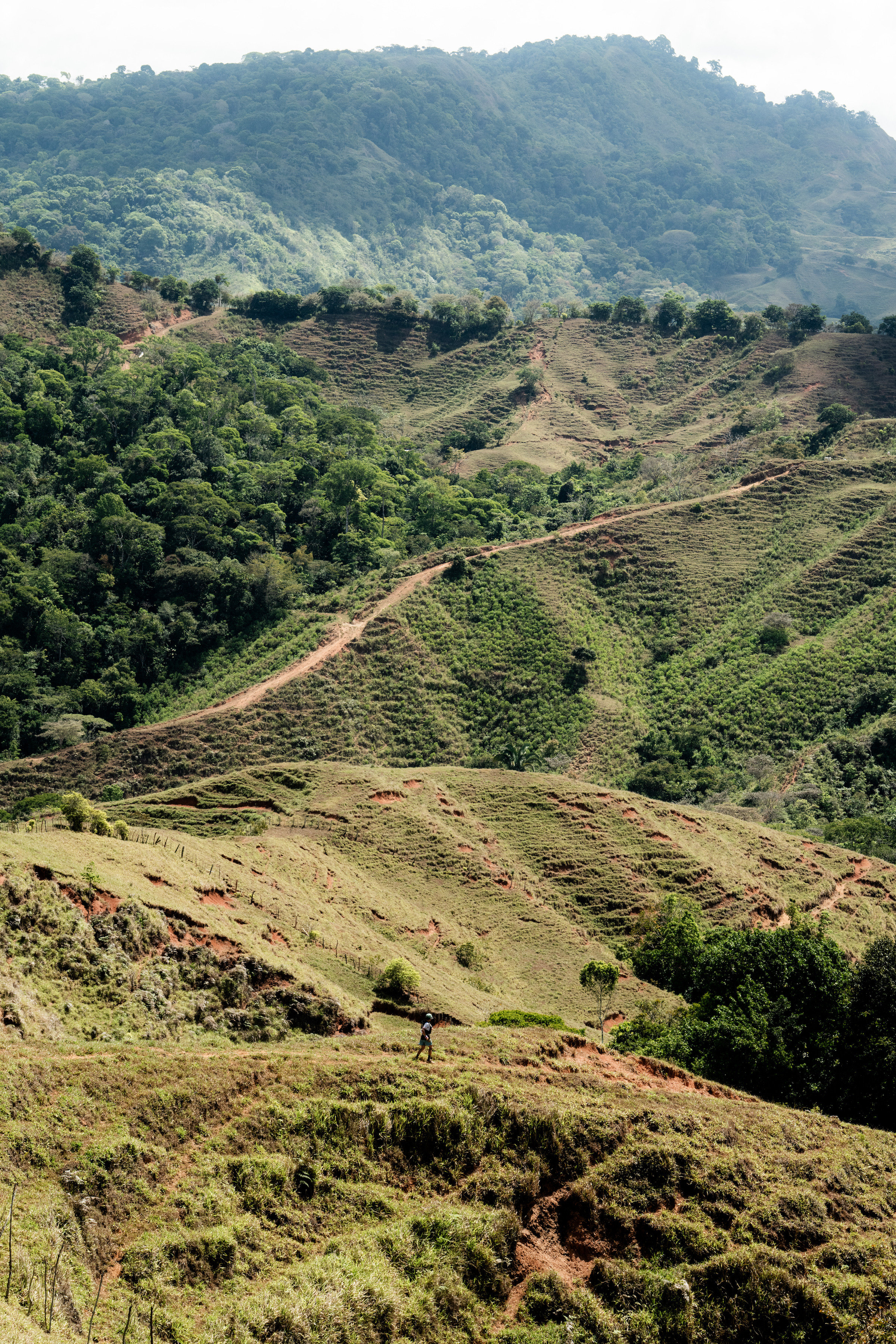
The Boruca region of southern Costa Rica feels different from the postcard version of the country. This is not manicured resort coastline or dense jungle trails pressed flat by tourists. It is rural, working land, shaped as much by history as by weather.
The Boruca people, one of Costa Rica’s remaining Indigenous communities, have lived here for generations, known for their hand-carved masks and fiercely preserved traditions.
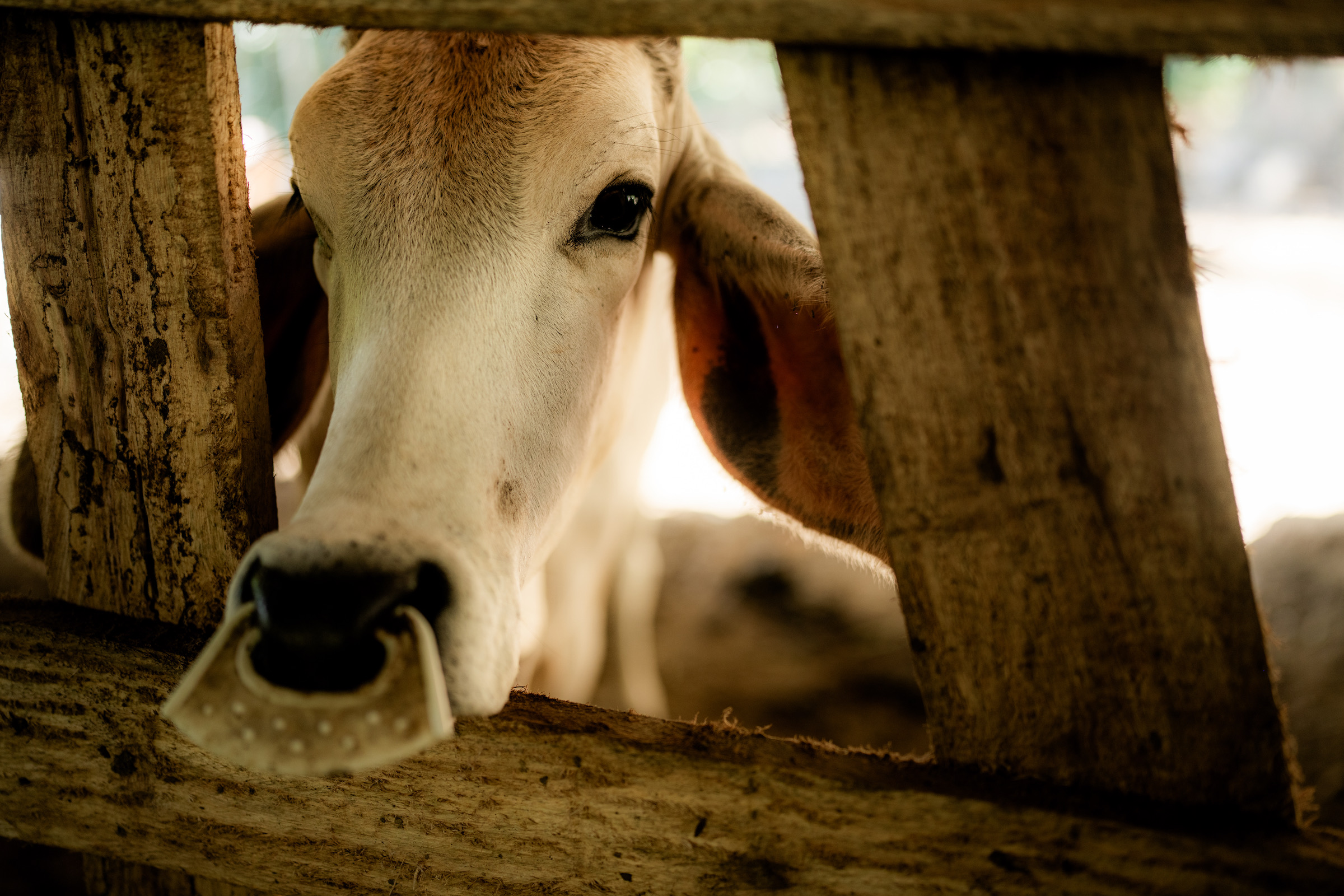
Around their villages the land rolls outward into open pasture and patchwork farmland, where cattle graze on steep green hills and small family plots cling to uneven slopes. The terrain is restless. Long climbs rise without rhythm, dirt roads bake under the sun, and sharp descents cut down into river crossings and humid low pockets before rising again.
It is a landscape that looks soft from a distance, all green folds and misty ridgelines, but up close it is rugged and unforgiving. The soil can be loose, the heat heavy, and the gradients relentless. In the high farmlands near Palma Norte, you move through open exposure rather than forest cover, feeling the scale of the land around you. It is beautiful, but it demands respect.
The MARATHON DES SABLES is a unique adventure of 250km’s spread over 6-stages of self-sufficiency, shared by thousands of enthusiasts, in 2026 it celebrates 40-years. In 2017, another format, HMDS was born with 70 to 120km distances, spread over 3-stages and 4-days.
Since 2024 there has been a significant changes for the MDS brand. The ‘HMDS’ format while still following the same protocols and format has now dropped the ‘half’ title and moving forward, events will be called MDS 120 Jordan, MDS 120 Morocco, MDS 120 Cappadocia and so on.
To differentiate the full distance race of 250km’s, Marathon des Sables will now be known at MDS Legendary, reflecting the legendary status of this iconic event and its long history as a pioneer of the stage racing and multi-day format.
All the races are now owned by the same team and while many may be familiar with the format and protocols for the shorter distance races, MDS Legendary since 2024 has had some significant changes.
Since 2024, MDS has expanded beyond its roots with MDS 120, the exploratory MDS TREK, the demanding MDS RAID, the mind-bending MDS Crazy Loops. and MDS ULTRA – Morocco. And the inspiring, MDS HANDI. Each one a new take on the same promise, to push the limits of what a runner can handle.
MDS EVENTS
MDS The Legendary
MDS 120 Atlantic Coast Morocco
MDS RAID Namibia
MDS 120 Cappadocia
MDS Crazy Loops – currently 2 locations in France.
MDS 120 Fuerteventura
MDS 120 Morocco
MDS Trek Morocco
MDS Handi Morocco
MDS 120 Jordan
MDS 120 Peru*
MDS ULTRA – Morocco
* Every 3-years.
WHAT IS MDS?
MDS is a self-sufficient race taking place over 3 to 6-stages.
Bivouac life.
MDS Legendary is the iconic 6-stage race (over 7-days) with a distance of 250km (+/-) based on the route, terrain and difficulty. There are no options available on distance and participants are self-sufficient for the entire race, the only exception is the provision of water and a shared tent (bivouac) with 7 other participants. An example of 2024 distances:
Stage 1 : 31.1 km
Stage 2 : 40.8 km
Stage 3 : 85.3 km (over 2 days)
Stage 4 : 43.1 km
Stage 5 : 31.4 km
Stage 6 : 21.1 km
MDS120 events start at 70, 100 and 120km for the shorter race format, depending on the race destination, there are 2 or 3 distances available. To clarify, this is not 2 or 3 different races, but the same race with the option to choose what distance you run or walk. As an example, the route is divided into 3 stages (4-days), to be completed at your own pace: walking or running.
– 70 km
– 100 km
– 120 km
Here is a breakdown of each stage:
– Stage 1: 25km – 30km
– Stage 2: 20, 40 or 60km
– Stage 3: 25km – 30km
The choice of the format is made at the registration. However, you can adjust it until the time of MDS.
MDS RAID follows a similar format to MDS 120.
MDS TREK is not self-sufficient and while similar to other MDS events, the format is much more a holiday experience, ideal for first timers or those who are looking for an active travel/ relax experience. Read more HERE.
THE MDS FORMAT
MDS The Legendary and MDS 120 events follow a similar format, however, there are key differences:
MDS The Legendary is a 10-day experience
MDS 120 a 7-day experience
In both scenarios you arrange travel to the relevant destination, arriving with adequate time to meet the MDS team at a designated meeting point and time. This may mean you need to arrive one day in advance to ensure you are able to meet the schedule as stipulated. From here, the MDS team then transport you to the start of the race.
For MDS Legendary this will be a flight to Marrakech and free transport is offered to Ouarzazate.
For MDS120 / TREK / RAID and ULTRA events, the meeting point will be a specific airport for transfer to hotel.
MDS The Legendary use classic Nomad tents that hold 8-participants. By contrast, MDS120 events use individual tents organised in cells of 6. TREK has upgraded tents, RAID combines solo tents and a star night, MDS ULTRA will be hotels except when racing.
Post-race you will be transported to a hotel and an awards ceremony and gala dinner will take place.
EVENTS
MDSLEGENDARY the iconic 6-stage, 250km race celebrating 40-years in 2026.
MDS 120 (used to be HMDS) this is 3-stages over 4-days with distance options of 70/ 100 or 120km.
MDS TREK this is similar to the MDS 120 format, however, there is no self-sufficiency, more comfortable accommodation and additional facilities, an excellent introduction to the MDS.
MDS RAID an event for more experienced athletes that is undertaken in teams of two, over approximately 90-120km’s, typically, two distance options are provided. The format is similar to MDS 120 with 3-stages over 4-days. One night will be undertaken under the stars with no bivouac.
MDS ULTRA new for 2025, a 100-mile or 100km single stage race with a 40-hour cut off.
MDS CRAZY LOOPS three new events for 2025 undertaken in ski resorts, the format is to run as many loops as possible in 24-hours. The loops will be typically, 3-5km’s in length.
MDS HANDI an inspiring inclusive event to provide wheel chair athletes an opportunity to participate with team members.
Both race formats, MDS Legendary, MDS120, MDS RAID and MDS ULTRA require participants to be self-sufficient for the whole race.
What does this mean?
Quite simply, you must wear and carry all you need for your race experience with the exception of the tent / bivouac. MDS ULTRA will not require a bivouac or same kit requirements as MDS Legendary, Raid or 120.
It may sound daunting but it is not, it’s actually quite simple. You need to address the following points:
What you wear.
Equipment you need to participate.
Sleeping.
Food.
Cooking equipment. (You can purchase fuel blocks in bivouac)
Water.
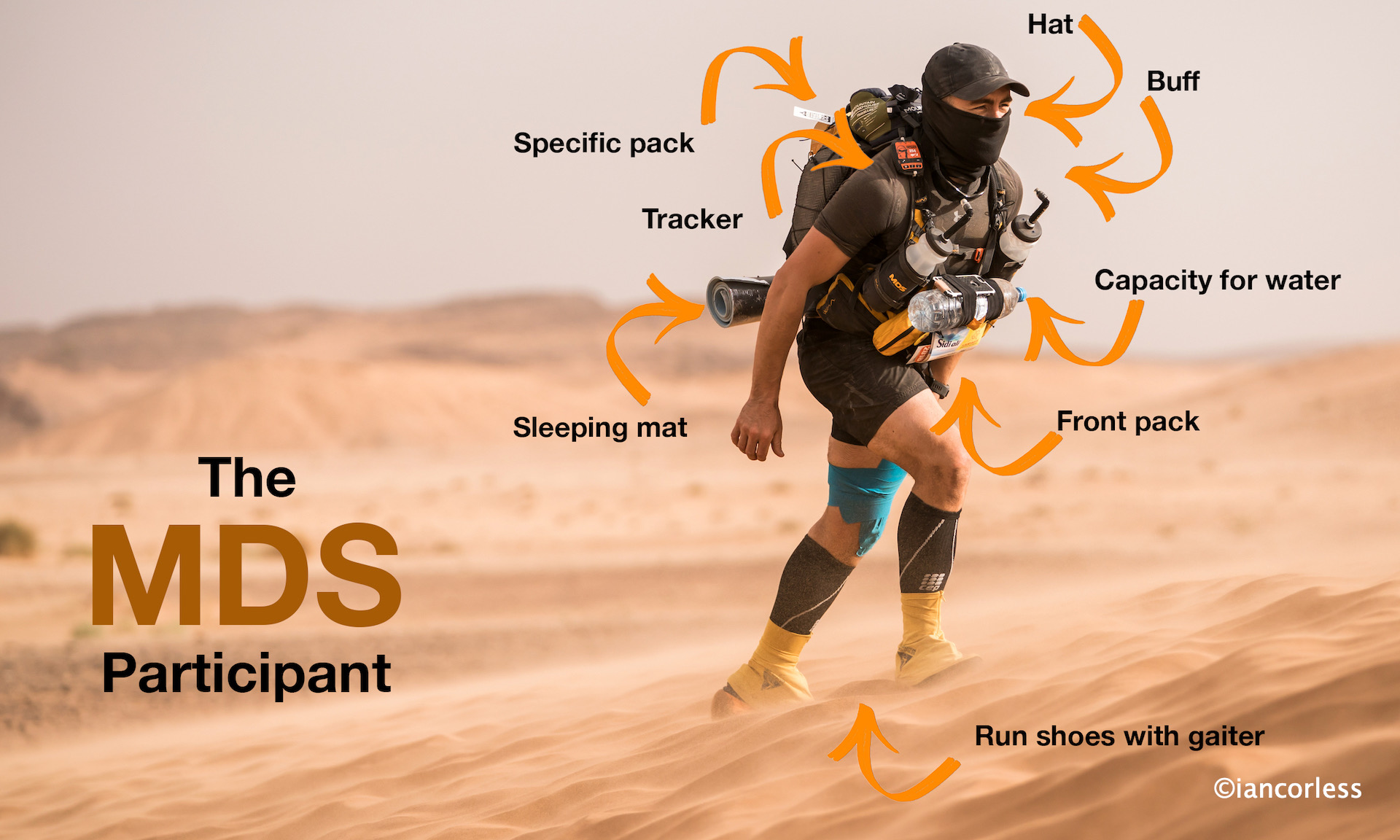
WHAT TO WEAR
Hat to protect from the sun with optional neck protection.
Shirt (short or long sleeve) with adequate protection from the sun.
Shorts, skort or similar.
Socks.
Shoes with appropriate protection and durability for a desert environment with a gaiter (typically sewn on) to keep sand out of the shoe.
WAA is a partner for MDS have specific equipment for desert/ stage-racing.
Because you have entered a MDS event, there is no need to buy new apparel and shoes. Quite simply, if you have items that work, are comfortable, cause no problems or irritation, there is no need to change them. If it aint broke, don’t break it. Shoes always create a huge debate and please find what works for you. If you ask on any forum, you will get countless recommendations but none of those recommendations are specific to you and your needs. Read an article HERE and HERE.
Always remember that with MDS events you are either wearing or carrying everything you need for the race duration. Therefore, it is imperative that you purchase the lightest options available (based on budget) and you keep luxuries to a minimum.
Keep it simple!
MDS specify ‘mandatory’ equipment for participation as specified below:
A sleeping mat is highly recommended to protect from the ground, insulate and provide comfort.
A jacket is highly recommended (lightweight down) for cold morning and chilly nights. Many products exist. An excellent combination item is offered by PHD but it does come at a price – HERE.
Poles are for many 4-wheel drive in stage races, Leki are highly recommended.
Stove – if you plan to have hot water, you will need a cooking system like those provided by Esbit. Please note, you cannot use any gas stoves in the desert, you must use fire bricks which you can purchase at bivouac.
Pot – if you are using a stove, you will need a pot/ mug.
Spoon with long handle for eating. Such as a Spork.
Buff or neck roll.
Sunglasses are essential and think about protection in sand storms, goggles may be required.
Flip flops or similar. Many use the weight free slippers from hotels, however, they rarely withstand the desert.
Watch / GPX
Personal items: Tooth brush, toothpaste, hand gel, wipes, toilet paper, ear plugs, blind fold etc.
Emergency – Things can happen during a race, so, be prepared with some essential items such as needle and thread, superglue, zip ties, monkey tape etc. If something rips or breaks, you need to repair it.
Luxuries
MDS is and should be simple in format. Remember, you must carry everything, so, keep luxuries to a minimum. Many consider a small MP3 player, look for something small, light and with great battery.
Phones are an essential part of our daily lives, do yourself a favour and leave it at home. The liberation is extremely rewarding. Please note, phones are allowed, however, it is prohibited to telephone on the bivouac or on the course. If you want to make a phone call, you will have to move away from these places so as not to disturb anyone.
SLEEPING
A sleeping bag is mandatory, so, there is no discussion here. The combined weight of your food is the heaviest and bulkiest item, however, a sleeping bag is next. These days there are many options available and quite simply you want the lightest possible, with the smallest packing size with required warmth at a price that you can afford. Not all sleeping bags are the same, so, consider this. Down is the best filling as it is the lightest, warmest and packs small. However, ‘fill power’ is a key element of down, fill power tells you how much volume a 30-gram, or one-ounce, sample of down will take up. So, the higher the fill power, the warmer the bag will be for less weight, because that one ounce of down has larger down clusters that provide more loft and have the ability to trap more heat. These bags will be more expensive.
Brands to look at: Nordisk, Seat to Summit, Rab, PHD, Western Mountaineering, Wilsa, Lightwave and so on.
Note here, that you will also probably be taking a down jacket for warmth. This can be used as extra warmth and insulation in a sleeping bag. So, it is possible to think about getting a lighter, less warm bag and supplementing warmth with a jacket.
UK brand PHD has come up with the perfect solution with an Ultra Jacket and Desert Race Half Bag but is does come at a price. However, it is comparable with the costs of jacket and bag by Nordisk.
Sleeping mat is highly recommended. When you are not running or walking, you are sitting or lying down, comfort is key. Two options exist, inflatable or not. Inflatable provides the greatest comfort but with poor admin does have the risk of puncture. Sea to Summit provide excellent inflatable options with low weight and pack size. Exped have excellent closed-cell foam.
The MDS 120 events (TREK not included) are self-sufficient adventures. You need to bring your own food and carry it in your bag for the duration of the race.There is a requirement that you must have 2000 calories minimum per day. Please remember that from 2024, catering is not provided at MDS The Legendary and therefore you must have enough food and calories before the race starts.
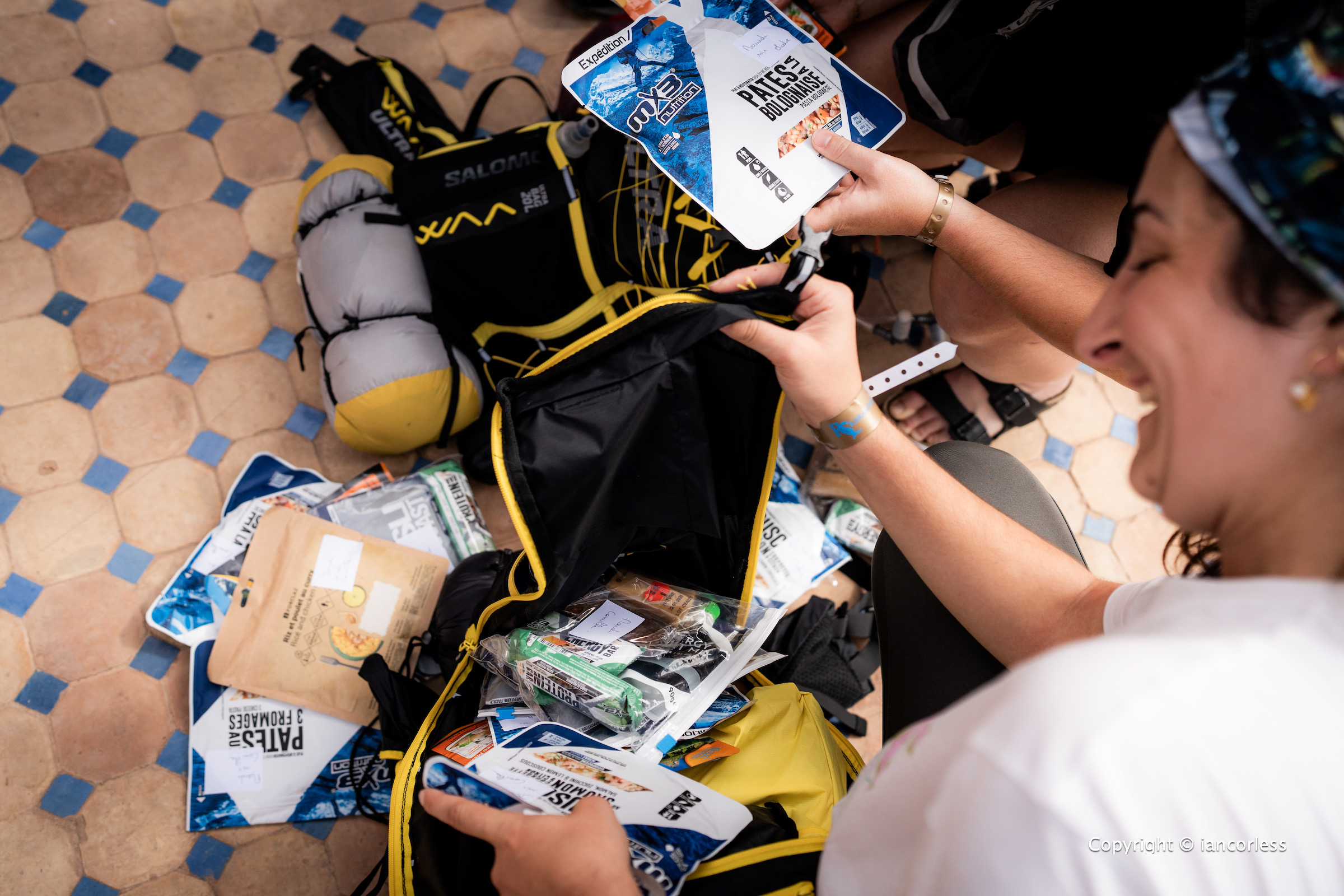
Food is the heaviest item you will carry and is essential. Don’t skimp on food. Lay food out per day addressing key items:
Breakfast (be careful they are not too sweet)
Snacks while running (bars, nuts, dried meat etc)
Post-run recovery (usually liquid form is ideal)
Lunch if applicable (this could be another meal such as cous cous)
Dinner (dehydrated meal)
Evening snack (a bar)
Where possible, repackage food to make them smaller and lighter. However, make sure you keep nutritional information for the admin day. Pack food in day bags, that way it is easy to know what you have and importantly, you don’t take food you need for the next days. Keep doing this and you will be short of food at the end of the week.
Food is personal and you must find out what works for you. Remember taste chances when fatigued and in hot environments, often, sweet becomes less palatable with a preference for savoury. Dehydrated meals will often be used for key meals such as breakfast and dinner, some hydrate well with just warm water, others need hot water. So, if you are not taking a stove, test this. Basecamp food is a good website that shows what options exist. After many tests, highly recommended products are Firepot, Lyo, Tentmeals and Adventure Menu. Personally speaking, Firepot produce the tastiest meals I have tried.
Make sure you add some treats to spice up your palette.
A food list for MDS The Legendary could look like this:
Water provision, particularly at MDS The Legendary and MDS 120 has changed. In past editions, water was rationed and provided at key checkpoints in bottles, typically, 10km’s apart.
In 2024, the new organisation changed this and arguably, water is now available, as required whilst racing. It is poured from jugs by MDS staff.
In addition, intermediate water stations are added when deemed necessary to ensure competitor safety.
At key checkpoints, iced water is supplied and poured by MDS staff on the heads and neck to aid cooling.
Post-race, each runner is provided with a 5L bottle of water, this is used for evening cooking, breakfast and up to CP1 the next day. If you wish to wash or freshen up, this comes from the same water ration. So, prioritise food and drinking before washing.
THOUGHTS AND CONSIDERATION
MDS is available for all, be that racing snake or someone who is looking for the adventure of a lifetime. So, keep that in mind. A top runner will have his or her pack at the absolute minimum weight and will look to survive the week racing as fast as possible. They will spend the week hungry. You, for example, may wish to carry a little more weight and have some comfort during the week. Just don’t carry to much extra weight!
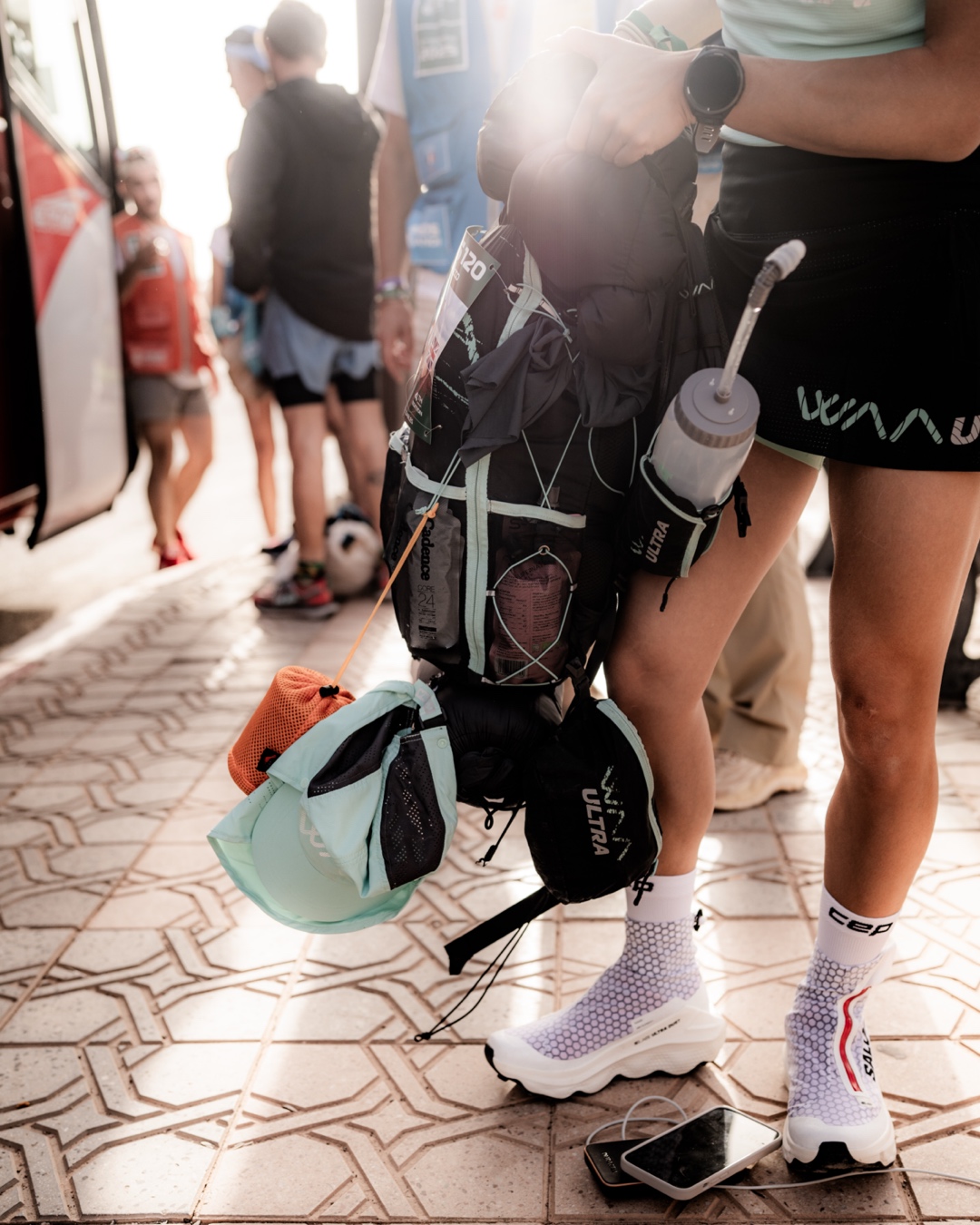
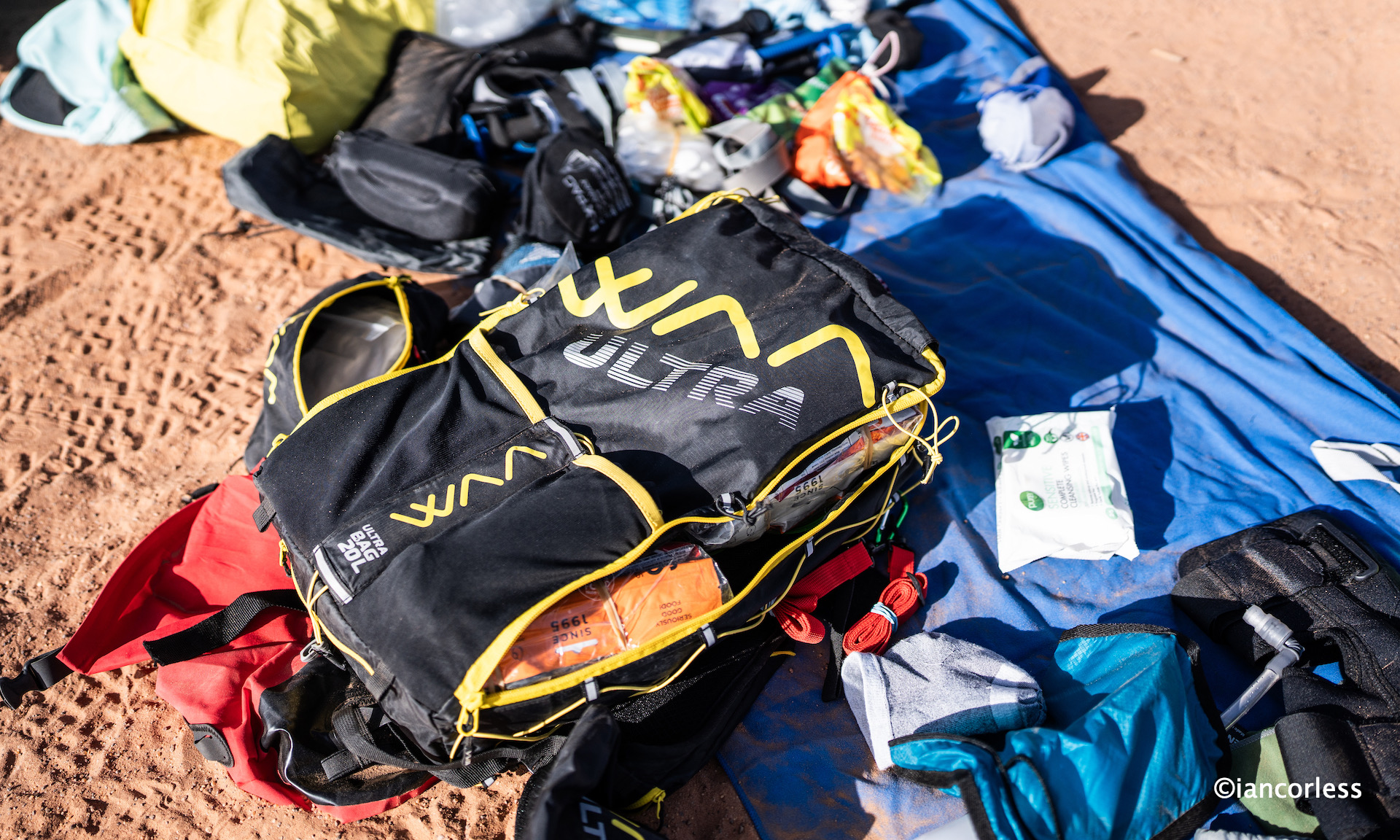
The pack you wear is a crucial item that not only must fit everything you need, but it must also be comfortable and allow easy access to drink. There is no one-stop solution here. We are all different sizes and have different body shapes, so, make sure you try options.Also remember, at the beginning of the race, your pack can be around 8kg, this adds extra pressure on the shoulders, so, make sure you have enough padding and comfort. Many packs now come with waist belts and this, for many, is a great solution not only for extra storage but weight distribution. WAA have the ultra bag which has been specifically designed for the job. Osprey have recently released the Talon Velocity 20 which in testing has been superb. Don’t be tempted to get a bag that is too large, remember, the more space you have, the more you may take.
Bottles are the obvious way to carry water, typically 2x 750ml on the chest straps. I personally really dislike this format, I find it uncomfortable and unpleasant. So, find your own solution. Bladders have always been considered a NO for MDS but I personally find the solution ideal for my multi-day adventures. If you are a ‘racer’ this is not the best solution, but for most, it is ideal. As always, bladders can puncture, so, think about this.
Shoes will always be a debate and point of discussion. Shoes are personal and must be suited to you, the individual. Consider your gait (neutral, supinate or pronate), consider time on feet, consider your weight, consider how much you will walk (and then double it) also consider shoe drop and how much cushioning you need. It’s impossible to recommend any one shoe because of these variables. You will see top runners using a lighter shoe, remember, these shoes only need to last 20-30 hours. However, you may well need a shoe for 40, 50 or 60-hours. Do you need a trail shoe? No, you don’t need a trail shoe but I would say that many trail shoes are more durable as they are designed for the rough and tumble of variable terrain. Do you need an aggressive outsole? No, you don’t, but I do think some grip is better than none and therefore I would use a trail shoe over road. Protection? Toe box protection is a good idea as deserts include lots or rocks, far more than you may think. Do I need a size bigger? Shoe sizing does depend on what is ‘normal’ for you. I always recommend a thumb nail of space above the big toe, you don’t need any more than this. Recommendations of going a size is bigger is bad advice in my opinion. A shoe that is too large allows your foot to move, a moving foot causes friction, friction causes blisters and the rest is the same old story that I see at desert races all over the world. However, I would recommend a shoe with a little more width in the toe box, this will allow for some comfort as the days progress. If you are prone to feet swelling, discomfort, blisters and so on, get a strategy sorted before you head out to your chosen race. You will need a gaiter and while not always the case, sewing velcro on a shoe can change its shape, so, consider this. There are specific desert racing shoes now available by Salomon and Raidlight.
Poles are a godsend, buy some and learn how to use them. They are 4-wheel drive.
Food is essential, make sure it works. Hot or cold water is a consideration and make sure if using meals that need rehydrating that they work with water at desert temperature. Never assume that water will always be warm because you are in the desert, just as we get hot years, we also get cool years.
Salt is needed to keep you in balance. Many foods contain salt so look to supplement that with the mandatory food cubes. Be careful here, for example, OXO works considerably better than Knorr. Do you need alt tablets? Do your research,, find out what you personally need and come up with a plan. Listen to a podcast HERE.
Feet – make sure you look after them. With the correct socks and correct shoes, there is no reason to get blisters and despite what some people say, the majority of people do not get blisters. Read Healthy for Running and Walking.
Heat is difficult and without doubt, it’s better to adapt to heat before the race. Read about Heat Acclimation by Dr Jodie Moss.
Hygiene is crucial and difficult when self-sufficient. But set up a protocol not only for your benefit but for those around you.
Luxuries keep them to a minimum.
Toilet paper is essential, make sure you have enough and compressed towels are brilliant to freshen up when you add a little water.
Take essentials on the plane and wear your run apparel and shoes. That way, should a baggage disaster happen your chances of racing improves.
Have additional items such as a base layer, sleeping bag liner and other items that may be on a ‘question’ list for the race. On night 1 and before you go to admin, you can make final decisions of what to and what not to take. Particularly important if you think you may be cold at night.
You signed up for the challenge, you wanted to be on the start line and therefore you are responsible for the outcome. Believe me, the ‘you’ that leaves the Sahara is not the same you that entered. Arguably, you change the moment you pay the deposit, the transformation process begins. Embrace the journey and apply yourself. Keep perspective, the MDS journey is an enhancement of you as a person. It’s easy to become obsessed, ultimately the majority of runners at MDS are enthusiasts, if you keep that in mind the journey will be a complete one.
Plan ahead, formulate a long term plan and don’t rush. The sooner you start this process, the greater your chance of success and the less chance of injury. Plan stepping stone races and don’t be fooled into thinking that you need to run marathons day-in and day-out. You don’t! Training is about ALL the training you do and not about anyone run.
If we exclude the top 50-100 runners (who will also walk sometimes) the majority of the MDS field spend a huge amount of time walking. Learn to walk! Believe me, it’s a huge tick in the MDS box and rest assured that if you are able to walk at a good consistent pace (barring injury or dehydration) you will finish MDS.
You are going to share bivouac with other people and you are going to have some serious highs and lows. These tent mates will pull you through and motivate you. They will become friends for life.
Legs, lungs, heart and feet will only get you so far. The mind is what will get you to the finish. Despite the hardships and pain, embrace the journey and mentally prepare for the challenge.
MDS is a magical and life changing journey, it really is a true challenge of mind and body to race over many days, irrespective if you complete or compete. It’s a hark back to a more primitive time, a time without clutter and modern technology. Embrace this. Embrace the silence of the surroundings and the simplicity of placing one foot in front of the other, eating, resting and sleeping and then doing it all again.
You can read a SUMMARY of the 2024 MDS The Legendary HERE
If you’ve ever dreamed of running in a place that feels otherworldly, where every breath reminds you you’re alive, and every step tests your limits, the 2025 Everest Trail Race is your chance. Happening this November, 10th to 22nd, 2025.
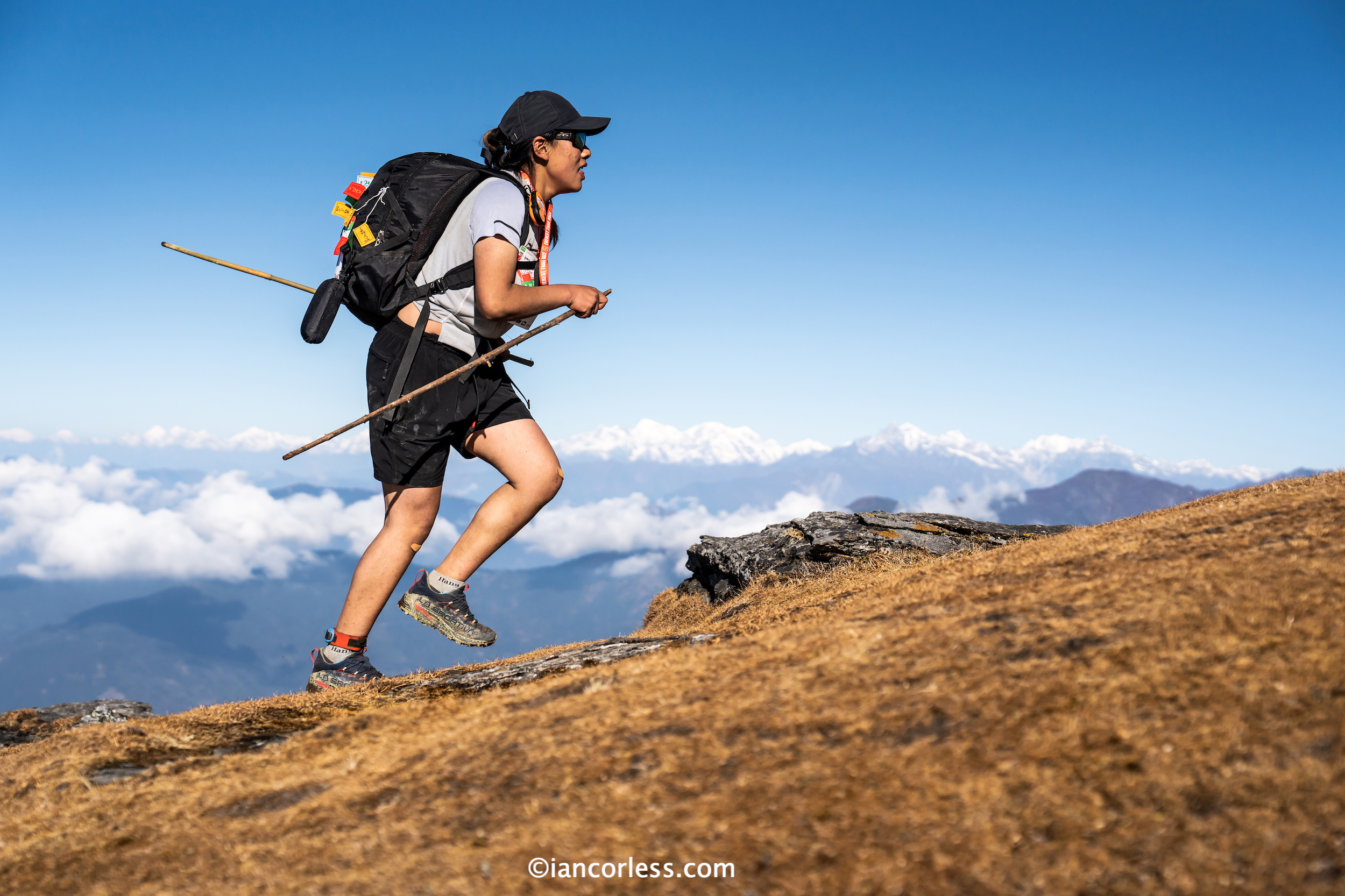
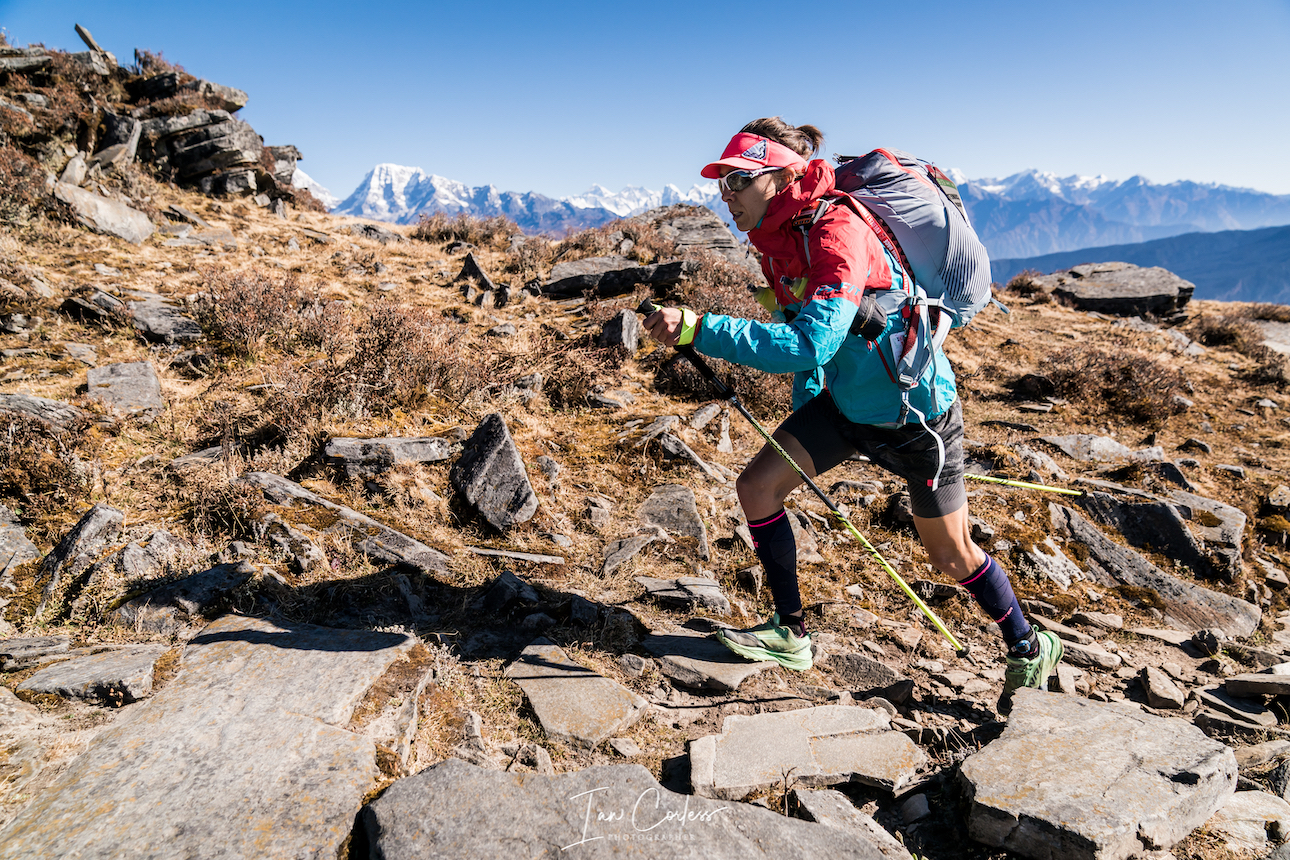
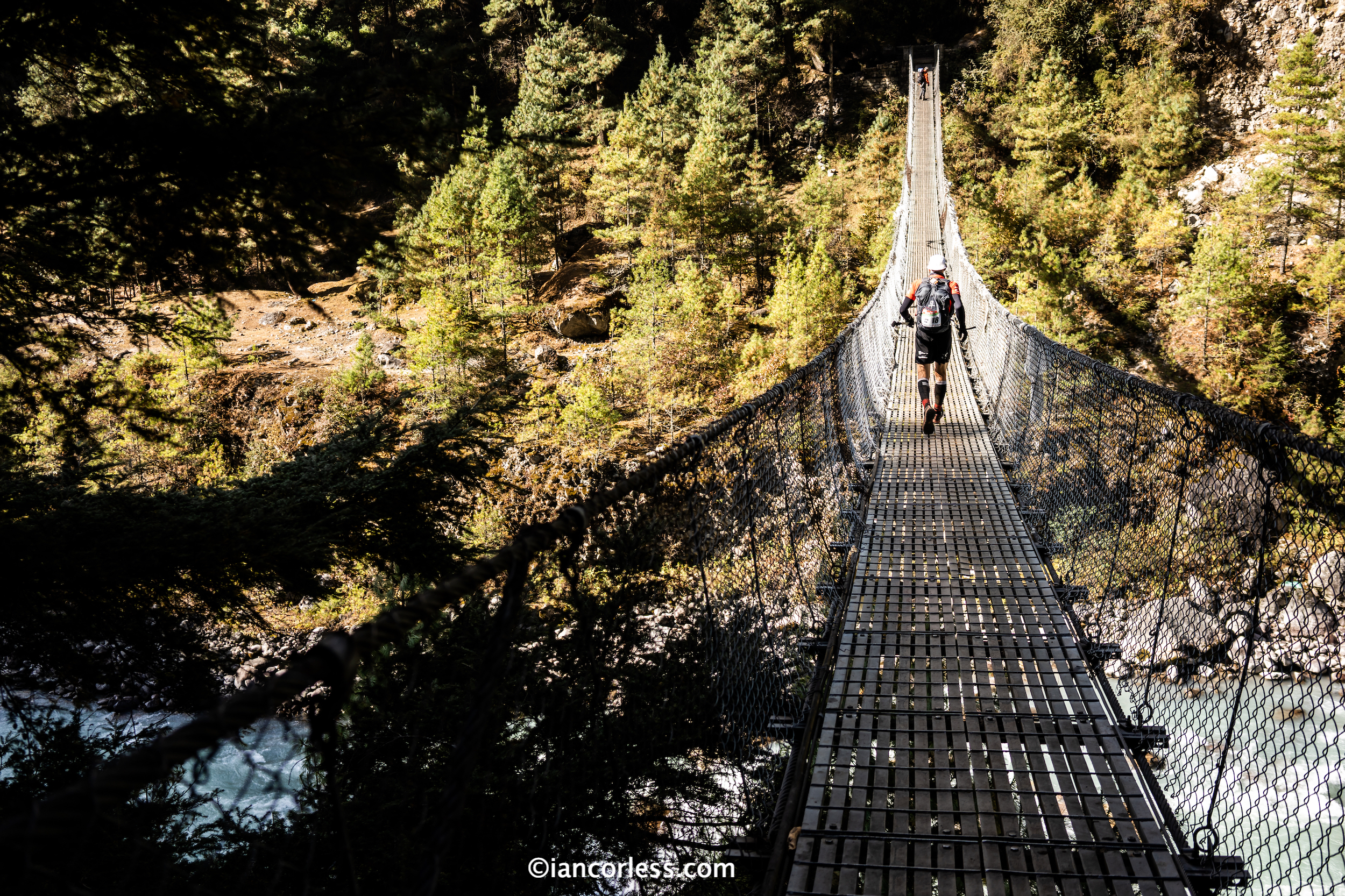
You carry your own gear. You fuel yourself. You keep going. Over six days, you’ll face steep ascents, grinding descents, suspension bridges, narrow trails, and thin air all at altitudes between 2,000 and 4,100 meters.
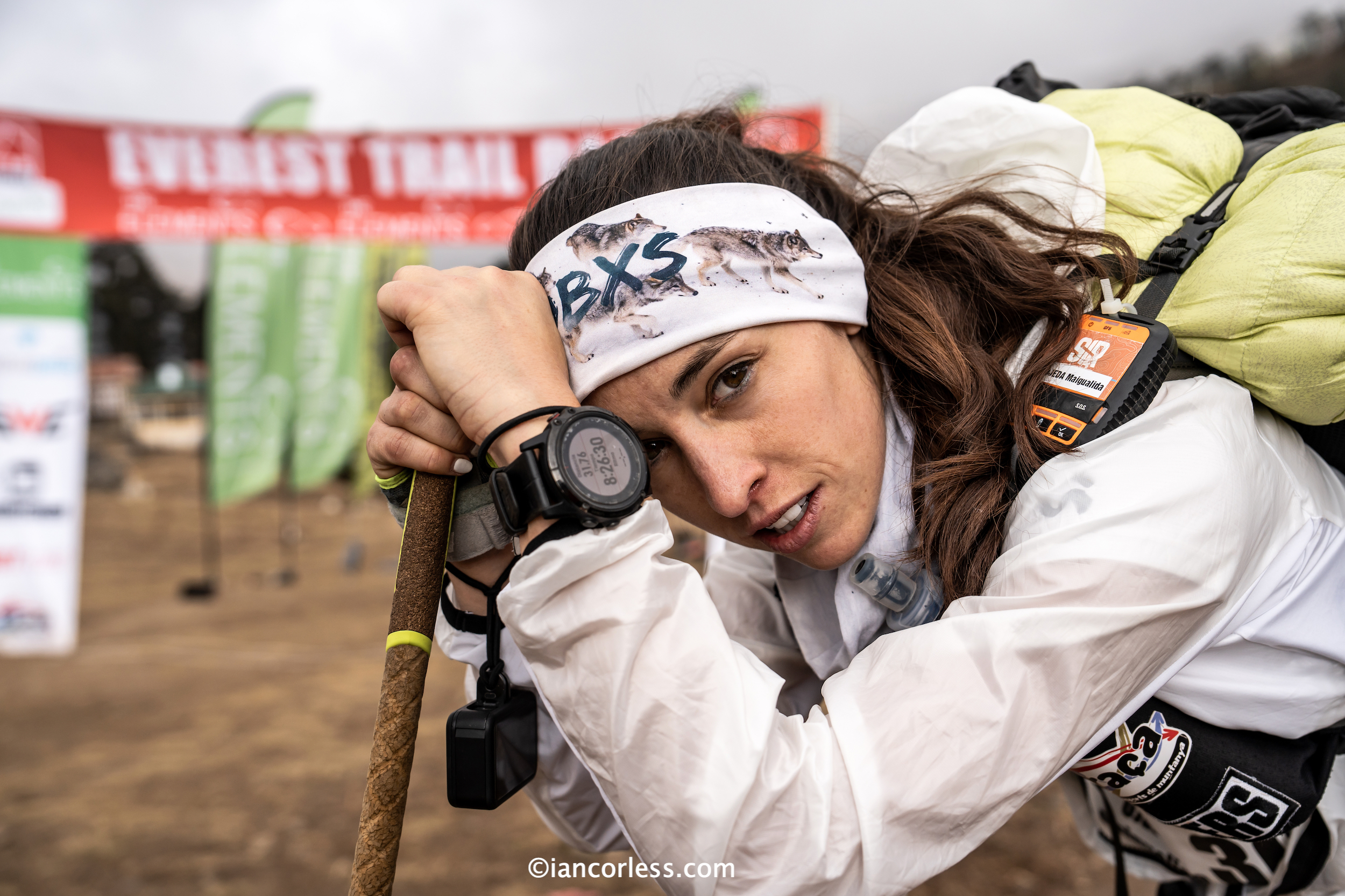
This is not a race for comfort. It’s a race for people who crave discomfort, who see sweat and struggle as part of something bigger.
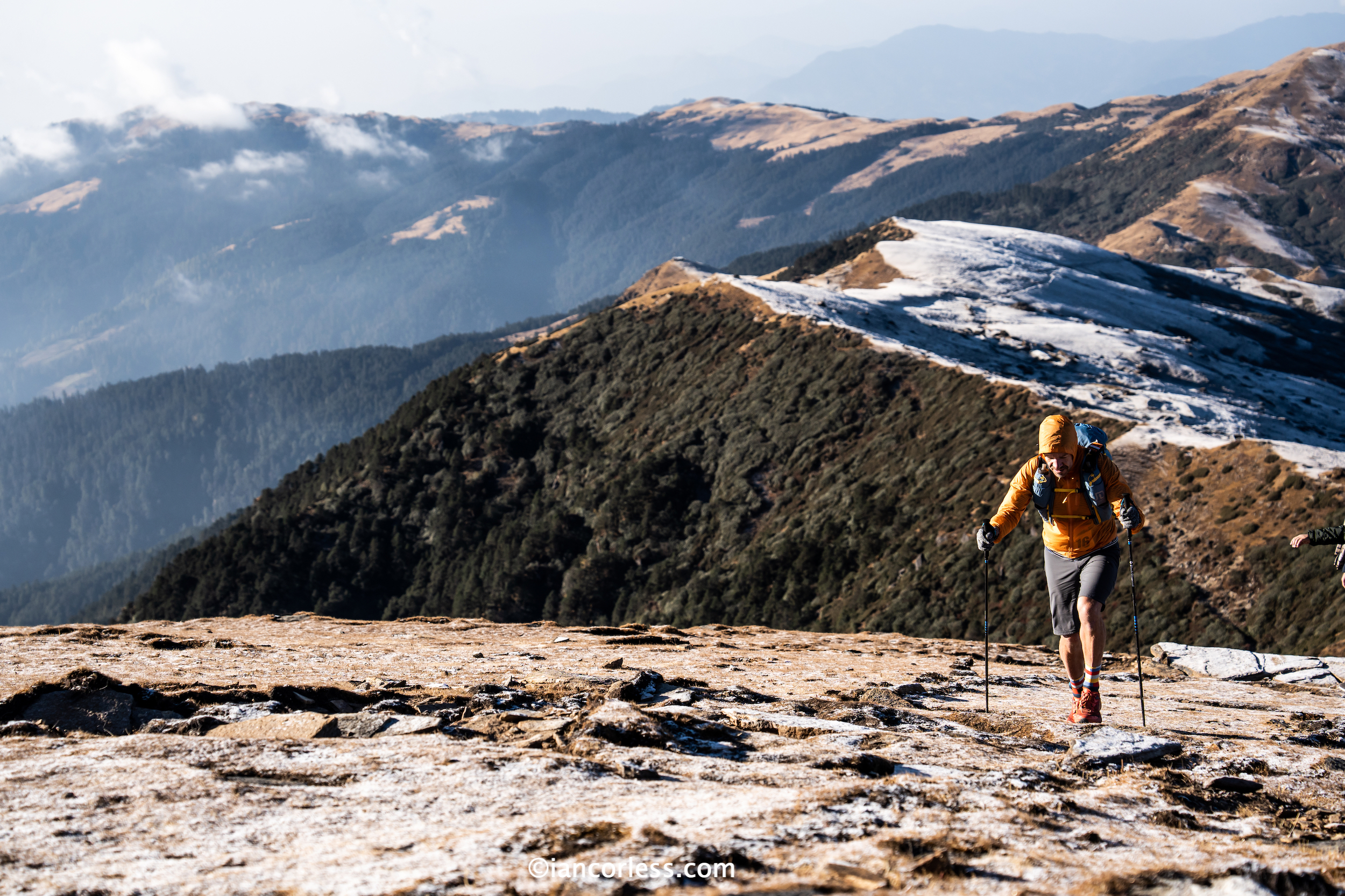
This is trail running in its purest form. Technical sections, single tracks carved into mountainsides, ancient stone paths connecting remote villages. One moment you’re running through a pine forest; the next, you’re skirting a cliff with views that stop you in your tracks.
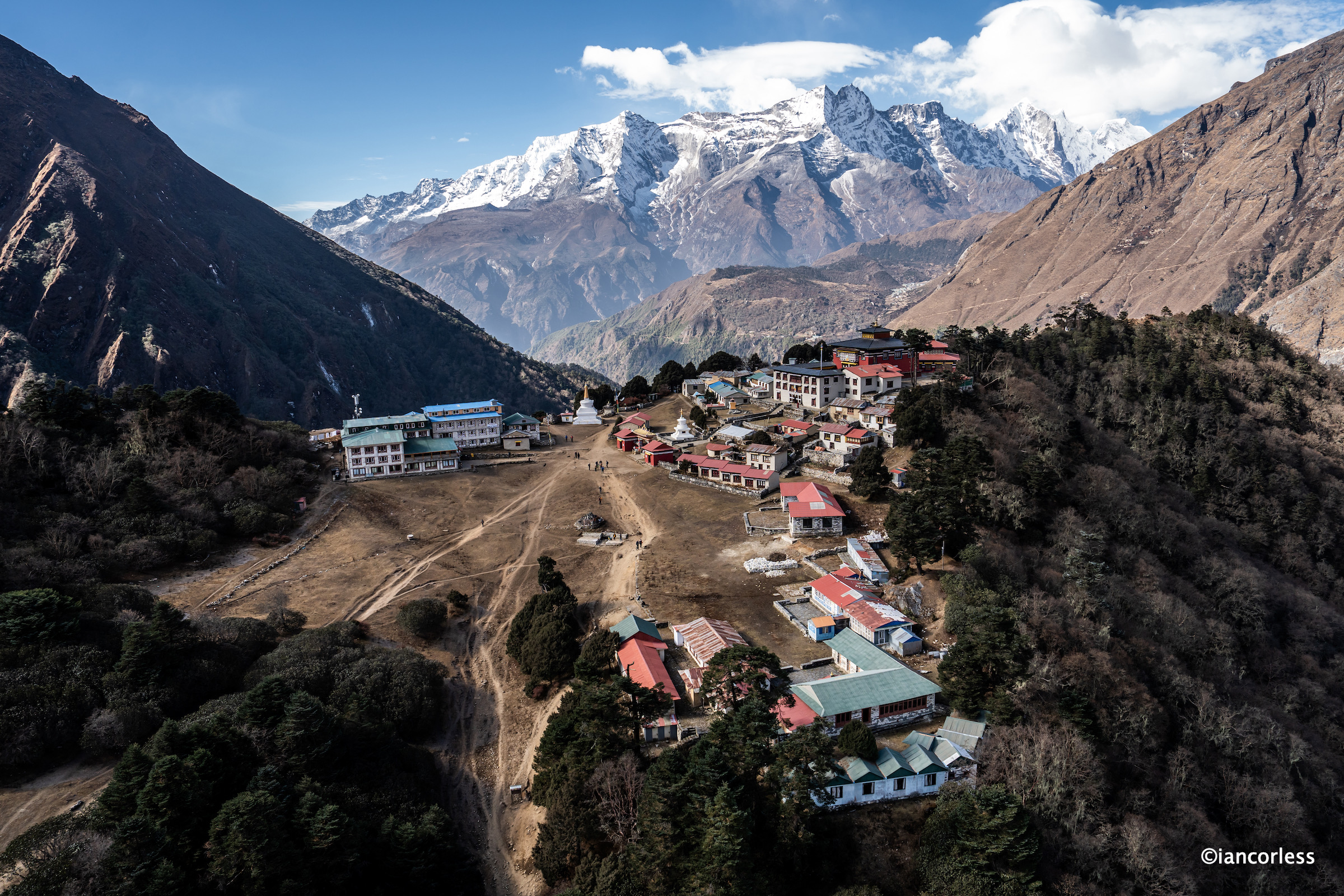
The race route threads through the Solukhumbu region, home to the legendary Sherpa people, along the same trails used by mountaineers heading to Everest Base Camp.
November in the Himalayas is cool, crisp, and clear, perfect for trail running. Daytime temps are mild, with intense sunshine at altitude.
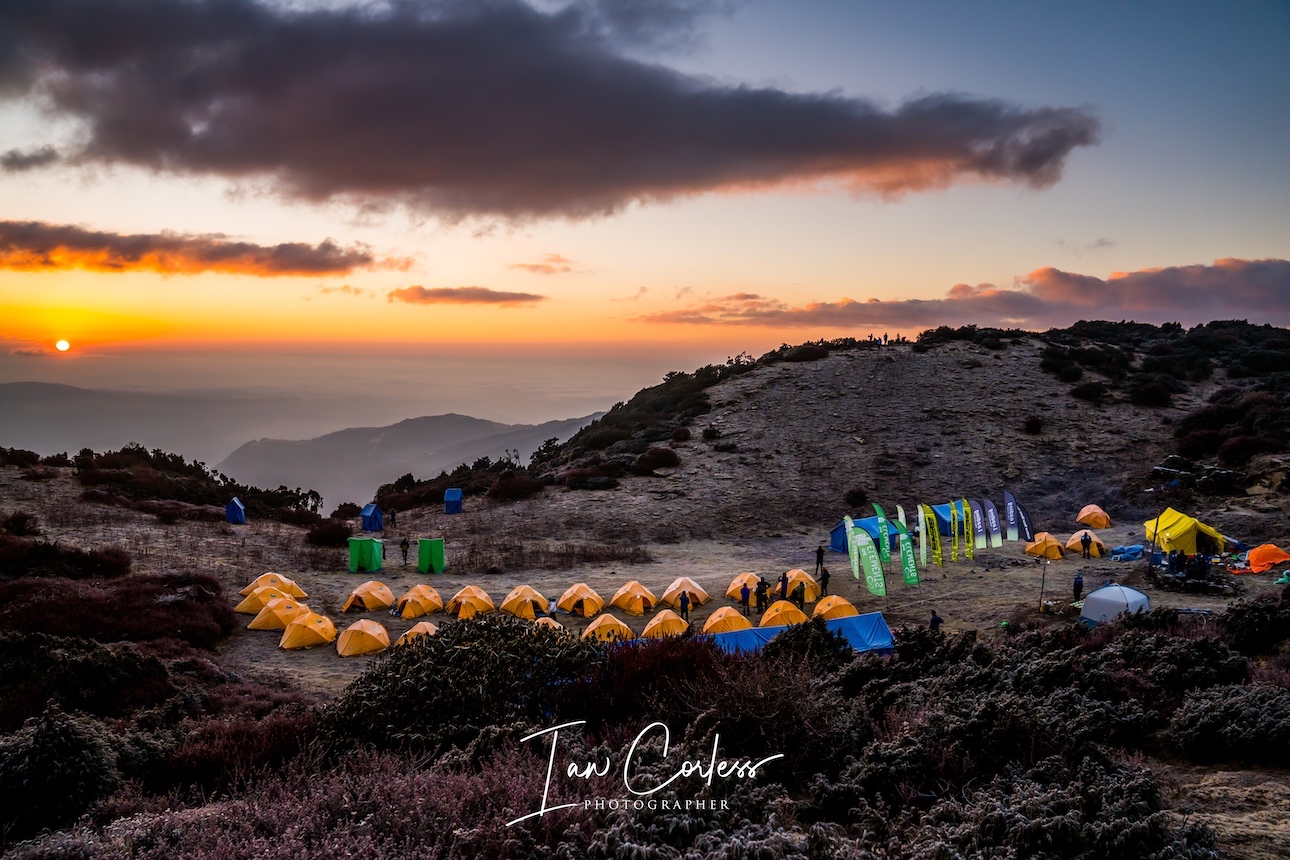
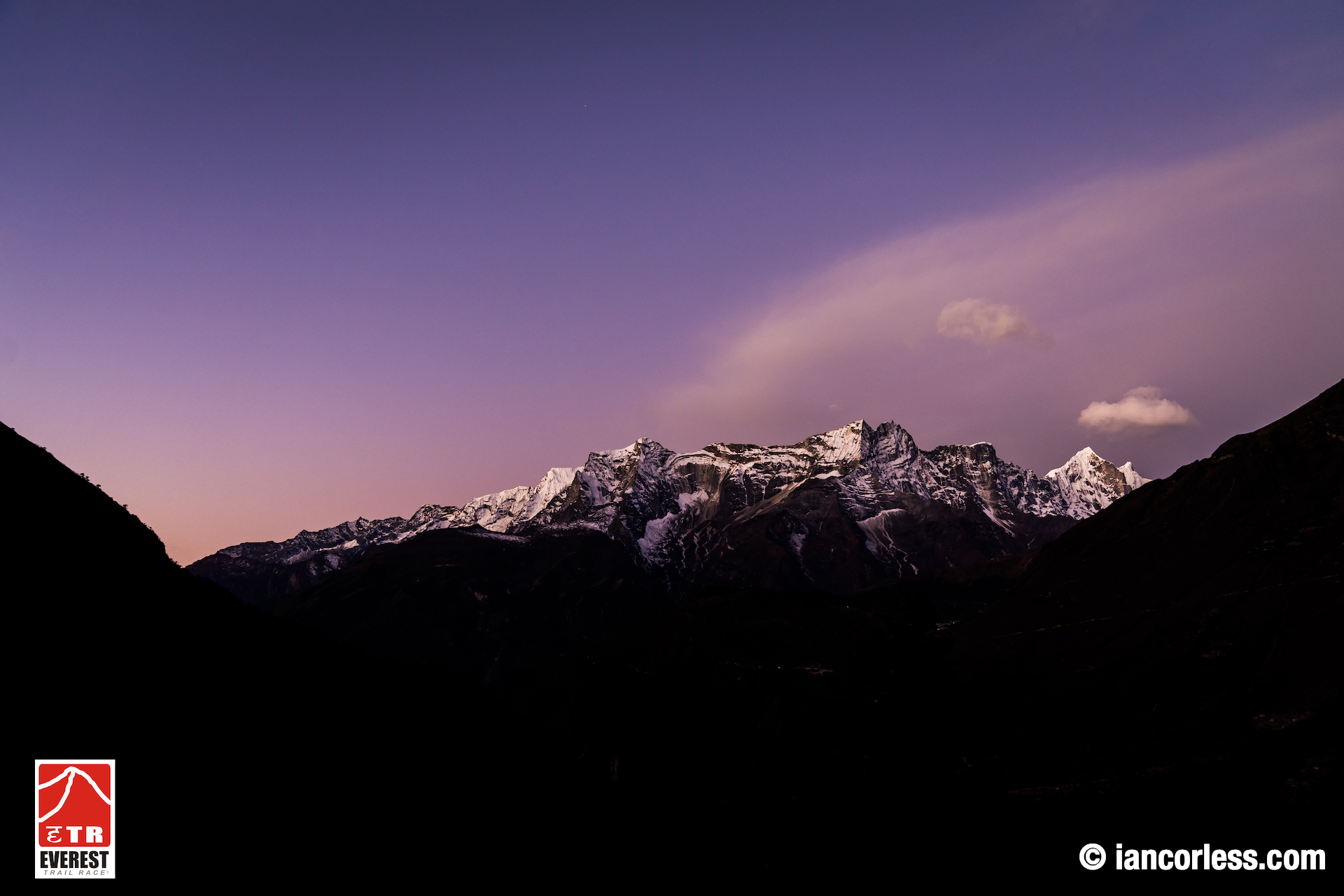
But the nights get cold. You’ll wake up to frosty mornings, and every breath will be visible. It’s the dry season, so the skies are often brilliantly blue, framing the snowcapped peaks like a postcard that never ends.
This is the kind of race where you learn to respect the air. The oxygen gets thinner, and your body feels it. It’s a slow grind uphill, and then a fast, careful descent. Pacing becomes survival. Acclimatisation is your secret weapon. But when you’re out there, breathing hard, moving slow, you realise something: you don’t need speed. You just need grit and determination.
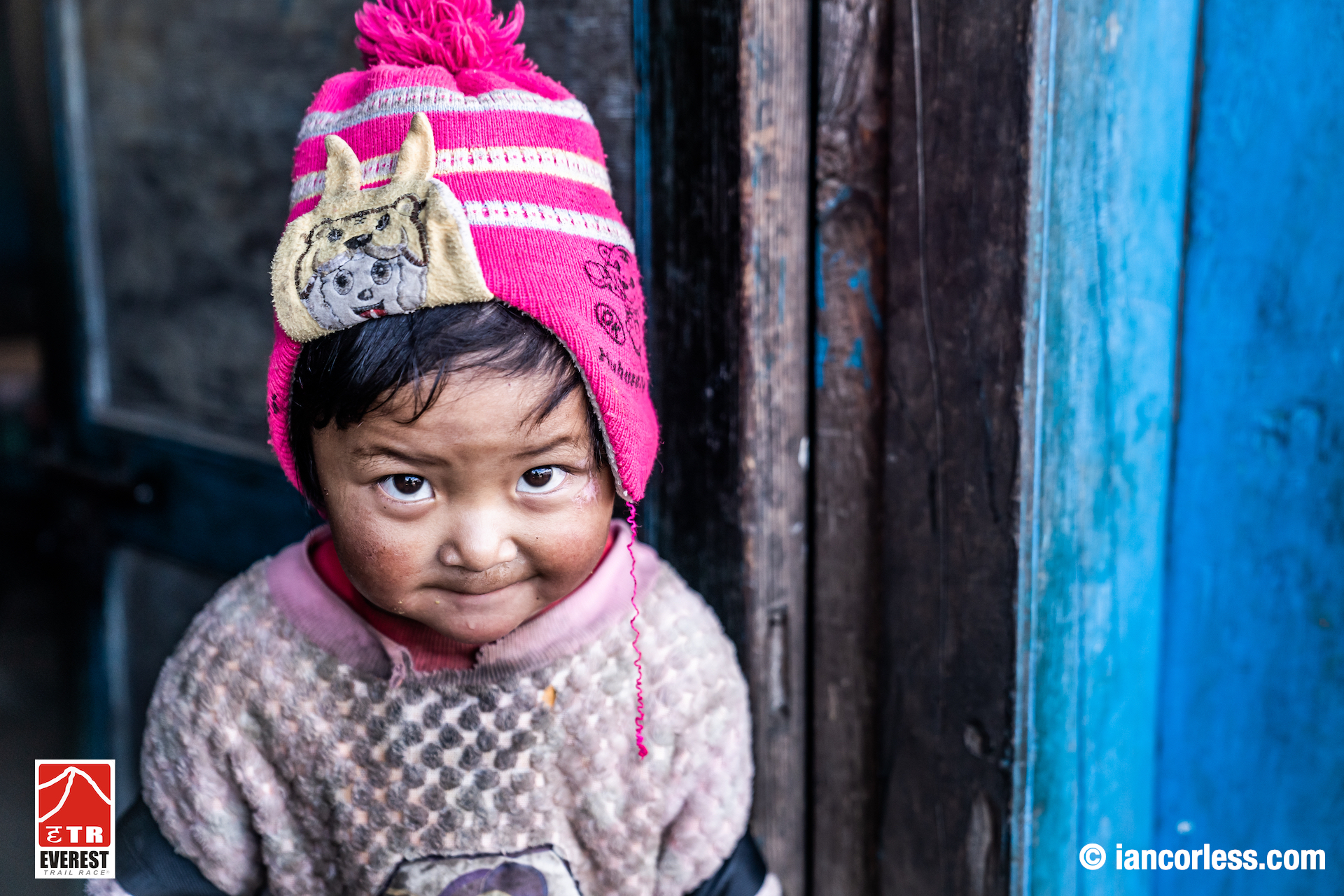
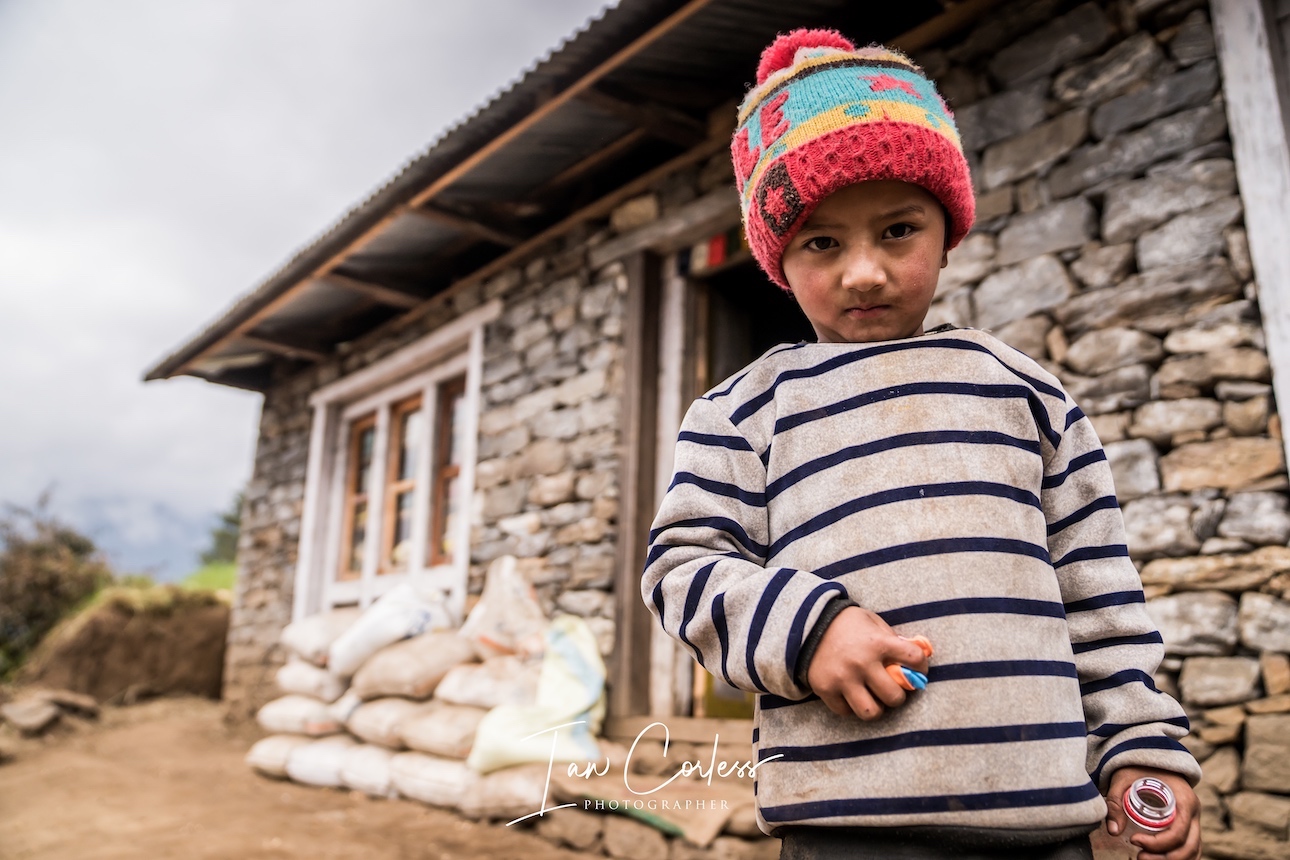
You’ll meet Sherpa families offering you tea from tin cups in smoky kitchens. Kids will run beside you, barefoot and beaming.
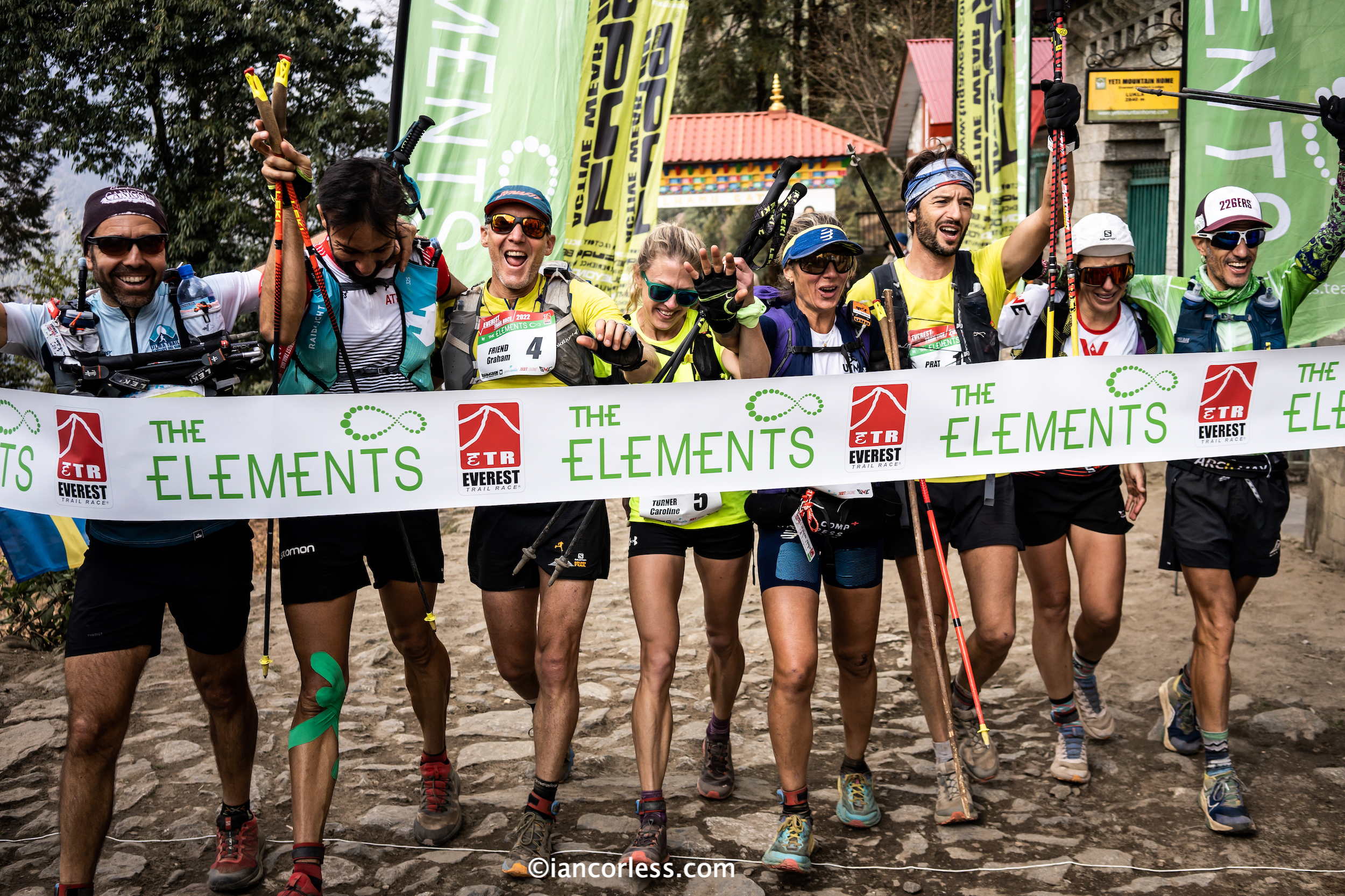
The camaraderie among runners is real, forged in pain, sweat, and shared awe. You’ll finish each stage beside people who were strangers, now teammates.
The Everest Trail Race is small and personal. It’s not about crowds. It’s about connection — to the land, to each other, and to something deeper inside yourself.
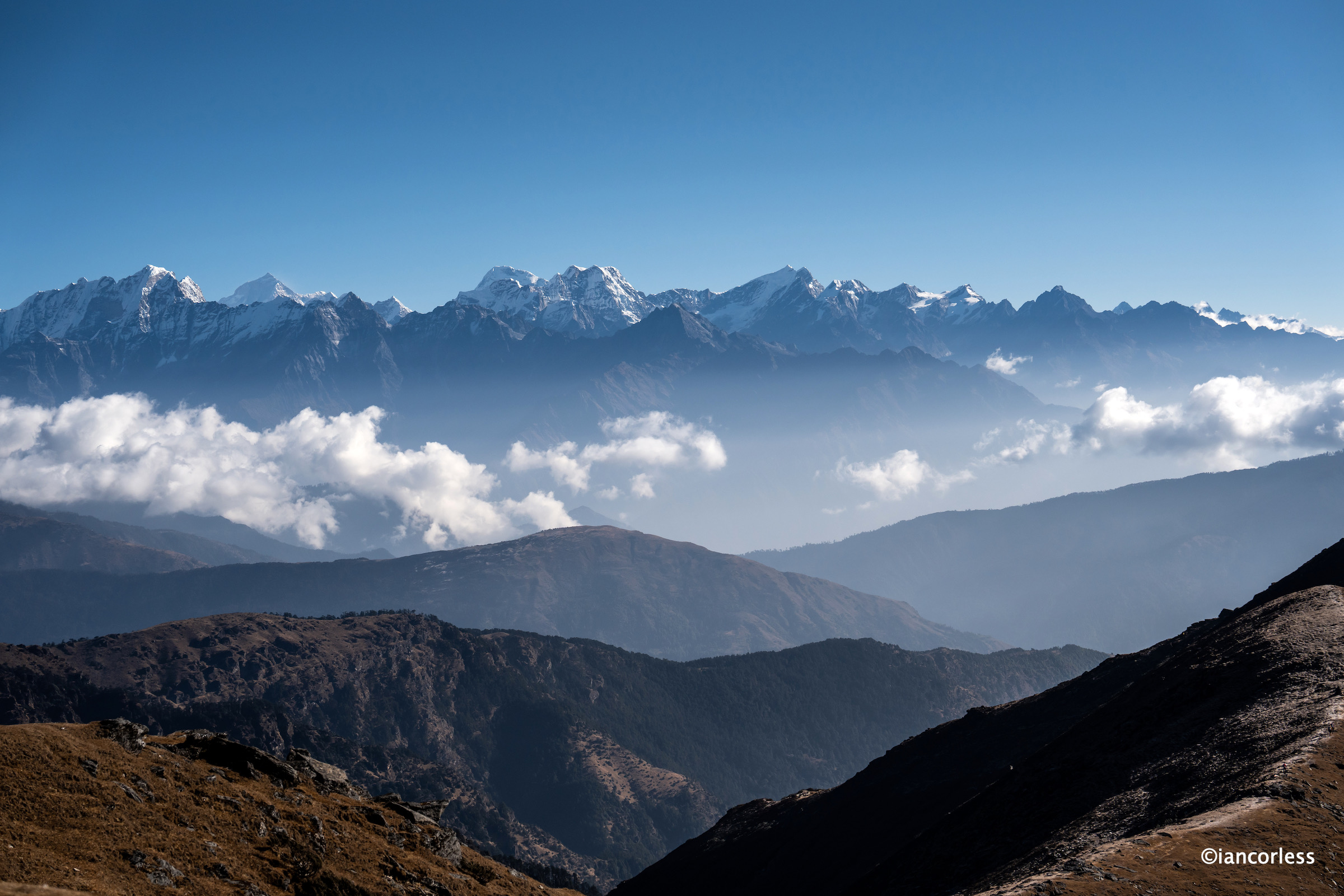
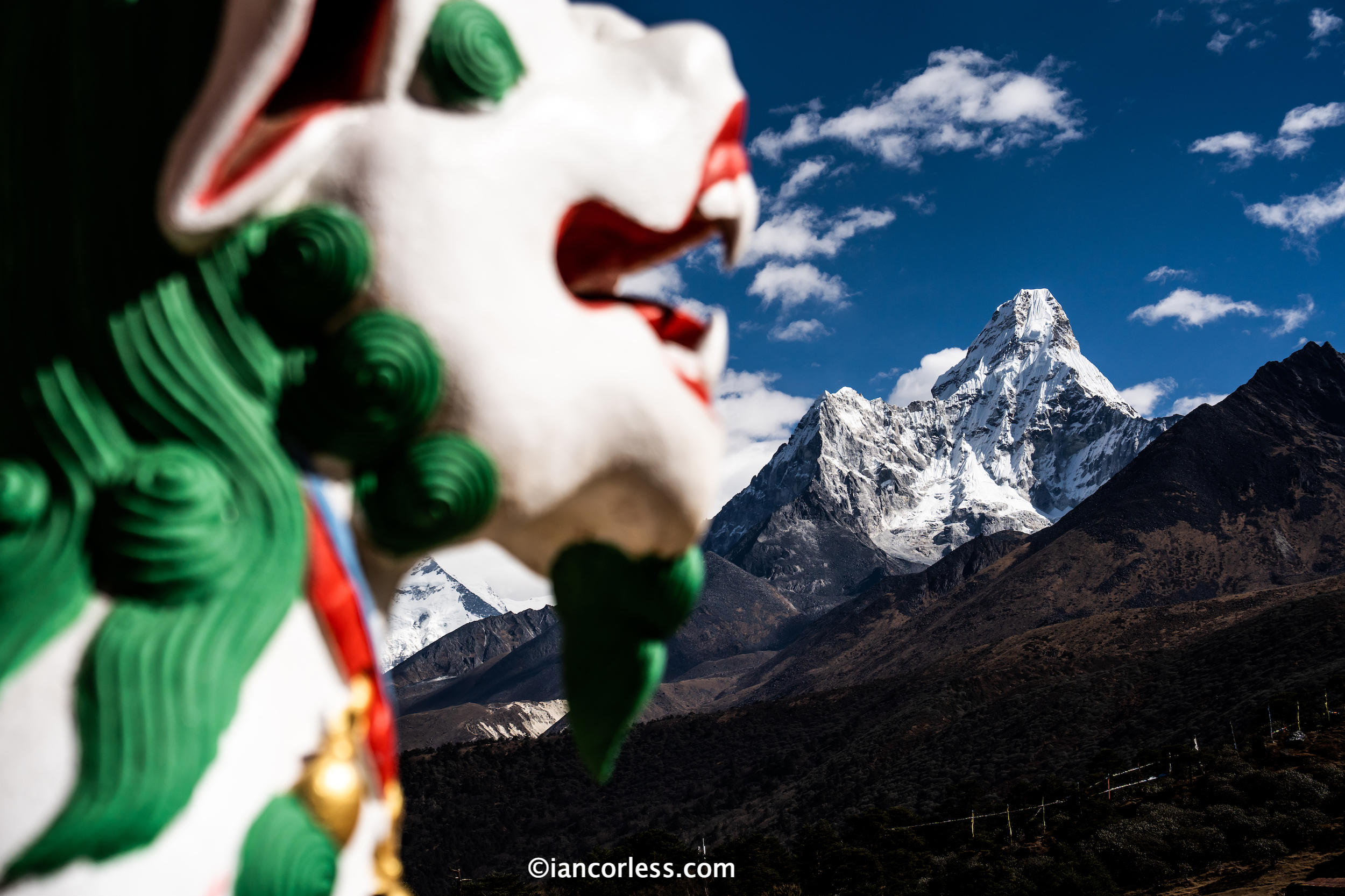
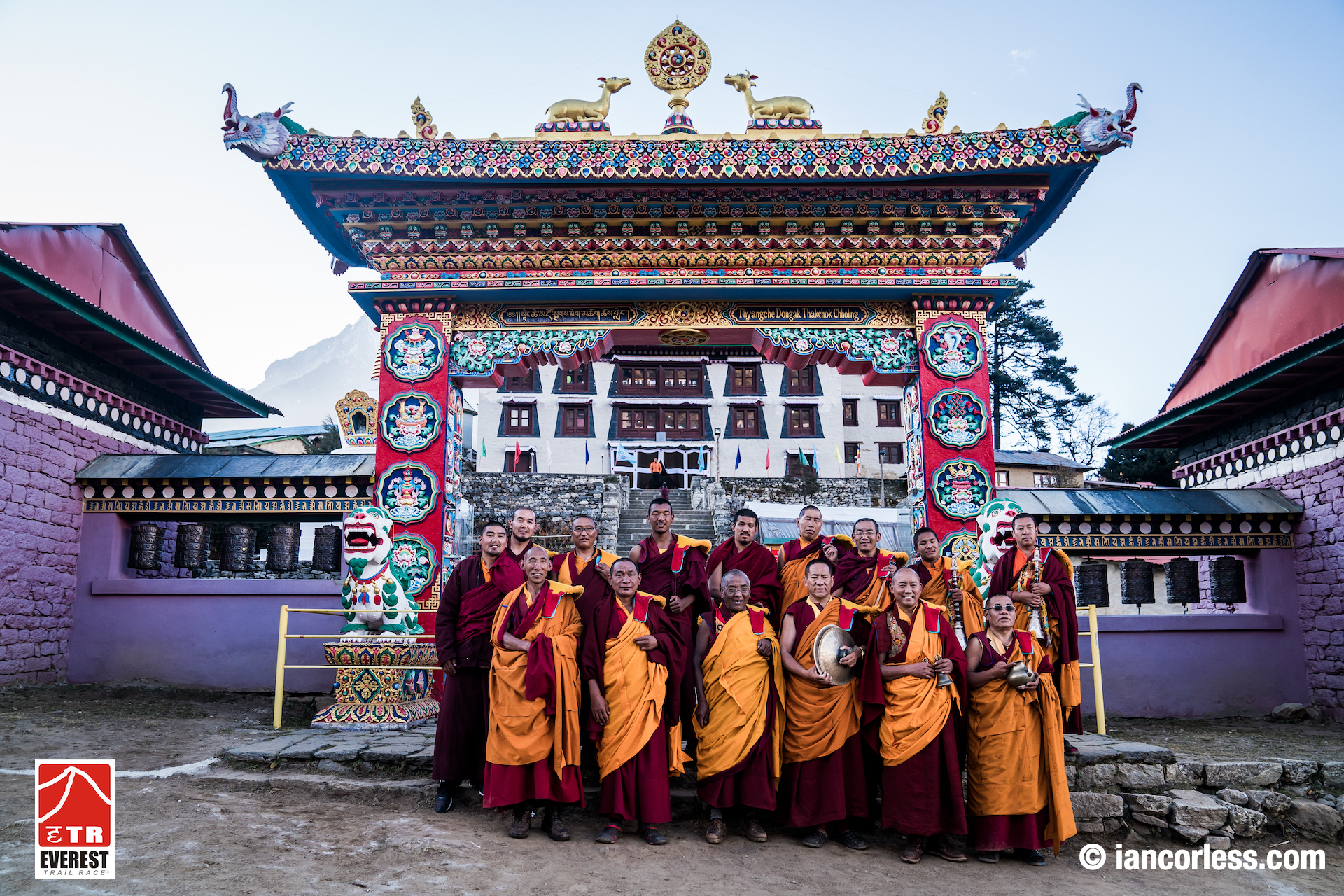
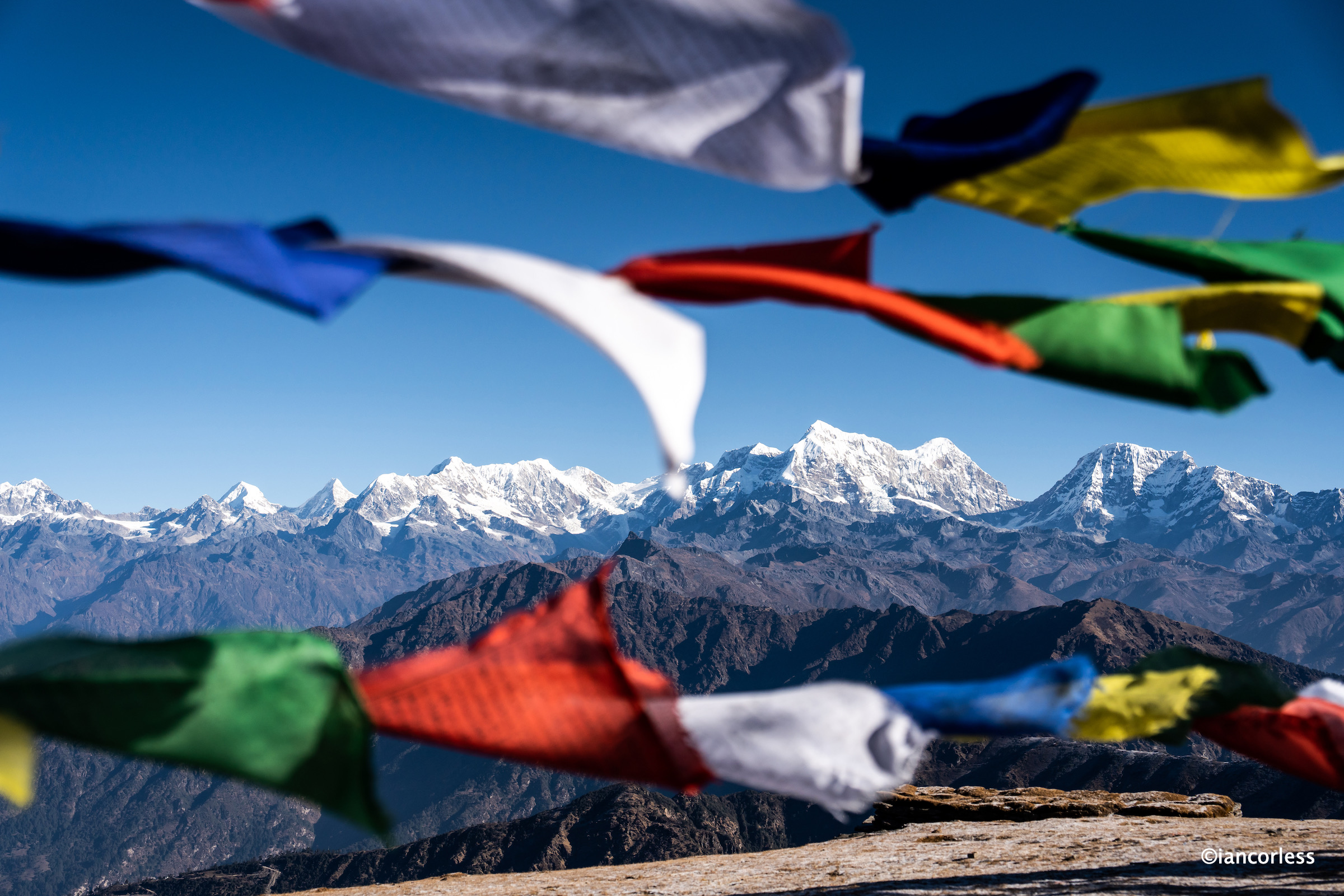
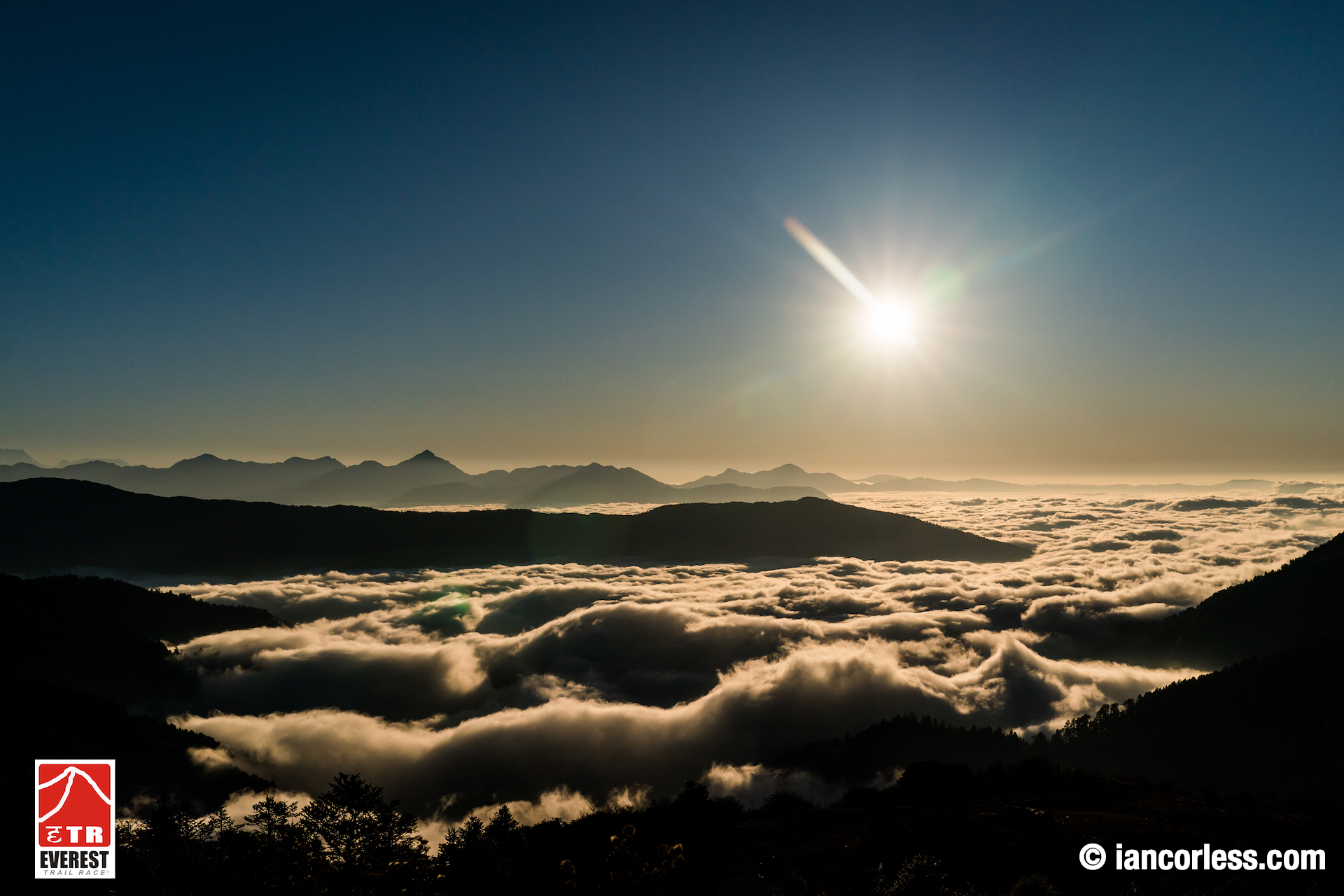
You’ll see Everest, Lhotse, Ama Dablam, and other giants of the Khumbu up close. But it’s not just the mountains — it’s the prayer flags flapping in the wind, the monasteries perched on hillsides, the layers of ridge upon ridge fading into the horizon. Every day looks like a screensaver. Every sunrise feels earned.
If you’re waiting for the “perfect moment,” this is it. You don’t need to be the fastest or the strongest. You just need to show up ready to push, adapt, and feel everything this place throws at you. The Everest Trail Race is not about conquering the mountain. It’s about discovering who you are when the mountain pushes back.

















 IAN CORLESS