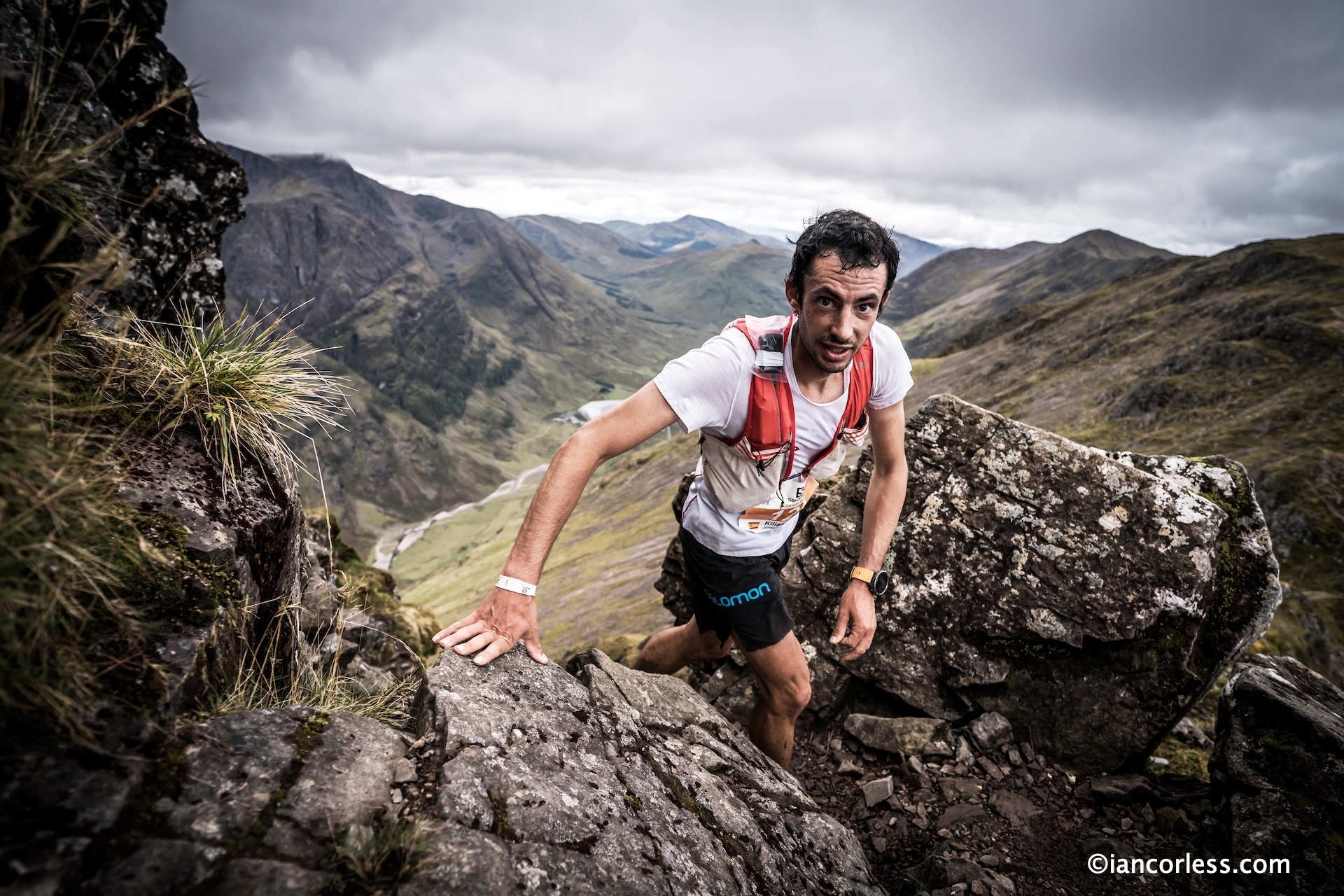
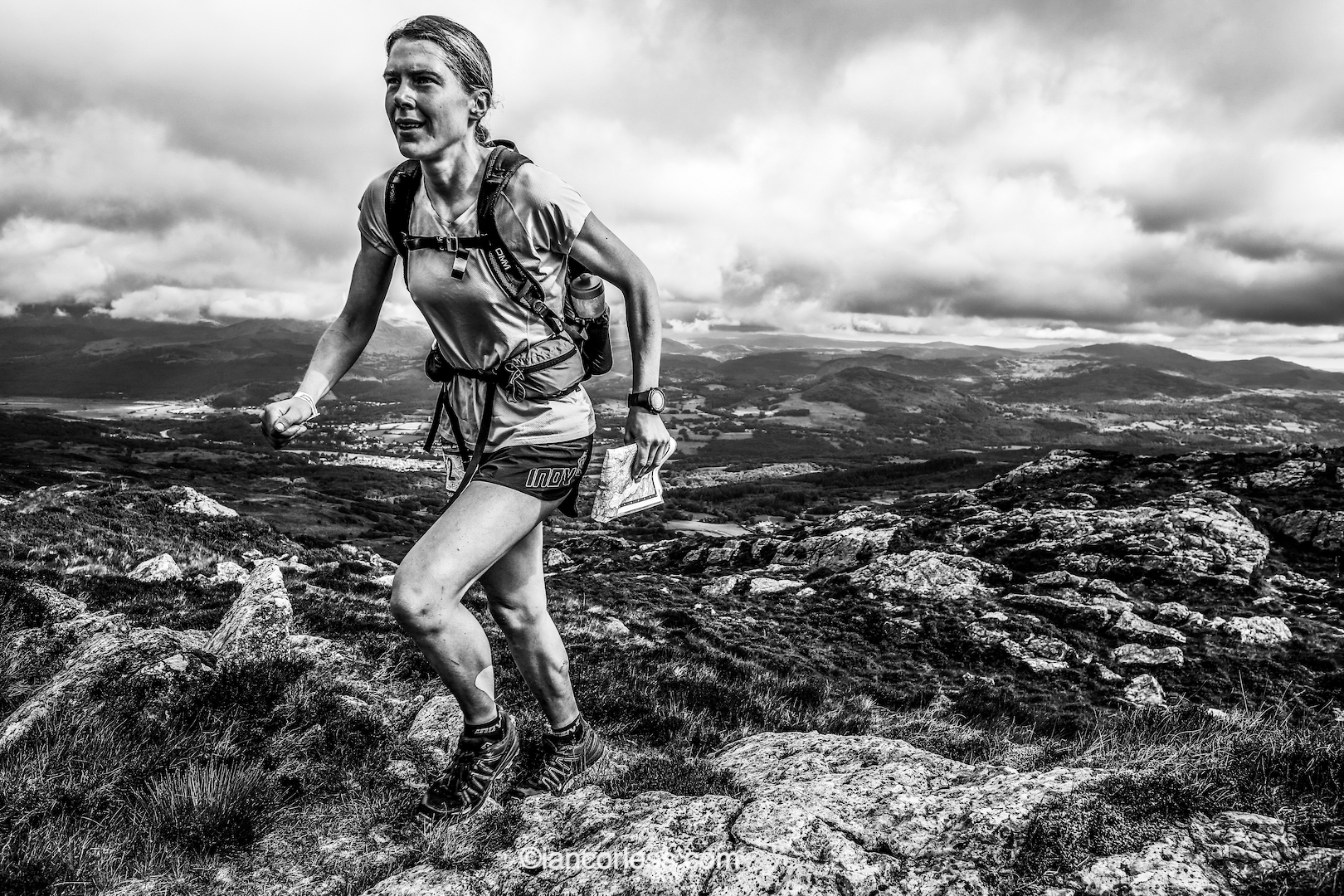
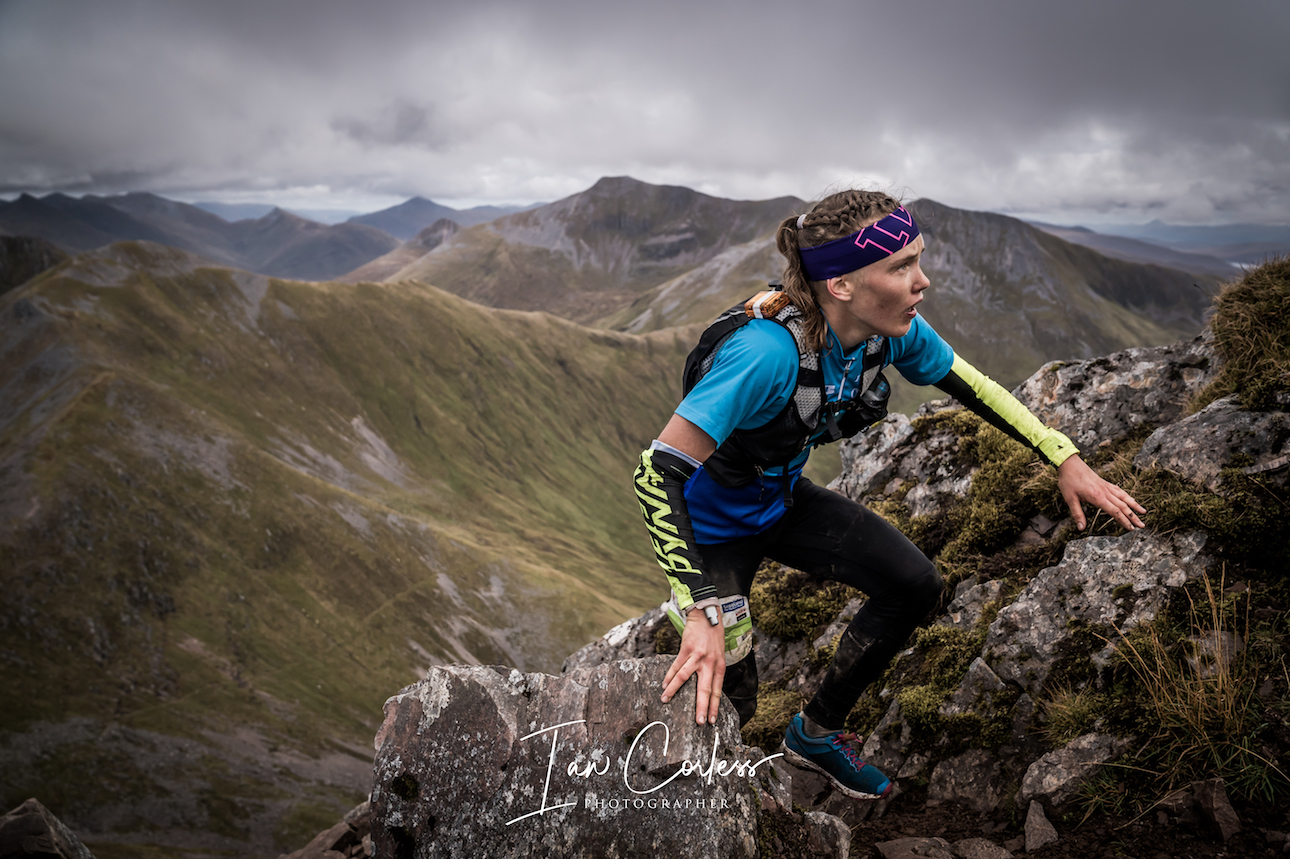
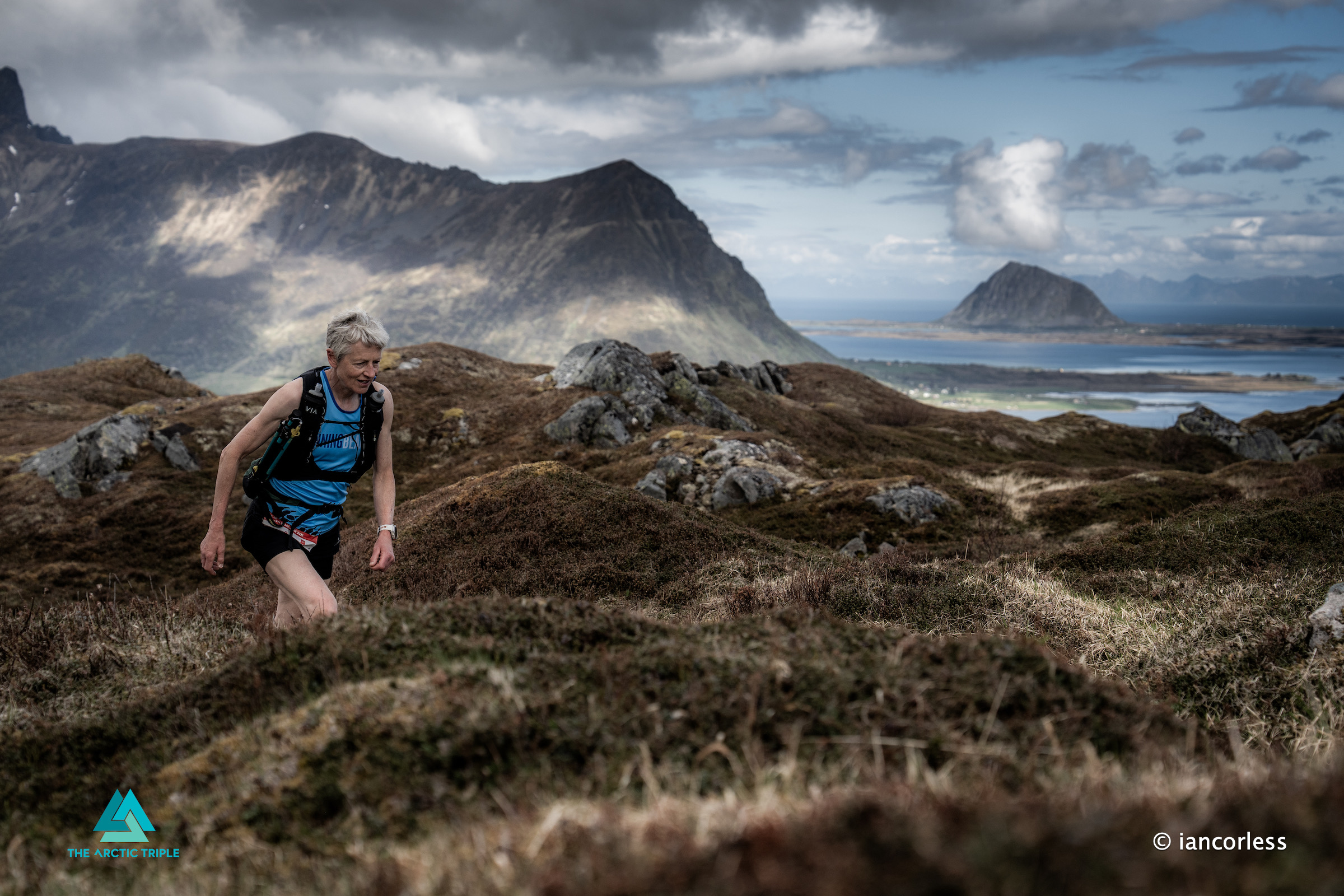
Henriette’s story is one of obsessive discipline, deliberate practice and a willingness to reject the conventional path. Competitive, fiercely self-reliant and prepared to put in the work when nobody is watching. But there is much more to her story than results.
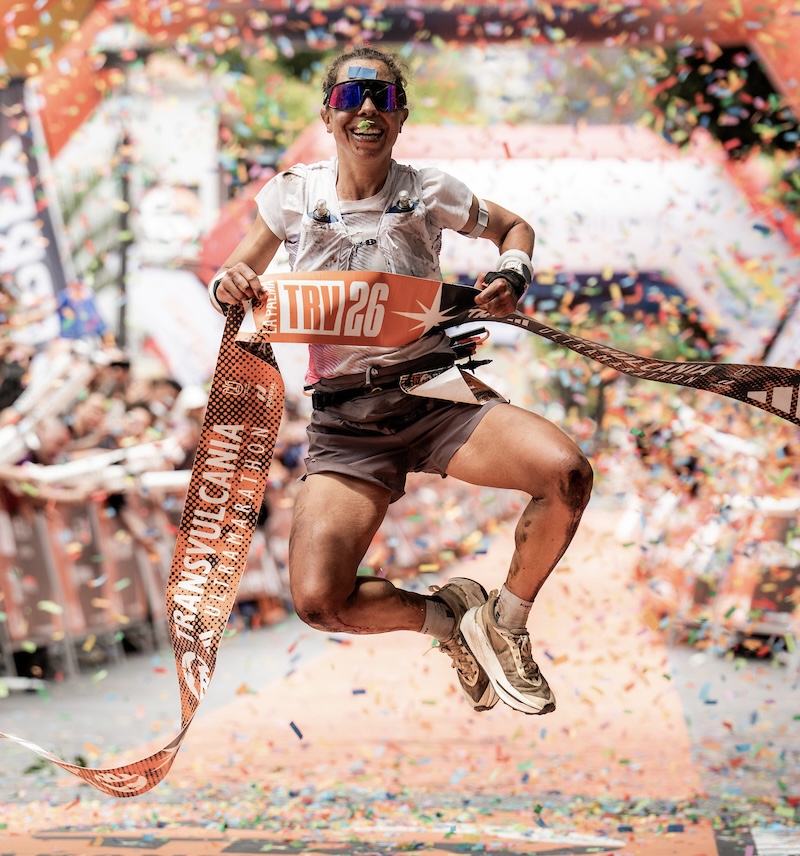
From obstacle course racing and an early connection with Tromsø that involved her honeymoon, through races such as the Ring of Steel, skyrunning and the World Championships, Henriette steadily built her way into the elite of the sport. A period of serious health issues interrupted that progression, but her return produced a remarkable run of performances – including 6th at OCC and CCC, 6th at Lavaredo 80K, victory at Templiers 47K, a winter Bob Graham Round record of 17:55 across 106 km and 42 peaks, 3rd at Trofeo Kima, victory at UTS 50K, and back-to-back Transgrancanaria wins in 2025 and 2026.
But the results are only part of the conversation.
We talk about leaving a corporate career as an auditor to become a full-time runner, the role Norway has played in shaping her – from the Romsdal mountains and local races to brutal weather and hugely varied terrain.
We also get into some of the less comfortable subjects in elite sport: women’s health and RED-S, body shape and what ‘healthy’ actually means, sponsorship and the freedom to make your own choices, shoe selection, common sense and decision-making, and the pressures surrounding UTMB and the modern ultra-running landscape.
Henriette is refreshingly honest, no BS and unafraid to speak about subjects that many athletes avoid. Through the Ascend Trail, Arc’teryx, her new partnership with Raide Research and the Sufferfest film, she is also building something beyond simply being a professional runner.
An outlier, certainly. But perhaps more importantly, someone prepared to question the rules, take responsibility for her own decisions and find her own way through the sport.
Episode 257 dives deep into the remarkable journey of Yngvild Kaspersen, fresh off her commanding 2026 CCC victory — a pacing masterclass that made her the first woman ever to win the race twice.
We rewind to 2015, exploring her beginnings in skyrunning, the technical foundations that shaped her style, and the early promise that hinted at greatness. Yngvild opens up about balancing medical studies with elite racing, and the long‑standing question of identity: doctor who runs, or runner who is a doctor.
We revisit her post‑Covid struggles, the breakthrough CCC win in 2023, and her emotional chapter at Western States. Then we break down her flawless 2026 performance — patience, precision, and a late‑race surge that defined the week.
Finally, we look ahead: Western States 2027, UTMB 2028, and the next evolution of one of mountain running’s most intelligent competitors.
A decade of growth. A champion at her peak. A conversation not to miss.
Often described as the world championships of trail and mountain running, it remains the sport’s biggest stage. For elite athletes, it is the pinnacle. A race that demands years of discipline, dedication and unwavering commitment.
Of course, every runner on the start line faces the same mountains and the same distance. But at the front of the field, there is often far more at stake than a finish time. Careers, sponsorships, reputations and legacies can all be influenced by a single day in Chamonix.
The pressure is immense.
At the same time, the sport continues to evolve. Races are getting faster and faster. Training standards are rising. Recovery windows seem smaller. The margin between success and failure is increasingly narrow, and for those who aspire to a top-10 finish at the sport’s most competitive events, operating close to the edge is becoming a necessity rather than a choice.
It is a delicate tightrope to walk.
Every year, some of the sport’s biggest names fail to make the start line. Injury is nothing new. Katie Schide’s absence through long-term injury is one example. Others arrive hoping their final preparations will be enough, only to realise in the closing stages that the risk outweighs the reward. The withdrawals of Kilian Jornet, Jim Walmsley, Tom Evans and Ruth Croft significantly changed what may have been one of the strongest UTMB fields ever assembled.
Then there are the factors no training plan can fully control.
Illness swept through parts of UTMB week. Henriette Albon’s stomach issues before the start were one example, but as the races unfolded it became clear others were also walking a fine line between competing and recovering. Some started with hope and determination, only to discover very early that 2026 was simply not their year. Adriana Moser was one such example.
And then there is a different question altogether. Can athletes still have multiple peak performances in a single season?
Several elite runners arrived in Chamonix after already producing exceptional results elsewhere in 2026. Vincent Bouillard and Courtney Dauwalter had both raced and raced well earlier in the year. Yet UTMB, raced at unprecedented pace and intensity, may have represented one challenge too far. Not because they lacked ability, but because even the best athletes have limits.
The same thought applies to Francesco Puppi and Jennifer Lichter. Both have enjoyed remarkable seasons and both finished in the top five at the 2026 CCC. Outstanding performances by any measure.
But had they arrived completely fresh, fully recovered and without the physical and mental demands of Western States in their legs, would they have finished on the podium? Could they even have won?
The answer is impossible to know. Yet the question itself feels increasingly relevant.
From the outside, the life of a professional trail runner can seem ideal. Your passion becomes your profession. You travel the world. You compete in extraordinary places.
But when passion becomes a job, expectations inevitably follow. Results matter. Contracts matter. Visibility matters. The need to perform creates pressure.
Respected coach Paul Lind once said, “You can only take water from the well so many times.” It’s a simple statement, but perhaps one that resonates more strongly than ever.
At UTMB 2026, Ben Dhiman ran an astonishing time 18:16, and two other athletes also broke 19 hours. Yes, the course was adjusted, but the significance remains. Times once considered unimaginable are now becoming reality. Dhiman prepared for UTMB meticulously and in the process, ran Transvulcania and 90km Du Mont-Blanc as tune ups, he placed 5th and 2nd respectively, I wonder, was there disappointment at not winning both, or, more importantly, where they just stepping stones to the big W at the one that mattered?
Trail running is changing.
The image of ultra running as a relaxed community of dirtbags, hippies and adventurers still exists and, importantly, remains part of its soul. But at the elite level, the sport is becoming increasingly professional, increasingly competitive and increasingly unforgiving.
Miao Yao offers a fascinating glimpse into this evolution.
Earlier in 2026, she won CDH at HOKA Val d’Aran in 13:04:34 without using poles. Her reasoning was simple. She now views races around the 100-kilometre distance, CCC included, as fast-running events rather than traditional mountain ultras. To prepare, she focused accordingly. She even used Sierre-Zinal, a brutal 31-kilometre mountain race, as a speed-focused tune-up before CCC.
A former CCC champion herself, Miao went on to battle fellow former winners Toni McCann and Yngvild Kasperson for third place, later admitting it was a day of real struggle.
That, perhaps, says everything.
The barriers are moving.
Just as the four-minute mile, the two-hour marathon and now the sub-20-hour UTMB once seemed out of reach, the moment something is proven possible, expectations shift. Athletes adapt. Coaches adapt. Training adapts.
The new standard becomes the starting point.
So where does the sport go in 2027?
Many elite athletes have already responded by racing less. One or perhaps two major targets have become the model. Everything else is planned around arriving at those races healthy, fresh and fully prepared.
Yet exceptions still exist.
Rachel Entrekin’s 2026 season has been extraordinary. Victory at Coldwater Rumble 100, third place at Chianti behind Courtney Dauwalter and Yngvild Kasperson, outright victory at Cocodona 250, and then second place at UTMB.
It is difficult not to admire such achievements.
But it also raises another question.
Is it sustainable?
Rachel may be uniquely gifted. Some athletes appear capable of recovering and performing at levels others simply cannot match. Yet history repeatedly shows that athletes who burn brightest often do not burn longest.
That is not criticism. It is observation.
Perhaps the biggest story from UTMB 2026 is not who won, who lost or who withdrew.
Perhaps it is that the sport has reached another turning point.
The demands are higher than ever before. The competition is deeper than ever before. The rewards are greater than ever before.
But so too are the risks.
As trail running enters this new era, the question may no longer be how fast athletes can go.
Instead, the more important question might be this:
How long can they sustain it?
And in the pursuit of ever-faster times and ever-greater performances, what is the true cost of repeatedly going back to the well?
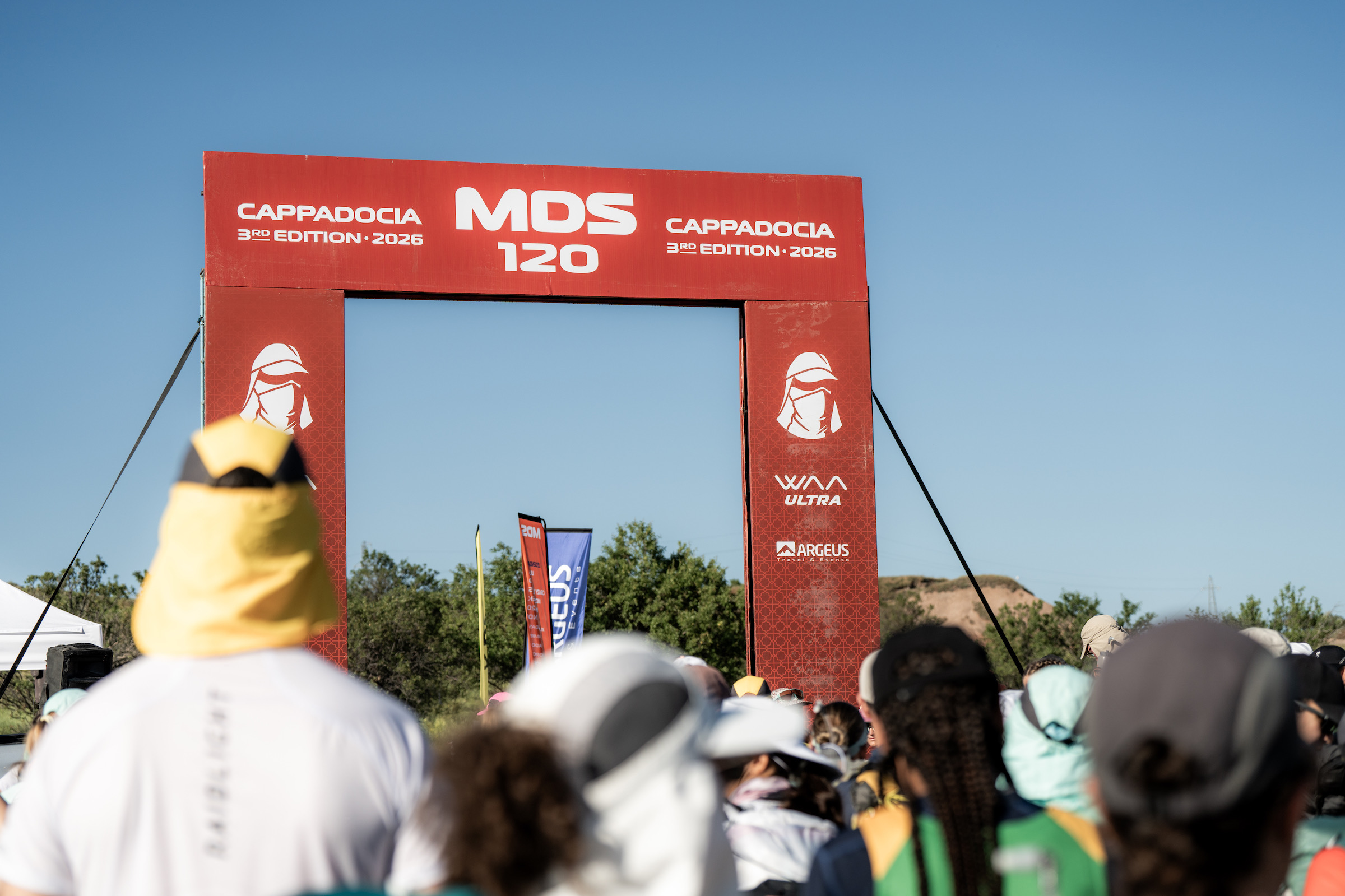
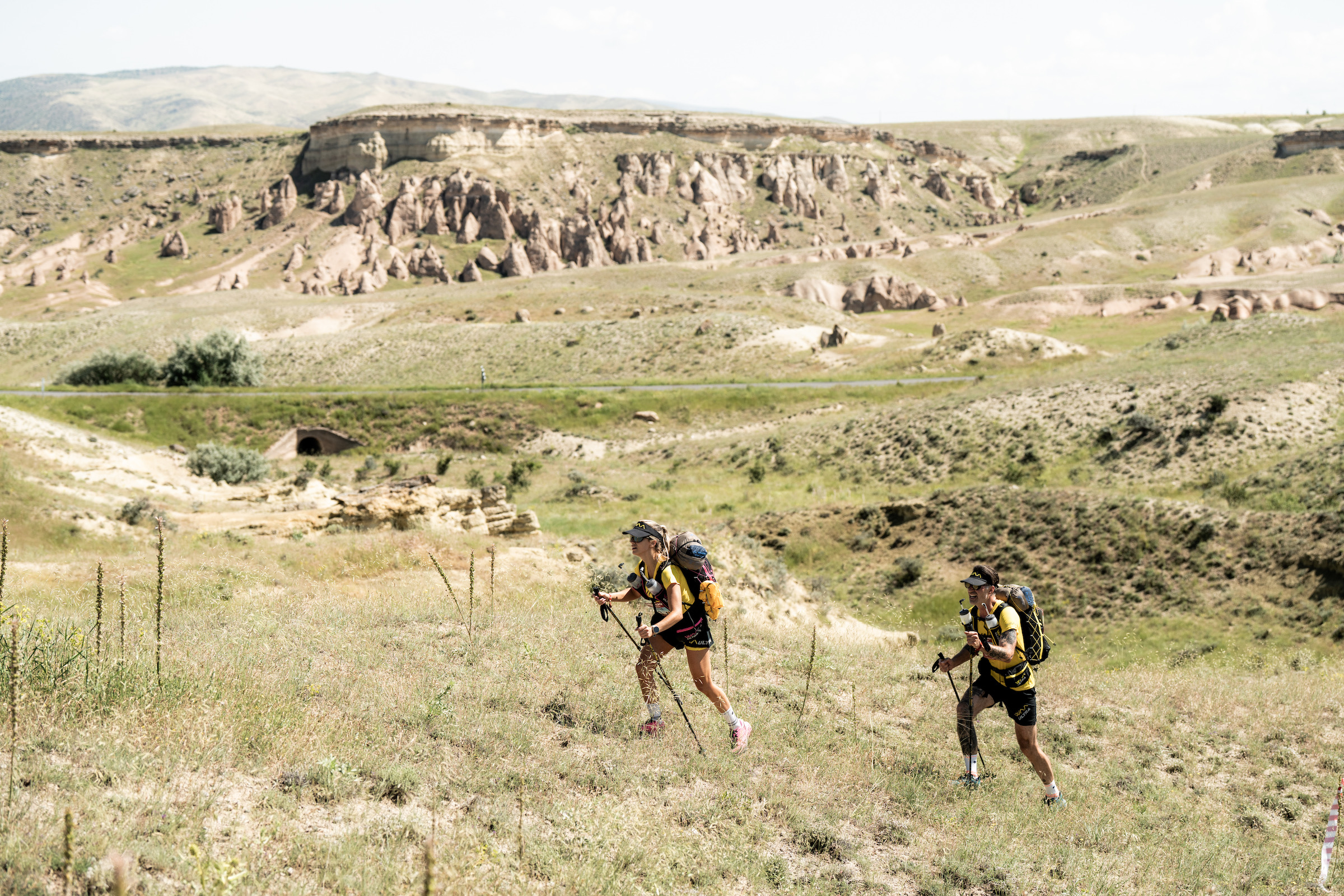
Stage 1 of the 3rd Edition of MDS Cappadocia delivered everything that makes this race so special.
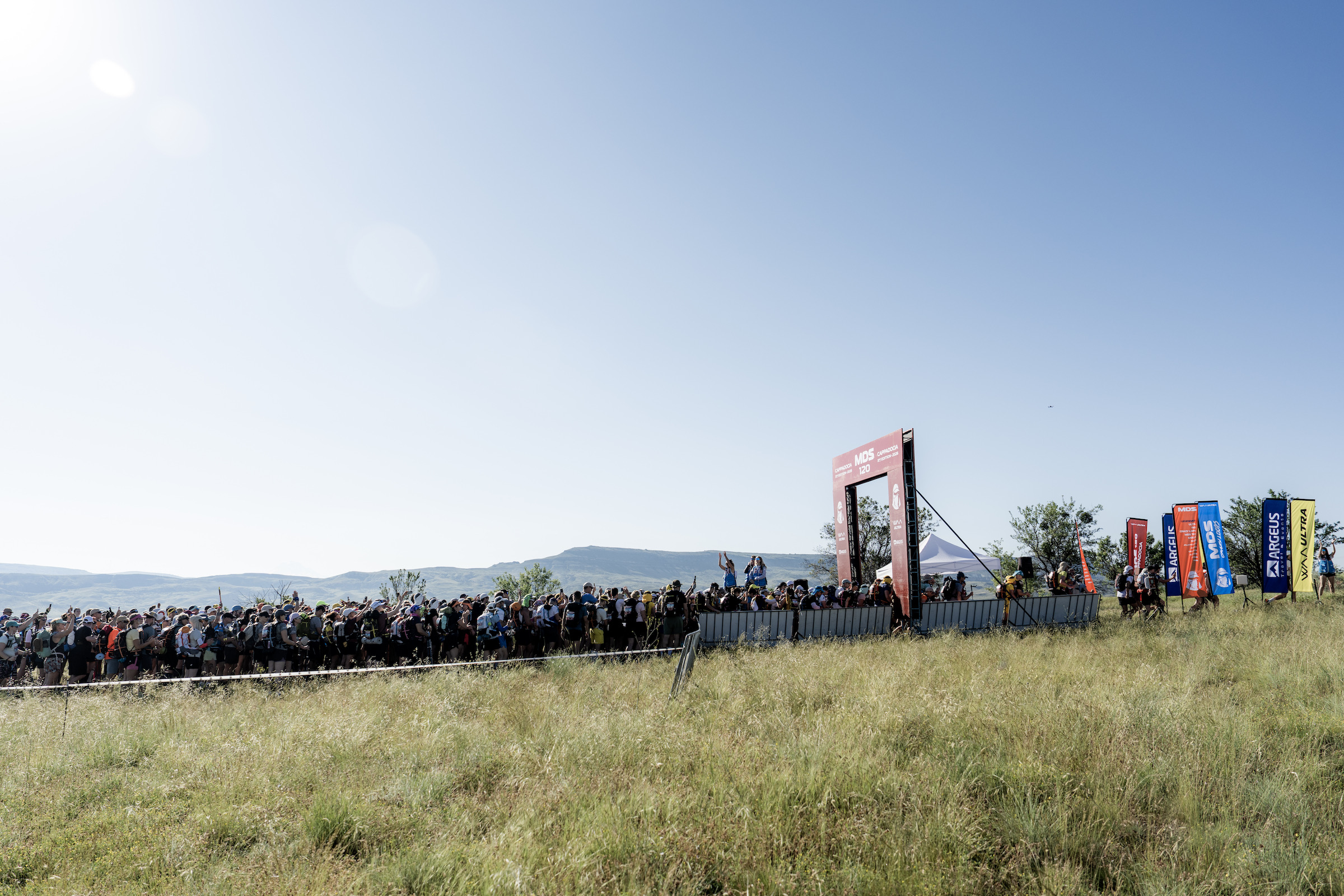
After several days of heavy rain, participants were greeted by blue skies, sunshine and rising temperatures as they gathered on the start line at 08:00 to experience the magic of one of Turkey’s most extraordinary landscapes.
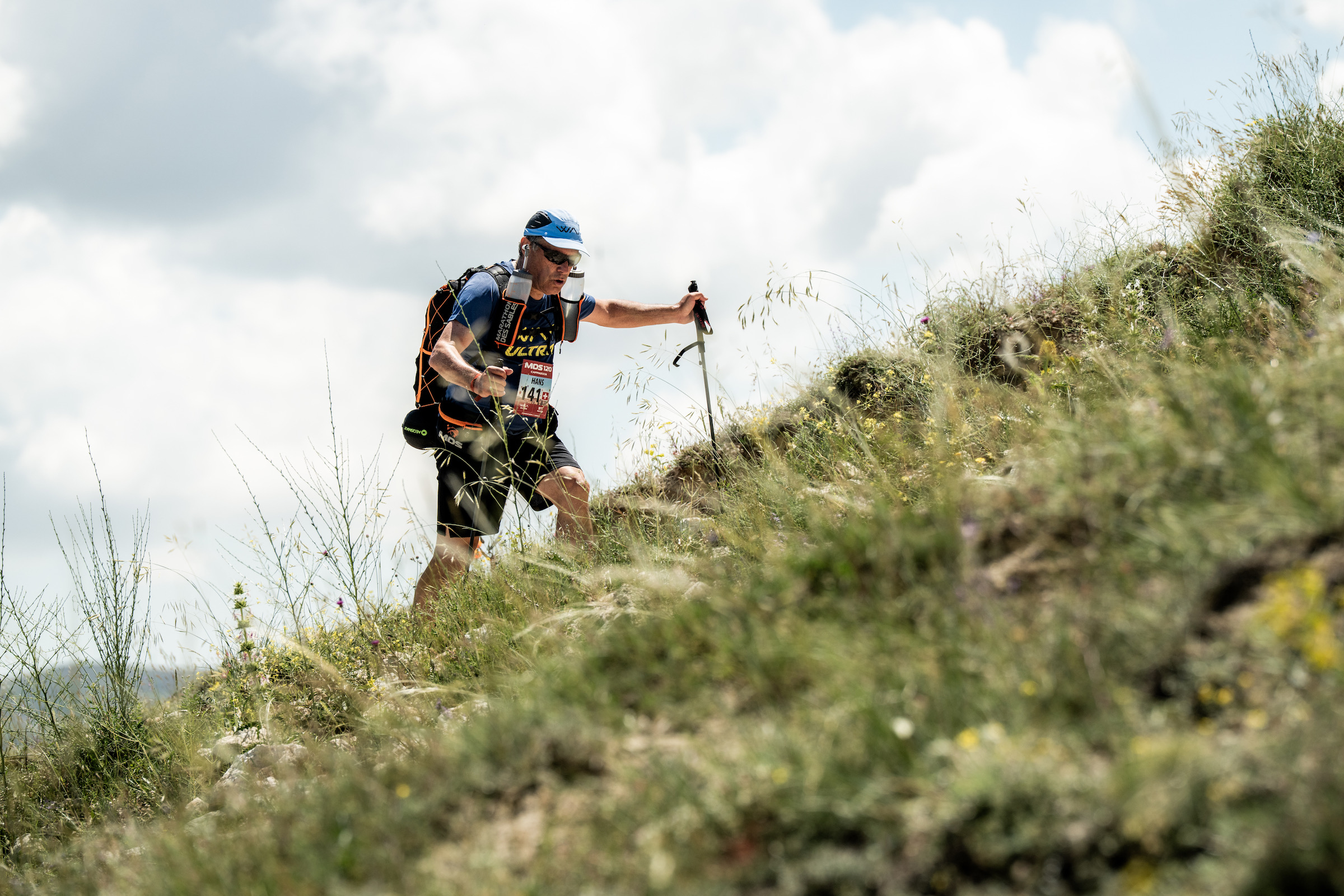
The opening stage covered 25km with 747m of elevation gain and two checkpoints. While the weather had improved dramatically, the recent rain left sections of the course muddy and demanding, adding another layer of challenge to an already testing route.
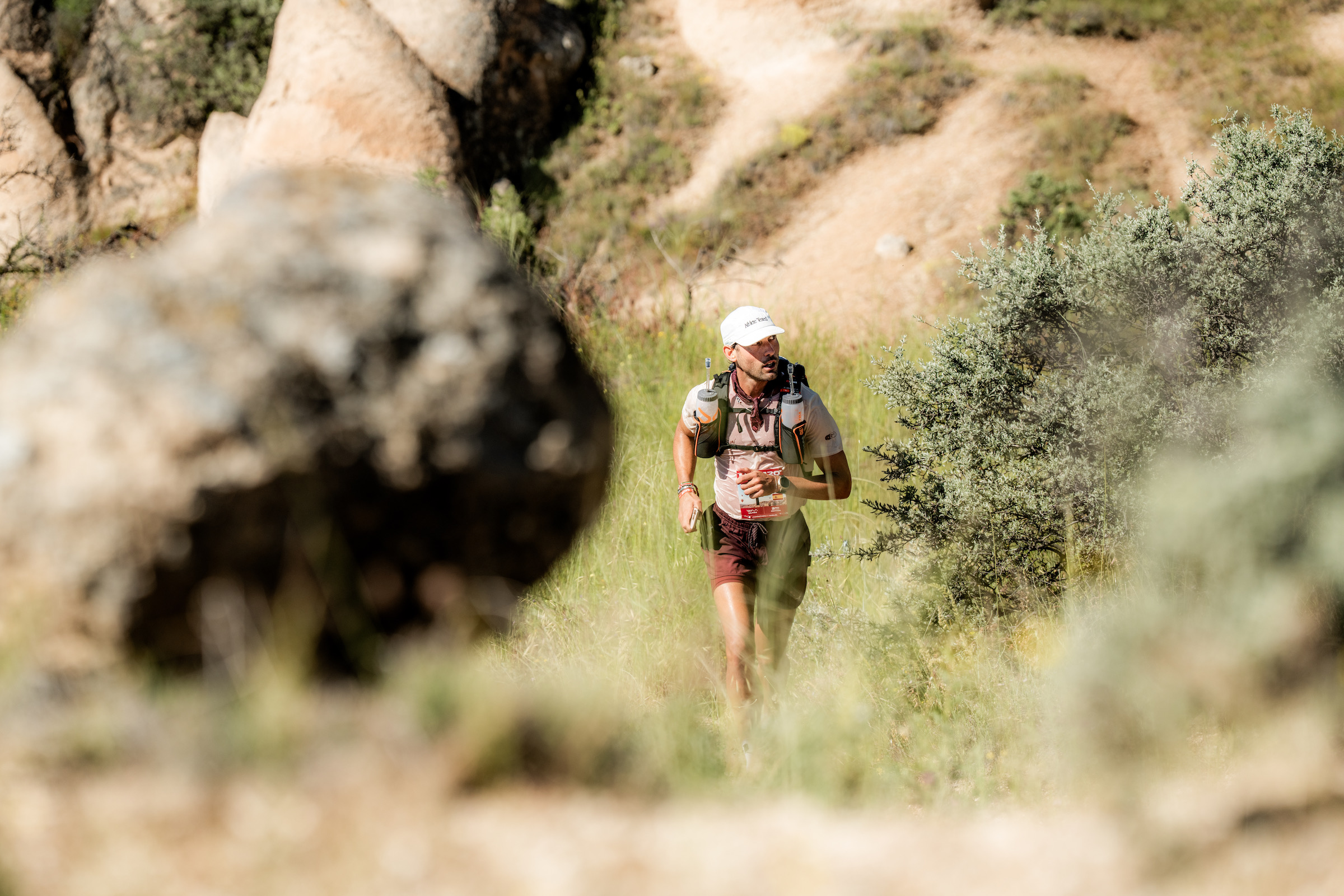
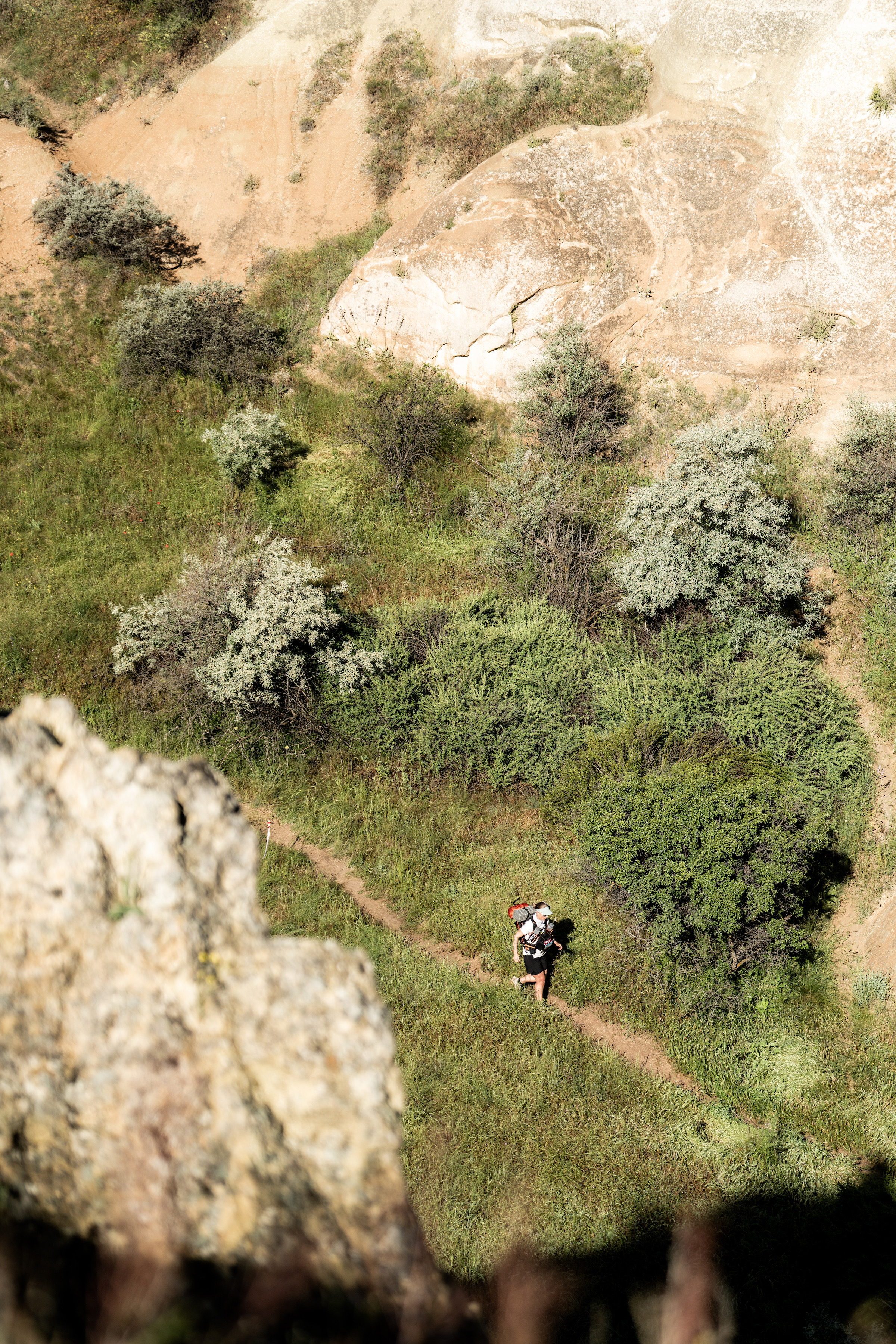
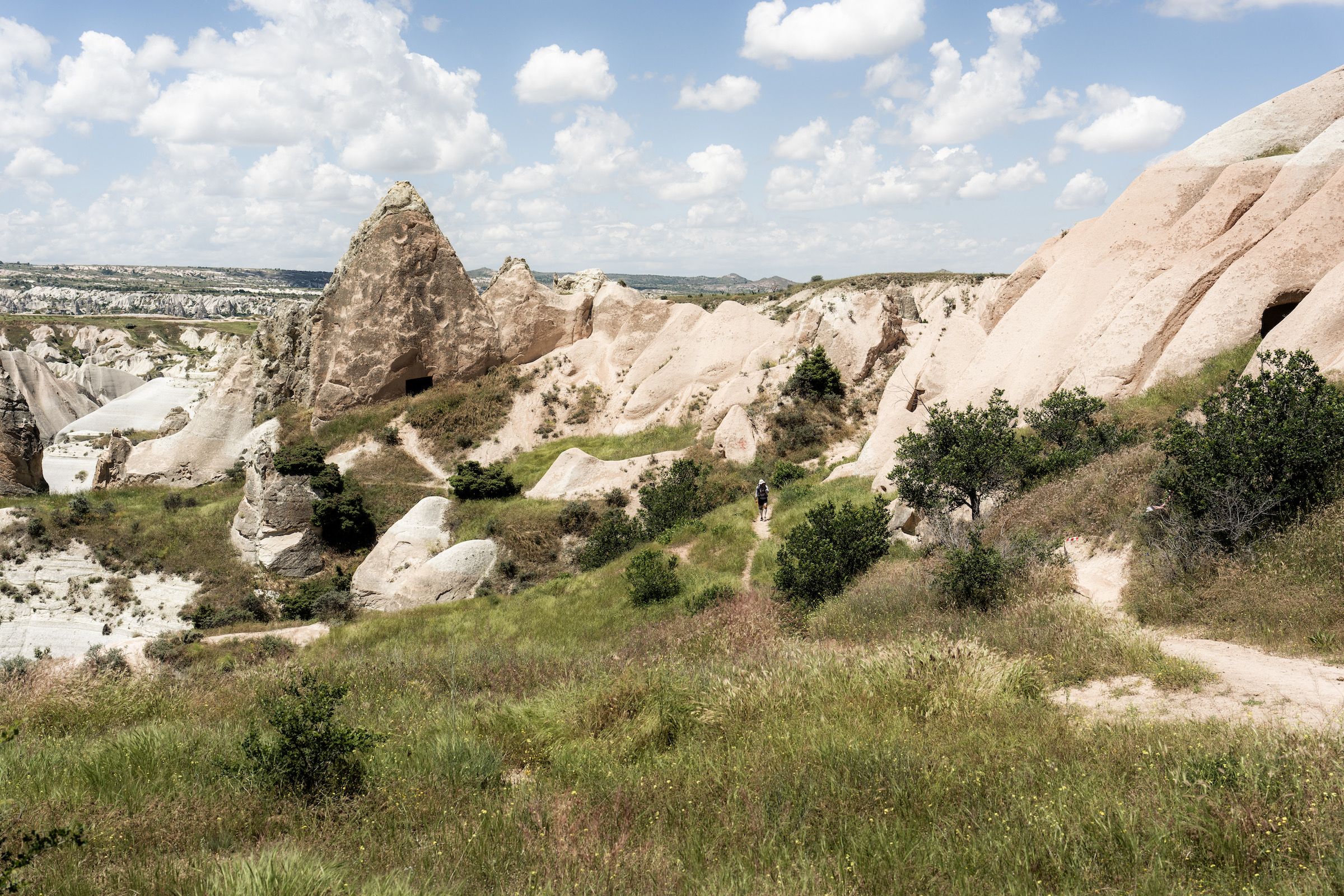
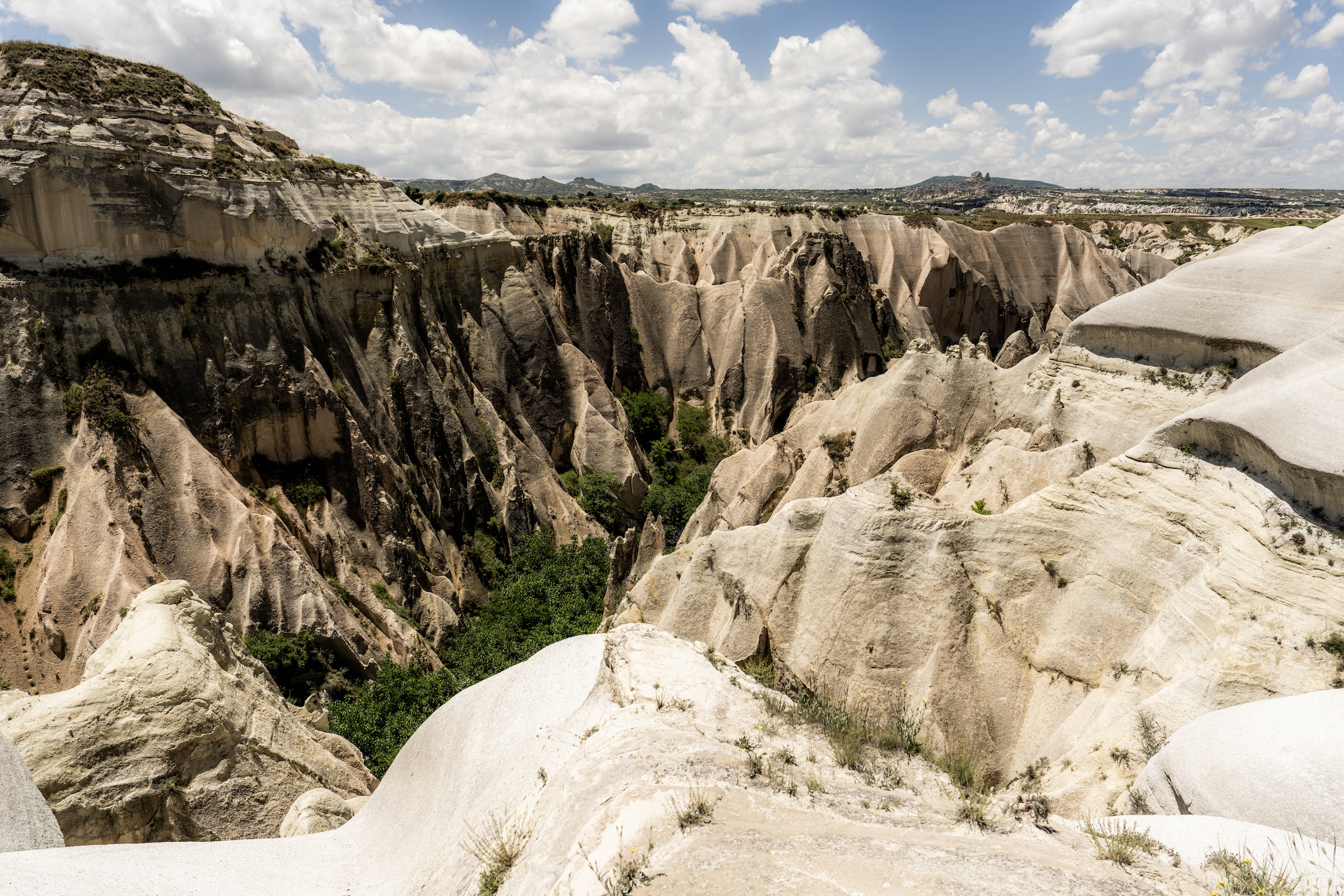
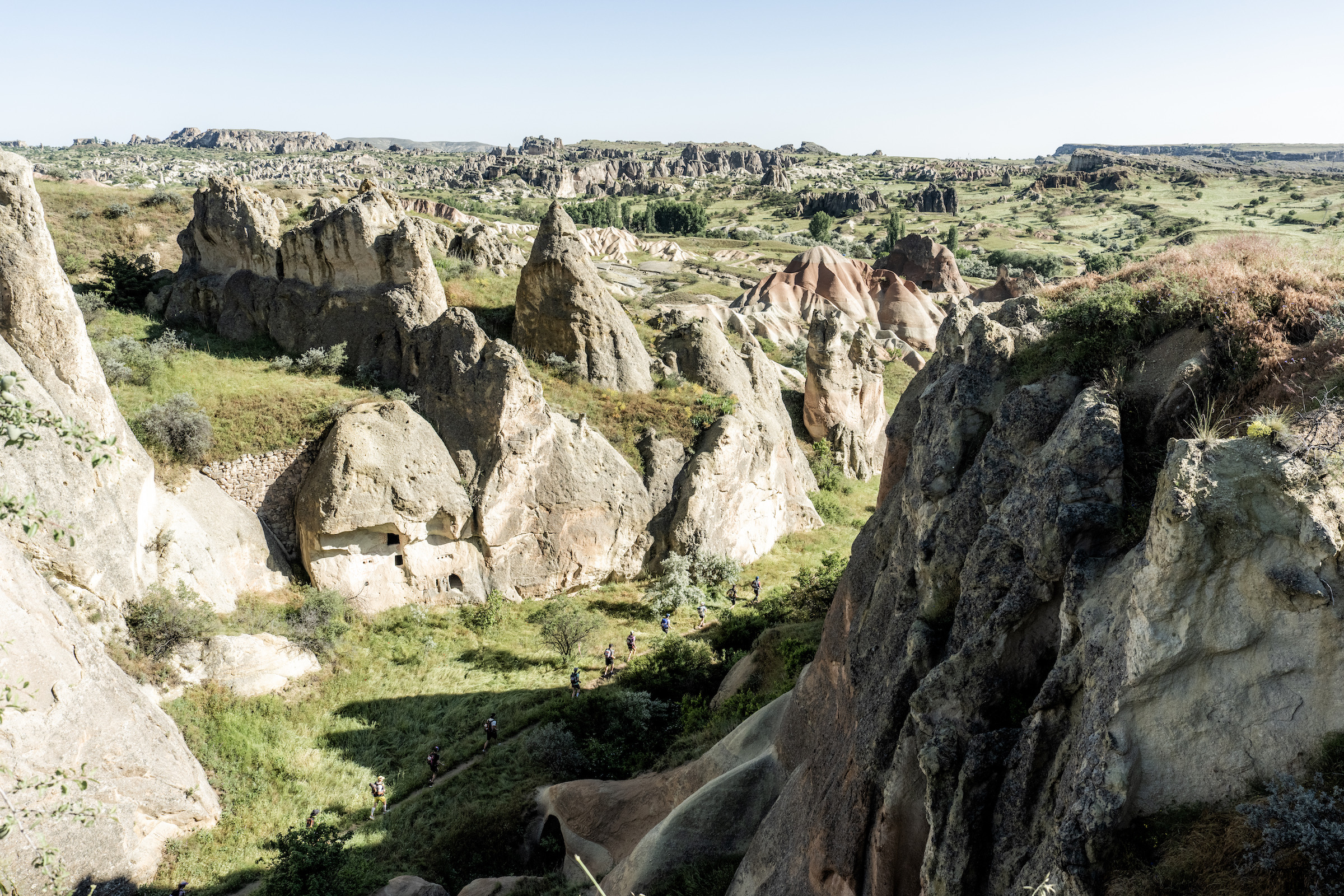
The undulating course wound through the heart of Cappadocia, taking runners across open plateaus, along flowing single-track trails and beneath dramatic mountain vistas before passing through the iconic Rose Valley and arriving at the bivouac.
Throughout the day, competitors were immersed in a landscape unlike anywhere else on Earth, where ancient rock formations, vast horizons and centuries of history create an unforgettable backdrop for adventure.
All 400 participants were tested by the terrain, with an impressive 64% of the field made up of women. The diversity of the event was equally remarkable, with the youngest competitor aged 19 and the oldest 74, showcasing the universal appeal of the MDS spirit.
At the front of the race, Sergio Turull, winner of the MDS Ultra 100km in January, stamped his authority on the competition, dominating Stage 1 to claim victory in 2:24:45.
In the women’s race, Maryon Pennec delivered a commanding performance, crossing the finish line in 2:57:35, more than eight minutes ahead of her nearest rival.
Tomorrow, the challenge continues with Stage 2, where competitors will choose between 19.2km, 38.7km or 55.2km routes. By the end of the event, participants will have completed total race distances of 70km, 100km or 120km respectively.
A spectacular start to the week in Cappadocia, where world-class trail running meets one of the most breathtaking landscapes on the planet.
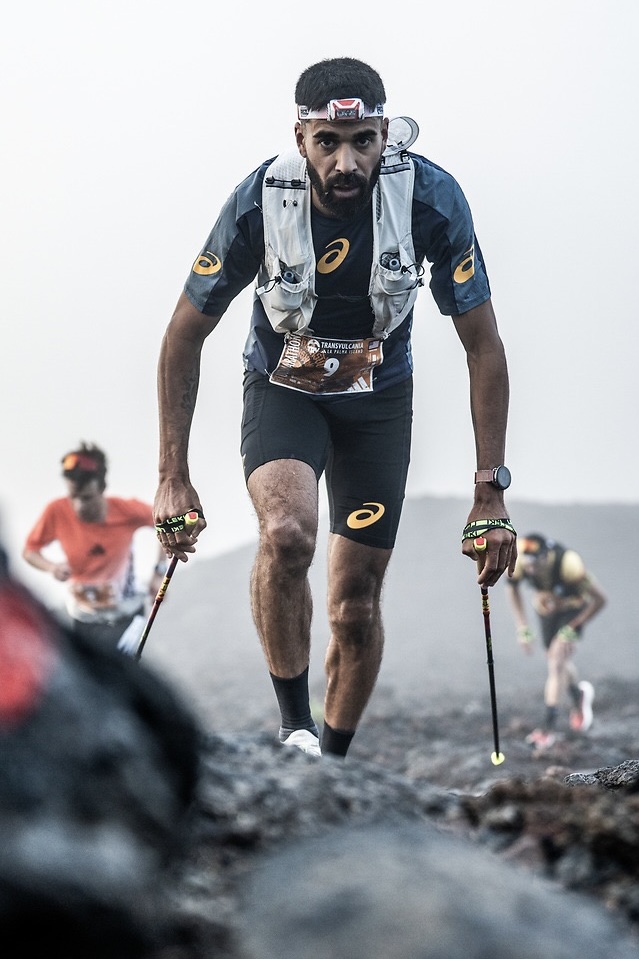
The days before the 2026 edition of Transvulcania felt eerily familiar. Wet streets in Los Llanos. Low clouds wrapping themselves around the ridgelines above El Paso. Moisture hanging heavy in the pine forest. Conversations in cafés and hotel lobbies kept drifting back to the same thought: please not again.
After the severe weather that disrupted the 2025 race, there was a quiet anxiety around La Palma in the build-up to this year’s event. Transvulcania is already one of the most demanding ultras in the world when conditions are good. When the island turns hostile, it becomes something else entirely.
But sometime during the night before the start, the mountain changed its mind.
Race morning arrived cool, calm, and almost impossibly perfect for running. The clouds remained, softening the exposure and keeping temperatures under control. Light rain fell in sections of the course, enough to settle the dust and compact the volcanic terrain without turning the trails heavy. Then, later in the day, the sun appeared just enough to illuminate the island’s dramatic ridges and descents without ever becoming oppressive.
What followed was extraordinary.
On a course as iconic and historically difficult as Transvulcania, improvements in winning times have been marginal. The 2026 edition changed that. They forced you to stop, rewind the race in your mind, and ask what exactly happened on this mountain.
Part of the answer was written into the terrain itself. The volcanic sand that usually defines sections of Transvulcania can often feel like running through ash, loose, decomposed, energy-draining. This year, after days of moisture, much of it had compacted making for considerably faster progress. Athletes were finding traction where they normally lose it. Climbs became more efficient. Descents became faster and more confident. Across an ultra-distance race, where every micro-adjustment compounds over hours, the effect was enormous and this is without doubt where a percentage the course record pace came from.
But conditions alone do not explain the magnitude of what happened.
Trail running has evolved at breathtaking speed over the last few years, and this edition felt like the clearest demonstration yet of just how professional the sport has become. Today’s elite athletes arrive with race plans built from meticulous course analysis, power data, nutrition precision, altitude blocks, recovery protocols, sleep tracking, and sports science that would have seemed excessive not long ago. Shoes are faster. Fueling is smarter. Preparation is more specific. Nothing is left to chance anymore.
And perhaps most importantly, the depth of talent is exploding.
Before race week, much of the attention was placed on the Kenyan athletes and the possibility of records in the Vertical and Uphill races. They dominated the VK and Half with superb performances of speed, agility and technical prowess. Records in the marathon also fell. Pre-race, while reviewing the Ultra field, one thing became impossible to ignore: the density at the front – twenty men capable of producing what, in previous years, would have been considered a top-ten all-time performance on this course. That changes everything about how a race unfolds.
No one can afford patience anymore.
Running conservatively no longer guarantees a podium, or even relevance. Athletes who, only a few years ago, would have comfortably placed inside the top five are now finishing much further down despite running historically fast times. The level has risen so dramatically that simply surviving the course is no longer enough. To compete at the front now requires relentless pressure from the opening climb.
And that pressure was visible everywhere.
Women’s Race
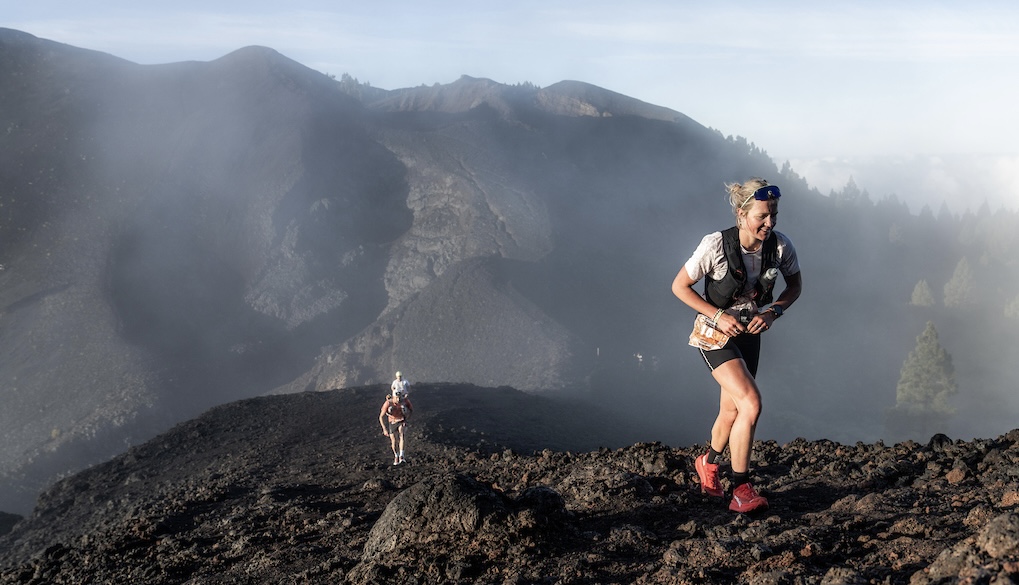
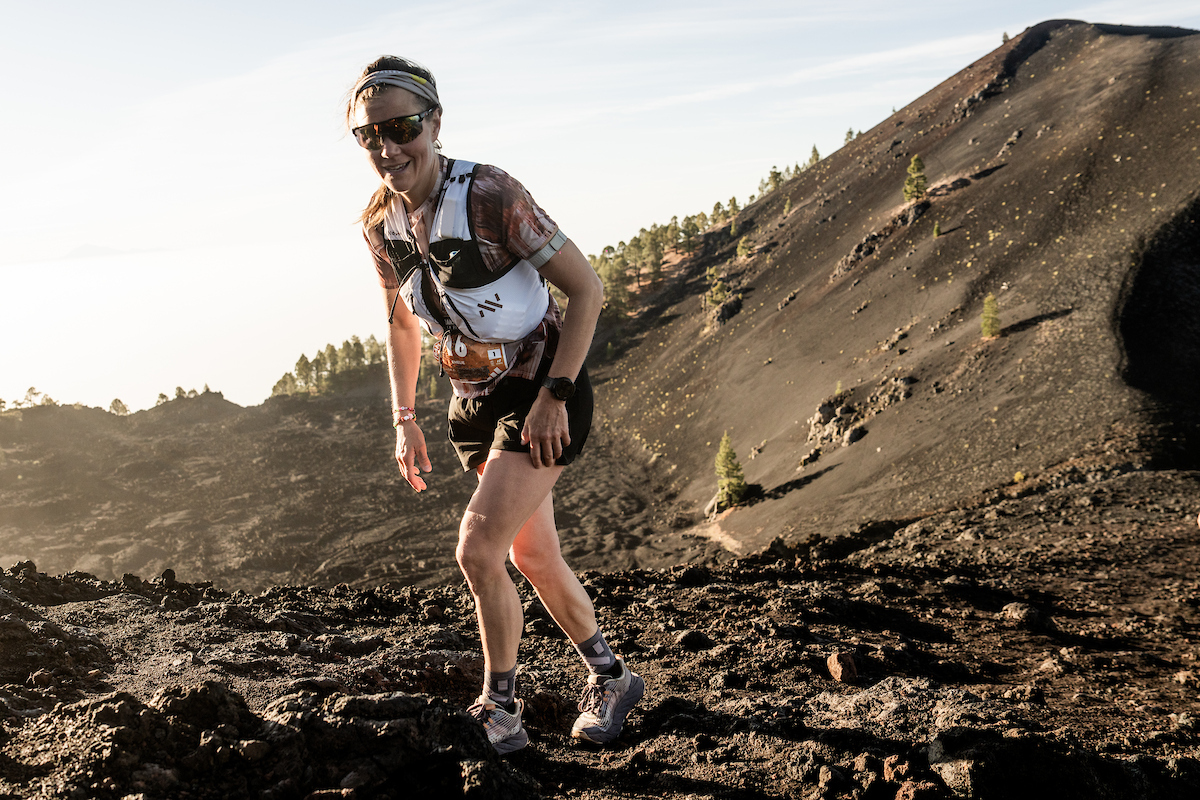
The women’s race embodied that intensity perfectly. A stacked field featuring Blandine L’Hirondel, Lucy Bartholomew, Ekaterina Mityaeva and returning two-time champion Emelie Forsberg exploded from the opening kilometers. Blandine took control on the climb from the start to Los Canarios and then onward toward Deseadas and beyond. Yet the race never settled. Lucy refused to let the gap grow, eventually catching Blandine at Roque de los Muchachos after 50 kilometers and very briefly taking the lead. The Frenchwoman responded brilliantly on the descent, with what must of been a masterclass performance, reclaiming the lead before Tazacorte and ultimately storming to victory in 7:43:47 — an astonishing 19 minutes faster than the previous course record by Ruth Croft. Lucy also finished well inside the old mark in 7:49:26 after one of the finest races of her career, incredible as she openly admits, she is terrible downhill… Emelie completed one of the stories of the weekend by returning to the Transvulcania podium in third.
Men’s Race
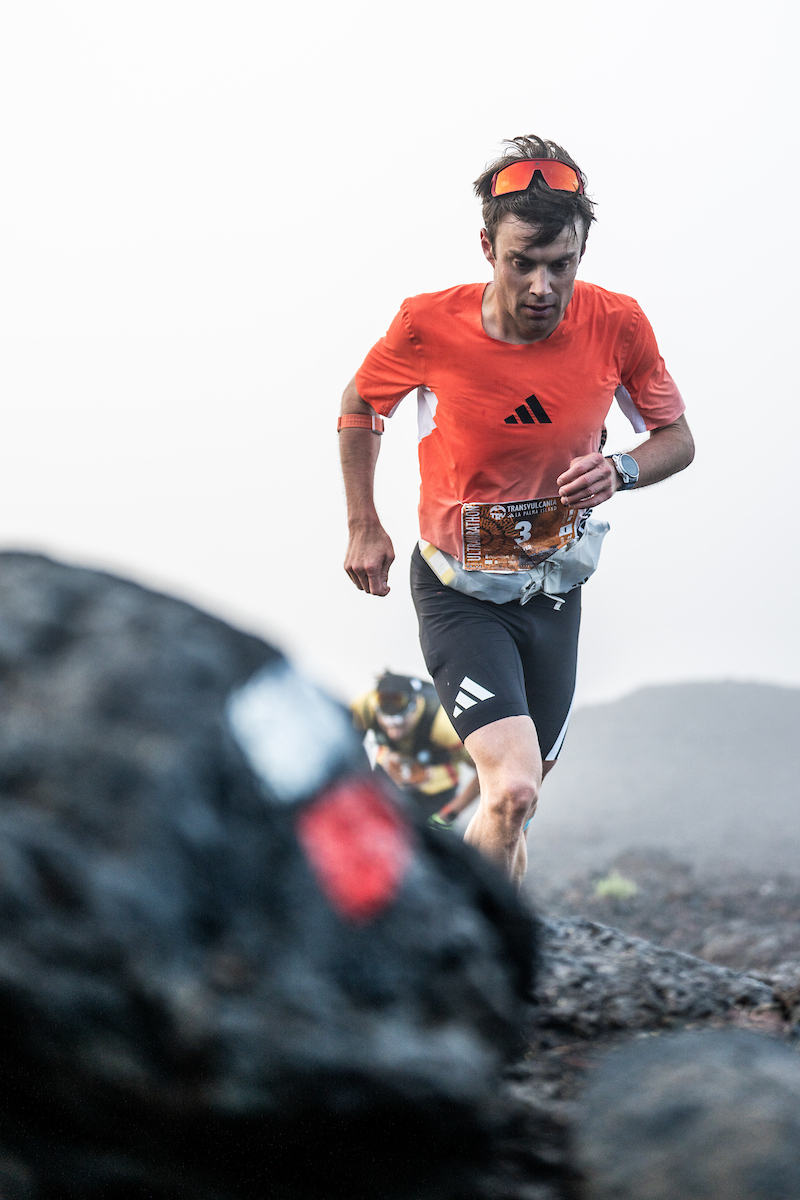
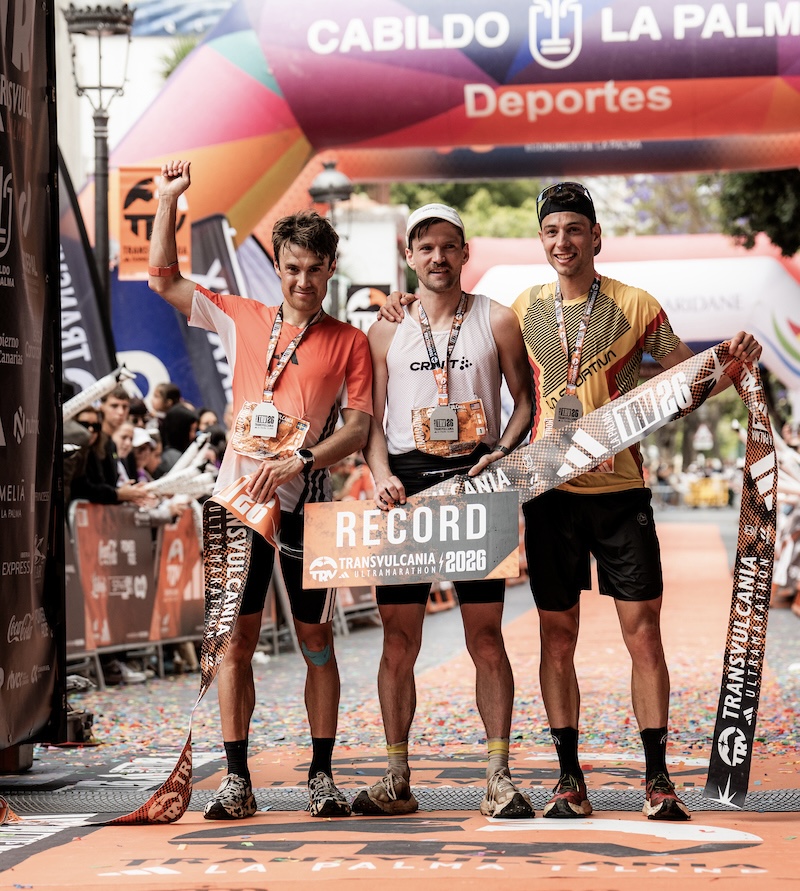
Damien Humbert set a ferocious early pace, but the race soon evolved into an all-out battle between David Sinclair, Petter Engdahl, Ben Dhiman, Andreas Reiterer, and Nadir Maguet across the volcanic spine of La Palma. David and Petter traded control high in the mountains after El Pilar, Petter stronger on the climbs, David faster on the descents. Reaching Roque de los Muchachos almost stride for stride, David unleashed a devastating descent toward Tazacorte that finally broke Petter, no doubt mindful of the final sting in the tail, the climb from Tazacorte Puerto to the finish that almost certainly would suit Petter. David reached Los Llanos in 6:32:24, smashing the long-standing course record by an astonishing 20 minutes in what he later called, ‘the race of his life!’ Behind him, Petter, and Nadir also finished well under the previous record, while an incredible six men broke Luís Alberto Hernando’s legendary mark that had stood for over a decade. Petter went on to say at the finish, ‘He (David) was just so fast on the descent, I couldn’t keep up.’
That is often how records truly fall, not through perfect pacing alone, but through confrontation. Through athletes refusing to let rivals settle into comfort. Through races that demand risk instead of caution. Blandine L’Hirondel was already under record pace, yet Lucy Bartholomew stayed close enough deep into the race to force another level from her. Petter Engdahl tried to stay attached to David Sinclair, pushing the pace high enough that Sinclair himself had to keep squeezing every possible second from the course to finally break away. It created the kind of racing that transforms performances from impressive into historic. Every athlete elevated the others.
And then there was another story woven beautifully into the weekend. Ten years after her victories on this island, two-time champion Emelie Forsberg returned to Transvulcania once again. But this time the story was different. No longer the young athlete who dominated these volcanic trails a decade ago, she arrived as a wife, a mother of three children, and still managed to stand on the podium once more. In a weekend obsessed with speed, records, and the future of the sport, her performance carried something equally powerful – perspective. A reminder that greatness in trail running is not only measured in minutes and records, but also in longevity, resilience, and the ability to return to the same mountain years later and still belong among the very best.
The 2026 Transvulcania was not simply a fast edition blessed by good weather. It felt like a glimpse into the future of trail running, deeper, more professional, more aggressive, and faster than anything we have seen before.
And for those lucky enough to witness it unfold across the volcanic spine of La Palma, it was unforgettable.
Four races, eight records, men and women triumphant on the iconic trails of La Palma, what does the future hold? With the 2027 race date already set for Transvulcania, anticipation is already high.
The news that Ourea Events has ceased trading lands heavily on the UK mountain and ultra running community. For many of us, this isn’t just the loss of an event company. It feels like the closing of a chapter in the story of British mountain running.
Shane Ohly and his team didn’t just organise races. They shaped a culture.
At a time when the UK ultra scene was still finding its feet, Ourea created events that felt raw, adventurous, and deeply connected to the mountains. These were not simply races measured by split times and finish lines. They were journeys that asked something of you: navigation, resilience, judgement, and a willingness to be uncomfortable for long stretches of time.
The Dragons Back Race set the tone. For many runners it was their first taste of a true multi-day mountain expedition disguised as a race. Self-navigation with map and compass across the spine of Wales made it feel less like a sporting event and more like an adventure in the purest sense.
From there came a string of events that helped define a generation of UK mountain runners. The Great Lakeland 3 Day, Dark Mountains, the ROC Mountain Marathon and more. Each had its own character, but they all carried the same spirit: serious mountains, thoughtful course design, and an expectation that runners would meet the terrain on its terms.
Like many others, I was lucky enough to experience several of these events firsthand. I was there for the first Cape Wrath Ultra. I experienced the return of the Dragons Back. And the moment I’m perhaps most proud of was helping create the Glencoe Skyline as part of Skyrunning UK. That event in particular showed just how far the UK mountain running scene had evolved. Technical, spectacular, and unapologetically demanding, it placed Scottish ridgelines onto the world skyrunning map. We brought the world’s best to Scotland – Kilian Jornet, Emelie Forsberg, Katie Schide, Jasmin Paris, Jon Albon, Marco Degasperi, Henrietta Albon, Tove Alexanderson, Laura Orgue, Hillary Gerardi and the list goes on…. A who’s who of the mountain running world.
So the collapse of Ourea feels deeply personal to many of us.
But it also raises bigger questions.
The last few years have been brutal for independent race organisers. Covid wiped out entire seasons and left financial scars that many companies never fully recovered from. Brexit complicated logistics, staffing, and international participation. Costs across the board have risen sharply.
At the same time, the global trail running landscape has changed. The rise and dominance of UTMB has reshaped the market, pulling attention, sponsorship, and runners toward a global series model. For smaller, independent organisers, competing in that environment is incredibly difficult.
Ourea may have technically survived Covid and Brexit, but survival does not mean recovery. The damage done during those years can take a long time to surface, and sometimes the final collapse comes long after the initial shock.
Right now, the most immediate concern is for runners who have paid entry fees for 2026 events. Hopefully many will be protected through credit or debit card payments and able to recover funds through Section 75 or chargeback claims. But even if that is resolved, the bigger uncertainty remains.
What happens now?
What happens to the UK mountain running scene without one of its most creative organisers?
And what happens to the races themselves?
Events like the Dragons Back, Cape Wrath Ultra, and Glencoe Skyline are more than entries on a calendar. They have become part of the identity of British mountain running. They hold stories, ambitions, and personal milestones for thousands of runners.
In some ways, races are like mountain routes. They can outlive the people who first established them.
So perhaps the real question is whether these events can find new custodians. Whether another organiser can pick up the threads and carry them forward without losing what made them special in the first place. That balance between professionalism and wildness is fragile, and it was something Ourea managed remarkably well.
For now, though, it is simply a moment to pause and recognize what was built.
Many of the most memorable mountain running experiences in the UK over the past decade trace back to the vision and work of Shane Ohly and the Ourea team. They created races that pushed boundaries, respected the mountains, and inspired a generation of runners to go further than they thought possible.
Whatever happens next for these events, that legacy will remain.
And for those of us who stood on start lines in Wales, the Lakes, the Highlands, or deep in the night at Dark Mountains, the memories will always be there.
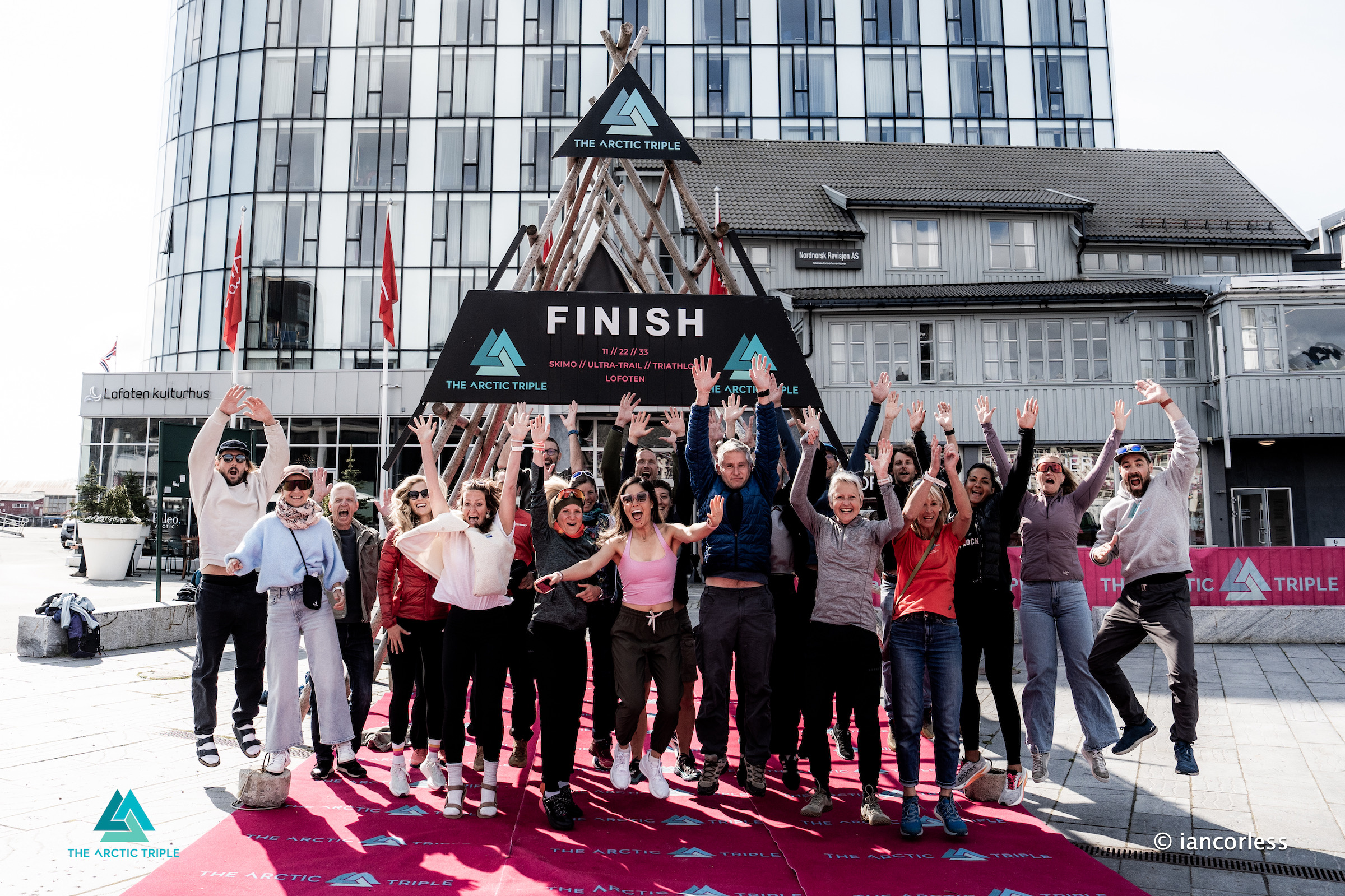
Lofoten Stage Run by the team at The Arctic Triple – Is the world’s most beautiful stage run, a rare kind of race that feels less like an event and more like a journey.
From 26 to 31 May 2026, a small group of just 30 runners will cross one of the most dramatic landscapes on the planet, moving step by step through mountains, fjords, beaches, and fishing villages under the returning light of the Arctic summer.
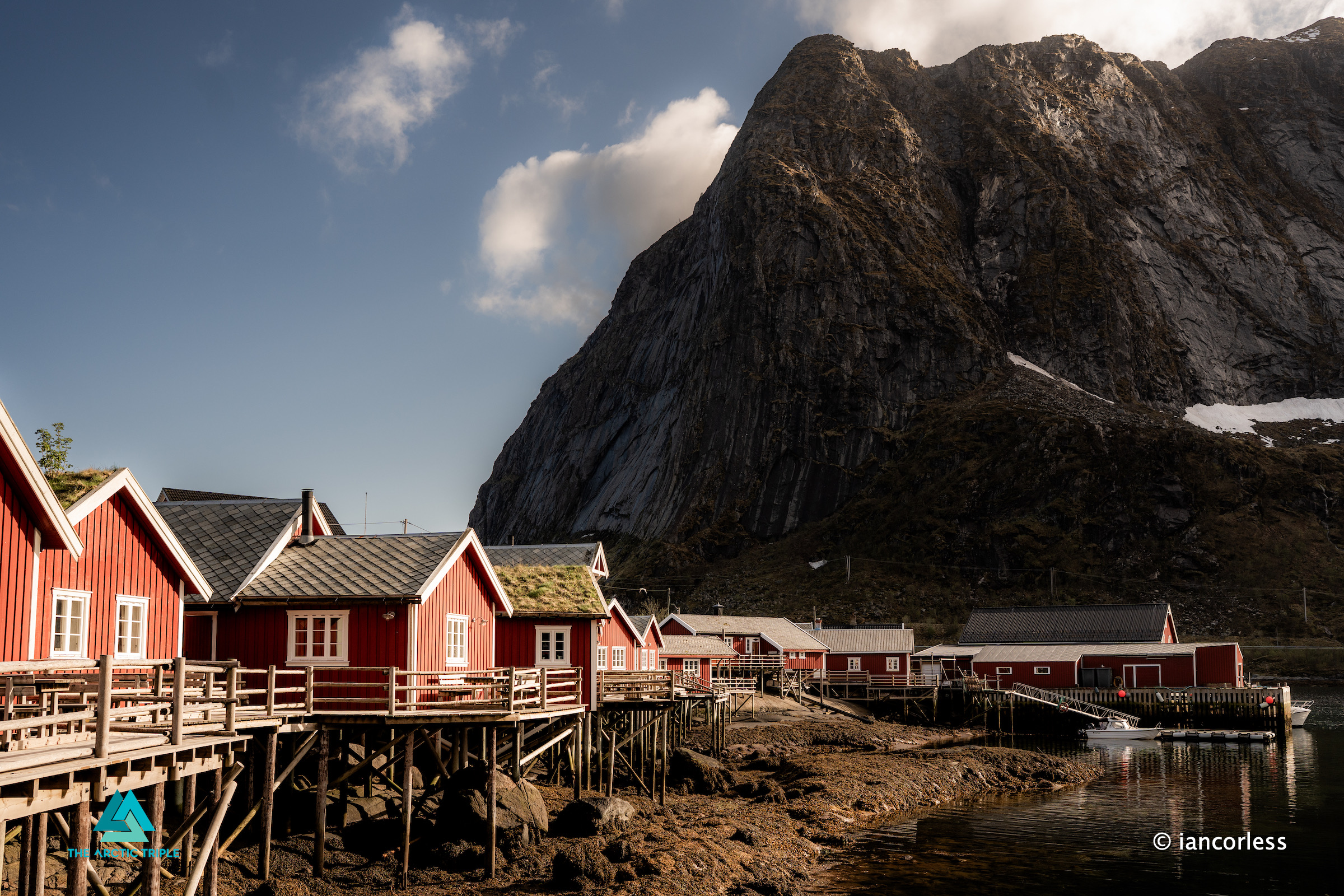
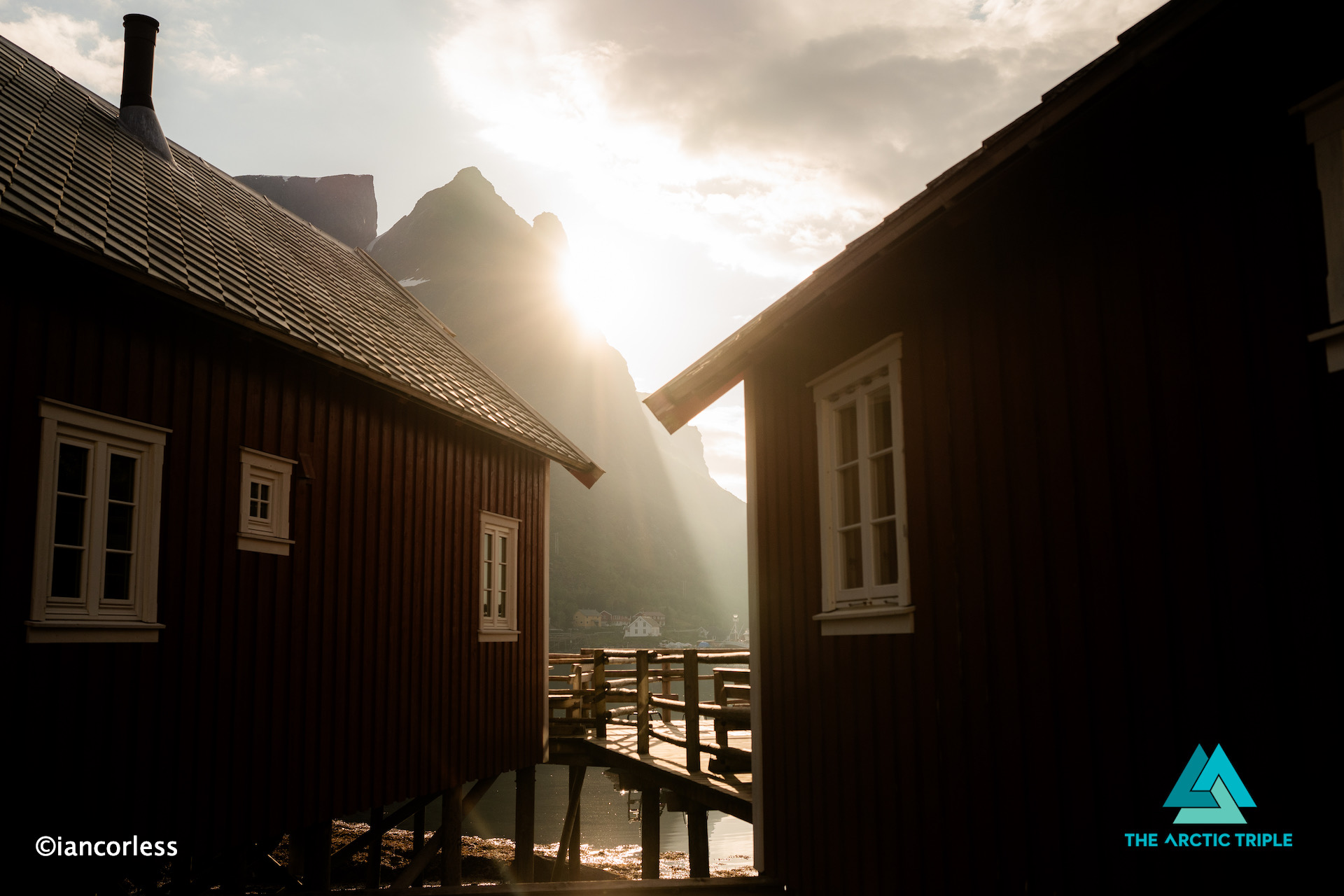
Set in Lofoten, Norway, this is a real multi-day adventure race spread over six days and four stages. The archipelago rises straight from the sea, with sharp granite peaks, narrow coastal trails, and open horizons in every direction. Late May is when the midnight sun begins to settle in, stretching the days and bathing the landscape in soft, golden light that never quite fades. You’ll run when the sun hangs low above the water, when shadows move slowly across the mountains, and when time feels different.
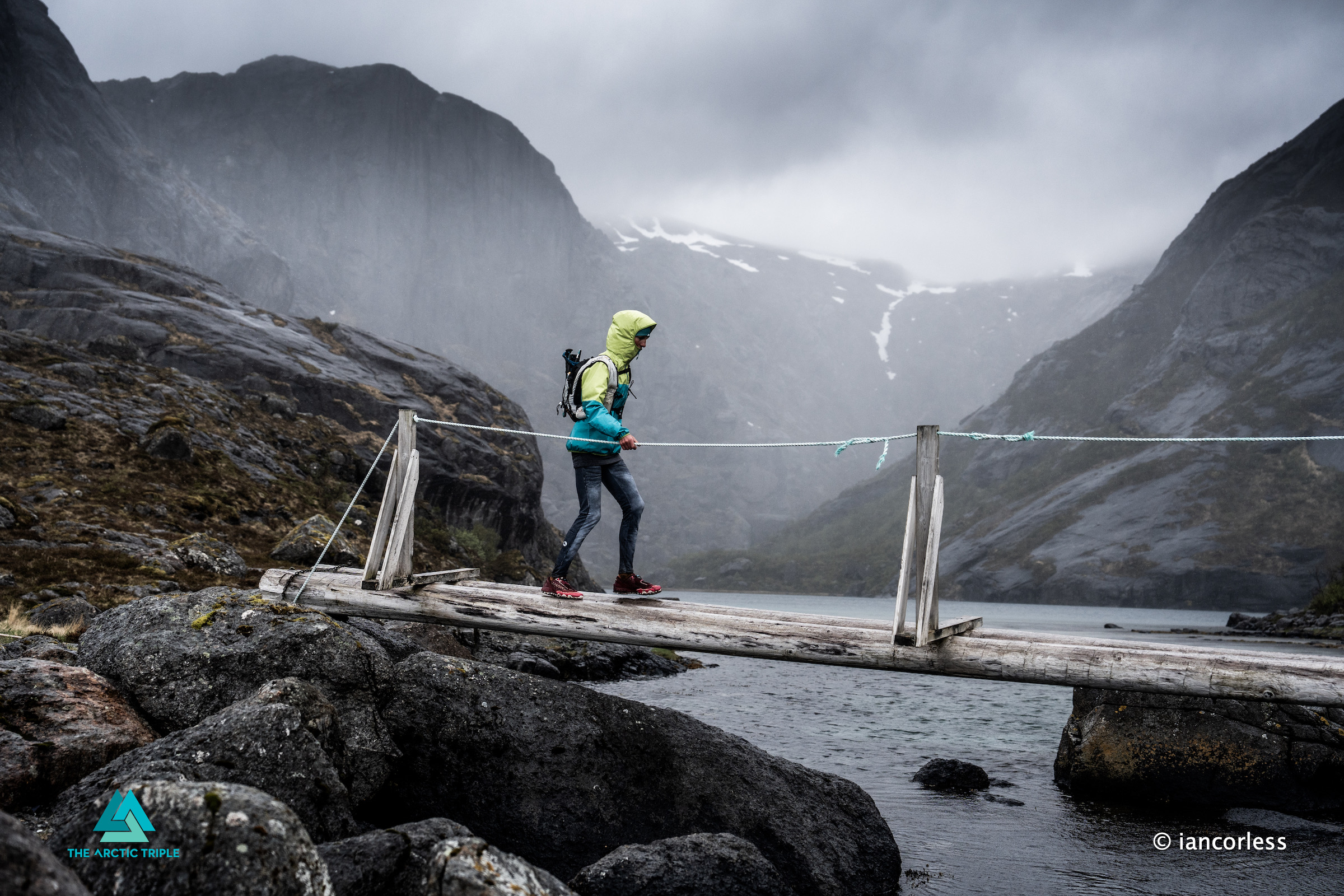
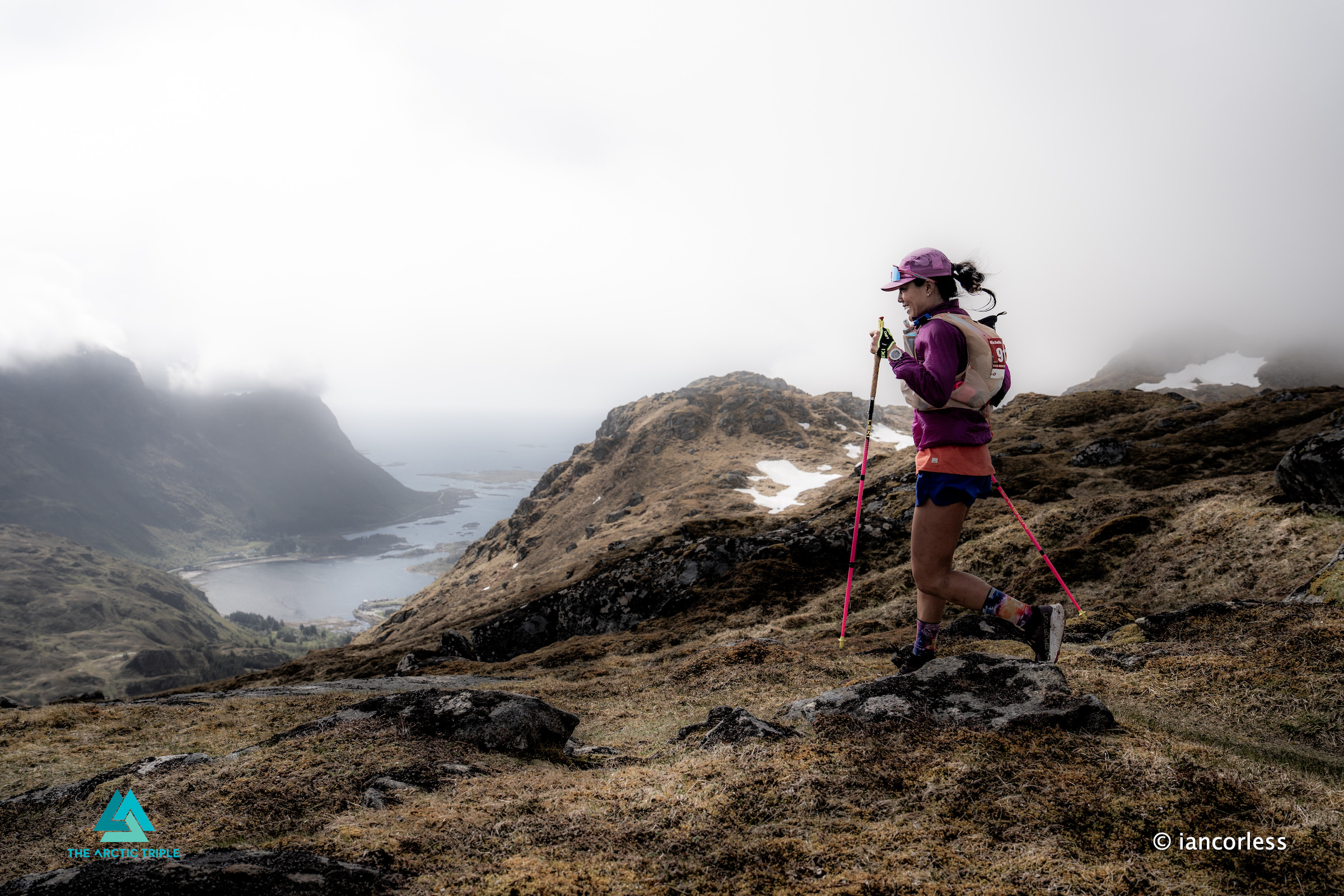
The race offers two distances. The 170 km Expedition Run covers four demanding stages between 34 and 52 kilometres, designed for runners who want a deep, physical immersion in the terrain. The 100 km Adventure Run follows the same spirit across four stages between 17 and 35 kilometres, offering a shorter but equally powerful experience. Both routes blend runnable sections with technical trails that require focus, respect for the landscape, and a steady rhythm rather than speed alone.
What sets Lofoten Stage Run apart is the way everything is woven together. From the moment we meet in Svolvær the day before race day, the experience is fully taken care of. Accommodation is comfortable, meals are generous and rooted in local flavors, and your luggage moves seamlessly from basecamp to basecamp. You run light, recover well, and wake up ready for the next stage. Every detail is designed so you can stay present in the experience rather than worry about logistics.
Each day on the trail brings something new. A climb that opens onto a wide fjord. A quiet stretch along white sand with turquoise water at your side. A remote valley where the only sounds are your breath and the wind. One stage begins with a boat ride into the heart of the landscape, delivering you to the start line in Kjerkfjorden, surrounded by steep walls of rock and sea. These are the moments that stay with you long after the race is over.
Evenings slow the pace. Warm dinners are shared around the table, stories traded between tired legs and smiling faces. With such a small field, the atmosphere stays personal and welcoming. You don’t disappear into a crowd. You become part of a temporary community moving together through a wild place. There is time to rest, to talk, to look out over the water and realise how far you’ve come.
The entry fee includes the entire package: five nights of accommodation, including the night before the race and the night after finishing, race registration, luggage transport, all meals from the first day in Svolvær until breakfast on day six, start kit, The Arctic Triple buff, service stations, first aid and evacuation transport, timing and tracking, warm dinner every night, the boat transfer to the starting line, and a quality finisher award. Everything is included so the focus stays where it should be, on the running and the place.
Lofoten Stage Run is not about crowds, noise, or chasing records. It’s about long days on epic trails, running beneath the midnight sun, and experiencing Norway at its most raw and beautiful. This is a race for runners who want more than a finish line, who are drawn to wild landscapes, shared effort, and the quiet magic that happens when movement, nature, and light come together.
Only 10-places remain for the 2026 edition, be quick!
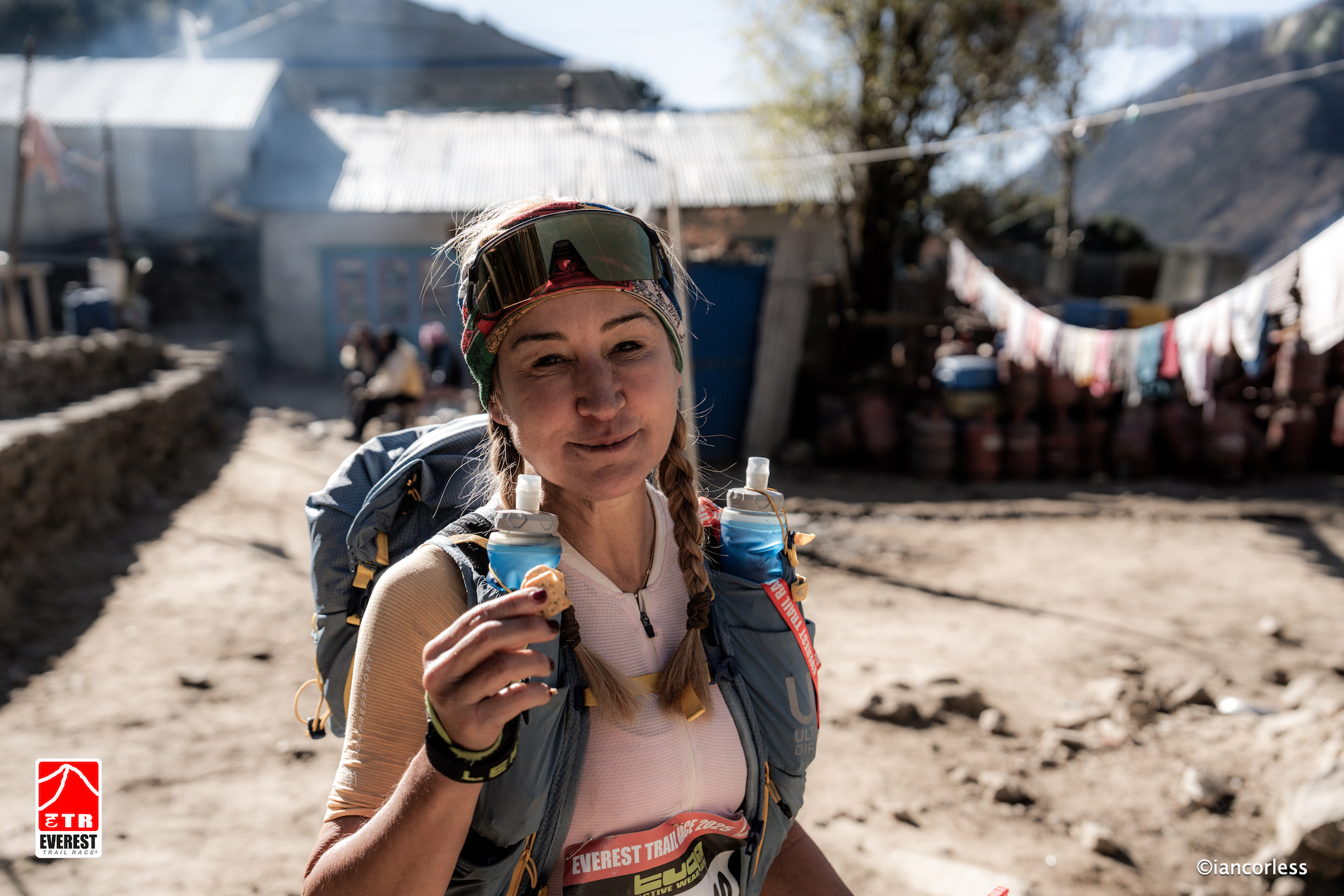
The end is in sight. After five brutal, beautiful days in the high Himalayas, Stage 6 of the 2025 Everest Trail Race delivers the final blow and the final reward. It’s 28.5 kilometres fo Lukla, a day marked by more descent than ascent: 2612 meters down, 1578 meters up, and every single step earned.
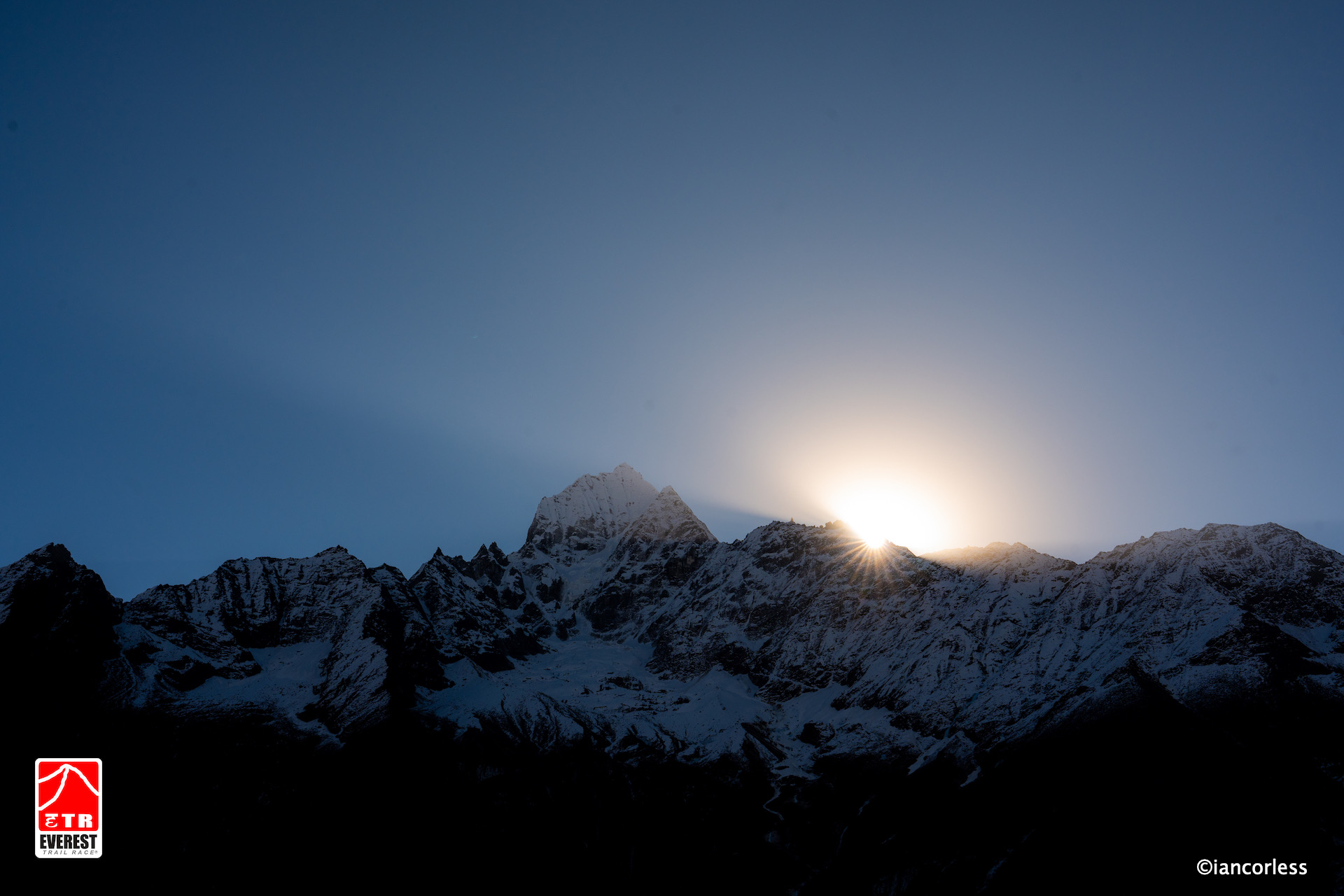
An early start, the arrival of the sun and soon, the heat will come – not only in the sky but with the bodies of each participant.
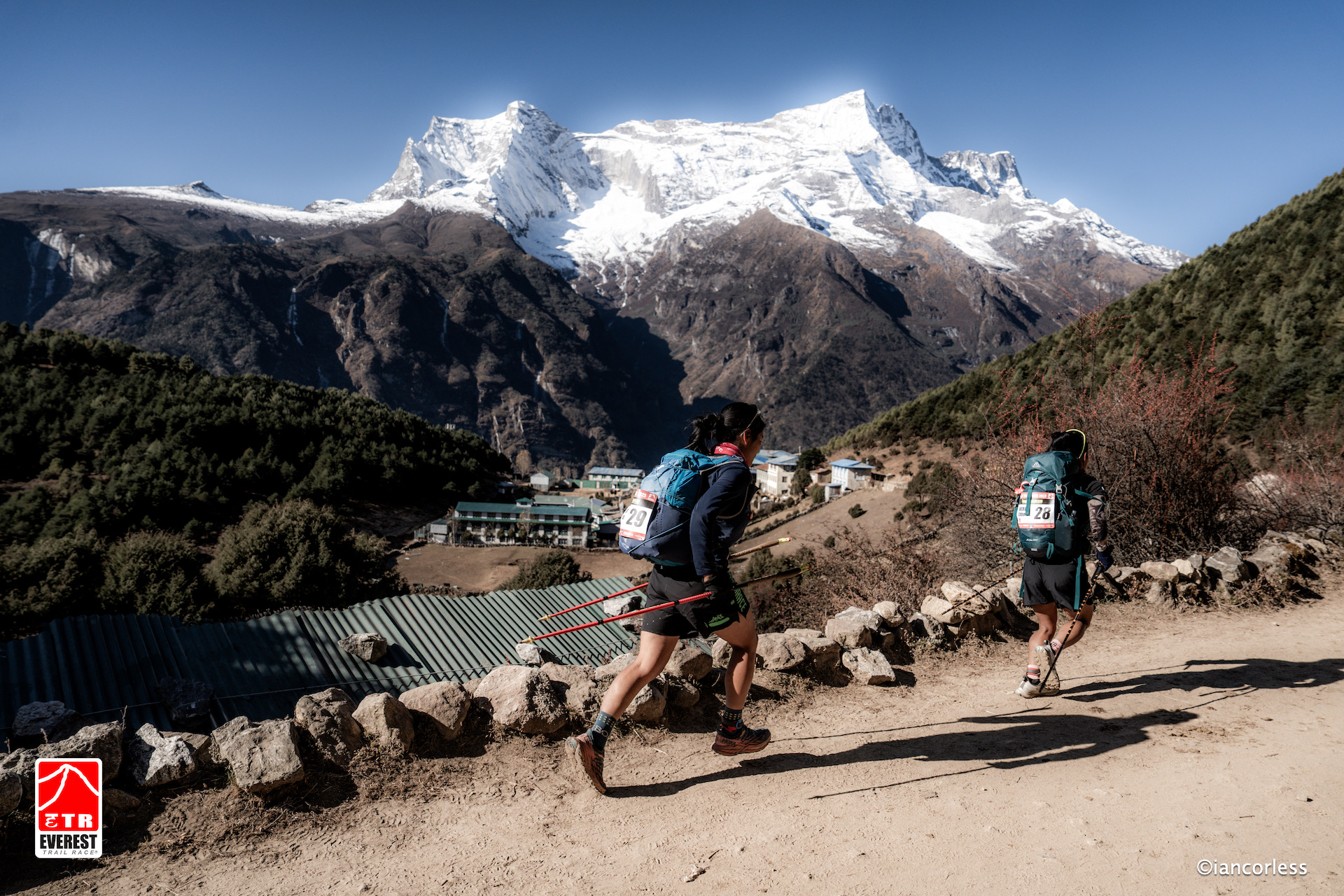
The day kicks off with iconic trails that weave from Stupa to Stupa to Namche Bazaar, the buzzing Sherpa hub perched on the mountainside like a fortress.
The backdrop behind, stunning, but the participants don’t get a chance to see it…
Namche brings checkpoint 1, it’s welcome, the early kilometres had worked the body hard with a steep descent, followed by a gentle climb and then an ‘easy’ run to the refreshment.
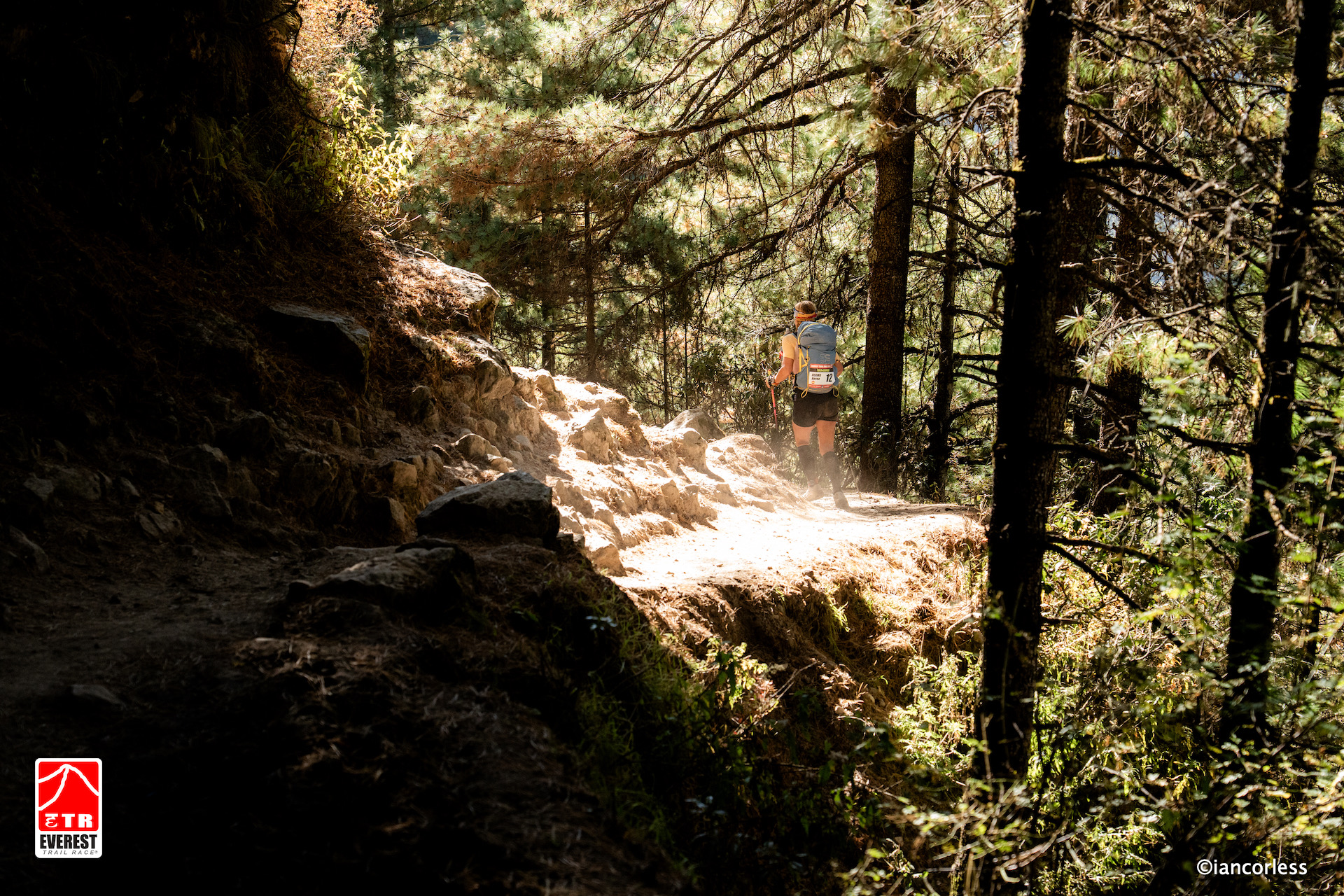
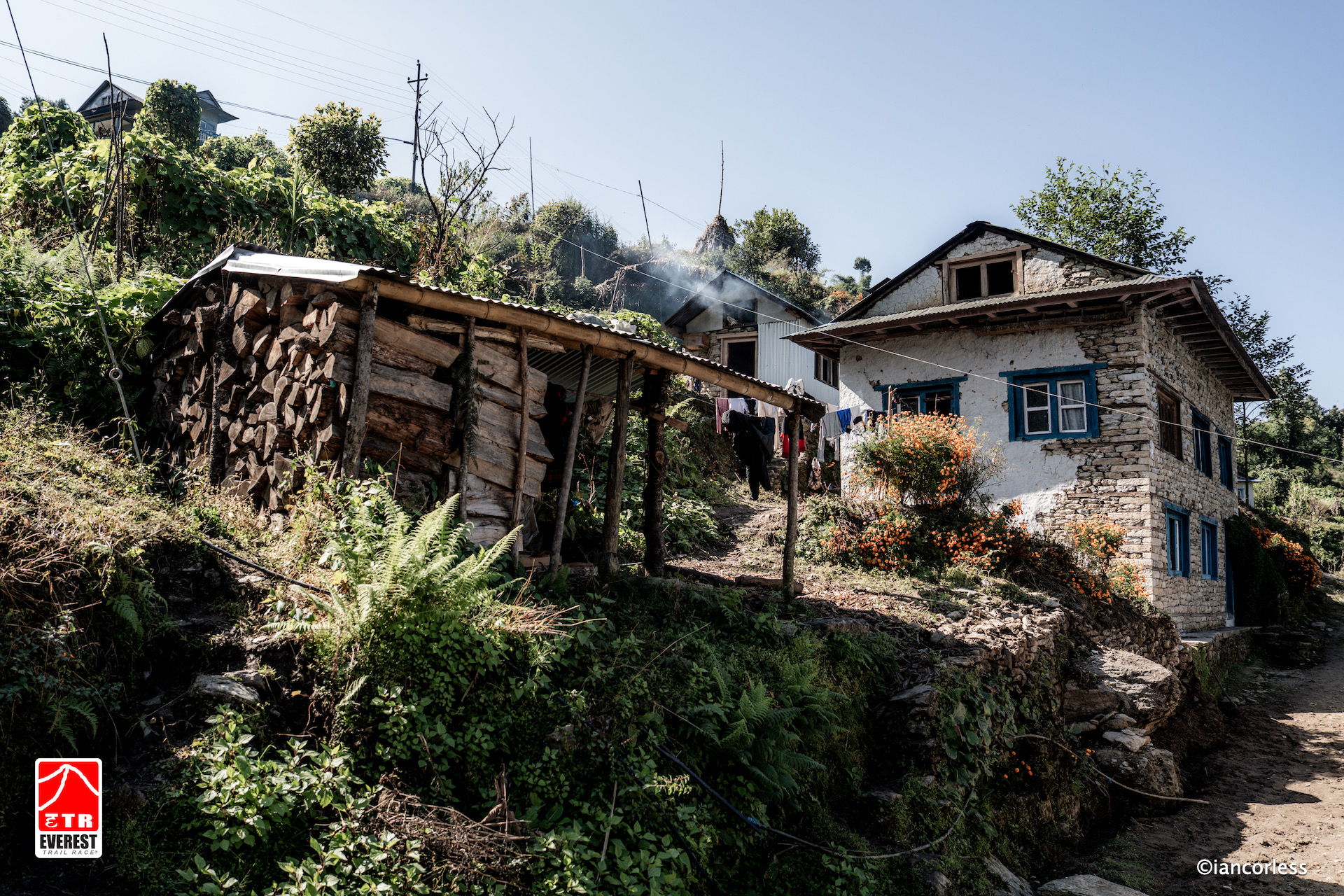
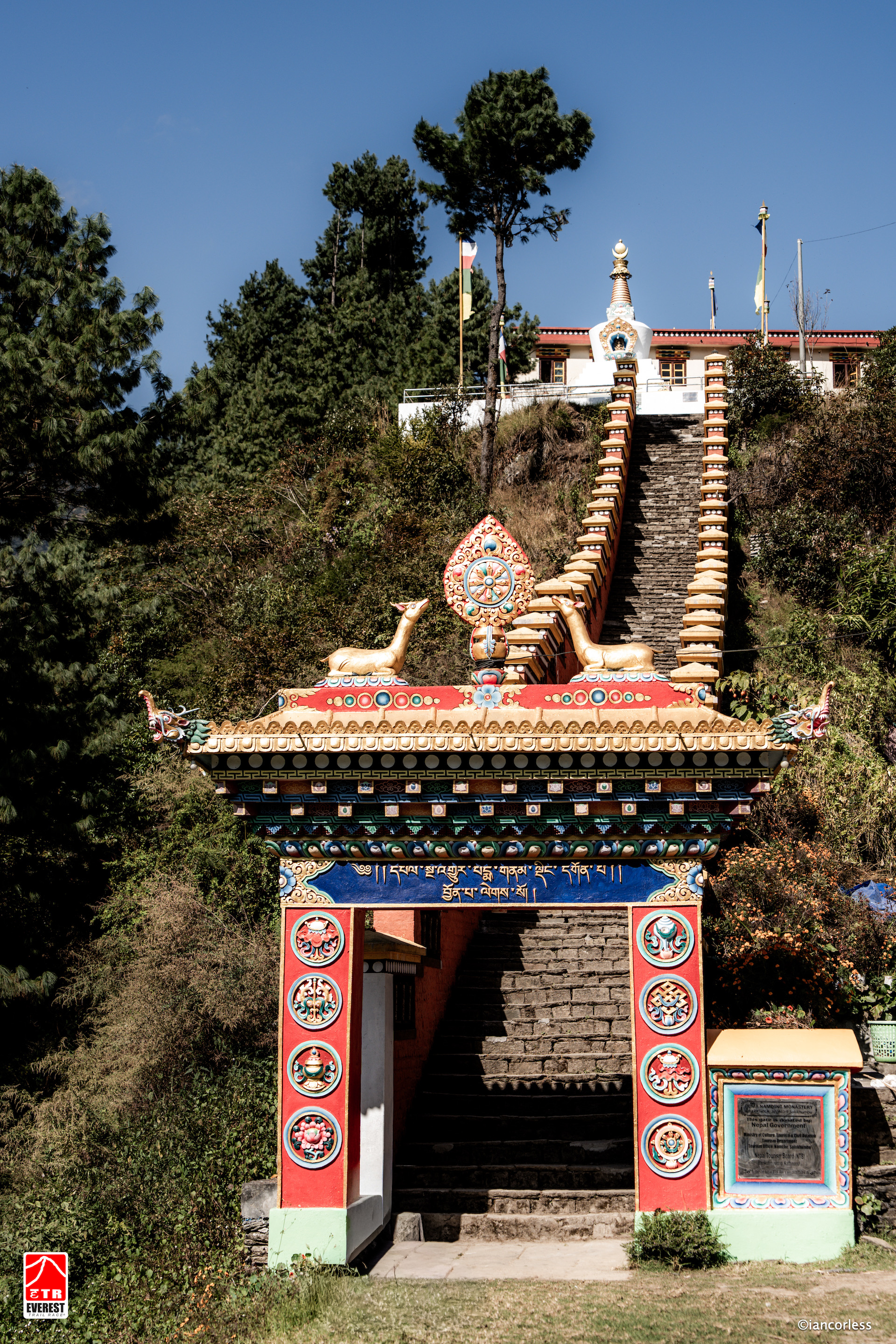
The early kilometers retrace some familiar ground – Sanasa, Phunki Tenga, and trails edged with mani stones and prayer flags, twisting through pine forests and clinging to cliffs. But don’t call it a repeat. The fatigue, the altitude, and the stakes make every step feel different.
This stage is less about vertical brutality and more about holding form, keeping control as the trail drops fast and hard. Quads burn, knees scream, but momentum is everything.
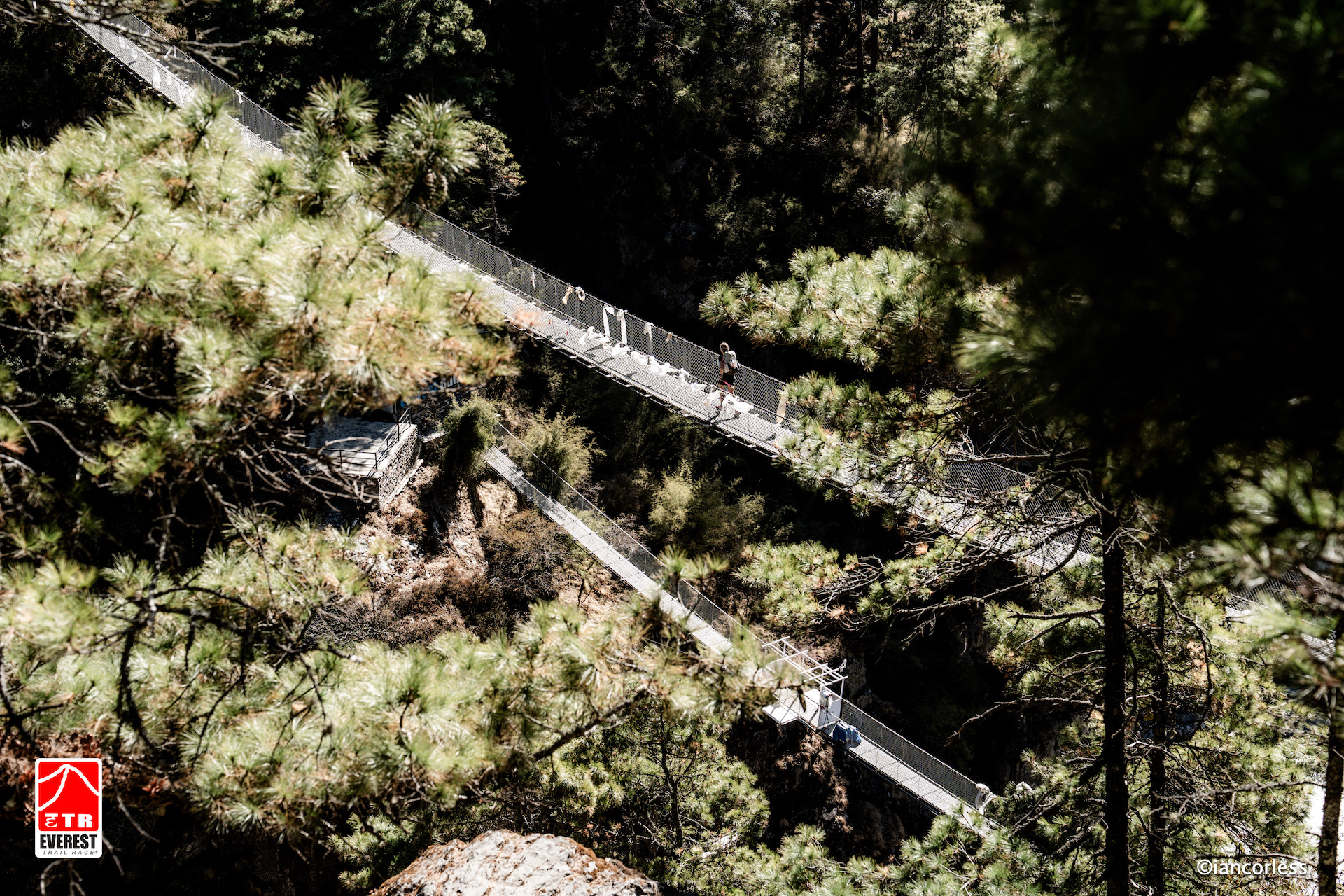
Soon, the trail funnels runners toward the legendary new Hillary Bridge – a sweeping, high-tension crossing that swings over the Dudh Kosi with views that could stop you in your tracks, if the clock wasn’t ticking.
Past the bridge, it’s Jorsale, where the race starts to feel like it’s dragging runners home. The Phakding checkpoint (CP2) marks another milestone, each bib scanned there is one step closer to Everest Trail Race glory.
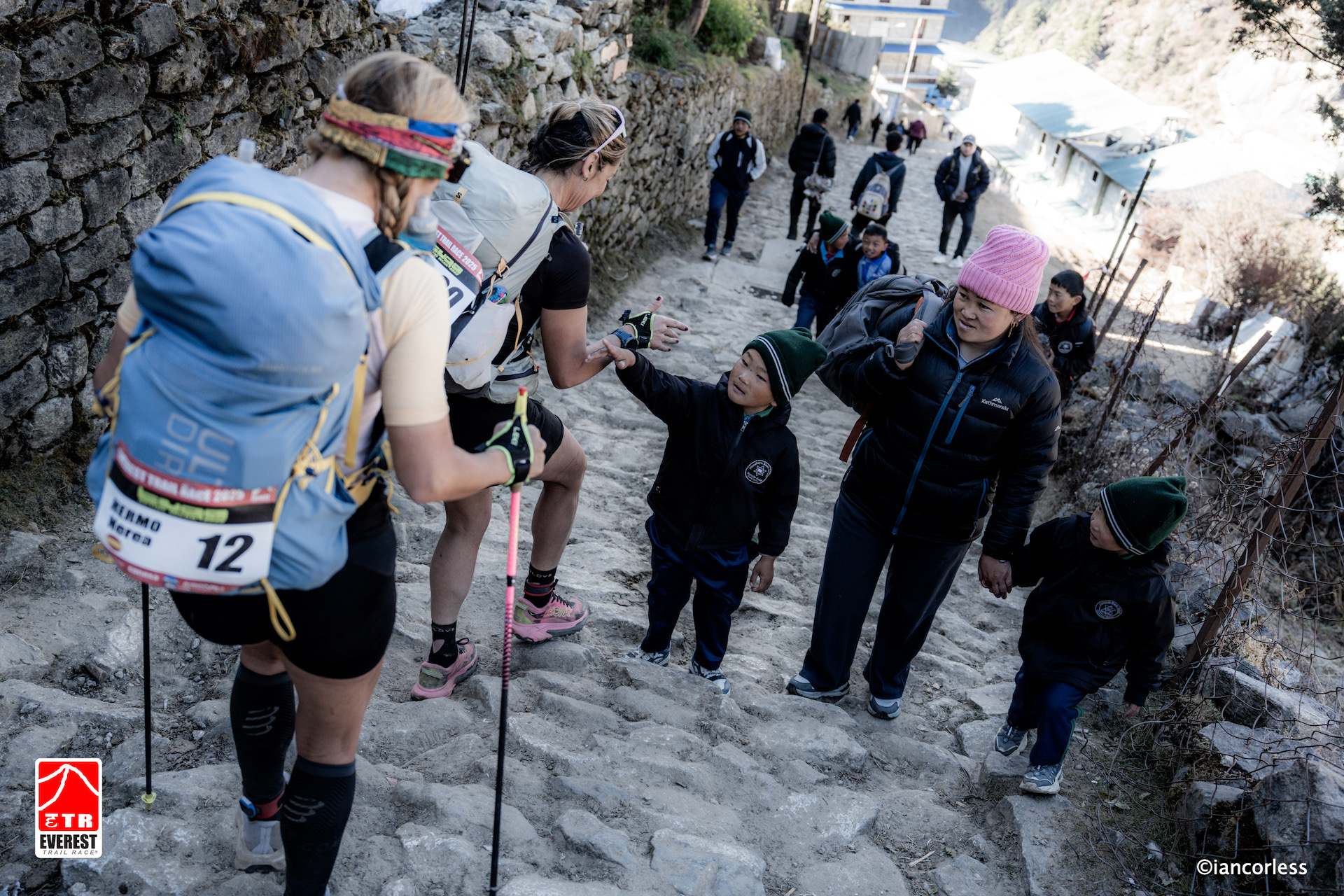
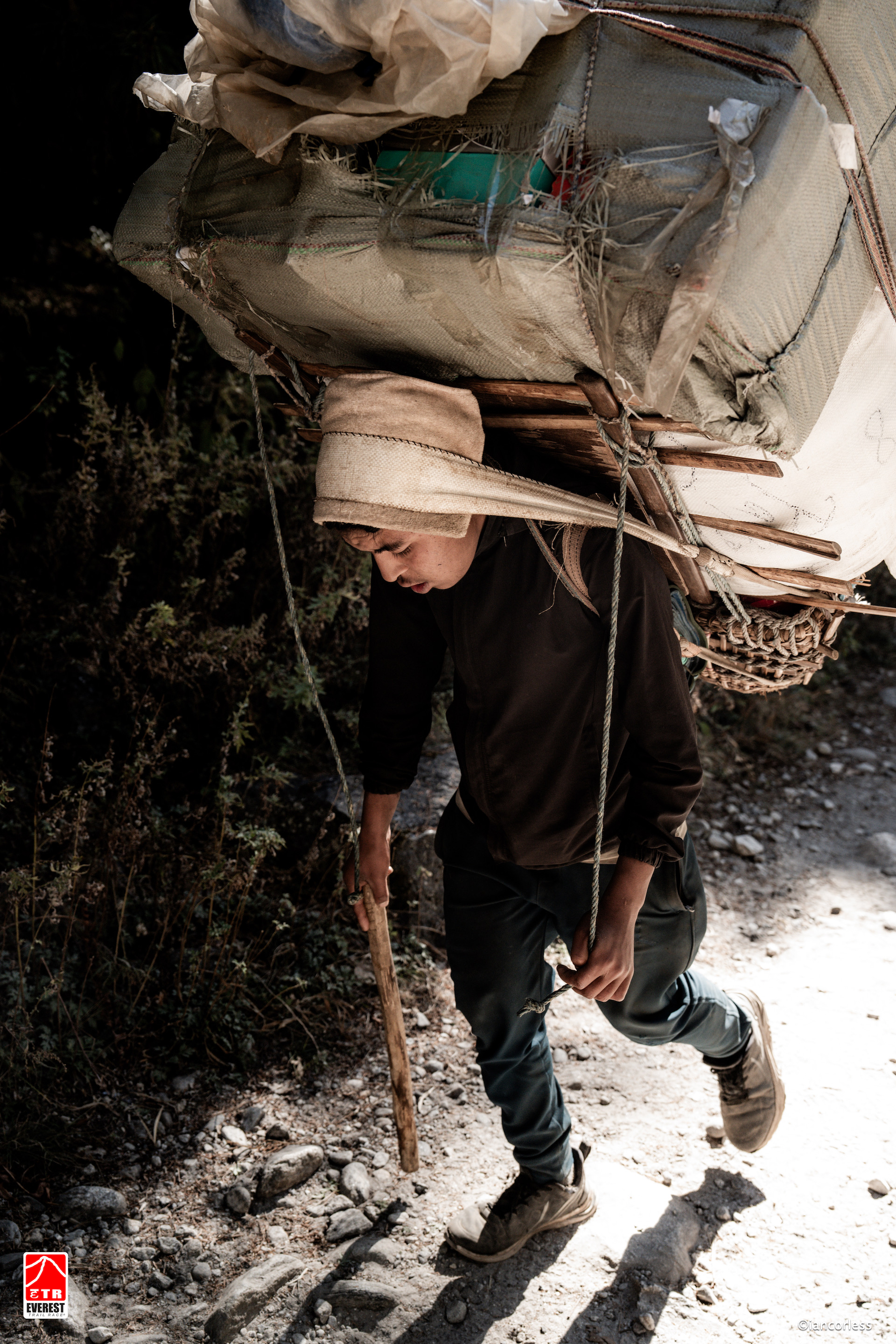
By the time runners hit Cheplung, it’s all on the table. Here, a sharp left turn signals the endgame: the final climb to Lukla and oce again, Nepal and the Porters remind us, how lucky we are!
It’s not long, but it bites. After the day’s long descent, this uphill kick demands whatever strength is left in the tank. Runners grit teeth, dig deep, and push toward the town that marks the start of most Everest dreams, and now, the finish of this one.
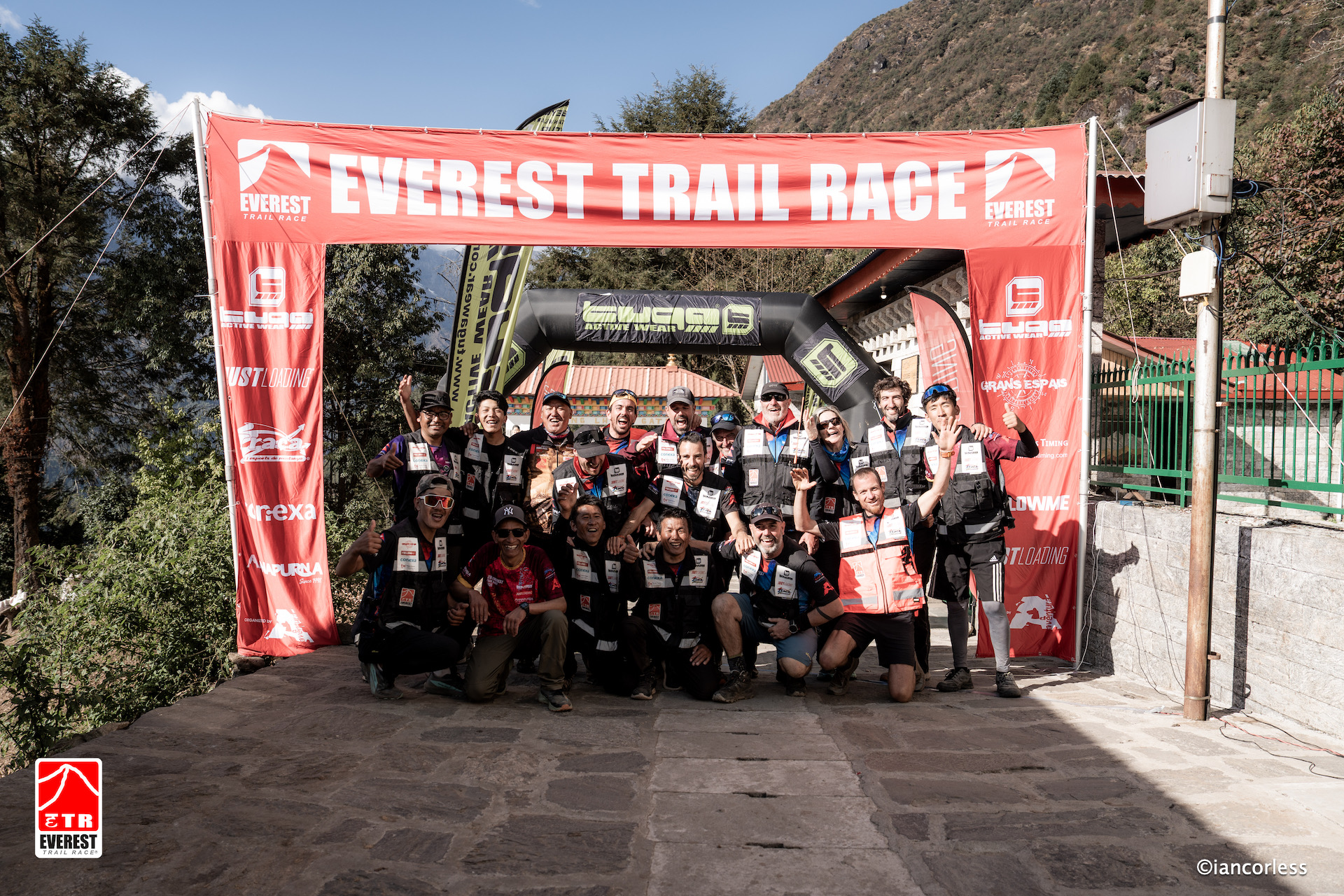
Crossing into Lukla is like breaking through into another world. Crowds, bells, cheers, and tears—this is where it all ends. For some, it’s a triumphant sprint. For others, a silent, emotional walk over the line. But for everyone, it’s the culmination of six days of relentless racing through some of the world’s toughest terrain.
The 2025 Everest Trail Race is done, everyone earned more than a medal, they earned the mountain’s respect.
Stage 3 of the Everest Trail Race is where the real punishment begins. With 28.3 kilometres of unrelenting terrain and a leg-wrecking descent from the high-altitude village of Kamo (3855m) down to the valley floor at Jubing (1600m), this stage isn’t just tough, it’s a full-body assault.
Runners start high, where the air is thin and every step feels like a negotiation with your lungs. The early climb up to Checkpoint 1 at Kamo is already a grind, but what follows is what defines this stage: a relentless plunge that feels like it goes on forever.
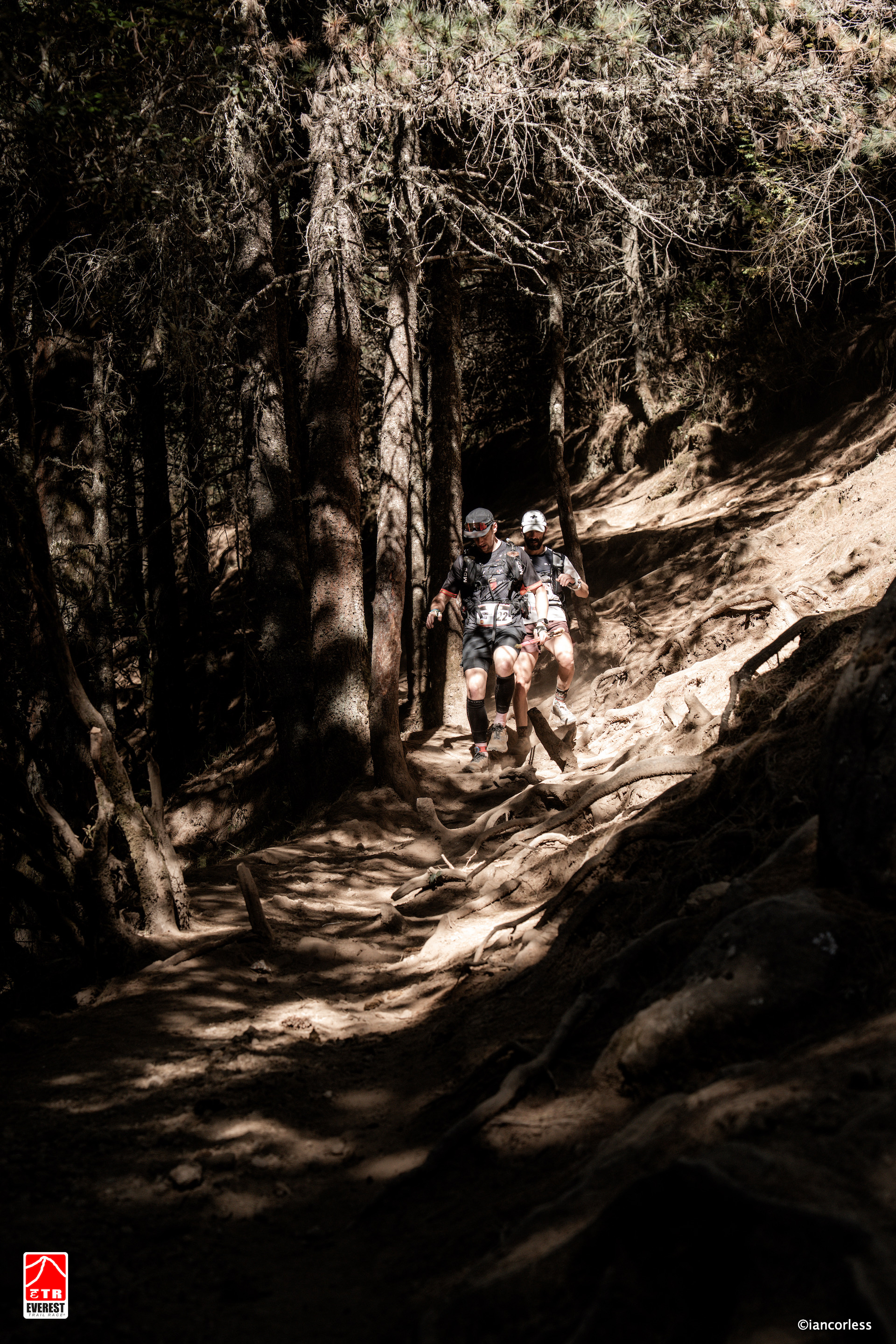
The descent from Kamo to Jubing is not gentle. It’s steep, technical, and unforgiving. The views are spectacular, sure, but most runners will be too focused on staying upright to take much of it in. The drop of over 2200 meters smashes quads and shreds knees. Every rock, step, and switchback becomes part of the battle. If the climbs test your endurance, the downhills here test your durability.
Fortunately, the support is solid. CP1 at Kamo, CP2 at Hewa, and CP3 at Jubing are well-stocked and strategically placed. Runners have every opportunity to refuel and regroup, though few will find much comfort in the knowledge that the real sting comes right at the end.
Just when you think you’ve done enough, the trail throws in a final climb up to the iconic village of Kharikola. It’s a steep, grinding ascent that comes after hours of muscular destruction.
This is where mental strength counts just as much as physical preparation. After hammering down thousands of vertical meters, your legs are begging for mercy, and yet, up you go again.
Kharikola, perched proudly in the hills, is a reward in itself. Not just for the views, but for what it represents: survival. Conquering Stage 3 is a badge of toughness. It’s where the Everest Trail Race shakes out the pretenders from the contenders.
Stage 3 doesn’t just test you, you feel it in your legs for days. You carry it in your mind for longer. It’s beautiful, brutal, and unforgettable. And for every runner who arrives in Kharikola, it’s a hard-earned victory etched into the heart of the Himalayas.
Brutal and Beautiful: Stage 1 of the 2025 Everest Trail Race Sets the Tone
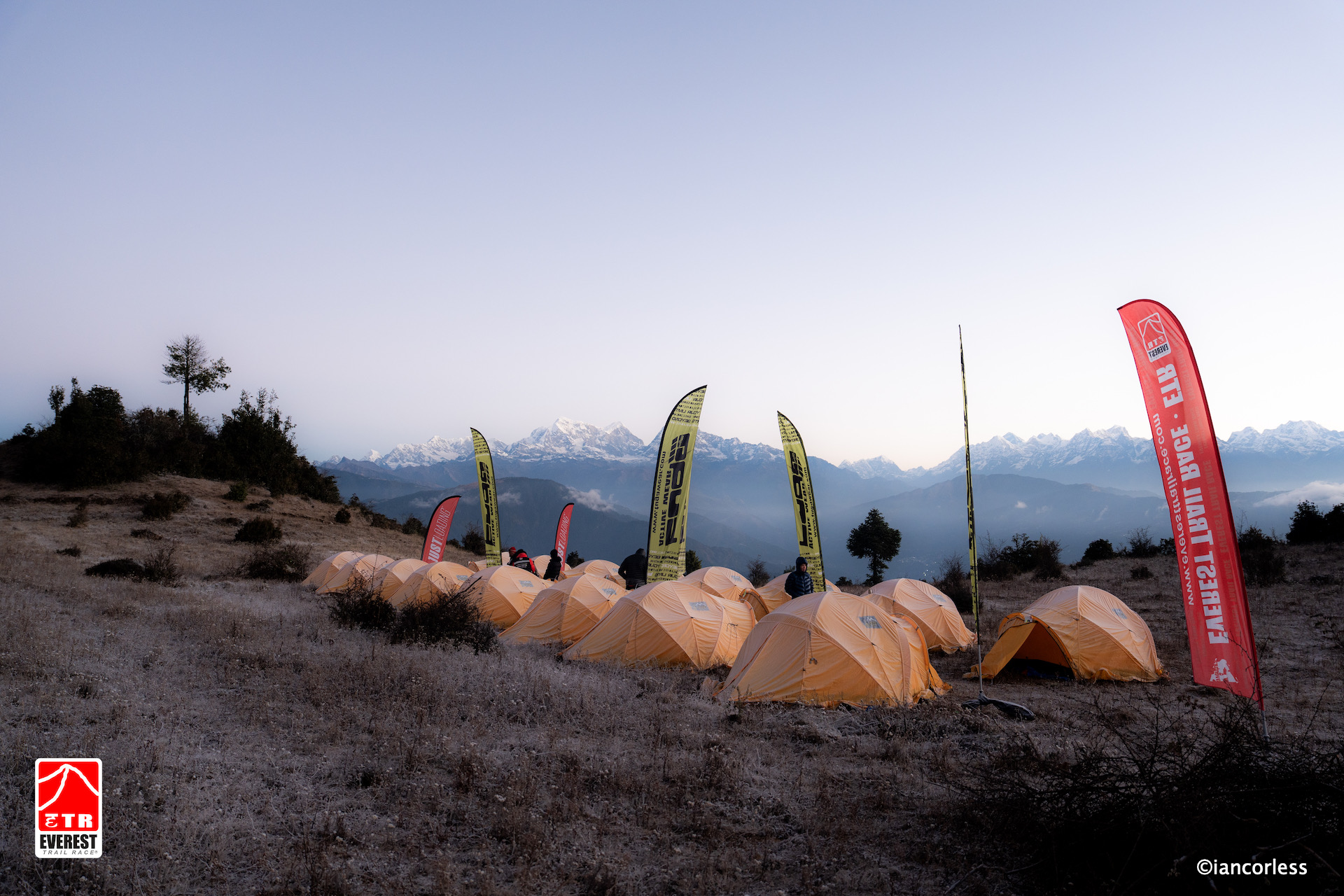
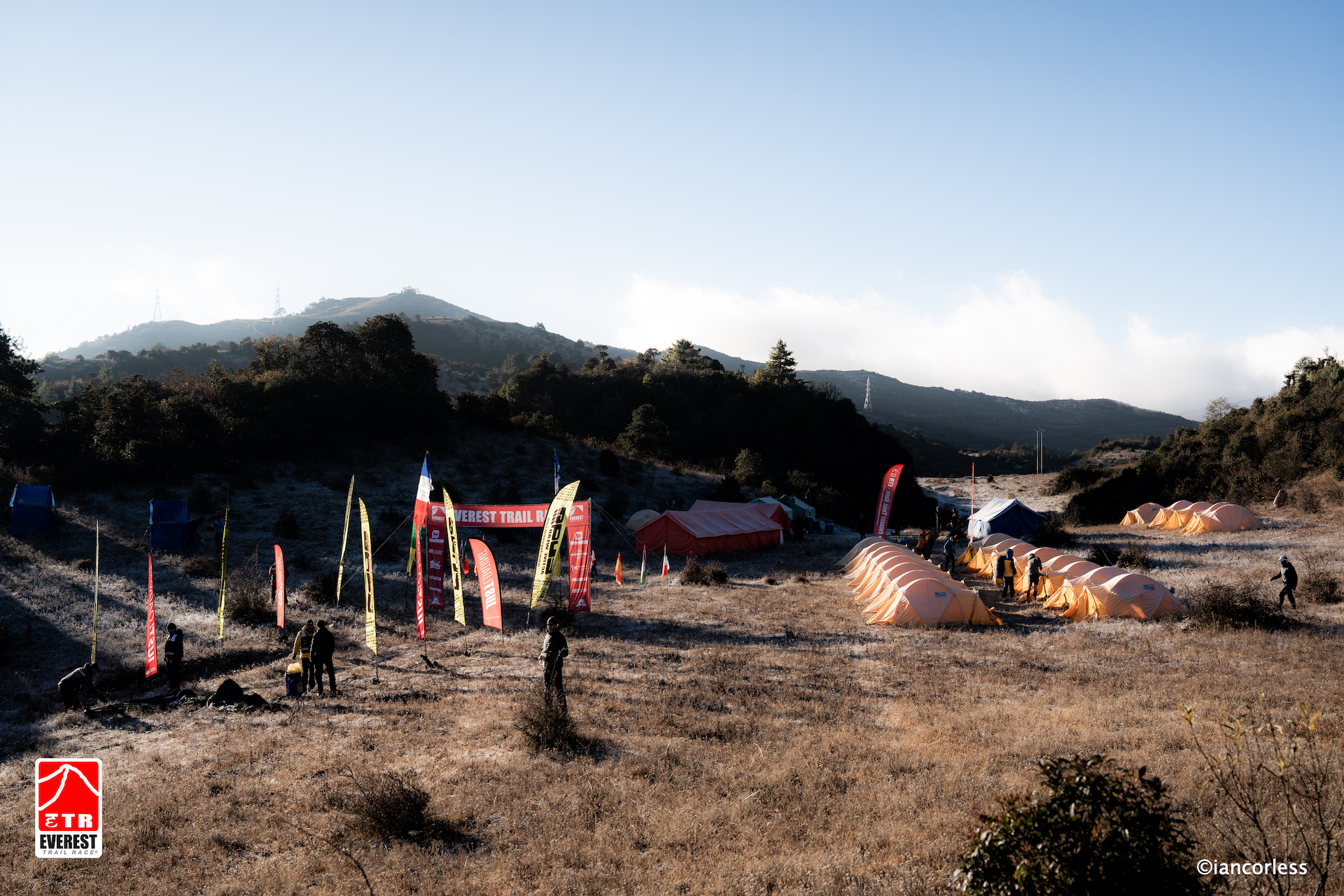
The 2025 Everest Trail Race exploded out of the gates with a punishing Stage 1—23.10 kilometres of raw Himalayan grit, climbing 1,551 meters and descending 1,012 meters across technical trails and high-altitude terrain. From the start line in Dhap (2,950m) to the finish at Chyangsyngma (3,490m), runners were thrown straight into the deep end of this six-stage ETR test of endurance, mindset, and mountain resilience.
There’s no easing into the ETR. Stage 1 wastes no time in reminding runners exactly where they are, high in Nepal, breathing thin air, legs already burning. Early highlights at Sigane and Chyangba delivered sweeping views and traditional village life, but the serenity masked the effort required to get there.
The route dipped and climbed through Khamding, home of the first checkpoint and a welcome chance to refuel with fluids and snacks. But nothing about this stage was easy. The technical nature of the terrain demanded constant focus, one misstep could spell disaster. Warm daytime sun gave runners a psychological lift, but cold nights and the ever-present altitude ensured no one felt too comfortable.
The trail pressed on to Juke, the second checkpoint, offering another chance to grab supplies before the day’s most brutal truth set in, the final 5 kilometres were going to hurt. With around 800 meters of elevation gain packed into that last stretch, the finish at Chyangsyngma felt like a slow-motion battle uphill, but the views help with compensation.
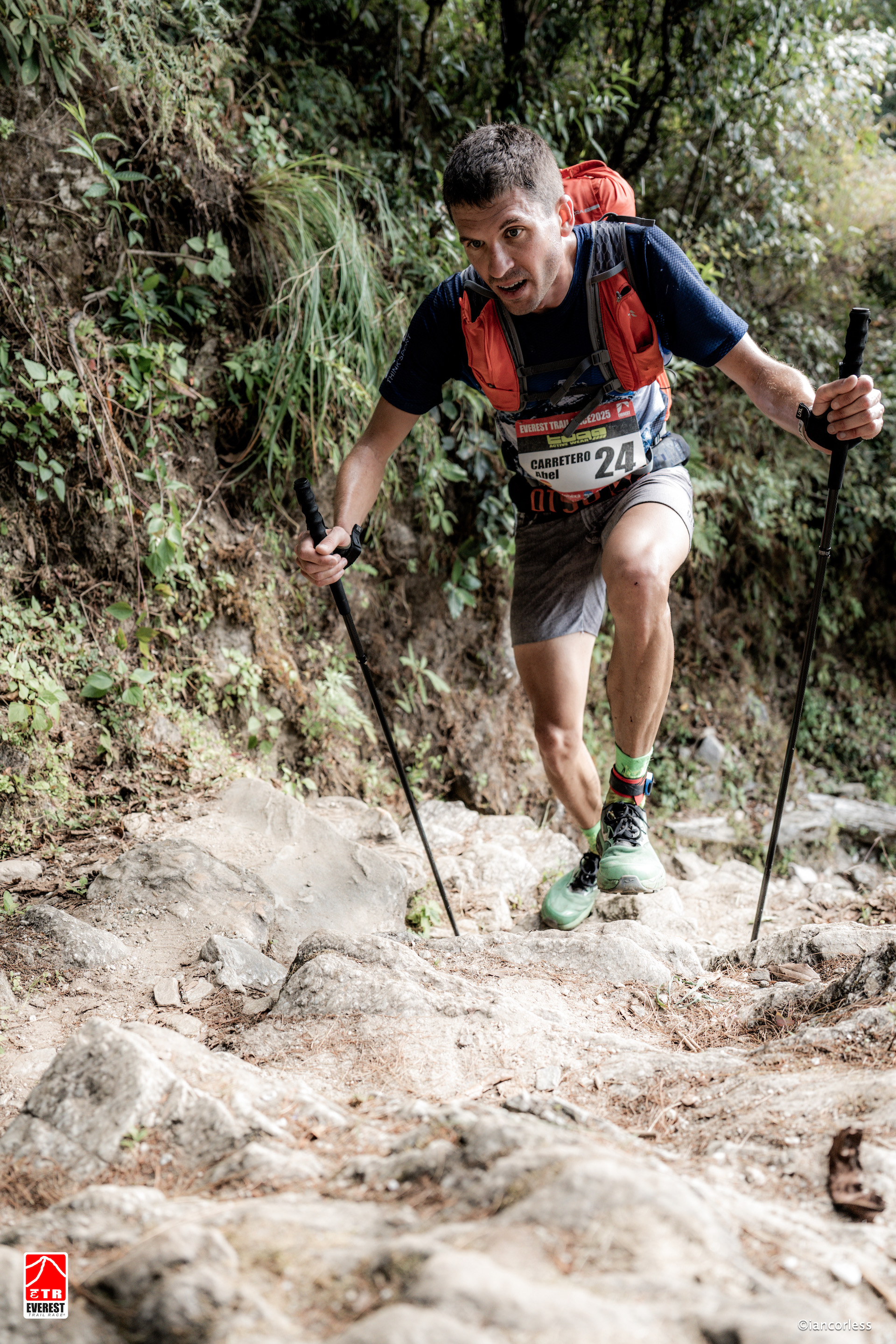
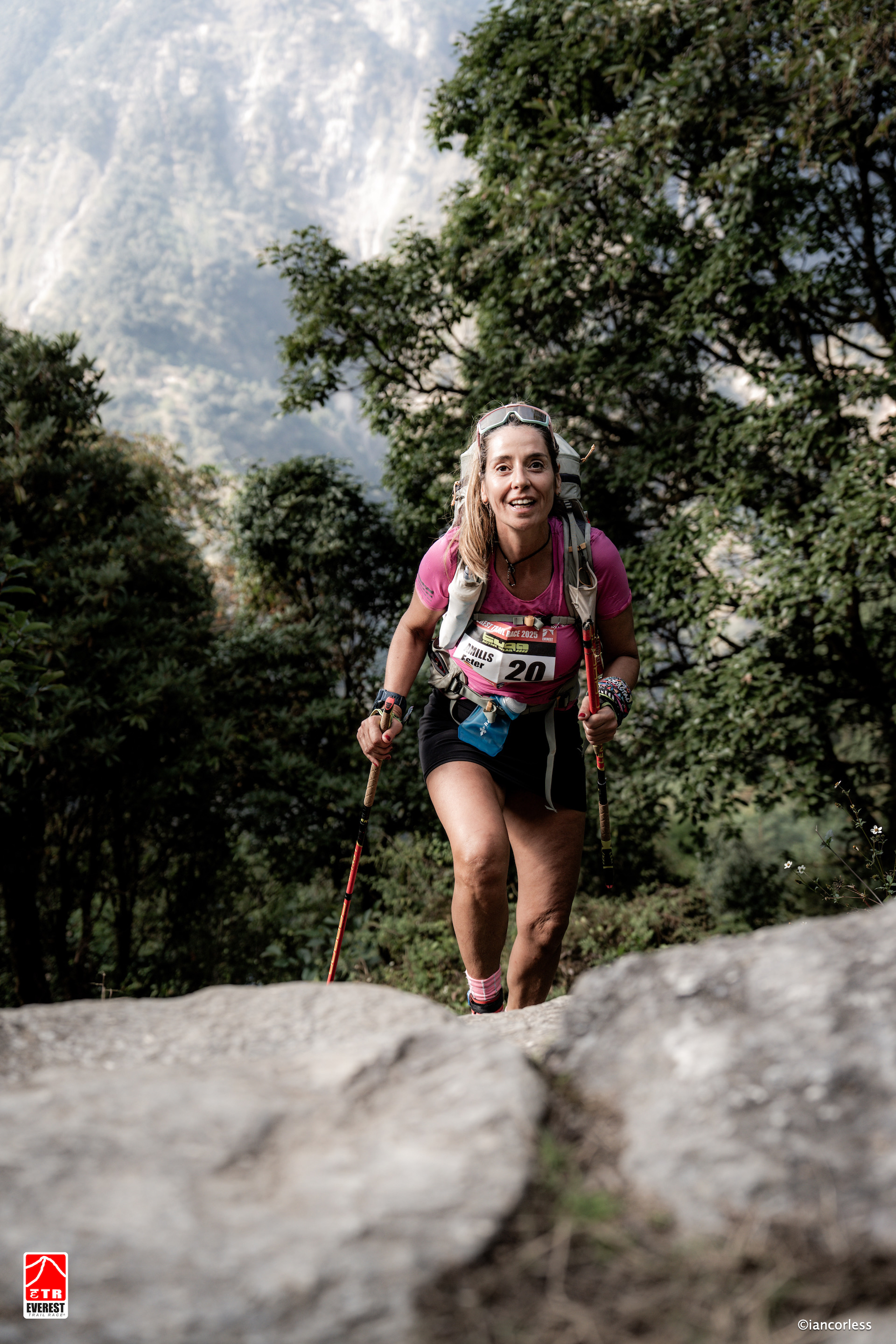
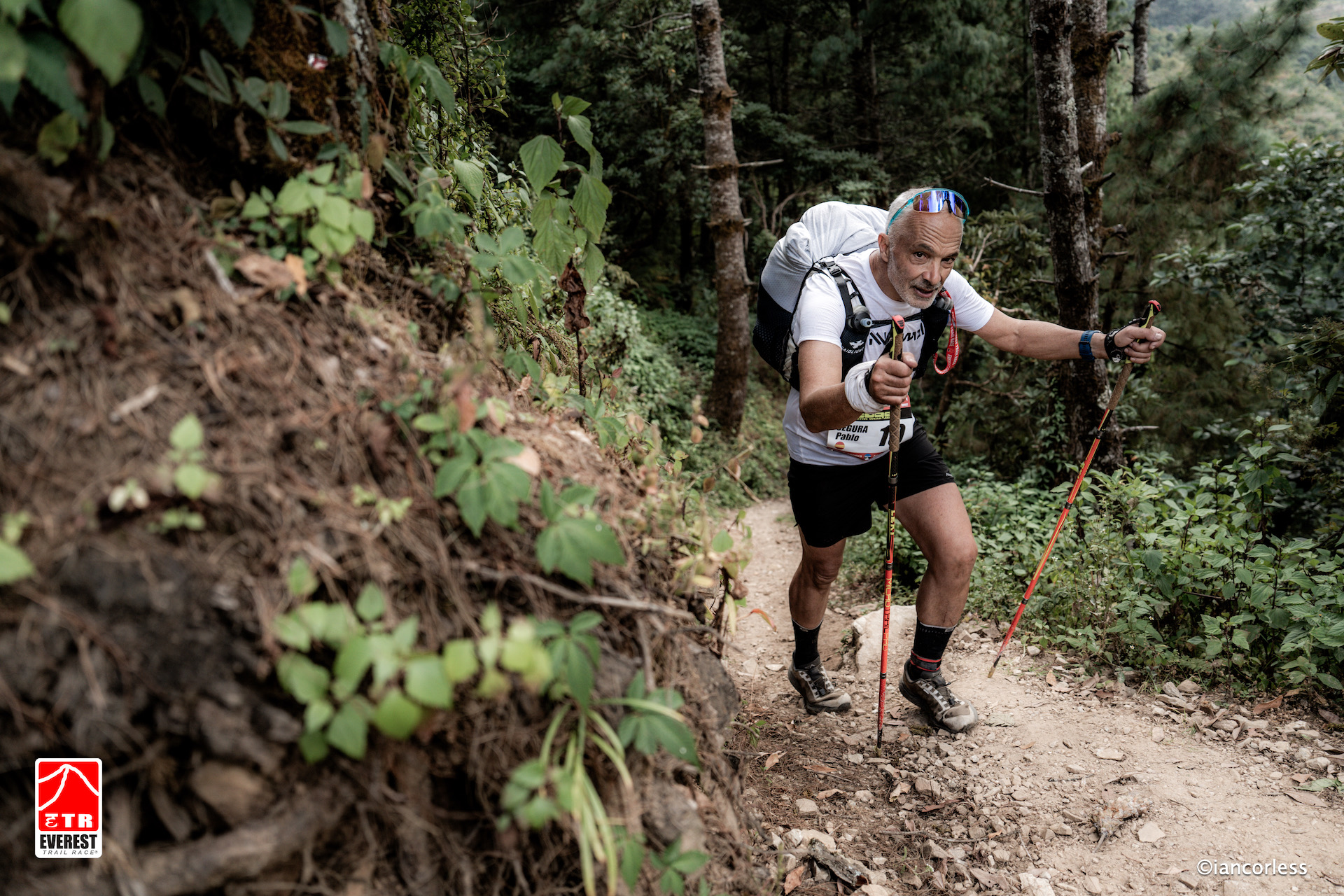
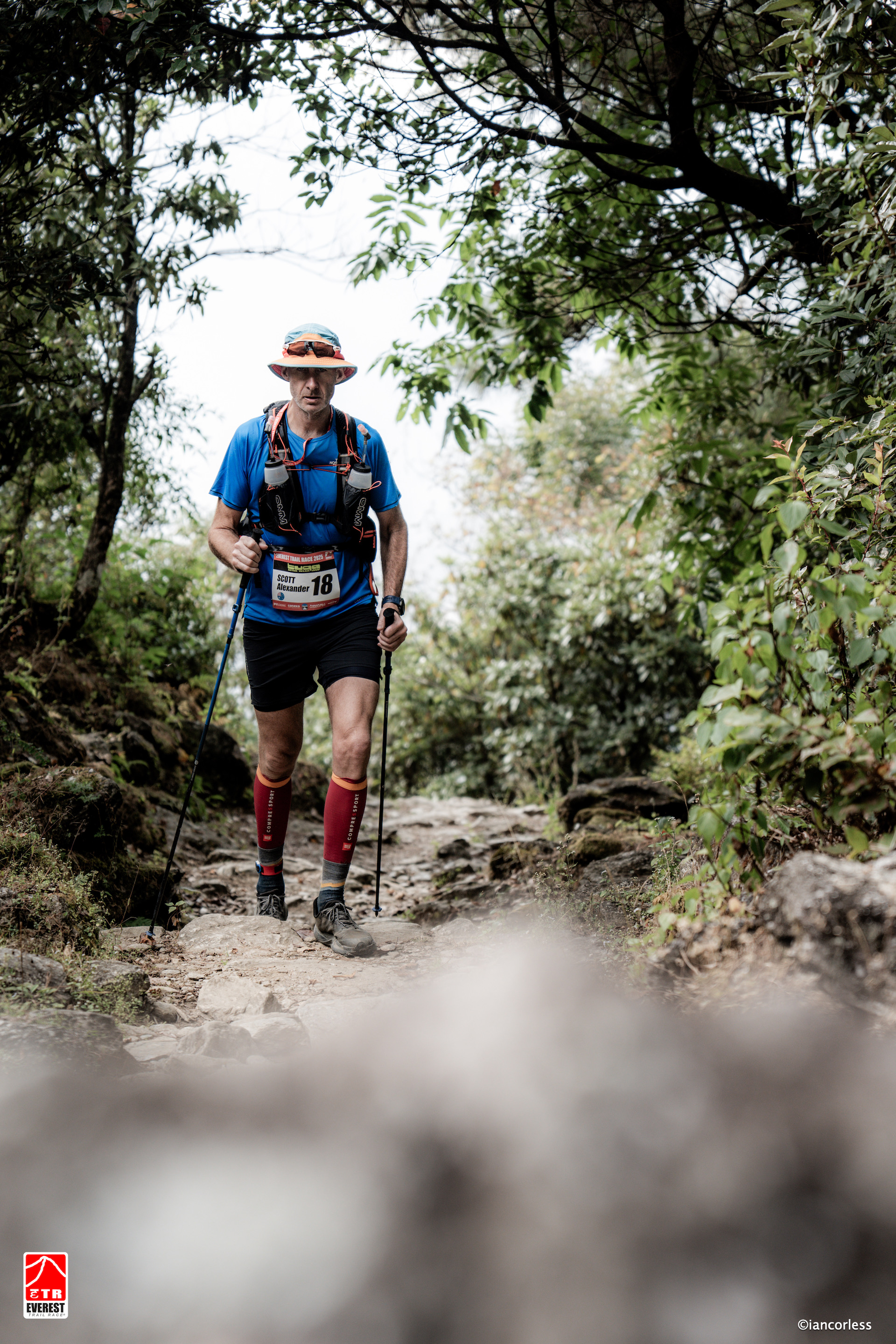
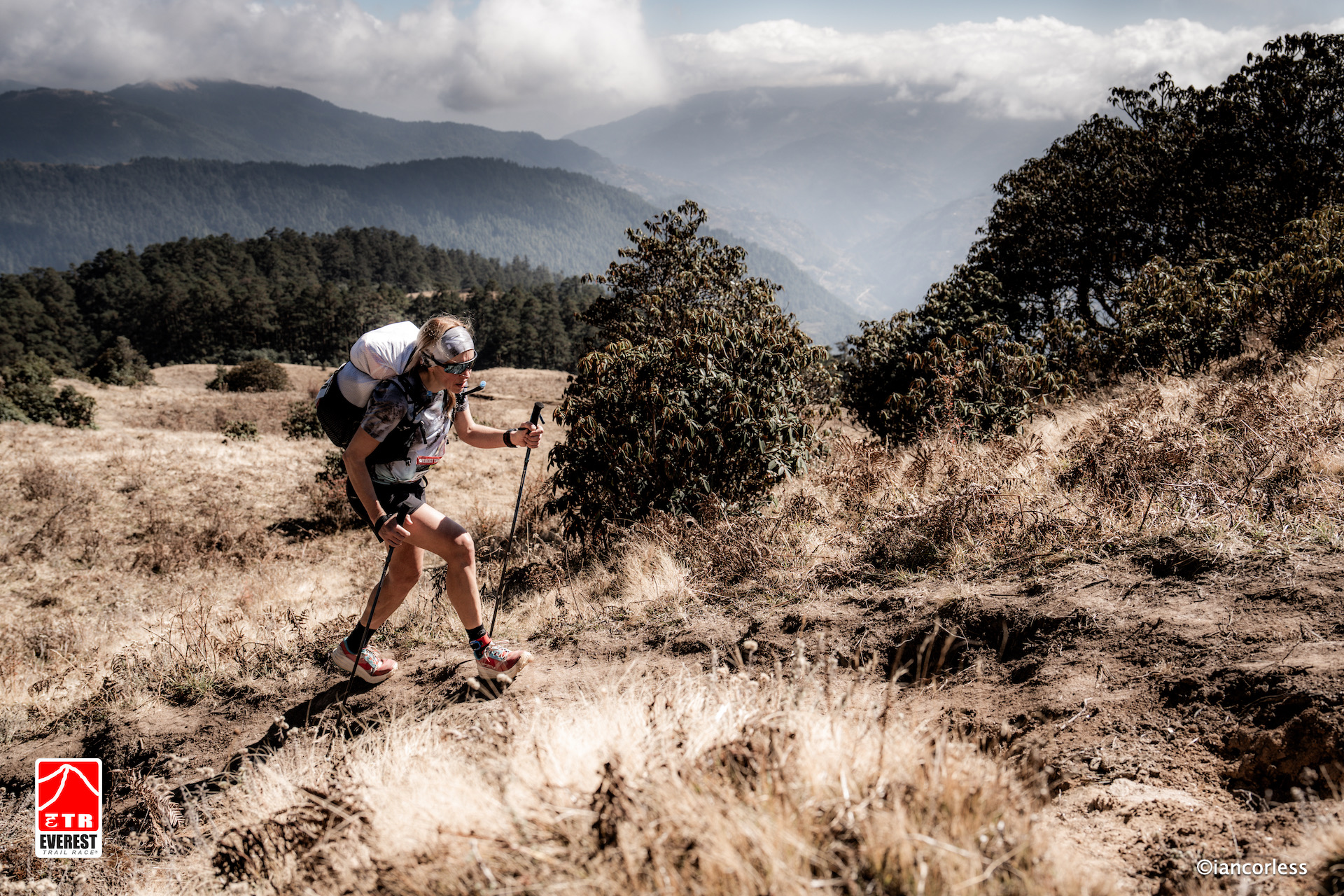
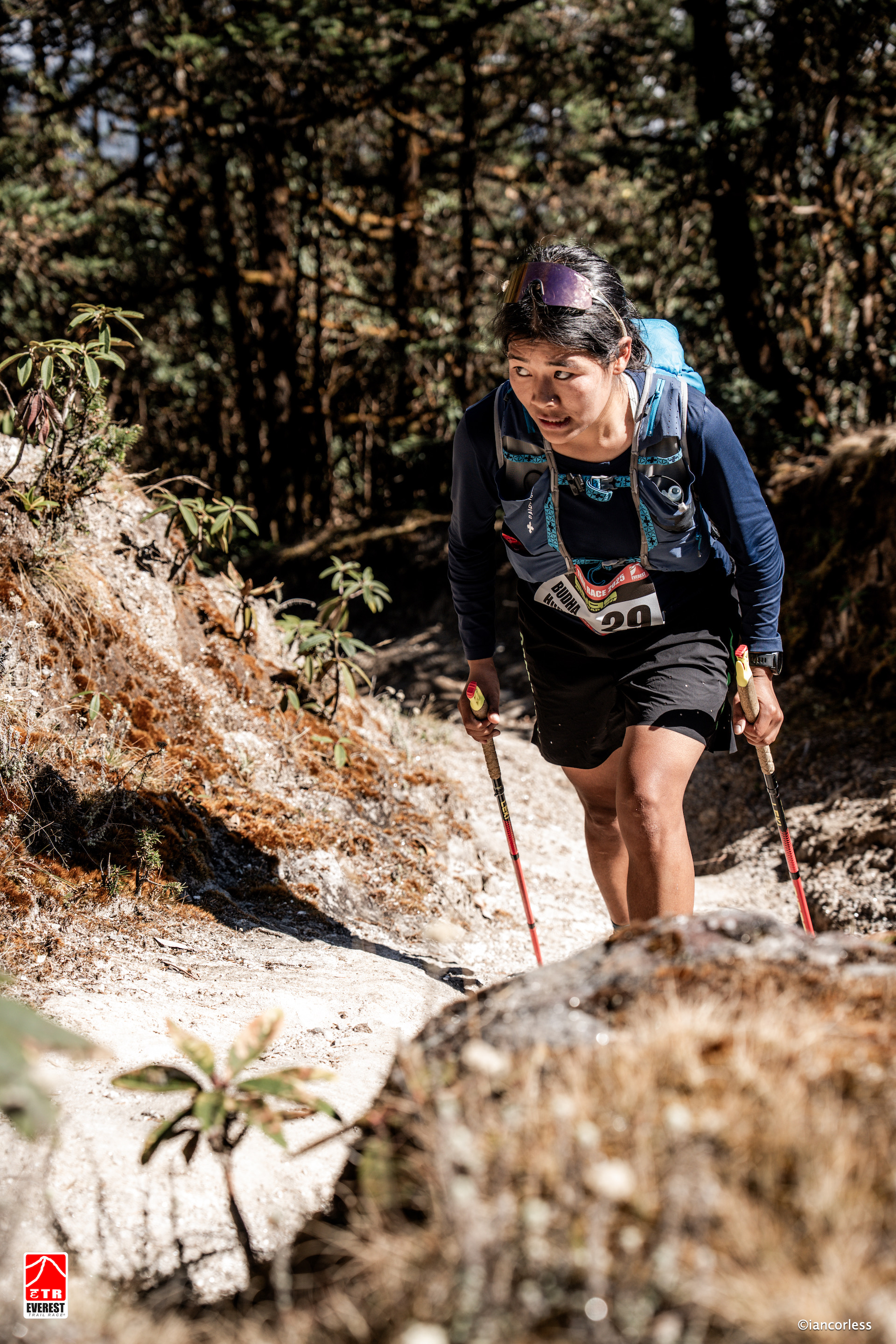
There was no room for rhythm here, just grind, grit, and survival. Poles an essential accessory. Every switchback stung. Every false summit tested patience. But that’s the Everest Trail Race. It’s not just a run; it’s a confrontation with the terrain, and Stage 1 made that clear from the outset what lies ahead.
With five stages still to come, the 2025 ETR has already thrown down the gauntlet. Those who made it through Stage 1 know what’s coming: long days, steep ascents, dizzying descents, and no shortage of mental warfare. But for now, reaching Chyangsyngma was a victory in itself and proof that this race is not for the faint-hearted.
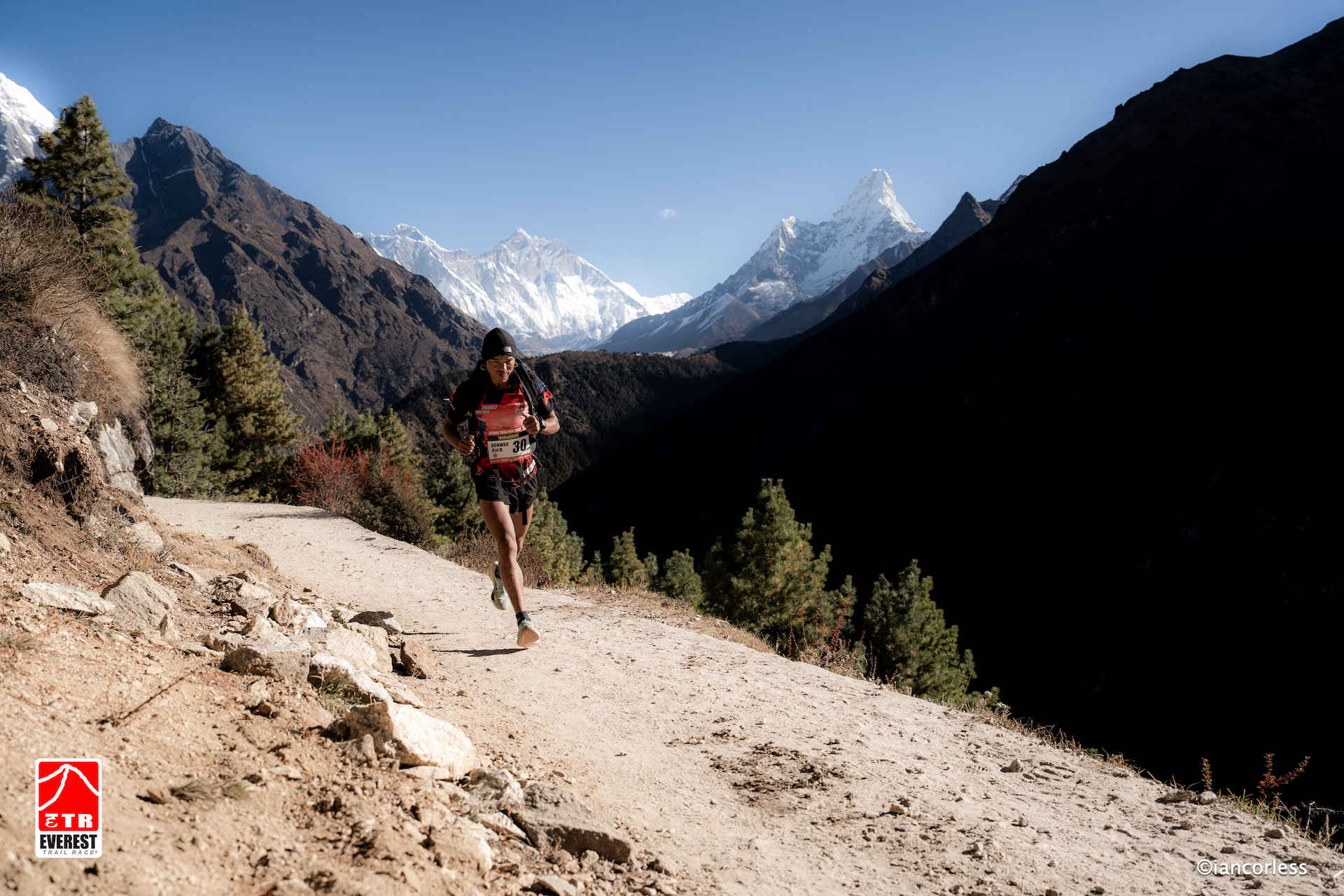
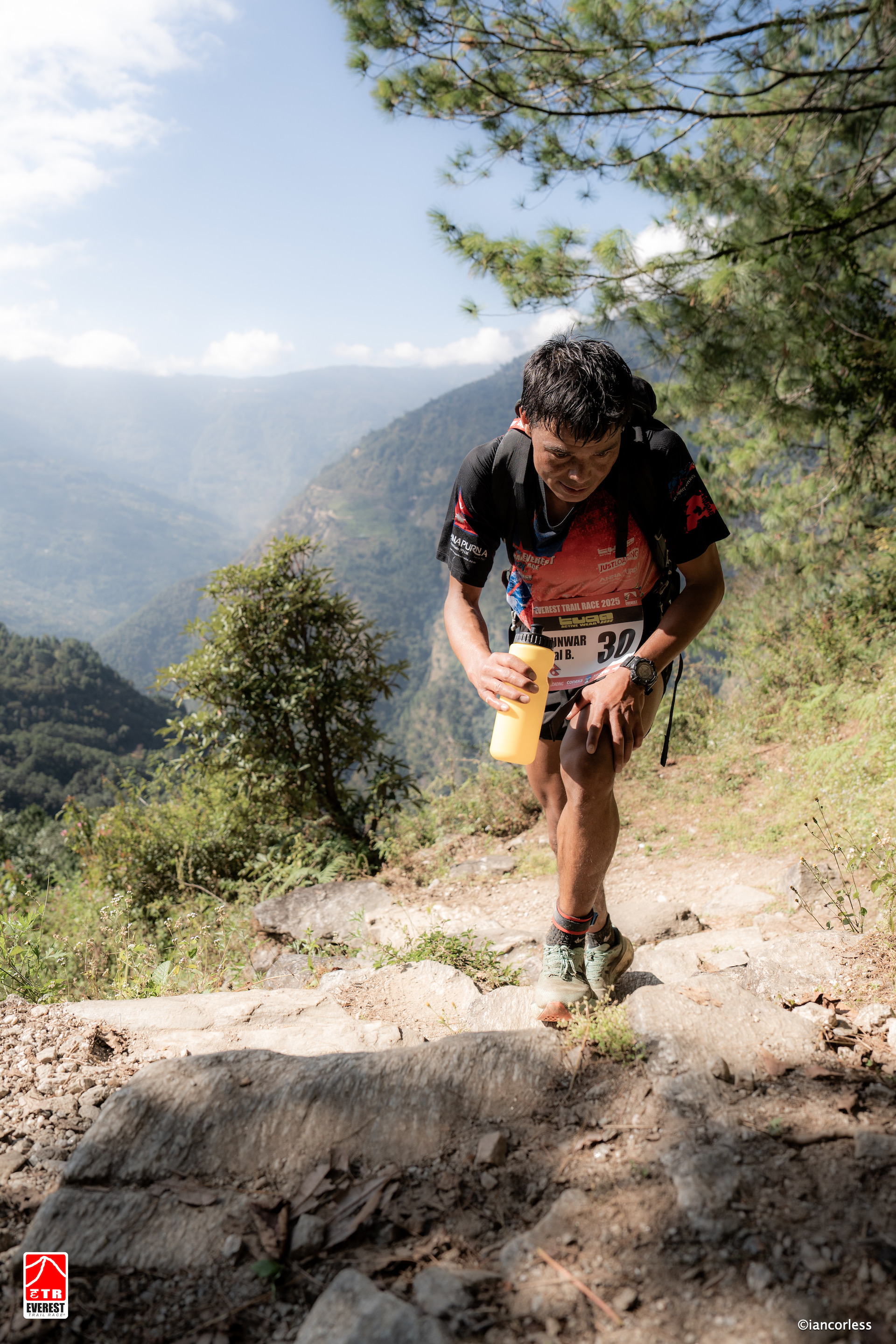
The race start time was a leisurely 0830 after an 0600 wake-up, hot tea delivered to each tent. Remarkably, Nepalee runner, Dal B Kunwar completed the stage in rapid, 2h 40min – there is a great deal to be said for being on ‘home’ turf. The first woman, Nepalee Chhoki Sherpa placed 3rd on the stage in a time of *h *m – full results can be viewed post-race at the ETR website HERE.
The Everest Trail Race is on. And it’s already living up to its legend.