
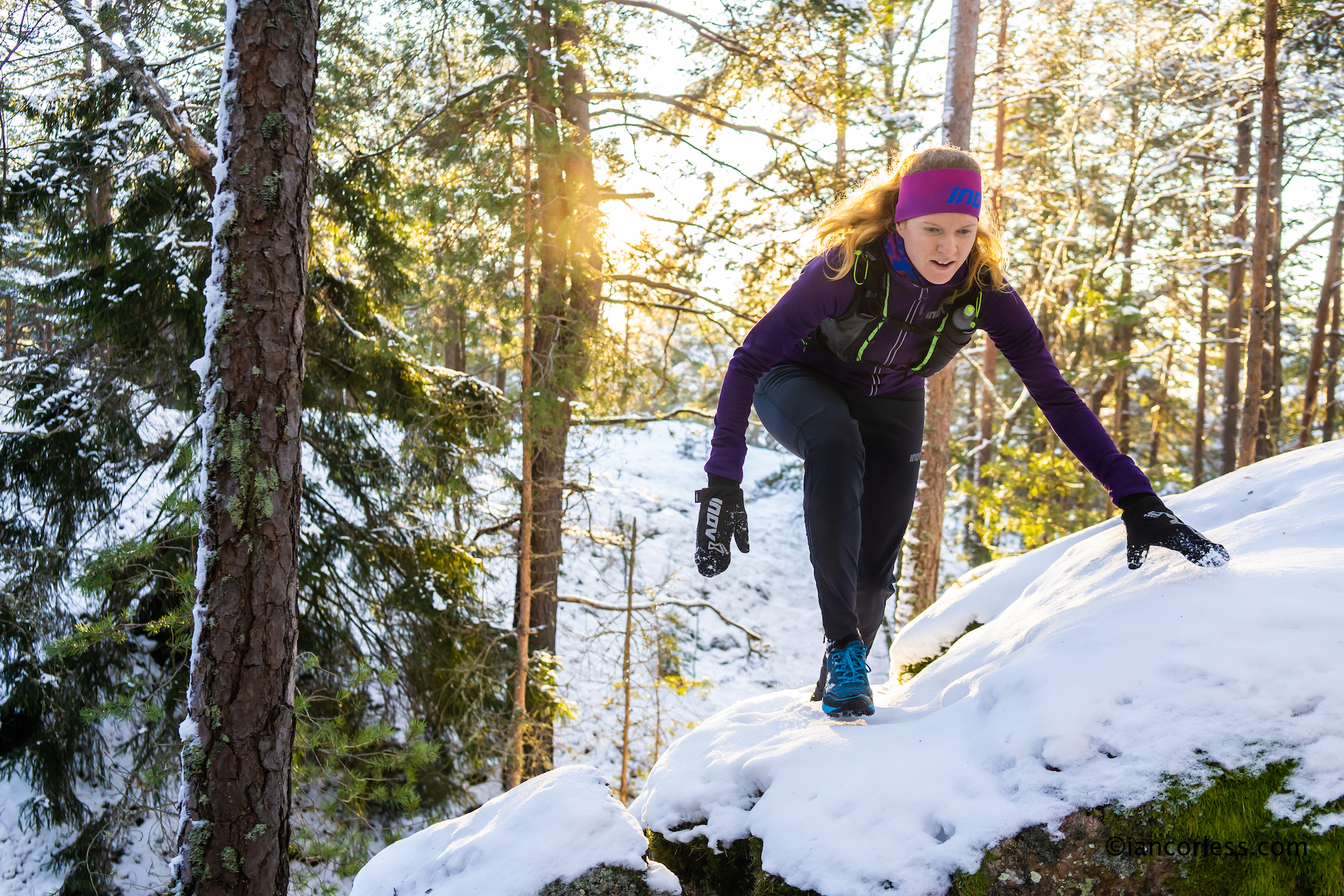
Winter running, day or night, is special that provides a very different experience to running in the hopefully warm, dry, sunny and balmy days of Spring, Summer and Autumn. In all honesty, winter running for me and many others is often preferable, just a shame we can’t have the same amount of daylight hours as Summer brings.
All running, particularly in the mountains, remote areas and particularly if going ‘solo’ brings an element of danger that must be managed. Winter and extreme conditions do increase risk from many aspects and this article is designed to help you make the correct decisions even before you start any running adventure.

EXPERIENCE
No two runners are the same and experience and knowledge are a key bonus when it comes to any running, especially in challenging conditions. So, firstly, understand yourself and your level of experience. This will make your enjoyment and comfort on any adventure enhanced. As tip, start with short days and as your experience, knowledge and understanding increases, you can then venture farther and longer. Even contemplating multi-day/ fast packing adventures. Read an article HERE.
Ask:
- What am I doing?
- Where am I doing it?
- When I am doing it?
- What are the options exist to cut short my adventure?
- How remote will I be?
- What are the risks involved?
- What weather can I expect?
- What is the worst-case scenario?
Preparation is key and assessing what ‘may’ happen on any adventure or run is crucially important to make sure that a day or multiple day’s activity remains safe.
Weather can change in minutes at any time of the year, especially in a mountain environment. In winter the changes can often be far more extreme, a cold dry day can suddenly become wet, windy with sub-zero temperatures. Hypothermia can hit in minutes. Understand this and prepare accordingly.

Solo adventures are invigorating; however, risks are increased significantly in this scenario. Sprain an ankle (or worse) and become immobilized in bad weather and this becomes a high-alert scenario. So, not only should you have equipment and apparel that will help you survive a situation like this, but you should also have technology to make you safe. A mobile phone (with enough battery) is compulsory and a tracking device, such as a Garmin InReach would be a perfect all-scenario safety device that with the press of a button can obtain SOS support. But remember, at all costs, emergency services are not a comfort blanket that allows you to cut corners. Prepare properly.
Running with a friend adds safety and a natural back-up scenario, so consider this. Women in particular may feel far more secure running in company.
When planning routes, think of short cuts, options to deviate to reduce distance/ time and never push on or let ego dictate. The trails and mountains will always be there. Turning back is a strength not a weakness.

Pace, particularly on longer adventures, will typically be slower in winter due to underfoot conditions and weather conditions. In cold, icy and sub-zero temperatures, sweating is not a friend, particularly should you be forced to move slower or stop, so, think about this and regulate pace to help minimize sweat rates.
Finally, it’s always wise telling family or friends when you are going on adventure, where you are going with proposed route and when you will return. This is a great back-up to have others looking out for you. Of course, this doesn’t need to happen for a daily 5 or 10km run.
EQUIPMENT
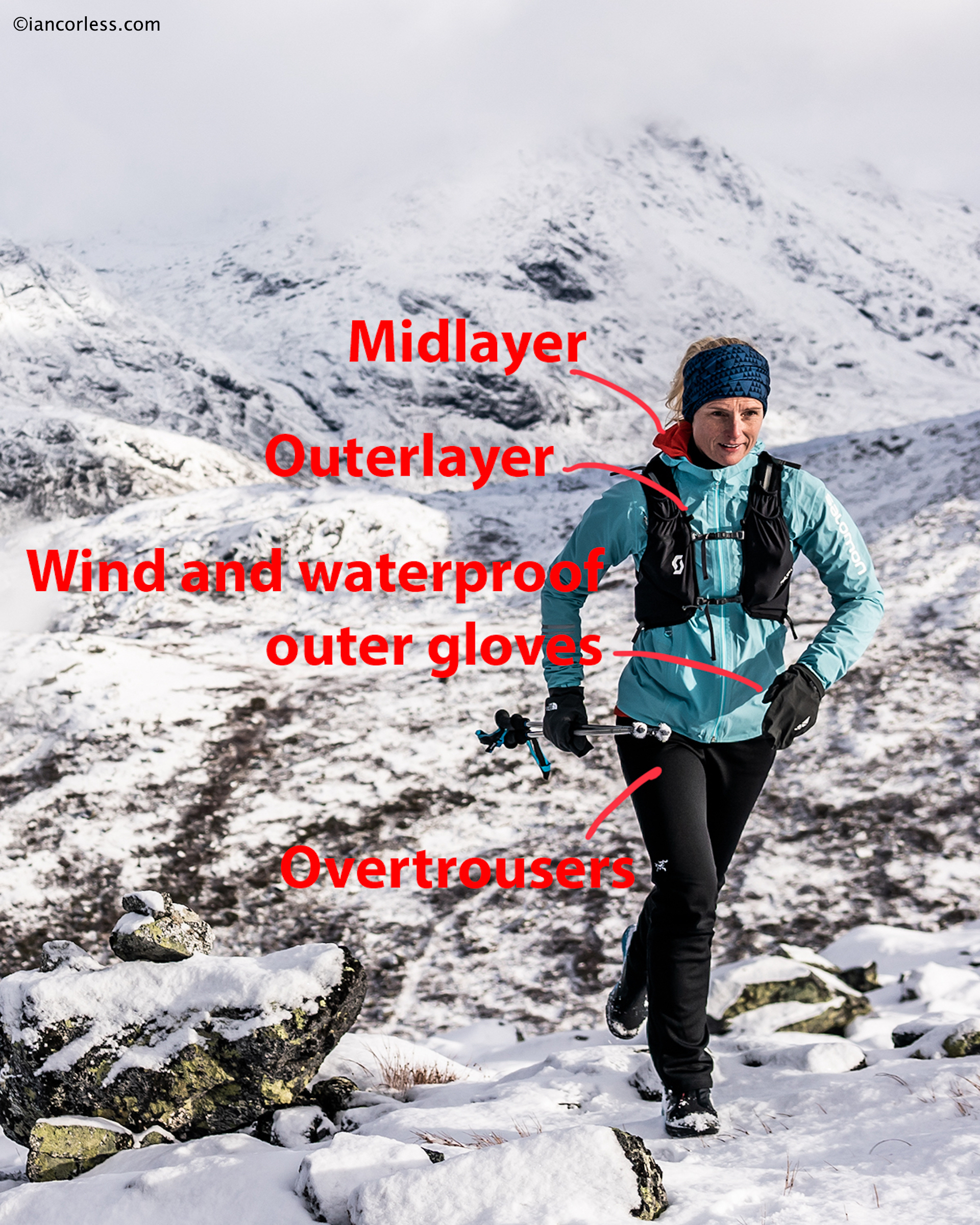
The equipment you will use and how much equipment you will take will depend on the type of adventure you are undertaking and how long that adventure will take. This harks back to the ‘experience’ as outlined above. Needless to say, winter will almost always require you to carry more. If running on the road and in public places, make sure you can be seen with reflective items.
Read an article on ‘Getting Layered’ HERE
CORE
Keeping your core warm is essential and without doubt using a merino wool base layer (or similar) with an optional small zip neck for your body is key. Merino wool in particular has an ability to retain warmth, even when wet or damp. Top tip: Take a spare base layer in your pack on runs.
PROTECTION and WARMTH
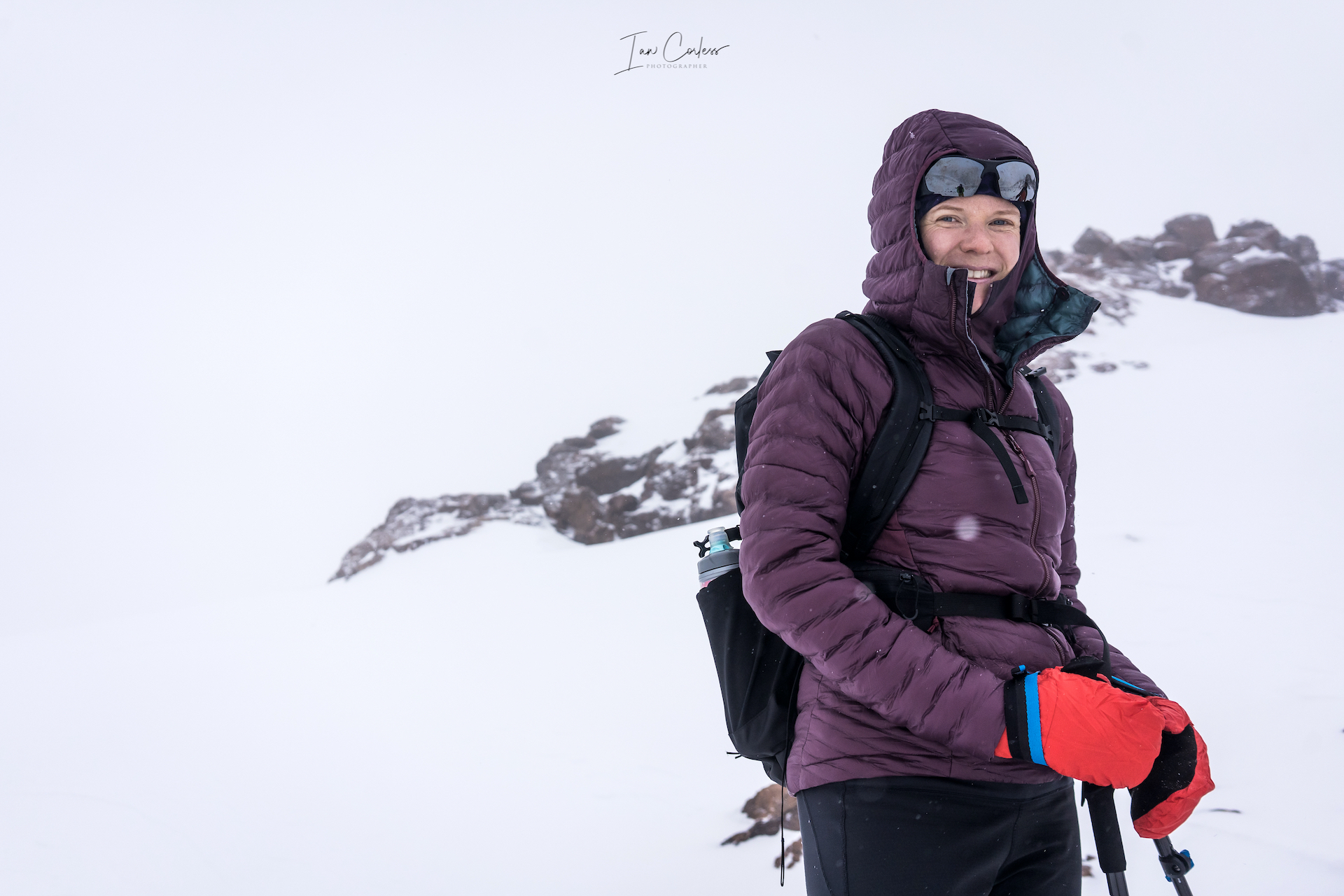
As mentioned in the ‘Getting Layered’ article, you will need to adapt the body layers for the weather you will run in and the weather that you ‘may’ encounter. A mid-layer will provide warm and this can be made of a product like Polartec, Primaloft or Down. Consider balancing warmth, size and weight. On a personal note, I use a Polartec layer as my standard warmth layer and then carry a ‘treated’ Down jacket (this can get wet and still be warm) in my pack as an essential warmth layer. The final layer will be a waterproof with taped seams, this layer will protect from extreme wind and rain. Zips on mid and outer layers add weight but they are essential for being able to regulate temperature.
HEAD
A hat is essential for retaining heat within the body, *“even if the rest of your body is nicely wrapped up, if your head is uncovered, you’ll lose lots of body heat — potentially up to 50% of it — in certain cold-weather conditions.” You can regulate temperature while running by simply adding and removing a hat. Wear a Buff or similar around your neck.
SUNGLASSES
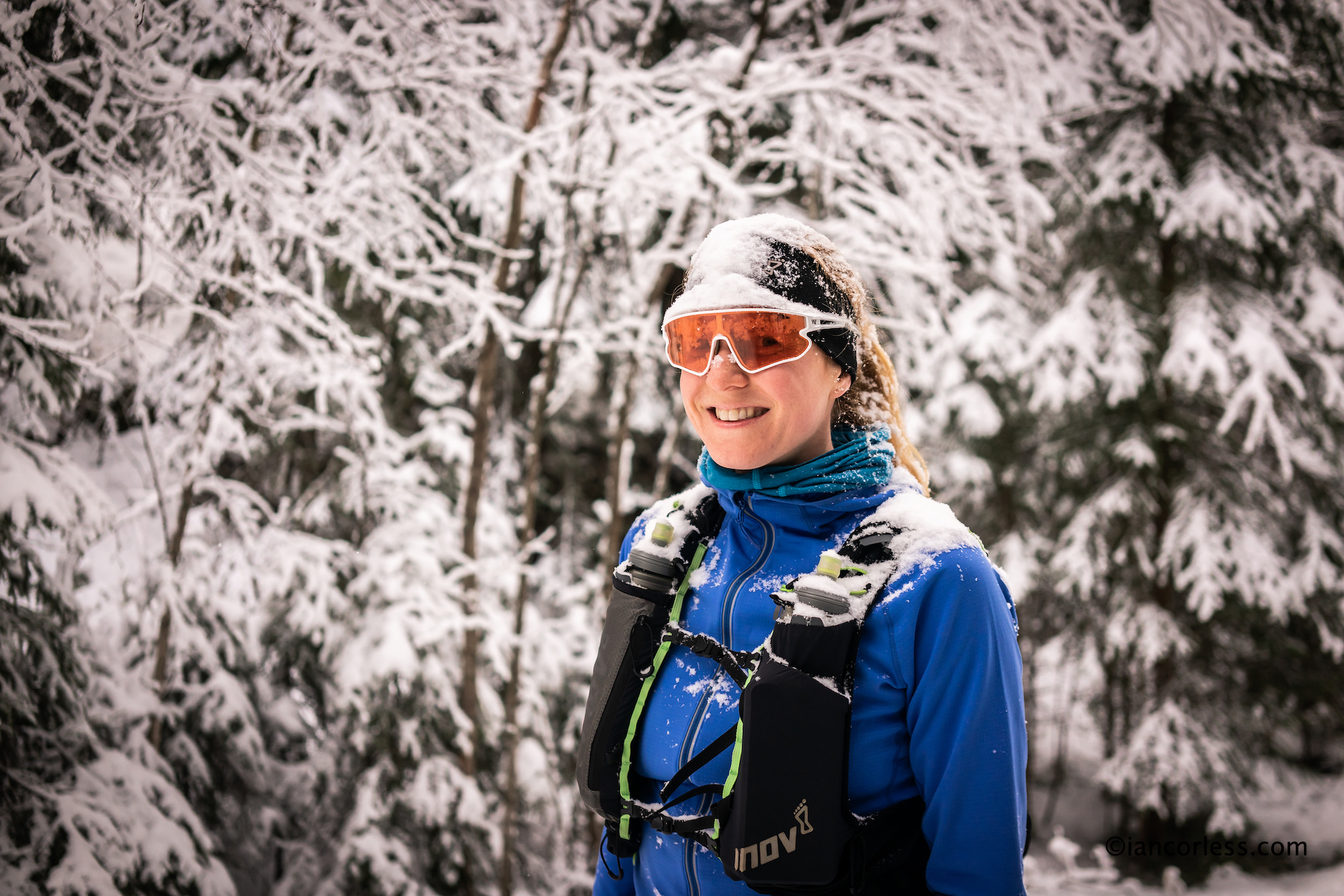
Protect your eyes, particularly in snow. You can get specific lenses designed to enhance vision in winter conditions.
EXTREMETIES
Hands and feet are a huge problem area in winter, particularly if you suffer with Raynaud’s. Keeping your core warm immediately helps keep extremities warmer as the body naturally abandons extremities (hands and feet) to protect vital organs. For feet, just like the core, merino socks are superb starting point for warmth, even if wet. However, if you anticipate feet to get wet repeatedly and in sub-zero temperatures, you will need to think about other options. A good example being neoprene socks that are warm when dry and should you get feet wet, they are designed to retain warmth when wet by insulating the water between foot and sock. You need to be careful of trench foot should feet remain wet for too long. For hands, a merino liner sock is ideal as a starting point and then a mitt over the top adds warmth and insulation. Mitts are always warmer than gloves and if you do not require finger dexterity, they are always preferable for warmth. Consider having multiple mitts of different warmth levels to that you can adapt to the weather. Also consider longer socks that come higher than the ankle, especially important if running in snow. Top tip: Take spare gloves and socks on any run.
LEGS
Shorts are not a good idea in winter, keeping leg muscles warm is essential for comfort and the ability to function properly, so, use tights. Ultimately, you may require multiple tight options starting with a simple Lycra product and moving up to insulated tights with wind blocker. Of course, carrying a waterproof pant with taped seams is also an essential for winter. Add them to your pack and do not compromise, you may not require them for over 90% of your runs, but when you need them you need them.
SHOES
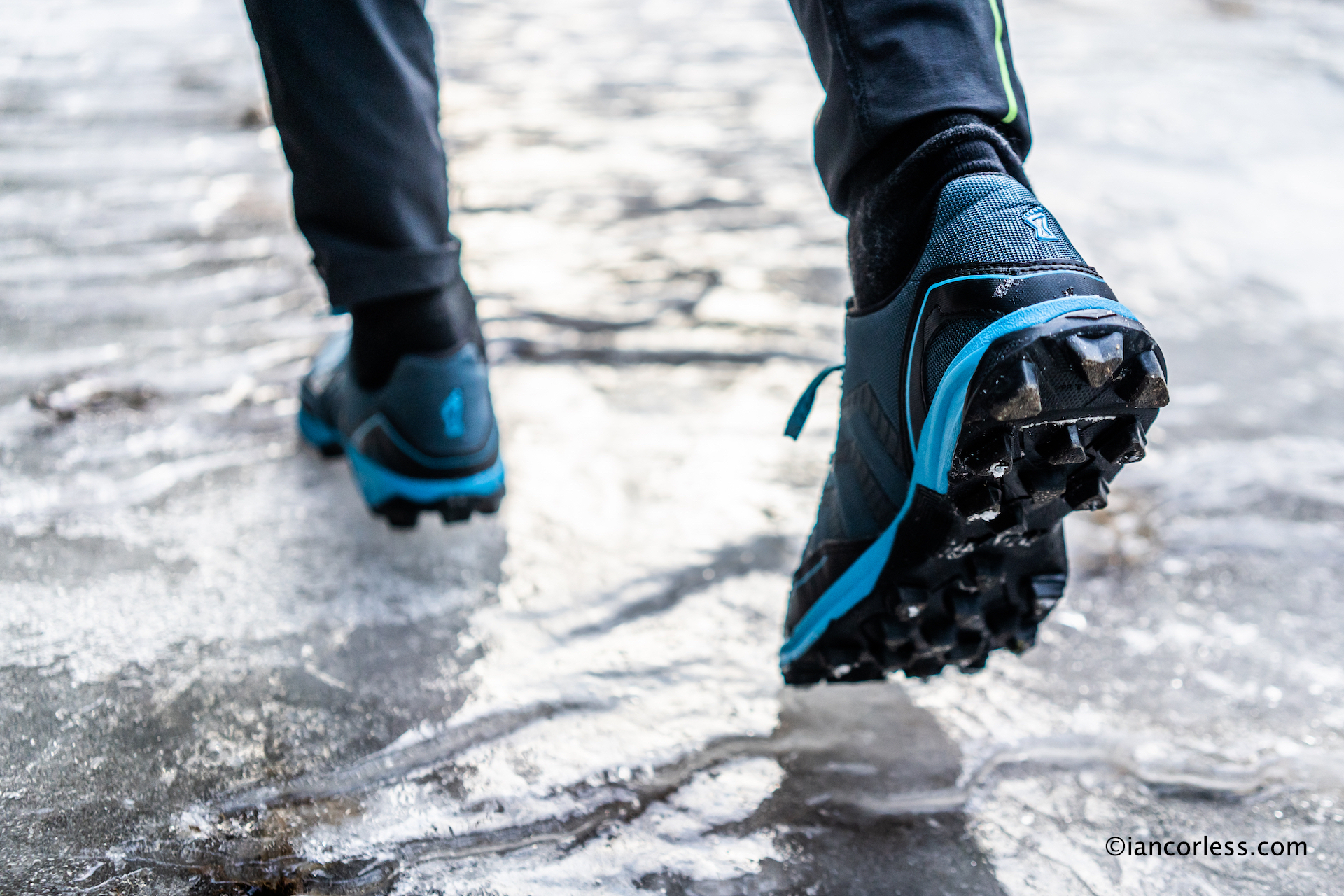
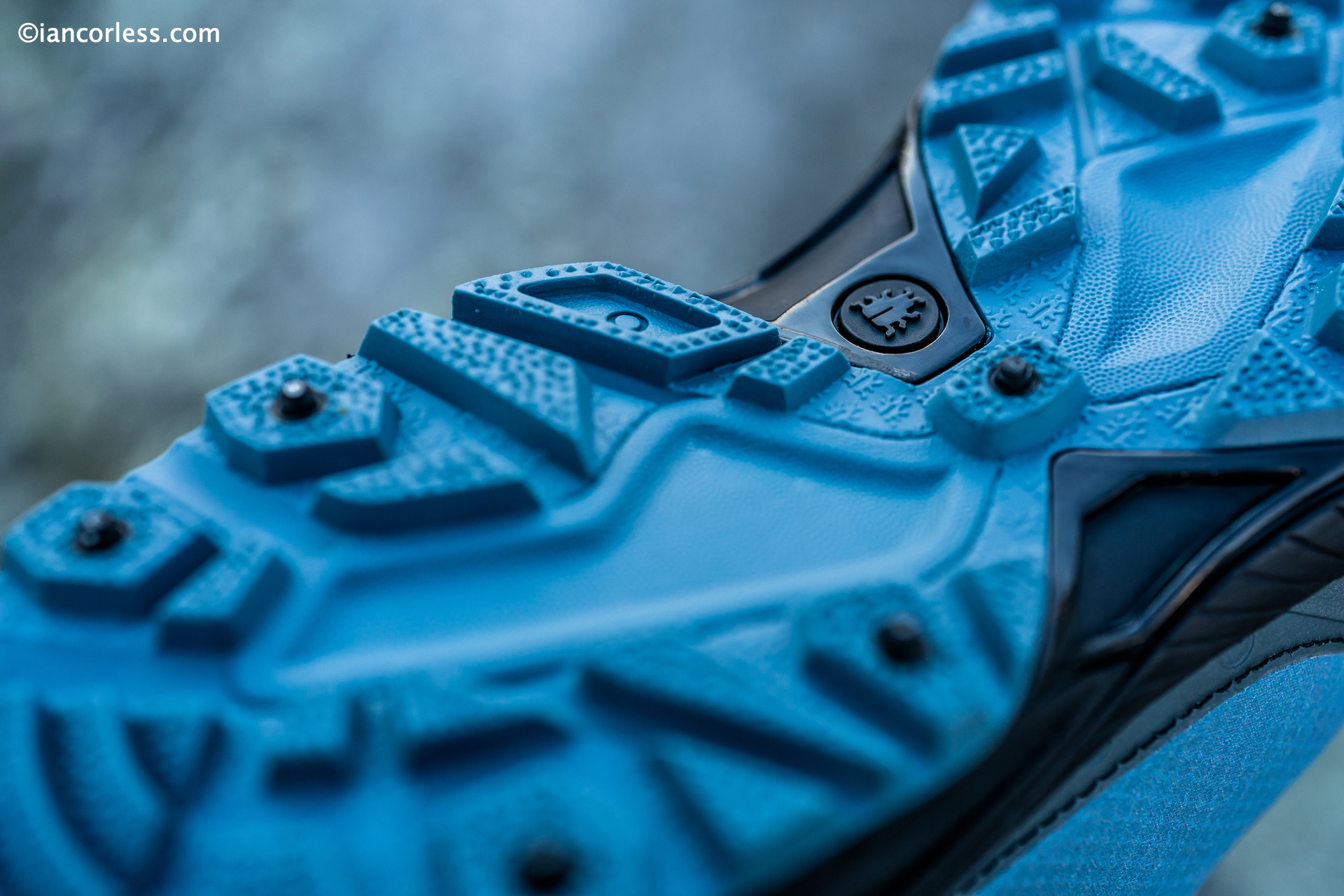
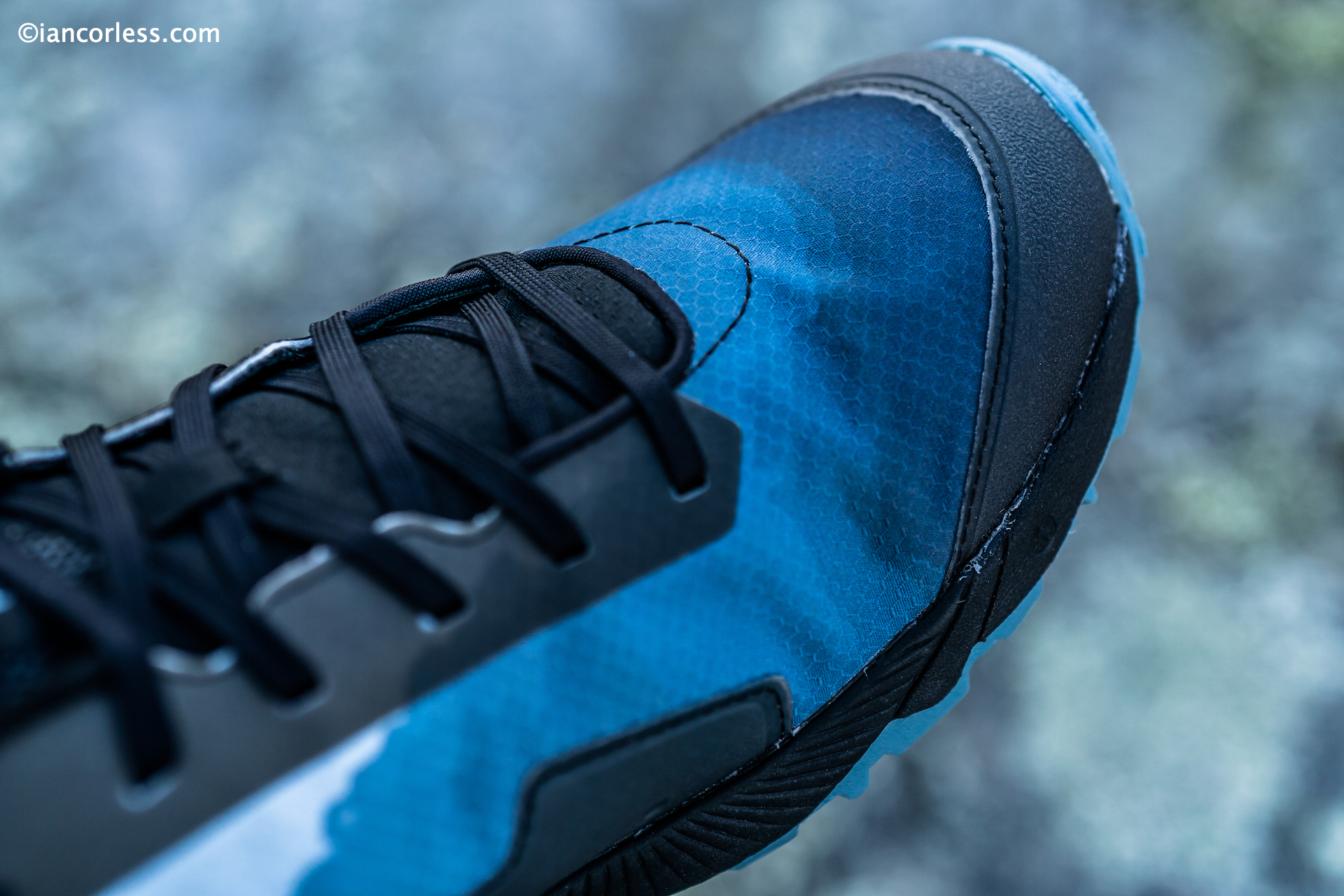
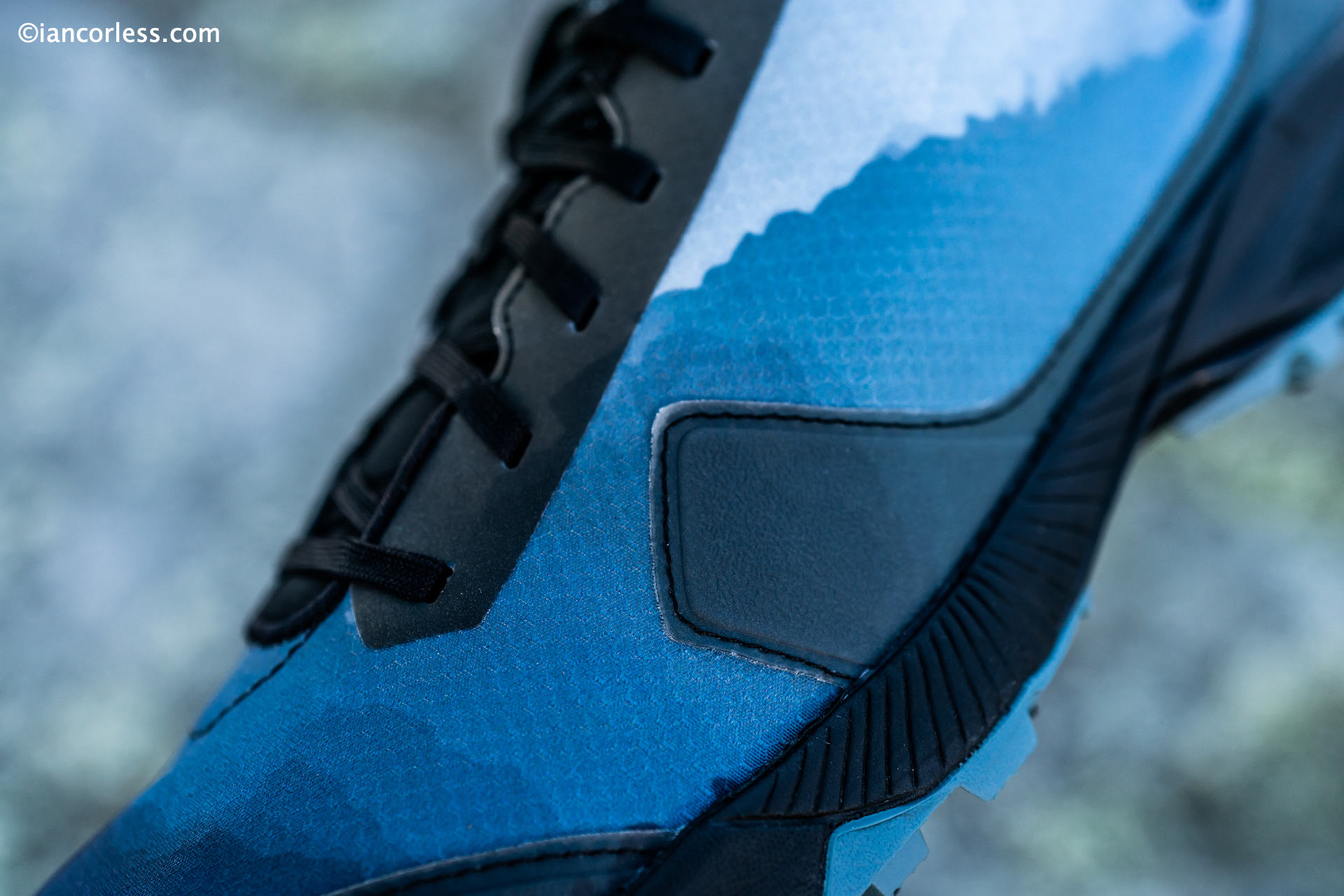
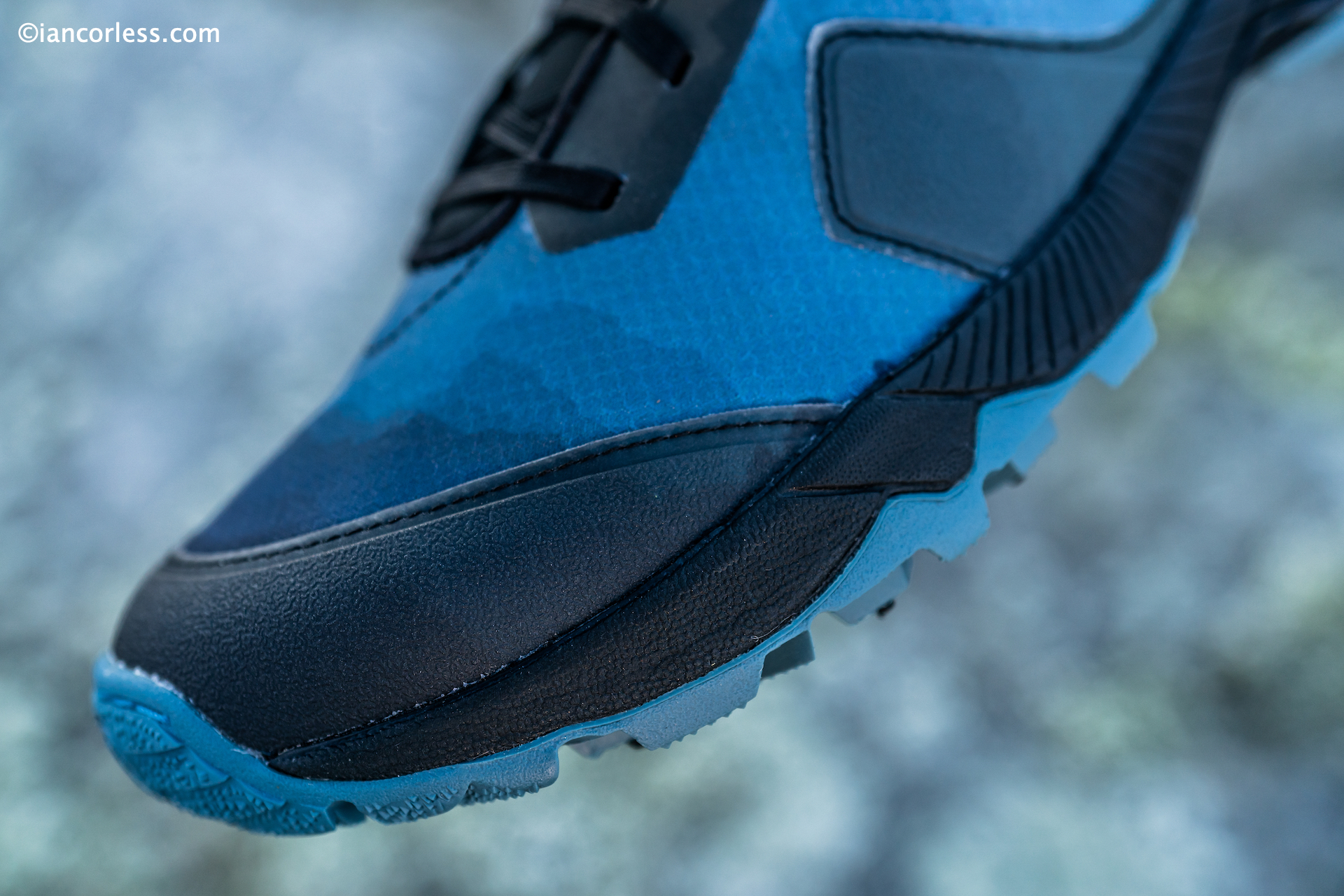
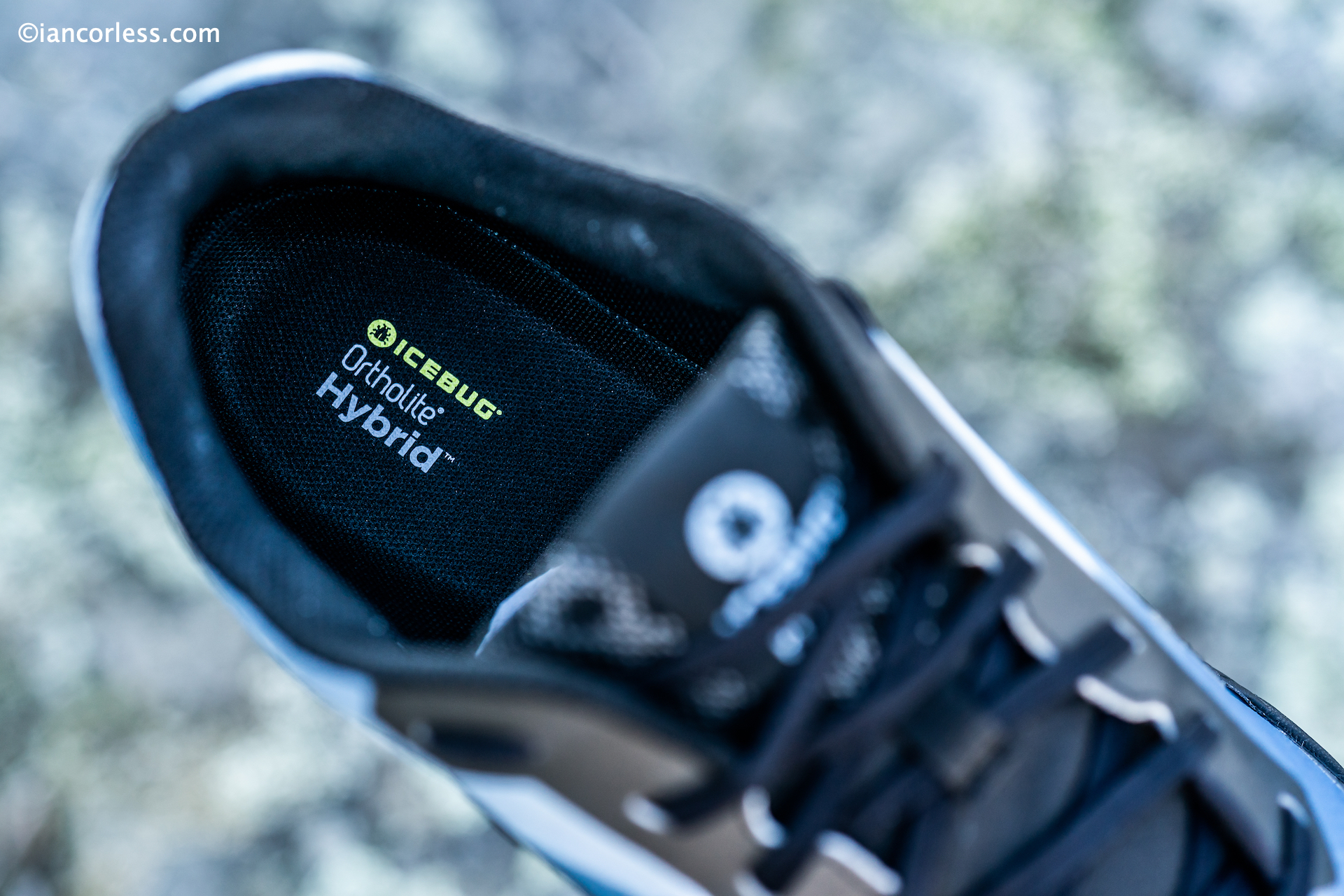
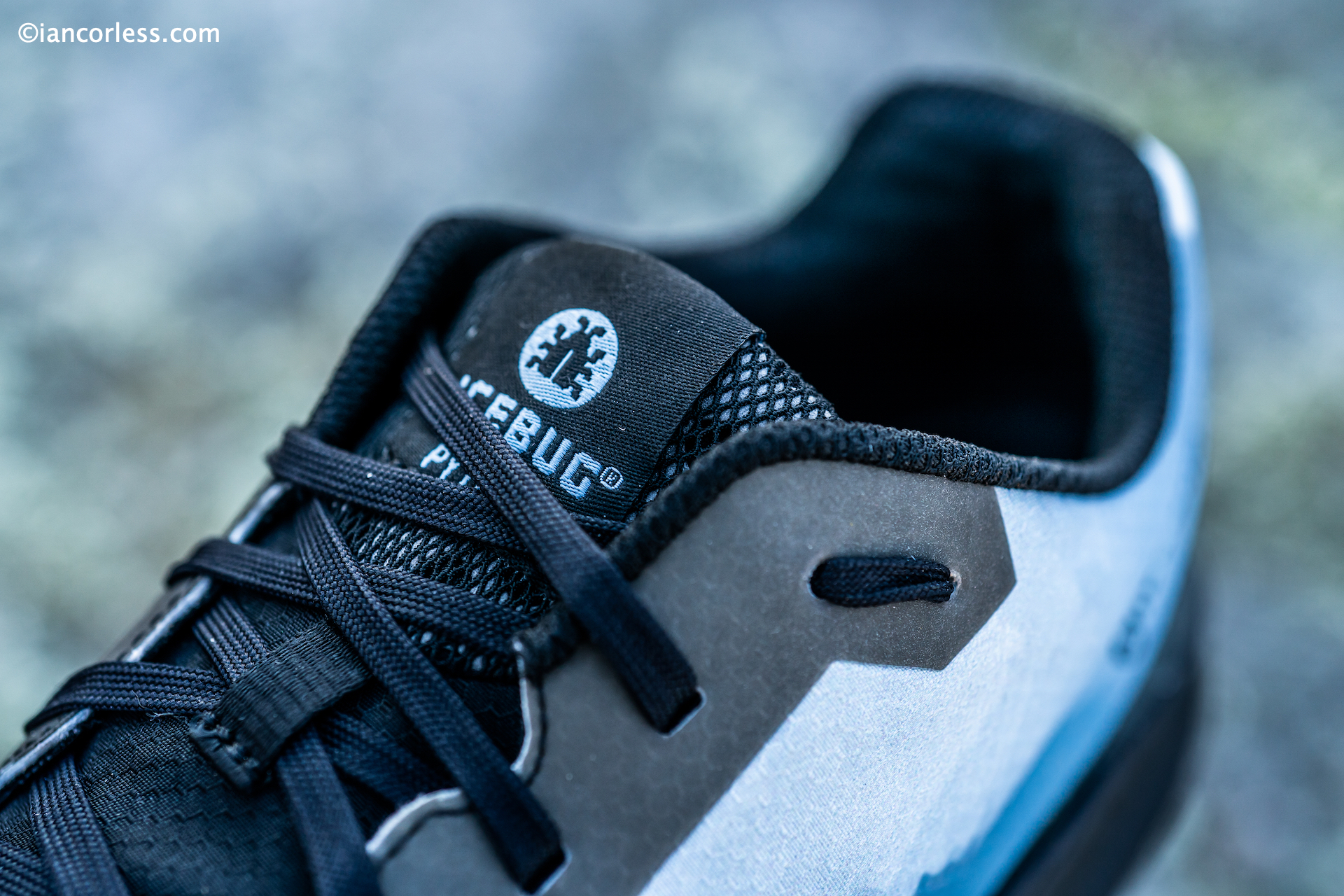
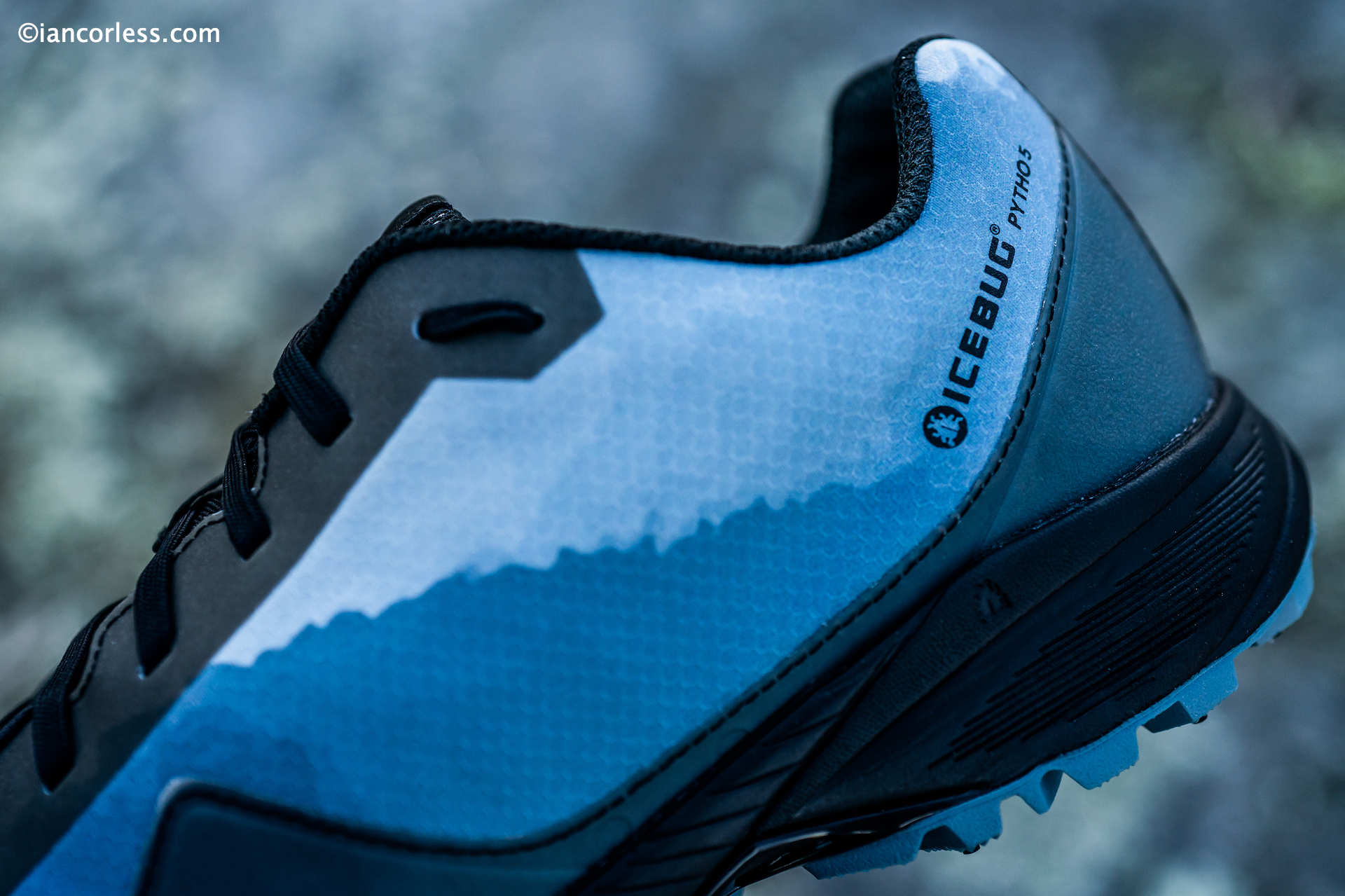
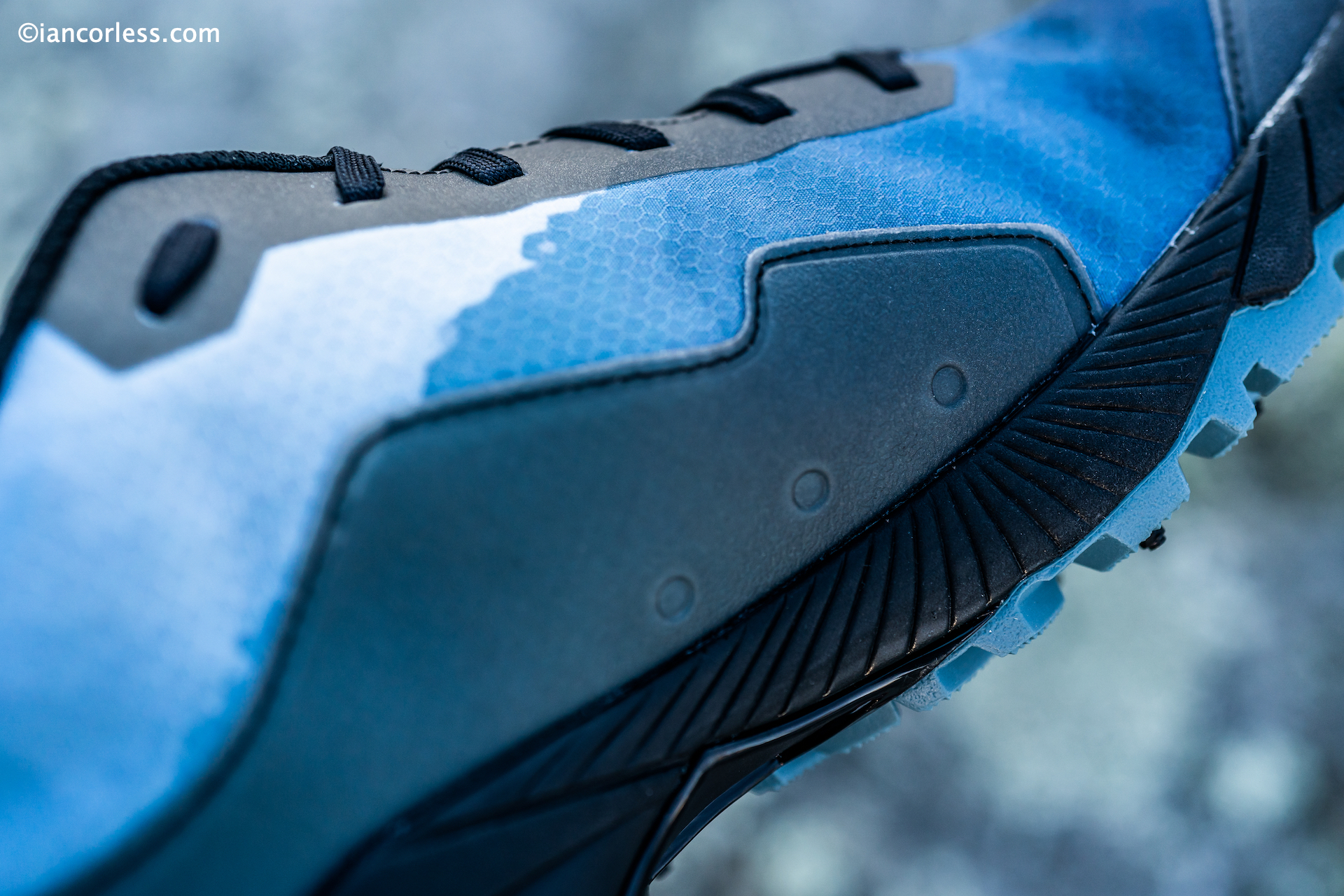
There is no definitive winter shoe and, in many scenarios, the shoe you usually run in will work fine. However, if you have snow and ice, you will almost certainly need to consider other options. There is an in-depth article HERE but for me, a winter ‘stud’ shoe is my go-to for all my runs. In simple terms, it is often a conventional run shoe with metal studs added to provide grip in ice and challenging conditions. They are a game changer. Winter shoes are often insulated so as to keep feet warmer. Top tip: Consider socks and consider that you may wear multiple socks or thicker socks, this may require that you a larger shoe but be careful, particularly in the propulsive phase as this can make the shoe bend differently behind the metatarsals.
PACK
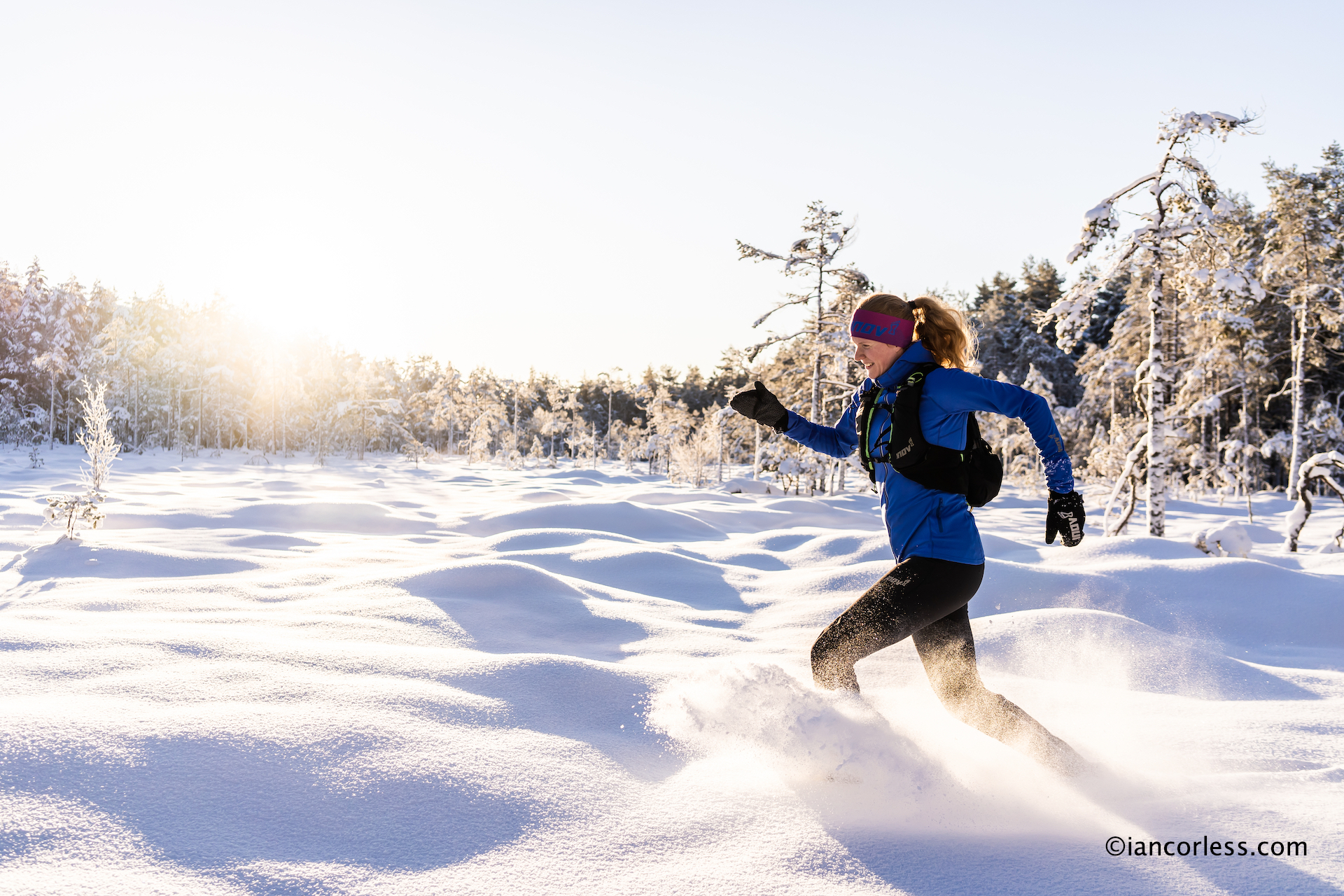
You will almost certainly require a larger pack for winter runs. A 12-15 ltr is probably ideal for long days and if fastpacking, 20-30 ltr would be normal. Top tip: Use dry bags inside to protect key layers and where possible use several that are different coloured, so you know which is an insulating layer and which is an outer layer.
FOOD and HYDRATION
Just like on any run, calories and hydration are essential. Winter and in particular the cold can easily make you forget to drink, make it a habit. Cold and extreme weather will also burn more calories, so, keep the fire stoked. Plan runs that take in a cafe, hut or lodge stop. If you do the latter, you need to balance losing hard earn warmth and then going back out in the cold. This is where carrying a spare base layer can be a great idea. If in remote locations, you need to consider re-supplying. Importantly, streams that provide water in summer may well be frozen in winter. Also, bottles may well freeze if exposed to sub-zero conditions, so, consider insulated bottles, using warm water and maybe keeping bottles in a pack, wrapped in clothing to retain warmth and reduce freezing possibilities.
OTHER ITEMS
The more experience you have, the greater your winter challenge may be. Always have the correct equipment, for example, ice axe, crampons, rope, harness, hand spikes, snowshoes and so on. A Bivvy bag is an essential when in remote locations for safety, in addition, always carry a head torch as a just in case scenario should a run take longer than anticipated.
Read about a winter expedition to the Atlas Mountains HERE
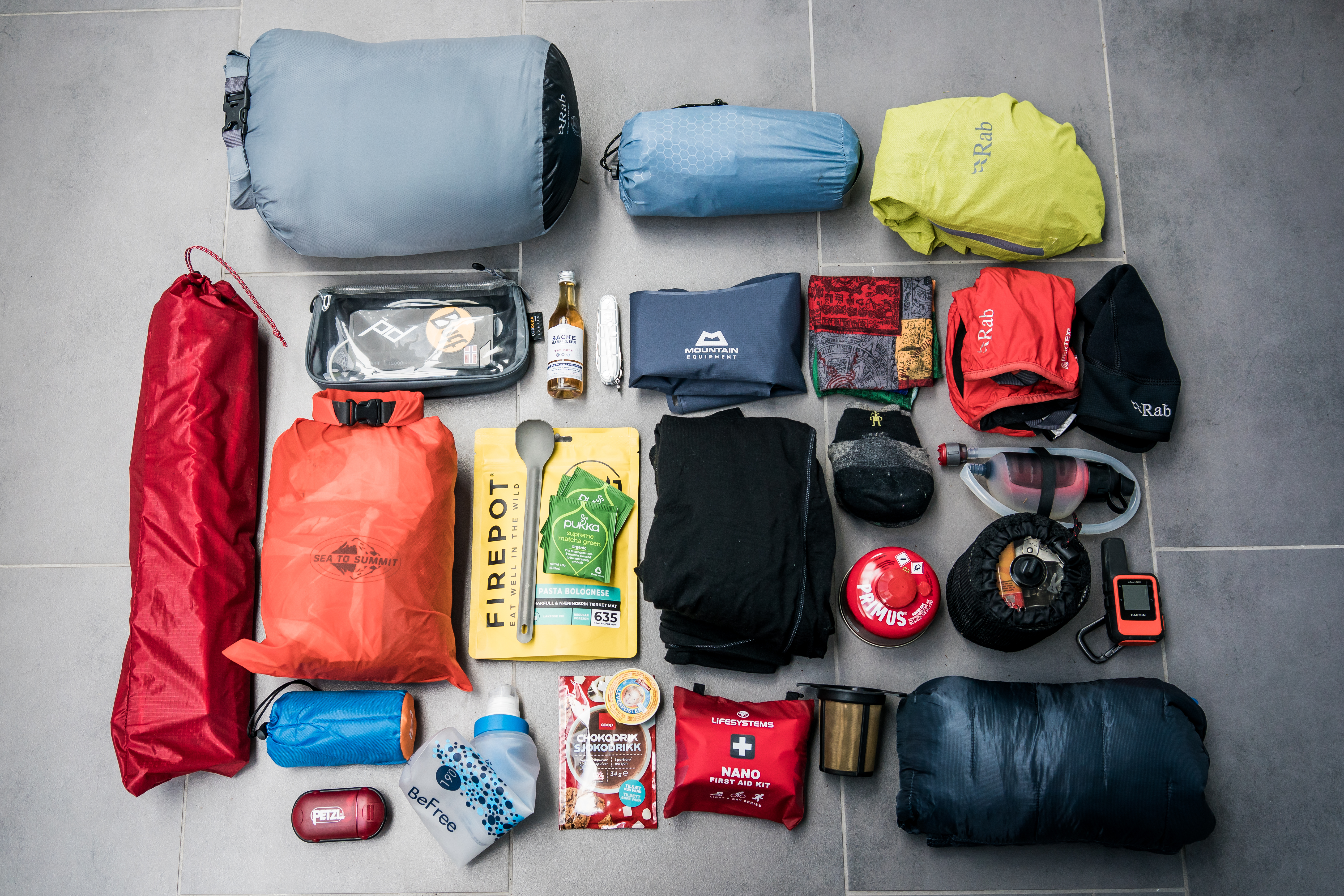
EXAMPLE EQUIPMENT LIST
- As a start point, you will be wearing the following applicable to the conditions:
- Base layer.
- Mid layer.
- Hat
- Gloves.
- Glasses.
- Socks
- Appropriate shoes.

In the pack:
- Spare base layer.
- Spare socks.
- Spare gloves.
- Insulating layer (down or primaloft)
- Waterproof layers, top and bottom.
- Headtorch and spare batteries.
- Phone.
- Tracking device.
- First aid.
- Bivvy bag/ space blanket.
- Food.
- Drink.
- Battery back-up.
- Heat pads for hands and feet.
FINALLY
Embrace winter. It’s a great time of year to explore. Respect the conditions and if you follow the above, you will almost certainly have safer and more enjoyable outings. Accidents do happen at any time of the year, in winter, risks do increase so respect the conditions. Accept that you will go slower in winter.
References:


Please support this website. I believe everyone deserves to read quality, independent and factual articles – that’s why this website is open to all. Free press has never been so vital. I hope I can keep providing independent articles with your help. Any contribution, however big or small, is so valuable to help finance regular content. Please support me on Patreon HERE.
Follow on:
Instagram – @iancorlessphotography
Twitter – @talkultra
facebook.com/iancorlessphotography
Web – www.iancorless.com
Web – www.iancorlessphotography.com
Image sales –www.iancorless.photoshelter.com



 IAN CORLESS