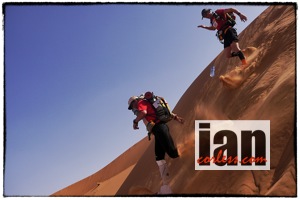
Marathon des Sables 2013 Stage 4
3
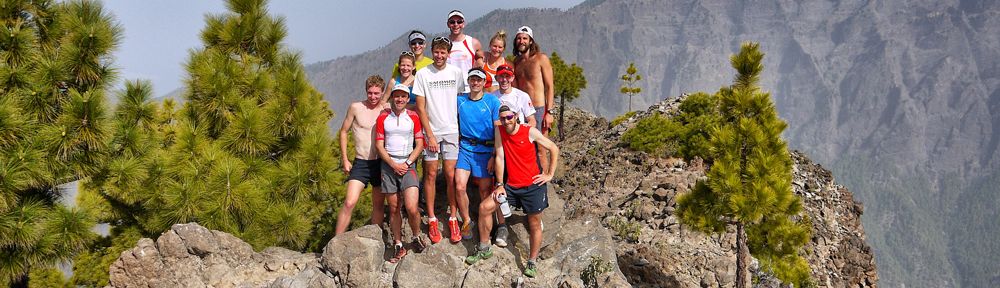

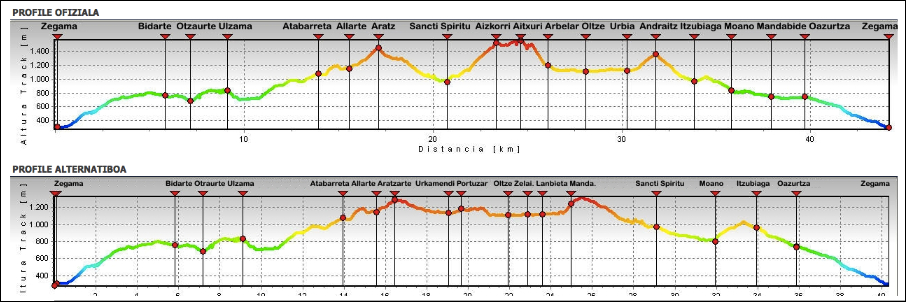
Zegama – Aizkorri needs no introduction to those who follow Skyrunning. It is a course that has created many a story over the years.
Located in a natural park, Aizkorri-Aratz, it brings respect and excitement to every mountain runner that toes the line.

In July 2002, the Village Council decided to revitalise and bring life to the local area, in order to achieve these objectives the Zegama-Aizkorri Mountain Marathon Association was created. Today, the AIA-renovated Alpine Marathon has a reputation in the world as one of the world’s most prestigious mountain marathons.
Part of the Skyrunner World Series it is the ultimate mountain marathon test. In 2008 the European Championships were hold on this very course. When Kilian Jornet was asked about Zegama, he quite simply said:
“Zegama? It’s Zegama!”
In other words, nothing more needs to be said. It has a reputation that demands respect from the higher echelons of the mountain running world.
2012 Summary
Zegama followed just 7 days after Transvulcania La Palma in 2012 and therefore we almost had a re run of the La Palma race. Of course, conditions were a little different. The dry heat of La Palma was replaced by torrential rain, mud, cold and the occasional snow blizzard.
The American contingent who had raced well on La Isla Bonita transferred en-mass to mainland Spain with a couple of additions. Nick Clark representing Pearl Izumi and the ‘hot tip’, Max King. Max had everything in is his favour; speed and a mountain pedigree.
As it happened, the American contingent had a lesson on European mountain running and never got in contention. For many of them they could hardly stand up in the tough conditions and as Nick Clark crossed the line he exclaimed
“Now THAT is a mountain race!”.
It was a shock to the system. Dakota Jones victorious just a week earlier had taken the race easy, a pre-race plan as he had nothing to prove after topping the podium at Transvulcania. In comparison, Kilian Jornet had something to prove and now had some running in his legs… midway through the race he applied the pressure and once again proved that he is the king of the mountains.
In the ladies race Oihana Kortazar showed her dominance over this Sky distance and we started to get a glimpse of a star in the making, Emelie Forsberg. Nuria Picas also set her stall out for a year-long process of podium places over all distances, from marathon to ultra. Anna Frost tired after a dominating Transvulcania performance decided not to race at Zegama and keep some powder dry for another day.
2013
* PLEASE LOOK FOR UPDATES posted 26th April marked in BLUE
The 2013 race is going to see some great representation from top ranking teams: Salomon, New Balance, Adidas, La Sportiva, Arc’teryx, Valetudo Skyrunning, Inov-8 and Scott.
Zegama this year is two weeks after Transvulcania and although that would work well for additional recovery, it doesn’t necessarily work well for travel budgets, so, we wont have Sage Canaday, Timothy Olson, Anton Krupicka, Joe Grant and the ‘other names’ joining the Zegama party.
The Mens Race
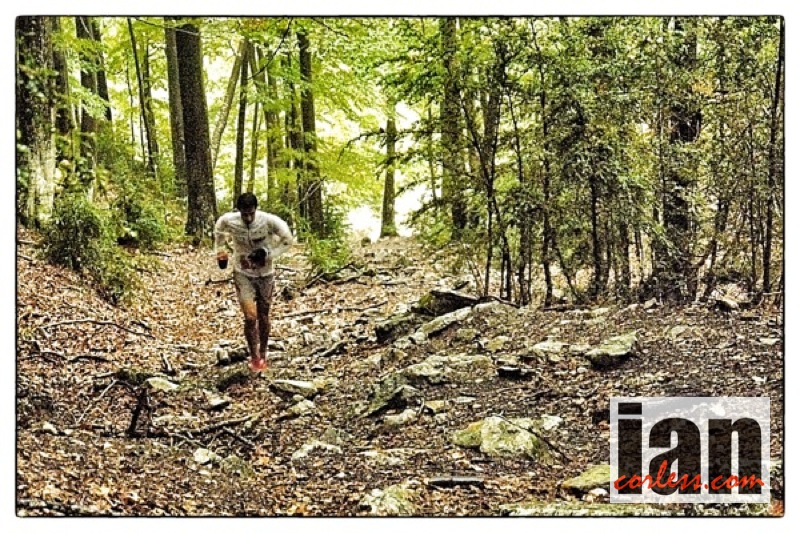
Kilian Jornet copyright Ian Corless
Kilian Jornet will be a dominating force at Transvulcania La Palma and I see him on top of the podium, two weeks recovery is a life-time for Kilian and after his dominating performance in 2013 I see him replicating the win at Zegama. He has just flown around the Transvulcania La Palma course and set a new course record. Respect!
His sparing partner, Marco De Gasperi, a legend in mountain and Skyrunning unfortunately has now pulled out of the race with a knee problem. This is a great shame, we all love to see Kilian and Marco go head-to-head.
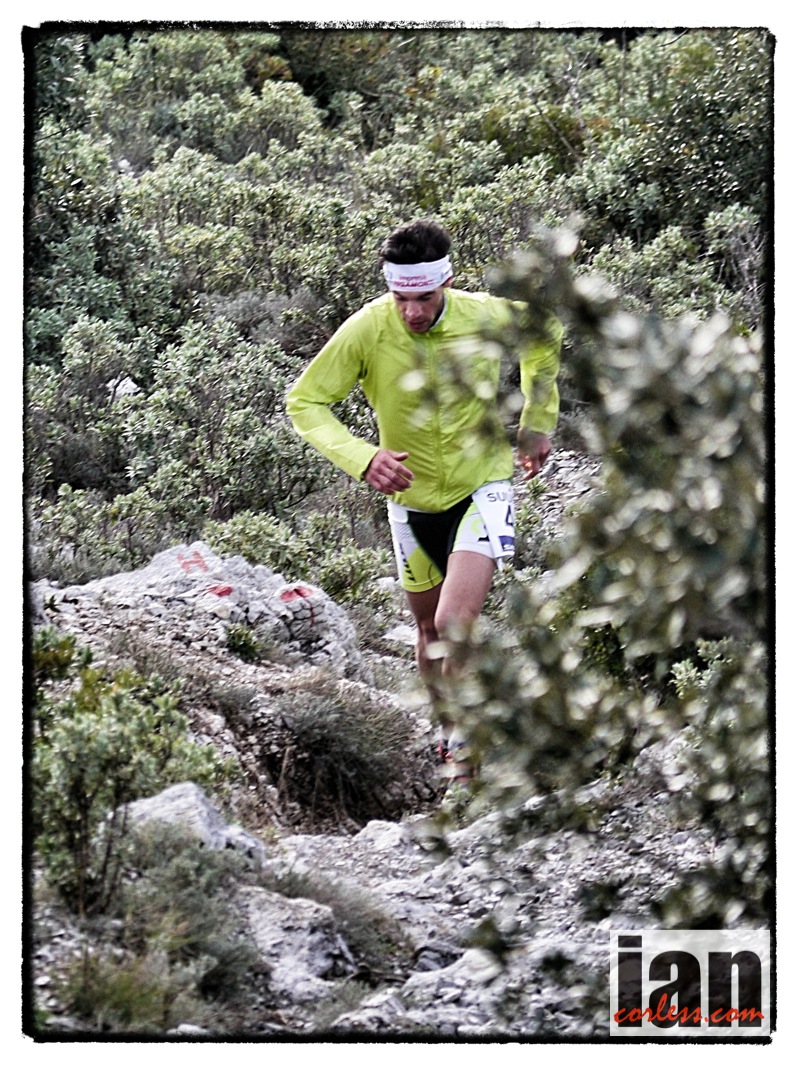
Marco De Gasperi copyright Ian Corless
This almost certainly means that we will have a re run of the 2012 Zegama race and also the 2013 Transvulcania… Kilian’s main competition will now come from Luis Alberto Hernando. Luis was second behind Kilian at Zegama last year and is almost certainly in some of the best form of his life at the moment. He pushed hard at Transvulcania just over a week ago and was leading the race at the final summit, ultimately loosing his lead to Kilian on the descent. His race on the island of La Palma is even more impressive considering it was his first ultra.

Transvulcania 2013 copyright Ian Corless
Missing from Transvulcania and deciding to run the ‘Sky’ distance in 2013 is Andy Symonds. Andy comes from a traditional fell/ mountain running background and just like Tom Owens, he will love the conditions here. Both Andy and Tom have withdrawn from Zegama I am afraid. In an email from Andy Symonds, he says, “We’re both injured!! can you believe it.. Tom’s got some pretty bad tendon rumpture in his foot and I’m limping with a duffed iliopsoas… neither of us have run for several weeks (much more for Tom). And so, no Zegama this year.. booo.. :-(” A real shame not to have these two top performers at the race. Speedy recovery guys.
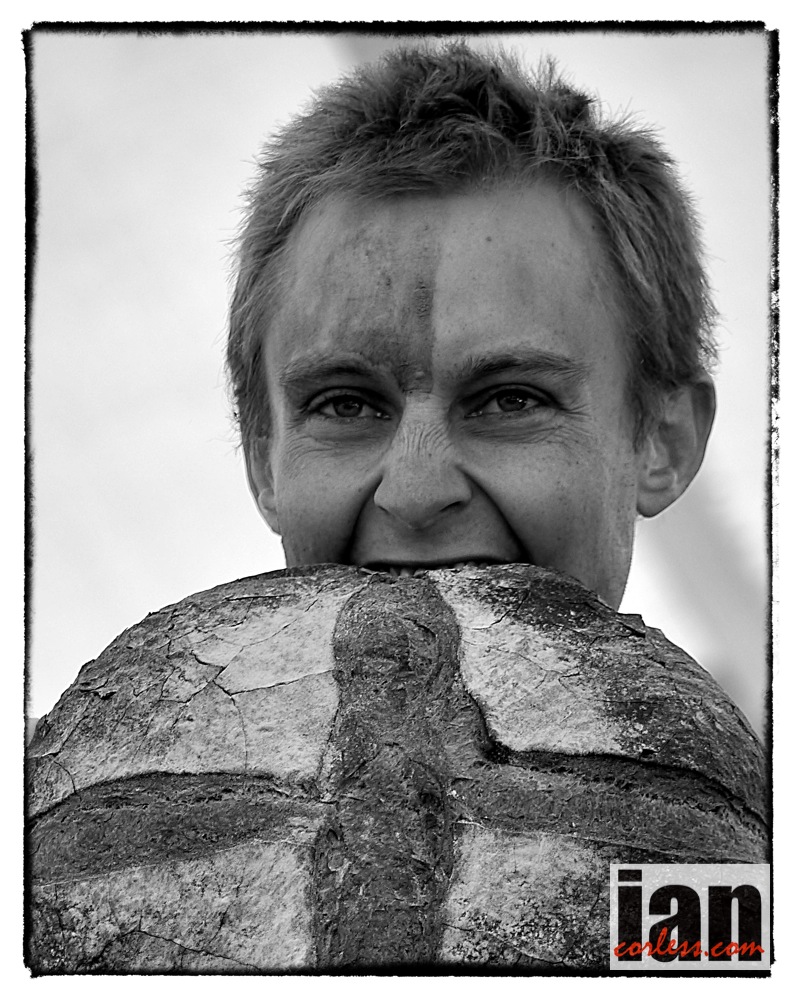
Andy Symonds copyright Ian Corless
Miguel Heras missed Transvulcania due to injury so we currently have a question mark if he will run at Zegama. In form he is one of the best runners in the world, so, he will most definitely mix it up at the front. Tofol Castanyer recently raced the Three Peaks in the UK and had a good race but was not used to the ‘navigation’ element of UK fell running, he too has the potential to win, particularly when running on Spanish soil.
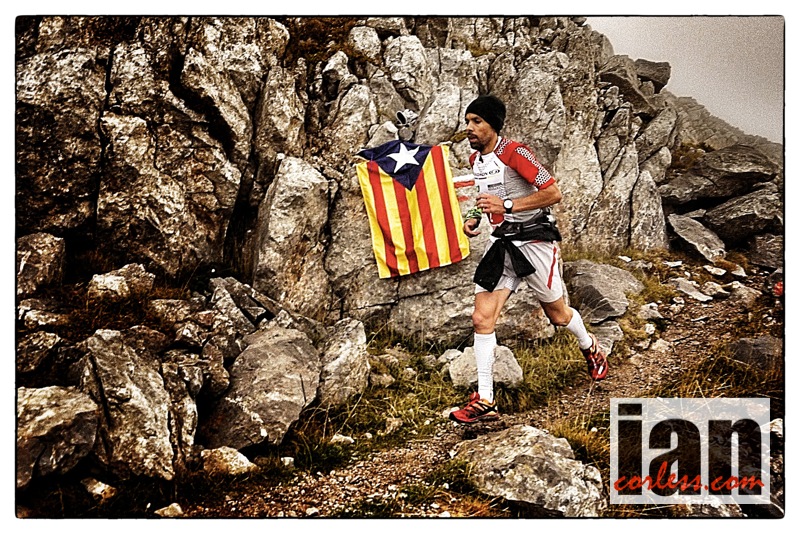
Tofol Castanyer copyright Ian Corless
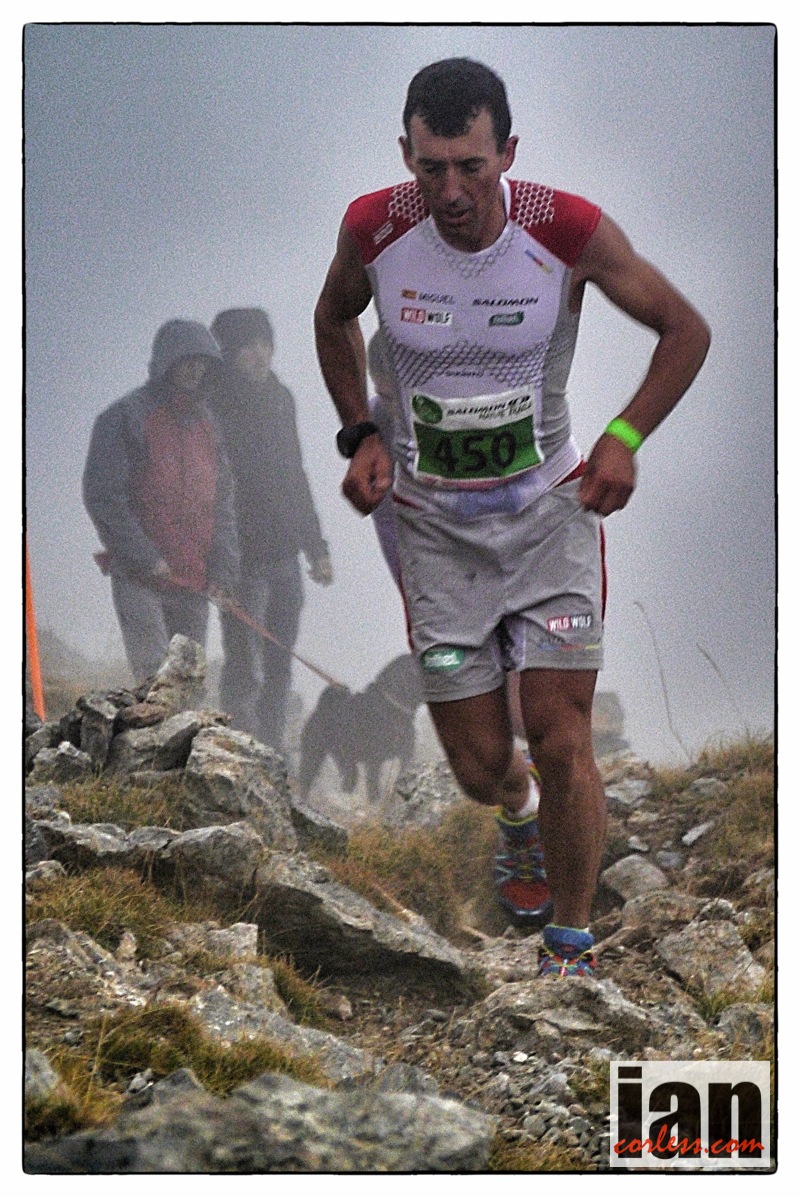
Miguel Heras copyright Ian Corless
Michel Lanne from France had a great race over the tough and technical trail at Trofeo Kima in 2012 and has been racing regularly in the build up to this Spanish race. He will arriving in form and ready to take on the front of the race. Just this week he has been on the trails with Kilian.
Inov-8 have Alex Nichols and Ben Bardsley taking part and they may very well be two dark horses. Ben is well versed in fell and mountain running and will almost certainly come into the race a little under the radar… one person who knows and respects Ben’s ability is Andy Symonds. Expect a surprise! Also watch out for South African fast man, AJ Calitz, he may well struggle a little with the terrain, technicality and temperatures at Zegama. But a surprise can come from anywhere…
Other contenders are Michel Rabat, Nicholas Pianet, Dai Matsumoto, Toru Miyahara, Dawa Sherpa, Dave James and Daniele Capelletti.
The Ladies Race
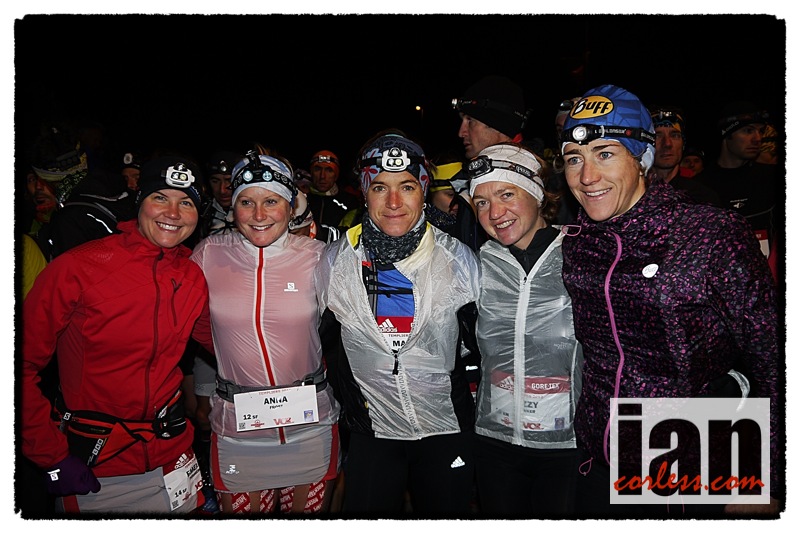
Emelie, Frosty, Maud, Lizzy, Nuria copyright Ian Corless
The ladies race will be a battle royal and although the men’s field has a top quality field I can’t help but think that some real excitement and a nail biting finish will come from this select group of women. Of course, Oihana Kortazar is returning to hopefully repeat her 2012 victory. She will be fresh as she will have not raced at Transvulcania. However, I am going to go out on a limb and predict a podium place, if not a win for Stevie Kremer. Stevie (from the US and now living in Italy) may not be a name too familiar to many but believe me, she has all the class and ability to create some waves over the ‘Sky’ distance in 2013. She has just recently placed on the podium in a very tough race in Italy (overall podium, not the ladies) and after seeing her perform at Sierre Zinal and other races, I think Stevie will be the surprise package of Zegama.
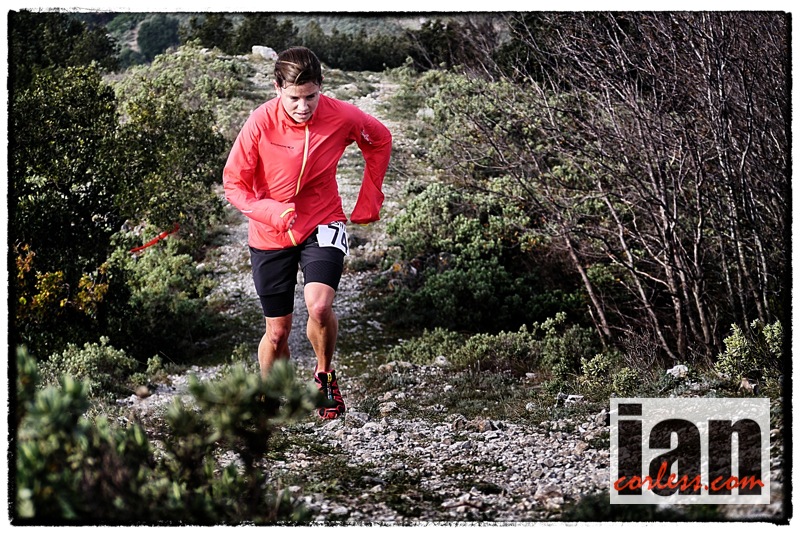
Stevie Kremer copyright Ian Corless
Nuria Picas once again had a great race at Transvulcania 2013 and will come to Zegama ready to push hard and go full speed for the win. She had an incredible 2012 season and performed over all distances always making the podium and in most cases, she stood on top of the podium. She is a true champion and a great ambassador for the sport.
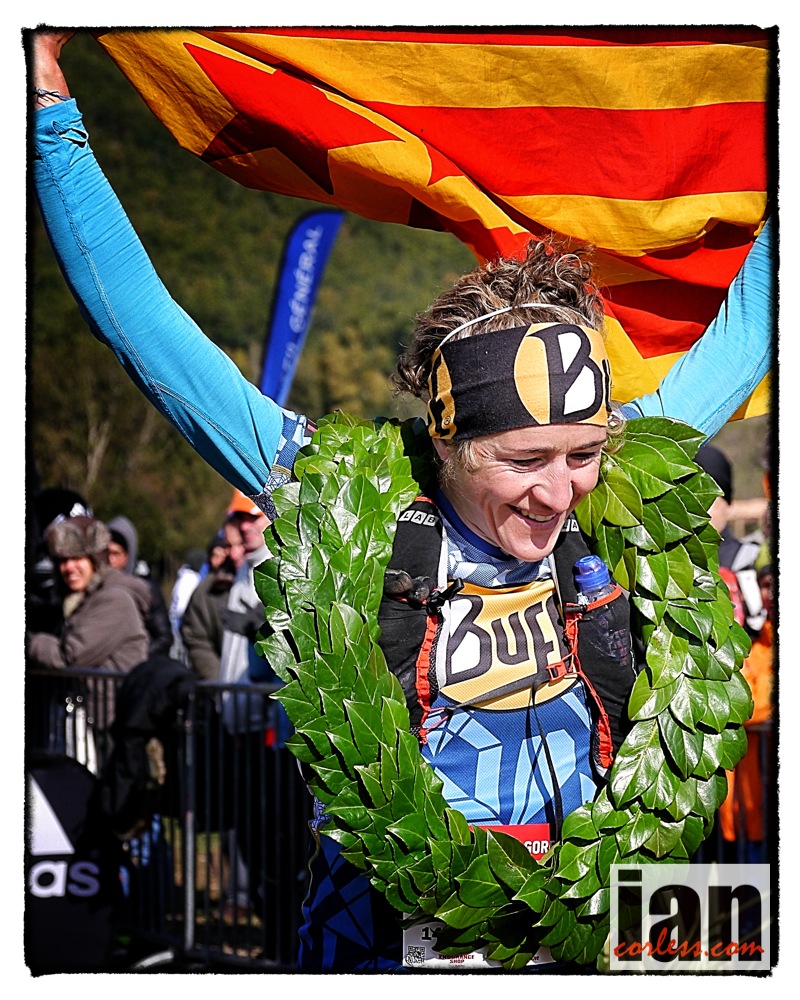
Nuria Picas copyright Ian Corless
Emelie Forsberg had a superb race in 2012 and she will be back fighting for the podium. She can go downhill like no other and as she showed last year, she took the final descent at break neck speed and got on the podium. She is wiser, stronger and more experienced now. She is going to be fired up after her incredible run at Transvulcania and just missing Frosty’s CR by a couple of minutes. I think back 12 months when I first met Emelie, Zegama really was her first big race… boy she has come such a long way in twelve months. What does the future hold for her?
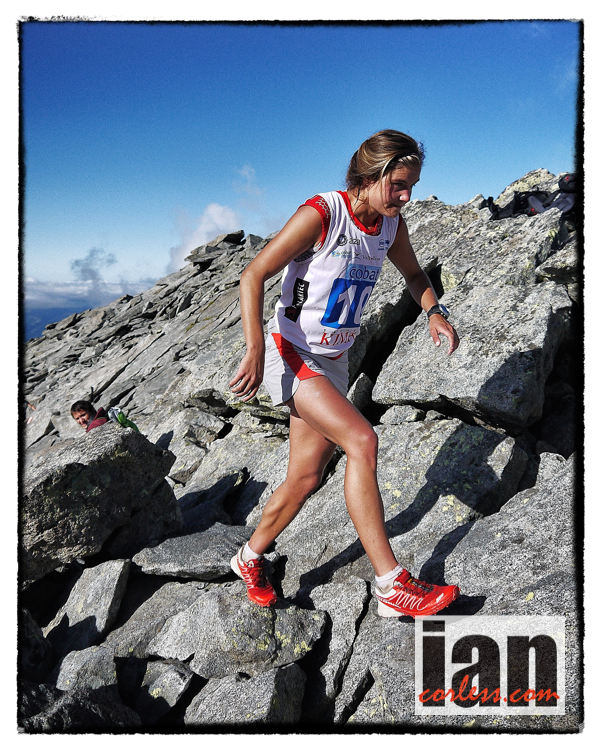
Trofeo Kima 2012 copyright Ian Corless
Silvia Serafini is also another great potential for a podium place. I don’t see her on top of the podium… she is still very much a lady who likes speed and good running terrain BUT she is learning fast and has heaps of talent and ability. Just this last weekend, the 18th May, she set a new CR in The Great Wall run in China.
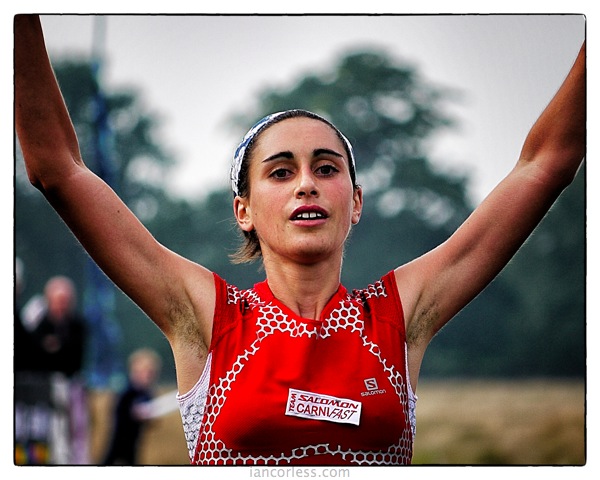
Silvia Serafini – copyright Ian Corless
Anna Frost gets a notable mention. She won’t be racing this year. She missed Transvulcania due to injury but just this last week has had some good news and she is now back on the trails, albeit slowly and one step at a time. She will be back!
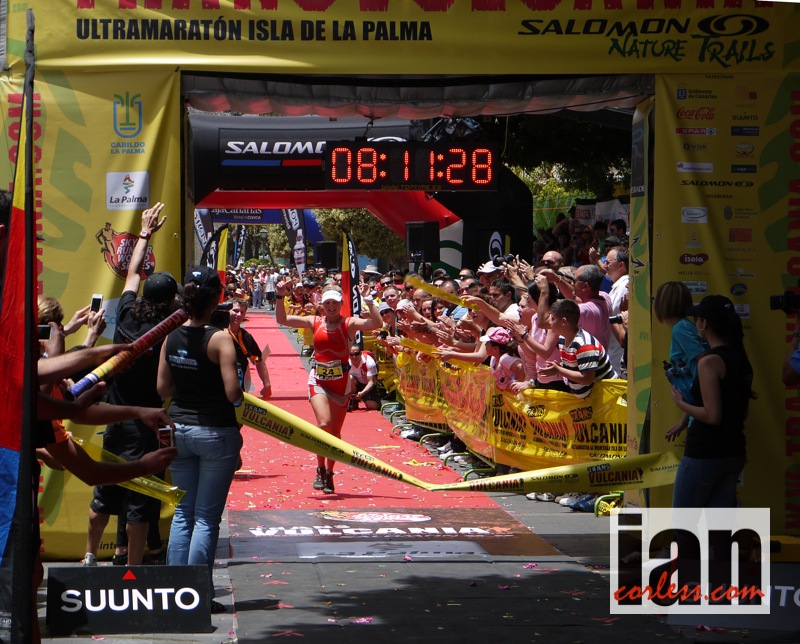
Anna Frost ‘Frosty’ copyright Ian Corless
Emanuela Brizio will lead the rest of the ladies gunning for one of those coveted podium slots. Maud Gobert, Stephanie Jimenez, Debora Cardone, Sarah Ridgeway and Anna Lupton make up the main contenders for the 2013 edition.
Links
Calendar
SKY
1. SPAIN: Maratòn Alpina Zegama-Aizkorri – 42k, Zegama – May 26
2. FRANCE: Mont-Blanc Marathon – 42k, Chamonix – June 30
3. USA: Pikes Peak Marathon – 42k, Manitou Springs, Colorado – August 18
4. SWITZERLAND: Matterhorn Ultraks – 46k, Zermatt – August 24
5. ITALY: Skyrunning Xtreme – 23k, Limone sul Garda – October 13
Stage 4
Distance: 75.7km
Terrain: 13km of dunes and approximately 30km of sand.
It was always going to be a make or break day and stage 4 of the Marathon des Sables did not disappoint.
For the ladies, Laurence Klein went into the stage with a strong lead that was close to 30 minutes over Megan Hicks with very strong Jo Meek pushing Megan for the 2nd slot on the podium. Laurence was going to need to have a bad day or Megan was going to need an incredible day to take the lead. As it happened, both happened.
Laurence unfortunately struggled very early on in the stage and was taken ill allowing Megan and Jo to run ahead of her. By the time time she arrived at CP4 at around 40km’s she was already well over an hour behind putting Megan as overall race leader in the race. In the dunes, Jo was pursuing Megan and she was just 5 mins behind. However, Megan continued to run strong and by the finish she had completely dominated the long stage putting her well ahead of all competition. Brits, Jo Meek and Zoe Salt continued to have and incredible 2013 Marathon des Sables and not only finished second and third on the stage but are now in these places on the overall general classification. Zoe Salt had in incredible ‘long day’ and had closed on Jo at the finish with a gap of just 94 seconds.
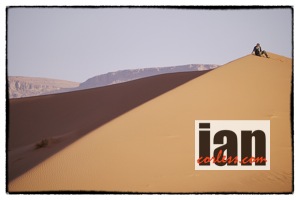
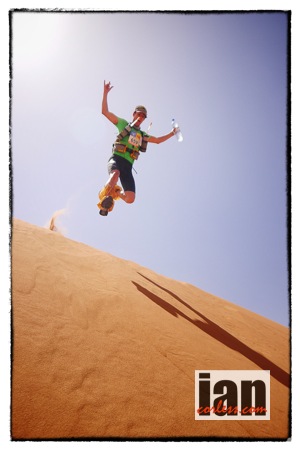
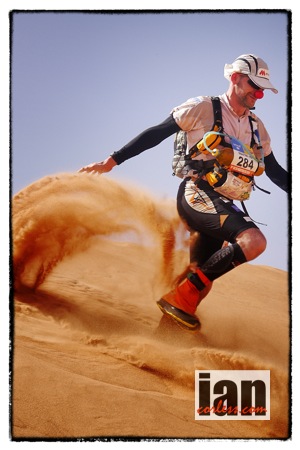
Mohamad Ahansal hand finished 3rd yesterday and many wondered if he had a chink in his armour? I however thought he was playing a game, showing some vulnerability so that he could pounce when the time was right. In the dunes, Aziz El Akadf from Jordon (winner in 2012) was just ahead of Mohamad Ahansal by seconds… he was pushing hard, as he ran past I could hear him breathing. The dunes sap strength and energy but these guys make it look easy. Bounding from left to right foot they stride past me. First El Akad leaped from the top of the dune and then Ahansal. The race was on! Ultimately though it was short lived, El Akad couldn’t hold the pace and blew up allowing Ahansal to run away with another stage victory in a stunning 06:54:47 (El Akad finished 10th in 08:29:34).
Chasing behind was Salameh Al Aqra who not only took second on the stage with 07:13:55 but also is now second on general classification. Antonio Salaris had another strong day with a third place in 07:29:45.
Highest placed Brit, Danny Kendall was worried by the long day but he had a wonderful day in the sand finishing in 8th place in a time of 08:17:16 and this now puts him in 10th on GC.
The day
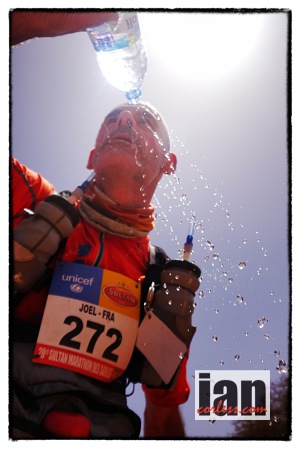
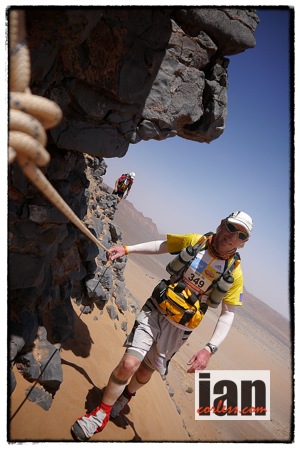
The long stage of the Marathon des Sables is the day that all runners dread and need to treat with respect. It is the day that everybody has to dig deep, to find that inner strength to achieve a finish. This year in particular after three incredibly tough stages, the 75.7km day was going to be a crunch day. As Mohamad Ahansal had said the previous day “this is the hardest Marathon des Sables I have ever done”. Nobody here would disagree with him. One word has been used unanimously around the camp, ‘Brutal’. It’s a word that I often here at races but believe me, this ‘MDS’ has been exactly that, brutal.
The long stage had a mixture of terrain but ultimately it was all about sand and dunes.
The race is split with the top 50 runners (inc first 5 ladies) starting three hours after the rest of the field. At 0830, just under 1,000 runners left the depart, rabbits for the 50 elite who would chase them down.
It was going to be a day of heat, tiredness and the desire to make the finish in less than 34 hours. A long flat straight was followed with a climb through a col and then more flat running with mixed terrain of rocks, sand and small dunes. Of course runners run from checkpoint to checkpoint but the first target is CP4 that has it’s own cut off time. Many runners arrive here as night falls or in darkness and start impromptu fire to cook, eat and relax. Some sleep a little and then push on.
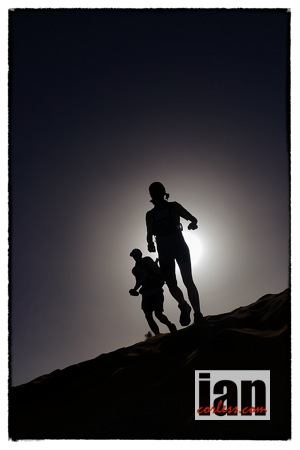
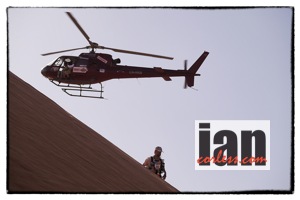
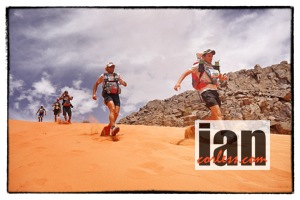
CP4 to CP5 was the larger dunes at meters high, a rollercoaster of sand and then the long push to bivouac and then end of another incredible day.
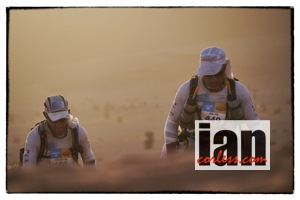
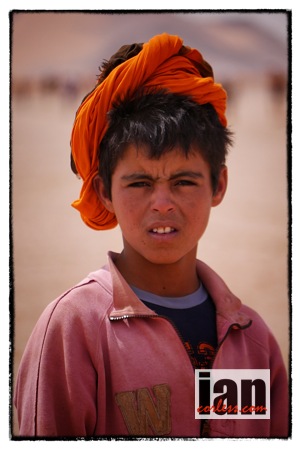
As I write this, the race has been underway for 28.5 hours and we still have approximately 100 runners on course. Two of these are my friends, as mentioned in a previous post, Didier and Gilles. These are the story of the Marathon des Sables. I stayed up all night watching runners achieve a dream by crossing the line… some cheering, shouting and clapping. Other runners too tired, too broken to show any emotion. It’s here that faces tell stories. Ekes glazed, seat dried on foreheads and cheekbones. Cheeks hollowed through dehydration and effort. It’s a look of the brave, it’s a look of exhaustion it ‘s a look of ‘I did it!’
The emotion is for all to see. It’s those moments in the dark when a runner cries with tears of relief and happiness that shows that the fatigue, the sacrifice, the dedication and the commitment to achieve a goal are all worthwhile.
Time has no relevance. The journey is what counts, the experience and the ability afterwards to say ‘I completed one of the toughest endurance challenges on the planet”
To all who achieved and all who failed trying, I salute you.
Stage Results:
Men
First Brit Danny Kendall, 8th in 08:17:16
Ladies:
Overall:
Men:
First Brit Danny Kendall, 10th 17:59:43
Ladies

Copyright Ian Corless
The North Face have always had a mixed response in the ultra and trail world with it’s running shoes. Some people love them, others are indifferent. The original Single Track model had many features of merit and had a strong following (I was a fan). However, runners like Tsuyoshi Kaburaki and Seb Chaigneau wanted a lighter shoe. The Single Track Hayasa was born (Review here).

The new Hyper-Track Guide in many respects combines aspects of both shoes in what is arguably, The North Faces’s best shoe yet. Read on.
The Hyper-Track Guide are lightweight and like other manufactures the shoe appeals to the market of door-to-trail. In addition, these shoes may very well fit a gap in the market in terms of ‘drop’. The Hyper-Track Guide with an 8mm drop nicely fills a space in the market between other models such as the Salomon Sense Ultra (4mm) and Sense Mantra (6mm) but other manufacturers such as Scott, are still producing shoes with a conventional drop. I have to say, Scott currently have the T2 Kinabalu for trail and some road running and it is setting the bar by how I judge other shoes it performs so well.
As the above image shows, a lower drop promotes a forefoot run style.

The ‘Cradle Guide*‘ helps cushion the impact and canters the heel. The forefoot facilitates the natural supination phase and provides cushion through the force peak.
*The North Face Cradle Guide™ technology offers full Phase Impact Control, a system that guides the foot through all 3 stances of the gait cycle, impact, mid foot and Toe-off. This system is engineered to provide the perfect combination of cushioning, stability and protection for any foot on any terrain, letting the hiker or runner move swiftly and lightly over backcountry trails.

Many conventional trail and road shoes have a drop of 11mm or 12mm and the current trend for improved ‘forefoot’ running is pushing manufacturers to address the need in the market for lower drop shoes. However, a lower drop isn’t for anybody and if you are a definite ‘heel strker’ you will want to ease your way into using any shoe with a lower drop. The Hyper-Track Guide may very well make that transition easier if that is what you require. At 8mm it offers a ‘middle ground’.

The sole of the shoe certainly offers more grip in comparison to previous models. Is it enough? Well, if you are heading out in the mud; no!. When a shoe has a selling point as ‘road and trail’ use a compromise is going to be made. The Hyper-Track Guide will work perfectly on hard pack trail or rocks and of course, should you wish to run on the road, it can handle that too. But as soon as you get to mud, the sole has nothing to grip with and you slide. The sole has strategically positioned rubber pods in the outsole to give excellent grip on slick terrain and resistance to abrasion. Certainly on wet road or rocks it does the job well.

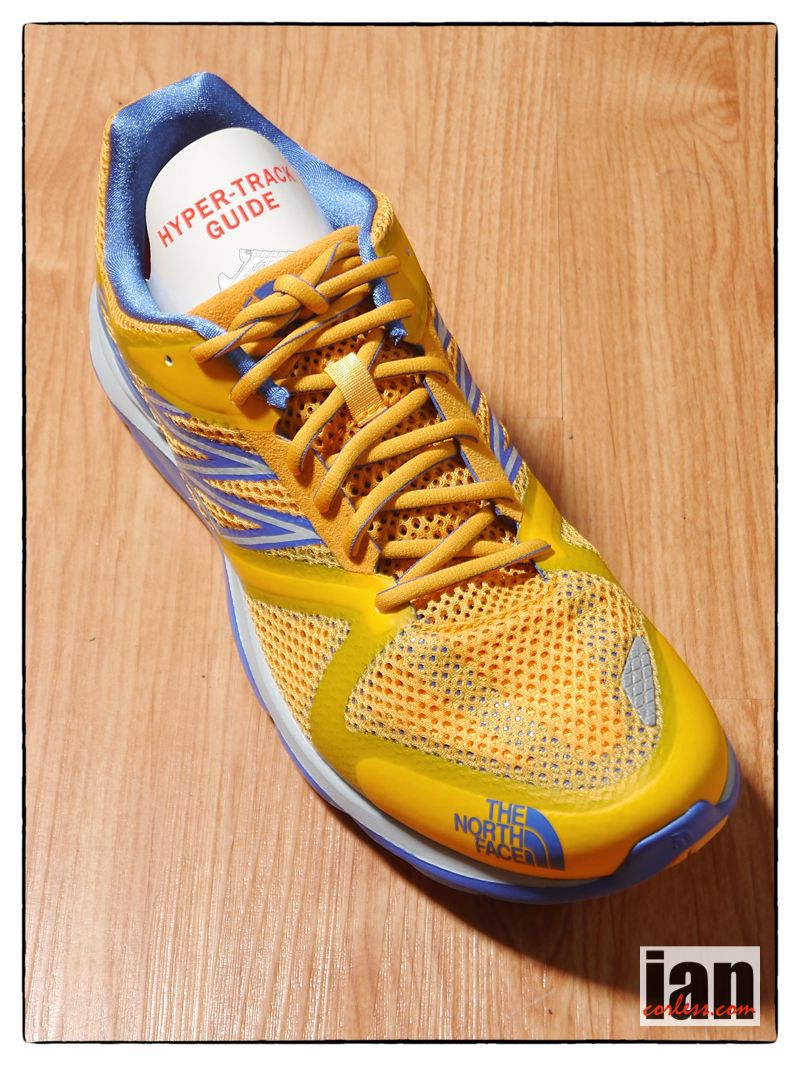
The upper is extremely breathable like other models in the The North Face range, on a cold or wet day the shoe can feel a little chilly. But that also means that should you be running in the heat, these shoes will be exceptionally cool. They are also great if you run through any water, they drain very quickly. Lightweight is a key feature and this has been maximised by having a ‘sandwich mesh’ upper. The shoes have no sewing or seams. That has to be a good thing as this reduces any potential rubbing. The upper also has TPU welded support overlays to hold the foot in place when in the shoe. This does provide added security to the foot and for such a minimal approach you can feel it work.
The sole has the key Cradle Guide feature as mentioned above. This helps or should I say ‘guides’ the foot through the three phases of the foot strike; impact, mid foot and toe off. Cushioning, stability and protection for ‘any’ foot on any terrain is what The North Face say but ultimately this shoe suits a neutral runner that is already a mid to forefoot striker OR it suits a neutral runner who wishes to progress from heel striking to mid foot striking. In use the shoe feels a little ‘stiff’ in comparison to other shoes and I put that down to the ‘Cradle’ working but also firm cushioning. IF you need that guidance the Cradle Guide may well be a good thing. If you are mechanically efficient, this may well be a little irritating at first. However, the longer you run and the more you feel the benefit of the cradle. So, ultra runners may find that as fatigue hits, the Cradle Guide may very well be a nice addition to help maintain good form. Cushioning is 16mm at the rear and 8mm at the front.
In Use

Copyright Ian Corless
The shoe sizes a little large in my opinion. All my previous TNF shoes have been UK9.5 and the Hyper-Track Guide definitely has more room. The toe box has adequate room. But on a first run I did feel my foot move, particularly in the heel area. Laces are superb. They have an elastic stretchy feel and really do hold the foot in place and don’t come loose. The upper with no seams is spot on and breathability is excellent. Weight is 287g for a UK9.5 and this compares well to other comparable shoes.
On the road the shoes felt a little uninspiring. They lacked zip. However, if I started to lift the pace the feel and response certainly became far more pleasurable and responsive. But ultimately they felt hard and at slower speeds I felt as though I ‘slapped’ the ground. What it did encourage was light contact with the ground, so, I thought about my technique all the time while using them. On hard trail the feel was better providing the trail was hard, rocky or sandy. If I went to into mud then the sole offered next to no grip. But, the shoe is not designed for that type of trail. I am merely pointing out that this shoe has restrictions and if you are looking for one shoe to do all then this may well not be it.
So, my impressions are very much around this shoe being used for racing or faster sessions. Of course the term ‘racing’ is relative if we are looking at ultra running, so, if you plan to use this shoe for longer events, you may want to make sure that it will provide the comfort you need over extended periods. The Cradle Guide will certainly help with this.
Jez Bragg used this shoe extensively over the Te Araroa trail, so it does show that you can really run some long distances in them.
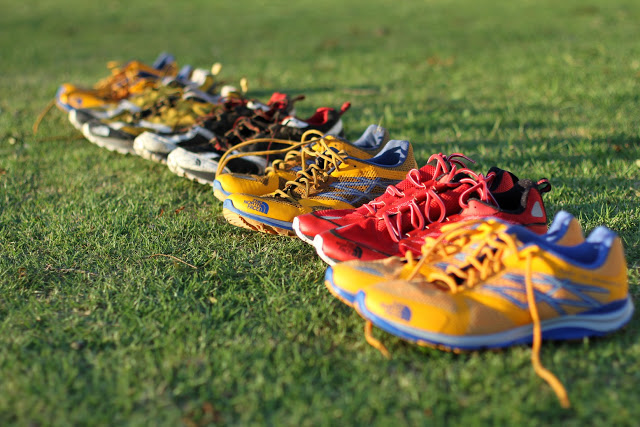
Copyright – http://jezbragg.blogspot.co.uk
Quick rating:
The upper is form-fitting and flexible which made for a snug and comfortable fit in the fore and mid foot areas. The heel felt a little loose but it is possible to adjust the feel by adjusting the lace configuration. Laces are superb.
The Hyper Track is a stiff shoe. The stiffness of the sole almost makes this shoe uninspiring at times, particularly on pavement at lower speeds. Running fast in this shoe is when I felt most comfortable. The 8mm drop gets you on your mid to forefoot and you really think about technique.
The upper is light, breathable and holds the foot well. It has no seams and therefore reduces the possibility of rubbing.
In my opinion it sizes a little large so I would recommend trying the shoe on.
Weight is light at 287g for a UK9.5
Best use – Faster running on hard pack trail
Links:
The North Face HERE
Stage 3
Distance: 38km
Terrain: 2 Djebels, 2 dried up lakes and lots of sand
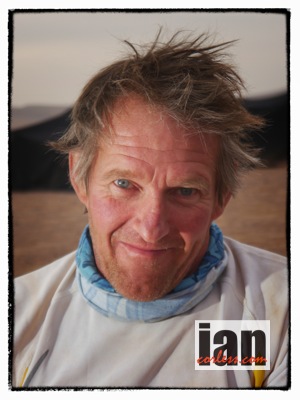
Tired bodies emerged from the bivouac, the severity of the previous day a visible sign on bodies and faces. In the early hours as runners prepare for the coming days stage, from an onlookers point of view, it is like a mix of some ‘hospital’ program (particularly feet), an episode of ‘Survival’ and then a program about homeless people who are having to sleep in the same clothes day after day. It’s quite a mix.
Shorts and shirts now have a wonderful pattern upon them of dried salt. Feet are taped, padded and coloured red from iodine. Faces are drawn, weathered and hairstyles appear to have been created for some new episode of Mad Max.
Despite all this, moral is good. Bivouac is a great place for bonding and ultimately one of the key attractions of the Marathon des Sables. It’s in these open sided tents that friends are made for life.
Patrick Bauer stood on top of his vehicles and after a briefing for the day the runners spilled from the start. The runners in overall contention start each day as though running a 10k and then carry on that pace… it is incredible to see Ahansal and El Akad pull away from everyone. Despite running with packs, they have long strides and are light on the feet.
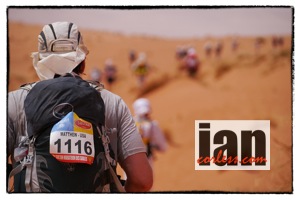
By contrast, once we are past the first 100 or so the look changes dramatically. Long strides become short strides and by the time the first 500 are through, short strides are fast walking then fast walking becomes walking. It’s all about economy of effort and understanding personal limitations and working out what needs to be done to complete the day! Of course, at the back of everyone’s mind is tomorrow, ‘the long day’.
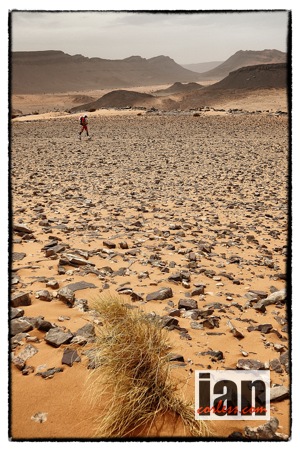
Stage 3 was a beautiful stage of not a struggle for many. It involved many flat sections across salt flats or sand and although the day started overcast, the sun soon came out and baked the runner’s form above and below as the heat bounced off the ground.
Just before CP1 was an oasis, some lush vegetation and palm trees providing a welcome break from orange or white. From here a road branched to the right and then a long salt flat before the first djebels. Up and over and more flat running before CP2.
CP2 was the entranceway to a long rocky and sandy climb up the second djebels and then a rocky plateau that provided wonderful panoramic vistas of all that was around. A dune descent was followed by miles and miles of sand to CP3 and then the final flat push along rocky terrain to the finish and bivouac.
Matt Price (804) from the UK said “I just couldn’t run on the sandy flats today. It was hard work. Long straights that just kept going and going. The heat bounced back of the floor. It was so hot”
Nick Mackenzie (745) also from the UK said, “I learnt today that the Marathon des Sables has no ‘easy’ days. Yesterday was very hard and technical but today was equally hard but from a different perspective. It was hot. Flat. Brutal”
At the front end of the race, 2012 winner Aziz El Akad finally broke the Mohamad Ahansal strong hold of the race and on in a time of 03:00:17. In second place, Salmeh Al Aqra pulled back some time on the overall standings with 03:03:45 and Mohamad Ahansal finished third in 03:05:21.
British men are still performing exceptionally well with Danny Kendall 12th in 03:28:07, Andrew Fargus 13th, 03:29:56, Tobias Mews 17th in 3:43:50 and Neil Talbott 18th in 03:44:13.
Laurence Klein once again gained more time on her rivals and forged ahead to another stage win in 03:28:07. In the early stages of the day, Megan Hicks was looking strong running in second place ahead of overall third place, Jo Meek. But by the time the line arrived, Jo had pulled back time and although Megan finished second in 03:54:23, Jo was only seconds behind for third in 03:54:38.
British ladies are performing beyond expectation and now have a strong presence in the top 20; Zoe Salt was 4th on stage with 04:14:14
Overall standing after stage 3
Men:
First Brit is Danny Kendall, 10th in 09:42:27
Ladies:
Next placed Brit is Zoe Salt in 4th, 12:27:31
Tomorrow’s stage is the ‘big day’ and will more than likely dictate the overall outcome of the race. A distance of 75.7km with 30km of sand and an additional 13km of dunes will break many.
The men’s field is very close and anything could happen. Laurence Klein has a convincing lead in the ladies race but the fight for 2nd and 3rd place is just seconds. Should Laurence have a bad day, we could see some real changes.

Tom Owens running a ridge at the stunning Trofeo Kima copyright Ian Corless
Tom Owens is a British runner who I guess in ultra terms, as Tom keeps telling me, is not an ultra runner. But when you are on the podium repeatedly in Skyrunning races in 2012 and push Kilian Jornet, the term ‘ultra’ can be loosely used. I caught up with Tom just as he had finished a run in a gale force wind on the fells near his home in Scotland.
IC: Welcome Tom.
TO: Thanks Ian, great to be here.
IC: Thanks for finding the time to chat. So, you say you are not an ultra runner but it is fair to say that when we look at some of your 2012 races like Zegama and Trofeo Kima they are tough races aren’t they and when we look at how long it takes to cover these races they do drift into ultra category.
TO: Yes I agree with you. You are on your feet for a long time. A race like Zegama can take 4 hours and that is considered a ‘runnable’ Skyrunning race.
IC: Lets go back to what got you into running. You told me that at the age of 22 you ran London Marathon.
TO: Yes I was at University and I entered the ballot for the marathon not thinking I would get in. Ironically I got in first time. I did a little training and joined a cross country club. I had a year of running but it was very much a sideline. I was much more interested in Football and having a good time. I ran the marathon and then got addicted.
IC: In 2004 you ran 2:42 at London.
TO: Yes, correct. I learnt so much in the first two years. I met some great folk at Bristol Uni and I learnt how to train and recover. I was very pleased at the time.
IC: What do you mean pleased? Any of us would be ecstatic with 2:42 marathon.
TO: Funny, I didn’t know what time to go for so I wrote splits for 2:42 on my hand and it went well. My first time was hopeless and I bonked. I made changes for the second year but that was pretty much the end of my road running.
IC: Yes, you met Andy Symonds and I guess your friendship with Andy has dictated both your careers. You have almost run in parallel.
TO: I met Andy and he introduced me to hills. He is a great guy, super talented and enthusiastic. So he encouraged me to try hill races and I loved the vibe. Really different. Very challenging but no pressure. So varied. Andy encouraged me throughout and I kept with it.
IC: What would you say was the point when the focus started to shift? You lived in New Zealand and you met the Scottish team who were out for the world trophy. Was that a pivotal point?
TO: Yes it was I guess. I travelled and then I settled in New Zealand and it had a great running community. I lived in a brilliant city surrounded by hills. It’s an outdoor way of life and I ran more. With the World Mountain Running Champs taking place I saw Jonathan Wyatt and that inspired me. To have the English, Scottish and Welsh team over was brilliant. I hung out with them, did the ‘open’ race and yes, I guess I just continued that momentum in the UK.

Tom Owens behind ‘Hernando’ in the early stages of Zegama 2012 copyright Ian Corless
IC: In 2007 you won your first British Championships beating Rob Jebb.
TO: Yes that was a surprise. A race up in Scotland. Wasn’t a big field but it was a tough race and it has two or three big hills. I can’t remember the distance but it took about 3 hours. I just pipped Rob by about 7 seconds on the line. It was a huge confidence boost. Luckily most races I do finish downhill so it gives me a chance to catch back up after loosing time on the climb.
IC: I guess this is a perfect opportunity to discuss and explain what fell running is. As an exponent of fell racing would you like to give us an overview.
TO: They are very low-key events. The race will visit checkpoints, typically hill summits or passes. You often start at a village hall or pub. You run to to the hills carrying basic equipment such as waterproof, whistle, compass and map and then you make your way to checkpoints as fast as you can. It’s often horrendous conditions; after all it is the UK. You can need map and compass work but you can ‘follow’ as I do. More often than not it is usually wet and very slippery. In a nutshell you basically go straight up and straight down as fast as you can
IC: It’s a key point isn’t it that fell running is not about sticking to the worn path, it’s about the quickest route from A to B.
TO: Yes. That is the beauty. You have a hill, you get up as quick as you can. That is often ‘hands on knees’ power walking and then the fun bit is hurtling down as quickly as you can in a direct line. I guess in the UK we are lucky. The hills are open and we can pretty much go where we want. Especially in Scotland with the right to roam act.
IC: You mentioned going up ‘hands on knees’ I think for most of us we can get our head around that, what I find with fell running is the coming ‘down’ is just crazy. It’s such a skill. Is that God given or do you have to practice.
TO: Like anything you need to practice. You have to get confidence on all terrain and build up ankle strength. If you relax it is so much easier. Particularly if you fall over, most of the time you get up and carry on. Racing is in the head, relax and enjoy it and the rest will follow!
IC: In 2007/ 2008 you got involved with Salomon and eventually you ended up adventure racing and multi stage racing. What was the process involved in that?
TO: I started as a reserve for the Saab/Salomon Adventure Racing Team. In 2008 adventure racing was a big sport. It was certainly one of Salomon’s big focuses. I would say it was probably the last year of racing too as the economy crashed. I was called up as a reserve and I raced a six-day race. Probably one of the best races ever… two mountain days on foot, mountain biking, climbing, paddling and canyoning. In addition, every evening we had a trail race that was really competitive. It favored runners.
IC: Your team was 2nd overall, yes?
TO: Yes that is right. I was with Andy Symonds again and a guy called Ben Bardsley. We are mountain people. We lead for most of the race but lost time on the water.
IC: That combination of multi stage racing and time with Andy, was that instrumental in what brought you guys together to take on Transalpine.
TO: Yes, it was a race I had heard about. It looked amazing. Andy was in Scotland at the time and we trained together so it seemed logical that we should undertake this as a team and give it a go. Again, another brilliant race!
IC: The race is typically about 160 miles over 8 days and alternates direction?
TO: Yes, 8 days. It has two routes and they alternate. An easterly route and a route that is more western which is more alpine. Actually we did both. We did the west route in 2009 I think and the other the following year.
IC: And you won both!
TO: Yes, Andy and I run together so well and the format suits us. You run hard and then you get to recover and do it all again the next day.
IC: Just like that!
TO: Yes, it is a battering race. Definitely good that it is late in the year as you really need to recover afterwards.
IC: You see, you say that you are not an ultra runner but 8 days in the mountains on those tough courses running a marathon a day is ultra running. That is severe, head to the ground hard work.
TO: Yes, challenging days. Brilliant days. Some of the passes and tracks are breath taking. It’s a delight to be involved but you get it done as quickly as you can. It does take its toll. It definitely has an ultra element to it.
IC: In 2010 you raced ‘Giir di Mont’. You came 6th. Was that the point that Skyrunning really started to appeal or was it before that?
TO: To be honest the first Skyrunning race was 2006, it was La Plagna, A huge race. It was 55km with 3000m up and 3000m down. Certainly the hardest thing I had ever done at the time, I hadn’t been running long. In 2007 I did a couple more and similar in 2008. I started to build up and as more opportunities came I snapped them up.

Crowds supporting at a Skyrunning event copyright Ian Corless
IC: Well, we are at present day and 2012 was a stunning year. We seemed to bump into each other all year. Sometimes we saw each other consecutive weekends. What impressed me was right from Zegama to the very end you were always there or there abouts with Kilian Jornet. You pushed him. Great to see a Brit pushing at the front… from a world perspective also, Tom Owens became a name to reckon with. It must be great for you to have Kilian on your Salomon Team but also to be able to race him.
TO: I don’t actually think I pushed Kilian. I may have been second but he was usually 10 minutes clear.
IC: It’s all relative Tom!
TO: Certainly seeing Kilian at the start and finish is great. He is on another level. He is so dominant at all distances, VK to ultra. We can’t get close to him. He is so chilled and he recovers so quickly. I certainly can’t do it week after week. After a hard race I can’t walk for 4 to 5 days.
IC: If we look back at 2012 what was your highlights?
TO: To be honest I was really pleased with the year actually and the consistency. I did so much and it was never straightforward. I had some wonderful opportunities. The highlight though was Trofeo Kima in August. It’s a really technical Italian Skyrunning race that has passes, via ferrata and scrambling. It’s a small race but absolutely brilliant experience.

Tom Owens ‘running’ at Trofeo Kima copyright Ian Corless
IC: I have to say that it was a highlight for me too. I had never experienced a course like it. To be able to witness the action unfold and capture it on camera was really fantastic. You say it was a small race, you are right, the race is capped at around 125 people but it had a stacked field; Philipp Reiter, Kilian Jornet, Andy Symonds and more. What was obvious at the end was the level of fatigue you all had. That course required 110% concentration.
TO: Absolutely, it had so much rock hopping and you followed painted markers so you had to be focused not to go off course and also not to fall. The last descent was bonkers. A 2000m descent on slippery gnarly terrain. To be running that long on such technical terrain that included ladders, chains and ropes is a big concentration exercise. I was happy to get to the road at the end to be able to relax. It was full on.
IC: What are the plans for 2013? Is the Skyrunning series going to figure again?
TO: I really want to do the Skyrunning series again. Races like Zegama, Chamonix and the Matterhorn excite me. Also the race at Limone. All being well I will try some of those and also mix in some new races. It will be an adaptable schedule and I will see how I go and feel.
IC: What about UK races?
TO: I fancy the British Fell Running Championships, so that will be three, maybe four races in addition to everything else. I will try to mix it up like I did in 2012.
IC: Any temptation to move up to any longer distances or will you establish yourself around the Sky marathon distance.
SKY Marathon races for 2013
1. SPAIN: Maratòn Alpina Zegama-Aizkorri – 42k, Zegama – May 26
2. FRANCE: Mont-Blanc Marathon – 42k, Chamonix – June 30
3. USA: Pikes Peak Marathon – 42k, Manitou Springs, Colorado – August 18
4. SWITZERLAND: Matterhorn Ultraks – 46k, Zermatt – August 24
5. ITALY: Skyrunning Xtreme – 23k, Limone sul Garda – October 13

Tom Owens at Sierre Zinal being chased by Joe Symonds (Andy Symonds brother) copyright Ian Corless
TO: I think it would have to be a course I really wanted to do. I would like to try the Ice Trail Tarentaise. That looks brilliant. I am not sure of the distance but I will have to see. I am not avoiding them but I wouldn’t do an ultra for the sake of it!
IC: You know your skills and ability and as such you choose the races were you know you can perform.
TO: As long as I am enjoying it I run well. We shall see.
IC: Thank you so much for freeing up time to chat, Tom. I am really looking forward to seeing you at many races in the coming year.
TO: Thanks so much. It’s a pleasure. Keep up all the good work!
This article was first published on Mud, Sweat and Tears in March 2013.
Links
 IAN CORLESS