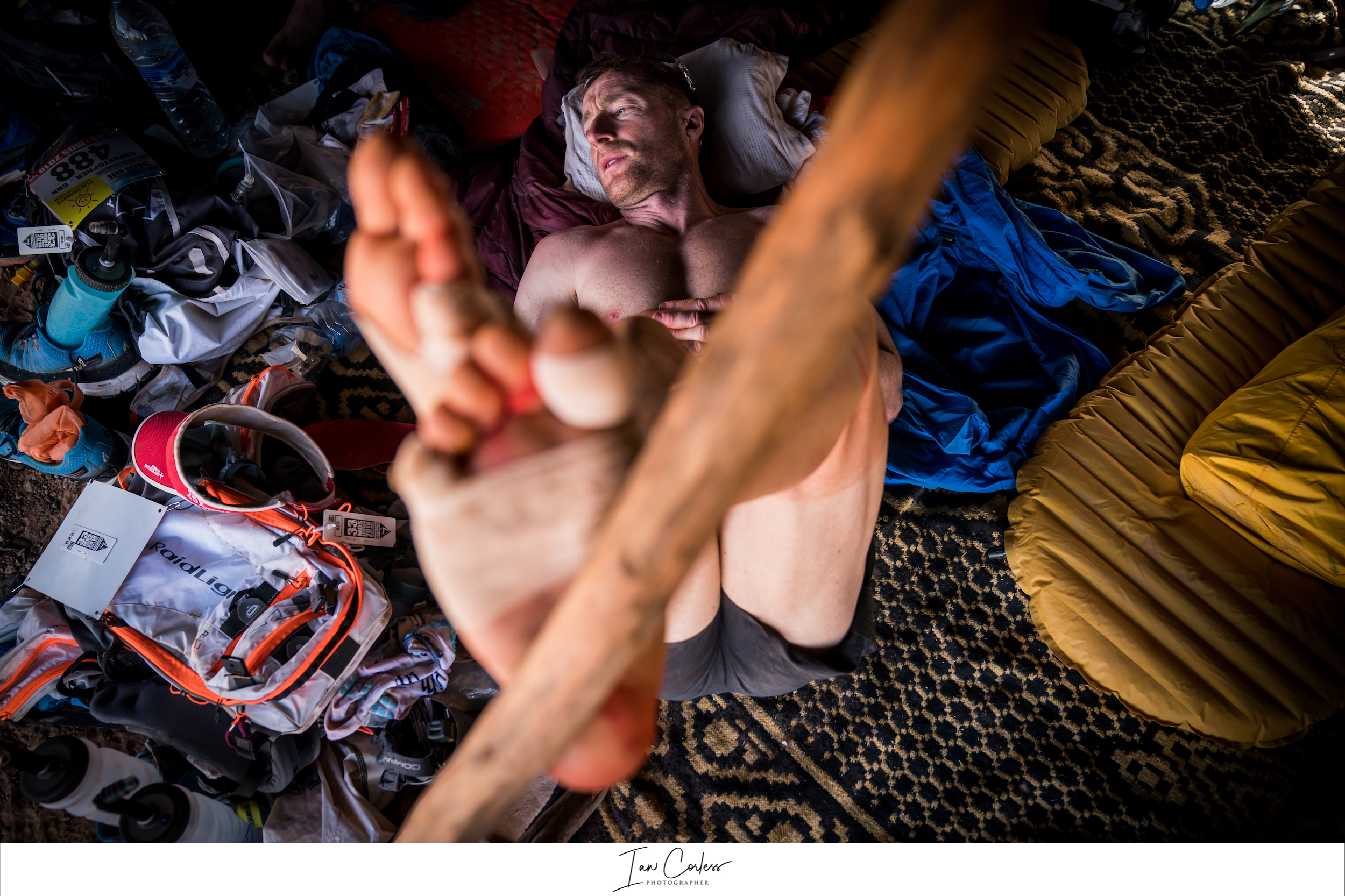
Blisters, they are one of the key causes for a runner or hiker needing to stop in a race or adventure. There is no 100% guarantee that blisters can be prevented, but in most scenarios, blisters can be avoided if you are proactive.
- First and foremost, you need strong and healthy feet.
- Secondly, good shoes that fit correctly and are appropriate for the challenge ahead are crucial.
- Thirdly, socks and the correct sock for you.
What causes blisters?
The answer is really very simple: FRICTION.
If a shoe does not fit correctly, either too small or too big, two things will happen:
If the shoe is too big:
Your foot will move inside the shoe, a moving foot causes friction and friction means blisters.
“Going too big, meanwhile, means your foot shifts around in your shoe. If a shoe doesn’t lock down over your navicular bone, your foot can move back and forth with each step. The shear stress of shifting shoes and bunching socks against skin creates blisters.”
If the shoe is too small:
Your foot will be squeezed and compressed with certain key contact points touching the shoe (toes, instep, arch and so on) and this in turn will cause friction and result in blisters, aches and pains.
“Wear shoes that are too short, and your toes can butt up against the front. This contributes to the bane of runners’ existence, black and missing toenails, says Vincent. This contact can also damage toe ligaments and the metatarsals, leading to deformities like hammer toes, he says. Over time, you can also develop Freiberg’s infraction—a stress fracture of the second metatarsal—from repeated impact. Plus, squeezing your toes together too tightly forces the muscles of your foot out of alignment, Gray says. As a result, you might feel foot fatigue and develop pain in your arches.”
Read an in-depth article on HOW TO FIND YOUR RUNNING SHOE SIZE AND FIT HERE.
A simple Top-10 checklist is as follows, I recommend you try any new shoe on after you have spent time on your feet, as this allows the foot to naturally spread and be its true size.
- Choose the correct type of run shoe for the chosen terrain: road, trail, mountain and so on. They should have the correct outsole for the required job and the correct level of protection and durability.
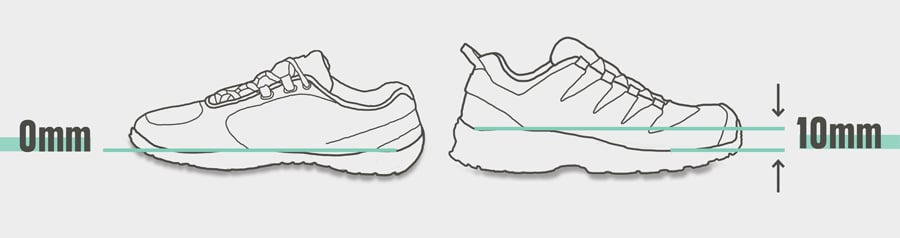
- Take in to consideration cushioning and shoe drop.
- It sounds obvious, but make sure the shoe feels comfortable.
- Your toes should have room to move BUT not too much room. A thumb nail of extra length above your longest toe is a good gauge. Note I say ‘longest toe,’ this for many is not always the big toe – Greek, Egyptian, Square or Classic foot shapes need consideration.
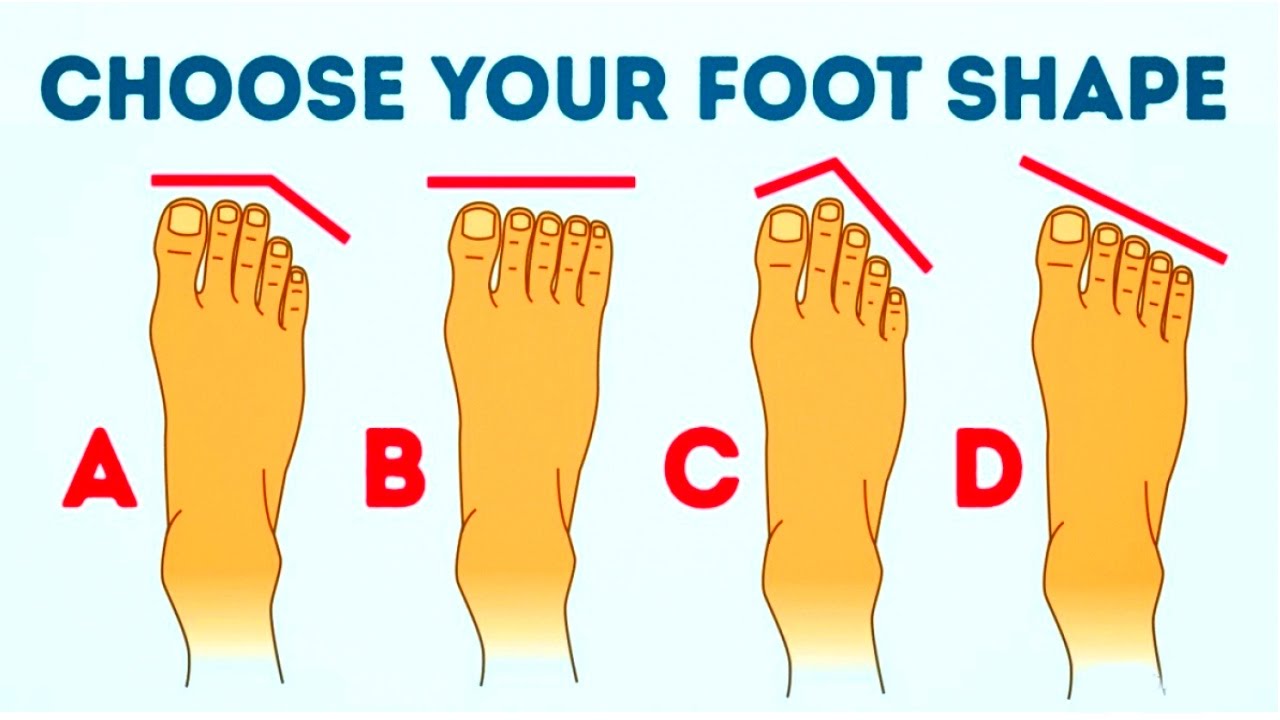
- Consider your foot shape, are you a long and thin foot or a wide foot? Choose a shoe that is appropriate for your foot shape. A good example here is Altra or Topo which are much wider shoes that echo a wide foot shape. Take out the insole of a shoe and place your foot on it while wearing socks, this is a good indicator of the shoe length and fit.
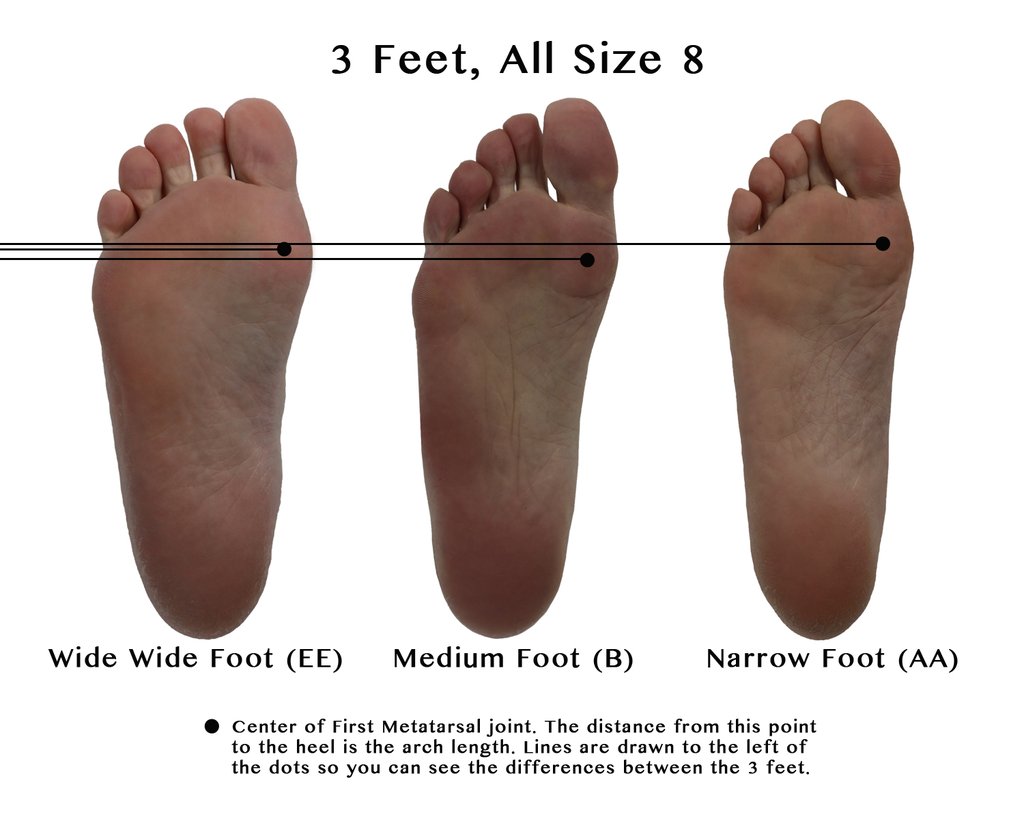
- Lace your shoes correctly and make sure that the shoe holds your foot without unnecessary movement. This should NOT be at the expense of pain on the instep because you need to over tighten the laces. Also, make sure there is no slipping at the rear when moving.
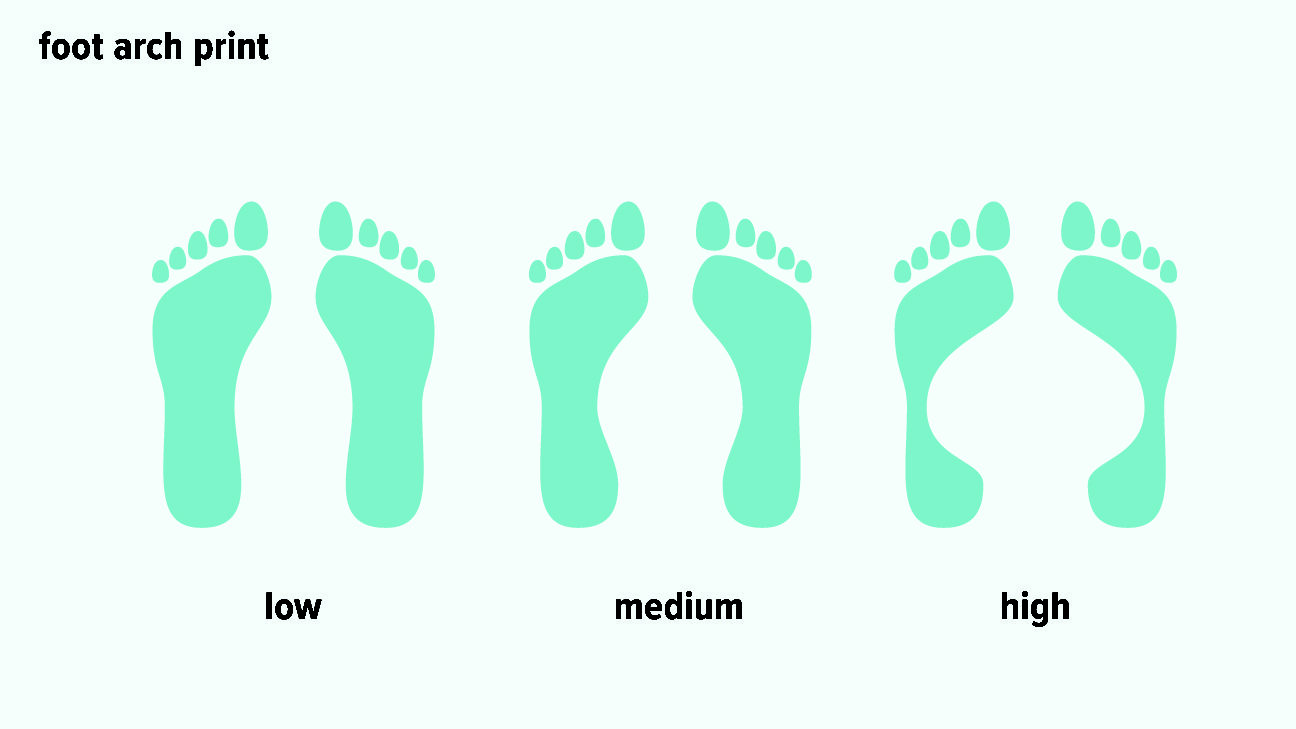
- The arch of the foot should feel comfortable. Make your sure you know if you are neutral, supinate or pronate as this will narrow down shoe selection. Consideration are low, medium or high arch. Maybe you use an orthotic? If so you should use neutral shoes, take out the insole provided with the shoe and insert your orthotic.
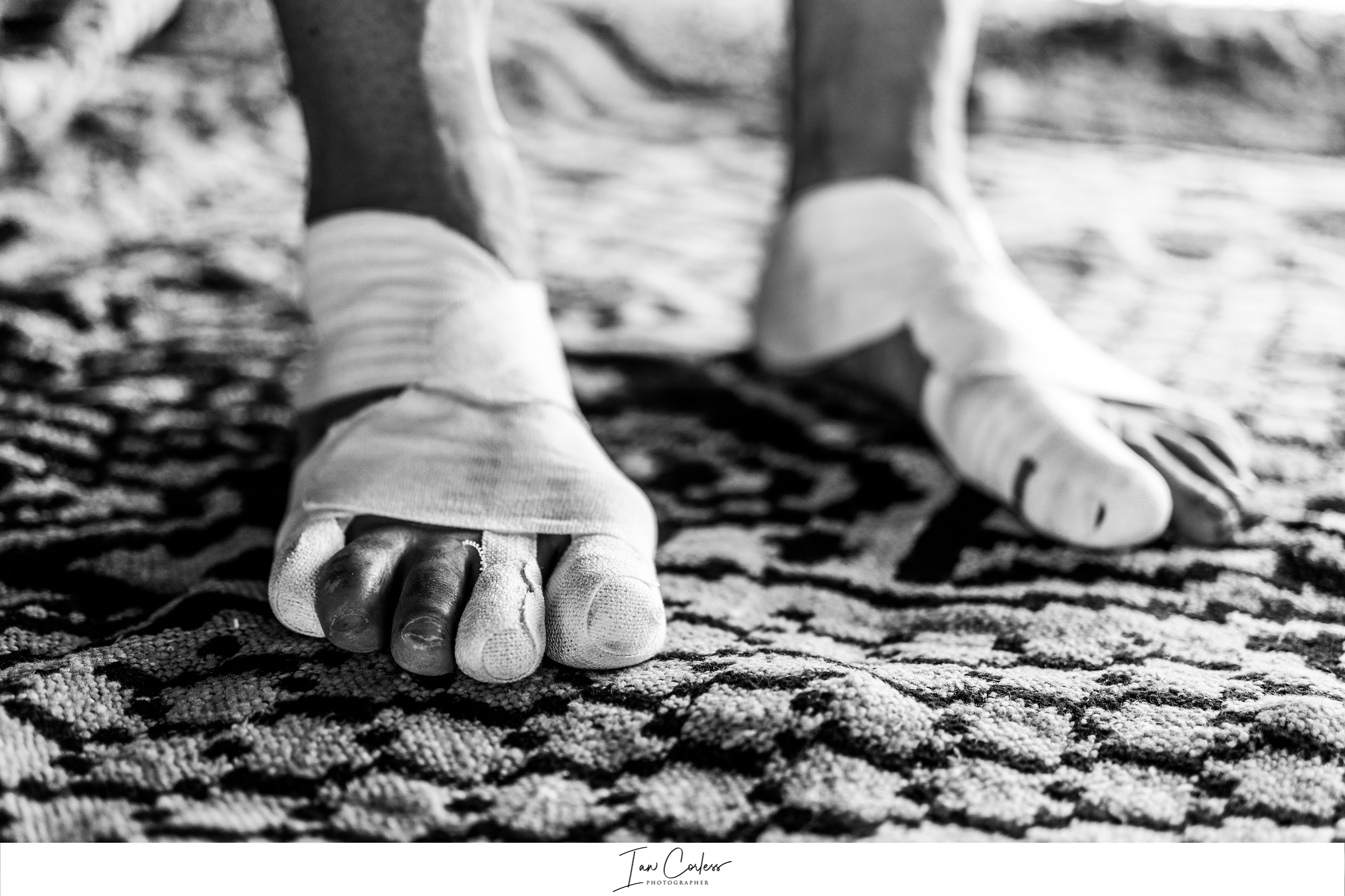
- Use your preferred socks when trying and testing shoes. Note: If you plan to double sock and pre-tape your feet, you need to try and test shoes in this way! Don’t test shoes with ‘any’ sock when you plan to use something different. Double socking AND taping may require a size bigger.
- Make sure the shoe flexes correctly in the propulsive phase, this is the area behind the metatarsals. It should not distress the toes and equally, if a shoe is too wide, this will create bulging of the material and fabric which can cause blisters/ friction.
- If a shoe fits you perfectly, they should be good for running straight away, however, sometimes it can be beneficial to wear a shoe in the home first, then go for a walk outside and then run.
Should you get larger run shoes?
There is no one easy answer here and many pitfalls. You will hear someone say, ‘I always buy a size bigger in my run shoes in contrast to my daily shoes.’ However, this actually provides us with no information. Why? Firstly and most importantly, we have no idea how someones daily shoes fit, they may be too small and therefore going up a size in a run shoe means they are actually in the correct size. Also, if you double sock and pre-tape, this will almost certainly require a shoe that is larger and or wider.
Quite simply, the thumb nail of width above the longest toe is an ideal measuring guide. Again, I stress, the longest toe, this is NOT always the big toe.
Should I get wider run shoes?
As with the above question, there is no one easy answer. But you will know if you have a narrow foot, medium foot or wide foot. Many shoe brands now offer a guide on the width of shoe to help you make an informed decision, this is often on a scale of 1-5, 1 being narrow and 5 being wide.
However, the width of the required shoe can change based on the run type you are doing and the duration of the run. For perspective, if you are running a technical mountain marathon over 1-2 hours, you will want a more precision fit that provides greater control and security. By contrast, if you are running a 100-mile race say over 20-hours, you need a much more relaxed fit shoe with some space and comfort.
Ultimately, you need to make a decision on the best shoe for you taking in to consideration the type of terrain you will run on and for how long.
Common mistake – You may have a shoe that you really like and due to changes in your feet, yes, feet do change. The shoe you are using is no longer the best shoe for you, maybe your feet have gone wider but not longer? To compensate for this extra width, you get the same shoe one size bigger. You have now gained extra width with the increase in size but now, the shoe is too long. What would have been better is changing shoe model or brand and getting a wider fit that may well be the same size as your old shoe.
Runner’s World have an article: “Thankfully, more running shoes feature wider designs nowadays, and manufacturers like Altra and Topo Athletic make shoes that match the curves of a foot, rather than a triangle. That’s good for your toes, which tend to be healthiest when they can splay out laterally and evenly distribute weight across your foot, according to the American Academy of Orthopaedic Surgeons.”
‘The Best Wide Toebox Running Shoes For Every Foot Shape’ HERE
The longer you run and the more time you spend on your feet, the width of the shoe plays more importance. So consider this. As an example, maybe you are running Marathon des Sables in the Sahara desert. It’s going to be hot and dry. You will run for multiple days and your feet will be under stress. Blisters are commonplace because runners don’t consider all of the above points. They incorrectly listen to the generic advice of ‘get bigger shoes’ but this only allows the runner to fall in the friction trap.
The Friction Trap – Bigger shoes allows the foot to move, a moving foot means friction, friction means blisters.
What they should consider is getting the correct fitting shoes with a thumbnail of extra length above the longest toe, and then getting a wider fit shoe to allow for toe splay and breathing space.
FEET
With the correct shoes and socks, you need healthy feet.
Manage your skin, in many scenarios, there are two thought processes: 1) Toughen the skin. 2) Soften the skin so it becomes like leather. For me, softening the skin is preferential.
Condition your feet to the challenge you will put them through. Strong muscles, ligaments, tendons and ankles make for happy feet. Competitive Edge provide a good article HERE on ‘How to Improve Foot Strength for Running.’
Trim toenails back and maintain.
Allow feet to rest and recover, shoe and sock free post exercise.
Walk around at home barefoot as this will help the conditioning process.
Products like Gurney Goo or by contrast, highly absorbent powder make for happy feet during exercise.
If you have dry and callused feet, use products such as lotions or creams to help soften the skin.
WHAT IF YOU GET BLISTERS?
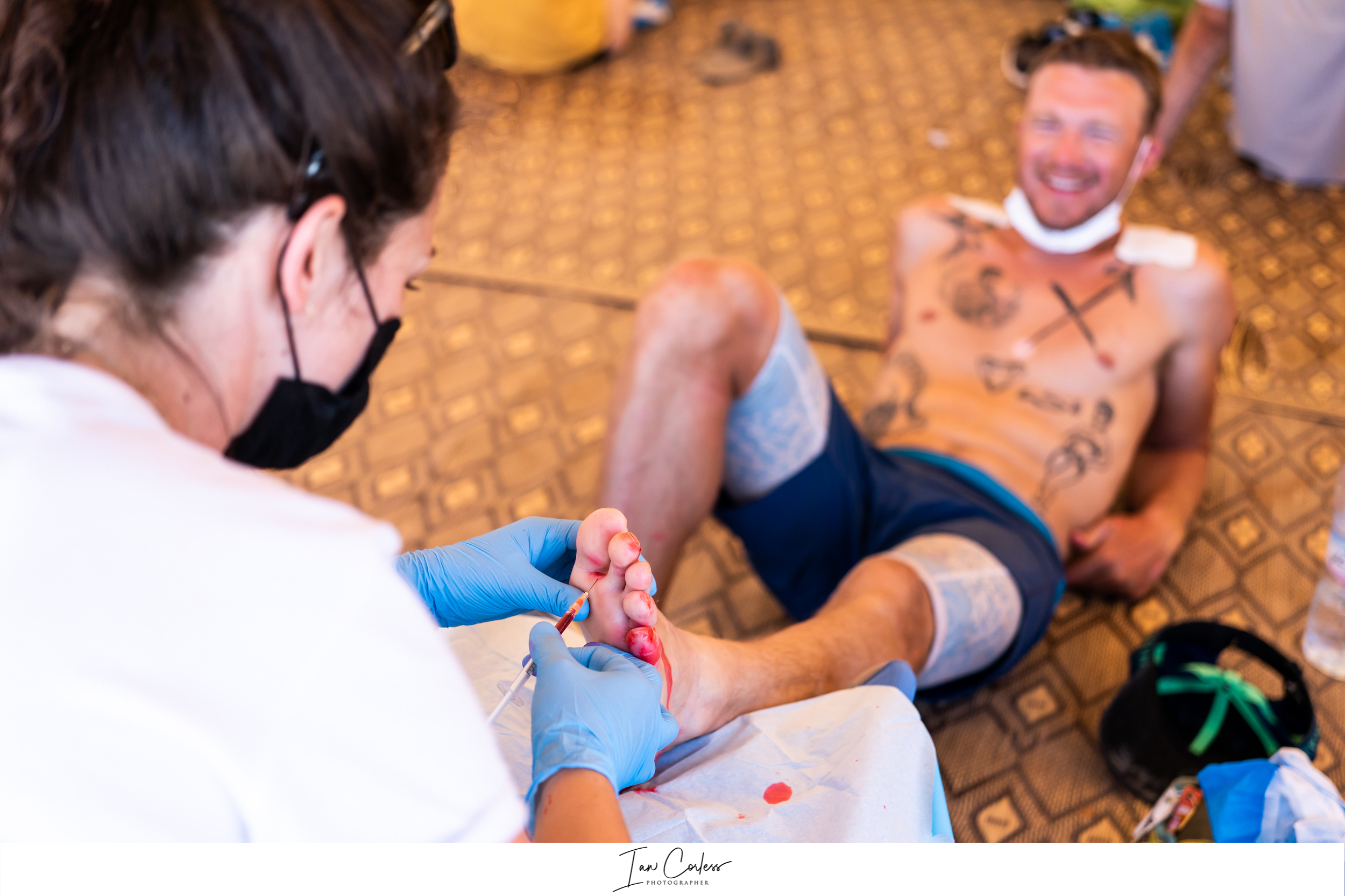
Quite simply, if you follow the above steps, you should have no problems.
- Look after your feet.
- Wear the corrects socks*
- Pre-Tape if required.
- Have the correct shoe for the terrain and the correct fit.
*Toe socks like those by Injinji form seamless little sleeping bags for each toe, wrapping each toe with moisture wicking, low friction fabric. They immediately stop the skin on skin rubbing. They also allow your toes to spread, grip and creep naturally providing they are used in a shoe with a wide enough toe box to allow splay. Toe socks help reduce blisters BUT if you plan on pre-taping, they may not be the best choice.
But, things can happen…
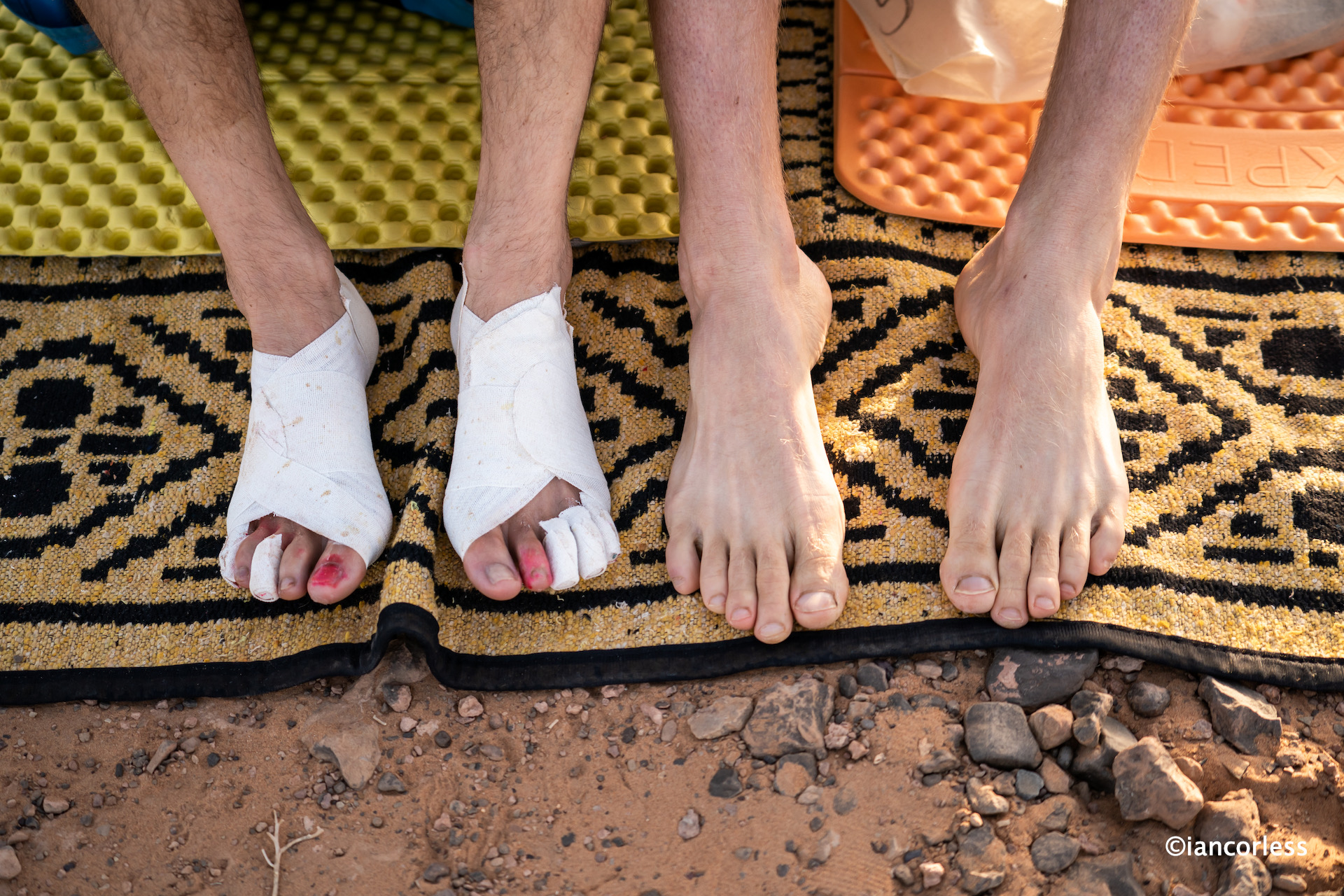
Be reactive, if you are prone to hot spots, blisters and so on, don’t wait for them to happen and then react, be reactive. Pre-taping is not unusual for some athletes, even with the correct fitting shoes.
Often, the first signs of a potential problem is a ‘hot spot’ which at first can be a minor irritation that can often be ignored. DO NOT ignore it. Stop. Take your shoes off and socks. Address the hot spot with applying tape.
Blisters and fixing them can be an art form. Most of us don’t prepare or plan for this as we are often taken by surprise in training or racing. This usually results in a bad training session or a ruined race, so, what can we do in advance?
PRE TAPING
You need: The correct shoes and socks with correct fit.
- Clean feet.
- Use alcohol wipes to remove the bodies natural oils from the skin.
- Apply Tincture of Benzoin or a similar product, this will allow the tape to adhere better.
- Prepare tape by cutting to correct lengths and make sure you ‘round’ the corners.
- Apply tape (Hypafix for example) making sure there are no folds, creases, and problem areas.
- Use a lubricant, such as Gurney Goo but importantly, find out what works for you. You may prefer powder such as Gold Bond?
- Apply socks.
Practice.
Taping is a skill and you will not get it right first time.
Just as you devote time to training, devote some time to foot care and go through the process.
- Clean your feet with alcohol.
- Apply Tincture of Benzoin.
- Go through the process of cutting tape and applying.
- Keep tape as smooth as possible avoiding creases and ridges. Creases and ridges will only create more friction points.
- Do not tape too tightly as this may cause circulation problems.
- Learn how to tape the ball of the foot and the heel area – common problem areas that require different taping methods.
- Lubricate or powder after applying tape.
- Roll socks on and off to avoid causing issues with the tape.
The above will only get you so far.
HOW TO TREAT BLISTERS
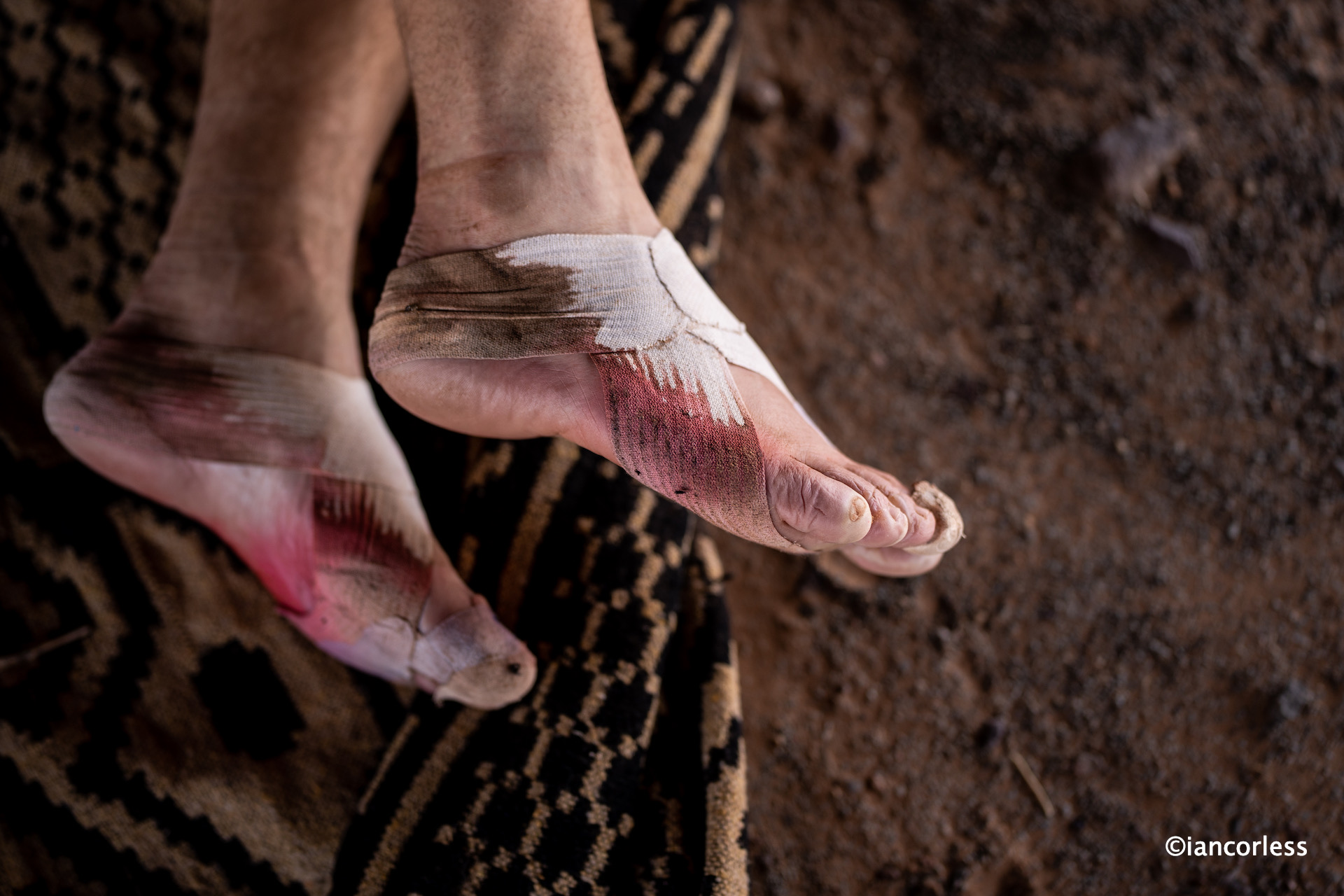
You need to do more research. Rebecca Rushton offers a great resource at
BLISTER PREVENTION HERE.
Should you pop a blister? It is usually not recommend to pop a blister as this can leave it open to bacteria, which can lead to infection. But, there are times when it is a good idea. Read HERE.
Download a guide ©rebeccarushton on BLISTER TREATMENT BLUEPRINT 2.0 HERE
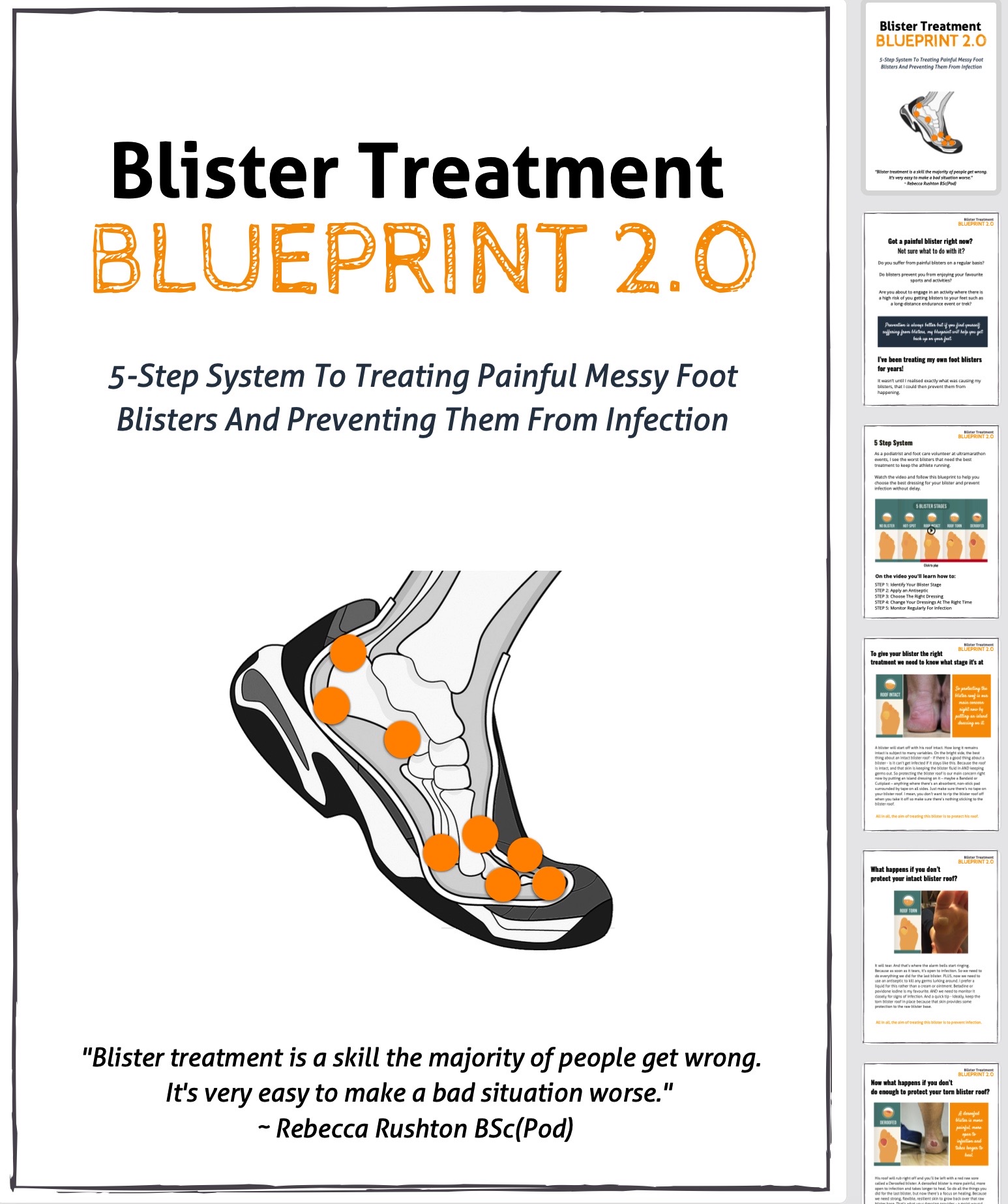
Rebecca has a YouTube site HERE which is also a valuable information source.

More information:
- Toe Blisters HERE
- Bunions and Blisters HERE
- Heel Blisters HERE
- Ball of the Foot Blisters HERE
- Blood Blisters HERE
Useful Products:
- 2Toms Blistershield Powder
- Gurney Goo
- Injinji Socks
- Fixomull Stretch Tape
- Engo Patches
- Armaskin Socks – To be used as the ‘inner’ sock when double socking.
- Hydrocolloid
- MyRaceKit Deluxe AntiChafing Kit
- Hypafix Tape
REFERENCES:
Reference – https://www.ncbi.nlm.nih.gov/books/NBK537292/
Reference – https://www.runnersworld.com/training/a28172274/running-shoe-size/
Reference – https://www.healthline.com/health/bone-health/whats-the-difference-between-supination-and-pronation#the-foot
Follow on:
Instagram – @iancorlessphotography
Twitter – @talkultra
facebook.com/iancorlessphotography
Web – www.iancorless.com
Web – www.iancorlessphotography.com
Image sales –www.iancorless.photoshelter.com







 IAN CORLESS