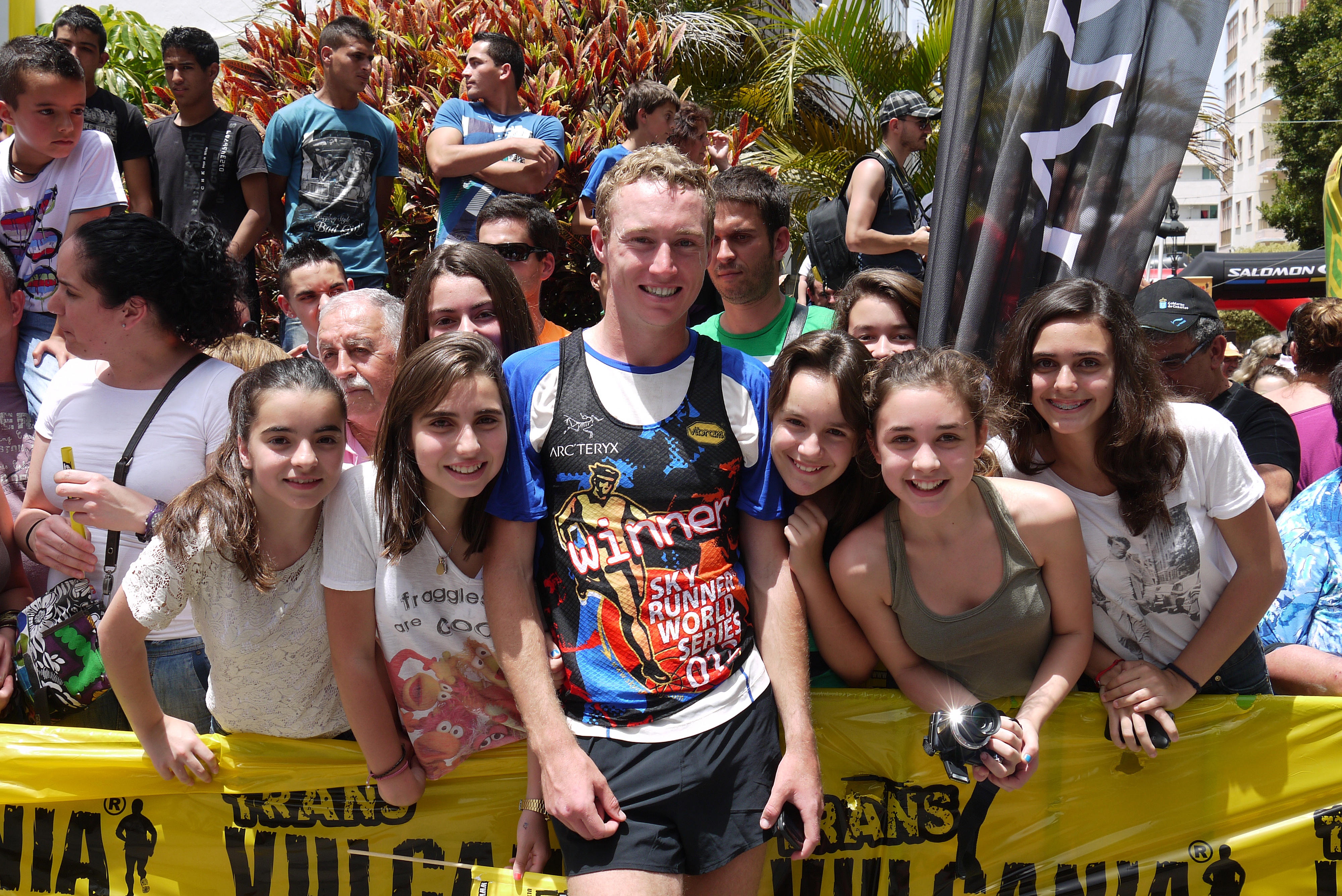
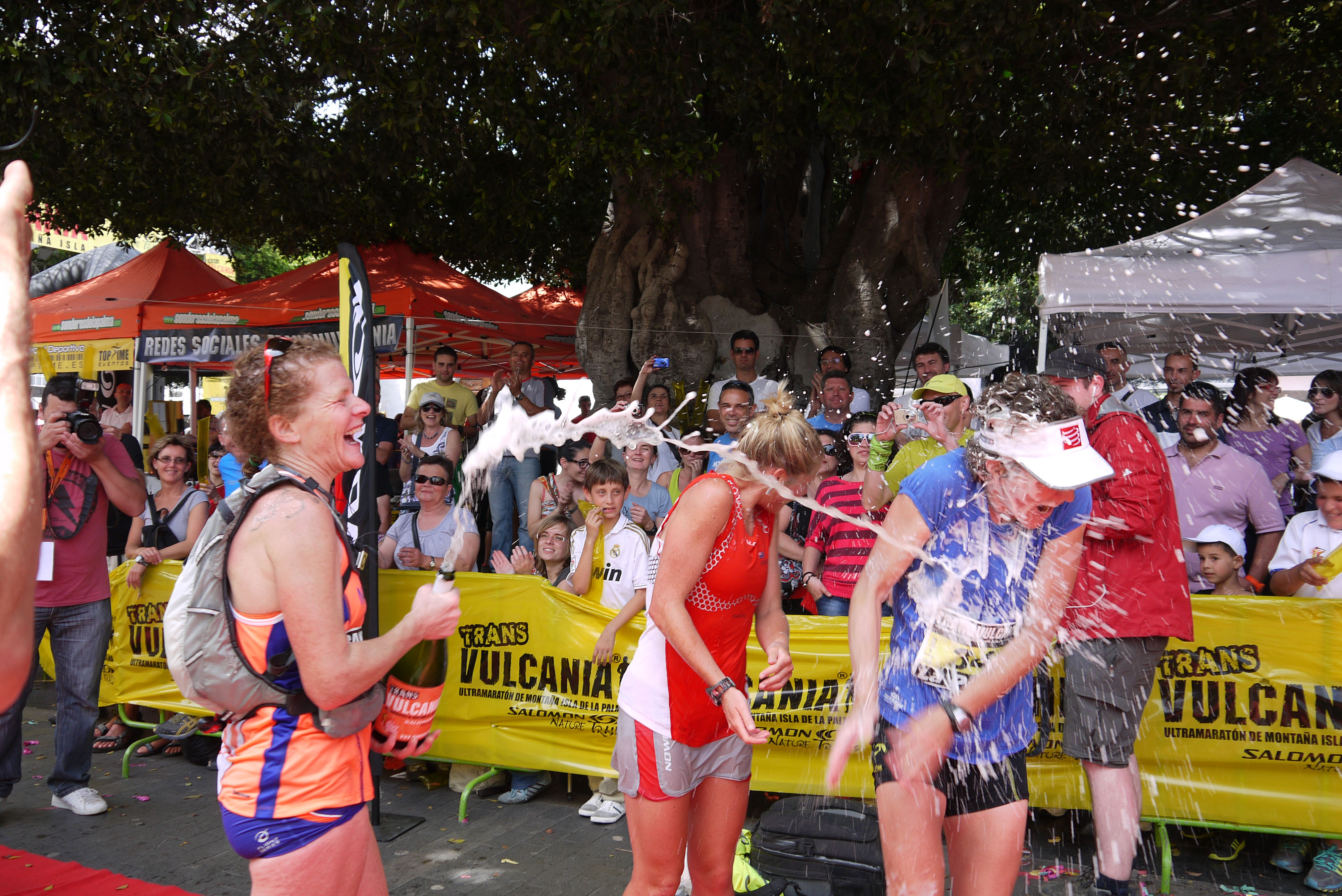
Jury of Appeal ?

Events that arose in the recent Speedgoat 50k seem to have opened a can of worms! Is racing and applying race rules so difficult?

Let’s face it, in the ultra world on a course of say 100 miles, how will it ever be possible to ensure a runner abides by the rules?

At Speedgoat 50k confusion arose over the difference between ‘trail’ racing rules for the US and Skyrunning rules. Had RD Karl Meltzer stipulated a race rule pre race that corners ‘must not be cut’ then I guess we would have clearly had a DQ for Kilian. Under the circumstances Karl made, in my opinion, the best decision possible. End of story! Moving forward RD’s will learn from this and ensure that rules are clear before a race begins.

Taken from The Examiner
For this year’s 57th running of the Pikes Peak Ascent and Marathon to be held the weekend of August 18-19, the Pikes Peak Marathon, Inc., board of directors has announced that a three-member jury of appeals will be in place to review and handle any race day issues affecting runners to include visible course cutting, unsportsmanlike conduct, and the awarding of prizes and prize money.

“Even though rules and regulations at the Pikes Peak events are very specific, there is always a chance that runners misinterpret them. We want to provide a forum whereby any course infractions can be reviewed and considered thoughtfully and thoroughly before a runner is disqualified from the event,” said Pikes Peak Marathon, Inc., President Ron Ilgen.

Although the inclusion of a jury of appeals is not groundbreaking, for instance the World Mountain Running Championships includes in their regulations a requirement that a jury of appeals be appointed, the majority of mountain and trail running events do not have an appointed jury.

USA Track & Field (USATF), the National Governing Body for track and field, long-distance running and race walking in the United States, has several published documents regarding meet personnel, referees, and jury of appeals for events they administer or sanction. Although mountain and trail running falls under the umbrella of long distance running, many of the events staged in the U.S. are not sanctioned by USATF and therefore operate with their own rules, regulations, or guidelines.

As more prize money is introduced into trail and mountain running events, there is more at stake than just a finisher medal.

As Ilgen states, “With athletes vying for a share of an increased prize purse this year, (it was announced last month that $54,000 is up for grabs at Pikes Peak), we want to insure that rules are adhered to and everyone in the race is competing on a level playing field.”

Just a few weeks ago, the Speedgoat 50K had an issue with a top runner reported to have cut the course. Without a jury in place, race director Karl Meltzer had to make a tough decision affecting the outcome of the race and the awarding of prize money. It was a ‘live and learn’ experience and something Meltzer doesn’t want to repeat in the future. He agreed that a referee in place at the event would have made the decision a lot easier.

Some of the items that could be addressed by the jury of appeals at the Pikes Peak Ascent and Marathon include visible course cutting – either noticed by race officials who will be stationed throughout the course, or by other athletes in the race. This constitutes grounds for disqualification. Issues on marathon day related to an athlete hampering another athlete’s progress on race day related to an uphill runner not yielding to the faster downhill runner – possible grounds for disqualification. Unsportsmanlike conduct will not be tolerated and is possible grounds for disqualification. Runners may take aid at specified aid stations, or take aid from supporters along the trail, or carry their own aid. However, taking oxygen prior to the completion of the race (even if medically necessary), is grounds for disqualification.

The Pikes Peak festivities kick off Thursday, August 16, at 1:00 p.m. with a press conference and reception for media and athletes. This event is open to the public and will be held at Manitou Springs City Hall. On Friday, August 17, the expo and packet pickup opens in Memorial Park in Manitou Springs at 9:00 a.m.

The Pikes Peak Ascent start time for the first wave of runners is 7:00 a.m. on Saturday, August 18, with the second wave heading up the mountain at 7:30 a.m.. The culminating event, the Pikes Peak Marathon, will start at 7:00 a.m. on Sunday, August 19. Follow the Pikes Peak races as they unfold on Twitter @runpikespeak.

Statement from ISF re Speedgoat 50k

Marino Giacometti, ISF President, in reply to the Speedgoat issue comments:

“It’s taken a while for us to get all the feedback together but here goes:

The ISF board  conferred with the new Athletes Commission, ATRA and the organiser, Karl Meltzer and we came to the following decision:

Everyone concurs that runners must stay on the course.  However, as things stand only guidelines exist in America.  In this case there was no written regulation at Speedgoat – something Karl says he will include in the future.

On Kilian’s own admission he cut the course and ran by skyrunning rules.  It seems that possibly some of the other runners did the same.

As a race on the World Series calendar, ISF rules state that organisers’ rules must be adhered to and in the case of a dispute ISF rules will prevail.

We respect the organiser’s difficult decision and will apply a 3 minute penalty* to Kilian which means he maintains first place in the race and consequently 100 points for the Ultra Series ranking. *Penalty (6.15 COMPETITOR’S RACE CONDUCT – a) Competitors must follow the course markings on sight, go through all the checkpoints…..) and (6.16.1 A penalty from three minutes to disqualification will be applied for: c) Not following the race course signage, voluntarily or otherwise…

We believe that it’s correct to assign the record to the second runner  (Rickey) who ran the designated course.  Whether Kilian gets the prize or not is exclusively up to the organiser and we already know that decision.

I’d like to add that the majority of skyrunning races worldwide (not just in Europe) take place in parks or protected areas and generally are capped for this reason – as well as for safety reasons of course.   (The ISF rules (4.22)  and (3.13) address  these environmental issues).

Regarding the Pikes Peak precedent in 2004, the situation was different.  The rules there state clearly no switchback cutting.  The winner, Agustì Roc, was disqualified and given a 20 minute penalty which meant he dropped some places and received the relevant points for his final position.

Everyone we consulted agreed that there’s a need in the future for race organizers to publish clear, simple and written regulations and, with the new Athletes Commission, we’ll be reviewing ours as well!! A pre-race briefing should also be held to illustrate the regulations and the course to all the competitors.  We’re actually working on standardizing this for all organizers, so it should be easier for everyone all round.  Certainly it’s not easy to find a compromise but “rules are rules” and, as Anna Frost says “let’s keep it simple”!

Marino

Speedgoat 50K & Giir di Mont

Two great races – many great champions. Winners at Saturday’s Speedgoat 50k , the second World Series Ultra, were Kilian Jornet and Anna Frost.  Jornet finished in 5h14’10” breaking the course record.  Rickey Gates was a close second in 5h18’27”  followed by Max King (5h23’10”) and Anton Krupicka (5h23’36”) 4th in a great come-back after his long lay-off. You can read my pre-race predictions here

The result was not without controversy however as Jornet was declared winner but his record and prize-money withheld for ‘cutting switchbacks….. I will be interviewing Speedgoat Karl for a ‘Meltzer Moment’ on episode 15 of Talk Ultra so make sure you tune into the show to hear what he has to say.

Anna Frost, despite worries of not being on top form, led the race from start to finish. Kerrie Bruxvoort was second while local runners Sarah Evans and Emily Sullivan where third and fourth, respectively.

Back in Europe at Italy’s Giir di Mont, predictions aside, no-one was ready for American Kasie Enman’s triumphant win and record together with Tofol Castanyer’s great come-back in a stacked men’s field.  Brit Tom Owen’s was second and Luis Alberto Hernando, third.

The men’s field was an exciting match with Rumenian Ionut Zinca leading strongly in the first part of the race, before ceding to pressure on the final ascent from Hernando, with Castanyer and Owens alternating the lead. Owens was hampered on the final downhill due to severe blisters from last week’s Dolomites SkyRace® but managed a heroic second position.

In the women’s field it was Enman’s race from start to finish, breaking the course record and closing 14 minutes ahead of her competitors.  Sweden’s Emelie Forsberg kept a steady second place throughout most of the race, to be overtaken by Silvia Serafini – Italy’s new skyrunning hope.  No doubt last week’s superb record at the Dolomites SkyRace® took its toll on Forsberg who slipped down to fifth position. Oihana Kortazar finished third, not on her best form and Blanca Maria Serrano, fourth.

After the weekend’s races, the Skyrunner® World Series ranking is lead by Luis Alberto Hernando, Kilian Jornet and Tom Owens and Emelie Forsberg, Blanca Maria Serrano and Kasie Enman.

On August 9th I will be heading out to Switzerland to report live and record some interviews at the next World Series’ race on August 12 with another star-studded line-up at the Course de Sierre Zinal in Switzerland.

Follow us on twitter and Facebook for latest updates.

Skyrunner® World Series ranking

Money Money Money

Ultrarunning, money and the future?

It’s a big question and one of the things that we spent three days discussing at the ISF Skyrunning Conference in La Palma, the Canaries.

Ultrarunning is without doubt is becoming more popular and more main stream. When you look at the crowds supporting and participating in many European ultras one can see that the sport has only one way to go; up!

By contrast, the sport in America is so much more niche. This was confirmed by the running elite that came over from America. As Dakota Jones said ‘You camp on the start line, roll out of bed and then go run’. Even Western States, the pinnacle 100 miler does not match the European races. Certainly the start has a buzz and of course the finish. But not much happens between the two.

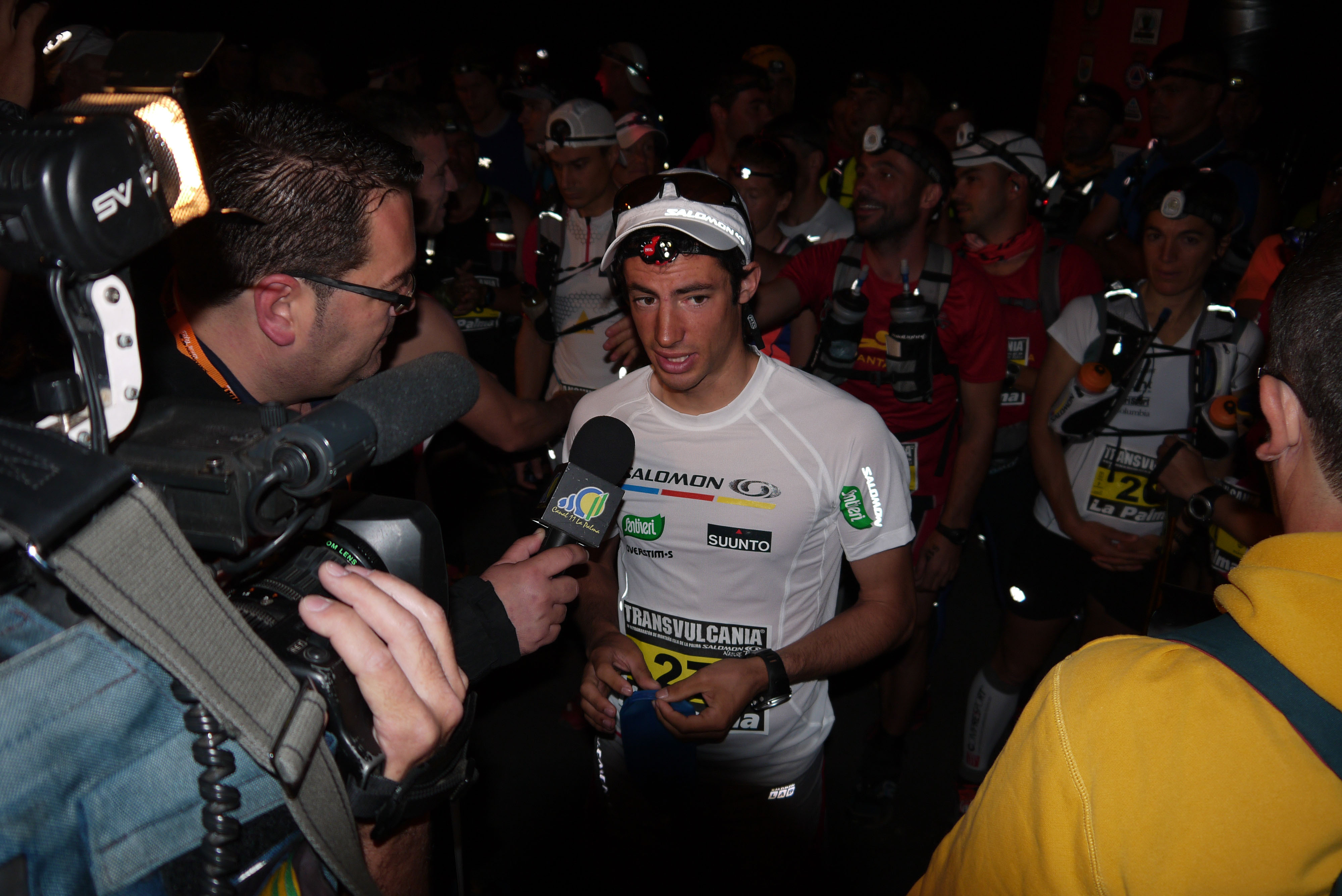
Kilian being interviewed pre Transvulcania La Palma

Transvulcania La Palma and Zegama over the last 10 days had thousands upon thousands of spectators, one would compare it to the Tour de France. They narrow the trail down, cheer and shout at the runners, ring cow bells, blow horns… it’s a party atmosphere and they love the runners.

The sport will progress and the more spectators the races attract, the more the sponsors are likely to invest. Thousands screaming on a start line, all ages, from young girls to old men. Sport has no age criteria and when you get a good looking American finishing in first place you could almost imagine that you are at a rock concert and not an ultra.

Rock Star Dakota

We all love a quiet trail, we all love the isolation of running with one or two friends but the future of racing, particularly if we want more money, money, money will see bigger crowds, more buzz and I guess a sport that will become more media savvy.

What is important and this is one thing that we discussed in La Palma, is that we don’t want the sport to loose what is so good about it. The unity, the friendship and bonding that we all have.

By pure coincidence the Washington Post has had a related article on the subject. You may like to read it:

Washington Post

In the article, Karl Meltzer who has a regular spot on Talk Ultra says:

“Am I making money running races? No,” said Meltzer, who has consistently won some of the biggest trail races each year since 1996. “Even if you win them all, you would still only be making about $30,000 a year. . . . It’s sponsorships that make it possible for the elites to travel to the races and eke out a living at the sport.”

Of course he is right. However some new races are appearing in America such as UROC (Ultra Race of Champions) and Run Rabbit Run which are offering prize money. However, they still don’t have the buzz of European races. A sponsor needs a return!

One thing that is clear is that we live in a digital age. Social media is now imperative if you want to get a message across. Not only do the runners need to Tweet, Blog and Facebook but so do the teams, the sponsors and everyone related to the sport.

In Transvulcana La Palma and Zegama, I combined forces with iRunFar and ULTRA168 and we lit up Twitter and Facebook. We became the outlet and feed of the race. Not only updating the positions of the runners but importantly feeding back how the runners felt, how they looked and sending photos ‘live’ as it happened. It is the way forward.

1,2,3 at Transvulcania

Tony Krupicka said in the article:

“In just the last few years, there have been huge gains made in the media aspect of the sport, mainly via following races on Twitter, and in the production of various films”

It’s early days, the sport although well established is now just being born. It is an infant about to move up to a bigger school.

Let’s keep the bullies away and retain the integrity of the sport while at the same time allowing it to expand so that we can make a living but also still love it for what it is; running!

Ian