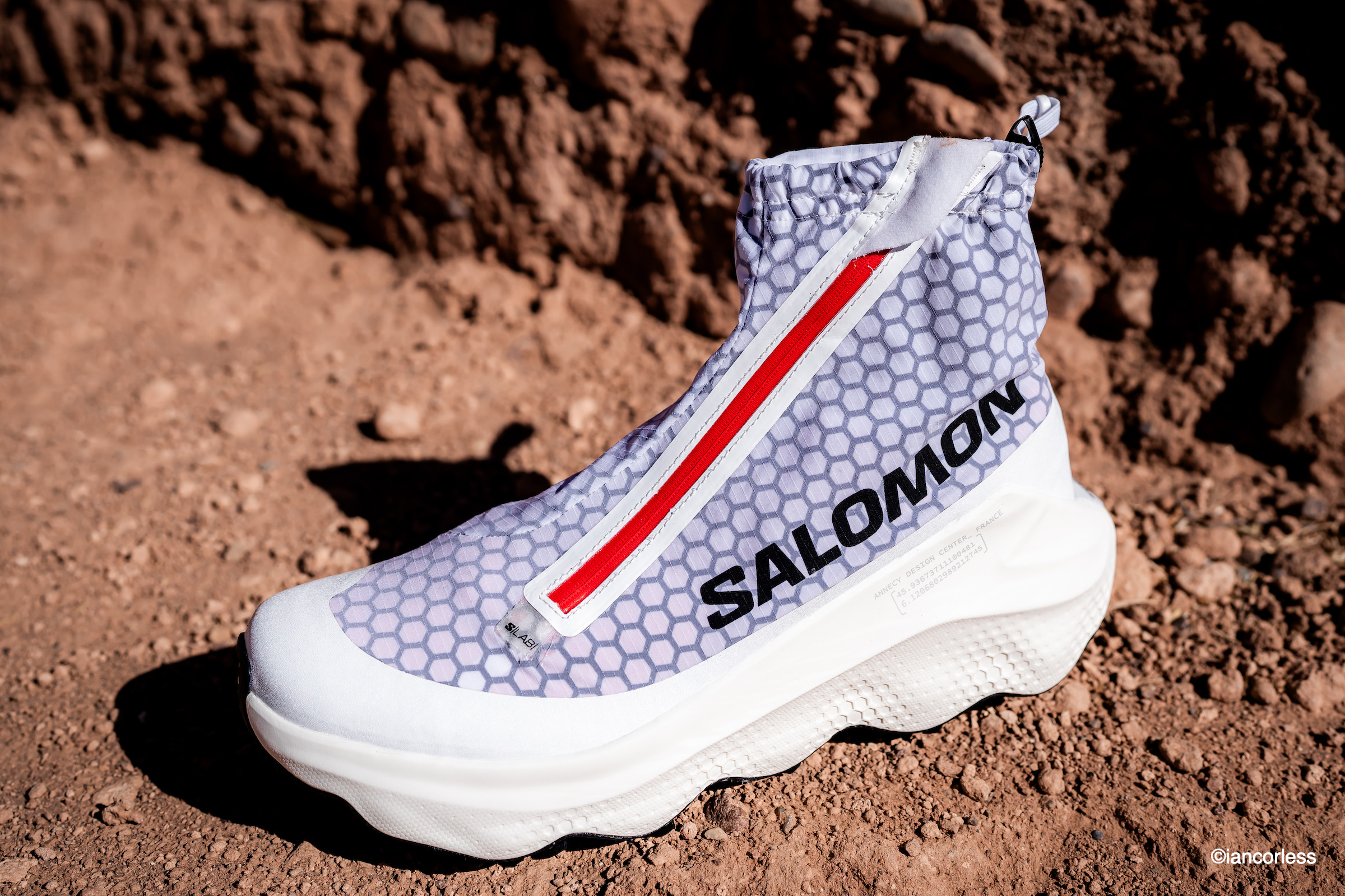
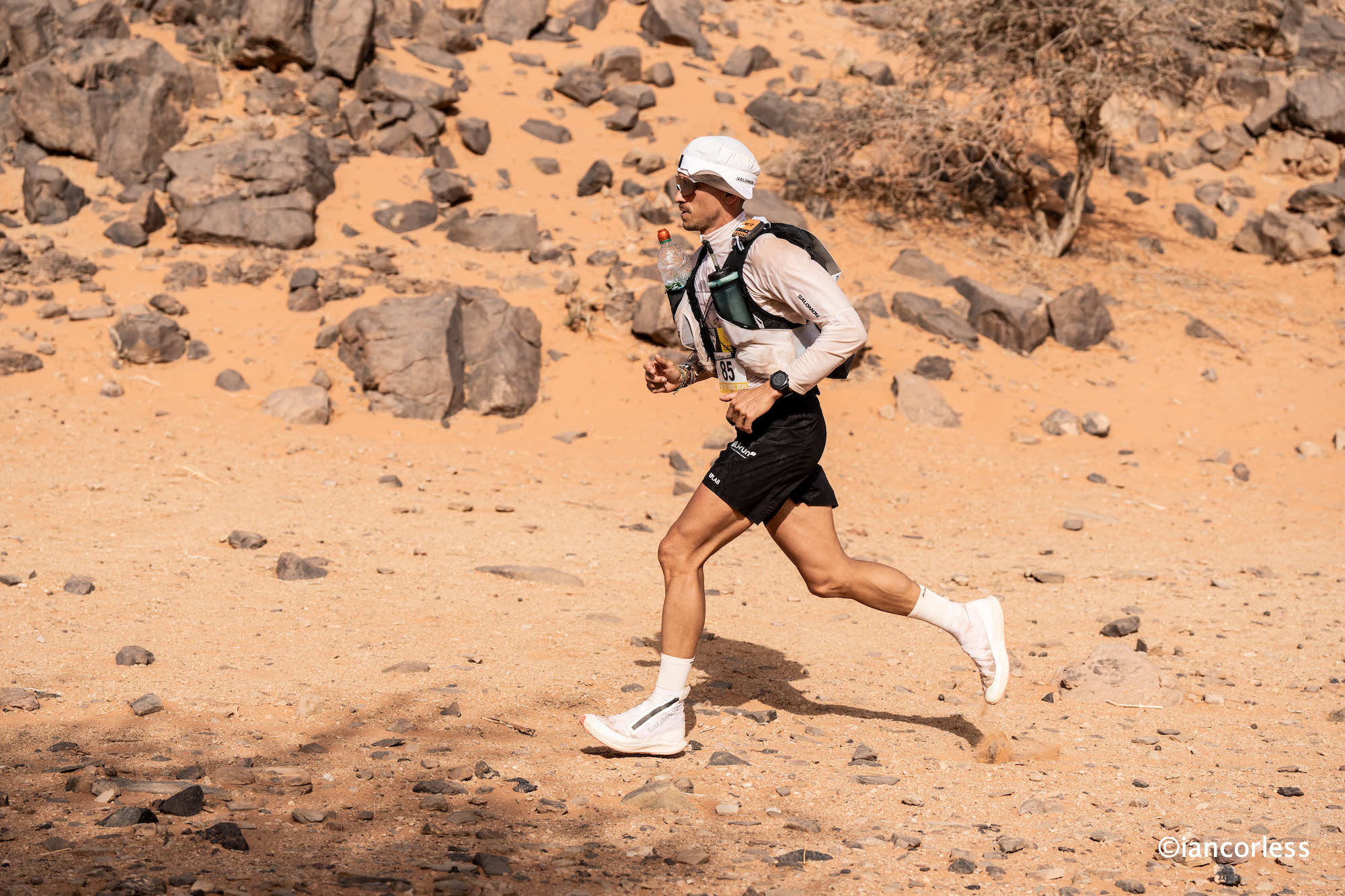
The Salomon S/LAB Ultra Dust isn’t just a rehash of the S/LAB Ultra Glide with a new colour way, no, this shoe is a purpose-built shoe designed specifically for desert ultra racing, developed on the feet of Mathieu Blanchard at Marathon des Sables in 2023.
The original incarnation used a different integral shoe, with feedback from Mathieu and others, it was decided a more cushioned shoe was required; step in the new Ultra Glide. The Ultra Dust not for everyone, and it’s not trying to appeal to everyone. This shoe is a specialist product, and like any anything that’s made for one task, it excels in that arena, but has trade-offs elsewhere.
Sizing is true to size. Due to the style of the shoe, you definitely do not want them too big. They need to fit correctly for good foot hold. For a Salomon shoe, the toe box is wider than most other Salomon shoes. Is it wide enough? Only you can answer this based on your own needs.
It may look like a mountaineering boot at first glance, but the S/Lab Ultra Dust has a stand alone Salomon shoe (Ultra Glide) fitted inside a bespoke gaiter, making an all in one shoe.
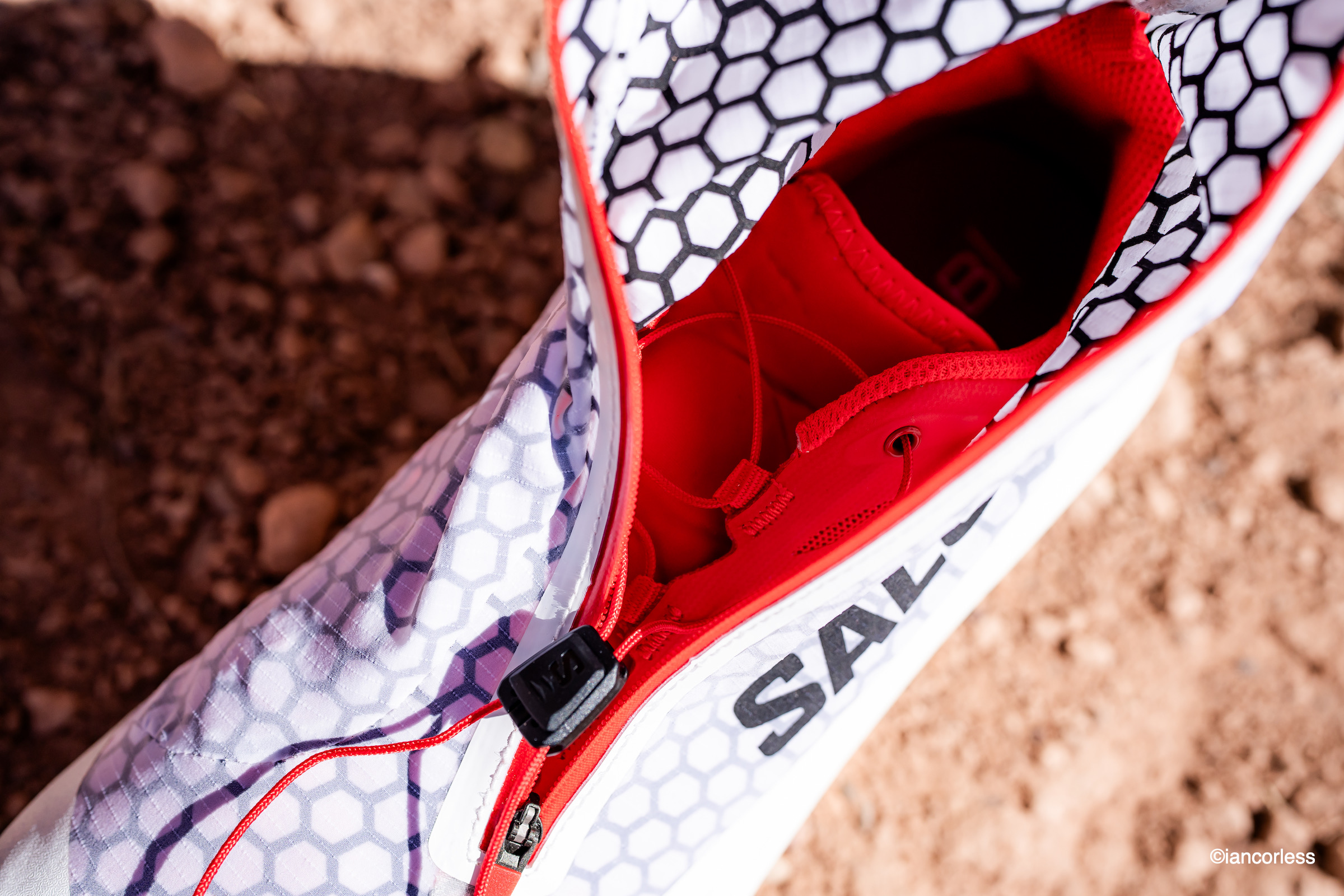
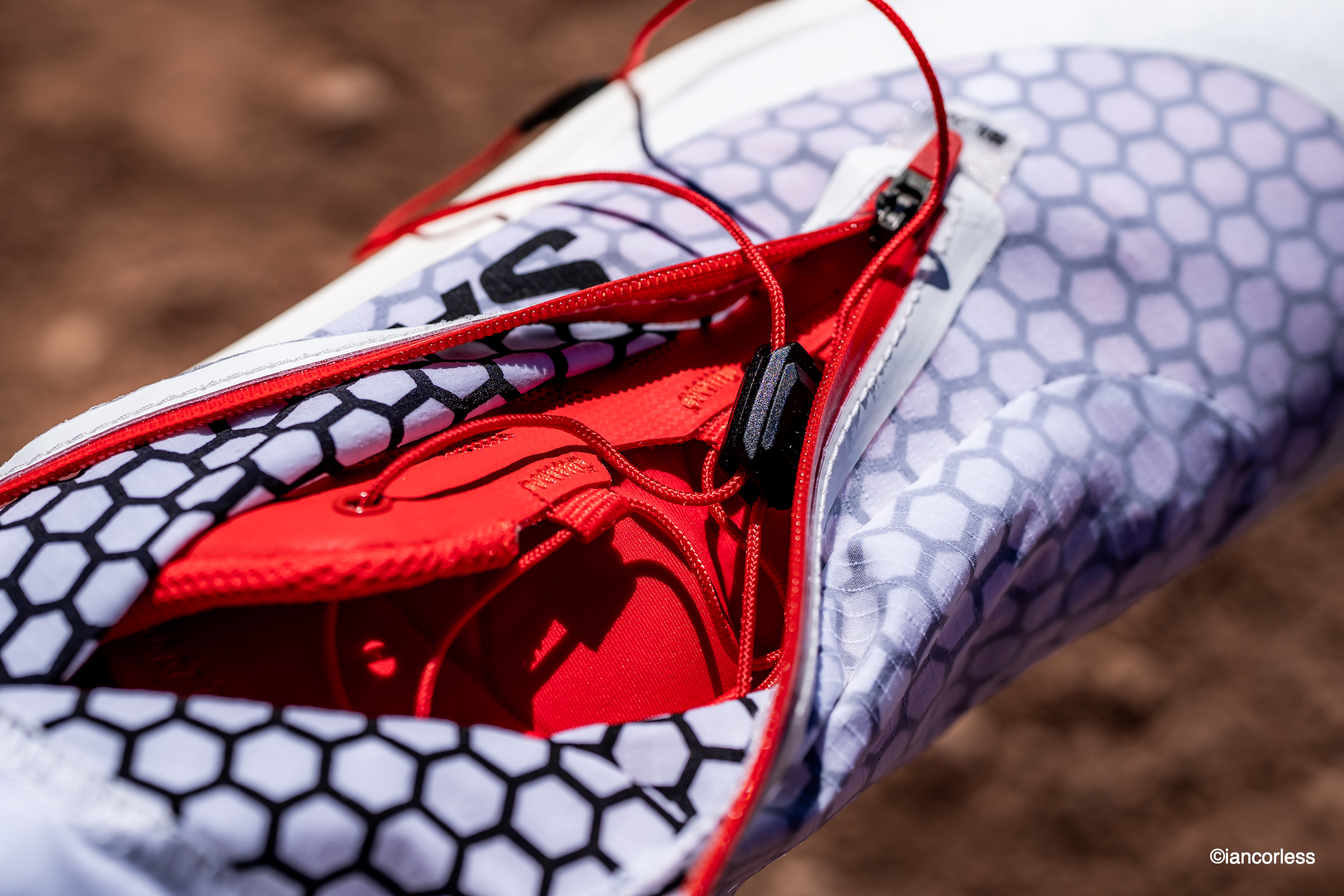
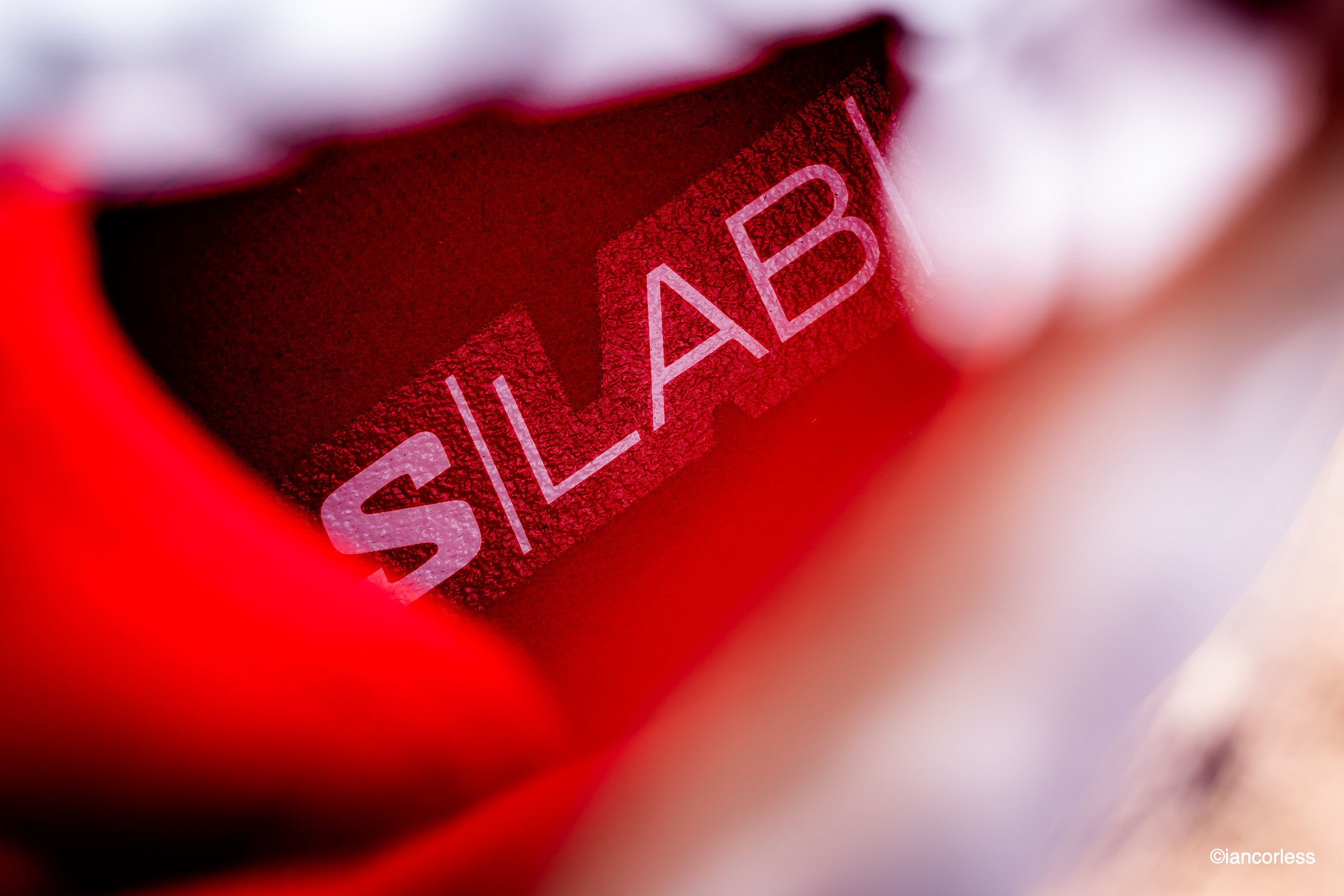
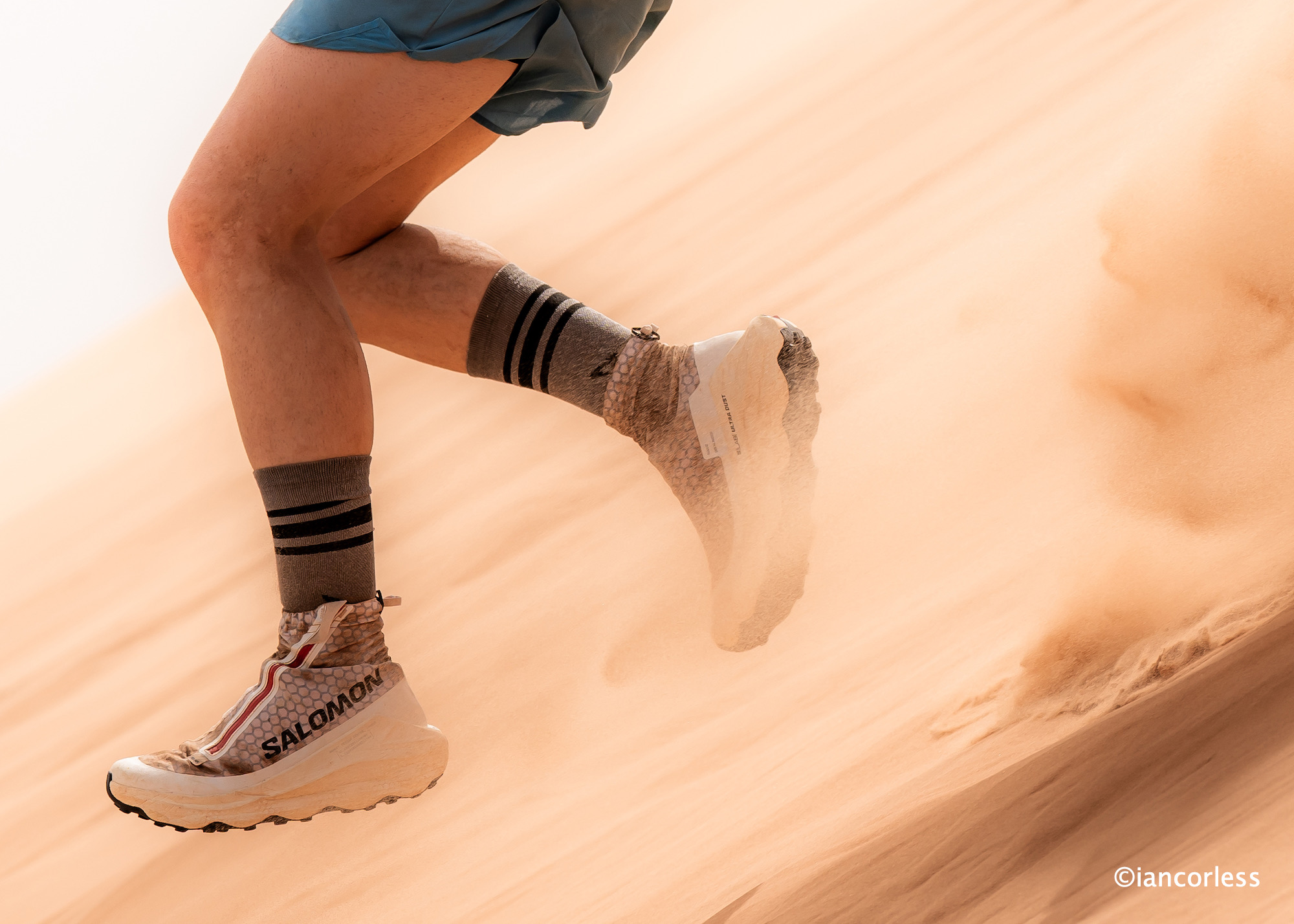
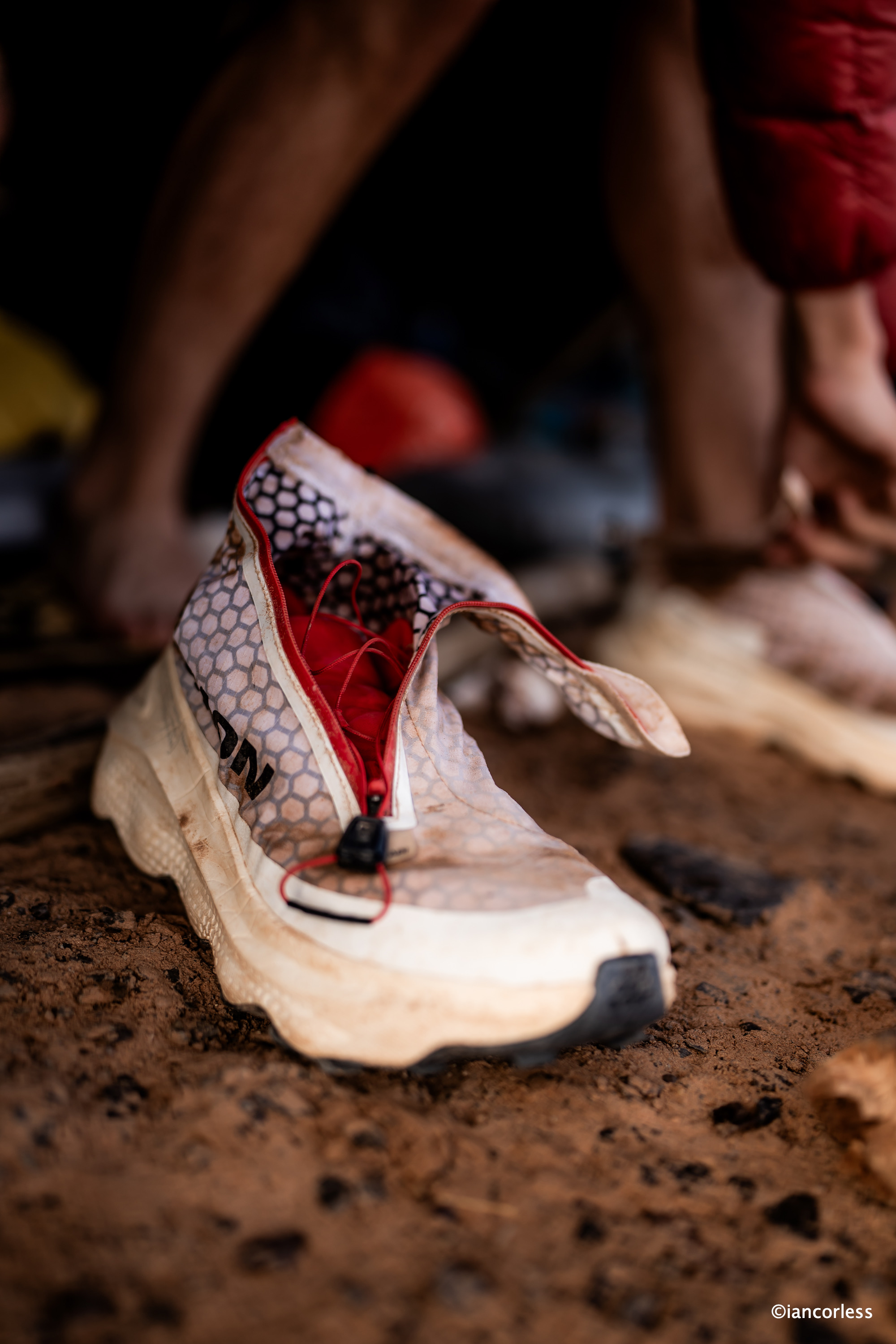
The integrated gaiter is the standout feature of the Ultra Dust. It’s integral into the design, forming a full ankle-wrap mesh sleeve that stretches snugly over the ankle and top of the shoe.
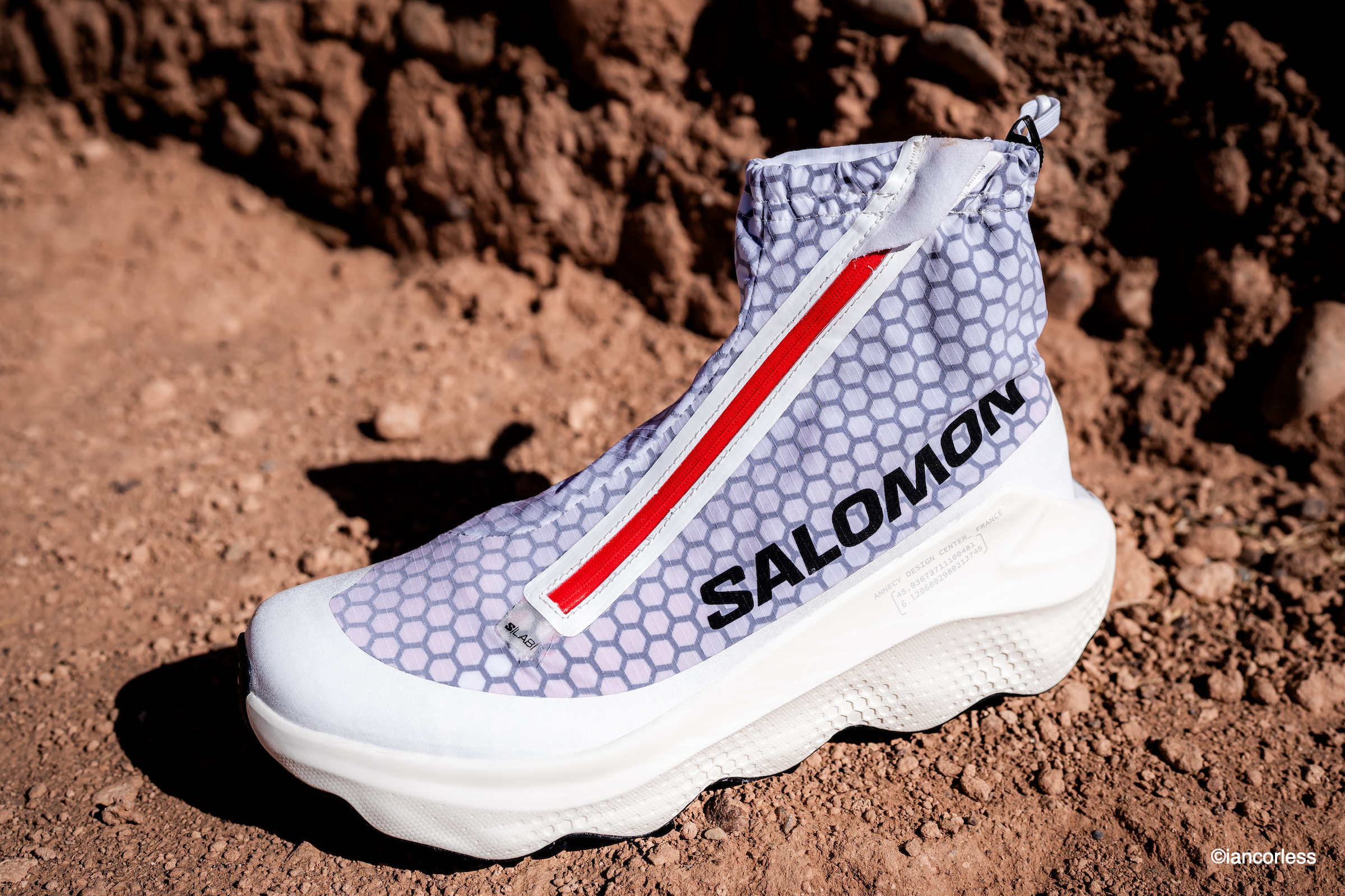
There’s one zipper, no velcro, no gaps, an elastic seal at the top can be pulled tight and that keeps out sand, just like a dry bag keeps out water.
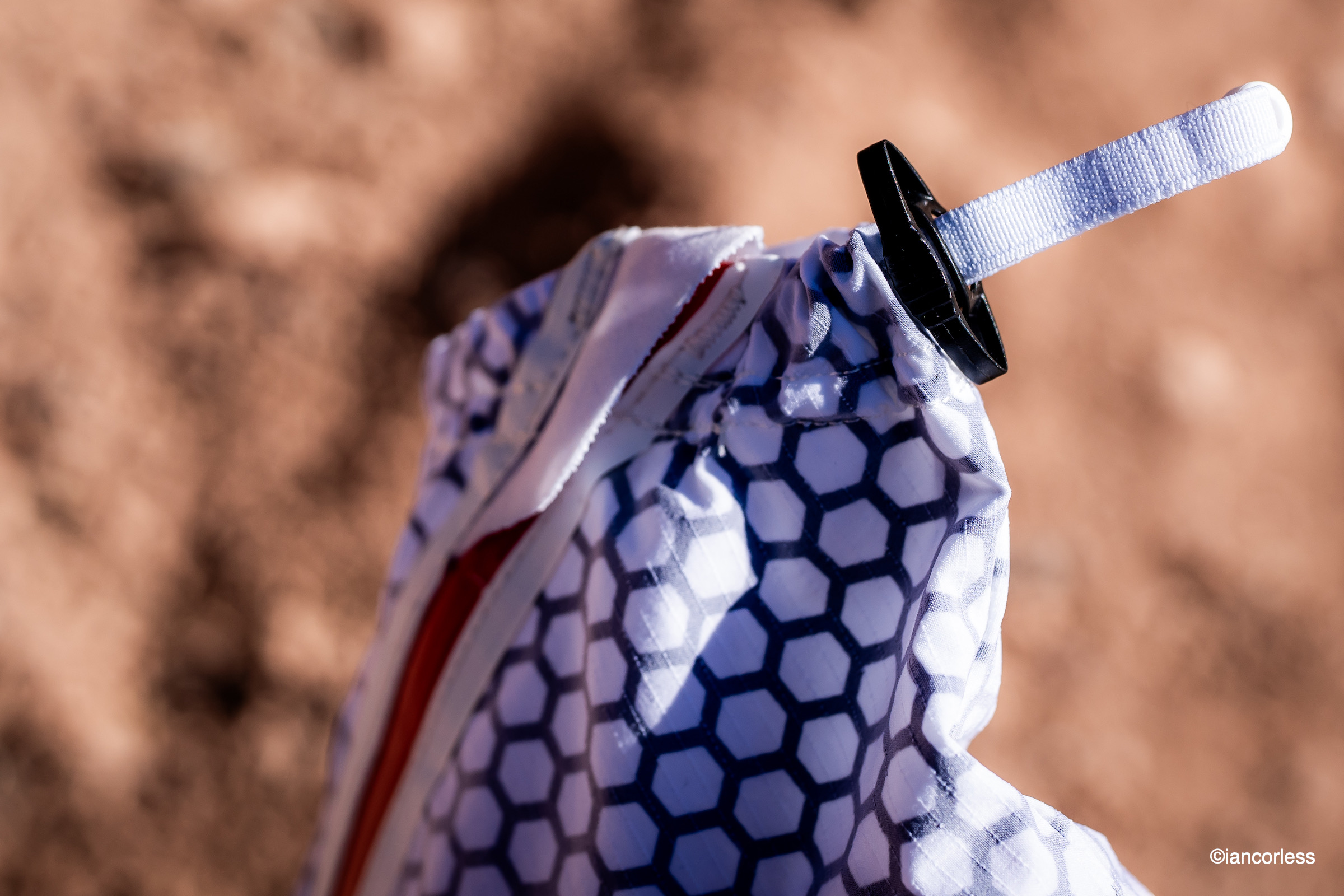
There is also a superb toe bumper.
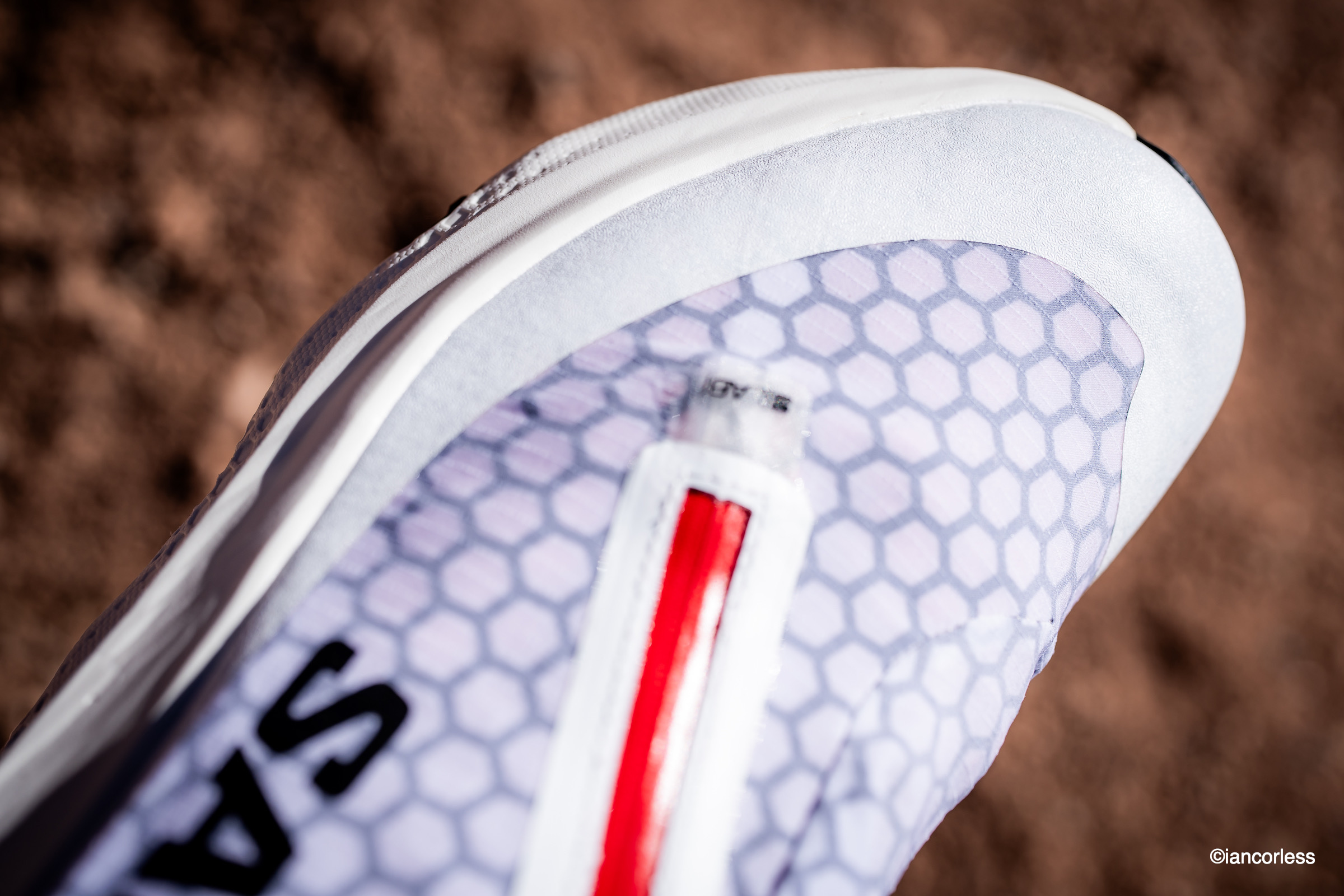
This isn’t your standard trail gaiter that slides around or traps heat. The mesh is thin, highly breathable, and stretchy, giving you ankle mobility without debris ingress. It works 100%, in countless test scenarios – Morocco, Namibia, Lanzarote, La Palma and even South Africa, this shoes gaiters performs perfectly with no debris entering the shoe.
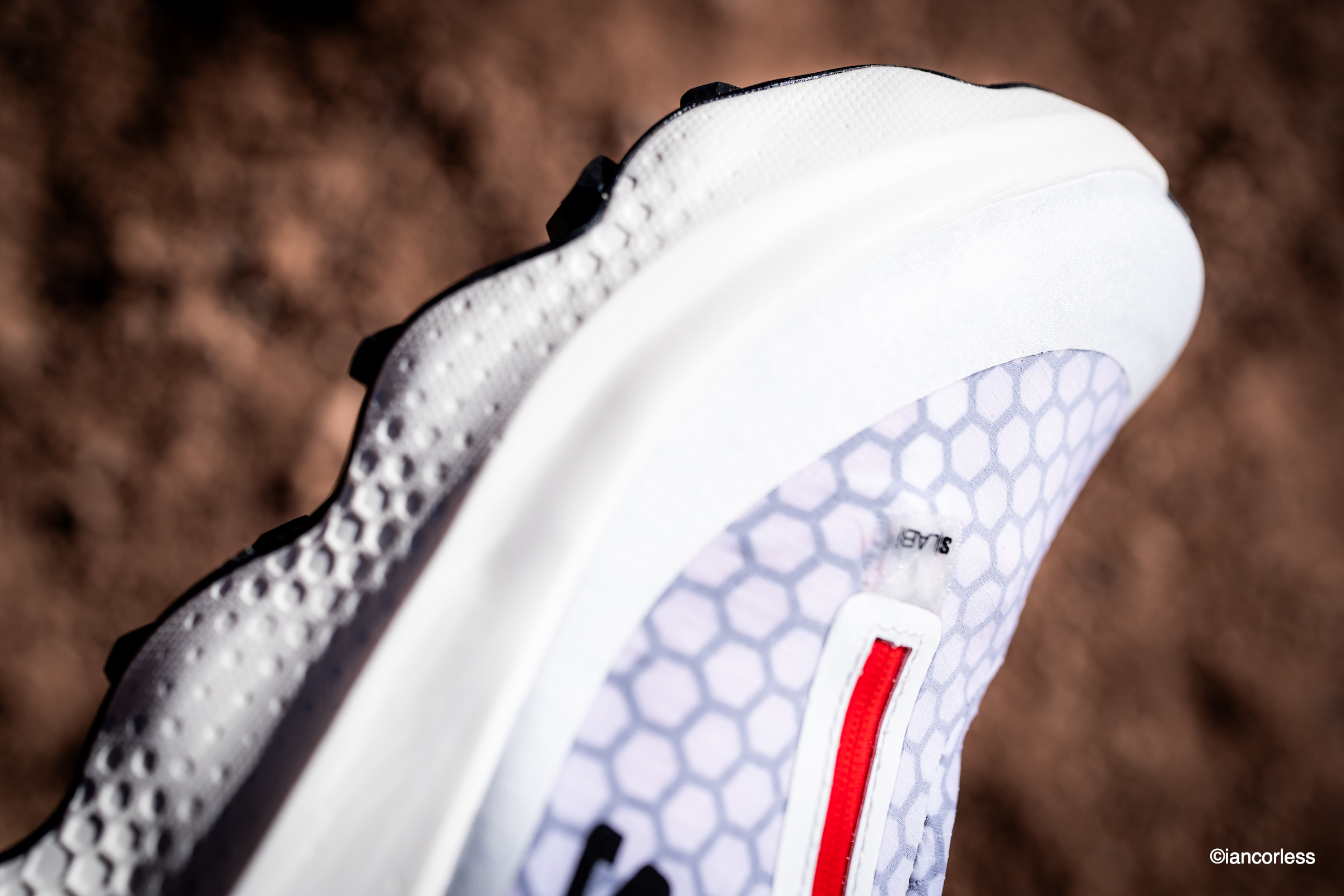
The Ultra Dust has huge cushioning, energyFOAM+) : 35mm at the front and 41mm in the rear giving a middle of the ground 6mm drop. Despite the stack height, the shoe has great feel for the ground.
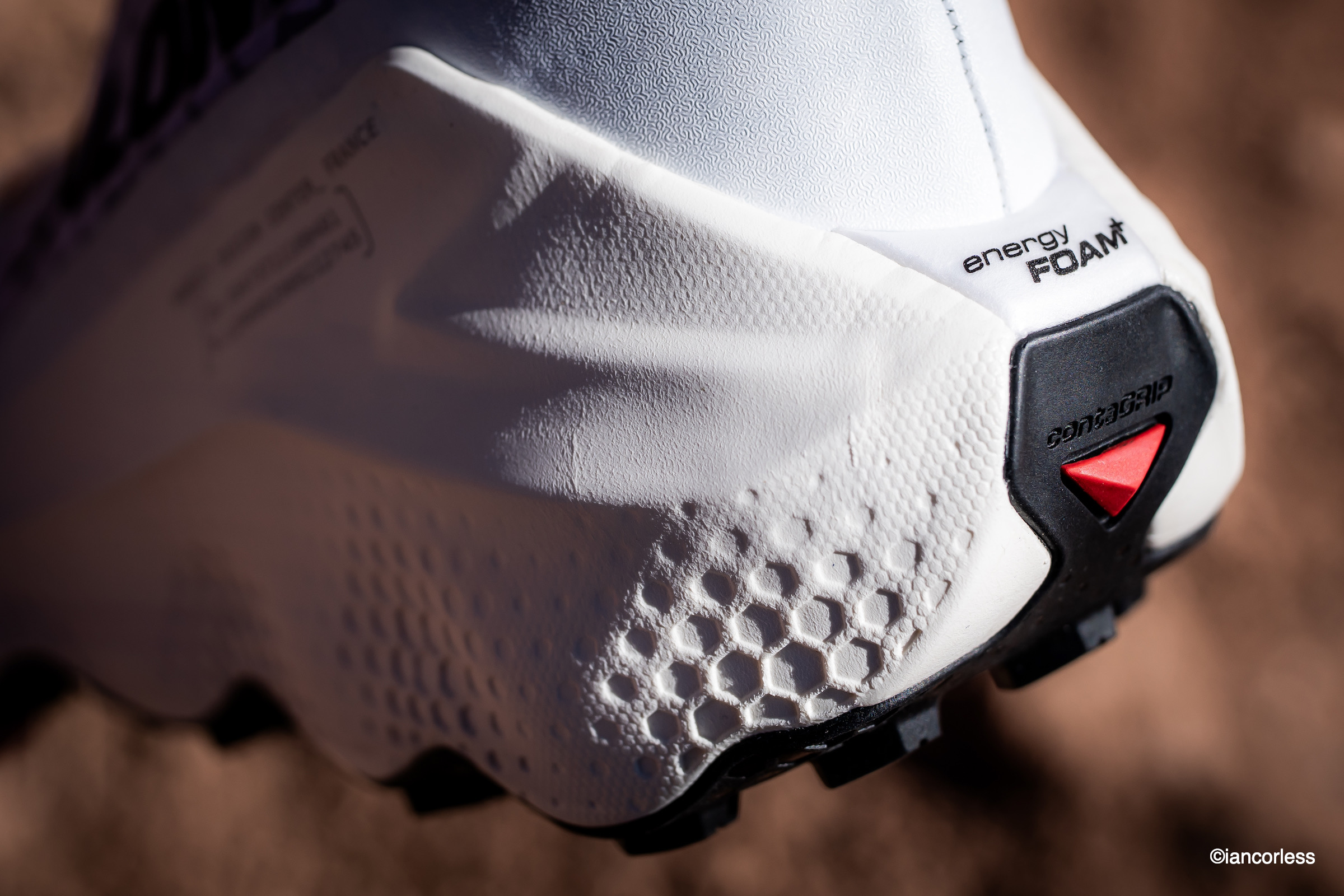
The cushioning is bouncy but not squidgy, they are surprisingly stable. In desert scenarios, the cushioning transitions superbly from soft-sand, hard/ stony ground and on technical sections they are extremely comfortable, however, here the stack height can produce less stability, it’s not horrendous, but worth noting.
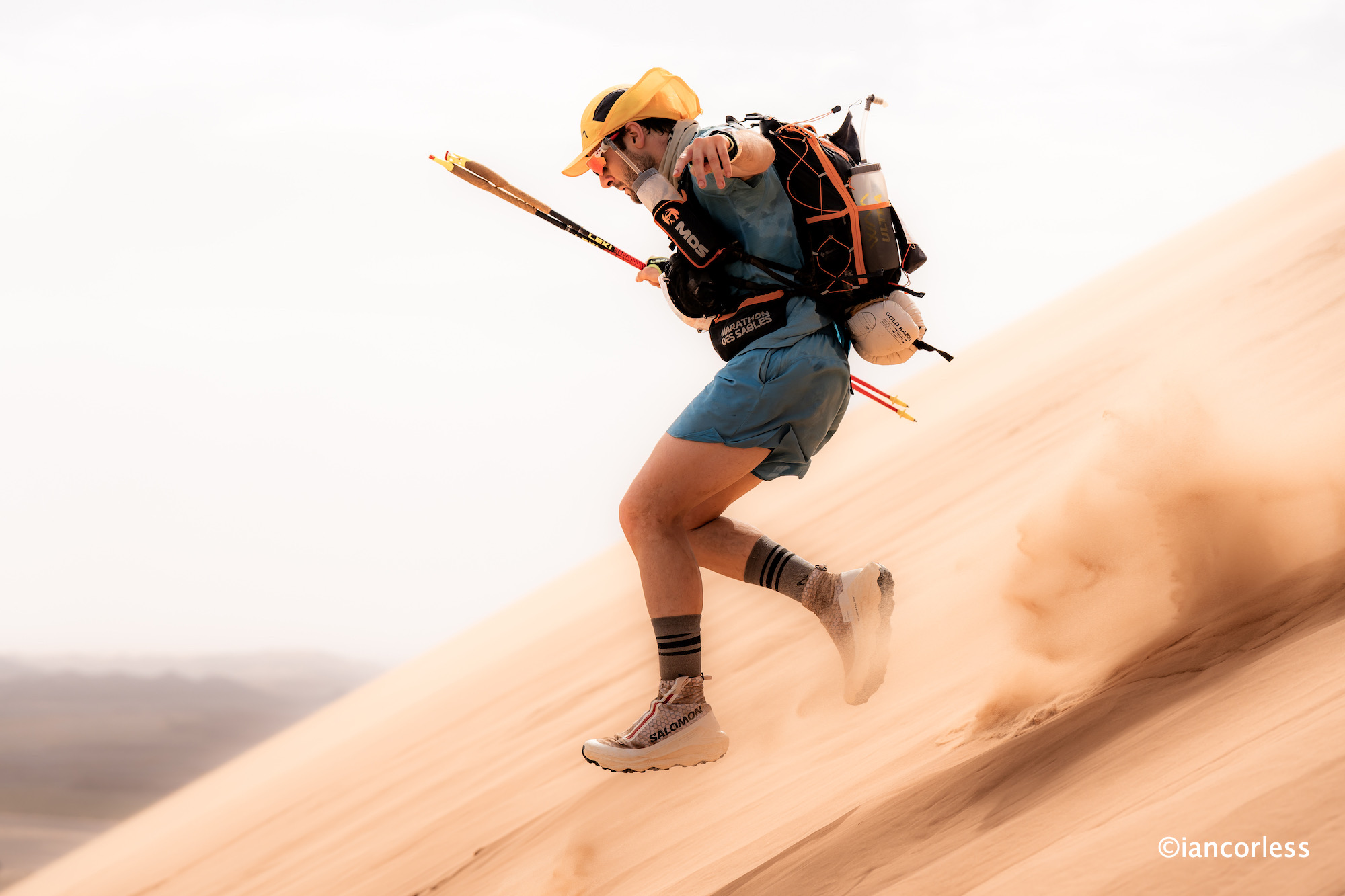
The 6mm drop puts you in a slightly forward-leaning stance, perfect for driving through long, runnable flats and moderate inclines. It can help keep cadence high and your form efficient. By contrast, they are extremely comfortable to walk in. While zero-drop loyalists might not love it, this drop caters well to endurance racers who don’t want achilles/ calf strain late in a race. It’s a great middle ground. This higher drop provides a bit more heel support, especially helpful when fatigue sets in and your form deteriorates. That extra buffer can reduce calf strain in multi-day stage races.

This is where the Ultra Dust makes its biggest departure from typical trail shoes. Instead of deep, aggressive lugs, it uses low-profile 4mm, wide-surface lugs designed to float over sand rather than bite into mud or rocky terrain.
The Contagrip outsole (All Terrain Contagrip) has shallow lugs that are evenly distributed across the sole. They provide surface area rather than penetration. This minimises drag and helps prevent you from sinking into soft terrain. On packed trail, they still provide enough grip to stay stable, though this shoe isn’t made for slick rock or alpine conditions.
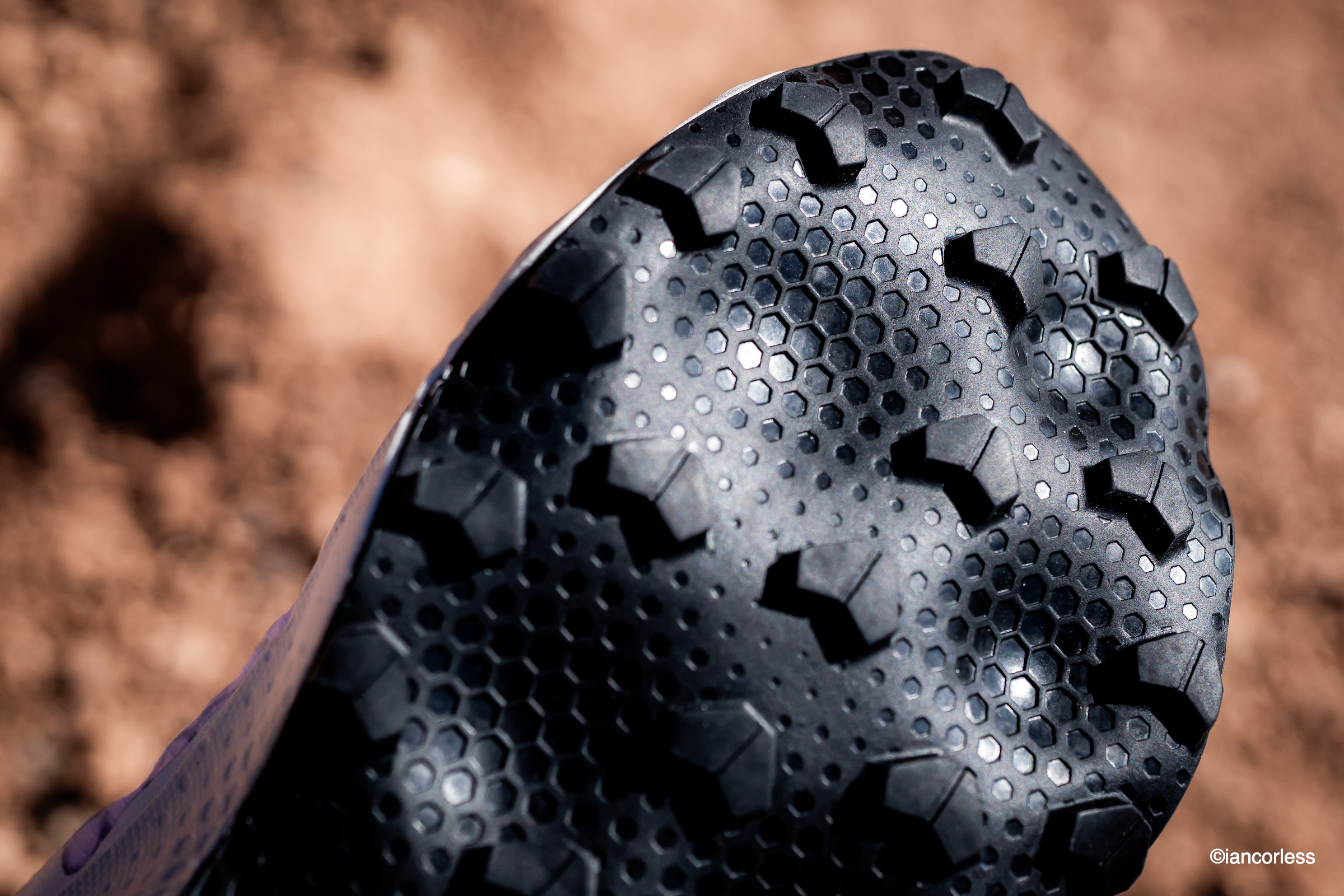
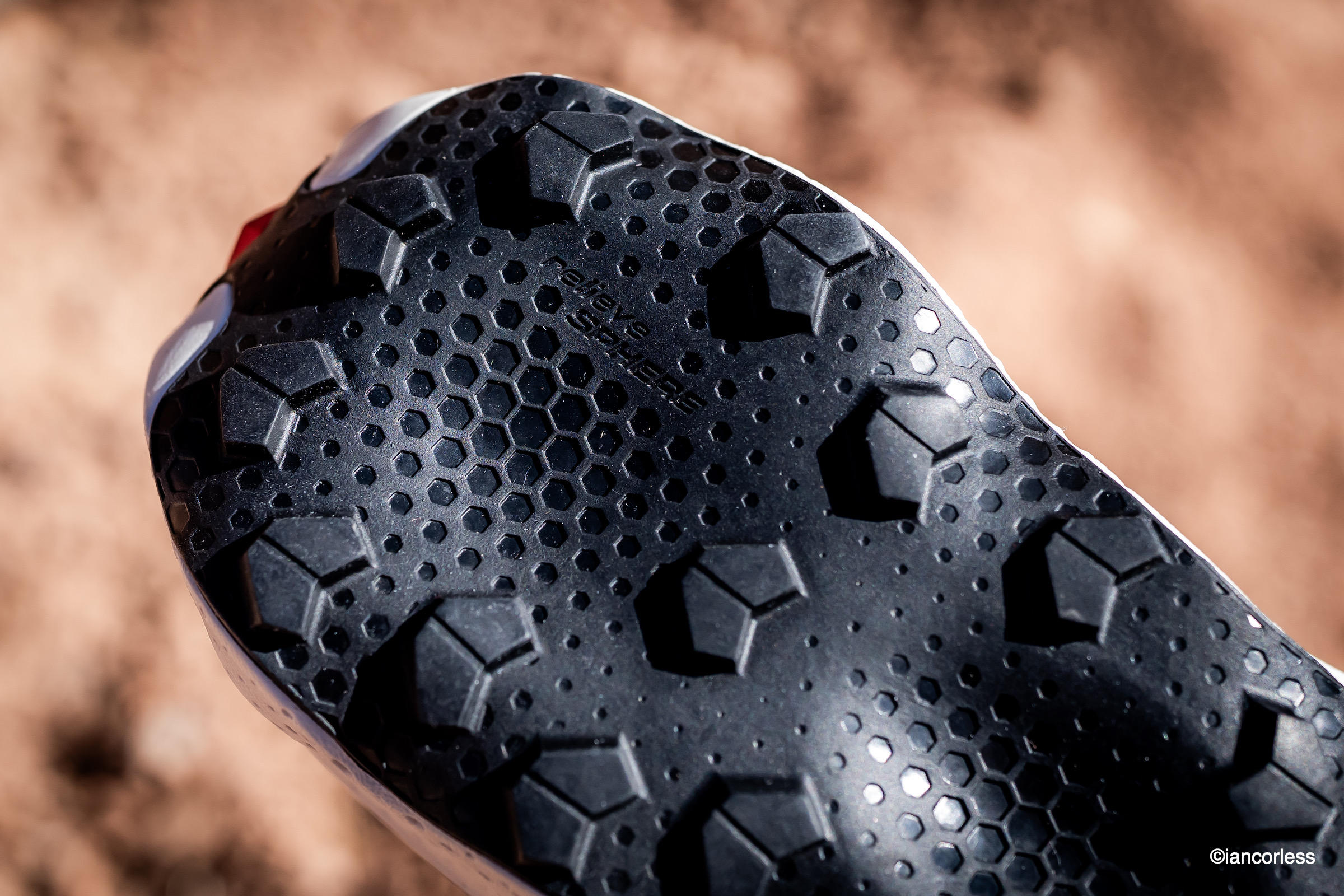
Durability is strong thanks to the full-length rubber coverage, but note that softer lug compounds wear faster on pavement or rocky trail. In desert conditions, though? This outsole will go the distance.
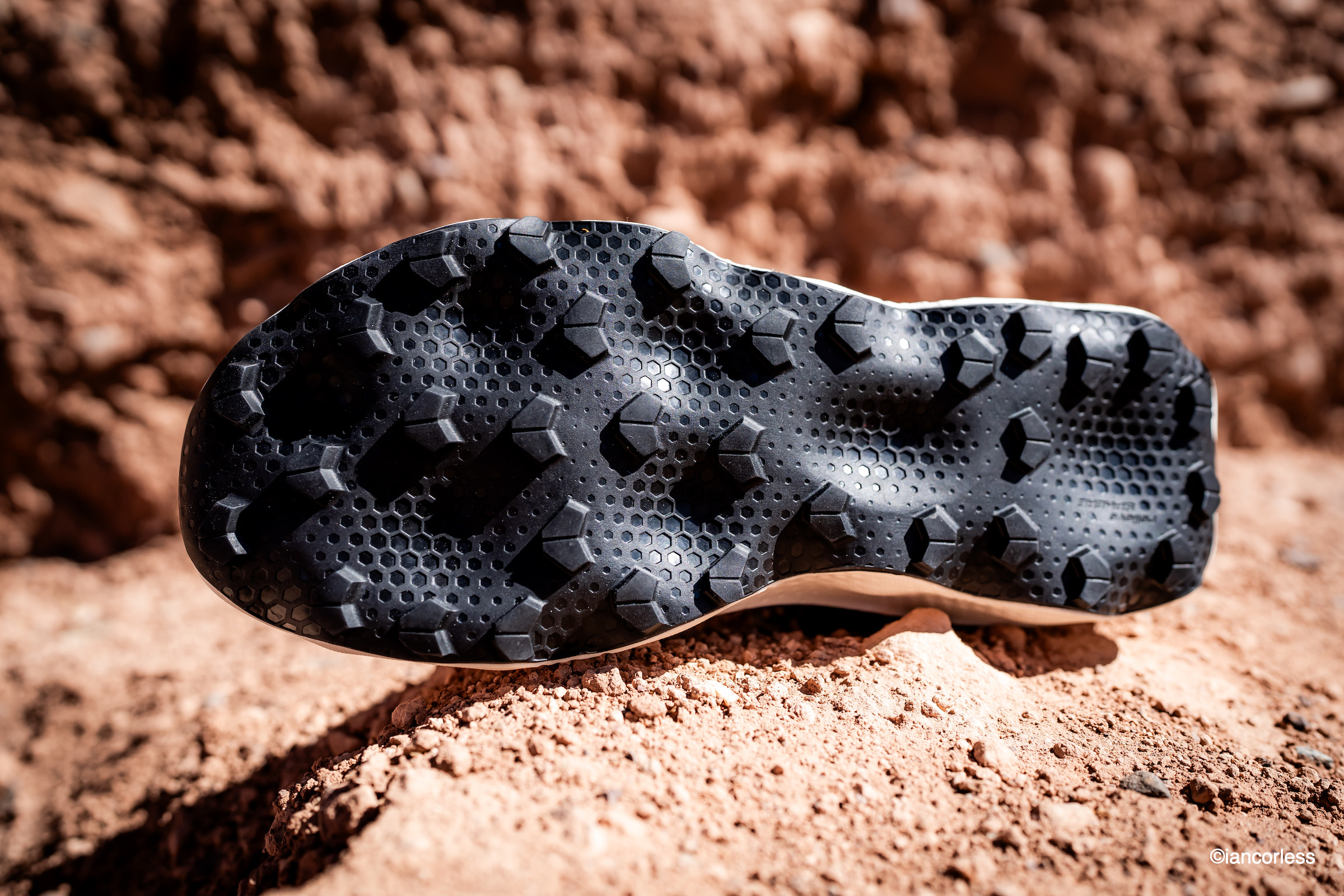
The Ultra Dust is unapologetically specialised with gaiter integration, a breathable upper, a sand-optimised outsole; everything is geared toward one thing, surviving and thriving in desert ultras with no sand ingress, comfort and blister free feet.
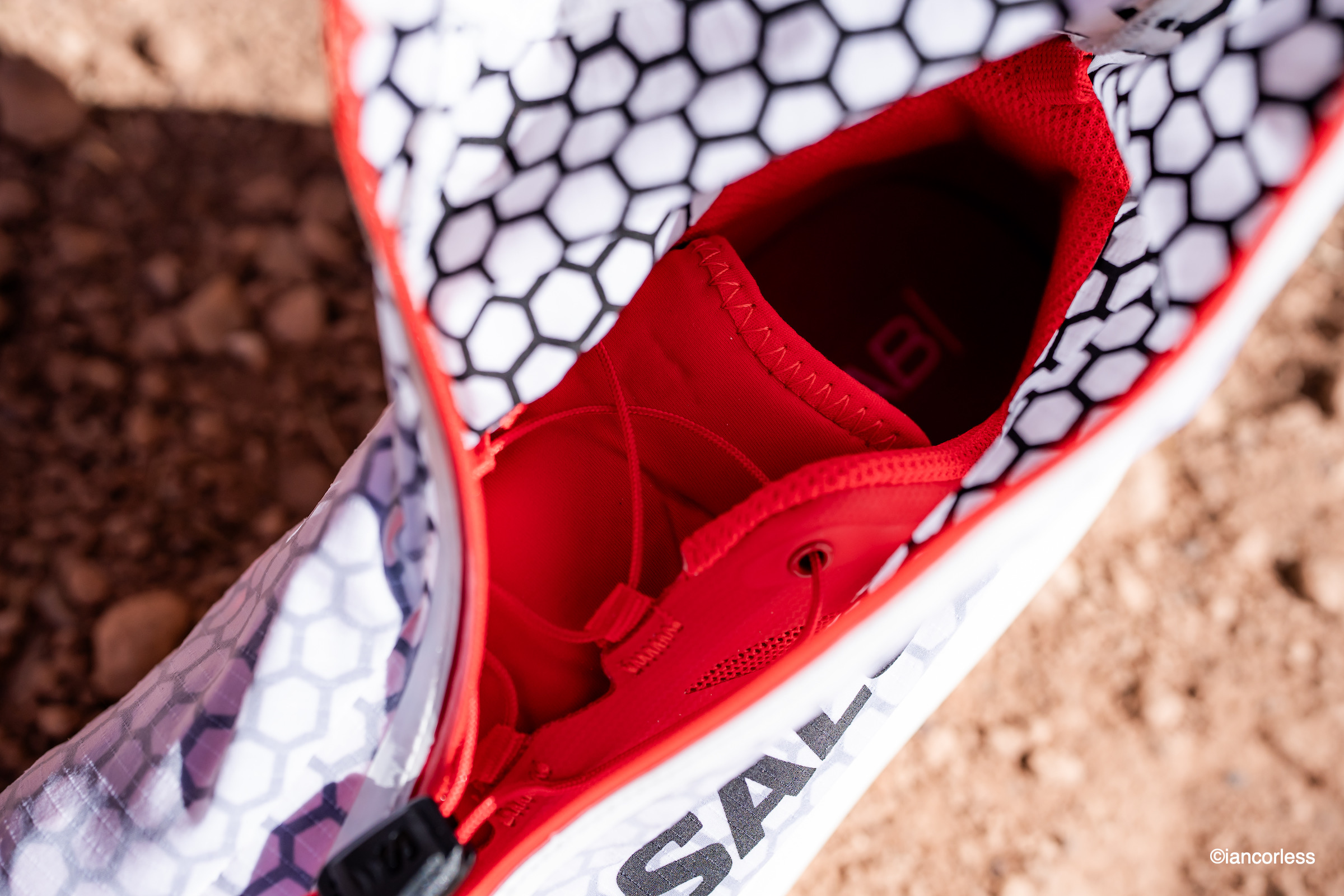
The upper is thin, synthetic mesh that breathes extremely well, doesn’t absorb moisture, and dries fast. You won’t find overlays or extra structure. It’s minimal to the core, saving weight and shedding heat. It’s a good looking shoe, for sure they stand out in white and red.
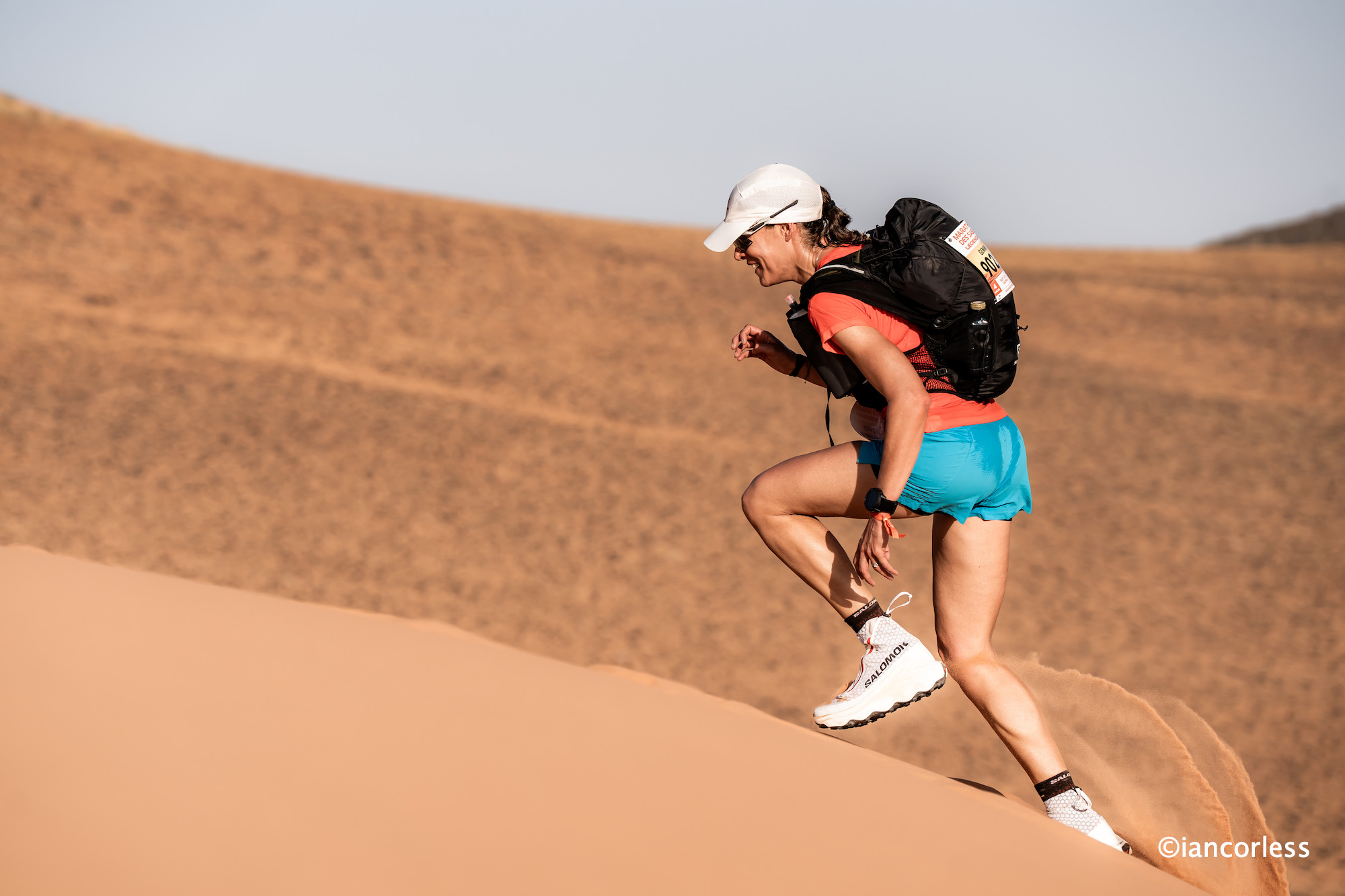
This shoe isn’t built for rocky single-track or alpine descents, however, it does perform in these scenarios. The Ultra Dust is built for wide-open flats, dunes, and heat-soaked multi-day endurance events. It’s the kind of shoe you pack for the Marathon des Sables or similar.
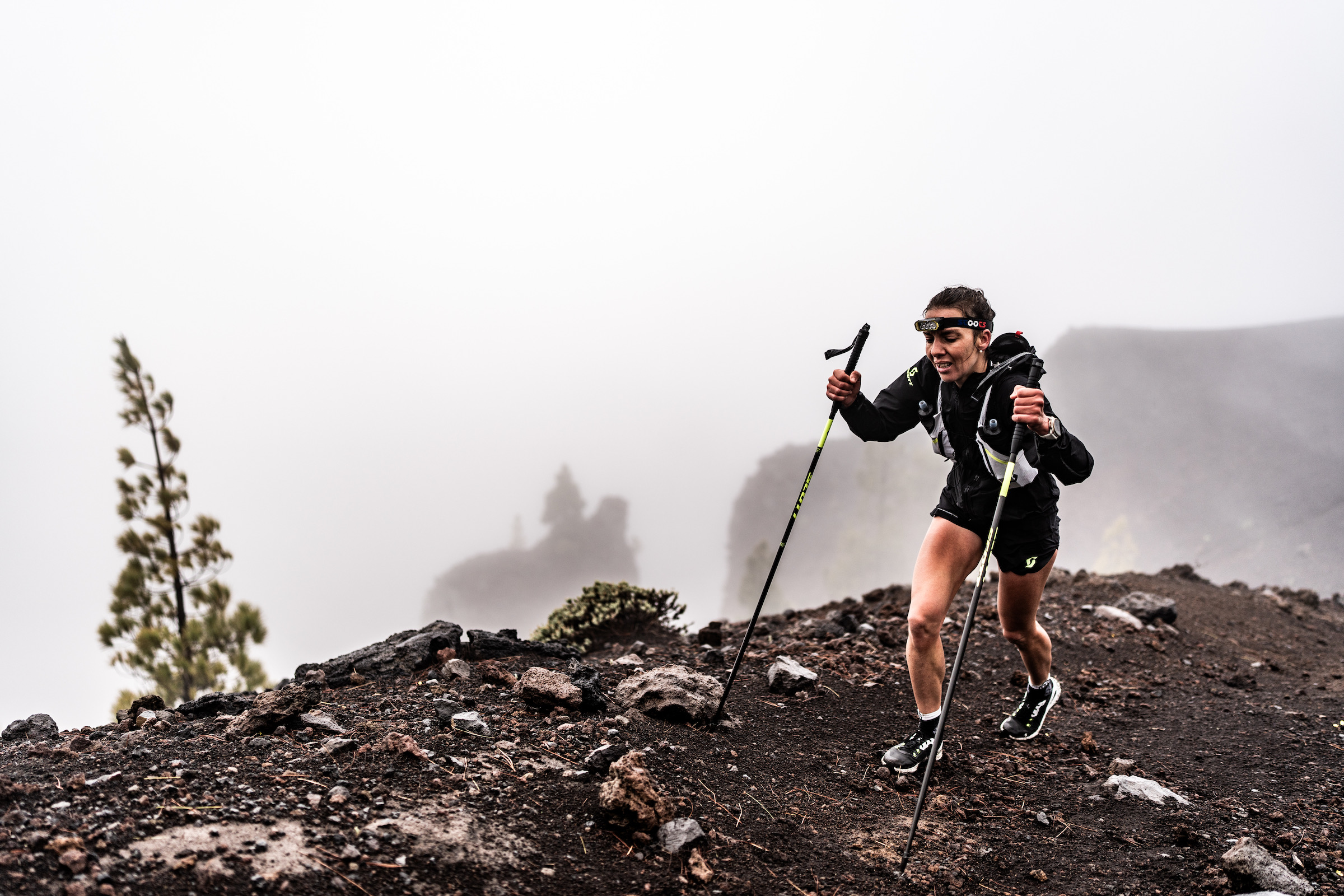
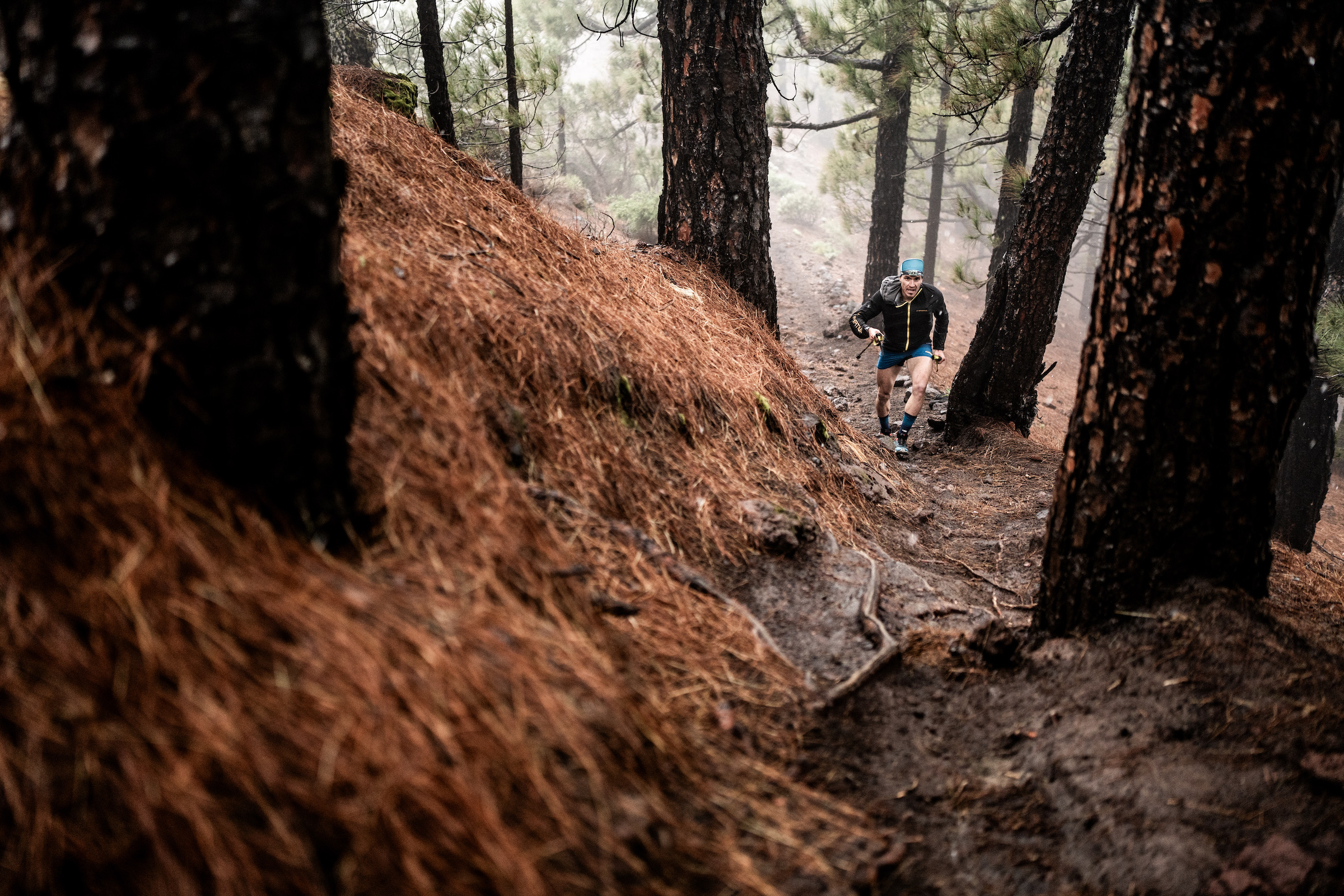
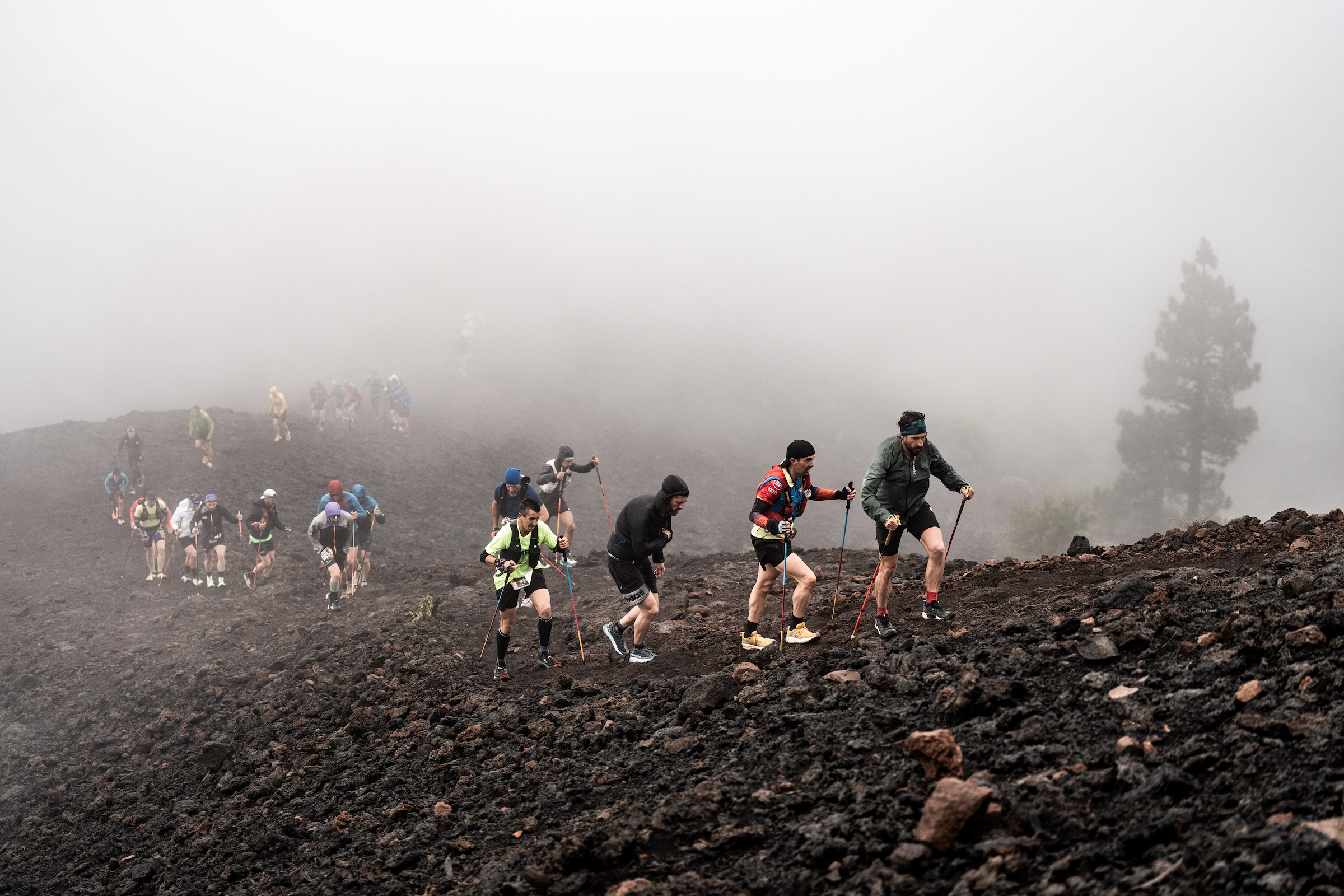
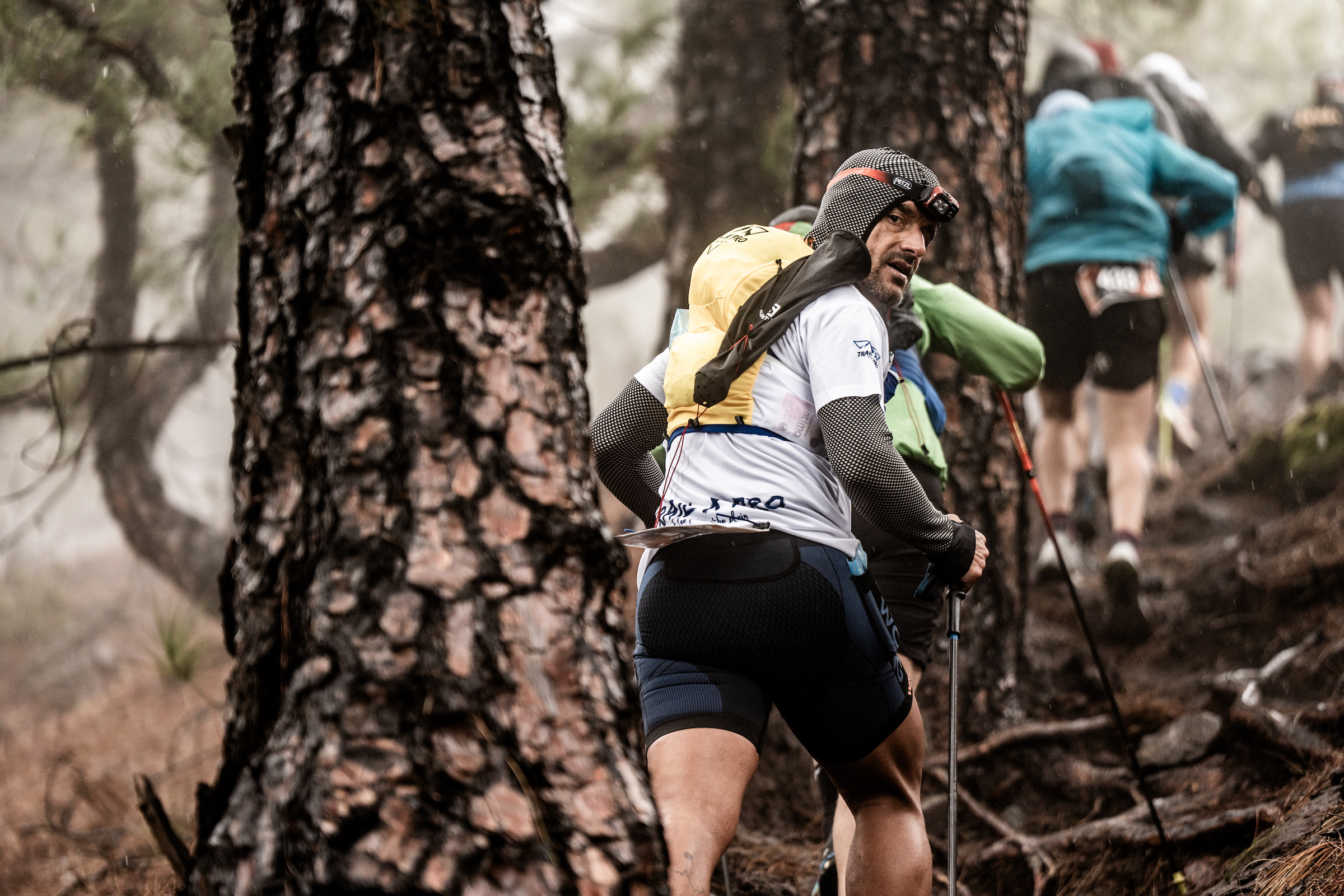
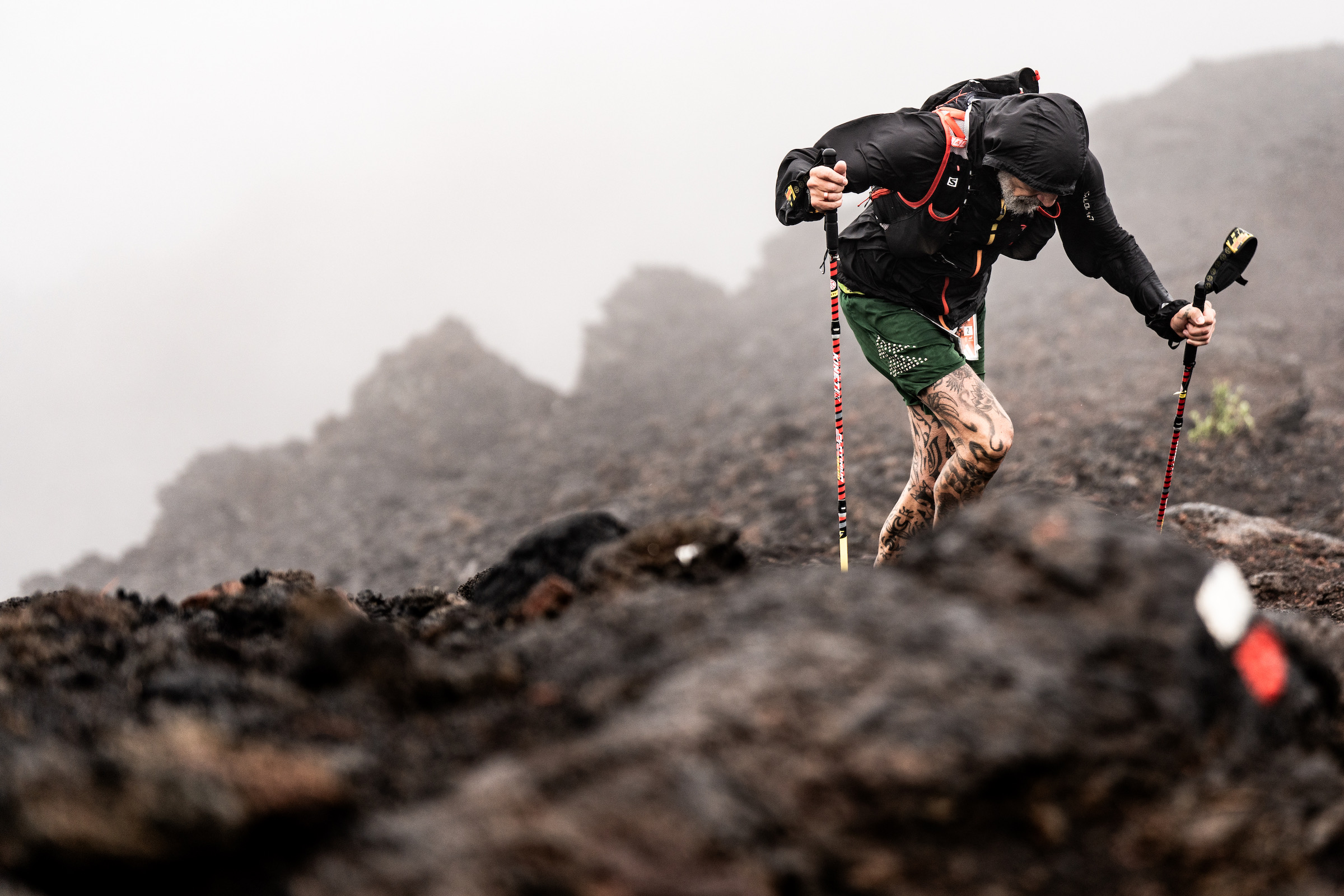
Salomon say, the upper is designed to keep out : dust, sand, snow and water. They do do that. As an example, I used the Ultra Dust at a very, very wet Transvulcania and they performed exceptionally. I am equally sure they will work well in snow.
When one considers that more events such as Marathon des Sables, the usual protocol has been to select a shoe, have velcro sewn on and then add a gaiter, the S7Lab Ultra Dust in price comparison fares very well. They are an expensive shoe, BUT, the cost of shoe, gaiter and sewing velcro on is almost the same. However, there is maybe one advantage of a shoe with velcro? If you tear the gaiter, you can cheaply replace it with a pair of new ones. Tear the gaiter on the S/Lab Ultra Dust and you have a problem….
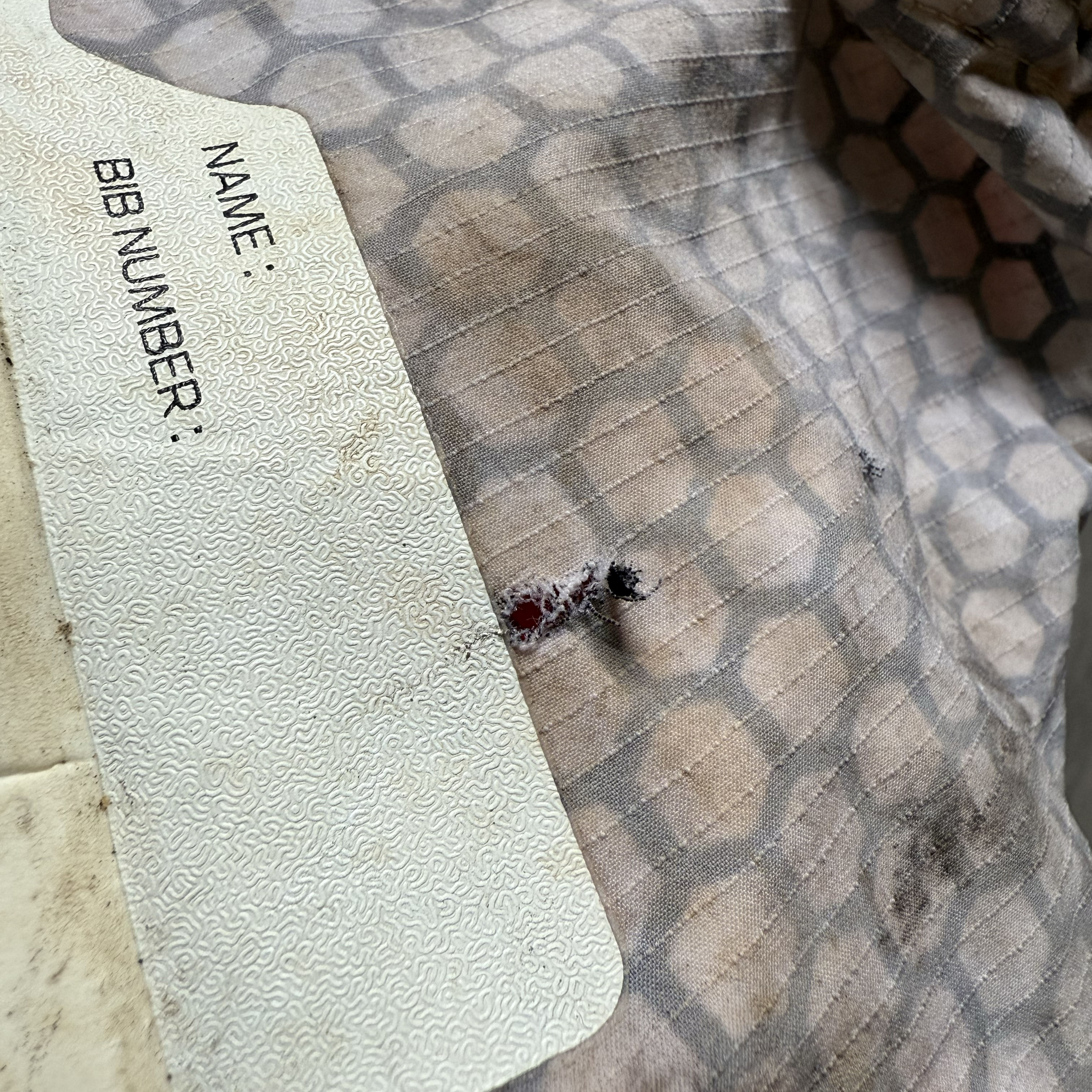
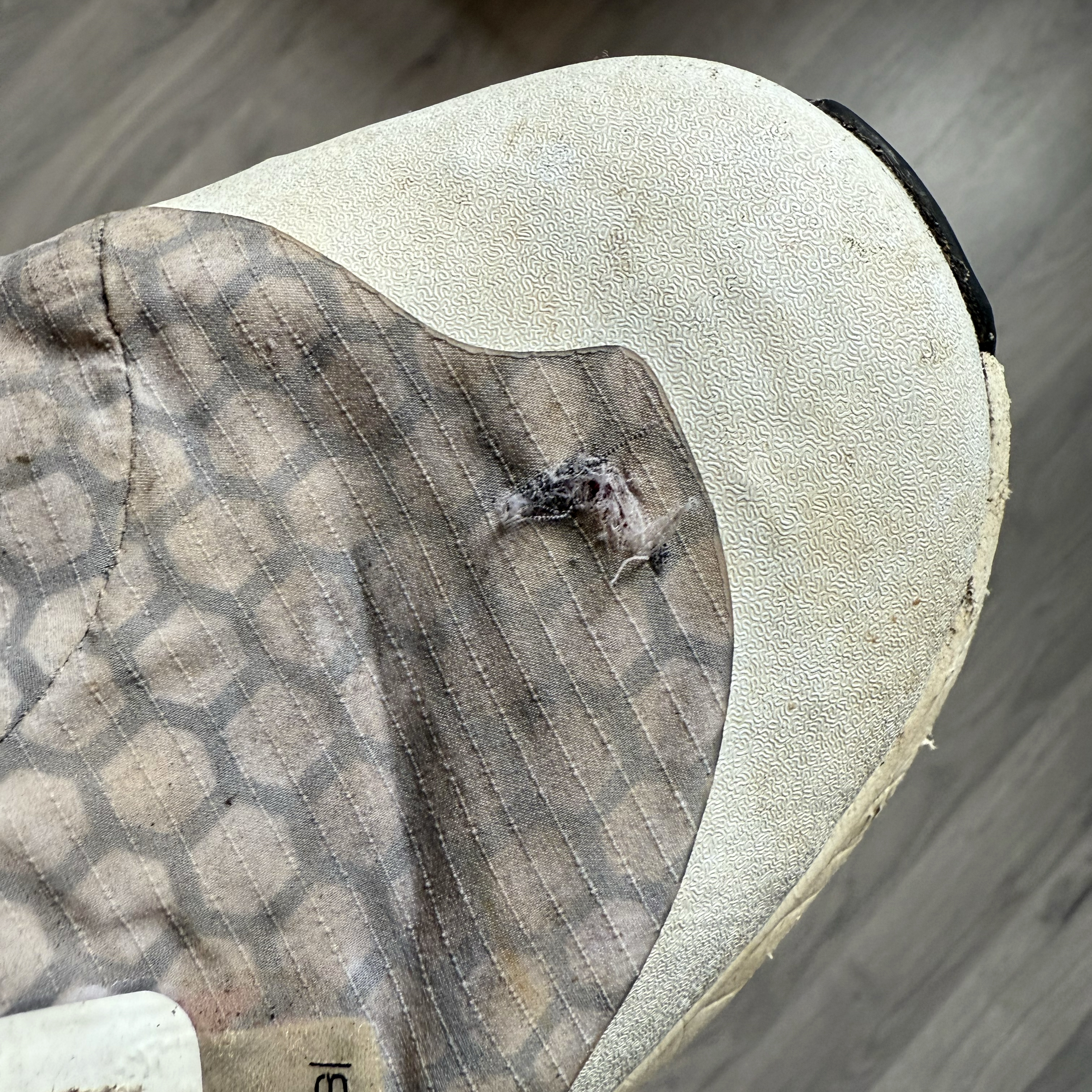
Mine, after 5-months of abuse now have two small tears, they cause no issues currently, but maybe in the future they will? However, in experience, shoes for a race such as MDS ‘just’ need to last the event….
Features:
- Contragrip outsole
- energyFOAM+
- Endofit
- quickLACE
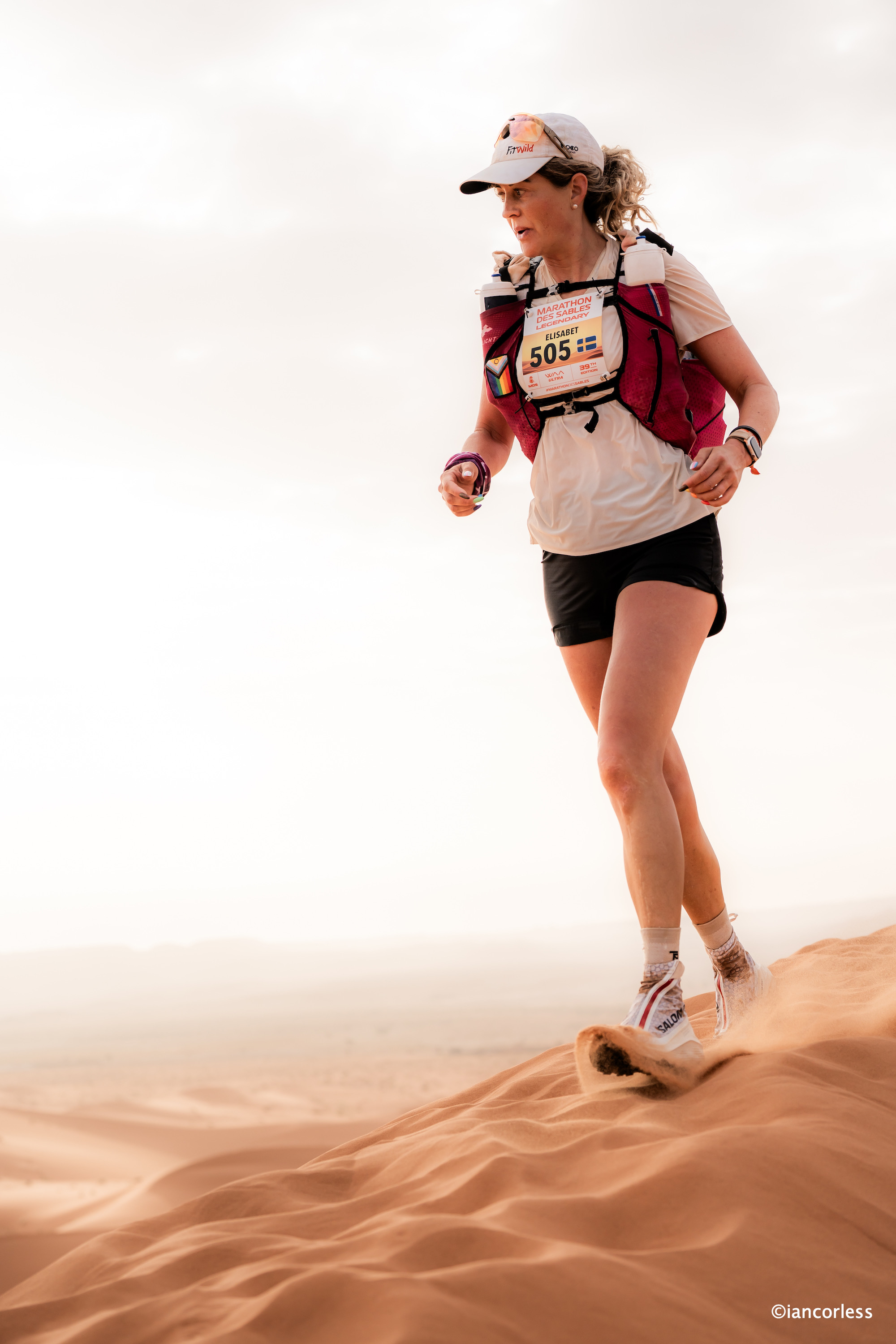
“Developed as a prototype for our athletes, the S/LAB Ultra Dust delivers comfort in extreme conditions no matter how fast you run. Dust, sand and everything else nature throws at your feet are kept out by the fully integrated gaiter with filtering properties. A lightweight, breathable and soft dream shoe for long distances.”
Final Thoughts: Who Should Buy This Shoe?
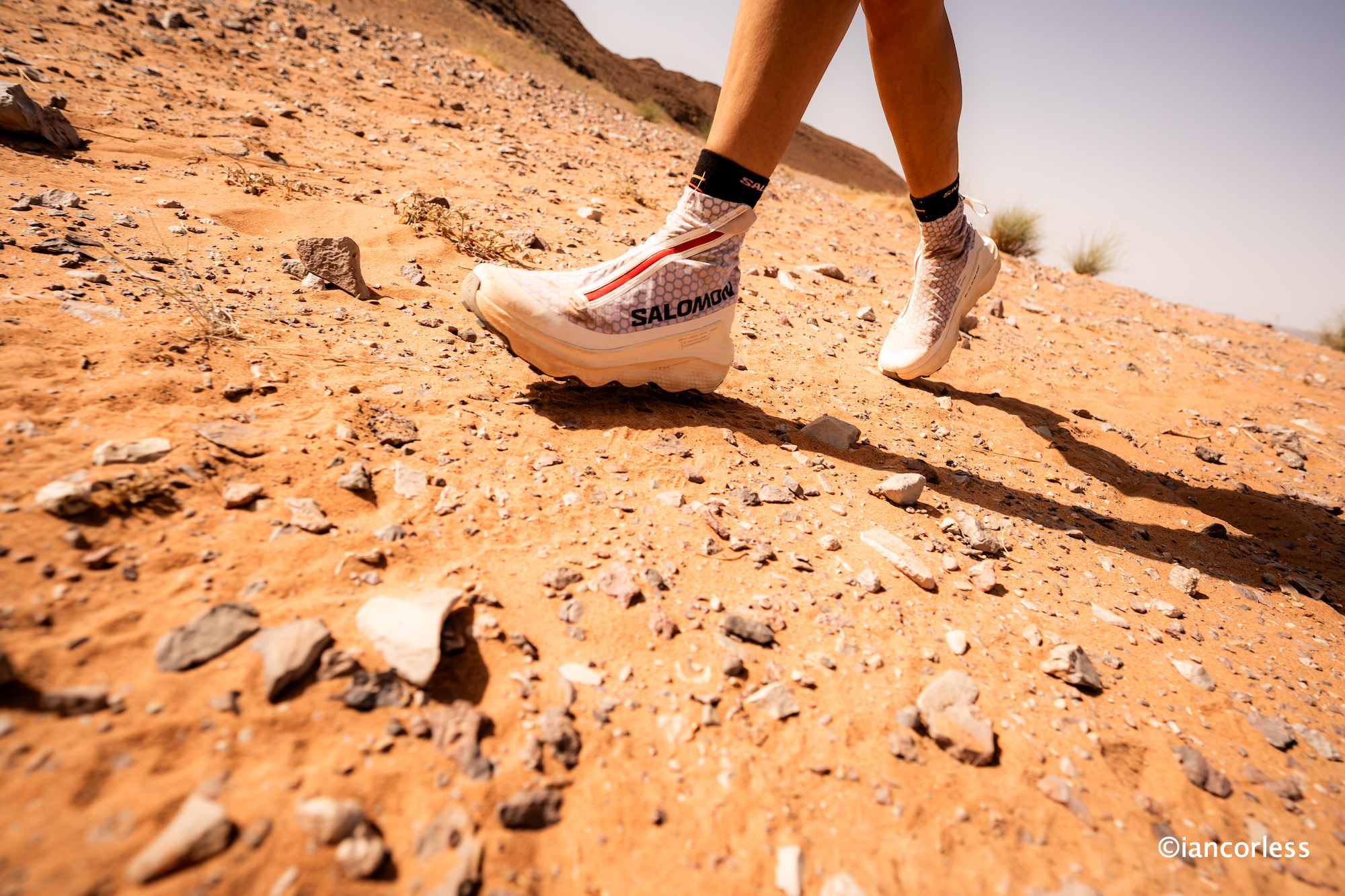
If you’re training for, or racing a desert ultra, the Salomon S/LAB Ultra Dust is a top-tier option, arguably the best in its class. A brilliant shoe that is finely tuned for a specific environment. If you are signing up for MDS or similar, this shoe should be top of the list for testing. They are comfortable, cushioned, have excellent grip, excellent protection and importantly, they keep out sand and debris. The Ultra Dust was clearly designed with direct input from elite ultra runners who know the pain of sand-filled shoes, melted midsoles, and overheating feet.
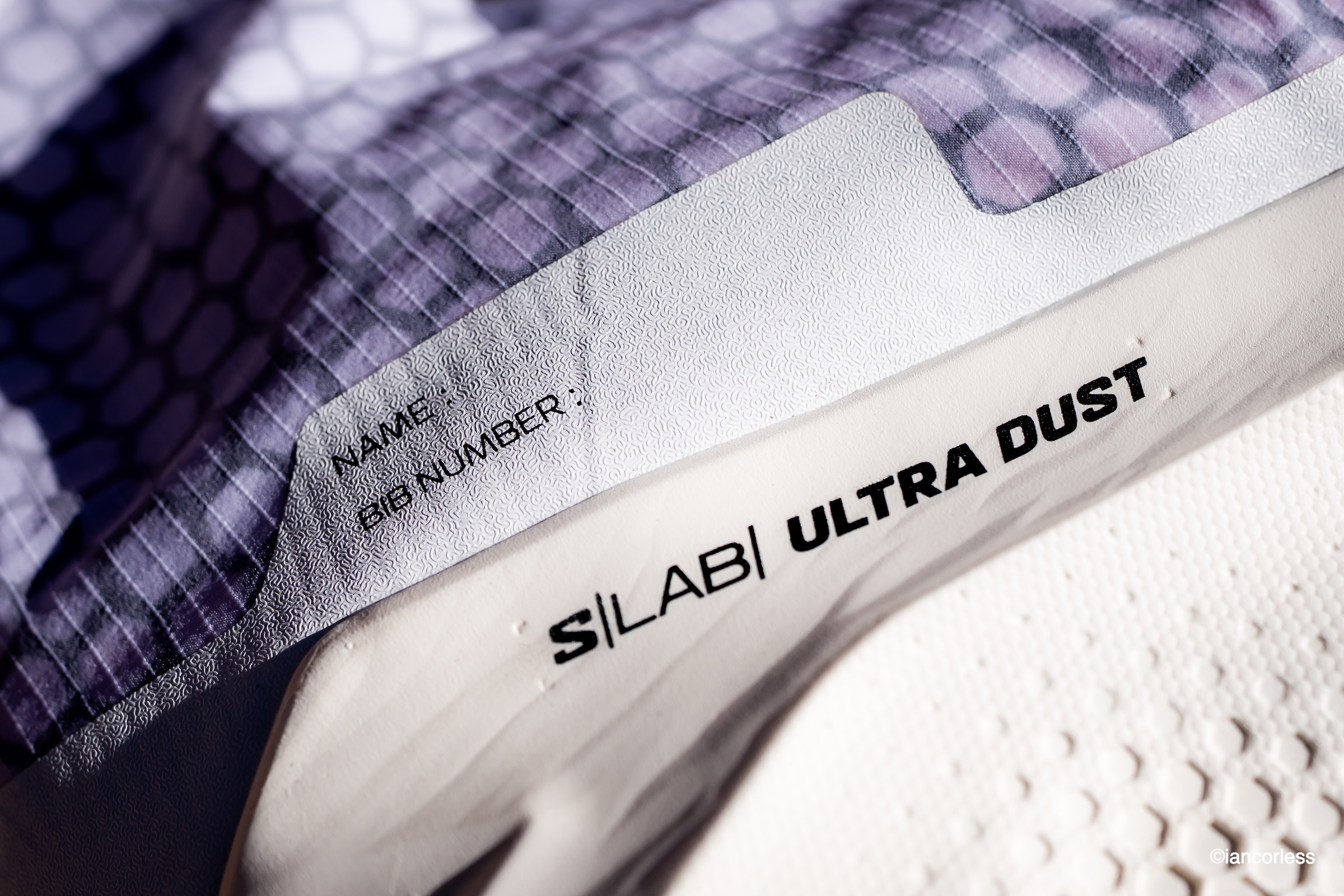
And a final nice touch? There is a place for NAME and BIB NUMBER on each shoe.
Website: S/Lab Ultra Dust HERE
Instagram – @iancorlessphotography
Twitter – @talkultra
facebook.com/iancorlessphotography
Web – www.iancorless.com




 IAN CORLESS