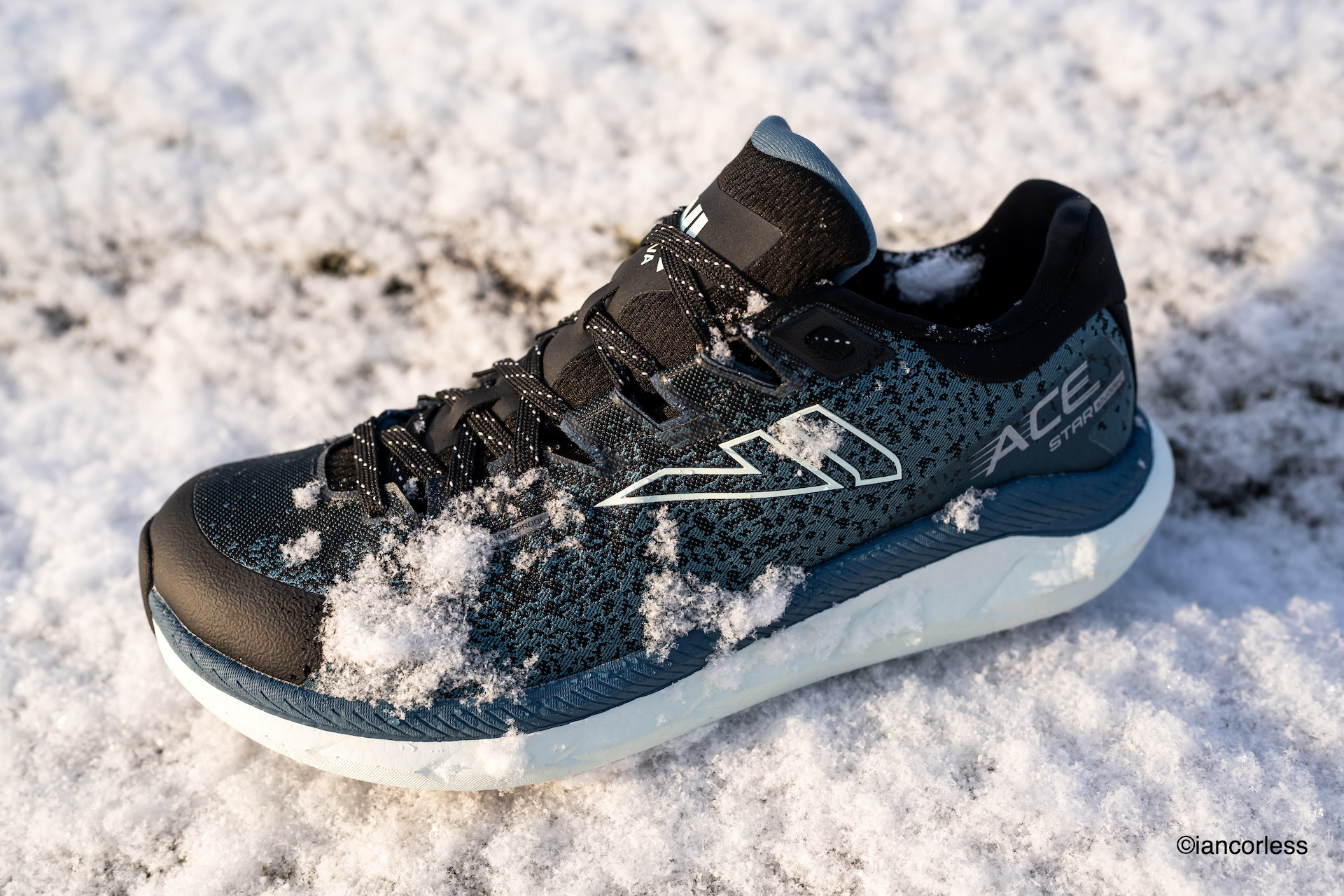
La Sportiva PRODIGIO PRO – Shoe Review

It has been a little like Christmas lately with the arrival of new shoes for testing and the La Sportiva Prodigio Pro was highly anticipated. I got my hands on a pair at UTMB in 2024, sadly though, they remained in my hands and not on my feet.

So, the arrival of the Prodigio Pro was welcome.

In all honesty, it’s a stand out shoe for La Sportiva. For perspective, I have been using La Sportiva for years, they offer bullet proof mountain running shoes and models such as the Mutant, Jackal and the Cyklon have been in my rotation for years. They are durable and trustworthy BUT not the lightest or even the fastest options available.

Not sure how, but I missed the original Prodigio and when it finally came around to getting a pair for test, the Prodigio Pro was available. So, I jumped straight to the Prodigio Pro, so, any comments here cannot be related to the Prodigio, which I think is maybe a good thing!

First point – this feels like La Sportiva have released a fast, lightweight and arguably a super shoe for trails. Hence my comment ‘a stand out shoe for La Sportiva.’

The Prodigio Pro, for a mountain centric company, is a new approach.

The addition of PRO name signifies that this shoe is for faster workouts, racing or if you are like me, you just love a bloody good run shoe.
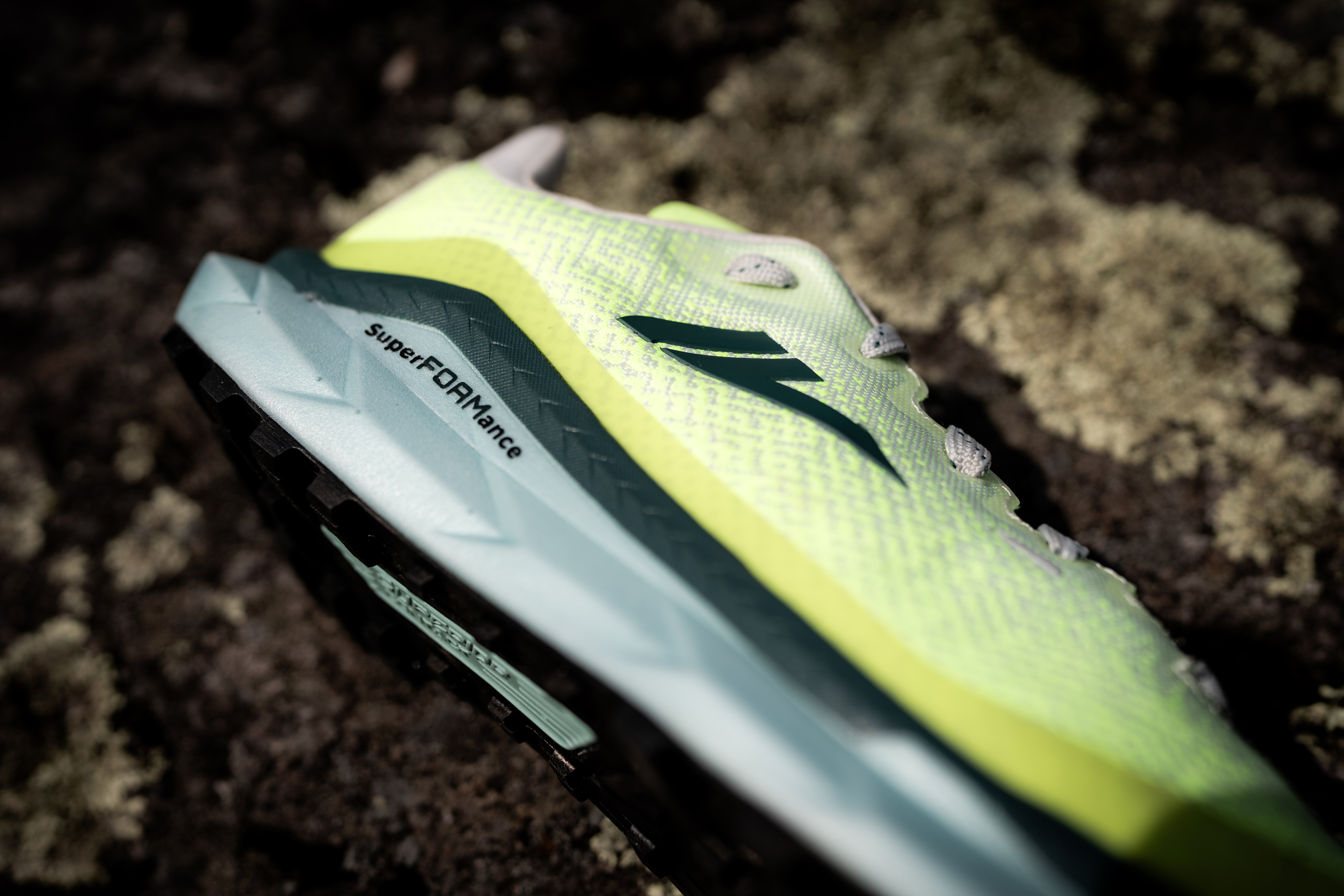
With 28mm cushioning at the front, 34mm at the rear and a 6mm drop, the Prodigio Pro sits in this wonderful middle ground of cushioning and drop.
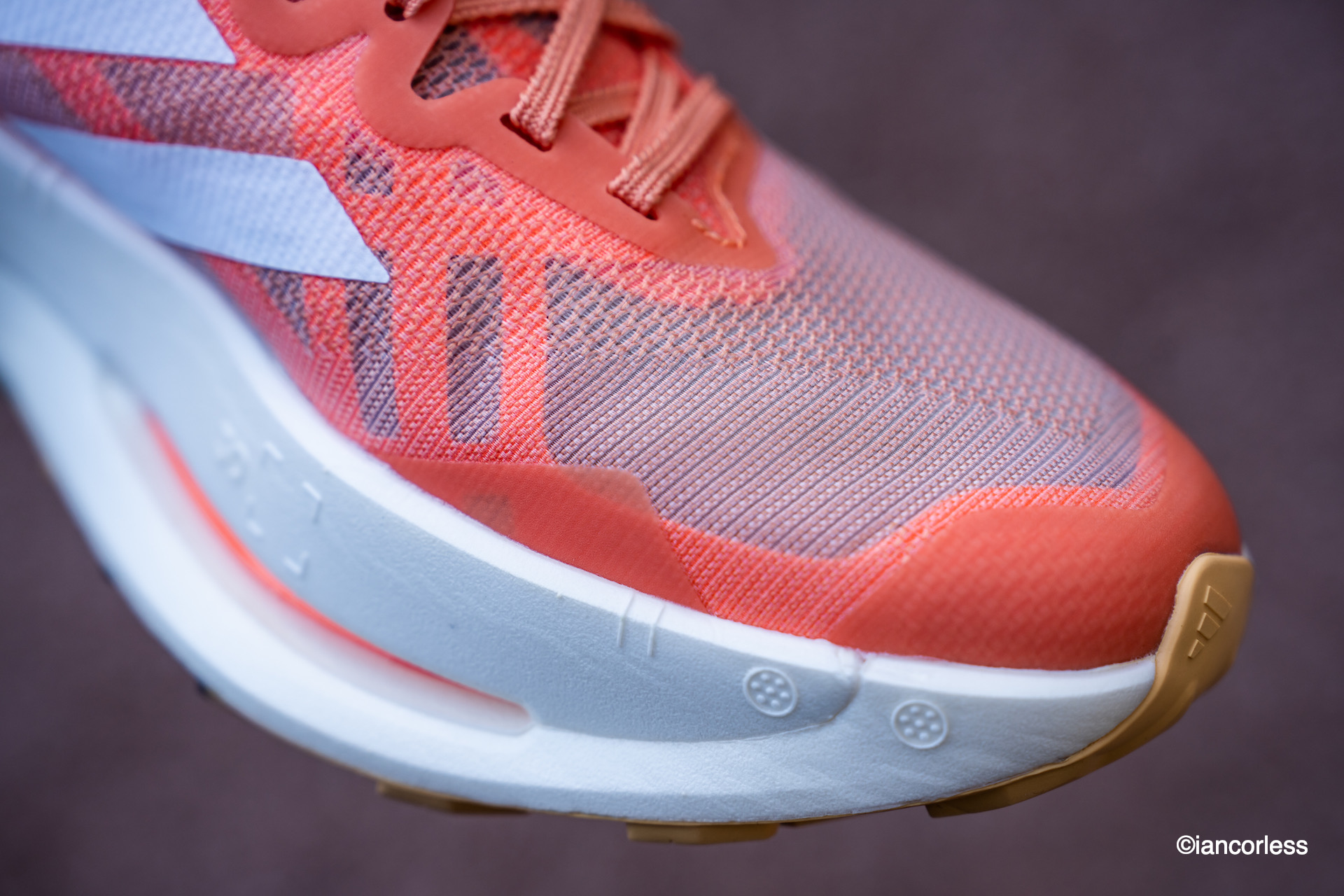
Female colourway

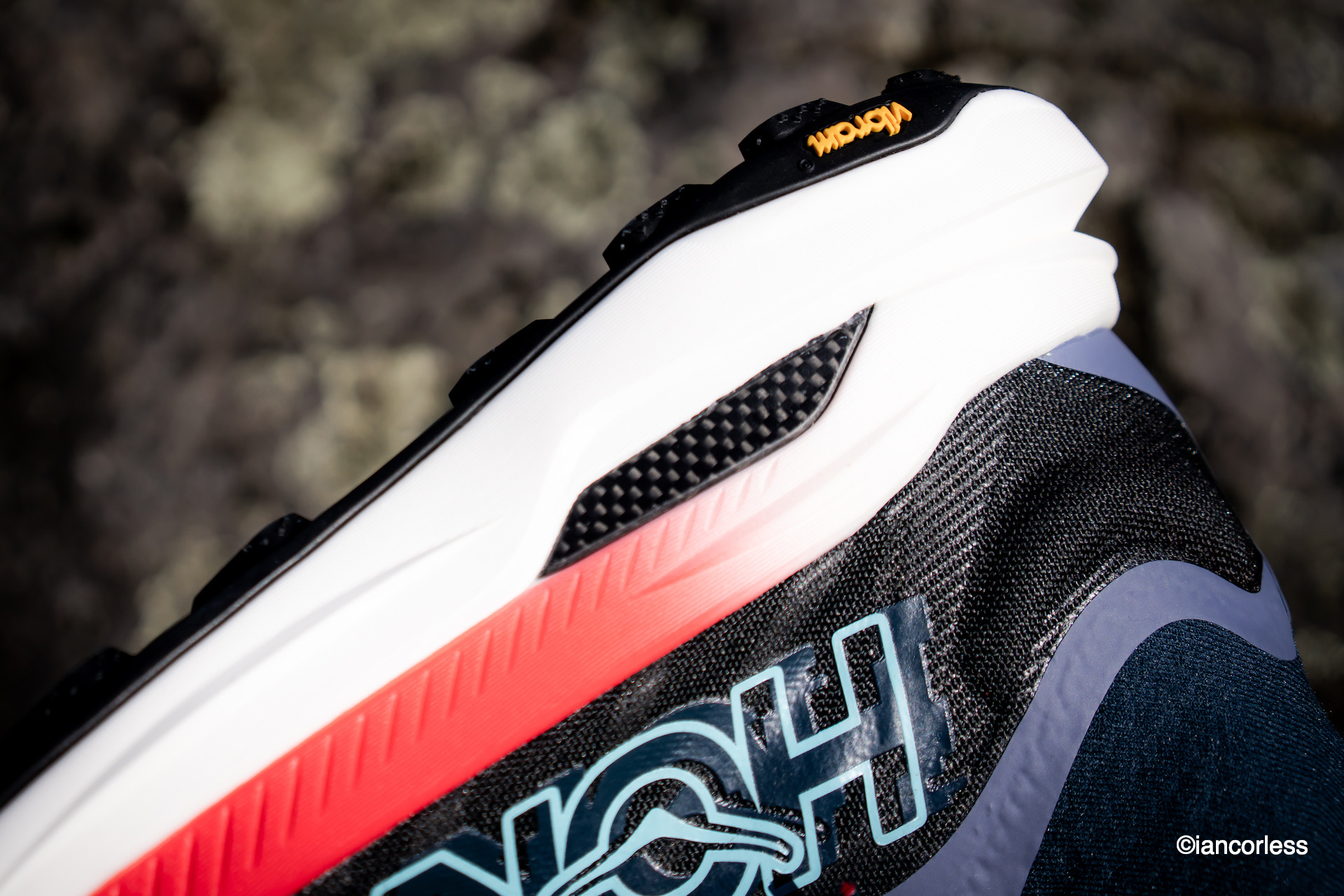
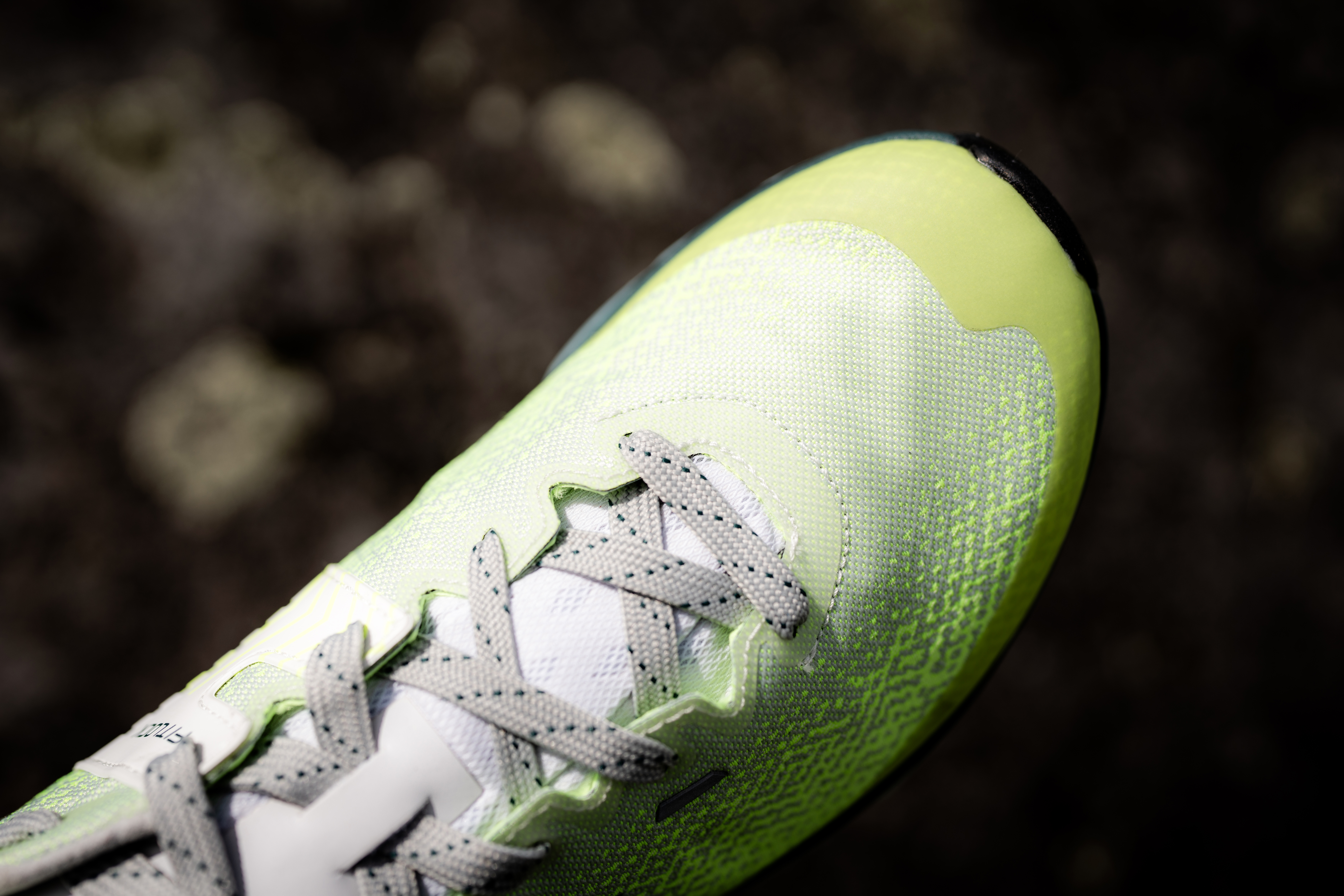
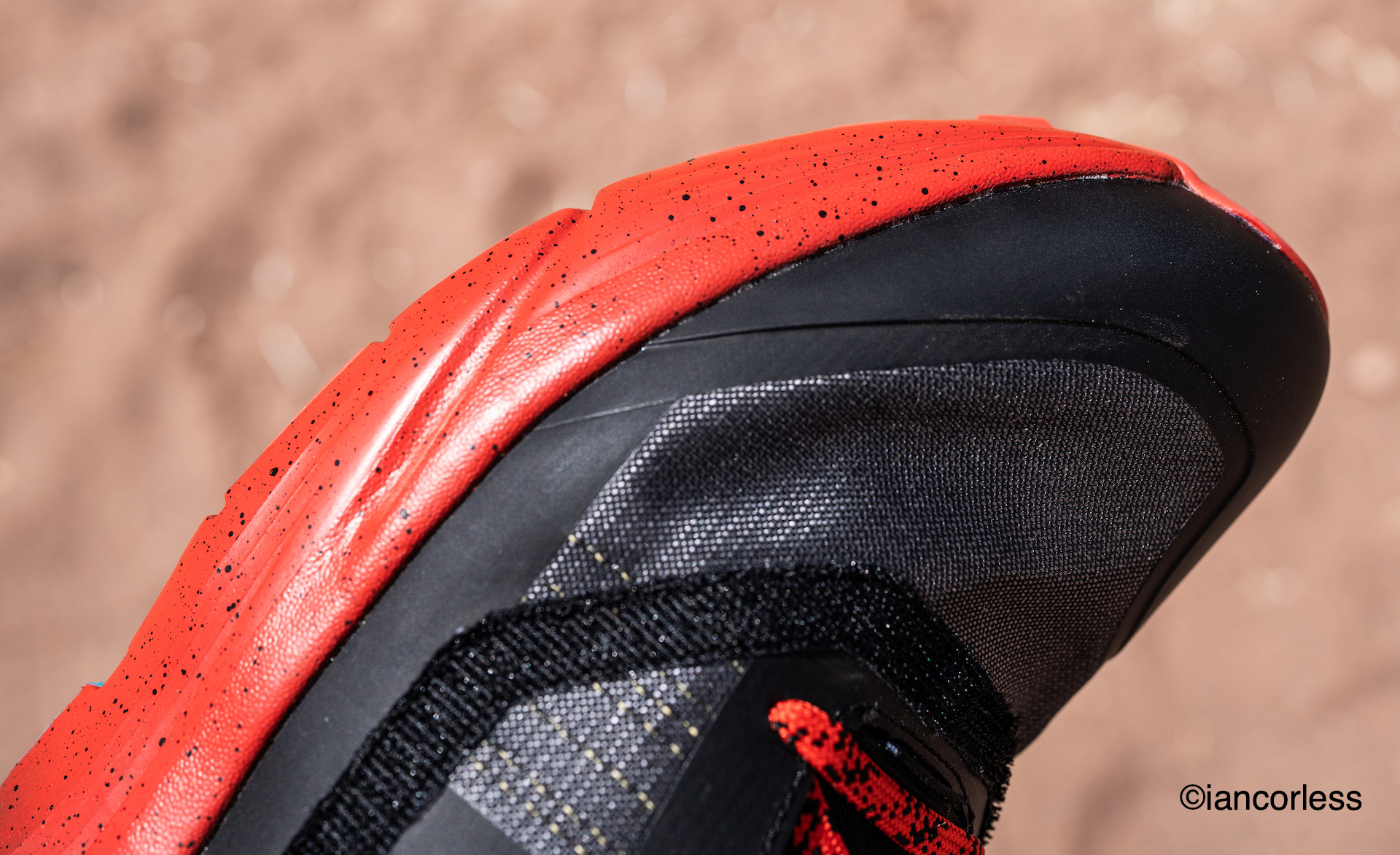
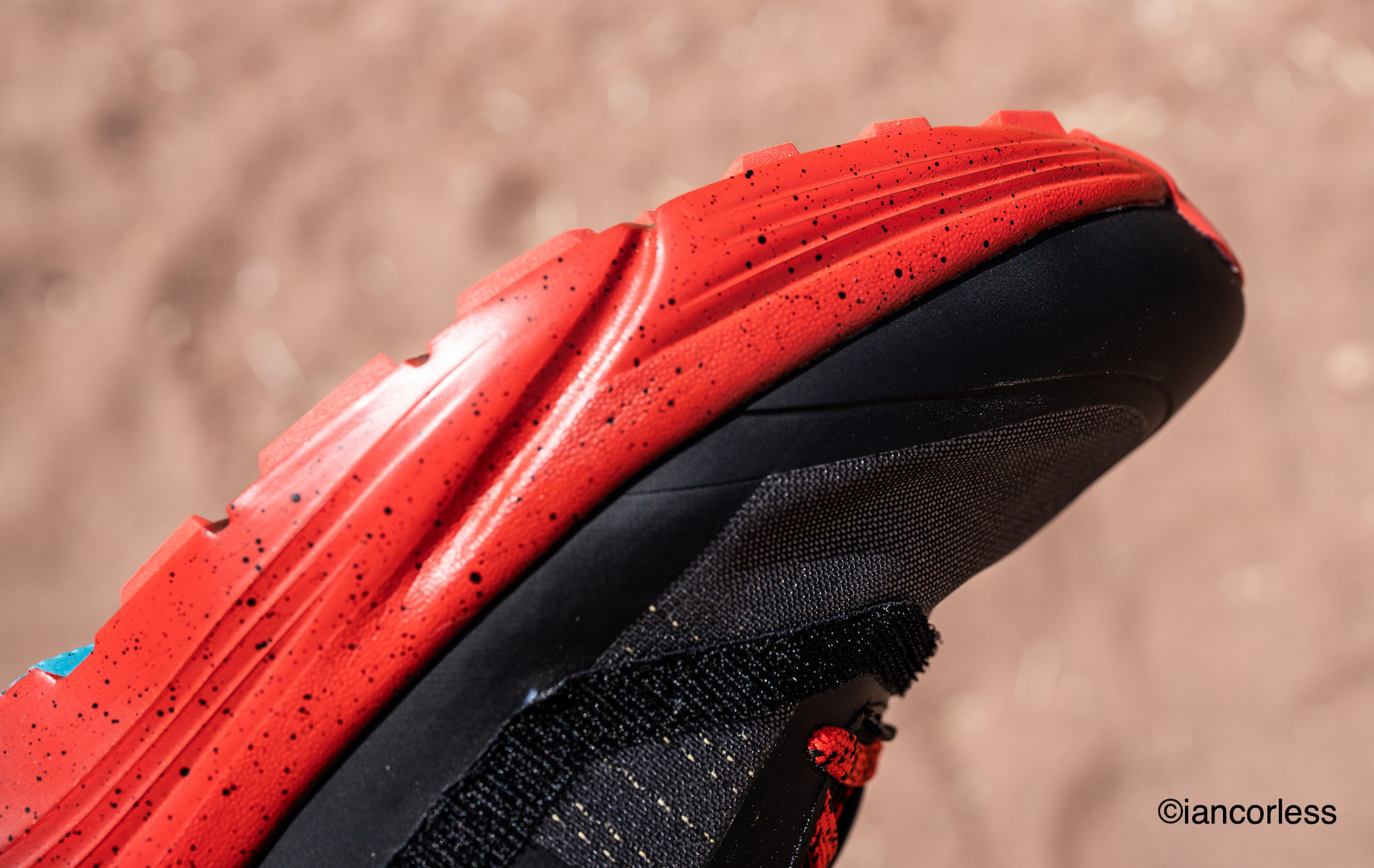
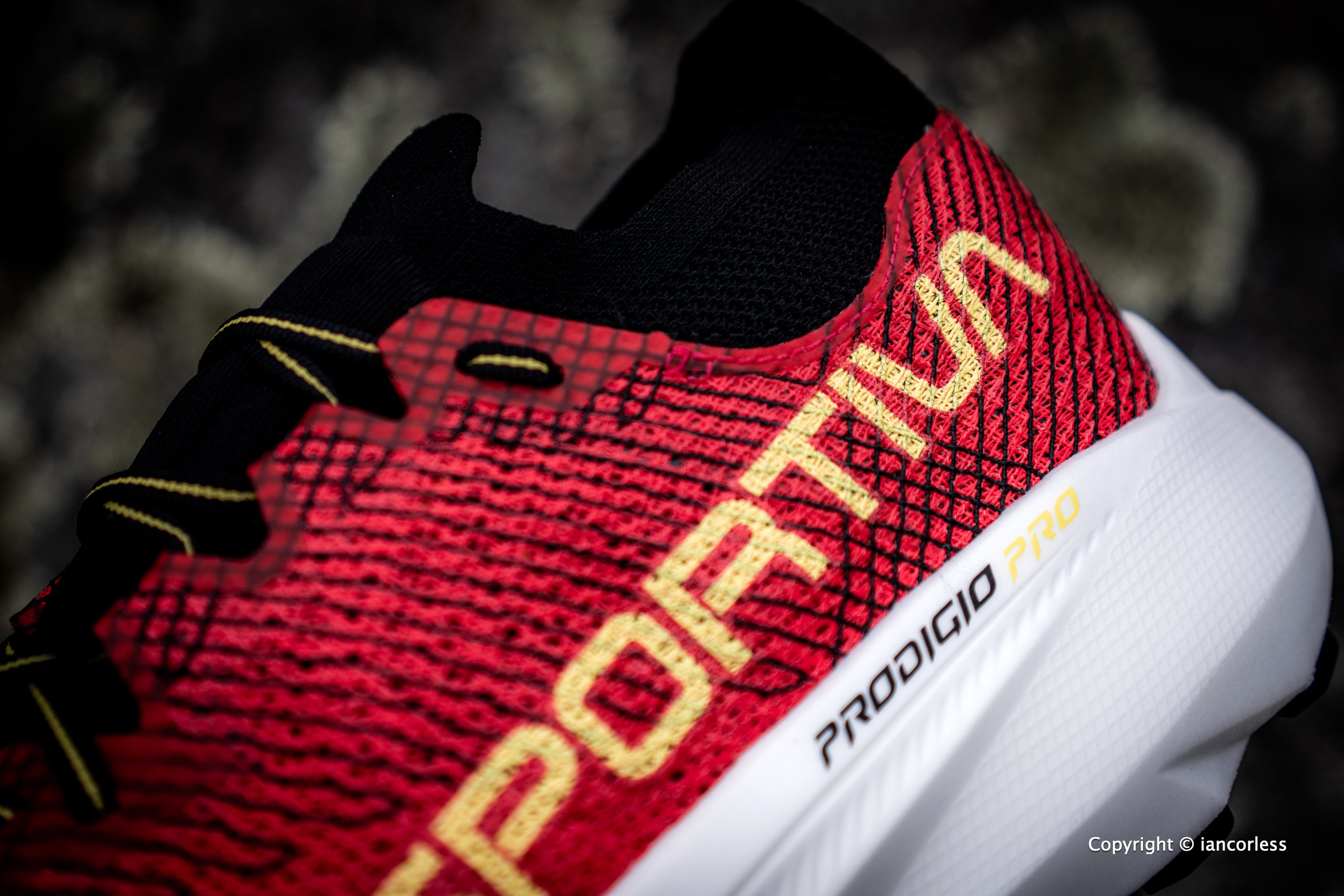
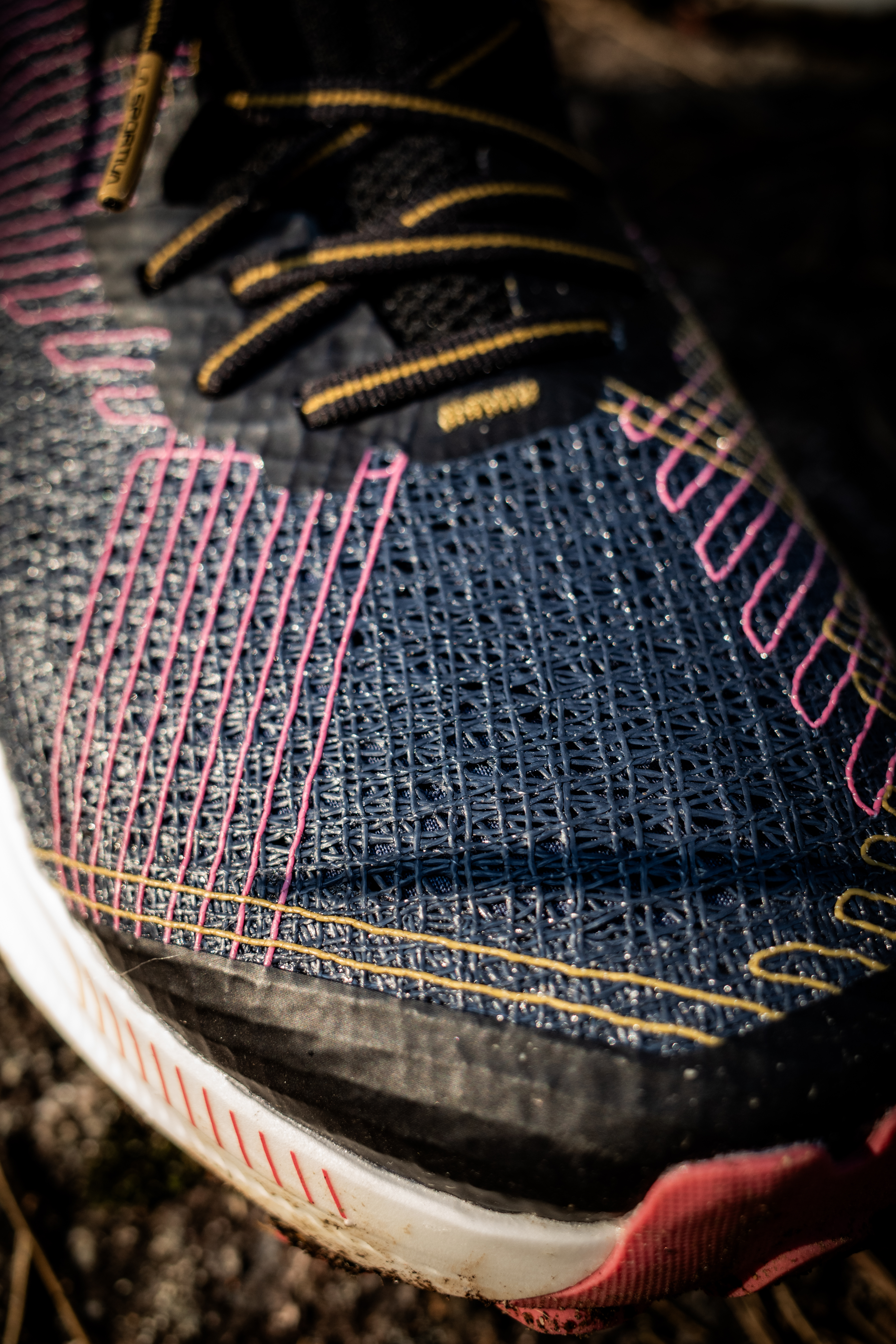
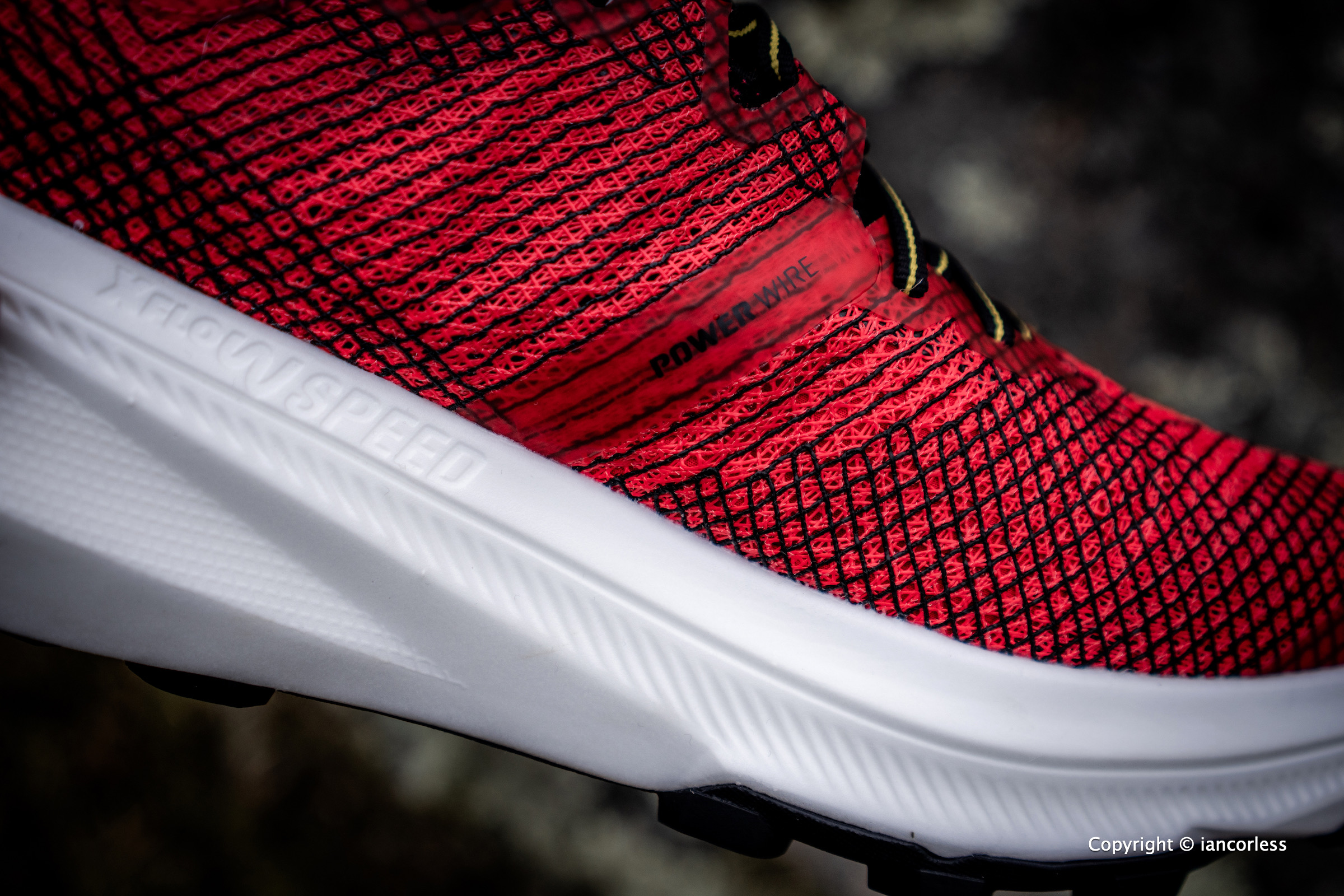
The upper is unique, Power Wire. This upper looks like it was created via computer and then woven in a lab by some marvellous magic.
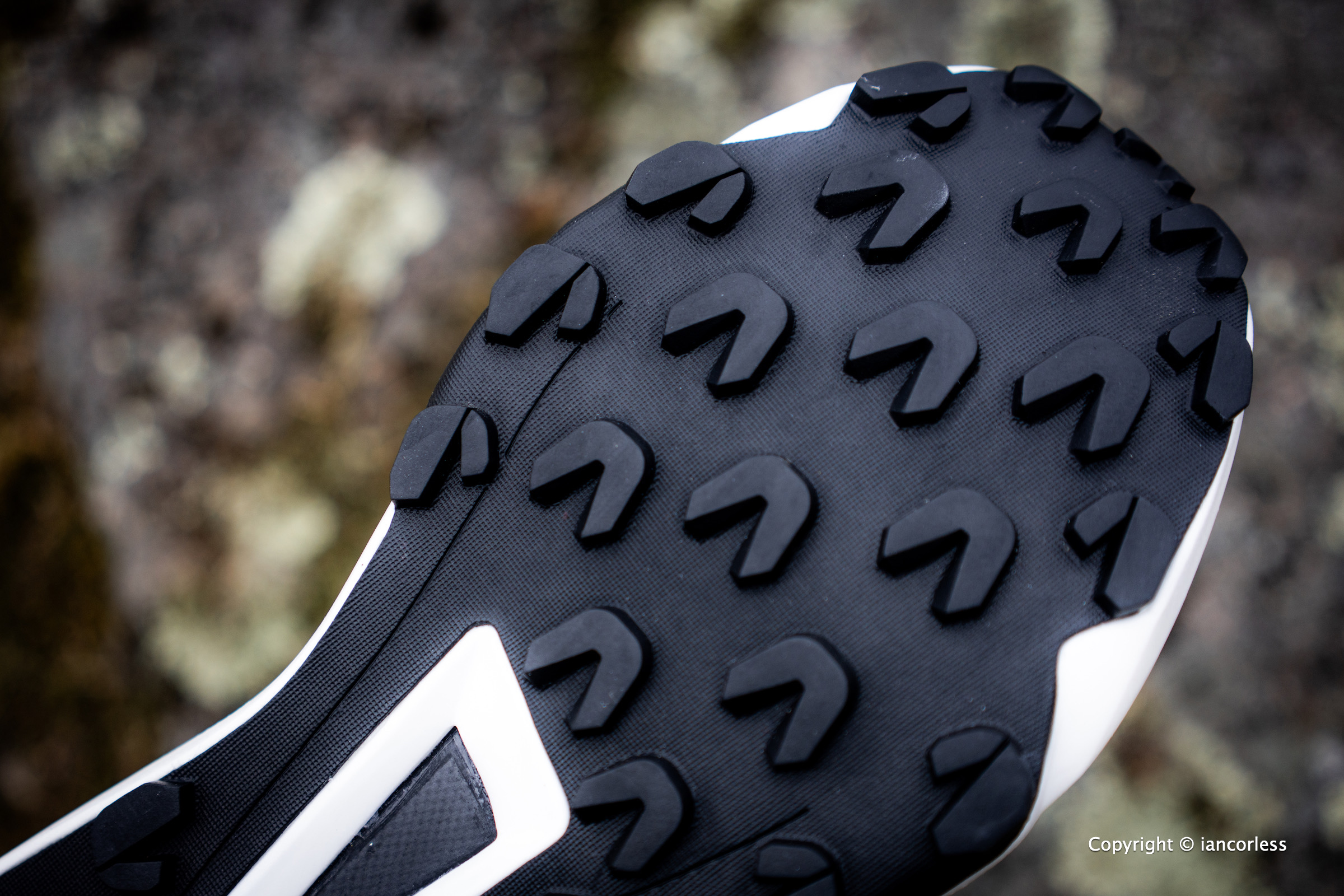
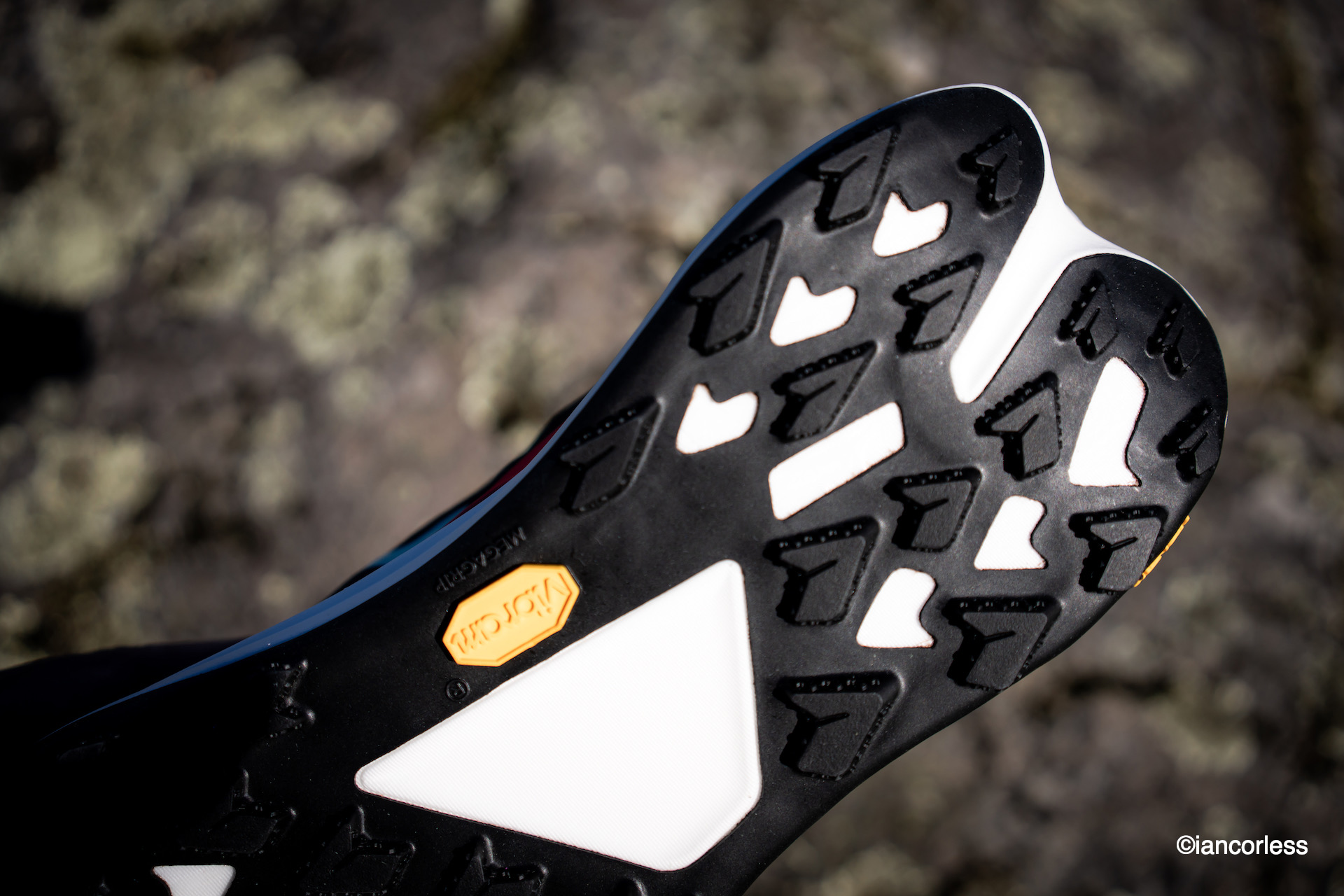
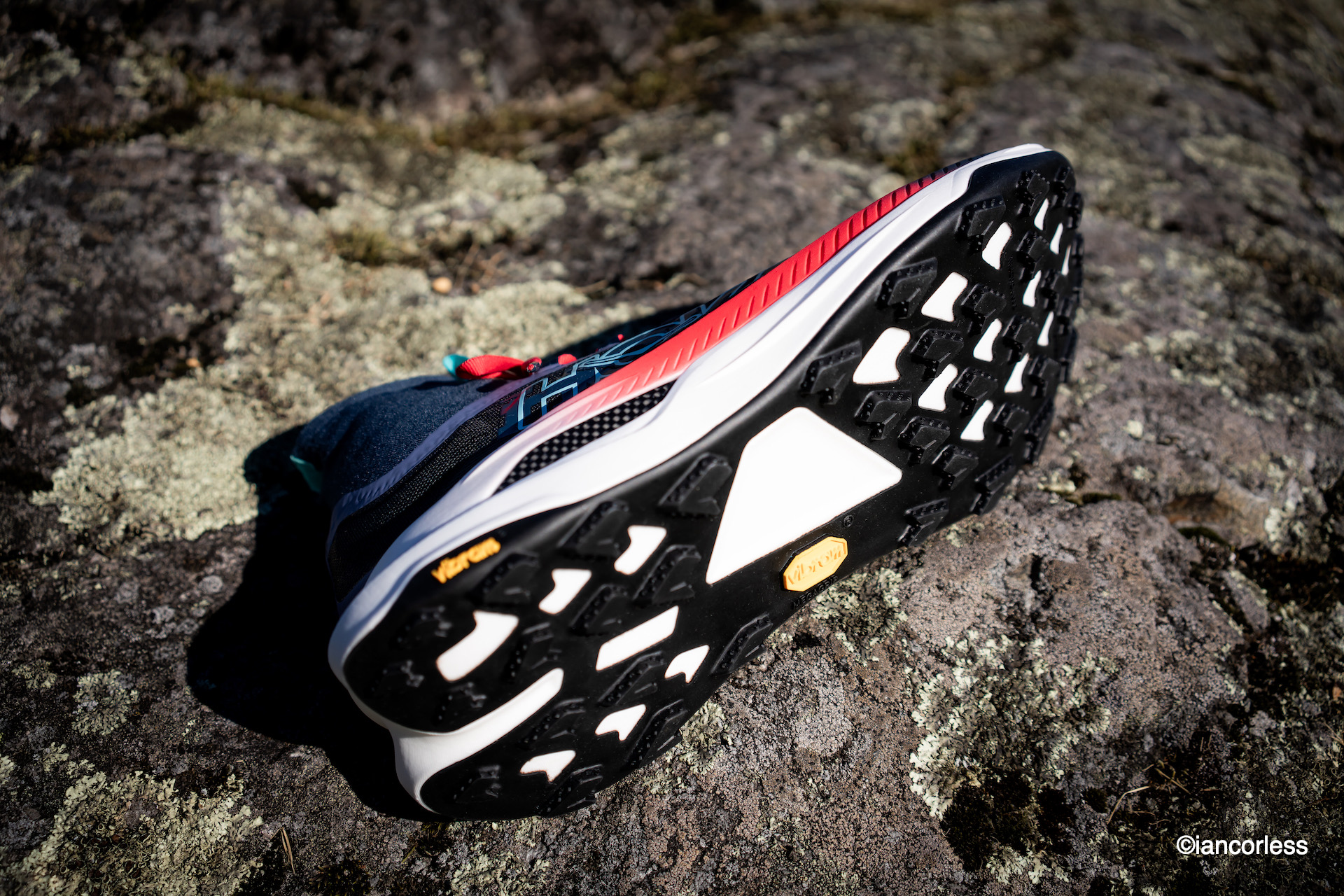
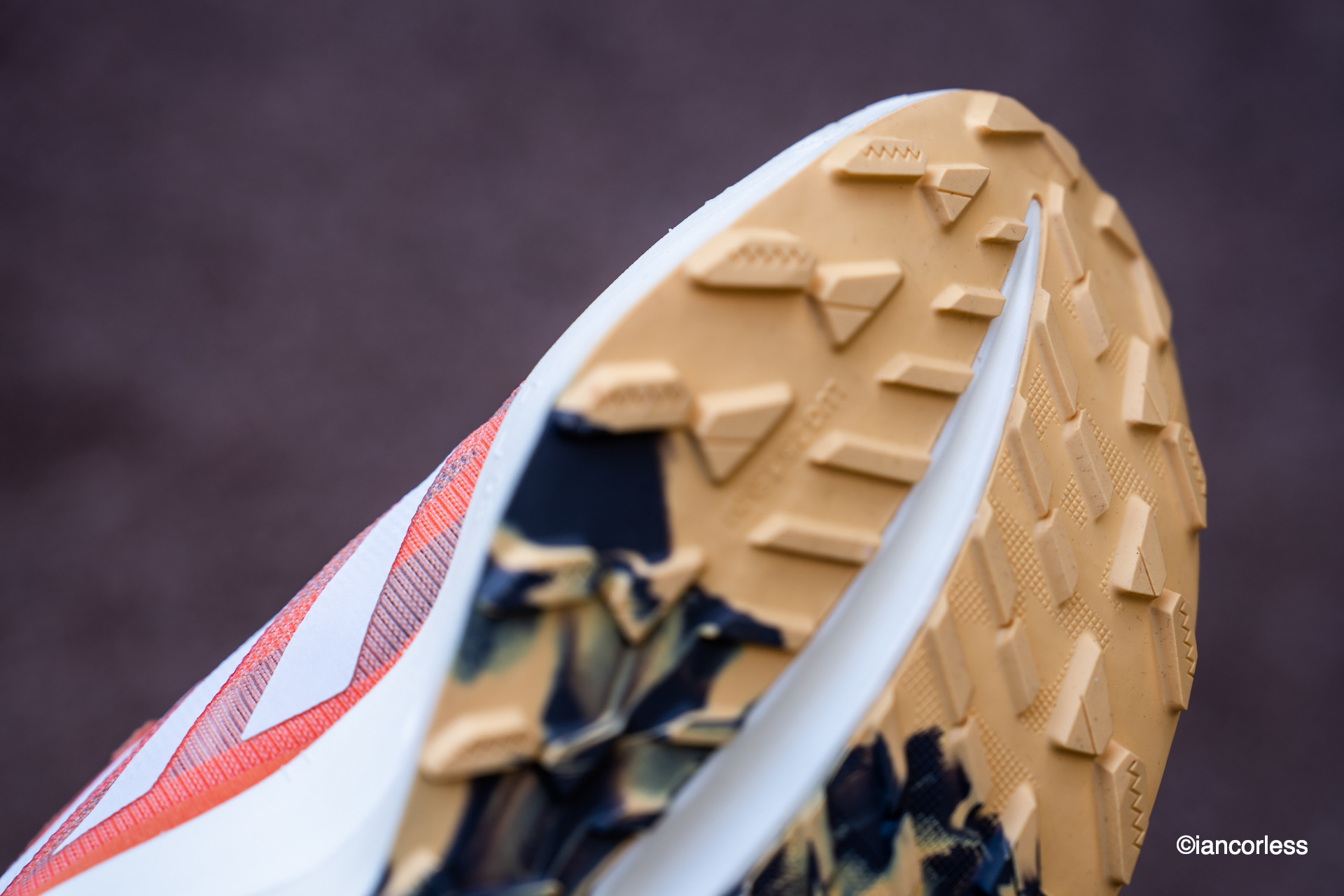
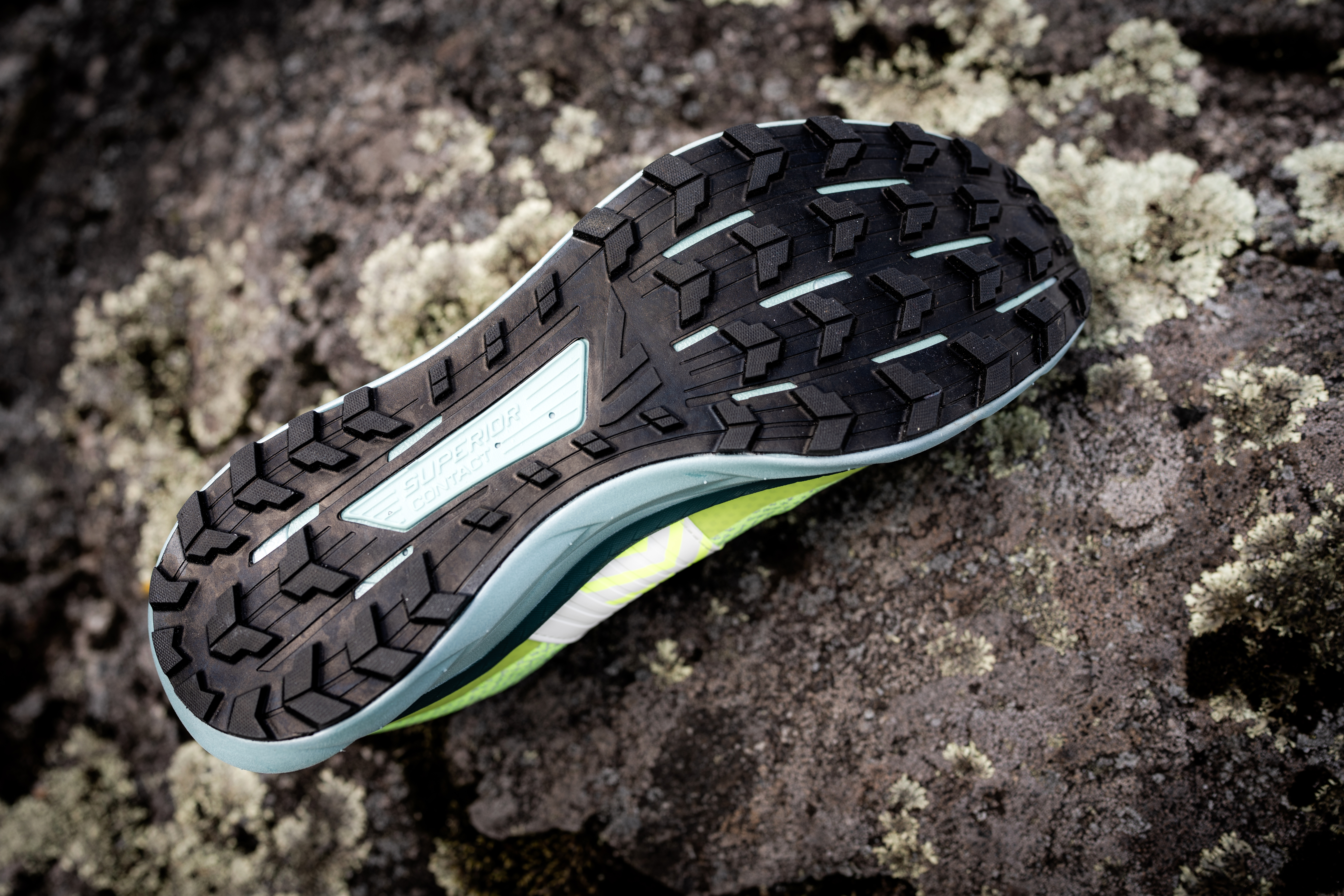
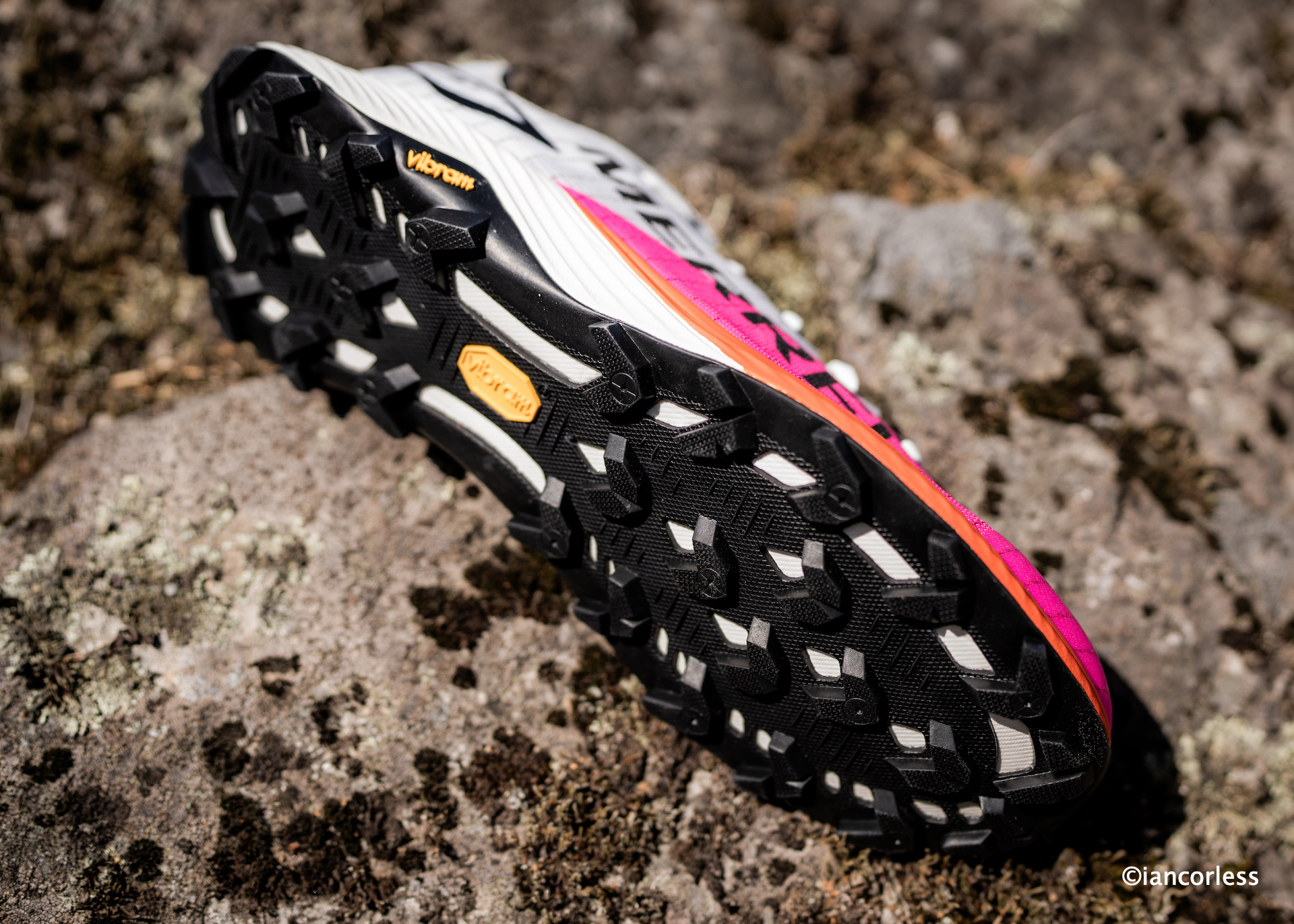
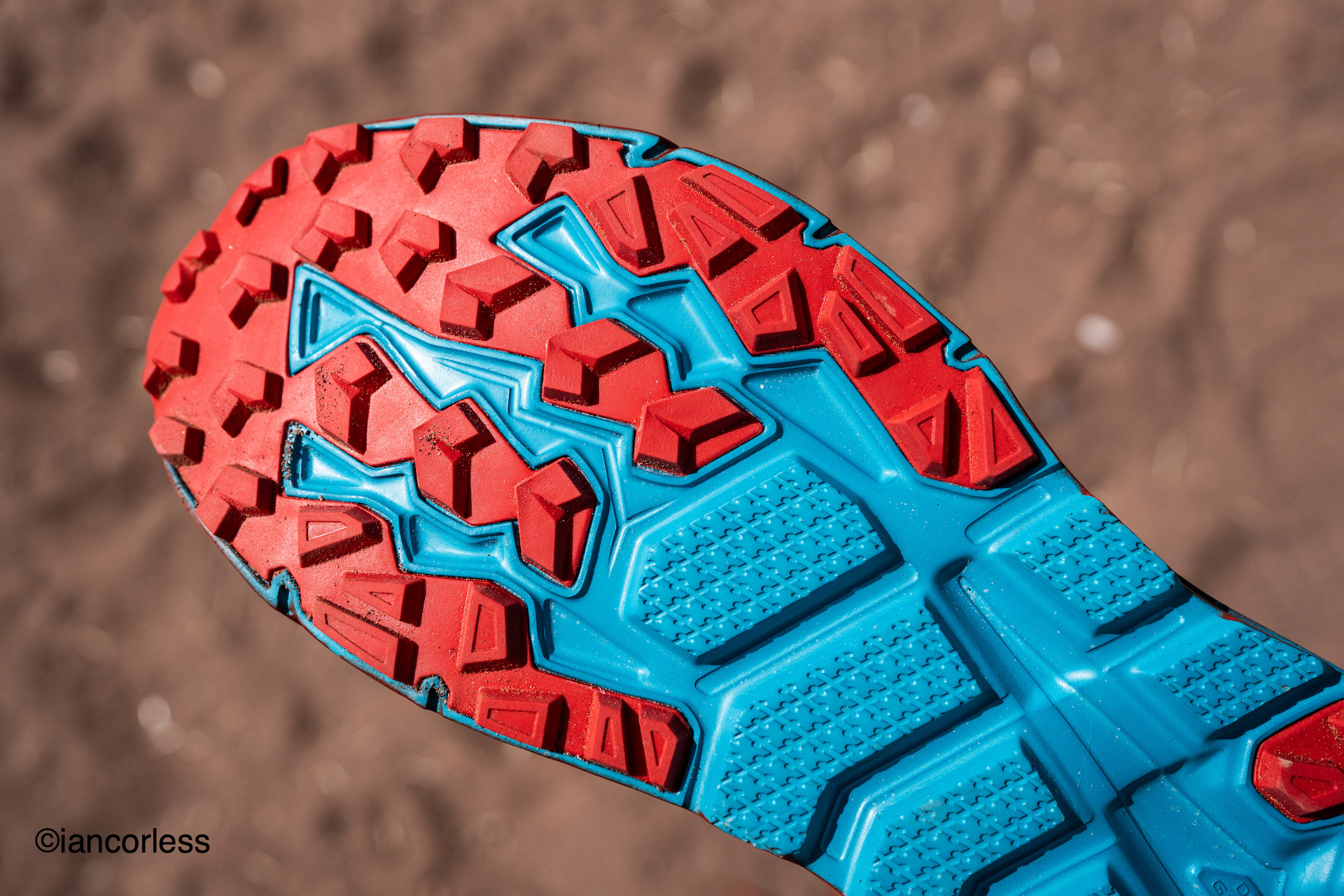
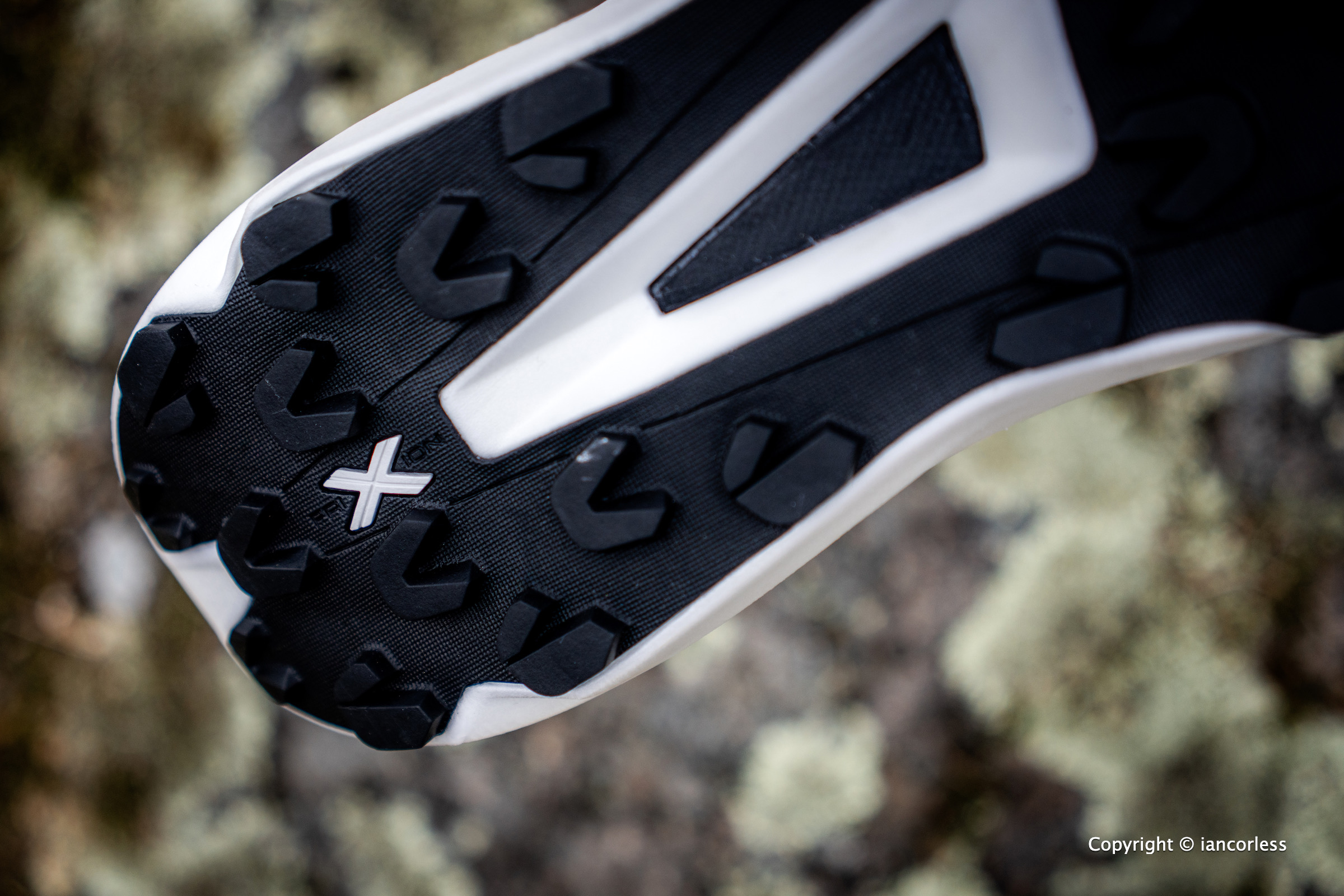
The outsole if La Sportiva’s own Friction White. I have to say, I love it hen brands make their own outsole. I am tired of Vibram being added to run shoes and frankly (hold your breath) it is not a good outsole when you are on wet rock or similar. I am amazed that NNormal could not come up with something better! And let’s face it, nobody can compete with VJ outsoles. But, La Sportiva do a good job.
The cushioning is nitro-infused which in all honesty I have no idea what it means BUT yes, it really works. The thing with cushioning is, and some shoe brands don’t seem to understand this, if you are going high with cushioning, you need to go wide with outsole/ footprint, otherwise you are running on an unstable double decker bus that is ready to roll at any moment – step in the horrendous adidas Terrex Agravic Speed Ultra which proves that you don’t take a road shoe, make some tweaks and then call it a trail shoe.
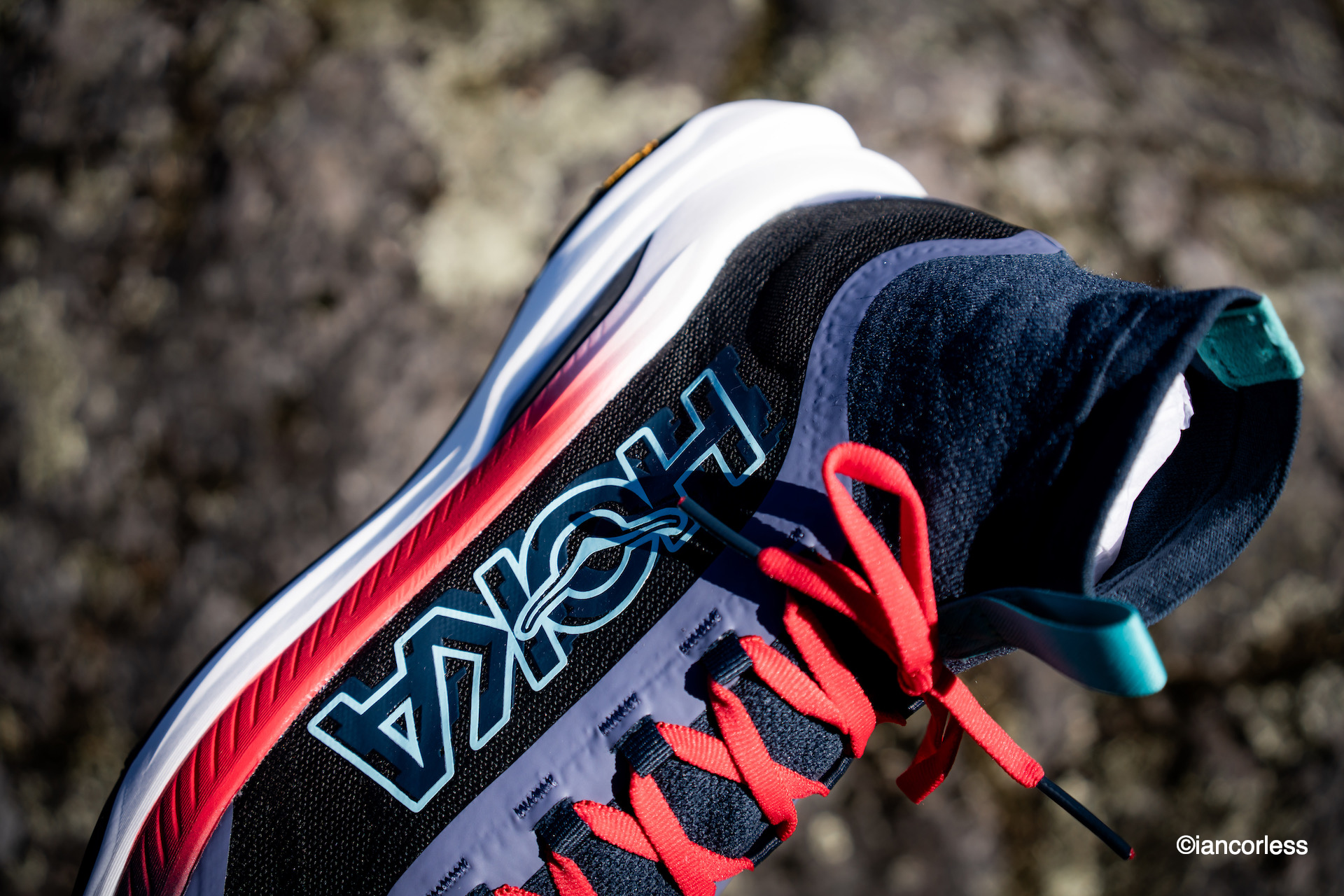
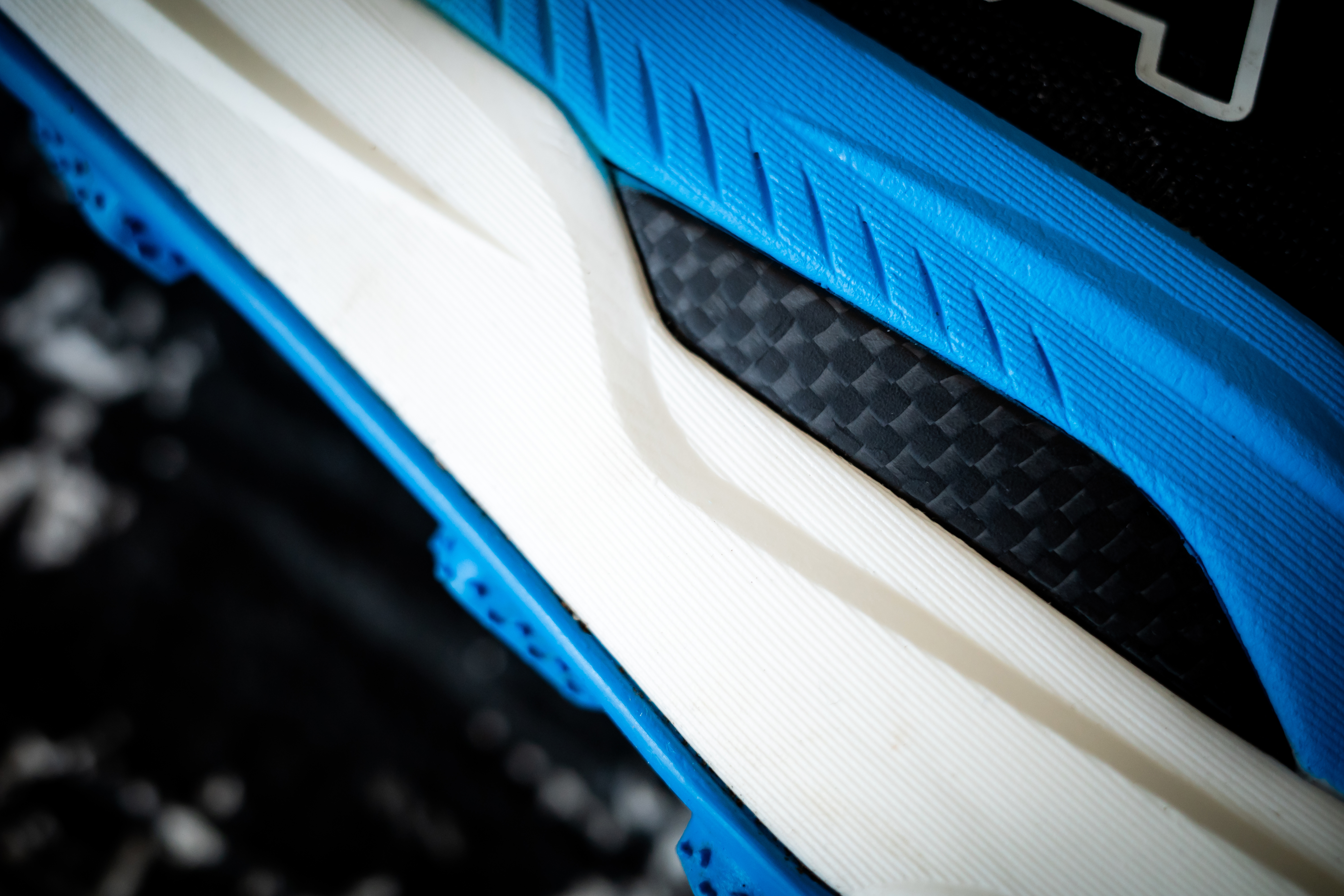
What this shoe does not have is a plate – yipee!!!! Don’t get me wrong here, some ‘plates’ work, the Hoka Tecton X3 a great example. But mostly, a plate in a trail running shoe has been less than a positive experience for me and many others.

THE SHOE
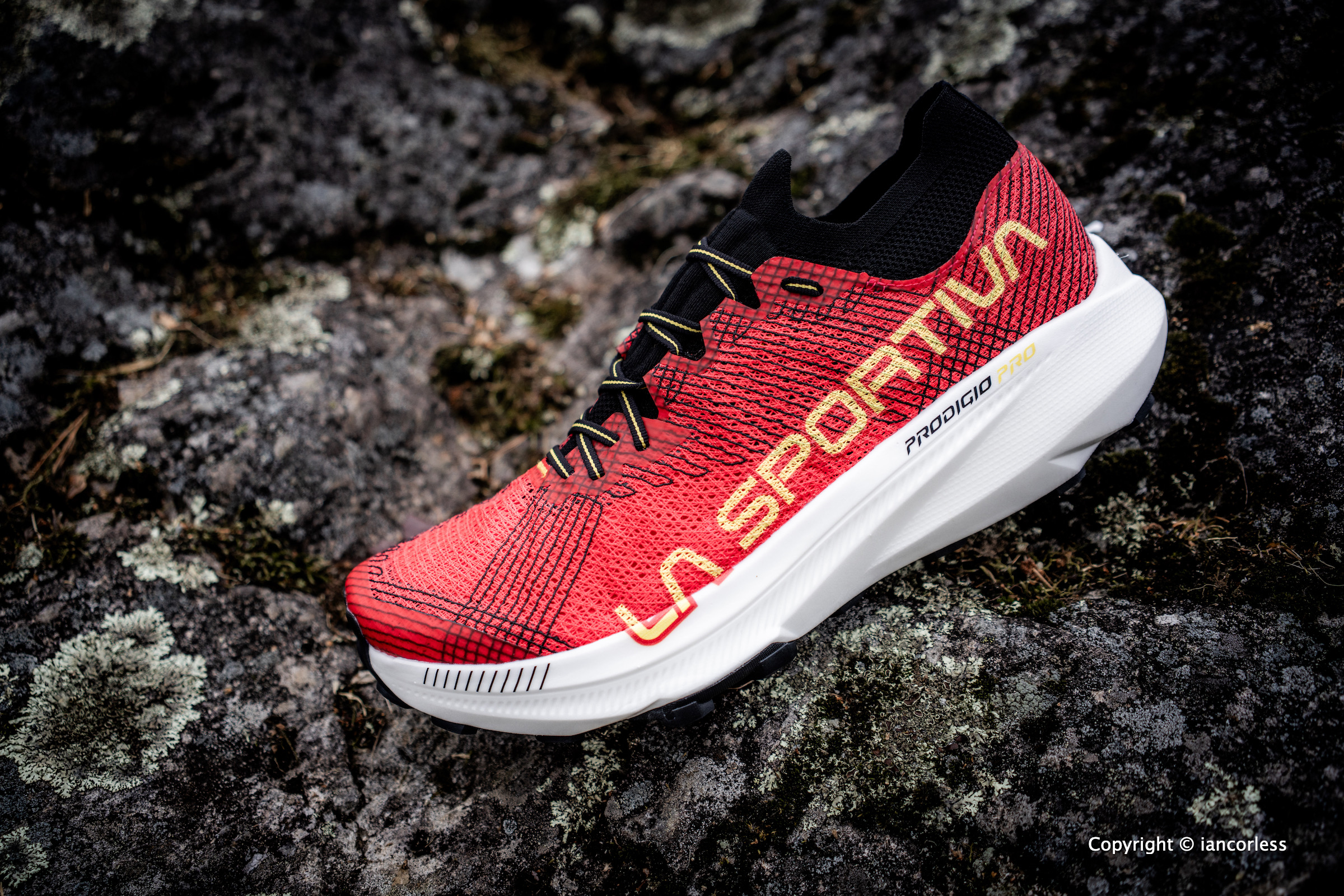
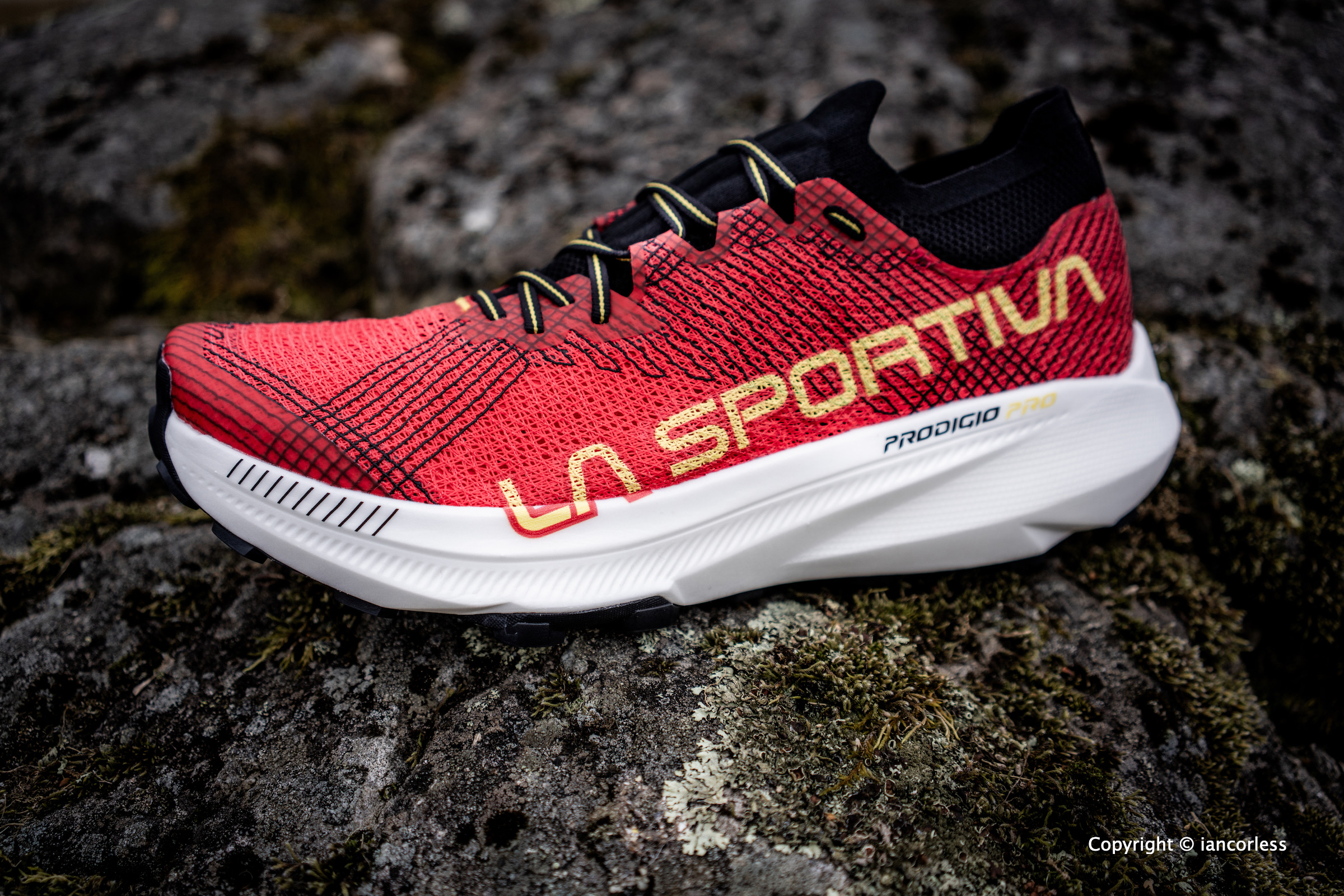
They look fantastic, simple!

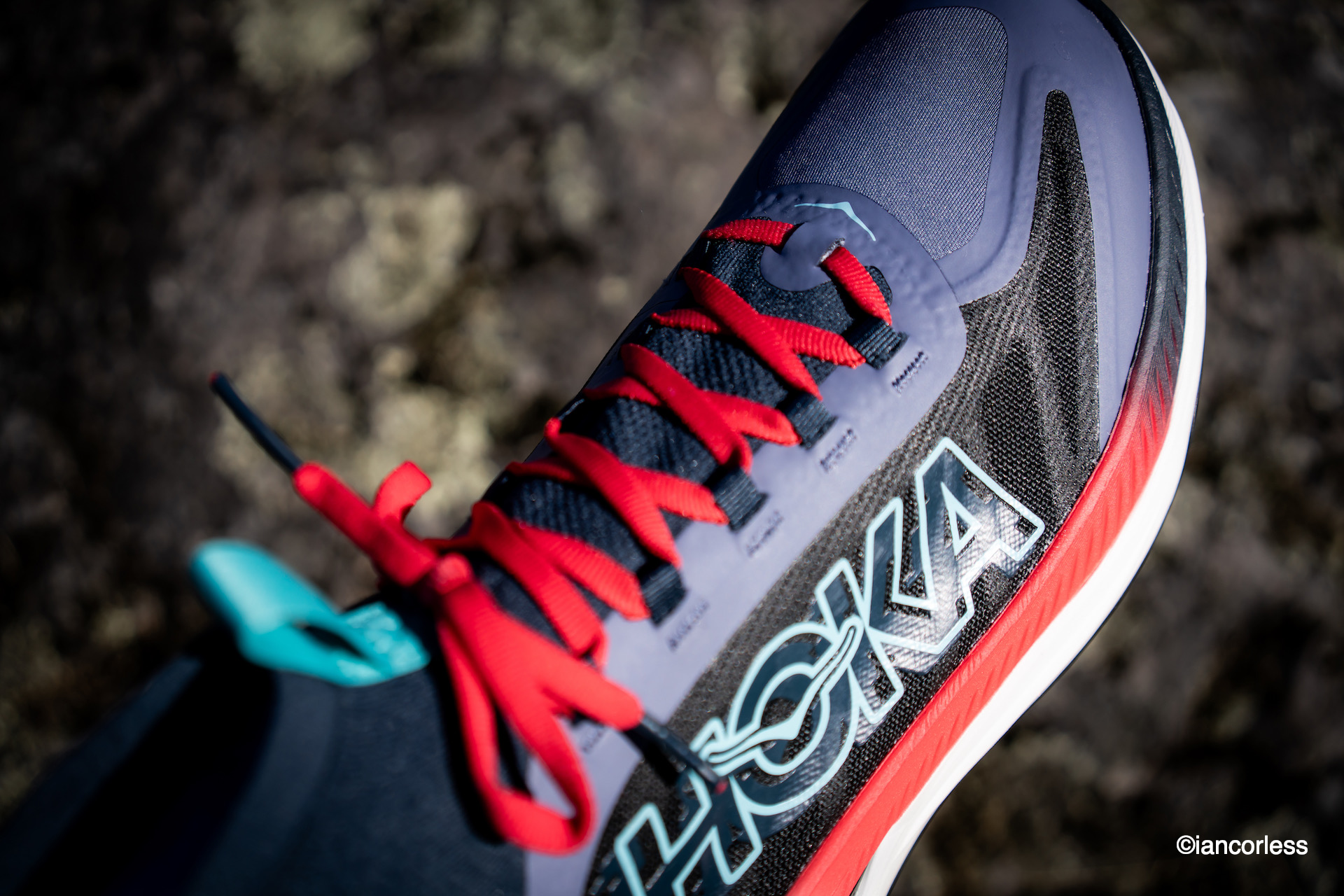
I have the red colour with LA SPORTIVA in yellow. I have to say, when I opened the box I was really sad they were not the classic black/yellow with a hint of red colours that kinda signify La Sportiva, but the red is cool.
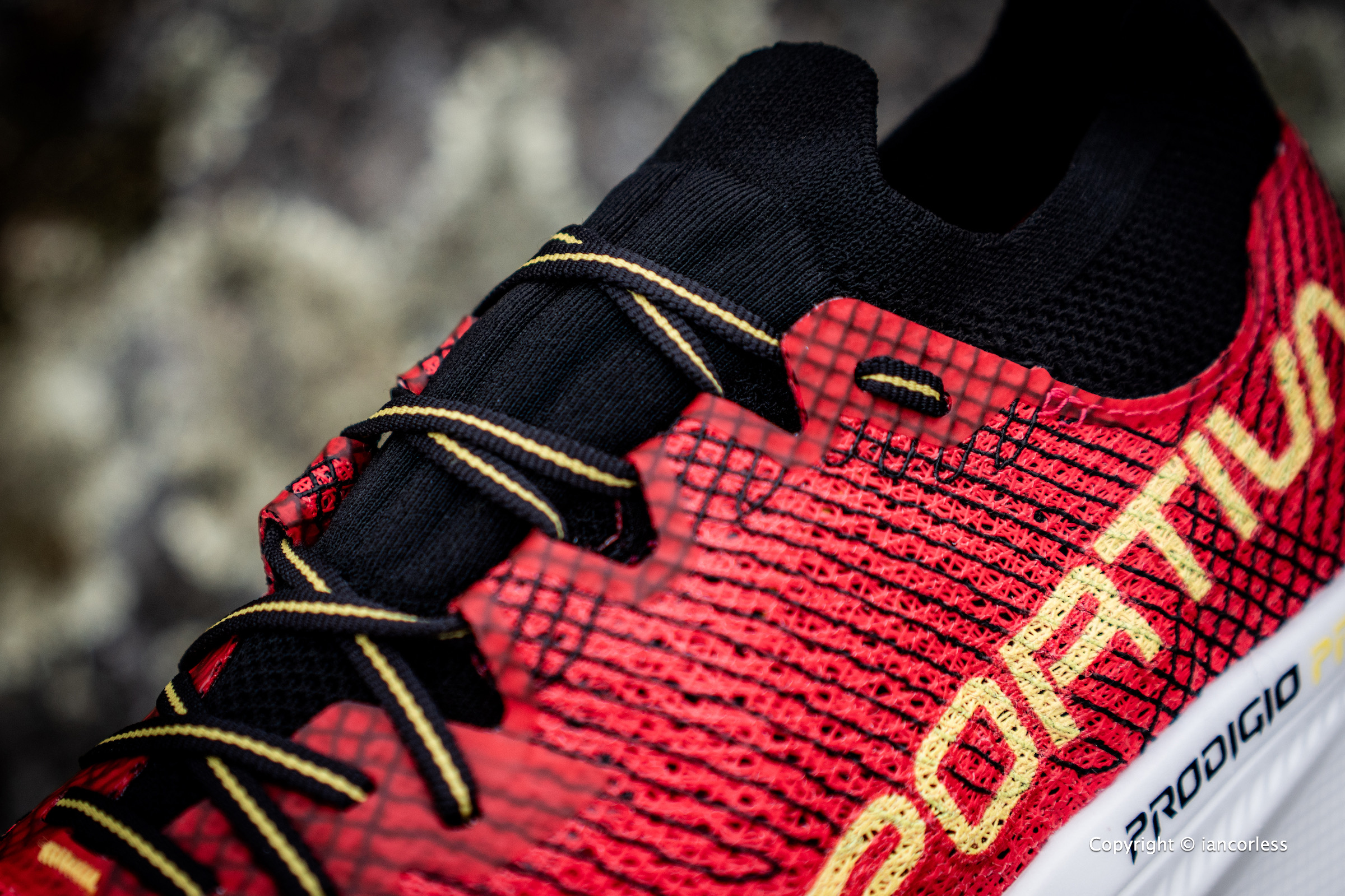
My eye immediately went to the tongue, the sock like fit and then the cushioning.
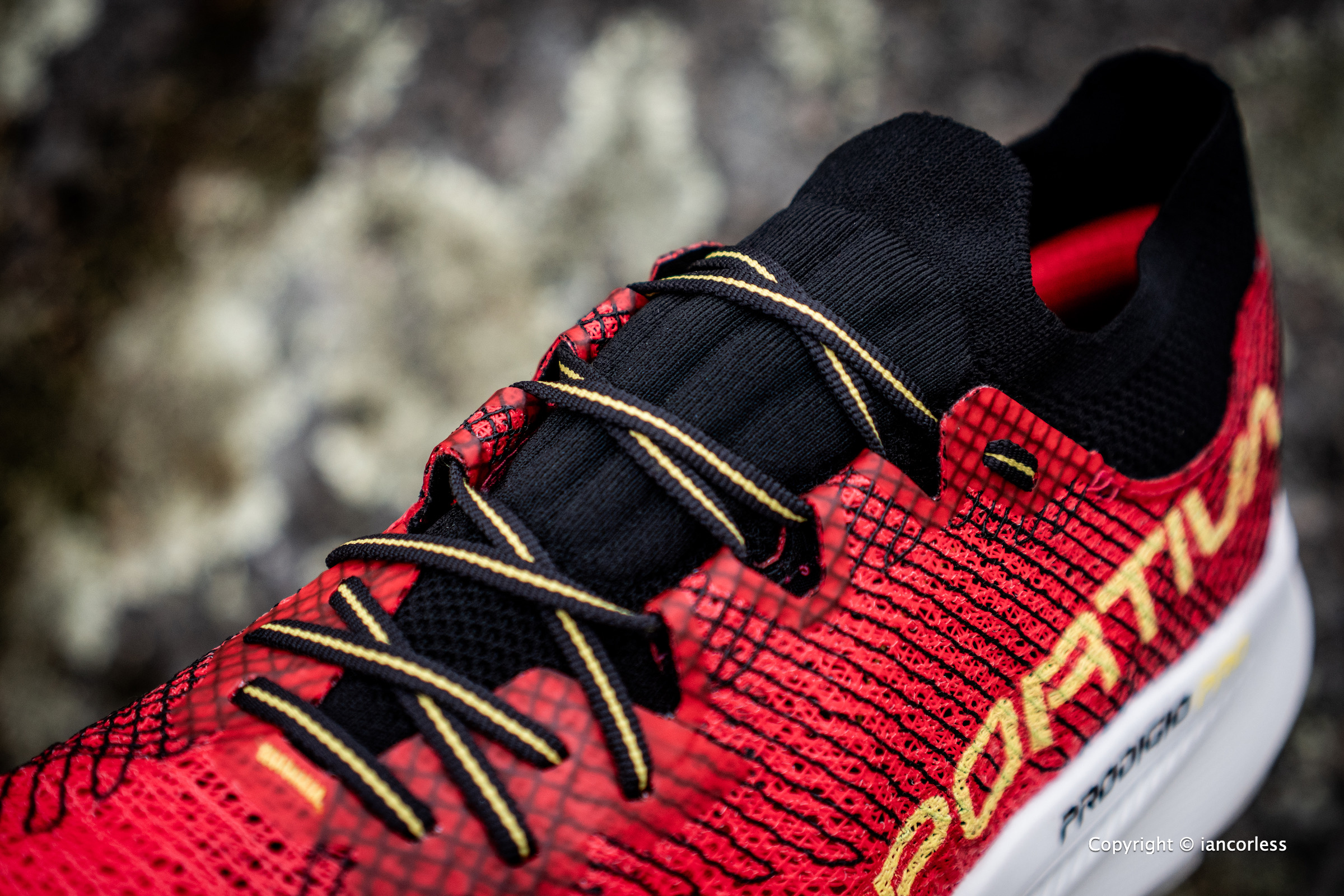
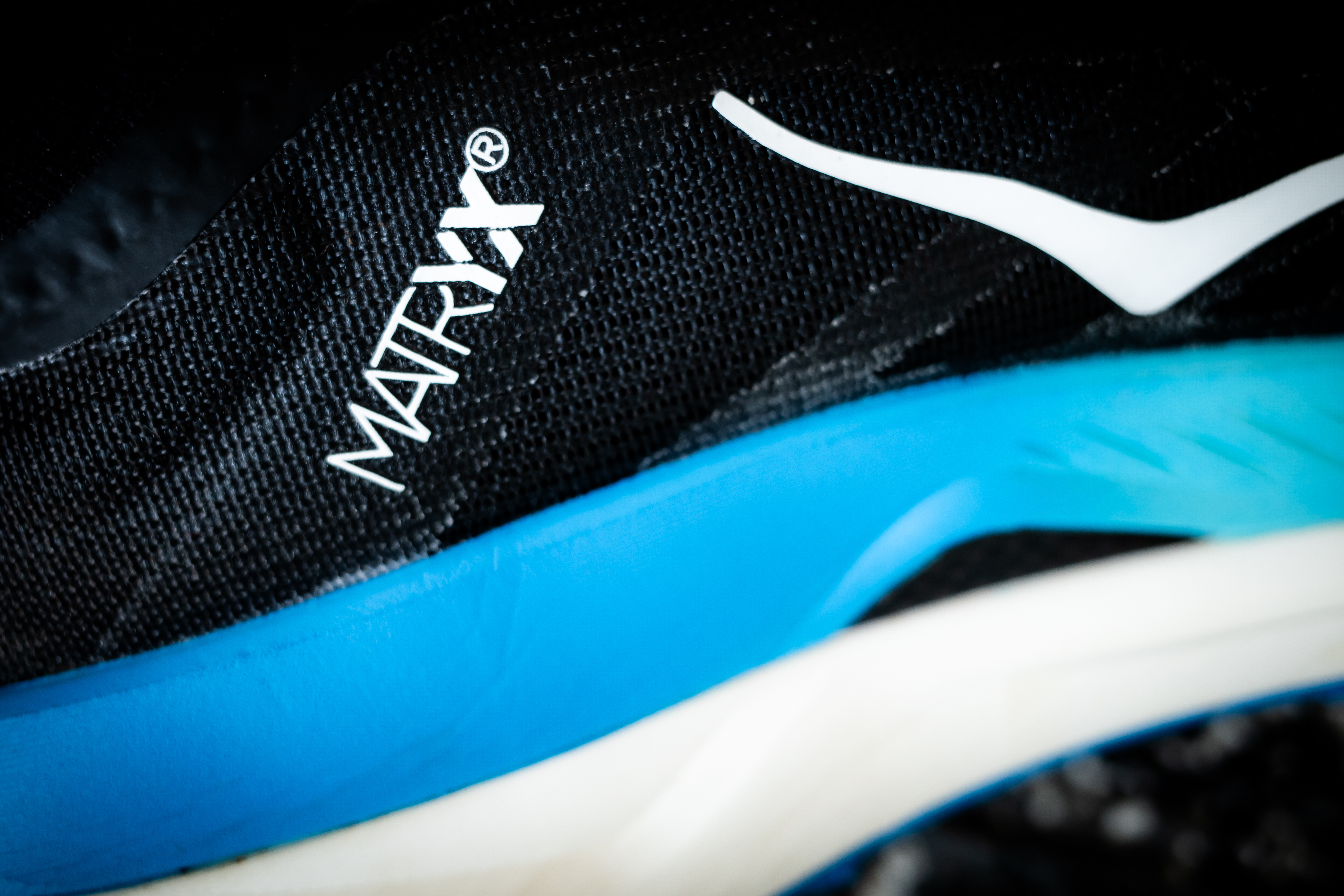
The upper is pretty darn special, especially when you zoom in close. It’s like thousands of fine threads woven together in varying thickness to add structure. It’s like Matryx which we are seeing on many shoes BUT it is completely different. As the name says, it is POWER WIRE which provides great fit, great comfort and excellent breathability – the shoe was a little cold running in winter! Toe protection is adeqaute, maybe a little minimal, but, for a trail shoe, perfectly fine.

Slipping the foot inside, the sock like fit and padded tongue are amazing. I got exactly the same feel from the Hoka Tecton X3, this put a big smile on my face. When tightening the laces, the padded tongue provides superior comfort on the navicular bone, a typical point of irritation.

As with all La Sportiva, you need to be careful with sizing, this shoe in particular will require you to have the correct size because of the way they fit. I would start by going a size larger as a start point. If you take a UK10, try a UK11.
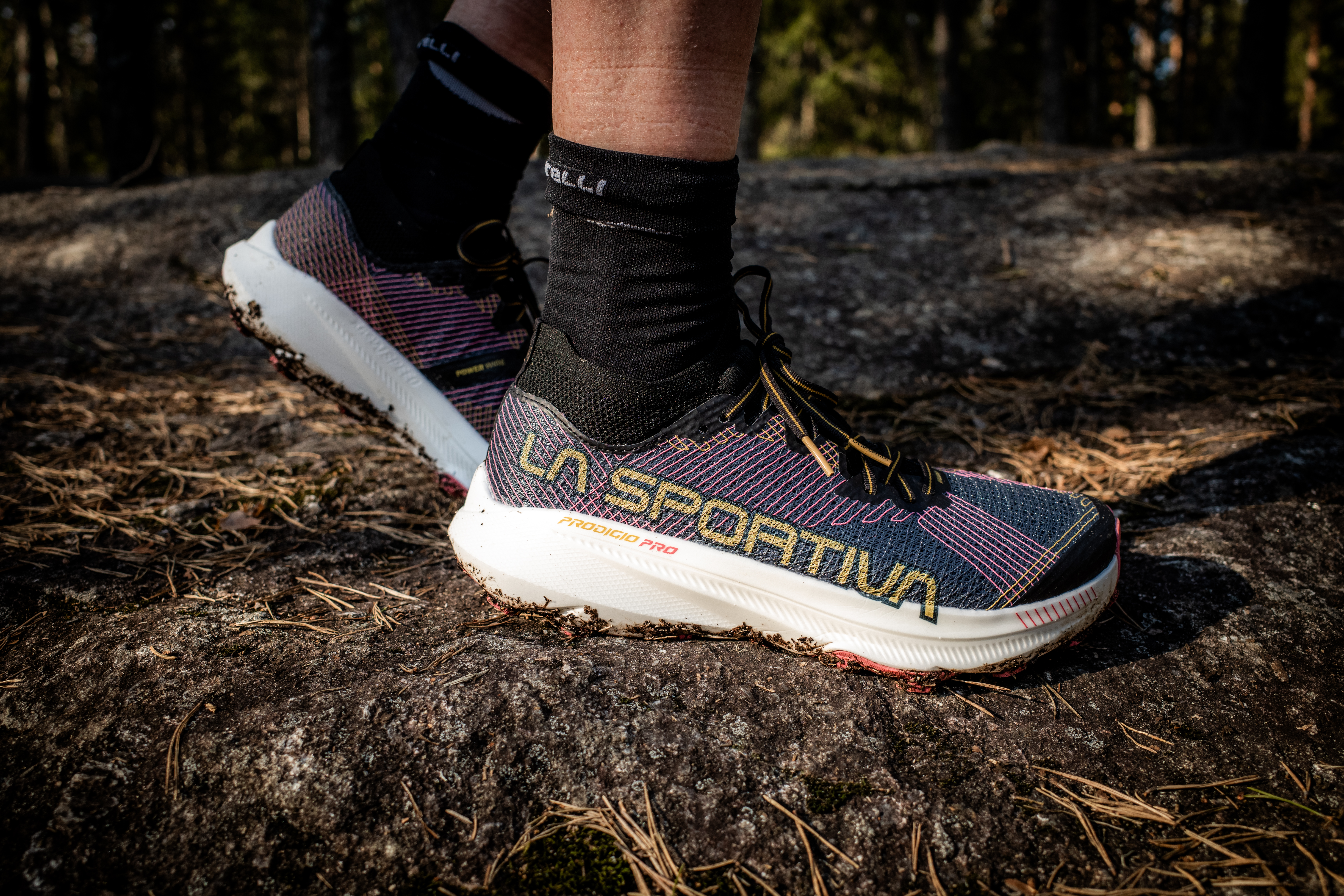
Female colourway

First run and I had a big smile, the cushioning is bouncy and fast with a great propulsive phase. If you have the fitness, cadence and run form, this shoe will fly along. It’s without doubt an awesome trail racing shoe. If like me you move a little slower, there is considerable comfort and life here.
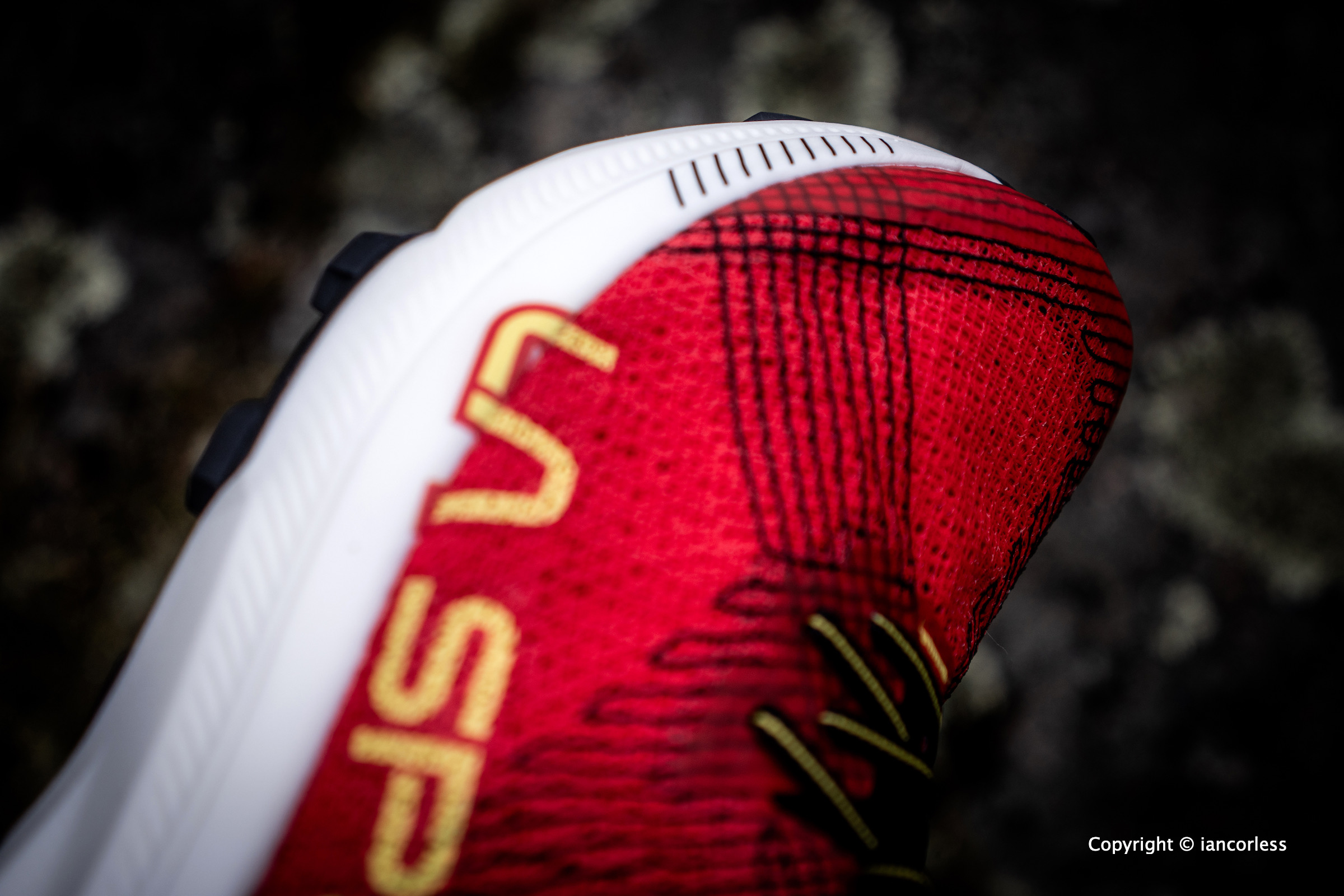
The footprint is good which provides stability. However, with the sock like fit and the cushioning, when moving on technical terrain, foot hold and security is compromised. I therefore see the Prodigio Pro as much more a trail running shoe and not a mountain running shoe. There is no rock plate, not a deal breaker, but I do wonder if this would benefit the shoe and help on more mountainous terrain?
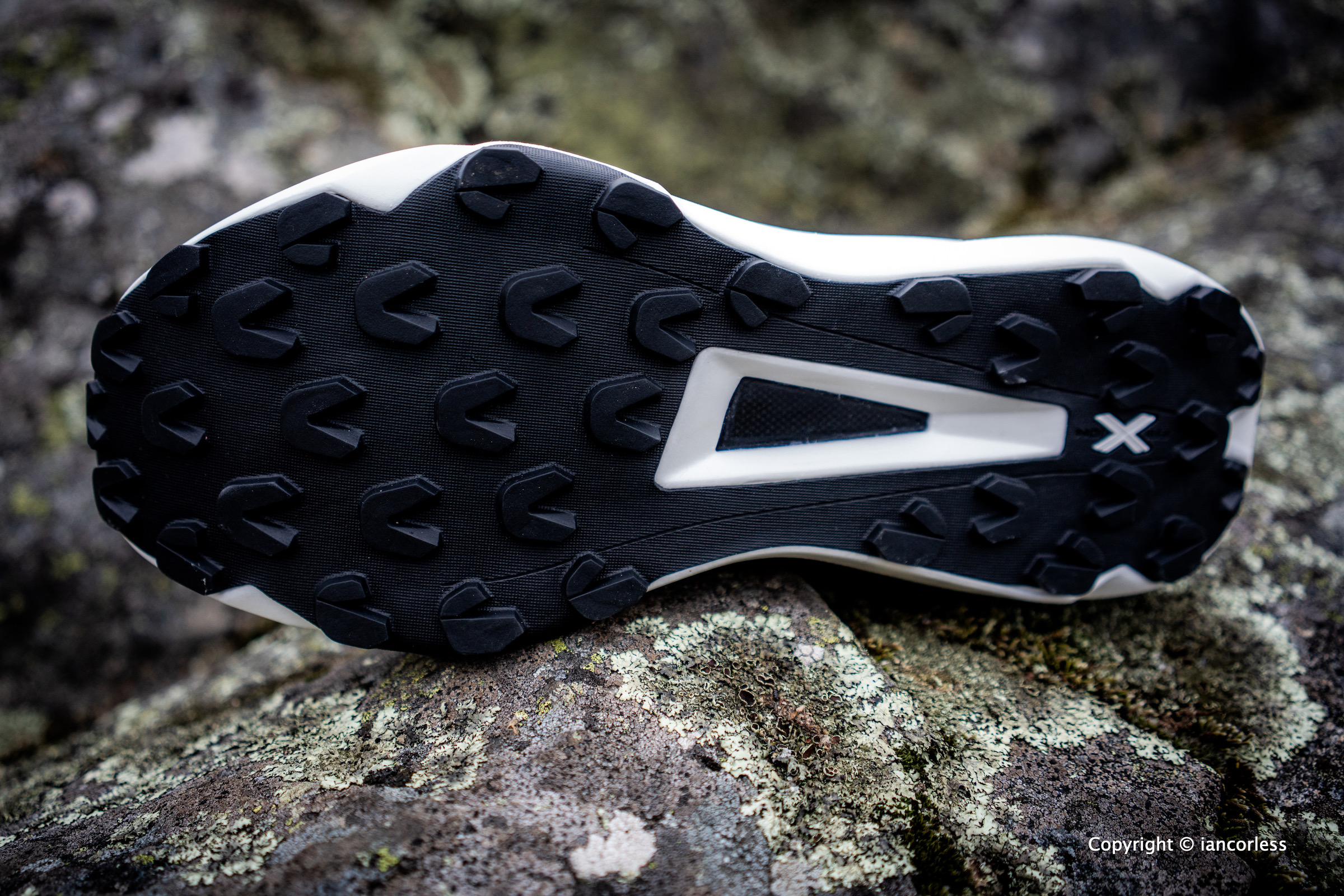
The outsole is in line with the usage of the shoe, 4mm lugs certainly sit well with the intentions of trail running and faster running. It’s grippy, durable and gladly covers most of the outsole to provide grip in most scenarios. But, on wet rock, grip is not where I want it to be. Once I slip, my confidence goes and when I can no longer rely on an outsole to do it’s job, my speed drops.

CONCLUSION

I absolutely love the Prodigio Pro. You may think from my review that I am not sold on this new incarnation from La Sportiva, I am. It is an absolutely fantastic trail running shoe for single-track, dry conditions and trail. The Prodigio Pro really excels on rocks and boulders too. But, if the trail is very technical and particularly, if it is wet, then the Prodigio Pro is compromised. Quite simply, if I use this shoe is the right conditions, they are superb. They have a very similar feeling to the Hoka Tecton X3 which I also love. These shoes feel like they were made for racing in the USA, I know Anton Krupricka helped the development, and I would imagine at Leadville or Western States, these shoes would fly along.

The release of the Prodigio Pro coincided with the VJ Ultra 3, in testing I was actually alternating days, VJ one day, La Sportiva the next and this was ideal to asses both shoes. In a way, they are very similar but equally, they are very different. The VJ has more cushioning, 30/38 in comparison to 28/34, a higher drop, 8mm instead of 6mm, the outsoles, 4.5mm to 4mm for the La Sportiva.

I got many questions, ‘Which would I choose?’ I refused to answer initially as both put a huge smile on my face and my initial thought was, you know what, I would be happy with either.

But, I am in a lucky position to test and compare and with that in mind, if I was going out to buy a pair of shoes tomorrow I would choose the VJ Ultra 3. Why? Ultimately, the VJ has the grip for all conditions and that is really important for me. The foot hold is superior in the VJ particularly in mountain and technical terrain. I think in the long term, the VJ will be more bullet proof in the terrain and conditions I run in. Finally, I feel that I can use the VJ on ‘all’ terrain, whwereas, I feel the Prodigio Pro is compromised on more technical and mountain terrain.

BUT and wonderful final but, if I was going out for a faster trail run on groomed trail, the Prodigio Pro is hard to beat.

So finally, is the Prodigio Pro for you? I would think about where you are running, what conditions you are running in and what you need from a shoe. I am extremely happy with mine and I would have no issue slipping these on for ‘any’ run despite the reservations for some conditions – the Prodigio Pro is great looking, has incredible comfort, a lovely lively ride and on the right feet, they are fast.

Follow Ian Corless

Instagram – @iancorlessphotography

Twitter – @talkultra

facebook.com/iancorlessphotography

Web – www.iancorless.com

Web – www.iancorlessphotography.com

VJ XTER Shoe Review

One year ago I was writing a review about the new addition to the VJ Sport shoe line-up, the VJ SARVA ACE.

This was a new departure for VJ. Of course, the shoe had the trademark VJ USP’s, amazing butyl outsole and fitlock foot hold. As a specific winter shoe, it also had the excellent star studded winter studs for reassuring grip on ice.

However, the new additions were extremely notable. Firstly a wide, foot-shaped toe box, very wide by VJ standards that would allow space for the toes to move and therefore aid keeping feet warmer in sub zero temperatures. Secondly, new cushioning called PerFOAMance. Thirdly, a one piece waterproof upper.

I wrote at the time that this was without doubt the most comfortable and best studded winter shoe I have tried. That still stands today.

Notably I said, Light-weight, cushioned, wider fit, great foothold and superb comfort, the VJ Sarva ACE takes the previous VJ SARVA shoes to a new level. This shoe is so comfortable, I have already emailed VJ asking for this shoe to be made without studs. It would be a perfect shoe to run alongside the ULTRA, especially with the wider toe box.

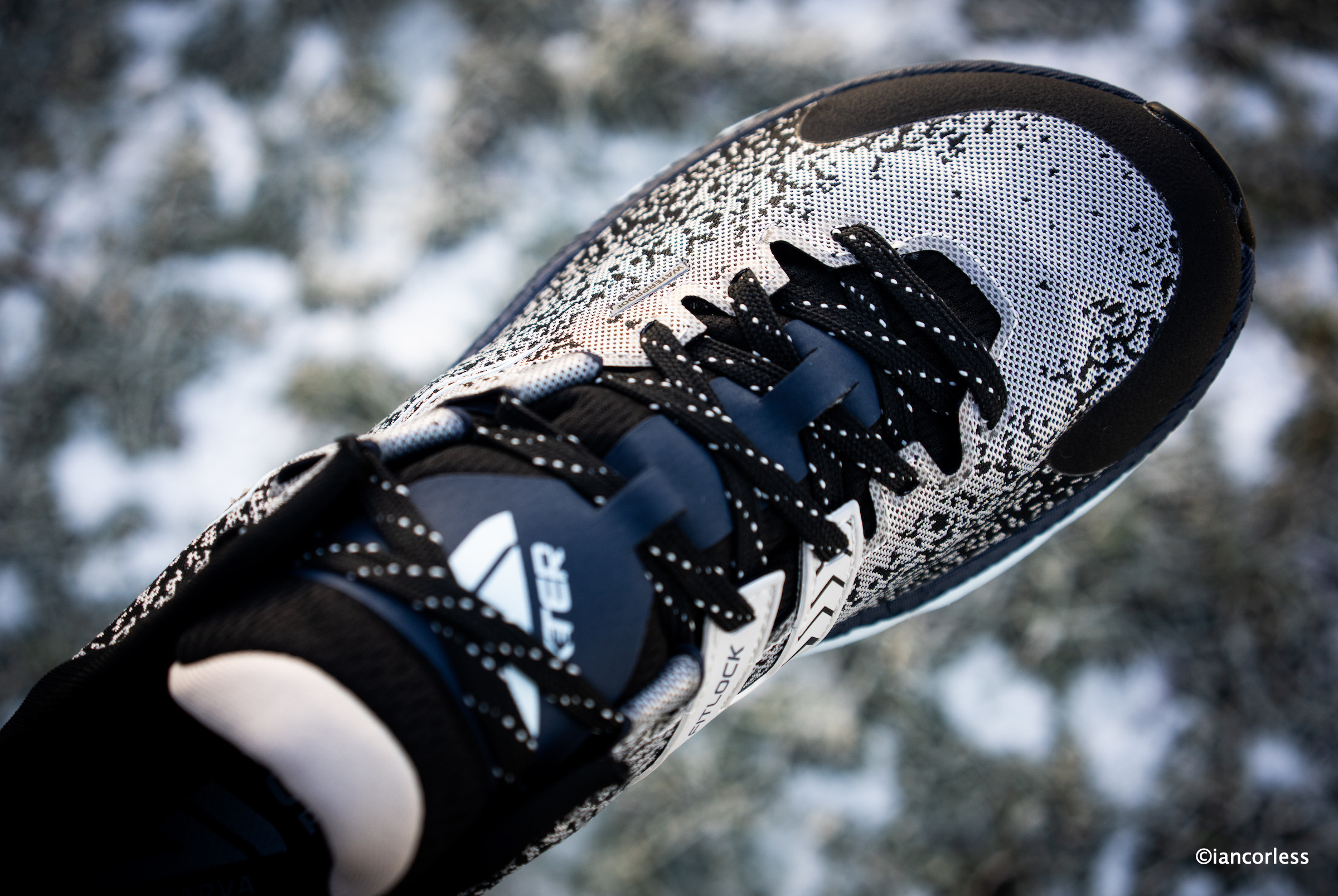
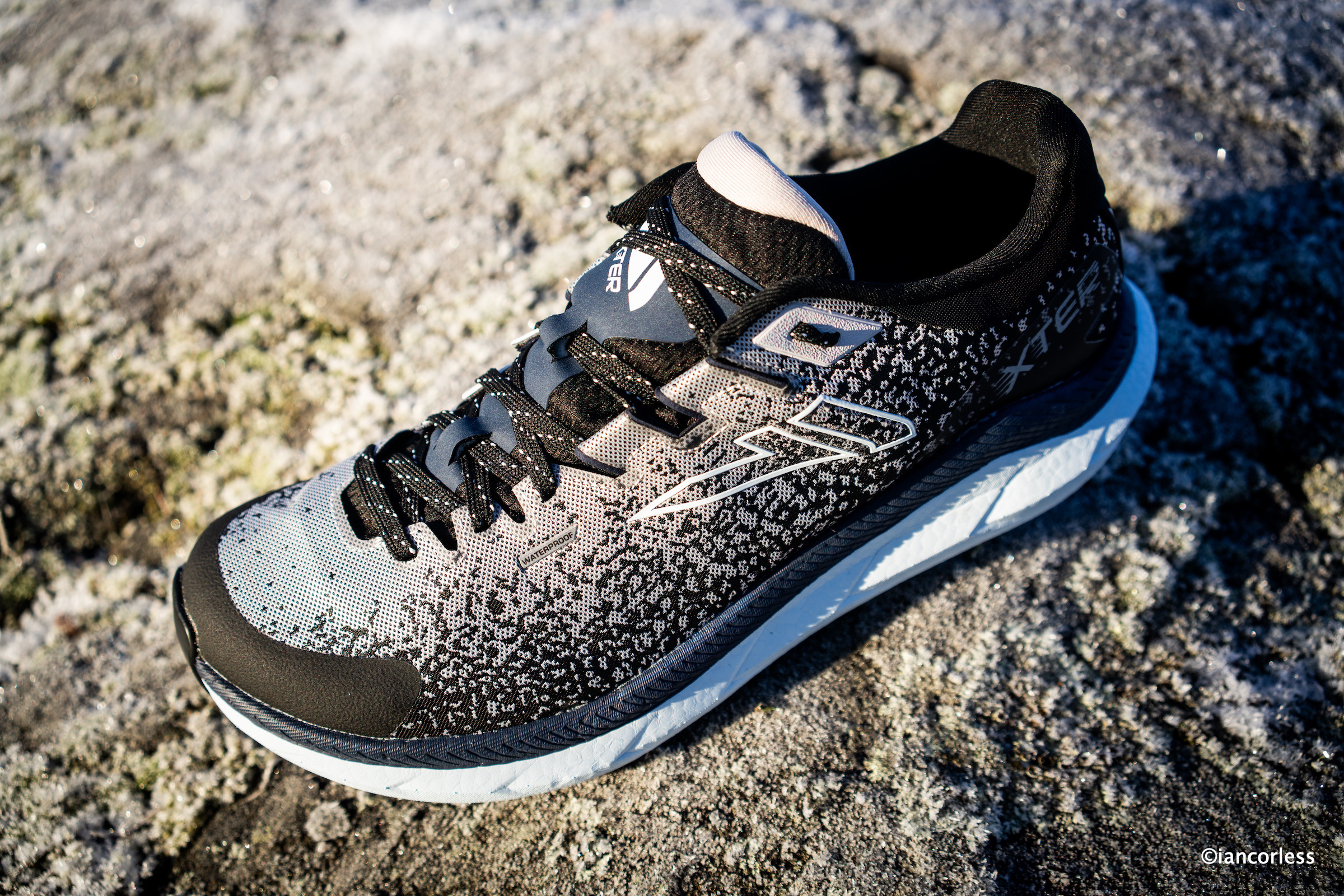
Well, VJ listened and they have now released the VJ XTER.

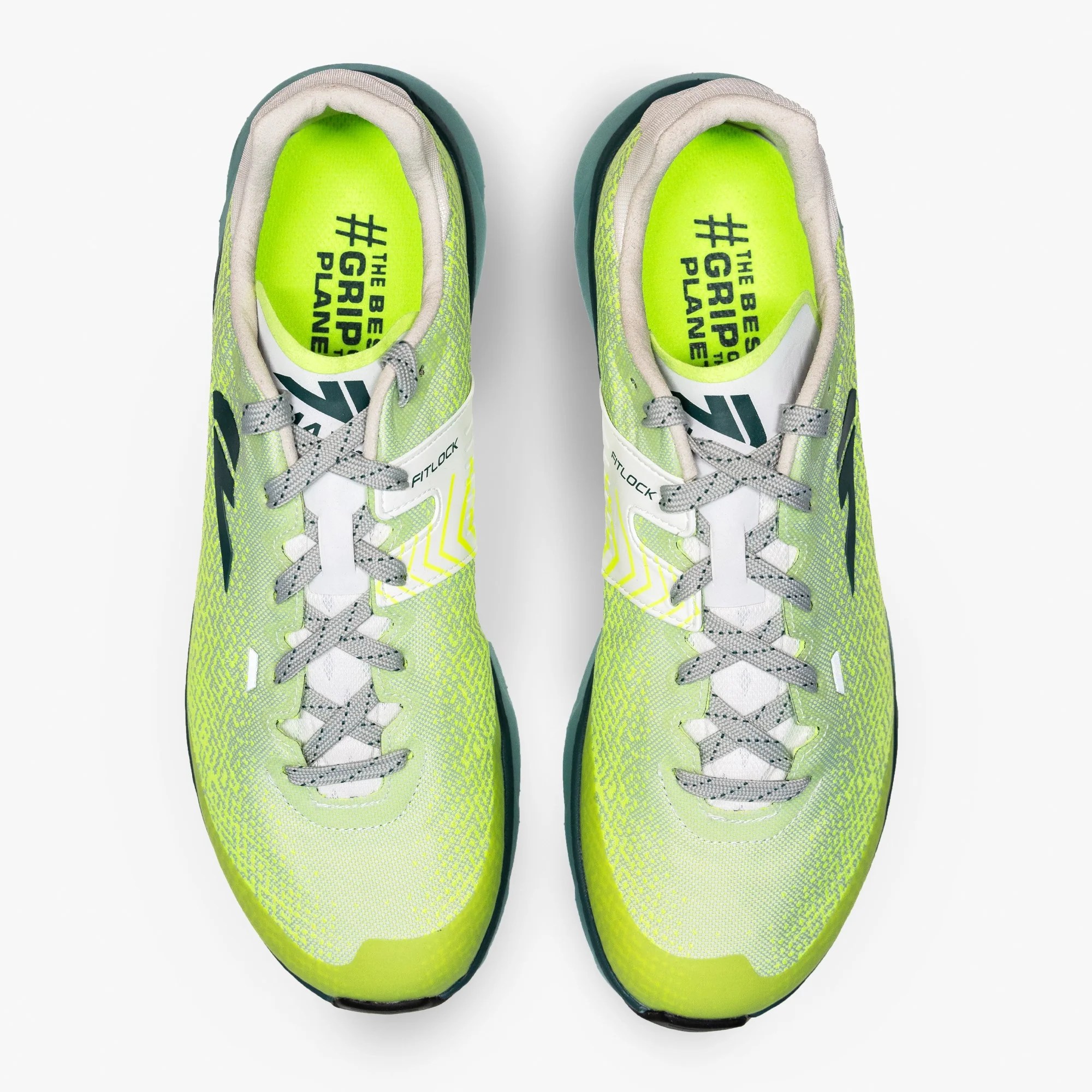
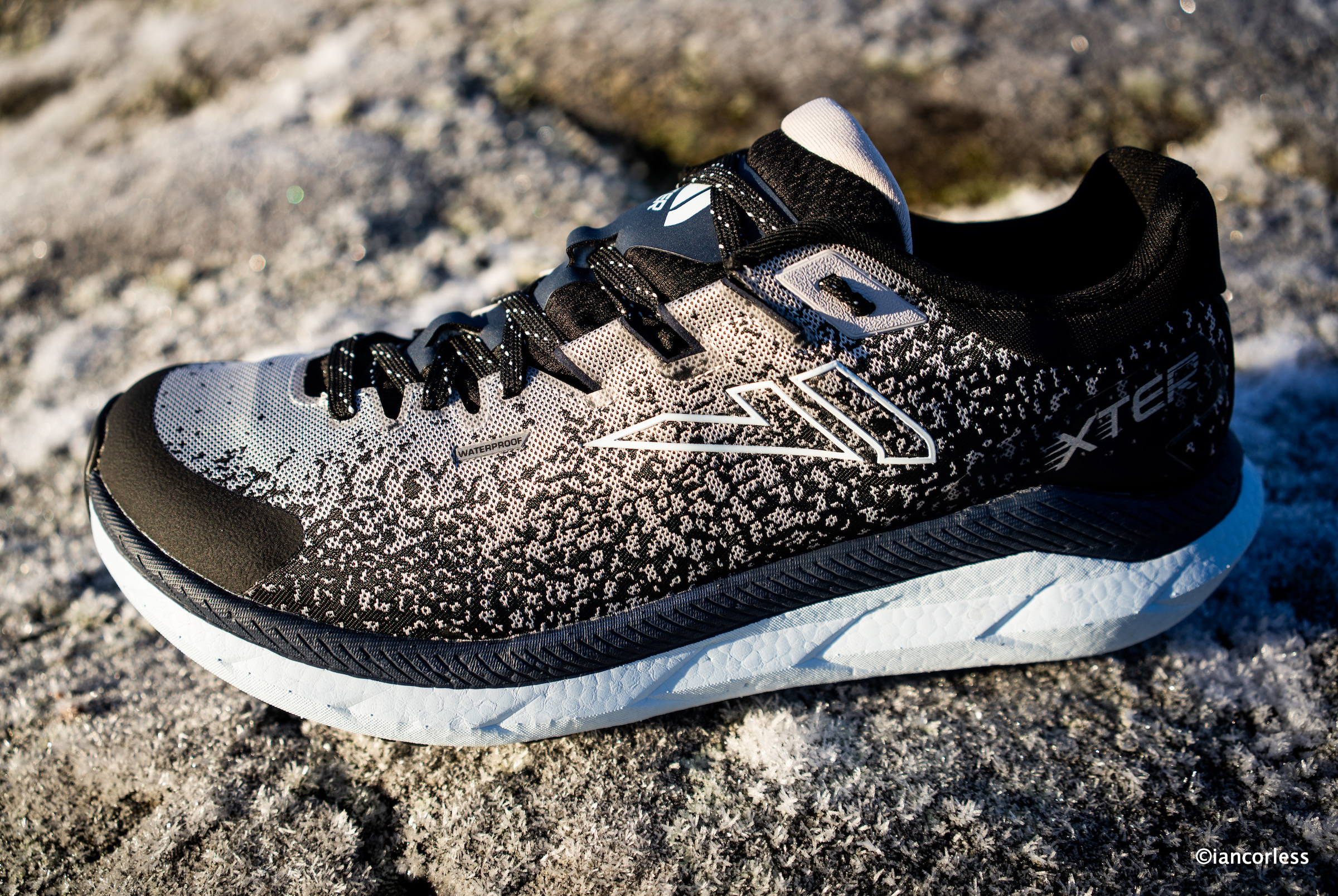
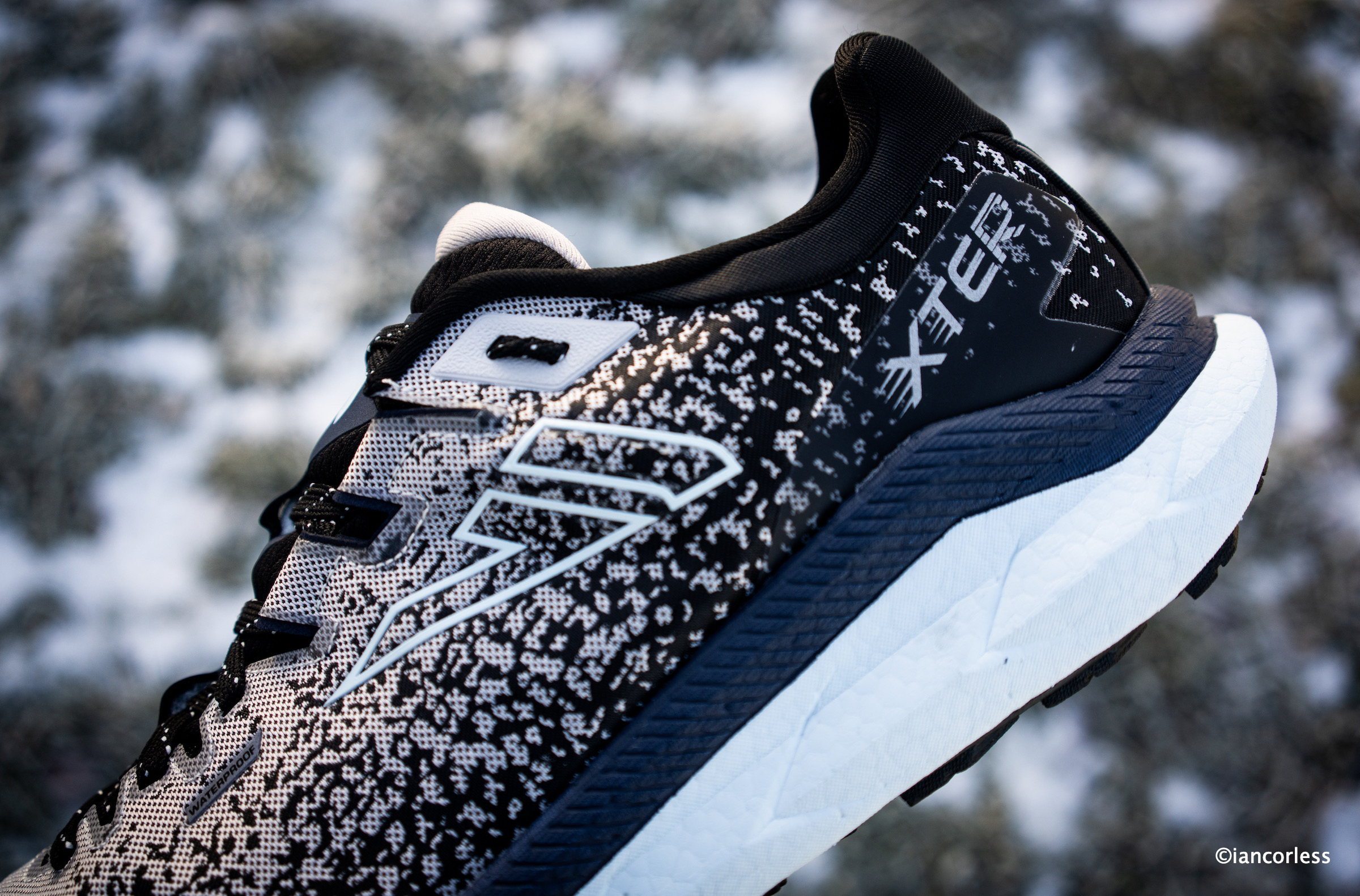
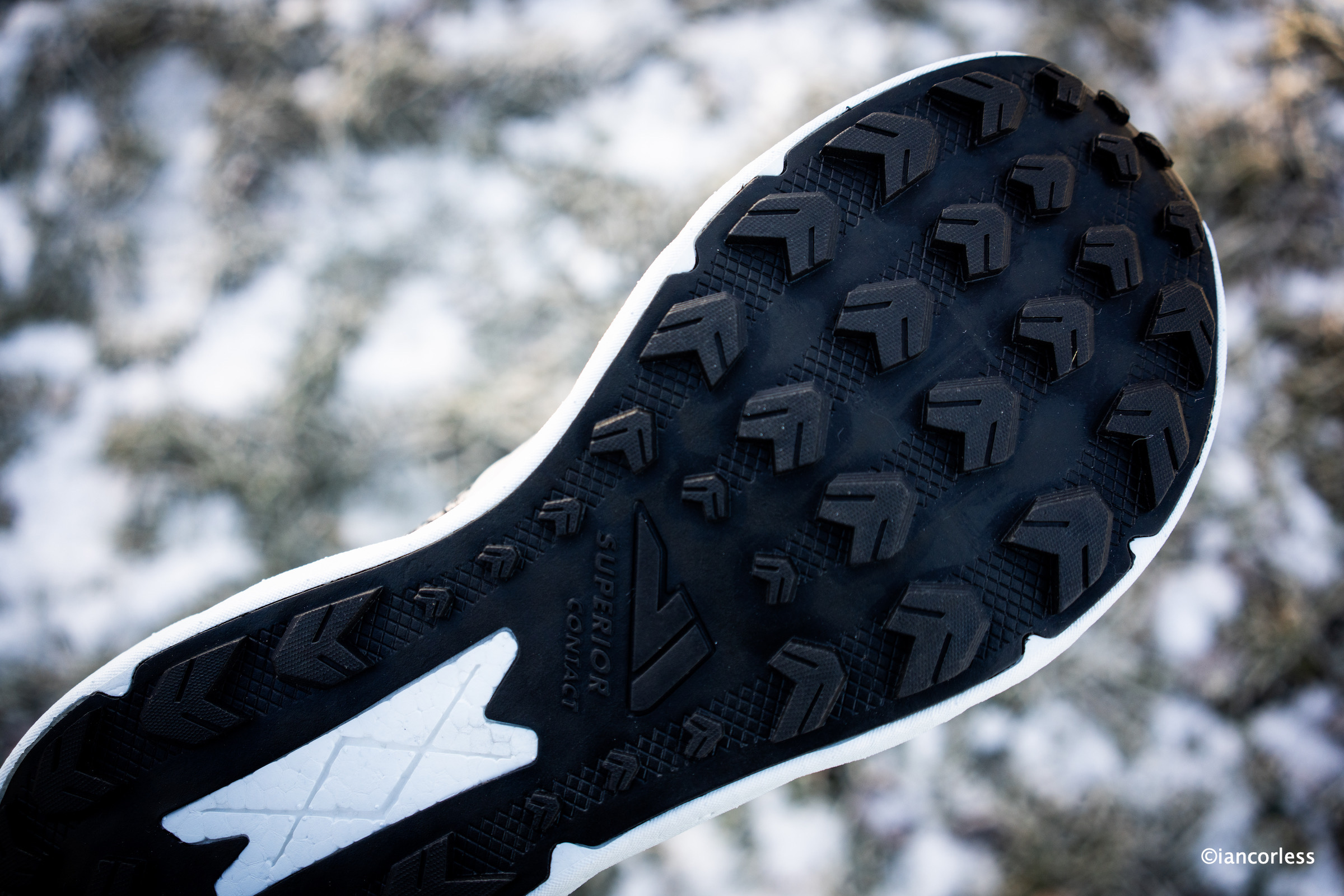
The XTER is quite simply the ACE without winter studs. With 40mm cushioning at the rear, 32mm at the front and an 8mm drop, the XTER is a dream shoe. The butyl outsole with 5mm lugs gives incredible grip on all terrain and better than normal outsole grip even on ice. Note, this is NOT an ice running shoe, you need the ACE for that.

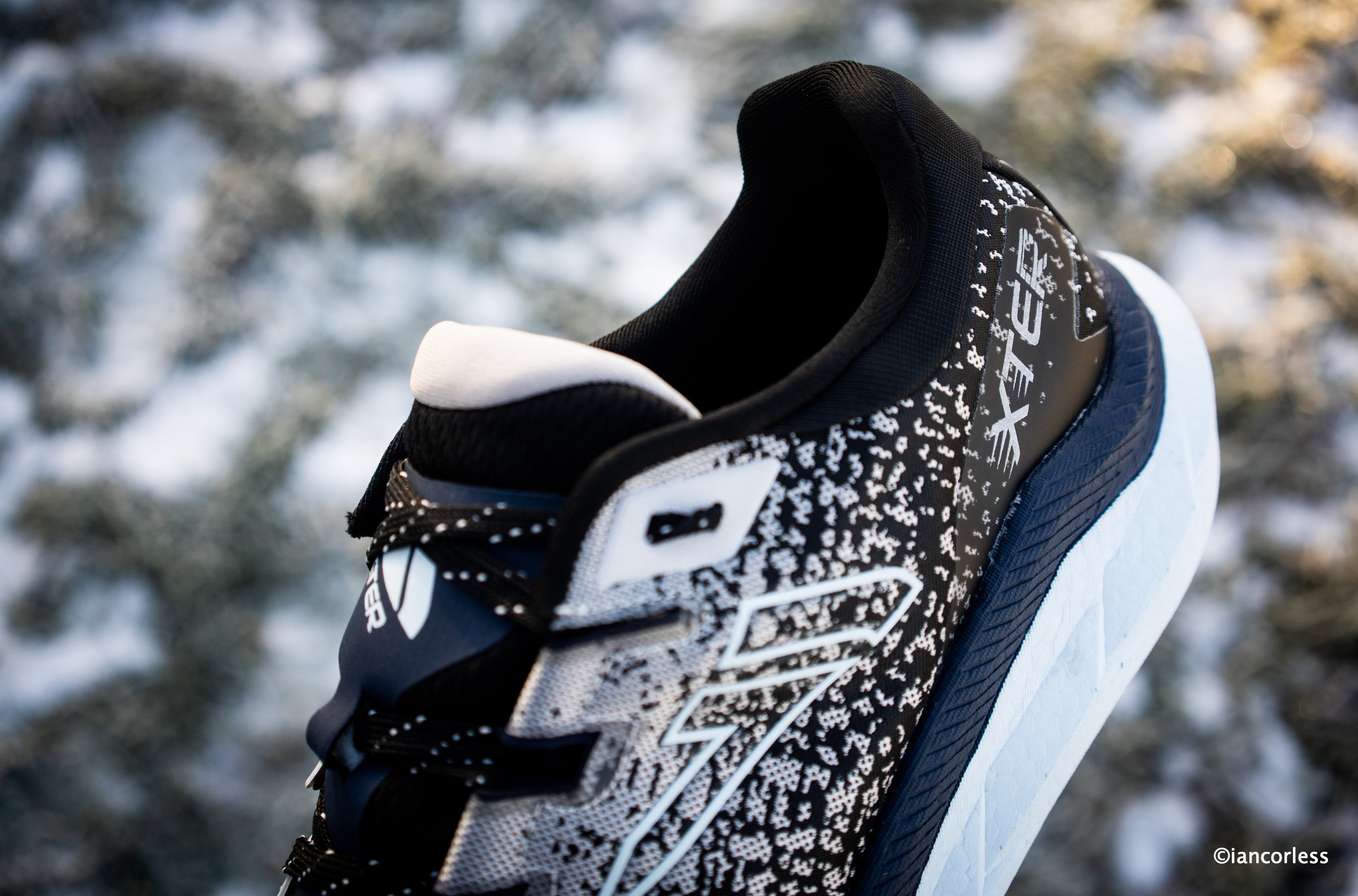
The XTER is all about comfort and slipping them on they had all the great feelings from the ACE, notably is the space up at the front and the cushioning. These shoes feel incredible. So good that VJ need to make this shoe without a waterproof upper for all-season use. I have no doubt that this shoe would be my day-to-day trail shoe choice in spring and summer if it had no waterproof upper.

The success of the ACE and perFOAMance cushioning also made it’s way to the new MAXx2 which for me is THE best mountain running shoe in the market. The combination of features, grip, fitlock and cushioning make this a stunning shoe. However, it’s a more precision fit shoe, so, an XTER version would fulfil many requests for a ‘wider’ VJ shoe for the mountains.

KEY FEATURES

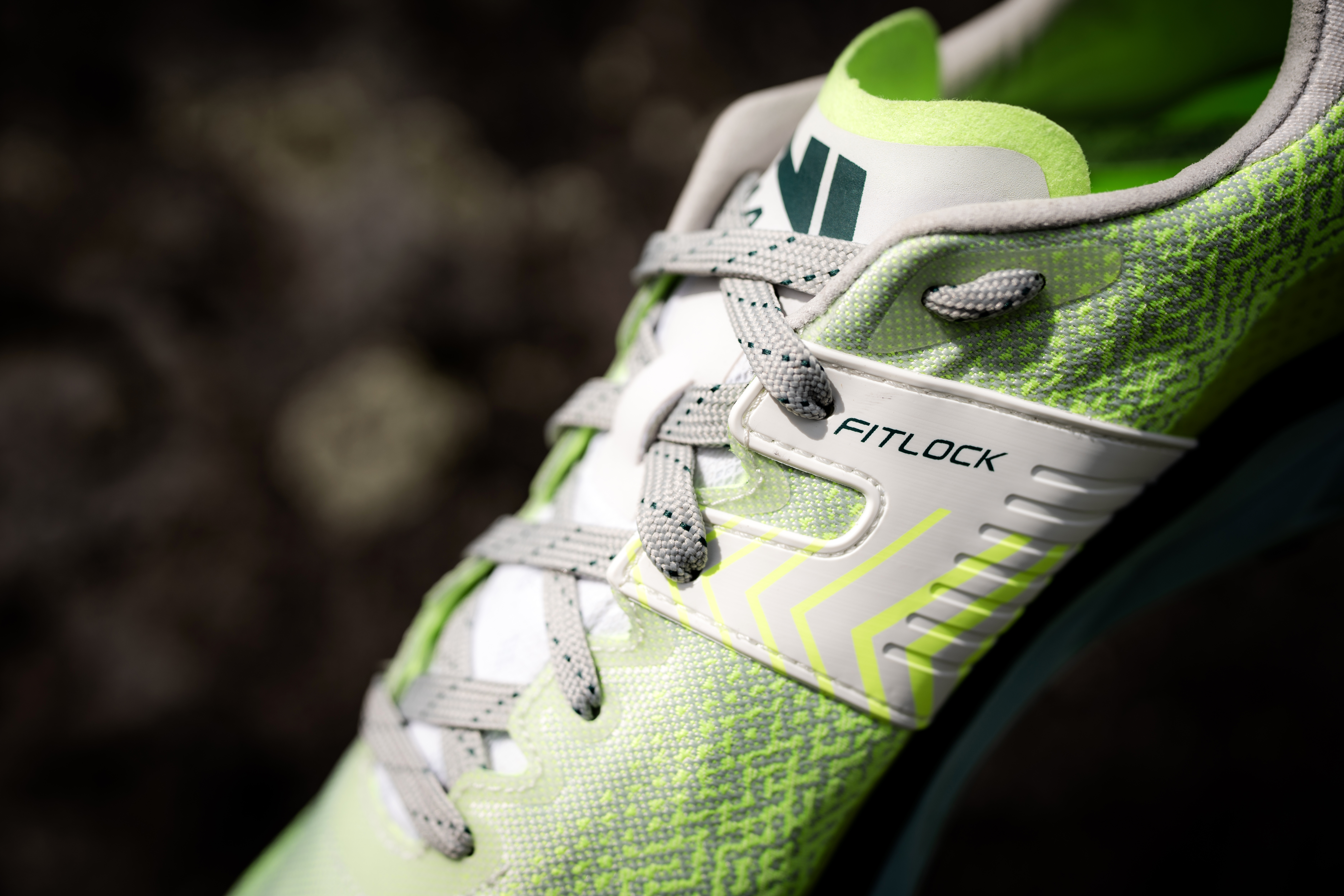
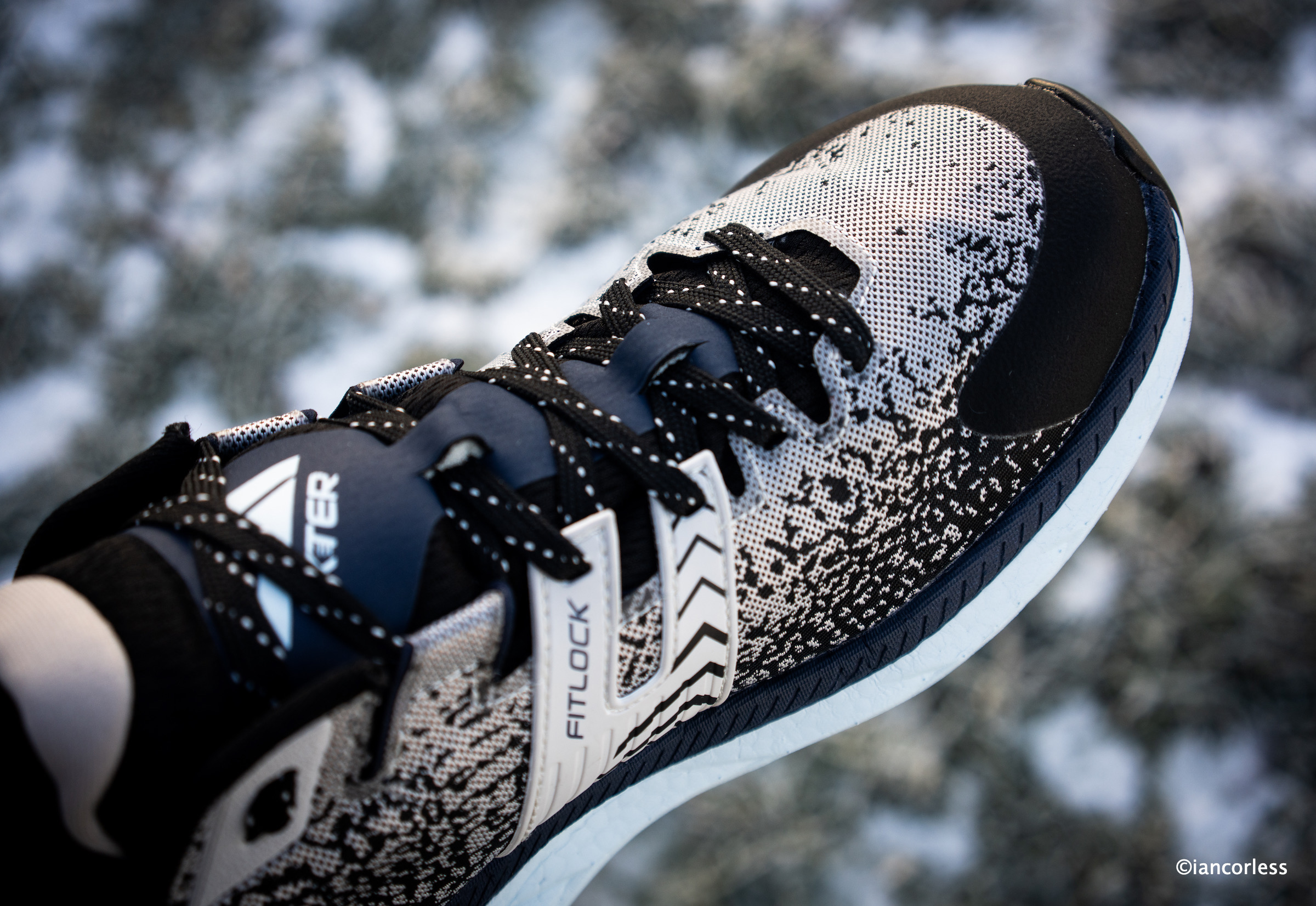
Those who have used VJ before will know how amazing the foothold is from FITLOCK, a feature on all VJ shoes. It provides a tight and secure feel and offers support and stability. It makes the shoes feel like part of the foot. This is probably even more noticeable here in the XTER with the wider toe box. The hold and feel are superb.

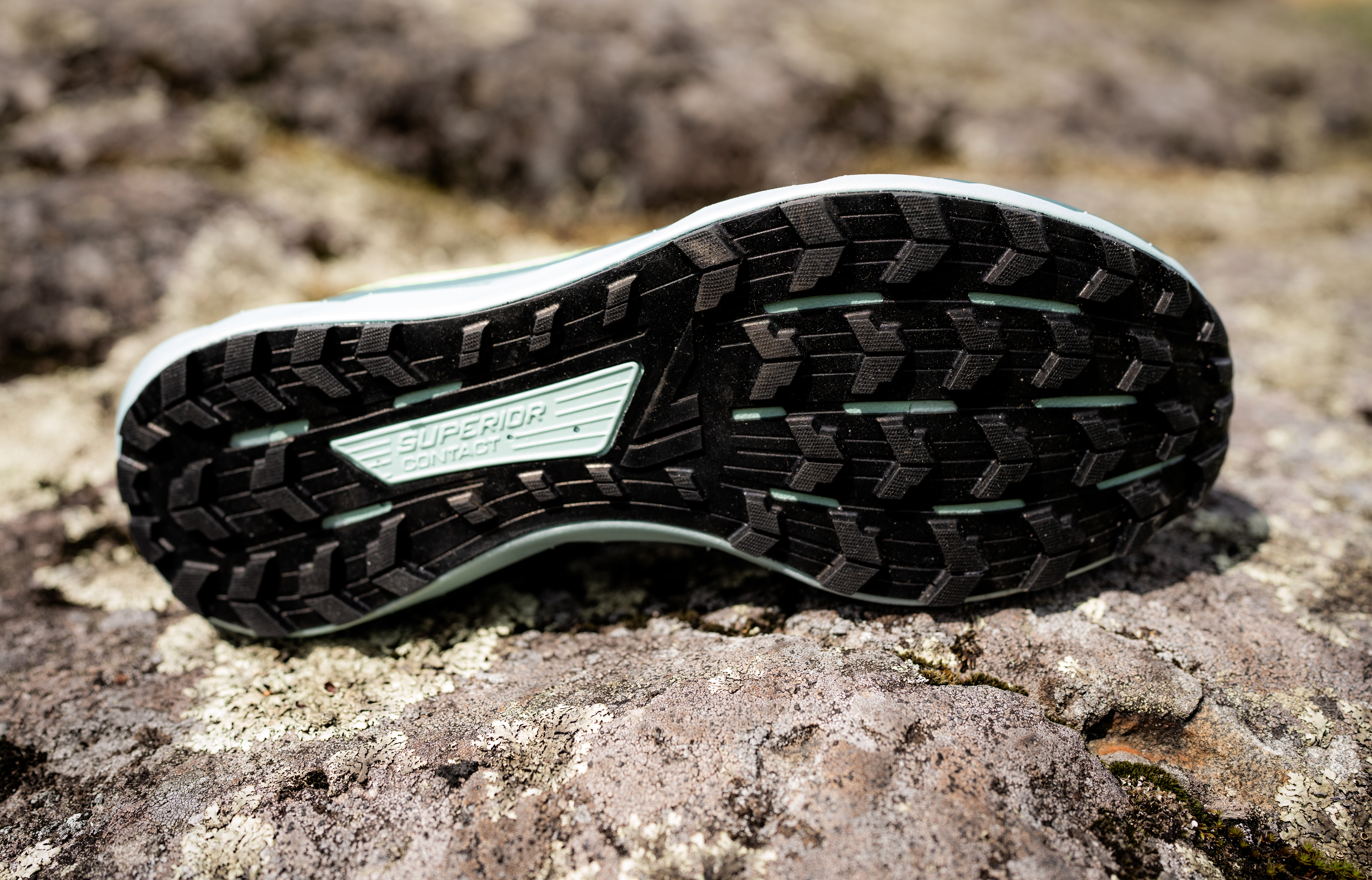
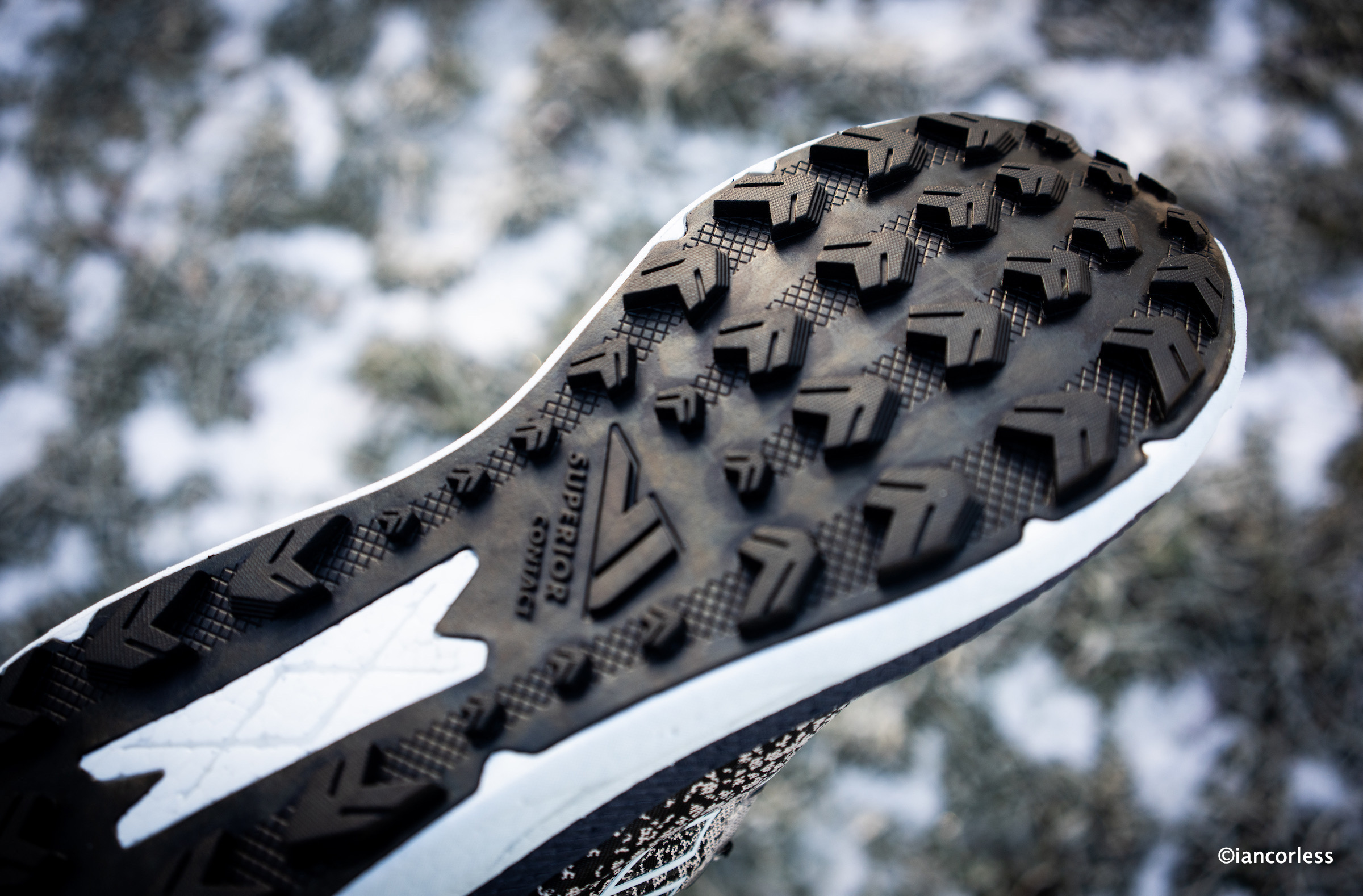
VJ’s SCR (Superior Contact Rubber) is the best on any terrain, be that wet or dry. The tagline for VJ is #bestgripontheplanet and that is justified. No other trail/ mountain shoe matches the outsole of VJ. 5 mm studs provide grip in all conditions, but also allow you to enjoy running on easier trails.

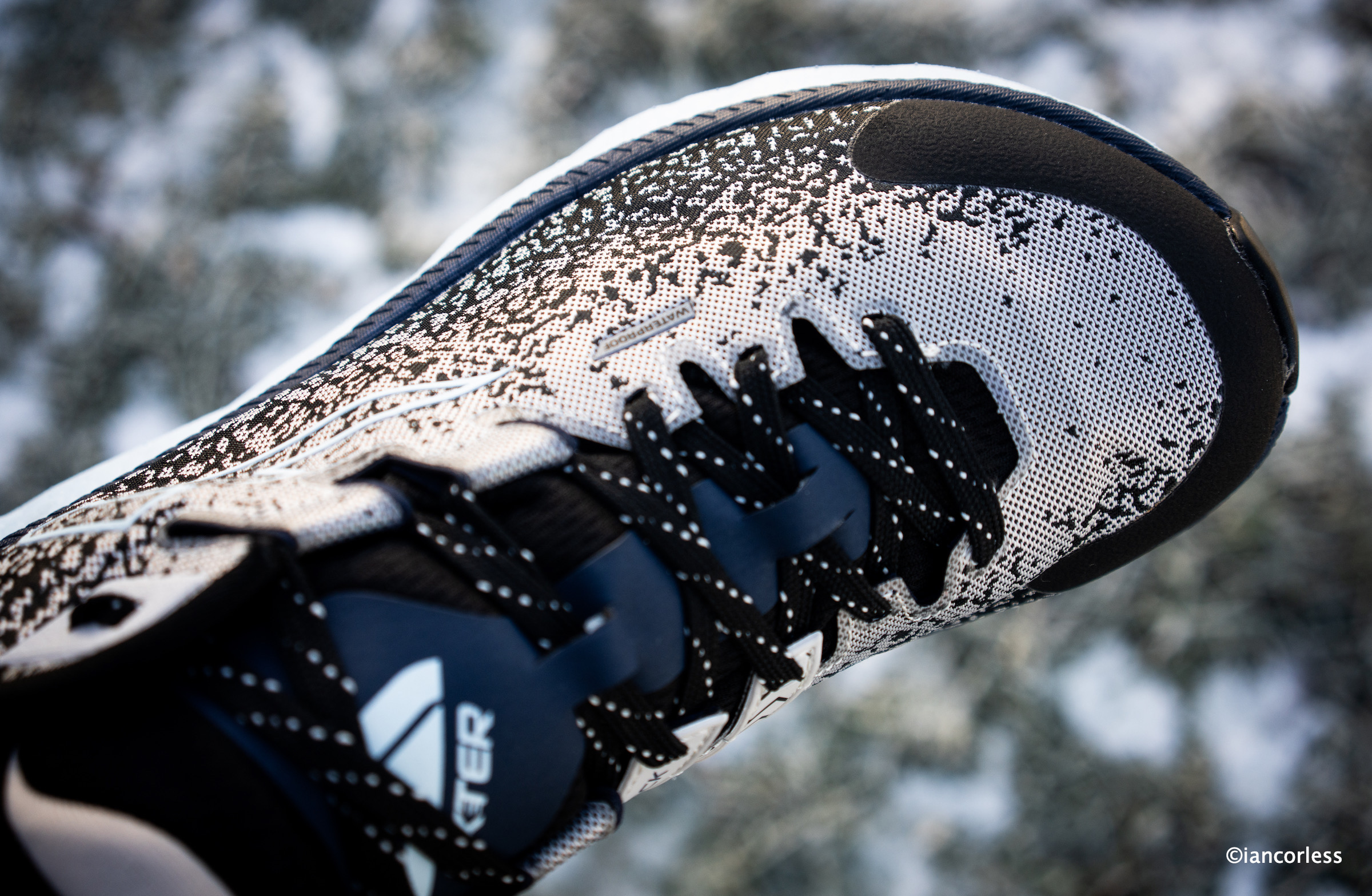
The upper is seamless, lightweight and waterproof with added durability. This has been tried and tested in my ACE which are now 1-year old and still look like new. You may be thinking that you do not need a waterproof upper, maybe think again. For sure, there are some downsides to a waterproof shoe, especially if you get water inside as it cannot escape. However, if you are running in extreme cold, snow and ice, a waterproof upper with good merino wool socks makes a huge difference for foot warmth.

The wide toe box is foot-shaped and to draw comparisons, it is very much in the mold of Altra or Topo. It’s very much of a departure for VJ as nearly all their shoes have a more precise/ precision fit. It’s extremely comfortable and allows excellent toe splay. As I said, love to see the XTER develop in a non-waterproof version.

SUMMARY

The added cushioning is a highlight for me, and they are ideal for longer outings, particularly when running on harder / frozen trails. The comfort level is high, not something that is usual for winter shoes. The wider toe box only adds to this package. Toes are able to move allowing for increased blood flow and therefore warmth, also helped by the waterproof upper. The wider footprint also adds to a more stable footprint on snow. Butyl outsole is amazing and sets the bar for other shoes to match. The ACE had one issue, hold in the heel area was not ideal, that has now been addressed. The XTER comes highly recommended.

Instagram – @iancorlessphotography

Twitter – @talkultra

facebook.com/iancorlessphotography

Web – www.iancorless.com
Web – www.iancorlessphotography.com

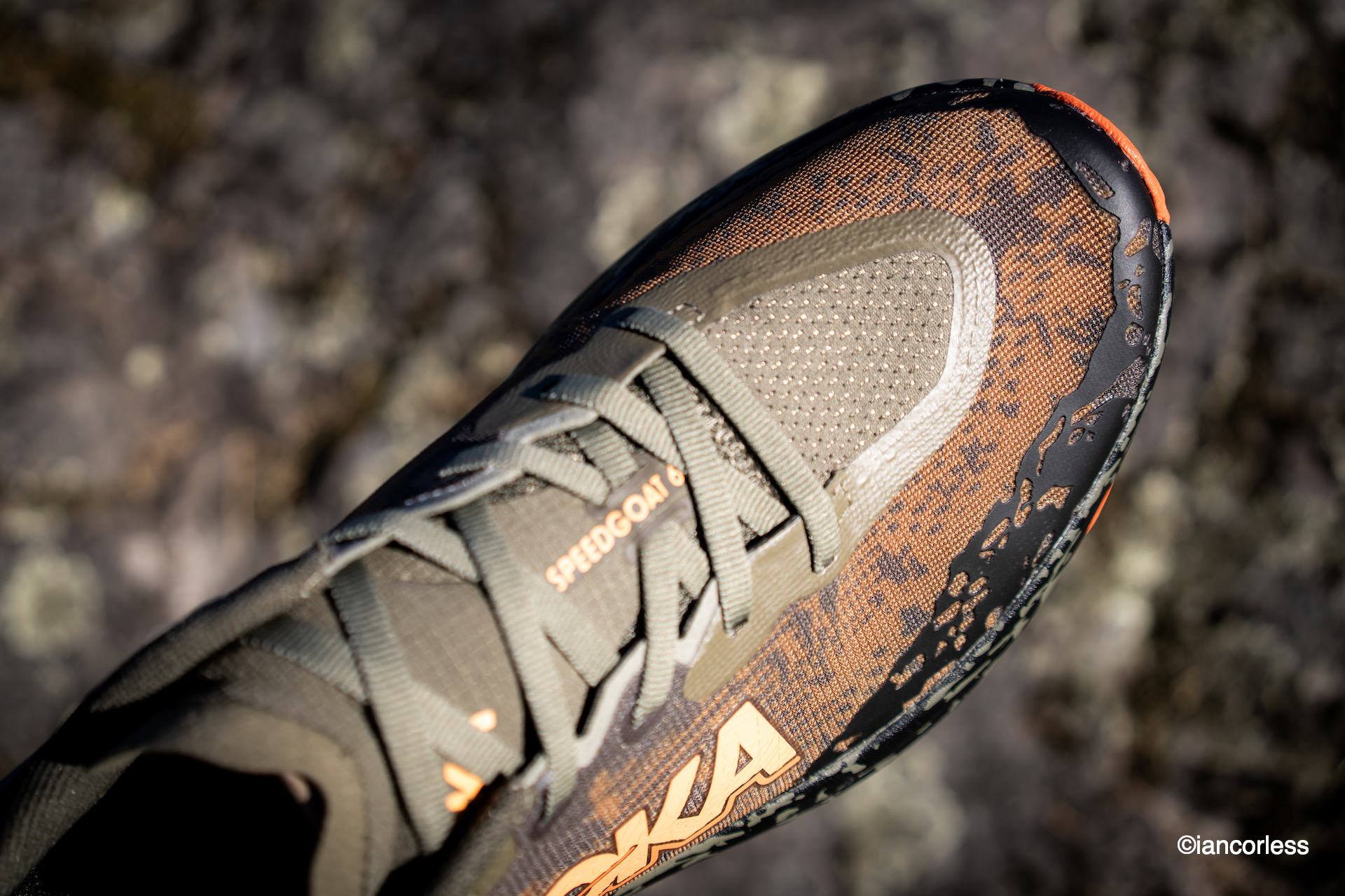
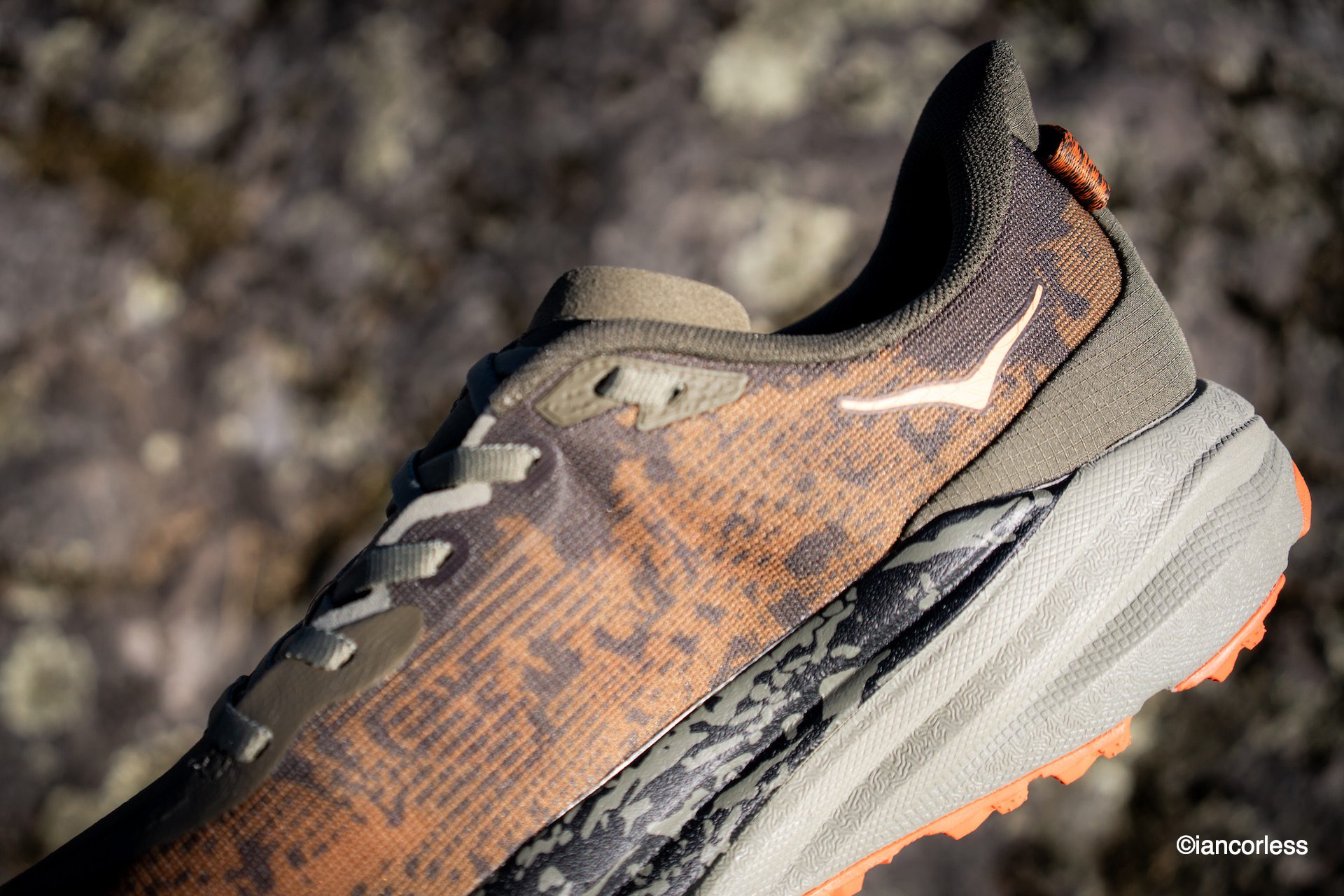
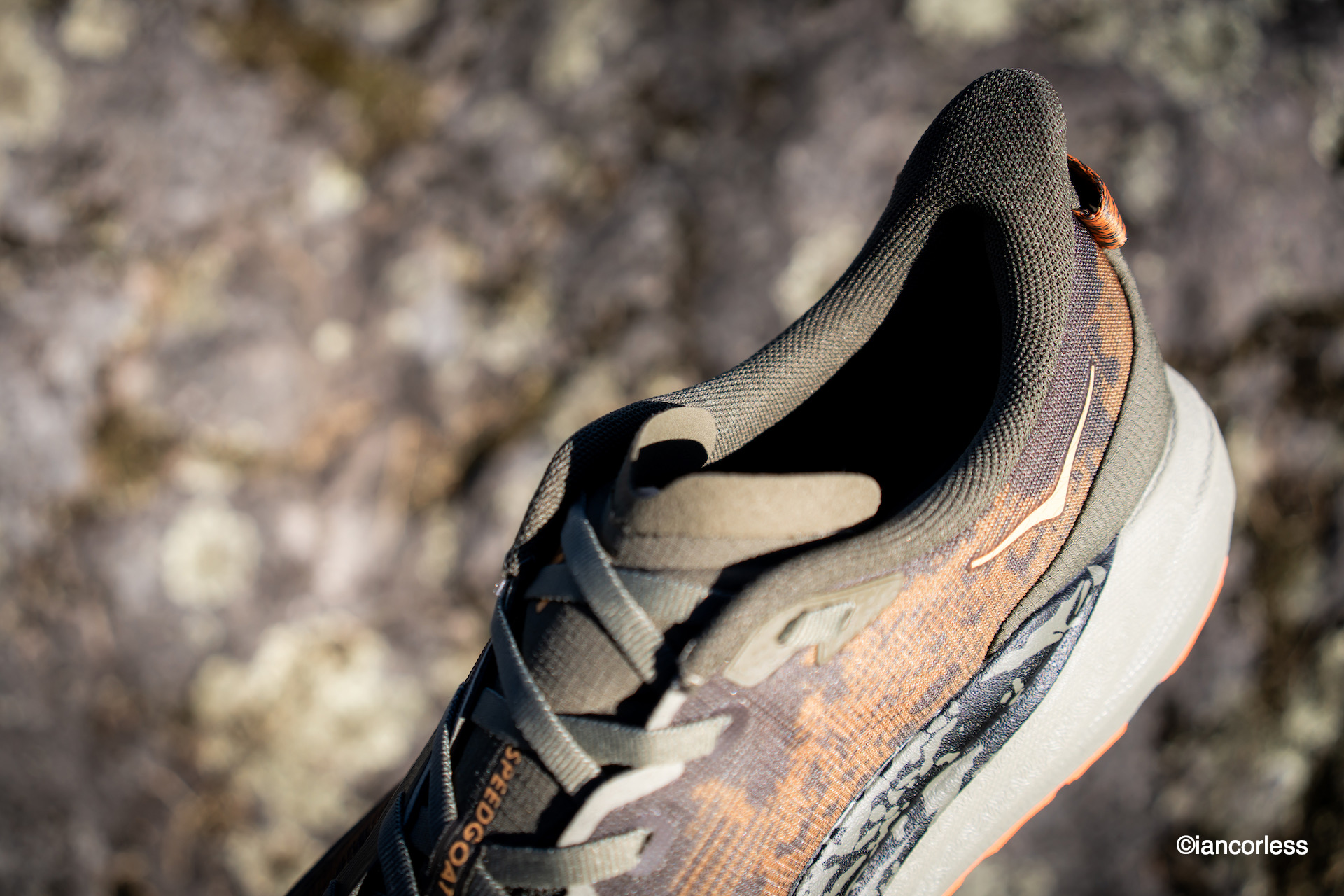
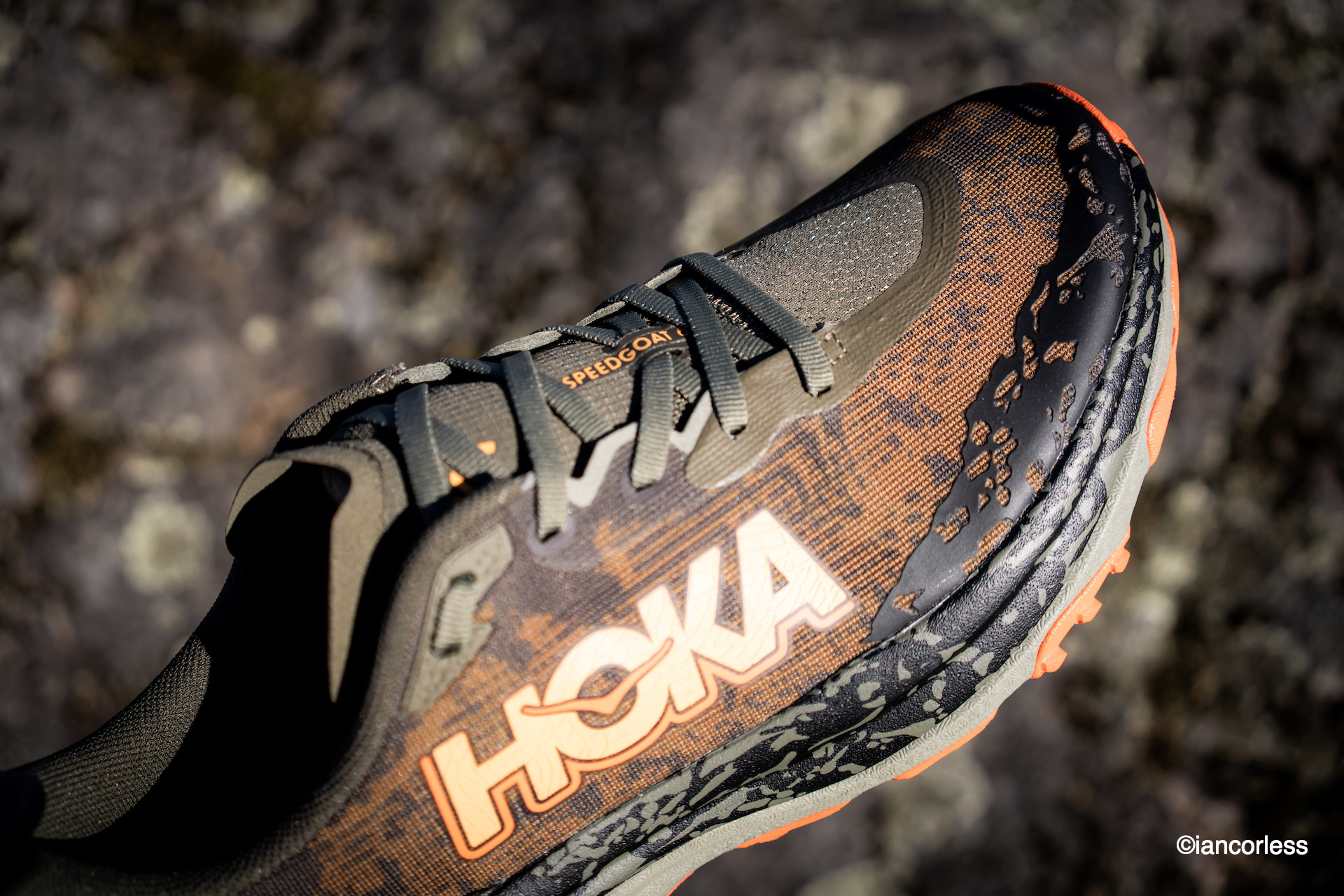
Hoka Speedgoat 6 Shoe Review

©iancorless

The Hoka Speedgoat needs no introduction, it is arguably, the best selling trail shoe throughout the world. It’s much loved and universally proclaimed as a great trail running shoe.

I personally was late to the Speedgoat party with version 4, followed by version 5 and now version 6. The Speedgoat 5 reached a critical point for Hoka with very mixed reviews:

  • There were concerns about the midsole compressing and lacking durability, 
  • The upper had less durability.
  • The fit and size for some was off.
  • The outsole was wearing too quickly.

I personally enjoyed the Speedgoat 5. I found the combination of features absolutely fine, the upper fine which was flexible and allowed for a good fit, I did need to lock lace though.  The outsole ideal and importantly, the stack height a more reasonable 33/29 which offered good stability with a 4mm drop.

©iancorless

Most certainly, Hoka listened to the feedback. They had to if they wanted to retain the loyal fan base, especially with many other brands releasing shoes that could not only provide competition, but even beat the Speedgoat, the Merrell Agility Peak 5 a prime example.

With the release of the Speedgoat 6, the shoe very quickly received universal acclaim with quotes such as, ‘The King is Back!’ And, ‘Speedgoat is still the GOAT.’

What is new?

  • Cushioning is new CMEVA foam with increase stack, 40mm at the rear and 35mm at the front and 5mm drop, 38/33 for women). 
  • The cushioning is lighter and more responsive.
  • The outsole is Vibram Megagrip Traction lugs with 5mm depth and new orientation.
  • A new more durable upper that is Matryx like with no stretch and with an inner cage.

Hoka say, “We’re offering an updated underfoot experience that provides a more responsive ride with less weight. You’ll find updates to the overall construction, including a breathable woven upper, lighter, more responsive midsole compound, internal chassis, dynamic vamp, and plusher, dual-gusset tongue.” 

With neutral stability, balanced cushioning all built around a wide footprint, the Speedgoat 6 is a great trail all-rounder. It is designed to provide protective cushion while maintaining a responsive toe-off for when you want to go faster.

©iancorless

If you place a 5 and a 6 next to each other, they are noticeably different.

  • The toe box is a different shape with different protection.
  • The lacing is different and comes down lower on the 5.
  • The heel area is different.

IN USE

©iancorless

I personally found a considerable difference when putting on the 6 and lacing them up. I immediately preferred the feel of the 5. I lock-laced (as I do on the 5) and the fit/ feel improved.

The lacing does not go as low down the shoe on the 6 and this made me feel less secure at the front, probably not helped due to the fact that the 6 has been given extra width over the 5.

©iancorless

The cushioning is without doubt stiffer and firmer in the 6. The 5 feels bouncy and plush but not squidgy. The 6 almost feels hard by comparison, somewhat unexpected when you consider the extra stack height.

©iancorless

I have to say, my first run I was not loving the shoe. I was constantly thinking, give me the 5 back. However, with 10km in the shoe, the 6 started to feel more at home on my feet and as the km’s passed, that improved. So, I would certainly say although they are good to go straight out of the box, a good run or couple of runs will help them. Ultimately, there is no special life here. They are solid, reliable, good for the long haul, but there is a lack of excitement, especially if you compare to the Merrell Agility Peak 5 and the VJ MAXx2.

©iancorless

There is more structure and hold coming from the new internal support chassis, this is without doubt required with the extra stack. I never had a real issue in the 5 unless on very technical terrain, but here in the 6, the 40/35 cushioning is notably different. Currently, my favourite Hoka is the Tecton X3 which has the same level of stack height as the Speedgoat 6, but for me, has considerably better feel. It’s not that I don’t like the 6, there just doesn’t feel anything special going on and ironically, I prefer the feel of the Speedgoat 5 which is counter to what Hoka say I should feel and also counter to the general Speedgoat feedback from all the fans.

The tongue of the Speedgoat 5 and 6 is not long enough making lacing and particularly lock-lacing an awkward affair and not always comfortable. This really needs addressing.

©iancorless

The outsole with 5mm lugs is solid on most trails. With a new configurtation and the Traction lug, it works well. There ic a comprise with a great deal of mud and I am still never confident on wet rock.

CONCLUSION

©iancorless

The Speedgoat 6 is a solid trail shoe that will only continue to confirm the shoes legendary status within the trail world. Speedgoat lovers will continue to love this shoe. But, if you are new to Speedgoat and comparing against other like-for-like shoes, would the Speedgoat win out? 

For me no. However, it does depend on what shoes you are comparing the Speedgoat with… If it was the adidas Terrex Agravic Speed, the Hoka Speedgoat 6 is a clear winner. However, comparing against a Merrell Agility Peak 5 or a VJ MAXx2, then, for me, I would choose the Merrell for trail runs and the VJ for mountain and technical runs.

Follow on:

Instagram – @iancorlessphotography

Twitter – @talkultra

facebook.com/iancorlessphotography

Web – www.iancorless.com
Web – www.iancorlessphotography.com

Image sales –www.iancorless.photoshelter.com

adidas Terrex Agravic Speed Review

Terrex Agravic Speed ©iancorless

The adidas Terrex Agravic Speed is the little brother of the super shoe, adidas Terrex Agravic Speed Ultra.

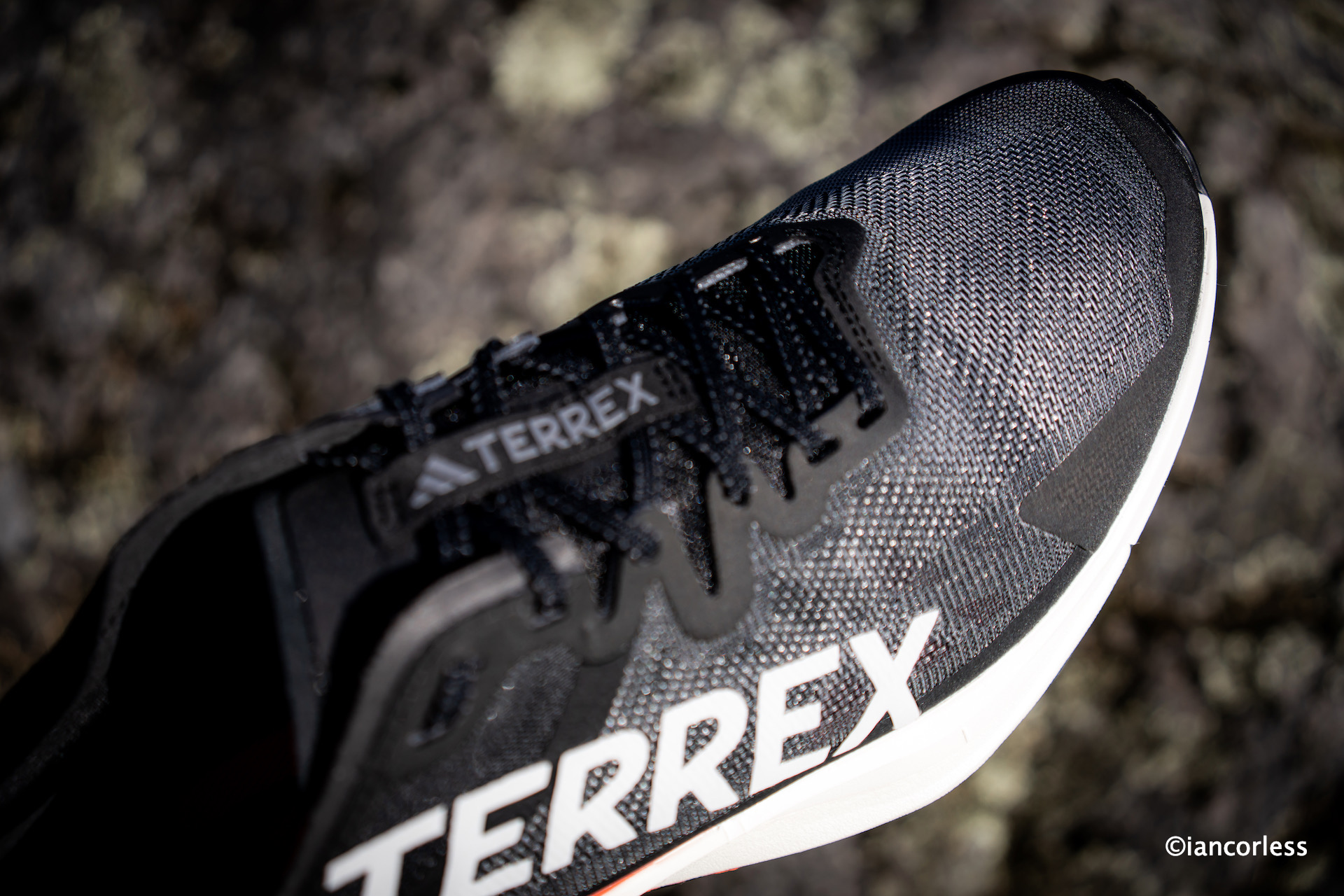
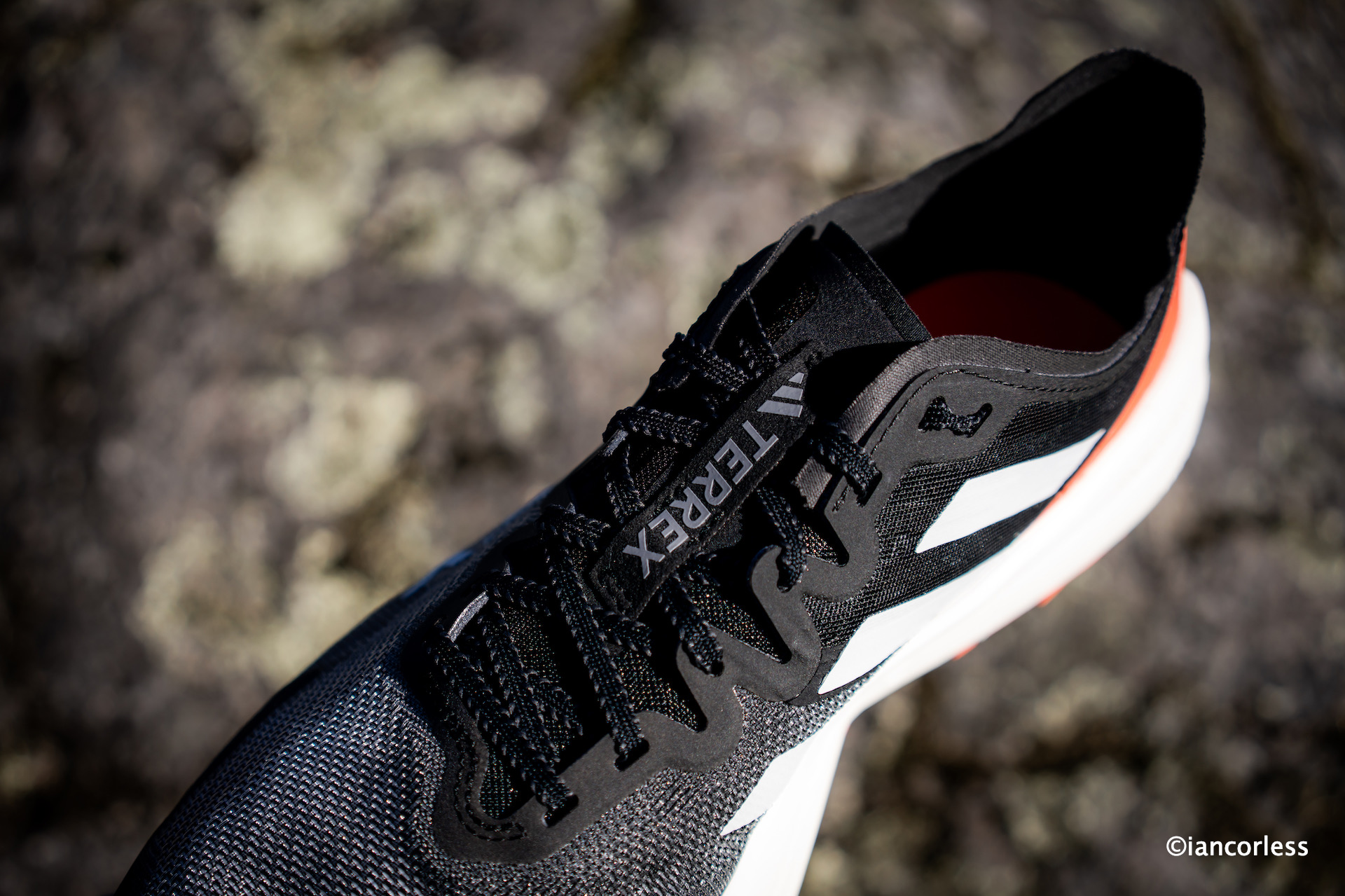
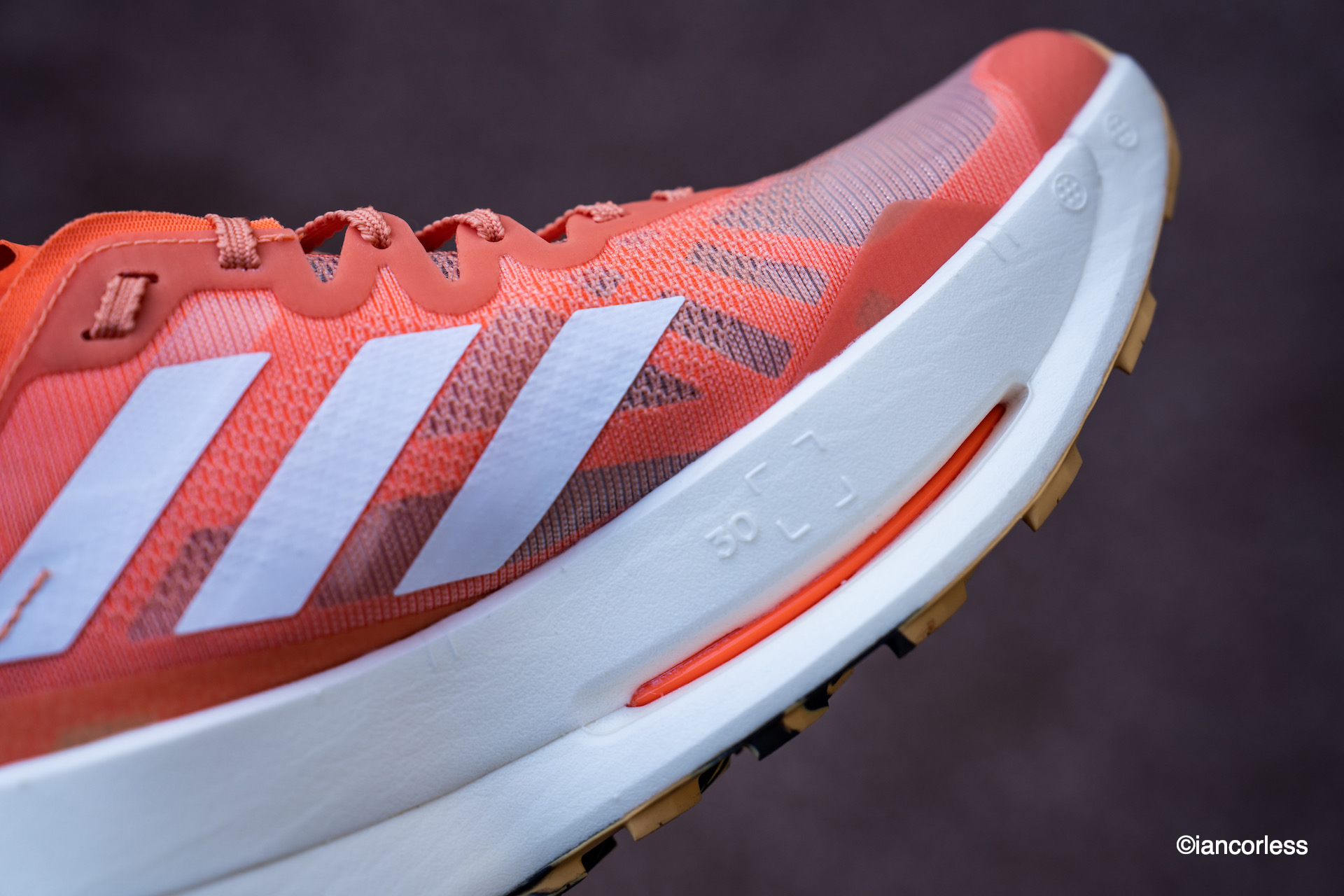
The shoes look similar when seen side-by-side but there are very obvious differences: less cushioning, not plate, less rocker and in my opinion, I love the black colorway with Terrex in bold white, a hint of orange provides some colour excitement.

©iancorless

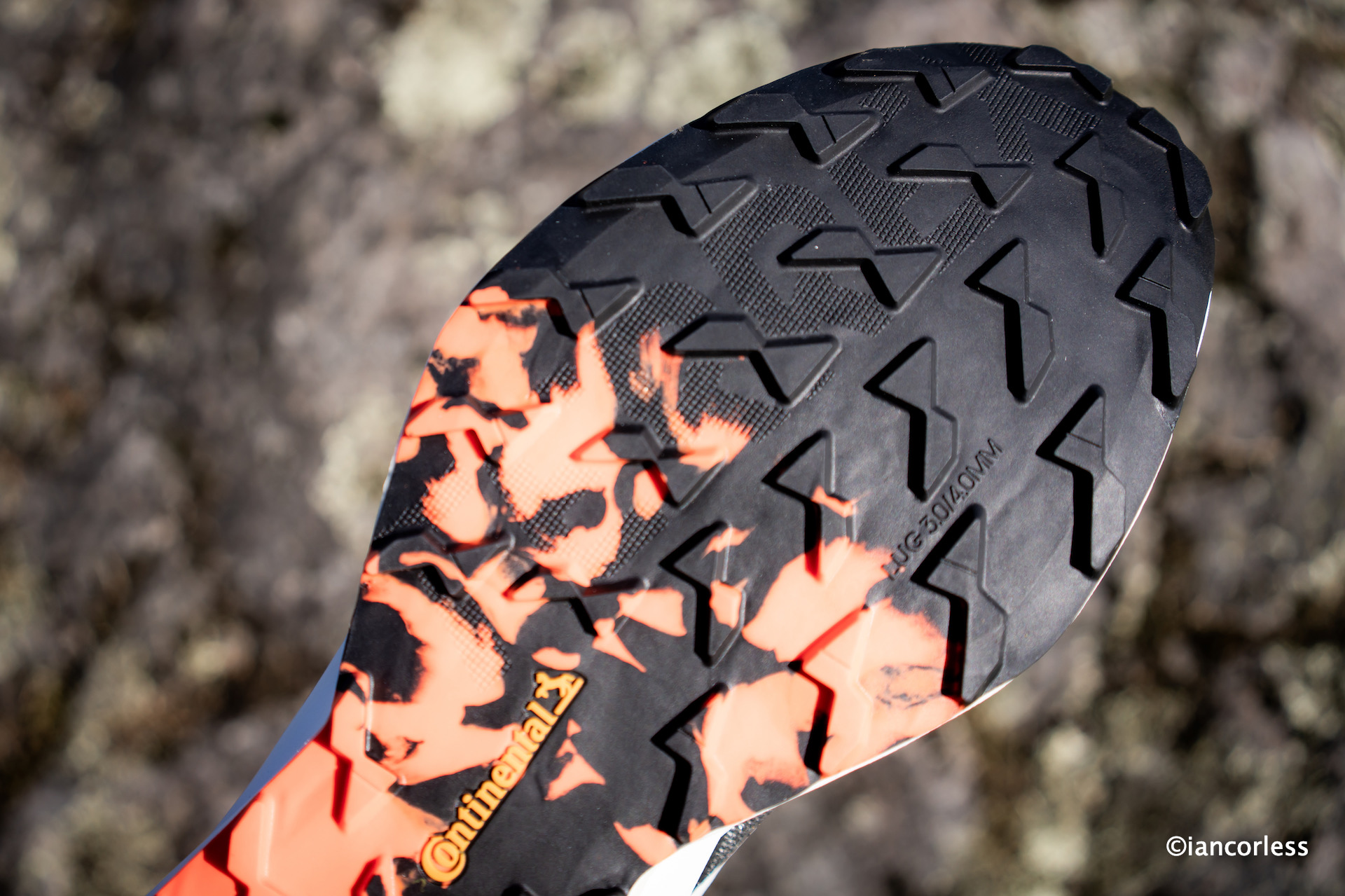
Much of the big brother shoe is present, seamless overlays, Lightstrike and Lightsrike Pro cushioning and a Continental outsole.

©iancorless

The cushioning is notably different with 30mm at the rear and 22mm at the front with the same drop of 8mm.

©iancorless

The adidas Terrex Agravic Speed Ultra is a super shoe that runs fast on slick trails and is a beast for those looking for speed and the fitness to maximise the super shoe potential.

This Terrex Agravic Speed is a shoe for all and in all honesty, is a much better choice for most people looking for a trail shoe, whereas, by contrast, the Terrex Agravic Speed Ultra is only for a select few.

Too narrow in the middle and rear ©iancorless

Despite the lower stack height, the shoe still suffers terrible stability issues on technical trail. I was really hoping that this would be less of an issue, and in all fairness, in comparison to the big brother, it is more stable, however, it is nowhere near stable enough. It’s only just a trail shoe, select the trails you run on carefully is my advice. There is a rocker, but it is nowhere near as pronounced as the Terrex Agravic Speed Ultra and the need to forefoot strike is less.

©iancorless

Light with a neutral fit, the upper is almost see through and very breathable. The toe box is wide and allows good toe splay. The heel area is minimal and while comfortable for me, it’s an area to be wary of. Sizing is again frustrating, you need to try them on! A gusseted tongue gives a lovely foot hold and reassurance.

©iancorless

The cushioning is well balanced, soft without being squidgy and the responsiveness and propulsion is excellent. With softer foam at the bottom; Lightstrike Pro. Firmer Lightstrike on the top, this combination does add more stability but the footprint is too narrow in the middle and rear – ankle breaking warning given! When Runnning, the rocker does kick in and helps increase cadence and propulsion, but unlike the Terrex Agravic Speed Ultra, you feel more in control and able to reign the shoe in and run at a more comfortable pace. This is probably due to the considerably less stack height and the lack of any plate. Walking too is better, not ideal, but better.

Continental outsole is good, again though, the lugs (3 and 4mm) are minimal and reduce the potential for it to be a real trail shoe. However, the grip is better than the Terrex Agravic Speed Ultra.

©iancorless

This shoe is arguably an update from my favourite adidas shoe, the Speed Ultra. However, with his level of stack height, there are no similarities really. It really is a subdued version of the Terrex Agravic Speed Ultra and as such, it would make a good training shoe if using the bigger brother for racing. It feels like a road shoe.

There is a great deal of positives with this shoe and as I have said previously, for most people, this is a considerably better shoe choice than the Terrex Agravic Speed Ultra.

However, there are lots of negatives.

  • adidas really need to sort there sizing out. There is no consistency.
  • They also need to understand that when a shoe is called Terrex, that means it’s a trail shoe and not an updated road shoe… The shoes need to be fit for purpose.
  • The ankle collar, for some, will be an issue.
  • The tongue needs more padding.
  • The footprint is woefully too narrow in the middle and the rear. Again, they are a stability nightmare, nowhere near as bad as the Terrex Agravic Speed Ultra, but it’s not great.
  • The outsole, again, is not aggressive enough. It’s like adidas want to make a road shoe that can just about go off-road, remain fast, but forget any technical and challenging terrain. I consider a 4mm lug a minimum, and this shoe would benefit from 5/ 6mm. But having said that, adidas would need to address the stability issues too.
©iancorless

Ultimately, the Terrex Agravic Speed is a good looking shoe that is ideal for faster trail running on slick or groomed trails. I have used this far more than its bigger brother as they are much more of an ‘all-rounder!’

The potential of the shoe is limited. It’s woefully unstable on technical trail, the outsole is not aggressive enough for anything other than slick trail and there are foothold issues.

So, this is a road to trail shoe, or a trail to road shoe. It’s the type of shoe that is ideal for someone who has loads of road experience and is venturing onto trail for the first time. But don’t get me wrong, there is a nice bounce, feel and propulsion to these shoes.

But, there are a great deal of shoes out there now that are a better option than the Terrex Agravic Speed. The Terrex Agravic Speed Ultra can come highly recommended as it is a super shoe that for the right person, they will reap the rewards that this shoe can offer. Here, the Terrex Agravic Speed is just another shoe with nothing unique or special to bring to the trail market. My advice would be take a look at the VJ MAXx2, this brings something special.

©iancorless

Follow on:

Instagram – @iancorlessphotography

Twitter – @talkultra

facebook.com/iancorlessphotography

Web – www.iancorless.com
Web – www.iancorlessphotography.com

Image sales –www.iancorless.photoshelter.com

Hoka Tecton X3 Shoe Review

©iancorless

When Hoka released the Tecton X in 2022, I went on to say, “Tecton X for me, is the first trail shoe with carbon inserts that I have really enjoyed running in. The shoe offers protection, comfort, stability and great propulsion/ speed in a very good-looking shoe.”

That above quote still rings true. I have tried many trail shoes with plates, and none have given the feeling of the original Tecton X.

The Tecton X was followed by the X2, a shoe that I never had the opportunity to test. However, while differences existed – Lighter upper with Matryx, slightly narrower toe box and gusseted tongue, the differences were marginal.

Jump to the HOKA TECTON X3 and we are now looking at a completely different shoe!

©iancorless

This new incarnation regarding timeline and development, can be looked at and reviewed alongside the adidas Terrex Agravic Speed Ultra. They are both super shoes, both with plates, both with extreme cushioning and both tested (with results) by elite athletes before coming to commercial market. Read more about the Terrex Agravic Speed Ultra Here.

The Hoka Tecton X3 has been developed closely with Jim Walmsley and a prototype version of the shoe was used to gain victory at the 2023 UTMB. This prototype was then developed into a Hoka Tecton X2.5 which Jim used to win Western States in 2024 and surprisingly a commercial version of the Tecton X2.5 was made available in very limited numbers, it sold out and to my knowledge is no longer available, at least commercially. The Tecton X2.5 had more cushioning (44/39), different lacing, and having spoken to ‘those in the know’ in Chamonix, durability may well have been an issue for commercial release.

Post Western States and pre UTMB it was clear that the Hoka Tectonic X3 would be released and made commercially available just before UTMB and most certainly, there would be a great deal of buzz in and around the UTMB expo.

The blue/ black colour option ©iancorless

Both myself and Abelone were lucky to receive early versions (thanks to hoka.no). My shoe was in the stormy skies/ cerise colour way, Abelone received the UTMB limited edition black/ Hoka blue. I was immediately jealous, the blue/black colour way is sweet!

©iancorless

While the X3 may has some similarities to the X2, it’s fair to say, this is arguably a completely new shoe.

The carbon plates are a game changer

SO, WHAT IS NEW?

Gaiter comes up high ©iancorless

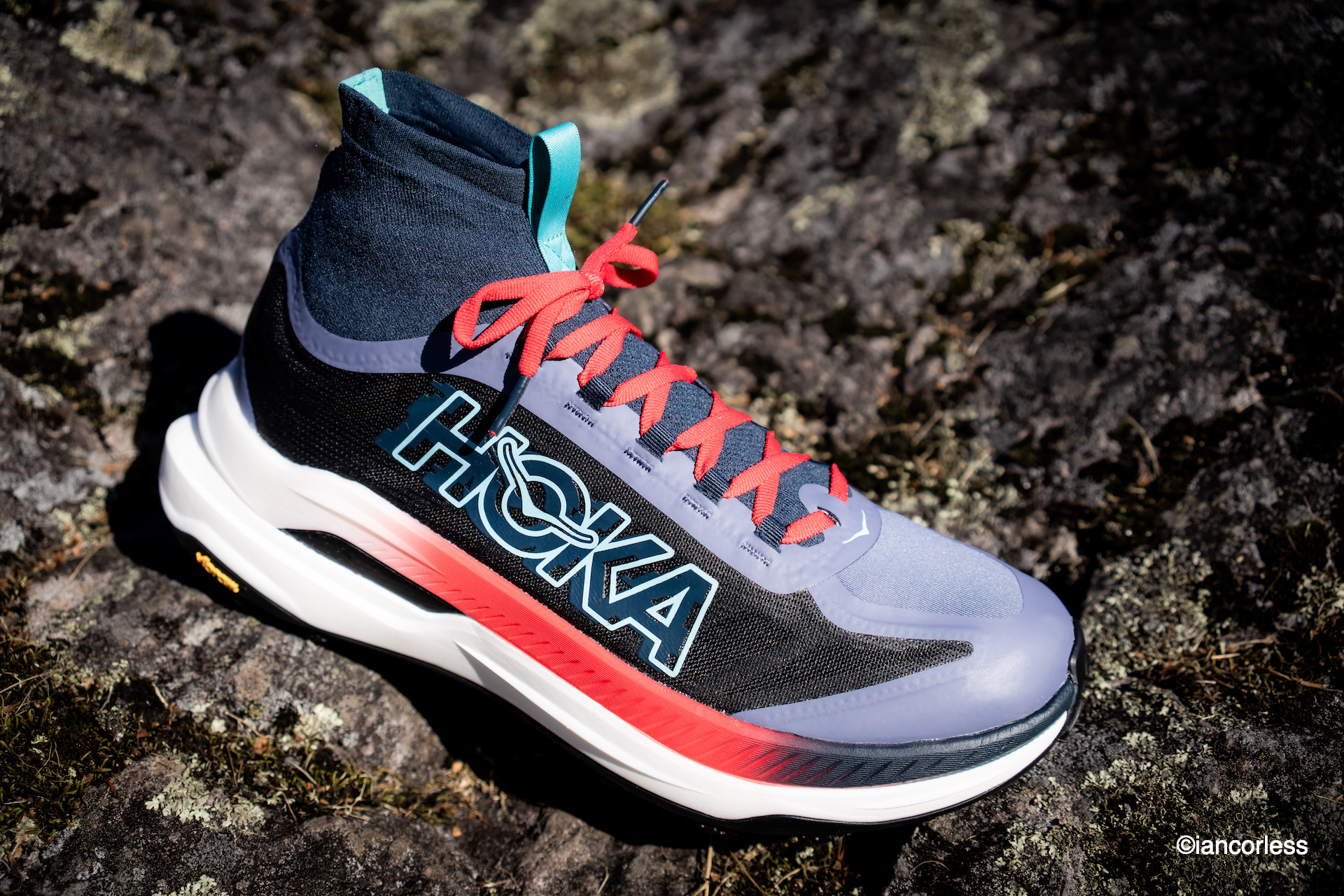
Just as we have seen on Jim’s UTMB and WSER Hoka’s, the TECTON X3 has a built-in knit gaiter which comes up above the ankle, fits very light and stops any debris entering the shoe.

Matryx upper ©iancorless

Matryx upper was released on the TECTON X2 and here it has been tweaked and developed and it also has a hydrophobic coating to help keep moisture out.

©iancorless

A dual-layer PEBA foam midsole is completely new, it is considerably lighter and amazingly bouncy.

Carbon clearly visible ©iancorless

Arguably, the biggest development comes with the parallel carbon plates. They have been developed with ‘winglets’ that come up the side of the shoe, they are a game changer in making the shoe more stable.

©iancorless

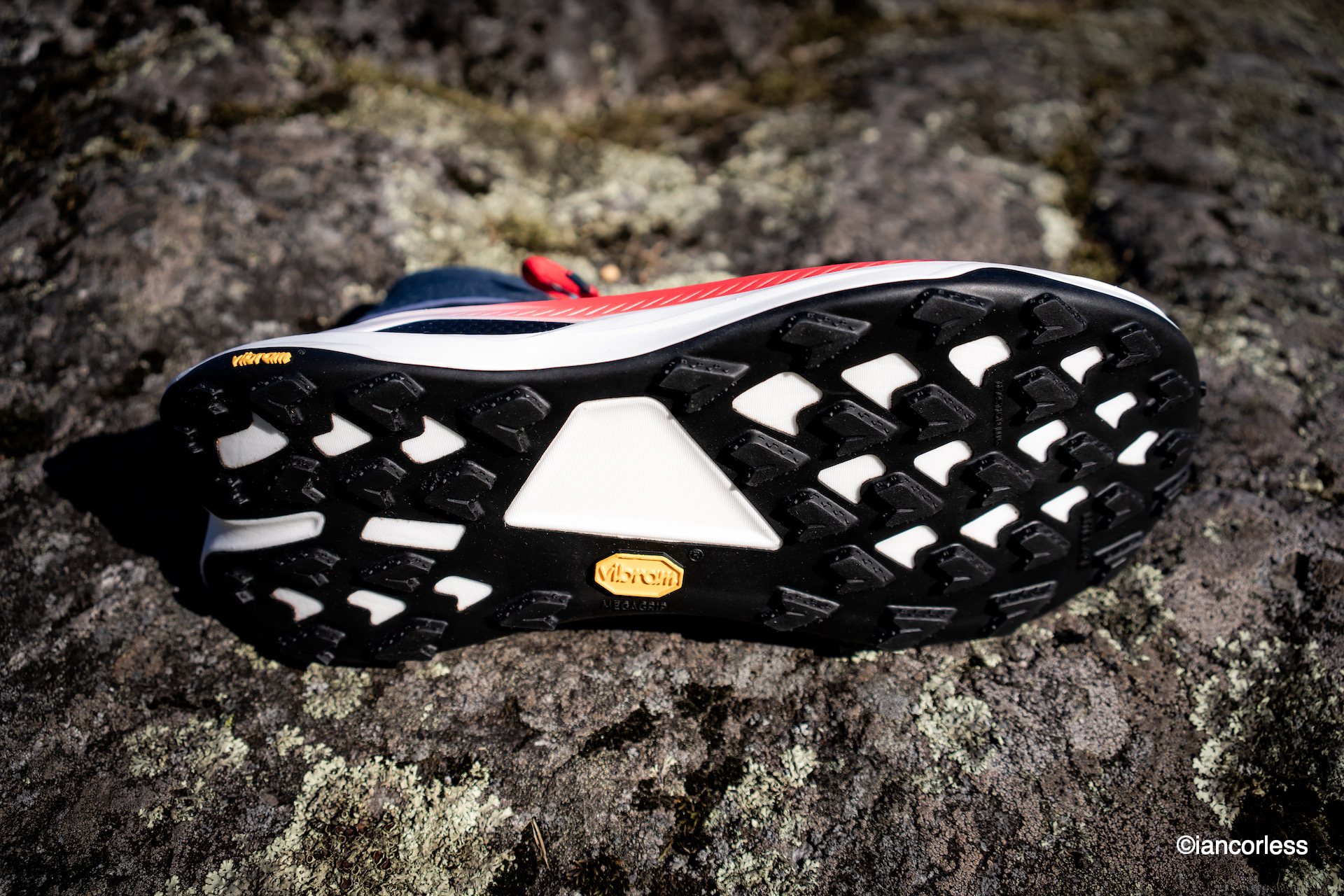
The outsole has also been developed with Vibram. This Vibram Megagrip Litebase covers more of the shoe, in comparison the Tecton X2. The lugs have also been changed to Traction Lugs with 4mm height.

©iancorless

IN USE

©iancorless

The Hoka Tecton X3 is amazingly light. It’s a great looking shoe, particularly in the blue/ black colour way!

Briliiant wide outsole/ footprint, front, middle and rear ©iancorless

The first thing I noticed was the size of the outsole. Hallelujah, Hoka completely understand that when you increase stack height, you also need to increase the size/ footprint of the outsole. This helps make the shoe stable. An incredible short coming from the new adidas Terrex Agravic Speed Ultra which is so narrow that you constantly roll left to right – the shoe has no stability, it’s a terrible shoe on challenging trail. Here, the Hoka Tecton X3 is supreme, the front is wide, the middle is wide, and the rear actually is not only wide but extends behind the shoe.

©iancorless

The new carbon winglets are visible on both sides of the shoe, they extend up on the right and left – a game changer in providing extra stability.

©iancorless

The Matryx upper is very durable and at the front of the shoe, there is great toe protection. The lacing system sits on top of the shoe and there is no tongue as the upper is an all-in-one upper. The addition of the gnit gaiter gives the Tecton X3 a unique look.

Cushioning is 40mm at the rear, 35mm at the front providing a 5mm drop, the women’s shoe is 39/34mm.

Sizing is true to size BUT due to the nature of the upper, you may want to try sizing to make sure you have the fit you require. For me, my normal run shoe size was perfect.

I was nervous about the gaiter. Nearly every shoe I have tried with a built-in gaiter I have been disappointed, either the gaiter is not tight enough or, the shoes are incredibly difficult to get on. Not so with the Tecton X3. For sure, getting the shoe on the foot requires more time and patience than a normal shoe, but it’s not problematic. Gladly, the fit around the top is tight. I absolutely love the feel of this shoe on the foot!

©iancorless

Another worry was the lacing. Would I be able to get the secure and locked feeling that I like with a shoe of this nature? Quite simply, yes! A great fit for me. Note I say, ‘for me,’ here. I do think that the shape will heavily influence if the Tecton X3 works for you. My foot fills and occupies the shoe, by contrast, Abelone has a long/ narrow foot, and she found that getting the correct hold/ security was difficult.

Standing up, the comfort level is a wow. They are plush but not squishy. Despite the stack height, they feel stable and secure, a consequence of the wide footprint and the new carbon plate.

The moment you start to run, you feel the bounce and propulsion moving you forward. They are a fast shoe but importantly, they are equally happy running slower and importantly (for ultra) they are extremely comfortable walking and hiking due to the wide and cushioned rear. The responsiveness is superb when climbing and the cushioning, width and carbon plates make downhill a joy.

The gaiter is fantastic, not only does it stop debris, but it adds the secure feeling of the shoe. So much so, when I have moved to other trail shoes, say the Hoka Speedgoat 6, I have really missed the gaiter. You forget you are wearing the Tecton X3 they are som comfortable.

These are a fun shoe; they are exciting and put a smile on my face.

For many years I have avoided shoes with large stack height, and this has not changed when I am running on very technical or mountain terrain, quite simply I need to be lower. However, despite 40/35 cushioning, the Tecton X3 is remarkably stable – way more stable than I anticipated. On single-track, gravel roads and non-technical trails they zip along. Amazingly, on tree routes, rocks, and uneven terrain, the stability level is considerably better than expected – the wide outsole and carbon wings really do a stunning job. Also, the parallel carbon plates can move independently, allowing the outsole to adjust the terrain underneath. There is a limit to how technical you can go, but also, one needs to consider the runner that is in the Tecton X3. If you are an experienced mountain/ technical trail runner, you may well be amazed and where you can take this shoe!

©iancorless

Vibram grip is universally liked, so the Tecton X3 has this covered. I personally am not always a fan of Vibram, especially on wet rock. However, this new Megagrip Litebase with traction lugs is a winner. The lugs are 4mm which is a perfect middle ground, a compromise will come in mud.

CONCLUSION

The HOKA TECTON X3 is my shoe of the year for trail running. It’s matched by the VJ Sport MAXx2 for mountain and technical trail.

Hoka have produced a remarkable shoe. There are key elements that make this stand out above all the competition. Super shoes very often are designed for and around super athletes, the adidas Terrex Agravic Speed Ultra a great example; if you are a great runner, can run fast and you have great form, the shoe is perfect. But if you are just a normal runner, the shoe can be a liability and on technical trail, it is a disaster.

Vincent Couillard in the Tecton X2.5 ©iancorless

The Hoka Tecton X3 is a super shoe, Jm Walmsley set a course record at UTMB, he then went on to win Western States and just recently, Vincent Couillard ran under 20-hours (19:54) to win the 2024 UTMB. Admittedly, Jim and Vincent were either in a prototype or maybe the Tecton X2.5 but there is a direct correlation to the Tecton X3.

The combination of features, cushioning, gaiter, parallel carbon plates and notably the new winglets and wide outsole make this a cushioned and surprisingly stable trail shoe.

The Tecton X3 is remarkably fast and once you get your cadence ticking over, you feel the carbon plates propelling you forward. But what is key for me is the comfort, feel and great sensations I get when running easy. They just feel great! At slower speeds the shoe feels comfortable and stable. Walking they are superb.

This may well be the first super shoe that works for any runner. That is a bold statement.

Despite all the above, the Tecton X3 will not work for some – If you have long narrow feet, you may find a compromise on fit.

The gaiter gives a secure and tight feel, this may not be for everyone.

There is one negative, due to the style of the shoe, the Matryx upper and the gaiter, the shoe does feel warmer than a normal shoe. Something I am happy to accept.

Finally, they are not cheap, however, run shoes these days seem to hover around the £200 mark, especially super shoes that push development and technology.

The Hoka Tectonic X3 is highly recommended.

Follow on:

Instagram – @iancorlessphotography

Twitter – @talkultra

facebook.com/iancorlessphotography

Web – www.iancorless.com
Web – www.iancorlessphotography.com

Image sales –www.iancorless.photoshelter.com

adidas Terrex Agravic Speed Ultra Review

©iancorless

The adidas Terrex Agravic Speed Ultra shoe was one of the most anticipated trail shoe releases of 2024. Let’s be honest, this shoe was a long time coming…. We had seen early versions of the shoe on the podiums of Transgrancanaria, MIUT, Transvulcania, Western States, UTMB and more. There was a soft launch of the shoe at UTMB 2023 that only whet the appetite of runner’s even more, however, it was the spring of 2024 before the shoe became commercially available.

adidas did a great job of building the anticipation and it is fair to say, that until the release of this new shoe, adidas were not really considered a contender in the trail market. This new incarnation most definitely changed things and I have seen the shoes on countless runner’s feet, in countless races, all over the world in 2024.

I have been testing the Terrex Agravic Speed Ultra shoes for a year. I picked up my first pair in August 2023 and I have been through two pairs in the last twelve months.

The previous ‘Speed Ultra’ shoe is my personal favourite adidas shoe, it was developed with the input of Tom Evans and was the shoe the helped Tom place third at his first Western States. This new incarnation has nothing to do with the one that has gone before, the only connection, sadly, is the use of the Speed Ultra name. So, if you liked the first shoe, there is no guarantee you will like this new one! They are like chalk and cheese.

Serious cushioning and rocker ©iancorless

A whopping 42mm of cushioning at the rear, 34mm at the front gives an 8mm drop. The shoe has Energy Rods and an extremely curved rocker. The outsole is Continental rubber with 2.5/ 3mm lugs. The cushioning is Lightstrike Pro. The upper is extremely light and breathable with overlays for durability and a gusseted tongue provides foot hold and support. Sizing is hit and miss, so, I recommend trying this shoe on before purchasing to ascertain what size is correct for you.

The shoe has the ‘Terrex’ branding, which means trail running, but it feels like an adapted road shoe, if you are familiar with the Adizero range, there are similarities.

The shoe is promoted as ‘Our fastest trail running shoe yet.’ And in all honesty, it’s hard to argue with this based on the results of the adidas Terrex team in the last two to three years, and just recently, once again, we saw this shoe on the podium of Transvulcania, OCC and the CCC.

But is this shoe for you?

I must be honest here, it is definitely NOT for me. I have tested and tried to adapt wanting to really like this shoe, but I just don’t get on with it. It’s light, it has an incredible propulsion phase and it’s very fast. But…

If you go on any trail with just minor technicality, the shoe is horrendously unstable. Quite simply, it’s too high and the outsole footprint is not wide enough, especially in the middle and rear. This causes the shoe to twist left and right; they are an ankle injury waiting to happen.

The rocker is so pronounced, that walking is unpleasant. Of course, it is maybe fair to say, this is not a shoe to be walking in! But any shoe that has the ultra-tag in it’s name, will almost certainly mean that walking will be required at some point, maybe with the exception of the top athletes, for example, the adidas Terrex team!

So, is this shoe for you?

The answer is yes! If you are fast, have great running form (forefoot striking) and are training or racing on fast, single-track trails with little or no technicality. Go buy them.

However, if you are an average trail runner like me, looking for a comfortable and durable shoe that will see you through many training days or ultra races, with and without technicality, then no. This is not a shoe for you!

Just as the Nike Alphafly for road running will not make me Kipchoge, the Terrex Agravic Speed Ultra will not make me Tom Evans. The shoe may well be state of the art and fast, but they need a fast athlete inside the shoe, otherwise, they are actually more of a liability.

IN USE

This is a premium trail shoe from adidas, years of development and with a string of results from the Terrex team that makes you desire to rush out, get your own pair and run like Ruth Croft or Tom Evans and set PR’s, CR’s and top the podium of the races that you enter.

No matter how good the shoe, 99.9% of us just don’t have the Ruth or Tom natural ability to bring the best out of a super shoe like this.

Peba energy rods visible in the midsole ©iancorless

This is a fast shoe, four pronged Peba Energy Rods are encapsulated between a Lightstrike Pro midsole. An extreme rocker and 42/34mm cushioning make this a beast to be unleashed. It’s a Ferrari for trail running on non-technical trail.

It is bold in looks, so much so, even the three stripes are subtle with TERREX in striking in white. There is no mention of adidas!

When you put the shoe on, you immediately feel the height and sadly, you also feel the instability. I am going to scream this again and again, the ‘footprint’ is not wide enough for the stack height of the shoe.

©iancorless

The foot hold from the gusseted tongue is very good and the sawtooth laces work well. However, the tongue lacks padding and when the laces are tied tight, there is pressure on the navicular bone. The heel cup is minimal but holds well. The toe box is wide and expansive which only makes the middle and the rear of the shoe feel very narrow. The rocker is immediately noticeable, you rock while standing still. If you are NOT a forefoot runner, forget this shoe. If you are a heel striker, you may as well leave this review now!

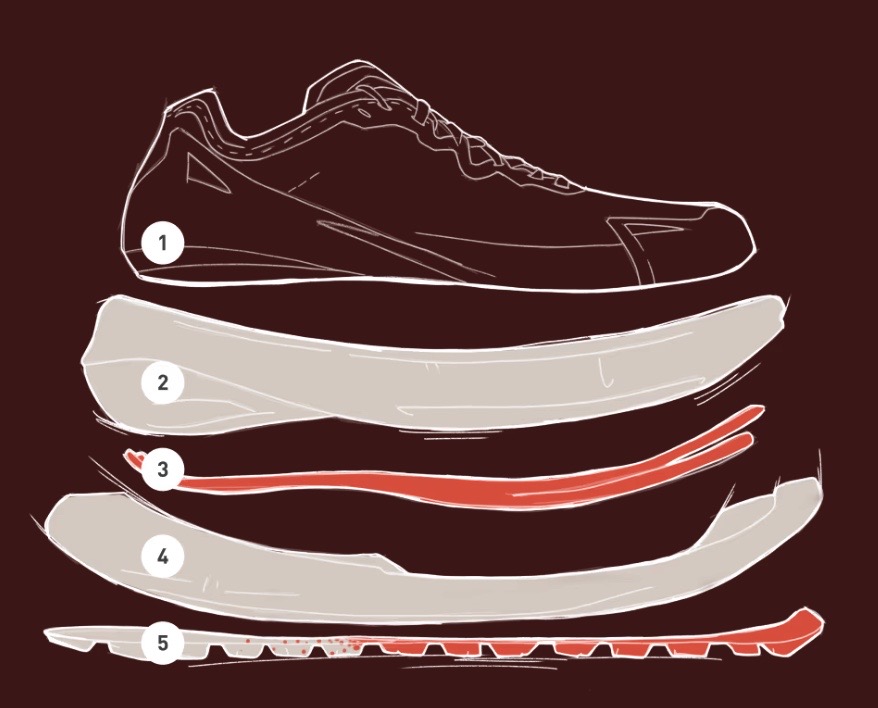
  1. Seamless overlays
  2. Lightstrike Pro
  3. Energy rods
  4. Dynamic rocker
  5. Continental outsole
©iancorless

The combination of rocker, rods, cushioning and amazing propulsive phase make this shoe fly. As soon as you build cadence, the shoes start to propel you forward asking you to go faster and faster. I quite simply cannot keep up with the shoe. This is a positive if you have the fitness, speed and run form to do this.

©iancorless

Uphill and climbing, the shoes work exceptionally well. Downhill not so. The instability really comes to the fore and they just feel scary and unstable.

The shoes zip along and are nimble, lightweight and quick on slick trails, gravel roads and single-track.

Too narrow in the middle and rear result in instability ©iancorless

Encounter rocks, tree routes, uneven terrain and the ride becomes worryingly unstable with constant twisting and rocking. They are not good on anything technical. The Energy Rods work like fingers, so much better than a single plate (also seen in Hoka Tecton X2 and the new X3) as it allows more adaptability and flexibility on trail, but here it doesn’t work due to the stack height and narrow footprint.

Minimal lugs ©iancorless

Continental rubber for the outsole is good with excellent grip, however, with 2.5/3mm lugs, this is only ‘just’ a trail shoe. But I guess that is the point! This shoe is meant to be fast for a Western States type of course where ‘grip’ is not really required. They are not for tough, technical and challenging mountain terrain.

Forefoot running required for this shoe ©iancorless

Ultimately, don’t be fooled by the performances of the adidas Terrex team, they are superb athletes with the speed, great run form and ability to really make the Terrex Agravic Speed Ultra shine. If you are running slower, trying to walk or just out for an easy run, these shoes are clunky and awkward.

The shoe also requires adaptation. Early runs will work muscles in a different way, particularly calf and glutes. If you get these shoes, adapt over time and distance adding a day off with another shoe between runs until you feel adapted.

CONCLUSION

©iancorless

I this a bad shoe? Absolutely not, it is state of the art and the results of the adIdas Terrex team endorse that. A fast shoe for slick trail and on the right feet a real joy.

Sadly though, most of us are not fast, don’t have great run form and this shoe will not only be a waste of money, but ultimately may well result in in a worse performance and maybe injury, especially if trying to run on technical terrain.

The Terrex Agravic Speed Ultra is quite simply not for me!

Terrex Agravic Speed ©iancorless
©iancorless

However, should you wish to pursue an adidas shoe, the Terrex Agravic Speed (review to follow) with 34mm/ 26mm cushioning and no Energy Rods may well be a better consideration. I have used this shoe considerably more than the big brother Terrex Agravic Speed Ultra with better sensations and run feel. Sadly though, despite the reduced stack height, it is still worryingly unstable on technical ground.

Hoka Tecton X3 ©iancorless
©iancorless

Finally, if a super shoe is what you require, the Hoka Tecton X3 is a revelation. Hoka understand that if you increase stack height, you must also increase the platform on which this increased height sits. The Tecton X3 has a superbly wide base at front, middle and especially the rear with a great Vibram outsole. In addition, the two parallel carbon rods have now been developed with ‘wings’ that come up the sides of the shoe providing a considerably more stable platform. This is how a cushioned, plated super shoe should feel. Yes, it’s a super light and responsive shoe and while the adidas requires a top athlete and great running form to bring out the best of the shoe, the Hoka does not. The Hoka is superb when running fast but equally at home when running slower or walking. A full review HERE.

Follow on:

Instagram – @iancorlessphotography

Twitter – @talkultra

facebook.com/iancorlessphotography

Web – www.iancorless.com
Web – www.iancorlessphotography.com

Image sales –www.iancorless.photoshelter.com

VJ SPORT MAXx2 SHOE REVIEW

A new VJ Sport shoe is always something to get excited about. Earlier this year I received two new shoes, a double whammy from VJ.

The MAXx2 and the Lightspeed are two new departures for the brand and I have to say, these are two very exciting developments.

VJ Ace ©iancorless

In 2023, I received the VJ Sarva Ace – a winter studded shoe. This shoe was a revelation based on a much wider toe box and incredible ‘new’ cushioning. Review HERE. At the time, I fed back to VJ that without the spikes this would make a great new ULTRA shoe in the VJ line-up.

Well, the MAXx2 and Lightspeed take this cushioning and what we have are two performance shoes that need to be worn to be believed.

Today, we look at the MAXx2.

THE SHOE

If you read my shoe reviews, you will know I am a huge VJ Sport fan. To me, they have not made a bad shoe and gladly, they are not always tweaking or re-inventing shoes. The original MAXx I have used for many years and in all honesty, it has been my go-to mountain running shoe. The combination of foot hold from Fitlock and the amazing outsole make them unbeatable when grip and control is priority. The only downside to the MAXx was the lack of cushioning for longer runs. With 12mm cushioning at the front, 18mm at the rear and 4mm studs, they are a great shoe for up to 50km in rocky, muddy and mountainous terrain.

The MAXx2 takes all that was great in the MAXx and brings some key changes and features:

  • 25mm and 31mm cushioning
  • SuperFOAMance midsole
  • Rock plate

These new features elevate this shoe to a new beast and it has now become my favourite trail shoe. They are quite simply, superb!

The upper is seamless, breathable and durable. The outsole, for those that know VJ still offers the best grip on the planet with 4mm Butyl rubber studs – no other shoe brand has an outsole that can compete with VJ. The unique FITLOCK gives superb foot hold which guarantees security and precision on technical and demanding terrain.

I could conclude here and say this is is the best mountain/ off-road shoe available on the market.

IN USE

This is a versatile shoe and where the previous MAXx had some limitations in regard to distance and time on feet, the MAXx2 dispels that and for me, this is now an all day mountain/ off-road shoe with supreme comfort. 

The revelation is the new SuperFOAMance midsole (25/31mm) which I knew was superb the moment I tried the winter Ace shoe. The original MAXx had Poron cushion integrated into the heel and forefoot midsole, the new SuperFOAMance is a huge improvement. It manages to give everything that I need and want in a shoe, especially when running on more technical trails. I have great ground feel, great flexibility, precision and there is a delicate balance with torsional rigidity and comfort. The rock-late balances enough protection without adding weight or restricting flexibility. The propulsive phase is superb. And a drop of 6mm is a perfect sweet spot between 4mm and 8mm.

The toe box has been given more space, a ‘4’ on the VJ scale. The balance of a wider toe box and still a precious feel is a delicate balance, but VJ have done it. There is extra room and more toe splay without a sloppy feel.

The upper is not as breathable as other brands and there is a simple reason for this. This shoe is designed for use in harsh environments and VJ know only too well, if you make an upper too minimal it just won’t last. This upper is one piece, so, there is no stitching to cause abrasion – a winner. There is a TPU bumper that goes around the bottom of the upper providing extra protection and durability. FITLOCK has always been a winner and here, once again, this is a key feature of the shoe providing the ultimate foot hold. There is also extra eyelets so you can lock-lace if required.

The outsole is superb, as with all VJ shoes. Here 4mm lugs make this shoe a perfect all-rounder for drier/ non-technical trails and more demanding mountain trails that will have mud, rock and more importantly, wet rocks. No other shoe grips like VJ. The outsole is classic chevron in design with grip the full-length of the shoe. There is nothing more to say, best outsole there is!

The shoe sizes a little large, so, be careful when purchasing. With a wider fit at the front, you may wish to size down. I am typically a UK10 and I have a UK9.5 which weighs 263g.

CONCLUSION

This is VJ’s best shoe and one that is a perfect one-stop solution. The MAXx2 is an all-rounder and typically that would mean that it does all things ok, but no one thing well. Not so here, the combination of elements – cushioning, rock-plate, outsole, Fitlock, fit and comfort make this a superb one-stop trail shoe that excels for all day comfort.

VJ have always had a reputation for making shoes that are very specific, think of the iRock with 6mm lugs and less cushioning designed for grip in soft-ground, or the XTRM2 which has 6mm lugs and more cushioning. Here in the MAXx2 we have a middle ground that should you only ever own one pair of VJ’s, the MAXx2 should be the one to buy.

VJ Sport LINK

Follow on:

Instagram – @iancorlessphotography

Twitter – @talkultra

facebook.com/iancorlessphotography

Web – www.iancorless.com
Web – www.iancorlessphotography.com

Image sales –www.iancorless.photoshelter.com

Merrell MTL Long Sky 2 Matryx Shoe Review

Shoes are personal. Run shoes are very personal. Quite simply, we are all unique and our needs when running vary greatly depending on the distance we are running, the terrain we are running on and how long we will be out for. It is why so many shoes exist.

Last year I said my shoe of the year was the Merrell Agility Peak 5. It is a shoe that ticked all the boxes, comfort, great foot hold, excellent grip and a fantastic all rounder for trail and mountain running. If I was only allowed one trail shoe, the Agility Peak 5 would be my choice.

It’s fair to say, that Merrell are still fighting an uphill battle to be taken seriously in the run world, especially when compared to the giants like Hoka, adidas, Brooks, Asics, Salomon and so on… Take note, Merrell should definitely be on your consideration list.

With the announcement of the MTL Long Sky 2 Matryx and my love for the Agility Peak 5, I was very keen  to give this new incarnation plenty of testing.

In contrast to the Agility Peak 5, the MTL Long Sky 2 Matryx is a completely different beast. Less cushioning, lower weight, lower profile and lower drop. It’s a very specific shoe.

To draw a comparison, the Agility Peak 5 is like an everyday car for the family, plenty of room, comfort and great for a full day out. The MTL Long Sky 2 is much more a 2-seat sports car that is has a very specific use and some comfort is missing in exchange for speed.

So, although the name has ‘Long’ in the title, don’t be fooled in to thinking this is a long distance shoe. It is not. The most relevant part of the shoes name is ‘Sky’ and the reference to skyrunning which takes place in tough, challenging and technical terrain and mostly over shorter distances between 20 and 50km.

A neutral shoe, in comparison to the previous model (the Long Sky) the drop has been reduced from 8mm to 4mm. This is significant is it gives a much greater contact with the ground and control. Cushioning is 19.5mm at the front and 23.5mm at the rear. The outsole is Vibram MegaGrip with 5mm lugs.

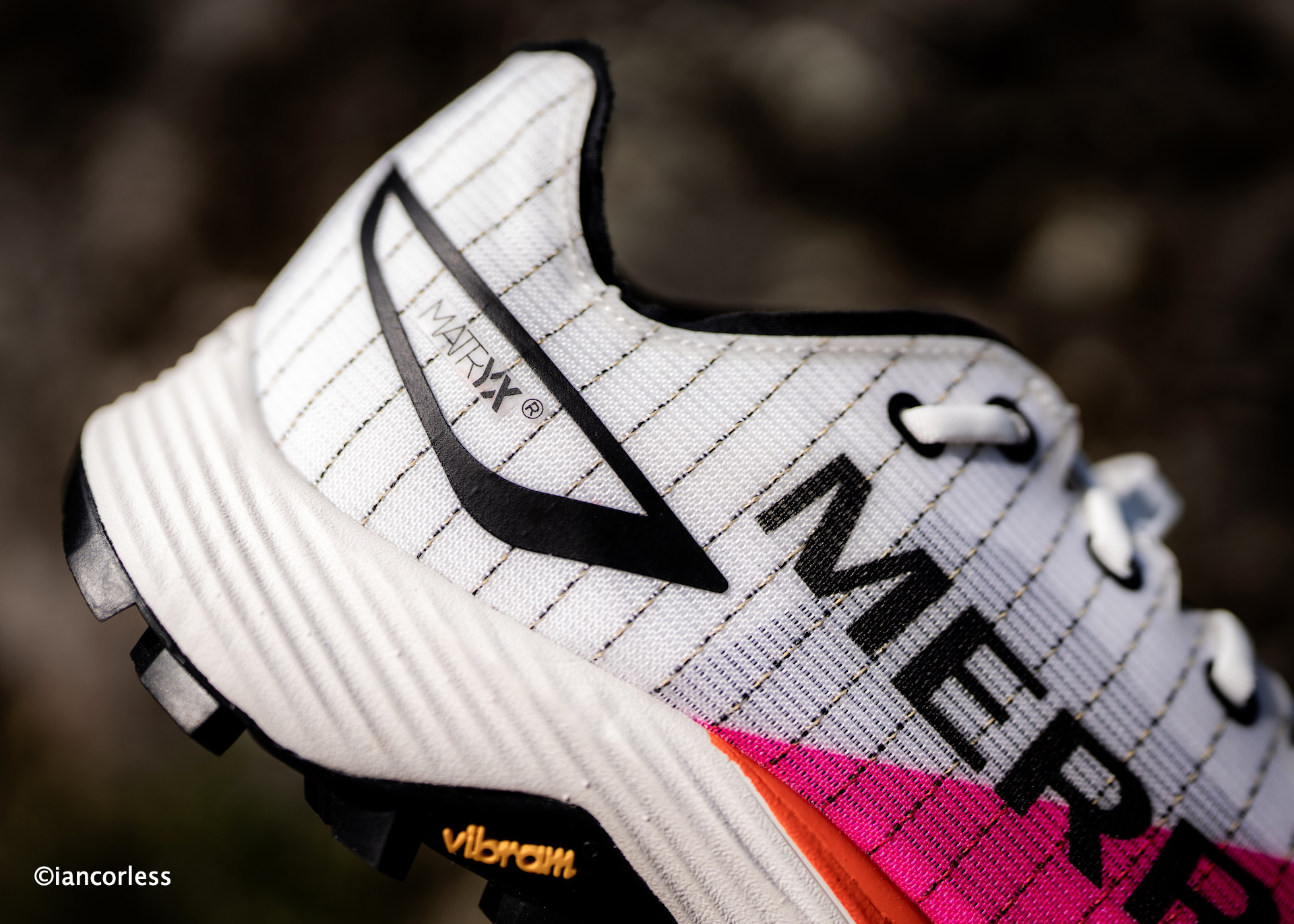
A key feature is the new MATRYX upper which has more durability and is designed to keep the foot cooler with greater wicking.

They have a gusseted tongue for excellent foot hold. Cushioning is via EVA foam insole and dual FloatPro Foam.

There is a temperature regulating footbed. A UK9/ EU44 is 259g and sizing is true to size. The shoe is 15% lighter than the previous model

THE SHOE

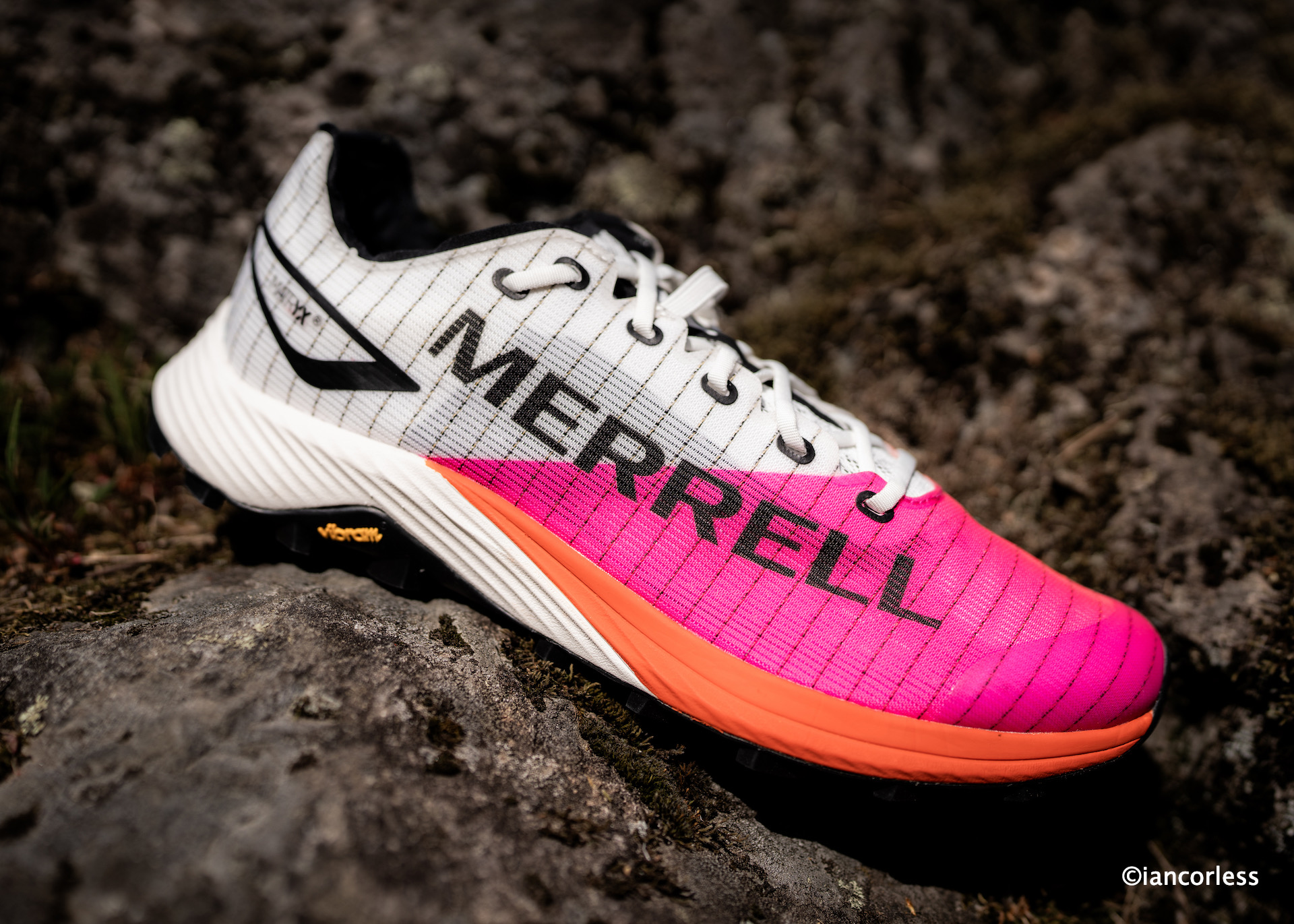
It’s a great looking shoe and one that immediately says speed. The white to multi fade orange and pink is striking.

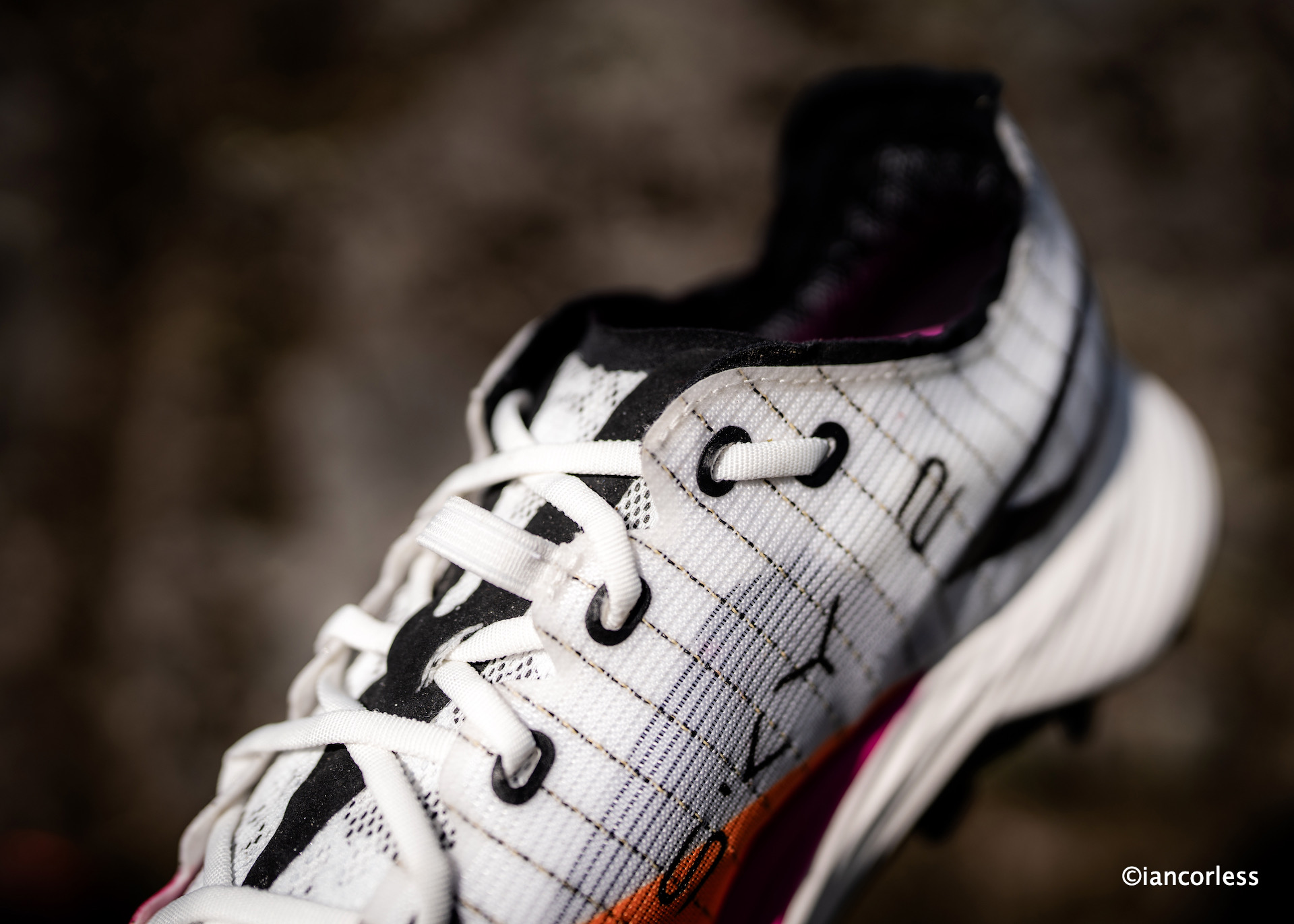
Slipping the shoe on, the foot hold is immediately noticeable and with the laces adjusted and the sock-like fit, there is no movement at all. Exactly what you want from a shoe that will handle mountainous and technical terrain. The heel area is very minimal and there is a raised padded area inside that is designed to grip and hold – it certainly does, arguably they are the most secure shoe I have experienced in this area. The front of the shoe opens up to provide enough width for toe splay, but not too much room so that you would lose control when precision is required.

With a 19.5/23.5mm cushioning, this shoe is designed to provide a compromise offering cushioning but not losing ground feel and control. As mentioned before, the ‘Long’ in the name is relative and for most people, this is not a long distance shoe.

The upper construction is minimal and notably so at the front, there is token toe protection. Don’t be fooled though, this MATRYX upper is tough and durable.

The shoe immediately feels comfortable when you put them on. I strongly suggest you play around with socks to find out what works best for you, I noticed a huge difference in feel between a lightweight sock and a slightly thicker merino sock.

Merrell say the shoe is good for up to 50km. For sure, yes, 50km is possible, but this depends on the runner and the speed they are going. A top elite mountain runner may tick off 50km in 4 to 5 hours, whereas, someone else may take 10-hours, so, use caution.

The MTL Long Sky 2 Matryx is designed to be agile and nimble, they are! But this comes at a price on comfort and protection. I had expected more protection and ultimately, for me, that just wasn’t there. I could feel stones, rocks and tree roots through the shoe which did surprise me. They feel thin!

They are very flexible and the propulsive phase is very good. On the correct feet, this is a fast shoe.

The biggest problem for me was the heel area. In one area they are brilliant, the hold is fantastic, they are secure and there is no slipping. However, this hold comes from the raised cushioned area with the heel, no matter what I did or tried, this just rubbed and caused blisters on both feet. I must caveat here, I never get blisters. So, this just made the MTL Long Sky 2 Matryx unwearable for me. 

The outsole is Vibram MegaGrip with 5mm lugs. Ideal for technical terrain providing grip when required on rock, gravel, light mud and varying terrain. I am still not 100% convinced or confident of Vibram on wet rock, especially when compared to VJ Sport or the Continental grip on adidas shoes.

Conclusion

There is a great deal to like in the Merrell MTL Long Sky 2 Matryx and if you are looking for something light, nimble, fast with ground feel for short mountain days or racing, this is for you. However, this all comes at a price. It’s a specific shoe for a specific task, just like a Formula One car. This is not the only shoe to have or use. It’s too specific for everyday runs, so, the MTL Long Sky 2 Matryx should be added to an already existing shoe collection and they should be reached for and used on special days. Given that Merrell sponsor the Skyrunner World Series, it’s unsurprising that this shoe is designed to specifically perform on this terrain.

Follow on:

Instagram – @iancorlessphotography

Twitter – @talkultra

facebook.com/iancorlessphotography

Web – www.iancorless.com
Web – www.iancorlessphotography.com

Image sales –www.iancorless.photoshelter.com

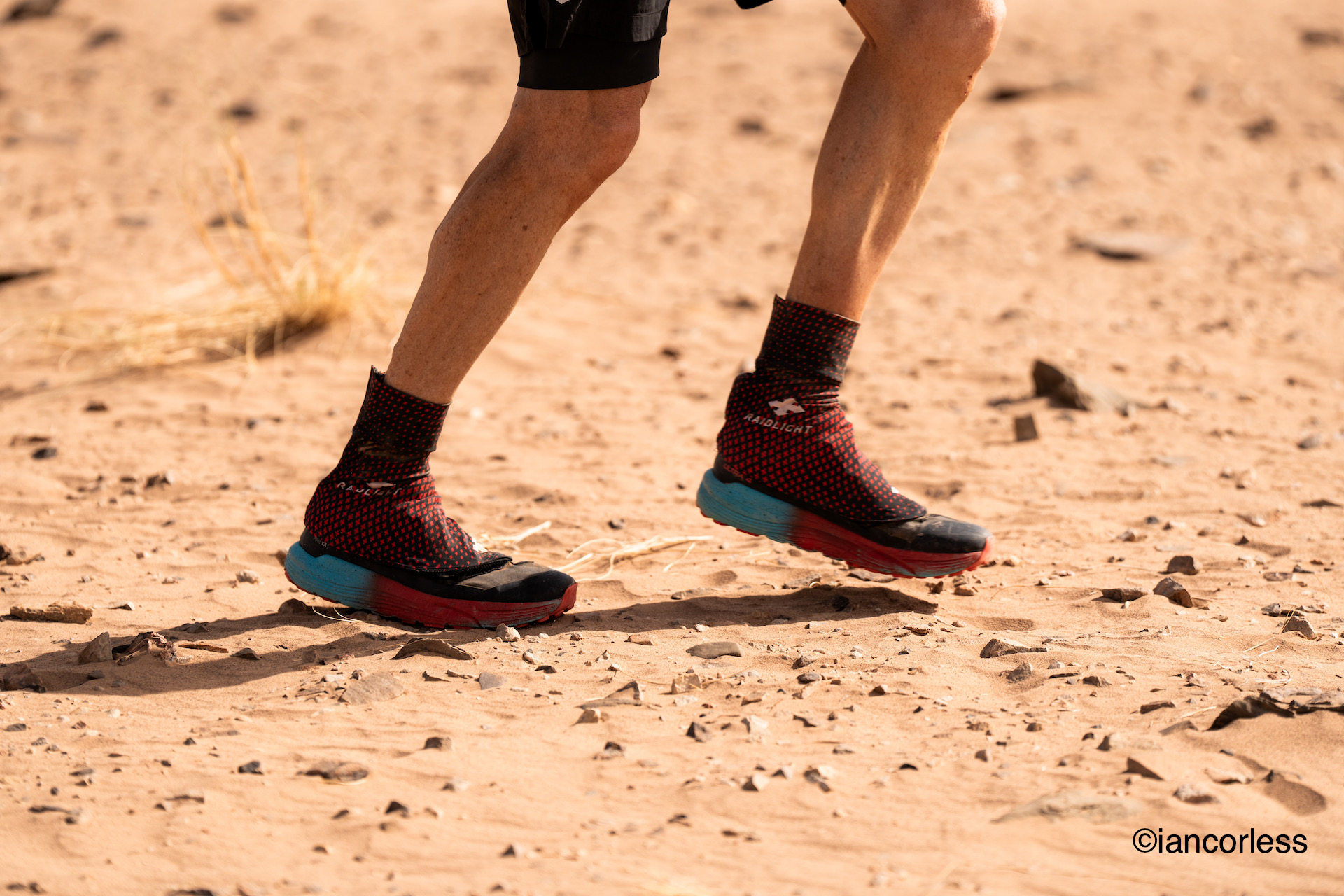
Raidlight Ultra Desert 4 Protect Shoe Review

Raidlight as a brand have been synonymous with desert racing for over 20-years, it was the brands USP and even today, it is a the core of the business founded by Benoit Laval in 1999.

It was around 2006/ 2007 when the ‘Olmo’ pack was created for Italian legend, Marco Olmo. A ground-breaking ultralight pack designed to carry many items with bottle holders on the front. From here, the rest is history with a range of packs and apparel that are specifically designed for stage and multi-day racing in hot environments such as the Sahara. A range of specific products can be seen HERE. 

Ultralight packs, front packs, desert hats, gaiters, sun protect long-sleeve tops, tyvek top and pants and now a DESERT SPECIFIC SHOE.

In 2019, Raidlight created their first shoes. A bold move in a market that is saturated with choice, especially when one considers the R&D and manufacturing costs.

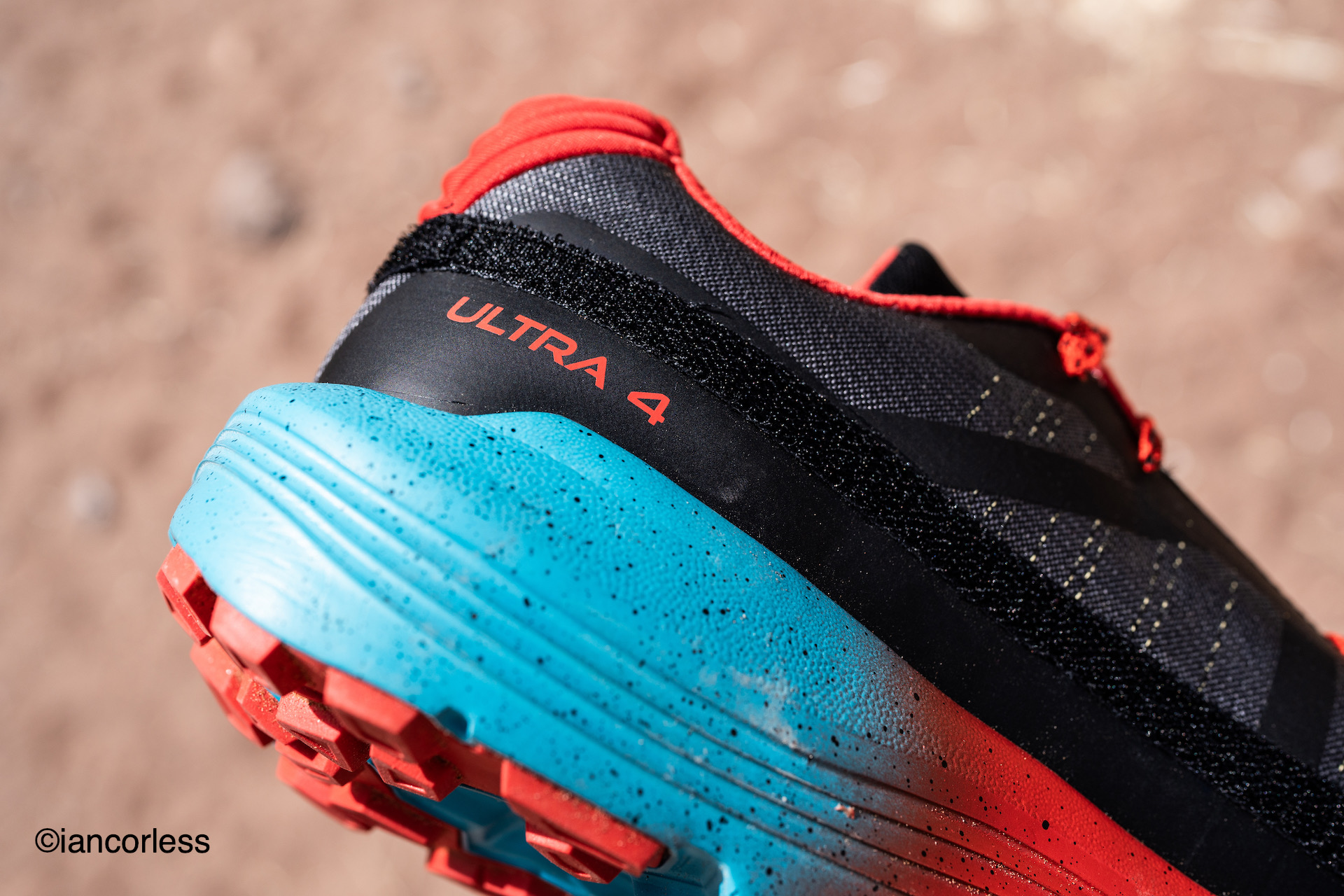
The recent Ultra 4 shoe with 6mm drop, 4mm outsole and increased cushioning has now been developed to provide the ultimate, one-stop shoe for desert terrain. The ULTRA 4 DESERT PROTECT.

What is a specific desert shoe?

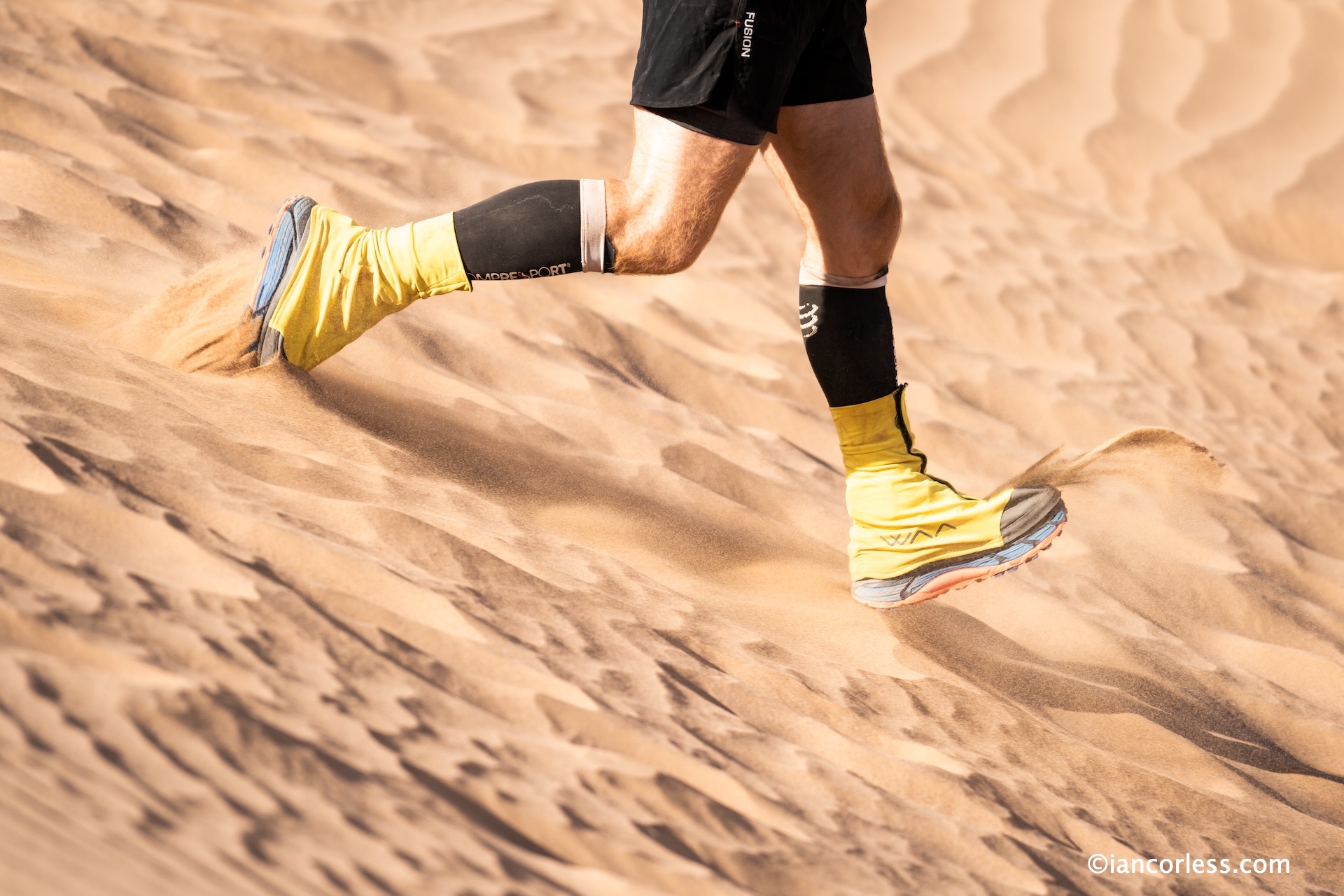
Running in a desert, sandy or harsh environment, even snow, brings a challenge for a shoe. Shoes are designed to be comfortable but also breathable. The downside of breathable is that while it allows hot air to escape the shoe, this also allows sand and debris to enter the shoe. This is not a good idea in a desert environment. For many years, the best option has been to have velcro sewn and glued to your preferred shoe and then add a gaiter /such as THIS) to not allow sand to enter the shoe – it works.

There is a cost involved to this:

  • Shoe 150.00
  • Gaiter 25.00
  • Sewing/ glueing velcro: 60.00
  • Total cost 235.00+/-

For countless editions of desert races all over the world, this system is tried and tested. It really does work. The only downside, one needs to be careful that the addition of velcro to a shoe does not alter alter its shape and feel, so, once you have velcro added ALWAYS test and make sure the fit is the same.

ULTRA 4 DESERT PROTECT

Many brands have played with the idea of producing a specific desert shoe and notably in the last 5-years I have seen brands such as Salomon, Hoka, Merrell and La Sportiva specifically adapt existing shoes to make prototypes for elite athletes. We have seen this work specifically for Julien Chorier (Hoka), Mathieu Blanchard (Salomon) and Ragna Debats (Merrell).

Why have the brands above not released a shoe to market?

I guess the simple answer is, a desert running shoe is a very specific market and in real terms, it’s a small market. So, financially (maybe) the figures just don’t add up?

Raidlight on the other hand already produce gaiters, they also already offer a velcro stitching service (here), so, by adapting an already existing shoe with the addition of velcro and a specific gaiter makes sense. 

Especially when this is all offered for 150.00 euro in the ULTRA 4 DESERT PROTECT.

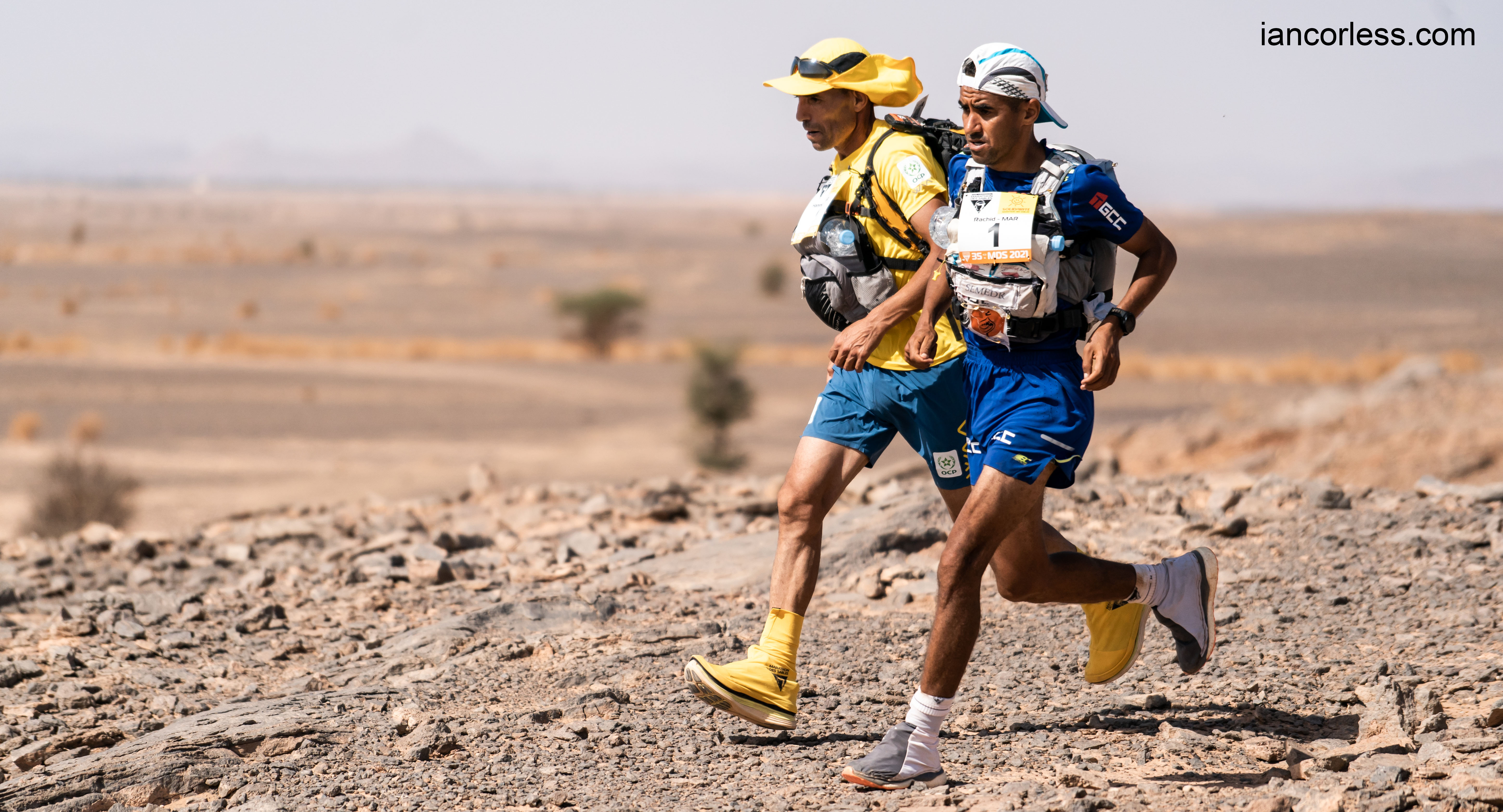
I received my shoes in advance of Marathon des Sables, perfect timing. I wasn’t running the race but I was in Morocco before the race running everyday and in addition, I was working everyday during MDS in the same environment as the runners. Ideal.

THE SHOE

My first surprise was the weight of the shoe, they look heavy but they are not! For a standard UK8/EU42 they were 280g, for my UK9.5/ EU44 they were 295g with the velcro and 325g with the gaiter.

Not knowing how the shoe fit was my biggest concern, especially for a desert/ sand shoe. There is no need for ‘bigger’ shoes just because you are going to a desert (read a article HERE). Quite simply, if a shoe is too big your foot moves inside the shoe, a moving foot creates friction, friction equals blisters. A thumb nail of space above your longest toe is ideal, and when I say longest, this may not be the big toe! One consideration is width, make sure you have enough room for toe splay. Feet may go wider in the desert, so, be considerate of this.

The ULTRA 4 DESERT PROTECT were true to size and I therefore went with my standard UK9.5/ EU44 based on advice from Raidlight and they were perfect.

The colour way of red/blue/black really works, I like them. The red/black gaiter is also a nice touch.

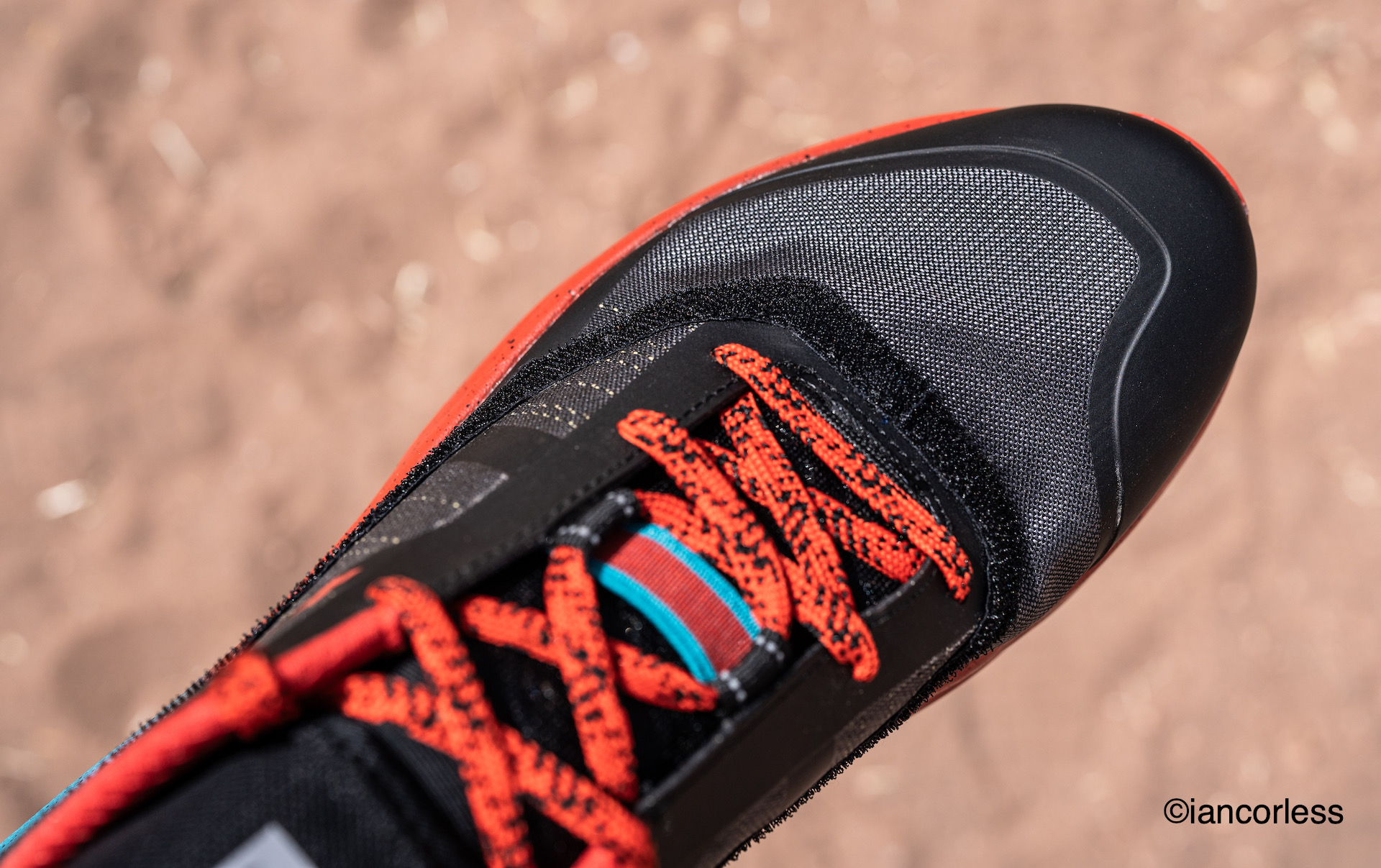
If you have velcro sewn/glued on a normal shoe, the velcro will go completely around the perimeter of the shoe, this ensures sand/ debris can enter at no point. The downside of this is that the velcro can get damaged at the front when hitting rocks or on challenging terrain.

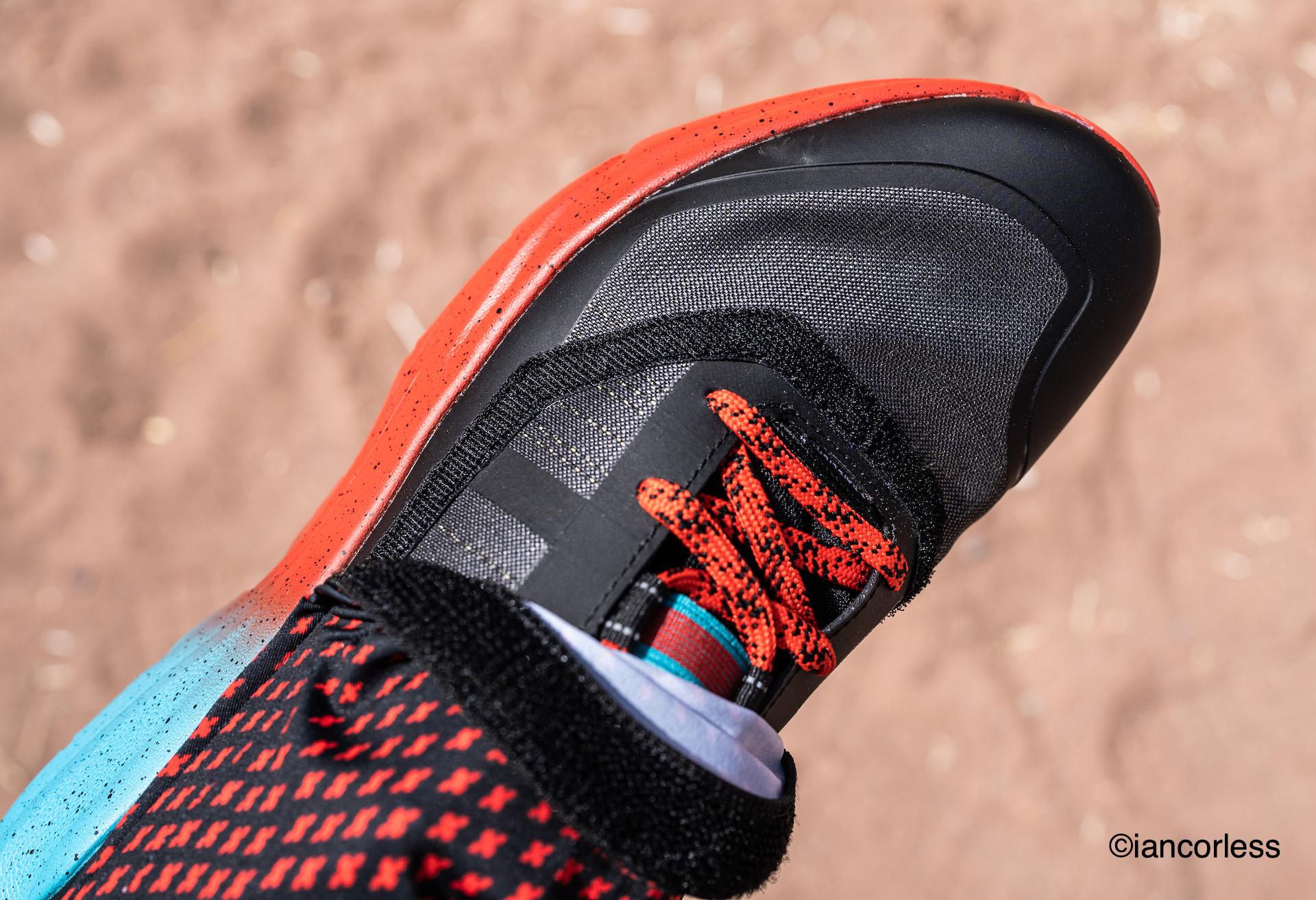
Raidlight have got around this by bringing the velcro up the shoe to just below the laces. This I love.

To combat sand entering the shoe where there is no gaiter, Raidlight use MATRYX material. In a way, this is similar to Gore-Tex, keeping debris out while allowing the foot to breathe. It works, I had no sand enter my shoe on any occasion.

The gaiter attaches as standard and comes higher up the leg with velcro fastening and the option to adjust how tight at the top of the leg. I actually never opened mine. I fastened them together the first time and then removed and added them like socks when in use. This worked for me and ensures the velcro has a longer life. You just simply need to remember to put the gaiter on first, then socks, then shoes and then fit the gaiter.

The lacing works really well providing plenty options for great foot hold and the storage pocket at the top of the tongue is great for keeping laces out of the way. Once tied I had no reason to adjust them when in use and they never came undone, partly due the laces being flat and not round.

A neutral shoe, sliding them on, there was an instant comfort feel. These are not bouncy shoes but they are cushioned and comfortable with notable excellent grip at the heel. When running, there is good propulsion from behind the metatarsals and notably there is excellent protection from rocks and debris. The addition of elastic (M-lock band) on the tongue allows for flexibility and support.

The toe bumper is solid and offers great protection from rocks and debris.

The outsole with 4mm lugs offers a great middle ground and works exceptionally well. I have not tried them on wet ground or rocks.

With 19mm cushioning at the front and 25mm at the rear, the 6mm drop sits, once again in the middle ground and is ideal for long distance running.

IN USE

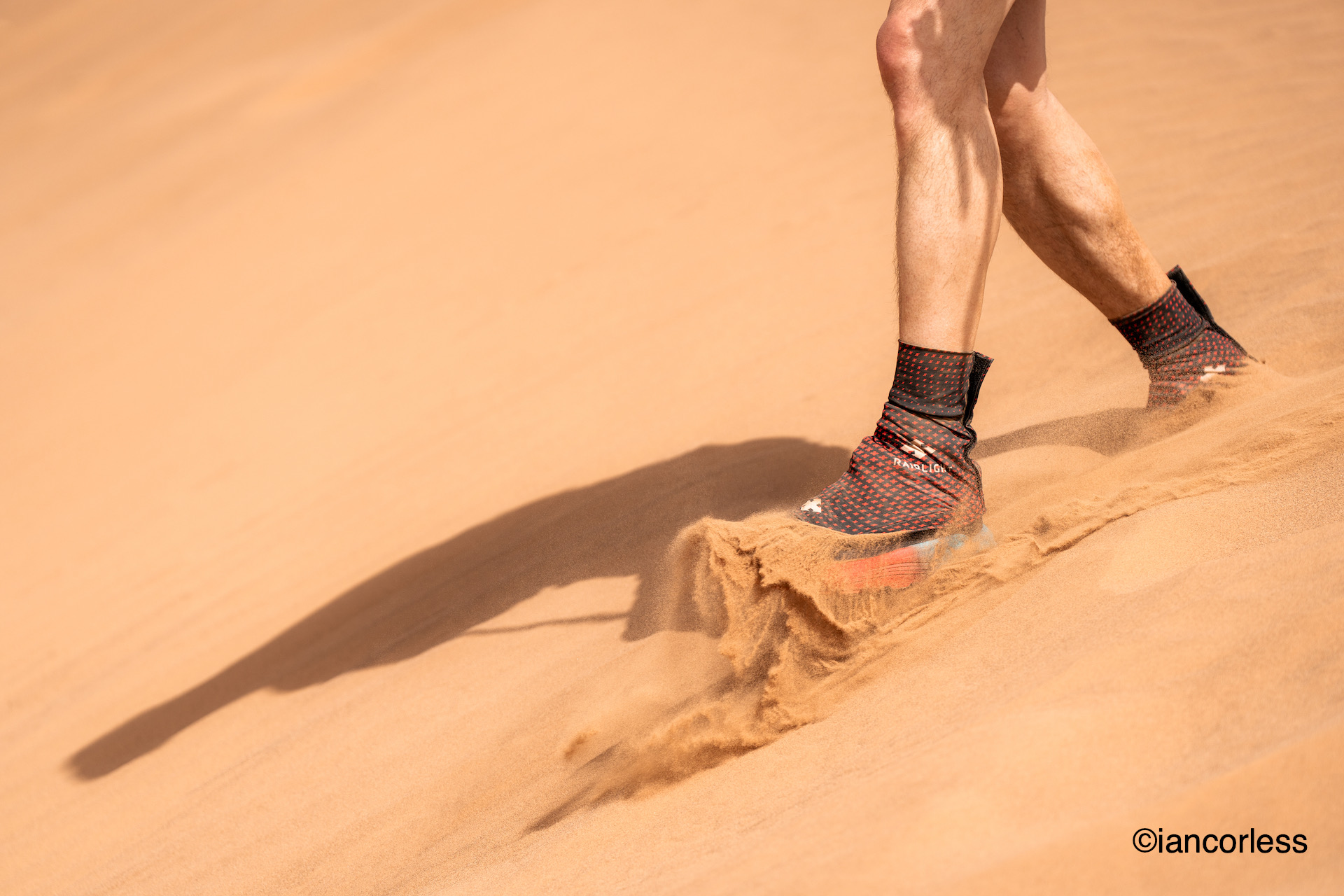
Have to say, I was surprised. My first sand run felt very comfortable and the shoe performed perfectly. They provided excellent comfort, great protection, plenty of toe splay and the gaiter with the Matryx upper allowed no sand to enter.

The downside? They were warm! To be fair though, comparing to my other shoes (Hoka) with sewn velcro and the addition of a Raidlight gaiter, the differences were comparable.

The more runs I had in them, the better the feel cam and I would recommend looking to put 30-50km’s in them before using them for your chosen race or adventure. I do caveat that by saying they were great out of the box, but certainly several runs did allow them to just fit and conform to my foot.

I have no negative comments. With 150km’s now in the shoe and a complete battering in the Sahara, the shoes offered all day comfort without a trace of sand entering the shoe.

I will also add, this is a new shoe. They only came available just before the 2024 MDS. Despite this, I saw many pairs out ion the Sahara. I spoke to everyone I could and the feedback was the same, perfect shoe, great comfort and no sand inside.

CONCLUSION

Shoes are personal and the most important thing in any adventure or race is a shoe works for you and causes no problems or issues. This is especially important in a race like MDS when so many other factors and variables come in to play. The ULTRA 4 DESERT PROTECT offers a one-stop solution to a problem and if this shoe works for you, it comes highly recommended. It will certainly be a highly recommended shoe of choice for this environment in the future.

©iancorless

“Unrivalled comfort, cushioning and dynamism. Designed and engineered to go the distance, making them the shoe for ultra trail runners. The midsole incorporates dual density technology, offering a perfect balance between cushioning and responsiveness. The lightweight design reduces fatigue while providing protection and support. Comfort over longer distances, while maintaining optimum stability over a wide range of terrain.”

©iancorless

Follow on:

Instagram – @iancorlessphotography

Twitter – @talkultra

facebook.com/iancorlessphotography

Web – www.iancorless.com
Web – www.iancorlessphotography.com

Image sales –www.iancorless.photoshelter.com

Fail to Prepare, Prepare to Fail

A Multi-Day race or a long-distance ultra is a huge undertaking. For many, it’s a 12-month project (or longer) that slowly but surely can consume every available day, hour, minute and second.

I get it, a long-distance race over multiple days in an unfamiliar terrain can leave more questions than answers. However, don’t panic, it’s not that complicated – read HERE.

As your key adventure looms, it’s time to focus the mind, body, and equipment so that you can plan for and anticipate all that may go wrong and right while undertaking this key target.

Quite simply, the old saying, ‘Fail to Prepare, Prepare to Fail’ does and can ring true.

So, what can be done?

Luck can have a place in any success; however, it should never be relied on. In multi-day events, particularly self-sufficient ones, the need to fine tune everything is a key element.

  • Training.
  • Kit.
  • Mind.

All of the above have very important roles to play in success.

  1. Get the training wrong, you may not have the fitness or an injury that will result in you not achieving the finish line.
  2. Get the kit wrong, be it too heavy, not durable or inappropriate may impact on your ability to achieve your goal.
  3. Many say the mind is a key and an integral part of any success. Often, the body can be willing, but the mind can be weak, get the mind focused and prepared.

You need to be prepared for whatever your multi-day adventure will throw at you.

In the final phase of training, 6-8 weeks before your adventure starts, is a great time to start working on the final phases and plans that will help ensure success.

THE PREPARE PHASE

If we assume that tapering will take 2 to 3-weeks, this key ‘Prepare Phase’ should be in weeks 4, 5, 6 and 7 before D-Day.

Train and prepare specifically.

First and foremost, understand the challenge that you are undertaking. You may feel that you already have a grasp on this, but there is no harm sitting down and going through all they key aspects. Terrain, weather, mandatory kit, distance, and conditions. Look at the October 2021 edition of Marathon des Sables, the race started with a series of protocols to manage Coronavirus. Ultimately, Coronavirus was not a consideration, it was extreme heat, sickness and stomach problems.

Understand the event and challenge.

Walk, WALK, WALK! – Walking will (for most) be an absolute essential skill to complete any multi-day adventure. You may think you will run most of the distance… But experience confirms that walking is a key to success. Walking, and walking with purpose is a skill. Practice. Consider poles, they may enhance your walking experience, if so, practice and use them.

Learn to walk.

Without doubt you will have long days, and some will go in to the night and through the night. Take time and plan and include a session like this in the ‘Prepare Phase!’ Understand here that this is an opportunity to test kit, not only yourself. Is your head torch bright enough, how do temperatures vary, how does my appetite and requirement for fluid change etc. By doing this in training, you do it in a safe environment. If it all goes badly, you can always make a call and get picked up or get a taxi. You can’t do that in your race or event. Darkness and nighttime can play tricks.

Back-to-back runs may well have featured in your training but running/ walking tired is a skill. However, be careful how you plan this in training. You want adapt body and mind, not break them.

Practice makes perfect.

Perform training with rationed water and race/ event food. You need to learn what works and what doesn’t work. It’s all very well going for a long run and then getting home and eating chocolate and drinking Coca Cola – can you do that in your event? Mentally this can be a real tough challenge – be prepared.

Get a pack that fits perfectly and does not bounce.

Your pack will be with you for the duration of your event. It must be as light as possible and also sturdy enough to last the challenge without breaking. Be minimalist on equipment and purchase the lightest equipment possible. Remember though, lightweight can often mean less durable, less warm, less functional and so on… Better to break or damage equipment in training so that you can make changes ready for the important challenge ahead. Modify and adapt.

Be specific!

Be specific. Snow, mountains, altitude, heat, or cold. Understand the demands that will be placed on you in your challenge and plan for a specific phase (typically in the 2-3 weeks before the event) to help acclimate. This could be a heat chamber, it could be arriving early before an event and adjusting to high altitude, it could be some specific cold, ice or snow training.

Try out food for an adventure in training.

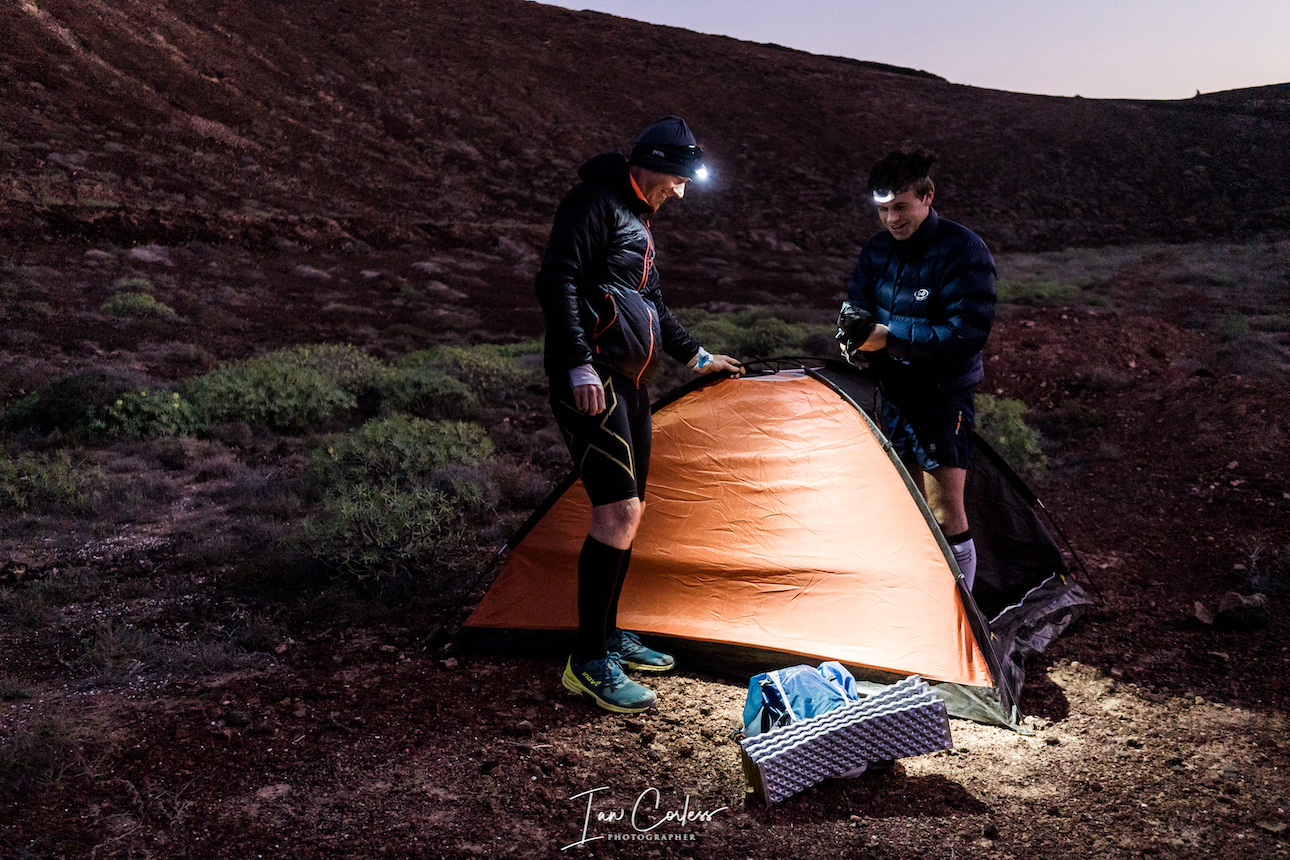
Plan an ‘event simulation’ that will require you to run for a specific distance, be self-sufficient overnight, sleep in a similar scenario/ situation to your event and then get up and run the next day. This can be a key element in understanding what does and does not work. Is your sleeping mat comfortable? Is the sleeping bag warm? Did your food taste good? How easy was it to cook? How about snacks, did they work? How was the pack weight and distribution of contents?

Spend a night out in training to find out what does and does not work.

Train with your pack and add weight, however, be careful NOT to do too much training with too much weight. This can result in injury. In addition, learn how to pack your bag so that it sits comfortably with minimal bounce. Understand where to put snacks so that you can access them on the go.

Look after feet – many failures come via poor shoe choice and foot care.

Feet and shoes. Please do not ask. ‘What shoe shall I use for ‘X’ Event?’ Runners are individuals and what works for one does not work for others. Gait, foot shape, foot width, foot length, toe length, run conditions and so on all impact. Read THIS article on how to find the correct run shoe.

Water and hydration is key to success.

Food glorious food. Calories are essential for an event, so is what they weigh. Understand food and its nutritional values and make sound educated choices that balance fat, protein, and carbohydrate. Also understand that taste changes. Sweet may be ok early on but typically savory is better as time passes. Is beef jerky better than nuts? What food rehydrates quickly or with cold/ warm water? Should I take bars? What about protein drinks? So many questions… They need answering!

Shops are not always available.

You only have to do three things at most multi-day events:

  • Run.
  • Eat.
  • Sleep.

All three impact on each other, so, make sure you have all of them dialed.

Finally, remember, we are all individual. What works for one person, will not work for another. It is your responsibility to take ownership of yourself, the challenge you are undertaking and the challenges it will bring. Ultimately, that is why you signed up, no?

JOIN OUR MULTI-DAY TRAINING CAMP HERE

Follow on:

Instagram – @iancorlessphotography

Twitter – @talkultra

facebook.com/iancorlessphotography

Web – www.iancorless.com
Web – www.iancorlessphotography.com
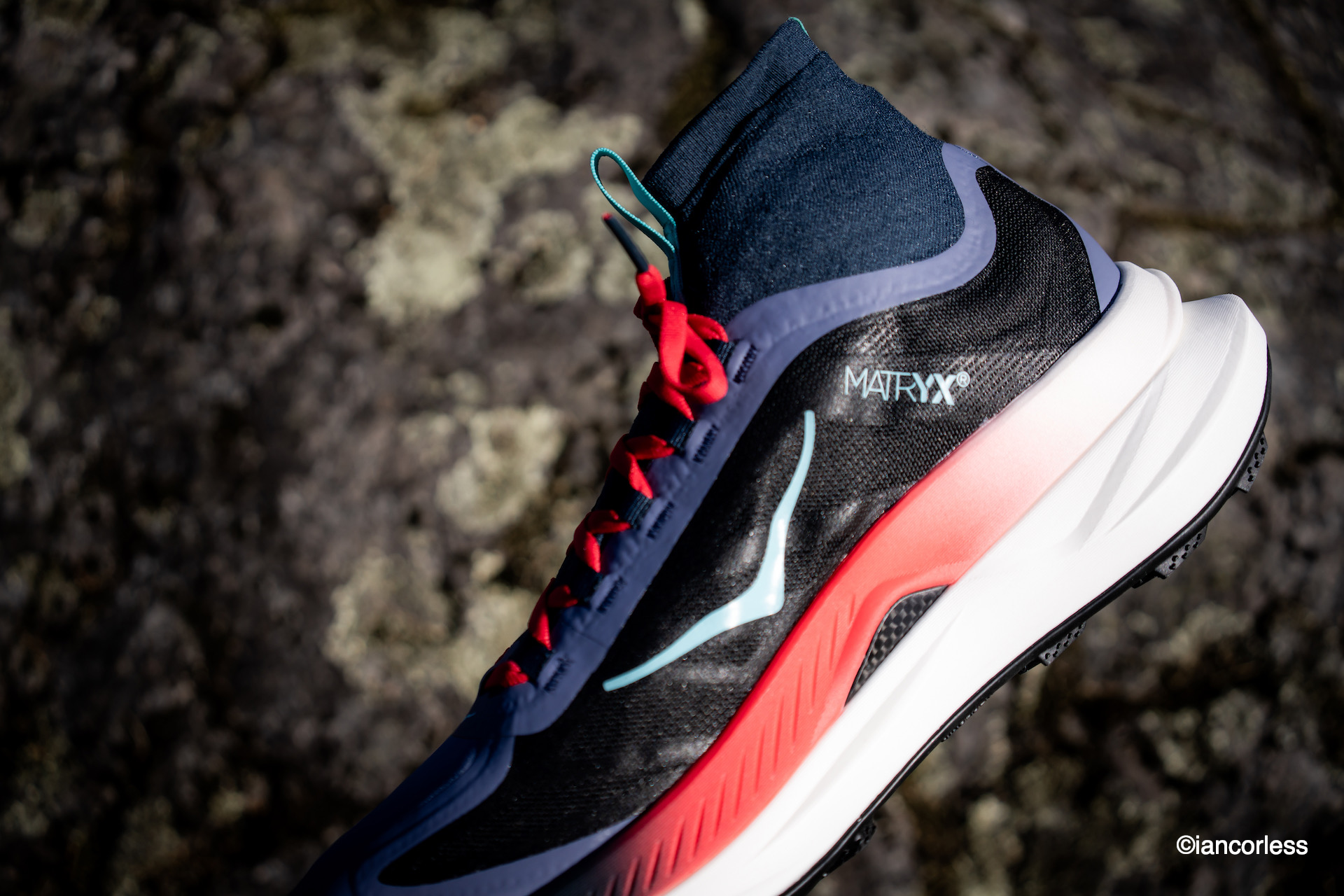
Image sales –www.iancorless.photoshelter.com