A rest day made all the difference for the participants of MDS Fuerteventura and stage 3 was eagerly anticipated.
An early departure from bivouac and then a bus transfer to the start at Sotavento Beach, ahead 26.3km with 587m+ to La Pared.
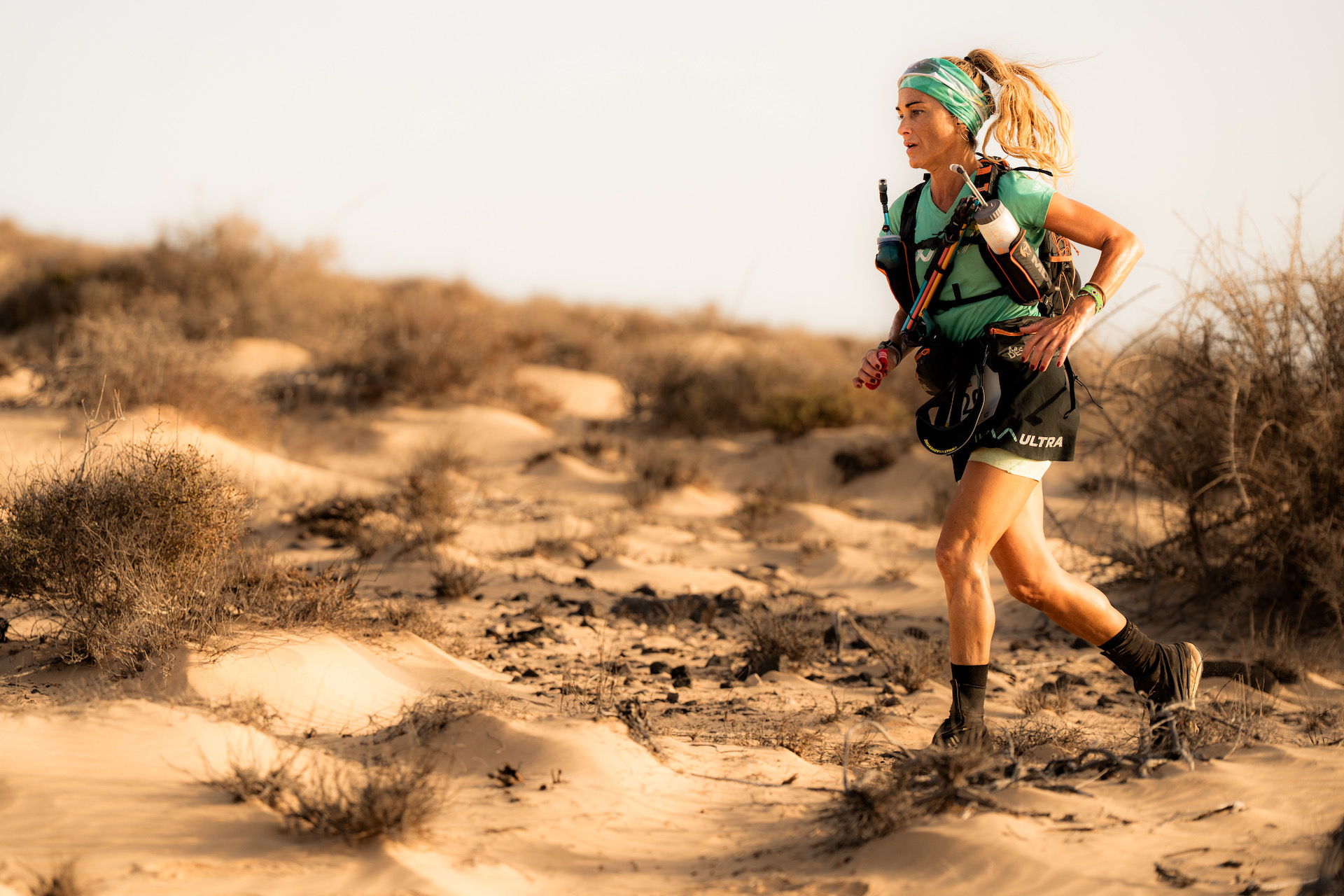
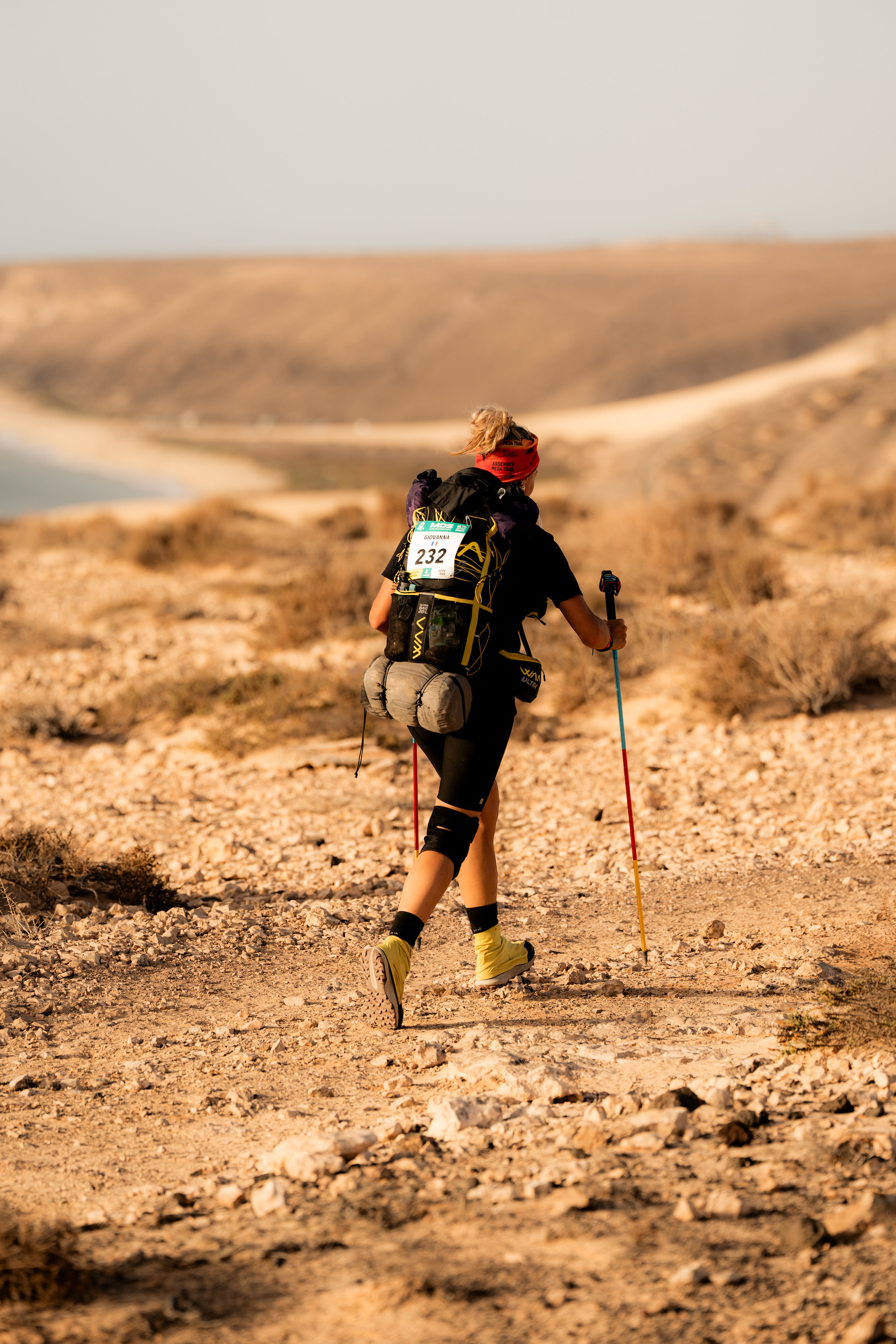
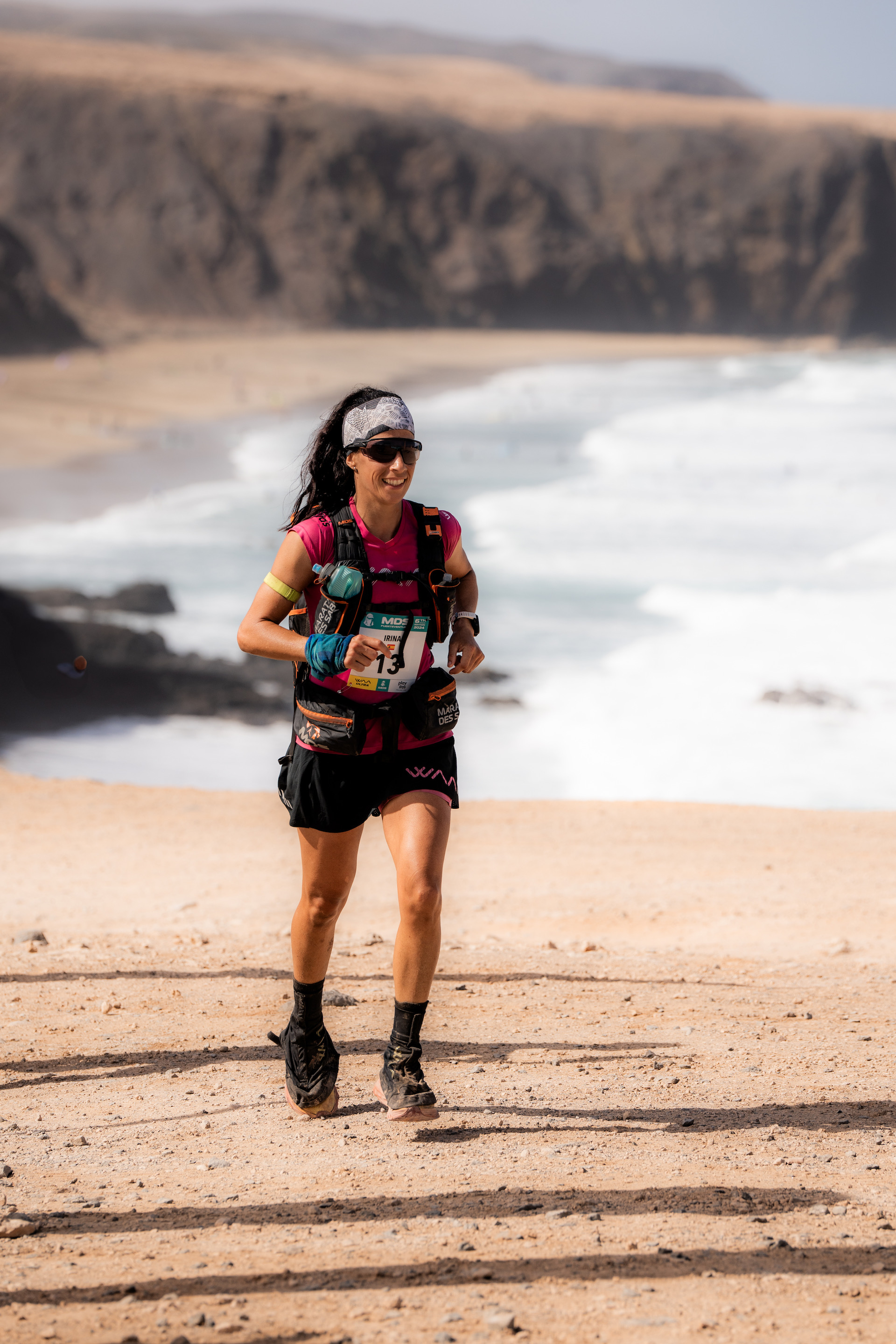
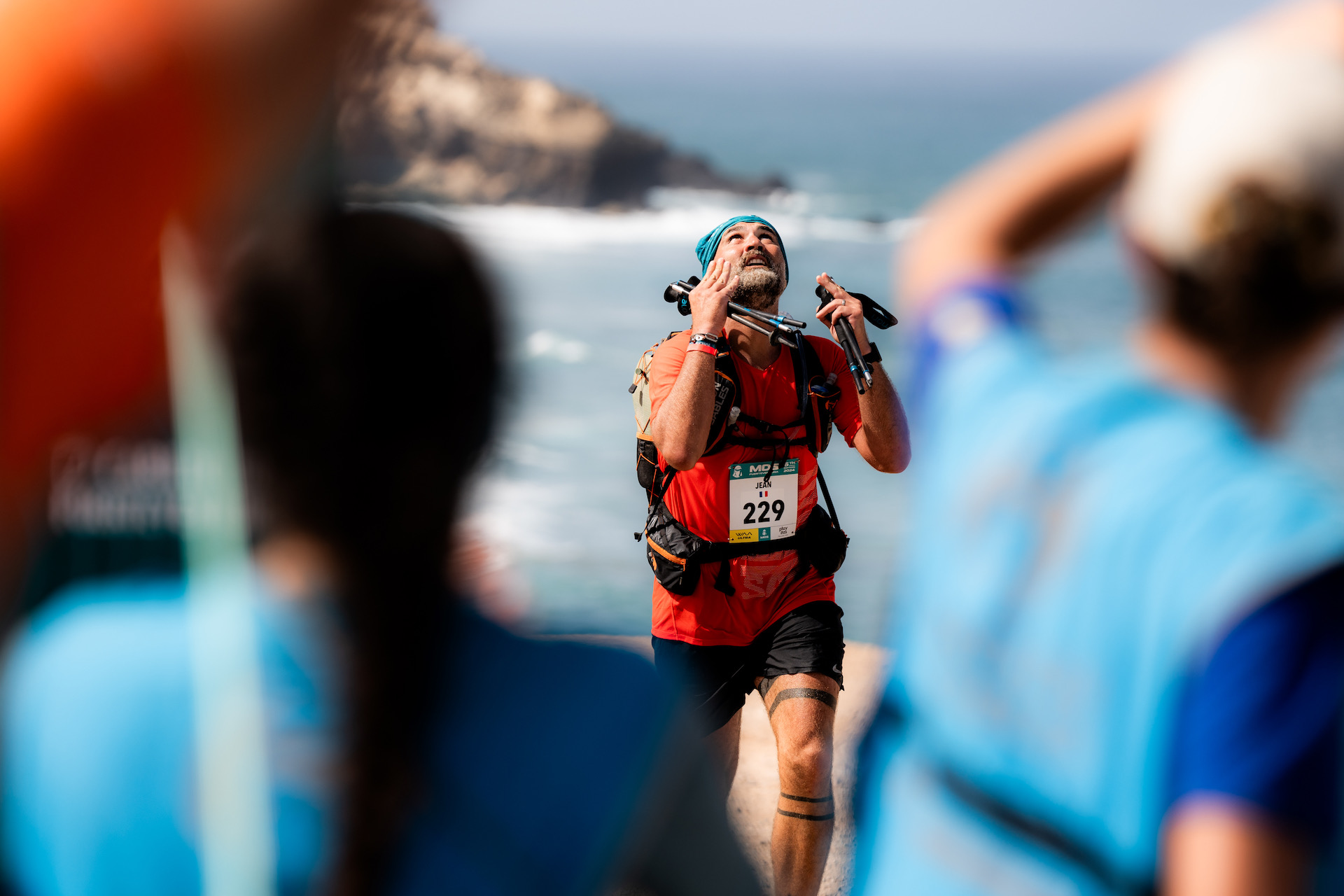
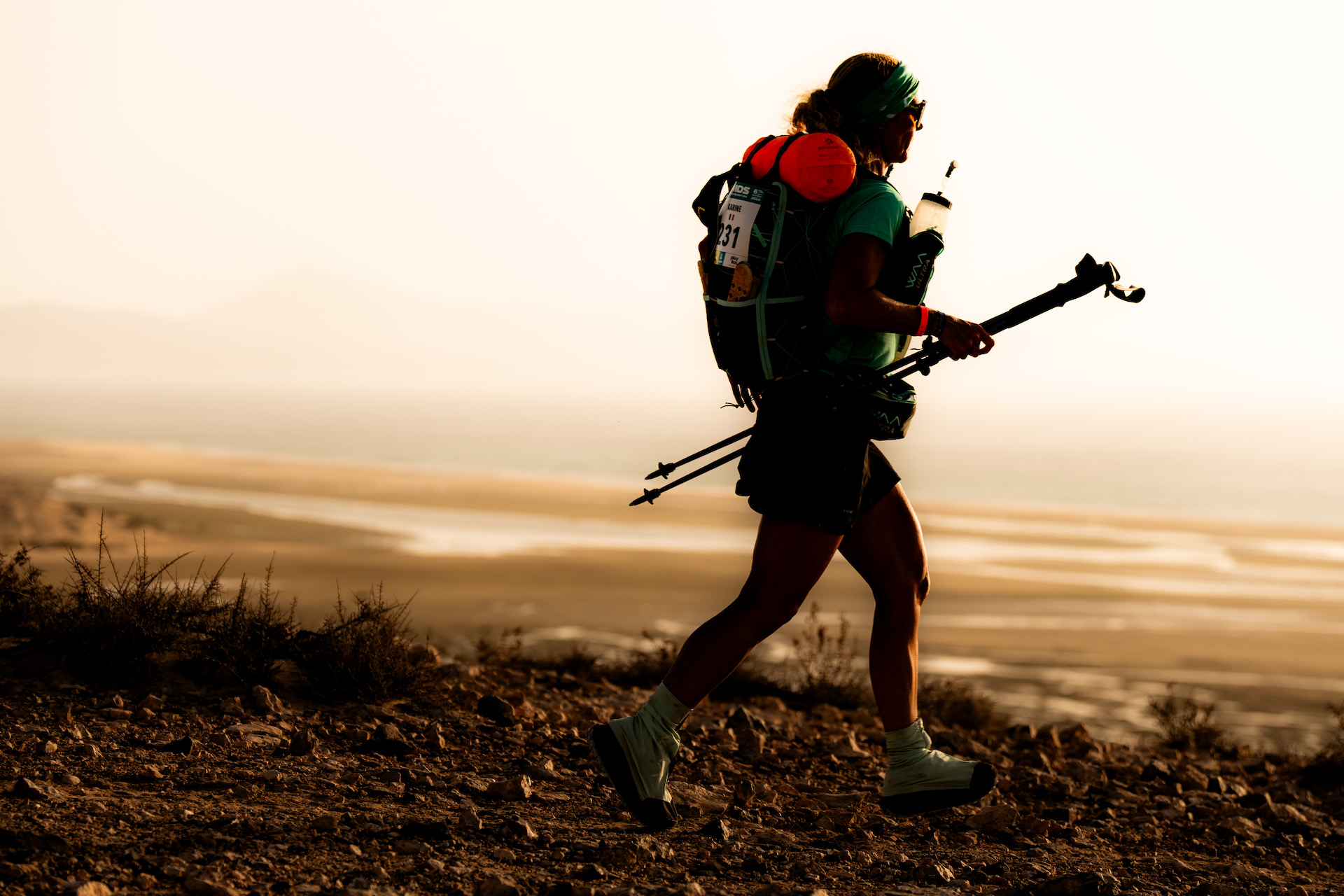
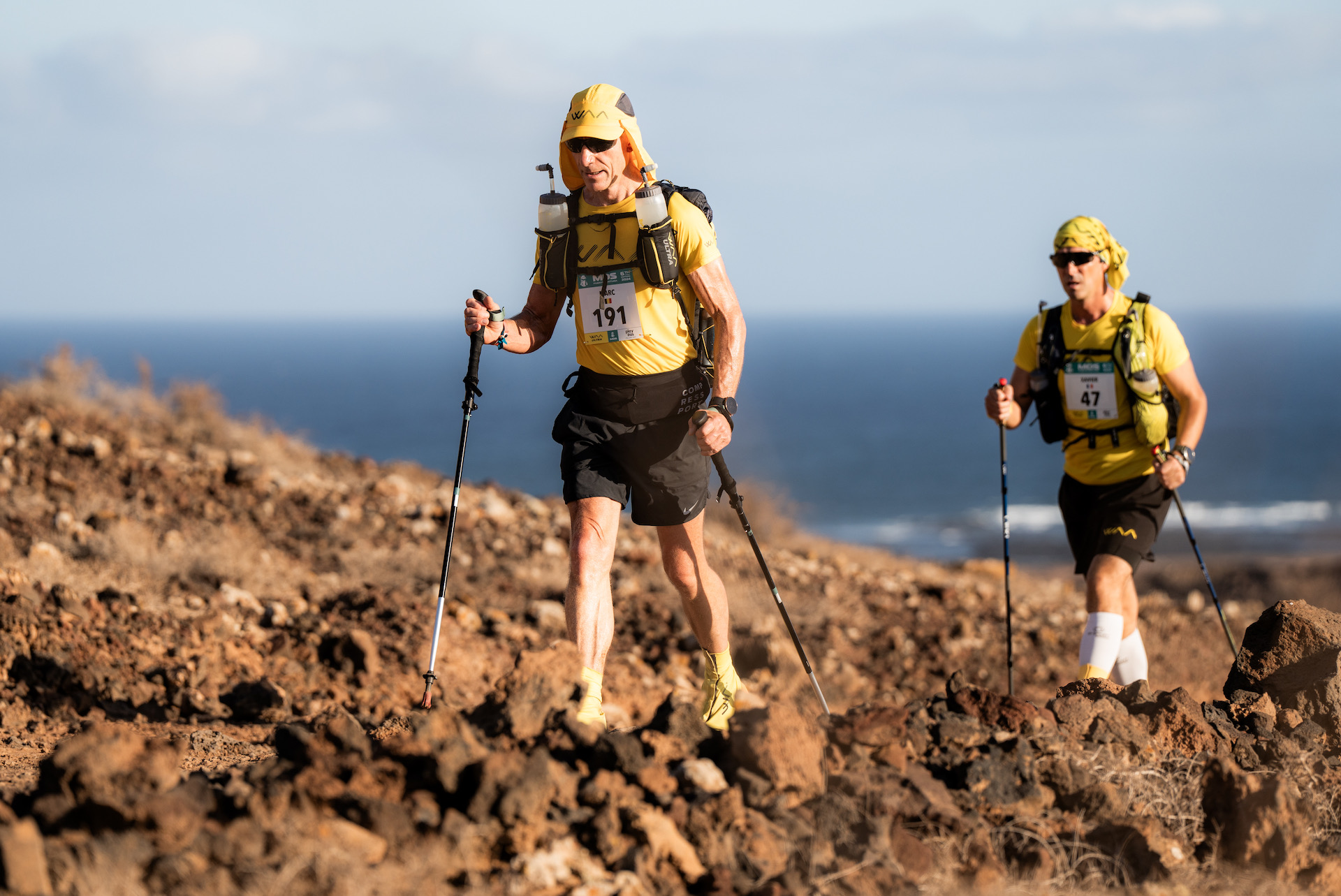
A beautiful day of sand and path passing through Jandia National Park and concluding with epic coastal cliffs and an ocean backdrop.
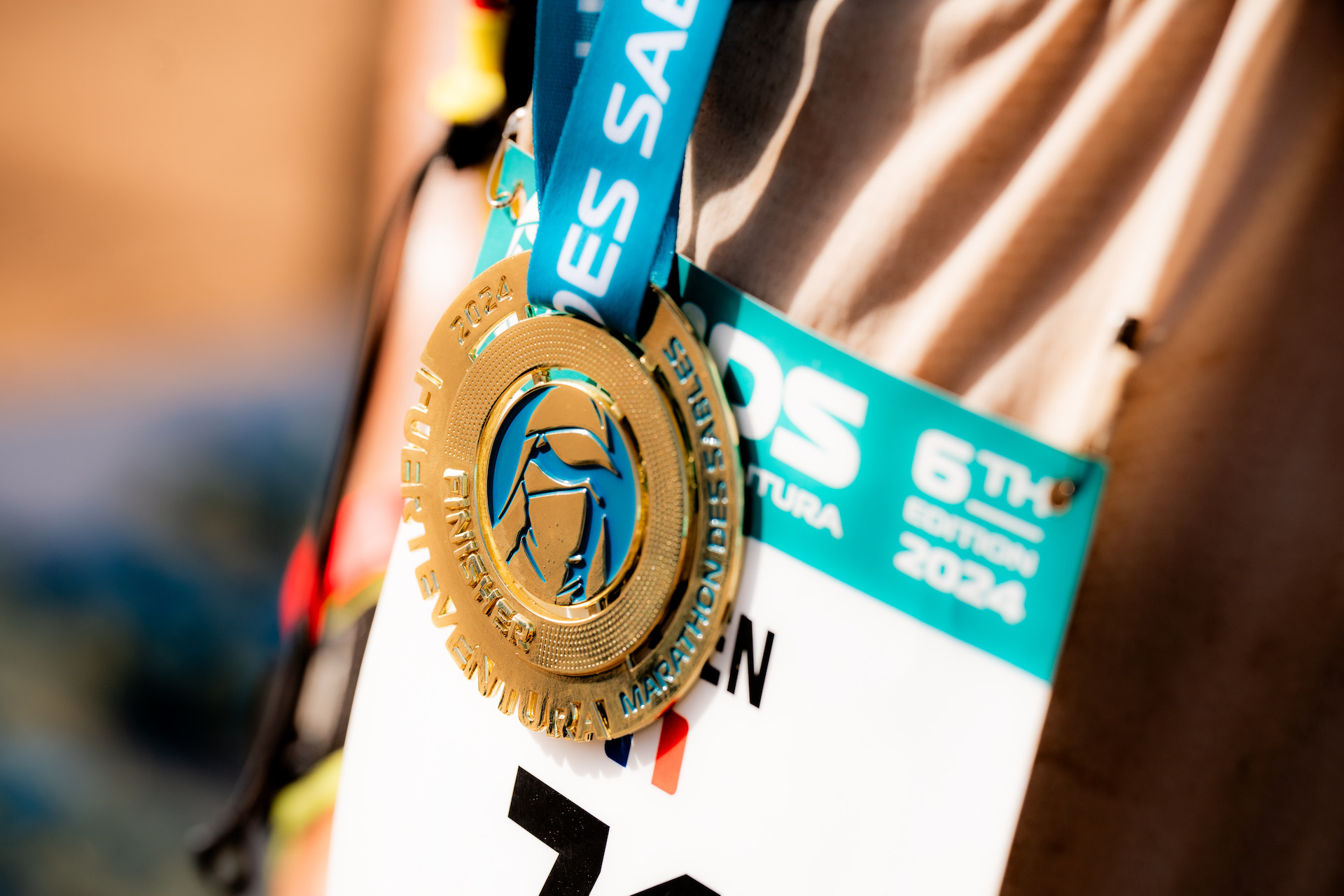
Today, was all about the medal gladly, all achieved there goal finishing before the cut-off time of 16.45, a huge success.
After the bad weather in 2022 and the missing 2023, MDS Fuerteventura is well and truly back!
In the 120km race, SANTANA FERNÁNDEZ was crowned the winner with an elapsed time of 9:36:35. FOULQUIÉ PADILLA and ROGER PÉREZ placed 2nd and 3rd, 9:40:37 and 9:48:15 respectively.
For the women, DEL RIO VALLES, BOLLENGIER and NACHARD placed 1, 2 and 3, 13:54:20, 14:47:42 and 15:47:08 respectively.
PÉREZ DE LA CRUZ 10:23:12 and MUJICA GONZÁLEZ 11:53:49 were the male and female winners of the 100km and RODRÍGUEZ MORENO 9:02:44 and MAHIQUES 8:47:49 were the male and female winners in the 70km class, with MAHIQUES the outright winner.
Full results are available HERE for 120km, HEREfor the 100km andHERE for the 70km.
Now it is time for a shower, fresh clothes, a good dinner and bed with clean sheets. Tomorrow is a day of relaxation and then a gala dinner with awards ceremony.
Since 1986, the MARATHON DES SABLES has crossed the world’s most stunning deserts with several unique concepts: the MARATHON DES SABLES THE LEGENDARY (252 km in the Sahara Desert in Morocco), the MARATHON DES SABLES (70, 100, or 120 km spread over 3 stages), and the new 2024 concept, the MDS TREK (4 stages with a total distance of up to 120 km), offering an accessible adventure with optimal comfort. These international events have seen over 50 editions in various countries such as Morocco, Fuerteventura Island, Peru, Jordan, Turkey, and offer adventures that combine running/hiking in the desert with tourism.
Stage 1 was a challenging day for many, the 33.6km proving a tough start to the 2024 MDS Fuerteventura. On the positive side, there were no DNF’s.
Stage 2 is called ‘The Long Day’ as this is the day that for 100km and 120km will prove to be the longest of the race. However, the challenge can be as much mental as physical.
An early start
Challenge 1.
After the start, almost immediately, the runner’s are given the option to to turn right and take on the 17.8kmm loop, 20 men and 63 women chose this. Alternatively, you can turn right and start the 40.5km loop. The remainder of the participants chose this.
Challenge 2.
At the end of the 40.5 km loop, you can turn right and run to the finish – 25 min and 41 women chose this.
Challenge 3.
For the brave, a left turn after the 40.5km loop provides the option to complete a final loop and the total long day distance of 56.7km – 75 men and 61 women chose this.
MUJICA GONZÁLEZ
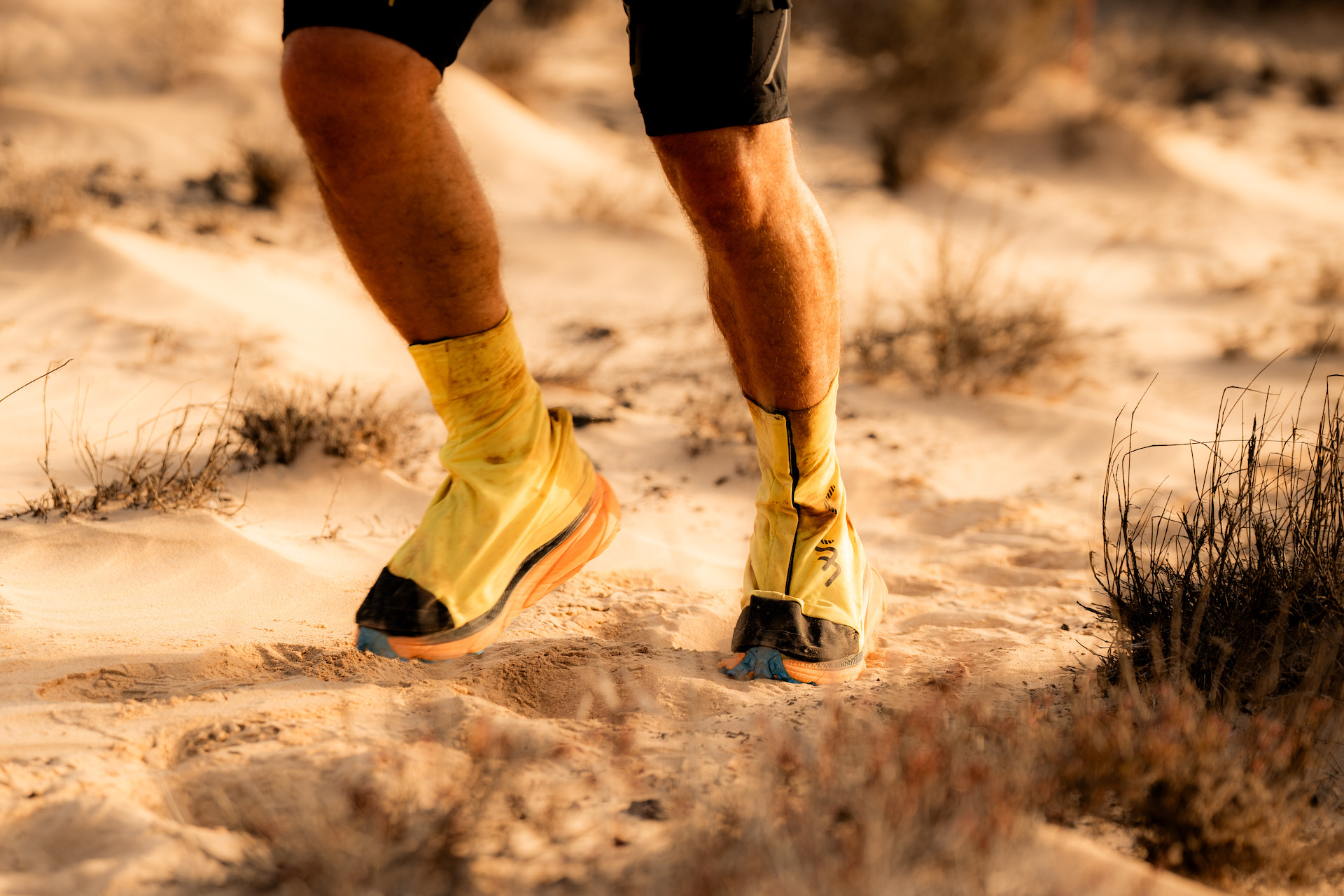
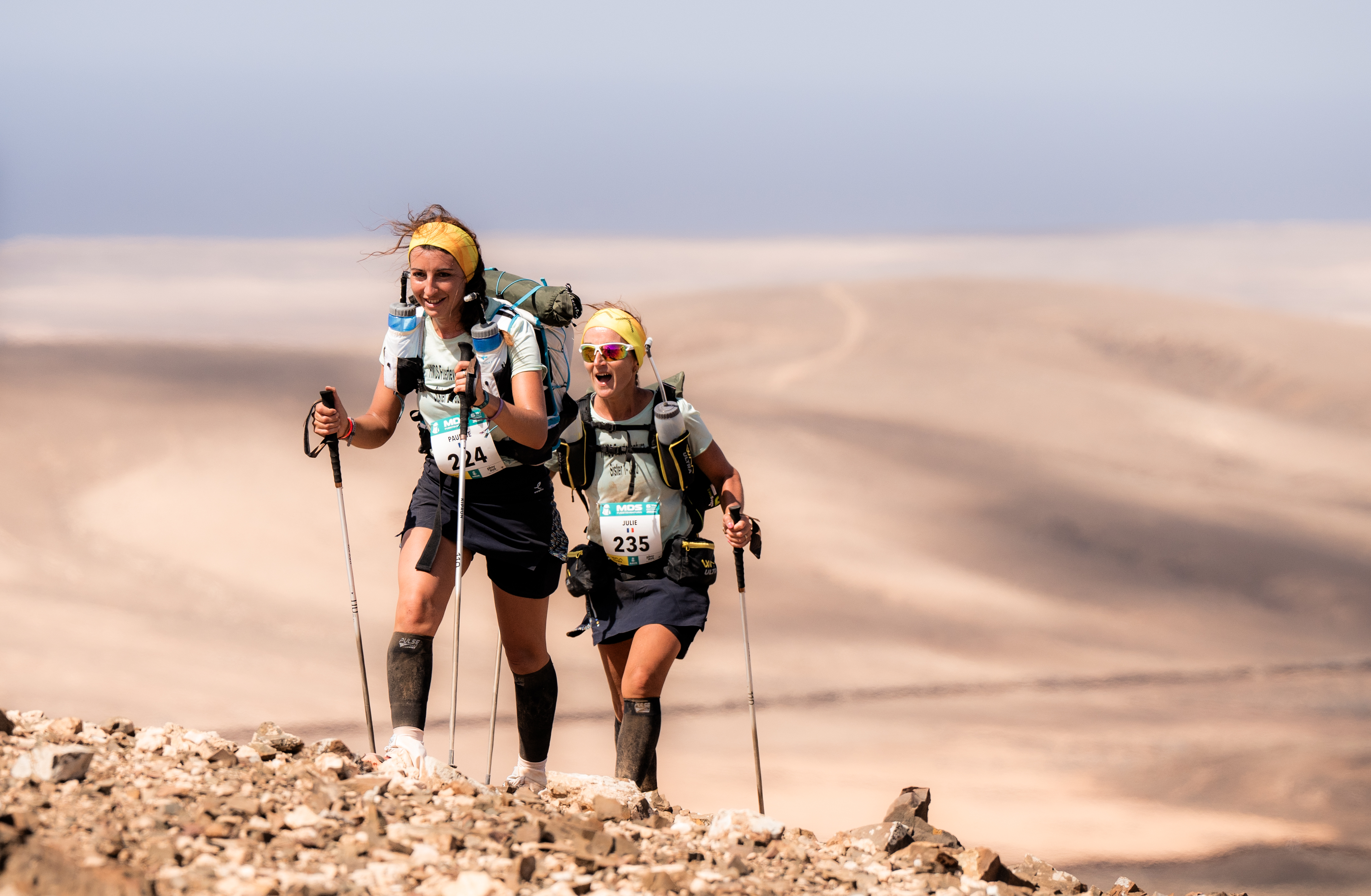
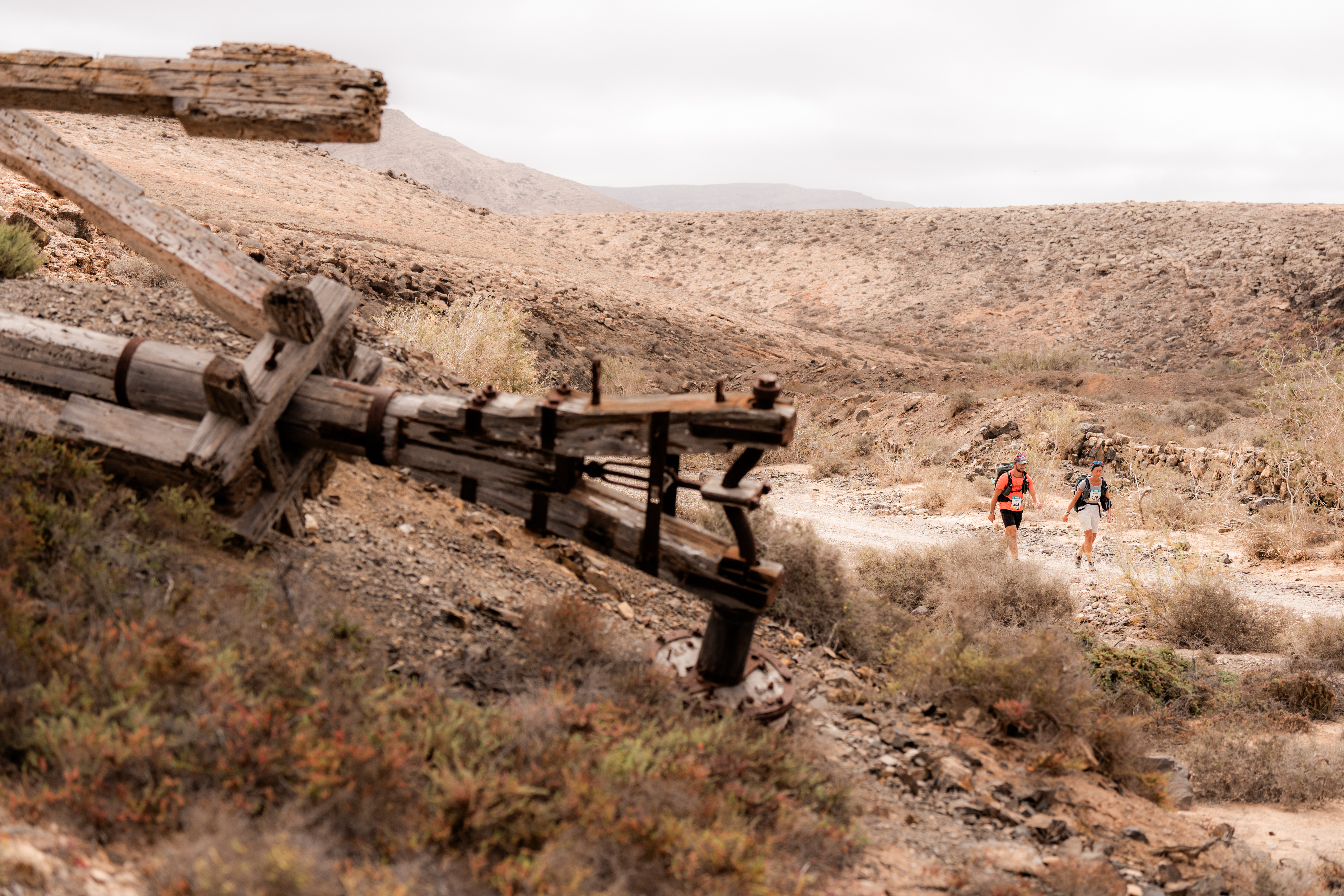
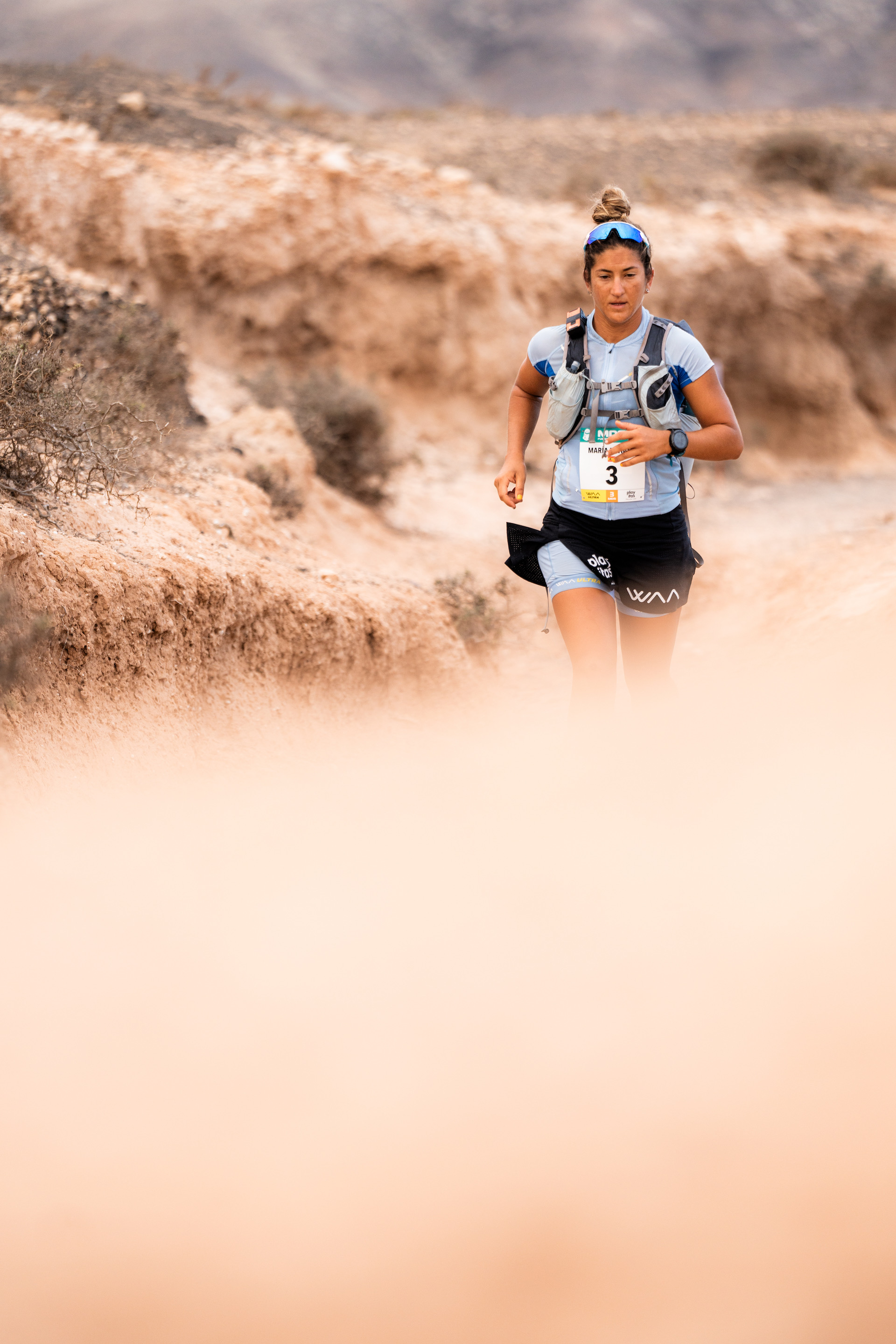
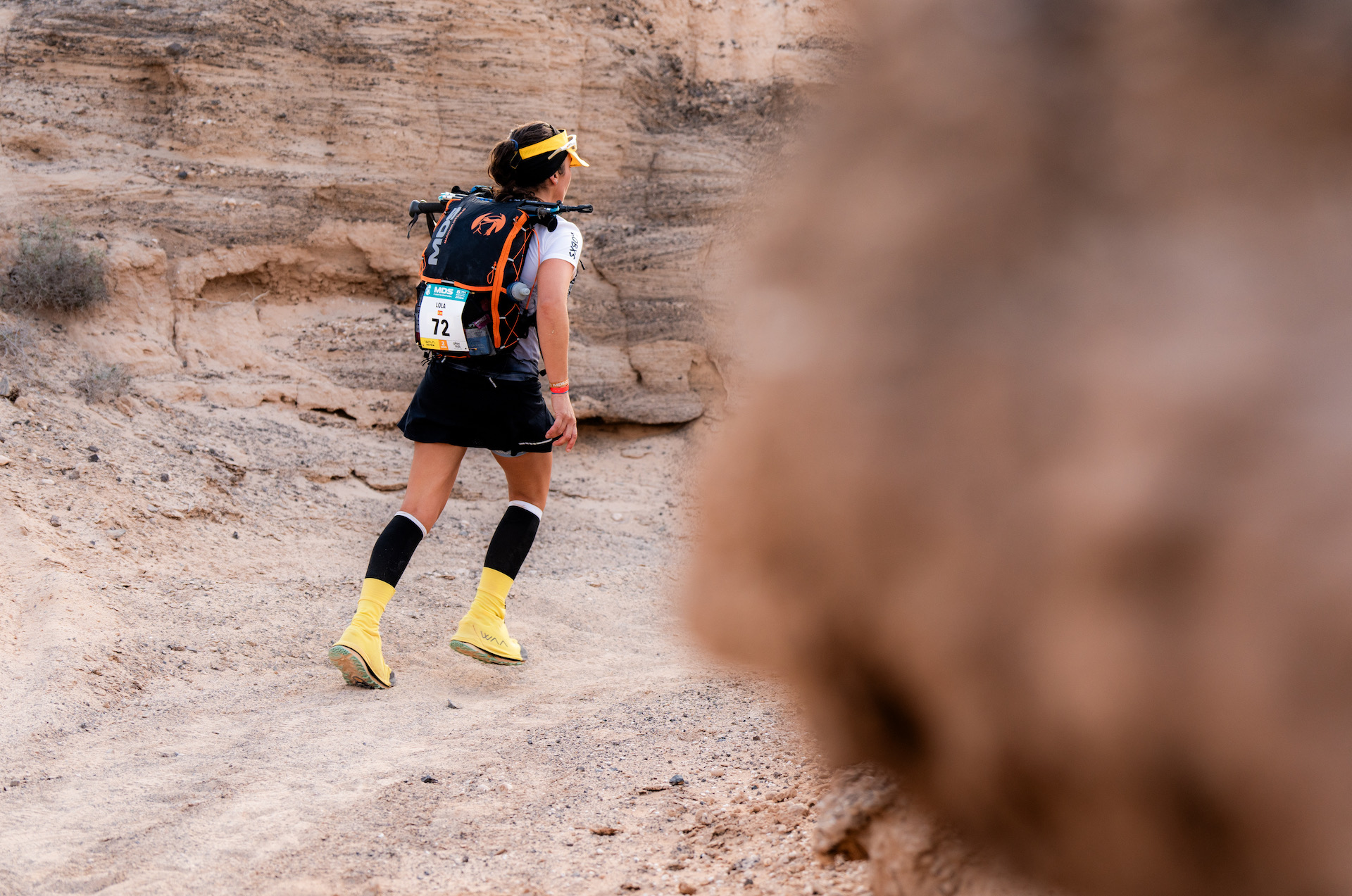
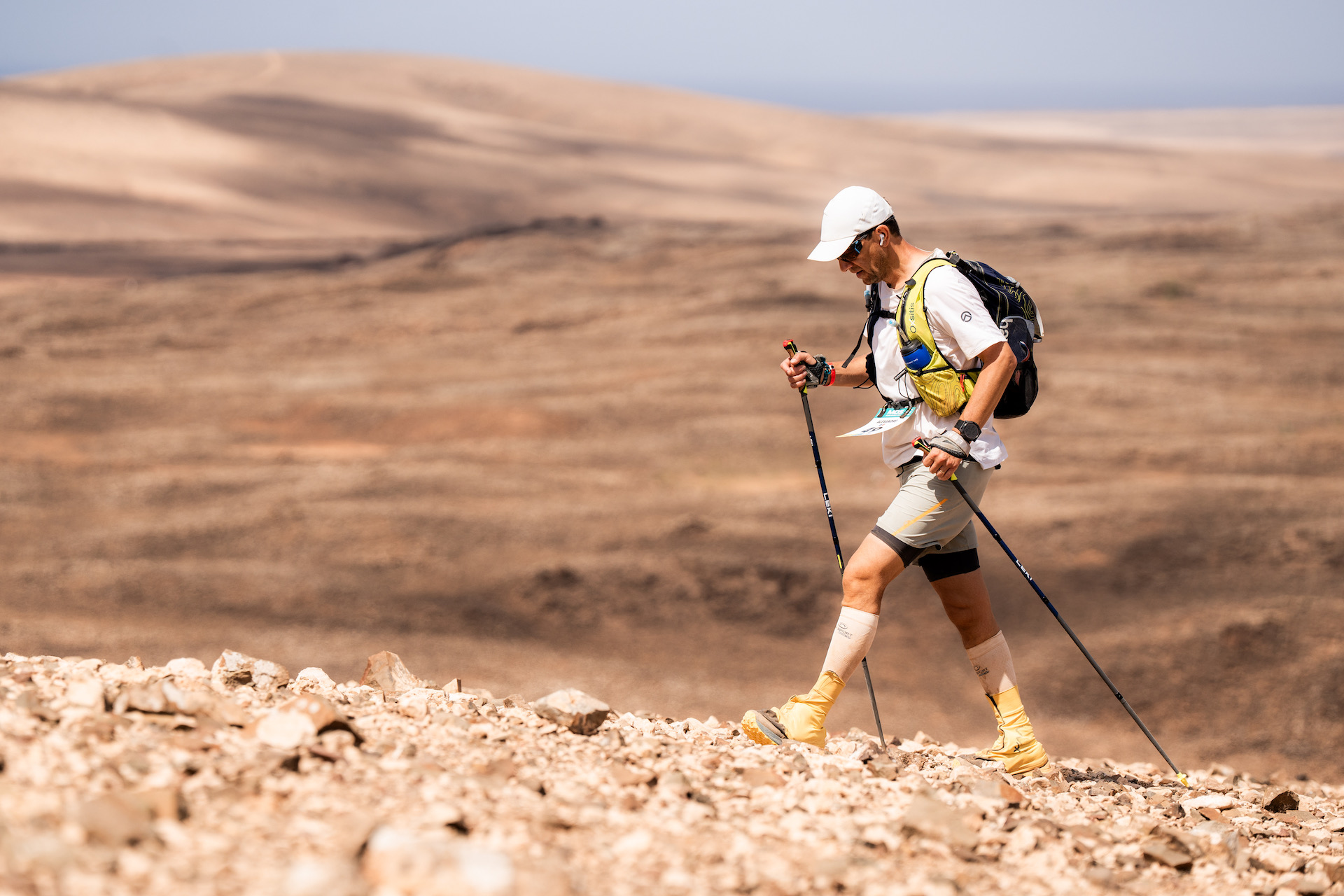
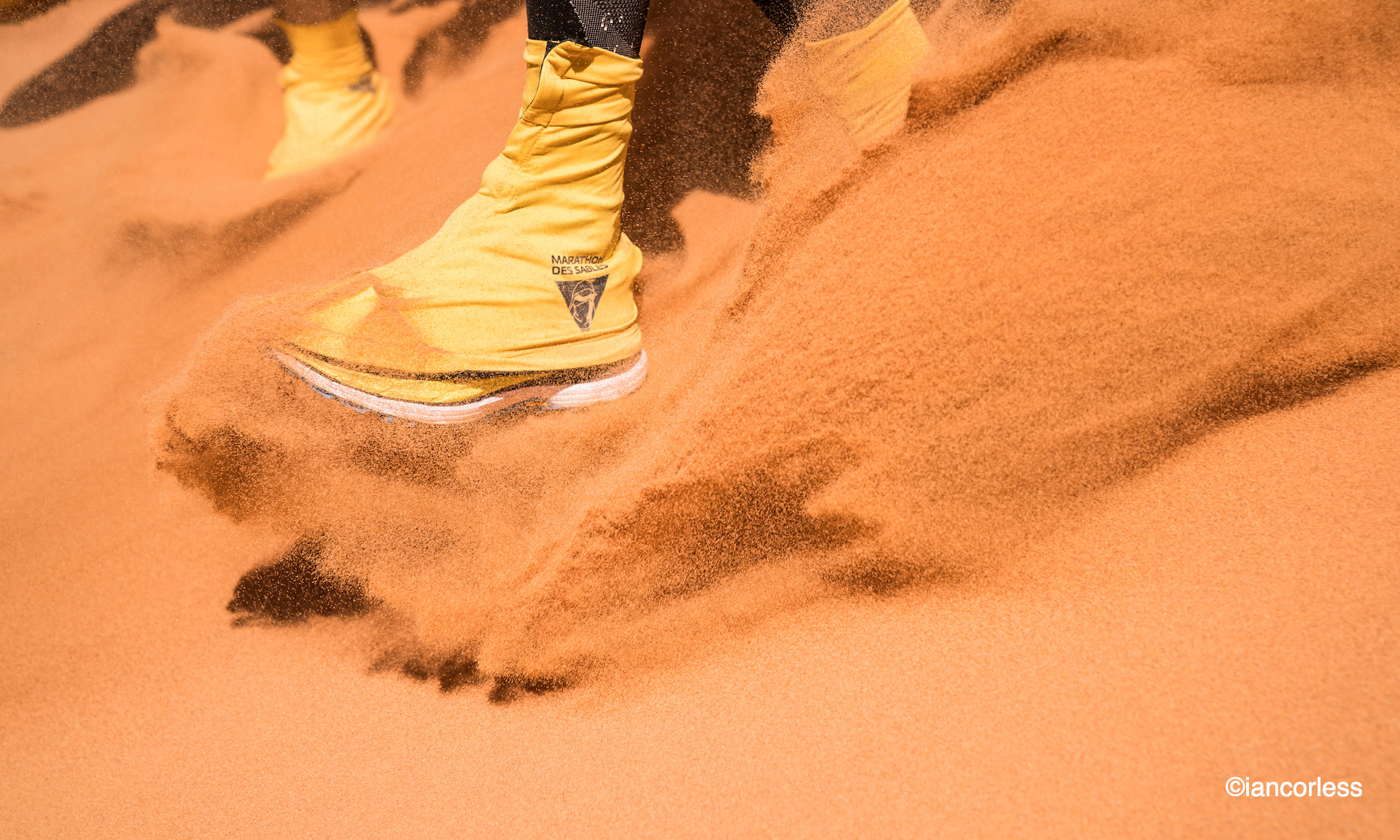
Today’s route followed a figure of 8 shape for the 120km. The terrain mostly sandy and rocky path, the need for gaiters minimal.
Some wonderful small canyons to run through
The day started at 0600 after a warm night under the stars. The winds had calmed but the sky was cloudy and it would remain that way until midday, when a sunny period provide some blue skies. Temperatures reached a high of 28 degrees and running conditions were good.
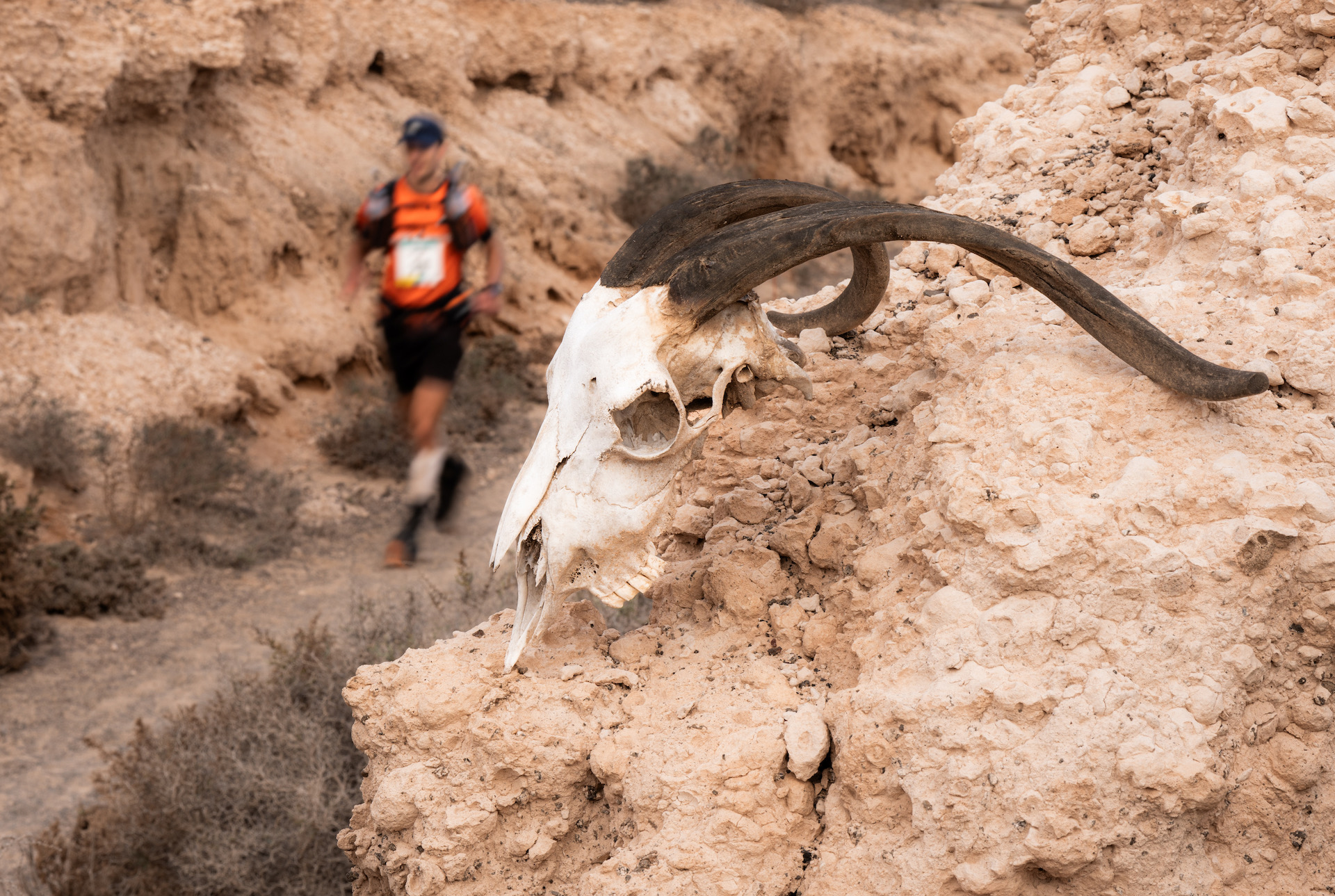
Time to grab the race by the horns
With three race distance options, rankings would change considerably during stage 2, however, in the 120km distance, the main protagonists of SANTANA FERNÁNDEZ, ROGER PÉREZ and FOULQUIÉ PADILLA would remain the same. However, today it was FOULQUIÉ PADILLA who now takes the overall lead with an elapsed time of 7:31:21 closely followed by SANTANA FERNÁNDEZ in 7:32:11. ROGER PÉREZ remains in third.
For the women, stage 1 winner MUJICA GONZÁLEZ started the day slower but then moved up through the field and is now in the women’s overall lead with a time of 8:56:08. BOLLENGIER who was 2nd on stage 1 is now 4th on GC with DEMARQUILLY moving into 2nd 9:55:47 and DEL RIO VALLES 3rd with 10:49:47.
Since 1986, the MARATHON DES SABLES has crossed the world’s most stunning deserts with several unique concepts: the MARATHON DES SABLES THE LEGENDARY (252 km in the Sahara Desert in Morocco), the MARATHON DES SABLES (70, 100, or 120 km spread over 3 stages), and the new 2024 concept, the MDS TREK (4 stages with a total distance of up to 120 km), offering an accessible adventure with optimal comfort. These international events have seen over 50 editions in various countries such as Morocco, Fuerteventura Island, Peru, Jordan, Turkey, and offer adventures that combine running/hiking in the desert with tourism.
Stage 1 of the 2024 MDS Fuerteventura got underway today, 33.6km and 444m+
It was a 90-minute drive from Play Itas Resort to the northern coastal location of Manjanicho Beach.
A climb from the ocean to start the day
A day that offered a little of everything, starting and concluding next to the ocean, the track was mad up mostly of gravel/sand path, approximately 20% soft-sand and just a tiny amount of road crossings.
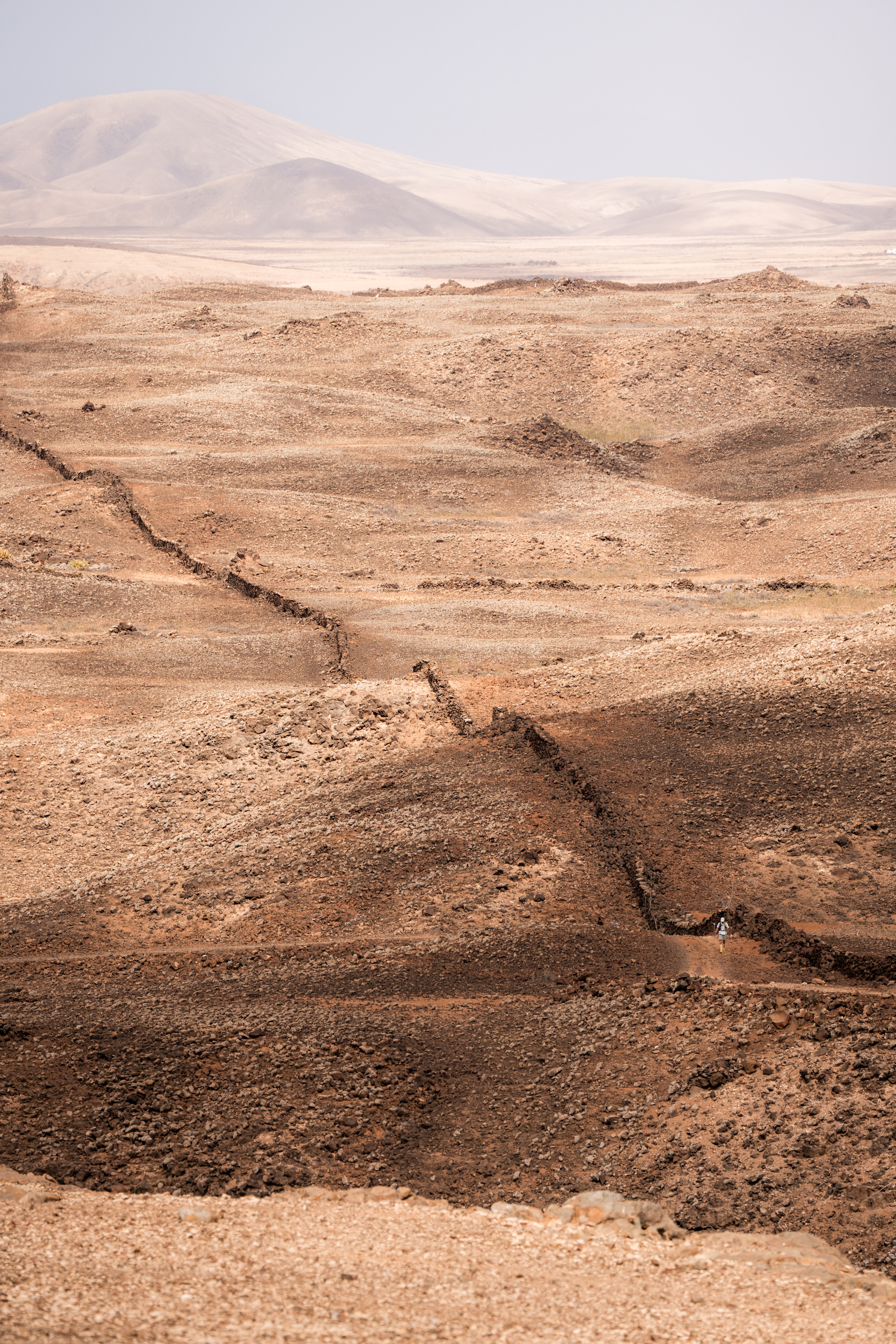
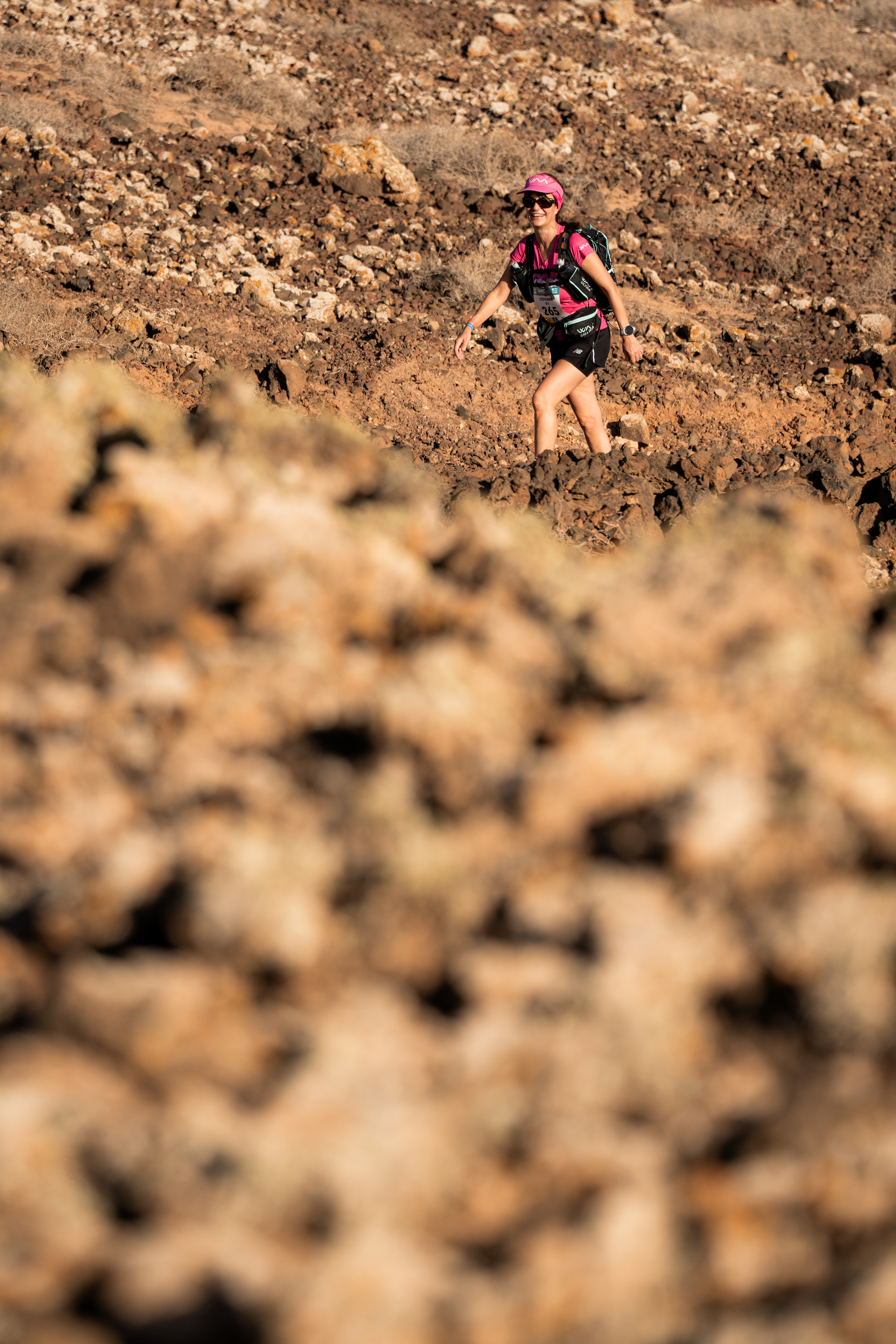
The unique landscape of Fuerteventura
Wind was present throughout the day, making the highest temperature of 28-degrees feel manageable.
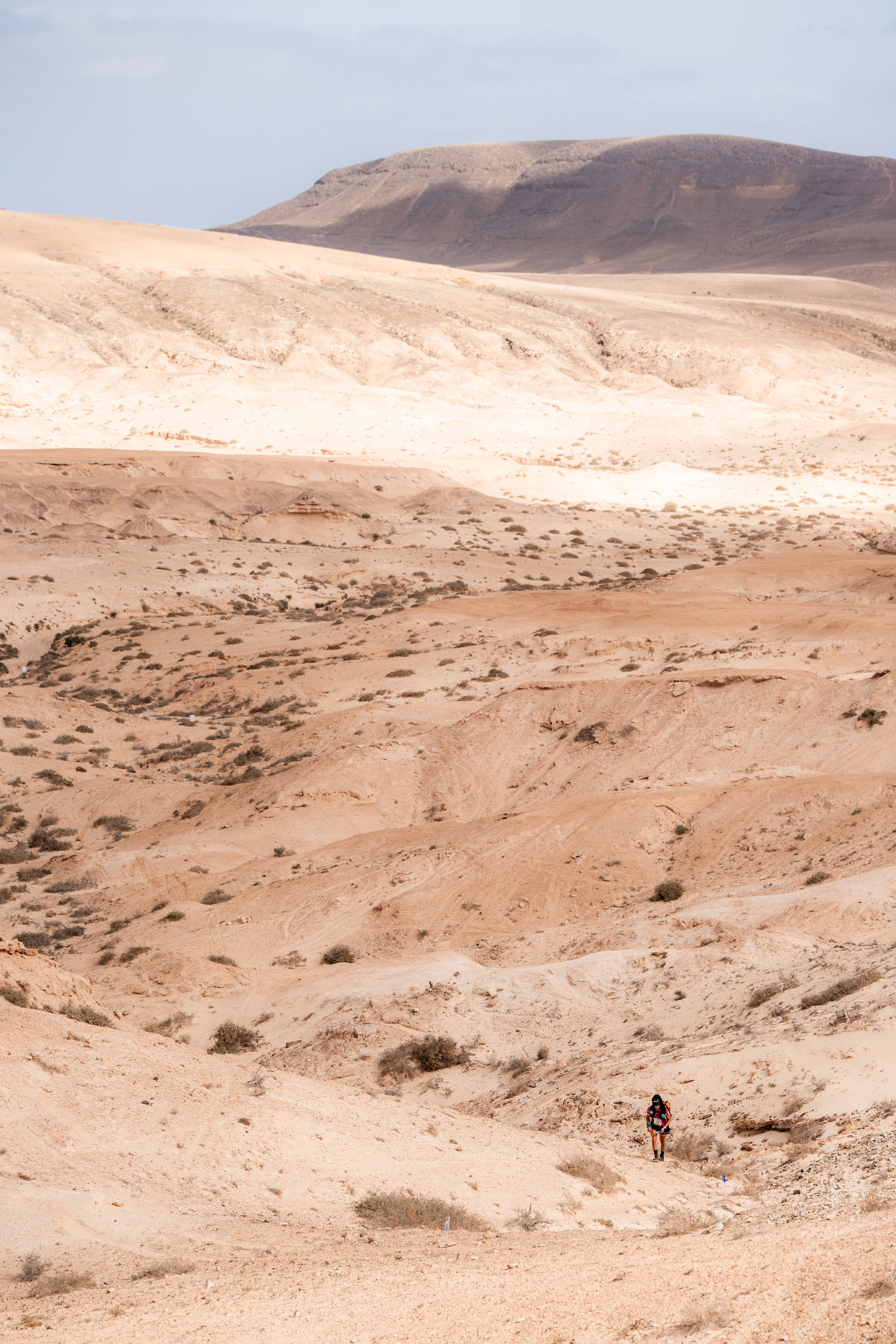
Expansive landscape
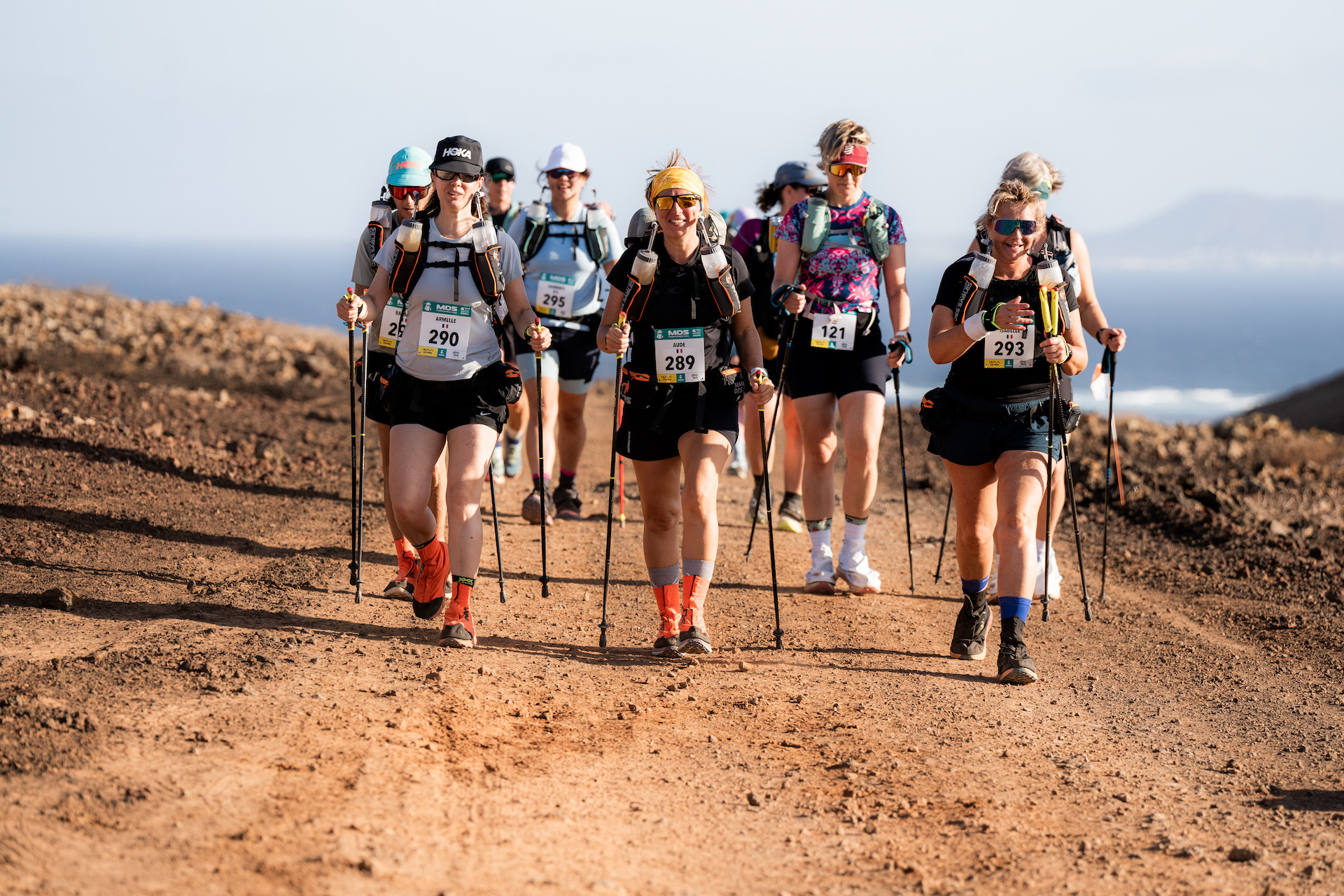
With 300 participants and record 58% women, the 6th edition of MDS Fuerteventura was highly anticipated.
Here for the women’s race
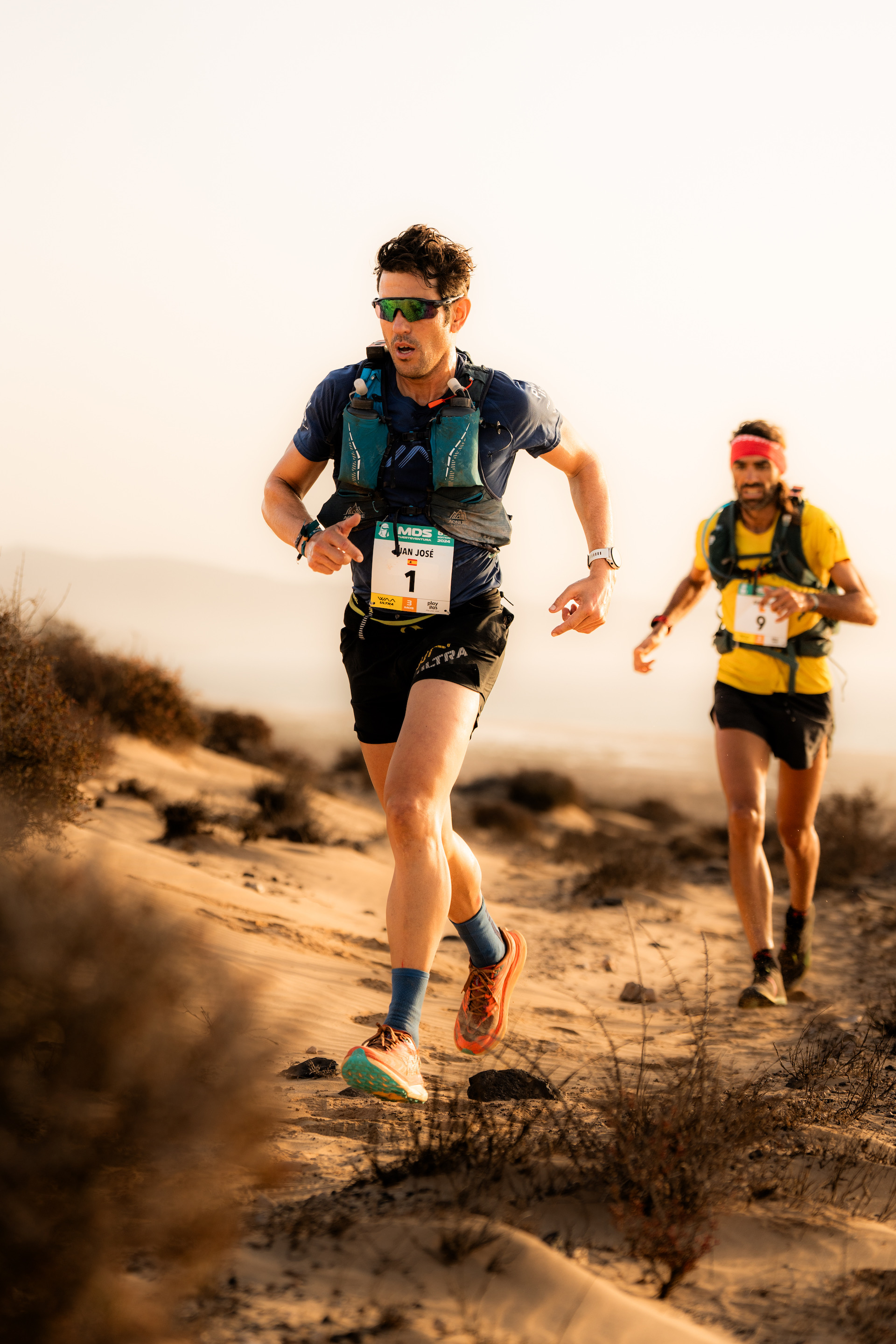
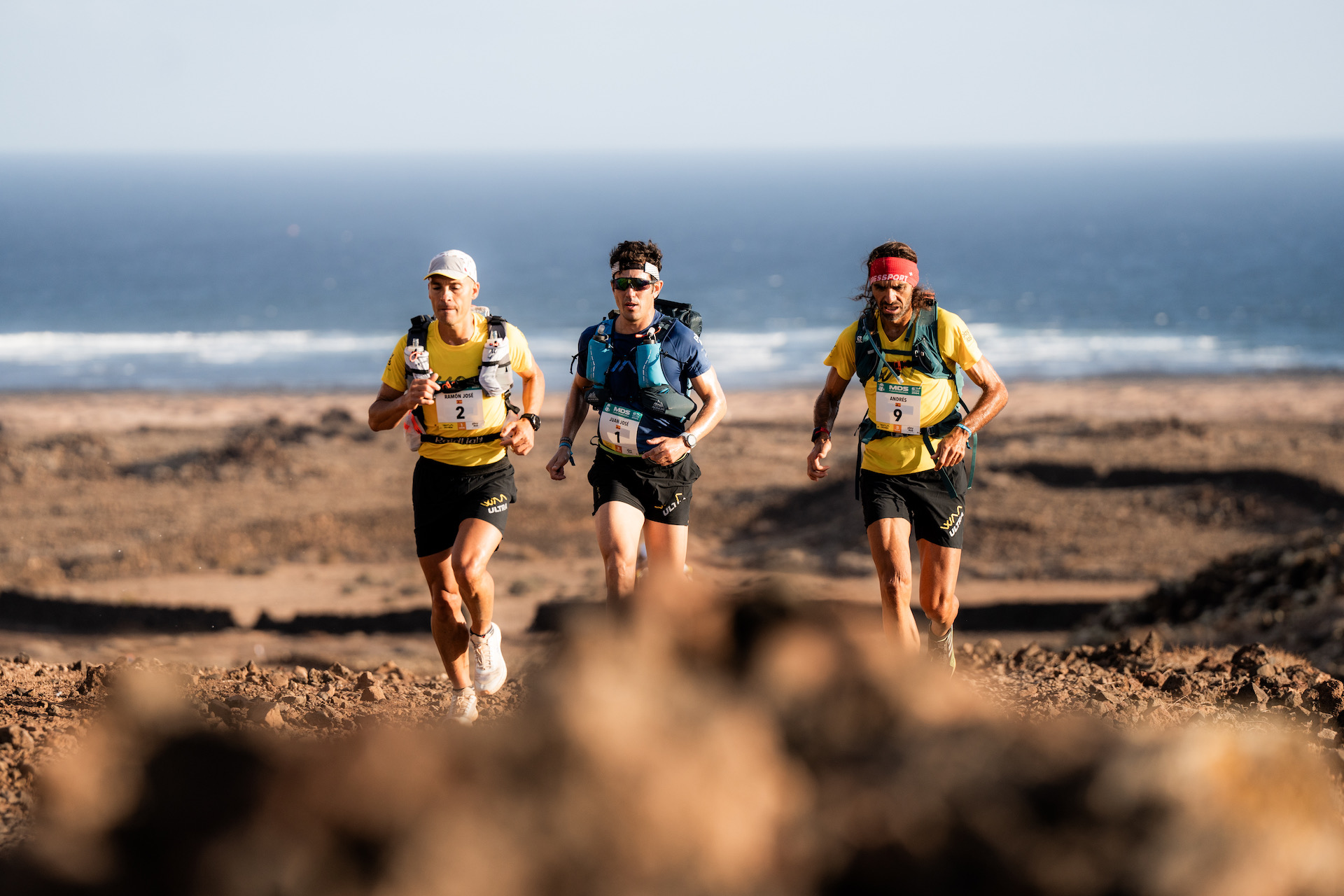
The race upfront was dominated by Juan SANTANA FERNÁNDEZ, ROGER PÉREZ and FOULQUIÉ PADILLA, the trio setting an incredible pace in the 120km race, with SANTANA FERNÁNDEZ taking the victory ahead of ROGER PÉREZ and FOULQUIÉ PADILLA placing 3rd, 2:32:18, 2:33:48 and 2:34:15 respectively.
The lead trio
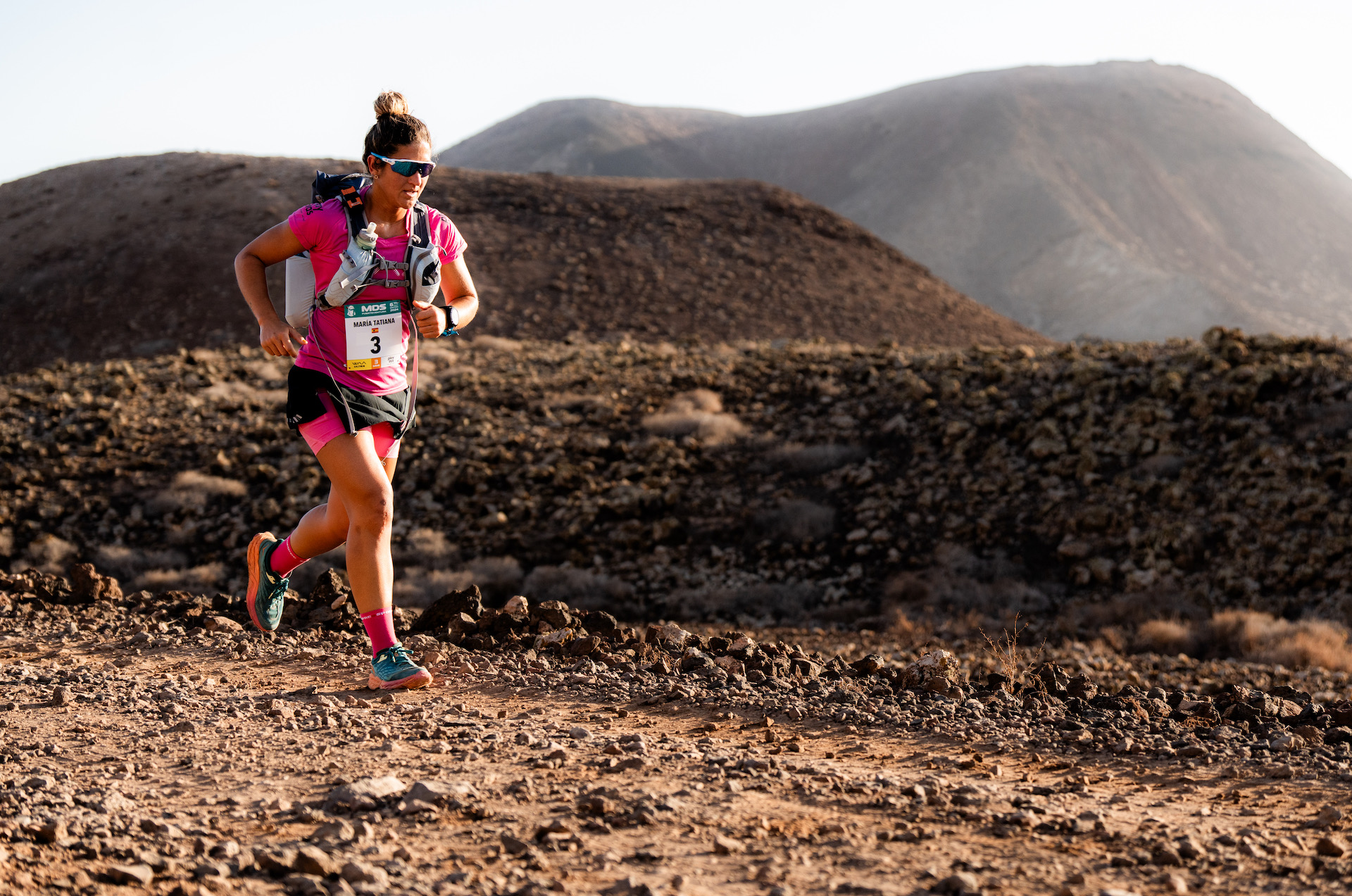
For the women, MUJICA GONZÁLEZ ran the race solo for a time trial effort and victory in 3:37:37. Behind, BOLLENGIER, and DEL RIO VALLES ran a close race for 2nd, the duo crossing in 3:52:50 and 3:53:10 respectively.
It is important to remember, MDS events offer 3-distances, 120km, 100km and 70km, stage 1 is the same for all races and then the difference comes on stage 2 when participants for MDS Fuerteventura will choose which loop to run, option 1 17.8km, option 2 40.5km and option 3 56.7km.
Volcano backdrops with 3rd place DEL RIO VALLES
Bivouac remains the same for each stage, the final stage (stage 3) the exception when the finish line brings an nd to the race and the participants return to Play Itas Resort.
With stage 1 being a longer first day, we may well see participants change options for stage 2, if they considered day 1 a little hard, they may well choose an easier option for stage 2, the choice is for them.
Stage 2 starts at 0600 and based on the distance chosen, the cut-off times for finishing will vary, midday for the short race, 1910 for the middle distance and for the long, 12:50am the following day.
Gladly for the participants, they will then have a rest day.
Since 1986, the MARATHON DES SABLES has crossed the world’s most stunning deserts with several unique concepts: the MARATHON DES SABLES THE LEGENDARY (252 km in the Sahara Desert in Morocco), the MARATHON DES SABLES (70, 100, or 120 km spread over 3 stages), and the new 2024 concept, the MDS TREK (4 stages with a total distance of up to 120 km), offering an accessible adventure with optimal comfort. These international events have seen over 50 editions in various countries such as Morocco, Fuerteventura Island, Peru, Jordan, Turkey, and offer adventures that combine running/hiking in the desert with tourism.
The internet came alive on September 23rd when Canadian Running Magazine published an article in regard to acclaimed ultra runner Camille Herron and accusations on tampering with Wikipedia content.
Facebook, X and IG was full of opinion, stories and viewpoints on the matter and SoMe is and can be a very brutal place in instances like this. I said a the time:
What followed was the removal of all of Camille’s social platforms. Thinking back, this was probably a wise move to protect Camille from the onslaught that followed. Now of course, many may well say, that the onslaught was justified. However, a response and an attempt at clarification is welcome.
I went on to clarify:
“I have said this multiple times in the last 24hrs. Also important that her running ability is not in question. This is something darker, deeper and a mental health issue which requires understanding and help. The best scenario (I think) is to acknowledge, apologize and seek help. The ultra community I believe would support her. There is something very fragile here.”
– Ian Corless via X
From wikipedia
Below, CONOR HOLT provides an explanation:
Statement:
Hello from Greece- here for the Spartathlon 153 mile race scheduled for this Saturday.
Yesterday I received a notification about a published article by Canadian Running Magazine. The author said he reached out for comment before it was published. I found an email sent Sept 20 in my spam account yesterday after the article was published! I never got a chance to say anything to the Canadian Running website before they published it. Plus we have been traveling the last few days with limited access!
For the Wikipedia part, temporun73 was the original account I created in 2016 and use to edit the page. I manage this so Camille can focus on her running and recovery.
Starting in 2023 and continuing to this day, cyber bullies by the name of Steven Walling, Liliana Uwu, C.Fred, Melcous, and some more were repeatedly editing out significant parts of Camille’s life/ biographical details.
I kept adding back in the details, and then they blocked my account in early February of this year. Nothing was out of line with what other athletes have on their pages. Wikipedia allows the creation of another account, so I created a new account Rundbowie. I was going off what other athletes had on their pages using the username Rundbowie and copying/pasting this info.
Camille had nothing to do with this. I am 100% responsible and apologize for any athletes affected by this and the wrong I did.
I was only trying to protect Camille from the constant bullying, harassment and accusations she has endured in her running career, which has severely impacted her mental health. So much to the point that she has sought professional mental health help.
I also went ahead and deactivated all of Camille’s social platforms for the time being because of the vile comments she has received.
I appreciate you reaching out to me.
Conor Holt
from wikipedia
UPDATE Thursday 26th September
On September 26, 2024 Lululemon ended its association with Herron in the wake of the Wikipedia controversy.
It’s countdown time to the 2024 MDS Fuerteventura, the 6th edition taking place from September 28 to October 5th.
The MDS format is the perfect synergy of travel, adventure and luxury.
The 2024 edition, once again, uses the Playitas Resort Hotel as a pre and post-race hub for 4 nights: two nights pre and two nights post.
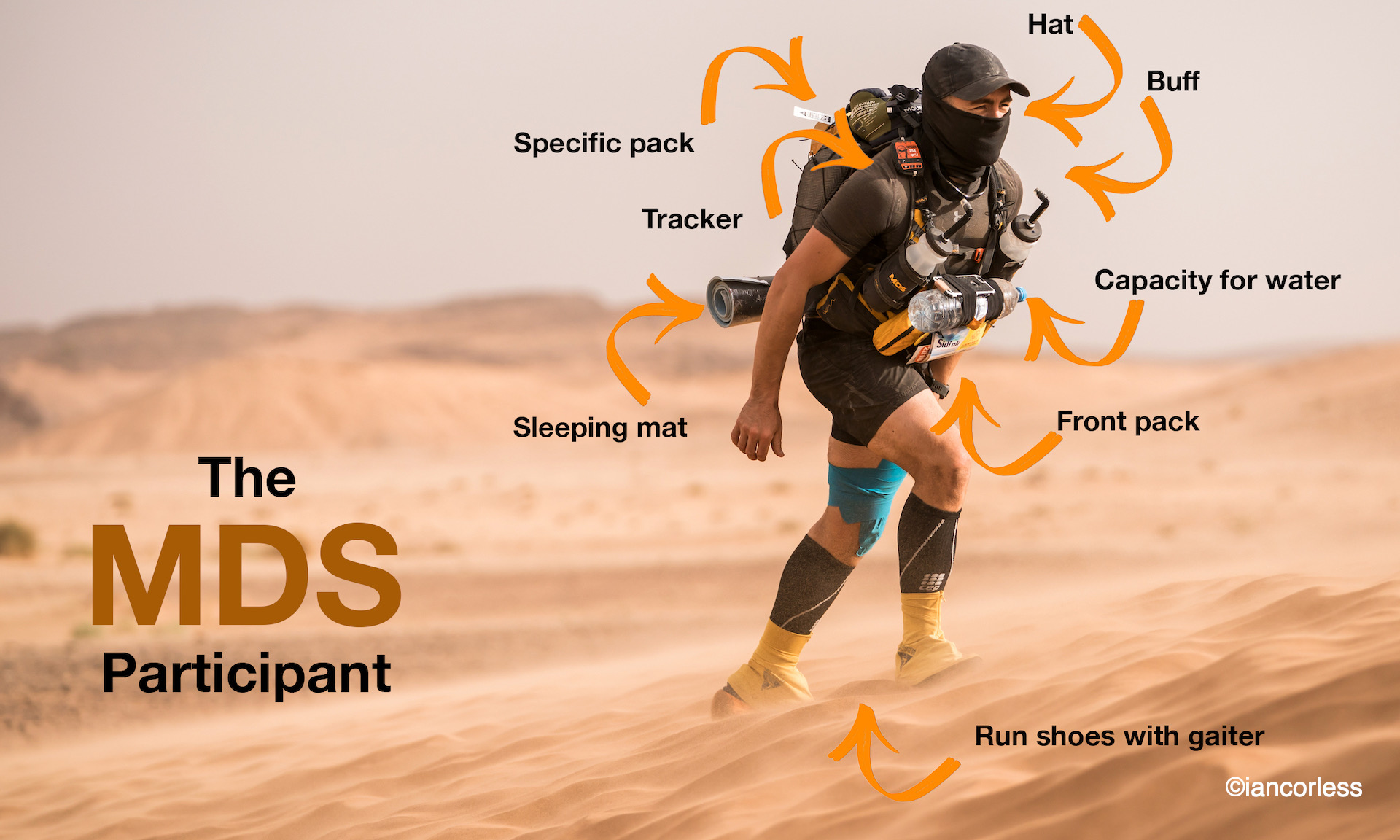
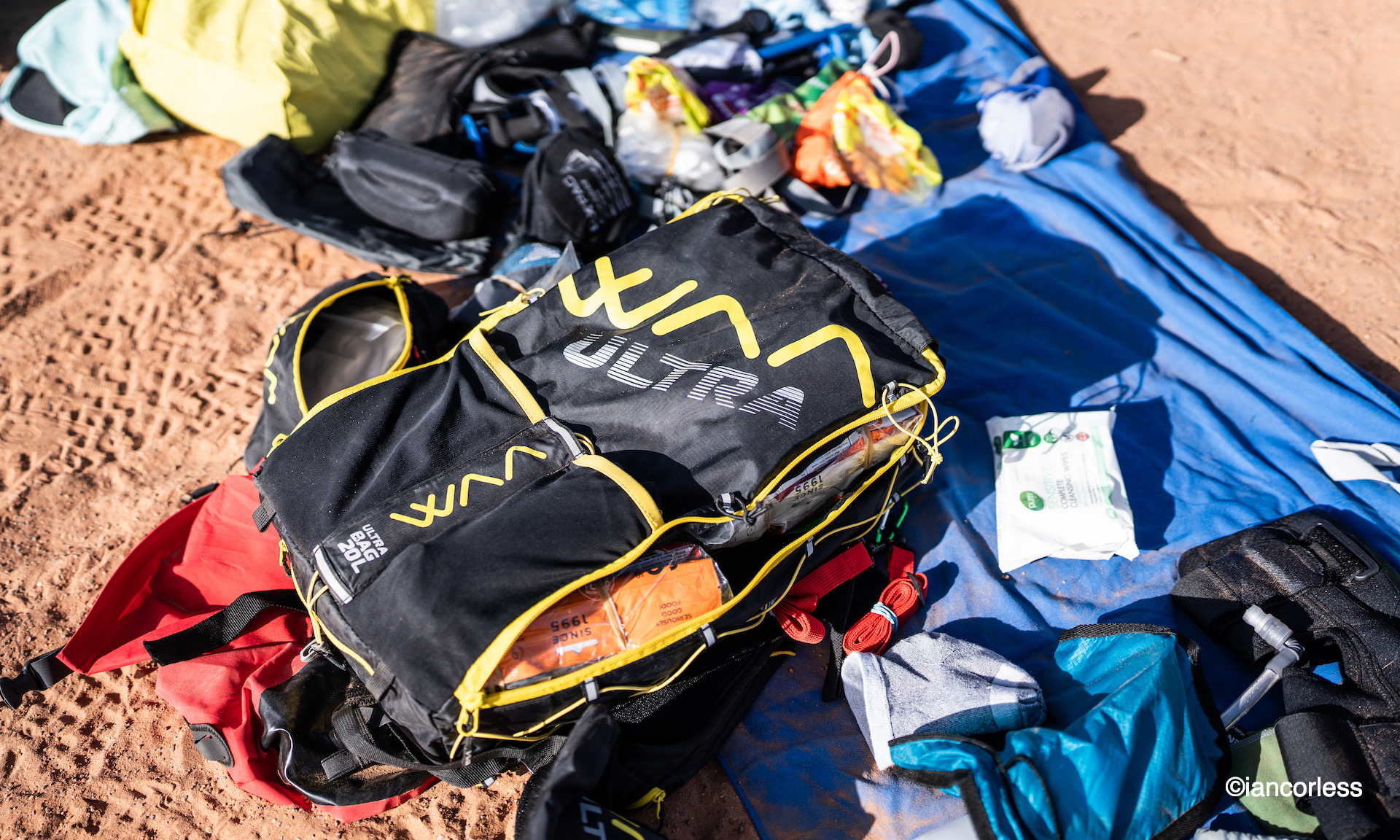
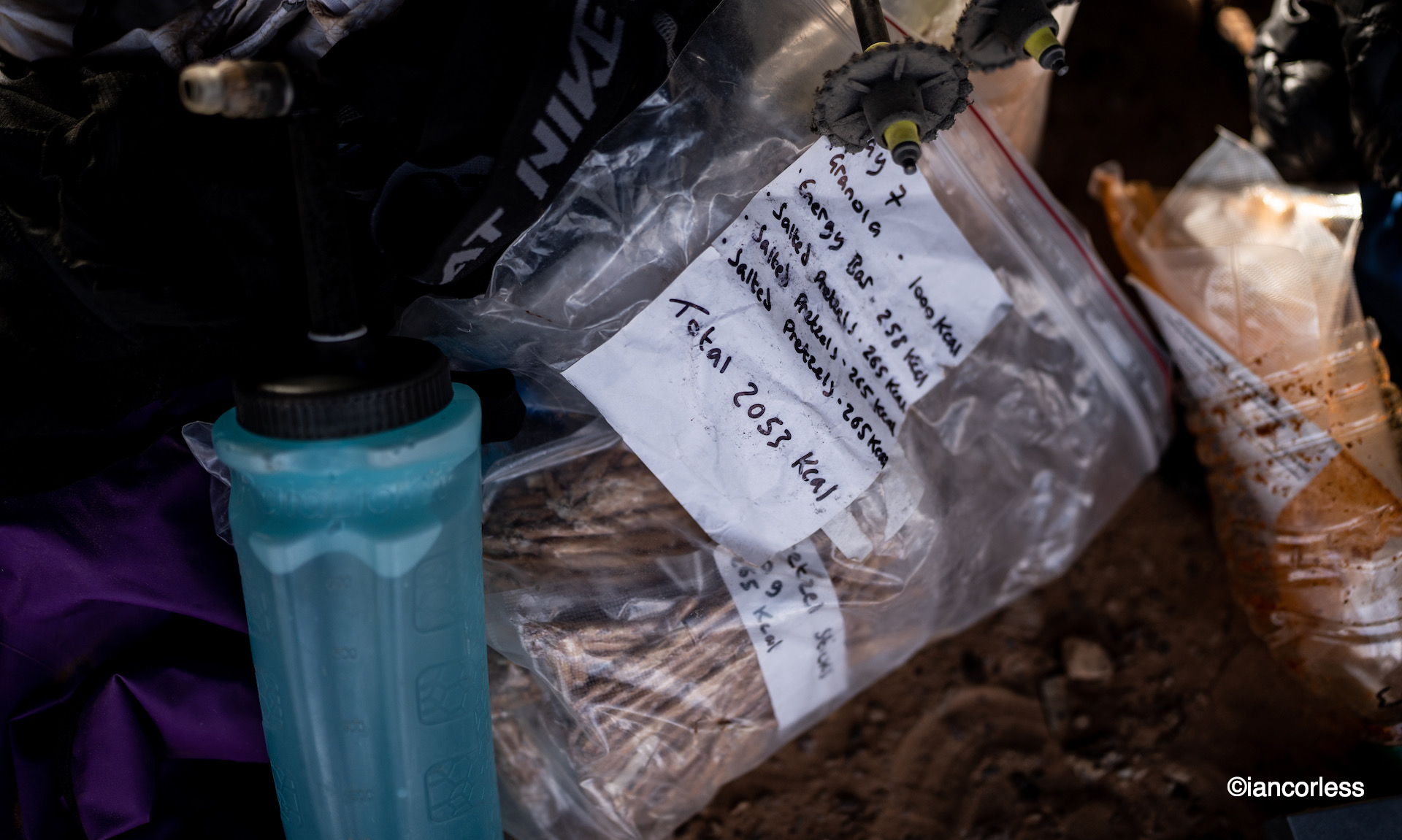
Three nights will be spent in bivouac in full self-sufficiency, the only provision provided is a tent in which to sleep and water. All other items the participant must carry, this includes all food and snacks for the duration of the event, clothes, sleeping bag, sleeping mat and any luxuries.
Day 2 and 3: breakfast, lunch, dinner. (Stage 2 and rest day)
Day 4: breakfast, lunch. (Stage 3)
If a participant requires power for phone, watch, mp3 player etc, they must provide this themselves in the form of a portable battery which they must carry.
The MDS format is the same for all events, MDS The Legendary and MDS Trek excluded.
The race will take place over 4-days and 3-stages, typically broken down as follows:
Day 1/ Stage 1 between 25 and 30km.
Day 2/ Stage 2 20, 40 or 60km – the participant chooses the appropriate distance.
Day 3 Rest day
Day 4/ Stage 3 between 25 and 30km.
The race is designed so that finishing is a possibility for all, regardless of ability or speed. Importantly, if a runner does not finish, they are provided a free race entry for the following year.
The last edition of the race took place in 2022 which turned out to be a considerable challenge due extreme and unprecedented weather. 2023 did not take place due to environmental rules. So, 2024 will be a special year for MDS Fuerteventura. Notably, 300 participants will toe the line of which, 58% are women. A fantastic statistic.
The Program for the week will be as follows:
Saturday September 28
Arrival of participants and relaxed night at Playitas Resort Hotel.
Sunday September 29
Technical and medical checks followed by relaxation at Playitas Resort Hotel.
Monday September 30
Stage 1 – overnight bivouac
Tuesday October 1
Stage 2 – overnight bivouac
Wednesday October 2
Rest day – overnight bivouac
Thursday October 3
Stage 3 – followed by relaxation at Playitas Resort Hotel.
Friday October 4
Tourism and rest day followed by evening Gala dinner.
Saturday October 5
Onward travel
Playitas Resort Hotel is one of the key sports hotels in Europe. Located in the southeast of Fuerteventura, it is the perfect hub for a sports minded person, there is a gym, yoga, indoor cycling, CrossFit, pools and so much more available.
MDS Fuerteventura is closely followed by MDS Morocco, October 12-19, MDS Trek, October 20-29 and MDS Jordan, November 2-9.
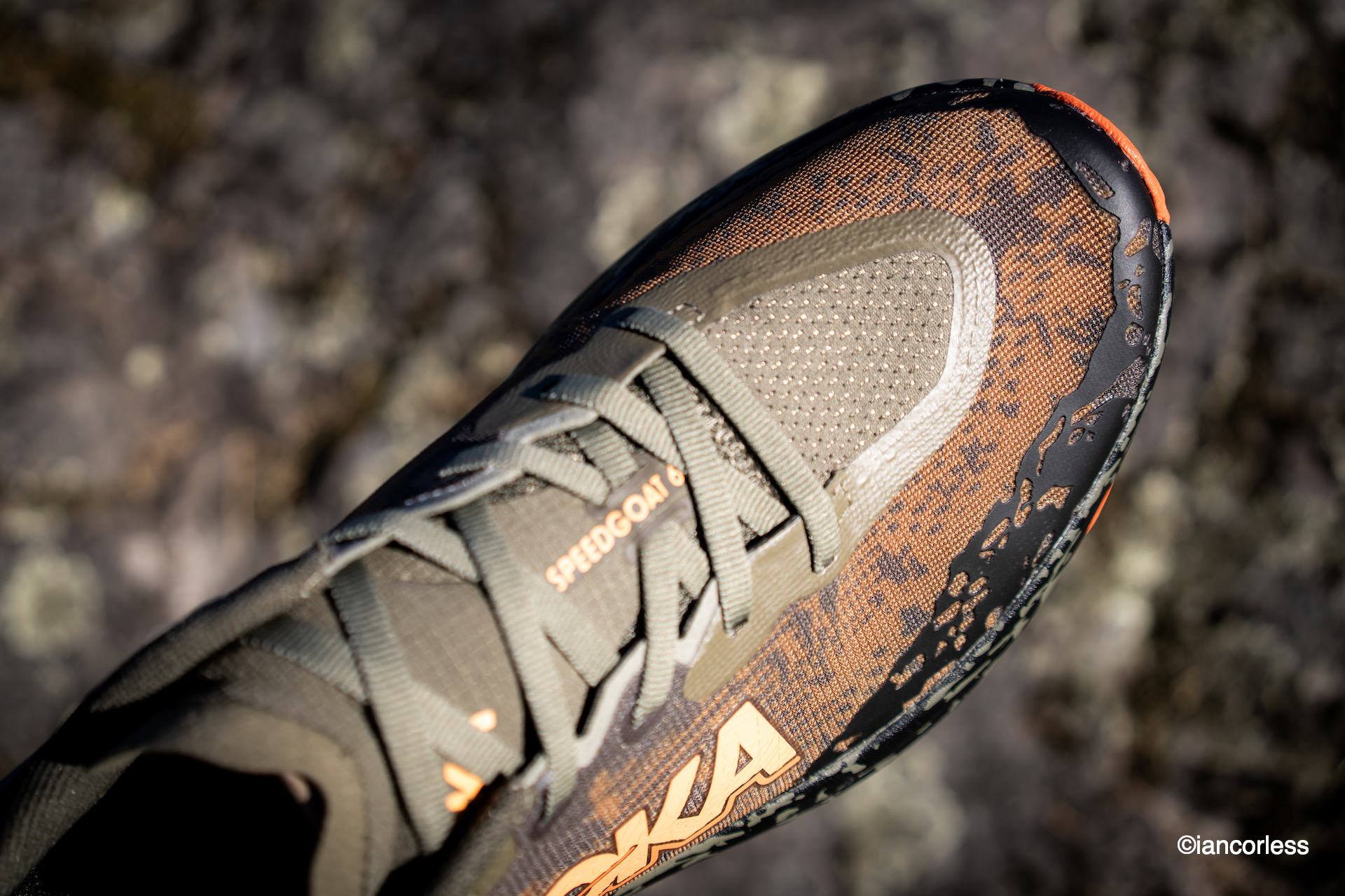
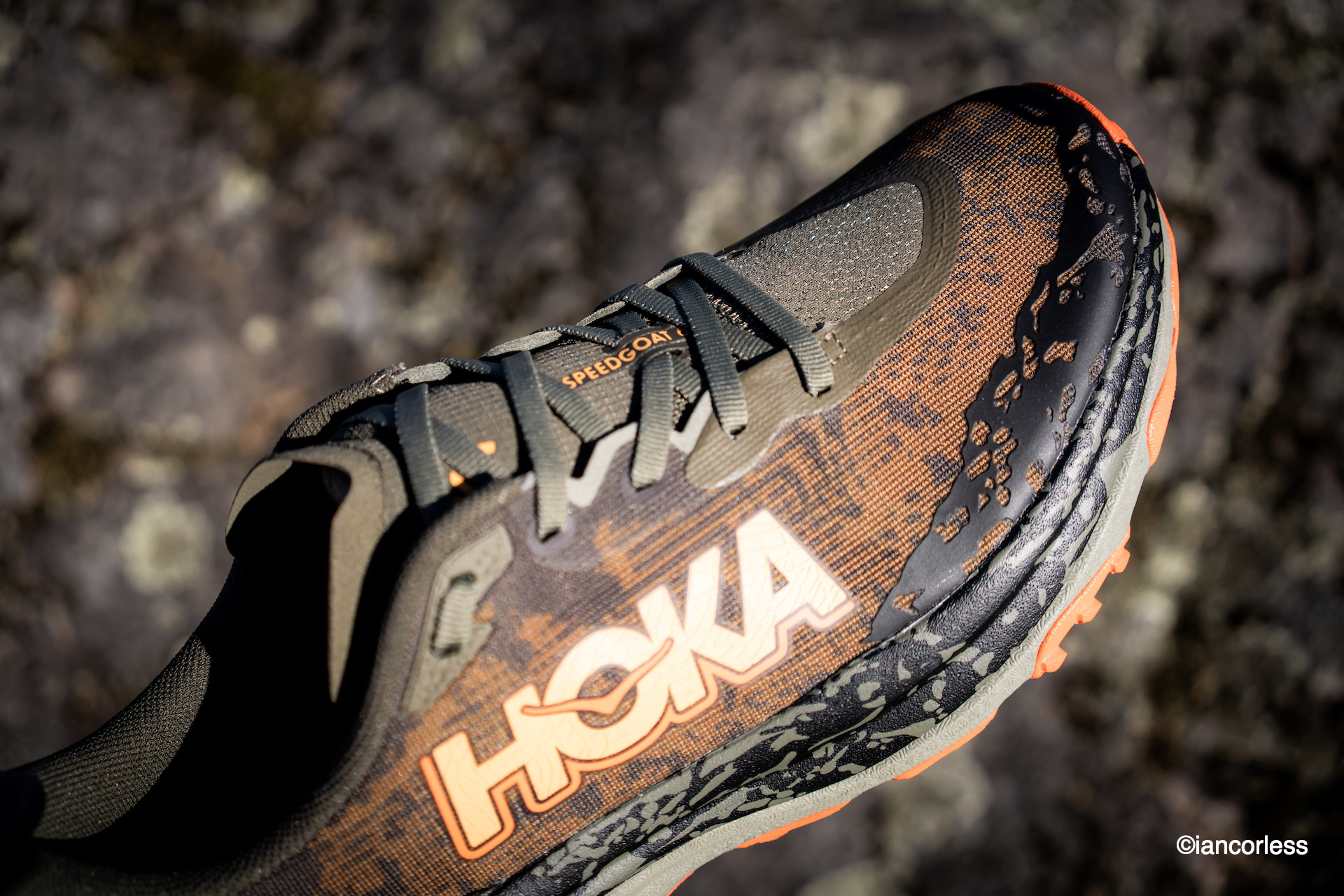
The Hoka Speedgoat needs no introduction, it is arguably, the best selling trail shoe throughout the world. It’s much loved and universally proclaimed as a great trail running shoe.
I personally was late to the Speedgoat party with version 4, followed by version 5 and now version 6. The Speedgoat 5 reached a critical point for Hoka with very mixed reviews:
There were concerns about the midsole compressing and lacking durability,
The upper had less durability.
The fit and size for some was off.
The outsole was wearing too quickly.
I personally enjoyed the Speedgoat 5. I found the combination of features absolutely fine, the upper fine which was flexible and allowed for a good fit, I did need to lock lace though. The outsole ideal and importantly, the stack height a more reasonable 33/29 which offered good stability with a 4mm drop.
Most certainly, Hoka listened to the feedback. They had to if they wanted to retain the loyal fan base, especially with many other brands releasing shoes that could not only provide competition, but even beat the Speedgoat, the Merrell Agility Peak 5 a prime example.
With the release of the Speedgoat 6, the shoe very quickly received universal acclaim with quotes such as, ‘The King is Back!’ And, ‘Speedgoat is still the GOAT.’
What is new?
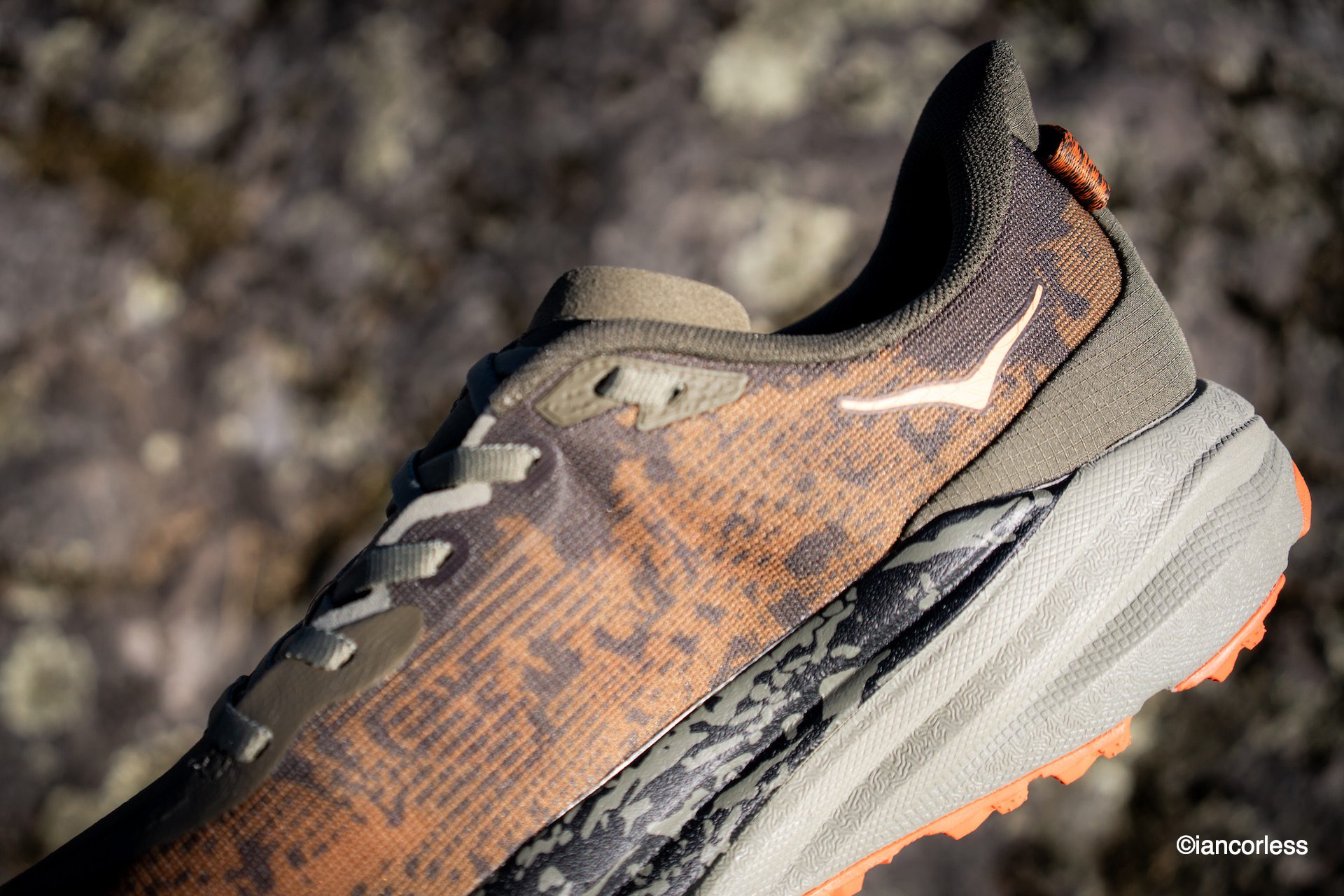
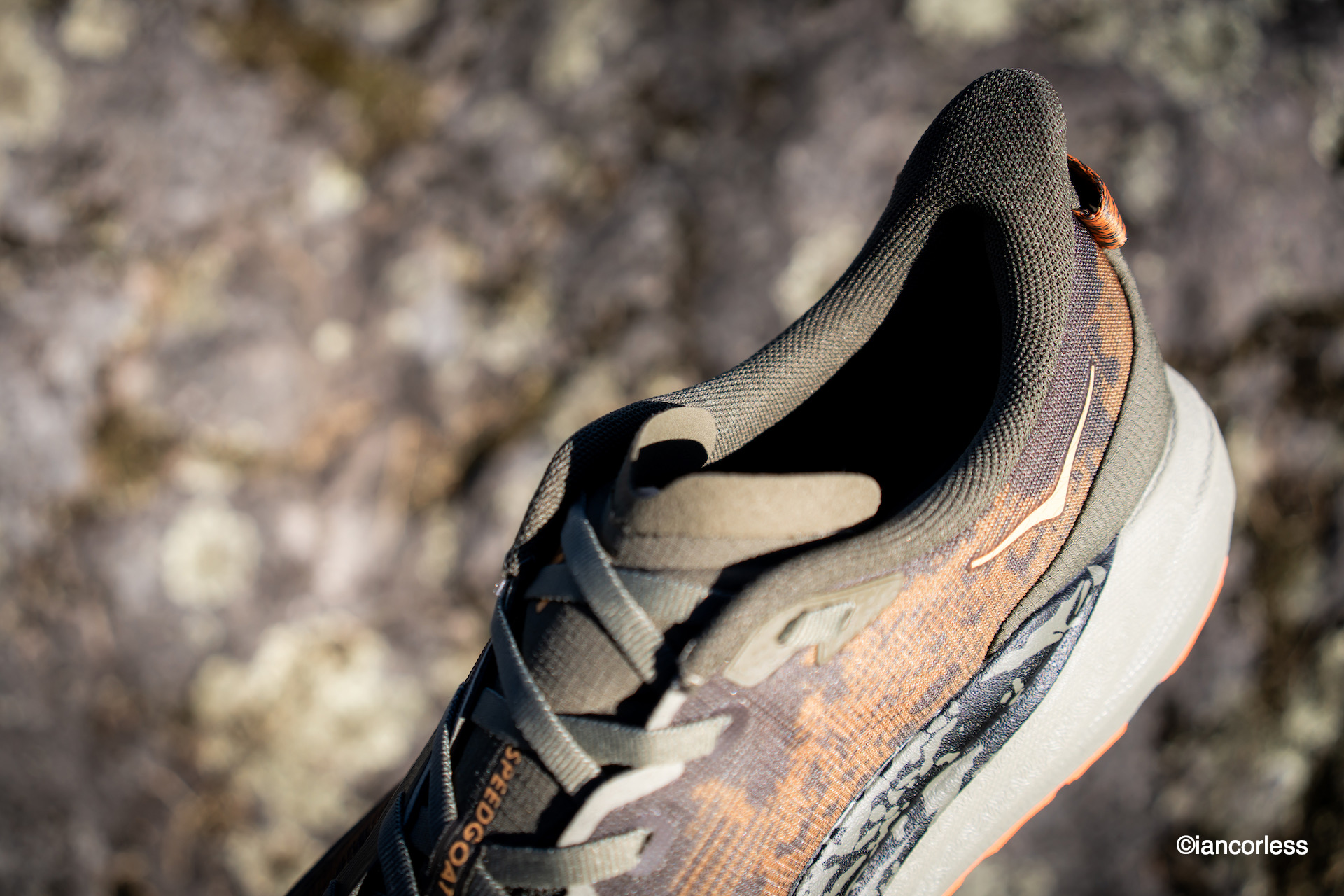
Cushioning is new CMEVA foam with increase stack, 40mm at the rear and 35mm at the front and 5mm drop, 38/33 for women).
The cushioning is lighter and more responsive.
The outsole is Vibram Megagrip Traction lugs with 5mm depth and new orientation.
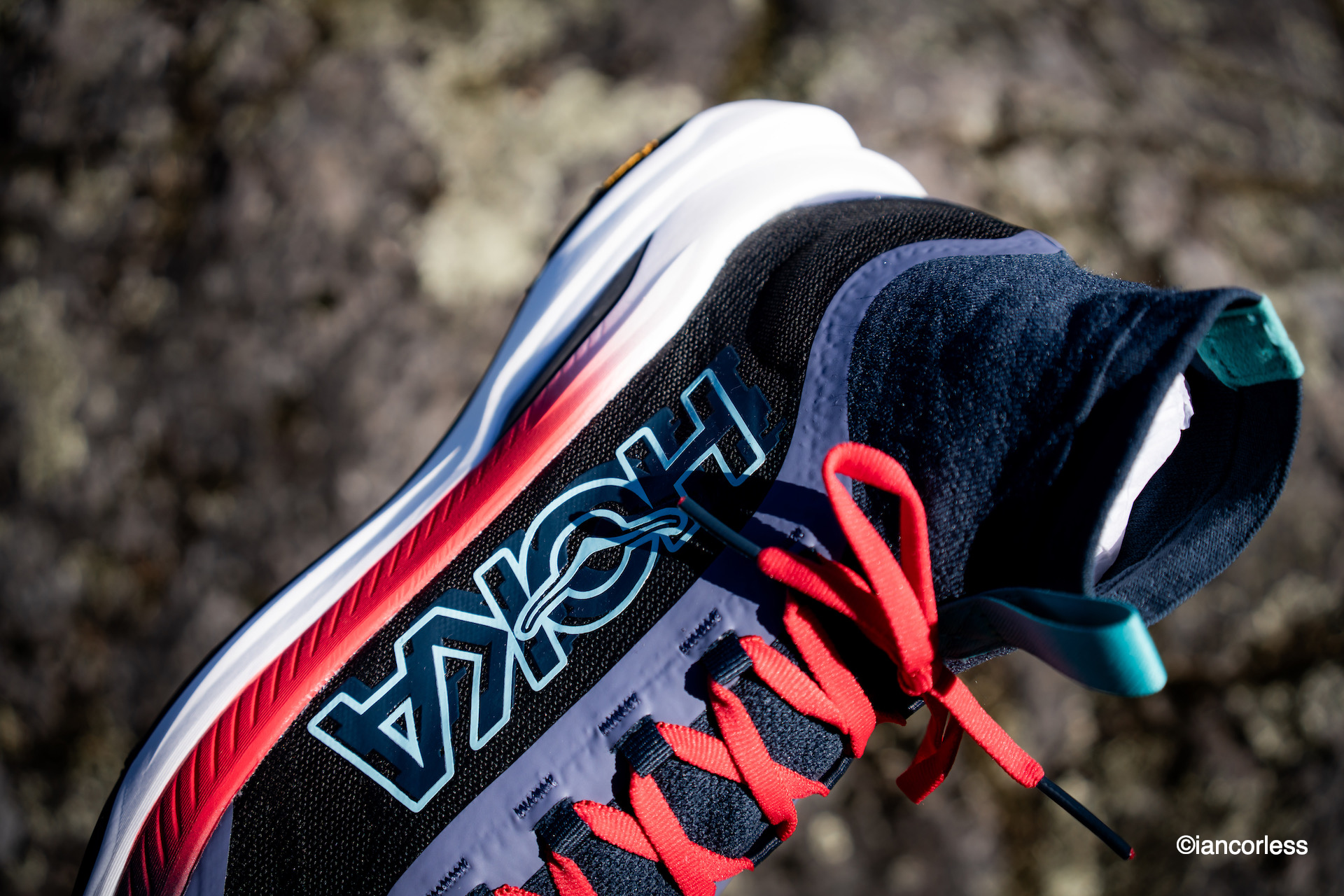
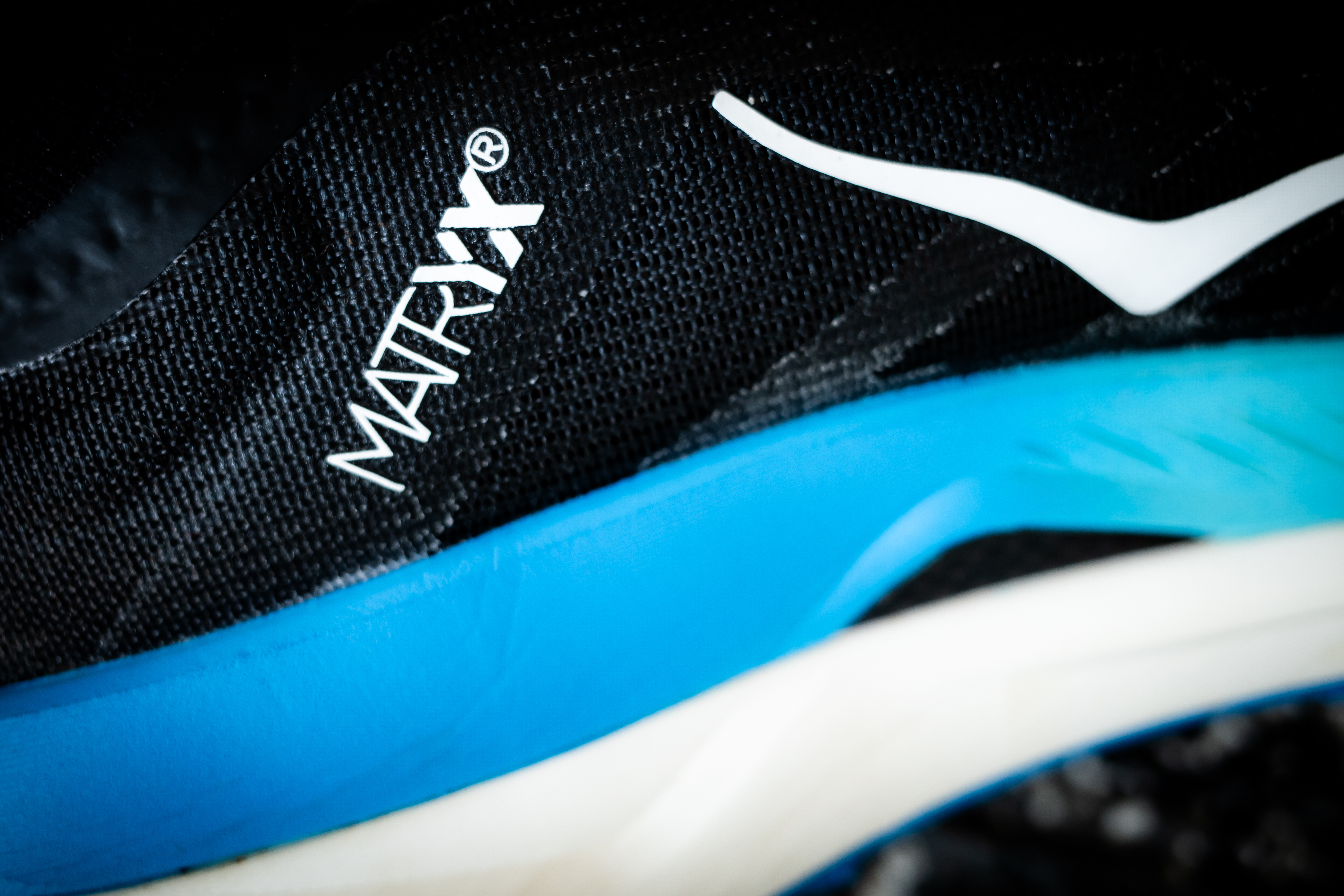
A new more durable upper that is Matryx like with no stretch and with an inner cage.
Hoka say, “We’re offering an updated underfoot experience that provides a more responsive ride with less weight. You’ll find updates to the overall construction, including a breathable woven upper, lighter, more responsive midsole compound, internal chassis, dynamic vamp, and plusher, dual-gusset tongue.”
With neutral stability, balanced cushioning all built around a wide footprint, the Speedgoat 6 is a great trail all-rounder. It is designed to provide protective cushion while maintaining a responsive toe-off for when you want to go faster.
I personally found a considerable difference when putting on the 6 and lacing them up. I immediately preferred the feel of the 5. I lock-laced (as I do on the 5) and the fit/ feel improved.
The lacing does not go as low down the shoe on the 6 and this made me feel less secure at the front, probably not helped due to the fact that the 6 has been given extra width over the 5.
The cushioning is without doubt stiffer and firmer in the 6. The 5 feels bouncy and plush but not squidgy. The 6 almost feels hard by comparison, somewhat unexpected when you consider the extra stack height.
I have to say, my first run I was not loving the shoe. I was constantly thinking, give me the 5 back. However, with 10km in the shoe, the 6 started to feel more at home on my feet and as the km’s passed, that improved. So, I would certainly say although they are good to go straight out of the box, a good run or couple of runs will help them. Ultimately, there is no special life here. They are solid, reliable, good for the long haul, but there is a lack of excitement, especially if you compare to the Merrell Agility Peak 5 and the VJ MAXx2.
There is more structure and hold coming from the new internal support chassis, this is without doubt required with the extra stack. I never had a real issue in the 5 unless on very technical terrain, but here in the 6, the 40/35 cushioning is notably different. Currently, my favourite Hoka is the Tecton X3 which has the same level of stack height as the Speedgoat 6, but for me, has considerably better feel. It’s not that I don’t like the 6, there just doesn’t feel anything special going on and ironically, I prefer the feel of the Speedgoat 5 which is counter to what Hoka say I should feel and also counter to the general Speedgoat feedback from all the fans.
The tongue of the Speedgoat 5 and 6 is not long enough making lacing and particularly lock-lacing an awkward affair and not always comfortable. This really needs addressing.
The outsole with 5mm lugs is solid on most trails. With a new configurtation and the Traction lug, it works well. There ic a comprise with a great deal of mud and I am still never confident on wet rock.
The Speedgoat 6 is a solid trail shoe that will only continue to confirm the shoes legendary status within the trail world. Speedgoat lovers will continue to love this shoe. But, if you are new to Speedgoat and comparing against other like-for-like shoes, would the Speedgoat win out?
For me no. However, it does depend on what shoes you are comparing the Speedgoat with… If it was the adidas Terrex Agravic Speed, the Hoka Speedgoat 6 is a clear winner. However, comparing against a Merrell Agility Peak 5 or a VJ MAXx2, then, for me, I would choose the Merrell for trail runs and the VJ for mountain and technical runs.
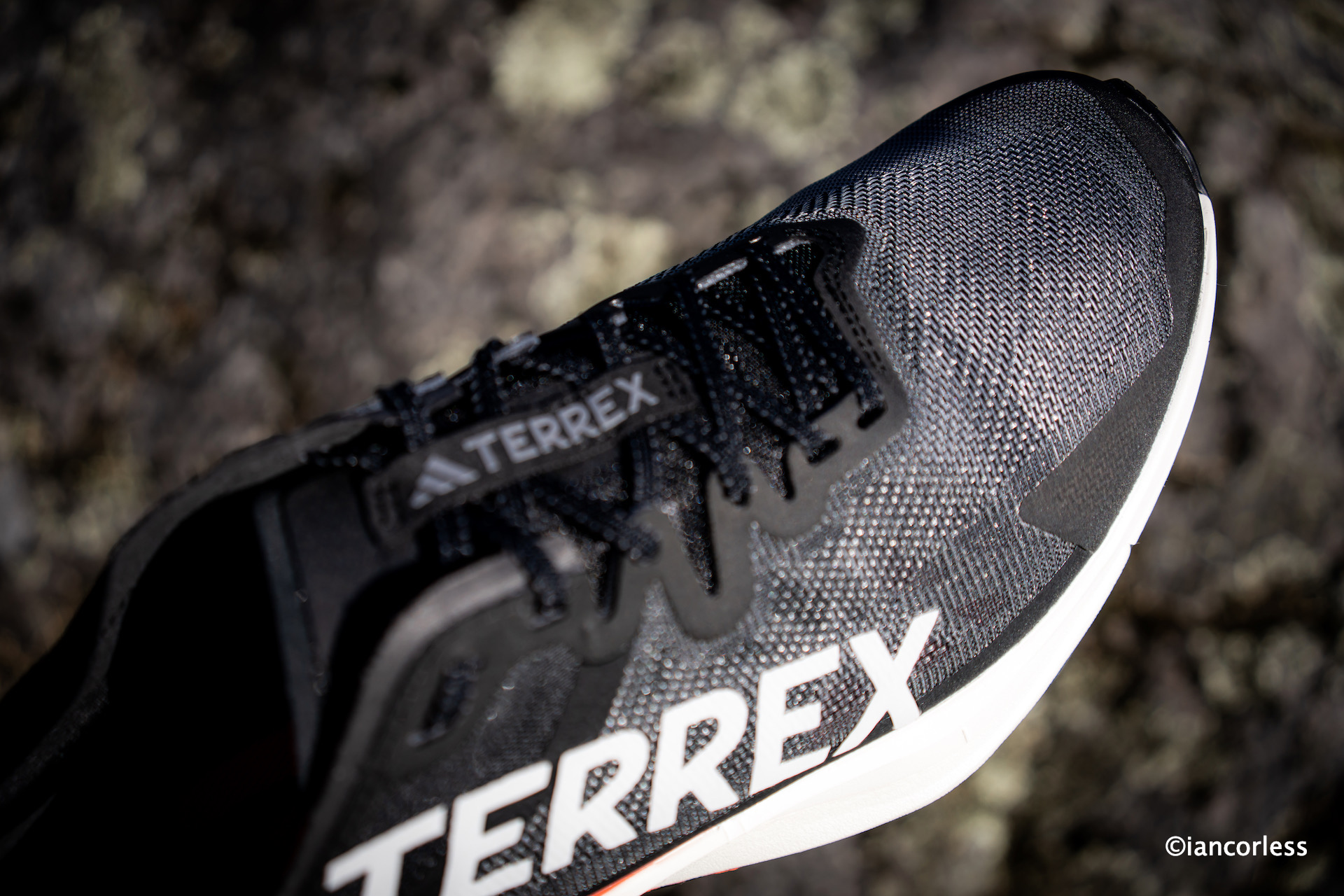
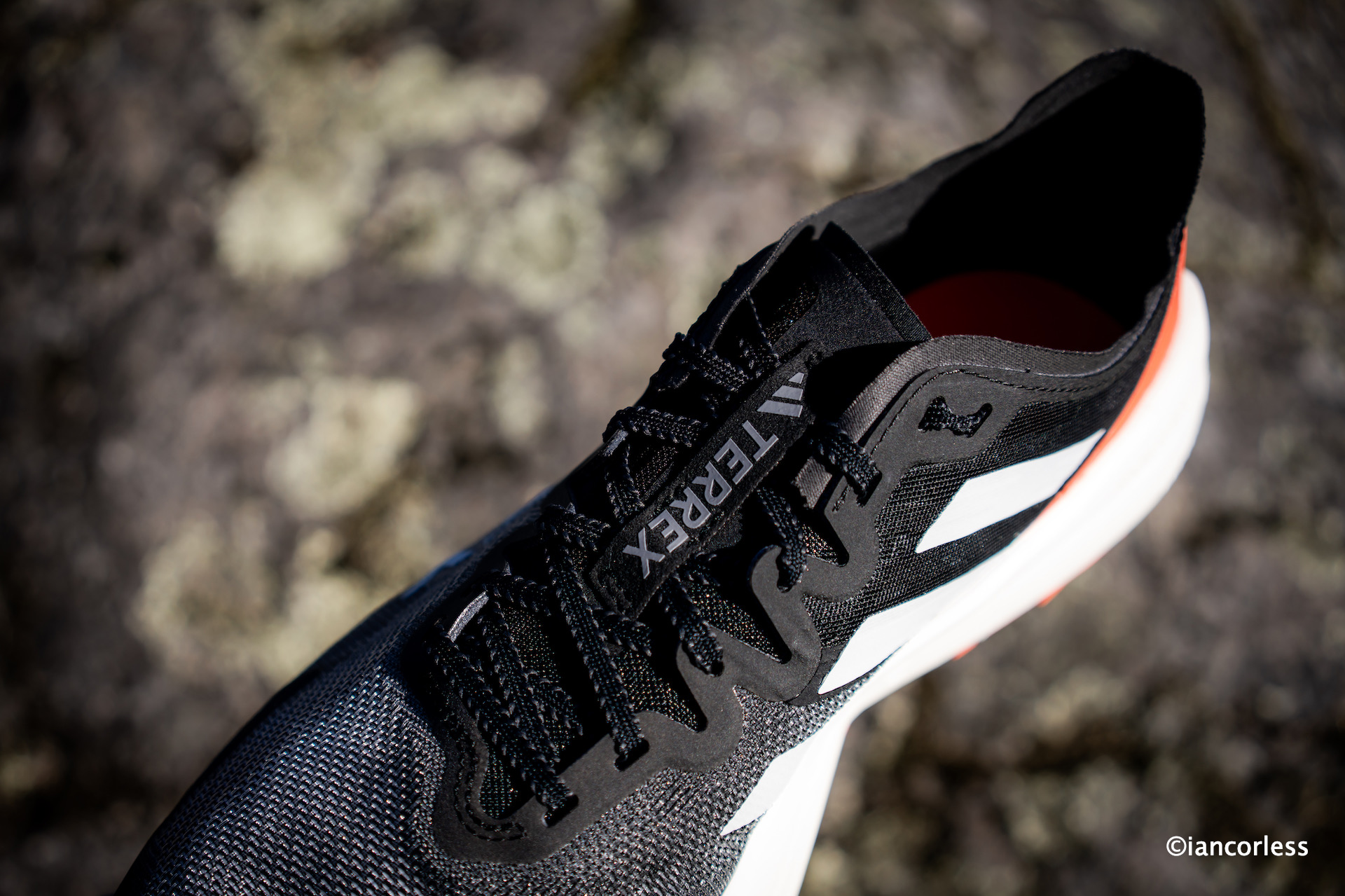
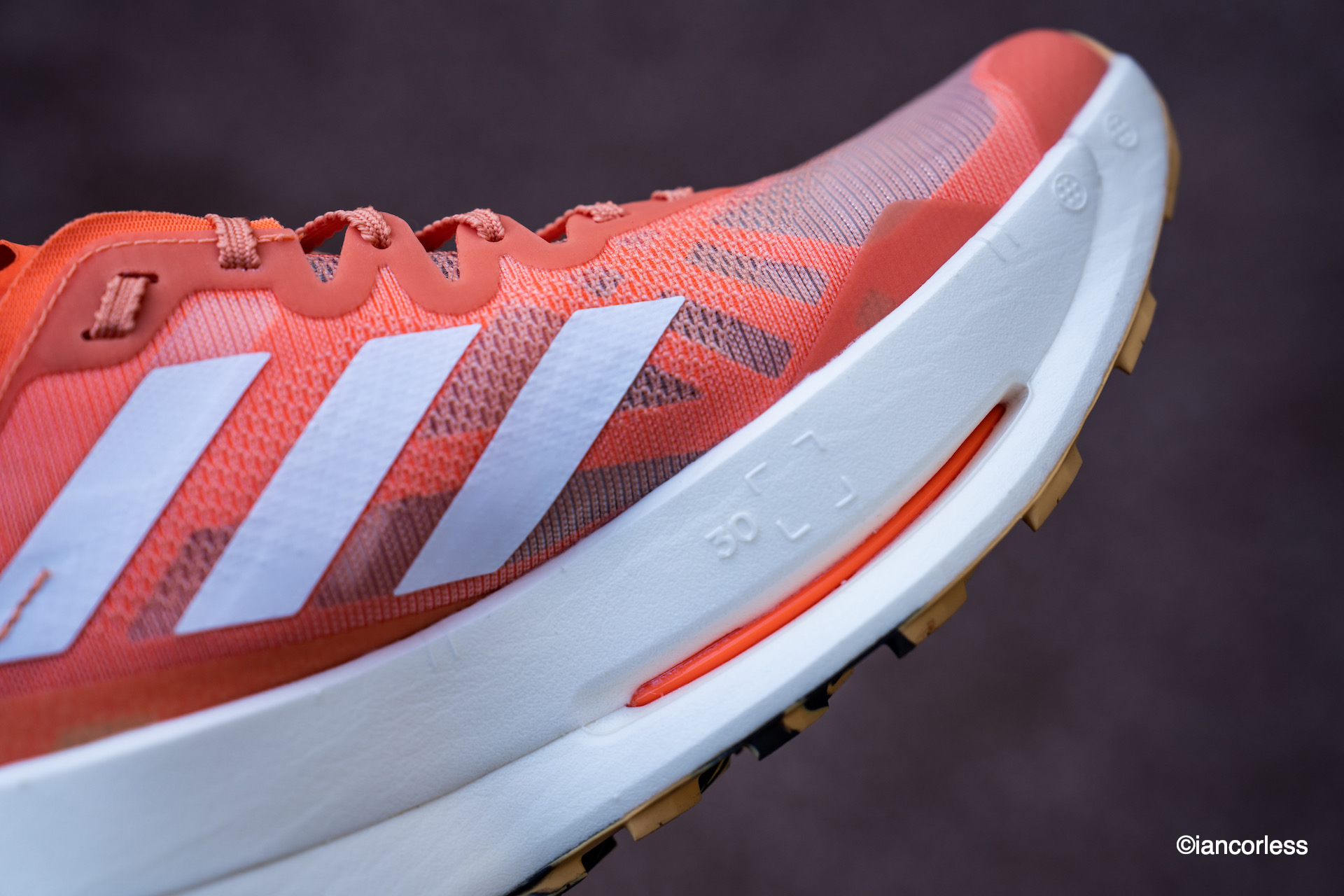
The shoes look similar when seen side-by-side but there are very obvious differences: less cushioning, not plate, less rocker and in my opinion, I love the black colorway with Terrex in bold white, a hint of orange provides some colour excitement.
The adidas Terrex Agravic Speed Ultra is a super shoe that runs fast on slick trails and is a beast for those looking for speed and the fitness to maximise the super shoe potential.
This Terrex Agravic Speed is a shoe for all and in all honesty, is a much better choice for most people looking for a trail shoe, whereas, by contrast, the Terrex Agravic Speed Ultra is only for a select few.
Despite the lower stack height, the shoe still suffers terrible stability issues on technical trail. I was really hoping that this would be less of an issue, and in all fairness, in comparison to the big brother, it is more stable, however, it is nowhere near stable enough. It’s only just a trail shoe, select the trails you run on carefully is my advice. There is a rocker, but it is nowhere near as pronounced as the Terrex Agravic Speed Ultra and the need to forefoot strike is less.
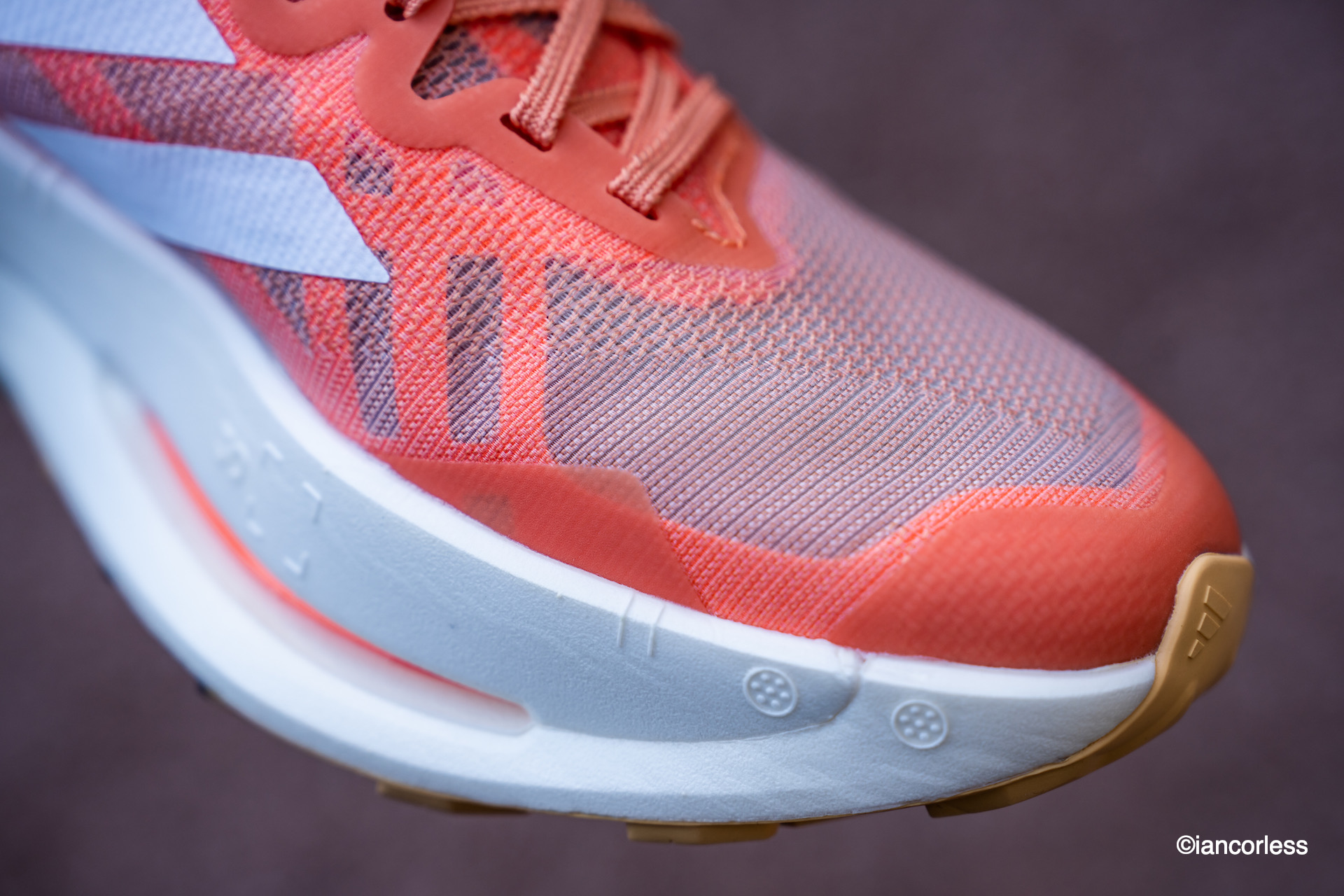
Light with a neutral fit, the upper is almost see through and very breathable. The toe box is wide and allows good toe splay. The heel area is minimal and while comfortable for me, it’s an area to be wary of. Sizing is again frustrating, you need to try them on! A gusseted tongue gives a lovely foot hold and reassurance.
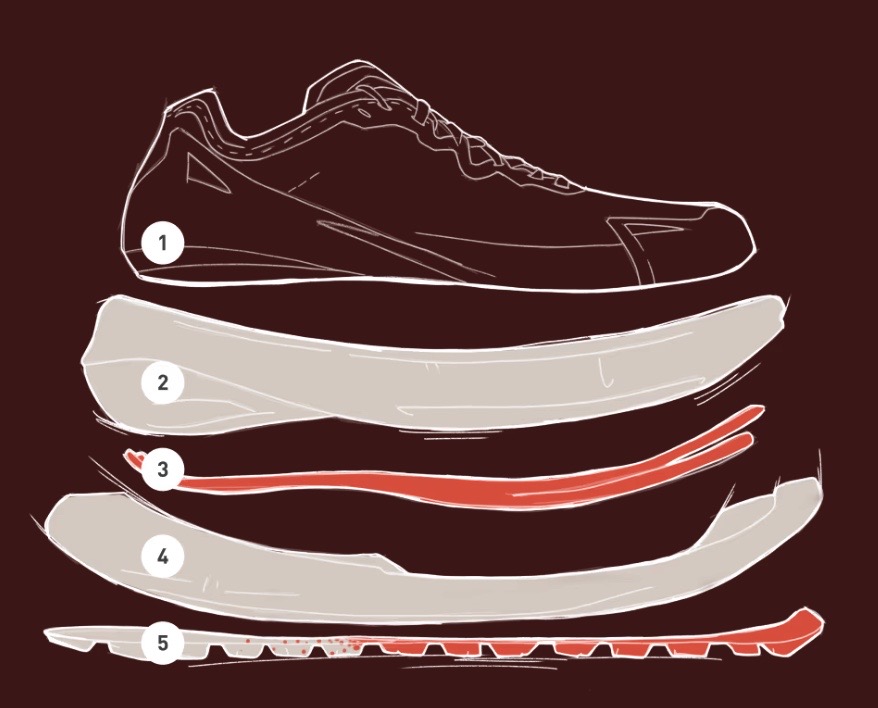
The cushioning is well balanced, soft without being squidgy and the responsiveness and propulsion is excellent. With softer foam at the bottom; Lightstrike Pro. Firmer Lightstrike on the top, this combination does add more stability but the footprint is too narrow in the middle and rear – ankle breaking warning given! When Runnning, the rocker does kick in and helps increase cadence and propulsion, but unlike the Terrex Agravic Speed Ultra, you feel more in control and able to reign the shoe in and run at a more comfortable pace. This is probably due to the considerably less stack height and the lack of any plate. Walking too is better, not ideal, but better.
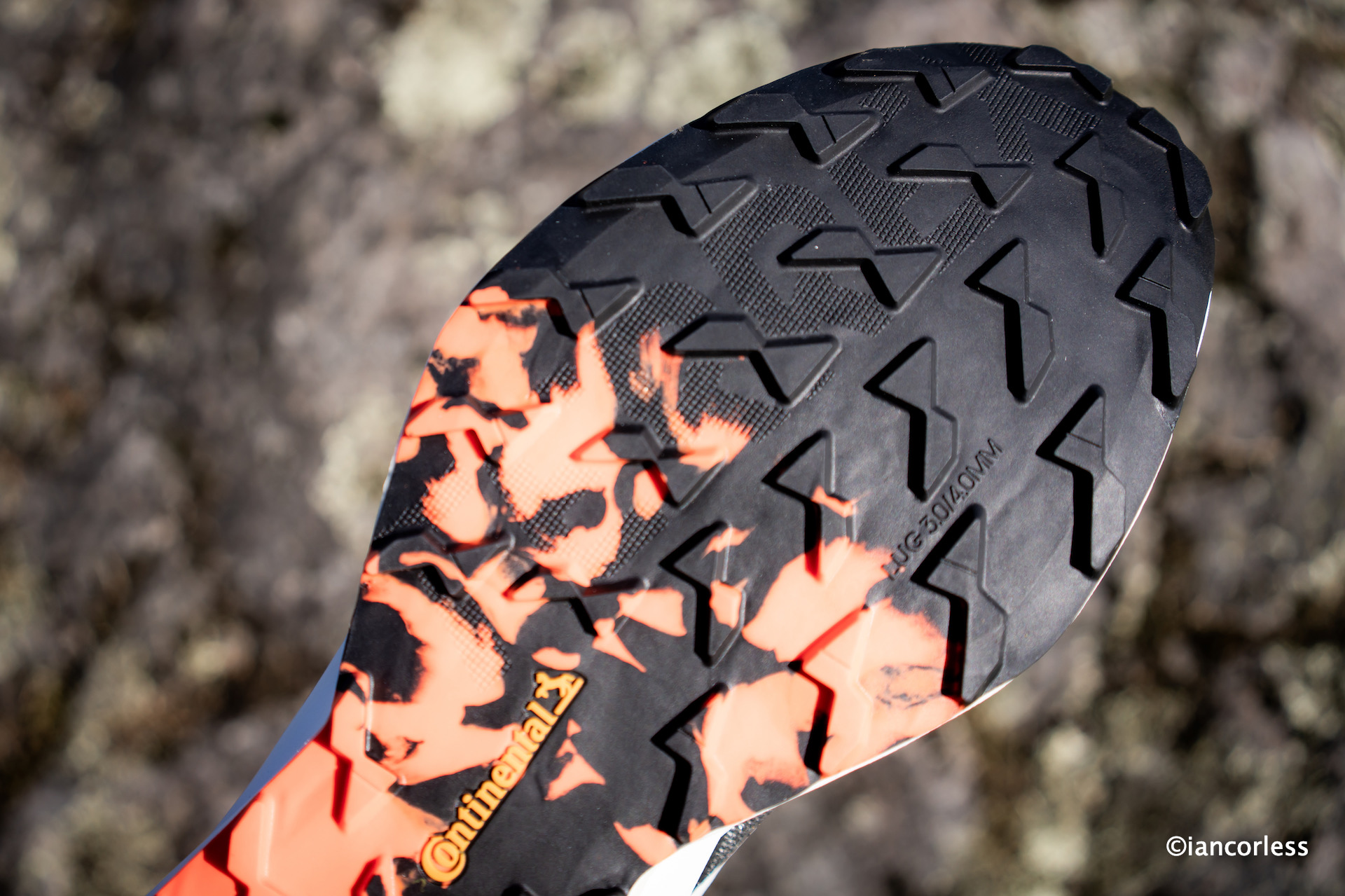
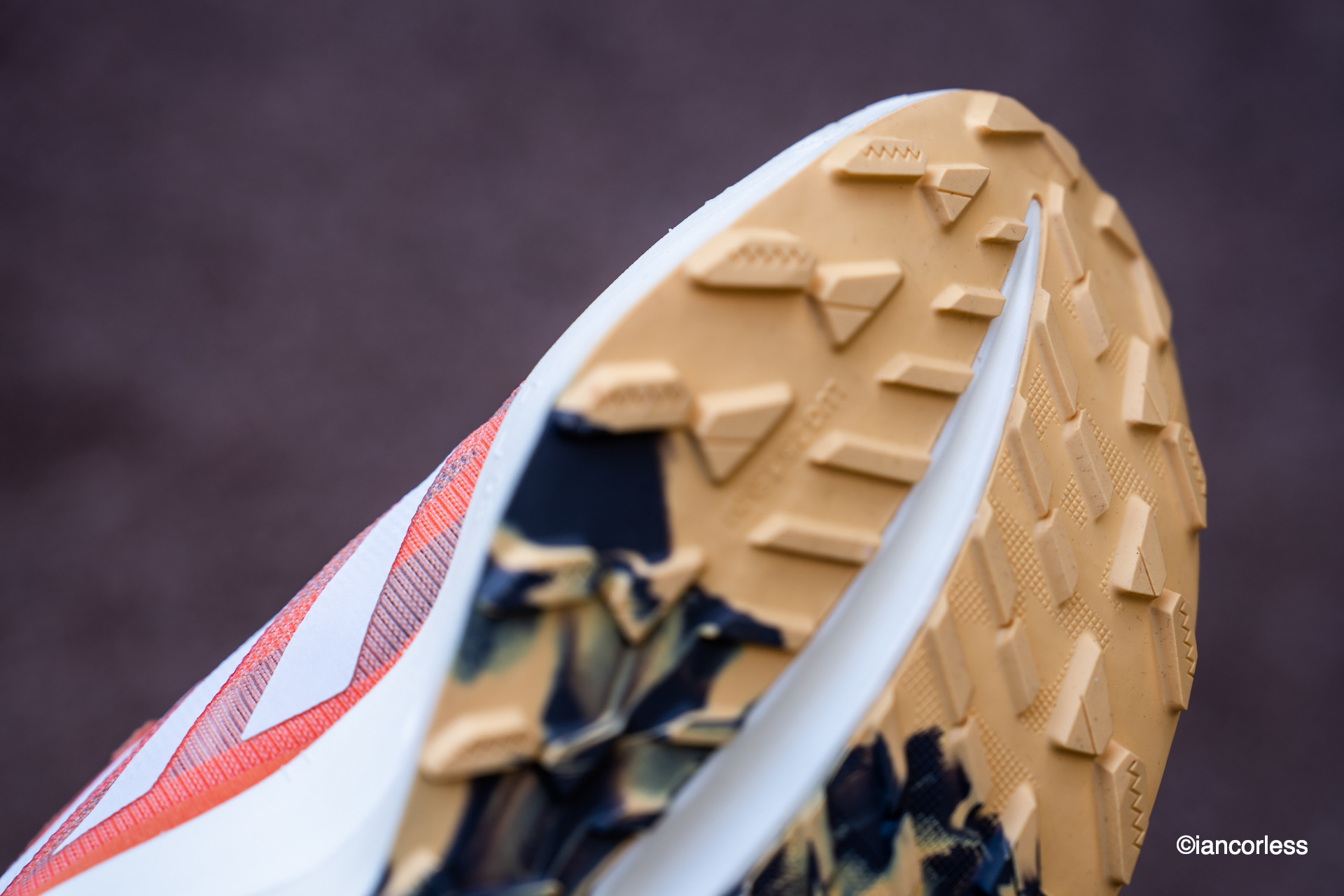
Continental outsole is good, again though, the lugs (3 and 4mm) are minimal and reduce the potential for it to be a real trail shoe. However, the grip is better than the Terrex Agravic Speed Ultra.
This shoe is arguably an update from my favourite adidas shoe, the Speed Ultra. However, with his level of stack height, there are no similarities really. It really is a subdued version of the Terrex Agravic Speed Ultra and as such, it would make a good training shoe if using the bigger brother for racing. It feels like a road shoe.
There is a great deal of positives with this shoe and as I have said previously, for most people, this is a considerably better shoe choice than the Terrex Agravic Speed Ultra.
However, there are lots of negatives.
adidas really need to sort there sizing out. There is no consistency.
They also need to understand that when a shoe is called Terrex, that means it’s a trail shoe and not an updated road shoe… The shoes need to be fit for purpose.
The ankle collar, for some, will be an issue.
The tongue needs more padding.
The footprint is woefully too narrow in the middle and the rear. Again, they are a stability nightmare, nowhere near as bad as the Terrex Agravic Speed Ultra, but it’s not great.
The outsole, again, is not aggressive enough. It’s like adidas want to make a road shoe that can just about go off-road, remain fast, but forget any technical and challenging terrain. I consider a 4mm lug a minimum, and this shoe would benefit from 5/ 6mm. But having said that, adidas would need to address the stability issues too.
Ultimately, the Terrex Agravic Speed is a good looking shoe that is ideal for faster trail running on slick or groomed trails. I have used this far more than its bigger brother as they are much more of an ‘all-rounder!’
The potential of the shoe is limited. It’s woefully unstable on technical trail, the outsole is not aggressive enough for anything other than slick trail and there are foothold issues.
So, this is a road to trail shoe, or a trail to road shoe. It’s the type of shoe that is ideal for someone who has loads of road experience and is venturing onto trail for the first time. But don’t get me wrong, there is a nice bounce, feel and propulsion to these shoes.
But, there are a great deal of shoes out there now that are a better option than the Terrex Agravic Speed. The Terrex Agravic Speed Ultra can come highly recommended as it is a super shoe that for the right person, they will reap the rewards that this shoe can offer. Here, the Terrex Agravic Speed is just another shoe with nothing unique or special to bring to the trail market. My advice would be take a look at theVJ MAXx2, this brings something special.
When Hoka released the Tecton X in 2022, I went on to say, “Tecton X for me, is the first trail shoe with carbon inserts that I have really enjoyed running in. The shoe offers protection, comfort, stability and great propulsion/ speed in a very good-looking shoe.”
That above quote still rings true. I have tried many trail shoes with plates, and none have given the feeling of the original Tecton X.
The Tecton X was followed by the X2, a shoe that I never had the opportunity to test. However, while differences existed – Lighter upper with Matryx, slightly narrower toe box and gusseted tongue, the differences were marginal.
Jump to the HOKA TECTON X3 and we are now looking at a completely different shoe!
This new incarnation regarding timeline and development, can be looked at and reviewed alongside the adidas Terrex Agravic Speed Ultra. They are both super shoes, both with plates, both with extreme cushioning and both tested (with results) by elite athletes before coming to commercial market. Read more about the Terrex Agravic Speed Ultra Here.
The Hoka Tecton X3 has been developed closely with Jim Walmsley and a prototype version of the shoe was used to gain victory at the 2023 UTMB. This prototype was then developed into a Hoka Tecton X2.5 which Jim used to win Western States in 2024 and surprisingly a commercial version of the Tecton X2.5 was made available in very limited numbers, it sold out and to my knowledge is no longer available, at least commercially. The Tecton X2.5 had more cushioning (44/39), different lacing, and having spoken to ‘those in the know’ in Chamonix, durability may well have been an issue for commercial release.
Post Western States and pre UTMB it was clear that the Hoka Tectonic X3 would be released and made commercially available just before UTMB and most certainly, there would be a great deal of buzz in and around the UTMB expo.
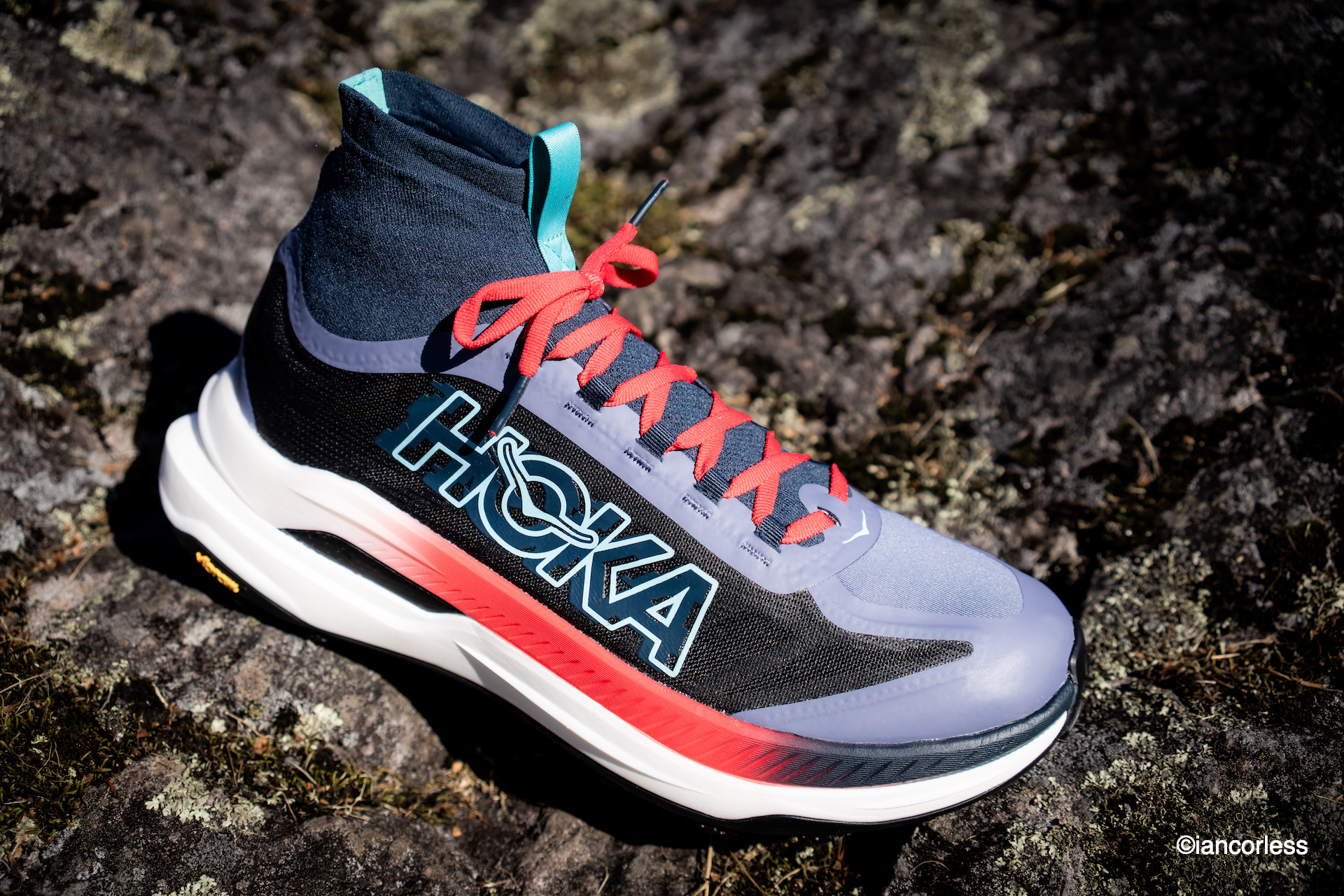
Both myself and Abelone were lucky to receive early versions (thanks to hoka.no). My shoe was in the stormy skies/ cerise colour way, Abelone received the UTMB limited edition black/ Hoka blue. I was immediately jealous, the blue/black colour way is sweet!
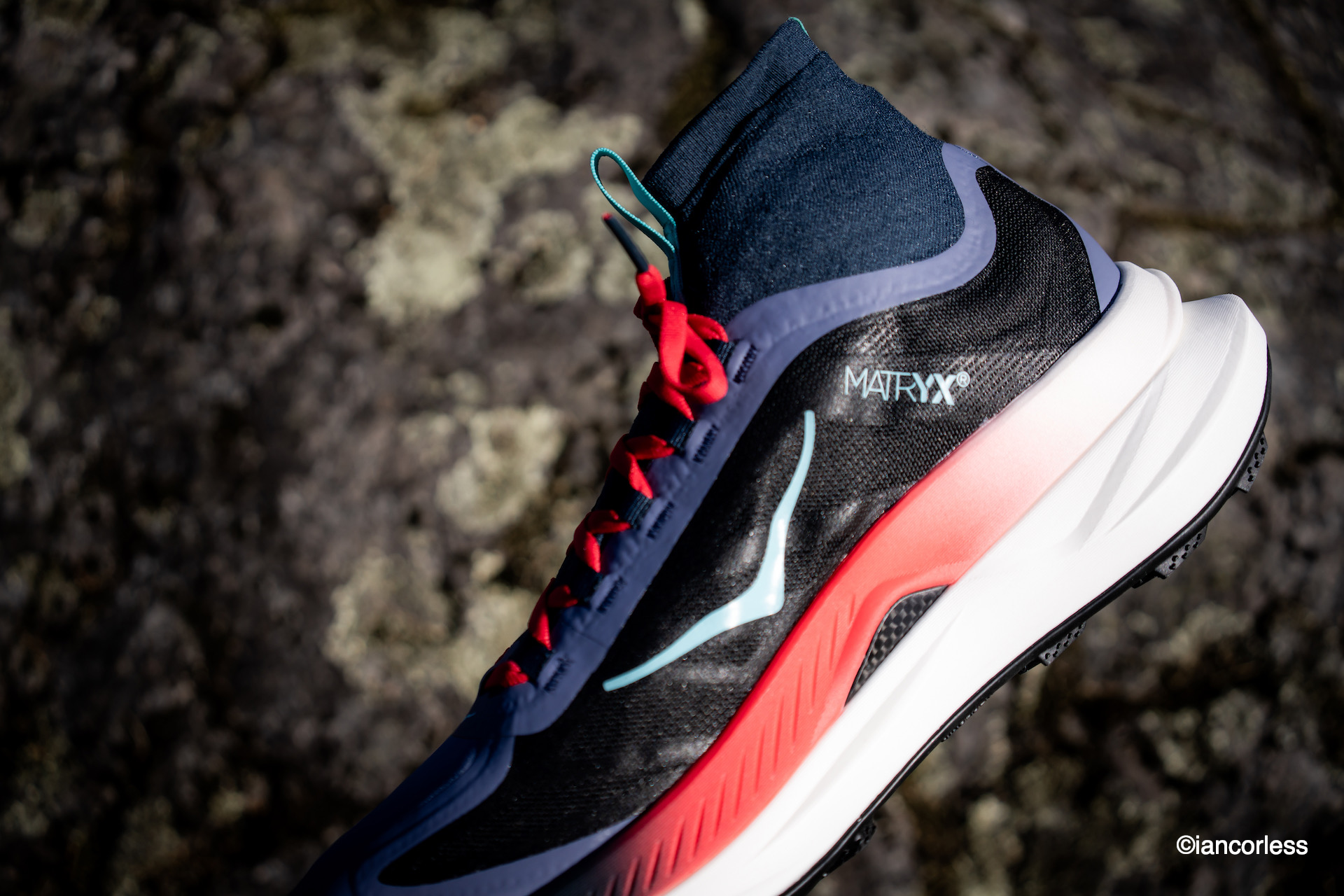
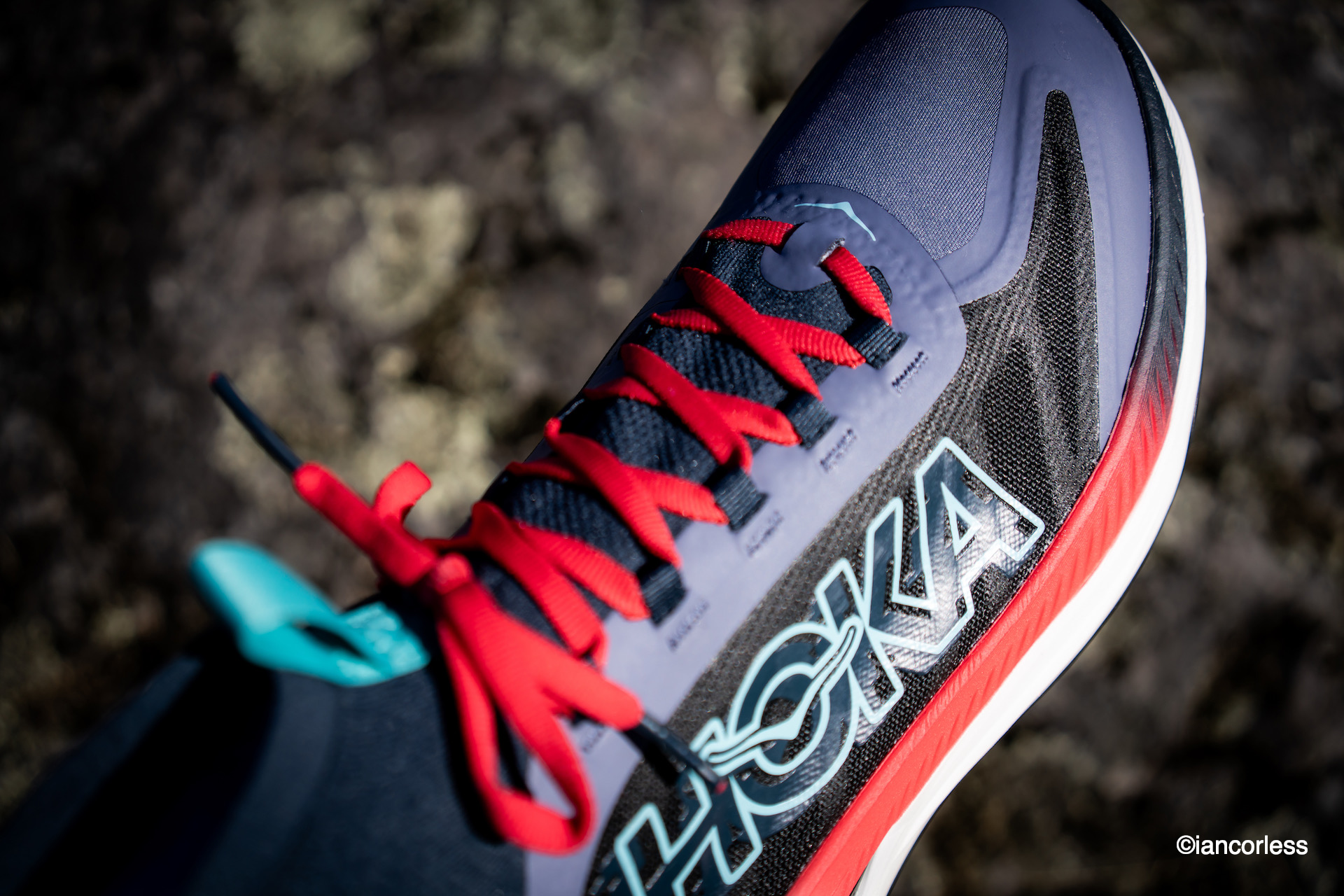
Just as we have seen on Jim’s UTMB and WSER Hoka’s, the TECTON X3 has a built-in knit gaiter which comes up above the ankle, fits very light and stops any debris entering the shoe.
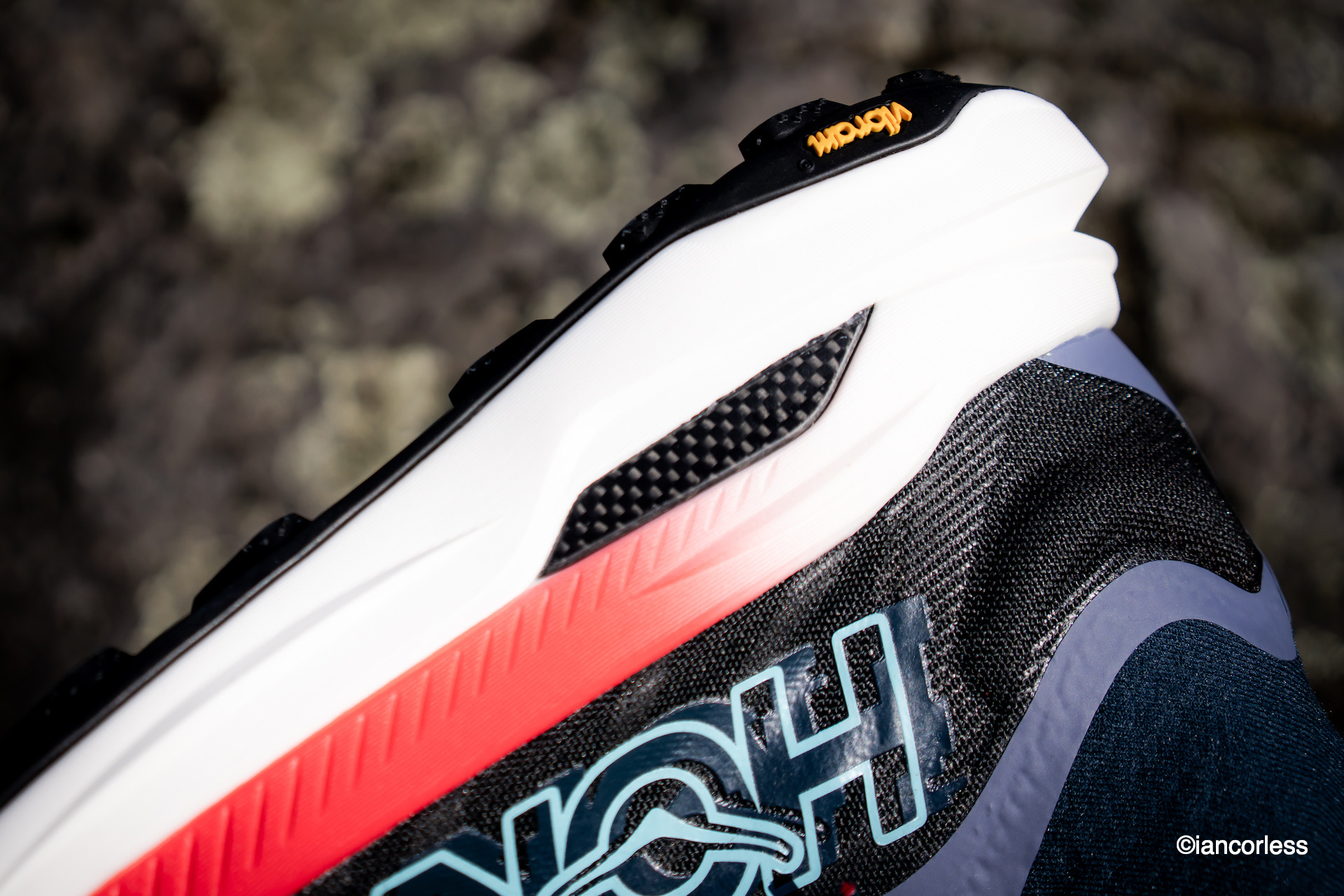
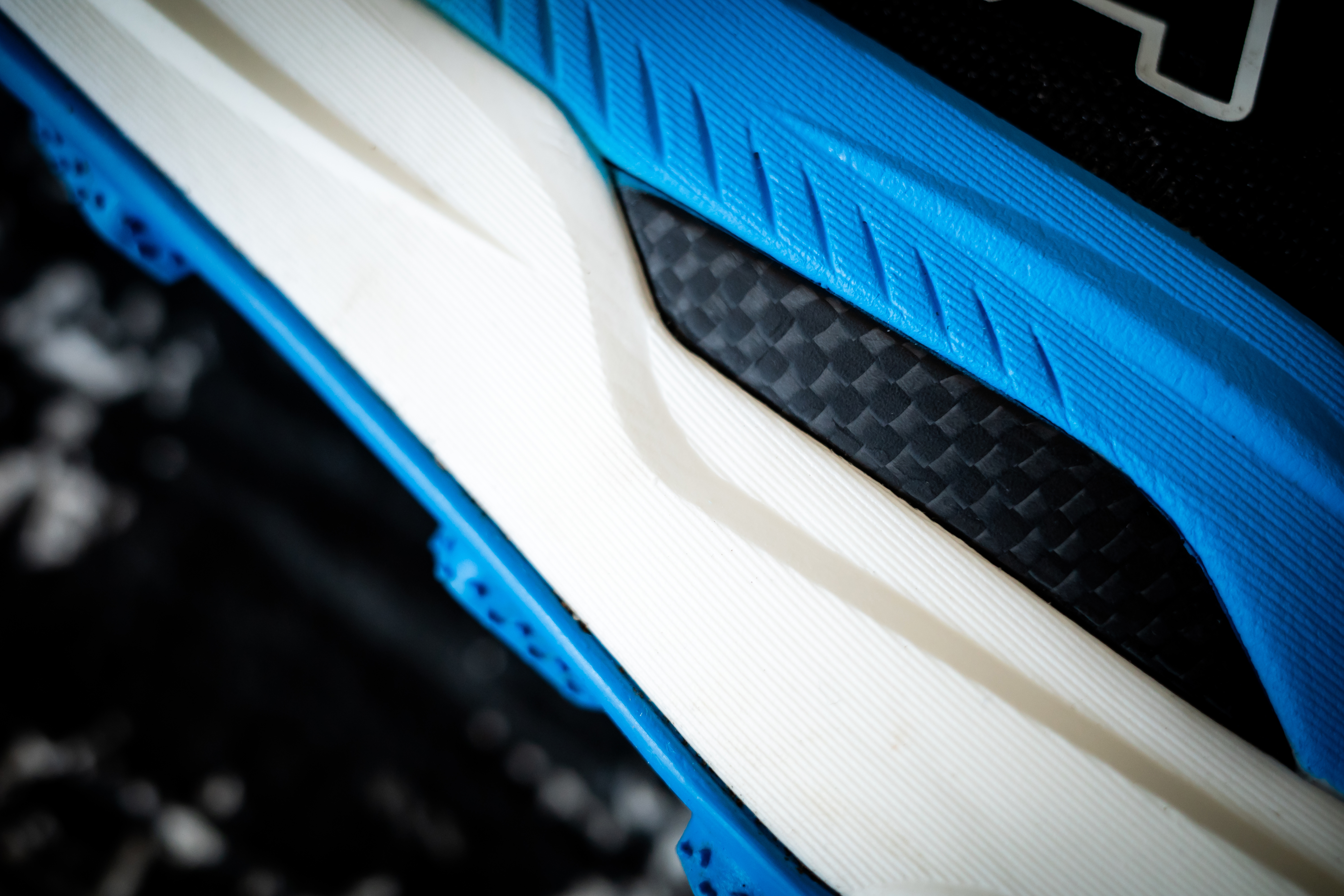
Arguably, the biggest development comes with the parallel carbon plates. They have been developed with ‘winglets’ that come up the side of the shoe, they are a game changer in making the shoe more stable.
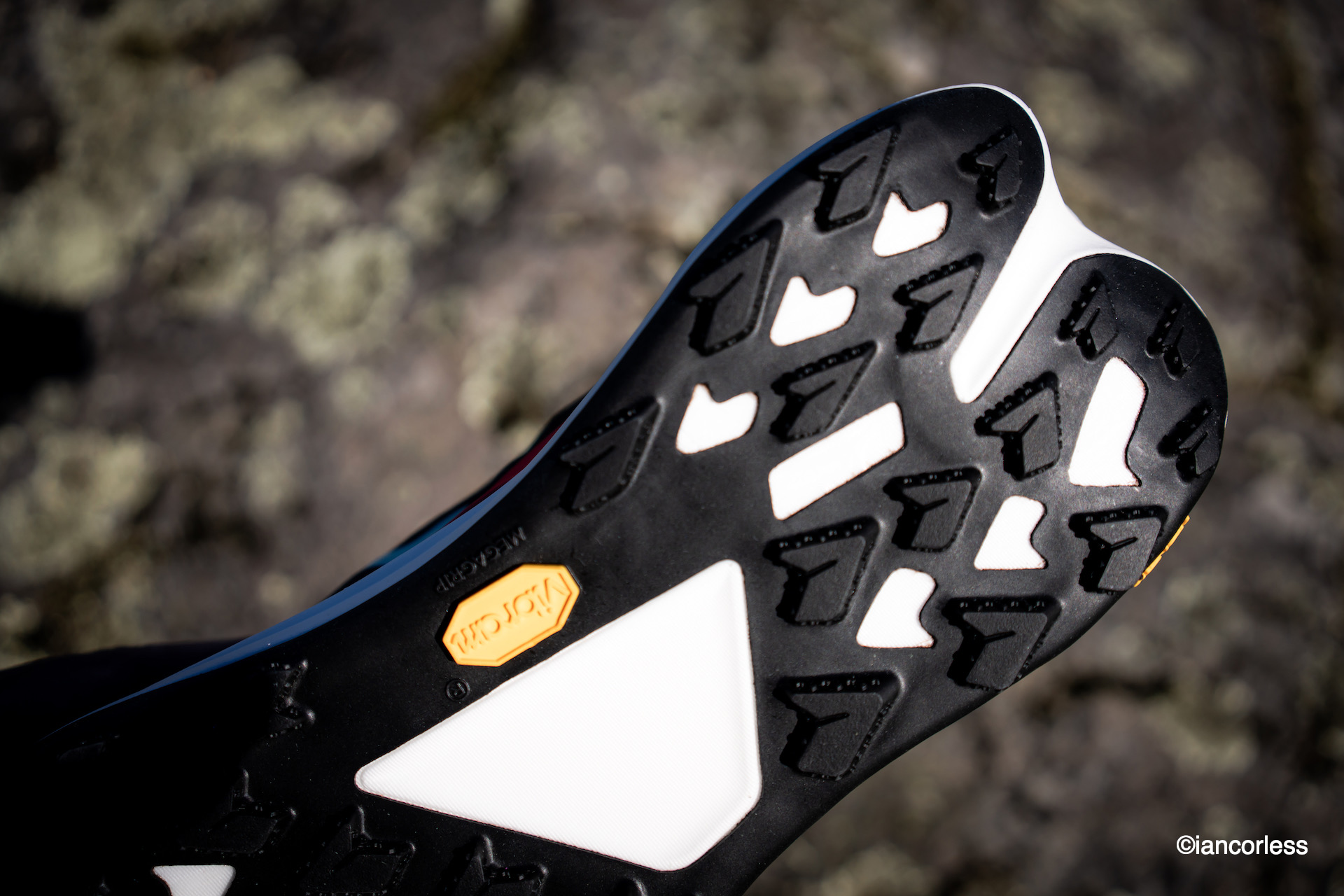
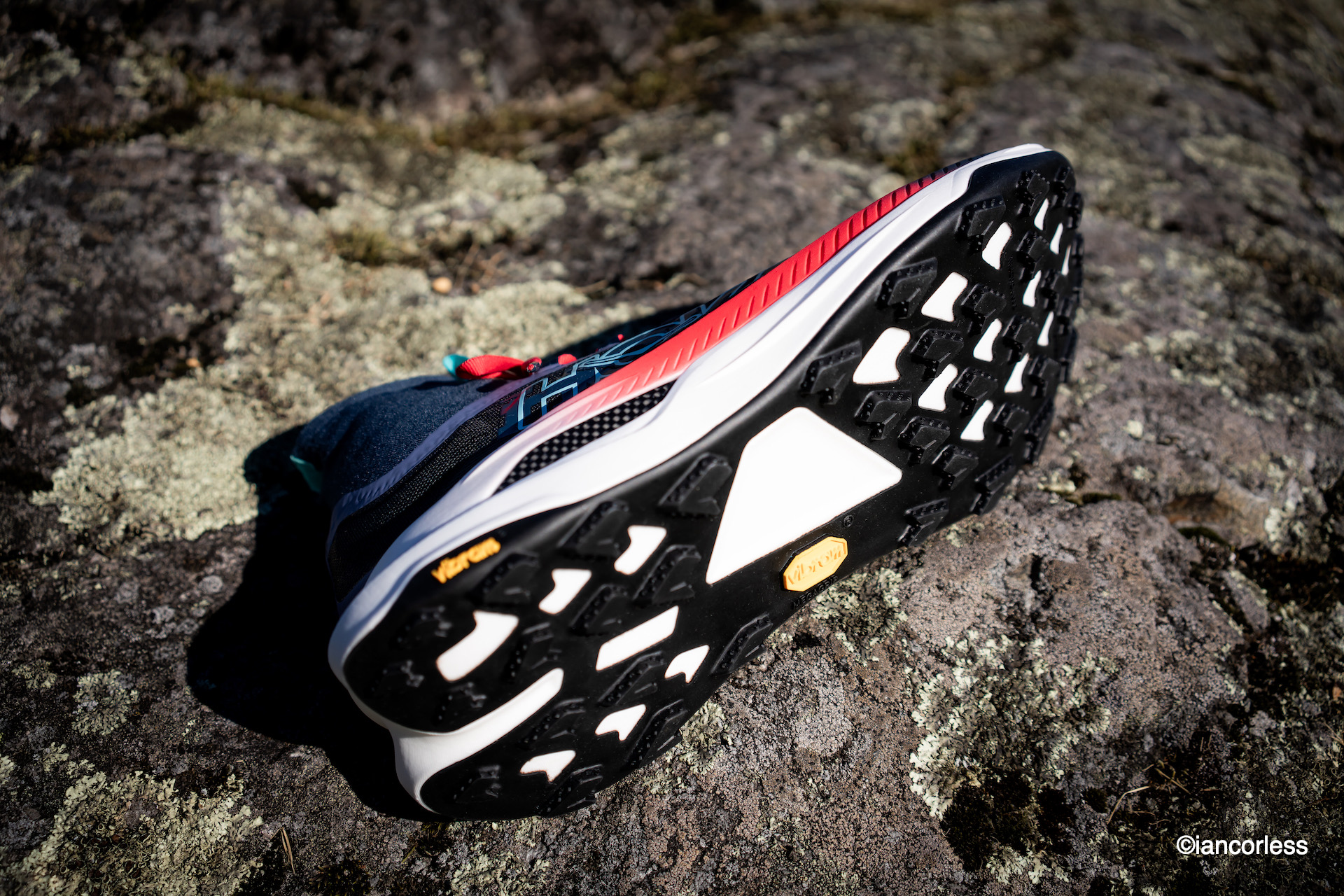
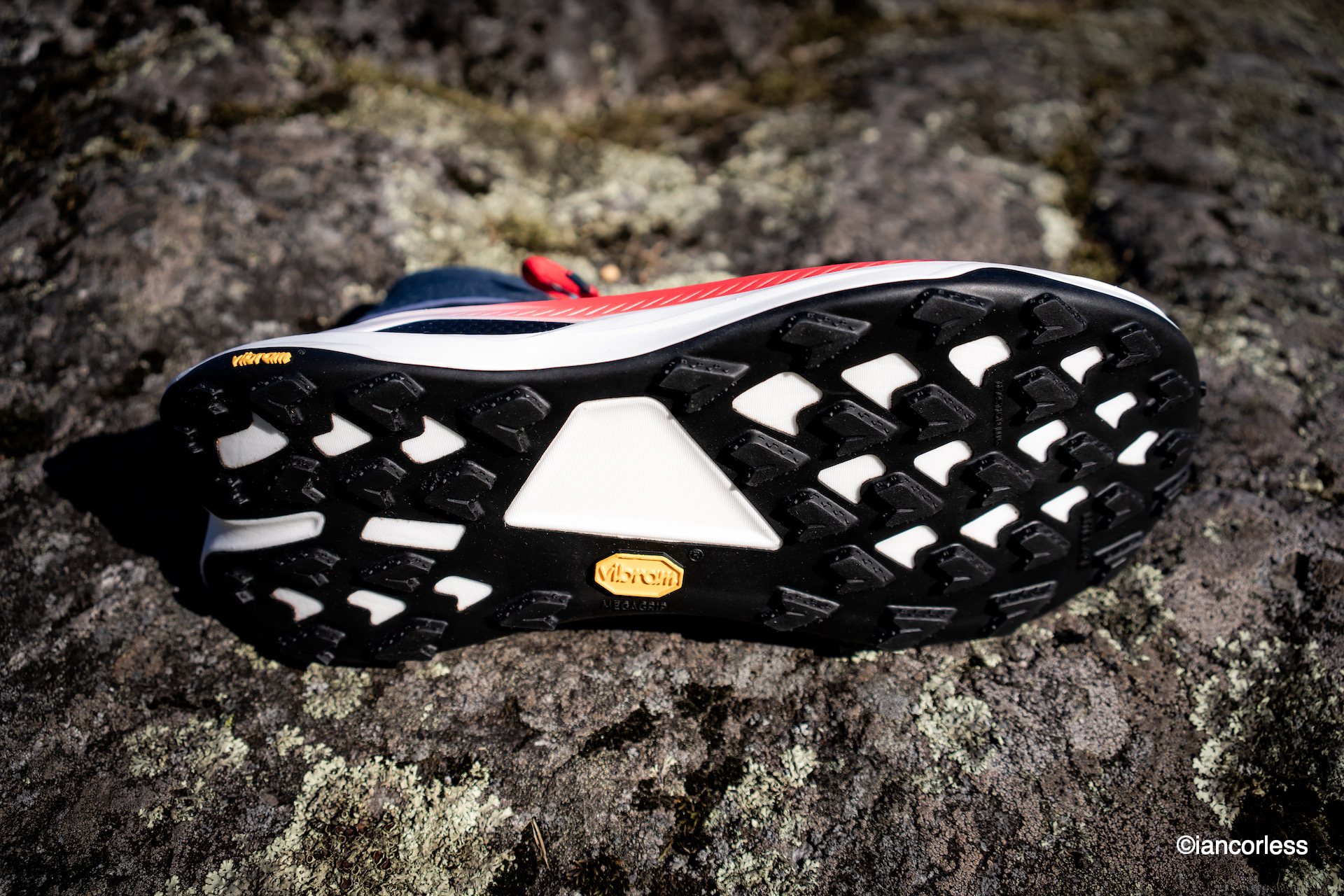
The outsole has also been developed with Vibram. This Vibram Megagrip Litebase covers more of the shoe, in comparison the Tecton X2. The lugs have also been changed to Traction Lugs with 4mm height.
The first thing I noticed was the size of the outsole. Hallelujah, Hoka completely understand that when you increase stack height, you also need to increase the size/ footprint of the outsole. This helps make the shoe stable. An incredible short coming from the new adidas Terrex Agravic Speed Ultra which is so narrow that you constantly roll left to right – the shoe has no stability, it’s a terrible shoe on challenging trail. Here, the Hoka Tecton X3 is supreme, the front is wide, the middle is wide, and the rear actually is not only wide but extends behind the shoe.
The Matryx upper is very durable and at the front of the shoe, there is great toe protection. The lacing system sits on top of the shoe and there is no tongue as the upper is an all-in-one upper. The addition of the gnit gaiter gives the Tecton X3 a unique look.
Cushioning is 40mm at the rear, 35mm at the front providing a 5mm drop, the women’s shoe is 39/34mm.
Sizing is true to size BUT due to the nature of the upper, you may want to try sizing to make sure you have the fit you require. For me, my normal run shoe size was perfect.
I was nervous about the gaiter. Nearly every shoe I have tried with a built-in gaiter I have been disappointed, either the gaiter is not tight enough or, the shoes are incredibly difficult to get on. Not so with the Tecton X3. For sure, getting the shoe on the foot requires more time and patience than a normal shoe, but it’s not problematic. Gladly, the fit around the top is tight. I absolutely love the feel of this shoe on the foot!
Another worry was the lacing. Would I be able to get the secure and locked feeling that I like with a shoe of this nature? Quite simply, yes! A great fit for me. Note I say, ‘for me,’ here. I do think that the shape will heavily influence if the Tecton X3 works for you. My foot fills and occupies the shoe, by contrast, Abelone has a long/ narrow foot, and she found that getting the correct hold/ security was difficult.
Standing up, the comfort level is a wow. They are plush but not squishy. Despite the stack height, they feel stable and secure, a consequence of the wide footprint and the new carbon plate.
The moment you start to run, you feel the bounce and propulsion moving you forward. They are a fast shoe but importantly, they are equally happy running slower and importantly (for ultra) they are extremely comfortable walking and hiking due to the wide and cushioned rear. The responsiveness is superb when climbing and the cushioning, width and carbon plates make downhill a joy.
The gaiter is fantastic, not only does it stop debris, but it adds the secure feeling of the shoe. So much so, when I have moved to other trail shoes, say the Hoka Speedgoat 6, I have really missed the gaiter. You forget you are wearing the Tecton X3 they are som comfortable.
These are a fun shoe; they are exciting and put a smile on my face.
For many years I have avoided shoes with large stack height, and this has not changed when I am running on very technical or mountain terrain, quite simply I need to be lower. However, despite 40/35 cushioning, the Tecton X3 is remarkably stable – way more stable than I anticipated. On single-track, gravel roads and non-technical trails they zip along. Amazingly, on tree routes, rocks, and uneven terrain, the stability level is considerably better than expected – the wide outsole and carbon wings really do a stunning job. Also, the parallel carbon plates can move independently, allowing the outsole to adjust the terrain underneath. There is a limit to how technical you can go, but also, one needs to consider the runner that is in the Tecton X3. If you are an experienced mountain/ technical trail runner, you may well be amazed and where you can take this shoe!
Vibram grip is universally liked, so the Tecton X3 has this covered. I personally am not always a fan of Vibram, especially on wet rock. However, this new Megagrip Litebase with traction lugs is a winner. The lugs are 4mm which is a perfect middle ground, a compromise will come in mud.
CONCLUSION
The HOKA TECTON X3 is my shoe of the year for trail running. It’s matched by the VJ Sport MAXx2 for mountain and technical trail.
Hoka have produced a remarkable shoe. There are key elements that make this stand out above all the competition. Super shoes very often are designed for and around super athletes, the adidas Terrex Agravic Speed Ultra a great example; if you are a great runner, can run fast and you have great form, the shoe is perfect. But if you are just a normal runner, the shoe can be a liability and on technical trail, it is a disaster.
The Hoka Tecton X3 is a super shoe, Jm Walmsley set a course record at UTMB, he then went on to win Western States and just recently, Vincent Couillard ran under 20-hours (19:54) to win the 2024 UTMB. Admittedly, Jim and Vincent were either in a prototype or maybe the Tecton X2.5 but there is a direct correlation to the Tecton X3.
The combination of features, cushioning, gaiter, parallel carbon plates and notably the new winglets and wide outsole make this a cushioned and surprisingly stable trail shoe.
The Tecton X3 is remarkably fast and once you get your cadence ticking over, you feel the carbon plates propelling you forward. But what is key for me is the comfort, feel and great sensations I get when running easy. They just feel great! At slower speeds the shoe feels comfortable and stable. Walking they are superb.
This may well be the first super shoe that works for any runner. That is a bold statement.
Despite all the above, the Tecton X3 will not work for some – If you have long narrow feet, you may find a compromise on fit.
The gaiter gives a secure and tight feel, this may not be for everyone.
There is one negative, due to the style of the shoe, the Matryx upper and the gaiter, the shoe does feel warmer than a normal shoe. Something I am happy to accept.
Finally, they are not cheap, however, run shoes these days seem to hover around the £200 mark, especially super shoes that push development and technology.
The adidas Terrex Agravic Speed Ultra shoe was one of the most anticipated trail shoe releases of 2024. Let’s be honest, this shoe was a long time coming…. We had seen early versions of the shoe on the podiums of Transgrancanaria, MIUT, Transvulcania, Western States, UTMB and more. There was a soft launch of the shoe at UTMB 2023 that only whet the appetite of runner’s even more, however, it was the spring of 2024 before the shoe became commercially available.
adidas did a great job of building the anticipation and it is fair to say, that until the release of this new shoe, adidas were not really considered a contender in the trail market. This new incarnation most definitely changed things and I have seen the shoes on countless runner’s feet, in countless races, all over the world in 2024.
I have been testing the Terrex Agravic Speed Ultra shoes for a year. I picked up my first pair in August 2023 and I have been through two pairs in the last twelve months.
The previous ‘Speed Ultra’ shoe is my personal favourite adidas shoe, it was developed with the input of Tom Evans and was the shoe the helped Tom place third at his first Western States. This new incarnation has nothing to do with the one that has gone before, the only connection, sadly, is the use of the Speed Ultra name. So, if you liked the first shoe, there is no guarantee you will like this new one! They are like chalk and cheese.
A whopping 42mm of cushioning at the rear, 34mm at the front gives an 8mm drop. The shoe has Energy Rods and an extremely curved rocker. The outsole is Continental rubber with 2.5/ 3mm lugs. The cushioning is Lightstrike Pro. The upper is extremely light and breathable with overlays for durability and a gusseted tongue provides foot hold and support. Sizing is hit and miss, so, I recommend trying this shoe on before purchasing to ascertain what size is correct for you.
The shoe has the ‘Terrex’ branding, which means trail running, but it feels like an adapted road shoe, if you are familiar with the Adizero range, there are similarities.
The shoe is promoted as ‘Our fastest trail running shoe yet.’ And in all honesty, it’s hard to argue with this based on the results of the adidas Terrex team in the last two to three years, and just recently, once again, we saw this shoe on the podium of Transvulcania, OCC and the CCC.
But is this shoe for you?
I must be honest here, it is definitely NOT for me. I have tested and tried to adapt wanting to really like this shoe, but I just don’t get on with it. It’s light, it has an incredible propulsion phase and it’s very fast. But…
If you go on any trail with just minor technicality, the shoe is horrendously unstable. Quite simply, it’s too high and the outsole footprint is not wide enough, especially in the middle and rear. This causes the shoe to twist left and right; they are an ankle injury waiting to happen.
The rocker is so pronounced, that walking is unpleasant. Of course, it is maybe fair to say, this is not a shoe to be walking in! But any shoe that has the ultra-tag in it’s name, will almost certainly mean that walking will be required at some point, maybe with the exception of the top athletes, for example, the adidas Terrex team!
So, is this shoe for you?
The answer is yes! If you are fast, have great running form (forefoot striking) and are training or racing on fast, single-track trails with little or no technicality. Go buy them.
However, if you are an average trail runner like me, looking for a comfortable and durable shoe that will see you through many training days or ultra races, with and without technicality, then no. This is not a shoe for you!
Just as the Nike Alphafly for road running will not make me Kipchoge, the Terrex Agravic Speed Ultra will not make me Tom Evans. The shoe may well be state of the art and fast, but they need a fast athlete inside the shoe, otherwise, they are actually more of a liability.
IN USE
This is a premium trail shoe from adidas, years of development and with a string of results from the Terrex team that makes you desire to rush out, get your own pair and run like Ruth Croft or Tom Evans and set PR’s, CR’s and top the podium of the races that you enter.
No matter how good the shoe, 99.9% of us just don’t have the Ruth or Tom natural ability to bring the best out of a super shoe like this.
This is a fast shoe, four pronged Peba Energy Rods are encapsulated between a Lightstrike Pro midsole. An extreme rocker and 42/34mm cushioning make this a beast to be unleashed. It’s a Ferrari for trail running on non-technical trail.
It is bold in looks, so much so, even the three stripes are subtle with TERREX in striking in white. There is no mention of adidas!
When you put the shoe on, you immediately feel the height and sadly, you also feel the instability. I am going to scream this again and again, the ‘footprint’ is not wide enough for the stack height of the shoe.
The foot hold from the gusseted tongue is very good and the sawtooth laces work well. However, the tongue lacks padding and when the laces are tied tight, there is pressure on the navicular bone. The heel cup is minimal but holds well. The toe box is wide and expansive which only makes the middle and the rear of the shoe feel very narrow. The rocker is immediately noticeable, you rock while standing still. If you are NOT a forefoot runner, forget this shoe. If you are a heel striker, you may as well leave this review now!
The combination of rocker, rods, cushioning and amazing propulsive phase make this shoe fly. As soon as you build cadence, the shoes start to propel you forward asking you to go faster and faster. I quite simply cannot keep up with the shoe. This is a positive if you have the fitness, speed and run form to do this.
Uphill and climbing, the shoes work exceptionally well. Downhill not so. The instability really comes to the fore and they just feel scary and unstable.
The shoes zip along and are nimble, lightweight and quick on slick trails, gravel roads and single-track.
Encounter rocks, tree routes, uneven terrain and the ride becomes worryingly unstable with constant twisting and rocking. They are not good on anything technical. The Energy Rods work like fingers, so much better than a single plate (also seen in Hoka Tecton X2 and the new X3) as it allows more adaptability and flexibility on trail, but here it doesn’t work due to the stack height and narrow footprint.
Continental rubber for the outsole is good with excellent grip, however, with 2.5/3mm lugs, this is only ‘just’ a trail shoe. But I guess that is the point! This shoe is meant to be fast for a Western States type of course where ‘grip’ is not really required. They are not for tough, technical and challenging mountain terrain.
Ultimately, don’t be fooled by the performances of the adidas Terrex team, they are superb athletes with the speed, great run form and ability to really make the Terrex Agravic Speed Ultra shine. If you are running slower, trying to walk or just out for an easy run, these shoes are clunky and awkward.
The shoe also requires adaptation. Early runs will work muscles in a different way, particularly calf and glutes. If you get these shoes, adapt over time and distance adding a day off with another shoe between runs until you feel adapted.
I this a bad shoe? Absolutely not, it is state of the art and the results of the adIdas Terrex team endorse that. A fast shoe for slick trail and on the right feet a real joy.
Sadly though, most of us are not fast, don’t have great run form and this shoe will not only be a waste of money, but ultimately may well result in in a worse performance and maybe injury, especially if trying to run on technical terrain.
The Terrex Agravic Speed Ultra is quite simply not for me!
However, should you wish to pursue an adidas shoe, the Terrex Agravic Speed (review to follow) with 34mm/ 26mm cushioning and no Energy Rods may well be a better consideration. I have used this shoe considerably more than the big brother Terrex Agravic Speed Ultra with better sensations and run feel. Sadly though, despite the reduced stack height, it is still worryingly unstable on technical ground.
Finally, if a super shoe is what you require, the Hoka Tecton X3 is a revelation. Hoka understand that if you increase stack height, you must also increase the platform on which this increased height sits. The Tecton X3 has a superbly wide base at front, middle and especially the rear with a great Vibram outsole. In addition, the two parallel carbon rods have now been developed with ‘wings’ that come up the sides of the shoe providing a considerably more stable platform. This is how a cushioned, plated super shoe should feel. Yes, it’s a super light and responsive shoe and while the adidas requires a top athlete and great running form to bring out the best of the shoe, the Hoka does not. The Hoka is superb when running fast but equally at home when running slower or walking. A full review HERE.































 IAN CORLESS