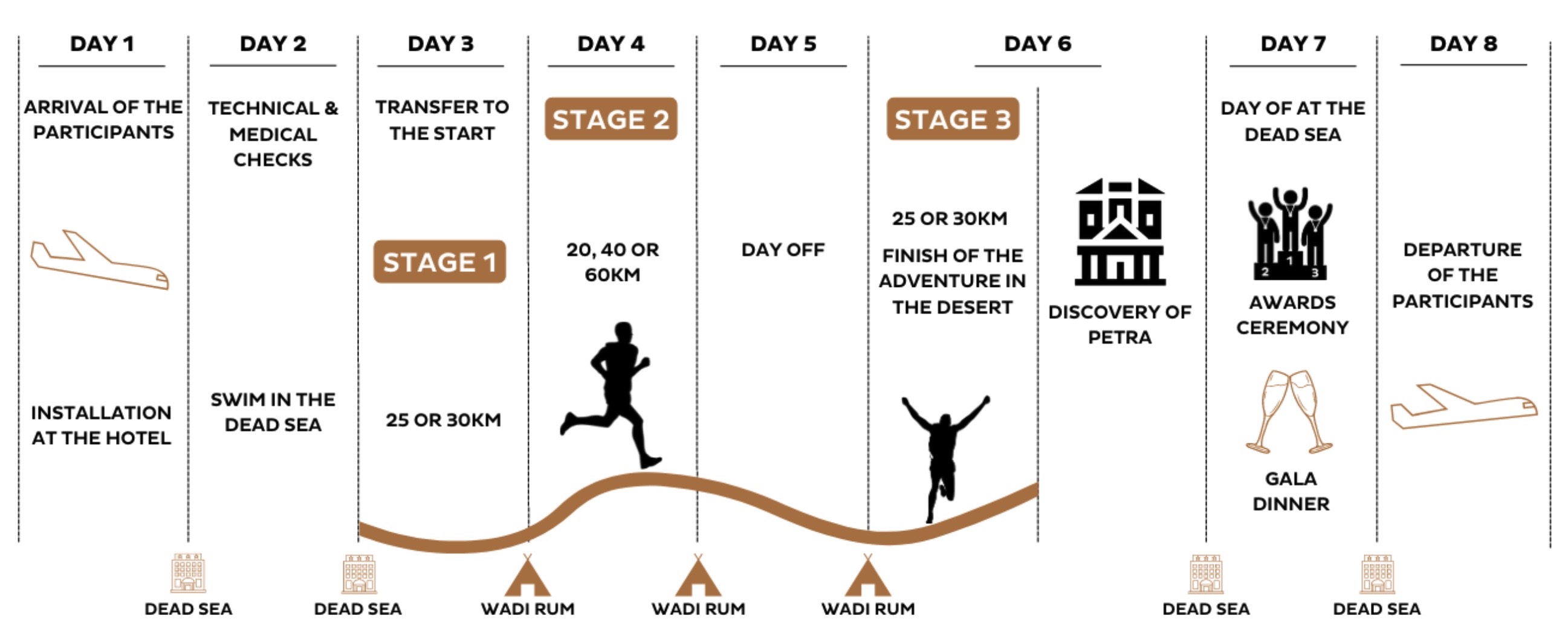
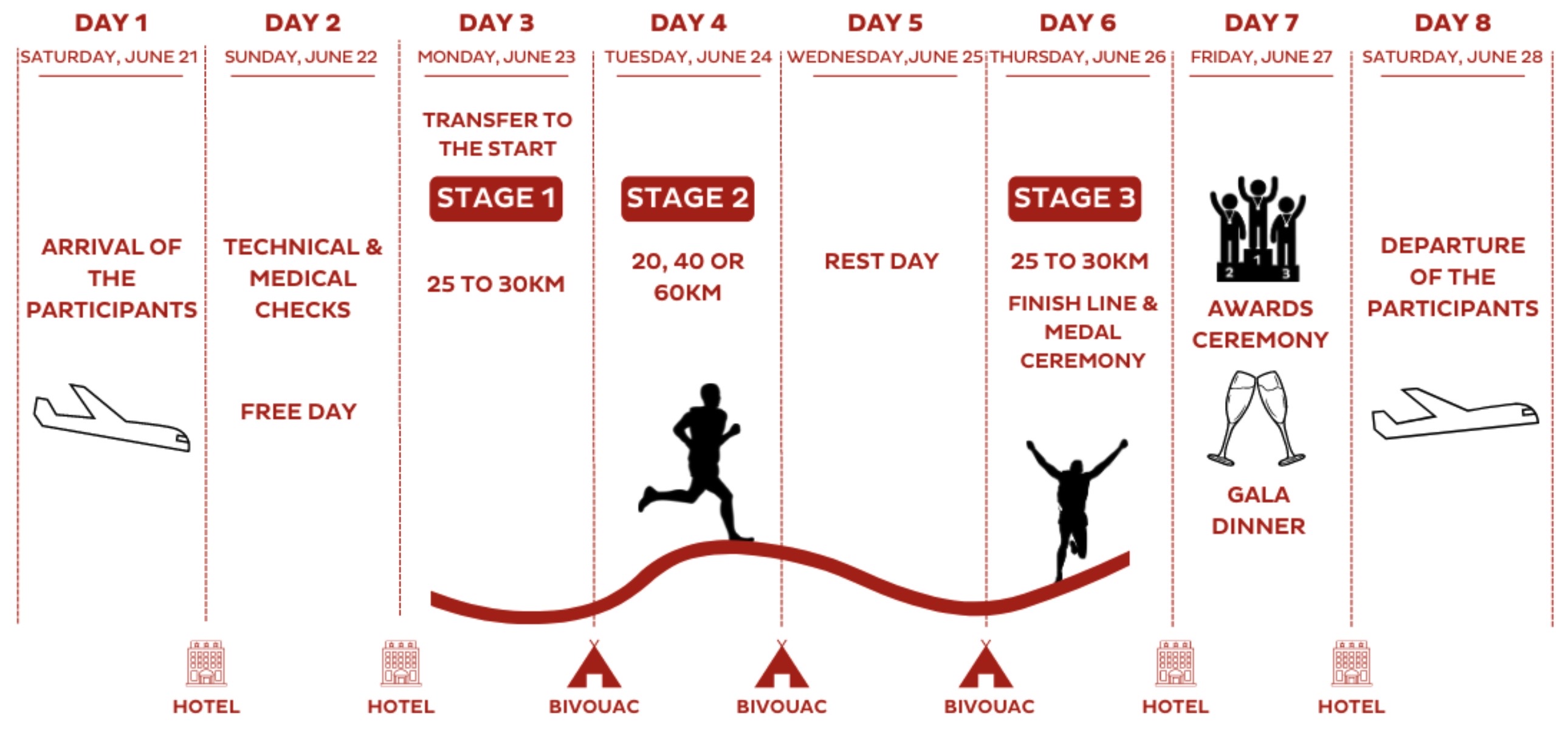
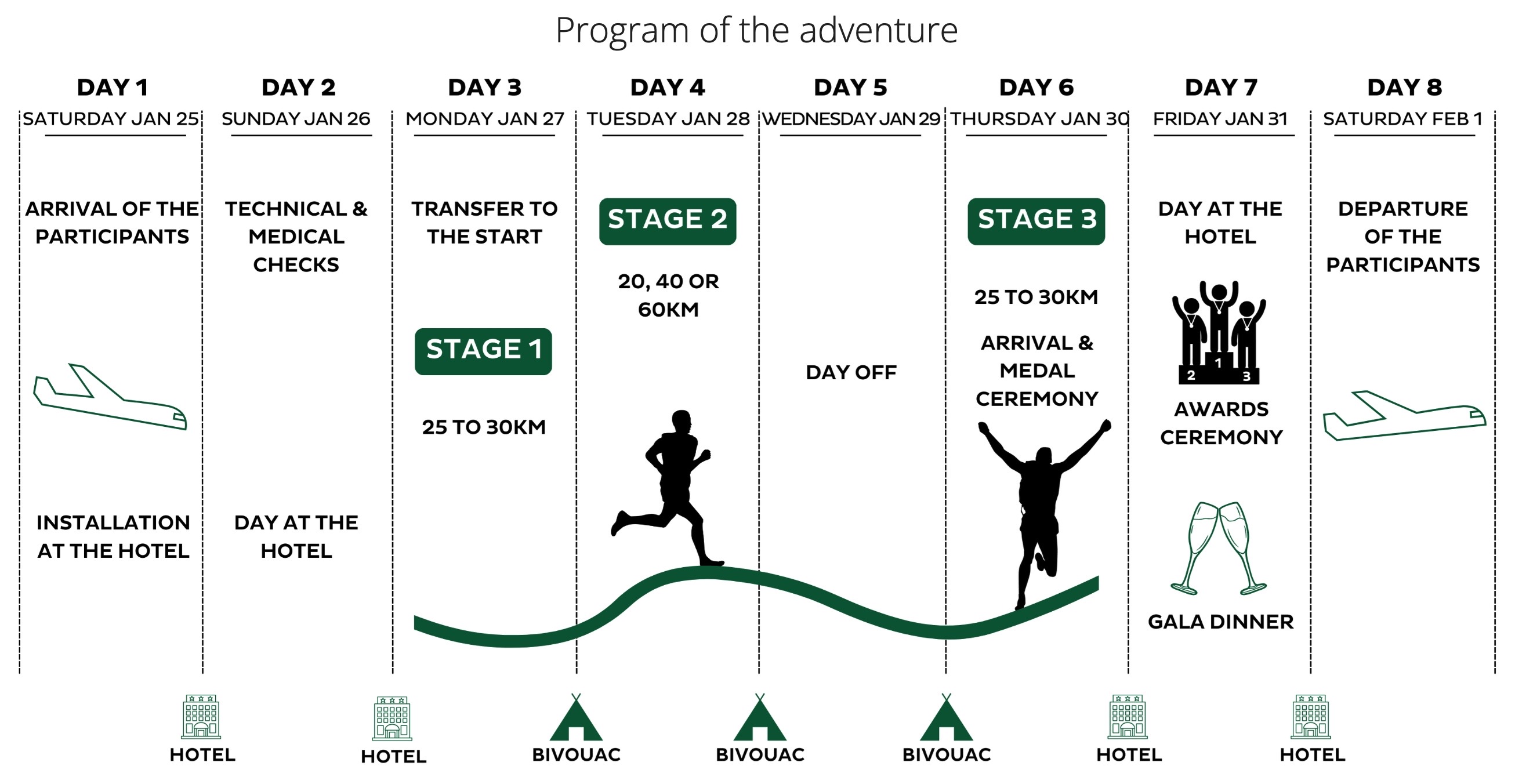
Both races will follow the classic MDS format with 3-stages taking place over 4-days. This allows participants to choose a distance of 70, 100 or 120km’s.
Day 1 will have arrival in Jordan or Turkey.
Day 2 Technical and admin checks.
Day 3 Stage 1
Day 4 Stage 2
Day 5 Rest Day
Day 6 Stage 3 followed by night at the race hotel.
Day 7 Day at the hotel and gala dinner.
Day 8 Onward travel
MDS Jordan is a firm favourite in the MDS list of races with two editions taking place in each year. May and November. A very special race that mixes the Dead Sea with the deseret of Wadi Rum.
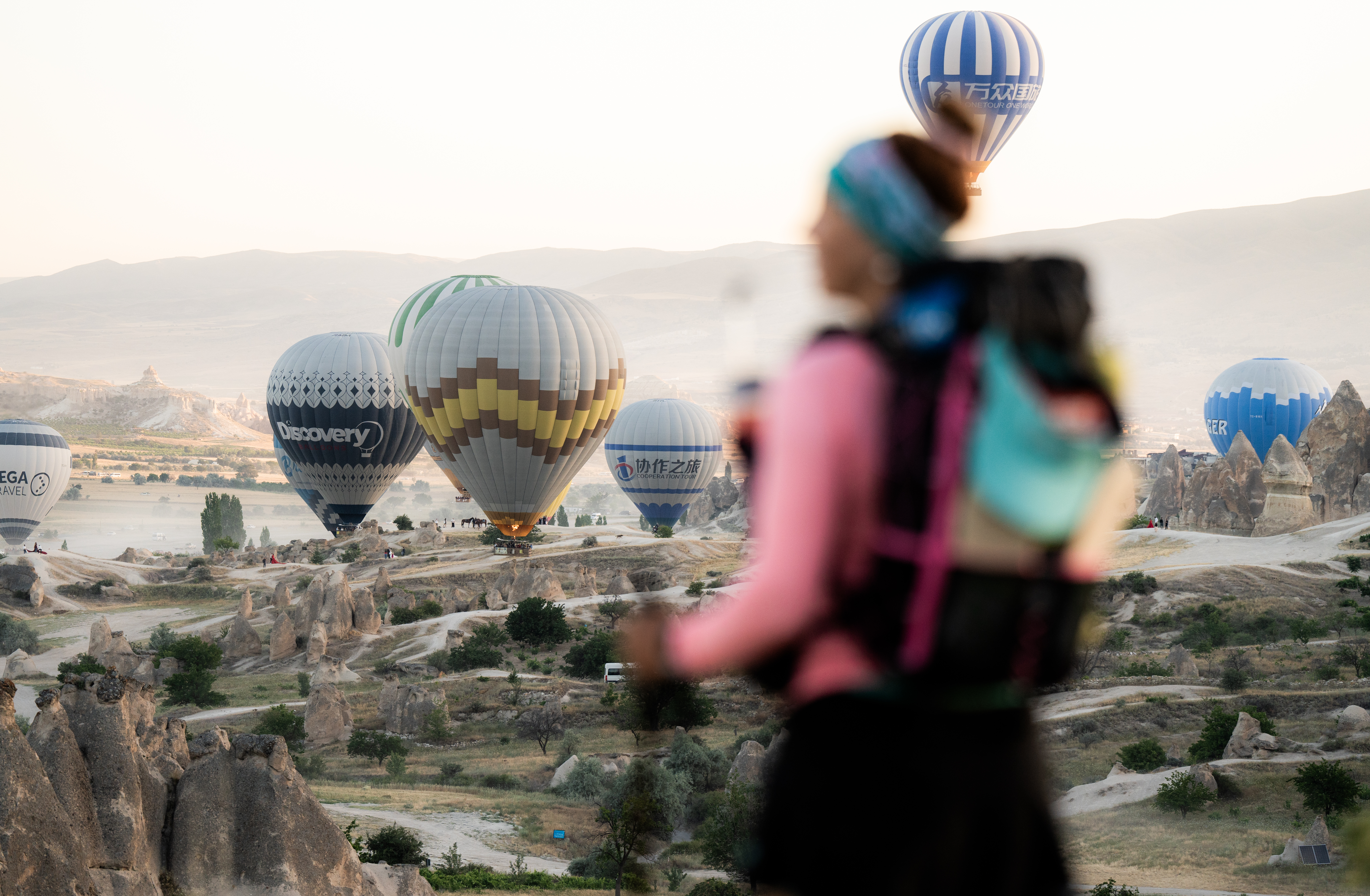
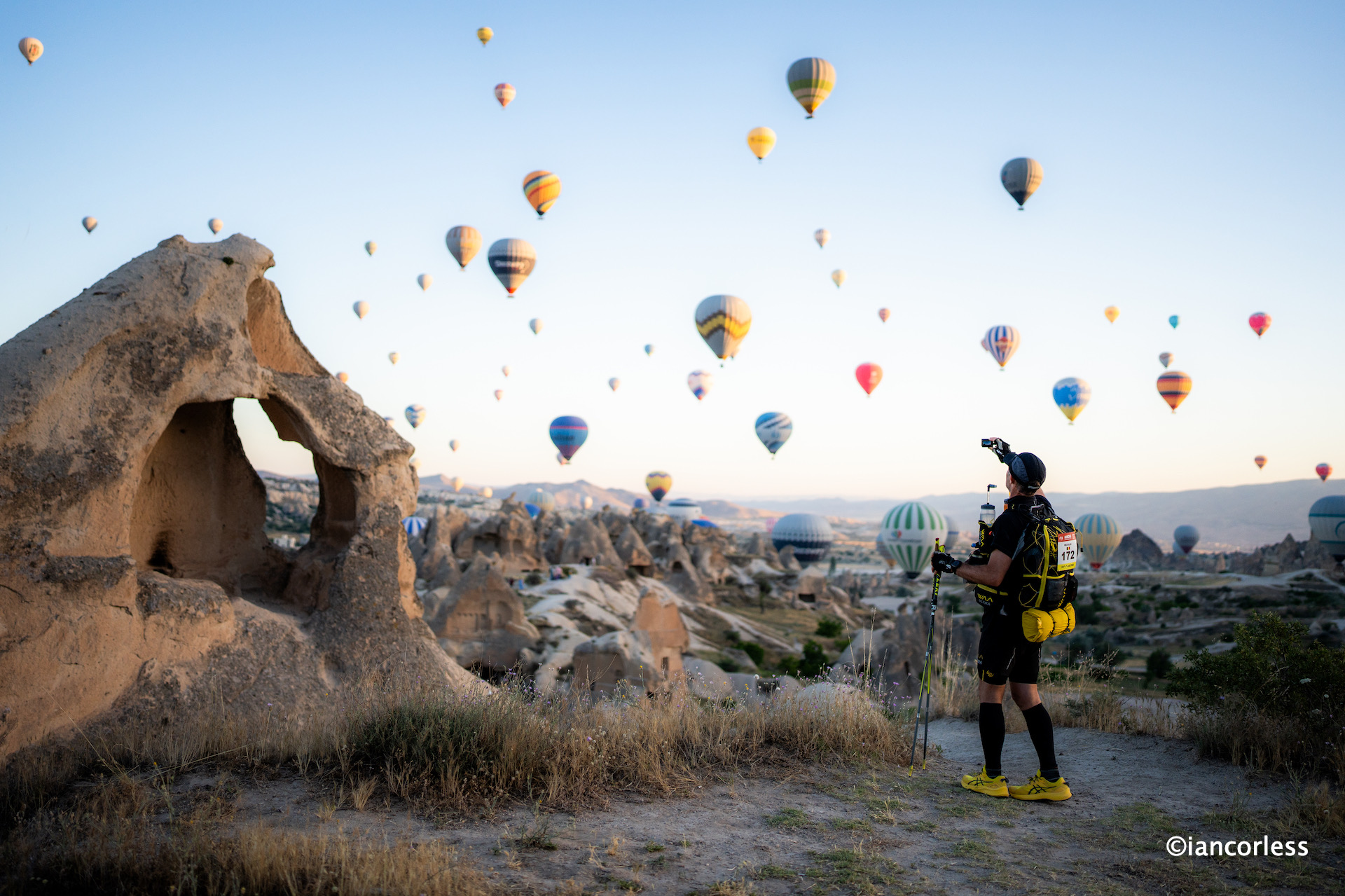
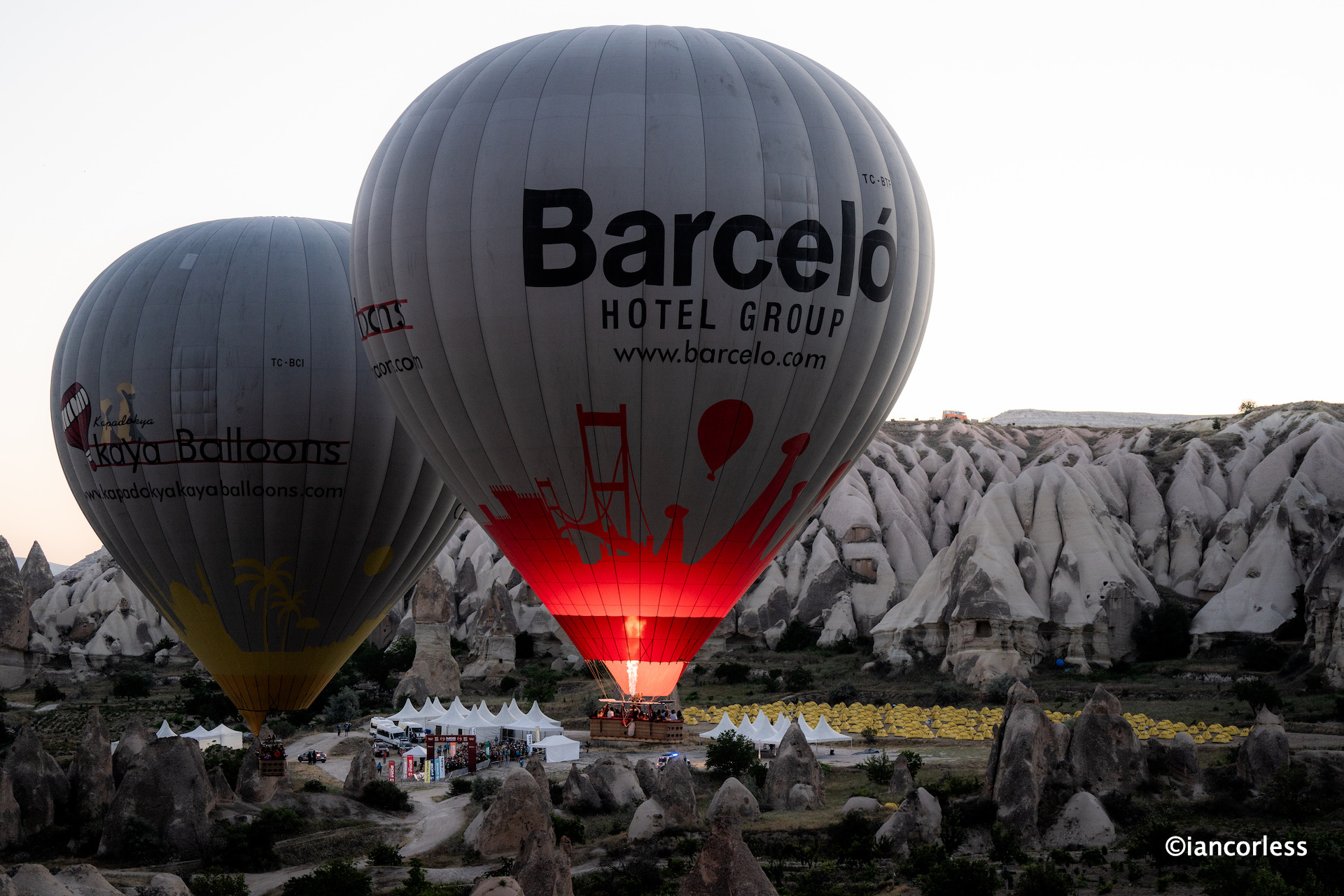
MDS Cappadocia had a first edition in 2024 and what an edition! Unique landscapes, hot air balloons and amazing light. A departure for the MDS brand with considerably less sand and more technical trails. A stunning addition to the MDS line-up.
What is the MDS?
The MARATHON DES SABLES is a unique adventure, shared by thousands of enthusiasts since 1986.
To differentiate the full distance race of 250km’s, Marathon des Sables will now be known at MDS The Legendary, reflecting the legendary status of this iconic event and its long history as a pioneer of the stage racing and multi-day format.
The ‘HMDS’ format while still follow the same protocols as before but has now dropped the ‘half’ title and moving forward, events will be called MDS Jordan, MDS Morocco, MDS Cappadocia and so on.
The MDS events are a one-week sporting adventure that combines the discovery, tavel, meeting new people and physically challenging yourself in a self-sufficient manner.
MDS format is as follows, after spending 1 or 2 nights in a hotel, you will go to the desert for 4 days of adventure and typically 3 or 4 nights in bivouac.
Once the race is over, the participants return to the race hotel offering relaxation time and a gala dinner.
The MDS exists in three different formats so that you can choose a distance based on your own personal requirements, needs and fitness:
Stage 1 : 25km to 30km
Stage 2 : 20, 40 or 60km
Rest day
Stage 3: 25km to 30k
The difference between the formats is on stage 2, where, depending on your form, you can choose 20, 40 or 60km.
During the MDS you will spend your nights in the heart of the desert, in the MDS bivouac in a tent supplied by the organisation.
The MDS is self-sufficient, you need ALL your equipment and food to last the duration of the event. Water is the only item supplied.
With all MDS events, if you do not finish, you receive a free entry for the next edition.
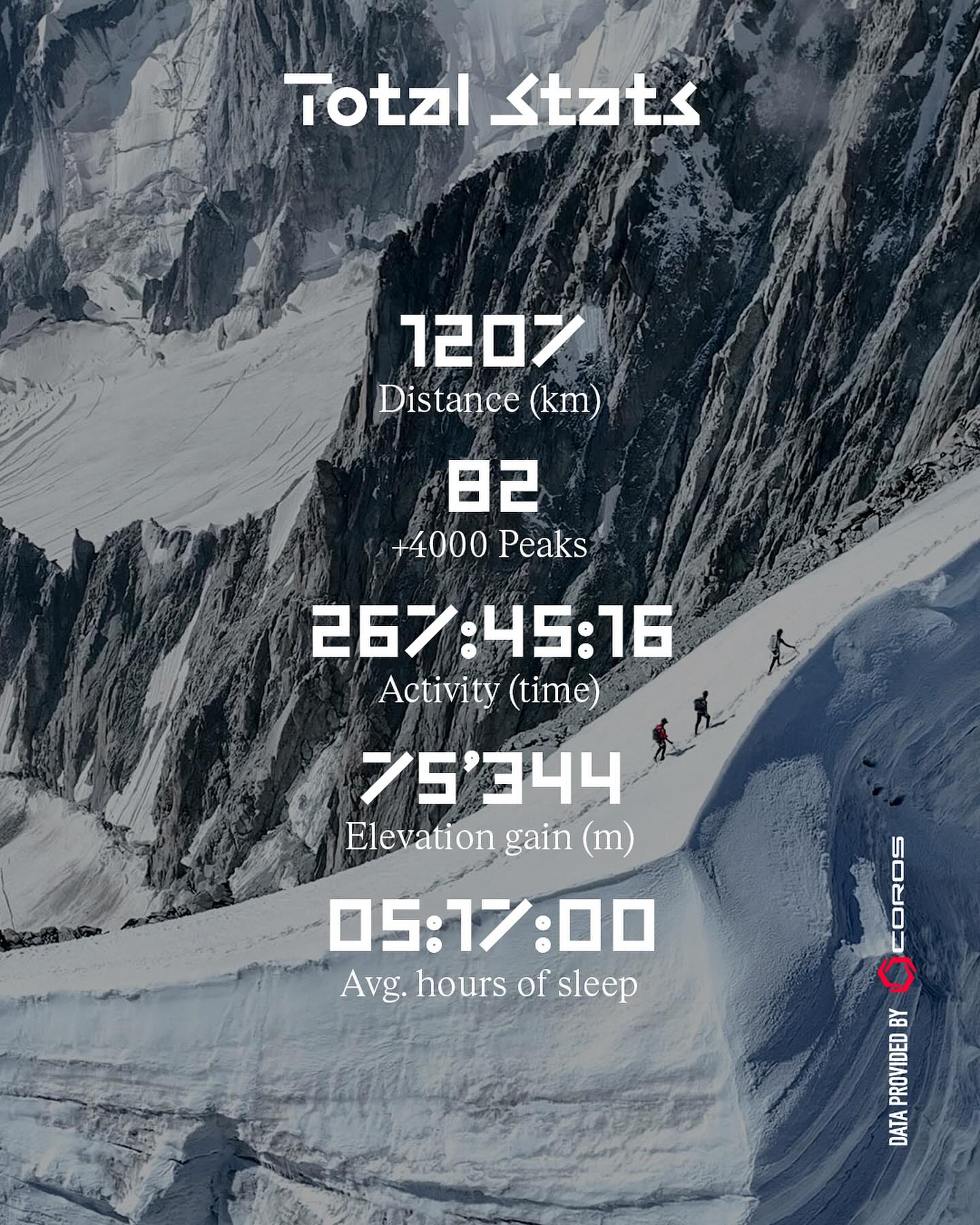
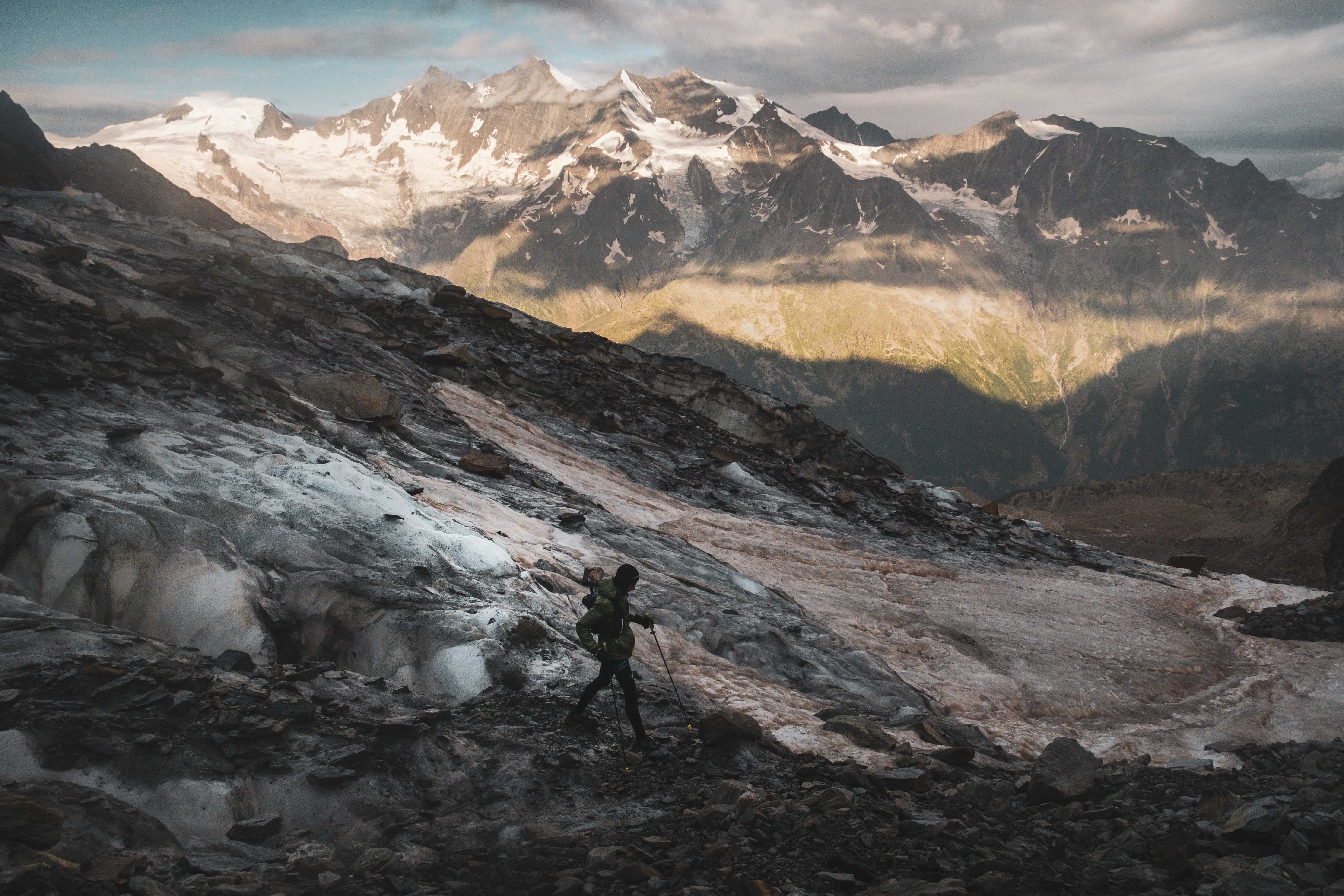
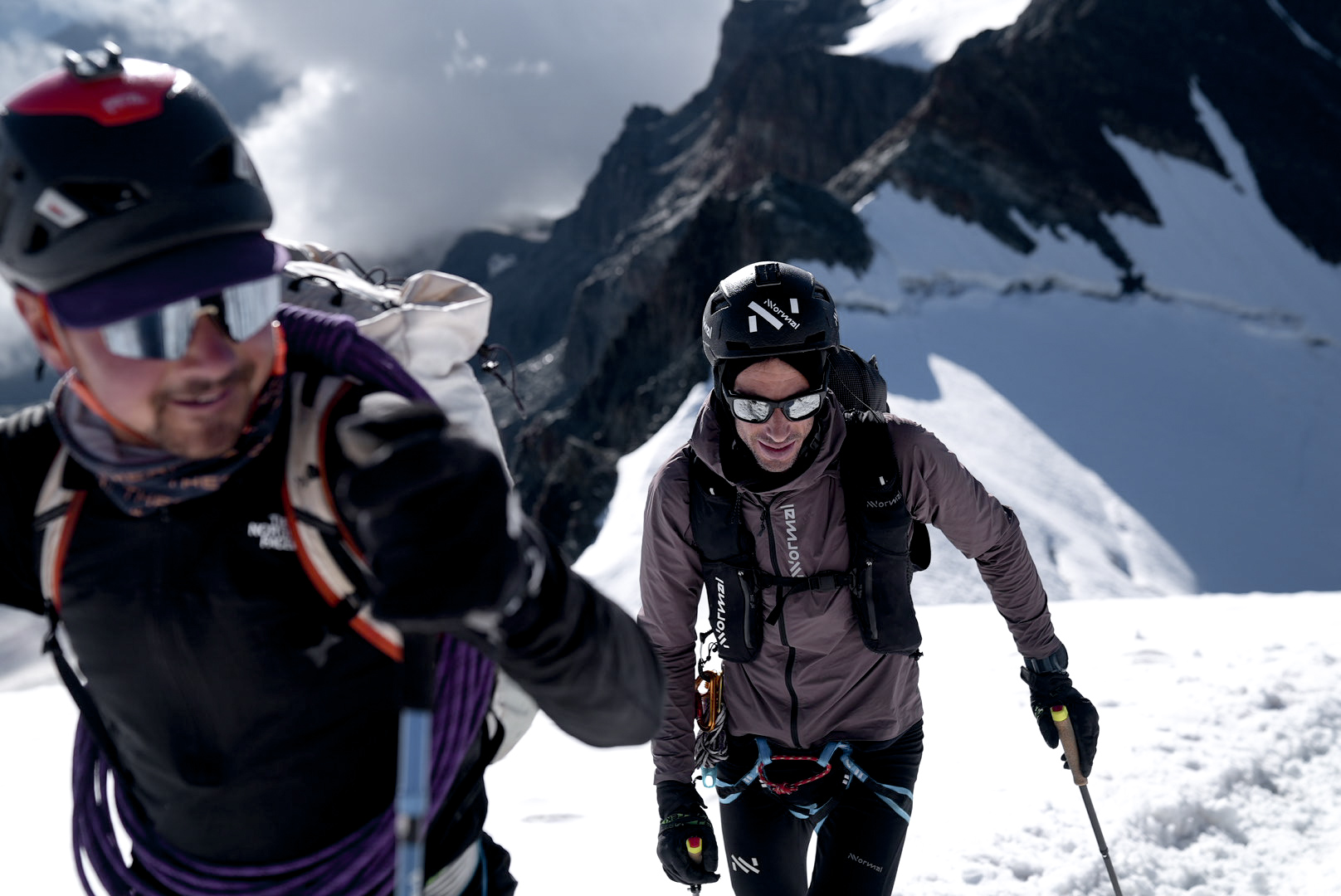
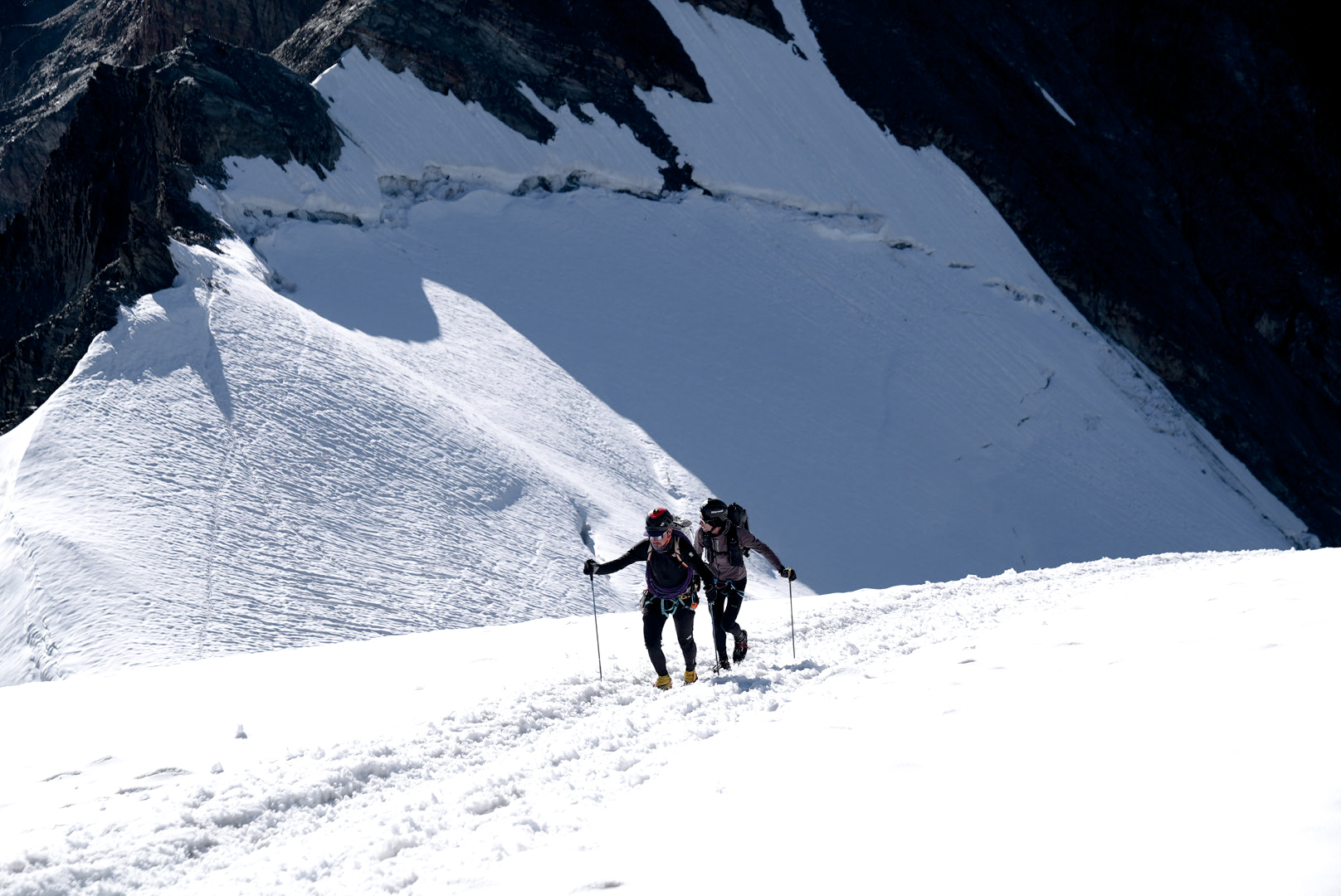
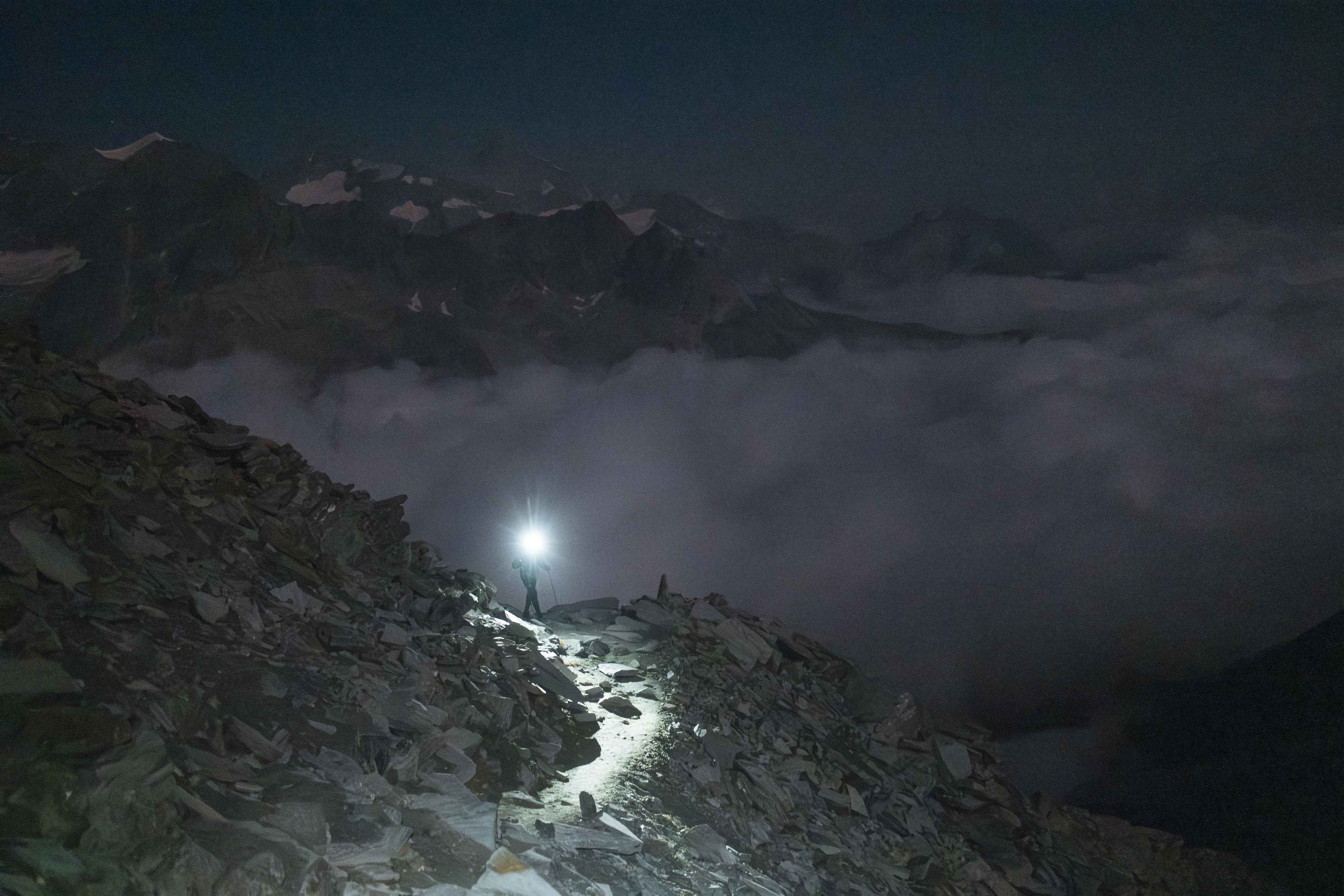
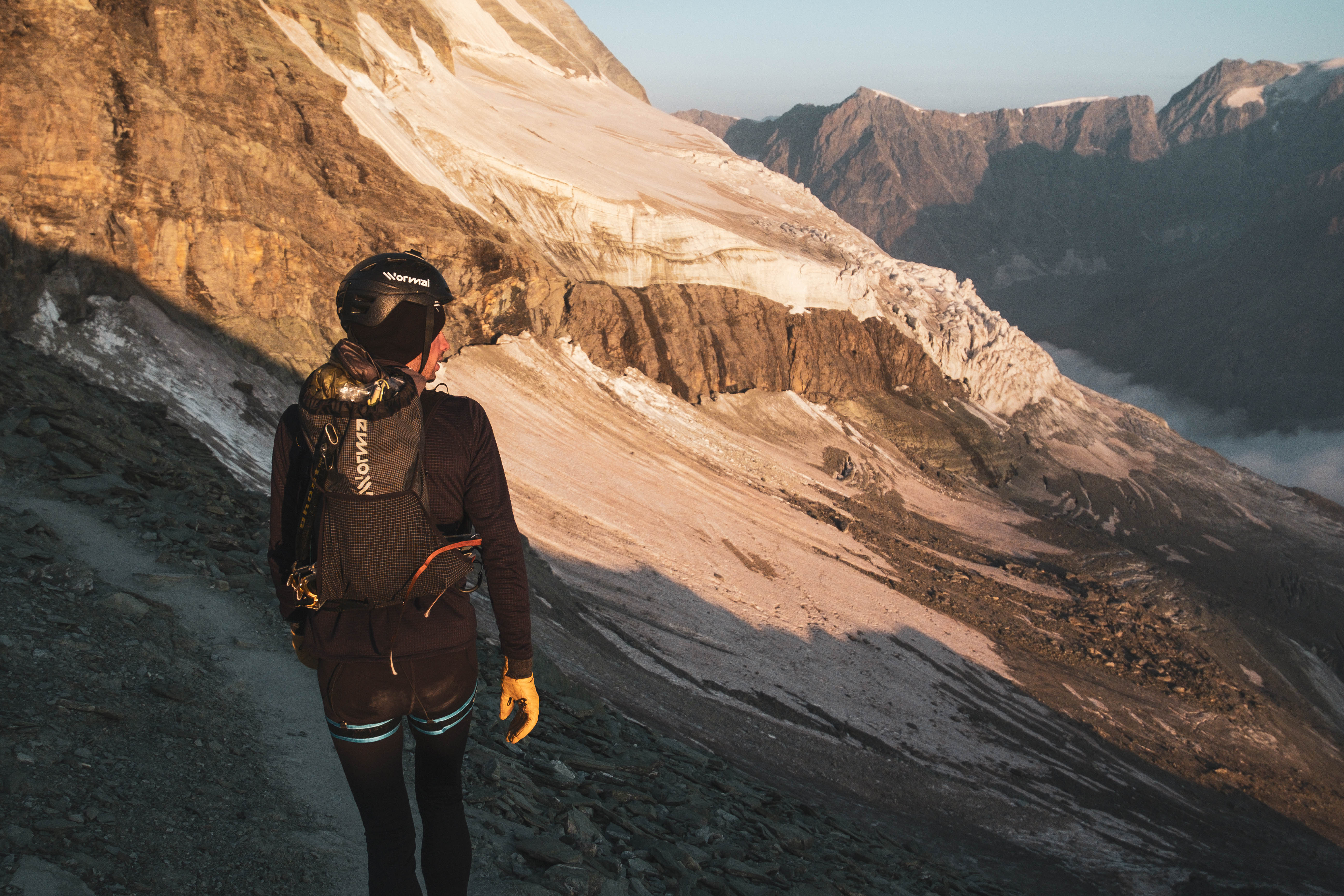
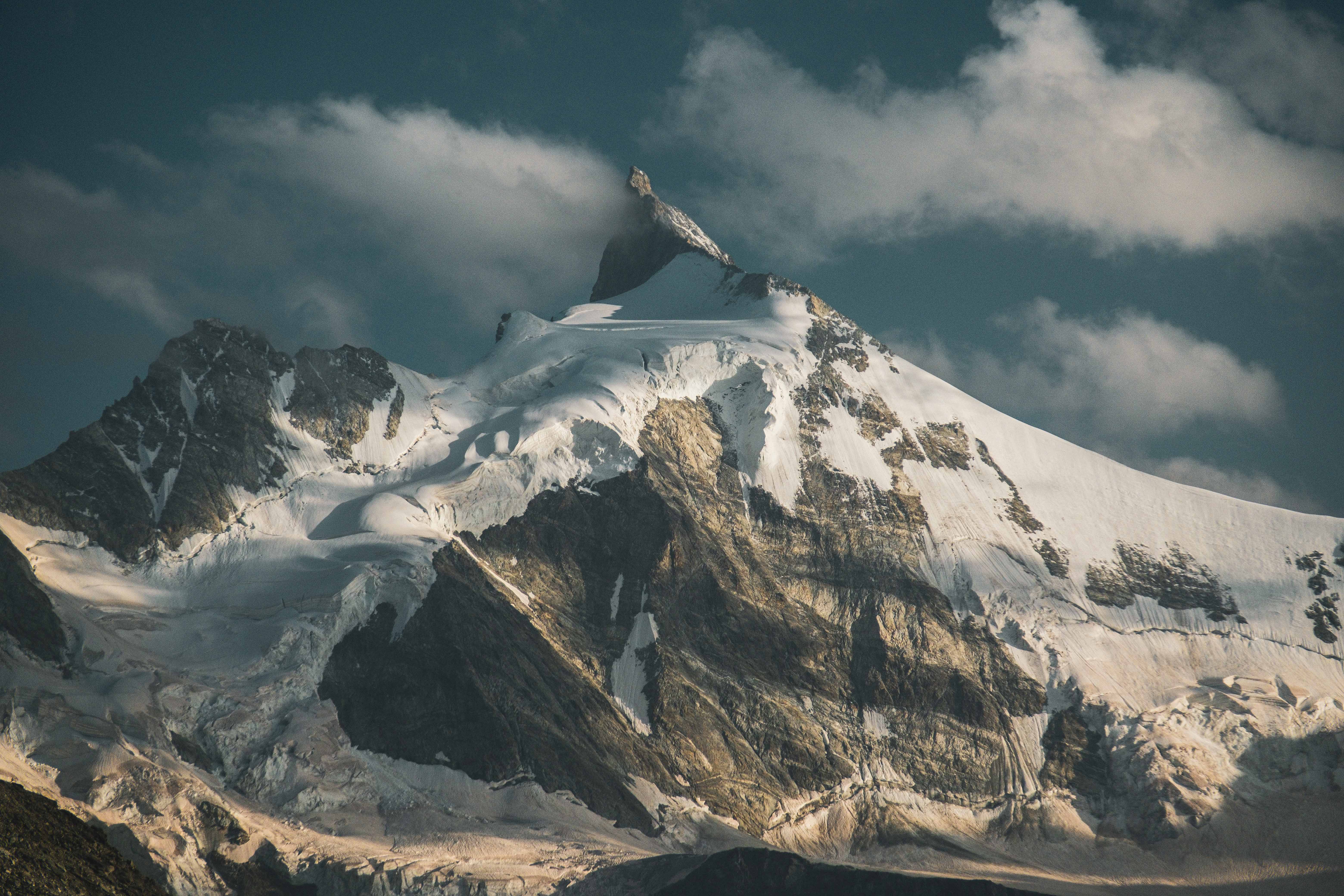
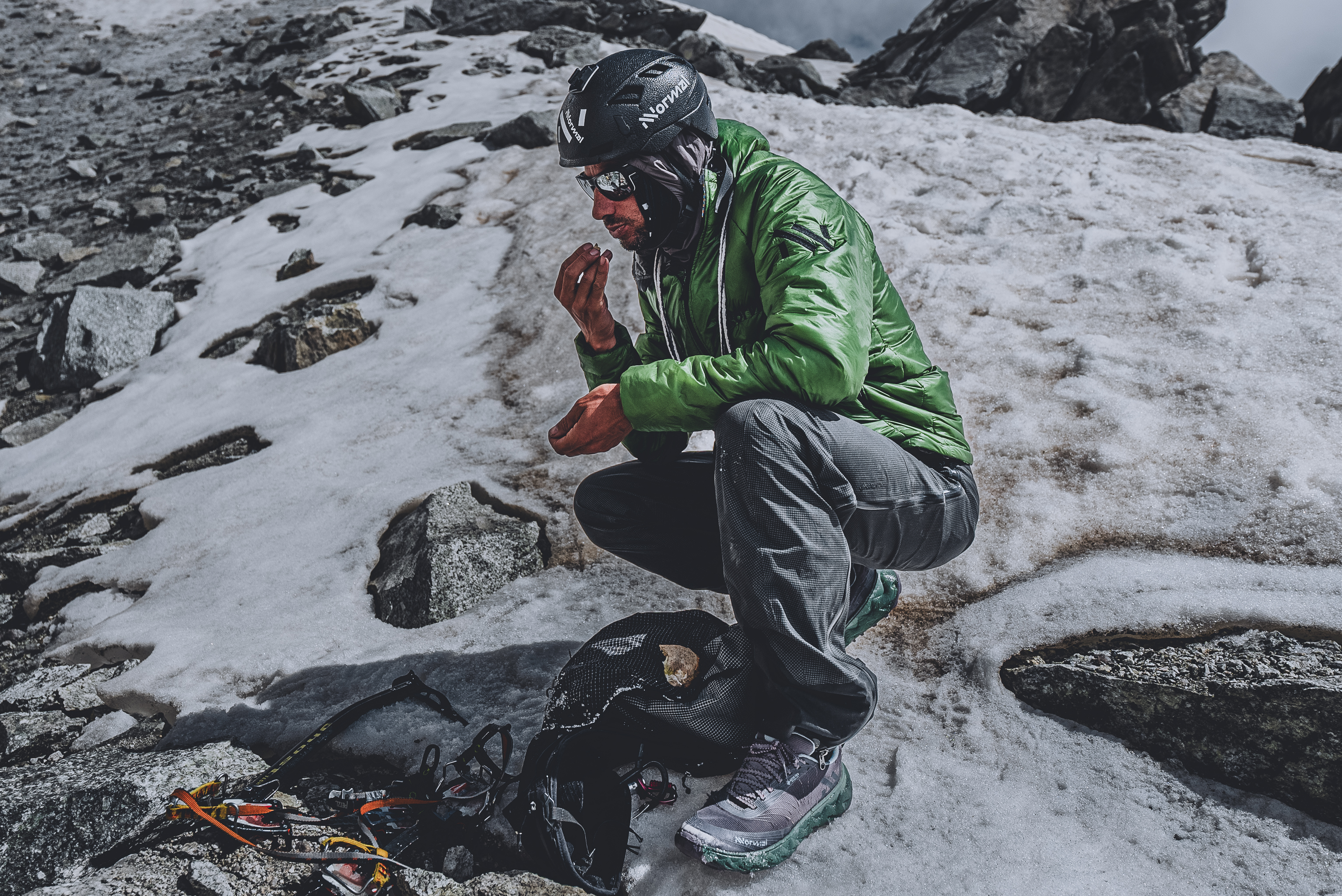
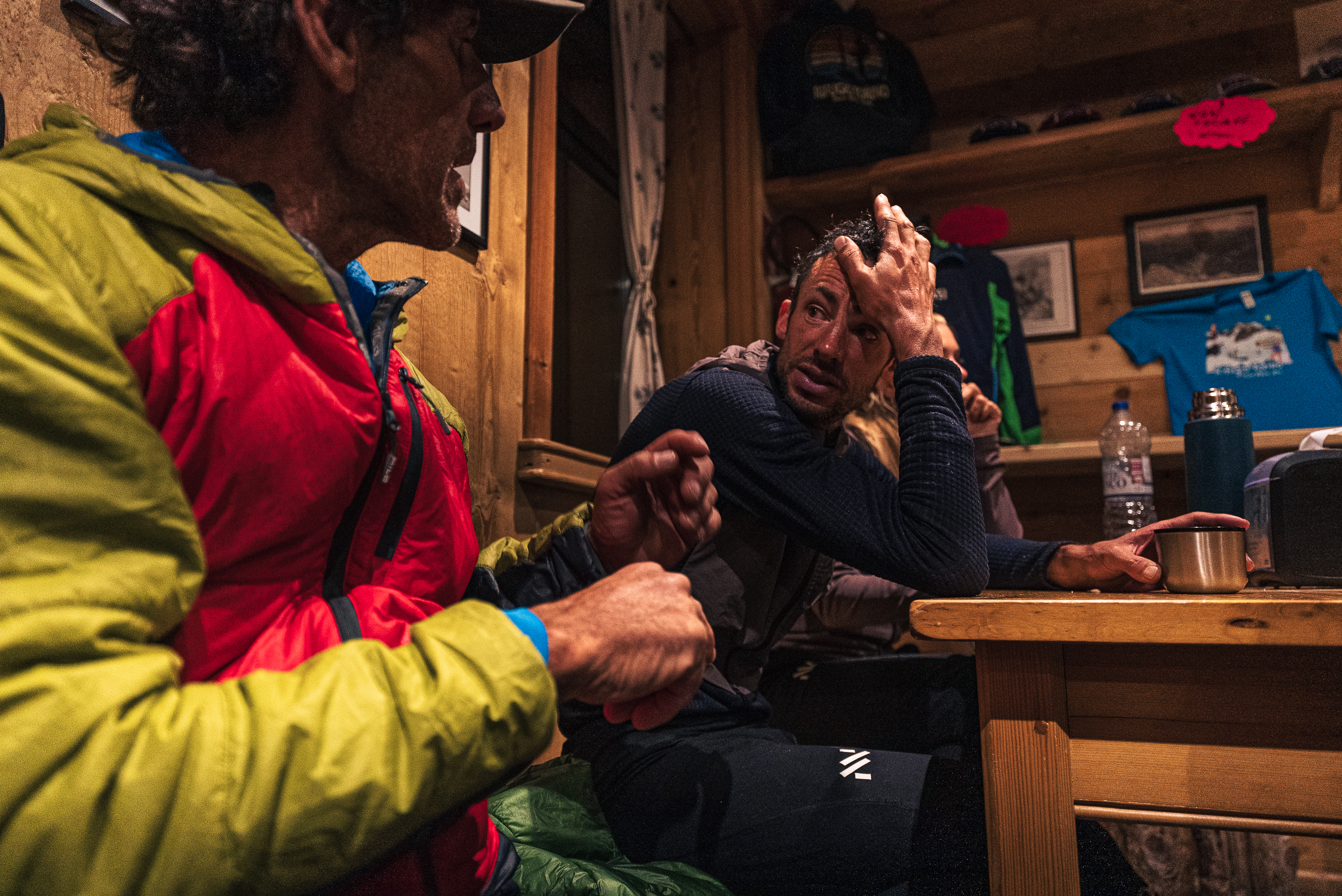
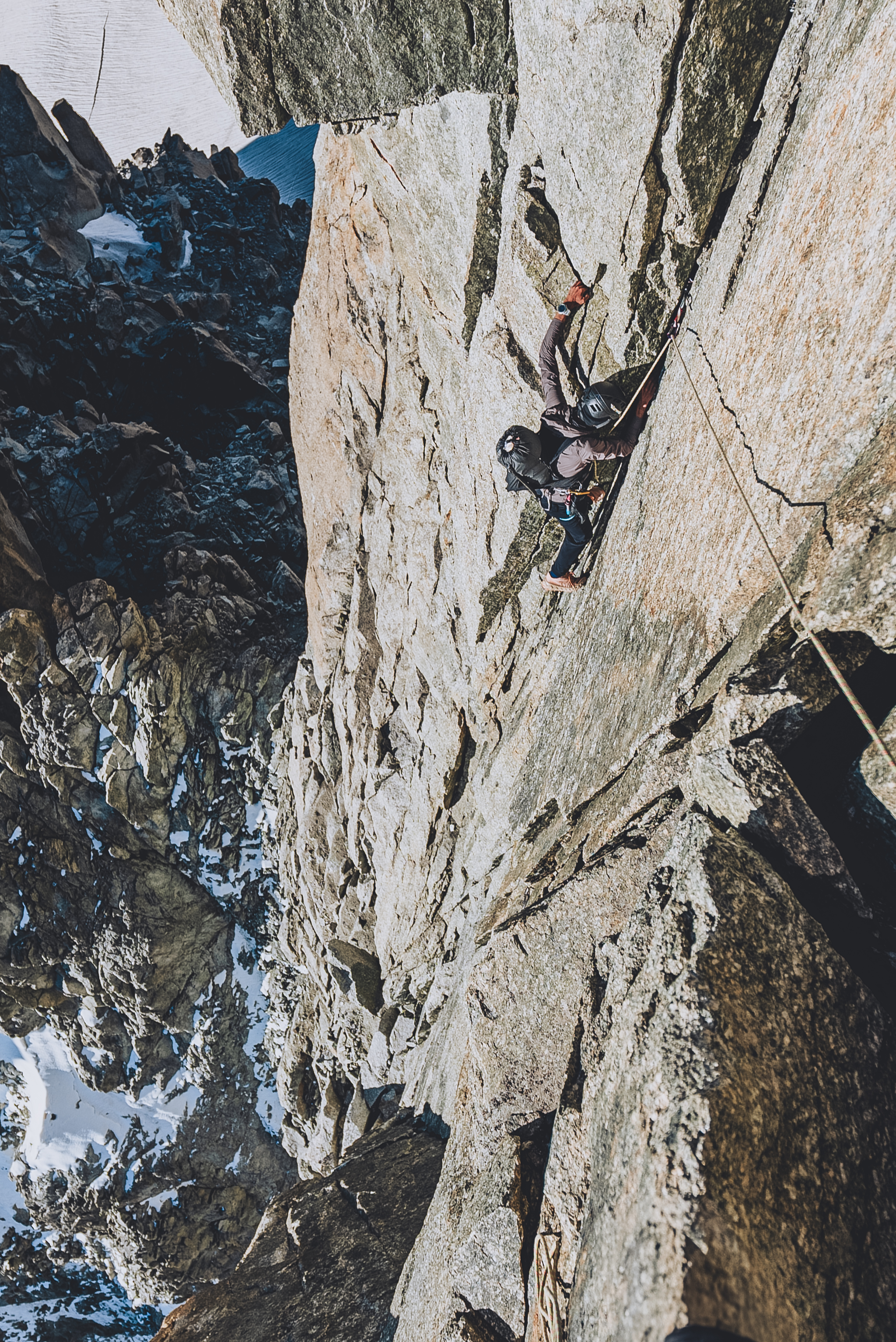
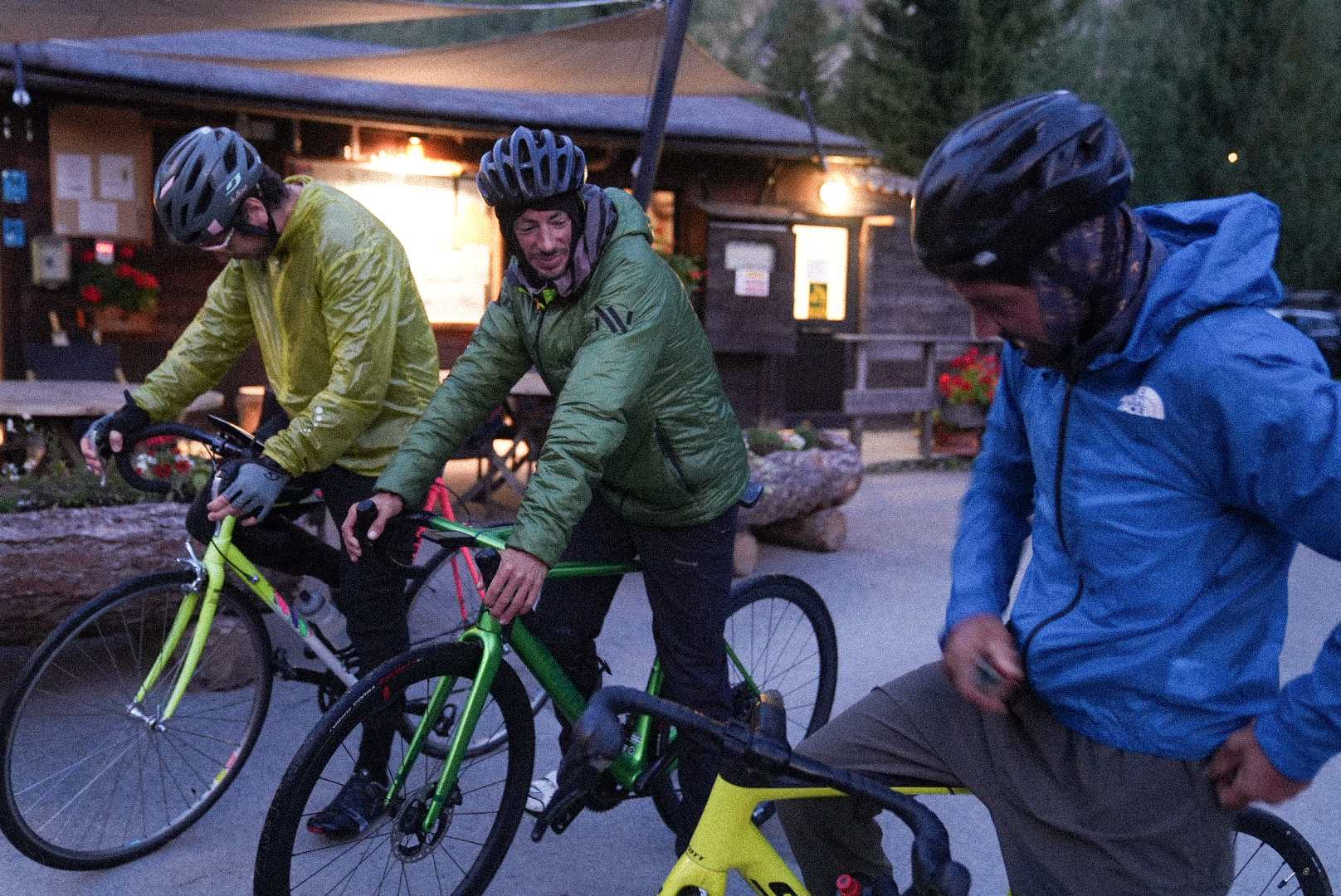
As projects go, Alpine Connections is so grand in scale, that it is hard to fully understand. Imagine connecting 82-peaks over 4000m, covering 1207km’s by human power (run, cycle, climb or walk), accumulating 75,344m+ all within 19-days and just with an average sleep of 5h 17m.
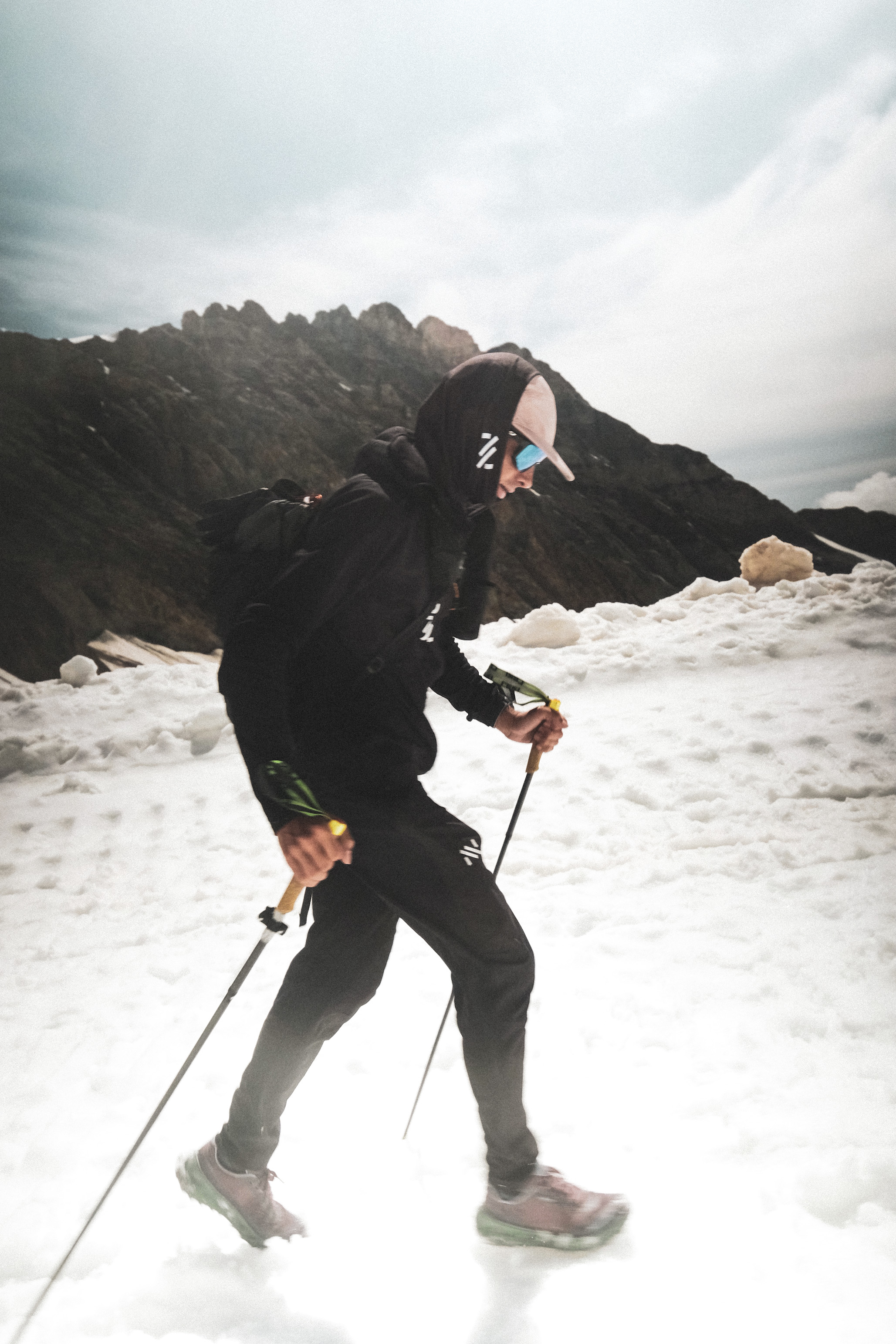
As physical and sporting achievements go, this project by Kilian Jornet, for me, is one of THE greatest sporting achievements of all time and quite correctly, it is one that will be cemented quite firmly in the legendary annals of alpinism.
“This project has been incredible; I think it’s one of the most challenging things I’ve ever done, both physically, technically, as well as mentally. Having to stay in a state of total concentration for 20 days requires a lot of energy, but it has been amazing. I remember all the sunrises and sunsets and all the friends who accompanied me in the mountains, and I am very happy and proud of what we have achieved in the last three weeks. Now it’s time to rest and process everything that has happened, because I think it will take me some time to fully appreciate it.” explained Kilian Jornet.
There is history with the 82 peaks, and many may well look at what Ueli Steck achieved in 62-days as the ‘template’ for such a challenge, his project concluded in 2015. However, in 1993 Martin Moran and Simon Jenkins did all (principal) summits in the Alps in 52 days. In 2008, Franz Nicolini and Diego Giovannini did the peaks in 60 days and just recently, Chrigel Maurer and Peter von Kanel, both from Switzerland, climbed all 82 of the 4,000m peaks in the Alps in 51 days using paraglider and foot, article here.
It may well come as no surprise that Kilian, one day, would take on this ultimate feat of alpinism, especially after his ‘Rediscovering Pyrenees’ project when he summited 177-peaks in just 8-days!
However, there was no warning or build up to this Alpine Connections project. A stunning victory at Sierre-Zinal and then Kilian announced on August 13th via social media:
“Hi everyone, I’m feeling pretty good after Sierre-Zinal, so, I’ve decided not to go home yet and enjoy the good conditions in the Alps…”
Little did we know what would follow!
Many thought a surprise UTMB start may be on the cards, I personally expected him to toe the line at Trofeo Kima… Then on August 14th, all was revealed, ‘One mountain range. One journey. This is Alpine Connections.’
At first, the 82 peaks were not announced. Quite simply, the project was described as a quest to connect as many 4000m peaks as possible relying solely on human-powered means and local resources.
I wondered, would he go for all 82 and in all honesty, we were left wondering this as each day passed until it became completely obvious that all 82 peaks were not only an objective but the timeline for this achievement would set the bar so high, that if achieved, this record would be history making.
• Alpine connections – A project by mountain athlete Kilian Jornet where he aims to connect as many 4,000-meter summits in the Alps as possible by linking peaks through ridges using only human-powered means.
• This project is a way for Kilian to explore his human limits and understand how far he can push his body both physically and mentally. For this, he will be testing himself during the activity, and the data collected will be used in scientific studies.
• The project is divided into stages that can go up to 34 hours where he combines climbing, running and cycling. Friends and family members have joined him throughout the challenge as well as a small team of filmmakers and a crew that helps with logistics.
In essence, the project is all about the constant pursuit of new goals, the creativity in approaching them and the exploration of Kilian’s own limits.
Kilian took an early start with Philipp Brugger to climb Piz Bernina (4048m), the easternmost 4000-meter peak in the Alps, located in the Swiss Engadine valley. They ran and climbed 29km with 2573m of elevation to the summit round-trip, in great conditions, before getting to the start of the first bike link-up of the adventure. Kilian then cycled more than 210km solo with almost 4000m of elevation through some iconic mountain passes, to reach the next stage of the adventure. Kilian said;
“After dreaming about this project for a while, it feels so exciting to be on the move!”
Interesting fact: Kilian will have a scientific team following him at certain points, collecting various samples and analyzing aspects like his sleep patterns.
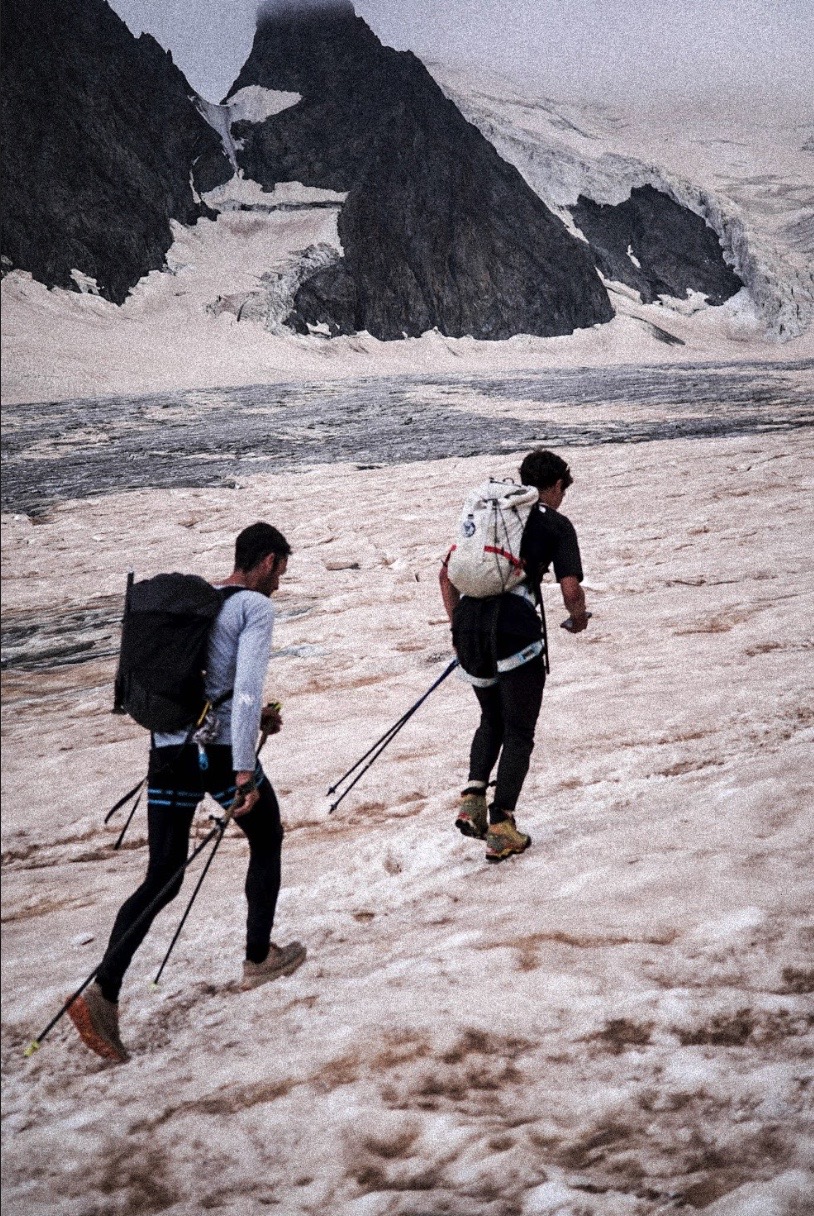
Kilian arrived in the Bernese Oberland for the next part of the project. The day started a bit later than expected because of the bad weather. Even though the conditions weren’t perfect, Kilian set off for Lauteraarhorn (4042m) and Schreckhorn (4078m), two summits linked by a ridge, then pushing to Finsteraarhorn (4274m), the highest peak of the Bernese Alps region. Overall, it was not an easy stage with challenging weather. Fortunately, Kilian was able to shelter in a hut and get a few hours of sleep before continuing. Four 4000m peaks are now done.
Interesting facts: It was a rough day out there, with the weather forcing Kilian to change his game plan. He adjusted his route to steer clear of exposed areas, tackling wet rocks, snow, and storms as he went.
One of the toughest stages yet, with the longest continuous climb of the project so far. Kilian started from Finsteraarhorn Hut after just a few hours of sleep and managed to traverse six 4000-meter peaks. It was a long 99 kilometers with 7890 meters of elevation gain, summiting Gross Grünhorn, Hinter Fiescherhorn, Gross Fiescherhorn, Mönch, Jungfrau, and finally, a long stretch to Aletschhorn. The whole push took Kilian 32 hours and 30 minutes.
“I had to be careful since the conditions weren’t always on my side. I even had to change my route to Aletschhorn three times—once because of the rain and twice due to tricky glacier conditions. Descending from Aletschhorn, I finally reunited with the team.”
After a quick 15-minute nap, Kilian cycled 40 kilometers to link up with the next part of this adventure.
Interesting facts: Kilian has now earned 3 KOMs on Strava and completed his longest ride ever during Stage 1, covering 213.06 km with an elevation gain of 3,984 meters in just 8 hours and 50 minutes of activity.
After a good night of rest, Kilian was super happy to share this climb with my friend and talented mountaineer, Matheo Jacquemond. The duo has great history, and Matheo was part of Kilian’s ‘Summits of my Life’ project. The duo set off at 3:30 in the morning to summit Lagginhorn (4010m) through its South Ridge, and Weissmies (4017m), in a 8-hours push covering 30 kilometers and 3381 meters of elevation.
“In these moments, I feel so grateful to be surrounded by a team helping me with all the logistics of the project, and experienced friends I can count on for long outings above 4000 meters in not-so perfect weather.”
After the climb, Kilian took a short bike ride to get to the end of the stage and a new afternoon of rest as the weather deteriorated again. After stage 4, Kilian had climbed twelve 4000-meter peaks.
Interesting facts: After climbing Lagginhorn and on the way back, Matheo decided to call it a day and take the gondola back, while Kilian carried out running to arrive down the valley.
“As it had been raining (and snowing on the summits) the entire afternoon and night before, I left solo at 6:15 in the morning and had another relatively “short” (8:40) day of climbing to make the most out of the conditions. Still, I am used to this “Norwegian” weather that feels just like home, so I managed to summit Dürrenhorn (4034m), Hohberghorn (4218m), Stecknadelhorn (4239m) and Nadelhorn (4327m). On the way down, I stopped to get some food at the Mischabelhütte and ran down to the valley.”
In total, 23 kilometers and 3246 meters of climbing for 4 more summits and a total of 16 4000 meters since starting the adventure.
Interesting facts: During his last adventure in the Pyrenees, Kilian lost his phone during one stage. This year, he has incorporated a phone case (and a new phone of course!) with a small string that he then attaches with a carabiner to his backpack.
“Stage 6 of the Alpine Connections project, aiming to link as many 4000 meter peaks of the Alps as I can, got under way at 6:20 in the morning from Saas-Fe. I started climbing with Matheoconnecting the beautiful peaks of the Mischabel group: Lenzspitze (4294m), Dom (4545m) and Täschhorn (4491m), before being joined at midday by mountain guide, Genis Zapaterfor Alphubel (4206m), Allalinhorn (4027m), Rimpfischhorn (4199m) and finally Stalhhorn (4190m), ending the long day in the Monte Rosa hut for some well needed rest. It felt great to see the sun, be in good company, and to add a big day in the mountains to the adventure after dealing with uncertain weather for a bit.”
In total, Stage 6 lasted more than 21 hours, with almost 48 kilometers and more than 6000 meters of elevation, adding 7 summits to the project, for a total of 23 peaks of 4000 climbed so far.
“After 3 hours of rest in the Monte Rosa hut, I left, solo this time, at 7 in the morning for one of the big days of the project, with 18 summits of 4000 meters and above climbed in a single day.”
This traverse is known as the Spaghetti Tour, and took Kilian through Nordend, Dufourspitze, Zumsteinspitze, Signalkuppe, Pointe Parrot, Ludswighöhe, Corno Nero, Pyramide Vincent, Punta Giordani, Lyskamm E, Lyskamm W, Castor, Pollux, Roccia Nera, Breithorn (pointe 4106), Breithorn E, Breithorn central and finally Breithorn W.
The weather was good during the day, but the warm and soft snow conditions made Kilian slower than he had originally thought, which in turn made him struggle with adequate water and food intake. The smoke from the North American fires was clearly visible up in the sky and made for a strange atmosphere at times. Fortunately, the super moon made for good visibility at night, and Kilian managed to finish the stage in 17:45, ending up at the Hörnlihütte at around 1 in the morning for a feast of eggs, soup, quinoa, tortilla, broccoli, peas and cake before crashing down.
In just 6 stages, Kilian had accumulated 41 peaks of 4000 meters since the beginning of the Alpine Connections project, crazy!
Interesting fact: At the end of Stage 7, Kilian reached Hörnlihütte. His mother, Nuria, who knew the Hörnlihütte since she had submitted the Matterhorn 46 years ago, was waiting there to meet him.
“After some rest in the Hörnlihütte, this new stage started right away with an iconic climb, Matterhorn (4478m) , which I had climbed by its North Face the last time I came here (but of course that wasn’t on the menu today!), and in 2:52:02 from the Italian side in 2013.”
Departing at 7am, Kilian was treated with a beautiful sunrise. Once again, Kilian was joined by Matheo for Dent d’Hérens (4173m) then Genis for the long walk to Dent Blanche (4358m) and the descent to Schönbielhütte.
Another long day of more than 18 hours and 3 more peaks.
Interesting fact: In 2013, Kilian did his fastest time on the Matterhorn route, ascending it from the Italian side with a time of 2:52:02.
“We stayed only two hours at the Schönbielhütte, and left towards Zinal withMatheo at 5:30 in the morning, for what was maybe the most special stage of the project for me.”
After 4 days of an average of 19 hours of activity, Kilian arrived back in Zinal, two weeks after winning the mythical Sierre-Zinal mountain race. For this last day, Kilian recorded 4 new +4000m peaks in the Alps: Ober Gabelhorn (4064m), Zinalrothorn (4221m), Bishorn (4151m) and Weisshorn (4506m), a summit that he was looking forward to at the beginning of this project.
As he explained when he arrived back to Zinal:
“To me, this was the most special stage, and I was really looking forward to it. It was the end of a five-day stage in Valais: I was very tired, and it was the most technical section in a very wild region with a lot of decision making and navigation difficulties. To me, Weisshorn is one of the most beautiful mountains here in the Alps. Catching the sun to climb the south ridge of Weisshorn was special as I was quite afraid of entering the face in the dark as it’s a big climb, very technical and very long and I needed to run all the ridges before with very poor rock and very demanding. But then, the climb to Weisshorn was one of the best moments of my life! Climbing there with this rock that is beautiful and just seeing the sunset and the broken spectrum. I was flowing, I didn’t feel any tiredness, anything. It was super, super special. And then going to Zinal that is a special place for all the races that I have done here, it was a very special day”
In Zinal, his team and his mother were waiting for him before departing for a new bike link-up. To this day, Kilian has climbed 48 peaks on the Alps, with an elevation of more than 46.203m.
Interesting fact: Kilian’s last project in the Pyrenees concluded after 8 days, 155 hours of activity, 177 +3000 peaks and 485,65 Km. Alpine Connections has already reached 9 stages, 160 hours of activity and 48 +4000 peaks. The projects are unique and not directly comparable, but it’s something remarkable!
“I started the day by a 110 kilometers bike ride from Zinal to Bourg Saint-Pierre, which took me most of the morning. I was happy to meet with Alan Tissieres for the climb to Grand Combins. We were racing together in ski mountaineering a long, long time ago. Now, he is a mountain guide, and it was nice to share a few summits with him! Grand Combins was more technical than I expected. It was a very nice climb, but it is a dangerous mountain because there’s a lot of rockfall and it’s not always easy to navigate, so I was glad not to be solo. We started towards Combin de Valsorey at sunset and climbed through the night on the glacier to Grand Combin and Combin de la Tsessette, the 49th, 50th and 51st summits of my Alpine Connections project. After a bit more than 9 hours of climbing, we were back to Bourg Saint-Pierre at around 2:30am.”
The next stage should be a stage of transition, as Kilian exits Switzerland towards the next part of the journey.
“After the Combins traverse, I arrived at 2 in the morning back to Bourg-Saint-Pierre, had a 4 hour sleep and left for an easy day, first cycling about 30k to La Fouly. On the way, I met Jules Henrigabioud, someone I’ve known from racing and ski mountaineering, who joined me on the ride and told me about a shortcut to go to Val Ferret. The Alps are a big place, but somehow, I keep running into people I know! I did a nice, easy run in the heat to Val Ferret. Over there, the weather was bad, so I took the first actual full rest day of the project. I tried to eat, drink a lot, heal the skin my hands and feet and prepare for the next long and technical push of the Alpine Connections project.”
Interesting fact: For the bike part, Kilian bumped into Jules Henri, an old friend who had competed in trail and ski mountaineering with him. After chatting for a bit, they realized they were going to the same place so decided to ride together, using a shortcut that Henri knew
“I left at midnight from our camping ground in Courmayeur, feeling good and rested, to start the climb to Grandes Jorasses with a great team: Matheo, Michel Lanne and Bastien Lardat. Even though it was the middle of the night, everyone was super happy to be here and to kick off the day in good company! All of them know the area well and I was glad to have them for the more technical climbs of the day, as the conditions can get a bit tricky in this part of the Alps.”
Kilian and the team summited the Grandes Jorasses ridge (Pointe Walker, Pointe Whymper, Pointe Croz, Pointe Elena, Pointe Margherita), then Dôme de Rochefort, Aiguille de Rochefort and finally Dent du Géant, before stopping for a break at Rifugio Torino.
After that, Kilian left the team to go solo to the Refuge du Couvercle where he arrived after an elapsed time of 18:22 hours. With 28 kilometers and 4200 meters of elevation for today, Kilian climbed 8 more 4000-meter peaks, bringing the total to 59.
Interesting fact: After passing through Rifugio Torino, Matheo, Michel and Bastien decided to stop and let Kilian continue solo to Refuge Couvercle, amazed at how hard it was to follow Kilian even after 12 stages.
“Departing at 4am from Refuge du Couvercle, I summited Aiguille Verte, Grande Rocheuse, Aiguille du Jardin and Les Droites in a 17 hours push for 24 kilometers and 3470 meters of elevation in quite technical climbing. I was glad to join the team, friends and family at Rifugio Torino to debrief such a big day and start planning the rest of the adventure”.
This brings the total to 63 summits so far. Today, Kilian He was joined by Spanish alpinist Jordi Tosas, an old friend and climbing partner, with whom Kilian did his first expedition in the Himalayas.
Interesting fact: Proof of how technical the terrain is? Kilian has already worn out two pairs of leather gloves!
“We started the day at 4:45 with Matheo and Noa Barau on the Diable ridge, one of the most beautiful rock climbs I’ve ever done, both very technical and aesthetic. This took us through Corne du Diable, Pointe Chaubert, Pointe Médiane, Pointe Carmen and L’Isolée. We pushed on towards Mont Blanc with the summits of Mont Blanc du Tacul, Mont Maudit, Mont Blanc, Dôme du Goûter and Aiguille de Bionassay, where Matheo and Noa left.”
Kilian continued solo, went back to the summit of Mont Blanc for a second time on my way back, then down on the Brouillard ridge (Monte Bianco de Courmayeur, Picco Luigi Amadeo, Mont Brouillard and Punta Baretti) accompanied with amazing sunset in the background:
“A moment that I will remember forever.”
Taking Kilian around 20 hours in total, he stopped at the bivouac Eccles for around 4 hours and waited for better conditions, before climbing some technical sections at Grand Pilier d’Angle and Aiguille Blanche de Peuterey.
One very big day in the books, with 16 new 4000-meter summits, almost 41 kilometers with 5000 meters of climb, in 29 hours and 25 minutes (not including the 4 hours sleeping at Eccles).
Interesting fact: One of Kilian’s goals for this project was to connect summits using ridges or the most logical routes. In Stage 14, for example, he faced sections that had rarely been attempted, so there wasn’t much information available. Kilian used various resources—maps, advice from friends, and input from fellow alpinists—to understand these routes before tackling them. This shows the significant time and effort he put into planning this project, which took several months. Once on the mountain, he had to constantly adapt his plan based on weather, conditions, and how he was feeling. The support of friends, guides, hut owners, and people he met along the way was crucial in these moments.
Kilian reached the summit of Gran Paradiso (4,061 m) with Mathéo and Vivien Bruchez, a long-time friend with whom he has shared numerous expeditions and steep-skied some iconic couloirs in the mountains he is now crossing in his project. After the bike section, Vivien, recovering from an injury, departed, and the group was joined by trail runner Henry Aymond and ski mountaineering world champion Emily Harrop. Together, they set up to climb the summit number 80 of this journey, which they summited in only 4 hours. This summit was less technical than the sections Kilian encountered in the Mont Blanc massif a few days ago, which allowed for a quick ascent and descent. Back from the climb, Kilian ran 21 km to cross back into France. Once in Val d’Isère, he rested for 7 hours.
Interesting fact: It took Kilian only 4h to climb Gran Paradiso, compared to the long hours spent on the Mont Blanc ridge the days before, which is a real proof of how technical the Mont Blanc is.
Stage 16 Completion
After completing stage 16 in the Ecrins massif, Kilian connected all 82 of the Alps’ 4,000-meter peaks in 19 days using only human-powered means. A mind-blowing project and a colossal challenge due to the exposure, technical difficulty, and focus it requires.
Interesting fact: Kilian set up his first FKT in Dôme des Neiges when he was 16, so finishing here feels almost like closing the circle.
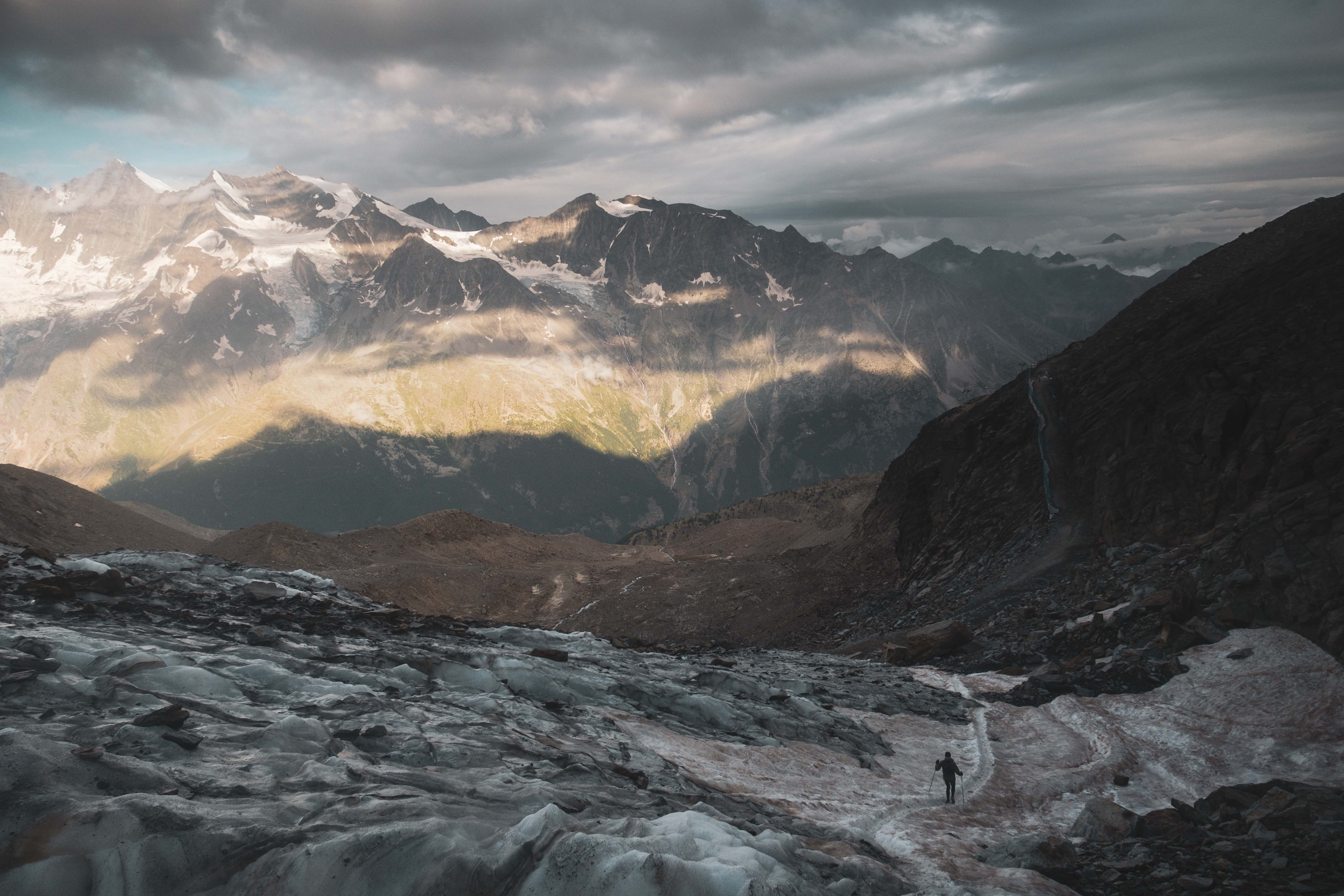
In a hybrid combination of trail running, mountaineering, climbing, and cycling, Kilian Jornet has brought together everything he is passionate about in this project: the majesty of the mountains, facing the unknown, honouring alpinism and his mentors, physiological research, and the pursuit of physical and mental limits, all shared with friends and the community.
“19 days after getting started on Piz Bernina, my dream of climbing all 82 4000-meter peaks of the Alps using only human power to link them together came true on Dôme and Barre des Écrins, the westernmost of them all. This was, without any doubt, the most challenging thing I’ve ever done in my life, mentally, physically, and technically, but also maybe the most beautiful. It’s difficult to process all my emotions just now, but this is a journey that I will never forget. I want to thank again all the people who supported me or climbed with me throughout this project. It’s time to rest for a bit now!”
SUMMARY
It’s very, very difficult to summarise this achievement. In all honesty, I am not able to fully understand what Kilian has achieved. We can look at images and videos, they give a hint of the danger, the complexity, the skills required, but ultimately, we can only imagine… What I do know is, this is one of THE greatest sporting achievements of all time.
Michel Lanne, a grand star of the sport, a mountain guide and employed by the PGHM (Peloton de Gendarmerie de Haute Montagne) who joined Kilian sums it up well:
“This is the story of a friend, who decides to go on a ‘little alpine ride,’ as he calls it! Except that this spring, when he explained to me the details of this project, I am both conquered by the idea, but quite puzzled about the feasibility of such a feat! Except this old buddy had it all planned, absolutely everything! He then sends me the routes, timings, summits, planned equipment, and even his nutrition plan for a little over 2 weeks… Knowing the animal, I understand that his determination is complete, that this Titan project matches him completely, and that he is the only one capable of achieving such a feat. In the middle, we often talk about hunting the 4000! As far as Kiki is concerned, this line-up seemed so logical and natural, I’d call this a pick of 4000! Perhaps the numbers can help you understand the extent of what he just accomplished… but beyond the colossal physical performance, it is the mental and psychological aspect that struck me the most. Despite the monstrously long and challenging days, despite the fatigue and little sleep, he was able to exhibit vigilance at every moment, managed to manage nervous tension, risk and effort, constantly maintaining clarity, anticipation and vigilance beyond the norm. And leave each night with a smile, happy and eager to enjoy the mountain. Kiki, thank you for inviting me to share a small piece of your amazing adventure, with the phenomenal Matheo Jacquemond and Bastien Lardat. I have often remained silent, discreet observer of your gesture, fluid, elegant, easy, applied and mastered.”
Michel’s words mean so much, not because Kilian is a friend BUT because you fully understand the enormity of the challenge. The difficulty. The danger. The audacity of even considering this project deserves respect, to complete it in 19-days is beyond any comprehension.
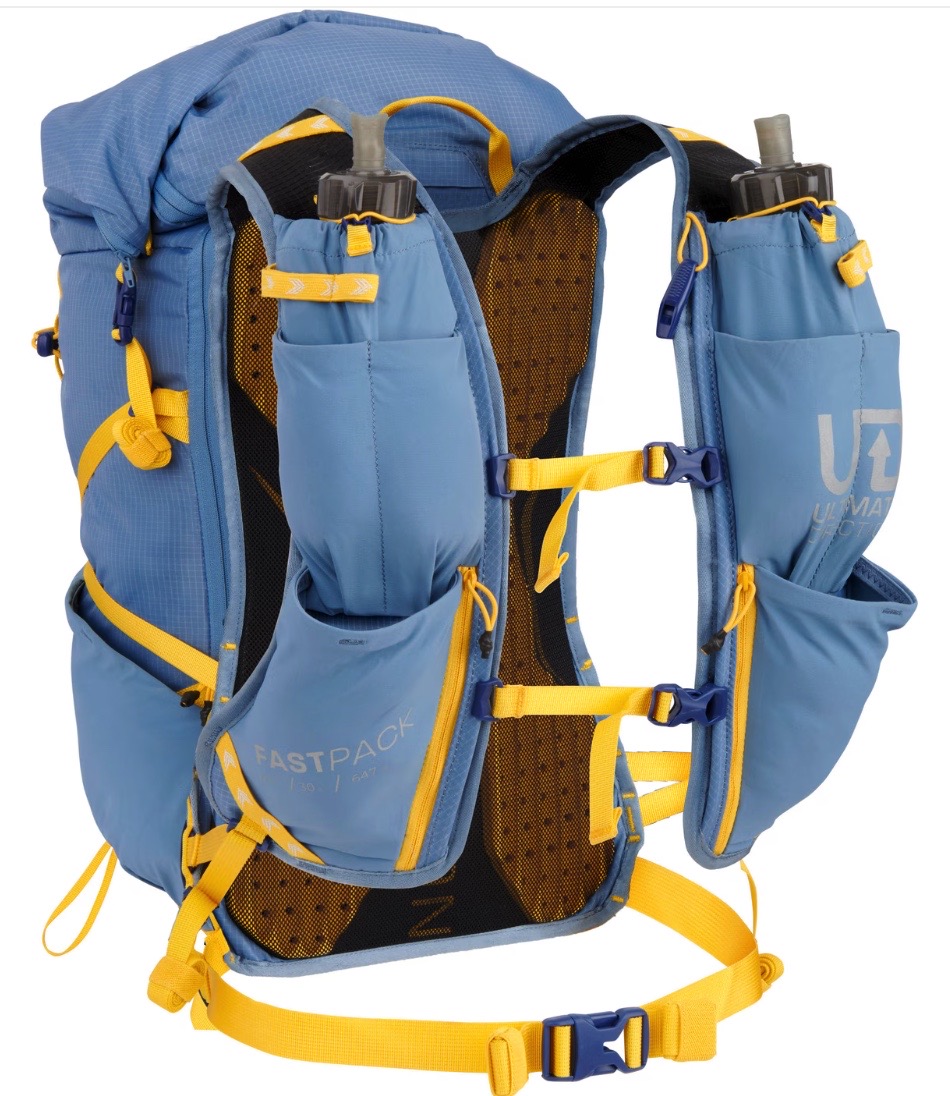
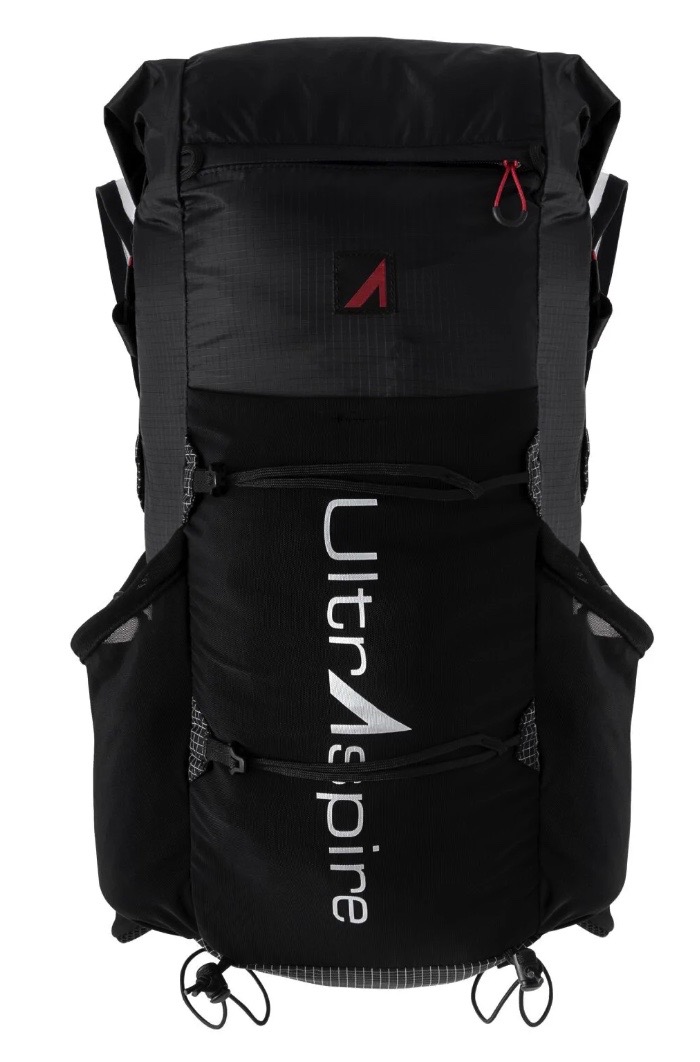
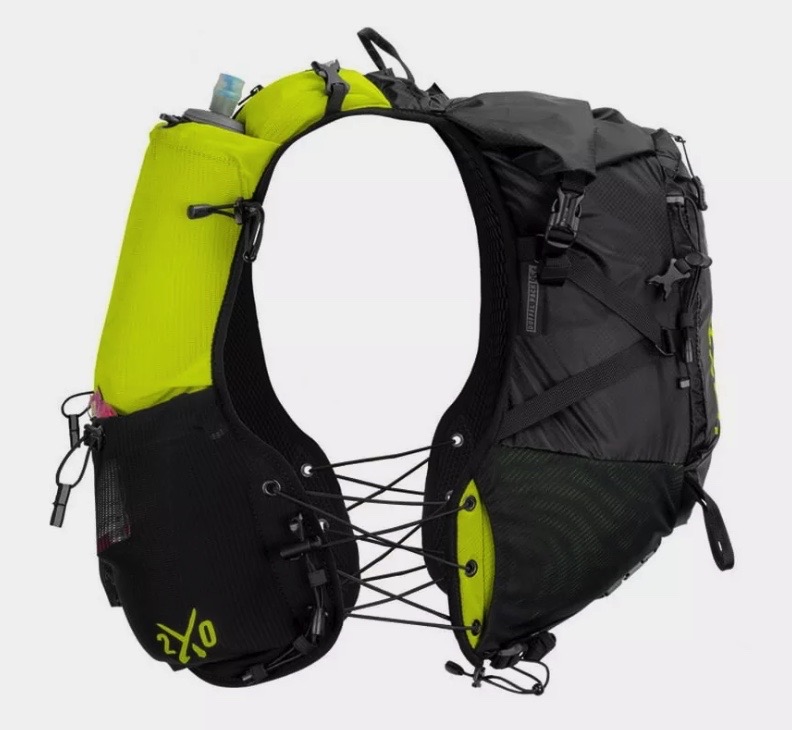
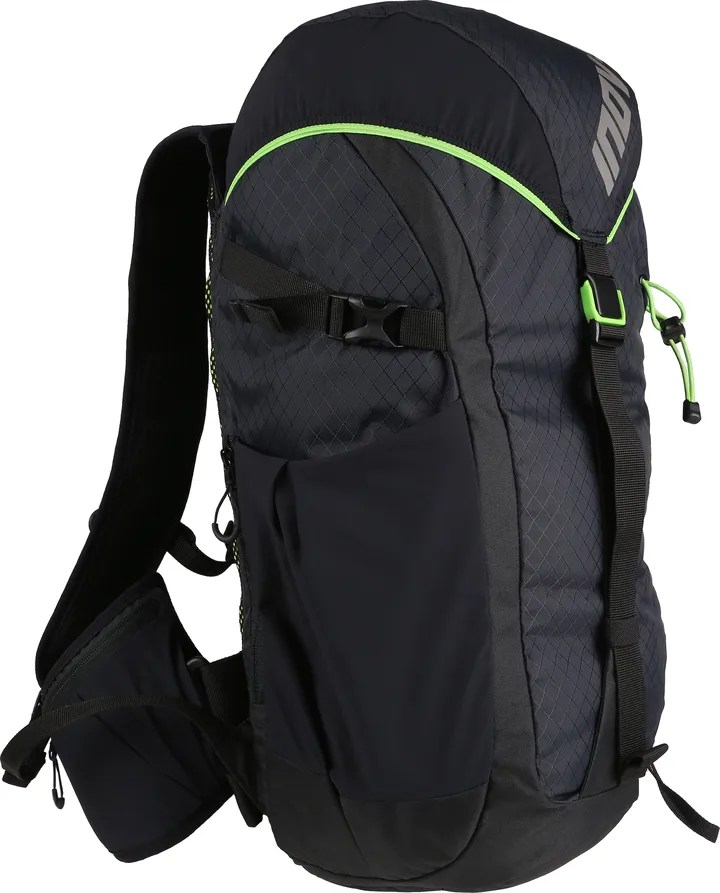
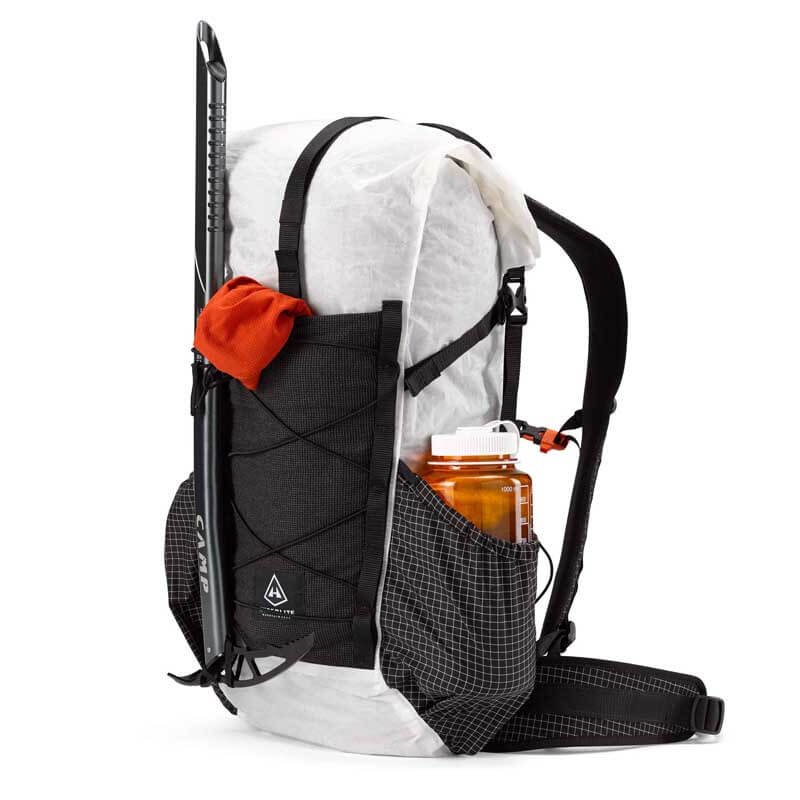
Stage racing, multi-day running and fastpacking all require a very specific pack. With the growth of multi-day running, many major brands now produce a pack or packs that are specifically designed for the task at hand. However, choosing a pack can be a daunting process due to many variables.
First and foremost, spend some time and sit down with a piece of paper and make notes of all the equipment that you need to carry. This may sound obvious, but there is a great difference in needs and demands.
For example:
Are you running in a hot or cold environment?
Do you need to carry food for the adventure or will you be able to get food on the route?
What spare clothing do you need?
What safety equipment do you need to carry?
Do you need a tent?
Do you need a sleeping bag and sleeping mat?
How much liquid do you need to carry and do you need immediate access to that liquid?
And the list goes on, so, take time to sit down and plan. This also helps you look at weight.
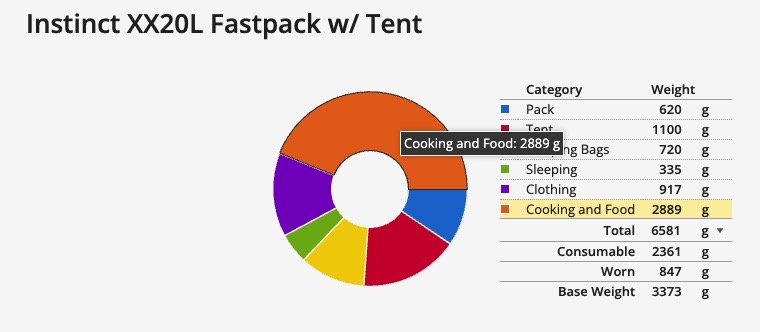
An excellent website to help facilitate this is Lighterpack– You can see an example HEREof all the contents I used when testing theInstinct XX20Lwhen I went fastpacking with a tent.
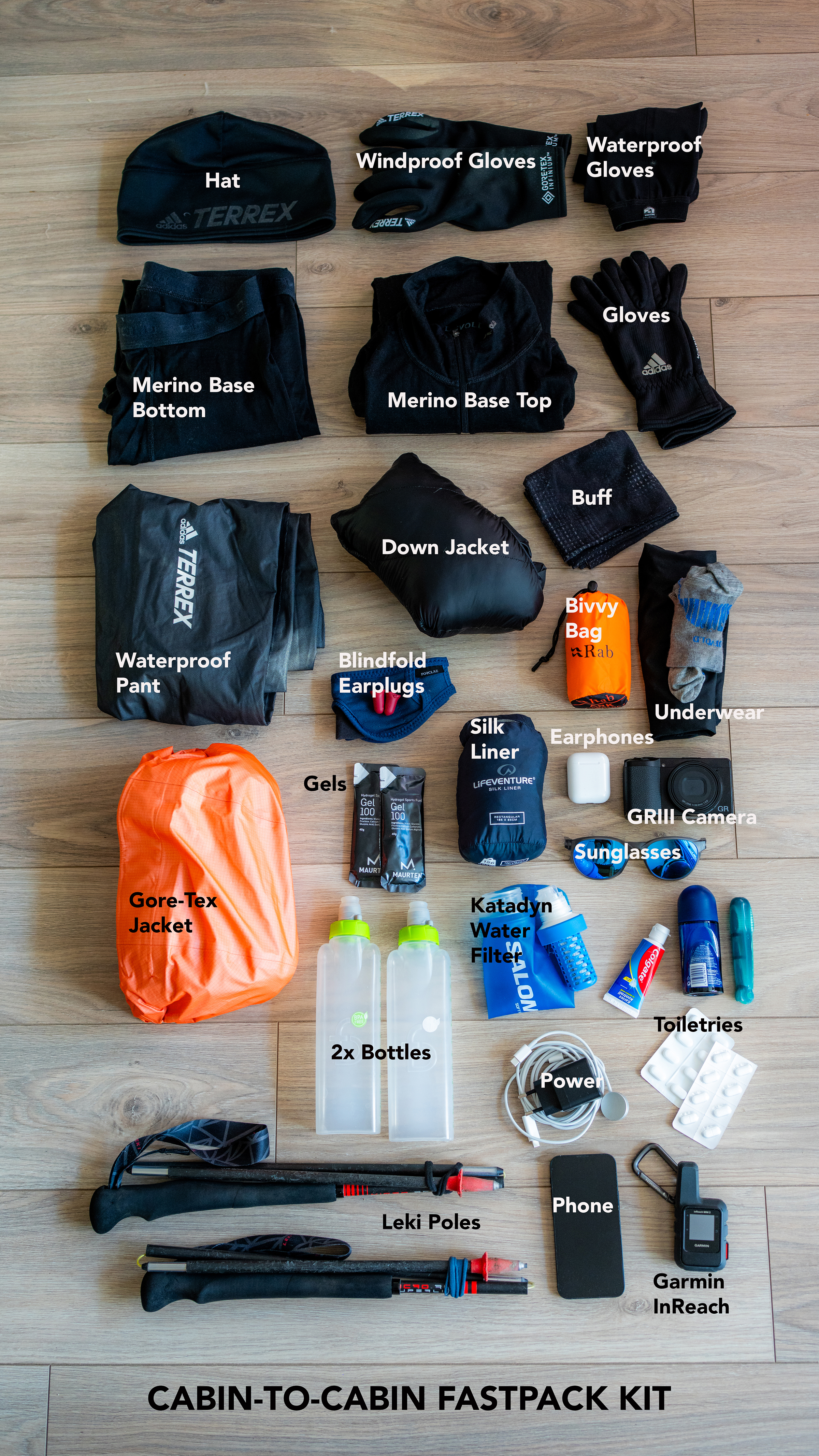
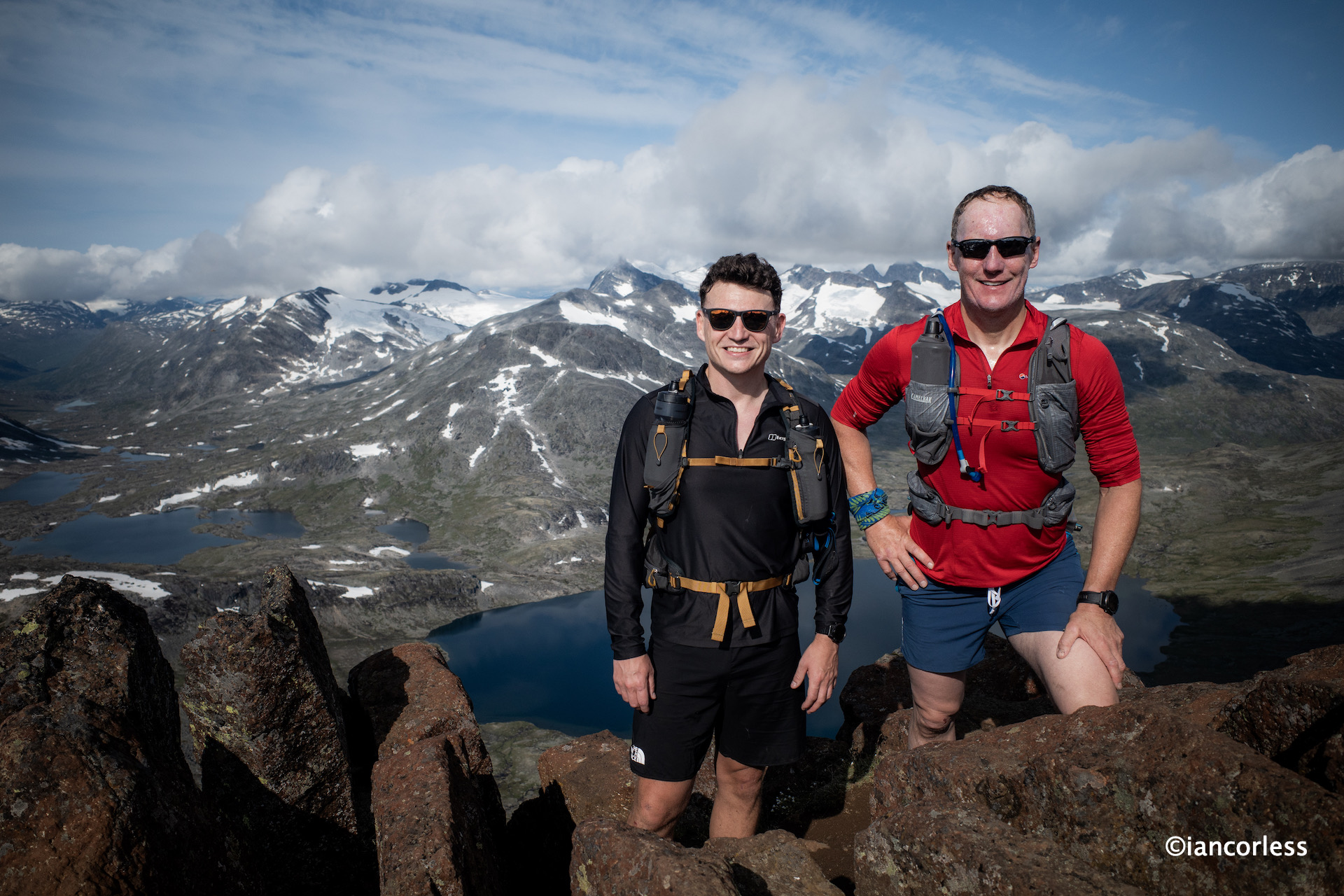
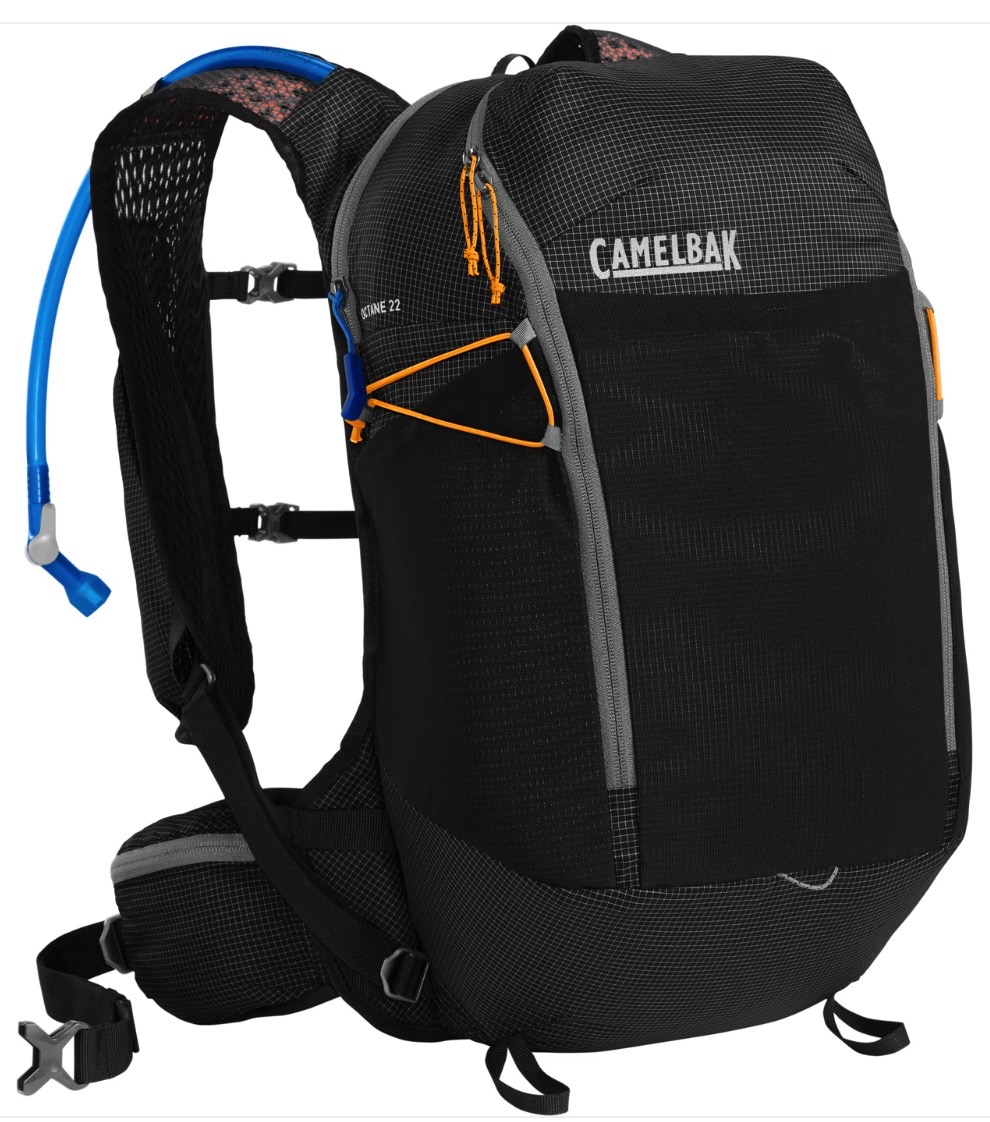
Recently I went fastpacking in Norway running from cabin-to-cabin. I did not need food (other than run snacks,) did not need a sleeping bag, just a sleeping bag liner and I could be minimal on clothing. I used the Camelbak Octane pack and the contents were as listed below:
You can see an example of my pack below and the details are as follows:
Camelbak Octane Pack 600g
adidas hat 32g
adidas gloves Infinitum 52g
Hestra waterproof gloves 53g
adidas gloves 41g
Devold merino base top 193g
Devold merino base bottom 166g
Buff 43g
Haglofs down jacket 163g
adidas waterproof pant 125g
adidas Gore-Tex jacket 272g
Rab bivvy bag 110g
Underwear 98g
Gels 81g (for emergency)
Silk liner 126g
Blindfold/ earplugs 22g
Earphones 44g
Ricoh GRIII camera 251g (a luxury)
Sunglasses 18g
Bottles x2 90g
Katadyn water filter 52g
Toiletries 196g
Power supply 138g
Phone 136g
Garmin InReach 108g
Leki poles 250g
3379g
As you can see, my pack weight was low. This allowed me to move faster and lighter for less effort.
KEY CONSIDERATIONS FOR CHOOSING A PACK
Once you have worked out what you need to carry, you can then decide what size pack you need. The best recommendation here is that it is better to have a pack that is maybe just too small. That way you will be strict on what you take and what you do not take. Of course, this decision should never be at the compromise of safety. Simply, if you have more room, you tend to take more because you can.
When doing a stage race, multi-day or fastpack, weight is the enemy, so, you need to be as light as possible.
WAA has a waist belt and optional front pocket for food/snacks and water bottle.
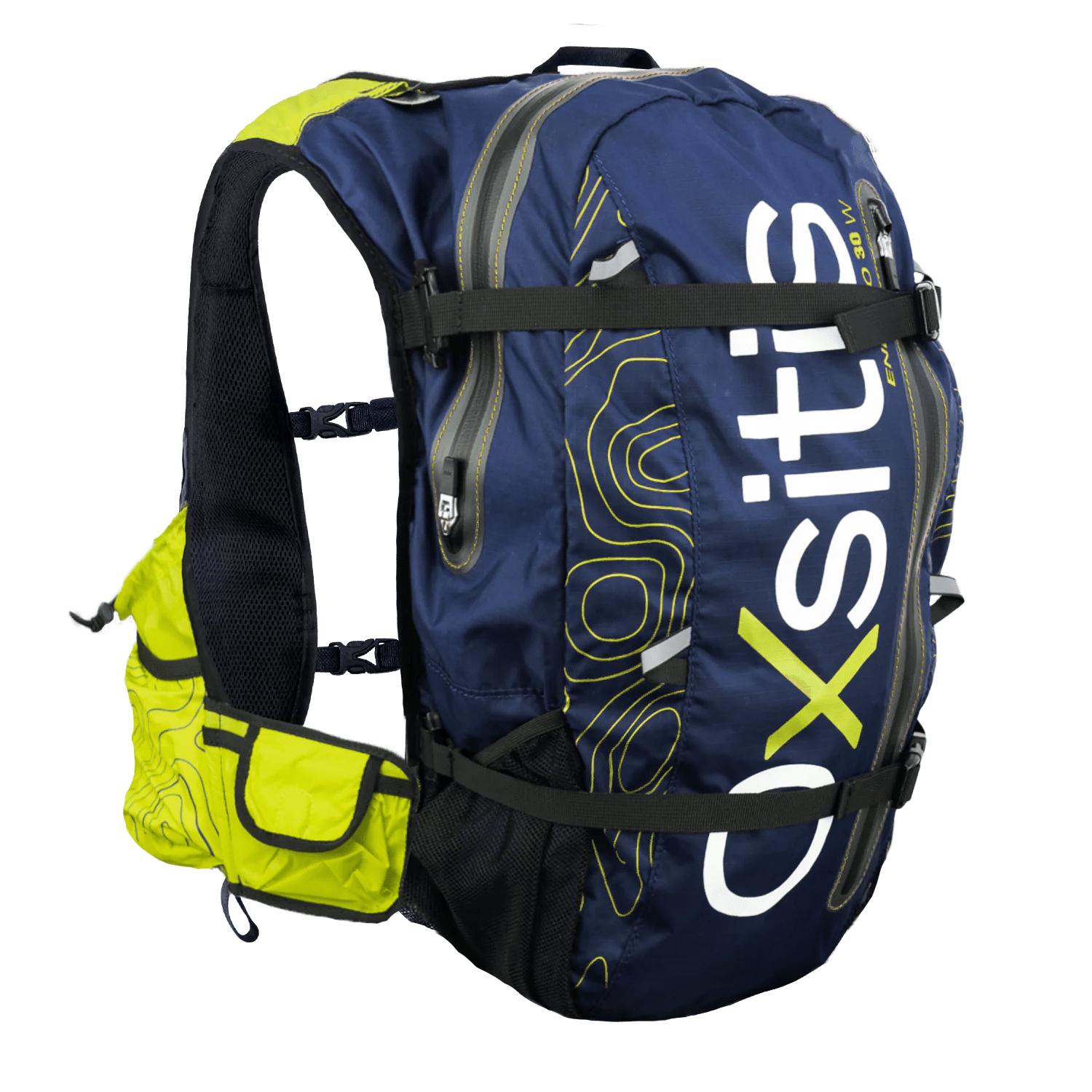
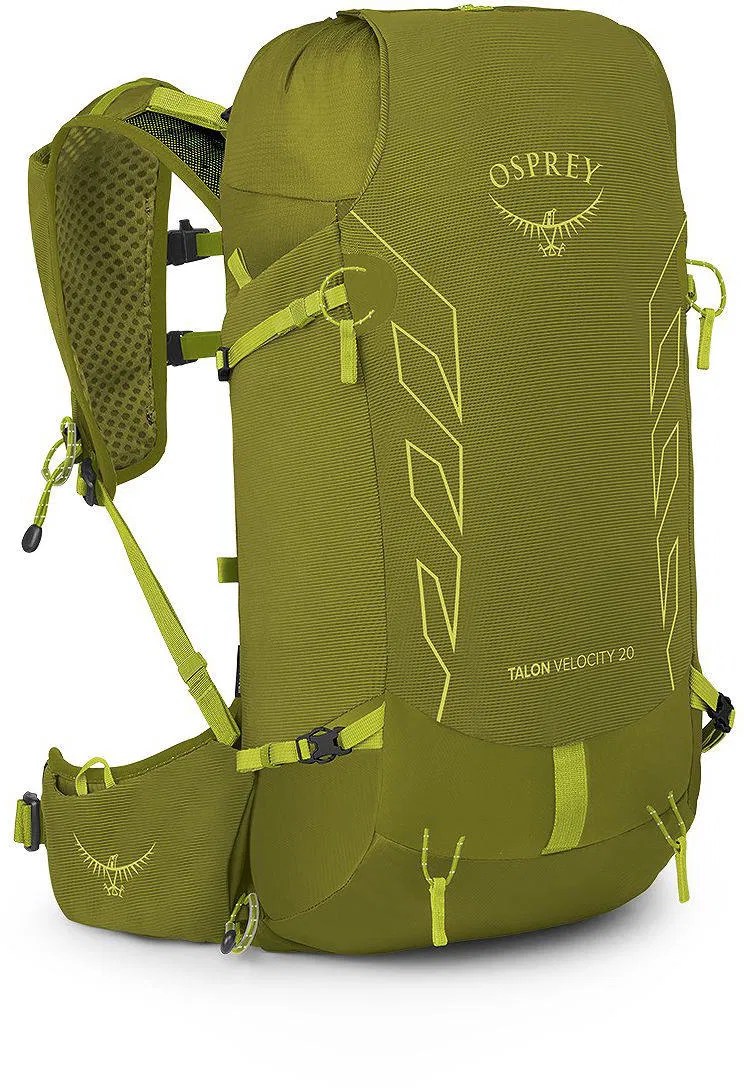
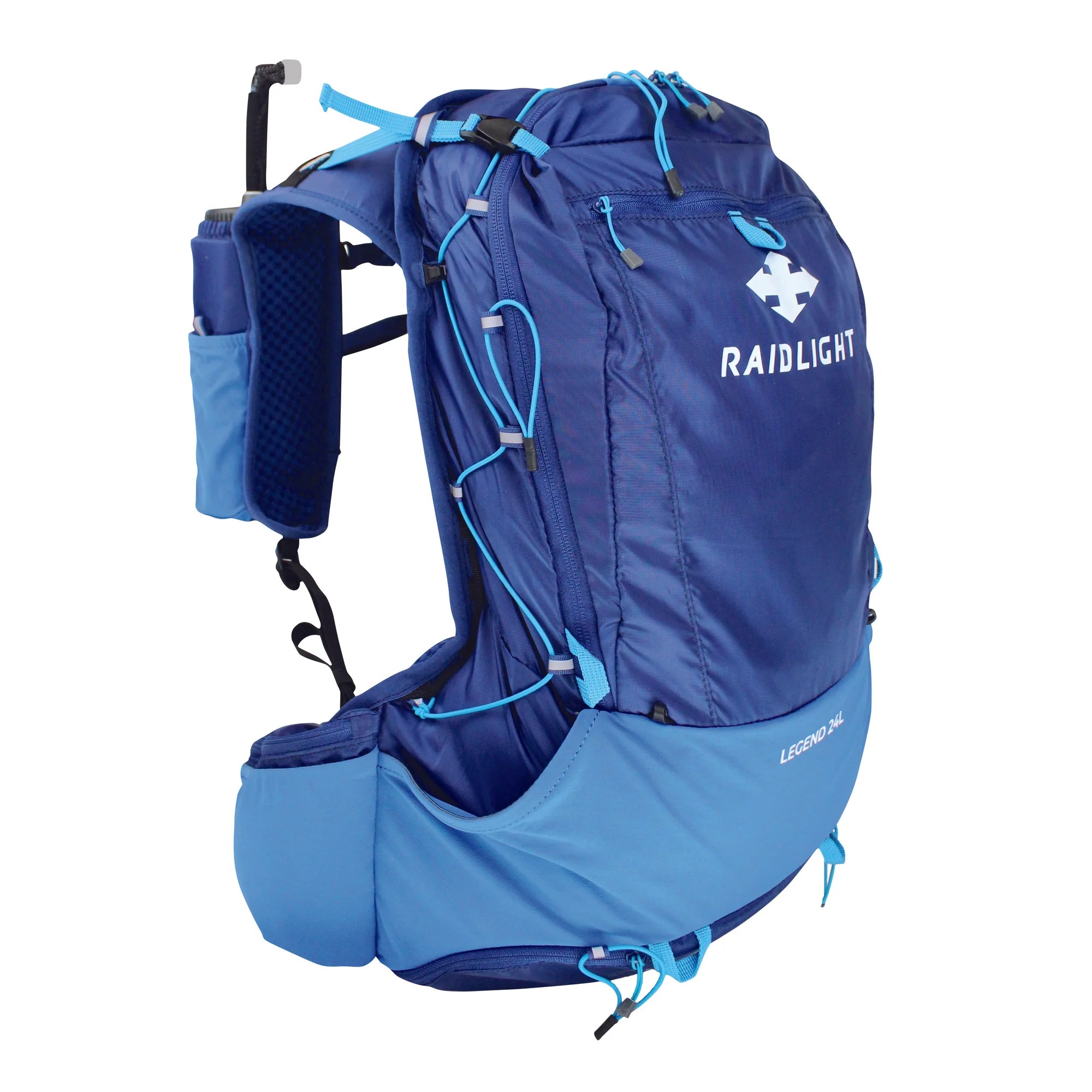
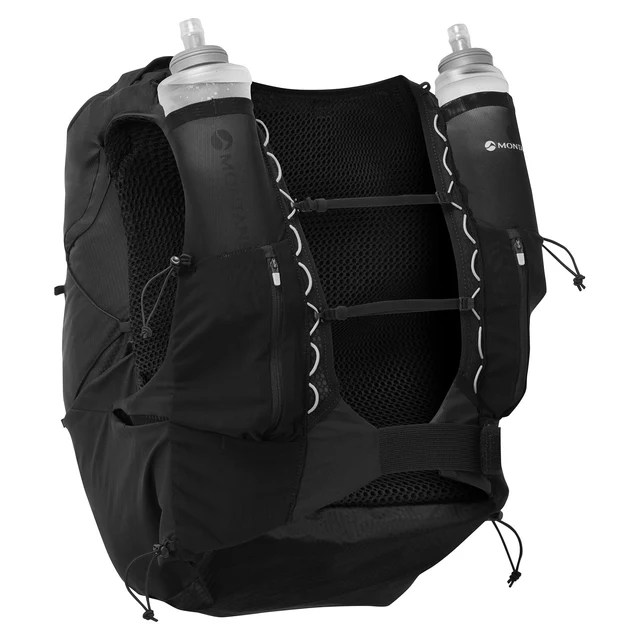
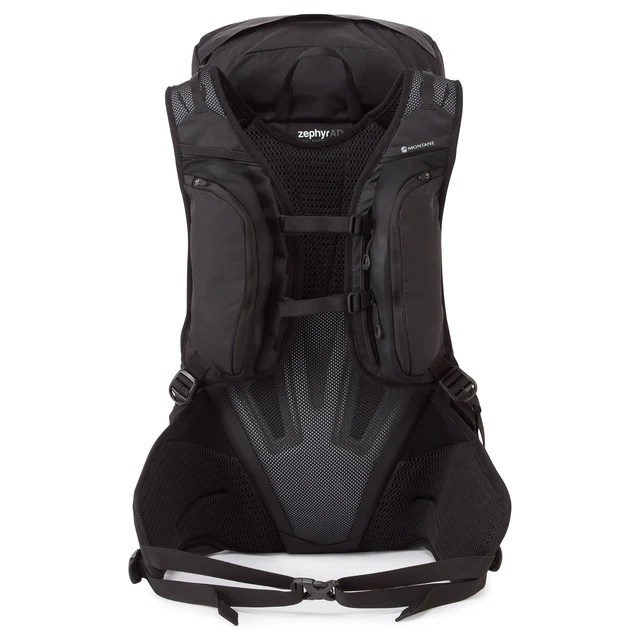
Comfort is obviously hugely important and just like shoes, packs need to fit you, cause no rubbing or irritation and feel like a piece of clothing. What works for one person will not work for another. A great example being, the needs and requirements for 152cm tall woman weighing 55kg is very different than a 182cm tall male weighing 85kg. It’s great to ask and take advice BUT you need to try packs, see how they fit and importantly when trying, add weight so you can feel how it sits on your body. Many brands do different sizes now such as S/M or L/XL and one or two brands do male/ female versions: Ultimate Direction, Osprey and Oxitis being good examples.
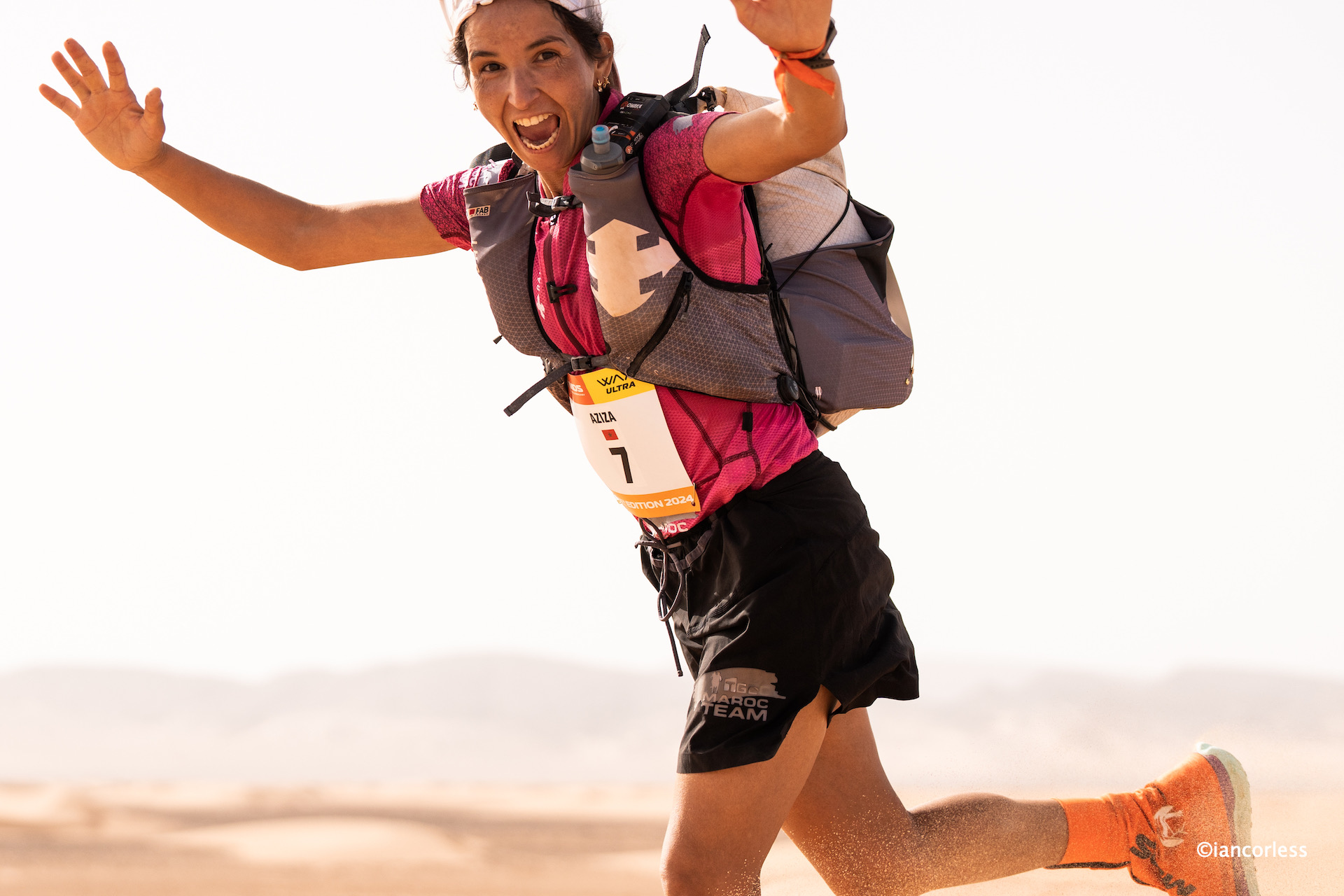
Aiziza El Amrany winner of the 2024 MDS with a Raidlight pack.
Many packs now use a ‘vest’ like system, however, when you have 8kg in the pack, does that fit and feel good? You need to know this. Look at pressure points, such as on top of the shoulders, this area can get very sore if you do not have enough padding. Also feel how it sits on your bag and check for bounce/ movement. A pack that moves too much causes friction, friction equals irritation and blisters.
A waist belt is often a great addition to help secure a pack to your body and distribute the weight load. Some love waist belts, others dislike them. I personally am a fan.
You must choose what is correct for you and don’t be afraid to go against the norm to use what is correct for you. A prime example being that a hiking pack may be the best solution for YOU. Trust this and ignore what others say. The only key things to consider: Be careful of the pack weight and make sure it is not too large in capacity.
Instinct pack in action at MDS
Access to water is important, many packs now have the capacity and option to carry bottles up front. This makes drinking and refilling easy. However, this may not work for you. If that is the case, do what is right for you, if that means using a bladder, do so. The only consideration with soft flasks and bladders are the risk of puncture, but, I have used a bladder on countless adventures with no issue. Good admin is key.
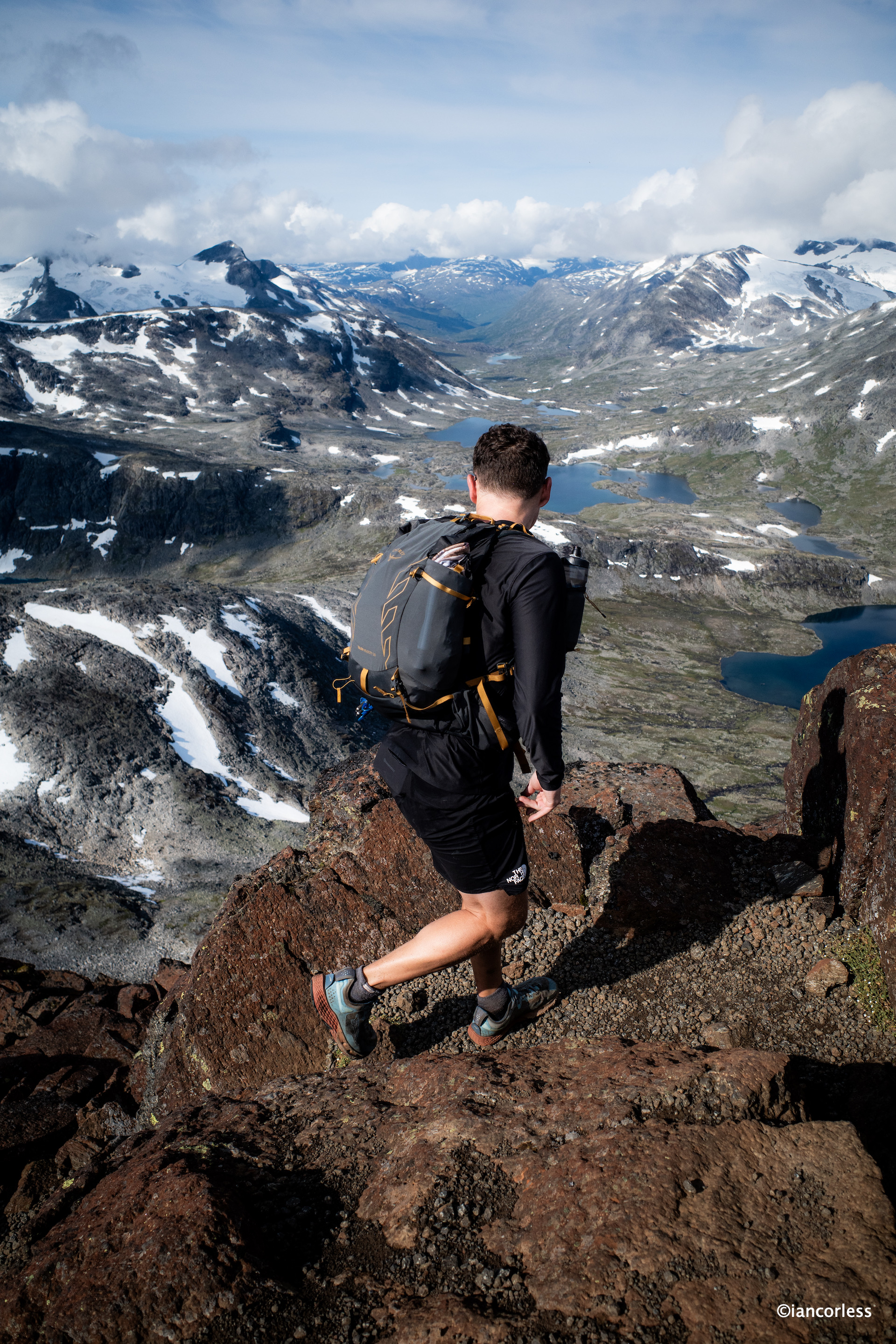
Osprey Talon Velocity and Camelbak Octane fastpacking in Norway.
If doing an adventure that is self-sufficient (such as MDS,) remember that as days pass, pack contents will become less due to eating food. So, the option to tighten, compress and make the pack smaller is a potential key consideration to stop or reduce bounce.
Finally, pack weight is important, BUT, do not go for the lightest pack if it has no durability. You need the pack to be strong, durable and reliable.
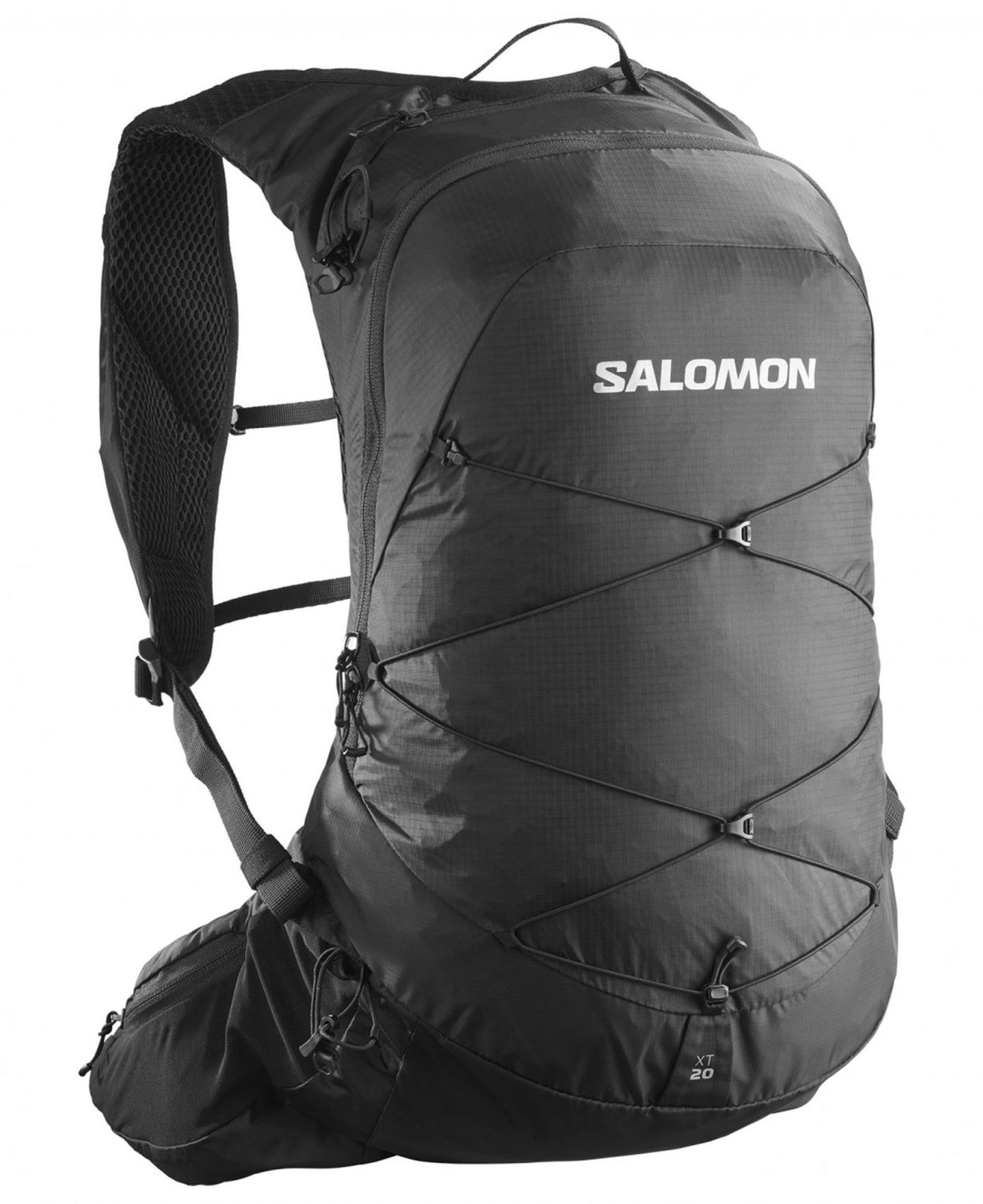
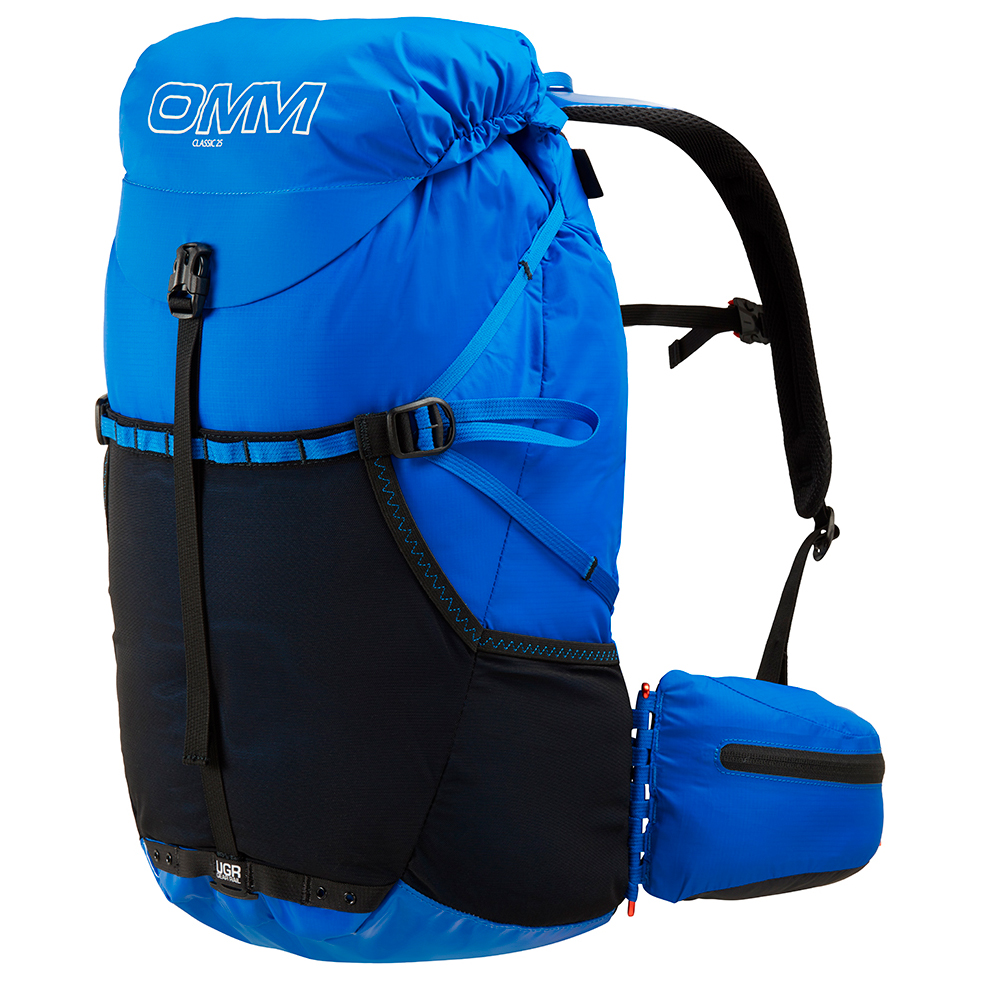
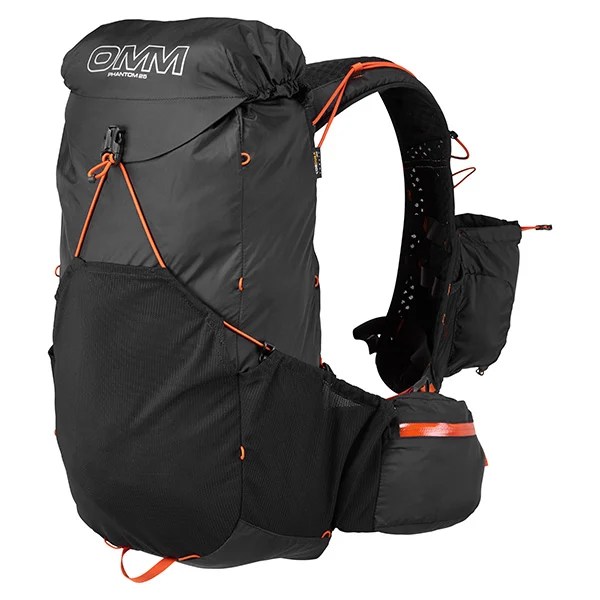
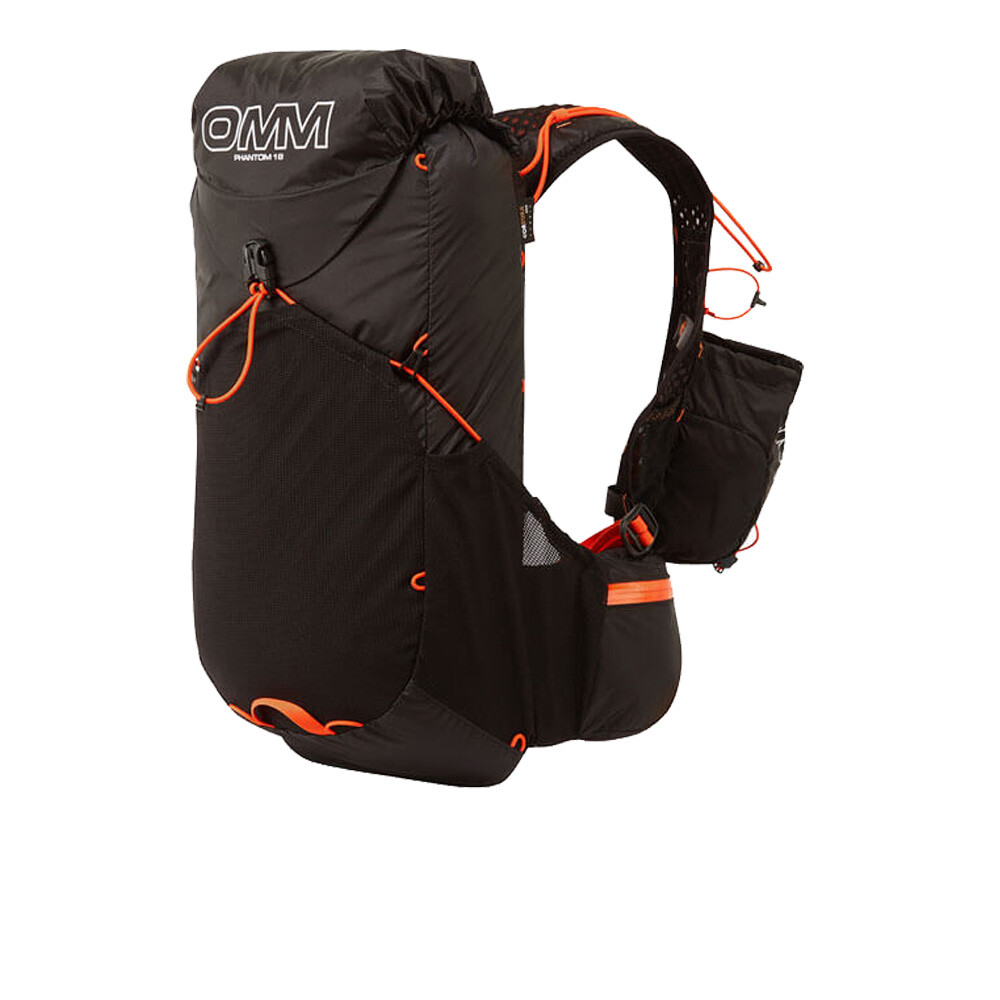
BRANDS TO CONSIDER
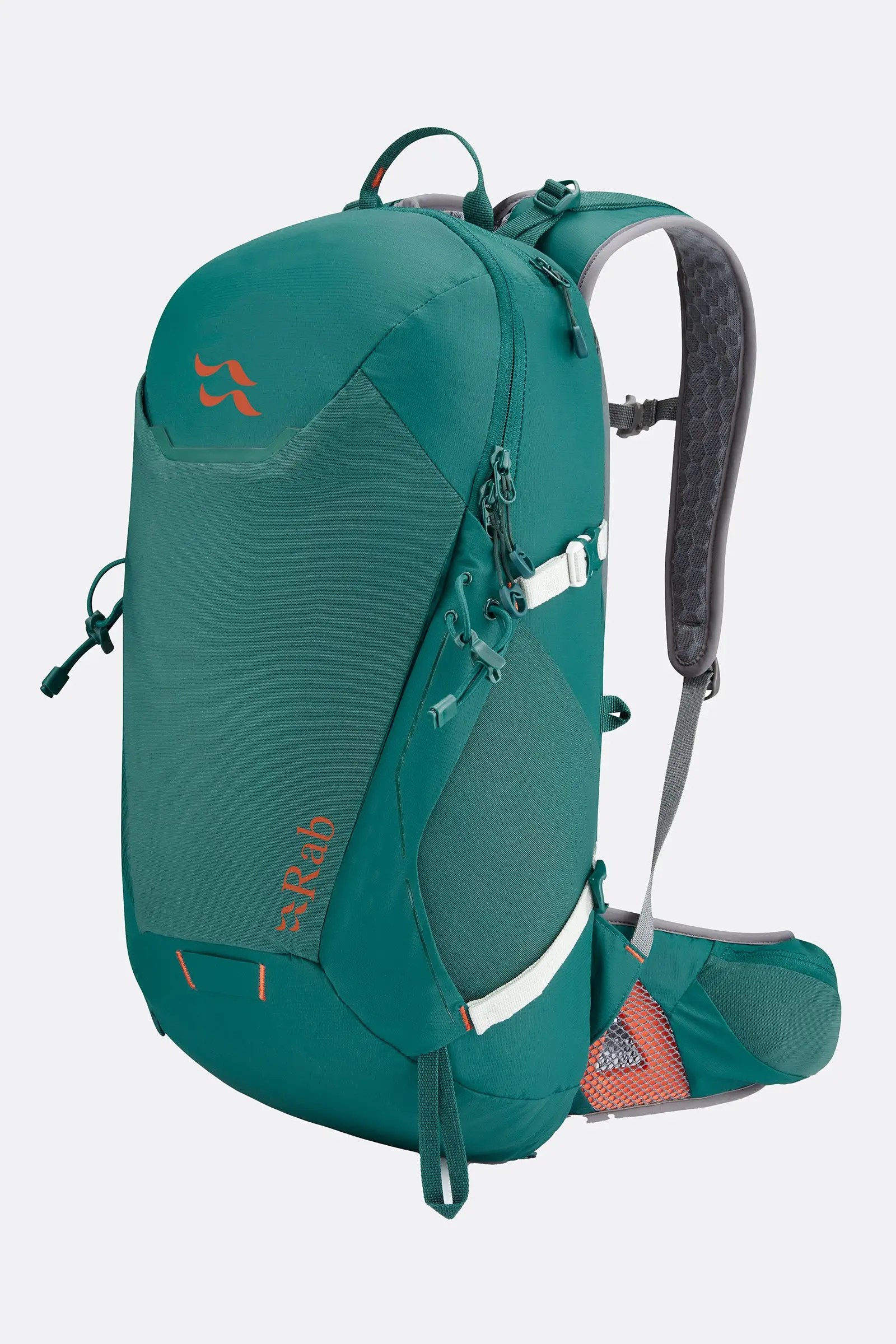
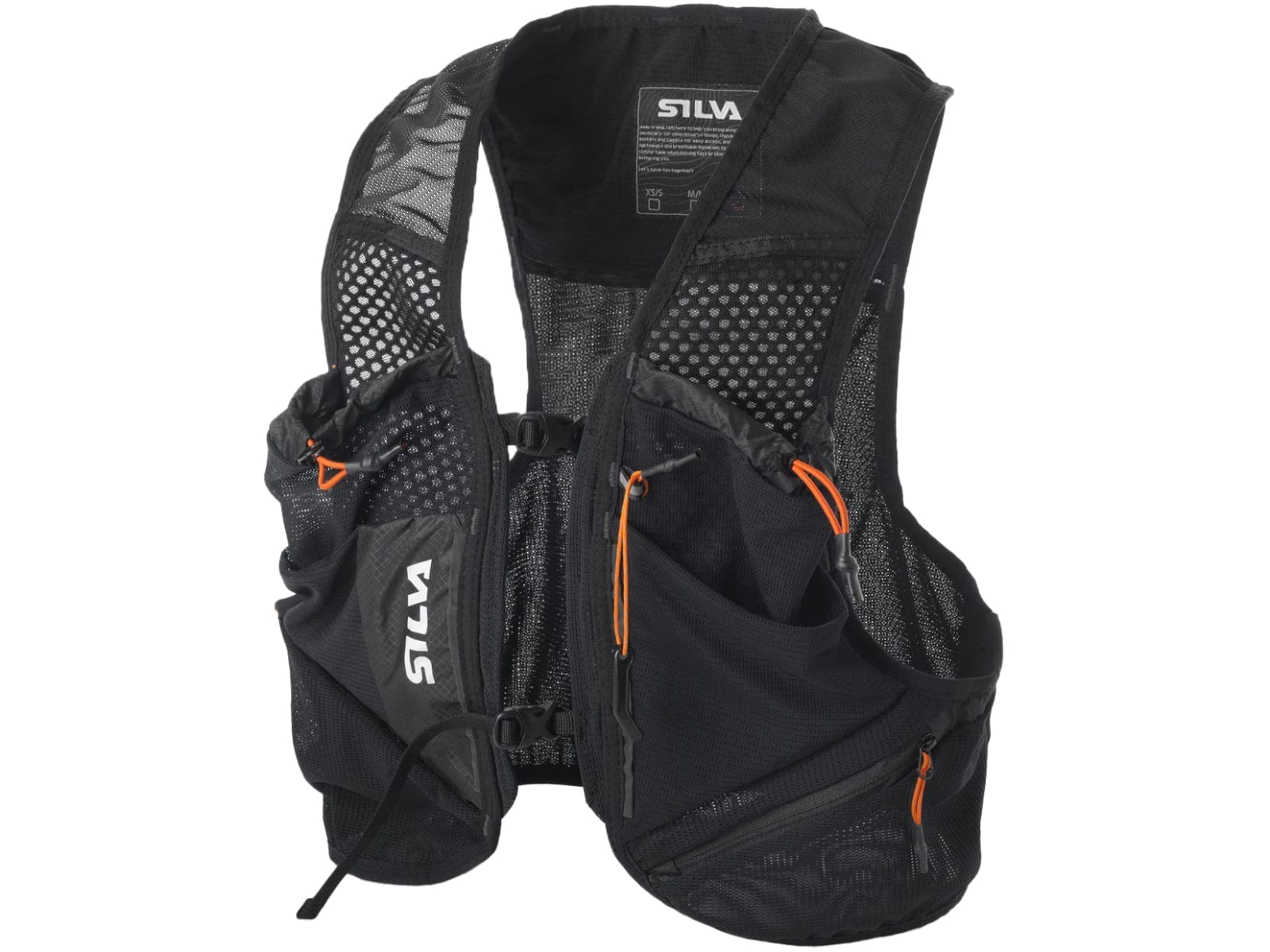
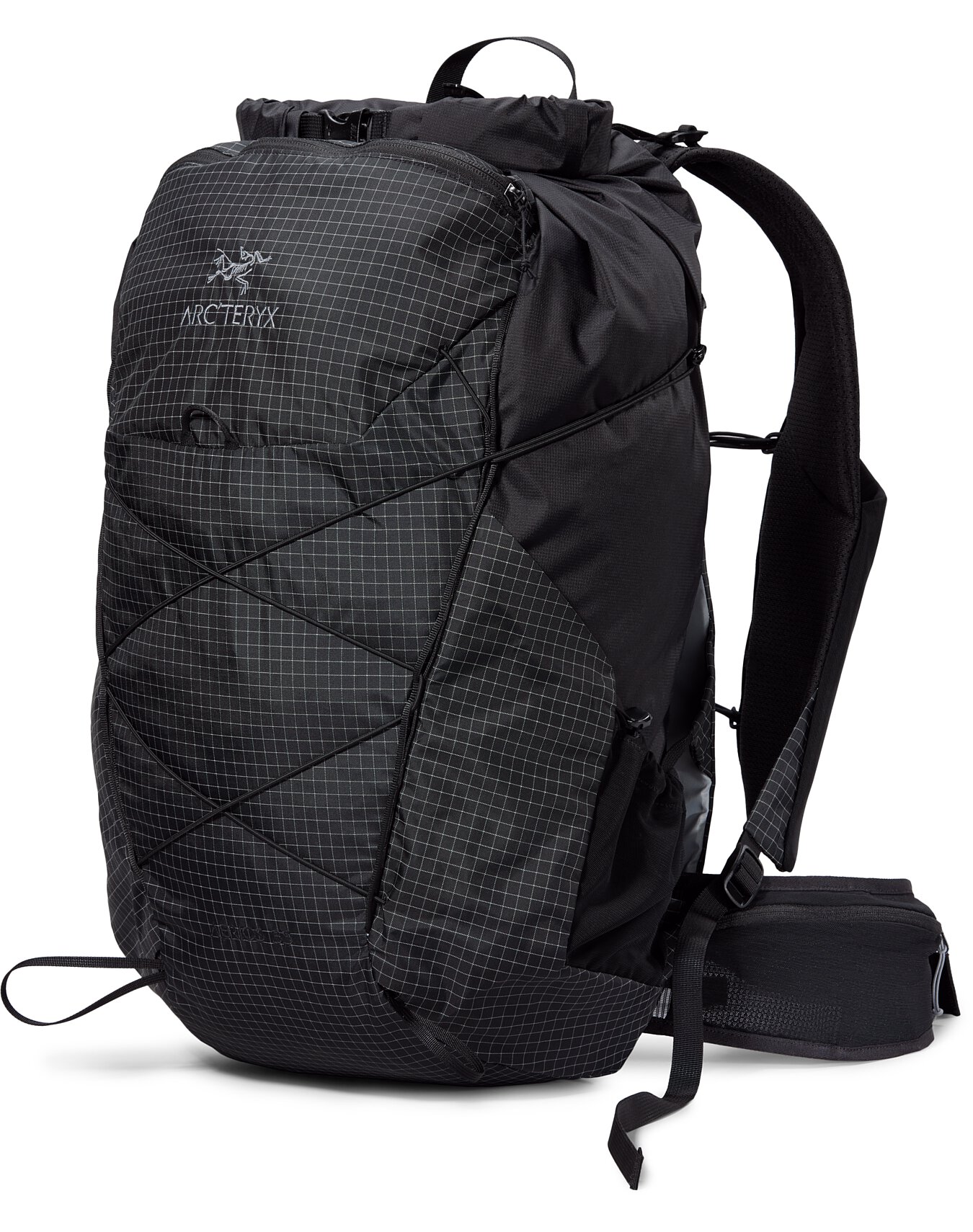
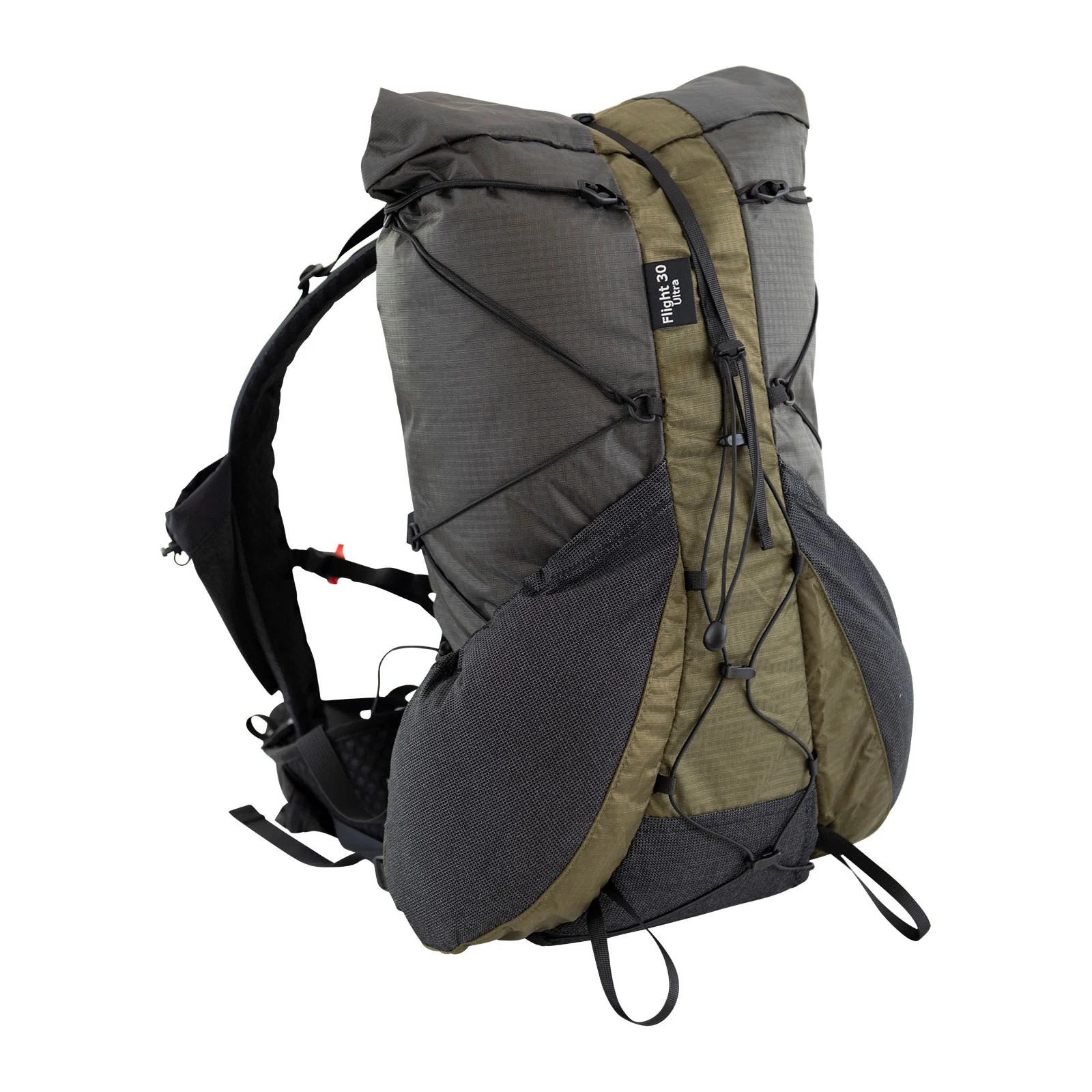
As mentioned, many brands now make packs or packs suitable for stage racing, multi-day or fastpacking.
If you have a brand missing from the list that you feel needs to be added, please make a comment below.
WHAT ARE THE BEST PACK OPTIONS TO CONSIDER
Remember, we are all individual. Every pack on the list below I have looked at, played with and tested in some capacity.
They are ALL applicable for stage racing, multi-day or fastpacking.
You may well be asking, but which do I prefer? Well, I could answer that, but if I do, am I then influencing your decision and thought process? So, for now, I will refrain from giving an opinion.
As you can see above, there is no shortage of options for packs. The main problem is testing and trying packs. Today, the internet and online purchasing provides us all great options and ease for shopping, but, I cannot emphasise enough, with a pack, go to a store, try them on, add weight and play around. Ideally, go to a store that sells many options so you can compare.
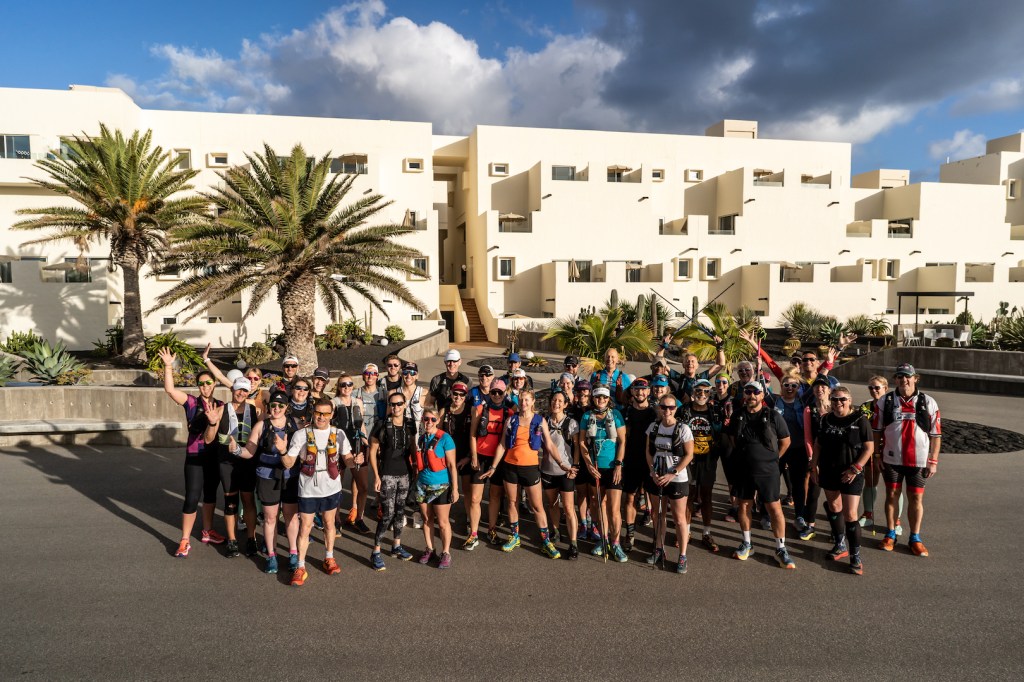
The 2025 Lanzarote Training Camp taking place from January 9th to 16th, 2025 is open for booking.
If you love running, this is the camp for you!
Located at the iconic Club La Santa resort, our training camp will provide you with all the knowledge, experience and practical training you need to make your next adventure a success.
Hosted by Ian Corless, the training camp is the perfect place to hone your skills for stage racing, fast-packing and running in general.
The purpose of any training camp is to provide you with specific information and training designed specifically to help you with your future objectives, be that a single-stage race, stage race or a personal adventure.
We specifically cater for training and information for MDS events.
Although you may run (train) more in this condensed week, it’s not designed to break you! Therefore, all training sessions are flexible and you can dip-in and dip-out as required.
Most importantly, just as in any race, we will have a very mixed ability base. You will therefore train at your appropriate pace with like minded people.
All abilities catered for.
Each day will be broken down into one or two specific training sessions, one workshop and leisure time. Lanzarote offers a variety of terrain; soft-sand, technical trail, ridges, climbs, descents and wonderful flowing single-track. With an epic coastal backdrop, there is something for everyone.
Cathy Searle at Caldera Trasera.
Club la Santa has been the home for the Lanzarote Training Camp for over 15-years!
Offering excellent facilities for any enthusiastic sports person, there are over 30 different sports and classes available for free to anyone staying on our training camp. This makes it ideal for those who would like to bring a partner. Mum and dad, would you like to bring 1 or 2 children? They go free!
Our standard apartments are 1-bedroom with lounge, bathroom and kitchen. Perfect for two adults with or without children. On site are 4 restaurants, a sports bar, shops and supermarket, all making for an easy, no stress week.
A £300 deposit secures a place for shared occupancy, £600 for solo-occupancy. Deposits are non-refundable in any circumstance and cannot be carried forward to a following year.
This includes a self-catering apartment on a share basis. Inclusion in the above schedule and access to all facilities within the Club La Santa complex.
A non-training partner is welcome to join a training partner for a cost of £1095 pp* and they are able to use all the facilities at Club La Santa.
Solo Occupancy apartment £1895
Apartment upgrades are possible on request – no availability guaranteed.
What is not included?
Food and drinks are all payable locally. Any additional day trips or excursions and flights/ transfers to and from the UK and internal transfers to and from the airport in Lanzarote.
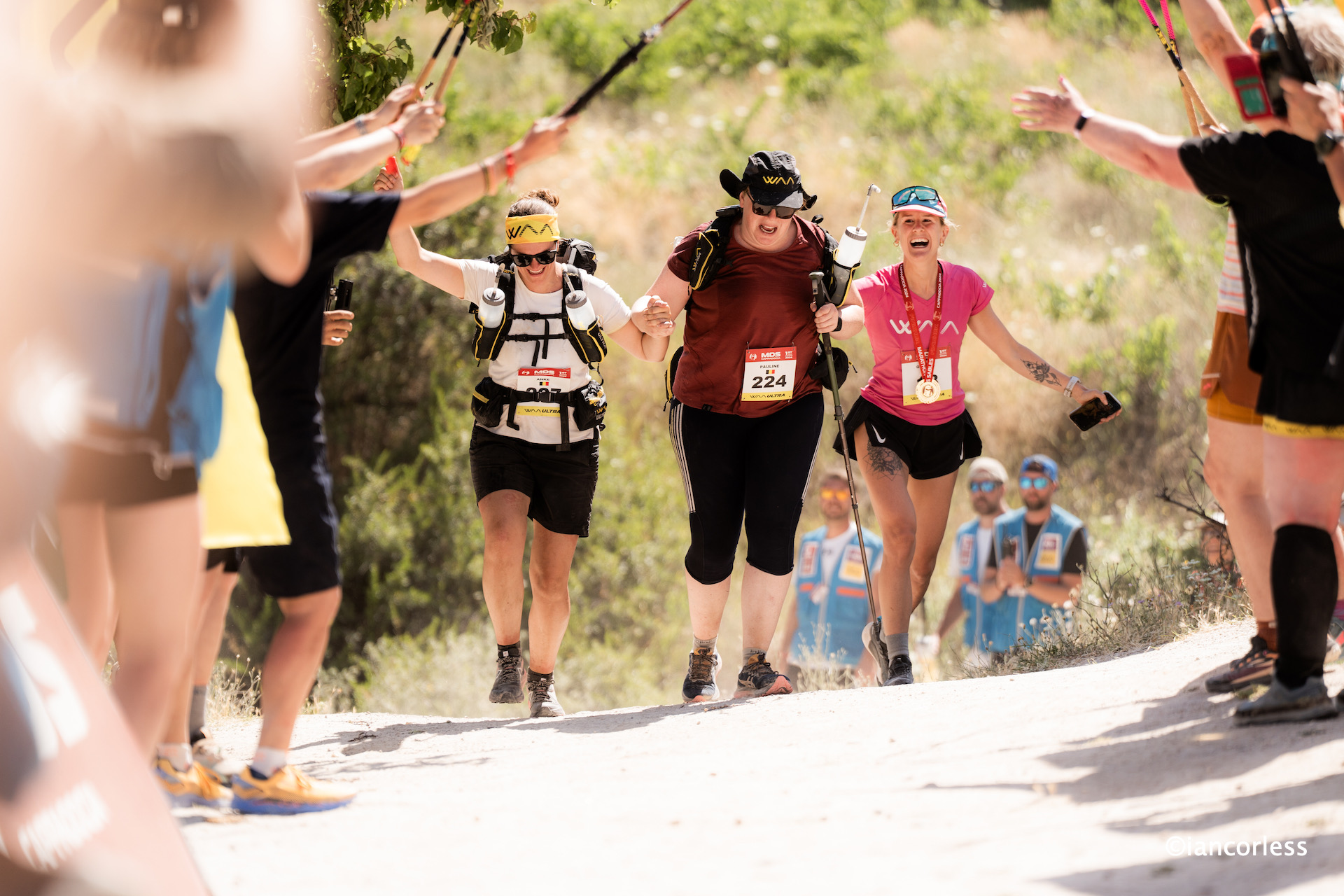
The first edition of MDS Cappadocia took place in June 2024. A unique race in a unique landscape. We speak with 71-year old Liz Ward who achieved her first MDS bling after multiple attempts.
Liz crossing the finish line to get a hard earned medal.
You can read about the stage of MDS Cappadocia below:
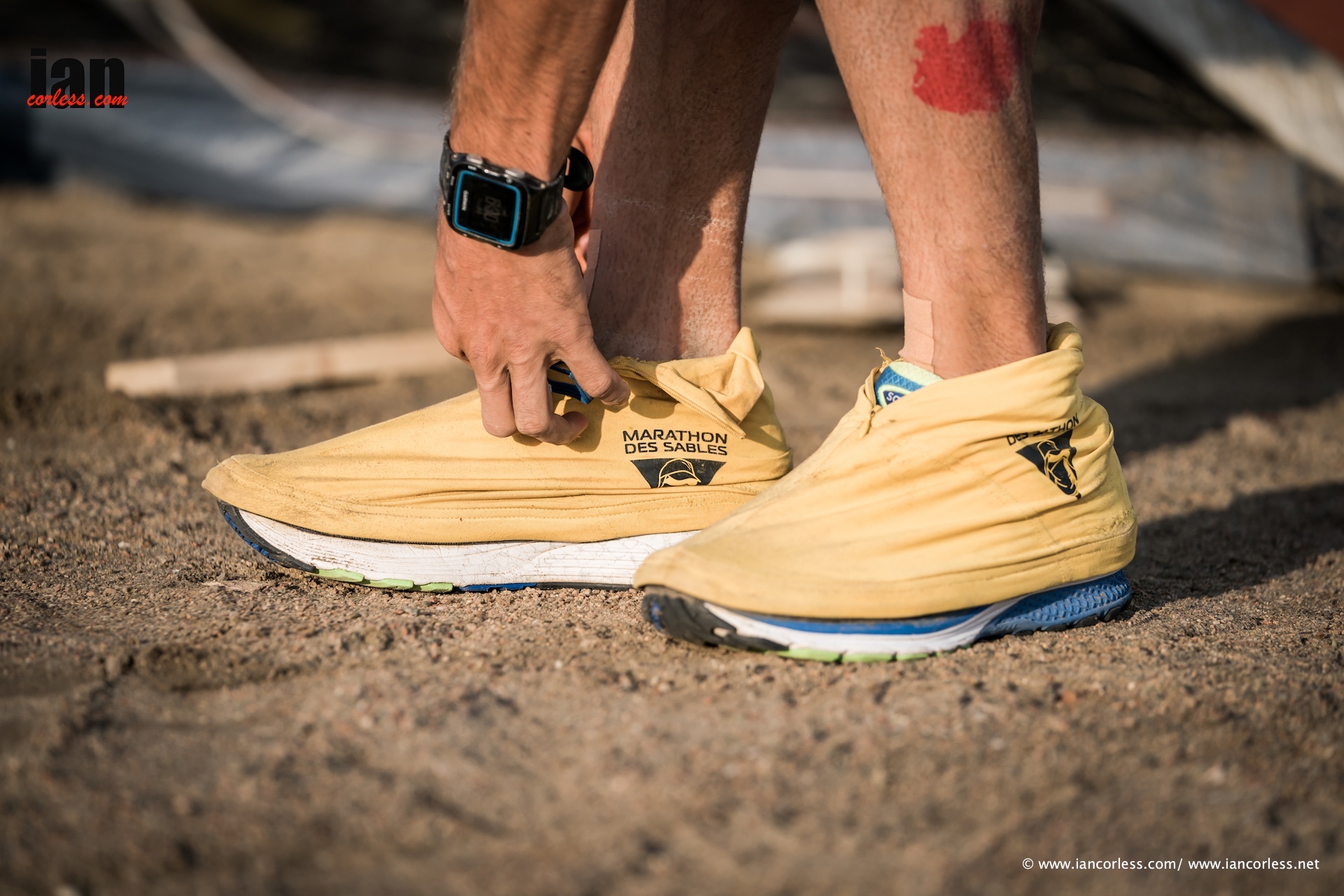
Gaiters for a desert race are an essential item. Quite simply, sand and feet are NOT friends. So, you need to do everything you possibly can to keep sand out of your shoes and keep your feet healthy and trouble free.
In 2024, Raidlight, the legendary French brand released the first mass produced desert specific shoe supplied with velcro sewn on and gaiter provided. I have tested them extensively and they are a great option if you want a one-stop and no hassle solution, my review isHERE – Raidlight Ultra Desert 4 Protect Shoe Review
However, many of you (most of you) will be using your favourite run shoe and will need velcro sewn to your shoe. Let’s get one thing clear, do not ask, “What shoe shall I use?” We are all individuals with different body weights, gaits, needs and speed. Shoes are very specific to the person. Read an articleHEREHow to Find Your Running Shoe Size and Fit.
Every year, the same question gets asked, “Where can I get my gaiters attached to my run shoes?”
So here is a list of current resources, this list will be added to as more names/ contacts become available.
UK
Kevin Bradley is the man. He has been sewing gaiters on shoes for years. He has probably done 1000’s. Very experienced and he knows his stuff. Alex Shoe Repair, 103c Lavender Hill, London, SW11 – Telephone +44 207 2223 4931
Home of the Giants 2024 has just come to a conclusion. And what a week it has been.
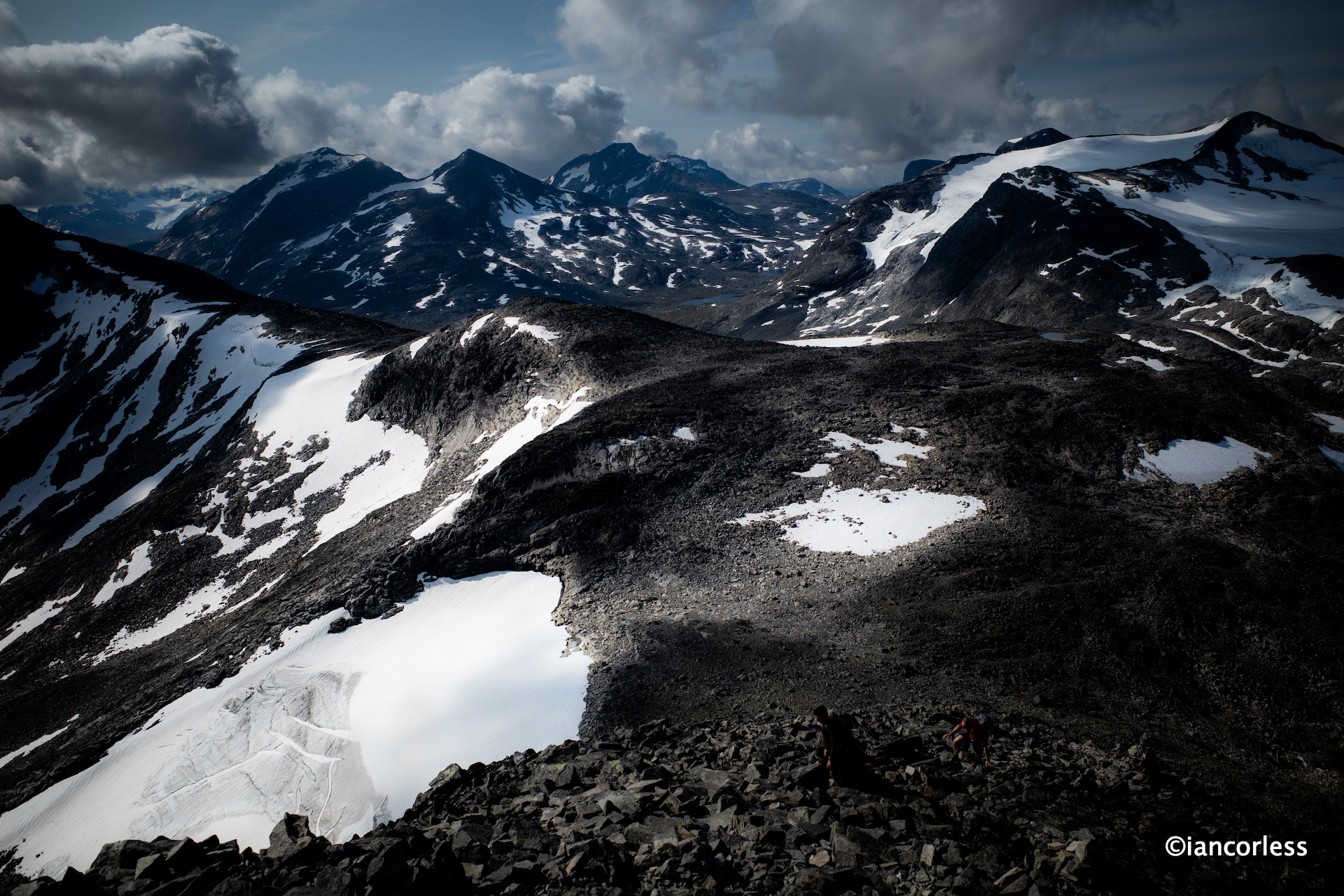
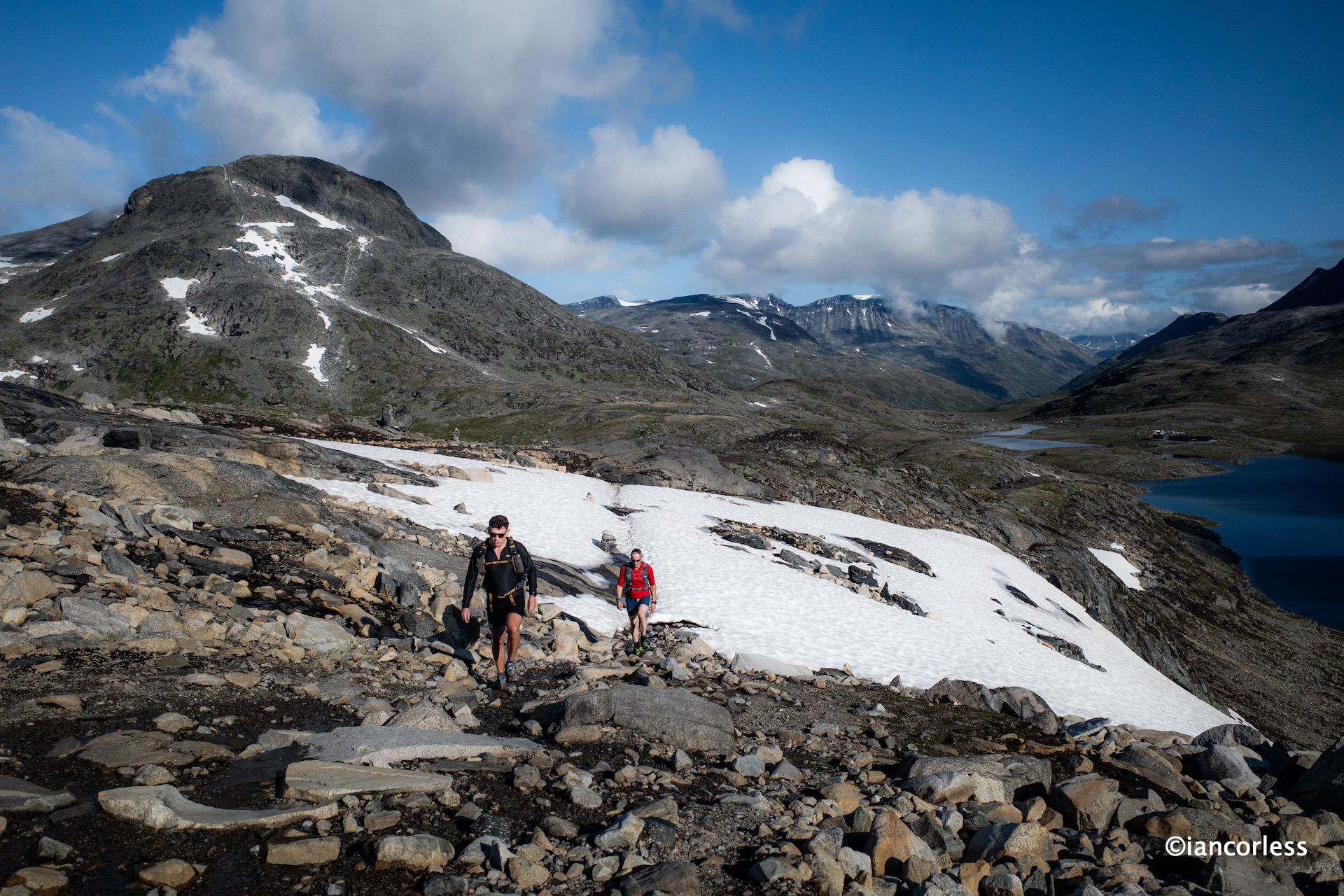
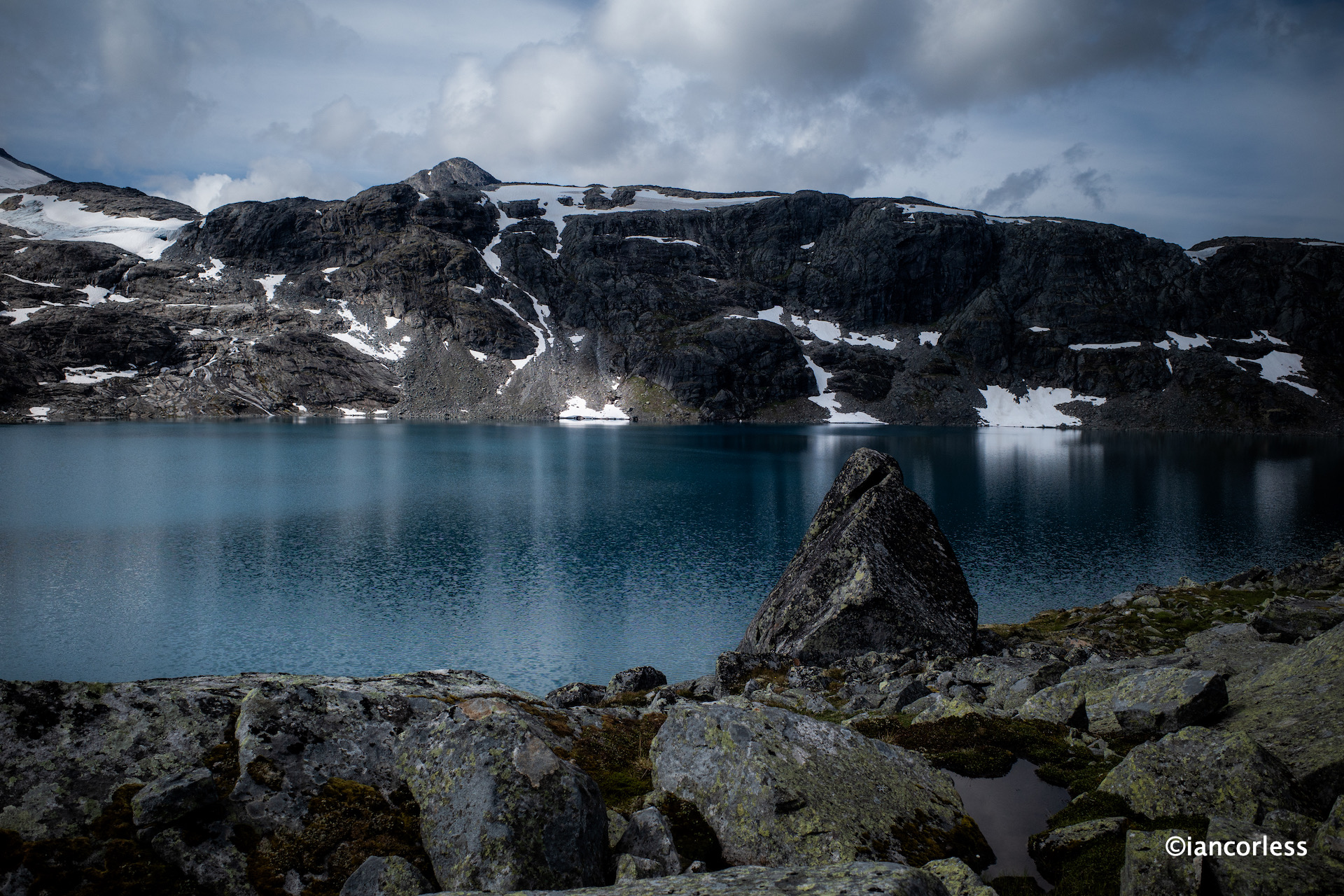
This trip came about through personal adventure in the Jotunheimen mountains of Norway and the desire to share and showcase this magical playground.
Baz at the summit of Kyrkja
What is Home of the Giants?
A multi-day adventure, 6-days in total, through a magical and challenging landscape. Unlike a race, this journey was created as a finely balanced exclusive trip for up to just 12 participants. A challenge at a more relaxed pace, taking in an amazing route whilst moving light in a semi self-sufficient mode using DNT cabins for overnight accommodation.
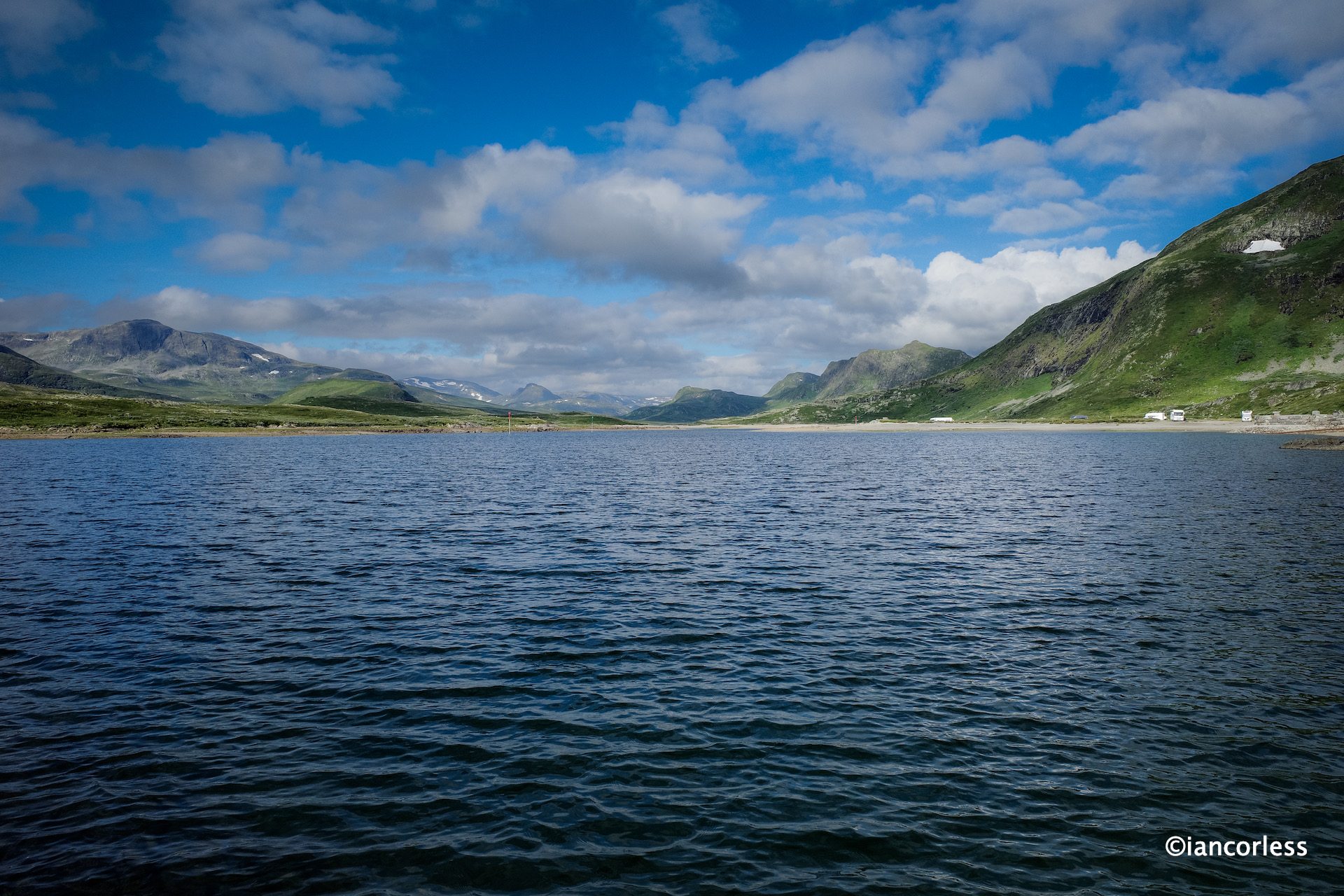
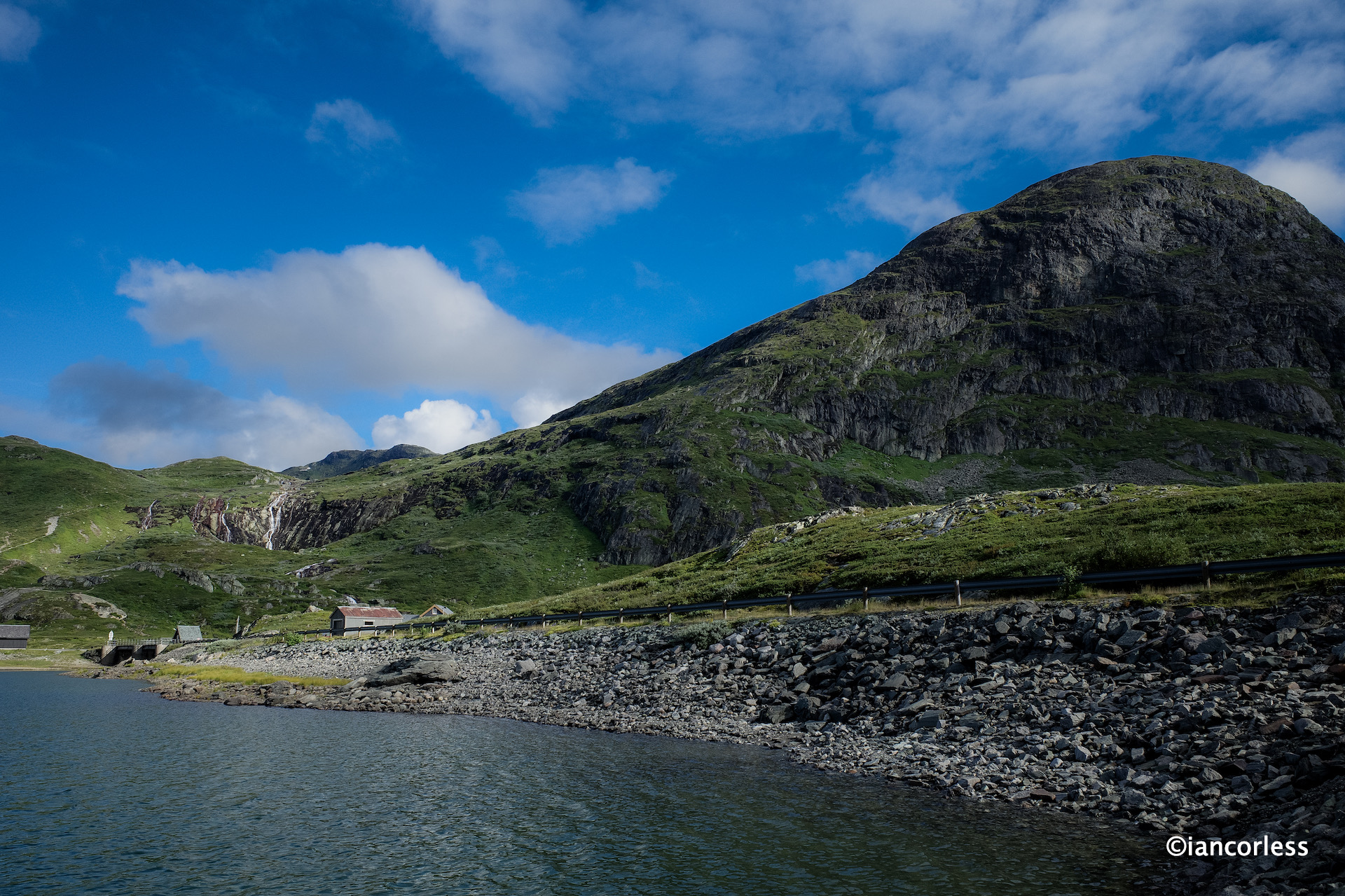
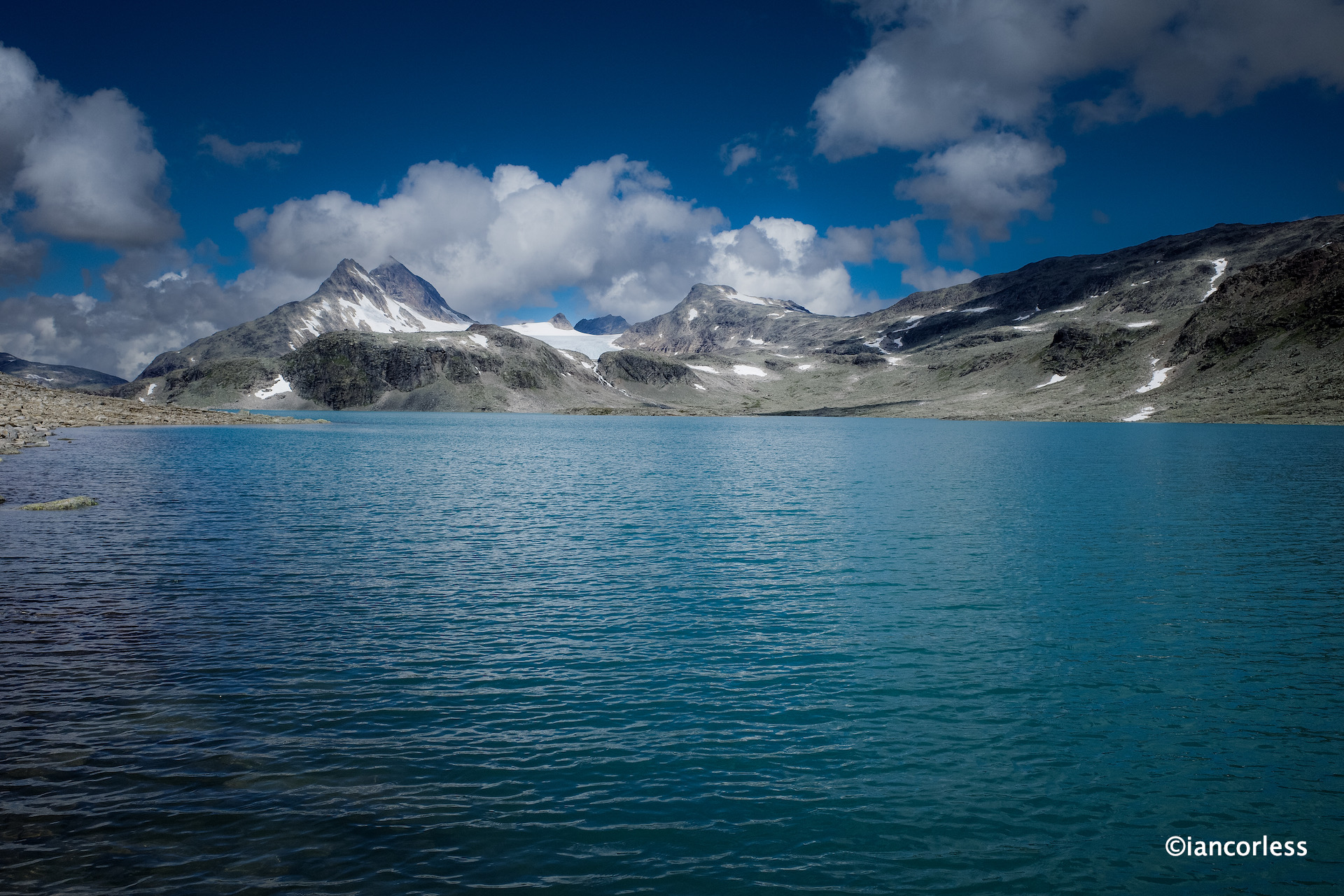
Lake Bygdin
Based around the concept of stage races, Home of the Giants is about moving lighter and therefore faster with a minimum amount of equipment without compromising safety. All we needed could be carried in a small pack weighing approximately 3kg (plus liquid).
It is important to emphasize that Norway can have spring, summer and winter in one day. Never underestimate the challenge of the environment. It is all well and good being light IF you can move fast. You also need to consider the ‘what if’ scenario and should you become slow or a worst case scenario, injured and waiting help/ rescue. At a minimum you MUST have merino top and bottom, warm insulating layer (down or PrimaLoft) waterproof jacket and pants, hat, gloves and a bivy bag. I also strongly recommend a product such as Garmin InReach. Much of Jotunheimen has no phone connection, an InReach with emergency SOS button, for me, should be mandatory.
You can see an example of my pack below and the details are as follows:
Camelbak Octane Pack 600g
adidas hat 32g
adidas gloves Infinitum 52g
Hestra waterproof gloves 53g
adidas gloves 41g
Devold merino base top 193g
Devold merino base bottom 166g
Buff 43g
Haglofs down jacket 163g
adidas waterproof pant 125g
adidas Gore-Tex jacket 272g
Rab bivvy bag 110g
Underwear 98g
Gels 81g (for emergency)
Silk liner 126g
Blindfold/ earplugs 22g
Earphones 44g
Ricoh GRIII camera 251g (a luxury)
Sunglasses 18g
Bottles x2 90g
Katadyn water filter 52g
Toiletries 196g
Power supply 138g
Phone 136g
Garmin InReach 108g
Leki poles 250g
3379g
Staying at DNT staffed cabins provides the best of both worlds, they provide a bed for the night, dinner, breakfast, a packed lunch and they have additional facilities such as relaxation areas, showers and a bar. It’s the ultimate way to travel light in the mountains. Beds are in dorms or private rooms that depending on the cabin can be solo, double, triple, quadruple or five plus. Most DNT’s have a rule that irrespective of if you arrive and there are no beds, you will not be turned away, so, rest assured, a safe haven is always available.
OUR JOURNEY
Day 1 –Oslo to Bygdin
We departed Oslo bus terminal at 0830 Monday for a direct trip to Bygdin Fjellhotel. The journey taking 4-hours with a 15-minute break ideal for a midday arrival. The weather was grim with torrential rain for most of the way. It was an ominous start and constant glancing at weather apps confirmed that our week ahead would have mixed weather. It’s Norway after all!
Synshorn summit
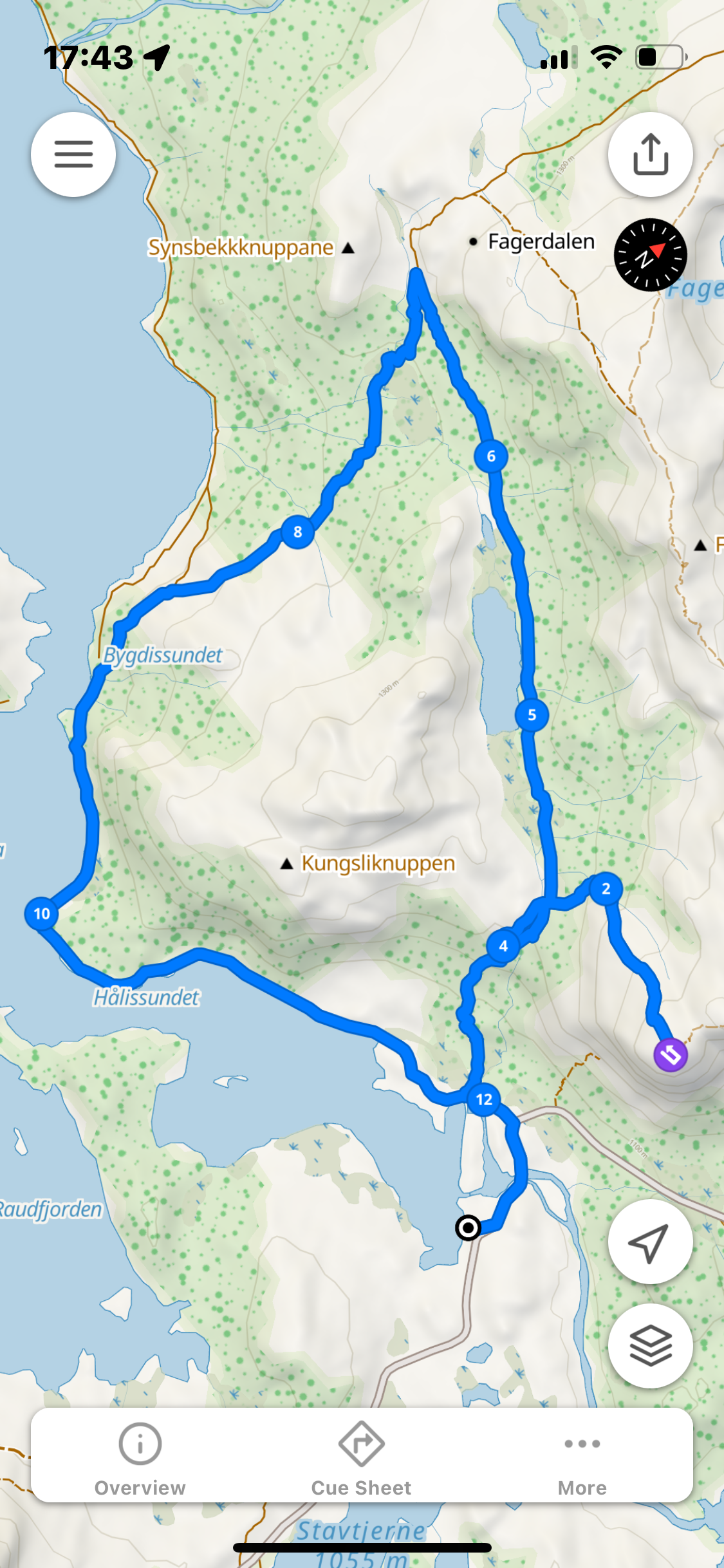
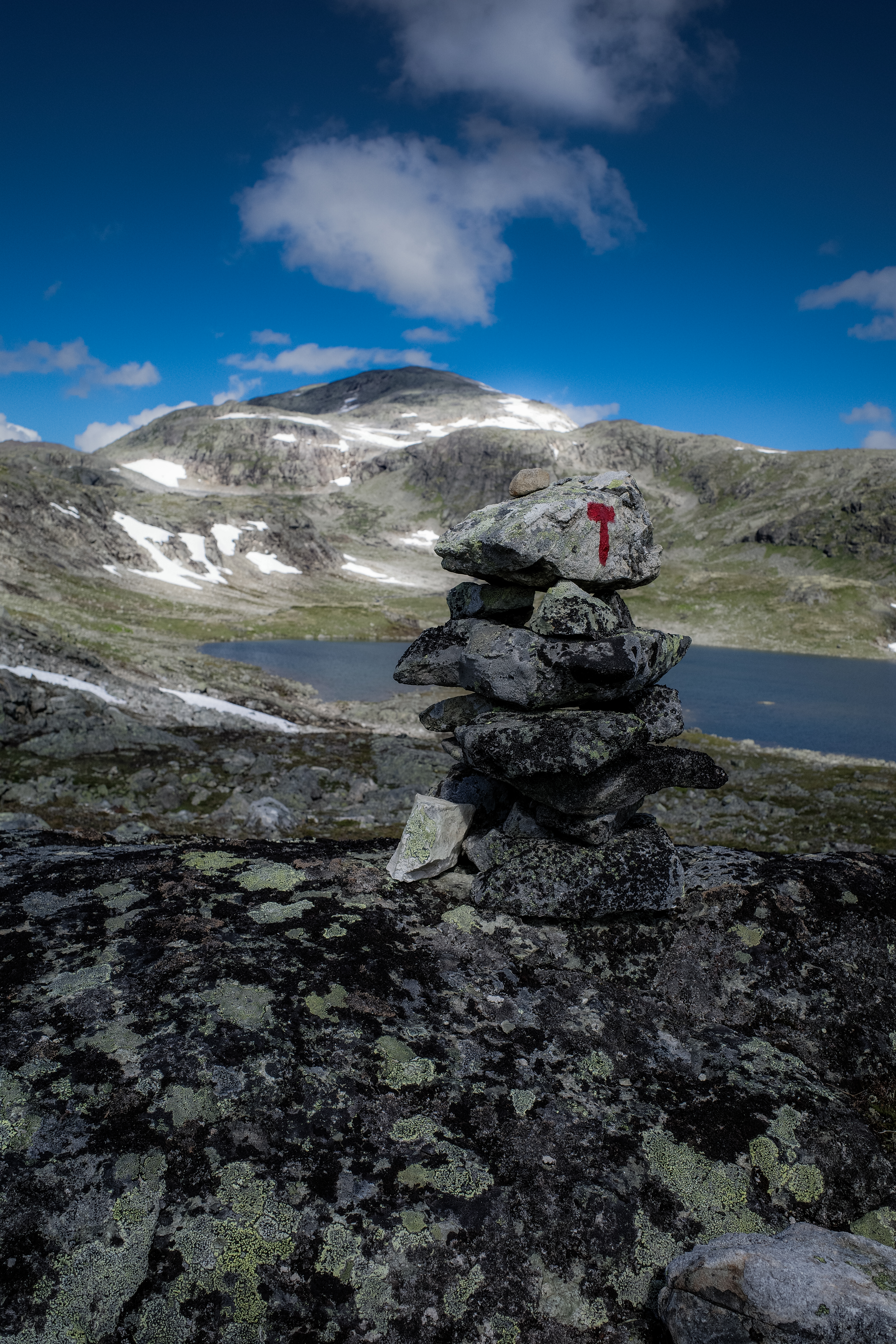
Arrival at Bygdin was seamless and after a break at 1500 we departed in the rain to take in the summit of Synshorn (1464m) which is a great introduction to Norwegian mountain terrain. The plan was initially to just summit and return, a 75-minute journey at a steady pace. However, the weather, although still wet, was not cold and after long travel, we all decided to continue for a back-up and planned 12km route. We followed the ridge north to Heimre Fagerdalshøe (1510 m above sea level) with a great view over Bygdin to Falketind. We then continued in the direction of Synsbekk and connected to the ’T’ marked trail that would bring us back to Bygdisheim and the lake for a short gravel road section back to the hotel.
Day 1 loop
It was a great intro to the week and then we could enjoy the benefits of Bygdin Fjellhotel – a warm shower, sauna and a lovely traditional Norwegian dinner.
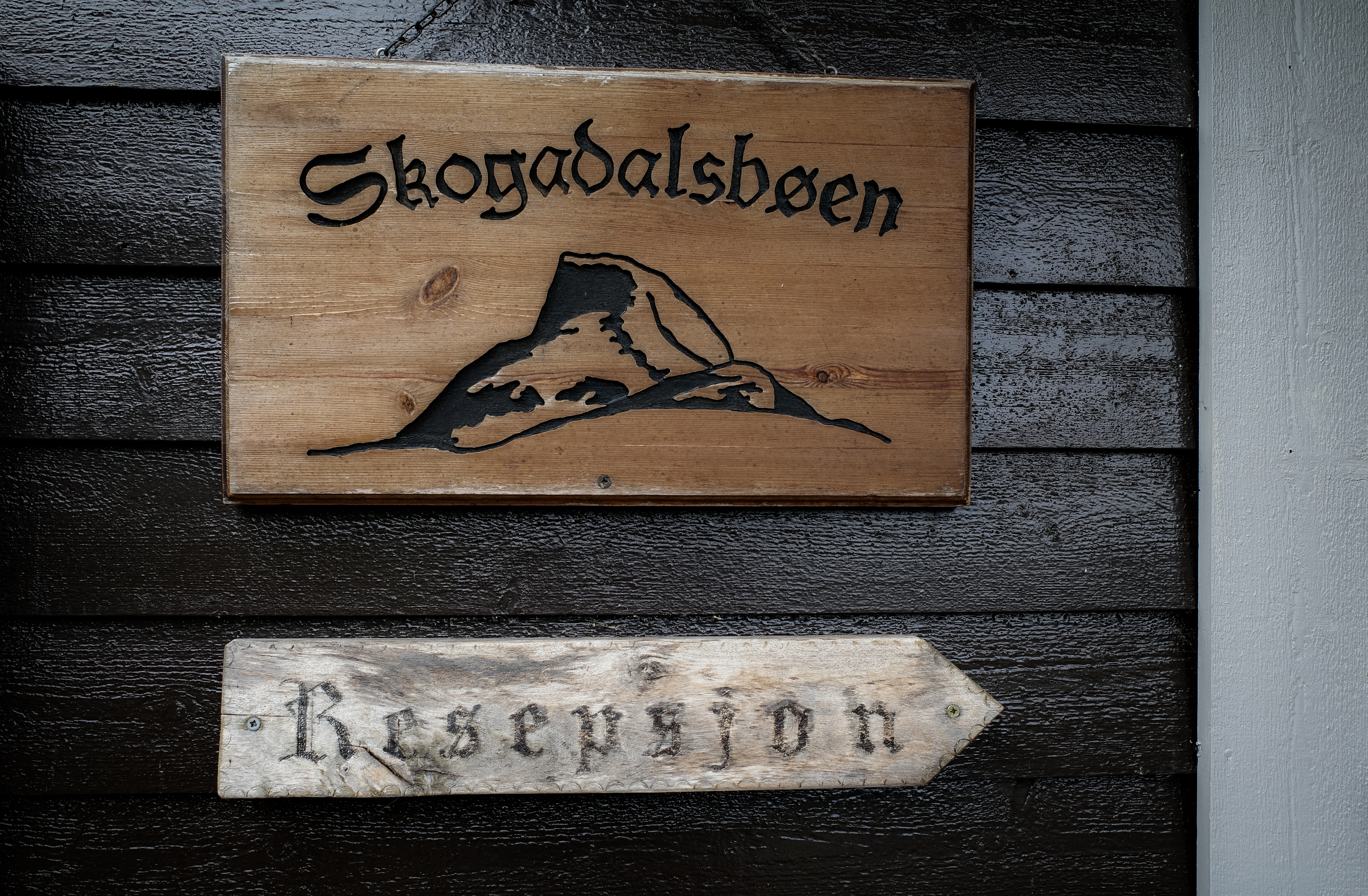
Day 2 – Bygdin – Eisbugarden – Skogadalbøen
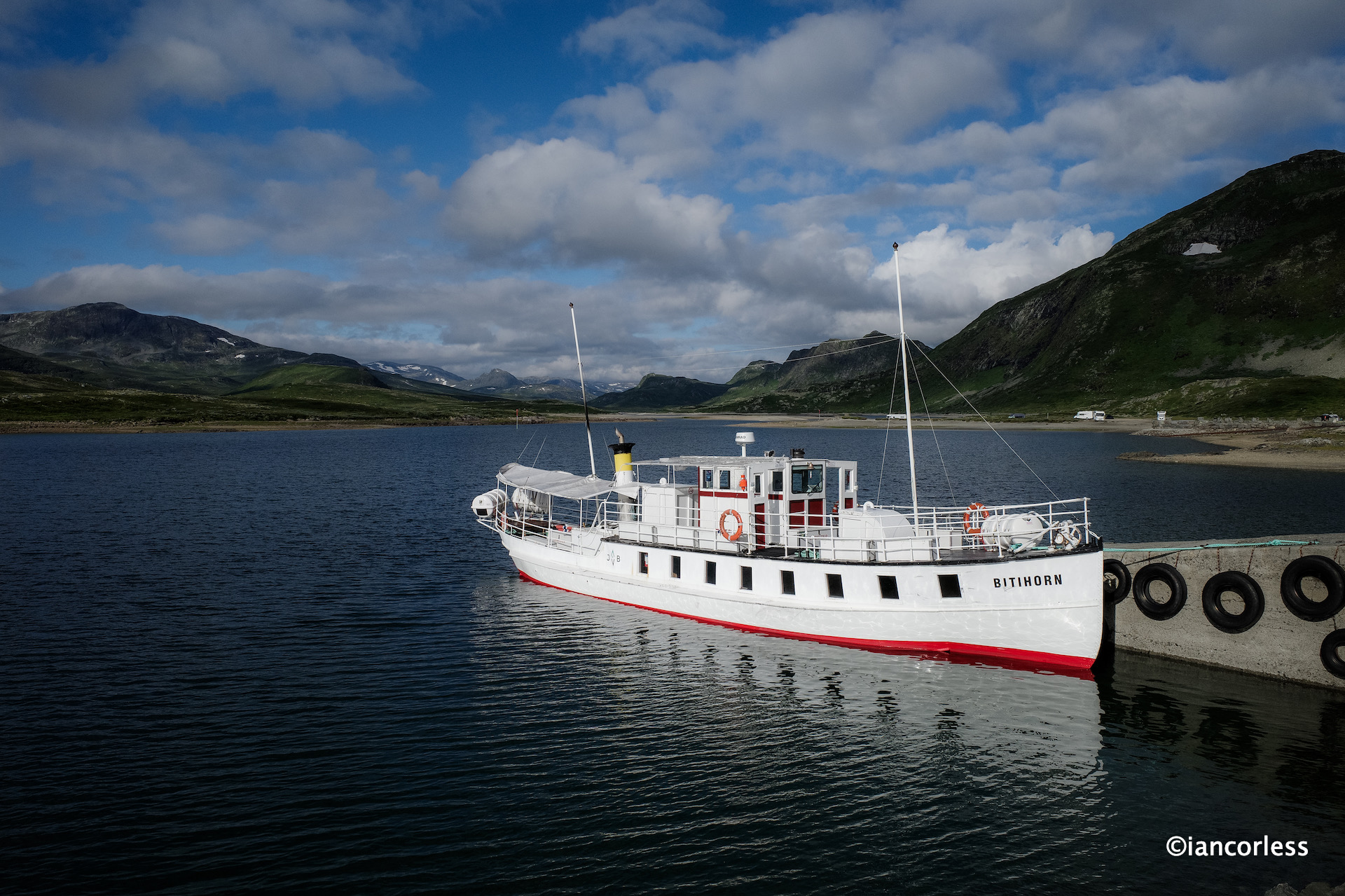
M/B Bitihorn
It was a casual start to the day with a hearty breakfast and then meeting the M/B Bitihorn boat at 0900 for a transfer the length of Bygdin lake (stopping at Torfinnsbu) and then continuing to Eidsbugarden.
Lake GjendeTorfinsbu self-service DNT
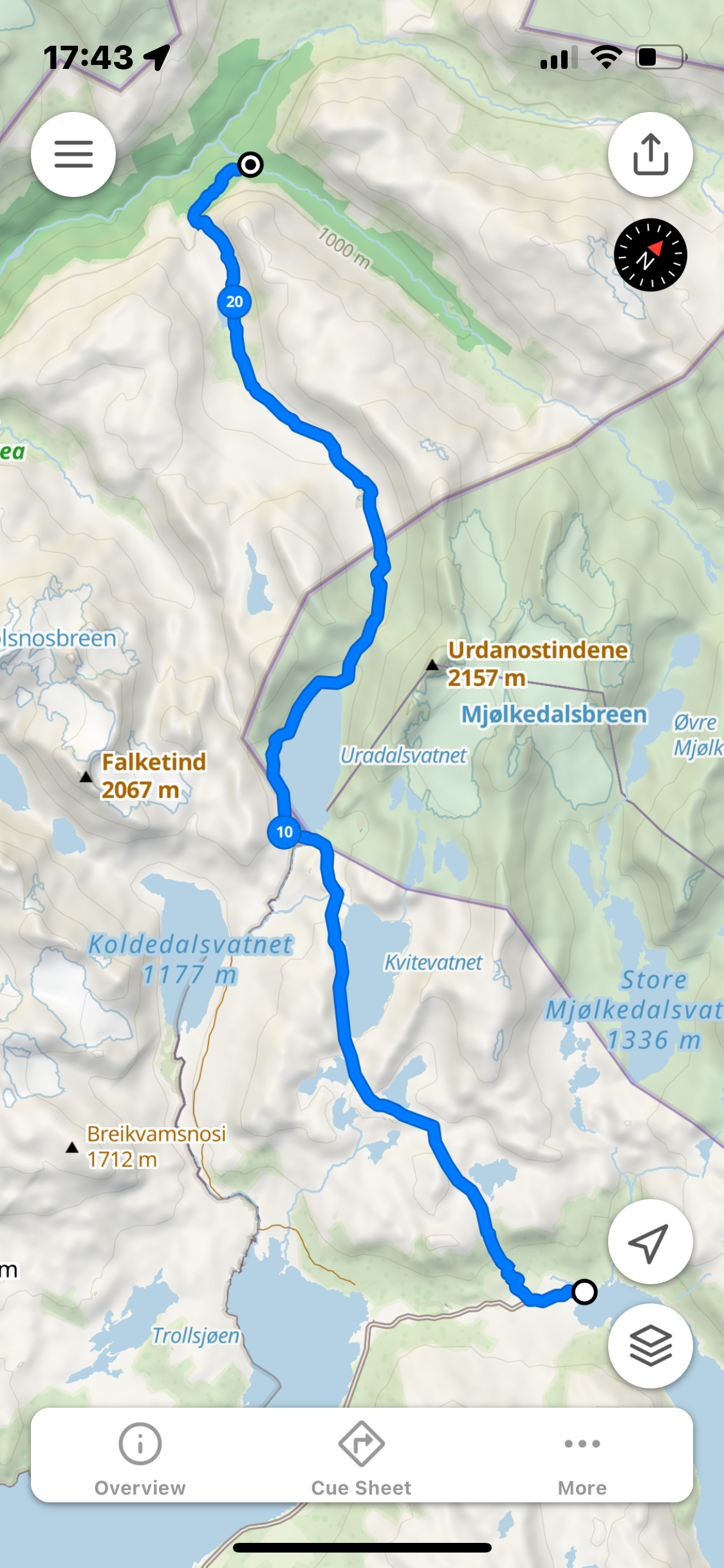
By 1100 we were ready for our first full day, Eidsbugarden to the remote Skogadalbøen DNT cabin. The route is considered very demanding due to the nature of the terrain. It’s very important when looking at routes in Norway that you never focus too much on the distance but more the time it will take to cover the distance. Depending on the time of year, this route can have a great deal of snow, so, be careful and do research in advance. For us, we had several snow fields to cross and all were in good condition.
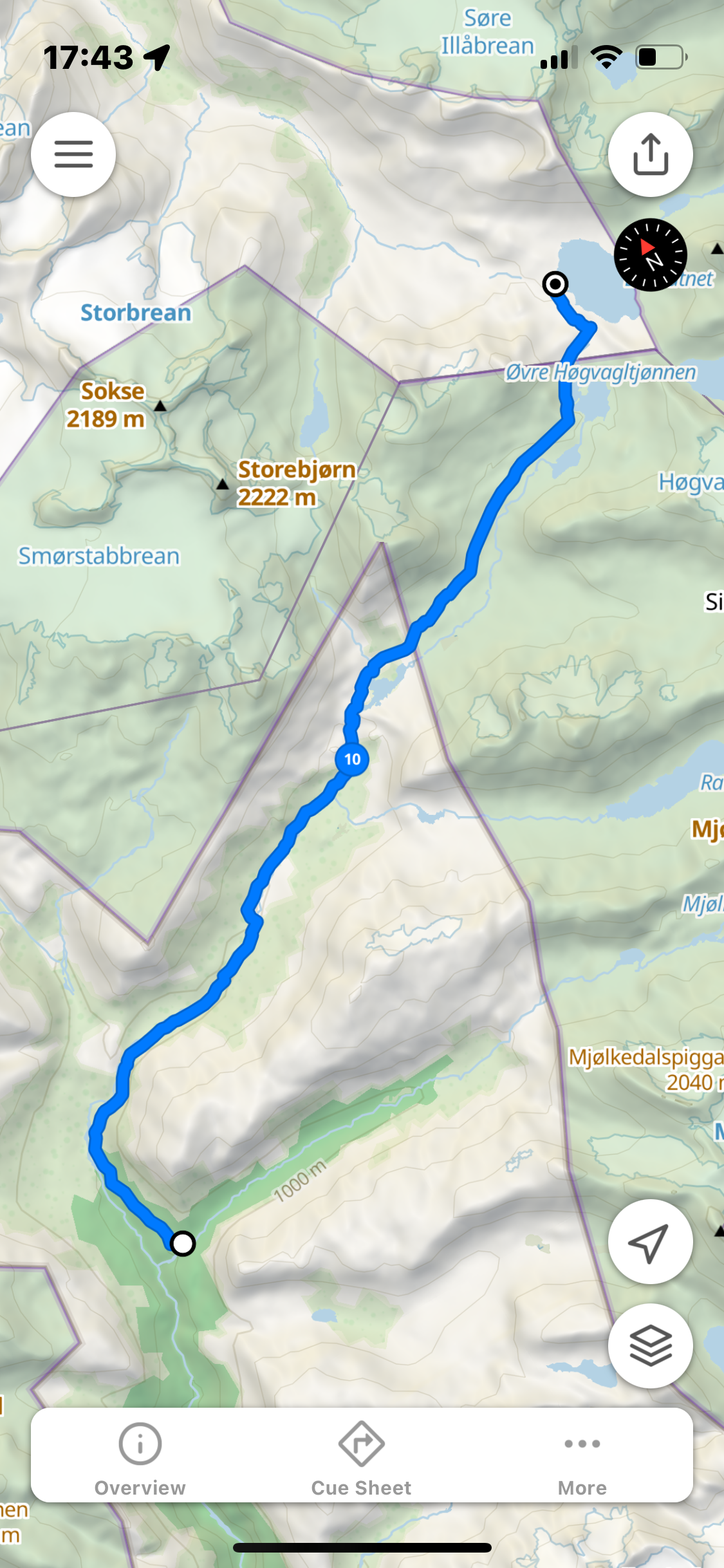
Eisbugarden to Skogadalbøen
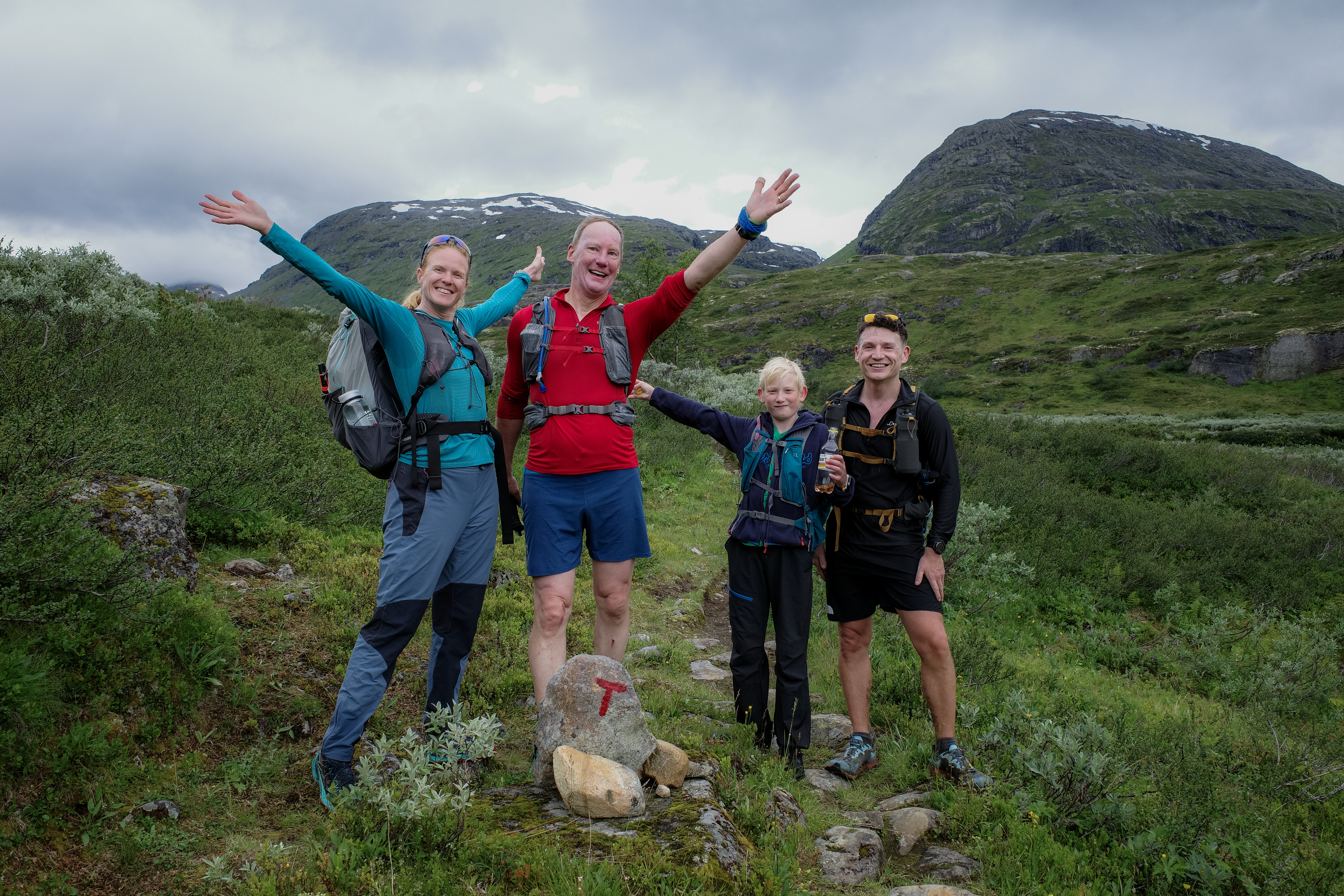
DNT mark the routes with red Ts
Our weather was glorious, blue skies, white fluffy clouds and amazing views.
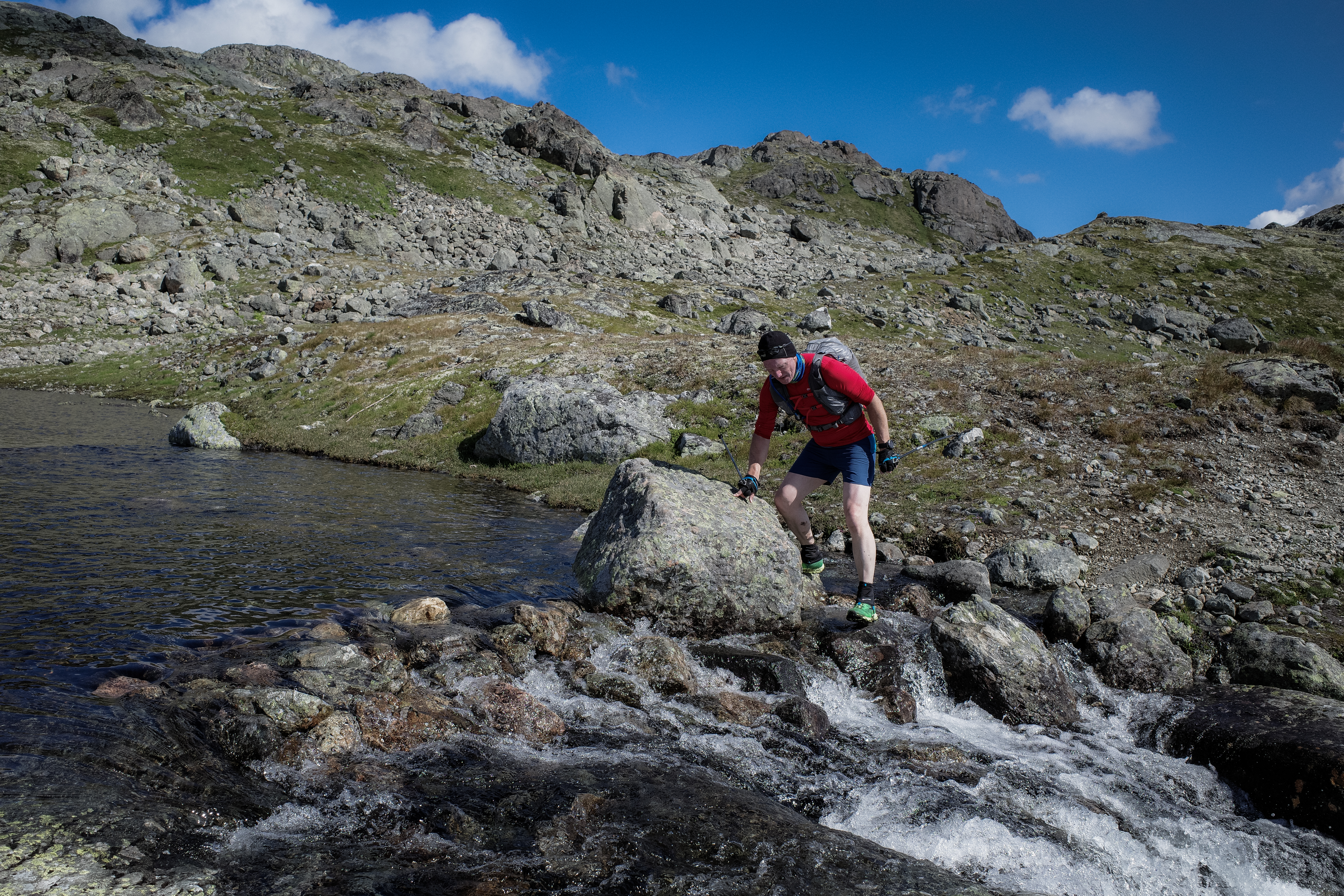
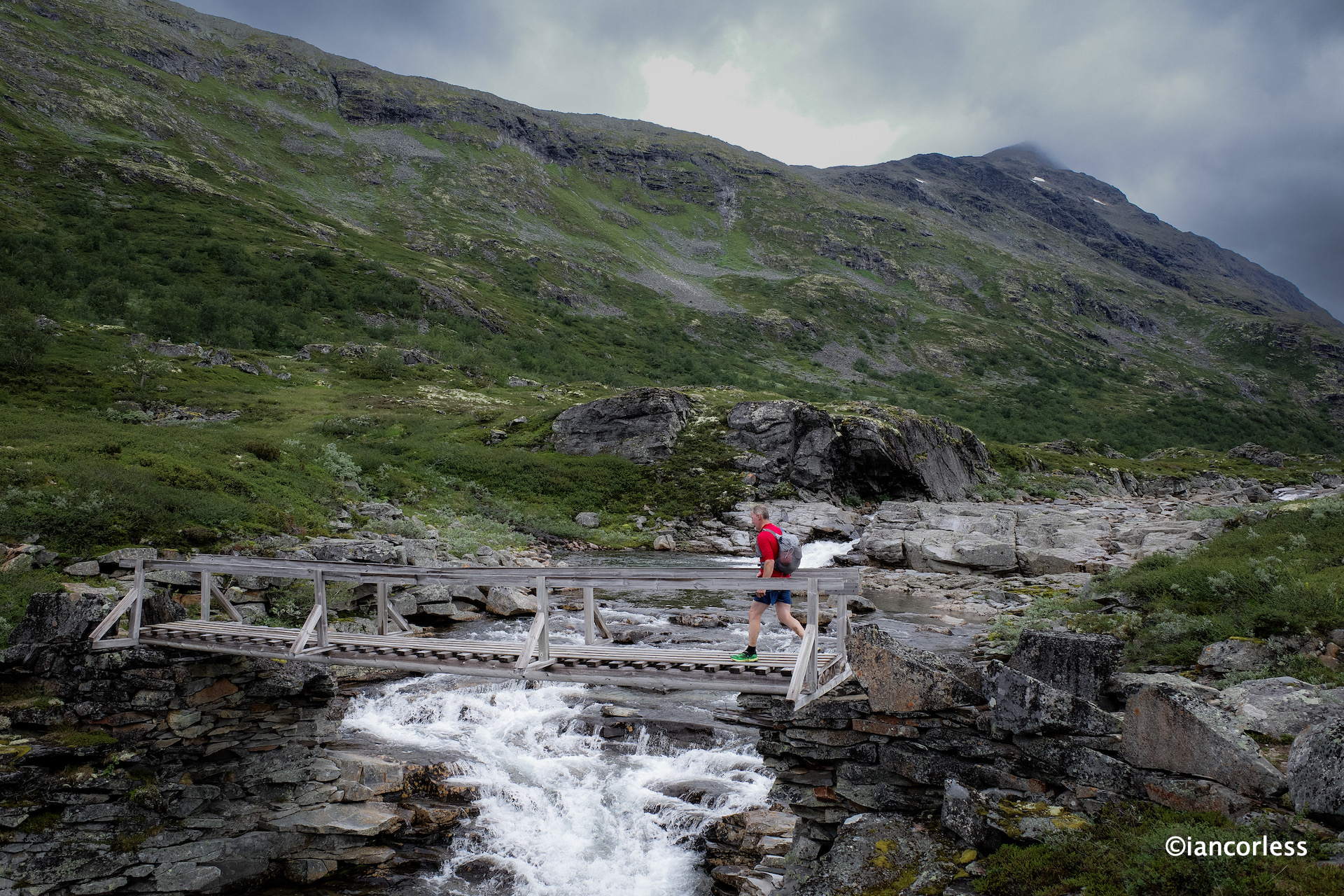
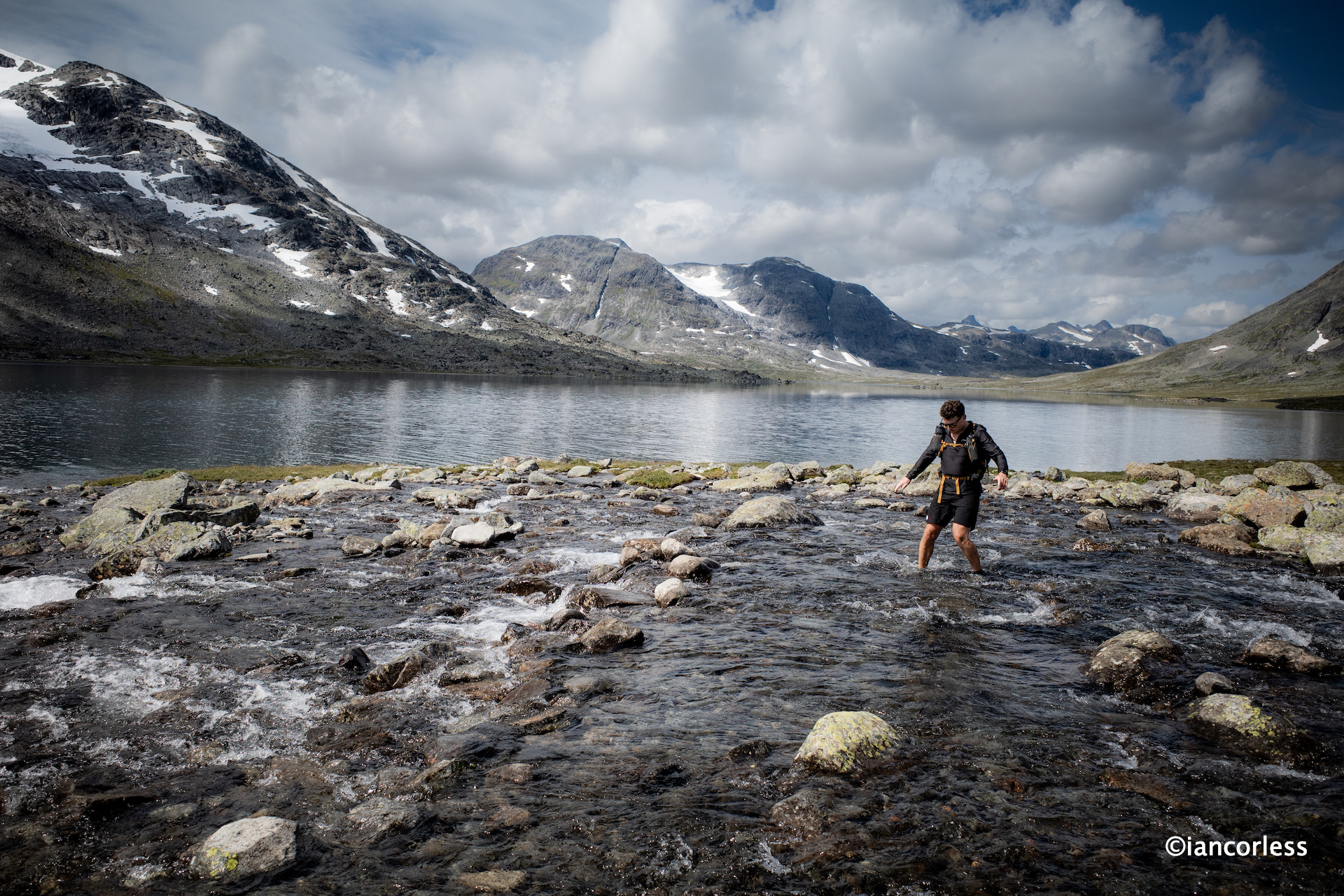
Plenty of water crossings
A short road section and a right turn and we were already climbing through saturated and boggy ground to Sløtafjellet. Then the rocks and boulders started.
Beautiful but hard terrain
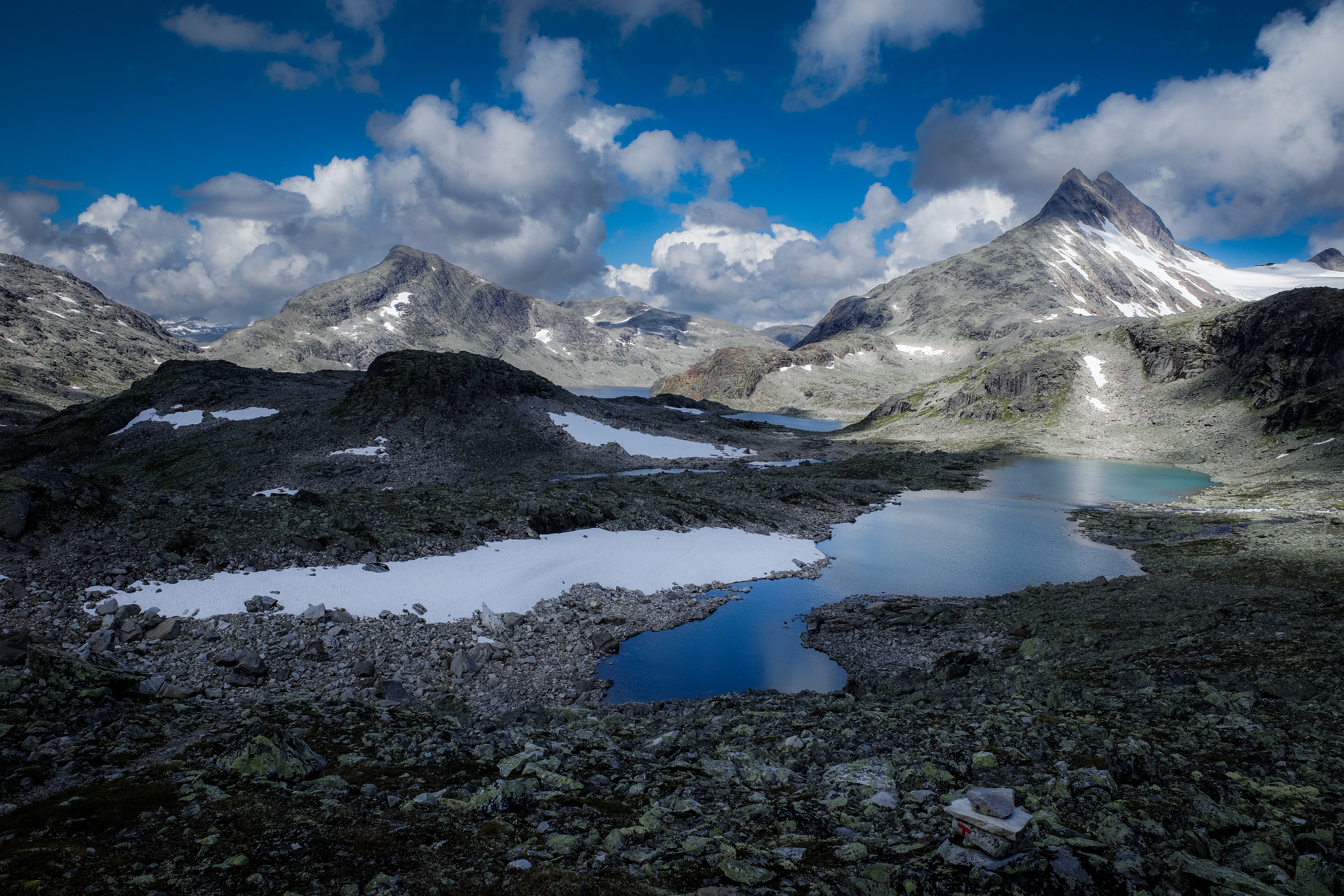
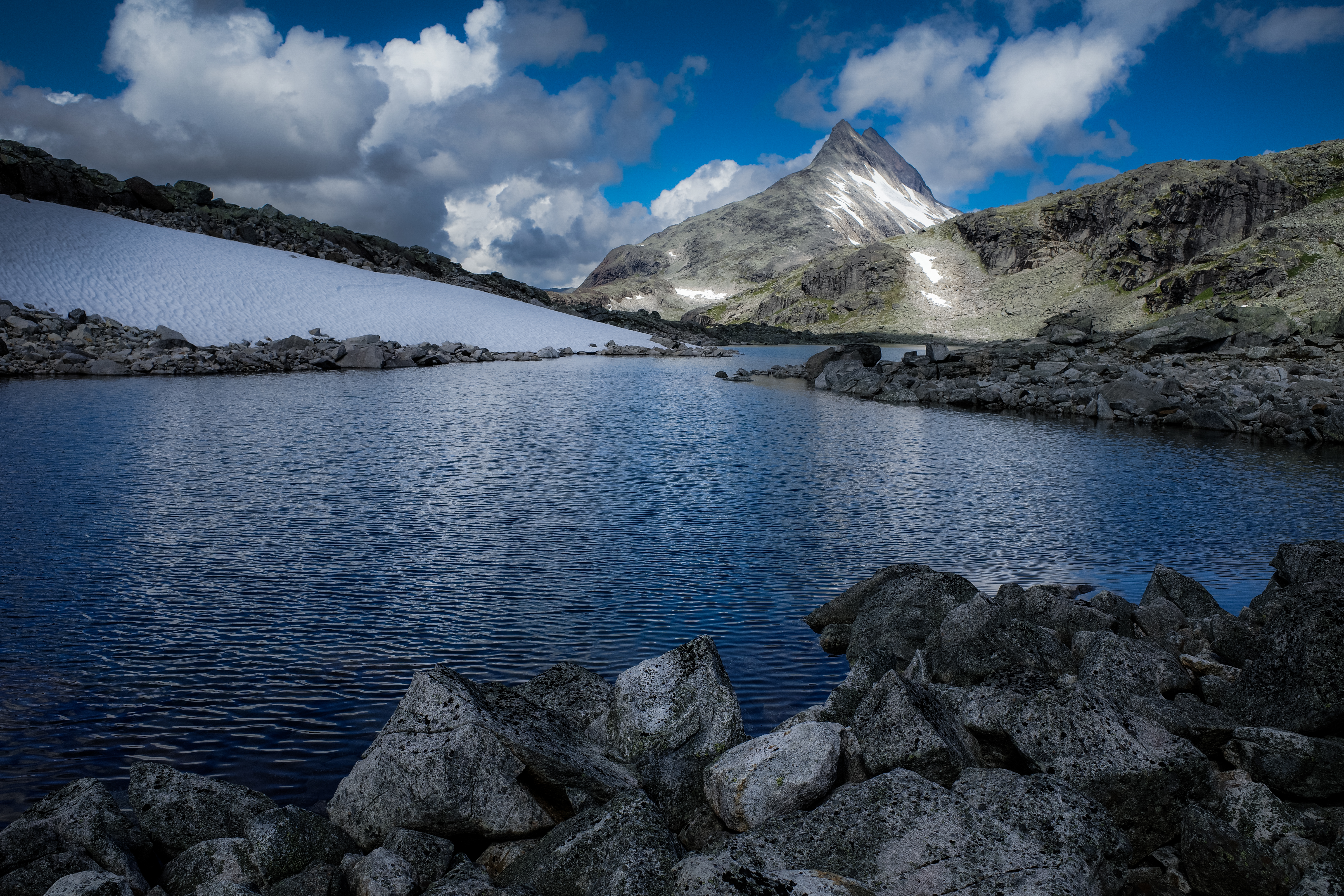
This route has a ‘reputation’ for the rocky terrain and hence the difficulty rating. It’s hard to move fast! The route climbs up passing lakes and at all times you are surrounded by stunning snow-covered peaks – magical.
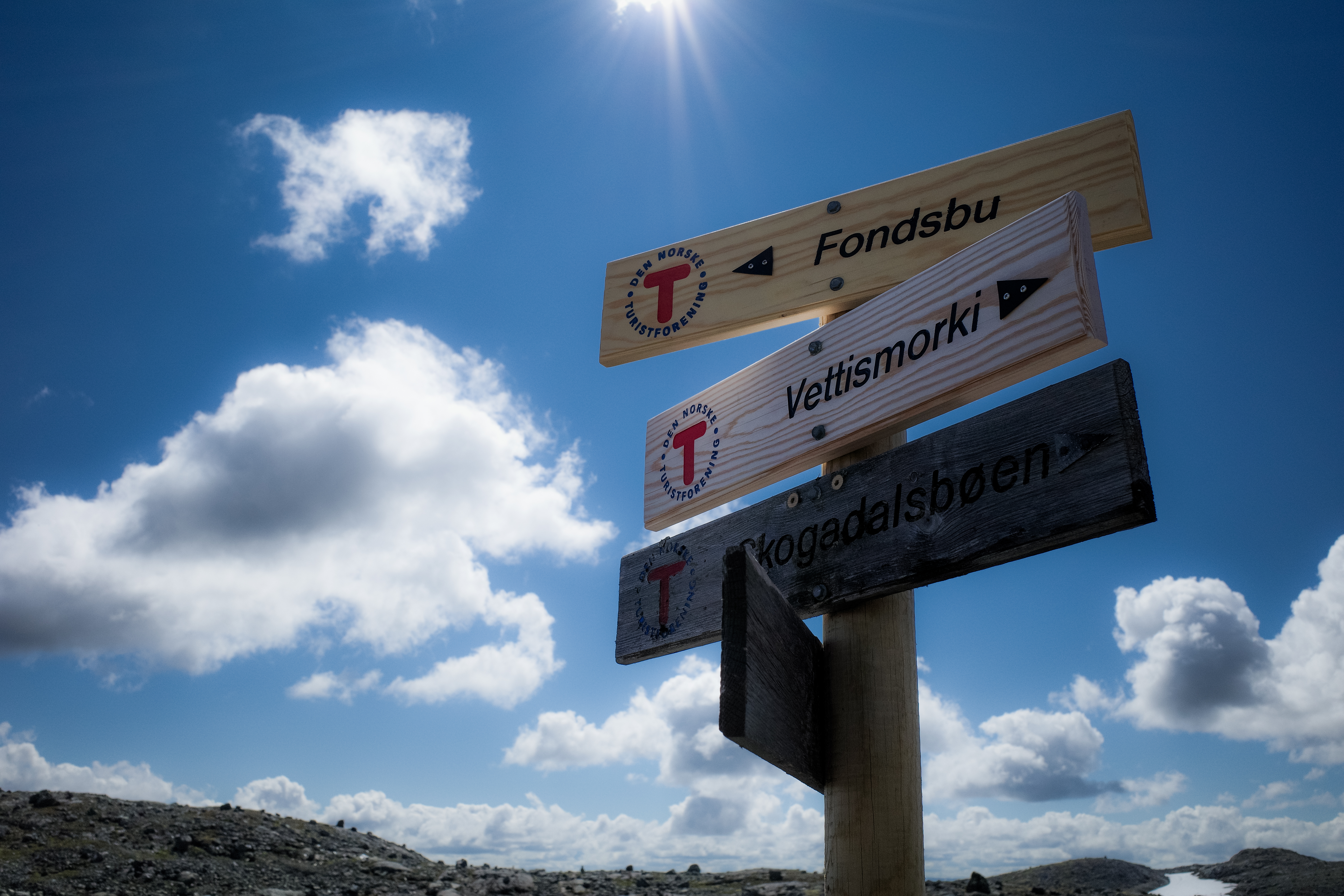
sign posts help keep you on track
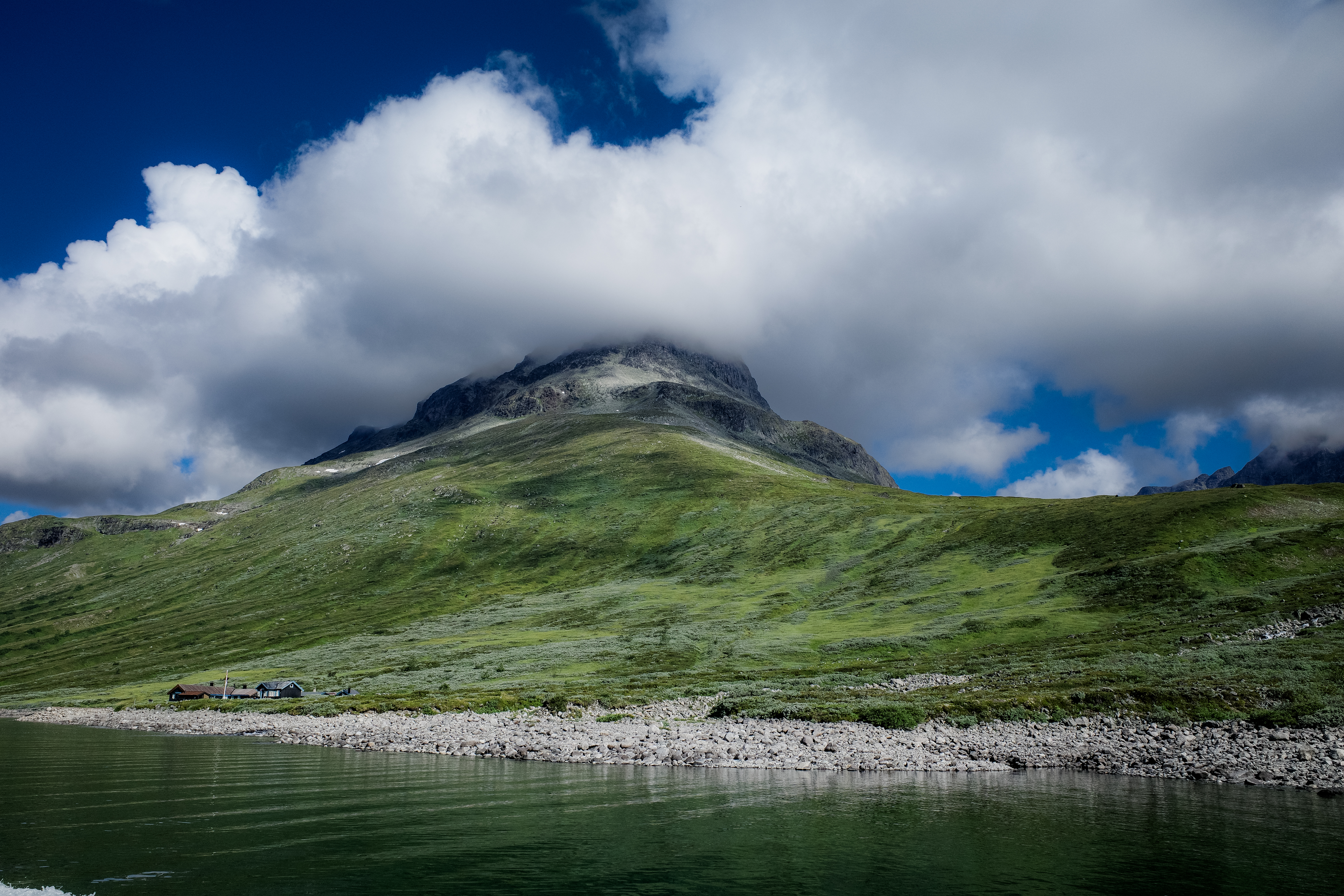
Arriving at Kvitevatnet lake you keep to the left and at the end climb up towards Uradalsvatnet lake, againkeepin to the left.
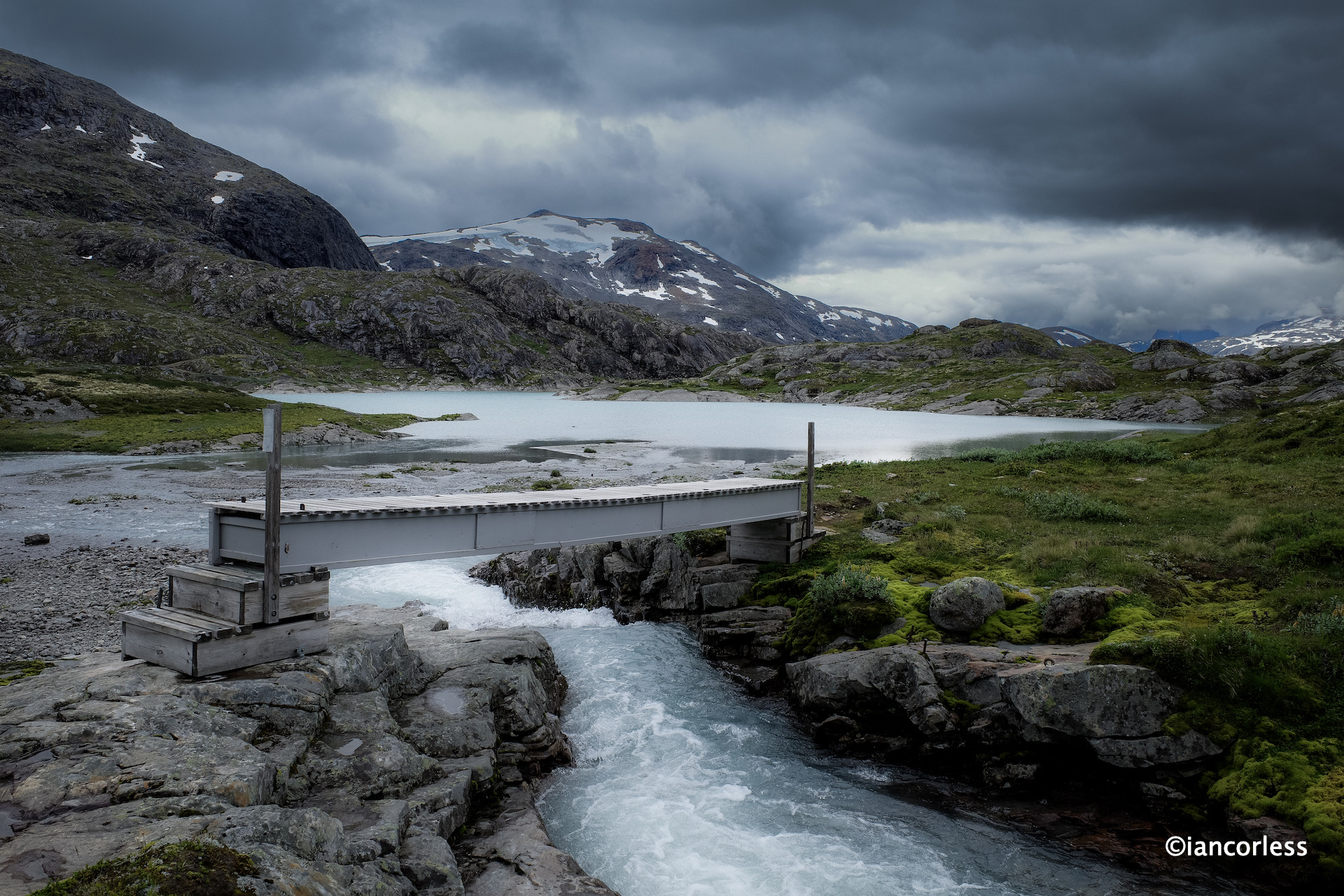
Lakes, rocks, snow and mountains. Perfect!
Passing through Uradalen the route eventually reaches its high point and then the descent starts through more ‘runnable’ terrain towards Skogadalsbøen.
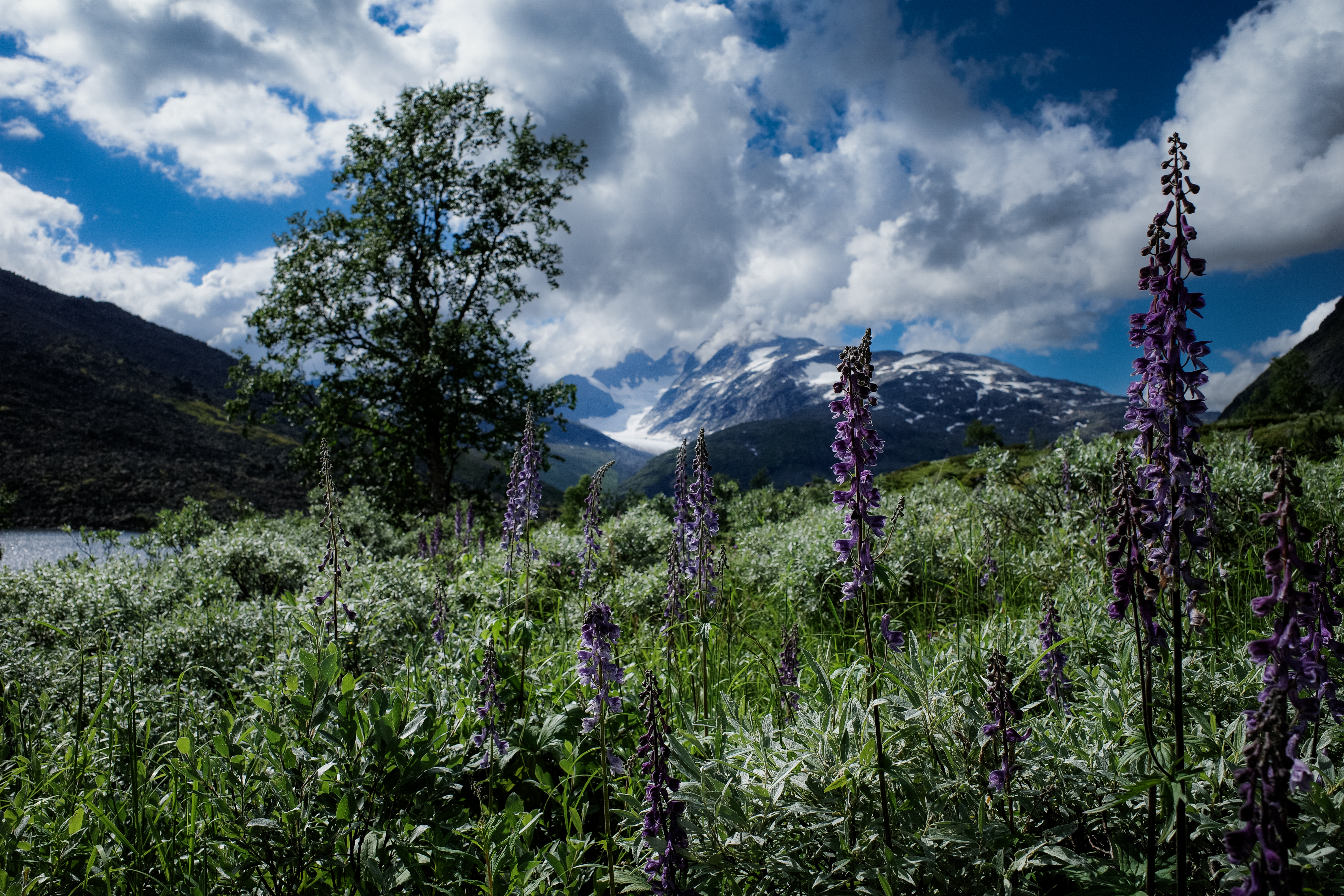
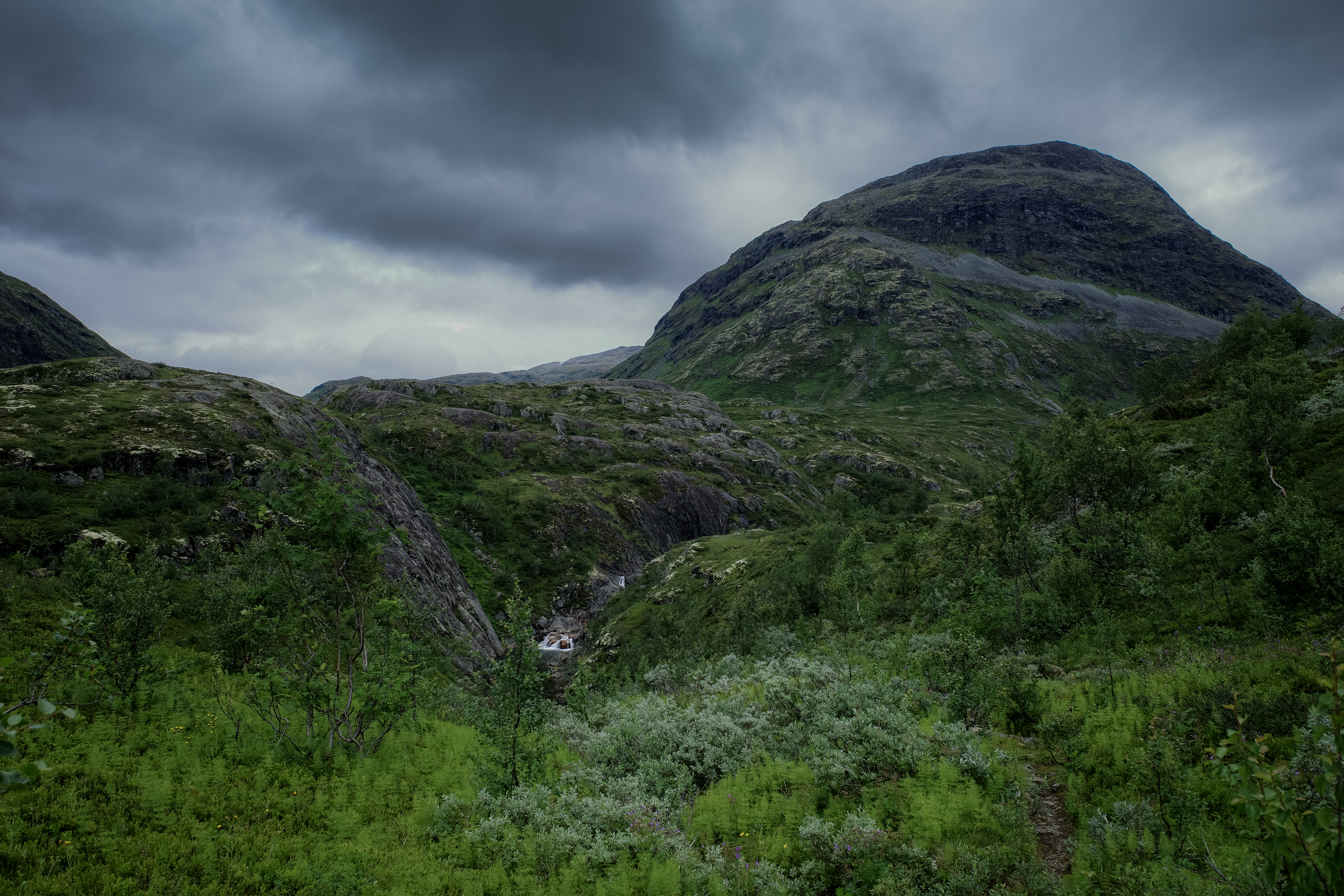
The terrain became ‘easier’ towards the end of the day.And more vegetation.
Of course, there is a kick in the tail with more rocks and very closed in and dense single-track with lots of mud. We covered 24.5km, 670m+ in 4h 55m. Geoff and Baz were pretty tired at the end, and I think it’s fair to say that Baz had seen and experienced enough rocks and boulders to last a lifetime. My reply was always, 1this is Norway, this is Jotunheimen!’
A nice sight after a long day
My girlfriend, Abelone, had initially planned to join Home of the Giants. Our intention, two groups of 4/5-people. However, in the buildup to the event we had 6-people cancel – not ideal. These cancellations caused many logistical problems and of course, there was never any risk of cancelling, but it did mean that Abelone was not needed to guide a group. However, she was on holiday with her son Håkon (10) and after summiting Fannaråki they joined us at Skogadalbøen DNT.
As usual, we had an amazing three course dinner, a lovely evening of banter and then a good night’s sleep.
Day 3 – Skogadalbøen to Leirvassbu
Day 3 with a moody start.
Skogadalbøen to Leirvassbu
Skogadalbøen to Leirvassbu is in comparison to the previous day, an easy route. Even though UT.NO describe it as a ‘very demanding summer route.’ Håkon had decided he enjoyed the group dynamic so much he wanted to also do the 19km route. He and Abelone got underway and some 30-minutes later we started.
Passing them early in the trail we had a group photo and pushed on. Today was a running day, albeit steady and relaxed. Geoff and Baz had big smiles; I think they almost considered it a rest day after what had been experienced the day before.
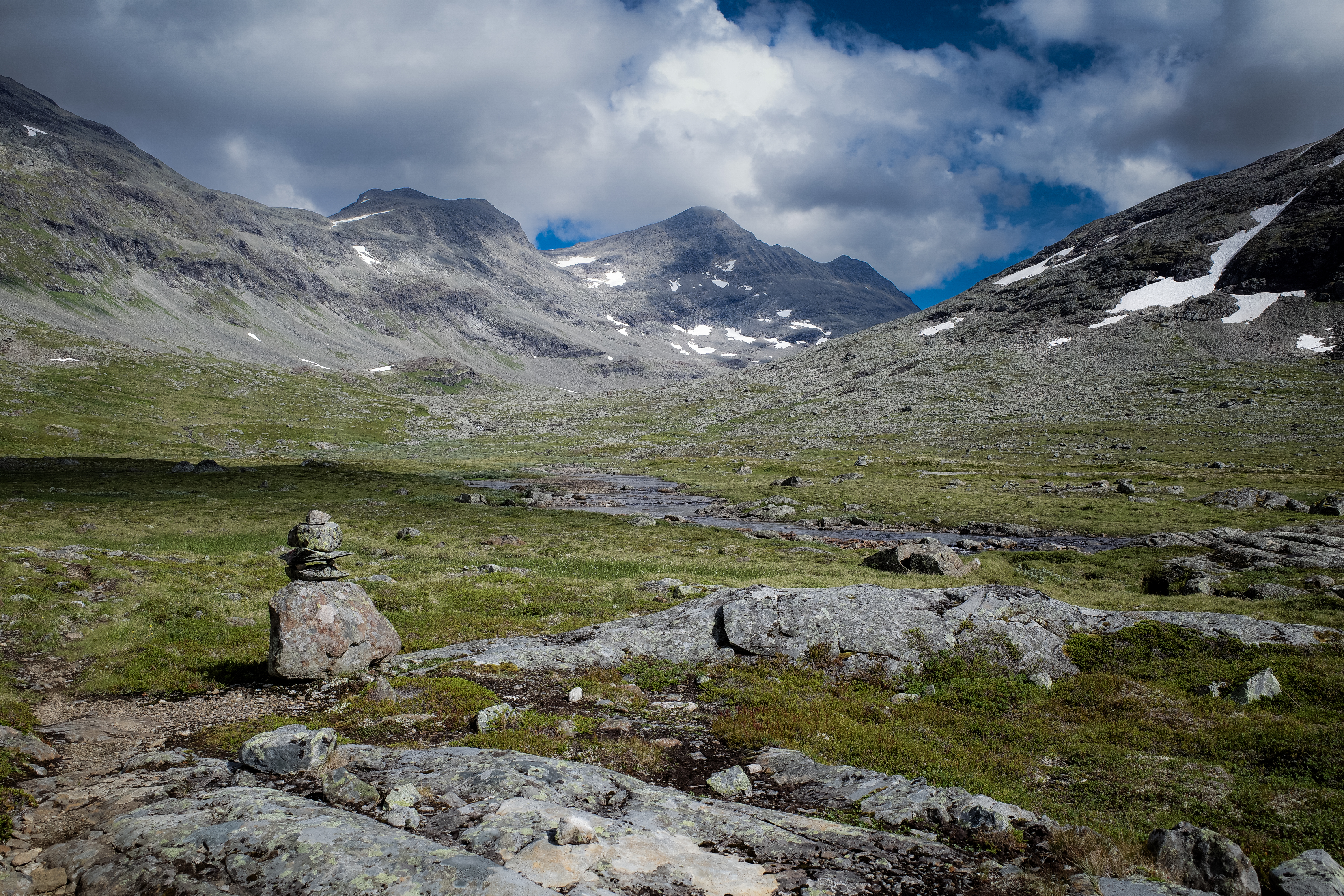
Green valleys surrounded by mountains
The ground constantly wet and boggy, the weather was overcast and cloudy with occasional light drizzle.
Many water crossings
Passing through Storutladlen and onwards to Gravdalen it was a great feeling day. The views and landscape ever changing. After passing Gravdalsdammen, we soon joined an undulating gravel road that took us to Leirvassbu DNT.
Leirvassbu DNT
On the approach, Kyrkja (2032m) was to our right, shrouded in mist and clag. Today was not the day to attempt the summit. After 19.68km, 811m of vert we finished in 3h 34m. Abelone and Håkon arrived a couple of hours later, Håkon sprinting ahead with a smile. What a joy to see. Geoff and Baz were blown away by Håkon’s speed, enthusiasm and commitment.
Entertainment by Håkon
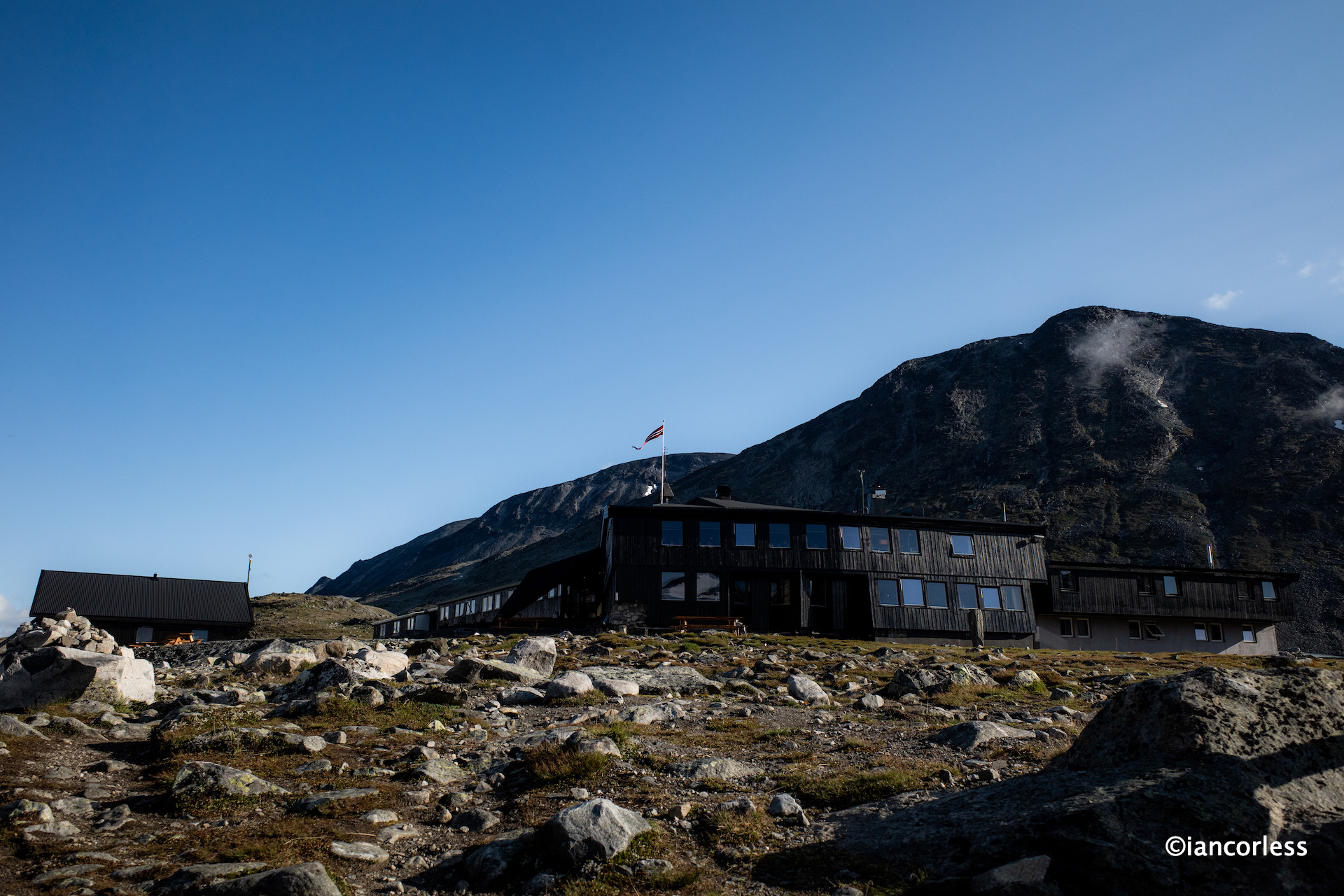
Early finish and we could then rest, relax, enjoy the Leirvassbu DNT and prepare for the following day. Leirvassbu DNT is a large and modern cabin with no dorms, a large bar area and an excellent restaurant. A stunning location surrounded by mountains, a great place for staying more than one night as there is lots to explore. It has road access, so, it can be accessed by private car or bus, worth knowing just in case you need a contingency escape option.
DNT dinner always a highlight
The weather forecast for the following was good and it was therefore decided we would summit Kyrkja first and then continue to Gjendebu. Abelone and Håkon would miss the summit go straight to Gjendebu and therefore miss out on the 2 to 3h detour.
Day 4 – Leirvassbu to Gjendebu via Kyrkja
Kyrkja
The weather gods did not disappoint. It was a stunning day and a perfect morning to climb Kyrkja.
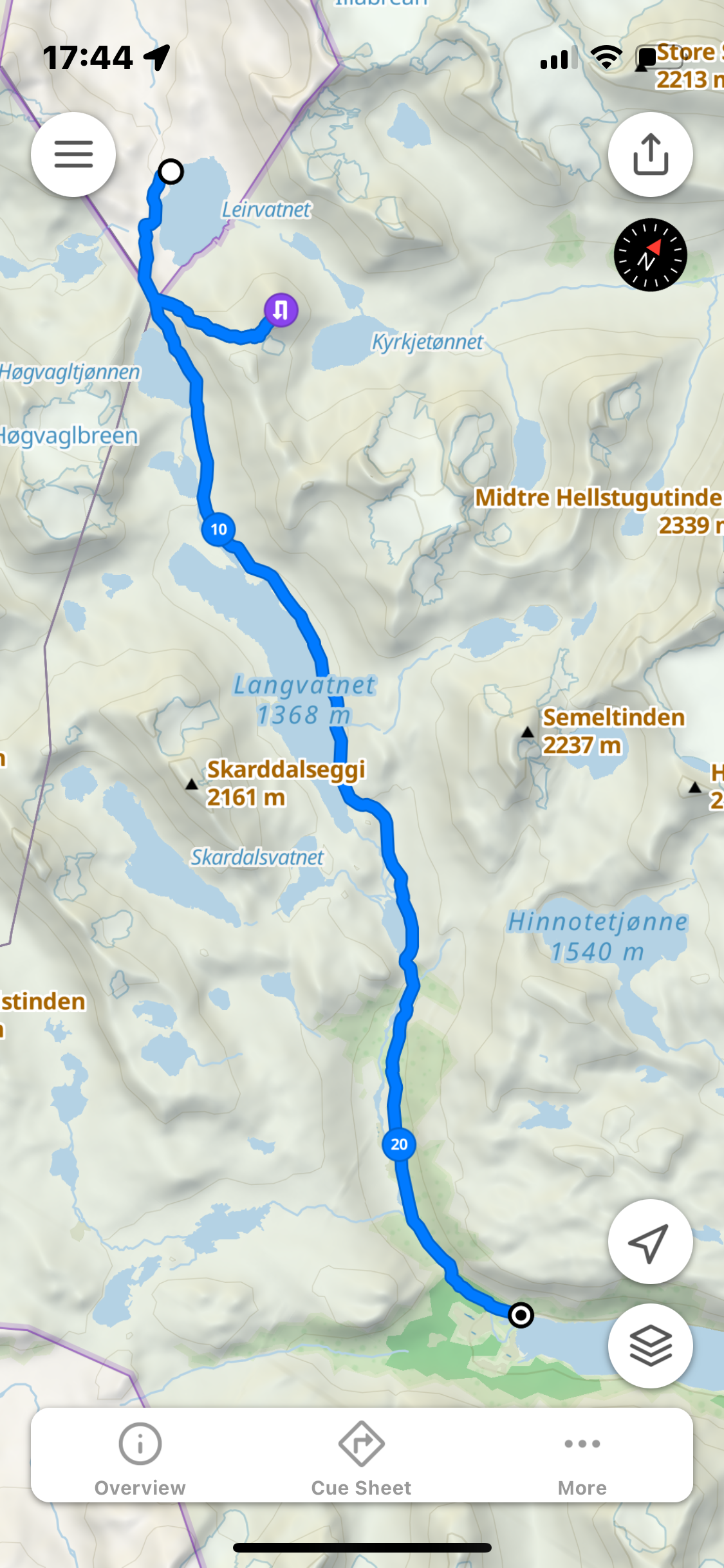
Leirvassbu to Gjendebu via Kyrkja
The early slopes to Kyrkja, Leirvassbu on the right
Abelone and Håkon left just before us they made their way to Gjendebu, we soon caught them, passed and then we started the climb to the summit. The early slopes mix trail, rock and snow crossing with boulders everywhere.
And up we go
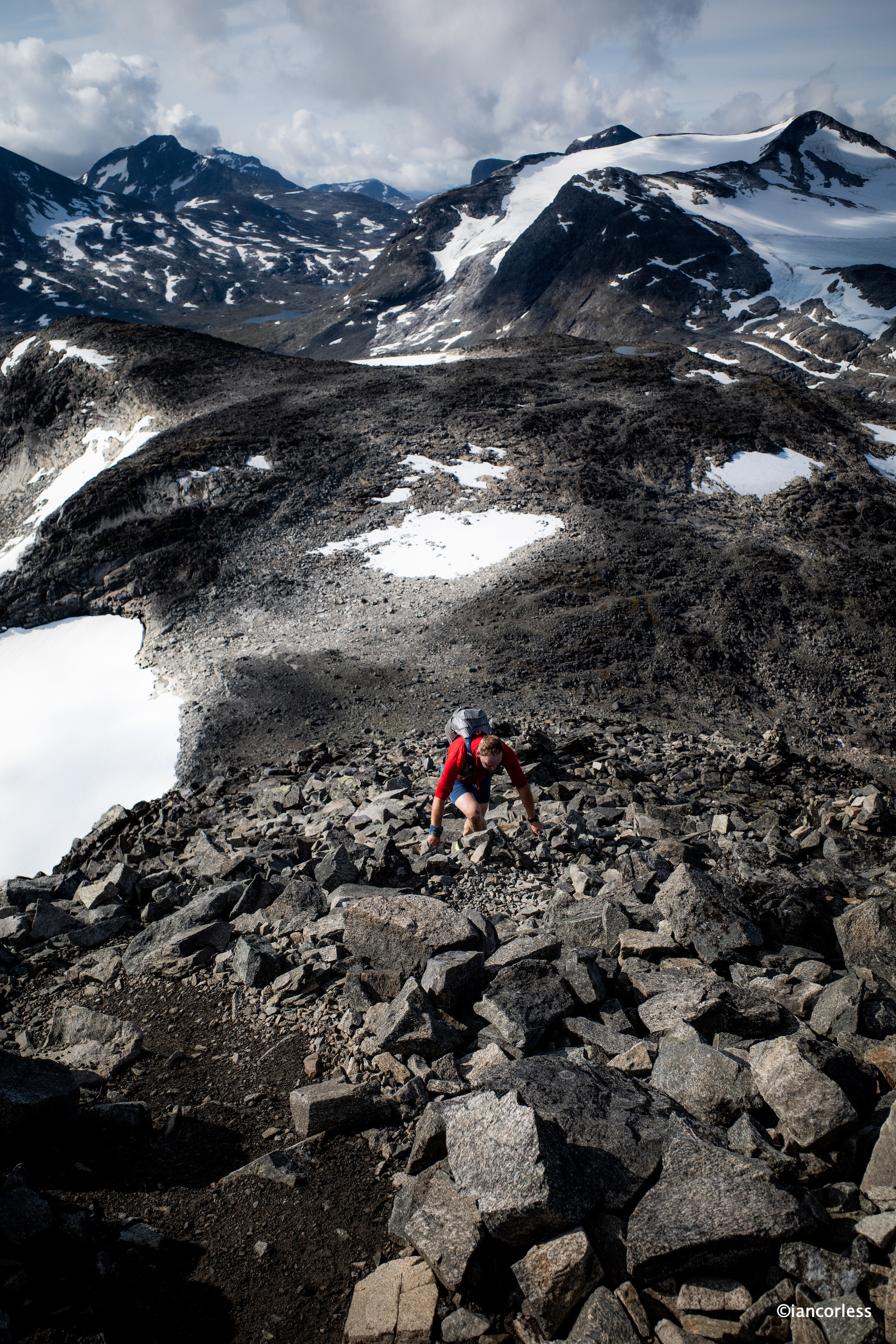
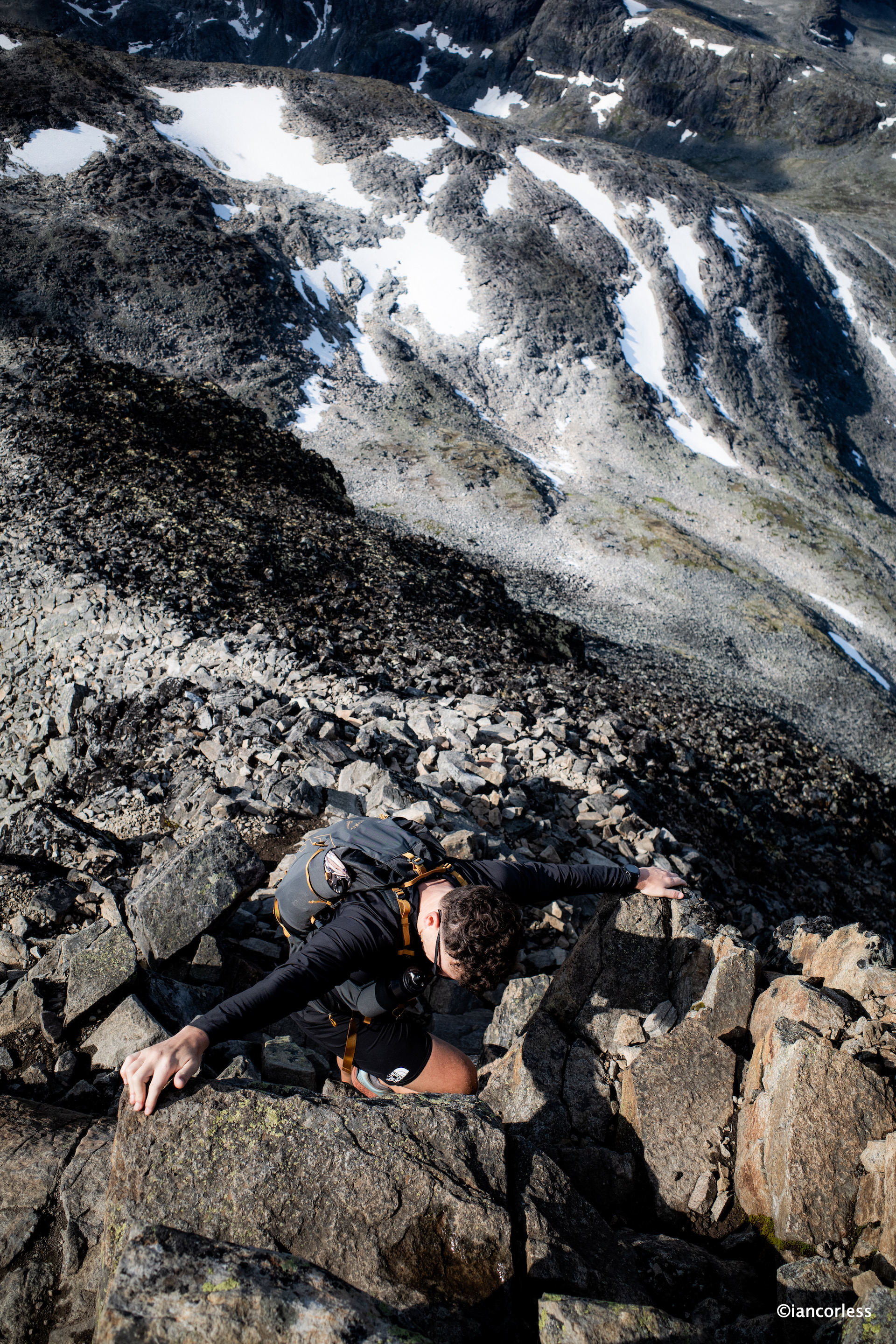
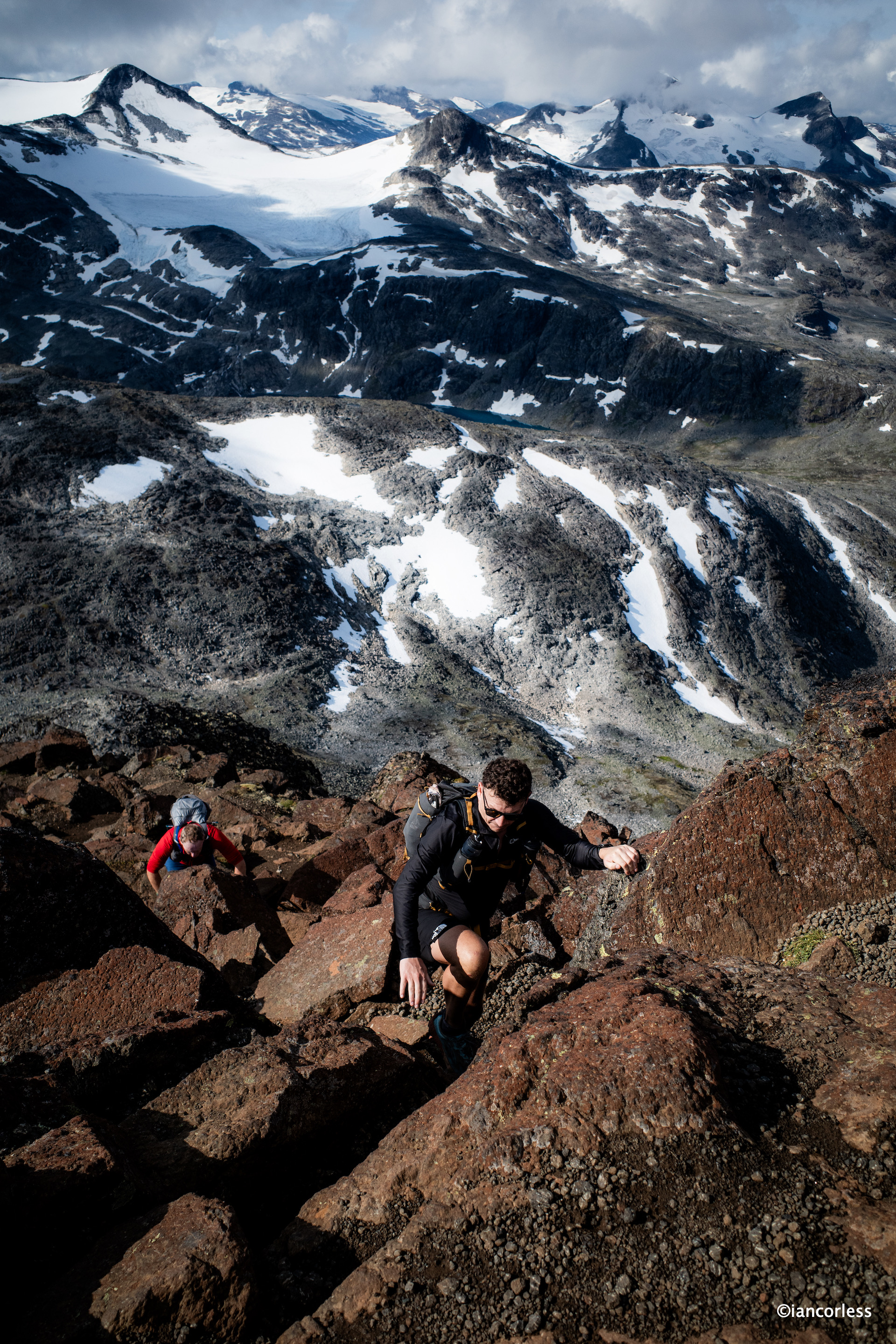
Once at the base of Kyrkja, the climb really starts and it’s a hands-on scramble to the summit. Cairns are placed regularly and at times the route is obvious. Other times, the route is vaguer.
Good hand and feet placement important.
There are several sections with more exposure when sound had-holds, and secure foot-placing is essential. It’s not a difficult scramble but as with all these things, going at a calm and steady pace reaps rewards.
Slow and steady
Geoff certainly felt pushed here. He is not too happy at heights, but he pushed on, listened to to best route options and before he knew it, he was with Baz at the summit.
Job done!
The 360 views here are quite magnificent. What goes up must come down and depending on your ability, head for heights and skill level, the downward route can be harder than the climb.
Coming down easier than going up?
All three of us were soon at the bottom and re-tracing back on the trail to Leirvassbu and then at Høgvaglen we turned left and started to follow the red Ts on the route to Gjendebu.
Øvre Høgvagltjønnen
The route now is more runnable mixing rocky terrain, water crossing, fjell, single-track and of course mud.
Passing three key lakes, Øvre Høgvagltjønnen, Nedre Høgvagltjønnen and Langvatnet we were soon descending next to Hellerfossen waterfall and then passing through Storåddalen.
Make sure you follow the correct Ts
The trails now were saturated and muddy and considerably greener than what we had experienced earlier in the day. There was also plenty of cows.
You never have dry feet!
Before we knew it, we were running into Gjendebu after a stunning day of 25.69km, 741m of vert and 4h 42m on the clock. Baz and Geoff jumped in the lake, I got the beer in.
Day done.
Sitting in the sun, I wondered where Abelone and Håkon where? I had absolutely expected them to be here before us BUT there had been a chance that we may, have caught them in the last km or so… Apparently, Håkon was on a mission to beat us, and he ran the final 3km! What an effort by him, incredible. We had expected them to take 6-hours, and they had taken 5, bravo!
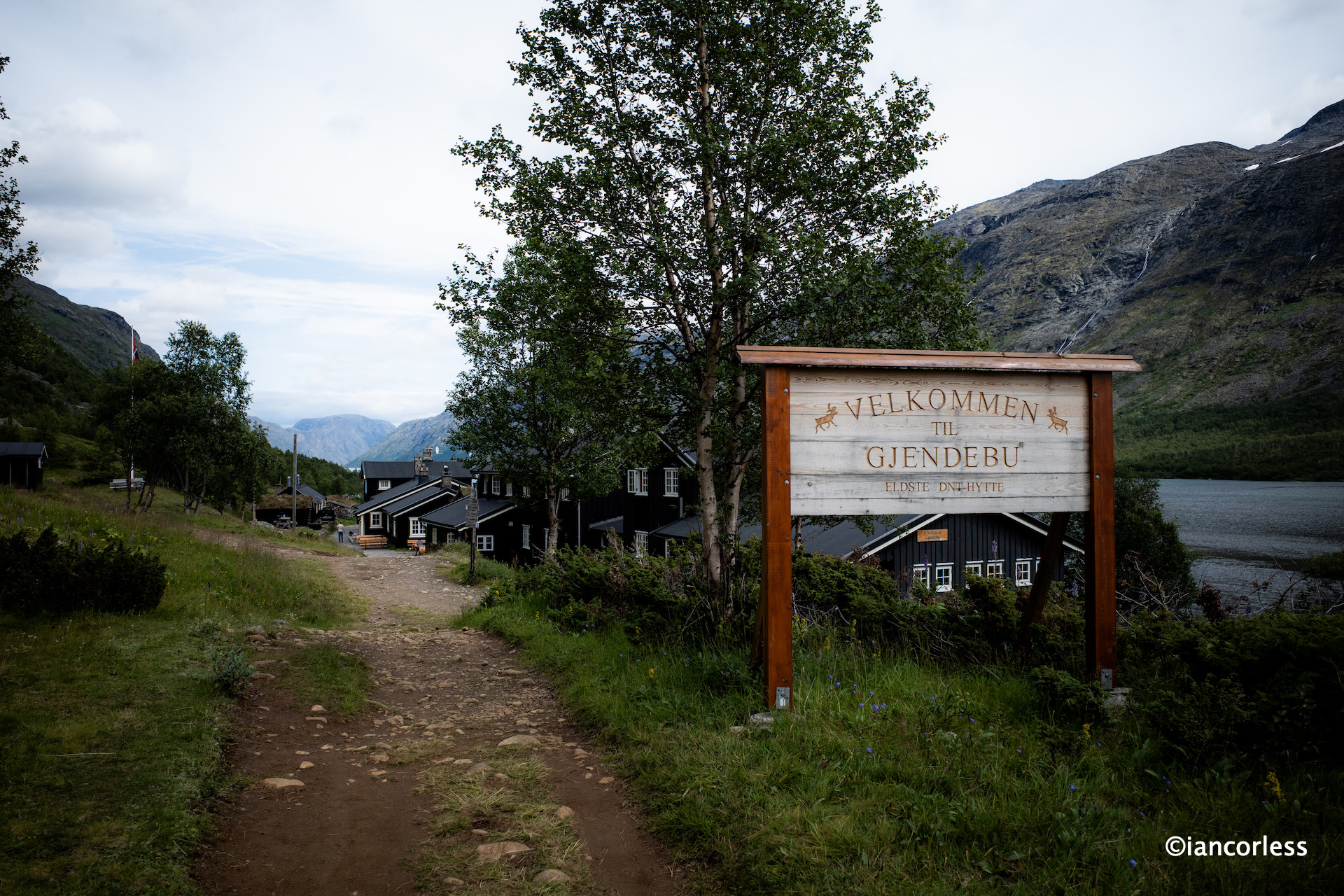
Gjendebu is a wonderful DNT and the oldest. It’s wonderfully traditional and recently refurbished. Comfort level is high, service superb and food excellent.
Day 5 – Gjendebu to Gjendesheim via Bukkelægret, Memurubu and Besseggen
The view from the iconic Besseggen Ridge
Leg 1 Gjendebu to Memurubu
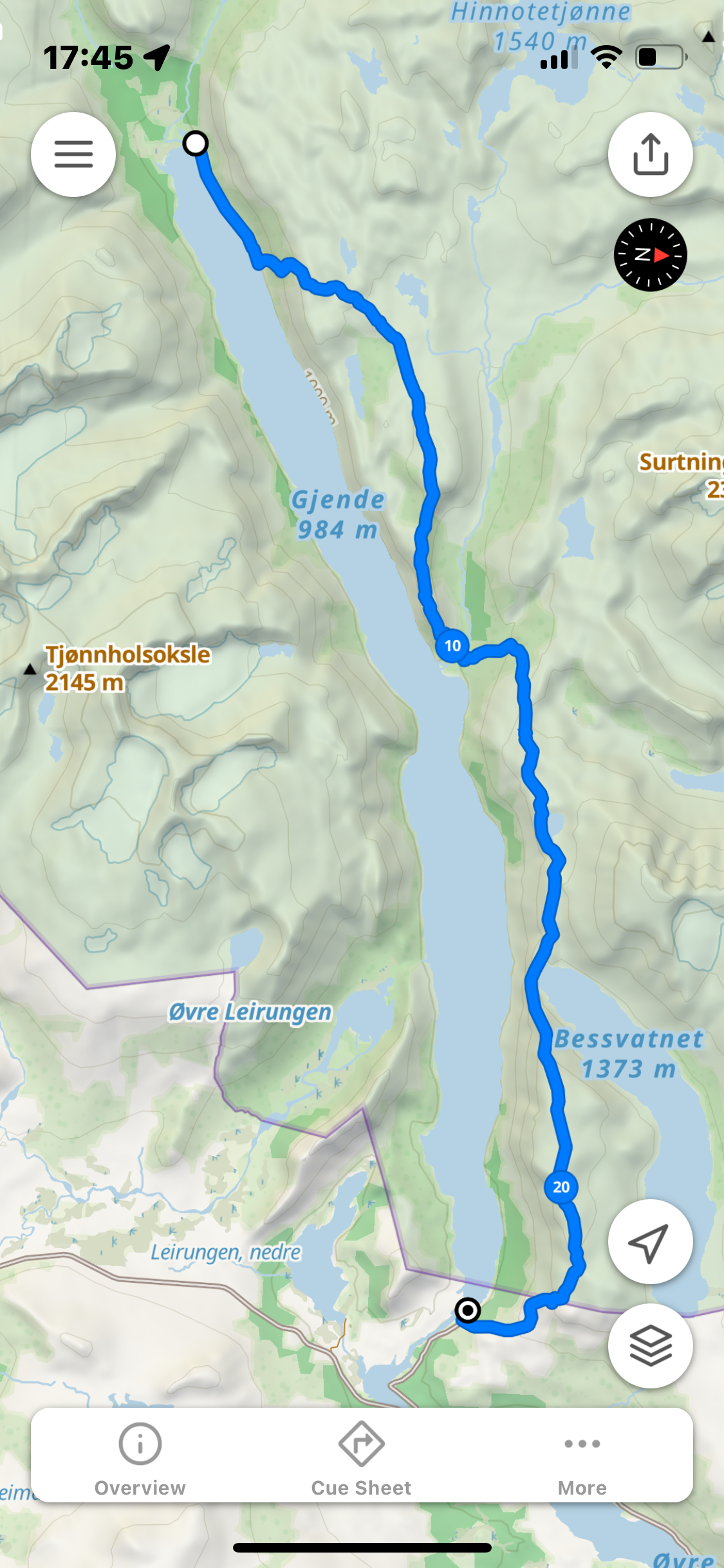
Gjendebu to Gjendesheim
I took no photos for this day, the weather was too bad, so, enjoy the image above of a considerably better day with Abelone.
Our longest day ahead and the weather forecast was rain all day. We were committed with our route BUT as always, sense and forward thinking was key. Our route was a two-day route, Gjendebu to Memurubu one day and then Memurubu to Gjendesheim day two. To do the whole lot in one day does require a fast and light approach.
The first leg is 11km and at Memurubu we had the option to pick up the boat to our finish, should conditions deteriorate.
The early km’s follow a single-track rocky and muddy trail next to Gjende lake. After 4km you turn left and then steeply climb. This section, Bukkelægret, is renowned as being difficult, especially in bad weather due to the gradient, slippery rock and the multiple chain sections. UT.NO say, ‘Chains and railings in exposed places. NB: Do not go outside the marked path! It is the only possible decrease. It is better to walk in the opposite direction if you are afraid of heights or choose the longer route around Storådalen.’
The route up was fine and although the rain was constant, we were all warm and enjoying the climb.
Once at the top I made a silly navigation error. I turned right following a trail that leads towards Kjuklingen. Within less than a km I knew I was wrong. I stopped, took a moment and then Baz, Geoff and I backtracked. While running I looked to the right and could see the trail up the other side of the mountain and eventually, we picked back up the red T’s and we were back on track. A frustrating mistake but these things happen!
Travelling northeast into Lågtunga, between Grunnevatnet and Sjugurdtinntjønne and down over Sjugurdtinden. We had a stunning moment when we were confronted by a large male Reindeer. We dropped to a walk and approached slowly. At the time I expressed how unusual it was to see one alone. But, as we crested the summit, a herd of maybe 20-30 reindeer were visible, what a sight!
The final descent to Memurubu is steep, rocky and slippery – care is needed, especially in torrential rain.
At Memurubu we entered the cabin and took an ‘aid station’ break of warm coffee and buns. I changed base-layer to a dry merino top and prepared for the next section.
We had had rain all day so far, but it had been pleasant in type 2 kind of way. Baz and Geoff decided to wear tights, I stayed in shorts. The option to pull out and take the ferry was not really an option, we were committed to the task.
Leg 2 Memurubu to Gjendesheim
The climb out of Gjendebu is steep and I soon removed my jacket, there was a hint of better weather coming and I loudly said, ‘it is clearing up!’ Famous last words…
The jacket soon came back on, and the rain increased. I was now on my second set of gloves, good old Raynauds in the hands brutal in bad weather.
This route is one of the most popular in Norway. Many take the early boat to Memurubu from Gjendesheim and then return via Besseggen, an average time taking 7-hours. On a good day there are many, many people. Today, hardly anyone.
The terrain is hilly and rocky as we headed to the foot of Besshøe and then on to Bjørnbøltjønne, the highest point on the route before heading down to the southern end of Bessvatnet.
Now we were at Besseggen, the steep climb ahead of us and Geoff loudly saying, ‘Are we going up there…!’
I reassured him it was not as bad as it looked. However, the steep rock face has an extra challenge in the rain. We stared the climb and soon came across a group of teenagers frozen on the mountain unable to proceed. They were questioning the decision to come this way, and they asked Geoff what time the last boat was at Memurubu! Unfortunately, they would not make the last boat if they backtracked, however, the cabin would look after them.
Ahead I heard screaming and crying. It got louder as I climbed only to find a mother trying to climb with a young girl who was beyond terrified. I offered help but it was refused. ‘We will be fine; she is just very anxious and scared.’ No shit I thought to myself. As I climbed up, I saw her husband and another child. They had back-up help but I stopped multiple times to make sure that I was not leaving a potentially disastrous situation.
Geoff and Baz were making good headway, every 5 to 10m I would stop and make sure their line was good.
The 350 meter climb up to the top cairn on Veslfjellet 1743m soon passed and now the weather was wild.
Wind was raging in from the right, the rain was torrential and the visibility poor.
We regrouped and I clearly expressed that we NEEDED to move. It was no stopping and all running now down the, at times, steep and rocky descent to Gjendesheim.
This was without doubt the hardest hour of the whole week and clearly demonstrated how Norway, as beautiful as it is, can turn wild and violent.
Soon we were on the final stone steps that lead to the DNT and lake Gjende.
We were absolutely soaked and exhilarated with the day. It was true Norwegian mountain day, and we had completed the whole 26.1km with 1800m vertical in 6h 30m on what was a very tough and slow day.
All three of showered for a good 15-minutes. A cold beer followed quickly and before we knew it, we had another wonderful 3-course meal with Reindeer as the main course.
The evening was chilled and relaxed. We had a short concert of traditional music, and we discussed the completed adventure.
My offer for a following morning run was very quickly turned down.
A good sleep and the following day we departed at 1400 for a direct bus to Oslo and onward travel.
What a stunning week!
Thoughts and Summary
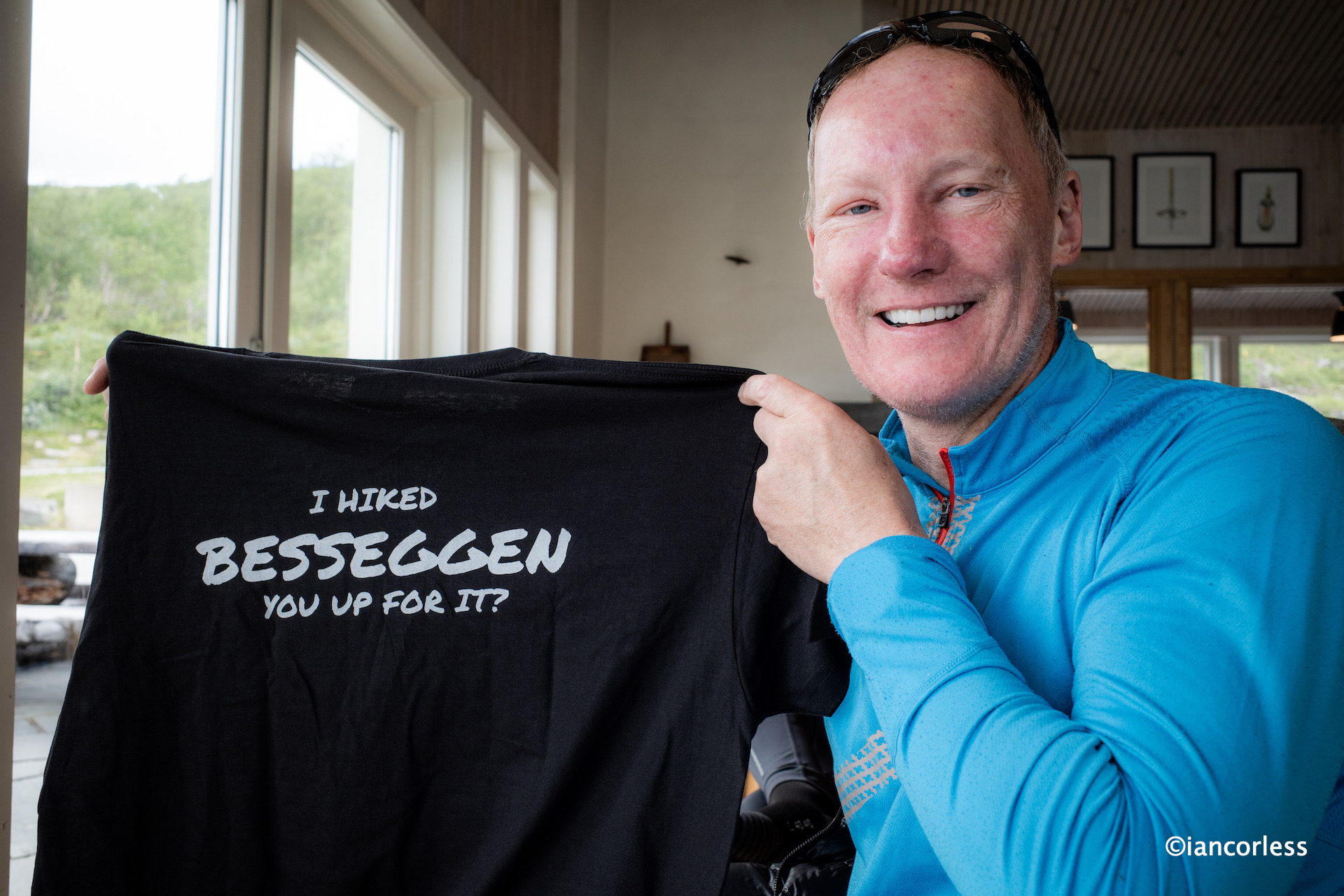
He got the T shirt 🙂
For me, there is no better way to travel through the mountains of Norway than by cabin-to-cabin. What the DNT offer is a five-star service and it really is a privilege to have this available. A shower, a bed, hot meals and a drying room for apparel and shoes is stunning.
Few people travel fast and light, they prefer to move at a slower pace with loads of equipment and take long stops and plenty of sight-seeing.
However, fast and light allows for a faster pace, the option to cover more distance and ultimately, more relaxation times in the cabins.
You do need to be experienced and prepared to move in this way.
Magical
In sunny and beautiful weather, fast and light is easy. In bad weather you need to be prepared, constantly making judgement calls and adjusting speed so as to ensure you are safe. Our final day a prime example.
We were well prepared and all three of us had the right and correct equipment for the planned adventure. The option to change a base layer at Memurubu for me was spot on, as was the decision for Baz and Geoff to move out of shorts and into tights. Despite the torrential rain, wind and colder temperatures, all three of us still had emergency layers of insulated jacket, waterproof pants and a bivvy bag available in our packs.
We all brought poles and on day 1 we used them a great deal, less so after. Geoff broke a pole on day 1 which was frustrating. However, when finished, Geoff said he would not bring poles next time. I understand his thought process, but, the additional weight of just over 200g is an excellent security blanket if moving slower or picking up an injury. Just learn how to use pols before.
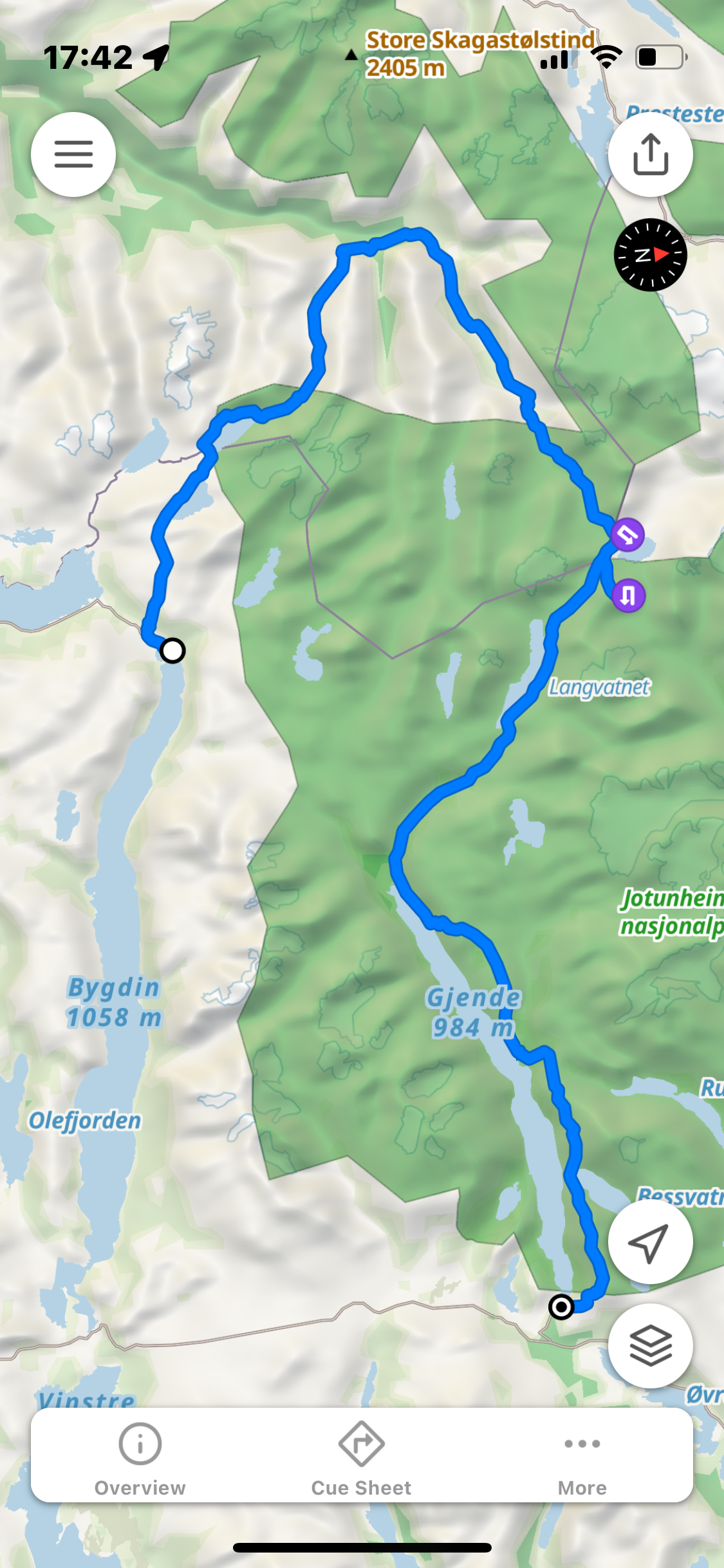
The full route
Due to the nature of the DNT layout, sometimes we were not in the main building, and we all wished we had brought some very light flip-flops. I am now searching the internet for the lightest and most practical.
Good shoes are essential and normally I would never say YOU MUST get these shoes, but VJ Sport shoes and the amazing Butyl outsole are the only run shoes that can be relied on for Norwegian rock, especially when wet. Geoff and I wore VJ, me in the MAXx2 and Geoff in the Ultra. Gaz wore Altra and he had no grip – it compromised his enjoyment.
Norwegians have a saying, there is no bad weather, just bad equipment. It’s very true. We had mixed weather for our trip and in all honesty, it made the trip better. I never took my camera out on the last day as the weather was so bad, but I absolutely loved the challenge of making that route in bad conditions. Just a shame Geoff and Baz did not get to see those iconic Besseggen views down the lake and the surrounding area.
Finally, if you are interested in joining us in July 2025 for a similar journey, please get in touch. We will have 8-places available.
Following on from the huge success of MDS Cappadocia, MDS add a new event to the 2025 line-up, the MDS Morocco – Atlantic Coast.
This makes three events now in Morocco, MDS The Legendary, MDS Morocco and the new MDS Atlantic Coast which only confirms that Morocco, really is a perfect destination for a desert adventure.
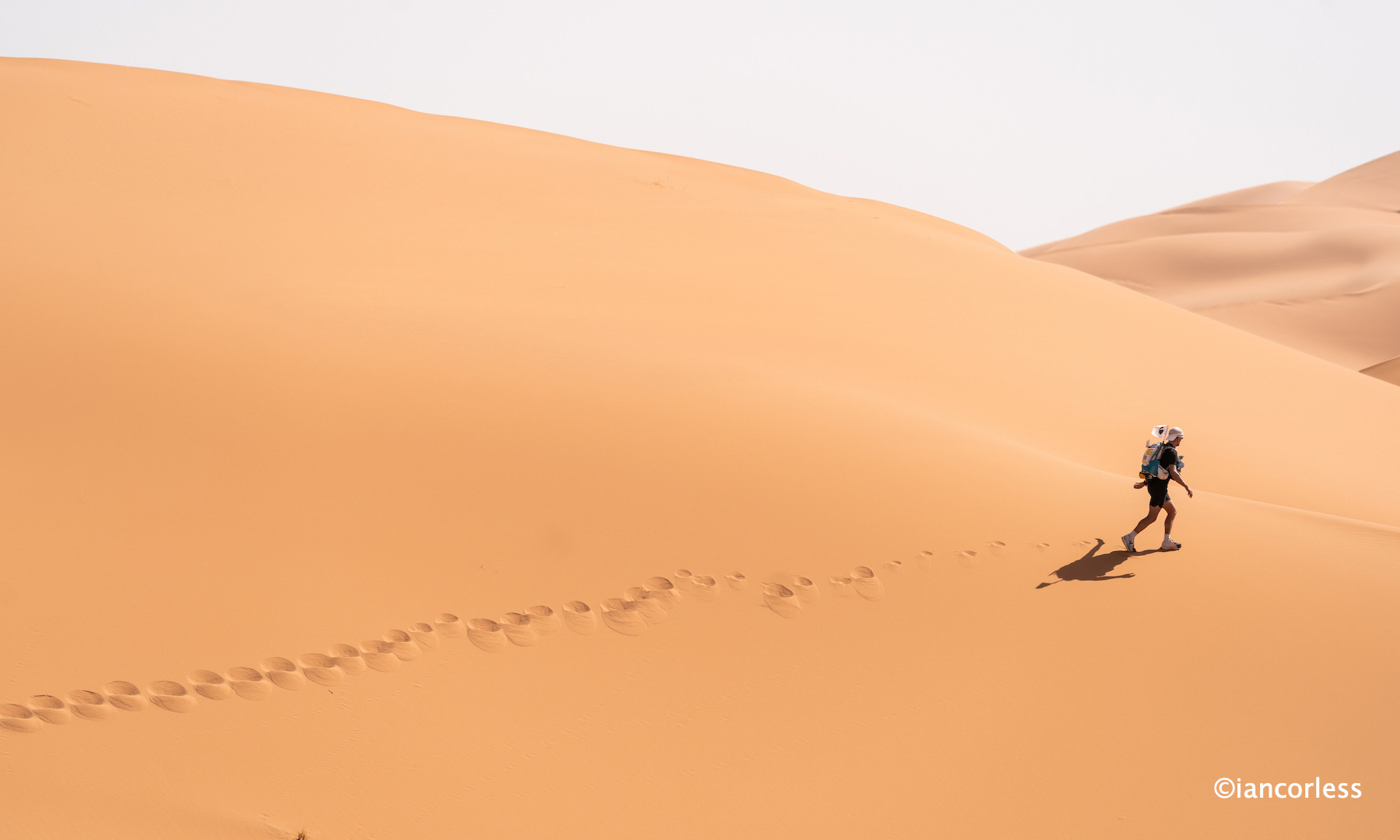
The Atlantic Coast brings something very new, white dunes, endless beaches and of course, the juxtaposition of the ocean as a backdrop bringing something very new and different to a Moroccan adventure.
The event will take place from January 25th to February 1st 2025 and as with all other MDS events, it will follow the same format, a three day race over 4-days with the option to run/ walk 70, 100 or 120km’s.
MDS events bring a very unique challenge and with the distance options that are available, you can make these events as hard or as easy as you wish. With a considerable line-up of events and destinations, MDS are now offering a great opportunity to visit new places as a run tourist.
The Atlantic Coast for sure will be a highly anticipated destination.
The Schedule:
Participants will need to arrive in Morocco (Marrakech or Agadir) on Saturday January 25th (or before) to meet the MDS team at a designated point for onward travel to the race hotel.
Day 2 will have technical and medical checks with a day at the hotel.
Day 3 participants will transfer from the hotel and the start of stage 1 which will be 25 to 30km. Night in bivouac.
Day 4 stage 2, the ‘long day’ of 20, 40 or 60km. Night in bivouac.
Day 5 rest day. Night in bivouac.
Day 6 stage 3 25 to 30km and then transfer to hotel. Night in bivouac.
Day 7 day at the hotel, awards in the evening and gala dinner.
Day 8 onward travel home.
Desert and ocean, a stunning mix.
Culture, adventure, tradition and relaxation, the Moroccan Atlantic Coast brings something new to the MDS line-up.
Registration opens July 17th at 12pm (UTC+2 / Paris Time) and the first 100 participants can save €300.
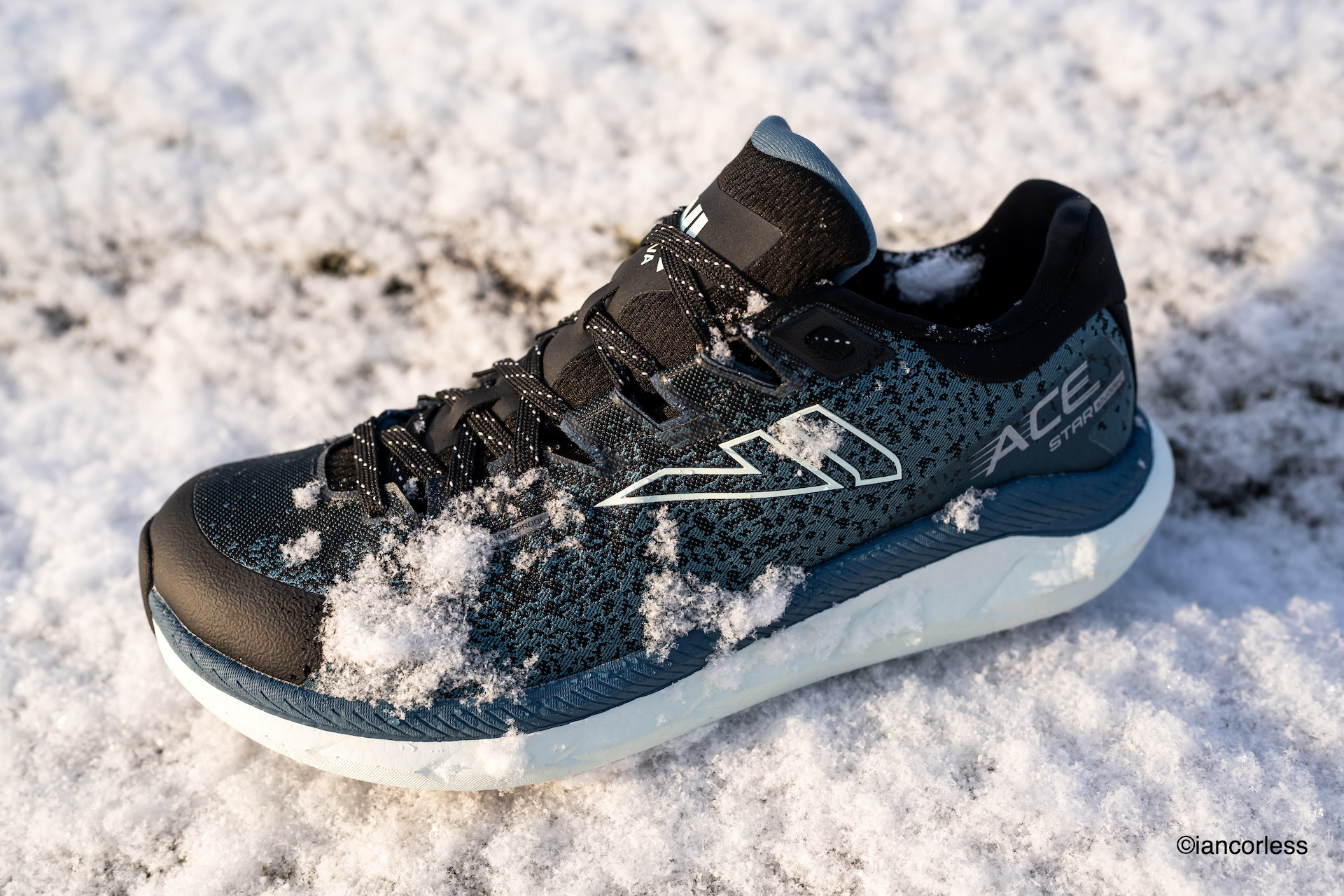
In 2023, I received the VJ Sarva Ace – a winter studded shoe. This shoe was a revelation based on a much wider toe box and incredible ‘new’ cushioning. Review HERE. At the time, I fed back to VJ that without the spikes this would make a great new ULTRA shoe in the VJ line-up.
Well, the MAXx2 and Lightspeed take this cushioning and what we have are two performance shoes that need to be worn to be believed.
Today, we look at the MAXx2.
THE SHOE
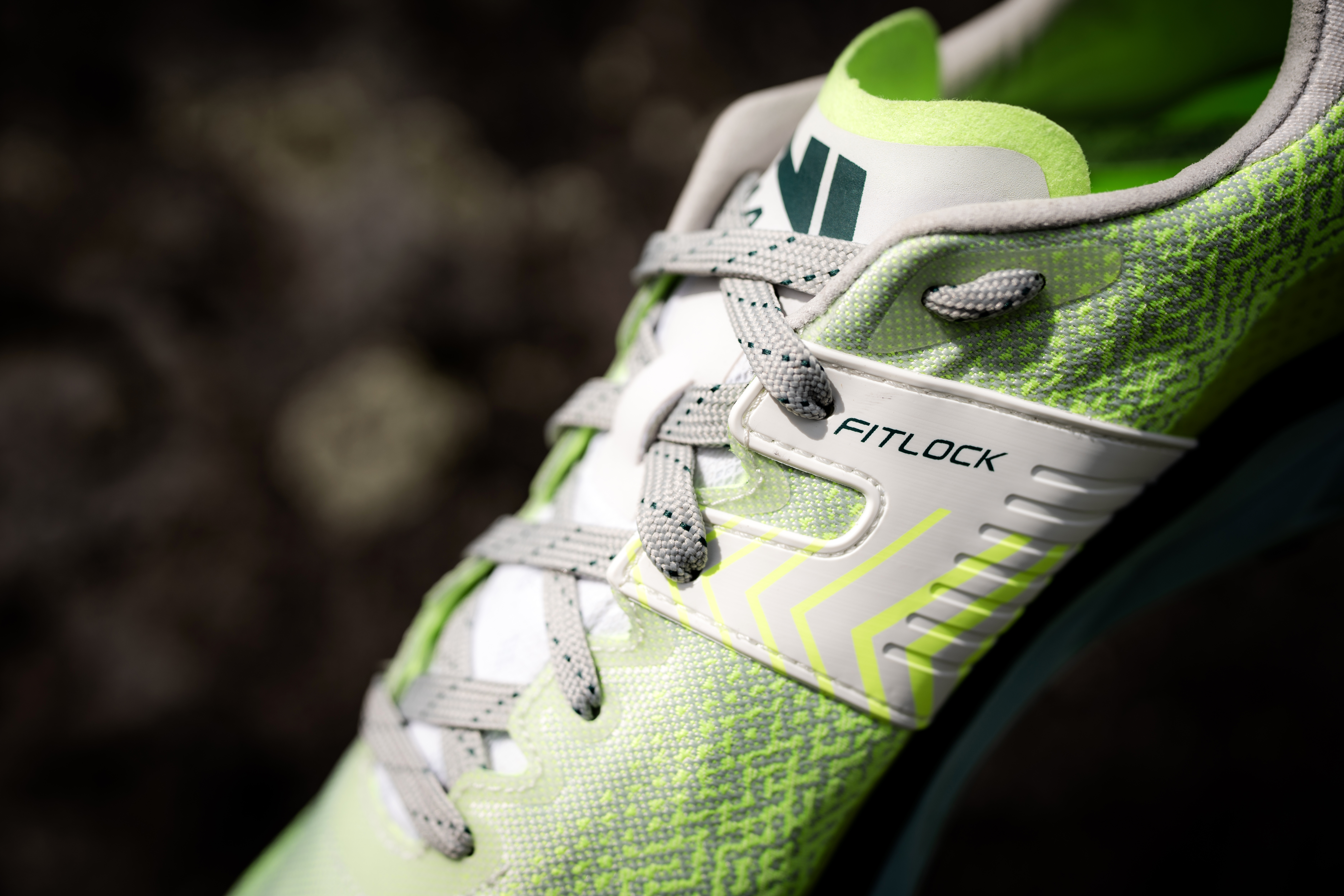
If you read my shoe reviews, you will know I am a huge VJ Sport fan. To me, they have not made a bad shoe and gladly, they are not always tweaking or re-inventing shoes. The original MAXx I have used for many years and in all honesty, it has been my go-to mountain running shoe. The combination of foot hold from Fitlock and the amazing outsole make them unbeatable when grip and control is priority. The only downside to the MAXx was the lack of cushioning for longer runs. With 12mm cushioning at the front, 18mm at the rear and 4mm studs, they are a great shoe for up to 50km in rocky, muddy and mountainous terrain.
The MAXx2 takes all that was great in the MAXx and brings some key changes and features:
25mm and 31mm cushioning
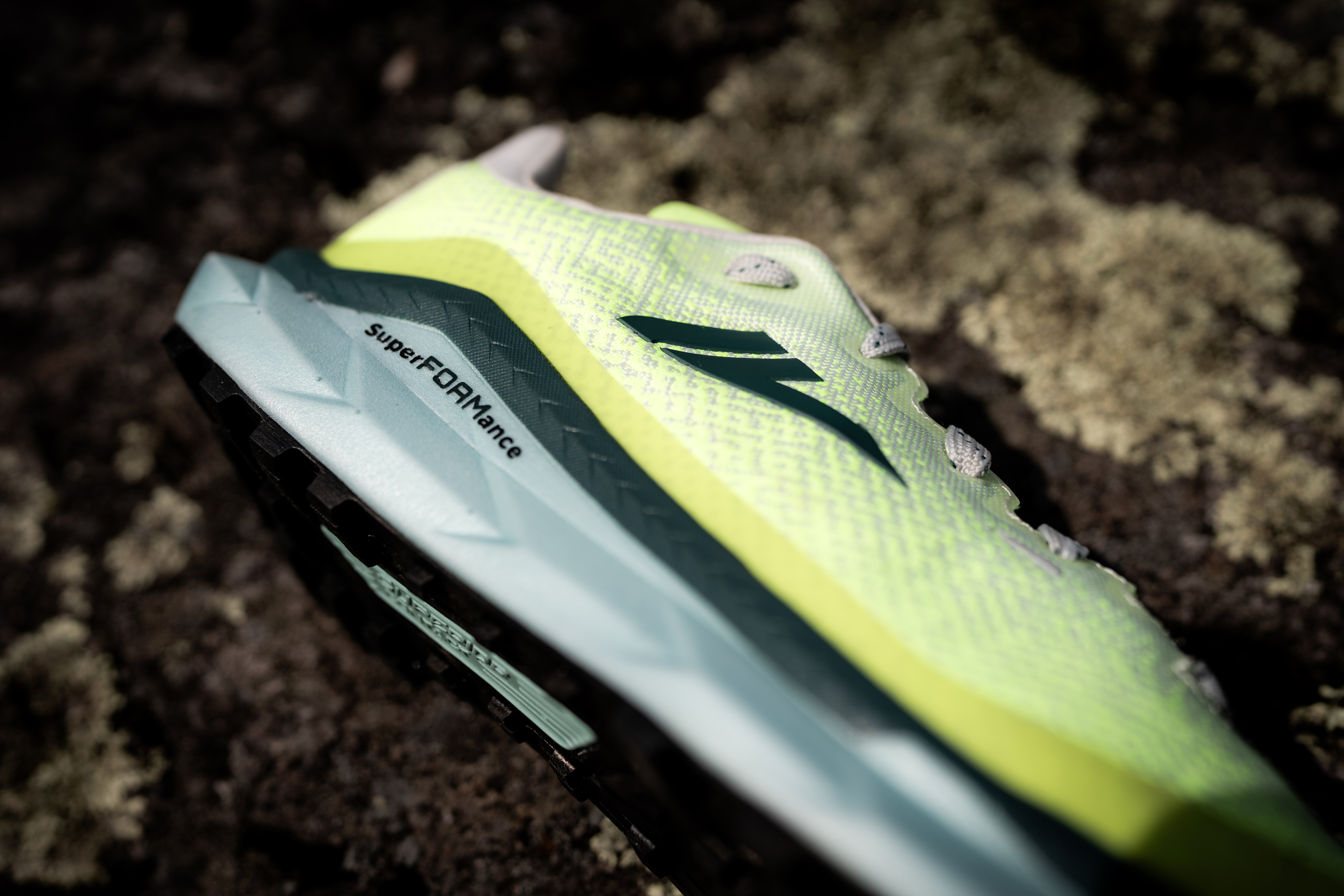
SuperFOAMance midsole
Rock plate
These new features elevate this shoe to a new beast and it has now become my favourite trail shoe. They are quite simply, superb!
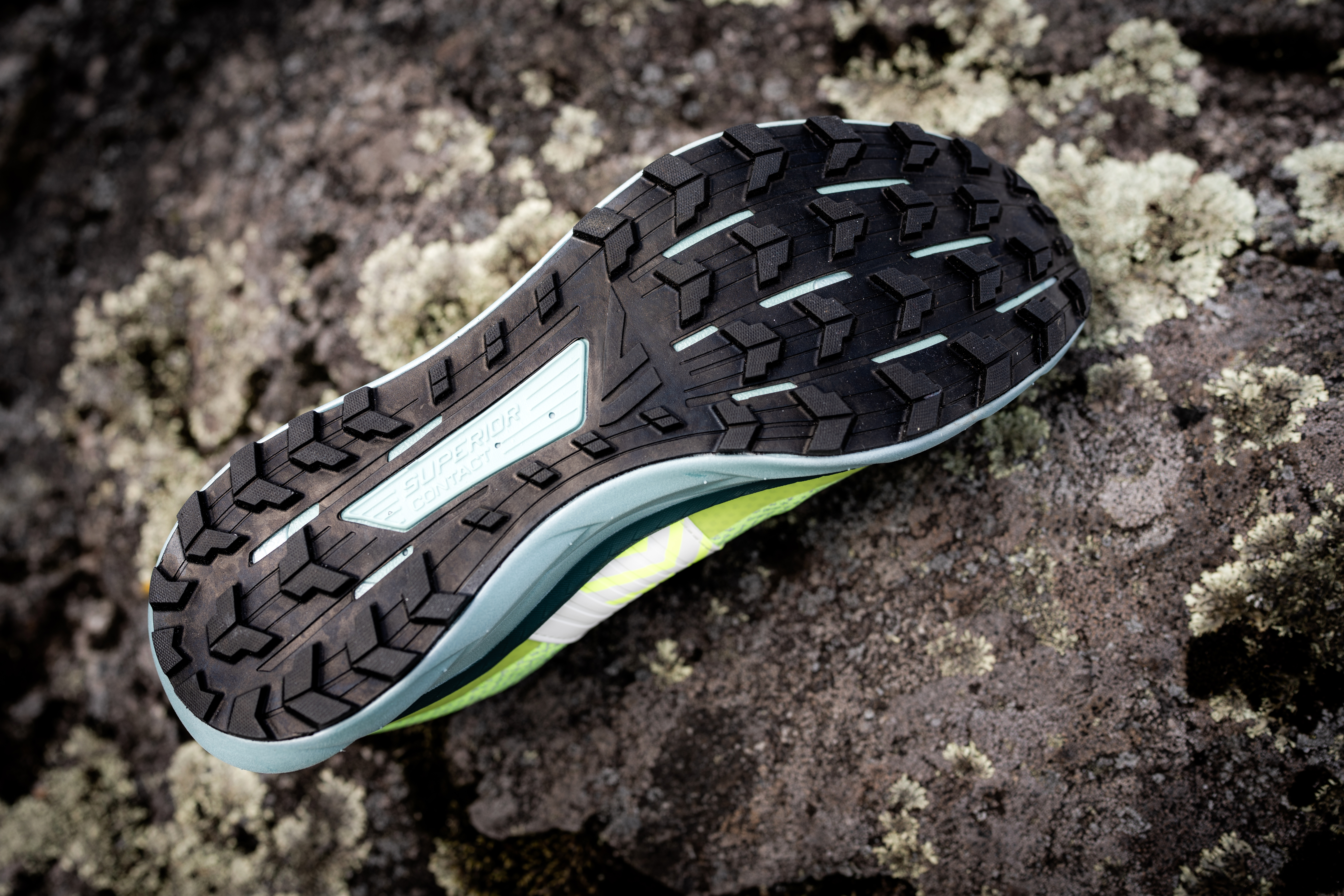
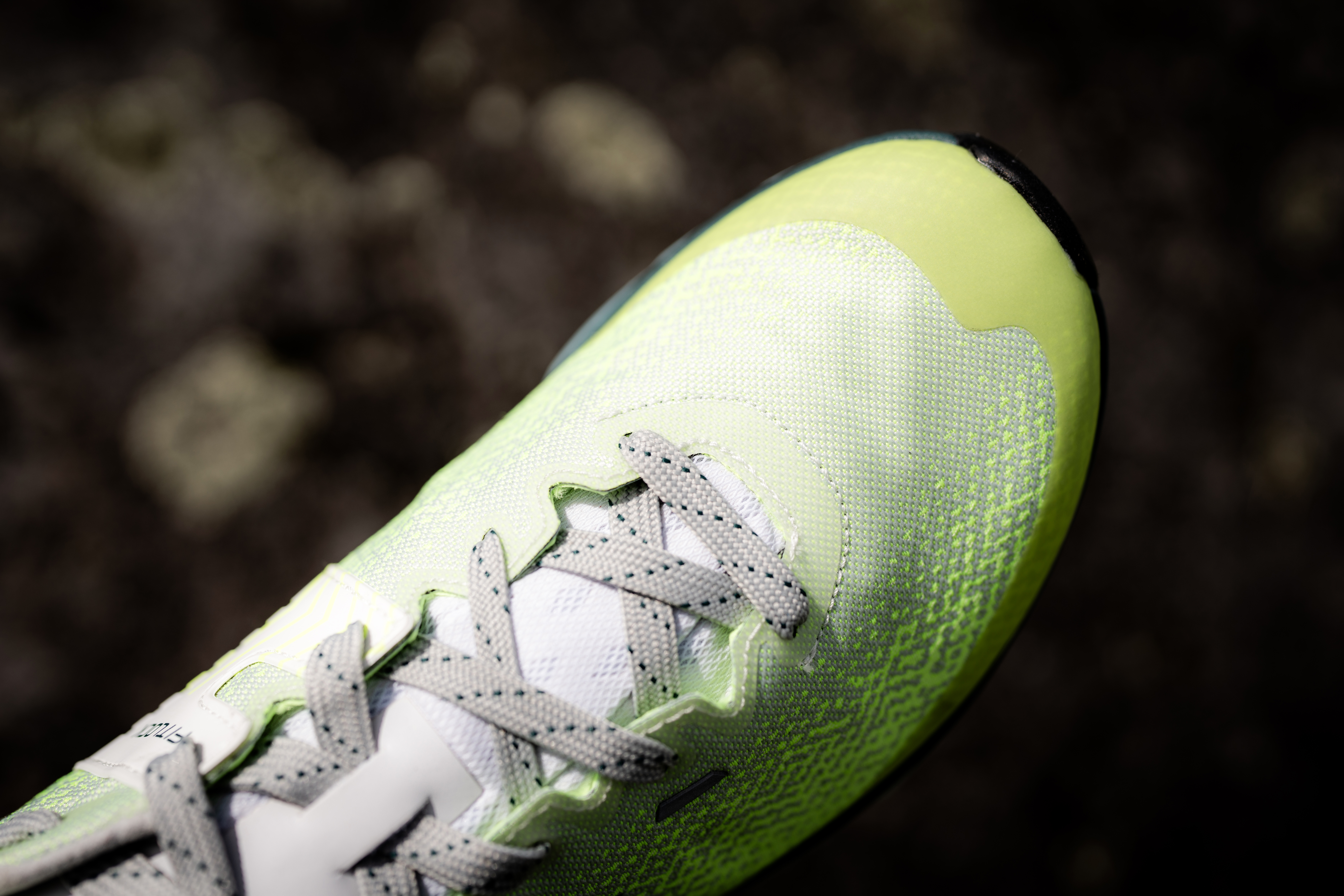
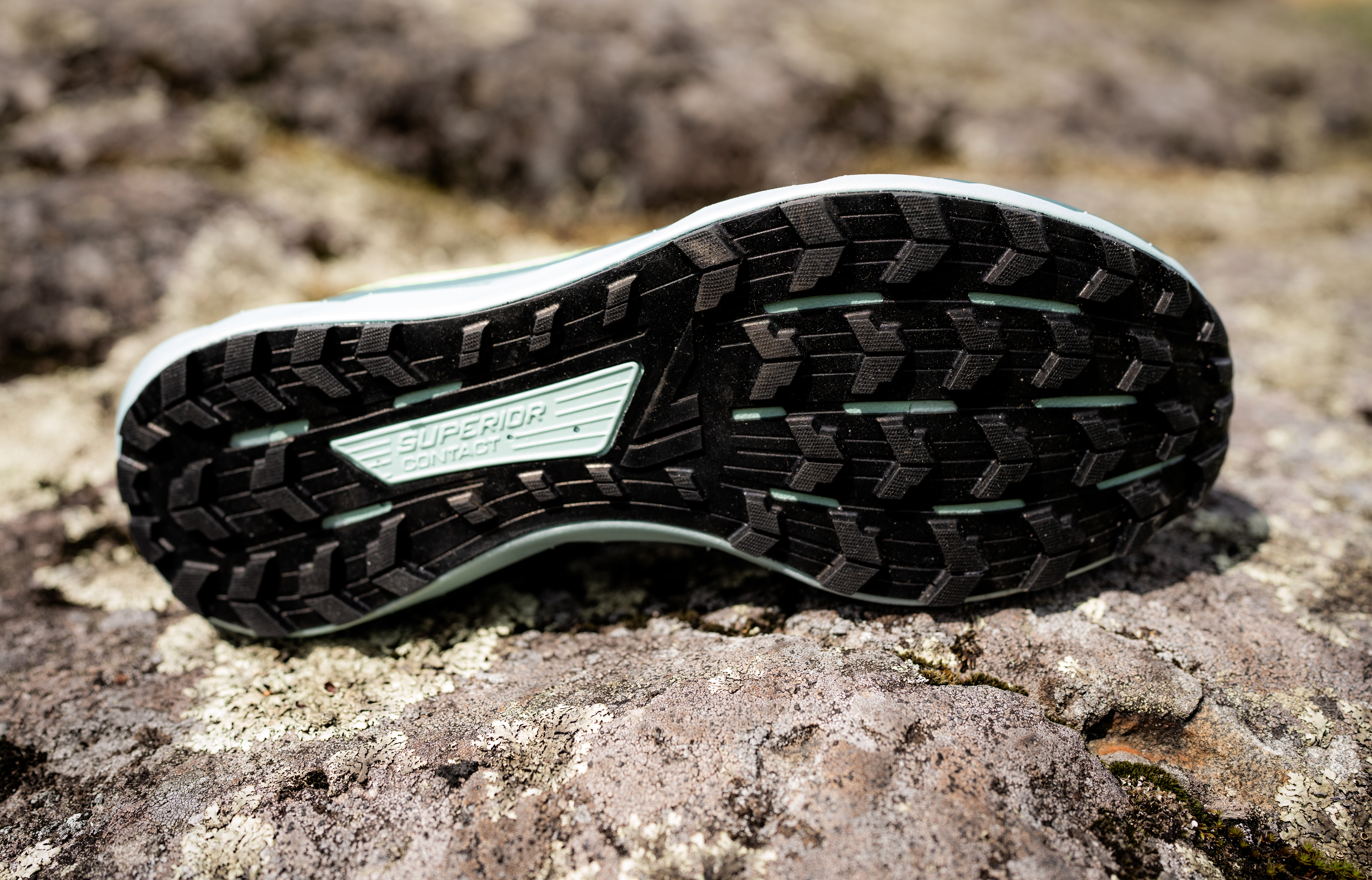
The upper is seamless, breathable and durable. The outsole, for those that know VJ still offers the best grip on the planet with 4mm Butyl rubber studs – no other shoe brand has an outsole that can compete with VJ. The unique FITLOCK gives superb foot hold which guarantees security and precision on technical and demanding terrain.
I could conclude here and say this is is the best mountain/ off-road shoe available on the market.
IN USE
This is a versatile shoe and where the previous MAXx had some limitations in regard to distance and time on feet, the MAXx2 dispels that and for me, this is now an all day mountain/ off-road shoe with supreme comfort.
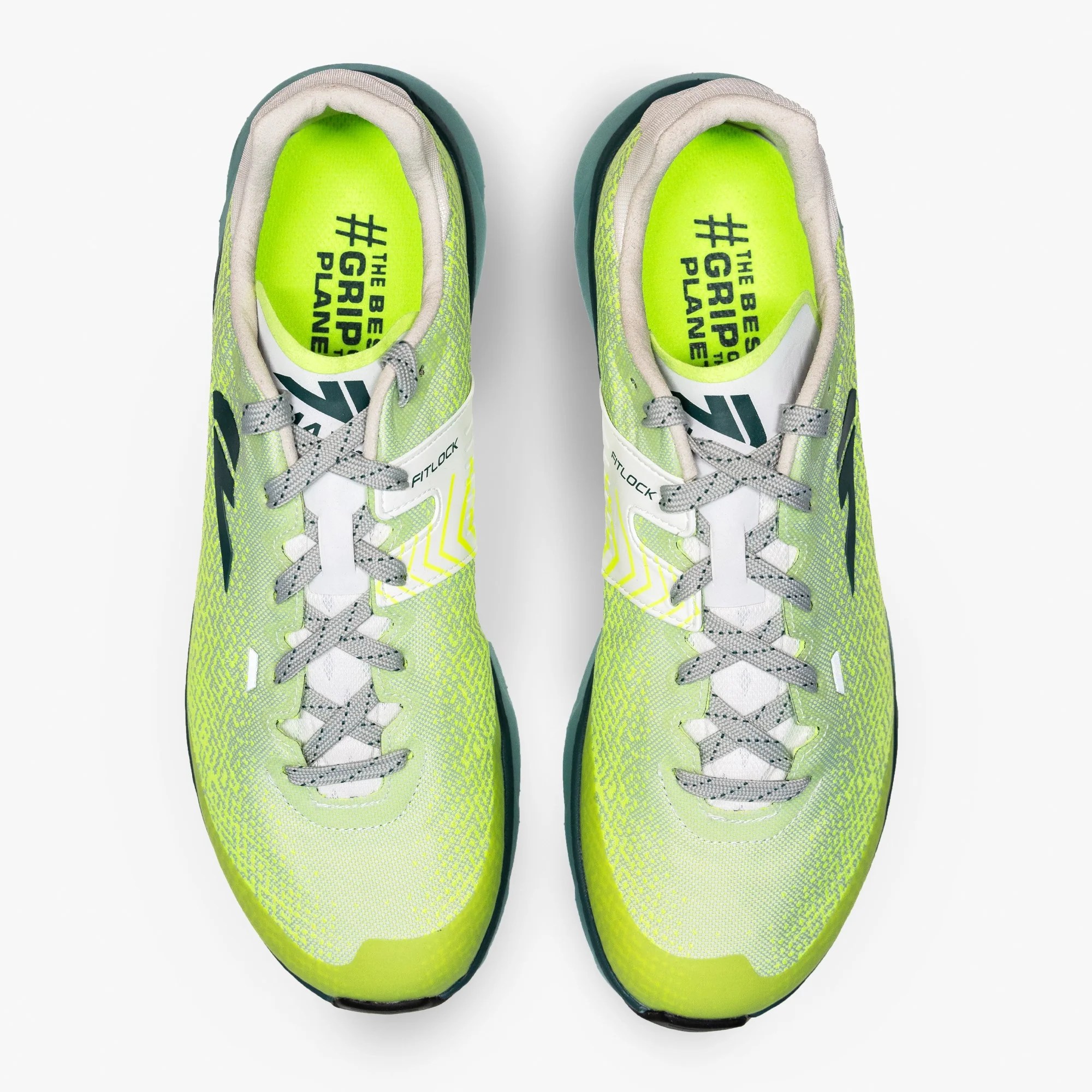
The revelation is the new SuperFOAMance midsole (25/31mm) which I knew was superb the moment I tried the winter Ace shoe. The original MAXx had Poron cushion integrated into the heel and forefoot midsole, the new SuperFOAMance is a huge improvement. It manages to give everything that I need and want in a shoe, especially when running on more technical trails. I have great ground feel, great flexibility, precision and there is a delicate balance with torsional rigidity and comfort. The rock-late balances enough protection without adding weight or restricting flexibility. The propulsive phase is superb. And a drop of 6mm is a perfect sweet spot between 4mm and 8mm.
The toe box has been given more space, a ‘4’ on the VJ scale. The balance of a wider toe box and still a precious feel is a delicate balance, but VJ have done it. There is extra room and more toe splay without a sloppy feel.
The upper is not as breathable as other brands and there is a simple reason for this. This shoe is designed for use in harsh environments and VJ know only too well, if you make an upper too minimal it just won’t last. This upper is one piece, so, there is no stitching to cause abrasion – a winner. There is a TPU bumper that goes around the bottom of the upper providing extra protection and durability. FITLOCK has always been a winner and here, once again, this is a key feature of the shoe providing the ultimate foot hold. There is also extra eyelets so you can lock-lace if required.
The outsole is superb, as with all VJ shoes. Here 4mm lugs make this shoe a perfect all-rounder for drier/ non-technical trails and more demanding mountain trails that will have mud, rock and more importantly, wet rocks. No other shoe grips like VJ. The outsole is classic chevron in design with grip the full-length of the shoe. There is nothing more to say, best outsole there is!
The shoe sizes a little large, so, be careful when purchasing. With a wider fit at the front, you may wish to size down. I am typically a UK10 and I have a UK9.5 which weighs 263g.
CONCLUSION
This is VJ’s best shoe and one that is a perfect one-stop solution. The MAXx2 is an all-rounder and typically that would mean that it does all things ok, but no one thing well. Not so here, the combination of elements – cushioning, rock-plate, outsole, Fitlock, fit and comfort make this a superb one-stop trail shoe that excels for all day comfort.
VJ have always had a reputation for making shoes that are very specific, think of the iRock with 6mm lugs and less cushioning designed for grip in soft-ground, or the XTRM2 which has 6mm lugs and more cushioning. Here in the MAXx2 we have a middle ground that should you only ever own one pair of VJ’s, the MAXx2 should be the one to buy.
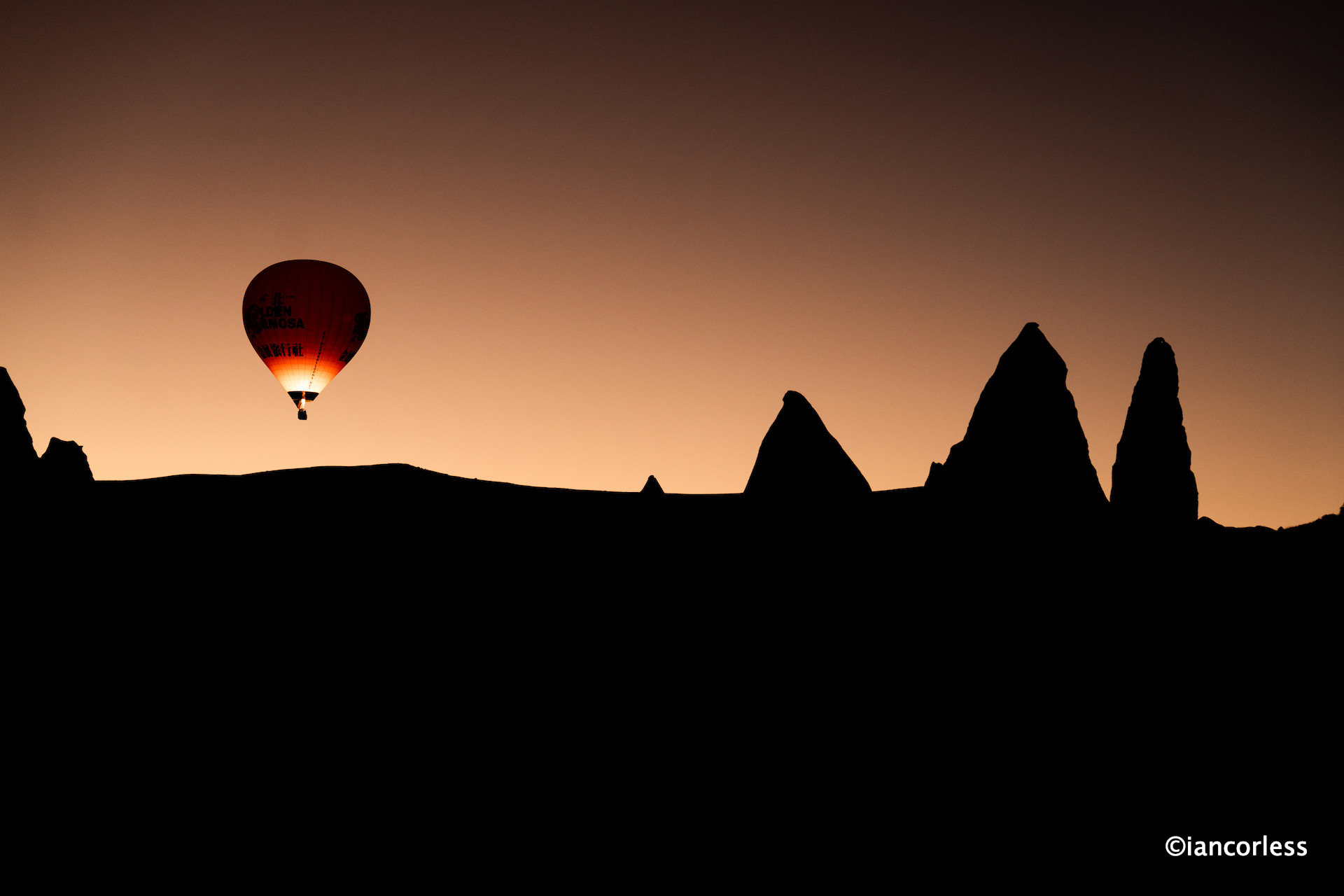
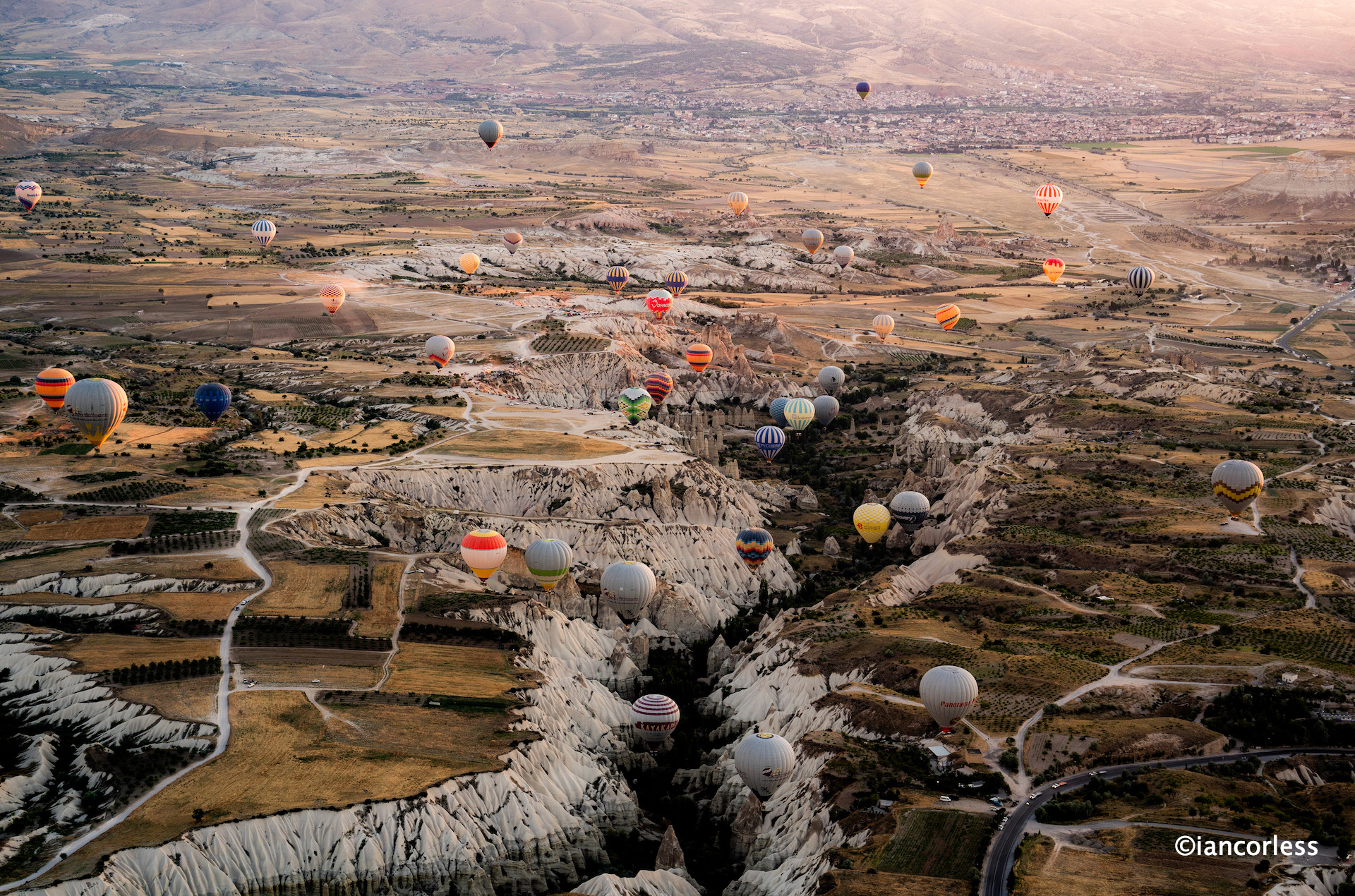
The 2024 inaugural MDS CAPPADOCIA has concluded on a high, quite literally, as all participants and staff were treated to a surprise early morning balloon flight by the organisation to celebrate a pioneering moment for the MDS brand.
The Love Valley
For many, the early morning sky filled with 100’s of balloons is one of those lifetime memory moments, to be given the option to fly, was a dream come true. From the airy heights, the full MDS Cappadocia route was able to be viewed providing a new perspective of the incredible journey that was only completed the day before.
Memory for a lifetime
And what a journey this MDS experience was.
As Cyril Gauthier mentioned in his opening briefing before the race, ‘Welcome to first edition of Marathon des Sables Cappadocia, but ironically, the sables element is missing here…’
Cyril before stage 1
It of course came as no surprise, however, Cappadocia is very much a desert-like landscape, correctly though, the element of soft sand and dunes is completely missing.
Unique and special
One may question, ‘Is this a bad thing?’ The simple answer here is no, each and every participant could not speak highly enough about this unique MDS experience and actually, many were very vocal and happy that MDS Cappadocia was a very new and different.
OVERVIEW
MDS Cappadocia is a 7-day experience following the same format of other MDS events that have gone before, Fuerteventura, Jordan and so on as perfect examples.
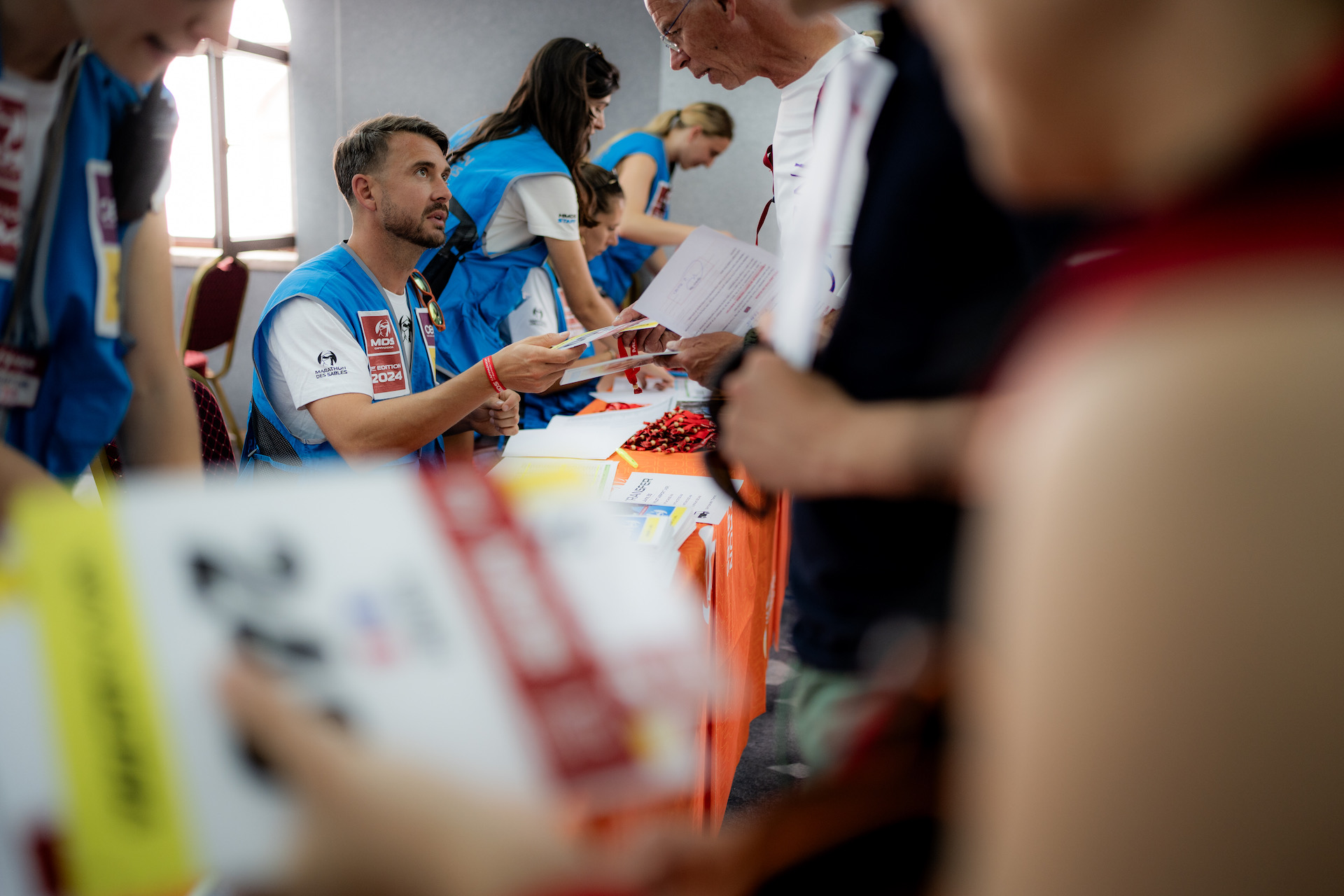
MDS team meet and greet before transfer to hotel
Day 1 – Runner’s are required to travel to Kayseri airport and arrive on a certain day so that they are able to take a transfer, provided by the organisation to the race hotel. At the hotel, technical checks and admin take place. In the evening dinner is provided.
admin and technical checks
Day 2 – Runner’s depart the hotel via transfer to the start. Now self-sufficiency begins and stage 1 starts. Runner’s run/walk 25km to the bivouac and conclusion of stage 1.
Stage 1
Day 3 – Stage 2 starts at bivouac and runner’s return to the bivouac choosing the option to run/ walk 20km, 40km or 60km.
Stage 2
Day 4 – A rest and recovery day.
Bivouac
Day 5 – Stage 3 26km which concludes in the Love Valley. A short transfer to the race hotel is provide. The evening is free.
Stage 3
Day 6* – A relaxing day at the hotel or sightseeing followed by awards, gala dinner and party.
The balloon flight
Day 7 – Onward travel.
*Runner’s were surprised with a hot air balloon flight, this required a 04:00 departure from the hotel to experience the magic of Cappadocia from the sky. They returned between 0700-0800 for breakfast.
THE RACE
Travel, admin and the race hotel was slick providing a relatively easy and relaxed start to the MDS Cappadocia experience.
Stage 1 had a bus departure of 0800, race briefing at 0900 and race start of 0930. I think everyone welcomed a relaxed start, however, the challenge of stage 1 was very real.
There are several key factors that must be considered for MDS Cappadocia.
It was hot
The heat for the duration of the race week was very high, temperatures were consistently between 33 to 36-degrees with a ‘feel’ on the skin of high 40’s. It was hot!
The Göreme Valley where much of the race takes place has an altitude of 1100m. This of course is not high altitude, but, the impact on breathing and physical effort was significant.
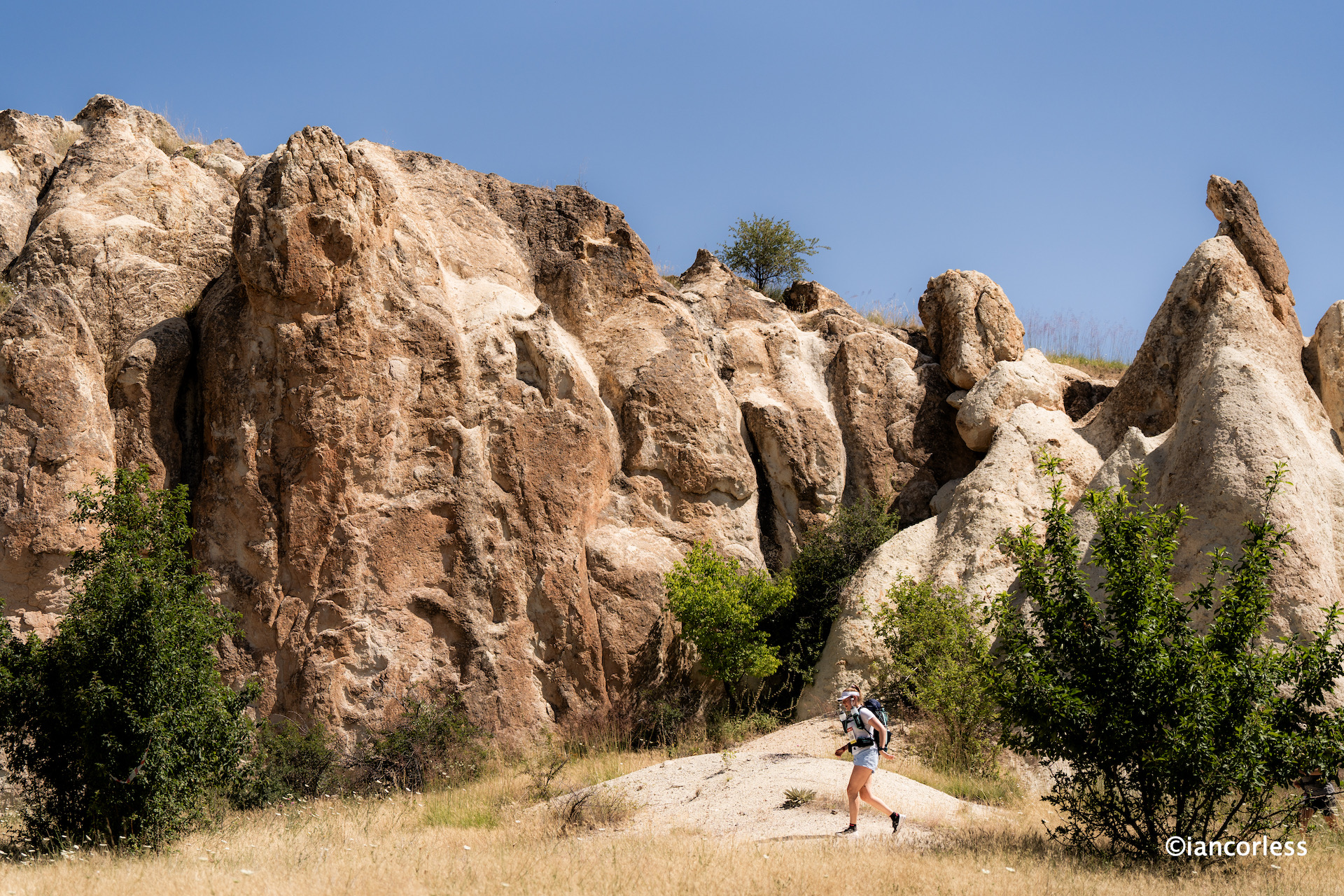
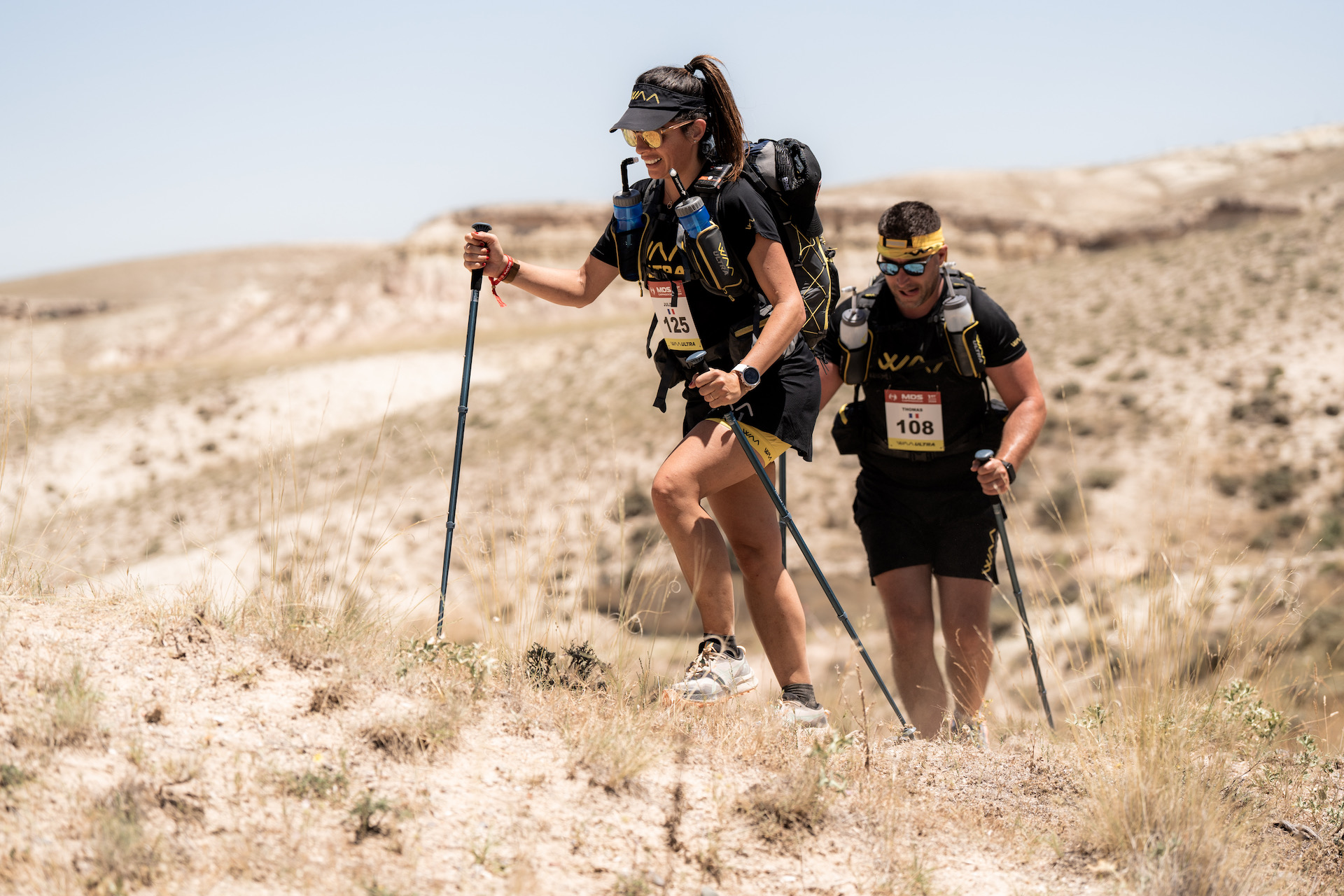
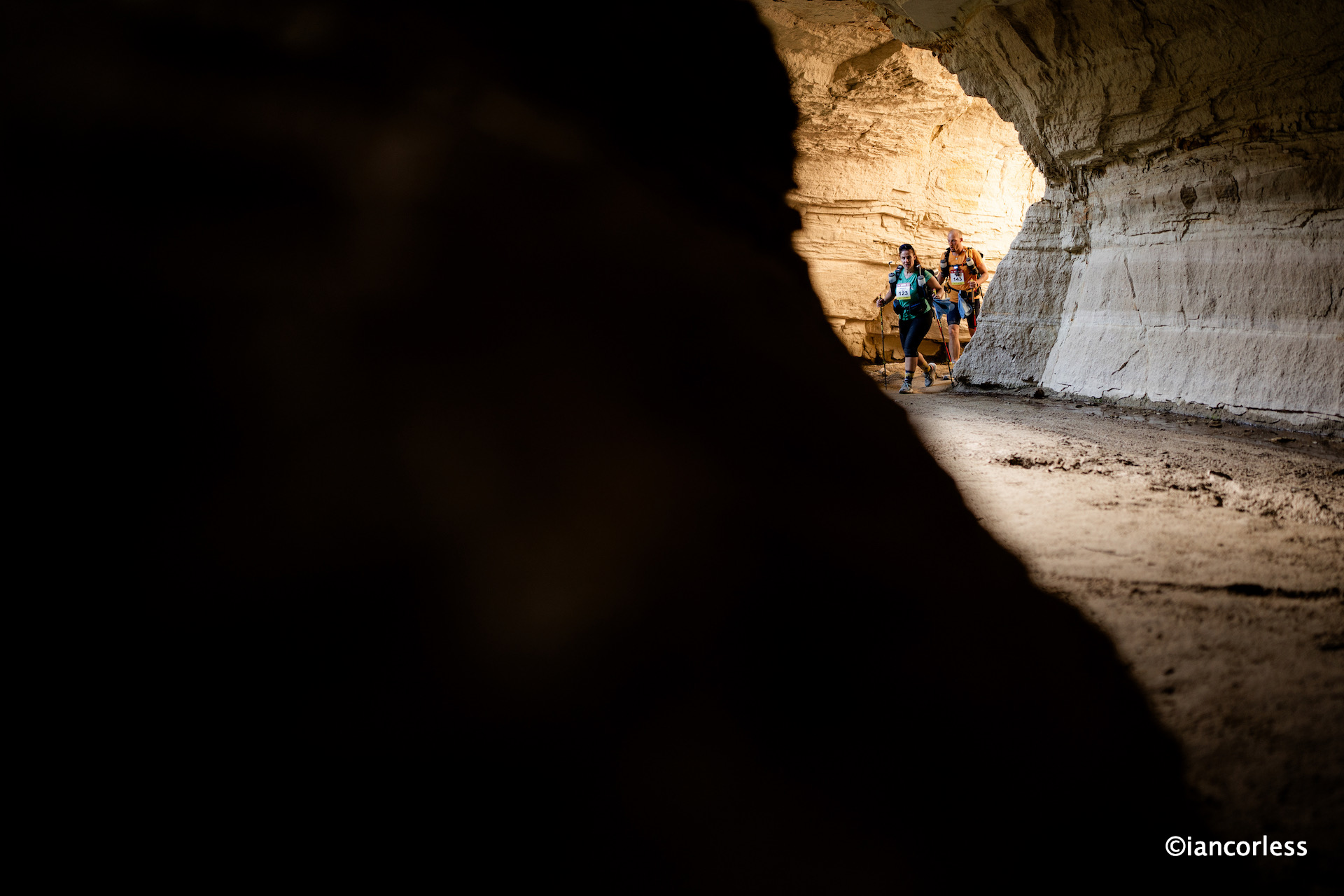
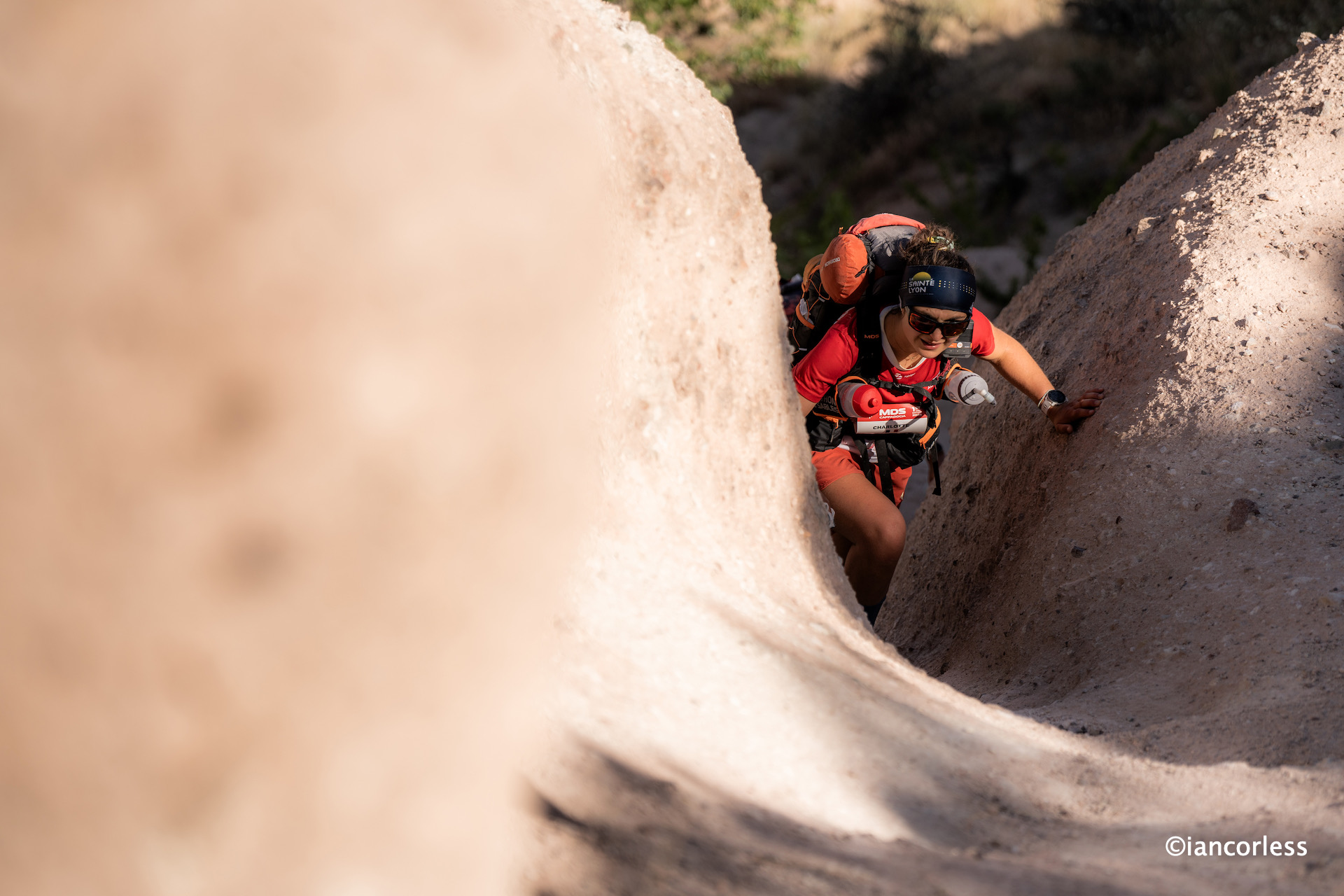
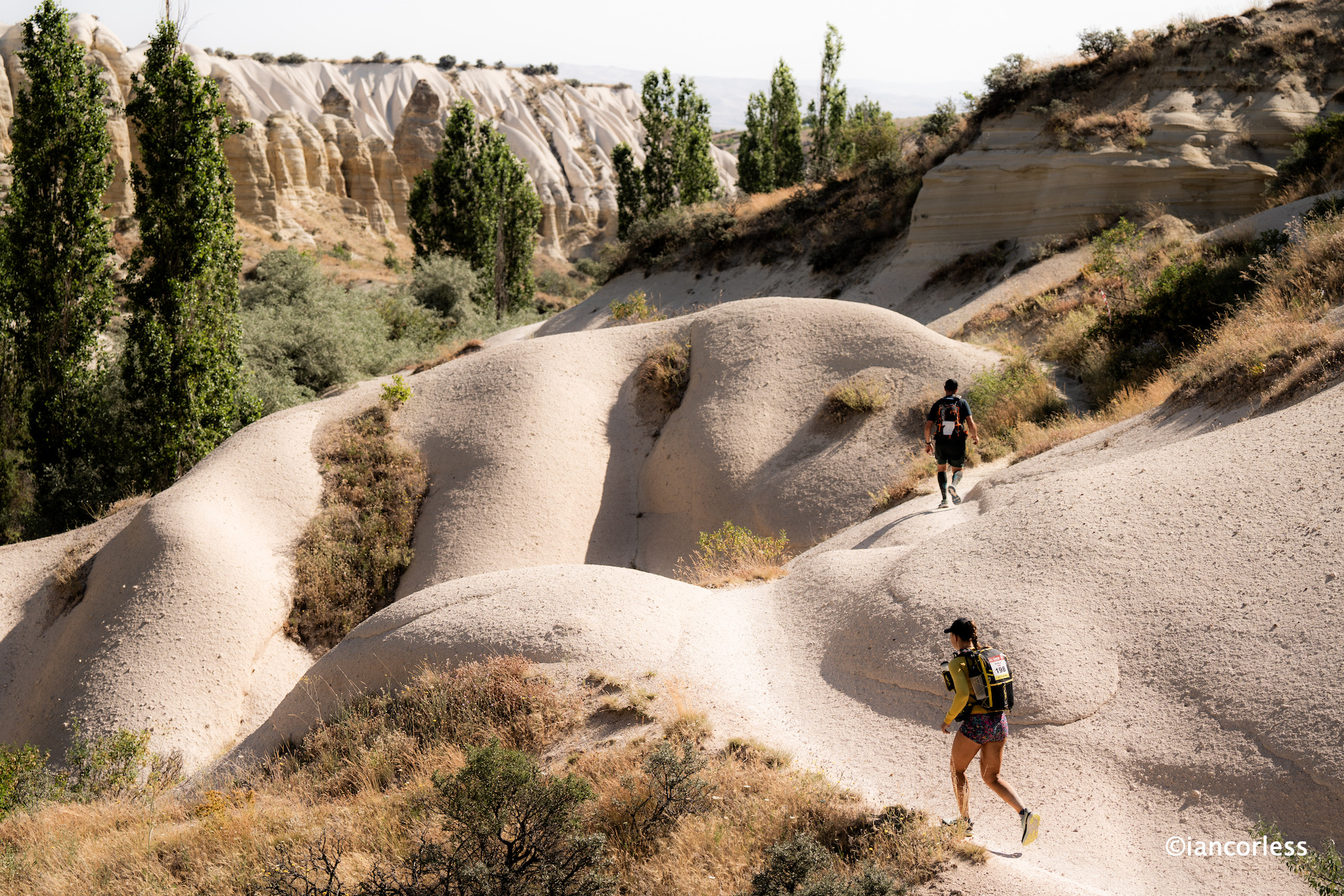
The route is considerably more challenging than other MDS events. Much of the route is single-track trails, mountain passes, gorges, tunnels, forest, technical trail, loose ground and it is undulating.
The vertical gain for each stage is significant, for the 72km it is 1767m, for the 91km it is 2243m and for the 111km it is 2576m.
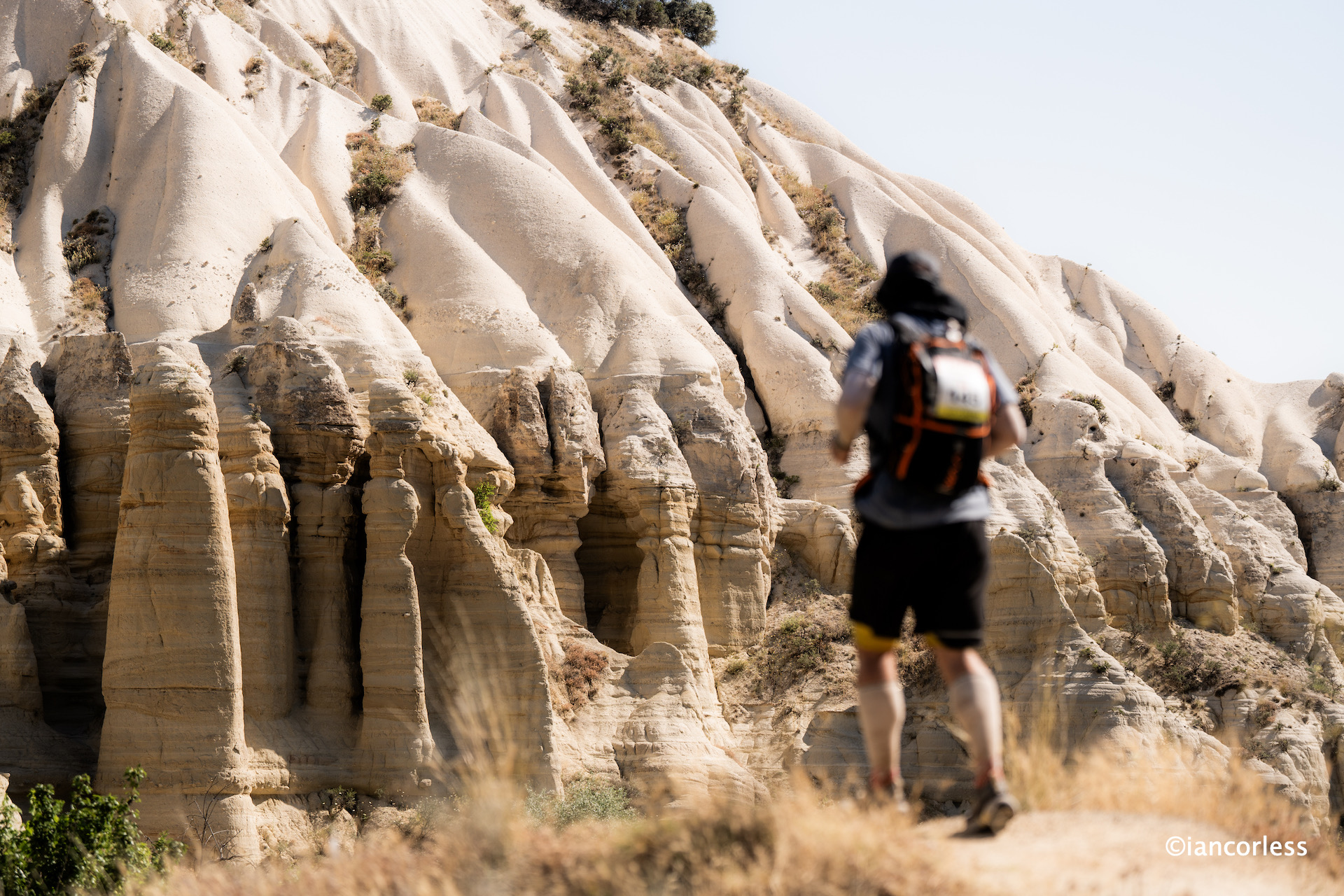
Unique terrain
The combination of elements above made MDS Cappadocia, km for km, more challenging and difficult than any other MDS race, The Legendary included. If MDS Cappadocia was an equivalent 250km distance of The Legendary, it would be a very hard race.
This is no ordinary race.
After stage 1, it was very clear to the organisation that start times were needed to be adjusted to allow for cooler temperatures. Stage 2 moved from a 0600 start to 0500, and stage 3 was moved from a 0700 start to a 0500 start. This quite simply was an excellent decision and it is fair to assume that future MDS Cappadocia will have earlier start times, especially on stage 1.
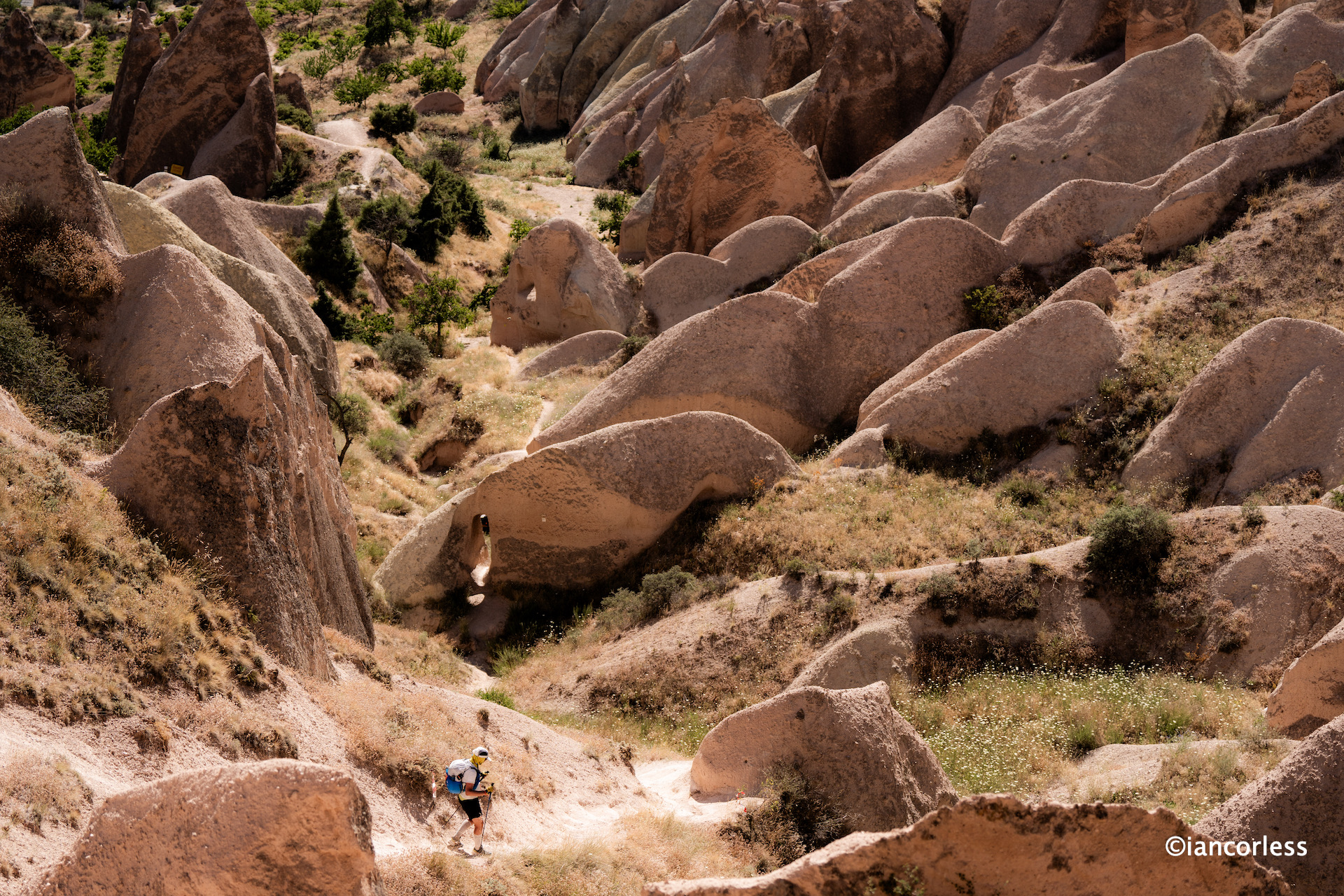
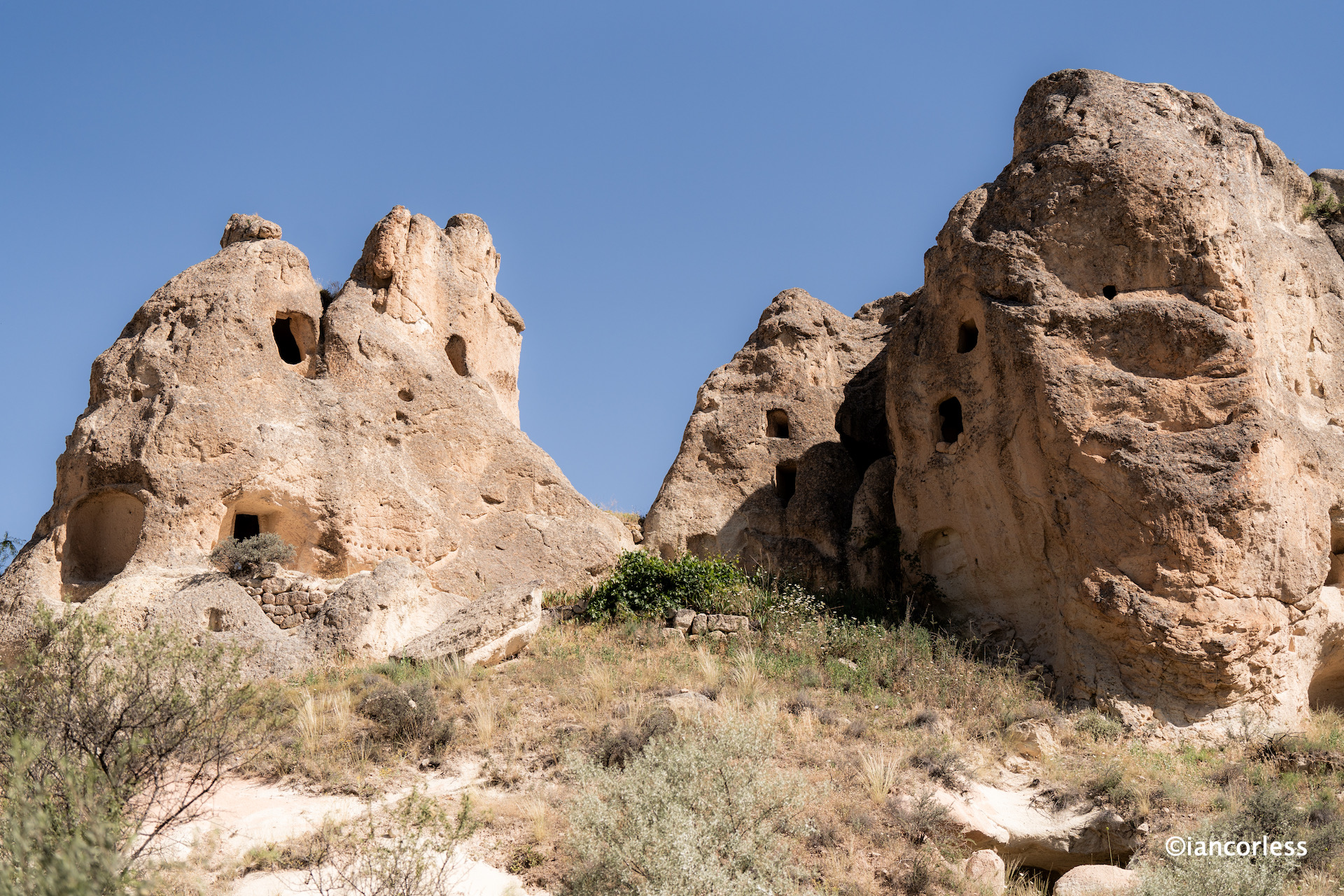
Bivouac was in a stunning location surrounded by iconic Cappadocia landscape such as fairy towers and Troglodyte caves. A very special place.
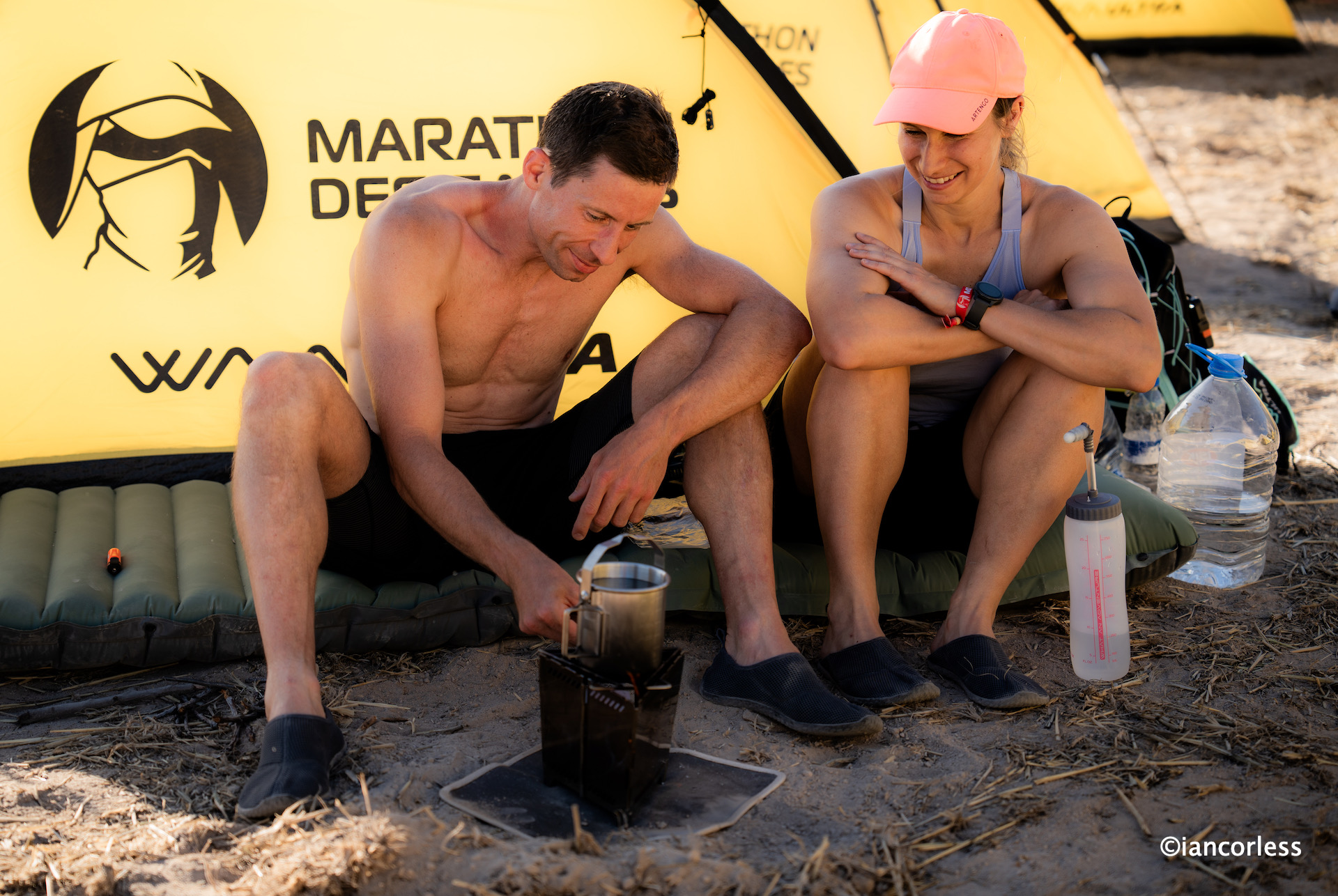
Camp life
Participants sleep in individual MDS tents in cells of 6. There is a communal shaded area with matts so that everyone can relax post-race.
Camp life is like all other MDS events, The Legendary excluded, as here the bivouac tents hold 8-people. Priority is to relax, hydrate, eat and sleep. It’s a simple life. Participants are self-sufficient and therefore they must have all they need for the duration of the event. The exception is water, at the end of each stage, participants are provided a 5L bottle of water which must last to CP1 the next day (rest day excluded.)
In camp, there is medical/ foot care to ensure competitor safety.
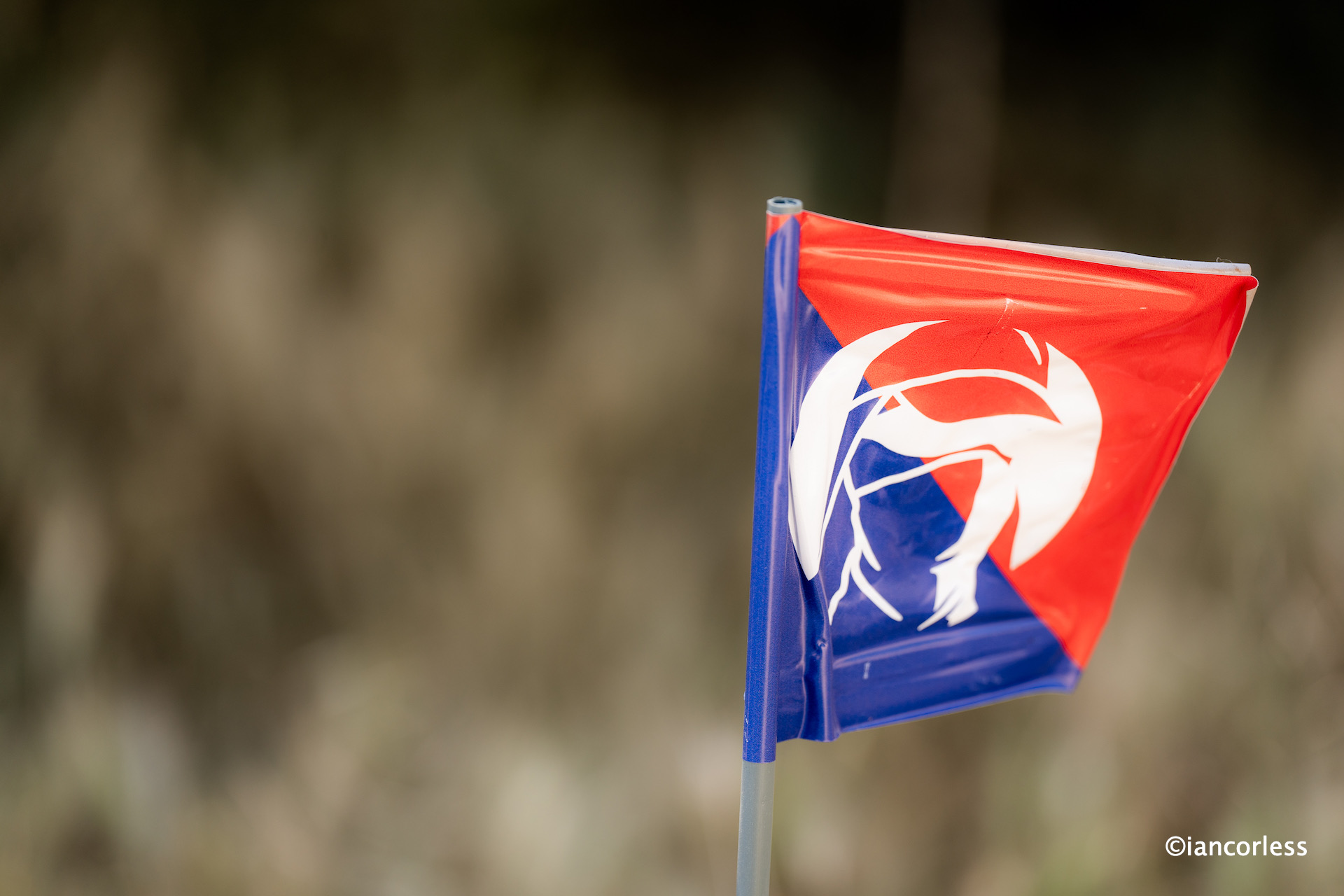
Flag markers
The race route is considerably more complex than other MDS events and as such, route marking is crucial. Marking consisted of red/ white tape and flags, and the route was very well marked. However, I do feel that the provision of GPX files would be a great addition.
Aid stations with medical teams
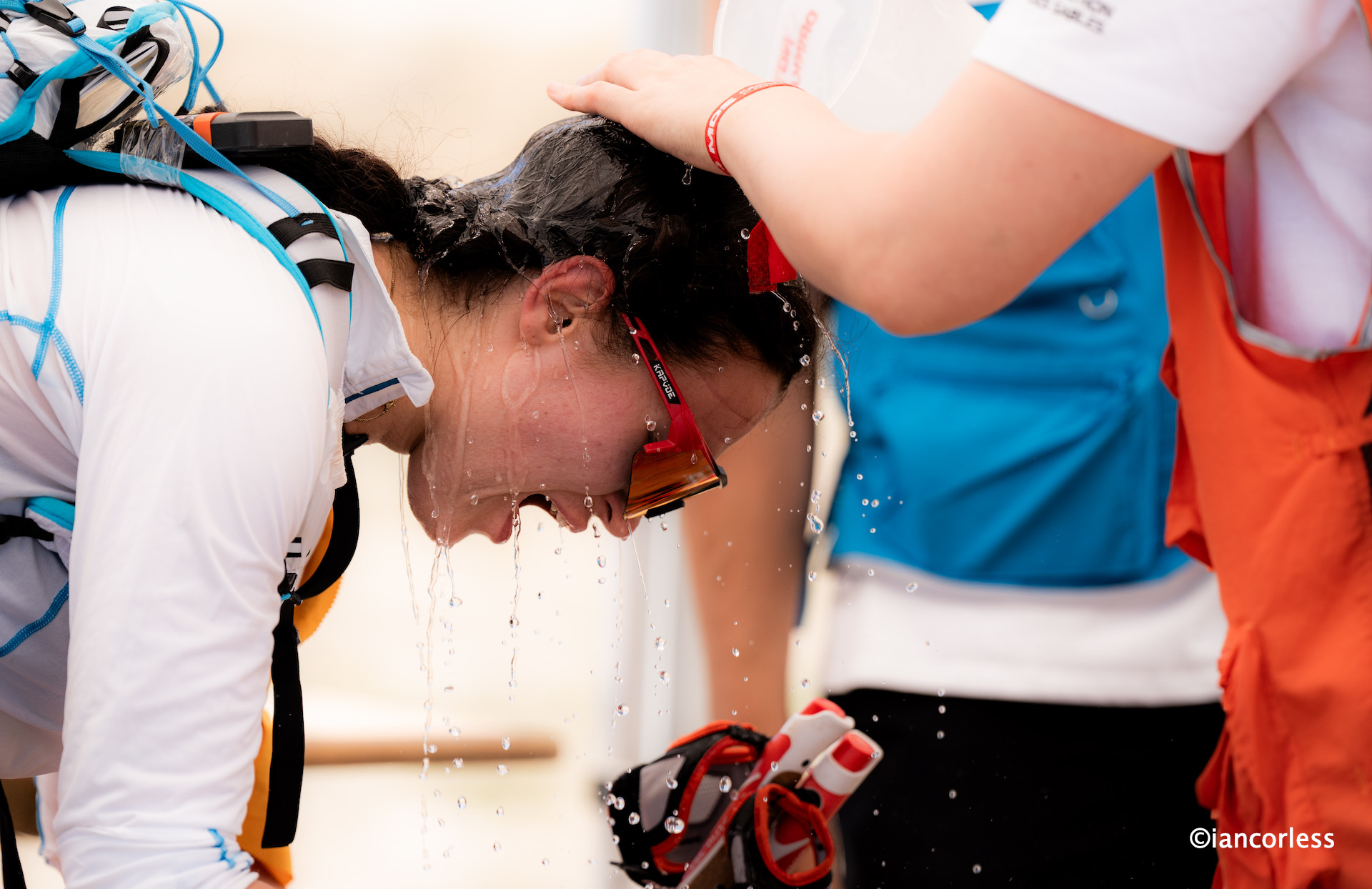
Aid stations were superb offering a shaded area, an abundance of water and importantly, iced water which the medical team pour on heads and necks to enable cooling. Medical provision is at each CP. For stage 1 there was two CP, stage 2 depending on the chosen distance had up to five CP’s and stage 3 had two CP. If required, the organisation added impromptu water stations to ensure competitor safety.
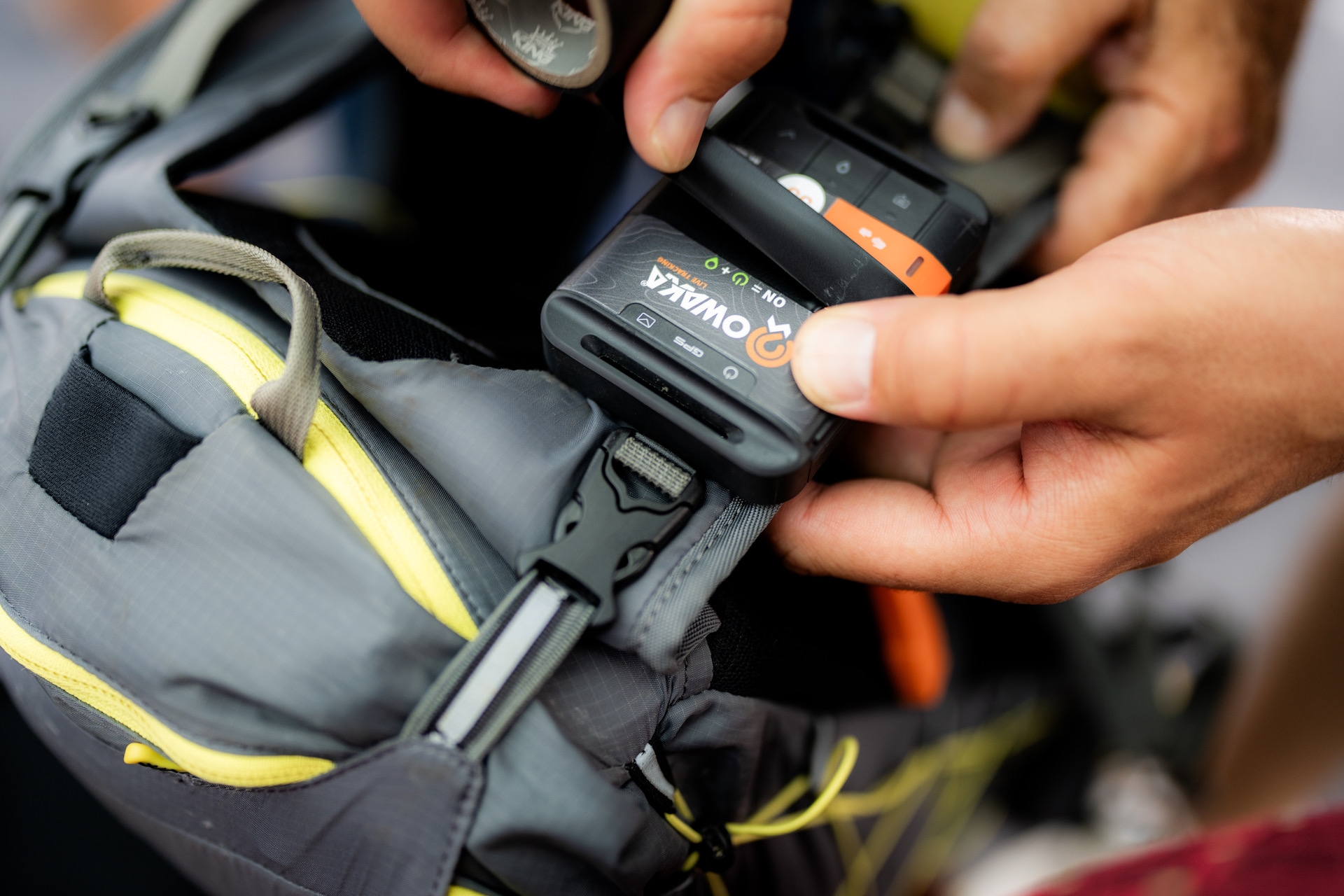
A tracker for each participant
Competitors each have a tracker so they they can be monitored and in addition, there is a SOS button in the event of an emergency.
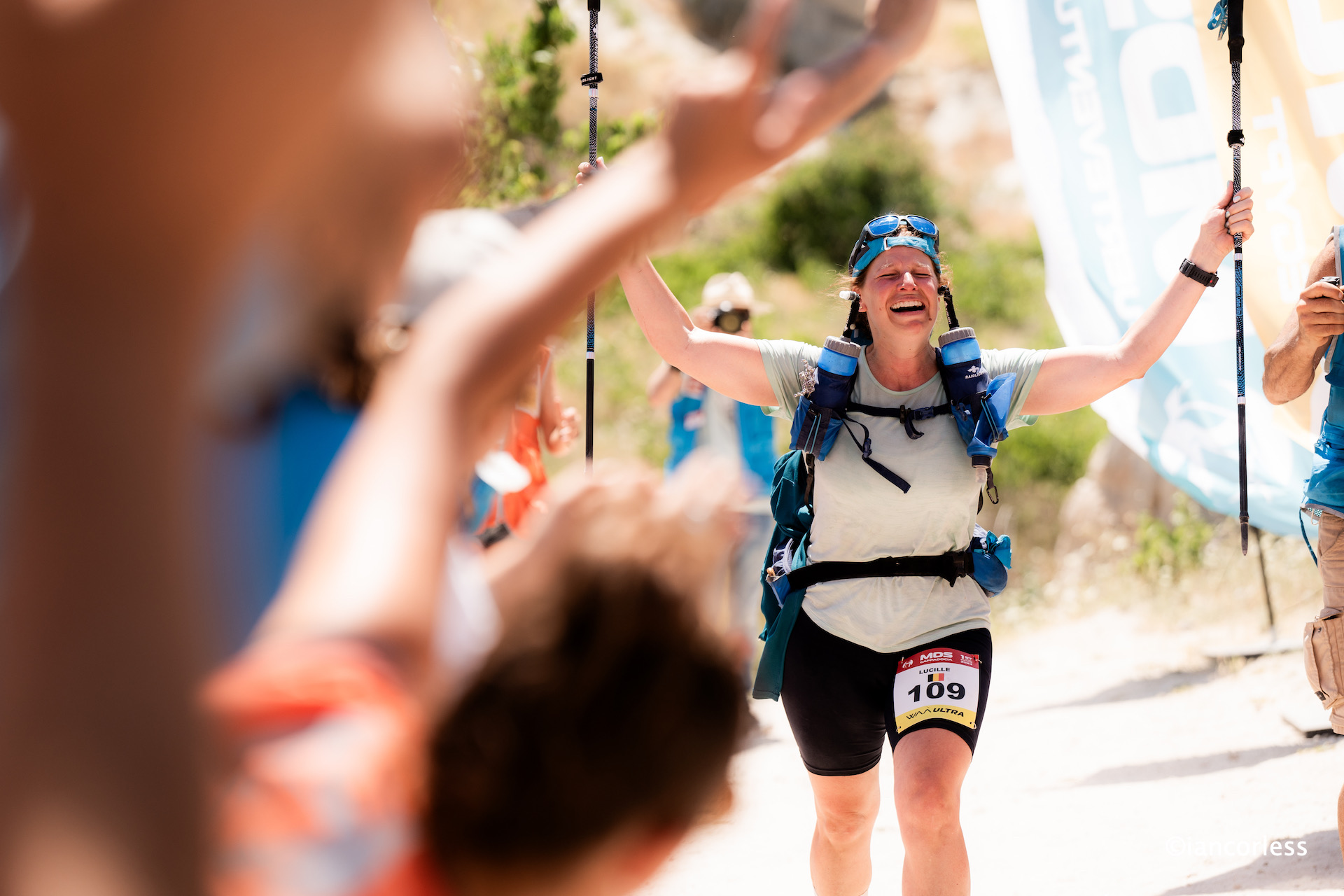
All about the finish
The event has cut-off times, however, the goal of MDS events is that each participant finishes, therefore, the organisation do all they can to facilitate runner’s crossing the line. Should someone DNF, they are given a free entry for the following year!
THE ROUTE
Troglodyte homes
MDS Cappadocia brings something very unique to the MDS line-up. This is not a desert race, it is much more a trail race.
Underfoot, there are considerably more challenges with an ever changing terrain.
Just look at the photos, the route is a visual splendour of a very unique landscape. Taking in key areas of the Göreme Valley such as the Red Valley and Love Valley, the experience is special. A volcanic landscape, that has been shaped by wind, rain, lava, ice and erosion. Add the early morning spectacle of the hot air balloons and I firmly believe that Cappadocia needs to be experienced at least once. What better way to do this running or walking?
As mentioned above, the route is much more of a physical challenge, km for km, this is a harder race, however, as all the 2024 competitors confirmed, it is an achievable one… If it was easy, anyone could do it!
THE EXPERIENCE
Quite simply, the feedback from participants was a wow. From the moment stage 1 started, the visual splendour begins and that is consistent throughout the whole race experience.
Balloons at bivouac
A highlight was the early start for stage 2 when the whole bivouac area was surrounded hot air balloons. I personally have experienced start lines all over the world and this was a highlight. It was completely mind-blowing and one that will last with everyone for their lifetime. It was a privilege and honour to experience it.
The last finisher emotions
The race was hard, especially with the intense heat. However, the MDS option to provide three distances for stage 2 is inspired and it gives everyone an opportunity to challenge themself in their own way.
In terms of runner’s needs, this is just like any other MDS event, however, there are some key considerations: 1. You need good trail shoes with excellent grip and toe protection. 2. Sand gaiters are not required but small ankle gaiters are a good idea to stop stones etc entering the shoe at the ankle. 3. Poles (and knowing how to use them) are a very good idea for the majority of the participants.
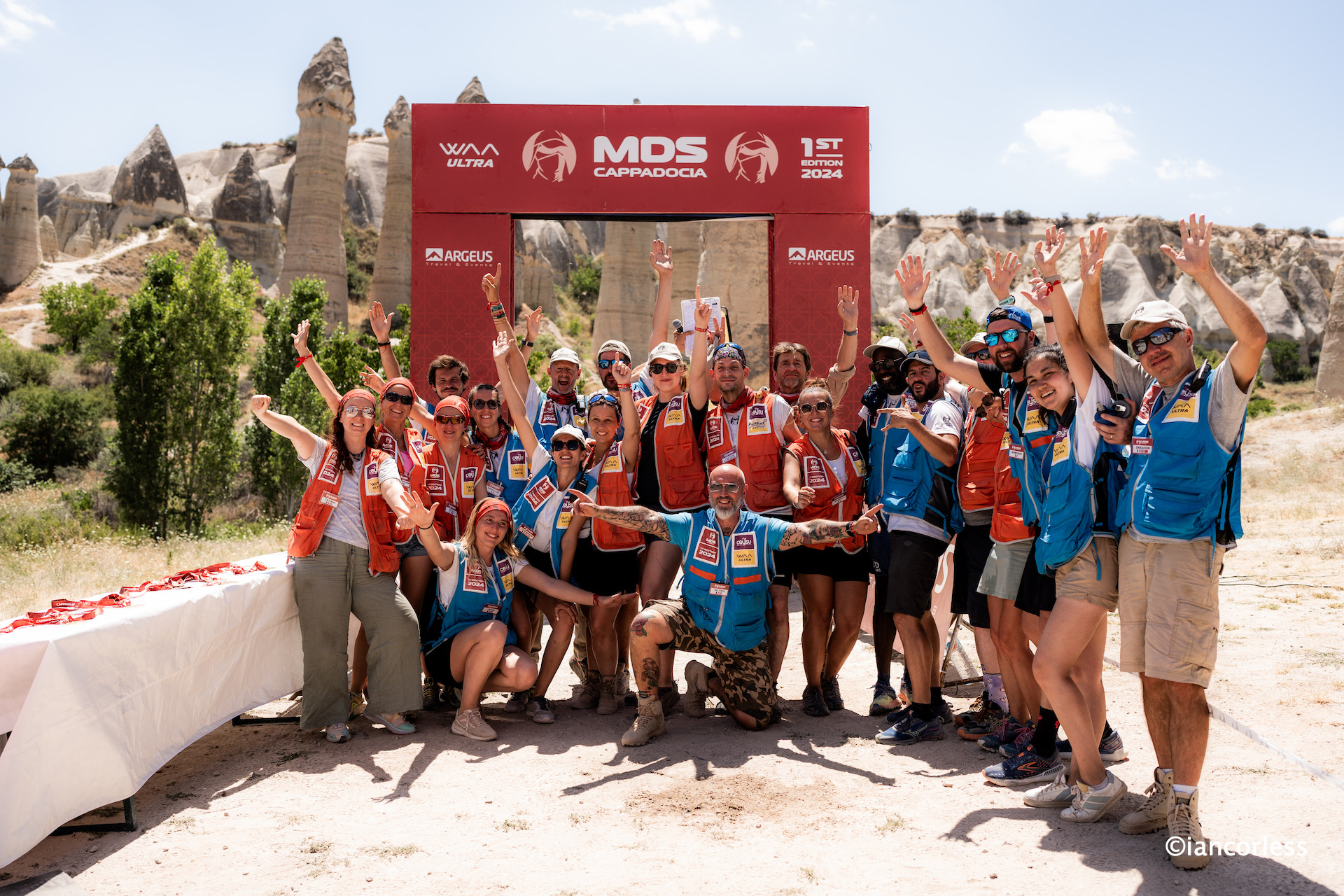
Teamwork
The MDS team have these events dialled and with a dedicated team they ensure competitor happiness and safety. Of course, first editions are always difficult, they are an opportunity to learn what does and what does not work. The general consensus post-race was one of huge success, however, it wasn’t perfect and the team look for this, so, tweaks.
The surprise of a hot air balloon flight was an incredible gesture by the MDS organisation, I think this almost certainly will be ‘option’ to add to the race experience in future editions.
The post-race awards, film, gala dinner and party was a great success.
It takes a dedicated team to make an event happen and it’s important to acknowledge Argeus Travel and in particular, Koray and Hayden for their on ground experience in facilitating the first edition of MDS Cappadocia.
The event brings something new and different to the MDS line-up and that should be applauded. There is something special here in Turkey that needs to be experienced just once.
The challenge is real, respect this environment. The combination of altitude, heat, challenging terrain, self-sufficiency and camp life is something special.
And finally, this landscape is very, very special it needs to be experienced to be believed.



















 IAN CORLESS