COUNTDOWN TO MDS LEGENDARY 2026 – ISSUE FOUR

This is it. Two weeks to go.

This edition marks the 40th anniversary of the MDS Legendary. Four decades of runners crossing the Sahara under their own power. As we move through March, I’m sharing a short series of weekly articles to help sharpen your preparation. This is the fourth of four.

Issue one HERE

Issue two HERE

Issue three HERE
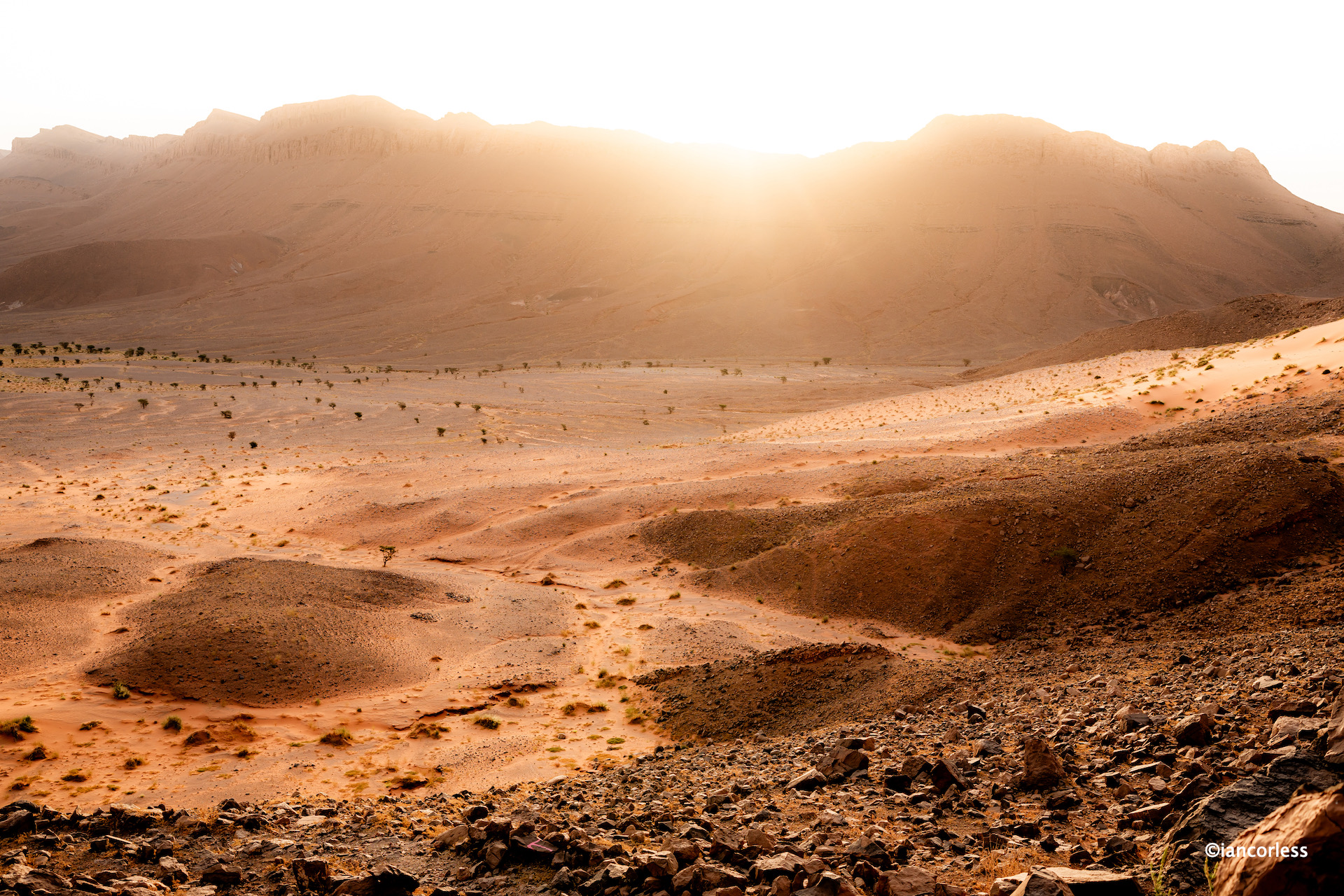
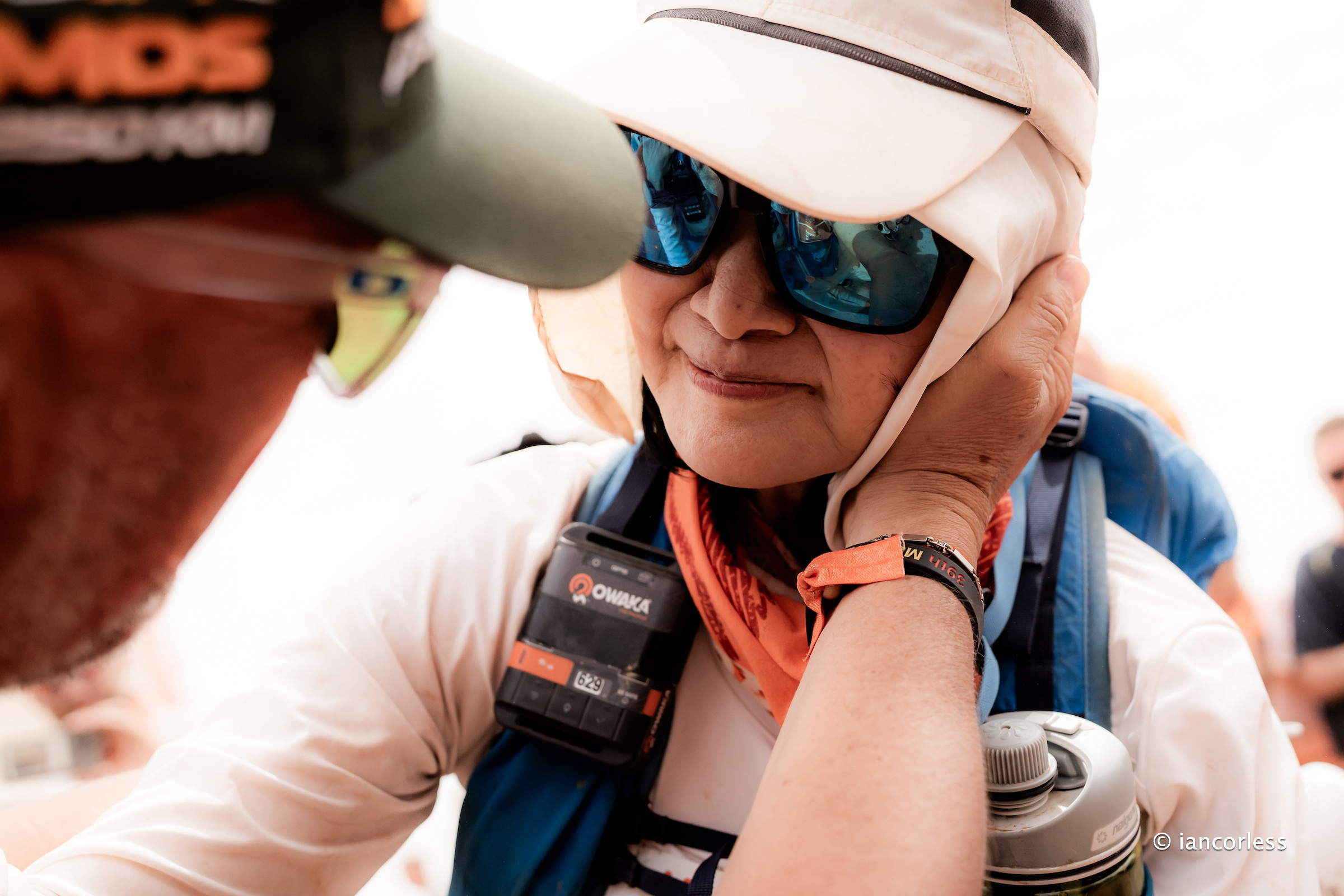
Photo by Ian Corless

By now, the nerves are real. Anticipation is building. And yes, stress might be creeping in too. That’s normal. You’re about to take on one of the toughest endurance races on the planet. But here’s the truth: the hard work is already done.

Now, the focus shifts.
Ease Back to Move Forward

It’s tempting to squeeze in one last long run. Don’t.

At this stage, there’s nothing to gain and everything to lose. Fatigue and injury are the only likely outcomes. Instead, keep sessions short and purposeful. Stay loose. Stay sharp. This is taper time. Think of it as recharging your battery so you arrive on the start line fresh, not drained.

Prepare for the Heat

If you can, use these final days to adapt to the heat. It doesn’t need to be perfect, but every little bit helps.

Hot yoga, saunas, hot baths, even treadmill sessions with extra layers can all make a difference. If you have access to a heat chamber, even better. The Sahara is unforgiving, and any adaptation you build now will pay off when it matters most.

Plan Everything, Then Simplify

Now is the time to get meticulous.

Lay everything out. Build a spreadsheet if that helps. Go item by item through your kit. Ask yourself what you truly need.
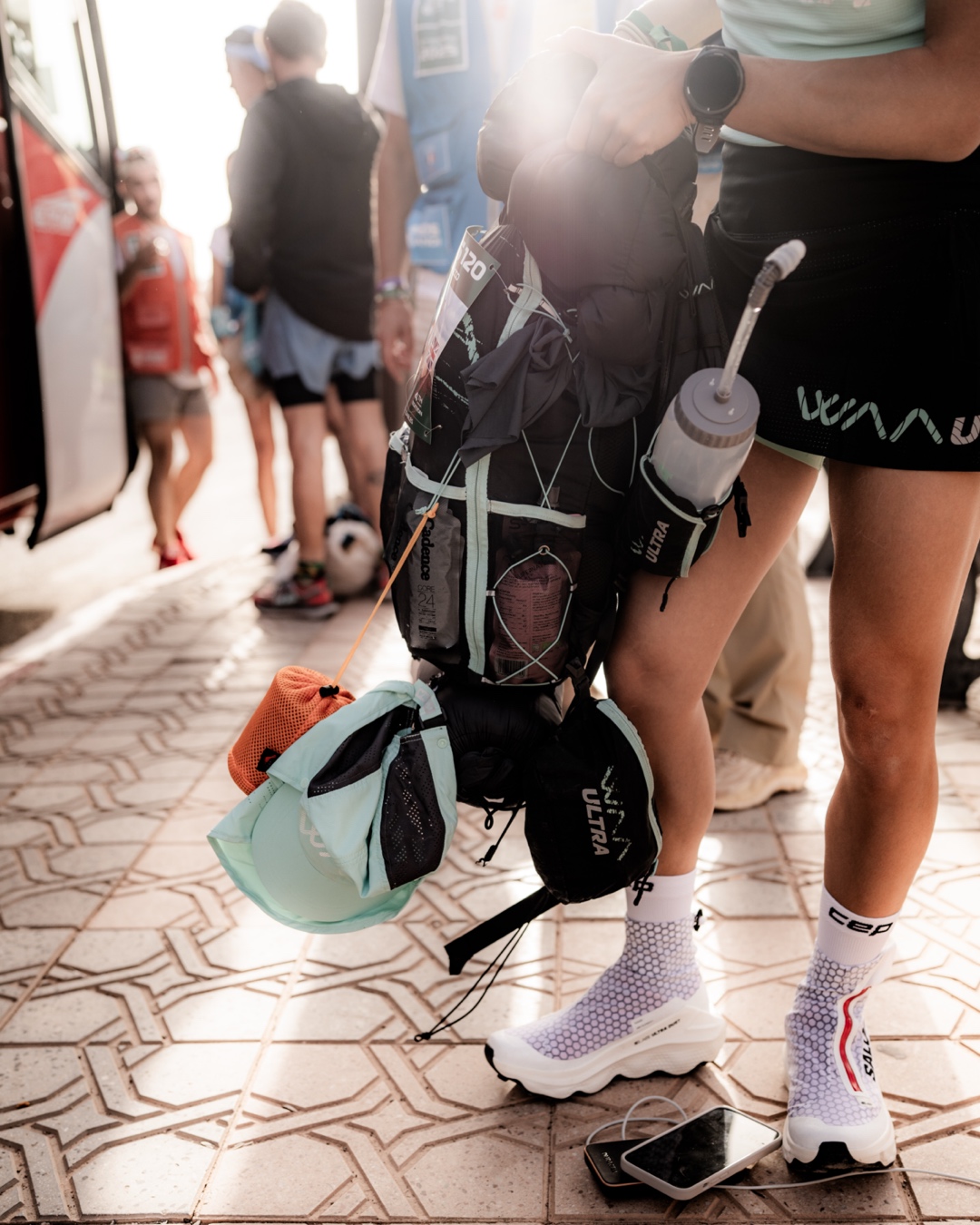
Weight matters. Every gram counts when it’s on your back for multiple days. Strip out the luxuries. Be ruthless. The goal is to go as light as possible without compromising safety or performance.

The same applies to food. Check your calories. Repack if needed. Remove excess packaging. Make sure what you carry is efficient, practical, and something you can actually eat under stress.

Get the Admin Right

Details matter here.

Medical certificates must be correct and meet all race requirements, especially your ECG. Don’t assume, double-check.
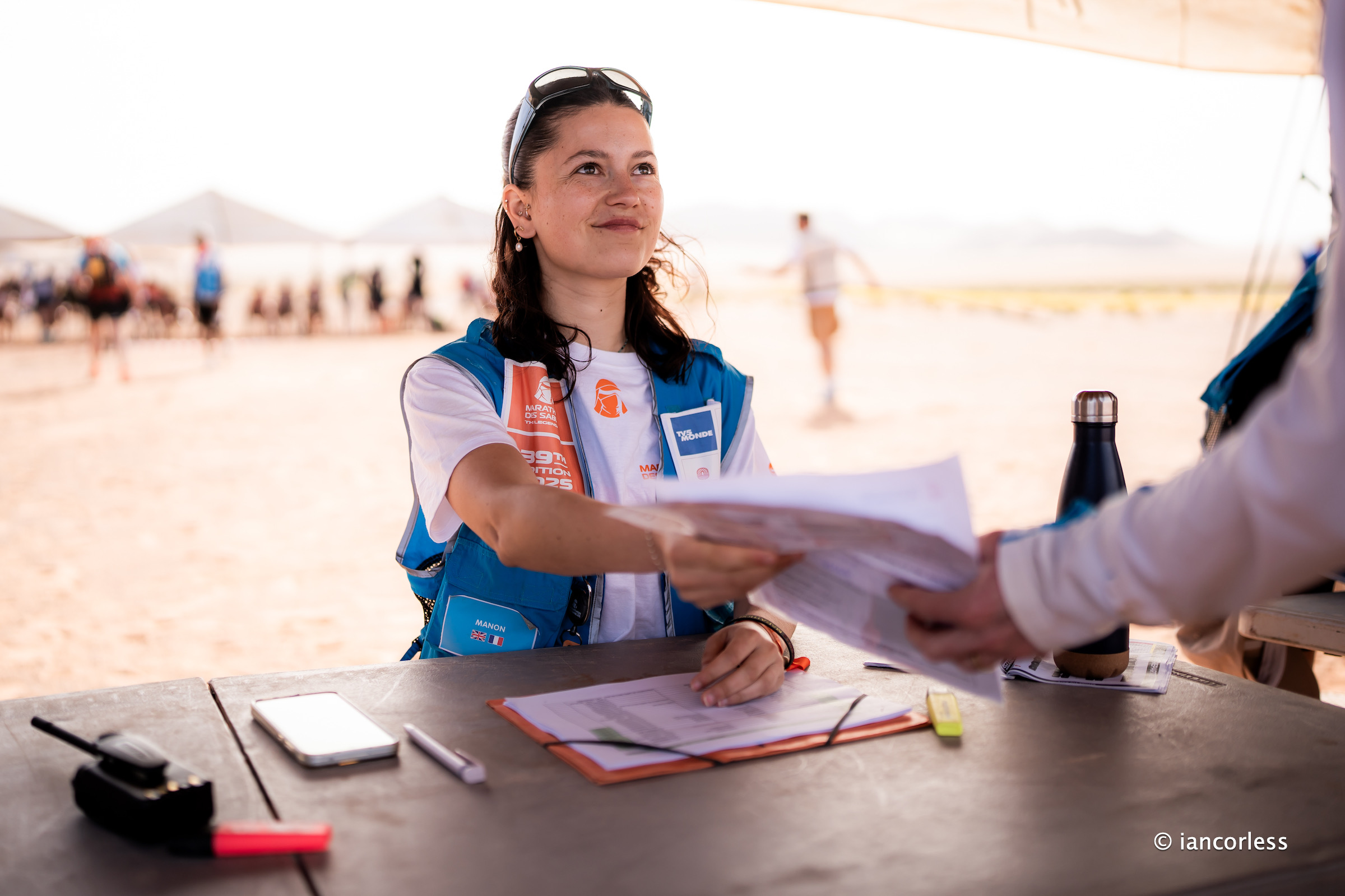
Photo by Ian Corless

Your passport needs to be valid. It sounds obvious, but it catches people out every year. Confirm your travel documents, bookings, and transfers. Know your plan from departure to arrival.

The goal is simple: remove every possible source of stress before you leave.

Travel Smart

Wear your race kit when you travel. That includes your shoes and gaiters.

Your race pack should go as carry-on, with all essential gear inside. The only items that should go in checked luggage are those that have to, like a knife or trekking poles.

If checked luggage gets delayed, you’ll still be able to race. That’s the mindset.

Protect Your Health

This part might feel extreme, but it’s important.

Avoid unnecessary contact with others. A cold or virus now could undo months of work. Skip handshakes, hugs, and shared food or drinks. A simple “Namaste” with hands together works just fine.

You’ve come too far to risk it.

Be Smart Before the Start

When you arrive in Morocco, keep things simple.

Avoid salads or anything that might carry risk. Stick to well-cooked, straightforward meals. This isn’t the time to experiment with local cuisine.
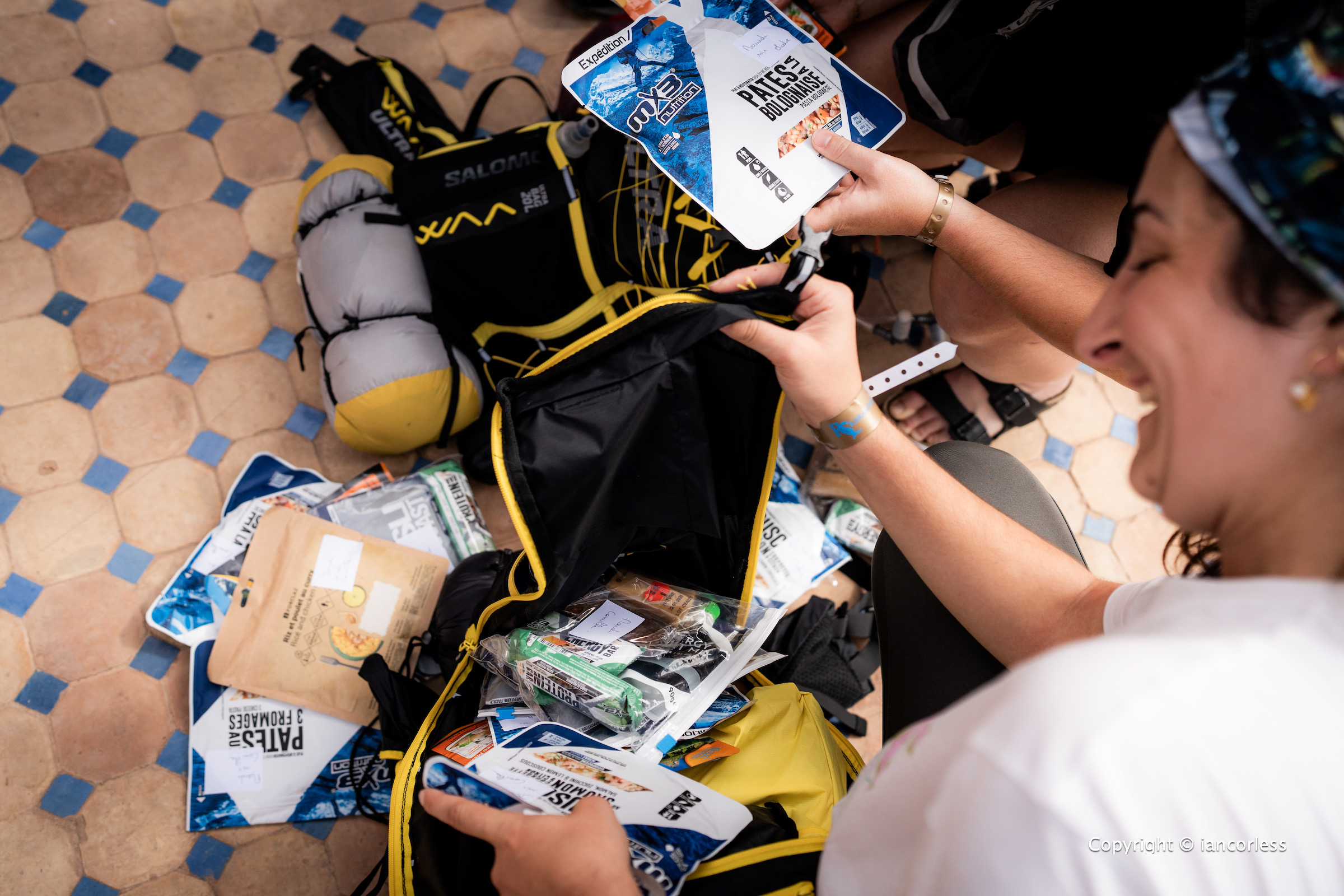
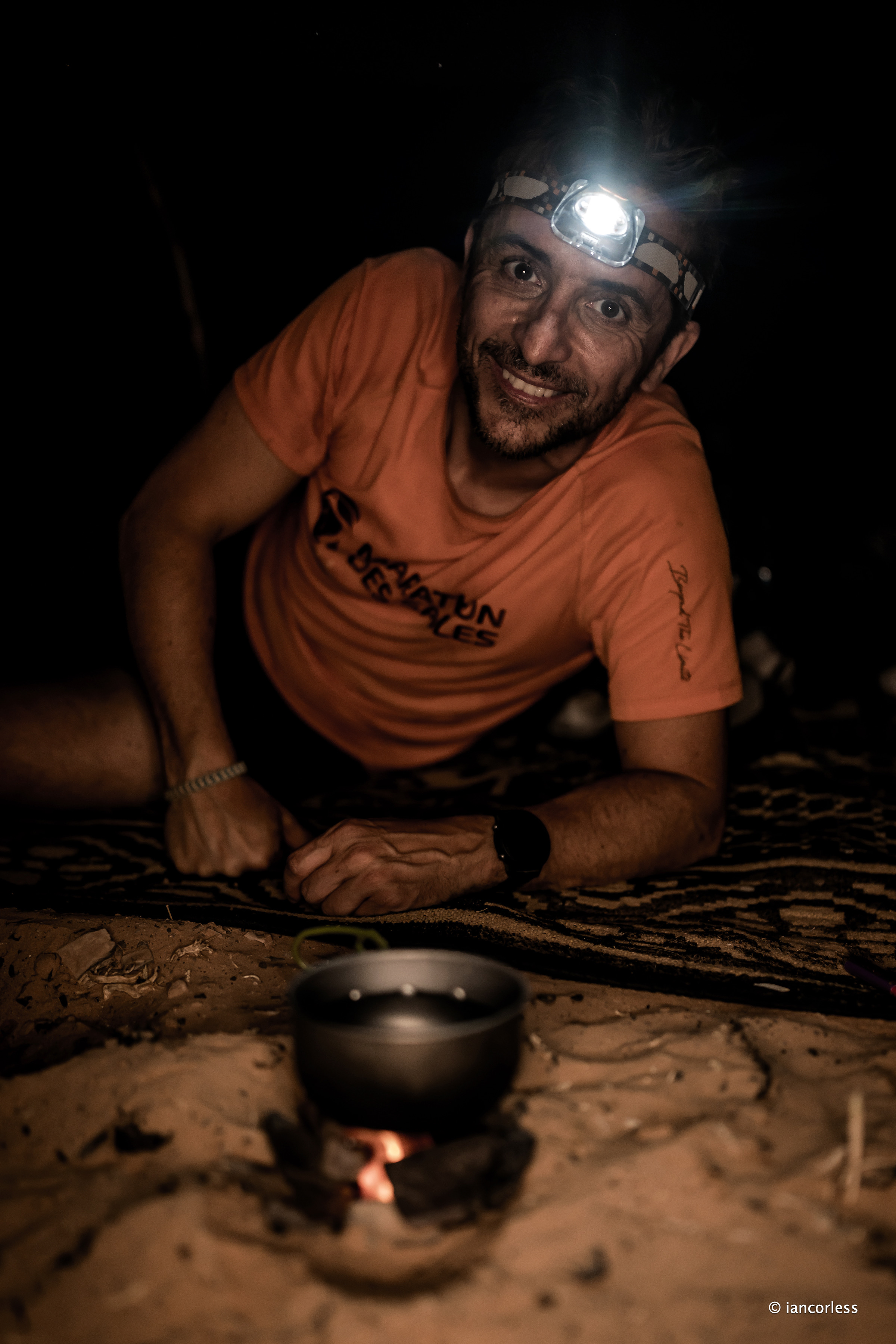
Bring your own food for travel and the days before the race. Remember, you’re self-sufficient even before the start. Having familiar food and drink helps you stay relaxed and in control.

Use the Bivouac to Your Advantage

Before admin, your luggage stays with you in the bivouac. Use this.

Bring spares. Extra layers. Small options that allow you to adjust based on real conditions. The desert can surprise you, and this is your chance to fine-tune your setup before committing fully.

Be Ready

Have a clear plan for admin. Know what’s required. Be organized.

Then shift your focus forward.

Stage 1 is coming.
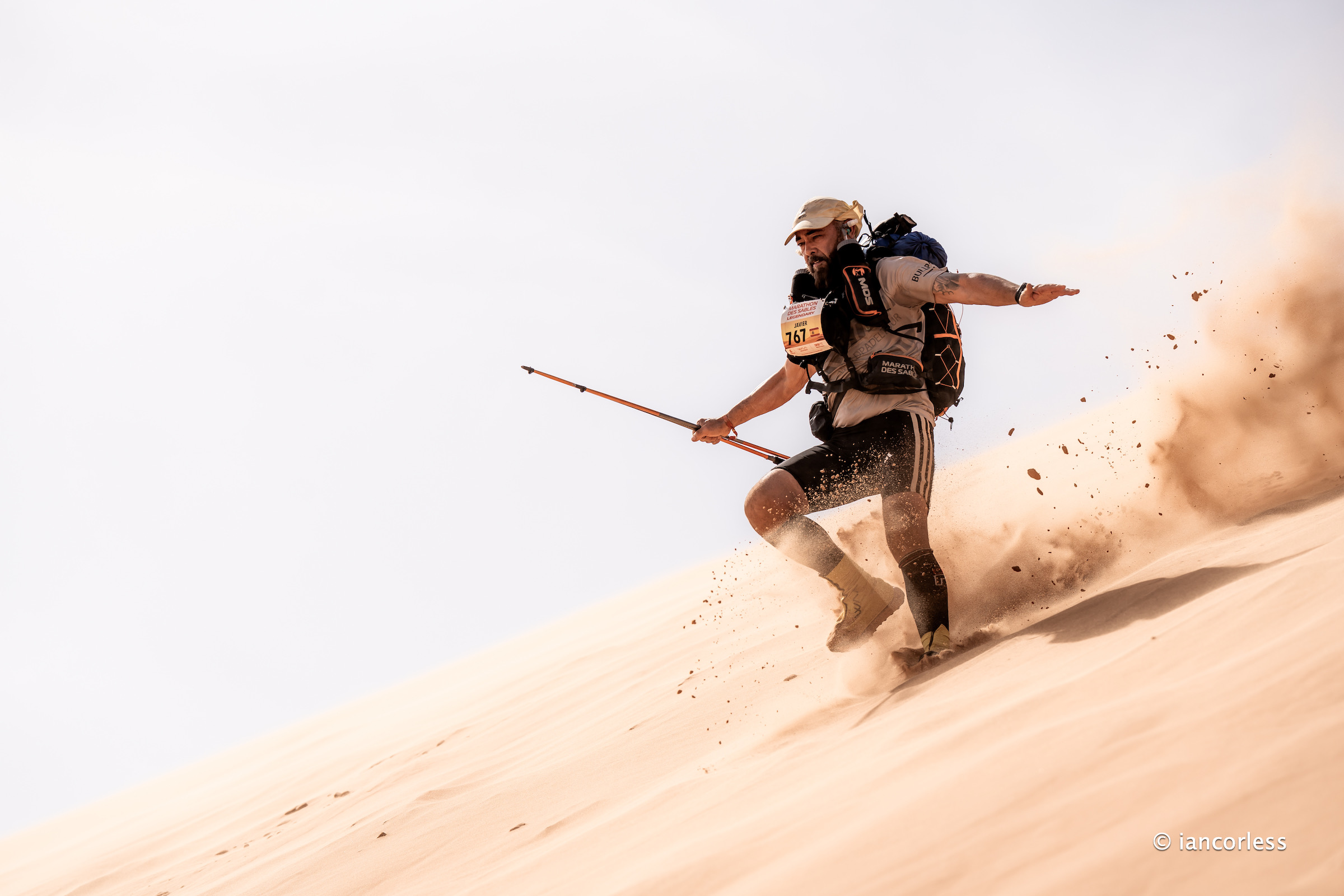
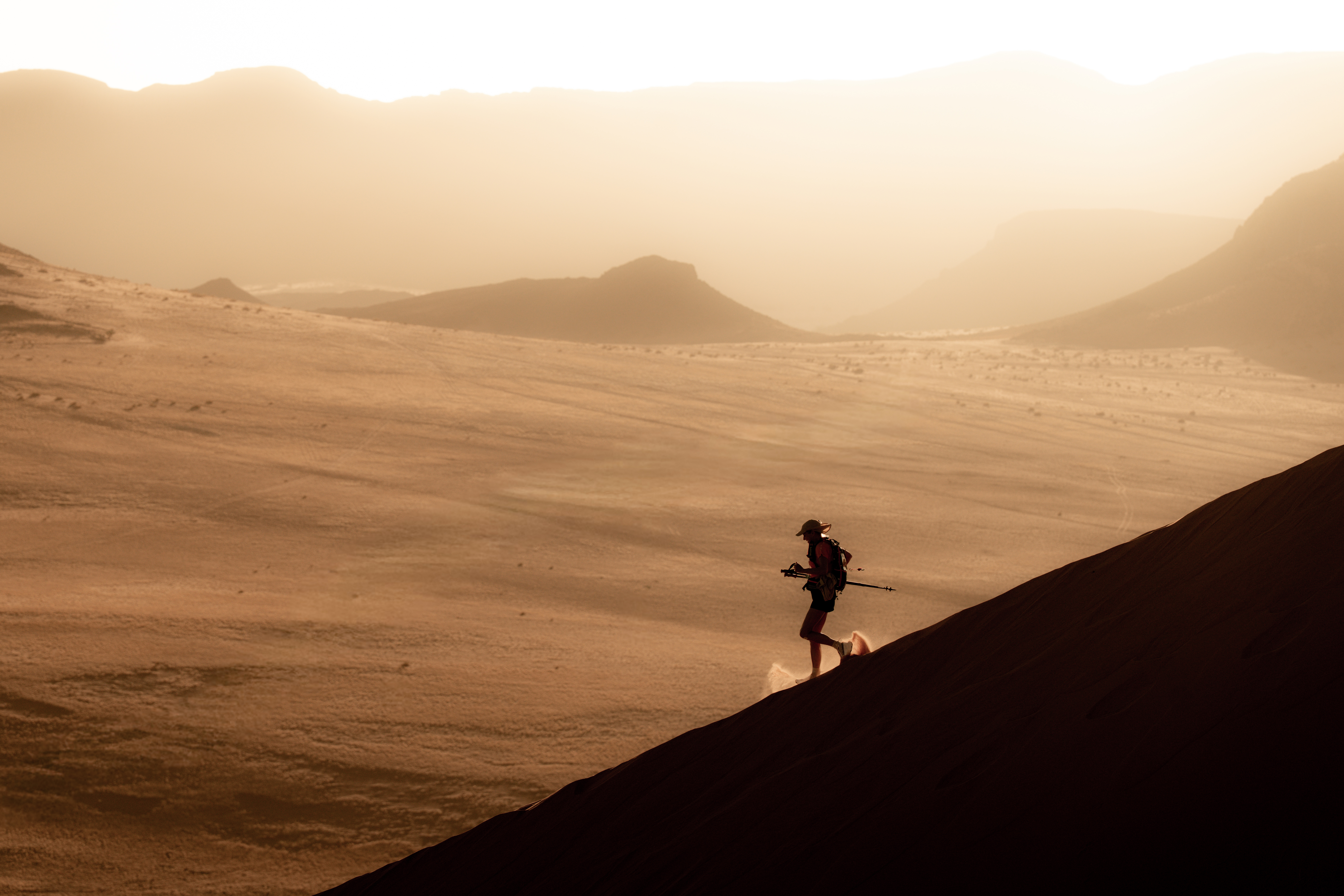
Photo by Ian Corless

Trust the Process

You’ve done the training. You’ve made the sacrifices. You’ve earned your place on that start line.

Now it’s about arriving calm, prepared, and ready to embrace what’s ahead.

Because this isn’t just a race.

It’s a journey. An experience that will stay with you long after the dust has settled.

Take a breath. Stay focused. And get ready for the adventure of a lifetime.
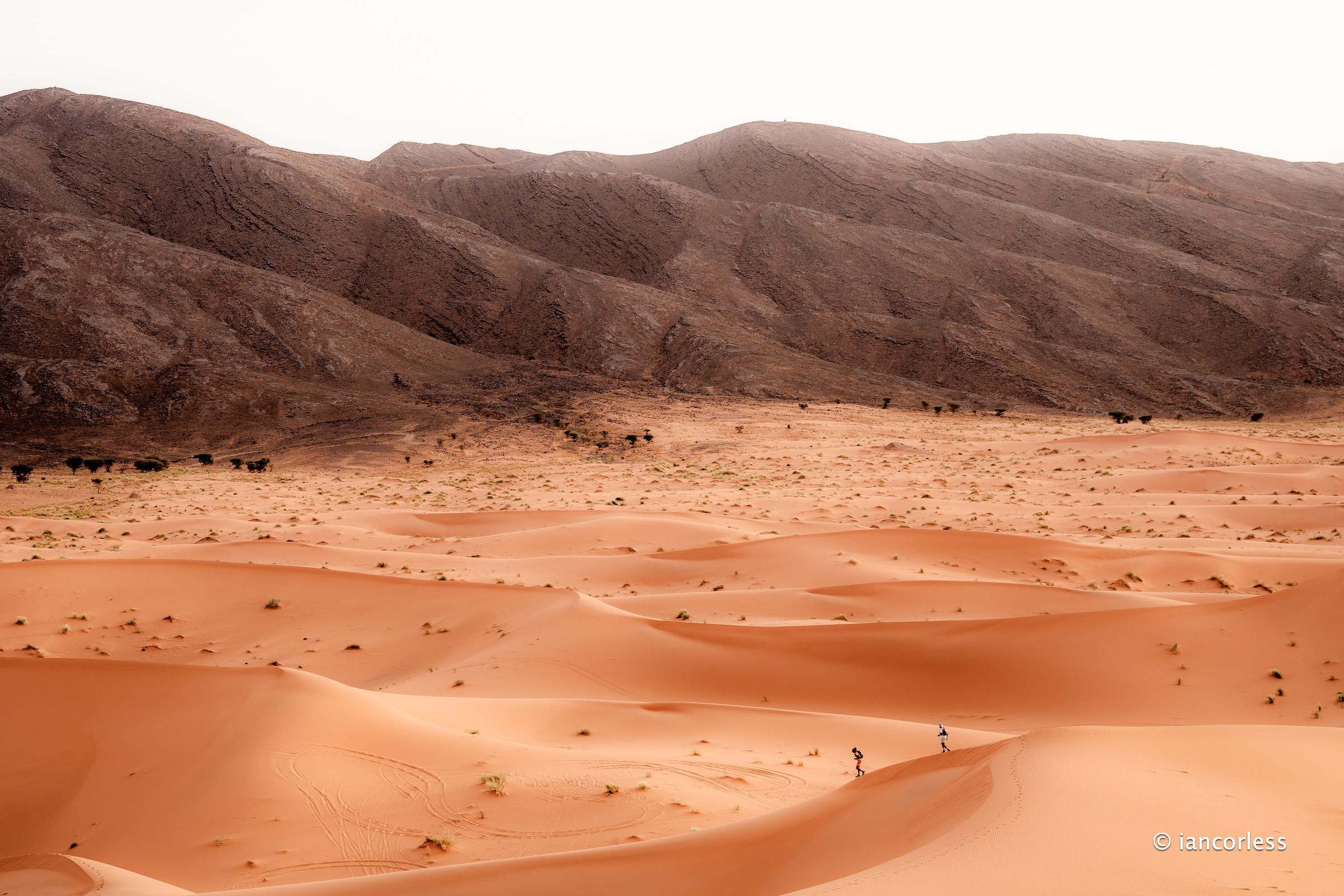
Photo by Ian Corless

MDS WEBSITE HERE

MDS Tour and MDS Clubs for 2026
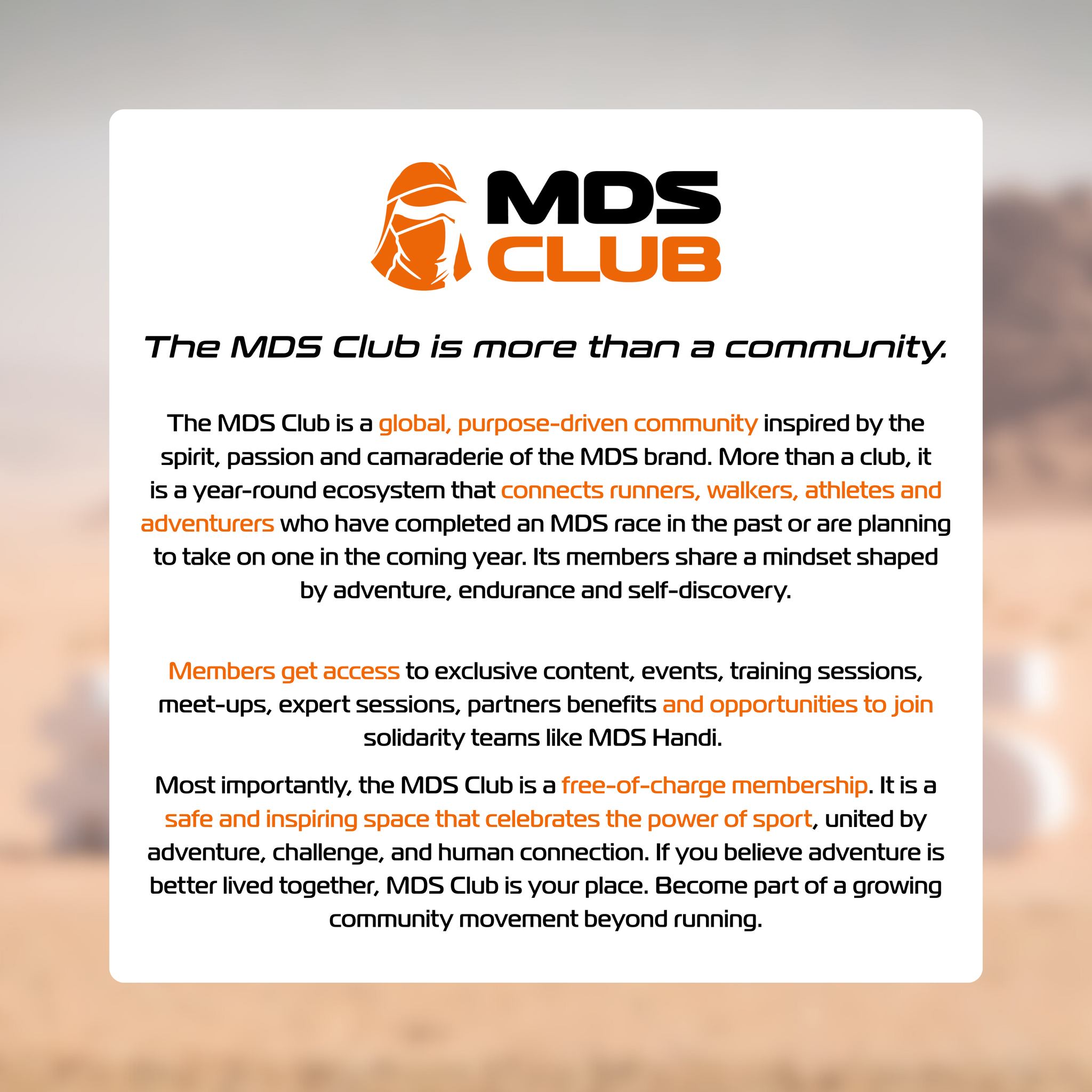
Join the MDS Clubs on HEYLO HERE.

The MDS Tour starts in January and moves from location to location, Register HERE

Follow Ian Corless

Instagram – @iancorlessphotography

Twitter – @talkultra

facebook.com/iancorlessphotography

Web – www.iancorless.com

Web – www.iancorlessphotography.com

MDS Legendary – 40th Edition To Feature Record Breaking Long Day!

Photo by Ian Corless

In 2026, the Marathon des Sables (MDS) reaches a milestone: its 40th “Legendary” edition. What better way to celebrate four decades of desert ultra-endurance than by rewriting the record books? Among the announcements already stirring excitement: the “long day” stage for 2026 will be extended to 100 km, making it the longest single stage ever in MDS history. This bold move not only raises the bar for what runners will face, but signals that the 40th edition aims to become a defining moment of the race’s legacy.

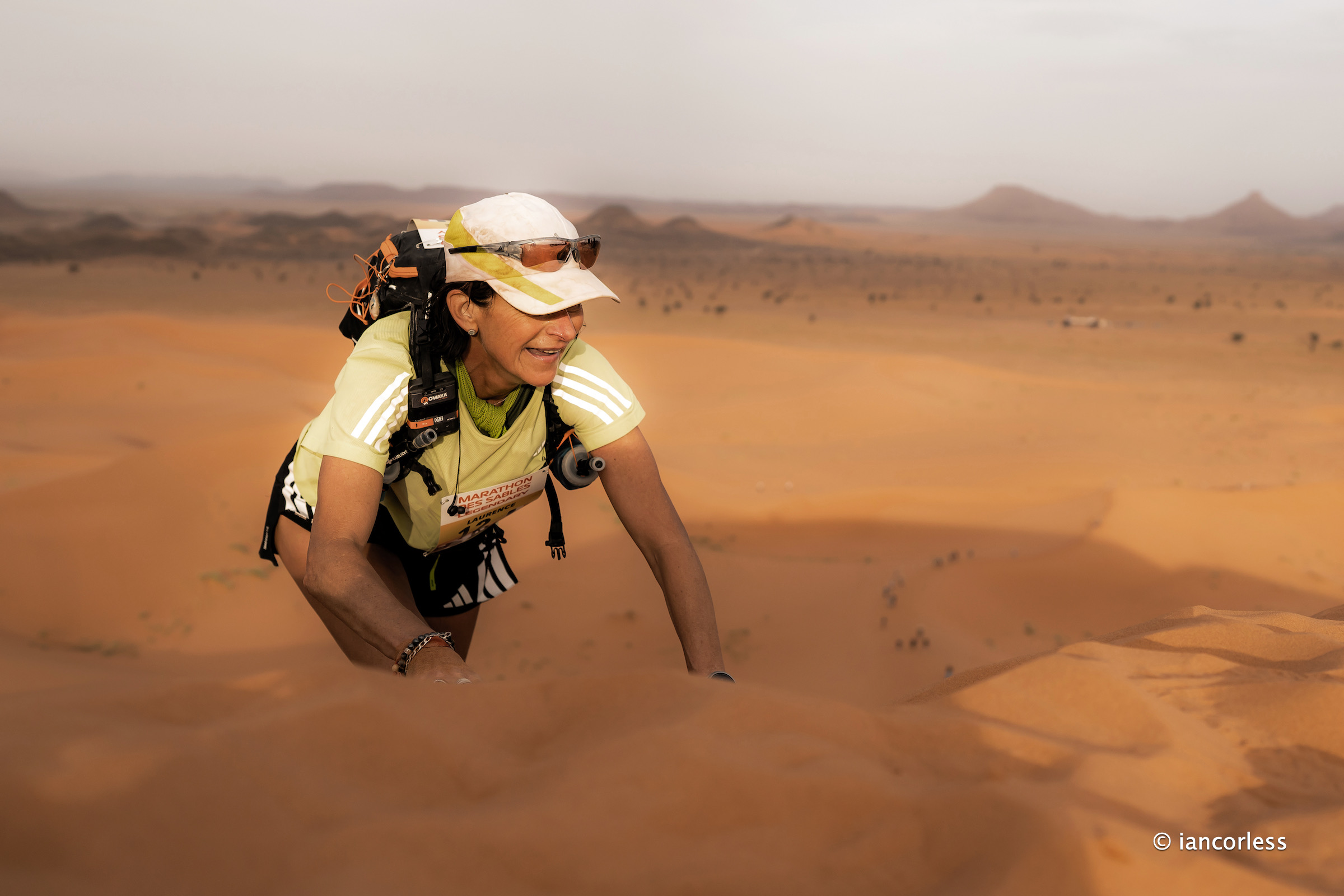
Laurence Klein, 3x MDS champion – Photo by Ian Corless

A Brief History:

The roots of the Marathon des Sables reach back to the daring vision of French promoter Patrick Bauer. In 1984, he traversed part of the Sahara on his own, over 350 km in 12 days, with no external support, an experiment in isolation and survival. Two years later, in 1986, the first official Marathon des Sables was held, with 23 participants tackling a self-supported desert crossing. The winners, Bernard Gaudin and Christiane Plumere making history.

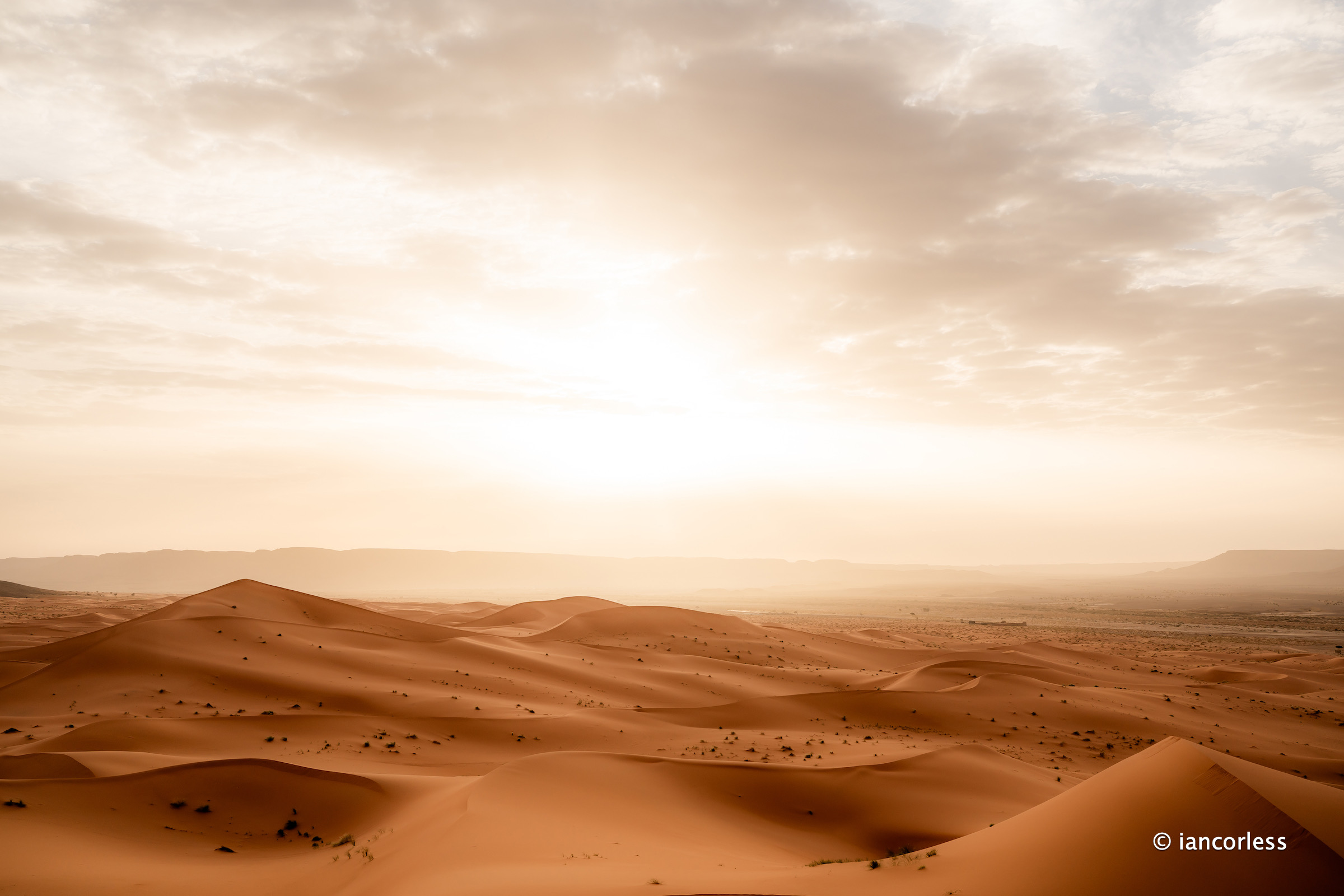
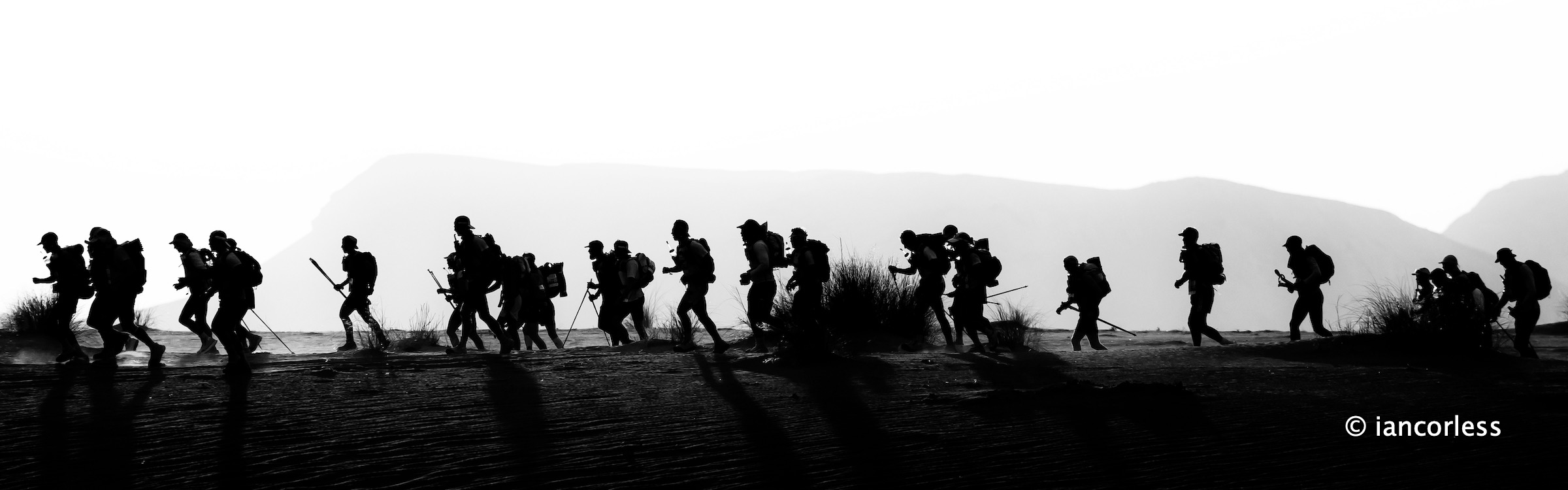
Over the years, MDS has grown from a niche extreme-race to one of the world’s most respected ultramarathons. Its signature format currently features around 250 km over 6-stages (7-days) in the Moroccan Sahara, with participants carrying their own supplies (food, sleeping gear, etc.) in full self-sufficiency – water and a place to sleep the only logistical supply. Terrain at The Legendary shifts from endless dunes, rocky plateaus, dried wadis, occasional mountains and shifting sands; daytime heat can often soar, while nighttime temperatures can drop sharply. 

Stunning vistas at The Legendary – Photo by Ian Corless

Notably, throughout its history, MDS Legendary has always included a stage that stretches well beyond the “single marathon” distance, 80–90 km is normal to test endurance in extremes. In 2009, there was a long-stage of 92km’s…. But a full 100 km in one go will top them all.

With a passing of time, MDS Legendary has also diversified; now offering shorter formats such as MDS 120 (70–120 km), the MDS Trek variant with lighter logistics, MDS RAID and for 2026, the MDS Ultra which for the first time offers a single-stage ultra of 100km’s or 100-miles to be undertaken with a 40-hour cut-off. But the heart of the MDS  remains firmly with The Legendary stage race. 

The 100 km “Long Day” and What It Means

MDS will feature a 100 km long day, a stage longer than anything ever attempted in MDS history. This is more than a symbolic gesture, it’s a structural change that forces participants to rethink pacing, supplies, strategy, and mindset. Will the 40th edition of MDS The Legendary be considered the hardest ever edition? With an expected total distance of 270km +/- the answer is yes!

Photo by Ian Corless

From a participant perspective, there will be some key considerations.

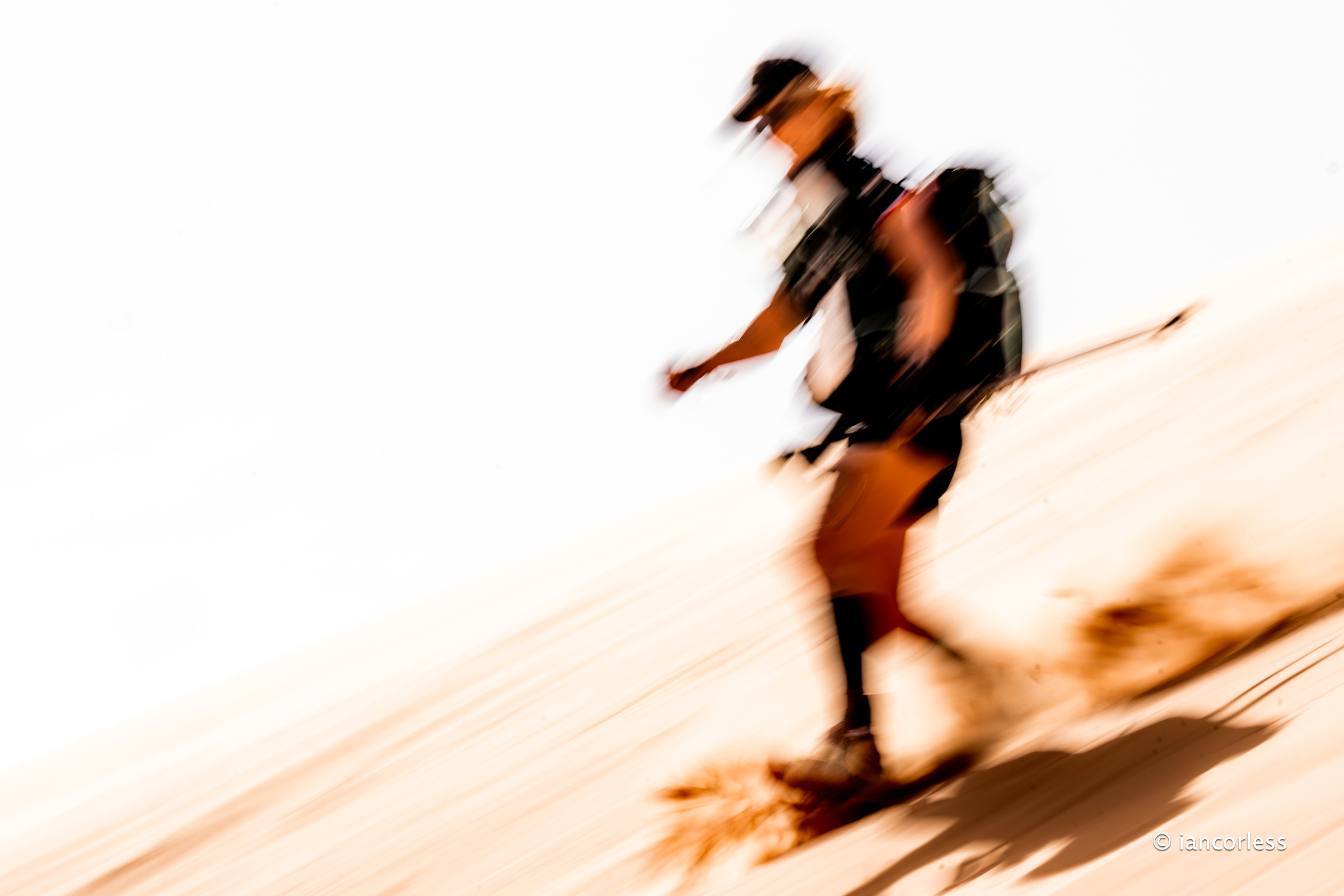
  • Pacing will be crucial with a delicate balance between enthusiasm and energy conservation. During the day, monitoring thermal stress will be crucial.
  • Pack weight will be crucial – the 40th edition of MDS Legendary, now more than ever, will require participants to have the lightest possible pack without breaking the strict rules and regulations.
  • Food – With a long day that is in real terms approximately 10 to 25% longer than usual, the need for extra calories and how those calories are consumed will become extra important.
  • The mental toll will have a huge impact, that will start now with the announcement of a 100km stage – just as you prepare equipment and training, set time aside to prepare the mind for the challenge ahead. This new length will push athletes into deeper zones of fatigue, testing resilience, self-talk, and mental fortitude.
  • Runners will traverse more varied landscapes, perhaps crossing more dunes, rocky flats, and most certainly everyone will require more night navigation.
  • Announcing the 100 km day well in advance gives aspirants time to rework prep plans – use this time effectively.
Food, as always, important at MDS – Photo by Ian Corless

Why 2026 Will Be a History-Making Edition

This is not just “another year” of MDS The Legendary, several factors are aligning to make the 40th edition uniquely compelling:

  • Milestone Significance – Forty years is a symbolic turning point. And by choosing to mark it with the toughest-ever stage, the organisers are intentionally raising the narrative: “Legendary by name, Legendary by reputation.”
  • New Records, New Legends – With no past precedent for a 100 km stage in MDS The Legendary, whoever finishes that leg (especially among the leaders) will enter the record books.
  • Attracting Ambition – Some ultra runners chase the “most difficult” challenge. A 100 km desert stage is a headline that will draw audacious minds and bodies, possibly pushing the field performance upward.
  • Legacy and Storytelling – In future retellings, the 2026 MDS The Legendary will be a pivotal point, some may say, the 40th edition was when MDS truly redefined itself. It’s the kind of turning point that historians of sport may hark back to.
  • Amplifying the Extremes – MDS has always lived on the edge: heat, sand, navigation, resource management. By stretching one day to 100 km, the extremity is amplified. The race becomes less about surviving the day, and more about mastering it.
  • The Longest Ever – With a long stage of 100km, the anticipated total distance for the 40th edition will be a record breaking 270km +/-.
Photo by Ian Corless

Challenges & Risks to Keep in Mind

No radical shift comes without risks and MDS The Legendary are required to balance risk against challenge. A 100km stage has long been discussed for this iconic stage race, it’s only right that the 40th edition will personify the Legendary tag with a landmark distance. However, even the world’s top ultra runners may falter under a 100 km leg in desert conditions. Managing attrition will be critical. The required pace will be, as usual, 3.5km per-hour. And of course, the MDS blue and orange jackets will be on-hand, more than ever, to facilitate everyone crossing the line.

100% support from the MDS team – Photo by Ian Corless

Some participants may feel disadvantaged if their prior prep or experience didn’t anticipate such a long stage, but, this is why this early announcement helps – fail to prepare, prepare to fail.

Perspective: How This Compares to Classic Ultra Benchmarks

To put 100 km in context: many stand-alone ultramarathons are in the 100 km to 100-mile range. But those are often supported events, with aid stations and crew support. In MDS The Legendary, with self-sufficiency, navigation demands, and desert extremes, layering a 100 km day is far harder than a flat 100k road ultra.

In prior MDS editions, long days of 80–90 km have already pushed runners to the brink, many cross the  nights and run long into another day – for 2026, this will be the ‘norm’ for nearly all the participants.

The 40th edition becomes not just “another chapter,” but a rewriting of what MDS can be.

Final Thoughts: A Legendary Promise

Photo by Ian Corless

The 2026 Marathon des Sables is setting the stage, literally and metaphorically for a landmark event. The 100 km long day announcement signals ambition, courage, and a willingness to push the narrative frontier of desert ultra-running. In addition, the implications  for the overall race distance being 270k +/- adds to the drama.

For participants, 2026 will demand a rethinking of training philosophies, gear choices, pacing strategies, and mental frameworks. For the sport, it may become a reference point for what is “next level” in multi-stage desert ultras. And for storytelling, it offers rich stories:

“Who conquered 100 km in the sands?”

“How 2026 changed MDS forever.”

Legendary by name, and with this edition, legendary by reputation in a whole new way.

Interested in a Marathon des Sables event? More information HERE

WAA apparel HERE

Follow Ian Corless

Instagram – @iancorlessphotography

Twitter – @talkultra

facebook.com/iancorlessphotography

Web – www.iancorless.com
Web – www.iancorlessphotography.com