
The 29th edition of the Sultan Marathon des Sables.
Arrival and registration for the race
all images ©iancorless.com – all rights reserved
No reproduction or sharing please.
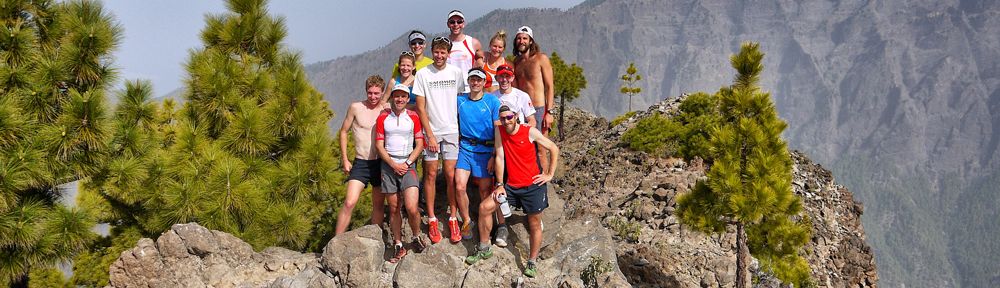
The 29th edition of the Sultan Marathon des Sables.
Arrival and registration for the race
all images ©iancorless.com – all rights reserved
No reproduction or sharing please.



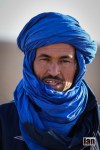
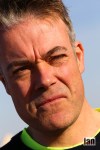
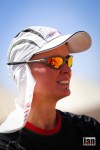
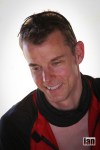

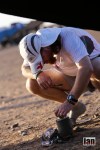
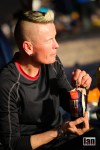





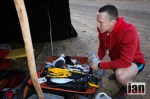


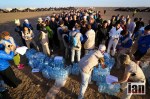
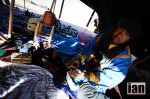
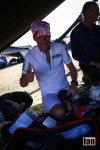
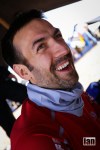
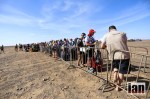














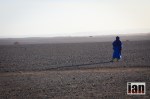
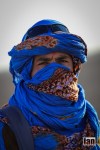
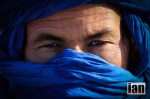
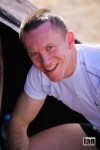
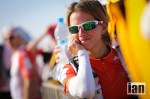
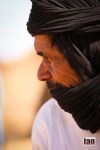
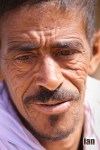
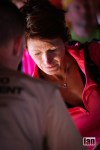
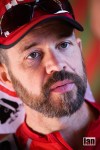
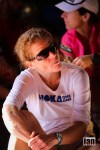
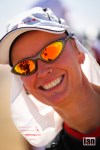
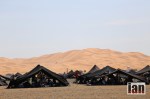







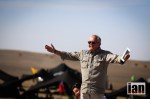
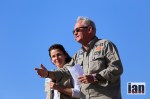


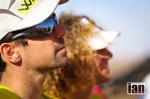

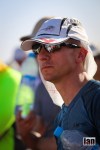
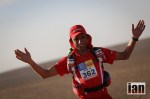


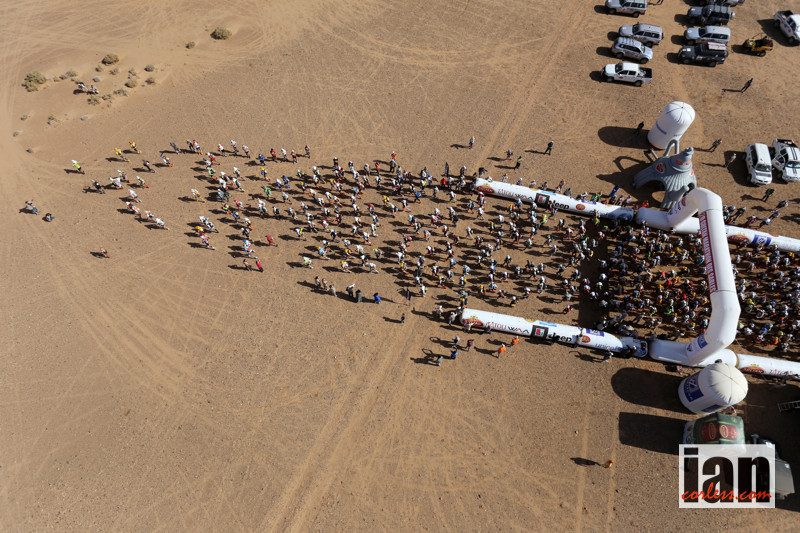
Al Aqra once again started from the gun and broke tradition. Instead of blowing up and loosing pace, he seemed to get faster and coverd the 82km stage in a crazy 7:14.Second place was taken by race leader, El Morabityok almost 30min later, 7:37:18. Sa placed 3rd in 7:40:19 and importantly from a UK perspective, Kendall continued his best MDS performance so far with 6th place, 8:04.
Kimballshowed her class and experience starting slowly and nce she had started to pull away the gap tinued to grow and she not only secured a stage winning performance but also (barring disaster) ran a race winning stage. Speaking after the stage, Kimball said that adjusting to the heqt in stages 1 to 3 was essential and that once settled she could run her own race on the 82km leg. Klein unfortunately seemed to have the demons of 2013 looming over head and never looked comfortable. Running to CP3 in the heqt of the day Klein looked distresed by the heat. Soldiering on, Klein finished the stage 5th in 12:06:48, almost 2hrs behind Kimballs 10:48:38.
Morrisey from Ireland finished 2nd in 11:36:10 and must be cursing the bqd luck of stage 1 when she was unwell. Pierron placed 3rd and Roux 4th.
Top Brit Julie Donovan finished a little further down the classification but still holds 5th overall.
GC with one stage to go:
Men:
El Morabity 16:53:56
Al Aqra 17:03:19
Ahanal 17:14:17
Kendall 5th 18:07:49
Ladies:
Kimball 24:11:08
Klein 25:11:00
Roux 25:38:08
Donovan 5th 28:16:19
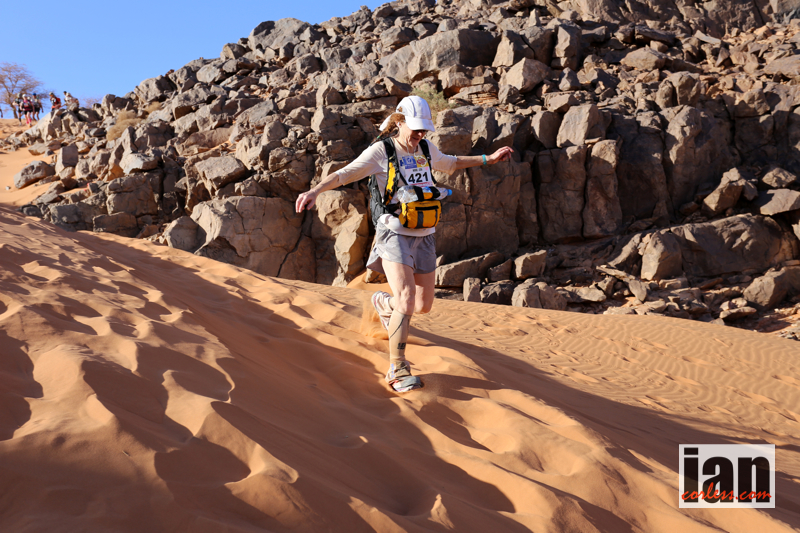
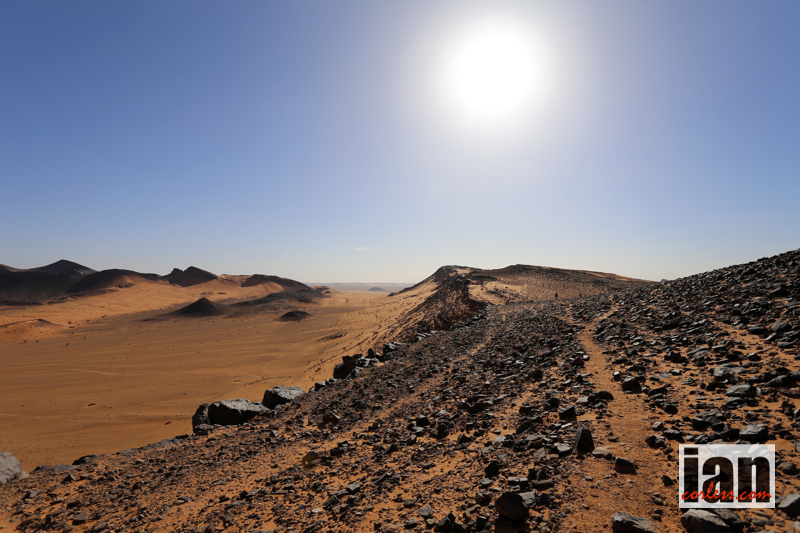
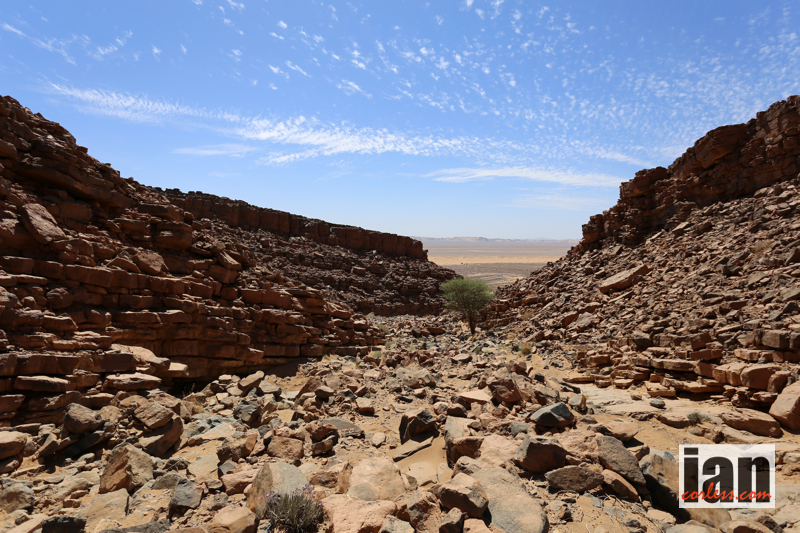
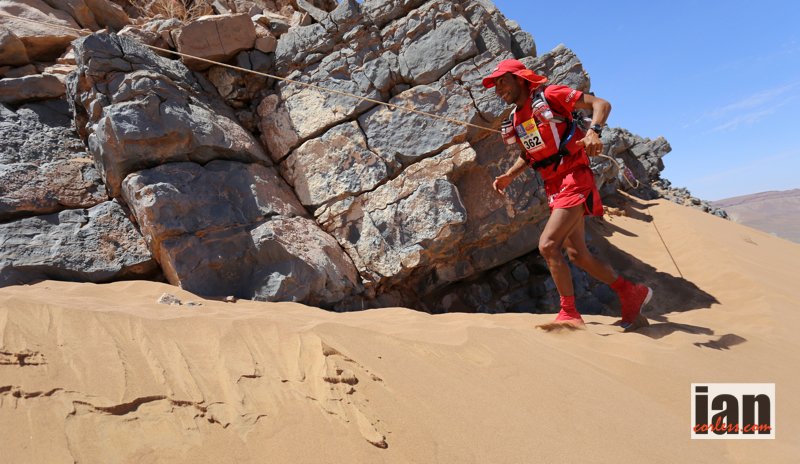
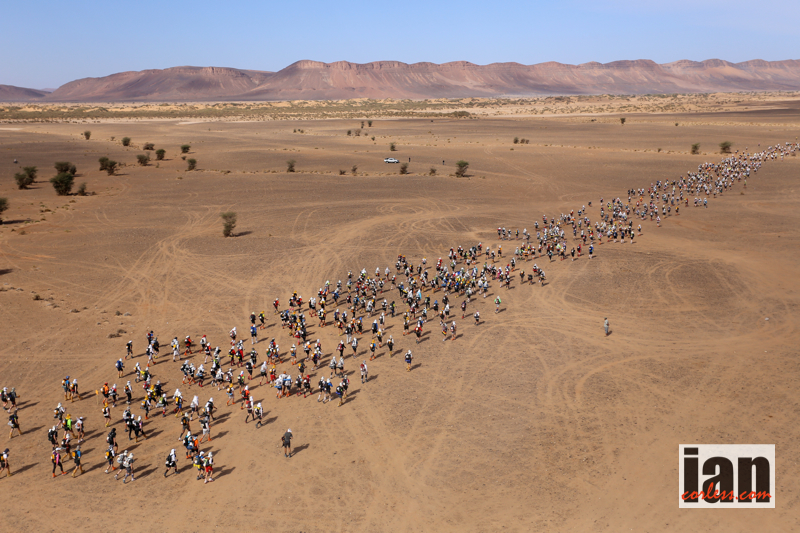
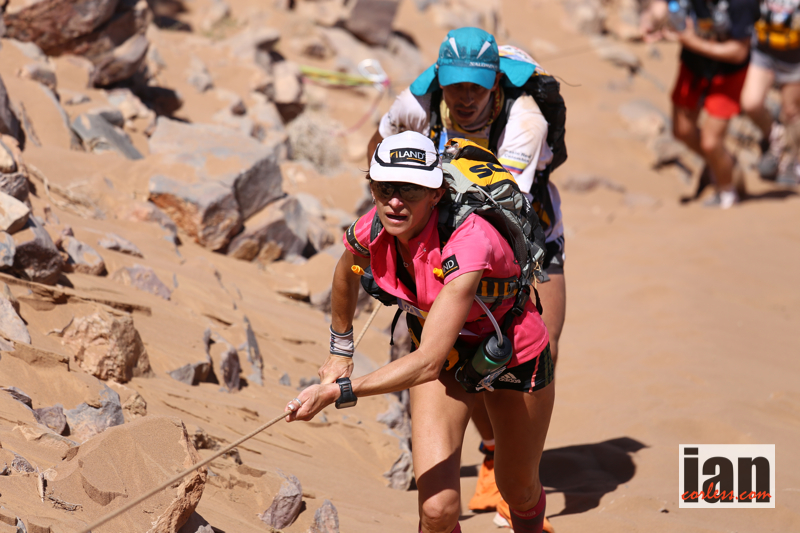
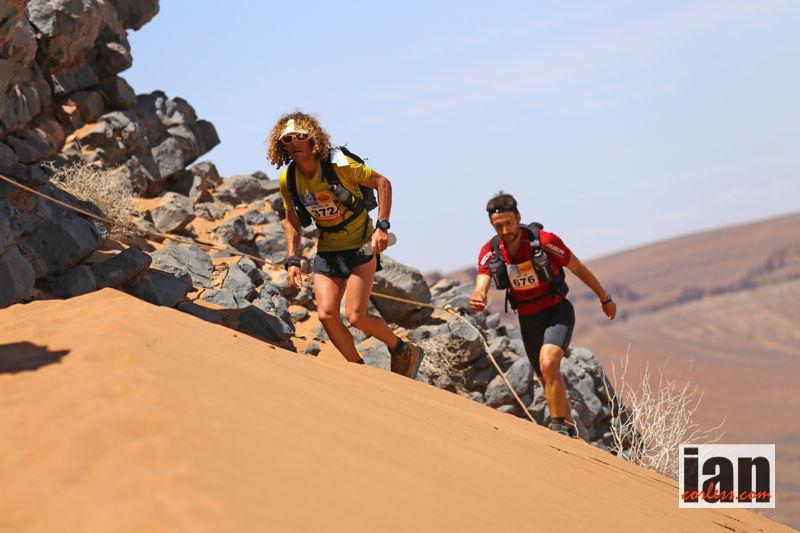
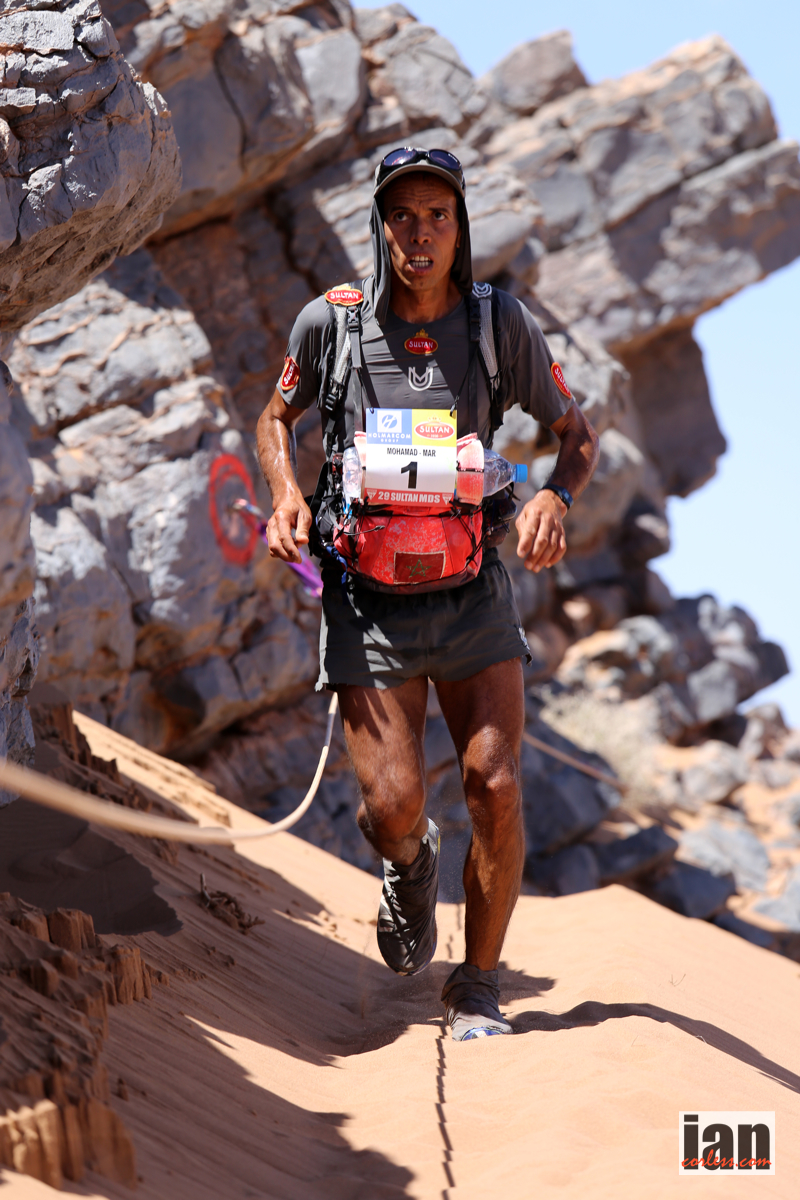
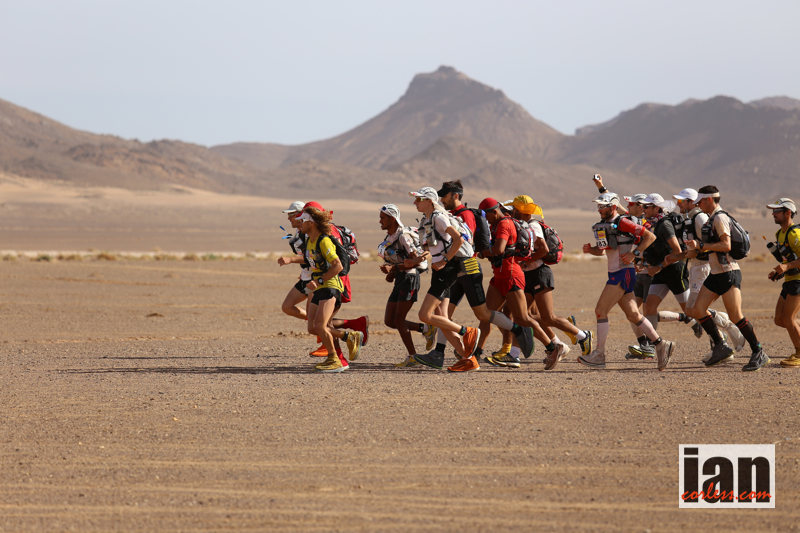


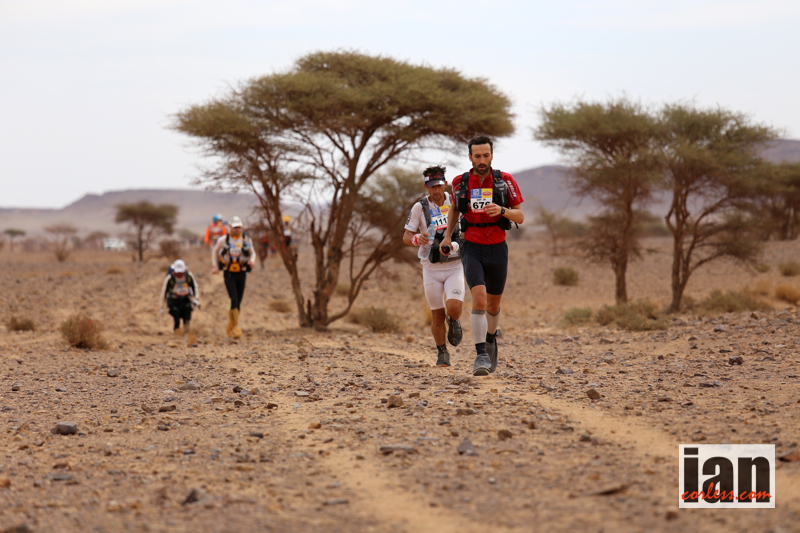

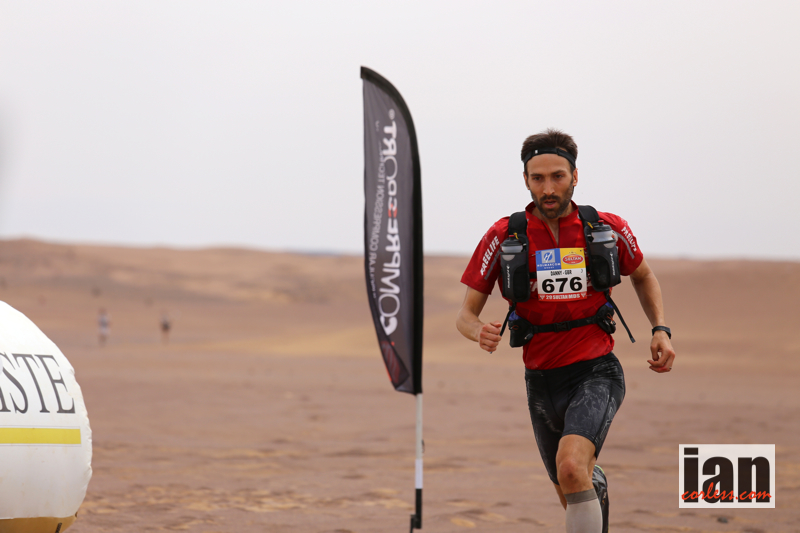
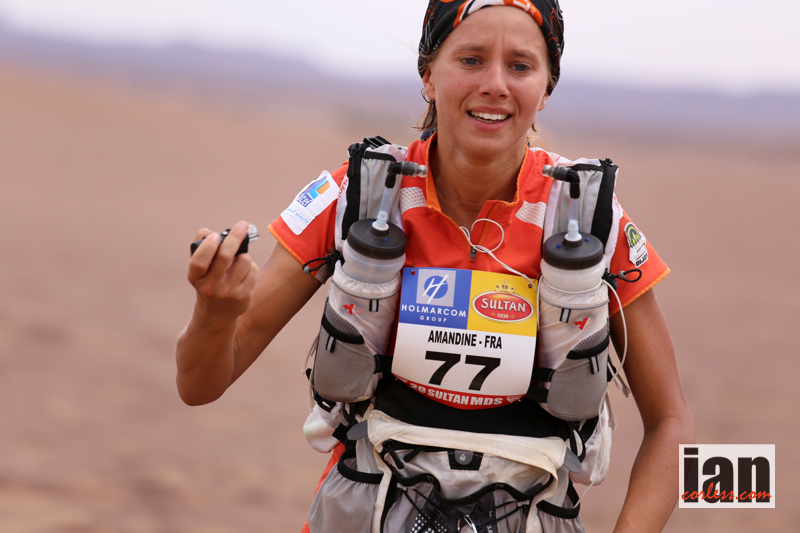
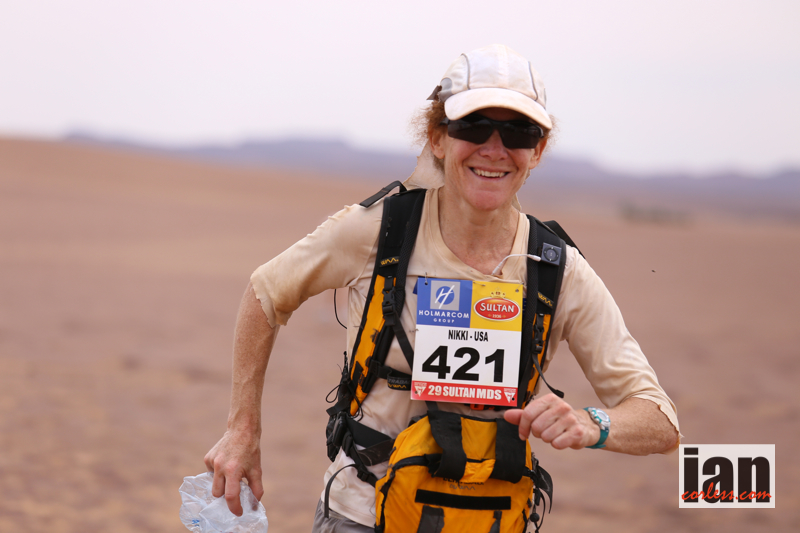
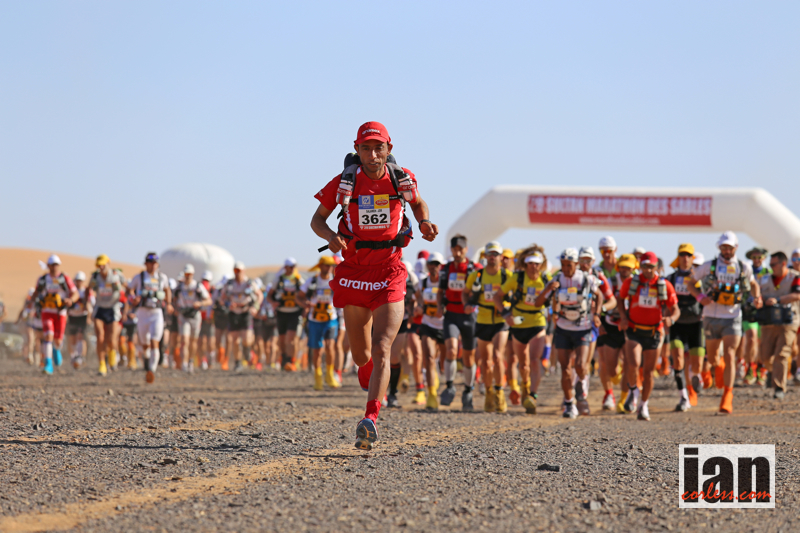
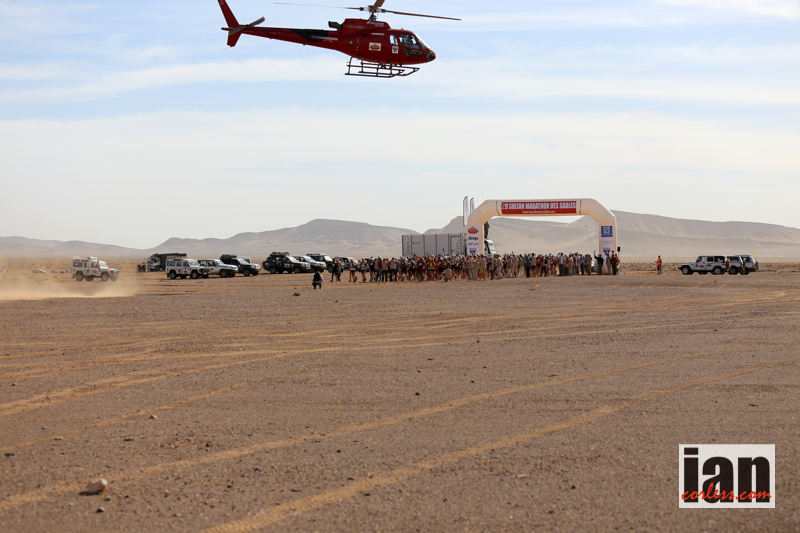
What a day for the Brits… Morrisey won the ladies race ahead of Roux and Kimball and Kendall placed 2nd behind a flying El Mouaziz.
The final official day of the 29th Marathon des Sables came to a conclusion today over a classic marathon distance in the sands of the Sahara. From the outside looking in, it would appear that the leading ladies and men were happy with the overall standings and raced pretty much together. However, Morrisey had something to prove… had she not had a terrible first day due to illness, we may well be looking at a different set of results for the ladies GC, however, as we all know, that is racing… Morrisey pushed the pace throughout and a little like Meek in 2013 stamped her authority on the final stage taking out the win in 4:35:23. Roux from France placed 2nd, 4:52:47 and Kimball and Klein placed 3rd and 4th respectively in times of 4:53:41 and 4:54:19. Kimball looked extremely happy with her foray into a miltiday race and Klein was respectful in defeat.
El Morabity and Al Aqra ran side by side throughout the final day, both happy with 1st and 2nd places. Ahansal trailed a little behind also confident his third place was secure. However, at the front of the race, Elmouaziz used his 2:06 marathon pace to set the sand alight and take a convincing stage victory in 3:11:22. I cannot help but think that he will be back, learning curve over and ready to push the front of the race in the 30th edition. Kendall pe race told me he was going to go for it and go for it he did. Not only did he need to maintain a 1 min lead over Solaris he also had the possibiliy to chase Sa for 4th. As the day unfolded, Sa matched Kendall, however, in the latter stages, Kendall pushed and placed 2nd on the stage with a stunning run, 3:22:26 and Sa finished less than 1 min later in 3:23:12.
El Morabity, Al Aqra and Ahansal placed 5th, 6th and 7th confident that the GC would nt change.
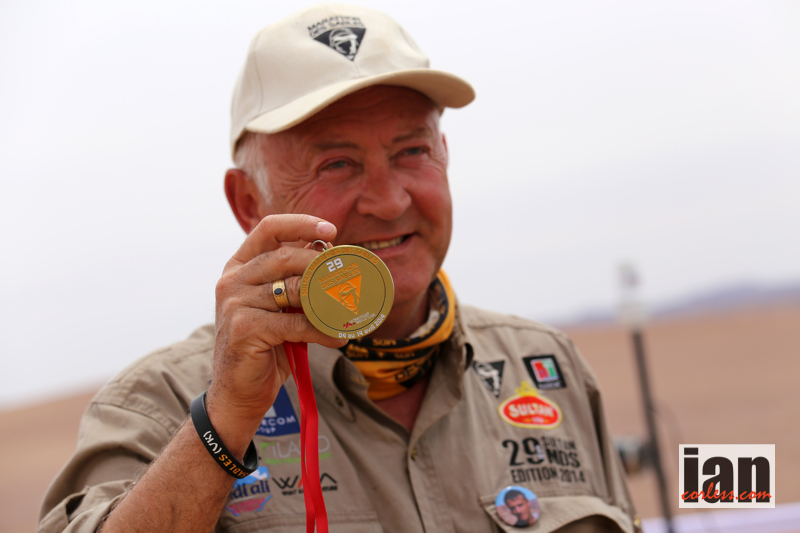
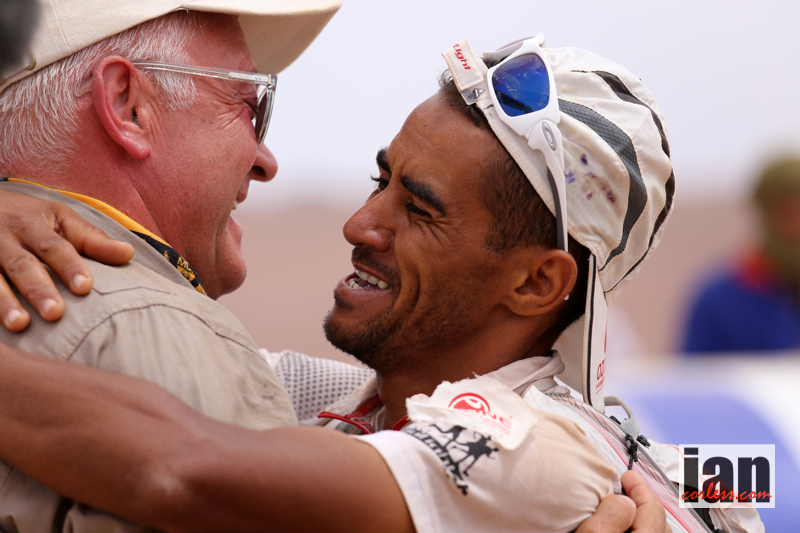
The 29th MDS has been a tough and hot race… the hardest; maybe. Each and every runner, first to last achieved something very special in Morocco this year. To see the joy, the tears, the passion and the pain released on the final finish line is a joy to behold. Medal in hand, memories to last forever. The 29th MDS is done. A short charity stage takes place on Saturday and the the parties begin… a hotel, a shower, clean beds and plenty of food.
The MDS is quite a race and no sooner will this race be over and preparations will begin for 2015; the 30th edition.
Men
Ladies
Great result for Brit ladies: 5th, 6th, 7th and 8th Donovan, Leakey, Morrisey and Young
Stage 3 MDS2014
Stage 3 of the 29th edition of the MDS wil be remembered for heat and dunes. It had both in abundance! With over 20km of dunes in a 37km stage, it was always going to be tough and it was.
Ahansal and Al Aqra pushed the pace in the early stages with El Moriaty playing it cool. However, El Moriaty pushed after cp1 and once again showed his impressive form. Equally, fast man and MDS novice is showing that dunes are not slowing his 2:06 marathon pace. The two, once again placed 1 and 2, 2:58:47 and 2:59:37. Ahansal had a better day and despite pushing hard early on placed 3rd in 3:00:46. Brit, Kendall purposely had an easier day and placed 9th in 3:20:32 keeping some powder dry for tomorrows long 82km day.
Kimball from the USA finally took the reigns in the ladies ra:ce and finished 4min clear of pre race favourite, Klein; 4:24:53 to 4:28:26
Roux is proving to be the new French darling wth another third place. It is all to plaf for tomorrow and I think Kimball will come into her own on a long and tough stage.
British interest took a jump with Donovan placing 7th and Morrisey and Young pipping her to the line.
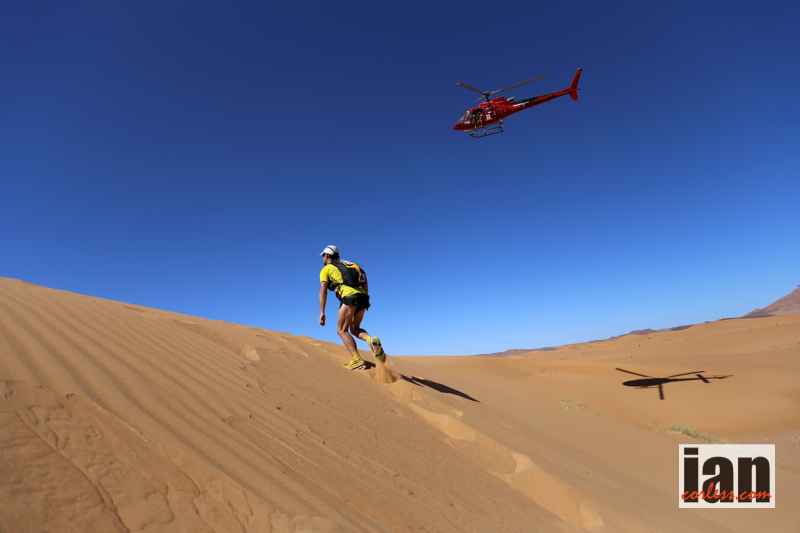
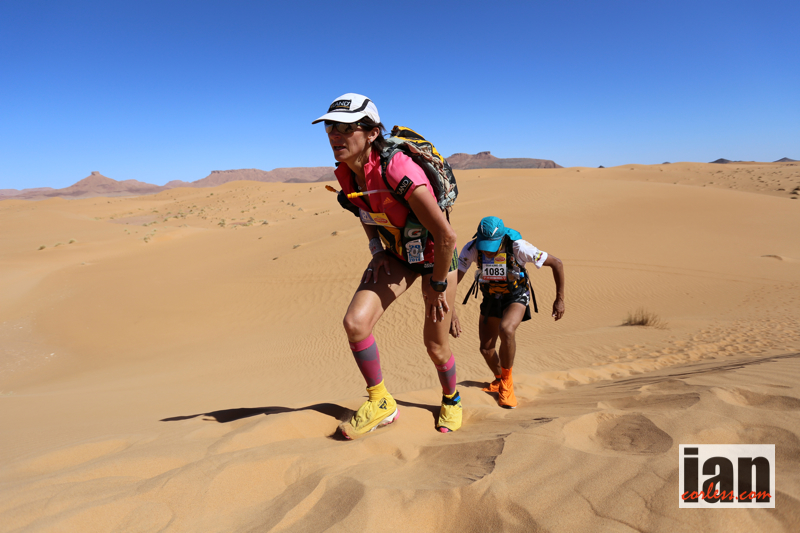
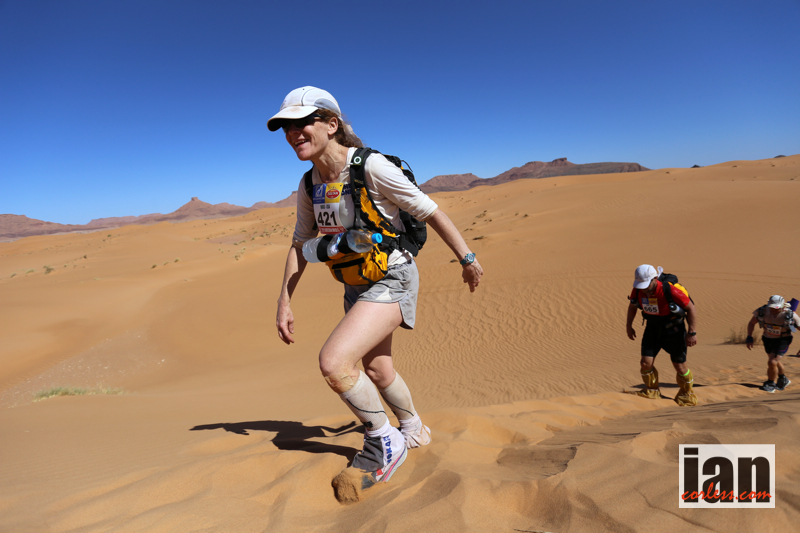
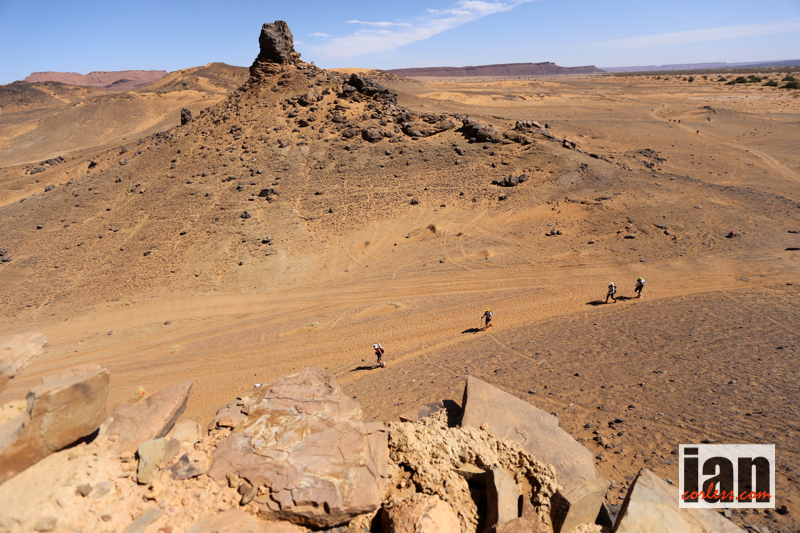
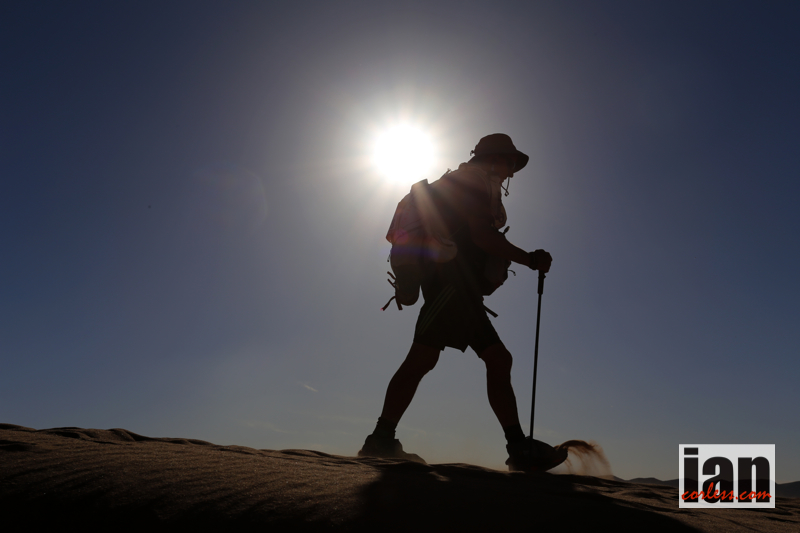
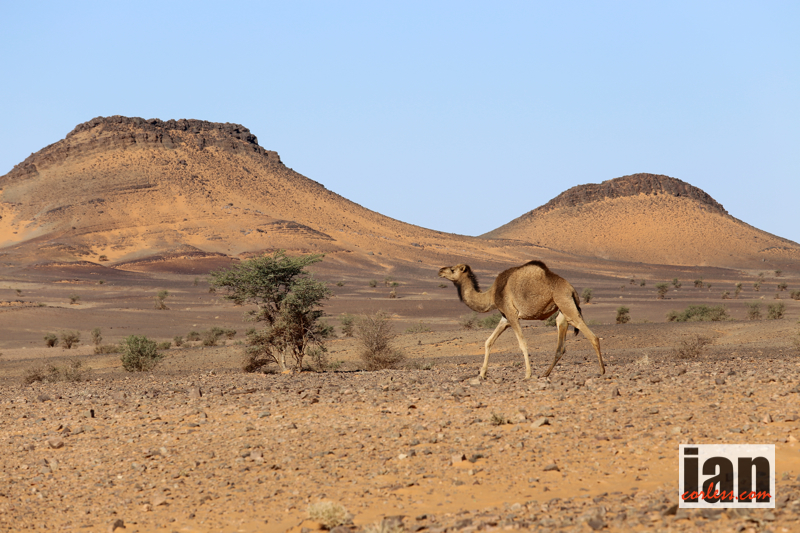
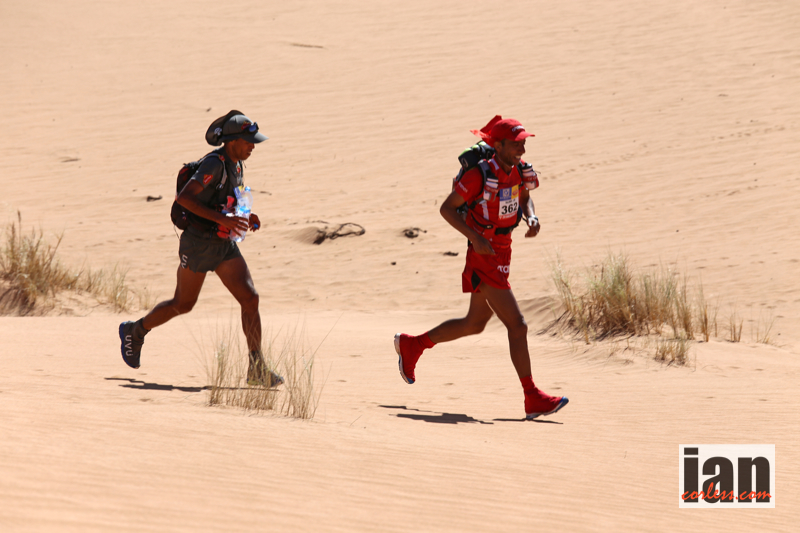
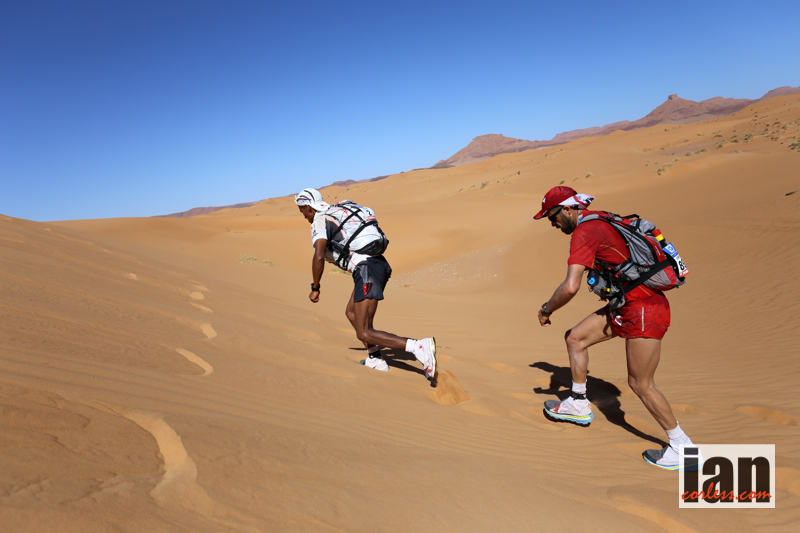
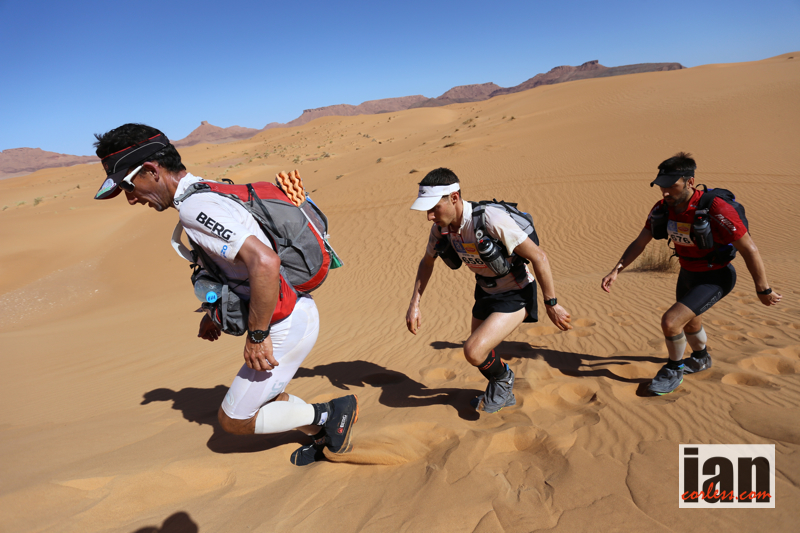
Al Aqra (previous MDS winner) went from the gun the morning and set a relentless pace that only El Moriaty could match. A third of the way into the stage they ran side by side but the pace took its toll, Al Aqra faded allowing a repeat victory in 3:13:43 for El Moriaty. Fast man, Elmouaziz but his 2:06 pace to good use and finished just over 1min back with Al Aqra taking 3rd in 3:21:11.
Ahansall could not take the pace today and finished 4th just 30 secs ahead of Brit, Danny Kendall in 3:23:05.
Klein once again provided a very familiar pattern for the ladies race with a solid stage win just 11min clear of Kimball in 4:30:08. Roux from France placed 3rd in 5:03 and Brit, Donovan placed 4th, 5:15:33.
The heat once again was relentless today with apparently 50deg recorded. The tough course and extreme temperqtures are impacting on all the racers with over 20 drop outs yesterday and more today. Stage 3 continues the format with high temperatures forecast and almost 30km of dunes….
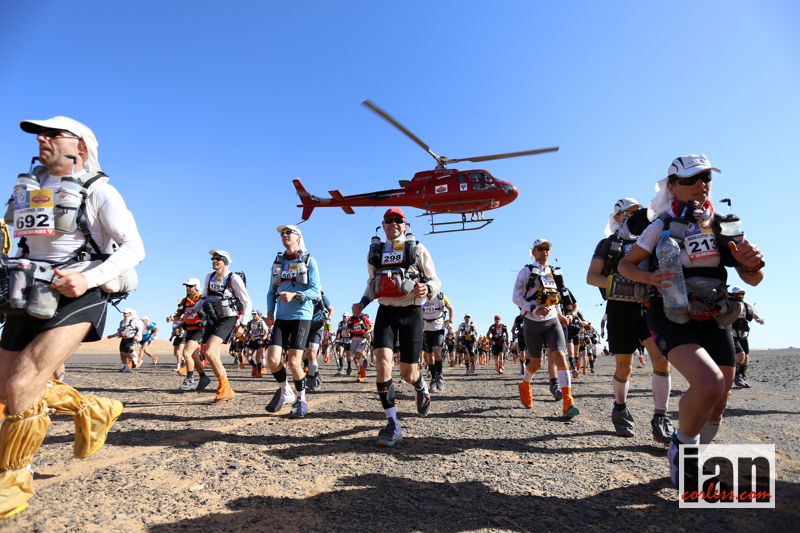
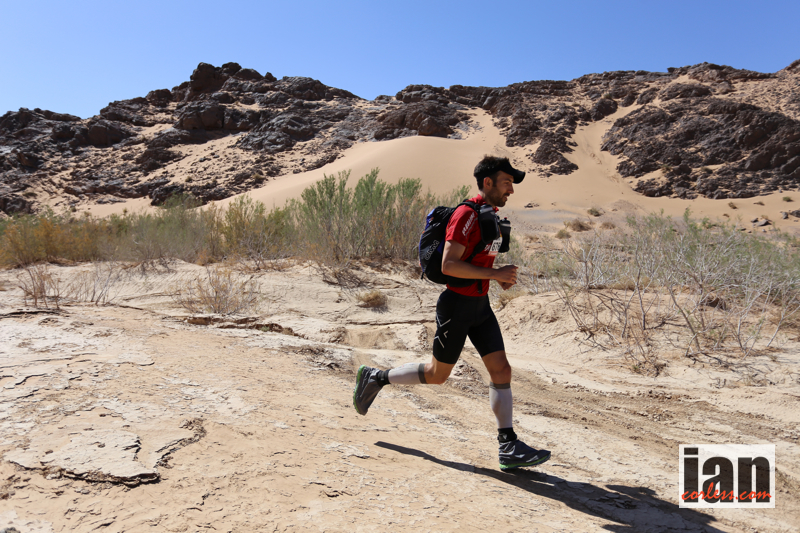
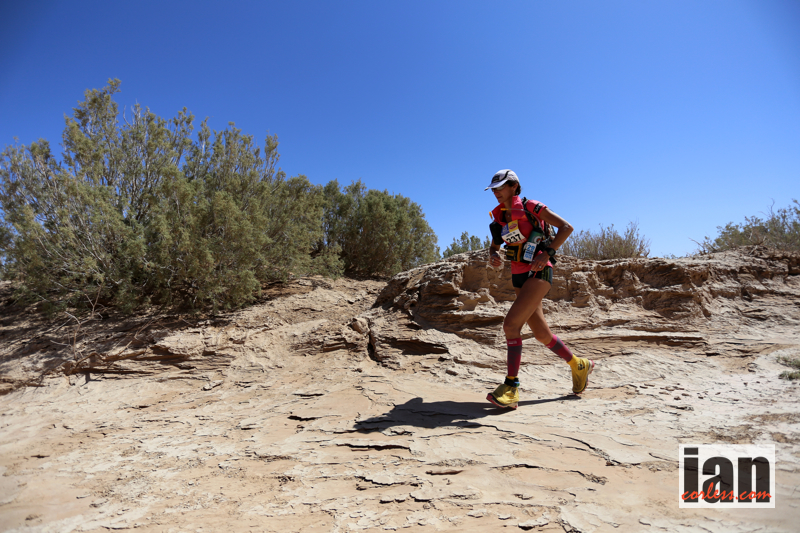
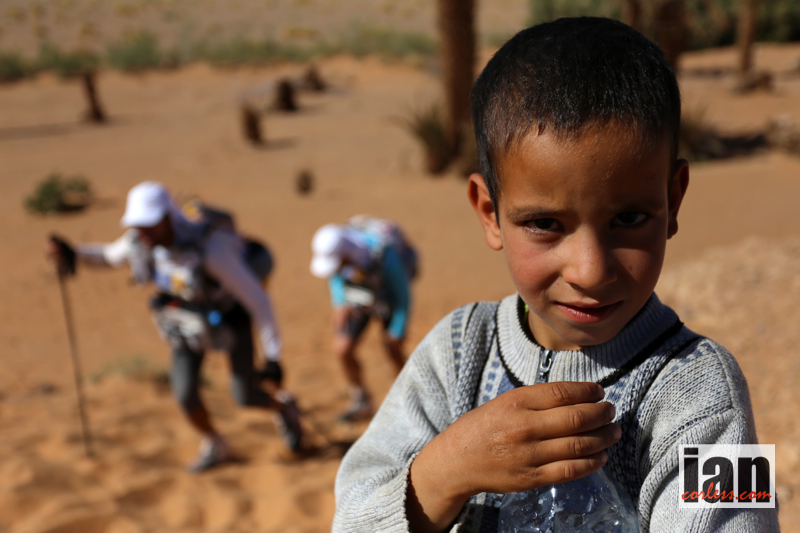
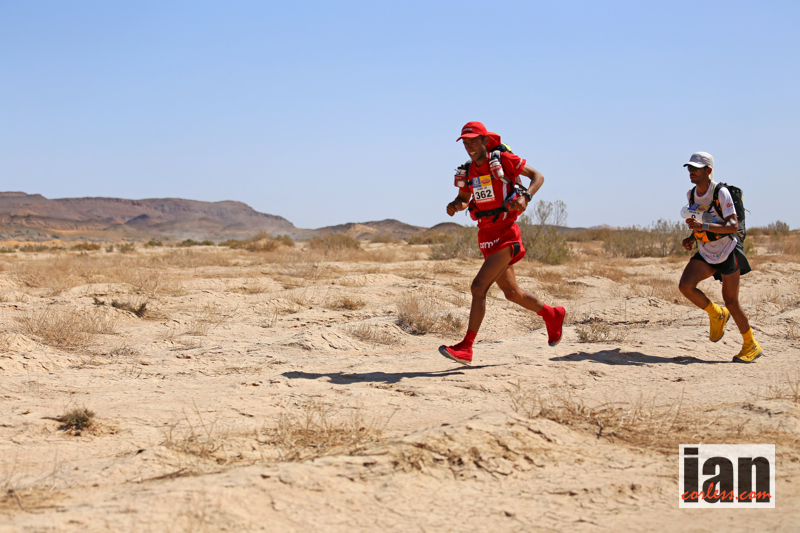
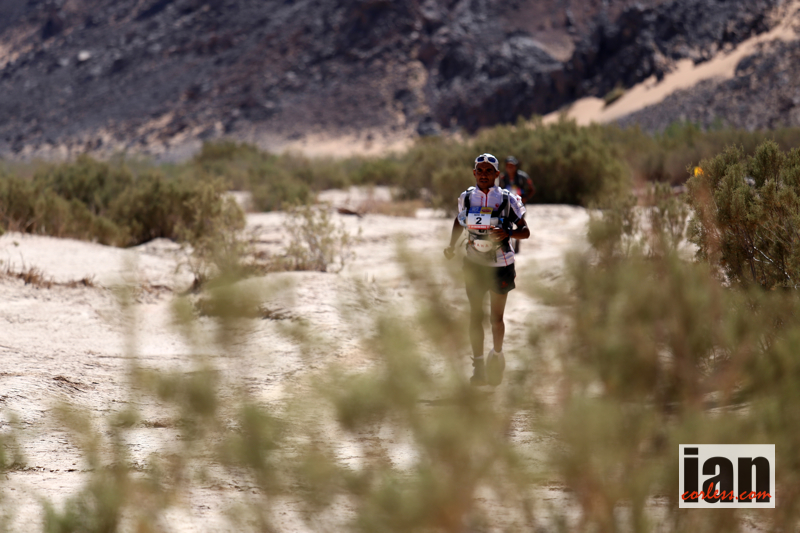
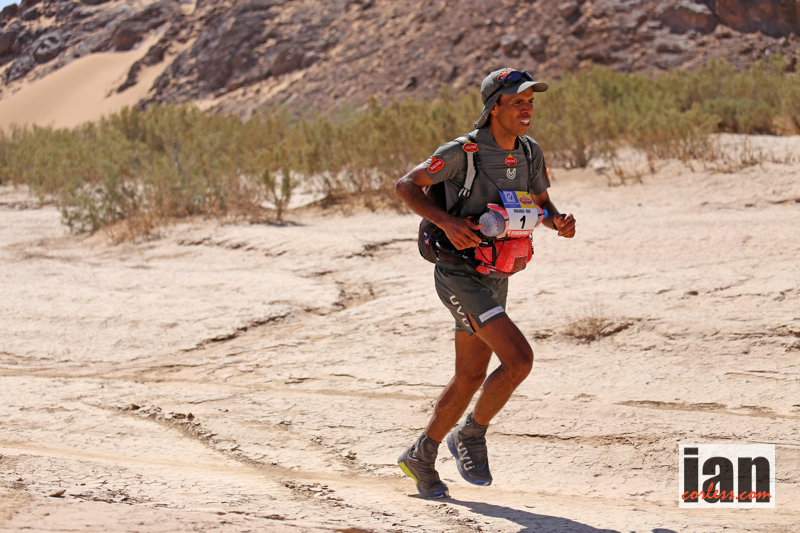
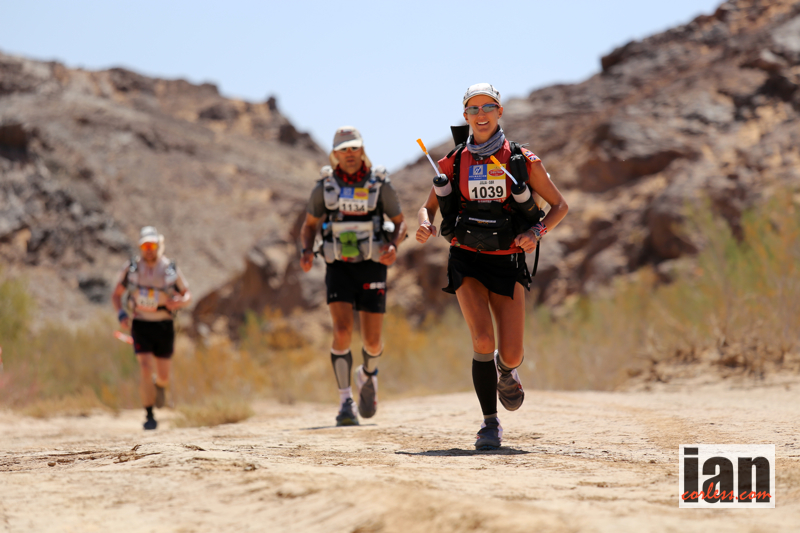
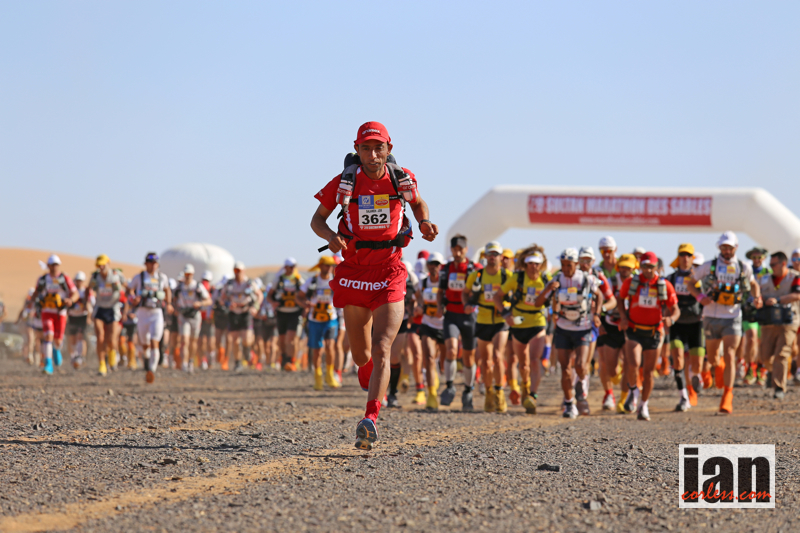
Day 1 was a tough and exciting day in the dunes of the Sahara. Arguably one of the toughest first days on record. The sand was relentless as was the heat… mid 40s.
Rachid El Moriaty and Mohamad Ahansal used local knowledge to advantage and placed 1 and 2 on the day, 3:04:06 and 3:05:08 respectively.
2:06 marathon runner Elhouaziz used his speed to make up for navigation errors to place 3rd, 3:12:26.
Top Brit Danny Kendall, 10th in 2013 placed 5th in 3:19:40.
Laurence Klein used her experience and speed for a convincing stage victory over Nikki Kimball from the USA. However, Laurence does not look as relaxed as previous years, 4:05:37 and 4:16:33 respectively.
Julie Bryan from the USA was third 35min back and top Brit was Julie Donovan in 5th.
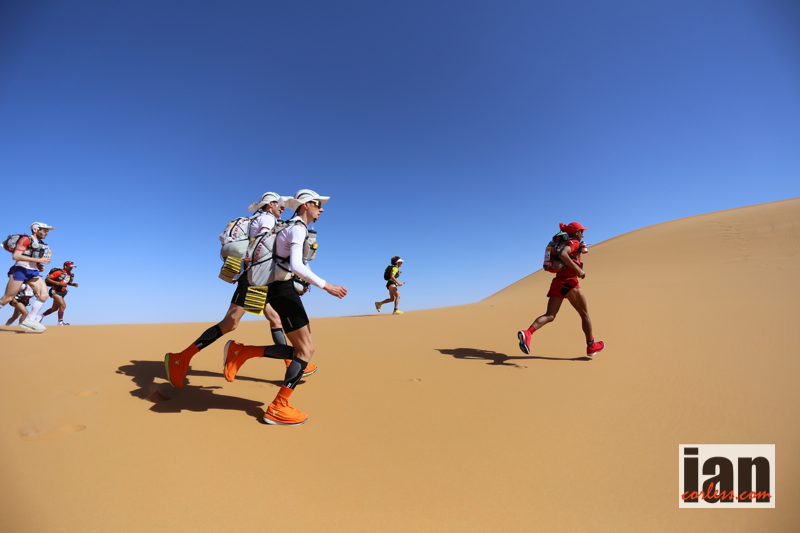


Laurence Klein (FRA) is a triple winner of the Marathon des Sables; 2007, 2011 and 2012. In 2013, Laurence returned to the Sahara looking for a 4th crown. Running a strong and dominant race, Laurence looked invincible, however, on the long-day she suffered from the heat and was forced to withdraw from the race with dehydration opening the door for Meghan Hicks (USA) to take the lead and win the 28th edition of the race.
We can all learn and here, Laurence provides her top-10 tips for the MDS.

1/ RUNNING IN THE SAND
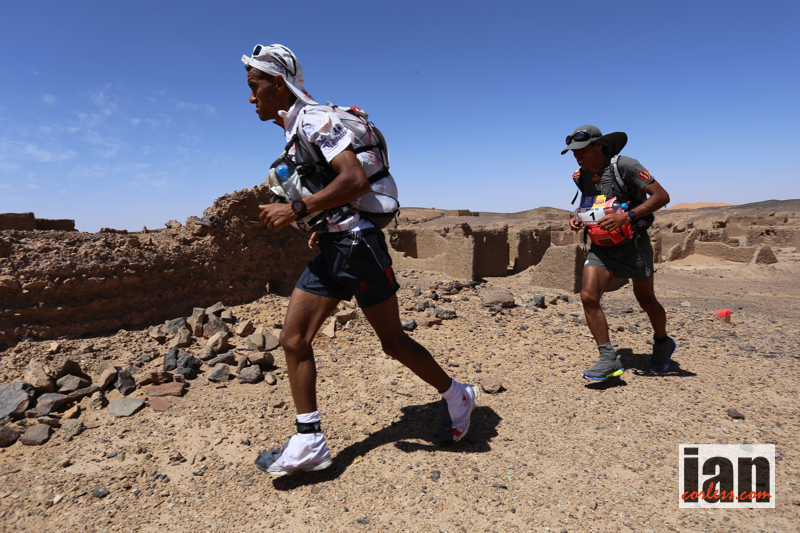
“Though sand is omnipresent along the Marathon des Sables course, you don’t just run in dunes. You also traverse stony zones, lunar landscapes and djebels. It’s important not to forget that detail in your preparation… To avoid getting tired, it’s also important to read the terrain you’re not used to. On large dunes for example, it’s best to run along the ridges and try to carve out your own wake so that you don’t sink into the sand as much. On the dunettes however, it’s easier to run in the tracks left by other competitors so as to use their footsteps like stairs. Finally, in the “fesh-fesh” (fine sand that looks like solid ground but behaves like soft mud), you really have to try to be as light on your feet as possible when you run.”
2/ AVOIDING BLISTERS
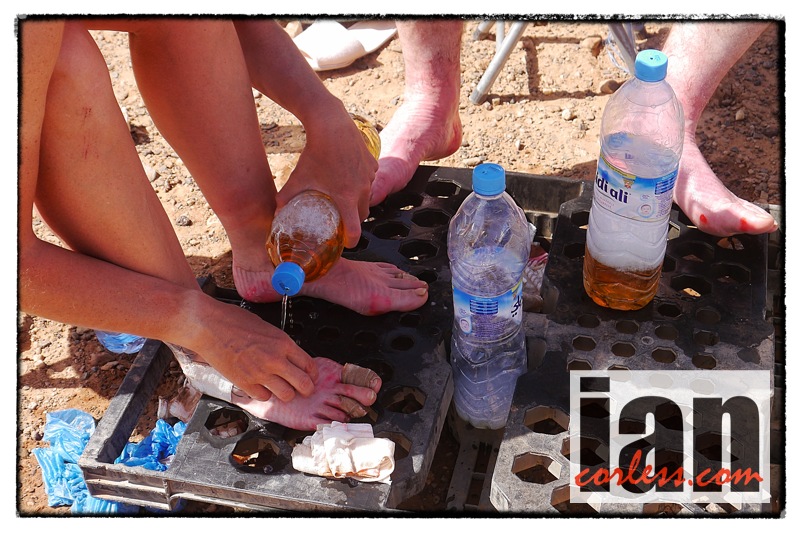
“Gaiters are essential in preventing sand from filtering through into your socks too much and causing large blisters. Those who are sensitive to them can also prepare their feet in the run- up to the event, by hardening them with special products or citric acid. On a personal level, I recommend choosing a suitable trail shoe, one or two sizes bigger than your usual town shoe, because feet tend to swell with the heat. Added to that, it goes without saying that when you have blisters, it immediately becomes a lot more painful to put your shoes back on with an additional layer of bandages if you’re already bordering on the limit of your shoe size.”
3 / HYDRATE REGULARLY
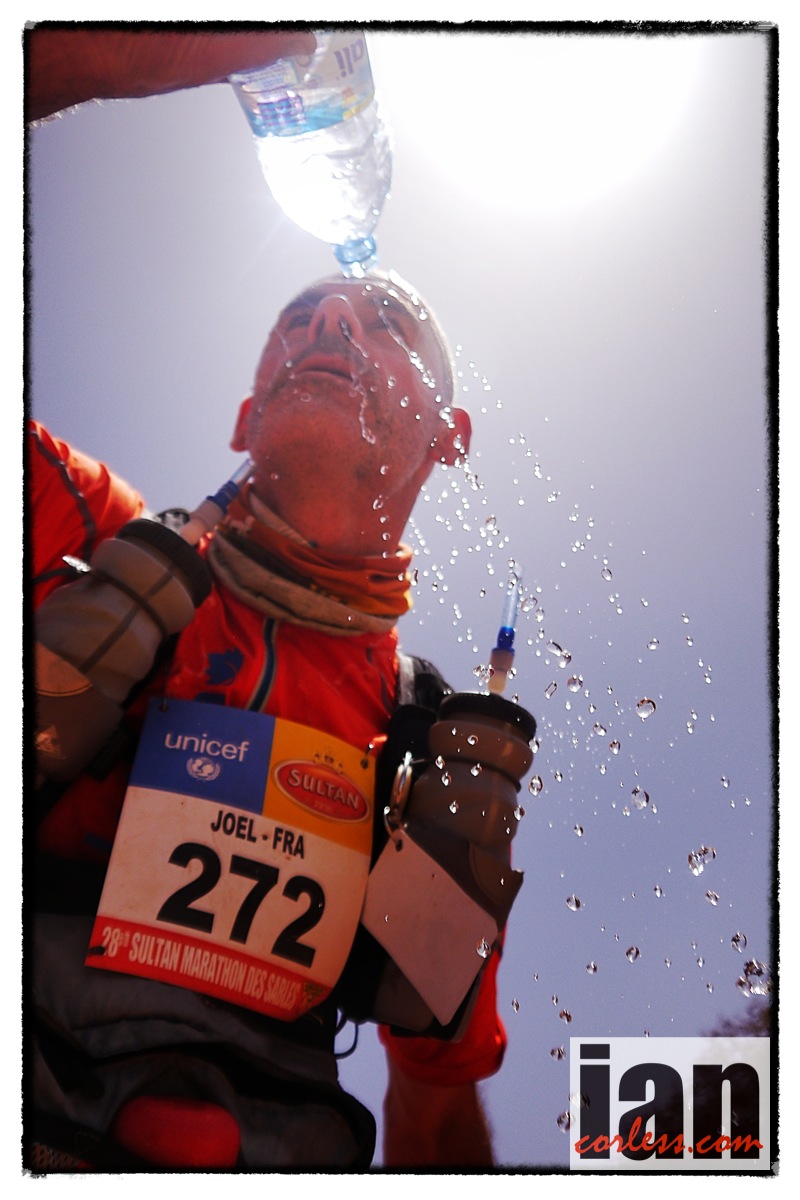
“Dehydration is one of the biggest risks in the desert. It’s imperative you don’t forget this and force yourself to systematically drink the water offered by the organisation, taking small, regular sips during the race and in the evening when you get into the bivouac. During this event, you also loose a lot of salt. As such it’s essential you remember to take the salt tablets supplied by the organisation and plan a diet rich in mineral salts.”

4/ PROTECT YOURSELF FROM THE SUN
“Avoid wearing dark clothing in the desert as it tends to retain heat. Instead, opt for light clothing and white caps, which reflect the light. It can also be very useful to keep a buff around the neck or the wrist, which you can moisten from time to time to freshen up and bring down your core temperature. The best thing is not to remove too much clothing, but not to wear too much either… and to protect oneself from the sun’s rays using a very good suncream.”
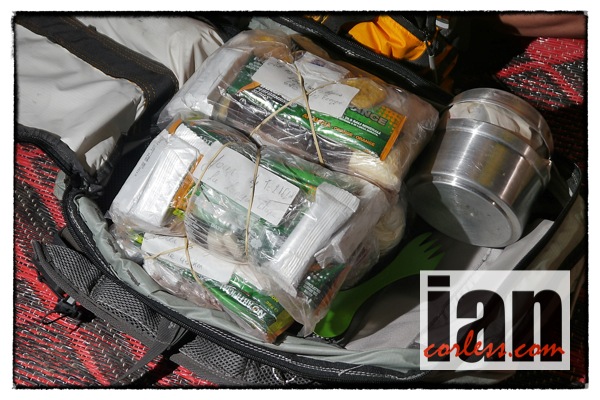
5/ A LIGHT, BALANCED BAG
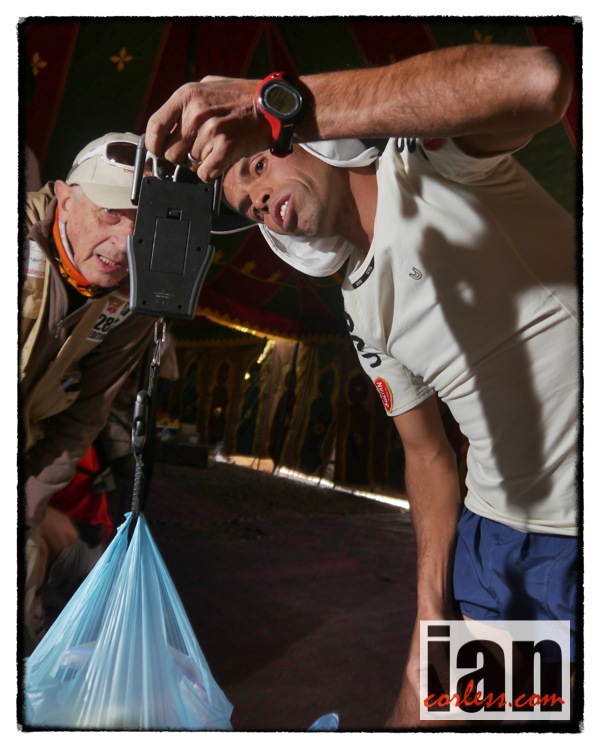
“When you pack your bag, don’t forget that you have to add to it the litre and a half of extra water supplied by the organisation throughout the event… As such a bag weighing around 7 kilos is ideal. You also need to think about correctly distributing the weight between the front pack and the backpack, so as to remain balanced and avoid placing all the bag’s weight on your kidneys. Personally, I recommend putting everything at the front that will be of use to you during the day, energy bars, water, roadmap, compass, salt tablets, etc. That way you don’t have to unpack your bag to retrieve something that’s located at the back.”
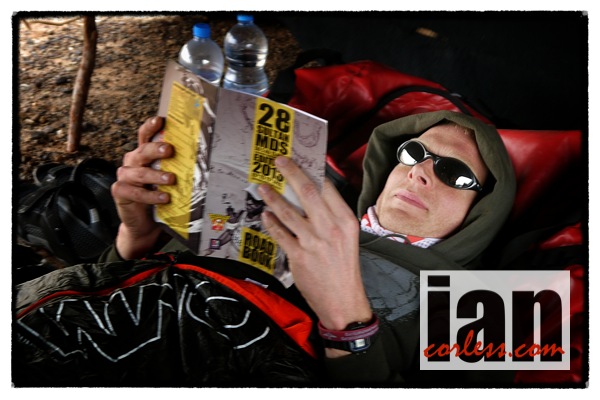
6 / GET SOME REST
“It’s very important to get some good rest and sleep well. For this, don’t disregard the comfort of your sleeping bag and opt for a sleeping bag suited to temperatures of around zero. Indeed, even though it rarely gets cooler than that, the temperature range between day and night remains pretty significant and you can soon get cold. For the evening, the majority of runners use painters’ overalls, which keep out the cold and the wind, but you can also get very fine, very light technical clothing with long sleeves.”

7/ EAT PROPERLY
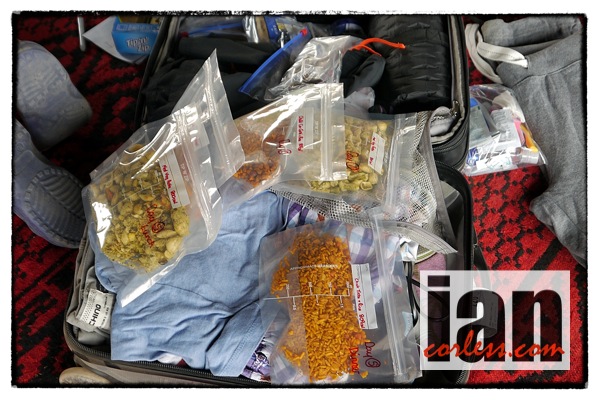
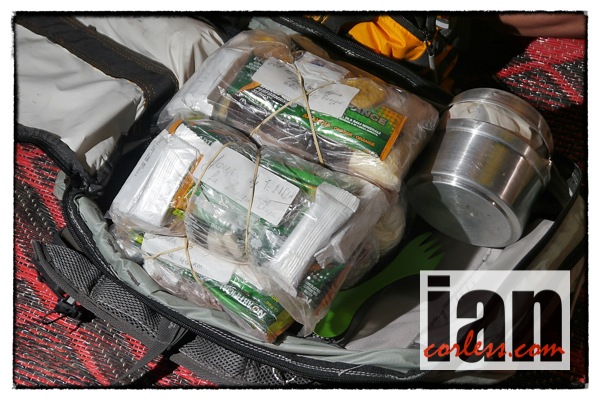
“Whether you opt for freeze-dried meals or simpler food with a rice, pasta, couscous or mashed potato base, the most important thing is to have a good distribution between protein, which are used to repair the muscles that are in such heavy demand during exertion, carbohydrates, which enable you to quickly restore your energy and speed up the body, and fats, which are essential for the body to work efficiently; especially with this type of exertion where you dig deep into your store of fat. Similarly, don’t think twice about stepping up a little on the organisation’s requisite minimum daily dose of 2,000 calories a day.”

8/ FINDING ONE’S BEARINGS
“Aside from some of the dunes, where you do need to know how to use a compass to keep on course, the risks of getting lost are virtually non-existent. Indeed the marking is very well done by the organisation throughout the course and there’s substantial monitoring of the runners by the race stewards. However that’s no reason not to learn to use a compass before taking off for Morocco!”
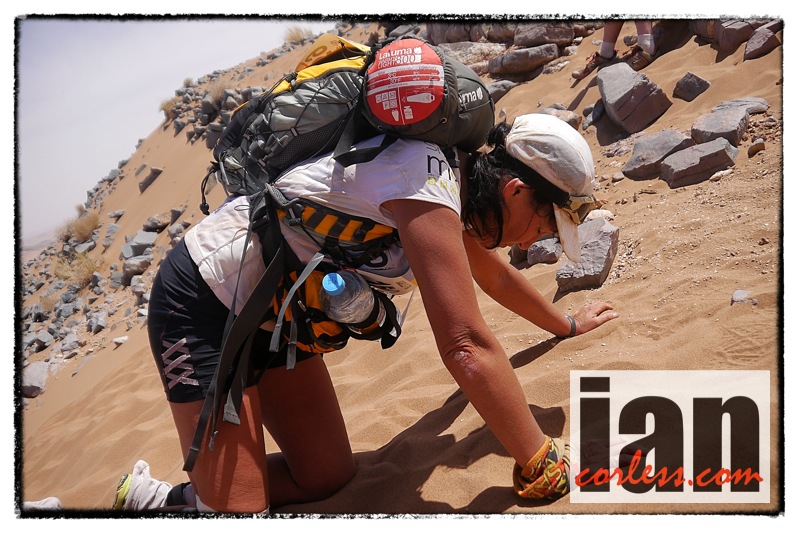
9/ MANAGING ONE’S EFFORT
“The Marathon des Sables is a long race. As such you need to spread out your effort with the passing days and, most importantly, you mustn’t set off too quickly on the first leg. Instead take the time to adapt to the different terrains you will encounter. You should also think about saving your energy so that you aren’t too tired when it comes to the long stage on the 4th day. To do this, think about getting some good rest in the evening as soon as you return to the bivouac.”
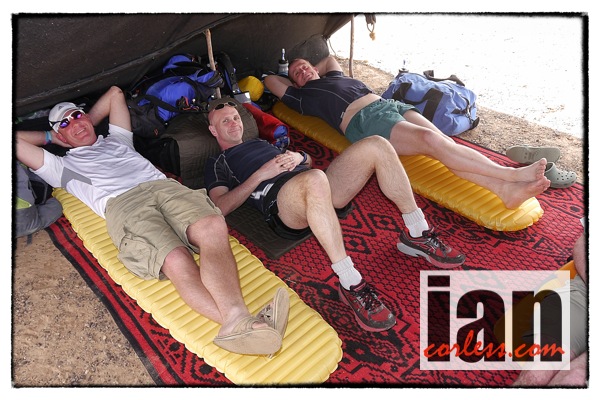
10/ LIFE IN THE BIVOUAC
“Life in the bivouac is very important. To really make the most of it, I advise you not to bring along your mobile phone so you can fully benefit from each and every moment. Indeed, a whole life and sense of solidarity takes shape within it… The runners are divided up into tents of eight people and they very quickly encourage and support one another and eat together… You have to learn to be generous within it and not get annoyed, remaining open to others. The MDS is a large family. There’s a big communion between the runners and you have to know how to respect that.”
Read a preview of the 2014, 29th Marathon des Sables HERE
Follow the race at http://www.iancorless.com and on Facebook HERE and Twitter HERE
Content ©marathondessables
All images ©iancorless.com – all rights reserved

Rin started PND Consulting in 2012 after working in the NHS as a dietician for several years. She has covered a variety of clinical areas from nutrition support on hospital ward and intensive care to diabetes and weight management in clinic settings.


Maroondah Dam 50K Trail Run | 50 kilometers | March 16, 2014 | website
Razorback 58K Run | 58 kilometers | March 15, 2014 | website
Razorback 58K Run (March) | 58 kilometers | March 15, 2014 | website
Razorback 64K Run | 64 kilometers | March 15, 2014 | website
Razorback 64K Run (March) | 64 kilometers | March 15, 2014 | website
Razorback 68K Run (March) | 68 kilometers | March 15, 2014 | website
Dirty Duo 50 km Ultra | 50 kilometers | March 08, 2014 | website
6633 Extreme Winter Ultra Marathon – 120 mile | 120 miles | March 14, 2014 | website
6633 Extreme Winter Ultra Marathon – 350 mile | 350 miles | March 14, 2014 | website
Trail Bullygeois des Poilus – 55 km | 55 kilometers | March 09, 2014 | website
Translantau 100 km | 100 kilometers | March 15, 2014 | website
Translantau 50 km | 50 kilometers | March 15, 2014 | website
BSI Lake Balaton Marathon+ Fonyód – Szigliget | 52 kilometers | March 21, 2014 | website
BSI Lake Balaton Supermarathon | 195 kilometers | March 20, 2014 | website
The Great White Rann – Run of Kutch – 135 Miles | 135 miles | March 14, 2014 | website
The Great White Rann – Run of Kutch – 160 km | 160 kilometers | March 14, 2014 | website
The Great White Rann – Run of Kutch – 50 km | 50 kilometers | March 14, 2014 | website
The Great White Rann – Run of Kutch – 80 km | 80 kilometers | March 14, 2014 | website
Trasimeno Lake Ultramarathon | 58 kilometers | March 09, 2014 | website
Ultrabericus | 65 kilometers | March 15, 2014 | website
Nosy Be Trail – 65 km | 65 kilometers | March 09, 2014 | website
Tarawera 100K Ultramarathon | 100 kilometers | March 15, 2014 | website
Tarawera 60K Ultramarathon | 60 kilometers | March 15, 2014 | website
Tarawera 85K Ultramarathon | 85 kilometers | March 15, 2014 | website
Te Houtaewa Challenge 60 km Open Ultra Marathon | 60 kilometers | March 15, 2014 | website
Triple Peaks Challenge | 50 kilometers | March 15, 2014 | website
TRD80 Ultramarathon | 80 kilometers | March 15, 2014 | website
Território Circuito Centro 3a Etapa – Vila de Rei – K67 – Ultra Trail | 67 kilometers | March 08, 2014 | website
Território Circuito Centro 3a Etapa – Vila de Rei – Trail Ultra | 50 kilometers | March 08, 2014 | website
Raid Téranga 250 | 250 kilometers | March 08, 2014 | website
Kysucká Stovka | 120 kilometers | March 07, 2014 | website
Om Die Dam 50 km Marathon | 50 kilometers | March 15, 2014 | website
Ultra Trail Sierras del Bandolero | 150 kilometers | March 07, 2014 | website
Marxa dels Castells PLUS | 81 kilometers | March 09, 2014 | website
UT les Fonts | 120 kilometers | March 14, 2014 | website
UT les Fonts – Trail de les Fonts | 70 kilometers | March 15, 2014 | website
Southern Cross-Island Road Ultra Marathon – 100 km | 100 kilometers | March 08, 2014 | website
Southern Cross-Island Road Ultra Marathon – 50 km | 50 kilometers | March 08, 2014 | website
100 Miles Camelus | 100 miles | March 15, 2014 | website
45 Miles Camelus | 45 miles | March 15, 2014 | website
D33 Ultra | 33 miles | March 15, 2014 | website
Deeside Way Ultra | 33 miles | March 15, 2014 | website
Haworth Hobble | 32 miles | March 15, 2014 | website
Jurassic Coast Challenge | 78 miles | March 21, 2014 | website
Exmoor Ultra – 40 Miles | 40 miles | March 15, 2014 | website
Imber Ultra Marathon | 33 miles | March 09, 2014 | website
Delano Park 50 Mile Solo | 50 miles | March 08, 2014 | website
Chena River to Ridge Endurance Race 45 Mile | 45 miles | March 08, 2014 | website
Monument Valley 50K | 50 kilometers | March 15, 2014 | website
Monument Valley 50 Mile | 50 miles | March 15, 2014 | website
Old Man 52K | 52 kilometers | March 15, 2014 | website
3 days of Syllamo | 150 kilometers | March 14, 2014 | website
Coyote Cohorts Backbone Trail Ultra | 68 miles | March 15, 2014 | website
Lake Natoma 50K | 50 kilometers | March 09, 2014 | website
Marin Ultra Challenge 50K | 50 kilometers | March 15, 2014 | website
Marin Ultra Challenge 50 Mile | 50 miles | March 15, 2014 | website
Old West Trails 50K Ultra | 50 kilometers | March 15, 2014 | website
Rodeo Valley Trail Run Spring 50K | 50 kilometers | March 15, 2014 | website
Way Too Cool 50k | 50 kilometers | March 08, 2014 | website
Whoos in El Moro 50k – Race #2 | 50 kilometers | March 08, 2014 | website
High Line Canal 100K | 100 kilometers | March 15, 2014 | website
DWD Green Swamp 50K | 50 kilometers | March 08, 2014 | website
DWD Green Swamp 50M | 50 miles | March 08, 2014 | website
Lost 118 | 118 miles | March 15, 2014 | website
Georgia Death Race | 60 miles | March 15, 2014 | website
Land Between The Lakes 50 mile run | 50 miles | March 08, 2014 | website
Land Between The Lakes 60k | 60 kilometers | March 08, 2014 | website
Q50 50M Ultra | 50 miles | March 08, 2014 | website
Seneca Creek Greenway Trail 50K | 50 kilometers | March 08, 2014 | website
Graveyard 100K Ultramarathon | 100 kilometers | March 08, 2014 | website
Graveyard 100 Mile Ultramarathon | 100 miles | March 08, 2014 | website
Reservoir Park 50K | 50 kilometers | March 08, 2014 | website
Buzzard Day 50k | 50 kilometers | March 15, 2014 | website
Green Jewel 50K Fun Run | 50 kilometers | March 08, 2014 | website
Fall Creek Falls 50K Trail Run | 50 kilometers | March 16, 2014 | website
Music City Trail Ultra 50K | 50 kilometers | March 15, 2014 | website
Prickly Pear 50K Trail Run | 50 kilometers | March 08, 2014 | website
Antelope Island 100 Mile | 100 miles | March 21, 2014 | website
Elizabeth’s Furnace Fat Ass 50K | 50 kilometers | March 15, 2014 | website
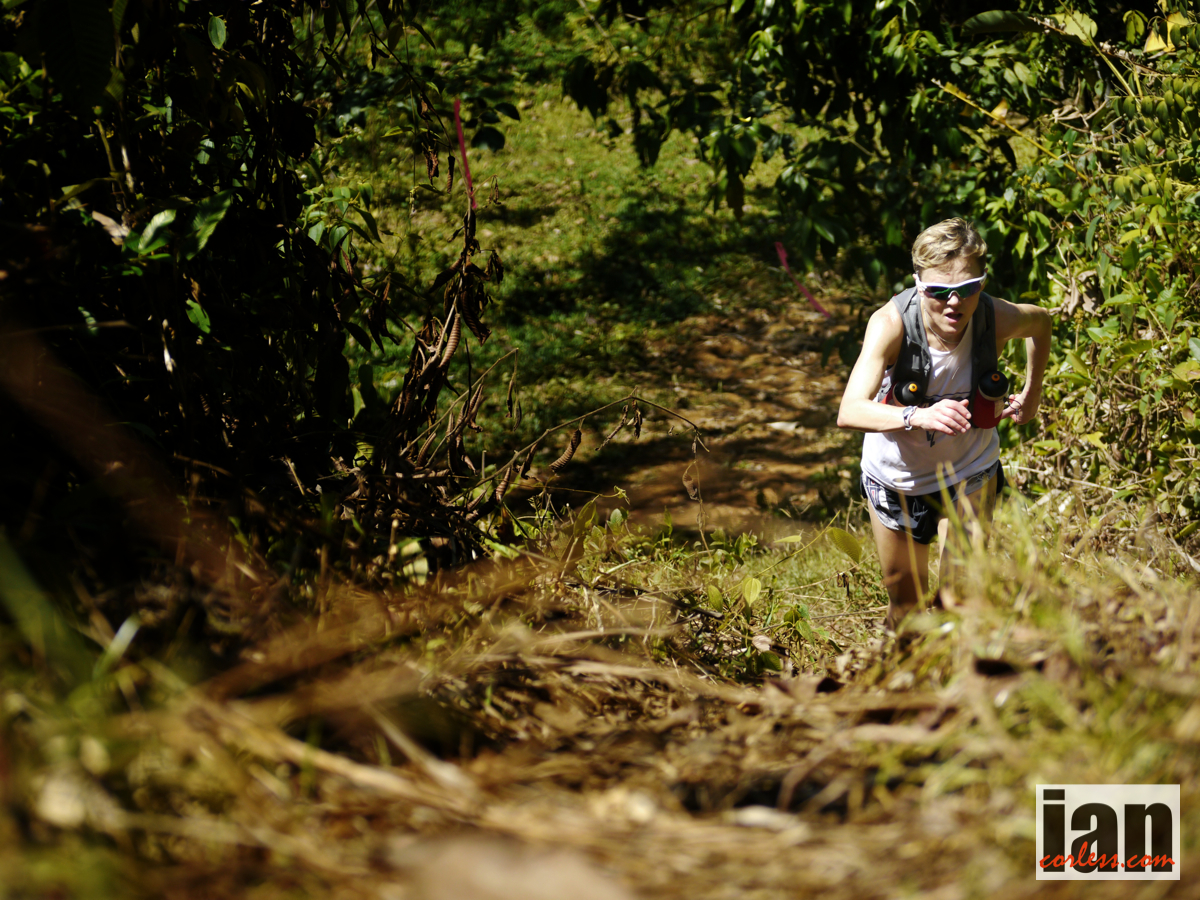 all images ©iancorless.com – all rights reserved
The eyes tell the story… they look through you. Deep in focus, almost blinkered like a horse, Jo Meek has only one purpose. To run as fast and as efficiently as possible over 6-days and when crossing the final finish tape, be crowned winner of the 10th edition of the 2014 The Costal Challenge in Costa Rica.
I had seen this look once before, at the end of stage-1 of the 2013 Marathon des Sables. Sitting in a bivouac, Jo Meek had just excelled on the first day of the race. I like others looked around in wonder and asked the question, ‘who is Jo Meek?’
No more questions needed to be asked, at the end of the 28th Marathon des Sables, we all were well aware who Jo was, she was the lady who had just placed 2nd overall behind Meghan Hicks at her first Marathon des Sables.
When you excel at one race it’s easy for many to look on and say, ‘It was first time luck.’ Not that Jo needed to prove anything, certainly not to me! I had seen her race; I had witnessed the dedication and focus as Jo pushed herself daily to get the best she could out of her body.
Switching from the dunes of the Sahara to the beaches and rainforest of Costa Rica was always going to be a cathartic moment for Jo, particularly when one considered the competition she would be up against; Julia Bottger (Salomon), Veronica Bravo (Adventure Racer from Chile) and Anna Frost (Salomon). Unfortunately, ‘Frosty’ had to withdraw from the race just days before the start in Quepos on doctor’s orders. Disappointed at not having the opportunity to test herself against one of the best female mountain/ ultra runners in the world, Jo focused and said, ‘It changes nothing. I am here to race and race hard. I would have loved to have Anna push me but you know what, I can push myself pretty hard.’
As we all found out, Jo can push herself pretty hard; maybe too hard at times? On day-1 of the TCC, Jo raced like a demon. Unaffected by the Costa Rican heat and humidity, she put 45-minutes into the female competition and set the platform on which to build for an incredible victory at the 10th edition of the race.
Back in the UK after a recovery week in Costa Rica, I caught up with Jo as she attempted to move house… a house that she had purchased without seeing! Yes, Jo had purchased a house she hadn’t seen. When I asked her in Costa Rica about this, Jo replied, ‘I was too involved in my training, I had one focus, to be in the best shape for the TCC. I just didn’t have time to go and look at it. I convinced myself it would be okay…’

IC: A year ago I was talking to you at your surprise 2nd place at MDS. You have now been out to Costa Rica, a very different environment in comparison to the Sahara, raced against stronger competition? And you have won an incredible victory over 6 –tough days of racing. How do you feel?
JM: I feel really pleased. I have complete satisfaction from the race. It’s possible to sometimes come away with question marks but I have none. I feel that the effort I put in was rewarded appropriately. I put a great amount of dedication into this race and sacrificed lots.
IC: Yes, you had that steely MDS look in your eyes. Like blinkers. You dedicate yourself to the task and I guess knowing in advance what the competition was going to be like at TCC and having the MDS experience inside you, you were able to be far more specific in training. I know post MDS that you thought you had maybe been a little over cautious. You could have run quicker? So, did you go to TCC with all guns blazing and take each day as a race?
JM: Yes I did. I remember listening to Ryan Sandes on Talk Ultra and he said it was amazing how quickly one recovers. I thought, I do recover well and I had nothing to loose. I know from MDS that I had been cautious, for example on the last day I pushed hard. Had I done that everyday the result may have been different but it’s difficult to say. So, at TCC I wanted to give it everything. I had prepared for the heat and my training was good.
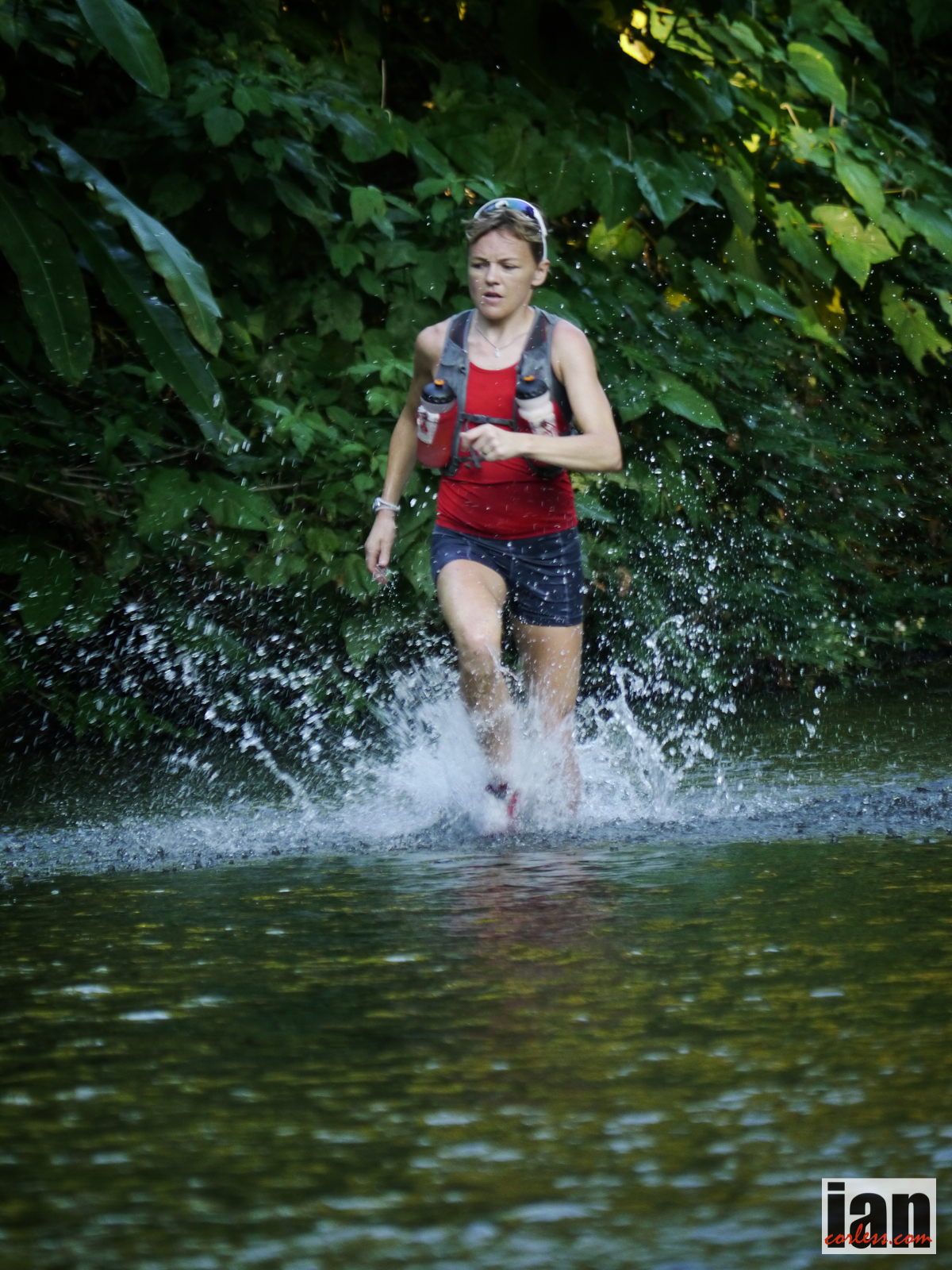
IC: You have just mentioned that you committed yourself from day-1. Needless to say, TCC day-1 was impressive. You put 45-mins into the competition, impressive, particularly when we look at the ladies who you were racing against. Of course it gave you a real buffer. A safety net. The biggest issue on day-1 for everyone (except you) was the massive contrast in European weather and Costa Rican weather. Even in Costa Rica itself, the temperatures between San Jose and the coast were remarkable. As you approach the coast the heat goes up along with the humidity. Day-1 has a later start so you are straight into the heat… mid 30’s and closer to 40 at the height of the day. But it did not affect you and the main reason for this was 10-days training in a heat chamber.
JM: Yes. I was prepared. I gave everything on that first day. I had assumed that the competition would have done the same? Using a heat chamber is only a case of contacting Universities and they are usually willing to help. I assumed some heat work would put me on a par. As it turned out it wasn’t the heat that struck me but the pace! We were running slower than I expected so I ran at what was comfortable for me and nobody ran with me. I then ran scared thinking I had made a mistake that I was going to pay for.
IC: Now you have had an opportunity to reflect on TCC can you tell us about the heat chamber, how did it benefit you, are there any crossovers between MDS and TCC prep?
JM: I did the same sort of training. I followed a marathon program but I did more back-to-back runs. Essentially you are training for the same thing. In the heat chamber I was under the guidance of the team. I told them I would do whatever I needed to do… They told me I needed 10-days. You actually don’t need to exercise in the heat chamber, you can just sit inside but it takes longer. I could sit for 3-hours or run for 1-hour. I am dedicated, I am focused, and that’s a really big thing.
IC: Lets talk about the training. When you say a classic marathon program, I guess you are talking about a speed session, hill session and then long runs. Of course, you were training for multi-day so you built from 1-long run to back-to-back long runs. What did a peak week look like; I guess this was 3-4 weeks out from the TCC?
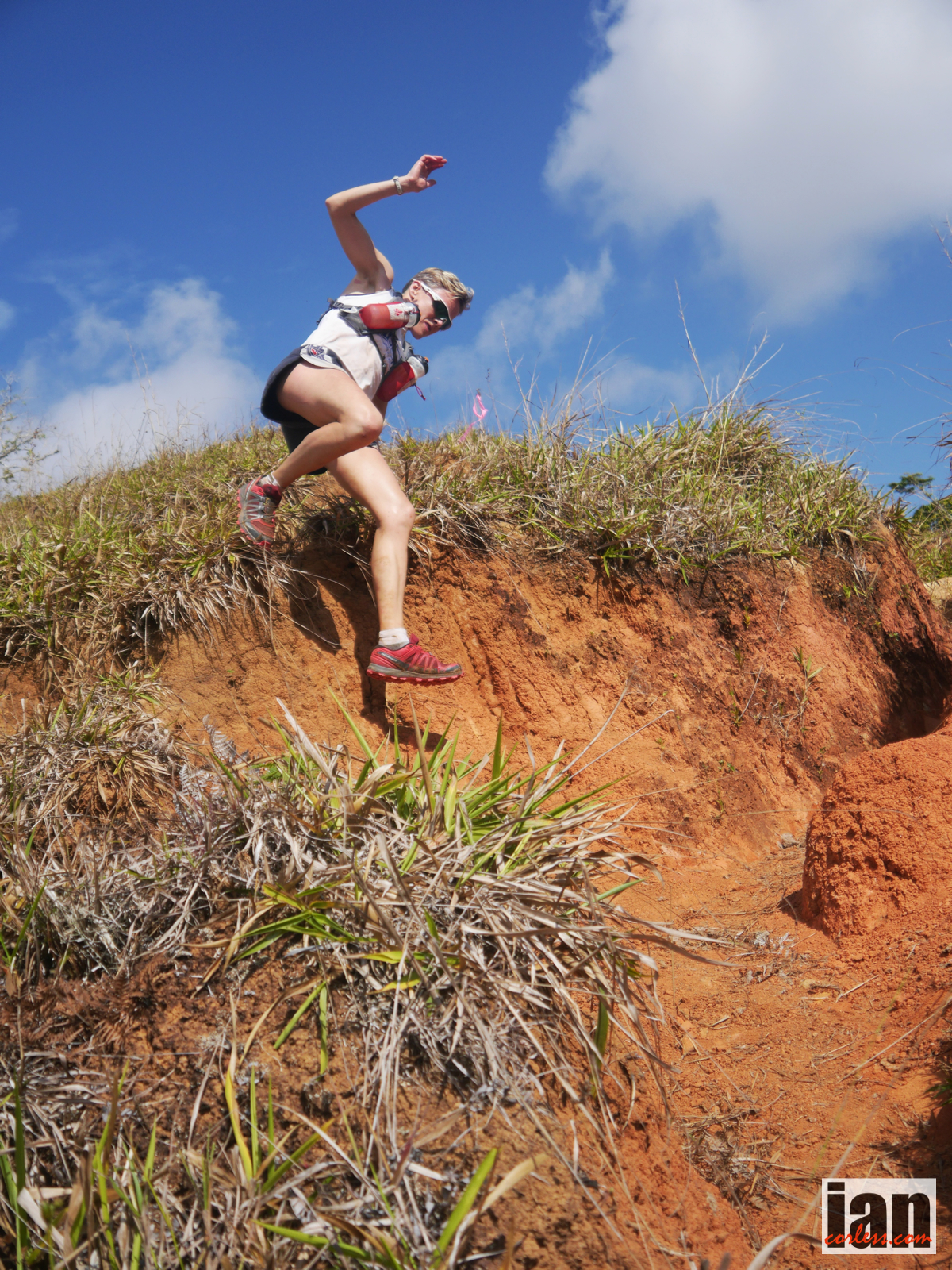
JM: Yes, 4-weeks out and then I would taper. You are right; I would do a speed session, a threshold run, a hill session and then long runs that would build to back-to-back runs. What you can’t afford to do is not let yourself recover in terms of, if you have done a long run and made it fast, you need to recover. It was all about balance. You need to be sensible and listen to your body. I would do 2.5-3-hours normally for a normal long session, whereas my long run for TCC was 4-hours; but at a slower pace. I wanted to make sure I could incorporate hills to prepare me for the hills of TCC.
IC: Back-to-back sessions, was that 2 x 4-hour runs?
JM: No, I did 3 back-to-back 3-hour runs.
IC: So, 9-hours split over 3-days; I presume when you did this you eased back of speed and hill work?
JM: I actually kept the sessions. In actual fact, that week I did a race. You have to remember, the long runs were really slow. It was just a case of recovering from a food and nutrition perspective. The runs actually didn’t damage my muscles. I am sensible after each run. I rest. For the 3 back-to-backs I took a day off work to make sure I had the best platform from which to build.
IC: So you planned this into work. You took a day off work and you treated this very much from a professional perspective. Feet up after the run, concentrate of food and hydration and make sure you are in the best place.
JM: Yes it was like being a full time athlete. Of course day-to-day life gets in the way; cook dinner and walk the dog for example. I just took this relaxed and in my own time.
IC: How did you break speed sessions down? Many ultra runners look at speed sessions as something that they don’t need to do. But that is not the case, you actually need endurance and speed, so, how do you work this to your benefit, how did you go about speed sessions?
JM: It is difficult to answer as we are all individual and it depends on your race. You need to target your sessions at the pace you want to achieve and then sometimes faster. I would do some track work running 400’s or I would do 1-mile reps. I guess you need to vary what you do… try to enjoy it! We all think, speed; it’s going to hurt. But if you find sessions you enjoy it makes a big difference. Also try training with others.
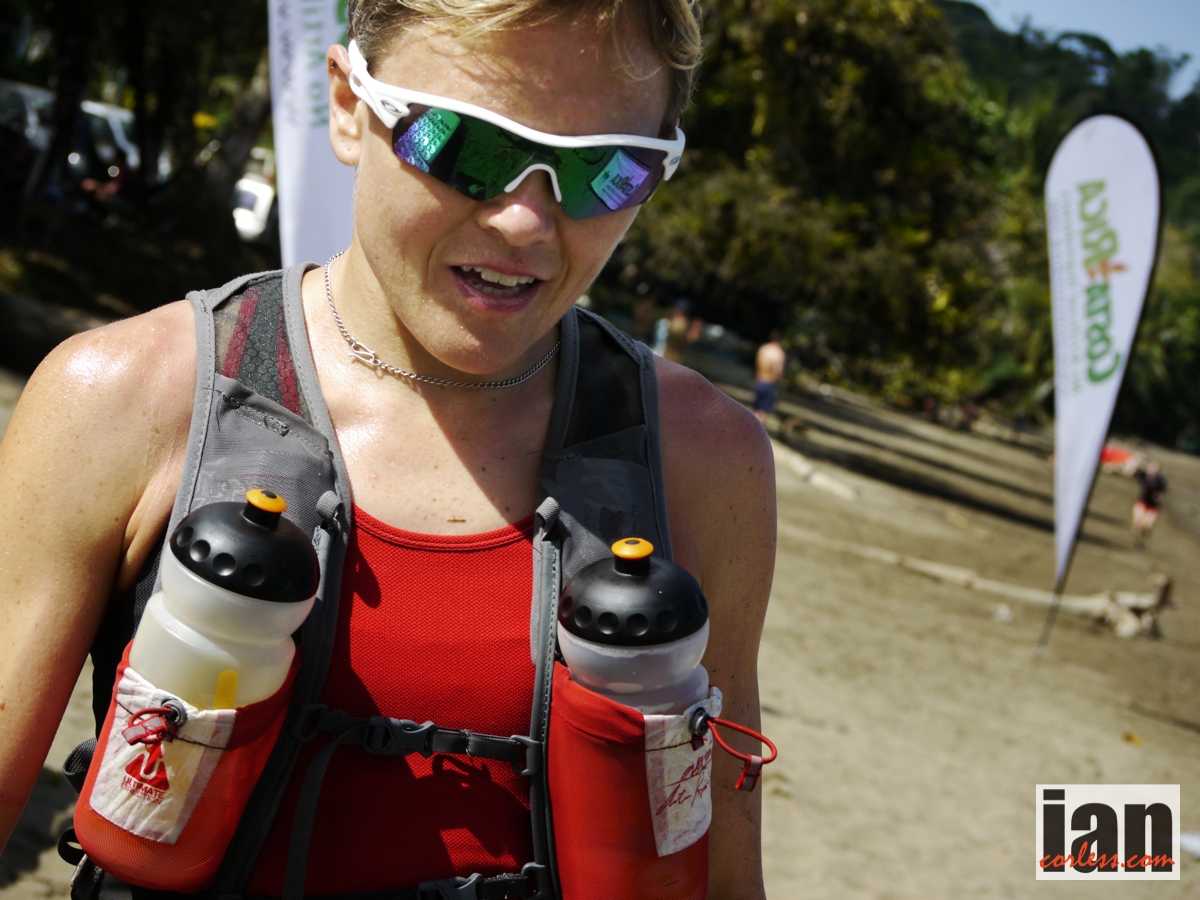
IC: So you had your plan, you did speed, you did strength, you did hills, you did back-to-backs but you realized that to give you an edge or in your terms an equal playing field was that you needed to adapt to the heat. It was a variable. It was one thing you couldn’t account for. You did 10-days consecutive in a heat chamber?
JM: Yes, 10-days.
IC: What is day-1 like?
JM: Oh you think I will never be able to run in this? I went in thinking that I would run at ‘pace’ but actually you run at a slow pace as they don’t want your temperature to rise too quickly. It feels bearable at the start. They monitor the core temperature and mine went too high after 30-min so then I had to walk and rest to keep it under control. It’s not as physically as hard as you may think. It’s all about core temperature.
IC: What is important is the lesson that we can all learn. You trained in the UK; you did the heat sessions, which gave you massive temperature and humidity fluctuations. You got that process over with before arriving in Costa Rica. By contrast, nearly all the runners had to go through that process on day-1 of the race… for example; Philipp Reiter had a really tough 1st day. He was overheating and red, he was trying to control himself but to no avail. However his recovery was phenomenal. He recovered so well to come back strong on day-2.
JM: That is the benefit of being 20!
IC: Yes, for sure that helped. However, had Philipp and the others got day-1 over with in a heat chamber it would have made a massive difference. It could have been the difference between top-3 and a win.
When you went back to the heat chamber how was the adaptation?
JM: Mentally I was more prepared. On day-1 I felt nauseous and tired but I guess it just gets easier. By day-3 my resting core had reduced dramatically. It gets easier and easier unless you are a moron like me and fall off the treadmill.
(Laughter)
IC: Mmmm yes, you did make a mess of your face. Not the best thing to land on in the final days of prep in the build up to an important race!
So, you adapted in the heat chamber. The process went exceptionally well and pretty much after the last session you made your way to Costa Rica. It’s a shock, isn’t it? Time changes, a day of registration, logistics and presswork, an early bed and then a very early start the following day that starts at 3am. A transfer by bus to the coast and before you know it, day-1 starts at 0930 just as the heat of the day is beating down. It’s hot, really hot, however it caused you no problems. You had that amazing first day. Post day-1 you said you felt great. You had taken the race on, you had pushed yourself and you had stamped your authority on the race. How did the rest of the race unfold for you? You had a couple of key moments; day-3 in the river section start when you struggled with the technicality, ironically, very similar to the male winner; Mike Wardian. You and he are very similar runners, you both run well on fast terrain but less so on technical terrain. However, as the race progressed you both adapted and became far more efficient.
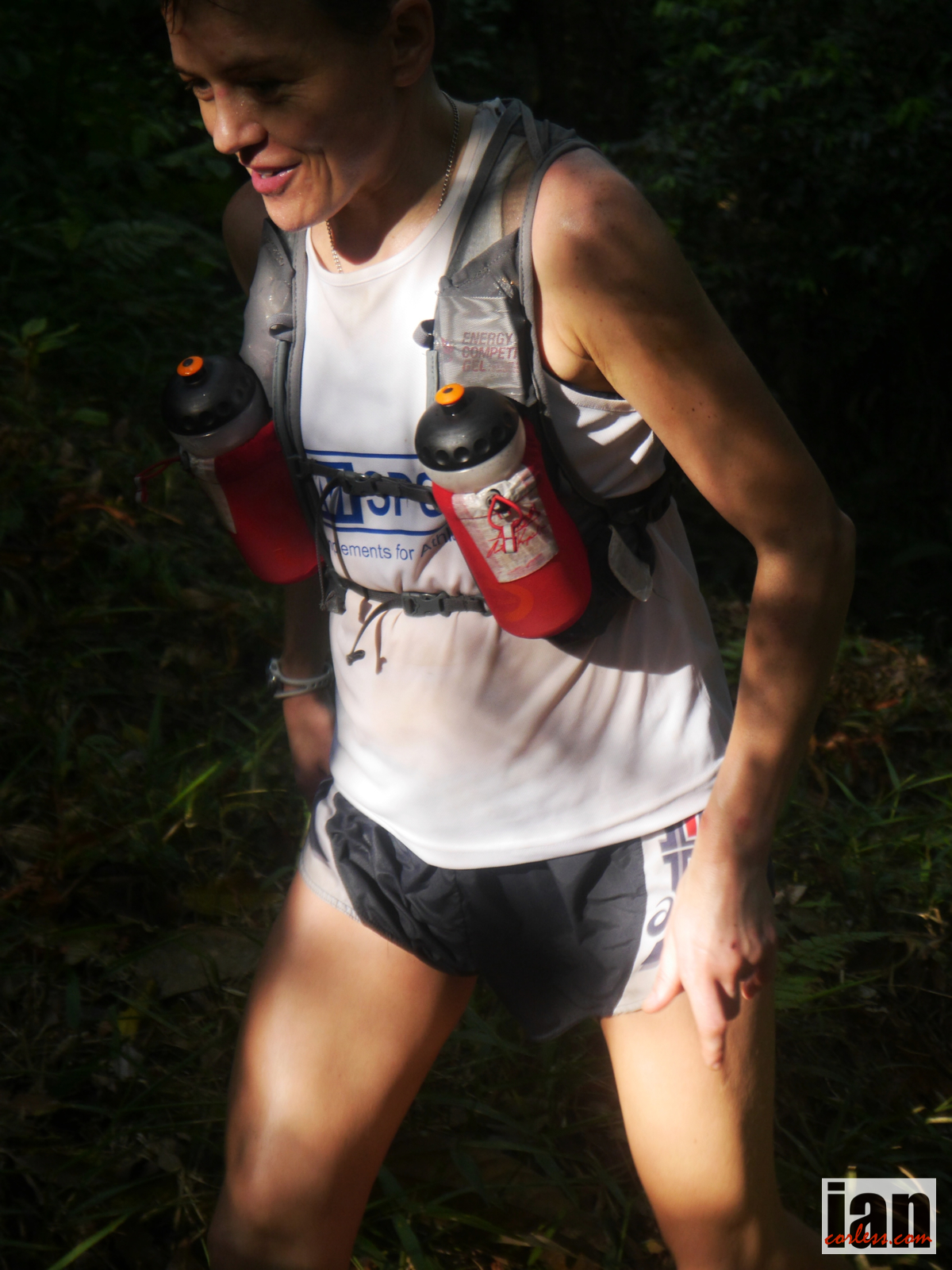
JM: Yes, without doubt.
IC: Moving up hill and covering technical ground became so much better for both of you.
Lets go back to that day-3 start when you had Veronica Bravo and Julia Bottger ahead of you, did you think you were loosing the race?
JM: When you can’t see runners you immediately think you are loosing 45-mins. It’s funny. However, when it is so technical you can’t think about anything other than what is below your feet and what is ahead. I just had to follow the course markers and cover the ground as best as I could. All the time I was thinking, I just need to get on the flat or get on a good hill and start chasing and pulling time back.
IC: You got through the section and you started to chase. You clawed back the time, you caught Julia and Veronica and then on the final beach section in 40-deg heat you pulled away and got another stage win. You re-established your dominance of the race. It must have been a great day and a great boost?
JM: The 3rd day was the longest and most emotional day. It almost felt like the end of the race. I was very emotional. Had someone been waiting for me at the end I would have cried. Even though I still had 3-days of racing ahead I had concentrated so much it had exhausted me. Having got through that it was a case of maintaining it. But as you very well know, I like to race and continued that way. I didn’t want to take anything for granted. I could have fallen and hurt myself and with Veronica and Julia chasing, I couldn’t be complacent. I raced hard to the end.
IC: Post race you said one day in particular is the day that you got things wrong that impacted on the final 2-days, was that day-4?
JM: I gave everything on day-3 and then I continued to race on day-4 when I didn’t need to?
IC: Yes, we had that conversation when I said to you, ‘you know what, you have a 60-min lead so be sensible. You have no need to put yourself in the ground. Consolidate what you have and be sensible.’ But in true Jo Meek fashion you continued to push…
Day-5 was significant. You had been in the lead and then Julia came back to you with about 10-km to go. It was the final feed station. You had a 60-min lead, so, overall victory was secure.
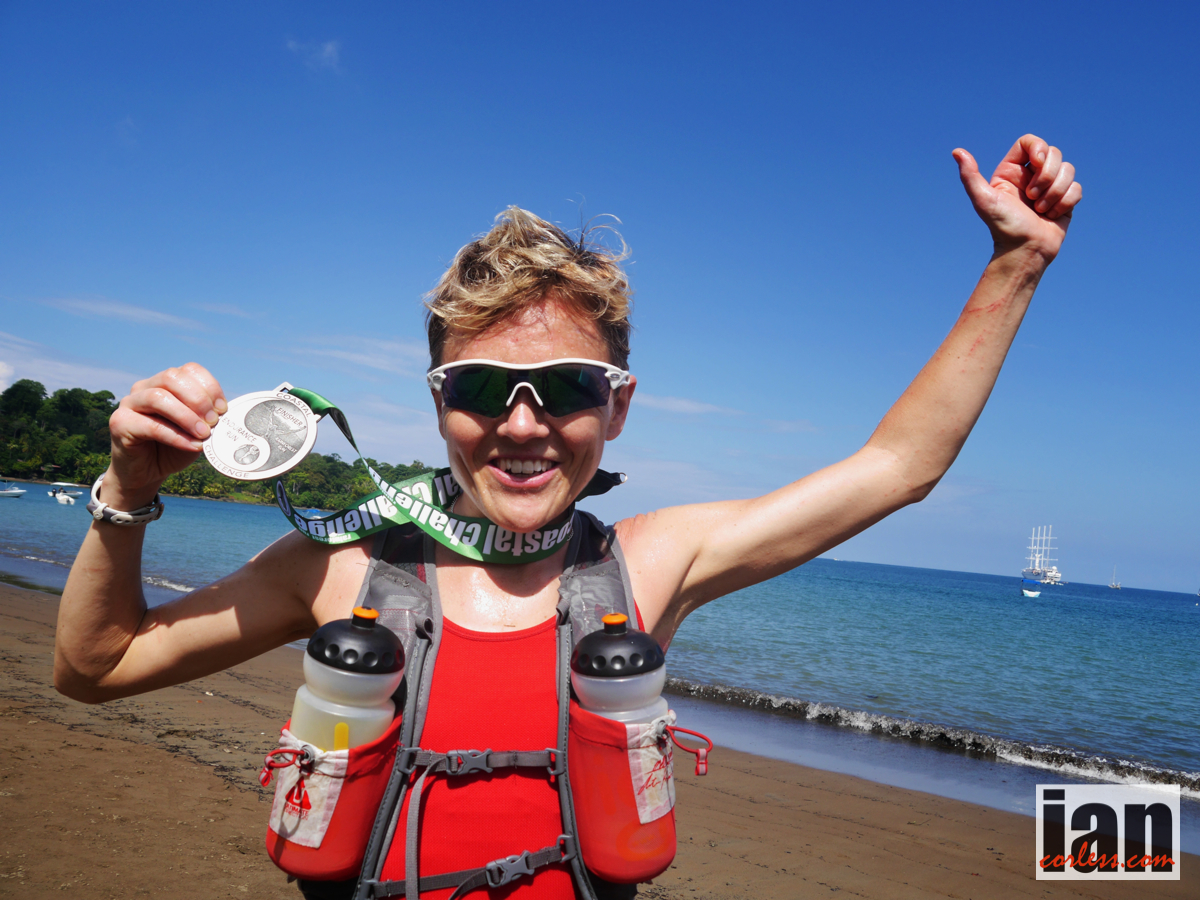
JM: I was at the feed and Julia arrived and I thought, ‘Oh my goodness, I thought I have to go.’ I ran, ran hard and closed out the final 10-km like a stand-alone session. I finished out of breath with hands on knees.
IC: Funny, when I saw you, you said, ‘I am an idiot.’
JM: I did.
IC: When I asked why, you explained the situation. Of course you have now reflected and I hope you realize that it wasn’t clever racing? You could have still had a bad moment on the last day and needed the reserves.
JM: Oh yes. I am well aware. What hurt me on the last day were sore quads. It was all the descending from the previous days. So I ran the last day within myself, however, had I thought Julia would have really pushed I would have found something, some extra energy.
IC: You have 2-great experiences under your belt. Marathon des Sables provided an introduction into multi-day racing and you performed maybe beyond our expectations but not beyond your own and now you have the victory at The Coastal Challenge. You have confirmed yourself as someone who can race hard, day-after-day, so, what are the hints ‘n’ tips you can provide for multi-day racing?
JM: Assess what you as an individual want from the race and then train accordingly. You must have a goal. Do you want to compete or complete? It makes a big difference. If you get your mind it the right place it is half of the battle. Prepare mentally, don’t be scared of the environment. Do what you can do and make sure that is clear. Have a great understanding of your body and how it recovers. Give yourself what you need. Without doubt eating after exercise within an hour is key, especially for multi-day racing or training. Rest when you get an opportunity; elevate your legs. For sure your feet and ankles will get tired. Relax, eat, drink and let everything settle. If you can sleep, do so. It provides great recovery. Ultimately, common sense prevails and the body is an amazing thing.
IC: TCC and MDS are very different. At MDS you had to be self-sufficient and carry a pack whereas at TCC tents and food were provided so you could run light, you just needed a hydration pack. Of course it’s a level playing field as everyone must do the same but from your perspective what are the pros and cons from both races and which did you prefer?
JM: That is very tricky. At TCC having food in abundance is obviously great. You can eat when you want and as much as you want so that makes recovery easy. However, everyone has that option so it’s not a personal advantage it’s just a different scenario. At MDS you can use this to your advantage, if you have planned well and your nutrition is optimum for your own personal needs then of course your competition may have not, so this can be something you work into a positive. It requires more planning. It’s a game of calories v weight. I like the challenge of the MDS scenario but equally your running style changes; your speed changes and you are carrying the burden of the pack. I guess it depends if you prefer faster racing or a more expedition type of approach.
IC: It’s a crazy question but MDS compared to TCC, which race, all things considered was the hardest race?
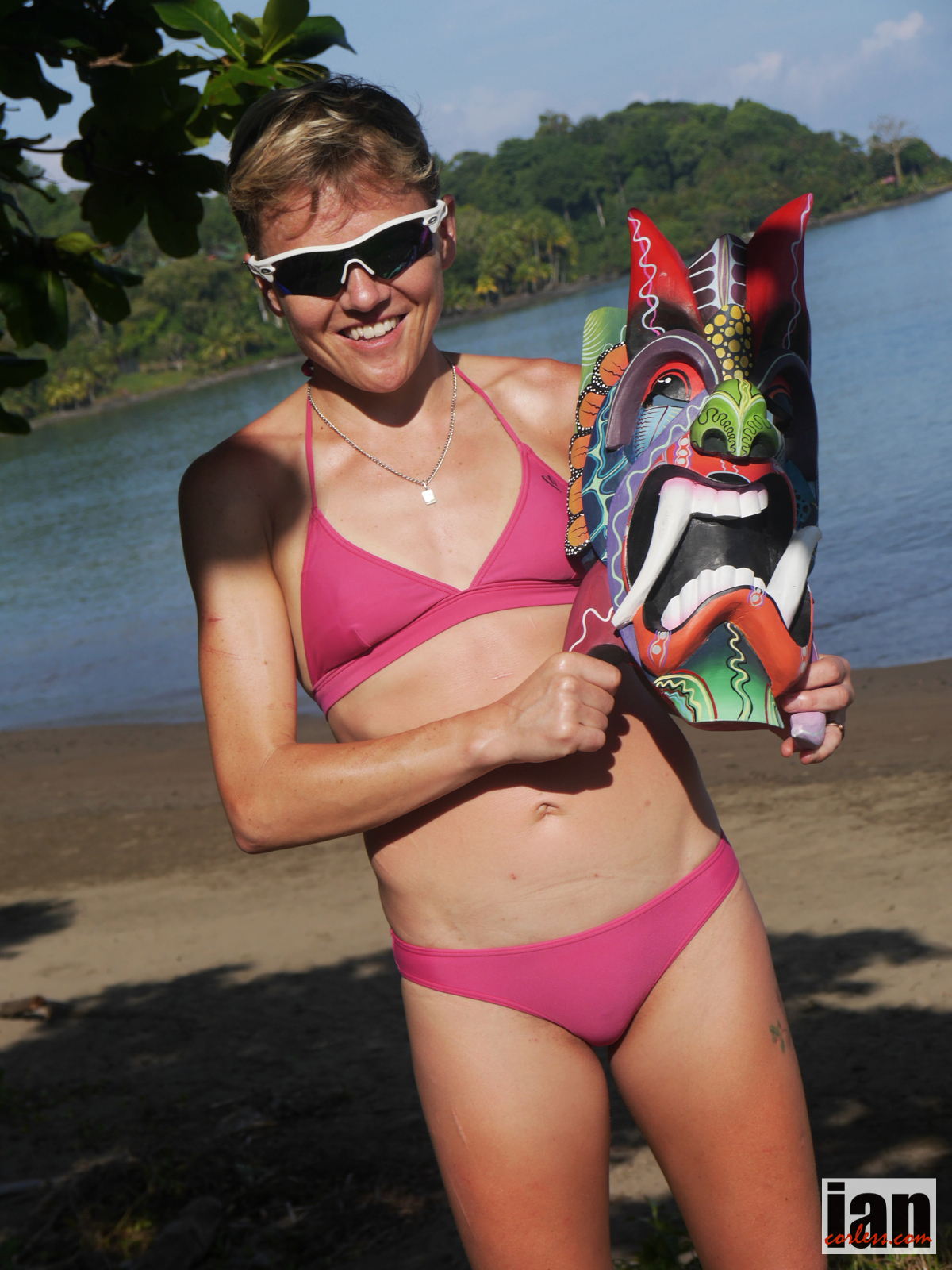
JM: The Coastal Challenge course. It has everything, ascending and descending, the damage the course did to my legs was far greater than the MDS. I found the MDS was harder from a food perspective, it took me 4-5 weeks post MDS to put the weight back on. The Coastal Challenge course tests the body and mind and the continual changes of terrain keep you guessing and working hard.
IC: So what is next, recovery is first and foremost I guess?
JM: I want to prove myself as an ultra runner. I want to run in a GB vest. I will try to qualify for GB in a trail race. I’d like to do more stage races and I have entered Comrades in June. That will be an interesting test and very different to what I have currently achieved.
IC: Finally, Costa Rica, what was the experience like for you, can you sum it up?
JM: The race is incredible. Where else can you run (or walk) in such an amazing place! The organizers have created a race and a route that often is inaccessible to most; riverbeds, jungle and plains. I probably didn’t look around too much while racing but I stayed for 1-week afterwards and I had a holiday. I went diving, saw a whale, I walked, went white water rafting and saw plenty of wildlife. It’s just an incredible and exciting place. Even if you did just the race you would come away with a whole new outlook. It really is incredible.
LINKS:
TCC 2014 race images – HERE
The 2015 The Coastal Challenge is now available to book. Want a discount? Use the form below for early bird booking.
Race Website – HERE


