CYCLING for RUNNERS – Girl What Cycles (3)

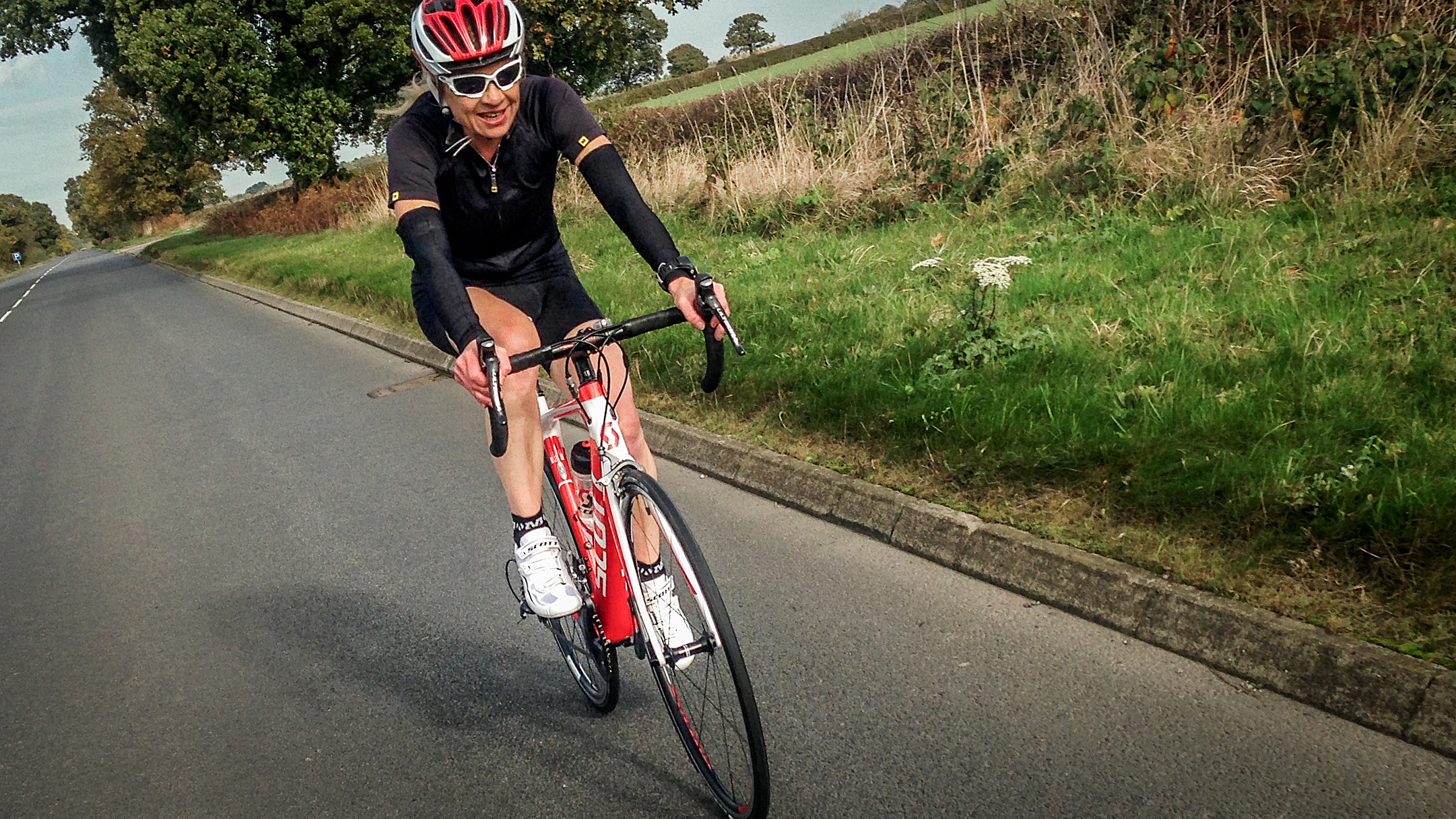
©iancorless.com_CarrMill-7280

“I love running cross country….

On a track, I feel like a hamster.”- Robin Williams

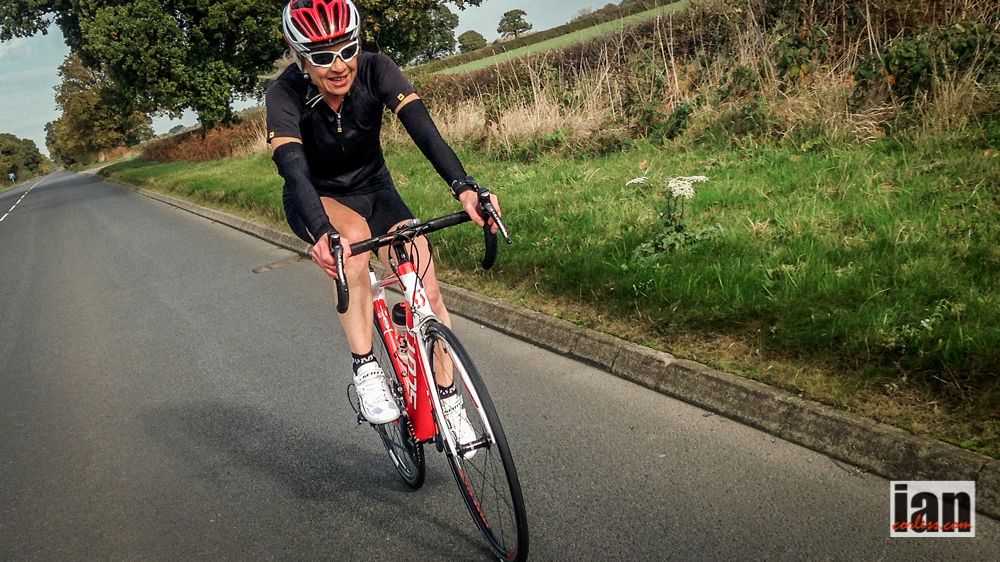
I’ve always felt the same as Robin Williams about the indoor trainer. To me, training indoors on a bicycle is just like running on a track or treadmill. Yet, like track and the treadmill, cycling indoors can provide a huge advantage to your training if used in a structured way.
©iancorless.com©iancorless.com_cyclingforrunners-4115

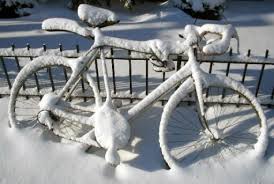
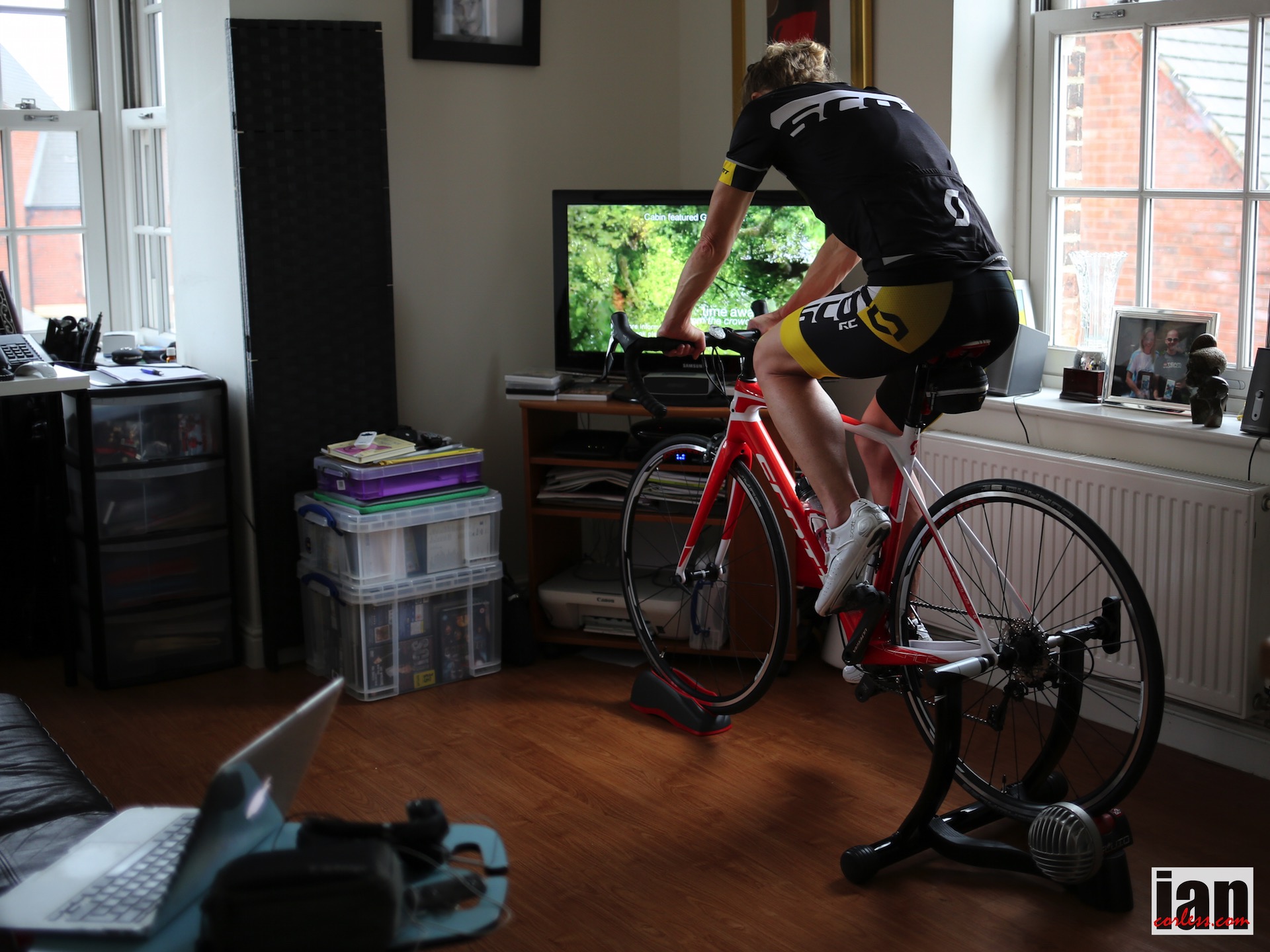
First and foremost when the weather is horrendous (like it is in the UK at the moment) you can get a good workout indoors in a warm, safe and controlled environment. I am new to cycling and although not inexperienced, braving winter conditions on a bike would be a step too far for me at the moment. This is where the home trainer becomes a useful piece of equipment.
©iancorless.com_Scott-7365

I can still get my fix for the outdoors with my running… to be honest, I love running in cold temperatures but I also incorporate one treadmill session which allows for faster running (hills or intervals) with some fast-paced loud music which is difficult to do outside.
screenshot_160

In a research project at John Moores University, researchers found that when participants exercised to faster-paced music they “chose to accept, and even prefer, a greater degree of effort”. As well as enhancing performance, music lowers the perception of effort. It dulls or masks some of the pain associated with training. We know from scanning the brain that when athletes are played loud upbeat music there is an increase in activity in the ascending reticular activating system.

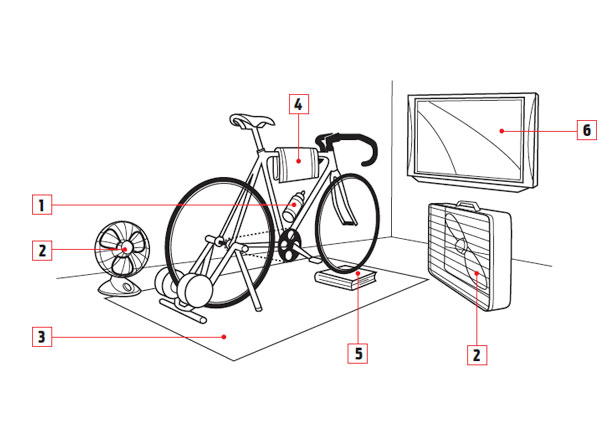
For all these reasons I have also been using the home trainer to get in some recovery training after racing or long run sessions. At the beginning of December I completed a 72km trail race at night in sub-zero temperatures. Conditions were very muddy, icy in some parts, with a head-on wind to contend with and as it was at night with poor visibility, the going was tough. Also I forgot to mention I flew out to Lyon on the Saturday, picked up my number, took a shuttle to the start in St Etienne, started the race at midnight, ran to Lyon through the night and flew back to London on Sunday, took a coach, another train ….All a bit crazy and exhausting to say the least. Over the next 2 days following the race, I suffered DOMS (delayed onset of muscle soreness). This meant no running for a few days. I had a fun run planned in Paris the following weekend so I decided to use cycling as “active” recovery. Like running on the treadmill you can quickly get hot very quickly on an indoor trainer. I set myself up near an open window to allow for some ventilation. If you were doing a hard session, an indoor fan would also be a good idea.

Recovery is all about spinning my legs, easing away muscle soreness, getting the blood flowing and I suppose not having too much structure. However, I find indoor training easier if I have a plan to follow and music!
©iancorless.com_Scott-7329

Hints ‘n’ Tips

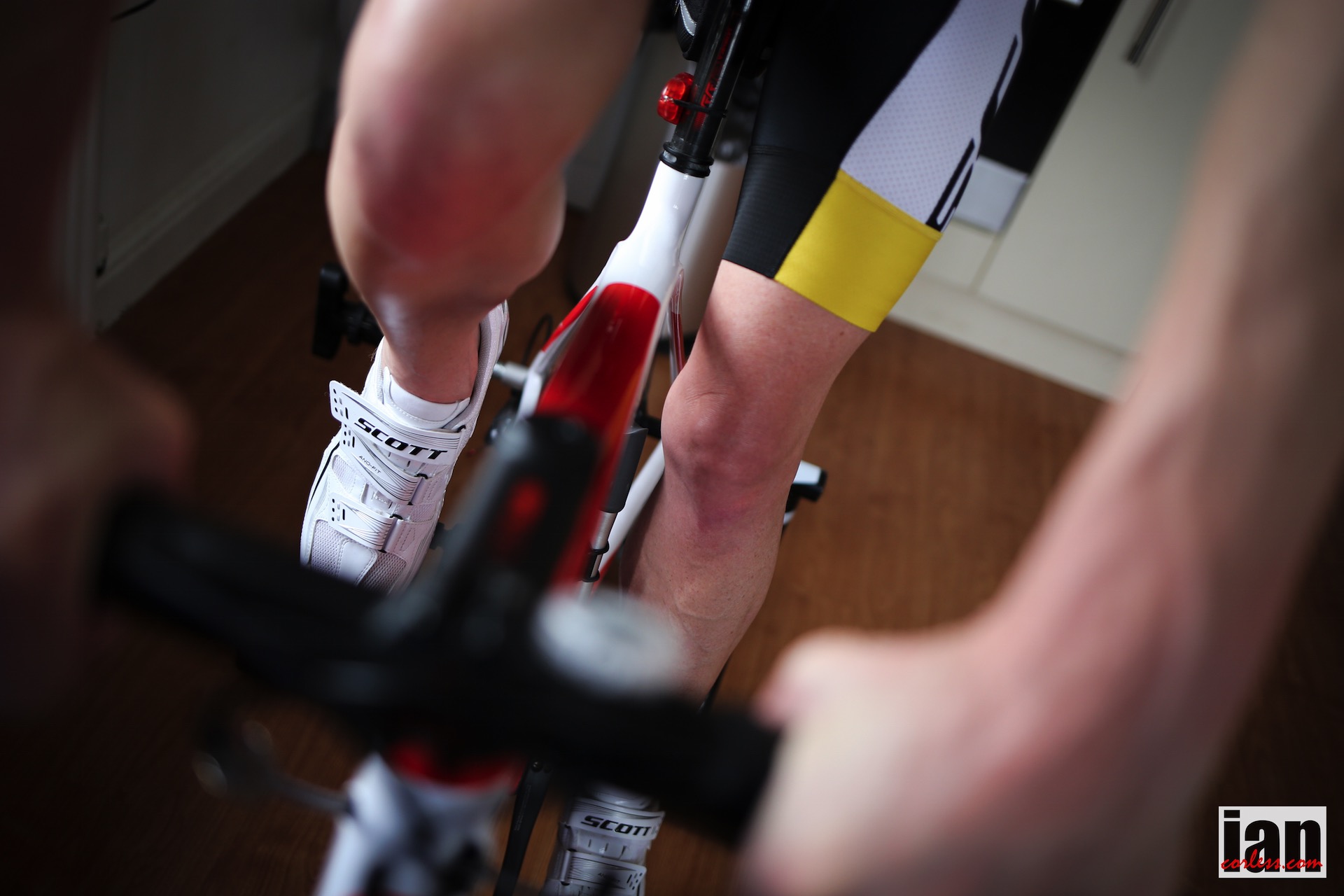
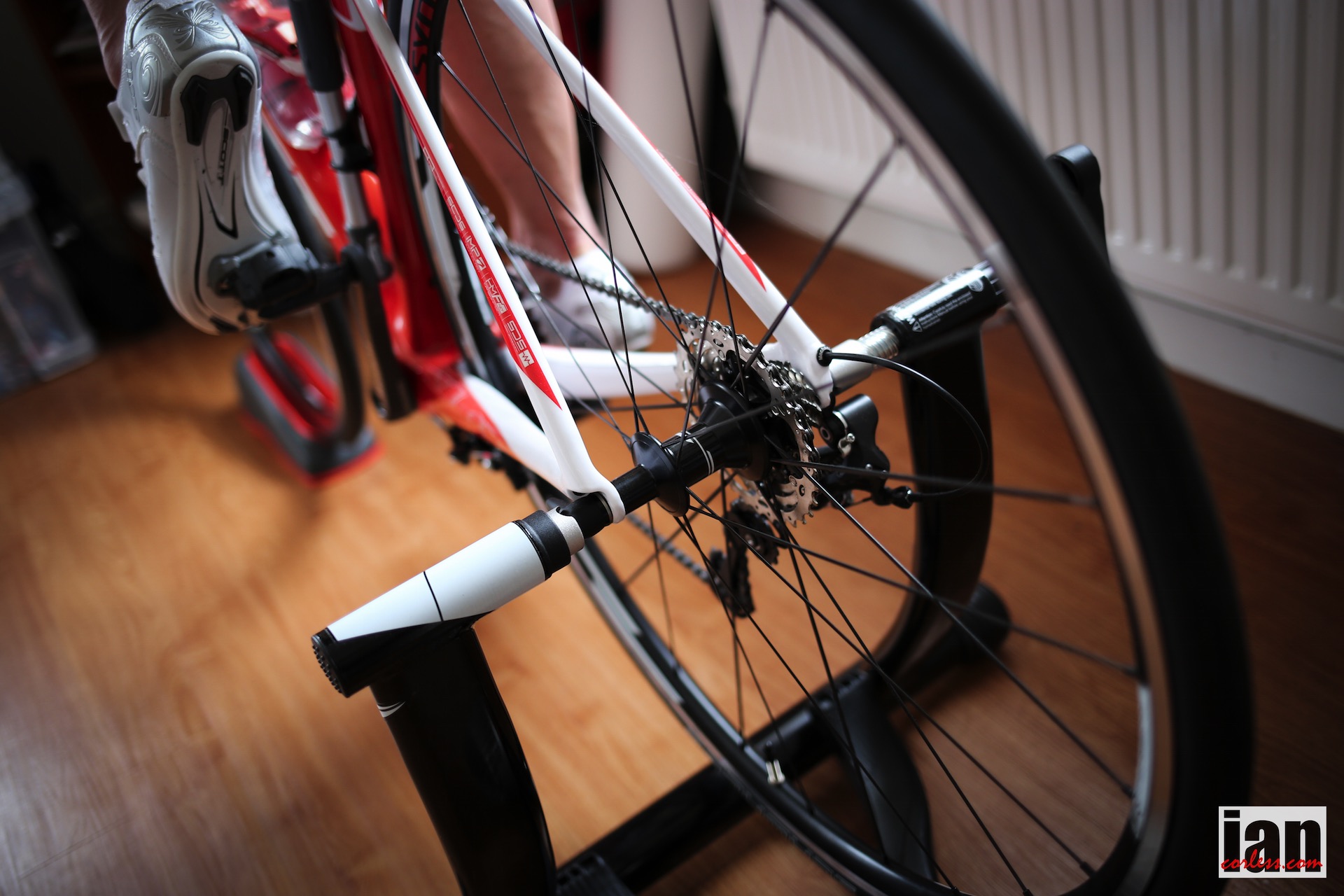
  • Use your own bicycle. I am using my SCOTT bike fixed to my indoor trainer via the rear wheel. This is perfect as I do not compromise on my cycling position which I have worked hard to make perfect.
©iancorless.com_Scott-7360

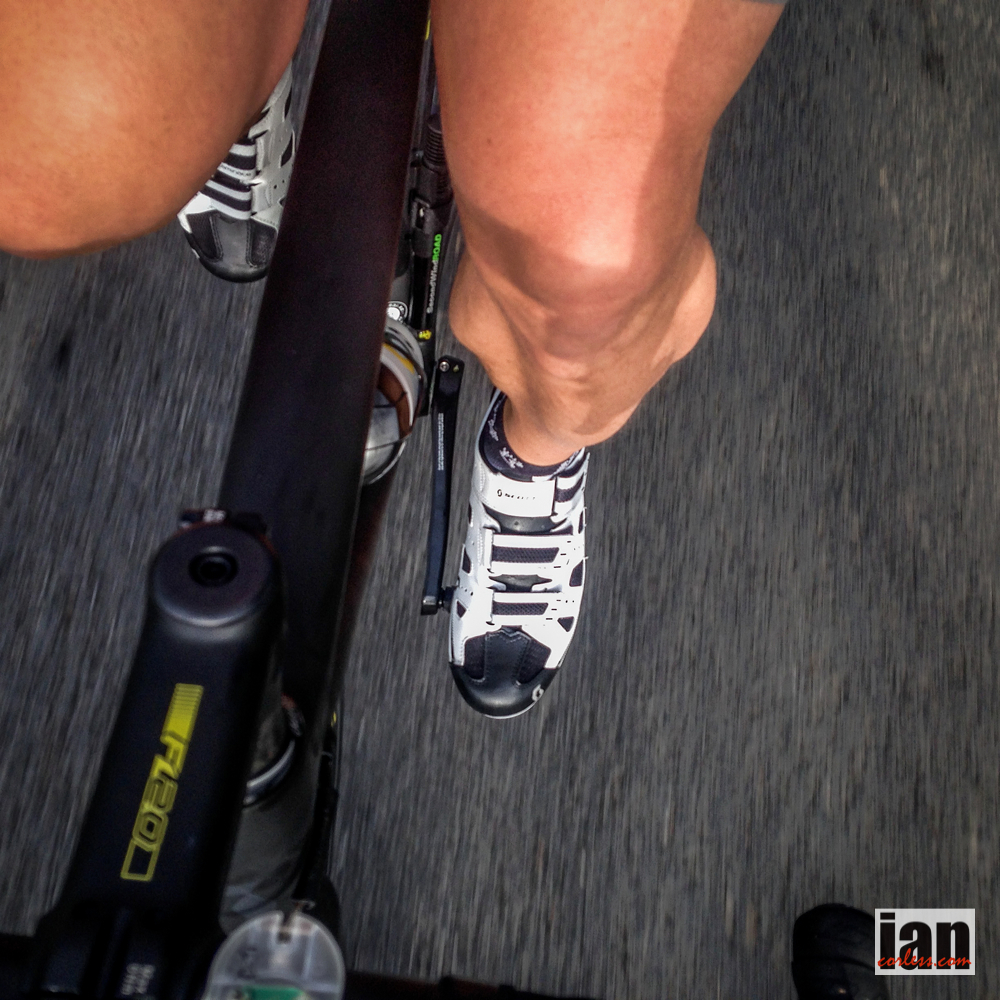
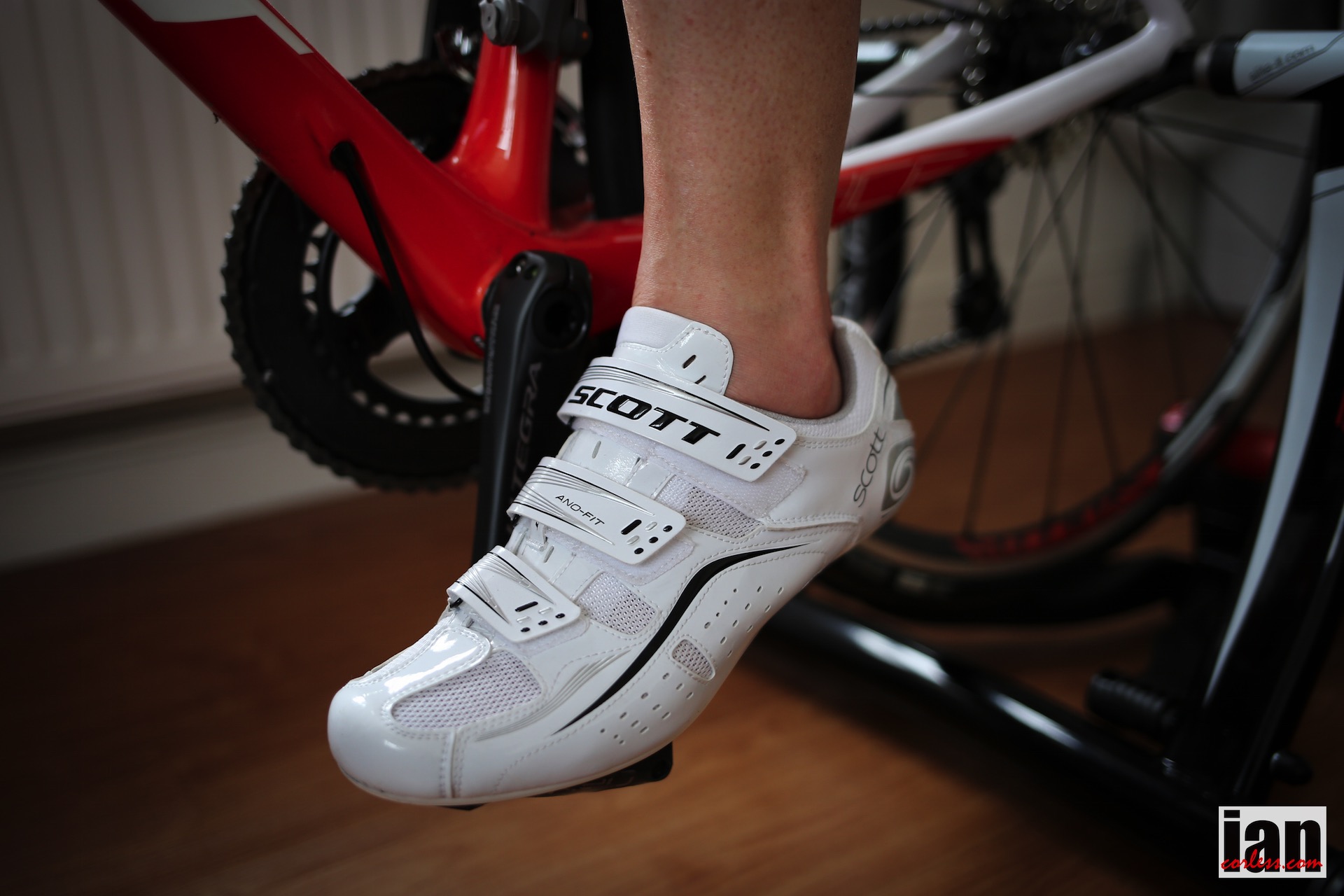
  • Use your normal cycling shoes and pedals
©iancorless.com_Scott-7316

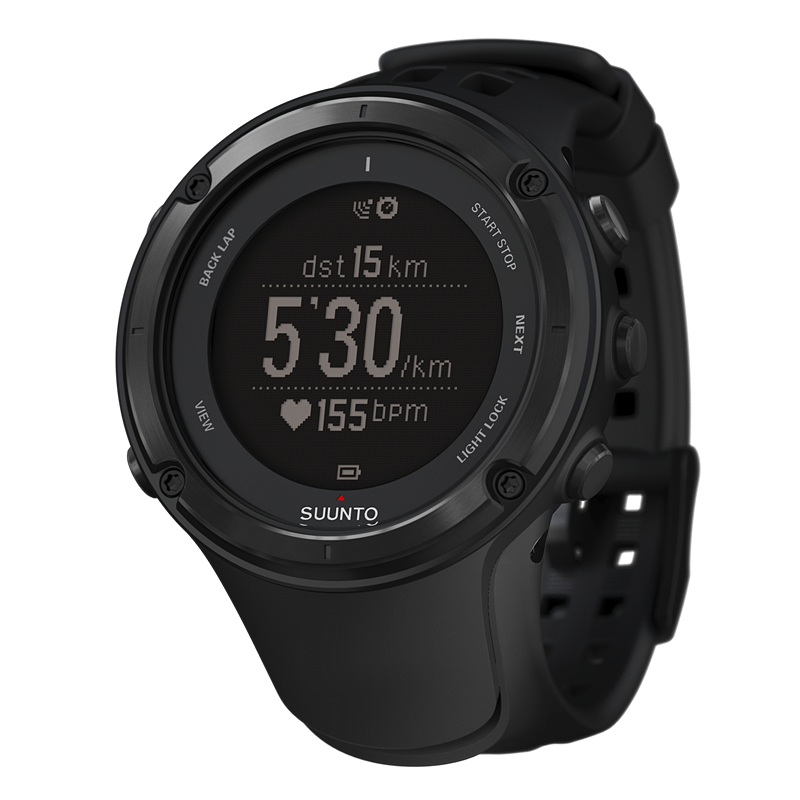
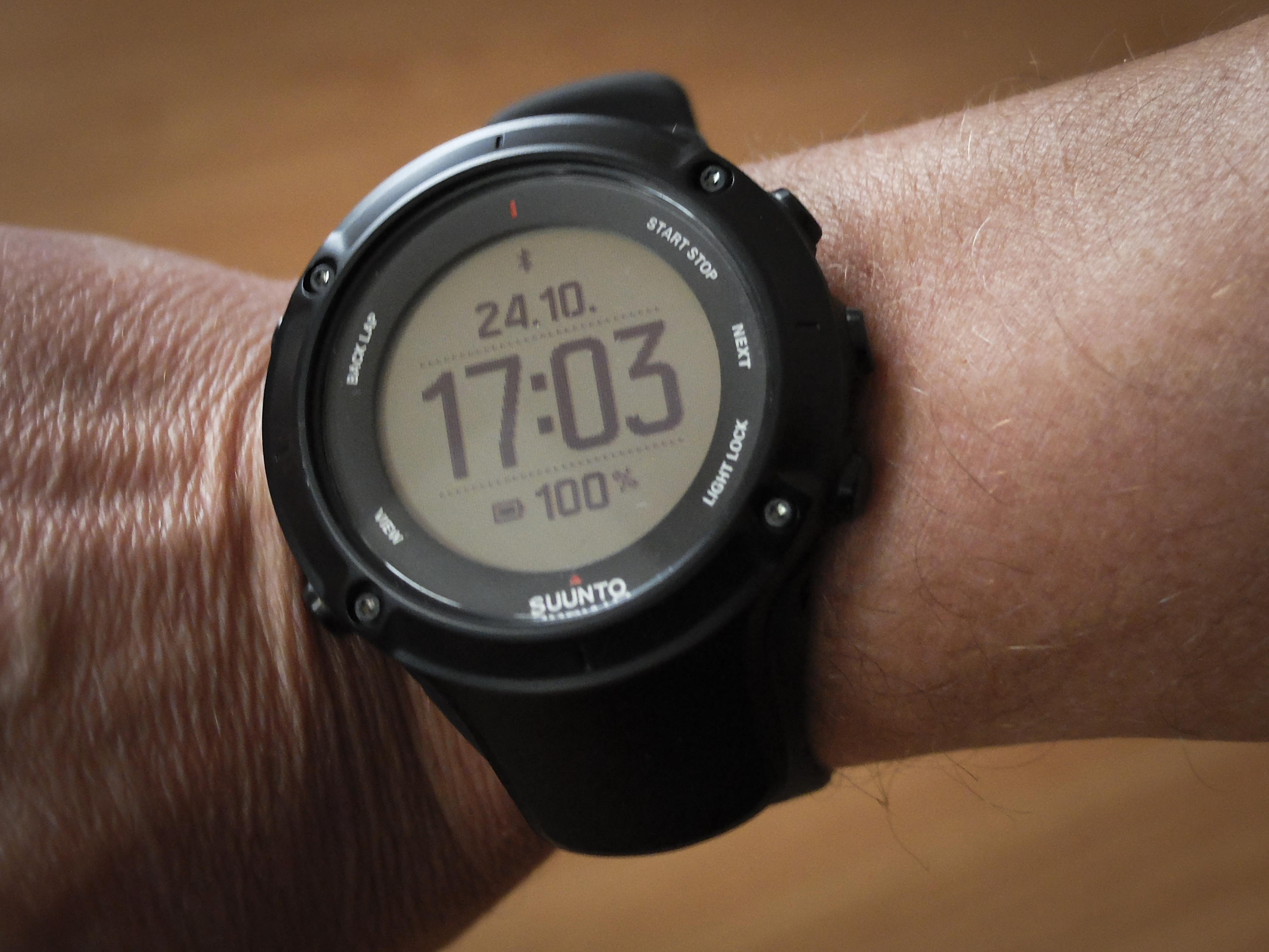
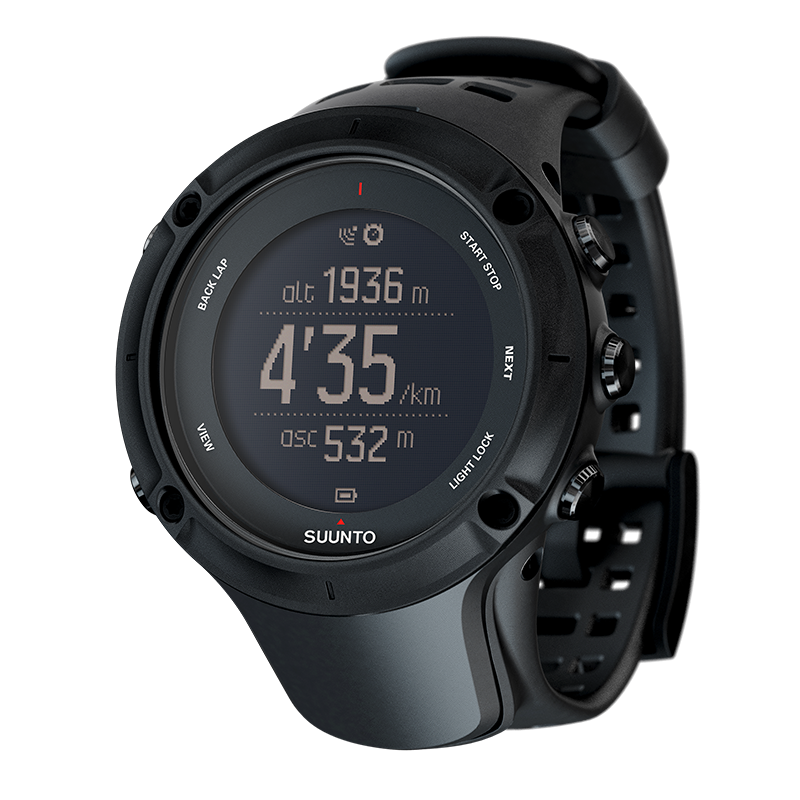
Suunto Ambit 2

  • Have water available
  • Use a fan or train near an open window
  • Have a towel handy – you will sweat
  • Use music or a TV for stimulus

Need some free music to help you with your indoor session? Try HERE for 50minutes of audio. I personally recommend that you make your own playlist that is specific for your session. Using something like iTunes makes this really easy. Alternatively, a company like Audiofuel provides specific music mixes with or without coaching.

Session 1:

Length : 44 min        

  • Warm-Up : 10min in a very easy gear allowing me to ‘spin’ at a cadence of 90
  • Main Set: 24min alternating 3min at 90 cadence and 3min at 110 cadence. Gearing should be easy and light to allow your legs to spin around. The faster cadence session of 110 allows me to concentrate on cycling technique using the up and down of the pedal stroke and adds souplesse to my legs.
  • Cool Down: 10min easy gear at a cadence of 90

Session 2:

Length: 35min

  • Warm-up: 10min in a very easy gear spinning at 90 cadence
  • Main set: 15min broken down into 30sec at 90 cadence and 30sec at 120 cadence
  • Cool Down: 10min very easy gear at 90 cadence
©iancorless.com_Scott-7351

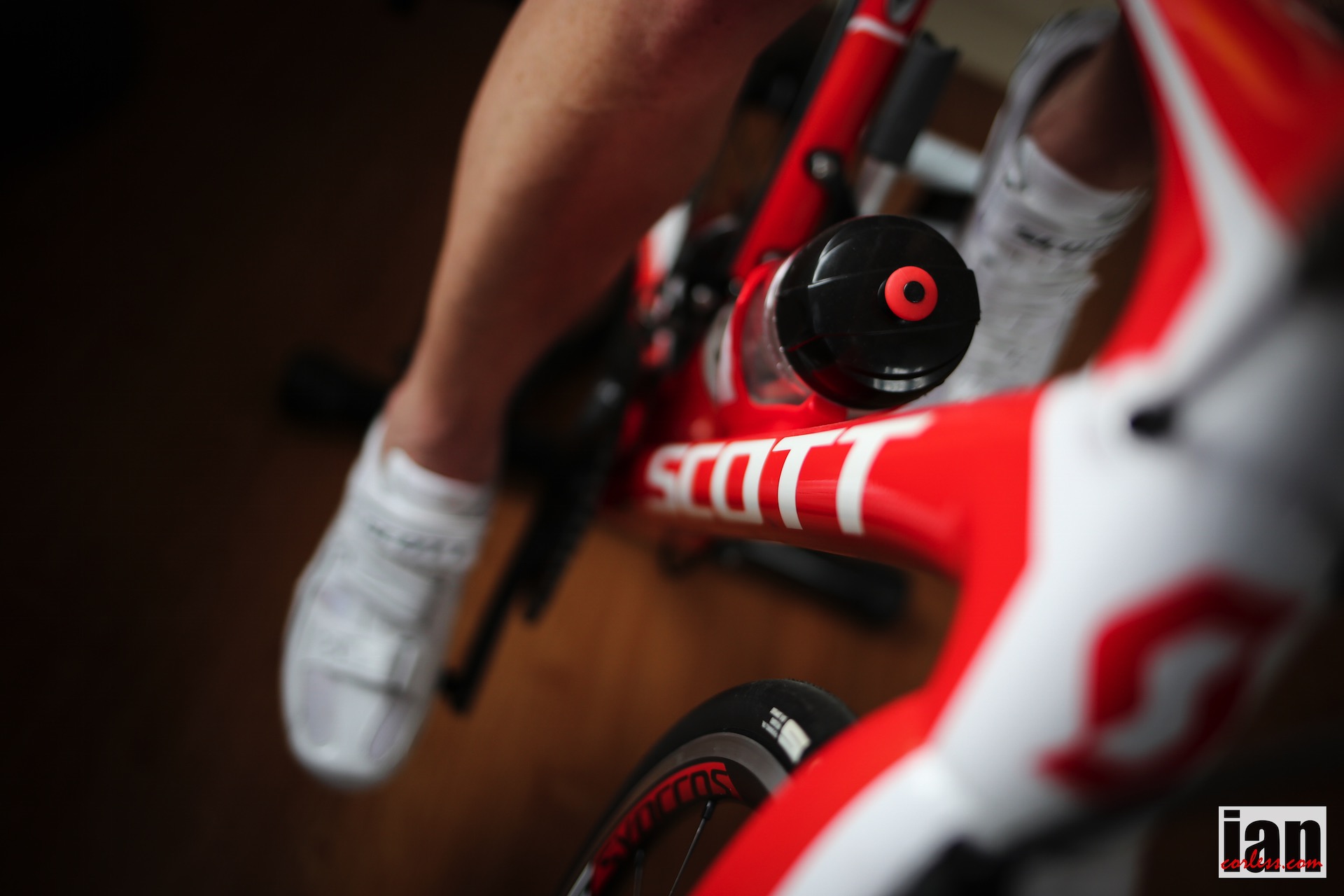
Initially you will find your legs struggling to get used to using different muscle groups in this recovery work-out. The aim is not to PUSH the gears or have resistance. We don’t want to stress sore muscles. These two sessions are all about spinning legs with an easy gear on the bike and allowing the muscles to recover. This is what is so great about cycling… you can exercise in a non weight bearing way. However, the increased cadence sessions of 110 and 120 will allow you to raise your heart rate.

I shall be doing a turbo session at least once a week as active recovery in my build up to my next long distance run, Paris Mantes 50km towards the end of January. This will be followed by a week off running but 2 turbo sessions before a trip to Costa Rica and the opportunity to run The Coastal Challenge stage race.

Happy New Year and remember, cycling is great for running if used sensibly.

Join us on STRAVA

TIS-Strava-Logo-big-square-600x340-e1354741369637

Thanks to SCOTT SPORTS and SUUNTO for the support and backing

Print

Check out SCOTT HERE

Suunto_logo [ConveWHITE_rted]

Check out SUUNTO HERE


CYCLING for RUNNERS – Article 5 Spice Up Sessions

Cycling for Runners HEADER2

December is here. The days are shorter and many of you will be feeling like hibernating! Nothing wrong with that, training should have peaks and troughs and if you don’t have them, in our opinion you just end up with a series of flat performances.

For the last few months you will have hopefully been incorporating cycling as part of your weekly routine; primarily to replace one or two of your ‘recovery’ runs. Or maybe you have been injured and you are using cycling as rehabilitation? Either way your body will be thanking you for the new stimulus, the lack of impact and the opportunity to try something new.

An article 4 we outlined winter cycling and provided some hints ‘n’ tips to allow you to cycle safely on cold and short days and we also introduced you to indoor training.

In article 5 we are going to spice up your training with two sessions – one for the road and one for indoor training.

Please remember, these sessions are in addition to your recovery cycles and are a replacement for one of your faster, more intensive run sessions.

Worried that cycling will not benefit you as a runner?

Hopping on a road bike or indoor bike provides non-impact cross training that will build your engine, maintain fitness and keep off the pounds! If you are running or cycling you will need strong lungs, a great capillary network and a strong heart. So don’t worry…

First of all, let us have a refresh.

  • Maintain your long run either mid-week or at the weekend
  • Maintain one quality run work out – speed, hills, tempo, fartlek or so on.
  • Incorporate strength and conditioning
  • Stretch post sessions, particularly hamstrings, ITB and calf’s after cycling
  • Have a rest day
  • Cadence – think and concentrate on 90 ‘rpm’ when cycling
  • Use a heart rate monitor and/ or Gps to monitor training

Road ‘V’ Indoor

©goskyride.com

©goskyride.com

Cycling is cycling; yes? Well, yes it is BUT cycling outside in contrast to indoors provides a very different experience. It’s just like running outside in comparison to running on a treadmill.

Many of us would always choose a session outside in comparison to an indoor session, however, indoor sessions are great training sessions that allow us to ‘almost’ completely control the training situation and therefore be very specific. We embrace indoor sessions of 45-90 minutes when we are particularly working on a particular aspect of fitness. For example, you can control your heart rate, monitor your cadence, you have no traffic lights, bad weather or more importantly, danger! You can remain warm, listen to music and embrace a quality workout.

We discussed indoor bike set up in article 4; if you need a refresher, take a look HERE.

Keeping in mind this is our first ‘session’ on the bike it will be an introduction session and one that we recommend you incorporate once a week for the coming four weeks. *We do however recommend you add repetitions with each week for 4-weeks.

The Indoor Session

Image copyright - highergearchicago.com

Image copyright – highergearchicago.com

What you need:

  • Bike
  • Indoor trainer
  • HRM
  • Water
  • Fan
  • Music
  • Towel

Hints ‘n’ Tips

  • Make sure you have your rear tyre at 100 psi (at least) and ensure that you always inflate to the exact same pressure for every session, that way you have consistency and you can monitor progress.
  • You will apply pressure to the rear tyre by adding resistance from the drum on the indoor trainer. Perform a ‘roll-down’ test each time so that you have a controlled environment. A roll down test works as follows: inflate to 100psi and then apply pressure to the back wheel using the turbo trainer. Cycle and build to a particular speed (say 15mph) and then stop pedalling. Time how long it takes the wheel to stop moving. For example, 4 seconds. Every time you train you should ideally have the same roll down time for consistency and monitoring. If it takes 5 seconds, add more resistance and vice versa.
  • Use a fan to regulate temperature.
  • Drink during the session – you will sweat a great deal!
  • Use music and compile a play list that suits the session – no point listening to classical music if AC/DC are what you need to ramp the session up!
  • A HRM is essential to control your effort and monitor progress
  • Aim for 90 cadence

©iancorless.com©iancorless.com_cyclingforrunners-2

Warm up for 10-minutes ‘spinning’ your legs in an ‘easy’ gear. This is all about getting blood flowing, loosening stiff and/ or tight muscles and preparing for the session ahead.

Session: Perform 2 minutes at 80% of maximum heart rate (keeping cadence on or around 90) – You will need to use your cycling gears to add resistance and provide the necessary difficulty level for you elevate your heart rate. Monitor your HRM with a quality item – We use Suunto Ambit 3 Peak and Ambit 2 units

©iancorless.com_Suunto-0253205

Recover for 2-minute ‘spinning’ your legs as in the warm up

Repeat the 2-minute session with 2-minute recovery for an additional 5-times (making a total of 6 in week-1). *In week 2 do 7-repetitions, in week 3 do 8-repetitions and in week 4 do 10-repetitions.

Tip – you can set your HRM/ GPS to time these intervals for you. That way you can just concentrate on the effort!

Warm down for 10-minutes spinning and then stretch

This session is a quality workout that maximises your time training and provides the necessary stimulus to make you a better, faster and more efficient runner.

The Outdoor Session

Indoor training may just not be your thing? Road riding, particularly in winter is more stressful, less predictable and carries increased risks of accident. The risks are very real, so please be sensible! Our hot tip for cycling in winter is ideally cycle between the hours of midday and 3pm – you have more light, potentially less traffic and the weather should be more predictable. For example, any early morning frosts will have disappeared providing ambient temperatures have increased.

©iancorless.com©iancorless.com_cyclingforrunners-

Lets face it. A beautiful winters day, blue skies, glowing sun and a nip in the air makes you feel great to be alive.

In contrast to an indoor session, road cycling is less controllable due to many of the points already raised, so think about your ride and what you want to achieve. For our first session, we are going to work on ‘structured *fartlek’ and therefore we recommend riding out of any built up areas (use this as a warm up) and then use quiet roads for the session. Ideally the road should be flat or slightly undulating – hill sessions come later in the training!

* Fartlek, which means “speed play” in Swedish, is a training method that blends continuous training with interval training. The variable intensity and continuous nature of the exercise places stress on both the aerobic and anaerobic systems.

Warm up for at least 15-minutes, in reality though your warm up may be longer due to your location and how far away quiet roads are.

Once on quite roads build pace using progressively harder gears but still maintain 90-cadence.

Session: 1-min, 2-min, 3-min and 5-min intervals at 80-85% of max HR. Be ‘random’ with how you do these intervals and the session should last 30 to 40-minutes including recovery. Ideally you will do at least 11-minutes of fartlek and build to 22-minutes of fartlek over a 4-week period.

Recovery is based on feel and unstructured, Use heart rate as a guide here. For example, when your heart rate drops back down to 70-75% of max HR – perform another repeat/ interval.

Warm down is as warm up – use cycling home in an easy gear and make sure you stretch post ride.

Incorporate one or both of the above sessions in over a 4-week period and you will start to feel the benefits not only physically and mentally.

In the New Year we will take our sessions up a notch to provide you with a great kick-start for another successful year in sport.

Have a great Christmas break and a great New Year!

*****

Join us on STRAVA

TIS-Strava-Logo-big-square-600x340-e1354741369637

Thanks to SCOTT SPORTS and SUUNTO for the support and backing

Print

Check out SCOTT HERE

Suunto_logo [ConveWHITE_rted]

Check out SUUNTO HERE

CYCLING for RUNNERS – Article 4 Winter Cycling

Cycling for Runners HEADER2

If you are living in Europe we won’t need to tell you that winter has arrived. Temperatures are dropping, the days are shorter, road conditions are unpredictable at times and the urge to get out and do anything (particularly cycling) can be diminished.

Don’t be disheartened though. Remember we are using cycling as a way to enhance our running and at this stage we are very much using cycling as active recovery or a method of maintain fitness while injured.

We all get injured at some point in our running. Salomon athlete, Jorge Maravilla posted this just the other day:

“I’m guilty of constantly thriving for the runners high, but lately my body has denied me. Despite an unwelcomed setback, today I found joy on two wheels.”

Jorge Maravilla

We keep saying this, but cycling is just great all around exercise. Jorge is lucky… he seems to have some nice weather in San Francisco. If we Europeans wish to continue cycling in winter we have two options:

  • Purchase some great all-weather clothing.
  • Go indoors.

Both options above are valid and we combine both in our training.

Cycling outdoors in winter

The old saying, ‘there is no such thing as bad weather; just bad clothing’ really is applicable for cycling outdoors in winter. However, let’s get one thing straight, no all singing and all dancing Gore-Tex this or Gore-Tex that will protect you from ice on the road and dangerous conditions. Our first tip is assess conditions and be sensible… if in doubt, stay indoors.

Essential kit for winter cycling:

  • Hat ideally with ear covers that will fit under your helmet
  • Buff or seamless neckwear product for around your neck
  • Glasses
  • Merino base layer
  • Long-sleeve jacket with a windproof chest panel
  • Gloves – depending on conditions you may well need options. For example: a Merino liner glove with thicker warmer/ windproof glove for cold and icy winds. Alternatively you may well need a glove that performs in wet conditions.
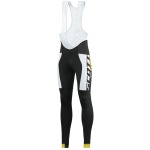
  • Long tights – we recommend those with in-built braces as they provide added protection around the kidneys. Also consider tights with foot loops. These loops will stop them riding up. Tights are available with or without at seat pad. We purchase without seat pad so we can wear our normal cycling shots underneath.
  • Merino socks or similar
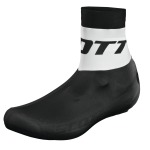
  • Shoe covers to help block out the wind, rain and colder temperatures
  • Waterproof jacket that can fold up

If you have all of the above you are set for winter cycling. Remember, cycling in winter is much colder than running primarily due to the wind chill. Don’t skimp on layers. In particular, your hands and feet are the most vulnerable areas.

We recommend cycling at all times (even in the day) with a flashing small led light at the front of your bike and a flashing red at the rear. It just adds a little more presence on the road and makes you more visible. It goes without saying that if you are heading out at night, use the best front and rear lights you can afford.

Eye contact is a key element of cycling, especially in winter. When approaching junctions or any areas where cars can impede and impact on your travel, look for eye contact. Lock in on them. Stare at them and acknowledge that they have seen you.

As we mentioned in article 3, when cycling use light gears and aim for 90-cadence. Remember, we are using cycling to either extend aerobic activity or as an alternative to a recovery run at this stage. As we progress with our articles we will discuss how to adapt your cycling sessions so that they can become specific in extended your fitness and/ or building strength.


Cycling indoors in winter

Lets face it, heading outdoors in the cold and potentially wet conditions on a bicycle is not something that you may not wish to do. It’s understandable. It’s not for all of us, especially if your runs are wet, muddy and cold. Step in indoor cycling.

We love indoor cycling…

We know; it’s the equivalent of running on a treadmill. However, just like a treadmill, indoor cycling can provide you with a very controlled and specific environment.

  • Focused and quality sessions
  • Improved cycling technique
  • Time efficiency
  • Accurate testing

Our first hot tip is don’t use the bikes at your local gym unless you have no other option… why?

Well, gym bikes are just so far removed from your ‘own’ bike. Remember in our first couple of articles how we emphasized how important it is to get the correct bike, the correct fit, the correct saddle and so on… why would you then go the gym, get on a generic bike and then disregard everything you have strived to get right.

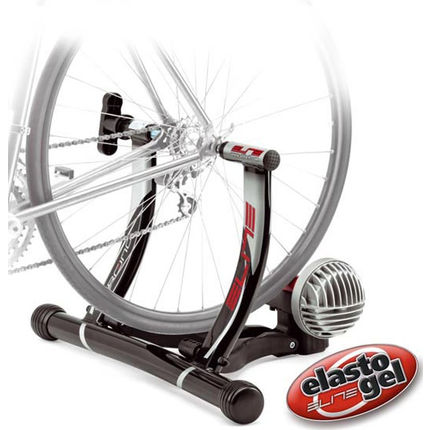
The way forward is to purchase a ‘Turbo Trainer.’

elite crono fluid

Many styles of turbo trainer exist and you can pay as little or as much as your budget allows. We would recommend a middle of the road trainer costing in the region of £100-150 to be the best of both worlds. We also recommend a ‘fluid-resistance’ trainer as you use your bicycle gears to create more or less resistance. For clarification, ‘magnet-resistance’ units often work by adding a lever to the handlebars and you then add/ reduce resistance by moving the lever. We not keen on these though as the resistance seems to be linear and the feel is nothing like riding on the road.

One more feature that we think is worth mentioning is a spring- loaded resistance unit. Indoor trainers can really impact on the longevity of a tyre; a spring-loaded unit will provide a longer life.

How do they work?

A turbo trainer usually consists of an ‘A’ frame and a metal drum. Quite simply, you attach the rear of your bicycle to the frame and place the rear wheel on the drum. This drum provides resistance to the rear wheel and creates a similar sensation to riding on the road. You can add more or less resistance to make sessions as hard or as easy as you require. Tip: The front of your bicycle will feel as though it’s pointing downhill due to the added height of the turbo trainer. Therefore raise your front wheel to make your bicycle level. You can use anything to do this but many companies now sell specific products to do the job for you.

Hints ‘n’ tips

Image copyright - highergearchicago.com

Image copyright – highergearchicago.com

  • Use a piece of old carpet or purchase a turbo training matt so that you provide some protection between you, your bicycle and the floor. This is really important if you are using a room in your home. (3)
  • Have some towels handy to protect your bike and to use to mop sweat from your face (4)
  • Use a fan to cool you down (2)
  • Have water available (1)
  • Raise the front wheel (5)
  • Always use the same tyre pressure and resistance on the rear wheel. This will make sessions controllable and comparable.
  • Use a HRM such as a Suunto Ambit and/ or rear wheel cadence counter
  • Use music or a dvd to provide stimulus. We personally create music playlists based on the session we are doing… rocking out on your indoor trainer to AC/DC makes speed and interval work easy! (6)

Indoor cycling generates plenty of heat and even when cycling easy, you will still sweat. Be prepared.

For the first month of indoor cycling you can apply the principles as laid out in Article 3 of Cycling for Runners – keep gearing light and easy, aim for a 90-cadence and use a HRM to ensure that you are not working harder than you should be. Double what would have been your run time; so, if you were doing a 30-minute easy run, do a 60-min easy cycle.

 *****

In article 5 of CYCLING for RUNNERS we will discuss spicing up your outdoor and indoor cycling sessions with one session for outdoors and one session for indoors and how to combine this with your recovery sessions.

Enjoy the seasons, enjoy the change in the weather and importantly use cycling to enhance your running.

Be safe…!

Join us on STRAVA

TIS-Strava-Logo-big-square-600x340-e1354741369637

Thanks to SCOTT SPORTS and SUUNTO for the support and backing

PrintSuunto_logo [ConveWHITE_rted]

Check out SCOTT HERE

Check out SUUNTO HERE

CYCLING for RUNNERS PAGE HERE

Cycling for Runners Logo

Ian Corless: El fotógrafo de Skyrunning

corredordemontana.com

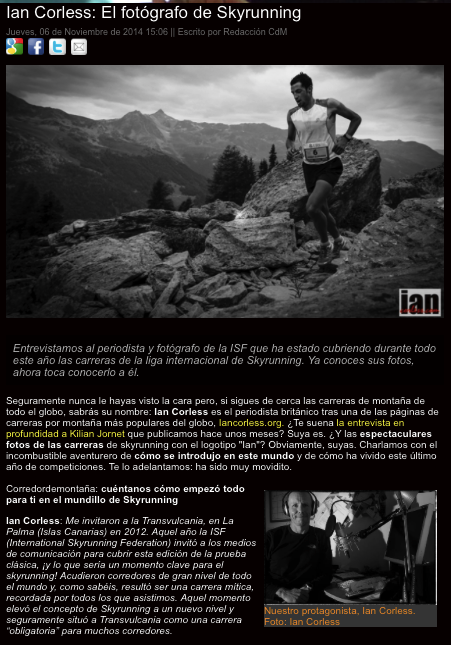
I am very honoured and flattered to be interviewed by corredordemontana.com in an article titled  – Ian Corless: El fotógrafo de Skyrunning.

You can read the full interview in Spanish HERE

For my English speaking friends and followers. Here is a transcript in English.

*****

Tells us about how you got involved with Skyrunning reporting

I was invited to Transvulcania La Palma in 2012. The ISF (International Skyrunning Federation) invited media specialists from all over the world to witness what turned out to be a turning point for Skyrunning. It was a key moment. World-class athletes travelled from all over the world and in doing so created what turned out to be a classic race. It elevated Skyrunning to a new level and certainly placed Transvulcania on the ‘to do’ list of many runners.


How long have you been at it now?

I started to work with the ISF as a media partner after Transvulcania in 2012. I went to Zegama-Aizkorri and then followed this by attending many (but not all) Skyrunner® World Series events in 2012. In 2013 I attended most races on the calendar. As you know, the Skyrunner® World Series is made up of five races in each of the categories – VK, SKY and ULTRA. In 2014 I continued this format working on pretty much the whole calendar with the exception of the two races in the USA.


What exactly do you do? Does it take up all your time or do you combine your Skyrunning photography with other jobs? 

I work freelance in the world of ultra, mountain and trail running. I work on many other projects and not just Skyrunning. For example in 2014 I worked on The Coastal Challenge in Costa Rica, Marathon des Sables in Morocco and this month I go to Nepal for Everest Trail Race and then South Africa for the Salomon SkyRun. I have a very busy calendar and at my last count, I will have worked on thirty-one races in 2014. Depending on what my clients require will very much depend on what services I provide, however, it usually consists of writing and photography to help promote a race and provide feedback for the ultra, trail and mountain running community worldwide. In addition to all this, I have my podcast, Talk Ultra which is available every two weeks for free on iTunes and via my website.


Your opinion of the state of Skyrunning in 2014 and how things might develop next season

Skyrunning has grown incredibly over the past few years. We have all witnessed the boom! The vision of Lauri van Houten and Marino Giacometti is certainly coming to fruition. They had a vision of what Skyrunning may be… risks taken in 2012 at Transvulcania have paid off. However, many forget that Skyrunning dates back to 1989 when Giacometti first ascended the Monte Rosa. I most definitely believe they were ahead of the time. We are all just catching up… I also believe that Kilian Jornet has been an incredible vehicle for the sport, His rise and dominance has coincided with the growth in Skyrunning.

You will notice that the 2015 Skyrunning calendar has recently been announced and we see some changes. In addition the Skyrunner® World Series we now have the Continental Series. This shows how the sport is growing and how the ISF needs to appeal to a worldwide audience. It’s very exciting.


Any amazing anecdotes to tell from last season?

I am very fortunate to spend a great deal of time working with, photographing and talking to some of the best athletes in the world. I truly feel blessed. I have so many great memories and moments. If I had to pick one surreal moment, I think back to Matterhorn Ultraks. Kilian Jornet didn’t run the race but decided to take photographs and support his Salomon teammates. I had climbed just over 1000m vertical to get to a location that would allow me to photograph runners as they came to me with the Matterhorn in the background. I waited for hours, photographed all the front-runners and I was about to make my way down the long descent to make my way to the finish when I received a text from Kilian asking:

‘Are you making your way down?’

I replied, ‘yes!’

‘I will wait for you,’ Kilian said.

I added my cameras to my large pack (it weighs about 10-12kg) and then I made my way to the long and technical descent. After 10-minutes or so, I saw Kilian waiting. We then ran all the way down to the finish… it was ridiculous. I was following the best mountain runner and definitely the best downhill runner in the world with a huge pack and trying to keep up. However, Kilian was extremely kind and ran well within himself. I however was at my limit! But to follow and see his ability first hand was a highlight of the year.


Do you plan to be present at all ISF race events next season?

The calendar for 2015 is larger as we now have the World Series and the Continental Series, so, it will not be possible to attend all events. However, I will hopefully attending as many as possible and following the series as it unfolds.


How do the logistics work out when you travel to new race locations & have to discover where you need to be for your photos?

It is all about preparation. I usually arrive at a race venue two days before the race. I do my research. I look at maps, talk to staff and race officials and then I plan where I want to be to capture the best images. Longer races are easier as they allow me more flexibility. By contrast, a race like Limone Extreme is just over 2-hours from start to the first finisher, so you need to be 100% prepared. A real plus is that I am able to fulfill my passions for the sport in photography, words and podcasting but also get some exercise. I usually have to climb or hike to many of the locations I work from. Occasionally we are spoilt with a helicopter but that does not happen very often! Trofeo Kima is a perfect example where myself and other photographers/ cameramen are transported all over the course by helicopter. Kima or me is still a favourite race, it is so extreme and visually stunning.


Do you always find the right place to get decent pictures at races? Does it ever not quite work out?

Yes, I always ensure that I am in the correct place. That is my job. However, I may not always get ‘the’ image I want. It is what is so great about our sport and what I do. Nothing is guaranteed and I work on adrenaline to help me maximize my potential.


Tell us about your unfortunate “incident” at the Transvulcania 2014.

2014 has been an interesting year with a couple of incidents that I hope don’t happen again…

In May at Transvulcania La Palma I had photographed the race start and then I was making my way to the mountains to a location I had found to photograph the front-runners. On the coastal road I felt my car twitch and then I lost control. I veered to the right and lost control. A huge concrete block stopped me going over the edge. I was not going too fast but the car was completely written off. I jumped out of the car with no personal damage. I was so lucky! My first priority was that I needed to get to the mountains…

Later in the year I had a second incident. I was in Barcelona transferring to go to a race in Catalonia. I was at a restaurant and I had ALL my camera equipment and computer stolen. It was horrendous as you can imagine. My whole life in my bag: gone! It was a pretty tough two weeks that followed and my insurance only covered two thirds of the cost of all the stolen items. However, I managed to replace everything.

******

CYCLING for RUNNERS – Girl What Cycles (2)

WOBBLES WOBBLES WOBBLES

At first I was afraid

I was petrified

And I grew strong

And I learned how to get along

and so you’re back

Did you think I’d crumble

Did you think I’d lay down and die

Oh no, not I

I will survive

But now I hold my head up high

and you see me

somebody new

– Gloria Gaynor

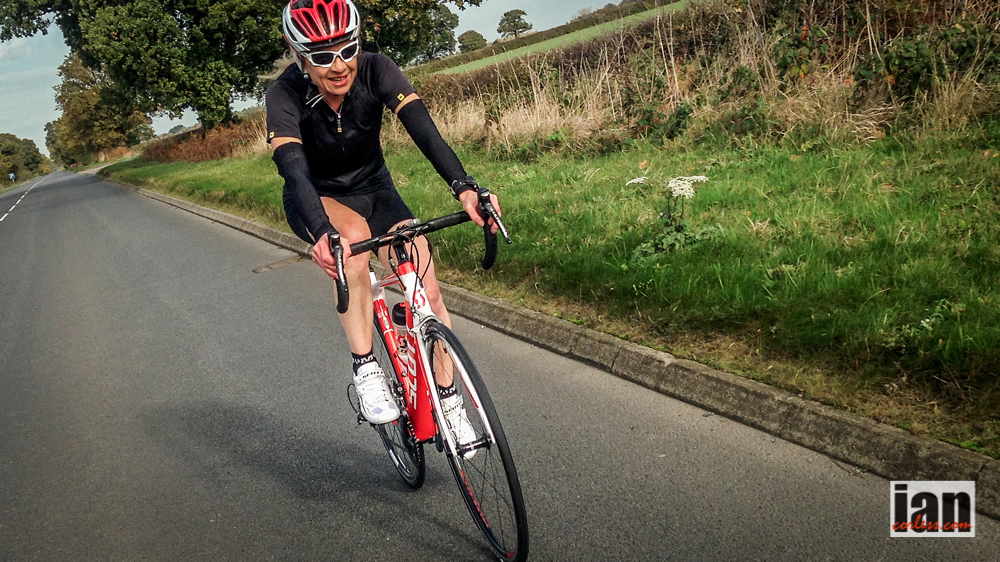
 ©iancorless.com_cyclingforrunners-4115

Well …….THAT was epic! Back on the bike. I must say the once yearly training sessions in Lanzarote are maybe not sufficient to make me feel at home on a bike.

Now, a couple of vital tips for the novice cyclist or not so novice cyclist who is going to use cycling as cross training.

First and foremost if you are lucky enough to go out on your initial cycling rides with an ex-elite cyclist:

  • Use the opportunity to benefit from his experience to take in all the useful tips about how to handle your gears (of course you need to first find out where they are). This means you will maximize your energy and hopefully be sticking to an ideal cadence of 90 rpm.
  • Draft as much as you can behind him so you can concentrate on mastering the technical aspects of your bike and less on maintaining speed.
  • IGNORE and pretend not to notice that he can take his hands off the handlebars and put on his wind-stopper jacket or hold the iphone and take snaps of you pedaling like a mad woman all without losing his balance. This requires decades of training where the bike eventually becomes an extension of the cyclist’s body. You will NOT get to this level but the objective is to benefit from what cycling offers in terms of cross-training – i.e. a weight-bearing cardio-vascular work-out and not all these impressive balancing acts.

The first ride is all about getting to know your bike and cycling kit better and not catering any ambitions with regards to average speed. This means:

  • Playing around with the gears – knowing when to get on the “big ring” and the “small ring”. You need to maintain a regular cadence and so be attentive to the course – the up-hills and down-hills as well as the direction of the wind.
  • Being aware of the dangers of traffic. Obviously you should ideally be cycling on country roads with reduced traffic but for most of us this means cycling through urban traffic before we can access these roads. Initially this is a little daunting especially since you’re trying to master your new bike.
  • Learning how to maintain balance and being able to grab hold of your water bottle or wipe a snotty nose without wobbling.
  • Learning to use clip-less pedals effectively. These might take a little getting used to but it is important to practice clipping and unclipping. At the beginning novice riders tend to unclip too much as the idea of suddenly having to break at a junction, traffic lights, cross-roads, circle, accident or congestion and losing your balance and falling still clipped to the bicycle is something we wish to avoid at all costs. Yet here again it is all about anticipating the aforementioned and using the gears effectively to get into an easier gear so you just need to slow down without unclipping.
  • Working on pedaling technique so you don’t acquire bad habits from the beginning. Use the “wiping dog shit” technique. Literally imagine you are wiping dog-shit from your shoes by dropping your heel at the bottom of the pedal stroke.
  • Enjoying the experience and not being traumatized by it so you can’t wait for your next ride! This is a hard one – after my third ride I was beating myself up because I was flying on long flat stretches of uncongested road and riding at a pathetic snail’s pace on the smallest gear up short little steep hills, spinning but not covering distance. Again this is all about experience – the more you go out, the more energy-efficient you will become. Believe in yourself and remind yourself that being perched on top of a bike is for most people a totally unnatural thing and that you will get there ………eventually. Positive thinking also helps!

My personal tip to make your first rides easier:

  • Keep all your cycling kit in one place. Don’t mix it with your run kit. There is sooooo much more to take with you, the list is endless and before you know it you are out the door and you’ve forgotten something.

Remember:

  • Helmet (don’t laugh – this is the last item I almost forgot)
  • Energy bars – yep, when you spend all that nervous energy these are a welcome treat and booster.
  • Proper wind-proof gloves as from now – remember there’s the wind-chill factor to contend with in cycling.
  • A filled water bottle.
  • Your sports watch if you use one on the “cycling” settings – I use a Suunto Ambit 2.
  • Proper sun-glasses for cycling NOT running – Cycling glasses cover the eyes more and protect.
  • Spare cash – when you cycle you cover more distance than when you run and you never know if you need it.
  • A proper wind-proof jacket
  • All the kit to fix a puncture – we’ll come to the nitty-gritty of this later.
  • Two pairs of socks if haven’t invested in shoe covers yet.

And last of all:

  • LOTS of positive energy and a smile

follow me on Twitter @girwhatcycles

riding_a_bicycle_311140


Join us on STRAVA

TIS-Strava-Logo-big-square-600x340-e1354741369637

Thanks to SCOTT SPORTS and SUUNTO for the support and backing

Print

Check out SCOTT HERE

Suunto_logo [ConveWHITE_rted]

Check out SUUNTO HERE

CYCLING for RUNNERS – Girl What Cycles – 1

Niandi PHOTO

Bicycle races are coming your way
So forget all your duties oh yeah!
Fat bottomed girls they’ll be riding today
So look out for those beauties oh yeah!

©Queen

Check out ALL the CYCLING for RUNNER articles HERE

So where do I start? Not quite sure but I am sure that cycling will firm up those weak “runner glutes” and make me a stronger ultra-runner!

But first let me put my story into perspective. I am NOT an ex-elite cyclist like a certain Mr. Talk Ultra. More like a false beginner – I’ve certainly dabbled in road biking and have recently decided to take it a little further and invest myself more seriously in cycling as a cross-training alternative.

What motivated this decision? Cycling is a weight-bearing form of cardio-vascular exercise which is perfect for:

  • Training during certain running-related injuries and maintaining cardiovascular fitness. I feel directly impacted by this as I have for the past 3 years had to cut down on my mileage and participation in long-distance events due to a foot injury. I heel strike on the right foot and after 2 decades of road and trail running my arch has collapsed and the spring ligament which is distended. The human foot has an arch much like the ones in some bridges and other architectural structures. And much like these man-made structures it is a useful engineering phenomenon with the tendons and spring ligament working together to provide “lift off”. A collapsing arch can be caused by injury or ageing. I don’t want to go down the road of orthotics and strengthening my foot muscles requires a reduction in mileage and as I hate aqua jogging cycling seemed like a good option!
  • Cross-training to prevent over-training and a sudden increase in mileage. If you are not already injured as I am cycling is an effective means of preventing running-related injuries or at least reducing the risk. I wish I had taken up cycling before to prevent all those running-related injuries the damage of which is irreversible.

This will not be the first time I use cycling to maintain fitness. A few years ago I was training for a 100-miler and felt excruciating pain when I went out for a run. My suspicions were confirmed by the radiologist. I had multiple stress fractures of the metatarsals caused by a sudden increase in mileage combined with calcium deficiency. This is not uncommon for female ultra-runners. I was told ‘RICE’ (rest, ice, compress, elevate) was what was required. Only problem – I had invested financially and time-wise my 100-miler in South Africa was just 5 weeks away. So I laid off running for 5 weeks and cycled intensely (psychologically I didn’t want to feel undertrained and it was far too early to taper). The 5-week rest from running did me the world of good and by the time I got to the start line the bones in my foot had healed and very little fitness had been lost due to my cycling. In addition to this although I didn’t get my “runner’s high”, I did get a fix from cycling and I didn’t gain any weight.

©iancorless.com©iancorless.com_cyclingforrunners-4115

You only have to look at female athletes like Nathalie Mauclair, Emilie Forsberg and Emilie Lecomte to realize that cross-training can be beneficial and help you stay injury-free, add variety and spice to your running by stimulating other group muscles and ultimately increase the longevity of your run career whether you are a professional or not.

Well now that I’ve sold the benefits of cycling for runners let me tell you about my dabbling with the sport:

I grew up in the Netherlands where kids are born on bikes so I started cycling relatively long distances when I was 5 – at weekends it wasn’t uncommon for us kids to cycle 20km to the pancake restaurant, eat up a massive Dutch pancake and cycle 20km back home. Then as I grew up into a lazy teenager I put away my bike and only took up cycling again when I was injured as a runner.

Niandi PHOTO

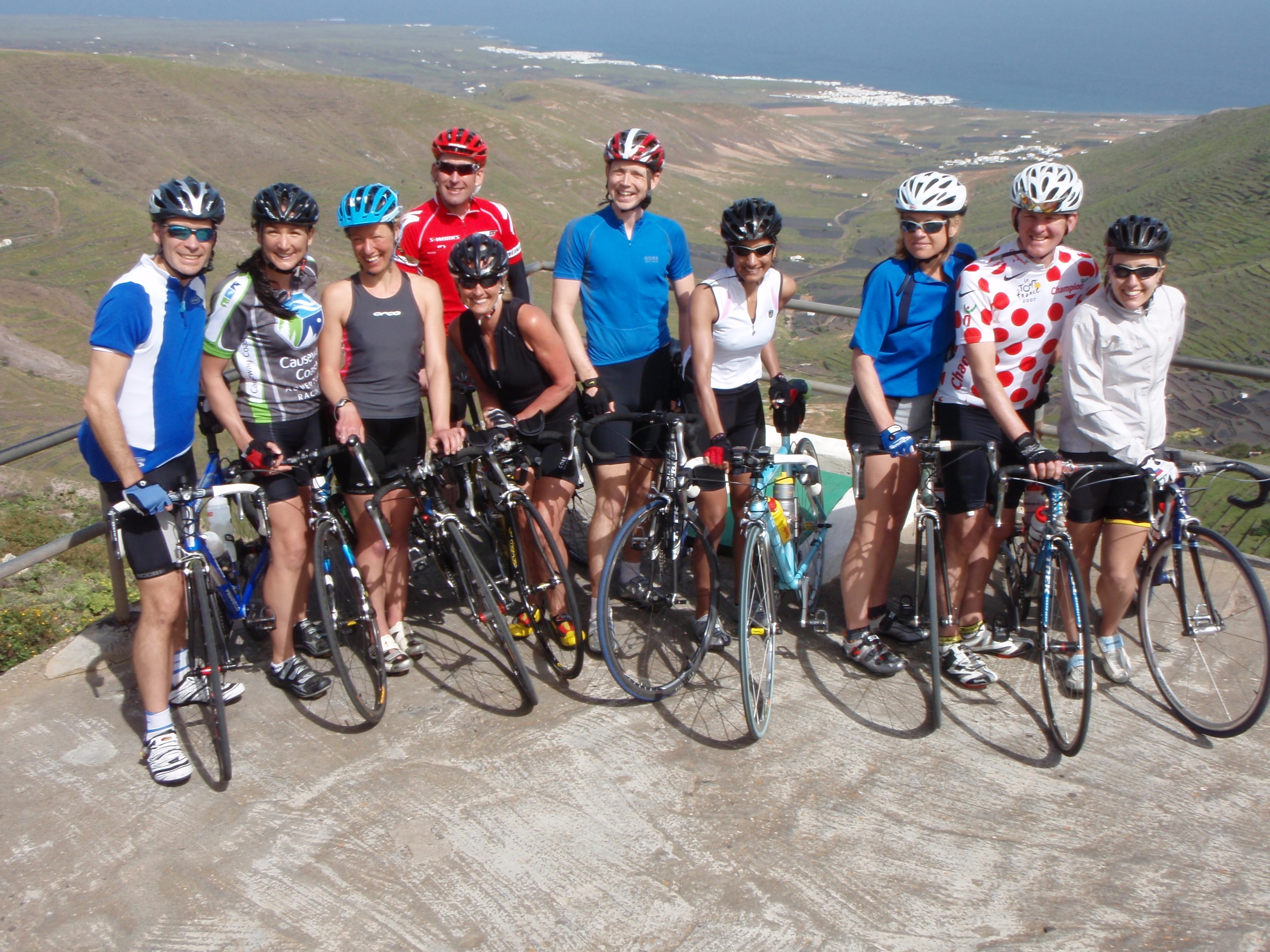
The revelation really came when I attended a triathlon camp in Lanzarote run by my partner Ian Corless who was an ex elite cyclist very keen on triathlon and IM training. Lanzarote is a cyclists’ paradise and here I learnt to use clipless pedals and more importantly experience the thrill of cycling through endless stretches of volcanic landscapes, against strong head-on winds and down scary descents…! I loved it but I didn’t have my own bike and so cycling was limited.

OLYMPUS DIGITAL CAMERA

I am now more than motivated to progress, mix things up and not only provide some spice to my training but also I know, cycling will make me a better runner. I hope that my input as a “novice” or “false beginner” who can provide a female perspective will help all of you, especially female ultra-runners out there who want to improve as runners.

So let the fun begin…

©iancorless.com©iancorless.com_cyclingforrunners-

Life is like a bicycle. To keep your balance you must keep moving – Albert Einstein


Ladies, I would love to hear from you… tell me your stories, tell me how you are using cycling for running and importantly, have you got any cycling gossip?

Follow me on Twitter @girlwhatcycles

#CyclingforRunners

← Back

Thank you for your response. ✨


Join us on STRAVA

TIS-Strava-Logo-big-square-600x340-e1354741369637

Thanks to SCOTT SPORTS and SUUNTO for the support and backing

Print

Check out SCOTT HERE

Suunto_logo [ConveWHITE_rted]

Check out SUUNTO HERE

Raid de la Reunion #DiagonaledesFous 2014 Race Preview

©iancorless.comIMG_4260

With 5-summits over 2000m, the Raid de la Reunion (Diagonale des Fous) is a great season closer for the UTWT. Now in its 22nd edition, ‘Reunion’ as it is affectionately known has gained legendary status within ultra running circles, not only because of some epic battles that have taken place on the course but also because of the fans, terrain and the tough 164km course and 9000m+ of ascent.

MEN

©iancorless.com©iancorless.com-0463

Francois D’Haene, winner of the 2013 edition and recent winner of the TNFUTMB is without doubt the hot favourite. Currently, he is arguably one of the best 100-mile mountain runners in the world.

Lithuanian, Grinius Gediminas who is 2nd in the overall UTWT ranking may well be a surprise package after a solid and impressive 5th at TNFUTMB and 3rd place at Lavaredo. Will Reunion be one race too many? I don’t think so. He seems to have his head screwed on.

The ever-present Antoine Guillon who recently placed 3rd at Tor des Geants lies 3rd in UTWT rankings and is a consistent performer. I don’t see him winning but a top place is a distinct possibility. Reunion is a tough and long race though. As we have seen in past editions, anything can happen.

©iancorless.com.IMG_7127Transvulcania14Xavier Thevenard after winning the 2013 TNFUTMB seemed to go into a little bit of a meltdown with the weight of expectation placed upon him. However, he recently came out of the whole with a win at TDS. In doing so, he became the only runner to win at UTMB, CCC and TDS, quite a result. Xavier may well feel at home on Reunion. I think we will see a good run.

Iker Karrera ©iancorless.com

Iker Karrera ©iancorless.com

Iker Karrera is a machine on tough courses as his 2013 Tor des Geants confirms. He raced well at Reunion in 2012 but his recent joint 2/3rd with Tofol Castanyer behind Francois D’Haene is a sure sign that he is in form for the 164km adventure. Question is, can he beat Francois?

©iancorless.com.IMG_0737

Pascal Blanc is serious contender and knows the course like the back of his hand. He has a string of top-10 finishes, his highest place being second. In this field his experience will really count.

©iancorless.com.IMG_0722

Julien Chorier impressed me no end at Ronda dels Cims in 2013 and then placed 2nd behind Kilian at Hardrock 100. He is meticulous in planning and if he has no back issues, he may very well be the one who can push his fellow Frenchman, Francois D’Haene to the line.

©iancorless.com.IMG_9119Transvulcania14Jason Schlarb (current interview on Talk Ultra) surprised me with 4th at UTMB. He has certainly honed his European mountain skills in 2014. Reunion however is a little more extreme and may well shock Jason. He seems motivated though and the opportunity to race such a quality field will excite him. Expect him to be out of the mix early on and then work his way through the devastation.

Freddy Thevenin placed second last year behind Francois D’Haene but I don’t see him making the podium this year. He is a top-10 contender for sure.

©iancorless.com.IMG_3848MDS2014Christophe Le Saux never stops… I am not sure but I think he has done every race in the 2014 UTWT. That is seriously impressive. He will be in the mix, likely top-10 but not a contender for the podium.

I am going to give a shout out for Stuart Air. He’s a Brit who has had quite a year… he ran Hardrock 100 and now Reunion. Great to see someone local, (a Brit) mixing it up with the best in the world.

Ones to watch:

David Pasquio – 5th in 2013

Sondre Amadahl – 7th at UTMB

Tsuyoshi Kaburaki

Javier Dominguez

On a final note, Ryan Sandes leads the 2014 UTWT rankings but will not race.


LADIES

Nathalie Mauclair ©iancorless.com

Nathalie Mauclair returns as the 2013, defending champion and I wouldn’t want to bet against her. She ran a great race in 2013 ahead of Emelie Forsberg and in 2014 the French lady has had a string of great results, notably 3rd at UTMB and Western States, Nathalie has speed and endurance; a lethal combination. However, the speed can sometimes upset the apple cart by running too hard/ fast too early.

©iancorless.com_1140945

Julia Bottger won the 2014 Ronda dels Cims and knows the Reunion course well. She loves long and technical mountain races and as her results at Tor des Geants show, she will be a definite podium contender here on the island. Julia has had a busy year though. It started in Costa Rica at The Coastal Challenge and post Reunion she still has the Salomon SkyRun to do.

Nerea Martinez  ©iancorless.com

Nerea Martinez ©iancorless.com

Nerea Martinez like Julia embraces tough. She placed 2nd at Ronda dels Cims and has had a string of top results ranking top-5 at Transgrancanaria, UTMF, TDS and she placed 6th at Lavaredo.

©iancorless.com.IMG_9427Transvulcania14

Uxue Fraille knows how to pace herself and can play the waiting game. As the other ladies falter and fail, expect Uxue to move up and contend the podium. Placing 3rd at Transvulcania was a great result early in 2014 and recently placing 5th at UTMB confirms that a podium place at Reunion is a distinct possibility.

Denise Zimmerman placed 3rd at Tor des Geants and although I am sure the other ladies have acknowledged her presence in the race, she may well be a surprise to watchers and followers. Denise is no one trick pony as she has made the podium at Transgrancanaria and placed highly at UTMB in the past.

Finally, Lisa Borzani may mix things up and although she finished 2nd at the 2014 Tor des Geants, I don’t see her having the gusto to rally once again for another big effort. Particularly when you look at her recent results. Back-to-back podium places at Tor and TDS must leave you jaded.

Alexandra Rousset may pull something out of the bag. She placed 4th in 2012 and has won the race previously (2004).

Notably, UTWT series leader Nuria Picas will not run and in addition, neither will Fernanda Maciel and Francesca Canepa.


2500 runners will toe the line and more information is available HERE

CYCLING for RUNNERS – Article 3 Lets Get Started!


HEADER_Suunto_Scott

In article 2 of CYCLING for RUNNERS we gave you several bullet points in why cycling can benefit your running: RECOVERY, CADENCE, LONG SESSIONS and STRENGTH. As we move through our articles we will address these issues in more depth and we will provide sessions and plans to help you maximize your time whilst training.

It’s time to start cycling!

Before you hop on board lets first just tick off some key issues.

  • You have the correct size bike.
  • You have fitted yourself to your bike taking a good look at saddle height, saddle fore and aft and your reach to the handlebars.
  • You have attached cleats to your cycle shoes and you have carefully adjusted them so that you cycle with a natural motion.

If we have a tick to all of the above, we need to quickly look at cycling apparel and what you will need.

Short Sleeve Cycle Jersey with either half-zip or full-length zip to help control your temperature whilst cycling. The jersey should have 2/3 pockets on the rear to hold essentials such as food, inner tube, tools, and jacket.

Scott RC Mens Short Sleeve - Cycling for Runners

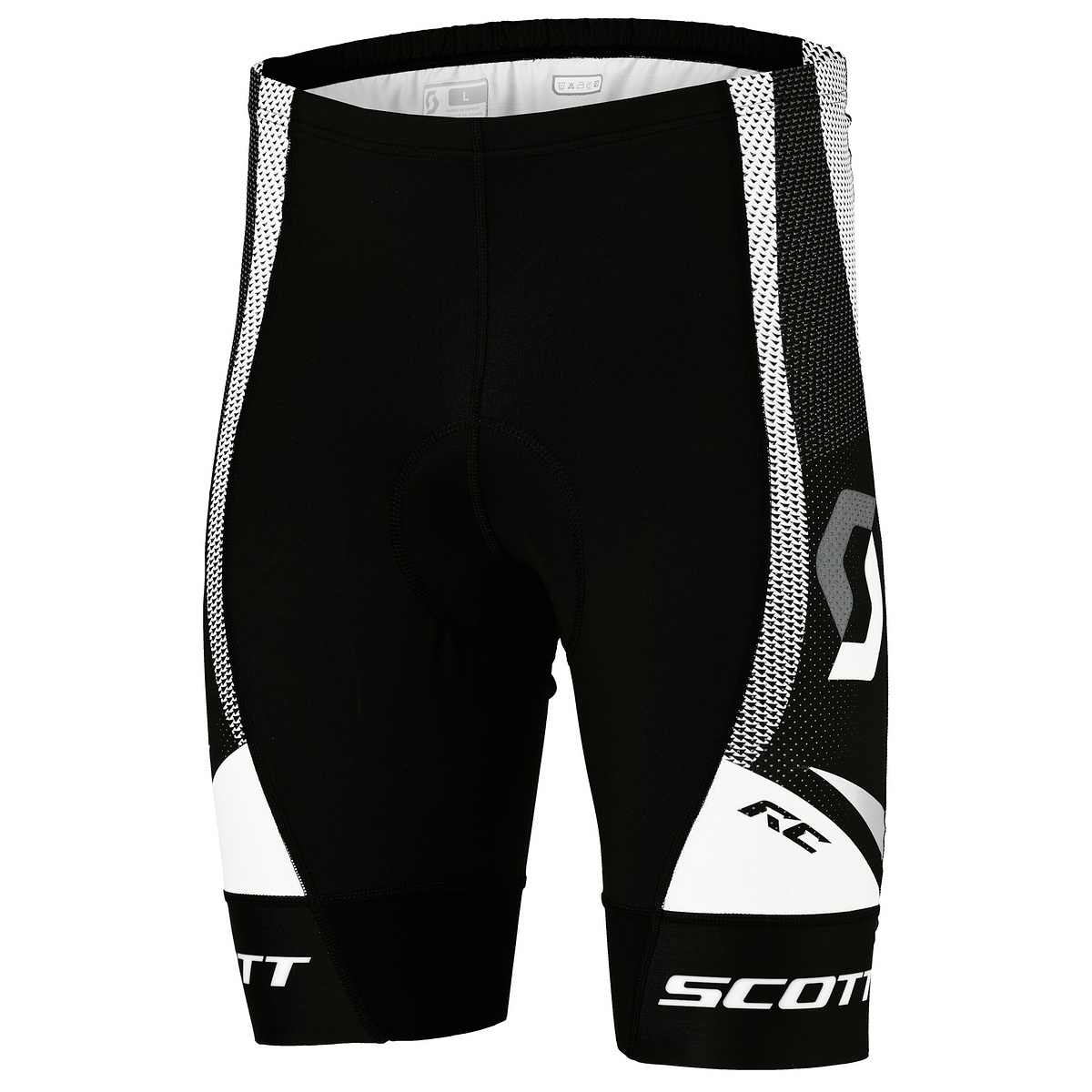
Cycling Shorts with pad for that all needed comfort. Many different varieties exist and it all comes down to personal taste. Ladies, female specific products do exist.

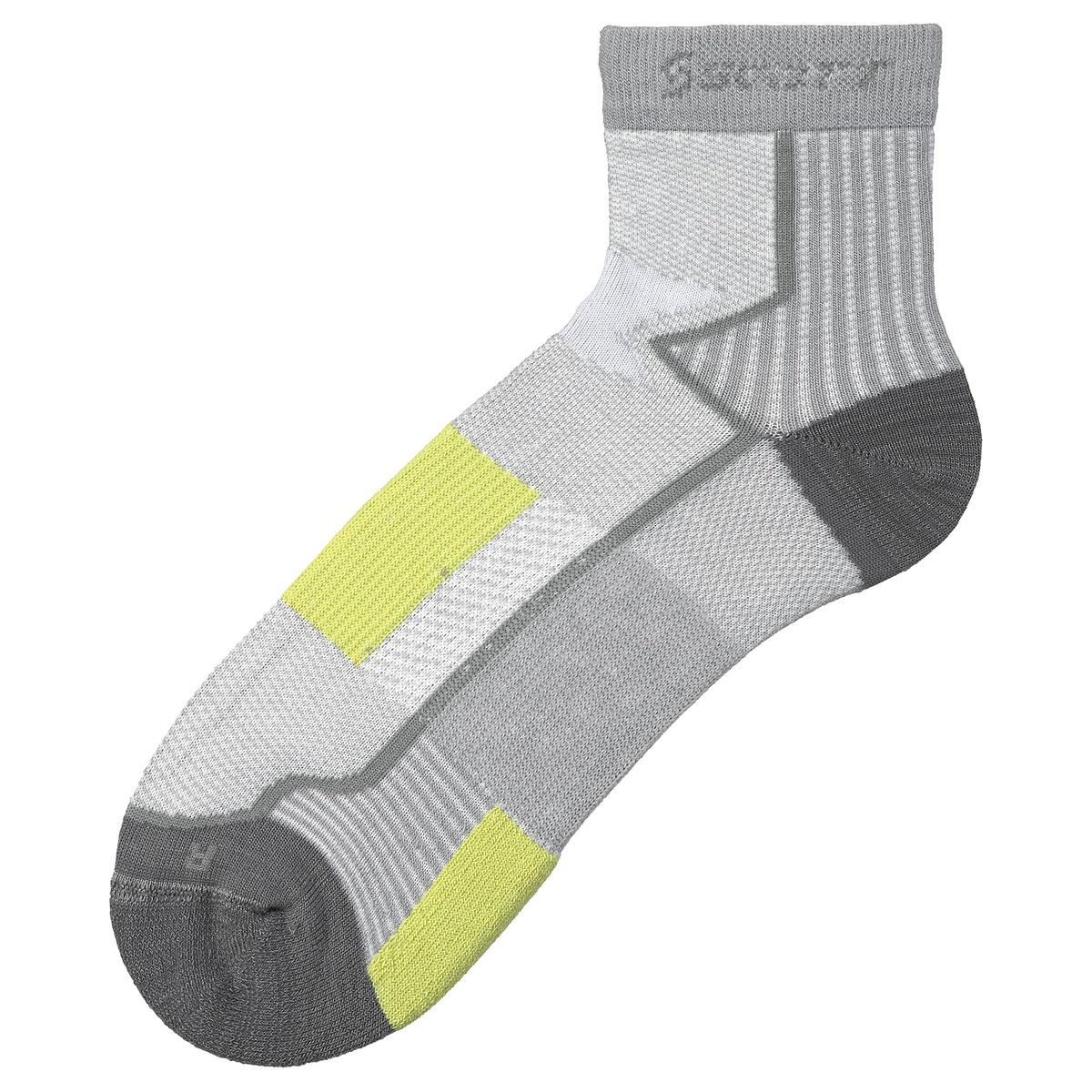
Scott RC Mens Shorts - Cycling for RunnersCycling Socks – get short ones. It may sound vain but cycling with long socks looks ridiculous! (Unless you use compression)

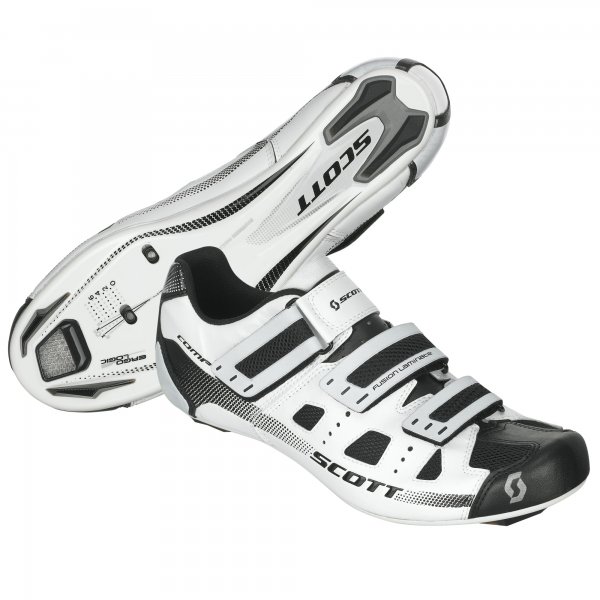
Scott RC Tech sock - Cycling for RunnersCycling shoes

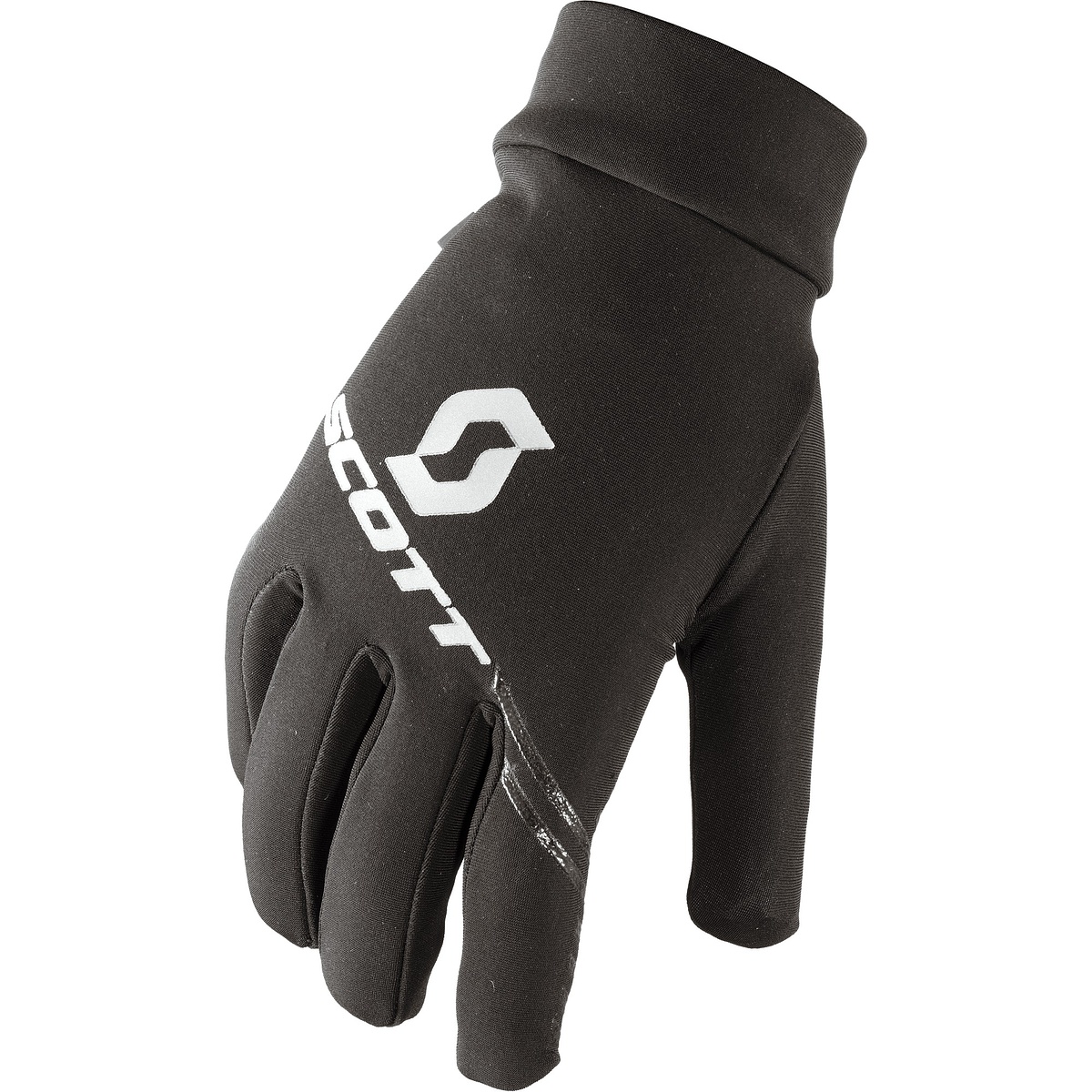
Scott Shoes - Cycling for RunnersCycling Mitts/ Gloves – these are really important. They work in two ways, they add some additional padding when holding the bars and help avoid numb hands but more importantly, if you come off your bike, the first thing you do is put your hands out… yes, you have guessed it! No skin on your hand and gravel stuck in your palm is not fun! Believe us.

Scott Liner Glove - Cycling for Runners

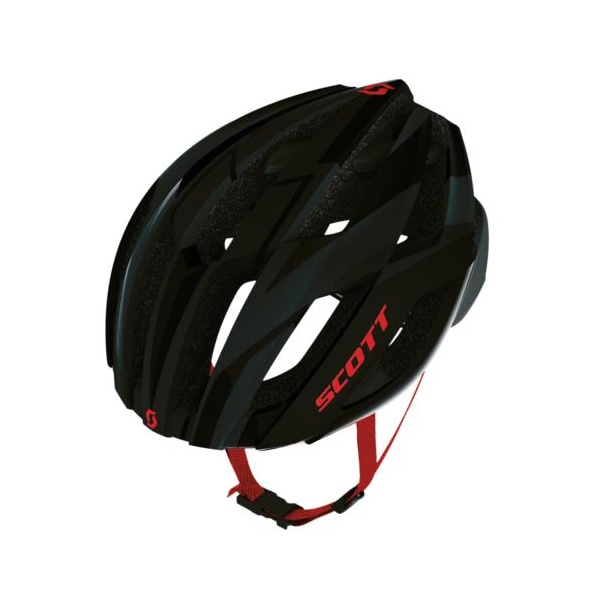
Helmet – essential! Don’t even contemplate going outside without one. Make sure it fits properly.

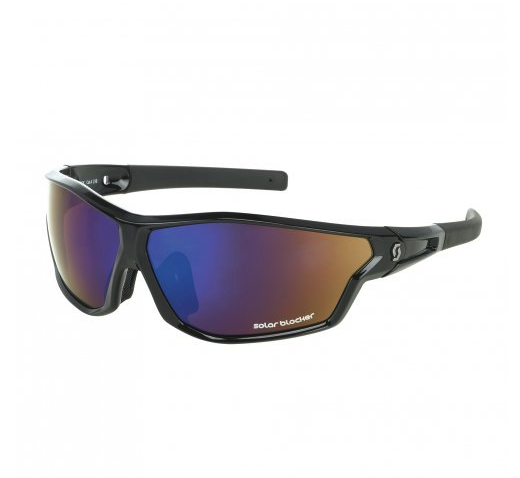
Scott Helmet - Cycling for RunnersGlasses – debris is all around us, on a bike you are moving fast so don’t take risks. Get some protection.

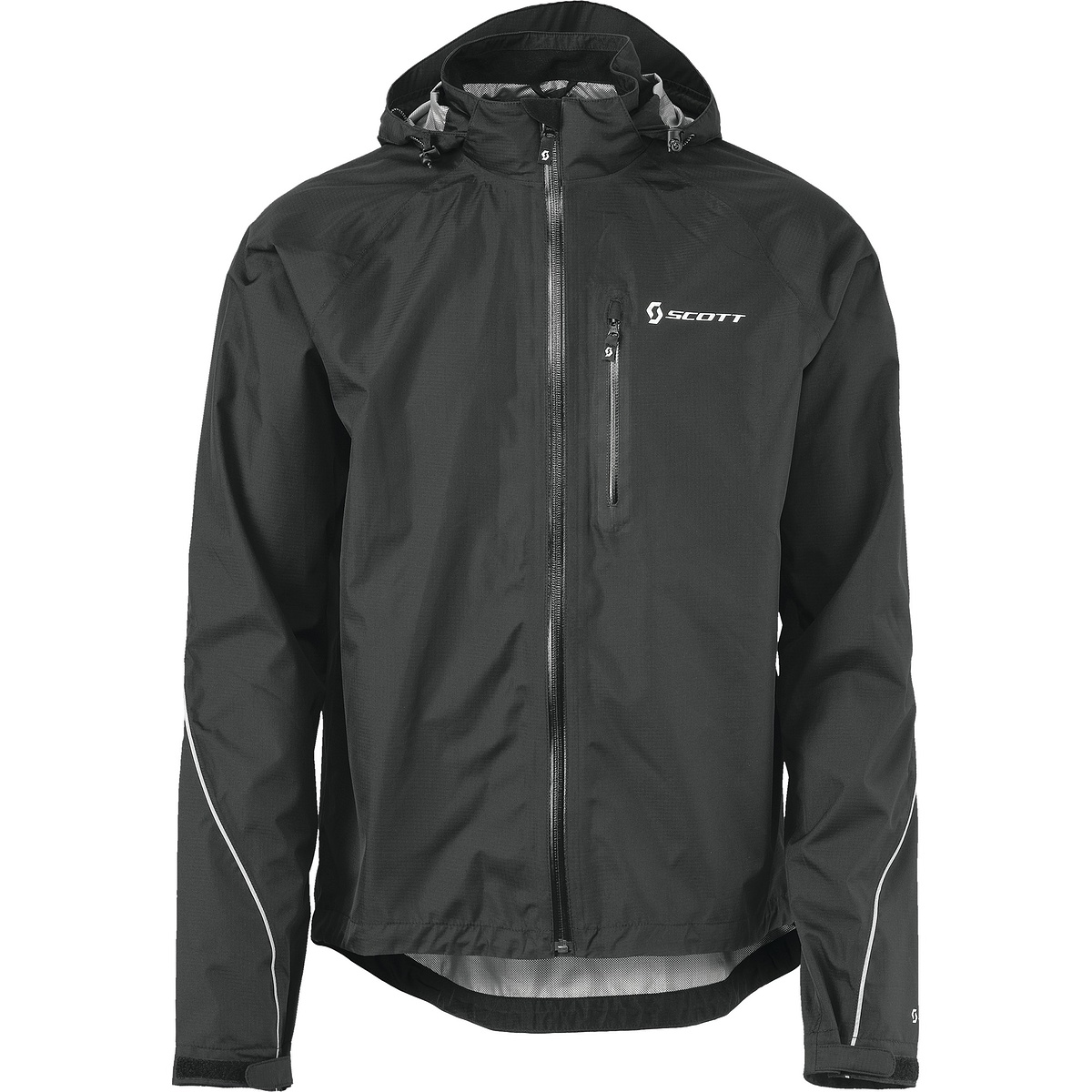
Scott Glasses - Cycling for Runners Wind/ Waterproof Jacket

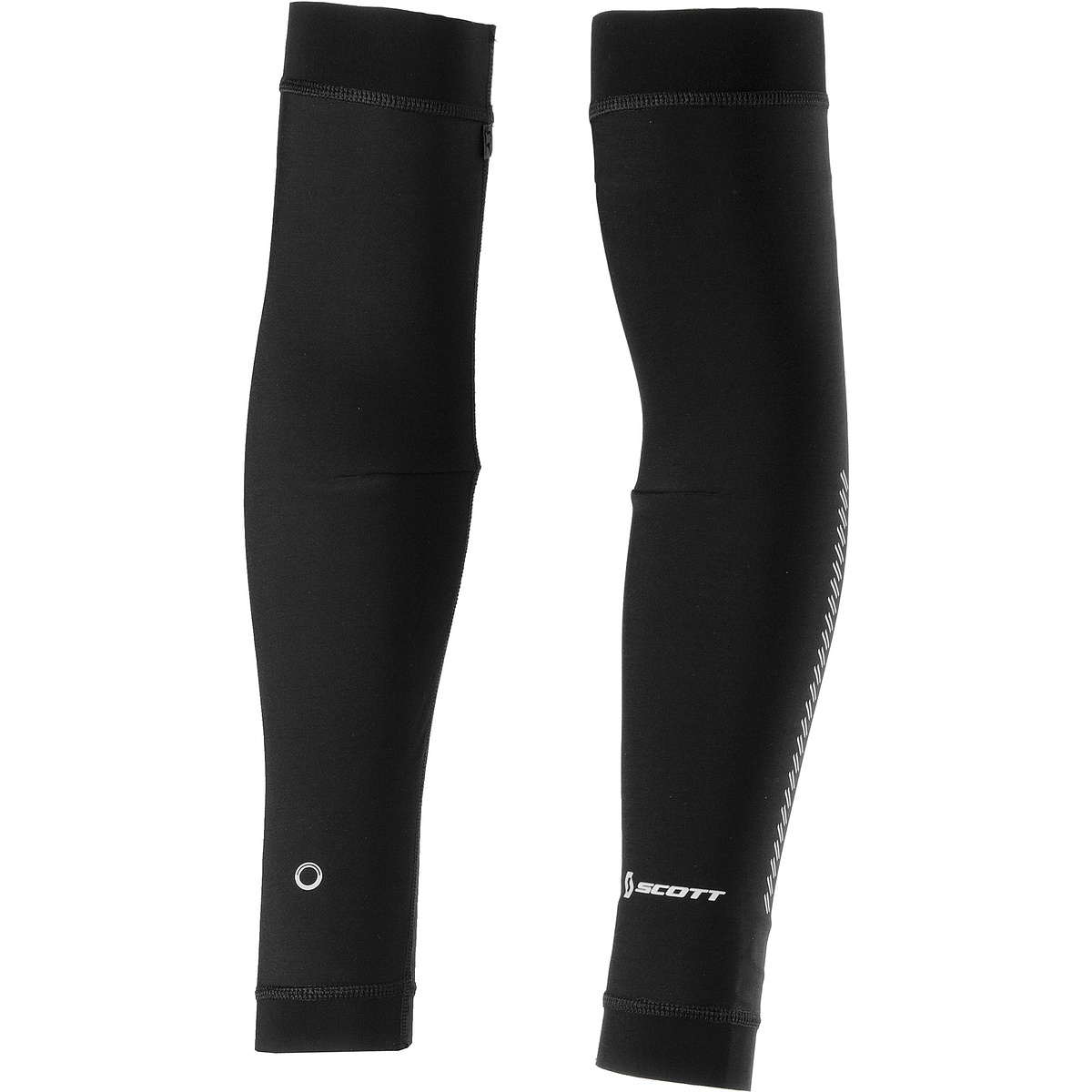
Scott Waterproof Jacket - Cycling for RunnersArm Warmers – these are a great addition to a s/s top and allow you to control your temperature whilst out on a ride.

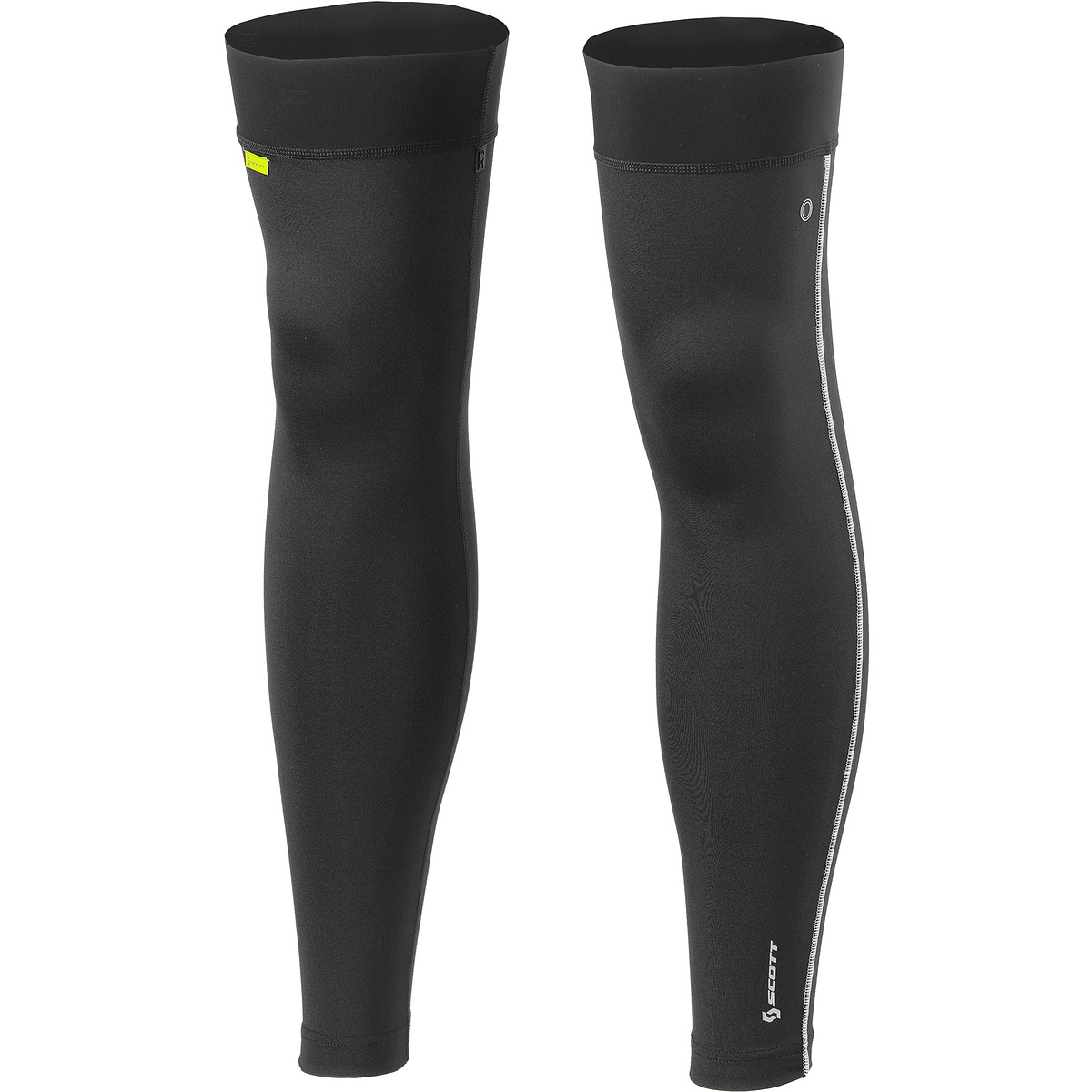
Scott AS Arm Warmer - Cycling for RunnersLeg Warmers – as above, they convert your shorts into full length tights and therefore provide two easy options.

  • Scott Legwarmer - Cycling for Runners Spare inner tubes (2)
  • Tyre levers (these remove the tyre so you can replace an inner tube should you get a puncture.
  • Small essential tool kit
  •  Pump
  •  Water bottles

Okay, so the above list provides an immediate kit list that will get you on the road and training. The above is based around milder temperatures. Just like running, as temperatures drop, the need for more specific and warmer apparel will be required. We will address some of the options in article 5.


YOUR FIRST TRAINING SESSION (Session-1)

We are assuming here that you are new to cycling. You may have cycled in the past but it has been a while or maybe you have never cycled whilst running?

The good news is that cycling has relatively no impact. Hey, that is one of the reasons why we are incorporating it into our run training right? Like anything new, we start slow and we build up. At first, we recommend that you replace one or two run sessions per week with bike sessions. Initially, we will not be looking at speed, strength or endurance. Cycling will be used as recovery or an alternative to an easy run. From our perspective, it makes sense to us that your cycling days are Monday, Wednesday or Saturday.

Why?

  • On Sunday, most people do a long run, so, spinning out your legs on Monday is a great way to recover and use cycling.
  • Tuesday’s and Thursday’s often include speed or strength running, so, splitting those sessions up with a spin on Wednesday is an ideal recovery tool but if required will still allow you to work on your endurance.
  • Saturday is the day before your long run (typically); so, at this stage a spin out on your bike will feed those endorphins, loosen your legs off and prepare you for Sunday without adding too much stress or soreness.

Adding cycling at this stage in your training, we recommend you keep a few pointers in mind:

  1. Maintain your long run.
  2. Maintain one run session that involves speed, fartlek or hill work.
  3. Work on a cycling cadence of 90 rpm
  4. Keep cycle gearing light so that you can ‘spin’ your legs
  5. Be road savvy – roads are far more dangerous for cyclists than runners

So, in SESSION-1 we are going to replace a ‘recovery run’ or two easy/ recovery runs with cycling. Typically, a recovery run or easy run will be anything between 20-50 minutes or 3-5 miles. Of course, we are all different and as we mentioned in our introduction, we see runners falling into 4-groups, so, you will need to tweak and adjust your training for your level.

As a general rule, we double our run minute mile pace to gain a similar effect on the bike. So, if you are running 7-minute miles, we would say 14-minutes on the bike.

Quite simply, SESSION-1 is about replacing those 3-5 mile runs with a bike ride of double time.

Scenario 1

I run 3 recovery miles in 30 minutes – replace your ‘easy’ run with 60-minutes of cycling keeping gearing light and aiming for a cadence of 90-rpm. Keep the roads flat and hills to a minimum.

Scenario 2

My recovery 3-mile recovery runs take 21minutes – replace your run with a 40-45 minute easy cycle. Again, keep the gearing light, cadence around 90-rpm and road conditions easy.

What do we mean by ‘light gearing?’

Your bicycle comes with gears. Typically two chain rings at the front and ten at the rear. Gears allow you to make pedalling easier or harder. In simple terms, if you can turn a ‘hard’ gear with 90-rpm you will go considerably faster than turning an ‘easy’ gear with 90-rpm. However, terrain, weather and so many other factors come into play. So, when you ride up hill you need an easier gear to enable you to get up the hill. The steeper the hill, the easier the gear required. By contrast, going down a step hill you will be able to be in the hardest gear possible and still spin your legs at 90+ rpm.

For the purposes of replacing recovery/easy runs with cycling, we want to ensure that the gearing used is light so that you can ‘spin your legs.’ This will mean being on the ‘smaller’ chain ring at the front and one of the ‘larger’ chain rings at the rear. Play around with gears and work on that optimum cadence of 90 rpm. Pedal in circles! As you progress with cycling, you will be able to develop your pedalling technique by pedalling at a slow cadence in a higher gear, but this is for later!

TIP: Cycling is not just pushing with the pedal but also about pulling. You push down and as you reach the bottom of the pedal stroke you need to drop your heal, pull back and then lift. By doing this, you will not only generate more power with each revolution of the pedal but you will also fire muscles that get neglected when running. If you are struggling to grasp the technique, we recommend to clients that they should pretend they are wiping dog dirt off the bottom of the shoe… can you imagine it? Remember, pedal in circles, use all 360 degrees of the pedal stroke.

See this You Tube clip by the ©GlobalCyclingNetwork

HEART RATE or RPE

Heart rate and monitoring heart rate while exercising has been used for years as a way of keeping training honest. It’s important at this stage that your ‘cycle effort’ should feel no harder than your ‘run effort.’ If in doubt, use a HRM to monitor your easy run HRM and cycling HRM. Please be aware that you can expect a slightly different HR on a bike in relation to running. A drift of 5bpm =/- is normal, but you will need to keep an eye on this. We are all unique. We use Suunto Ambit with HR monitors.

Suunto Ambit 3 Peak HR side view

If a HRM intimidates you, use RPE (Rate of Perceived Exertion). RPE is a great way to monitor your effort based on your own personal experiences as an athlete. I use a scale of 1-10. 1 being asleep, 10 being passed out on the finish line exhausted. For the purposes of a recovery run or cycle, I would be looking at an RPE of 4 or 5.

NOTE

There is no magic formula to doing a great bike ride and at this stage of CYCLING for RUNNERS; you should embrace the bike as a break. Something new. An adventure that may well lead to something new and as we keep saying; it will definitely make you a better runner!

We recommend you apply SESSION-1 for 1-month cycling once or twice a week to allow adaptation to take place.

In Article 4 we will discuss cycling indoors and using either a Spin Bike at the gym or using a Turbo Trainer in your home.

Article 5 will provide you with SESSION-2 and we will discuss winter apparel.

Join us on STRAVA

TIS-Strava-Logo-big-square-600x340-e1354741369637

Thanks to SCOTT SPORTS and SUUNTO for the support and backing

PrintSuunto_logo [ConveWHITE_rted]

Check out SCOTT HERE

Check out SUUNTO HERE

CYCLING for RUNNERS PAGE HERE

Cycling for Runners Logo

Mourne Skyline MTR 2014 – Race Report

©iancorless.com_Mourne-6614

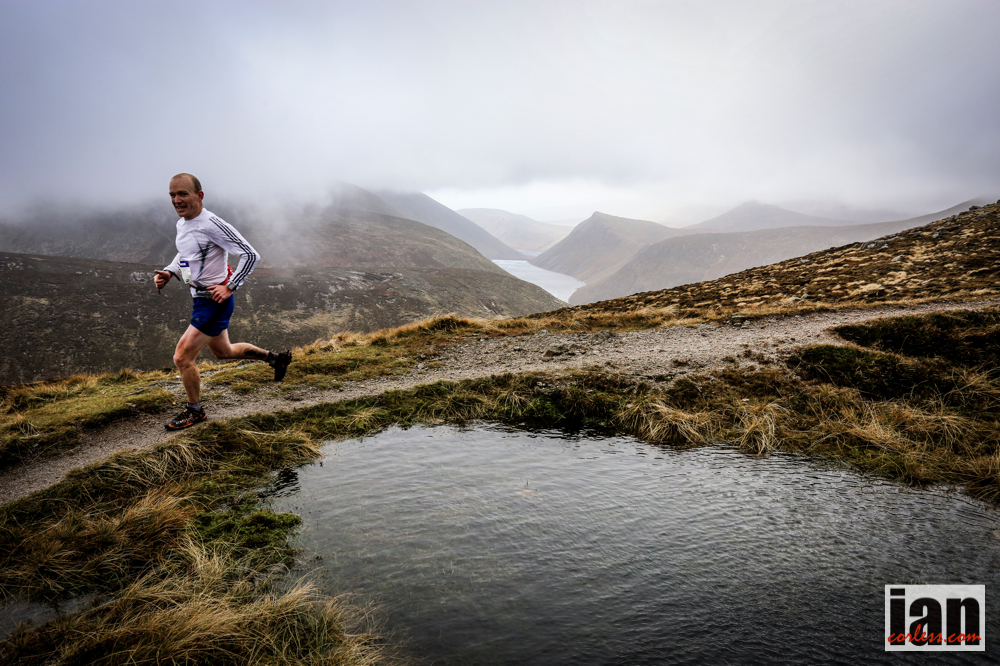
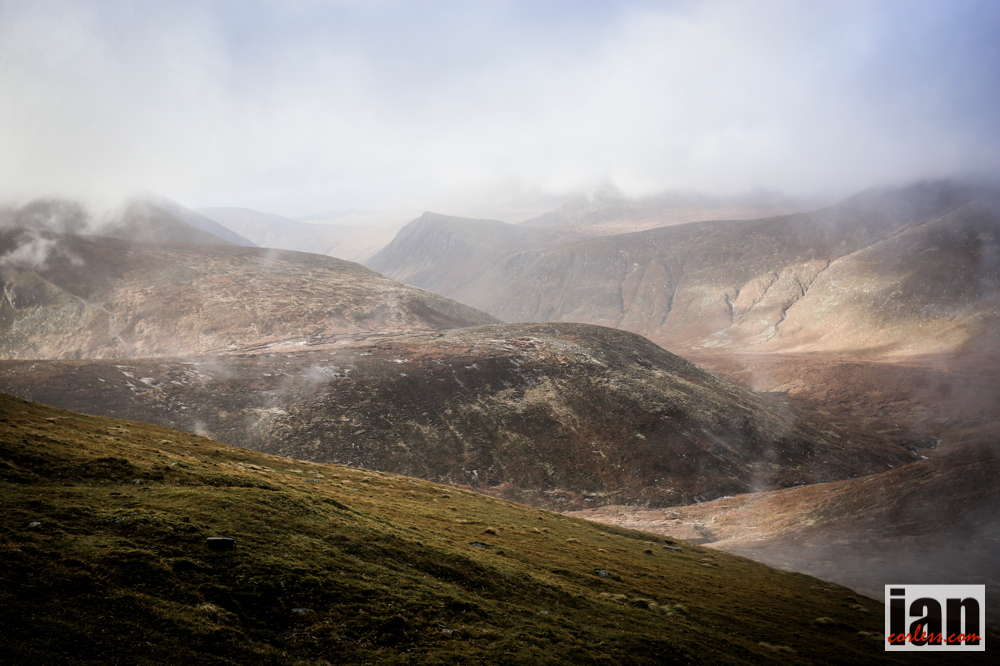
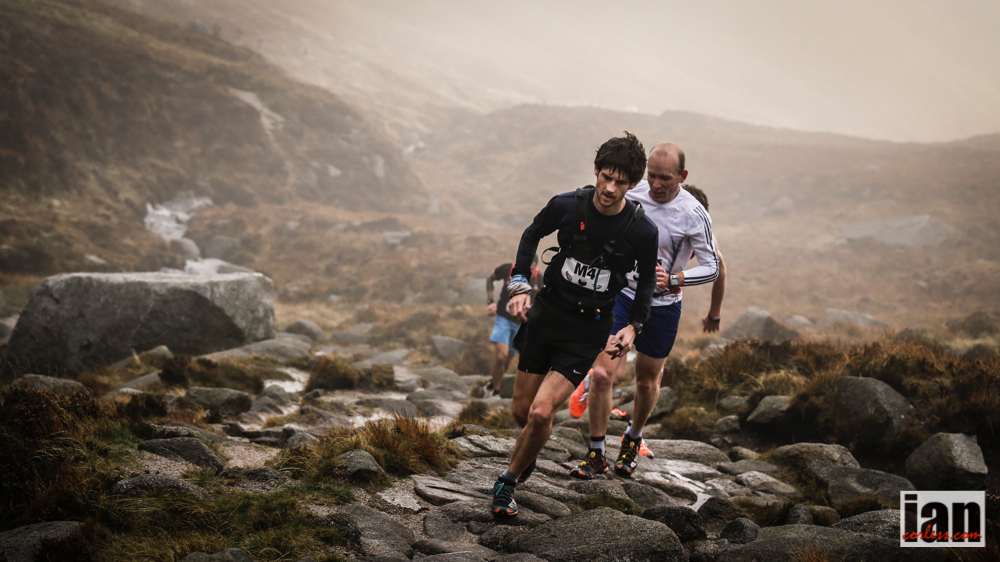
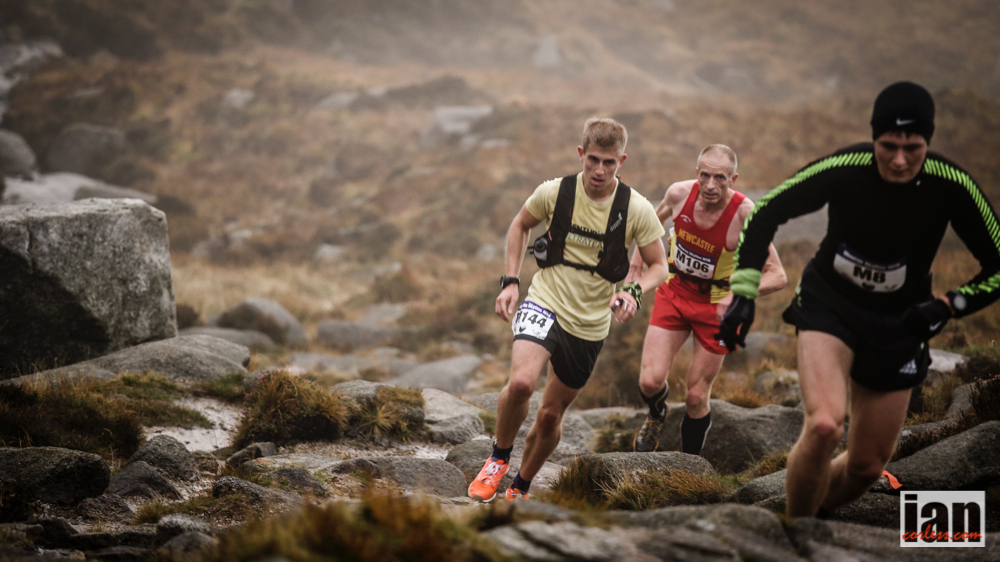
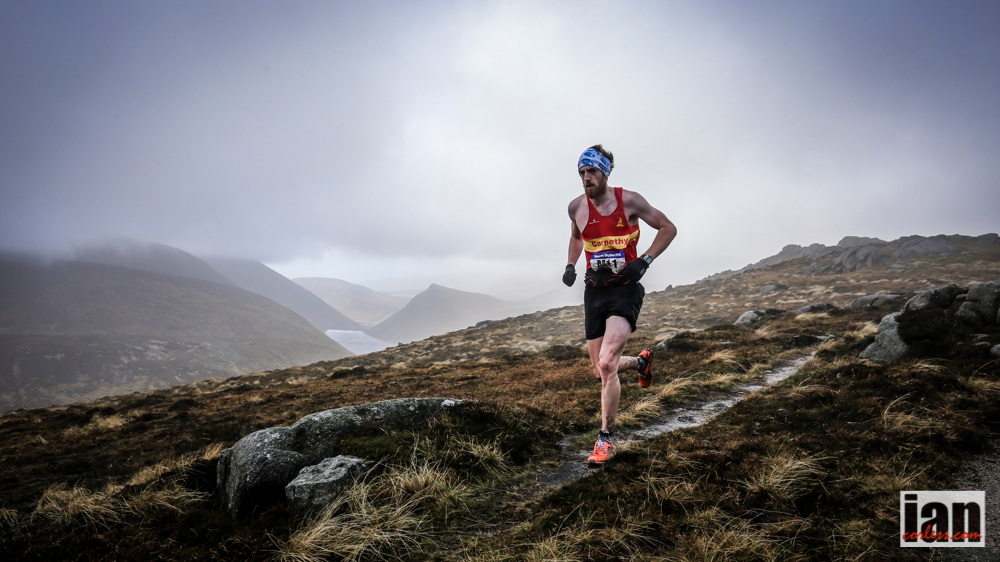
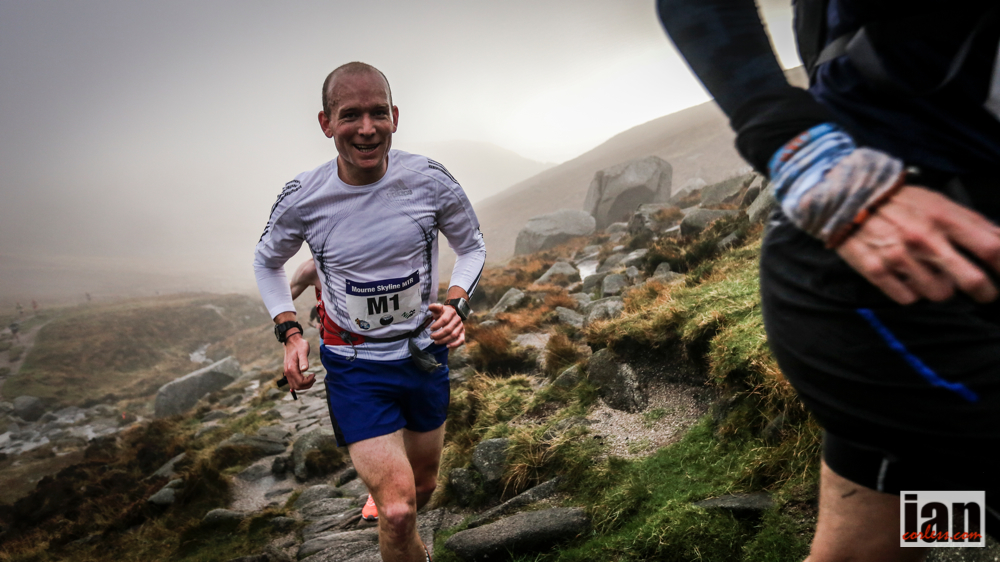
Misty skies, gale force winds, relentless climbing, technical terrain and an incredible field of runners made the inaugural Mourne Skyline MTR a day to remember.

Concluding Skyrunning UK’s first year, the Mourne Skyline MTR really was a fitting end to what has been an incredible year. The course, organisation and the field of runners made this a special and unforgettable day in the mountains.

©iancorless.com_Mourne-6576The addition of Skyrunner® World Series champion (2013 and 2014) Stevie Kremer did provide some icing on the Mourne cake. However, ‘Pocket Rocket’ was not isolated… Jo Meek, British Ultra Trail Champion, provided more than enough pressure on the Colorado based Skyrunner on what proved to be one of the most exciting ladies mountain races I have followed for some time. Sharon Trimble, Diane Wilson and Shileen O’Kane would bring local knowledge and fell experience to the mix making this a classic in the making.

©iancorless.com_Mourne-0142

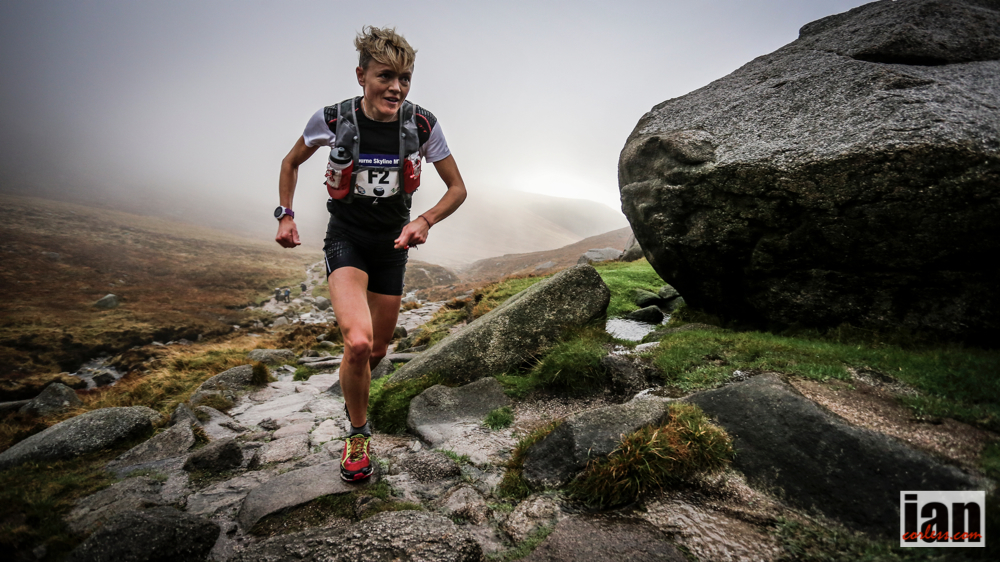
As expected, Kremer pushed hard from the off and after leaving the Donard Forest the trail became steeper and more technical playing to the Colorado runners strength. Although a gap opened up, it was nothing substantial and Meek maintained a gap keeping Kremer in sight. After passing over the saddle, runners were hit by gale force winds and low cloud as they headed out to Slieve Bearnagh, Slieve Meelmore and then an anticlockwise loop that would eventually return them to Slieve Meelmore and then run back to the finish. Conditions were brutal… thankfully the previous nights torrential rain had disappeared. Had it not, runners and marshals would have had a very testing day!

©iancorless.com_Mourne-6382

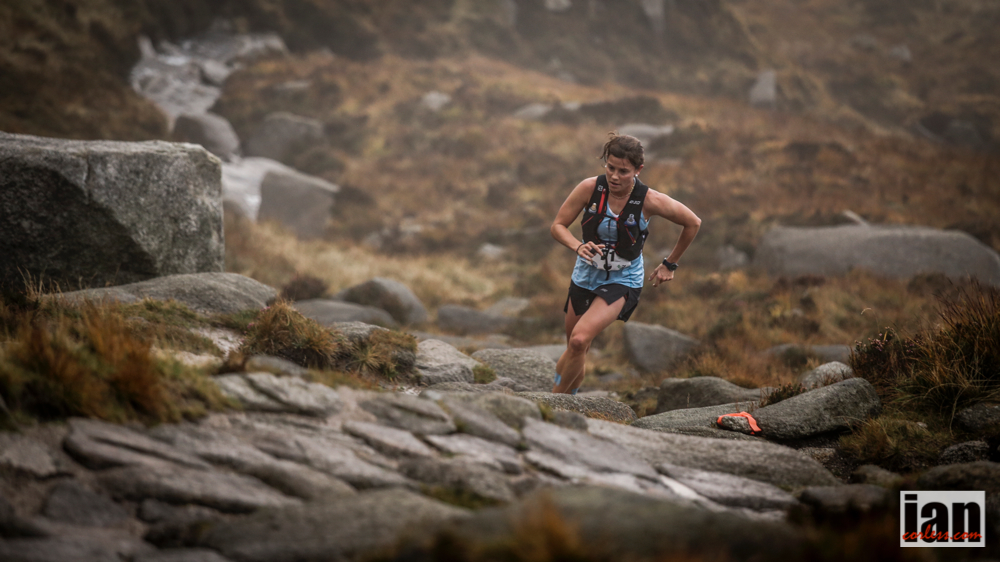
Wilson, Trimble and O’Kane in many respects were running for third such was the pace of the front two ladies. On the flat, Meek would catch Kremer and then pull away. The relentless and rollercoaster nature of the terrain and mountains would then allow Kremer to pull back and pass on the climbs. This to and froing made for an exhilarating competition of willpower, mental strength and endurance. The latter half of the course, on paper, looked made for Kremer as climb and after climb would allow her to open a gap. However, Meek was having none of it. Running with blinkered vision, Meek fought the technical terrain and chased. ‘I was swearing at the terrain and my own frustrations in managing my technical ability,’ said Meek. Kremer was having no easy ride too, ‘that is the hardest race I have ever done! Harder than Zegama Aizkorri it was just brutal. Relentless climbing, technical and with the wind it was just soooo hard!’

©iancorless.com_Mourne-6734 copy

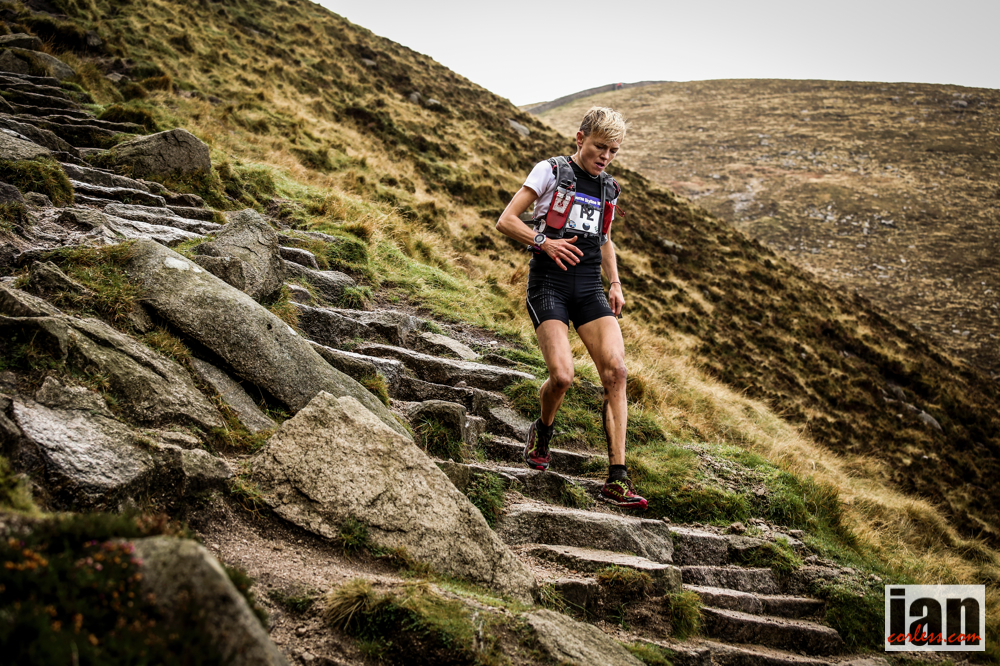
After CP4, Kremer opened up a gap and extended this on the steep ascent to Slieve Commedagh. Battered by the winds, Kremer put her head down and now pushed hard to the highest point of the course, Slieve Donard. Turning at the summit and descending down the lead extended and on the final technical descent to Newcastle the gap really opened up eventually providing Kremer a winning time of 4:24.2 to Meek’s 4:30.3. The time gaps don’t reflect how close this race was! Post race, Meek was very philosophical, ‘I really did push and race hard but the relentless ankle twisting and gnarly terrain beat me down and in the latter stages as Kremer pulled away I eased off a little knowing that 2nd place was secure.’ Diane Wilson placed 3rd producing a great run on home soil in a time of 4:45.4.

©iancorless.com_Mourne-1133 In the men’s race, local man, Allan Bogle pushed hard in the early stages closely followed by Kim Collison, Eoin Lennon and just 5 seconds back, J Marshall Thomson. It was close, and unlike the ladies race a winner looked likely to come from any of the front contenders. Particularly when one looked at the contenders looking for honours. Ally Beaven, David Steele and Paul Navesy all showed previous results that would mean they could never be ruled out of a podium place.

©iancorless.com_Mourne-0112 ©iancorless.com_Mourne-0130 British Ultra Trail Champion, Collison showed his class at descending and moved away from the other men but Lennon was never going to relinquish the lead without a fight. These two fought a hard battle all day and Lennon showed the wounds of war as blood tricked down his leg.

©iancorless.com_Mourne-6622

Revelation of the race, was Colorado based J Marshall Thomson (Stevie’s fiancé) who raced in the top-5 all day and despite having never raced on ‘typical’ UK terrain pulled out a top-drawer run to place 3rd. ‘That was some of the most crazy terrain I have ever run. It was relentless. The terrain was beyond technical. You had no idea where to put your feet and I can’t tell you how many times I fell over… I loved it!’ said Thomson.

©iancorless.com_Mourne-6344 Collison won the race in 3:57.0 an incredible time in very tough conditions. Ryan Maxwell, race director for the Mourne Skyline MTR had predicted a win time of 4-hours, however, with conditions on the day, we expected this to be optimistic. For Collison and Lennon to both run sub-4 is a real testament to the competition between the two front men.

Thomson moved up into 3rd place and brought a truly international flavour to the men’s podium, his time of 4:08.3 reflecting his ability.

©iancorless.com_Mourne-0433The 2014 Mourne Skyline MTR has firmly established itself as a must-do race after just one edition. The combination of location, local infrastructure, great organisation, enthusiastic locals and a brutal course will guarantee that demand will be high for the 2015 edition.

Covering 35km and a total elevation gain of 3370m, the Mourne Skyline MTR is everything a Skyrunning race should be. I for one can’t wait for 2015.

RACE IMAGES HERE 

You can purchase race images HERE

RESULTS WOMEN Mourne Skyline Mountain-Trail Race

Stevie Kremer 4:24.2 (10th overall)

Jo Meek 4:30.3

Diane Wilson 4:45.4

Sharon Trimble 5:02.1

Shileen O’Kane 5:03.1

RESULTS MEN Mourne Skyline Mountain-Trail Race

Kim Collison 3:57.0

Eoin Lennon 3:59.4

J Marshall Thomson 4:08.3

Ally Beaven 4:12.0

David Steele 4:15.0

Mourne Skyline MTR 2014 Race Preview – what a line up!

©iancorless.com_LimoneSKY-5949

Ryan Maxwell, race director for the Mourne Skyline MTR provides us with an in-depth preview of this coming weekend’s Mourne Skyline MTR. The final race in the 2014 Skyrunning UK calendar.

This coming weekend, will see the phenomena that is ‘Skyrunning’ reach the shores of Northern Ireland for the first time. The Mourne Skyline Mountain-Trail Race, hosted by popular running website www.nirunning.co.uk, will see a plethora of talent take to the stunning Mourne Mountains.

The Mourne Skyline MTR will see a sell-out field, including Stevie Kremer (Team Salomon), who last weekend was crowned Skyrunner® World Series Champion, over the ‘Sky’ distance for the second time at the incredibly scenic Limone Extreme in Italy where Kremer covered a 24.5k course incorporating 2000m of ascent.  Stevie will have strong competition from Jo Meek who in 2014 became British Ultra Trail Champion, took    5th place at the iconic Comrades and won  The Coastal Challenge with a new course record.

Covering a gruelling but incredibly scenic 35k course incorporating 3,370m of ascent. The Mourne Skyline MTR includes Northern Ireland’s highest mountain, Slieve Donard, which stands at 850m above sea-level and it will be the final peak, before the athletes descend quickly into the Donard Park finish area.

©iancorless.comIMG_9209UTLD2014

Former adventure racer and newly crowned British ultra-running Champion Kim Collison will be high in confidence after his victory at the Lakeland 50 trail race in July (2014).  This noteable achievement followed an excellent (joint) win at the notoriously tough Fellsman 61 mile ultra in the Yorkshire Dales in April (2014). Kim, who completed the Bob Graham Round in 2009, also collected a prize at the Scafell trail race and finished well up the field at the Transvulcania La Palma Ultra.

American athlete J Marshall Thomson (Dynafit) hails from Colorado and is an experienced and successful trail runner, with numerous mountain race victories to his name.  Most recently, Marshall secured a win at the Power of Four 50k in Aspen, having smashed the course record.  Looking back,Marshall also proved his worth at the Pikes Peak marathon, where he narrowly missed a podium spot after finish fourth in what was a classy field.

©iancorless.comIMG_8274UTLD2014

Irish international Paul Teirney proved himself over 100 miles when he claimed the runners up spot at the Lakeland 100 mile race in 2012; since then, Paul, a former Wicklow Way 82 mile Ultra record holder (13 hours 38mins), finished second at the Wicklow Way Ultra in both 2013 and 2014.

©iancorless.com_3x32014-3600

England based Jayson Cavill has been one of the most impressive performers of the inaugural Skyrunning UK Series, having placed on the podium at two of the three races.  The Pickering Running Club member followed up his second place finish at the V33K with a win at the Peaks Skyrace; he (Jayson) also won the gruelling Blakey Blitz Fell Race back in April (2014).

Paul Navesey (Centurion Ultra Running Team) is another athlete worth watching; after a note-worthy 2013, Paul has brought his form into 2014, winning the Centurion South Downs Way 50 miler in a new course record.  The talented distance runner also showed his speedy age when taking second place at the Canterbury 10 mile road race in 56:27.

Another man known for his ability over shorter distance and not mentioned above is Jens Jakob Anderson (Denmark); the ‘www.runrepeat.com’ website creator has a 5k personal best of 15:58, which he may hope to put to use on the final 3.1 mile descent off Slieve Donard to the finish in Donard Park.

On the local front, Allan Bogle (City of Derry AC) has already proved himself against the best in the UK this year.  In memorable foggy conditions, the City of Derry Spartan secured an excellent win at the British Championship race at Slieve Donard just before the summer.  He (Allan) went on to take sixth place in the overall British Championships standings.  Also on Allan’s CV are wins at the Balearic Mountain Running Championships inMallorca and an impressive top spot at the Lurig Challenge 2014.

Although having raced sparingly in the mountains recently, North Belfast Harriers man Andrew Annett has a classy history and if focussed on this event, he’ll play a major part at the front.  In 2013, Andrew, who was part of North Belfast Harriers winning team at the NI & Ulster (Road) Relay Championships two weeks ago, finished in thirteenth place at Snowdon International Mountain Race last year (2013).  More recently, he has clocked 1:11:31 for his first ever half marathon (on the road), and 5k and 10k bests of 15:48 and 32:38 respectively.

Established Irish international Martin Rea (North Belfast Harriers) will also toe the line as he prepares for the World 100k Championships in Doha (November 2014) and he’ll be joined on the men’s start line by no less than eleven Northern Ireland international’s, which will include the in-form David Steele (Newcastle AC), Deon McNeilly (Newcastle AC), Sam Herron (Mourne Runners), Dale Mathers (Newry City Runners) and Ryan Stewart (Dundee Hawkhill Harriers) amongst others.  Shane Donnelly (Acorns AC), Billy Reed (East Antrim Harriers), Nicki McPeake (Unattached), Matthew Hewitt (East Coast AC) and Gary Bailey (Unattached) all have vast knowledge of the Mourne Mountains and will therefore have high hopes of finishing well up the field.

Stevie Kremer copyright Ian Corless

Stevie Kremer copyright Ian Corless

In truth, the ladies field at the Mourne Skyline MTR has attracted a lot more attention in the international press than the aforementioned men’s line-up.  Much of this is because of the addition of current Skyrunning World Series Champion Stevie Kremer (Team Salomon). The American international burst onto the scene after winning the World Mountain Running Association (WMRA) ‘Long Distance’ event in 2012; Stevie proved this wasn’t a ‘one hit wonder’ when she went on to take second place at the world famous Sierre-Zinal Mountain Race in the same year.

From there, the down to earth athlete has grown in stature, winning the Limone Extreme, Marathon Du Mont-Blanc Skyrace’s in 2013, and with it, the Skyrunning World Series.  Now, Stevie is one of the superstars of the Skyrunning circuit and one of the most respected (and in-form) athletes in the World.  After wins at the Matterhorn Ultraks, Zegama and Sierre-Zinal this year, and a second place finish at the Limone Extreme Skyrace last weekend, Stevie retained her Skyrunning World Series Champion status (at ‘Sky’ distance).

©iancorless.comIMG_9453UTLD2014

Another athlete who is in-form at the moment and will also grace the Central Promenade start-line is Jo Meek (Scott); theEngland based athlete has enjoyed an incredible 2014.  After finishing in second place at the Marathon Des-Sables in 2013 it would have been easy for Jo to sit on that success, but the dedicated runner took confidence from it and hammered into 2014, and on doing so, she (Jo) has won the Le Grand Trail du St Jacques (70k), Transylvania Trail Traverse (106k), Iznik Ultra (80k) and the Pembrokeshire Coastal Marathon (27.8 miles); interestingly, in Pembrokeshire, Jo finished in first place overall!  An excellent year was made all the better when Jo was crowned British ultra-running Champion after winning the Lakeland 50 trail race in July (2014).

The list of Champions continues in the form of Sharon Trimble (North Belfast Harriers) and Diane Wilson (Dromore AC).  Originally from Northern Ireland, Sharon is an Irish international who lives in Scotland – Alongside Sarah McCormack (’GTR’ competitor), Sharon is a World Mountain Running Championship medallist.  The 2:51:44 marathoner is also a former Scottish ultra-running Champion and a regular on the podium over all terrain; with her knowledge of the course and if she is on top form, Sharon is a real threat to Stevie and Jo.  Diane is the current Northern Ireland Mountain Running Association (NIMRA) Champion and a lady who knows the Mourne Mountains exceptionally well; Diane also won the Hill & Dale Series in 2014 and clocked a new course record when winning the Carrantuohill mountain race in Ireland; interestingly, Carrantuohill is Ireland’s highest peak.  Diane also claimed a top ten finish at the Ben Nevis mountain race in Scotland this year (2014), taking seventh place.

Former NIMRA Champion and current Northern Ireland international Shileen O’Kane (Lagan Valley AC) will also play a major part in proceedings.  Despite suffering a broken wrist over the summer, the talented athlete, who placed within the top ten in her Vet45 category at the World Masters Mountain Running Championships in last month (September 2014).  Respected ultra-runners Susan McCartney (Up and Runners) and Joanne Curran (BARF) should also finish well up the field – Like, Shileen, Susan has enjoyed an excellent year despite setbacks. The England based athlete had knee surgery earlier this year, but has still managed to win the Mourne Way 52 mile Ultra and claim a very credible twenty second place in the CCC race at UTMB (Ultra trail du Mont-Blanc). Comrades Ultra finisher Joanne Curran has really begun to show good form beyond marathon distance and a win at the Causeway Coast Ultra earlier this month, where she came through late on, has re-iterated her potential over the longer distances.

Runner up at the Peaks Skyrace, Kim England (Pickering AC), will also perform well, as will the likes of Hazel McLaughlin (Lagan Valley AC), Taryn McCoy (BARF), Anne Sandford (Lagan Valley AC), Violet Linton (LV), Denise Mathers (Newry City Runners), Miriam Bridge (City of Derry AC), Angela Stevenson (Newcastle AC) and Kathleen Monteverde (BARF).

2014 has bee the inaugural year for Skyrunning UK. The Mourne Skyline MTR is the final race of the series and looks set to be a classic!

It’s difficult to believe that in less than 12-months, Skyrunning UK has grown in to ‘the’ series to be involved in. The line up for the 2014 Mourne Skyline MTR confirms we are on the up…