MDS The Legendary 2025 – Stage 4

Photo by Ian Corless

The feared ‘long day’ finally arrived, an 82.2km point-to-point adventure that would take the runner’s on a voyage of discovery as they explored the limits both physically and mentally.

A day with two starts, the majority of the field departing at 0600 and the top-50 inc the top-5 women leaving at 0730.

The 0600 start – Photo by Ian Corless

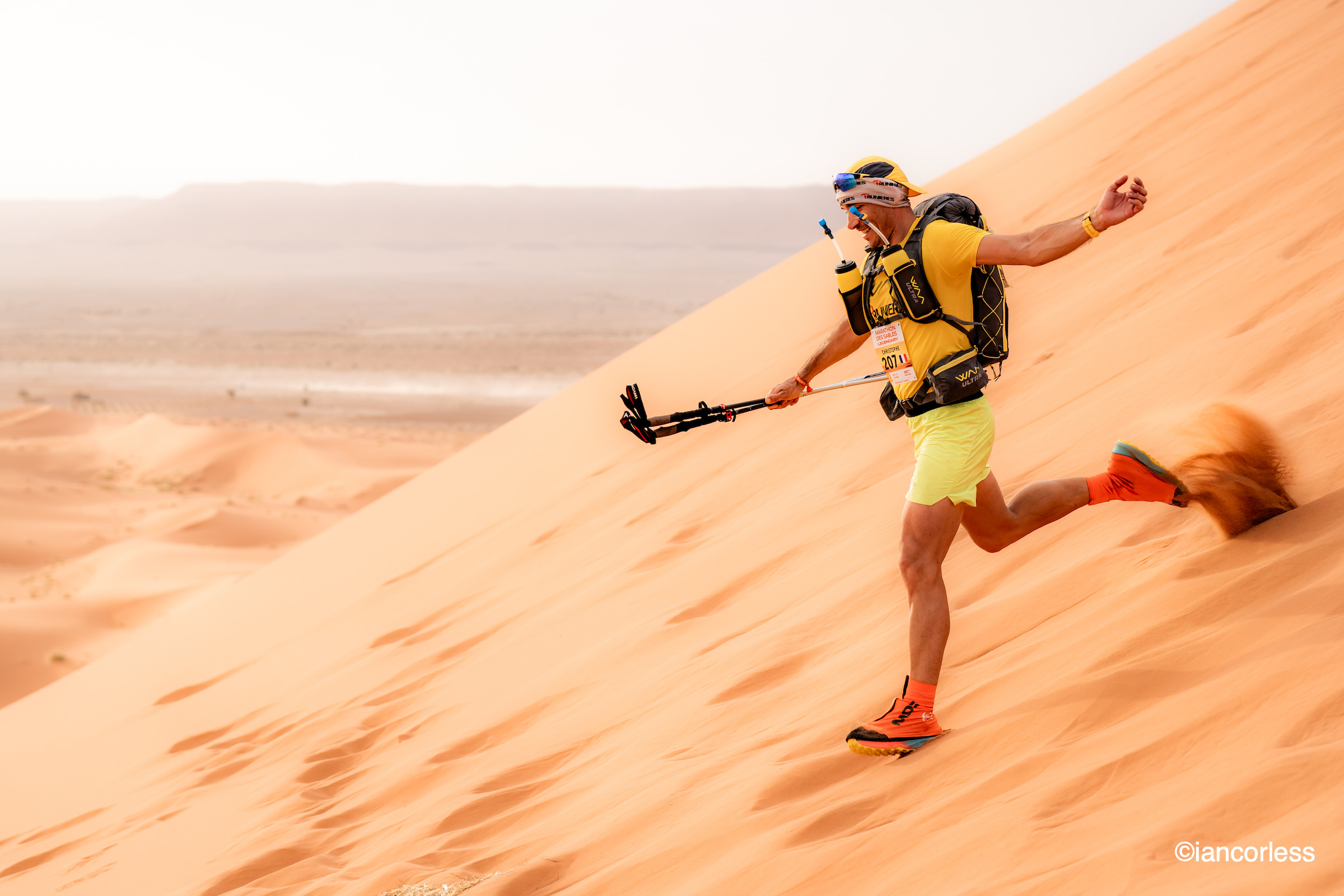
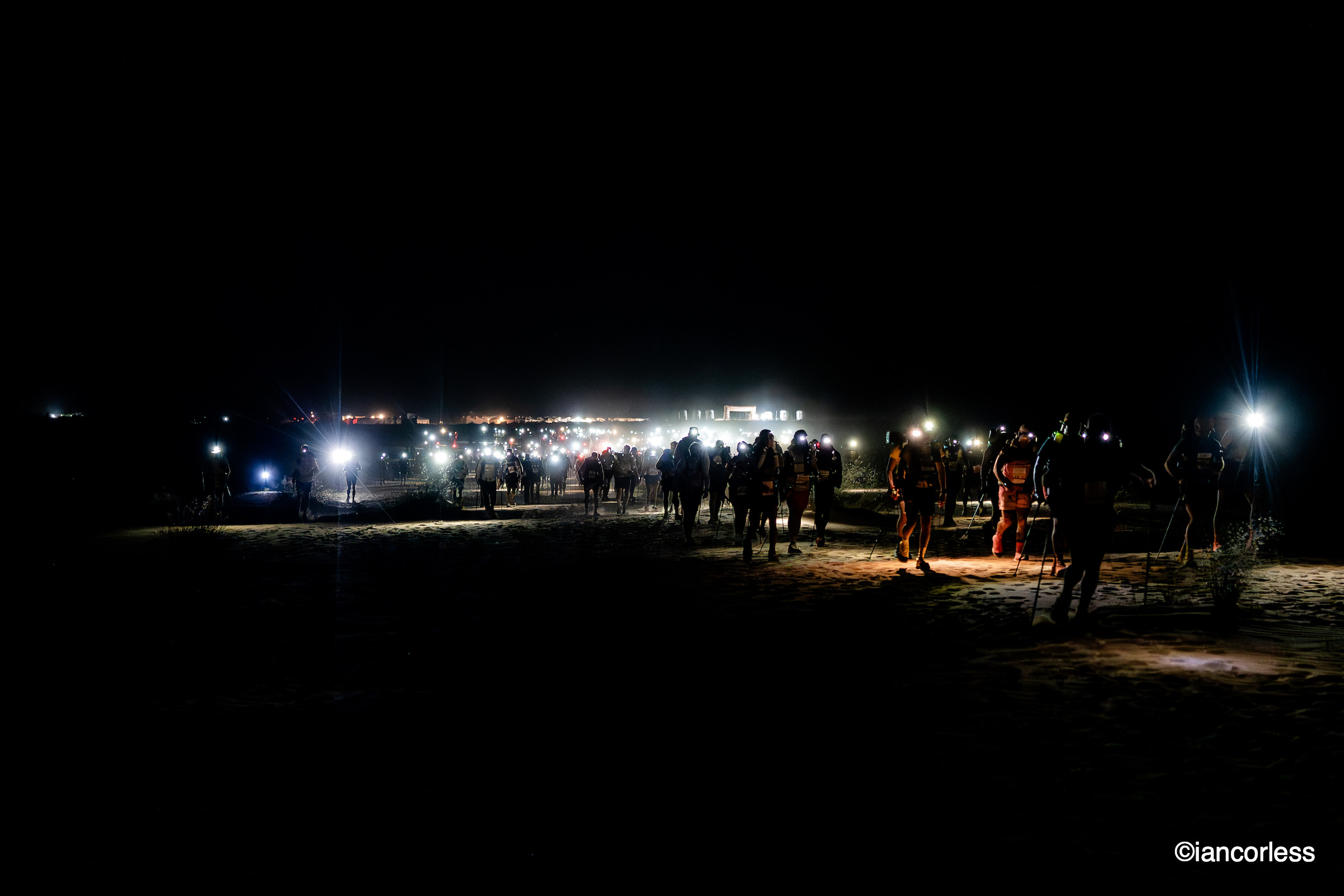
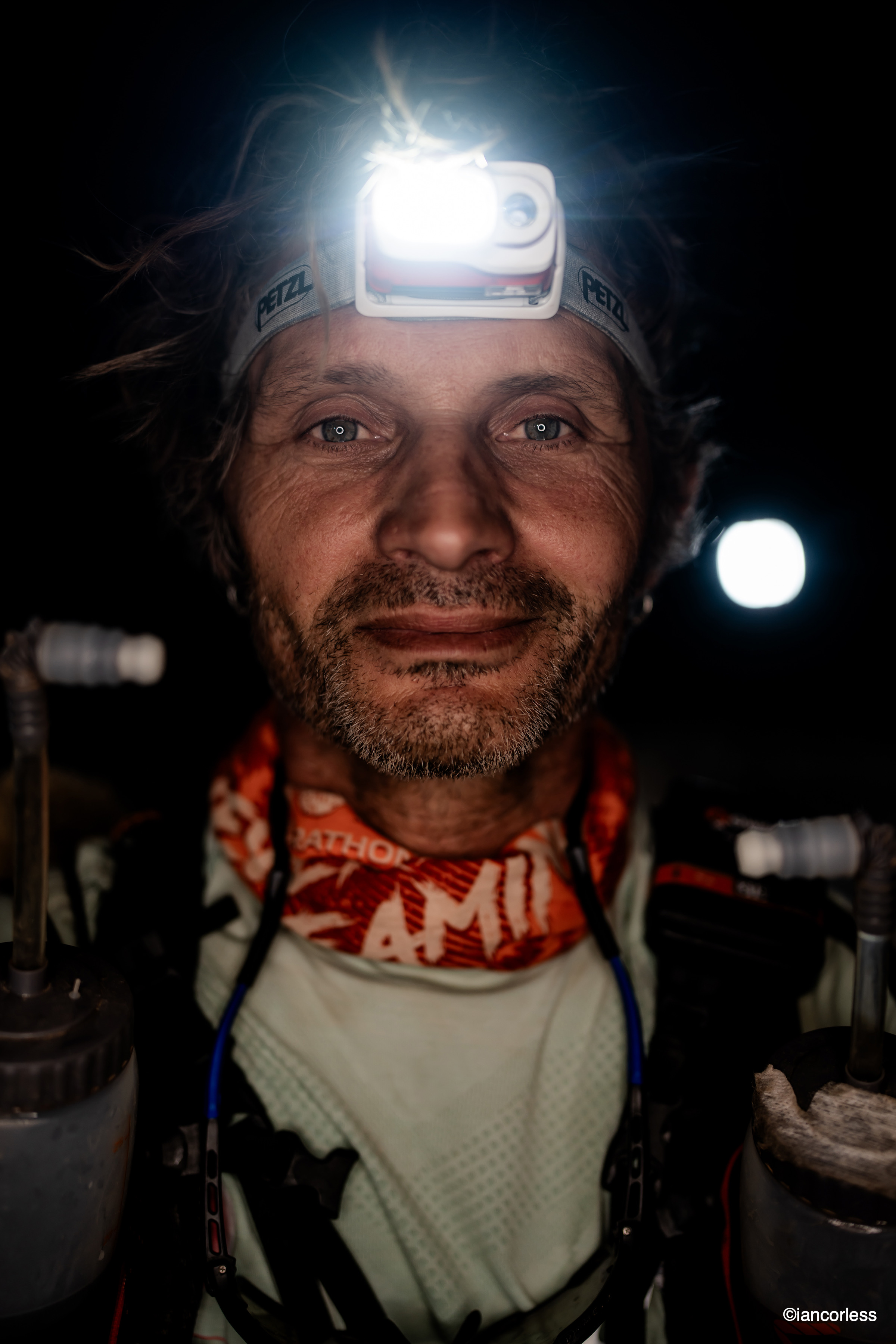
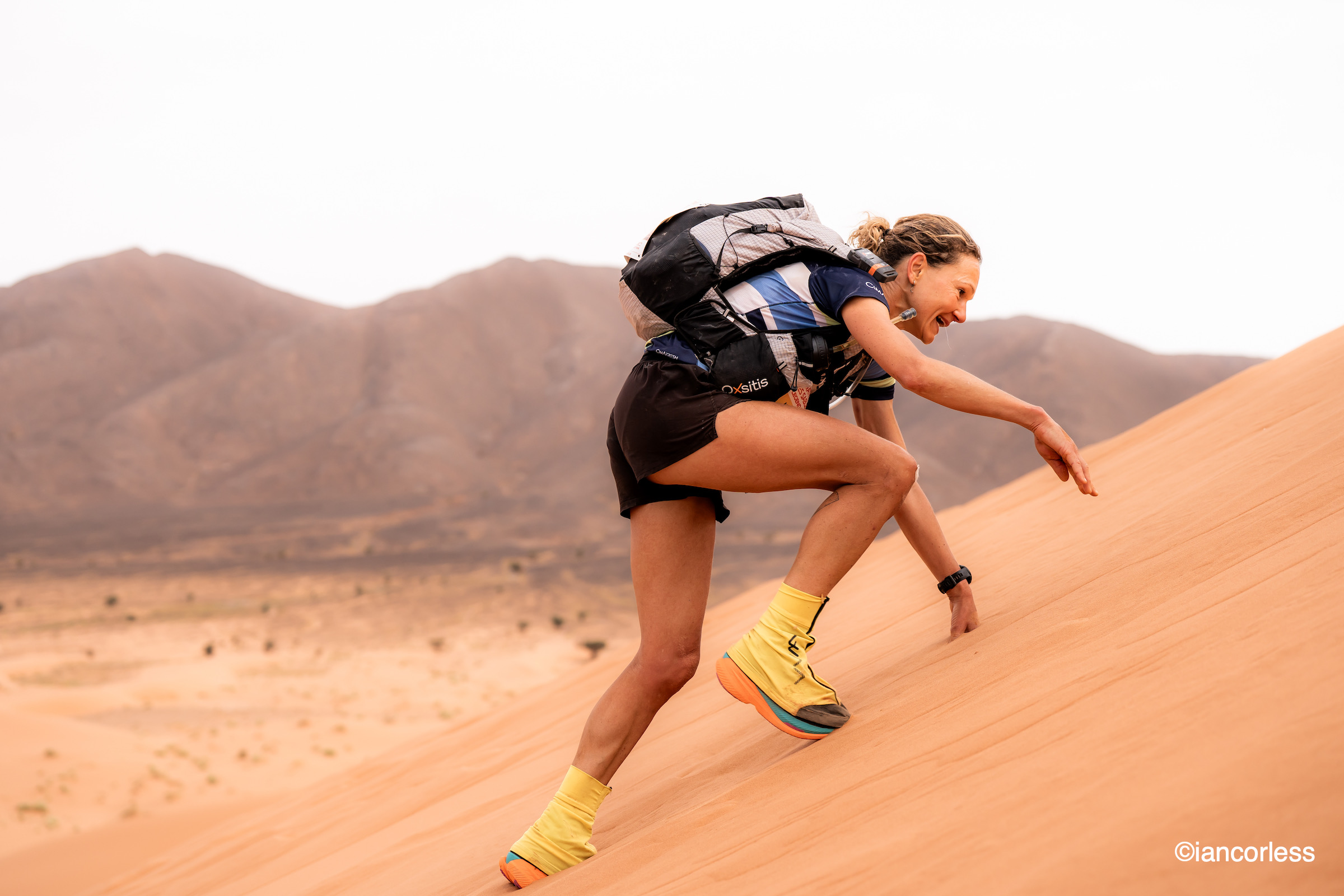
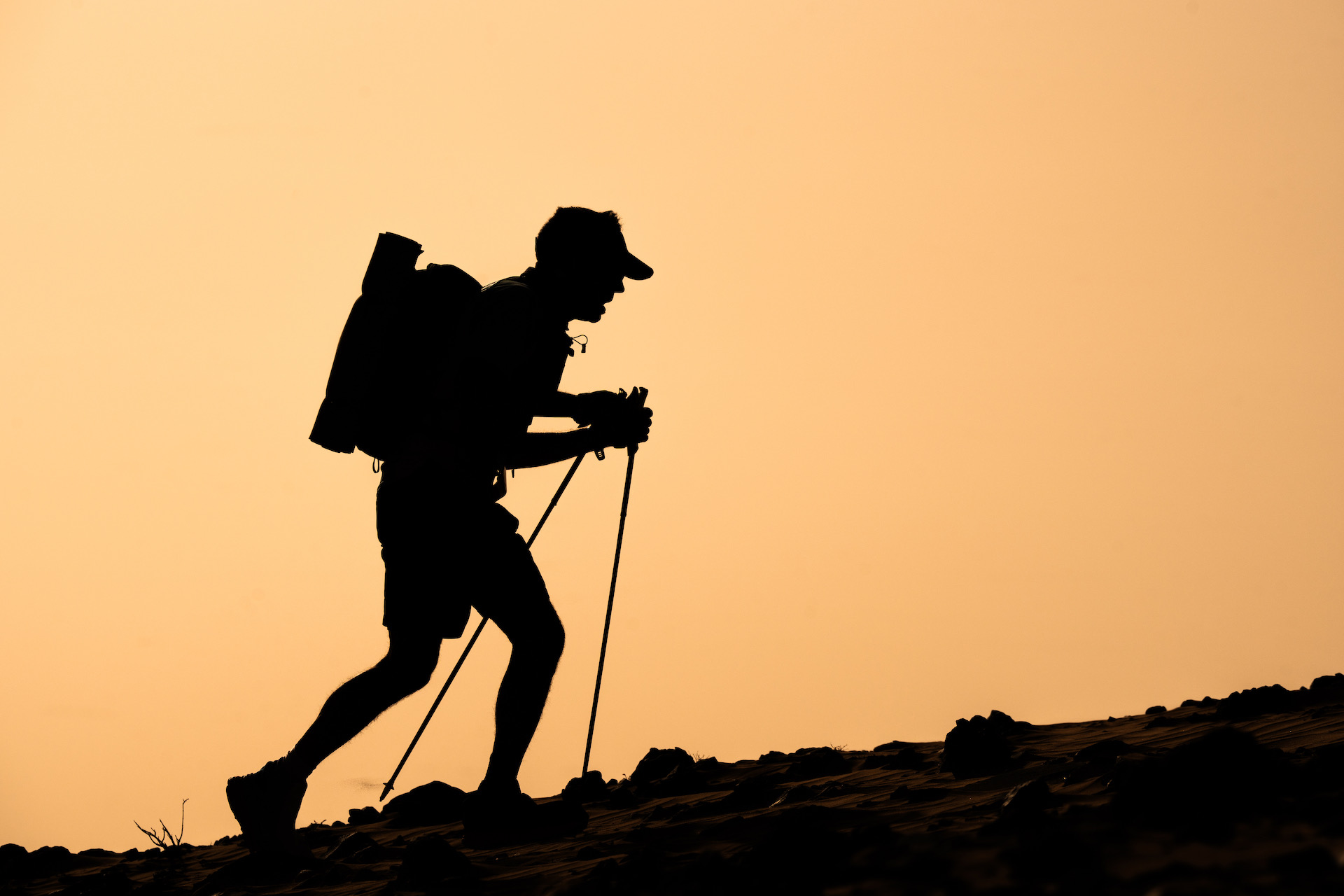
Darkness and the glow of head torches accompanied the early starters to CP1 and then they were confronted with the Ouzina Dune at 13km’s, a steep wall of sand that had to be climbed and then descended.

Epic landscape – Photo by Ian Corless

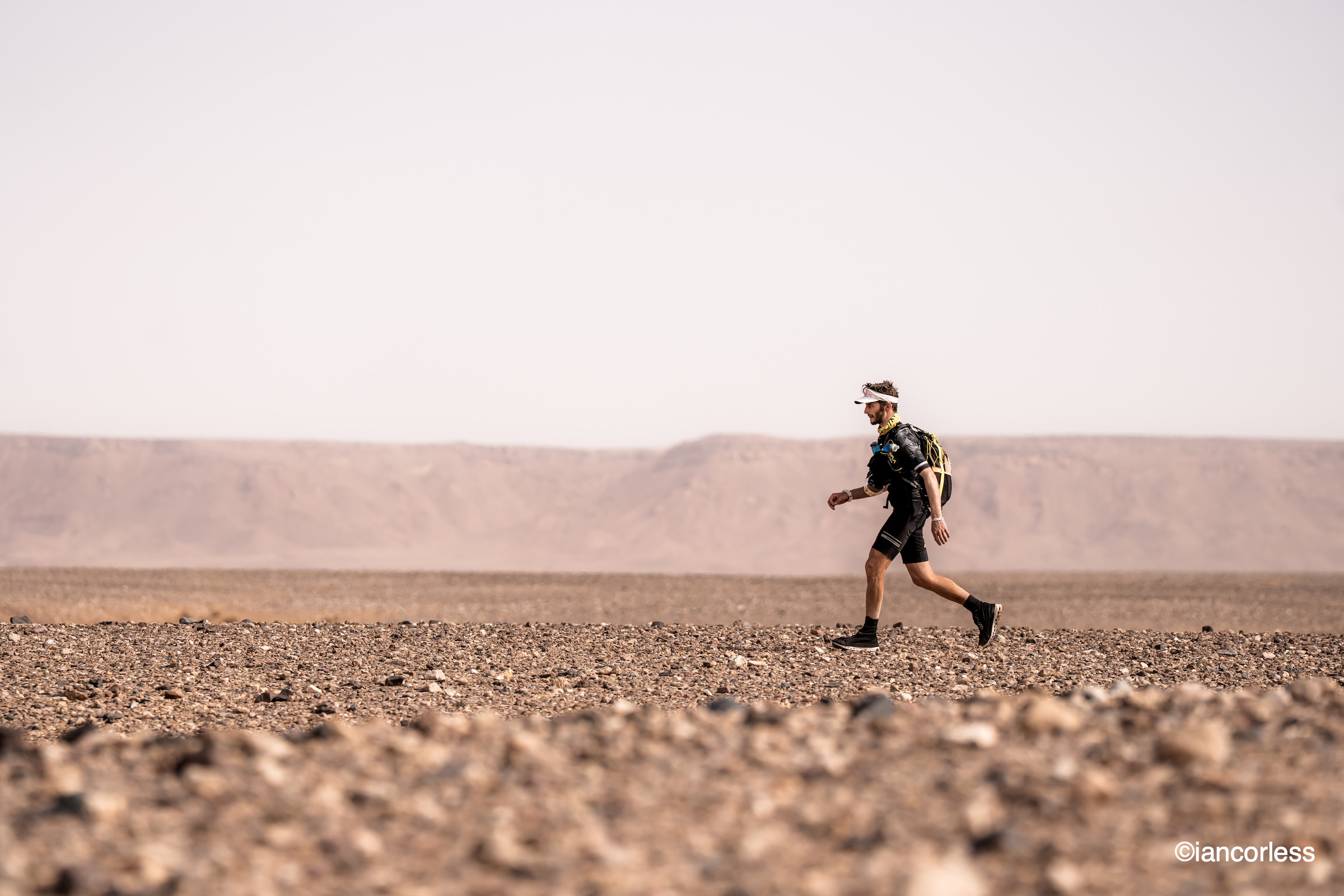
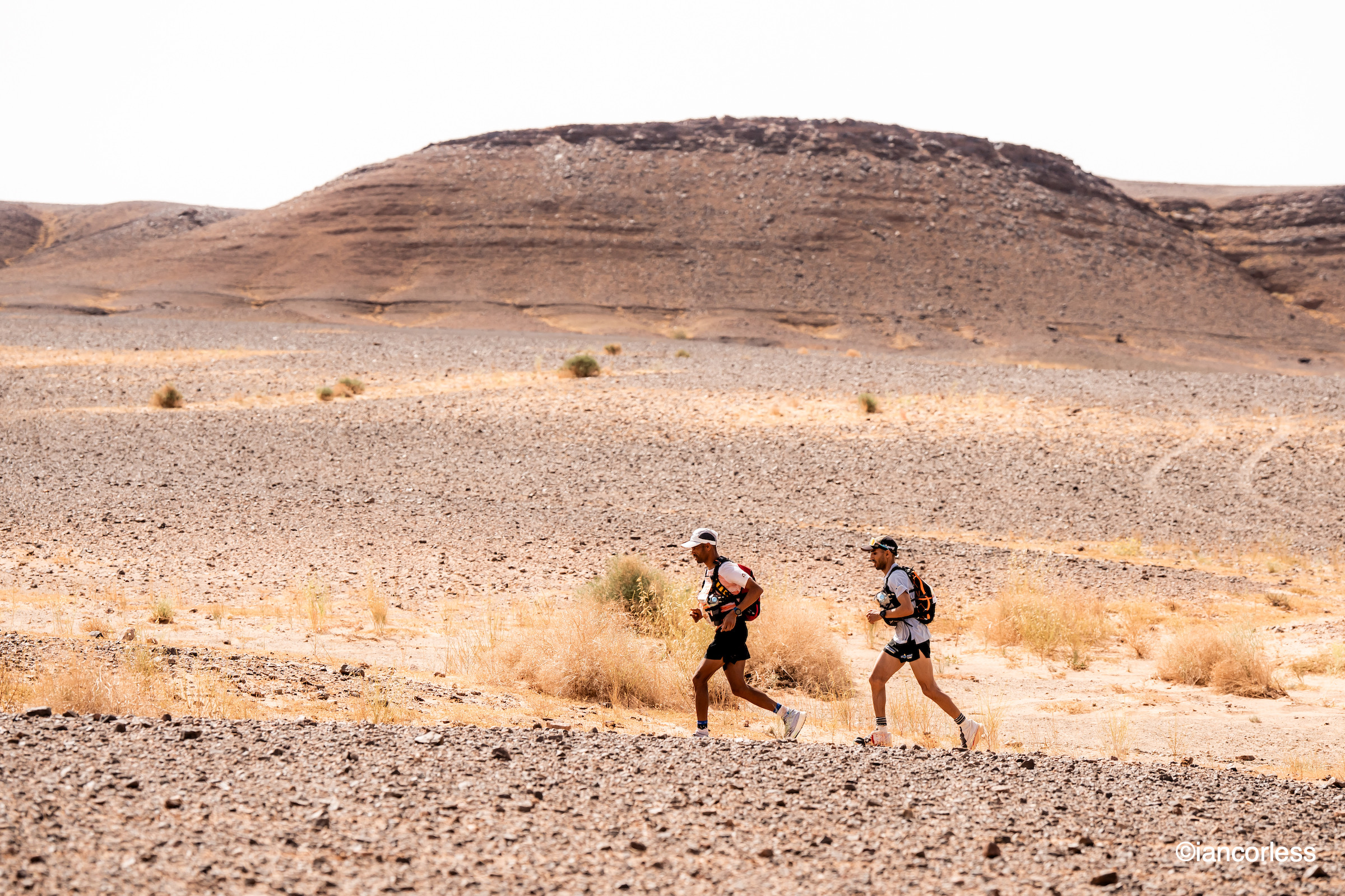
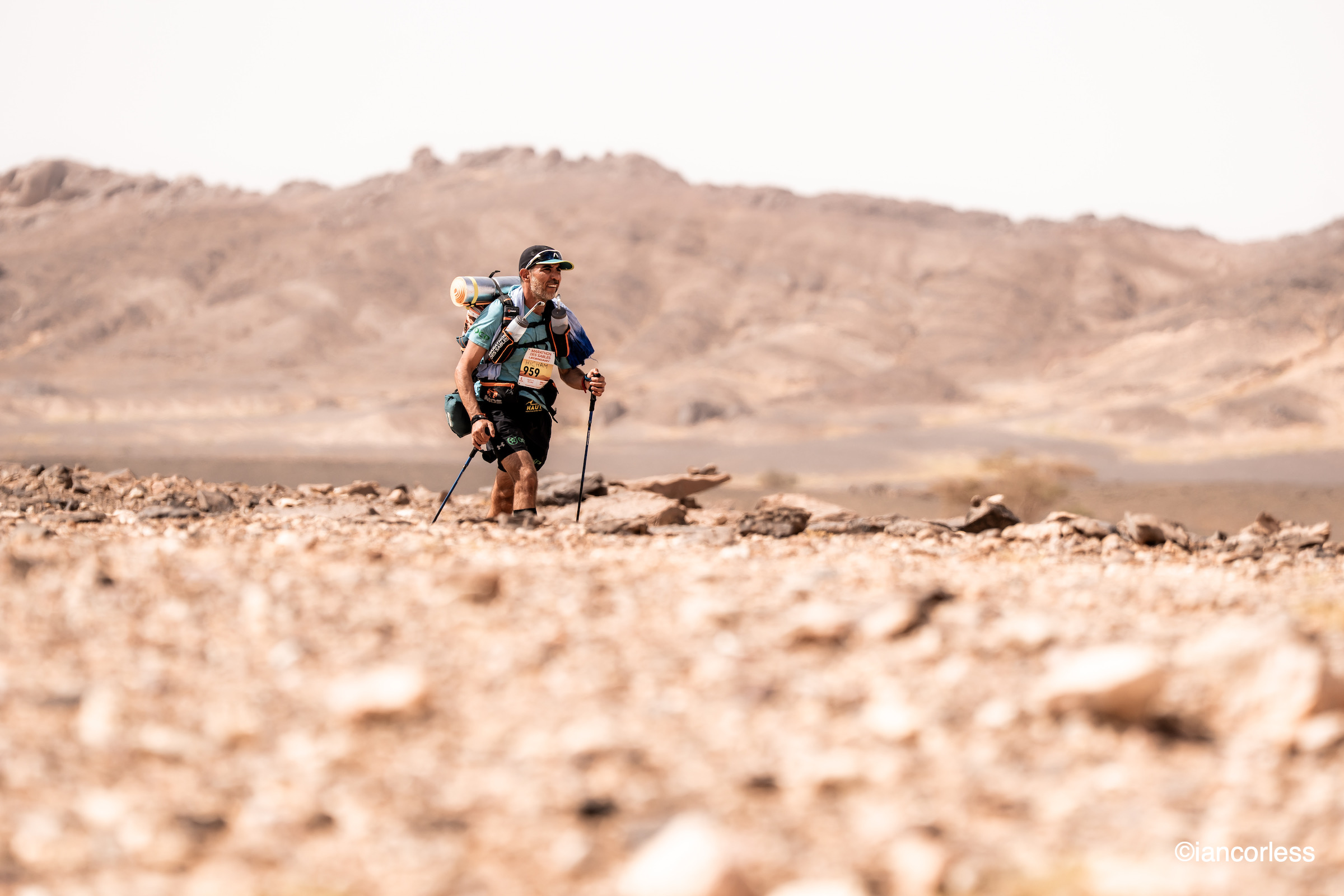
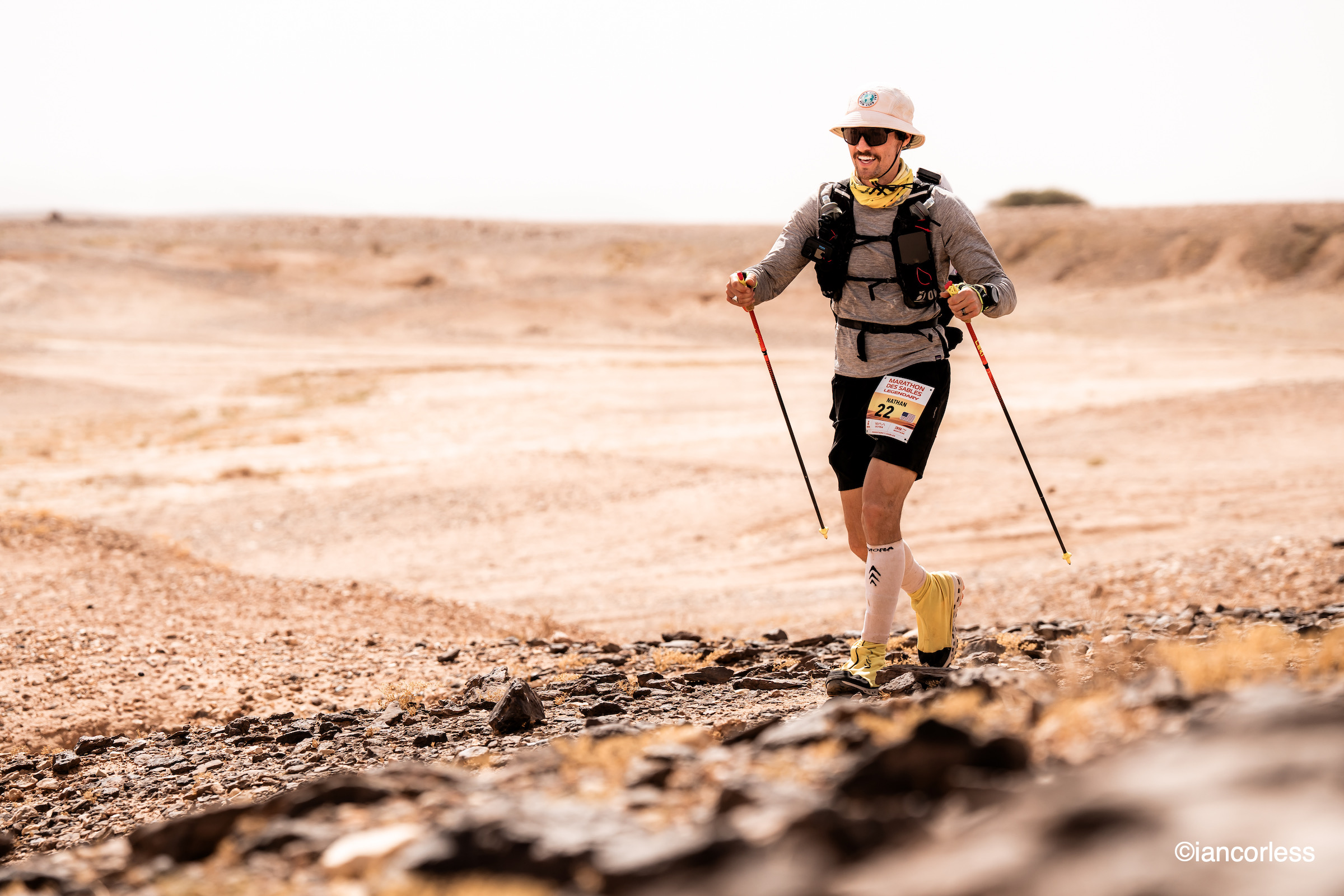
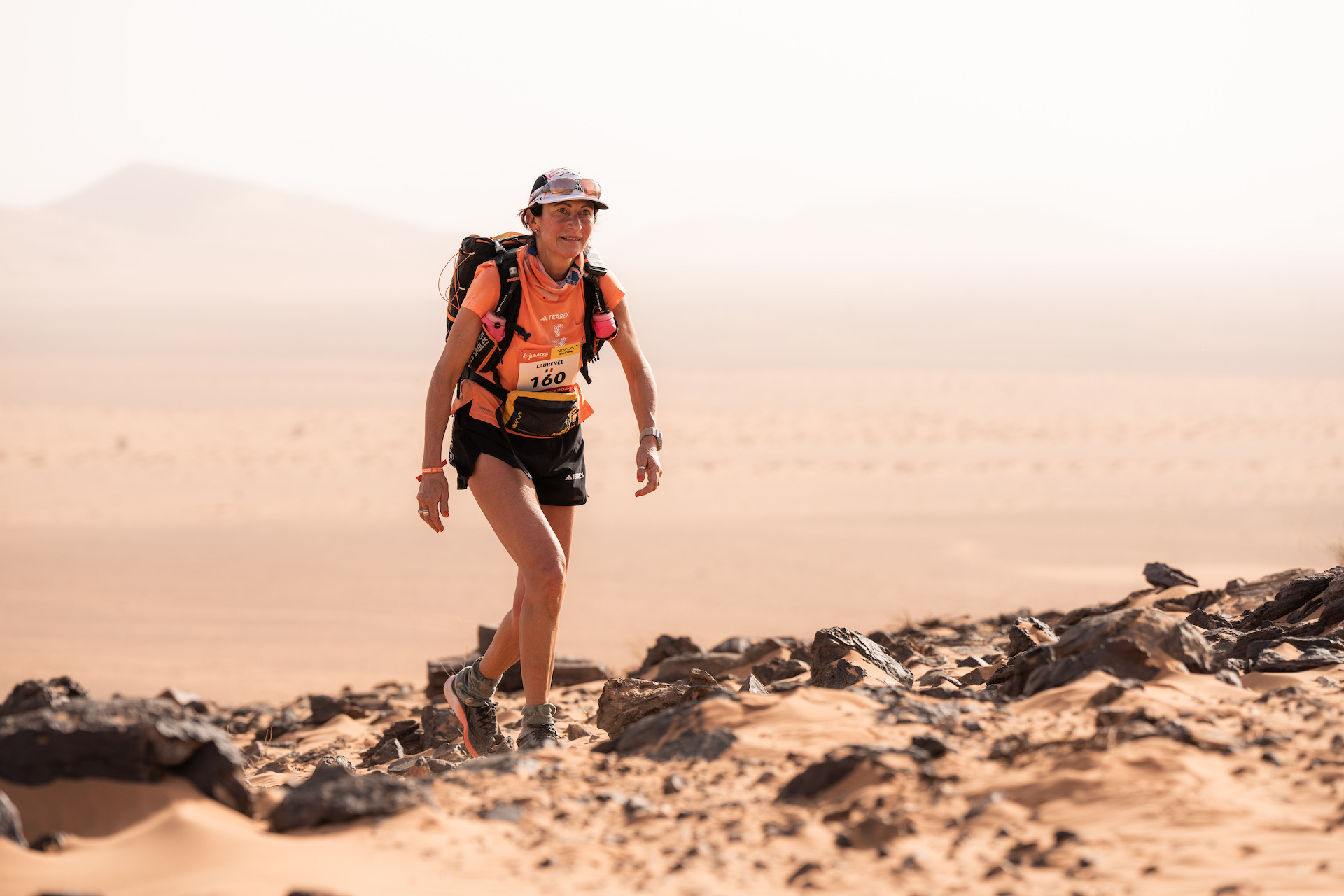
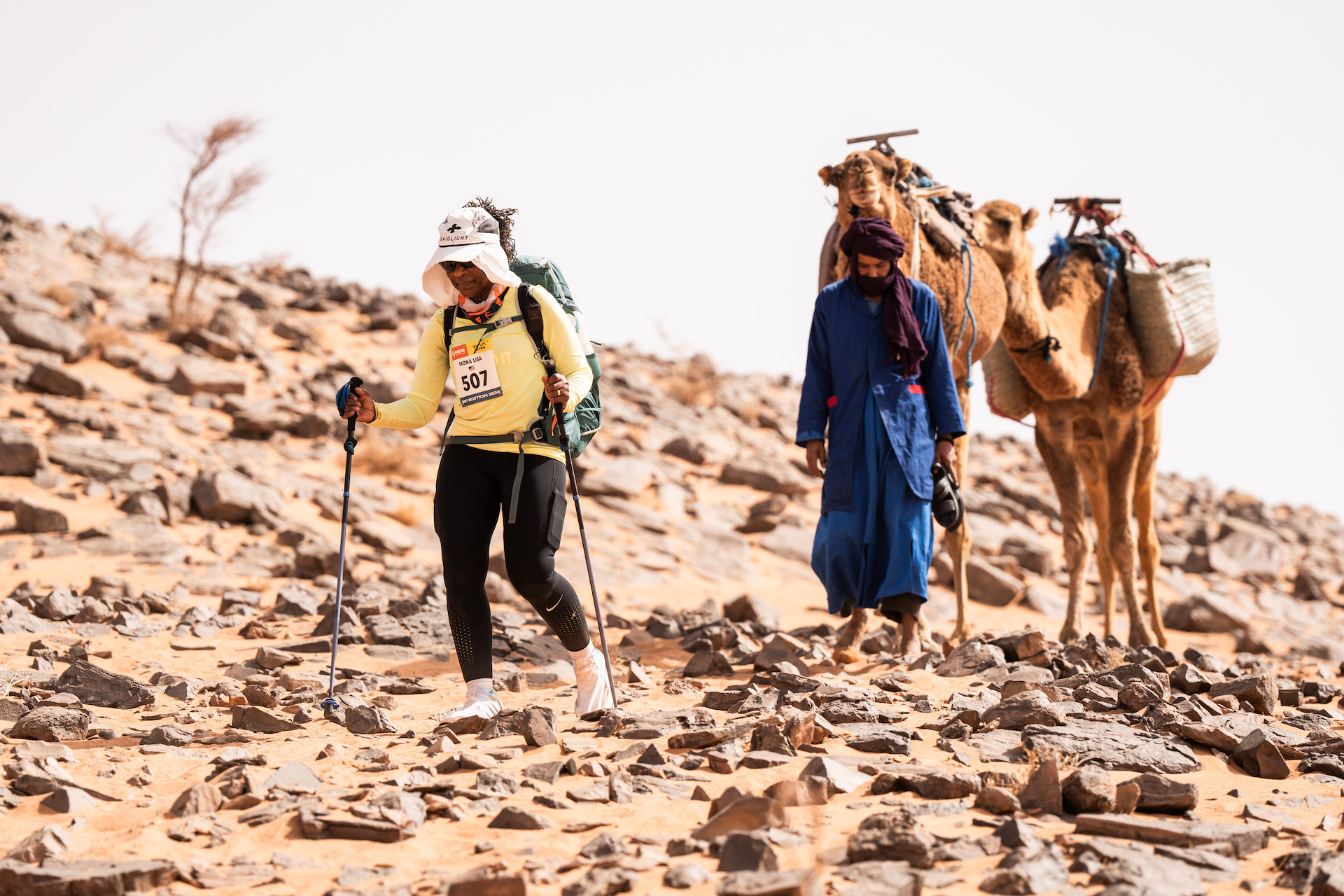
The terrain now mixed some sand, rocky plateau, stones and it remained this way all the way to the finish line. Nearly all participants were very happy with the terrain exclaiming it was ‘runnable,’ especially with overcast skies and lower temperatures.

Varying terrain – Photo by Ian Corless

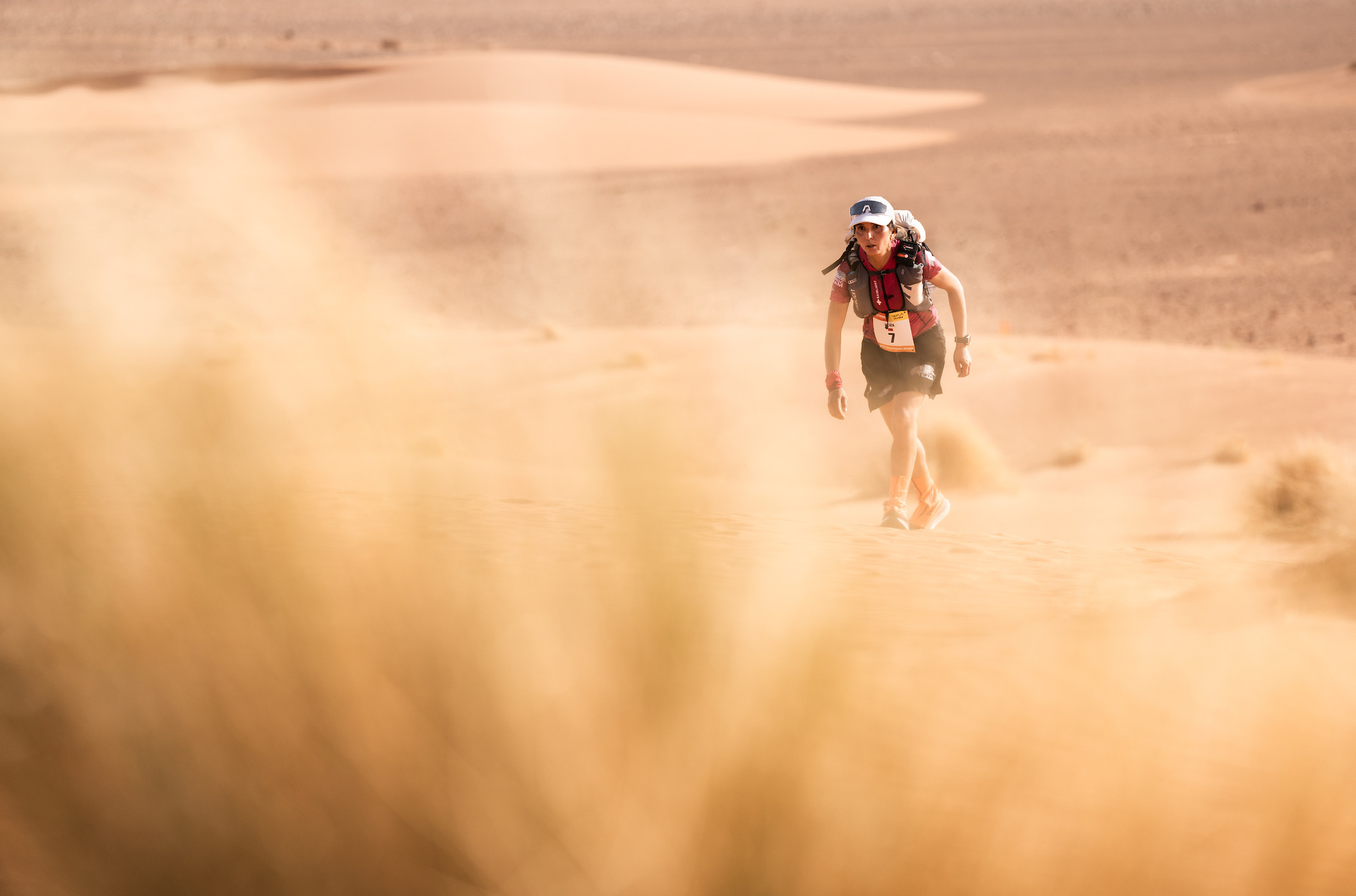
As darkness came, the weather changed and the wind began to increase from the south. Storms arrived before midnight and they persisted for hours, on and off, creating tough sand storms, at time hard rain and quite simply, extremely challenging conditions.

Midnight finish – Photo by Ian Corless

The arrival of a new day gave life to the runner’s who were still on the close, approximately 100.

Photo by Ian Corless

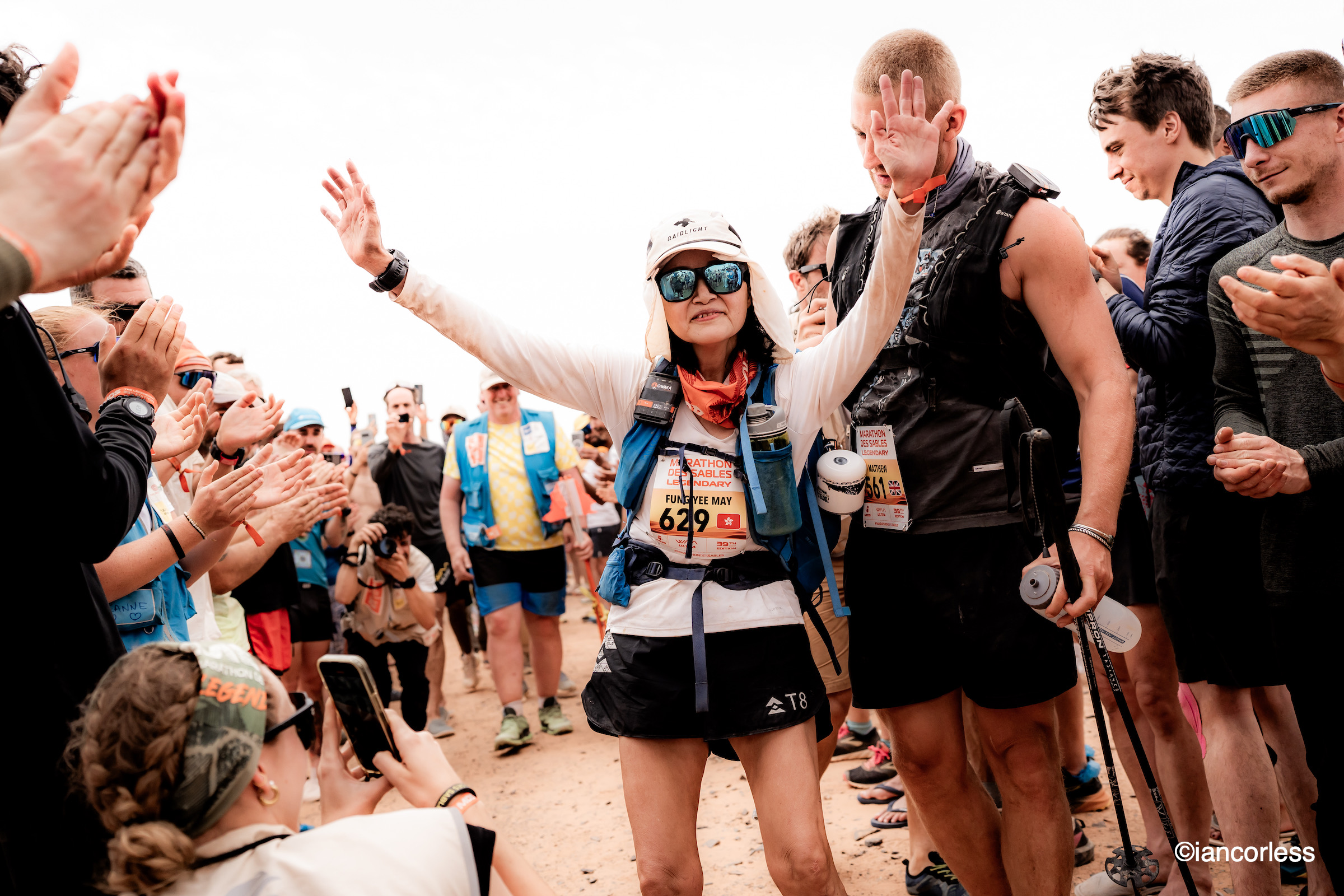
Pushing to the line, they endured physical pain, mental fatigue and they willed their bodies to achieve a remarkable finish. The last participants, Fung Yee May and Mathew Barrie, arriving just before 1300 in the afternoon, 30-hours, 36-minutes and 52-seconds. For perspective, this was 22-hours and 41-minutes after the first woman and 23-hours and 28-minutes after the first man.

Last finishers – Photo by Ian Corless

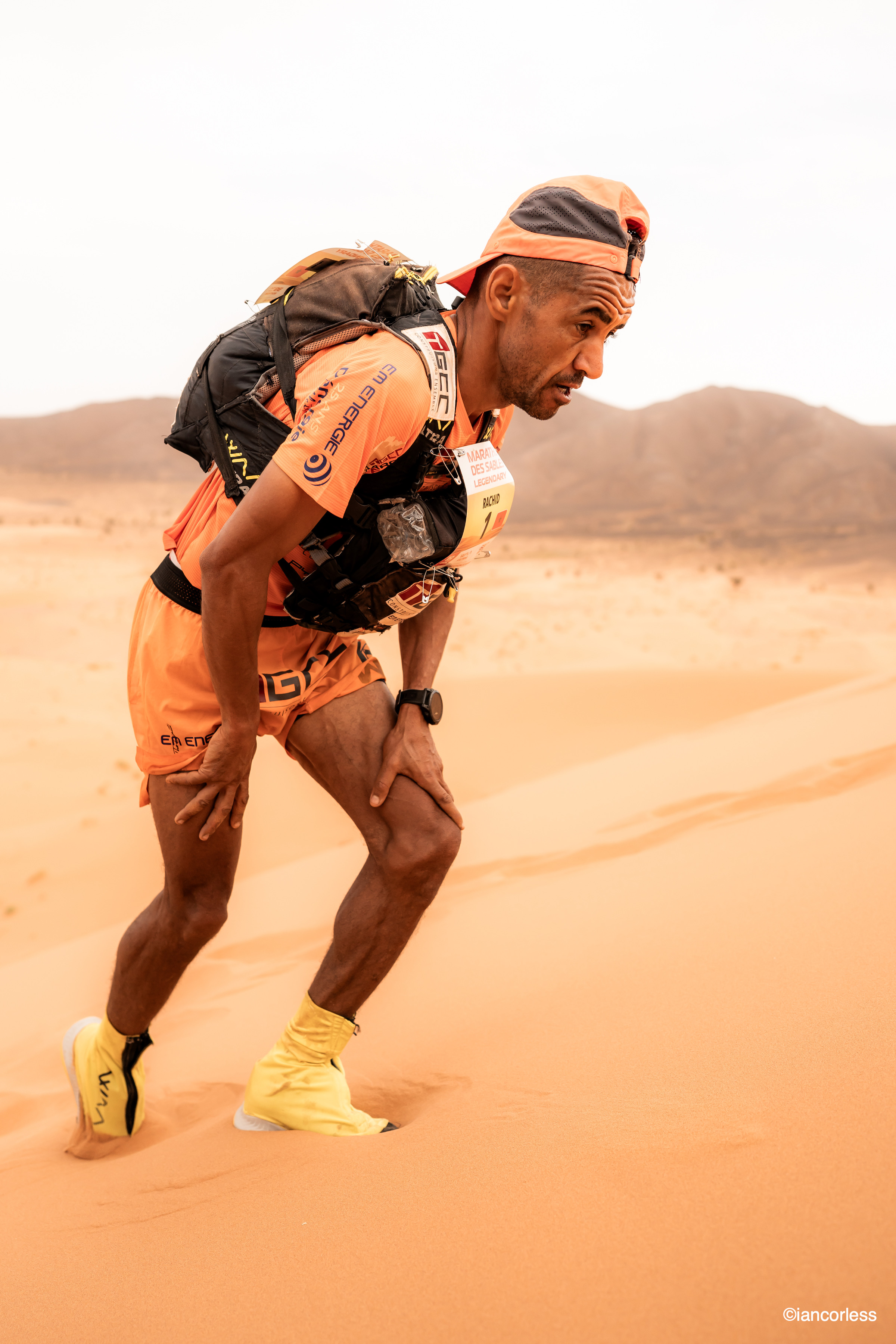
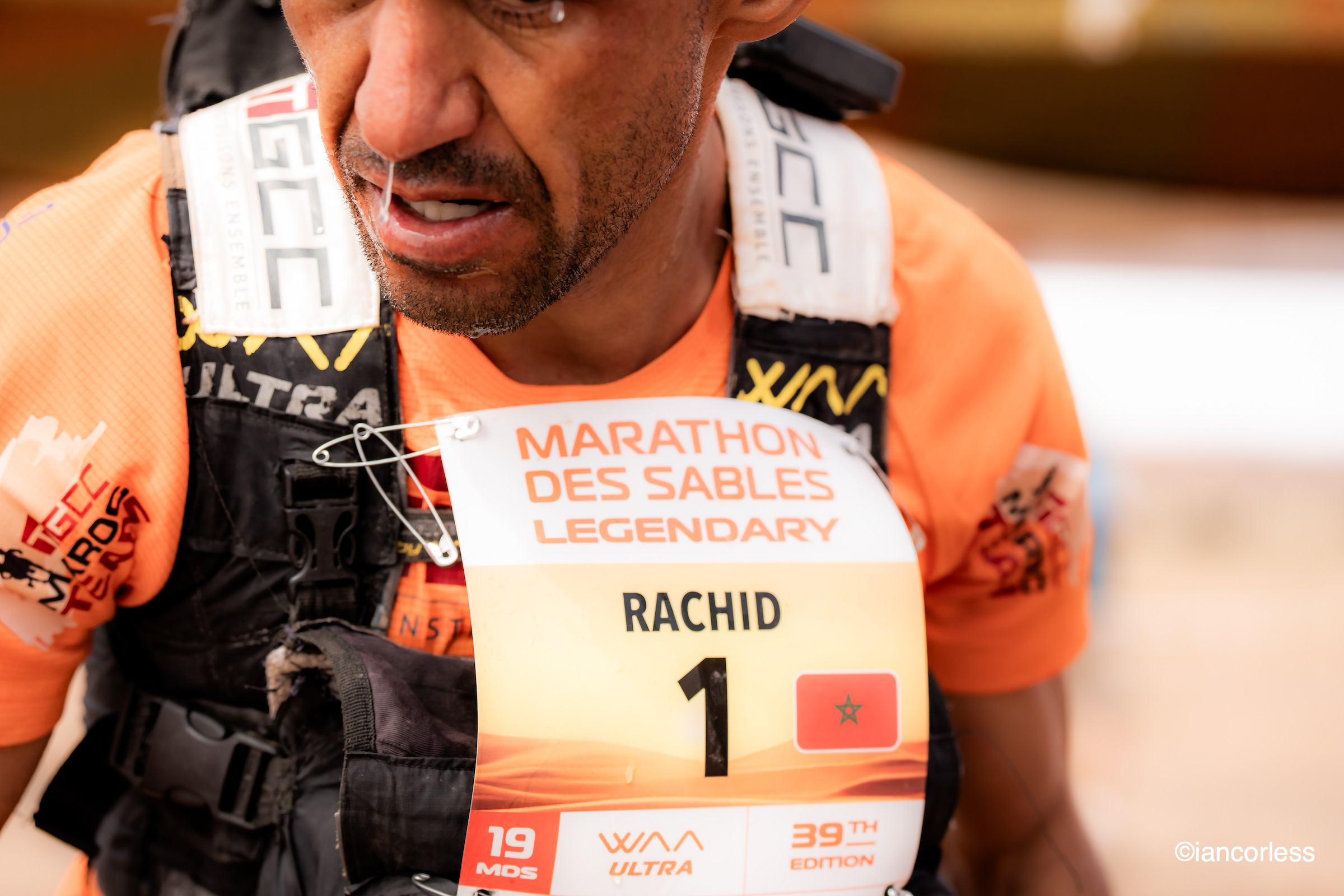
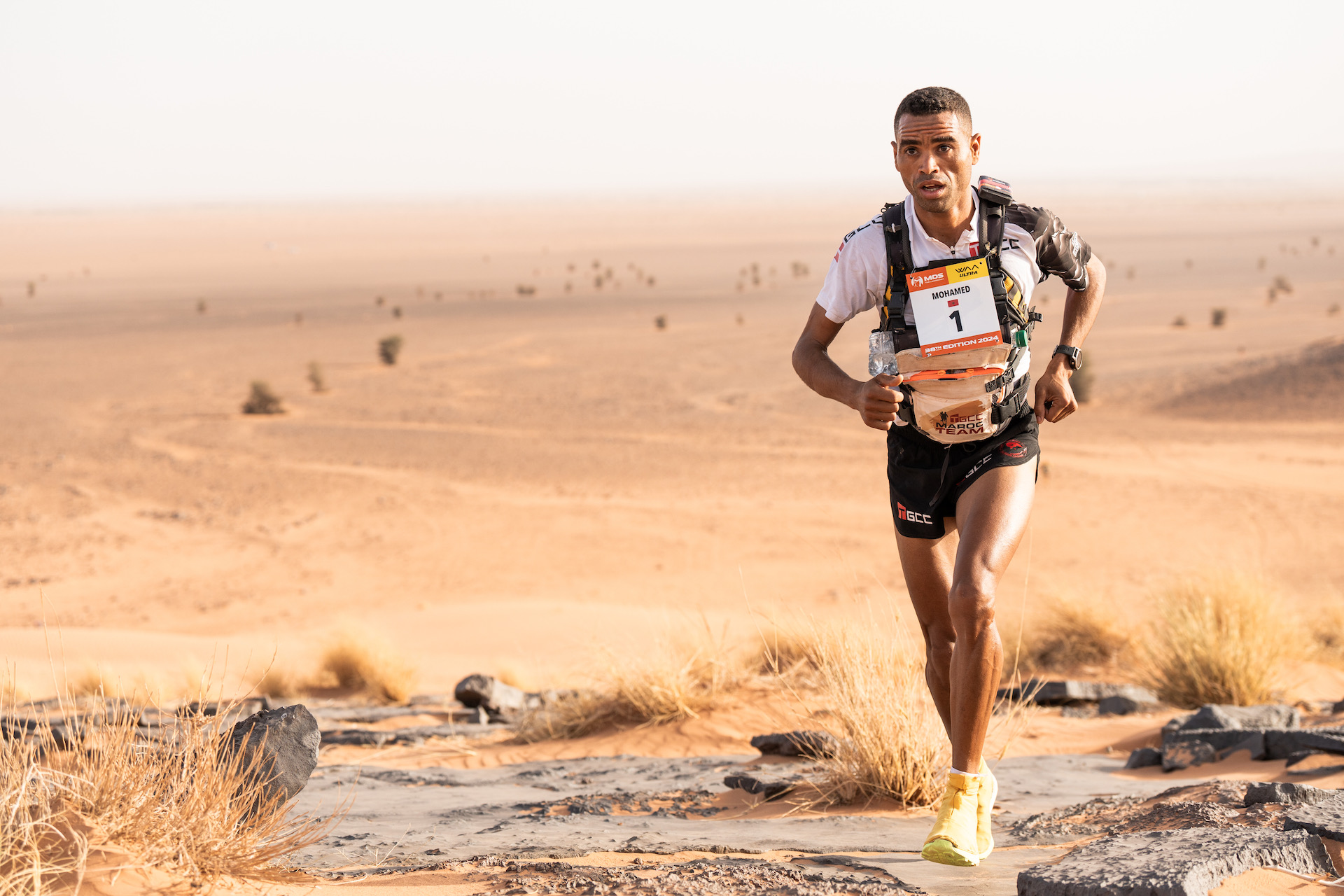
At the front of the race, the top male contenders, Rachid, Mohamed and Hamid ran together to the large dune at 13km’s and then Rachid opened a gap.

Rachid – Photo by Ian Corless

Mohamed marked and ran with Hamid enabling Rachid to pull away. The gap opened up. By CP5 the gap was 8-minutes.

Rachid at CP – Photo by Ian Corless

By the finish line, Rachid’s margin opened to 10-minutes 09-seconds bringing hime once again in to the race lead position.

Mohamed and Hamid – Photo by Ian Corless

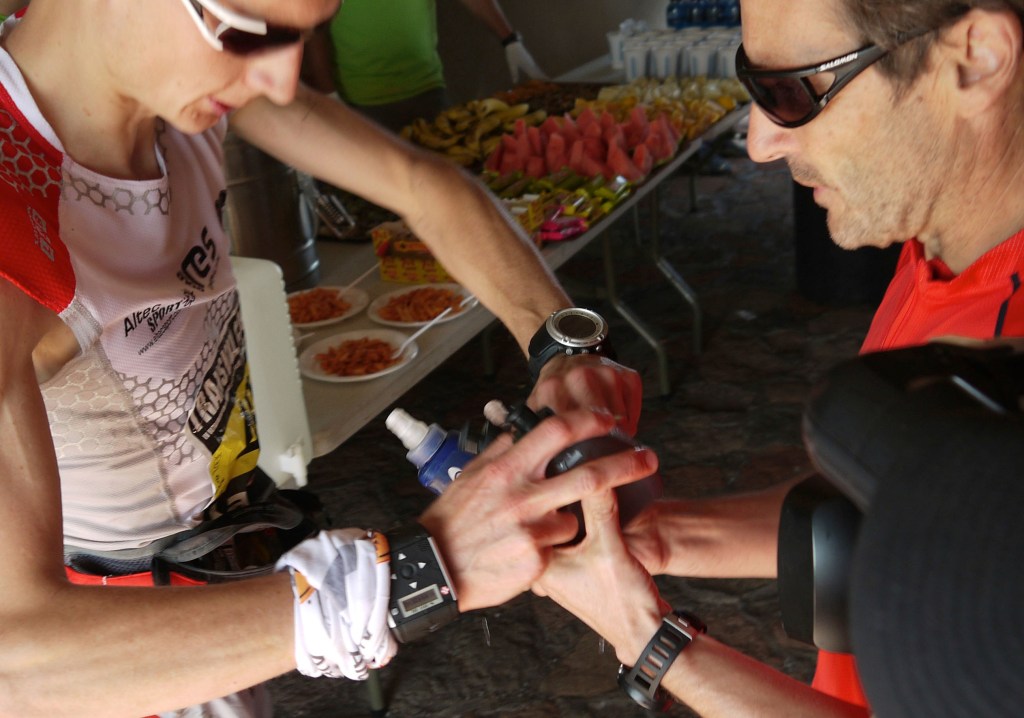
At CP 5 it was apparent that Hamid was having some problems. He took longer than usual and he watered his legs. Mohamed left alone.

Later, Hamid withdrew from the race with injury allowing Ahmed Ouikhalfen to move into 3rd.

Stage 4 results:

  • Rachid El Morabity 07:08:13
  • Mohamed El Morabity 07:08:22
  • Ahmed Ouikhalfen 08:15:45
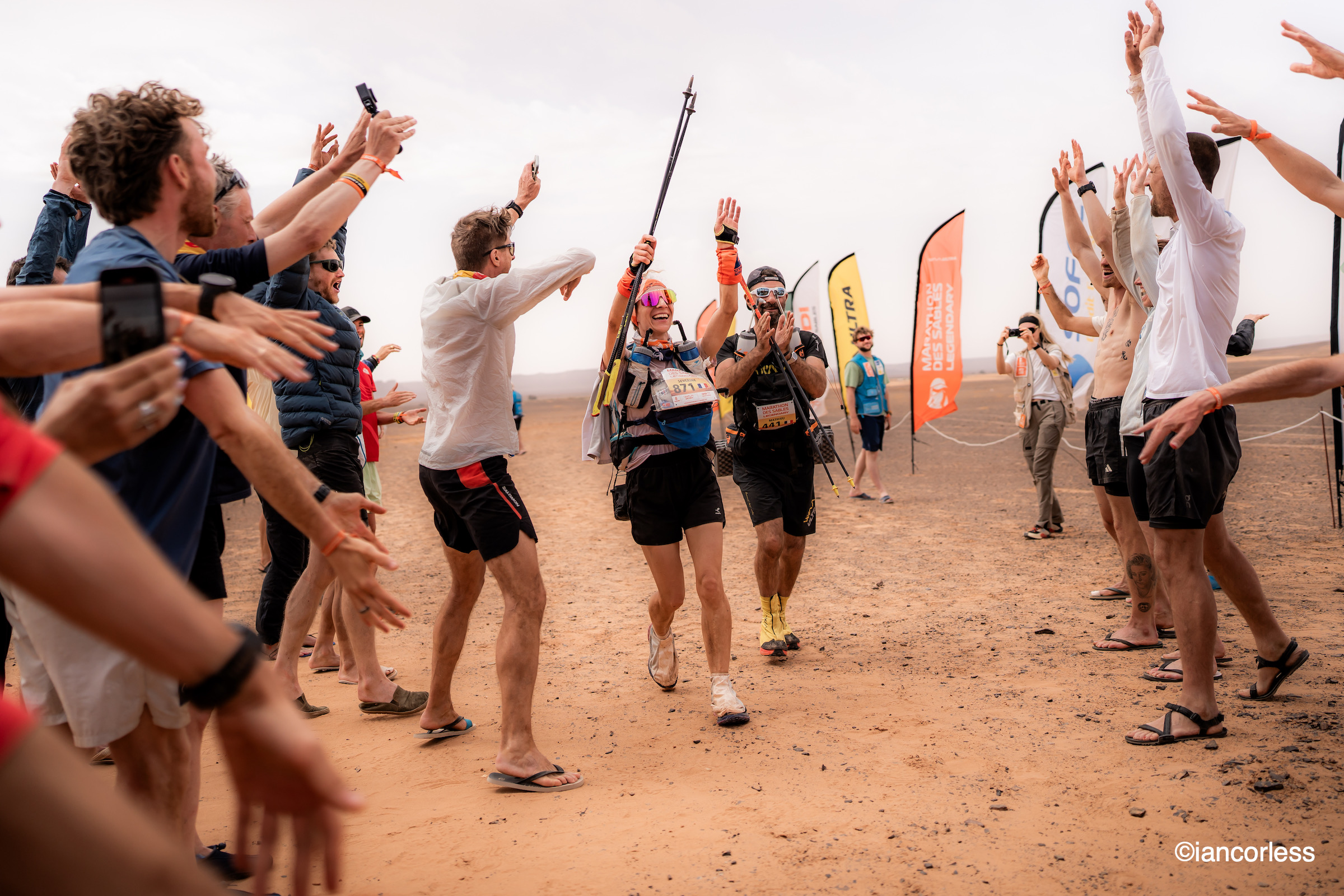
Maryline – Photo by Ian Corless

For the women, Maryline Nakache ran a masterclass race that may well rank as one of the best days ever for a female participant. She pushed the pace and not only did she finish almost 1-hour ahead of the 2024 MDS The Legendary champion, Aziza El Amrany, Maryline placed 3rd overall on the stage in 07:55:35 – remarkable!

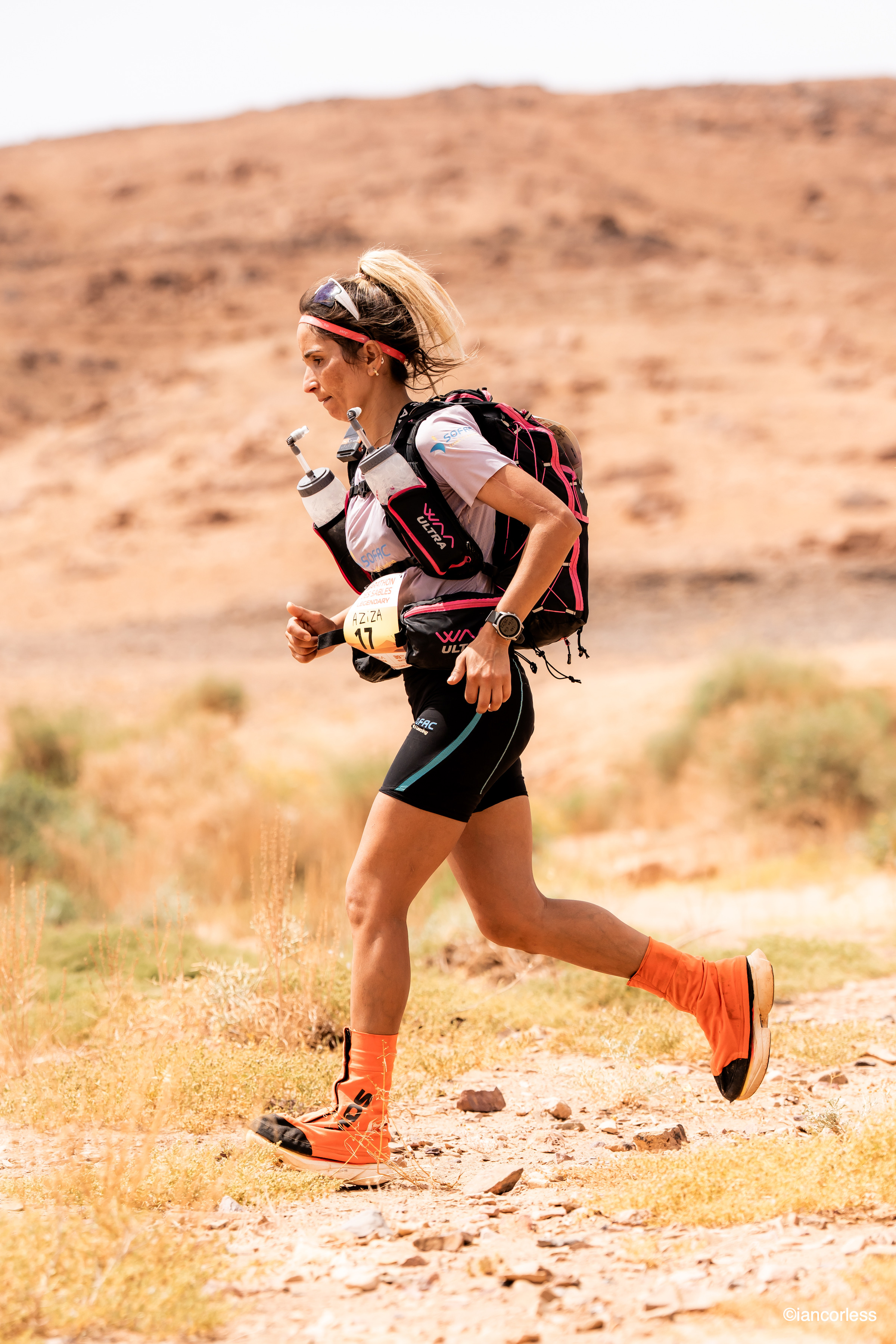
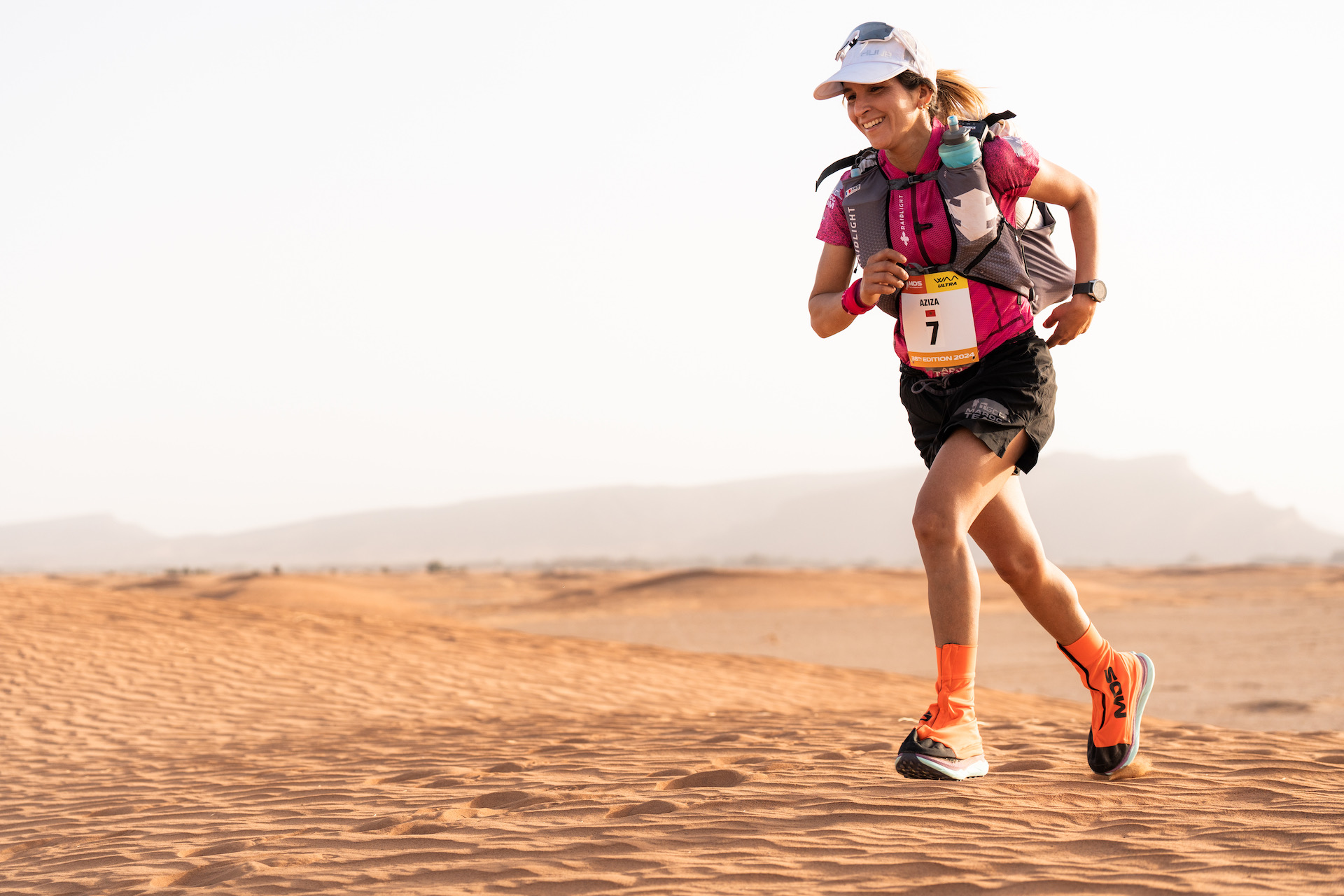
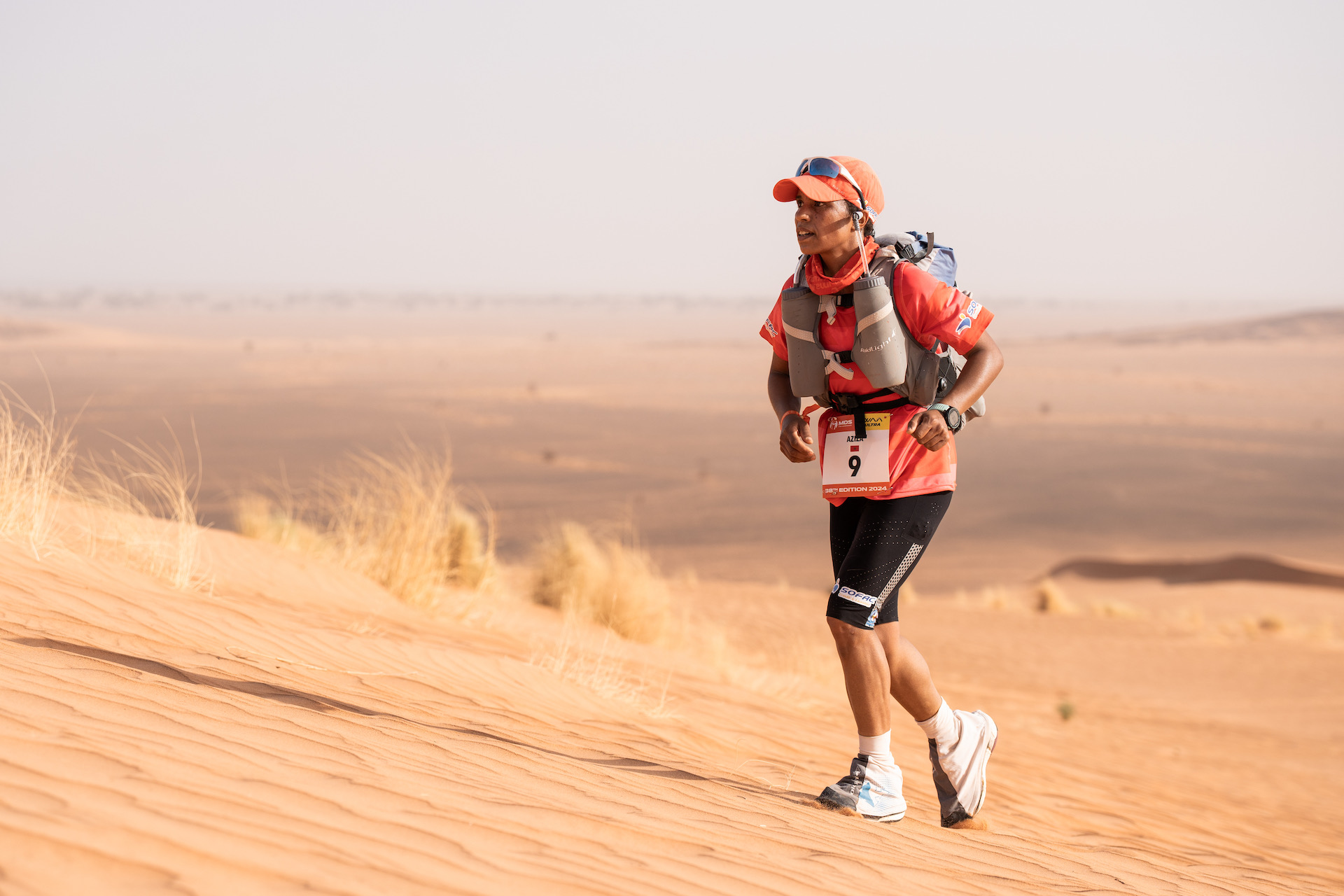
Aziza – Photo by Ian Corless

Aziza El Amrany ran a strong day, she looked great, but she was no match for the French woman, she finished 2nd in 08:49:20.

Tomomi – Photo by Ian Corless

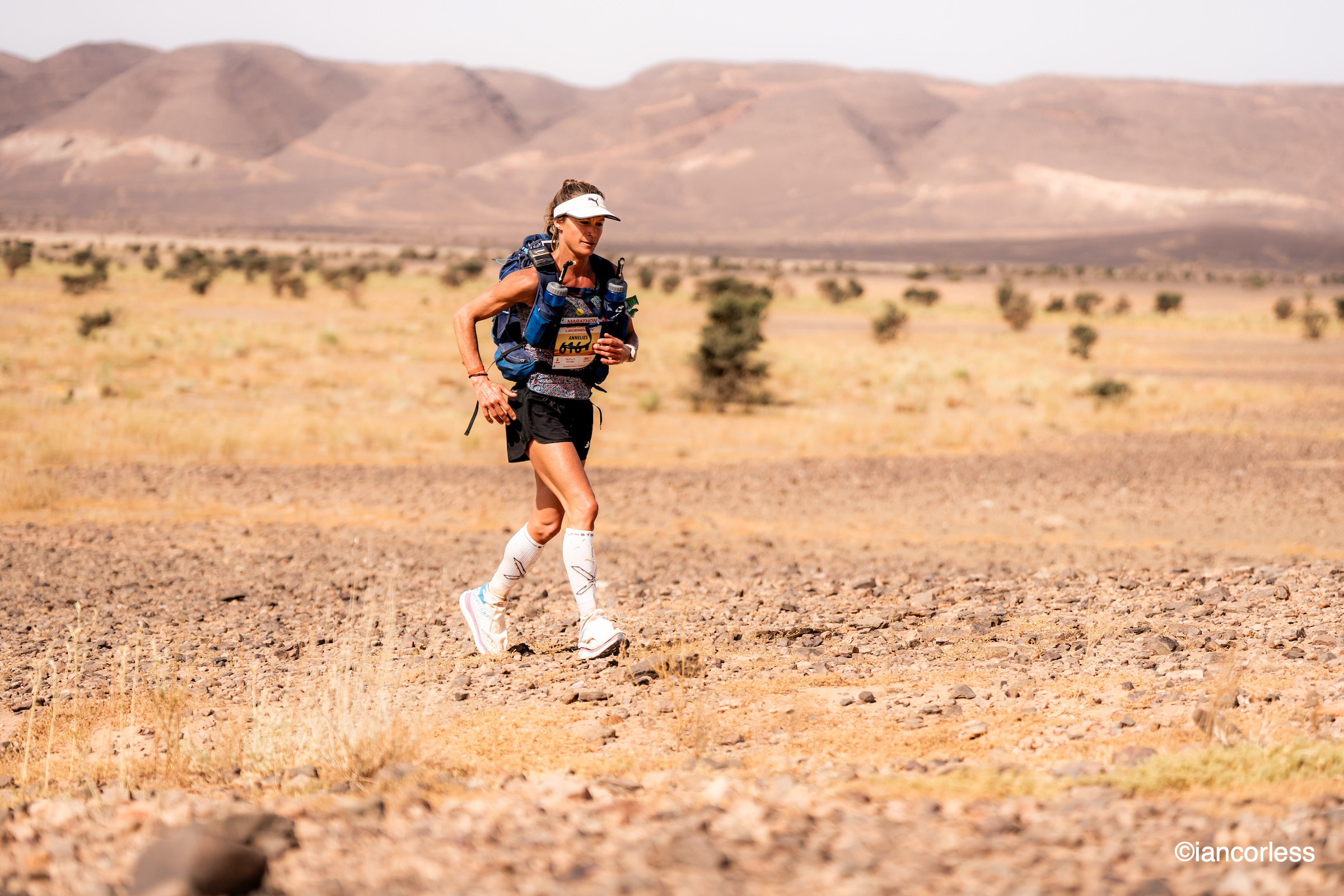
Annelies Brak, once again had a great day finishing 3rd in 09:43:18, however, the previous day, she failed a mandatory kit check and received a 2-hour penalty, a crazy mistake which will no doubt cost her a podium place.

Annelies – Photo by Ian Corless

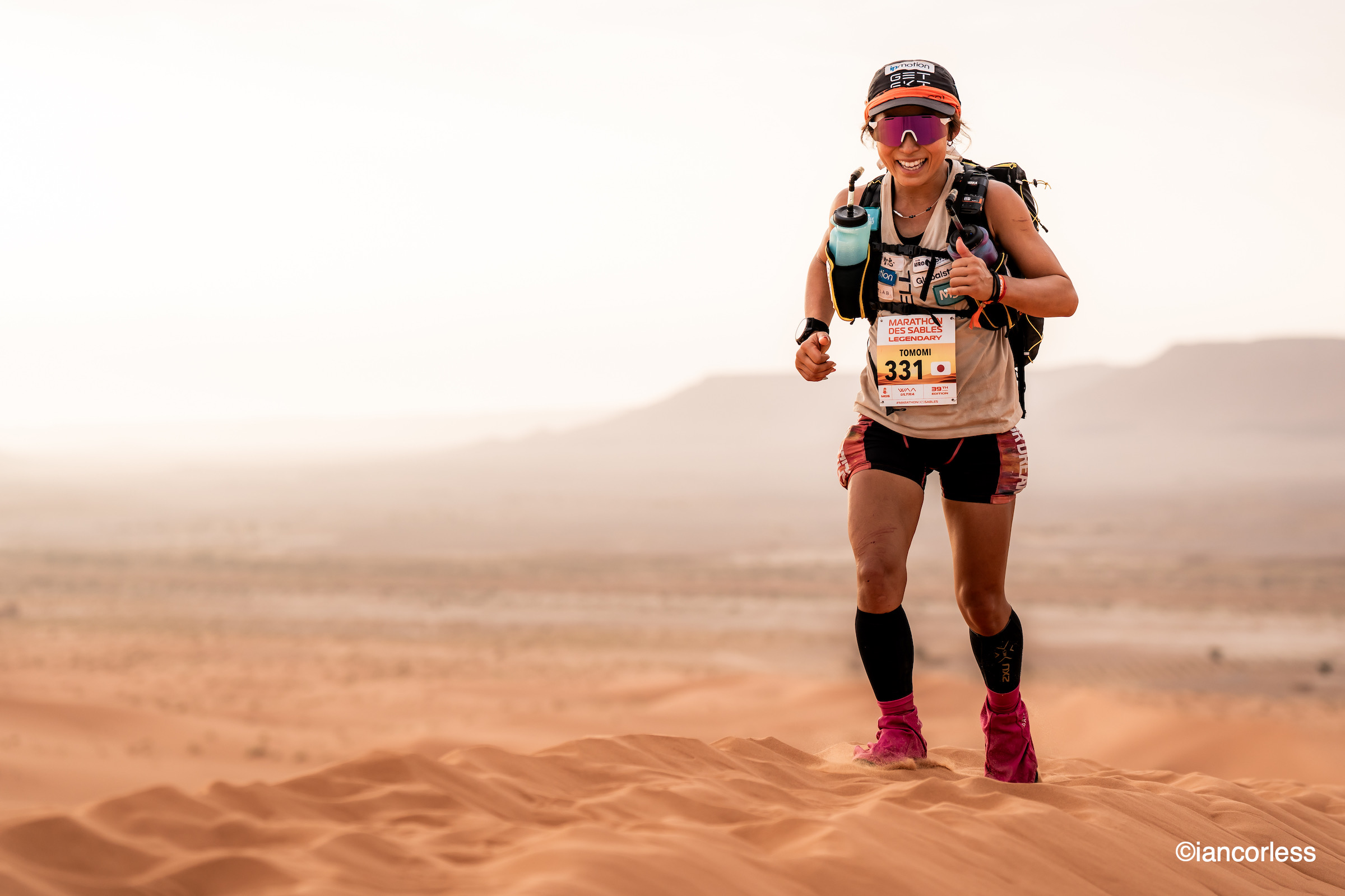
Tomomi Bitoh, who has been on the MDS podium previously ran a solid day for 4th in 10:02:07 and this result moves her to 3rd on the female ranking.

Stage 4 results:

  • Maryline Nakache 07:55:35
  • Aziza El Amrany 08:49:20
  • Annelies Brak 09:43:18
Photo by Ian Corless

With 2-stages to go, 42.2km and 21.1km, there is much to race for, especially in the women’s race. Maryline and Aziza are secure in 1st and 2nd, however, 3rd is open for a challenge, just 1-hour separates Tomomi, Francesca Canepa and Annelies.

OVERALL RANKING after Stage 4

  • Maryline Nakache 18:18:38*
  • Aziza El Amrany 19:55:33
  • Tomomi Bitoh 23:00:51

*Note – Maryline is 4th on GC.

  • Rachid El Morabity 15:48:29
  • Mohamed El Morabity 15:52:16
  • Ahmed Ouikhalfen 17:13:48

Tomorrow, stage 5, a classic 42.2km marathon with 424m+ which after the long day, will come as a welcome ‘shorter’ distance.

Full results are HERE

Men ranking HERE

Women ranking HERE

Photo by Ian Corless

Marathon des Sables Website HERE

Follow Ian Corless

Instagram – @iancorlessphotography

Twitter – @talkultra

facebook.com/iancorlessphotography

Web – www.iancorless.com

Web – www.iancorlessphotography.com

Marathon des Sables – The Legendary : STAGE 1 2024

Time allowance 10-hours / 0730am start

It’s all change for 2024 and with the race re-using several bivouac locations, the race will have a different feel and format.

Stage 1 MDS The Legendary 2024

Admin day passed yesterday and now everyone feels settled in their new home – a tent shared with 7 other souls. Camp life is becoming normal and anticipation is high. Weather has been ‘cool’ by MDS standards, however, the wind has been relentless with constant sand storms.

The start as sand blew through the Sahara

A key change for 2024 is also earlier start times to allow easier running in cooler temperatures, stage 1 with a scheduled 0700 call and 0730 start. It means morning prep and admin is taken mostly in the dark. Today was ‘chilly’ withe temperatures around 10-deg.

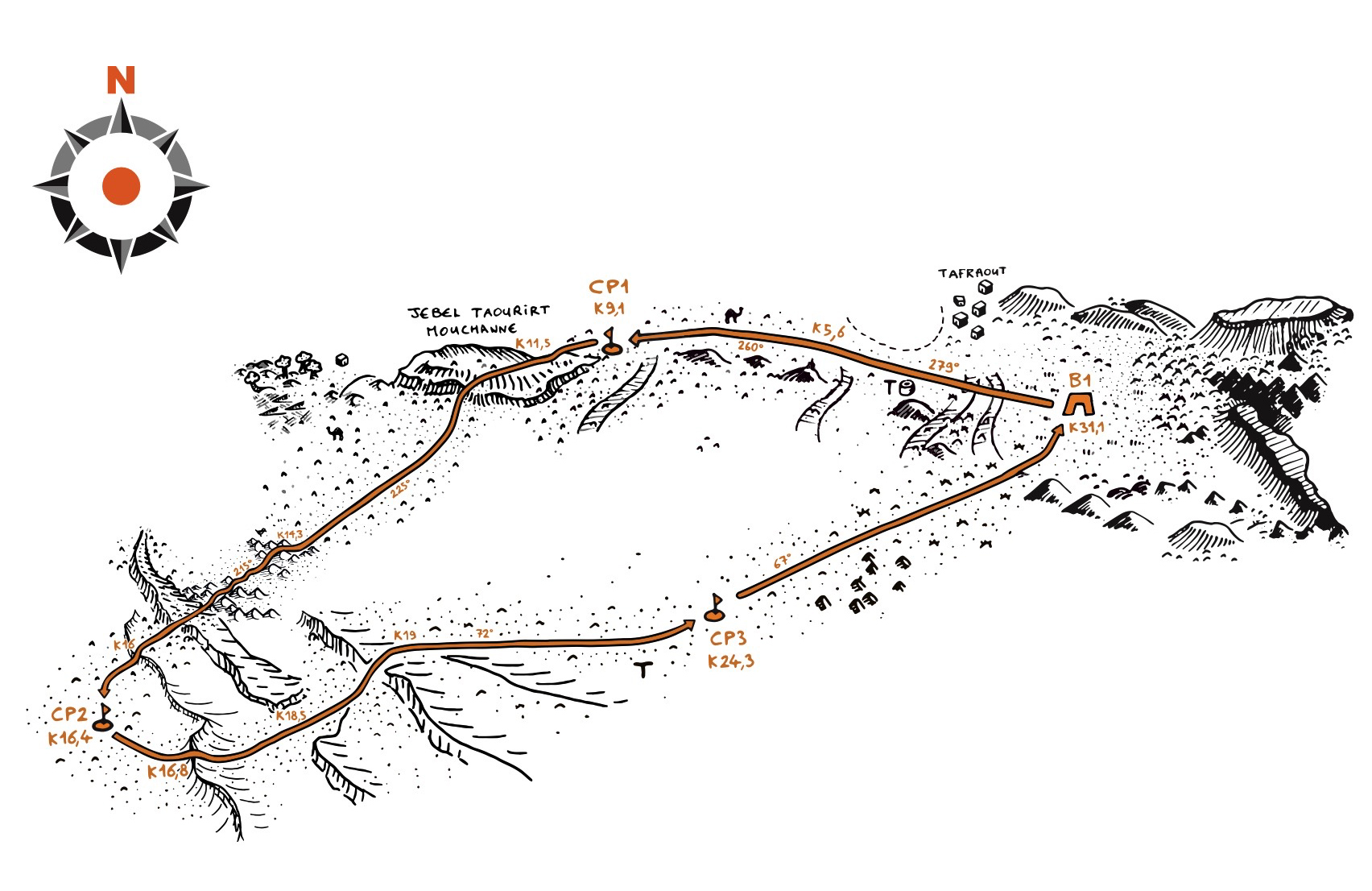
B1 located close to Tafraout offers an excellent location and this area is familiar territory for Marathon des Sables.

Rachid leading early in the race.

The distance 31.1km with 3 checkpoints coming at 9.1km, 16.4km and 24.3km. In many respects, it’s a good stage 1 with mostly hard and runnable terrain and little soft sand. A key feature around 10km’s is Jebel Taourirt Mouchanne and then challenging terrain from 14km to 19km before returning to where the stage started.

Stage 1 is always taken with caution, however, at the front of the race, an earlier start, cooler temperatures and a very runnable day could only mean one thing – a fast day! Temperatures for the early runner’s remained under 20-degs and it was midday bfore temperature reached 23-degrees with a possible high of 27-degrees.

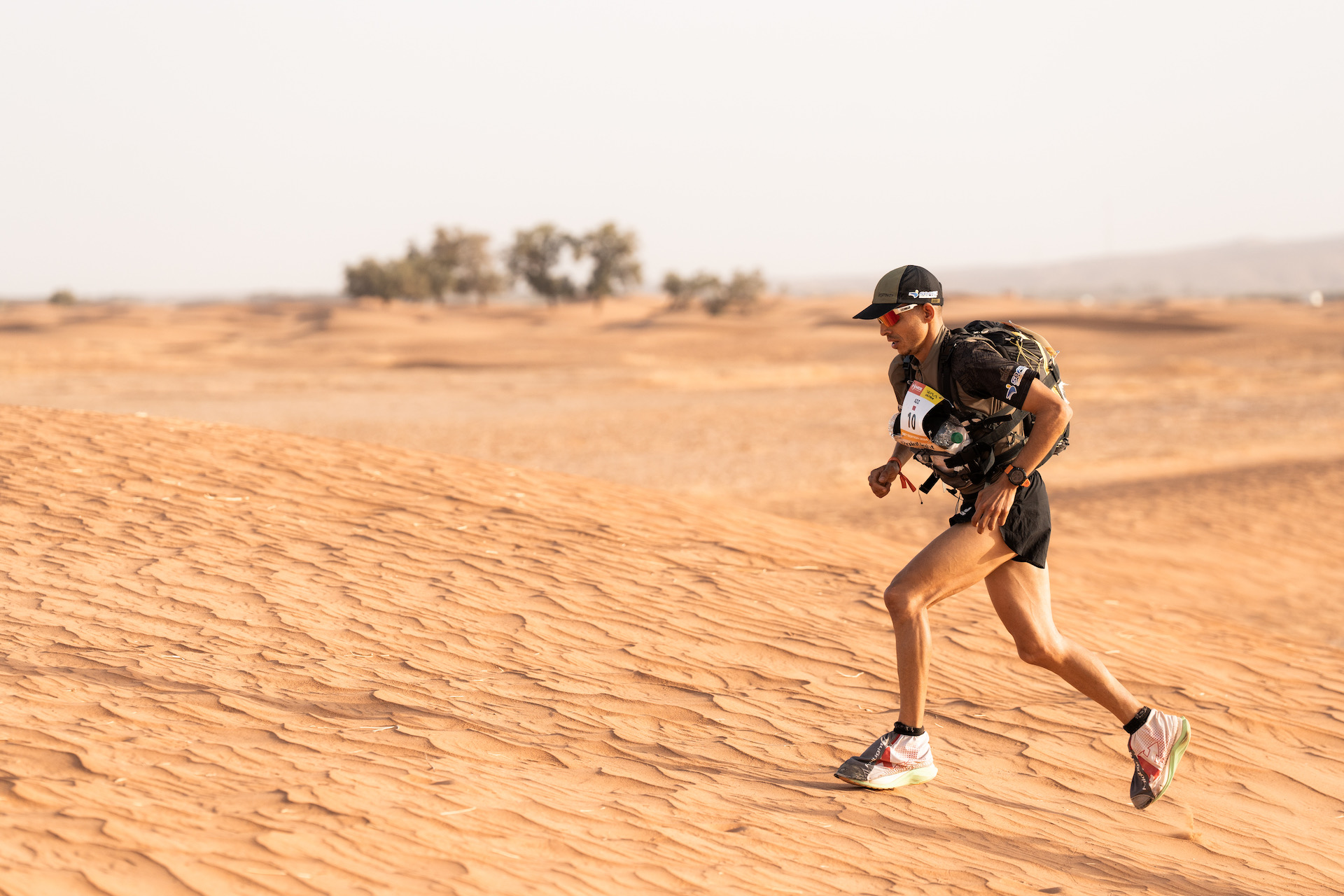
Aziz Yachou

Uncharacteristically, Rachid El Morabity dictated the pace all the way to CP1. He usually starts slow and builds speed, not today, no doubt testing everyone else. He was closely followed by Aziz Yachou, his brother, Mohamed El Morabity and then Aziz’s brother, Hamid.

Aziza El Amrany

For the women, Aziza El Amrany dictated the pace and it was a fast pace building a large margin over the competition, notably Aziza Raji.

Aziza Raji

Quickly after CP1, Rachid eased up, and Aziz passed. Rachid then almost jogged allowing hos brother to pass and Hamid. A surprising tactic.

An early start and a low sun

From the final checkpoint, it all changed again. Now Mohamed leading the charge to the line, Rachid close behind and then Aziz, 2:11:09, 2:11:36 and 2:20:33 respectively with Hamid Yachou taking 4th ahead of Ahmed Ouikhalfen, 2:20:33 and 2:25:46.

Yoann Stuck

Top Brit was John Dewey in 6th, Yoann Stuck from France was 8th.

Aziza with a dominant performance.

Aziza El Amrany was a woman with a mission today, no doubt realising that 2024 is her opportunity for victory. She crossed the line in 2:45:54 and amazingly, past MDS winner, Aziza Raji crossed the line in 3:11:53 – a huge gap after stage 1.

Laurence Klein

Adriana Moser and Gemma Game ran much of the day together and they crossed in 3:12:53 and 3:13:45. MDS legend, Laurence Klein finished 5th in 3:23:13.

The last runner on stage 1 keeping ahead of the camels.

You can receive daily updates and reports on this website. Follow on IG @iancorlessphotography and @mdslegendary

You can also follow ‘live’ at owaka.live

Follow on:

Instagram – @iancorlessphotography

Twitter – @talkultra

facebook.com/iancorlessphotography

Web – www.iancorless.com

Web – www.iancorlessphotography.com

Image sales –www.iancorless.photoshelter.com

The Coastal Challenge – Stage 6 – Drakes Bay to Drakes Bay

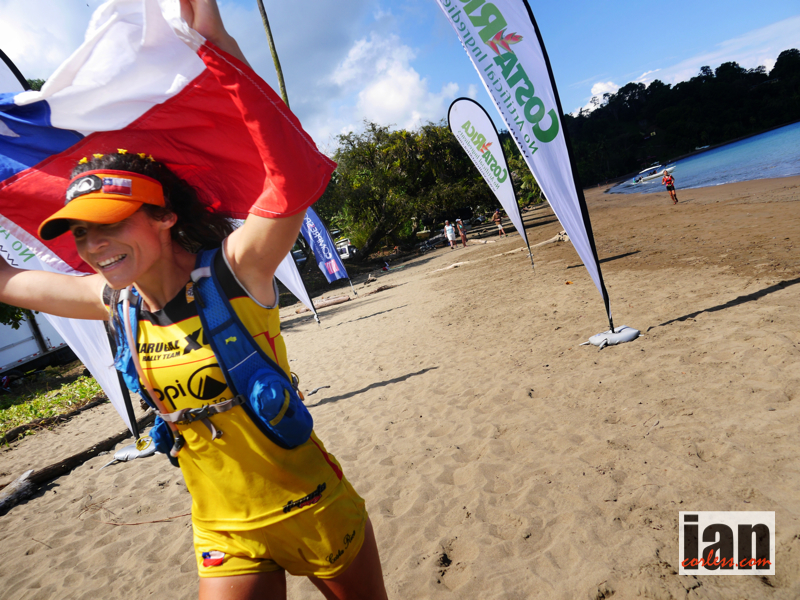
©iancorless.com.P1130916 All good things must come to an end and today on the beaches of Drakes Bay, the 10th edition of the 2014 The Costal Challenge came to a close.

©iancorless.com._1150551

It has been an epic race that has thrown daily excitement from all angles. The men’s race in particular has been a nail biter with a constant battle for the top slot. However, Mr.Consisitent, Mike Wardian produced the goods on a daily basis with some of the most impressive running I have had the pleasure to witness. Jeez does Mike like to win and boy does he know how to dig deep!

Mike Wardian TCC2014 Champion ©iancorless.com

Mike Wardian TCC2014 Champion ©iancorless.com

Jo Meek from the UK dominated the 10th edition producing a stand out performance on a daily basis. Setting her stall out on day-1, Jo won with a convincing 45-min margin. However, she didn’t relax, consistently pushing, consistently running scared, Jo took each day as an individual race and on the beach at Drake she was crowned the 2014 Champion.

TCC2014 ©iancorless.com

TCC2014 ©iancorless.com

TCC2014 ©iancorless.com

TCC2014 ©iancorless.com

Today’s stage was very much a celebration of the previous 5-days racing. With the ‘GC’ established, a unanimous decision was made by all the front-runners that stage-6 would be a Tour de France style victory lap.

TCC2014 ©iancorless.com

TCC2014 ©iancorless.com

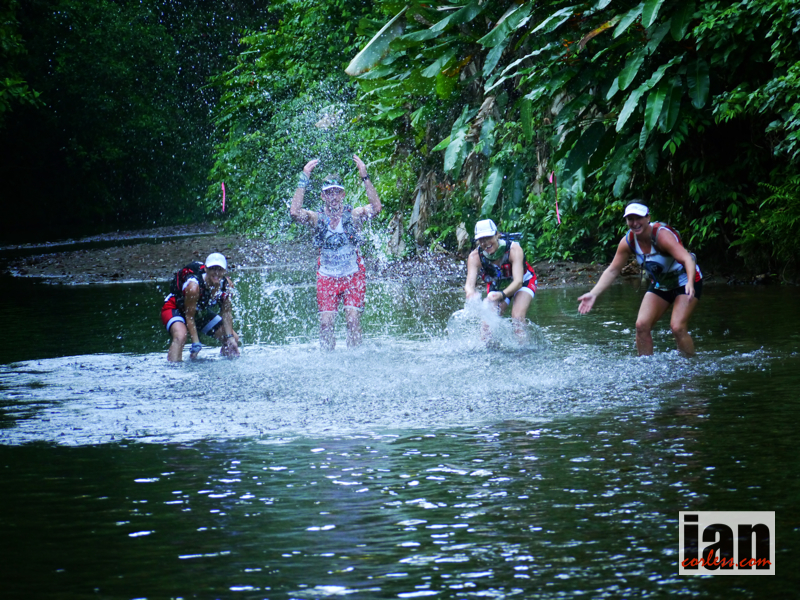
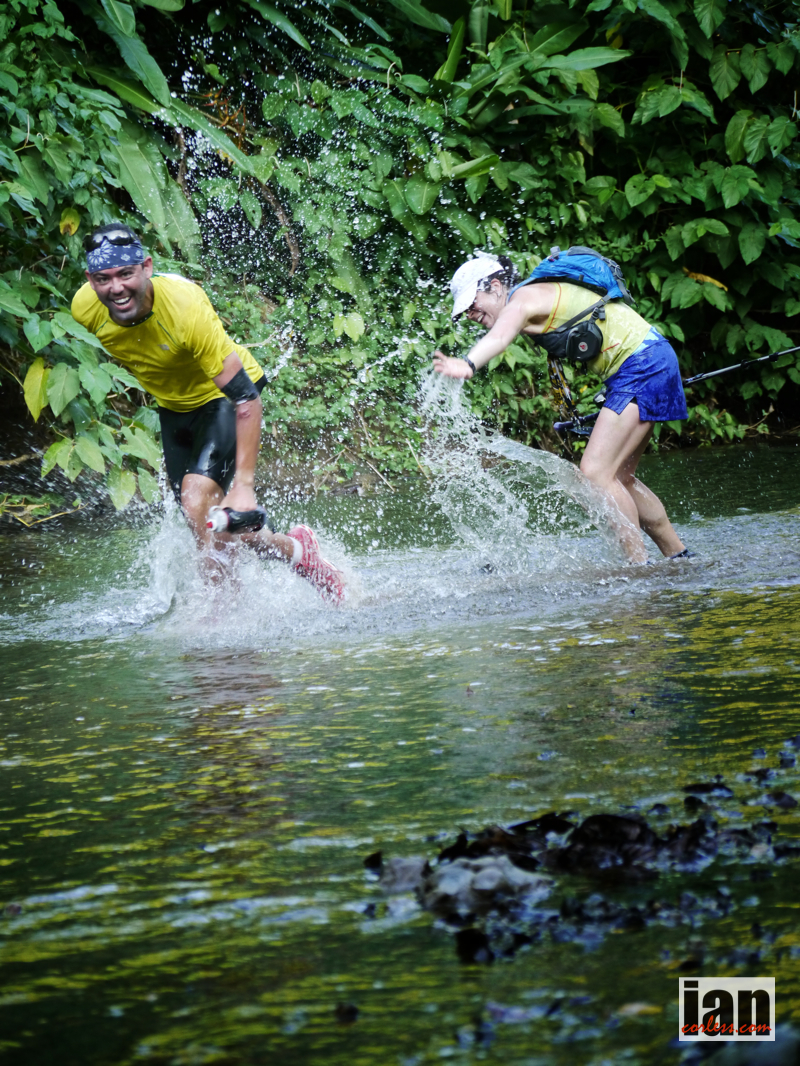
It was great to see the fun and the laughter between all the runners on the trails. Tired and aching bodies once again managed to produce another effort to cover the wonderful circular route of the Corcovado National Park.

TCC2014 ©iancorless.com

TCC2014 ©iancorless.com

TCC2014 ©iancorless.com

TCC2014 ©iancorless.com

Pura Vida TCC2014 ©iancorless.com

Pura Vida TCC2014 ©iancorless.com

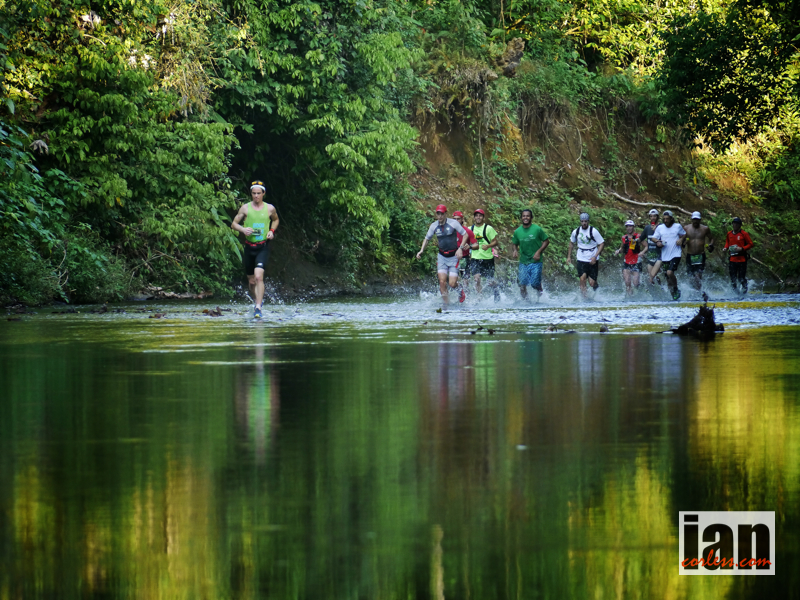
Starting with a gentle road incline, participants dropped into a long river section before climbing out and negotiating rocks and a waterfall. Climbing up through lush green vegetation, they then ran through plains and plantation fields before finally making the journey back to the start by weaving in and out of the coast. Beach after beach, cove after cove the finish line at Drakes was a welcome and well earnt reward for each and every participant.

TCC2014 ©iancorless.com

TCC2014 ©iancorless.com

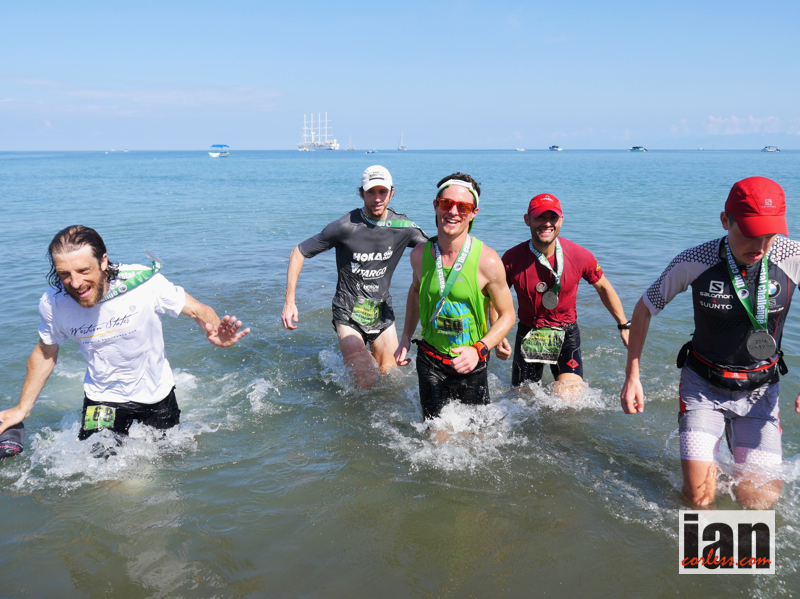
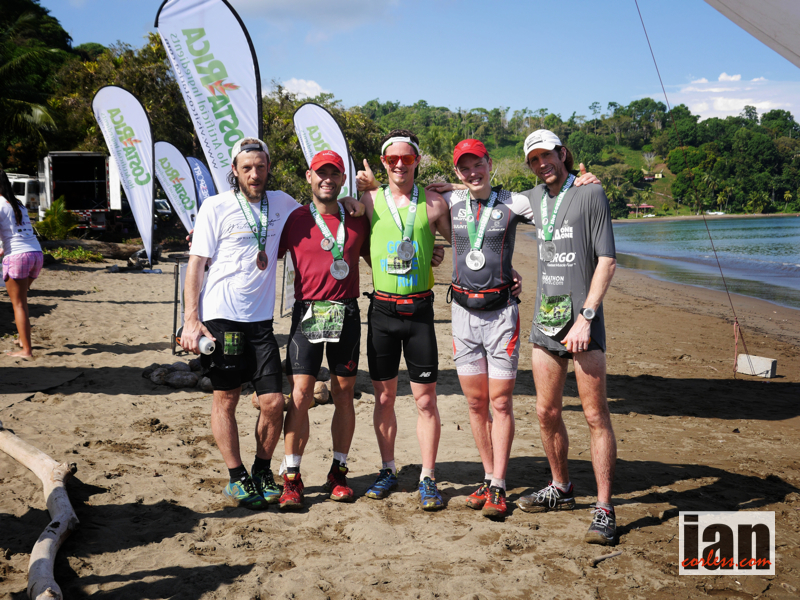
It was quite a sight to see the top-5 men run to the line as one!

TCC2014 ©iancorless.com

TCC2014 ©iancorless.com

Michael Wardian said post race, “The Coastal Challenge was a test in so many ways. So much varied terrain. It suited different strengths and weaknesses. I feel really honoured to have the over all victory. The other guys really did push me and I had to fight… I guess it’s a shame a race can only have one winner. But it was a pleasure to have a victory loop on the last day. A memory I won’t soon forget.”

Julia Bottger TCC2014 ©iancorless.com

Julia Bottger TCC2014 ©iancorless.com

Julia Bottger and Jo Meek ran together early in the stage but Bottger said post race, “that was by far the most beautiful stage. I was just having fun out there so I hope Jo didn’t mind I pushed on ahead.” As Meek crossed the line, the relief was clear, “I really did not have anything left today. I just took it easy and had comfort in my almost 60-min lead. It’s been a real honour to have such an incredible race with such wonderful people.” Veronica Bravo smiled her way around the TCC course and placed a solid 3rd place. Her joy was visible on the line as the realisation that a tough week was over.

Veronica Bravo TCC2014 ©iancorless.com

Veronica Bravo TCC2014 ©iancorless.com

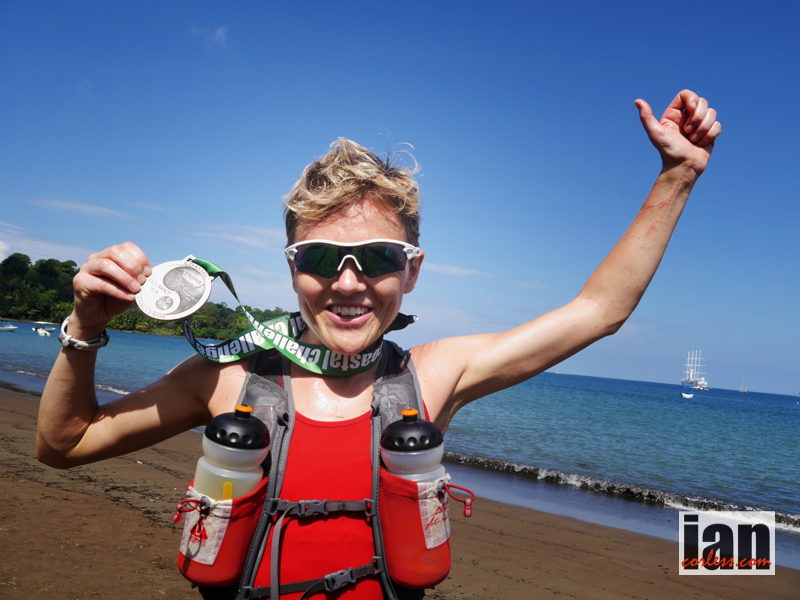
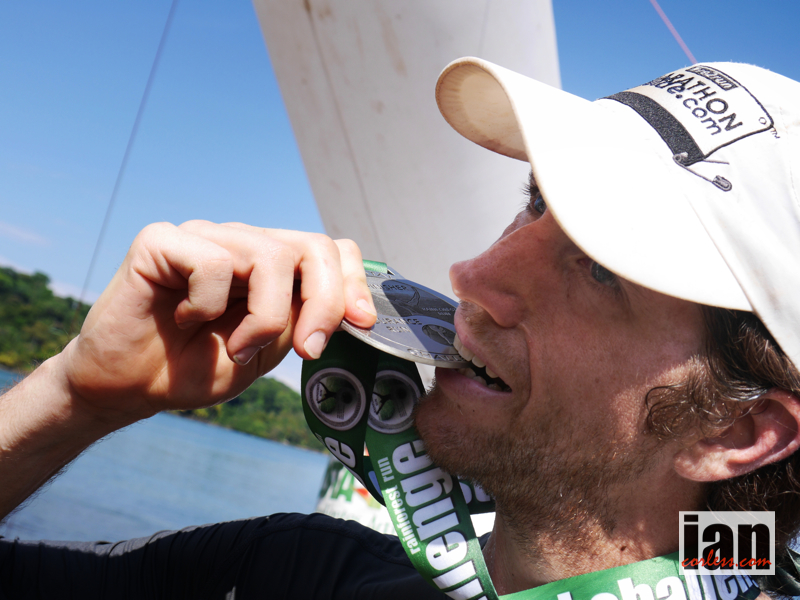
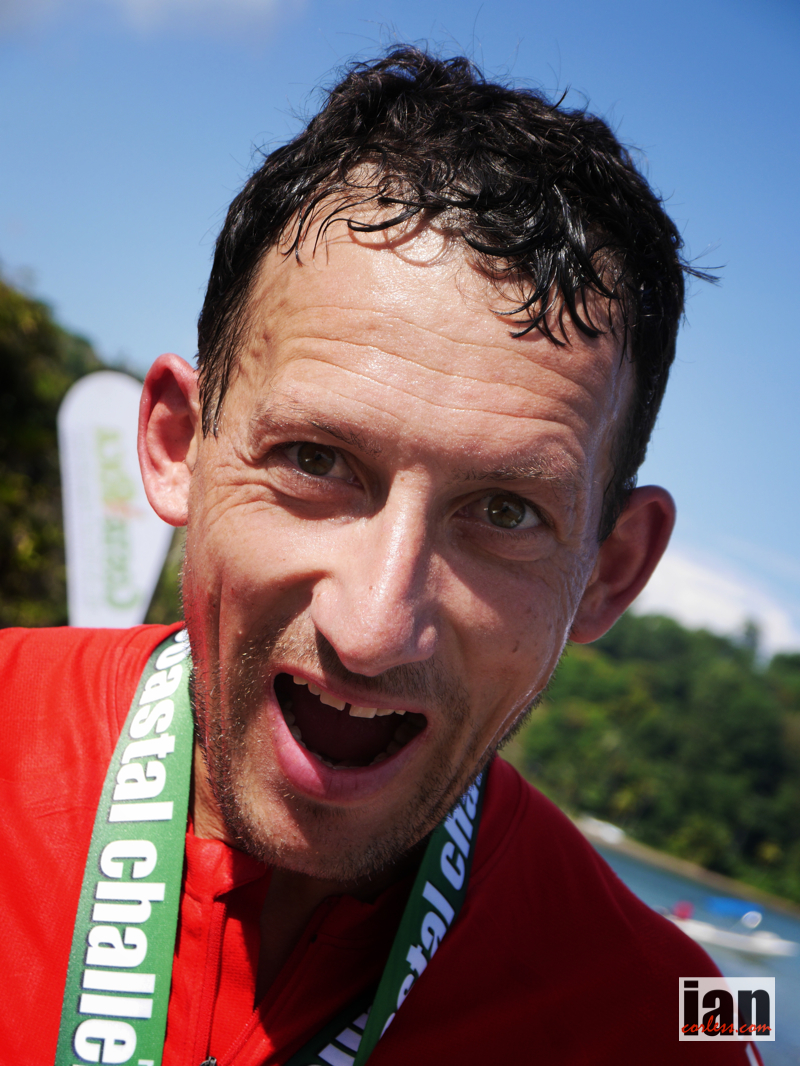
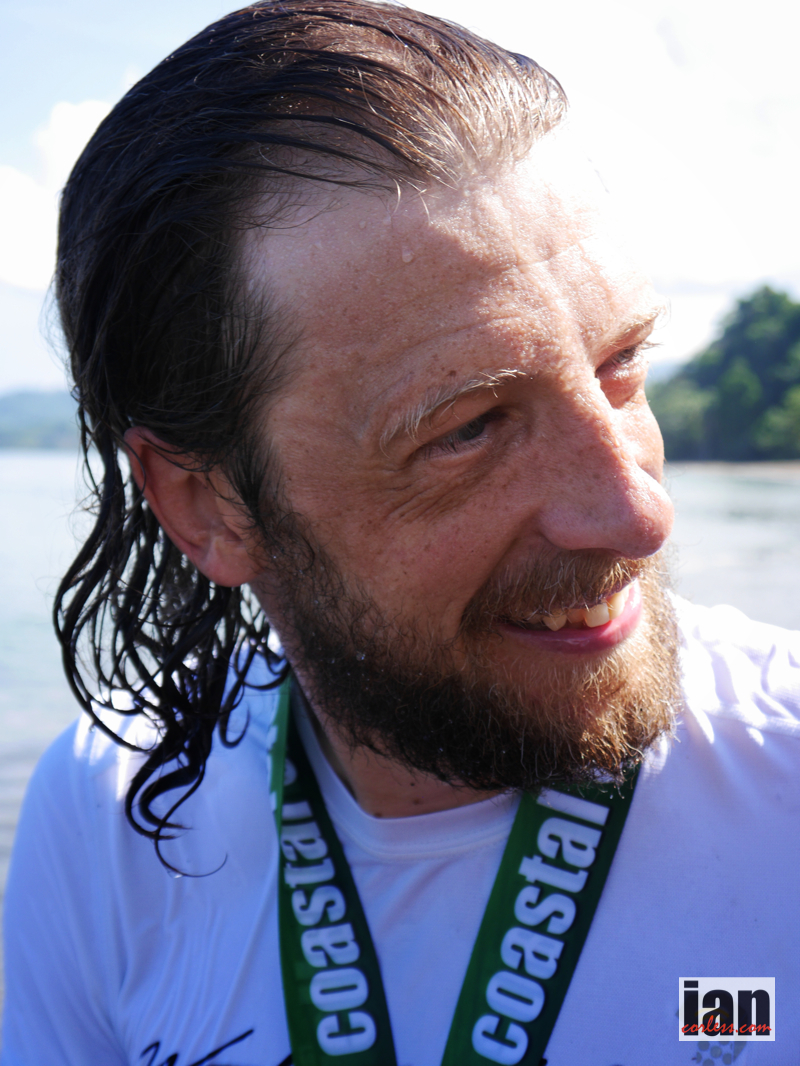
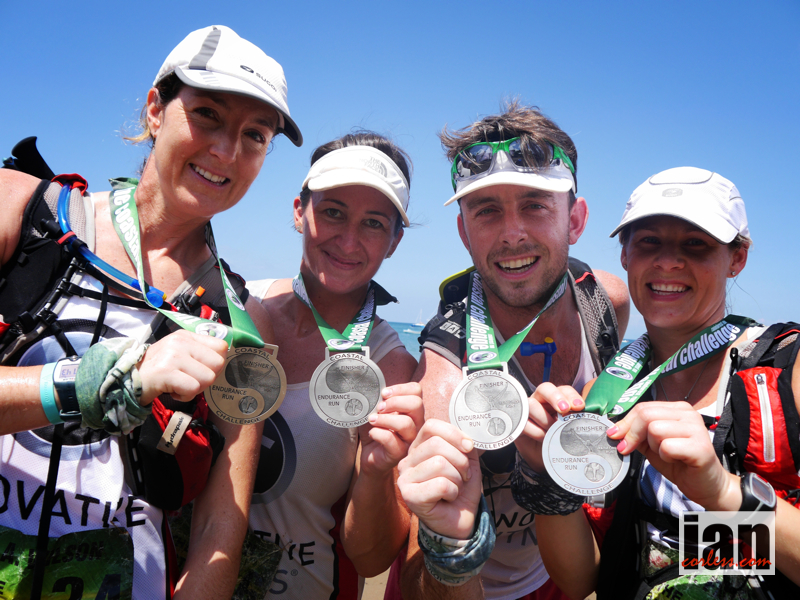
Finish lines are all about emotion and I love to see 6-days effort unfold in a split second. Cheers and laughter, hugs and screams; it’s why we all do our sport.

Carlos Sa TCC2014 ©iancorless.com

Carlos Sa TCC2014 ©iancorless.com

Nick Clark TCC2014 ©iancorless.com

Nick Clark TCC2014 ©iancorless.com

Beneito TCC2014 ©iancorless.com

Beneito TCC2014 ©iancorless.com


Philipp Reiter TCC2014 ©iancorless.com

Philipp Reiter TCC2014 ©iancorless.com

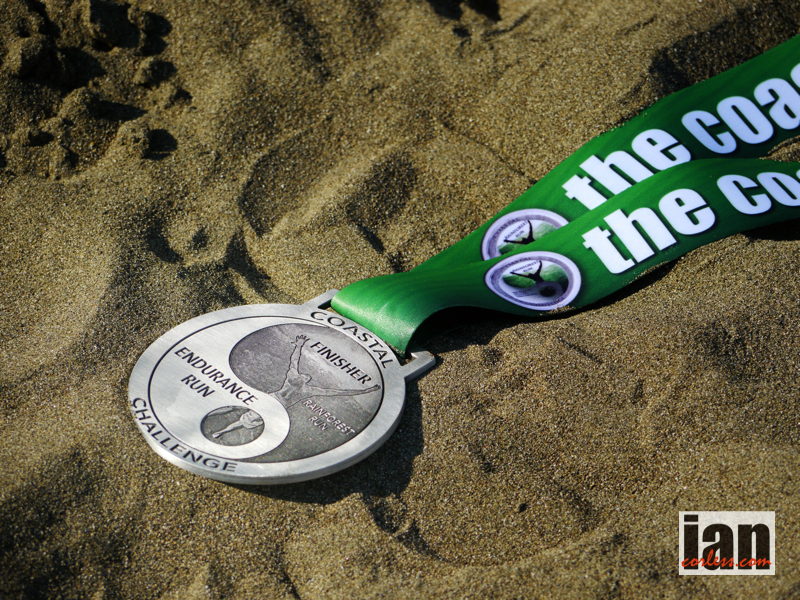
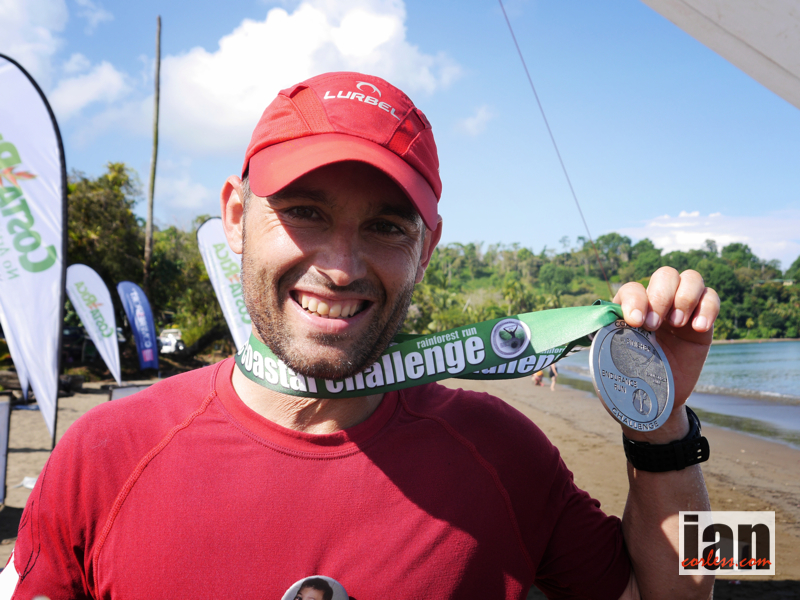
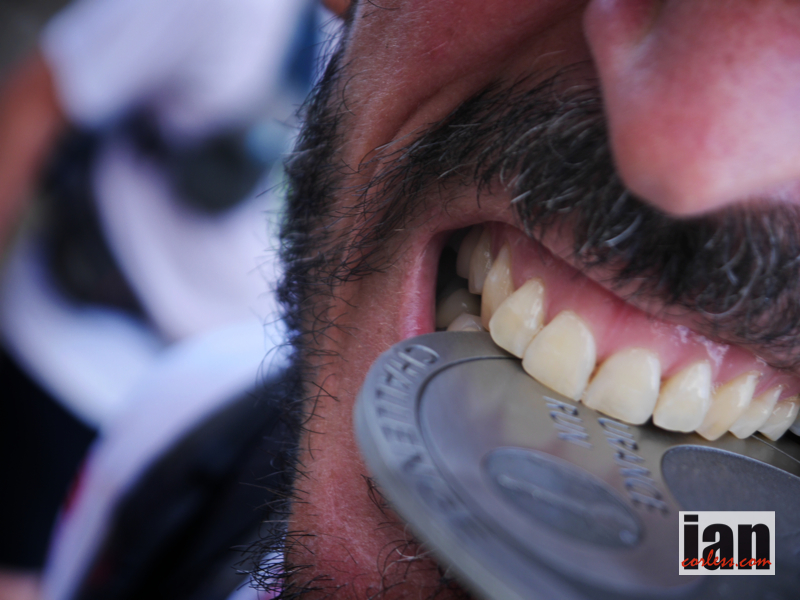
The Coastal Challenge is one of the toughest races out there… relentless heat, plenty of climbing and multiple terrain variations require a runner to be ‘rounded’. Each and every person, first or last, can take comfort in a great achievement and the medal should take pride of place as a just reminder of what was achieved in February 2014.

TCC2014 ©iancorless.com

TCC2014 ©iancorless.com

TCC2014 ©iancorless.com

TCC2014 ©iancorless.com

TCC2014 ©iancorless.com

TCC2014 ©iancorless.com

TCC2014 ©iancorless.com

TCC2014 ©iancorless.com

Pura Vida!

RESULTS Stage-6

  1. Mike Wardian  all same time
  2. Vicente Juan Garcia Beneito
  3. Philipp Reiter
  4. Marti Gaffuri
  5. Nick Clark
  1. Julia Bottger
  2. Jo Meek
  3. Veronica Bravo

Results and times to follow

GENERAL CLASSIFICATION Confirmed

  1. Wardian 23:26:23
  2. Beneito +0:25:32
  3. Reiter +0:31:31
  1. Meek 29:17:19
  2. Bottger +0:57:02
  3. Bravo +3:07:06

Running in the heat

Okay, lets start as we mean to go on! Do you you prefer it on your back, in your hand or maybe you need both hands or maybe you prefer it all centered around your waist… of course I am talking about your method of hydration.

With temperatures rising, the UK in a heat wave and longer lighter days, we can hopefully all get out and run more. But as we all know, or maybe we don’t. We need to consider several things when running in the heat;

  • It’s harder
  • You sweat more
  • You need more fluid

We need to adapt. So what happens when the mercury rises?

Well, the body’s core temperature rises with exercise. In simple terms the more we exercise, or the harder we exercise and this core temperature rises. Unchecked this internal core would exceed boiling point; not a good idea. So, our clever body reduces this core temperature by evaporation (sweat). This process helps cool the body, maintain a manageable core temperature and hopefully allow us to continue exercise.
I say hopefully because the process of evaporation means that we loose liquid (hydration). So the trade off of a cooler core is potentially dehydration.

Dehydration as we all should know is something that does not go well with any sport. It increases heart rate and also adds to core temperature rises. It therefore can become a vicious circle. Initially running will feel much harder, the supply of oxygen to the brain will become impeded as blood is forced to the skins surface to help reduce the internal pressure. Your muscles will start to fail, become heavy and cramp. You may start to have blurred vision in extreme cases and in severe cases you will just stop, potentially collapse and black out. If you need clarification, this is NOT GOOD.
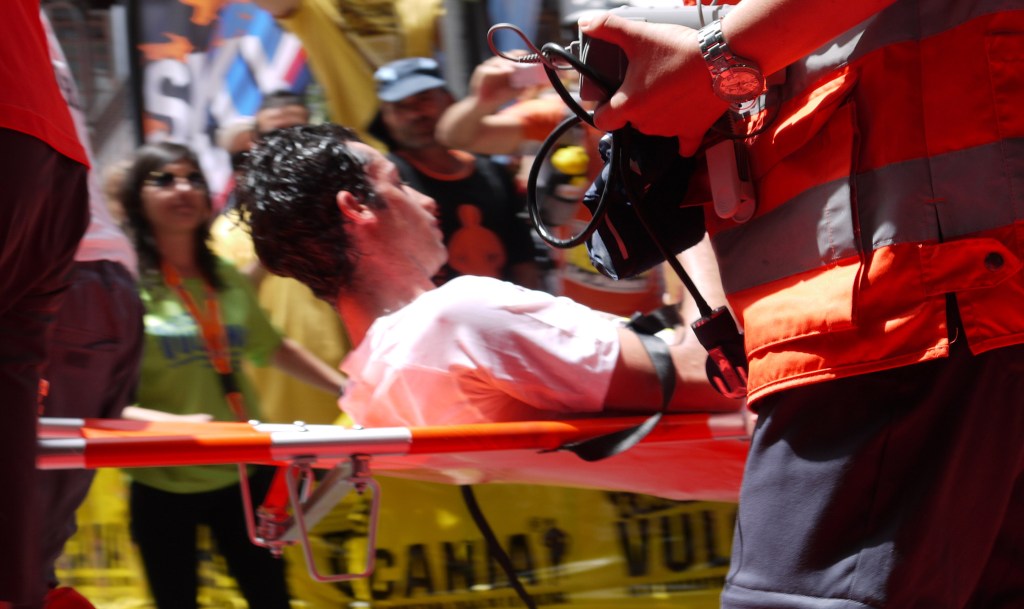
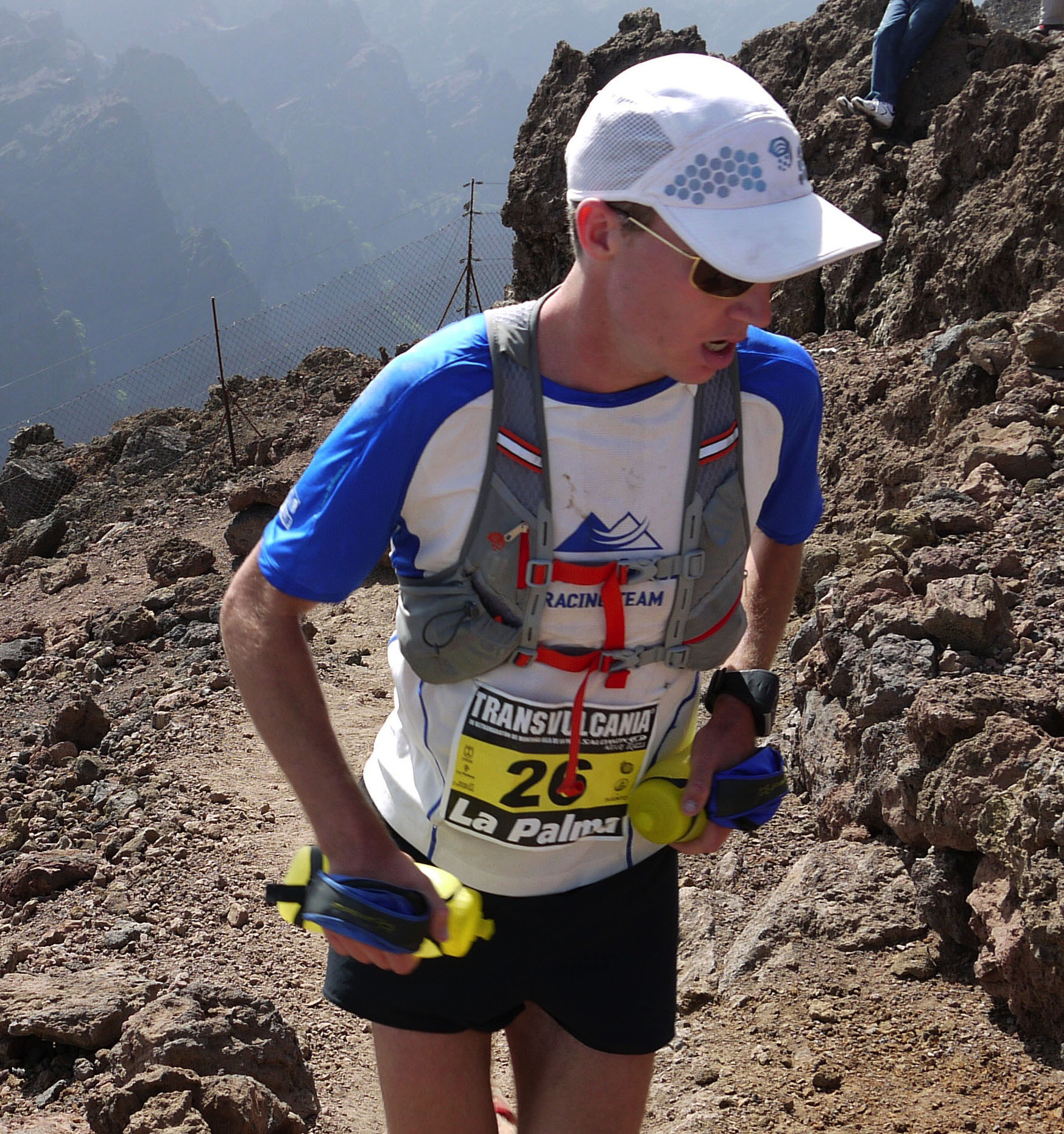
Kilian exhausted at the end of Transvulcania La Palma – dehydration ?

Depending on external temperatures, your ability to withstand heat, your own personal sweat rate and your adaptation to heat it is possible to loose 3-4 litres of fluid in an hour when running. I know, 3-4 litres! Loose more than 2% of body weight and this will impair performance and your mental ability. So, if your looking to perform or if you just want an enjoyable stress free run in the heat, you need to keep on top of hydration.

Hydration is NOT just fluid. Sweating means that we loose key minerals. These minerals keep our body in balance. Therefore you must replace electrolytes (salt) to keep your body in balance. Like your own personal fluid requirements, you salt requirements will also differ to that of your run friends. So take your time to work out what works for you. At the end of a hot run do you have salt marks on your clothes, do you have dried salt on your face? If so, you are more than likely a heavy sweater and your salt needs may very well be double or triple. Plenty of products are now available on the market and they all offer different methods and tastes. For example, Saltstick offer a really handy tablet which works well with bladders or bottles as it means you can keep your electrolyte supply separate and it also means that you can adjust your needs on the fly. However, Nuun offer a very popular flavoured tablet that comes in a handy tube that again can be taken with you on training or racing. This product must be added to your liquid though. Of course other products are available and I use these two reference points as purely as demonstration of what is on offer. It is fair to say that all sports drinks manufacturers now offer a form of electrolyte replacement.
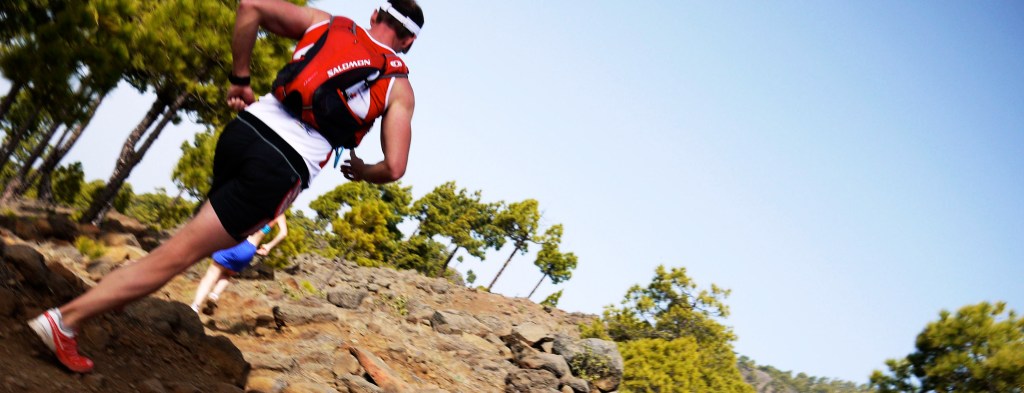
How do you avoid the dreaded dehydration?

First and foremost assess yourself and your abilities. If you live in a hot climate with all year sun and heat you are going to be well adjusted. If you live in the UK and then we suddenly get a heat wave, you are not going to be adjusted. It’s a simple fact that many fail to acknowledge. Running 7 min miles in 10 degrees is much easier than running 7 min miles in 25 deg. As I said previously, you try to run the same pace in much hotter temperatures and only one thing will happen; your core will rise, you will sweat more, you will start to suffer and eventually you will come to a stand still.

Slow down. Accept that the warmer temperatures will mean a slower pace. This will allow you to regulate your temperature and keep on top of your hydration. The longer you spend in the heat, the more you will adjust and eventually you will start to be able to lift the pace for the same effort and sweat rate. In simple terms this is what pro athletes do when they ‘acclimatize’.

  • Start a run hydrated. Your urine colour is a great indicator of how hydrated you are. A light straw colour is best.
  • Keep the sun off your head when running by wearing a white hat with a peak.
  • Wear sunglasses.
  • Wear light clothing that is loose and that will reflect the suns rays.
  • Use waterproof sun cream and be careful around your eyes.
  • Drink regular and often.
  • When possible, pour water on your head to reduce your core temperature.
  • Plan your runs and make allowances for refilling bottles or bladders on long runs using streams or shops (as applicable). You may want to carry some water purification tablets if you are in extreme places.
  • Take some money, mobile phone and ID.

Do a self-check when running:

  1. Do you feel cool? (and I don’t mean in a ‘rap’ way)
  2. Do you feel clammy?
  3. Have you stopped sweating?
  4. Do you feel sick?
  5. Are you dizzy?
  6. Are you fatigued?
  7. Is your heart rate pounding?

Any of the above and you are starting to show signs of dehydration. Don’t wait to be thirsty… it will be too late. Depending on how bad your symptoms are you will need to do one of the following:

  • Reduce your pace to a walk, let your temperature drop and slowly rehydrate – don’t gulp.
  • Stop. Sit down in the shade. Recover and let your temperature drop while drinking slowly to rehydrate.
  • Stop and basically STOP. If you have all or a combination of the above symptoms your best option may well be to stop and recover. Come back another day with lessons learnt

Recovery is key and it is important to rehydrate post training and racing. For every 1kg of weight loss drink 1ltr of water. When your urine has returned to a light straw colour, stop drinking and resume normal drinking… do not over drink.

Hyponatremia

Drink sensibly,  don’t force yourself with water. Research into Hyponatremia has shown that it’s not a lack of salt, which leads to hyponatremia, it’s drinking too much fluid. If you urine regularly and it is clear, you are drinking too much. A bloated stomach is a sign of the onset of the problem, headaches and nausea. During an event just sip and understand your sweat rate and needs. You can always test yourself by wiggling yourself naked pre run, run for 1 hour without drink and then re weigh yourself. The difference will give you an idea of your sweat rate; 1kg = 1ltr. Of course please keep in mind external conditions. Your sweat rate will differ for hot/cold days and depending on how hard or easy you run.

Drinking methods when running?

Do you you prefer it on your back, in your hand or maybe you need both hands or maybe you prefer it all centered around your waist…

How we carry our fluid is very personal and it also does depend on the demands of the training or the race. If you are racing you may need to carry compulsory equipment and this will almost certainly mean waist pack or rucksac is required.

But how we carry the liquid is what counts. The fluid needs to be accessible at all times as this will promote drinking.

Bladder?

Bottles?

Bladder v Bottle

Bladder:

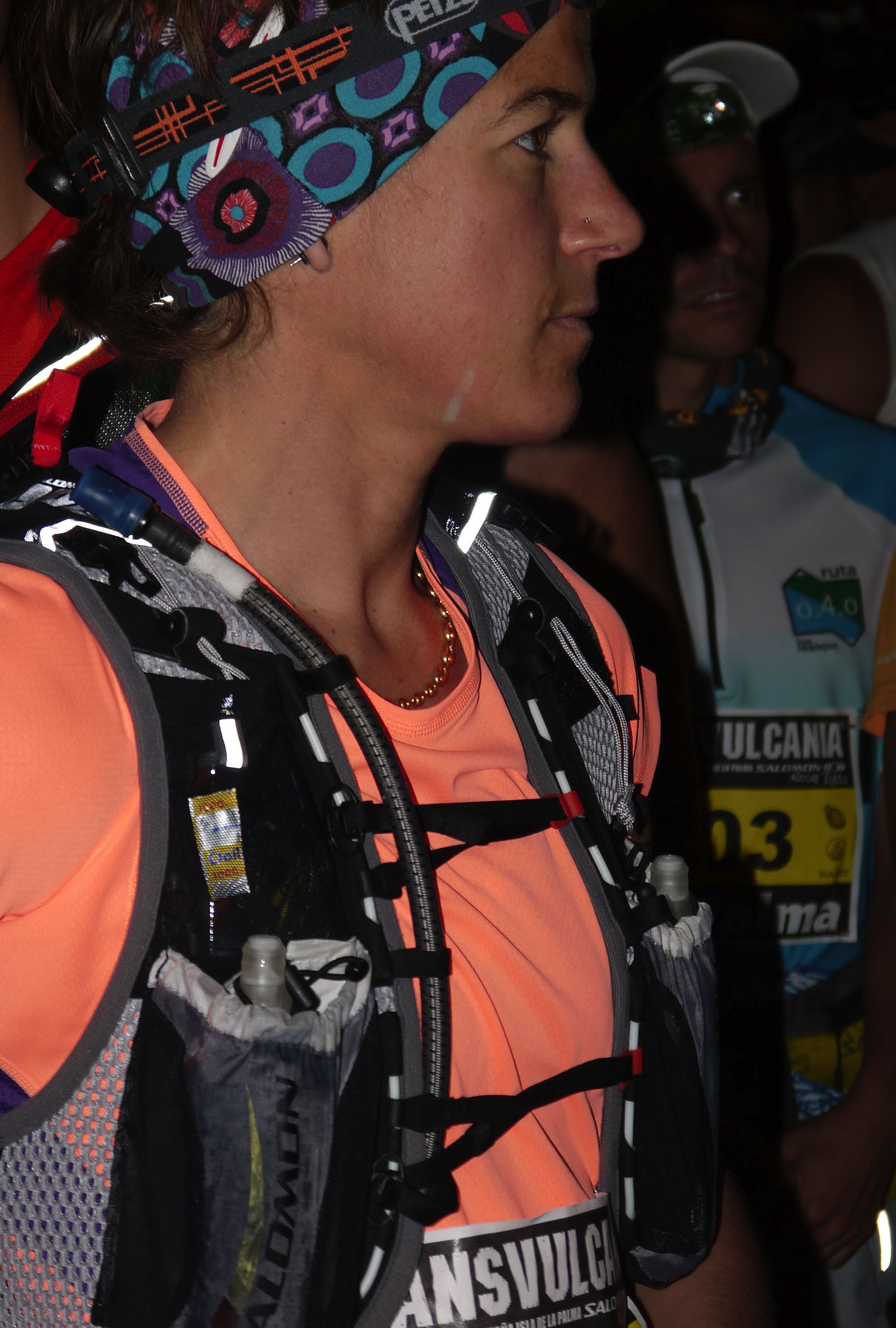
Bladders come in varying sizes. 1ltr to 3ltr, with different methods of distributing the liquid to the runner, ultimately this is a pipe with a mouth valve. Bladders sit on your back or around the waist and offer an easy slurp system that is easy to use. The main issues with them are that they are difficult to clean, you are never quite sure how much you have left and they are more awkward to fill when racing.
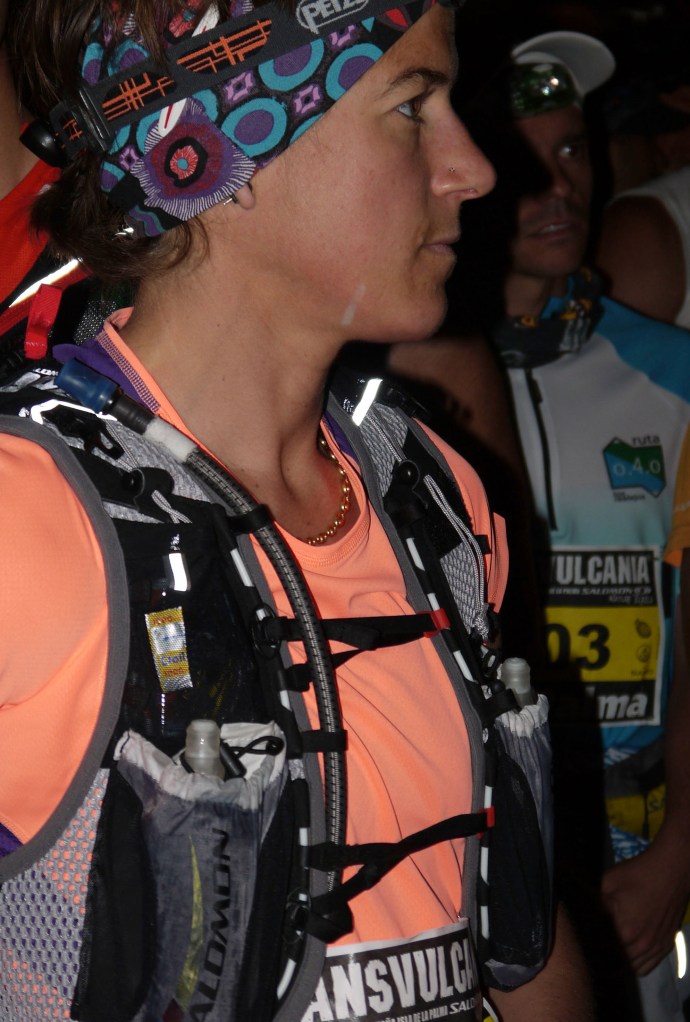
Bottles:

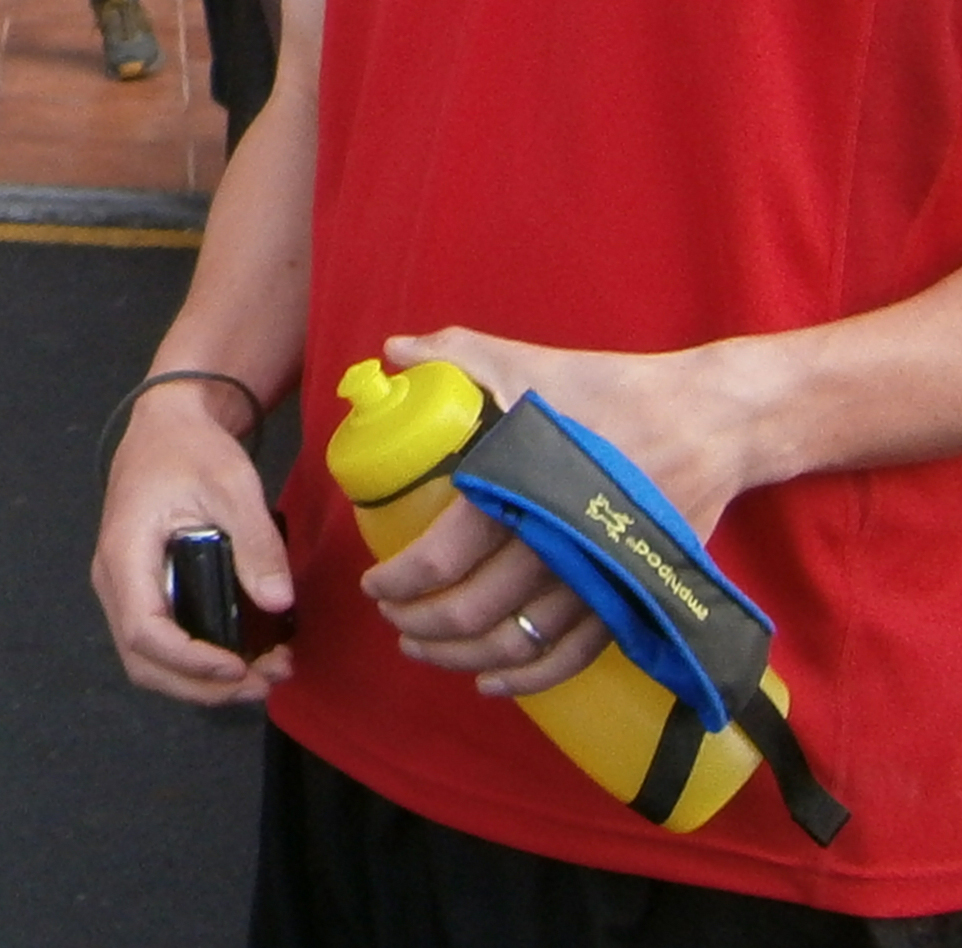
Like bladders they come in varying sizes but 500ml to 1ltr is normal. The size of the bottle may very well depend on your carrying system. For example – handheld bottles, bottles in a waist pack, bottles on a rucksac (at the back) or bottles on a rucksac (at the front). Bottles are easy to fill on the go, easy to clean, cheap to replace.
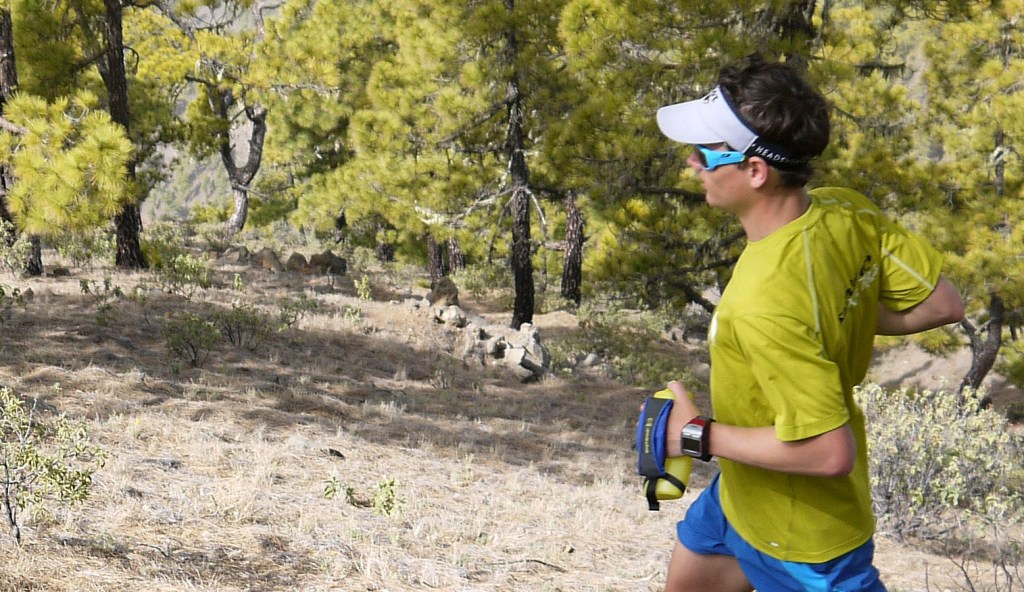
Combination:

Manufacturers realize now that runners needs are increasing and runners are becoming more demanding. Therefore packs such as the S-Lab 12 has allowances for a bladder, bottles on the front and even two large ‘dump’ pockets on the side of the pack that will take bottles. The advantages here are excellent as you can customize your needs for each run.

Putting it into practice

I personally use all of the above.

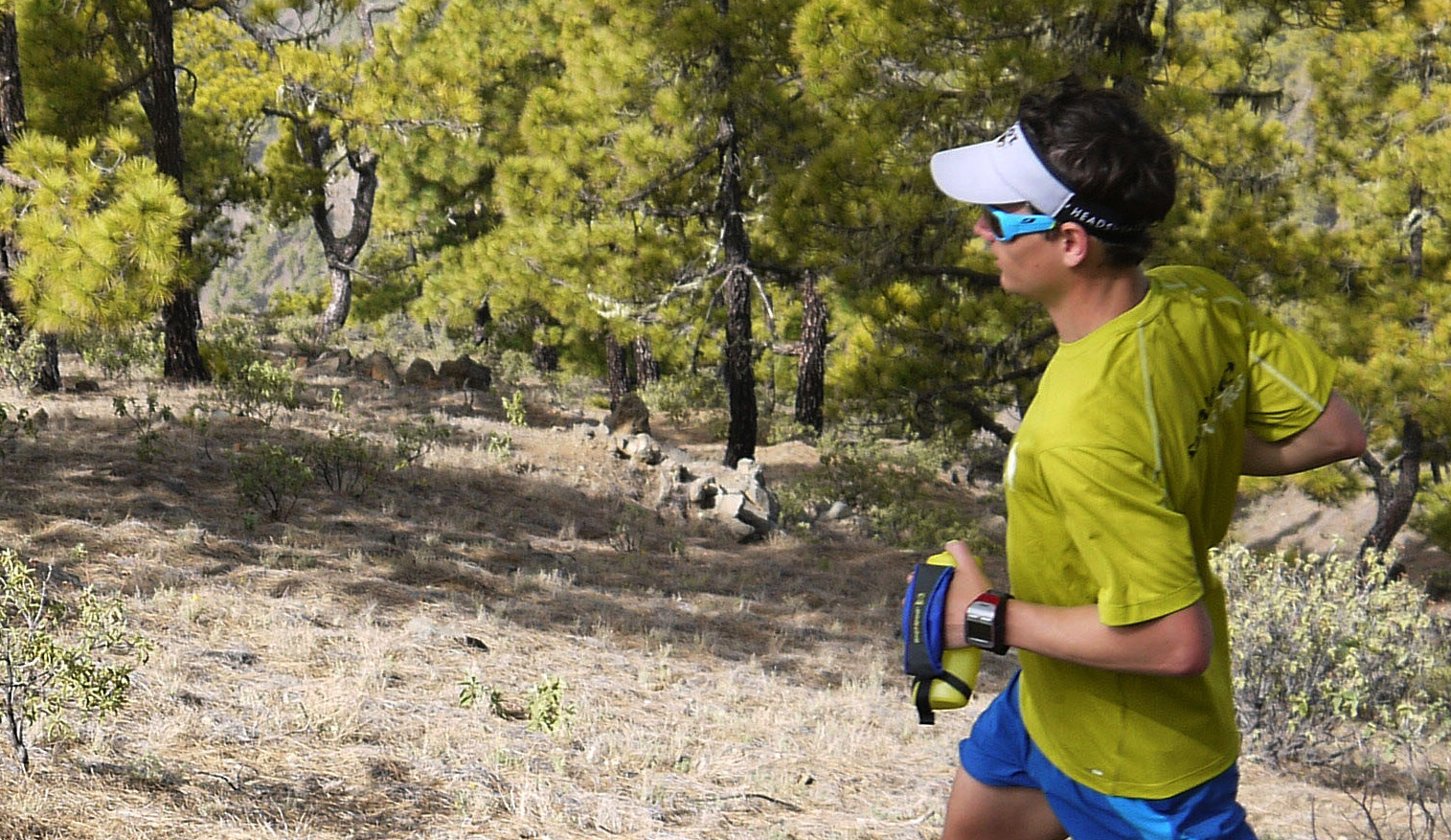
When it is really hot and I am just going for a training run I love just having two hand held bottles (Dakota Style) and running free. It allows for no restriction on my waist it also allows my back to be free and ultimately enables me to remain cooler.

If I need to carry some essentials then I will add a waist pack that will hold just a light jacket, phone, money etc and keep the bottles in my hand.

When the demands are greater I shift to a rucksac allowing me to use a bladder and or bottles with the option to carry other equipment.

I am not a fan of waist bottle belts as they usually become uncomfortable, bounce and rub the skin – but that is my personal feedback.

It’s not rocket science but not putting it into practice is the difference between a great run and a lousy run. More importantly, when racing, it is the difference between potentially winning and not even finishing.

Choose your method and keep hydrated on your next run!