Timothy Olson – Low Carb

Earlier this summer, Steve Phinney and Jeff Volek, authors of The Art and Science of Low Carbohydrate Performance, headed to the Western States 100-mile Endurance Run, to study how runners in this grueling race fared, literally, for they were checking how the athletes performed AND how they ate.

Steve Phinney says that more and more endurance athletes are choosing low-carb, high-fat.  They’re choosing this diet both to get over digestive problems that hit in such a demanding event, and to win the race, and win it BIG!

That’s what Tim Olson did this year.  A self-proclaimed low-carb eater, Tim won the race — with a record-breaking pace.

You may like to read the article HERE

This obviously links into my previous post on the 40-30-30 diet

Timothy Olson

40-30-30 Diet

40-30-30 means eating the right balance of carbohydrates, protein, and fat. When you eat a 40-30-30 meal, 40% of the calories in that meal are from carbs, 30% from protein, and 30% from fat.

When you get the right amount of carbs, along with the right amount of protein and good fats, your body naturally burns fat. And, you aren’t hungry between meals. Plus, you feel better – your mind is clearer and you have more energy. For endurance athletes this ability to utilize fat as a fuel source is something we all need. The old adage of carbo loading’and consuming vast quantities of carbohydrate is slowly but surely being tipped on its head with the smart athlete now consuming considerably less carbs in preference for a more ‘balanced’ diet and one that uses the GI scale to help consume proper calories to maximize performance.

You can listen to a podcast on the 40-30-30 diet with Ian Corless from Talk Ultra and Marc Laithwaite HERE

WHAT

40-30-30 is a specific nutritional balance of 40 percent calories from carbohydrates, 30 percent from proteins, and the remaining 30 percent from fat.

Dr. Barry Sears originally created The Zone Diet for cardiologists, to teach them to use food as if it were a drug. He advocated diet as treatment for heart disease and diabetes. Those two diseases are also tied to excess production of the hormone insulin, the underlying hormonal disturbance that also causes obesity.

Patients on the program quickly reported that eating balanced meals made them feel better. Most of them also noticed that they were losing weight. When you eat a nutritionally balanced diet, your body naturally adjusts to keep you healthy – including dropping those extra pounds you don’t need.

HOW

It’s adjusting the amount of three key macronutrients you eat to keep your body in hormonal balance. The ideal is to:

  • Provide enough low glycemic carbohydrates to feed your brain and keep you sharp mentally, without spiking your blood sugar and triggering an insulin response.
  • Provide enough protein to maintain muscle mass, and to trigger fat burning through release of the hormone glucagon.

Provide enough fat that the body can absorb fat-soluble vitamins – A, D, E, and K, and Linoleic acid (necessary for growth and reproduction).

GI – Glycemic Index

The Glycemic Index (GI) is the measure of the amount and the rate of an increase in blood sugar after eating a carbohydrate. The higher the GI, the larger the rise in blood sugar, and the more insulin is released. Unfortunately the more insulin in your system, the more fat you’ll retain.

Eating 40-30-30 reduces your glycemic load. High glycemic foods (like candy bars) will give you fast, abundant energy, which unfortunately fades quickly, and is replaced by sleepiness. But when you eat low glycemic carbohydrates like an apple, an orange, pear, or strawberries, you are less hungry between meals and more mentally clear. You feel great, you lose fat, you have more energy, and your mood will be stable.

A low glycemic diet is not a low calorie diet. It is possible to eat fewer calories and not be hungry.

Nutritional Standards

Glycemic Index is based on a scale of 0 to 150.

  • Low is within the range of 0-35,
  • Medium is 36-70,
  • High is 71-100,
  • and Very High is over 100.
  • The Glycemic index cannot be calculated, only measured in lab testing on humans

Learning about GI can be very interesting and certainly you may be very surprised by some of the results that you find

Here is a very useful tool. You can input your food choice and find out its index. Click HERE

  • To search for a food, enter the name only.
  • To generate a list of all high GI foods, enter > 55 in the glycemic index field.
  • For a list of low GI foods, enter < 55 in the glycemic index field.
  • If you enter bread in the name field and < 55 in the glycemic index field, you’ll get a list of all breads with a GI less than 55.
  • Foods containing little or no carbohydrate (such as meat, fish, eggs, avocado, wine, beer, spirits, most vegetables) cannot have a GI value.
  • No carbs = no GI.

Putting it into practice

Adopting a 40-30-30 diet is not difficult. You can view a guide to GI tables here. In principal you want to maintain the balance of 40-30-30 and when eating carbohydrate ensure that it is low GI. When eating breads, pasta and rice ensure they are brown or whole-wheat. Eat good lean proteins and ensure that your fats are good fats such as those that come from oily fish, olive oil and nuts.

In simple terms, the 40-30-30 diet involves cutting out most carbohydrates such as breakfast cereals, rice, potatoes, pasta, noodles, bread, bagels, croissants, muffins, crisps, pastries, pies, chocolate, sweets, sugar and preserves, as these have the greatest effect on blood sugar levels and therefore insulin levels.

Most fruit and vegetables, however, are allowed. Low-fat protein-rich foods such as skinless chicken, turkey and fish should be eaten with every meal. Meanwhile, eating fewer foods that contain saturates and choosing foods that are rich in monounsaturates, such as olive oil, avocado and nuts, is recommended.

Divide your plate into three equal sized sections and then filling one section with low-fat protein such as chicken – making sure it’s no larger or thicker than the palm of your hand – and the remaining two sections with vegetables and fruit. Adding a little olive oil, avocado or a few nuts will help to boost intakes of monounsaturates!

Of course as an athlete you need to think about your food choices in relation to your exercise and racing. For example, reducing carbohydrate intake and eating fats before long training sessions or races will teach your body to utilize the fats that are within your body and use them as fuel. Initially you may feel a little unusual and crave carbohydrate but after 2-3 weeks you will adapt well. During exercise and racing you will need to refuel, particularly for longer races but think about the pace you are running/ cycling at and the energy requirements your body needs. Gels are not always the answer but if you hit a low spot or if you feel flat a gel may be just what you need to ‘lift you up’.

The important thing is that we are all individual. You need to play around with your diet and find out what works for you.

RECIPES linked to iwantfreehealthyrecipes.com

Aragula Scramble: This is a quick breakfast, but because you don’t see arugula used much, it seems kind of elegant.

3 eggs
1 cup arugula

1/2 tomato, diced
1 tbsp Parmesan cheese
2/3 cup dry quick oats
1 1/3 cup water
1 cup skim milk

First, get your oatmeal & water cooking in the microwave. Chop the arugula & tomato roughly. Scramble the eggs. Spray a nonstick frying pan with Pam and preheat to medium. Stir-fry the arugula just until wilted, maybe about a minute, then toss in your eggs. Stir over medium heat until almost cooked, and stir in your tomato for the final minute or two. Top with about a tablespoon of grated Parmesan cheese. Serve alongside the oatmeal and milk.

48 g carbs (39%)
36 g protein (29%)
20 g fat (32%)

Popeye Fritta: A fritatta like this is a great make-ahead breakfast. Put it together while your making dinner the night before, and you can just pop a slice into the microwave in the morning, and get rolling out the door!

4 eggs
3/4 cup cooked chopped spinach (1 pkg. of frozen spinach)
1/4 cup chopped fresh parsley or cilantro
1/4 cup chopped tomato1/4 tsp. sea salt
1/2 tsp. chopped garlic
1 tbs. margarine
4 chopped green onions
1 tbs. chopped hazelnuts, walnuts or sesame seeds

Beat eggs. Combine with spinach (make sure it’s well squeezed first!), parsley or cilantro, garlic and sea salt. Saute the green onions in a medium oven proof frying pan, using the margarine. When the onions are slightly wilted, add the egg mix. Cook over a high heat until the egg starts to set up, shaking constantly to prevent burning. Finish under a broiler for several minutes. Top with the chopped nuts. Makes 2 servings.

Santa Fe Chicken Soup: This is one of our family’s favorites. We eat it all the time in the winter. Even our normally picky kids love it.

1 1/2 lb. chicken breasts
2 large green peppers

2 cups onion
2 cups carrots
1 cup tomatoes
1 1/2 cups corn kernels
1/2 cup green chiles
1 qt. water
1/3 cup chicken broth
1 1/2 cups wheat flour
5 tbs. butter
6 cups milk
2 tbs. garlic powder
1 tsp. white pepper
1 tsp. black pepper
1 tbs. cumin
1 tbs. Cajun spices
1 tsp. cayenne pepper
1 tbs. seasoned salt
2 tbs. onion powder
5 tbs. chili powder

Start by broiling the chicken. When cooked, shred or dice it, and place in a large stock pot. Dice the peppers, onions, carrots and tomatoes.

Note, we normally add the chopped veggies to the pot now. But if you’ve got picky eaters at home, you could always give these a quick shot in the blender first. It’ll grind them up so they’re unrecognizable, but they still give the soup a ton of flavor, and some added thickness as well.

Add in all remaining ingredients except for the butter, flour and milk. Bring to a boil, then let it simmer on a low burner.

In a medium saucepan, melt the butter. In another saucepan, heat the milk until steaming, then remove from the burner. When the butter is melted, slowly whisk in the flour. Avoid lumps. As the mixture becomes too dry to work with, slowly alternate adding the flour and the milk. When you’ve combined all of the butter, flour and milk, whisk this mixture slowly into the simmering soup. Let the whole thing cook on low for another 20 minutes.

Makes 10 servings. It will keep in the refrigerator for about a week, and freezes well.

Almond & Chicken Casserole: 2 lb. cooked chicken meat (light and dark)
2 lb. red potatoes
4 stalks celery
1 medium onion

4 cloves garlic
2 cans cream of chicken soup (Healthy Choice or other reduced fat)
1/2 cup slivered almonds
1/2 cup chicken broth
1/4 cup lemon juice
1/2 tsp. salt
1/4 tsp. pepper
2 tbs. olive oil
3/4 cup bread crumbs

Shred the chicken. Chop the potatoes into bite-sized pieces, and steam or boil until about half cooked. Dice the celery & onion, and peel and chop the garlic finely. Mix all of that in a big bowl with the almonds, soup, broth, juice, salt and pepper. Stir it all well, and pour into a greased 13 inch X 9 inch pan. Mix the oil and bread crumbs thoroughly, and sprinkle on top. Bake at 350 for about 30 minutes. Serves 8

Chille Casserole: 12 whole green chille’s
4 oz shredded jack cheese
4 eggs
1/3 cup milk
1/2 cup whole wheat flour
1/2 tsp baking powder
1 cup (4 oz) shredded, sharp cheddar cheese

Split each chille the long way. Remove the white pith and seeds. Stuff the chilles with the Jack cheese, wrapping each chile tightly around the cheese. Spray a 1 1/2 quart baking dish with nonstick spray, and arrange the chiles in one layer in the pan.

With an electric mixer, beat the eggs on medium-high until thick and foamy. Add the milk, flour and baking powder, and beat until smooth. Pour the egg batter evenly over the chiles. Sprinkle the top with the shredded cheddar cheese.

Bake the chiles uncovered at 375 until the dish is somewhat puffed up (about 1/2 hour). Makes 6 side dish servings.

NOTE: I included this recipe because it’s a great dish, and in terms of carbs vs. protein, the proportions are right on. On the other hand, I’m sure you noticed it has a HUGE fat content. So unless you’ve had a really bad day, combine a small portion of it with a lowfat burrito.

Chicken & Pineapple Stir Fry: 1 lb. boneless chicken breasts
1 lb. broccoli tops
1 medium red pepper
1/2 cup chopped green onions
8 oz. can pineapple chunks
1 tsp. chopped fresh ginger
2 tsp. cumin
1 clove garlic
2 tbs. soy sauce
2 tbs. corn starch
1 tbs. sesame oil
2 tbs. pineapple juice.

3 cups cooked brown rice

Cut the chicken breasts and broccoli into bite-sized pieces. Slice the pepper into thin strips, and chop the green onions. Crush the garlic, and chop the ginger finely. Heat the sesame oil in a nonstick skillet on high heat. Stir fry the chicken and broccoli. Add the ginger, cumin, garlic , pepper and green onions. Cook for about 5 min. While that’s cooking, drain the pineapple chunks and add about 2 tbs. of the juice to the cornstarch. When the stir-fry mixture is cooked, add the pineapple, soy sauce and cornstarch mixture. Continue cooking briefly until the sauce thickens, and serve immediately over brown rice. Makes 6 servings.

More menus are available here: linked to iwantfreehealthyrecipes.com

BREAKFAST

LUNCH

DINNER

SNACKS

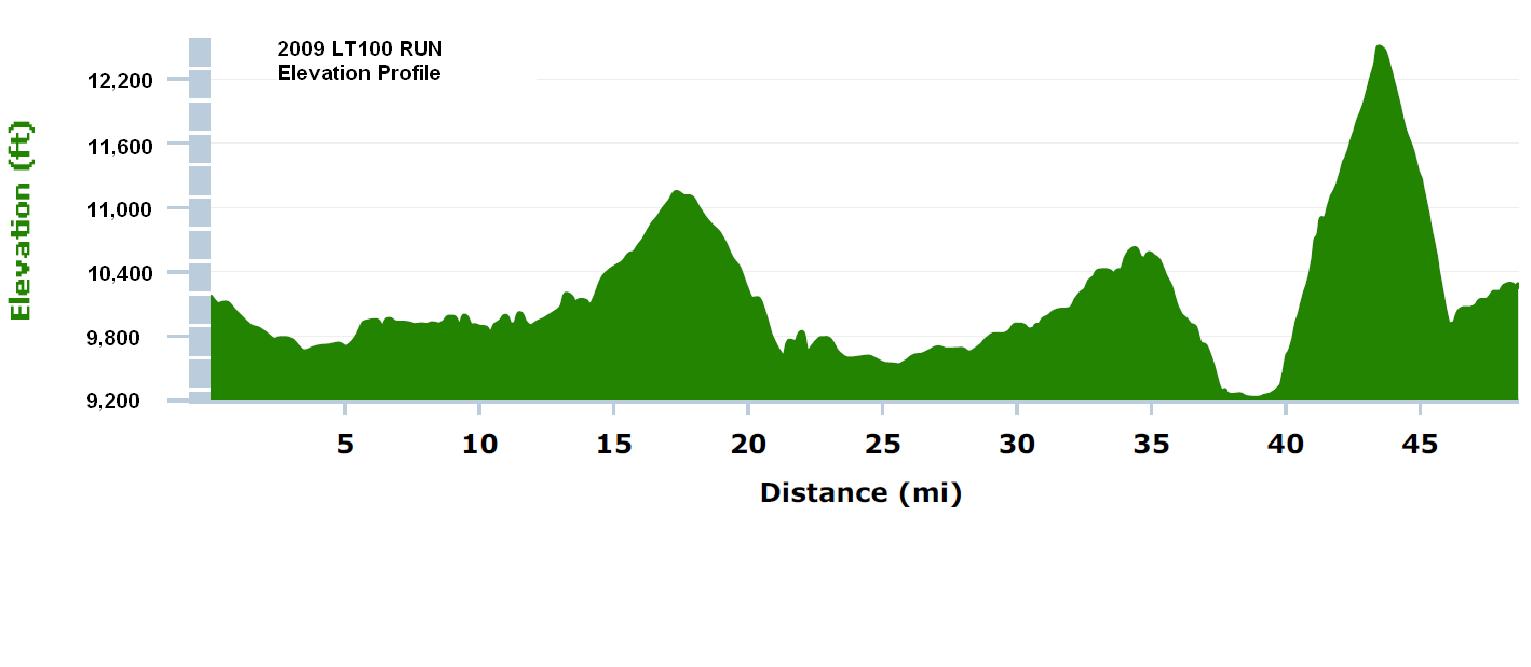
Leadville 100

What a weekend of racing ahead! Leadville 100, Waldo 100k and Pikes Peak Marathon. Three classic races that contain some ‘classic runners’. Timmy Olson and Hal Koerner are heading to Waldo and Kilian Jornet and Sage Canaday are going to be going head to head at Pikes Peak. But what about Leadville?

For me, Leadville is the ‘real’ one to watch this weekend (no disrespect to Waldo or Pikes) but we all know from results this year that Timmy, Hal, Kilian and Sage are in form; no doubt. Although these races will be great showdowns the one person that we all have great interest in is Tony Krupicka.

Tony returned to racing after an 18 month lay off due to injury at Speedgoat 50k, didn’t have a great race (his words) and still placed up at the front of the race, However, Leadville and 100 miles will hopefully re establish him and confirm that he is back on the scene.

In the words of John Colley, Race Director:

2012 marks the 30th anniversary of the first Leadville Trail 100 “Race Across the Sky.”

Things were a lot different back then. The course description was basically word of mouth, with only four or five major turns actually marked for racers. Search and Rescue consisted of a little plastic whistle included in the racer packets. You were truly on your own. Running through the pack of 50 to 100 racers seemed like a lot of work. Through the years, there have been a lot of changes. Nutrition has evolved, training has become more scientific and our athletes are evolving. Cell phones and Internet give people a sense of security in the backcountry. Aid stations are now stocked with everything you need to complete your race. Rather than spending lonely miles secluded in your own thoughts, you will now be cheered on by hundreds of excited fans spread over the entire race. Some of the most important elements of this race have not changed, however. The course is still offering the same monumental challenge it always has, and Ken and Merilee still welcome you home at the finish line. As the innovators of this wonderful event, Ken and Merilee have helped thousands of athletes commit to and achieve a common goal. As in the past, they continue to be here for each and every one of you. Your Leadville experience is their highest priority.

The will of the athletes has transformed Leadville into what we see today. Year after year we welcome a group of the most dedicated racers to gather on 6th Street and put everything  on the line. There is no stopping their positive attitudes and desire for success. This race has the power to change lives and mold personalities. I have experienced this myself as a past Leadville competitor. I can’t imagine Leadville without this race, or this race without Leadville. It is great to see our past champions continue to be involved in our races while the new crop of young athletes are eager to write their names in the record books.

As the start grows near, there is an excitement in the thin air. The llama crews are hauling supplies up to the Hope Pass aid station. Your personal journey is approaching, and your buckles are here waiting for you.

Leadville_Run_Course_2011

2012 Race

MEN

The mens race has Tony Krupicka at the top of the pre race favourites. Lets face it how can you not tip Tony for a top slot… he won the race back to back in 2006 and 2007 but the big question on everyones mind is will he go for Matt Carpenter’s record?

Troy Howard has performed well at Hardrock 100 and certainly Leadville will hold no fear for him. He has run just over 26 hours at Hardrock with the 5th fastest time. He will be up at the front for sure.

Nick Clark from the UK can never be ruled out of the 100 mile distance. He is tenacious and tough. For me his two third places two weeks apart in 2011 at Western States and then Hardrock show what an athlete he is. At Western States this year he went through a bad patch and seemed to go off pace but he rallied and then moved up the field to podium once again for third. Something that looked unlikely earlier.

Salomon athtlete, Thomas Lorblanchet will be representing Europe and is having a great season so far.He was fith at Speedgoat, raced will at Transvulcania La Palma and has also placed highly in Salomon 4 Trails.

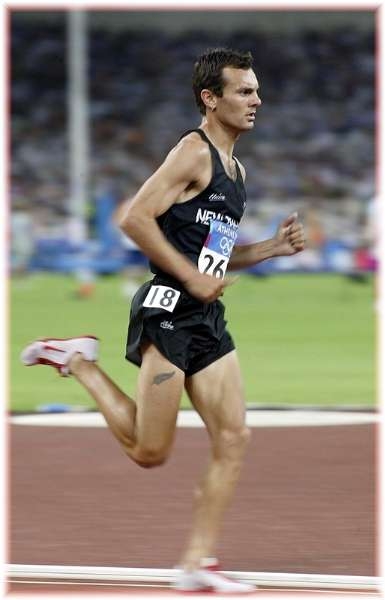
Mike Aish  I guess is somewhat of an unknown . Mike is from New Zealand and is a fast marathon runner and comes to Leadville as a 2 x Olympian over the 5000 and 10000m distance. To learn the ropes of ultra endurance, he’s befriended Frank Bozanich, a 44 time ultra-marathon winner. To improve on his hiking skills, Mike gave his ear to Ben Clark, who has spent the past 10 years pioneering routes up the tallest mountains in the Himalayas. In July, Mike finished first overall in the Leadville Silver Rush 50, a grinding warm-up to the main event so although the 100 distance will be new to the New Zealander, one can’t help think he may surprise us!

Mike Aish credit The Runners Tribe

At Leadville we also have a race within a race with Grand Slam runners, Australian Mike Le Roux and Paul Terranova going head to head for honours. Mike currently leads but these guys have been churning out some quick 100’s and with the tough Wasatch 100 to follow this could be anyones race.

LADIES

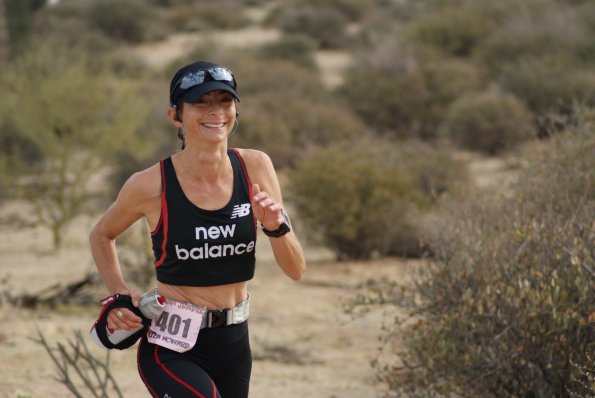
Darcy Africa, Liza Howard and Aliza Lapierre have to be the three names that jump of the page for the Ladies race. Lynette Clemens the defending Leadville champion who ran 19:50:06 in 2011 would be the ‘hot tip’ for the race win but rumours are abound that the local lady will not be on the start.

Darcy has won Leadville in 2006 and 2009 which confirms her ability on the tough terrain but Liza won the race in 2010 and is fast over the 100 mile distance. If Lynette Clemens doesn’t turn up I would place my money on Liza.

Aliza Lapierre will be up at the front and should Darcy or Liza have a bad day or should Aliza have a great day, she may well top the podium. In real terms I see her placing 3rd.

Liza Howard, New Balance credit McDowell MountainMan

Fresh from a second place behind Anna Frost (Frosty) at Speedgoat 50k is Salomon Athlete, Kerrie Bruxvoort. She is un-tested over the distance but may be one to watch!

FACTS about Leadville

But how much do you really know about Leadville? Here are some fast facts. We can’t give you a buckle for knowing this stuff, but it will take your mind off those hundred miles.

  • Leadville has multiple nicknames, including Cloud City, Magic City and Two- Mile-High City.
  • Leadville is North America’s highest incorporated city.
  • Even though Leadville was founded during the Silver Boom, there were too many other cities around that same time with “silver” in their names, so founders decided to name it after the ore.
  • Leadville was founded in 1877 by mine owners Horace Tabor and August Meyer.
  • Leadville’s population at the height of the mining boom is said to have been close to 30,000. Leadville’s population today is 2,700.
  • Leadville’s past was filled with legends, eccentrics, entrepreneurs, dreamers, and other characters famously euphemized as “colorful,” including Horace and Baby Doe Tabor, Molly Brown, Texas Jack, Frank and Jesse James, Wyatt Earp and Doc Holliday.
  • Leadville is one square mile and its 70 square blocks of Victorian architecture have been designated a National Historic Landmark District.
  • Leadville had the highest unemployment in the nation when Ken Chlouber, determined to bring Leadville back from the brink, organized the inaugural Leadville Trail 100 Run in 1983. The mountain bike race was added 11 years later.
  • The Climax Molybdenum mine, shuttered in the 1980s, is set to officially reopen this summer and employ 300 people.A live race feed will be available from iRunFar 

Glacier de Zinal

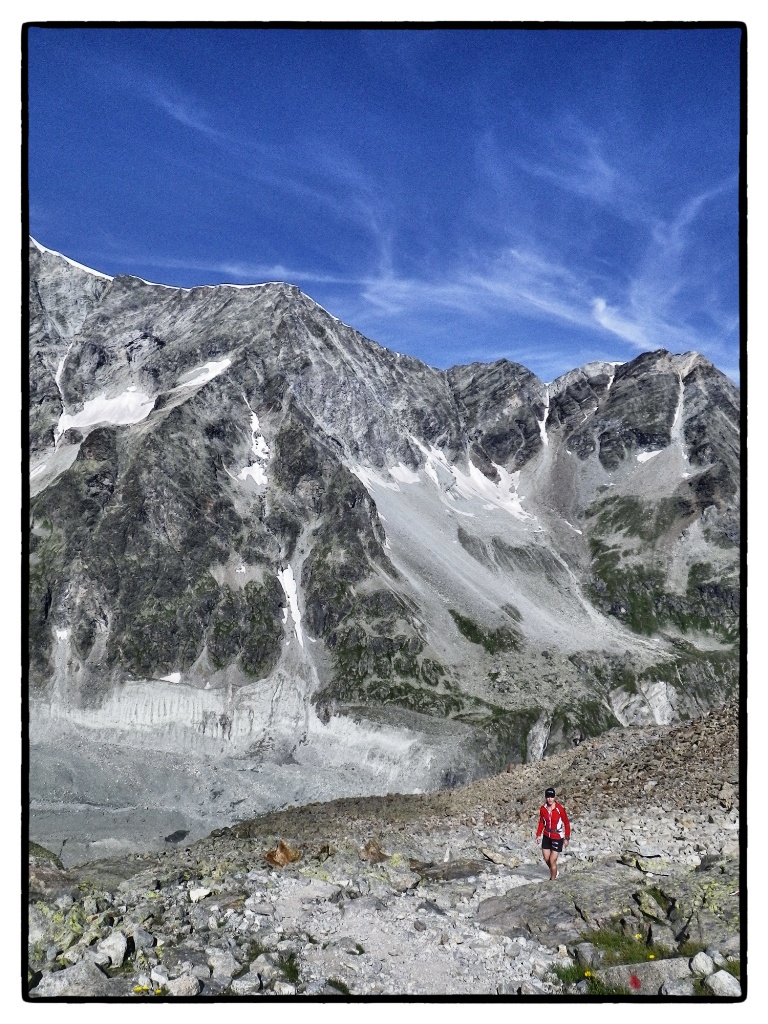
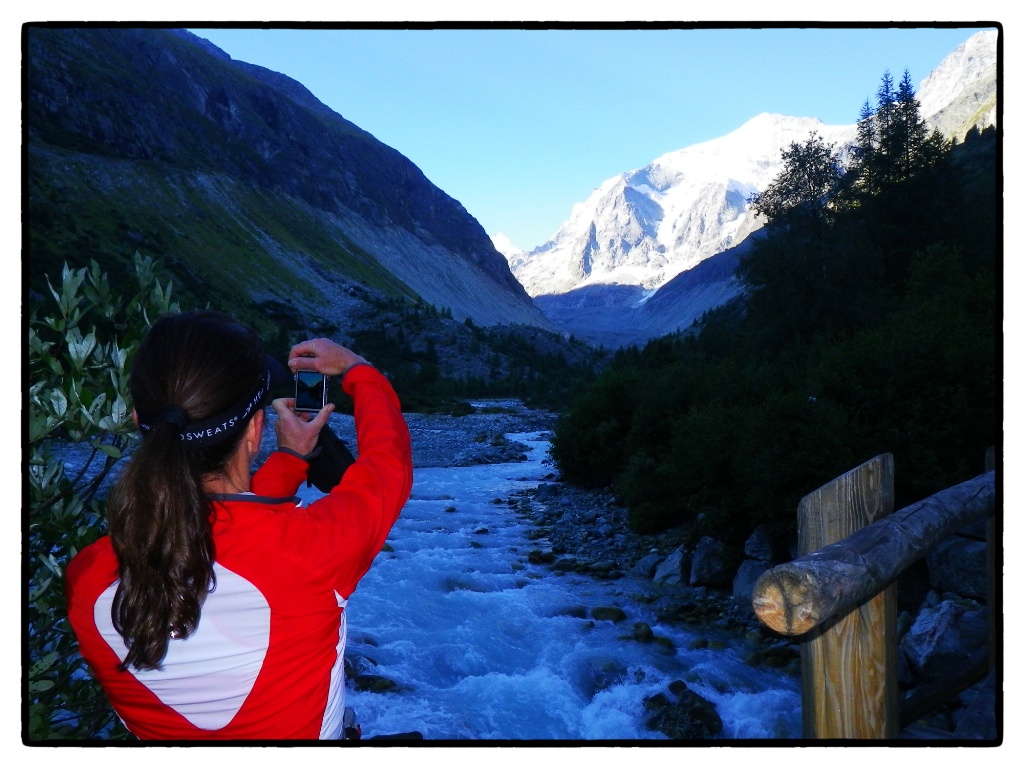
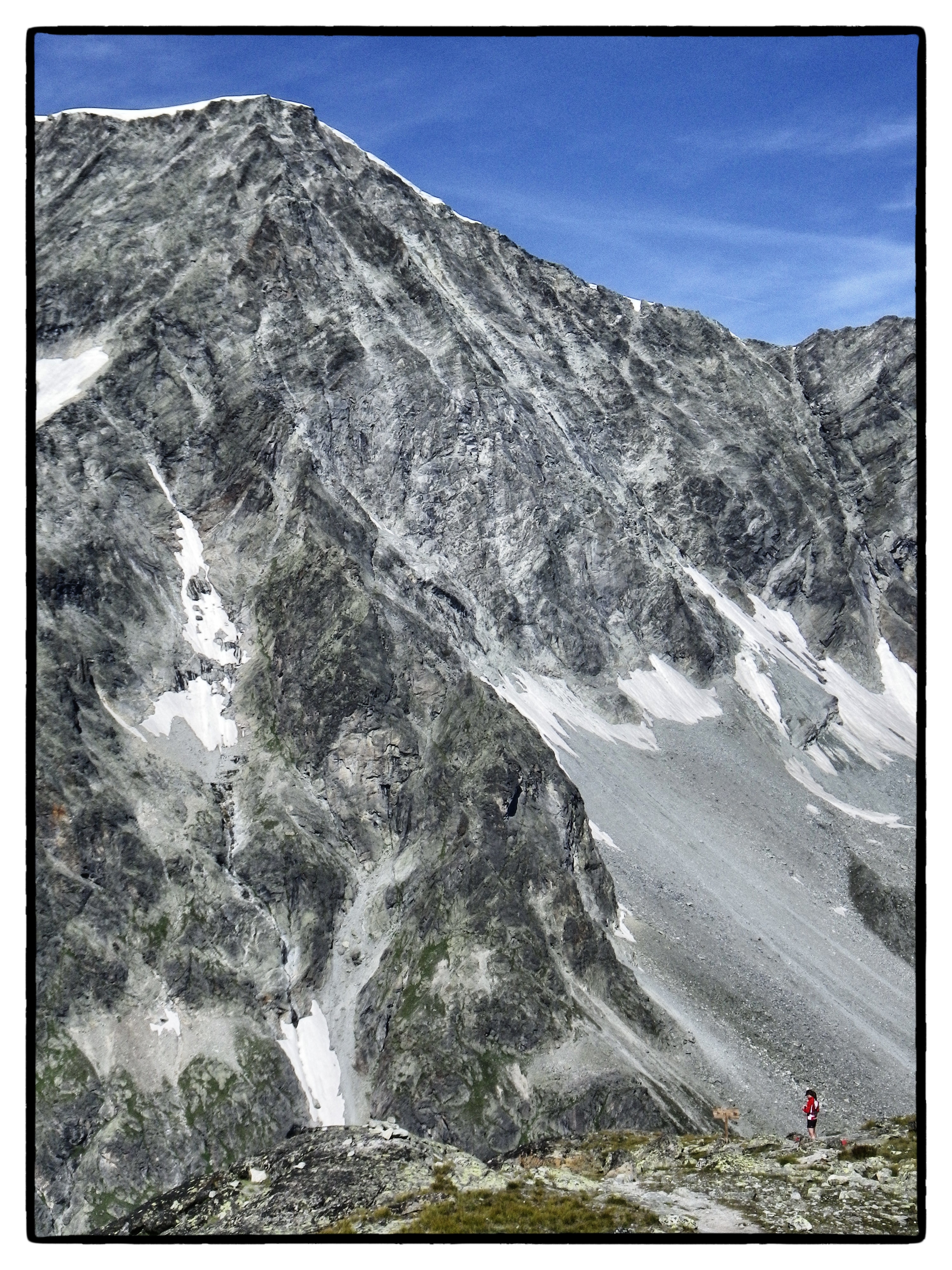
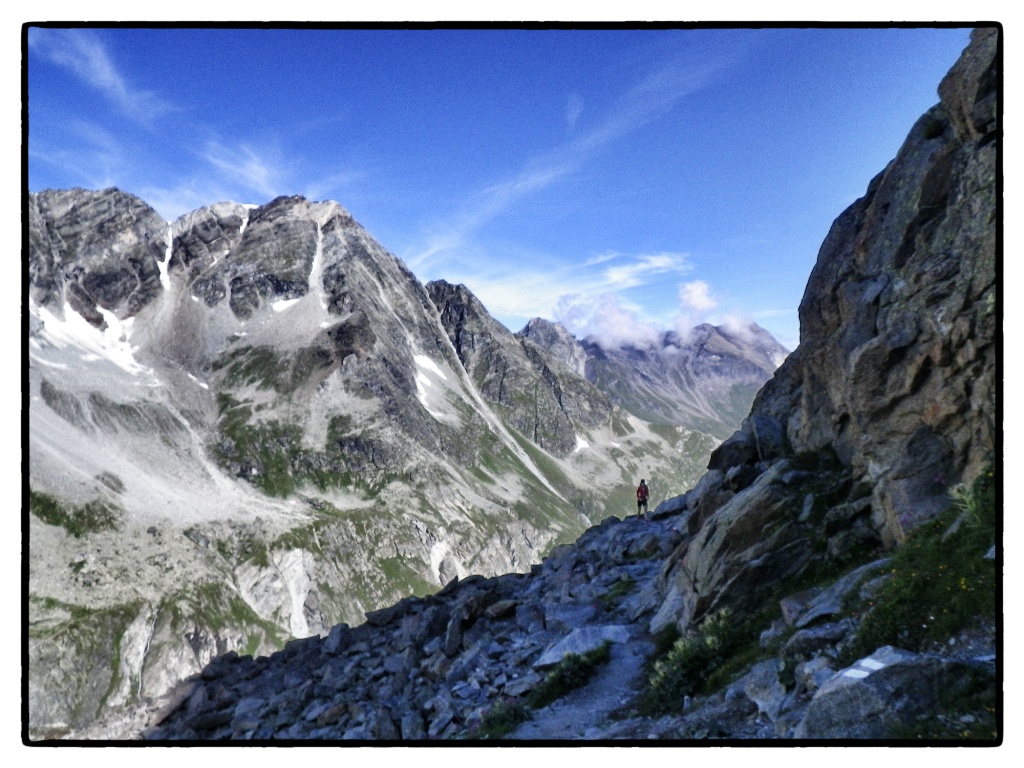
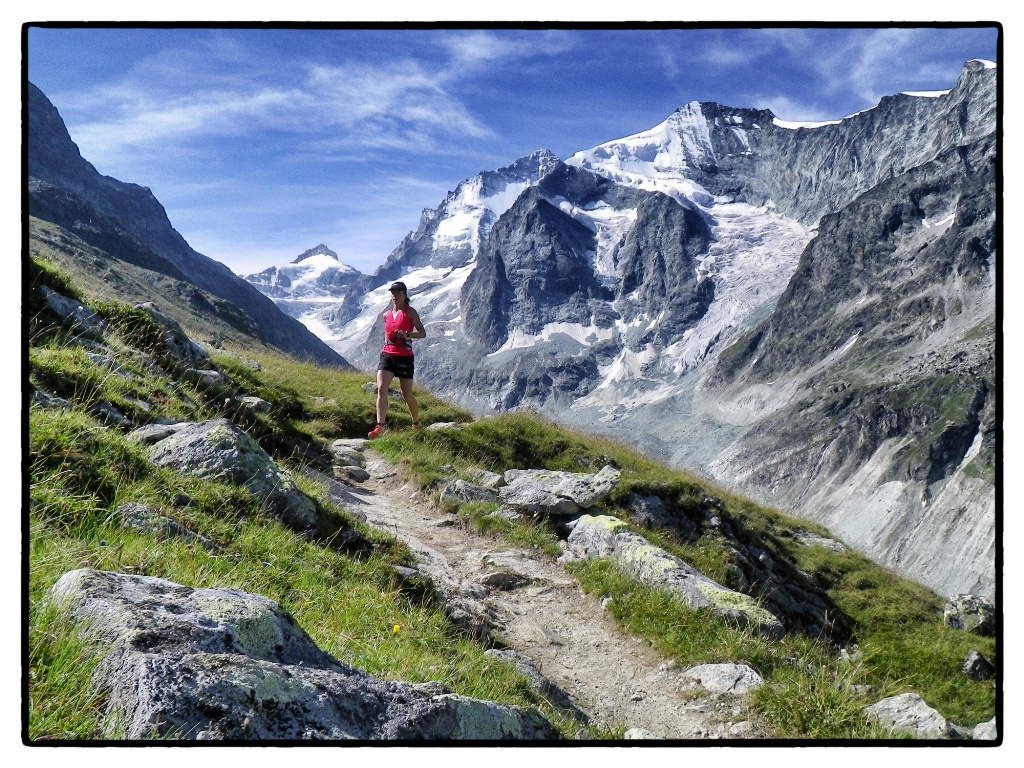
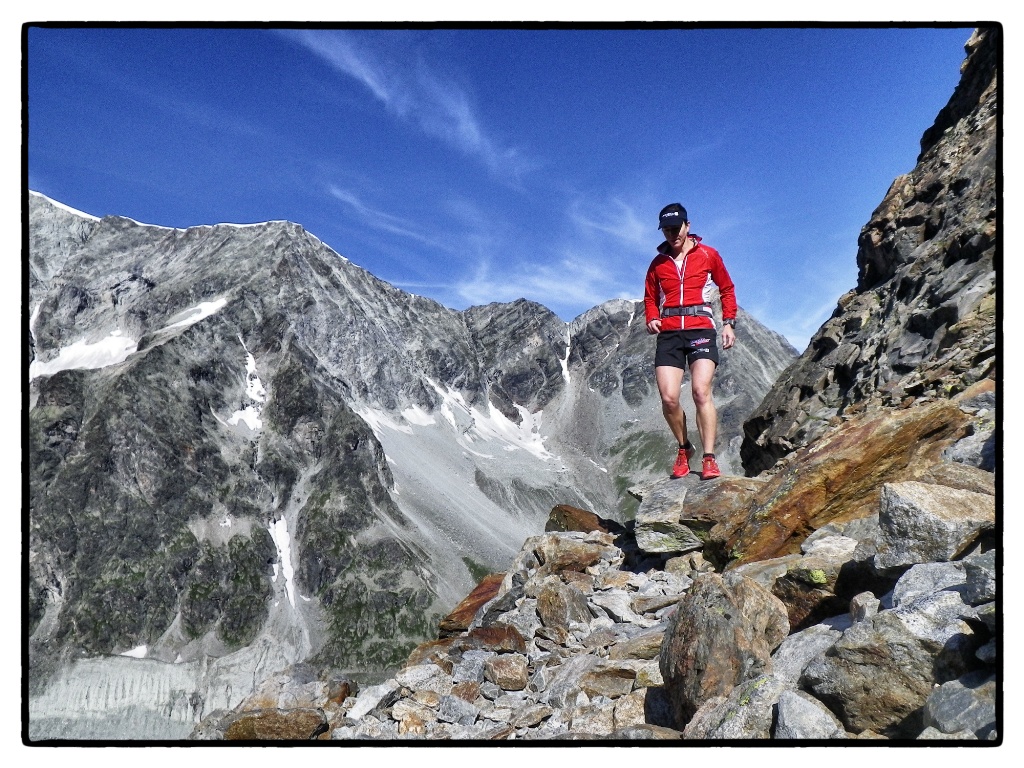
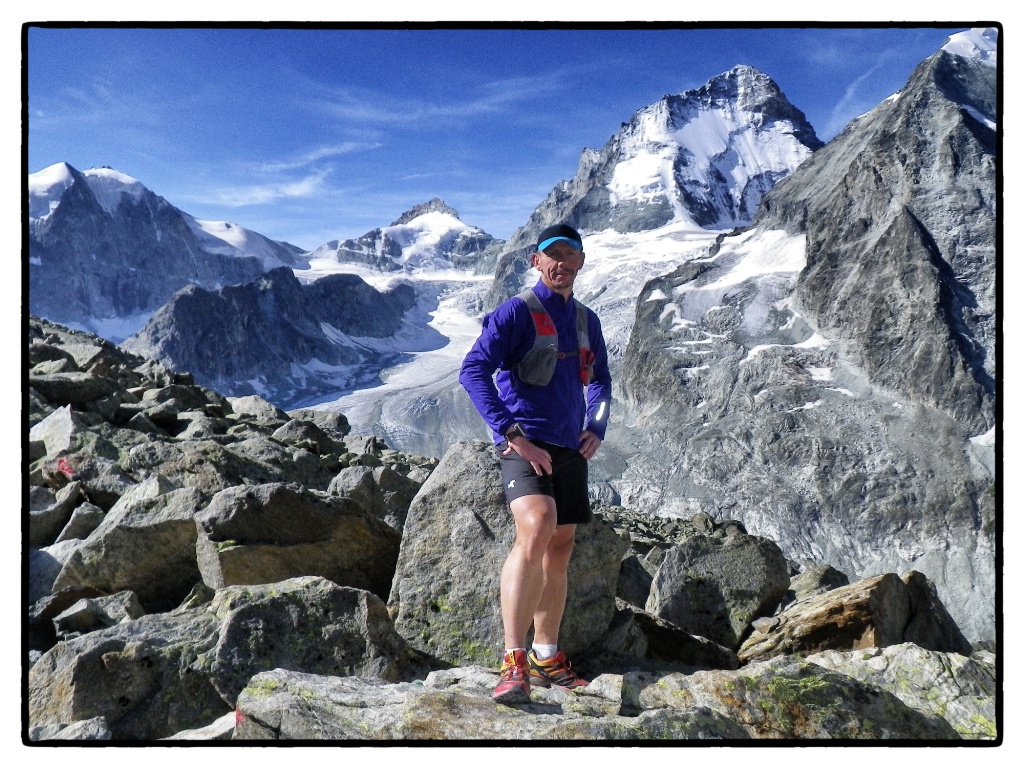
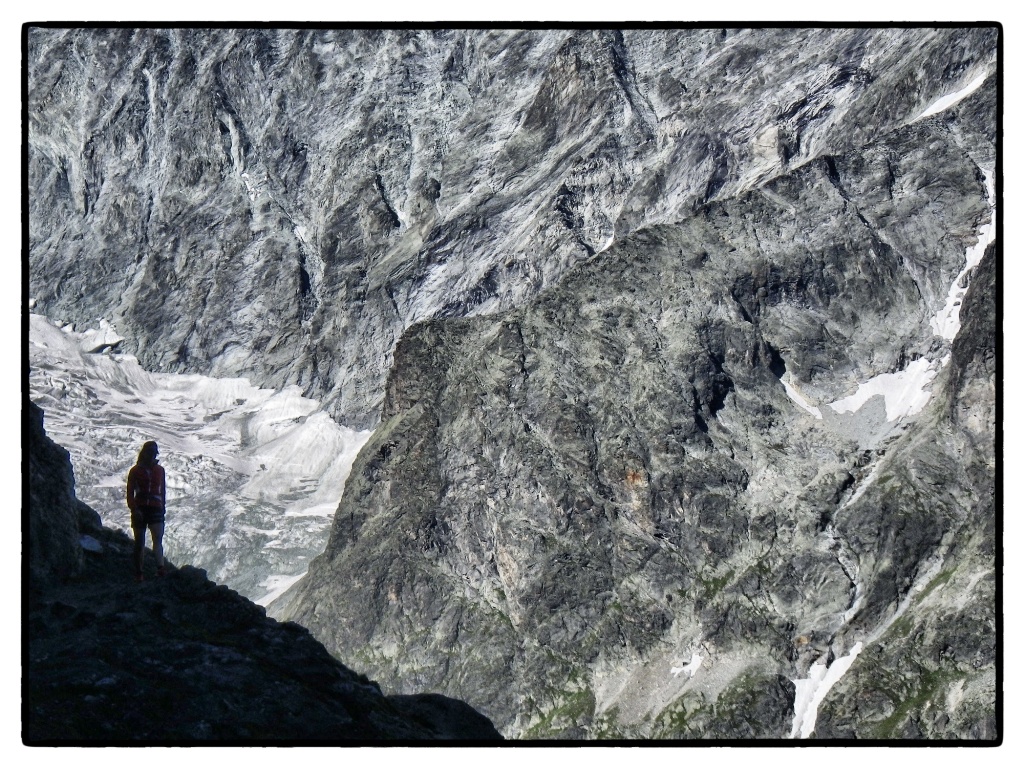
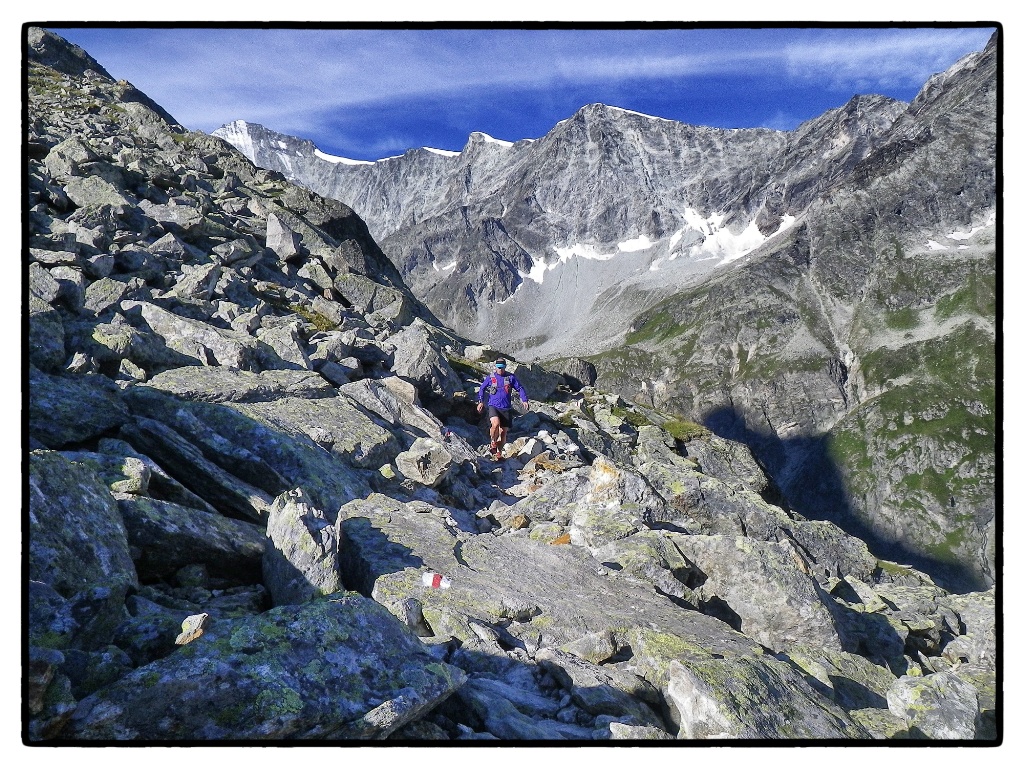
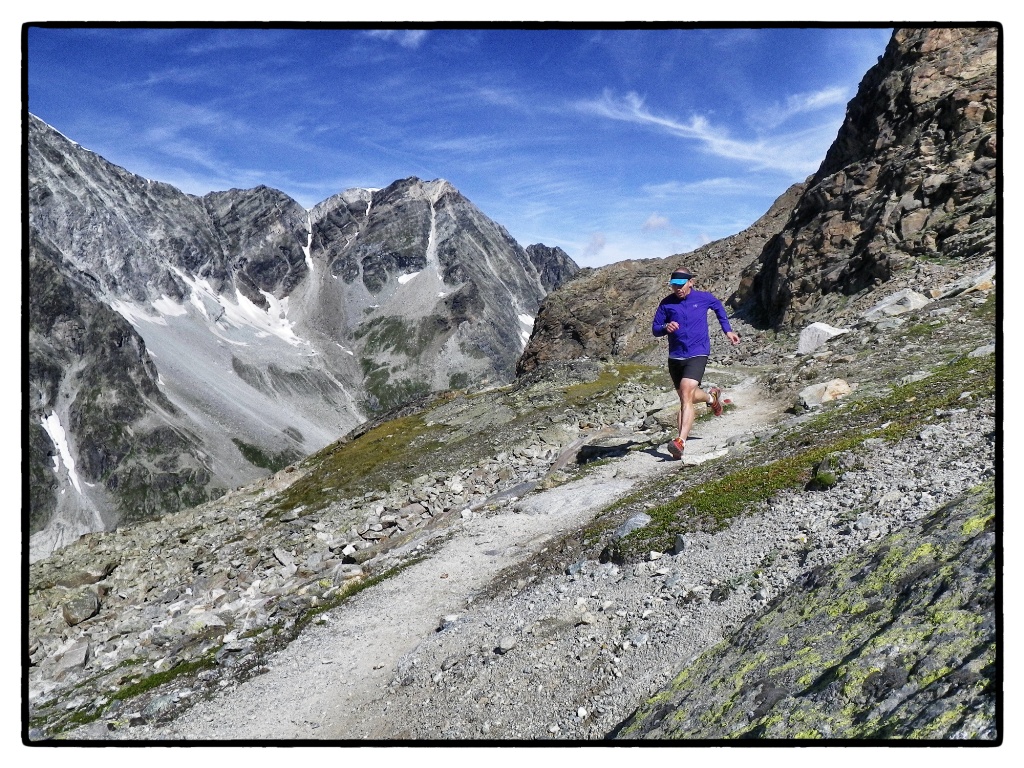
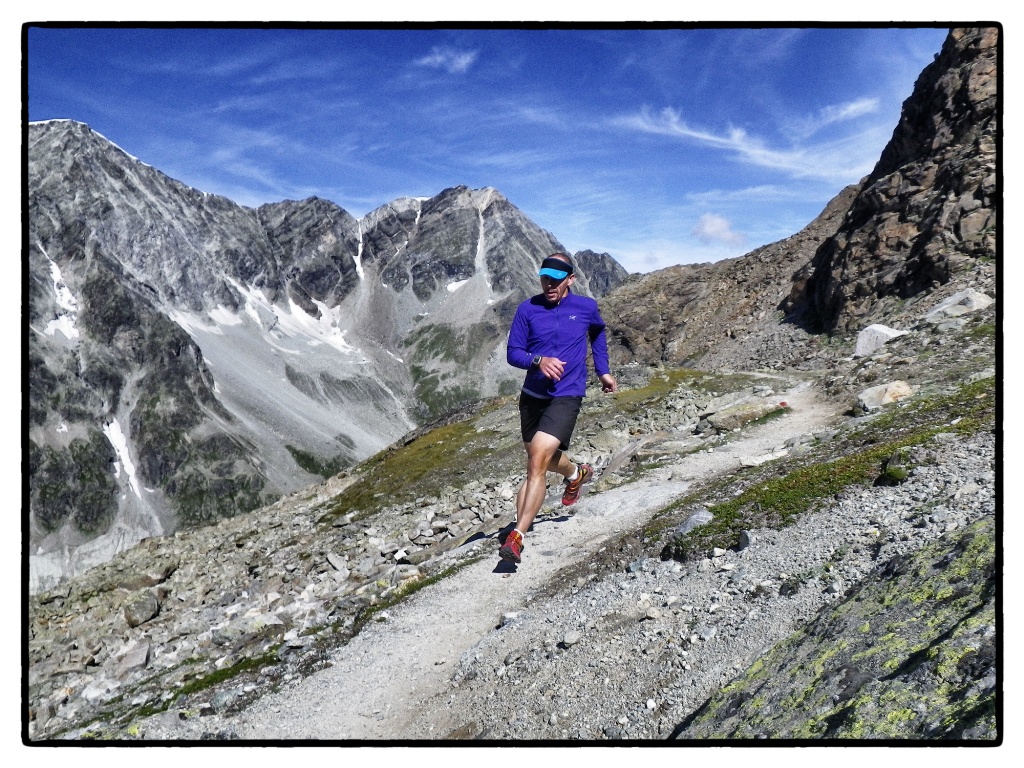
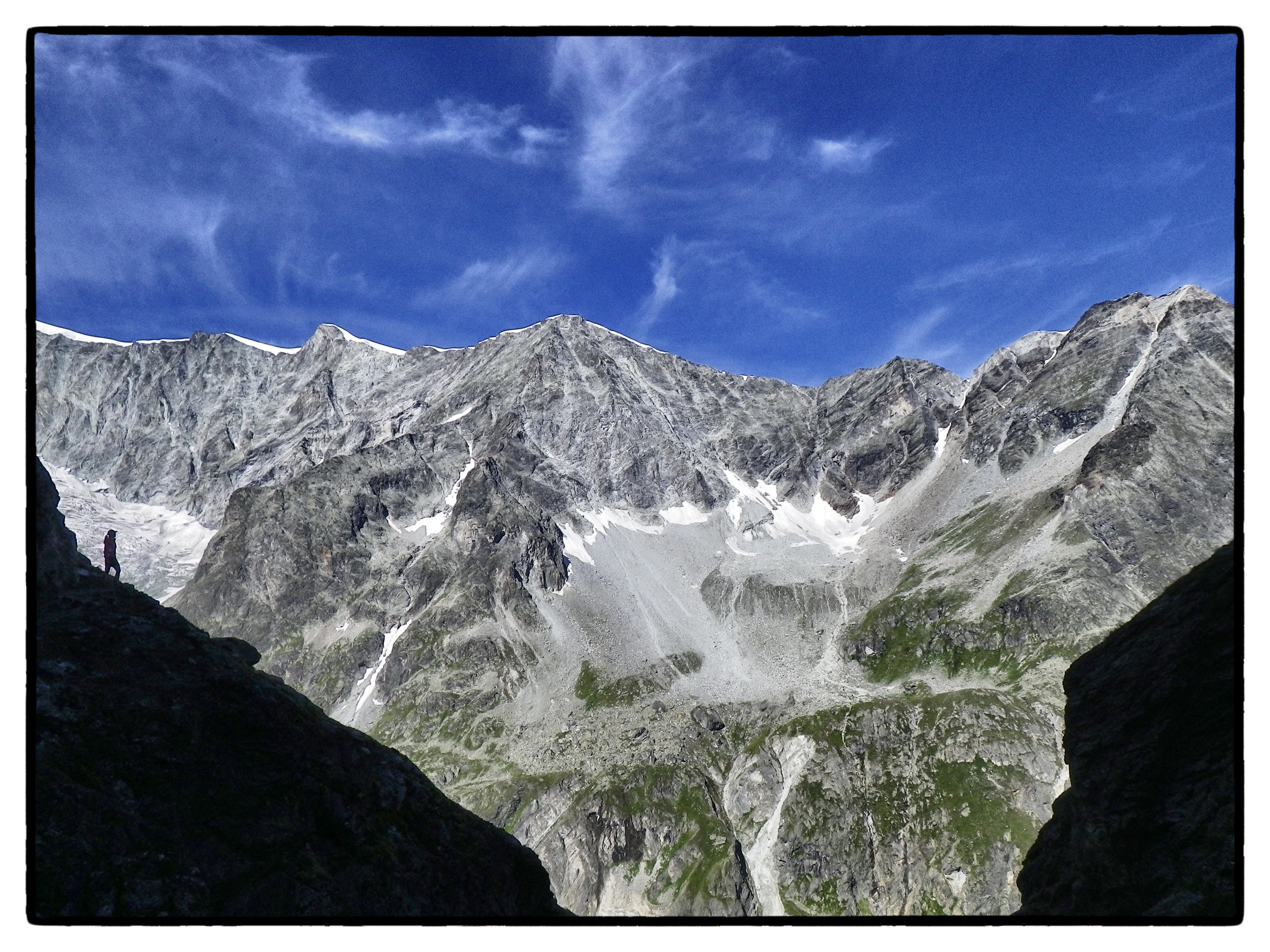
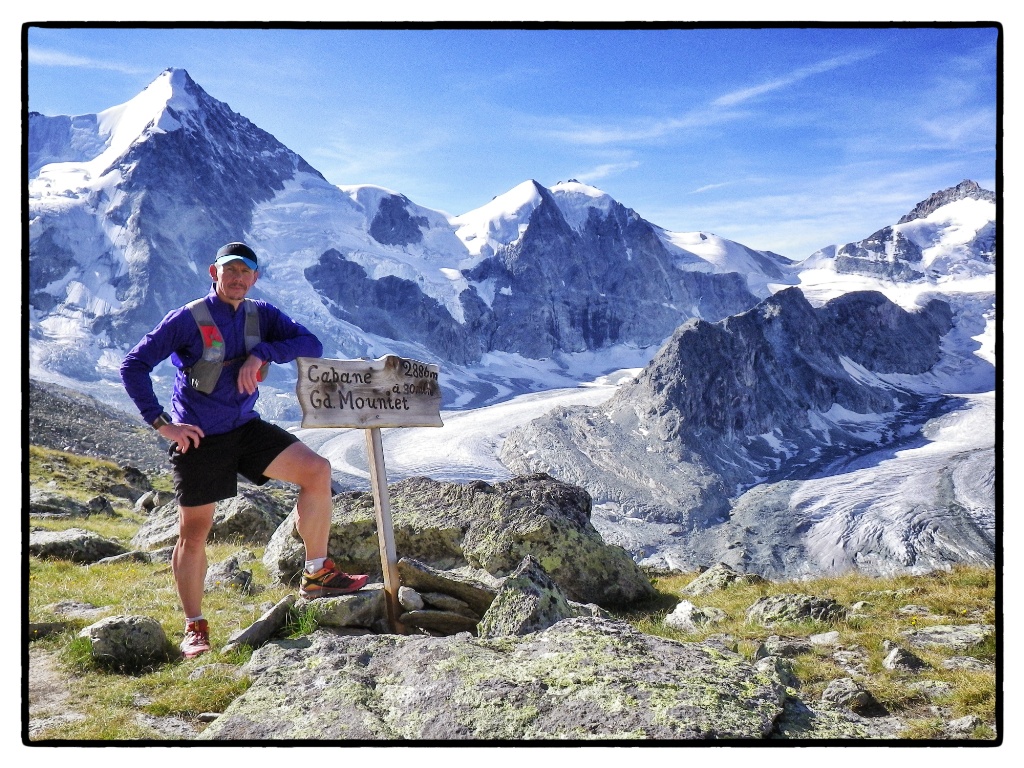
Had a free morning yesterday, 13th August, before heading home from Sierre-Zinal and I went on a 5 hour run (hike) into the Glacier de Zinal with Salomon running athlete, South African, Linda Doke.

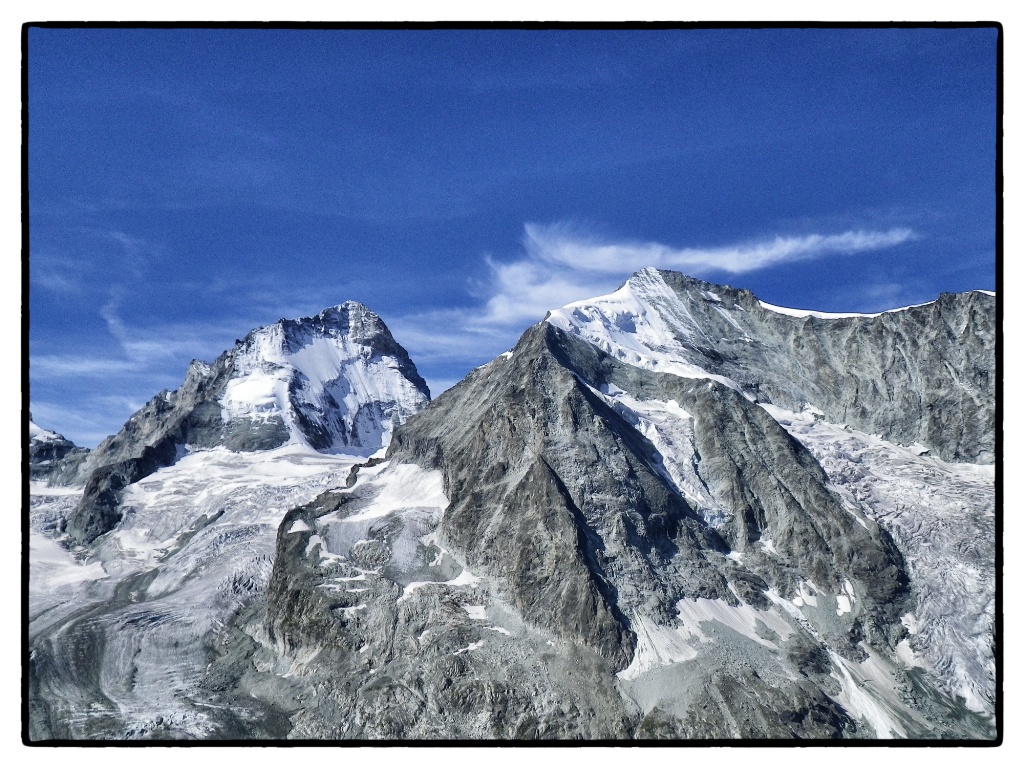
We had the most incredible run/hike and reached 2886m Cabane de Mountet  in front of  an amphitheater of mountains and ice:

Zinairothorn 4221m, Wallenkuppe 3903m, Ober Gabelhorn 4063m, Matterhorn 4476m, Pte de Zinal 3789m and Dent Blance 4357m.

The most incredible backdrop to ANY run I have done.


Sierre Zenal round up

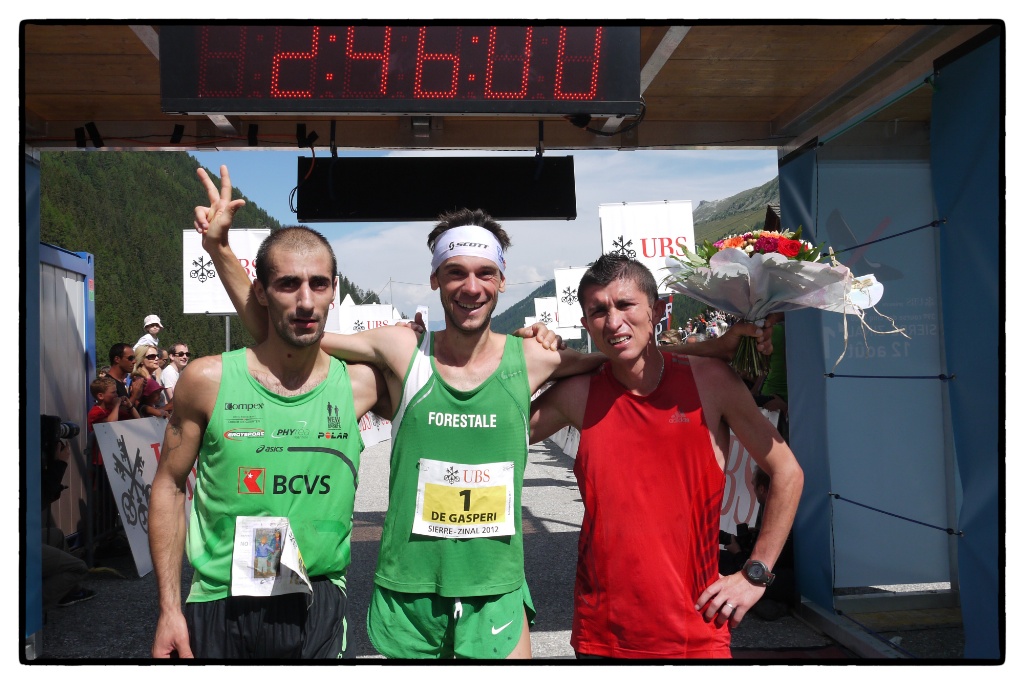
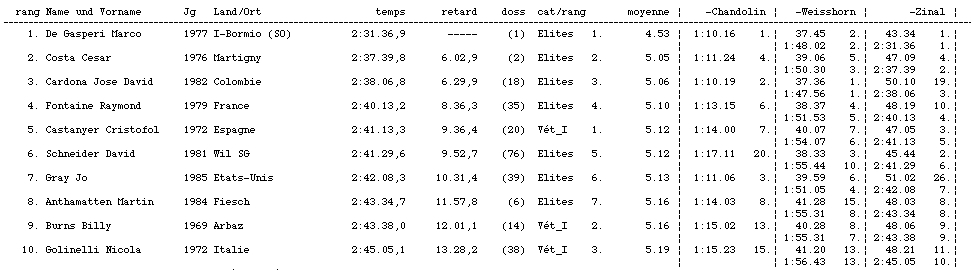
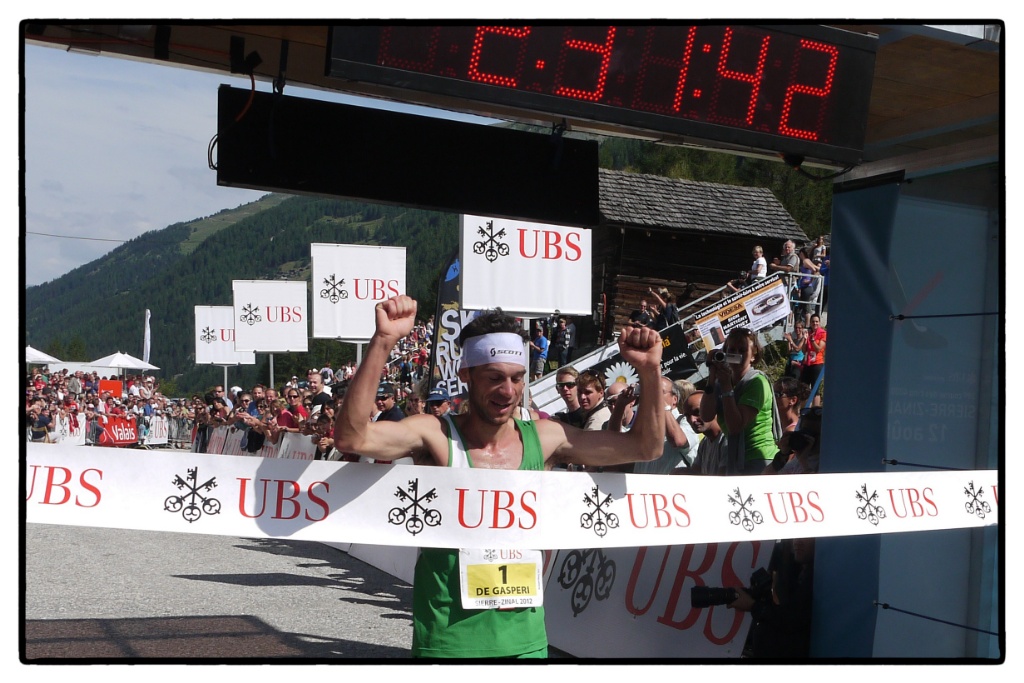
De Gasperi and Cardona

What a day !

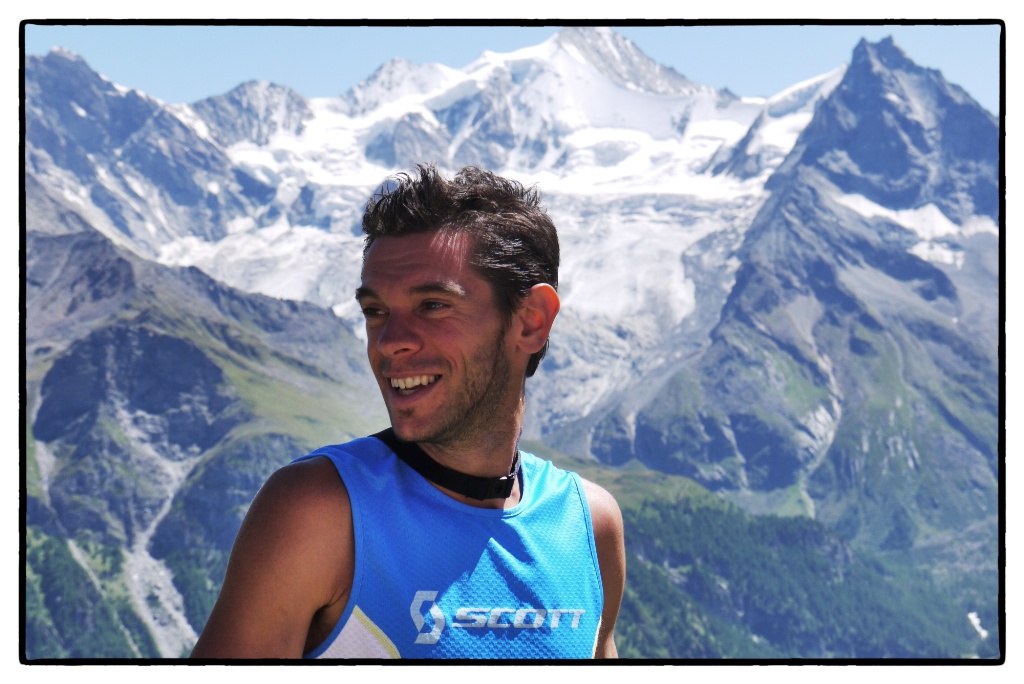
Marco de Gasperi after a turbulent 7 months in 2012 returned to form in a race that he loves! You can listen to what he had to say the day before the race HERE

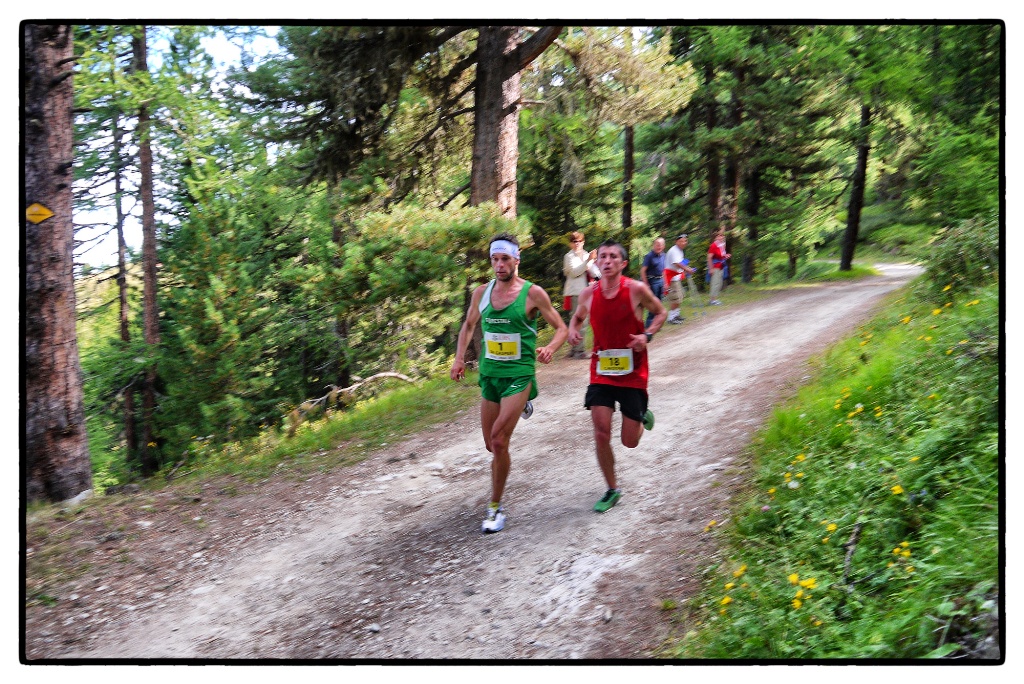
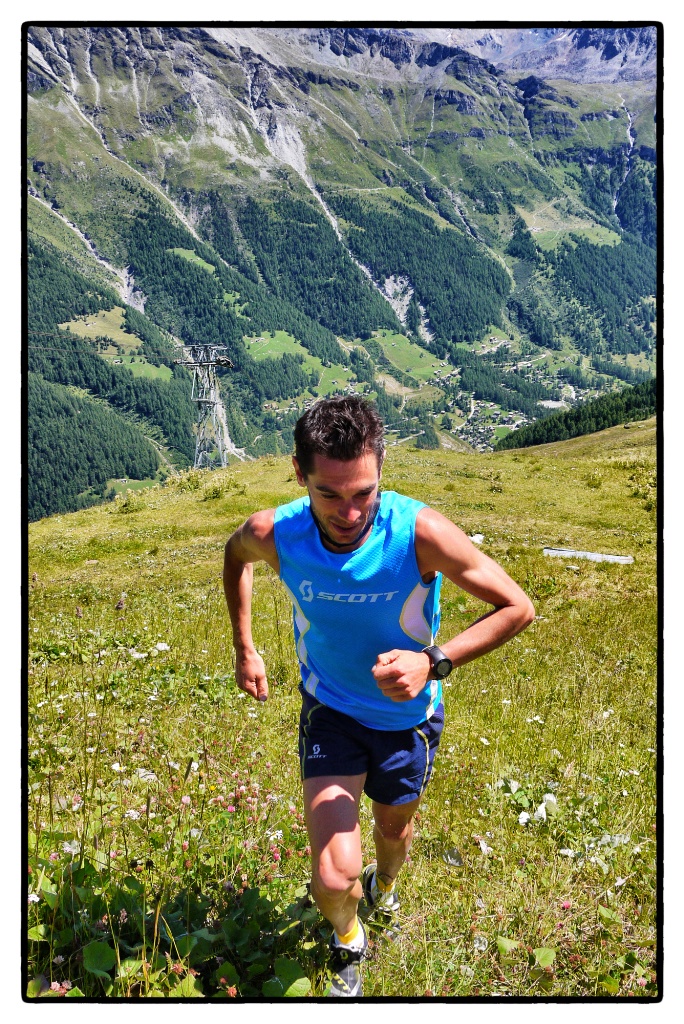
Initially Marco de Gasperi and Cardona (Columbia) raced neck and neck going through 10km’s side by side. But Marco looked relaxed and in control. Post race in a finish line interview (listen HERE) he told me that the Columbian looked tired and he decided to push hard on the descent. We had discussed only the day before the race how he practices the skills to run down technical trail quickly.

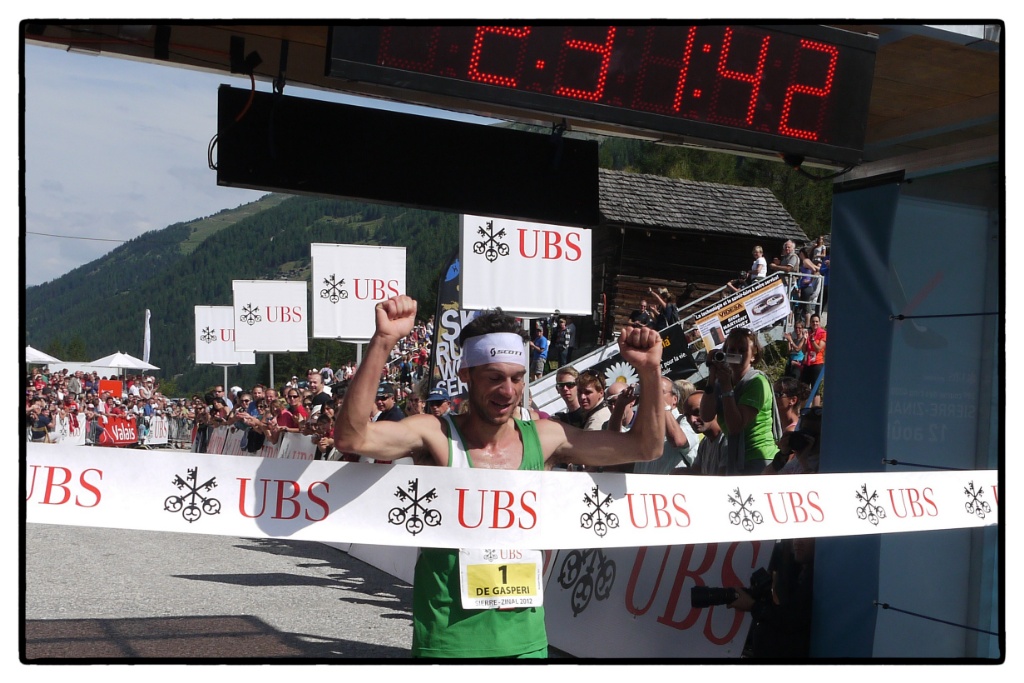
He soon opened a gap and ran into the finish with a gap of just under 6 mins to prove to everyone that Marco is back!

Cardona obviously struggled with the pace and the effort that Marco had dictated and relinquished second place to Cesar Costa from Martigny. Cesar crossed the line in 2:37:39 in comparison to Marco’s 2:31:69.

David Cardona did hold on to third place though in 2:38:06

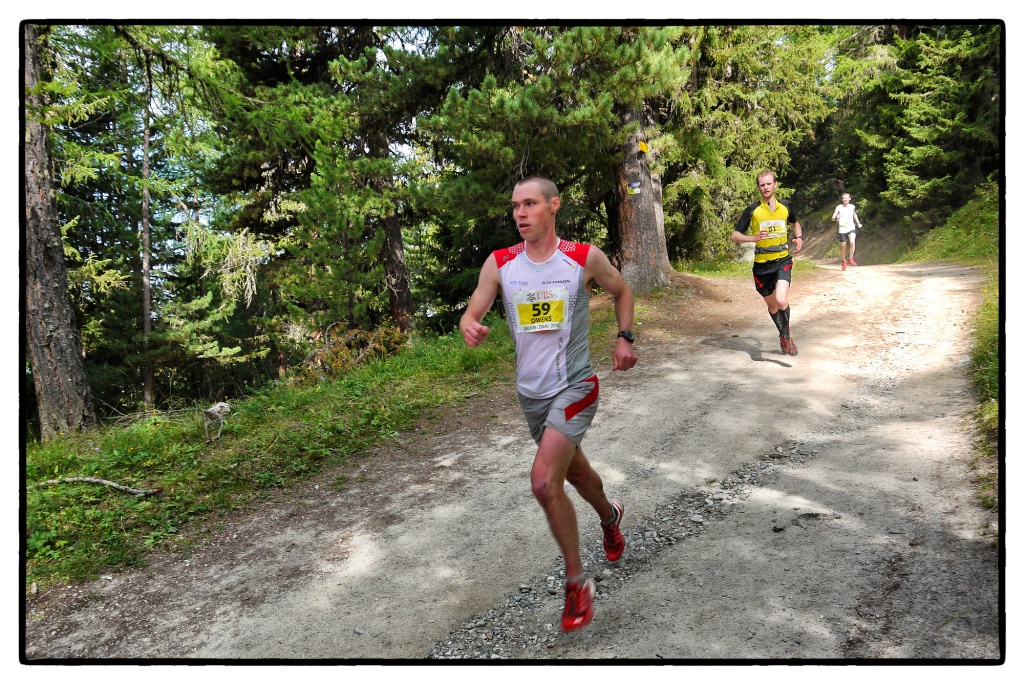
British men excelled in what was a very tough field with 43 year old and previous winner of Sierre Zenal (in his younger days as he told me) Billy Burns taking a great 9th place (2:43:38) in front of Tom Owens in 12th (2:45:56) and Joe Symonds in 18th (2:48:42).

In post race chats with both Tom and Joe they said how they had been going well running in the top 10 but the altitude had hit them making it really tough when racing along the plateau.

Tom Owens leading Joe Symonds

Billy Burns on the other hand who lives locally was adjusted. He kept saying to me post race “You know I’m over 40 don’t you? You know, don’t you?” He seemed really stoked at gaining a top 10 in an incredibly tough field. So he should!

The Ladies Race

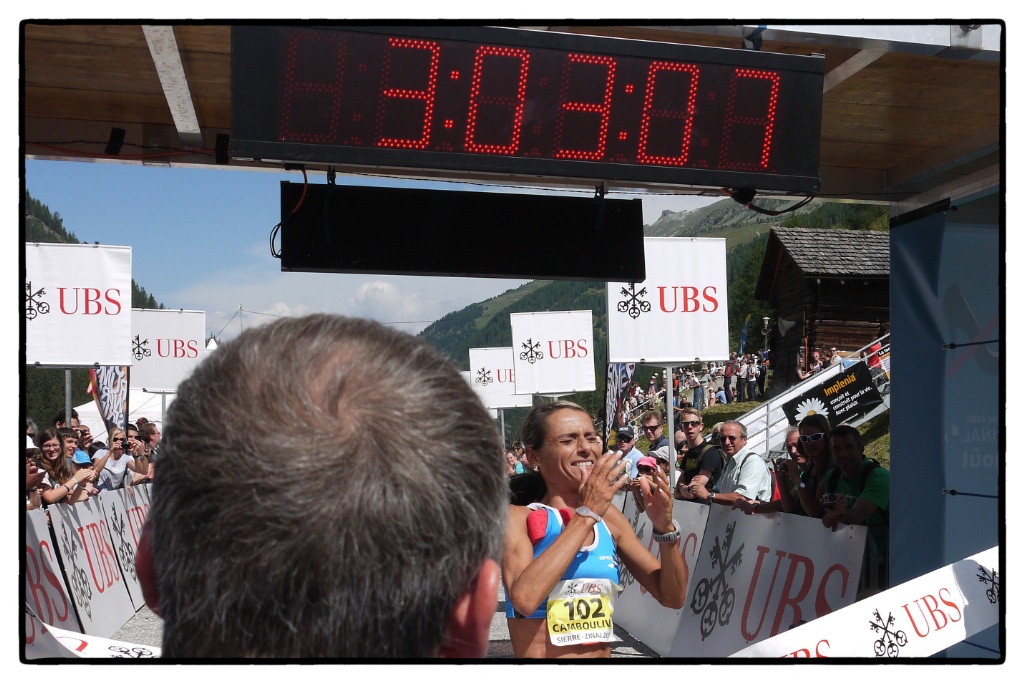
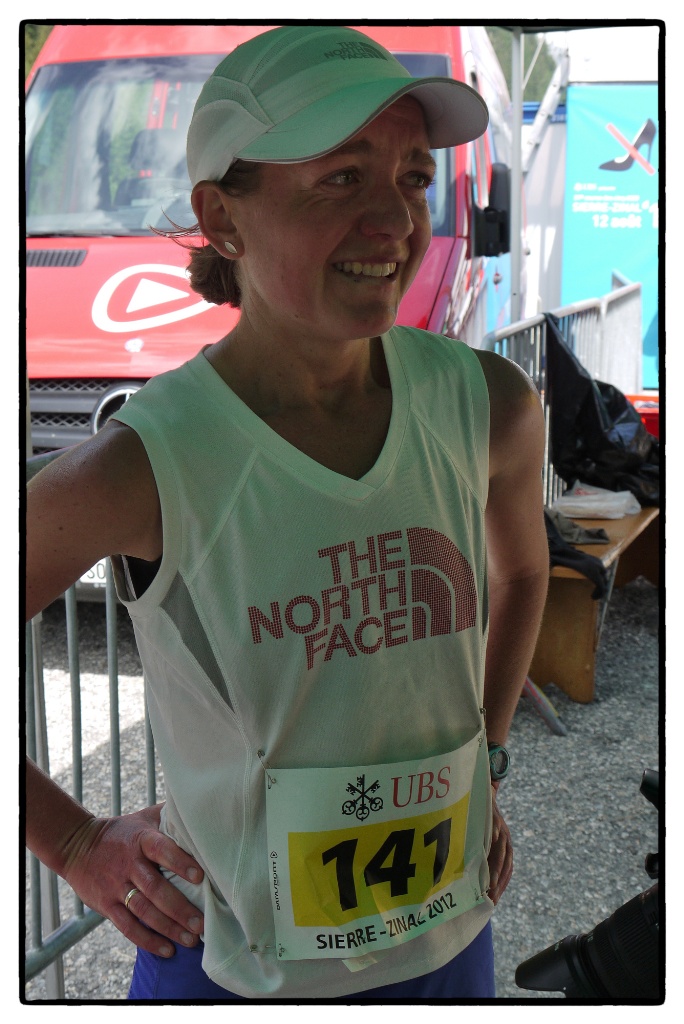
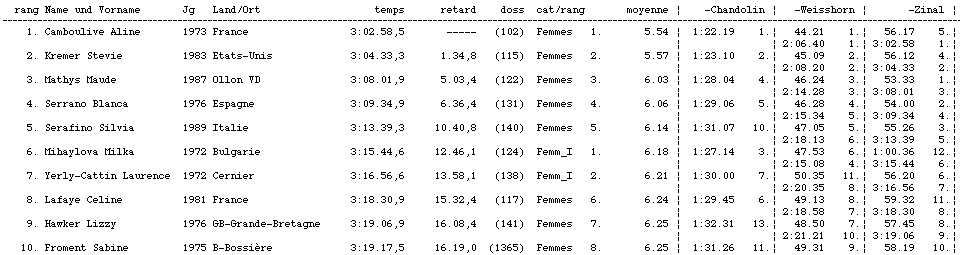
Aline Cmboulive – FR – Ladies winner

Well, I guess the ladies race didn’t quite go to plan… or should I say, it didn’t quite go to the form book! Pre race favourites such as Oihana Kortazar and Nuria Picas didn’t have the races they wanted with Oihana dropping early and Nuria arriving at the finish looking in real pain.

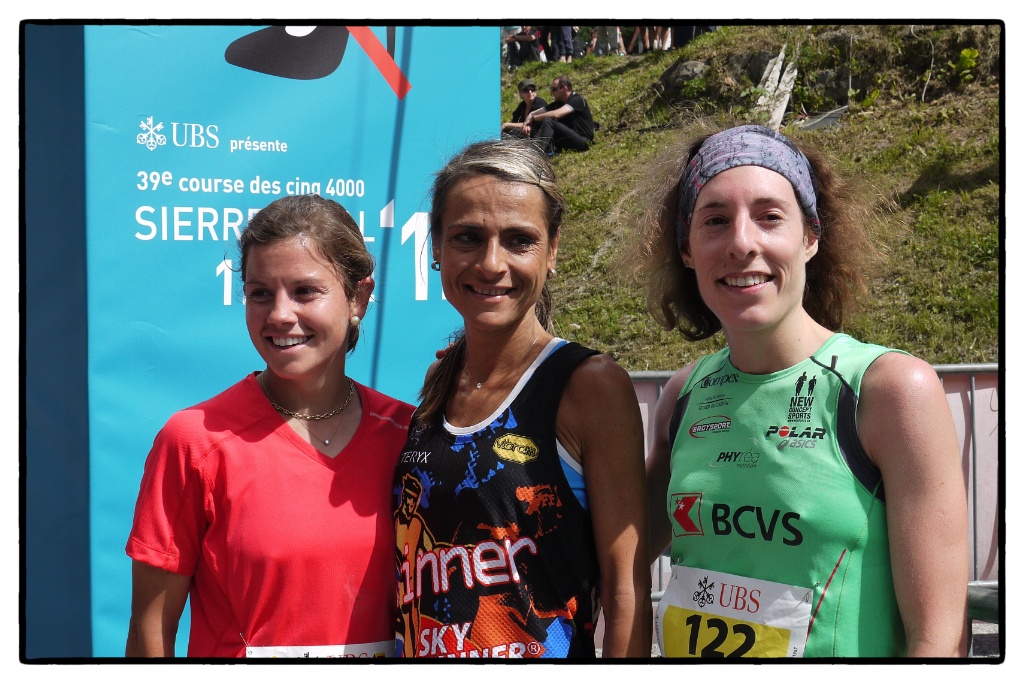
Aline Camboulive from France moved ahead of the ladies field early on and maintained the gap all the way to the finish.

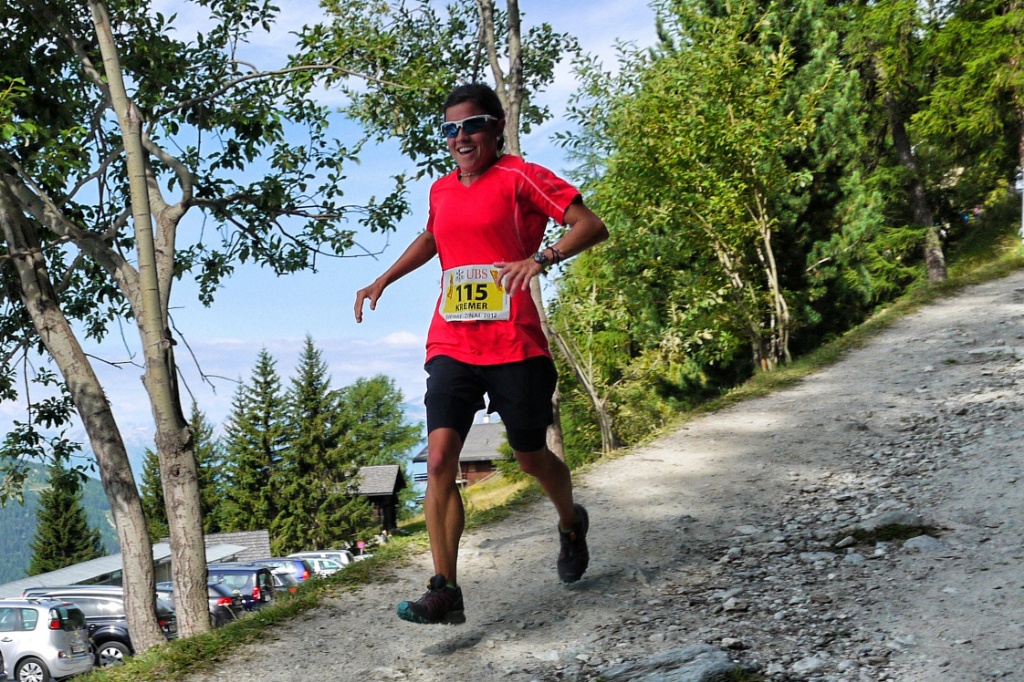
Stevie Kremer – USA

Big surprise of the race was American, Stevie Kremer who ran an incredible race to finish just 1:30 down on the winner for second place. She had been my pre-race dark horse! I had several chats with her prior to race day and although we all knew little about her she seemed motivated and very modest about her ability. On the finish line she looked as though she had just run a 10K !

Third placed lady some 6 mins behind the winner was Maud Mathys from Ollon.

Surprise of the day came from a last minute entrant! Non other than Lizzy Hawker. Apparently, she had phoned the race organiser at the 11th hour, obtained and entry and slipped into the race as a ‘training run’ (her words) on the back of some serious UTMB training. She still placed 9th!

Lizzy had this to say on the finish: listen HERE

Lizzy Hawker

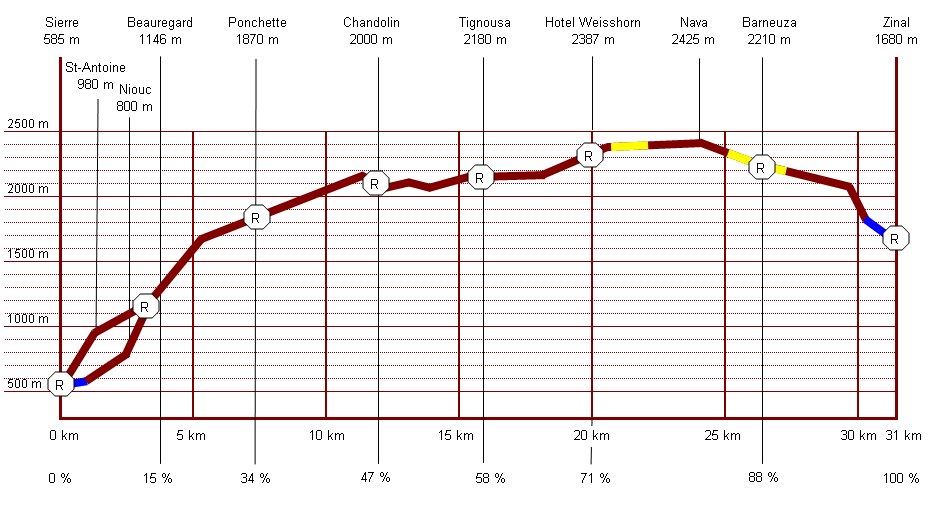
Once again Sierre Zinal confirms itself as a race for everyones bucket list! At 31km’s it is a manageable distance for all. With two starts, one at 0500 am for the walkers and slower runners and then 0900 for the main runners it provides everyone with a possibility to experience the scenery, the altitude and the climbs of this beautiful area of Switzerland.

Course Profile

RESULTS

Top 10 Men

Top 10 Ladies

Pre Race Nerves!

A lack of eye contact.

Head dropped low.

A runner sits down opposite and breaks the thoughts, space interrupted!

Gaunt in features with eyes deeply recessed into his face, this is a runner on the edge.

Is it the expectation of competition and personal pressure to succeed that keeps him in this solitary world or is he a loner?

A question comes from the runner opposite. It’s unwelcome.

Without lifting his eyes a mumbled response.

Pardon?

Eyes remain down. His right hand returns the fork to the plate and with his index finger he raises his glasses and rubs vigorously at his eye!

Eyes now read with irritation he sets his chin on his left hand, sighs and forces a response from within.

The desire to get away from conversation is visible. He squirms in his seat.

A failed attempt to leave provides an opportunity for another question.

This time, no answer.

He stands, nods and without a word leaves.

Tomorrow is race day!

Marco de Gasperi – Sierre Zinal

Marco, 11th August 2012 in the mountains above Zinal.

It’s the day before Sierre Zinal and I caught up with Skyrunning legend, Marco de Gasperi.

Marco, now 35 years old started running in the mountains very young. He participated in his first Sky Race when 15/16 years old.

You can listen to his thoughts HERE

Or via Talk Ultra HERE

*Please note this is recorded ‘live’ in Zinal so sound quality may be affected by external sources.

Marco de Gasperi stretching his legs before Sierre Zinal 2012

Marco de Gasperia brief history

PLACE OF BIRTH: Bormio (So)

MAIN CATEGORY PLACINGS VICTORIES AND JUNIORS
1995-1996: Victory in World Cup racing teams in the mountains
1995: Class 7 ° C. World Mountain Running EDINBURGH (SCO)
1996: Class 3 ° C. Italian cross-country corporate SALSOMAGGIORE (Pr)
1996: Class 1 ° C. Italian mountain running after 3 races
1996: Class 1 ° C. World Mountain Running Telfes (Aut)

INDIVIDUAL WINS WORLD CUP
1997: C. World mountain running MALE ‘SVATANOVICE (CZE)
1999: C. World Mountain Running KINABALU PARK (MAS)
2001: C. World mountain running ARTA SPA (ITA)
2003: C. World Mountain Running Girdwood, Alaska (USA)
2007: C. World Mountain Running OVRONNAZ (SUI)
WIN World Cup team: 11
1997-1998-1999-2000-2001-2002-2003-2004-2007-2008-2011

WIN the European Cup team: 12
1997 -1998 – 1999 – 2001 -2002 -2003 -2004 – 2005 – 2007 -2008 – 2009-2010

Main results of European Mountain Running Championships:
Gold: 2004 Korbielow (POL)
Silver: 2002 Madeira (POR), 2007 Cauterez (FRA), 2009 Telfes (AUT)
Bronze: 1998 Sestriere (Turin), 2005 Heiligenblut (AUT), 2008 Zell am Harmersbach (GER), 2010 Separeva Banya (BUL)

PLACINGS Italian Mountain Running Championships:
Individual (after 3 races): Gold: 2002, 2003, 2004
Silver: 1999, 2007, 2009, 2010, 2011
Bronze: 1997.2000, 2001, 2006, 2008
A relay: Gold: 2001 – ’02-’03-’04-’05-’07-’08-’09 – ’10

MAJOR VICTORIES IN INTERNATIONAL
Race LJUBIJANA Šmarna Gora (SLO) 1999, 2000
Snowdon Race LLAMBERIS (WAL) 2001
International WMRA Grand Prix (6 races) 2001
Strassenlauf Ferleiten Grossglockner (AUT) 2003
Mount Kinabalu Climbathon KINABALU PARK (MAS) 2003, 2010 (2h33’56 “Record)
Hochfelln Berglauf BERGEN (GER) 2006, 2008
Sierre – Zinal Zinal (SUI) 2008, 2011
Interlaken Jungfrau Marathon (SUI) 2010
Skyrunning European Championship Valmalenco-Valposchiavo (Ita – Sui) 2007 2h32’02 “Record

VICTORIES IN Vertical Kilometer:
VAL D’Isère (FRA) FILA Vertical Kilometer, 1997, 1999, 2001, 2002, 2003 (34’51 “Record)
VAIL (USA) 1999 FILA Vertical Kilometer
Cervinia (AO) FILA Vertical Kilometer 1998
ANDORRA Vertical Kilometer Sky Games 2006
CHIAVENNA (So) Chiavenna – Lagunch 2008 (Time 31’42 ‘.9), 2009
ARLES SUR THUR (FRA) Vertical World Series 2011
ANBOTO (SPA) Anboto Vertical Kilometer 2011

VERTICAL RACES:
MILAN – Pirelli Skyscraper Vertical Sprint 1, 2007, 2009 (Time 3’41 “)
TAIPEI (TWN) – TAIPEI Up Run 1, (2007-2010) 2nd (2008,2009,2011) (Time 11’09 “)
SAN PAULO (BRA) – NESTLE ‘Corrida Vertical Building 1, 2010 (Time 3’34 “)
NEW YORK (USA) Empire State Building Run Up 2 ° 2009 (10’21 “)
LONDON (GBR) THE GARKIN 2 ° 2010

Jury of Appeal ?

Events that arose in the recent Speedgoat 50k seem to have opened a can of worms! Is racing and applying race rules so difficult?

Let’s face it, in the ultra world on a course of say 100 miles, how will it ever be possible to ensure a runner abides by the rules?

At Speedgoat 50k confusion arose over the difference between ‘trail’ racing rules for the US and Skyrunning rules. Had RD Karl Meltzer stipulated a race rule pre race that corners ‘must not be cut’ then I guess we would have clearly had a DQ for Kilian. Under the circumstances Karl made, in my opinion, the best decision possible. End of story! Moving forward RD’s will learn from this and ensure that rules are clear before a race begins.

Taken from The Examiner
For this year’s 57th running of the Pikes Peak Ascent and Marathon to be held the weekend of August 18-19, the Pikes Peak Marathon, Inc., board of directors has announced that a three-member jury of appeals will be in place to review and handle any race day issues affecting runners to include visible course cutting, unsportsmanlike conduct, and the awarding of prizes and prize money.

“Even though rules and regulations at the Pikes Peak events are very specific, there is always a chance that runners misinterpret them. We want to provide a forum whereby any course infractions can be reviewed and considered thoughtfully and thoroughly before a runner is disqualified from the event,” said Pikes Peak Marathon, Inc., President Ron Ilgen.

Although the inclusion of a jury of appeals is not groundbreaking, for instance the World Mountain Running Championships includes in their regulations a requirement that a jury of appeals be appointed, the majority of mountain and trail running events do not have an appointed jury.

USA Track & Field (USATF), the National Governing Body for track and field, long-distance running and race walking in the United States, has several published documents regarding meet personnel, referees, and jury of appeals for events they administer or sanction. Although mountain and trail running falls under the umbrella of long distance running, many of the events staged in the U.S. are not sanctioned by USATF and therefore operate with their own rules, regulations, or guidelines.

As more prize money is introduced into trail and mountain running events, there is more at stake than just a finisher medal.

As Ilgen states, “With athletes vying for a share of an increased prize purse this year, (it was announced last month that $54,000 is up for grabs at Pikes Peak), we want to insure that rules are adhered to and everyone in the race is competing on a level playing field.”

Just a few weeks ago, the Speedgoat 50K had an issue with a top runner reported to have cut the course. Without a jury in place, race director Karl Meltzer had to make a tough decision affecting the outcome of the race and the awarding of prize money. It was a ‘live and learn’ experience and something Meltzer doesn’t want to repeat in the future. He agreed that a referee in place at the event would have made the decision a lot easier.

Some of the items that could be addressed by the jury of appeals at the Pikes Peak Ascent and Marathon include visible course cutting – either noticed by race officials who will be stationed throughout the course, or by other athletes in the race. This constitutes grounds for disqualification. Issues on marathon day related to an athlete hampering another athlete’s progress on race day related to an uphill runner not yielding to the faster downhill runner – possible grounds for disqualification. Unsportsmanlike conduct will not be tolerated and is possible grounds for disqualification. Runners may take aid at specified aid stations, or take aid from supporters along the trail, or carry their own aid. However, taking oxygen prior to the completion of the race (even if medically necessary), is grounds for disqualification.

The Pikes Peak festivities kick off Thursday, August 16, at 1:00 p.m. with a press conference and reception for media and athletes. This event is open to the public and will be held at Manitou Springs City Hall. On Friday, August 17, the expo and packet pickup opens in Memorial Park in Manitou Springs at 9:00 a.m.

The Pikes Peak Ascent start time for the first wave of runners is 7:00 a.m. on Saturday, August 18, with the second wave heading up the mountain at 7:30 a.m.. The culminating event, the Pikes Peak Marathon, will start at 7:00 a.m. on Sunday, August 19. Follow the Pikes Peak races as they unfold on Twitter @runpikespeak.

Sierre Zinal

Marco De Gasperi will be at the start line of Sunday’s Course de Sierre Zinal again, defending last year’s win. Without sparring partner Kilian Jornet the race still has plenty of competition coming from Britain’s Tom Owens, Spaniards Luis Alberto Hernando and Tofol Castanyer as well as Portugal’s Cesar Costa, second last year, together with a host of super-strong contenders from various countries.

After several months layoff for health reasons, De Gasperi will again take up the challenge – minus Jornet who is training at altitude in the US for the Pikes Peak Marathon, next on the World Series calendar. De Gasperi’s time last year, 2h30’18” was just 98 seconds short of Jonathan Wyatt’s long standing record set in 2003.

Hernando, heading the World Series ranking, could possibly be feeling the strain of a very successful and intensive season’s racing, including the recent SkyGames® combined title.  Owens, ranked third, fresh from his second place at Giir di Mont, may find the race a little short for his liking, while Castanyer, Giir di Mont winner, will no doubt prefer the 31 km distance – which boasts 2,200m elevation gain.

Aiming for a podium place will also be twenty-two-year-old new entry Mattheo Jacquemoud from France together with fellow countrymen Michel Rabat, Eric Clavery, and Yann Curien, Joe Gray and John Tribbia from America, Italy’s Nicola GolinelliSaul-Antonio Padua from Columbia, following in his father’s footsteps   Dimitris Theodorakakos, Greece, Britons Joe Symonds (brother of Andy) and Robbie Simpson

2011Winner Oihana Kortazar

In the robust women’s field it looks like Spain and France will dominate the podium with Oihana Koratazar, last year’s winner and reigning World Series champion looking for a repeat performance.  Her time last year was 3h11’24” – still far from the incredible record of 2h54’26” set in 2008 by Czech Anna Pichrtova.  More podium promises include Nuria Picas, recent SkyGames®champion, Blanca Maria Serrano (currently ranked second) and Nuria Dominquez.

The French ladies’ line-up counts Aline Camboulives, second last year ,Celine Lafaye, third, past skyrunning world champion Corinne Favre and Maud Gobert.  Others to look out for are Russia’s Zhanna Vokueva,currently ranked third, and Italy’s new skyrunning star Silvia Serafini.

1,279 runners from 15 countries are entered, including runners from ISF Skyrunning Associations from countries as diverse as South Africa to Hong Kong, Greece and Poland together with Japan’s Dai Matsumoto who is competing in the World Series races.

The 31 km course with a total 2,200m elevation gain is favoured by runners from many different backgrounds and offers a unique panorama of five 4,000 mountains – unquestionably one of the most spectacular on the Skyrunner® World Series calendar.

Follow the race on Facebook or on Twitter