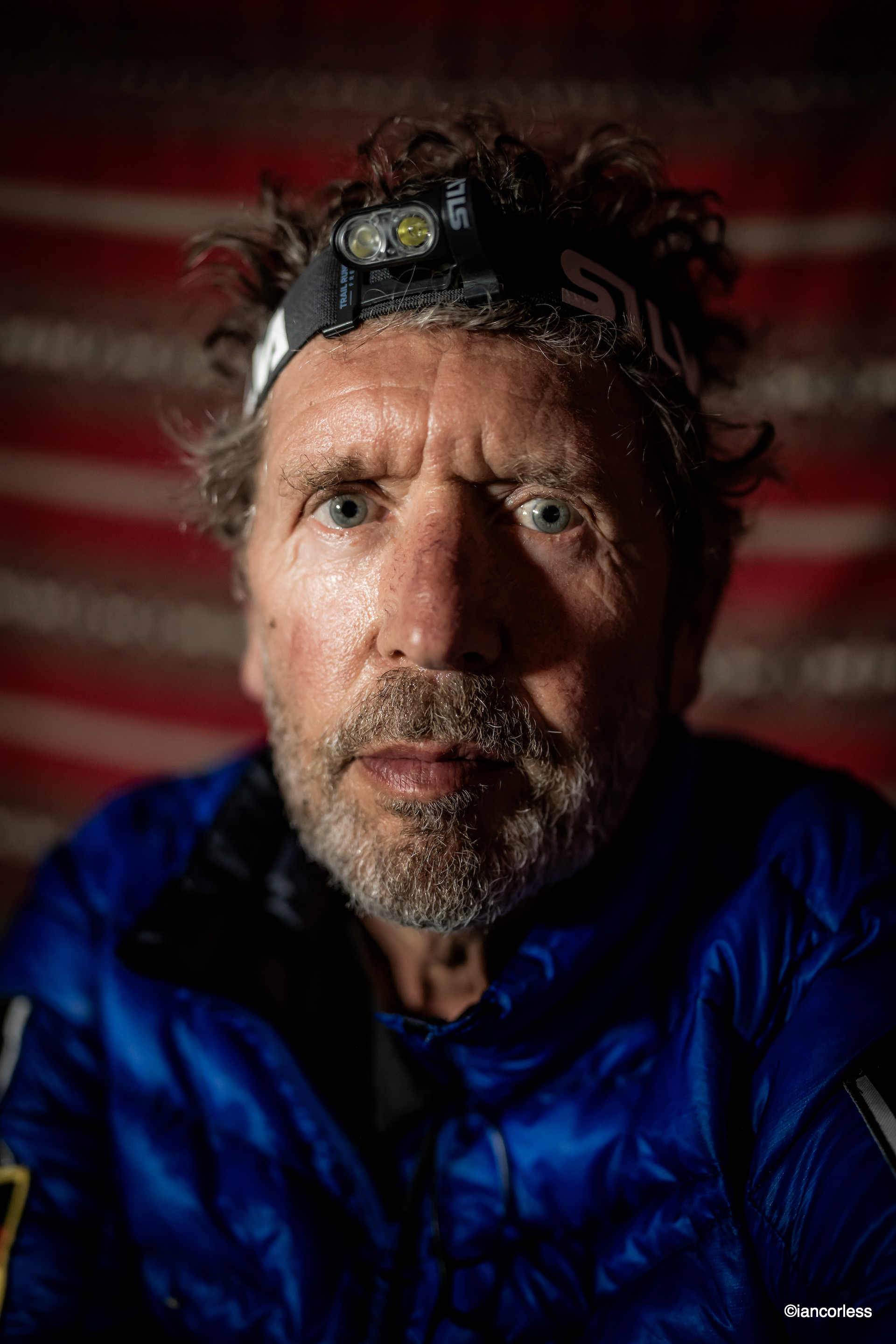
These Omani nights are cold. Dare I say that last night was colder than the night before? It’s tough for the runner’s, especially those that are minimum with kit, particularly lightweight sleeping bag and no down jacket.
Stage 3 at 40km is the second longest of the week and arguably the toughest, compensated for with incredible beauty.
Saleh – Photo by Ian Corless
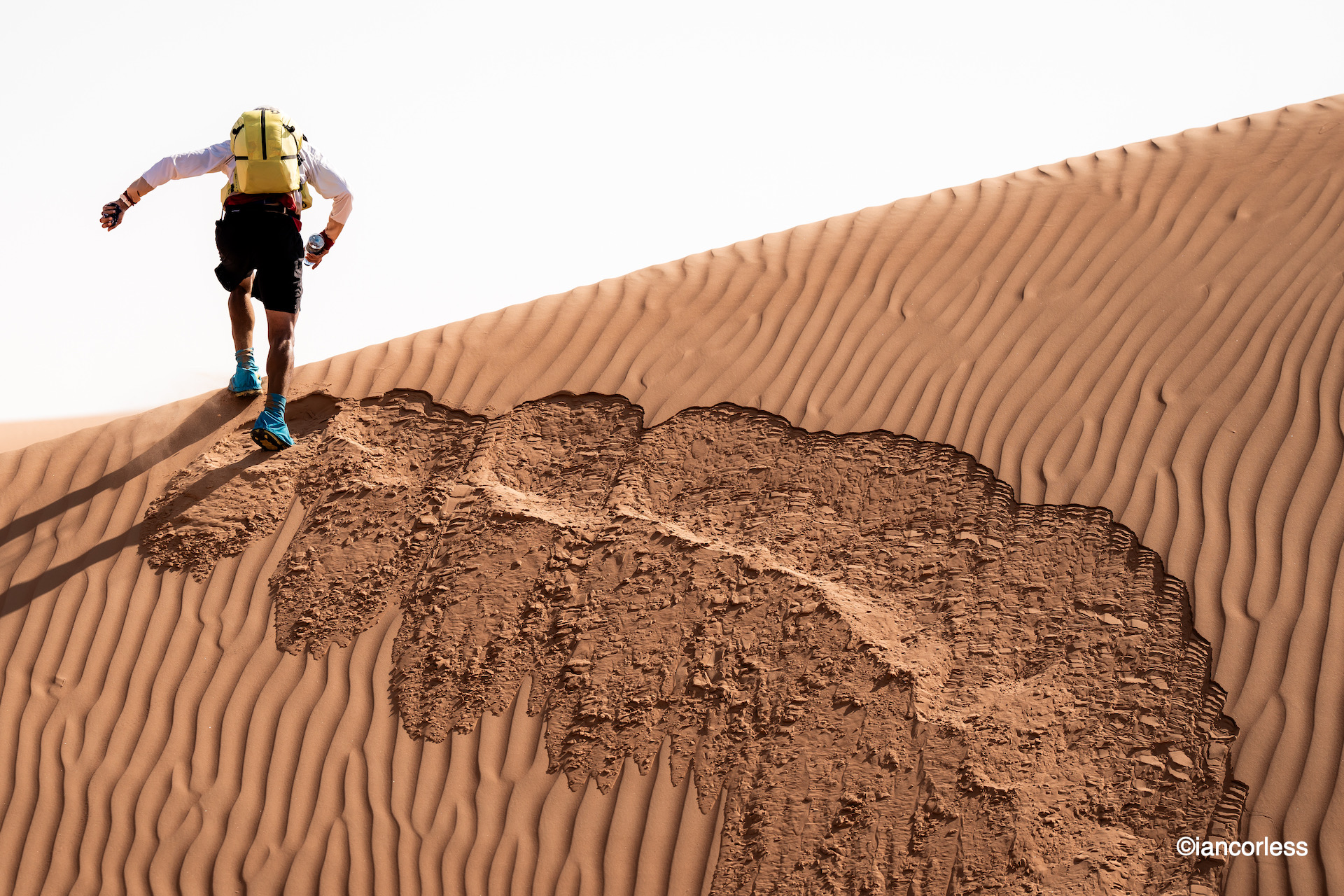
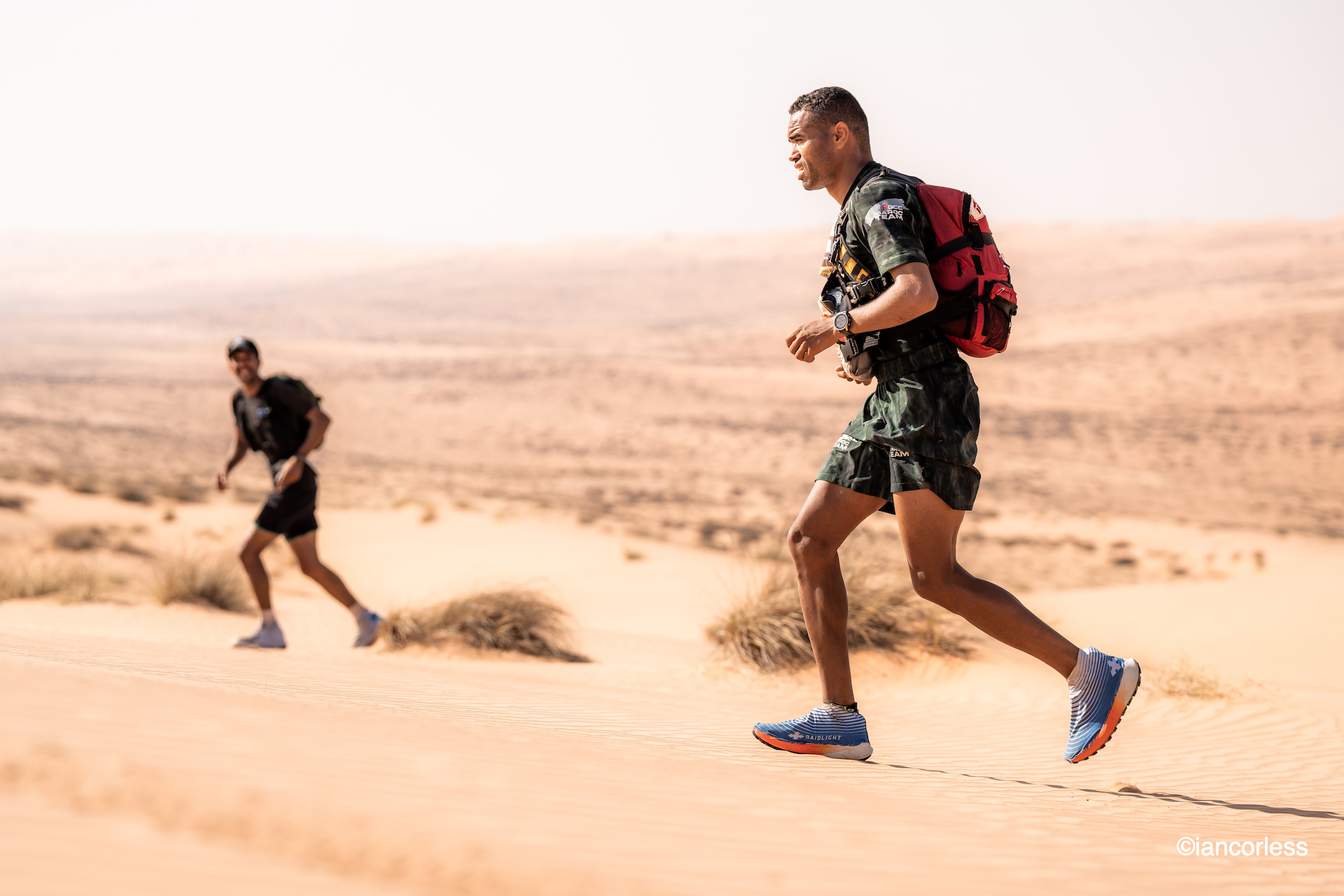
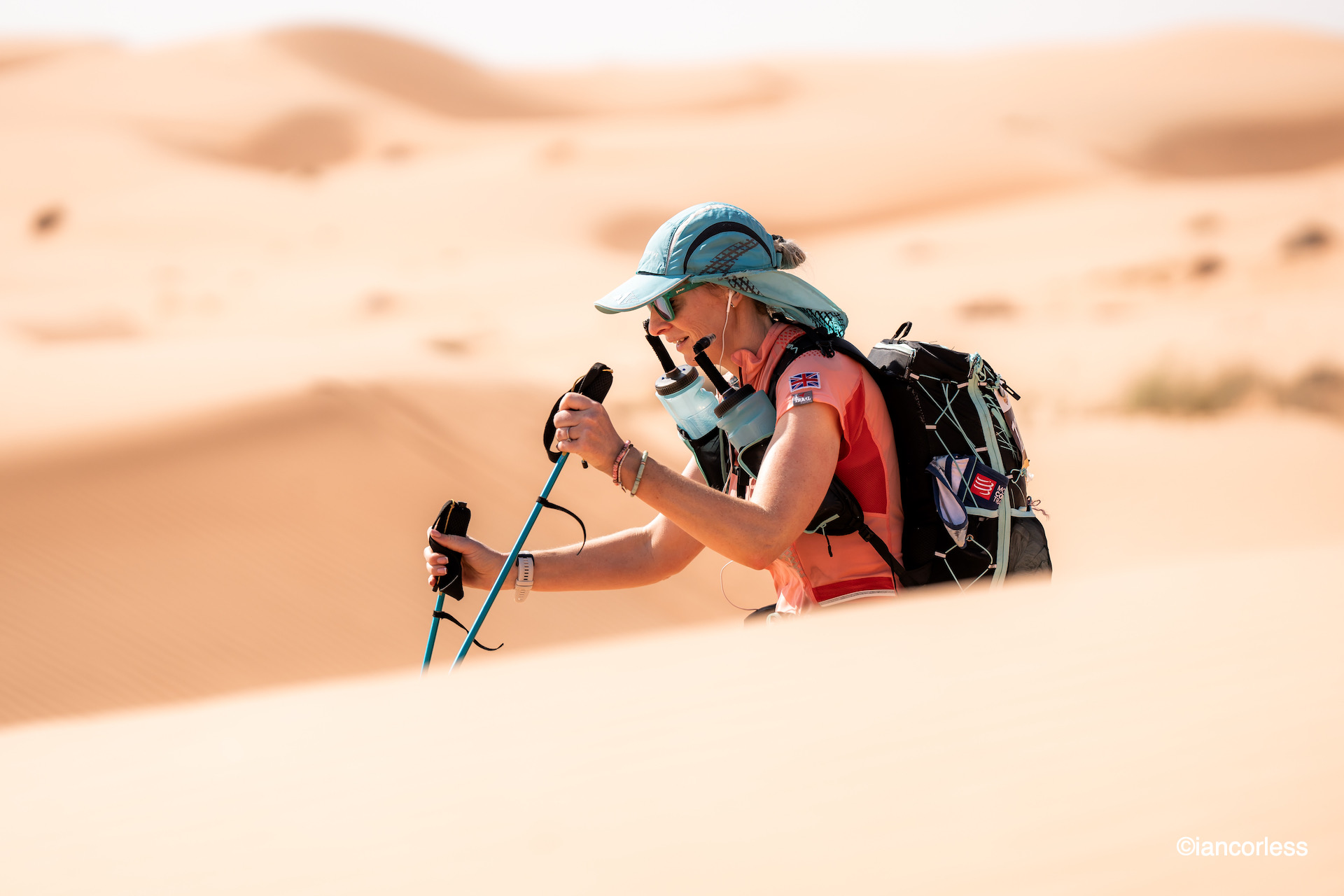
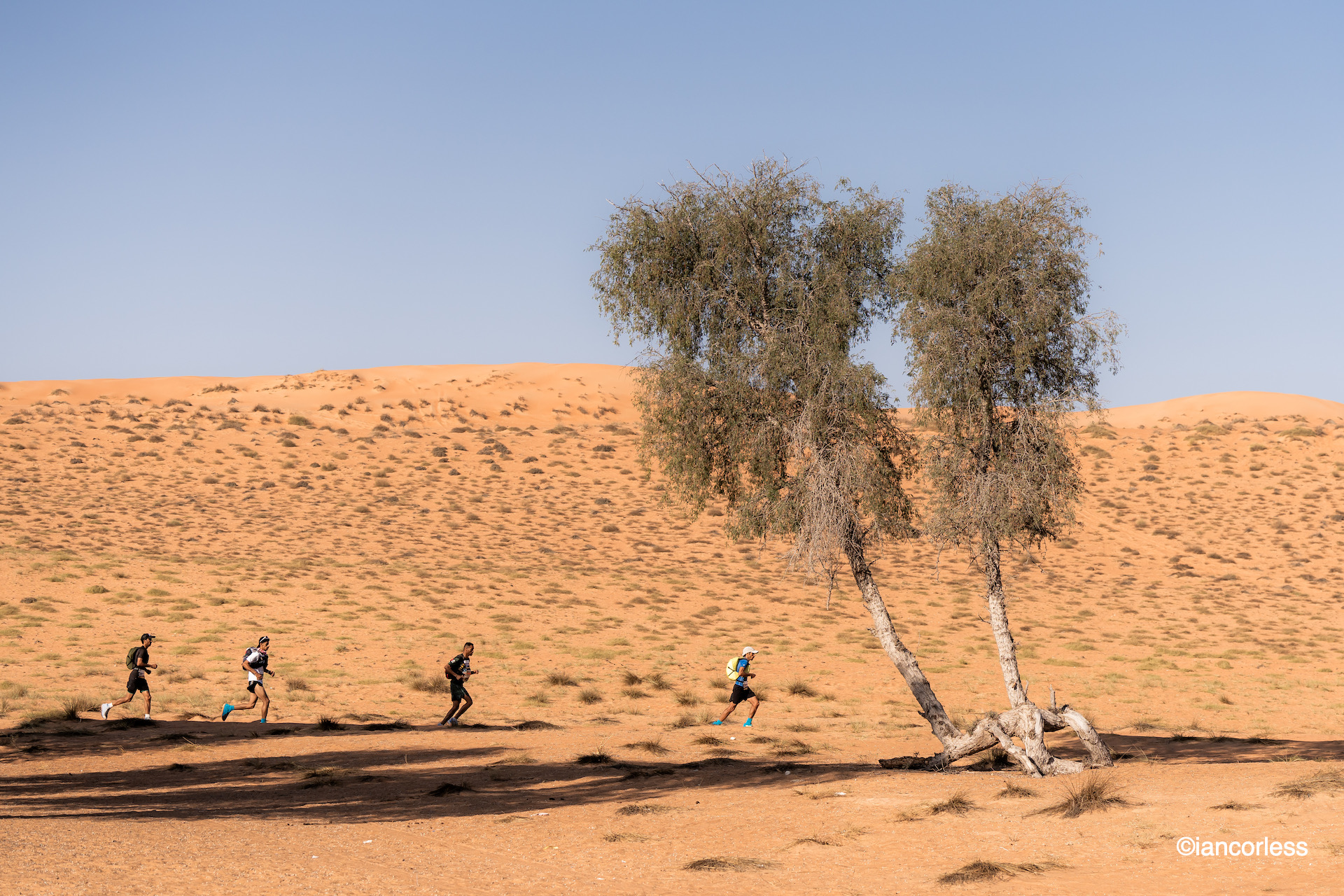
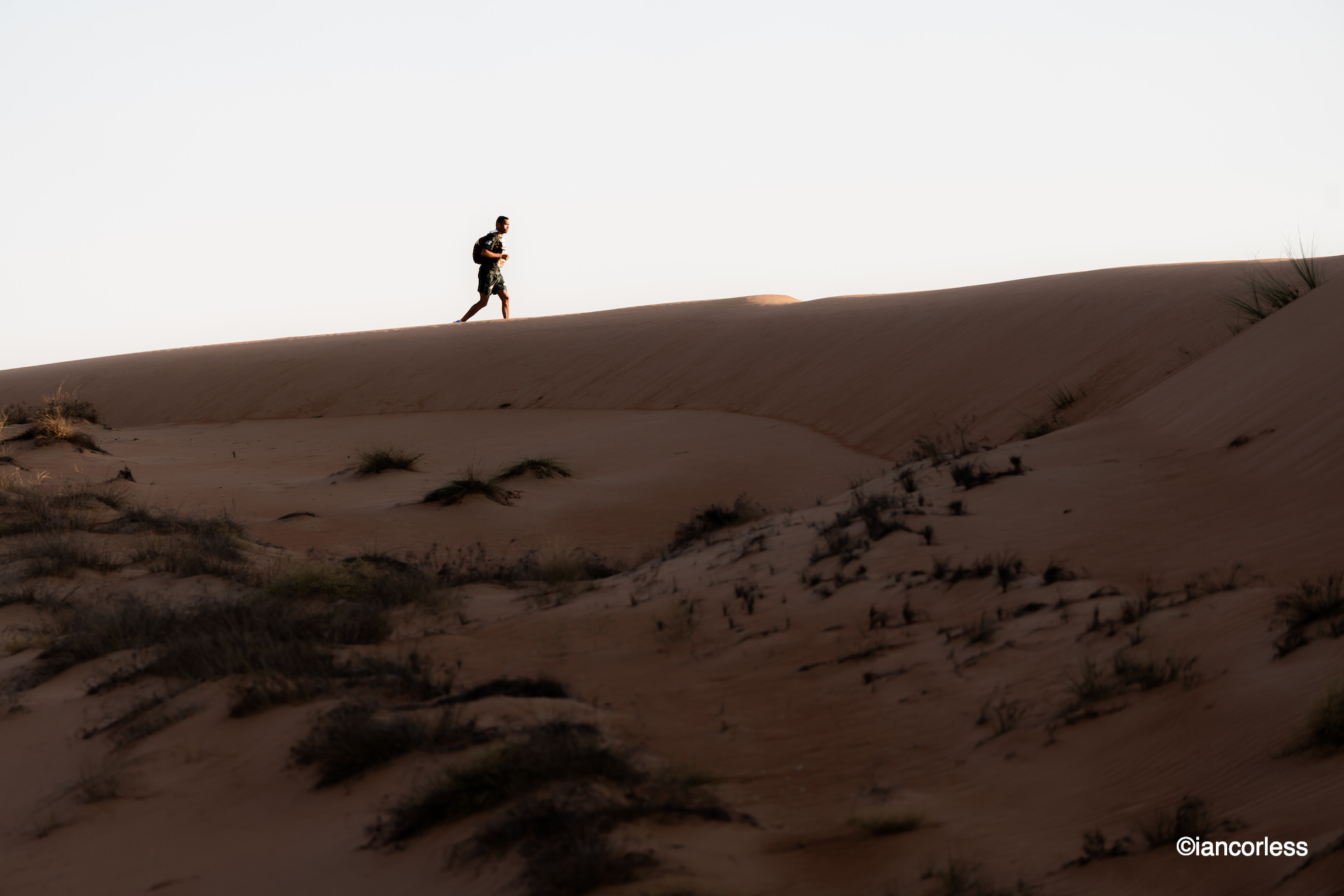
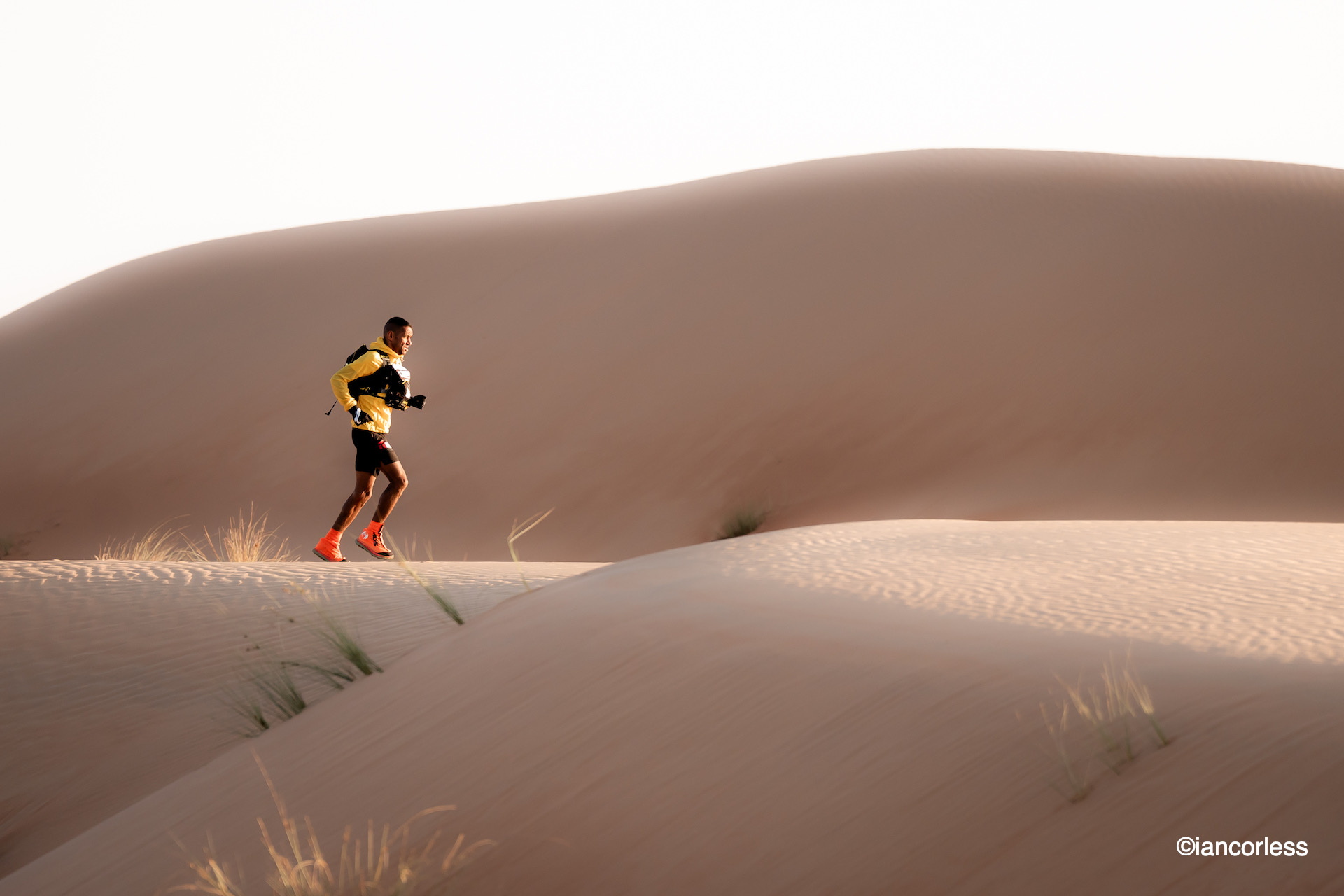
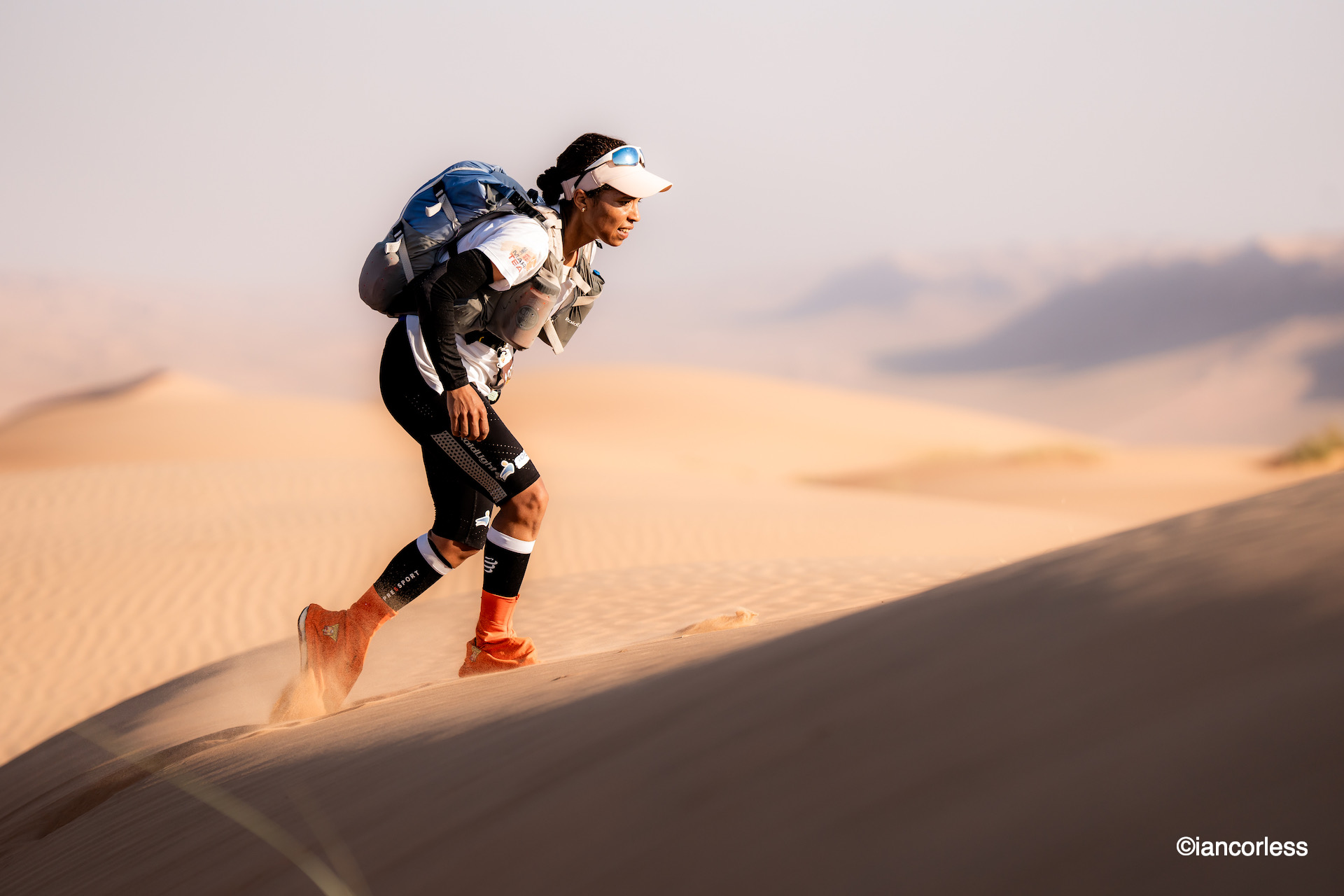
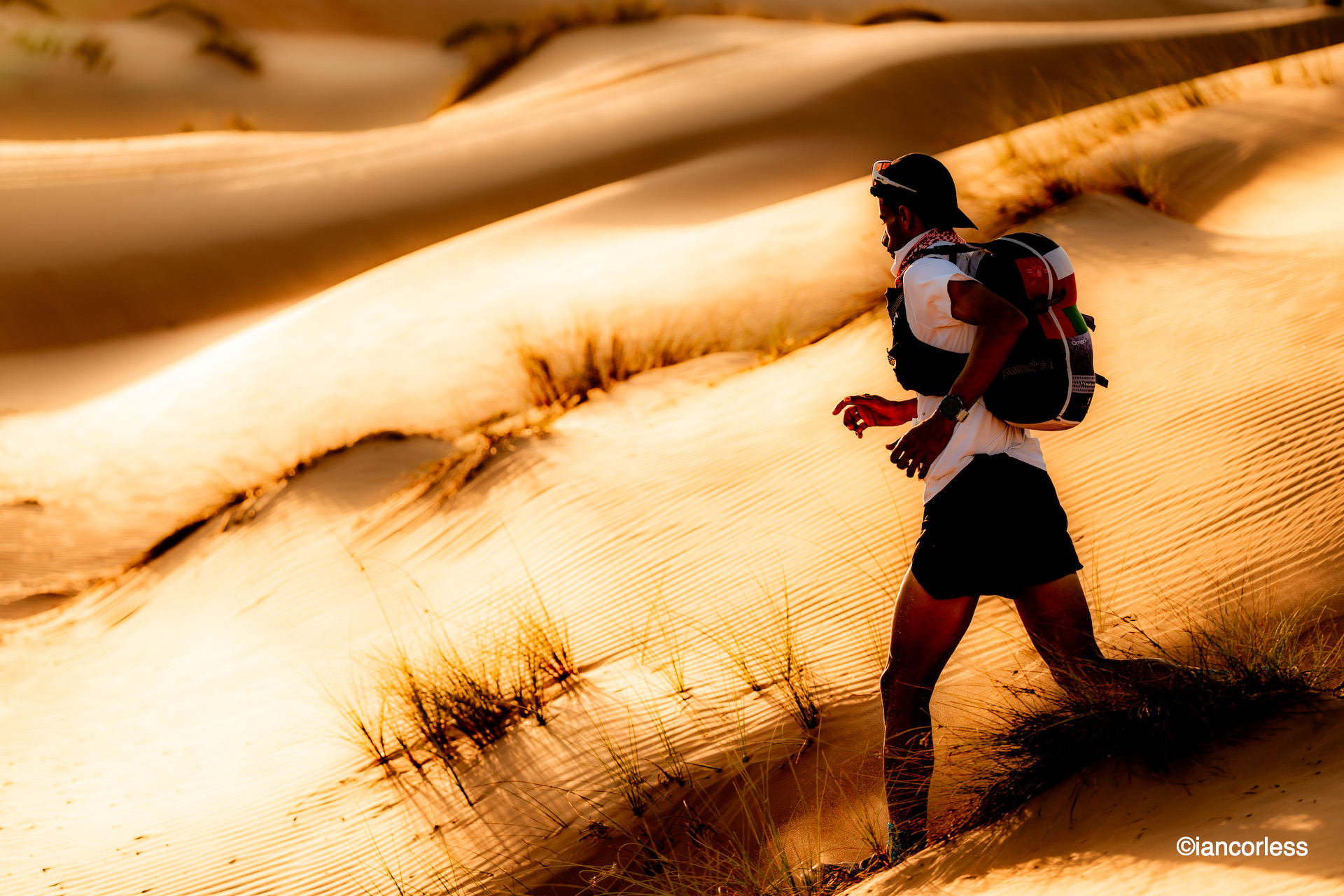
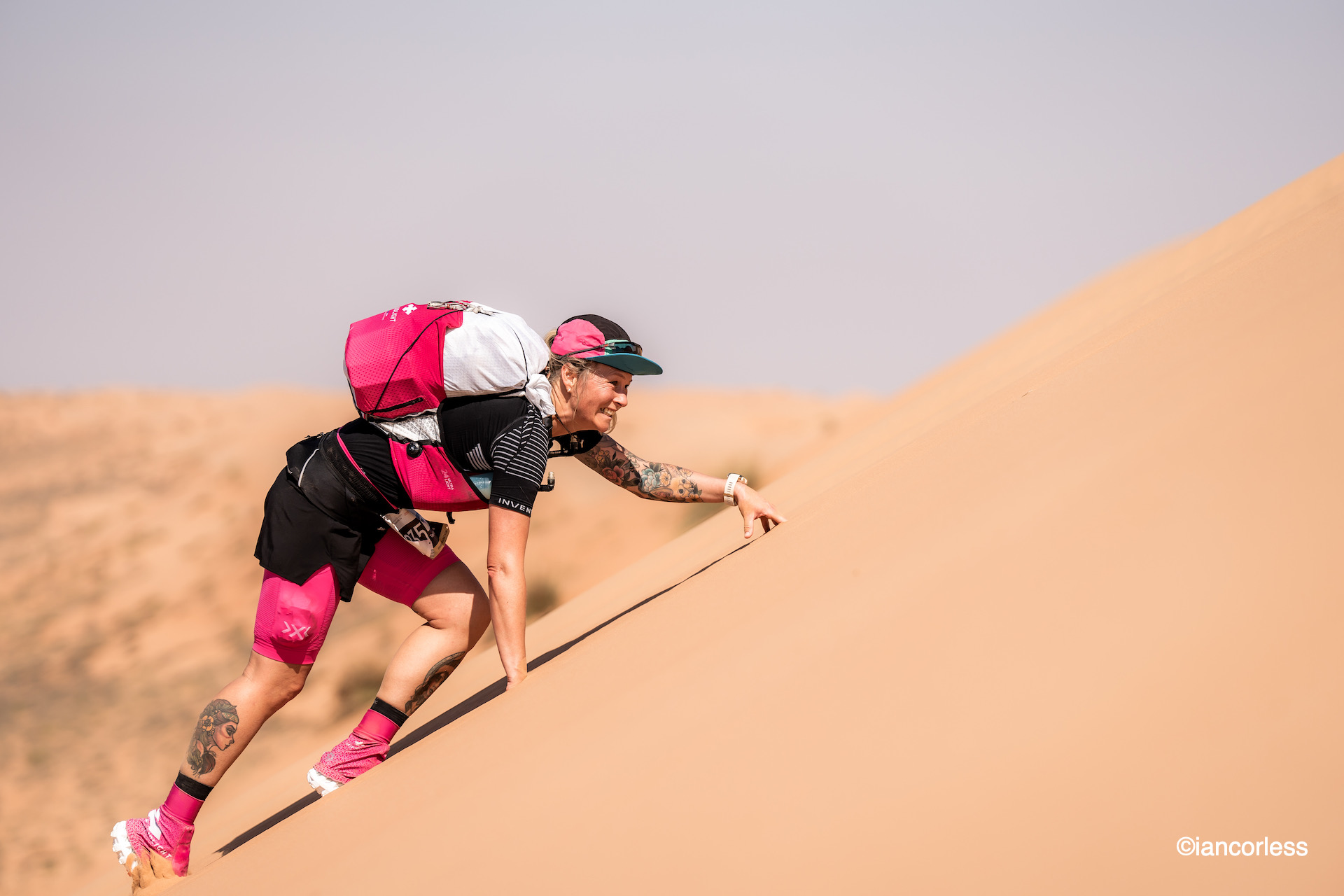
The Oman Desert Marathon is very much a sand race. Every step is on varying decrees of soft-sand and stage 3 adds the spice of a rollercoaster of dunes. There is even a dune section to the finish line.
Lots of sand – Photo by Ian Corless
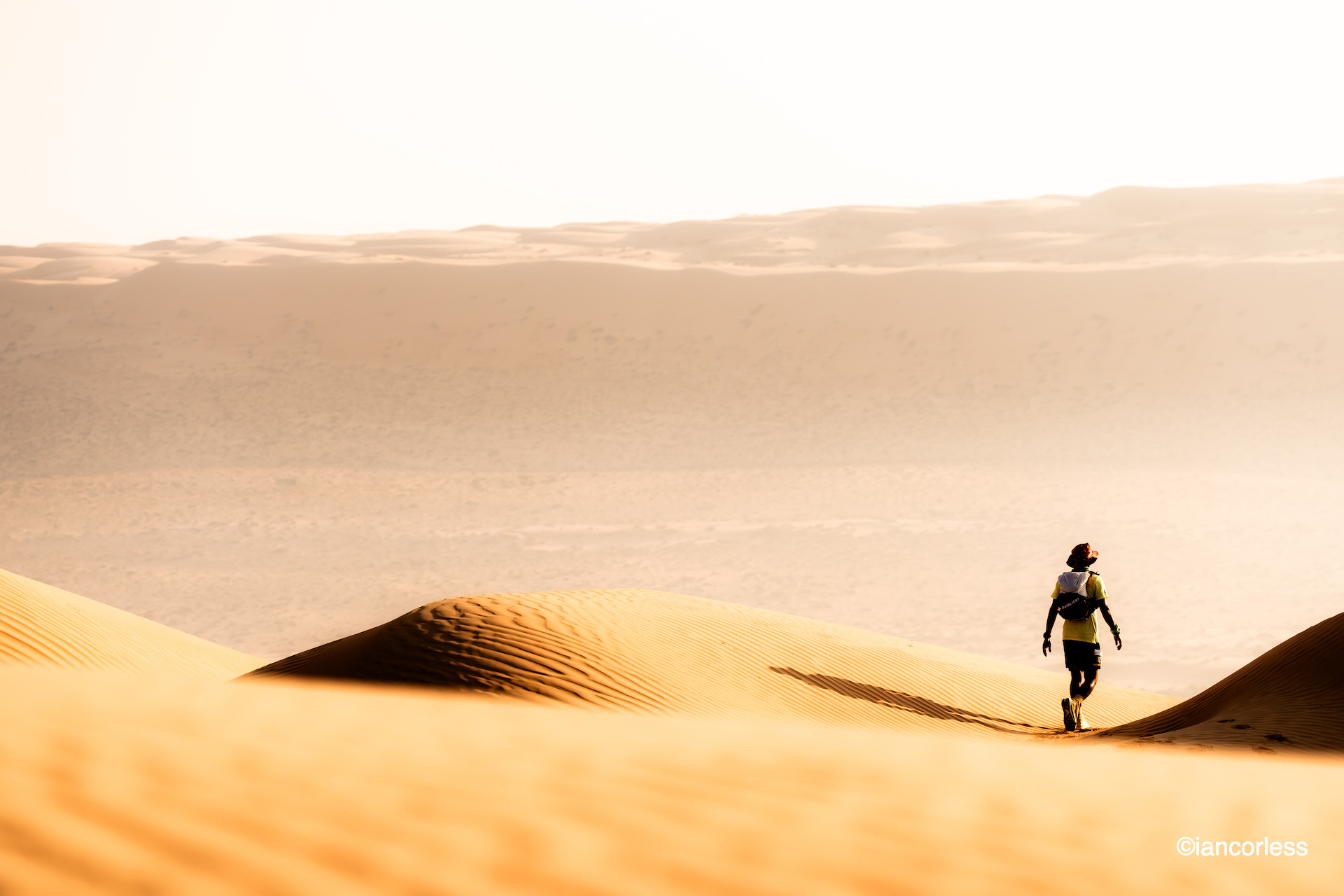
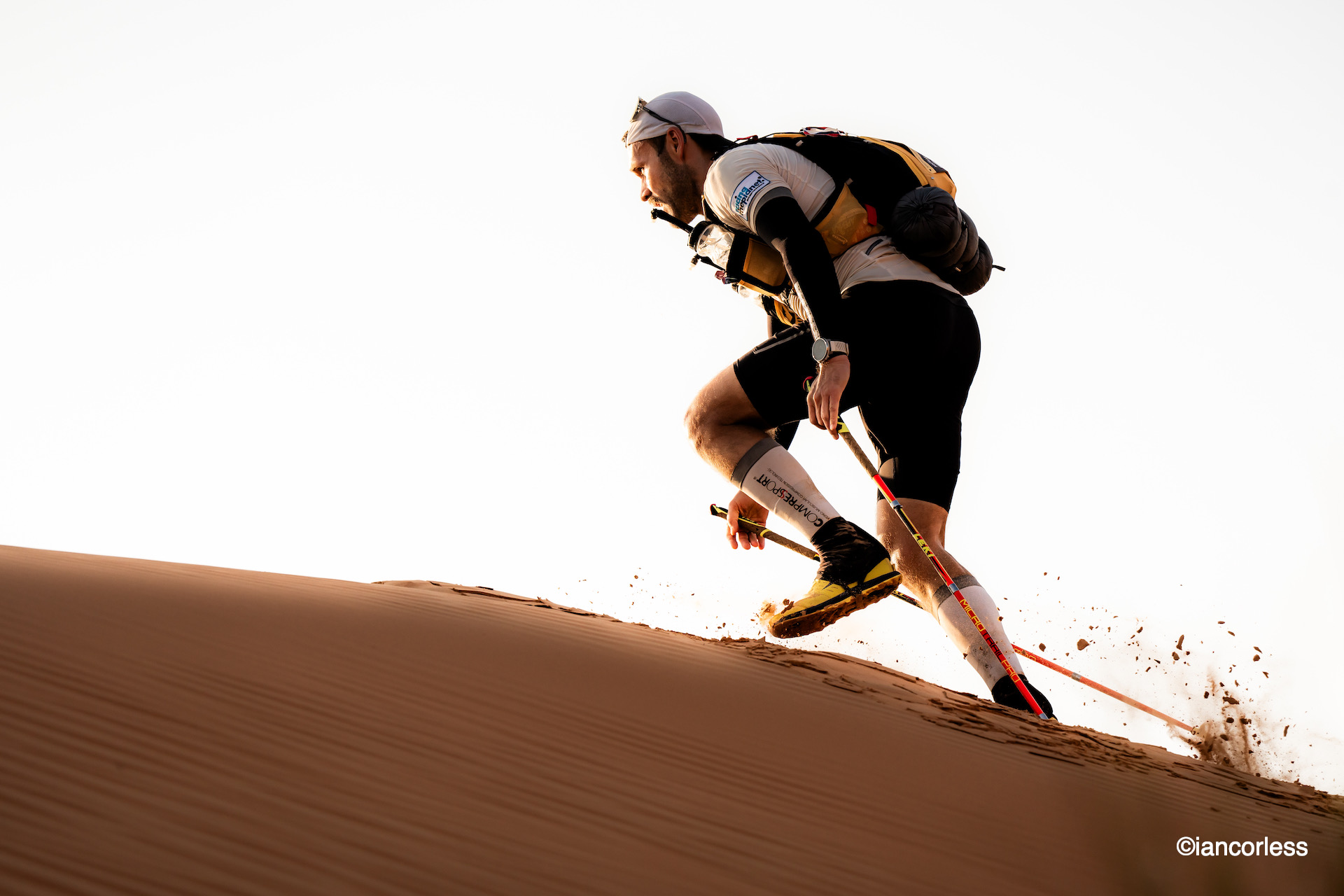
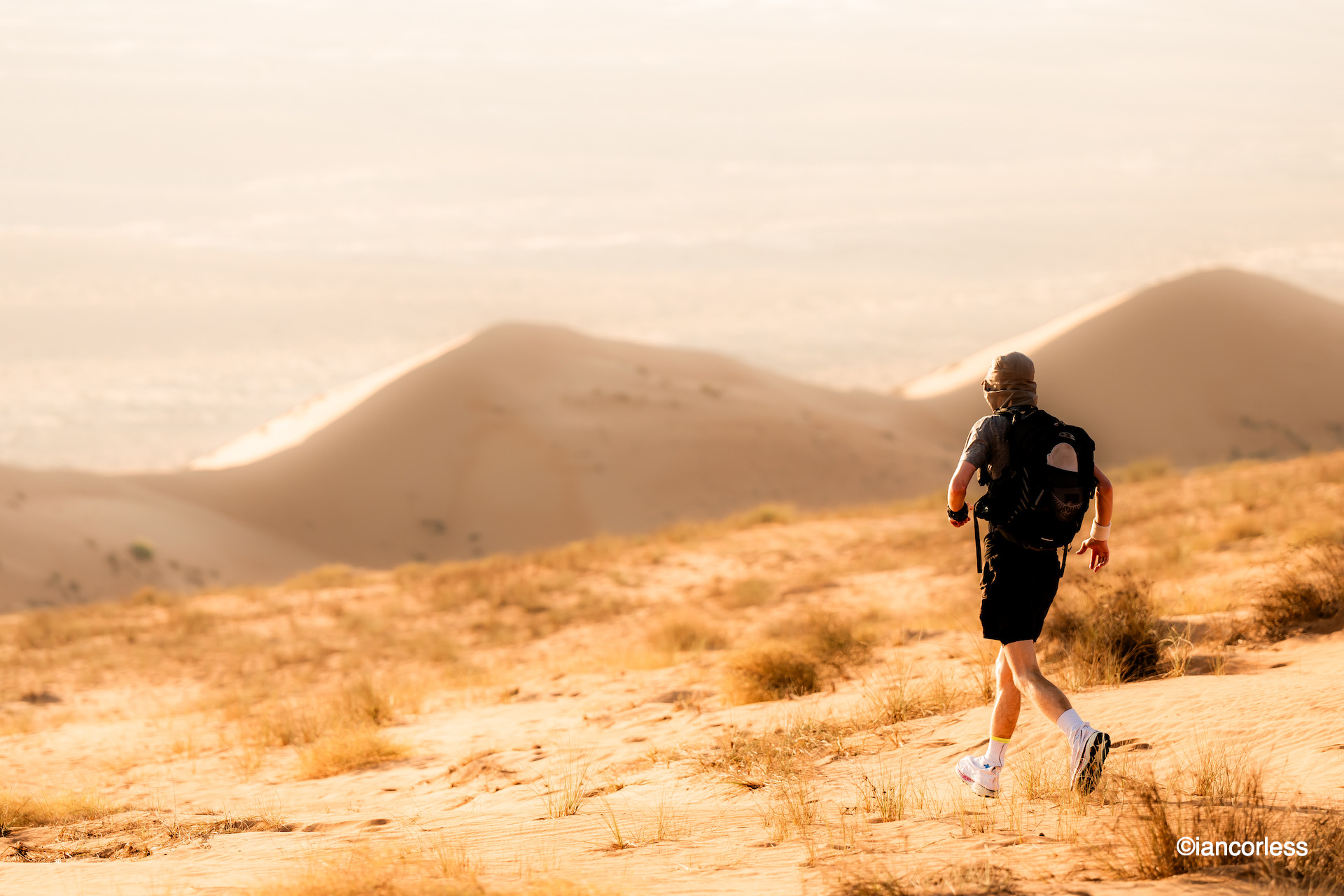
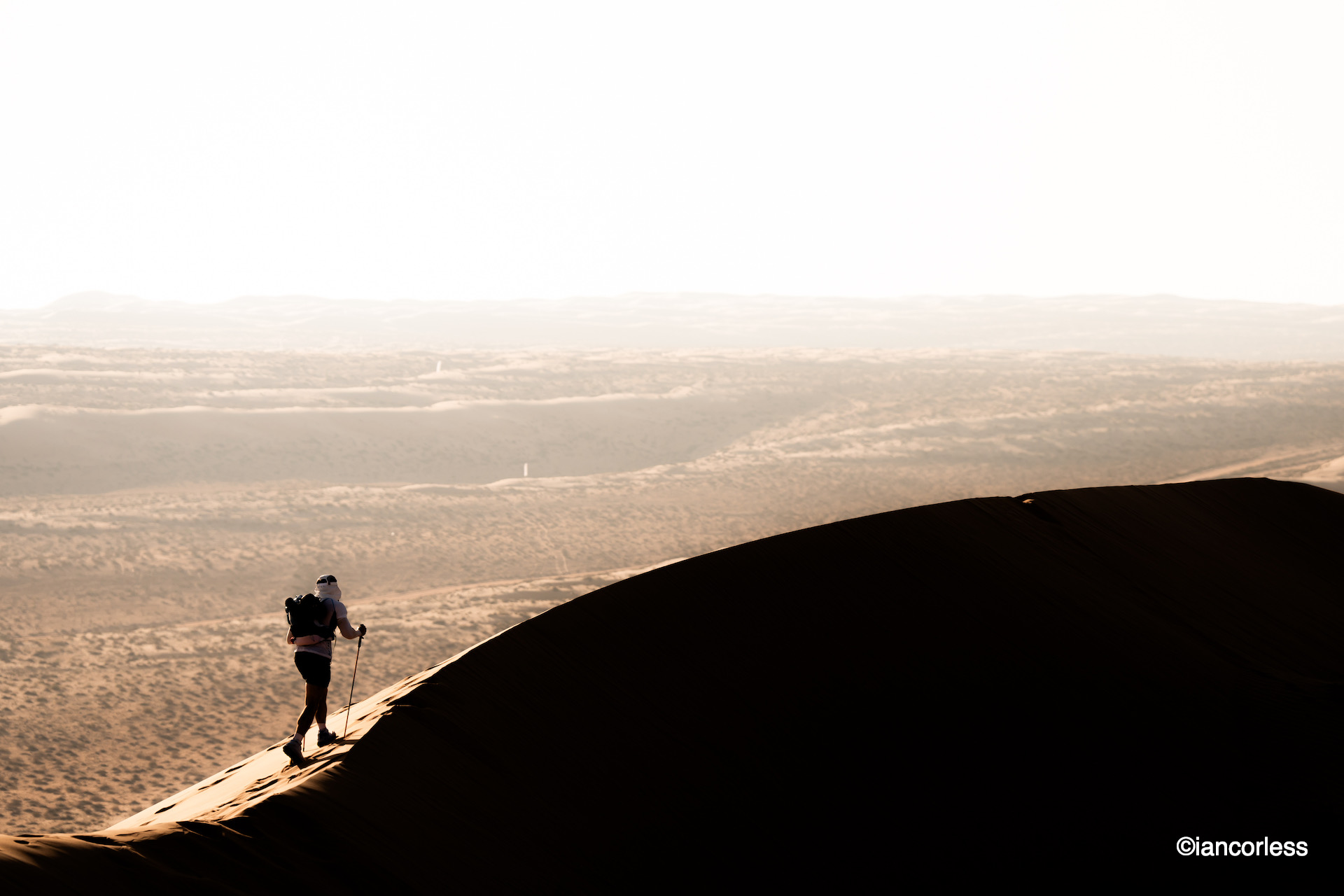
Starting just after sunrise, the early morning light and views in the first and second dune sections were spectacular. Up high, you really get to see the enormity and expanse of the sand here in Oman, it is relentless.
A tough day – Photo by Ian Corless
Early km’s of the day saw many wearing a windbreaker, trying to get warm after a cold night and chilly start. The heat soon came though and it would keep rising to a high of 27-degrees.
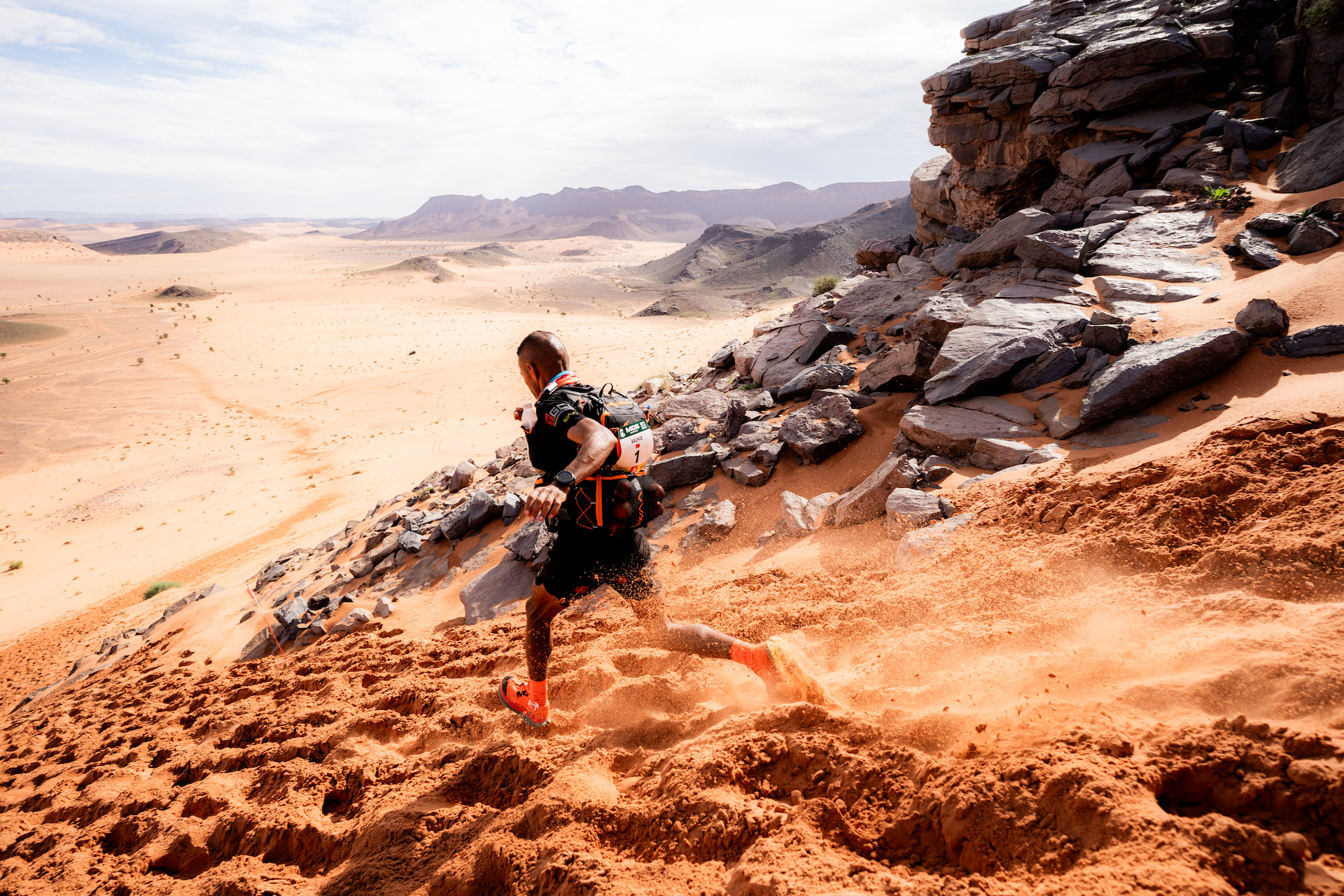
Rachid feeling the chill – Photo by Ian Corless
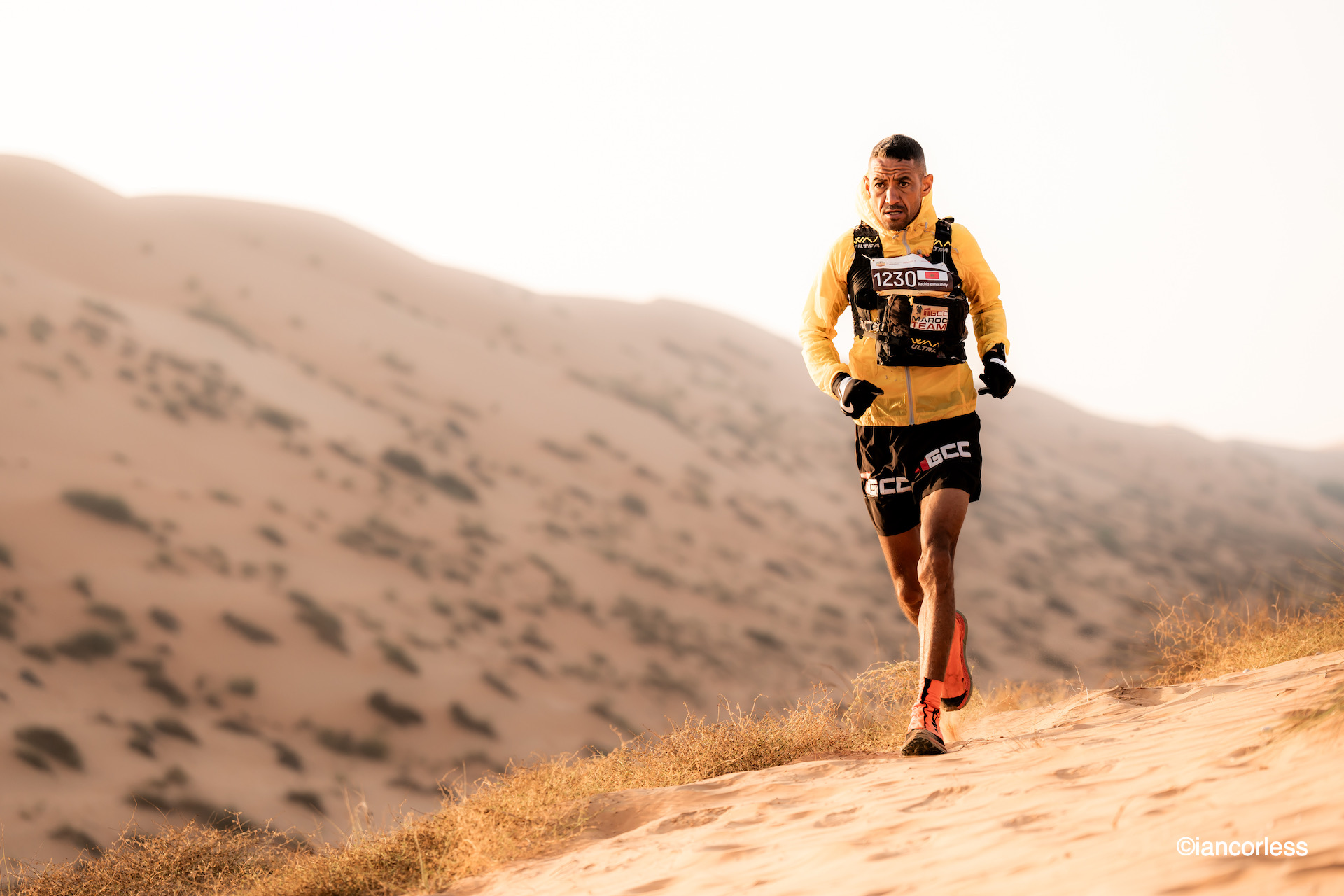
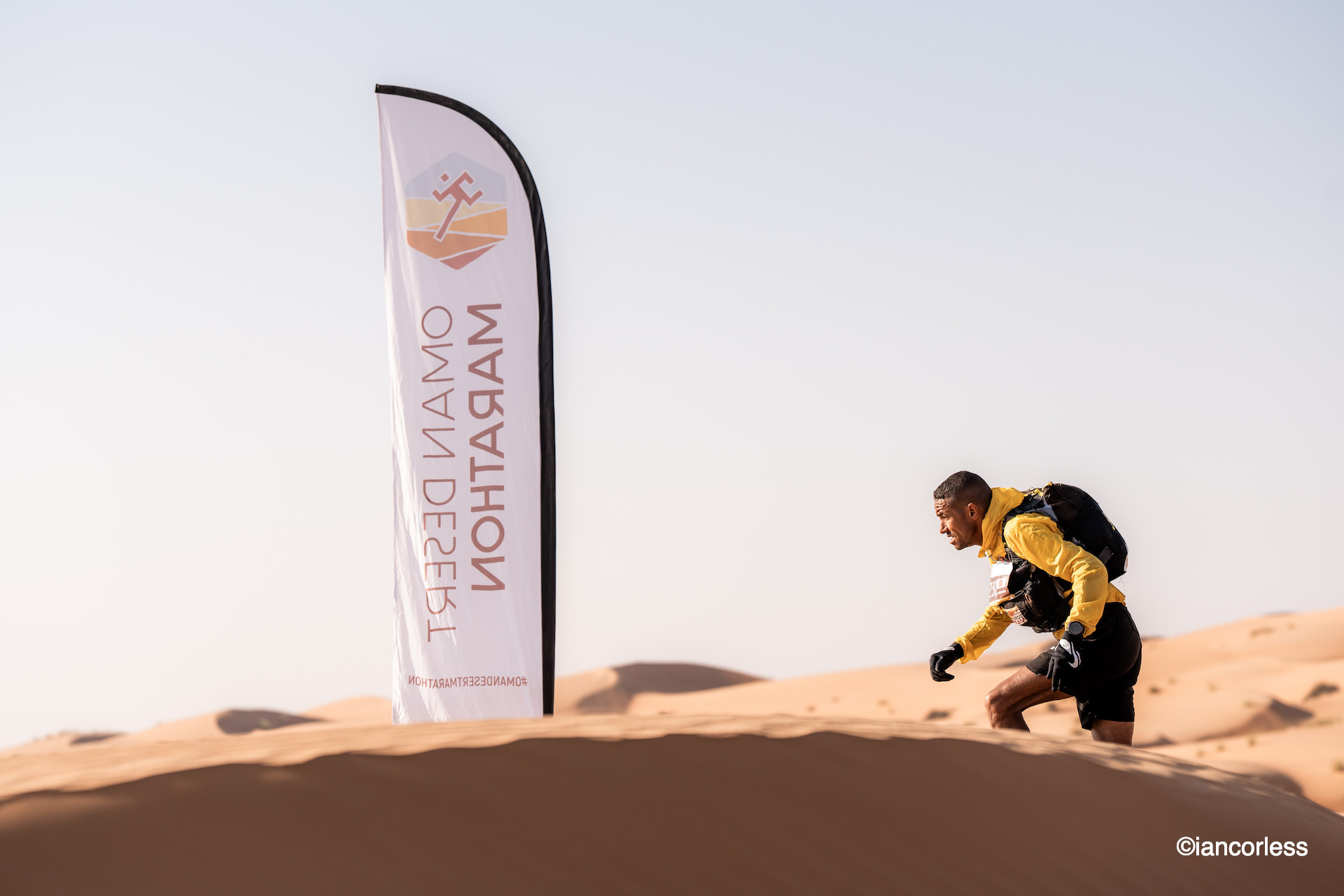
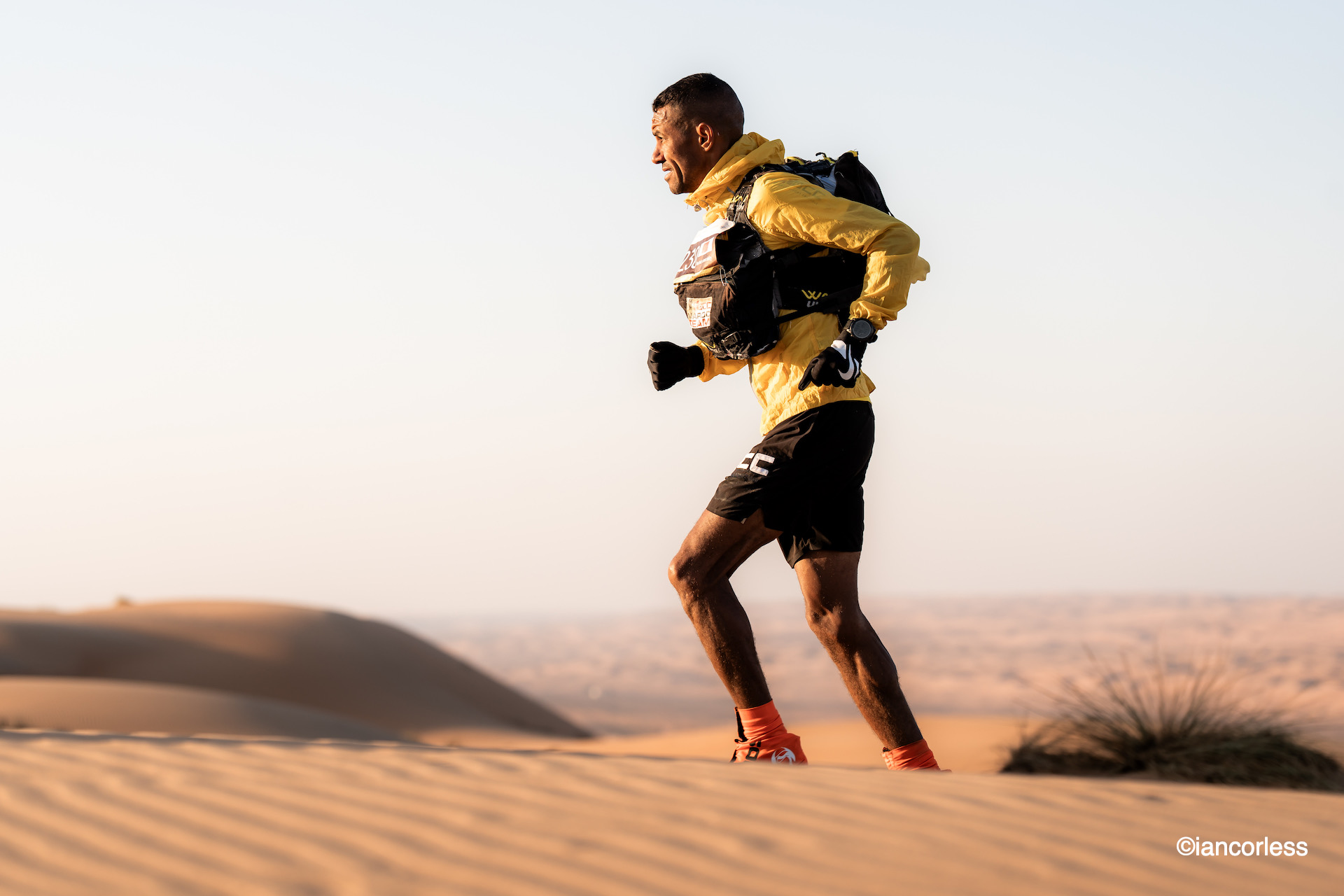
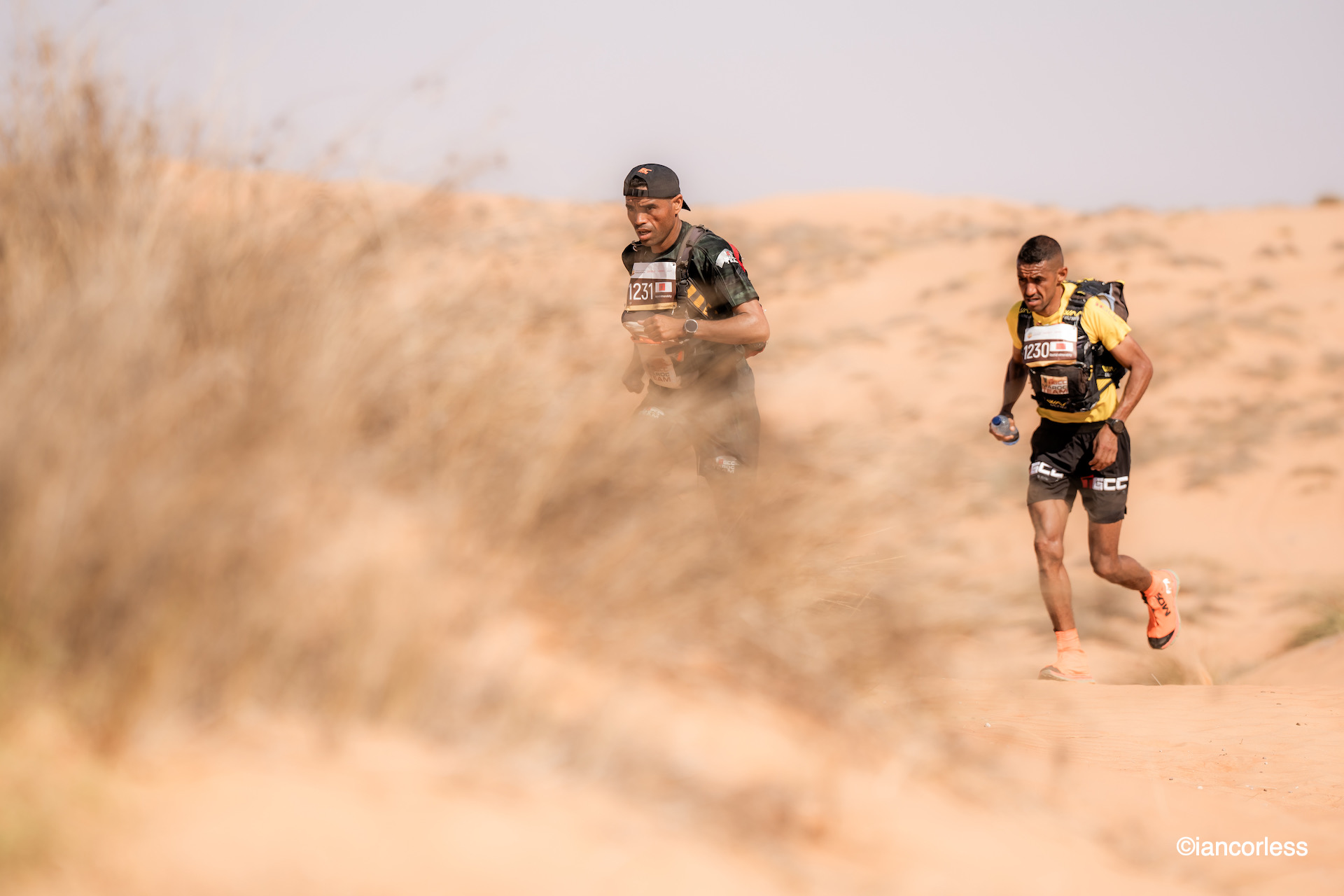
The top male contenders ran much of the day together, nobody seemed particularly eager to push the pace. Rachid took it very easy wearing a windbreaker and gloves for the whole day, he was a long way back early on and then little by little he moved up the field as the race progressed.
Mohamed playing a waiting game – Photo by Ian Corless
Mohamed and Saleh are inform and the duo finished first and second on the stage just 11-seconds apart, 4:14:39 and 4:14:50 respectively. Rachid moved up to third by the finish line crossing nearly 10-minutes behind his brother.
Aziza Raji – Photo by Ian Corless
For the women, Aziza finished 11th overall in 5:52:44 and a long way ahead of Lydia Oldham in second, 6:30:49. Sally ford was third nearly 50-minutes behind second.
Tomorrow is the penultimate stage of 30km. With three starts, 1500hrs, 1600hrs and 1700hrs, the participants will go into the night and finish in darkness.
Stage 1 was a tough day, the talk in bivouac was all about the relentless sand and how the final 10km was relentlessly tough.
It was an early sleep for most and the night was a cold one. Temperatures plummeted, especially in the early hour of the following morning.
Tired! – Photo by Ian Corless
Bivouac came to life around 0500 and stage 2 eventually started at 0700.
Rachid – Photo by Ian Corless
The early km’s were relatively easy and cool. So cool that Rachid wore a windbreaker and gloves… He actually did not remove them all day despite the temperatures rising to 27-degrees.
Photo by Ian Corless
The highlight of the day was a dune section with sunrise. Pure magic with high views of the surrounding landscape.
Photo by Ian Corless
While there is no ‘easy’ running here in Oman, the km’s after the dunes were relatively flat and easy.
With Mohamed taking victory on stage 1, a slender 4-seconds ahead of his brother, Rachid, all the action would be around the Moroccan.
Photo by Ian Corless
The local Omani runner’s, especially Salah Al Saidi did all they could to put him under pressure but Mohamed is too strong. In the final 10km’s he made his move and opened a gap for the stage win in 3:05:54.
Mohamed – Photo by Ian Corless
Rachid did an amazing job to finish 2nd, 3:09:26 and Saleh 3rd in 3:10:01.
Rachid – Photo by Ian Corless
Rachid by contrast was taking it easy, with 20km’s covered he was 5-minutes behind the leaders, however, the attack came and he closed the gap effortlessly and then forged ahead with on of the Al Said.
Aziza – Photo by Ian Corless
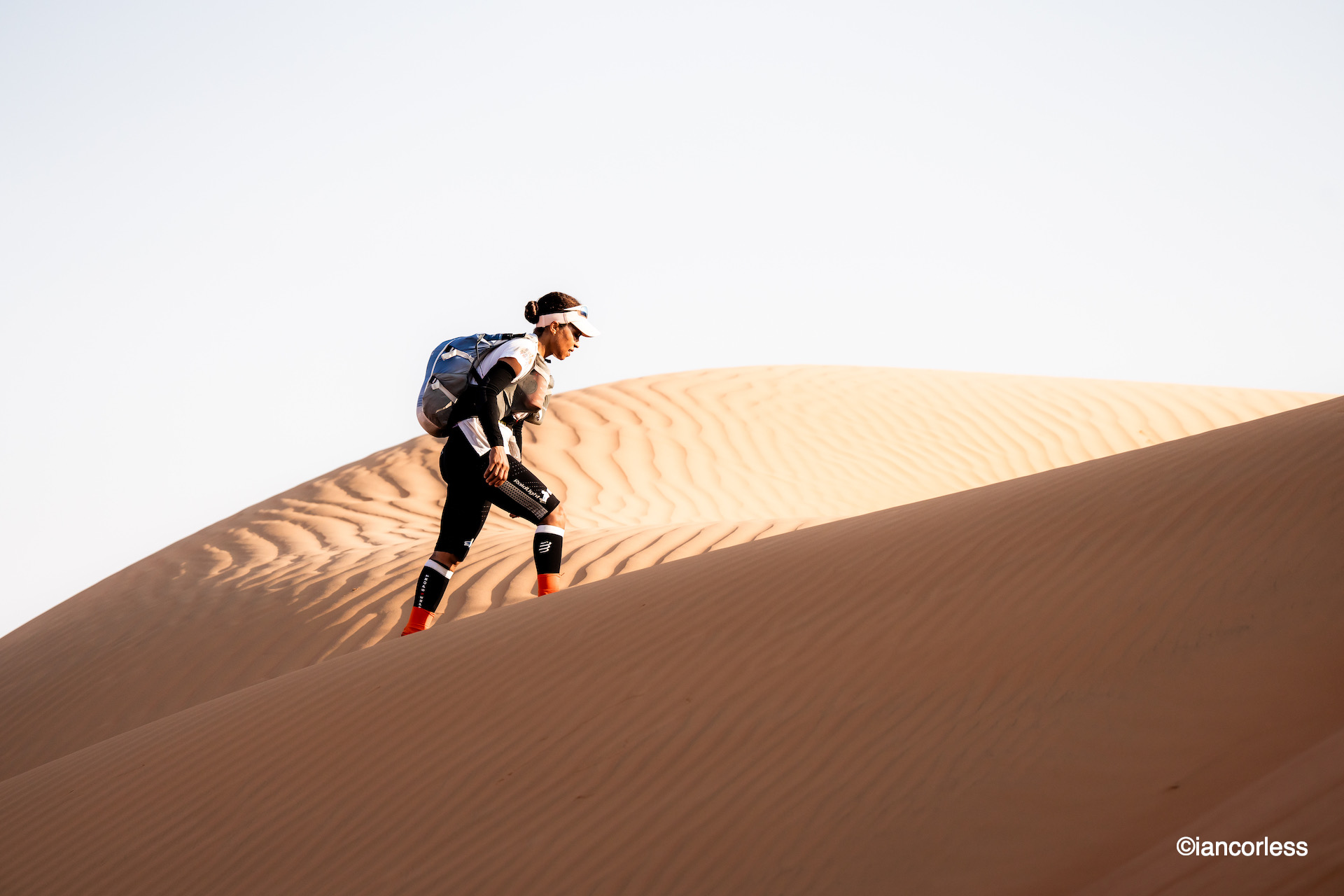
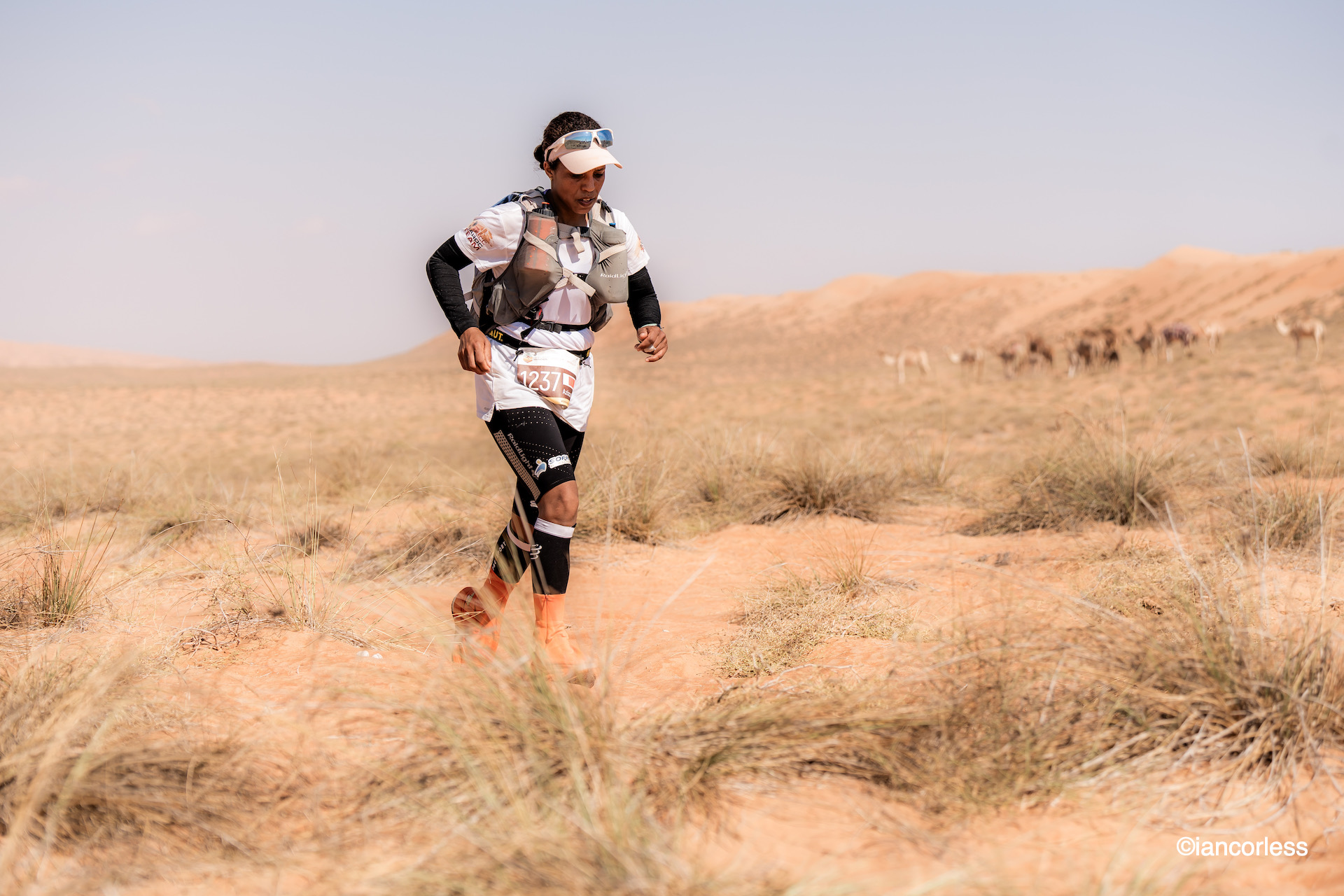
For the women, Aziza Raji was once again making the sand and the dunes look easy. Lydia Oldham, Sally Ford and Tanja Schoenenborn are all close together, but they are fighting for second.
Lydia – Photo by Ian Corless
Tomorrow is another 40km stage, followed by stage 4 which starts late afternoon and goes into the night.
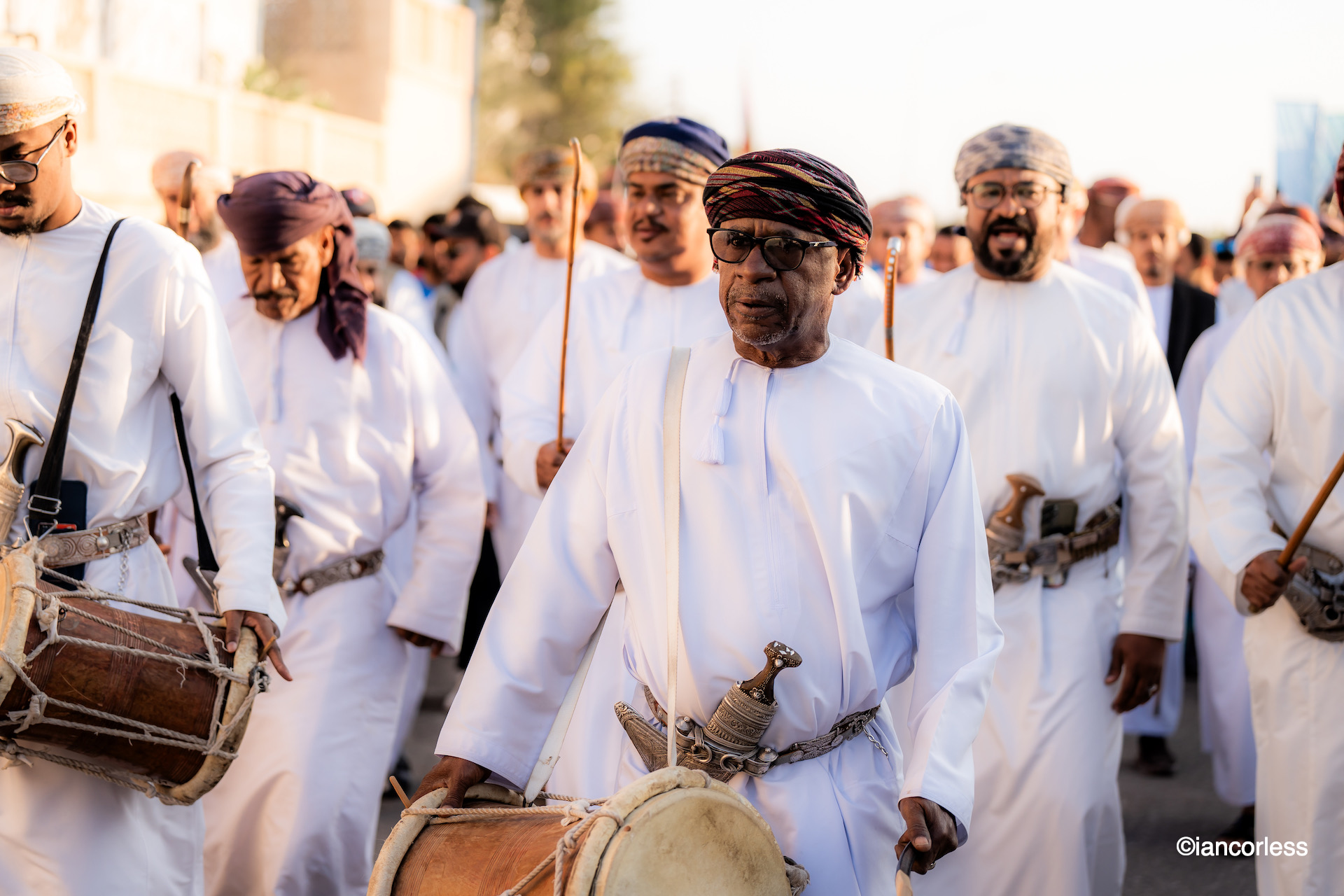
The 2025 Oman Desert Marathon got underway today in Bidiyah, Oman with music, dancing and a lively atmosphere. Stage 1 of the 165km race also includes all the one day races of 2km, 5km, 10km, 21km and 42km taking part on the same track. It was most certainly a lively start!
Photo by Ian Corless
Starting from the Oasis of Alwasil and finishing at Al Jawharat Resort in Bidiyah. The 2025 Oman Desert Marathon is a five stages of 42 km, 32 km, 40 km, 30 km and 21 km.
Photo by Ian Corless
Five stages to experience the different perspectives of one of the most beautiful deserts of the world.
Photo by Ian Corless
A unique journey to discover the most remote, untouched sands and the highest dunes of the Omani Desert while on the tracks of the ancient caravans.
Photo by Ian Corless
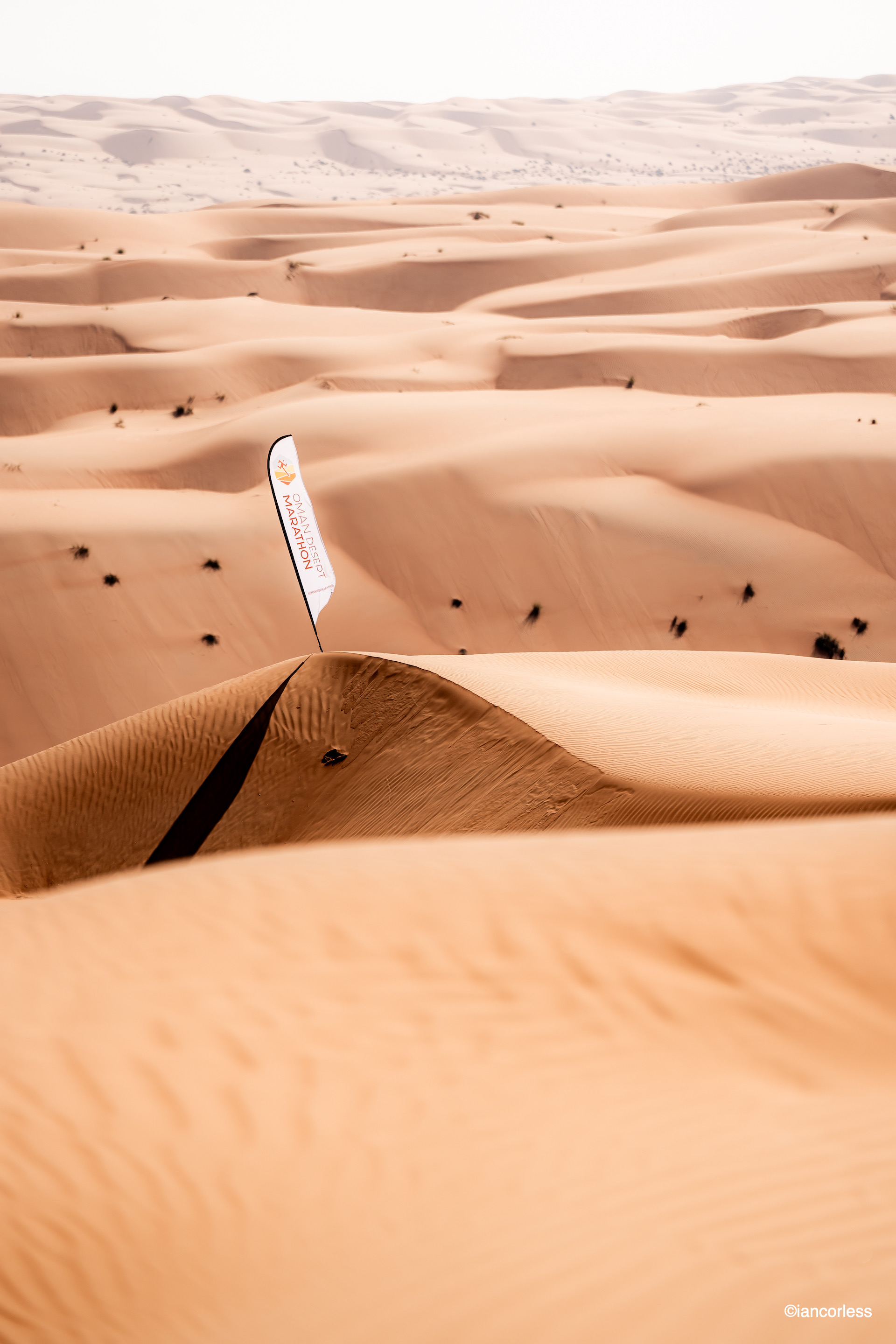
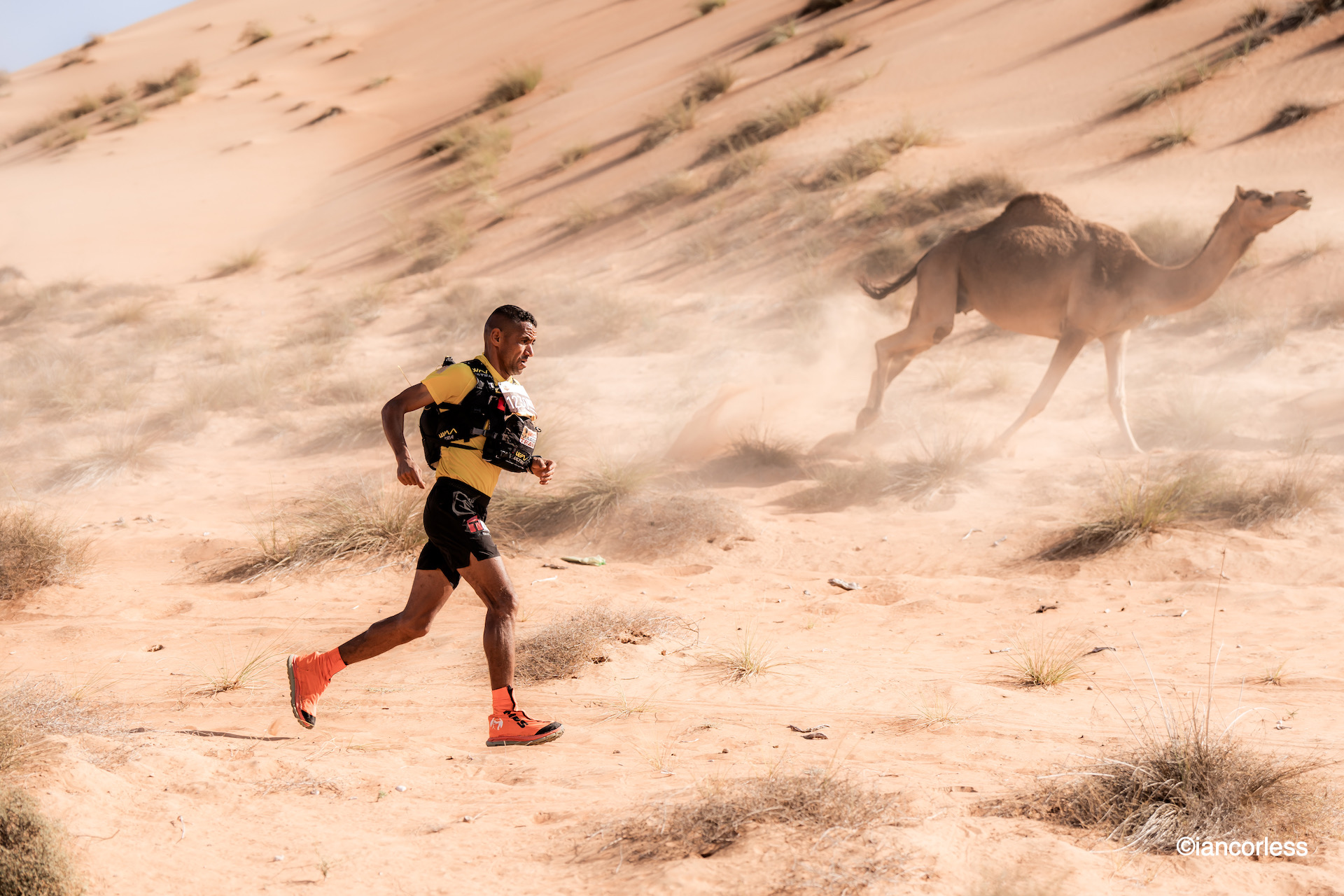
Stage 1 at 42km’s was a tough first day. One thing is notable here in Oman is that the desert is pretty much ALL soft-sand which makes for very tough and tiring days.
The weather at this time of year is considered ‘mild’ by Omani standards,, however, the 25-deg highs surely took a toll on the runner’s during the stage.
Photo by Ian Corless
The main protagonists of the day were Rachid and Mohamed El Morabity and Aziza Raji.
Aziza took the lead from the start and slowly but surely opened up a gap that just kept getting bigger as the day went on. Sally Ford and Lydia Oldham chased but were almost 45-minutes behind.
For Rachid and Mohamed, they played a waiting and watching game for the first 30km’s and then opened up the throttle to pull away. The main challenge, once again came from Ghaith Al Saidi and Saleh Al Saidi, brothers against brothers.
Photo by Ian Corless
For Aziz, Rachid and Mohamed, there results were even more impressive as the trio only had approximately 3-hours sleep the night before after long travel and a 0300 arrival at the race hotel. I am sure they will sleep well tonight!
Photo by Ian Corless
For the other participants, it was a day of acclimation and hopefully taking the desert and conditions calmly, especially with 4 tough days to come.
Stage 2 at 10km’s less, I am sure will be welcomed with open arms.
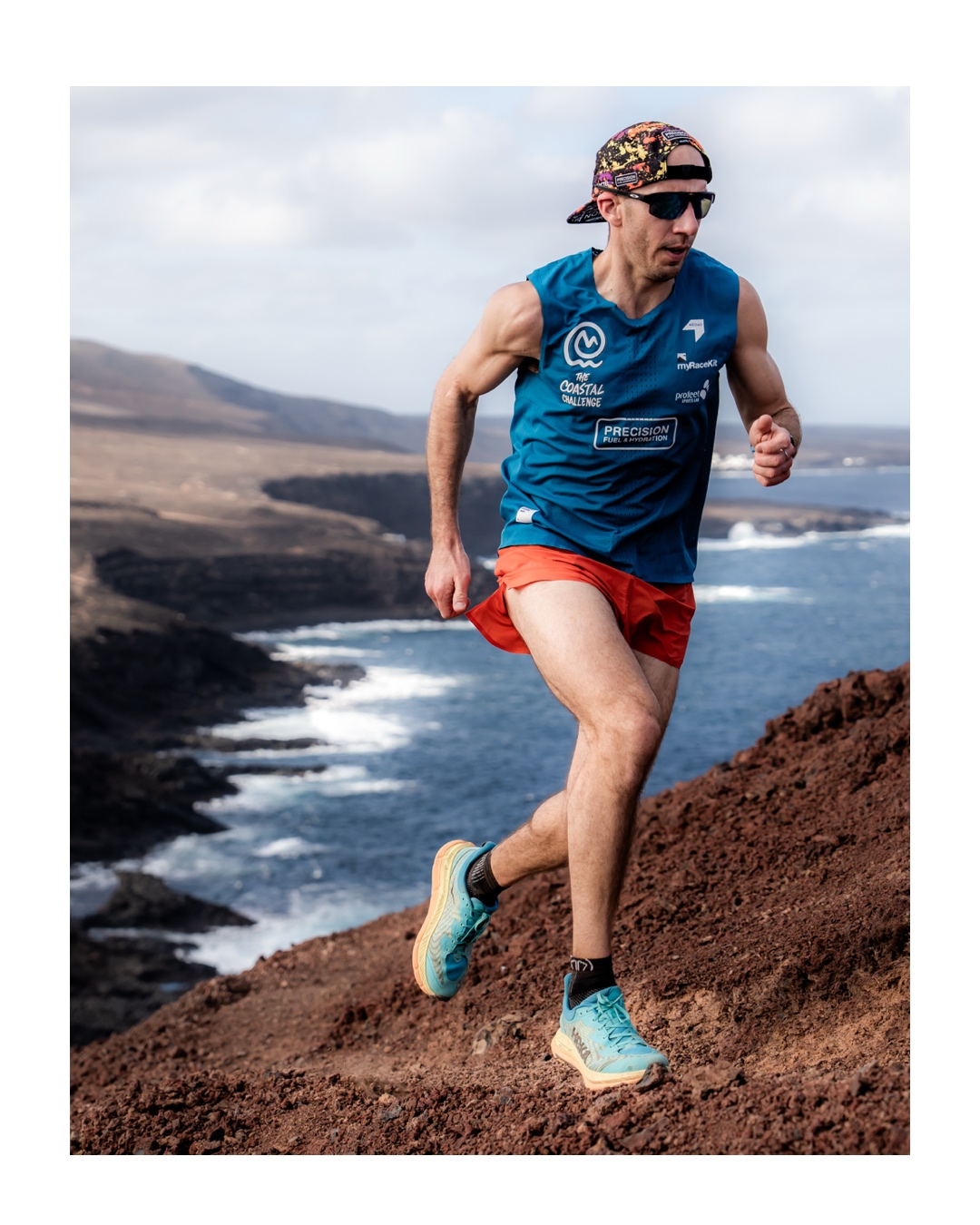
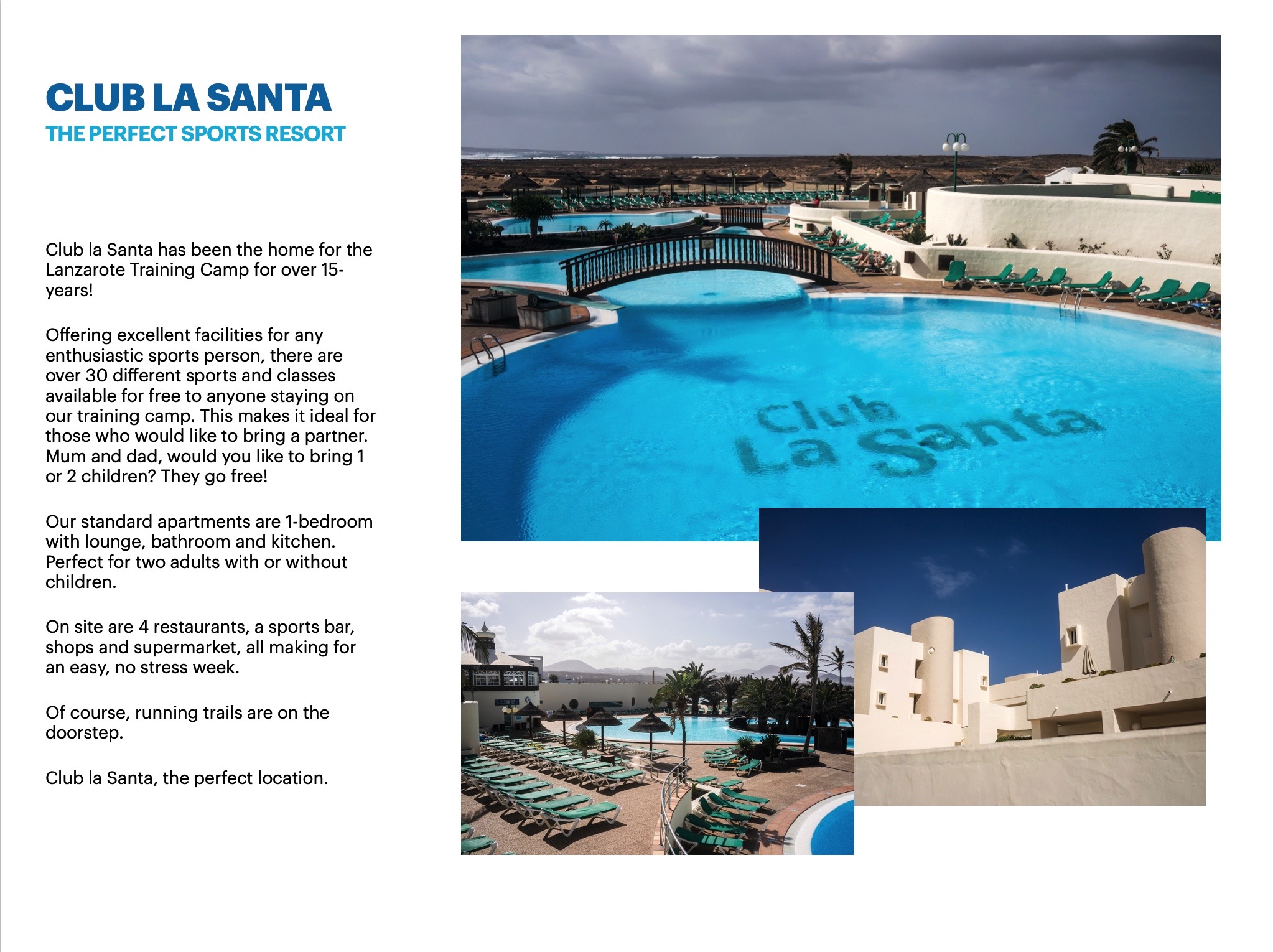
There is no better way to kick-off a new year than arriving in Lanzarote for a week of good weather and all things running.
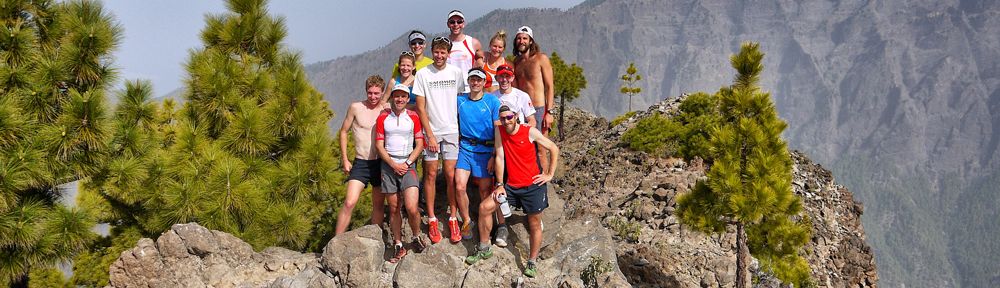
2025 signifies 19-years of training camps for me in ‘Lanza!’ They have changed and tweaked over the years and for the past 8-years, the current trail running format has been the template on how we tweak and develop each camp.
For 2025, we actually scaled the camp back to a smaller format, despite many requests to attend the camp, we kept it small with under 25 participants.
This was a significant step in ensuring smaller run/walk groups and the ability for everyone to get to know each other. It really worked, I’d go as far to say it was the friendliest and most cohesive camp in many years.
To ensure happiness on the trails, we had a core team of four guides, Pierre Meslet, Abelone Lyng, Hanna Bradshaw and Ian Corless. In simple terms, we break the guides down into groups of:
1. Faster running.
2. Running with some walking.
3. Walk/ run and
4. Walking.
Groups of 3-6 people really work and this was a huge success.
Our days follow a similar format:
0900: Morning a run that extends to the afternoon based on the distance. We have different routes and distances for each day.
A break for lunch.
1500: A talk and or workshop.
1745: Recovery run of 3-5km.
1900: Optional evening meet up for drink/ chat before dinner.
Exception to the above is one evening we do a run and overnight bivouac camp.
The last day is ‘long run’ day which starts at 0800 and covers between 30km to 45km.
Every edition of the camp, we get a great variety of abilities and experience, 2025 was no different. Up at the front we had a multiple MDS podium champion, at the other end, we had a couple who had never run longer than 10km before. It’s what makes the camp great. Mixed abilities and everyone providing knowledge.
Our bivouac night, as always, was special. Due to some glow sticks, a portable speaker and some good tunes, it was even more special. Nothing like a mini rave in a volcano.
If you do all our sessions, typically weekly mileage is around 160km/ 100 miles. It sounds a huge amount huh? It is, but on the camp recovery and downtime plays a huge roll and even the relative novices were accumulating big distances and believe it or not, our duo who had never run longer than 10km before both did just over 30km’s on the last day, a huge success for them and the camp!
A key to the recovery process for each runner is Pierre Meslet offering the option to book massage and Luke Read from Airbornfit offering strength and conditioning.
Of course, nothing is compulsory, participants can miss sessions as they wish, however, this rarely happens. The camp takes hold and neary everyone surpasses persoanl expectations or limits.
We conclude the camp with a group meal; a great opportunity to relax and clebrate the achievements of all.
The only sad moment comes with the closure of the camp and onward travel home.
However, as I told all our 2025 participants, it’s only 51 weeks to the next camp and already, many have signed up with eager anticipation of what will be a 20 year celebration in 2026.
Fancy joining us for one of the best running weeks ever?
Who is the camp for? Anyone who is interested in running. We cater for everyone and we specifically cater for those who are doing stage races such as Marathon des Sables. Ultimately, its just a great week of running, be that for stage races or single stage races of any distance.
A new year and a new race for Marathon des Sables. MDS returns to Morocco, this time, the Atlantic Coast!
First editions are always special, and anticipation is high to explore the white dunes of this magical part of Morocco.
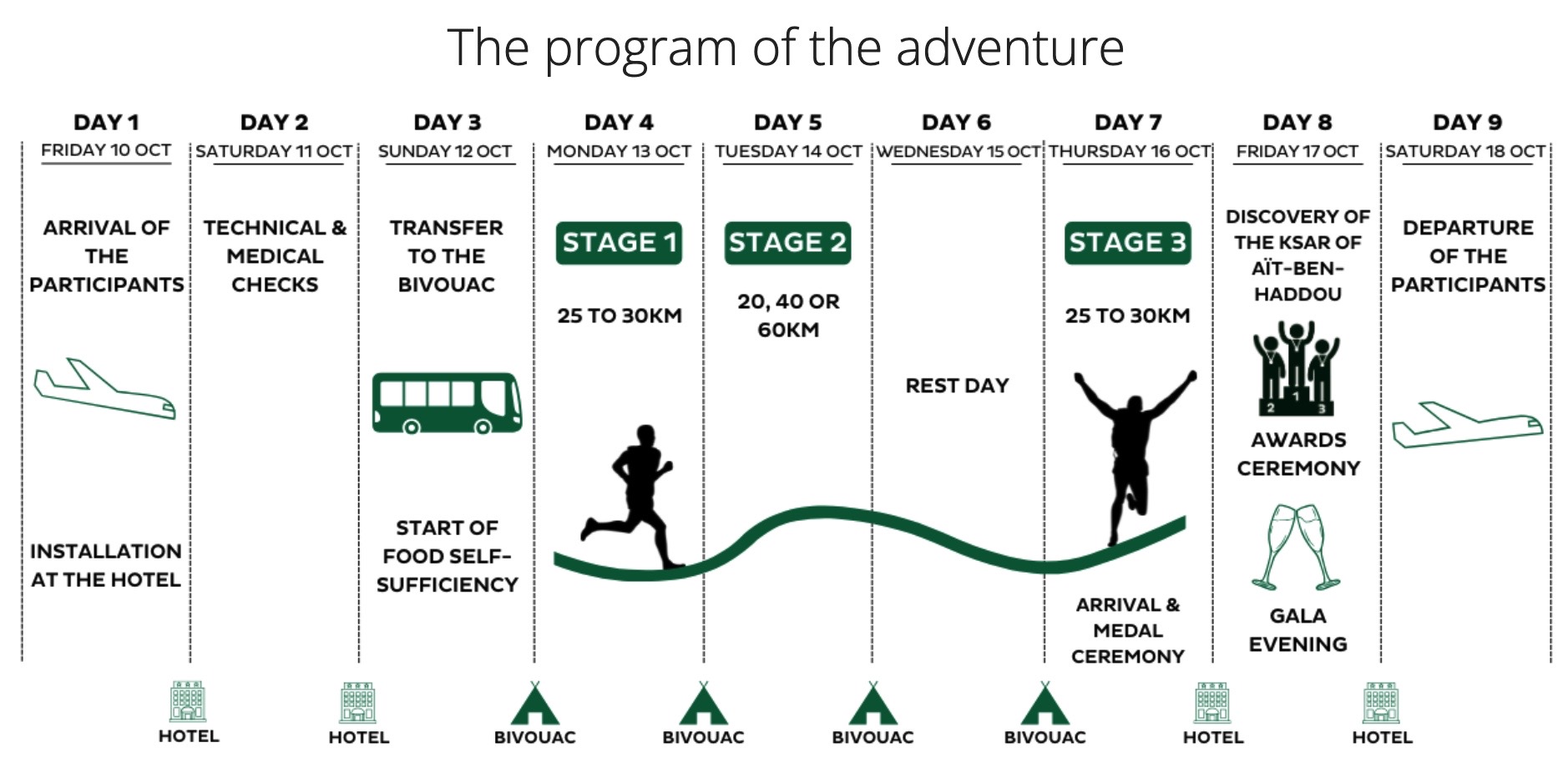
As with all MDS events, Trek excluded, participants will choose either 70, 100 or 120km’s over 3 stages in 4 days.
Located close to Agadir, on arrival in Morocco, participants will spend two nights in a hotel for relaxation and admin protocols. After the race, everyone will return to the same hotel for post-race relaxation and of course, on the final night, a gala dinner, awards and party.
2026 participants will be pioneers of this new Moroccan adventure.
RACE FORMAT
Participants choose 3 different distances: 70, 100 or 120km,divided into 3 stages.
Typical distances are as follows:
Stage 1: 25km
Stage 2: around 20, 40 or 60km
Stage 3: 25km
Stages can be completed at your own pace: walking or running.
PROGRAM
Jan 25th arrival in Morocco and night at hotel.
Jan 26th technical and medical checks, night in the hotel.
Jan 27th transfer to the desert and stage 1, night in bivouac.
Jan 28th stage 2 and night in bivouac.
Jan 29th rest day and night in bivouac.
Jan 30th stage 3 and finish followed by transfer to hotel.
Jan 31st relaxation day with awards and dinner in the eve, night at the hotel.
Feb 1st onward travel.
THE EVENT
Vast streteches of brilliant whiteness, the white dunes of the Atlantic Coast are special and an epic backdrop for this new MDS event. Away from the hustle and bustle of modern life, an epic adventure awaits everyone. Agadir and the surrounding coastline also offers an opportunity for additional exploration; epic coastline, beaches, tradition, culture and an immersive Moroccan experience.
What is the MDS?
The MARATHON DES SABLES is a unique adventure, shared by thousands of enthusiasts since 1986.
To differentiate the full distance race of 250km’s, Marathon des Sables will now be known as MDS The Legendary, reflecting the legendary status of this iconic event and its long history as a pioneer of the stage racing and multi-day format.
The ‘HMDS’ format will still follow the same protocols as before but has now dropped the ‘half’ title and moving forward, events will be called MDS Jordan, MDS Morocco, MDS Cappadocia and so on.
The MDS events are a one-week sporting adventure that combines discovery, travel, meeting new people and physically challenging yourself in a self-sufficient manner.
Since 1986, the MARATHON DES SABLES has crossed the world’s most stunning deserts with several unique concepts: the MARATHON DES SABLES THE LEGENDARY (252 km in the Sahara Desert in Morocco), the MARATHON DES SABLES (70, 100, or 120 km spread over 3 stages), and the new 2024 concept, the MDS TREK (4 stages with a total distance of up to 120 km), offering an accessible adventure with optimal comfort. These international events have seen over 50 editions in various countries such as Morocco, Fuerteventura Island, Peru, Jordan, Turkey, and offer adventures that combine running/hiking in the desert with tourism.
January 15th 2025 12:00pm (cet)three MDS events go on sale for the 2025 calendar.
MDS Fuerteventura – September 20the to September 27th.
MDS Morocco – October 10th to October 18th.
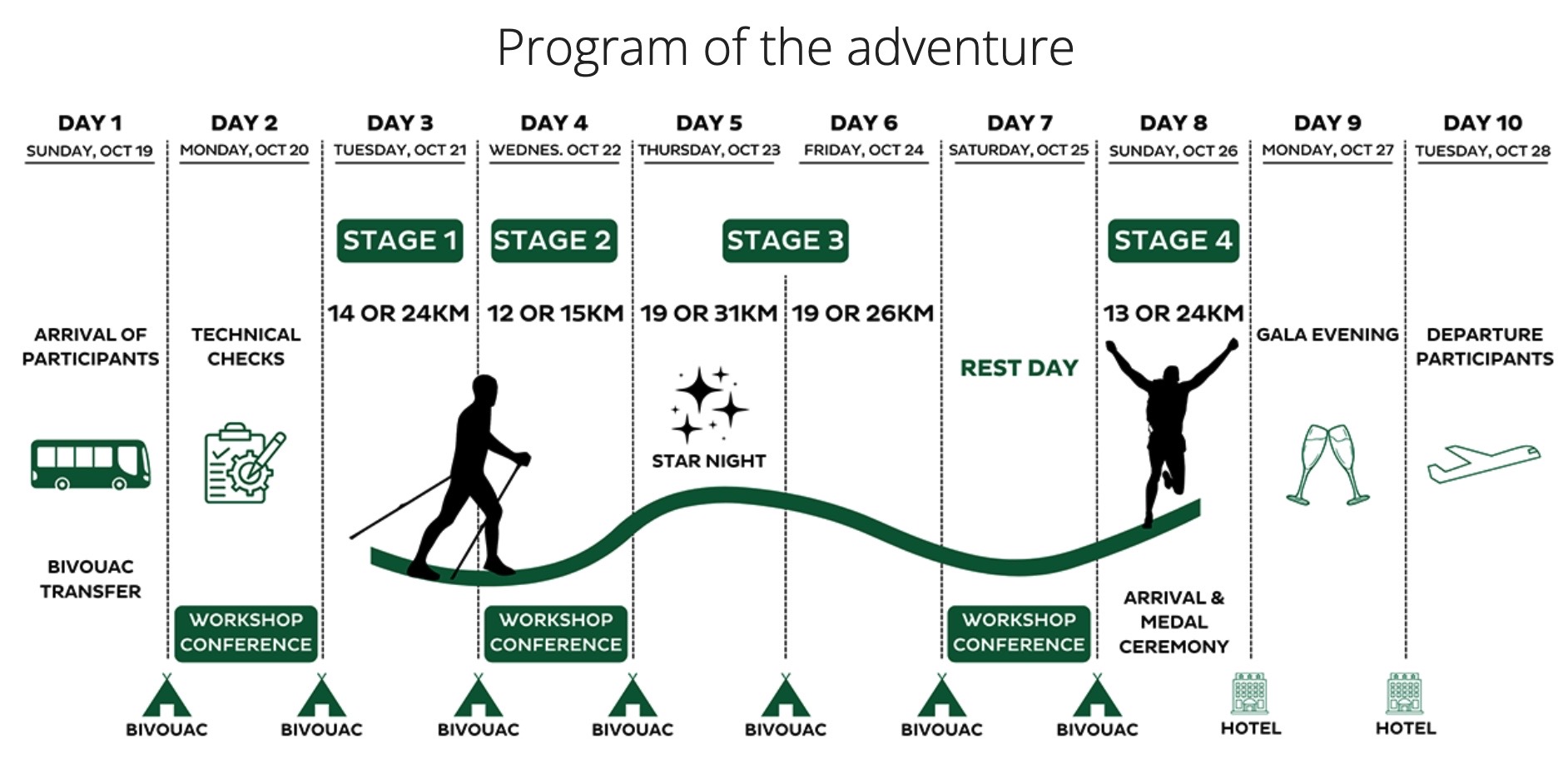
MDS Trek Morocco – October 19th to October 28th.
FUERTEVENTURA – September 20th to September 27th.
2024 was a significant year for the MDS, it saw the return of MDS Fuerteventura exploring a new part of the island and with a capped entrant list it was not only a sell out but a huge success.
You can read daily summaries of the 2024 edition and explore the route via images:
With an isolated bivouac close to the ocean, Fuerteventura brings something very special to the MDS portfolio. In many respects it can draw comparisons to MDS Peru, however, it does not have the epic dunes that the Ica desert provides. With stunning cliffs, runnable terrain and epic views, this is one race that must be experienced.
MDS Morocco follows in the footsteps and the history of The Legendary. Taking place in the same area of the Sahara, this race is ultimately a mini Legendary and as such holds a special place for all participants. The 2024 edition was notable for two reasons… Freak weather – believe it or not, rain and flooding in the Sahara! It made for a unique and special edition with some unforgettable visual stories. Secondly, the Handi category which saw wheelchair athletes take on the Sahara with the help of a team.
The 2025 edition of the race will once again pave the way for the MDS brand and the history of the race.
TREK – October 19th to October 28th.
MDS Trek was new for 2024. Combining much of what we see and experience in a normal MDS event, the TREK format added more comfort (2-person tents with mats,) no self-sufficiency (in regard to food,) showers, and after the stages, you will have the opportunity to relax with a daily massage* for better recovery, enjoy cold drinks* from the available bar, and share convivial moments in the social areas.
*extra charge locally
Combining mental enrichment with workshop conferences, the TREK still offers the classic MDS distances of 70-120km but at a more relaxed pace and a slightly different format due to the very special ‘star night!’
Here’s the approximate breakdown of distances:
Stage 1: 14 or 24km
Stage 2: 12 or 15km
Stage 3 – day 1: 19 or 31km
Stage 3 – day 2: 19 or 26km
Stage 4: 13 or 24km
A perfect event for those looking for an introduction to stage racing, an active holiday or just an escape with a loved one or friend. An opportunity to experience the DNA of the MDS, the 2024 edition was a huge success and returns for 2025, bigger and better! Accessible to everyone, this format is perfect for those who want to explore the desert, make new connections, push their physical limits, and all while maintaining a level of comfort.
To differentiate the full distance race of 250km’s, Marathon des Sables will now be known as MDS The Legendary, reflecting the legendary status of this iconic event and its long history as a pioneer of the stage racing and multi-day format.
The ‘HMDS’ format will still follow the same protocols as before but has now dropped the ‘half’ title and moving forward, events will be called MDS Jordan, MDS Morocco, MDS Cappadocia and so on.
The MDS events are a one-week sporting adventure that combines discovery, travel, meeting new people and physically challenging yourself in a self-sufficient manner.
MDS TREK was introduced in 2024 and is a 10-day adventure at a more relaxed pace with extra comfort, perfect for an active holiday, training or as an introduction to desert stage racing.
Since 1986, the MARATHON DES SABLES has crossed the world’s most stunning deserts with several unique concepts: the MARATHON DES SABLES THE LEGENDARY (252 km in the Sahara Desert in Morocco), the MARATHON DES SABLES (70, 100, or 120 km spread over 3 stages), and the new 2024 concept, the MDS TREK (4 stages with a total distance of up to 120 km), offering an accessible adventure with optimal comfort. These international events have seen over 50 editions in various countries such as Morocco, Fuerteventura Island, Peru, Jordan, Turkey, and offer adventures that combine running/hiking in the desert with tourism.
One year ago I was writing a review about the new addition to the VJ Sport shoe line-up, the VJ SARVA ACE.
This was a new departure for VJ. Of course, the shoe had the trademark VJ USP’s, amazing butyl outsole and fitlock foot hold. As a specific winter shoe, it also had the excellent star studded winter studs for reassuring grip on ice.
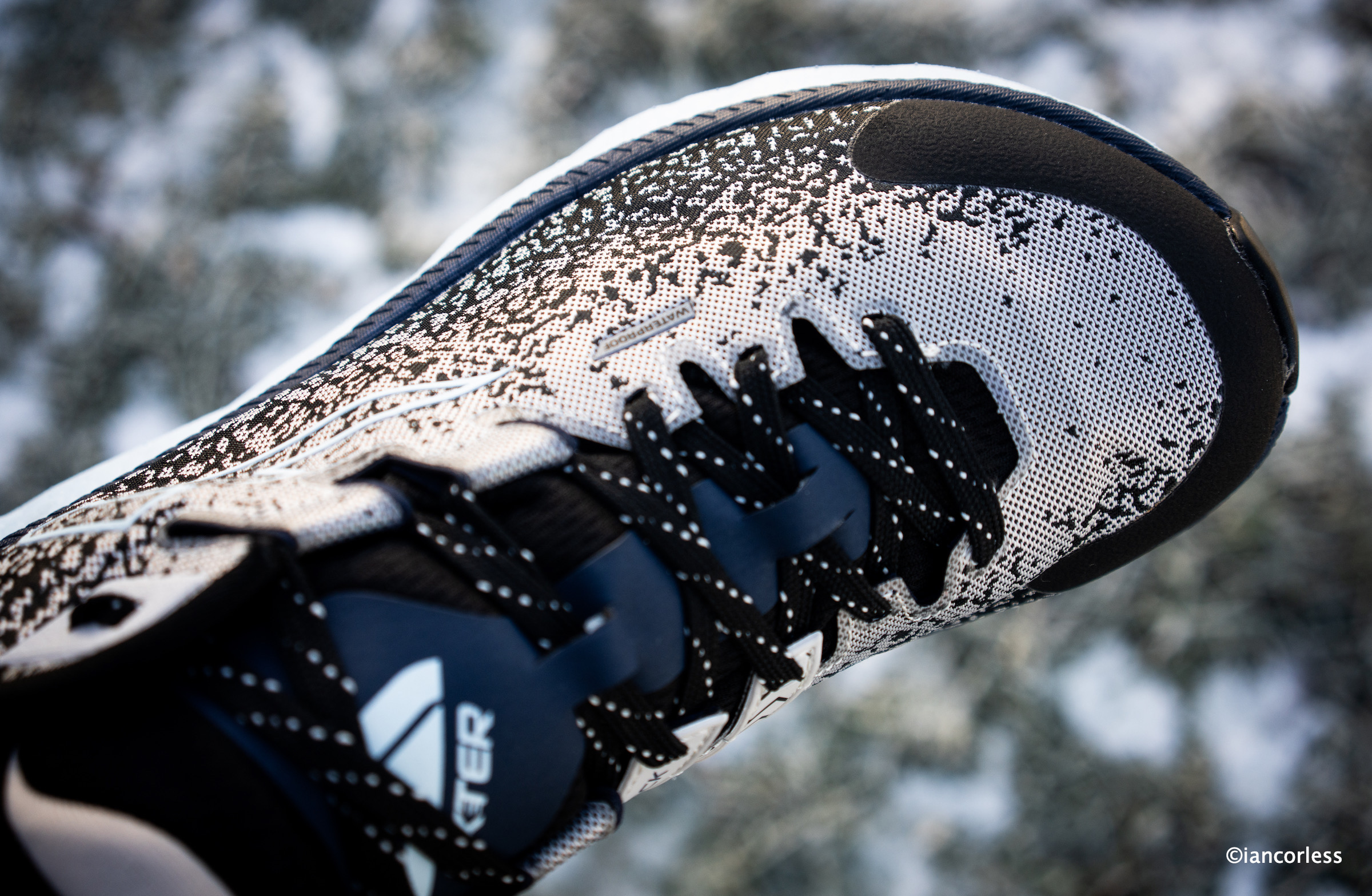
However, the new additions were extremely notable. Firstly a wide, foot-shaped toe box, very wide by VJ standards that would allow space for the toes to move and therefore aid keeping feet warmer in sub zero temperatures. Secondly, new cushioning called PerFOAMance. Thirdly, a one piece waterproof upper.
I wrote at the time that this was without doubt the most comfortable and best studded winter shoe I have tried. That still stands today.
Notably I said, ‘Light-weight, cushioned, wider fit, great foothold and superb comfort, the VJ Sarva ACE takes the previous VJ SARVA shoes to a new level. This shoe is so comfortable, I have already emailed VJ asking for this shoe to be made without studs. It would be a perfect shoe to run alongside the ULTRA, especially with the wider toe box.’
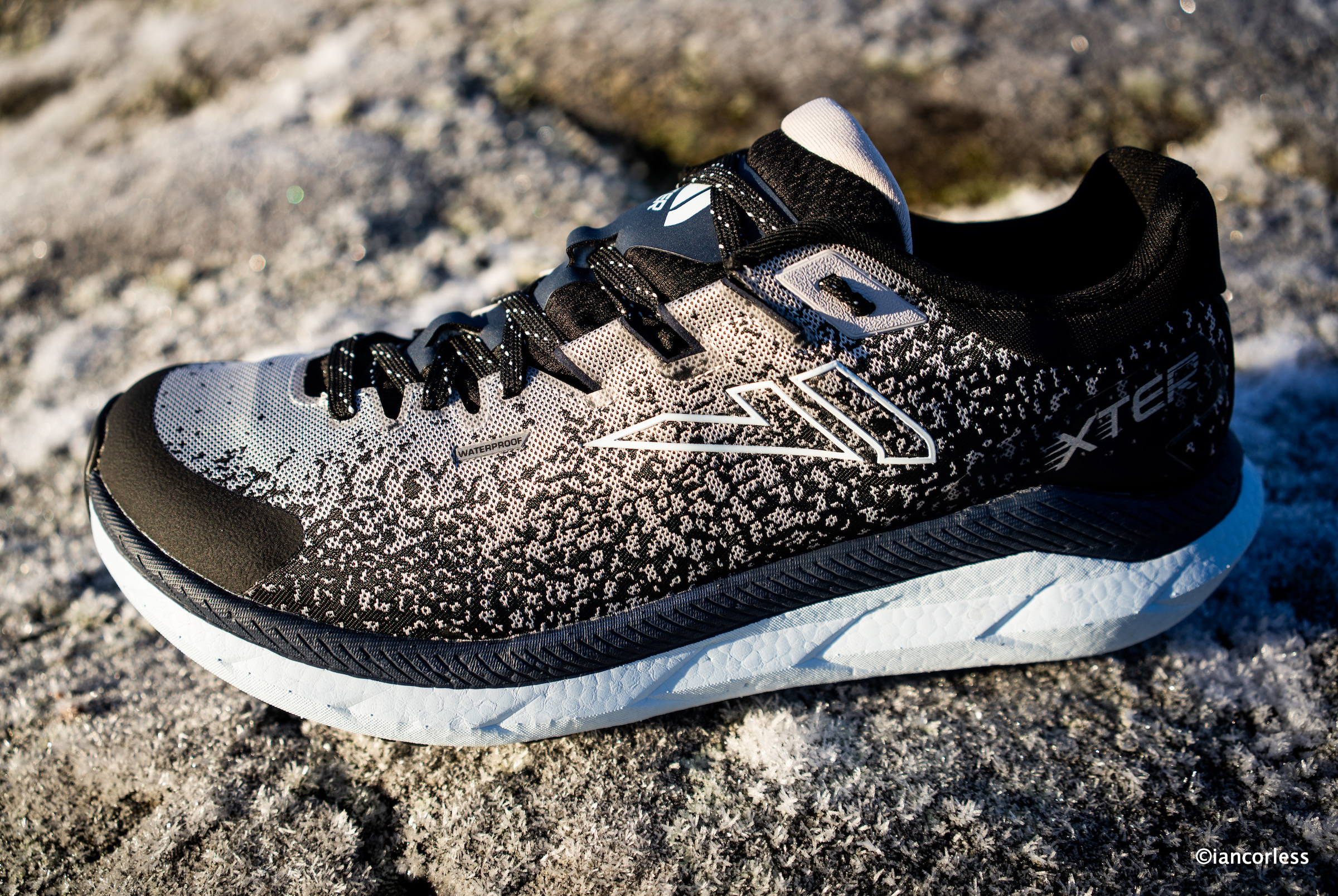
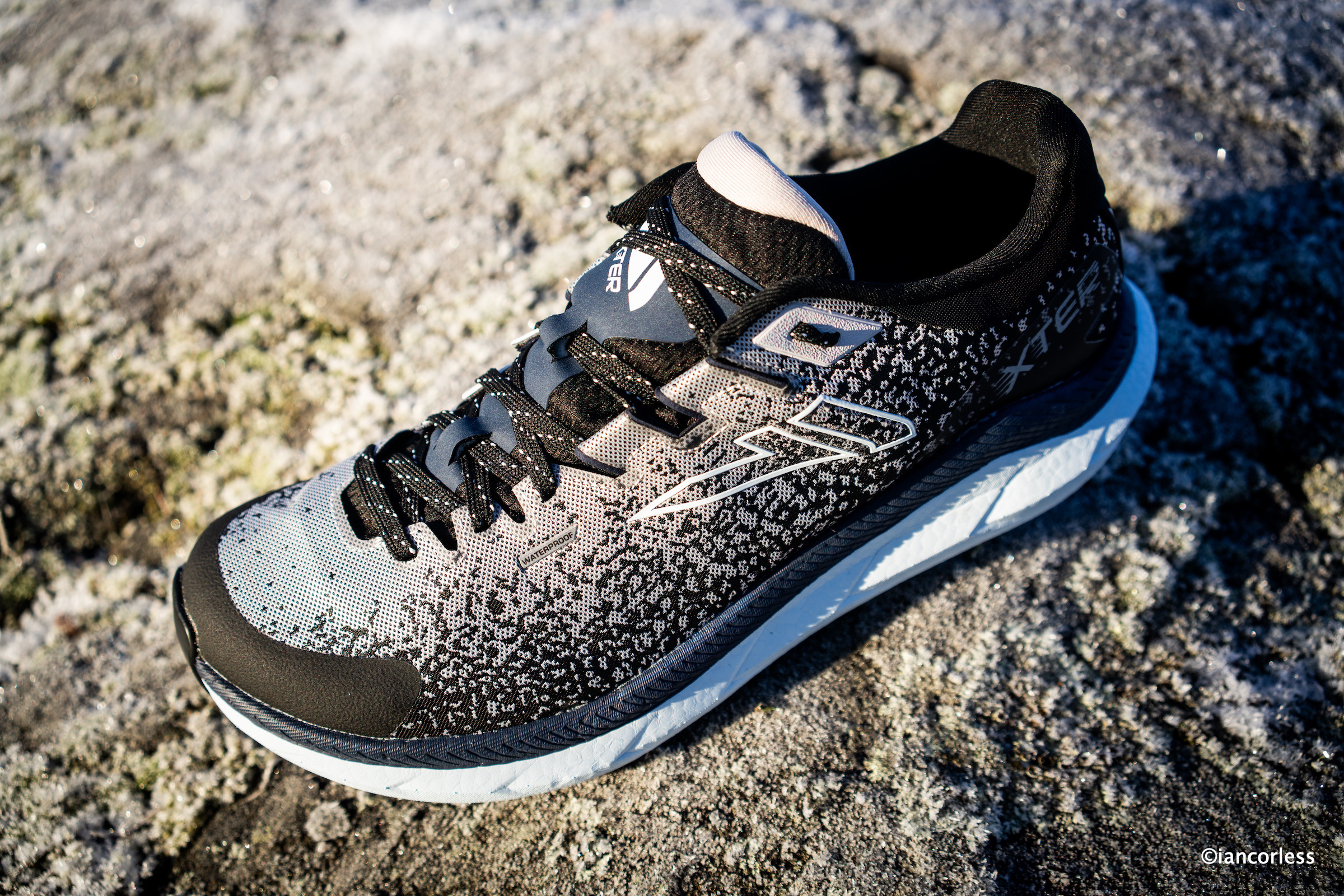
Well, VJ listened and they have now released the VJ XTER.
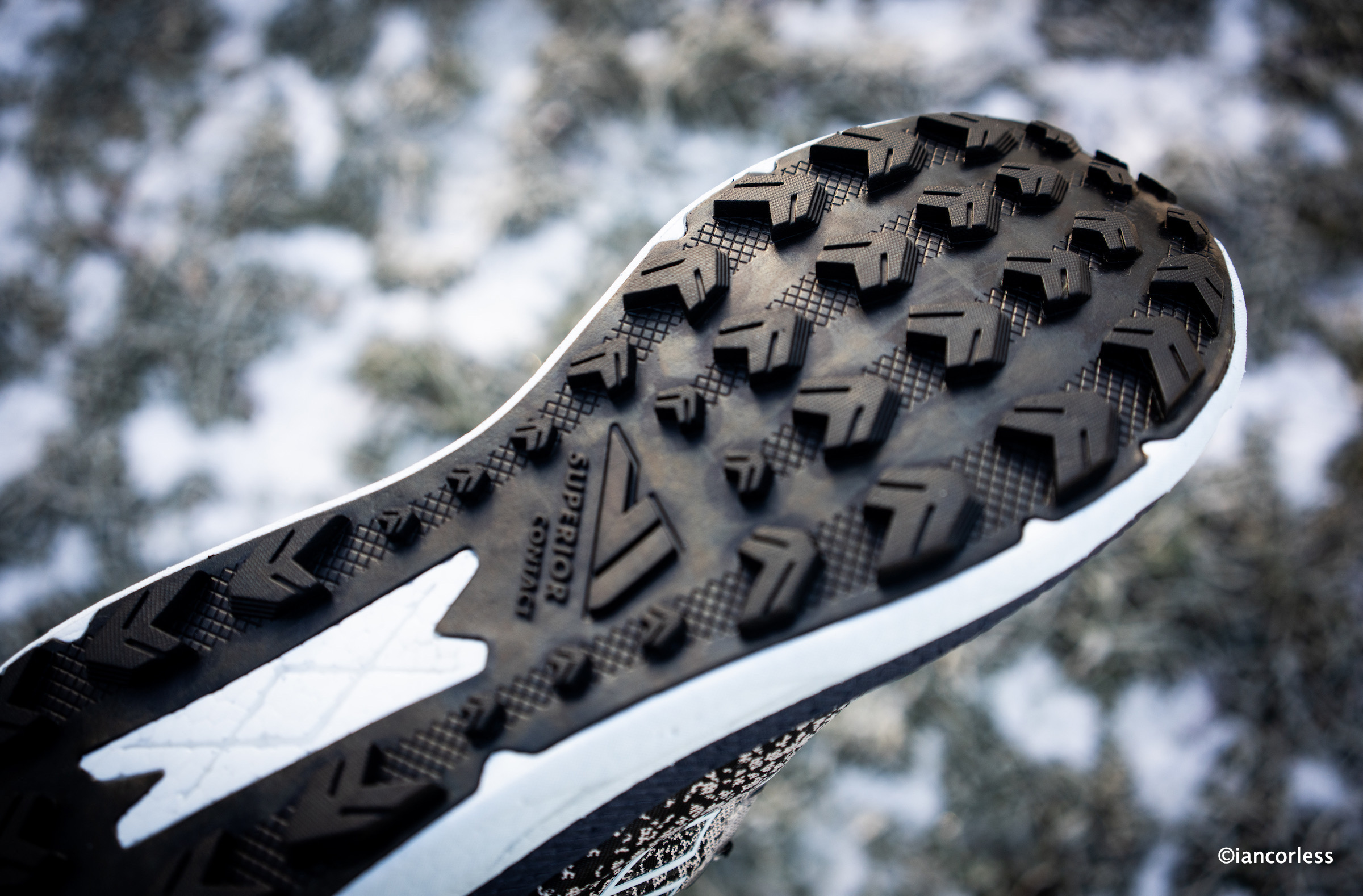
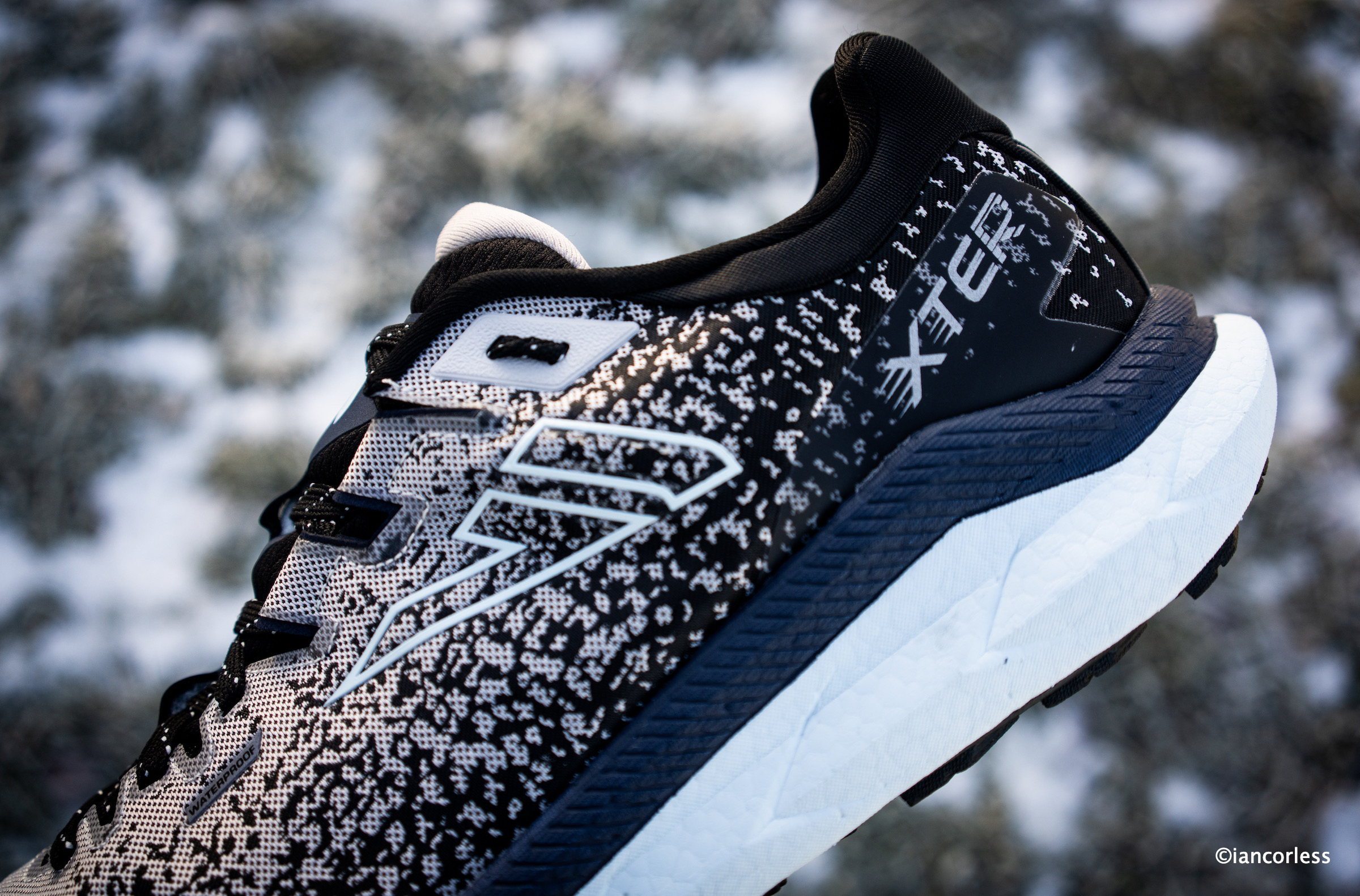
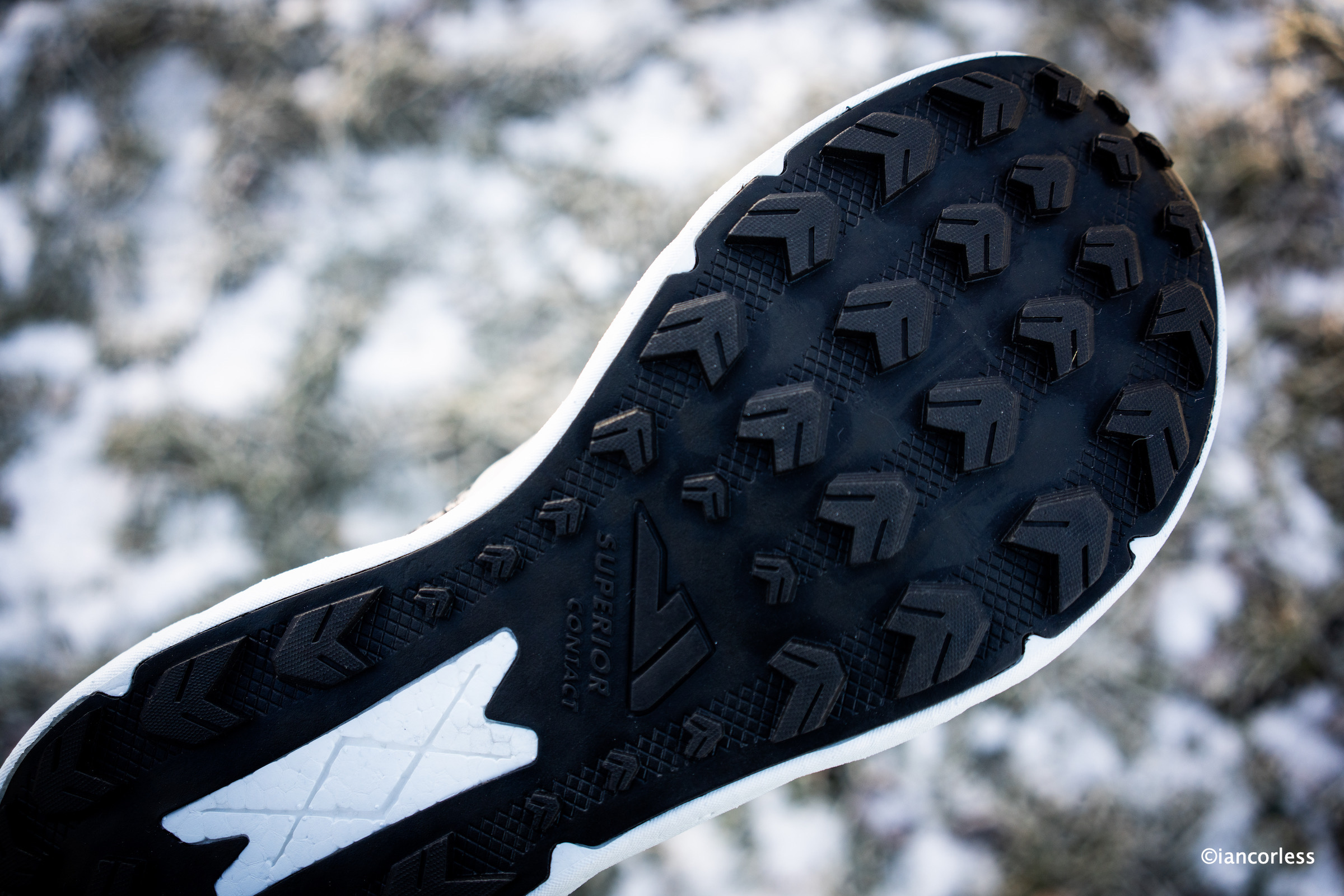
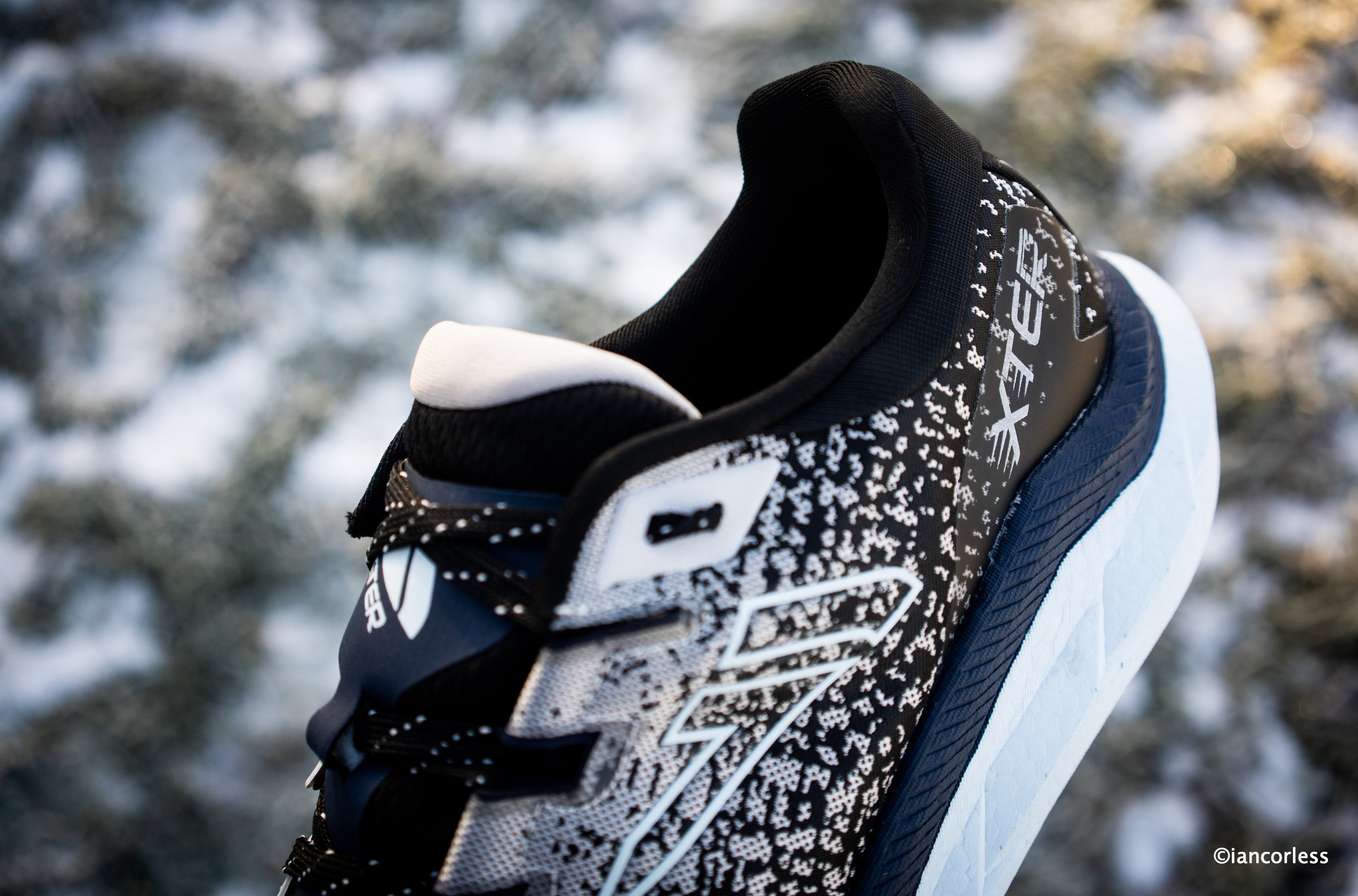
The XTER is quite simply the ACE without winter studs. With 40mm cushioning at the rear, 32mm at the front and an 8mm drop, the XTER is a dream shoe. The butyl outsole with 5mm lugs gives incredible grip on all terrain and better than normal outsole grip even on ice. Note, this is NOT an ice running shoe, you need the ACE for that.
The XTER is all about comfort and slipping them on they had all the great feelings from the ACE, notably is the space up at the front and the cushioning. These shoes feel incredible. So good that VJ need to make this shoe without a waterproof upper for all-season use. I have no doubt that this shoe would be my day-to-day trail shoe choice in spring and summer if it had no waterproof upper.
The success of the ACE and perFOAMance cushioning also made it’s way to the new MAXx2 which for me is THE best mountain running shoe in the market. The combination of features, grip, fitlock and cushioning make this a stunning shoe. However, it’s a more precision fit shoe, so, an XTER version would fulfil many requests for a ‘wider’ VJ shoe for the mountains.
KEY FEATURES
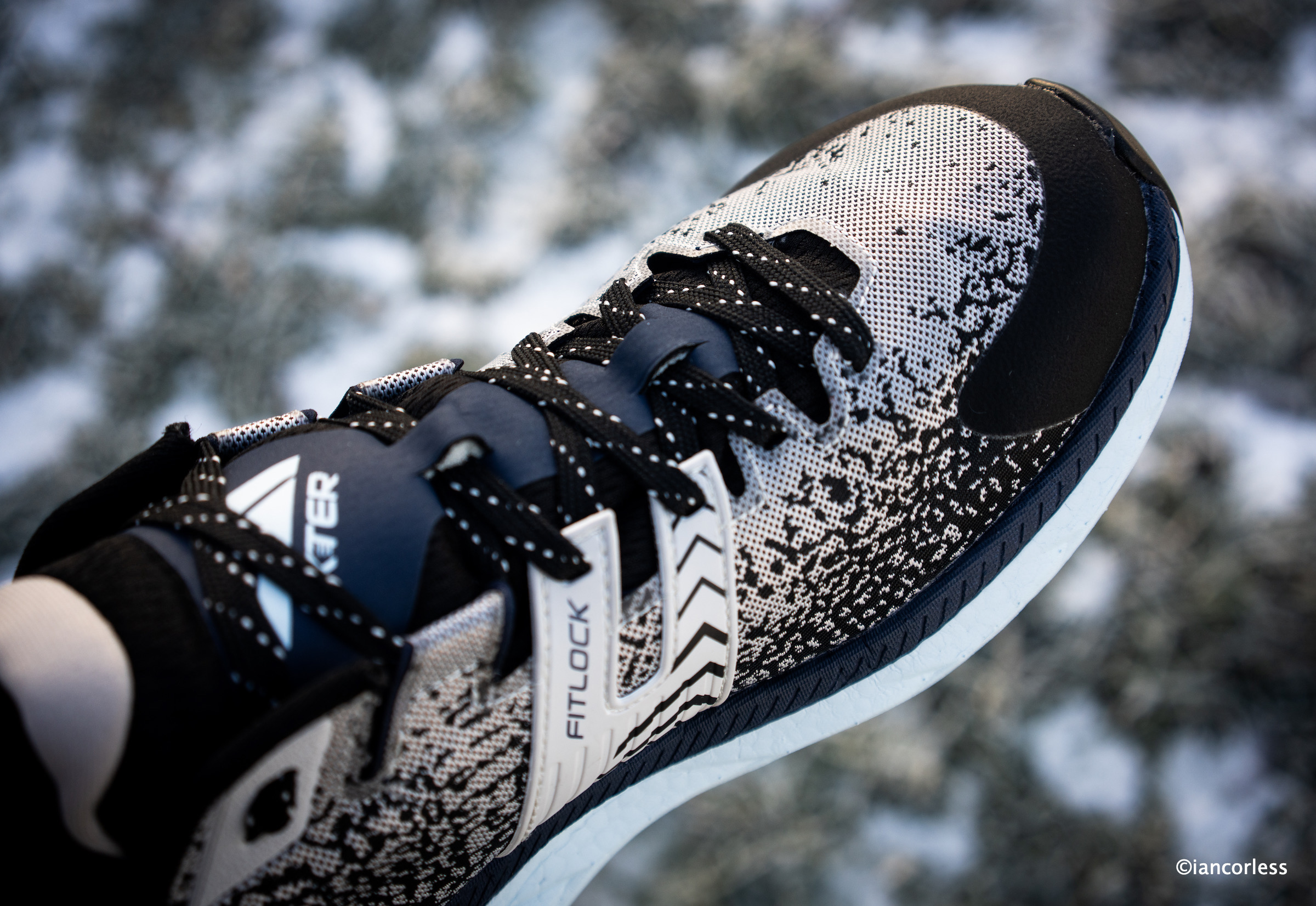
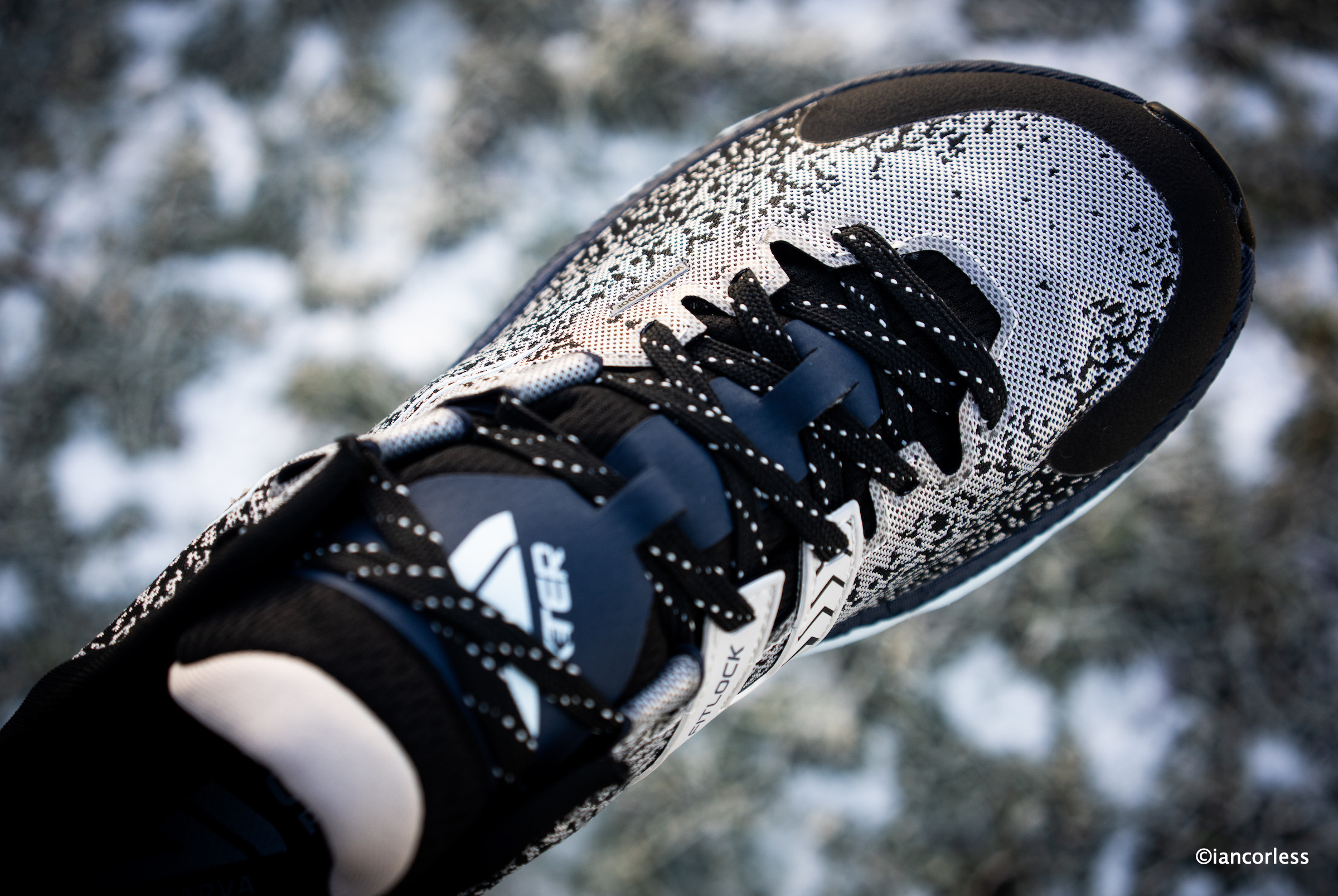
Those who have used VJ before will know how amazing the foothold is from FITLOCK, a feature on all VJ shoes. It provides a tight and secure feel and offers support and stability. It makes the shoes feel like part of the foot. This is probably even more noticeable here in the XTER with the wider toe box. The hold and feel are superb.
VJ’s SCR (Superior Contact Rubber) is the best on any terrain, be that wet or dry. The tagline for VJ is #bestgripontheplanet and that is justified. No other trail/ mountain shoe matches the outsole of VJ. 5 mm studs provide grip in all conditions, but also allow you to enjoy running on easier trails.
The upper is seamless, lightweight and waterproof with added durability. This has been tried and tested in my ACE which are now 1-year old and still look like new. You may be thinking that you do not need a waterproof upper, maybe think again. For sure, there are some downsides to a waterproof shoe, especially if you get water inside as it cannot escape. However, if you are running in extreme cold, snow and ice, a waterproof upper with good merino wool socks makes a huge difference for foot warmth.
The wide toe box is foot-shaped and to draw comparisons, it is very much in the mold of Altra or Topo. It’s very much of a departure for VJ as nearly all their shoes have a more precise/ precision fit. It’s extremely comfortable and allows excellent toe splay. As I said, love to see the XTER develop in a non-waterproof version.
SUMMARY
The added cushioning is a highlight for me, and they are ideal for longer outings, particularly when running on harder / frozen trails. The comfort level is high, not something that is usual for winter shoes. The wider toe box only adds to this package. Toes are able to move allowing for increased blood flow and therefore warmth, also helped by the waterproof upper. The wider footprint also adds to a more stable footprint on snow. Butyl outsole is amazing and sets the bar for other shoes to match. The ACE had one issue, hold in the heel area was not ideal, that has now been addressed. The XTER comes highly recommended.
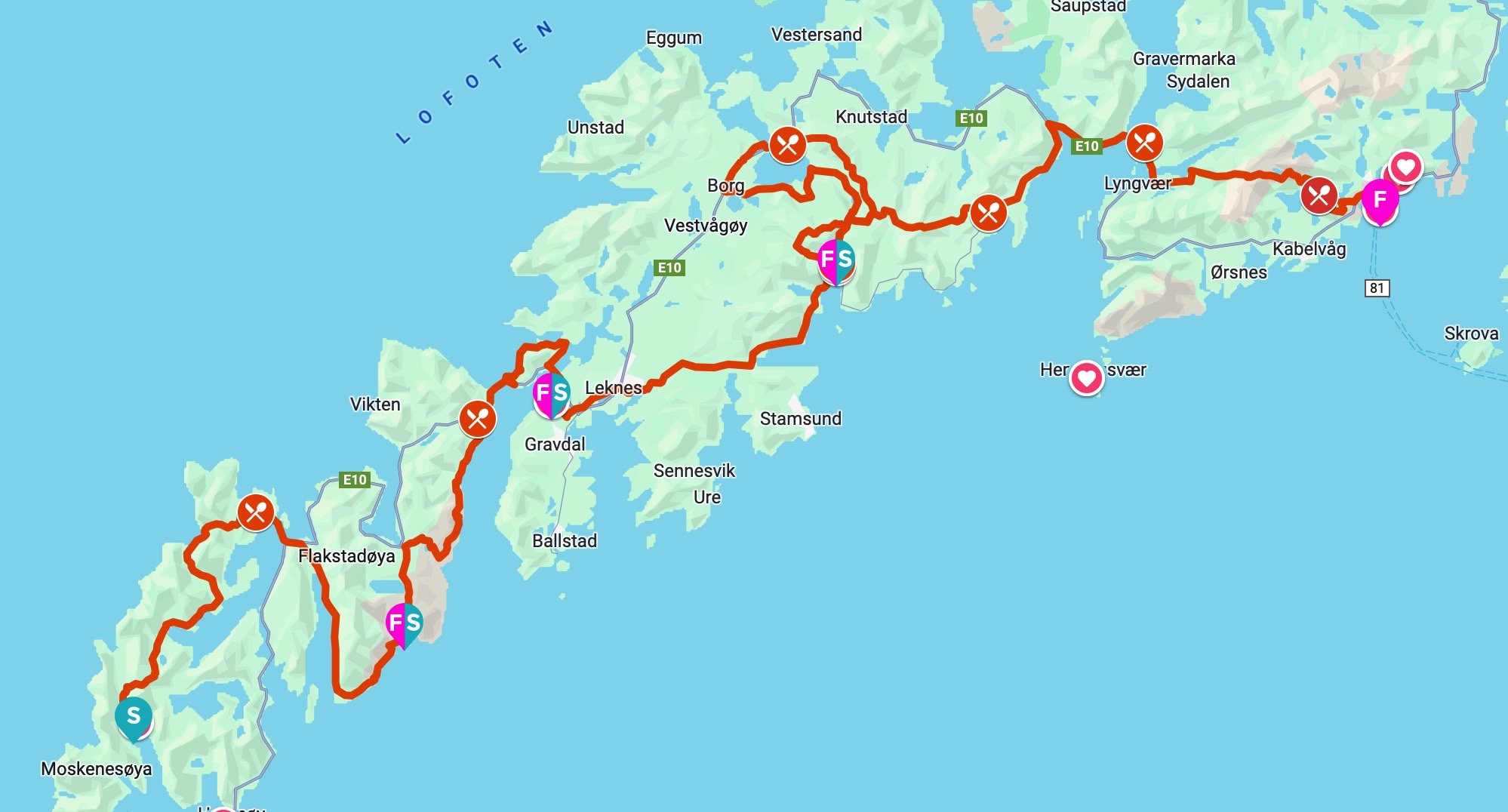
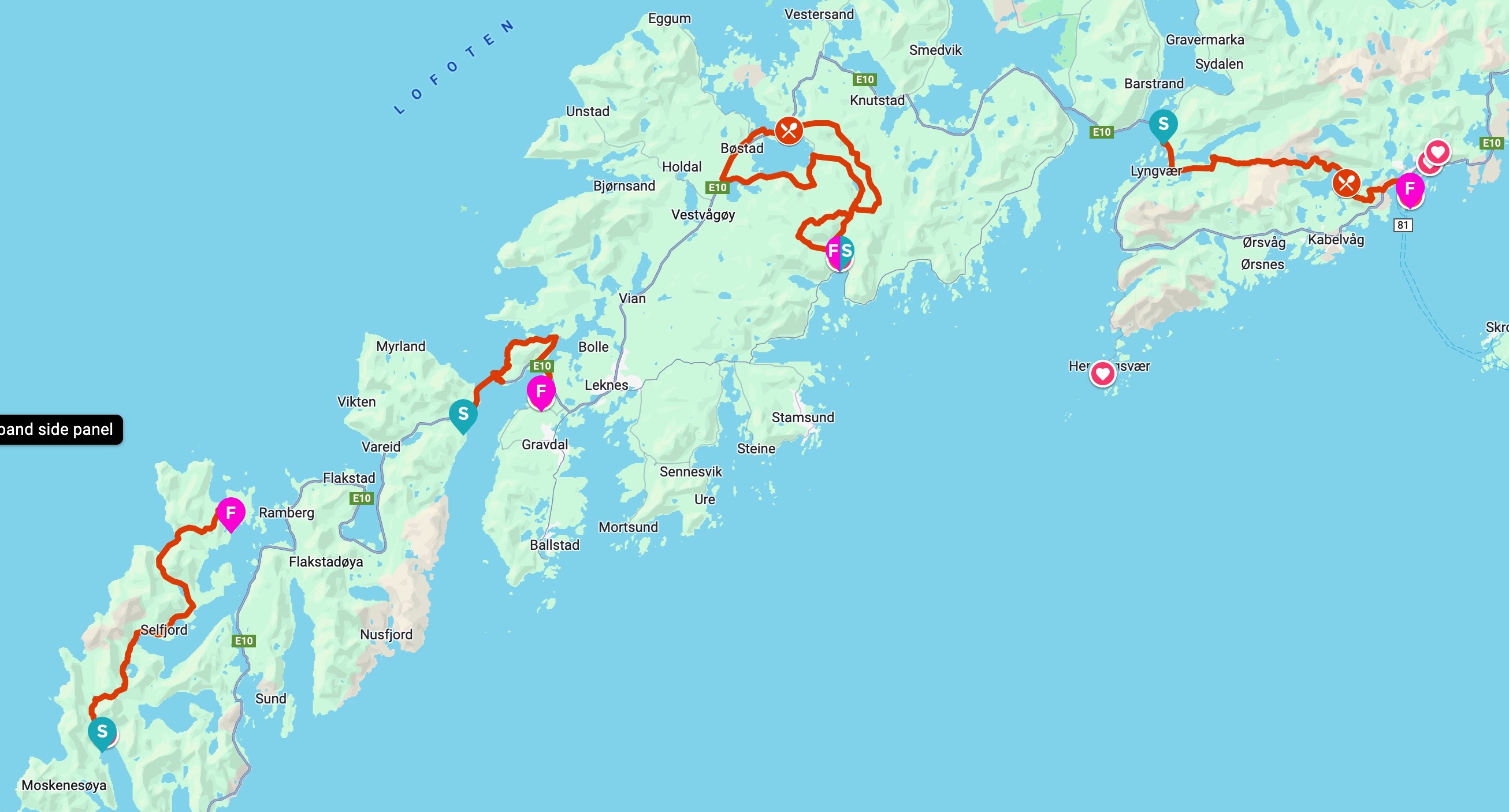
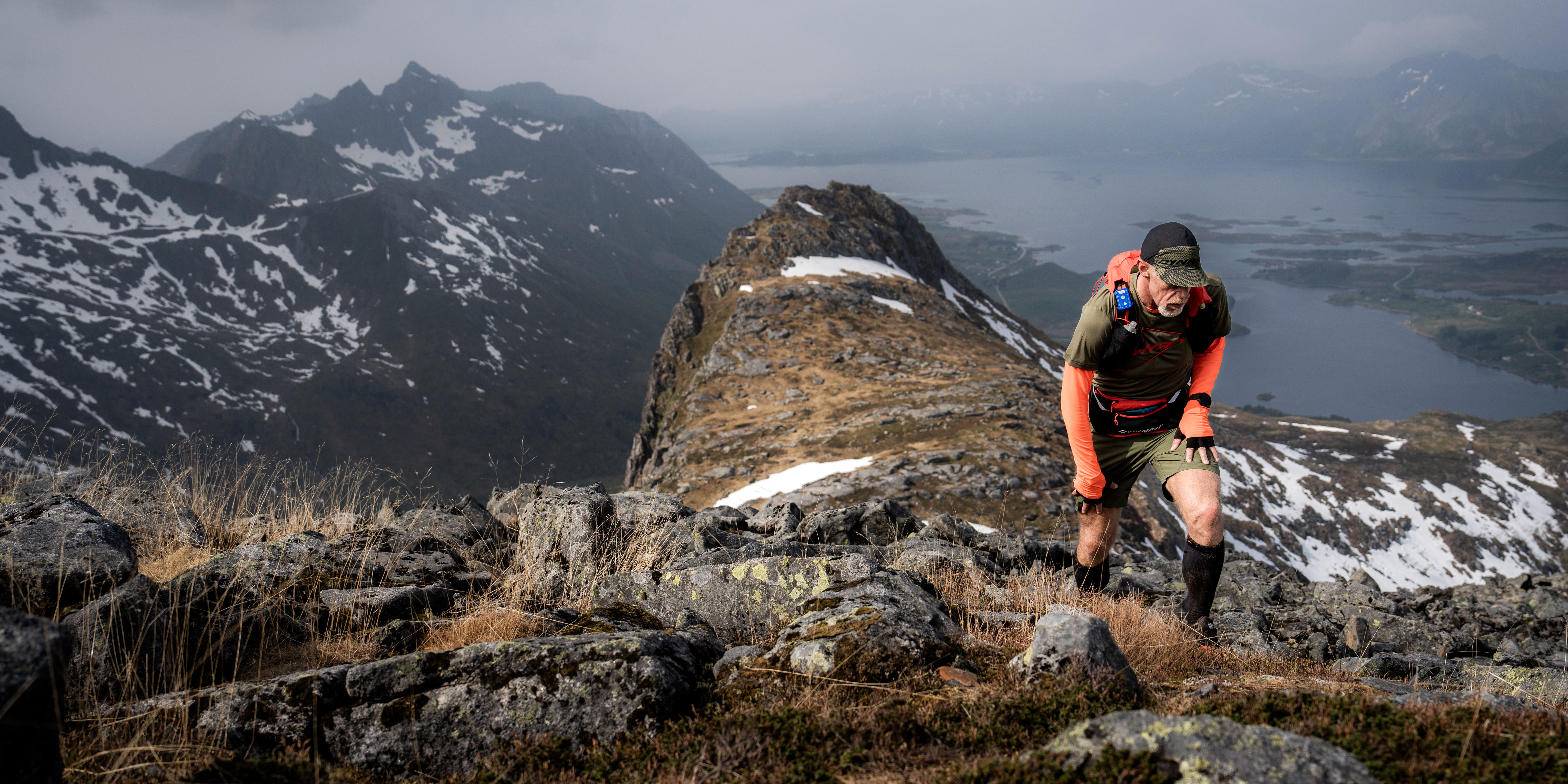
The inaugural 2024 Lofoten Stage Run paved the way for what is Norway’s premiere multi-stage running event. Taking place over 6-days (4-days running,) the LSR event was inspired by the 170km solo event taking place under the umbrella of events titled The Arctic Triple – ski mountaineering, trail running and triathlon.
2025 will see the 2nd edition take place and once again two distance options will be available, 170km ‘Expedition‘ and the 100km ‘Adventure‘ run.
While 100km may seen extremely manageable over 4-days, one must take into account the challenging terrain the race takes place over and the vertical climb and descent. This is not an easy option.
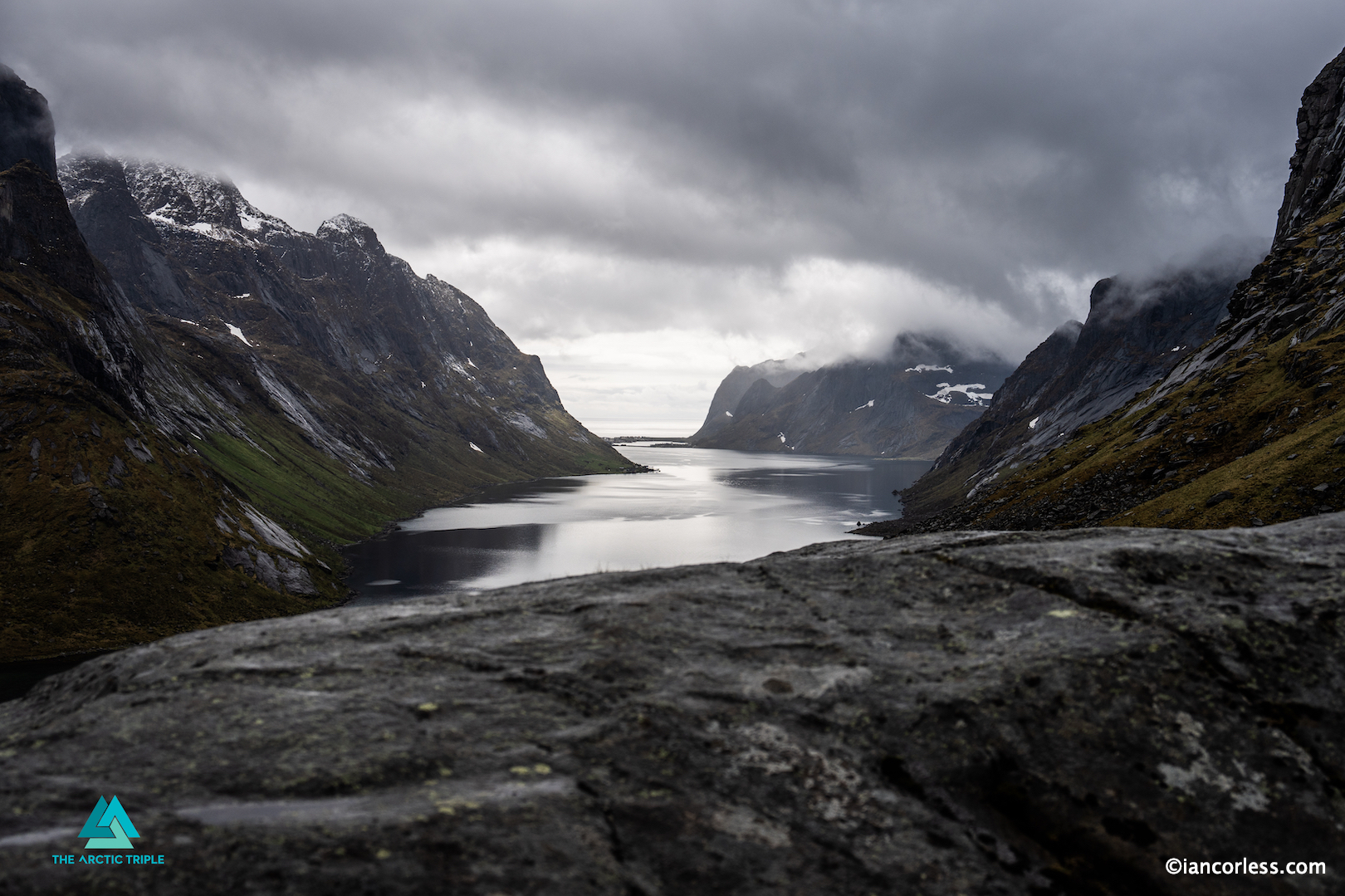
There is no better way to fully immerse oneself and experience that magic that Lofoten offers by moving under ones own power, running or walking. Lofoten is considered one of the most desireable places to visit in the world.
The Lofoten Stage Run has the added bonus of taking participants to hidden places, often only experienced by the most adventurous tourist.
After a tough day on the trails, each stage concludes with a typical Norwegian Hytte experience with excellent local cuisine, a shower and of course a comfy bed. Participants luggage is transported each day, so, while running, you can travel lighter and faster.
The Lofoten Stage Run is designed to be a running holiday, however, do not be fooled, those cozy and comfortable evenings are worked for. The terrain and weather in Lofoten is challenging; a mixture of all terrains and elements that can bring for many, the ultimate challenge.
THE EXPERIENCE
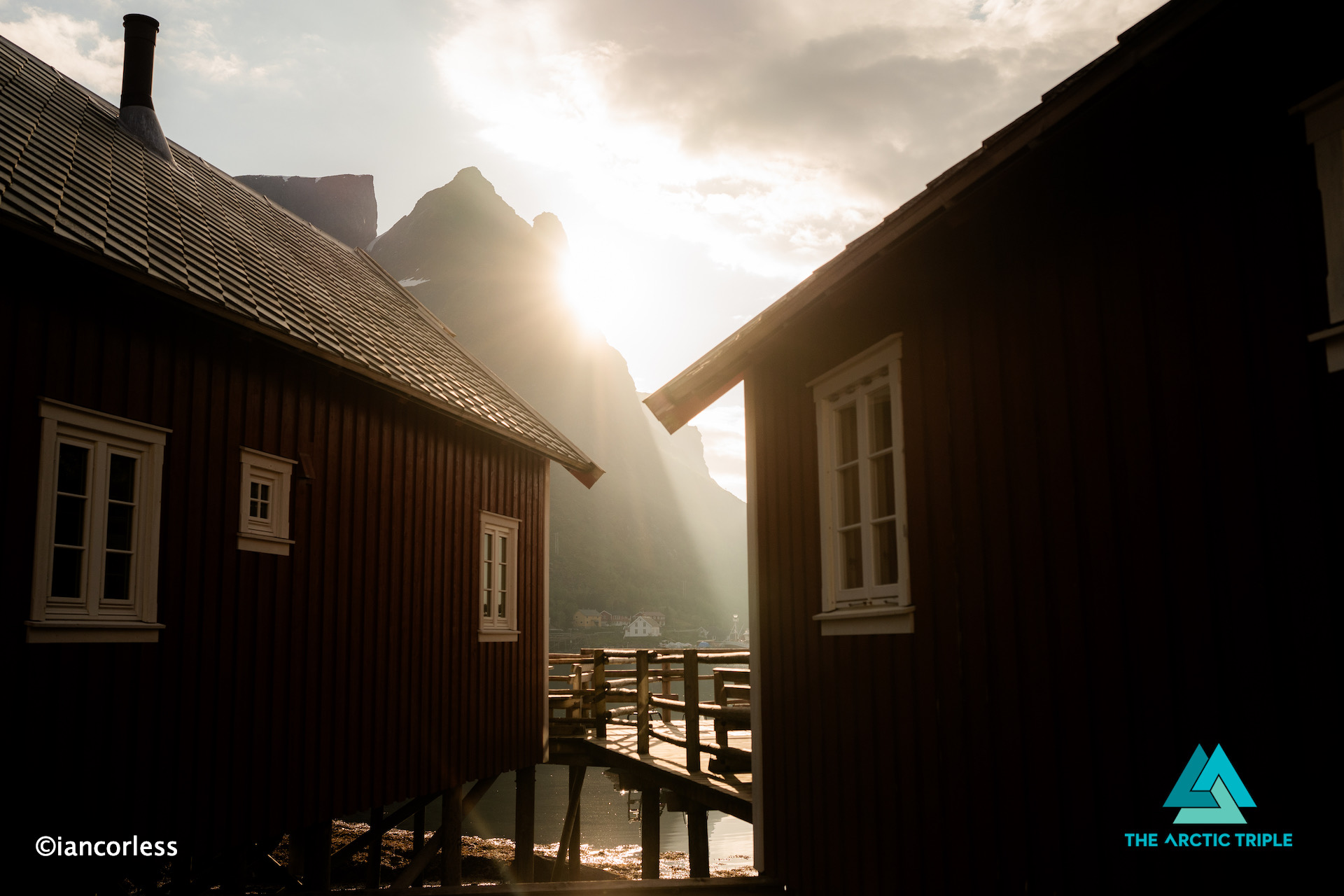
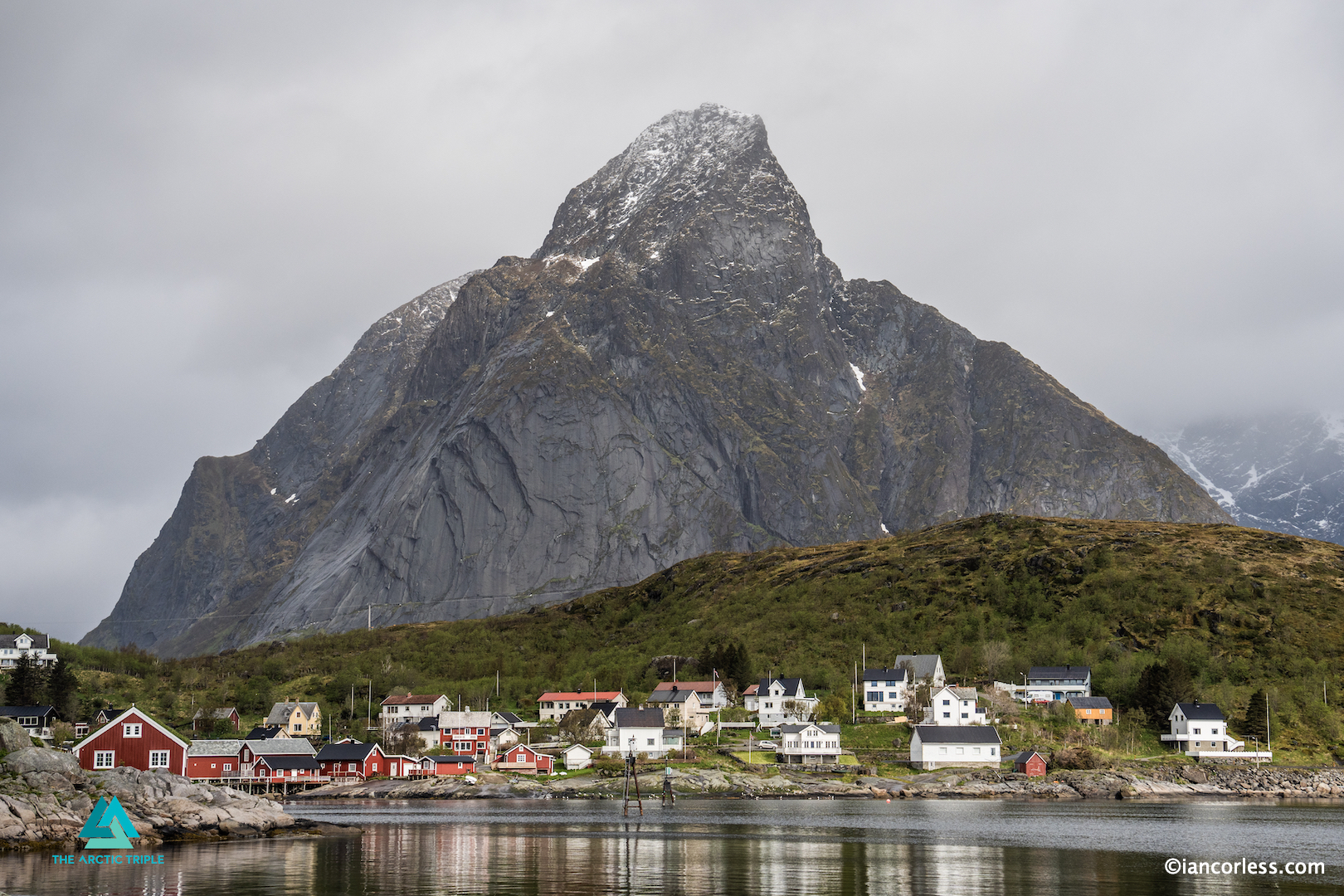
Taking place during week 22, participants need to be in Svolvær on May 27th for a transfer to Reine and a stay at Reine Rorbuer. Located in the western part of Lofoten, at the entrance to the Reinefjord, lies the stunning fishing village, considered one of the most beautiful in Norway.
Wednesday, stage 1, starts with a boat trip from Reine to Kjerkfjorden. The route ahead, 39km’s for 170km race and 20km for the 100km. The opening 10km’s a real challenge with tough climbs, technical terrain, snow sections and soft/ boggy ground. Kvalvik beach offers some opportunity for flat terrain before a steep climb and eventually a descent to Fredvang and checkpoint. Here the 20km distance stops. A road section leads to Nesland for the 170km runner’s and the final technical trail sections before arriving in the picture postcard, Nusfjord and the Nusfjord Arctic Resort– a tough day!
Stage 2 at 34km’s (17km for the 100km starting at Napp) concludes at Lofoten Rorbuutleie another amazing location surrounded by sea and mountains. The early route to Napp bringing many a challenge, technical trails and mild hands-on scrambling sections before sweeping single-track with stunning views. Road gives way to coastal trail and another road section before arriving at Lilleeidetholmen marina, the buildings are located with water on both sides and direct access to quays and floating docks.
Stage 3 for 170km Expedition runner’s is the long day, covering 52km’s with arguably the most ‘runnable’ terrain of the whole week. For the 100km it is also a long day at 35km starting at Rolvsfjorden.. Technical aspects are reduced and much of the route is single-track interspersed with some road. The finish at Brustranda Fjordcamping once again offering a wonderful Norwegian hytte experience of cabin surrounded by water and mountains.
Stage 4, the final day at 45km’s brings some of the most technical terrain of the whole Lofoten Stage Run experience, especially the climb to Jordtinden and the ridge that follows with some exposure form an ‘airy’ single-track, snow fields and at times, challenging terrain. The final peak of Tjeldbergtinden a final challenge before the run in to Svovær and the conclusion of four magical days. For the 100km runner’s they cover the last 21km starting at Kleppstad, and yes, they get to experience Jordtinden, the ridge and the final summit of Tjeldbergtinden – it is the highlight section of the whole Lofoten Stage Run.
After the race, a meal at the event hotel, Thon Hotel Lofoten, where the focus is some of the best local food from the area. A perfect evening to share new and old stories with your new friends and relive the magic of Lofoten and the Lofoten Stage Run.
THE RUN
170km or 100km, one thing is for sure, running in Lofoten is tough and challenging. Terrain constantly switches from demanding and technical sections to easy flowing single-track. Experience, excellent endurance and an ability to handle technical and challenging terrain is required for those who sign up for the 170km.
The same requirements apply for the 100km distance, however, the shorter distance does allow for a considerably slower pace and more walking. Rest assured, the 100km is not an ‘easy’ option, it is a real Norwegian mountain experience, especially the 21km on the last day.
The Lofoten Stage Run is all about enjoyment and experiencing the best of Norway, not only its magical terrain but its hytte and food.
It is no coincidence that this is called a run and not a race, the ultimate relaxed trail running experience that brings so much more than just running. Traveling point-to-point, on foot, experiencing the magnificence of Norway. Stunning trails, majestic mountains, resplendent views, and all during the endless daytime of the midnight sun. It gets no better!
Experience Lofoten.
Experience the Arctic Circle.
Experience the midnight sun.
Experience the majesty and beauty of Norway under your own power.
2025 will see a new MDS event, the MDS RAID NAMIBIA.
This event will bring something unique and special to the MDS portfolio and certainly, it will be an event for the more experienced participant.
Unlike other MDS events that offer 70, 100 or 120km route options over 3-stages in 4-days, RAID will offer just one distance, somewhere between 100-120km distance over 3-stages and 4-days. Importantly, there will be no ‘rest day,’ and on the 2nd stage there will be no return to bivouac, instead, there will be a ‘star night’ which will see the runner’s sleep in the middle of the dunes.
For safety, this will not be a solo event. Runner’s will complete in pairs, rest assured, if you enter solo, you will be paired with another participant.
Adding to the RAID concept, there will be no classic checkpoints, just water stations. Route marking will be minimal and therefore this will place more emphasis on the participants to be autonomous and confident.
For edition one, just 80-participants (40 teams of 2), will toe the line.
While this level of autonomy will not appeal to some, the sense of adventure will most definitely appeal to many. Without doubt, this is a hark back to how the original Marathon des Sables concept was created.
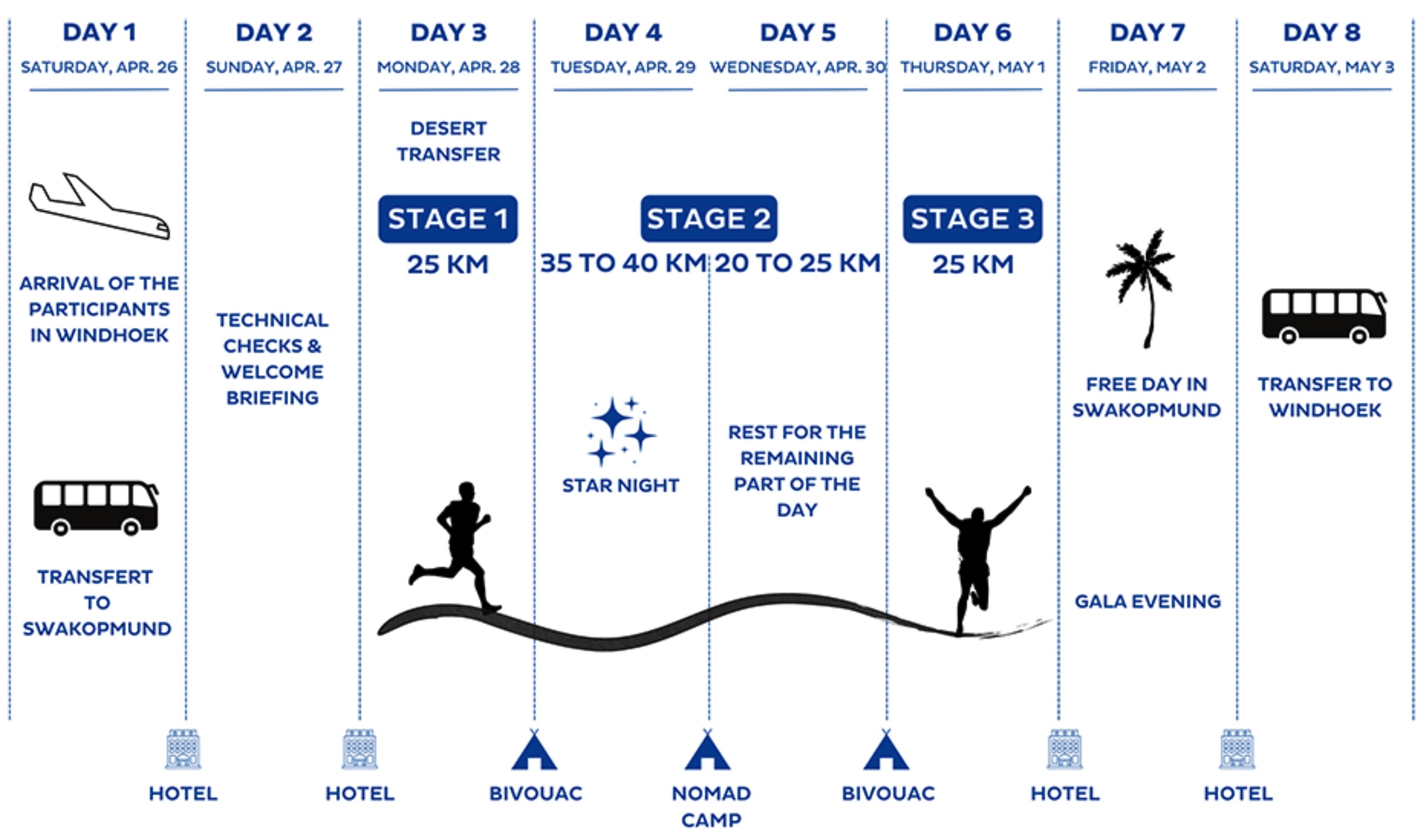
The race format will be as follows:
Stage 1 25 to 30km.
Stage 2 will be 45 to 55km’s, however, this distance will be split with an overnight star night. After the sleep, the remaining distance will completed on day 3 returning to bivouac. Typically, for MDS events, this day would be a complete rest day.
Participants will arrive in Windhoek Saturday April 26th, night in a hotel.
Technical checks and briefing April 27th, night in a hotel.
Stage 1 April 28th with bivouac night.
Stage 2 part 1 April 29th with star night.
Stage 2 part 2 April 30th with bivouac night.
Stage 3 May 1st and then overnight in hotel
Free day in Swakopmund and then awards/ gala dinner May 2nd
Transfer to Windhoek May 3rd and onward travel
NAMIB and the RAID
The oldest and driest desert in the world, the Namib is the perfect destination for the RAID concept. With dunes over 300m high, this environment is one of the most impressive in the world. Known for incredible diversity, intense heat, strong winds, demanding terrain, flora and fauna, RAID will be a unique challenge. An ability to move well in soft sand will be an integral part of the challenge, needless to say, gaiters will be an essential item. Add self-sufficiency, a star night, minimal marking and just water stations, RAID is going to be something very special.
What is the MDS?
The MARATHON DES SABLES is a unique adventure, shared by thousands of enthusiasts since 1986.
To differentiate the full distance race of 250km’s, Marathon des Sables will now be known at MDS The Legendary, reflecting the legendary status of this iconic event and its long history as a pioneer of the stage racing and multi-day format.
The ‘HMDS’ format whill still follow the same protocols as before but has now dropped the ‘half’ title and moving forward, events will be called MDS Jordan, MDS Morocco, MDS Cappadocia and so on.
The MDS events are a one-week sporting adventure that combines the discovery, travel, meeting new people and physically challenging yourself in a self-sufficient manner.
Since 1986, the MARATHON DES SABLES has crossed the world’s most stunning deserts with several unique concepts: the MARATHON DES SABLES THE LEGENDARY (252 km in the Sahara Desert in Morocco), the MARATHON DES SABLES (70, 100, or 120 km spread over 3 stages), and the new 2024 concept, the MDS TREK (4 stages with a total distance of up to 120 km), offering an accessible adventure with optimal comfort. These international events have seen over 50 editions in various countries such as Morocco, Fuerteventura Island, Peru, Jordan, Turkey, and offer adventures that combine running/hiking in the desert with tourism.
MDS Peru returns in 2025. I was at the original full-distance event in 2017, it was clear then that Peru and the Ica desert was a very special place.
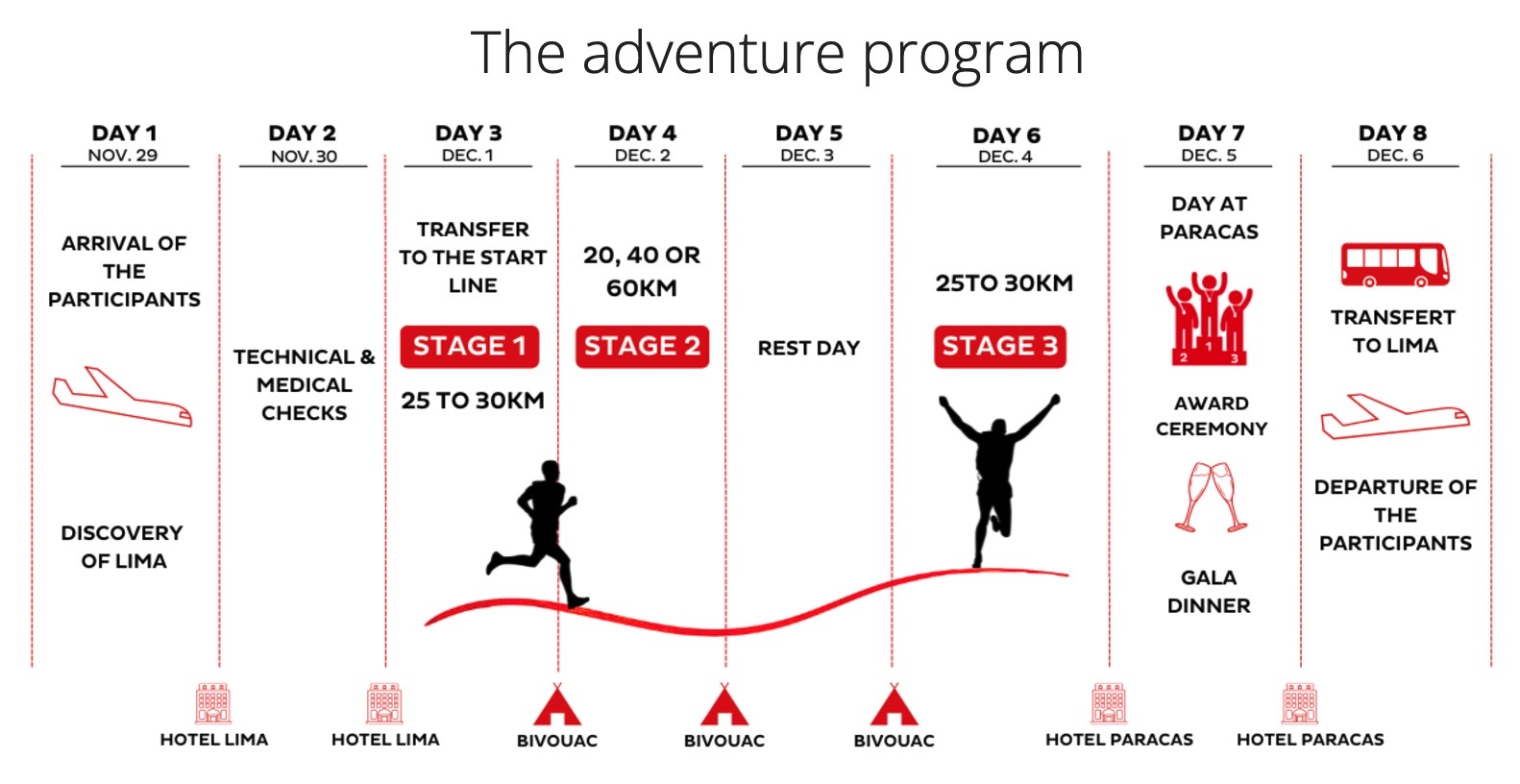
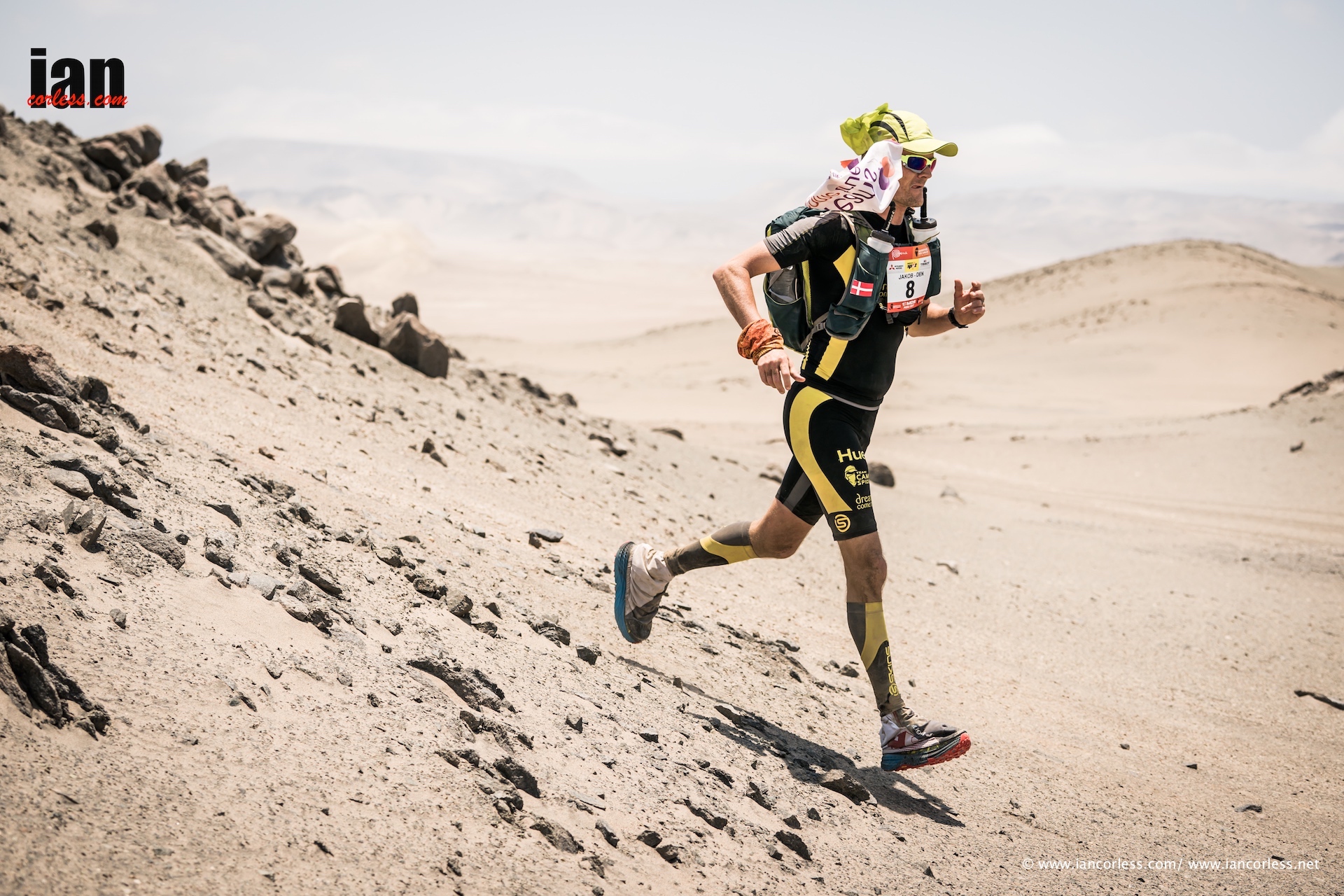
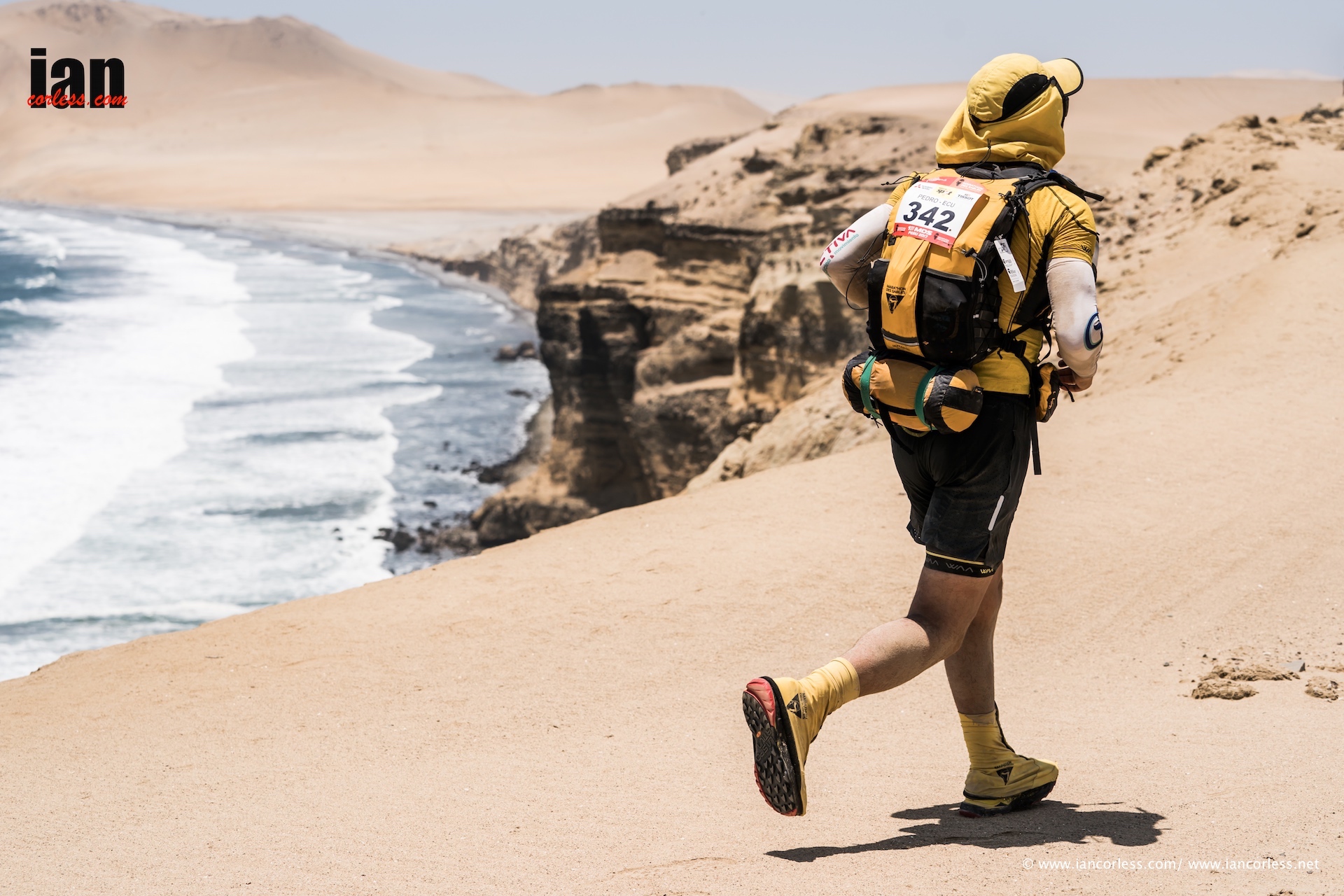
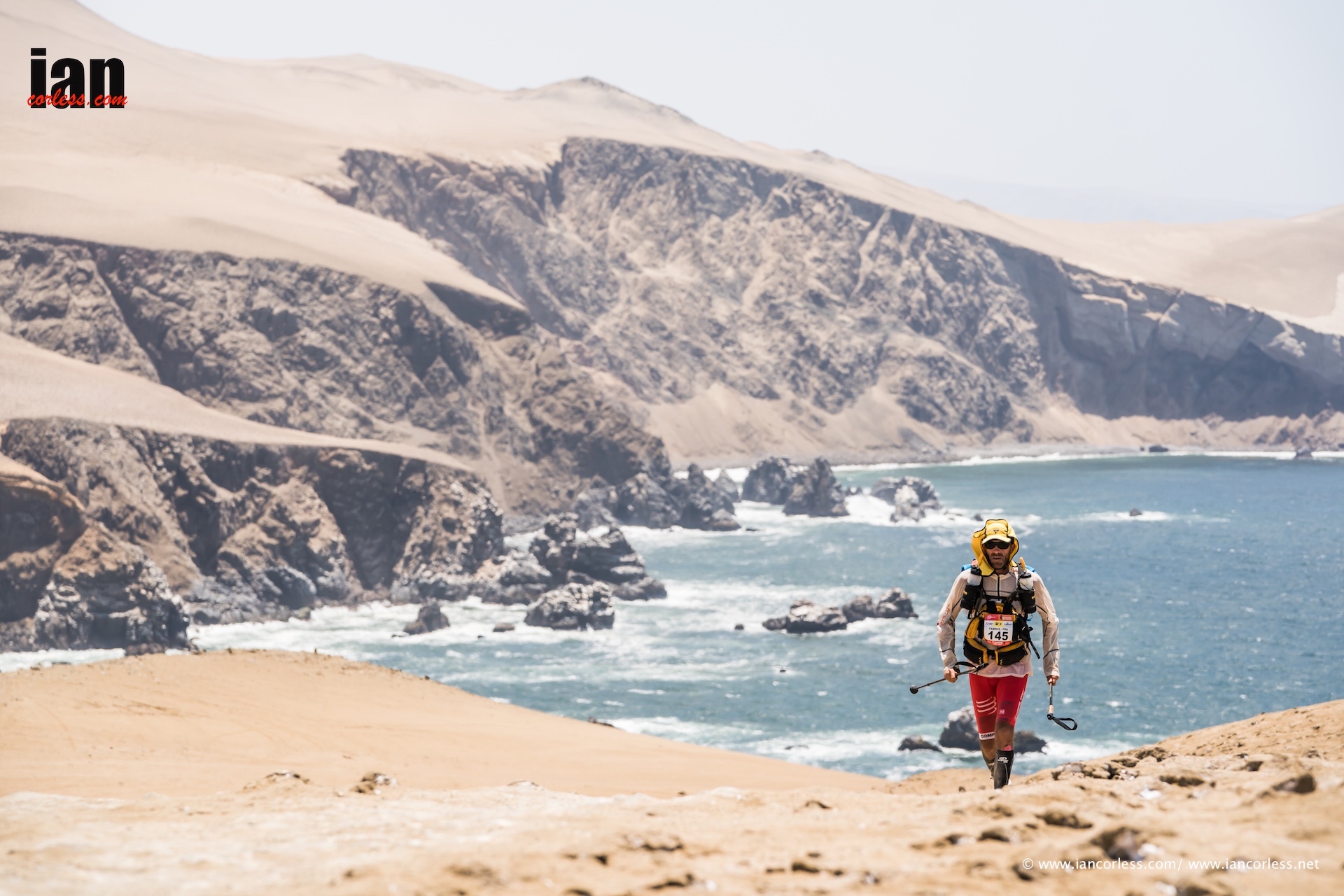
The race returned in the ‘HMDS’ format in 2028, 2019 and 2022. Now, all HMDS events rebranded as MDS, we eagerly anticipate the 2025 MDS Peru that will take place from November 29th to December 6th, what better way to kick-off early Christmas celebrations and end a year!
Participants will arrive in Lima on November 29th (or before) and then stay in Lima for 2 nights at an official race hotel.
November 30th will have technical and medical checks, the protocol identical to other MDS events.
On the morning of Dec 1st, an early morning transfer to the start of stage 1.
As with all MDS events, the race will take place over 3 stages will last 4 days.
Day 1/ Stage 1 will be 25 to 30km.
Day 2/ Stage 2 offer three distance options, 20, 40 or 60km.
Day 3 is a rest day.
Day 4 will see the commencement of the race with Stage 3, again, 25 to 30km and then two overnight stays at Hotel Paracas.
The following day is a day of leisure and then the awards ceremony and gala dinner.
Dec 6th will see participants return to Lima and onward travel.
A key consideration for participants, if Peru is on your wish list, due to the complexities of travel and logistics, Peru will not be a yearly MDS destination, so, now is the time to sign up and experience the magic this destination offers.
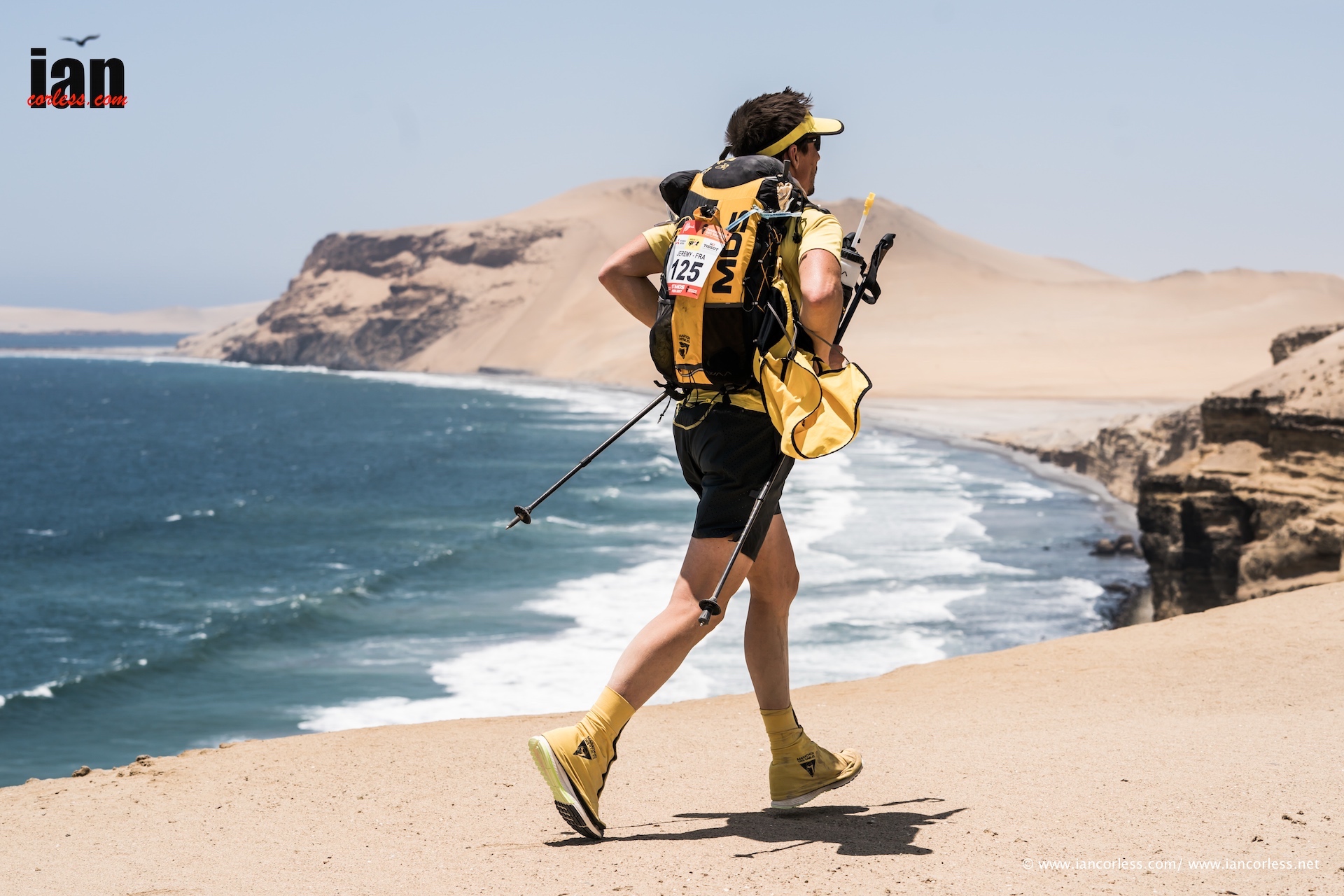
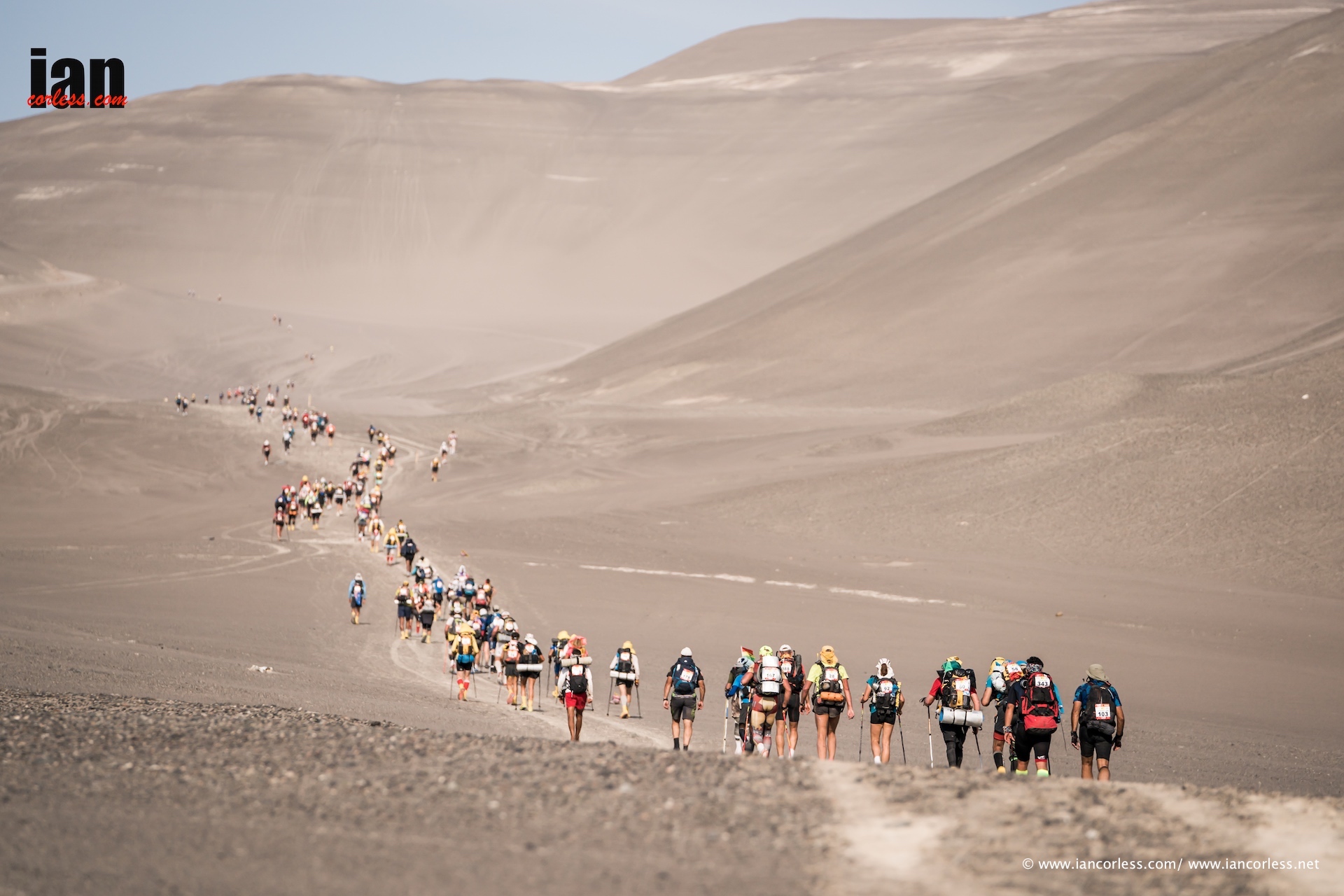
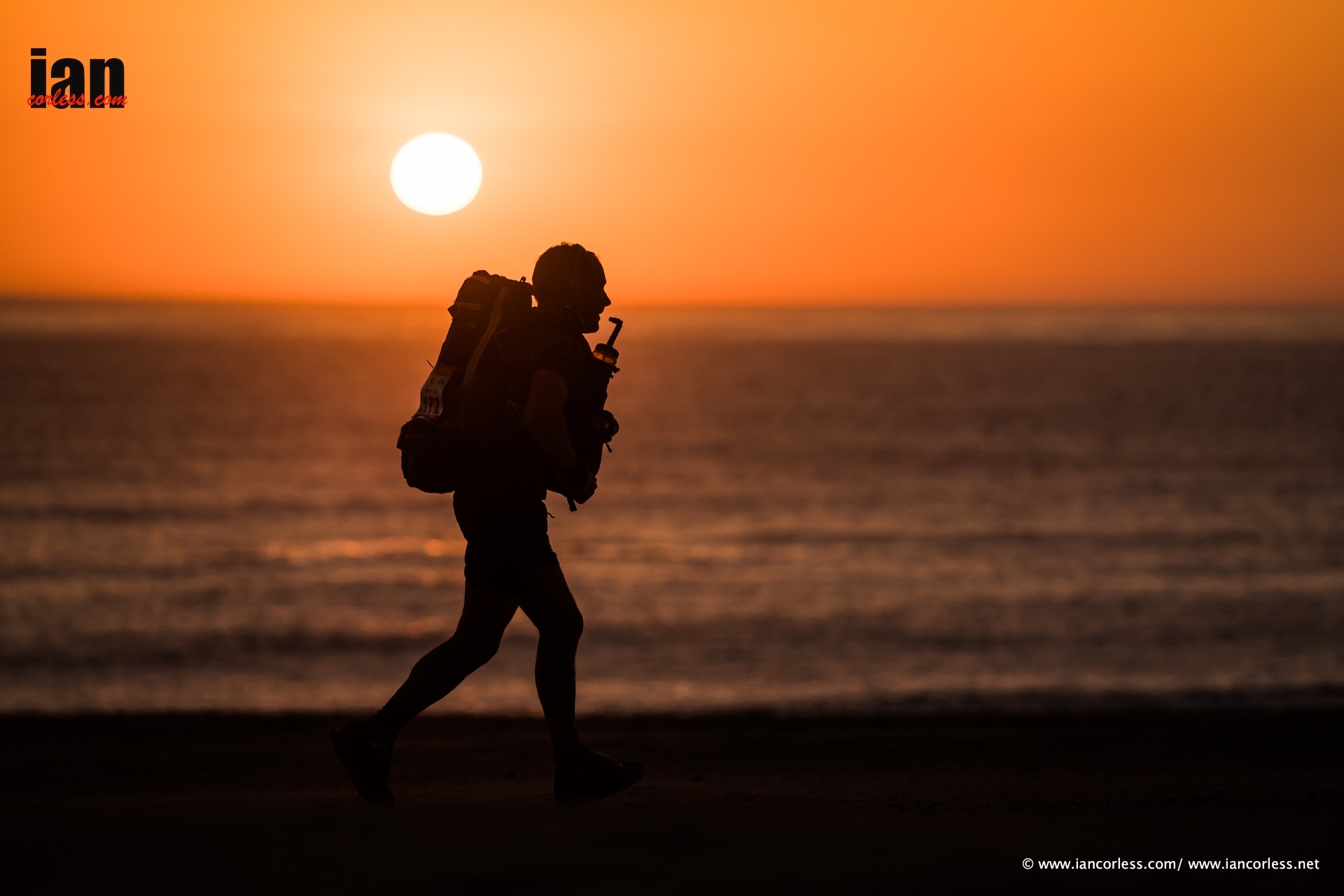
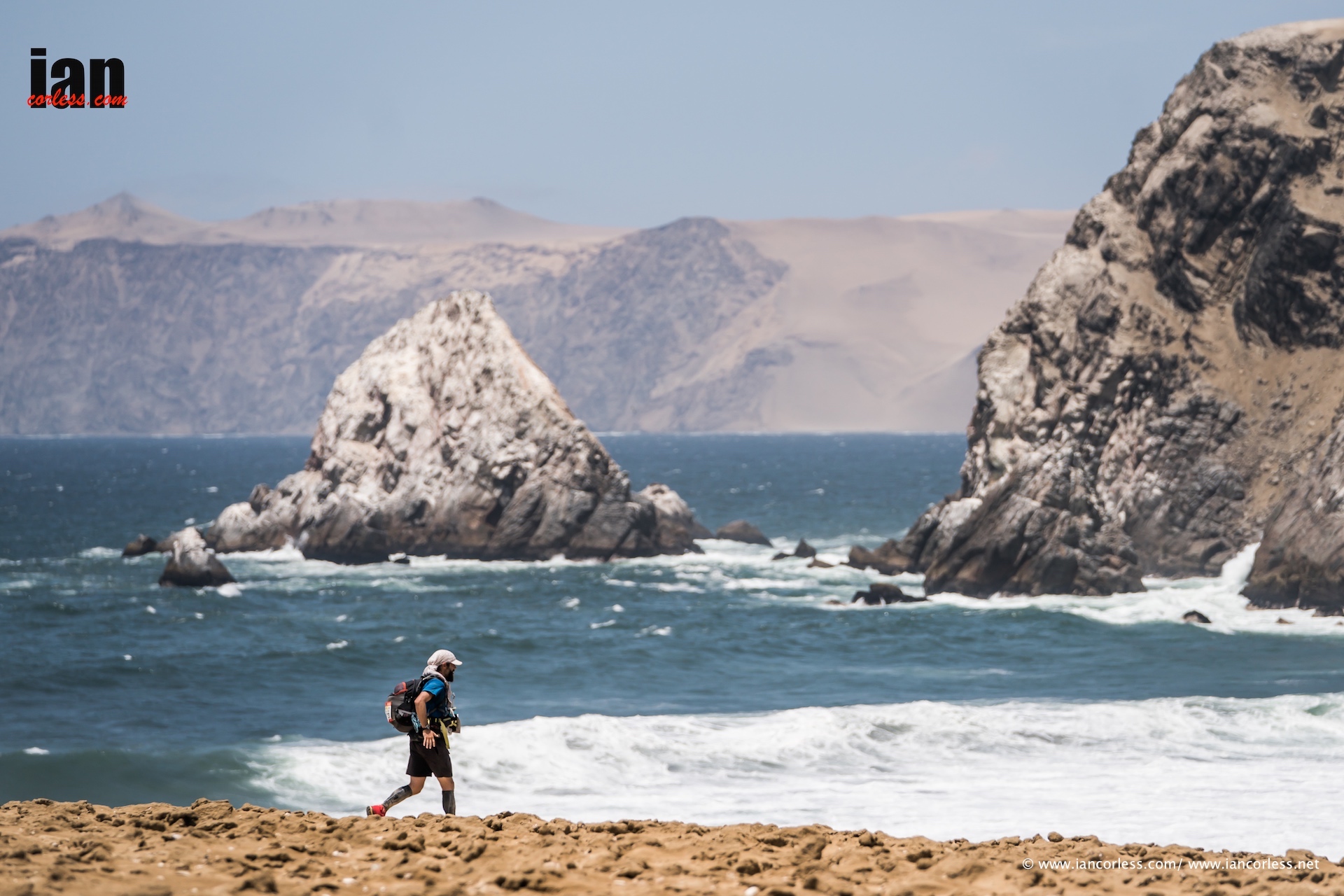
The Ica desert is unique, isolated from any civilization, this is a week of total disconnection. As bivouacs go, the one at MDS Peru is arguably the most impressive and unique, located on the edge of the Pacific Ocean.
Should you require to arrive before or extend your Peru adventure, there will be the option to explore Machu Picchu, the historic city of Cusco and the Mountain of 7 Colours with MDS partner Coltur.
MDS Peru will open for entry on Dec 11th at midday CET. Importantly, MDS have stipulated that a minimum sign-up of 200 participants will be required for the 2025 event to proceed, so, don’t hesitate to join this unique adventure of a lifetime. For the first 100 to sign-up, a discount is available, 2350 euro instead of 2650 euro.
The MARATHON DES SABLES is a unique adventure, shared by thousands of enthusiasts since 1986.
To differentiate the full distance race of 250km’s, Marathon des Sables will now be known at MDS The Legendary, reflecting the legendary status of this iconic event and its long history as a pioneer of the stage racing and multi-day format.
The ‘HMDS’ format whill still follow the same protocols as before but has now dropped the ‘half’ title and moving forward, events will be called MDS Jordan, MDS Morocco, MDS Cappadocia and so on.
The MDS events are a one-week sporting adventure that combines the discovery, travel, meeting new people and physically challenging yourself in a self-sufficient manner.
Since 1986, the MARATHON DES SABLES has crossed the world’s most stunning deserts with several unique concepts: the MARATHON DES SABLES THE LEGENDARY (252 km in the Sahara Desert in Morocco), the MARATHON DES SABLES (70, 100, or 120 km spread over 3 stages), and the new 2024 concept, the MDS TREK (4 stages with a total distance of up to 120 km), offering an accessible adventure with optimal comfort. These international events have seen over 50 editions in various countries such as Morocco, Fuerteventura Island, Peru, Jordan, Turkey, and offer adventures that combine running/hiking in the desert with tourism.

































 IAN CORLESS