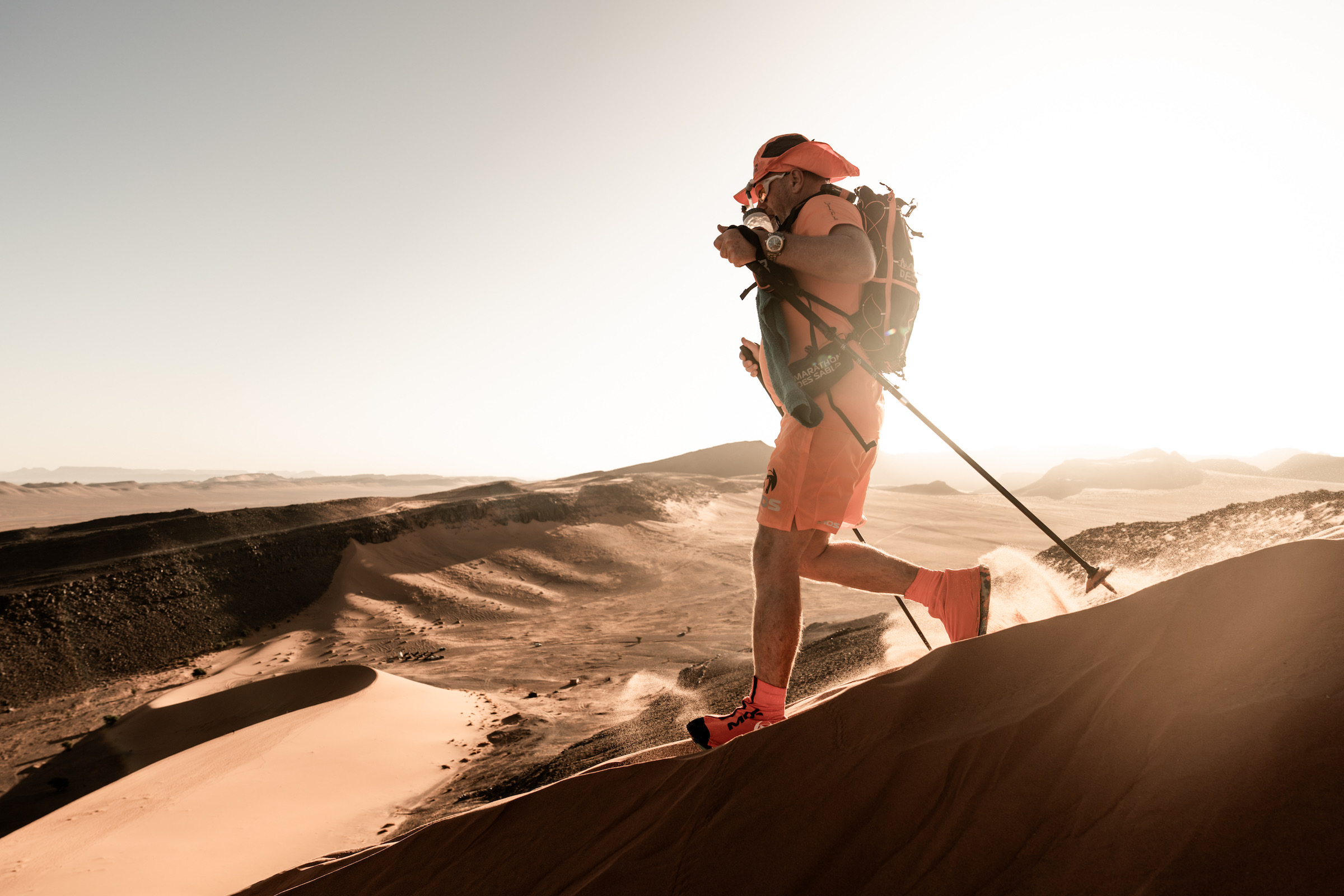
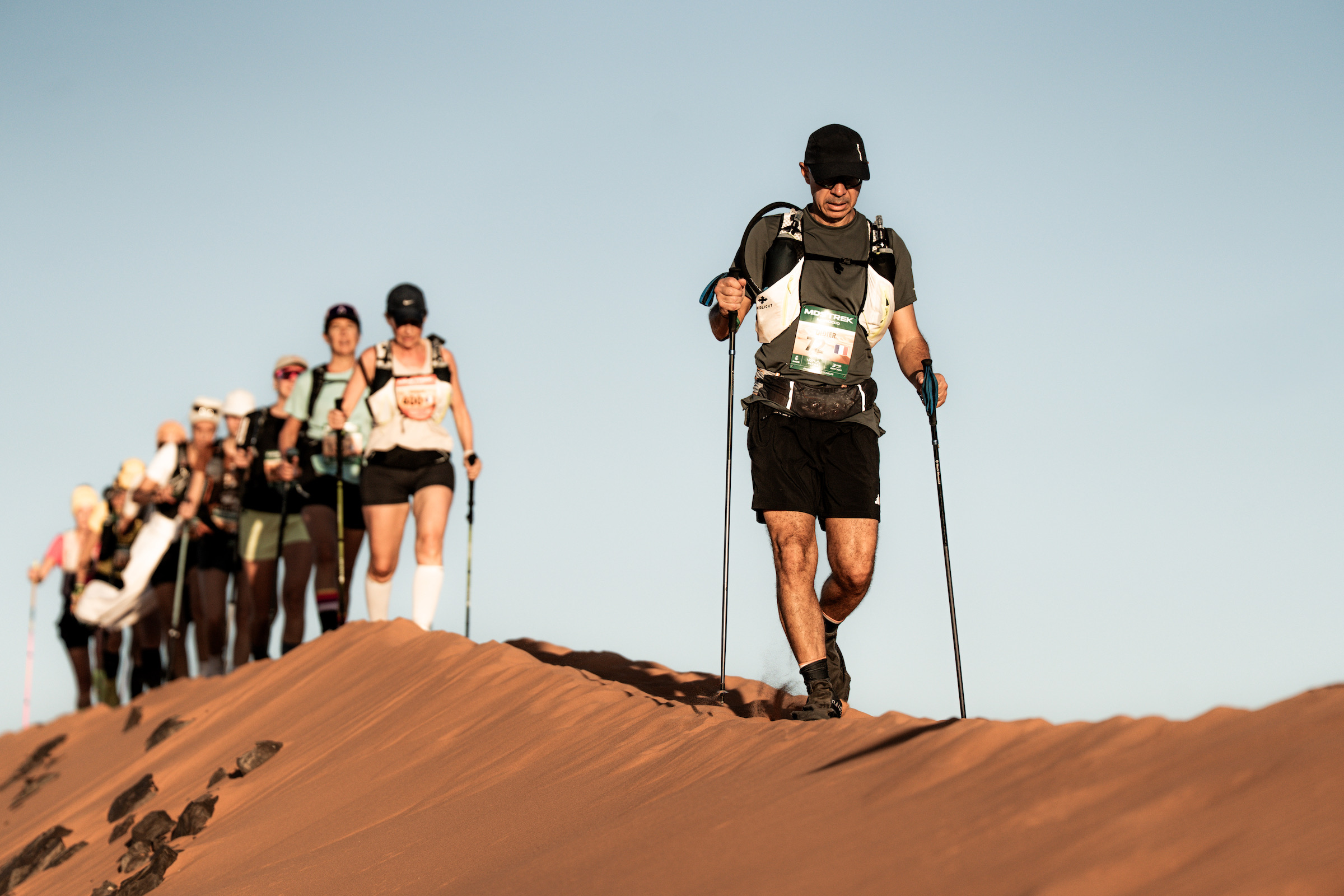
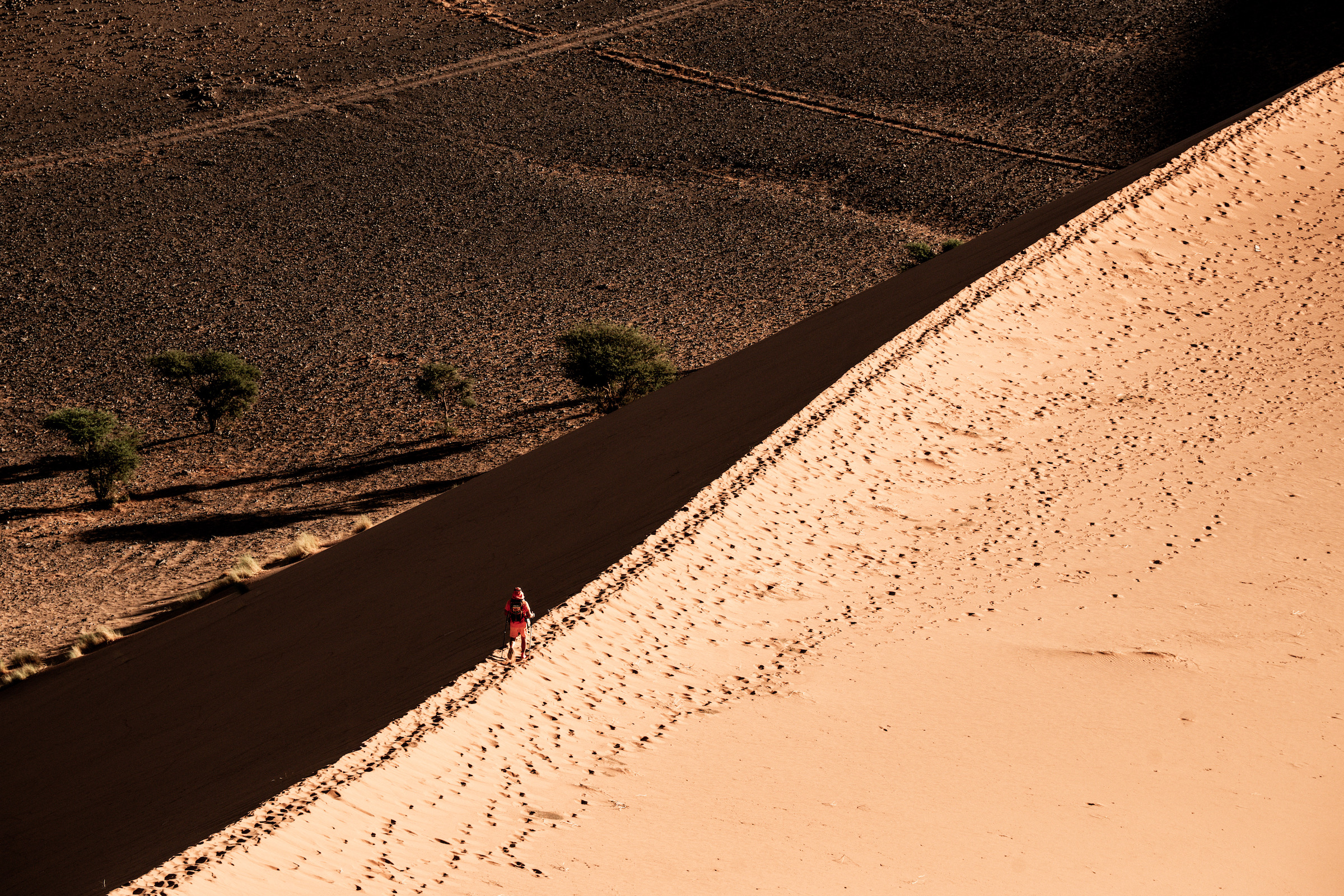
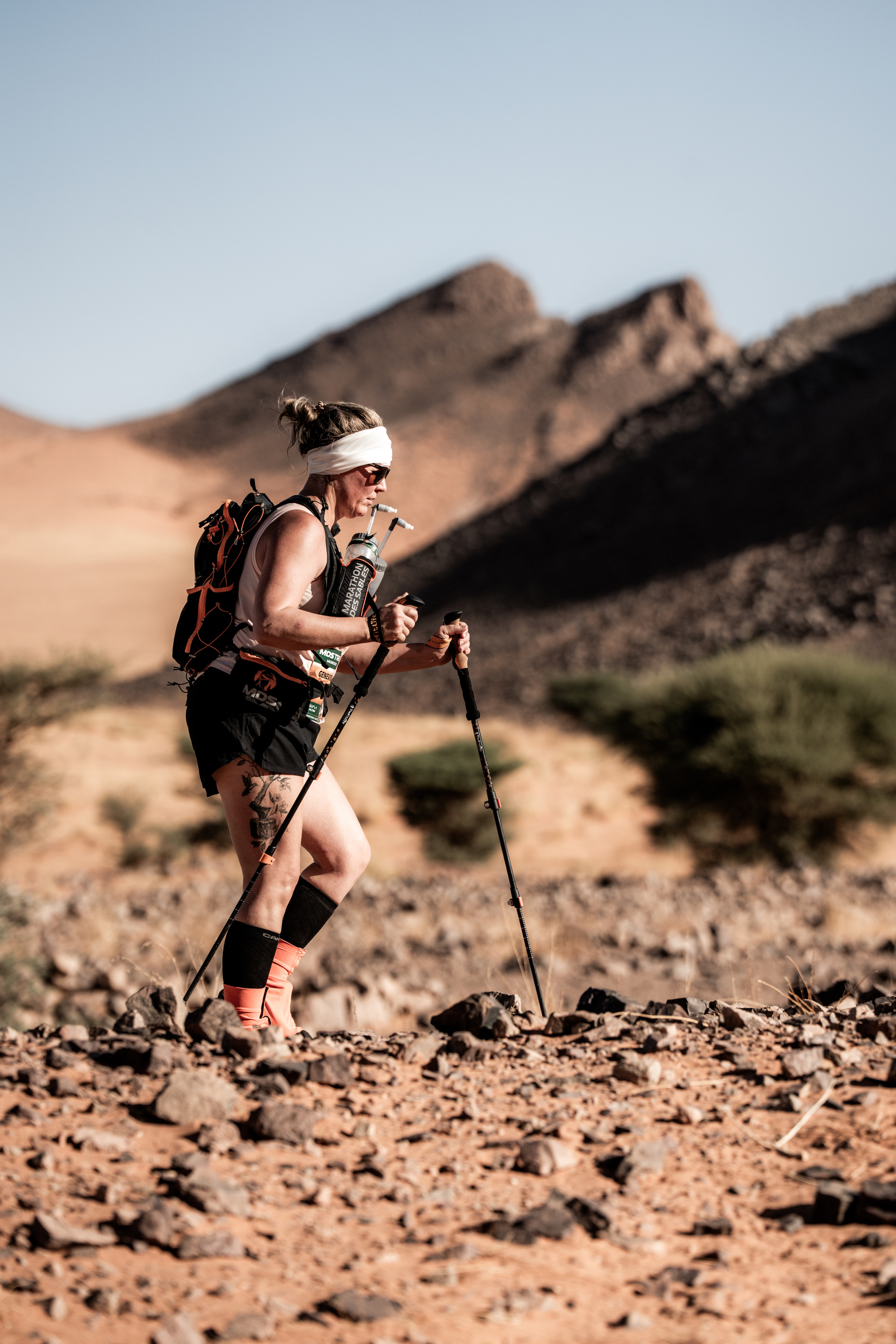
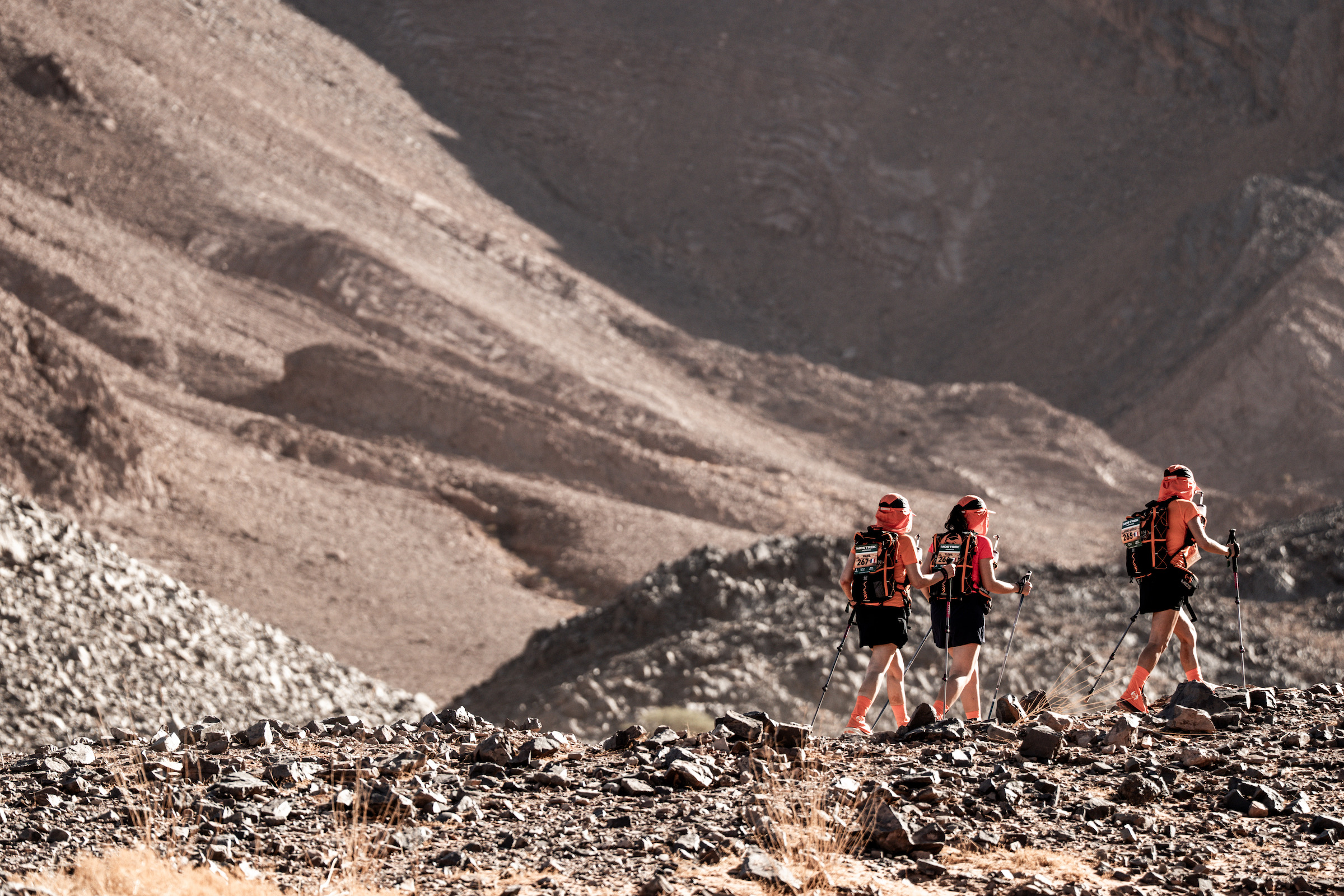
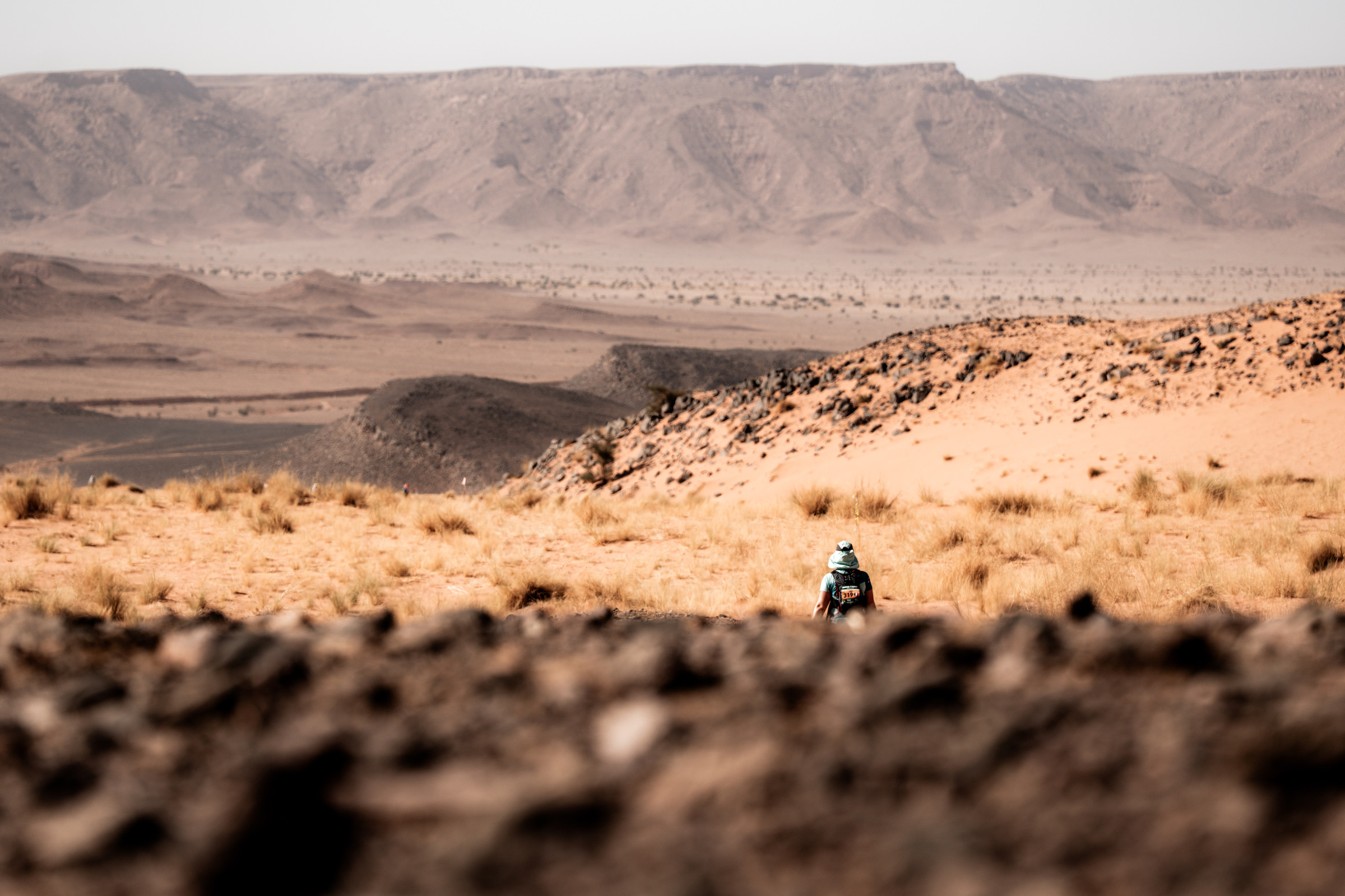
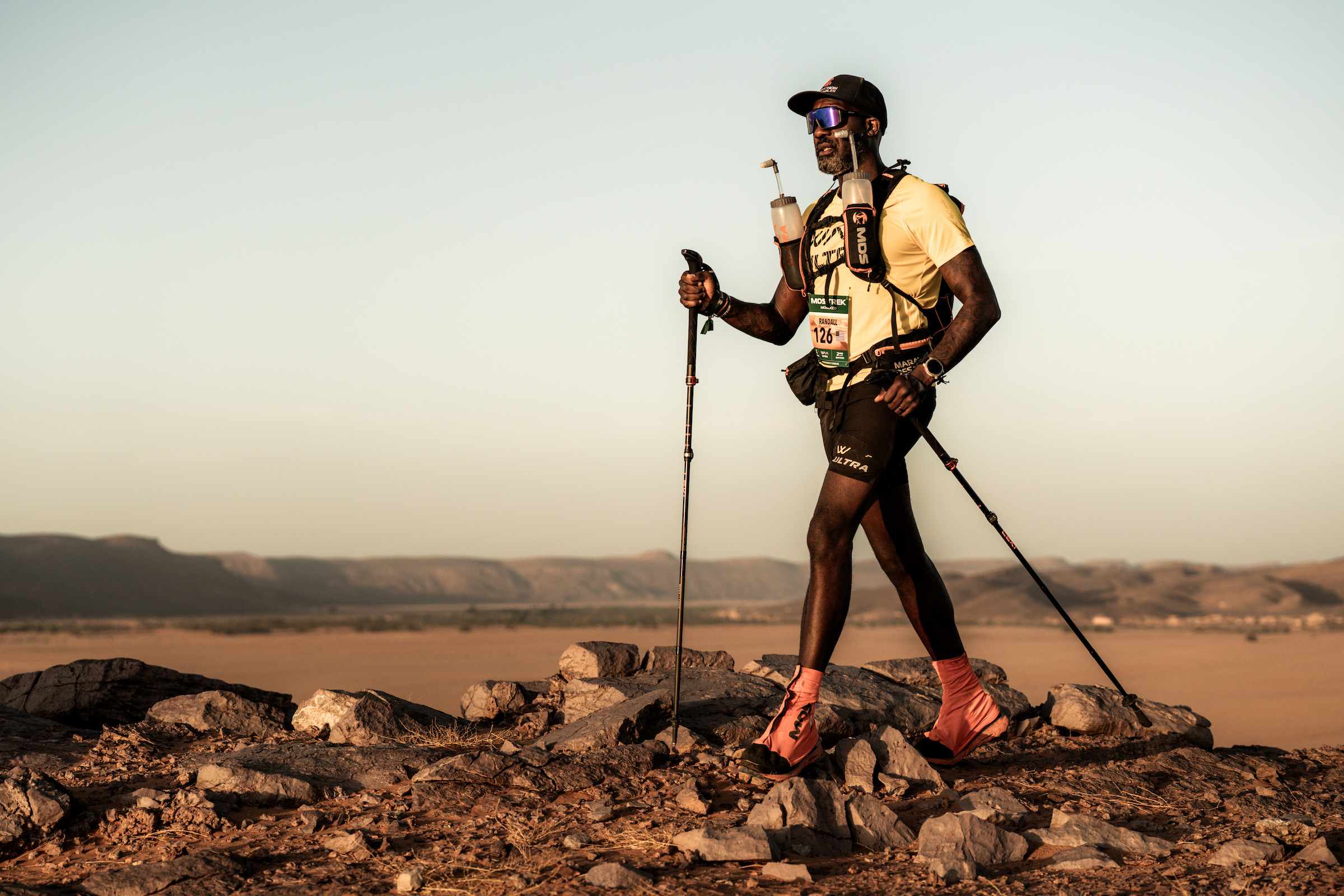
Stage 2 of MDS TREK Morocco was short on distance, 11.7km or 15km, but packed with everything that makes this trek unforgettable: surreal landscapes, emotional highs, and the raw beauty of the desert revealed under first light.
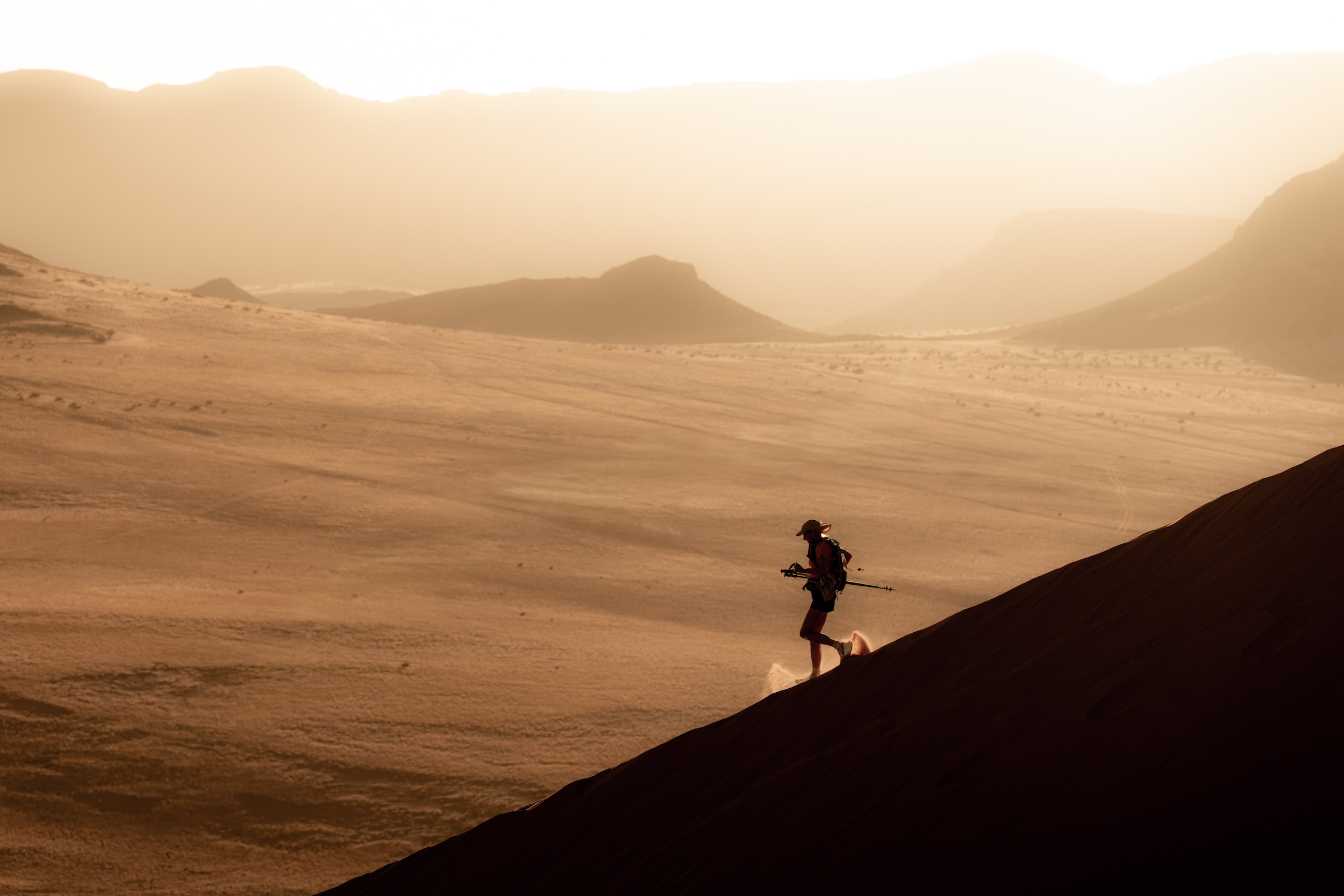
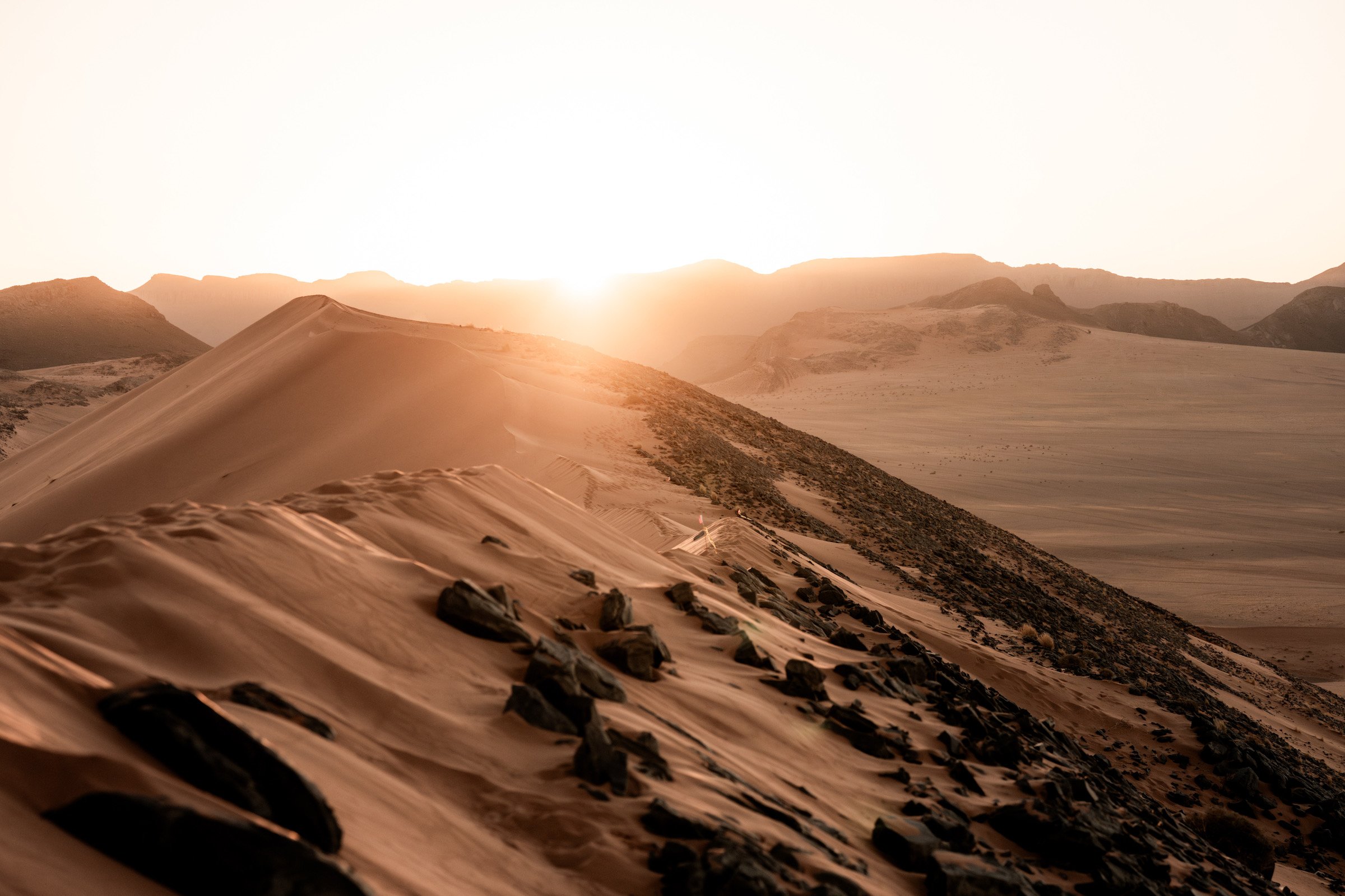
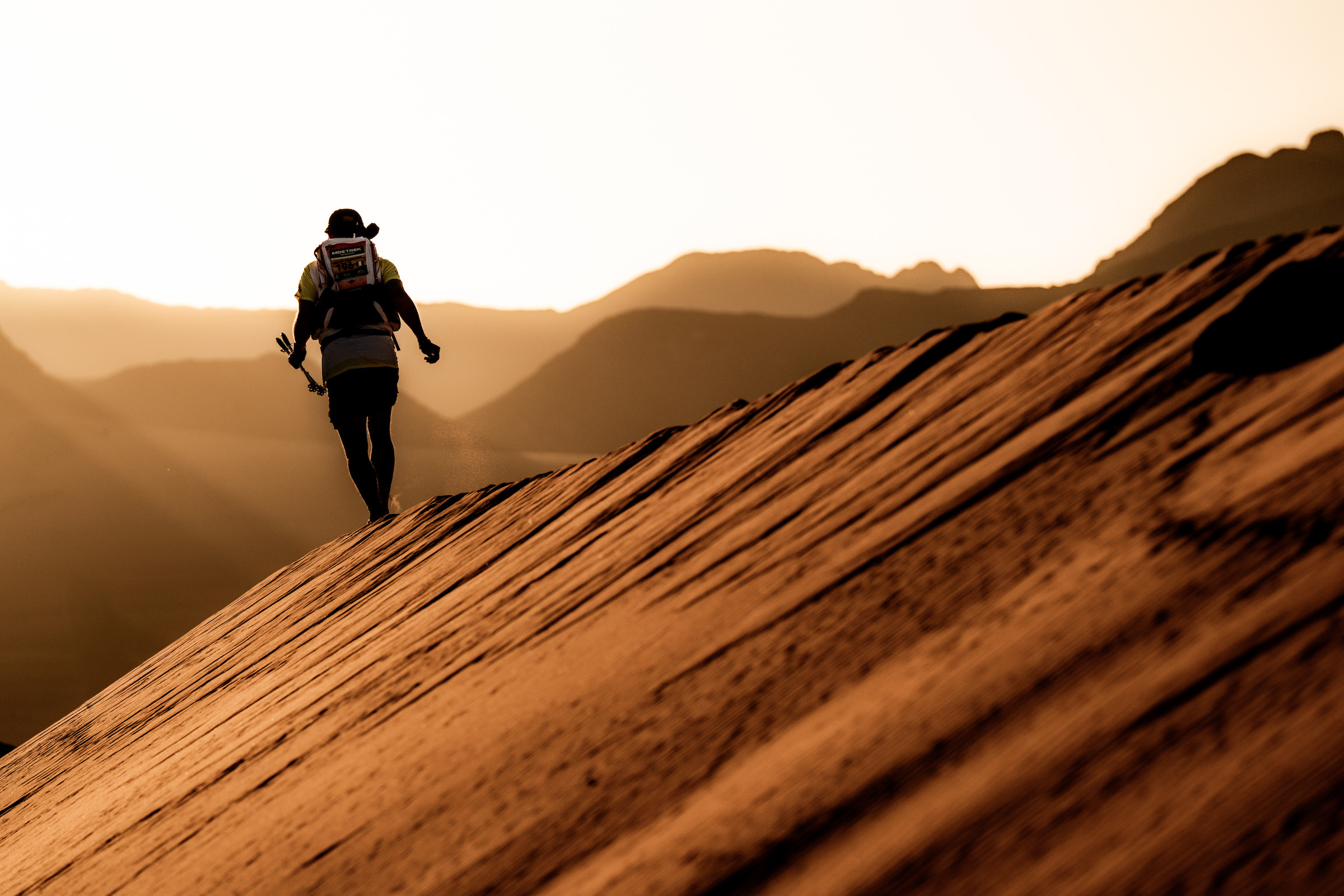
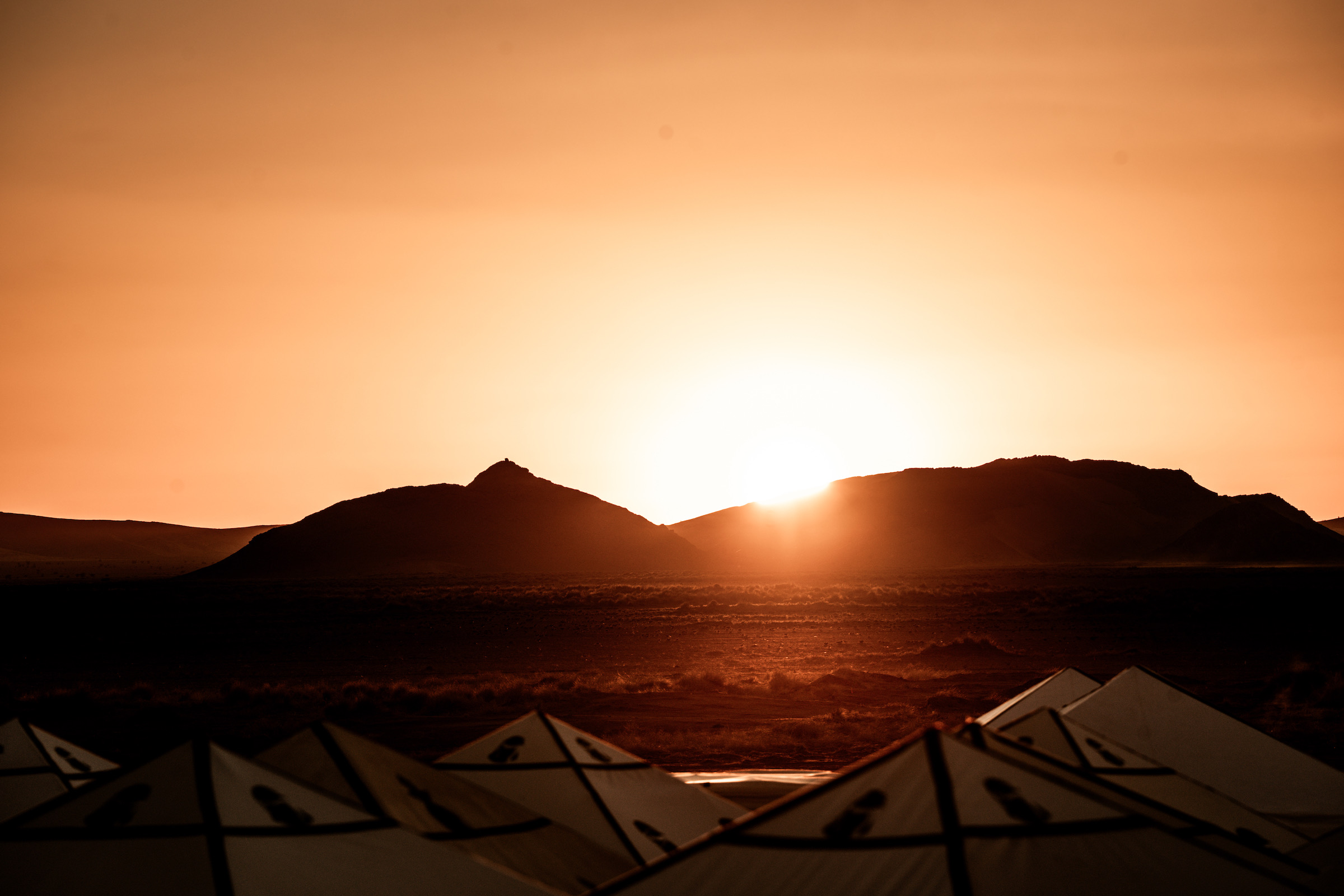
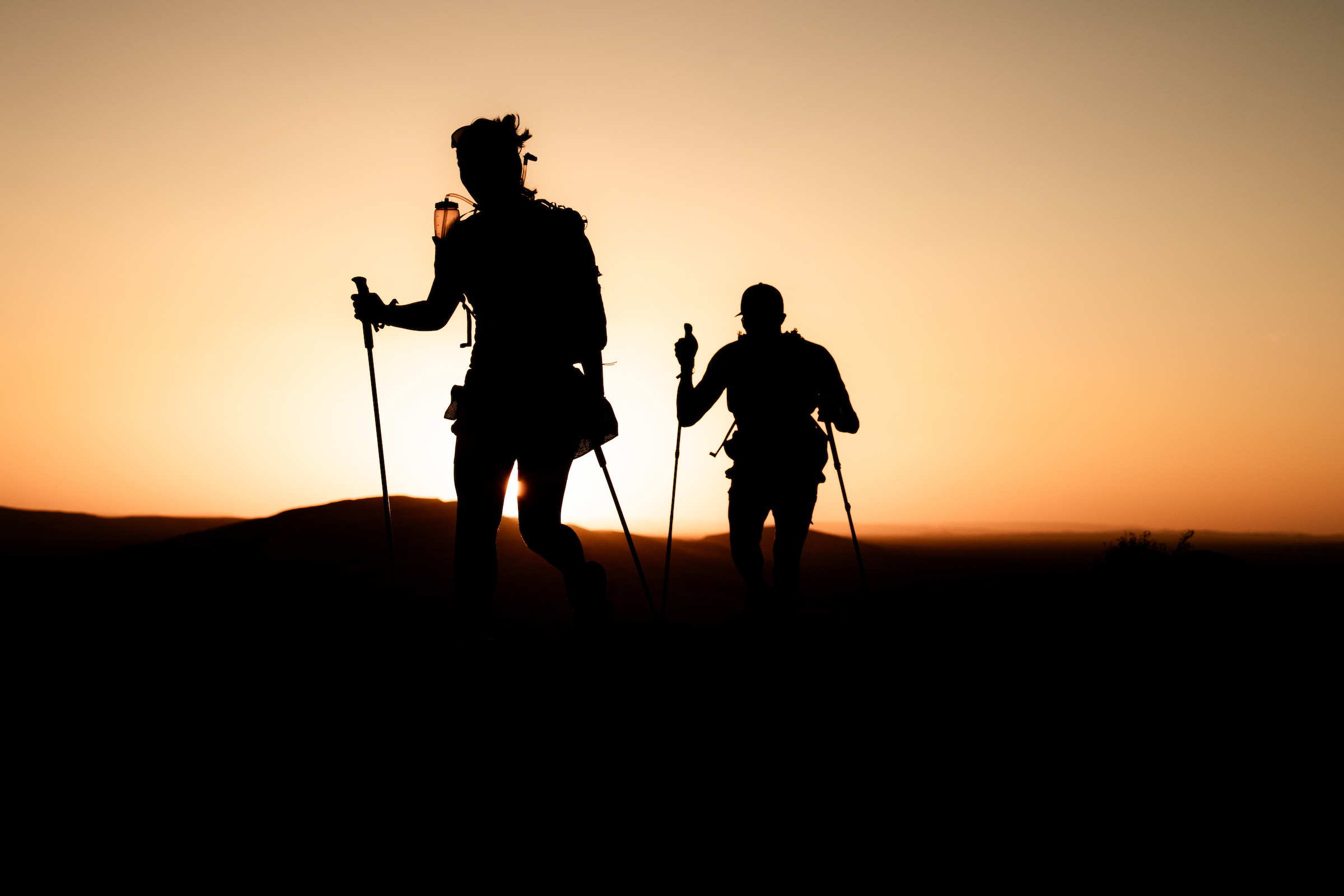
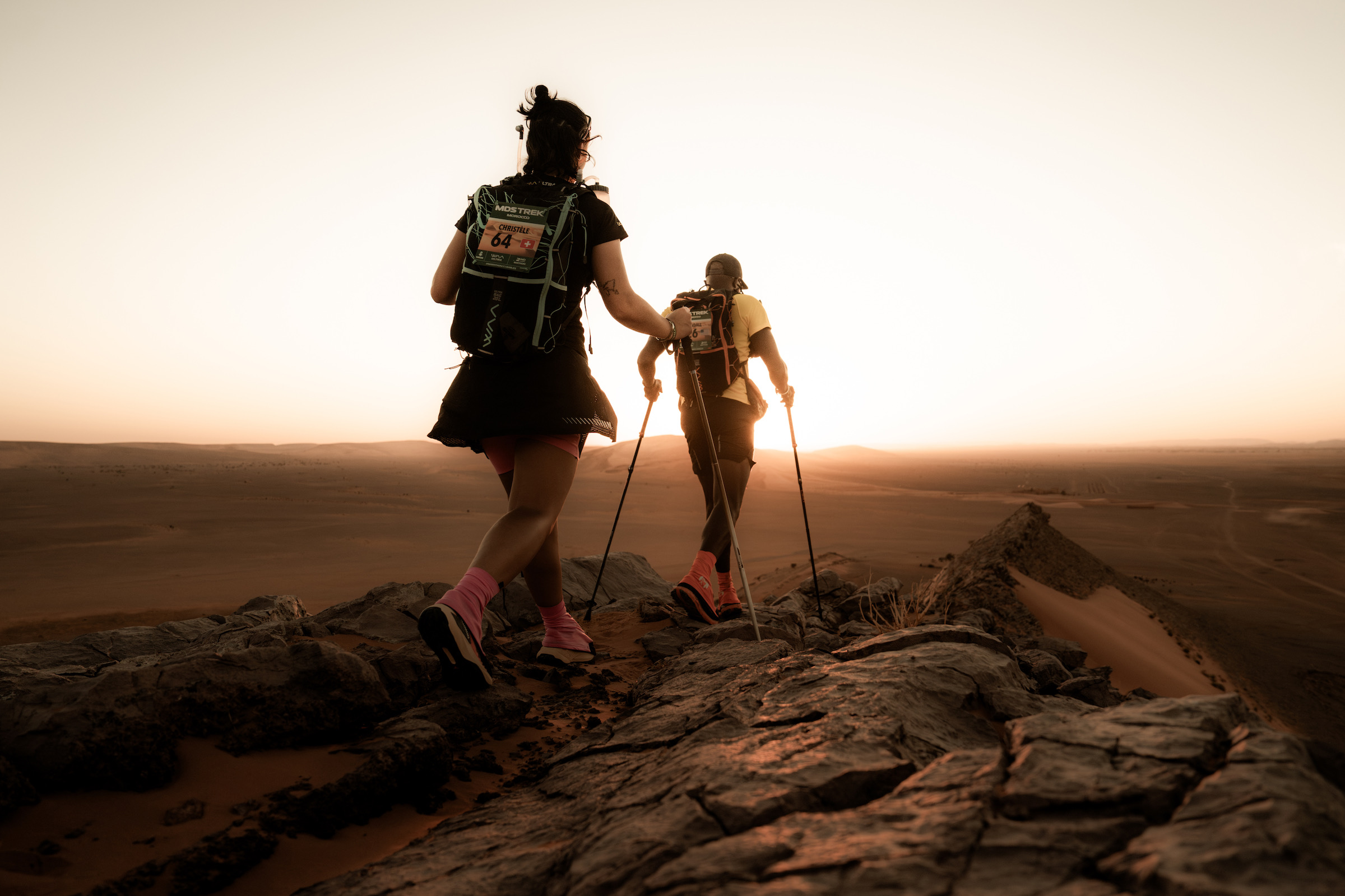
The day began with the kind of sunrise that stops you in your tracks. As the first rays hit the dunes, the Sahara shifted from cool blue shadows to warm, golden brilliance.
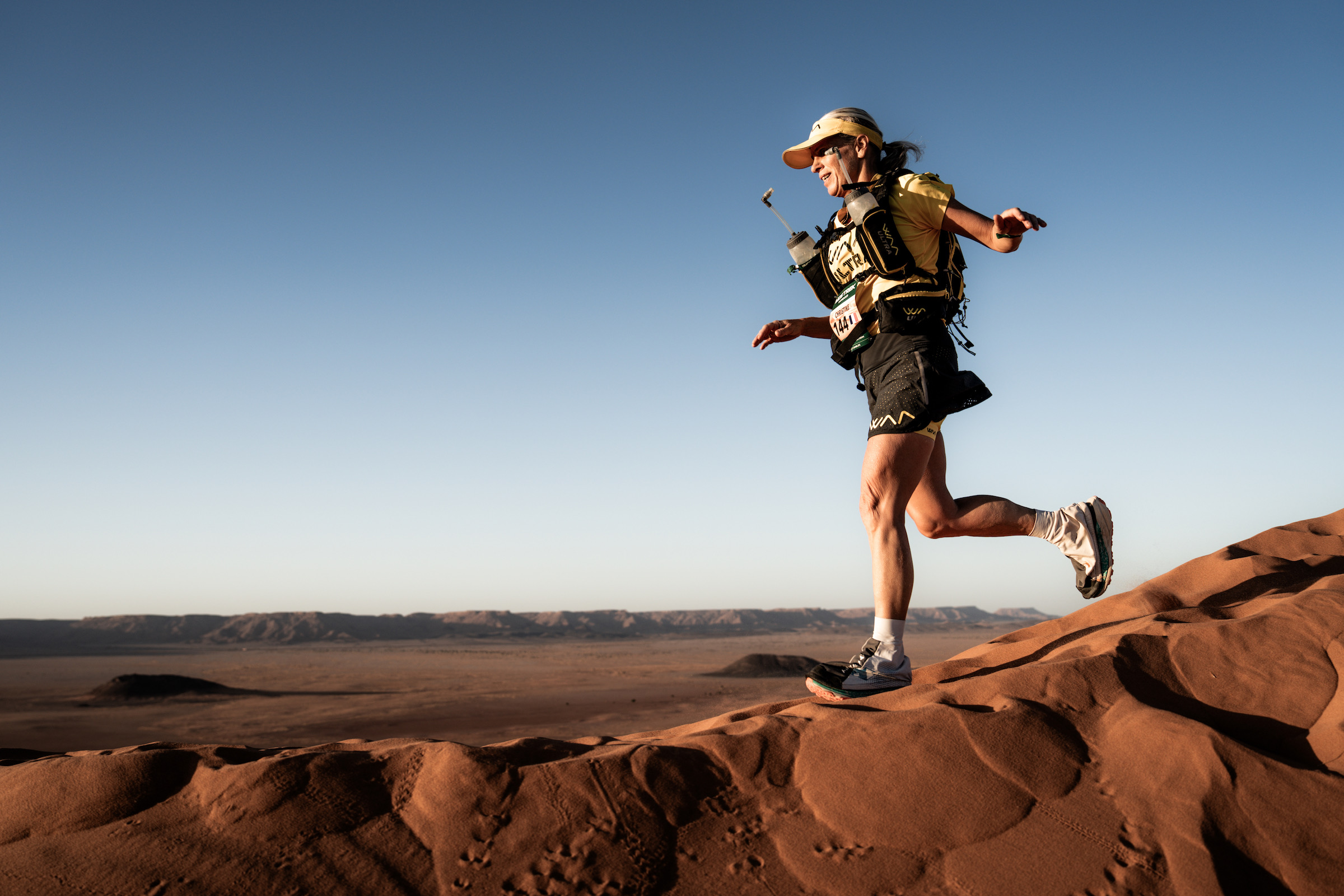
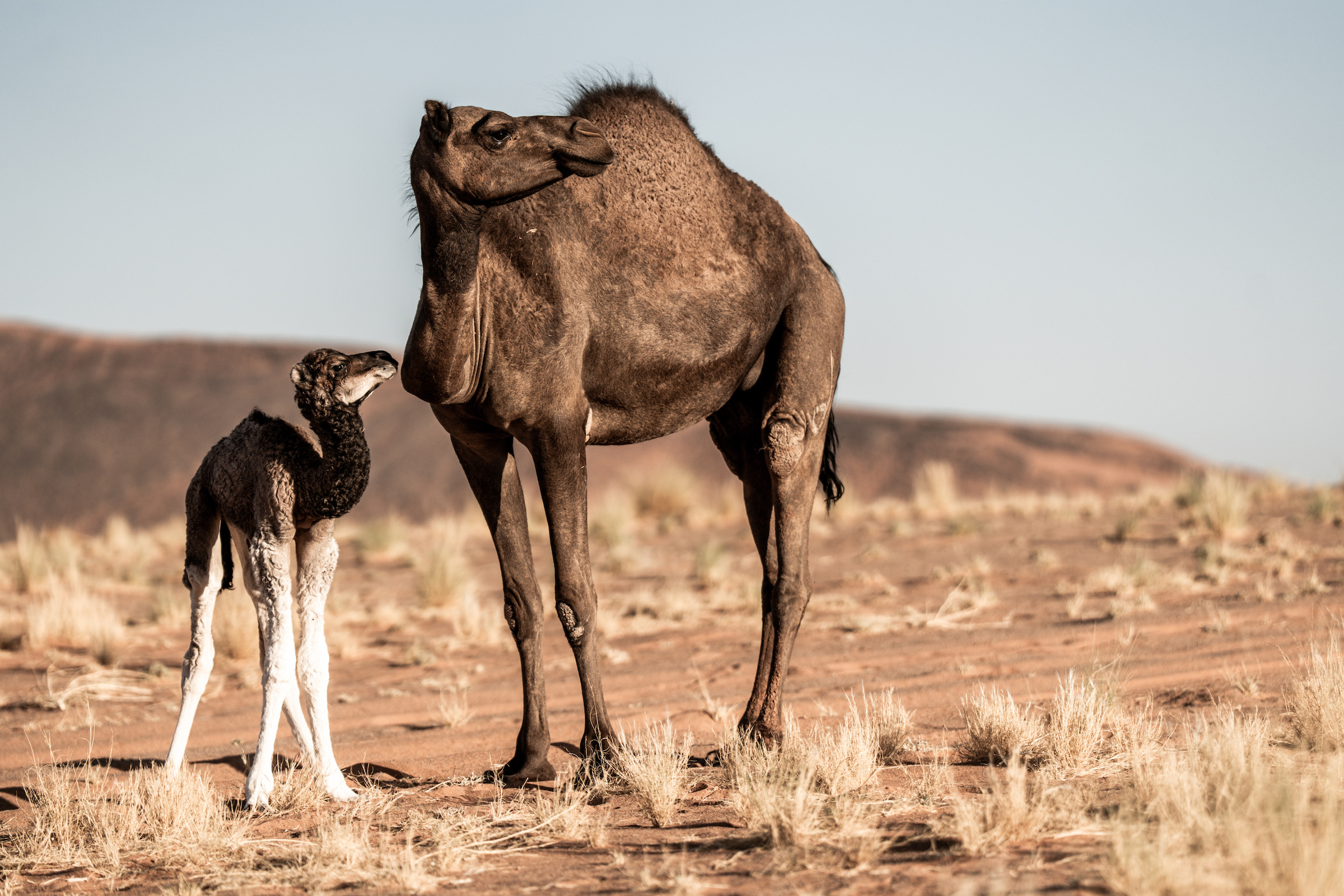
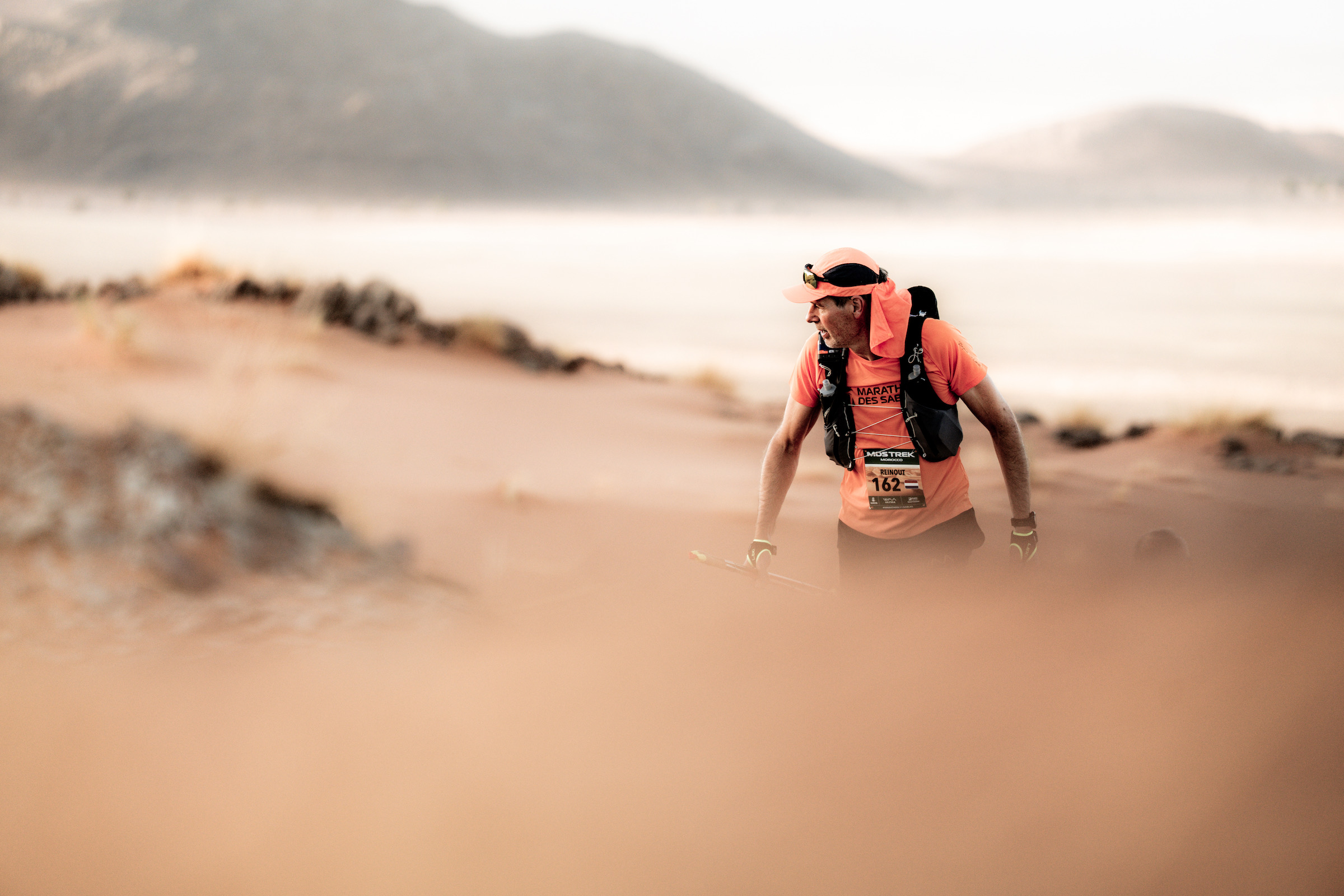
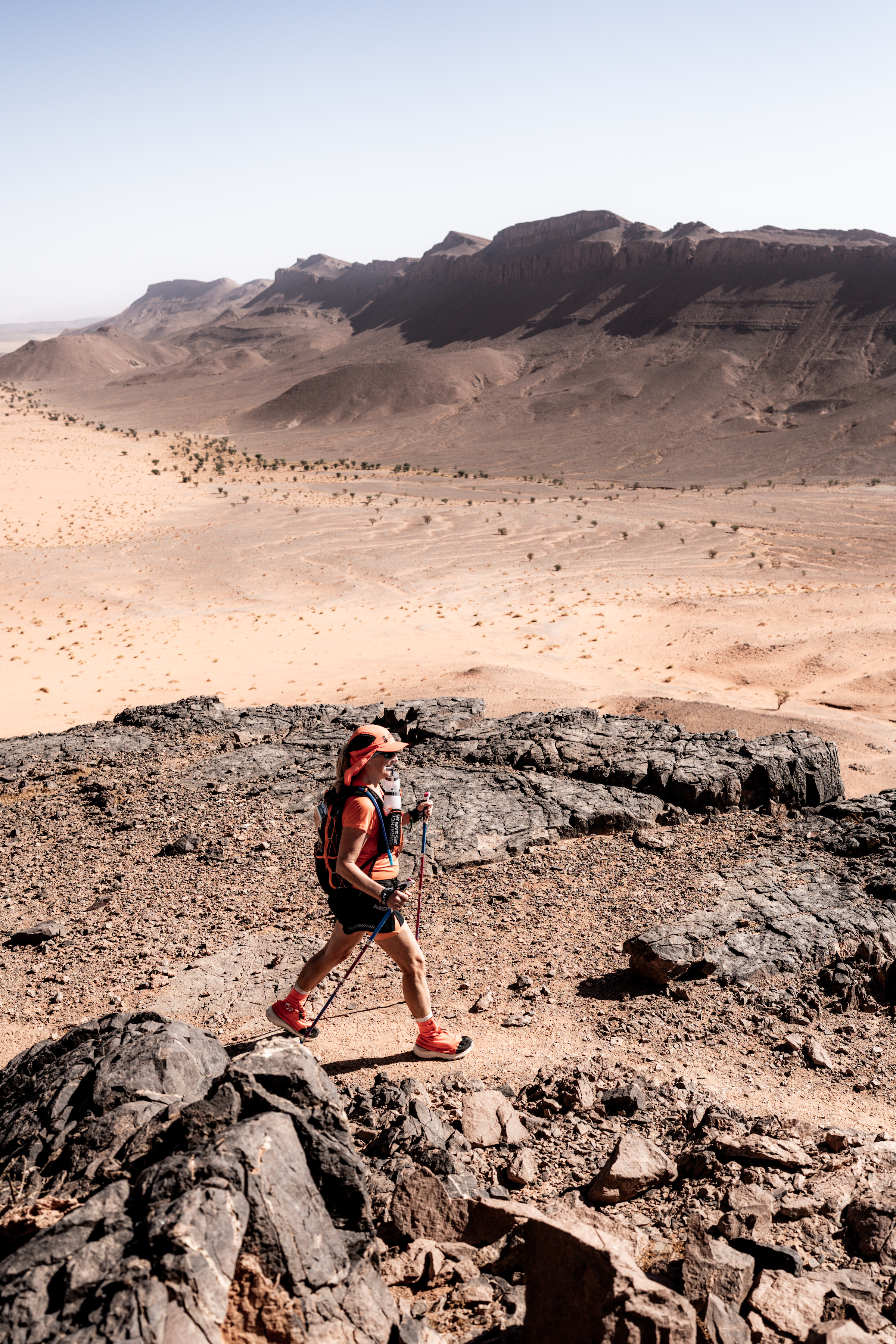
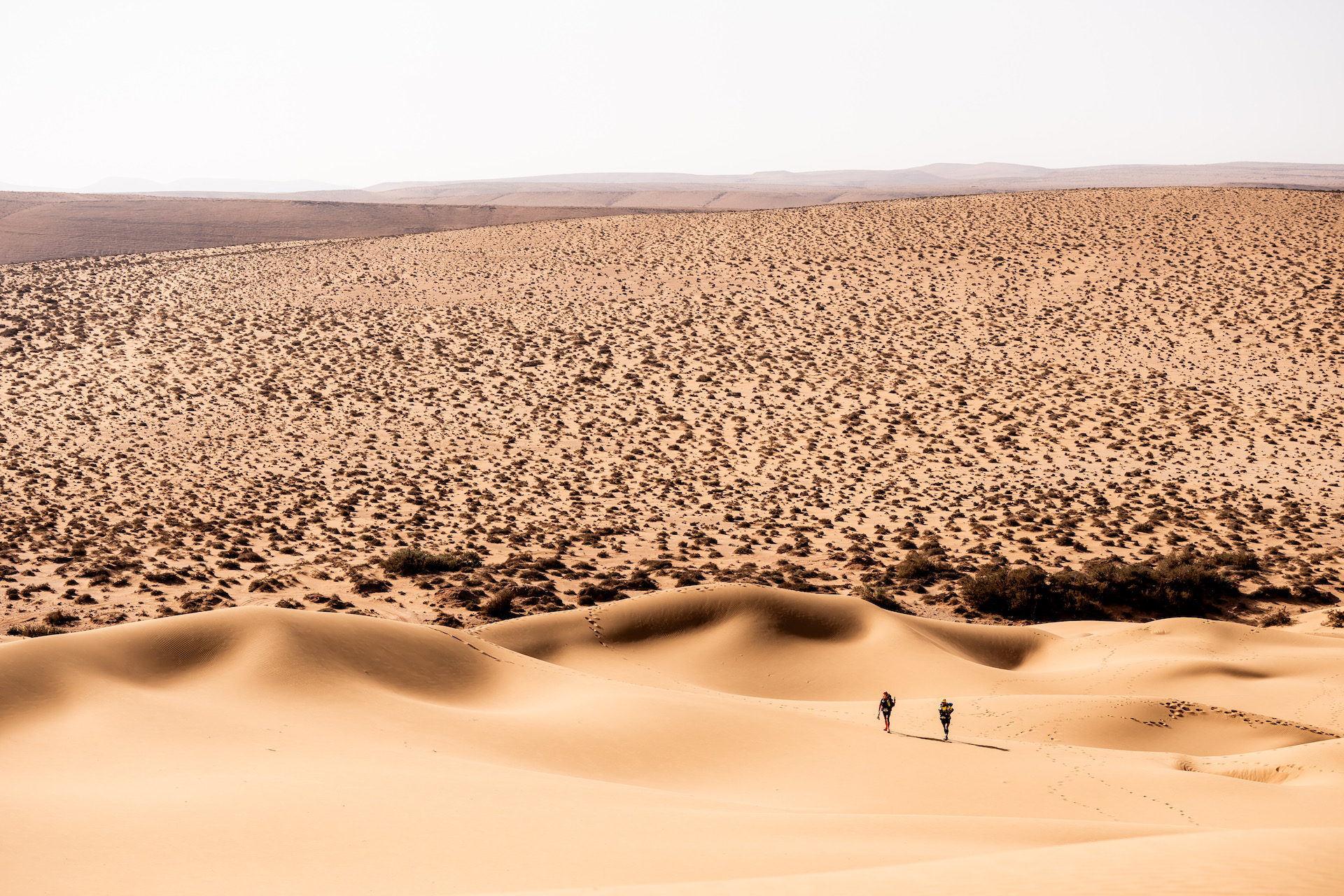
The route kicked off along a dramatic ridge, a high line with sweeping views in every direction, one of the most stunning stretches in MDS history. Sand seas rolled endlessly below, broken only by the occasional rocky outcrop or camel track winding off into nowhere.
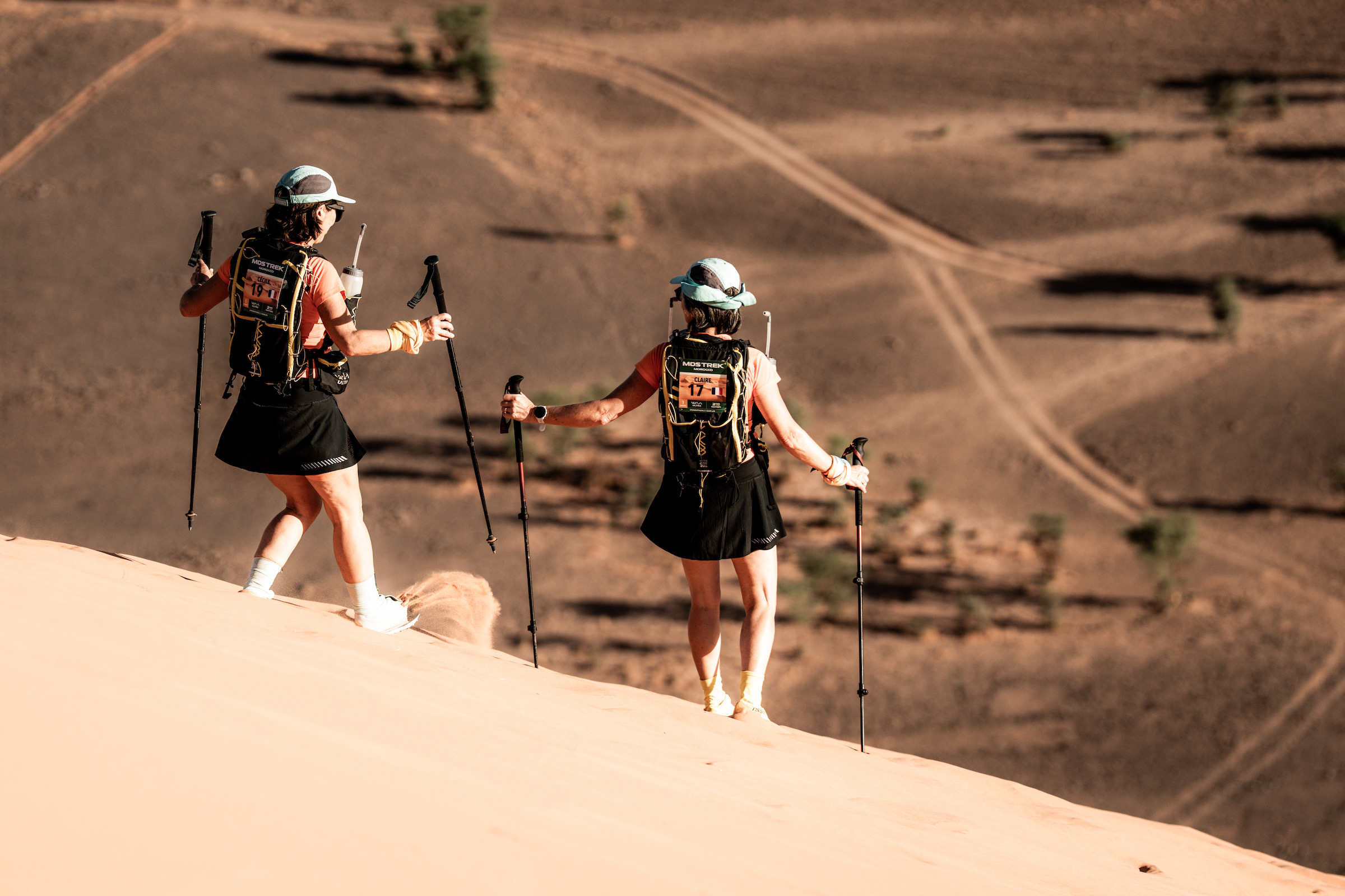
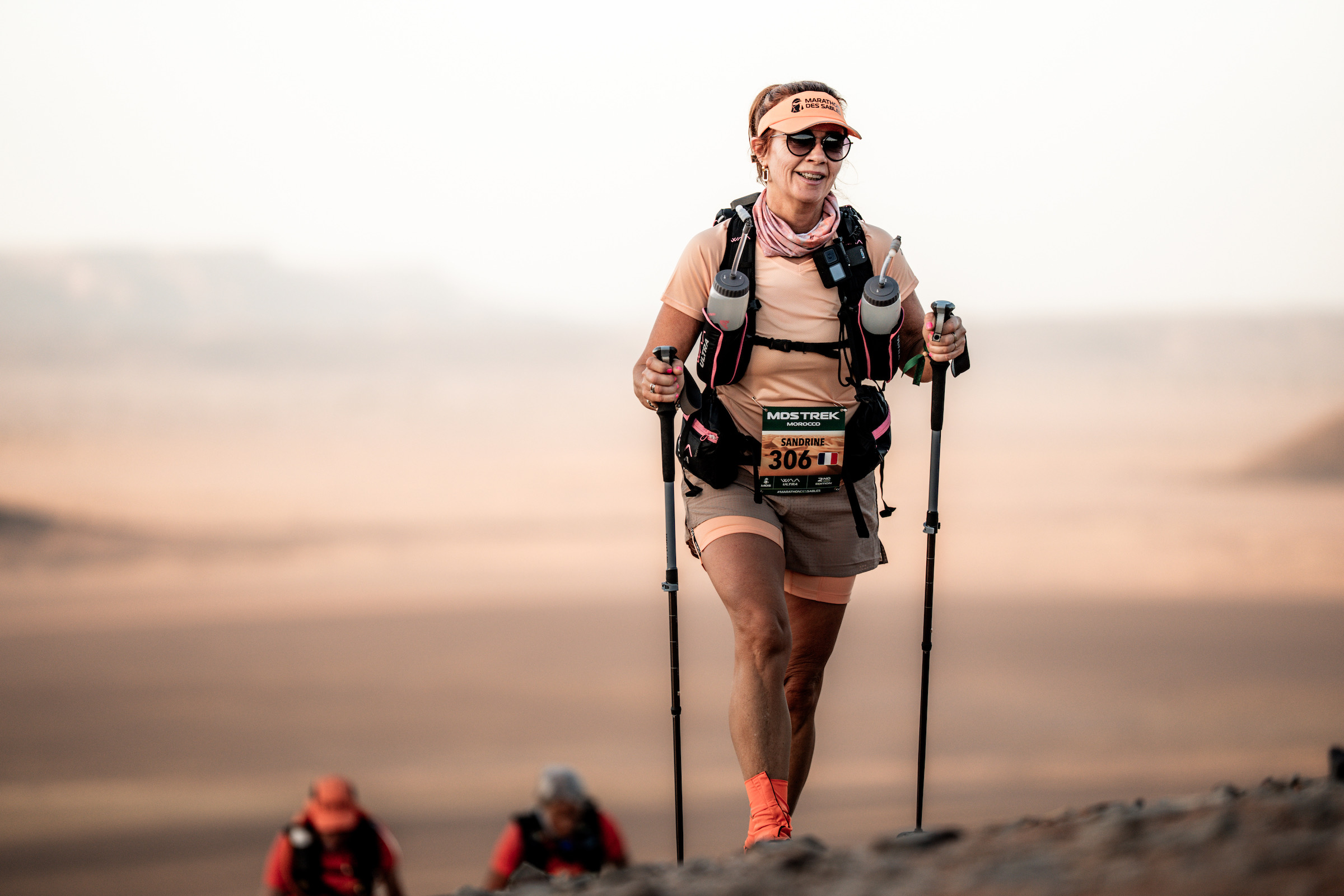
This was not a stage to rush. With no time pressure, participants could move at their own pace, soaking in the magic of the moment.
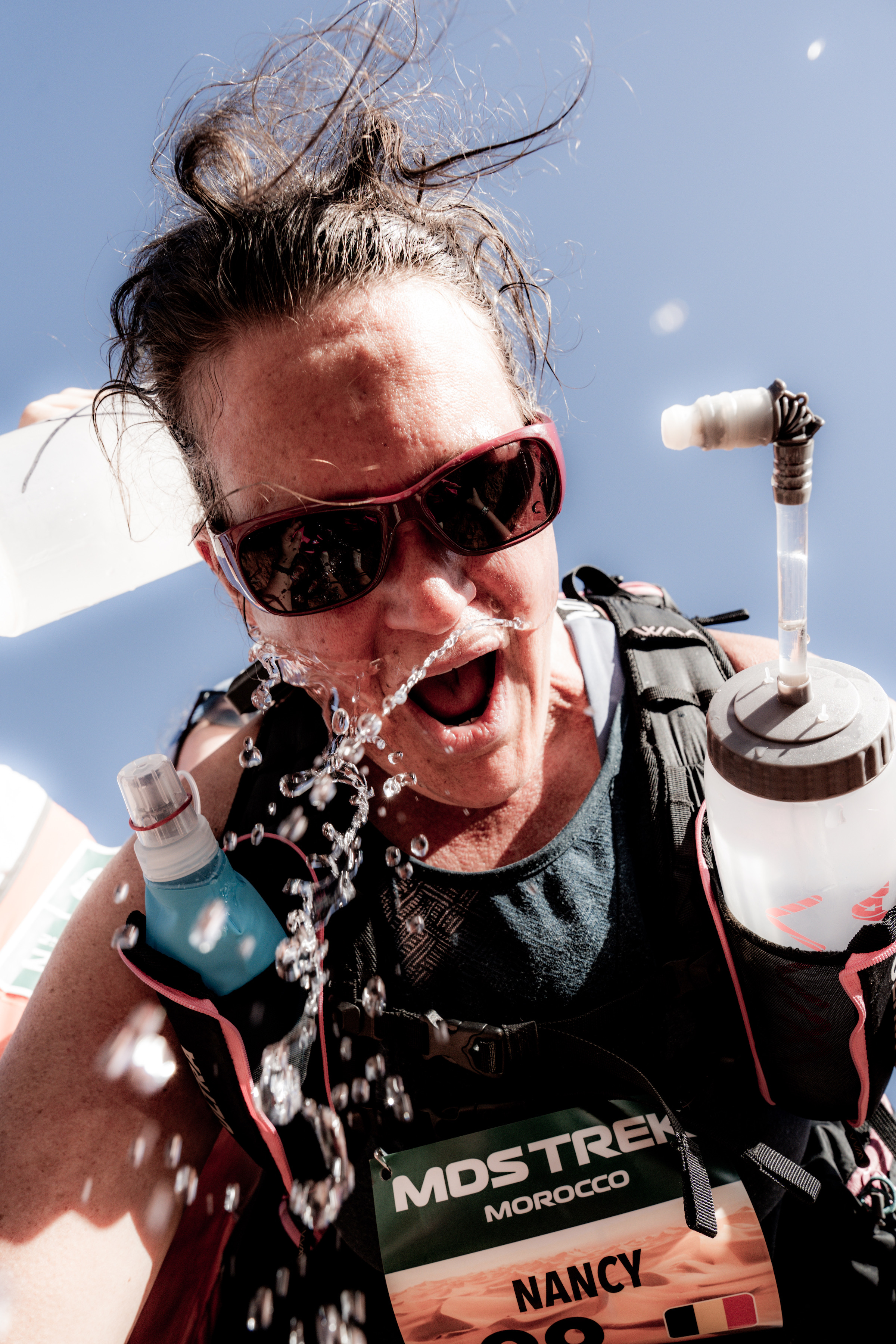
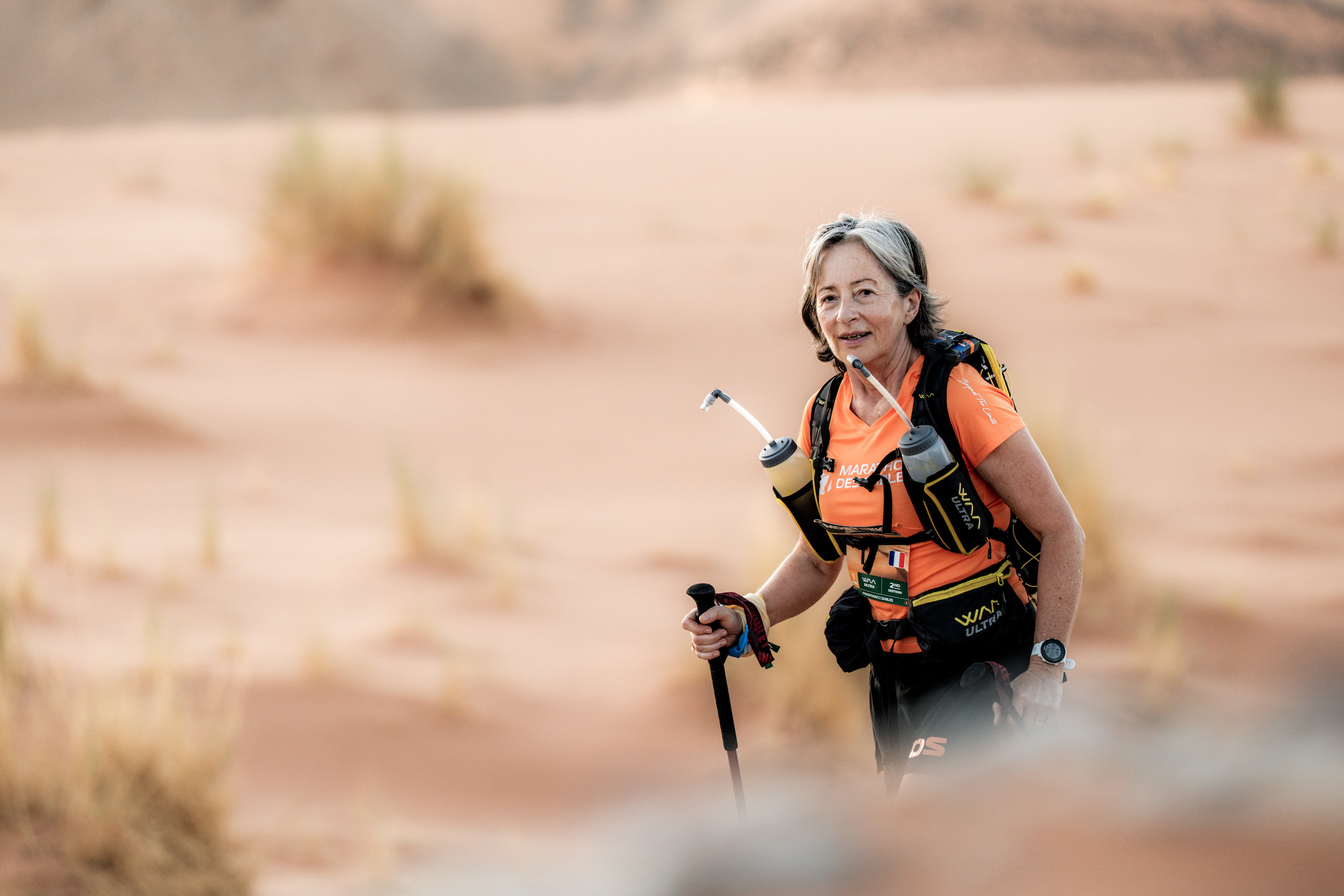
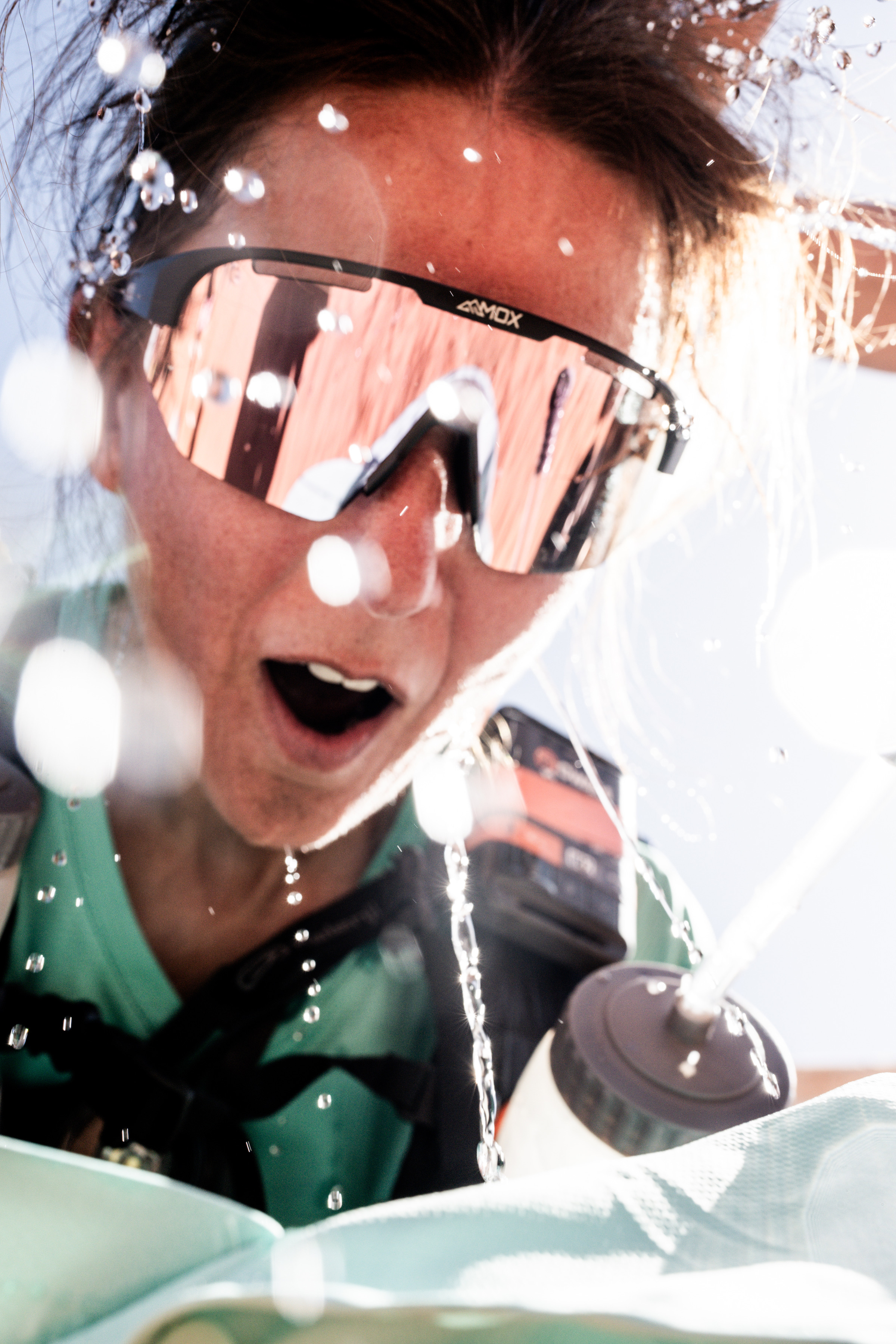
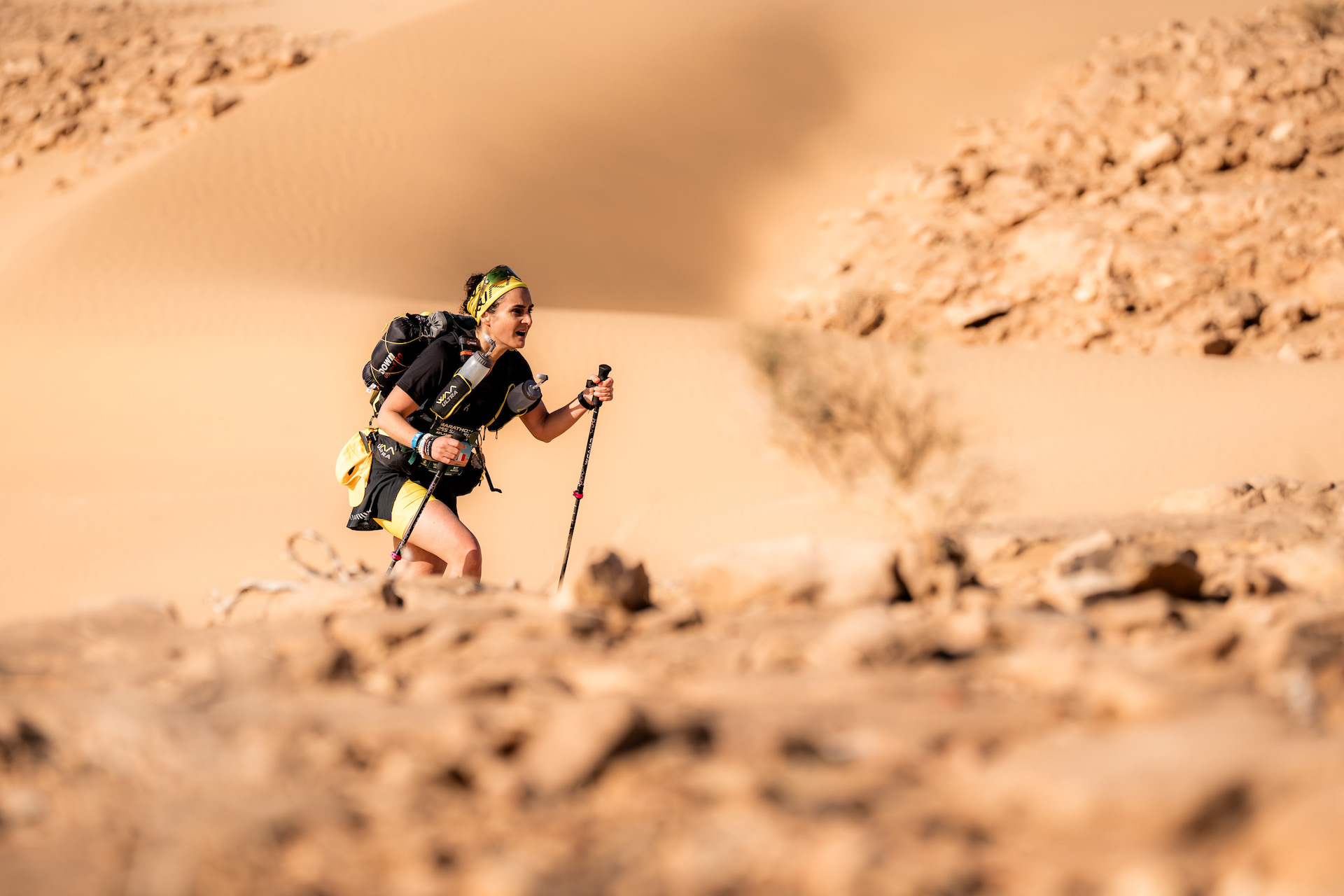
The terrain was varied, soft dune underfoot in some places, firmer ground in others, but the challenge was consistent: the heat. Even early in the day, the sun hit hard. It was a reminder that, out here, progress is earned.
At Checkpoint 2, the route split. Those craving a longer push could opt for the 15km course, while others stuck with the shorter 11.7km track. It didn’t matter which option they chose, both offered the same sense of accomplishment and wonder.
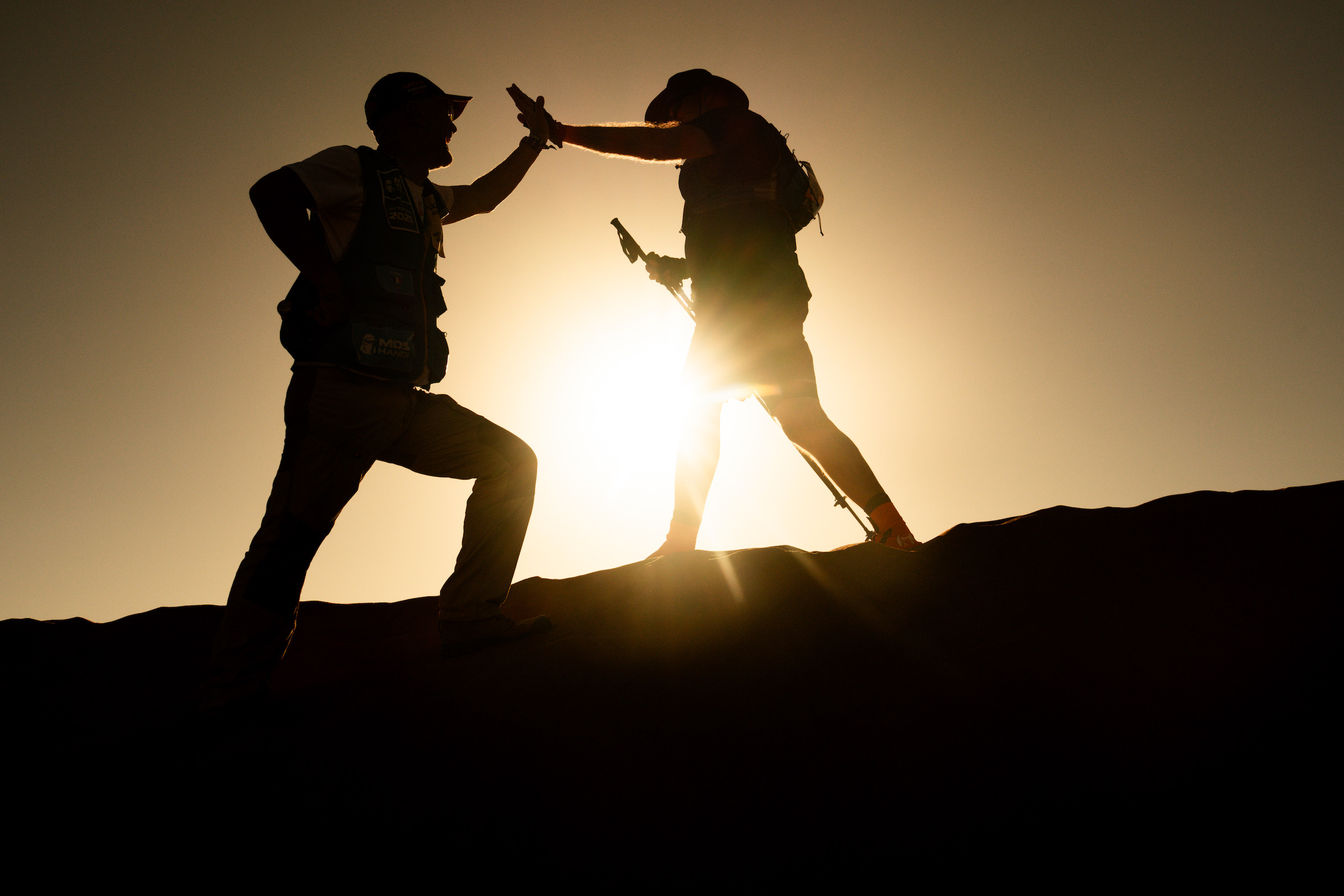
Whether climbing another dune or resting in the shade at the finish, there were smiles all around.
Stage 2 wasn’t about distance or pace. It was about presence, being fully alive in one of the most remote, beautiful places on Earth.
It was about the silence, the sweat, the sunrise. And for many, it was the moment they truly felt the spirit of MDS: the freedom, the challenge, and the deep, personal joy of moving through the Sahara under their own power.
A very special day and one that will stay etched in memory long after the sand is shaken from their shoes.
There’s a certain image that comes to mind when you hear “MDS” – blistered feet, rationed calories, endless dunes, and the punishing solitude of the Sahara. But the second edition of MDS TREK Morocco flips that narrative. It’s still tough, still raw, still proudly Saharan, but this isn’t the Marathon des Sables you’ve heard whispered about in ultra circles. This is MDS with a difference.
This is adventure, elevated.
A New Kind of Desert Challenge
Set across seven nights deep in the Moroccan desert, MDS TREK isn’t about suffering. It’s about connection – to the land, to others, and to yourself. Designed for trekkers who crave the thrill of the Sahara without the demands of full self-sufficiency, this edition delivers a rich, physically challenging, and surprisingly comfortable desert experience.
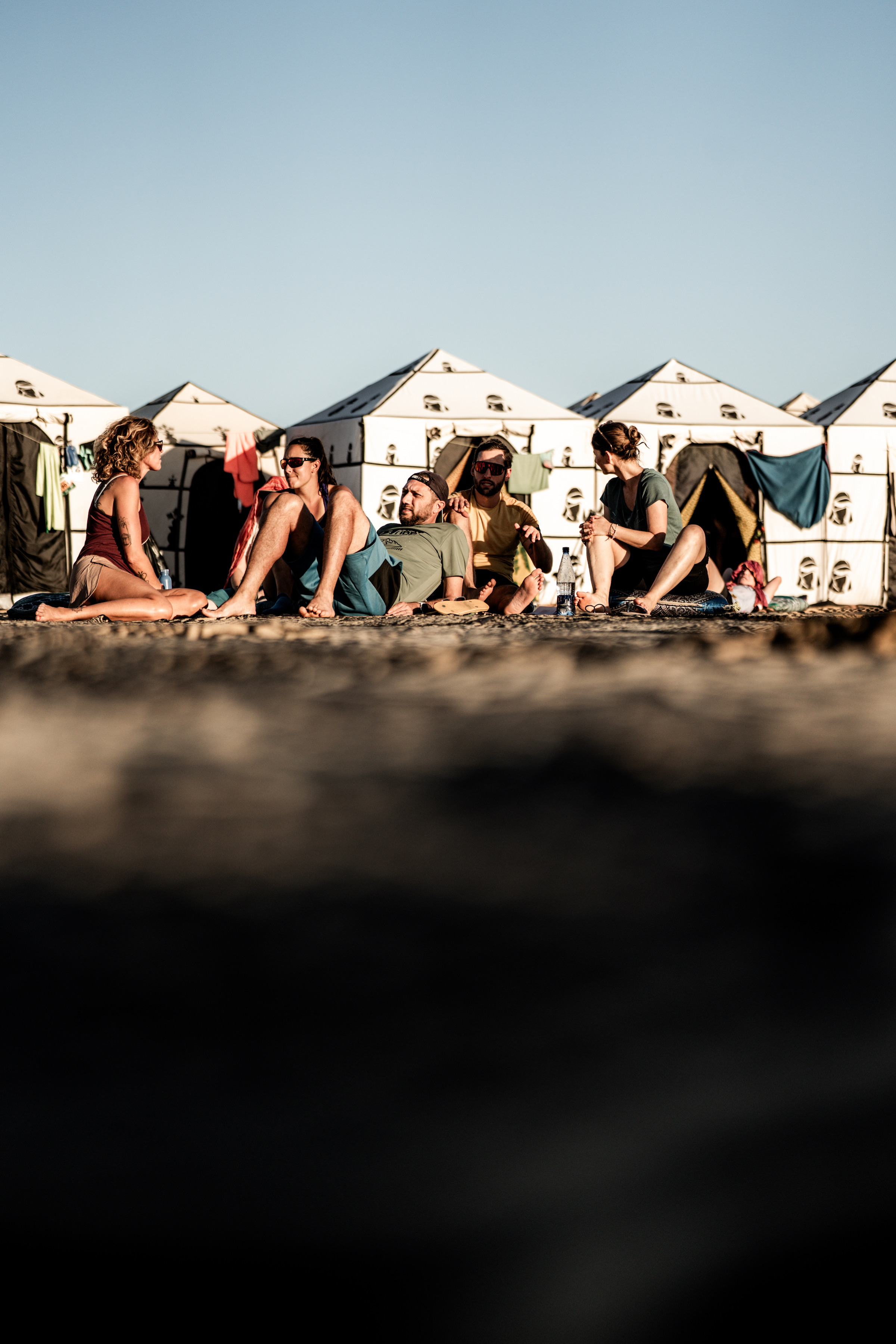
Forget dehydrated meals eaten crouched in the sand. Here, you’re fed three real meals a day. Forget sleeping shoulder-to-shoulder under a makeshift tarp, you’ll rest in spacious, tents, roomy enough to stretch and breathe. Need a shower? There are actual showers. Want a drink? There’s a desert bar. And after a long day on your feet, you can stretch out with sunset yoga or sink into a post-stage massage.
A Race for Every Level
What sets MDS TREK apart isn’t just the comfort – it’s the accessibility. You don’t need to be an ultra-runner or a desert-hardened veteran to take part. This is a multi-stage trek, not a race to the death.
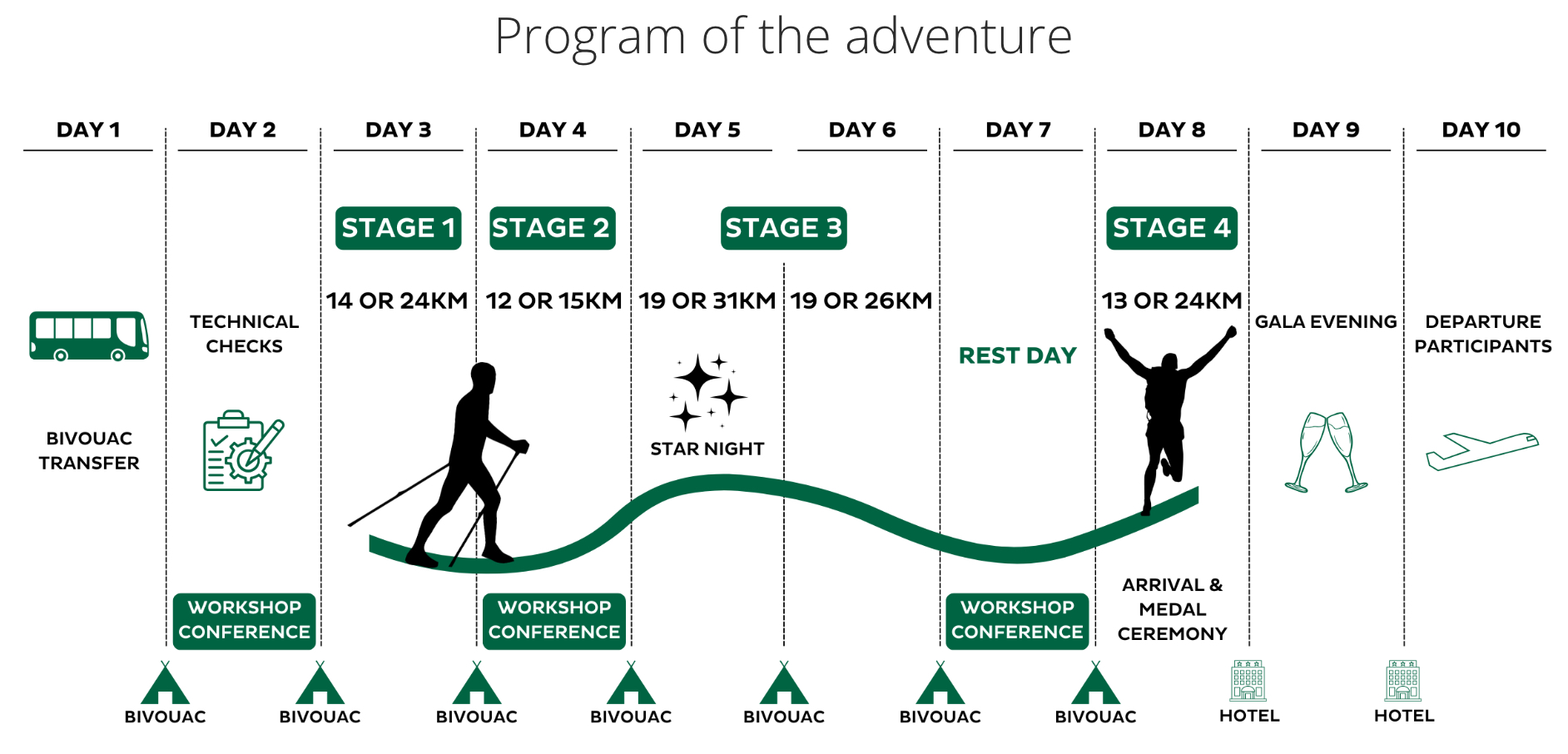
Each of the four stages is offered with two distance options, allowing participants to challenge themselves at their own pace. Want a longer push? Go for the full route. Need a bit less? Opt for the shorter version. The emphasis isn’t on beating the clock; it’s about the experience.
But make no mistake, this is still the Sahara. The terrain is rugged, the climbs are real, and the heat is relentless. The environment demands respect. But it also rewards you with something almost spiritual in return.
Stage 1: Into the Furnace
The adventure began under a blazing sun. Temperatures soared as 350 trekkers laced up for the first leg of the journey. The day’s route offered a choice: 15.6 km or 22.7 km, with both options weaving through a landscape as brutal as it was breathtaking.
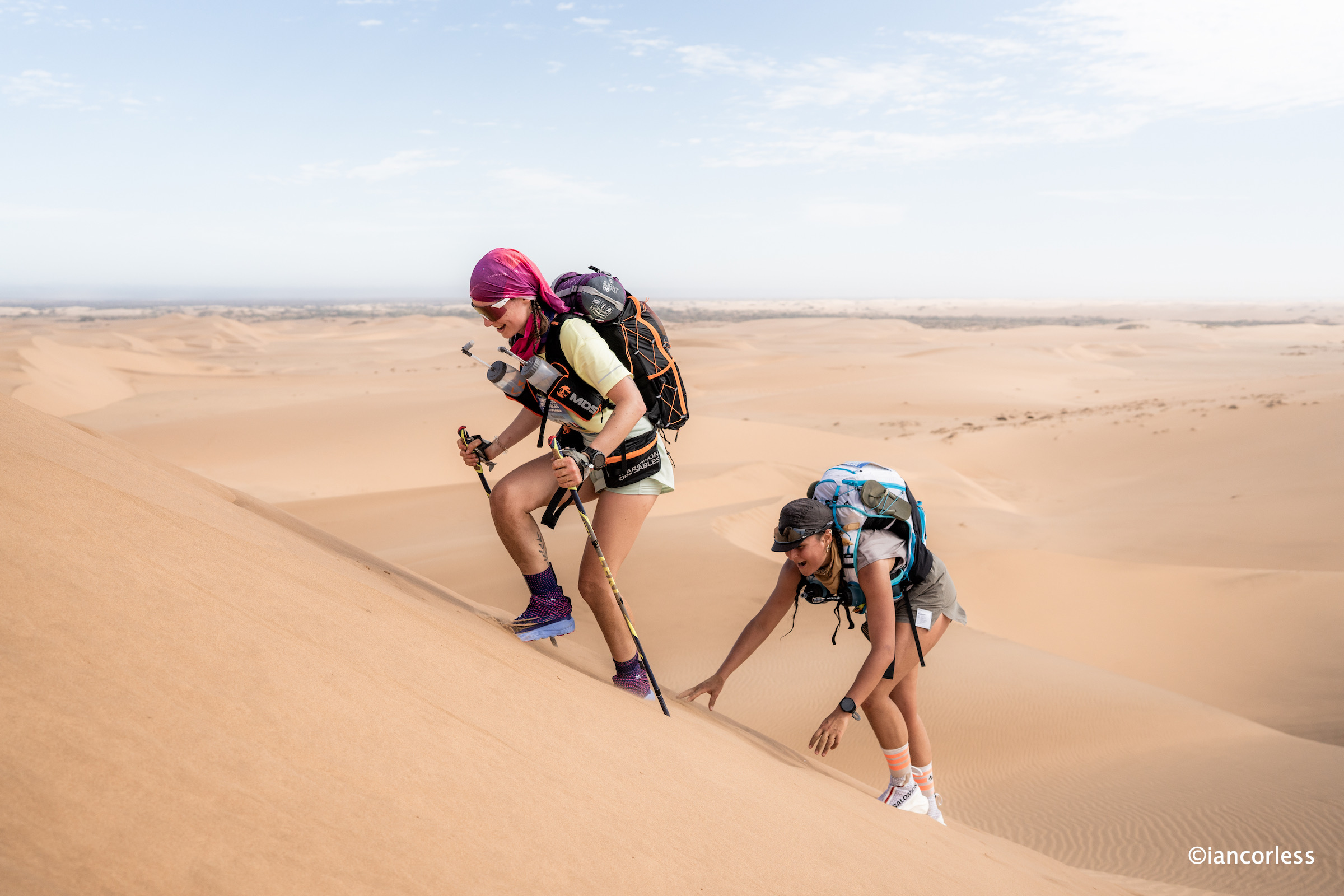
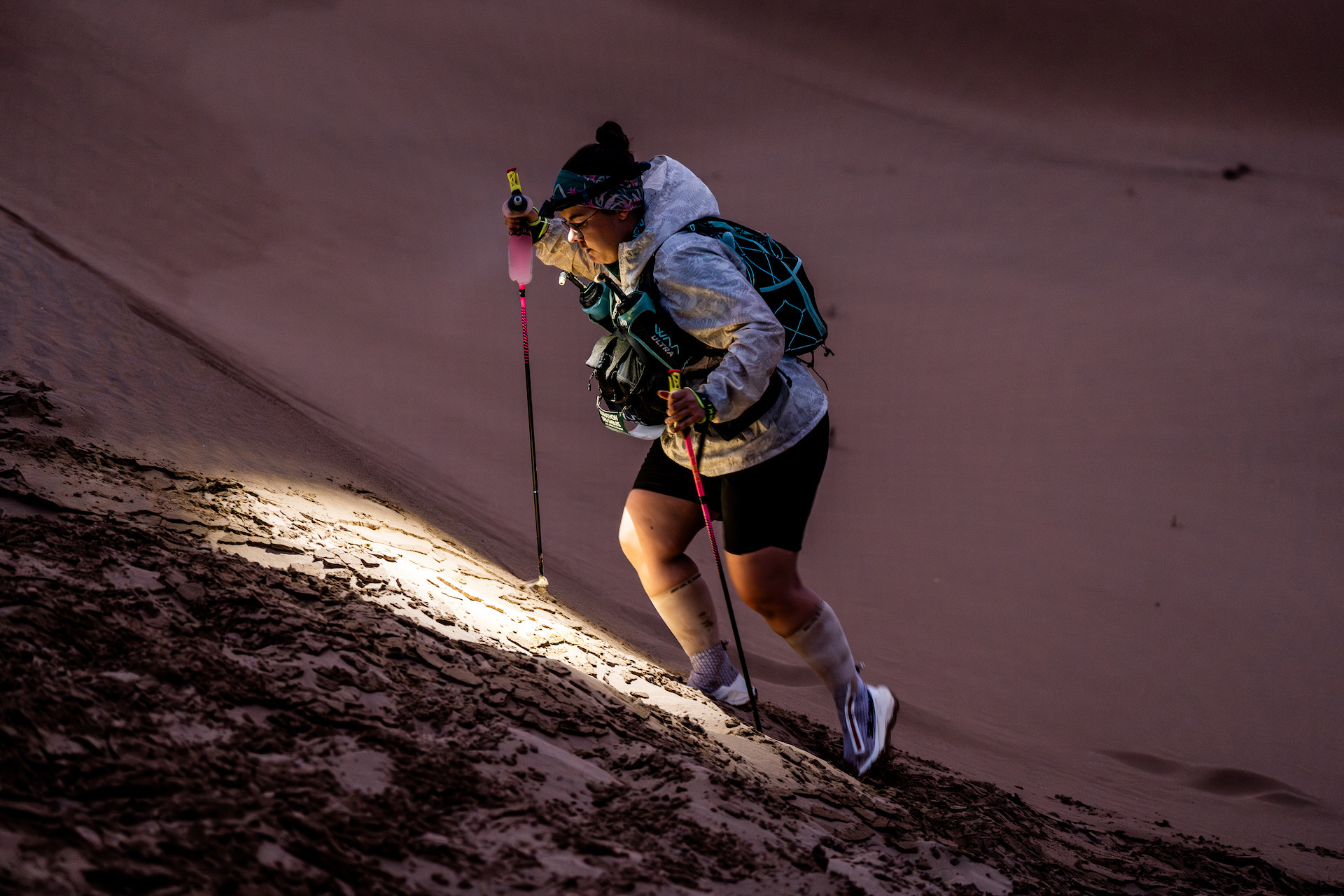
Soft, shifting sands made even the flat sections a test of will. Then came the tough climbs, sandy ascents that drained the legs and quickened the pulse.
There were sections of technical rock and loose scree, keeping everyone alert. But in between the hardship came moments of wonder: endless panoramas, wind-sculpted dunes, towering jebels casting long shadows across the desert floor.
It wasn’t easy. But that wasn’t the point. This was beauty wrapped in brutality – a reminder of how the desert strips you down, and in doing so, shows you something pure.
And perhaps the most defining feature of the field? More than 60% of participants were women. This wasn’t just an event—it was a movement.
Evenings of Contrast
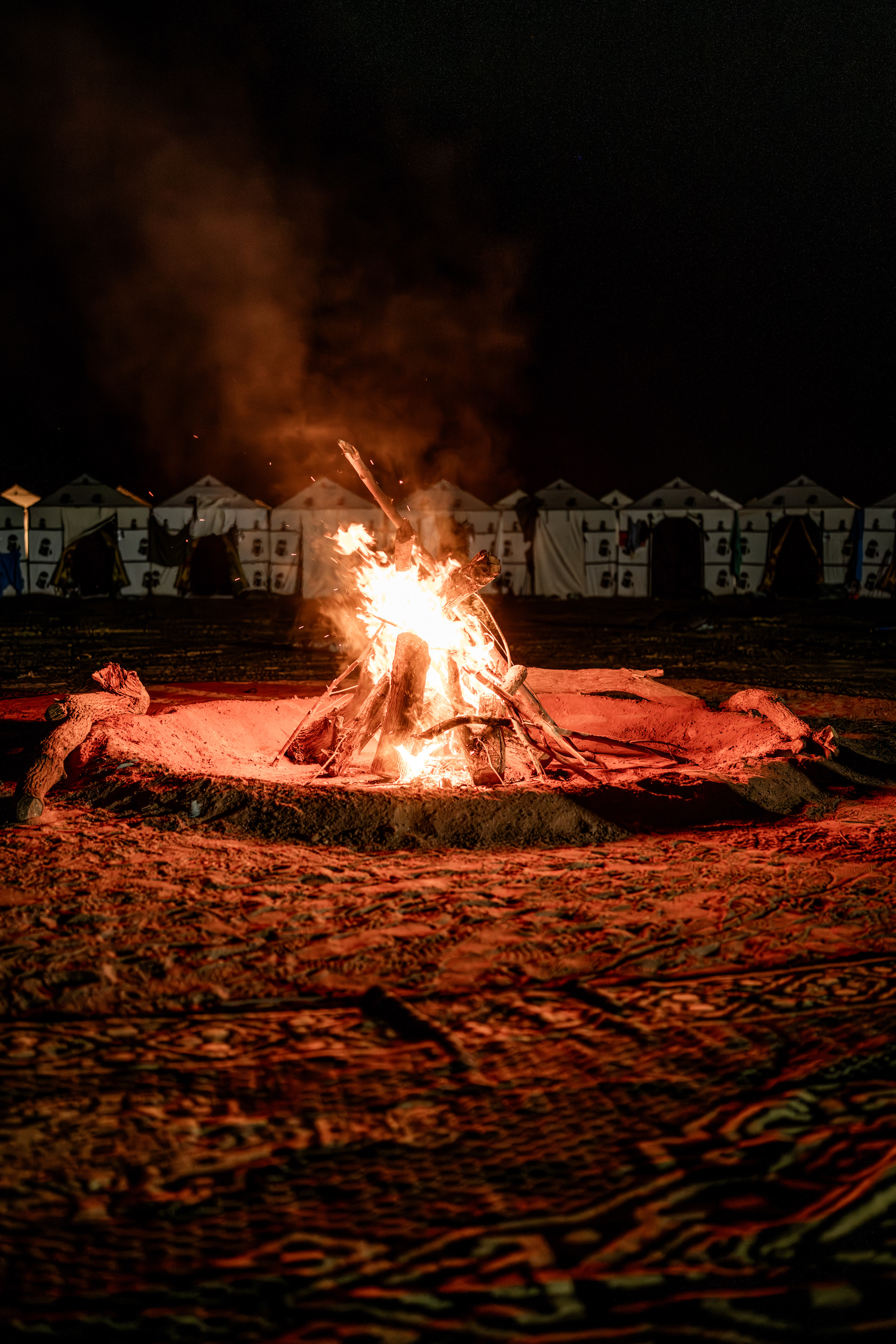
Post-stage life in MDS TREK is where the magic deepens. After pushing their limits under the sun, participants returned to a camp that was more oasis than outpost.
There’s shade. There’s cool water. There’s time to kick off the boots, breathe, and reset.
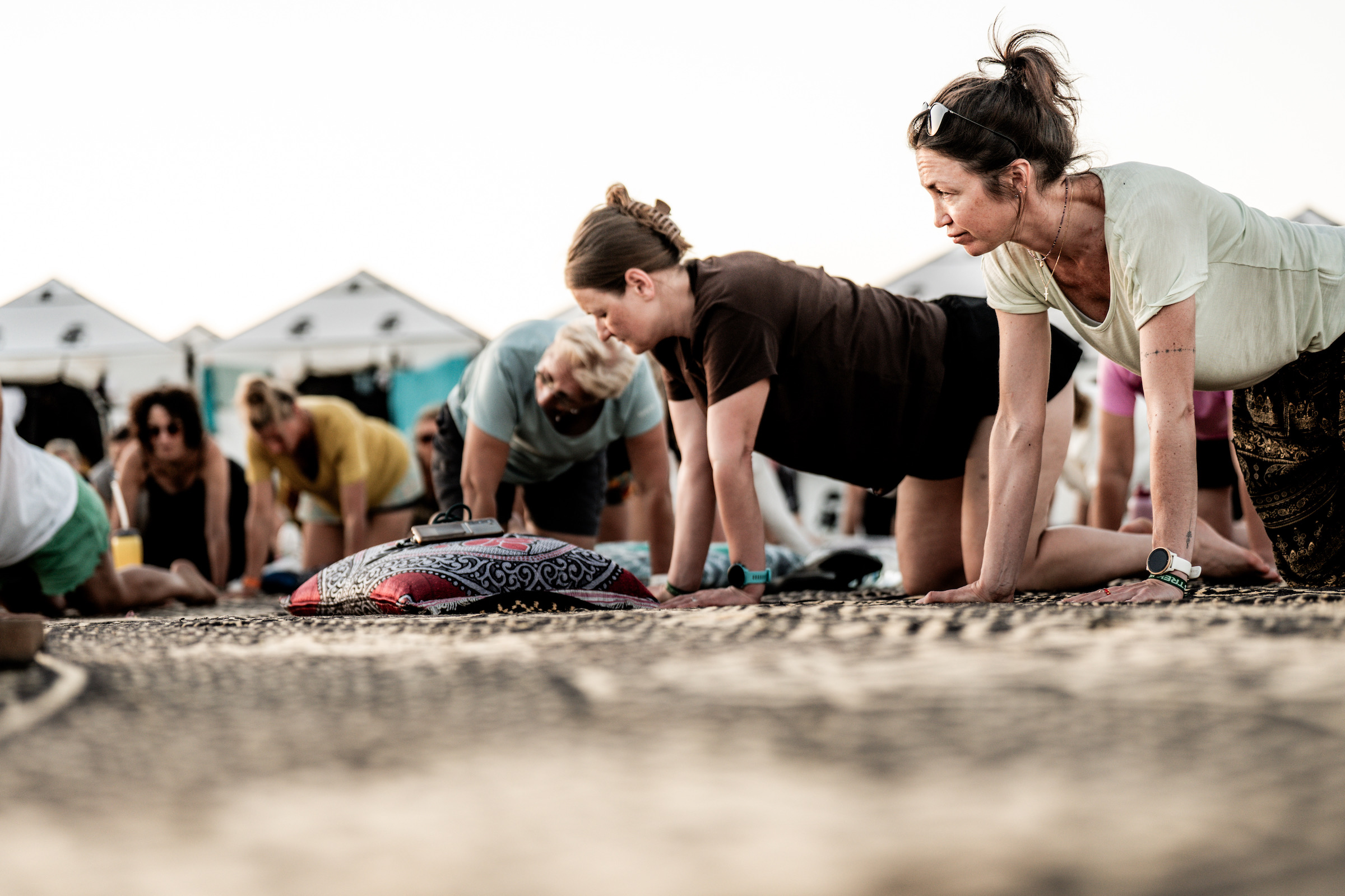
Then, as the desert begins to exhale and the day gives way to dusk, trekkers gather for sunset yoga – a quiet, grounding practice led against the backdrop of endless sky. Others opt for a massage under canvas, loosening the knots earned over each step.
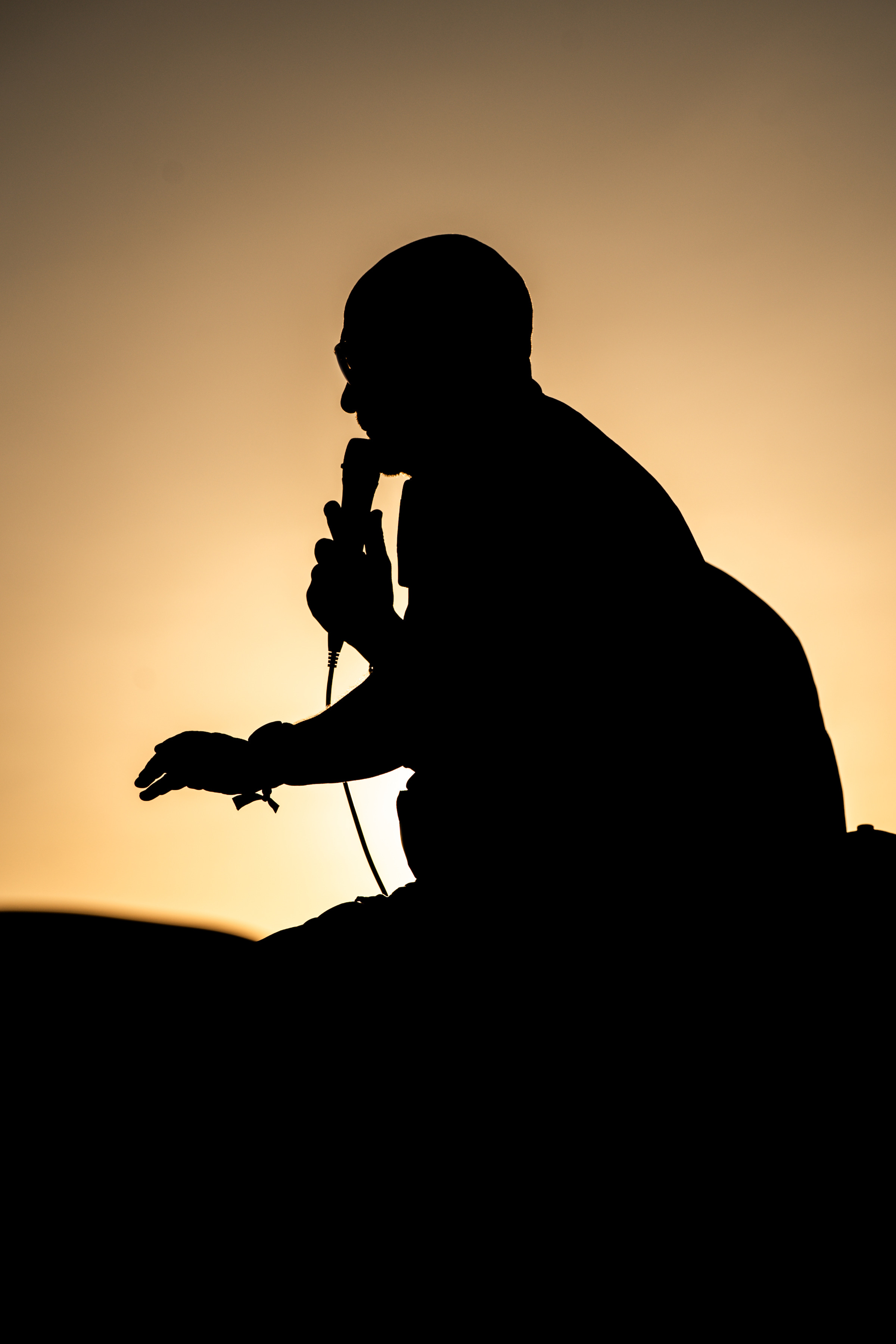
And later, with dinner shared and bellies full, the real depth of the event reveals itself: evening talks and lectures that inspire, educate, and connect. Whether it’s stories from desert veterans, lessons on resilience, or reflections on personal growth, these sessions remind everyone that MDS TREK isn’t just about distance. It’s about transformation.
A Community Like No Other
The mix of people is part of what makes MDS TREK so powerful. Solo adventurers. Groups of friends. Veterans of the classic MDS alongside first-time desert explorers. Young and old. Every background. Every story. This is a space where no one is left behind, and every victory, every climb, every kilometre is cheered like a medal.
MDS TREK Morocco isn’t about breaking records. It’s about breaking through.
To comfort.
To challenge.
To something unforgettable.
Whether you’re a seasoned adventurer or simply someone looking for your next big reset, this is the one.
After the last-minute cancellation of MDS 120 Fuerteventura, the focus now shifts firmly to Morocco, where two cornerstone events are about to take center stage: MDS 120 Morocco and MDS Trek Morocco. Anticipation is high, the energy is back, and participants are ready for the desert challenge they’ve been waiting for.
What Are MDS 120 and MDS Trek?
The MDS 120 is a three-stage, four-day 10/100 or 120 km endurance race in the desert, modelled after the legendary Marathon des Sables but in a shorter, more accessible format. Athletes carry their food and gear, manage their effort in the heat, and experience the highs and lows of true desert racing, every kilometer tests both body and mind.
The MDS Trek shares the same landscapes and spirit as all MDS events but swaps competition for exploration. Designed for adventurers and walkers, it offers a supported trek across the Sahara, with each stage a new chance to discover the desert at a different pace. Participants are not self-sufficient, camp has more luxury and yes, even showers are possible!
The Journey Into the Desert
The adventure begins well before the start line. Most participants first gather in Marrakech, where the atmosphere is electric as athletes and trekkers from around the world converge. From there, MDS arrange transfers over the High Atlas mountains to Ouarzazate, often called the “door of the desert.”
Two hotel nights in a hotel with administration protocols, then the caravan heads deeper into the Sahara. The transfer to Bivouac 1 marks the true start of the experience: the desert horizon stretching endlessly, the iconic WAA tents awaiting, and the realization that the adventure is about to begin.
MDS 120 Morocco:
MDS Trek Morocco:
Looking Back at 2024
The 2024 editions showed the enduring strength of the MDS spirit. Morocco delivered outstanding editions and for MDS 120, there were some challenging climatic conditions with rain and flooding.
MDS Trek, was business as usual with classic Morocco weather. Participants took on dunes, jebels, and starlit nights. These moments reinforced Morocco’s reputation as the spiritual home of the Marathon des Sables.
Why 2025 Will Be Bigger and Better
In 2025, expect the same, but amplified. The organisers have doubled down on delivering unforgettable events, and the buzz suggests the community is ready for it. The MDS 120 Morocco will push competitors harder, while the MDS Trek will continue to offer an inclusive and inspiring path through the Sahara.
And Then Comes Jordan
Photo by Ian Corless
The adventure doesn’t stop in Morocco. Just weeks after the conclusion of the MDS Trek, the focus shifts east for MDS 120 Jordan, where runners and trekkers will swap the Sahara for the dramatic landscapes of Wadi Rum. It’s a quick turnaround, but for those chasing the full MDS experience, it’s the perfect continuation of a year dedicated to desert discovery.
The countdown is on.
Morocco awaits.
Interested in a Marathon des Sables event? More informationHERE
On Wednesday, September 10 at 12:00 PM UTC+2, registration opens for three unforgettable endurance adventures:
MDS 120 Morocco – October 2–10, 2026
MDS Trek Morocco – October 11–20, 2026
MDS 120 Jordan – October 31–November 7, 2026
For runners, trekkers, and anyone who dreams of testing their limits in the most breathtaking landscapes on Earth, these dates mark the beginning of a once-in-a-lifetime journey.
What is the MDS?
The Marathon des Sables (MDS) is not just a race. It’s a legend. Born in Morocco in the 1980s, the event has earned a reputation as “the toughest footrace on Earth.” Participants cross vast stretches of desert on foot, carrying their own food and gear, with only water and tents supplied. It’s as much a mental battle as it is a physical one – a journey into resilience, camaraderie, and discovery.
But MDS isn’t just about the ultra-hardcore. Over the years, the family has grown to include formats that open the experience to more people while retaining its wild, adventurous spirit. That’s where MDS 120 and MDS Trek come in.
MDS 120 vs. MDS Trek: What’s the Difference?
Both are designed to immerse you in the magic of the desert, but the style of challenge is different.
MDS 120
A shorter, yet still demanding, version of the iconic Marathon des Sables.
120 kilometers spread across three stages.
Self-sufficient format: you carry your food and equipment.
Runners and fast hikers alike join in, moving between marked checkpoints across some of the most beautiful, wild landscapes imaginable.
Nights are spent in camp, bonding with fellow adventurers under desert skies.
MDS TREK
Designed for those who want the MDS atmosphere without the clock.
Roughly the same length as the 120, but completed at a trekking pace over five stages.
Guided and supported: you carry a daypack, while larger bags are stored in bivouac.
Perfect for walkers, adventurers, and anyone who prefers to savour the desert at a slower rhythm.
In short: MDS 120 is a race. MDS Trek is an adventure. Both give you the thrill of the desert, the community spirit, and the sense of achievement that comes from stepping far outside your comfort zone.
Photo by Ian Corless
Morocco: The Heart of MDS
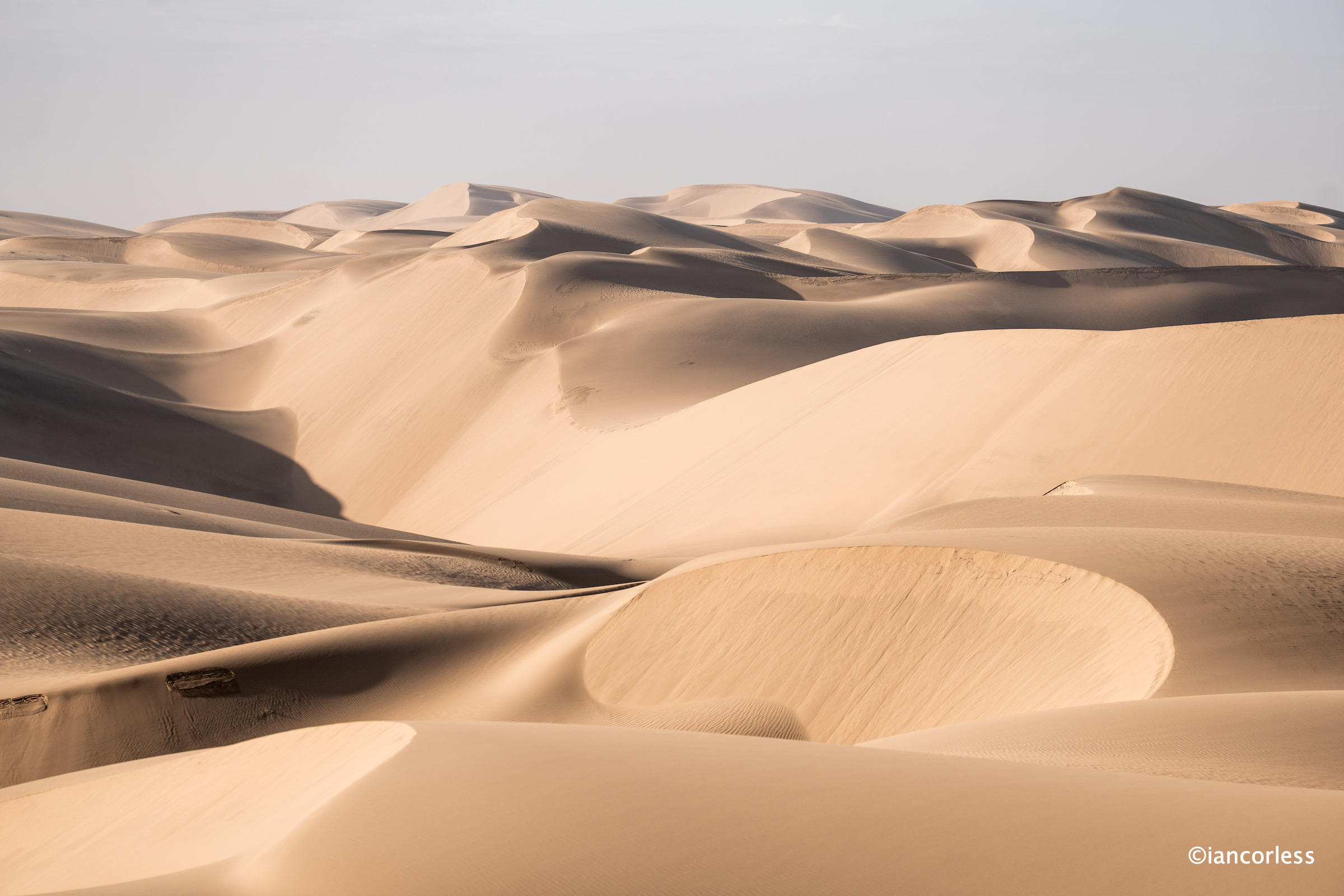
It’s no accident that MDS was born in Morocco. The Sahara here is everything you imagine when you hear the word “desert”: towering golden dunes, dry salt lakes, endless rocky plains, and distant mountains shimmering in the heat.
During the MDS 120 Morocco (Oct 2–10, 2026), participants will move through terrain that feels ancient and otherworldly. Running or trekking across sand seas lor along fossil-studded plateaus, you’ll witness landscapes that seem unchanged for millennia.
If you prefer a slower, more contemplative journey, MDS Trek Morocco (Oct 11–20, 2026) is your chance to follow in the footsteps of nomadic caravans. Expect strong mint tea at camp, Berber hospitality, and sunrises that wash the dunes in pink and gold.
Jordan: A Desert of Myths and Monuments
After Morocco, MDS 2026 turns east to another jewel of the desert world: Jordan.
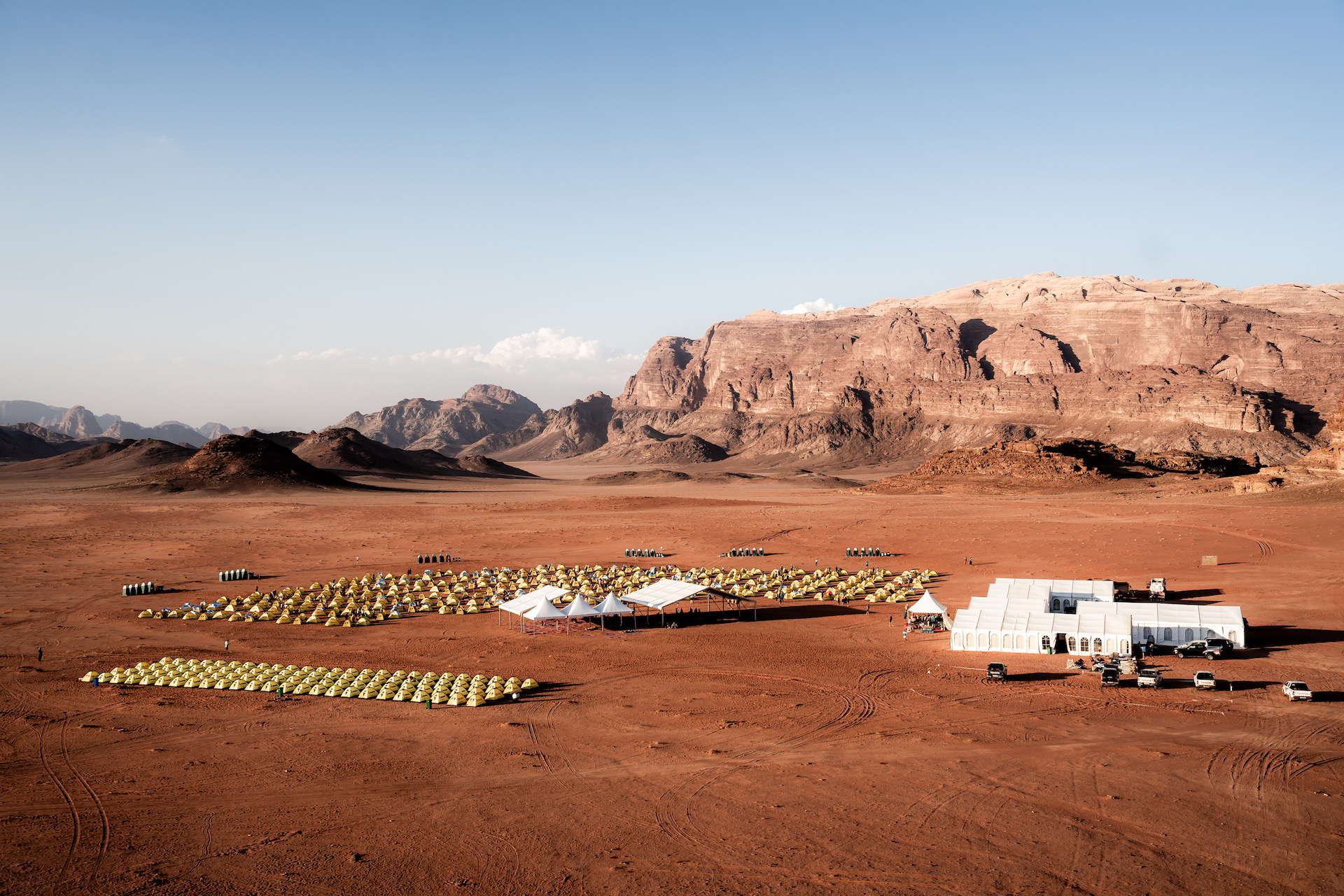
From October 31 to November 7, 2026, MDS 120 Jordan takes place in Wadi Rum, a place so breathtaking it has been called “the Valley of the Moon.” Red sandstone cliffs, natural arches, and wide sandy valleys create a setting that feels almost Martian—no wonder so many films have been shot here.
Photo by Ian Corless
The terrain is ideal for running and trekking: firm sand flats, winding canyons, and rocky ridges that offer sweeping views. And the cultural backdrop is equally unforgettable. This is the land of Lawrence of Arabia, Nabataean traders, and Bedouin camps where hospitality is still sacred.
Photo by Ian Corless
Add in the chance to visit Petra – the rose-red city carved into cliffs – and float in the Dead Sea, and you’ve got a trip that balances physical challenge with world-class cultural exploration.
Why These Events Sell Out
Every MDS event is capped to maintain its unique atmosphere: a balance of challenge, safety, and community. That’s why when registration opens, places vanish fast.
Here’s what draws people back year after year:
The Challenge: 120 kilometers may sound daunting, but it’s achievable for anyone willing to train. Past participants range from elite athletes to everyday adventurers.
The Camaraderie: Camps become villages of shared struggle and shared joy. By the end, strangers become family.
The Scenery: Whether it’s sunrise over Moroccan dunes or starlight over Jordan’s cliffs, the landscapes will etch themselves into memory.
The Transformation: You leave with more than a medal. You leave knowing you can do hard things—and that realization follows you into every part of life.
Photo by Ian Corless
Preparing for MDS
MDS is not something you show up to on a whim. But it’s also not as unreachable as it may seem. With six to twelve months of structured training – mixing endurance, strength, and practice carrying a pack – most people can get ready.
What both demand is an open mindset: ready for sand in your shoes, dust on your face, and joy in small things like shade, water, and shared laughter.
The post-pandemic years have sparked a surge of people craving real experiences – not just vacations, but adventures with meaning. MDS embodies that perfectly. It’s travel, sport, culture, and self-discovery all wrapped into one.
If you’ve ever dreamed of running across the Sahara or walking through Wadi Rum, 2026 is your chance. Spots are limited, and once they’re gone, you’ll be waiting another year.
Photo by Ian Corless
Think about it: ten days where your only job is to put one foot in front of the other. No emails, no deadlines, no noise – just the sound of your breath, the crunch of sand, the laughter of fellow adventurers, and the vast silence of the desert.
That’s what awaits you at MDS 120 Morocco, MDS Trek Morocco and MDS 120 Jordan 2026.
On September 10, 2025 at noon (UTC+2), the door opens.
Second Edition Confirmed for April 25 to May 2, 2026
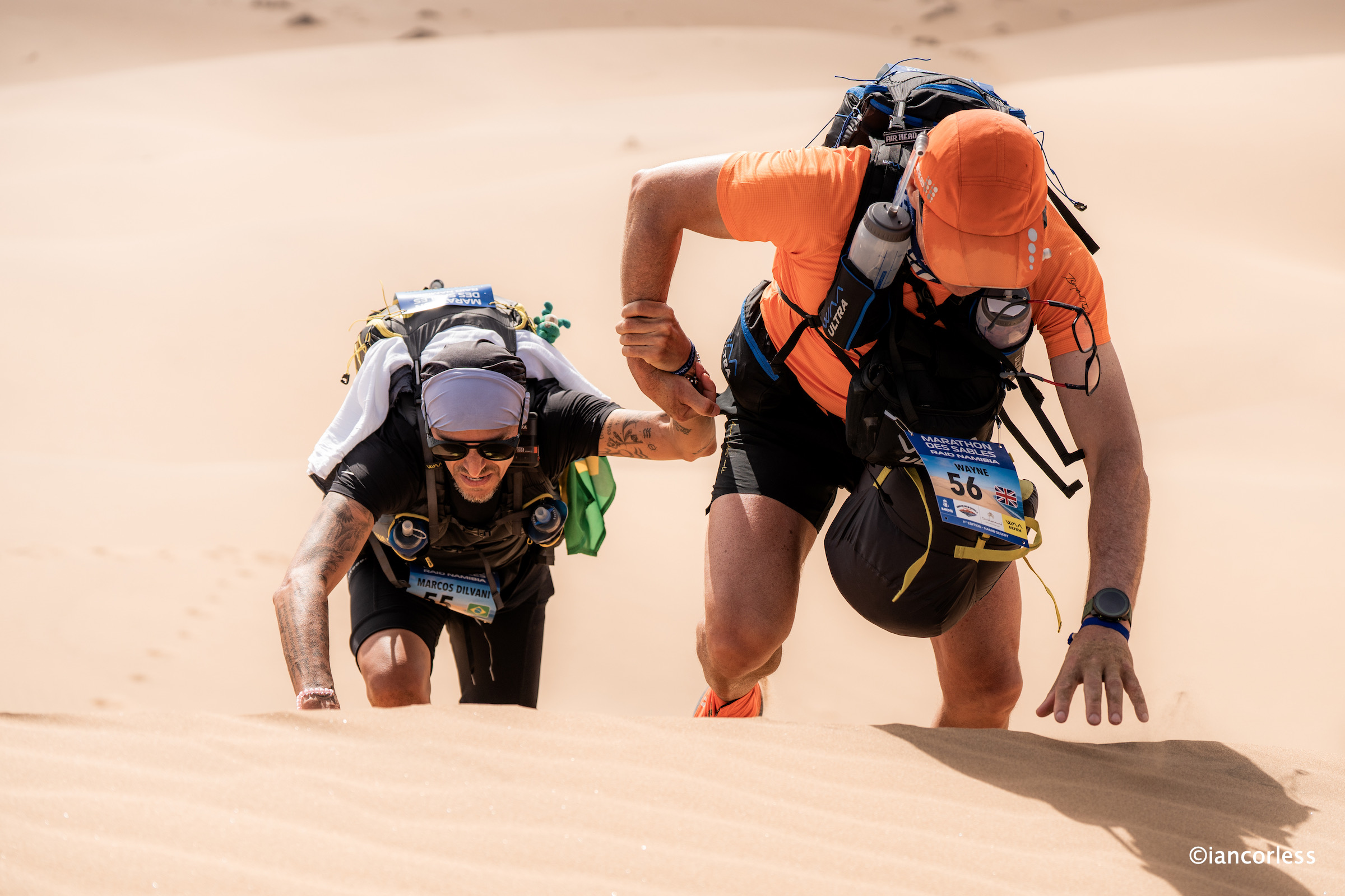
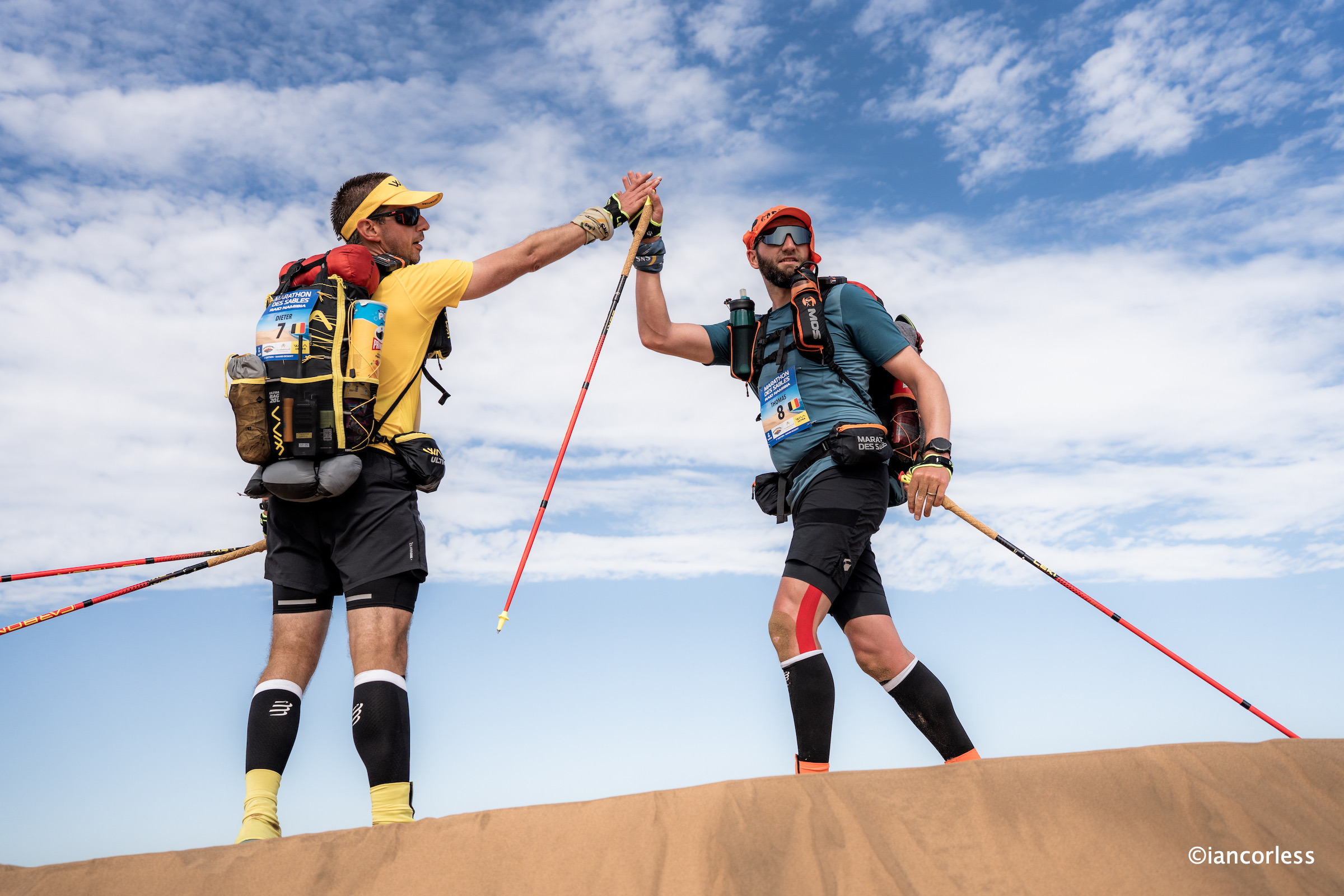
The adventure is back. From April 25 to May 2, 2026, the second edition of MDS Raid Namibia will return to one of the most breathtaking landscapes on Earth, and this time, it’s bigger, bolder, and ready to test your limits.
A Race Like No Other
MDS Raid Namibia isn’t your typical ultra. It’s a Raid format: multi-day racing where each stage takes you deeper into wild, untouched terrain. You and your partner navigate the course together, carrying your essentials, relying on one another’s grit and skill. The rhythm is different from a single-stage event, it’s about strategy, recovery, and building momentum over days in the desert.
Namibia: More Than a Backdrop
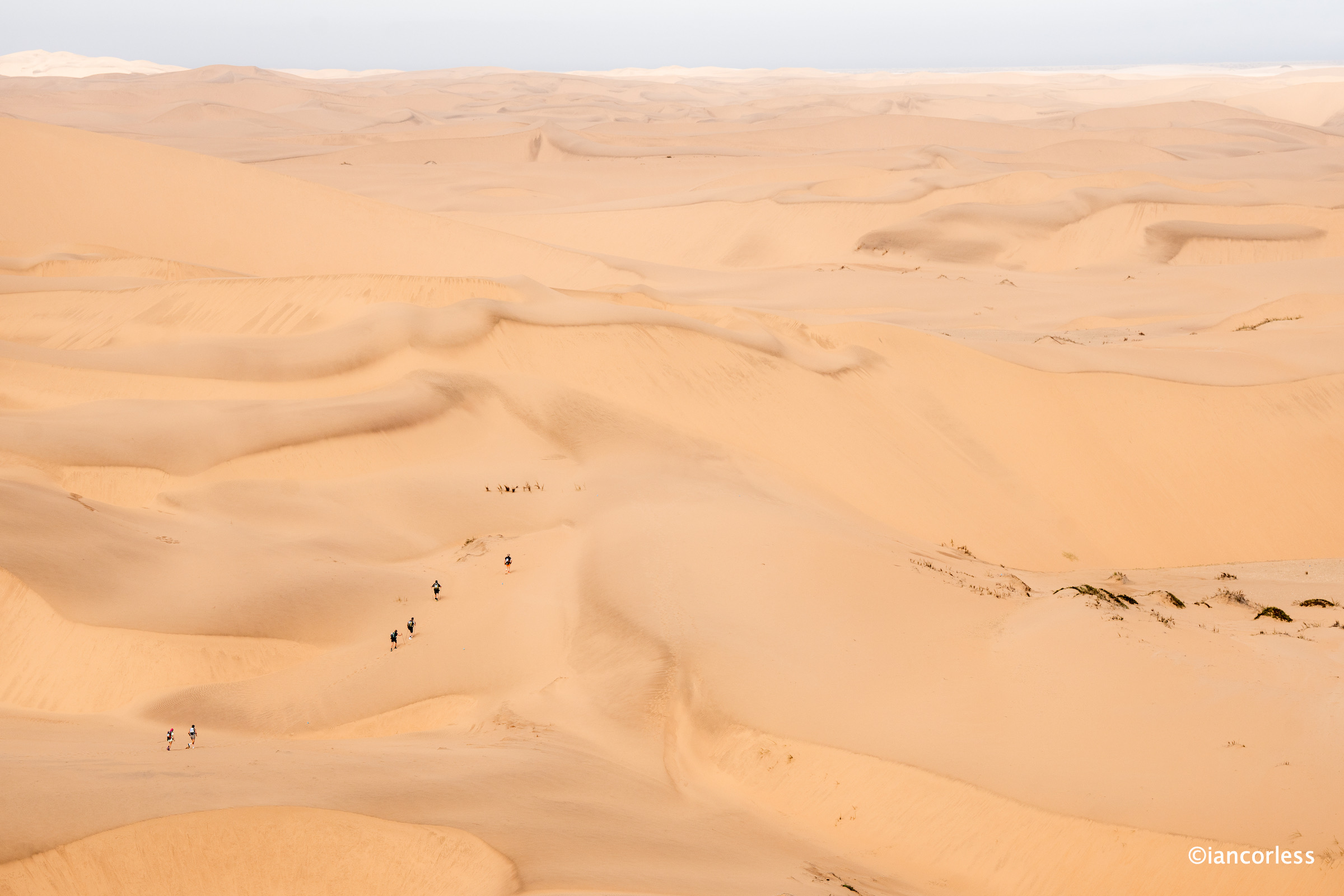
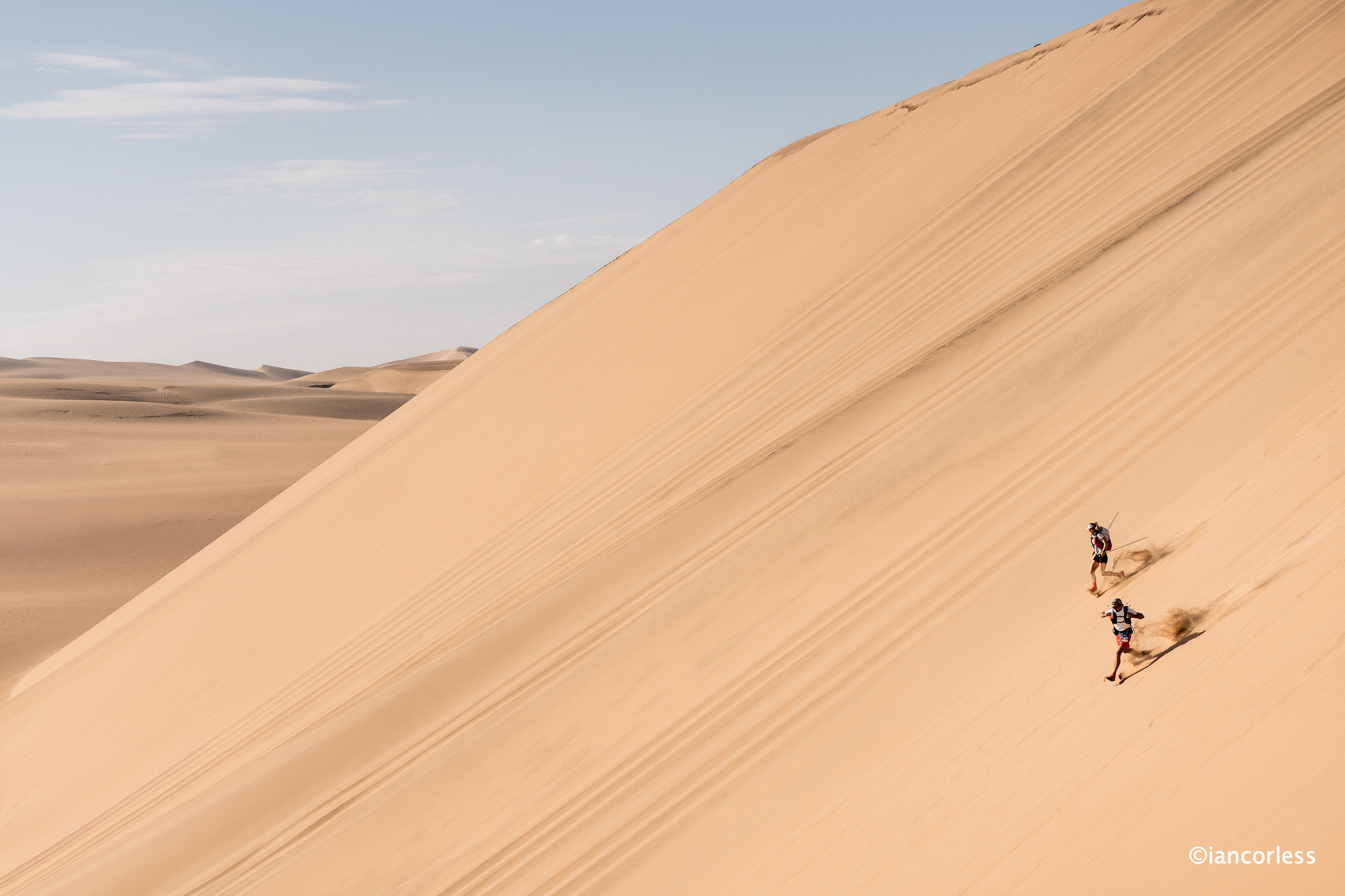
The desert here is alive with colour and contrast, towering red dunes, sun-bleached plains, and skies so vast they feel infinite. But the real magic? The people. From the warmth of local communities to the camaraderie among competitors, every smile, handshake, and shared moment turns the race into something unforgettable.
Two Distances, One Challenge
Whether you choose 90km or 107km, you’ll face a course that demands strength, patience, and partnership. The shorter option is still a serious test; the longer route adds extra sting to already challenging days.
Teams of Two
This is not a solo fight. Every team is two runners — sharing the highs, lows, decisions, and celebrations. It’s about knowing when to push, when to pace, and how to keep each other moving forward. You’ll finish this race with more than just a medal — you’ll leave with a bond forged in heat, dust, and determination.
Under the Star Night
And then there’s Star Night — a moment that transcends competition. Out in the desert, far from city lights, the sky becomes a canvas of constellations. It’s an evening to pause, breathe, and feel the scale of where you are. Stories are shared, laughter carries through the darkness, and the adventure takes on a whole new light.
⸻
MDS Raid Namibia 2026 is more than a race. It’s an odyssey. Whether you come for the challenge, the scenery, or the connection, you’ll leave with a story only this desert can write.
The desert is calling.
Read and in-depth summary of the first edition in 2025 HERE and be inspired to join this magical adventure, ‘Testing Limits on the Edge of the Atlantic.’
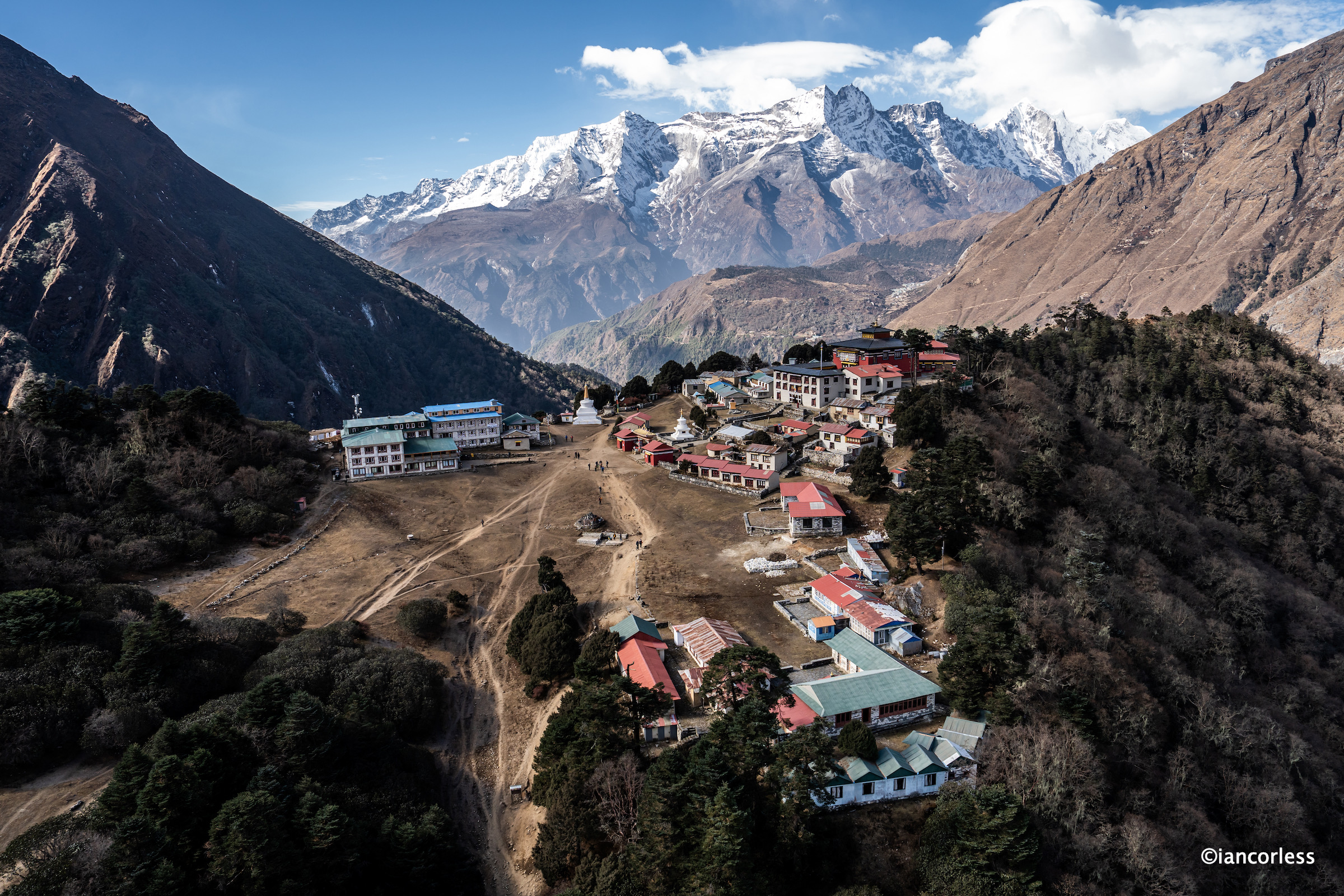
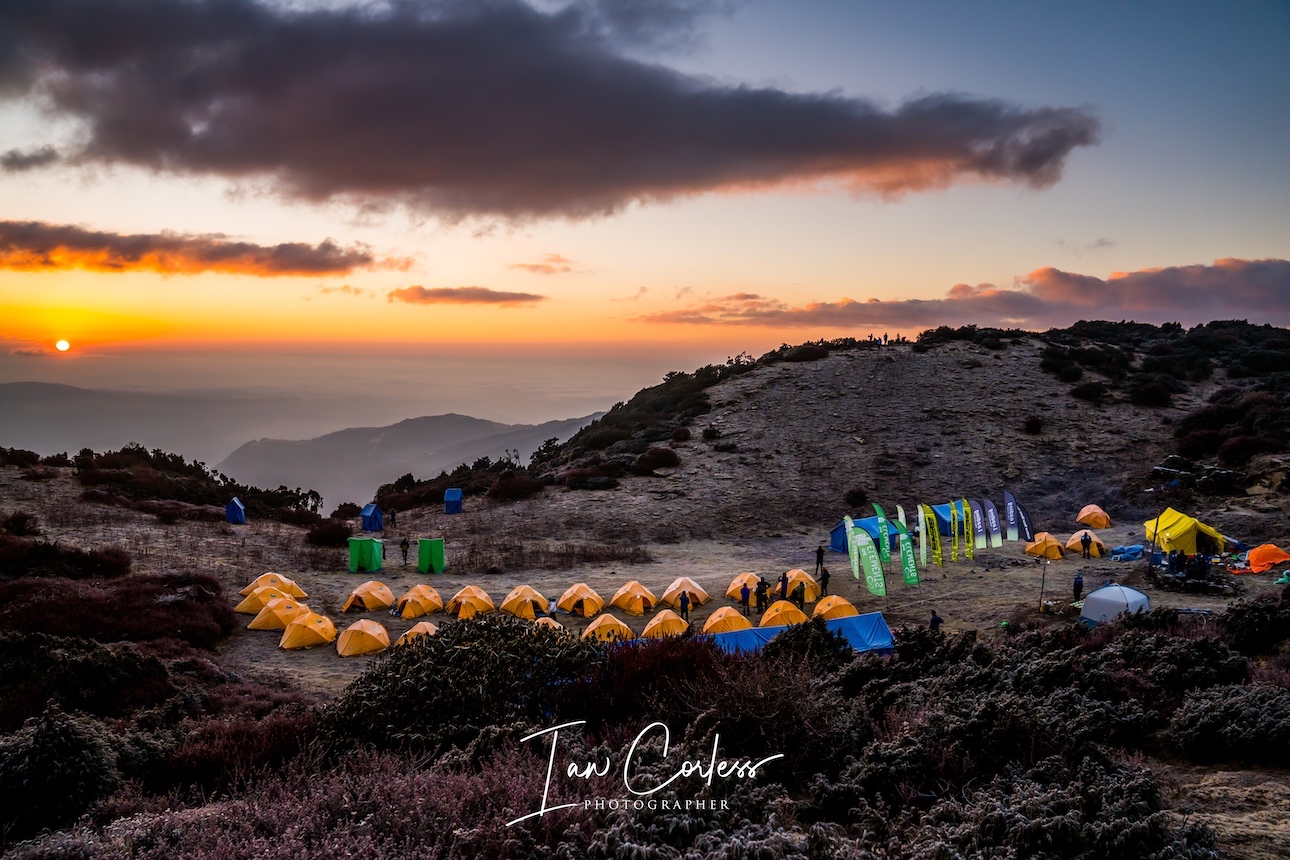
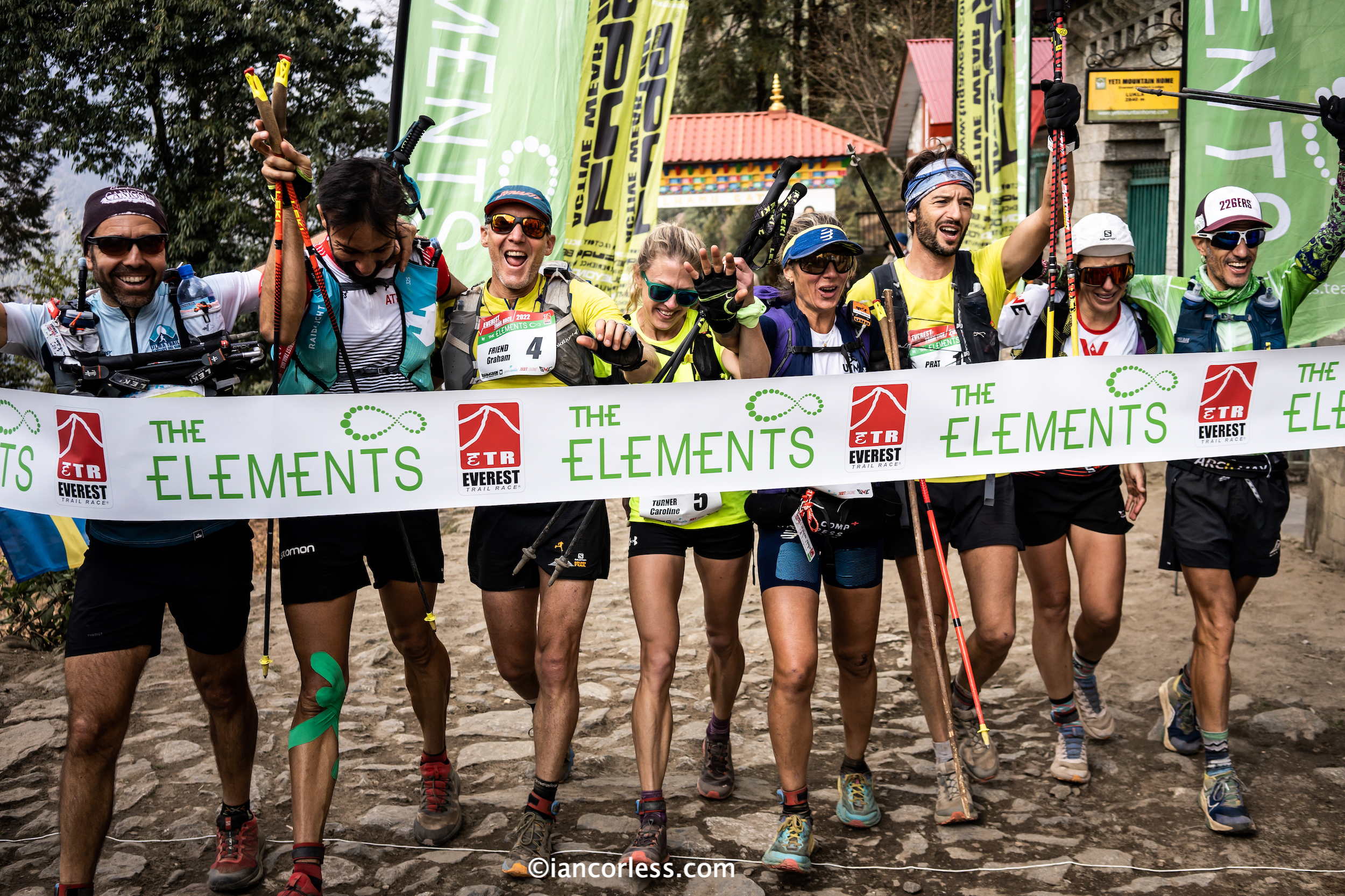
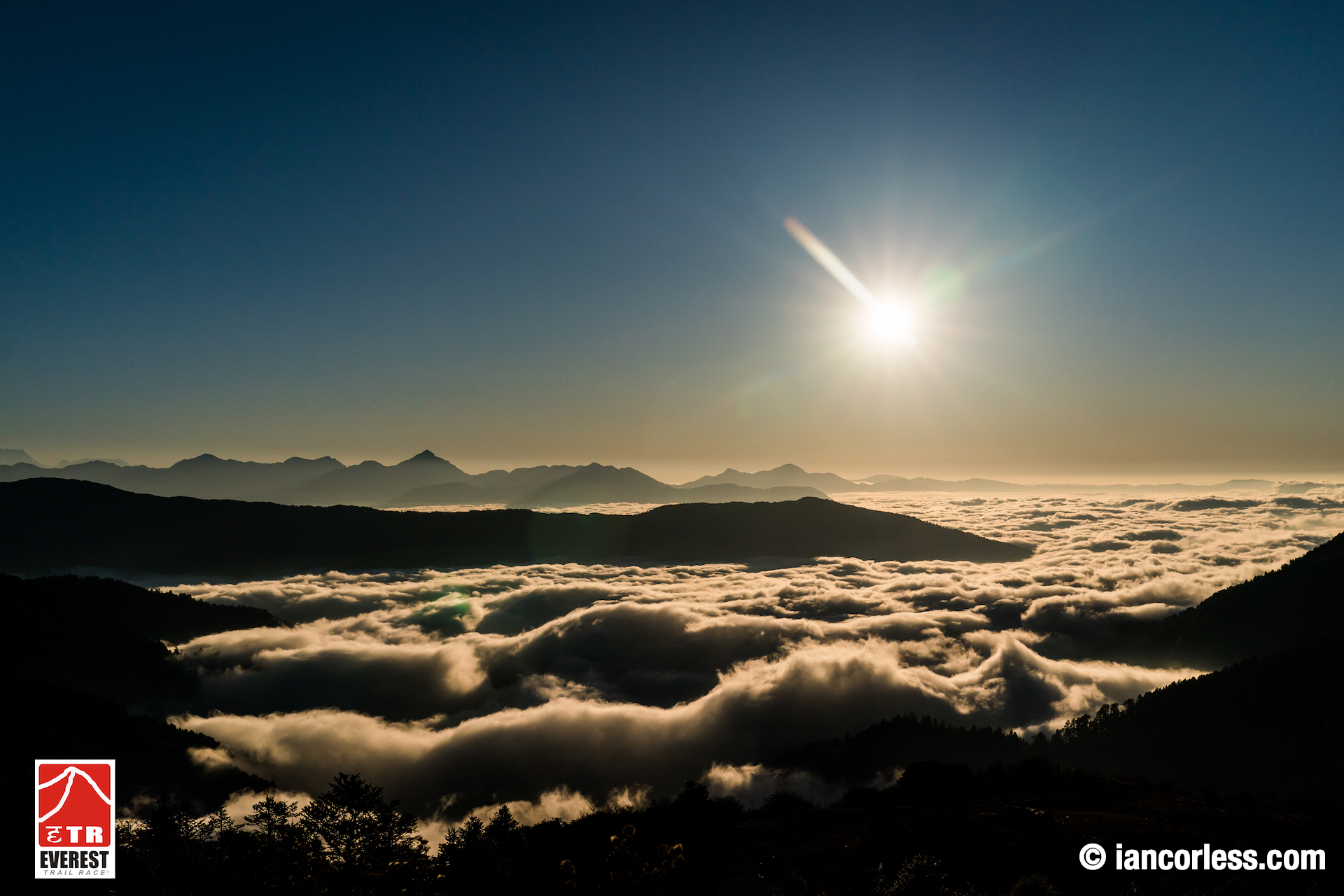
If you’ve ever dreamed of running in a place that feels otherworldly, where every breath reminds you you’re alive, and every step tests your limits, the 2025 Everest Trail Race is your chance. Happening this November, 10th to 22nd, 2025.
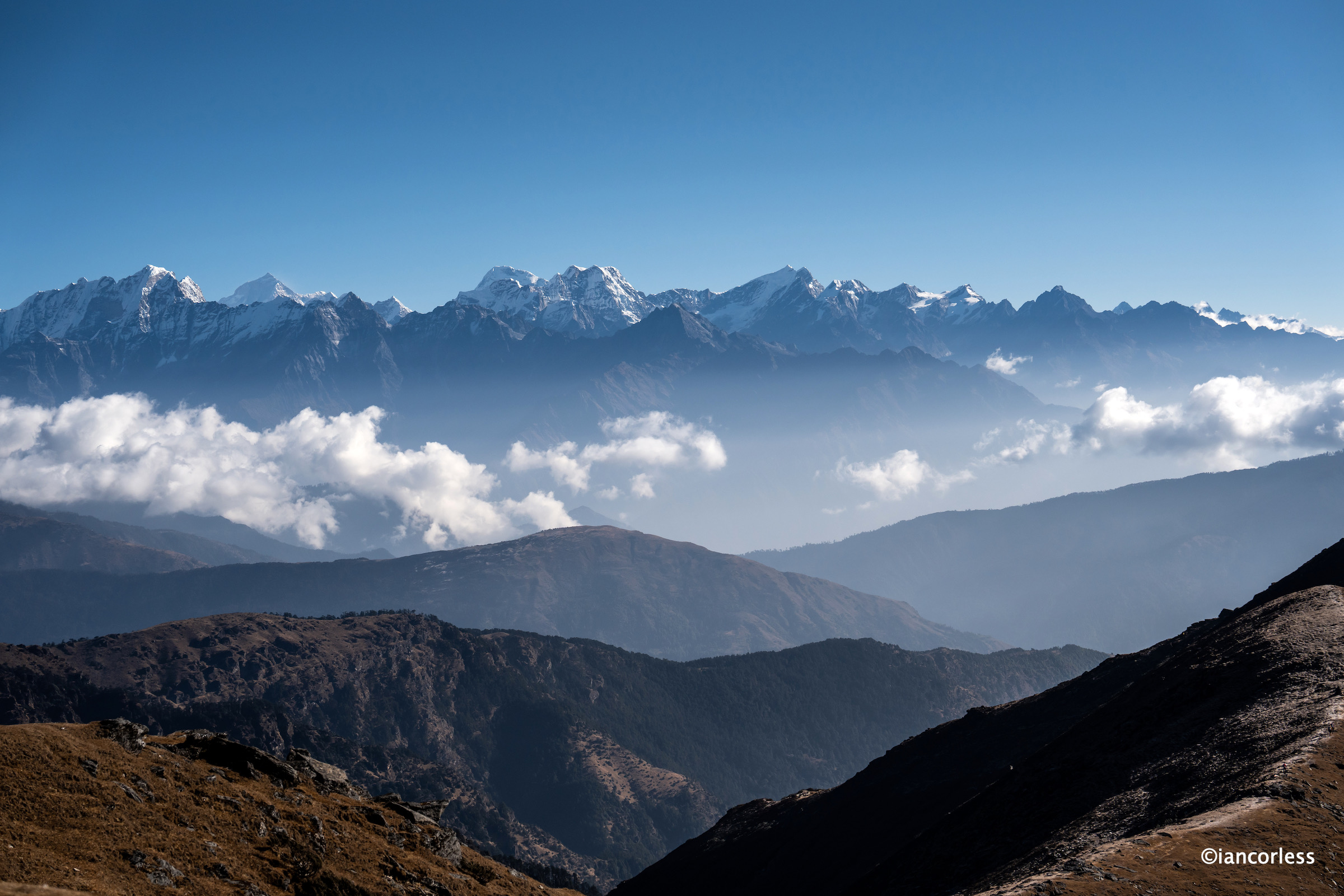
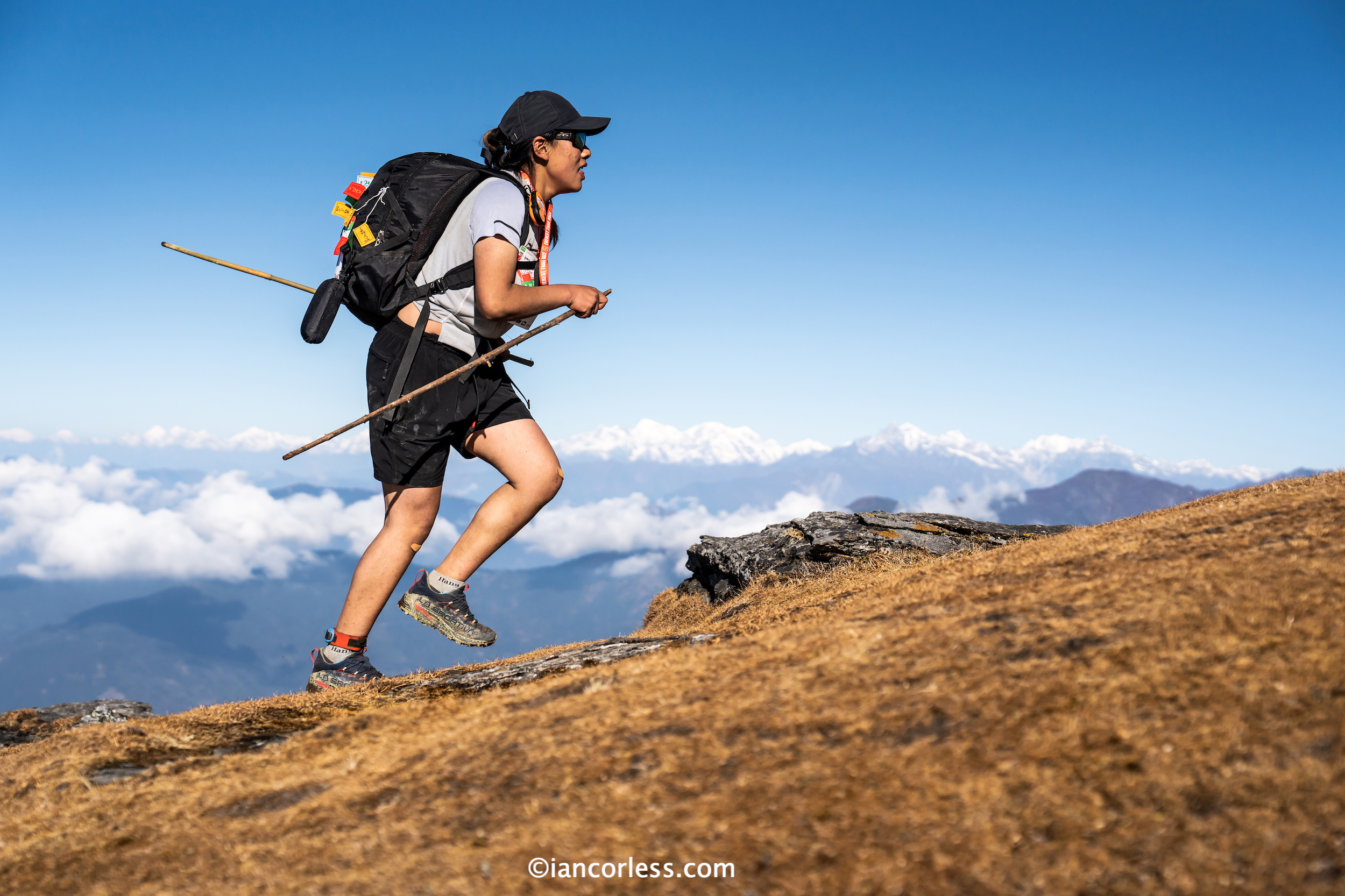
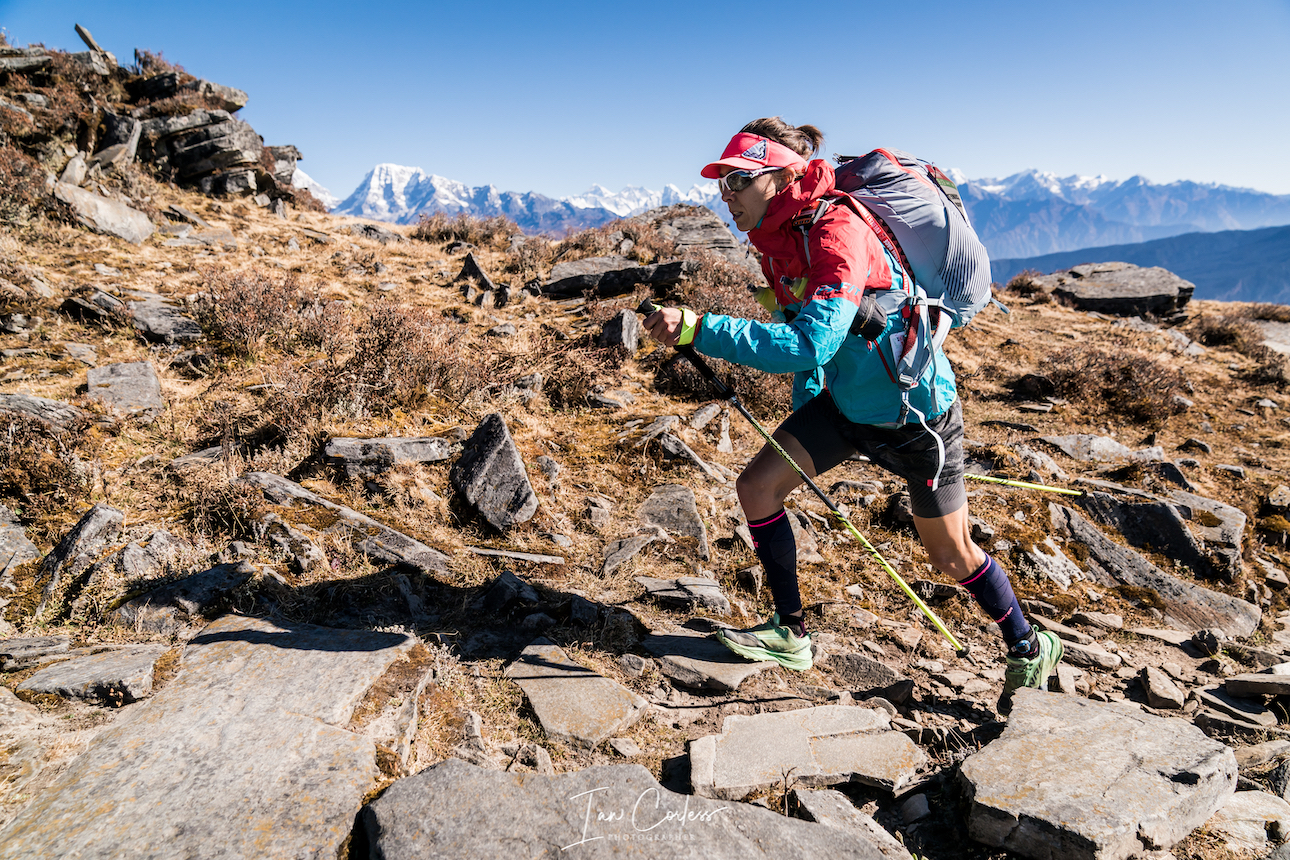
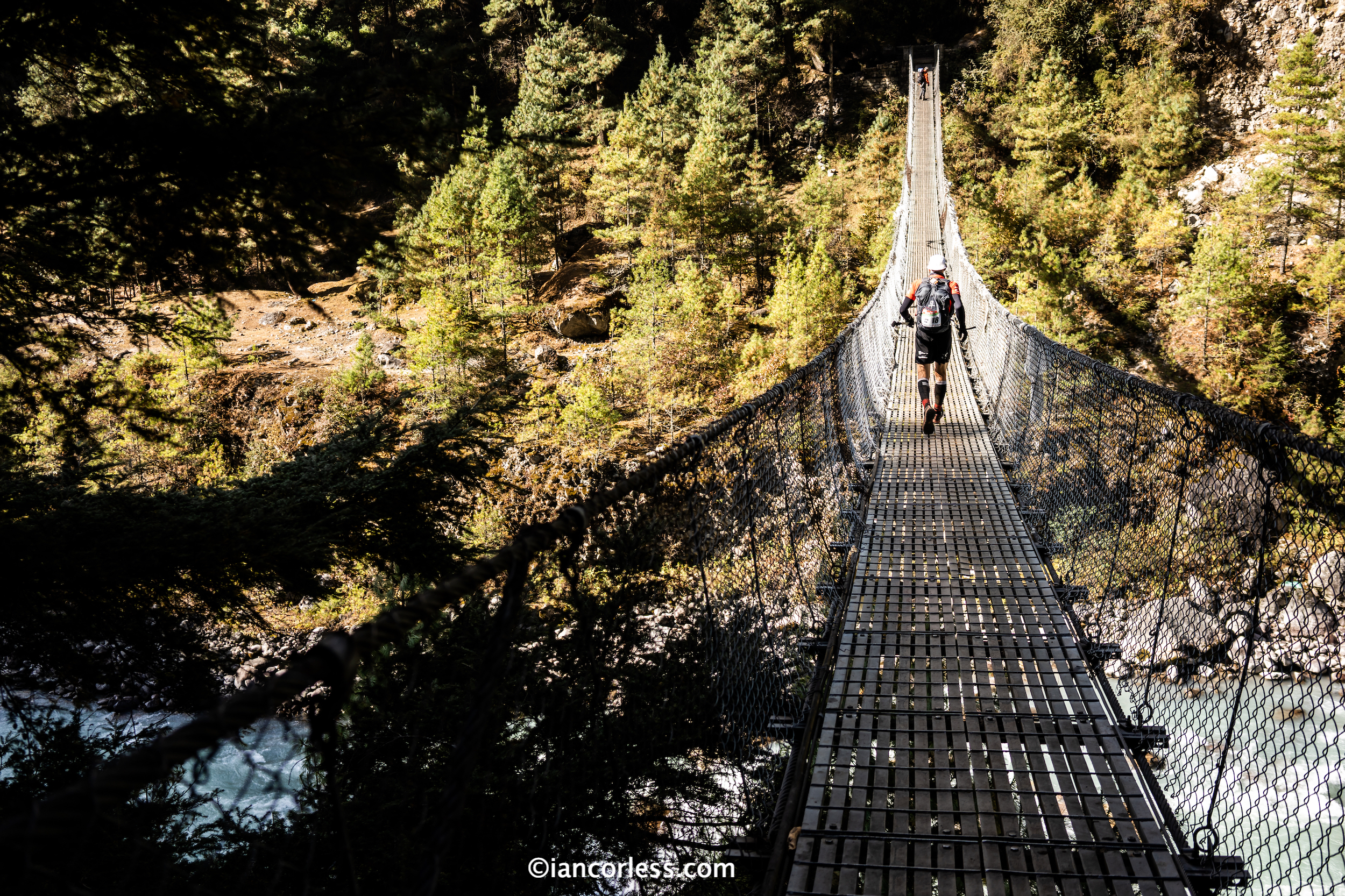
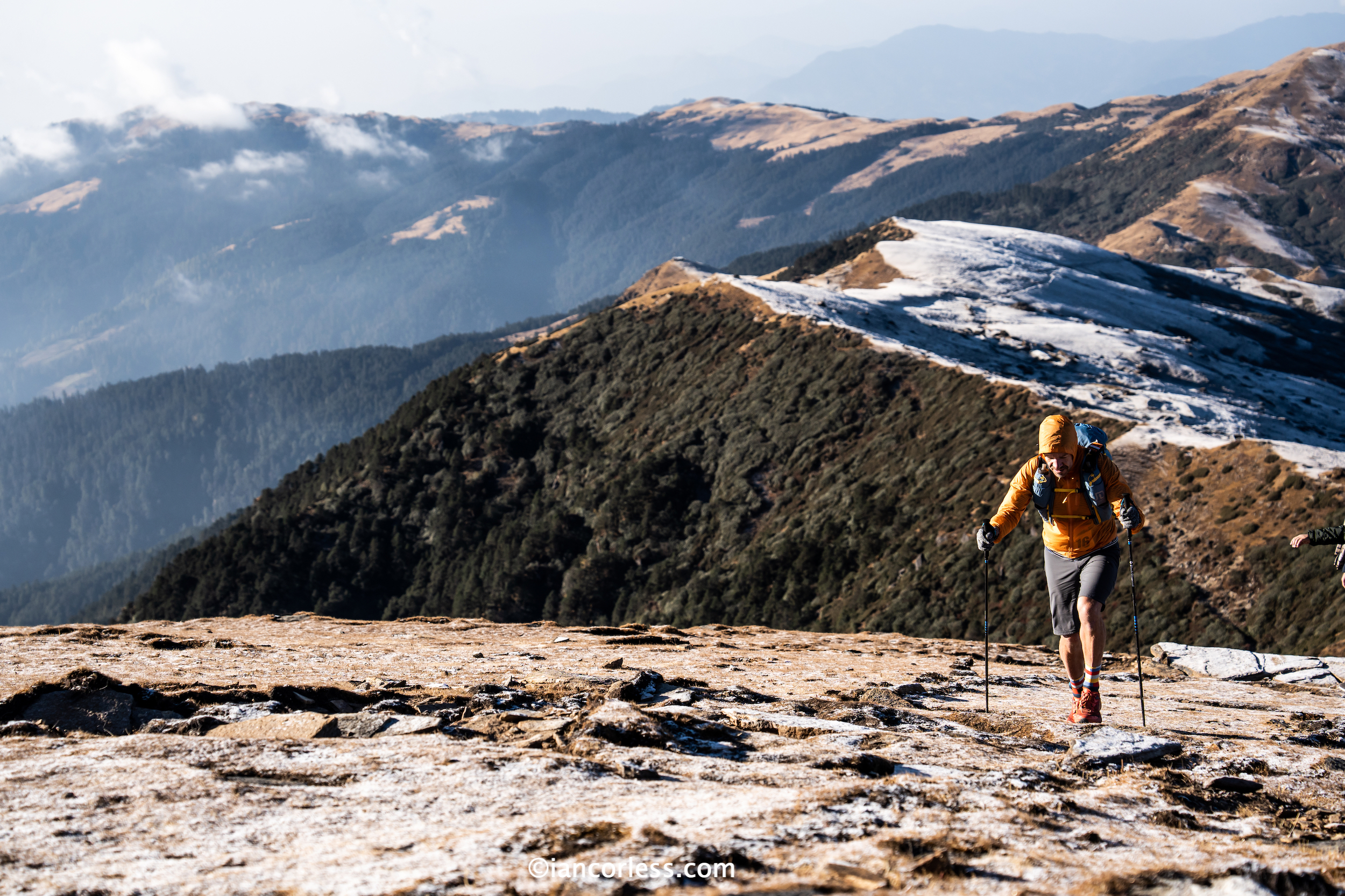
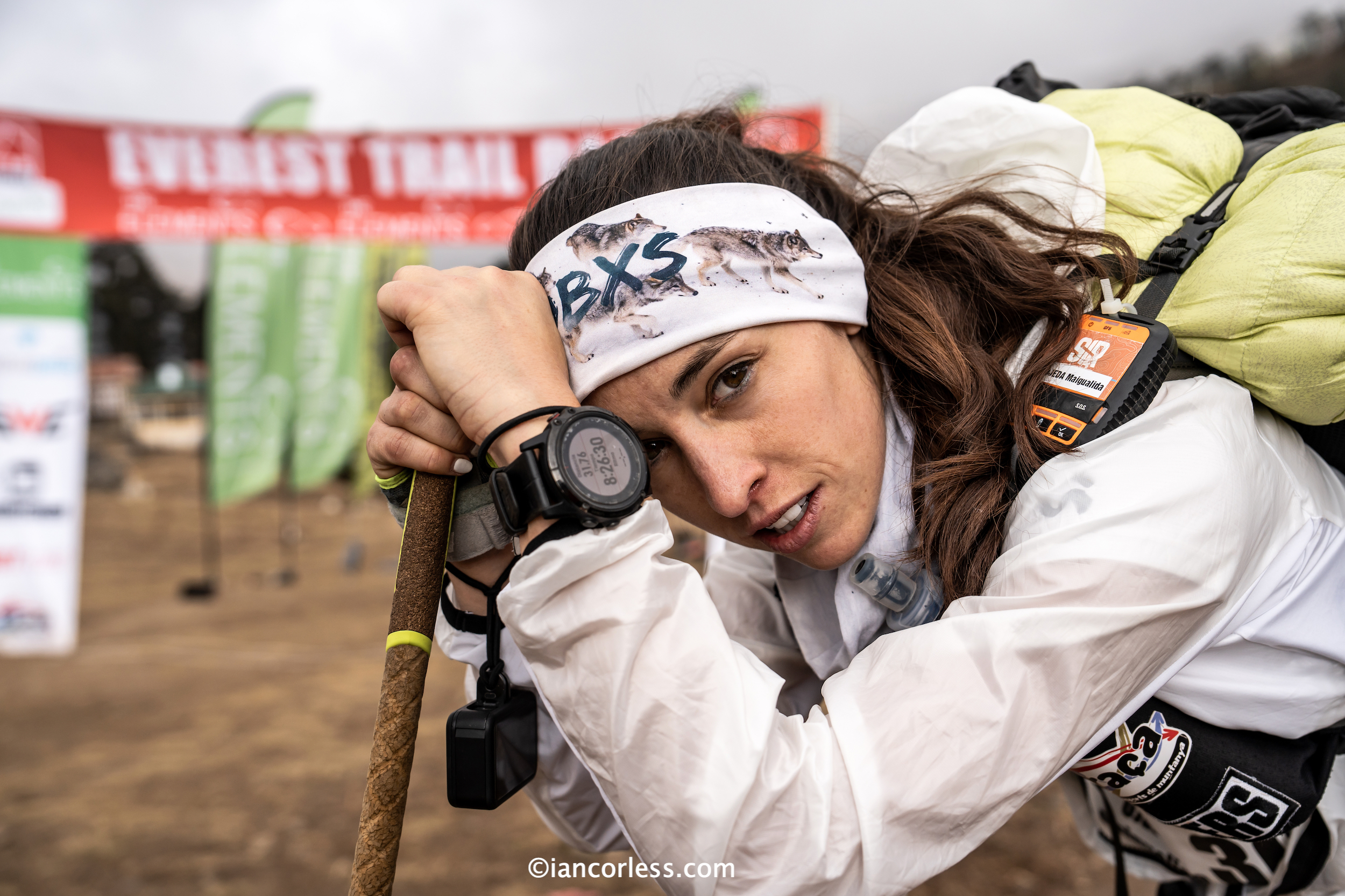
You carry your own gear. You fuel yourself. You keep going. Over six days, you’ll face steep ascents, grinding descents, suspension bridges, narrow trails, and thin air all at altitudes between 2,000 and 4,100 meters.
This is not a race for comfort. It’s a race for people who crave discomfort, who see sweat and struggle as part of something bigger.
This is trail running in its purest form. Technical sections, single tracks carved into mountainsides, ancient stone paths connecting remote villages. One moment you’re running through a pine forest; the next, you’re skirting a cliff with views that stop you in your tracks.
The race route threads through the Solukhumbu region, home to the legendary Sherpa people, along the same trails used by mountaineers heading to Everest Base Camp.
November in the Himalayas is cool, crisp, and clear, perfect for trail running. Daytime temps are mild, with intense sunshine at altitude.
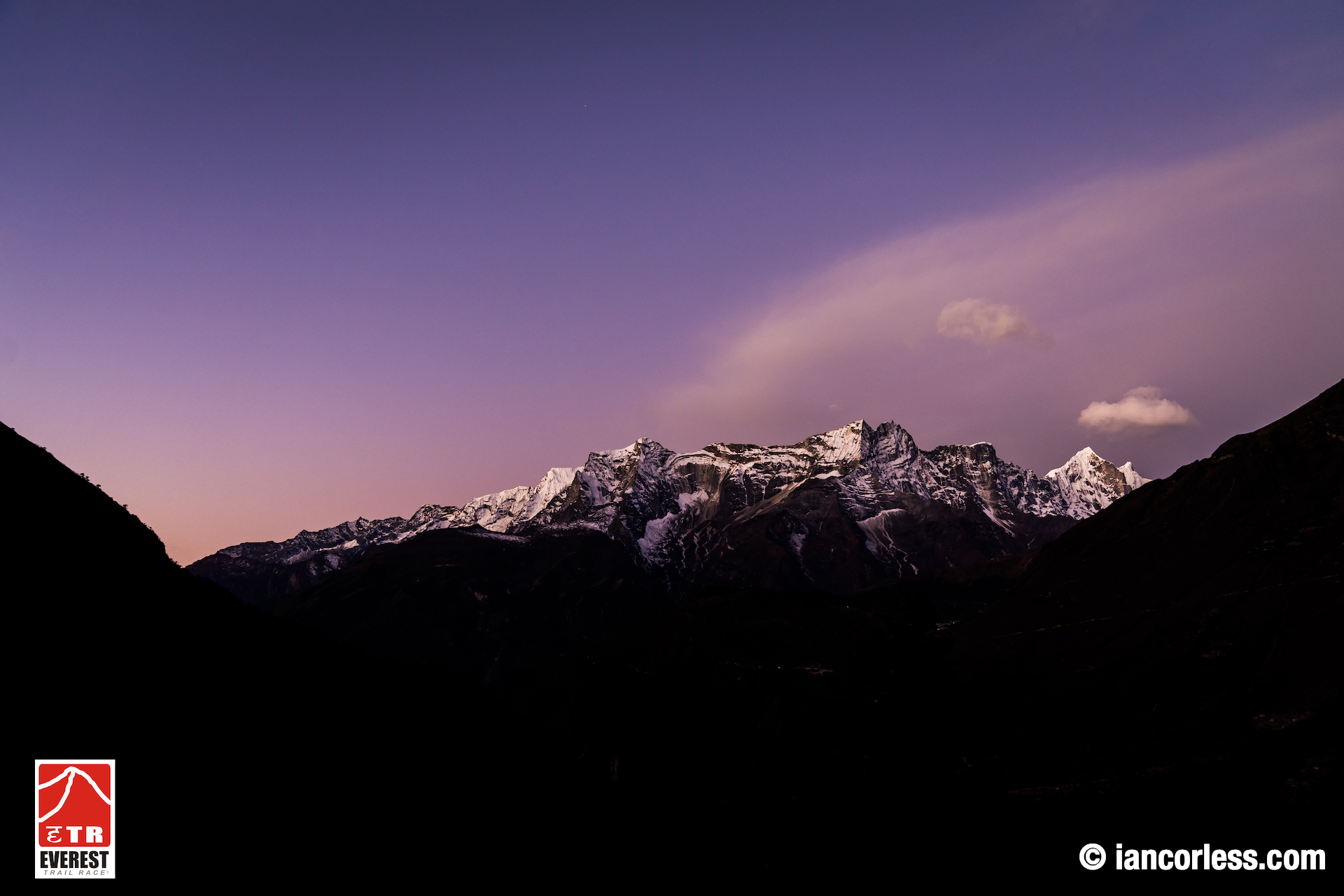
But the nights get cold. You’ll wake up to frosty mornings, and every breath will be visible. It’s the dry season, so the skies are often brilliantly blue, framing the snowcapped peaks like a postcard that never ends.
This is the kind of race where you learn to respect the air. The oxygen gets thinner, and your body feels it. It’s a slow grind uphill, and then a fast, careful descent. Pacing becomes survival. Acclimatisation is your secret weapon. But when you’re out there, breathing hard, moving slow, you realise something: you don’t need speed. You just need grit and determination.
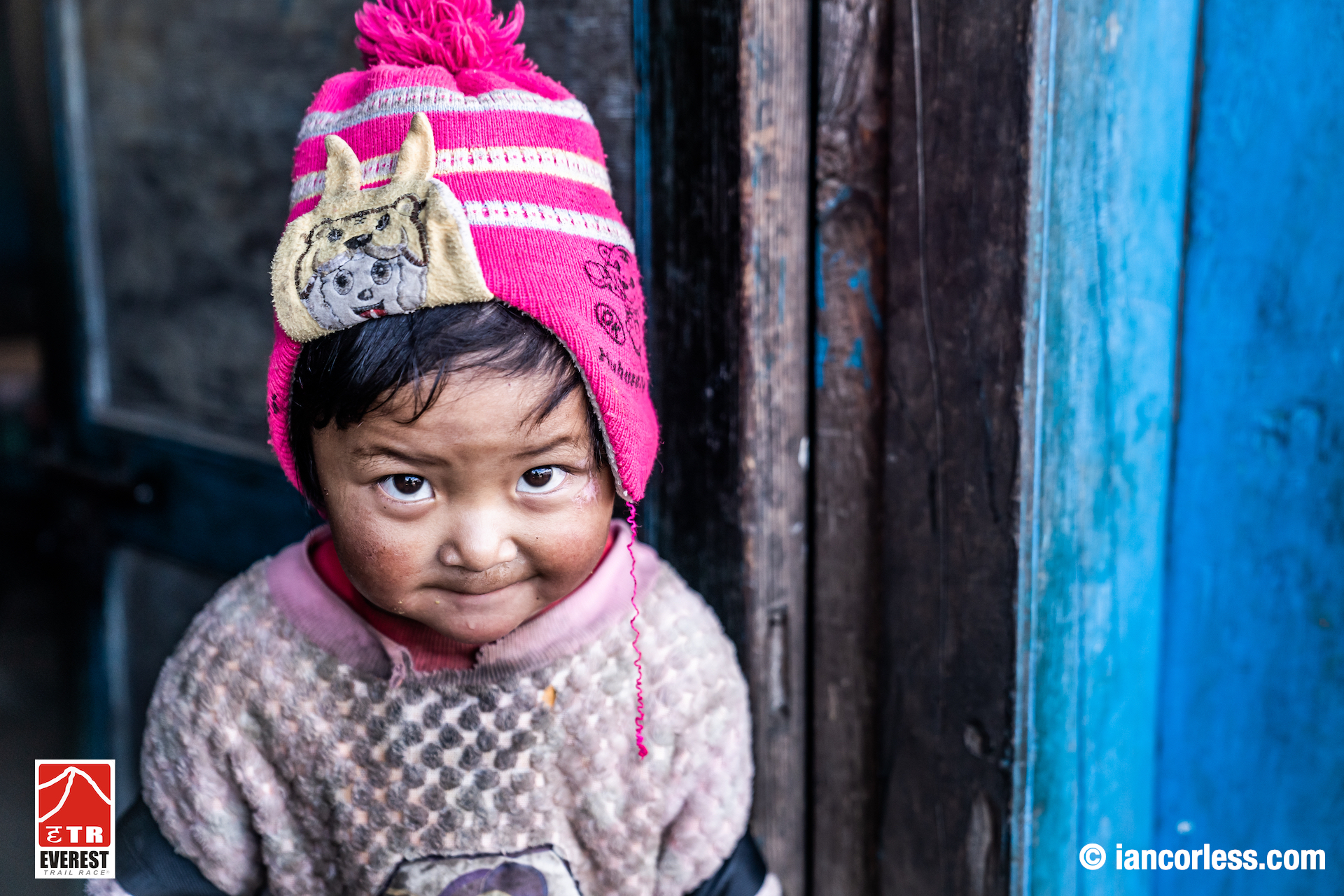
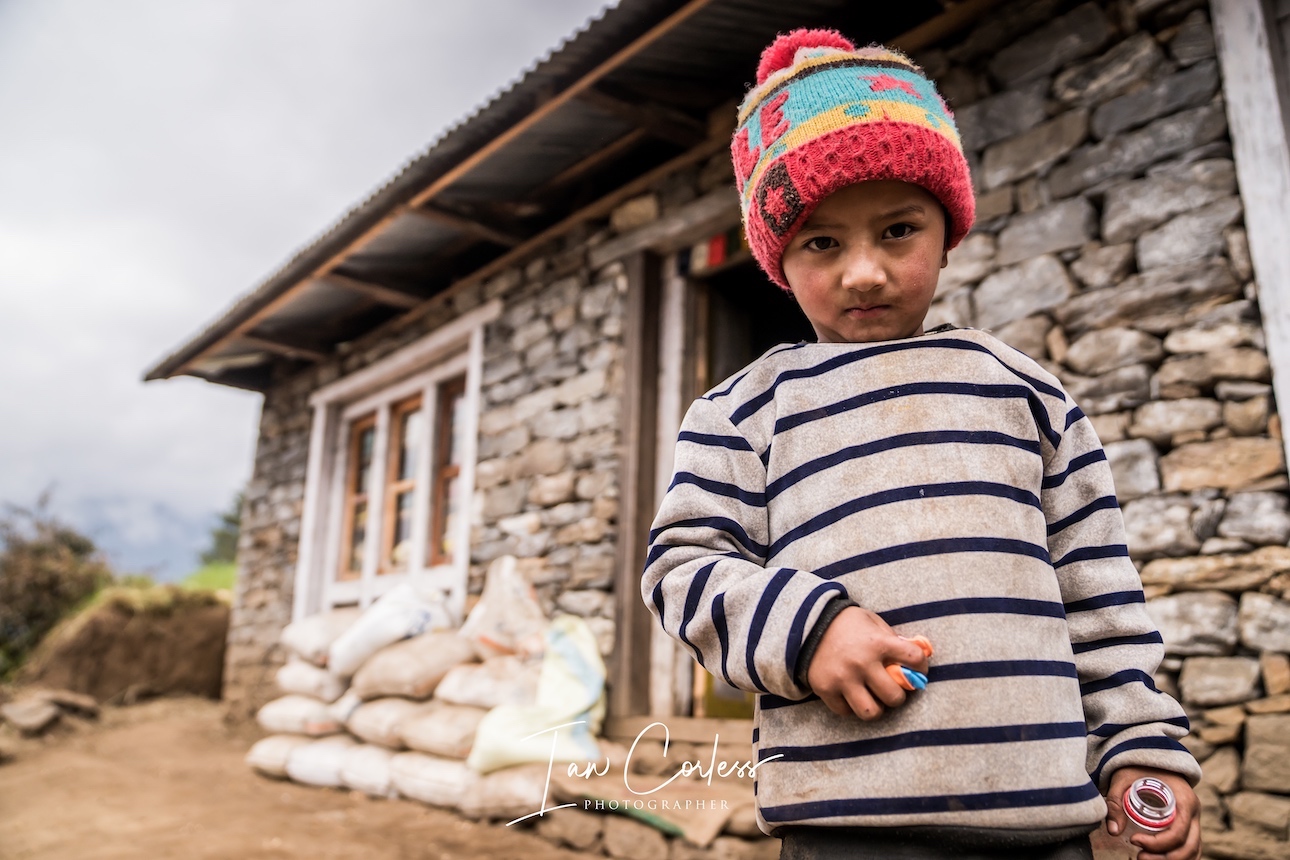
You’ll meet Sherpa families offering you tea from tin cups in smoky kitchens. Kids will run beside you, barefoot and beaming.
The camaraderie among runners is real, forged in pain, sweat, and shared awe. You’ll finish each stage beside people who were strangers, now teammates.
The Everest Trail Race is small and personal. It’s not about crowds. It’s about connection — to the land, to each other, and to something deeper inside yourself.
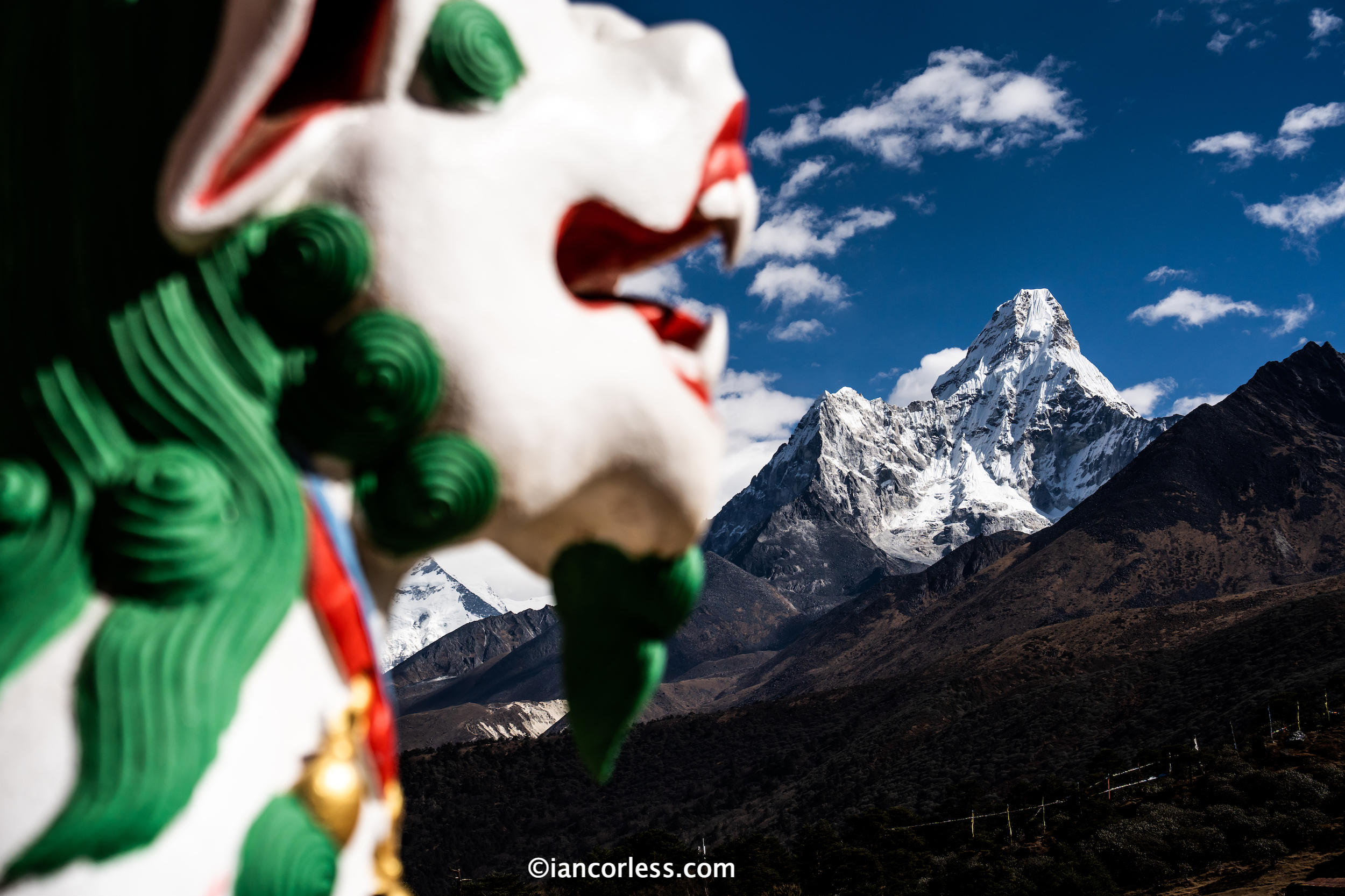
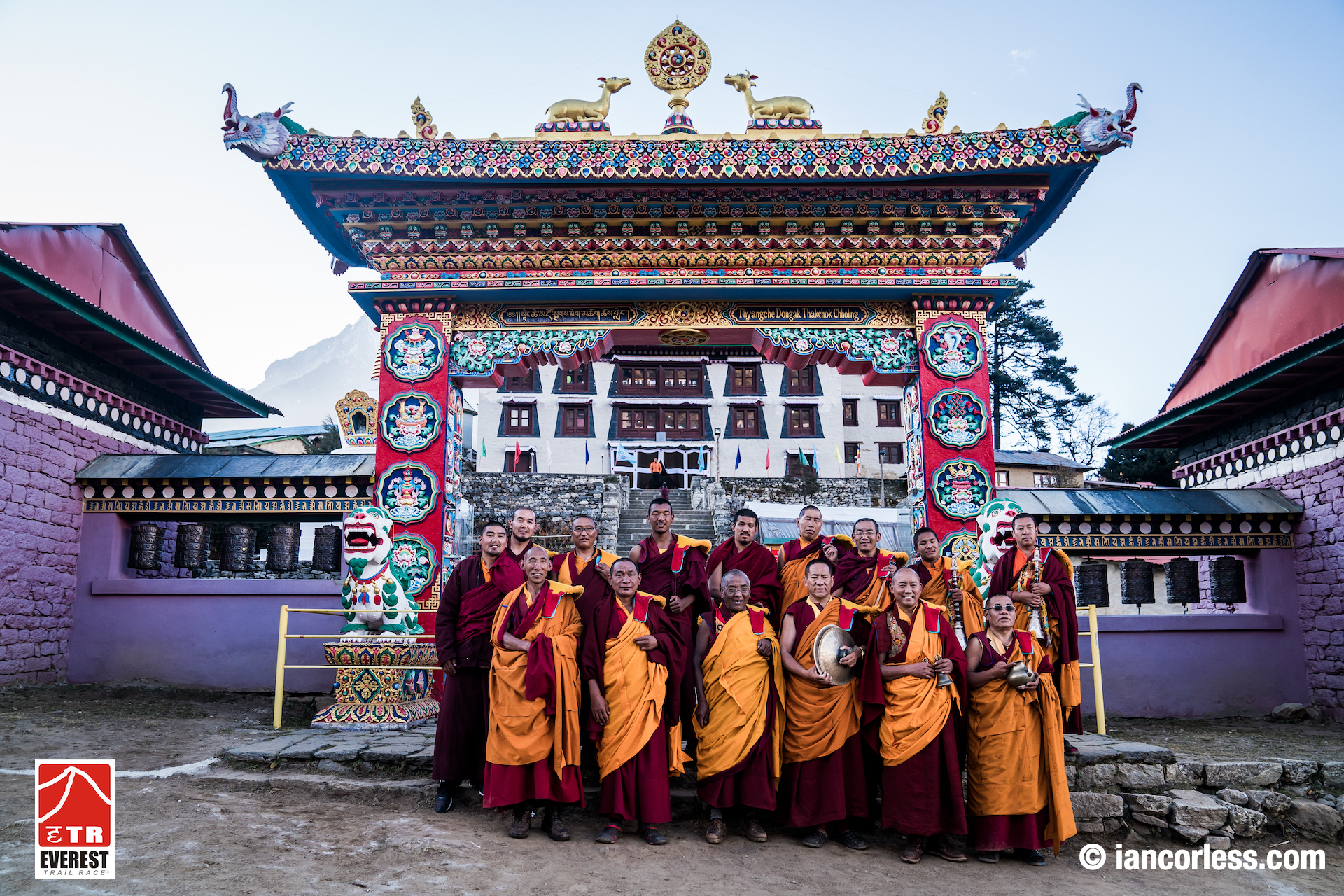
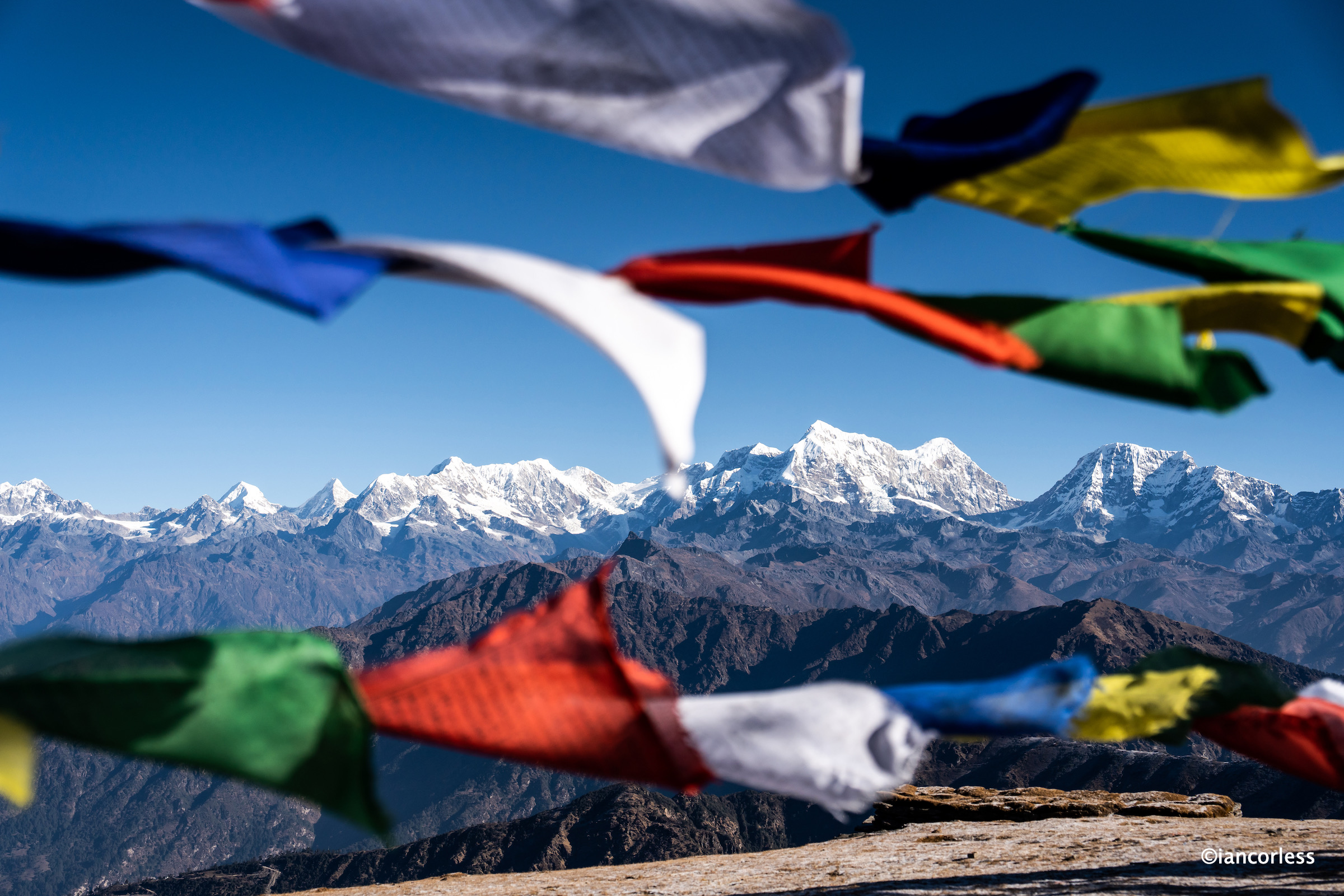
You’ll see Everest, Lhotse, Ama Dablam, and other giants of the Khumbu up close. But it’s not just the mountains — it’s the prayer flags flapping in the wind, the monasteries perched on hillsides, the layers of ridge upon ridge fading into the horizon. Every day looks like a screensaver. Every sunrise feels earned.
If you’re waiting for the “perfect moment,” this is it. You don’t need to be the fastest or the strongest. You just need to show up ready to push, adapt, and feel everything this place throws at you. The Everest Trail Race is not about conquering the mountain. It’s about discovering who you are when the mountain pushes back.
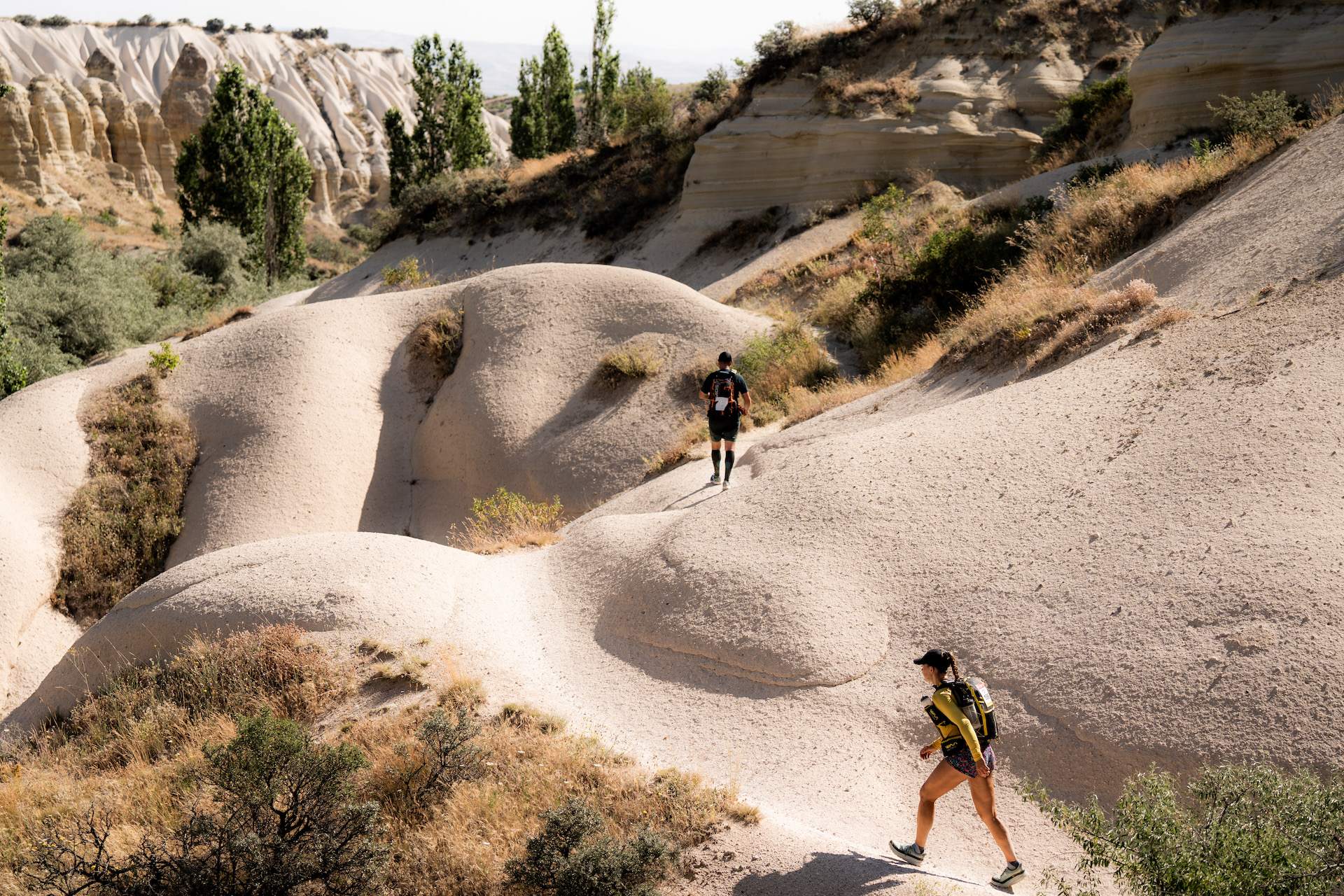
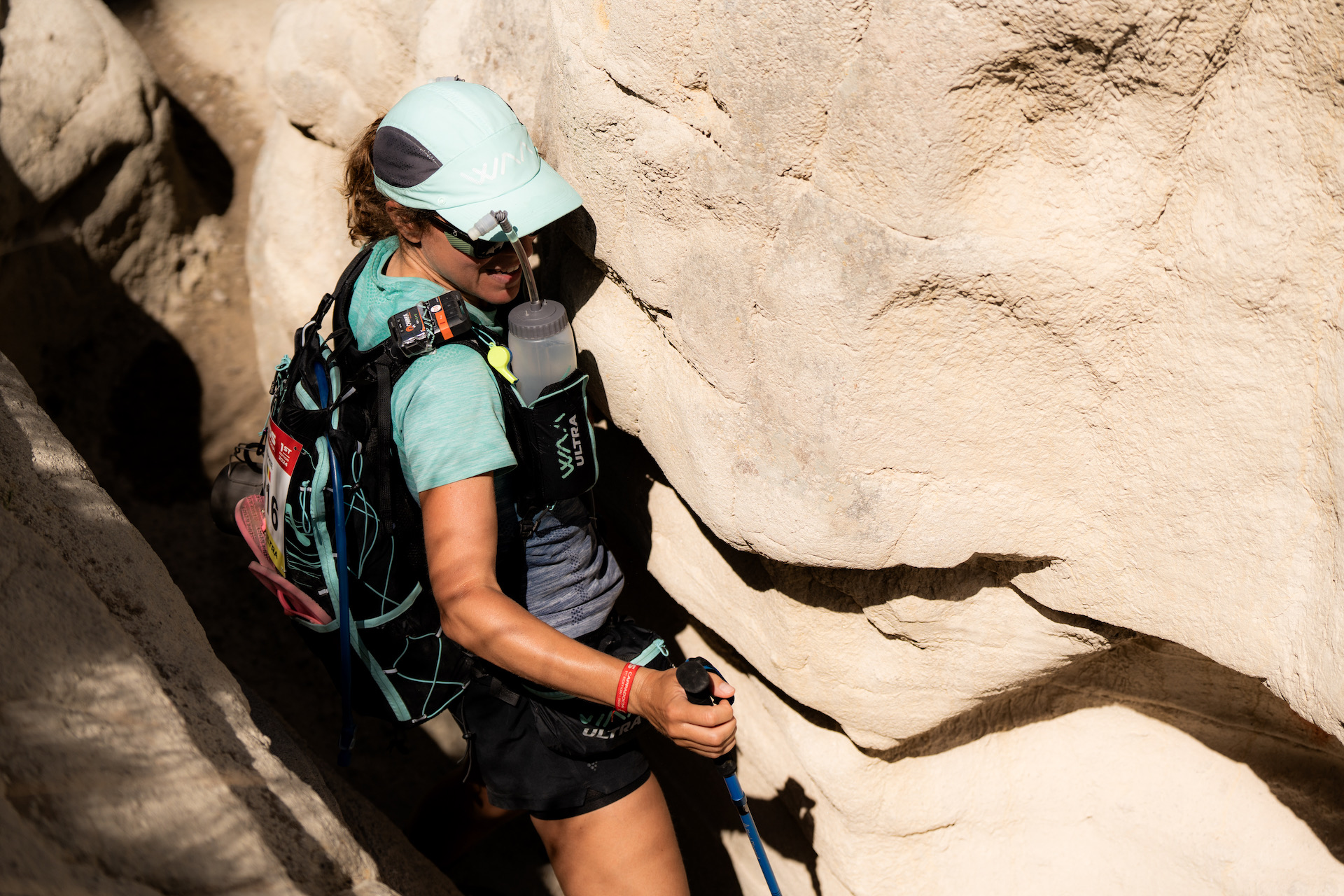
The MDS Cappadocia returns for its second edition, bringing trail runners back to one of the most visually surreal landscapes on Earth.
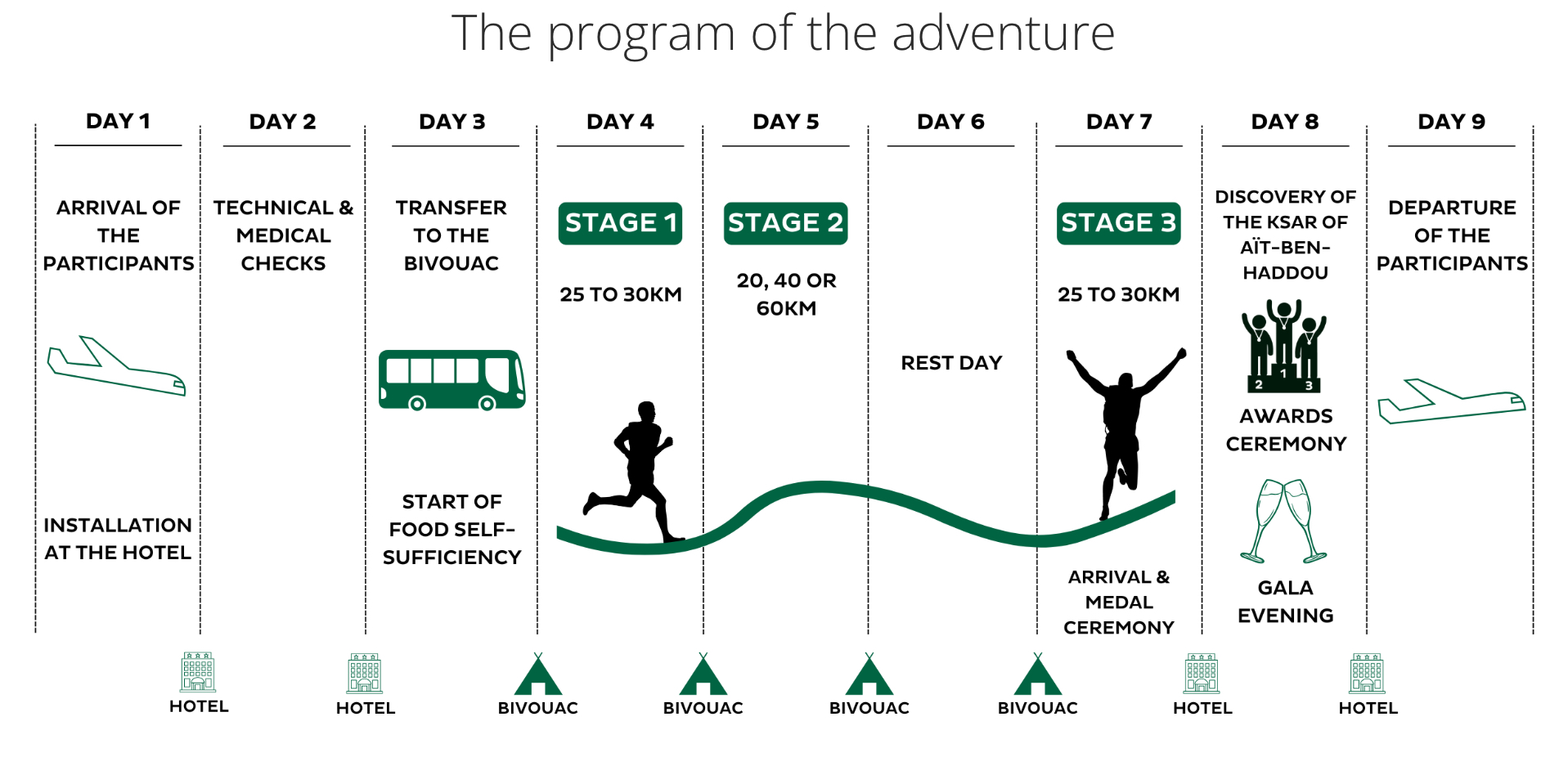
Set across three demanding stages over four days, this is not your typical desert race, on the contrary, it’s a technical, high-impact trail event through ancient terrain steeped in history and visual splendour.
Runners choose between 70km, 100km, or 120km of total distance, stages 1 and 3 are the same for everyone, stage 2 participants choose 20/40 or 60km.
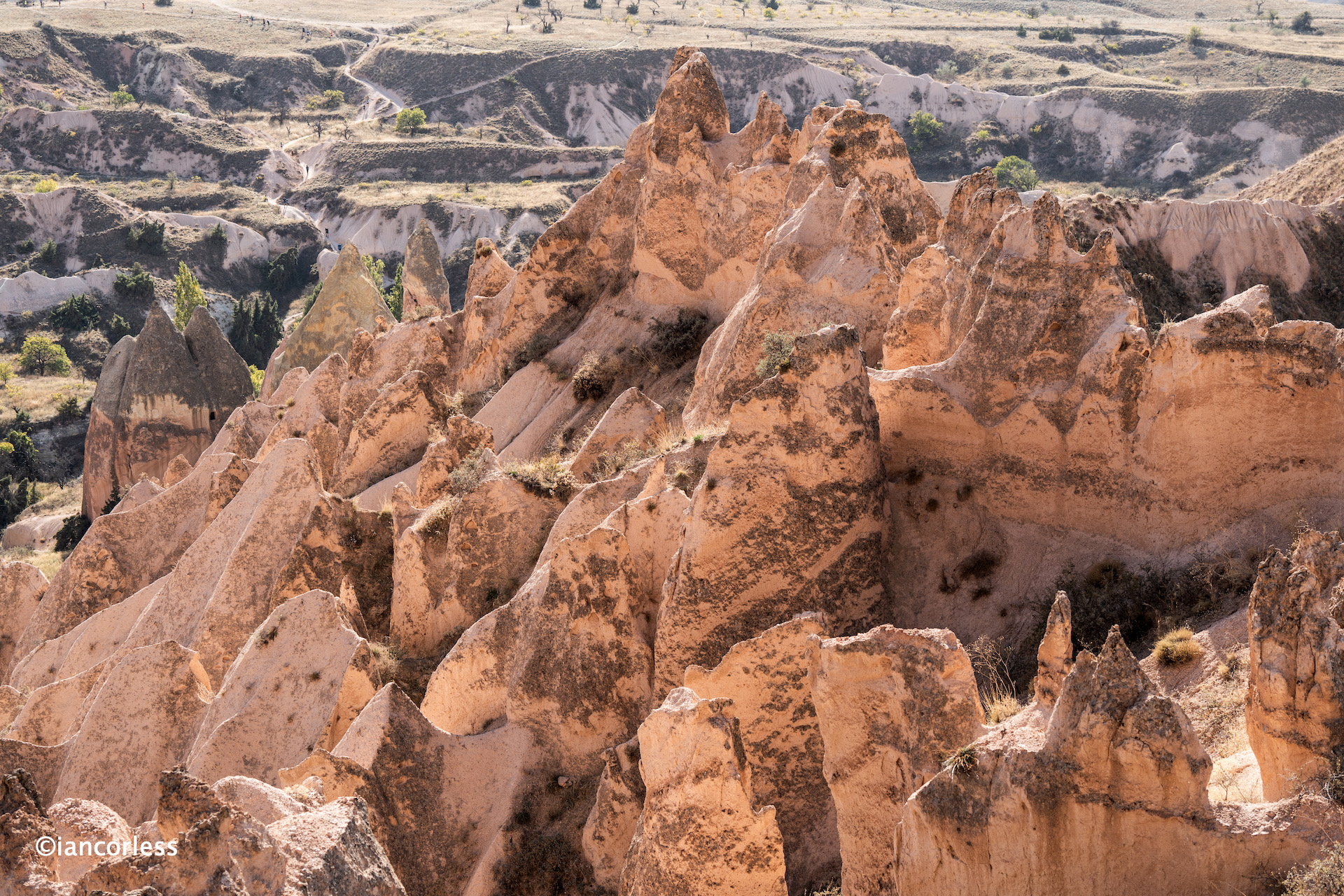
Each course is carved through a landscape that feels pulled from another planet.
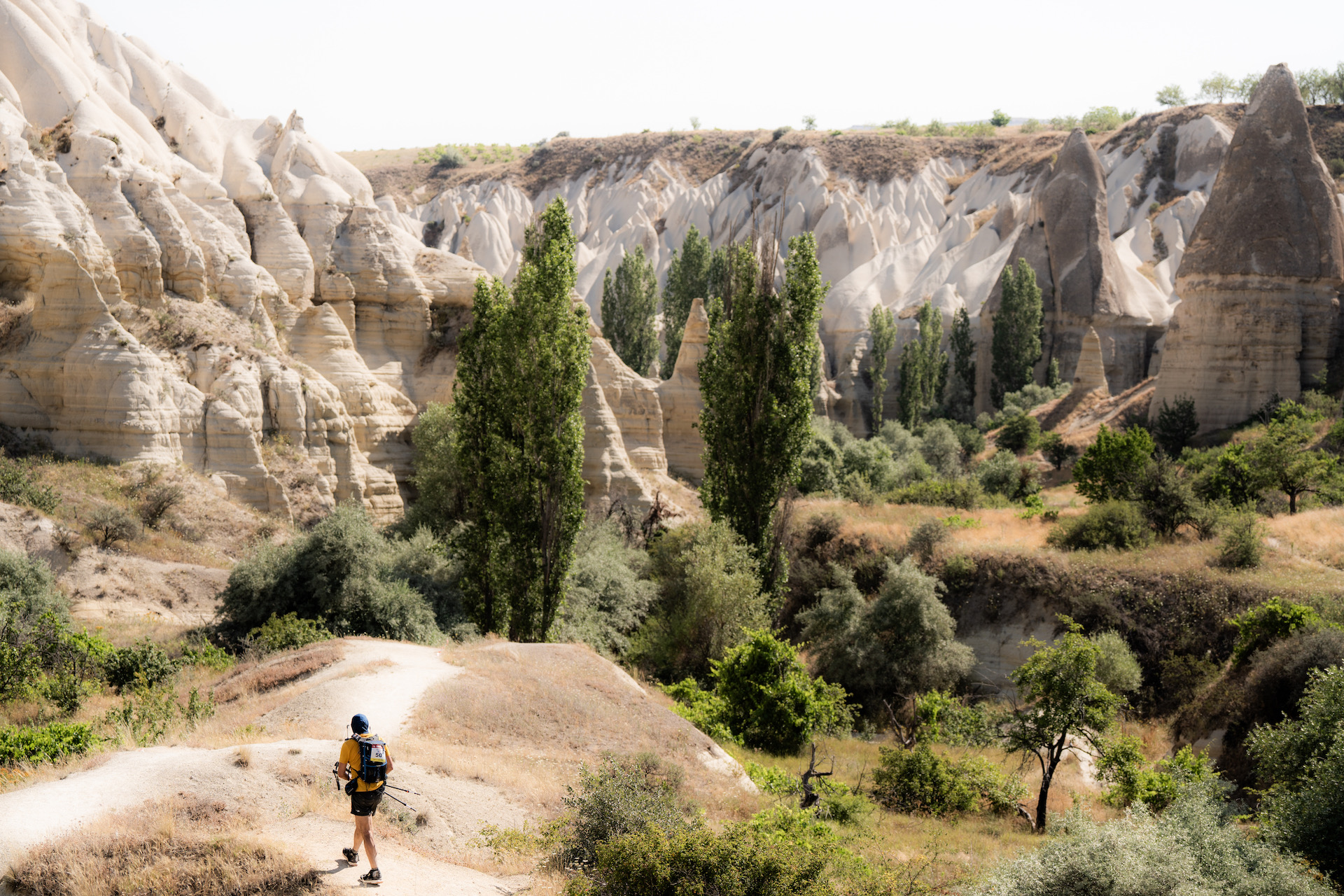
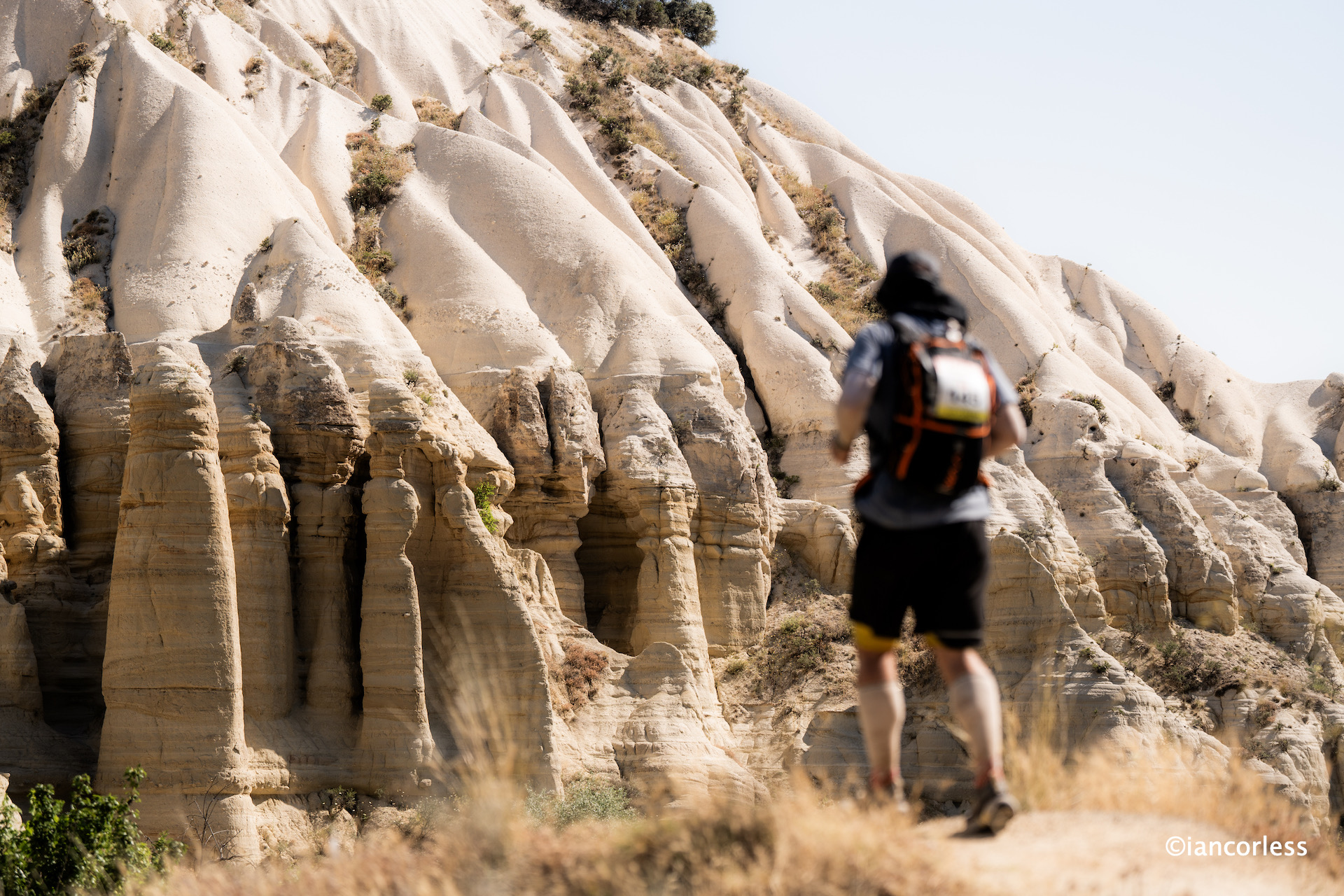
This isn’t a race of endless dunes, Cappadocia stands unique in the MDS format with no sand. It’s a test of grit over rock, gravel, and dust trails, winding through steep valleys, high plateaus, and narrow chimney-like formations.
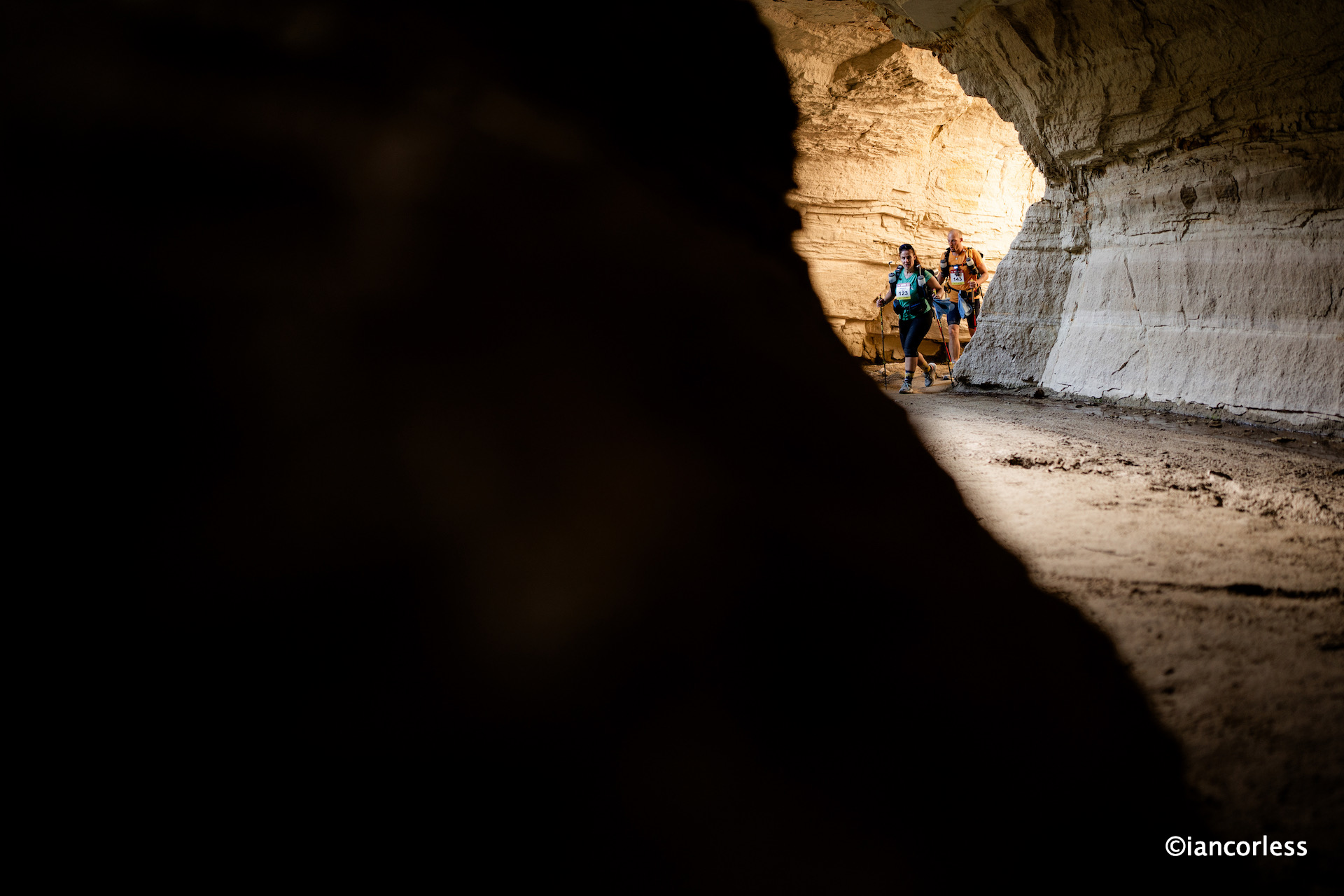
The terrain shifts constantly. One moment you’re powering up a canyon, the next you’re cruising past thousand-year-old cave dwellings.
Cappadocia’s late summer weather is unpredictable. Days can scorch above 30°C (86°F), while nights drop sharply in temperature. As with all MDS events, participants will sleep in individual tents in a stunning location set within an amphitheatre of rock.
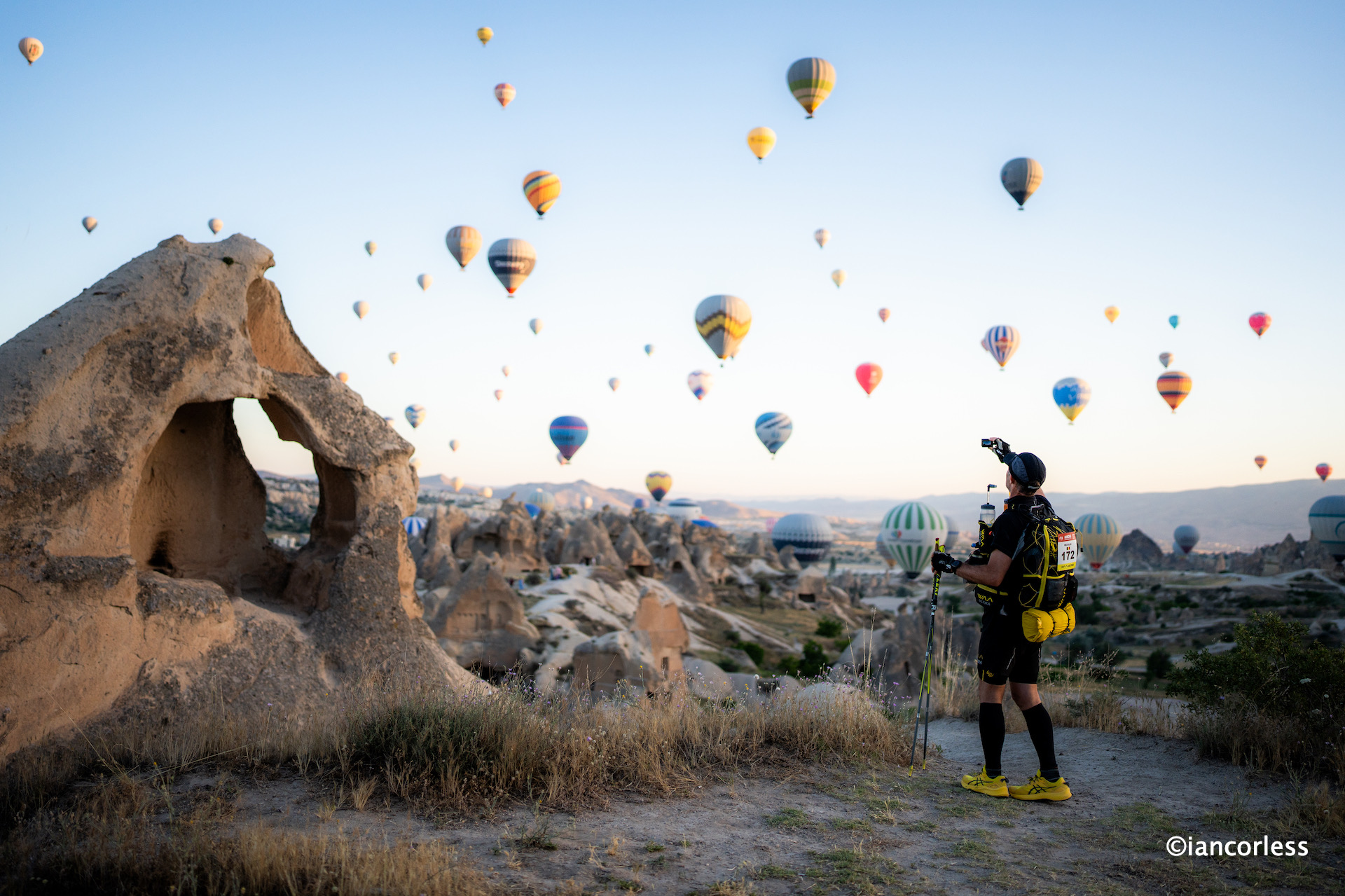
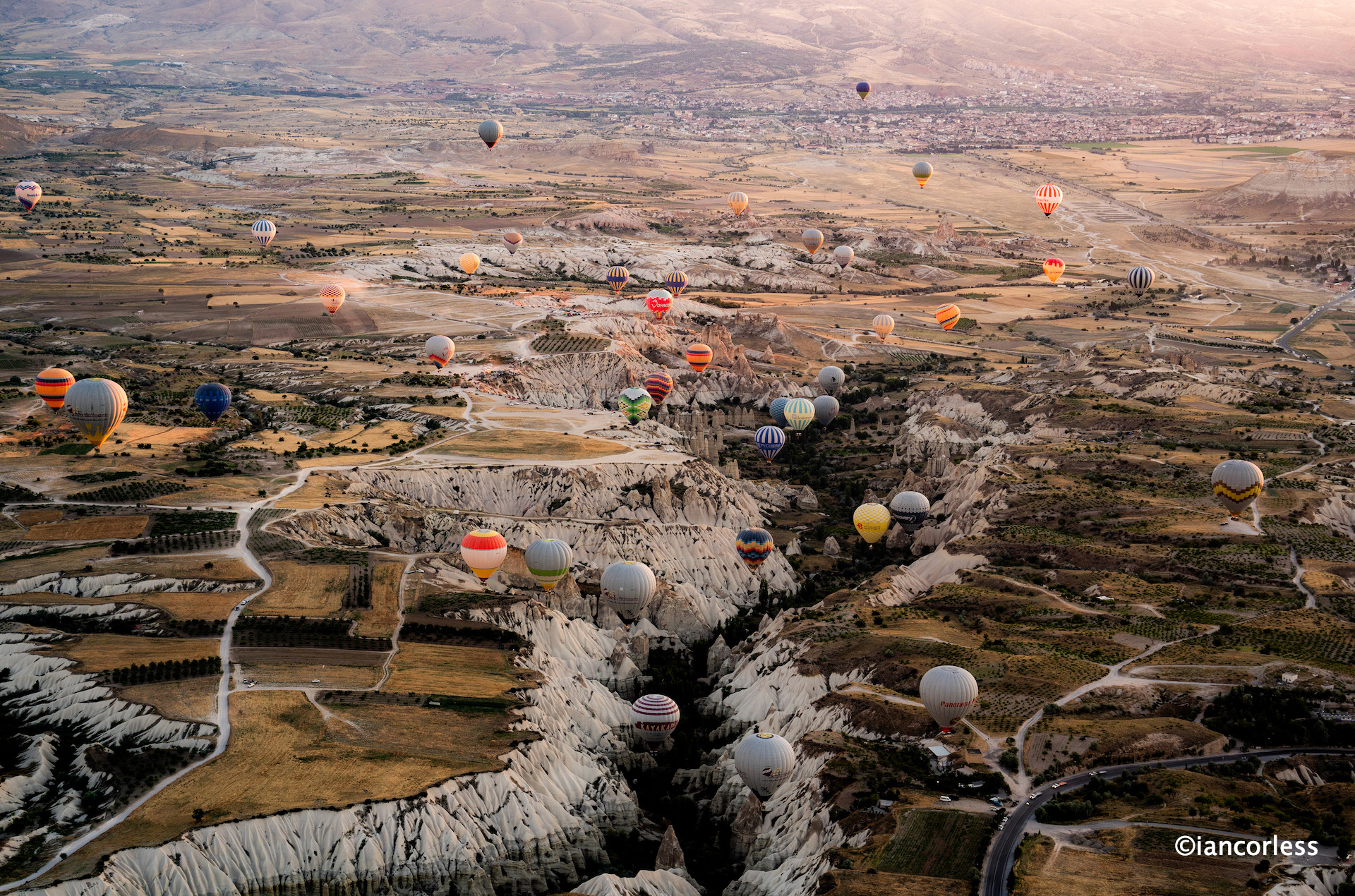
The sky, often cloudless, fills at dawn with dozens of hot air balloons, silent giants drifting above the rock spires and carved cliffs. Arguably, one of the most unique and memorable sights in any MDS event.
Whether you’re going for the 70km or pushing through the full 120km, MDS Cappadocia strips away distractions and puts the challenge squarely on participant versus the trail: raw, remote, and unforgettable.
MDS has never been just a race. It’s a full-body, full-heart experience. In 2026, following on from first editions in 2025, MDS Atlantic Coast and MDS Raid Namibia return for 2026. If you’re looking for adventure with meaning, either one could be the race of your life, registration opens June 18 2025.
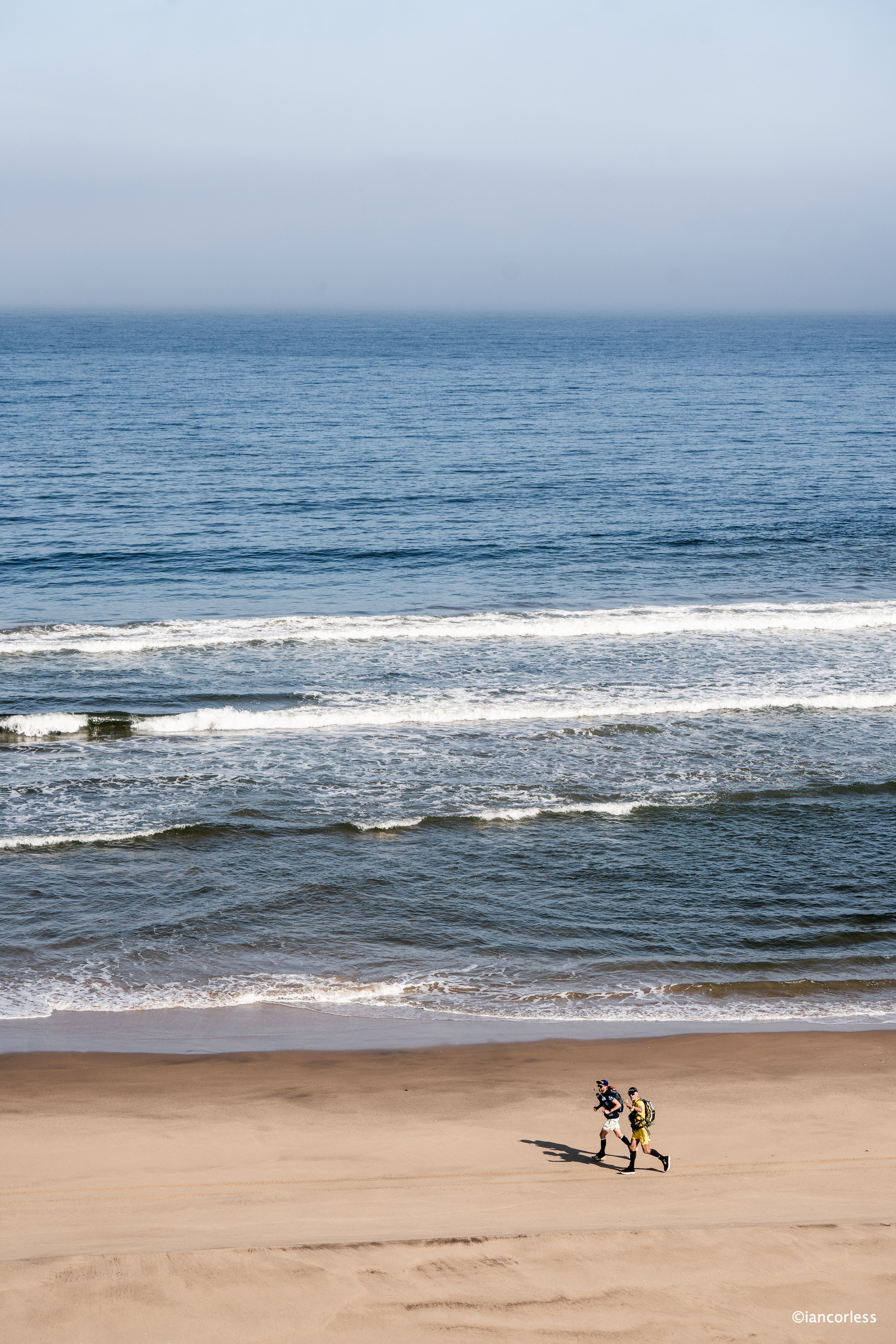
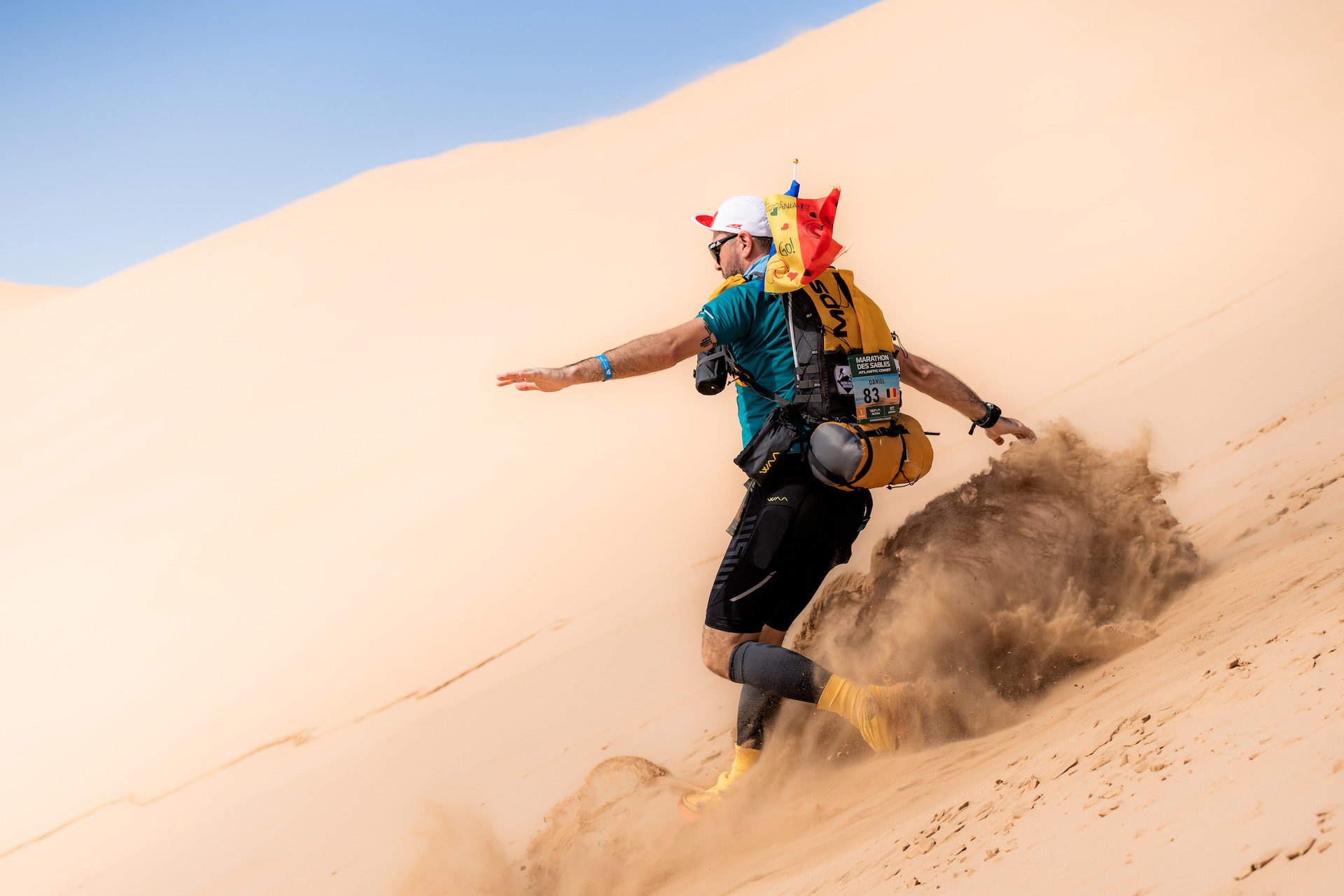
This isn’t your typical desert run. MDS Atlantic Coast cuts through a rugged, wind-carved stretch of Morocco, where the Atlantic and dunes meet with force. Raw and exposed, this region of Morocco is a place where the elements are alive and always in motion.
Photo by Ian Corless
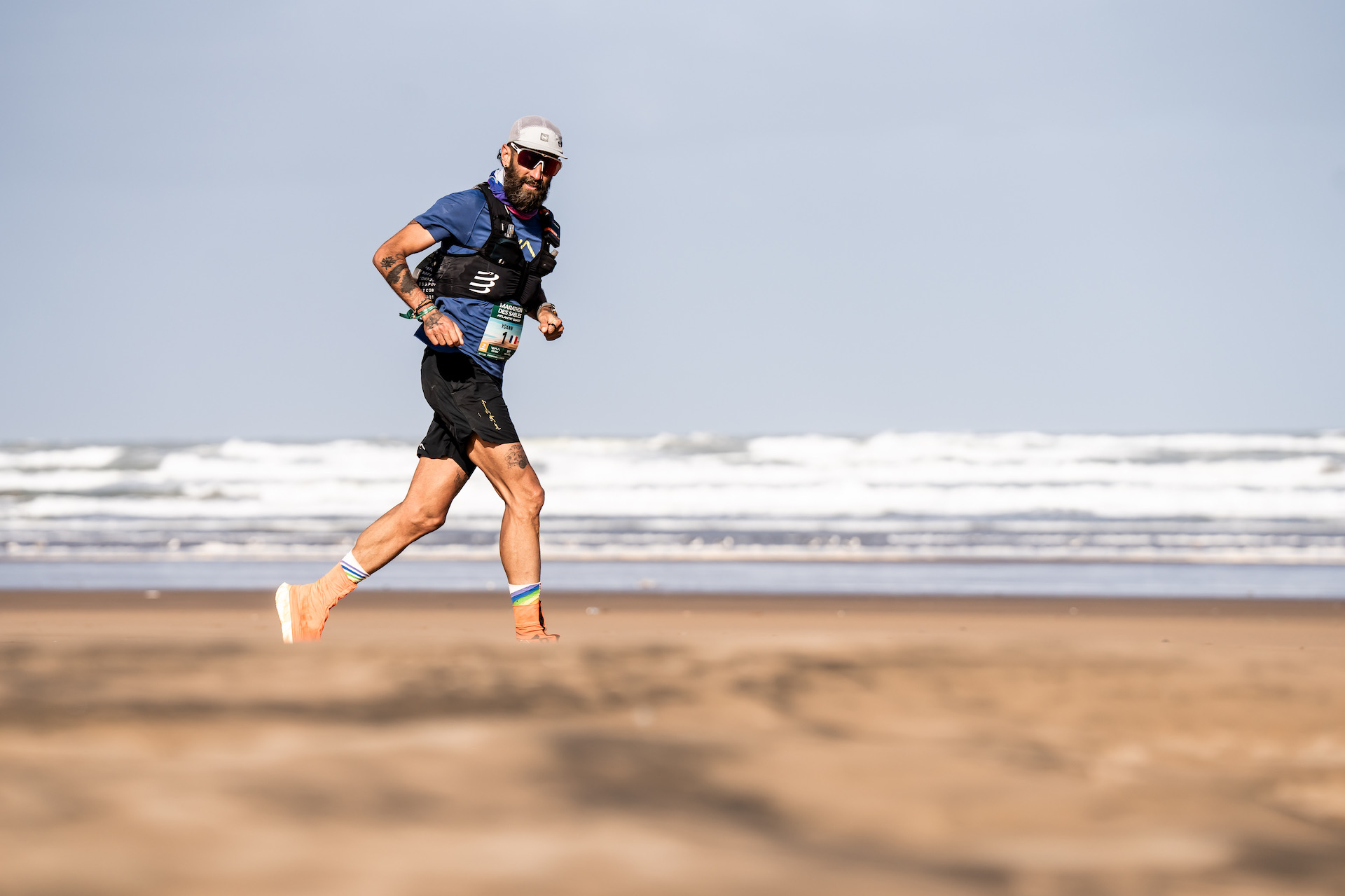
The route spans beaches, a rollercoaster of sand, and coastal dunes. Sweeping ocean views and the pulse of open nature. The terrain shifts fast: soft sand, hard-packed trail, technical descents. You’ll run through untouched coastline where the horizon feels infinite.
Photo by Ian Corless
What makes it special? The contrast. The wild energy of the Atlantic meeting the quiet resolve of the desert. It’s Morocco, but different, fresher, rougher, windswept. A race built for runners who crave variety and the edge of the map.
Photo by Ian Corless
The event will take place January 24th to 30th 2026. The format will offer 70km, 100km or 120km’s over 4-days and 3-stages.
Then there’s the magic of Namibia, a race that doesn’t just test your endurance, it rewires your sense of scale. You run through the Namib Desert, the oldest on Earth, where everything feels ancient, vast, and impossibly quiet.
Here, the dunes don’t just rise, they tower. Temperatures swing fast. The sand swallows every sound. You’ll face long stretches with no sign of human life, just you, your breath, and the endless desert.
Raid Namibia is all about extremes: isolation, heat, and beauty so intense it’s almost surreal. You’re not just running across a landscape, you’re running inside a moment that feels untouched by time.
Unique for the MDS format, Raid Namibia is undertaken in teams of two with two distance options, 100km or 120km. Taking place April 25th to May 2nd 2026, this race is a very special event in the MDS line-up and as such, participants will ideally have prior experience of an MDS event or similar.
• MDS Atlantic Coast brings wind, waves, and a constantly changing terrain under the open Moroccan sky.
• MDS Raid Namibia delivers pure stillness and a surreal immersion in the world’s most ancient desert as teams of two with a special star night.
One ocean, the Atlantic, two unique events. Experience the silence of the desert, experience different landscapes and share the same unshakable spirit that brings all MDS events together.
If you’ve ever dreamed of pushing your limits somewhere unforgettable, entries open:
June 18, 2025 1200 CET.
MDS Atlantic Coast and MDS Raid Namibia are more than races — they’re experiences that shape you.
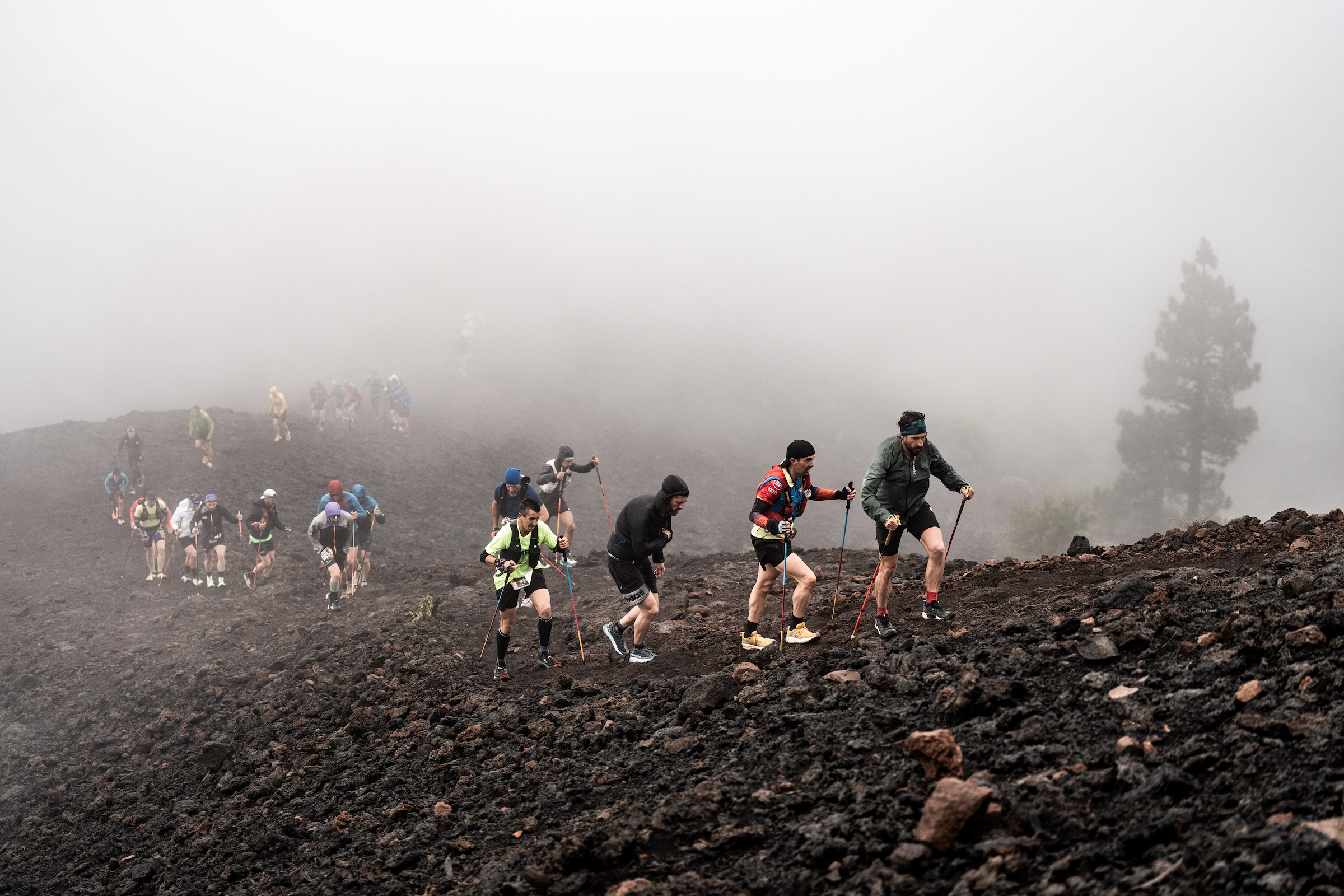
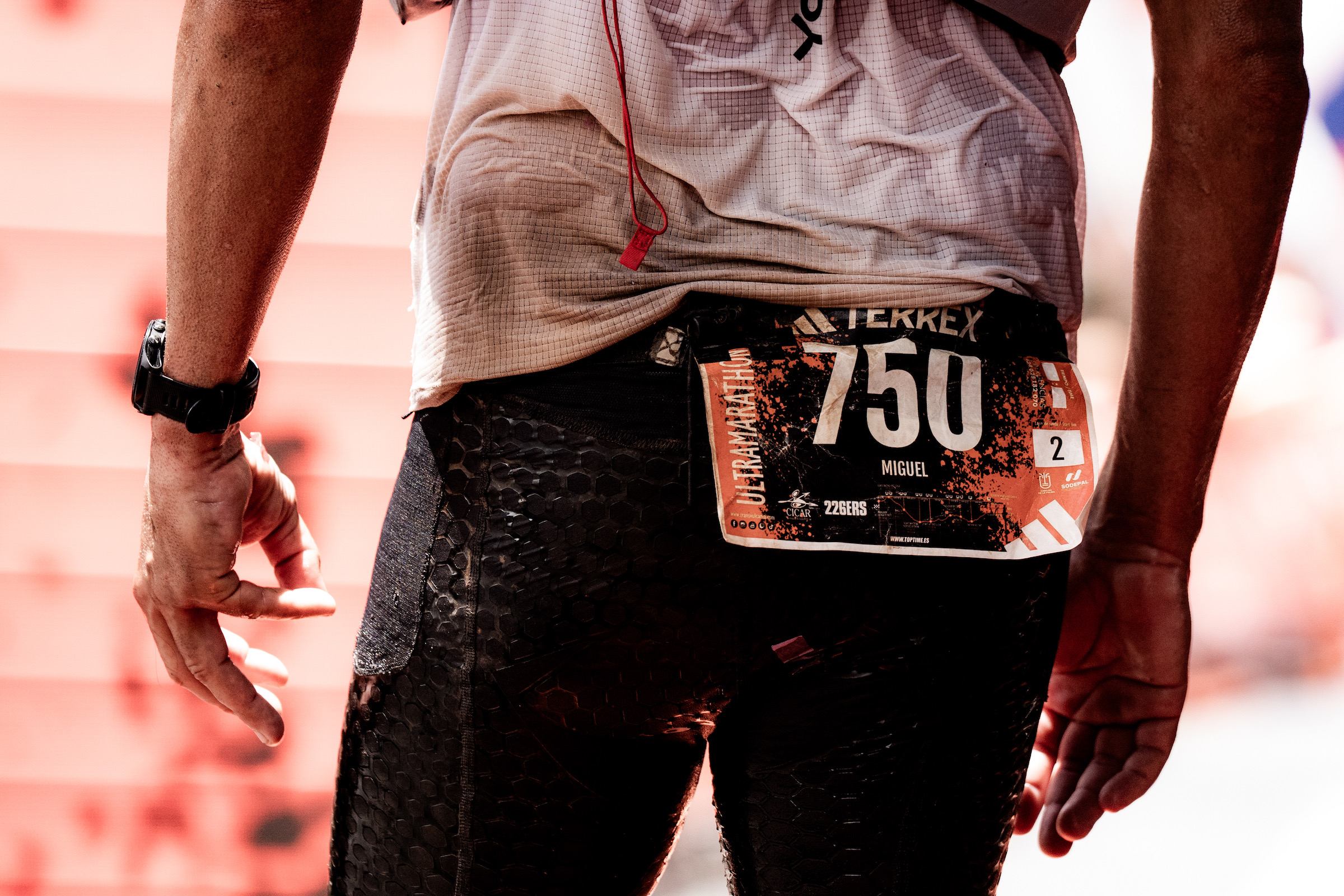
Transvulcania Ultra has always been a brutal race. Spanning 73.06 kilometers across the volcanic backbone of La Palma, with 4,350 meters of ascent and 4,057 meters of descent, it’s a journey from ocean to sky and back to ocean again. But in 2025, nature raised the stakes. This year, Transvulcania wasn’t just hard – it was survival.
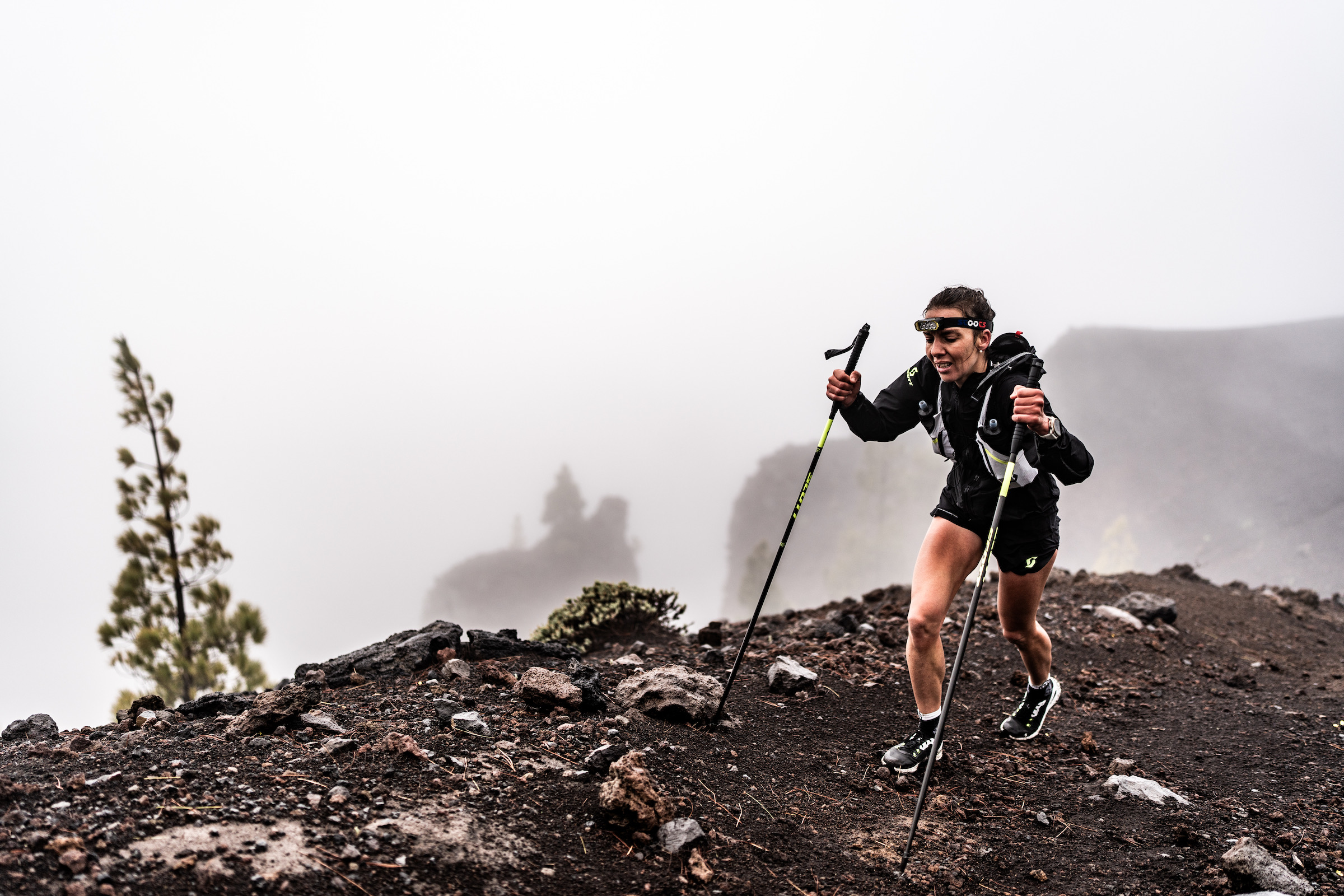
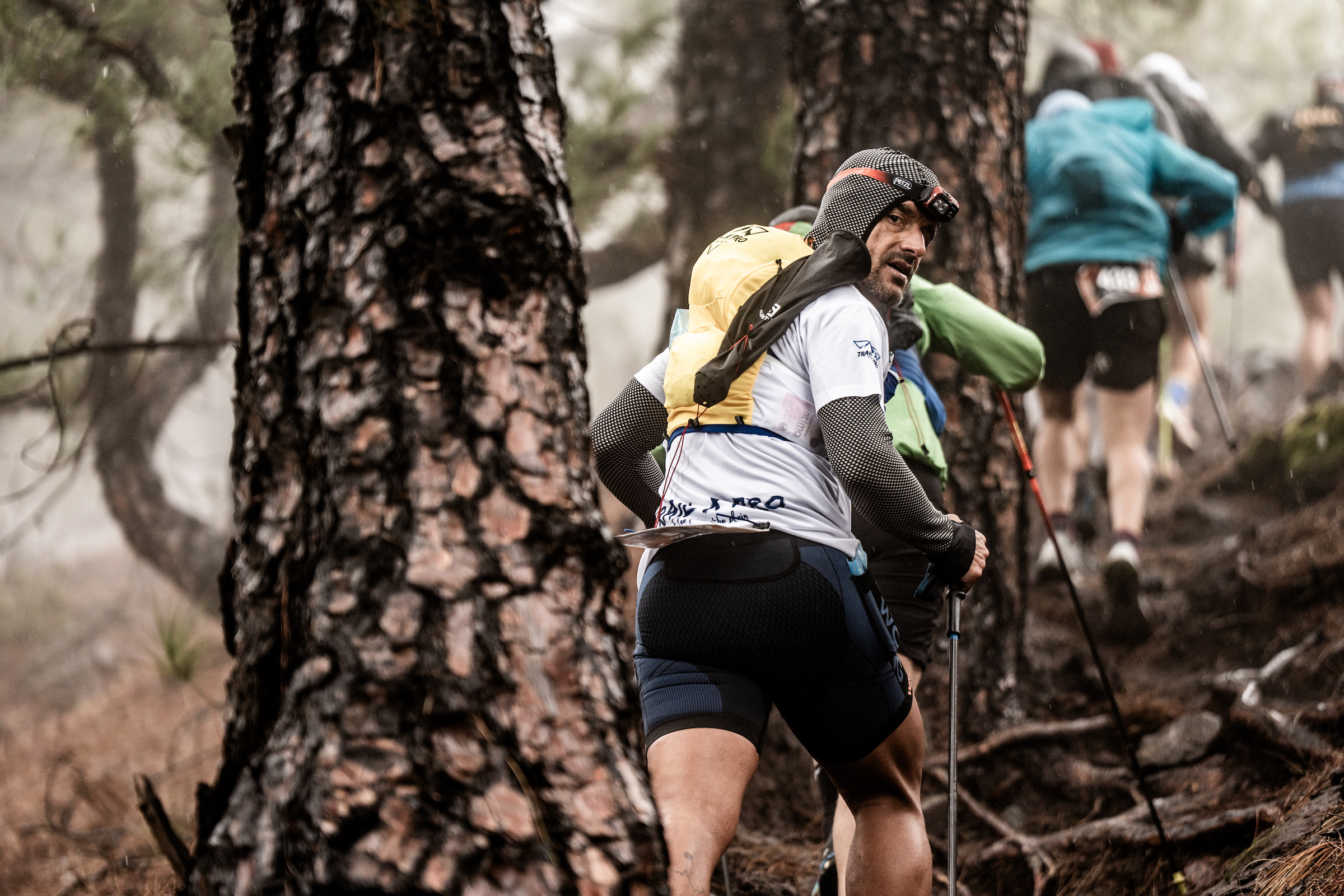
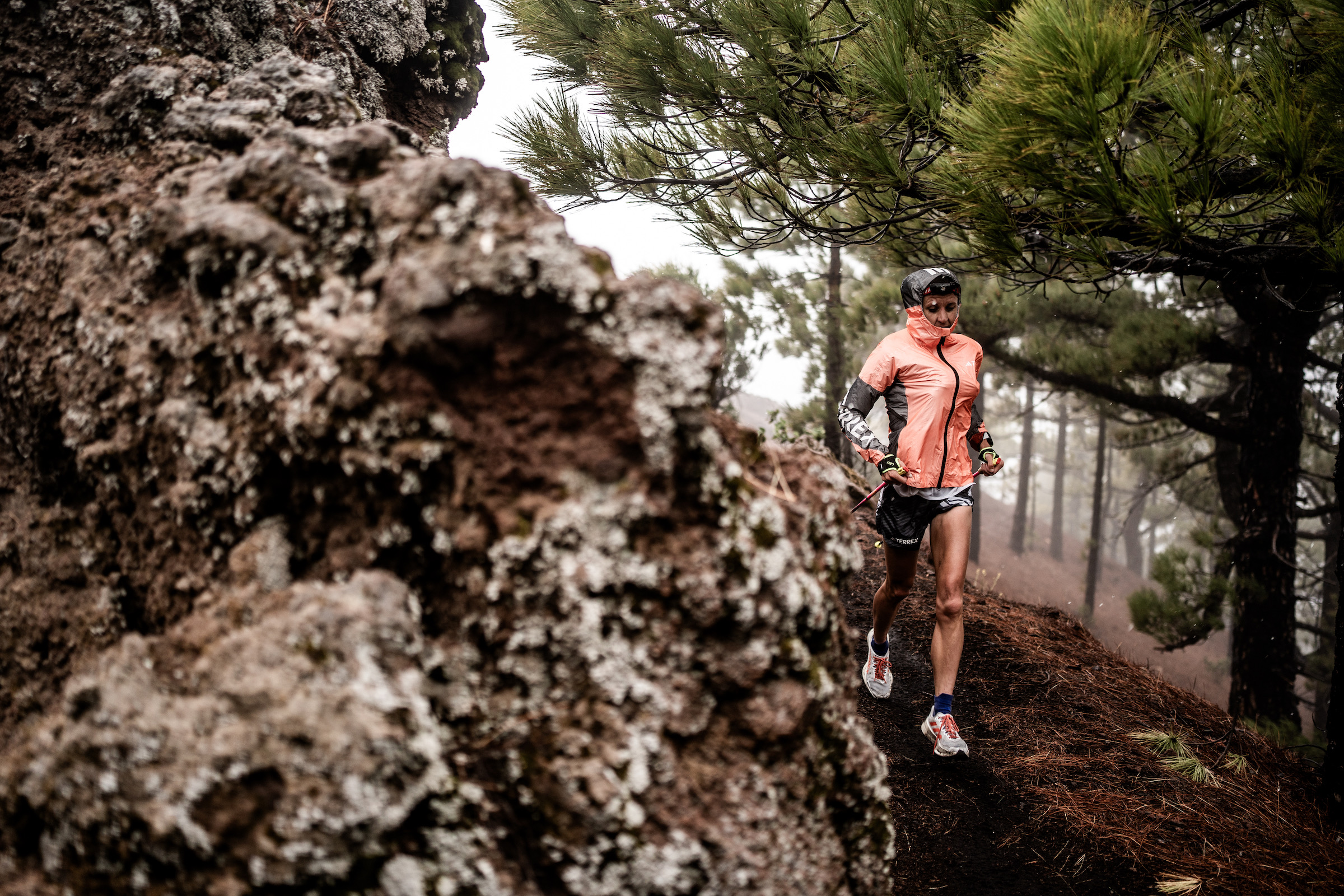
From the moment runners left the Fuencaliente lighthouse at sea level, the signs were there. Dark skies. Driving rain. And as the climb up the GR131 trail began, the weather only worsened. Wet volcanic gravel shifted underfoot. Winds battered the open and exposed sections. Every gain in elevation brought colder air, heavier rain, and stronger gusts.
The early sections of the race, usually warmed by morning sun, were instead cold, and treacherous. Visibility dropped. Temperatures plummeted. Waterproofs were soaked through. The race had barely begun, but it was already a war of attrition.
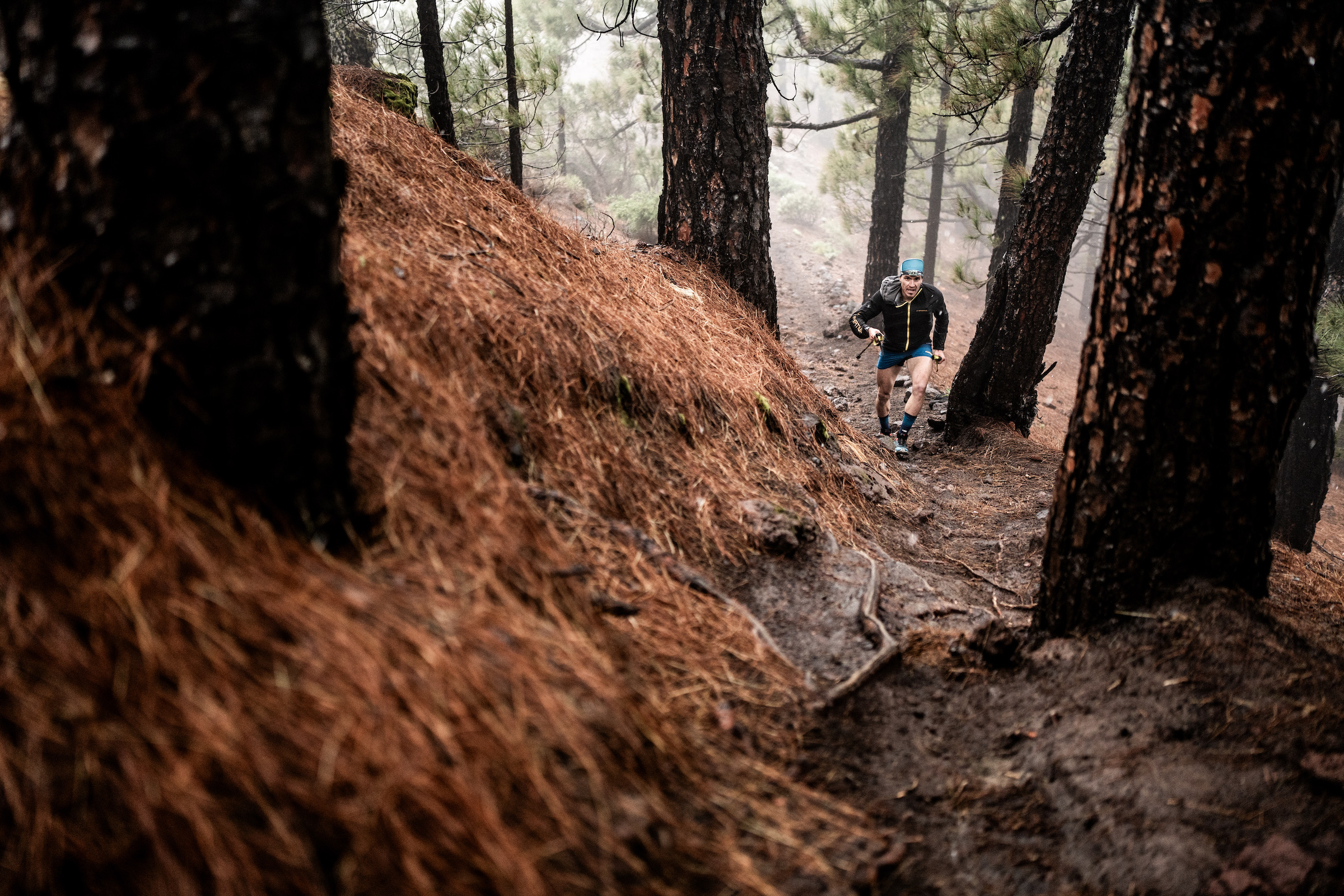
The route climbed steadily through pine forests and barren lava, snaking up toward the spine of the island. Normally breathtaking, the high sections offered little view, just fog, wind, and rain slapping sideways across the many exposed ridges. The climb, always demanding, turned into a freezing march, the only protection coming from the trees.
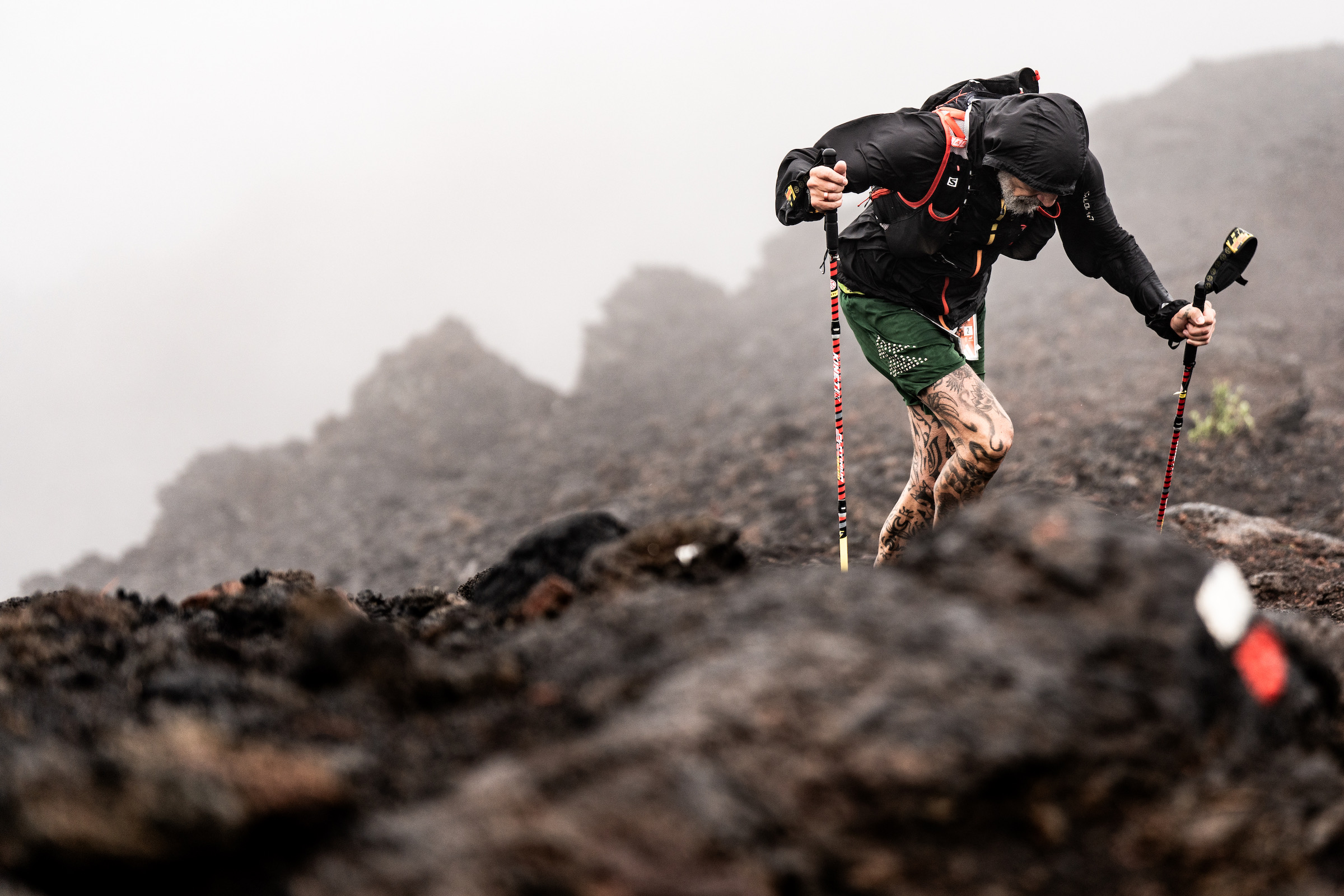
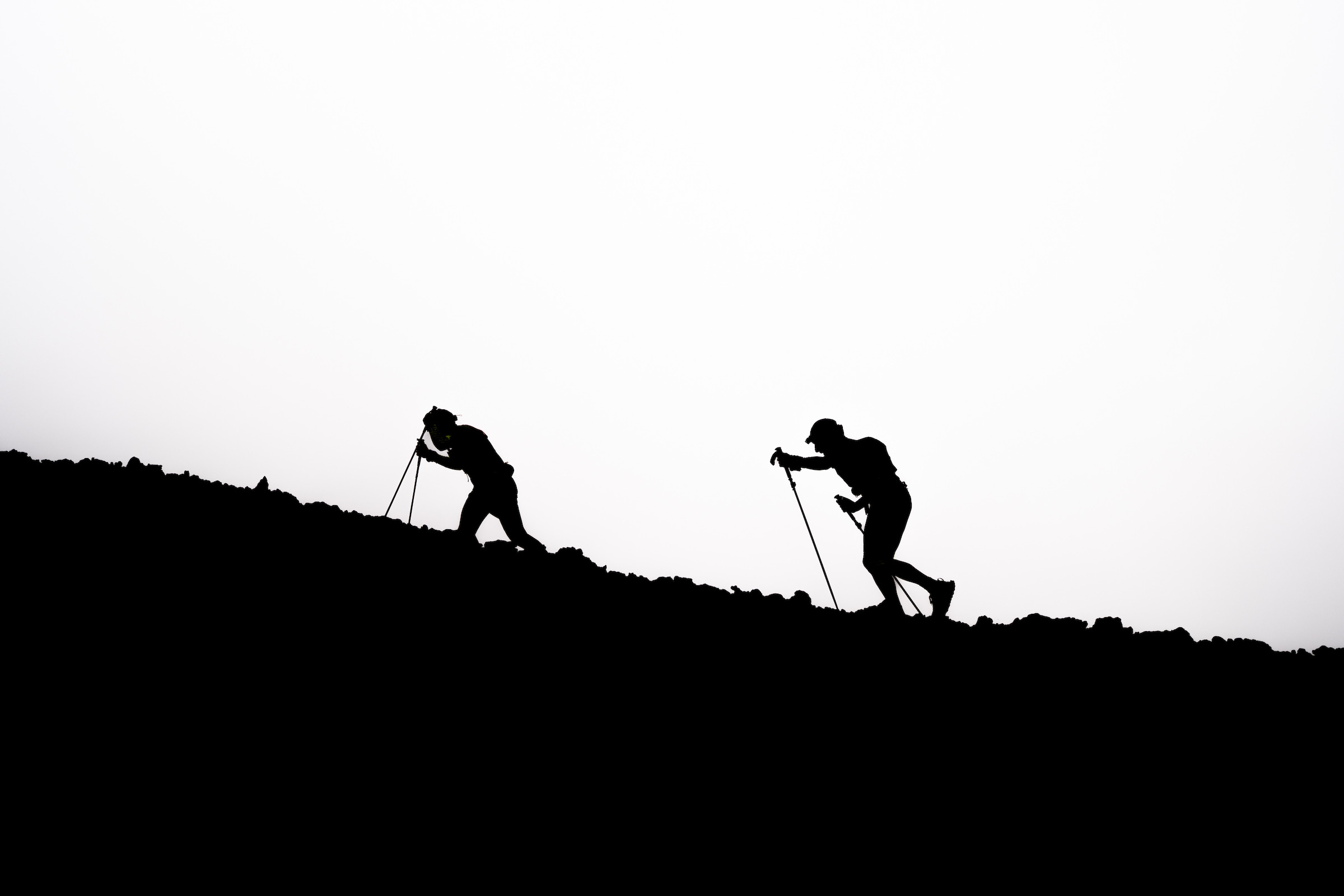
The temperature near Roque de los Muchachos, the island’s high point at 2,421 meters, hovered close to freezing. But it was the wind chill that changed everything. Gusts tore across the exposed ridge line, turning already cold air into biting, sub-zero blasts. Some runners were forced to stop and layer up; others pushed through shivering, teeth clenched. Many decided to call it quits.
Hypothermia wasn’t just possible, it was real. For many, this section became less about racing and more about making it through.
The long drop from the summit to Tazacorte Puerto – a descent of over 2,000 vertical meters is never easy. But in this weather, it became treacherous. Slick rocks and pine needles, water-logged switchbacks punished tired quads. Fatigue met fear. But a glimmer of better weather below the cloud gave runners hope.
Warmth arrived, the exhaustion of fighting the cold up high lingered with every step though, the reward of the finish line now spurred each and every runner to fight hard. From Tazacorte Puerto, the final climb, known as ‘The Wall,’ is short on paper but long for the legs and mind. Roughly 300 meters of vertical gain on steep switchbacks of rocky path. Normally a test of willpower, this year it became an act of survival. However, the removal of the rocky gorge at sea level – for safety reasons – did mean it was possible to cover more ground much quicker.
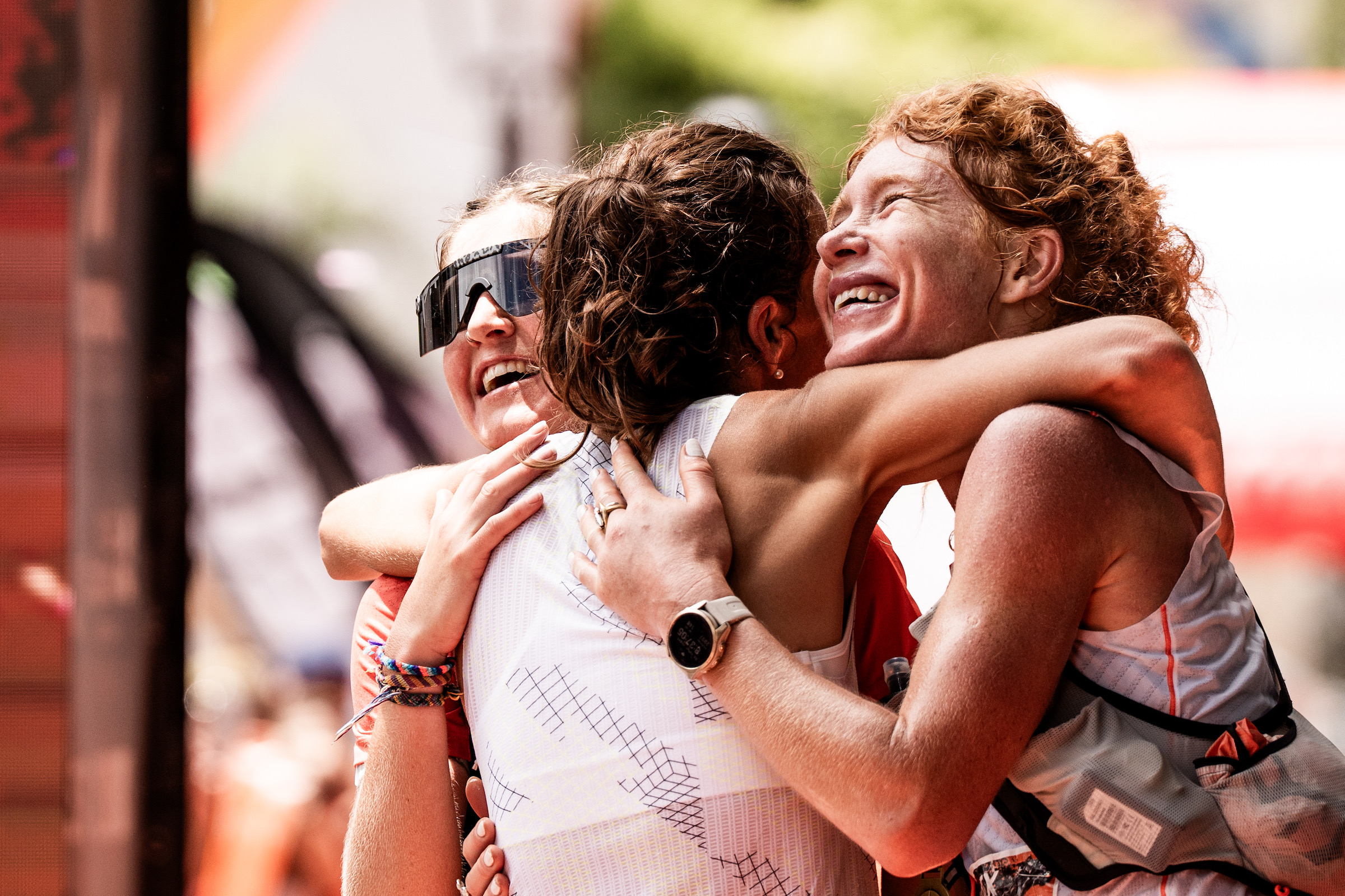
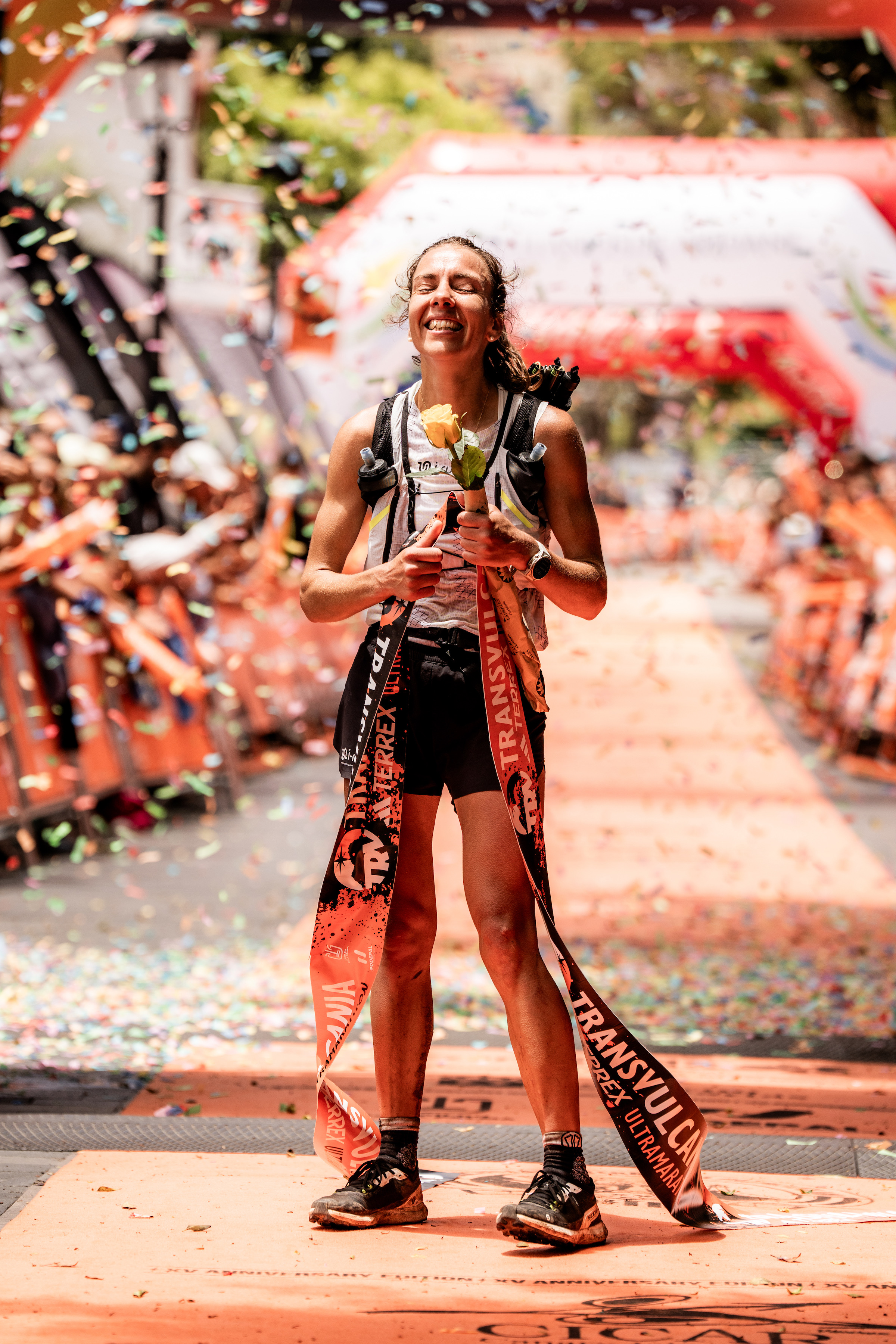
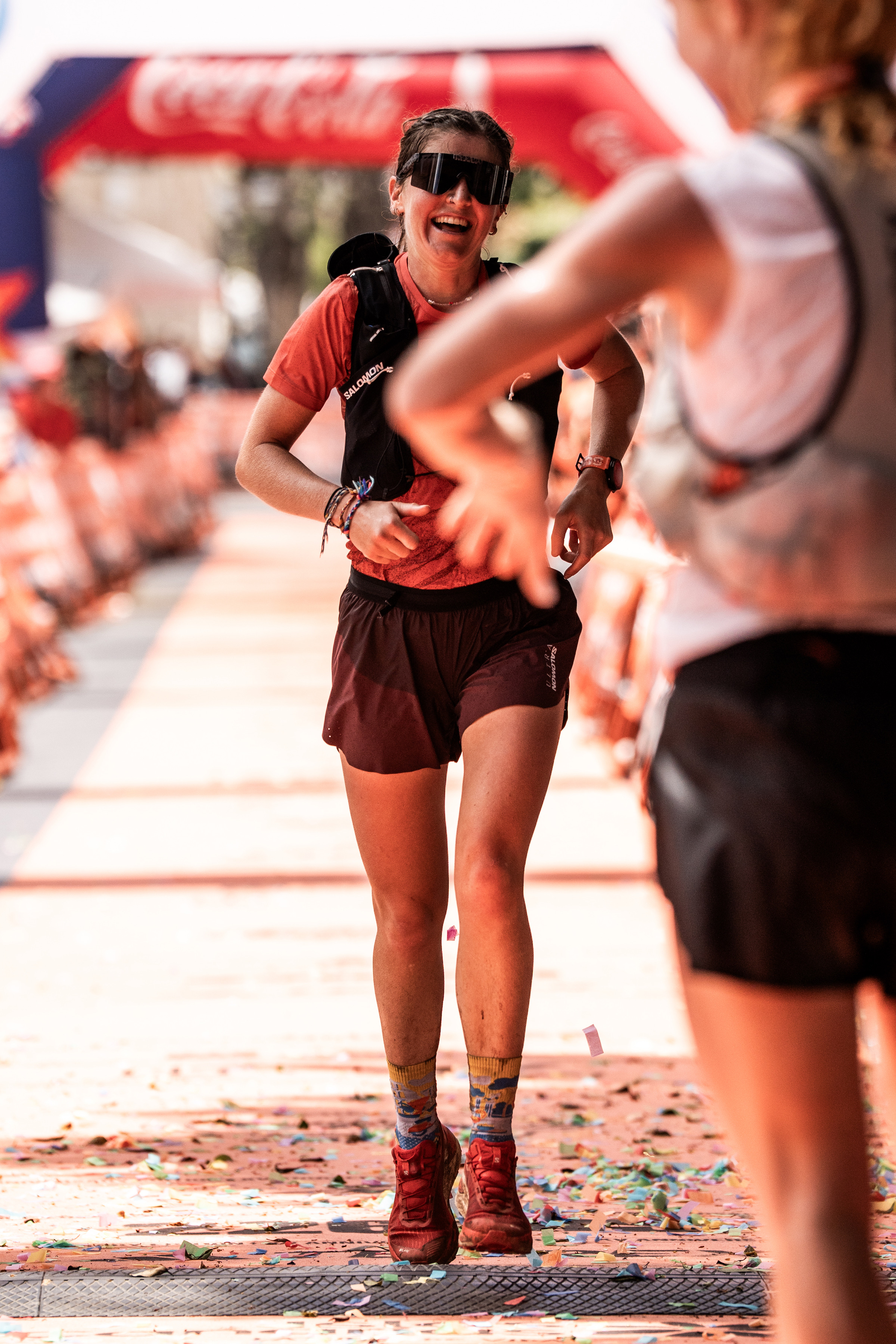
The streets of Los Llanos were lined with cheering locals offering the first real warmth of the day. Music cut through the chill and finally the best finish line in the world arrived, the medal this year feeling a little heavier but hard earned after the rain, wind, and freezing exposure of a mountain that showed no mercy.
What makes Transvulcania unique has always been its terrain and profile. Lava fields, pine forests, ridge lines, sun, and sea. But in 2025, the weather became the story. Torrential rain washed away comfort. The cold stripped away energy. And the wind exposed every weakness, both mental and physical.
The fastest still raced though. The elite still chased podiums. But deeper in the field, it was about finishing, about not quitting. About moving forward despite frozen hands, soaked shoes, and the urge to stop.
Transvulcania is about battling whatever the mountain throws at you, and this year, it threw everything.
Peter Frano and Anne-Lise Rousset were crowned as the winners of the ultra marathon. Frano made his move on the descent to Tazacorte Puerto passing Andreas Reiterer who would eventually finish 2nd ahead of Manu Anguita. The times were 6:55:36, 6:58:27 and 7:19:18 respectively.
After three previous attempts, 2016, 2017 and 2019, Anne-Lise Rousset finally took the top honours in 8:18:17, a long way off the CR of 8:02:49 set by Ruth Croft in 2024. Ekaterina Mityaeva and Martina Valmassoi battled for 2nd and 3rd and were separated by just 27-seconds at the line, 8:36:58 and 8:37:25.
In the men’s race, hot favourites Dakota Jones and Dmitry Mityaev did not make the start, notably, Andreu Simon Aymerich, Matt Daniels, David Sinclair and Jordi Gamito (amongst many others) DNF’d.
For the women, Ruth Croft who lead the race for almost half of the distance finally succumbed to the weather and withdrew, along with Azara Garcia and Elisa Desco.
Even through fogged lenses and stormy skies, La Palma’s raw beauty still showed through. Runners moved through wild volcanic terrain, past black rock and misty forests. They crossed an island shaped by fire and storm, and this year, they did it while the island roared. And those who crossed the line in Los Llanos? They didn’t just finish a race, they survived an ultra through one of the wildest tests the island has ever delivered.
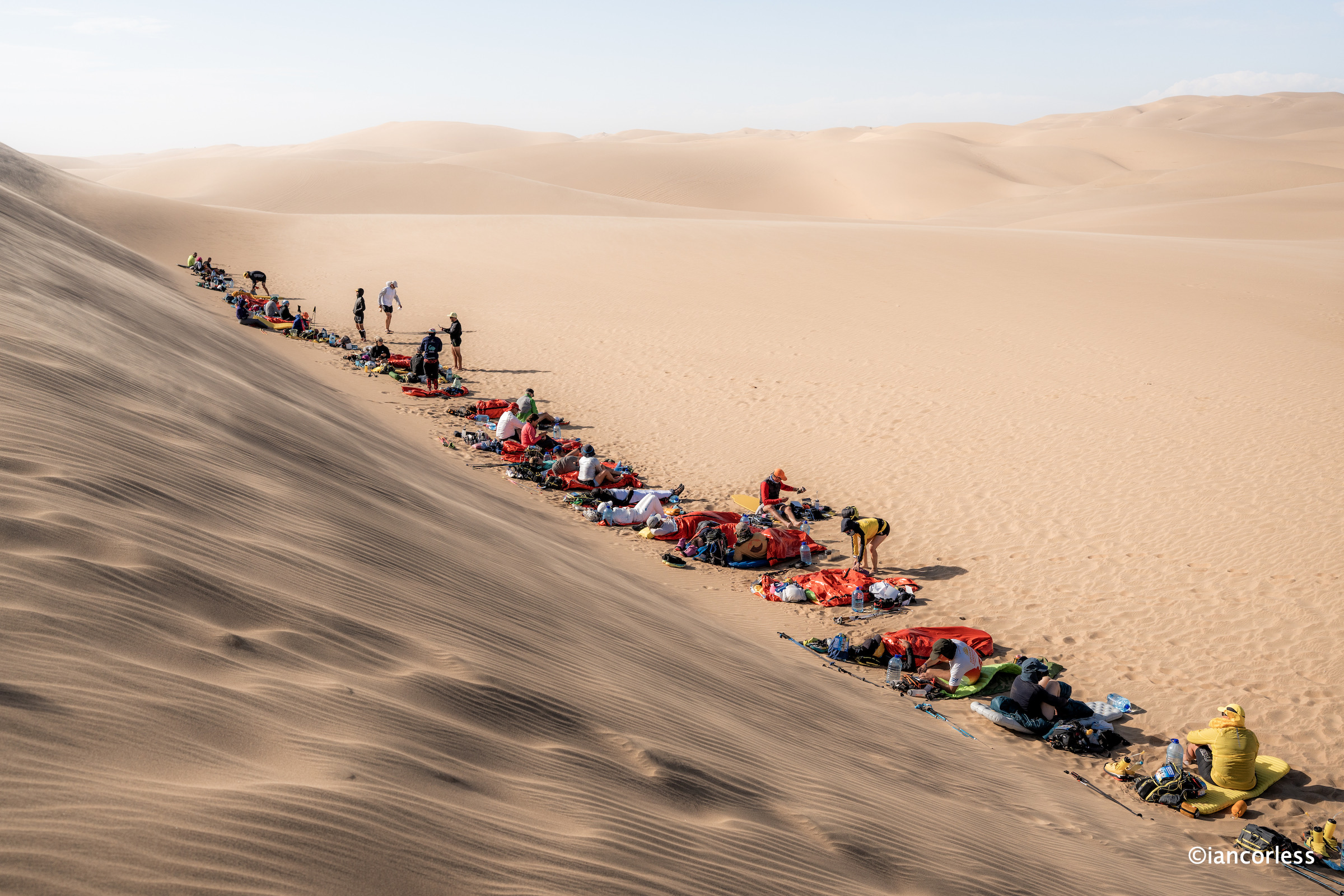
The wind blew strong during the night causing a restless night for many. To add to the fatigue, rain arrived as the runner’s started to pack and get ready for the third and final stage.
It was an ominous start and it was clear that there was high anxiety for each participant, with 27km’s to go, this was not going to be an easy last day.
Photo by Ian Corless
The first wave left at 0800 and the top-25 departed at 0930. Gladly, the rain disappeared, however, the wind did not…
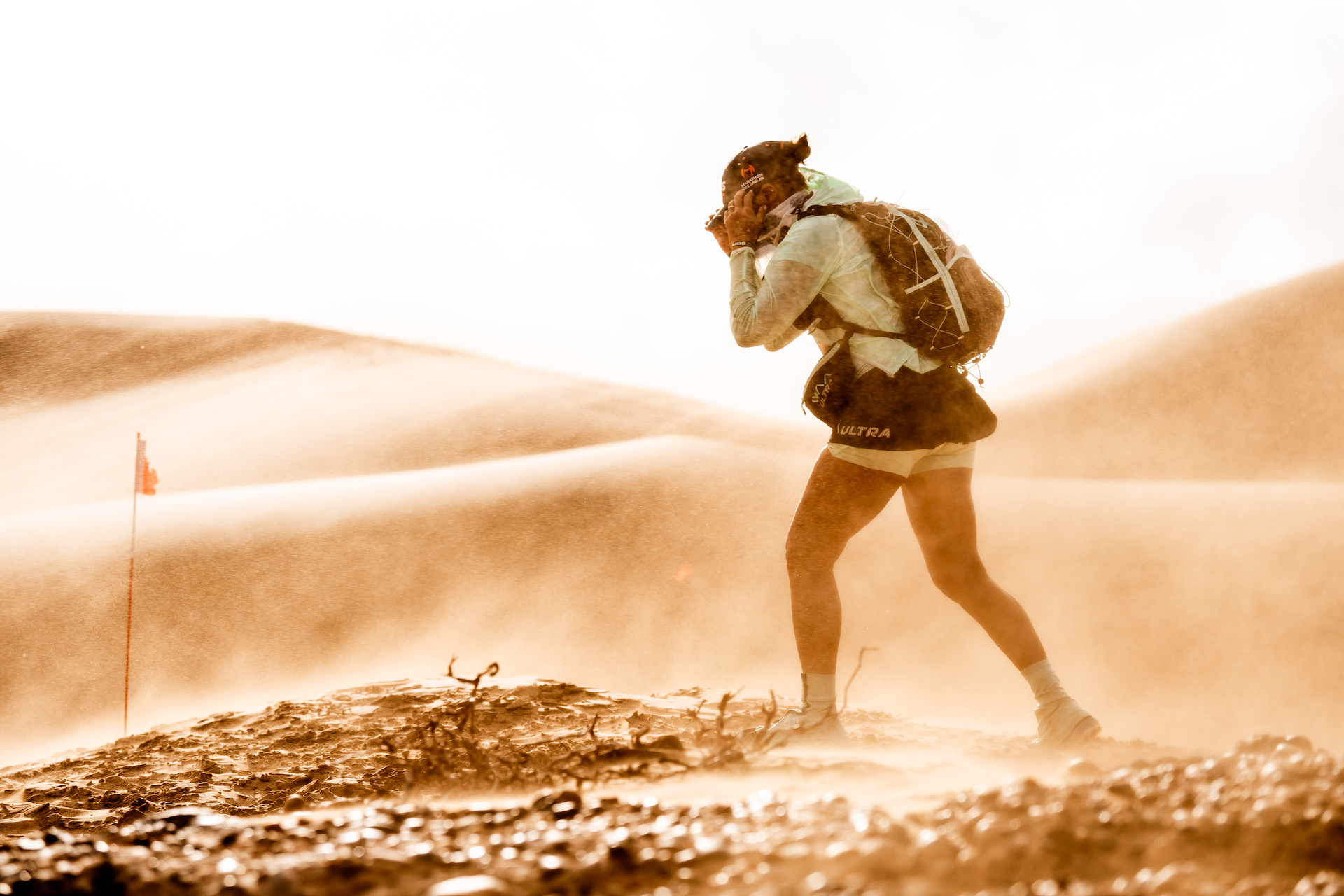
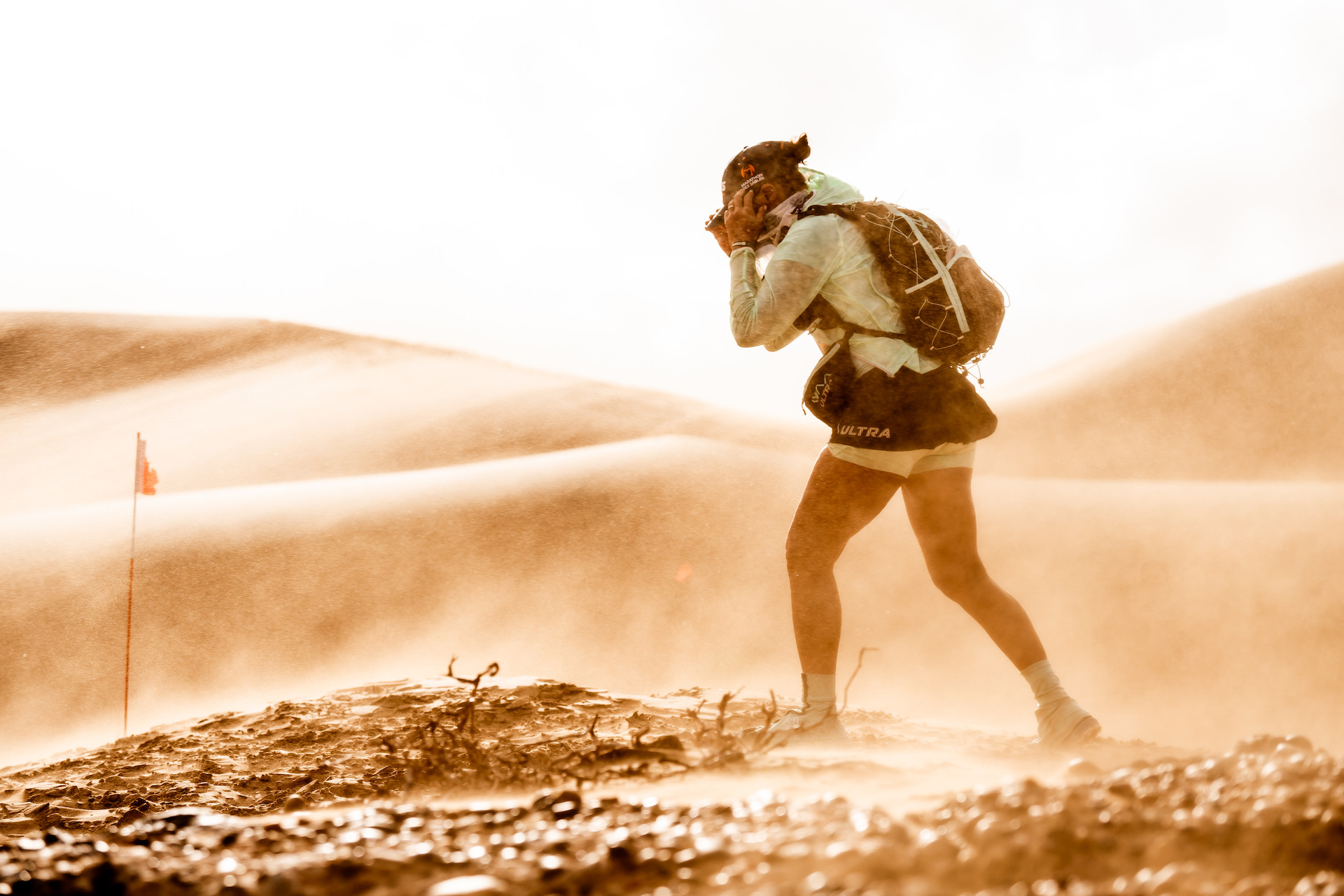
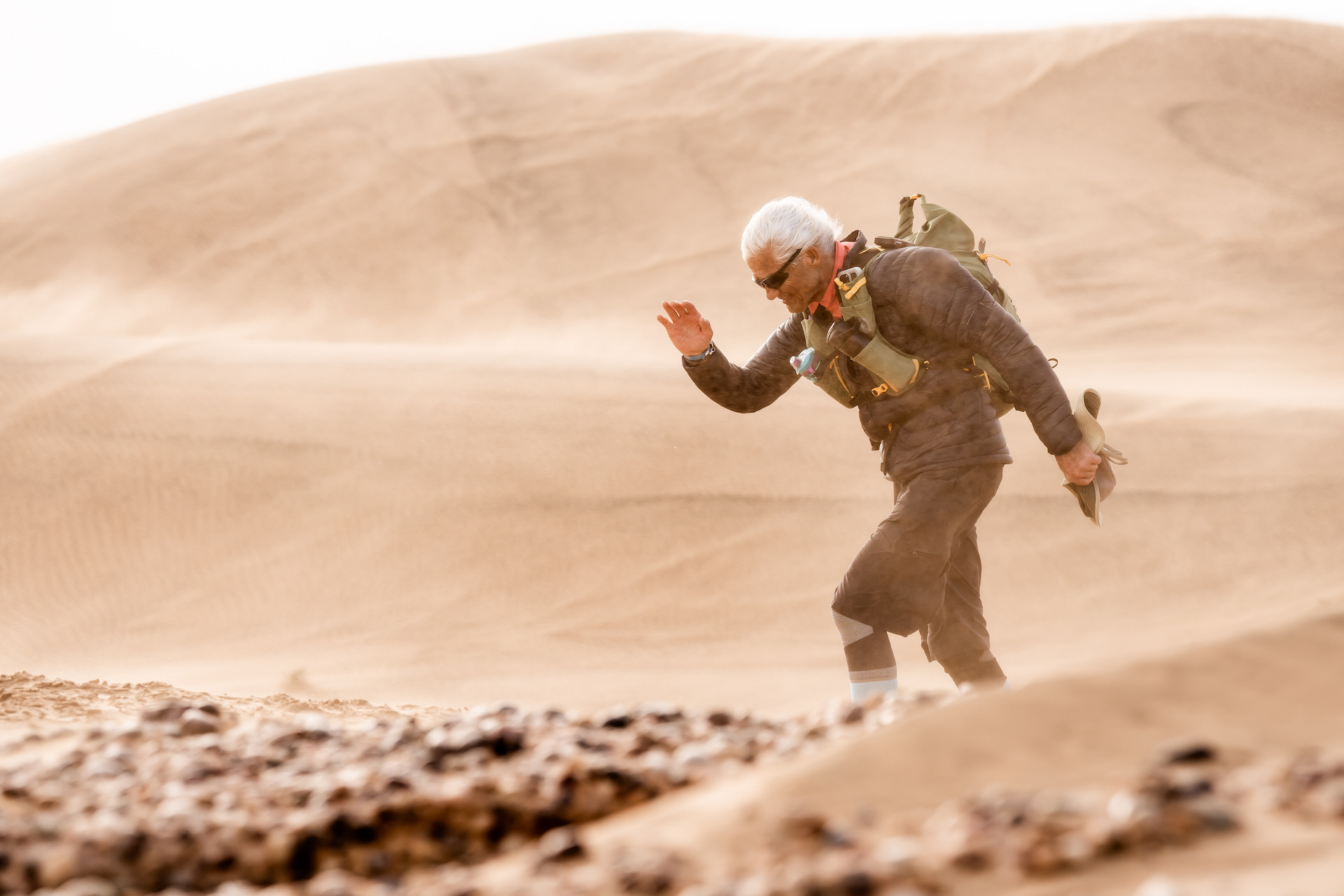
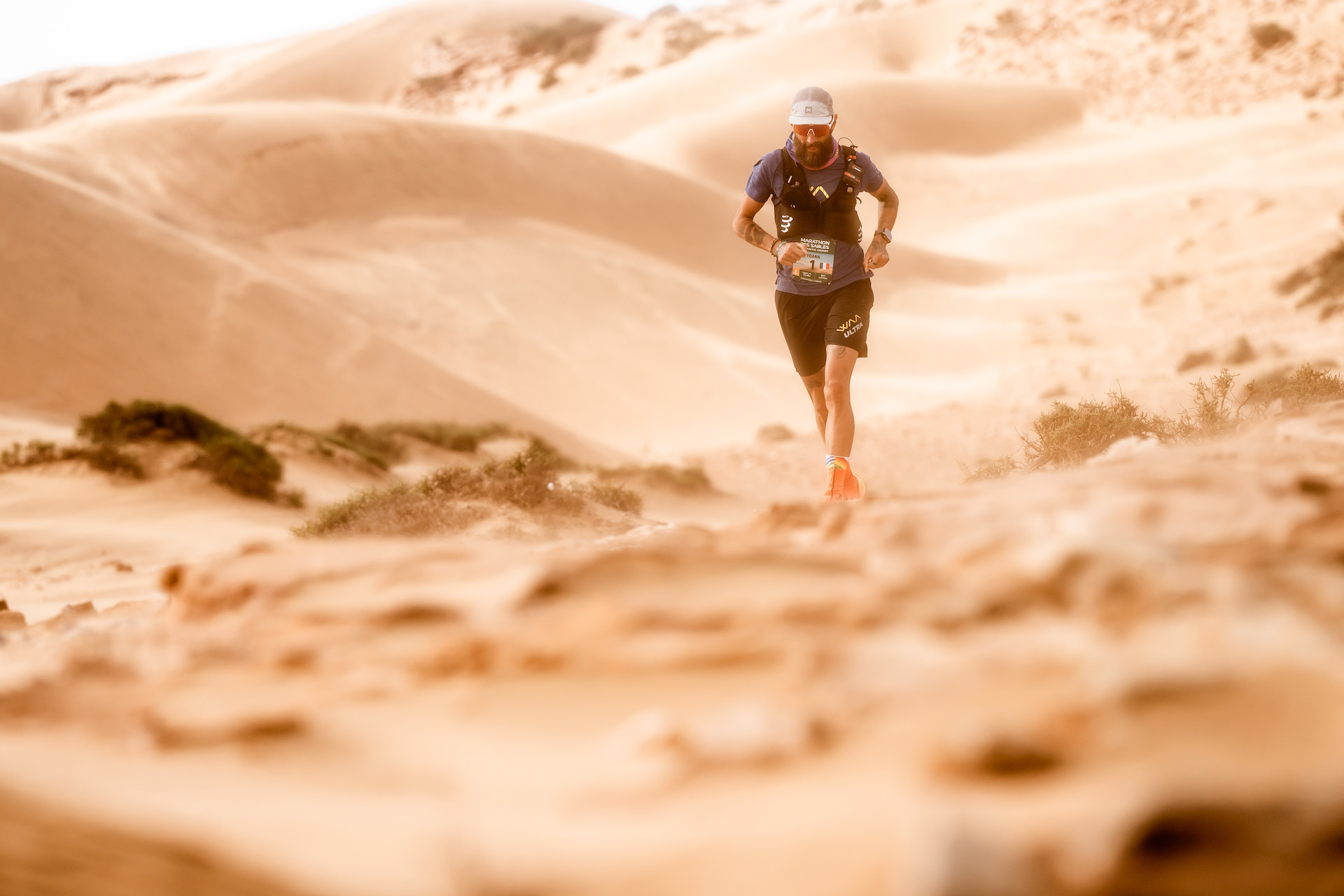
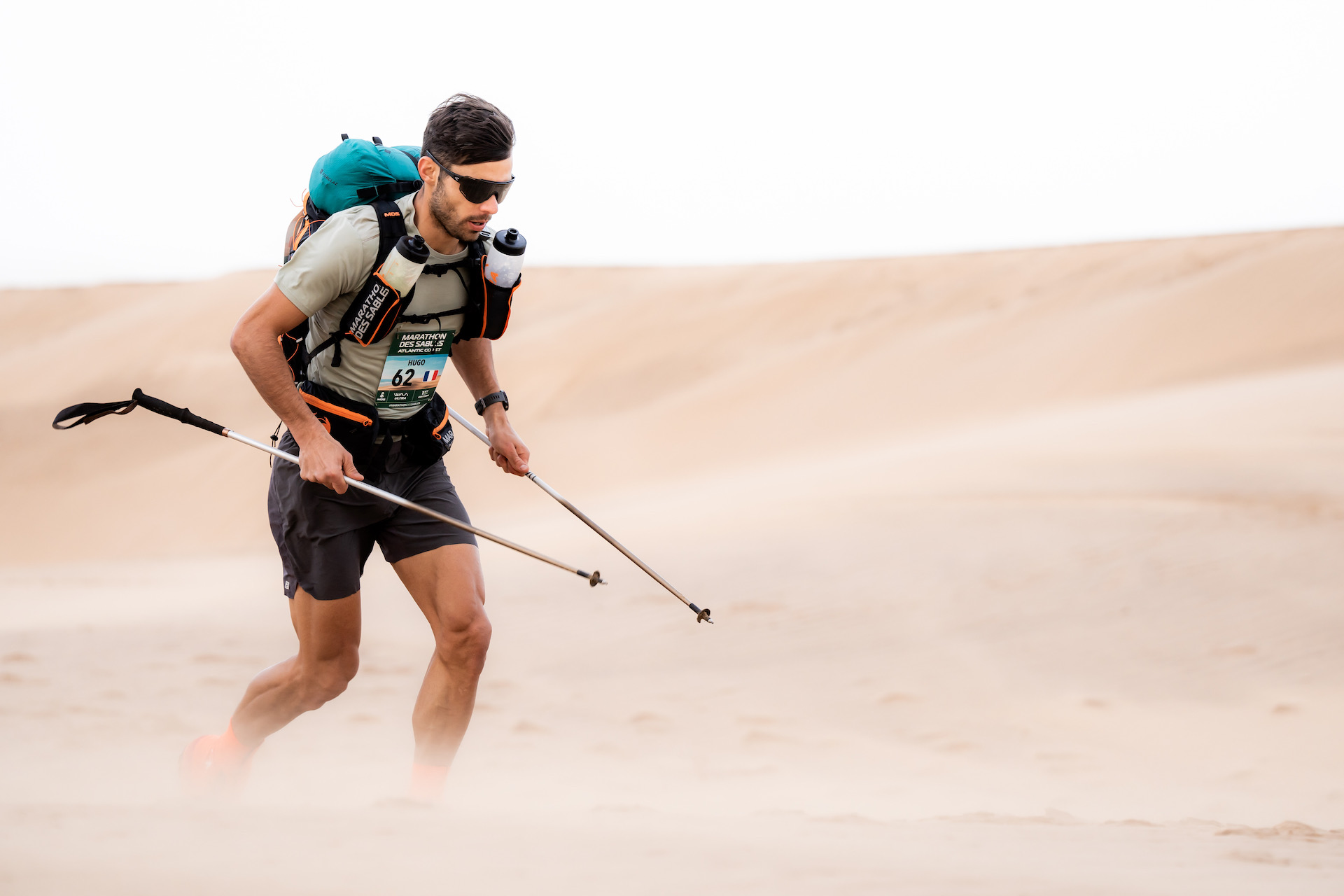
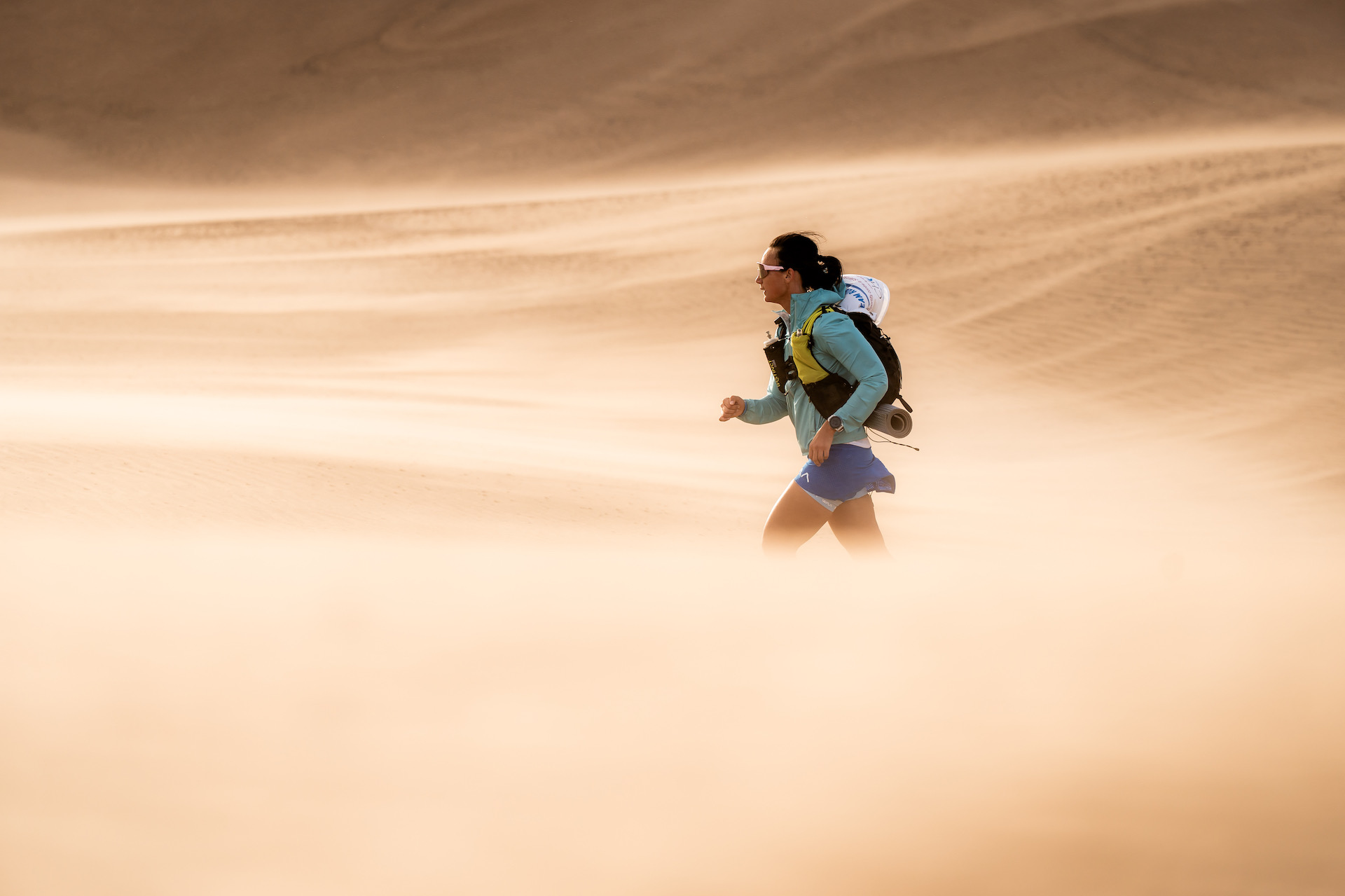
It was a northerly headwind for the entire 27km’s creating some of the most memorable moments and images of any MDS event.
Photo by Ian Corless
Runner’s battled, heads down, hands shielding faces and they fought what would seem like a never ending battle against nature to the finish line.
Photo by Ian Corless
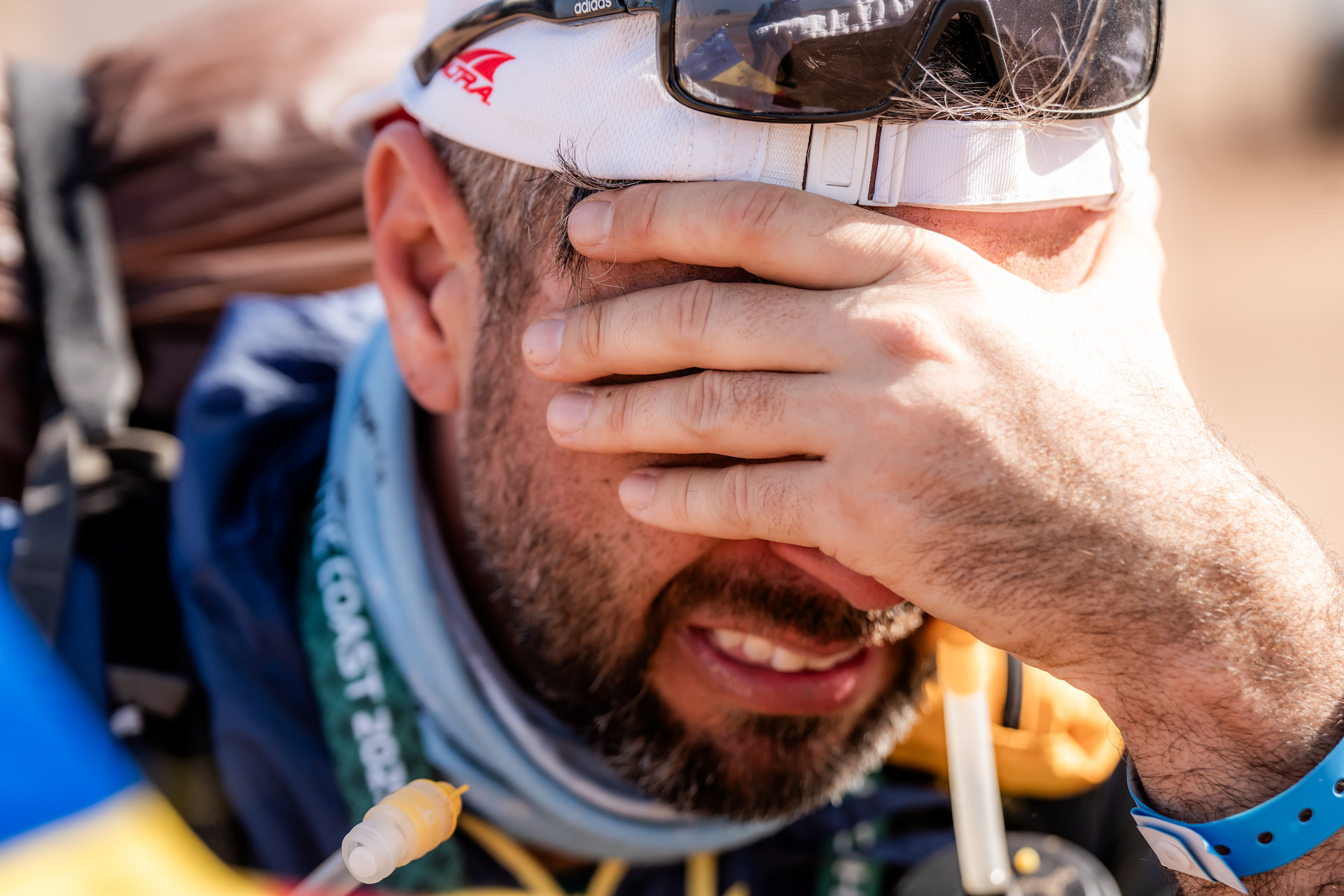
But the finish line came for all and with it, great emotion.
Photo by Ian Corless
Stage 3 of the first edition of MDS Morocco Atlantic Coast was brutally beautiful. Relentless impressive dunes, the Atlantic Ocean to the left and the final 10km’s along the beach made for a completely memorable MDS.
Photo by Ian Corless
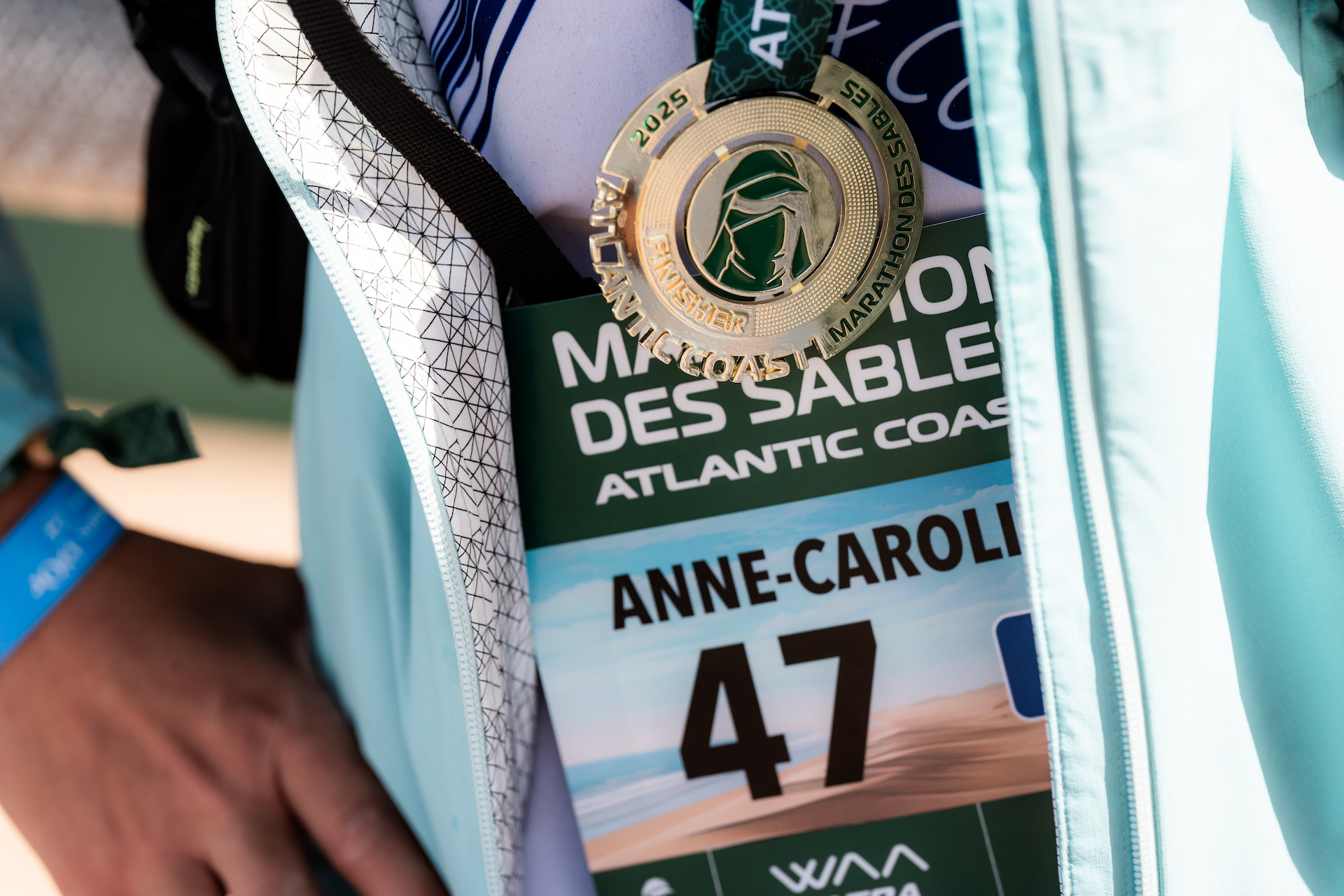
Tears, joy, emotion, relief and the bling of a medal all made the journey worthwhile.
Photo by Ian Corless
The journey for each participant unique. The experience unique. But there was one common thread…
‘We survived and experienced a truly memorable journey along the Atlantic Coast of Morocco.’














 IAN CORLESS