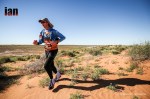
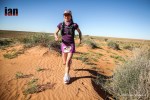
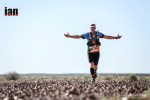
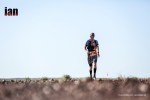
Elisabet Barnes nailed it today, no question, no doubts, she showed the boys how to run a multi-stage race and she also showed them how to pace and judge an 84km stage. Elisabet is the Queen of the Simpson Desert.
An 0430 wake up call really did have everyone walking around a little goggle eyed this morning, particular with the very low temperatures and biting wind. It was 2 degrees but it felt below freezing standing around waiting for the 0600 start.
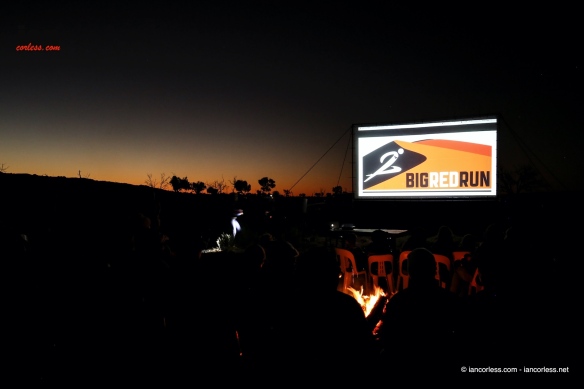
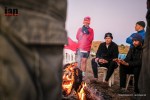
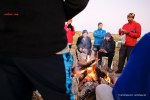
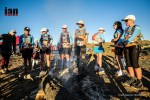
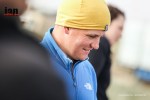
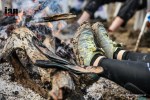
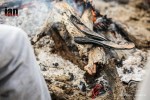
A roaring fire is a key element of the Big Red Run, irrespective of the time of the day, this morning was no different. A huddle of runners crowded the fire, arms outstretched, I am sure they think, if I can get my hands warm, the rest of my body will follow.
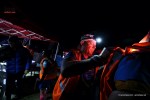
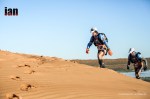
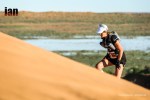
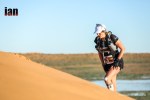
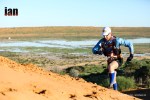
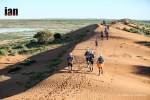
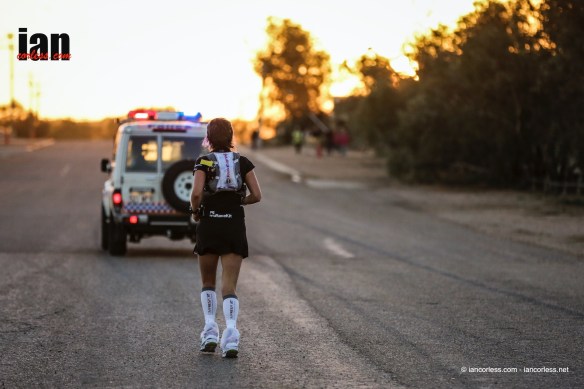
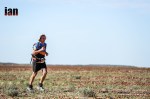
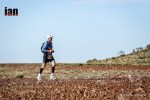
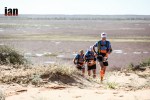
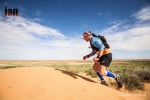
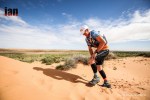
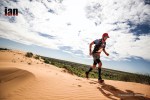
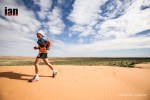
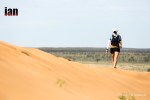
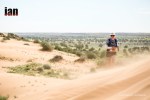
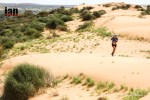
Trackers were attached to packs, compulsory reflective vests were handed out (for the dark hours) and just after 0600, the runners departed for an 84km double marathon over the Simpson Desert.
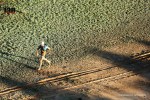
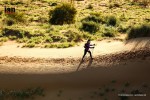
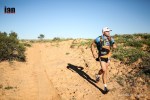
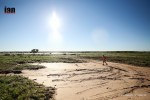
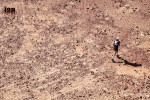
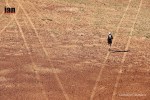
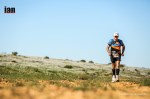
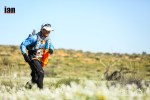
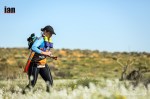
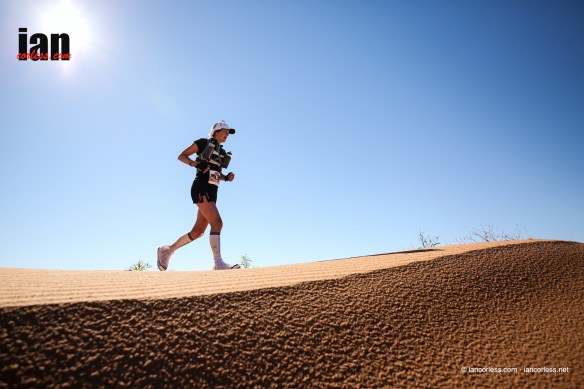
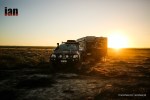
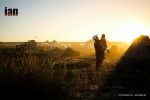
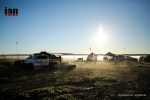
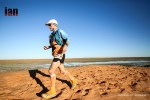
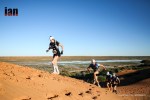
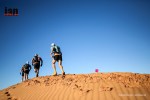
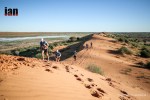
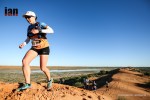
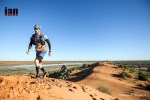
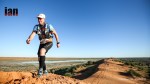
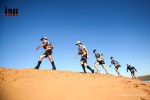
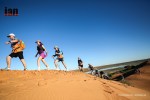
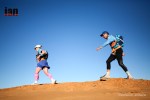
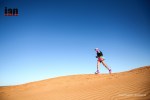
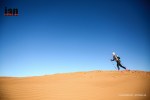
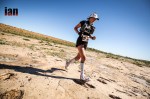
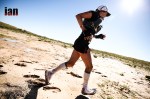
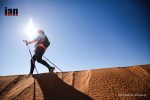
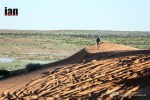
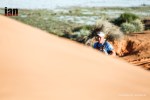
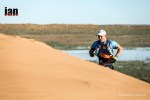
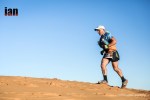
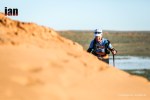
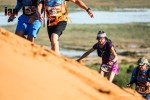
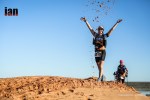
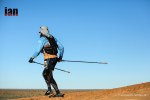
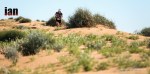
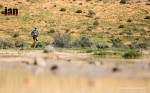
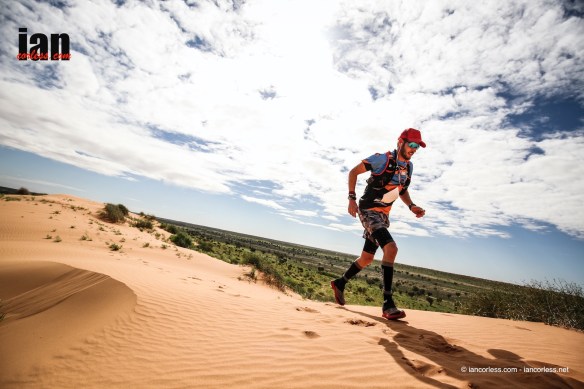
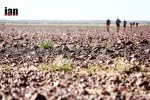
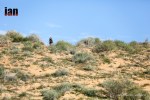
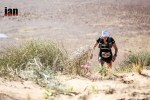
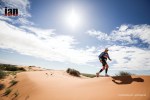
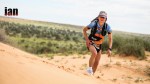
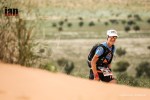
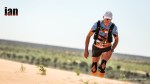
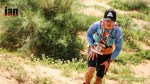
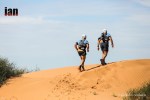
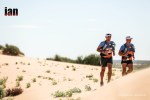
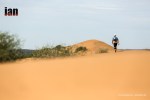
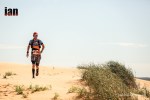
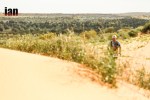
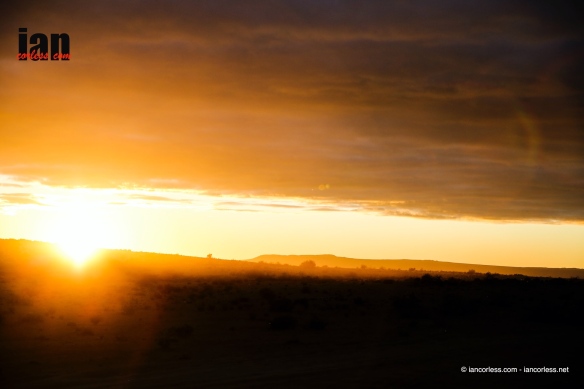
A hour of darkness soon had holes of sunlight punched through it as sunrise came, it was an incredible start to the day and it was a wonderful sign that a full day of clear skies was ahead. The chilly wind continued to blow, some would say, they were perfect running conditions.
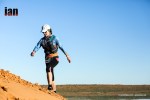
Andy Dubois lying in 3rd overall gave it everything today, it was an all or nothing scenario and one that I love to see and applaud. He could have rested and be satisfied with his podium place but no, he tried his best to take 2nd from Jamie Hildage and lets face it, had he had a good day and Elisabet Barnes a bad day, overall victory may well have been a possibility?
Andy pushed and lead over the first marathon but Elisabet kept him in sight, gaining no more than a few minutes, he tested those behind and Elisabet summed it up on the line, ‘The pace early on today was fast, right from the gun Andy went hard and he wanted to test himself and us. I held on not wanting to ket him out of sight, you may think my time margin is a good buffer going into a long day but it can soon go!’
Jamie Hildage echoed Elisabet’s comments, ‘I had a 20min margin over Andy and he wanted to take it back. I had to keep an eye on him but in all honesty, the early pace was far faster than I would have preferred to go for an 84km day.’
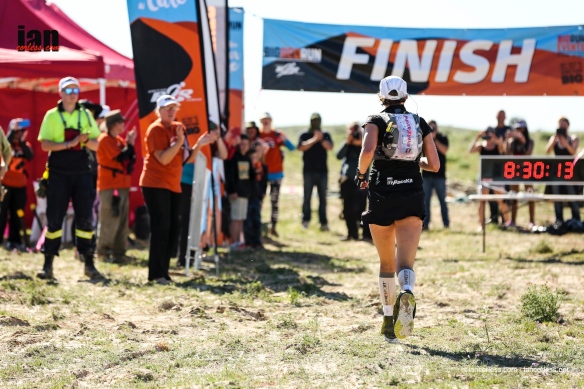
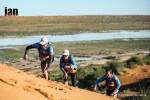
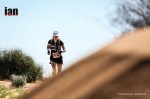
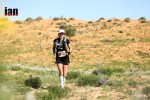
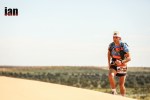
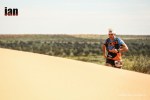
Andy pushed but the wheels started to come off and he paid for the early pace, Elisabet and Jamie passed him just as the first marathon concluded and then Elisabet made a move and slowly pulled away from Jamie. Once Elisabet had the lead, she does what she does best, put her head down and knock out a metronomic pace to take not only her 3rd stage victory out of 4 but the overall 2016 Big Red Run victory.
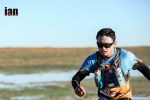
This terrain, the desert, multi-stage days and relatively flat terrain are Elisabet’s domain and she really did dominate this event, ‘So it’s been a good week in the office! Today was the final competitive stage of the Big Red Run, the long stage of approx 84km and it was TOUGH! Some of the boys decided to race very hard from the start and despite my lead going into the stage it was a case of holding on and hoping for the best. Luckily their wheels fell off and not mine so all ended well. I am really chuffed to have won the race outright!’
Jamie held on for 2nd place arriving 30 minutes after Elisabet. A previous Big Red Run competitor, Jamie had improved his time considerably after his last effort and he was very happy. Andy crossed the line 3rd and looked equally ecstatic, he raised his arms, cheered and well truly embraced the tape. ‘I had to risk all today and hope that I could possibly break Jamie and take back his time advantage. In reality, I had nothing to loose as 4th place was well behind me and I would have had to well and truly explode to loose my 3rd place. My strategy was to go hard over the first marathon and see what happened. I did what I could and I am happy with 3rd place.’
Braddon DB Johnson has run well all week, always around the top 4 and today was no different, he finished the day with a huge smile content with his Simpson Desert experience. Equally, Helen Durand has been an extremely consistent 2nd lady, she too crossed the line looking incredibly happy and surprisingly fresh with her days running.
At the time of writing this, the runners have been out on course for just under 13 hours (1900 hours) and they have till 0400 on Saturday to complete the distance. With darkness, the temperatures are dropping and the pitch black sky is coming to life with an amazing display of stars.
It’s going to be a long night, wish everyone well and we will post results and times tomorrow. Now let the slide shows begin, let the fire roar and lets cheer the runners in!
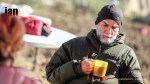
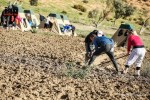
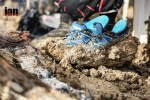
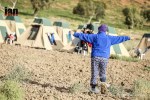
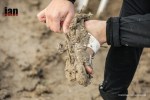
Day 3 of the Big Red Run unfortunately had no racing due to freak weather conditions during night 1 and throughout the day on race day 2. It left the Simpson Desert a mud bath of sticky clay. However, the runners embraced the day and used it for personal admin a real sense of group spirit came together where everyone helped each other to make uncomfortable camp conditions considerably better. The sun shone all day it is quite remarkable how the earth dried out. Overnight the temperatures really dropped (2 deg) leaving one or two runners with an uncomfortable night. Braddon DB Johnson whilst holding a hot mug of steaming coffee said. “It was in interesting night… I had every item of clothing on and was still a little chilly!”
As the early morning mist burnt off, a glorious day welcomed the runners for a revised stage 4 that left camp via Big Red dunes. A clockwise loop with a couple of dog legs thrown in then re-navigated the runners back to Big Red and the finish line from which they had started.
James Kohler has been trying all week for victory, often leading the stages in the early kilometres only to find in the latter stages. Today though, the 30km racing distance and a days rest played into his hands and from the off he opened just a slight gap from the usual protagonists of Elisabet Barnes, Andy Dubois, Jamie Hildage and Braddan DB Johnson.
As the run progressed, James slowly pulled away but it was a very slender margin and Elisabet made sure she kept him in sight throughout the day, she had said early in the morning, ‘Today is all about being sensible and making sure I don’t extend too much energy ahead of tomorrow’s 80km+ long stage!’
No doubt Andy, Jamie and Braddan had similar thoughts. James though seized his opportunity and ran a great stage 4 to take 1st place in 2:56:03. Elisabet crossed the line 2nd in 2:59:45 and Andy Dubois placed 3rd in 3:01:04.
It was a close day with the top 3 men and ladies all finishing within a 30-minute window. Jamie Hildage placed 4th and Braddan DB Johnson 5th, their respective time of 3:04:06 and 3:08:58. Helen Durand was the 2nd lady 3:20:03, she has performed consistently throughout the race and Anne Bennet seized the 3rd place in 3:33:27.
Tomorrow is the long day and runners will be resting up in camp and preparing for a long day ahead. Weather and ground conditions have improved dramatically over the last 24-hours and although a new route has been planned, hopefully it will include much of the terrain of the original proposed route. Camp will be moved tomorrow and although it may not be located in the original camp 5 location, it will be placed close leaving the final stage 6 ‘fun run’ as close to 8km as possible. After all, there is a very serious barbecue, cold beers, showers and some entertainment planned for post race recovery.
“South African trail running pioneer Linda Doke and 2015 Marathon des Sables female champion, Elisabet Barnes placed 2nd and 3rd respectively in the ladies’ race. Both ladies summing up their experiences with a similar thought process, “What an incredible privilege it was to spend 5 days running through this magnificent part of the world on the Richtersveld Transfrontier Wildrun®. Sometimes it takes experiencing places like this to remind us how just how fragile and yet so powerful nature is, and how unbelievably insignificant we are in the bigger scheme of things.” – Linda Doke –
Adversity brings out the best in people, it’s the ‘Dunkirk’ spirit where everyone rallies around to make individual hardships a group hardship and with a little commitment, dedication and tenacity, woes and problems are taken away.
This is very much the spirit this morning on day 3 of the 2016 Big Red Run.
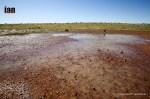
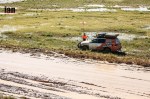
Race day has been cancelled due to out of the extraordinary weather during the night of day 1 and throughout day 2. In summary, the rain came in during the night and turned the Simpson Desert into a mud bath of some of the most sticky clay I have ever witnessed or in certain places, flooding!
Yes, the desert has become something akin to a UK Lakeland fell or Yorkshire moor.
They are freak conditions that have left the race team and runners in somewhat of a dilemma.
A night of reflection gave Lucas and Greg (race directors) an opportunity to look at options and an early departure from camp to recce the surrounding area confirmed several things:
Racing would not happen on day 3.
Camp would not be able to be moved due to excessive flooding, boggy ground and unpredictable roads that would potentially leave numerous vehicles bogged down.
Day 4 will have to be a ‘new’ route to avoid some of the worst conditions and to ensure that vehicle access is possible at certain sections of the course for safety and checkpoints.
Day 5 will hopefully still remain a long day of 80+ km but due to camp not moving, it will have to be re-worked to allow for the new start and end locations.
Day 6, the final day is yet to be confirmed.
Greg confirmed at his early morning update that all of the above could change as they work through plans to make things happen. However, the sun has come out, the skies are blue and the conditions are already starting to dry out.
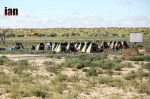
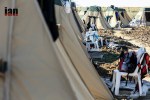
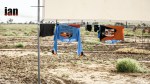
In camp, the Dunkirk spirit is at it’s best with groups of runners grabbing spades and clearing walkways to help alleviate everyone from the muddy mess. Clothes are being dried on make-shift washing lines and bushes, feet are being warmed by a fire and in an amongst all this there is a great deal of laughter as music fills the camp. The only real downside is that the flies have returned…
Today, the Simpson Desert and the Big Red Run is turning into a scene of ‘Survivor’ and on reflection, although everyone would have preferred a full racing day, the experience will be one to remember.
Greg and his team are now working flat out to make things happen and in the last 5-minutes I have had an update on plans for the coming days.
Tomorrow, stage 4 will be approximately the same distance as planned with a re-working of the route to miss the most affected areas and allow vehicle staff for crew access and safety. Overnight camp will remain in the same place.
Stage 5 will be a long stage of 80+ km (tbc) and the route will have slight modifications but it will finish at the original camp site as planned. This will allow Greg and his team to move the whole camp from it’s current location to the originally planned location while the runners are out on course.
Stage 6 will be as originally planned, a short un-timed run into the town of Birdsville.
The Big Red Bash – an open air concert originally planned to take place next to the Big Red Dunes has now been moved to the town of Birdsville. With over 7000 people travelling to the concert, the risk of vehicles getting stuck in the outback was far too high.
All-in-all, Greg and has team have done a remarkable job to pull all this together at such short notice. As I said, the 2016 Big Red Run will be one to remember!
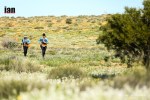
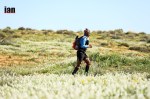
The 2016 Big Red Run got underway today, Saturday June 25th from the ‘Outback’ town of Birdsville on the edge of the Simpson Desert.
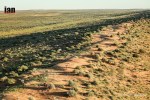
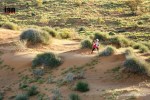
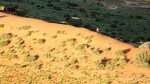
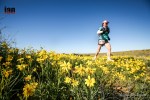
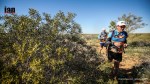
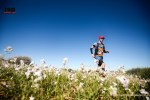
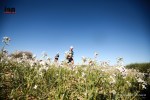
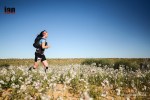
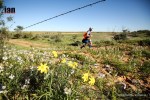
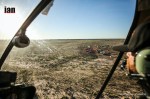
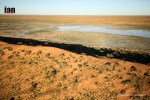
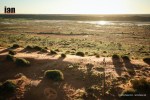
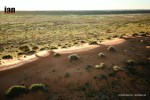
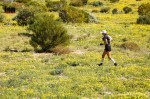
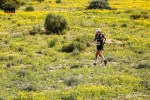
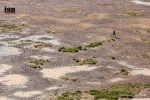
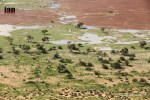
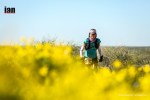
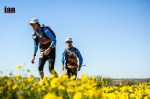
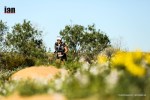
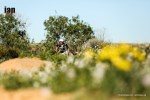
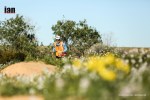
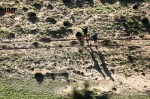
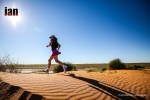
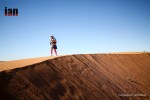
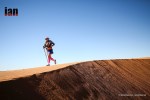
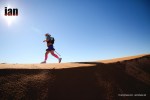
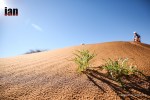
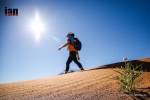
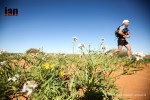
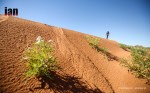
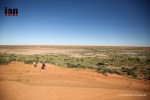
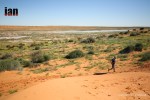
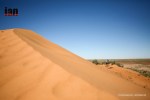
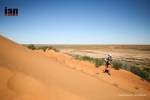
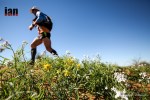
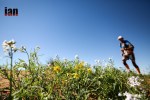
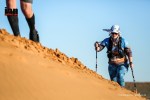
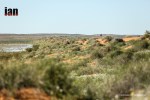
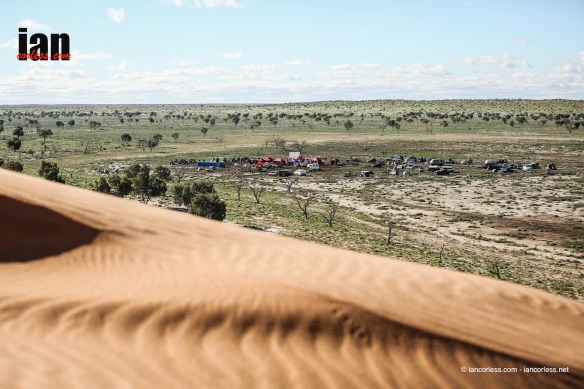
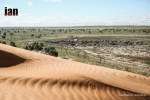
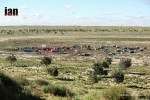
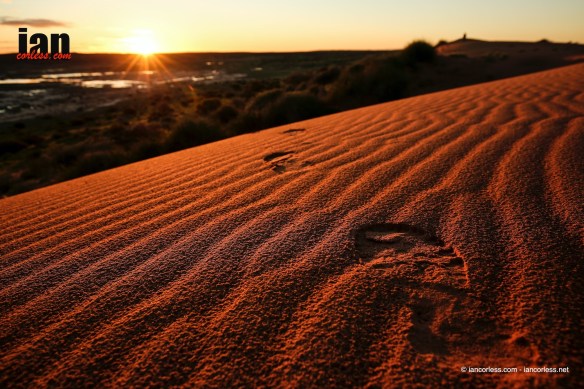
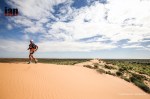
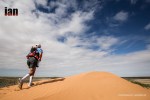
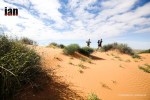
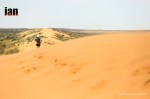
Located in the ‘Northern Territory,’ the Simpson Desert is a large area of red sand and dunes that currently resembles a green pasture due to excessive rain in recent weeks and months. It’s quite a contrast to the Sahara. The Simpson Desert is an erg described asa broad, flat area of desert covered with wind-swept sand. Erg means ‘dune field’ in Arabic and ironically it should have little or no vegetation… not so currently here in the Simpson.
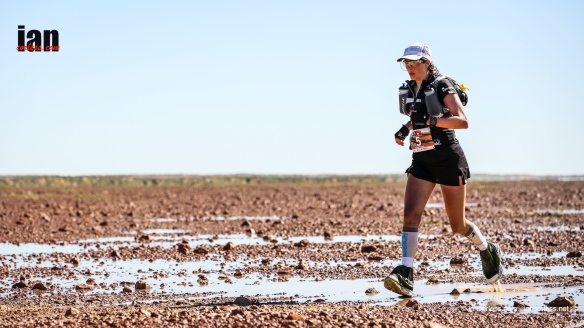
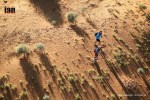
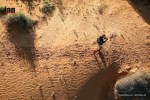
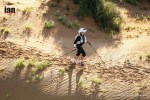
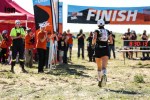
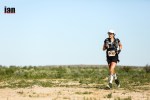
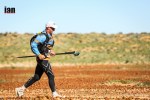
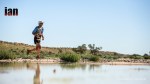
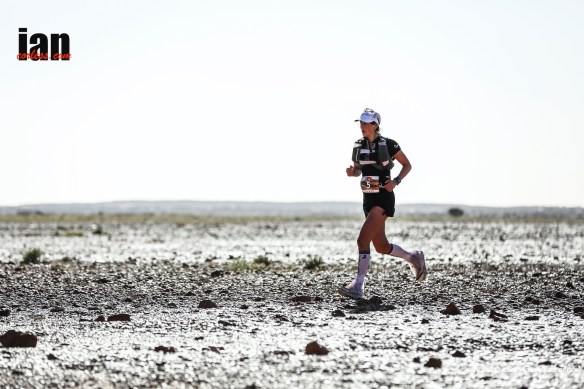
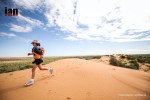
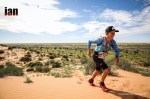
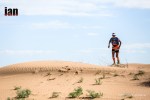
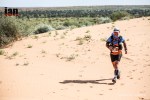
The first European explorer to visit this region was the explorer Charles Sturt and today, Elisabet Barnes from Sweden (who resides in the UK) followed in the footsteps of Sturt and set a blistering pace over the marathon distance to win the stage outright by over 15-minutes. Elisabet’s finish time of 3:59:59 confirming her as one of the most impressive desert runners currently racing.
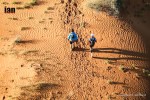
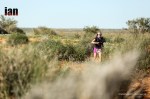
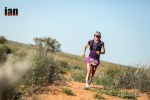
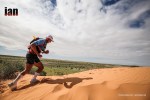
Elisabet pulled away from the group of runners before they had even left the suburbs of Birdsville and she never looked back. Opening a gap slowly but surely, Elisabet extended her lead throughout the day to win by a clear margin.
“I felt very good today considering the extensive travel, jet lag and only racing the Richtersveld Transfrontier Wildrun in South Africa just last week. But the terrain was very runnable and I was happy to run… maybe too quickly? We shall see tomorrow!”
Andy Dubois had trailed Elisabet with two other runners early on, Braddan DB Johnson and Jamie Hildage but Andy pulled away looking to close the gap on Elisabet. He didn’t make it and over the final 20km from Cp2 Elisabet held or marginally extended her lead.
Jamie Hildage, a previous competitor at the Big Red Run finished 3rd overall on the stage,
“It is so green this year and the ground is firmer making conditions underfoot very good. In addition, we had cool temperature and a constant breeze today; it made for great running conditions.”
Braddan dropped to 5th overall behind a strong run from 2nd lady and 4th overall, Helen Durand.
Completing the ladies top 3 was Amon Sheddon who finished 12th overall.
Official times to follow on completion of the stage.
Tomorrow’s stage is the‘Adria Downs Marathon’ at another classic distance of 42.195km
It feels like I have been travelling for 6-days. The reality is, I have, sort of… I left South Africa on the 19th June, arrived in the UK on the 20th. Had an overnight stop in London and then departed to Australia via Dubai and arrived in Brisbane on Wednesday night at midnight. A day in Brisbane provided some RnR and then today, Friday 24th I had 4-hours of flying to arrive in Birdsville for the start of the 2016 Big Red Run.
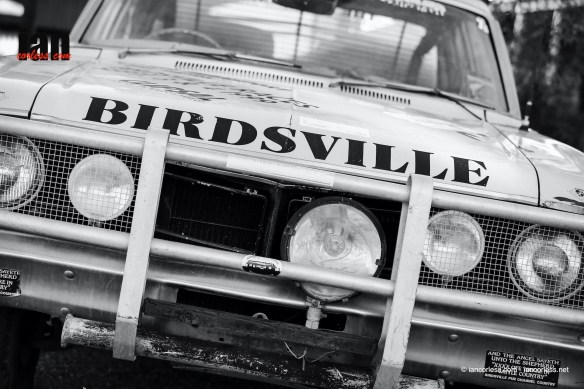
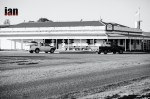
Birdsville is a small town located on land traditionally owned by the Wangkanguru People, in the Channel Country of Central West Queensland, Australia. It is 1,590 kilometres (990 mi) west of the state capital, Brisbane, and 720 kilometres (450 mi) south of the city of Mount Isa. Birdsville is on the edge of the Simpson Desert, approximately 174 km east of Poeppel Corner and the climate is very arid. Birdsville has a population of around 100… it’s what I expected an outback place to be and look like!
Today, runners from around the world have congregated in this small place to register and prepare for the 4th edition of the Big Red Run (BRR). The BRR is Australia’s first and only multi-day race participants are offered a choice of 2 different runs.
The Big Red Run – a 6 day 250km stage Race, starting and ending at the iconic Birdsville Pub
The Little Red Run– a 6 day 150km stage Race, starting and ending at the iconic Birdsville Pub. Ideal for those wanting to dip their toes into Stage racing, or equally achievable for trekkers and adventure hikers.
The Big Red Run
250km, 6 day stage, 7.30 am Sat 25th June - Thurs 30th June 2016
5 marathons in 6 days.
Starting at Birdsville pub with a lap around Birdsville before heading west to the impressive Big Red sand dune, which will be home for the following 2 nights.
Day 1 = ‘Birdsville Marathon’ – 42.195km
Day 2 = ‘Adria Downs Marathon’ – 42.195km
Day 3 = ‘Arpilindika Marathon’ – 42.195km
Day 4 = ‘Sprigg Sprint’ 31km
Day 5 = 84.39km (the equivalent of two individual marathons back to back!!!)
Marathon 1 “Mohan Marathon”
Marathon 2 “Roseberth Marathon”
Day 6 = ‘Birdsville or Bust’ – final 8km run to Birdsville Pub, followed by a late afternoon awards BBQ and entertainment.
The Little Red Run
150km, 6 day stage, 7.30 am Sat 25th June - Thurs 30th June 2016
2 marathons and 2 half marathons in 6 days.
Starting at Birdsville pub with a lap around Birdsville before heading west to the impressive Big Red sand dune, which will be home for the following 2 nights.
Day 1 = ‘Birdsville Marathon’ – 42.2km (same as Big Red Run)
Day 2 = ‘Adria Downs Half Marathon’ – 21.1km
Day 3 = ‘Arpilindika Half Marathon’ – 21.1km
Day 4 = ‘Sprigg Sprint’ 15.4km
Day 5 = Marathon 1 “Mohan Marathon” – 42.2km (Same as 1st day 5 Marathon of Big Red Run)
Day 6 = ‘Birdsville or Bust’ – final 8km run to Birdsville Pub, followed by a late afternoon awards BBQ and entertainment.
All runners from Big Red Run and Little Red Run finish the week together with the day 6 Birdsville Bust 8km run which is untimed, to celebrate their weeks achievement.
With registration complete, mandatory kit and all essential items for each runner had to be added to a bag with a maximum allowance of 14kg. Like other multi-day races, the BRR (and LRR) is self-sufficient, however, here in Australia it is with a difference. Food, spare clothes, sleeping bag etc is transported by the race team to await the runners on finishing. Runners must carry essential mandatory kit to ensure safety on the route but unlike say, Marathon des Sables, these requirements are considerably less. It may well be the perfect combination of ‘semi’ self-sufficiency.
Day 1 starts tomorrow, Saturday 25th June at 0730am (Australia time) with a 42km leg to the fist overnight camp.
Daily reports and images will be posted here on this website and through my normal social media outlets.
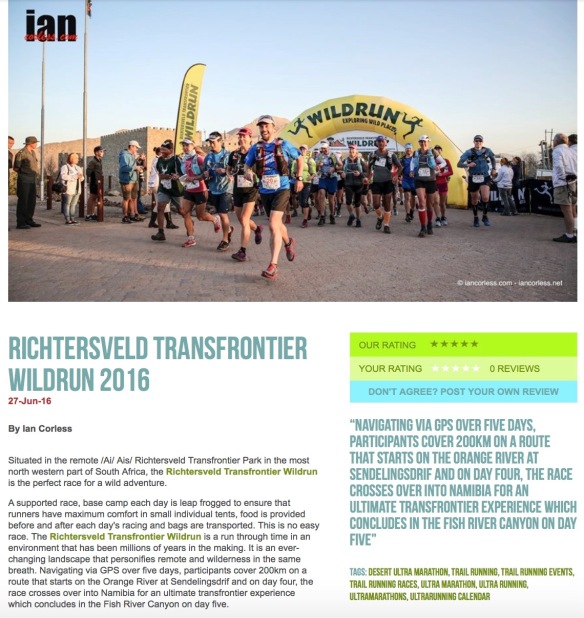
Today, the 2016 Richtersveld Transfrontier Wildrun really did go wild with an early morning crossing of the Orange River and two days in Namibia.
It really was an incredible day!
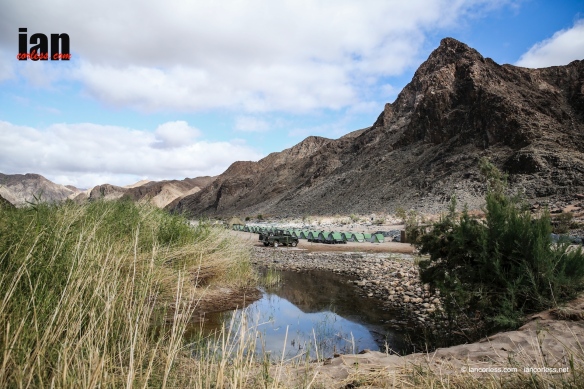
Leaving the magnificent De Hoop Camp on the banks of the Orange River, runners were transported by a small rubber dingy on groups of 4-6 with a series of staggered starts on the Namibian side.
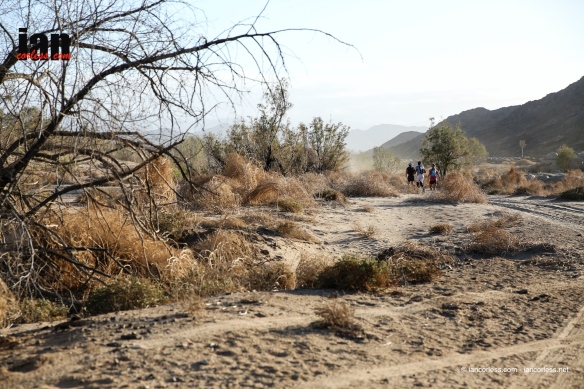
From here, the runners had a short run down stream for a few kilometres before reaching a small section of ‘main’ jeep track that runs past Oom Kobus Jansen’s old farm.
A runnable climb up Jansen’s Aloof follows to the base of Zebra pass, so named for the clear trail created by the Hartmann’s Mountain Zebra – a species of zebra especially adapted to arid and desert environments.
What followed will be one of the most memorable sections of the day and maybe of the race for some, following a wild game trail rollercoaster down Zebra Kloof to meet with the enormous Fish River Canyon.
Once in the canyon, it’s a steady and hard fought battle up the Fish River Canyon to the Wilderness Hot Springs Camp to enjoy a welcome rest in natural hot springs.
Today, Elisabet Barnes found her legs and in her own words said, “I had a great day, I loved it!” Starting in the 2nd to last group, Elisabet caught all the runners before her and held off the top 3 runners of Tobias Mews, Jo Williams and David Kaswari all the way to the line but a slight navigation mishap in the final km allowed David Kaswari to pass her and with a sprint he took the stage victory – Elisabet finished 2nd.
Jo Williams and Tobias Mews finished just behind Elisabet and Tobias commented, “It was a tough day today, we made a few navigational errors and the terrain dictated that we needed to walk certain sections. The course and the route though was just amazing. It was a highlight of the week, it combined the best of the Richtersveld and Fish River Canyon was just amazing… I was sad to finish but I was also glad it was no longer; it was a tough day!”
Ultimately, it was a tough day and a tough day for all. The runners ran into the night and head-torches glowed in the pitch black night as the final runners ran into camp, 12+hours after starting.
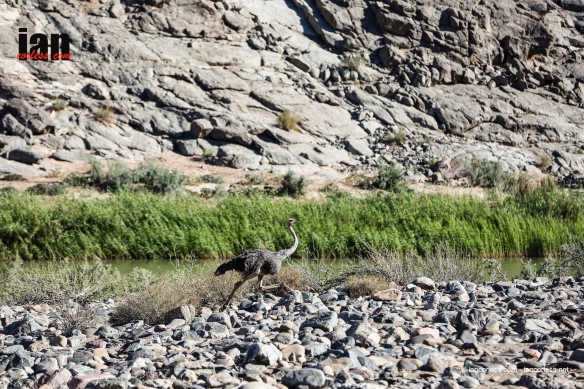
Highlights of the day were discussed around camp fires under African skies with plates of hot stew – talk of Zebra, Ostrictch, Kudu and incredible sights. The Richtersveld Transfrontier Wildrun really did come to life today and as Owen Middleton (race director) said at the pre-race briefing, the opportunity to run and spend time in this wilderness is a complete privilege. It’s not our right to be here but an immense and memorable opportunity. It’s one the runners will not forget!
Overall, although not yet confirmed, the top 3 ladies and top 3 men positions will not have changed.
Tomorrow is the final day and at 36km, it will be a welcome shorter day but it has 3 climbs and a 300m technical descent to the finish at AI-AIS HOT SPRINGS RESORT.
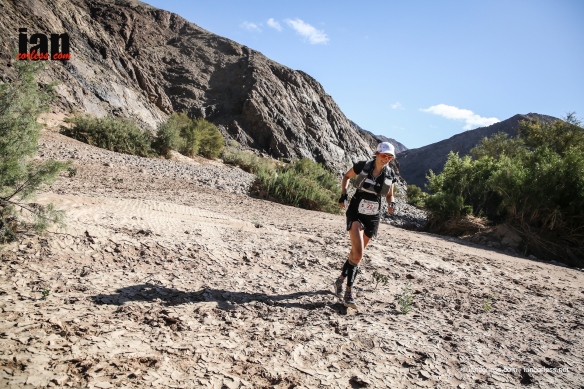
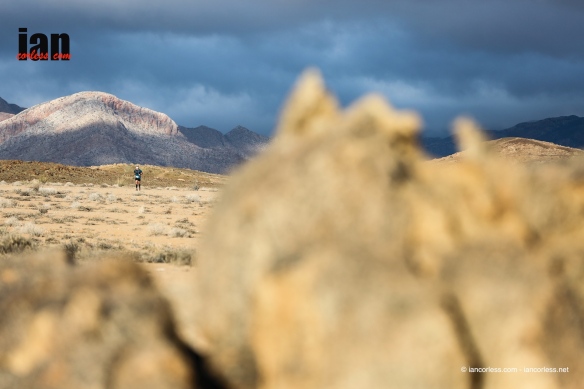
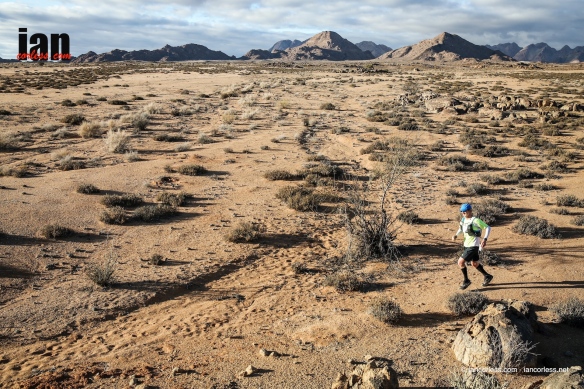
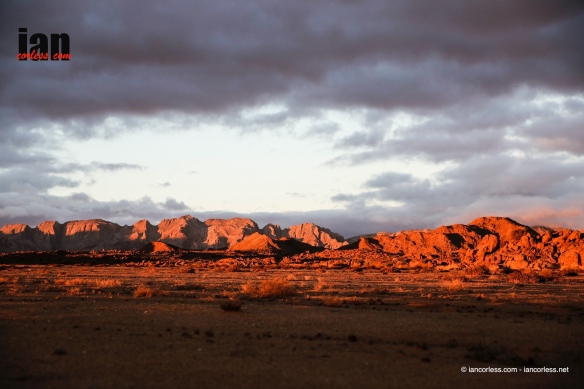
Golden light illuminated the ‘Springbok Flats’ and moody blue clouds provided a stunning contrast to the opening miles of day 3 of the 2016 Richtersveld Transfrontier Wildrun.
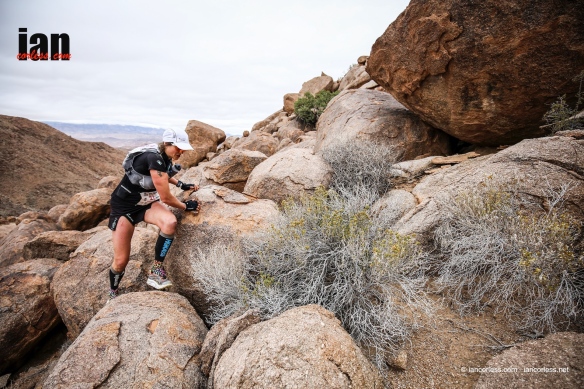
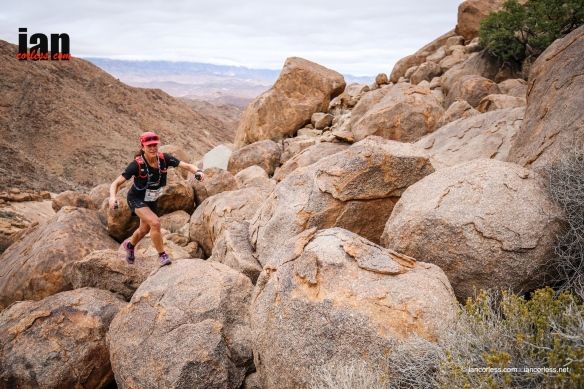
It was a stunning start to the day. As the runners progressed across the flats, they were spotlit as they worked their way to one of the key highlights not only of the day but the whole Richtersveld Transfrontier Wildrun – the Tattasberg Boulders.
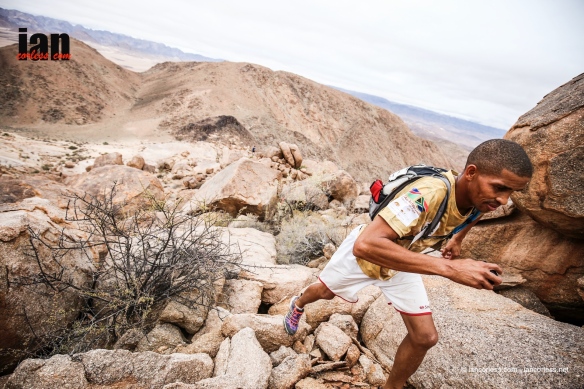
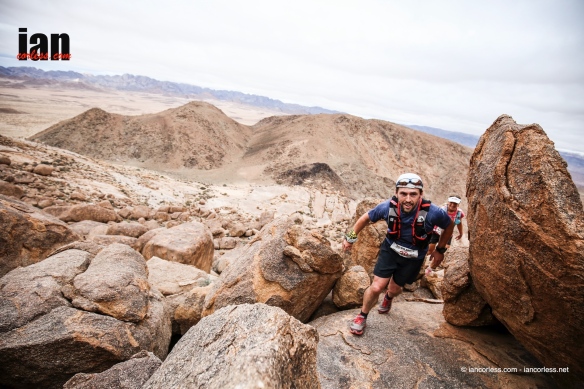
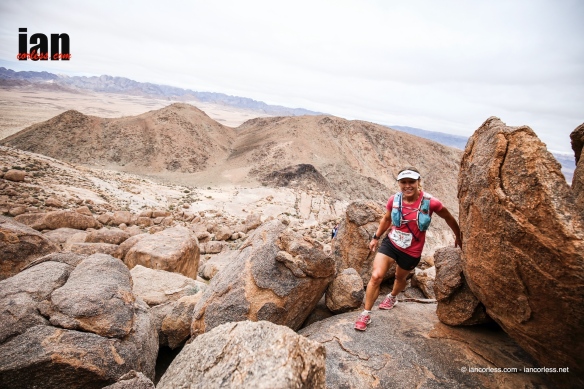
Huge balls of rock, some the size of houses, leave an impression on the mind and eyes. Following a line of markers (the only section of the race to be marked for safety reasons) the runners weaved a route up, over and around the huge marbles of stone and at the top they then worked their way down to the valley and a downhill run to the Orange River. Across the water, Namibia and stage 4 of the race.
But first, 10km’s of sandy trails would lead in to camp and the stunning setting on the banks of the river.
As per day 2, the race had several start times, the first starting 1hour earlier than day 2 – 0700, 0730, 0800 and 0830.
David Kaswarie, Tobias Mews and Jo Williams dictated the earlier pace to cp1 and then David pulled away and opened up a gap. At one point he had gained 15 minutes but after the Tattasberg boulders, the flat running allowed Tobias and Jo to close the gap to 10 minutes at the Orange River and below 5 minutes at the finish line. David finished in 4:08 and Tobias and Jo 4:10. David must really be kicking himself with his error on day 1, he would now be leading the race…
Elisabet Barnes found her legs today and after the run she said, “I had a great day today, I was worried about the boulders but I loved the section and once we got into the final 15km i could run, I love to run and it was great to open up my stride and gain some time!”
Linda Doke by contrast had a less successful day, “There was too much running today, I prefer the more technical stuff.” Linda lost time to Elisabet Barnes but her 2nd place is still secure.
In the men’s race, Tobias Mews still holds a convincing lead as does Jo Williams in the ladies race.
Tomorrow, the runners go ‘transfrontier’ and cross into Namibia and the Fish River Canyon.
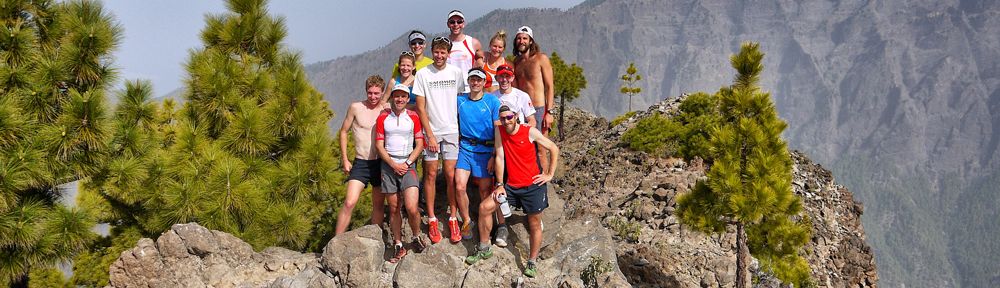
The 2016 Richtersveld Transfrontier Wildrun® became a reality today… runners from all over the world have assembled in the |Ai-|Ais/Richtersveld Transfrontier Park.
A 200km, five-day foot race from South Africa to Namibia through the ancient arid landscape of the /Ai/Ais-Richtersveld Transfrontier Park. From the crystal fields of Sendelingsdrif in South Africa to the infamous giant boulders of Tatasberg deep in the /Ai/Ais-Richtersveld Transfrontier Park; this unparalleled journey then crosses the Orange River into Namibia and the wild lands of the Fish River Canyon. This is the running experience of a lifetime; this is the Richtersveld Transfrontier Wildrun®.
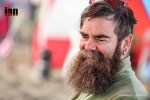
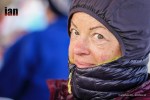
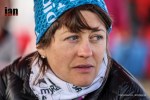
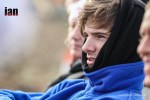
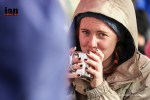
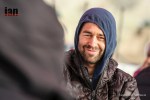
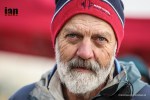
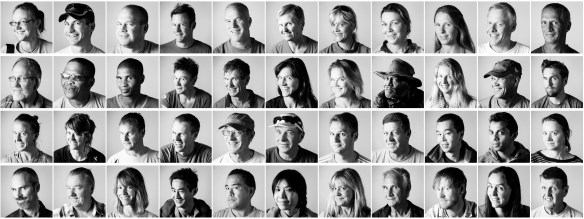
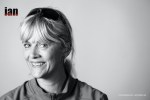
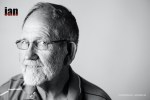
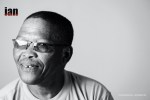
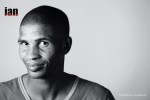
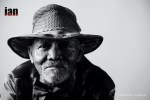
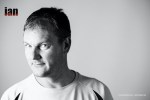
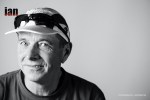
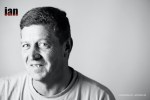
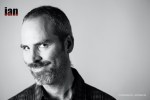
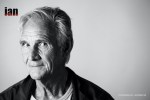
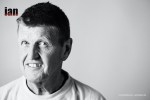
Day 1 starts tomorrow, Monday June 13th at 0800. Before the race gets underway, we feel it’s important you get to see the faces of those taking part.
Day 1
43.64km
Sendelingsdrif to ‘De Koei’
Day 2
32.13km
‘De Koei’ to Hakkiesdoring
Day 3
39.78km
Hakkiesdoring to De Hoop
Day 4
48.32km
De Hoop to Wilderness Hot Springs
Day 5
21.3km
Wilderness Hot Springs to Ai-Ais Hot Springs Resort
Early archaeological evidence tells us that the San inhabited the Richtersveld area thousands of years ago. They hunted game (mountain zebra and klipspringer) and gathered berries and herbs. The first Khoekhoen or pastoral people moved to these regions from Botswana some 2000 years ago. Like the San, they were hunter-gatherers, and only slaughtered animals on rare ceremonial occasions.
In tune with the harsh environment, many of the Richtersvelders today are transhumant pastoralists, moving their livestock between stock posts with the changing of seasons. The rotation of pastures has helped to preserve the land from overuse. This is the last place in South Africa where pastoral people live on communal lands and one of the last remaining examples of the transhumant Nama way of living.
The harsh environment of the Richtersveld has through the years witnessed a story of determined peoples with a strong attachment to the land. Early last century declared a “Coloured Rural Reserve”, the land’s ownership moved in 2002 to the peoples of the Richtersveld. In this pristine land, devoid of mining scars and in harmony with transhumant pastoralists, an area of more than 160 000 ha has been put aside – first to create a Community Conservancy, now proclaimed a World Heritage Site.
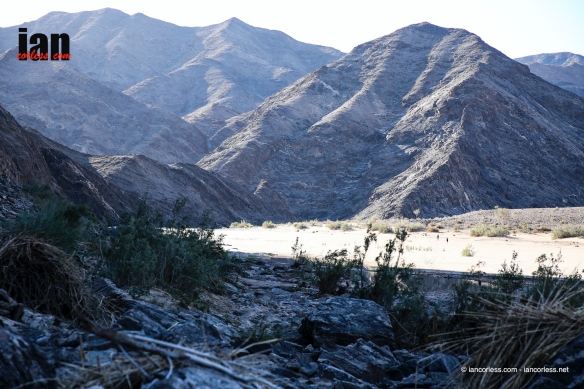
From a distance you can see rugged mountains, sweeping deserts, a giant blue sky and glimpses of the might Orange River creeping along to the sea. On closer investigation you realise that you are standing in one of Africa’s most diverse and rich ecosystems.
The Richtersveld World Heritage Site sits in the heart of what is called the Succulent Karoo Biodiversity Hotspot – an ecosystem with an astounding 4 849 succulent plants, 40% of which are found nowhere else.
To be declared a hotspot, an area must have incredibly high species diversity and a high percentage of endemism. It is quite a unique distinction, as there are only 25 hotspots in the world. Even more unusual is that the Succulent Karoo is a desert and is the only arid biodiversity hotspot on Earth.
Conjure up a desolate and forbidding landscape, seemingly devoid of life, except for some people dotting along the horizon. Make a startling discovery upon closer inspection when the mirage dissolves into the human-like half-mens (half person) and the harsh environment prove to be a treasure-chest containing the world’s richest desert flora. Miniature rock gardens, perfectly designed by nature, cling precariously to cliff faces. Tiny succulents, mere pinpoints against a backdrop of surreal rock formations, revel in the moisture brought by the early morning fog rolling in from the cold Atlantic Ocean.
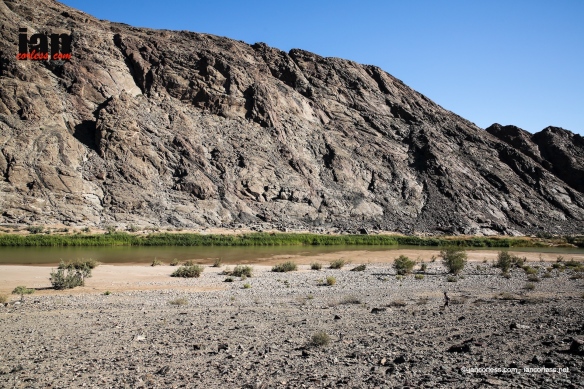
Rugged kloofs, high mountains and dramatic landscapes that sweep away inland from the Orange River divulge the fact that you are now in the vast mountain desert that is the /Ai-/Ais-Richtersveld Transfrontier Park, an area managed jointly by the local Nama people, SANParks and Namibia Parks and Wildlife. This is a harsh and unpredictable land where water is scarce and life-sustaining moisture comes in the form of early morning fog – called ‘Ihuries’ or ‘Malmokkies’ by the local people – which rolls in from the cold waters of the Atlantic Ocean, sustaining a remarkable range of small reptiles, birds and mammals. A staggering assortment of plant life, some species occurring nowhere else, is to be found here, with gnarled quiver trees, tall aloes and quaint ‘half-mens’ keeping vigil over this inscrutable landscape.The Fish River Canyon is the largest canyon in the southern hemisphere, and second only to Arizona’s Grand Canyon in terms of size. 161km long, up to 27km wide and almost 550m at its deepest, the southern part of this canyon is largely untouched by tourists and remains one of the wildest and most remote corners of the world.
The /Ai/Ais-Richtersveld Transfrontier Park is only accessible by means of a 4×4 vehicle, but vehicles with high clearances such as combi’s and LDV’s do travel in the park. Sedan vehicles are not permitted.
June temperatures are likely to be cool at night and comfortable during the day. However, it can get as low as 4-5 degrees Celcius during the night and as high as 35 degrees Celcius during the day.
Each day of this 200km, five-day journey will take you on a rollercoaster ride of geological splendour. From the crystal fields of Sendelingsdrif in South Africa, to the infamous giant boulders of Tatasberg, across the green swathe of the Orange River, and into the wild lands of the Fish River Canyon in Namibia – every kilometer is an experience within itself and will leave you stumped for words to describe your journey.
This is Episode 110 of Talk Ultra. This weeks show is a Marathon des Sables special with a load of great content from the Bivouac by Niandi Carmont and then a series of post race interviews with Sondre Amdahl, Elisabet Barnes and Elinor Evans. If that wasn’t enough, we have an interview with Jasmin Paris who has just blasted the Bob Graham Round ladies record to a new level.
It’s a different show this week as we concentrate on Marathon des Sables
Marathon Des Sables
It was a win again for Rachid El Morabity and Russian, Natalia Sedykh dominated the ladies race, times were 21:01:21 and 24:25:46 for the 257km. Full results are HERE
Niandi talk from the Bivouac
00:25:32 INTERVIEW from the Bivouac
A selection of interviews of everyday runners doing extra ordinary things
We discussed this race extensively in a couple of podcasts last year, we spoke with Nikki Kimball and Jeff Browning. Jeff won the race and Nikki decided to withdraw from the race as she felt is was too dangerous. Alarm bells were rung. Unfortunately we have had news of a death at the 2016 edition. We have to be clear here that information is still a little sparse but Ellie Greenwood and Kerrie Bruxvoort have both commented on social media at the races apparent disregard for safety. We will have more information on this as and when possible.
A statement on Facebook from Ultra Fijord said:
The second edition of Ultra Fiord has been a very hard experience, marked by an exceptionally hostile climate and dramatic landscape that formed the backdrop of the race route, that was changed and shortened two days leading to the race to accommodate the impending bad weather. While some runners experienced and embraced the forces of nature, others were beyond their comfort zone. What impacted all of us the most was the loss of 100-mile runner, Arturo Héctor Martínez Rueda. Mr Martínez, 57-year-old from Mexico, had unfortunately passed on at an approximate 65km mark that is about 750m above sea level. Although the likely cause of his death was hypothermia, a confirmation can only be made in the following few days. The unfavourable weather has persisted in this mountain area since Friday, so the rescue team, awaits a favourable weather window to execute the evacuation. The race organiser takes responsibility and apologise for the poor communications to the outside world with regards to this tragic incident, simply because it is a step we could not execute without the confirmation of the status and private communications with Arturo’s family. In this difficult time, the organising team sincerely expresses its condolences to the family and friends of Arturo and ask followers for your cooperation to send peace and respect to them too.
01:25:40 INTERVIEW
Elisabet Barnes post MDS
01:57:45 INTERVIEW
Sondre Amdahl post MDS
02:26:49 INTERVIEW
Elinor Evans post MDS
03:11:00 INTERVIEW
Jasmin Parishas just elevated the ladies Bob Graham Round record to a new level coming very close to Billy Bland’s benchmark 1982 record



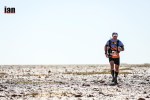
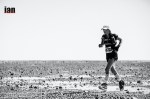
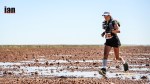
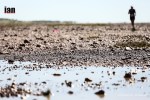


































































 IAN CORLESS