Everest Trail Race – Day 6 Race Stage 3 Jase Bhanjyang to Kharikola

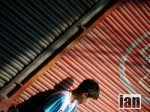
sunrise and mountains

Everest Trail Race – Day 6 Race Stage 3 Jase Bhanjyang to Kharikola

Image gallery and image sales available HERE

Oh boy, did it get cold last night! Of course, cold is relative, but -10 in a tent is pretty darn cold for this Brit boy. Needless to say, no matter how good your sleeping is/was, pretty much everyone slept in base layers and down jackets with either hoods up or hats and a ‘buff’ on.

I was comfortable, however, how do you keep your feet warm? I need to know the answer to that question.
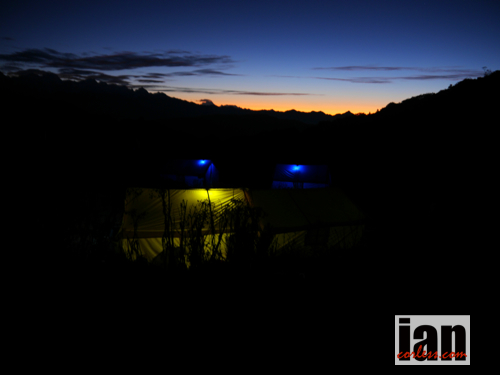
glowing tents

A smiling Sherpa provided me with steaming mug of sweet black tea at 0500 to awake me. What a way to start the day. The sky was clear and although it was still well below freezing we all knew that hot and beautiful day was ahead of us.
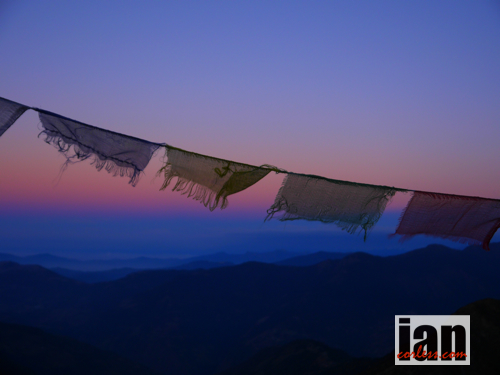
flags

I hiked out of camp to a near by summit and photographed the sun greet us with it’s warmth. By the time I returned, camp was back to life as Sherpa’s and porters prepared food, set up equipment and made ready for another long day.

campsite

Once again, it would be a split start, 0700 and 0800. Today’s stage had considerably less climbing than stage two, however, it had lots of descending, it may not hurt the lungs as much but it would certainly hurt the legs.

A short climb out of camp the runners would then descend to Jumbesi (CP1) at 2696m. This initial trail would see them running through a dense forest section.
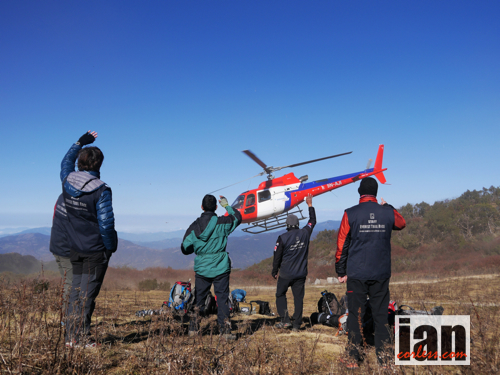
helicopter

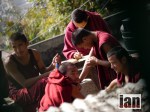
No hiking on the trail for me today, we were helicoptered out and treated to a stunning ride with the 8000m peaks to our left. What an experience! Our arrival at Kharikhola was equally impressive. Nestled on top of the mountain was a beautiful Monastery (Pema Namding) and the finish line of stage 3.
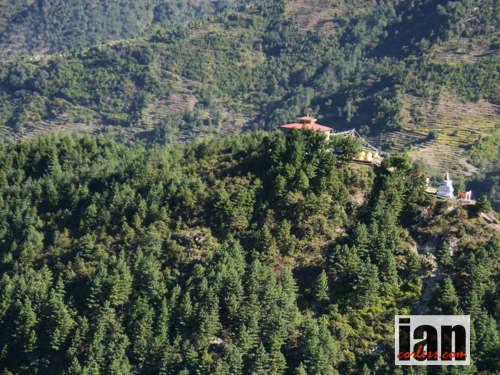
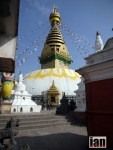
Monastery

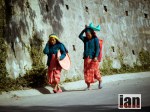
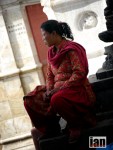
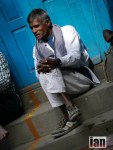
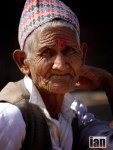
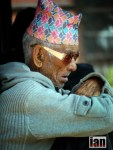
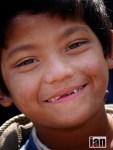
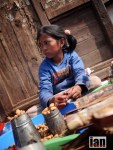
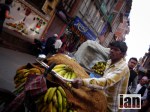
Kharikhola is a main trekking route and in addition, it is a main route for supplies. It amazes me to watch children carry baskets literally as big as they are and for sure, probably twice the weight. Donkeys go up and down the trail all day carrying all sorts of supplies, from bottles of gas, water, corn, maize, beer, Coke, cigarettes and so on. You suddenly realize how life moves around in these mountains.
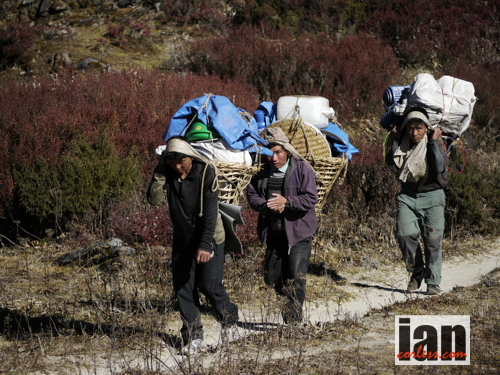
porters

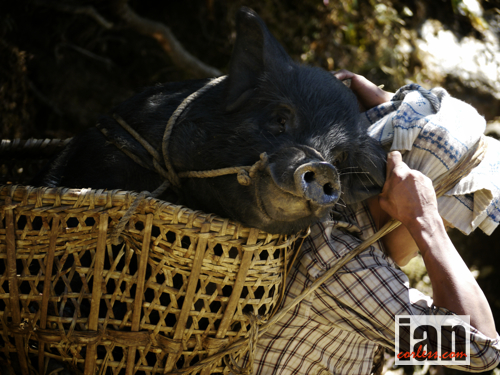
 pig

Sherpa’s arrive carrying packs that look as though it will be break their packs, behind them, a string of tourists with small packs and poles. No wonder the Nepalese make such great runners and mountain men. It’s a gift, a gift that Nepal provides them.
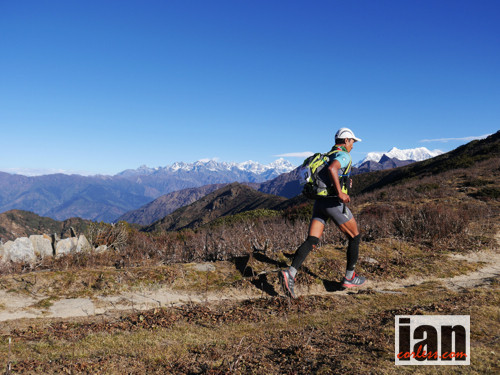
Upendra

Back on the trail, not surprisingly, Upendra Sunwar was once again blazing a trail along this tough ETR route and Fernanda Maciel continued her dominance not only in the ladies race but a top-3 position overall.
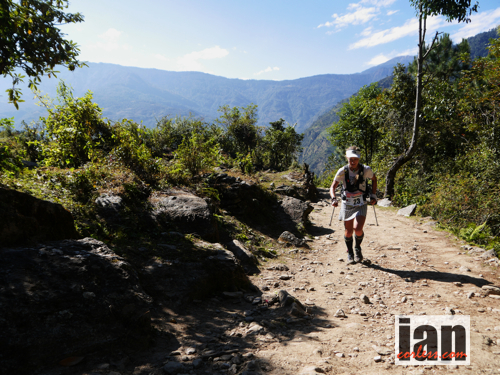
Fernanda

After CP1 at Jumbesi, the runners crossed the Junbesi Khola river and climbed up to Phurteng at just over 3000m. Descending to CP2 at Lharpa another climb awaited. The race now had a familiar format; Upendra would lead the men by a considerable margin, followed by Andrea Schambeck (today he said he didn’t feel quite as good) Francisco Salas and Ismael Dris. Ismael had a tough day on stage 2 looking as though he may pass out at Pikey Peak but he somehow he held it together. Today though he took a fall and was complaining of leg issues. He was still up in the top-5 though.

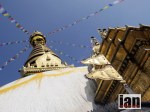
Monastery close up

For the ladies, Fernanda like Upendra would lead by a considerable margin, followed by Nepalese, Yangdi Lama Sherpa and American, Shiri Leventhal.

Leaving Taksindu La, the final long descent of the day, 3100m to 1500m in 10km. However, at the bottom the sting in the tail, a 4km climb from Jubhing to the Monastery finish at Kharikhola. I have seen and witnessed some very impressive race finishes in my time, but this one takes the crown. Incredible.
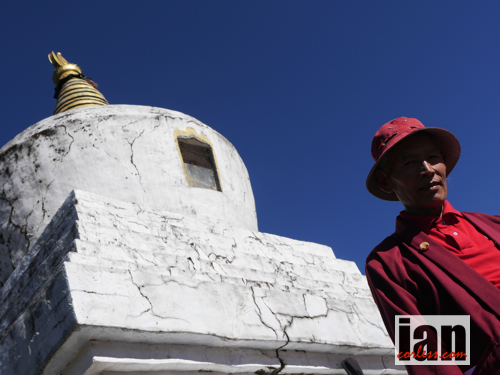
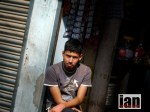
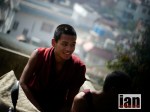
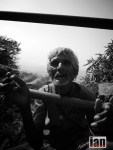
Lama

Upendra and Fernanda took out the respective stage wins and a detailed results listing will follow as and when available.

Stage 4 preview: Kharikhola to Llegada 27.5km

Departing the monastery a small descent awaits the runners of just 4km before a long tough climb to Kari La (CP1) at 2900m. From here the course goes up and down all around 2700/2800m for appx 10km before a very steep descent to CP2 at Surke (2200m). A continual climb to CP3 at Cheplung continues to the arrival at Phakding/ Llegaga.
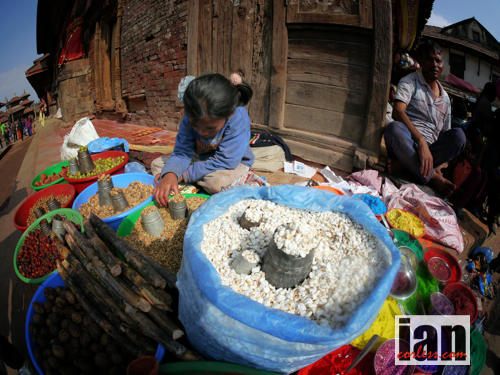
Everest Trail Race – Day 2 Patan and Swayambhunath

Everest Trail Race ©iancorless.com

Image gallery and image sales available HERE

An incredible day exploring the sights, sounds, colours and meeting the people of Kathmandu. What an incredible place.

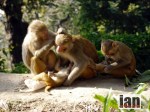
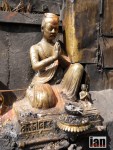
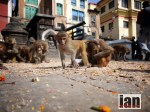
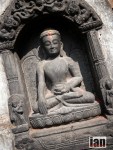
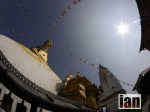
Located at the top of a hill, our day started with a visit to Swayambhunath (affectionately known as the Monkey Temple). The Tibetan name for the site means ‘Sublime Trees’. However, Shing.kun may be a corruption of the local Nweari name for the complex, Singgu, meaning ‘self-sprung’. For the Buddhist Newars in whose mythological history and origin myth as well as day-to-day religious practice, Swayambhunath occupies a central position, it is probably the most sacred among Buddhist sites.

We followed this with an excursion to Patan (Manigal). It is called city of Festival and Feast due to the fine ancient art, making of metallic and stone carving statue.

Patan is on the elevated tract of land in Kathmandu Valley on the south side of the Bagmati River which separates it from the city of Kathmandu on the northern and western side. The Nakkhu Khola acts as the boundary on the southern side. It was developed on relatively thin layers of deposited clay and gravel in the central part of a dried ancient lake known as the Nagdaha.
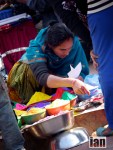
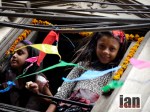
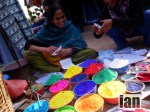
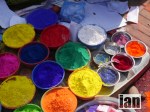
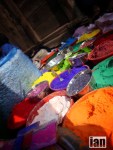
It was the last day of a religious festival, so colours and flowers dominated, as did local people. It was a wonderful experience to absorb oneself and feel the spirit of the people.
Today, is the last day of sightseeing. A long 7-hour bus journey awaits tomorrow to our start camp. On Thursday, the race begins!

Namaste

Information from ©wikipedia

Everest Trail Race – The Participants

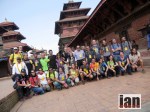
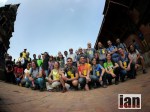
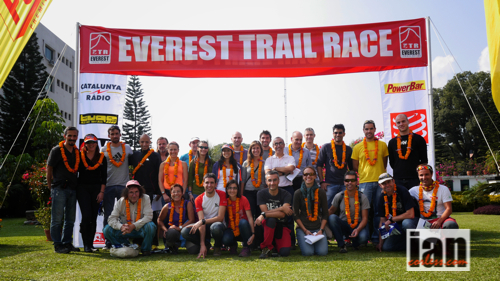
Everest Trail Race ©iancorless.comParticipants and staff have arrived in Kathmandu ready for the 2013 Everest Trail Race. A couple of days exploring before we leave for the race start, some 7-8 hours away by vehicle.

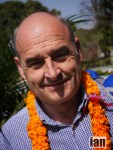
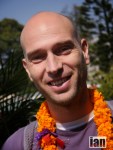
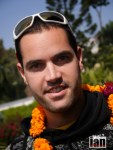
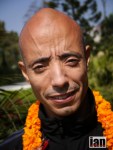
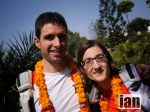
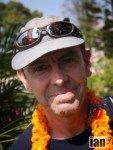
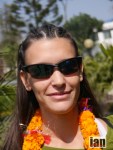
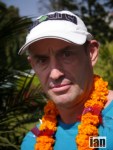
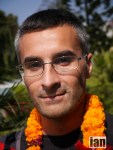
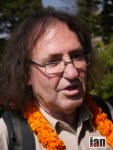
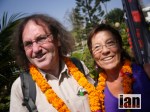
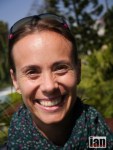
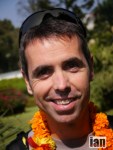
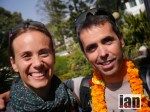
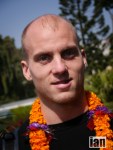
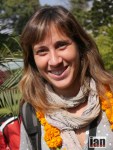
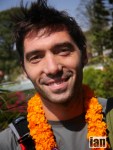
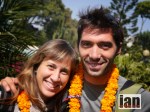
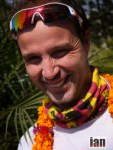
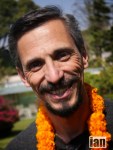
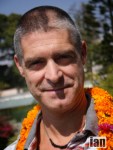
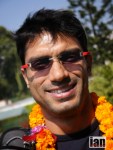
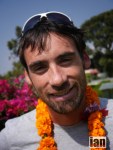
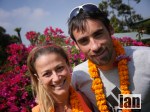
Here is a face of every runner.

ETR website and 2014 booking available HERE


Everest Trail Race – A journey begins

screenshot_404

I had a dream, like any boy, I had a dream of what might be. Majestic mountains and blue skies; coloured flags draped on string and spread across the trail. Nepal and the Himalayas, it’s sometimes quite difficult to convey an emotion… Nepal stirs an emotion.

screenshot_406

You see, I have had a vision; a vision of what this region will hold for me. Visual delights that can fulfill the photographic passion of even a novice cameraman, to be in this region of the world, yes, near the ‘rooftop’ of the world is something that I never thought would happen.

I have experienced many wonderful things, particularly in the last two years. I have been extremely fortunate, extremely blessed and extremely thankful of the opportunities.

I have witnessed the rainforests of Costa Rica at The Coastal Challenge, the dunes of the Sahara at Marathon des Sables and the vermillion cliffs of the Grand Canyon at the Grand To Grand, but today, I depart on a journey, a journey 46-years in the making to the rooftop of the world. I am finally going to experience the majesty and the awe-inspiring wonder of the Himalayas at the Everest Trail Race.

To synthesize my emotions and thoughts are almost impossible. My expectations are high and I am sure that as soon as I experience my first sights and sounds of Kathmandu, all will fall into place. My camera will convey the images, emotions and beauty of what I see.

The Everest Trail Race is a multi-day journey that will test each and every participant in a way that they have not been tested before. A total elevation gain of over 25,000m with a minimal altitude of 3,000m will mean that breathing alone will be difficult.

screenshot_407

Set against one of the most awe inspiring backdrops, the race will last for six days covering a total distance of 160km. Daily distances are on the face of it relatively easy at; 22, 28, 30, 31, 20 and 22km, however, daily altitude difference goes from 3000m to almost 6000m. It is a demanding race and although each participant is required to be self-sufficient during each day, food, water and an evening camp are provided by the race organization. Daily temperatures can vary from -10c to +18c and the terrain will offer incredible variety; frozen earth, snow and rocks of varying color. Without doubt, the ETR is a challenge, why else would you do it?

My purpose and aim will be to document the journey in words and images providing a daily story that will portray the journey of all involved. Wild beauty, people, cultural encounters all encompassed in a harsh environment. The ETR will bring sharing and ultimately friendship for all. This race will be so much more than ‘just’ a physical effort; it will be a life affirming journey and one that will almost certainly change each person who has the opportunity to experience it.

This will be a race of human values, collective experiences and I for one can’t wait to experience the journey not only from the outside looking in but from within the race looking out.

Nepal and the altitude will be a new experience for me. It excites me but also intimidates me. Will I be able to handle the altitude? In addition to making the 160km journey, I need to work. I am going to need to travel light but also function on a professional level. Sometime ago I changed my heavy Nikon DSLR cameras to the compact micro four/third Panasonic G cameras and without doubt they will be worth every penny of investment on this race. I am able to carry three cameras and lenses for the comparable weight of one Nikon body and lens. My computer is the small and light MacBook Air, I will have an iPad mini, solar charger and I will be using mobile recording equipment such as the Zoom H2N.

Camera kit iancorless.com

Camera kit iancorless.com

I am equipped and well prepared for every race I attend, however, the ETR and it’s part self-sufficient nature not only means that I need lightweight and effective clothing but it needs to pack small. I have to give a big thank you here to UK based company, MONTANE. They have provided me with all the equipment I need (inc luggage) and in addition, I have some new products to test, such as a Montane Sleeping Bags that will be available on the market in 2014.

Everest Trail Race - Montane kit - ©iancorless.com

Everest Trail Race – Montane kit – ©iancorless.com

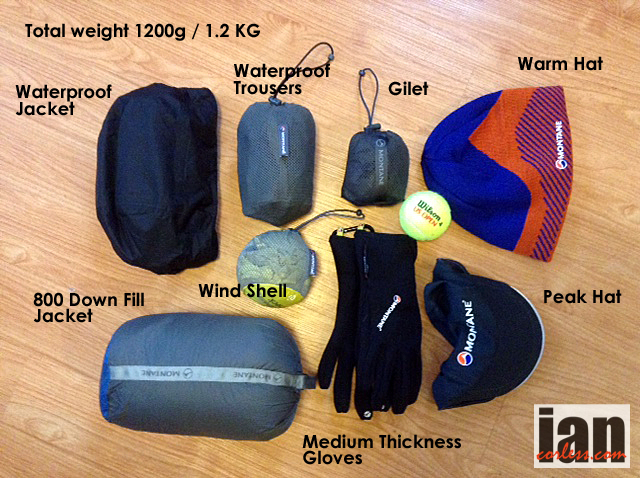
The above has my daily kit that I will need for safety. Waterproof layers, down jacket, sleeping bag (in case of emergency), windproof shell and gilet, medium gloves/ warm gloves, warm hat and peaked hat. All weighing in and including the pack at 2.93kg.

Everest Trail Race - Montane kit - ©iancorless.com

Everest Trail Race – Montane kit – ©iancorless.com

The above is a stripped down version of equipment with no sleeping bag and just medium gloves weighing in at 1.2kg.

Apparel as supplied by MONTANE:

Montane day clothing ©iancorless.com

Montane day clothing ©iancorless.com

Montane warm layers clothing ©iancorless.com

Montane warm layers clothing ©iancorless.com

Montane outer clothing ©iancorless.com

Montane outer clothing ©iancorless.com

Montane run clothing ©iancorless.com

Montane run clothing ©iancorless.com

Montane pack and luggage ©iancorless.com

Montane pack and luggage ©iancorless.com

So that’s it for now. I leave Heathrow and join the team in Istanbul, we then depart for Kathmandu.

Reports and images will be posted on my website here, I hope on a daily basis, however, communications above 3,000m may well be limited.

Watch this space!

NAMASTE.

Finally, a word from Jordi Abad, ETR director.

” If this was only a pure and hard competition, it would be a nonsense; environment gives its hardness but not the competitiveness itself. We are here to share and to help each other. It is possible to make the effort running any city marathon in the world, but the sensations, the environment and the feelings are to share them with friends, to know new people with whom laughing and weeping. This is what remains in the end and what makes it an unique experience for all”.

ETR website in the UK HERE

Information on Nepal:

It is located in the Himalayas and bordered to the north by the People’s Republic of China, and to the south, east, and west by the Republic of India. Specifically, the Indian states of Uttarakhand, Uttar Pradesh, Bihar, West Bengal, and Sikkim border Nepal, while across the Himalayas lies the Tibetan Autonomous Region. Nepal is separated from Bangladesh by the narrow Indian Siliguri corridor. Kathmandu is the nation’s capital and largest metropolis.
The mountainous north of Nepal has eight of the world’s ten tallest mountains, including the highest point on Earth, Mount Everest, called Sagarmatha in Nepali. It contains more than 240 peaks over 20,000 ft (6,096 m) above sea level.[11] The southern Terai region is fertile and humid. Lumbini, the birthplace of Lord Gautam Buddha, is located in this region. Lumbini is one of the holiest places of one of the world’s great religions, and its remains contain important evidence about the nature of Buddhist pilgrimage centres from as early as the 3rd century BC.  

Content taken from Wikipedia©

Equipment list supplied by Montane 

  • Montane Beanie 50g
  • Montane Aero Cap 55g
  • Montane Bionic Long Sleeve Crew Neck base layer 160g
  • Montane Bionic Long John 175g
  • Montane Featherlite Gilet 105g
  • Montane Featherlite Smock 105g
  • Montane Featherlite Down Jacket w/ Hood 405g
  • Montane Minimus Mountain Jacket (waterproof) 232g
  • Montane Minimus Tousers (waterproof)  125g
  • Montane Terra Pants 320g
  • Montane Tee Shirt 195g
  • Montane Powerstretch Gloves 55g
  • Montane Sabretooth Gloves 112g

Run Kit

  • Montane Sonic Ultra T 150g
  • Montane Trail Tights 207g
  • Montane Trail Shorts 140g

Sleeping Bag

  • Montane Direct Ascent (sample product) 1055g

Pack

  • Montane Ultra Tour 22 ltr 545g

Holdall

  • Montane Transition 100 

Total weight 4186g minus holdall

Annapurna 100k Trail Race

Lizzy Hawker at the 2012 TNF UTMB copyright Ian Corless

Lizzy Hawker at the 2012 TNF UTMB copyright Ian Corless

Lizzy Hawker returned to racing in her beloved Nepal and hopefully puts to rest some injury issues that disrupted her late 2012 season and her early 2013 season. Although listed as potential starter of the 2013 Trans Gran Canaria, Lizzy decided to return ‘home’ and race in Nepal at the Annapurna 100.

Lizzy dominated the ladies race taking the win by over 4 hours from Eva Clarke. A notable mention must go to third placed lady, Bakiye Duran. I first met Bakiye at the Iznik Ultra in 2012. She is somewhat a legend on the small Turkish ultra running scene and deservedly so. She came to distance running late in life and has pioneerd the movement in Turkey.

The mens race was a very close affair with Aite Tamang taking the win just 2 seconds ahead of Tirtha Tamang. Taking third place on the podium was Upendra Sunuwar over 1 hour 20 mins later.

The Annapurna 100′s got big mountain views, forests trails, village culture and it’s probably the only ultra race where you get a tikka on your forehead at 20 km and a khata around your neck. It’s Nepal’s original ultra-trail race with great 50, 70 and 100 km courses.

On October 31st 1995 Sir Ian Botham, world-renowned cricketer, with Jan Turner and Ramesh Bhattachan, started the first 100 km race. Twelve local runners proved that a run from Pokhara to Poon Hill and back was possible in less than 12 hours. The route normally would take an average trekker five days. The winner took 11 hours 55 minutes..

Since then, due to a decade of conflict, only a couple more races could be run. Now the race has become an established annual event with a successful 100 km race in 2009, a 71 km trail-only race in 2010 and a 75% trail 100 km race in 2011.

2012 will be the best race ever, with an improved course with more trail than ever.

It is now a point-scoring, qualification race for India’s ‘The High‘ and the UTMB.

The course heads out of Dhampus, a mountain village close to Pokhara (1650 m), 8 hours drive west of Kathmandu. The views from the Dhampus ridge are spectacular. All three finish in Dhampus, after more or less ups and downs on a combination of technical tracks, well maintained trekking trails and some jeep roads, through forests and many villages.

RESULTS 2013

Men’s result:

  • Aite Tamang: 10:51:55
  • Tirtha Tamang 10:51:57
  • Upendra Sunuwar 12:10:00.

Women’s result:

  • Lizzy Hawker, 12:58
  • Eva Clarke from Australia in 17:11
  • Bakiye Duran in 20:02 minutes.

Lizzy Hawker, UK
“It was a beautiful and challenging race. An incredible experience to share, and a unique way to start a new year.”

Lizzy Hawker is sponsored by The North Face