The 2025 edition of the Marathon des Sables – The Legendary is getting close, as we journey through March, we will post weekly articles to help you fine tune your preparation.
Following on from the 2024 edition, the longest in MDS history, the 39th 2025 edition will follow a similar format and distance. The event will take place over 6-stages/ 7-days and notably, the ‘long day’ was stage 3 in 2024, for 2025 it will return to stage 4.
All 6-stages will be timed as in 2024, previously, the charity stage was not timed.
Although the race has fluctuated in distance over the years, a distance of +/- 250km’s should not come as any great surprise and training in the build up to the event should have been planned with this in mind.
6 timed stages does make a considerable difference and that should be considered. In 2024, the long day coming on stage 3 was an extra challenge, for 2025, it returns to stage 4! Depending on how fast you complete the long day, you can have a full day and night as recovery before stages 5 and 6.
Daily distances are typically never disclosed before the race and the jury is out if the distances will be announced pre arrival in Morocco, watch this space! However, it is pretty easy to guess on approximate distances.
The 2025 MDS Legendary will look (potentially) like this:
- Stage 1: 32km (day 1) running total: 32km
- Stage 2: 38km (day 2) running total: 70km
- Stage 3: 36km (day 3 running total: 106km
- Stage 4: 80km (day 4 and 5) running total: 186km
- Stage 5: 42km (day 6) running total: 228km
- Stage 6: 21km (day 7) running total: 249km
Total: 249km
Three key considerations:
Expect more sand, anticipate no Djebel El Otfal and expect Merzouga Dunes. With the above information, you now have at least a template and guide for which to plan around.
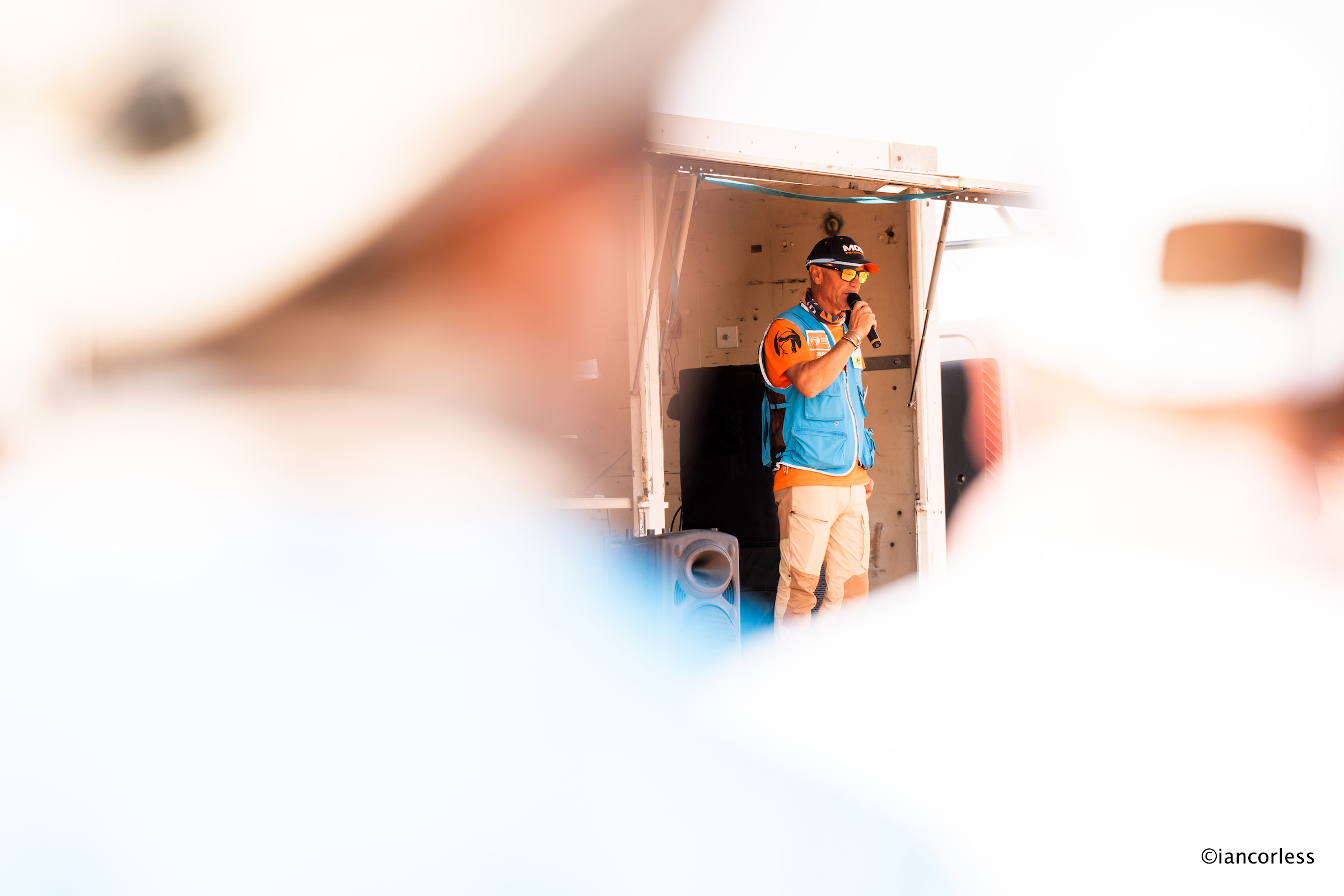
“…and for sure it will be tough, I am not going to tell you that it will be easy! The distance will be 250km’s, I am little unhappy because I cannot put the long stage in the third position, I loved this last year, but according to our plan, we need to move it to the fourth stage. It will be tough, very tough and really beautiful. We have some amazing places planned, 80% is new tracks. You will see places never seen before in any MDS. There will be no El Otfal, there will be lots of sand and yes, Merzouga will return.” – Cyril Gauthier
SCHEDULE
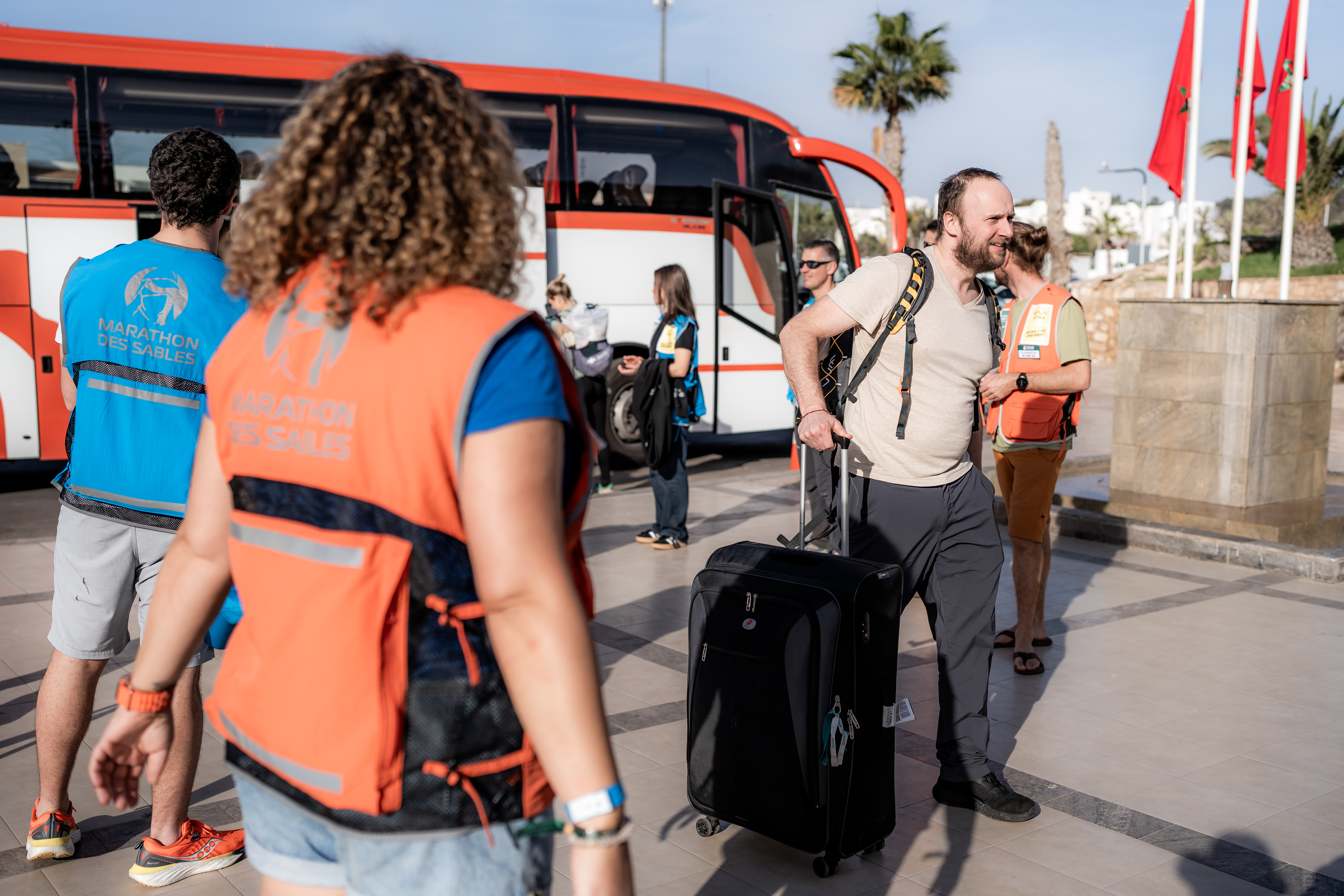
Day 1: Arrival in Morocco, transfer by bus to the bivouac in the desert, installation and overnight stay in the bivouac wih self-sufficiency.
Day 2: Day of technical, administrative and medical checks. Overnight in bivouac with self-sufficiency.
Day 3: First stage, overnight in bivouac.
Day 4: Second stage, overnight in bivouac.
Days 5: Third stage, overnight in bivouac.
Day 6 and 7: Fourth stage, the long one” – lasting 2 days, overnight in bivouac.
Day 8: Fifth stage, overnight in bivouac.
Day 9: Sixth stage, medal at the finish line, then bus transfer to Ouarzazate, overnight in hotel with half-board accommodation.
Day 10: Free day in Ouarzazate, awards ceremony, gala evening. Overnight at hotel with half-board accommodation.
Day 11: End of adventure, transfer back to airport.
BIVOUAC
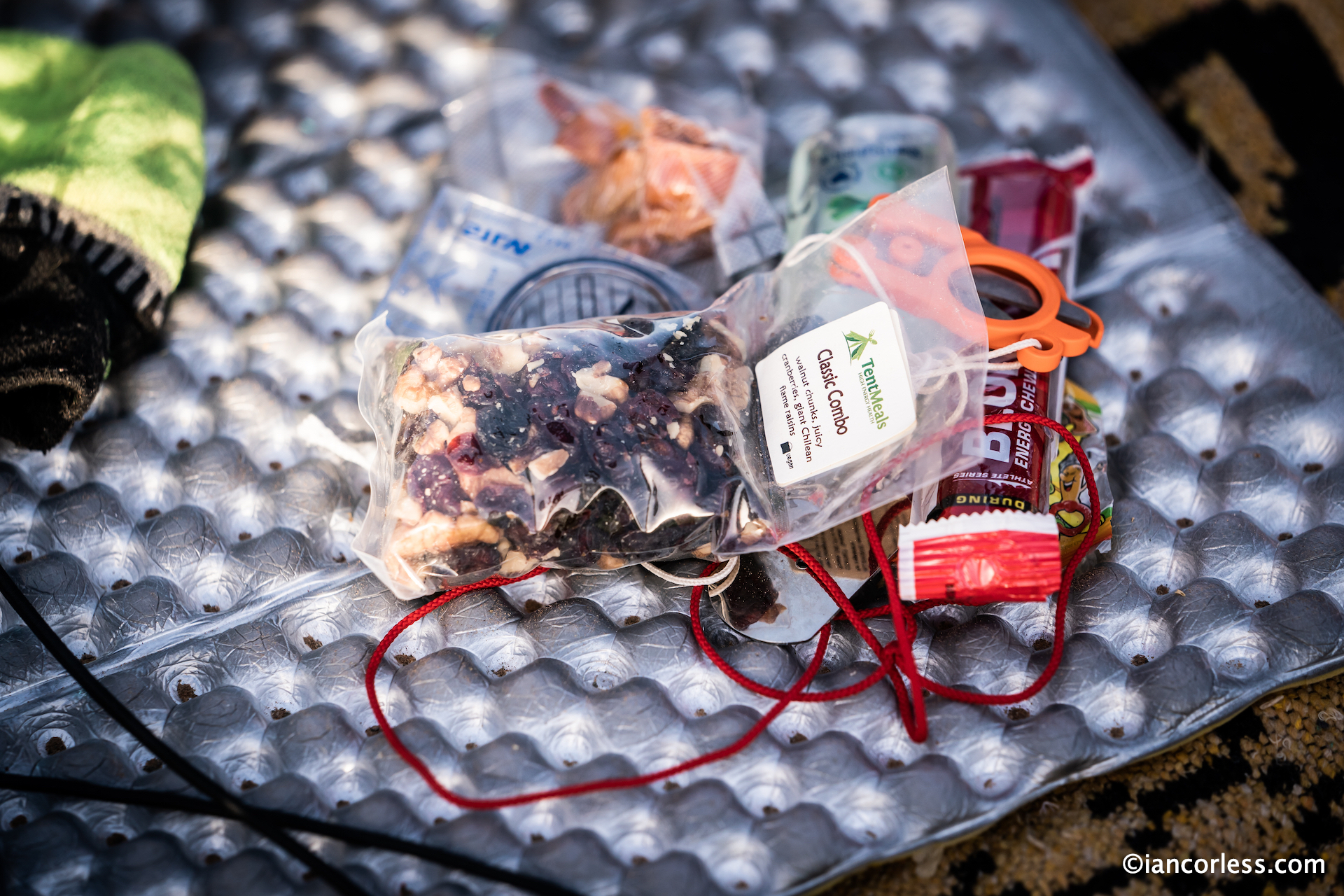
Remember, from the moment you arrive in bivouac you are self-sufficient. So make sure you bring food/drink (water is provided) to cover the days before the race starts. This food can be in any form and weight as you do not need to carry it, so, be creative. Rachid for example makes a Tagine in camp…!
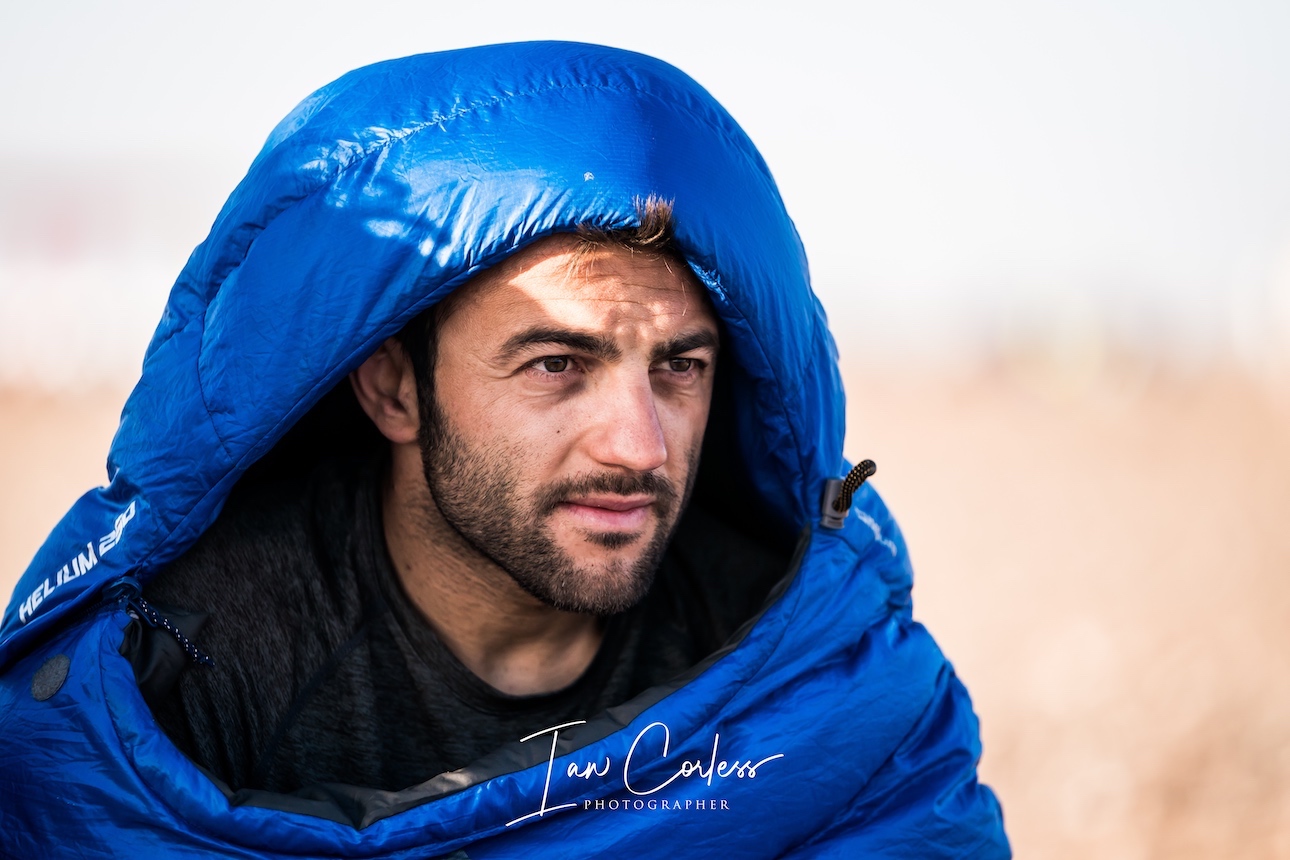
Also remember, you have your luggage with you before the admin protocols. So, bring extra items, warm layers, spare kit etc. That way you can fine tune equipment in a real situation. Particularly helpful when judging climate conditions. DO NOT assume that it will be hot, recent history has shown that temperatures and conditions in the desert are changing – MDS Morocco in October had rain and flooding. The recent MDS Morocco Atlantic Coast had extreme wind, cold temperatures and rain. Be prepared!
ADMIN DAY
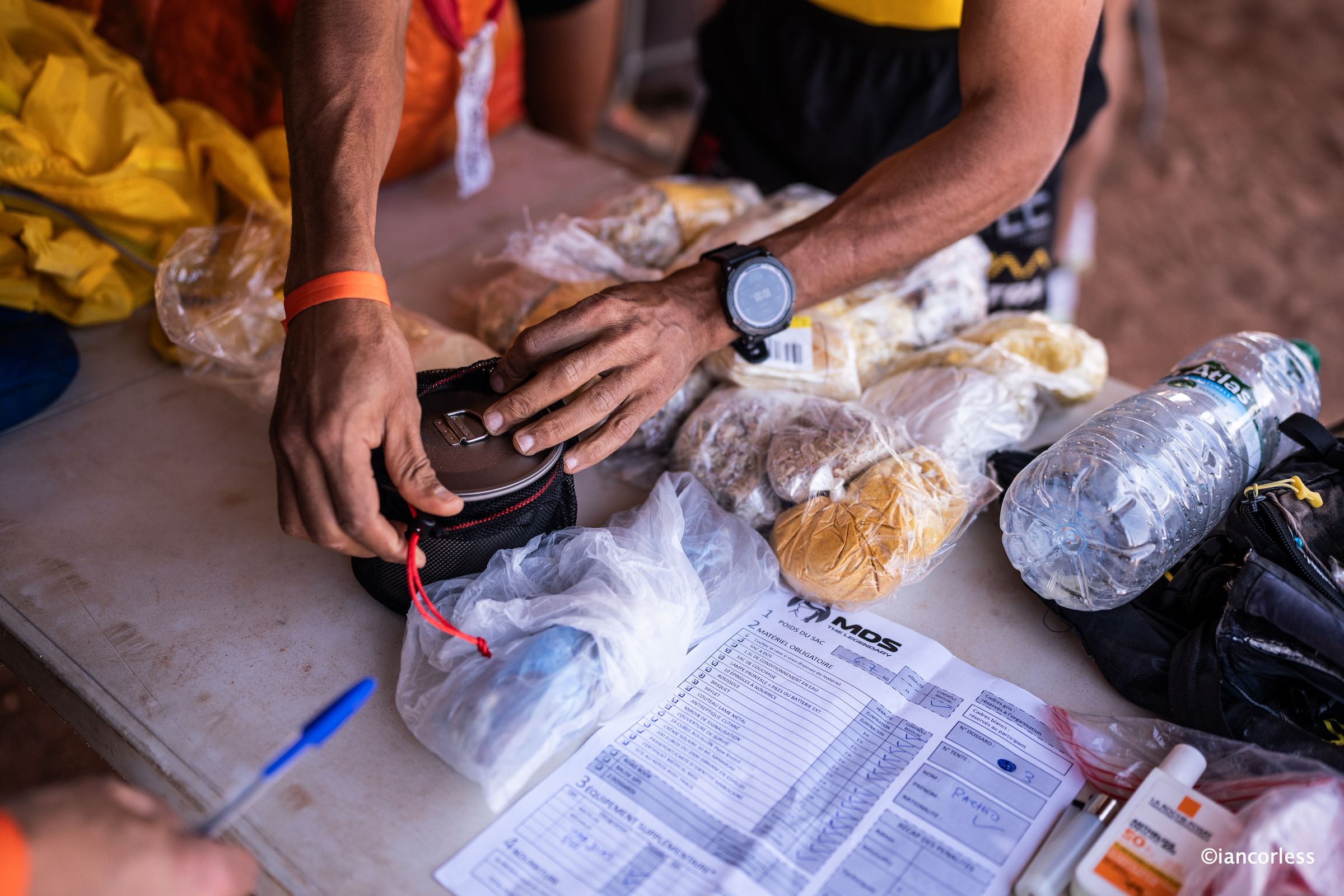
You will have your luggage with you in bivouac before admin day. You can make last minute adjustments if required. Be prepared and make sure you comply with all rules and regulations. A pack must have a minimum weight of 6.5kg PLUS water (1.5L). You must have a minimum of 2000 cals per day. You must have ALL the mandatory kit.
SALT
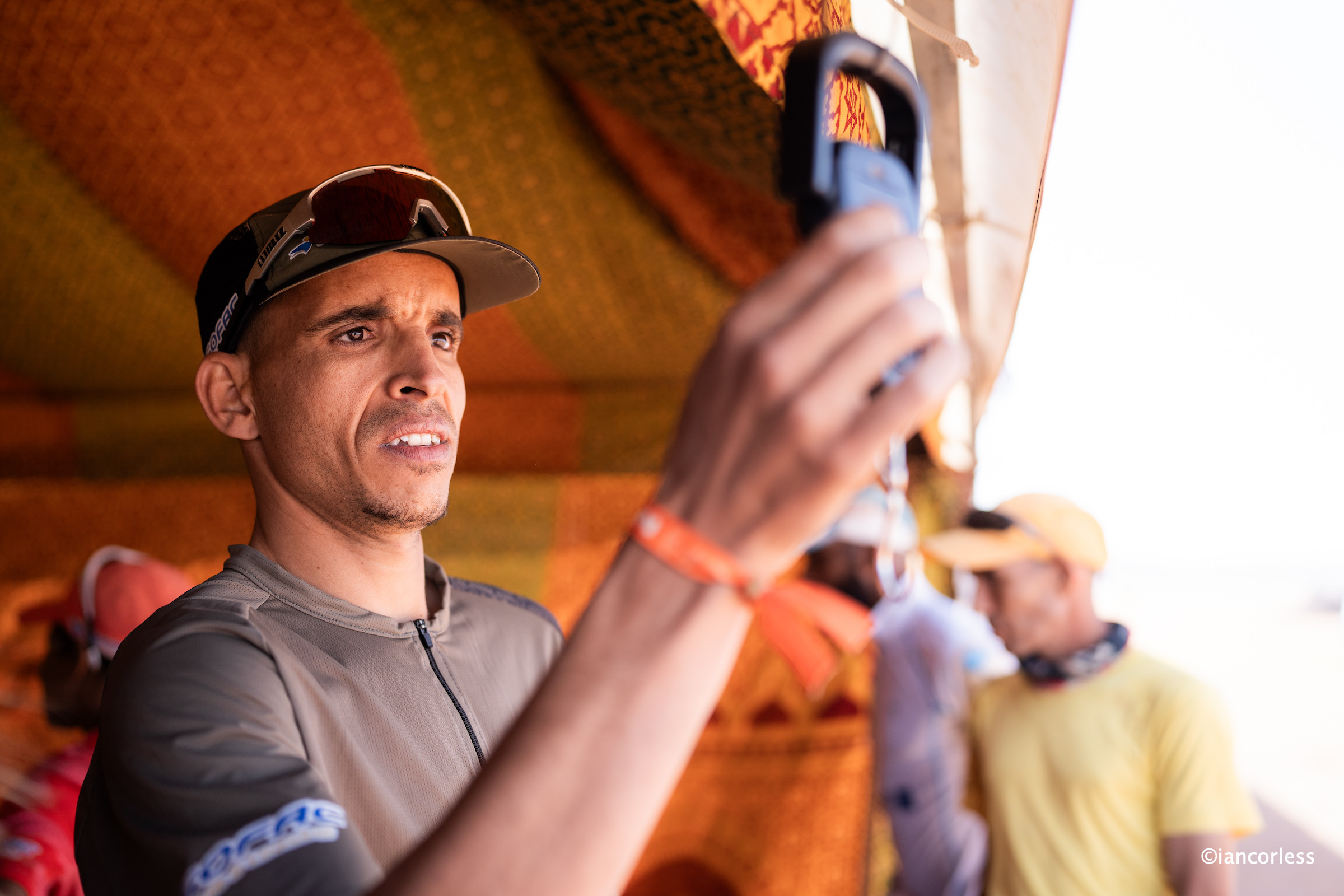
The new revised mandatory requirement for the race requires 14 broth cubes – these cubes are known to be salty. You have no choice here, you must have them. In 2024 many questioned the validity, however, during and post the event the general consensus was very positive. Take note here, not all cubes dissolve the same in water, so, make sure you find a cube that works such as Knorr. My advice is to plan a strategy that works for you. Listen to my podcast with Andy Blow from Precision Hydration HERE. Remember, this is a self-sufficient race, so, be prepared to be self-sufficient and have a plan/ strategy that works for you.
WATER
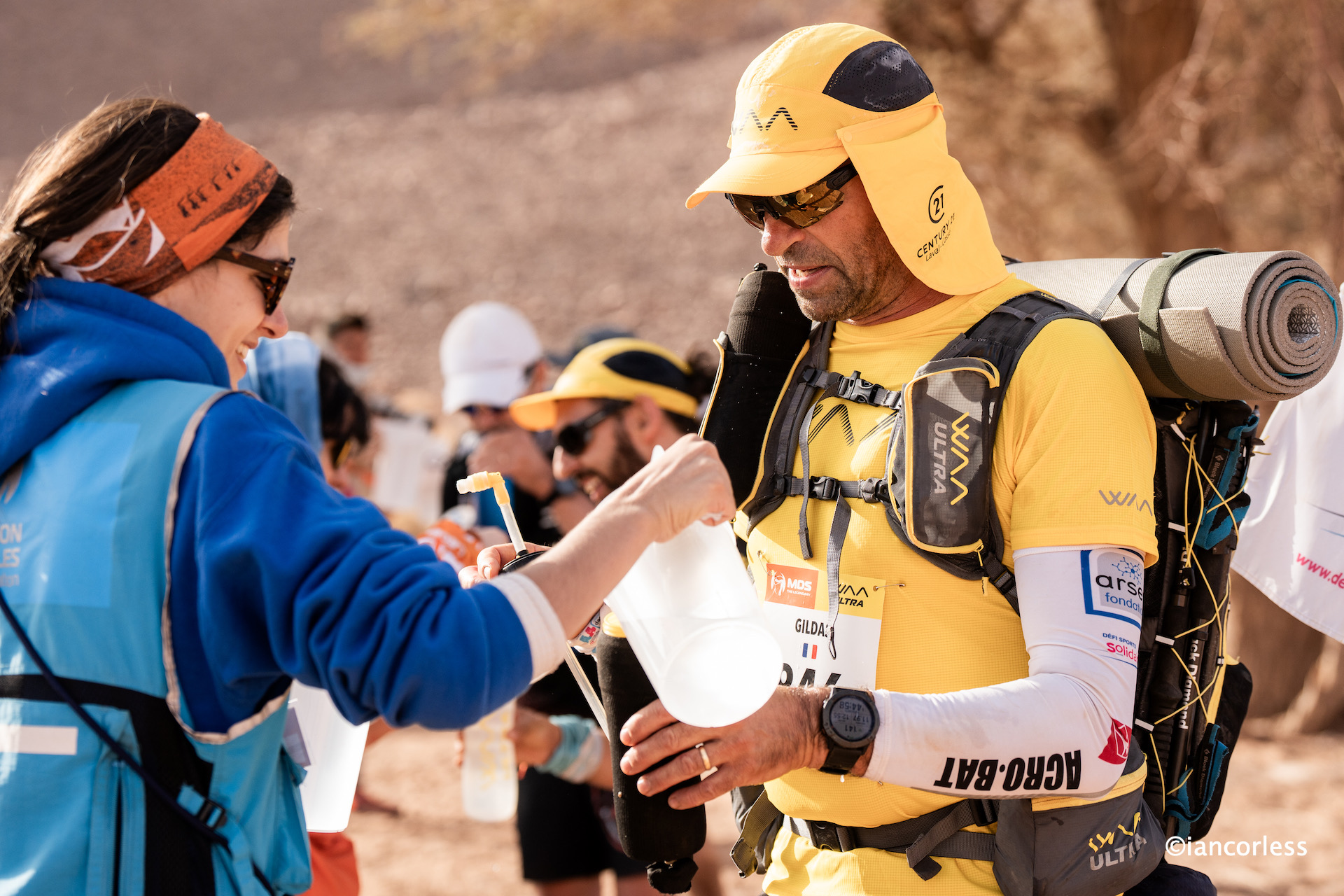
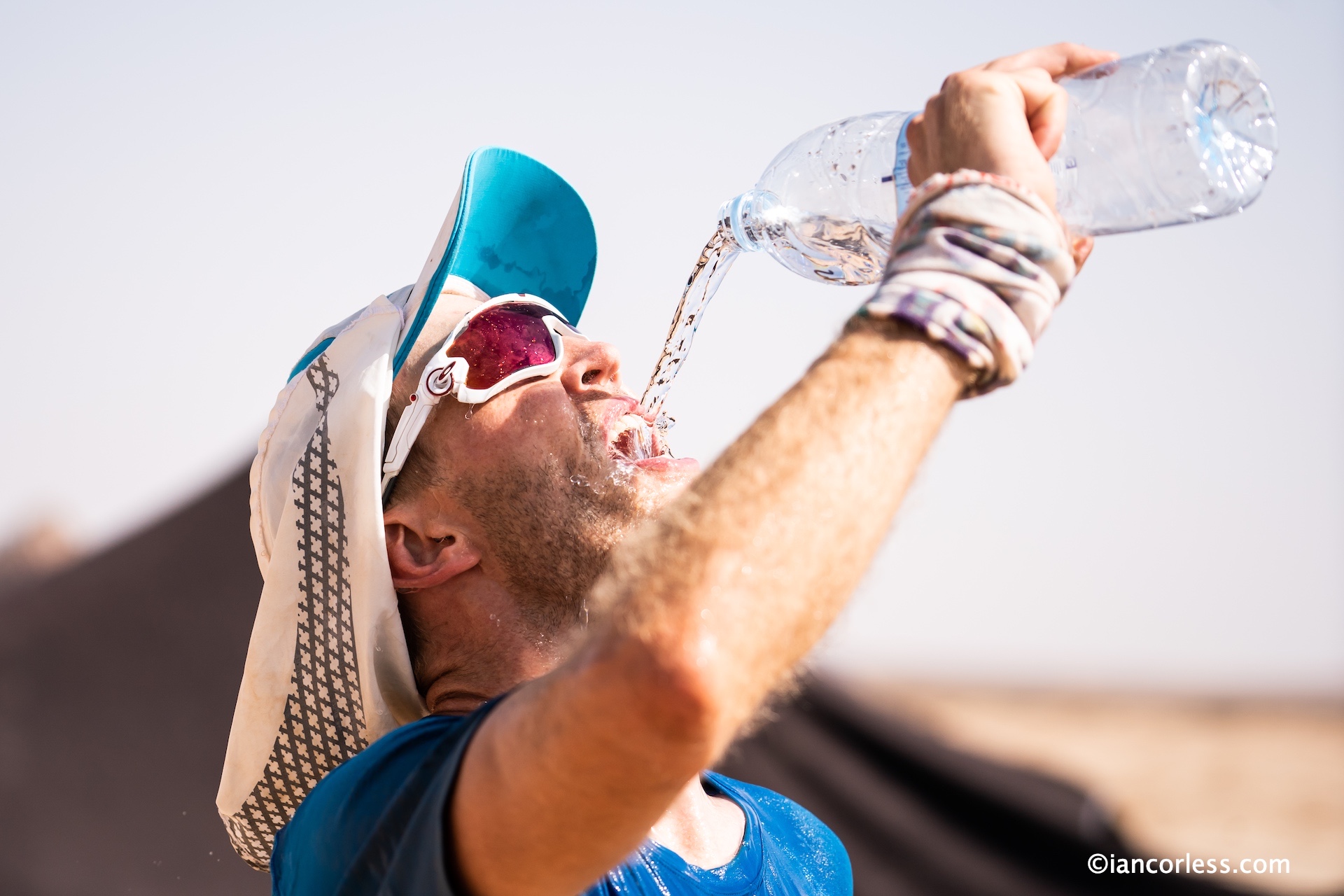
Another key change from 2024 is water and how it is provided. In principal, once you start on stage 1, water is unlimited. No longer are you provided 1 or 2 1.5ltr bottles at checkpoints. Now, the blue coats will pour water from jugs in to your bottles. If you stand at a CP and then drink a full bottle, it will be refilled.
Another key note to consider is that should conditions dictate or should the organisation think that additional water will be helpful, water stations may be added between CP’s. This is very important. Typically (conditions and terrain allowing) CP’s are 10km’s apart, therefore, you may heave an additional water station at say 5km’s.
The long day may (tbc) have a requirement that you can carry extra water capacity? This extra water would potentially be provided in a 1.5ltr bottle, so, either have an extra bottle to decant this to, or, have a system to carry a 1.5ltr bottle.
After the stage finishes, water is then rationed and you are provided with 1 large 5ltr bottle. This water will be needed for your hydration post stage, cooking dinner, cooking breakfast and your water allowance to CP1 the following day. If you want to wash, that also comes from the 5ltr allowance, so, make sure you drink and eat and understand what water capacity you need before taking a wash.
FEET
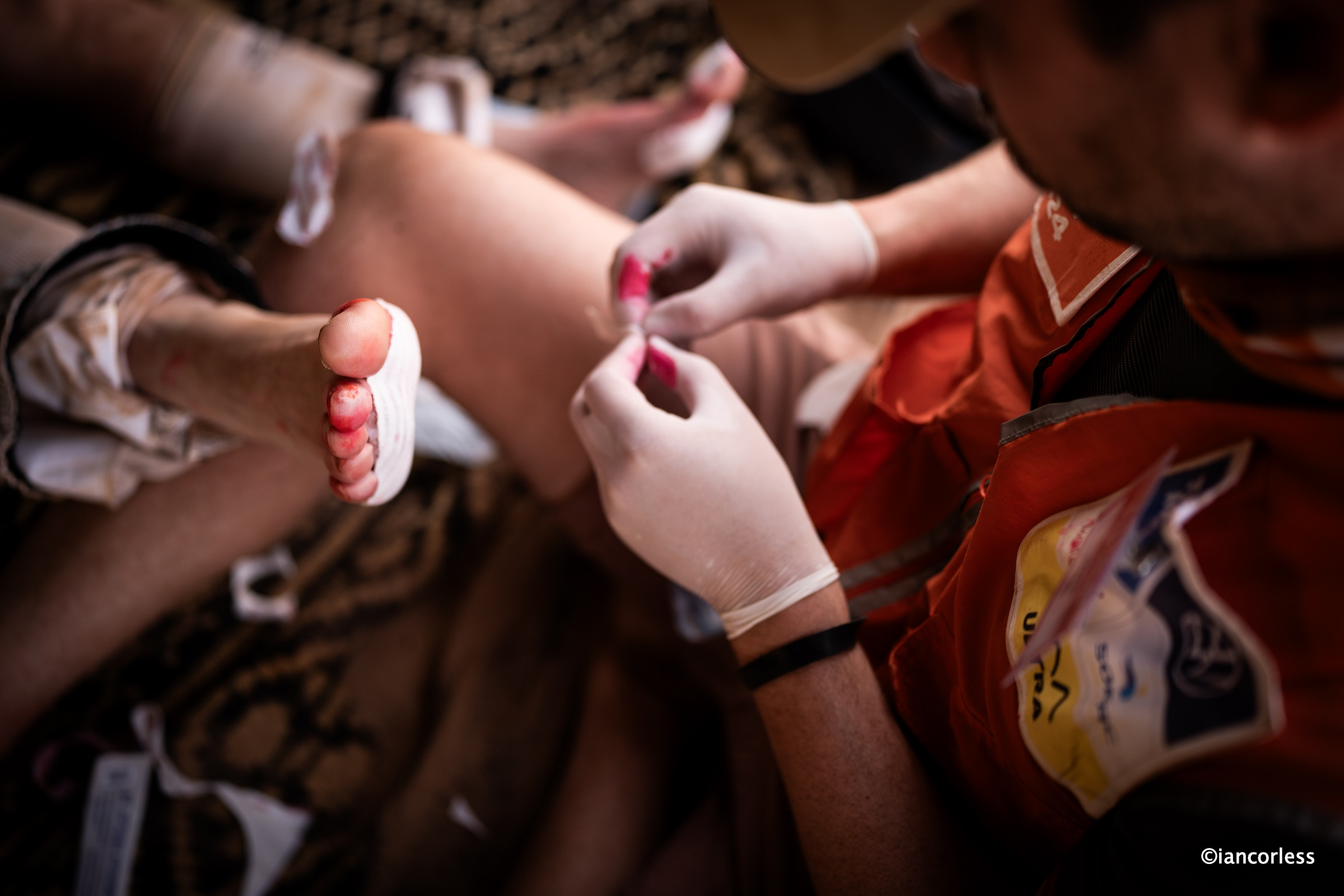
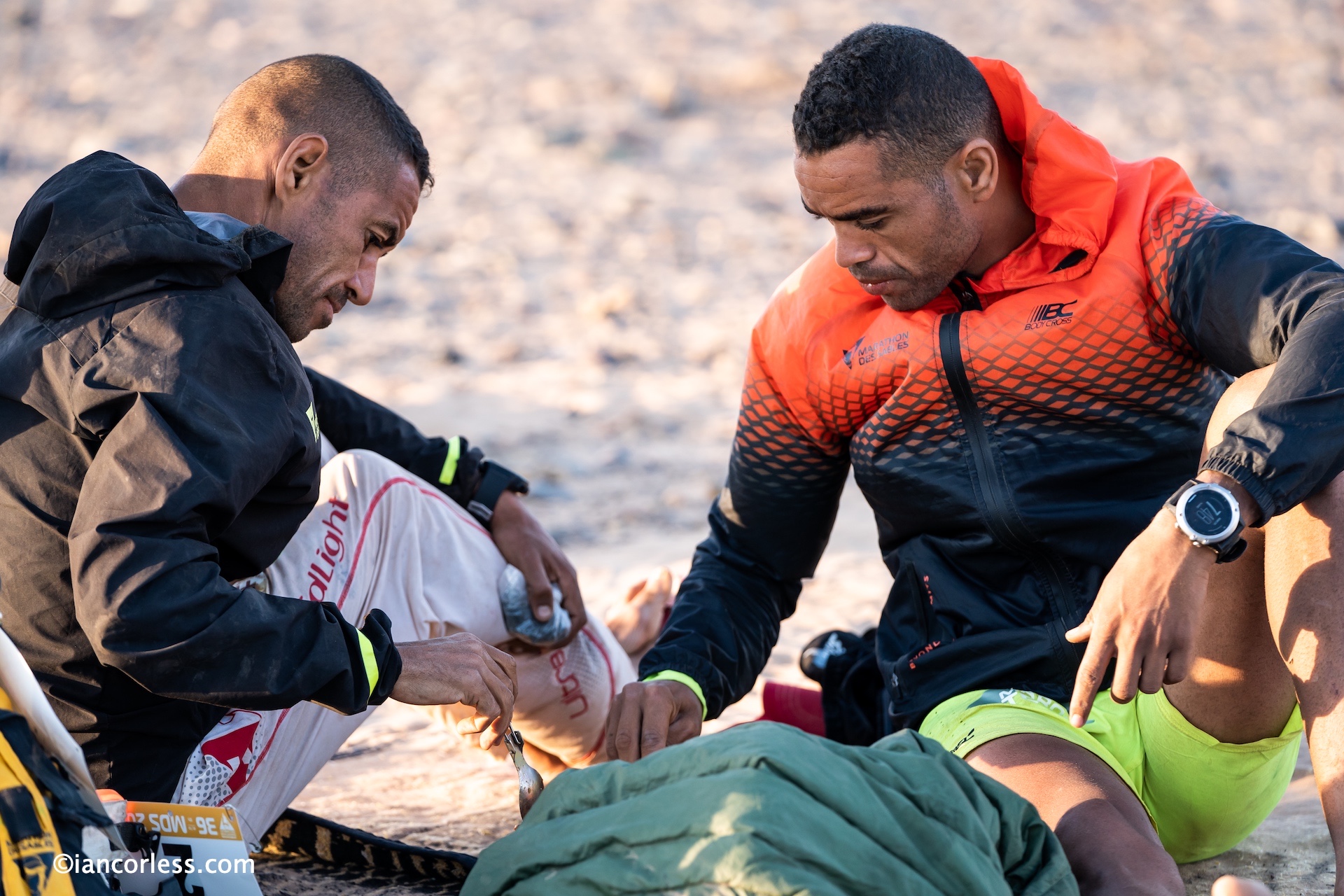
Along with dehydration, damaged feet are a key reason NOT to finish MDS. Make sure you have correct fitting shoes, the right socks for you and you know how to look after your feet. Read HERE and HERE.
SAFETY
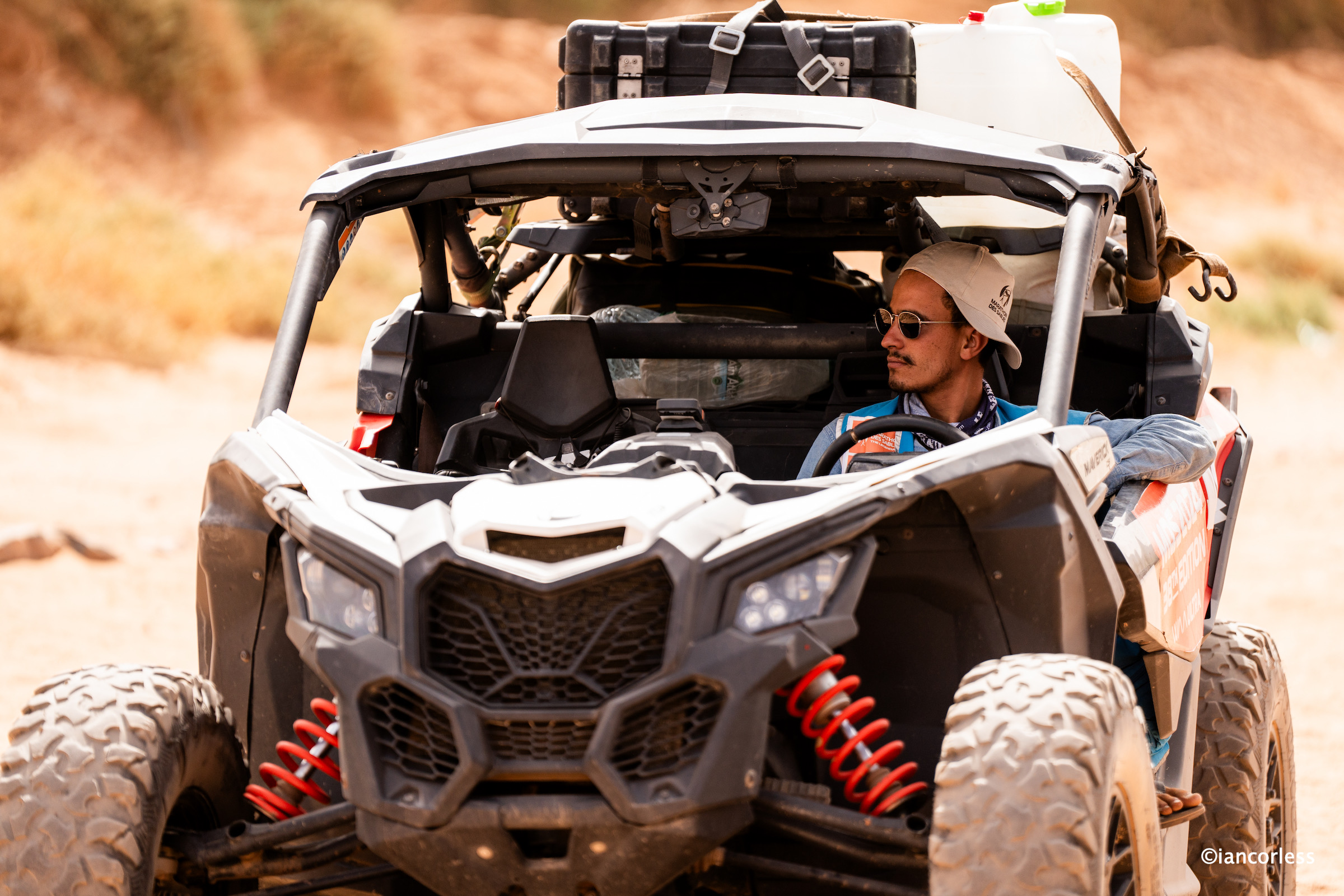
MDS has strict protocols for your safety. You will see fast response vehicles (buggies) designed to gain fast access to the most difficult and challenging parts of the desert. In addition, there are 4×4 vehicles situated throughout the course.
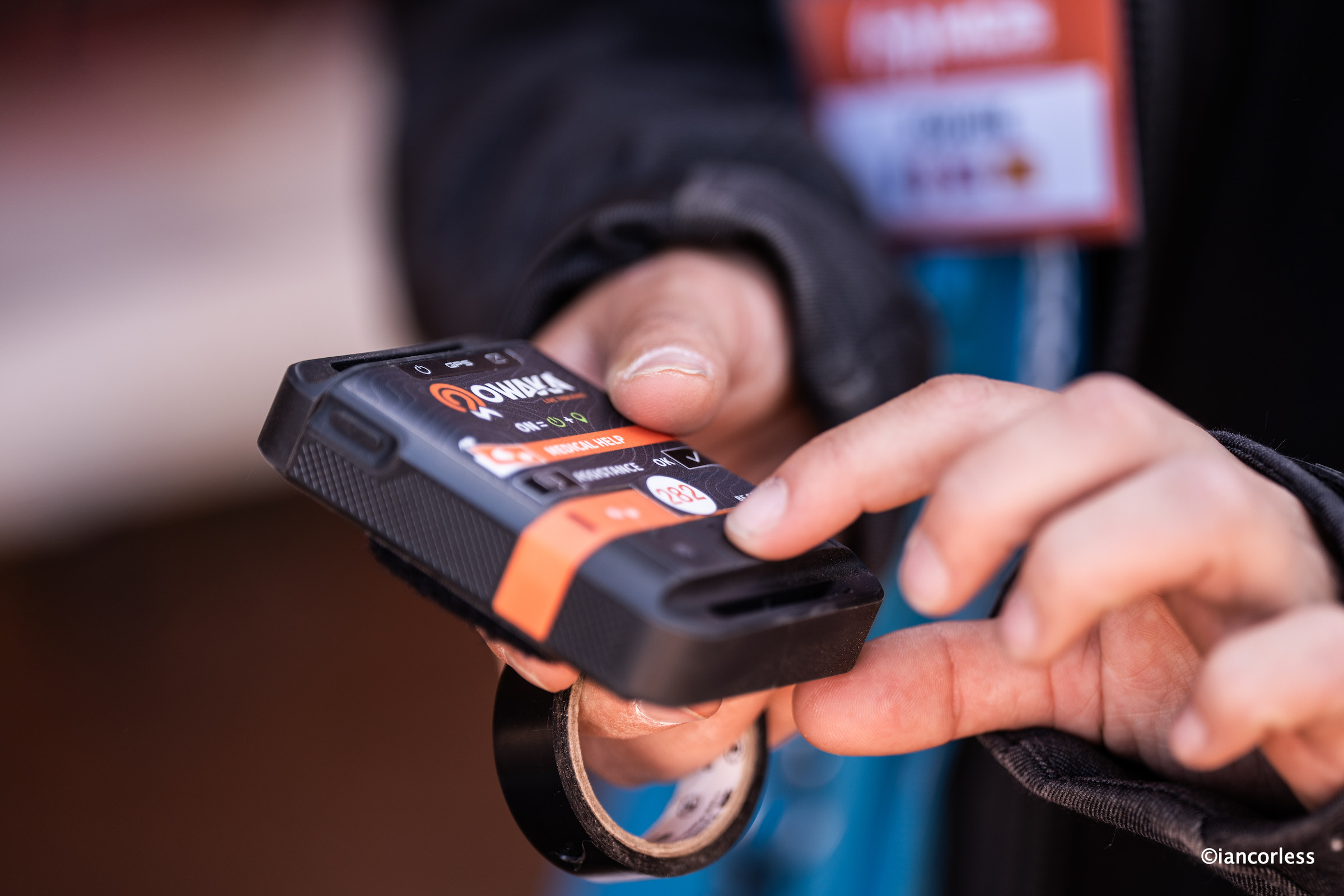
Each runner is using a tracker attached to their pack. This allows MDS to follow you and keep an eye on your position, it also has an emergency button which notifies the MDS team of your need for immediate response and attention.
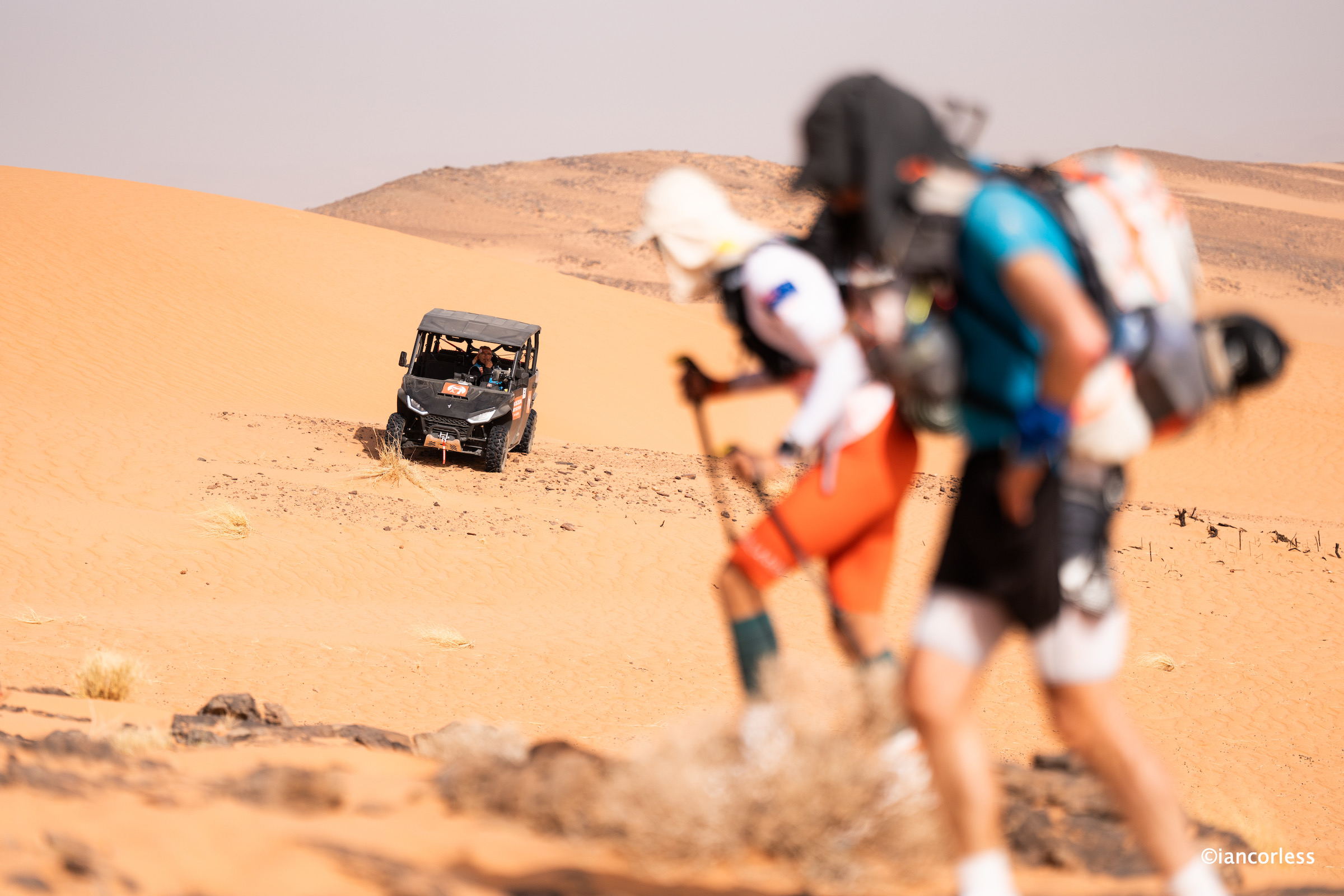
There are also medical runner’s. These are trained medical staff who will participate during the race. They will be on the course with you and in certain scenarios, they are able to provide immediate care or attention to those who need it. They have a different coloured number so you can identify them.
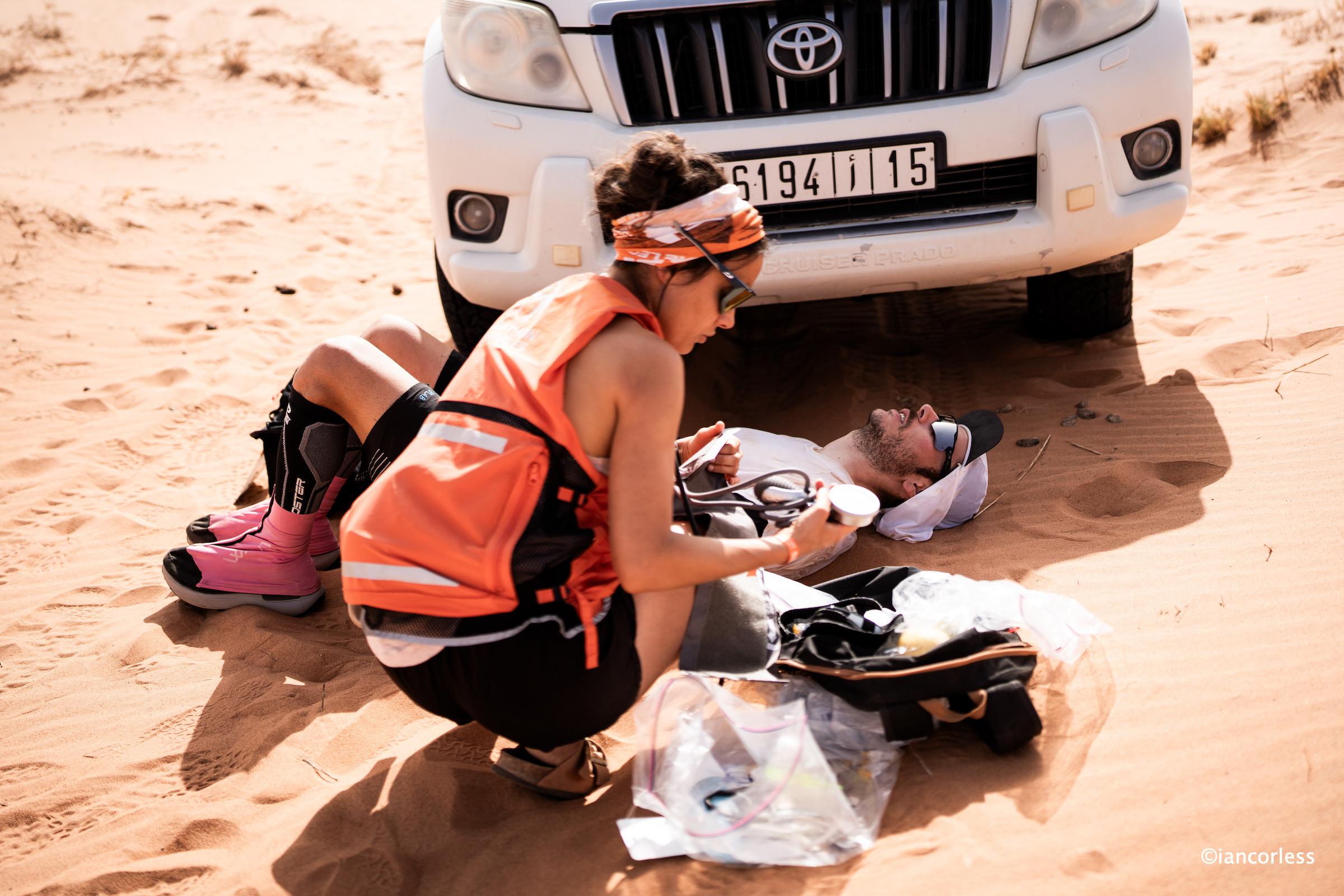
Medical team personnel are trained and equipped to provide immediate attention at any location within the desert.
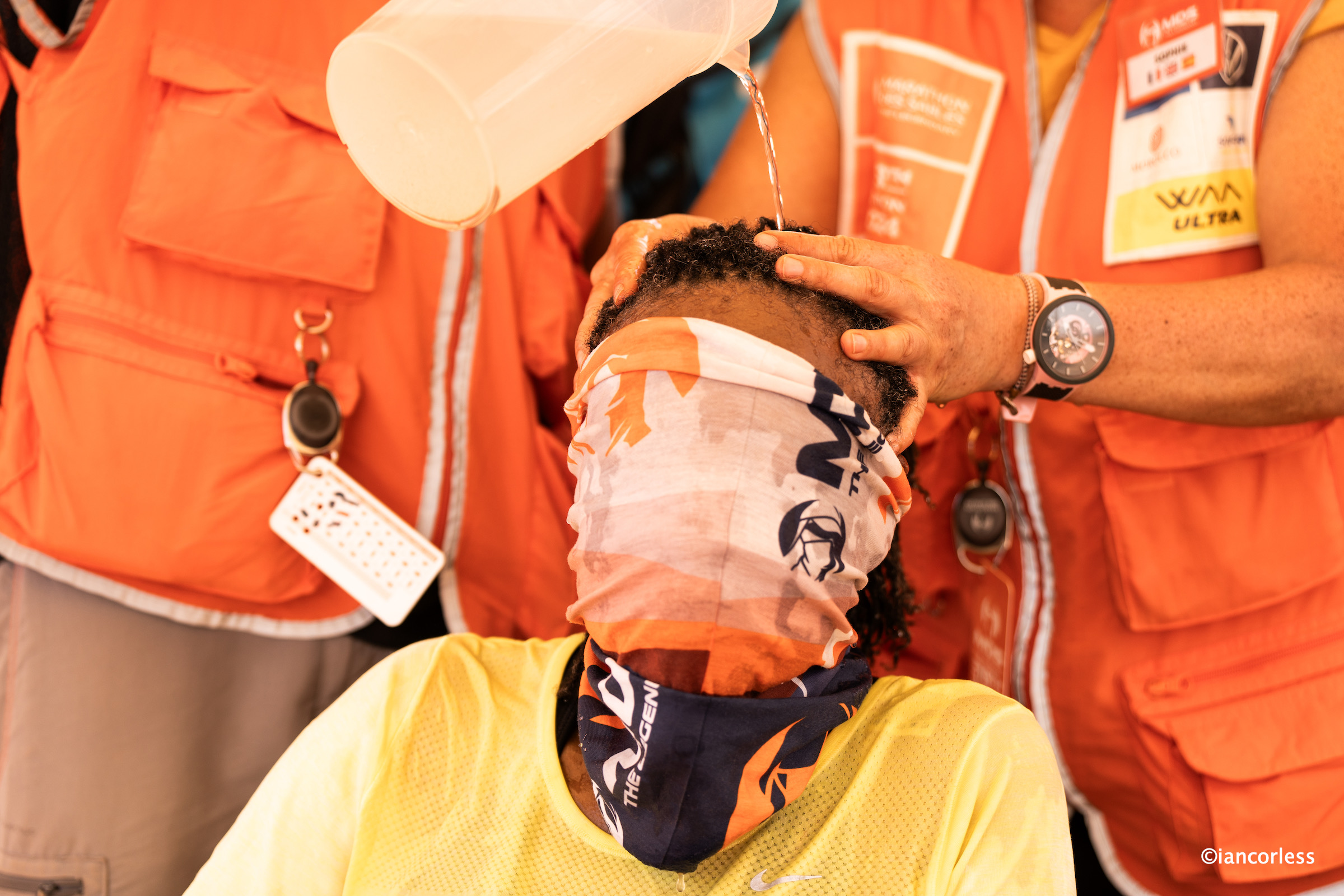
Finally, water is not rationed during the race, so, if you need more liquid, you can have it! Also, at key CP’s, iced water is available to enable cooling. This will be poured on your head via a blue coat volunteer. Orange jackets handle medical emergencies.
MANDATORY EQUIPMENT
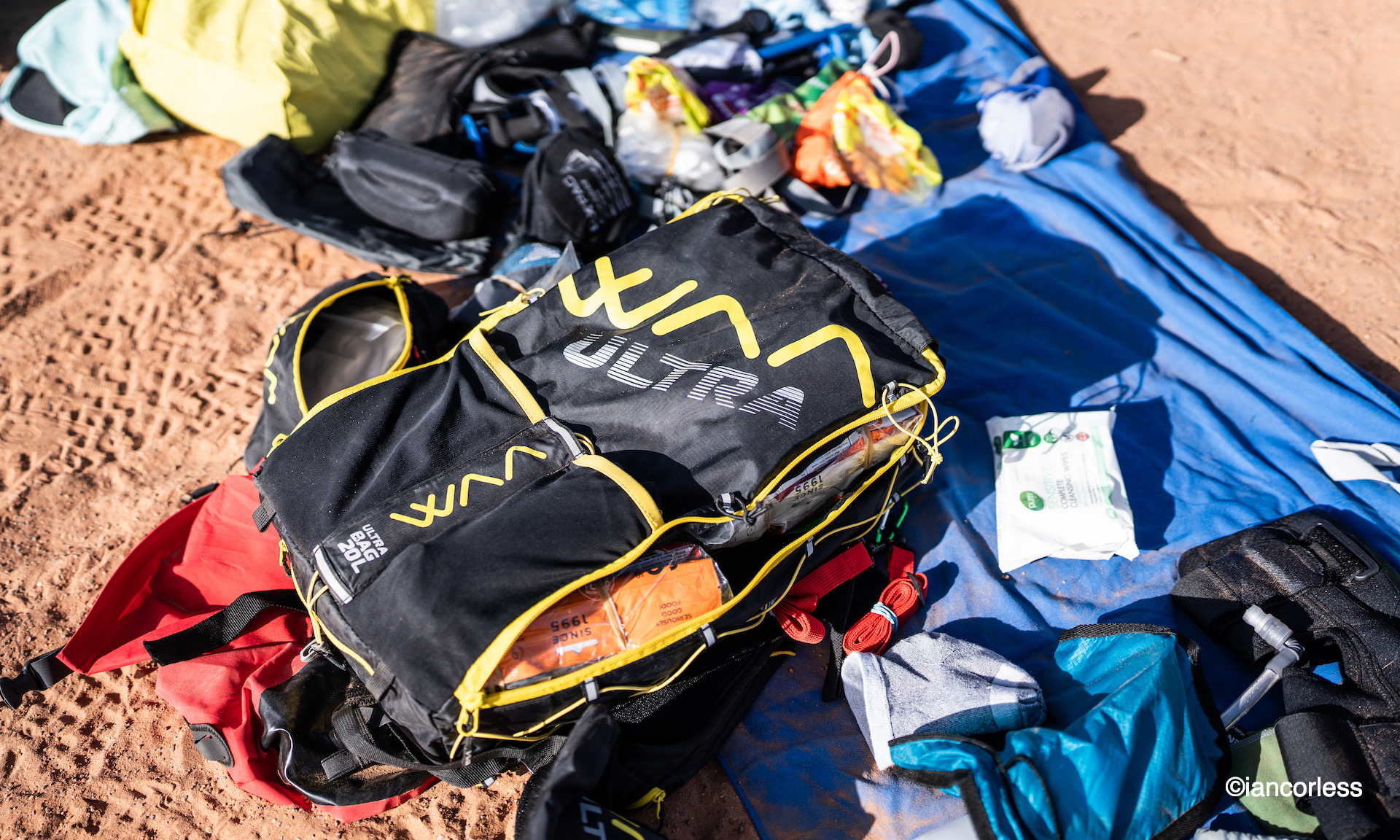
Needless to say, despite what some believe, but mandatory equipment is mandatory!
- Pack such as WAA Ultra Bag 20L
- Minimum capacity of 1.5 litres of water
- Sleeping bag
- Head torch and spare batteries (you can have a charger/ solar charger)
- 10 safety pins
- Compass with 1 or 2 deg precision
- Lighter
- Whistle
- Knife
- Topical disinfectant
- Signal mirror
- Survival blanket
- 14 cubes of broth
- Sun cream
- 200 euro or 2000 dirhams
- Passport or ID card
- ECG (original doc) and medical
- Roadbook (supplied on arrival)
Make sure you comply with the very strict regulations and timeline in regard to ECG and medical form.
FOOD
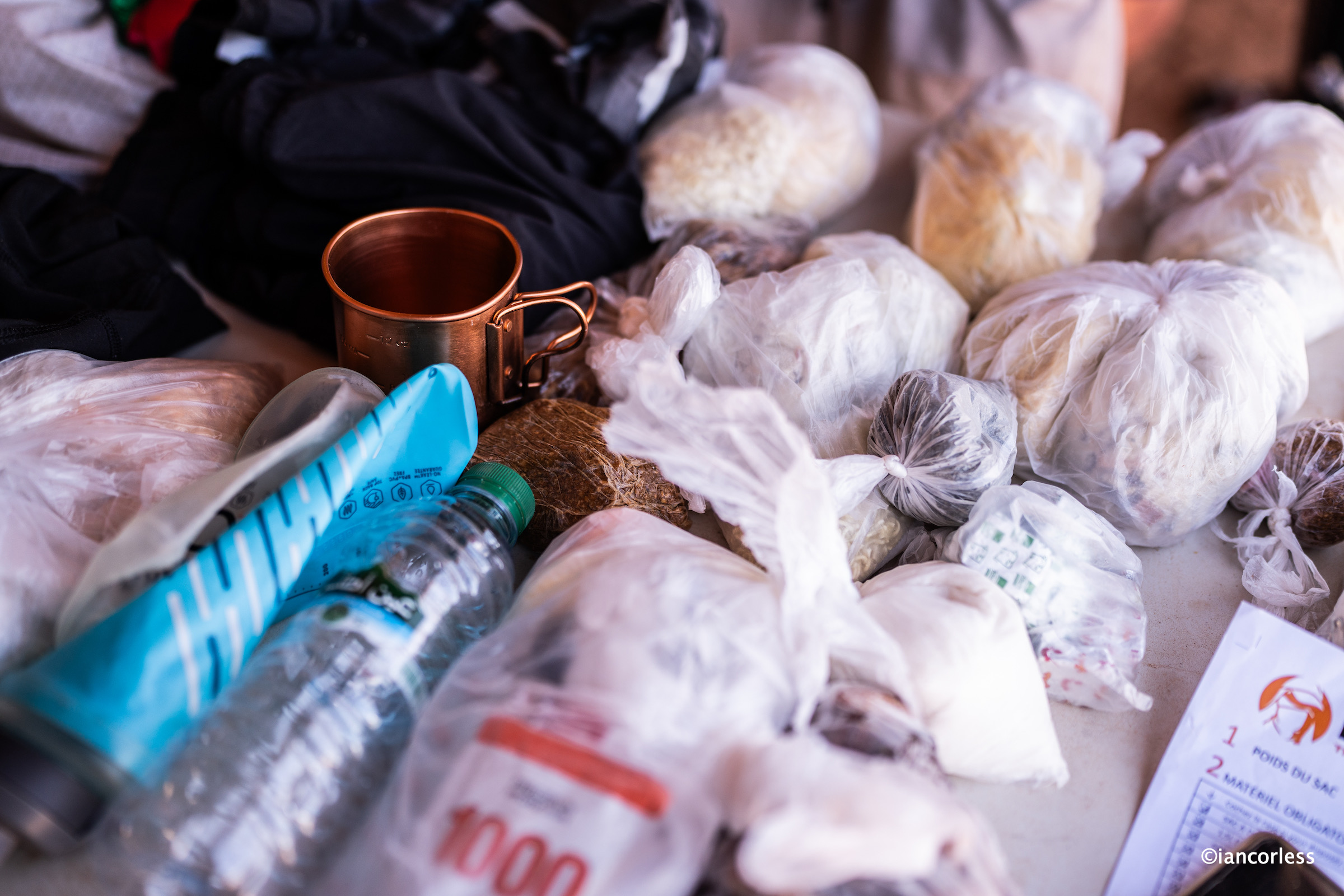
You need ** 14,000 calories of food, 2000 calories per day. However, 12,000 is mandatory. You can of course carry more than this, but I consider 14,000 is the minimum with the rest day. You must be able to prove the calories, so, if you decant food into lighter or different packaging, make sure you keep the nutritional information.
- ** Adding as clarification:
- 2000 calories per day, it’s a 6 stage race
- BUT remember the rest day.
- I see the calories as below BUT YES 12,000 cals to comply with rules.
- Stage 1 : 14,000 cals – Day 1
- Stage 2 : 12,000 cals – Day 2
- Stage 3 : 10,000 pls – Day 3
- Stage 4 : 8,000 cals (the long day) – day 4
- Day 5* : 6,000 cals (rest day)
- Stage 5 : 4000 cals – Day 6
- Stage 6** : 2000 cals – Day 7
- *Day 5 you may still be running/ walking and/ or in camp for the rest day and will need 2000 cals.
- **Stage 6/ day 7 you technically only need breakfast and snacks for the stage.
WHAT YOU NEED

In addition to mandatory equipment and food requirements, you need essential items to complete the race. Use the list below as a guide:
- Run top (maybe with long sleeves)
- Neck roll/ Buff
- Run shorts/ skirt or similar
- Socks (plus maybe spare socks)
- Shoes with gaiters (make sure you have the gaiter velcro sewn on well in advance)
- Hat (consider cover for the neck too)
- Sunglasses (make sure they have good protection and if they fit well for protection in sand storms)
- Watch
- Warm layer (windproof and maybe lightweight down jacket)
- Foot care
- Hygiene products
- Toilet roll/ wipes
- Lip balm
- Blind fold
- Ear plugs
- Spoon
- Pot/ bowl*
- Stove**
- Fuel cubes**
- Sleeping mat
- Pillow
- Flip flops or similar
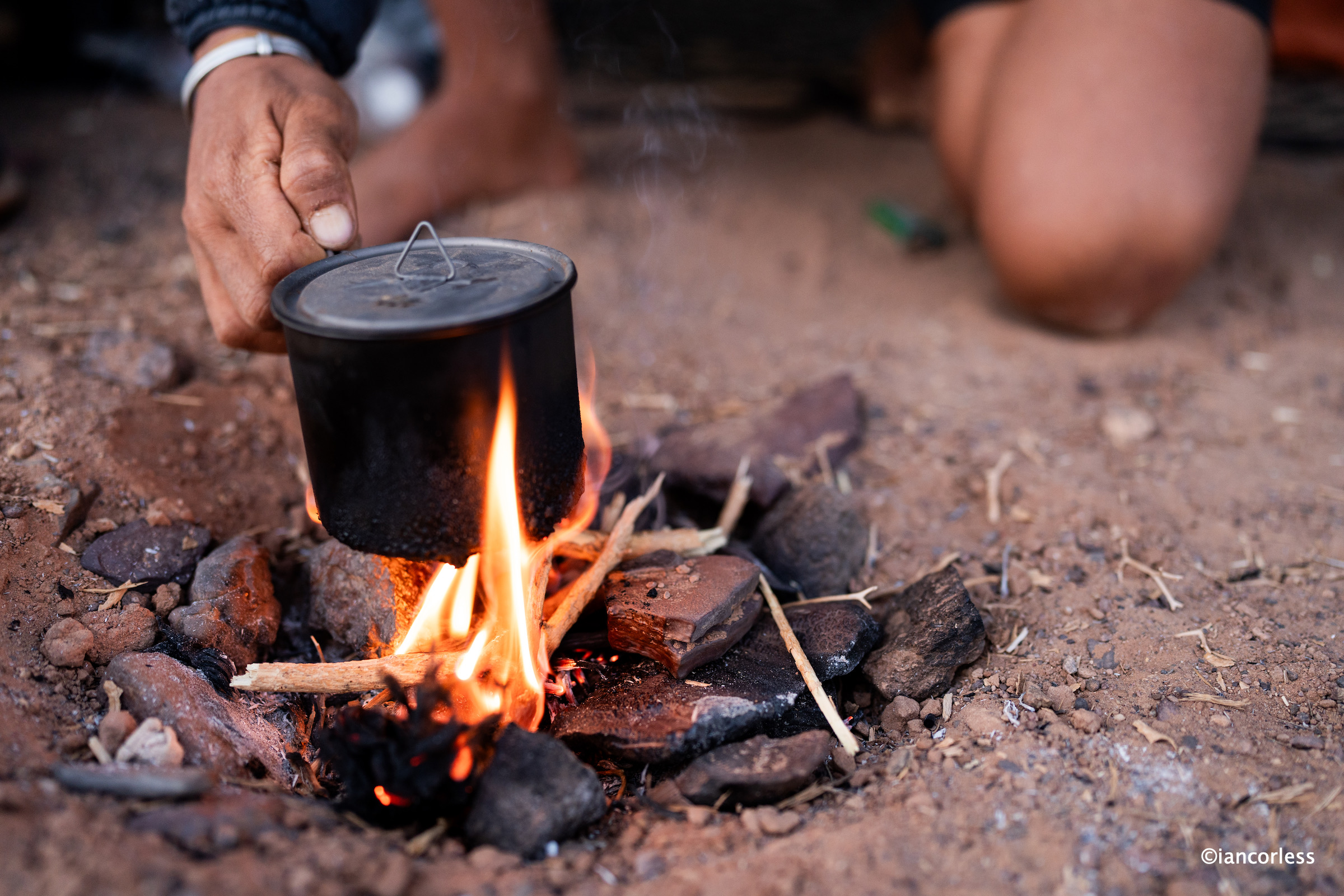
**Stove and fuel only required if you plan to heat water
*Pot/ bowl or similar will be required as now it is no longer possible to cut down a 1.5ltr bottle
Recommended
Many things can happen in a self-sufficient race and yes, equipment can fail. So, think about on-the-go repairs and what you may need.
- Zip ties
- Gorilla tape
- Super glue
- Sewing kit
- Cord/ thin rope
Top Tips
Keep the pack weight as close to the minimum 6.5kg as possible, additional weight is additional stress that you do not need.
Keep luxuries to a minimum, they only add weight. A super light Mp3 player (with good battery) and earphones is the only luxury I would consider.
Accept that this is a tough challenge, you will be stripped back to a survival mode. You may not wash, you will get dirty, you will get smelly. Accept it.
Start slow and ease into the race.
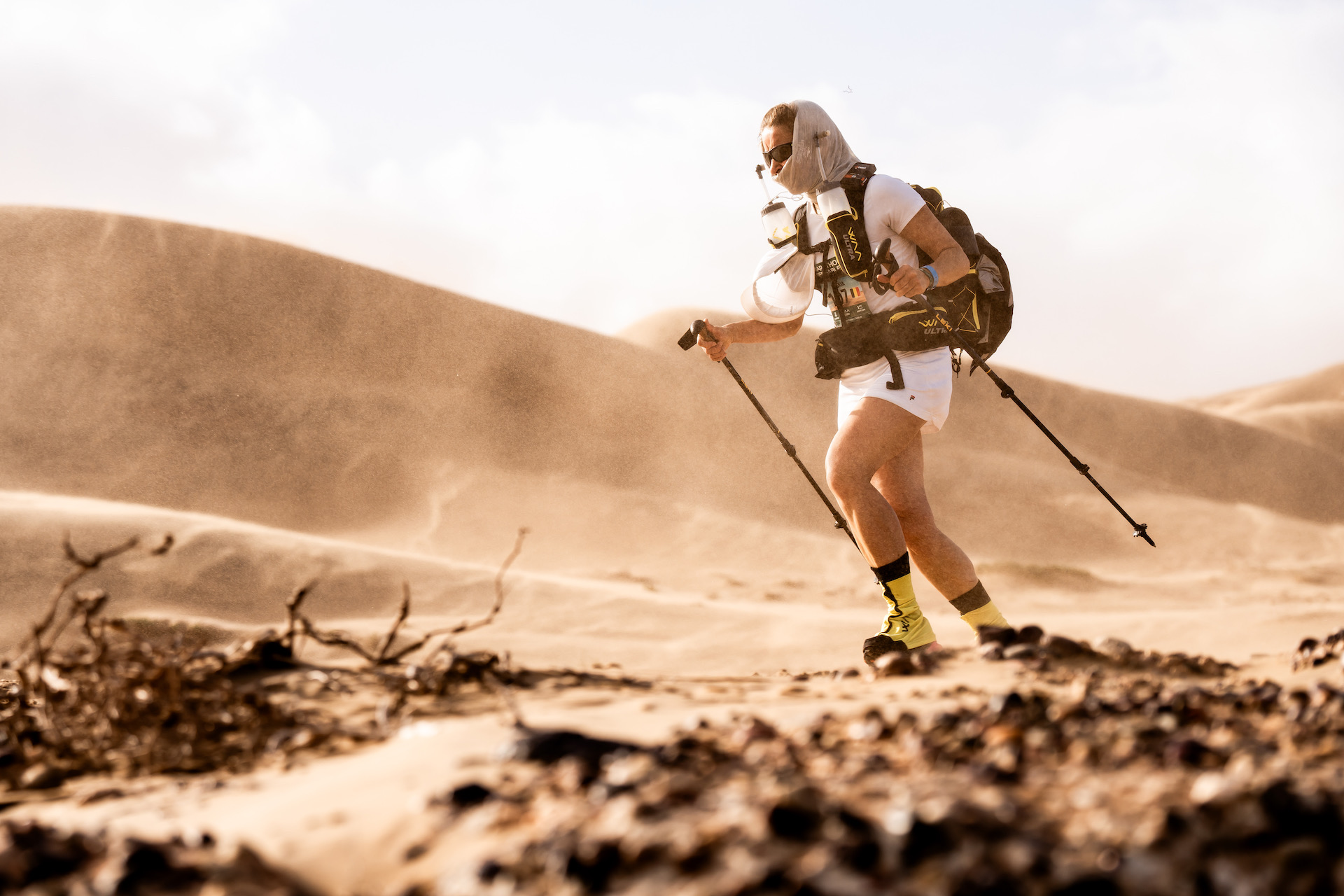
Poles can be a lifesaver and I recommend them but you must learn to use them. Those at the front do not need poles, they can run.
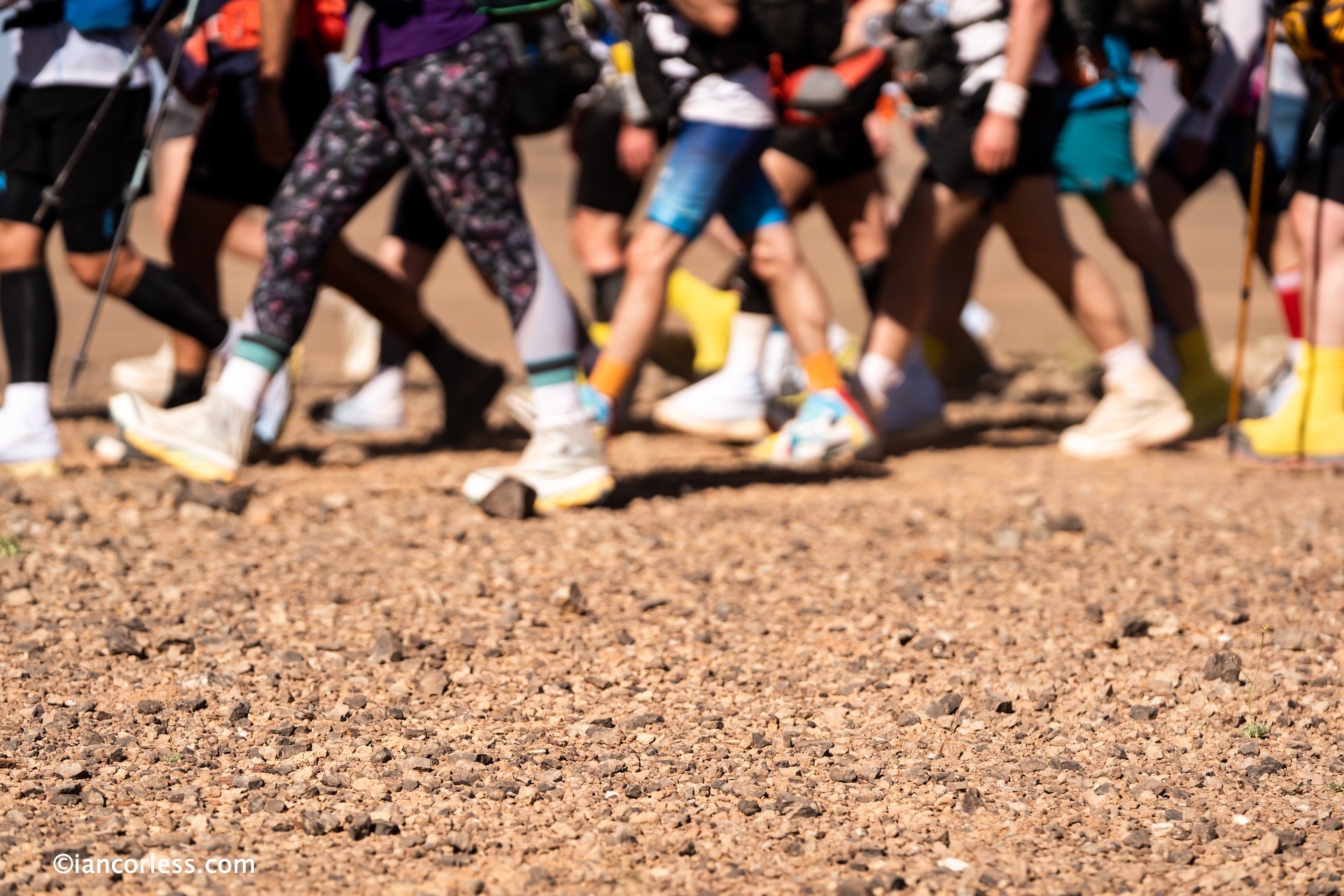
Learn to walk, walk and walk. Many go to the desert with the expectation of running 80% and walking 20%. The reality is it will be the other way around.
Look after your feet and start with the correct shoes for you.
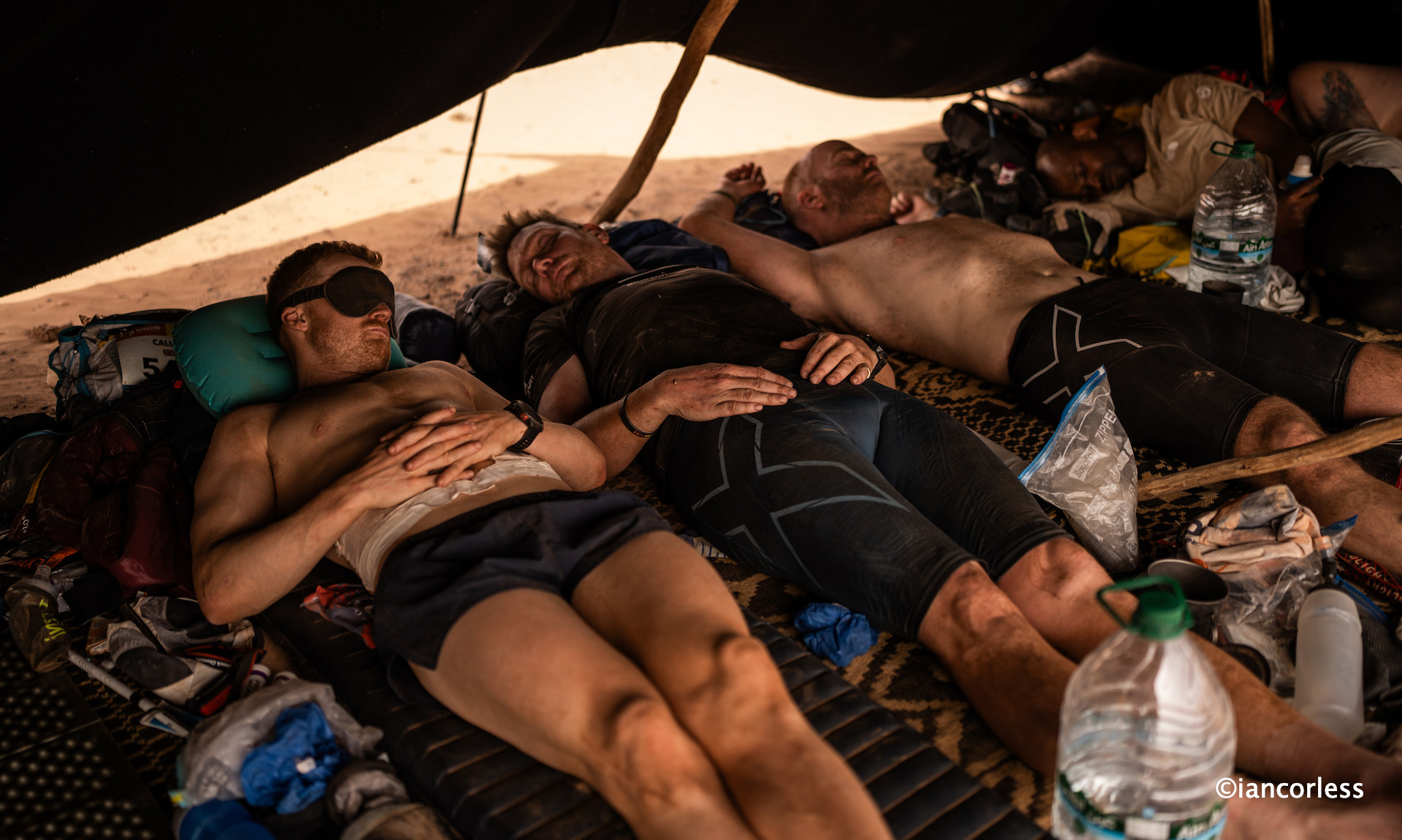
Take a sleeping mat or pad. You only need to do three things: run, eat and sleep. Sleep and comfort is important for recovery.
Make sure you check the full rules and regulations HERE
RESOURCES
- MDS website
- WAA website
- Read THE ULTIMATE GUIDE TO MDS
- Basecamp Food
- Ultralight Outdoor Gear
- MyRaceKit
- Insurance for MDS

Interested in another MDS event in 2025?
A full calendar of dates and destinations are available HERE

Instagram – @iancorlessphotography
Twitter – @talkultra
facebook.com/iancorlessphotography
Web – www.iancorless.com