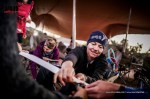
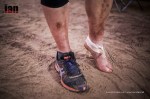
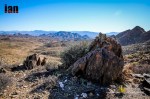
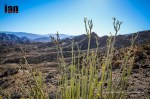
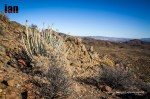
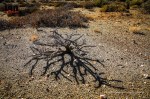
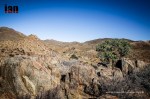
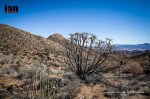
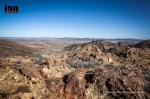
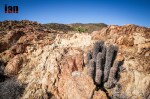
Richtersveld Transfrontier Wildrun 2016 – Stage Three

©iancorless.com_Richtersveld2016_Day3-4057

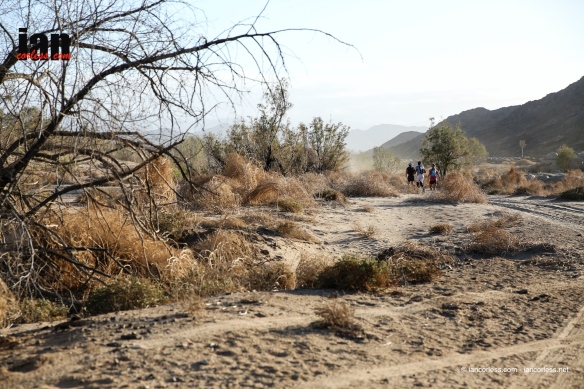
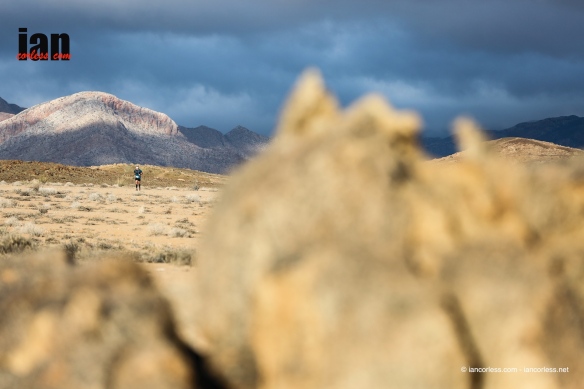
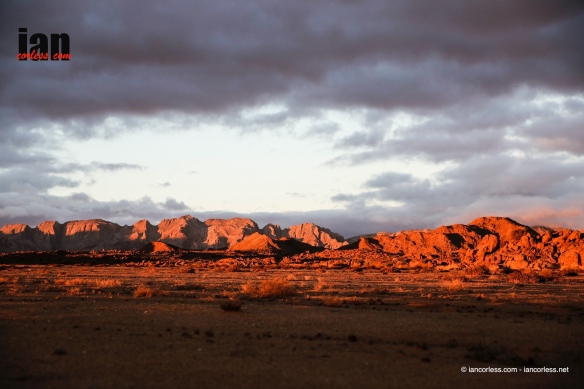
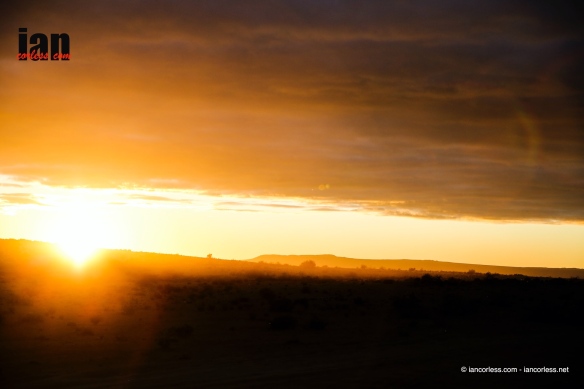
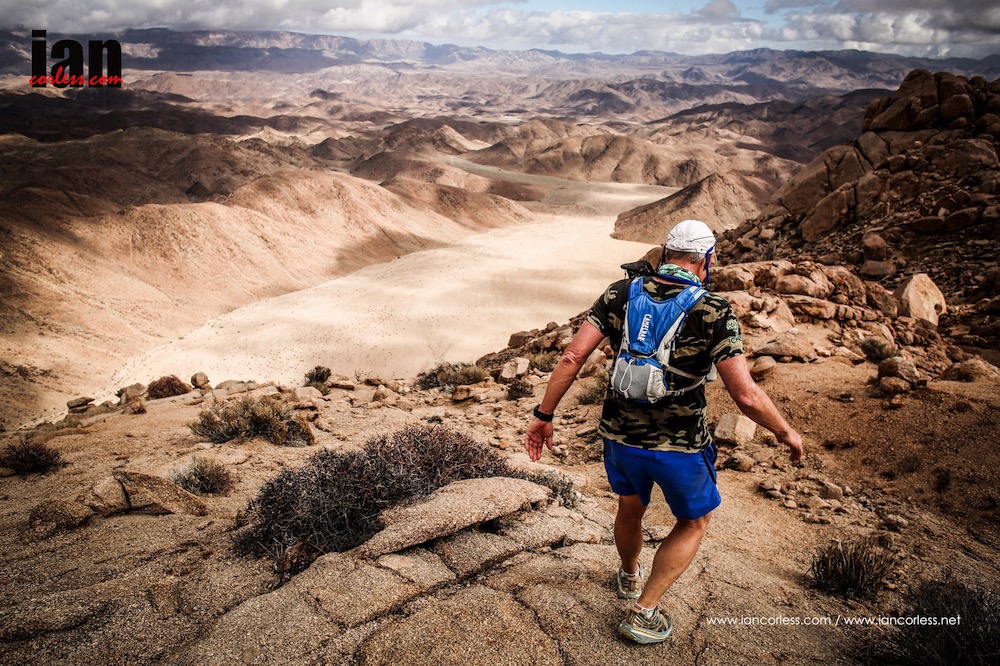
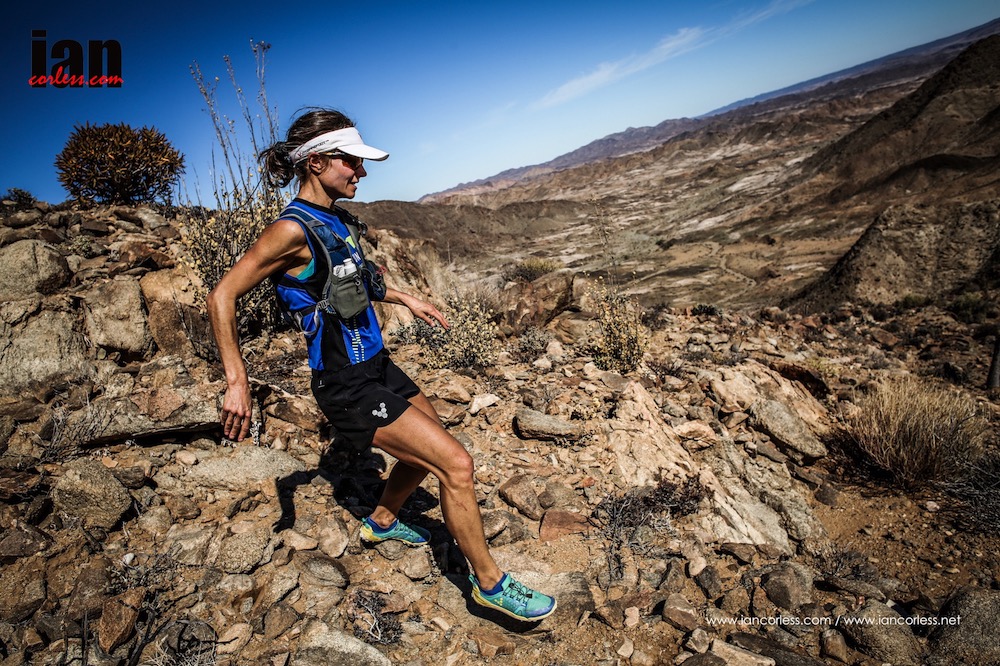
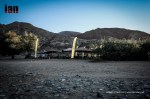
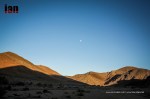
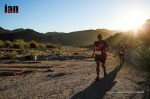
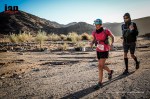
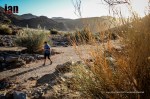
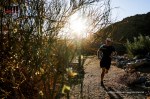
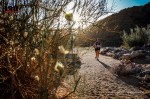
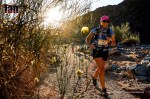
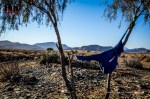
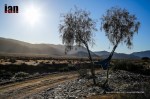
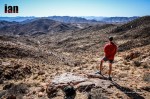
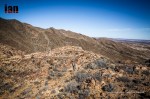
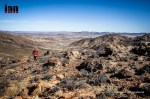
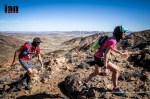
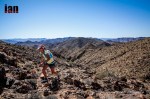
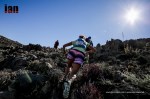
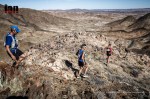
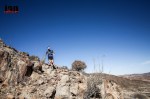
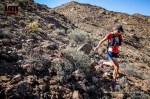
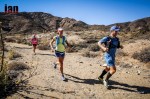
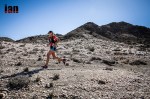
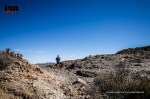
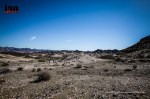
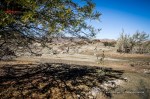
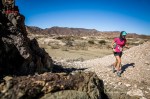
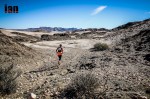
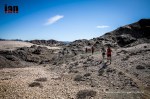
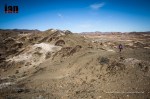
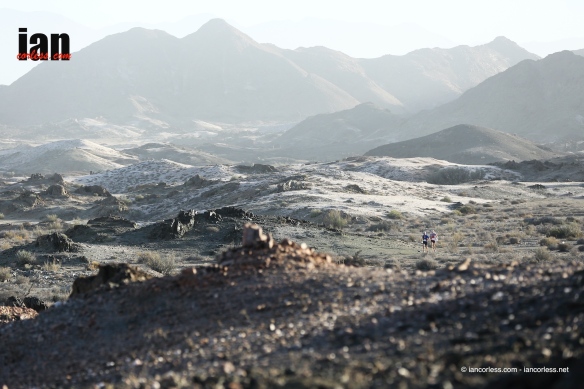
Golden light illuminated the ‘Springbok Flats’ and moody blue clouds provided a stunning contrast to the opening miles of day 3 of the 2016 Richtersveld Transfrontier Wildrun.

©iancorless.com_Richtersveld2016_Day3-4106

©iancorless.com_Richtersveld2016_Day3-4194

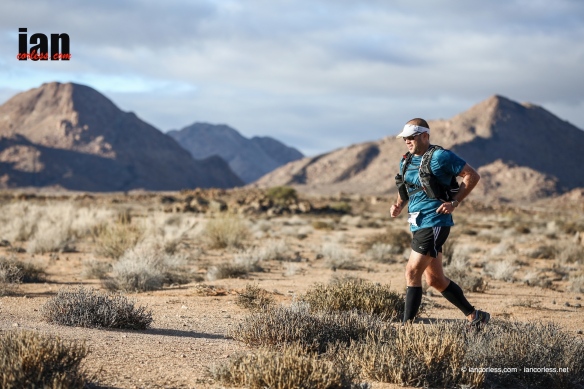
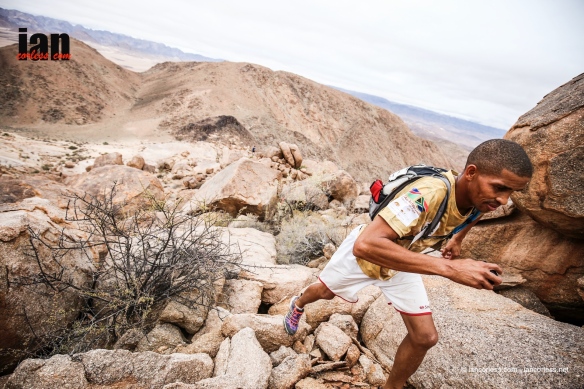
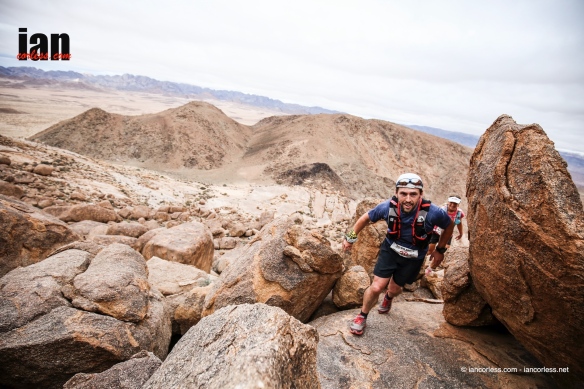
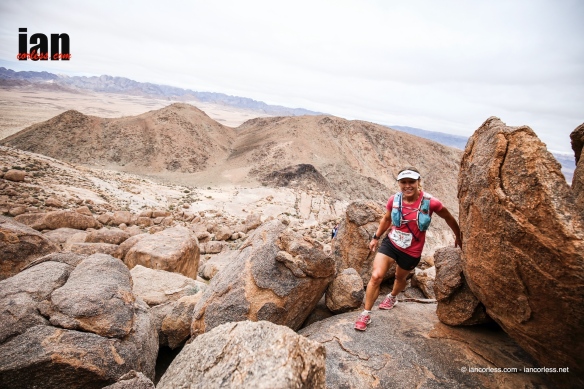
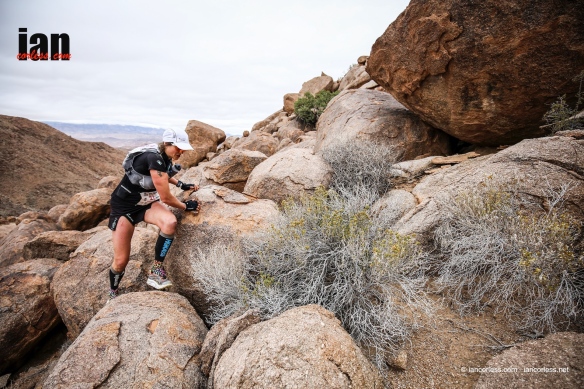
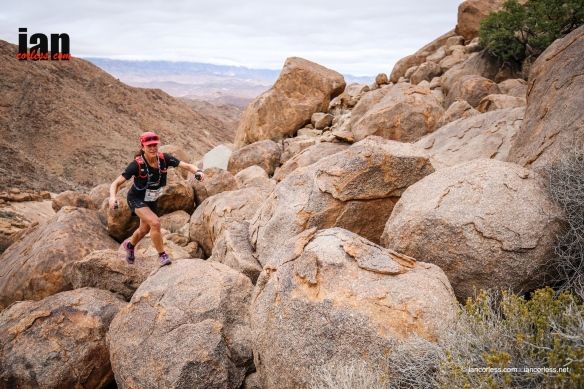
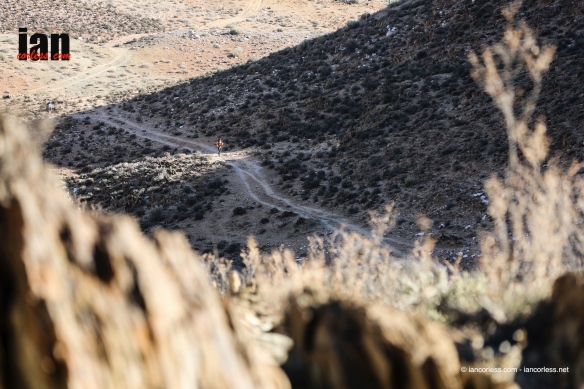
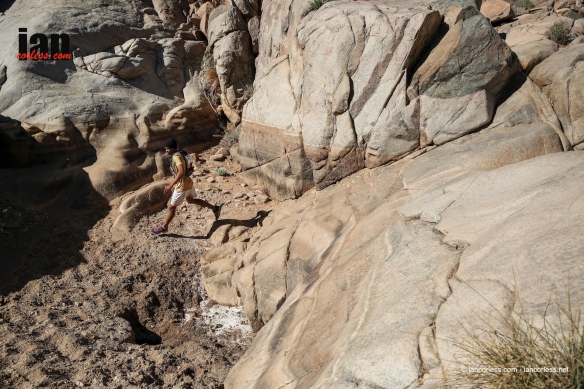
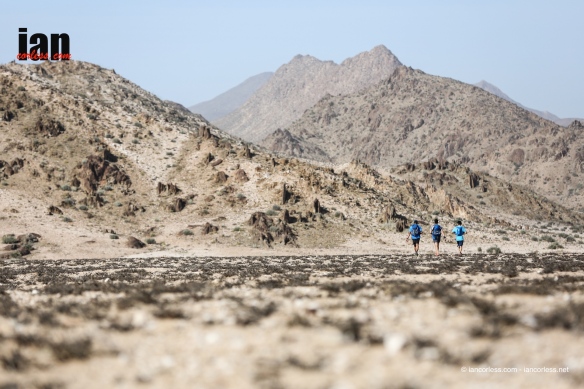
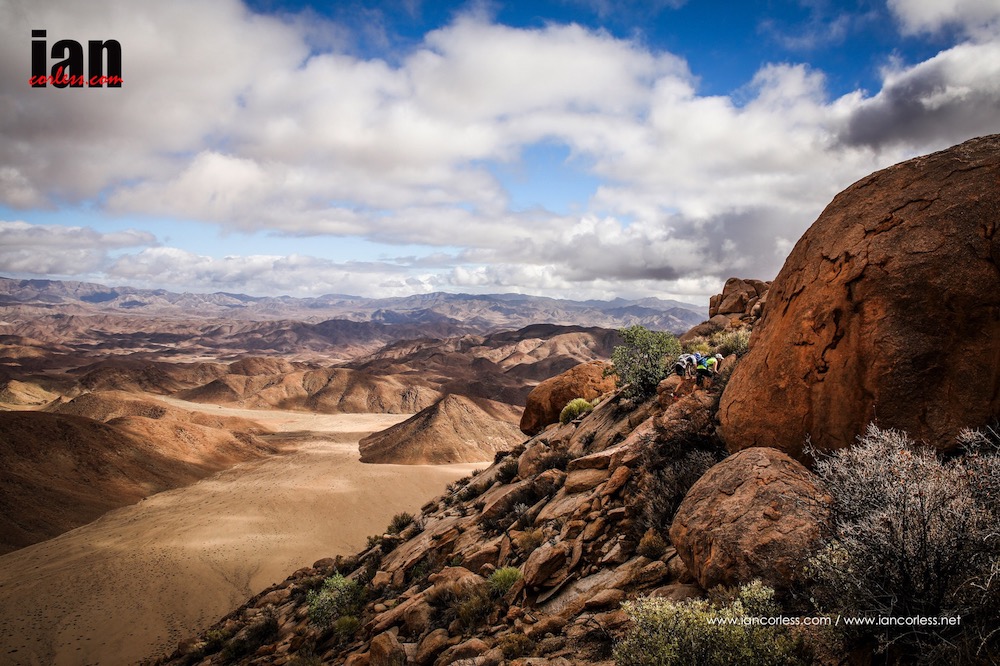
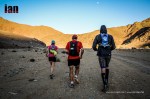
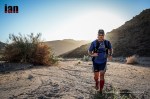
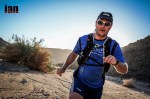
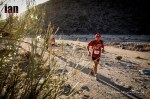
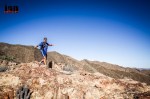
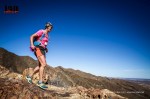
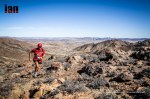
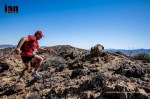
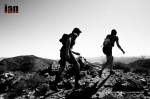
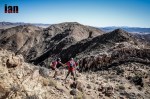
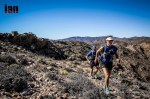
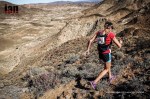
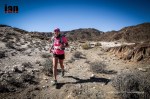
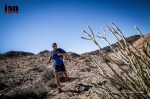
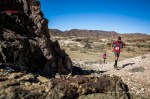
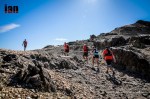
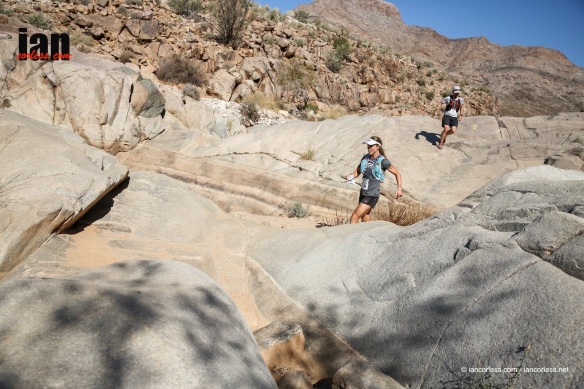
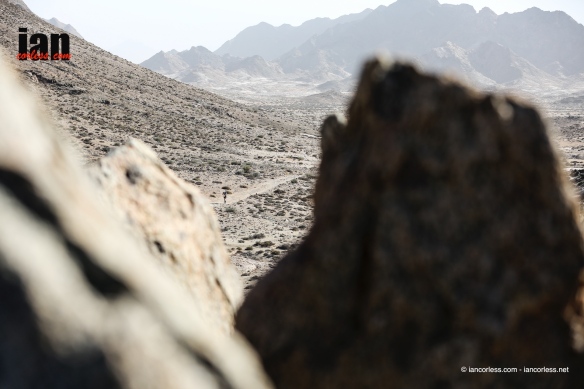
It was a stunning start to the day. As the runners progressed across the flats, they were spotlit as they worked their way to one of the key highlights not only of the day but the whole Richtersveld Transfrontier Wildrun – the Tattasberg Boulders.

Race images are available at iancorless.photoshelter.com

©iancorless.com_Richtersveld2016_Day3-4783

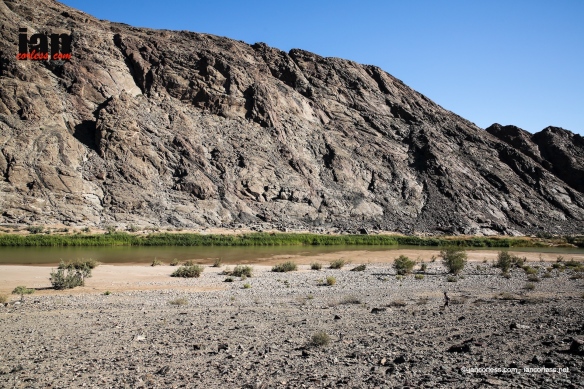
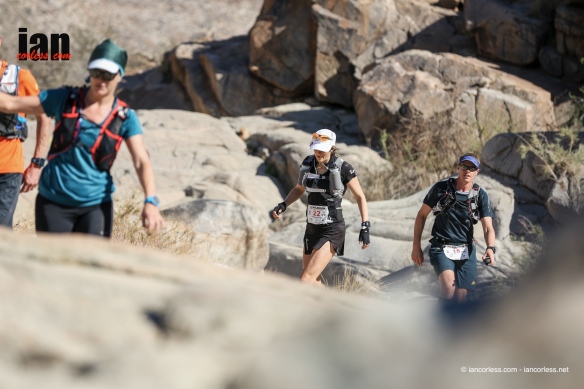
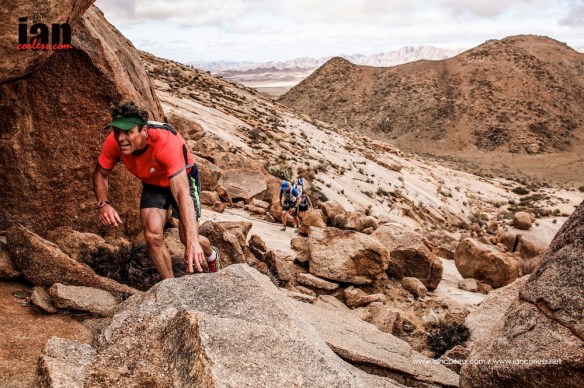
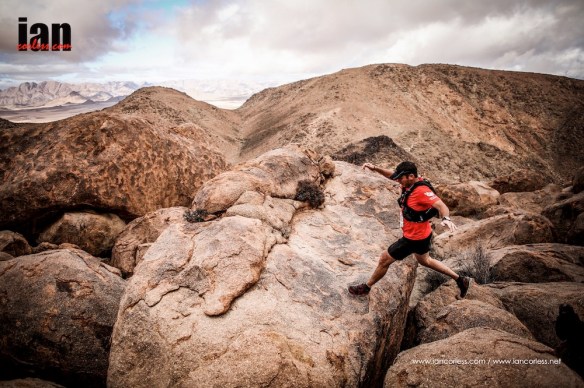
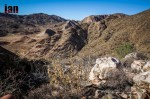
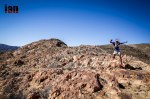
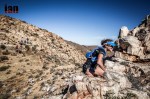
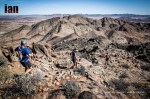
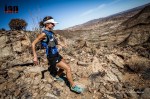
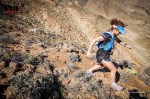
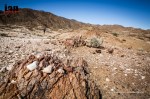
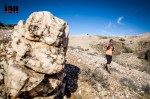
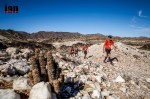
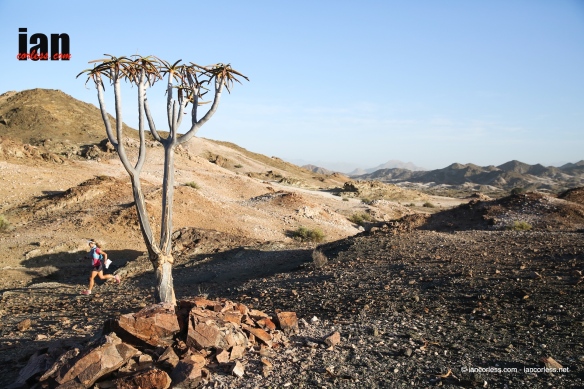
Huge balls of rock, some the size of houses, leave an impression on the mind and eyes. Following a line of markers (the only section of the race to be marked for safety reasons) the runners weaved a route up, over and around the huge marbles of stone and at the top they then worked their way down to the valley and a downhill run to the Orange River. Across the water, Namibia and stage 4 of the race.©iancorless.com_Richtersveld2016_Day3-4286

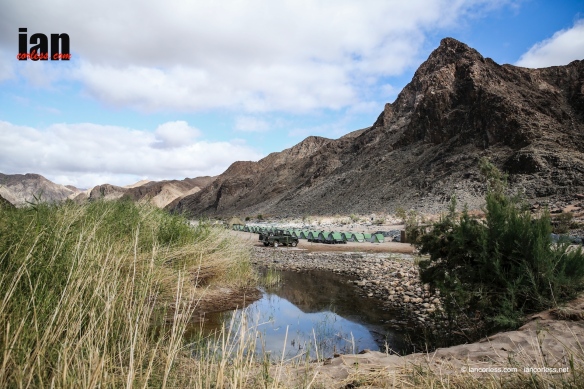
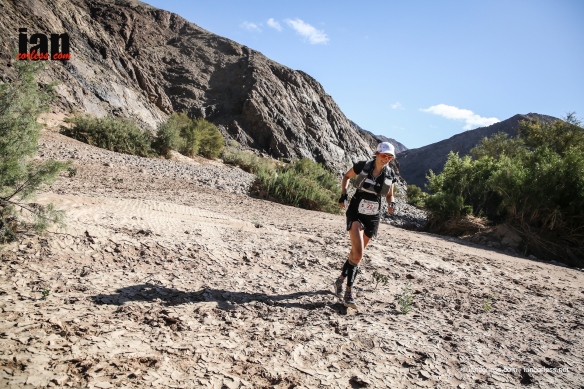
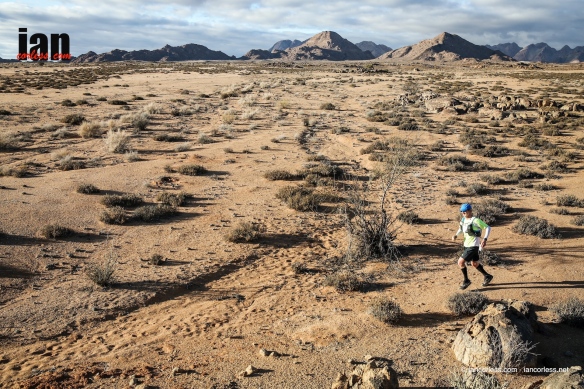
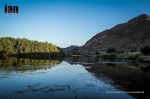
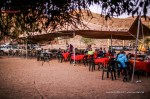
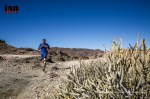
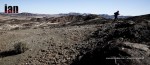
But first, 10km’s of sandy trails would lead in to camp and the stunning setting on the banks of the river.

©iancorless.com_Richtersveld2016_Day3-8304

As per day 2, the race had several start times, the first starting 1hour earlier than day 2 – 0700, 0730, 0800 and 0830.

©iancorless.com_Richtersveld2016_Day3-4485

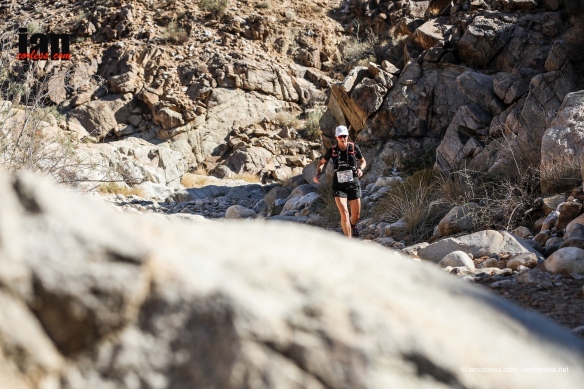
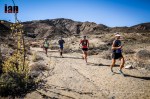
David Kaswarie, Tobias Mews and Jo Williams dictated the earlier pace to cp1 and then David pulled away and opened up a gap. At one point he had gained 15 minutes but after the Tattasberg boulders, the flat running allowed Tobias and Jo to close the gap to 10 minutes at the Orange River and below 5 minutes at the finish line. David finished in 4:08 and Tobias and Jo 4:10. David must really be kicking himself with his error on day 1, he would now be leading the race…

©iancorless.com_Richtersveld2016_Day3-4504 ©iancorless.com_Richtersveld2016_Day3-4513

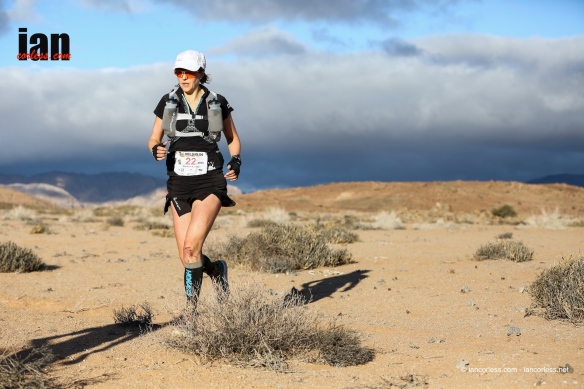
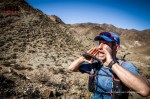
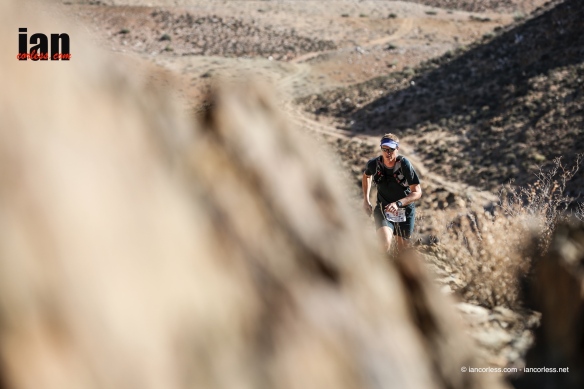
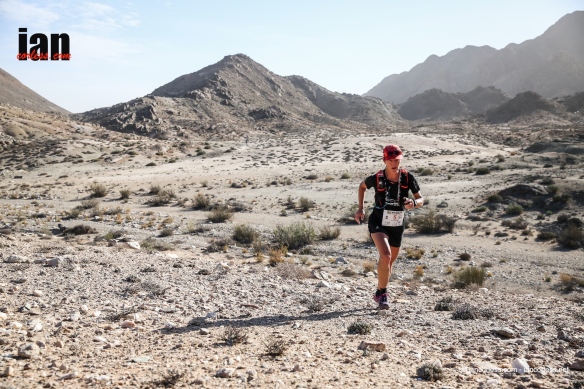
Elisabet Barnes found her legs today and after the run she said, “I had a great day today, I was worried about the boulders but I loved the section and once we got into the final 15km i could run, I love to run and it was great to open up my stride and gain some time!”
©iancorless.com_Richtersveld2016_Day3-8345

©iancorless.com_Richtersveld2016_Day3-4414

Linda Doke by contrast had a less successful day, “There was too much running today, I prefer the more technical stuff.” Linda lost time to Elisabet Barnes but her 2nd place is still secure.
In the men’s race, Tobias Mews still holds a convincing lead as does Jo Williams in the ladies race.

©iancorless.com_Richtersveld2016_Day3-4372

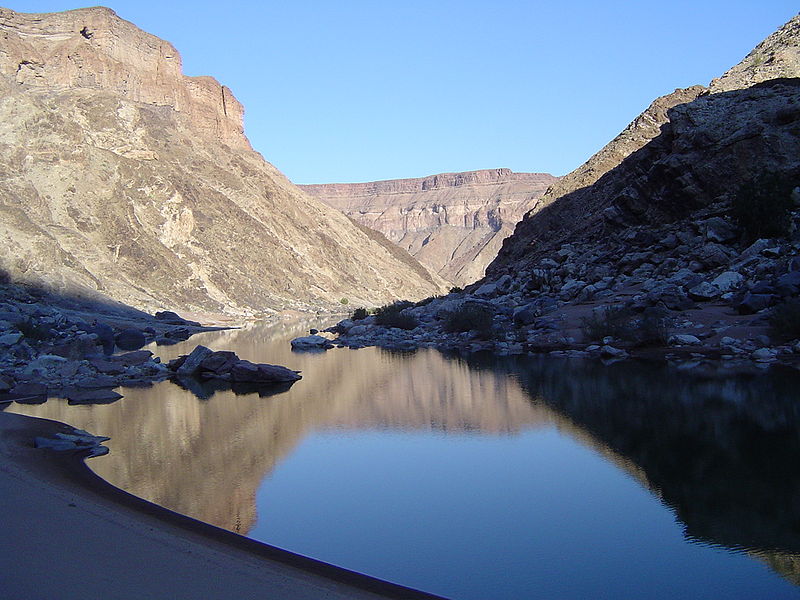
Tomorrow, the runners go ‘transfrontier’ and cross into Namibia and the Fish River Canyon.

Stage Results day three:

David Kaswarie 4:08:11

Tobias Mews and Jo Williams 4:10:04

Daniel Meyes 4:42:48

Elisabet Barnes 4:46:41

John Cuff 4:53:09

Sue Peterkin 5:11:52

Linda Doke 5:12:37

Ryno Bakkes 5:18:34

Christiaan Vorster 5:21:54

Ranking after stage 3

  1. Jo Williams 12:44:00
  2. Tobias Mews 13:03:02
  3. Dawid Kaswarie 13:29:29
  4. Daniel Meyes 1`4:46:48
  5. Stephen Cunliffe 14:52:07
  6. Linda Doke 14:54:10
  7. Elisabet Barnes 15:43:38
©iancorless.com_Richtersveld2016_Day3-8241 ©iancorless.com_Richtersveld2016_Day3-8249 ©iancorless.com_Richtersveld2016_Day3-8263

Social Media Logos

Instagram – https://www.instagram.com/iancorlessphotography/

Facebook – https://www.facebook.com/iancorlessphotography/

Twitter – https://twitter.com/Talkultra

Richtersveld Transfrontier Wildrun 2016 – Stage Two

©iancorless.com_Richtersveld2016_Day2-3083

A chilly night welcomed a beautiful clear morning and as the sun book the horizon, the ambiance in camp glowed with the sun. Starting in 4 specific groups based on finishing times from day one, the 43 runners departed at 0800, 0830. 0900 or 0930.

©iancorless.com_Richtersveld2016_Day2-7739

It was a game of cat and mouse as the fast runners pursued those in front. David Kaswarie who had received a 1 hour time penalty on day 1 pushed hard, nobody a little perturbed with his demotion… he would be leading the race otherwise.

Tobias Mews and Jo Williams however, hardly let David out of sight and made sure that he was within eye view for most of the day.

Race images are available at iancorless.photoshelter.com

©iancorless.com_Richtersveld2016_Day2-3278

Linda Doke in the ladies race ran a controlled race and paced herself for a consistent ladies 2nd place once again and 7th on the stage.

©iancorless.com_Richtersveld2016_Day2-3774

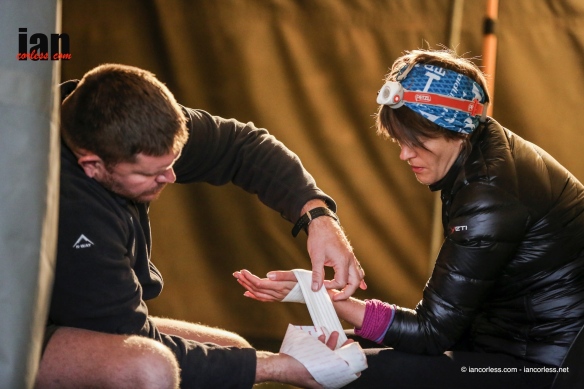
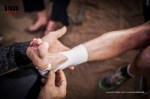
Elisabet Barnes who had a tough day 1 placed 3rd on the stage maintaining her overall 3rd position, however, it was touch and go during the night and the morning if she would start day 2 – her multiple falls on day 1 had left her bruised but more importantly, she may well have a very serious sprain to the left hand.

©iancorless.com_Richtersveld2016_Day2-2701

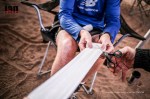
The medics did a good job with the application of supportive taping but Elisabet was strongly advised, “No racing and whatever you do, do not fall!”

©iancorless.com_Richtersveld2016_Day2-3561

Post race, Elisabet commented, “I had a good day today but I didn’t push the pace. When I could run, I did and I loved it. On the more technical sections, of which there are many, I eased back and relaxed – a fall today and my race would be over!”

©iancorless.com_Richtersveld2016_Day2-3289

Stephen Cunliffe after a great day 1 fell in the boulders and unfortunately badly sprained his ankle today after running with Tobias and Jo, he finished in 6th place but he had some real disappointment and hopes he will be able to run tomorrow.

“I was running with Tobias and Jo, we were taking it in turns to lead the way and navigate. I turned around at one point and took my eyes off the trail, a big mistake as my ankle just twisted.”

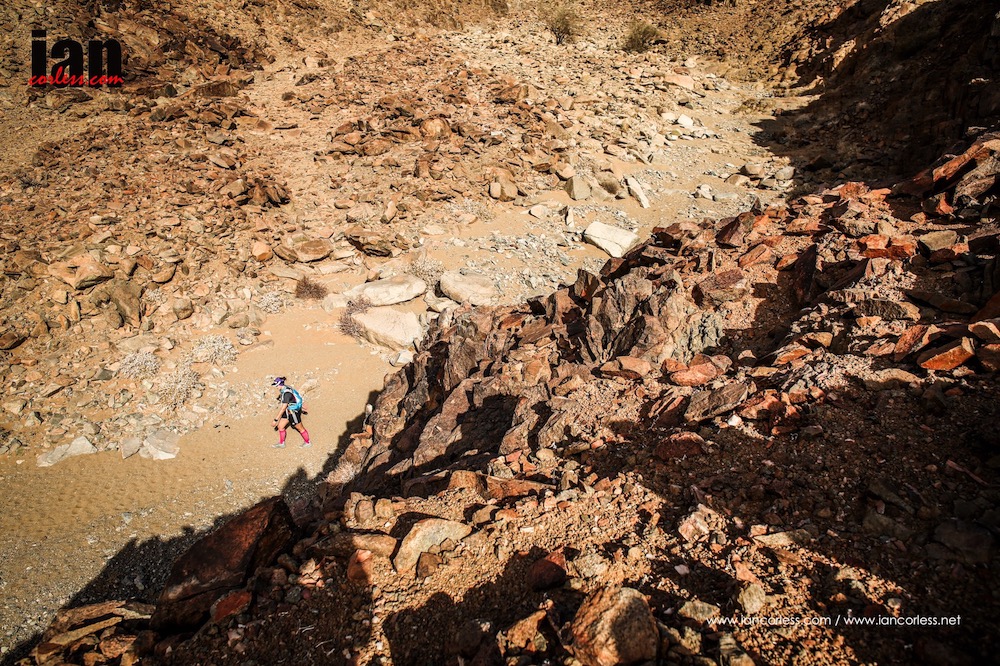
The stage, as one would expect of this region, was a stunner. Easy early running eased everyone into the stage. A gradual climb on good paths, followed by a descent was the prelude to more technical running and the feared river bed that was littered with boulders. This section provided a gateway to the final 4-5km of easy running to the line.

©iancorless.com_Richtersveld2016_Day2-3516

In general terms, day 2 had considerably less navigation problems as all the runners are finally getting a feel for the map and gps units. However, there were a coupe of real errors that added some considerable time to one or two runners days.

Tomorrow, the runners will face the incredible Tattasberg Boulders and they will then finish the day on the banks of the Orange River with a stunning camp 3.

©iancorless.com_Richtersveld2016_Day2-3743©iancorless.com_Richtersveld2016_Day2-7810

Tobias Mews, who is leading the men’s race commented on his day, “People talk about the loneliness of the long distance runner, but the Richtersveld is to be shared. Mutual gasps of wonder should be appreciated with others, it’s lovely to make friends as we run and in Jo I have found a bond -it’s great to run with someone else and share the journey.”

©iancorless.com_Richtersveld2016_Day2-2996

Stage Results day two:

  1. David Kaswarie 3:53:35
  2. Tobias Mews and Jo Williams 4:06:08
  3. Ryno Bakkes 4:29:15
  4. Daniel Meyes 4:29:52
  5. Stephen Cunliffe 4:32:48
  6. Linda Doke 4:40:51
  7. Christian Forster 4:41:50
  8. Elisabet Barnes 4:59:02
  9. Gavin Shang 5:00:01

Richtersveld Transfrontier Wildrun 2016 – Stage One

©iancorless.com_Richtersveld2016_Day1-1885

The silence was deafening. The darkness was black, oh so black and the stars glowed in abundance in the sky. It was the first morning of the 2016 Richtersveld Transfrontier Wildrun and anticipation was high.

There was a high level of anticipation, nerves and worry – particularly in regard to the route and the provided GPX files that had been uploaded to GPS units, or not, as was the case in some scenarios.

Buttons were being pressed, beeps could be heard and chins were being rubbed as rapid navigation 101 was undertaken just 30-minutes before the 0800 start.

Suddenly they were off and what followed was a stunning warm and sunny day in the Ai-Ais Richtersveld Transfrontier Park.

©iancorless.com_Richtersveld2016_Day1-2221

At the first control point, backed by an amphitheater of rock, it was soon apparent that despite a gps route, many runners were using navigation knowledge to cover ground as quickly as possible. The rule of the race confirms that between controls, the gpx route is a guide and that providing access to the control is from the correct direction, then a free route choice was allowed.

Tobias Mews and Jo Williams were the first to arrive at the first control but not via the direction the gps route indicated – was this a tactactical navigation move to gain time?

Race images are available at iancorless.photoshelter.com

©iancorless.com_Richtersveld2016_Day1-6624

It looked like it as Linda Doke and Stephen Cunliffe arrived via the same route option. Slowly but surely runners arrived but a lack of Elisabet Barnes raised a few alarm bells. Elisabet arrived approximately 30-minutes later have followed the gps route, mark-by-mark. The 2015 Marathon des Sables champion was now on the back foot with a tough chase on her hands.
©iancorless.com_Richtersveld2016_Day1-7069

At control 2, Linda Doke and Stephen Cunliffe arrived and then a string of runners

and then Tobias Mews and Jo Williams – it was a little confusing, how had so many other runners gained so much time and what had been the leading duo?

Tobias Mews explained post race, “We made a navigational error and had to backtrack obviously loosing time and allowing Linda and Stephen to take the lead, however, we were surprised to then find other runners infront of us when we chased – we later found out that these runners had missed control one!”

©iancorless.com_Richtersveld2016_Day1-7303

The savvy navigational shortcut early in the race had unfortunately caused a problem for 5 competitors and due to missing the control, a 1-hour time penalty was applied.

What followed was a strong effort by Tobias and Jo, they reeled in the other runners, pursued Linda and Stephen and then pushed on. It was a brave move so early in a five stage race however it payed off.

©iancorless.com_Richtersveld2016_Day1-6596

Jo Williams and Dawid Kaswarie finally made a break from Tobias and Stephen and they crossed the line joint first in 4:27:43, only for Dawid Kaswarie to loose all his hard work with a time penalty. Stephen Cunliffe and Tobias Mews ran together to finish joint 2nd in 4:46:49 and Linda Doke finished 3rd in 5:00:42.

©iancorless.com_Richtersveld2016_Day1-2395

Way back in the race, ladies pre-race favourite was having a bad day – she had taken a tumble and was running with open wounds to her left knee and unfortunately another minor navigation error resulted in some additional lost time. Something was right though, Elisabet fell a further four times and once back in camp she relayed her story, “I saw Tobias and others taken an alternative route and I decided to follow the gps route as I was under the impression that was the correct thing to do. I lost time and sometimes you just have to accept that these things happen. However, I was feeling light-headed, lacking focus and after falling once, I fell a further three times. I feel a little banged up – it was a tough day!”

©iancorless.com_Richtersveld2016_Day1-2506

Elisabet was not the only runner to make errors with navigation, in nearly all cases it was the error of the runner to solely rely on the gps as a form of navigation and not use the provided map as a reference and counter reference. For some it was a tough lesson.

Day 1 at any multi-stage race can be a tough one and here in the Richtersveld, the 2016 Richtersveld Transfrontier Wildrun has provided a greater test than some expected.

Despite difficulties, the unanimous decision about the route and the scenery has been glowing – “This is like running in heaven,” said

Results day one:

  1. Jo Williams 4:27:43
  2. Linda Doke 5:00:42
  3. Elisabet Barnes 5:57:54
  1. Stephen Cunliffe and Tobias Mews 4:46:49
  2. David Kaswari 5:27:43
  3. Daniel Meyes 5:34:08

IMAGES to follow when we can get connection

Nama People – Richtersveld Transfrontier Wildrun®

©iancorless.com_Richtersveld2016-1748

One of the real advantages of travel and race coverage is meeting a new culture and gaining a new experience. Today I came face-to-face with the Nama people  who came to greet us and welcome us at the 2016 Richtersveld Transfrontier Wildrun.

Race images are available at iancorless.photoshelter.com

Nama (in older sources also called Namaqua) are an African ethnic group of South Africa, Namibia and Botswana. They traditionally speak the Nama language of the Khoe-Kwadi language family, although many Nama also speak Afrikaans. The Nama are the largest group of the Khoikhoi people, most of whom have largely disappeared as a group, except for the Namas. Many of the Nama clans live in Central Namibia and the other smaller groups live in Namaqualand, which today straddles the Namibian border with South Africa.

Reference and information from ©wikipedia

For thousands of years, the Khoisan peoples of South Africa and southern Namibia maintained a nomadic life, the Khoikhoi as pastoralists and the San people as hunter-gatherers. The Nama are a Khoikhoi group.

From 1904 to 1907, the Germans, who had colonised present-day Namibia waged war against the Nama and the Herero (a group of Bantu pastoralists), leading to the Herero and Namaqua Genocide in which they killed at least 80% of the Nama and Herero populations.[2] This was motivated by the German desire to establish a prosperous colony which required displacing the indigenous people from their agricultural land. Large herds of cattle were confiscated and Nama and Herero people were driven into the desert and in some cases interned in concentration camps on the coast, for example at Shark Island. Additionally, the Nama and Herero were forced into slave labour to build railways and to dig for diamonds during the diamond rush.

In the 1920s diamonds were discovered at the mouth of the Orange River, and prospectors began moving there, establishing towns at Alexander Bay and Port Nolloth. This accelerated the appropriation of traditional lands that had begun early in the colonial period. Under apartheid, remaining pastoralists were encouraged to abandon their traditional lifestyle in favour of village life.

The Nama originally lived around the Orange River in southern Namibia and northern South Africa. The early colonialists referred to them as Hottentots. Their alternative historical name, “Namaqua”, simply stems from the addition of the Khoekhoe language suffix “-qua/khwa”, meaning “people” (found in the names of other Southern African nations like the Griqua)

In 1991, a part of Namaqualand (home of the Nama and one of the last true wilderness areas of South Africa) was named the Richtersveld National Park. In December 2002, ancestral lands, including the park, were returned to community ownership and the governments of South Africa and Namibia began creating a trans-frontier park from the west coast of southern Africa to the desert interior, absorbing the Richtersveld National Park. Today, the Richtersveld National Park is one of the few places where the original Nama traditions survive. Here, the Nama move with the seasons and speak their language. The traditional Nama dwelling – the |haru oms, or portable rush-mat covered domed hut – protects against the blistering sun, and is easy to move when grazing becomes scarce.

At the dawn of the 19th century, Oorlam people encroached into Namaqualand and Damaraland. They likewise descended from indigenousKhoikhoi but are a group who mixed with Europeans and with slaves from Madagascar, India, and Indonesia.[3] After two centuries of assimilation into the Nama culture, many Oorlams today regard Khoikhoigowab (Damara/Nama) as their mother tongue, though others speak Afrikaans. The distinction between Namas and Oorlams has gradually disappeared over time to an extent where they are today regarded as one ethnic group, despite their different backgrounds.

Richtersveldwildrun

Meet the runners who will take part in the 2016 Richtersveld Transfrontier Wildrun® HERE

Daily race images and reports will follow on the race day-by-day as the action unfolds via

Social Media Logos

Instagram – https://www.instagram.com/iancorlessphotography/

Facebook – https://www.facebook.com/iancorlessphotography/

Twitter – https://twitter.com/Talkultra

Richtersveld Transfrontier Wildrun 2016 – Registration

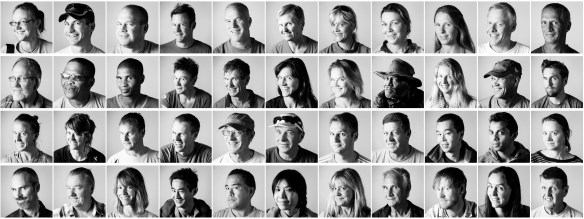
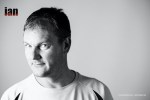
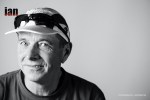
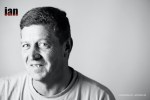
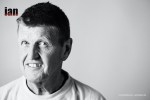
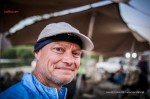
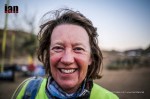
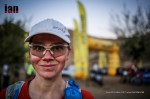
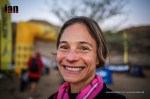
RichtersveldFaces

The 2016 Richtersveld Transfrontier Wildrun® became a reality today… runners from all over the world have assembled in the |Ai-|Ais/Richtersveld Transfrontier Park.

Race website HERE

Richtersveldwildrun

A 200km, five-day foot race from South Africa to Namibia through the ancient arid landscape of the /Ai/Ais-Richtersveld Transfrontier Park.  From the crystal fields of Sendelingsdrif in South Africa to the infamous giant boulders of Tatasberg deep in the /Ai/Ais-Richtersveld Transfrontier Park; this unparalleled journey then crosses the Orange River into Namibia and the wild lands of the Fish River Canyon.  This is the running experience of a lifetime; this is the Richtersveld Transfrontier Wildrun®.
Day 1 starts tomorrow, Monday June 13th at 0800. Before the race gets underway, we feel it’s important you get to see the faces of those taking part.
Day 1 43.64km Sendelingsdrif to ‘De Koei’
Day 2 32.13km ‘De Koei’ to Hakkiesdoring
Day 3 39.78km Hakkiesdoring to De Hoop
Day 4 48.32km De Hoop to Wilderness Hot Springs
Day 5 21.3km Wilderness Hot Springs to Ai-Ais Hot Springs Resort
Race images are available at iancorless.photoshelter.com
About the race:
Early archaeological evidence tells us that the San inhabited the Richtersveld area thousands of years ago. They hunted game (mountain zebra and klipspringer) and gathered berries and herbs. The first Khoekhoen or pastoral people moved to these regions from Botswana some 2000 years ago. Like the San, they were hunter-gatherers, and only slaughtered animals on rare ceremonial occasions.
In tune with the harsh environment, many of the Richtersvelders today are transhumant pastoralists, moving their livestock between stock posts with the changing of seasons. The rotation of pastures has helped to preserve the land from overuse. This is the last place in South Africa where pastoral people live on communal lands and one of the last remaining examples of the transhumant Nama way of living.
The harsh environment of the Richtersveld has through the years witnessed a story of determined peoples with a strong attachment to the land. Early last century declared a “Coloured Rural Reserve”, the land’s ownership moved in 2002 to the peoples of the Richtersveld. In this pristine land, devoid of mining scars and in harmony with transhumant pastoralists, an area of more than 160 000 ha has been put aside – first to create a Community Conservancy, now proclaimed a World Heritage Site.
From a distance you can see rugged mountains, sweeping deserts, a giant blue sky and glimpses of the might Orange River creeping along to the sea. On closer investigation you realise that you are standing in one of Africa’s most diverse and rich ecosystems.
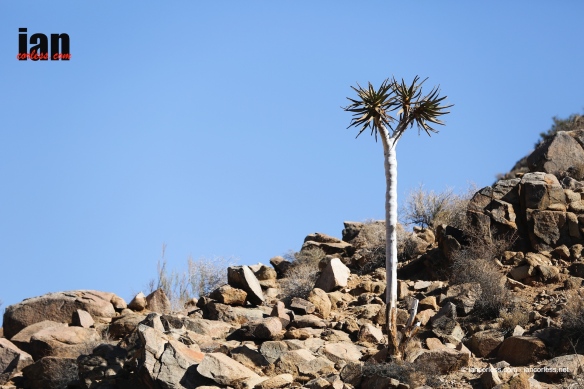
The Richtersveld World Heritage Site sits in the heart of what is called the Succulent Karoo Biodiversity Hotspot – an ecosystem with an astounding 4 849 succulent plants, 40% of which are found nowhere else.
To be declared a hotspot, an area must have incredibly high species diversity and a high percentage of endemism. It is quite a unique distinction, as there are only 25 hotspots in the world. Even more unusual is that the Succulent Karoo is a desert and is the only arid biodiversity hotspot on Earth.
Conjure up a desolate and forbidding landscape, seemingly devoid of life, except for some people dotting along the horizon. Make a startling discovery upon closer inspection when the mirage dissolves into the human-like half-mens (half person) and the harsh environment prove to be a treasure-chest containing the world’s richest desert flora. Miniature rock gardens, perfectly designed by nature, cling precariously to cliff faces. Tiny succulents, mere pinpoints against a backdrop of surreal rock formations, revel in the moisture brought by the early morning fog rolling in from the cold Atlantic Ocean.

Rugged kloofs, high mountains and dramatic landscapes that sweep away inland from the Orange River divulge the fact that you are now in the vast mountain desert that is the /Ai-/Ais-Richtersveld Transfrontier Park, an area managed jointly by the local Nama people, SANParks and Namibia Parks and Wildlife. This is a harsh and unpredictable land where water is scarce and life-sustaining moisture comes in the form of early morning fog – called ‘Ihuries’ or ‘Malmokkies’ by the local people – which rolls in from the cold waters of the Atlantic Ocean, sustaining a remarkable range of small reptiles, birds and mammals. A staggering assortment of plant life, some species occurring nowhere else, is to be found here, with gnarled quiver trees, tall aloes and quaint ‘half-mens’ keeping vigil over this inscrutable landscape.The Fish River Canyon is the largest canyon in the southern hemisphere, and second only to Arizona’s Grand Canyon in terms of size. 161km long, up to 27km wide and almost 550m at its deepest, the southern part of this canyon is largely untouched by tourists and remains one of the wildest and most remote corners of the world.

The /Ai/Ais-Richtersveld Transfrontier Park is only accessible by means of a 4×4 vehicle, but vehicles with high clearances such as combi’s and LDV’s do travel in the park. Sedan vehicles are not permitted.
June temperatures are likely to be cool at night and comfortable during the day. However, it can get as low as 4-5 degrees Celcius during the night and as high as 35 degrees Celcius during the day.
Each day of this 200km, five-day journey will take you on a rollercoaster ride of geological splendour. From the crystal fields of Sendelingsdrif in South Africa, to the infamous giant boulders of Tatasberg, across the green swathe of the Orange River, and into the wild lands of the Fish River Canyon in Namibia – every kilometer is an experience within itself and will leave you stumped for words to describe your journey.

RICHTERSVELD TRANSFRONTIER WILDRUN 2016 – Entries close soon!

©iancorless.com_RichtersveldRaceDay32015-0853

“The simple act of running, placing one foot in-front of the other as a method of transport takes us back to our roots, our basic instincts. In search of a place to sleep, to hunt for food; it is about being in the wild, surviving and fulfilling a primal need.”

Richtersveld Wildrun | Avaunt Magazine-1

VIEW ON AVAUNT HERE

Join 2015 Marathon des Sables champion, Elisabet Barnes, South Africa’s unstoppable Linda Doke and the UK’s Tobias Mews in the 2016 Richtersveld Transfrontier Wildrun.

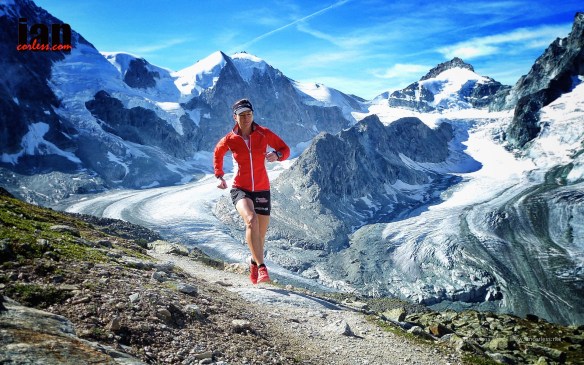
Linda Doke, Zinal, Switzerland - image ©iancorless.com

Linda Doke, Zinal, Switzerland – image ©iancorless.com

The 2015 edition of the race was an incredible, mind-blowing journey but in 2016, the race goes one step further and becomes ‘Transfrontier.’ The race will now pass over the Orange River and in to Namibia.

Elisabet Barnes 2016 The Coastal Challenge, Costa Rica (2nd place lady).
Elisabet Barnes 2016 The Coastal Challenge, Costa Rica (2nd place lady).
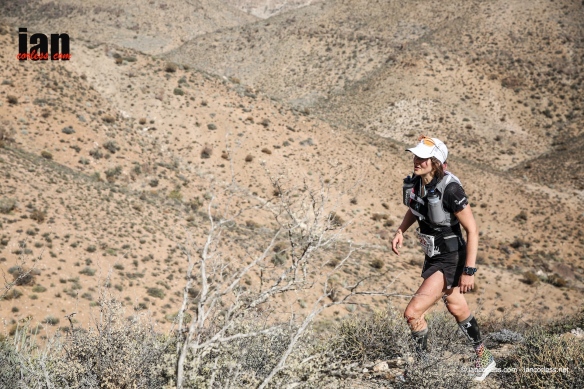
Known as one of the most scenic and unique trail running stage race events on the South African trail running calendar the Richtersveld Wildrun™ takes a new direction and in doing so become a cross-border trail running event; a worlds first! Extending to a linear 200km race, the five day crossing from South Africa to Namibia goes through the heart of the stunning /Ai/Ais-Richtersveld Transfrontier Park.
“We are absolutely thrilled to have unlocked a truly unique opportunity to experience both sides of such a unique and powerful place  – and to finish a long day at a natural hot springs in the middle of the wilderness is unbelievable!”said Owen Middleton,” MD of Wildrunner, the events company behind the Wildrun™ events.
Tobias Mews, The Dragon's Back Race 2015.

Tobias Mews, The Dragon’s Back Race 2015.

Including the Vyf Susters, Hellskloof Pass, Armmanshoek, the Tswayisberge, Springbokvlakte and the iconic Tatasberg boulders, the new route will maintain the best of the first three days of the original edition but on day 4, the route will veer of its original course and cross the Orange River at De Hoop into Namibia. Yes, the race will go into the untouched southern section of the Fish River Canyon made famous by Ryan Sandes.

©iancorless.com_RichtersveldRaceDay32015-0156

It’s no easy addition to the race, runners will need to cover 50km into a wilderness that is completely inaccessible by vehicle. Rich in wildlife, runners will have a once in a lifetime experience with a possibility of seeing Hartmann’s mountain zebra, kudu, gemsbok, springbok, Namibian wild horses and giraffe. It’s the race of a lifetime!

Tobia Mews is no stranger to incredible races, his recent book release called ’50 Race To Run Before You Die’ looks like it will need a new chapter, 51 Races…

“I am so looking forward to this race. For me it’s the epitome of adventure running wrapped up in one of the most stunning places on earth. And it’s partly Ian Corless‘s fault for producing such amazing photos from last year.” – Tobias Mews

©iancorless.com_RichtersveldRaceDay42015-0939

After a long, tough day in Namibia, runners will spend the evening in a canyon at a natural hot spring, before taking on the final day of roughly 25km to finish at the /Ai-/Ais Hot Springs Resort and wrap up a powerful and truly unique experience.

Race dates are 13-17 June 2016

ENTRY CLOSES VERY SOON, APRIL 1st

International entries HERE

European entries HERE

The overall race distance for 2016 will be 200km and the daily distances will be – 36.3km + 32.1km + 34km + 48.3km + 21.3km.

©iancorless.com_RichtersveldRaceDay32015-0346

Terrain is very mixed, varied and stunning and requires adaptation to sandy terrain, heat, climbing, remoteness and an ability to run with a GPS.

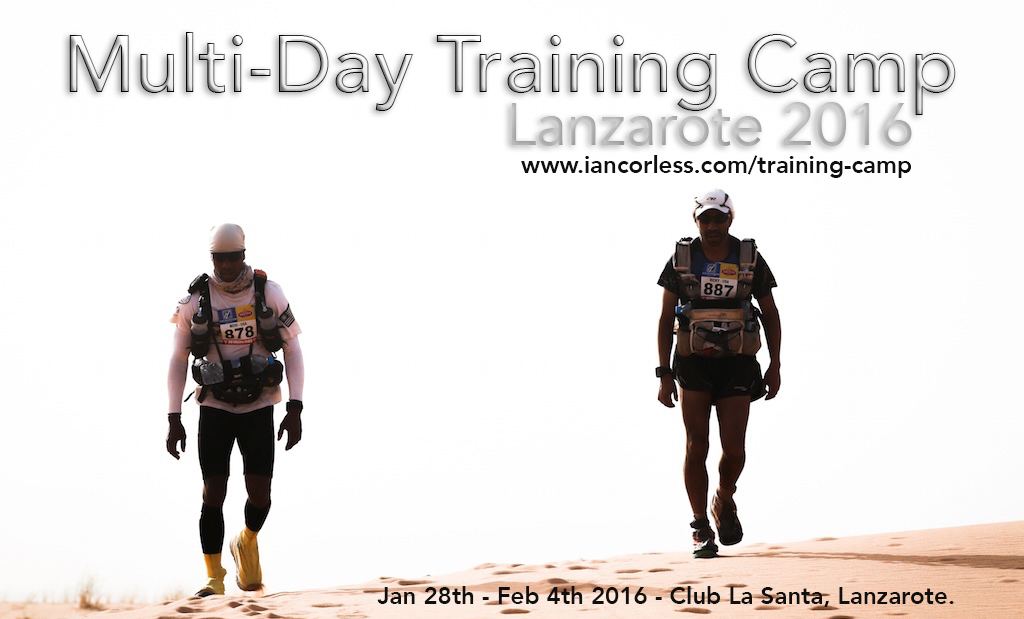
Need help with multi-day training? join our 2017 multi-day training camp in Lanzarote.

Details are HERE

Multi-Day Camp Image

Roland Vorwerk, marketing manager of Boundless Southern Africa, one of the driving forces behind the success of the event, said they are very happy to support this new cross-border trail running event.

“This new route contains even more highlights than the original Richtersveld Wildrun™, and promises to give participants a challenging but spectacular trail running experience.”


©iancorless.com_RichtersveldRaceDay32015-0771

If you need inspiration, check out the film from 2015 below.

You can also view photo galleries HERE

Richtersveld Wildrun™ goes TRANSFRONTIER

©iancorless.com_RichtersveldRaceDay32015-0413

After two years the Richtersveld Wildrun™ has become known as one of the toughest, most scenic and unique trail running stage race events on the South African trail running calendar. In 2016 however, this iconic event takes on a new shape to become the first cross-border trail running event in the world; extending to a linear 200km, five day crossing from South Africa to Namibia through the heart of the /Ai/Ais-Richtersveld Transfrontier Park.

©iancorless.com_RichtersveldRaceDay42015-0939“We are absolutely thrilled to have unlocked a truly unique opportunity to experience both sides of such a unique and powerful place  – and to finish a long day at a natural hot springs in the middle of the wilderness is unbelievable!” said Owen Middleton, MD of Wildrunner, the events company behind the Wildrun™ events.

©iancorless.com_RichtersveldRaceDay42015-0946The new route will maintain the best of the first three days of the original edition, including the Vyf Susters, Hellskloof Pass, Armmanshoek, the Tswayisberge, Springbokvlakte and the iconic Tatasberg boulders. On day 4, the route will veer of its original course and cross the Orange River at De Hoop into Namibia and the untouched southern section of the Fish River Canyon. This 50km day will take runners into a wilderness that is completely inaccessible by vehicle and rich in wildlife such as Hartmann’s mountain zebra, kudu, gemsbok, springbok, Namibian wild horses and giraffe.

©iancorless.com_RichtersveldRaceDay32015-0853After a long, tough day, runners will spend the evening in the canyon at a natural hot spring, before taking on the final day of roughly 25km to finish at the /Ai-/Ais Hot Springs Resort and wrap up a powerful and truly unique experience.

Roland Vorwerk, marketing manager of Boundless Southern Africa, one of the driving forces behind the success of the event, said they are very happy to support this new cross-border trail running event.

“This new route contains even more highlights than the original Richtersveld Wildrun™, and promises to give participants a challenging but spectacular trail running experience,” he said.

©iancorless.com_RichtersveldRaceDay32015-0449Tamaryn Middleton, general manager of Wildrunner, was very excited to launch the new route and said:

“To be the first to cross an international border in a trail running event and to be in such an iconic part of Namibia as the Fish River Canyon is awesome – we can’t wait to take a new group of adventurers on this epic journey.”

The Richtersveld Transfrontier Wildrun™ will take place from 13-17 June 2016 and entries will open 21 October 2015 

Interested? Contact the UK agents for the race using the contact form below.

Go back

Your message has been sent

Warning
Warning
Warning
Warning

Warning.

Richtersveld Wildrun 2015 Day 4

©iancorless.com_RichtersveldRaceDay42015-1791


The final day of the 2015 Richtersveld Wildrun concluded today with a course record day for Thabang Madiba and Katya Soggot.

It was a tough final day with technical trail, tough climbs, technical descents and amazing views.

James Cracknell was a no start to day 4, his swollen ankle far too painful to run on. James had handled the previous days mountains in his stride but the flatter 10km of the course was just too much. Reduced to a walk he contemplated undertaking the final day but during the night the pain continued and ultimately he made the correct call. At 38.3km it was a challenging last day that started with a long and steady climb over the first 17.5km to Akkedis Pass and then the fun started. Technical trail, ridge running, single track, slip sliding descents and incredible crystal fields would lead the runners once again to the Orange River and the finish in Sendlingsdrif. For many, it was a day of running together, overall classifications wouldn’t change and in the spirit of running for fun, the whole field embraced the last day and enjoyed it. However, one person decided that a course record was possible.

Thabang arrived at the technical ridges at Halfmens Ridge running like a man possessed, shifting from left foot to right foot he made the terrain look easy. He was on a mission and he did it. A final day course record confirmed his incredible skill and ability on this tough, challenging and incredibly beautiful course. Katya Soggot was once again crowned ladies champ and Nikki Kimball secured 2nd place ahead of Karoline Hanks.

Results Overall

Thabang Madiba 13:55:38

Dayle Wheeler 15:16:24

Filippo Faralla 16:46:25


Katya Soggot 15:26:57 (3rd overall)

Nikki Kimball 16:31:20 (4th Overall)

Karoline Hanks 16:46:19 (5th overall)


Full results HERE

Men:

Sandes in the Canyon

Ryan Sandes has just set a new record for the Fish River Canyon in Namibia.

Fish River Canyon, Namibia

Ryan had to abandon his Fish River Canyon Trail Run record attempt in 2011 due to heavy rains. The record for the 85km trail run was originally set on the 13th of July 1990 by South Africans Ronnie Muhl and Bruce Matthews – both seasoned Comrades runners – in a time of 11hrs 42min. It was then beaten by 3 Namibian locals Russell Paschke, Charlie du Toit and Coenraad Pool on the 16th of August 2003 in a time of 10hrs 54min.

Not liking to be beaten, Ryan decided he would have another go at the record in August 2012.

Charlie du Toit is quoted as saying  “This canyon is not for the faint hearted and an attempt to run it should not be taken light heartedly”.

Ryan had this to say:

“I know this challenge is going to extremely tough, especially coming off the back of my running the Western States 100miler in the USA at the end of June, but I can’t wait to get back into the canyon. The record attempt will be filmed by the African Attachment / Wandering Fever so I will keep everyone posted on where and when you can watch it,” 

copyright Ryan Sandes

The Fish River Hiking Trail starts at Hobas and ends 85 kilometres (53 mi) further south at Ai Ais. The trail has no facilities and hikers usually fast pack through in 3 to 5 days. Ryan completed the trail in an impressive time just sneaking under 7 hours with a time of 6:57.

Due to flash floods and high summer temperatures which frequently exceed 45°C, the hike is only open in winter. The season starts 1 May and ends 15 September (winter time in the Southern Hemisphere).

Fish River Canyon

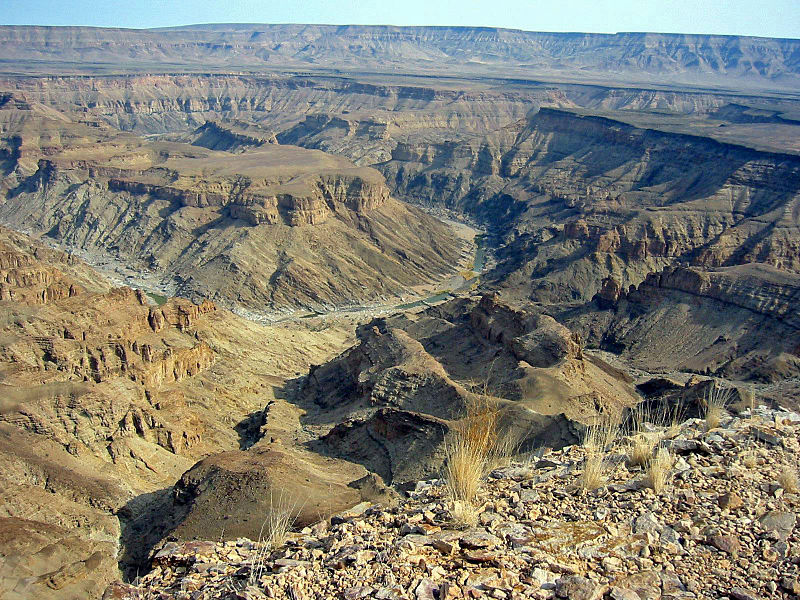
The Fish River Canyon is located in the south of Namibia. It is the second largest canyon in the world and the largest in Africa, as well as the second most visited tourist attraction in Namibia. It features a gigantic ravine, in total about 100 miles (160 km) long, up to 27 km wide and in places almost 550 metres deep.

The Fish River is the longest interior river in Namibia. It cuts deep into the plateau which is today dry, stony and sparsely covered with hardy drought-resistant plants. The river usually floods in late summer; the rest of the year it becomes a chain of long narrow pools. At the lower end of the Fish River Canyon, the hot springs resort of Ai-Ais is situated.

Upstream the river runs through horizontal dolomite strata. These strata formed part of the canyon about 650 million years ago when plate movement cracked the earth, the first process in the formation of the Fish River Canyon.

Lower down, a granite complex system is exposed to form a characteristic river bed that results in forms like Fingerspitze. In this area, a fault runs north-south, which accounts for the gorge-like channel and the presence of hot sulphurous springs.

You can read more about Ryan here

You may like to listen to Talk Ultra and our interview with Ryan here

The African Attachment who have documented Ryan’s career and are making a film about him can be checked out here

Information on the Fish River Canyon is available here