The Price Of Visibility in Mountain, Ultra and Trail Running

Photo (c) Sportograf

For those of us who have spent years documenting trail and mountain running through a lens, as a journalist, or as team member, the sport’s evolution has been impossible to ignore. What was once a quiet, deeply personal world of endurance and wilderness has rapidly become a polished global spectacle, driven by live broadcasts, sponsor demands, and an ever-growing appetite for content. As photographers, filmmakers, and storytellers, we are undeniably part of that change. We help bring the sport to wider audiences, preserve its defining moments, and elevate the athletes who dedicate their lives to it. But working so closely within that environment also raises difficult questions about where the line exists between documenting the experience and altering it. The conversation is no longer simply about media coverage itself, but about how much presence the sport, the athletes, the trails, and the atmosphere can absorb before something essential begins to disappear.Mountain and trail races have traditionally carried an unwritten code: respect the landscape, respect the runners, and respect the experience itself. Wildness matters, isolation matters and silence matters
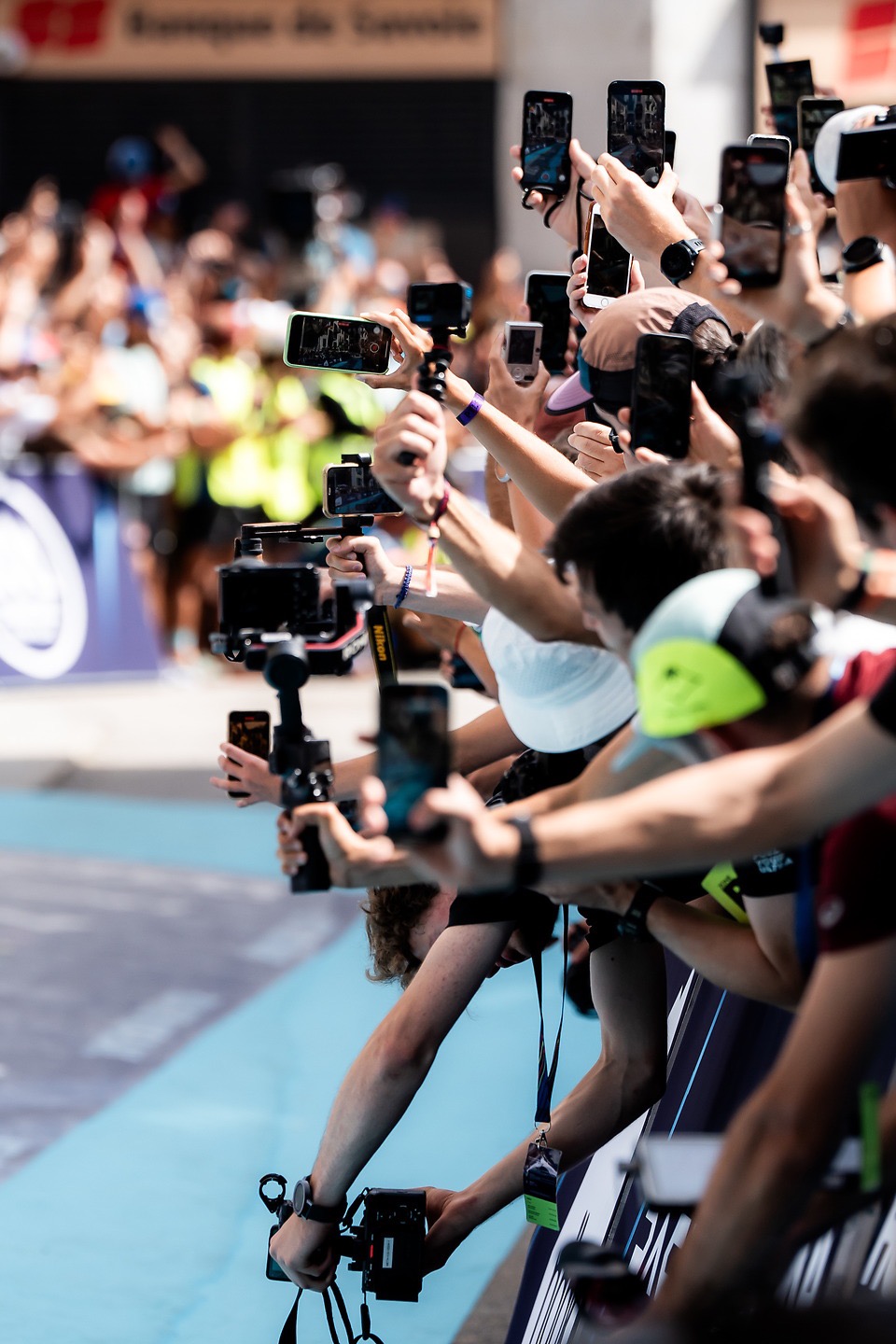
UTMB finish – media and fans at the finish.

In recent years, mountain, ultra and trail has changed dramatically. Live broadcasts, camera runners, drones, social media crews, and real-time storytelling have transformed trail racing from a niche endurance pursuit into a global spectator product. Major races now attract audiences that would have been unimaginable a decade ago. The growth has been undeniable. Athletes have become marketable personalities and as such, sponsors have invested heavily. In addittion, entire careers have emerged around documenting sport.

Yet alongside that growth comes an increasingly uncomfortable question: has trail running started to lose some of the very qualities that made it special in the first place?

For many runners, and increasingly for spectators and independent media too, the answer feels dangerously close to yes.
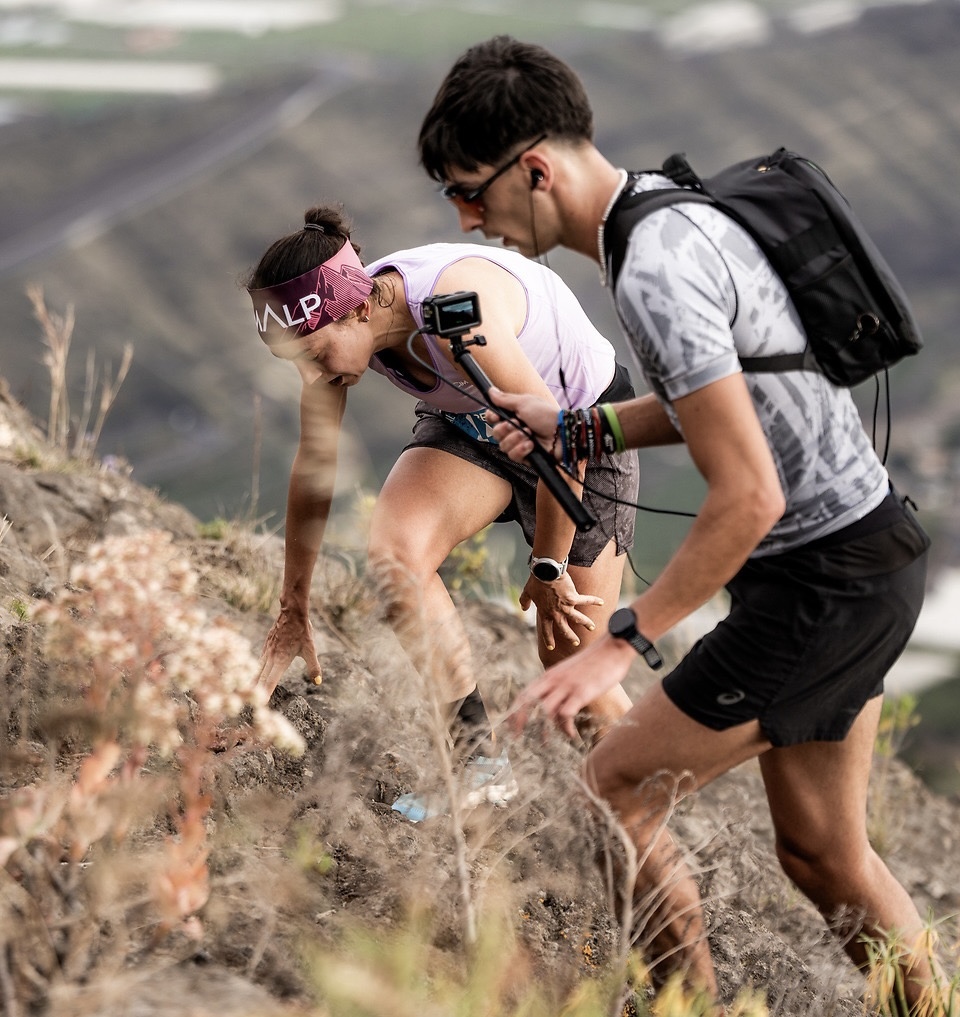
Transvulcania VK . Should a camera runner get in the way of other media?

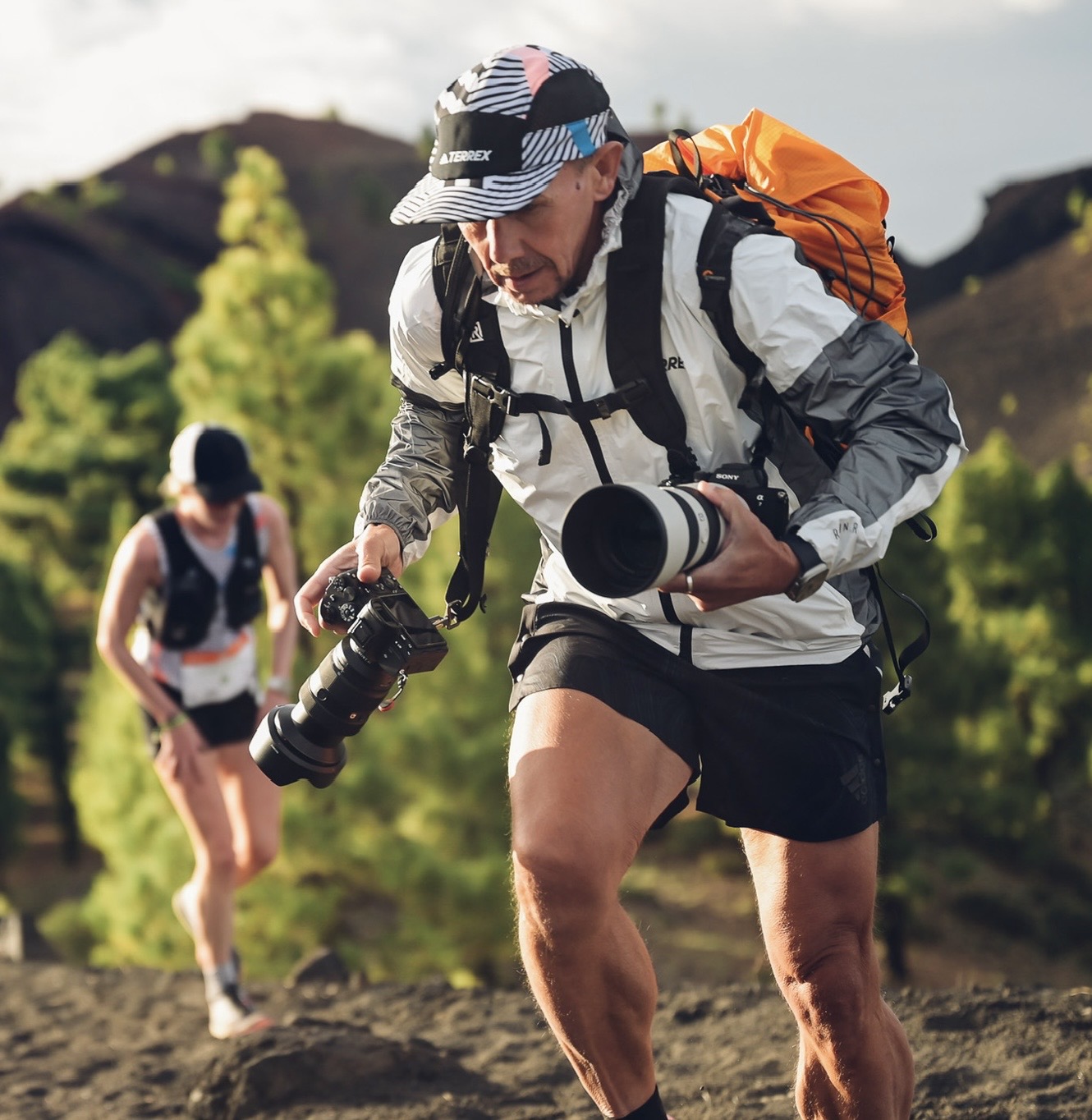
The rise of the camera runner has become symbolic of this shift. In theory, the role is understandable. Capturing the emotion of a climb, the fatigue etched across a face, or the tactical battle between elite athletes can create compelling storytelling – these moments help audiences connect with a sport that can otherwise feel distant and inaccessible.

There is no denying that live coverage has elevated trail running’s visibility. Events that once relied on sparse timing updates and post-race reports (think of IRunFar) now deliver immersive productions that rival mainstream sports broadcasts. Fans can follow races in real time from anywhere in the world and sponsors receive measurable exposurem race organisers can therefore justify larger investments. Let’s not forget, the athletes themselves often benefit from increased recognition and financial opportunity.

Without live reporting and modern media coverage, the sport likely would not have grown at its current pace.

But growth alone does not automatically equal improvement.

What increasingly concerns many within the trail community is the apparent lack of boundaries around how media operates during races. Camera runners can appear relentless, hovering around athletes for extended periods, running ahead repeatedly for angles, or occupying narrow sections of trail where space is already limited. At times it can feel less like documentation and more like intrusion.
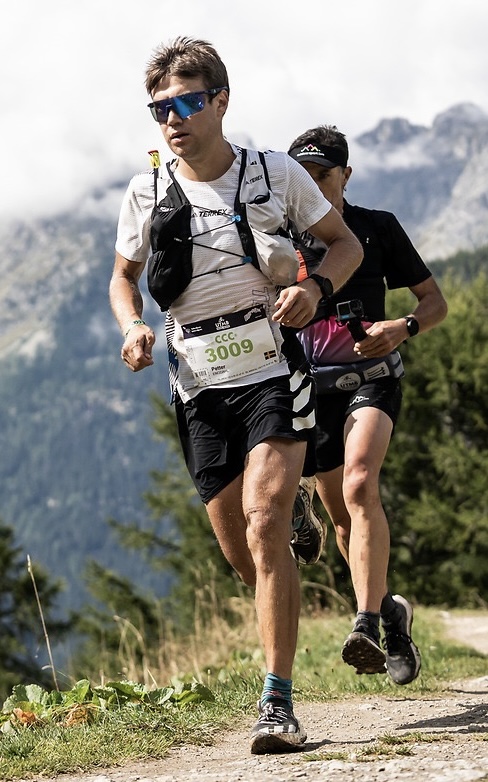
Petter Engdahl on his way to CCC victory closely followed by a camera runner

For the athlete, especially during long mountain races, particularly when technical, where mental rhythm and emotional management are critical, constant media presence can become exhausting. Trail running is not Formula One, it is not football where the sport is documaneted from ‘around’ the event. Many competitors enter these races precisely because they value solitude, immersion in nature, and a temporary escape from noise and pressure. When a camera crew shadows a runner for hours, asking questions or dictating movement on technical terrain, the experience fundamentally changes.

And the disruption does not stop with the elite athletes.

Other runners on the course often find themselves stepping aside repeatedly for media personnel, drones buzzing overhead, or camera operators rushing through aid stations. Spectators who may have patiently hiked for hours to watch a single moment of the race can suddenly find their view blocked by large production setups. Independent photographers and journalists, many of whom helped build the sport long before major broadcasters arrived, can struggle to work around increasingly aggressive media operations.

The atmosphere at a race changes, the trail changes and most certainly, the dynamic changes.

At some races, it now feels like open season: too many people on the course, too little oversight, and an assumption that the pursuit of content justifies almost any level of intrusion.

That raises an uncomfortable but necessary question: is it time for regulation?

Not regulation designed to stop coverage altogether, but regulation intended to preserve the integrity of the sport, the experience of those participating in it, those on the trail watching it, the media and journalists who operate in a more controlled and static way to document it.

Many traditional sports already operate under strict media guidelines. There are designated access zones, limits on personnel, behavioural standards, and safety protocols. Trail and mountain racing, however, often still functions with a comparatively loose framework despite increasingly sophisticated productions taking place in highly sensitive environments. UTMB are arguably, due it’s growth and profile, have paved the way, with increasing regulations on how media perform, but, is it enough?

Clearer rules could help restore balance.

For example, races could limit the number of camera runners and restrict how long media personnel may remain alongside competitors. Organisers could establish protected sections of trail where no filming, other than static, is allowed. It is important to preserve moments of solitude and reduce congestion on technical terrain. Drone use could face tighter environmental and safety restrictions. Independent media access could also be better protected to prevent races becoming monopolised by broadcasters.

Importantly, regulation should not be viewed as anti-growth. In many ways, it may be necessary for sustainable growth.

Because if trail running becomes overly commercialised and intrusive, it risks alienating the very people who built its culture in the first place. The authenticity that audiences are drawn to cannot survive indefinitely if every moment becomes manufactured for content.

There is also a broader philosophical issue at play. Trail running has always differed from mainstream sports because participation mattered more than spectacle. The mountains were not merely a backdrop for entertainment; they were a central character in the experience. Once coverage begins to dominate the event itself, the priorities subtly shift. The race starts serving the broadcast instead of the other way around.

Of course, there is no easy answer. Many fans genuinely love the deeper access and storytelling. For newer audiences, live coverage creates connection and understanding that can inspire participation. Athletes themselves are divided, some embrace the exposure while others quietly resent the constant presence of cameras.

But perhaps the debate itself is healthy.

It suggests the sport has reached a level of maturity where it must decide what it wants to become.

Trail and mountain racing does not need to reject modern media. Visibility, professionalism, and storytelling have all brought meaningful benefits. But there is a growing sense that boundaries are needed before the balance tips too far.

Because once the silence of the mountains is replaced entirely by the demands of production, something important may already have been lost.
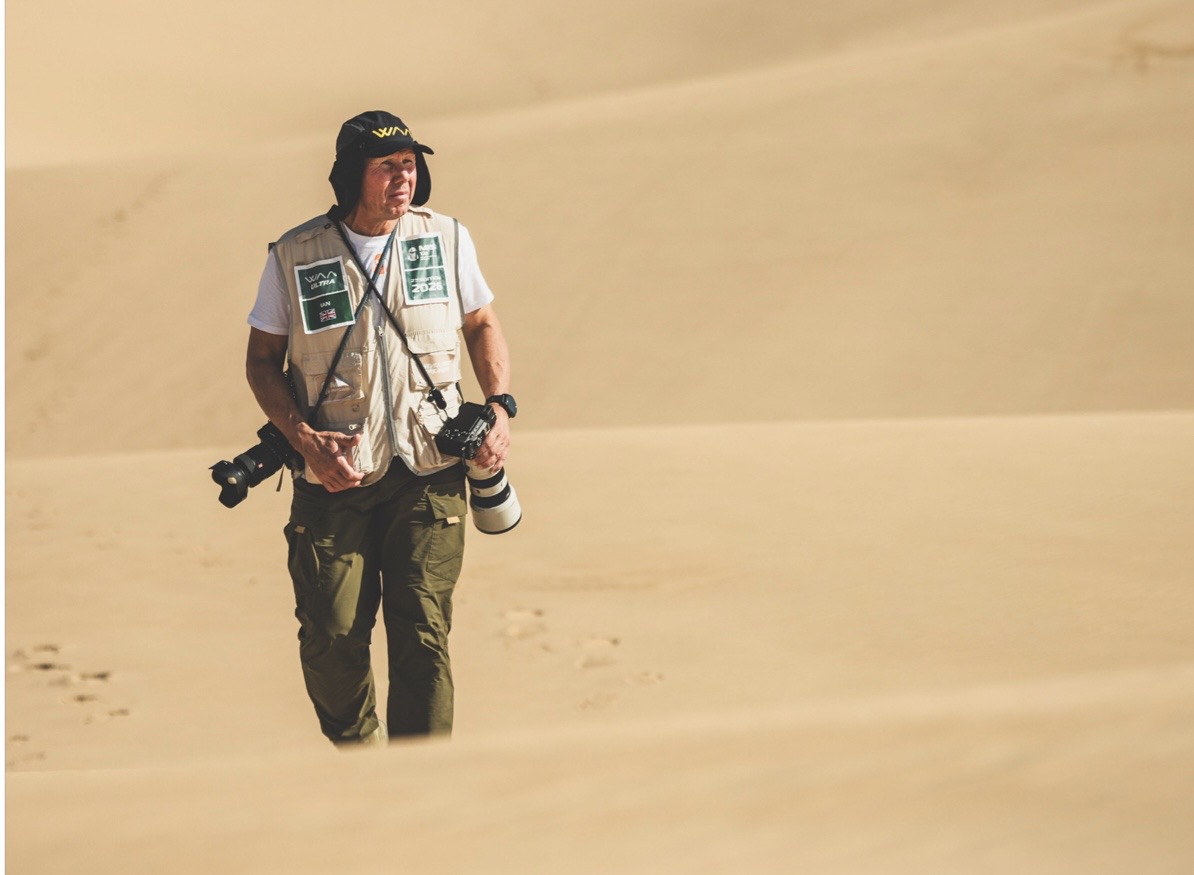
Photo Gwen Marche – Alone, wilderness, no other media. Perfect

Follow Ian Corless

Instagram – @iancorlessphotography

Twitter – @talkultra

facebook.com/iancorlessphotography

Web – www.iancorless.com

Web – www.iancorlessphotography.com

Grab A Coffee…

I had a brief chat with journalist, Sussi Lorinder while chilling in my hammock after my 11th edition of The Coastal Challenge in Costa Rica.

Ian Corless is in his hammock outside the tent with a beer in hand, I sit in the sun lounger next to me with my bottle of recovery drink. We are located in Drake Bay on the Corcovado Peninsula in Costa Rica. The sun is about to set and colors the sky rose-orange. We both just finished a race, a six-day adventure that he photographed and I ran. The soundscape is almost deafening, waves crashing against the shore, howler monkeys in the palm trees above us and cicadas hissing.
Evidence of hammock, stunning view and beer in hand!

I very much prefer being behind a camera than in-front of one. As a good friend once said, ‘You have a face for radio!’ I concur.

If interested, have a read HERE

You may need to use Google Translate for the link above, English translation below.

Thanks to Swedish Photographers’ Association

Crocodiles, what crocodiles? Photo by Su Europe

Ian Corless has created a career as a running photographer and has the whole world as his field of work. Text: Sussi Lorinder.

Photo: Ian Corless

Ian Corless is in his hammock outside his tent with a beer in hand, I sit in a sun lounger with my bottle of recovery drink. We are located in Drake Bay on the Corcovado Peninsula in Costa Rica. The sun is about to set and colors the sky rose-orange. We have both just finished a race; a six-day adventure that Ian photographed and I ran. The soundscape is almost deafening, waves crashing against the shore, howler monkeys in the palm trees above us and cicadas hissing.

Ian Corless cleans one of his cameras from dust and dirt. The week has been a tough week as he followed the elite in the race. The environment and the weather are the biggest challenges when photographing running competitions and above all The Coastal Challenge in Costa Rica. The humidity is high here and the roads are very dusty. Ian also prefers to stand in the most spectacular places, which requires him to get there before the elite.

Photo: Ian Corless

“Pressing the button and actually taking the picture itself is what takes the least time and energy,” he says.

The logistics of a race are often a big challenge. Getting by car between two places where he wants to photograph can take significantly longer than it takes to run. They might run across a mountain but often he has to drive around. Here in Costa Rica, the roads are harsh dirt roads, so keeping a high speed with the car is impossible.

“Most of the nicest places are far away from the road, so it also requires good physical fitness to get there,” he says.

Lucky that Ian is a strong runner himself. His career started with him running the races himself with a camera. Then he only got pictures of the runners who were about as fast as himself.

“The advantage when you run the race yourself is that you actually get to all the places and know where the coolest environments are,” he says. “But sweat is a big opponent in Costa Rica due to the humidity. You sweat profusely after just five minutes of running; my cameras don’t feel so good about that,” he adds.

For several years Ian worked as a food and advertising photographer and ran in his spare time. In 2011, he was going to run a race and brought his camera to coincide with the start of a trail running podcast, Talk Ultra. He took some pictures and realised that no one was doing what he was doing. From races, Ian had only seen pictures taken of the runners smiling into the camera, pictures taken without much thought. He wanted to do something different, build up the image in the environment where the race took place, to sell the race and the place. Most of the time, he photographs without the runners seeing him, in order to get authenticity and more feeling in the pictures.

Photo: Ian Corless

Working as a race photographer can look glamorous on social media. Ian has travelled to some really exotic places and has about 175 travel days a year. But often he doesn’t go home to Norway between trips, but like now, for example, he directly travels from Costa Rica to Gran Canaria. Then it is important to have an understanding family and be able to plan ahead. Ian usually makes his annual calendar in November and since his girlfriend Abelone is a runner, they check which races she wants to run too and plan the calendar together. In this way, they meet even when he travels a lot. On stage races, you also usually live in tents close to each other. Sleep is easily disturbed when it is very hot or very cold or the tent neighbour is snoring loudly.

– But it’s worth it, says Ian and looks out over the magnificent sunset.

Photo: @cusukofotografiacr

Name: Ian Corless
Age: 57
Lives: in Norway but travels about half the year
Dream destination: Patagonia
Instagram: @iancorlessphotopraghy

Mark Gillett – A Tribute

1E1A2968

I lost a good friend at the weekend, Mark Gillett.

Taken away from us way to early in life, it was Mark who I experienced my first Marathon des Sables with. It was such a laugh, such a great moment in time. We hit it off immediately. We had similar humour, a mutual respect for each others work and we somehow managed to verbally abuse each other without upsetting each other.

As Steve Diederich and Kirsten Kortebein can confirm, the 2013 Marathon des Sables was such a great experience.

MarkGillett©stevediederich

Photo ©stevediederich

“Today we lost a friend, some of you may have met Mark Gillett at previous MdS’s and recently at the MdS Expo a few weeks ago. He was a great supporter of the MdS, as a competitor, as a photographer / videographer and most of all as a great guy. Ian Corless and I have spent many a night with Mark crying with laughter – his humour was brutal and funny which contrasted his love for his daughter and life. He was hugely talented as a tennis player and a photographer, however it was his courage and zest for life that stood him apart. We will miss you Mark – Ian and I will drink a mug of shit brandy to your memory in April. – See you mate” – Steve Diederich

I think back to 2013, I shared a 4×4 with Mark, we worked from 5am to midnight everyday. We walked in the dunes, we chewed the fat discussing everything and anything. But most of all, Mark talked about Emily, his daughter. Jeez was he so proud.

Life is way to unfair. Beyond unfair, I can’t even to begin to explain how life chews us up and spits us out. My Dad left this world way to young, I have had several other family members and close friends leave us too.

Mark embraced everyday as his last and if he had one message it was about living life to the full. Something that I have embraced 100%. But Mark will live on in his work, his daughter and the people he has influenced.

Kirsten came to MDS wide eyed and a blank canvas. Both Mark and myself helped her (and took the piss). We had a great bond that has continued through the years but Mark took her under his wing, something that Kirsten has acknowledged:

“Mark, you piece of work. You beautiful, life-changing piece of work. You are so loved and will be so missed. There are no words. Thank you for everything.”

I have often wondered about Talk Ultra my podcast, and what value it will bring in future years. Yesterday I realised to a small extent its worth and value. I interviewed Mark in 2012 about Marathon des Sables as I was putting a special show together. With the approval of Emily, Mark’s daughter, you can hear that interview here, it is 15-minutes long.

Rest in peace Mark. You will be missed buddy.

Mark Gillett

Daddy, my absolute hero. 

I have watched you do so much. You were my tennis player, coach, photographer, explorer, writer, runner, cyclist, counsellor and father. You have taught me so many valuable lessons, and given me experiences that i will take through my life with me to help me become the best person that i can. You have inspired me, loved me and comforted me and i feel at peace with your love.

You tell me that when i was born, you held me and told me you wanted to show me the world. You have shown me the world and more than i could have ever asked. You have taken me to beautiful places and shown me the people that you loved, and that loved you dearly back. You always showed me your love, and did anything and everything for me. You showed me how to be a photographer and a tennis player, how to love myself and those around me, and most of all, you taught me that no challenge is too hard and that anything is possible. That i have no limits.

My precious father, i am lost for words. I cannot describe the pain i am feeling of losing you. But really, you will always be here. People like you never leave. You will never know how proud i am of you and what you have achieved, and to say i am the daughter of Mark Gillett is a blessing from God in itself. You will live on through me, my dear daddy. I just wish more than anything that we had more time.

Birdy is with me, and i know she loves and misses you dearly. She is a part of you that i now have to cherish and love, the same way you loved me.

Daddy i hope you know how much i love you. Rest up, and may your beautiful, kind soul rest in peace.

Your Ems

You can download the MP3 interview HERE if you would like to keep a copy