Countdown to MDS The Legendary 2025 – Five

You are in the final 2-weeks for MDS The Legendary.

With this in mind, we follow up the conference calls that took place on Friday March 21st with a summary.

First and foremost, the conference calls were recorded and you can view them on YouTube, the english version is as below.

SUMMARY NOTES AND KEY POINTS

The adventure will be here soon, do not worry, keep calm, 80% of you are first time participants.

Here we will go over the key information about the race.

Logistics

Passport – keep it handy and make sure you don’t forget it! Make sure you have at leat 6 months validity.

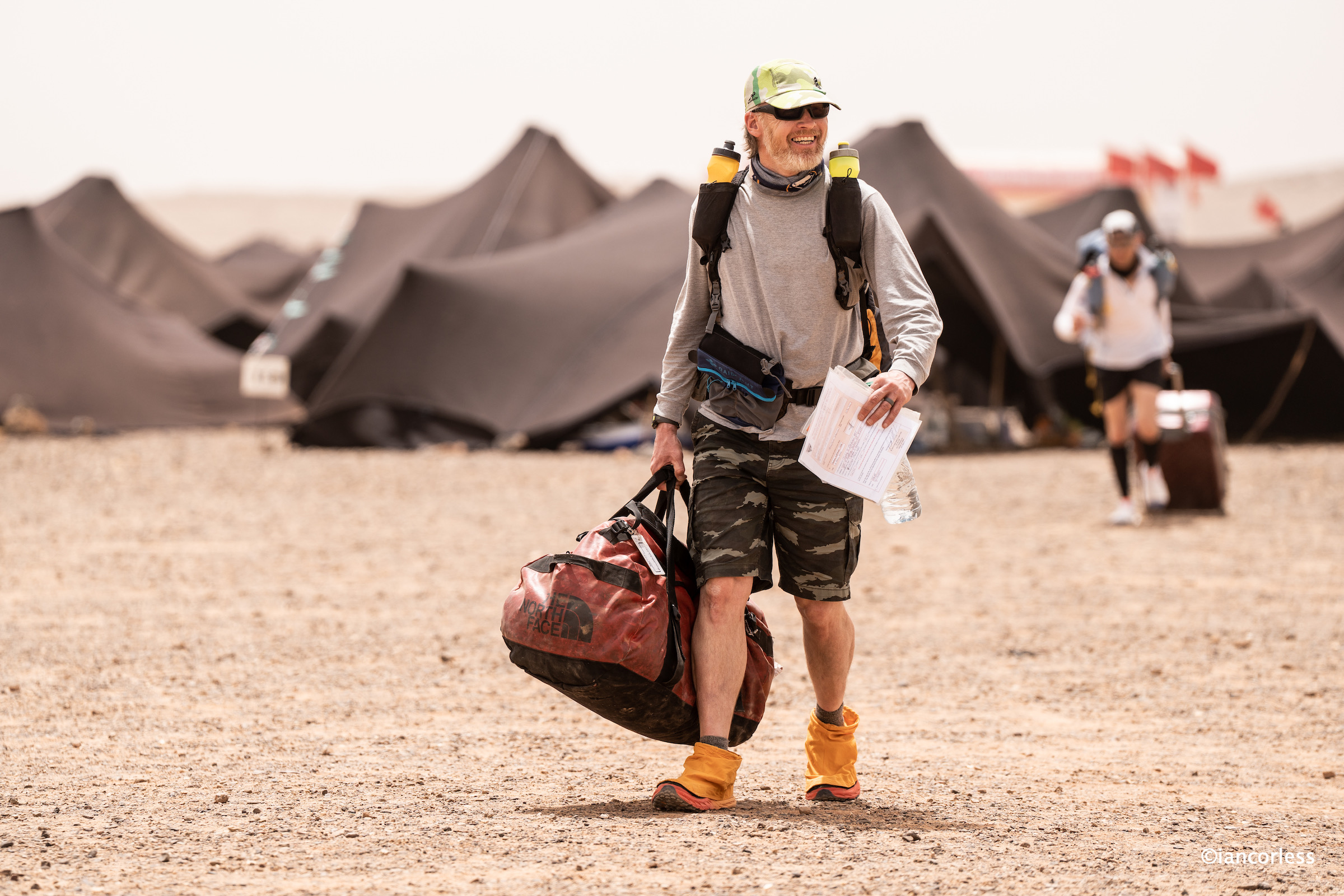
Wear race clothing for travel including shoes and gaiters.

Take RACE PACK with all contents as carry-on luggage, this includes the food. The only items you must check-in are poles and knife/ scissors etc.

MDS admin send you a procedure via newsletter in case your checked bag gets lost.

There will also be a pre-race shop at bivouac if needed, this will not have an exhaustive amount of equipment, but it may help in an emergency.

What happens when you land in Marrakech?

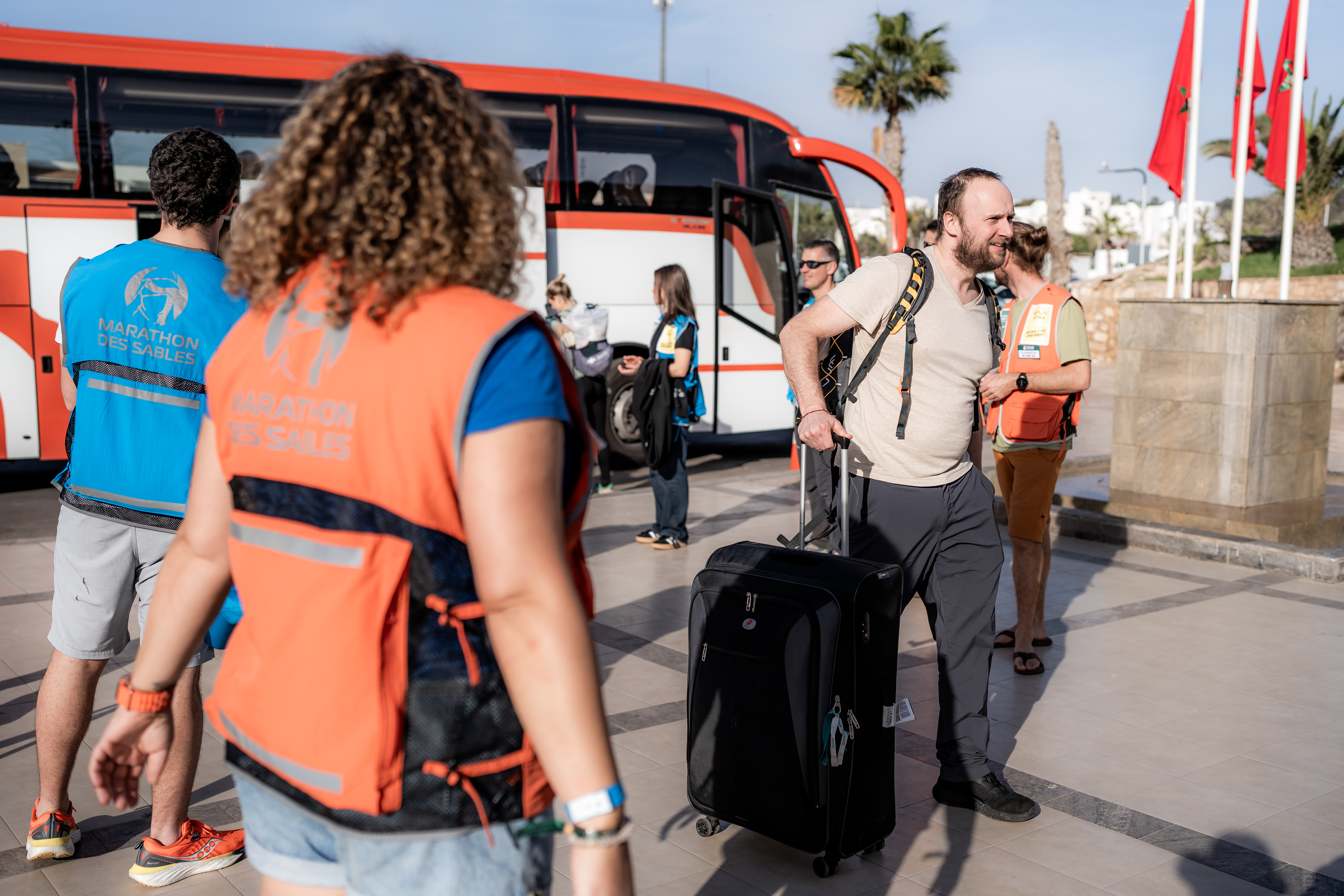
At the airport as you exit, after baggage collection, there will be a welcome area on April 2 and 3rd look out for the MDS team wearing orange and blue gilets.

Board your bus

Bus schedule:

  • KENZI ROSE: April 2 & 3 – 7:00 AM
  • RAK AIRPORT: April 2 & 3 – 10:00 AM
  • RAK AIRPORT: April 2 & 3 – 12:00 PM

The drive to Ouarzazate is approximately 4-hour ride + mid-way break MDS will provide a snack. If you have special dietary needs, you should have submitted that on our website. You’re welcome to bring your own snack if that makes you feel more comfortable.

Drop-off at hotels in Ouarzazate – all buses stop at all hotels:

  • El Baraka
  • La Perle du Sud
  • Berbère Palace
  • Karam Palace

You’ll spend 1 or 2 nights there depending on your booking. Our staff will be present in the main hotels in Ouarzazate if you need anything.

April 4

Transfer to the bivouac

Meet at 7:30 AM in Ouarzazate to board the bus from either:

  • Karam Palace
  • Berbère Palace

6-hour transfer

1 break during the ride, lunch pack will be provided BUT I recommend you purchase items in Ourarzazate to take with you, remember dta 1 and day 2 in bivouac is self-sufficient.

REMEMBER you are self-sufficient with food BEFORE the race starts. So, you need to take adequate food, snacks etc. There is no restriction here as you carry this in your luggage.

➤ Arrival at the bivouac with your suitcase and all your gear


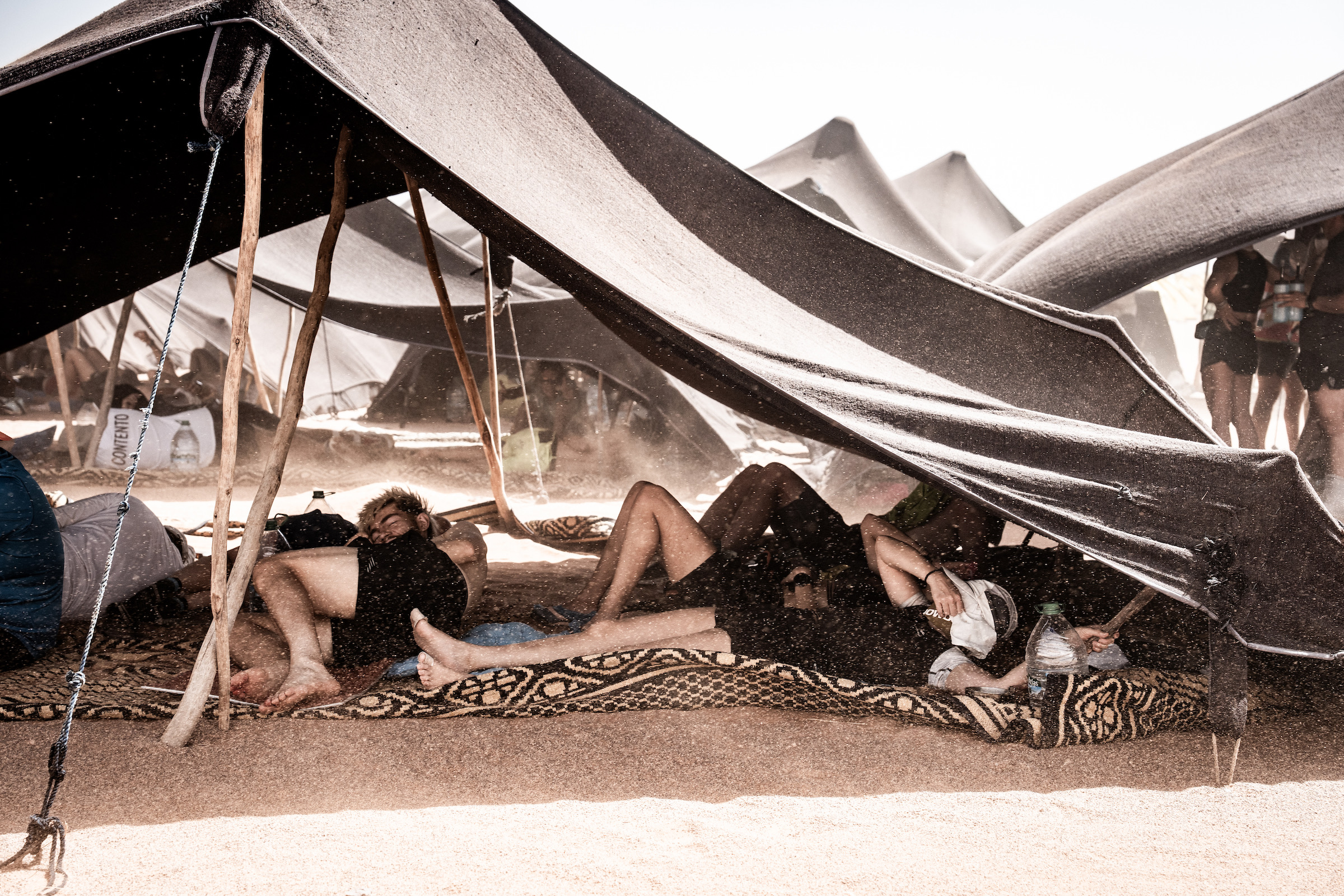
➤ You’ll be assigned an 8-person tent – tent numbers will be shared next week


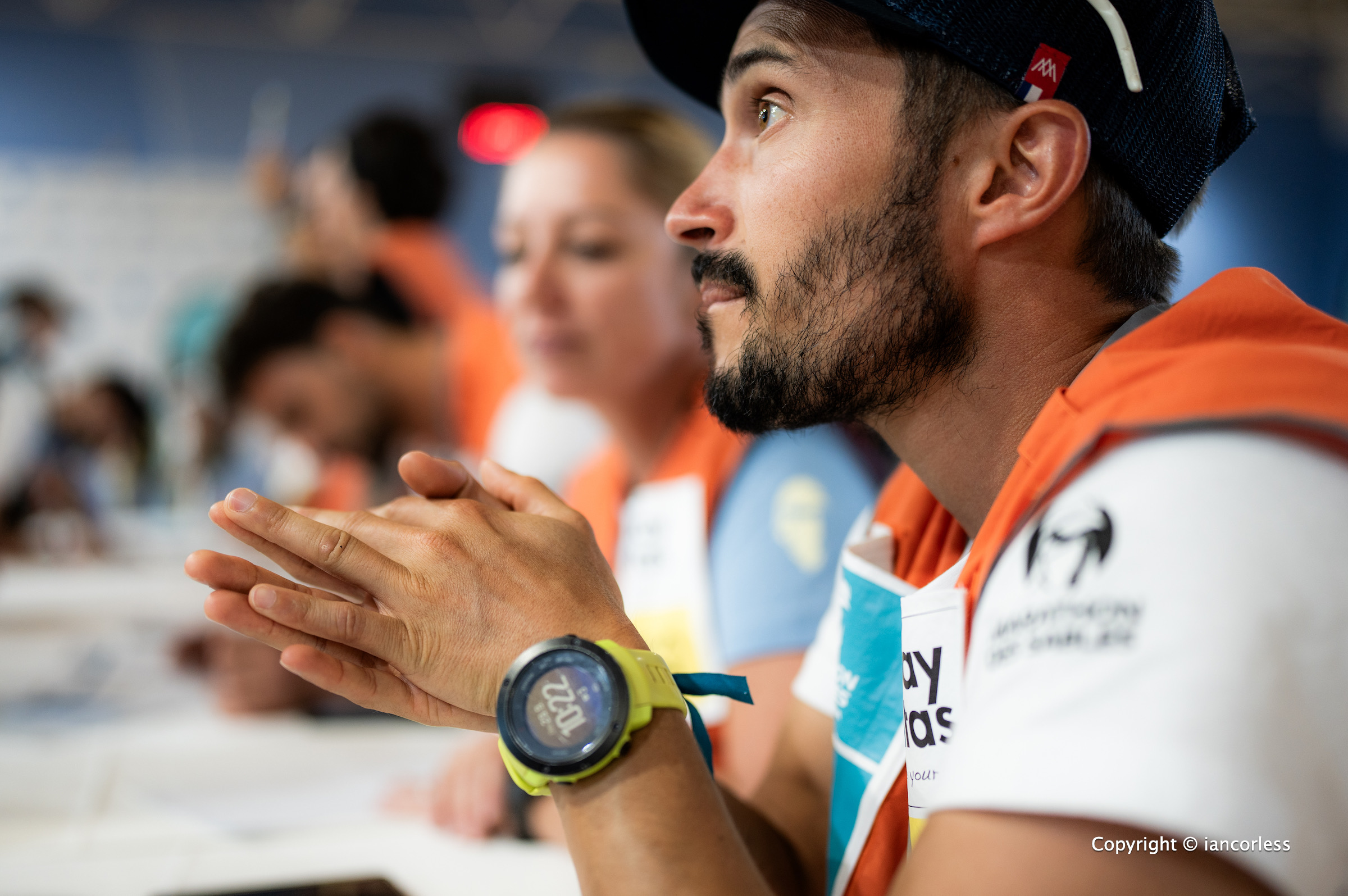
➤ Arrival briefing


➤ Sleep

IMPORTANT – You have luggage with you this night, a great opportunity to fine tune what you will take when racing. If it is cold, you can pack extra layers. If hot, you can maybe take less.

April 5

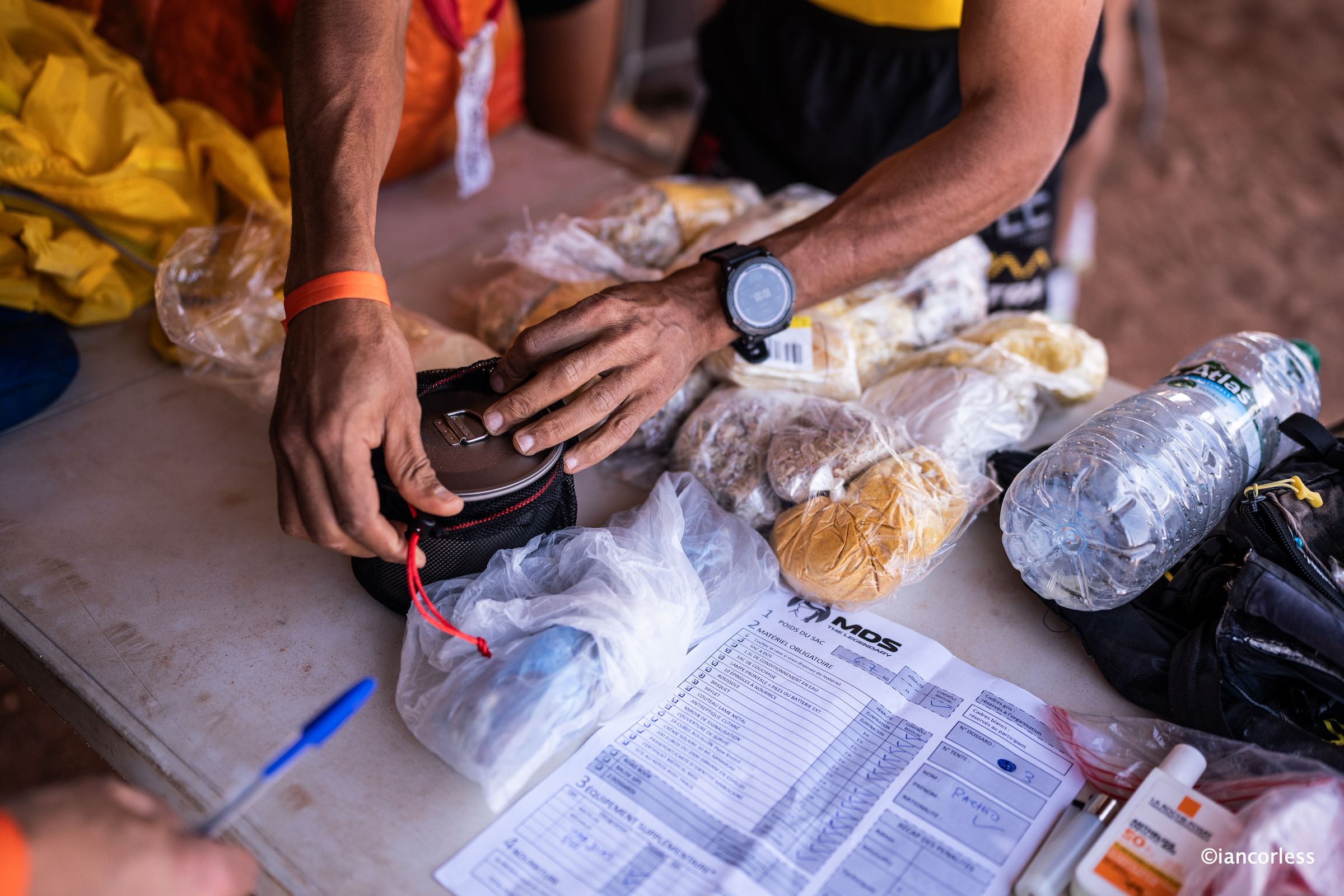
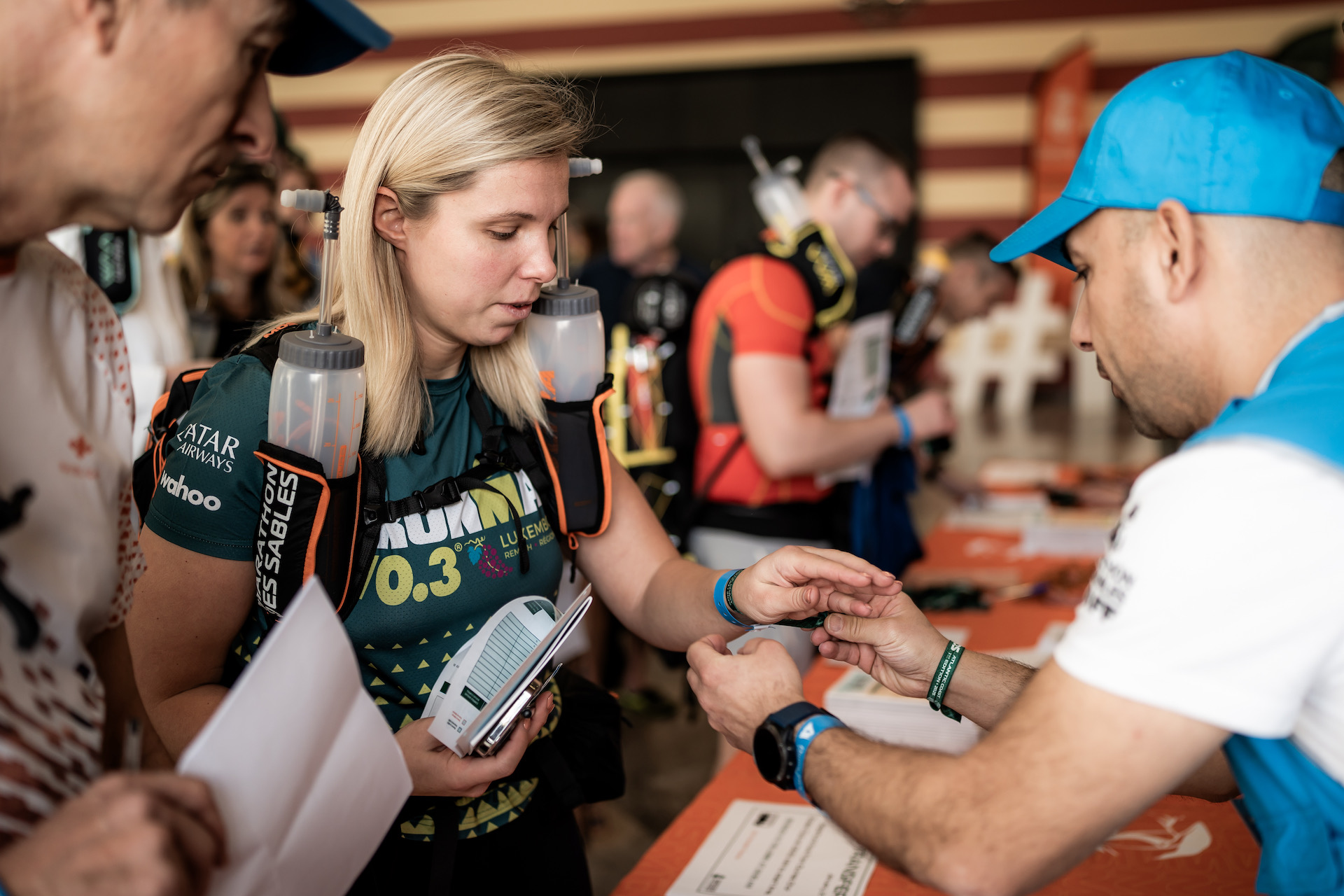
Technical checks stay in your bivouac tent and a member of the MDS team will come to your tent and tell you when to go. Expect this to take approximately 1-hour.

You will drop your luggage at the technical check. you will not see or have access to luggage until AFTER the race when you return to Ouarzazate.

Rest in camp and prepare for the race.

April 6–12

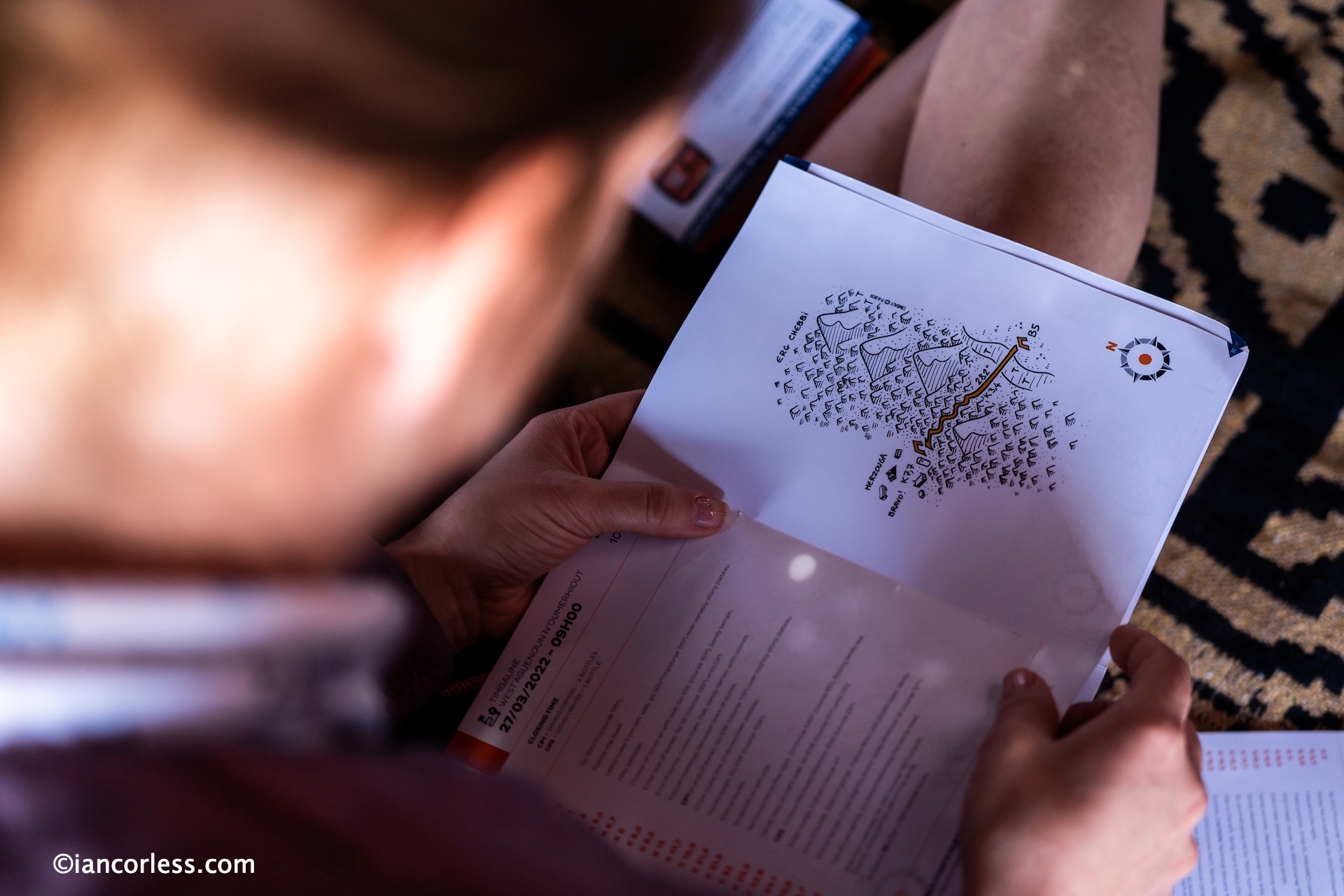
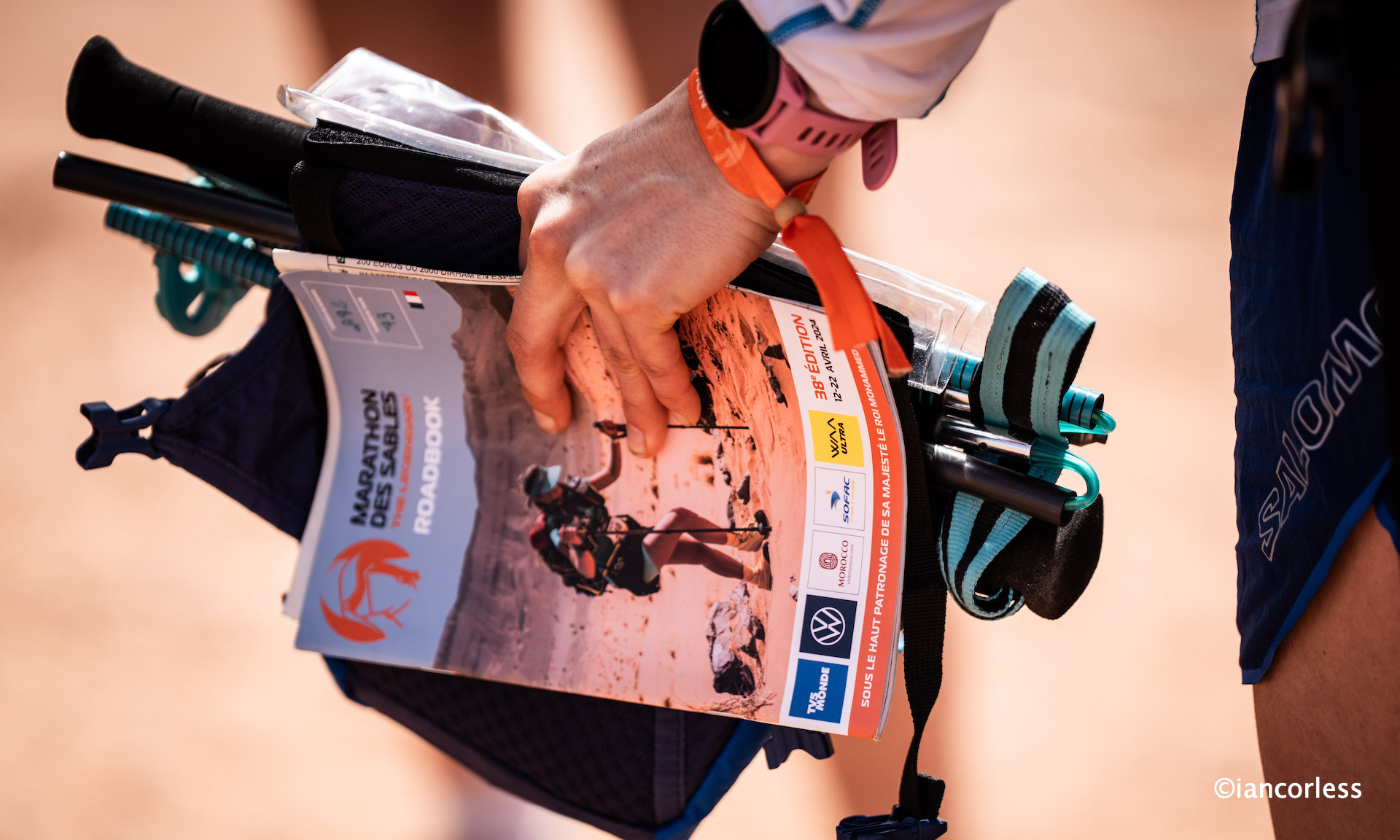
Race Stages You’ll discover the stage details in the roadbook, given to you when boarding the bus on April 4.

The long stage will be the 4th stage.

The race will be 250km’s over 6-stage / 7-days.

A typical stage:

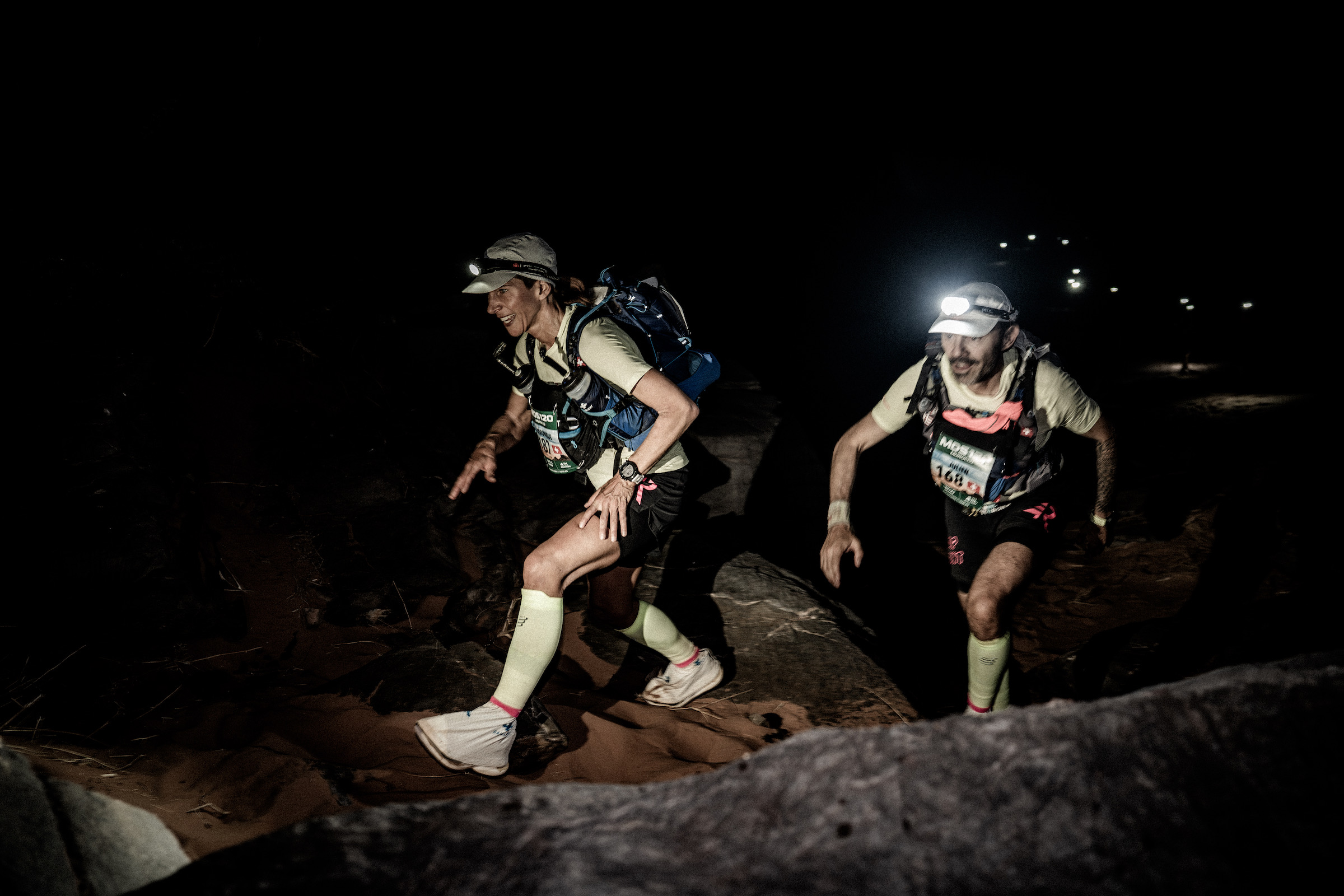
Early starts so you will be getting ready in the dark.

Checkpoints every 10km (+/-) with unlimited water

We recommend carrying an extra soft flask for flexibility – but remember, you carry it!

Each CP has shaded rest zones

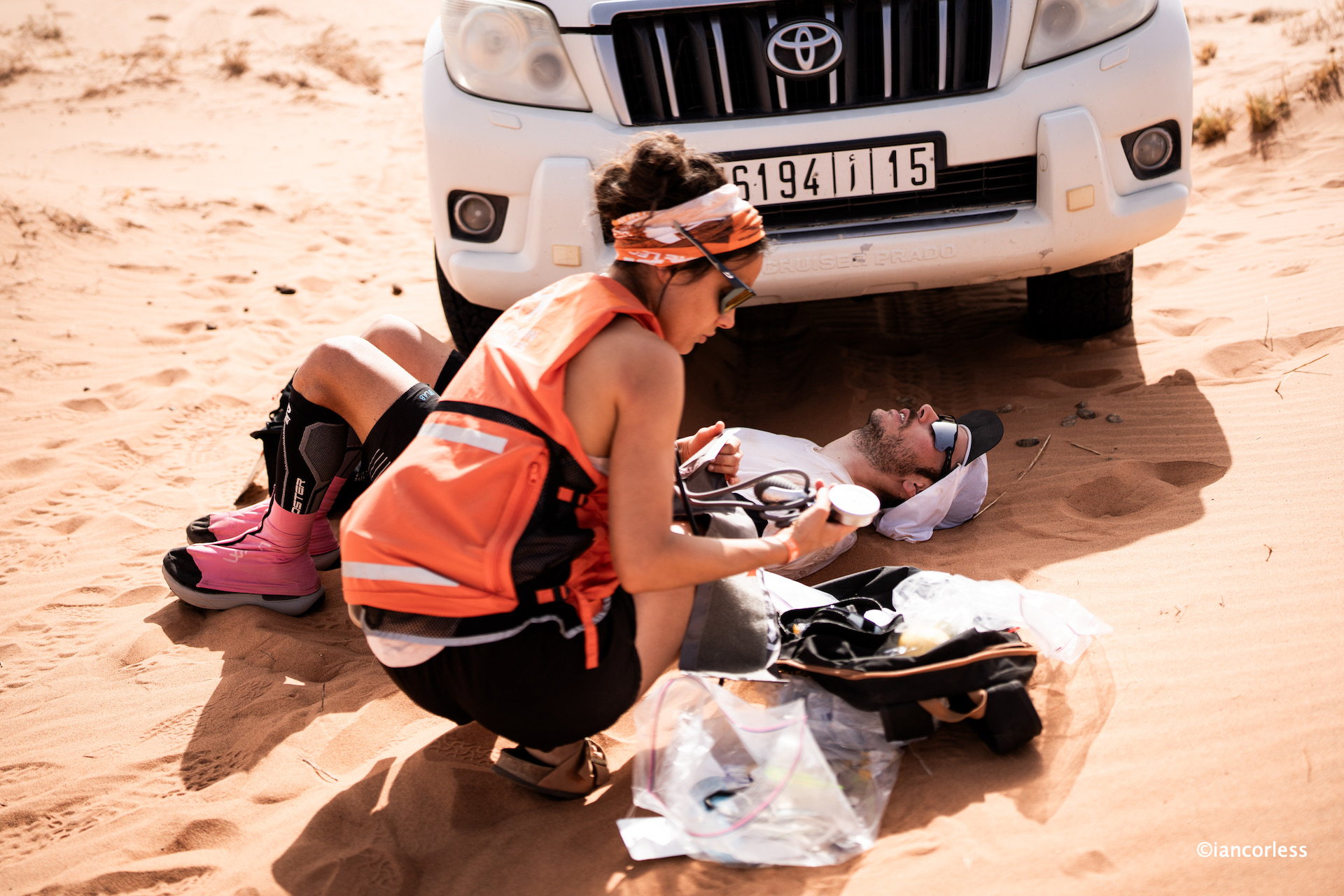
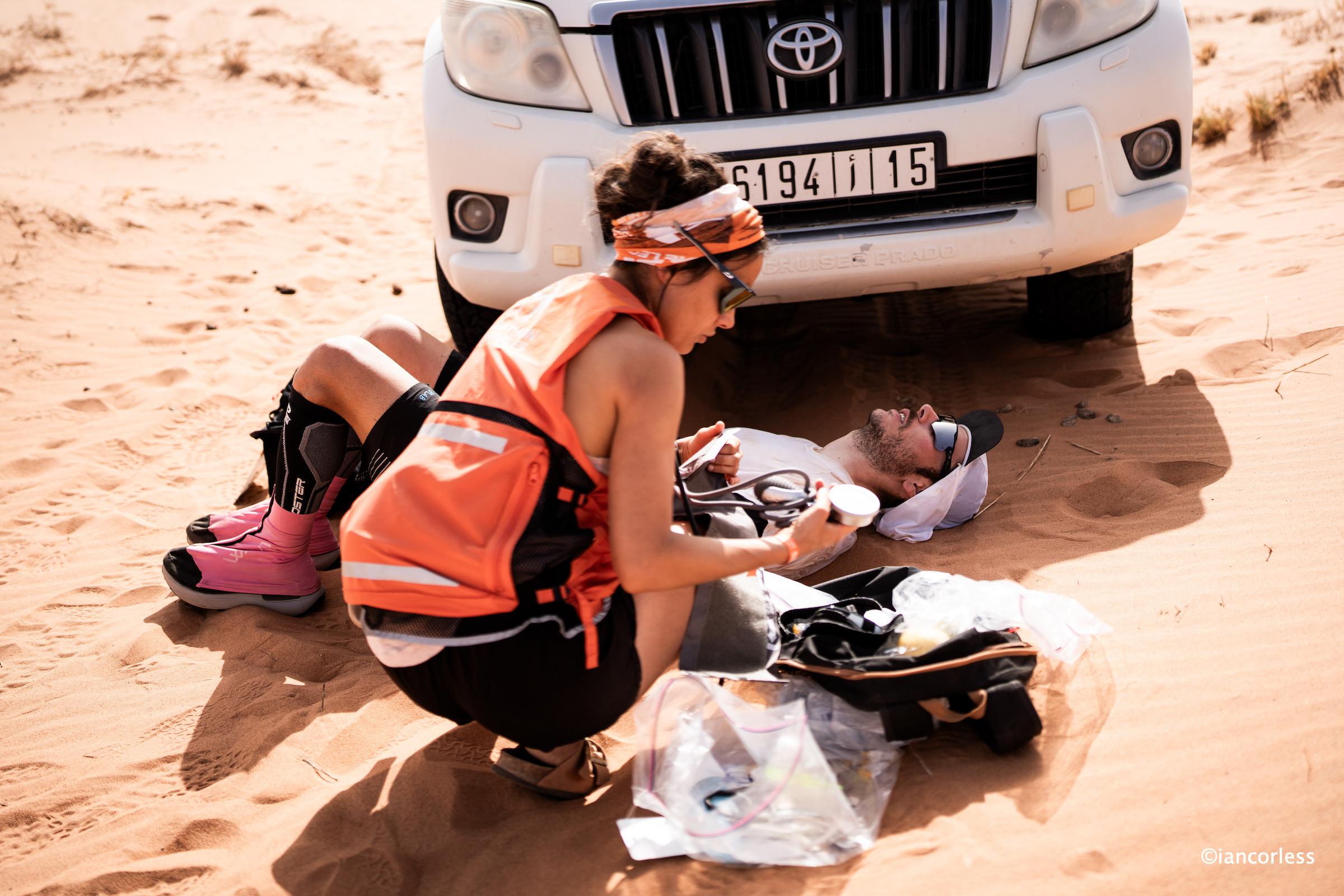
Orange-vest staff to help if needed for any medical issue

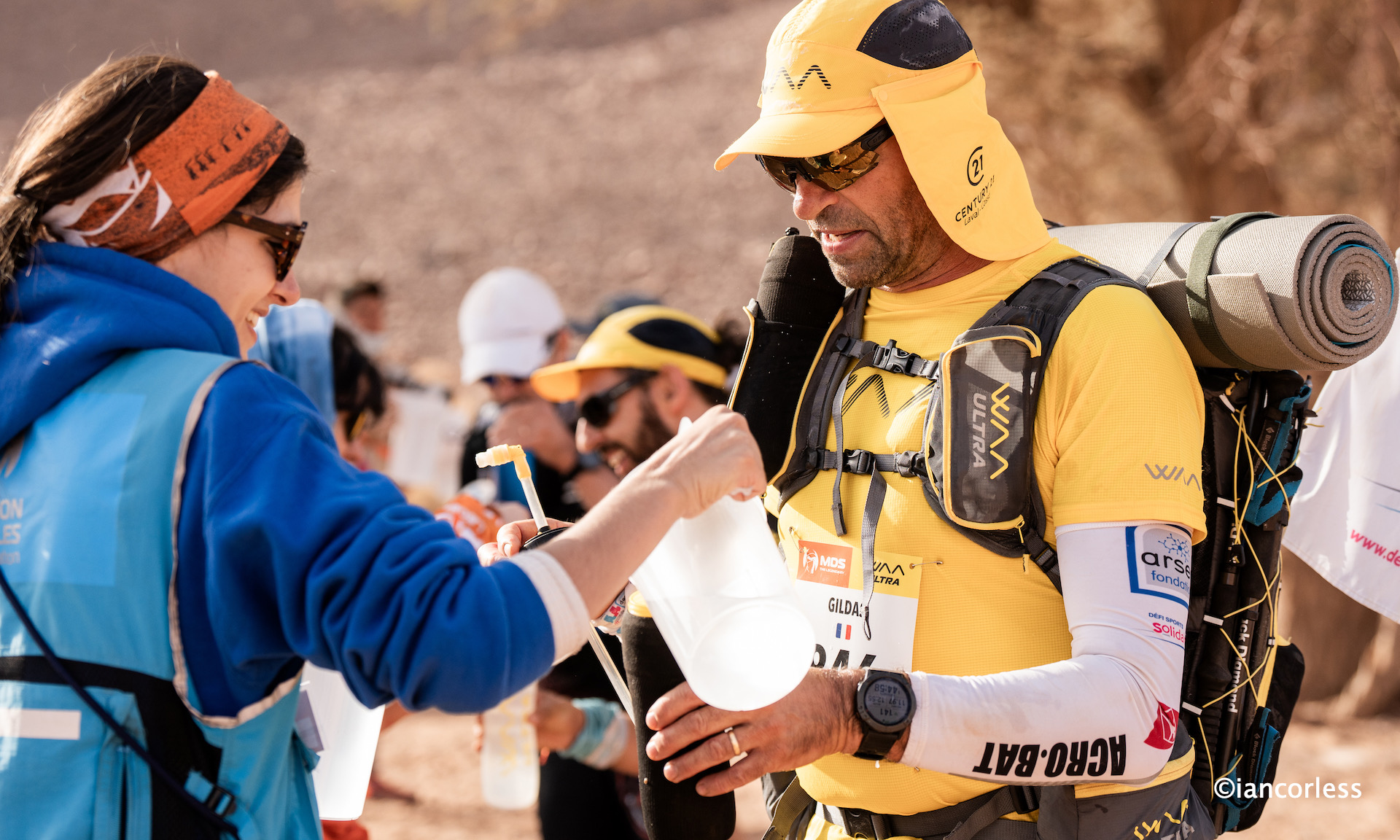
Cold water available to cool your neck (bring a neck gaiter!)

Feminine hygiene products available at bivouacs and on course

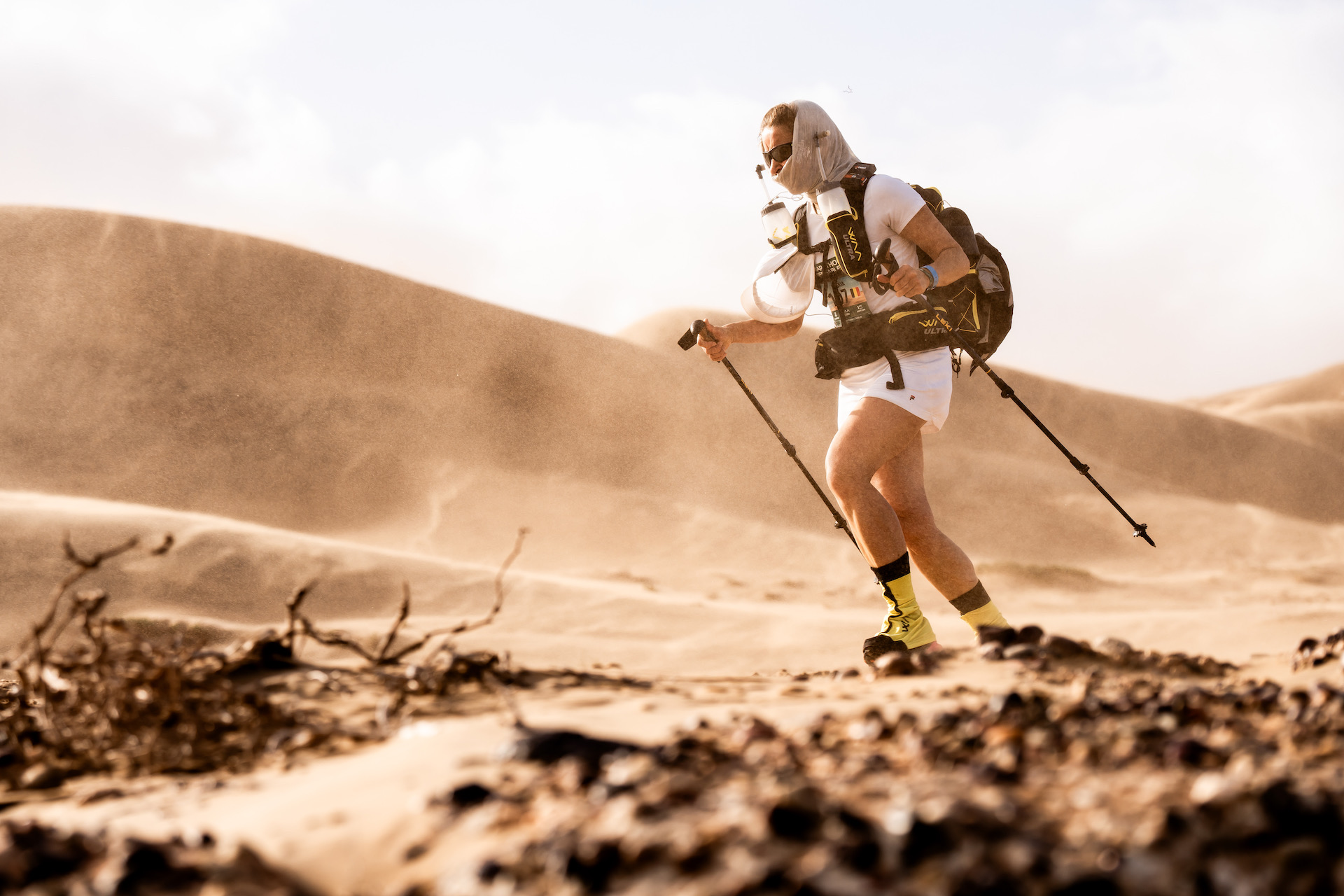
Minimum pace is 3.5 km/h – no stress, go at your own rhythm.

End of the stage: You can refill your bottles + get a 5L water bottle to last to CP 1 the following day.

EQUIPMENT

Review the list of mandatory equipment

First night at the bivouac: Good opportunity to test how cold it gets.

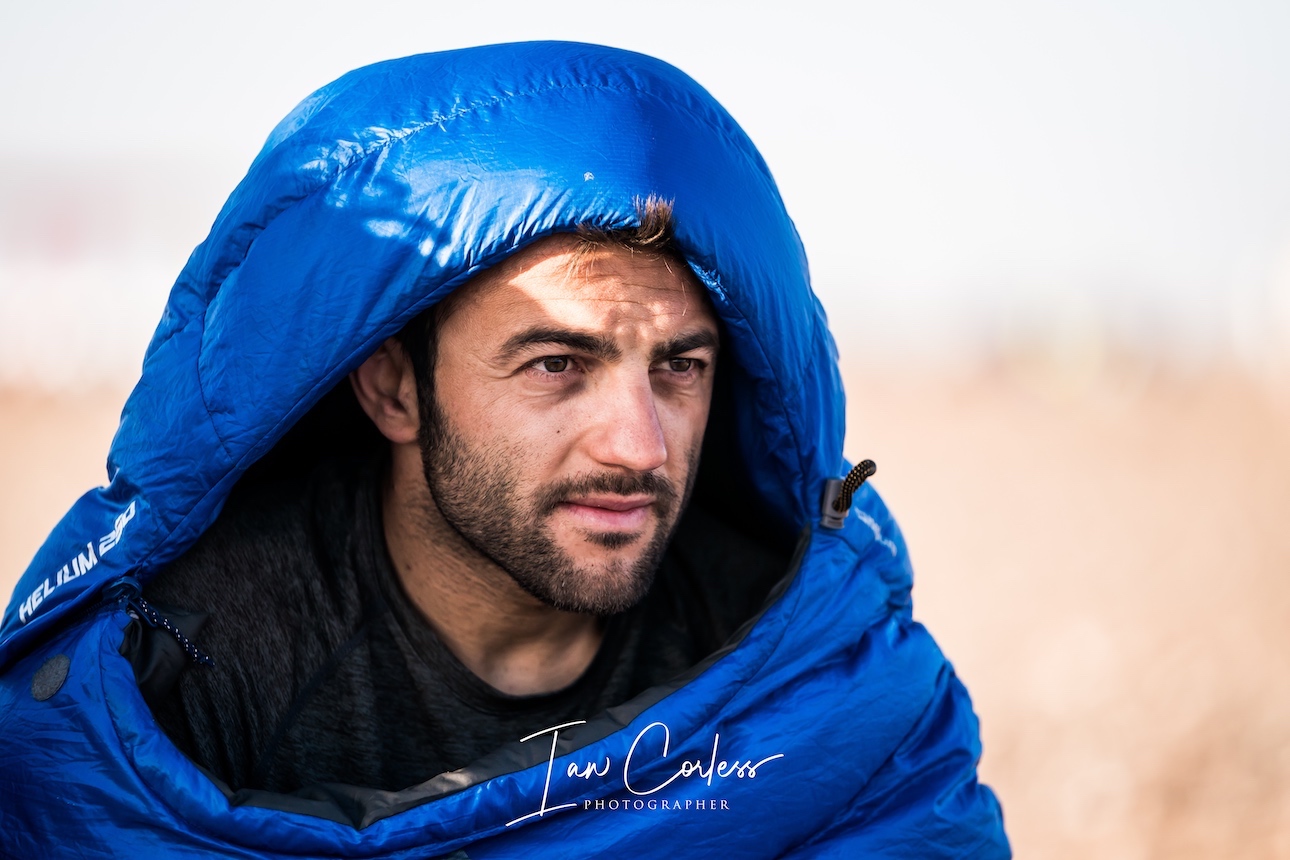
Bring a proper sleeping bag,

Have with you warm layers, light down jacket, etc.

Sleeping mat is highly recommended

Make sure you have tried and tested shoes with gaiters

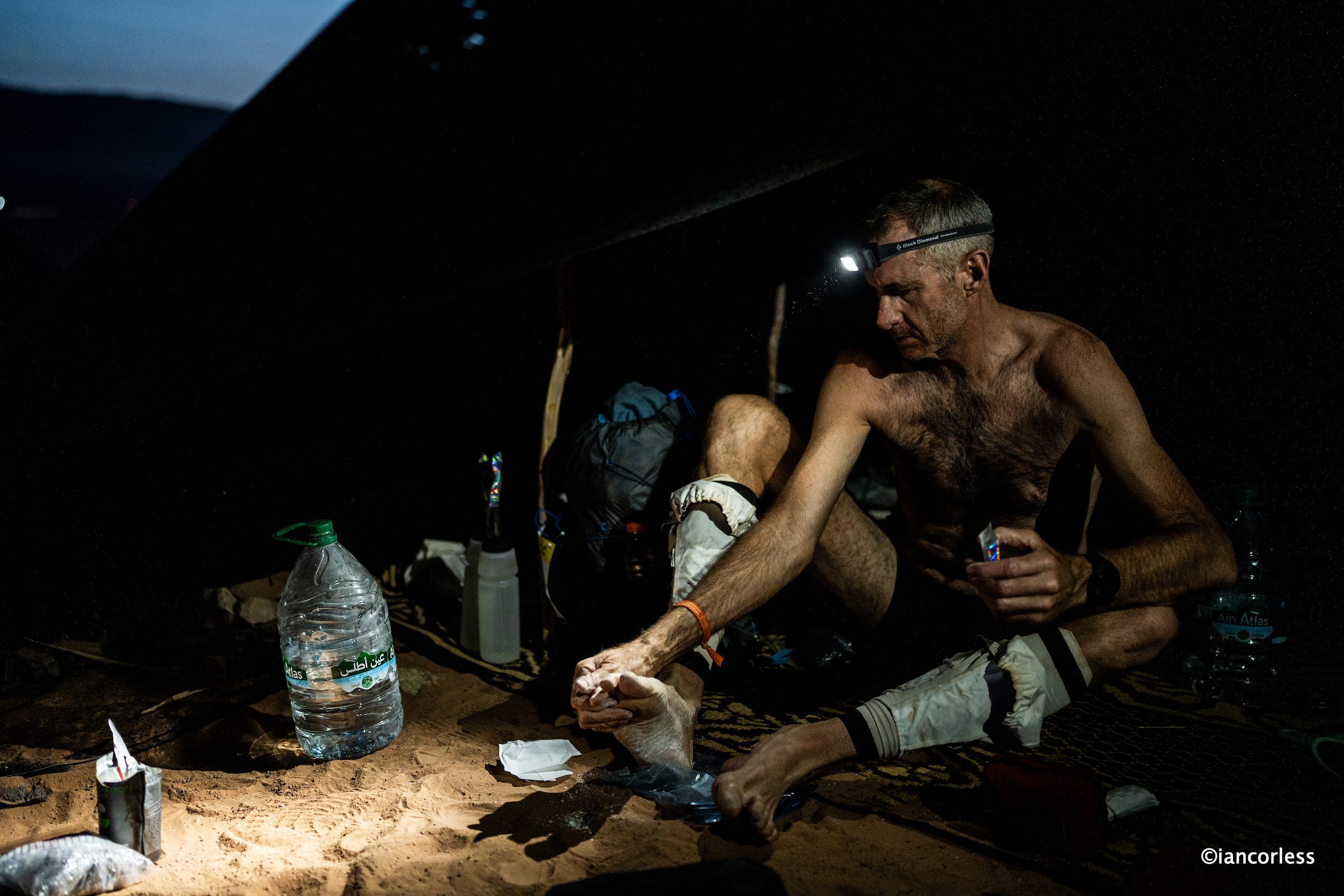
Foot care – trim your toenails before the race – not too short, not too long. A pedicure can be a good idea.

Bring socks you’re used to, and maybe a spare pair.

Foot care during the race:

  • Clean and let your feet breathe after each stage.
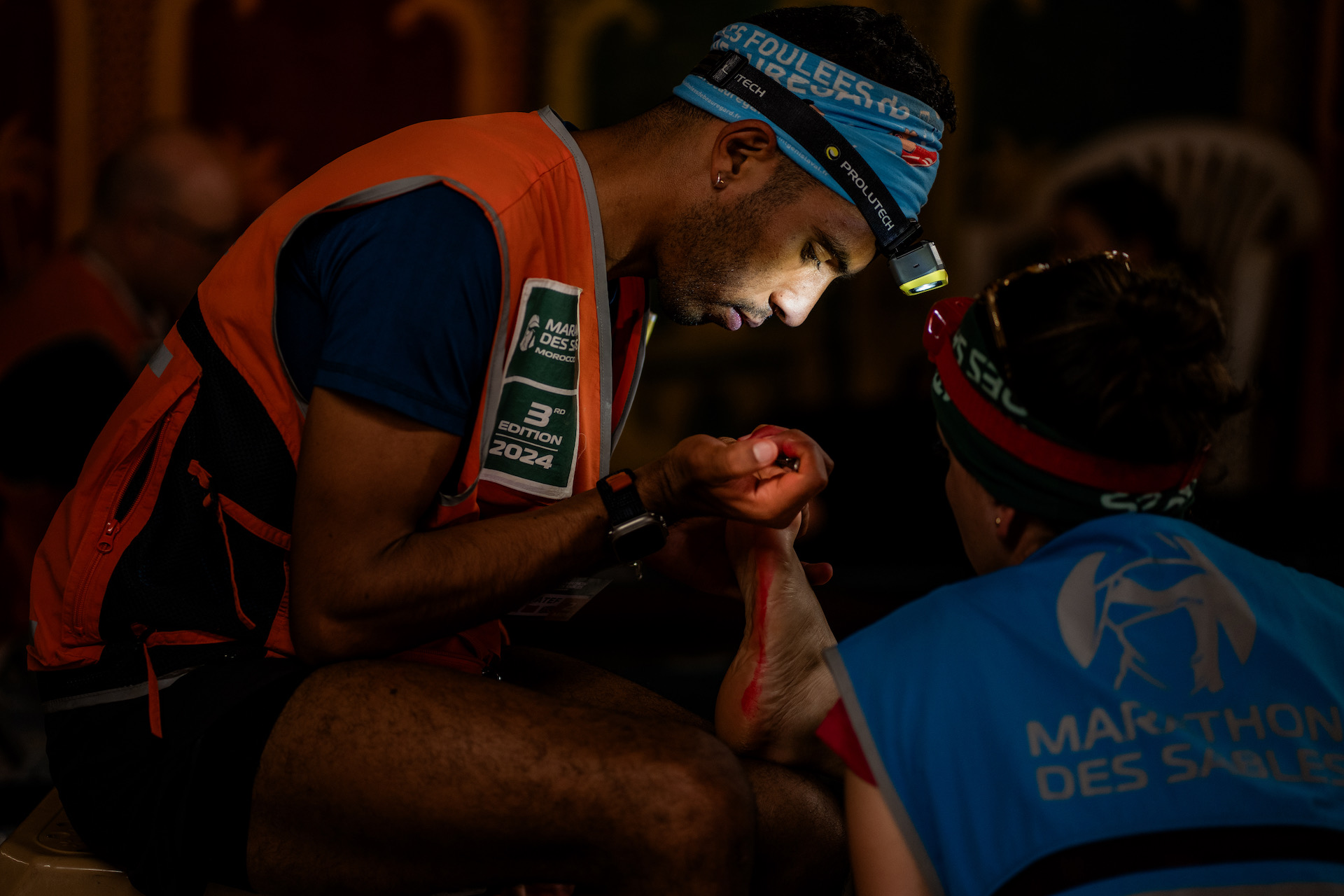
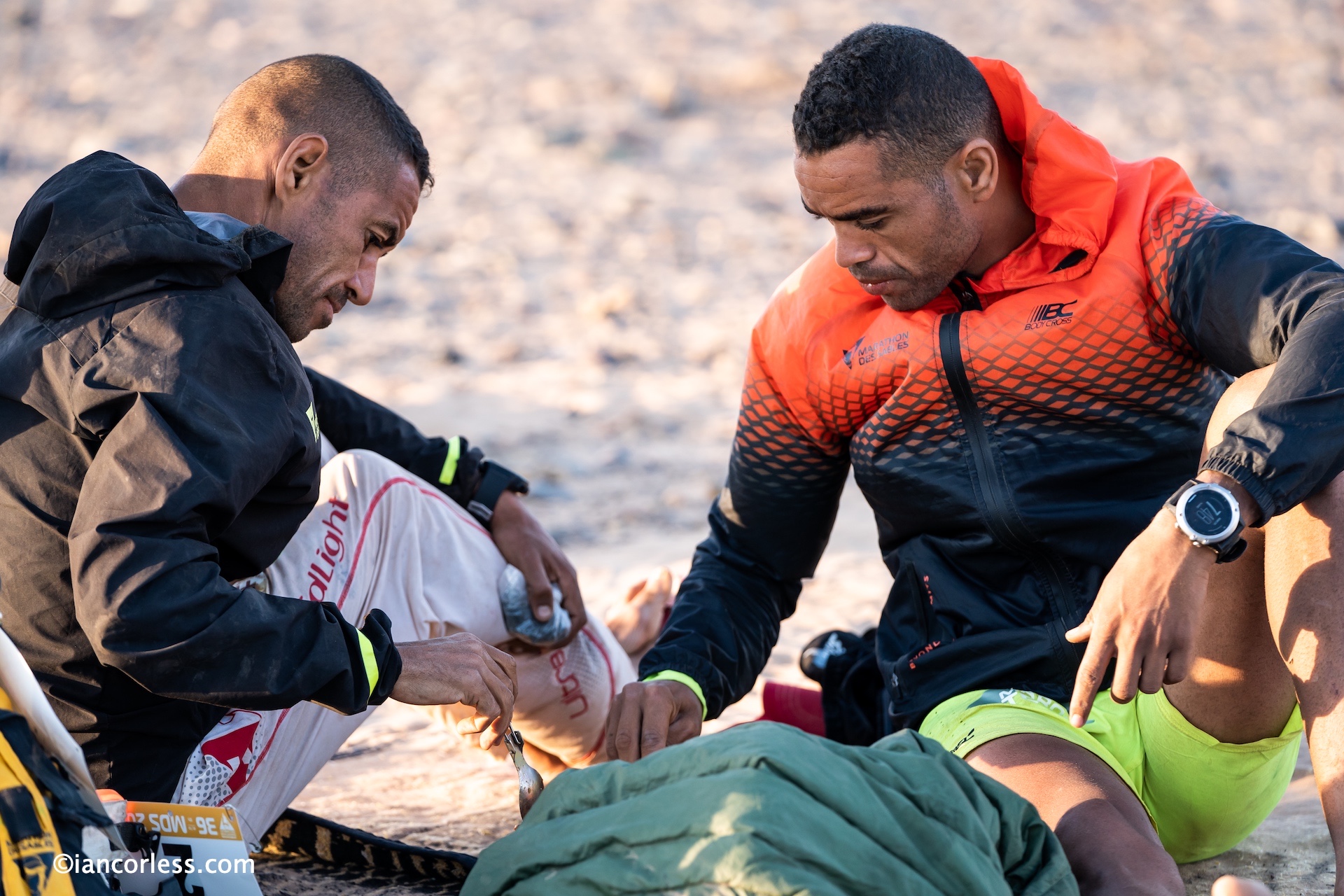
  • If you feel a blister or small injury, go see the medics immediately – don’t wait!

Rain?


Keep a rain jacket and a rain cover for your bag in your WAA pack – just in case.

Protect yourself from the sun: Hat, sunscreen, sunglasses – don’t neglect anything!

Clothing: Test your gear beforehand to avoid surprises One race outfit + one bivouac outfit is enough

Fire starter bricks – available in the pre-race shopMENT

MDS EQUIPMENT via WAA HERE

Food & Nutrition

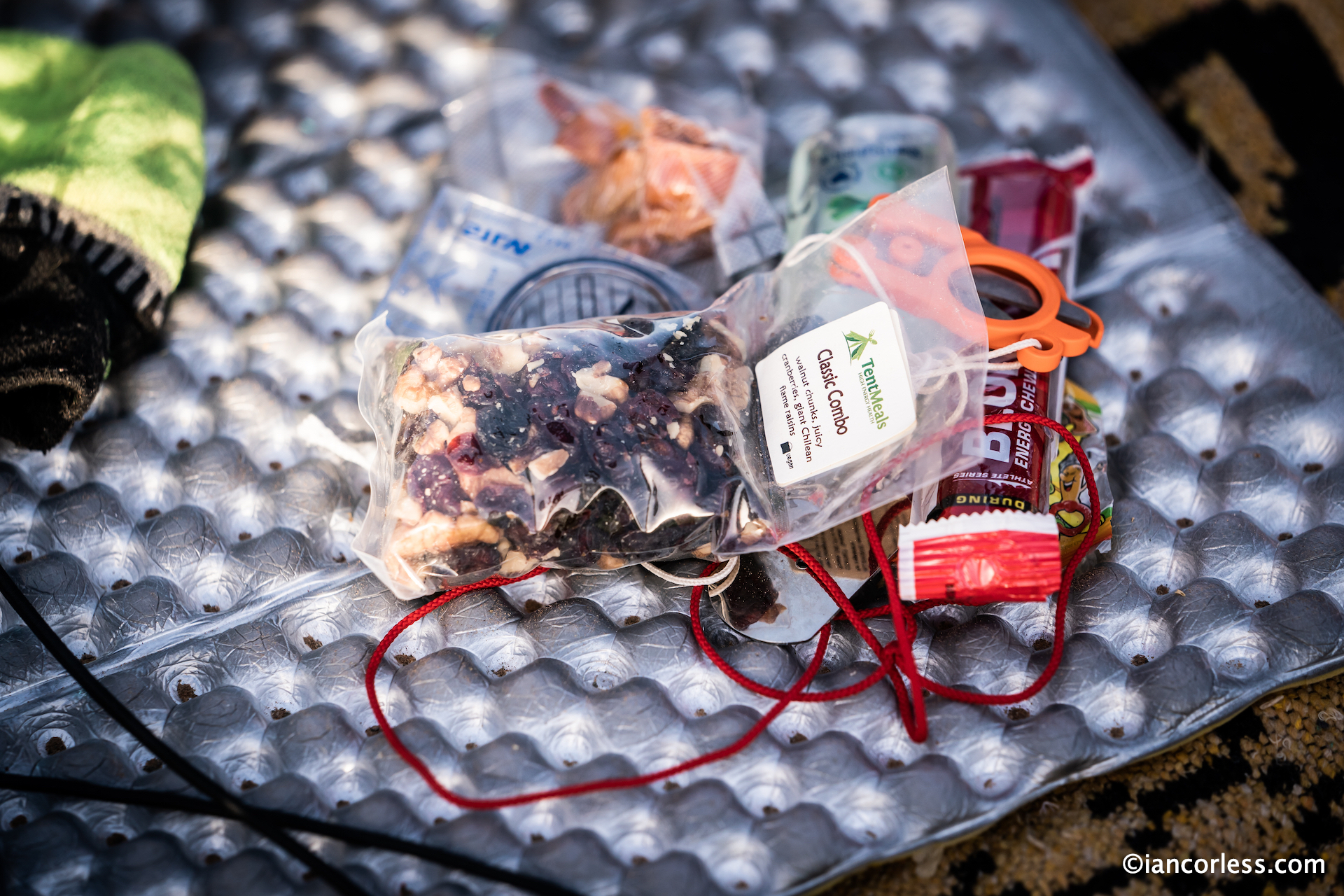
Before the race: Food for the evening of April 4 and the full day on April 5 – whatever you like.

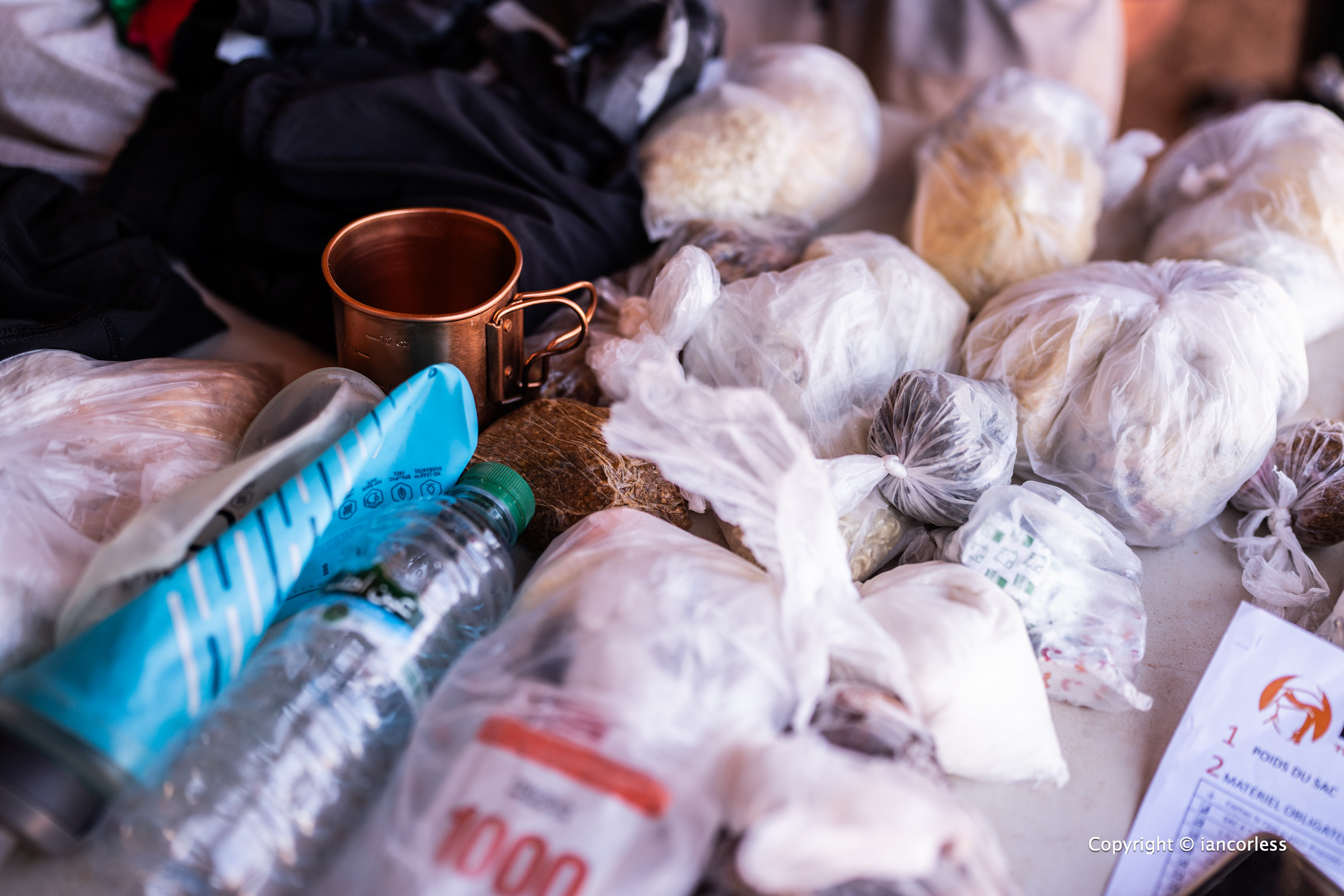
During the race: Plan 7 days of food: breakfast, lunch, dinner. For the last stage, only breakfast + snacks for the stage are needed. A lunch pack will be given on the return bus.

So, you need roughly 20 meals, totalling around 12,000 to 14,000 calories minimum.

Strategy – Test your meals and drinks in advance!
Don’t bring 3 or 4 of the same meal unless you’re sure you like it.

Backpack weight
It adds up quickly – aim to be as close to the minimum 6.5kg as possible. This does NOT include water.

Medical Advice Hygiene rules:

  • Never drink tap water.
  • Don’t share bottles or cups.
  • Avoid raw vegetables at hotels or elsewhere.
  • Stick to cooked food before and after the race.
  • Your digestive system will be sensitive.
  • Heat and stress can also cause minor digestive issues.
  • Don’t panic – mild diarrhea is often just your body adjusting (and it might even make you lighter!).
  • Limit physical contact at the bivouac.
  • Wash hands frequently – especially before eating or after using the toilet.
  • Use hand sanitizer often.

Tips for a safe race:

  • No self-medication If you feel unwell, don’t self-medicate.
  • Avoid NSAIDs like ibuprofen, Voltaren, etc. – they can cause serious complications during intense effort.
  • Talk to the medics instead.
  • No COMPEED® for blisters They melt into your skin in the desert heat and make treatment harder.
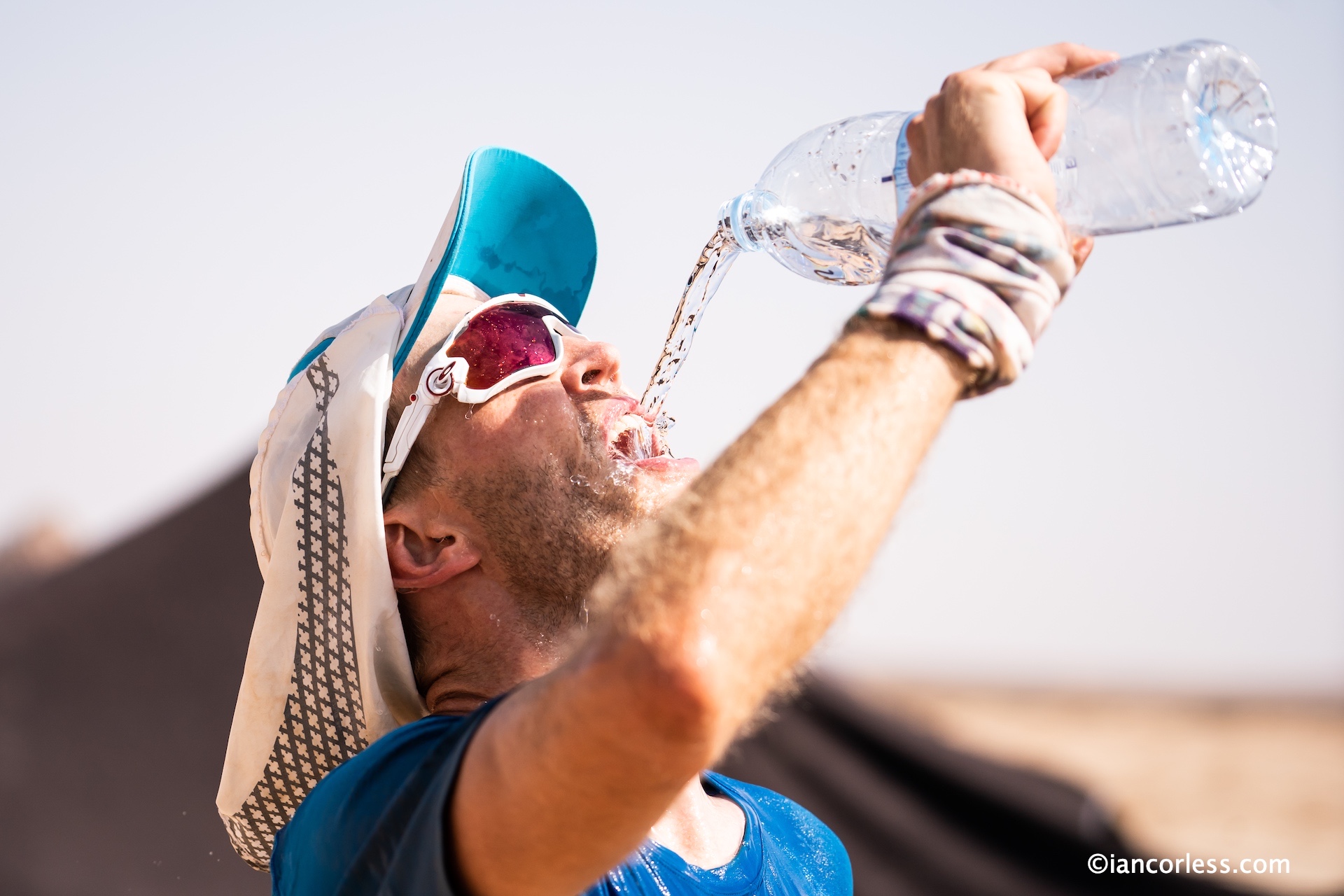
  • Hydration Drink according to thirst – don’t over hydrate.
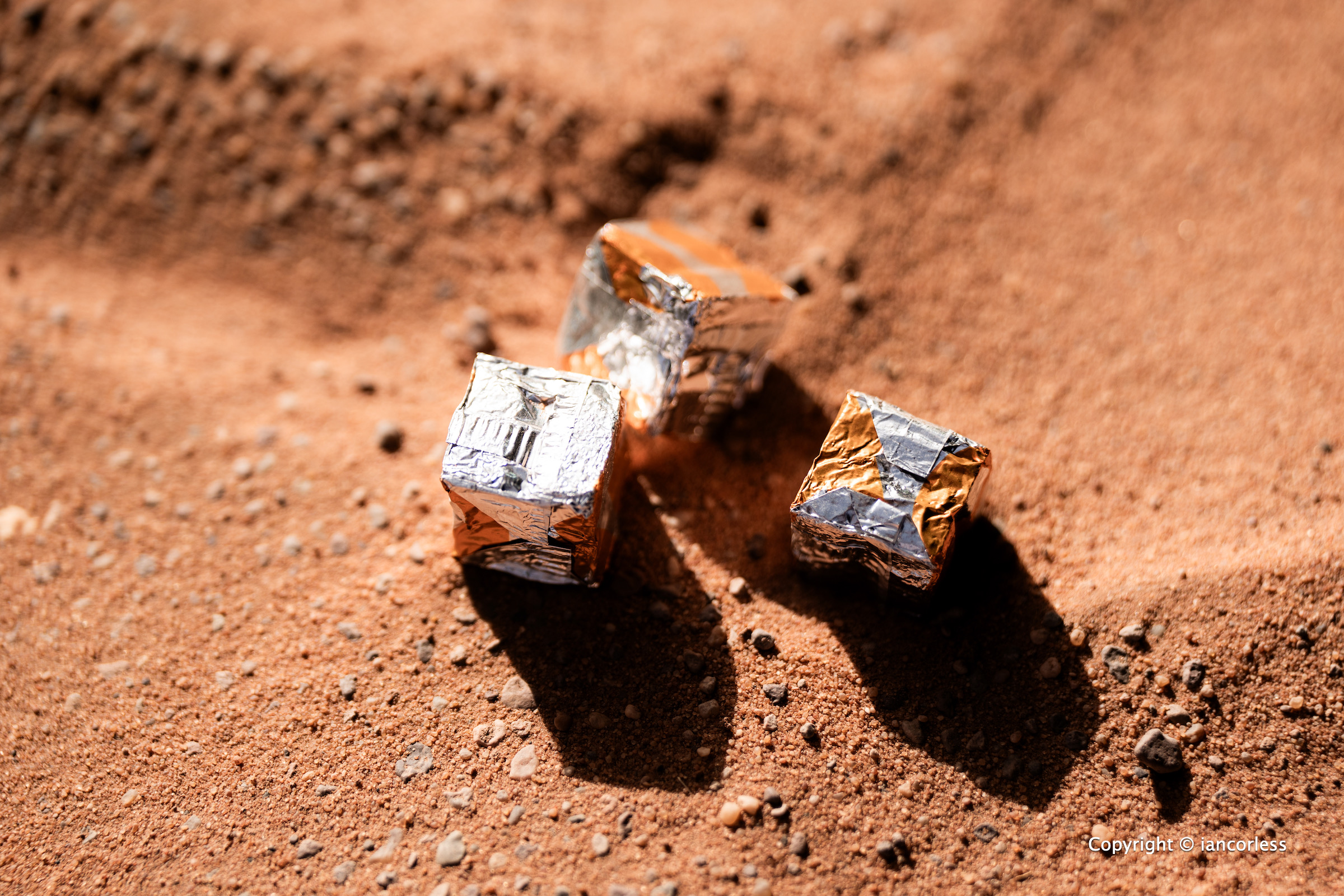
  • Drink two diluted bouillon cubes per race day.
  • MDS do not provide salt tablets as they’re not recommended.
  • Treat pain early The earlier, the better – avoid complications.
  • Listen to your body Fatigue, dizziness, pain – speak to an Orange Vest!
  • Medical Form
One week before the MDS Legendary, you’ll receive a medical questionnaire from: no-reply@logicoss.net. Filling it out is mandatory to help the medical team take care of you during the event.

Race Tracking

  • Friends and family can follow you on the MDS website
  • Live tracking page
  • Live webcam
  • EMOTION BOXES
  • Satellite phone
  • There will be some connection spots – but we recommend disconnecting and enjoying the moment.

Final stretch:

Stop training. If possible get some heat acclimation – sauna, heat chamber, hot yoga etc

Don’t stress.

Once you’re in Morocco, we take care of everything.

Enjoy it!

Any questions? Call us.

A full recap will be emailed to you next week with all these details.

Follow Ian Corless

Instagram – @iancorlessphotography

Twitter – @talkultra

facebook.com/iancorlessphotography

Web – www.iancorless.com

Web – www.iancorlessphotography.com

Marathon des Sables – The Legendary : NEWS THREE – Feb 2024

©iancorless

Marathon des Sables is a simple race that often becomes over complicated by too much information. Take advice, look at websites, process the information but importantly find out what works for you. We are all individual, what works for one may well not work for another.

When you break the race down, here are my TOP 20 TIPS of what to focus on for Marathon des Sable – The Legendary.

  1. Pack – Ideally needs to be as small as possible and as close to the minimum 6.5kg weight when packed. There are many packs out there and just like clothing, packs fit in different ways, so, it is important to try many to find the best for you. I size between 20-25 Ltr is ideal. Key things to look out for: easy access to water, easy access pockets for snacks etc, adjustable to get perfect fit, minimal bounce when loaded, flexibility to compress the pack and make smaller as you reduce the contents (food you eat) as the race progresses.
  1. Sleeping bag – Needs to be lightweight, small when compressed and warm enough for you based on your warmth requirements – are you a cold or warm sleeper? Popular sleeping bags are PHD, Nordisk Y, OMM, Sea to Summit, Western Mountaineering, Rab etc. Take care on the ‘comfort’ rating and I have an in-depth article on choosing a sleeping bag HERE.
  1. Jacket – I always recommend a sleeping bag and jacket as opposed to just taking a sleeping bag. MDS can have cooler editions, particularly early morning or evening and having the option of a jacket is great. It also means that you can potentially take a lighter and less warm sleeping bag as the jacket can add as an additional warm layer. As an example, a Sea to Summit SP1 bag and a Haglofs L.I.M Essens jacket weighs 510g! Many brands do sub 200g jackets, look at Haglofs, Mont Bell and Y by Nordisk. 
  1. Clothes – You just need what you will run in. However, a spare pair of socks is commonplace. No need to get new clothes and don’t worry about colours. The most important is that they are comfortable and they do not rub or chafe.
  1. Sleeping Matt – Optional but a good nights sleep is important for recovery. There are only three things to do at MDS, run, eat and sleep. Make the sleep as comfortable as possible. Two options exist – inflatable and solid foam. The choice is yours. The inflatable ones offer more comfort, more flexibility in packing but with poor admin, you do run the risk of a puncture. Recommended Sea to Summit HERE
  1. Shoes and Gaiters – Shoes are personal and if you already have shoes that are comfortable and cause no blisters, then you have the perfect MDS shoe. Things to consider, a wider toe box is good to allow toe splay, a thumb nail of space above your longest toe is adequate, no need for more, and make sure they have enough durability for you! I say ‘you’ because Rachid El Morabity will complete the whole race in 21-hours whereas most people won’t even do just the long day in that time – his shoe shoe choice will and can be very different to what most of us need! Get your Velcro sewn on your shoes and make sure that when you get the shoes back the fit has not been altered. 
  1. Food – You need a minimum amount of calories per day specified in the race rules (2000 per day) and how those calories are made up are up to you. This for many is a difficult one. It raises many questions and yes, it’s good to find out what other people do and use but ultimately, YOU have to eat it. Food is the heaviest item you will carry, but remember, your packs gets lighter each day as you eat the contents. Re-packing food can save weight and space. Think about the the balance between carb, protein and fat and importantly, what tastes good at home, may not taste good in the Sahara.
  1. Stove – The decision to use a stove is another question mark but it would appear that most runners like that hot water option. Remember though, you can make a fire from twigs, shrub and branches that surround bivouac. 
  1. Pot – Many use a 1.5 ltr water bottle cut down as a food bowl. For the 2024 MDS, 1.5 ltr bottles will not be supplied, so, you will need a suitable pot. Esbit for example do a small titanium pot with lid.
  1. Water – You must have the capacity to carry 1.5 ltr of water and for the long day, 3 ltrs. Water is provided by the race. For 2024, water will not be provided in 1.5 ltr bottles but will be distributed by staff at the cp’s using jugs to decant water from larger 5 ltr bottles. On the long day, an additional 1.5 ltr bottle will be provided either at the start or cp1. 
  1. Salt Tablets – Salt tablets will no longer be provided at the race and you now must have a mandatory 14 stock cubes. Of course, you are recommended to work out your electrolyte needs and plan accordingly. You are welcome to take your own salt tablets or similar product such as those provided by Precision Hydration.
  1. Feet – Look after them, along with dehydration, blistered and damaged feet are a key reason for failure in any multi-day race. Prepare them before the race especially trimming nails back and knowing what socks work for you. After each day in the race, clean feet, allow them to breathe and look after them. Get any sore or hot points addressed immediately.
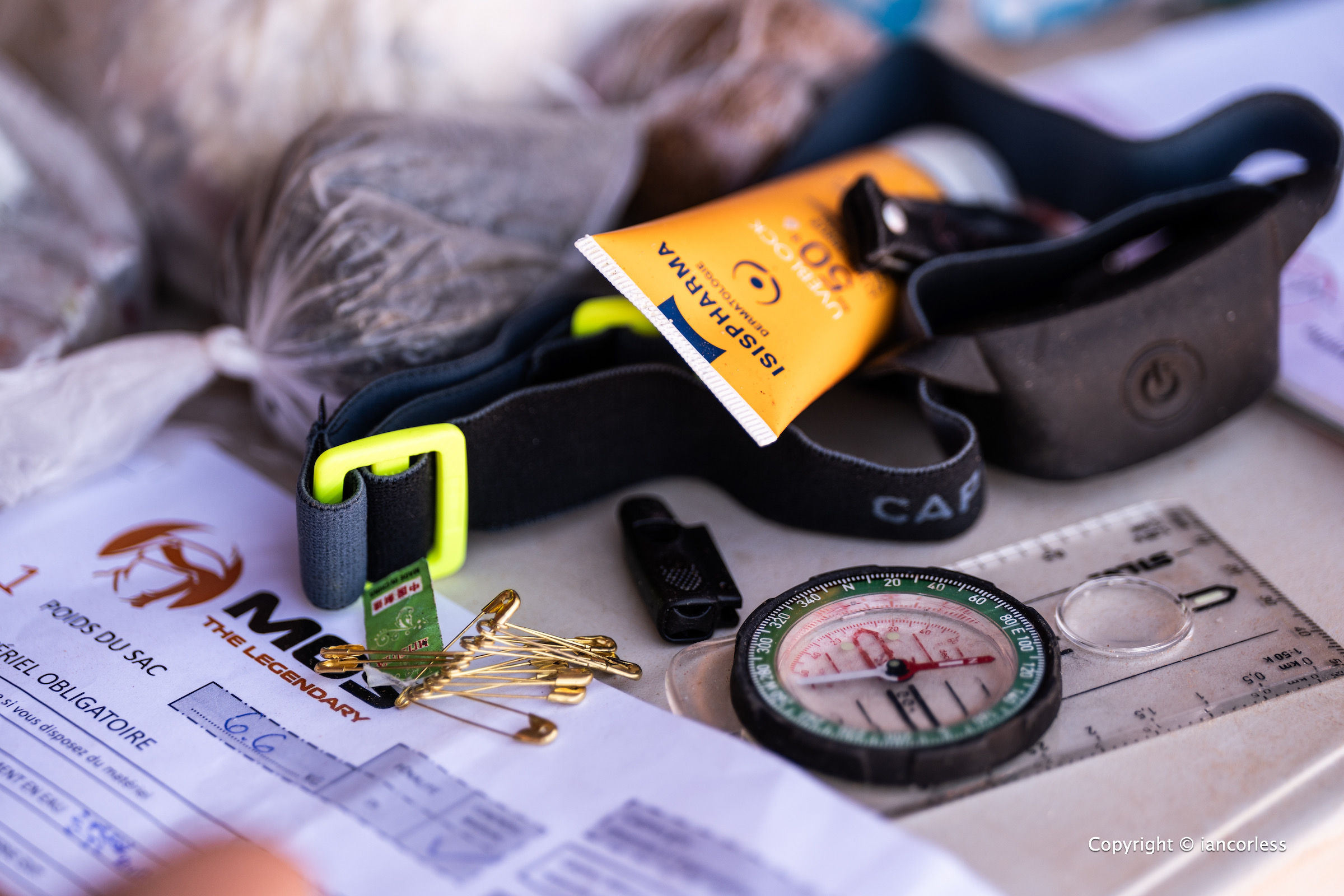
  1. Mandatory kit – You are supplied with a mandatory kit list and you MUST have everything on that list. Please note, for 2024 the venom pump has been removed and you must have 14 cubes of broth.
  1. You – You signed up for the challenge, you wanted to be on the start line and therefore you are responsible for the outcome. Believe me, the you that leaves the Sahara is not the same you that entered. Keep perspective, the MDS journey is an enhancement of you as a person. It’s easy to become obsessed, ultimately the majority of runners at MDS are enthusiasts, if you keep that in mind the journey will be a complete one. The legs, lungs, heart and feet will only get you so far, then the mind will take over. Mentally prepare for the challenge ahead and make mental plans for how to survive and motivate yourself when the going gets tough. Laugh when you hit rock bottom. Laugh when you are going the toilet in a brown plastic bag. Laugh with and at your tent mates and fellow runners. The comradeship of MDS is quite unique, embrace it.
  1. Training – Plan ahead, formulate a long term plan and aim for consistency.
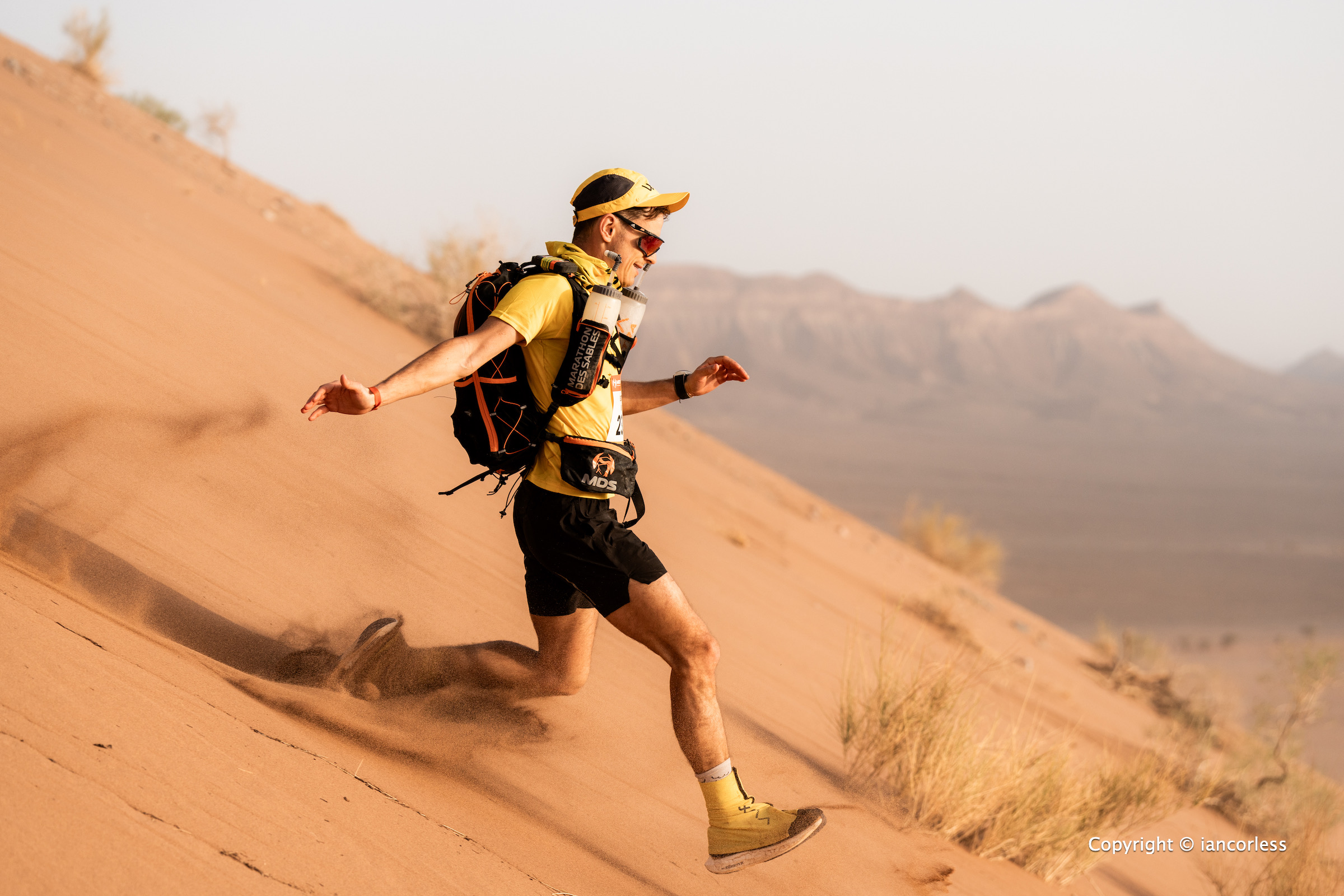
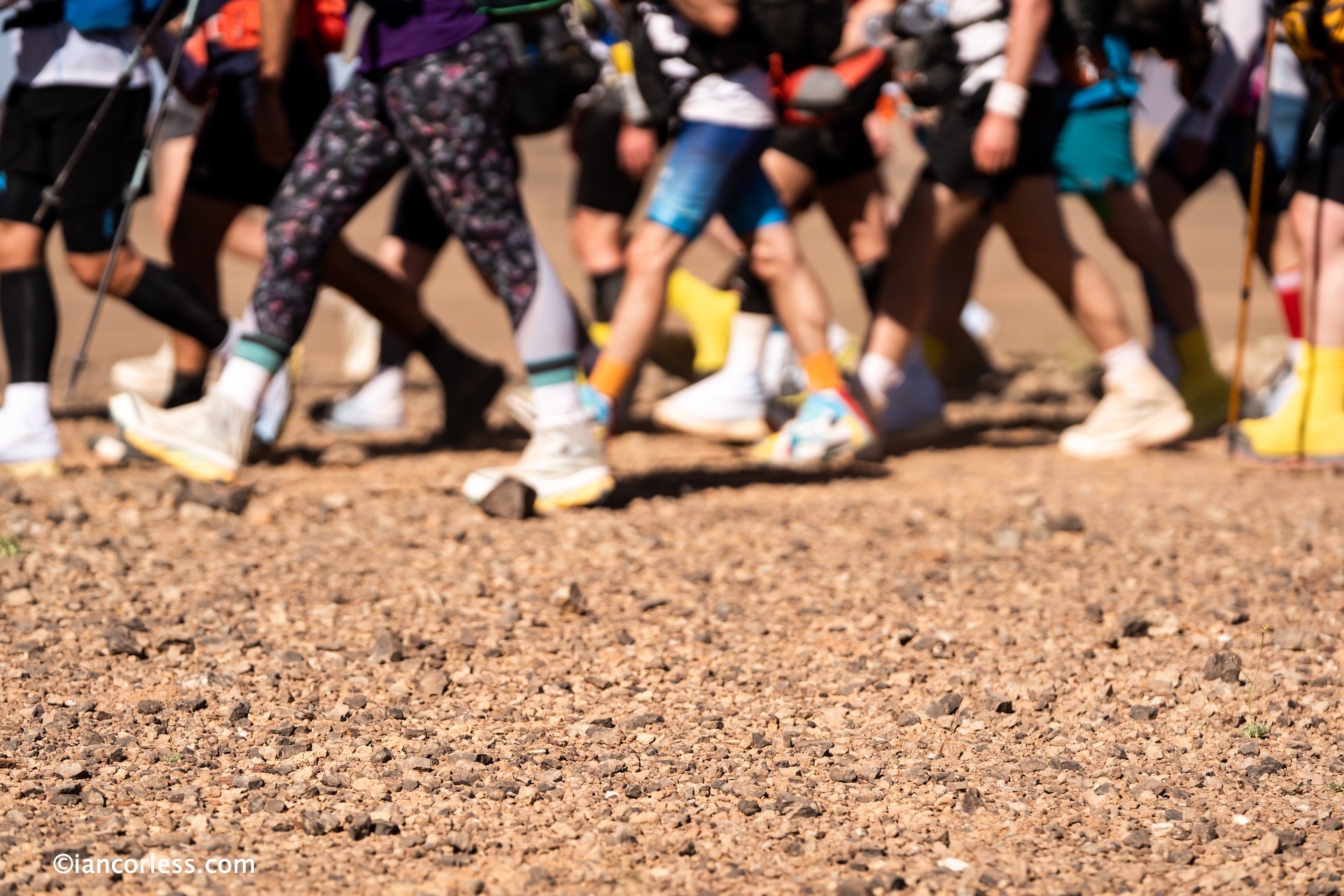
  1. Walking – Learn to walk. Many think they will run 80% and walk 20%, if you are lucky, it’s the other way around. Make walking a positive, make walking fast, make walking productive.
  1. Poles – For many, poles are a huge advantage. They are like 4-wheel drive and without doubt, they make you walk faster. But you must train with them and learn how to use them.
  1. Shoes – NEVER take advice from anyone online that tells you that ‘X’ is the shoe to wear for MDS unless they know you and your run style. Forget the advice about going up a size or two sizes. It’s a recipe for disaster unless you know that your feet swell? A shoe that is too big will allow your foot to move, a moving foot causes friction, friction causes blisters and the rest of the story speaks for itself. General advice is that if you have a ‘thumb nail’ of room at the front of the shoe above the longest toe, this generally works. Notice I say ‘generally’ – there are exceptions. One thing that may happen, is your foot may get wider (rarely or never longer) with the heat and additional time on feet, therefore a shoe with a wider toe box often works well for many runners.
  1. Equipment – Minimum pack weight is 6.5kg plus water, get as close to this as you can. Additional weight is additional stress and just makes the journey harder. Luxuries are ok if they improve the journey and make it easier, music is a good example of an additional extra. I can’t really think of anything else…
  1. Friends – Tent mates will pull you through and motivate you. They will become friends for life. Ideally find tent mates before you head out to the Sahara and plan your tent group.

Admin and preparation that you may not think of:

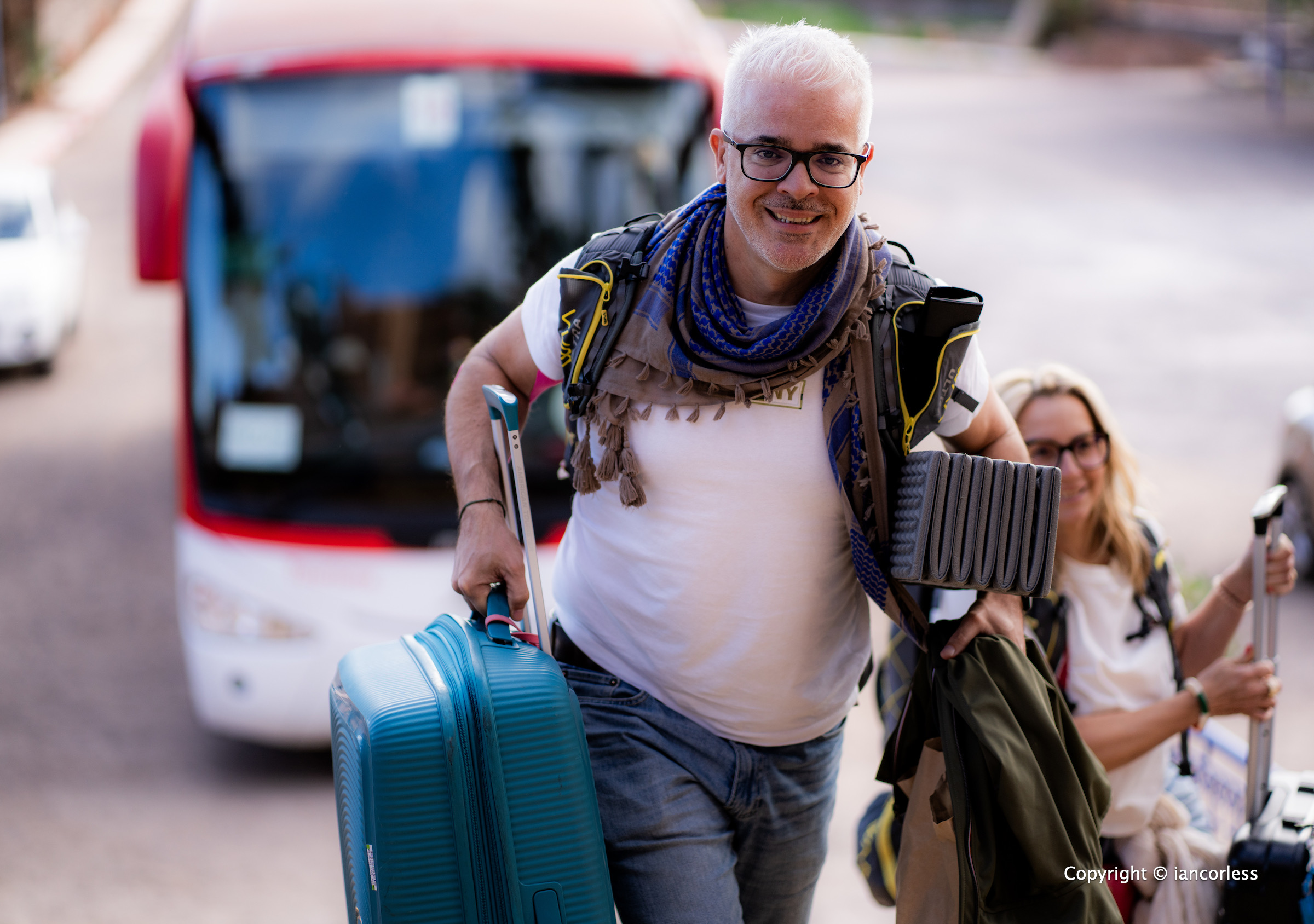
  • Take essentials on the plane and wear your run apparel and shoes. That way, should a baggage disaster happen your chances of racing improve.
  • Take food with you for the travel and on the plane. 
  • The journey from the airport to bivouac 1 can be lengthy be prepared with your own snacks and drinks. MDS do provide a packed lunch.
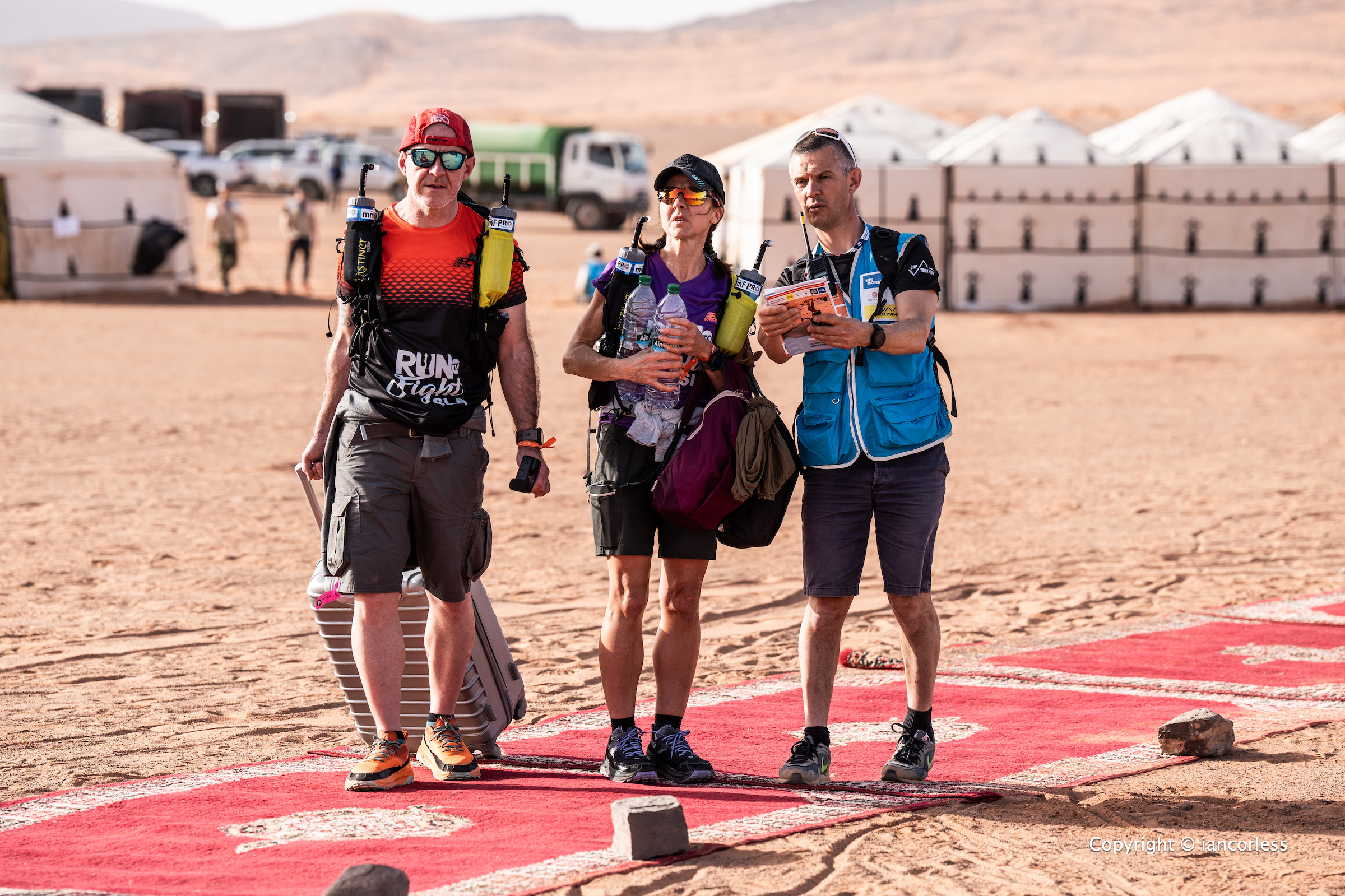
  • Night 1 and night 2 in bivouac are NOT self-sufficient so take extras such as an inflatable bed, food and luxuries that you are happy to give away to the berbers. May as well have 2 comfortable nights and a comfortable day before the racing starts.
  • Food before the race starts is now down to you. Be prepared to have plenty of variety and remeber, within reason, this can be anything! 
  • Admin day can be  lengthy multi-hour experience. Take water and snacks for when standing in line and maybe take an umbrella so you have shade.
  • Keep sun screen on and keep hydrated. No need to drink vast volumes – drink to thirst before the racing starts.
  • Have additional items such as a base layer, sleeping bag liner and other items that may be on a ‘question’ list for the race. On night 1 and before you go to admin, you can make final decisions of what to and what not to take. Particularly important if you think you may be cold at night.
  • Remember that after bag drop and check-in you have no access to any additional items, however, you only become completely self-sufficient when you start the race. With that in mind, you can have additional food and luxuries with you until day 1 kick-off, it’s a useful tip and does mean that you can have additional comfort for a good 12-hours.

Conclusions:

Marathon des Sables is a magical and life changing journey as are most if not all multi-day races. It really is a true challenge of mind and body to race over many days, irrespective if you complete the race in just over 20-hours or 60+ hours. It’s a hark back to a more primitive time, a time without clutter and modern technology. Embrace this. Embrace the silence of the surroundings and the simplicity of placing one foot in front of the other.

Follow on:

Instagram – @iancorlessphotography

Twitter – @talkultra

facebook.com/iancorlessphotography

Web – www.iancorless.com
Web – www.iancorlessphotography.com
Image sales –www.iancorless.photoshelter.com
Marmot Dark Mountains 2014 Results & Images

©iancorless.com.©iancorless.com509

The 2014 Marmot Dark Mountains was a resounding success and in contrast to the 2013 event, weather conditions were extremely kind on all entrants… well, at least all those who finished before 7am.

As predicted, the weather took a very serious turn for the worse as dawn arrived with increasing winds and torrential rain. It really did turn into a tough test for the final 20 or so teams who were still out on the course. However, a warm leisure centre awaited and a breakfast fit for a king.

Marmot Dark Mountain - FINAL (BLACK)

Shane Ohly and the Ourea Events Team really did put on a great event with excellent support. Nothing was left to chance. As we all know, an event of this nature is not for the inexperienced.

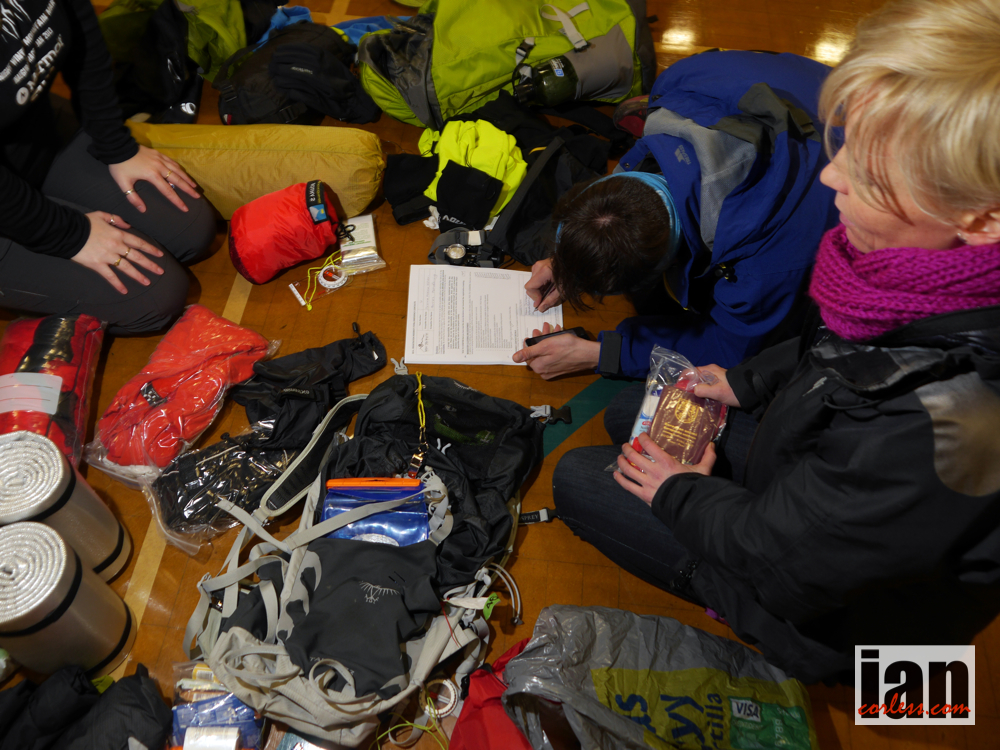
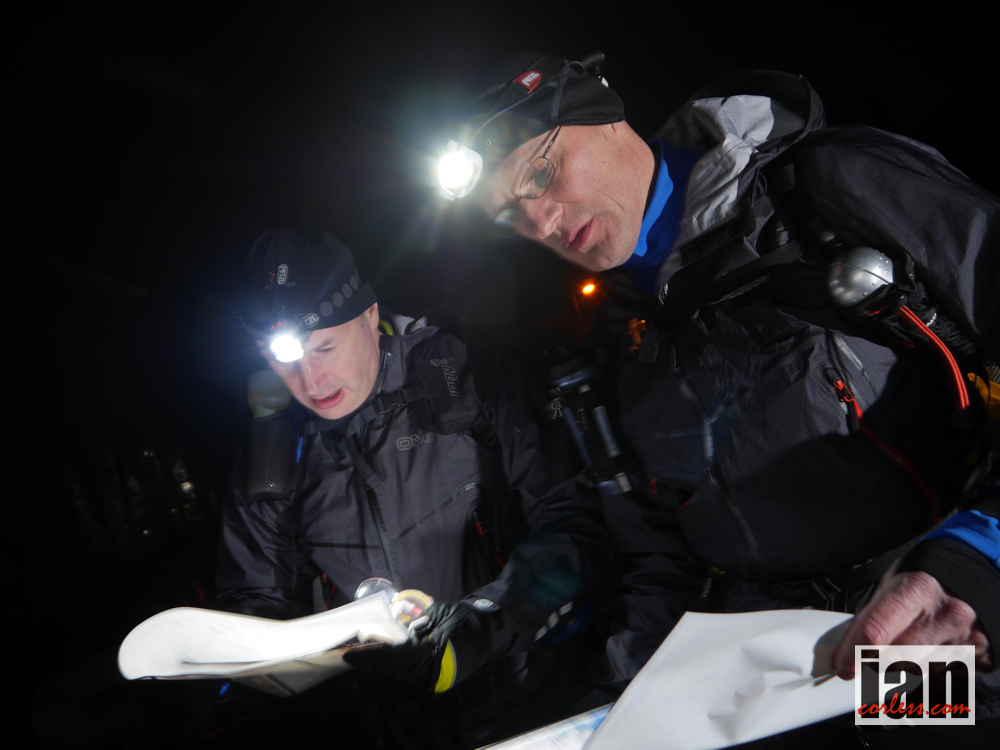
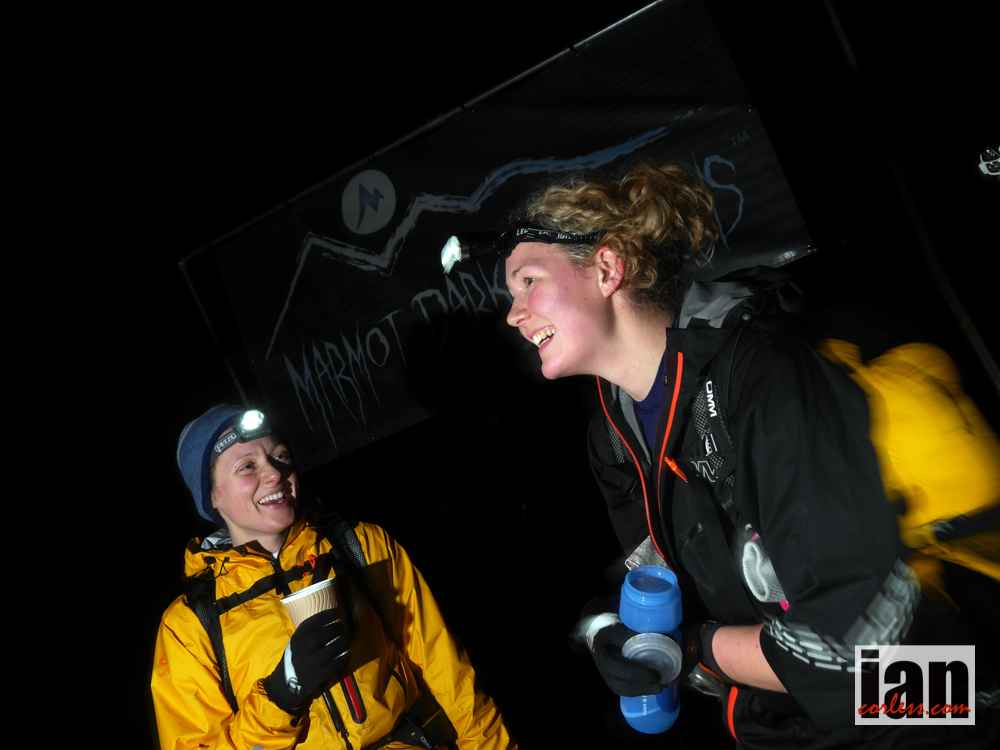
A night in the Peak District with only a map, head torch and all essential equipment (as required for safety) plus your running partner for company is a test you either embrace or shy away from.

©iancorless.com.©iancorless.com.P1100141

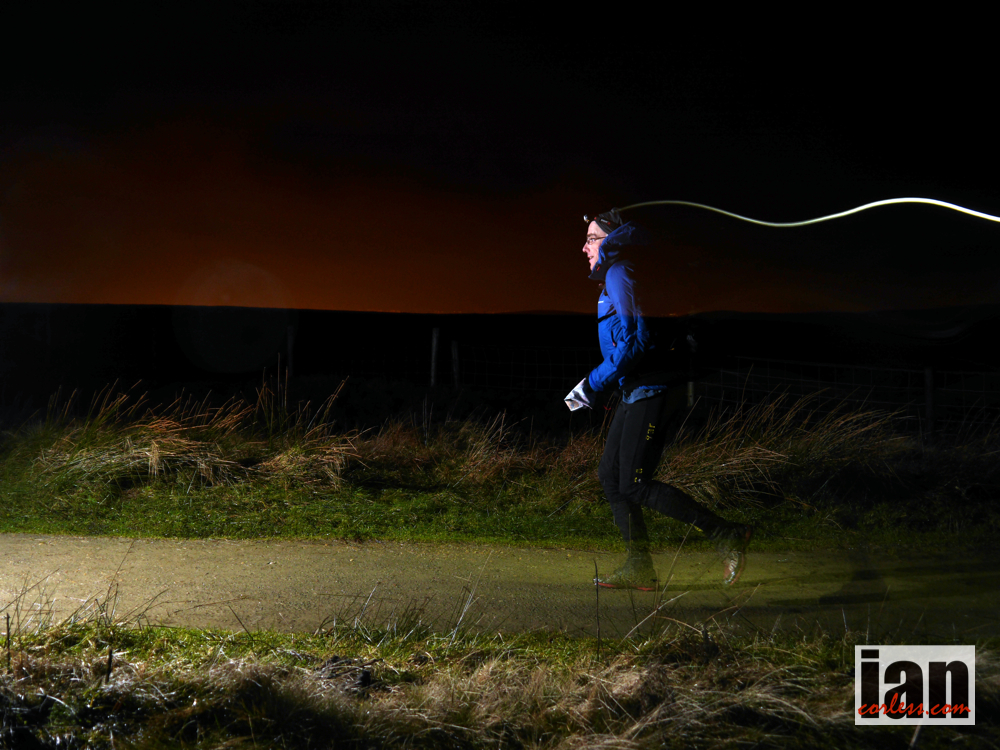
Departing from Glossop at timed intervals starting at 1900hrs on Saturday, competitors ventured out into the dark. Maps were checked, bearings taken and then a plan was formulated. Experience really showed in the first 5-minutes of the race. Some runners required several minutes of map checking before departing whereas experienced runners like eventual elite category winners, Steve Birkinshaw and Tom Gibbs received a map and immediately ran whilst taking bearings and making navigation decisions whilst covering ground.
©iancorless.com.©iancorless.com.P1100372

©iancorless.com.©iancorless.com.P1100403

Conditions during the night on the whole were extremely favourable. It was dry and temperatures, particularly if running, were mild. Of course the wind did blow on the tops and occasionally mist and fog would move in and out making navigation difficult. A couple of teams did struggle with this and were forced to retire.

The ground was very wet from months of rain and certain sections of the Peak District had been blocked off to ensure safety.

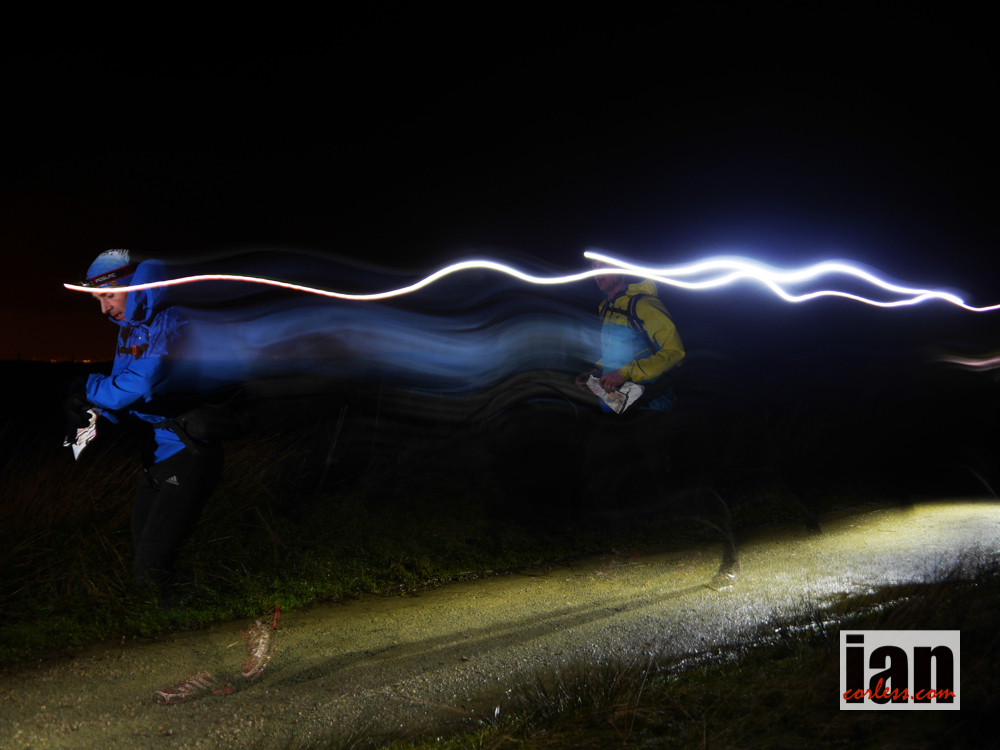
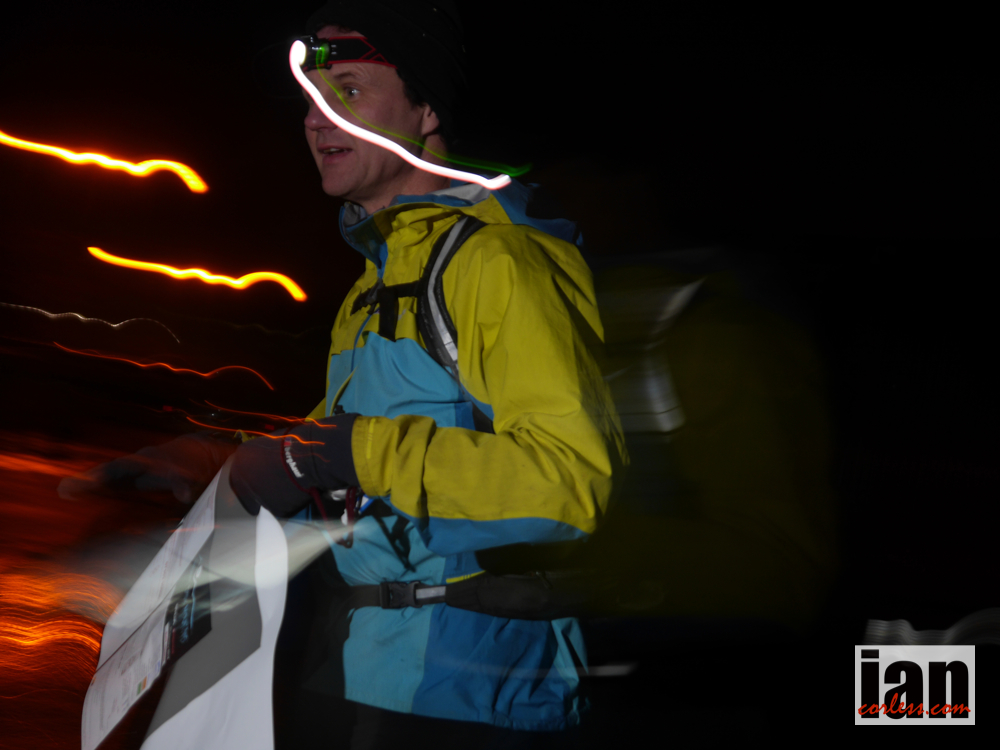
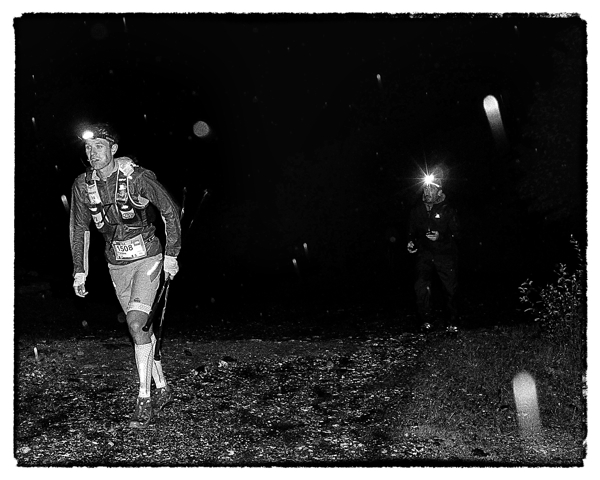
Headlights appeared all over the mountains as different teams navigated different routes to maximise time. One thing remained a constant; as I encountered runners on the course, a smile and welcome greeting was always returned.

©iancorless.com.©iancorless.com.P1100480

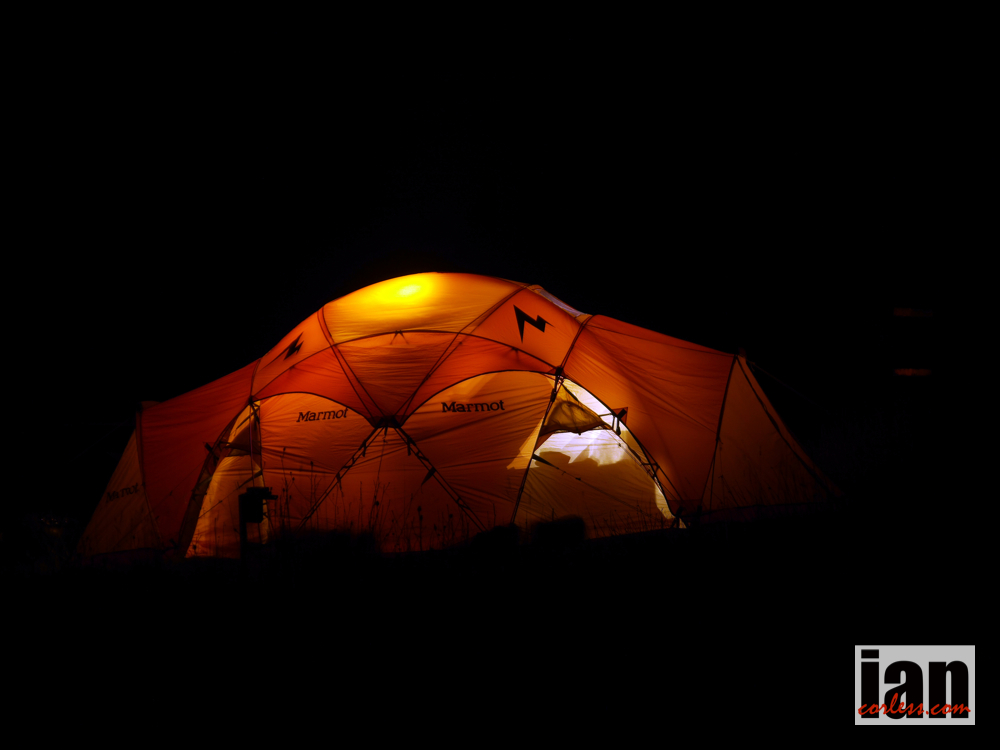
A midpoint checkpoint proved to be a great central hub to see runners depart and arrive. A glowing Marmot tent providing protection for the marshall team and of course providing an additional safety shelter should runners need it.

©iancorless.com.©iancorless.com.P1100499

As the event unfolded, pre race favourites in the elite race, Steve Birkinshaw/ Tom Gibb took a very early lead and never really looked  back. Bruce Duncan/ Lucy Harris pushed them close in the early stages but as the race progressed the gap opened.

©iancorless.com.©iancorless.com.P1100544

Over the other categories:

Catherine and Ross Litherland took a convincing victory in the A category in 11:30:01

Matt Harris and James Stokes won the B category by around 18-mins in 12:43:34

Louis and Bertie Goffe won the C category by over 30-mins in 6:37:02

Ben Stansfield and Pat Bartlett won the Long Score with 345 points in 9:44:47

Joe Gillyon and Catherine Evans won the Short Score with 185 points in 7:37:24

Full results available HERE

©iancorless.com.©iancorless.com.P1100638The 2014 Marmot Dark Mountains was without doubt a great success. Marmot and SilvaUK added to the whole experience and without doubt a huge thanks was passed on to all the marshals who ensured safety for all throughout the night.

You can receive additional information from the race website HERE

Photography of the race is available HERE

UTMB 2012 quick review


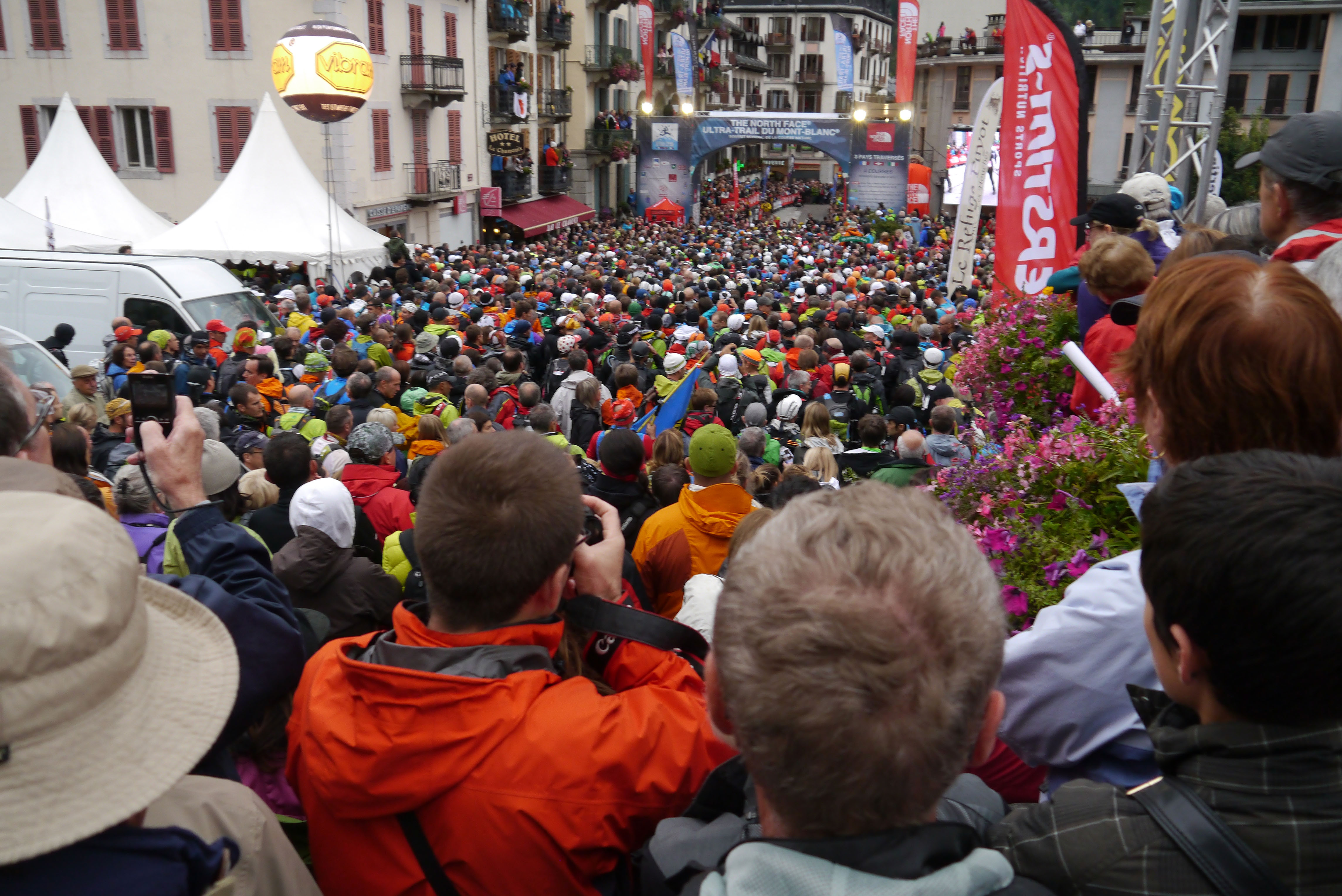
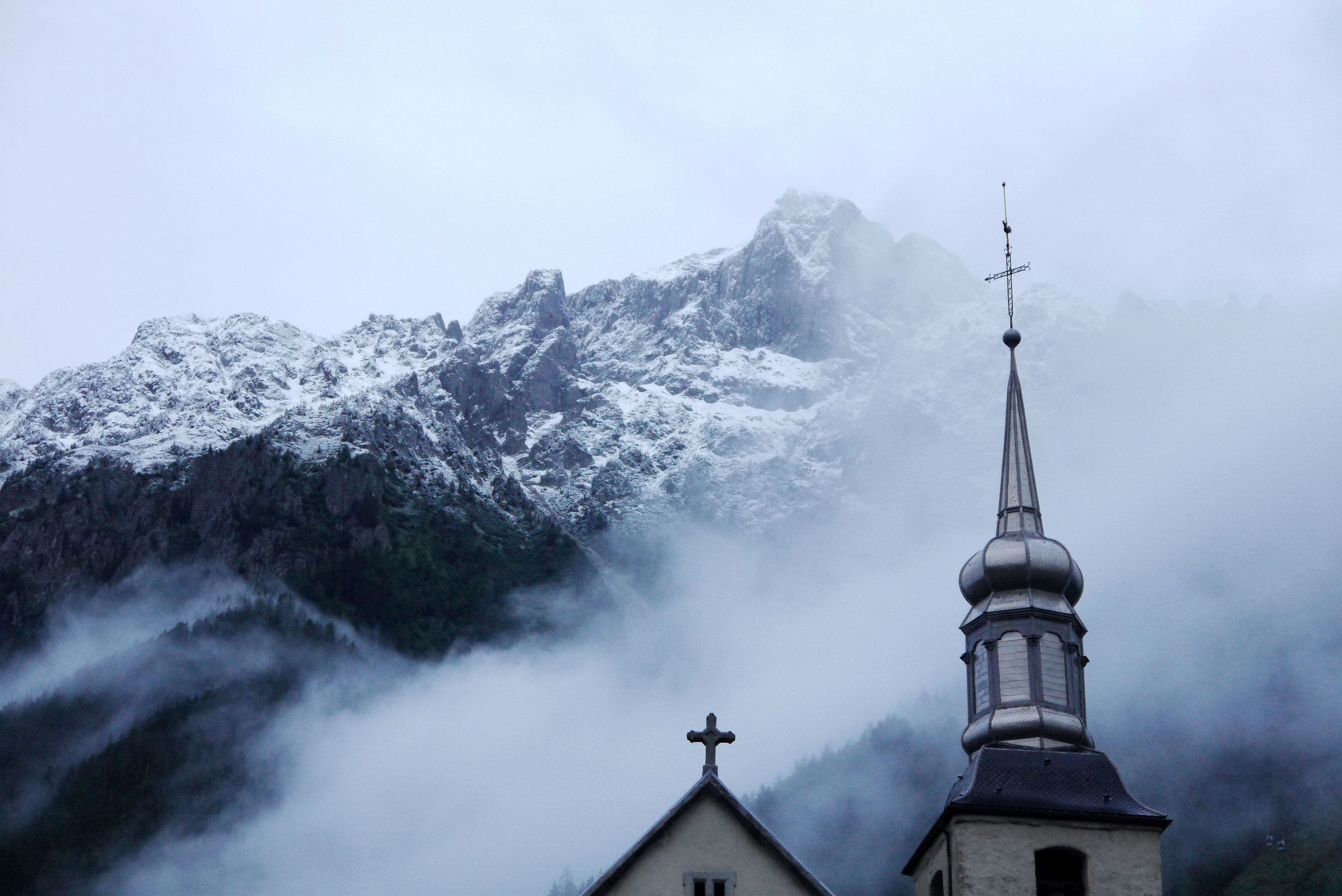
Well, the rain came, the snow fell and the course was quite rightly considered too dangerous to send so many runners to potential harm. With rain forecast for all of the race evening, snow above 1600m and possible drifts with -5 temperatures the TNFUTMB organisation decided to cut short the route to 100k, keep it below a certain altitude and keep the whole race in France. Using a ‘sort of’ figure of 8 loop the runners would go out and come back on themselves primarily through Contamines and Les Houches and then finish as planned in Chamonix.

Of course this is not what any runner wanted to hear. All the money, all the time training and focussing on a target race for it all to be removed at the last minute. If this was the first time then we could all say ‘bad luck’! But unfortunately this is the fourth year in a row the race has had problems and although they cannot control the weather and I do believe they made the correct decision I can’t help but wonder why they can’t plan ahead and have a ‘safe’ longer route available as an option.

Certainly the lack of a longer route saw pre race favourites, Julian Chorier and Iker Karrera defect from the race. Juian heading to the GR20 and Iker doing a ‘flyer’ to make the start of the GoreTex Transalpine race at 2100hrs that very same day.

However, a very good field remained with Francois d’Haene, Jonas Buud, Mike Foote, Csaba Nemeth, Jez Bragg, Sebastian Chaigneau, Miguel Heras, Carlos Sa and Kaburaki amongst others ready to fight it out in the dark and wet.

In the ladies race pre race favourite, Lizzy Hawker looked ready and happy to run. Emma Rocca, Krissy Moehl, Amy Sproston, Rory Bosio, Francesca Canepa and Katia Fori all took to the start.

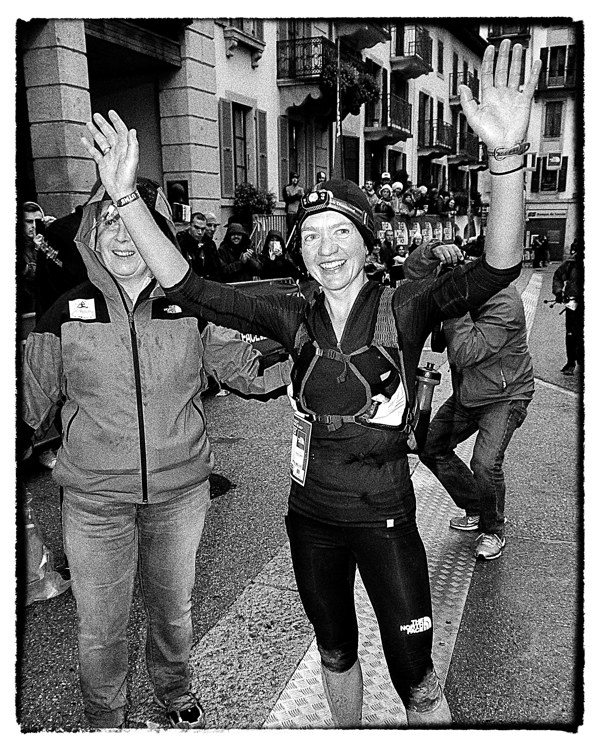
Lizzy Hawker set her table very early and never let up. I saw her at Notre Dame de Gorge and she was running a gradient others walked. She was pushing hard, so hard she never came out of the top 20 overall. Lizzy took a great win in 12:32:13 and was 16th overall. Following in second place was Francesca Canepa from Vibram. She ran a strong consistent race and took an excellent podium slot behind Lizzy in 13:17:01. Emma Rocca filled the vacant podium slot in 13:23:37.

Lizzy triumphant for a 5th time

In the mens race Francois d’Haene took the lead out of Contamines and slowly pulled away. My tip for the shortened race was Jonas Buud. I felt that 2:22 marathon speed and WR 100m time would play into his hands and allow him to runner quicker in the final stretches of the race. Not so! Francois finally finished with a 30 minute lead in 10:32:36 leaving Buud in 2nd with 11:03:19. Revelation of the race was super talented Mike Foote. He ran easy for 30k saying he was thinking of quitting. At 50k he felt much better and then just speeded up. In doing so he moved from way outside the top 10 and just kept picking runners off until he finished on the podium in 3rd in 11:19:00.

Francois on the climb Notre dame de Gorge

Notable drops was Seb Chaigneau who was lying in 4th place and with just 10k to go dropped due to problems with vision. Jez Bragg dropped early with stomach issues and Miguel Heras dropped too.

In the ladies I guess the big looser was Krissy Moehl but in real terms she has had a super crazy calendar and to perform at UTMB was unlikely.

RESULTS

MEN

  • François D’Haene 10:32:36
  • Jonas Buud 11:03:19
  • Mike Foote 11:19:00 
  • Carlos Sa 11:22:39
  • Csaba Nemeth 11:37:18
  • Jean-Yves Rey  11:43:48
  • François Faivre 11:51:32
  • Arnaud Lejeune 11:53:17
  • Sébastien Buffard 11:57:47
  • Tsuyoshi Kaburaki 12:03:04

LADIES

  • Lizzy Hawker 12:32:13
  • Francesca Canepa 13:17:01
  • Emma Roca 13:23:37
  • Rory Bosio 13:43:10
  • Katia Fori 13:58:25
  • Magdalena Laczak 14:07:50
  • Fernanda Maciel 14:12:01
  • Amy Sproston 14:13:35
  • Emelie Lecomte 14:35:54
  • Nerea Martinez 14:58:59

View my photos Faces of UTMB here

Trofeo Kima race summary

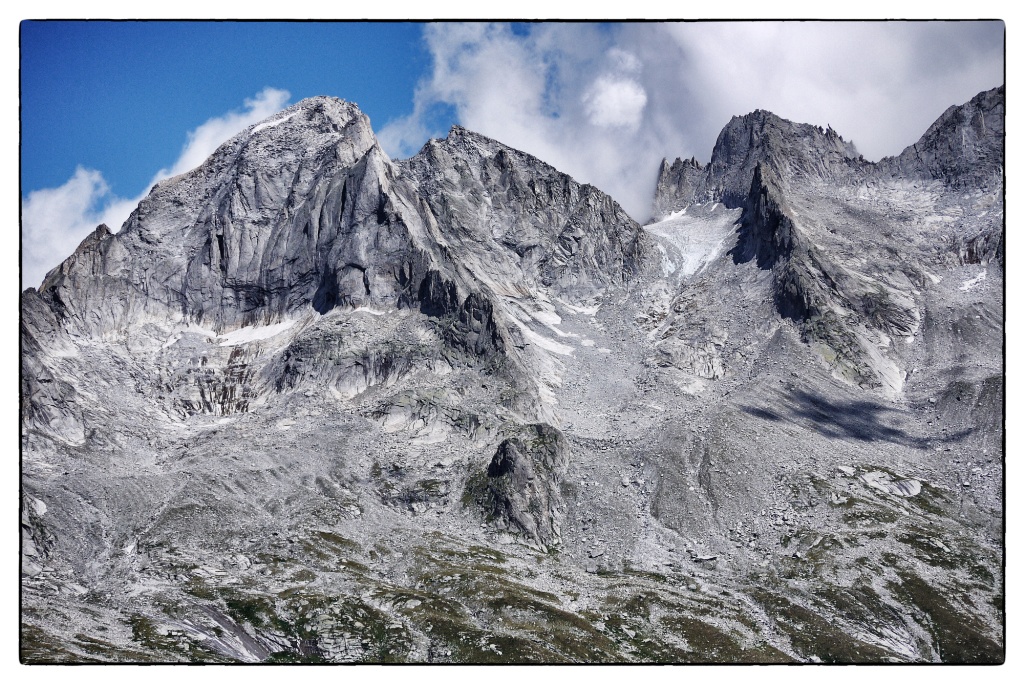
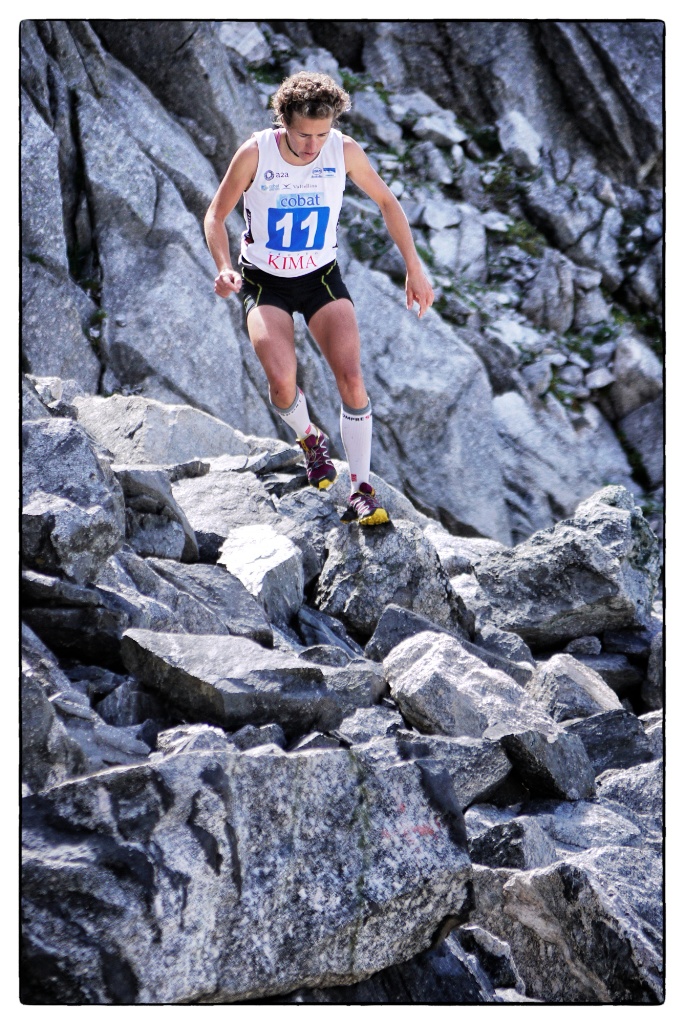
Less than 2 hours from Milan Bergamo airport and nestled in the peaks of Val Masino, every other year a race takes place. A race so severe, so difficult and so demanding that it has a restricted field of just 100.

The Trofeo Kima was established to honor the memory of mountain guide Perangelo Marchetti affectionately known as ‘Kima”. I can think of no better way to honor a mountain guide.

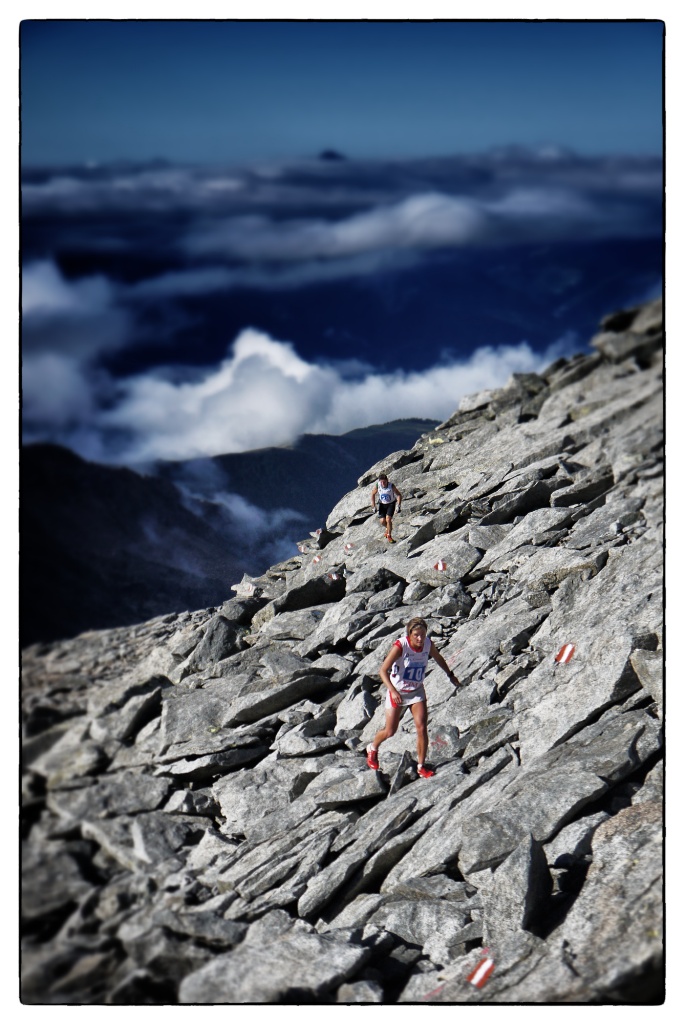
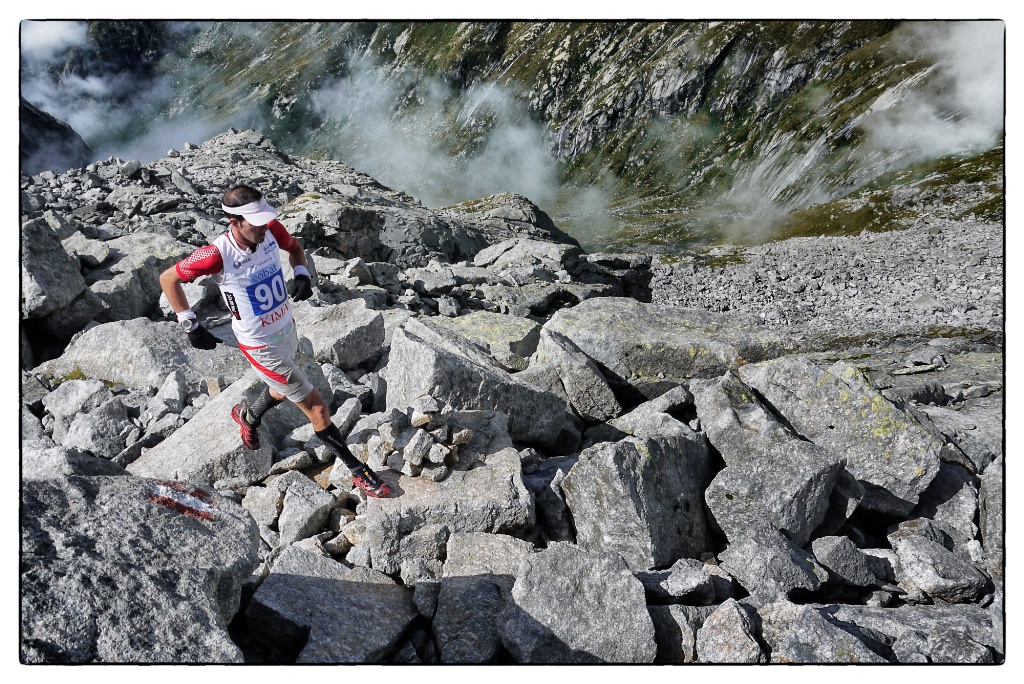
The race, 50km long and covering some 7 mountains passes is part of the Ultra Skyrunning series and is billed as ‘the one’. Starting in Filorea the race goes in an anti-clockwise direction. Preda Rossa at 1940m, Rifugio Ponti 2559m, Roma 2894m, Bivaccio Kima 2894m and Cameraccio 2950m and this is just the first full ascent and the highest point of the course.

Kilian Jornet ran the race for the first time in 2010 after UTMB was cut short due to bad weather. Desperate not to waist his training and a weekend he headed over to Italy from Chamonix and the next day, along with Heras tackled what he know calls an iconic race. Setting a new course record of 6:19:03 in the process.

The night before the race electrical storms entered the Val Masino and a deluge of rain fell making many wonder as we lay in bed if the race would actually go ahead. Morning came and with it a new day. Dry weather and an improving sky confirmed that the race could go ahead but with a 30 min delay.

Once underway Kilian Jornet soon made clear his intentions leading from Tom Owens, Andy Symonds, Franco Sancassani (3rd place 2007), Philipp Reiter and Michel Lanne.

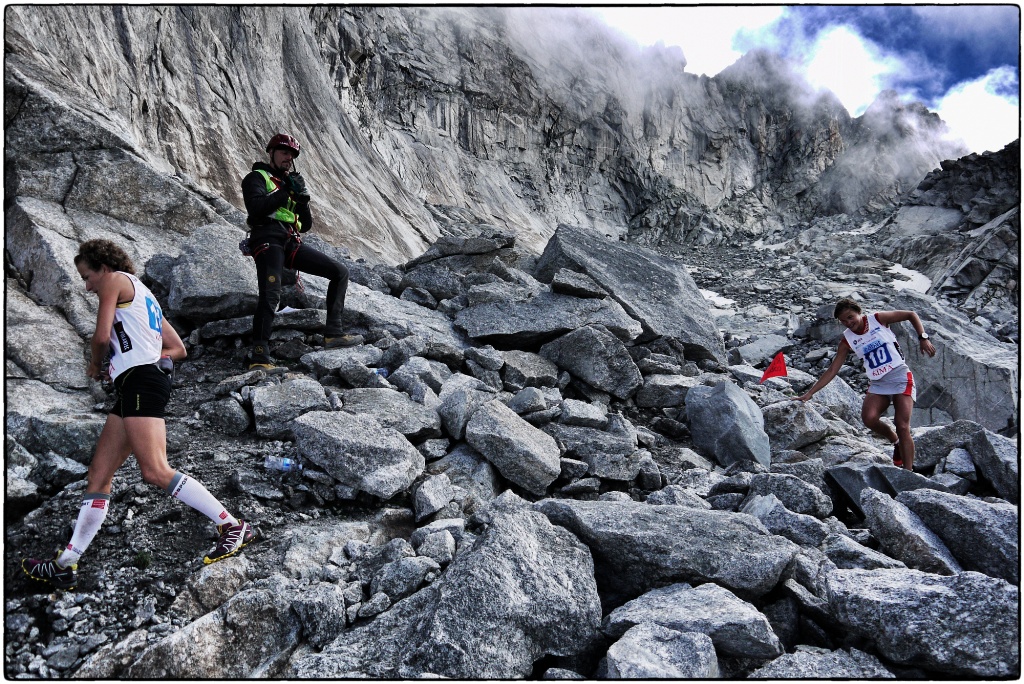
In the ladies race Emelie Forsberg and Nuria Picas raced neck and neck with Emanuela Brizio (2008 and 2010 winner) chasing behind. Forsberg pushed ahead and at Cameraccio 2950m she took the lead and the prize money for the first lady to the highest point of the course.

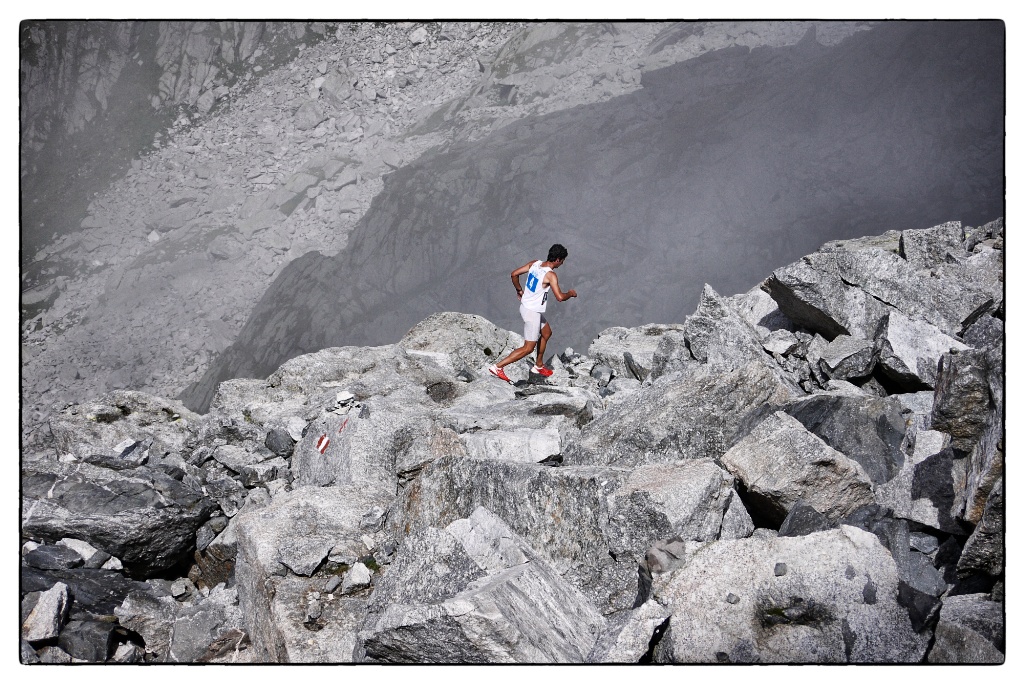
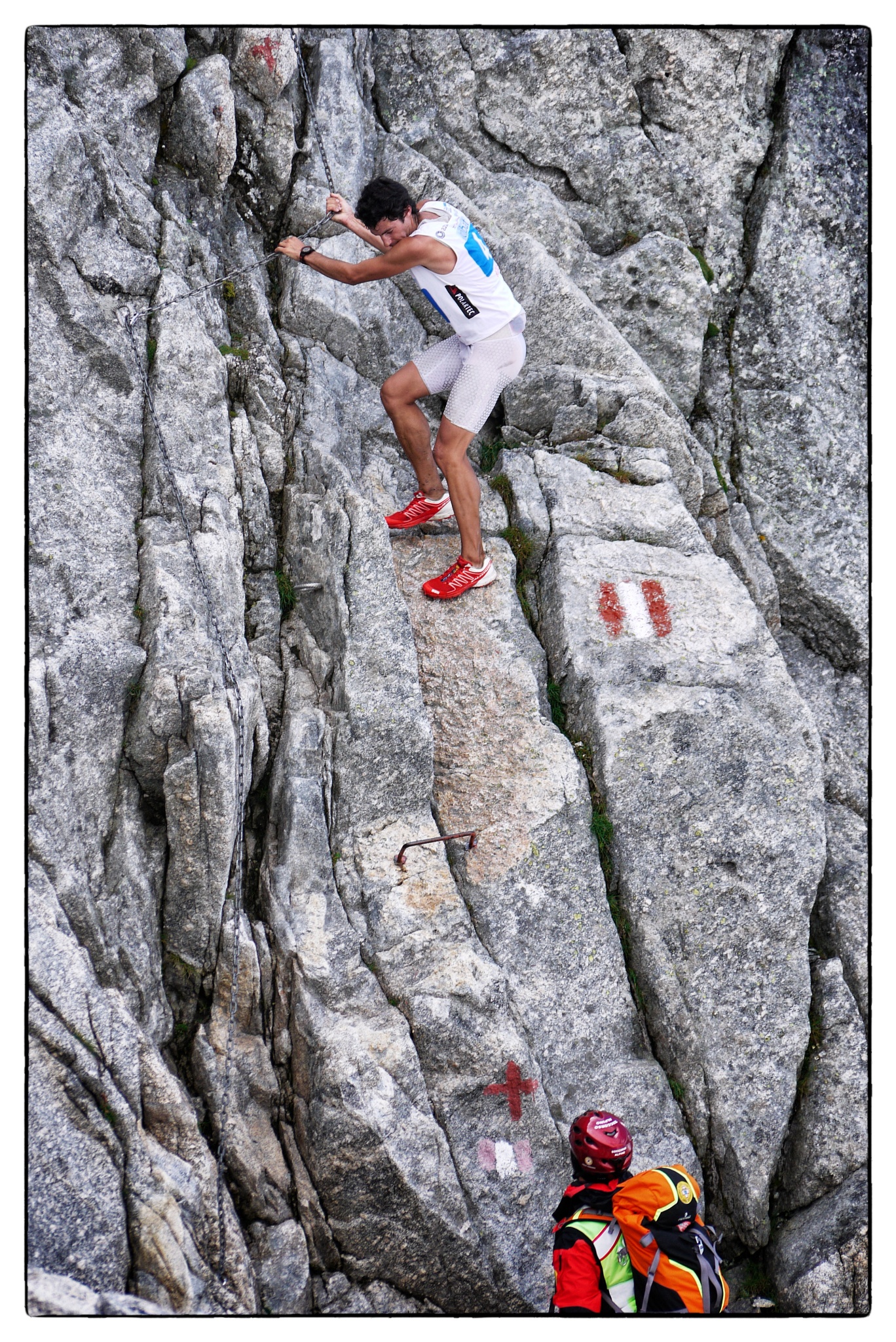
At Camerozzo 2765m a super technical section in what already is a very technical race, Kilian descending by the chains securely bolted to the wall and had a lead of nearly 10 mins over Tom Owens.

Nuria Picas and taken the lead here and was looking super strong. Behind Emelie Forsberg and Emanuela Brizio now raced neck and neck.

In the men’s race Michel Lanne chased Francis Sancassani now in 3rd. Several minutes behind Andy Symonds and Philipp Reiter chased together.

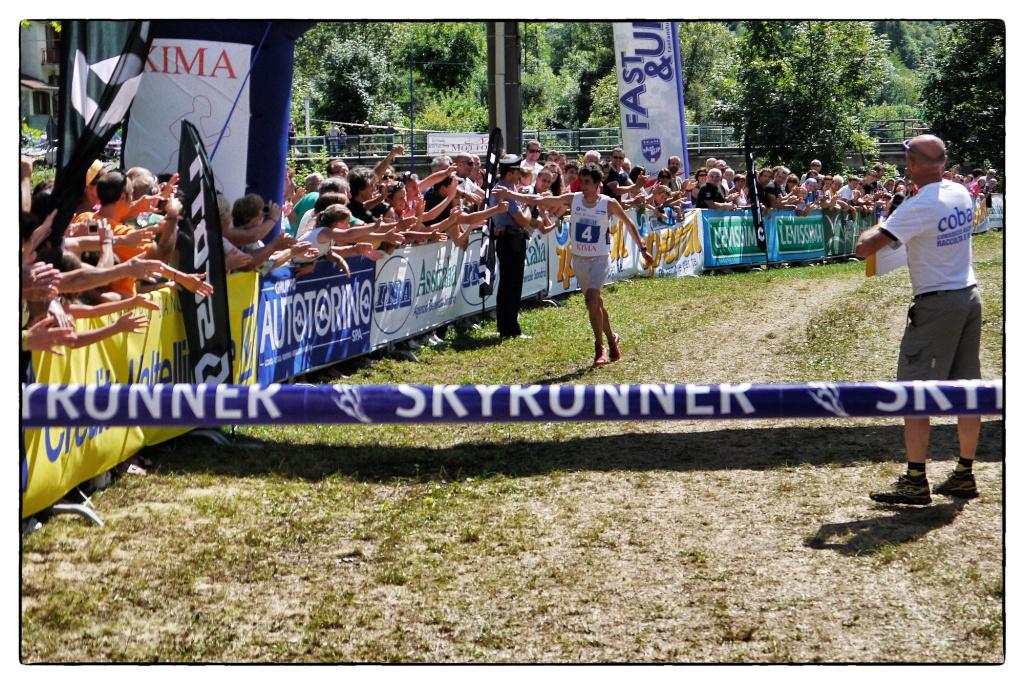
Kilian used all his mountain skills and ran into the finish to win comfortably in 6:28. Tom Owens pulled of an impressive 2nd place after (in his words) a disappointing Sierre Zinal just two weeks ago to cross the line in 6:39. He said as he finished:

“Wow, so hard, so technical… an incredible race, you can’t describe what that course is like”.

Francis Sancassani sealed the men’s podium in 6:45.

Nuria Picas ran a wonderful race to finish first in a new Course Record of 7:36:21 some 10 mins faster than the previous best. Emelie Forsberg had to move up a gear in the final km’s to win a well earned second place in 7:46 from Emanuela Brizio who was just seconds behind.

I have witnessed many races and the Trofeo Kima stands out as the most incredible, the most beautiful and the most frightening I have ever seen. It’s an incredible race and with just 100 entries every other year it is one race that should make it to all ultra runners bucket list. It is a fitting tribute to KIMA.