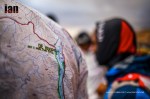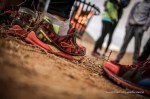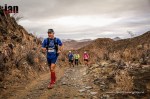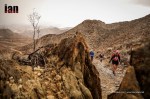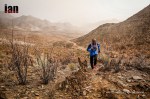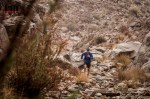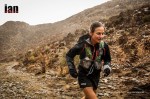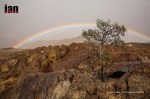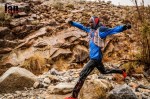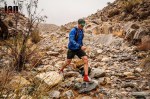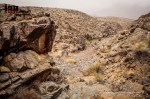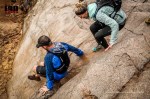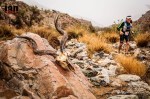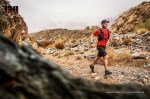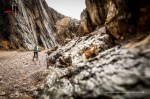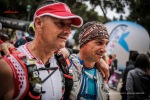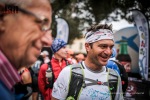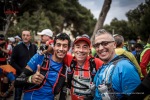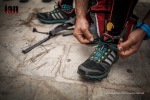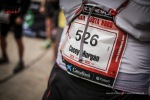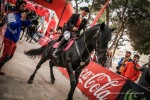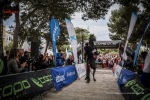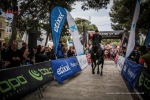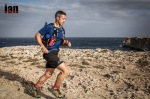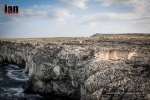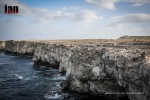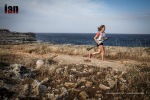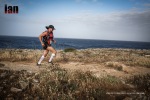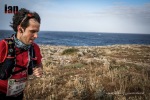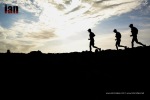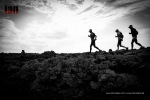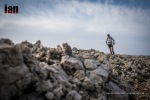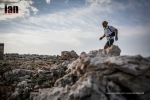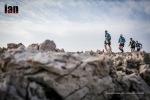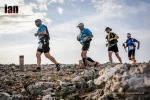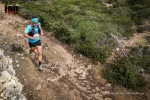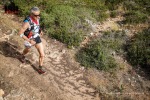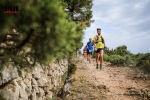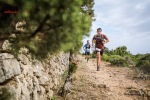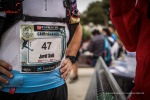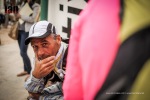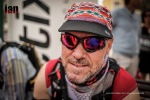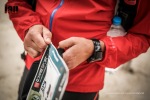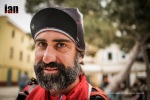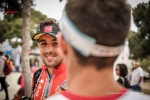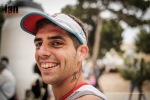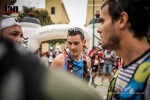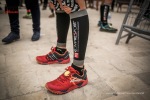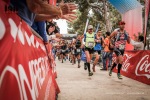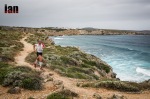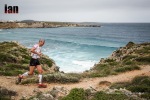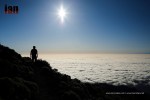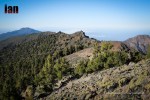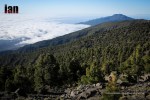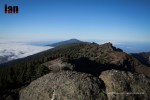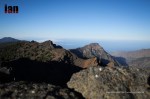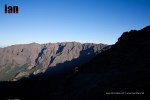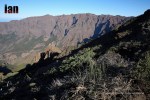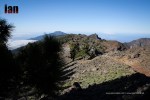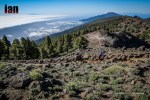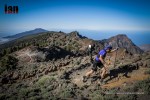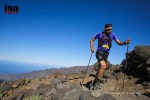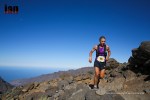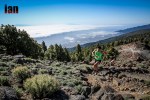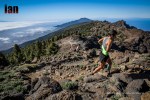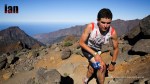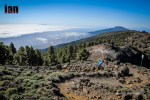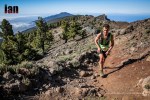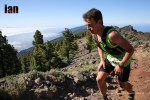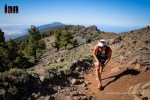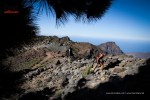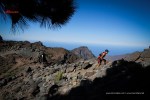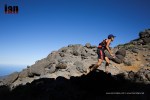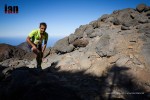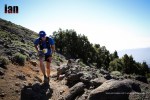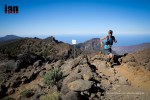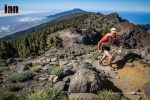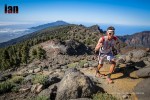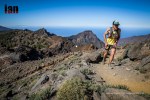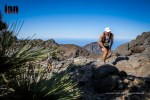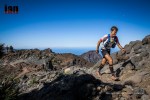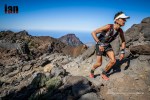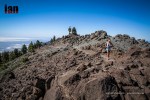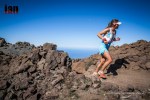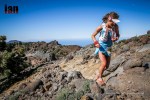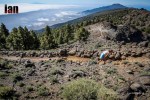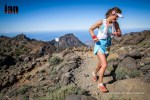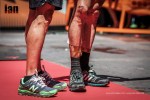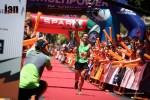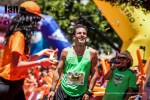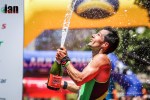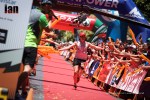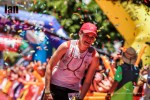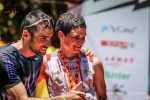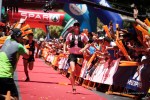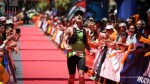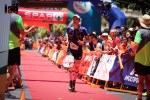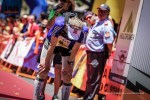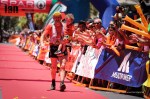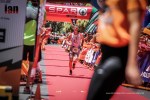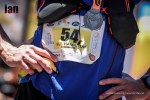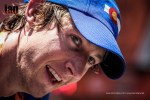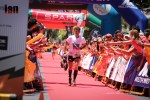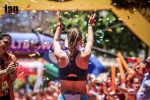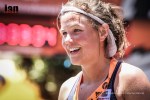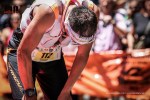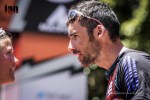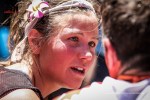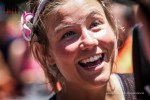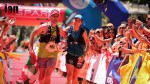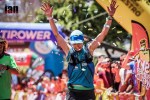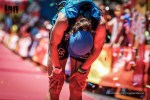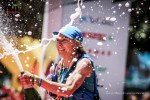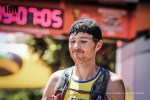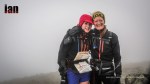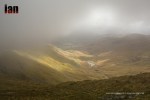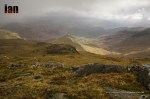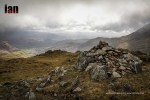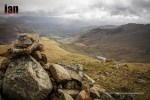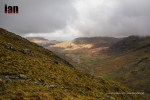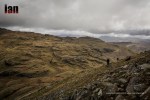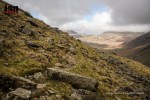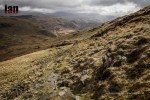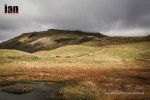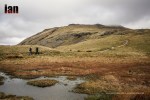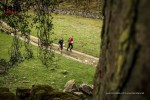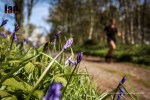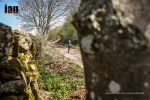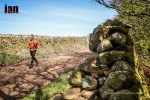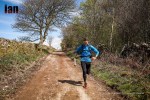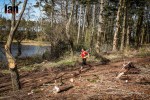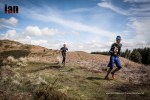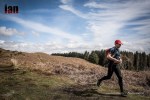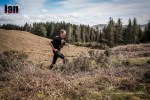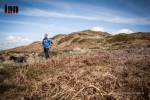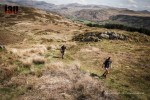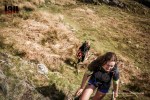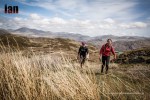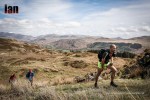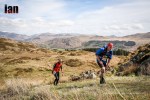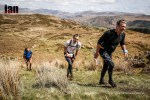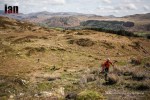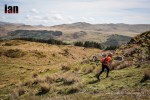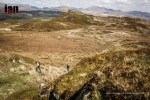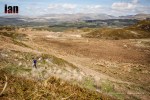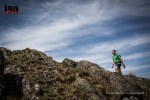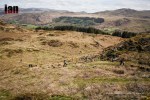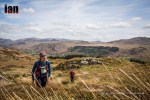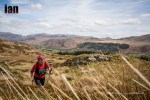
Richtersveld Widrun 2015 Day 2

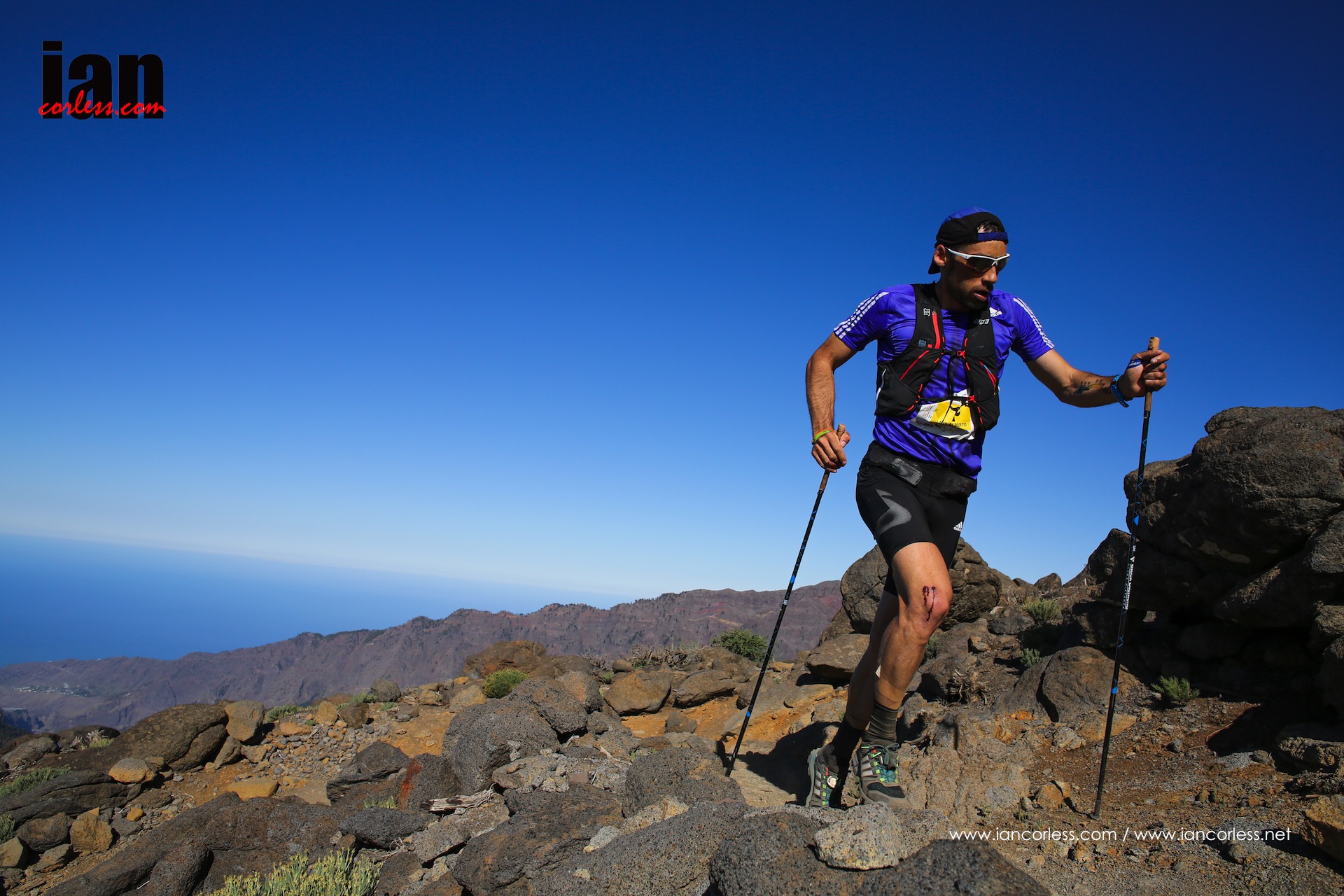
©iancorless.com_RichtersveldRaceDay22015-8875

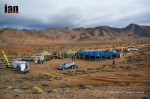
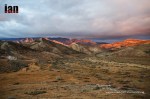
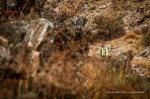
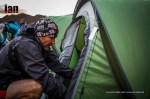
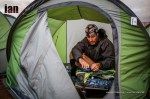
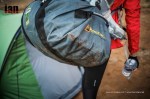
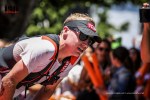
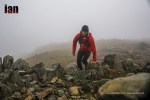
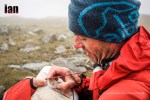
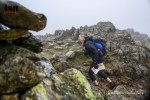
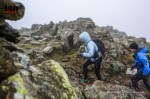
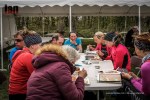
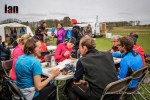
What a night! The wind blew, gusted and lifted tents off the ground. We were told yesterday that the last time it rained in the Richtersveld was August 2014. Well believe me, when the weather changes; it really changes!

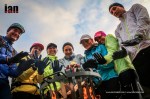
The excitement continued into the morning and although the rain subsided (for a little while), the wind was going to be with the runners all day. Starting in three separate groups, 0800, 0830 and 0900 the field were split based on finish times from day 1; slower runners starting first at 0800 and faster runners starting last at 0900.

James Cracknell, the 2-time Olympic Gold Medallist for rowing finally joined the race after an epic journey of 48 hours. He departed Poland at 1900 on Sunday after commentating at the Rowing European Championships. He flew back to the UK, then flew to Joburg and followed with a connecting flight to Upington. The journey was finished off with 10 hours in the car to the race day 2 start line.

James arrive at 0800 in camp just giving him 60 minutes to sort out his equipment and get his head ready for a day on South African trails.

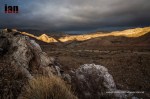
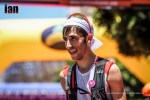
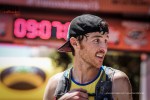
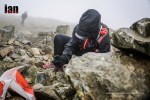
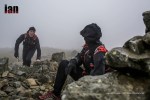
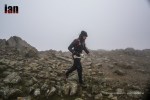
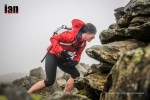
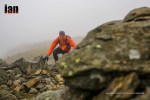
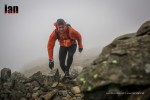
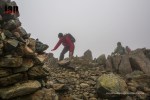
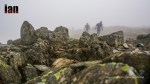
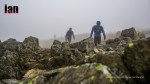
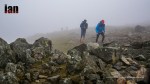
As expected, Thabang Madiba showed everyone a clean pair of heels as he slowly pulled away from Katya Soggot, Dayle Wheeler, Nikki Kimball and James Cracknell. Conditions were tough throughout the day and the beautiful Richtersveld landscape was shrouded by mist and permanent rain that varied in intensity.

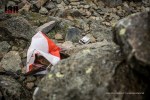
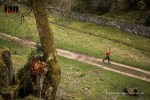
Climbing and descending to Cp1 the runners once again climbed up and over the pass at  Tswayiberg before then dropping down into the technical riverbed that would lead to the finish.

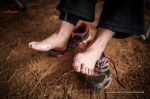
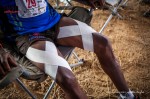
Thabang at this stage was already leading by over 10 minutes, behind Katya Soggot, Nikki Kimball and Dayle Wheeler pursued with James Cracknell not far behind. James was certainly struggling on the slick wet rocks as he slid from left foot to right with the occasional shout of ****ing hell! A groin strain picked up at London Marathon adding to his frustrations.

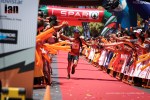
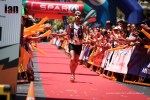
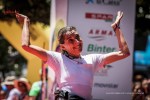
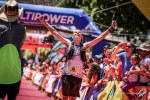
At the line, Thabang Madiba completed the 36km stage in 3:14:03 with Soggot, Wheeler and Kimball crossing the line together in 3:33:35. Cracknell held on fighting some severe discomfort to finish in 3:41:56.

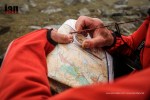
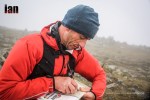
Georgina Ayre who had run well on day 1 frustratingly repeated Nikki Kimball’s error and made a navigational mistake by taking the wrong riverbed. This mistake was costly, as she finished the day 1 hour behind Soggot and Kimball. Karoline Hanks was 3rd lady on the day in 4:03:23.

As the day came to a close, a break in the weather came and with it the sun, a welcome return! Everyone has fingers crossed for a warm and sunny day 3 at the Richtersveld Wildrun.

Results Overall

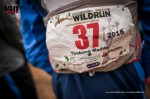
Thabang Madiba 6:45:35

Dayle Wheeler 7:14:49

Katya Soggot (1st lady) 7:25:22

Karoline Hanks (2nd lady) 8:13:05

Nikki Kimball (3rd lady) 8:13:06

Filippo Faralla (3rd man) 8:13:10

Altitude Training For Endurance Performance – Marc Laithwaite

©iancorless.com_GlenCoeMay2015-6345

The higher you go, the ‘thinner’ the air becomes. The reduction in air pressure leads to less air resistance, so athletes who sprint, jump and cycle often perform better at high altitude venues. For endurance events, this lack of air pressure becomes a significant issue, as it leads to less oxygen in the blood stream, which impact upon aerobic performance.

What is air pressure?

Air pressure is measured as mm Hg (millimetres of mercury), if you’ve got one of those weather things at home or in the garden, you’ll often see ‘mm Hg’ on the scale. Standard air pressure at sea level is 760 mm Hg, that’s how much resistance you have to overcome when you run or ride your bike. At an altitude of 1344m (the height of Ben Nevis) the air pressure is lower at 650 mm Hg. Cyclists who have completed the hour record (how far you can ride on a track in a single hour) have historically completed the challenge at altitude. More recently, the Olympic Velodrome manipulated the climate conditions inside the building in an attempt to reduce air resistance and increase the likelihood of world records. Air pressure can be simply described as the ‘air density’. If you’re trying to ride through dense air, it’s like riding through water. If the air is thin, you slice through with less resistance. Time trial cyclists will know the importance of weather conditions, they know instinctively that following a big storm, the air is just right for personal bests!

I thought it was harder to compete at altitude for endurance athletes?

Physiologically speaking, yes, it is harder for athletes to compete at altitude. This would certainly be the case for most endurance sports. The hour record is slightly different as the benefits in aerodynamics and reduced air pressure, can outweigh the physiological disadvantage of less oxygen reaching the muscles. For long distance runners, competing at altitude would not be beneficial in any way!

Why does less oxygen get to the muscles?

Air pressure flows from high to low, consider the following example: The pressure in your bike tyre is higher than the surrounding air pressure. When you press the valve the air will therefore flow OUT, from HIGH to LOW. The air will continue to leave your tyre until the pressure inside the tyre matches the pressure in the outside air, then it stops flowing. When you inflate your tyre, your bike pump compresses the air by pushing down the handle. This leads to high pressure inside the pump (higher than the pressure inside the tyre), so the air flows into the tyre, from HIGH to LOW.

How does it work for humans?

When your lungs expand, the air pressure inside them drops lower than the outside air pressure. By opening your mouth, you allow the air to flow inwards (from HIGH to LOW). When you compress your lungs, this squashes the air inside them, raising the pressure so it’s higher than outside air pressure. The air therefore flows out of your mouth. We said earlier that air pressure is lower at altitude. When you expand your lungs and open your mouth to let air in, you presume that the pressure in the outside air in higher than it is in your lungs (so air will flow from HIGH to LOW into your lungs). What happens if the outside air pressure is also low? You open your mouth, the air pressure in your lungs is low and the outside air pressure is also low… air flows nowhere! Much of the talk about altitude generally refers to the ‘lack of oxygen’ when in fact the real reason that oxygen supply to the muscles is reduced, is the lack of air pressure.

What happens when you train at altitude?

The reduction of oxygen in the blood stimulates the release of erythropoietin (EPO) and this results in an increase in haemoglobin and red blood cells. This is the body’s way to deal with the lack of oxygen in the blood stream. Endurance athletes will often spend periods of time at altitude to boost their red blood cell levels, in the hope that when they return to sea level, their performances will be improved. One of the most significant issues relating to training at altitude is the inability to maintain both volume and intensity of normal training. In simple terms, you can’t train hard when you’re at altitude. To resolve this problem, athletes will follow a ‘HILO’ approach, which means they live HI and then train LOW. They will live at high altitude and then drop down to sea level when they need to train, so their workouts are not affected. The biggest problem relating to the HILO approach is the geographical limitations. Firstly, athletes must travel to a part of the world where they can sleep at altitudes of 2200-2500m. Secondly, they must then deal with the practicalities of training at ‘sea level’. This may require living and sleeping at a ski resort, whilst driving to lower altitudes to carry out training sessions.

There is an easier way

This geographical problem has largely been removed by the access to hypoxic or hypobaric chambers, thereby allowing athletes to remain at home in many cases whilst still benefiting from the HILO approach. Hypoxic chambers transform a normal room or building into a hypoxic environment. Athletes are now able to purchase a simple tent, which can be erected over their bed and with the use of a simple device, they can replicate altitudes of 2200-2500m whilst they sleep. Some training facilities have gone further and established training houses with dormitories where athletes are continually residing in hypoxic conditions to match 2200-2500m.

What’s the difference between hypoxic and hypobaric?

The word hypobaric, means ‘low pressure’. We mentioned earlier that air pressure drops when you are at altitude. The simple tent structures that you place over your bed, as used by the Brownlees and other elite athletes are not hypobaric. The air pressure in those tents is the same as general sea level, instead, they reduce the amount of oxygen in the air (swap it for nitrogen). They are therefore ‘hypoxic’ (low oxygen) but not ‘hypobaric’ (low air pressure). Hypoxic devices are much more easily available and have the same desired effect, i.e. generating red blood cells.

Applying Hypoxic Training

There are 3 ways of using hypoxia. The first is to sleep or live for longer periods of time in a hypoxic environment. This may be as simple as erecting a tent over your bed and sleeping 8-10 hours inside. The most common recommended altitude is 2000-2500m, this is moderate altitude.

The second option is termed IHT (Intermittent Hypoxic Therapy). This is based upon short exposure (60-90 min per day or less), at significantly higher relative altitudes (6000m+). This option is generally done passively, sitting in a chair whilst holding a mask over your face and breathing hypoxic air. In simple terms, this is a ‘much harder hit for a shorter period of time’.

There is a third option, to consider as both of the above do not involve exercise. You could exercise on a treadmill or indoor bike, whilst wearing a mask and breathing hypoxic air. If you are exercising, rather than sitting still, then the recommended altitude would be similar to option 1 (2000-2500m).
I’m feeling a bit light headed after all this talk of altitude, so we’ll stop here for now. Next week, we’ll look at what out there on the market and how it can be used to enhance your general performance. How can you apply altitude training in your everyday life and what’s the potential benefits to performance?

If you found this article useful, it would help us a great deal if you share on Facebook, Twitter and social media.

Until then, stay low and fast

About Marc:

Sports Science lecturer for 10 years at St Helens HE College.

2004 established The Endurance Coach LTD sports science and coaching business. Worked with British Cycling as physiology support 2008-2008. Previous Triathlon England Regional Academy Head Coach, North West.

In 2006 established Epic Events Management LTD. Now one of the largest event companies in the NW, organising a range of triathlon, swimming and cycling events. EPIC EVENTS also encompasses Montane Trail 26 and Petzl Night Runner events.

In 2010 established Montane Lakeland 50 & 100 LTD. This has now become the UKs leading ultra distance trail running event.

In 2010 established The Endurance Store triathlon, trail running and open water swimming store. Based in Appley Bridge, Wigan, we are the North West’s community store, organising and supporting local athletes and local events.

Check out the endurance store HERE

Endurance Store Logo

Recent Printed Publications for iancorless.com

TCC Lead Page

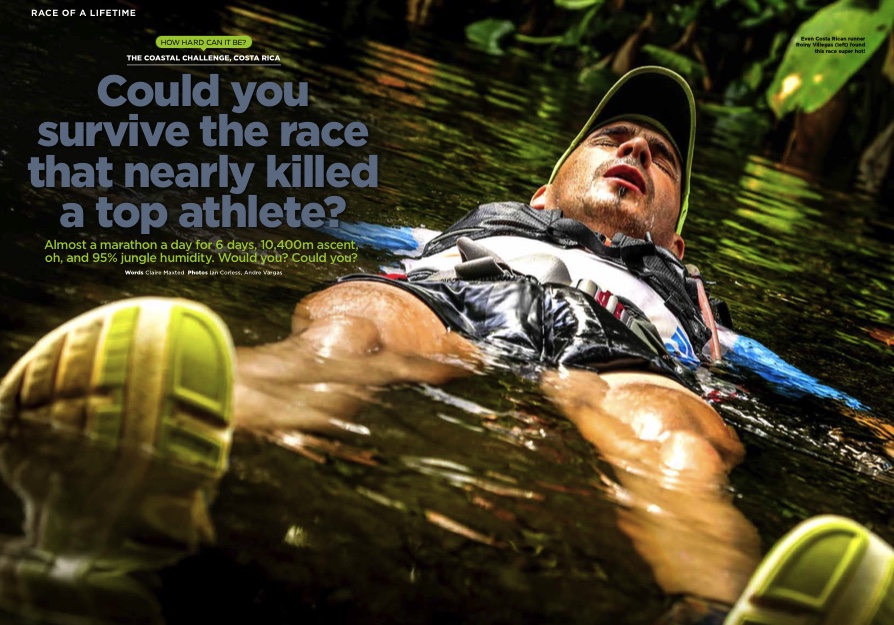
The first few months of 2015 have been very rewarding and I have had several articles and features printed worldwide in a series of top ranking magazines.

From the rainforests of Costa Rica, to heat of the Sahara. Anton Krupicka looking broken at Transgrancanaria, Joe Grant between a rock and a hard place at The Coastal Challenge and Sir Ranulph Fiennes beating the heat at the Marathon des Sables.

Here are the magazines with links

Like The Wind HERE

Runners World HERE

Trail Running Magazine HERE

Competitor HERE

Outdoor Fitness HERE

Here is a selection of the printed articles. All my tear sheets can be viewed HERE

Screen Shot 2015-05-08 at 10.43.40

MDS 2015 Darren Outoor Fitness UTLD Runners World 2015 TCC 2015 Trail Running Mag MDS Sir Ranulph Fiennes captured_spread

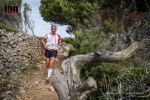
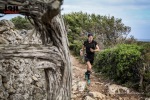
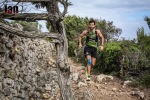
COMPRESSPORT TRAIL MENORCA CAMI DE CAVALLS 2015 – Day One

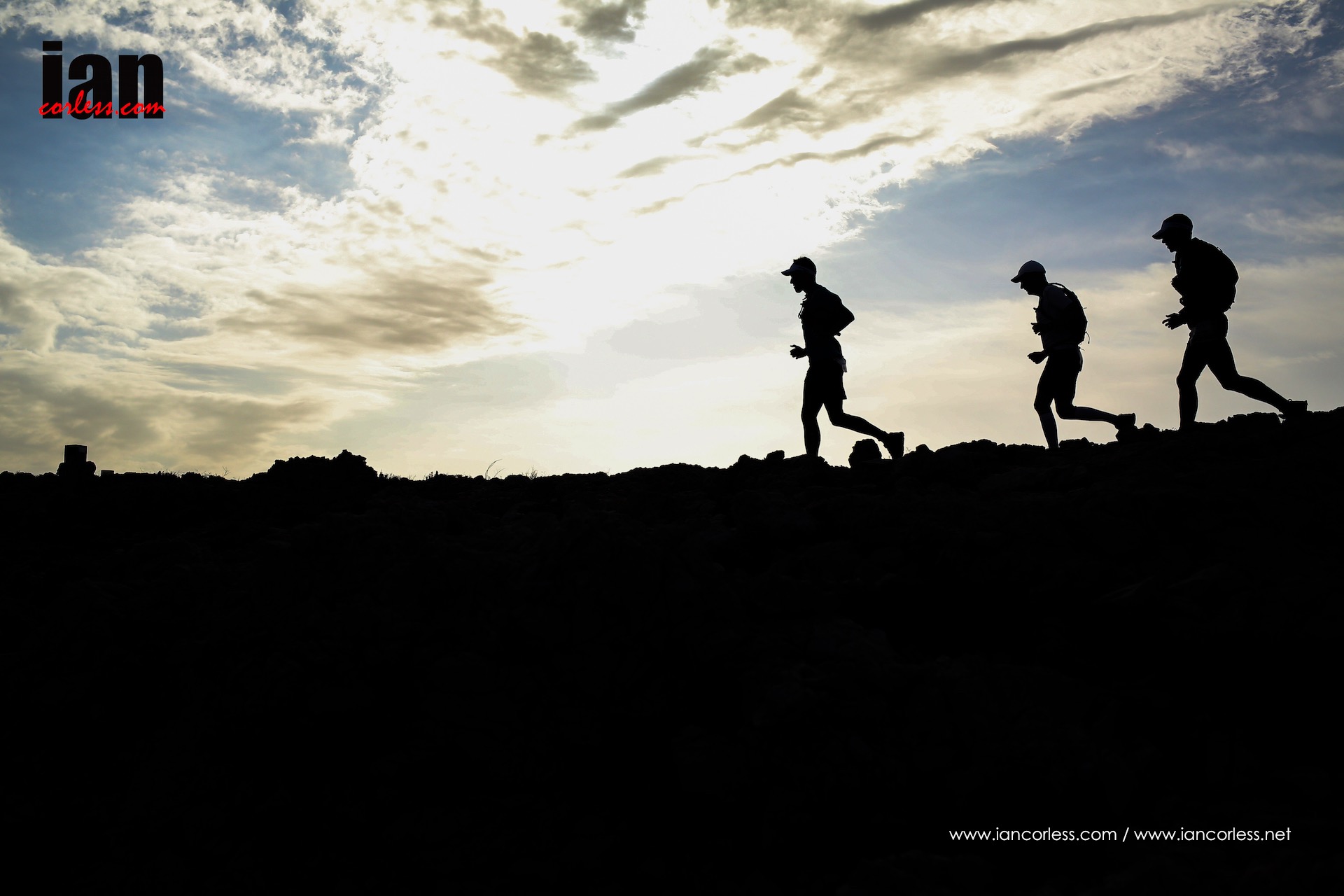
©iancorless.com_Menorca2015-0459

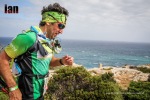
The fourth edition of the COMPRESSPORT TRAIL MENORCA CAMI DE CAVALLS 2015 started on Friday May 15th at 0800 in the town of Ciutadella.

A weekend of racing and on Friday it was the 185km (0800 and 1200 start) and the 100km event that got underway.

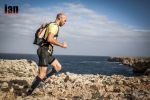
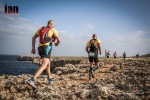
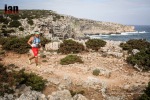
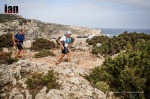
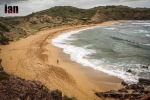
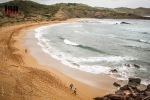
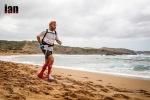
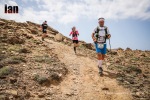
Menorca literally threw everything at the runners in regard to weather – cloud, sun, wind, rain, thunderstorms and the occasional flash of lightening.

images

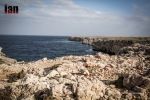
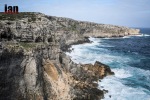
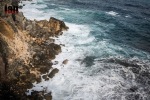
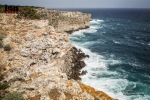
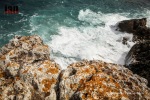
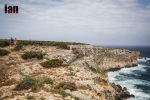
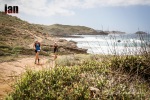
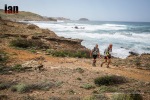
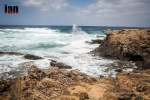
One thing remained constant though, the beauty of the surroundings and the stunning coastline.

As I write, the 185km is still taking place and the 85km event started at 0800 Saturday May 16th.

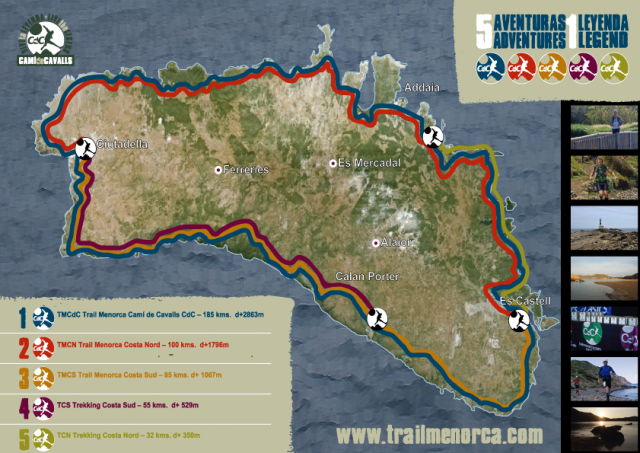
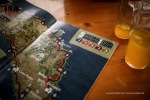
Cami de Cavalls map

Casey Morgan from the UK won the 100km event in a new course record – 8:57 (tbc) and we will update with a ladies result asap.

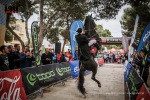
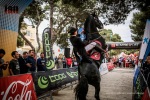
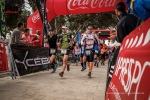
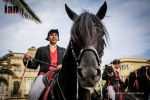
We will update with a series of reports and times as more information becomes available. For now, please enjoy a selection of images (many more to follow) from day one of COMPRESSPORT TRAIL MENORCA CAMI DE CAVALLS 2015. 

Website – http://www.trailmenorca.com

Zegama-Aizkorri 2015 Race Preview

©iancorless.com_IMG_1042Zegama14

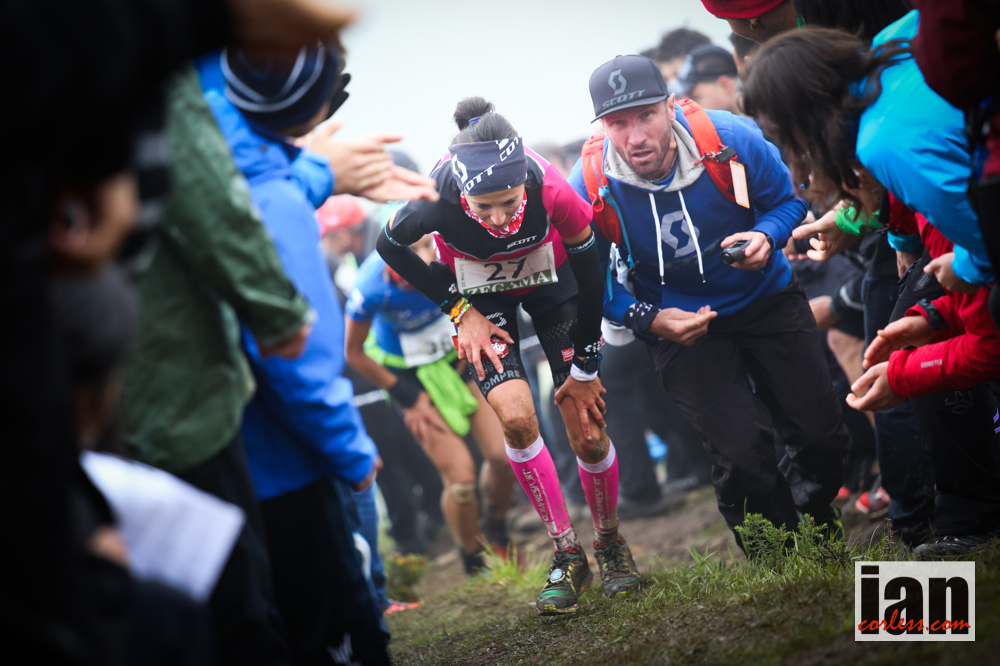
It’s Zegama-Aizkorri time and on May 17 yet another classic edition of the iconic Skyrunning race will take place. A permanent feature on the Skyrunner® World Series since 2004, the 42 km race has a tough 5472m ascent and descent and attracts a consistently high quality field. This year, the iconic race will also award the European title for the Sky distance, together with points for the Skyrunner® Series.

As one would expect, a quality field will assemble in this small town, however, make a note… the race will not have Luis Alberto Hernando or Kilian Jornet toe the line.

©iancorless.com_IMG_1343Zegama14

For the men Marco De Gasperi heads up a strong field closely followed by Ricky Lightfoot, Michel Lanne, Aritz Egea, Manuel Merillas and Zaid Ait Malek.

*Breaking news. KILIAN JORNET will run Zegama-Aizkorri

©iancorless.com_IMG_3476Zegama14©iancorless.com_IMG_0199Zegama14The ladies race is set to be a classic with Laura Orgue, Elisa Desco, Maite Maiora and Emelie Forsberg (tbc) doing battle on these challenging trails and mountain paths.

©iancorless.com_IMG_2179Zegama14

©iancorless.com_IMG_2202Zegama14

34 elite athletes on the 2014 ISF Ranking will be among the 600 runners lining up and the racing will be fast and furious. Zegama has become a beacon in the world of Sky and mountain running and as such it’s race that attracts as many spectators as it does runners. The atmosphere is always incredible and the weather, well that can be somewhat unpredictable. It certainly can play a key factor in the final outcome.

2014 winners Kilian Jornet and Stevie Kremer will not so we can expect fireworks from both the ladies and the men’s fields.

Marco De Gasperi on paper has all the skills and power to take victory but an in form Ricky Lightfoot fresh from a fell running victory in the UK is all set to upset the apple cart. Michel Lanne has been stretched with work recently but still produced a quality run at Buffalo Stampede and with less travel and fresh legs he will also be a podium contender. Tadei Pivk, Zaid Ait Malek, Ionut Zinca and Aritz Egea will all be pushing the pace and to be honest, as past records show, any of them could dislodge the podium screws. Manuel Merillas recently had a tough day at Transvulcania and one has to ask how much impact that will have on his reserves for Zegama. Expect fireworks, the Zegama-Aizkorri script has been written and ripped up many times before, I don’t this current edition will be any different.

©iancorless.com_IMG_0021Zegama14

Emelie Forsberg is still undecided if she will run Zegama after taking victory at last weeks Transvulcania. To be honest I think she will run but may well lack some of the explosive speed required to win this race. In all honesty, I have to give a nod for Elisa Desco, Maite Maiora, Oihana Kortazar and Laura Orgue for the top slot. Who’s going to win? I don’t know! I genuinely feel that the podium places will be made up of these top 5 and who places where will all come down to the day and the variables that any race can throw at runners.

The records to beat are by Kilian Jornet (3h48’38’’) and Emanuela Brizio (4h38’19’’).

Action will get underway on Sunday and you can follow on Facebook and twitter for updates.

The top ISF ranked men as provided by the ISF:

Ionut Zinca (Rank 2 – ROU), Marco De Gasperi (Rank 3 – ITA), Tadei Pivk (Rank 4 – ITA), Zaid Ait Malek (Rank 6 – MAR), Aritz Egea (Rank 7 – ESP), Alfredo Gil (Rank 10 – ESP), Jokin Lizeaga (Rank 12 – ESP), Michel Lanne (Rank 19 – FRA), Eirik Haugsnes (Rank 20 – NOR), Manuel Merillas (Rank 25 – ESP), Hassan Ait (Rank 27 – ESP), Jessed Hernandez (Rank 32 – ESP), Pere Rullan (Rank 33 – ESP), Imanol Goni (Rank 35 – ESP), Florian Reichert (Rank 37 – GER), Cristobal Adell (Rank 38 – ESP), Iban Letamendi (Rank 41 – ESP), Ricky Lightfoot (Rank Ultra 54 – GBR), Dai Matsumoto (Rank 56 – JPN), Ricardo Mejia (Rank 59 – MEX), Pere Aurell (Rank 60 – ESP), Fernando Arca (Rank 82 – ESP).

The top ISF ranked women provided by ISF:

Emelie Forsberg (Rank 1 – SWE), Maite Maiora (Rank 3 – ESP), Elisa Desco (Rank 6 – ITA), Nuria Domínguez (Rank 8 – ESP), Uxue Fraile (Rank 11 – ESP), Laura Orgue (Rank 15 – ESP), Federica Boifava (Rank Ultra 16 – ITA), Aitziber Ibarbia (Rank 26 – ESP), Ragna Debats (Rank 27 – NED), Nerea Amilibia (Rank 35 – ESP), Azara Garcia (Rank 39 – ESP).

Top runners will not only compete for points in the World Series ranking, but titles and medals are at stake in this first edition of the European Championships.

For the first time, a special prize will be awarded to the male and female European Champions: a prestigious Alpina Smartwatch, Official Watch of the 2014 Skyrunner® World Series and European Championships.

Beat The Heat ( Part One) – Marc Laithwaite

©iancorless.com_TCC2015_Day5-2508

This week we’re starting a series of articles titled ‘environmental physiology’. We’re going to open with a 2 part series relating to exercise in the heat (I say 2 parts, but who knows what could happen by next week). Following that, we’ll take a look at altitude training and potential benefits.

But before we go on, why not catch up on our seven part series of posts on RACE DAY NUTRITION HERE

Too Hot? Call The Police & Fireman…

Exercise in the heat can place a lot of strain upon your body, if you’re used to cooler climates. For this reason, many elite athletes will spend time acclimatising to the higher temperature. Acclimatisation can require up to 14 days, so what if you’re an amateur athlete travelling abroad for an endurance event, who can’t afford to travel 3 weeks before the event? Well this blog is quite timely for me, as I’m off to Lanzarote in less than 4 weeks for the Ironman triathlon and potentially, it could be very hot. There’s probably quite a few people reading this blog who are traveling abroad this year to take part in triathlon or running events in hot places. The purpose of this blog is to explain simple ways, which you can acclimate your body beforehand and explain the physiological changes, which take place to improve your performance.

Too hot? You Make A Dragon Want To Retire Man…

In a nutshell, when you exercise in hot climates, your core temperature rises and your performance suffers. If your core temperature rises too much, it could potentially be lethal, so your brain is pretty quick to try and stop that happening, by persuading you to stop!

How do we reduce core temperature?

There 2 main ways, the first is ‘convection’ and the second is ‘sweat evaporation’.

Convection

Think about a car radiator, it’s positioned right at the front of the car as that’s where the wind hits it when you’re driving. Heat is generated in the engine, this in turn heats the water which is then pumped to the radiator. The wind hits the radiator, cools the water and the cool water goes back into the engine to pick up more heat. This cycle continues, to keep removing heat from the engine, which is why it’s important to keep the fluid topped up or your car will overheat! The human body works the same way, heat is generated in the engine and your blood then picks up the heat. The blood is pumped to the coolest part of the body (the skin), where the wind hits it and cools the blood. It then returns back into the engine to pick up more heat and the cycle continues.

If the wind is blowing against your skin whilst you exercise, convection may well be enough to keep you cool and maintain a normal body temperature. It’s easier to do this when cycling, compared to running, as your speed is generally higher, so the wind chill is greater. Runners will notice that treadmill running leads to more sweating than running outside as the air temperature is generally warmer, but also you’re not moving, so there’s no air flow past the skin and therefore no wind chill or convection. The same can be said about indoor cycling or using a turbo trainer, especially if you don’t have a fan blowing.

Let’s use the treadmill running or turbo cycling scenarios as an example. If there’s no air flow past your skin to cool the blood, then in effect, you pump hot blood to the skin surface, it doesn’t get cooled, so the hot blood goes back into the engine / core. That’s a sure fire way to overheat. This is the same as leaving your car engine running on a hot day, whilst stuck in a traffic jam. If you’re not moving, there’s no wind hitting the radiator, so convection cooling can’t happen.

Sweating

Sweating is based on ‘evaporation’. Water from your body cells makes it’s way to the skin and as the hot blood arrives, the heat is passed from the blood into the water droplets (leaving the blood cool). The heated water on your skin, evaporates into the air like water from a boiling pan and takes the heat with it. If you’re running on a treadmill and there’s no convection, you need another method of getting rid of heat, so the sweating and evaporation will kick in.

It’s important to recognise that ‘evaporation’ removes the heat, so any sweat on your skin, clothing or floor, serves no purpose other than to lead to dehydration. 

Convection and sweating don’t compliment each other too well

If you’re racing in hot weather, convection isn’t enough so you’ll also sweat to keep your temperature down. As you sweat, you lose fluid from your body and this leads to a drop in blood plasma (plasma is the fluid/water component of blood). The problem is that you need a lot of blood for convection to work well. When you’re exercising, blood is pumped to the exercising muscles and what’s left is pumped to the vital organs. So what happens when you then need to pump extra blood to the skin to cool down? Do you reduce blood flow to the muscles and vital organs? It sounds like a great idea to keep you cool, but where is this extra blood coming from? As if that wasn’t bad enough, you’re now sweating and the amount of blood you have is dropping. So not only do you have to supply muscles, organs and the skin, you’ve got less and less blood available as sweating continues.

Blood is made up of plasma (fluid) and cells (red/white/platelets). When you sweat, you lose plasma, but not cells. This means that the total amount of blood is reduced and it also gets thicker (same number of cells but less fluid). 

What does this mean in terms of performance?

As you’ve probably guessed already, this isn’t good for performance. Heart rate is generally higher for any level of exercise. This is due to the fact that you’re trying to pump blood to all areas of your body and your total blood volume is dropping. Your cardiovascular system is therefore working overtime, trying to match the demand with a struggling supply. Due to fluid and salt losses, your body becomes dehydrated and cells cannot function correctly. We’ve mentioned previously that salt is required for transporting fluid throughout the body and as high amount of salt can be lost in sweating, this mechanism is impaired.

Something of great importance, which is less frequently discussed, is the change in substrate utilisation. Whilst the exact mechanism is still under question, it’s pretty clear that you use more carbohydrates and therefore empty your glycogen stores more quickly when exercising in the heat. The simple explanation is that that there’s a lack of ‘spare blood’ going to the muscles, due to the fact it’s going to the skin for cooling. Fat metabolism requires more oxygen than carbohydrate metabolism so there’s a switch from fat to carbohydrate. This may also be explained by a switch from ‘slow twitch’ to ‘fast twitch’ fibres, which use less oxygen.

All in all, this isn’t looking too good. We’ve got an ever-decreasing blood volume, which is being pulled in several different directions. We’ve got decreasing salt levels and an onset of dehydration. We’ve got a heart rate which is significantly higher than it should be for the intensity we’re exercising at and to cap it all off, we’re running out of carbohydrates at a faster rate than normal.

Don’t worry help is at hand. Next week we’ll discuss how acclimatisation helps you to deal with the issues and explain the physiological changes responsible.

Until then, stay cool.

– Marc

About Marc:

Sports Science lecturer for 10 years at St Helens HE College.

2004 established The Endurance Coach LTD sports science and coaching business. Worked with British Cycling as physiology support 2008-2008. Previous Triathlon England Regional Academy Head Coach, North West.

In 2006 established Epic Events Management LTD. Now one of the largest event companies in the NW, organising a range of triathlon, swimming and cycling events. EPIC EVENTS also encompasses Montane Trail 26 and Petzl Night Runner events.

In 2010 established Montane Lakeland 50 & 100 LTD. This has now become the UKs leading ultra distance trail running event.

In 2010 established The Endurance Store triathlon, trail running and open water swimming store. Based in Appley Bridge, Wigan, we are the North West’s community store, organising and supporting local athletes and local events.

Check out the endurance store HERE

Endurance Store Logo

COMPRESSPORT TRAIL MENORCA CAMI DE CAVALLS 2015 PREVIEW

images

Following on from Transvulcania, attention this coming weekend turns to Zegama-Aizkorri and Menorca for the COMPRESSPORT TRAIL MENORCA CAMI DE CAVALLS 2015. 

Cami de Cavalls map

The Menorca Cami De Cavalls takes place on 15, 16 and 17th May on the beautiful island of Menorca. A series of races are offered that provide all those involved to see the beauty of this majestic island.

The island is known for its collection of megalithic stone monuments: navetes, taules and talaiots, which speak of a very early prehistoric human activity. Some of the earliest culture on Menorca was influenced by other Mediterranean cultures, including the Greek Minoans of ancient Crete . For example the use of inverted plastered timber columns at Knossos is thought to have influenced the population of Menorca imitating this practice. The location of Menorca in the middle of the western Mediterranean was a staging point for different cultures since prehistoric times. This Balearic Island has a mix of colonial and local architecture. Menorca’s cuisine is dominated by the Mediterranean diet, which is known to be very healthy. Whilst many of the locals have adopted modern attitudes they still uphold certain old traditions.

(Content ©Wikipedia)

As a small island, large sporting events are seldom seen. However, in recent years, a couple of sport events have managed to gather hundreds of participants; Extreme Man Menorca triathlon and the single-staged ultra marathon race Trail Menorca Cami de Cavalls.


The TMCDC embraces the small island and utilizes the trails to full affect offering a series of races (five in total) that allow runners to participate in a race of 32km or a traverse of the whole island in 185km.


TMCDC 185km

Trail Menorca Cami de Cavalls (TMCdC) is an ultra distance of 185,3 km and a positive slope of 2,863 m where each runner will discover their limits and enjoy an idyllic landscape on this island in the Mediterranean Sea, you will find beaches, cliffs, and incredible views.


TMCN 100km

The Trail Costa Nord (TMCN) explores the North of Menorca over a distance of 100 km. A positive incline of 1796m, runners will discover precious places in Menorca, beautiful trails and incredible views.


TMCS 85km

In the Trail Menorca Costa Sud (TMCS) you will visit beaches of white sand lapped by turquoise water and enjoy ravines and forests.


TCS 55km

The Trail Costa Nord (TMCN) provides an opportunity to discover Menorca’s wilder side; high cliffs, constantly changing terrain and beaches that leave you speechless.


TCN 32km

32 km Trekking Costa Nord (TCN) runs through the beautiful scenery of the Parc Natural de s’Albufera des Grau.


The first edition of the race was held in May 2012 with 270 participants. In recent years the amount of participants has been continuously increasing with 287 in 2013 and 646 in 2014. The 2015 edition will once again se the race reach a new level with a strong participation from respected trail, ultra and mountain runners such as:


©iancorless.com_MDS2015Day3-3746

ELISABET BARNES – 1st Marathon des Sables 2015

EMMA ROCA – results here

VANESSA RUIZ – Winner Trail Menorca CDC 2014

JAVIER CASTILLO– 3rd Utratrail Collserola 2014

JOEL JALLE CASADEMONT – 2nd Yukon Arctic Ultra 2105, 1st Goldsteig Projekt 500 2014, 5th spine race 2014

EUGENI ROSELLO – winner Spine race 2013, winner VCUF 2014/2013

SERGI COTS – Winner VCUF 2014 (made same finish time with Eugeni)- Third Ultra trail Catalan Cup 2014

IGNASI RIURO – Winner (team) and world record at Oxfam Trail Walker 2015

RAMON GARCIA – 4rt Trail Menorca CDC 2014 – Winner Tabernes Ultratrail 2015

JORGE IVAN CANO BERRIO

DANIEL ALFONSO ZUBIETA

VIVIAN ANDREA ALVAREZ FORERO

AYDE RAIDA SOTO QUISPE

BARBARA KOCH RAMIREZ 

©copyright .iancorless.com._1080607

Course records are as follows:


TCDCZigor Iturrieta 21:10:04 and Laia Diez Fontanet 27:16:33

TCNXavier Garcia 10:12:01 and Marta Comas 11:35:11

TCS Joan Noguera 8:03:31 and Brigitte Eggerling 9:53:28

TCN Paco Arnau 2:34:22 and Maria Fiol 3:18:30

TCSJuan Jose Mateos 5:17:36 and Daniela Carolina Moreno 6:42:37


The racing starts on Friday at 0800 for the TMCDC and TMCN – you can see a full race program HERE


I will be working on the race capturing images and stories so please follow on this website, via Twitter @talkultra on Facebook at facebook.com/iancorlessphotography and on Instagram @iancorlessphotography


Race website HERE

Transvulcania Ultramarathon 2015 – Race Summary and Images

©iancorless.com_Transvulcania2015-7587

No matter which way you look at it, no matter how you write it, the 2015 Transvulcania Ultramarathon was the Luis Alberto Hernando and Emelie Forsberg show.

Kicking of the 2015 Skyrunner World Series, Transvulcania was always going to be a great race and showdown that started the ISF ball rolling.

The dynamic duo of Luis Alberto and Emelie were beyond impressive and as such have provided a great impetus for the 2015 series.

Emelie Forsberg fresh off skis (and a win at Mezzalama) lead the race from the front and slowly but surely extended a lead that extended to over 30-minutes by the time the finish line arrived in Los Llanos. ‘It was so hot out there,’ Emelie said, ‘I am fresh off skis and cold temperatures and to run in this intense heat was so hard but I am extremely happy. It’s a dream come true to win this race again.’

Luis Alberto by contrast played a waiting game in the early stage. A feisty Zach Miller went off the front trying to fulfill a pre race promise that he would win the race. But Luis kept in contact and at Pico De La Nieves he made his move opening a gap of just a couple of seconds. As the kilometers passed, the Spaniard produced a master class of mountain running and when he turned the after burners on, there was no stopping him. As he entered the final kilometers he knew the course record was a possibility and he pushed and pushed providing all those watching a skin tingling and inspiring finish to snatch the course record by a couple of minutes. ‘I took it easy; I let the others dictate and then just pulled away. I felt good the whole way and it’s just incredible to win here again. I had no problems.’

It was a day of shocks though. The men’s field was super stacked and many of those we expected to contend the podium either did not start or faded and/ or pulled out. Miguel Heras did not start, Ryan Sandes dropped early saying he had no energy and Timothy Olson, Mike Foote and so many more just had a tough day on La Isla Bonita; the beautiful island.

Dani Garcia Gomez took a surprise 2nd place and Australian sensation, Blake Hose took the final podium place showing a distinct promise of an exciting future. ‘I am more than happy,’ said Blake, ‘I was taking it easy and went through some rough patches but so did everyone else by the sounds of it. To get the podium here in this quality of field is incredible, now some short races!’

Dakota Jones sprinted for 4th ahead of a charging Zach Miller and although he improved on his 2014 performance, it was easy to see that Dakota was a little perplexed by his run. However, he was very philosophical post race.

Landie Grayling was potentially going to provide Emelie with some competition after her win at Buffalo Stampeed (in Australia) but like her South African teammate, Ryan Sandes, Landie said she had no energy. Everest Trail Race winner Anna Comet Pascua started down the field and moved her way through to 2nd on the podium, albeit 30-minutes behind Emelie. Myriam Marie Guillot Boisset placed 3rd just under 2-minutes ahead of American, Alicia Shay. Magdalena Laczak rounded out the top five.

Transvulcania with the help and inspiration of the ISF (International Skyrunning Federation) in just 4-years has become one of the most iconic and prestigious ultra marathons in the world. The 2015 edition has secured this reputation. It’s not just running; it’s an island coming together to create a beautiful harmony that celebrates running. With arguably one of the most impressive and logical (sea-summit-sea) courses, the race is a pleasure to behold. I for one am booking a place for the 2016 Transvulcania Ultramarathon; I suggest you do too!

Check out Skyrunning HERE

RESULTS

Ladies:

  1. Emelie Forsberg 8:32:59
  2. Anna Comet Pascua 9:02:57
  3. Myriam Marie Guillot Boisset 9:15:06
  4. Alicia Shay 9:17:49
  5. Magdalena Laczak 9:23:45


Men:

  1. Luis Alberto Hernando Alzaga 6:52:39 – NEW CR
  2. Dani Garcia Gomez 7:21:28
  3. Blake Hose 7:25:23
  4. Dakota Jones 7:28:59
  5. Zach Miller 7:29:00

All images ©iancorless.com – all rights reserved

Race Day Nutrition (Part Seven) – Marc Laithwaite

©iancorless.com_MDM2015-0251

Last week we introduced specific products used during endurance events and how they can fulfil your requirements in terms of nutrition intake.

There are 3 common sports products used during endurance racing:

  1. Drinks powders
  2. Gels
  3. Bars

This week, we’ll check out bars and gels.

What’s in them?

Unsurprisingly, gels tend to contain maltodextrin and glucose, similar to the drinks. In fact, gels are simply condensed energy drinks. They were originally designed to be carried on events where you could access only water, as a source of energy. The thickness of the gel will dictate how much energy they contain. Some gels are very thick and sticky and these contain more energy than the ones which are a thinner, more watery solution. This is based upon the simple principles we discussed a couple of weeks ago, relating to hypo, iso and hypertonic solutions.

As an example, a 41g power gel original contains approximately 27g of carbohydrate. Remember the 60g rule? That means 2 of these gels per hour would be pretty close to target intake. The remaining 14g of the gel is fluid (41g – 27g = 14g) so we can calculate the gel thickness as follows:

Total weight = 41g
Carbohydrate content = 27g
27/41 = 0.66, Therefore this gel is a 66% solution (27 is 66% of 41)

The purpose of that calculation is simply to highlight that gels are extremely ‘hypertonic’, remember that isotonic is a 7% solution. Being hypertonic is not a problem, the more hypertonic the more energy it provides, but it does mean that you need to take fluid with them.

In past blogs we stated that you should aim for no more than 10% solutions, so that means 270ml of water drank with 27g of carbohydrate will be correct, 270 / 27 = 10. It’s important to do the calculation based on the 27g of carbohydrate in the gel, not the 41g total weight of the gel. Technically if you drink 270ml the solution will actually be less that 10% as there’s already 14g of fluid in the gel as stated above. As a practical guide think about a 500ml drinks bottle generally used for cycling, it’s half of one of those with every power gel.

What about Isogels

There are ISOGELS on the market, SIS and High5 make popular versions. By adding more fluid to the gel and reducing the carbohydrate content they can reduce the thickness of the gel solution.

The first thing of note is that they contain less carbohydrate, so you’d need to take more of them every hour. They contain in the region of 22-24g of carbohydrate per gel, so that means you’d be taking almost 3 per hour to get your energy, rather than 2 power gels. That’s a lot of gels to carry if you’re racing long distances.

But ISOGELS are isotonic, so you don’t need water, right?

HIGH5 Isogel
Total weight = 66g
Carbohydrate content = 24g
24/66 = 0.36, Therefore this gel is a 36% solution (24 is 36% of 66)

SIS GO Isogel
Total weight = 66g
Carbohydrate content = 22g
22/66 = 0.33, Therefore this gel is a 33% solution (22 is 33% of 66)

So we said above and in previous blogs that isotonic solutions are 7%. The solutions for the ISOGELS above are 33% and 36%, this is not isotonic, it’s hypertonic. I may be missing something here, so I did phone High5 and ask. They couldn’t answer the question but stated that ‘they were more isotonic than other gels’. I’m not sure that is technically true, as none of them are anywhere near 7%. That’s a bit like me saying I’m tall and when questioned about by lack of height, I reply by stating ‘I’m more tall than Ste Hilton’. Whilst that may be true, it doesn’t make me tall…

Key points:

1. You DO need to drink water with ISO gels
2. If you don’t know Ste, that joke is completely lost

If there’s 24g of carbohydrate in a 66g gel, then you need to take 240ml of water for a 10% solution (240ml / 24g = 10%). However, there is already 42g of fluid in there (66g gel – 24g carbohydrate = 42g fluid). Based on this, 200ml would be sufficient, that’s still more than a third of a 500ml drinks bottle.

What about energy bars?

Bars are an alternative source of carbohydrate. They generally contains things like oats, rice, wheat etc with added sugar syrups such as glucose or fructose. In terms of ‘solutions’ a gel is solid food, so it needs mixing with a significant amount of water to digest and absorb effectively.

As an example, a powerbar energize bar (others are available!!) weighs in as follows:

Bar weight = 55g
Carbohydrate = 39g
Fat = 2g
Protein = 6g

In terms of carbohydrate content, you’d need 1.5 bars per hour to get your 60g intake. If you add up the content weight 39g + 2g + 6g = 47g. We stated that the bar weighed 55g, so there is some fluid in there also plus some other little bits to make the weight up to 55g. If you drank a full 500ml bottle of water with every bar, that would give you just less than 9% solution which is ideal (47/500 = 0.9). That means a full 750ml bottle and 1.5 powerbars per hour would be pretty much on target (remember all bars are different, these calculations are for powerbar energize).

Salt intake

We discussed sweating and hydration last week, which included salt intake. As a recap, salt and sodium are 2 different things. Salt is 40% sodium and 60% chloride. You need to know this as some products give ‘salt’ content and others give ‘sodium’ content. Remember also from last week we said that you are likely to sweat up to 1g of sodium per hour (1000mg). There’s multiple thoughts on salt replacement, regarding how much and whether you need it. I’m not going to go into depth on the matter because this is meant to be a simple and easy to read blog. If it’s warm and you sweat a fair bit, aim for 500-1000mg SODIUM per hour. If you take a bit too much, you’ll just sweat it out anyhow so don’t overly panic.

Let’s presume that you are aiming to take all of your energy by using sports gels or bars. So remember, our targets are 60g of carbohydrate per hour and 500-1000mg of sodium per hour, presuming its warm and you sweat. Here are some options:

SIS GO Isotonic Gel

Includes 22 grams of carbohydrate
Sodium = negligible

High5 Isogel

Includes 24 grams of carbohydrate
Sodium = negligible

Powergel

Includes 27g of carbohydrate
Sodium = 205mg
2-3 Powergels per hour would give you 410-615mg of sodium, we stated that 500mg was a starting target.

Powerbar Energize

Includes 39g of carbohydrate
Sodium = 192mg
1.5 Powerbar Energize per hour as suggested above, would give you 288mg of sodium, half of that provided by intake of 2-3 Powerbar gels per hour. They really don’t make this easy!!

Some key points:

  1. The amount of carbohydrate in gels and bars varies widely
  2. You need to drink water with all gels and bars for correct absorption
  3. Isotonic gels don’t exist (unless I’ve missed something)
  4. Sodium content varies widely in bars and gels and is often not included

I hope that basic overview helps you to practically apply what you’ve learned over recent weeks, feel free to call into the store and we can talk you through it before your big day.

– Marc

About Marc:

Sports Science lecturer for 10 years at St Helens HE College.

2004 established The Endurance Coach LTD sports science and coaching business. Worked with British Cycling as physiology support 2008-2008. Previous Triathlon England Regional Academy Head Coach, North West.

In 2006 established Epic Events Management LTD. Now one of the largest event companies in the NW, organising a range of triathlon, swimming and cycling events. EPIC EVENTS also encompasses Montane Trail 26 and Petzl Night Runner events.

In 2010 established Montane Lakeland 50 & 100 LTD. This has now become the UKs leading ultra distance trail running event.

In 2010 established The Endurance Store triathlon, trail running and open water swimming store. Based in Appley Bridge, Wigan, we are the North West’s community store, organising and supporting local athletes and local events.

Check out the endurance store HERE
Endurance Store Logo

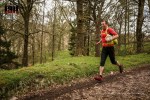
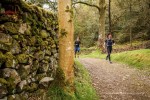
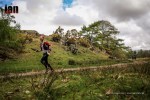
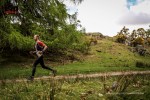
Great Lakeland 3 Day #GL3D – Day Three

©iancorless.com_GL3D2015-6725

The tents shook, lifted off the ground and were drenched with repeated gusty storms during our ‘interesting’ night in Little Langdale. I was surprised to see everyone still smiling on the final morning. But hey, that’s the GL3D. It’s such a friendly even and as one runner said, ‘You wouldn’t want good weather all the time, it would just be boring!’

The morning remained ‘claggy’ and the wind on the tops was relentless. I have to say, waiting around in the early hours for runners to arrive was a real test of nerves and my hands ability to function with a windchill of a reported -10. But I was greeted with continuous smiles, plenty of thumbs up and a repeated, ‘You must be mad being up here in this weather and this time off the day?’

However, the sun did arrive and as the runners descend off the tops and made their journey back to Ravenglass through the valleys of Wynrose Pass, all of them were rewarded with some beautiful typical Lakeland scenery and stunning weather.

What rain?

What wind?

It wasn’t too bad….

Cold, no it didn’t really get that cold.

Funny how we forget and block things out!

Now then, where is the cider?

All images ©iancorless.com – all rights reserved

Images are available to purchase at iancorless.photoshelter.com