Healthy Feet For Running and Walking

Blisters, they are one of the key causes for a runner or hiker needing to stop in a race or adventure. There is no 100% guarantee that blisters can be prevented, but in most scenarios, blisters can be avoided if you are proactive.

  • First and foremost, you need strong and healthy feet.
  • Secondly, good shoes that fit correctly and are appropriate for the challenge ahead are crucial. 
  • Thirdly, socks and the correct sock for you.

What causes blisters?

The answer is really very simple: FRICTION.

If a shoe does not fit correctly, either too small or too big, two things will happen:

If the shoe is too big:

Your foot will move inside the shoe, a moving foot causes friction and friction means blisters.

“Going too big, meanwhile, means your foot shifts around in your shoe. If a shoe doesn’t lock down over your navicular bone, your foot can move back and forth with each step. The shear stress of shifting shoes and bunching socks against skin creates blisters.”

If the shoe is too small:

Your foot will be squeezed and compressed with certain key contact points touching the shoe (toes, instep, arch and so on) and this in turn will cause friction and result in blisters, aches and pains.

“Wear shoes that are too short, and your toes can butt up against the front. This contributes to the bane of runners’ existence, black and missing toenails, says Vincent. This contact can also damage toe ligaments and the metatarsals, leading to deformities like hammer toes, he says. Over time, you can also develop Freiberg’s infraction—a stress fracture of the second metatarsal—from repeated impact. Plus, squeezing your toes together too tightly forces the muscles of your foot out of alignment, Gray says. As a result, you might feel foot fatigue and develop pain in your arches.”

Read an in-depth article on HOW TO FIND YOUR RUNNING SHOE SIZE AND FIT HERE.

A simple Top-10 checklist is as follows, I recommend you try any new shoe on after you have spent time on your feet, as this allows the foot to naturally spread and be its true size.

  • Choose the correct type of run shoe for the chosen terrain: road, trail, mountain and so on. They should have the correct outsole for the required job and the correct level of protection and durability.
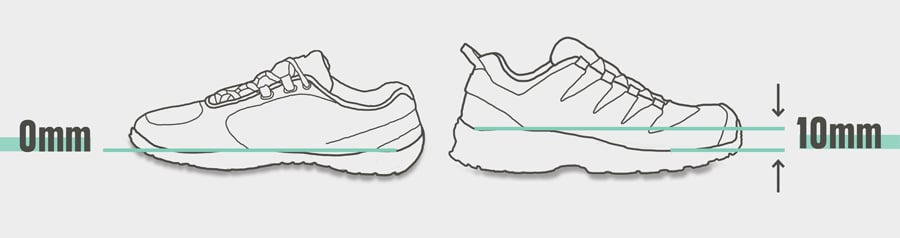
  • Take in to consideration cushioning and shoe drop.
  • It sounds obvious, but make sure the shoe feels comfortable.
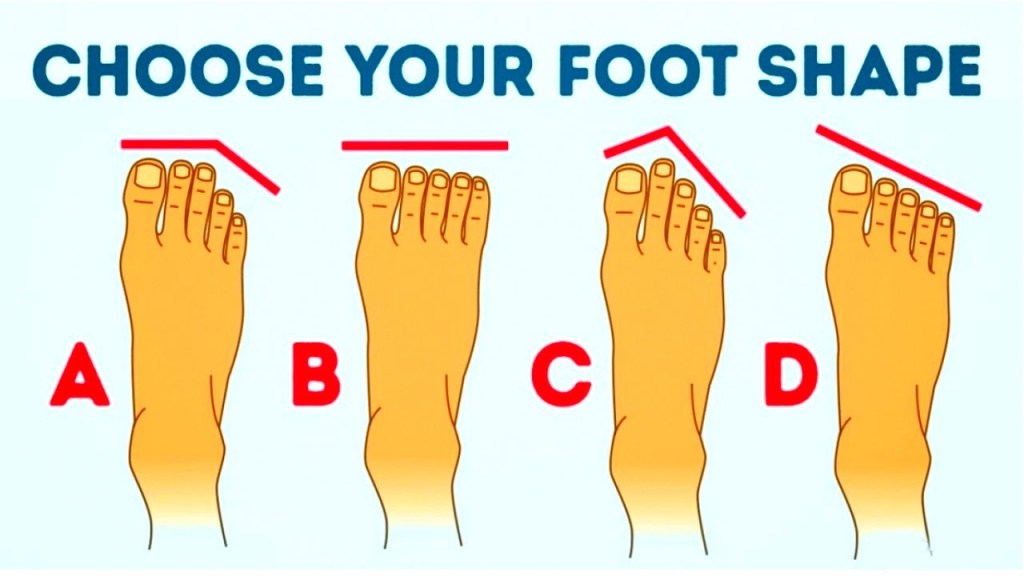
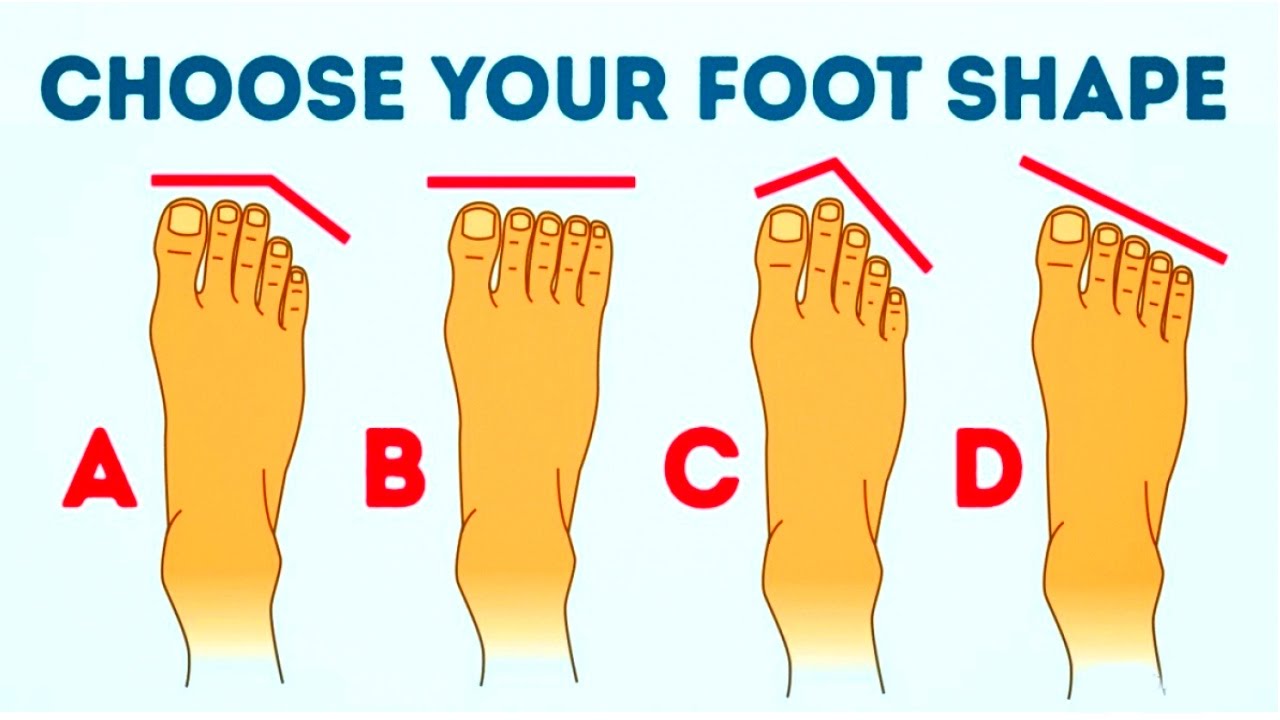
  • Your toes should have room to move BUT not too much room. A thumb nail of extra length above your longest toe is a good gauge. Note I say ‘longest toe,’ this for many is not always the big toe – Greek, Egyptian, Square or Classic foot shapes need consideration.
  • Consider your foot shape, are you a long and thin foot or a wide foot? Choose a shoe that is appropriate for your foot shape. A good example here is Altra or Topo which are much wider shoes that echo a wide foot shape. Take out the insole of a shoe and place your foot on it while wearing socks, this is a good indicator of the shoe length and fit.
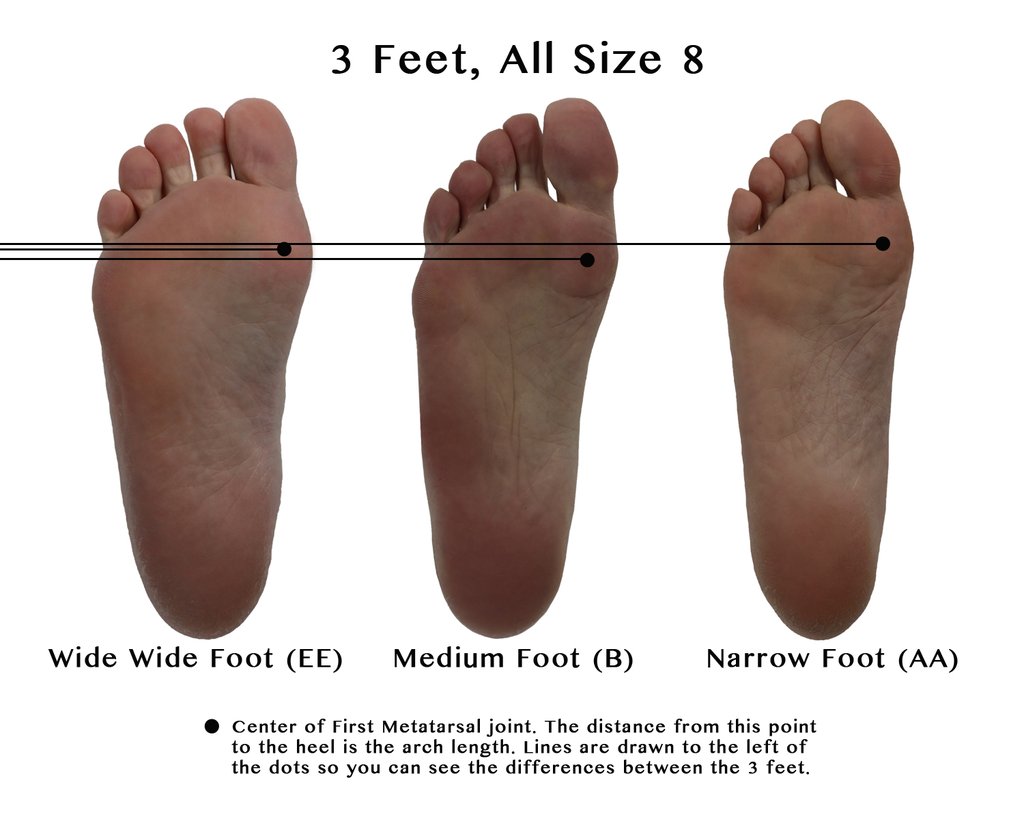
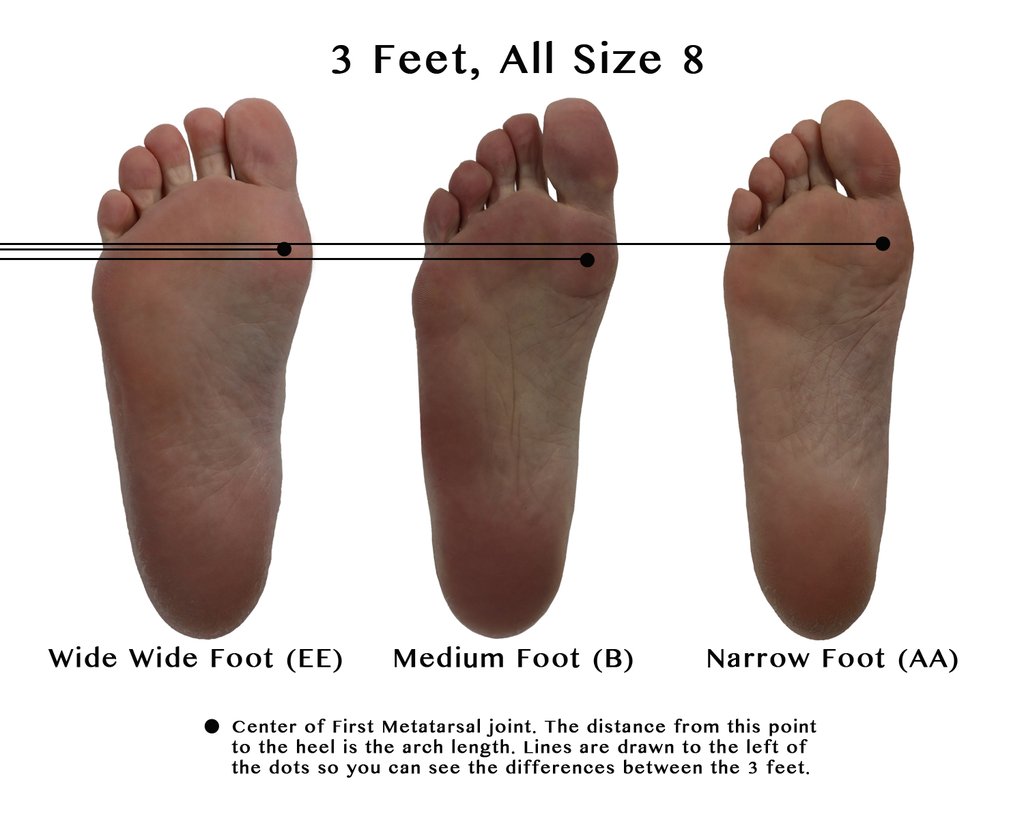
Three feet, all the same shoe size but you can see the difference between wide and narrow.
  • Lace your shoes correctly and make sure that the shoe holds your foot without unnecessary movement. This should NOT be at the expense of pain on the instep because you need to over tighten the laces. Also, make sure there is no slipping at the rear when moving.
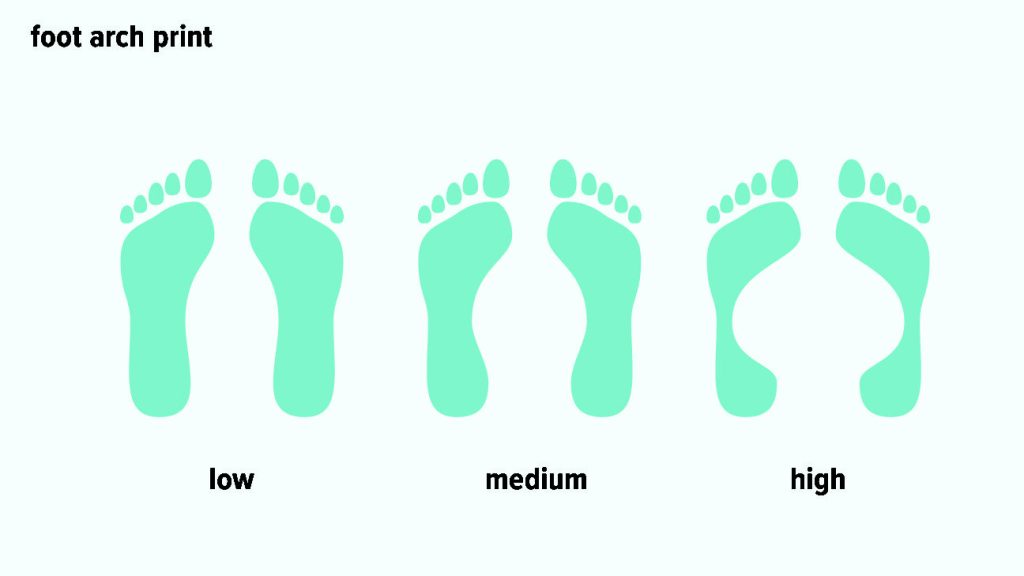
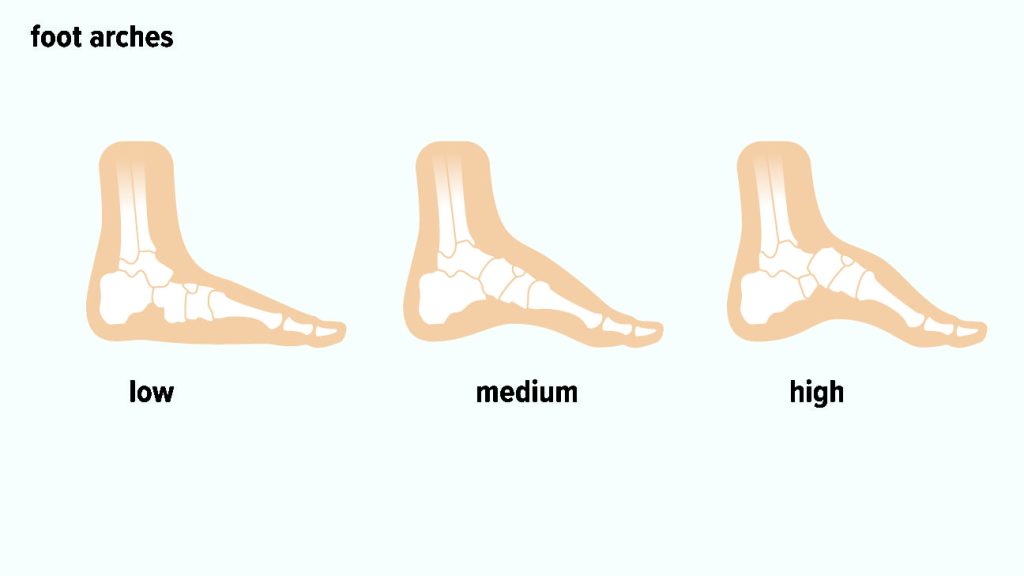
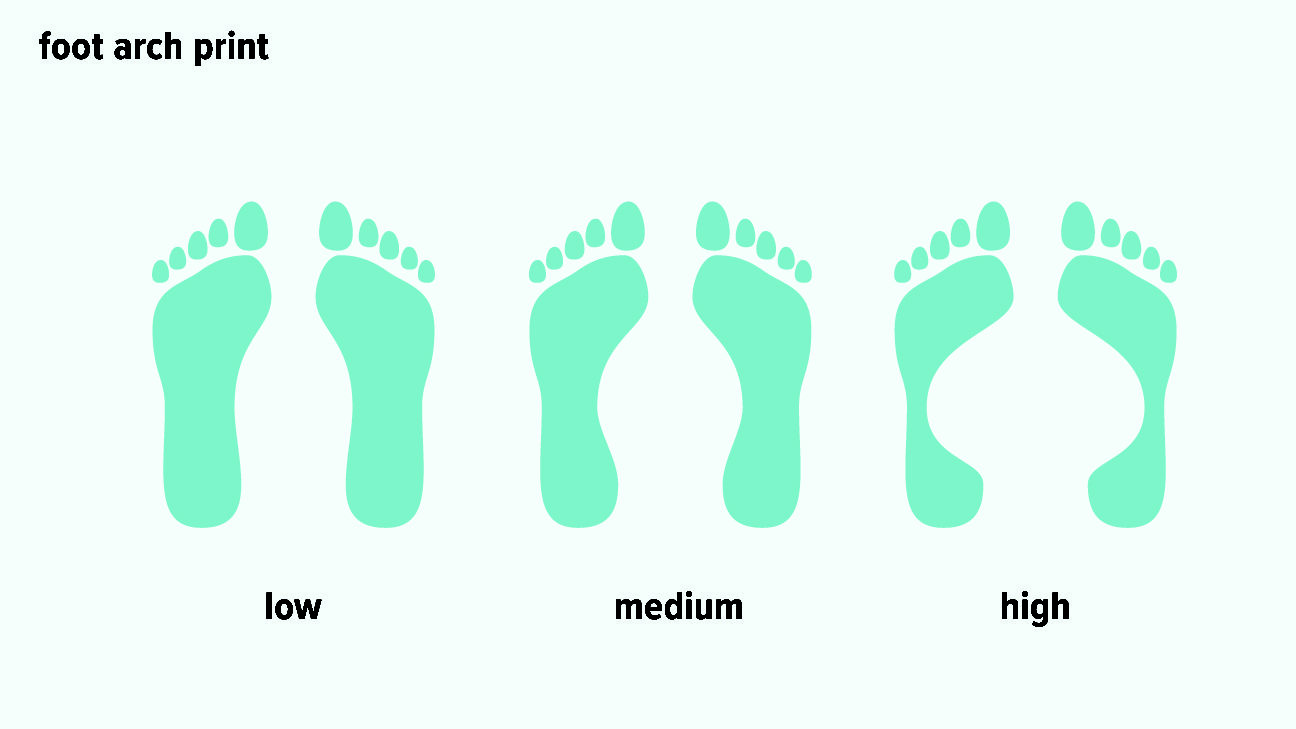
  • The arch of the foot should feel comfortable. Make your sure you know if you are neutral, supinate or pronate as this will narrow down shoe selection. Consideration are low, medium or high arch. Maybe you use an orthotic? If so you should use neutral shoes, take out the insole provided with the shoe and insert your orthotic.
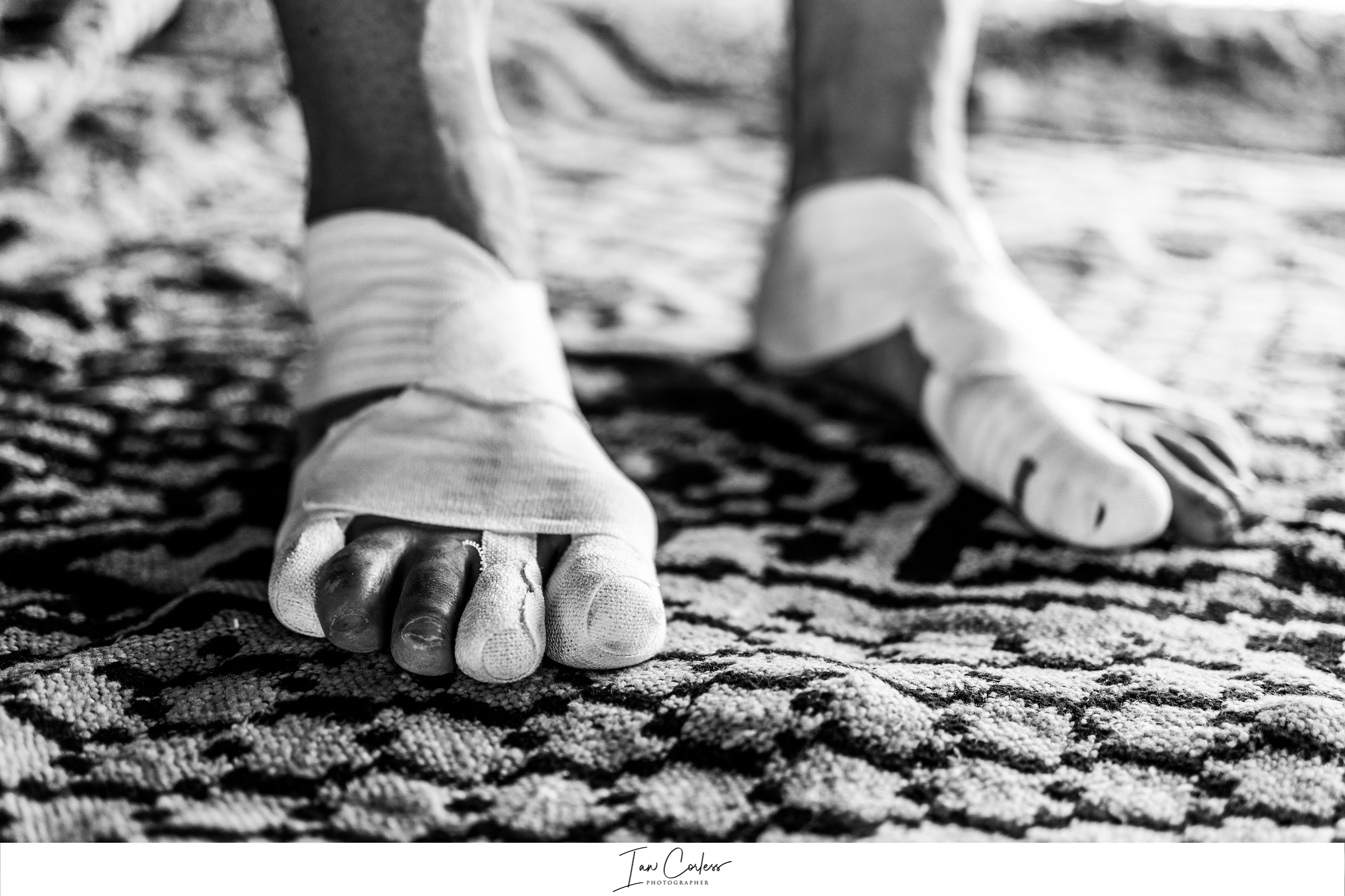
  • Use your preferred socks when trying and testing shoes. Note: If you plan to double sock and pre-tape your feet, you need to try and test shoes in this way! Don’t test shoes with ‘any’ sock when you plan to use something different. Double socking AND taping may require a size bigger.
  • Make sure the shoe flexes correctly in the propulsive phase, this is the area behind the metatarsals. It should not distress the toes and equally, if a shoe is too wide, this will create bulging of the material and fabric which can cause blisters/ friction.
  • If a shoe fits you perfectly, they should be good for running straight away, however, sometimes it can be beneficial to wear a shoe in the home first, then go for a walk outside and then run.

Should you get larger run shoes?

There is no one easy answer here and many pitfalls. You will hear someone say, ‘I always buy a size bigger in my run shoes in contrast to my daily shoes.’ However, this actually provides us with no information. Why? Firstly and most importantly, we have no idea how someones daily shoes fit, they may be too small and therefore going up a size in a run shoe means they are actually in the correct size. Also, if you double sock and pre-tape, this will almost certainly require a shoe that is larger and or wider.

Quite simply, the thumb nail of width above the longest toe is an ideal measuring guide. Again, I stress, the longest toe, this is NOT always the big toe.

Should I get wider run shoes?

As with the above question, there is no one easy answer. But you will know if you have a narrow foot, medium foot or wide foot. Many shoe brands now offer a guide on the width of shoe to help you make an informed decision, this is often on a scale of 1-5, 1 being narrow and 5 being wide.

However, the width of the required shoe can change based on the run type you are doing and the duration of the run. For perspective, if you are running a technical mountain marathon over 1-2 hours, you will want a more precision fit that provides greater control and security. By contrast, if you are running a 100-mile race say over 20-hours, you need a much more relaxed fit shoe with some space and comfort.

Ultimately, you need to make a decision on the best shoe for you taking in to consideration the type of terrain you will run on and for how long.

Common mistake – You may have a shoe that you really like and due to changes in your feet, yes, feet do change. The shoe you are using is no longer the best shoe for you, maybe your feet have gone wider but not longer? To compensate for this extra width, you get the same shoe one size bigger. You have now gained extra width with the increase in size but now, the shoe is too long. What would have been better is changing shoe model or brand and getting a wider fit that may well be the same size as your old shoe.

Runner’s World have an article: “Thankfully, more running shoes feature wider designs nowadays, and manufacturers like Altra and Topo Athletic make shoes that match the curves of a foot, rather than a triangle. That’s good for your toes, which tend to be healthiest when they can splay out laterally and evenly distribute weight across your foot, according to the American Academy of Orthopaedic Surgeons.”

‘The Best Wide Toebox Running Shoes For Every Foot Shape’ HERE

The longer you run and the more time you spend on your feet, the width of the shoe plays more importance. So consider this. As an example, maybe you are running Marathon des Sables in the Sahara desert. It’s going to be hot and dry. You will run for multiple days and your feet will be under stress. Blisters are commonplace because runners don’t consider all of the above points. They incorrectly listen to the generic advice of ‘get bigger shoes’ but this only allows the runner to fall in the friction trap.

The Friction Trap – Bigger shoes allows the foot to move, a moving foot means friction, friction means blisters.

What they should consider is getting the correct fitting shoes with a thumbnail of extra length above the longest toe, and then getting a wider fit shoe to allow for toe splay and breathing space.

FEET

With the correct shoes and socks, you need healthy feet.

Manage your skin, in many scenarios, there are two thought processes: 1) Toughen the skin. 2) Soften the skin so it becomes like leather. For me, softening the skin is preferential.

Condition your feet to the challenge you will put them through. Strong muscles, ligaments, tendons and ankles make for happy feet. Competitive Edge provide a good article HERE on ‘How to Improve Foot Strength for Running.’

Trim toenails back and maintain.

Allow feet to rest and recover, shoe and sock free post exercise.

Walk around at home barefoot as this will help the conditioning process.

Products like Gurney Goo or by contrast, highly absorbent powder make for happy feet during exercise.

If you have dry and callused feet, use products such as lotions or creams to help soften the skin.

WHAT IF YOU GET BLISTERS?
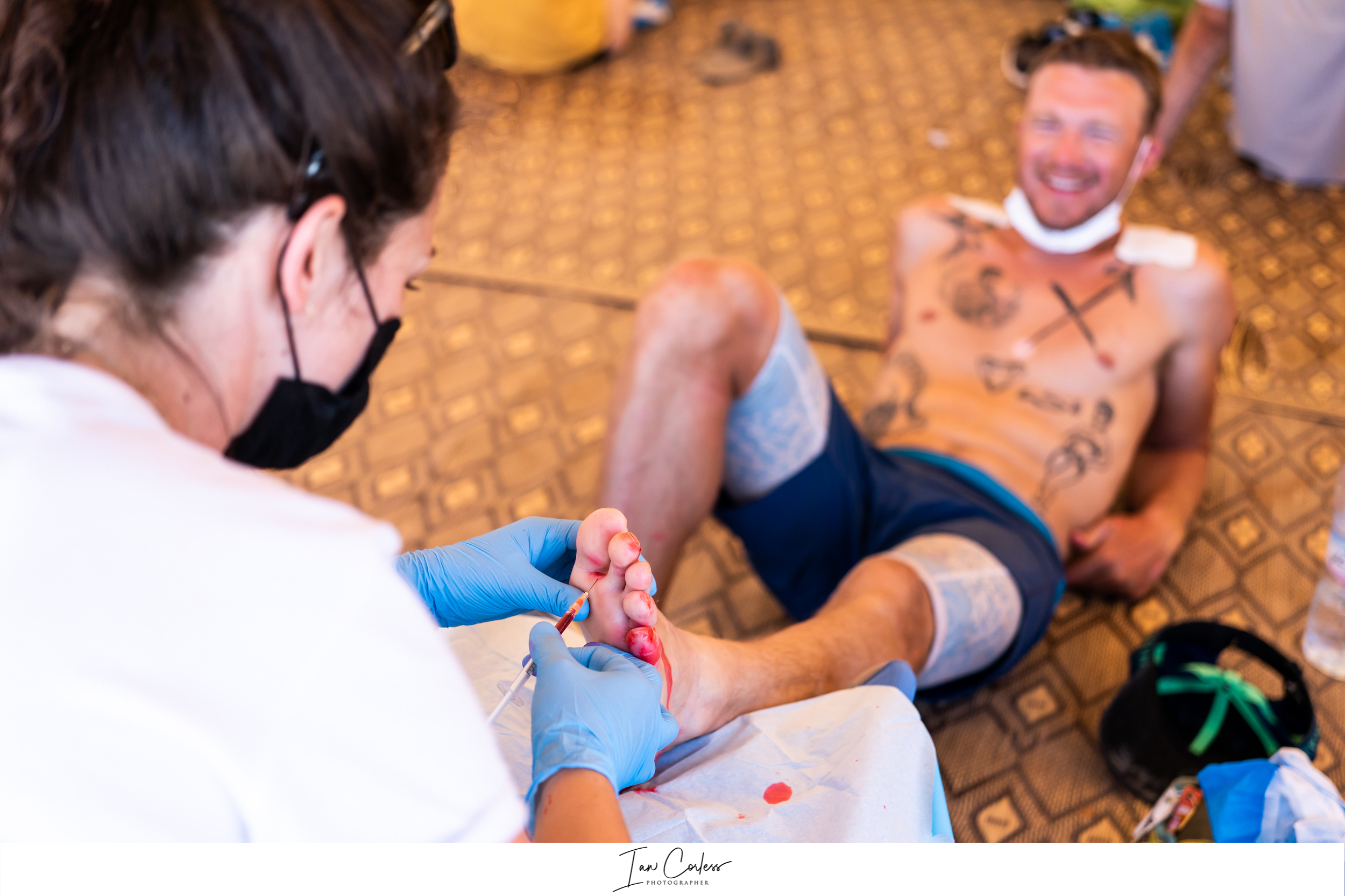
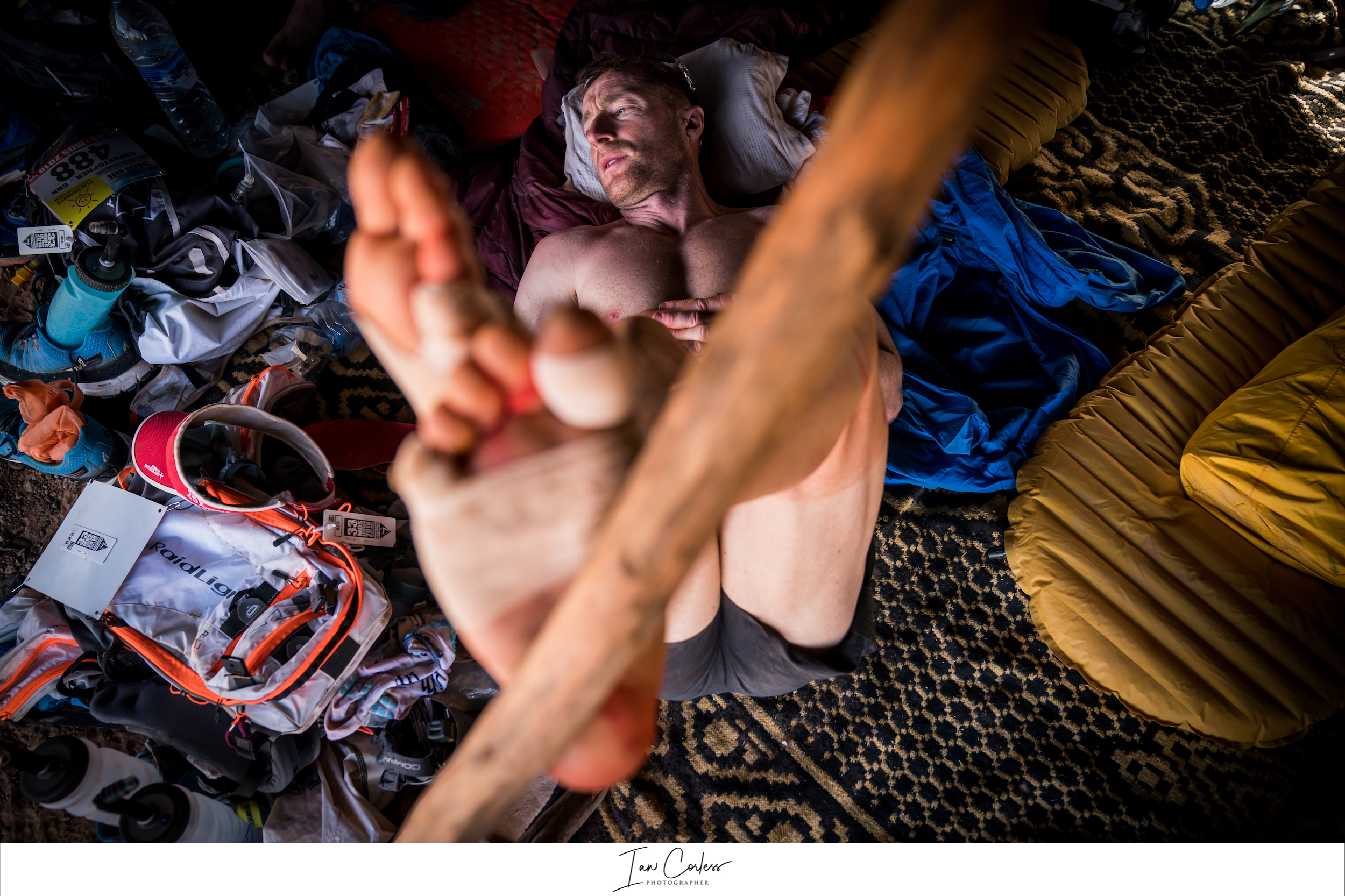
Treatment by DocTrotter medical team at the Marathon des Sables.

Quite simply, if you follow the above steps, you should have no problems.

  • Look after your feet.
  • Wear the corrects socks*
  • Pre-Tape if required.
  • Have the correct shoe for the terrain and the correct fit.

*Toe socks like those by Injinji form seamless little sleeping bags for each toe, wrapping each toe with moisture wicking, low friction fabric. They immediately stop the skin on skin rubbing. They also allow your toes to spread, grip and creep naturally providing they are used in a shoe with a wide enough toe box to allow splay. Toe socks help reduce blisters BUT if you plan on pre-taping, they may not be the best choice.

But, things can happen…
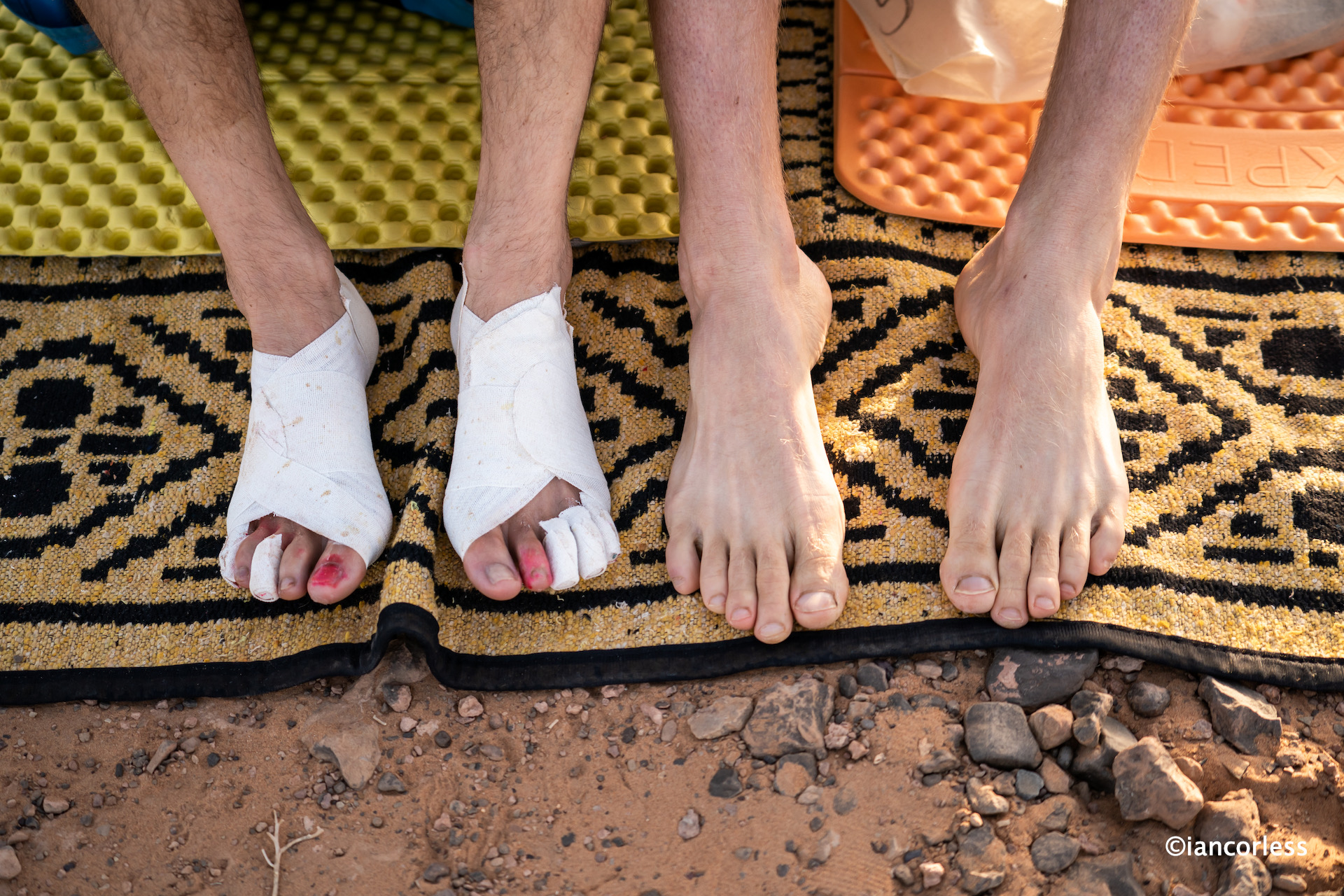
Sane Race. Same Distance. Different Results.

Be reactive, if you are prone to hot spots, blisters and so on, don’t wait for them to happen and then react, be reactive. Pre-taping is not unusual for some athletes, even with the correct fitting shoes.

Often, the first signs of a potential problem is a ‘hot spot’ which at first can be a minor irritation that can often be ignored. DO NOT ignore it. Stop. Take your shoes off and socks. Address the hot spot with applying tape.

Blisters and fixing them can be an art form. Most of us don’t prepare or plan for this as we are often taken by surprise in training or racing. This usually results in a bad training session or a ruined race, so, what can we do in advance?

PRE TAPING

You need: The correct shoes and socks with correct fit.

  • Clean feet.
  • Use alcohol wipes to remove the bodies natural oils from the skin.
  • Apply Tincture of Benzoin or a similar product, this will allow the tape to adhere better.
  • Prepare tape by cutting to correct lengths and make sure you ‘round’ the corners.
  • Apply tape (Hypafix for example) making sure there are no folds, creases, and problem areas.
  • Use a lubricant, such as Gurney Goo but importantly, find out what works for you. You may prefer powder such as Gold Bond?
  • Apply socks.

Practice.

Taping is a skill and you will not get it right first time. 

Just as you devote time to training, devote some time to foot care and go through the process.

  • Clean your feet with alcohol.
  • Apply Tincture of Benzoin.
  • Go through the process of cutting tape and applying.
  • Keep tape as smooth as possible avoiding creases and ridges. Creases and ridges will only create more friction points.
  • Do not tape too tightly as this may cause circulation problems.
  • Learn how to tape the ball of the foot and the heel area – common problem areas that require different taping methods.
  • Lubricate or powder after applying tape.
  • Roll socks on and off to avoid causing issues with the tape.

The above will only get you so far.

HOW TO TREAT BLISTERS
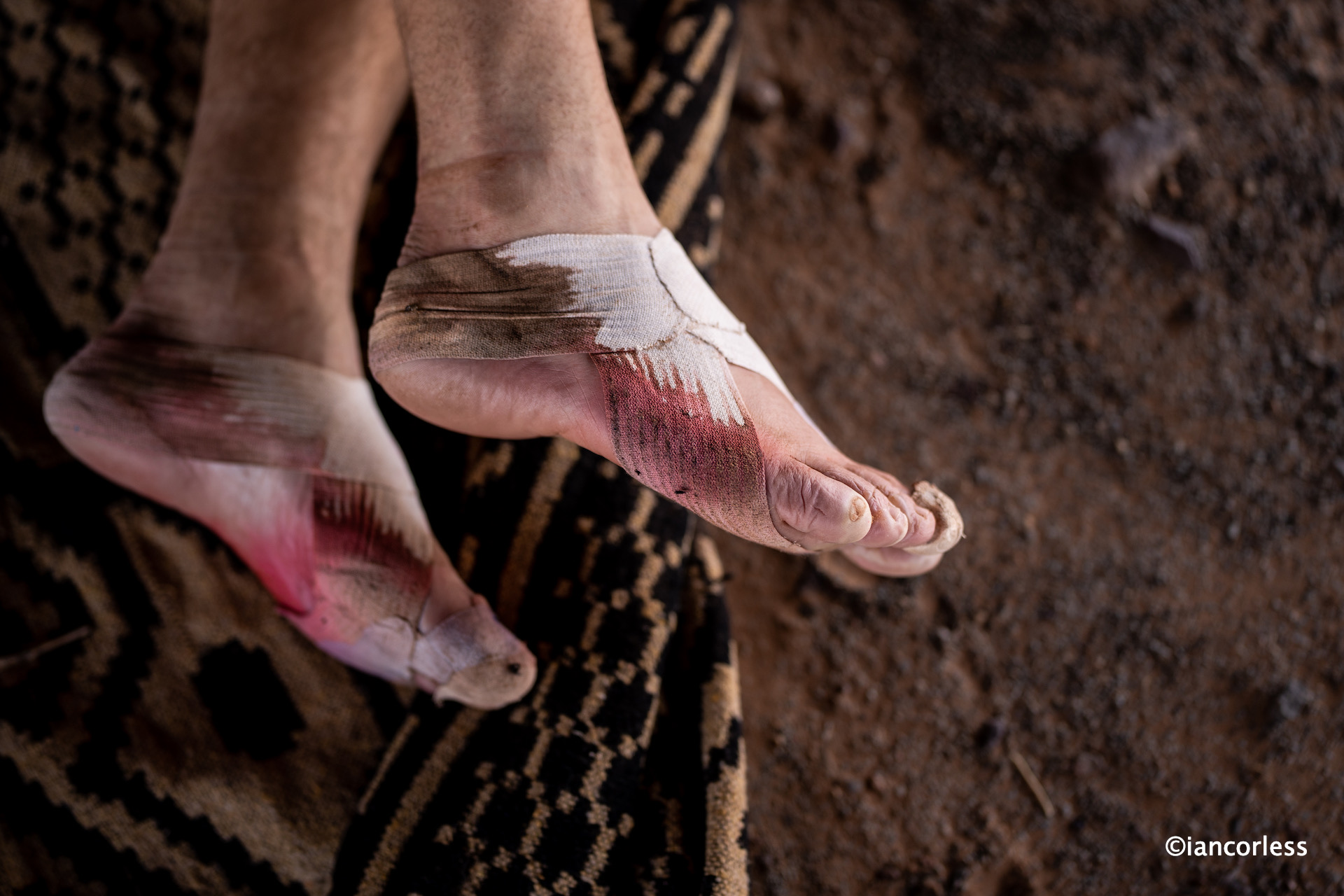
©iancorless

You need to do more research. Rebecca Rushton offers a great resource at

BLISTER PREVENTION HERE.

Should you pop a blister? It is usually not recommend to pop a blister as this can leave it open to bacteria, which can lead to infection. But, there are times when it is a good idea. Read HERE.

Download a guide ©rebeccarushton on BLISTER TREATMENT BLUEPRINT 2.0 HERE
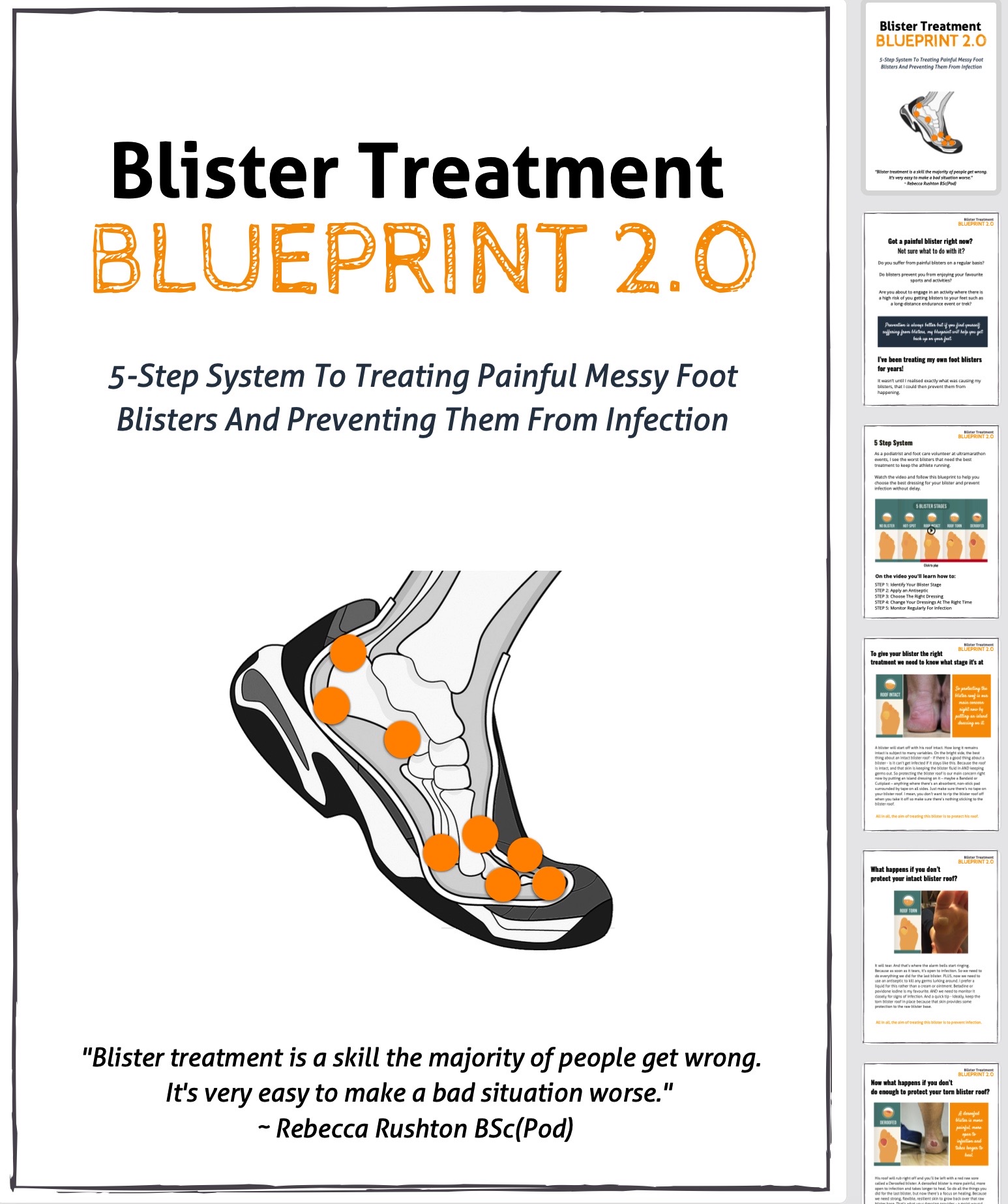
Rebecca has a YouTube site HERE which is also a valuable information source.

More information:

  • Toe Blisters HERE
  • Bunions and Blisters HERE
  • Heel Blisters HERE
  • Ball of the Foot Blisters HERE
  • Blood Blisters HERE

Useful Products:

  • 2Toms Blistershield Powder
  • Gurney Goo
  • Injinji Socks
  • Fixomull Stretch Tape
  • Engo Patches
  • Armaskin Socks – To be used as the ‘inner’ sock when double socking.
  • Hydrocolloid
  • MyRaceKit Deluxe AntiChafing Kit
  • Hypafix Tape

REFERENCES:

Reference – https://www.ncbi.nlm.nih.gov/books/NBK537292/

Reference – https://www.runnersworld.com/training/a28172274/running-shoe-size/

Reference – https://www.healthline.com/health/bone-health/whats-the-difference-between-supination-and-pronation#the-foot

Reference – https://puresportsmed.com/blog/posts/what-is-shoe-drop-and-why-is-it-important#:~:text=The%20%E2%80%8B’drop’%20of%20a,the%20ball%20of%20the%20foot.

Reference – https://puresportsmed.com/blog/posts/what-is-shoe-drop-and-why-is-it-important#:~:text=The%20%E2%80%8B’drop’%20of%20a,the%20ball%20of%20the%20foot.

Follow on:

Instagram – @iancorlessphotography

Twitter – @talkultra

facebook.com/iancorlessphotography

Web – www.iancorless.com

Web – www.iancorlessphotography.com

Image sales –www.iancorless.photoshelter.com

How to Find Your Running Shoe Size and Fit.

Run shoes should be specific.

It shouldn’t be complicated, but it is. Go on any run forum and I will bet you that daily, someone will ask a question about run shoes.

I want a shoe that will allow me to run muddy trails and road?

Can anyone recommend a shoe for fell running?

I have Hobbit feet and I need cushioning and grip – what shoe?

I could go on and on. The thing is, while it may be okay to ask a couple of question like:

  1. How does a specific shoe perform in mud?
  2. How is the wear and tear of ‘x’ shoe?

Asking for a specific shoe recommendation can be a recipe for a disaster, the reason being, we are all individual and shoes are very personal based on a multitude of factors. Nobody on social media knows you, your needs, how you run and what type of running you do.

So, please do not ask for a shoe recommendation on social media unless you are specific. A good example being:

“I am male, aged 44. I have been running for 23-years and I have extensive history in cycling, triathlon, road running and now I am moving to trail running… I am 5ft 9. A little overweight. In regard to shoes? I am looking for a trail shoe that will provide great grip on muddy trails. I need support for my arch and cushioning but not something as cushioned as say a Hoka. In regard to foot width, I am in the middle, neither needing precision or wide fit. On a scale of 1-5 I would be a 3!’

With the above we have information from the runner and therefore suggestions and recommendations can be specific and targeted. Even then, the runner should go to a run store, albeit now he has a shortlist of options and then try on the shoes to find the one that best suits him, his feet and his needs.

IF THE SHOE FITS

Firstly, and importantly, not all shoes are equal and not all feet are the same.

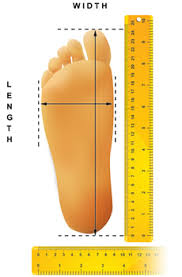
Measure your foot.
Measure your foot.
  • Foot length.
  • Foot width.
  • Foot shape.
  • Pronation.
  • Supination.
  • Neutral.

Quite simply, the better a shoe fits, the more specific to the type of running one will do in that shoe, the more likely you will feel better. The foot will be happier and the miles you run will be more comfortable.

Our bodies are supported by our feet; they are the first point of contact with the ground and therefore, they are incredibly important. Getting a correct fitting shoe that is specific for purpose is crucial.

When I say specific for purpose, let me provide some simple clarification now and then explain in-depth later. Shoes come in categories; I see the main list broken down as 6 main groups:

  • Road
  • Road to Trail
  • Trail
  • Ultra-Running (with sub heading of Ultra Road and Ultra Trail)
  • Fell Running
  • Mountain Running

Now, one could break down the categories even more with very, very specific needs such as, “I need a mountain running shoe with an aggressive outsole with great grip in wet and dry conditions and superb traction in mud.”

But before we get into the discussion on the shoe for the job, getting a correct fitting shoe is vital.

HOW DO WE FIND A CORRECT FITTING SHOE?

Image ©blitzresults.com

Please don’t fall in with the generic advice that a run shoe should be one size bigger than say your every day casual shoe! For a start, this assumes you have the correct size casual shoe and trust me, from experience, very few people do. The recommendation for sizing up also comes from the assumption that a foot swells when running. From experience, feet rarely go longer but can go wider with repeated impact and stress; think of races like Marathon des Sables when a runner is in a hot/sandy environment. So, one may need a wider shoe but not a longer shoe. This comes down to getting the specific shoe for the job.

©custom fit.me

I wear the same size run shoe as my casual shoes (typically) but to clarify, I go for the ‘same fitting’ shoe.

Shoe sizing between brands is variable and inconsistent, an EU 44 in say Salomon is not necessarily the same as an EU 44 in inov-8. So, first and foremost, always try shoes on!

Length and foot width does change so it can be a good idea to have your feet measured if you are new to running with little experience. Some specialists suggest getting feet measured yearly, but for me, this still only gives a guideline to shoe size as comfort, feel and specificity come in to play.

Foot shape and how you get the thumb nail of space.

“As a rule of thumb,” I have consistently found that a thumb nail of space above one’s big toe is usually ideal for sizing. This is classic for an ‘Egyptian’ foot shape (D). I say usually because I have seen some feet where the second toe is longer than the big toe, known as ‘Greek’ foot shape (C), so, this would require an individual approach. There is also ‘Square’ foot shape and the thumb nail width above the big toe usually applies here, but, a wider toe box may be required.

Remember, both feet are usually not the same size, so, take this in consideration. Go for fit and feel with the bigger foot!

NOTE: Specifics come in to play such as foot width and specificity of the shoe. As an example, If you are running technical trail, you will need a more ‘precision’ fit. If running long/road ultras, you may well prefer a wider fit that will allow toe splay. More on this later.

Wear socks that you typically run in and if you normally wear two pairs of socks, then wear two pairs when testing and trying. Two pairs of socks may require you to go a half or full size larger depending on the sock thickness. Note:nYou may wear the same shoes for Summer and Winter, but in Summer you use light and thin socks but for Winter you use thick Merino socks. This may well mean you need a different size shoe for Summer in comparison to Winter.

Insoles can give a good indication of the shoe size and its width. As a guide, the insole should match the shape and size of your foot.

With the insole back in the shoe, place your foot inside and firstly check for the space at the front. If you have the required space, lace up and tighten. On the top of the foot you have the ‘Navicular Bone’ and the shoes should be tight here but not so tight to restrict blood flow.

Stand up and move around. Key checkpoints are: 1. Thumbnail width between longest toe and edge of shoe. 2. Check pressure on your little toe. 3. Check pressure and feel on your big toe.

Ideally, you want to be able to run in them and most good run shops have a treadmill to try out shoes. Key checkpoints: 1. No slippage in the heel area. 2. No pressure on toes. 3. Instep feels secure and pain free. 4. You have support or a lack of support as needed.

If you see material bulging because of tightness you may need a bigger shoe, or you have the wrong width. If you see an excess of fabric, you may have a shoe that is too large or too wide.

Check the fabric of the shoe and the seams. Will they be breathable for your needs? Will they protect you for your needs? Does the toe bumper have enough protection?

Remember shoes flex when you run. In the propulsive phase, the shoe will bend behind the metatarsals and this can be a troublesome area if the shoes are the wrong size. Often a sign of a shoe that fits incorrectly is this area will crease and often tear causing failure in the shoe upper. If running uphill, think mountain, fell and trail running, this area of a shoe gets a great deal of stress.

A good running store with professional staff will help you with shoe choices and they should discuss the pros and cons of the specific brands and models available. However, gut feeling and how you feel goes a long way. Always be careful of ‘sale’ shoes! Don’t be influenced in buying the wrong shoe just because it is a good price.

WHAT CAN GO WRONG?

Marathon des Sables has some foot horror stories and the general story is because of the heat, the sand and how brutal the race is. The truth is, the issues (usually) arise through runner’s choosing the wrong shoe and the wrong size. 

Old advice has said size up, go bigger as your feet will swell.

However, a shoe that is too big allows the foot to move inside the shoe. A moving foot causes friction. Friction causes blisters. The rest is self-explanatory. In addition, with each sliding of the foot, the toes may impact with the front of the shoe and result in bruising. Think of running downhill with shoes that are too big, your toes will be crammed at the front with room behind the heel.

Having said this, feet can swell through impact and heat. So, using Marathon des Sables as an example, one consideration may be going for a shoe with a wider toe box but still that thumbnail of space at the front. What often happens is a runner has a favourite shoe and decides they need more room, so, they just buy a larger shoe (than needed) because it increases the width/ space. Actually, what they should do is change the shoe. It goes back to specificity.

Shoe that are too tight and/or too small will result in black toenails but more importantly can damage ligaments and possibly result in damage to the metatarsals. Stress fractures are a real risk. Also, you will have foot fatigue and pain. The foot is full of nerves and bones. As an example, the soles are extremely sensitive to touch due to a high concentration of nerve endings, with as many as 200,000 per sole. *The foot receives its nerve supply from the superficial peroneal (fibular) nerve, deep fibular nerve, tibial nerve (and its branches), sural nerve, and saphenous nerve. These nerves come from peripheral nerves that arise from the L4 to S3 nerve roots and contribute to the somatic motor function, general sensory information, and the cutaneous sensation of the foot. In regard to bones, each foot is made up of 26 bones, 30 joints and more than 100 muscles, tendons and ligaments, all of which work together to provide support, balance and mobility.

If you require stability shoes, the wrong size shoe may well put the support in the wrong place and instead of providing help, it will create onward issues and problems. Plantar Fasciitis is a risk.

Quite simply GET THE CORRECT FITTING SHOE!

IMPORTANT FACTORS TO CONSIDER

Okay, so we have given a guide to how you find the correct size of shoe. But now we need to be specific and address and look at some fundamental questions before going to any run store:

GAIT

Supinate – Your weight tends to be more on the outside of your foot.

Pronate – Your weight tends to be more on the inside of your foot.

Neutral – Your weight is distributed evenly.

Foot arches, low, medium and high.

You need to know which of the above you are, as all brands and manufacturers produce shoes to answer these three specific needs. If you do not know the answer to this question, look at the soles of shoes you have worn for some time – you will see how they have worn. In a proper stride, your foot should roll forward and pronation should be neutral. Shoes that are geared towards supination or pronation are designed to bring you back to neutral.

Side view.

Many runners who need specific support often see a Podiatrist and have Orthotics made that are transferable to any shoe. In this scenario, you should purchase neutral shoes. 

**If you supinate, it can cause excess strain on your ankles. It may lead to shin splints, calluses, or bunions on the outer side of your foot, and pain in your heels and balls of your feet. Excess over pronation, means that as you walk, your foot rolls toward the inside and your arch tends to flatten out. Your shoe will show uneven wear on the inside part of the sole.

CUSHIONING

Hoka One One are very cushioned.

From barefoot running to bouncy marshmallow shoes, there is a plethora of cushioning options available to choose from and what is best may just come down to personal taste…

However, I beg to differ. I feel cushioning or a lack of cushioning should be applied based on what type of running one is doing and what conditions.

Examples:

Fell running – Fell running often takes place in soft, boggy and wet ground. A feel for the ground is essential so that you can respond with ever-changing terrain. A shoe with too much cushioning will remove that feel, place you higher off the ground and may well increase the risk of injury. A sprained ankle being one of the most obvious.

Road running – Road is hard, it can jar the body, muscles and tendons and therefore a shoe with a little more cushioning may be preferable. For some, they require sofa like comfort. Others prefer some cushioning but not at the expense for the feel for the ground.

When purchasing shoes, look at the cushioning typically shown as, for example – Midsole Stack 8mm/ 14mm. This is 8mm cushioning at the front and 14mm at the rear. The higher the numbers, the greater the cushioning.

Some shoes include a rock plate which offers protection from sharp objects, useful when trail running.

DROP

Image ©rei.com

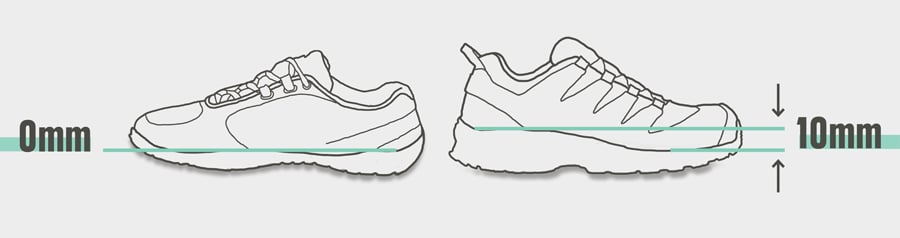
Shoe drop is essentially the difference between the height/ thickness of the midsole under the heel compared to the same measure under the ball of the foot. Years ago, drop was not a consideration. On a personal note, thinking back say 8-years, I never considered shoe drop. Now, it’s all important.

Importantly, do not be confused by cushioning here. You may well look at say a Hoka One One and think it has a high drop. On the contrary, they typically have a low drop of 4mm. ***Drop refers only to the difference in thickness between the front and back of the shoe and is not a narrative on the magnitude of the thickness.

From experience, I do not consider that any runner has an ideal drop. I see drop as something that can played around with based on the needs and requirements of the shoe and the conditions it will be used. But I must clarify that I have been testing shoes for 8+ years and switching drop on a daily basis has been no problem, on the contrary, I actually consider it to be beneficial.

As a way to explain, I use 0 drop shoes all the way through to typically 8mm. I do have one pair of shoes at 10mm, but they are an exception.

Zero drop or barefoot advocates will argue and argue that zero is the only way to go and if you are adapted and have no injury issues, that is awesome. However, most people have not experienced zero drop and suddenly to do all runs in zero will almost certainly result in some injury. Zero takes adaptation.

Pure Sports Medicine are clear, “What we do know is that human tissues can be sensitive to sudden changes in the way they are loaded, and that it is biologically coherent (and in keeping with the laws of physics) that differing shoe drops may load certain tissues differently. As such, if you are currently uninjured there is no justification for changing the drop of your shoe, but should you want to then be mindful of allowing the body time to adapt to such changes (although many runners may be able to interchange between shoes of different drops we would usually advise being over cautious if this is not something you have done before).

So, if you typically run in 8mm drop shoes without injury, it makes sense you purchase shoes with 8mm drop. Equally, if 4mm is your thing, purchase 4mm.

Specificity of drop.

I personally (and others like me) see drop in conjunction with cushioning, or, a lack of cushioning as a tool to get the most from my body and my runs. For example, if running a muddy fell run, I will use a lower drop, say 3 or 4mm with less cushioning. By contrast, if I was doing a long trail run, I would prefer 8mm drop and more cushioning. 

A certain drop may be beneficial in reducing sensitivity and complementing your overall management strategy – so consider this. ****Changing the drop of your shoes (or using multiple shoes which have varying drops in a rotation system) is not to be discouraged or feared, but be sure your body’s tissues can tolerate this, and are given the necessary time to adapt and attain the capacity if needed.

GRIP

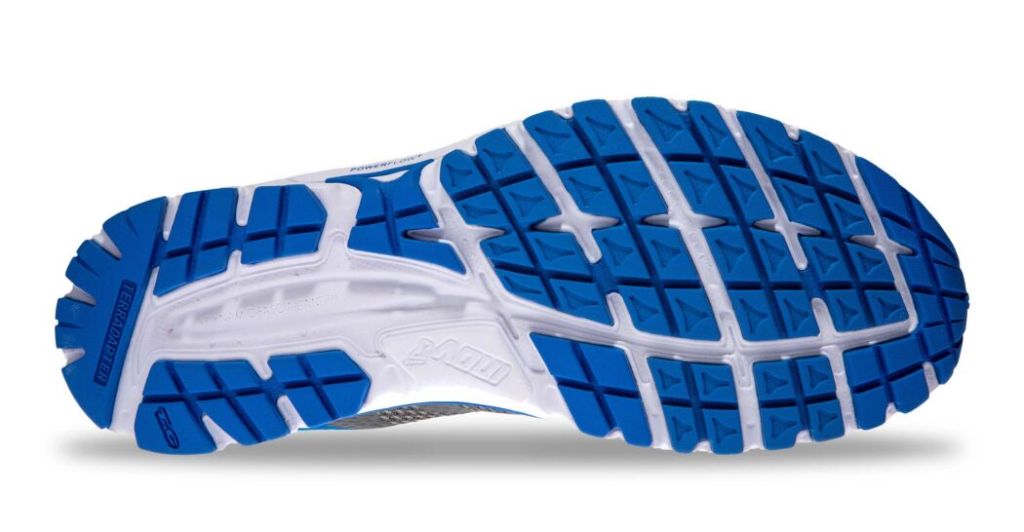
The outsole of a shoe is key as this is the point of contact with the ground on which you are running. Again, specificity is key. There is no one outsole that will do all jobs well and therefore the need for multiple shoes with specific tasks is an essential armory to a runner’s shoe cupboard.

Road shoes – Typically need little grip, just a good rubber.

Road outsole

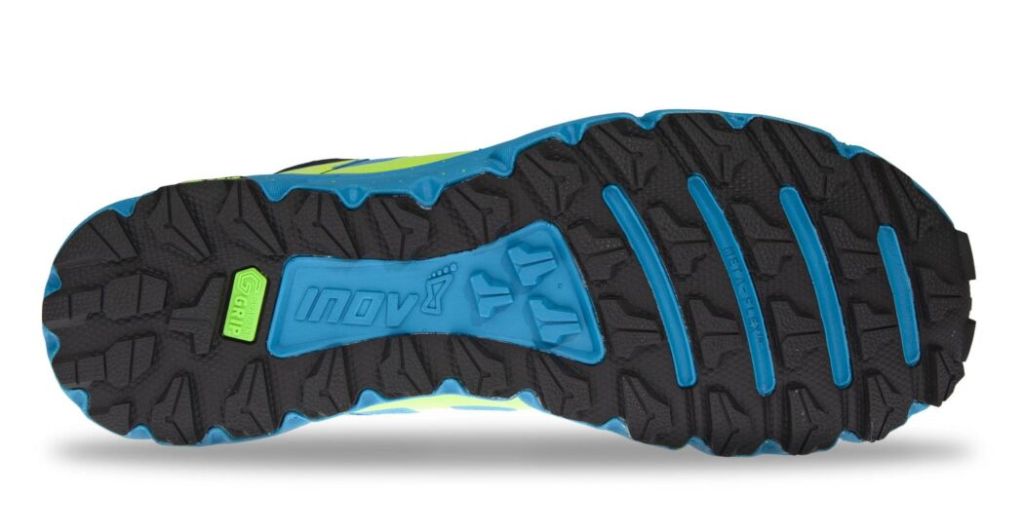
Trail shoes – Typically require a good outsole that is durable and has grip, say 4mm studs.

Trail outsole

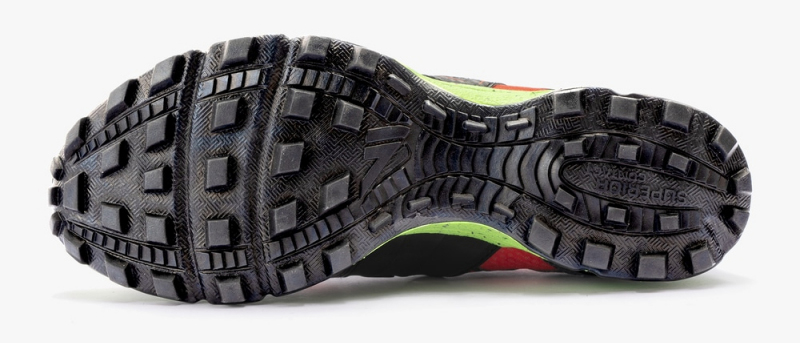
Fell shoes – Typically will be aggressive and on first looks may look like football boots with 6 or 8mm studs.

Mud/ fell outsole

Mountain shoes – Typically will be a mixture of trail and fell shoes and the outsole will be sticky to provide good grip in wet and dry conditions.

Mountain outsole

In an ideal world, if you ran all of the above scenarios, you’d have a pair of shoes for each scenario. However, shoes are expensive and many runner’s need to make some compromises. Brands realised this and for example, some offer road to trail shoes that provide a best of both worlds’ scenario. The inov-8 Parkclaw is a great example. “the perfect shoe for runners wanting to run on paths and trails, or those looking to make a transition from road running to trail running.” – inov-8

If you need grip for mud, you need to be specific, there is no compromise.

WIDTH

Like drop, shoe width can create many an argument. Simply put, if you have a slimmer/ slender foot, you can probably wear any width shoe providing you have the correct size and they hold you securely.

Image ©wive.com

But if you are a Hobbit, shoe choice may well be compromised as you will need to look for a wider fitting shoe.

Shoe width is also a consideration based on other factors: 1. What terrain are your running on? 2. How long will you be running?

On a personal note, if I am running on technical and challenging terrain, I want a shoe that fits and holds my foot. I am not worried about toe splay – precision is a priority. By contrast, if I was running on groomed trail for multiple hours, a shoe with more width may will be preferable to allow my toes to splay and relax.

Like drop and cushioning, I mix the width of my shoes based on my needs.

Some companies, inov-8 for example provide a width guide to steer runner’s to shoes that will specifically answer their personal needs. This a great system that takes some guess work away. The system is simply rated 1-5; 1 being a tight/ precision fit, 5 being wide and spacious.

Brands such as Altra only offer one foot shape and believe that a wide toe box is essential, in conjunction with 0 drop. It is a toe shape foot box that allows toes to relax and splay. The big toe has space and in principal, this foot box helps reduce overpronation and increases stability. On a personal note, Altra has a place for long road, ultra or trail runs, but when the terrain gets challenging, they feel way to sloppy for me – but this is a personal thought. Altra fans or wide toe box fans will disagree.

WEIGHT AND FABRICS

Shoe weight can be an important consideration. Certainly, when racing, a runner may well prefer a lighter shoe so that they feel faster. However, if running an ultra, added cushioning and a little more weight will be worthwhile for comfort.

Shoe fabrics, seamless uppers, sock-like fits, Gore-Tex and other considerations may influence a shoe choice. Make a decision based on specificity.

A lighter shoe will typically not last as long – this may be an important consideration too.

The correct shoe is one that fits correctly and is specific for the job.

CONCLUSIONS AND SUMMARY

Be specific.

Is choosing a run shoe really THIS complicated?

I suppose, yes! But once you understand the basics purchasing new shoes should not be too complicated. Below is a summary and process to follow:

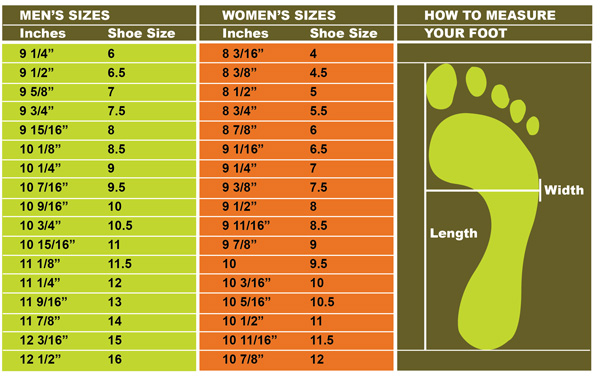
  1. Measure your foot.
  2. Use a conversion chart to get your shoe size.
  3. Understand gait and what you need. If using orthotics, you need neural shoes.
  4. Ask yourself what terrain the shoes will be used on – This refers to what outsole.
  5. Ask yourself how long typically you will run in these shoes – This refers to cushioning.
  6. Do you need the shoes to be more precision fit or wider?
  7. Look at brands/ options and based on the above make a shortlist.
  8. Use socks.
  9. Try the shoes on using the size provided from points 1 and 2 but then size up or down based on the thumb nail space rule.
  10. Check the heel for slipping.
  11. Check the instep and confirm a good foot hold.
  12. If possible, try the shoes running.
  13. Reduce the choices down to 3, then 2 shoes and then make an informed and educated decision.
  14. Do not be influenced by the colour or the price.

Lacing can make a huge difference to how a shoe holds the foot. Lock lacing for example is very popular for off-road and challenging terrain as the shoe holds the foot more securely.

FINALLY

Compromise is a killer when it comes to run shoes. The more specific you can be, the better the shoe will be. But, if you have correct fitting shoes with appropriate cushioning, correct width and a good outsole, you will be able to head out the door and enjoy the process.

And yes, there are exceptions to the rule and somebody will use shoes that are too big and get away with it. Just as someone will run in sandals and get away with it. These are exceptions to the rule and not the norm.

Reference – https://www.ncbi.nlm.nih.gov/books/NBK537292/

** Reference – https://www.healthline.com/health/bone-health/whats-the-difference-between-supination-and-pronation#the-foot

*** Reference – https://puresportsmed.com/blog/posts/what-is-shoe-drop-and-why-is-it-important#:~:text=The%20%E2%80%8B’drop’%20of%20a,the%20ball%20of%20the%20foot.

**** Reference – https://puresportsmed.com/blog/posts/what-is-shoe-drop-and-why-is-it-important#:~:text=The%20%E2%80%8B’drop’%20of%20a,the%20ball%20of%20the%20foot.

Please support this website. I believe everyone deserves to read quality, independent and factual articles – that’s why this website is open to all. Free press has never been so vital. I hope I can keep providing independent articles with your help. Any contribution, however big or small, is so valuable to help finance regular content. Please support me on Patreon HERE