The stage is set. At 21:30 local time (15:30 Paris, 14:30 Lonon and 09:30 New York) tonight, Friday October 3rd, the Ultra Gobi 400km begins. Fifty-seven runners from around the world are gathered at the edge of the desert, ready to take on one of the toughest ultramarathons on earth.
All week, the athletes have been arriving in Dunhuang, the ancient Silk Road outpost. They’ve had time to rest, recover, and shake off the fatigue of long-haul travel.
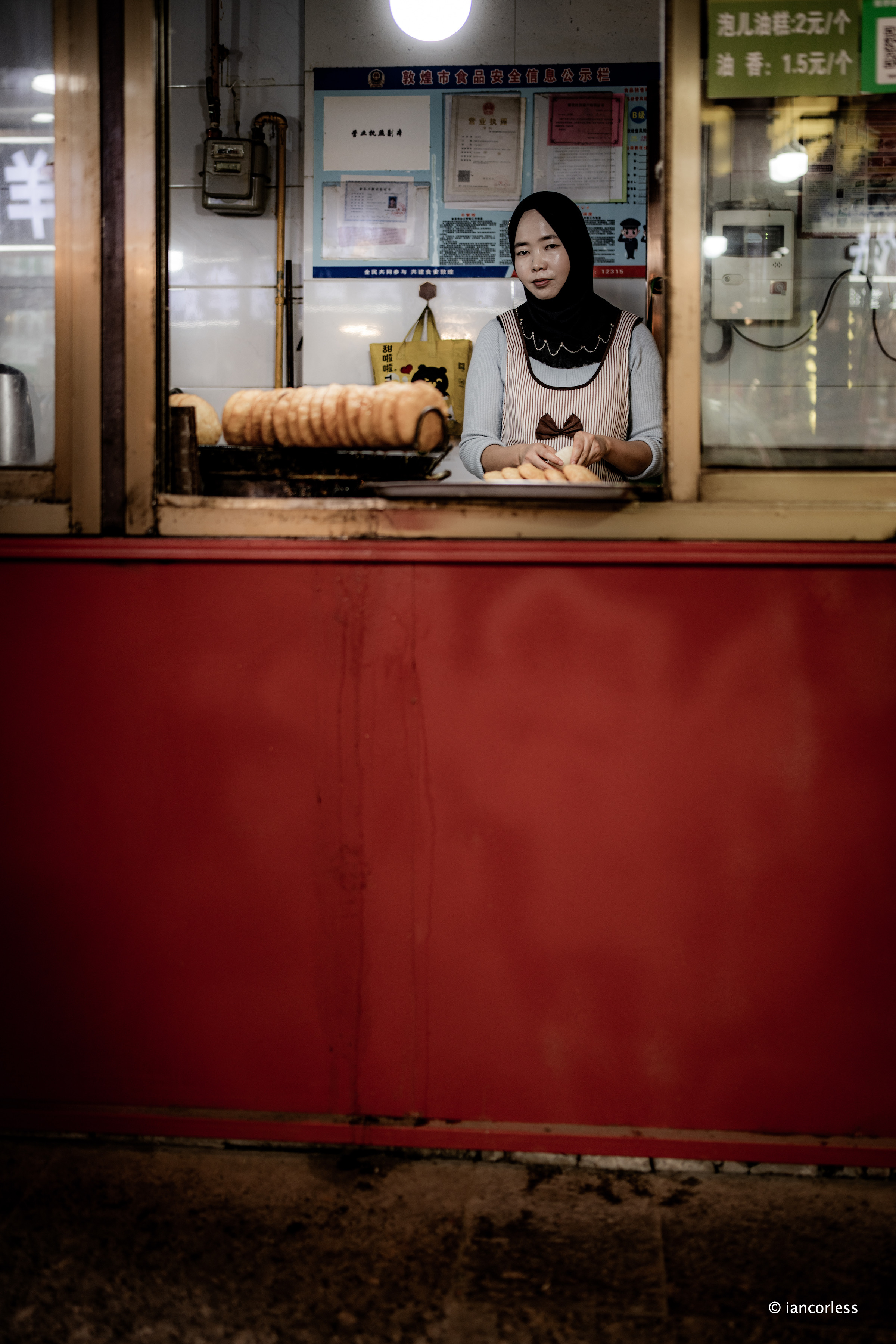
The night market, an awesome experienceThe night market famous for food.
Dunhuang offering traditional cuisine, the famous night market and an opportunity to stock up any last-min equipment, food and yes, maybe even souvenirs.
UTMBKat_25
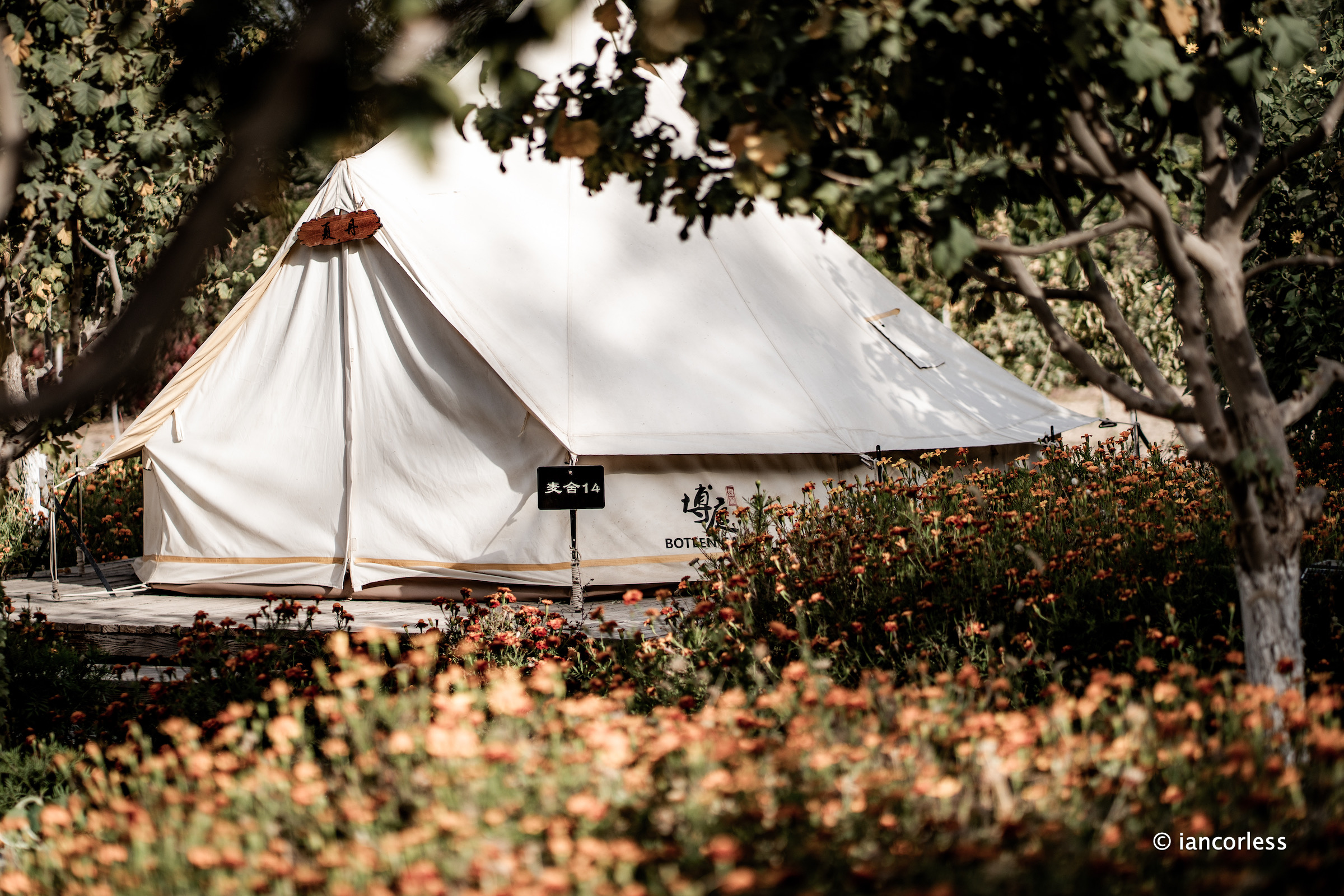
Then came the transfer to Gobi Spring, where final briefings and pre-race checks brought the reality of the challenge into sharp focus. For the participants, a night of ‘glamping’ before days and nights of deprived sleep and comfort.
Glamping in the Gobi
Mandatory gear signed off, maps studied, last meals eaten. From here, there’s no more preparation – only the race itself.
Race briefing
And this is no ordinary race.
Tradition is very important at Ultra Gobi
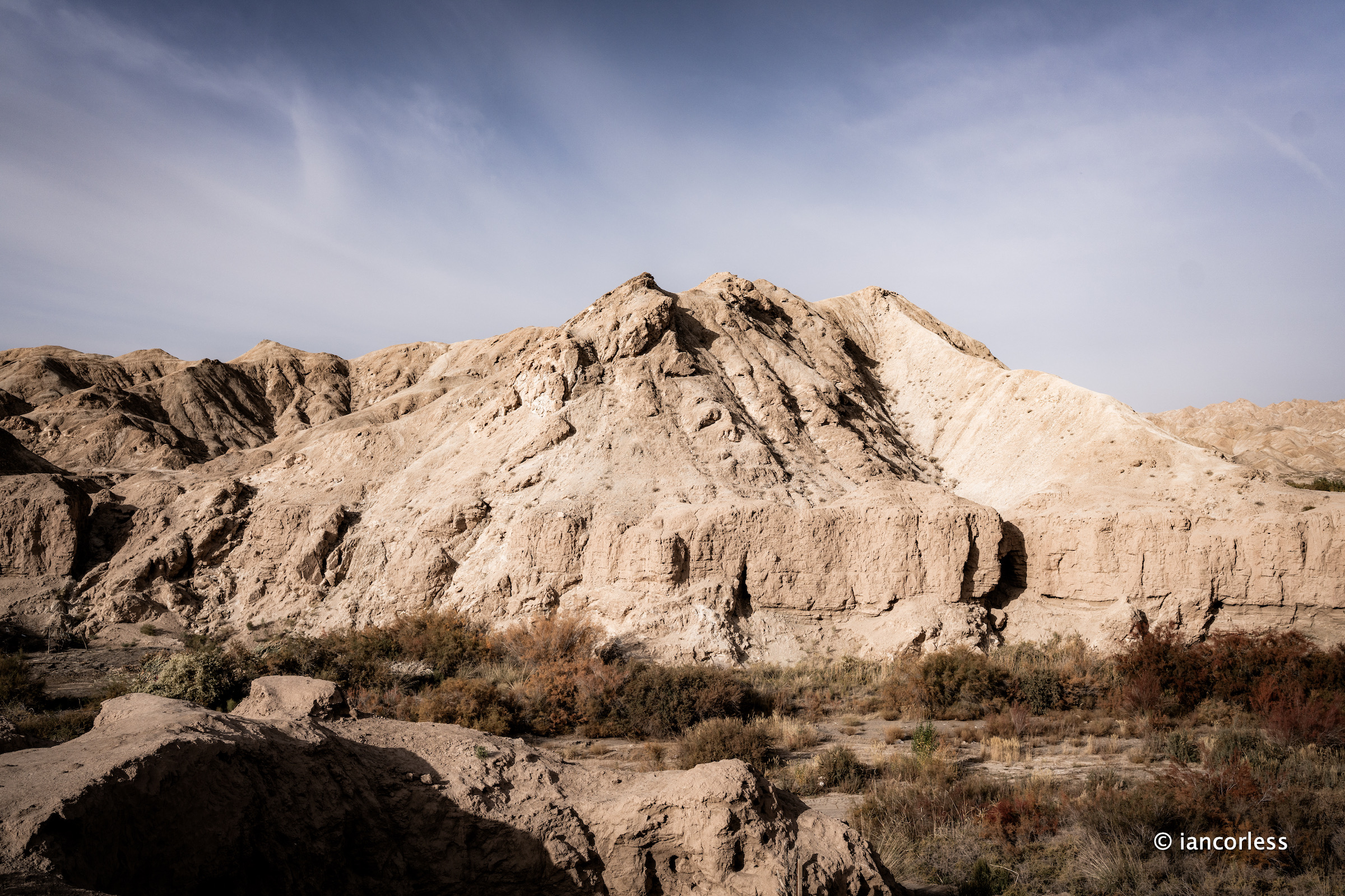
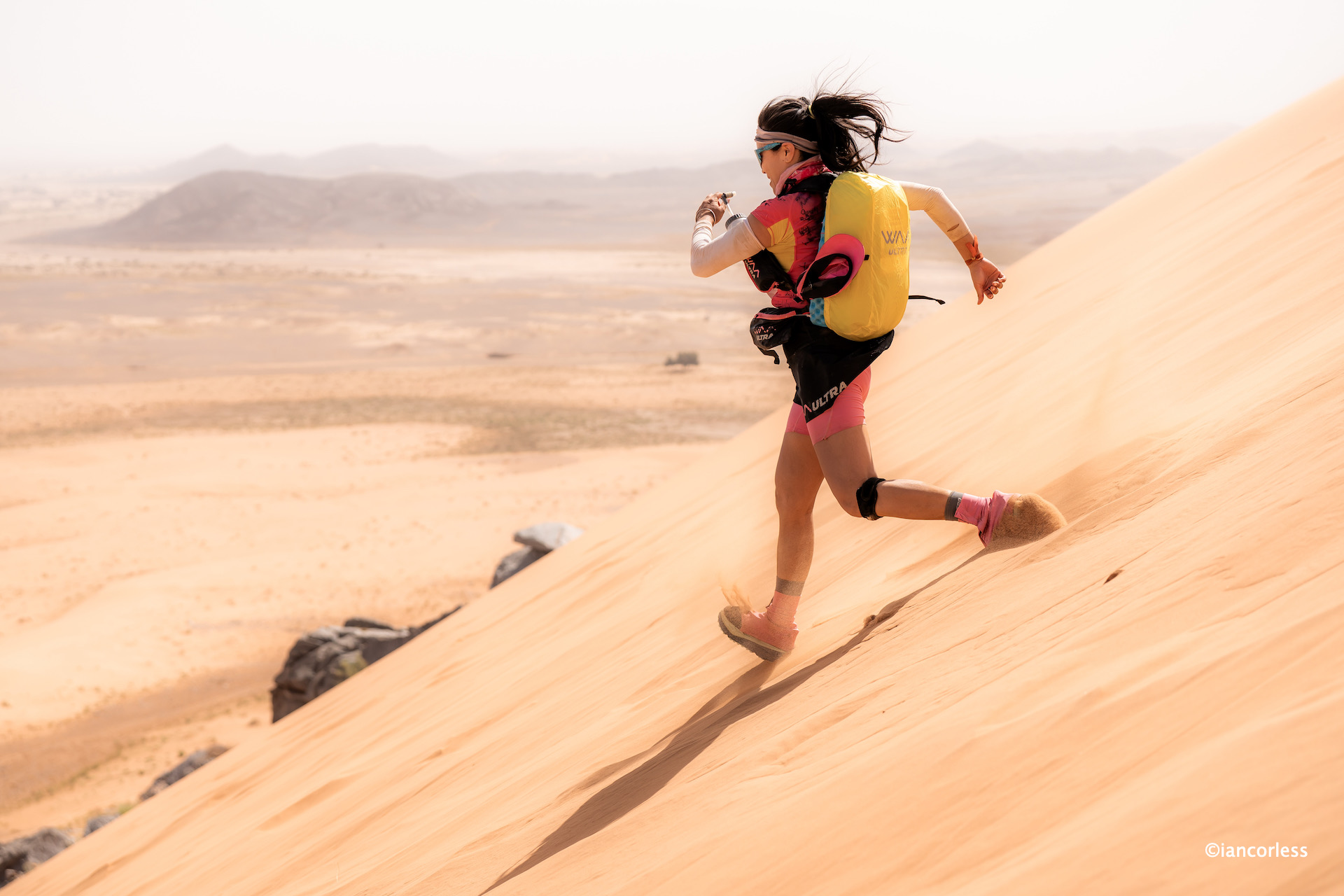
The Ultra Gobi 400km is a test of survival as much as speed. Runners must cover 400 kilometers of brutal, shifting terrain – endless sand, rocky basins, dry riverbeds, and wind-swept plains.
Mountains and altitude will be waiting
Days can scorch under an unrelenting sun; nights can plunge into freezing cold. Navigation, strategy, and mental resilience will be as important as strong legs and lungs.
Golden light
For the competitors, the anticipation has built to a fever pitch. Months of training and sacrifice come down to this moment. There will be tension at the start line, but also a sense of awe: they’ll leave the comfort of light and noise behind and step into the vast silence of the desert.
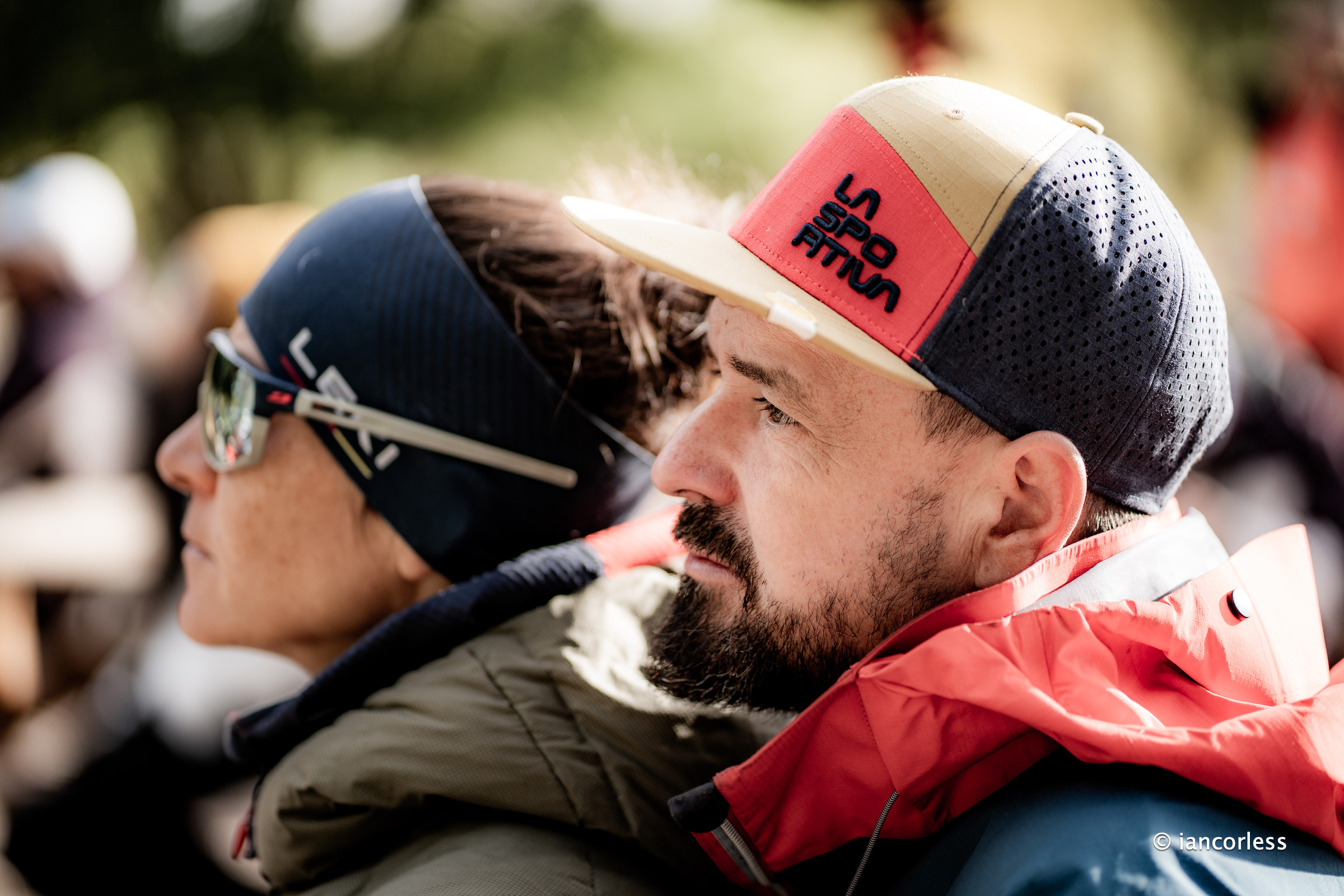
One strategy, teamwork!
Four hundred kilometers through landscapes that constantly shift and change. A true test of endurance, grit and self-reliance. There is one truth of the Ultra Gobi, each runner will discover where the limits truly lie.
Varied landscape
This race doesn’t hand out easy victories. It carves stories into those who dare to take it on. Some will break; some will endure; a few will cross the finish line forever changed.
Tonight, the desert opens its gates. The Ultra Gobi 400km 2025 begins.
After the last-minute cancellation of MDS 120 Fuerteventura, the focus now shifts firmly to Morocco, where two cornerstone events are about to take center stage: MDS 120 Morocco and MDS Trek Morocco. Anticipation is high, the energy is back, and participants are ready for the desert challenge they’ve been waiting for.
What Are MDS 120 and MDS Trek?
The MDS 120 is a three-stage, four-day 10/100 or 120 km endurance race in the desert, modelled after the legendary Marathon des Sables but in a shorter, more accessible format. Athletes carry their food and gear, manage their effort in the heat, and experience the highs and lows of true desert racing, every kilometer tests both body and mind.
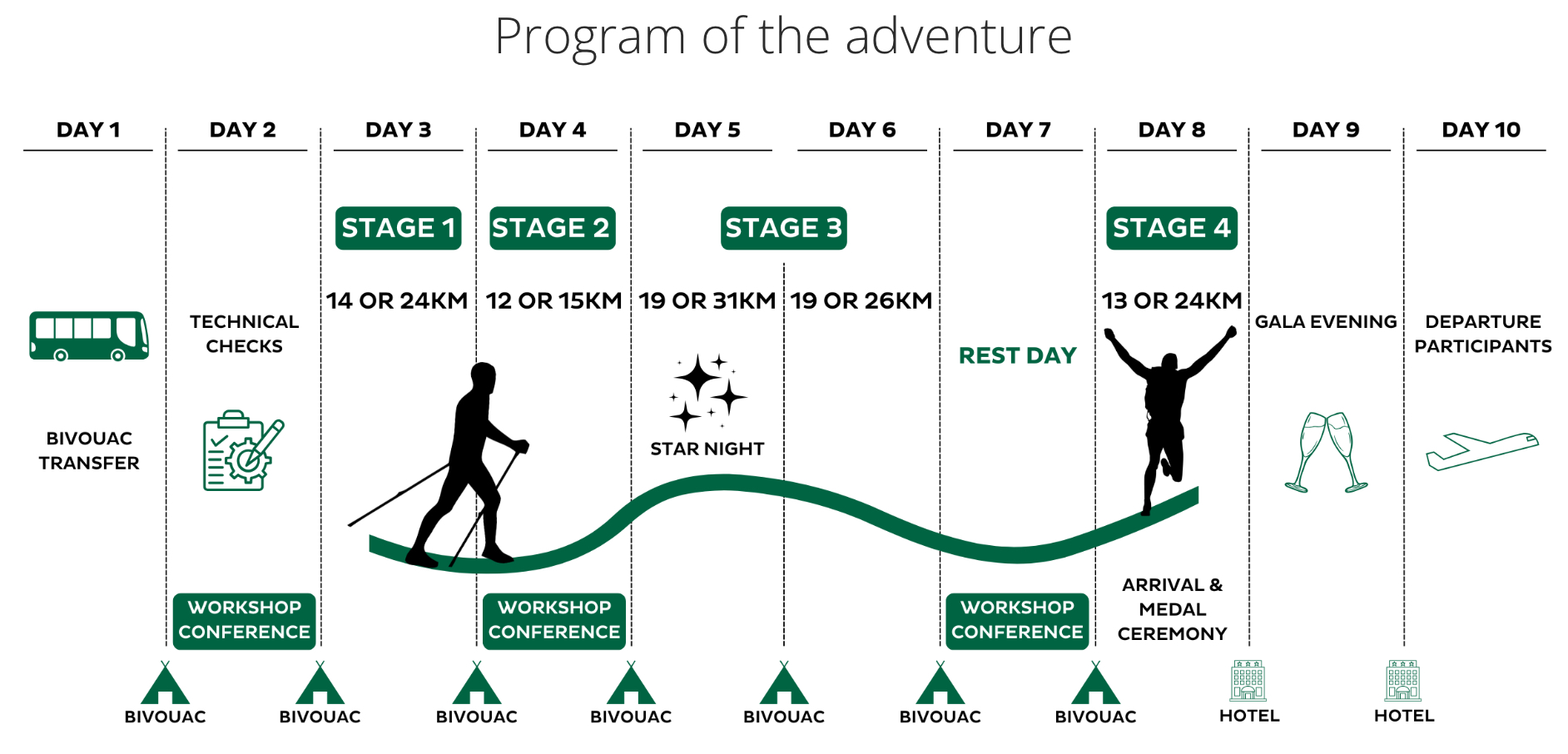
The MDS Trek shares the same landscapes and spirit as all MDS events but swaps competition for exploration. Designed for adventurers and walkers, it offers a supported trek across the Sahara, with each stage a new chance to discover the desert at a different pace. Participants are not self-sufficient, camp has more luxury and yes, even showers are possible!
The Journey Into the Desert
The adventure begins well before the start line. Most participants first gather in Marrakech, where the atmosphere is electric as athletes and trekkers from around the world converge. From there, MDS arrange transfers over the High Atlas mountains to Ouarzazate, often called the “door of the desert.”
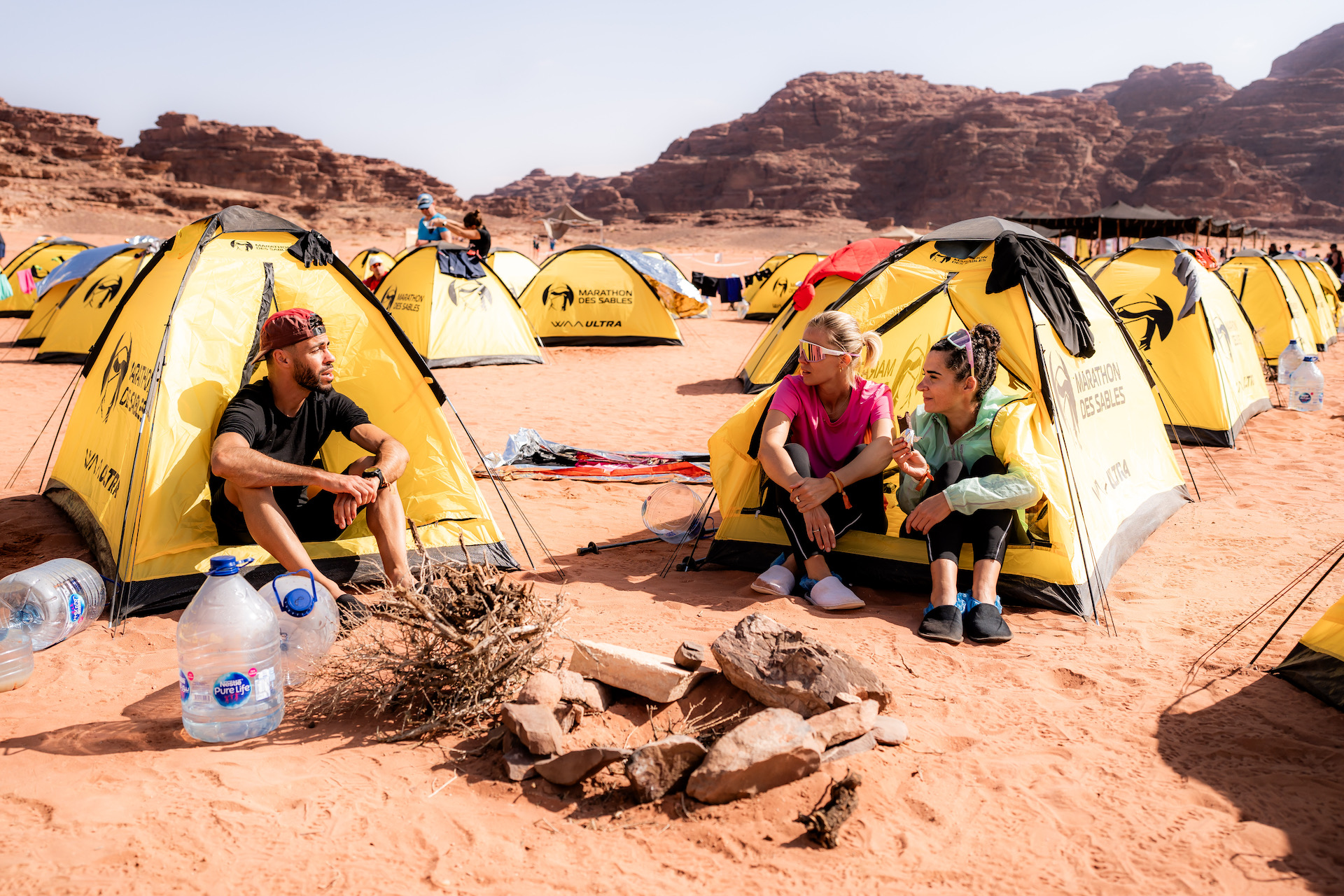
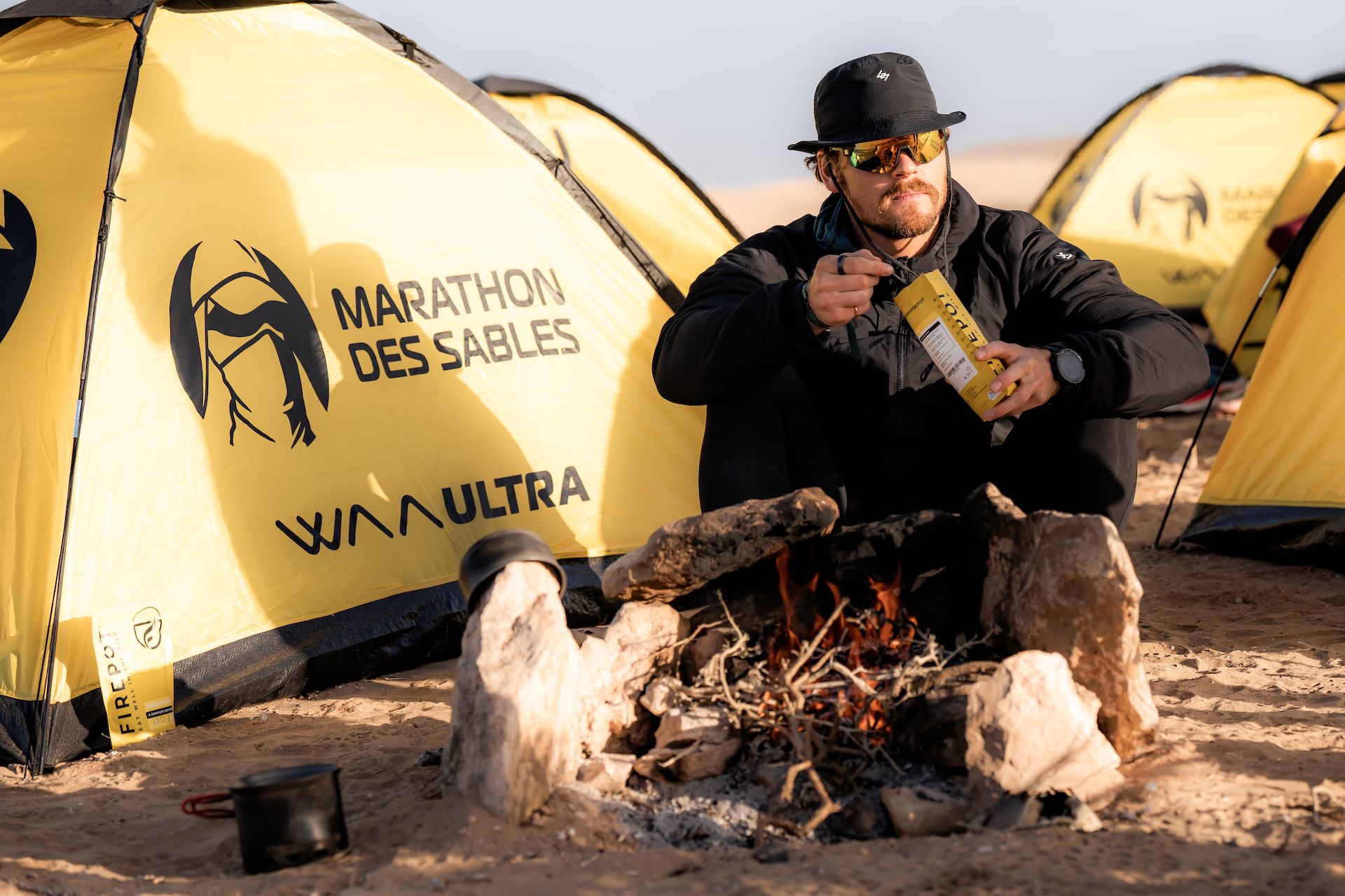
Two hotel nights in a hotel with administration protocols, then the caravan heads deeper into the Sahara. The transfer to Bivouac 1 marks the true start of the experience: the desert horizon stretching endlessly, the iconic WAA tents awaiting, and the realization that the adventure is about to begin.
MDS 120 Morocco:
MDS Trek Morocco:
Looking Back at 2024
The 2024 editions showed the enduring strength of the MDS spirit. Morocco delivered outstanding editions and for MDS 120, there were some challenging climatic conditions with rain and flooding.
MDS Trek, was business as usual with classic Morocco weather. Participants took on dunes, jebels, and starlit nights. These moments reinforced Morocco’s reputation as the spiritual home of the Marathon des Sables.
Why 2025 Will Be Bigger and Better
In 2025, expect the same, but amplified. The organisers have doubled down on delivering unforgettable events, and the buzz suggests the community is ready for it. The MDS 120 Morocco will push competitors harder, while the MDS Trek will continue to offer an inclusive and inspiring path through the Sahara.
And Then Comes Jordan
Photo by Ian Corless
The adventure doesn’t stop in Morocco. Just weeks after the conclusion of the MDS Trek, the focus shifts east for MDS 120 Jordan, where runners and trekkers will swap the Sahara for the dramatic landscapes of Wadi Rum. It’s a quick turnaround, but for those chasing the full MDS experience, it’s the perfect continuation of a year dedicated to desert discovery.
The countdown is on.
Morocco awaits.
Interested in a Marathon des Sables event? More informationHERE
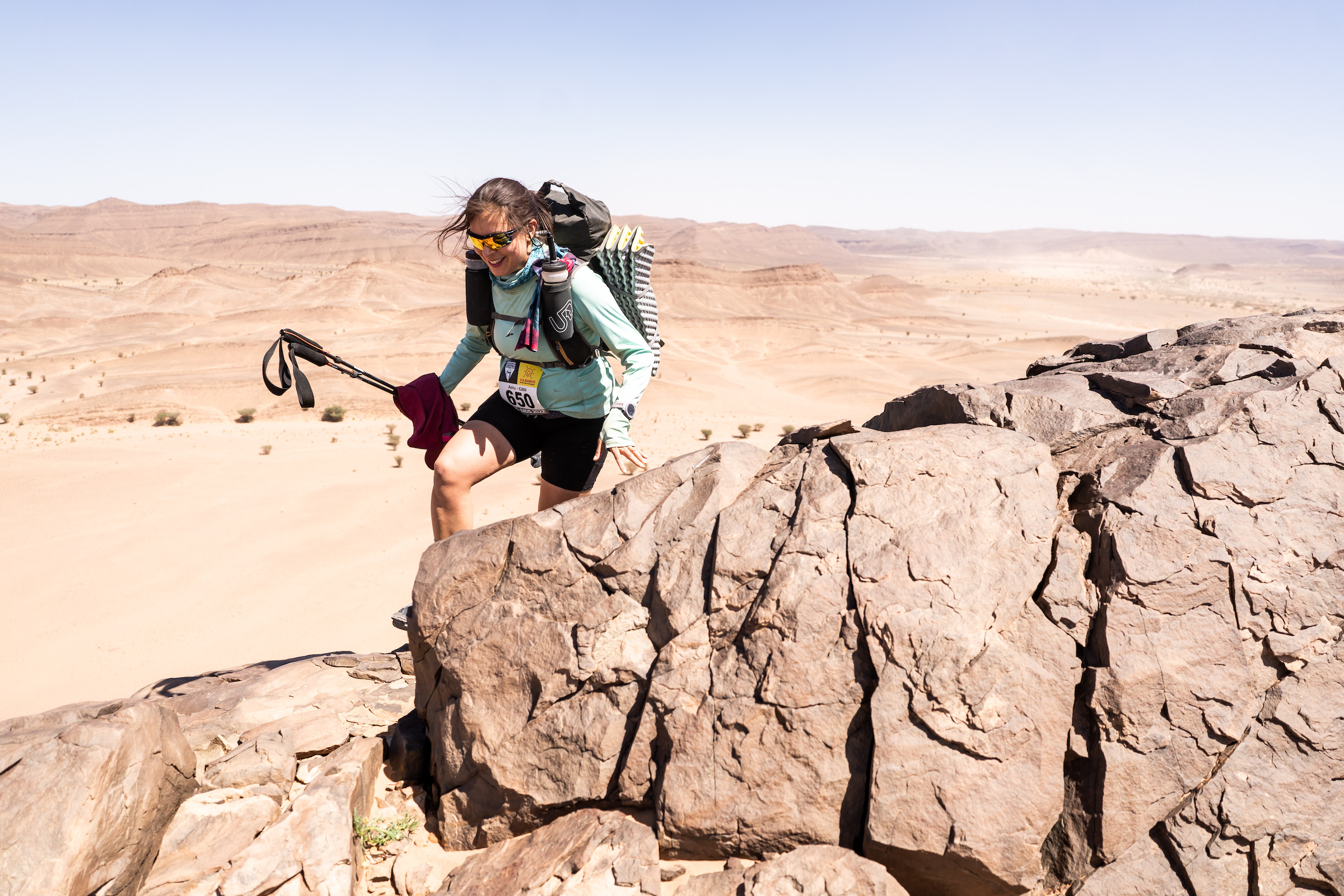
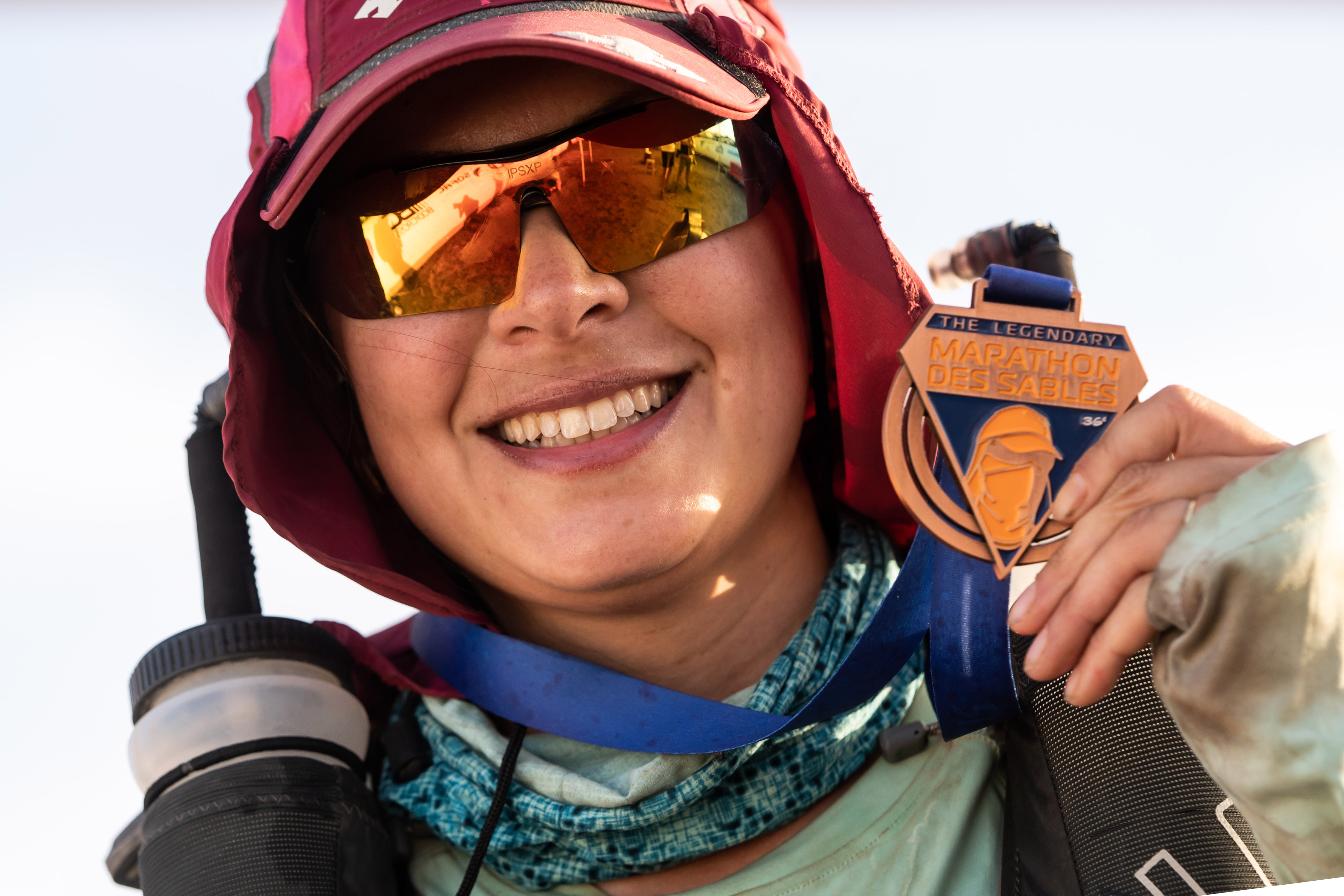
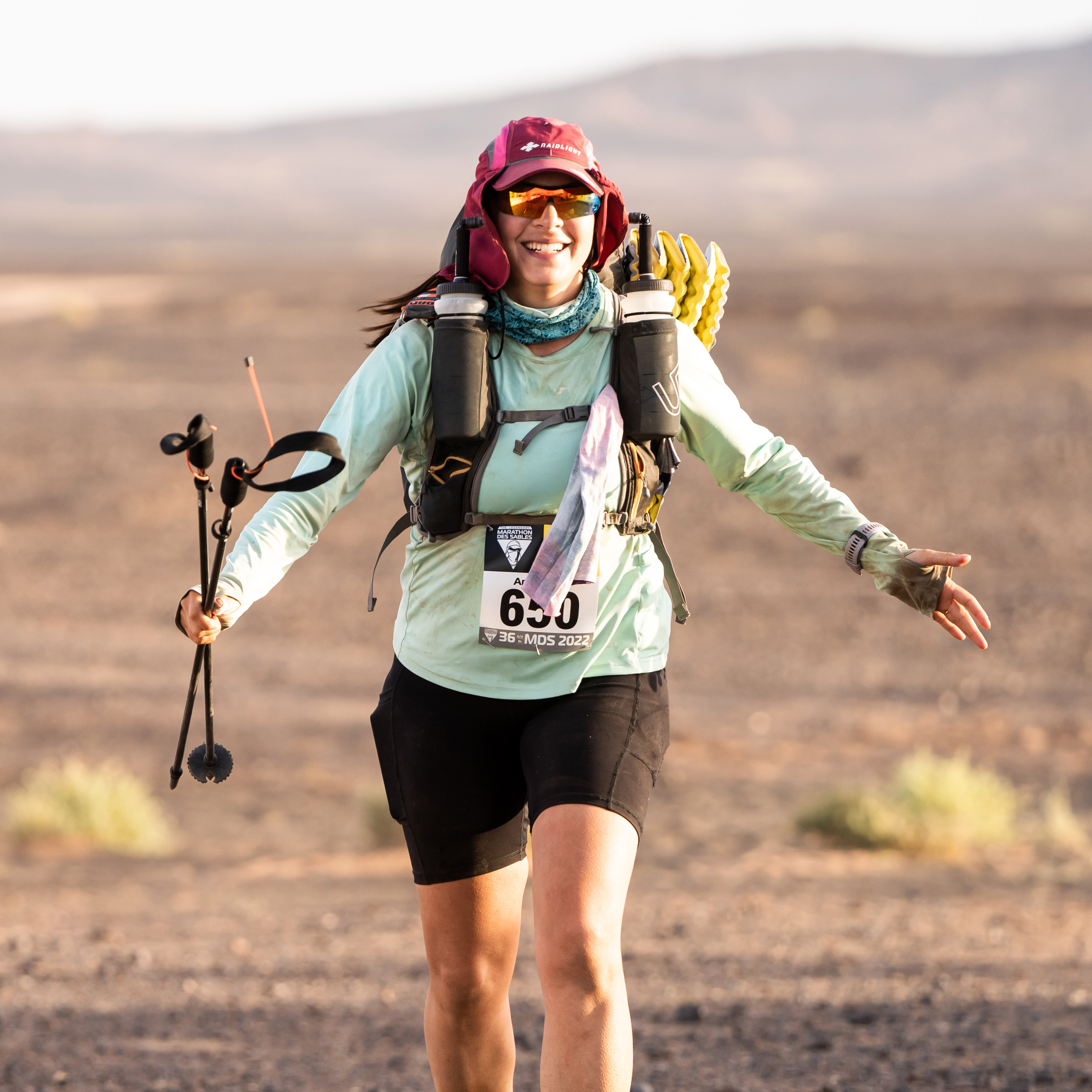
Amy McCulloch is a world-renowned author who in 2022 toed the line of the iconic Marathon des Sables. The race and the experience planted seeds for a story, one of ultra-running and mystery. In June 2025, ‘RUNNER 13‘ was released.
Amy McCulloch is the internationally bestselling author of BREATHLESS, MIDNIGHT (also known as THE GIRL ON THE ICE) and RUNNER 13 – coming out worldwide in Summer 2025. She has also written eight novels for children and young adults, including the #1 bestselling YA novel The Magpie Society: One for Sorrow. In September 2019, she became the youngest Canadian woman to climb Mt. Manaslu in Nepal — the world’s eighth highest mountain. She has also summited the highest mountain in the Americas, Aconcagua, in -45C and 90kmph winds, and has visited all seven continents. In 2022, she completed the 36th Marathon des Sables, a 250km stage marathon through the Sahara Desert. She is also an A-licensed skydiver. She is currently working on her next adult thriller, continuing to draw inspiration from her adventures.
Amy joins the podcast to discuss the book and her MDS story.
Runner 13 is a thriller that drops readers straight into a deadly stage race across the Sahara, echoing the notorious Marathon des Sables in Morocco. McCulloch’s own experience running that event shapes every detail – the brutal desert landscape, the psychological toll, and the obsession with endurance that defines the sport. The story follows Adrienne, a once-great ultrarunner forced back into competition, and Stella, daughter of the race’s manipulative director, Boones, whose events, modelled on real-world extreme events, aren’t designed to be won, but to break runners. Central to the mystery is Runner 13, a symbol of both glory and doom. Told in sharp, cliff-hanging chapters that jump between present and past, the novel feels like Agatha Christie transplanted to the Sahara: a brutal race where survival, not victory, is the prize, and where Morocco’s desert becomes both the setting and the trap.
If you have participated in Marathon des Sables, the narrative of the book will feel familiar, you will relive your desert experience and of course, the added bonus of a murder mystery only makes the book more interesting. For newbies to the desert, rest assured, the book will be a wonderful escape and it can only make your future event even more ‘hotly’ anticipated – hopefully, the murder mystery element will be missing.
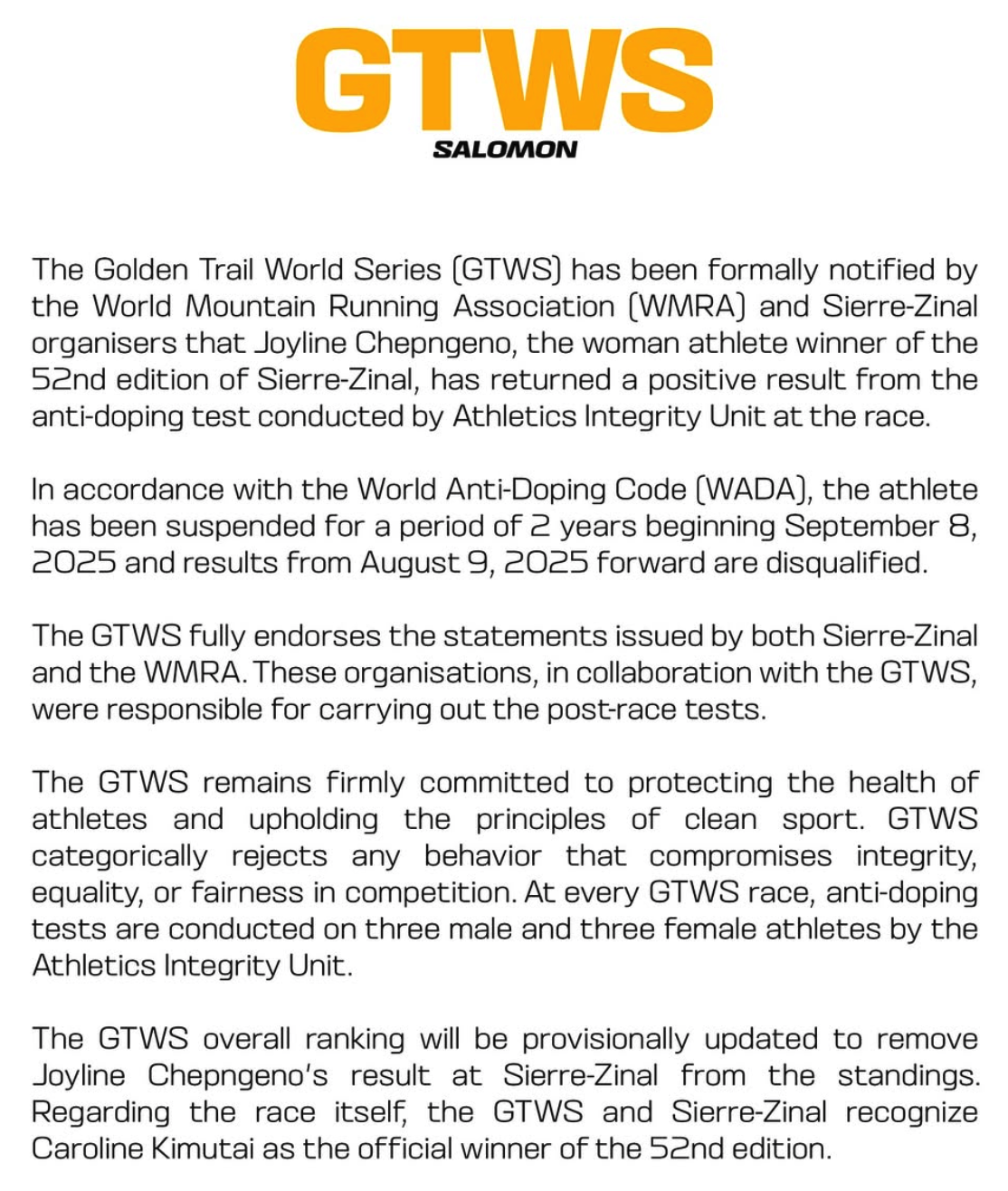
When news broke that Kenyan trail running champion Joyline Chepngeno had been banned for two years after testing positive for triamcinolone acetonide, the reactions were swift and polarised. On one side: condemnation and disbelief. On the other: questions about fairness, context, and whether the system designed to protect clean sport actually confuses athletes into mistakes.
Let me be clear, there is no place for doping in any sport, however, the Chepngeno and Angermund cases should and must make us think deeper.
Chepngeno admitted she received an injection in July, and the drug in question – a corticosteroid widely used for inflammation – sits in one of the sport’s murkiest regulatory zones. Under the World Anti-Doping Agency (WADA) code, triamcinolone is banned in-competition, unless the athlete secures a Therapeutic Use Exemption (TUE). Sounds simple enough, but in practice the rules are anything but. The case raises bigger questions: Was she naive? Did her team fail her? Was Salomon right to sever ties so quickly? And is WADA’s own ambiguity part of the problem?
“Chepngeno may have taken the injection for a genuine medical issue – inflammation, pain, or recovery – but without the right paperwork, timing, and guidance, it became a career-altering violation.”
Kenya’s Reputation and the Weight of History
Kenya has long been under the microscope for doping violations. In recent years, its athletes have faced increasing scrutiny, with dozens of cases making international headlines. This history frames Chepngeno’s case: even a whiff of doping from a Kenyan runner is quickly interpreted through the lens of systemic abuse, rather than individual misjudgment.
But this framing risks oversimplifying. Many Kenyan athletes operate in environments with limited medical oversight, inconsistent education about anti-doping rules, and managerial structures that prioritize racing and prize money over compliance. Chepngeno may have taken the injection for a genuine medical issue – inflammation, pain, or recovery – but without the right paperwork, timing, and guidance, it became a career-altering violation.
The Role of the Manager/ Coach: Protection or Neglect?
A professional runner’s manager/ coach, in this case, Julien Lyon, is more than just a race scheduler. They are, or should be, a gatekeeper for the athlete’s career:
Pros of strong management:
Ensures the athlete understands what substances are permitted.
Helps navigate the dense bureaucracy of WADA codes, TUE applications, and medical clearances.
Provides financial and legal protection when mistakes happen.
Balances competitive demands with athlete health and long-term career viability.
Cons or failures of management:
When managers are absentee or focused solely on performance, athletes are left vulnerable.
In many Kenyan cases, managers are foreign-based agents whose primary incentive is to get athletes on the start line, not to invest in their education.
A lack of day-to-day oversight means athletes may trust local doctors, clinics, or informal advice without realizing the implications.
Chepngeno’s admission that she did take the injection suggests honesty, not deception. But it also signals that no one around her flagged the risk. A competent manager should have either prevented it or ensured the correct exemptions were in place. If the manager’s job is athlete protection, this could look like a potential failure? **
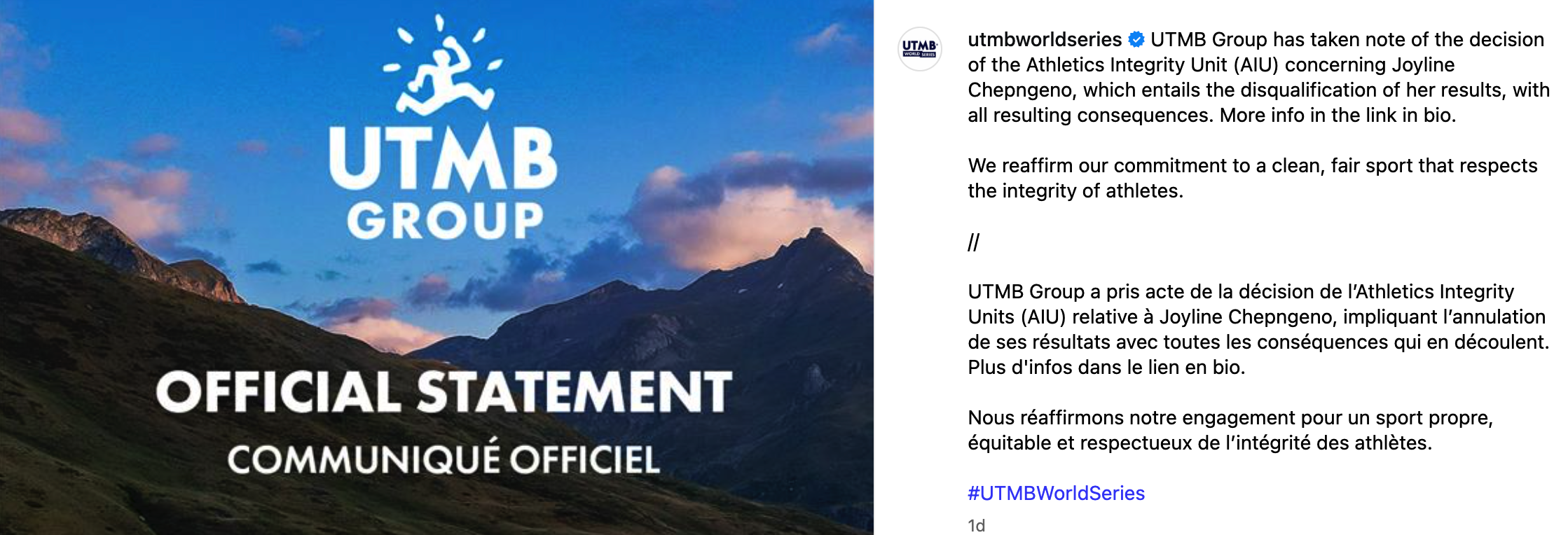
“The Sierre-Zinal race organisation has announced that it has banned Chepngeno’s coach Julien Lyon and his Milimani Runners team from future competitions. It has also, according to the statement, ordered Lyon to ‘fully reimburse prize money, accommodation costs and administrative fees arising from the case – including reputational harm – owed to the Sierre-Zinal Association’.” – (c) Runner’s World
Lyon also coached the 2022 Sierre-Zinal men’s and women’s champions, Kangogo and Chesang, both of whom were later suspended and stripped of their titles for doping.
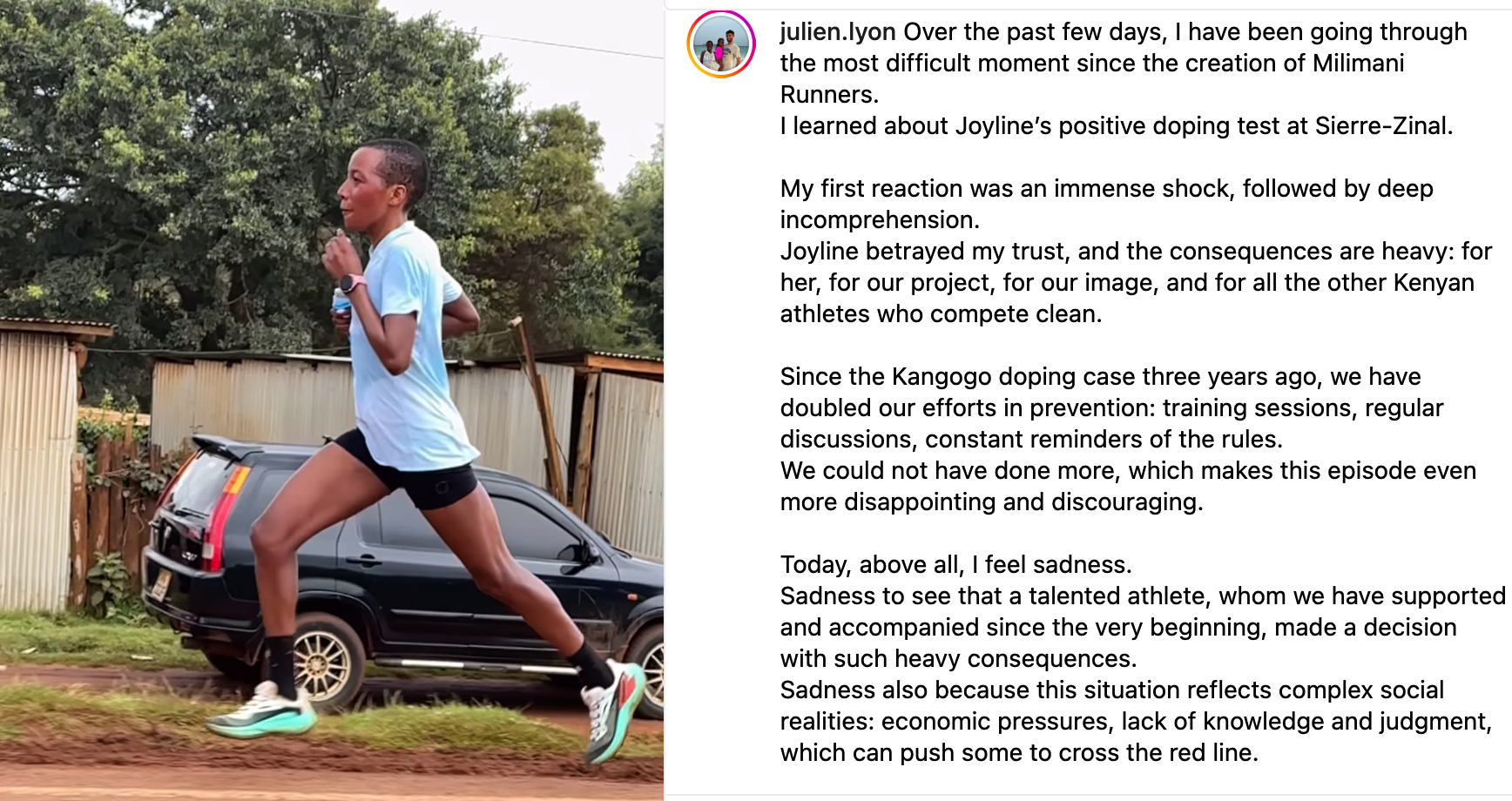
In response to Sierre-Zinal, Julien Lyon via Instagram stated: “Finally, I must respond to the serious and defamatory accusations published by the Sierre-Zinal organization. These statements are completely unacceptable. I am already devoting significant energy to restoring the facts and I have no intention of giving up.”**
Update September 13th:**
Julien Lyon has responded with a clear statement on Instagram, read HERE.
Let me be absolutely clear: • I had no knowledge whatsoever of the use of this substance. • I have never, in any way, encouraged or tolerated such an act. • I have always fought against doping and I will continue to do so.
From now on, I am already reflecting on concrete solutions: implementing more regular out-of-competition testing, even if it represents a significant cost that must be discussed with our partners, and developing closer, culturally adapted medical support in Kenya. I deeply regret that Joyline may have felt left alone with her pain and doubts. She had my full support, and I regret not being even more present for her during this difficult time. I want to ensure that Milimani Runners athletes feel supported not only in their sporting careers, but also in their health, their choices, and their education. – Julien Lyon via Instagram
The Sponsor’s Role: Salomon’s Swift Rejection
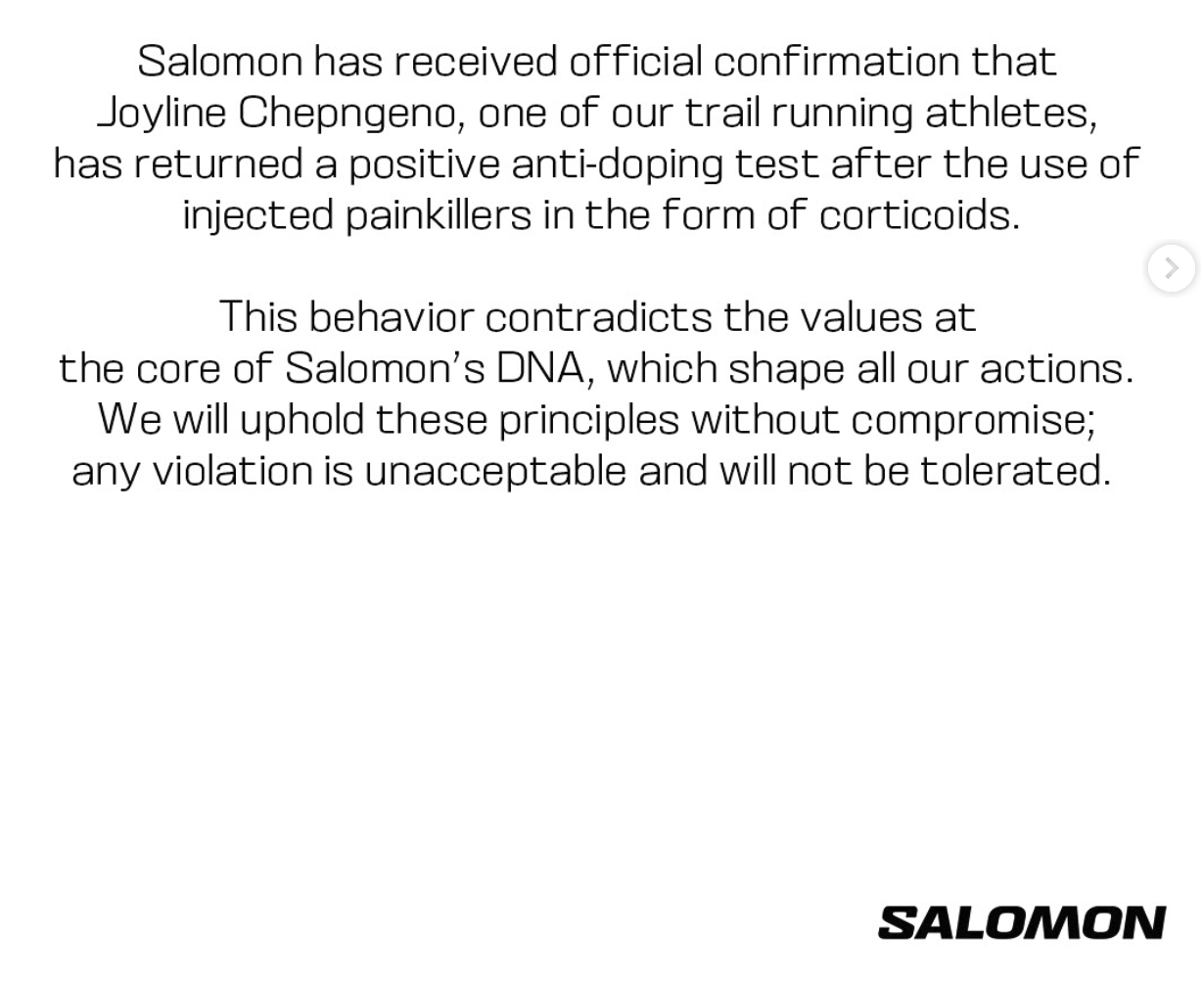
Salomon, Chepngeno’s sponsor, moved quickly to cut ties. On one level, this is understandable: brands cannot afford reputational damage in a sport that already battles questions of integrity. Corporate zero-tolerance policies are often blunt but clear: fail a doping test, and the contract ends.
But here lies the ethical dilemma. Was Salomon protecting the sport, or protecting its image? By severing ties without nuance, the brand effectively punished Chepngeno twice: once through lost income and again through public rejection. A more responsible approach might have been suspension pending investigation, or supporting her with legal and educational resources.
Sponsorship is not just about exposure and winning; it’s also about athlete welfare. When brands abandon athletes at the first sign of trouble, it signals that their investment was never truly in the human being, only in the results.
A Contrast: The Case of Stian Angermund
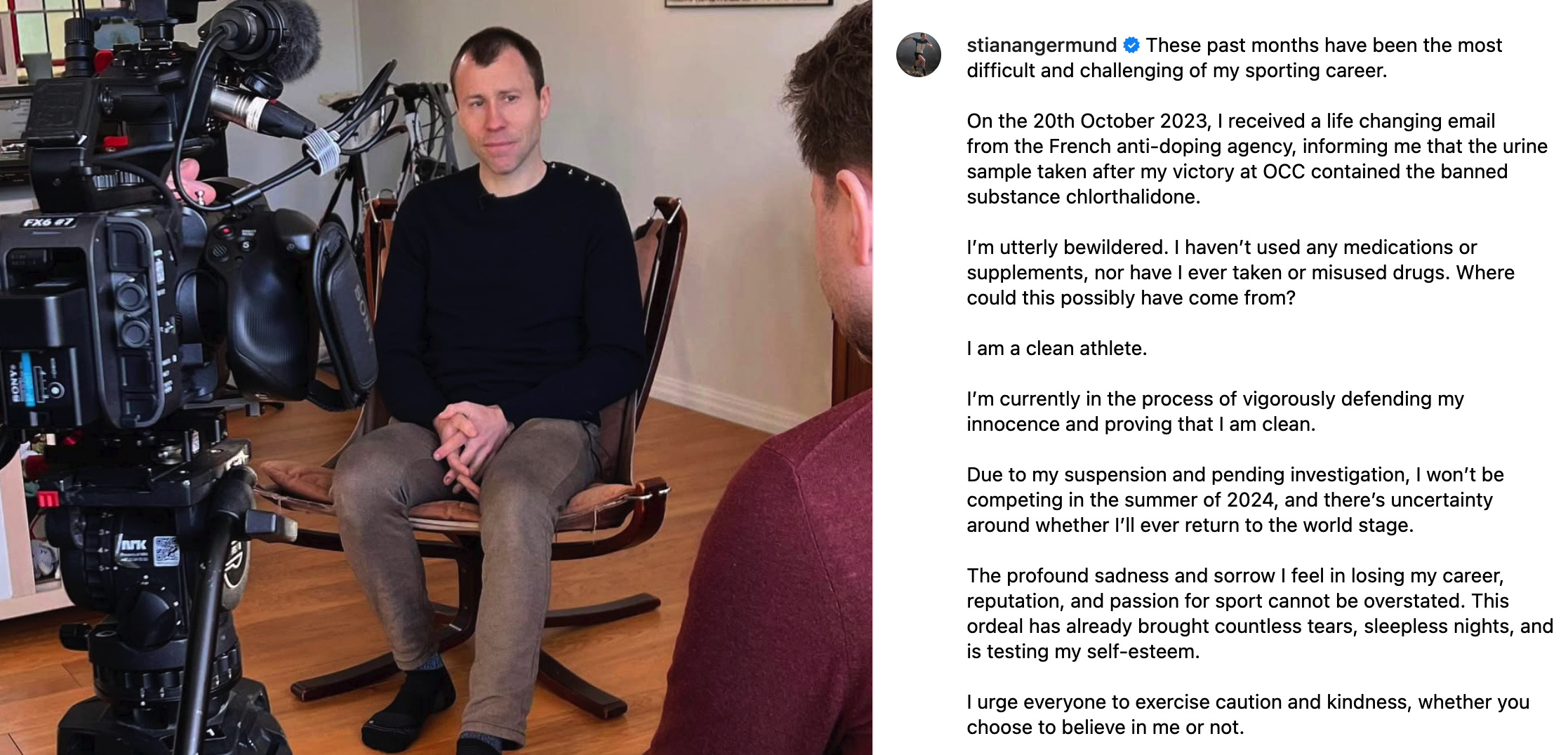
The difference in how Chepngeno’s case was received becomes starker when compared with that of Stian Angermund, one of Norway’s most successful trail runners. Angermund also tested positive in 2023 for the diuretic chlorthalidone.*
Yet the public response to Angermund was notably softer. Many in the trail running community rallied around him, framing him as a victim of circumstance, a clean athlete caught in an unfortunate situation. His protestations of innocence gained traction, with commentators and peers stressing his reputation, personality, and history as evidence of credibility.
On February 10th, 2024, the trail running world was rocked by news out of Norway – the two-time World Champion, Stian Angermund, had tested positive for the diuretic chlorthalidone. via Freetrail here.
Chepngeno, by contrast, has not been afforded the same sympathy. Instead, her case was quickly folded into the broader narrative of Kenya’s doping crisis, with far fewer voices offering the benefit of the doubt. This disparity speaks volumes about how nationality, reputation, and public image shape perception. Where Angermund’s case was seen as an anomaly in a clean career, Chepngeno’s was framed as part of a pattern – even though the substance she took is far more medically common, and her admission suggested transparency, not deception.
Sponsors and Double Standards
The sponsorship response reveals this double standard even more starkly. Salomon cut ties with Chepngeno almost immediately, distancing itself without nuance. In contrast, sponsors and partners in Angermund’s case were slower to act, with ‘some’ showing signs of support while the investigation unfolded. The messaging was different too: in Angermund’s case, words like uncertain, unfortunate, and out of character dominated coverage; in Chepngeno’s, the language leaned toward guilty, systemic, and Kenyan problem.
This isn’t just about corporate crisis management – it reflects deeper biases. Western athletes with strong reputations are given space to argue their case, while Kenyan athletes are too often treated as disposable. If sponsors only invest in results but not in athlete welfare, the sport risks reinforcing inequities that mirror global power imbalances.
WADA’s Ambiguity: Is Triamcinolone Doping or Not?
Here lies the central confusion. Triamcinolone is not an anabolic steroid. It is a corticosteroid — widely prescribed to treat inflammation and injury. In many medical contexts, it is routine and even necessary.
WADA bans it only in-competition, unless a TUE is granted. Out-of-competition, it is allowed. The catch? Athletes often receive injections or treatments without realizing where the “competition window” starts or ends. Did Chepngeno’s injection fall within the banned period? Did she even know the timing mattered?
And yes, I understand that the athlete has a responsibility to know and understand WADA rules.
The World Anti-Doping Code states the roles and responsibilities that athletes have in relation to anti-doping. So, athletes must: know and abide by the Anti-Doping Rules, policies and practices. be available for testing at all times.
The ambiguity sends mixed messages: if a substance is dangerous or performance-enhancing, why is it allowed out-of-competition at all? And if it is medically justifiable, why is the TUE process so opaque and burdensome, especially for athletes in countries with limited infrastructure?
Instead of clarity, WADA’s rules create traps. Athletes are told they are responsible for every substance in their body, but the system seems designed to catch technical errors as much as intentional cheats.
Was Chepngeno Naive?
The answer is complicated. On the surface, yes: admitting to an injection without checking WADA guidelines suggests a lack of awareness. But deeper down, her admission looks less like naivety and more like honesty. She did not hide the treatment, nor attempt to deny it. She took what may have been a routine medical step, unaware that it carried career-ending consequences.
The real naivety may not be hers but the system’s – assuming athletes across all geographies, languages, and economic realities can navigate a code written for those with legal teams and medical advisors.
Does Julien Lyon and Salomon have a responsibility? **
Financial and Moral Implications
For Chepngeno, the fallout is severe and many of you will say, good, that is how it should be.
Financial: Two years off the circuit means lost race earnings, lost sponsorship income, and a gap in her career at what should be her peak. For athletes from Kenya, whose entire family and community may rely on those earnings, the consequences are devastating.
Moral: Her reputation is damaged, regardless of intent. Once branded a “doper,” the stigma rarely fades, even if the violation was technical rather than malicious.
For the sport, cases like this erode public trust. Fans are left asking: was she cheating or simply careless? For sponsors, the financial risk increases – which in turn makes them more likely to cut ties at the first sign of trouble. And for Kenya, each case deepens the perception of systemic doping, even if the reality is far more complex.
What can be learned from this?
Contextual Justice: Not all violations are equal. Intent should matter as much as presence. Athletes like Chepngeno, who admit to treatment rather than hide it, deserve proportionate, not punitive, responses.
Clearer Rules from WADA: The line between therapeutic and prohibited must be made clearer. If triamcinolone is truly performance-enhancing, ban it outright. If it is a legitimate medical treatment, streamline TUEs and ensure athletes understand the timelines.
Better Athlete Education: Federations, sponsors, and managers need to invest in training athletes on what substances mean, how to apply for exemptions, and what to do before accepting treatment.
Stronger Manager Accountability: Managers should be held to professional standards. If their athlete tests positive due to negligence in guidance, they too should face consequences.
More Responsible Sponsors: Brands like Salomon should balance integrity with support. Cutting ties instantly might protect the logo, but it abandons the athlete. Support through due process would show real leadership.
Conclusion
Joyline Chepngeno’s ban is not just the story of one Kenyan athlete caught out. It is a case study in the tangled web of responsibility in modern sport: the athlete trying to heal, the manager who should have protected her, the sponsor that walked away, and the global regulator that still speaks in gray areas.
Was she naive? Perhaps. But more importantly, she was failed by a system that claims to protect athletes but too often punishes them for being human. Until WADA, managers, and sponsors share the burden of responsibility, athletes – especially those from vulnerable contexts like Kenya – will keep paying the highest price.
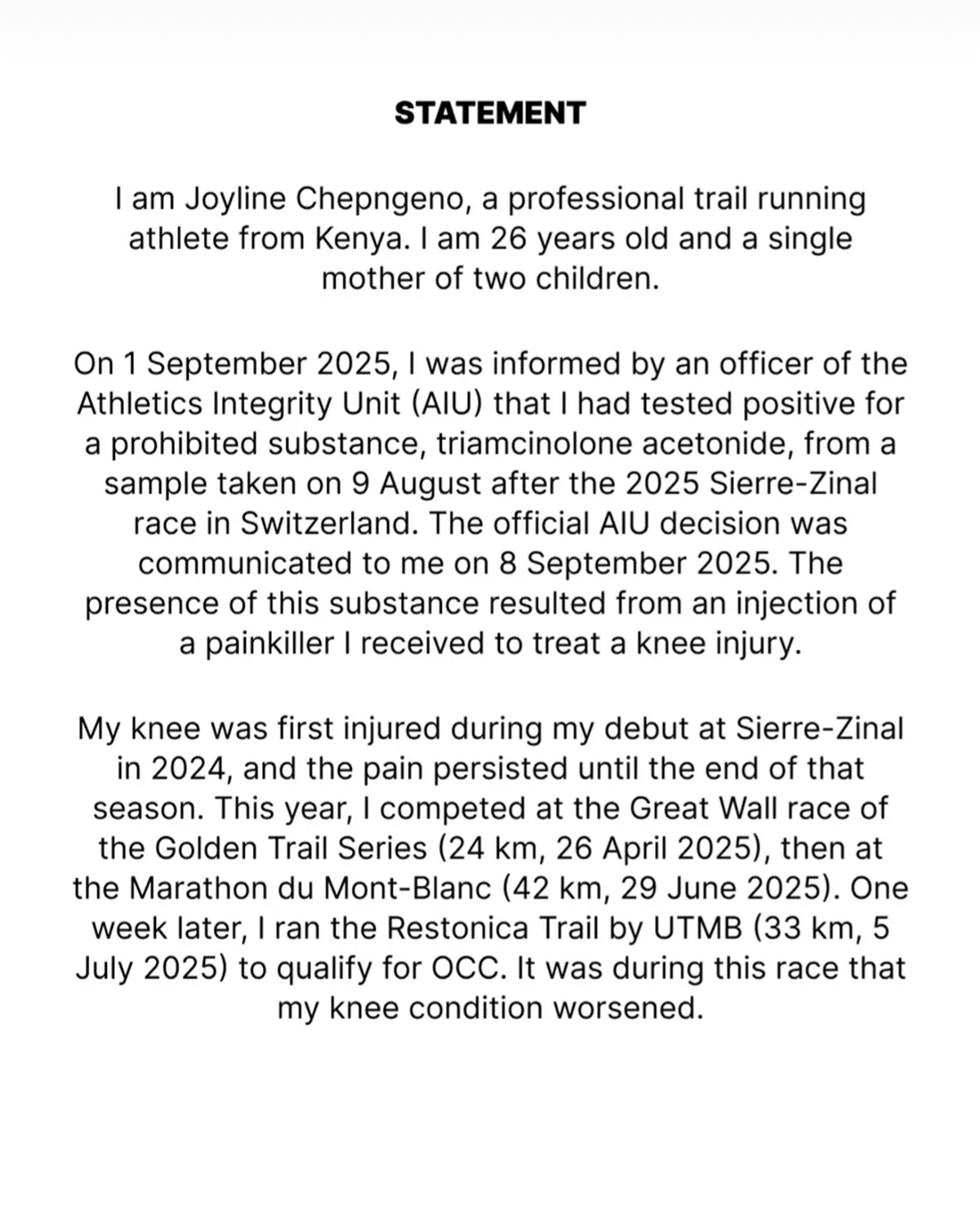
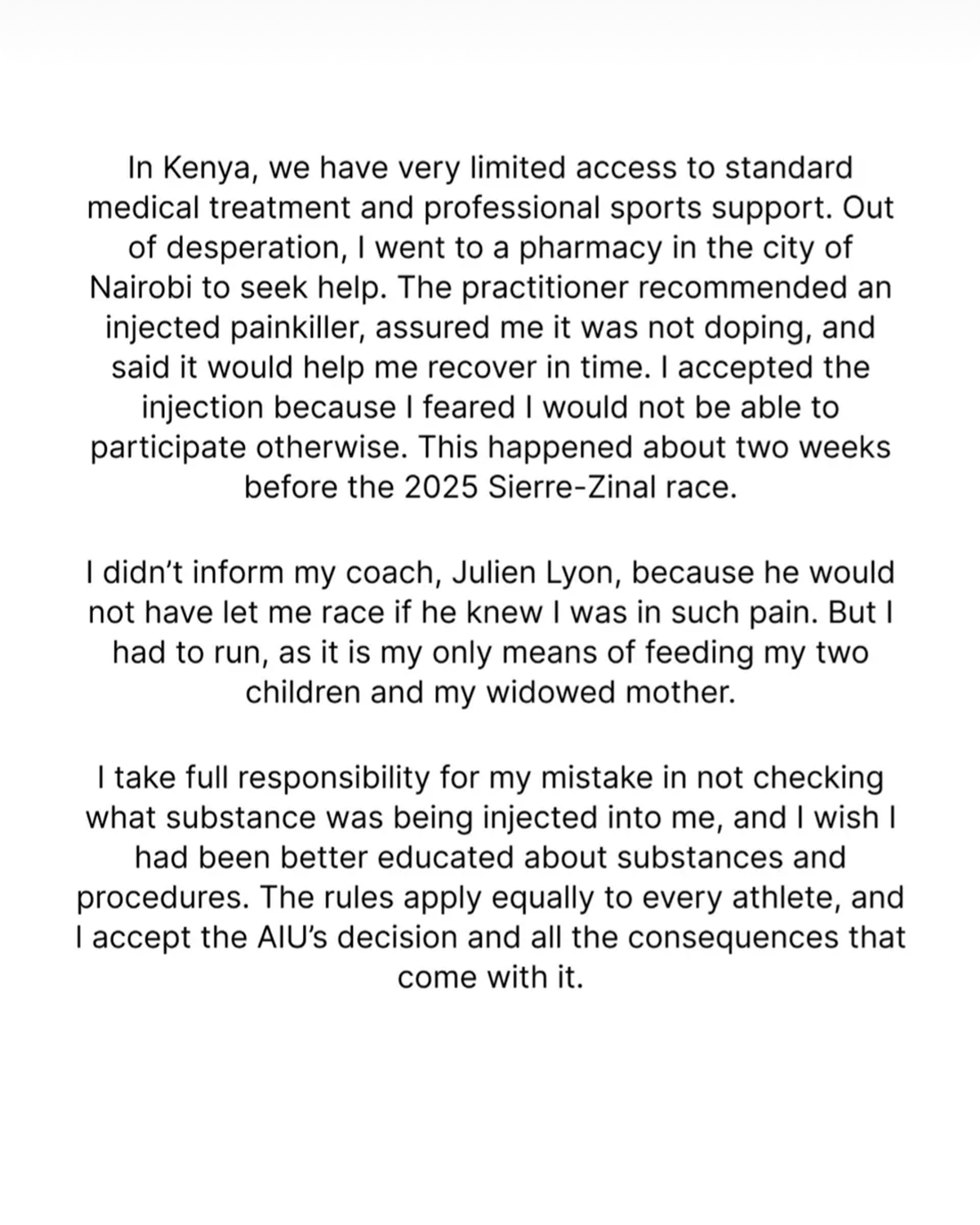
Update 12th September, Joyline Chepgneno posted on Instagram the following:
Final Note:
This article and post is designed to give a perspective to make the reader ask questions. To be clear, I am completely against doping, there is no place for doping in sport. I am well aware, for some, this article and words may make you angry – that is okay. Feel free to respond and counter with good debate and argument and be polite and professional.
** edits September 13th.
**Julien Lyon has taken exception to certain points raised in this article. Quoted below.) I stress that as a journalist, I am entitled to the right to freedom of opinion and expression, including the freedom to hold opinions without interference and to seek, receive, and impart information and ideas through any media, regardless of borders. As stipulated in article 19 in the Universal Declaration of Human Rights. However, it is important to be fair and allow all viewpoints to be considered.
“Several passages mention my name and attribute facts and responsibilities to me that are inaccurate and damaging to my professional reputation. For example: – You state that “the Sierre-Zinal organisation has announced that it has banned Julien Lyon and his team” – however, I have not received any official notification of such a decision, and no sanction has legal standing at this time. – You write “this looks like a clear failure,” implying that I failed in my duty to protect the athlete – this value judgment is not based on any objective evidence and constitutes a serious attack on my professional integrity. – The phrase “Lyon has history” suggests I have a track record of misconduct, which is defamatory. I therefore request that you either: – immediately remove these passages, or – publish a right of reply that sets the record straight.”
Of course, Julien Lyon, like anyone who reads this article, has a right to reply and the comment section is open for this.
On Wednesday, September 10 at 12:00 PM UTC+2, registration opens for three unforgettable endurance adventures:
MDS 120 Morocco – October 2–10, 2026
MDS Trek Morocco – October 11–20, 2026
MDS 120 Jordan – October 31–November 7, 2026
For runners, trekkers, and anyone who dreams of testing their limits in the most breathtaking landscapes on Earth, these dates mark the beginning of a once-in-a-lifetime journey.
What is the MDS?
The Marathon des Sables (MDS) is not just a race. It’s a legend. Born in Morocco in the 1980s, the event has earned a reputation as “the toughest footrace on Earth.” Participants cross vast stretches of desert on foot, carrying their own food and gear, with only water and tents supplied. It’s as much a mental battle as it is a physical one – a journey into resilience, camaraderie, and discovery.
But MDS isn’t just about the ultra-hardcore. Over the years, the family has grown to include formats that open the experience to more people while retaining its wild, adventurous spirit. That’s where MDS 120 and MDS Trek come in.
MDS 120 vs. MDS Trek: What’s the Difference?
Both are designed to immerse you in the magic of the desert, but the style of challenge is different.
MDS 120
A shorter, yet still demanding, version of the iconic Marathon des Sables.
120 kilometers spread across three stages.
Self-sufficient format: you carry your food and equipment.
Runners and fast hikers alike join in, moving between marked checkpoints across some of the most beautiful, wild landscapes imaginable.
Nights are spent in camp, bonding with fellow adventurers under desert skies.
MDS TREK
Designed for those who want the MDS atmosphere without the clock.
Roughly the same length as the 120, but completed at a trekking pace over five stages.
Guided and supported: you carry a daypack, while larger bags are stored in bivouac.
Perfect for walkers, adventurers, and anyone who prefers to savour the desert at a slower rhythm.
In short: MDS 120 is a race. MDS Trek is an adventure. Both give you the thrill of the desert, the community spirit, and the sense of achievement that comes from stepping far outside your comfort zone.
Photo by Ian Corless
Morocco: The Heart of MDS
It’s no accident that MDS was born in Morocco. The Sahara here is everything you imagine when you hear the word “desert”: towering golden dunes, dry salt lakes, endless rocky plains, and distant mountains shimmering in the heat.
During the MDS 120 Morocco (Oct 2–10, 2026), participants will move through terrain that feels ancient and otherworldly. Running or trekking across sand seas lor along fossil-studded plateaus, you’ll witness landscapes that seem unchanged for millennia.
If you prefer a slower, more contemplative journey, MDS Trek Morocco (Oct 11–20, 2026) is your chance to follow in the footsteps of nomadic caravans. Expect strong mint tea at camp, Berber hospitality, and sunrises that wash the dunes in pink and gold.
Jordan: A Desert of Myths and Monuments
After Morocco, MDS 2026 turns east to another jewel of the desert world: Jordan.
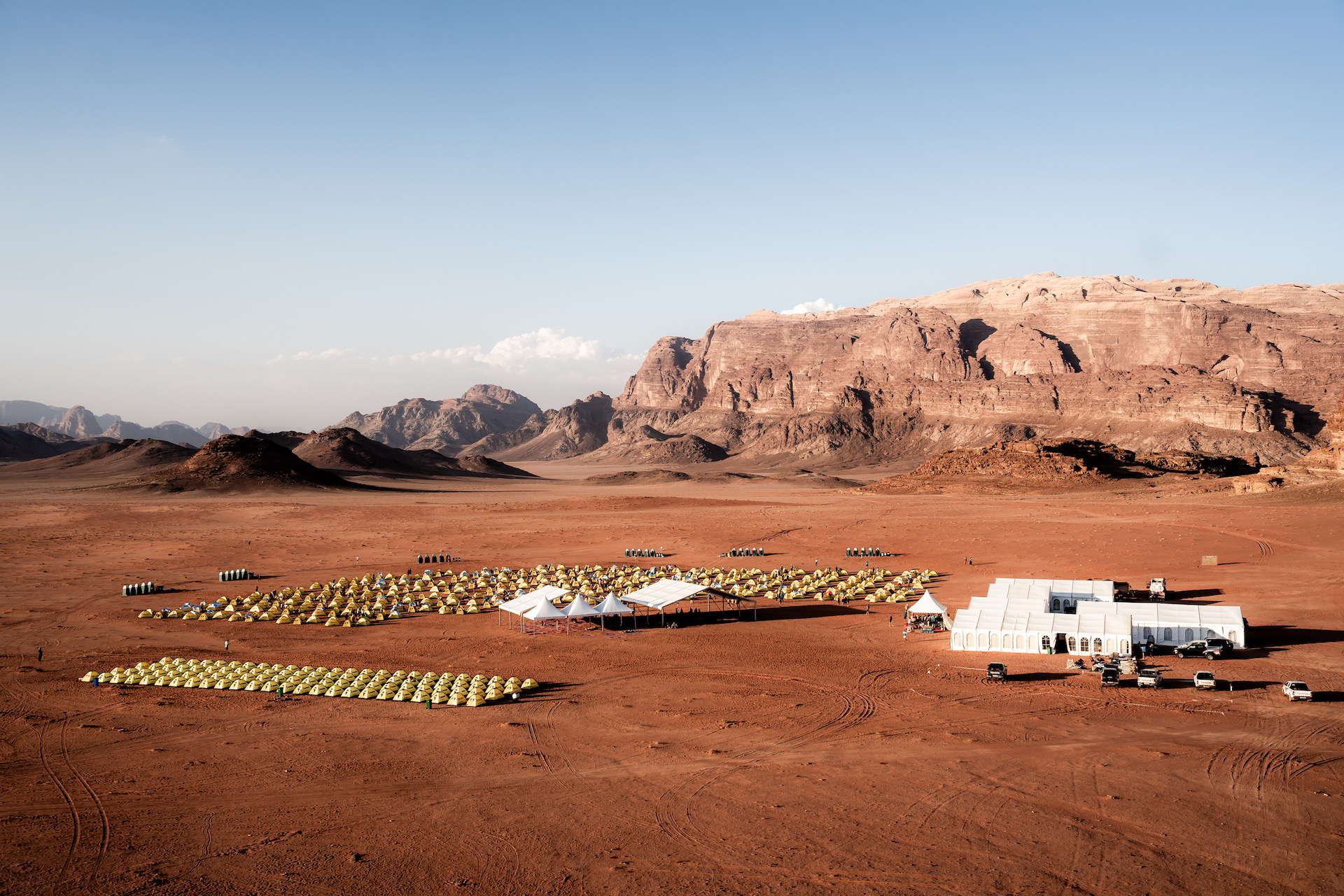
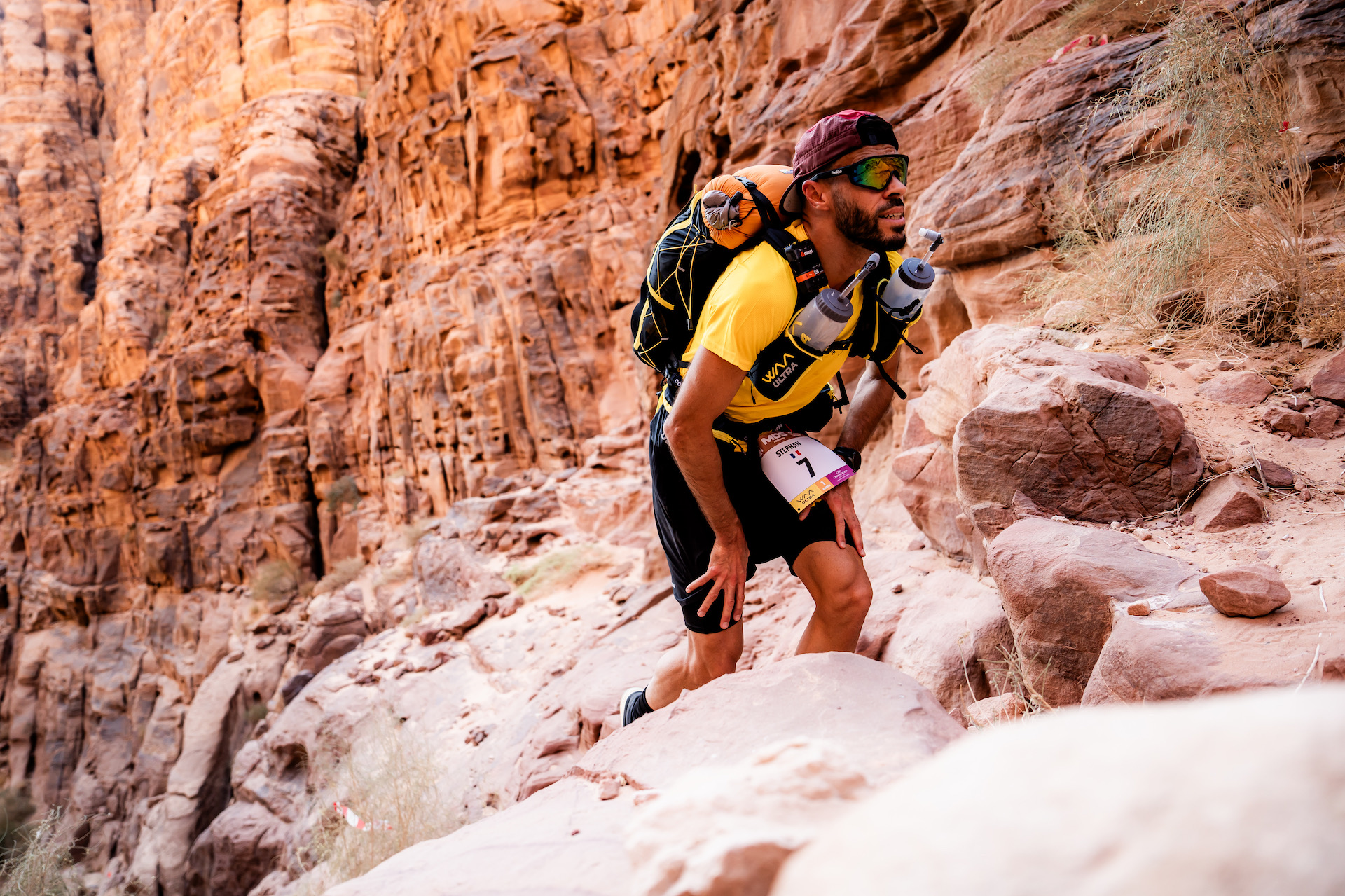
From October 31 to November 7, 2026, MDS 120 Jordan takes place in Wadi Rum, a place so breathtaking it has been called “the Valley of the Moon.” Red sandstone cliffs, natural arches, and wide sandy valleys create a setting that feels almost Martian—no wonder so many films have been shot here.
Photo by Ian Corless
The terrain is ideal for running and trekking: firm sand flats, winding canyons, and rocky ridges that offer sweeping views. And the cultural backdrop is equally unforgettable. This is the land of Lawrence of Arabia, Nabataean traders, and Bedouin camps where hospitality is still sacred.
Photo by Ian Corless
Add in the chance to visit Petra – the rose-red city carved into cliffs – and float in the Dead Sea, and you’ve got a trip that balances physical challenge with world-class cultural exploration.
Why These Events Sell Out
Every MDS event is capped to maintain its unique atmosphere: a balance of challenge, safety, and community. That’s why when registration opens, places vanish fast.
Here’s what draws people back year after year:
The Challenge: 120 kilometers may sound daunting, but it’s achievable for anyone willing to train. Past participants range from elite athletes to everyday adventurers.
The Camaraderie: Camps become villages of shared struggle and shared joy. By the end, strangers become family.
The Scenery: Whether it’s sunrise over Moroccan dunes or starlight over Jordan’s cliffs, the landscapes will etch themselves into memory.
The Transformation: You leave with more than a medal. You leave knowing you can do hard things—and that realization follows you into every part of life.
Photo by Ian Corless
Preparing for MDS
MDS is not something you show up to on a whim. But it’s also not as unreachable as it may seem. With six to twelve months of structured training – mixing endurance, strength, and practice carrying a pack – most people can get ready.
What both demand is an open mindset: ready for sand in your shoes, dust on your face, and joy in small things like shade, water, and shared laughter.
The post-pandemic years have sparked a surge of people craving real experiences – not just vacations, but adventures with meaning. MDS embodies that perfectly. It’s travel, sport, culture, and self-discovery all wrapped into one.
If you’ve ever dreamed of running across the Sahara or walking through Wadi Rum, 2026 is your chance. Spots are limited, and once they’re gone, you’ll be waiting another year.
Photo by Ian Corless
Think about it: ten days where your only job is to put one foot in front of the other. No emails, no deadlines, no noise – just the sound of your breath, the crunch of sand, the laughter of fellow adventurers, and the vast silence of the desert.
That’s what awaits you at MDS 120 Morocco, MDS Trek Morocco and MDS 120 Jordan 2026.
On September 10, 2025 at noon (UTC+2), the door opens.
Lydia started running during lockdown whist living in the UK. From very slow 2km runs, Lydia soon progressed to creating her own approach to running and ultra.
“What started as a way to escape the East London party scene has evolved into a pursuit of wild ultra-running missions.” – article here.
She did road marathons, but did them different, failed at her first ultra, but then something clicked…
• The Speed Project solo in the USA – 500km in 5 days.
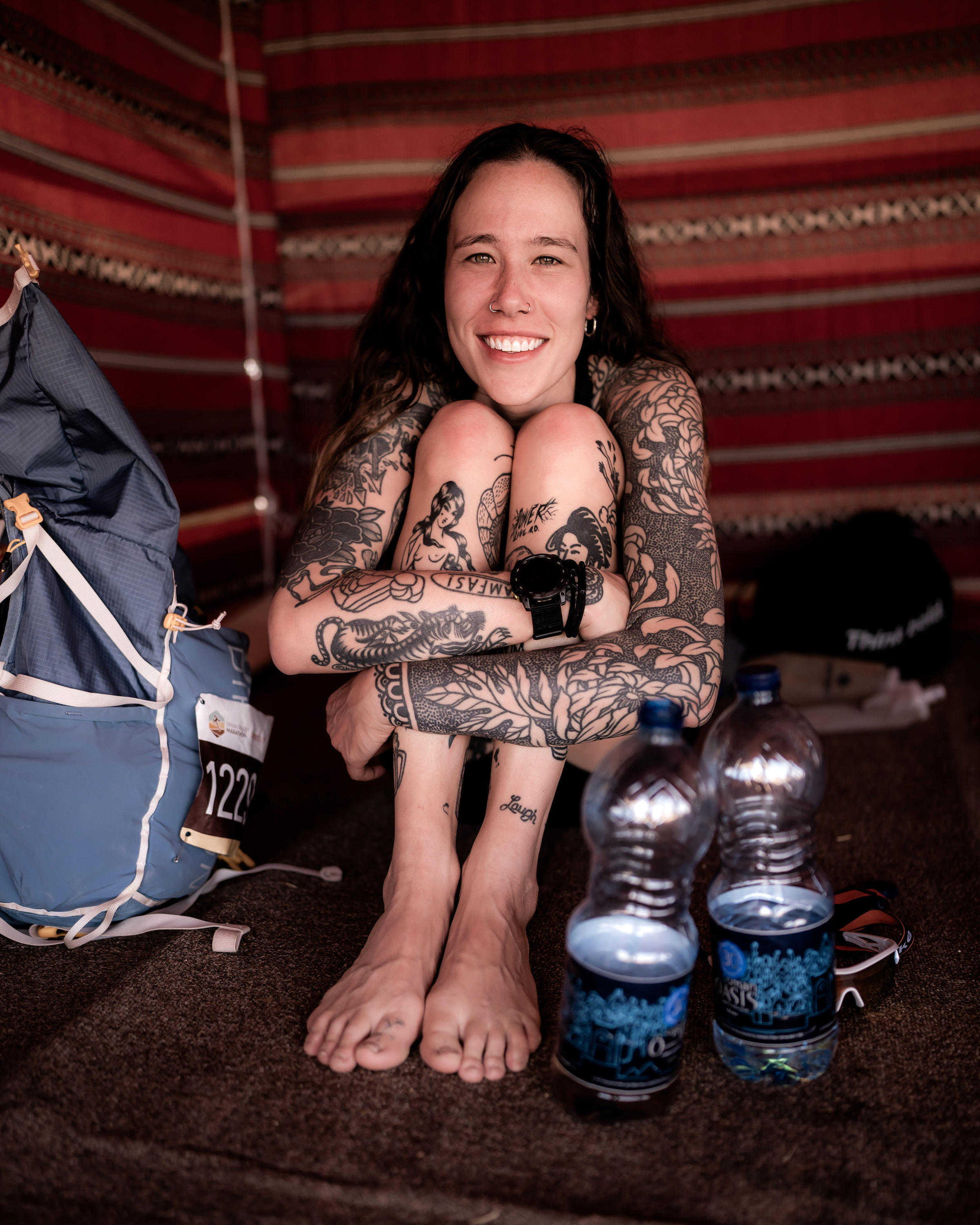
• Oman Desert Marathon – done.
• FKT across 650km of the Camino de Santiago in Portugal – done.
Photo by Ian Corless
Now she lines up at OCC during UTMB week and follows up with her own fundraising project in the UK.
2026? she’s coming to Costa Rica to face heat, jungle, mountains, and coastline of The Coastal Challenge.
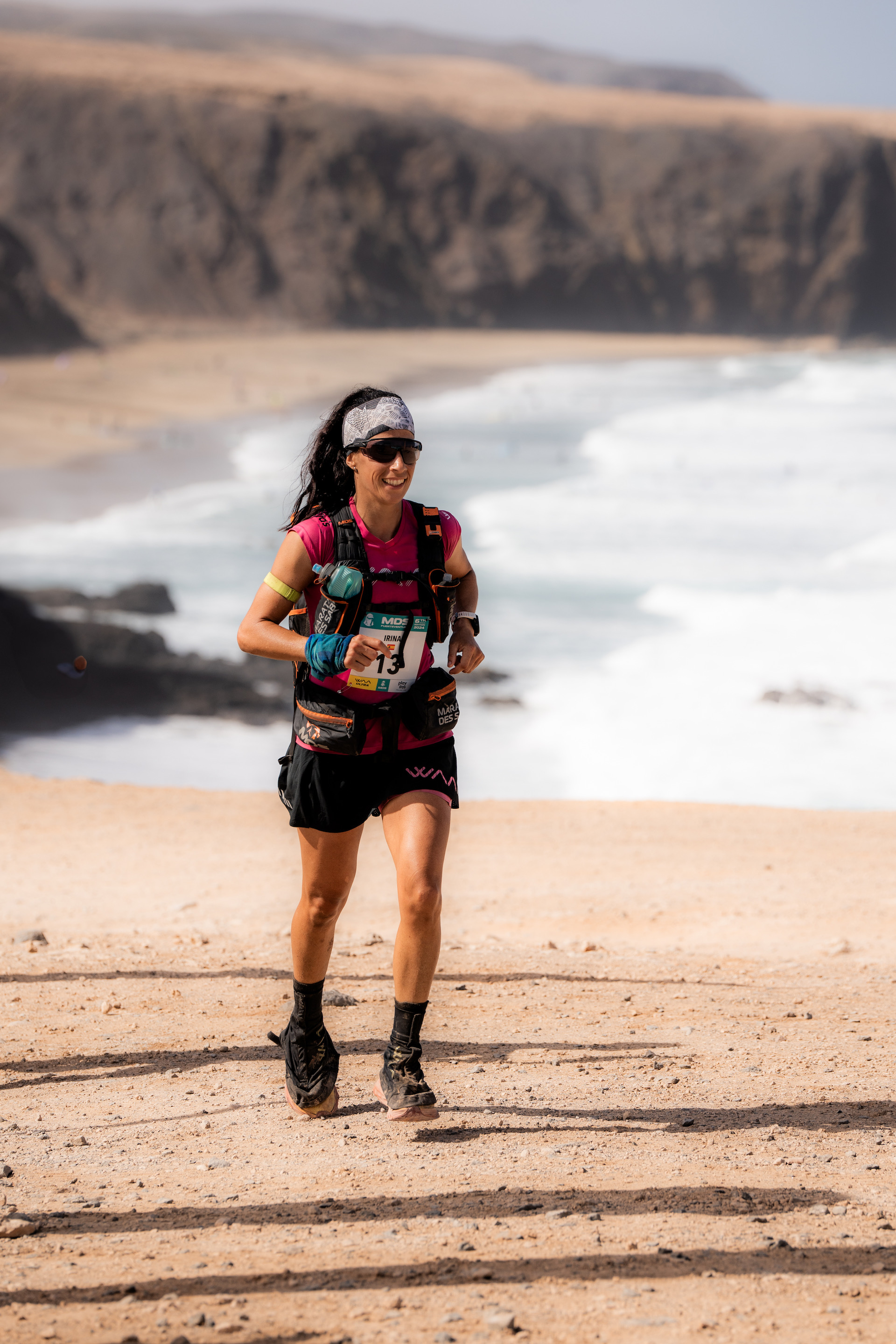
MDS 120 Fuerteventura returns in September 2025, not ‘just’ another race on the calendar, but an important marker in the history of the MDS 120 format. A collision of raw endurance and wild beauty, where athletes trade comfort for grit, and discover just how far their bodies and minds can be pushed. Set against the sunburnt backdrop of the Canary Islands, the race is part expedition, part survival trial, and part celebration of human resilience. A race for all with 3 distance options available, 70, 100 and 120km’s.
What Is the MDS Fuerteventura?
MDS 120 Fuerteventura is the younger sibling of MDS The Legendary, the original multi-stage ultramarathon across the Sahara Desert in Morocco. Like its parent race, the Fuerteventura edition demands that competitors carry their own supplies while covering gaily distances under variable conditions.
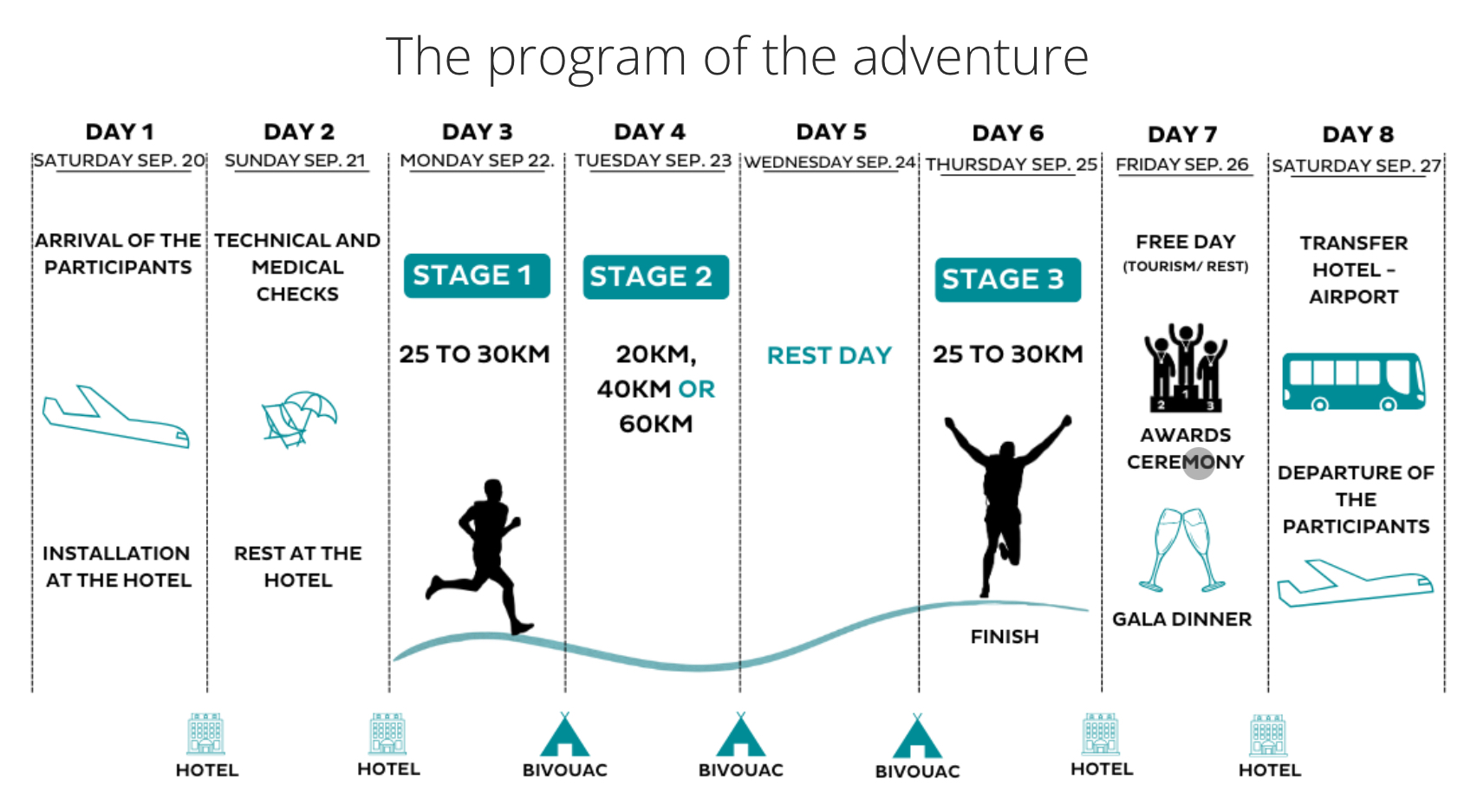
The format is simple but brutal: three stages spread across four days with desert, volcanic ridges, and coastline to endure. Each participant must carry their own food, sleeping kit, and survival essentials, relying only on the organization for water, medical support and a tent. Each stage offers a different flavor of challenge, from long, flat stretches where heat and monotony test mental strength, to rugged climbs that punish the legs and lungs in equal measure.
This self-sufficiency format transforms the MDS 120 Fuerteventura from a simple race into an expedition where every choice is an important aspect – how much food to pack? which shoes to wear? when to push and when to conserve energy? – each decision carries a consequences that can make or break the experience.
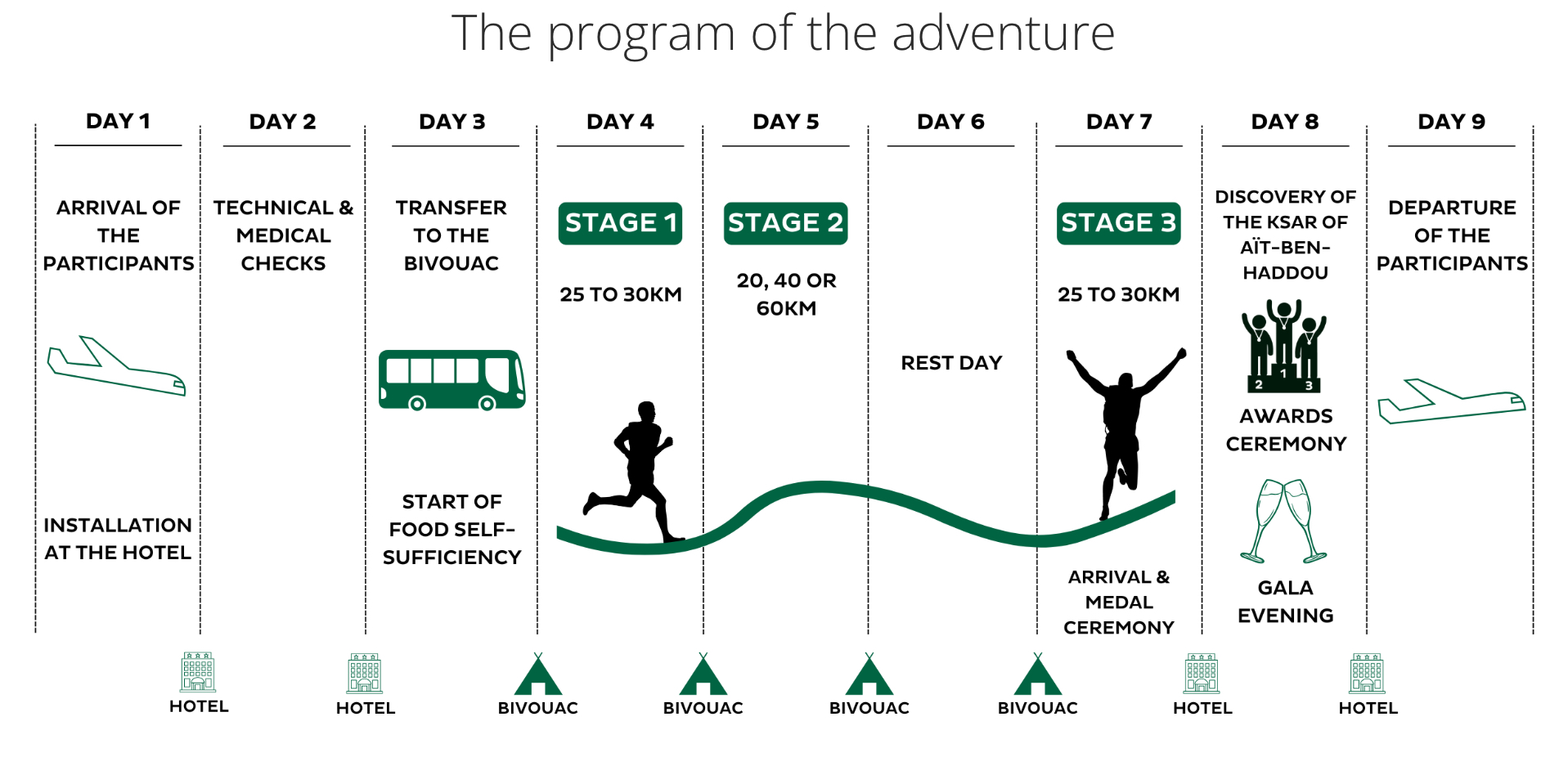
Participants spend 3 nights at the MDS bivouac and enjoy 4 nights at the Playitas Resort hotel, offering numerous facilities (two nights before, two nights after).
Participants choose between 3 different distances: 70, 100 or 120km, divided into 3 stages, over 4-days. This includes 1 full day of rest.
Here is the breakdown:
Stage 1: around 25 to 30km
Stage 2: around 20, 40 or 60km
Stage 3: around 25 to 30km
The Experience: More Than a Race
Fuerteventura is often described as the most “African” of the Canaries, its landscape shaped by ancient volcanic eruptions, relentless winds, and a climate closer to desert than Mediterranean. It’s the perfect environment for a stand-alone adventure, or an ideal preparastion ground for a further adventure in Morocco.
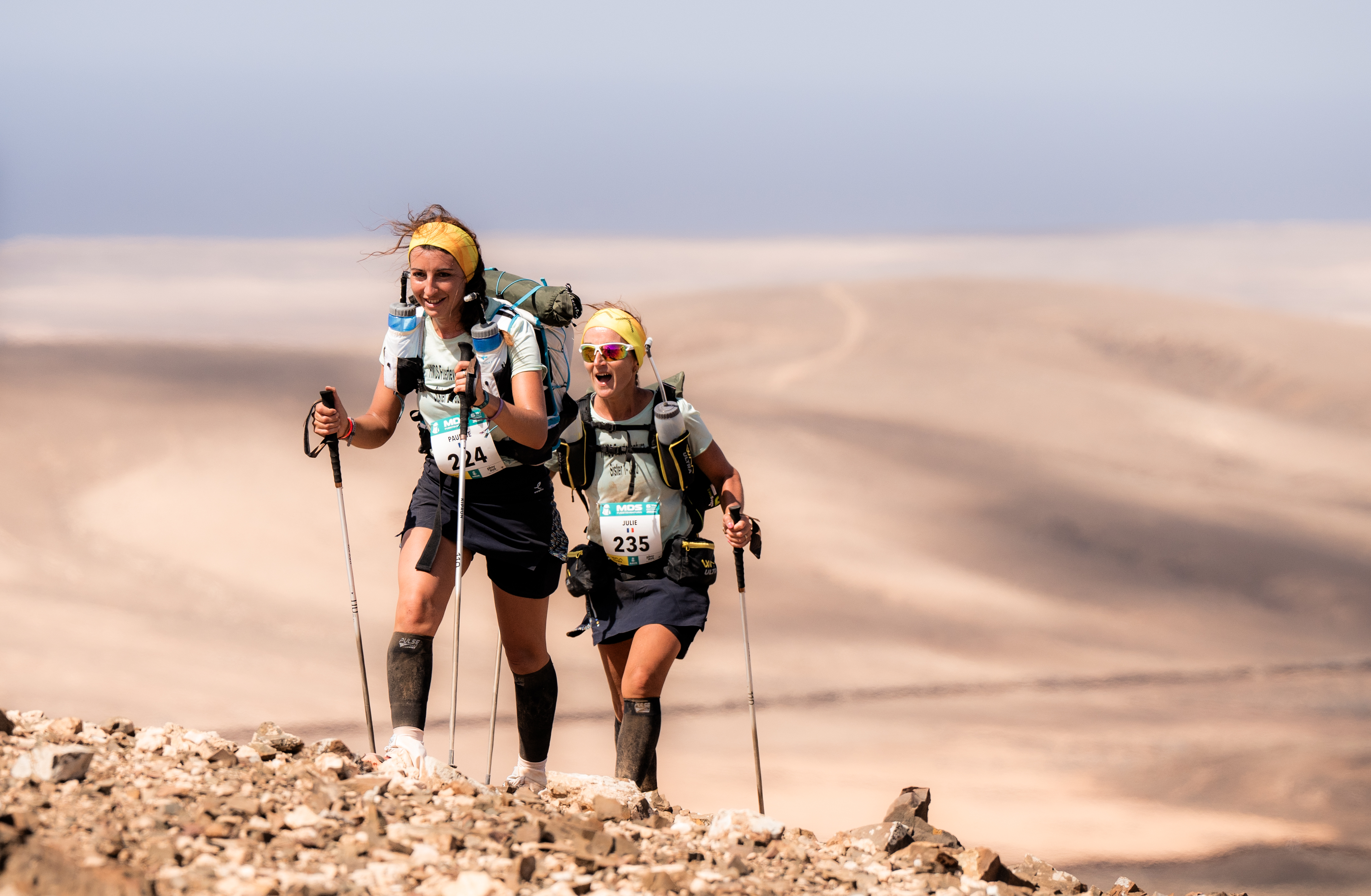
Beautiful yet brutal. Wide expanses of golden sand stretch for kilometers, interrupted by jagged lava fields and rocky ridgelines. The sun can beat down with unflinching intensity, but be warned, temperatures can swing wildly between scorching afternoons and cooler desert nights.
Coastal stages hug turquoise waters where waves crash against black cliffs. Inland routes weave through barren plains dotted with cactus and aloe, offering glimpses of a stark, unspoiled wilderness.
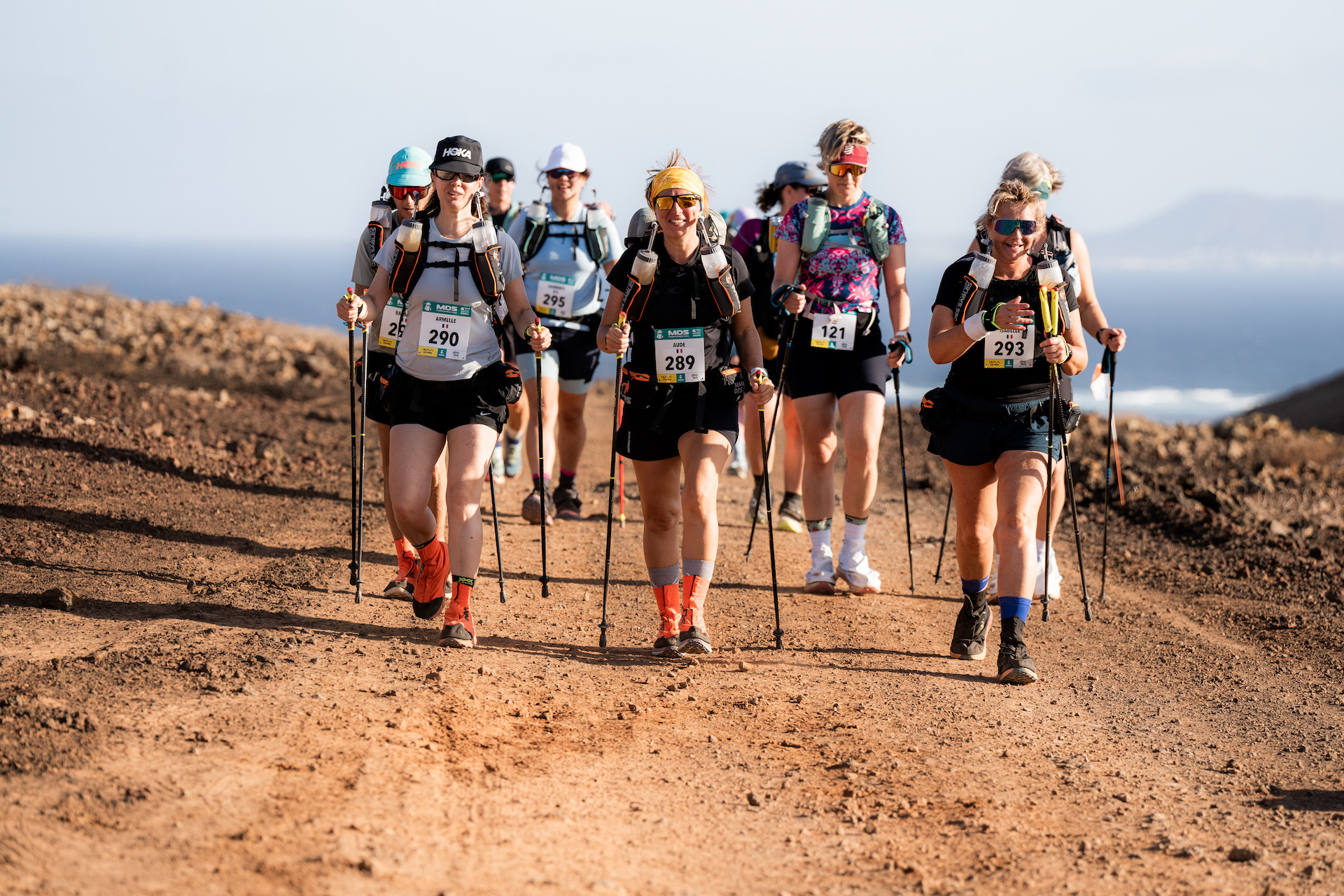
Ask anyone who has completed the MDS Fuerteventura, and they’ll tell you it’s not just about running. It’s about living in a stripped-down, elemental state for nearly a week. Each day begins with the ritual of packing up camp, stuffing sleeping bags and rations back into packs, ready for a day on the trails. By mid-morning, the desert heat has arrived, runners are strung out across the horizon like a line of ants marching into infinity. The rhythm of the race is simple: walk, run, eat, drink, rest. Repeat.
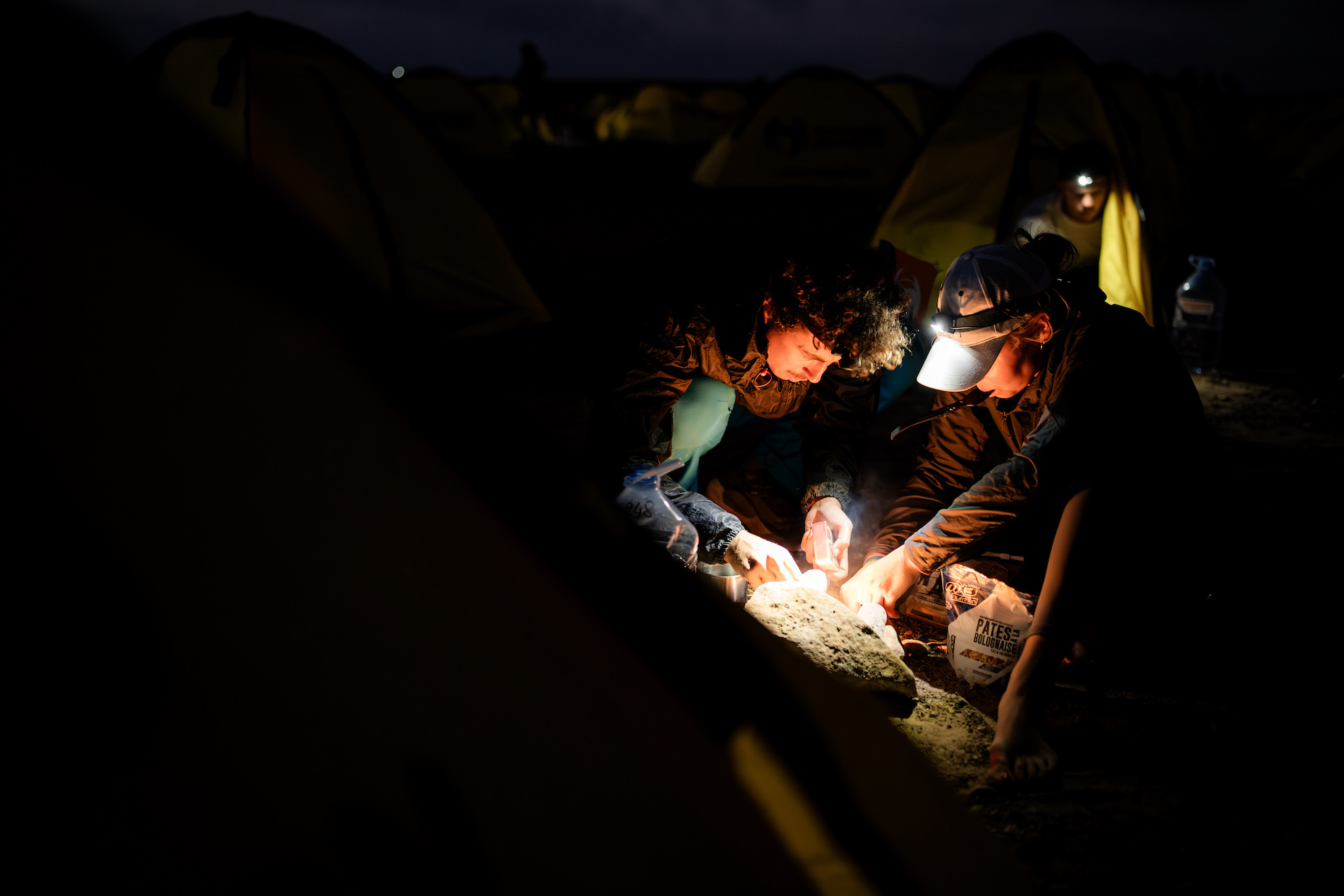
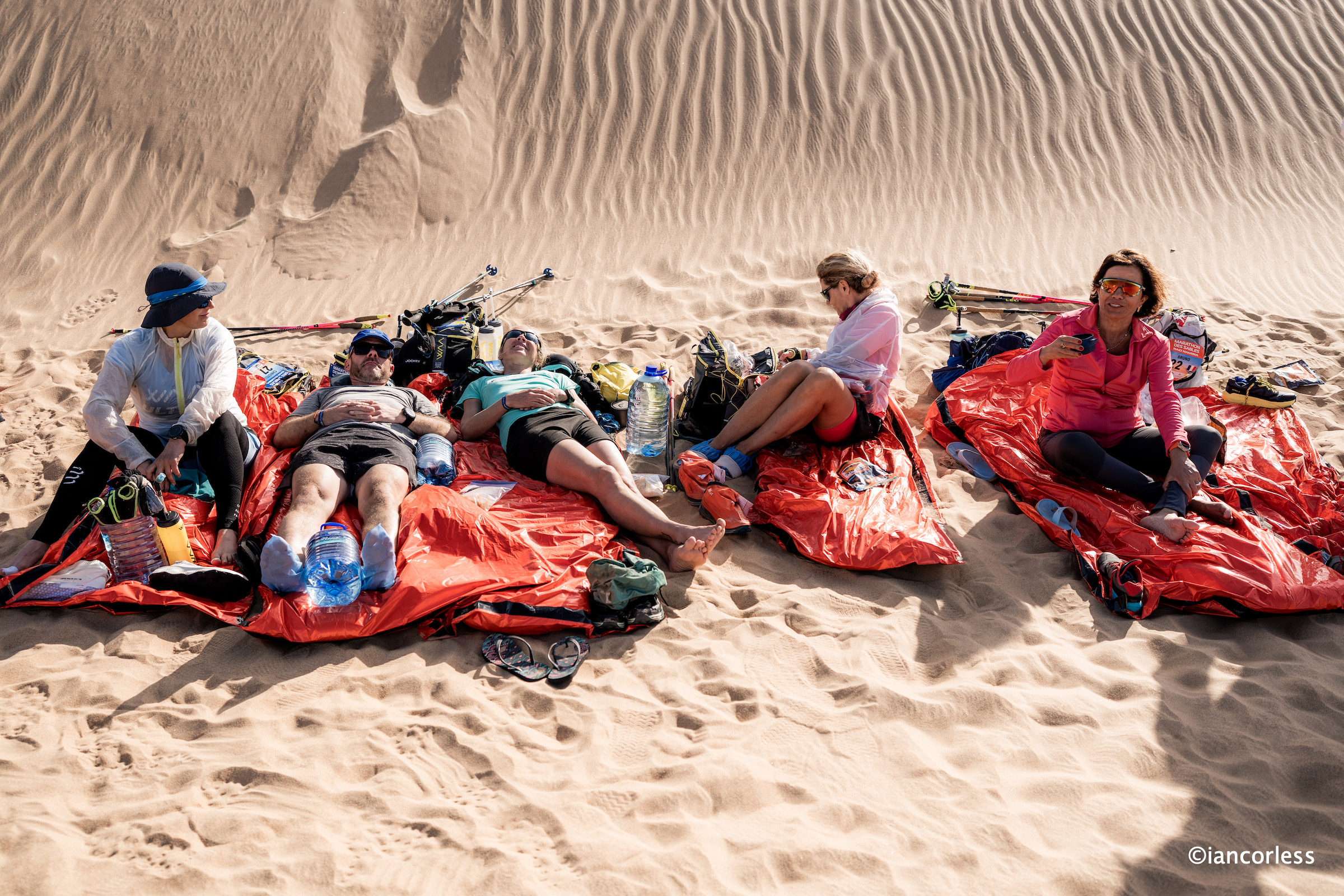
At night, exhaustion gives way to camaraderie. Competitors gather under the stars, swapping stories, sharing advice, and laughing about the day’s suffering. Bonds form quickly because everyone is in the same fight, battling the same heat, hunger, and fatigue. By the end of the week, the MDS 120 Fuerteventura community feels like family, one forged in adversity.
The finish line is more than a marker of distance. It’s a rite of passage. For many, crossing it means proving to themselves that they can endure more than they ever imagined. That’s why the MDS format is addictive: once you’ve lived through it, you carry its lessons into every part of life.
The Spirit of the Race
Beyond the logistics, numbers, and training plans, what makes the MDS 120 Fuerteventura extraordinary is its spirit. It’s about stripping life down to its essentials: water, food, movement, survival. In a world cluttered with convenience and noise, the race forces participants into clarity. You discover not only the limits of your body but also the surprising depths of your will.
Looking Ahead
MDS is not about beating others. It’s about discovering what you’re really made of. And for those lucky enough to be there in Fuerteventura, September 2025 will be a week they’ll never forget.
Marathon des Sables – information and race entry HERE
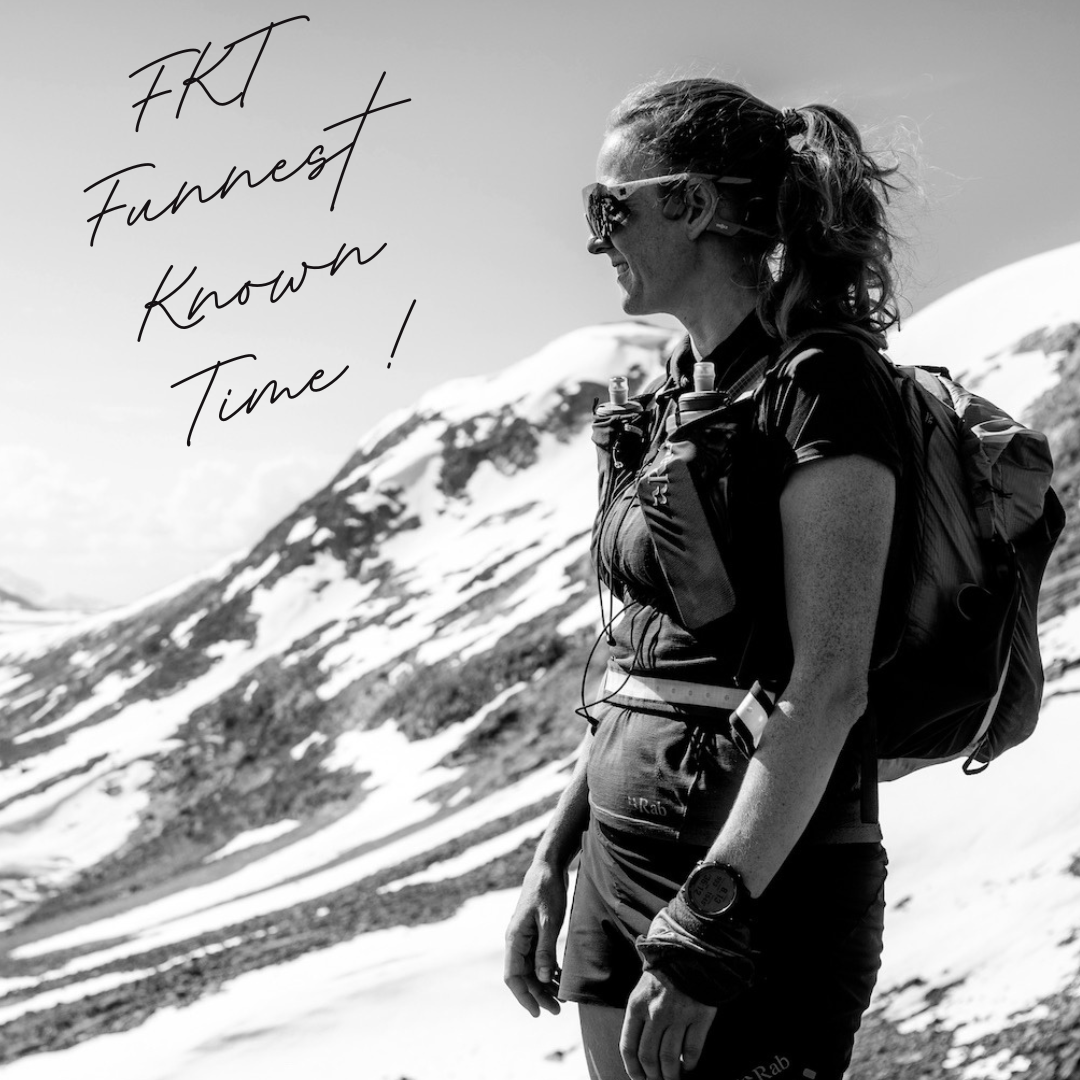
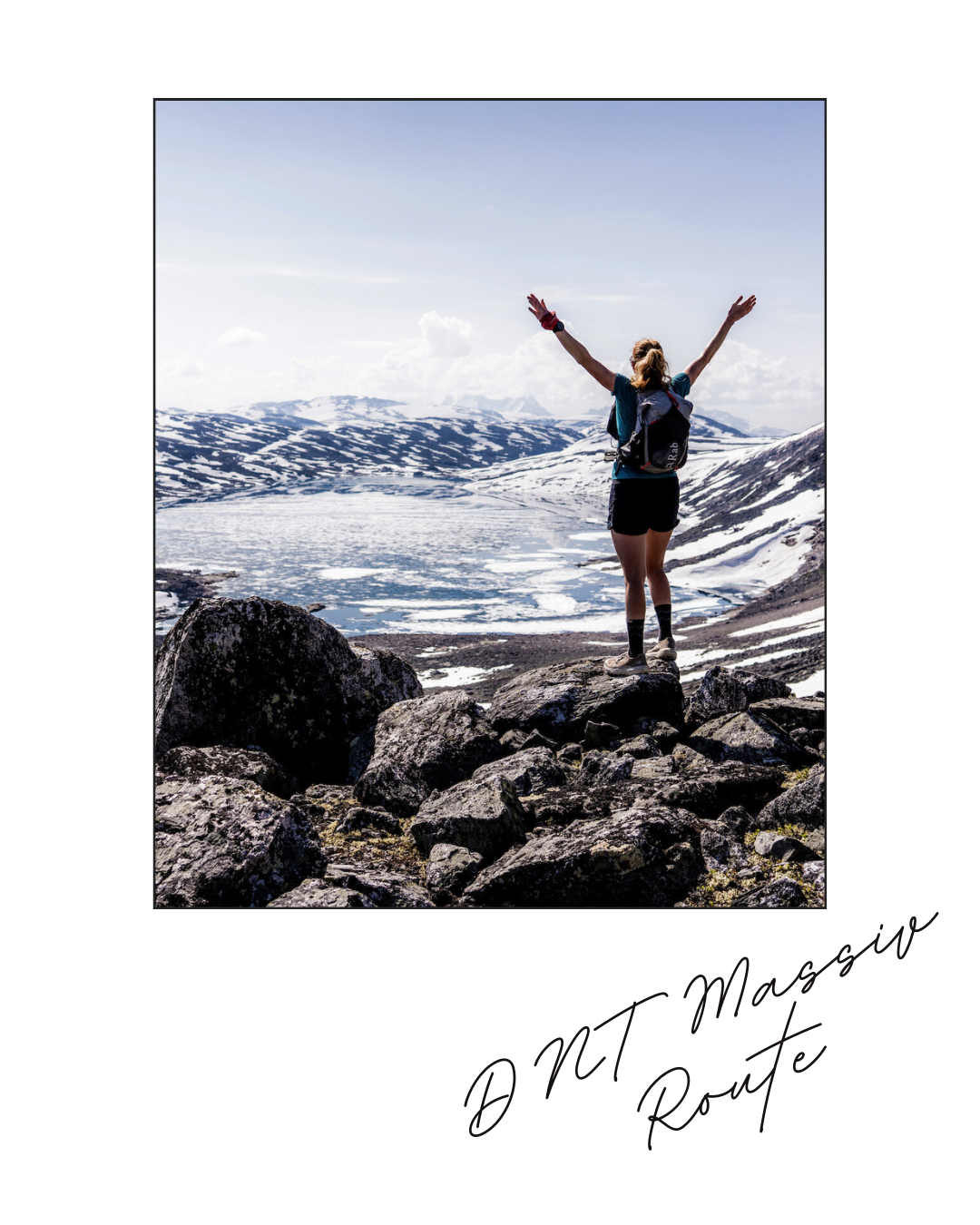
You may assume it’s all about speed and pressure. Not this time. Norwegian runner, Abelone Lyng, put her own spin on the legend that is the DNT MASSIV TRAIL
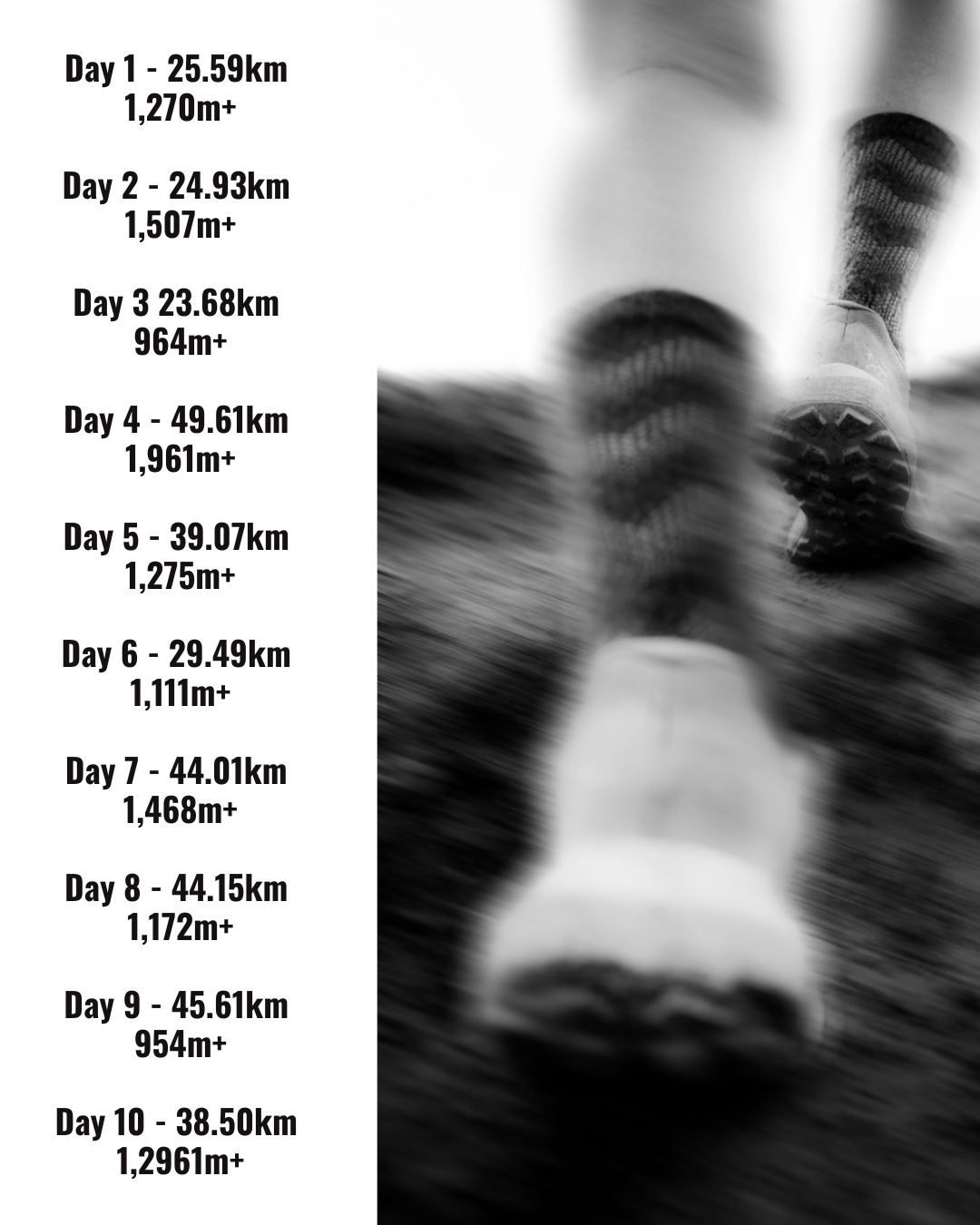
A 364 km journey, and just under 13,000 m vertical gain across four national parks in Norway
Breheimen, Jotunheimen, Skarvheimen, and Hardangervidda.
In just 10-days, Abelone moved fast and light, unbroken, solo, yet utterly connected.
She didn’t chase a formal FKT.
She chased what she coined a “Funnest Known Time.”
Second Edition Confirmed for April 25 to May 2, 2026
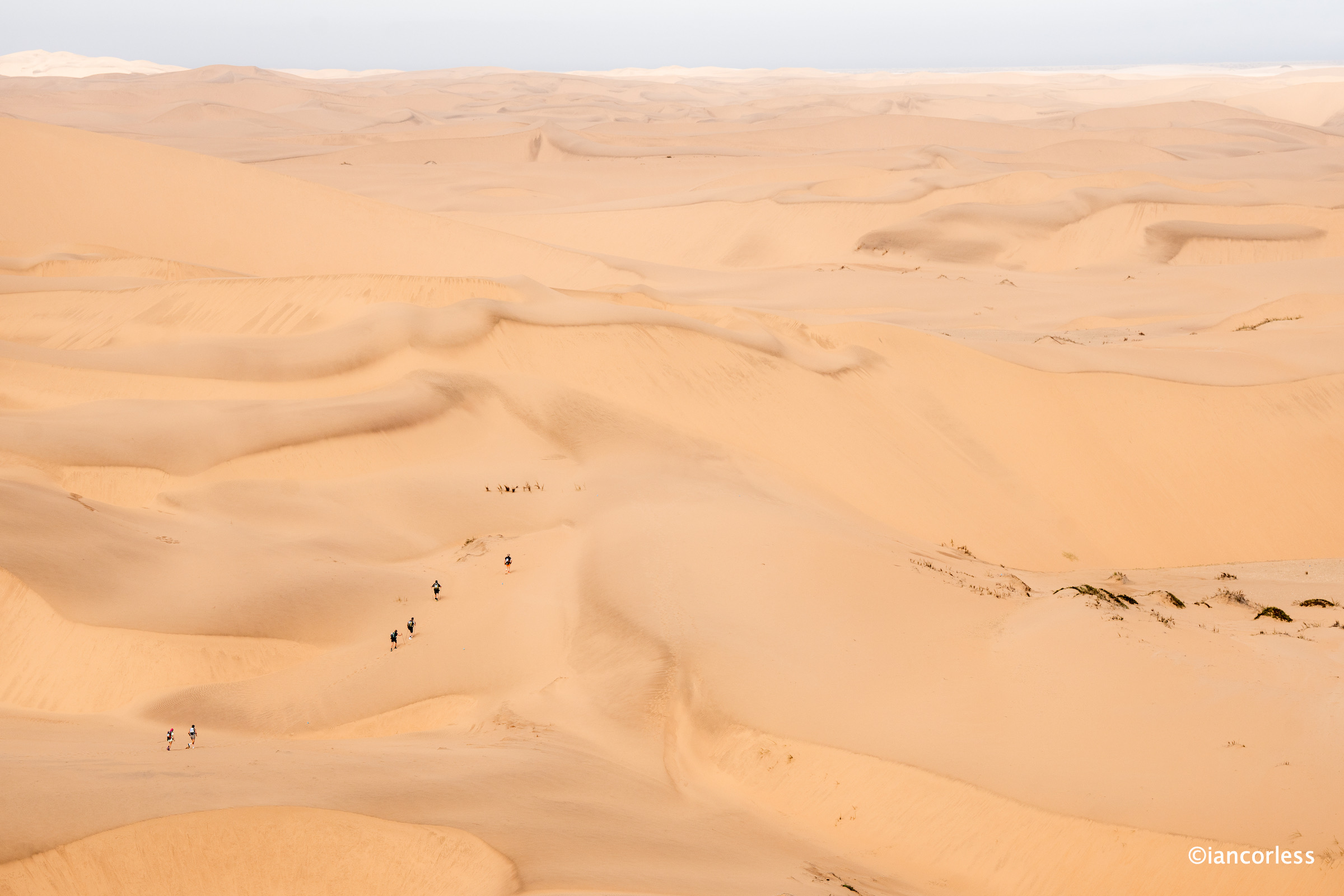
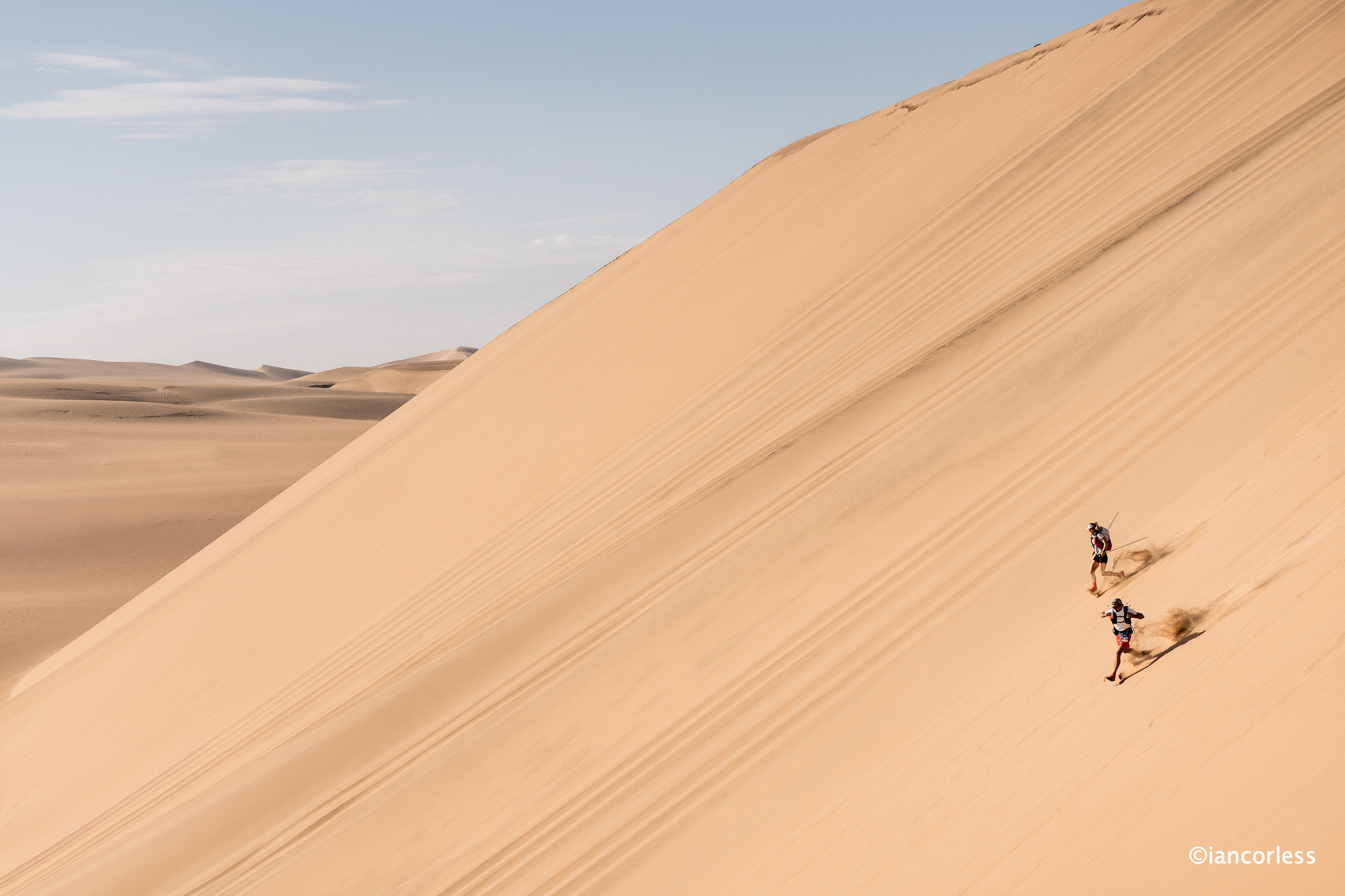
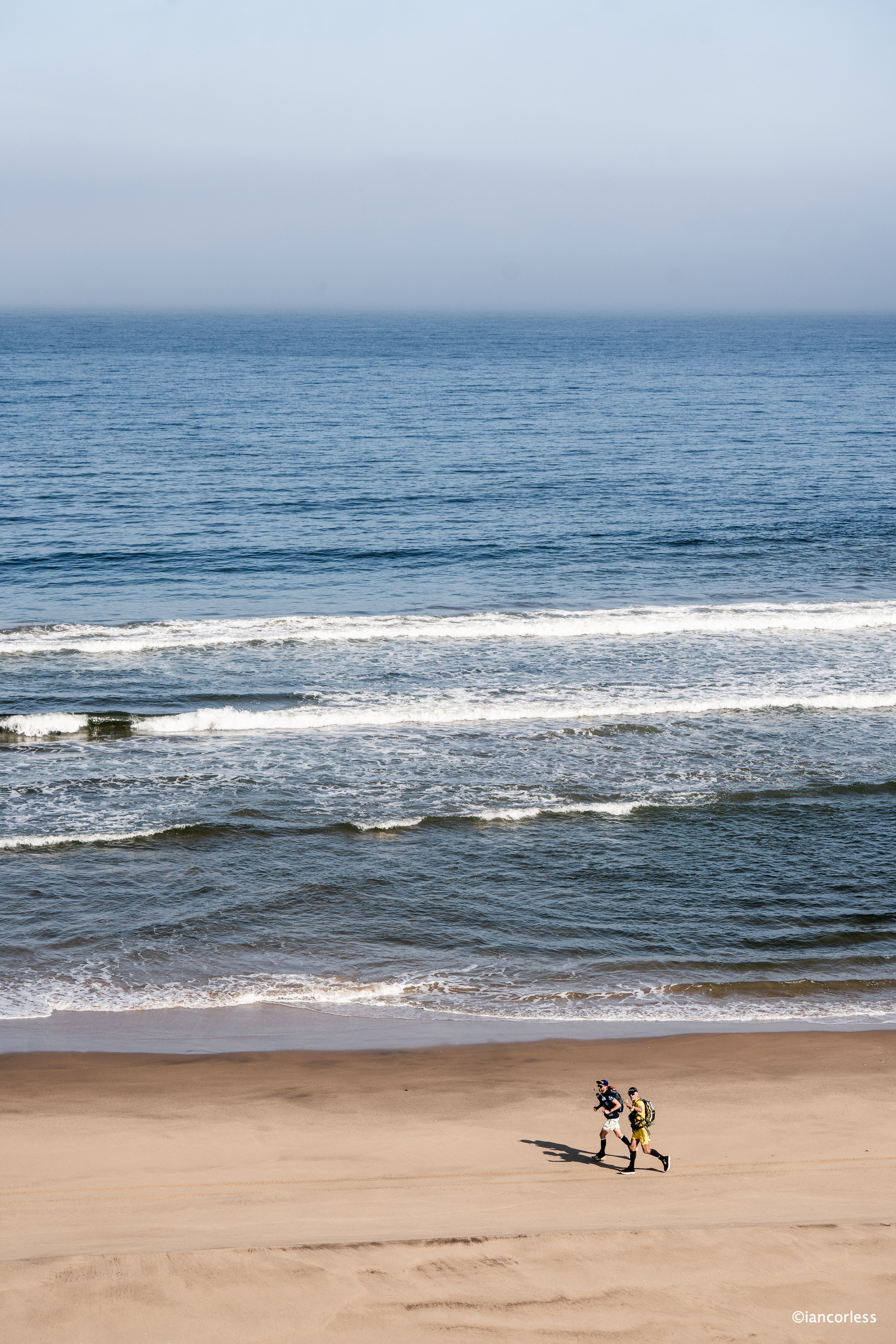
The adventure is back. From April 25 to May 2, 2026, the second edition of MDS Raid Namibia will return to one of the most breathtaking landscapes on Earth, and this time, it’s bigger, bolder, and ready to test your limits.
A Race Like No Other
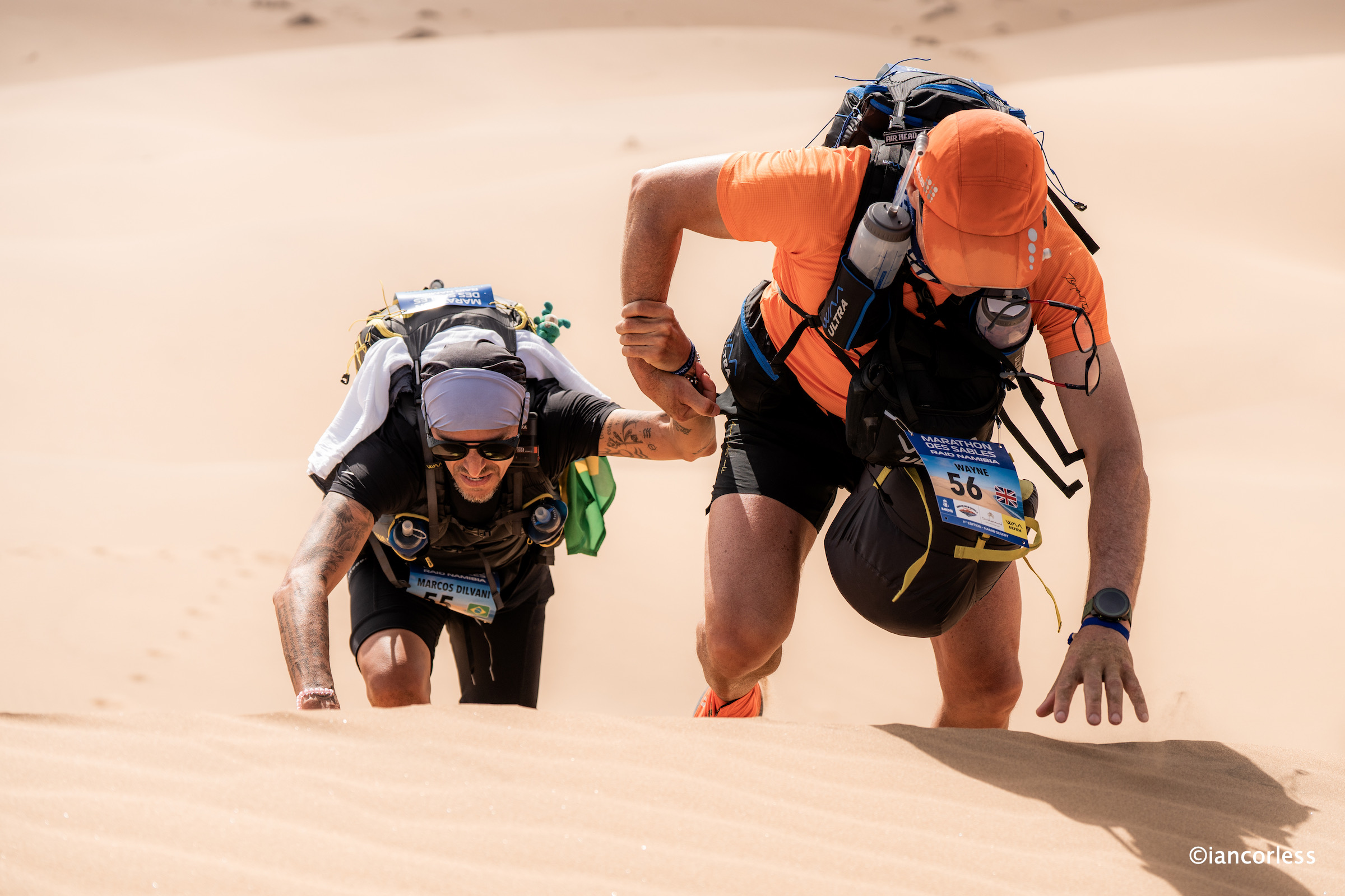
MDS Raid Namibia isn’t your typical ultra. It’s a Raid format: multi-day racing where each stage takes you deeper into wild, untouched terrain. You and your partner navigate the course together, carrying your essentials, relying on one another’s grit and skill. The rhythm is different from a single-stage event, it’s about strategy, recovery, and building momentum over days in the desert.
Namibia: More Than a Backdrop
The desert here is alive with colour and contrast, towering red dunes, sun-bleached plains, and skies so vast they feel infinite. But the real magic? The people. From the warmth of local communities to the camaraderie among competitors, every smile, handshake, and shared moment turns the race into something unforgettable.
Two Distances, One Challenge
Whether you choose 90km or 107km, you’ll face a course that demands strength, patience, and partnership. The shorter option is still a serious test; the longer route adds extra sting to already challenging days.
Teams of Two
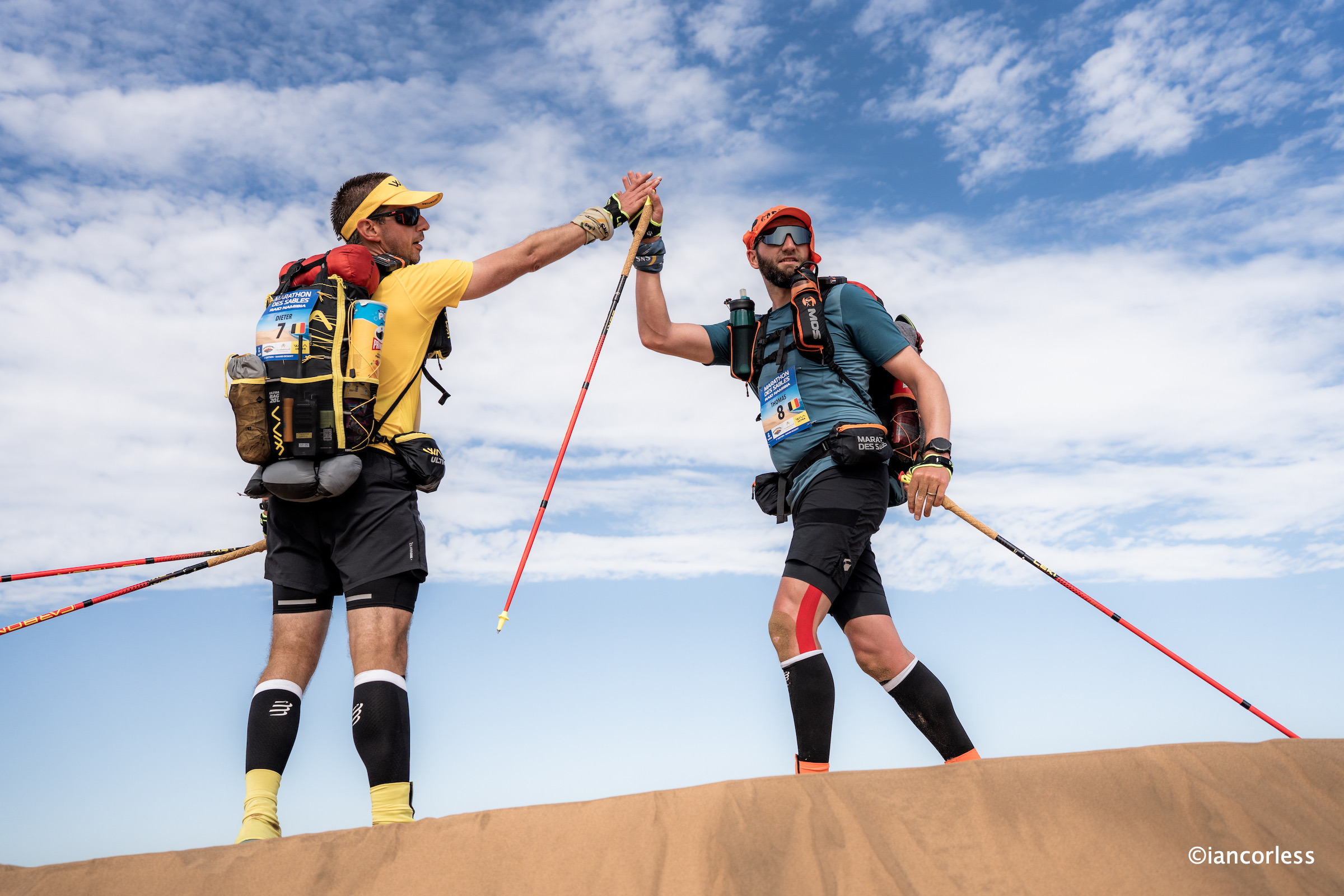
This is not a solo fight. Every team is two runners — sharing the highs, lows, decisions, and celebrations. It’s about knowing when to push, when to pace, and how to keep each other moving forward. You’ll finish this race with more than just a medal — you’ll leave with a bond forged in heat, dust, and determination.
Under the Star Night
And then there’s Star Night — a moment that transcends competition. Out in the desert, far from city lights, the sky becomes a canvas of constellations. It’s an evening to pause, breathe, and feel the scale of where you are. Stories are shared, laughter carries through the darkness, and the adventure takes on a whole new light.
⸻
MDS Raid Namibia 2026 is more than a race. It’s an odyssey. Whether you come for the challenge, the scenery, or the connection, you’ll leave with a story only this desert can write.
The desert is calling.
Read and in-depth summary of the first edition in 2025 HERE and be inspired to join this magical adventure, ‘Testing Limits on the Edge of the Atlantic.’
The Marathon des Sables (MDS) isn’t just a race, it’s a test of grit, strategy, and survival.
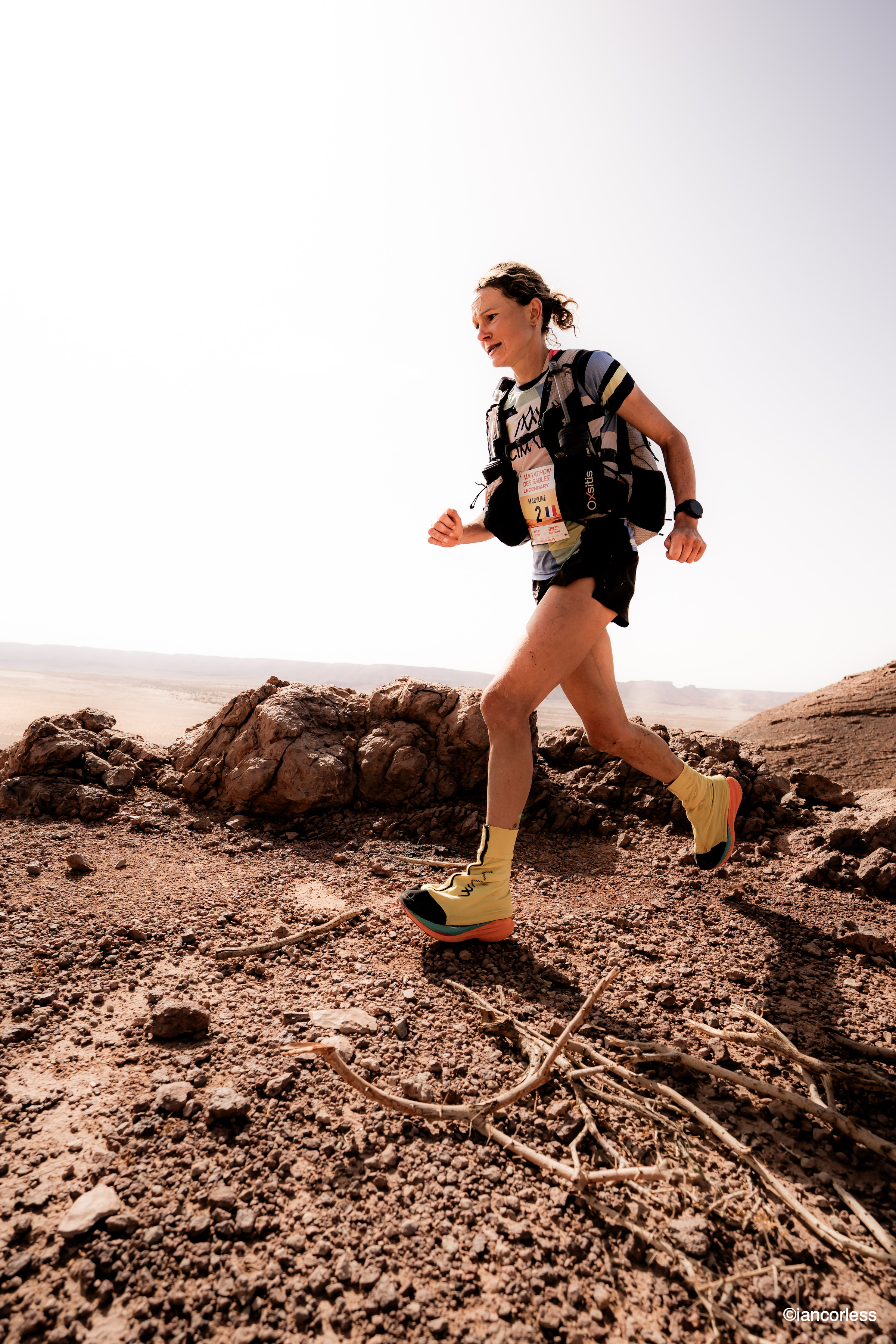
Whether you’re taking on the MDS 120 (70km, 100km, or 120km across three stages in four days) MDS RAID, MDS TREK or the infamous MDS LEGENDARY (250km across six stages in seven days), the physical and mental demands are unlike any other event.
Photo by Ian Corless
Training for the MDS means more than just running a lot. You’re preparing your body to carry gear (Trek excluded) across uneven terrain WITH varied temperatures all while potentially sleep-deprived, sunburned, and blistered. It requires smart progression, precise planning, and brutal honesty about your strengths and weaknesses.
Here’s a guide how to build a training system that prepares you to compete if you’re aiming for the top, or complete if you’re focused on finishing strong and unbroken.
⸻
Understanding the Events
MDS LEGENDARY:
• Distance: 250 km
• Duration: 6 stages over 7 days
• Focus: Endurance monster; includes one long stage (often 80-90 km,) a marathon stage and on the final day a half-marathon.
• Logistics: Self-sufficient, sleep on the ground, rationed water, blister clinics, potentially extreme heat and sharing a bivouac (tent) with 7-0ther people.
MDS 120:
• Distance: 70, 100, or 120 km.
• Duration: 3 stages over 4 days
• Focus: Shorter but intense; good as a first step into stage racing
• Logistics: Self-sufficient, similar rules to the full MDS but over a condensed period and participants sleep in individual tents. Remember, MDS 120 events have varied terrain, MDS 120 Cappadocia as an example is much more a ‘trail’ race than a desert race.
Photo by Ian Corless
MDS RAID:
• Distance: 100, or 120 km.
• Duration: 3 stages over 4 days as MDS 120 but with a ‘star night.’
• Focus: Shorter but intense; good as a first step into stage racing
• Logistics: Self-sufficient, similar rules to the MDS 120 but in teams of two and ideally the participant has more experience.
MDS TREK:
• Distance: 70 to 120 km.
• Duration: 4 stages over 6 days.
• Focus: An introduction to MDS with no self-sufficiency, extra comfort and daily distances to be undertaken ‘trekking.’
MDS ULTRA and MDS CRAZY LOOPS:
• Two unique events that do not follow the ’typical’ MDS format. The ULTRA is a single-stage race of 100km’s or 100-miles. CRAZY LOOPS is a trail event, in the mountains, participants complete as many loops as possible in a 24-hour time period.
⸻
Competing vs. Completing
Photo by Ian Corless
These are two entirely different approaches:
Competing means aiming for the front of the pack. You’re trying to place well, maybe top-100 or higher. This demands high mileage, precise gear choices, low pack weight, and serious pacing strategy. Your training must be performance-focused, often replicating race conditions with deliberate intensity.
Completing means finishing within cutoff times, avoiding injury, and keeping yourself intact. You still need to train hard, but the mindset is survival over speed. You train to handle discomfort and manage variables like foot care, heat, and nutrition. A slower pace still means a high physical load due to long time-on-feet days.
Photo by Ian Corless
⸻
The Influence of Previous Experience
If you’re coming from a road marathon or ultra background, your endurance engine is a huge asset. But you’ll still need to adapt:
• Road runner? Learn to move efficiently on sand, rocks, and uneven terrain. Focus on gait adaptation and ankle stability.
• Trail ultra veteran? You’ve got terrain dialled in so develop strategies based on your goals to maximise your experience. This may be to ‘perform’ aiming for a top-100 position. Asses strengths and weaknesses, add gym work, core, stability and so on.
• New to ultras? Start with time-on-feet progression and hike-run strategies. You’ll need to build both endurance and mental resilience slowly and methodically.
Prior experience informs your pace, nutrition, and how aggressively you can train. Beginners must respect the build-up. Veterans must respect the different environment. Walk, and walk a great deal.
⸻
The Foundation: Gradual Progression and Rest
Ultra training is about progressive and controlled block of stress and recovery. You don’t jump into 30 km runs with a pack. You build tolerance over months.
Golden Rule: Progress weekly volume by no more than 10%. Rest every 3-4 weeks. Use time-on-feet as much as distance early on.
Your weekly progression may look like:
• Week 1: 45 km (with one 15 km light pack run)
• Week 2: 50 km
• Week 3: 55 km
• Week 4: 30 km (recovery)
• Week 5: 60 km (add second pack run)
And so on, depending on fitness level, adaptation, targets and goals.
⸻
Training Cycles: Macrocycles, Mesocycles, and Microcycles
Long-term success in MDS starts with understanding training periodisation and structuring your year into manageable and purposeful blocks.
Depending on experience and the time to your event, the Macrocycle, Mesocycle and Microcycle blocks will vary.
Example 1:
As an example, if it is currently August and you have entered MDS LEGENDARY, you can plan a Macrocycle as you have 8-months to April and the race date. You can then plan the Mesocycle and blocks and then fine-tune the Microcycle as you progress.
Example 2:
By contrast, if it is August and you have entered MDS 120 Jordan (in November) it’s fair to assume you have already been training and therefore you’d start by planning four Mesocycle blocks – August, September, October and November.
Macrocycle (6–12 months)
This is the full plan from now until race day. It includes base building, load development, peak volume, and taper.
• Base (12–16 weeks): Build aerobic engine, mobility, strength. Focus on consistent running and body conditioning.
• Mesocycle 2: Terrain work, hills, stability, light pack
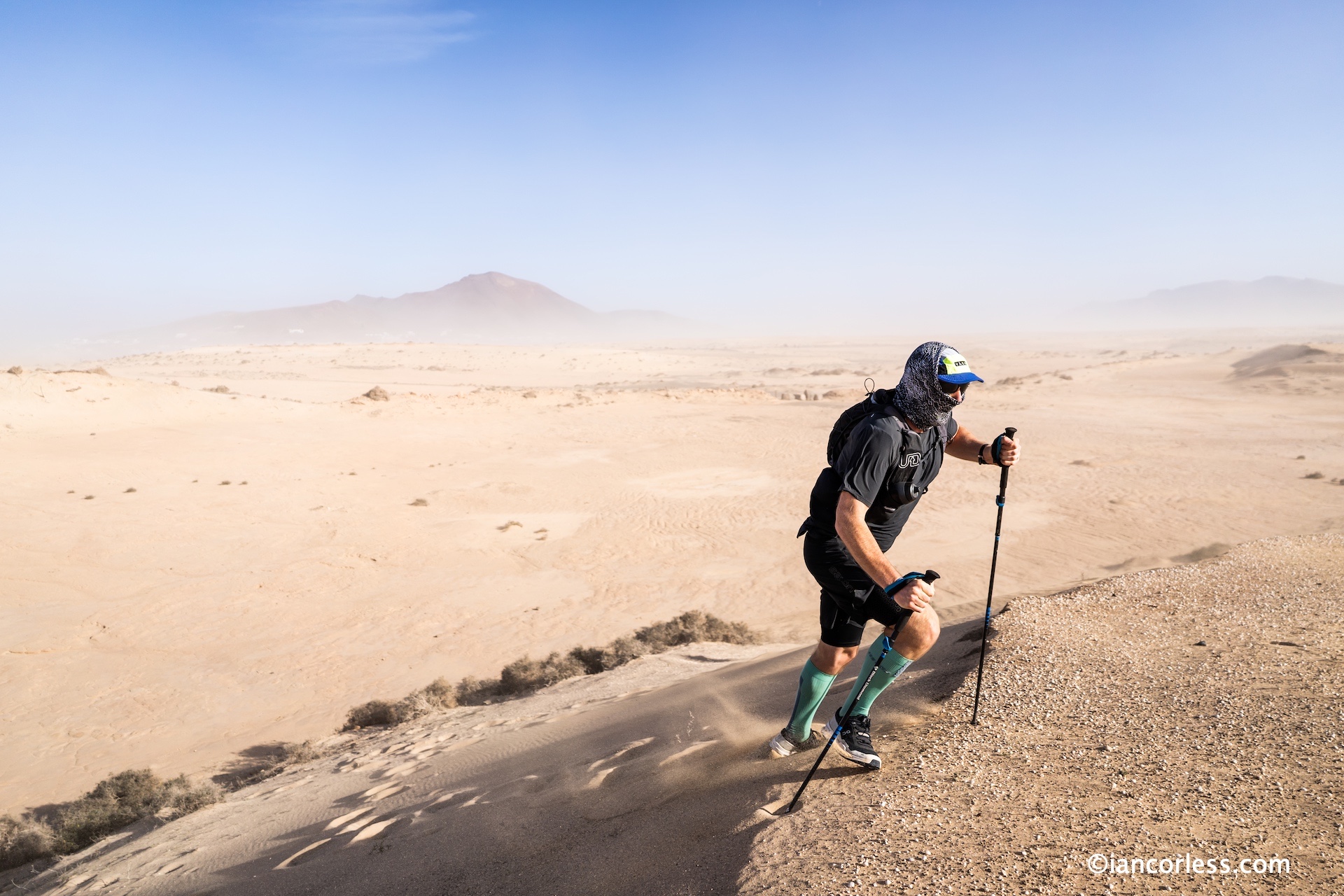
• Mesocycle 3: Long runs, sand training, heat exposure
• Mesocycle 4: Race simulations, high pack weight, nutrition testing
Microcycles (1 week)
These are your weekly training schedules. Balance hard/easy days, recovery, and cross-training.
Sample microcycle for intermediate runner in build phase:
• Mon: Rest or yoga
• Tue: 12 km trail run + core
• Wed: Hill repeats + strength
• Thu: 10 km easy run (pack)
• Fri: Rest or swim
• Sat: 25 km long run (pack)
• Sun: 15 km hike-run combo (pack, terrain)
⸻
The Desert Load: Equipment and Pack Weight
Photo by Ian Corless
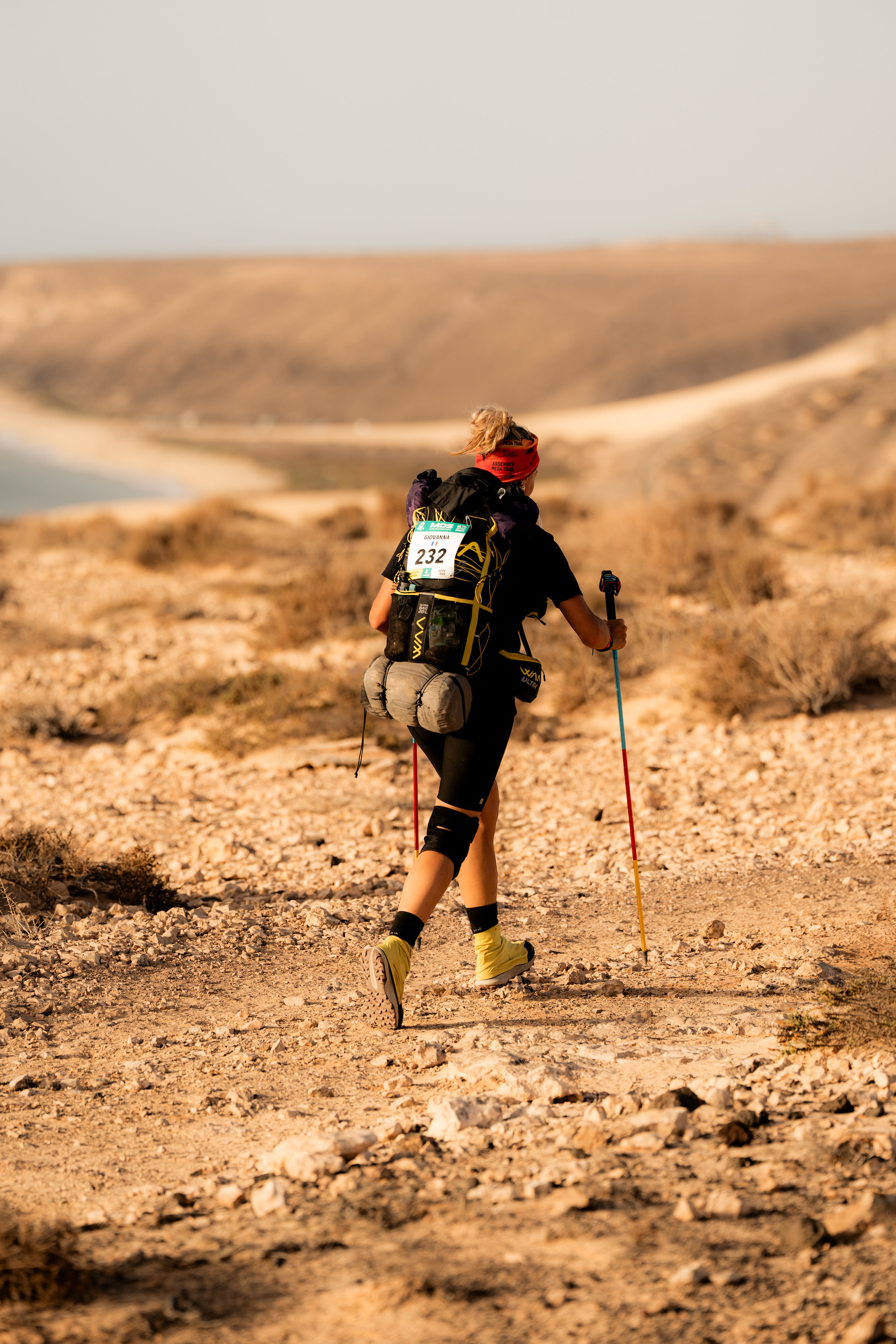
In MDS, you carry everything, TREK excluded. Your pack should include food, sleeping bag, medical kit, cooking gear, clothing, and mandatory gear. That’s 6.5kg minimal weight for MDS LEGENDARY plus water. MDS 120 / MDS RAID will have a lighter packs due to less days.
Light is fast and safe. Every gram adds significant energy demand over the race distance, the less weight you have will mean less fatigue, less stress and a faster pace..
Key strategies:
• Weigh everything. Cut ruthlessly.
• Test gear in training. Run with your pack at full race weight, but, do not do this all the time, you risk injury.
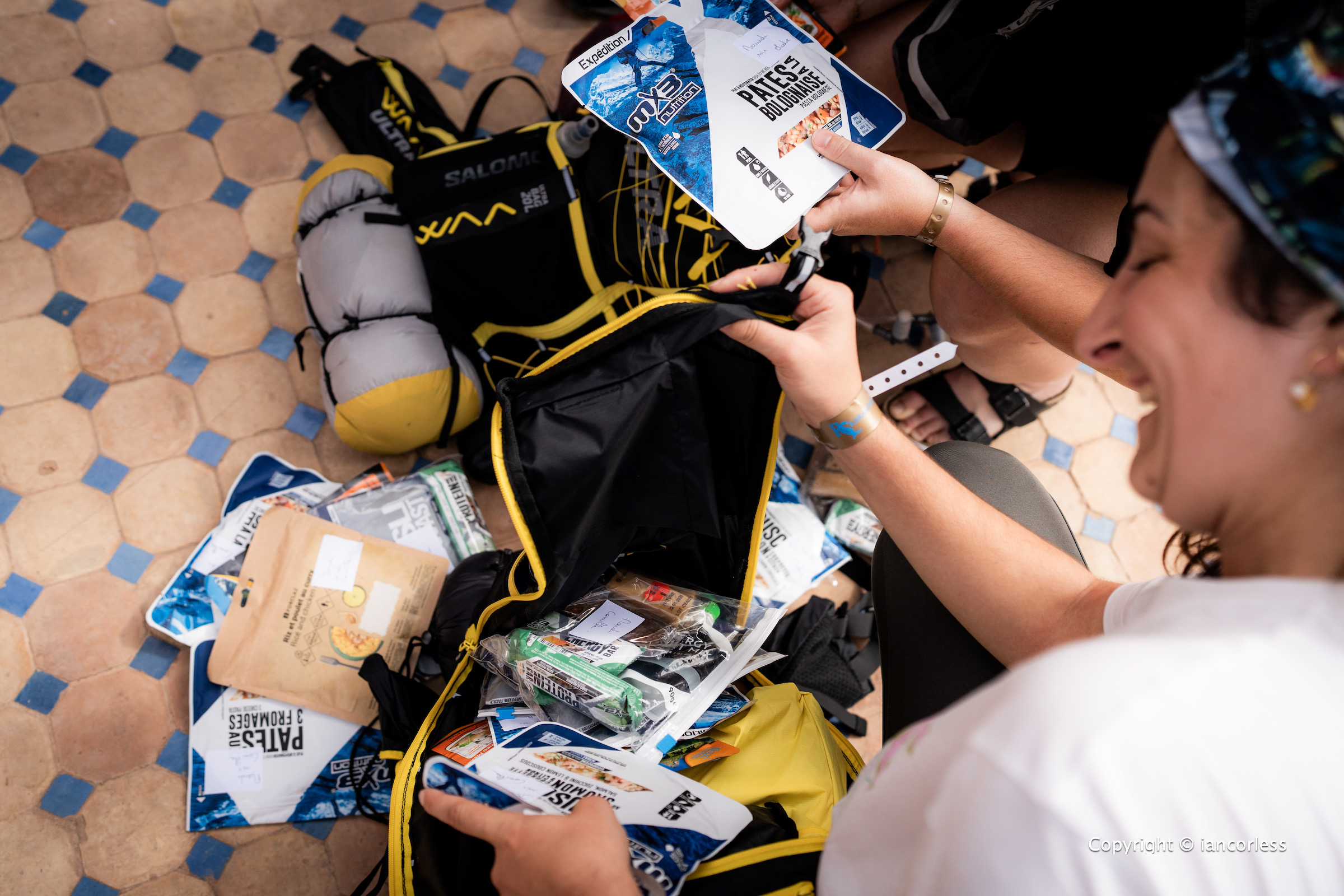
• Practice eating on the go. Your daily calorie requirement will be 2500–4000 kcal depending on pace and build.
You’ll also need:
• Desert gaiters
• Trail shoes with cushioning
• Anti-chafing strategies (tape, powders, creams)
• Ultralight sleeping setup
• Efficient stove or cold-soak food plan
⸻
Specific Training Focuses
The more you plan, the more specific you are, the better prepared you will be.
1. Back-to-back Long Runs
Simulate cumulative fatigue. Do a 30 km Saturday, 20 km Sunday combo. Later in the cycle, increase both and wear your pack.
2. Heat Acclimation
• Train in heat or use sauna/hot baths post-run.
• Wear layers during training to simulate heat stress.
• Aim for 10–14 days of adaptation close to race.
3. Running with Weight
Start with 2–3 kg, progress to full 7–9 kg by peak phase. Train your posture, core strength, and blister care during these sessions.
4. Footcare Mastery
Practice taping, changing socks, lancing blisters, and prevention strategies. Your feet will suffer unless you prepare.
5. Nutrition Practice
Test every food item you plan to bring. Can you stomach 3000 calories of freeze-dried meals and energy bars daily? What about in 45°C heat?
⸻
Simulate Race Weeks
Training in Lanzarote
The most effective training tool is a mini stage race. For example, you may enter MDS TREK as preparation for an MDS 120 event, or, you may enter an MDS 120 event in preparation for MDS LEGENDARY. Alternatively, you can plan specific race simulation in your training, think about three to four days of 20–30 km runs with a pack. As an example, you could try the following 5-weeks before an event:
• Day 1: 30 km trail run (morning), sleep on mat
• Day 2: 25 km (pack), minimal food, no shower
• Day 3: 20 km (pack), hot day if possible
You’ll discover gear weaknesses, hydration issues, and psychological fatigue, these are critical insights before the real event.
⸻
Mental Training
Photo by Ian Corless
This race is more mental than physical. You must train:
• Positive self-talk
• Pain compartmentalisation
• Visualisation: Imagine suffering at km 60 with 40 to go—how will you manage?
• Sleep deprivation and discomfort: Train your tolerance.
Consider journaling after hard sessions. Track what worked mentally, and build a playbook.
⸻
Rest and Recovery
Photo by Ian Corless
Rest is training. Without it, you break.
• At least one full rest day weekly
• Active recovery (walk, yoga, swim) after long runs
• Taper at least two weeks before MDS: reduce volume, stay mobile, eat well, sleep lots
⸻
Final Thoughts
The MDS is brutal, beautiful, and deeply personal. Whether you’re aiming to finish with a smile or place in the top tier, your success depends on how well you plan, adapt, and respect the journey. Importantly, remember, we are all individual and this guide is designed to provide you with information so that you can go away and plan and prepare accordingly.
• Choose your event based on readiness and goals.
• Build your training around realistic volume and smart progression.
• Don’t skip rest, it’s when you grow.
• Test your gear and nutrition repeatedly.
• Simulate the real thing when you can.
• Remember: your brain is the strongest muscle you’ll use in the desert.






















 IAN CORLESS