UTMB week has concluded once again.
Often described as the world championships of trail and mountain running, it remains the sport’s biggest stage. For elite athletes, it is the pinnacle. A race that demands years of discipline, dedication and unwavering commitment.
Of course, every runner on the start line faces the same mountains and the same distance. But at the front of the field, there is often far more at stake than a finish time. Careers, sponsorships, reputations and legacies can all be influenced by a single day in Chamonix.
The pressure is immense.
At the same time, the sport continues to evolve. Races are getting faster and faster. Training standards are rising. Recovery windows seem smaller. The margin between success and failure is increasingly narrow, and for those who aspire to a top-10 finish at the sport’s most competitive events, operating close to the edge is becoming a necessity rather than a choice.
It is a delicate tightrope to walk.
Every year, some of the sport’s biggest names fail to make the start line. Injury is nothing new. Katie Schide’s absence through long-term injury is one example. Others arrive hoping their final preparations will be enough, only to realise in the closing stages that the risk outweighs the reward. The withdrawals of Kilian Jornet, Jim Walmsley, Tom Evans and Ruth Croft significantly changed what may have been one of the strongest UTMB fields ever assembled.
Then there are the factors no training plan can fully control.
Illness swept through parts of UTMB week. Henriette Albon’s stomach issues before the start were one example, but as the races unfolded it became clear others were also walking a fine line between competing and recovering. Some started with hope and determination, only to discover very early that 2026 was simply not their year. Adriana Moser was one such example.
And then there is a different question altogether. Can athletes still have multiple peak performances in a single season?
Several elite runners arrived in Chamonix after already producing exceptional results elsewhere in 2026. Vincent Bouillard and Courtney Dauwalter had both raced and raced well earlier in the year. Yet UTMB, raced at unprecedented pace and intensity, may have represented one challenge too far. Not because they lacked ability, but because even the best athletes have limits.
The same thought applies to Francesco Puppi and Jennifer Lichter. Both have enjoyed remarkable seasons and both finished in the top five at the 2026 CCC. Outstanding performances by any measure.
But had they arrived completely fresh, fully recovered and without the physical and mental demands of Western States in their legs, would they have finished on the podium? Could they even have won?
The answer is impossible to know. Yet the question itself feels increasingly relevant.
From the outside, the life of a professional trail runner can seem ideal. Your passion becomes your profession. You travel the world. You compete in extraordinary places.
But when passion becomes a job, expectations inevitably follow. Results matter. Contracts matter. Visibility matters. The need to perform creates pressure.
Respected coach Paul Lind once said, “You can only take water from the well so many times.” It’s a simple statement, but perhaps one that resonates more strongly than ever.
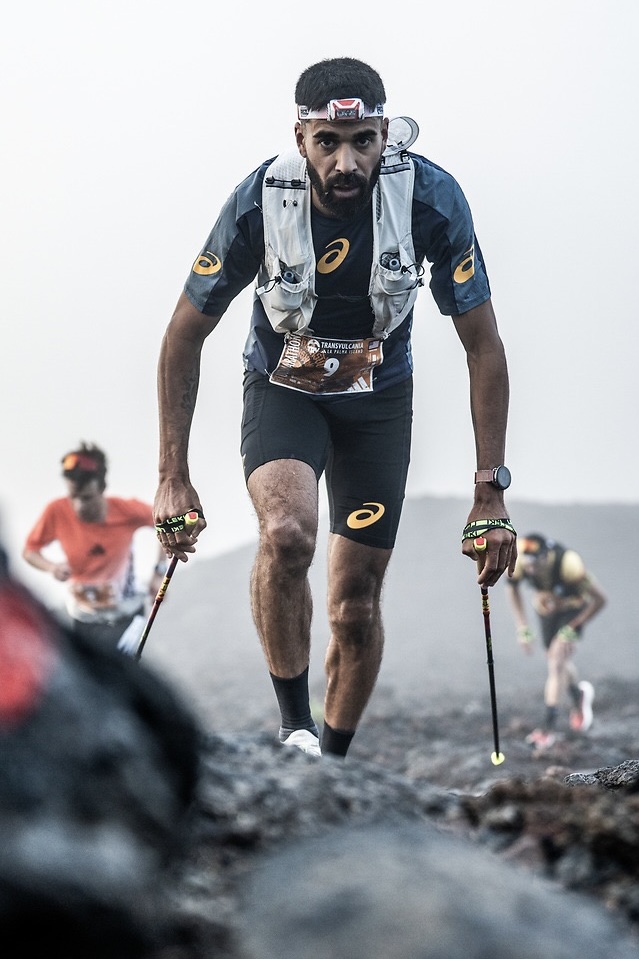
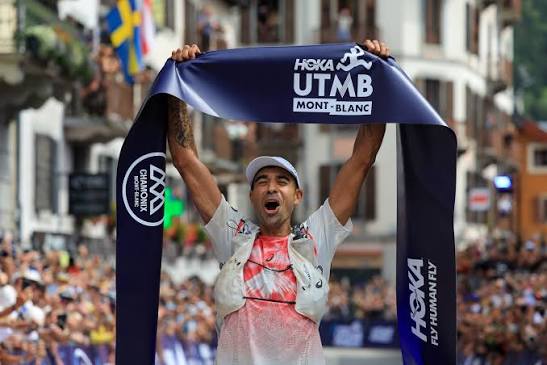
At UTMB 2026, Ben Dhiman ran an astonishing time 18:16, and two other athletes also broke 19 hours. Yes, the course was adjusted, but the significance remains. Times once considered unimaginable are now becoming reality. Dhiman prepared for UTMB meticulously and in the process, ran Transvulcania and 90km Du Mont-Blanc as tune ups, he placed 5th and 2nd respectively, I wonder, was there disappointment at not winning both, or, more importantly, where they just stepping stones to the big W at the one that mattered?
Trail running is changing.
The image of ultra running as a relaxed community of dirtbags, hippies and adventurers still exists and, importantly, remains part of its soul. But at the elite level, the sport is becoming increasingly professional, increasingly competitive and increasingly unforgiving.
Miao Yao offers a fascinating glimpse into this evolution.
Earlier in 2026, she won CDH at HOKA Val d’Aran in 13:04:34 without using poles. Her reasoning was simple. She now views races around the 100-kilometre distance, CCC included, as fast-running events rather than traditional mountain ultras. To prepare, she focused accordingly. She even used Sierre-Zinal, a brutal 31-kilometre mountain race, as a speed-focused tune-up before CCC.
A former CCC champion herself, Miao went on to battle fellow former winners Toni McCann and Yngvild Kasperson for third place, later admitting it was a day of real struggle.
That, perhaps, says everything.
The barriers are moving.
Just as the four-minute mile, the two-hour marathon and now the sub-20-hour UTMB once seemed out of reach, the moment something is proven possible, expectations shift. Athletes adapt. Coaches adapt. Training adapts.
The new standard becomes the starting point.
So where does the sport go in 2027?
Many elite athletes have already responded by racing less. One or perhaps two major targets have become the model. Everything else is planned around arriving at those races healthy, fresh and fully prepared.
Yet exceptions still exist.
Rachel Entrekin’s 2026 season has been extraordinary. Victory at Coldwater Rumble 100, third place at Chianti behind Courtney Dauwalter and Yngvild Kasperson, outright victory at Cocodona 250, and then second place at UTMB.
It is difficult not to admire such achievements.
But it also raises another question.
Is it sustainable?
Rachel may be uniquely gifted. Some athletes appear capable of recovering and performing at levels others simply cannot match. Yet history repeatedly shows that athletes who burn brightest often do not burn longest.
That is not criticism. It is observation.
Perhaps the biggest story from UTMB 2026 is not who won, who lost or who withdrew.
Perhaps it is that the sport has reached another turning point.
The demands are higher than ever before. The competition is deeper than ever before. The rewards are greater than ever before.
But so too are the risks.
As trail running enters this new era, the question may no longer be how fast athletes can go.
Instead, the more important question might be this:
How long can they sustain it?
And in the pursuit of ever-faster times and ever-greater performances, what is the true cost of repeatedly going back to the well?
—————————
Instagram – @iancorlessphotography
Twitter – @talkultra
facebook.com/iancorlessphotography
Web – www.iancorless.com
 IAN CORLESS