Difficult to believe that this was just over a week ago but this movie nicely compresses six incredible days in the Costa Rican rainforest.
2014 will be the ‘special’ 10th edition. Check out http://www.thecoastalchallenge.co.uk
Difficult to believe that this was just over a week ago but this movie nicely compresses six incredible days in the Costa Rican rainforest.
2014 will be the ‘special’ 10th edition. Check out http://www.thecoastalchallenge.co.uk
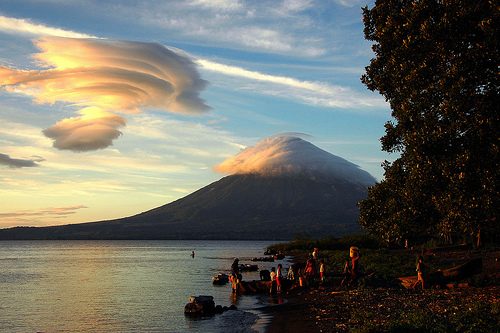
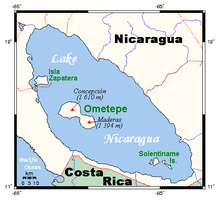
The fourth running of Ultramaratón Fuego Y Agua, features 3 races: 100 km, 50 km, and 25 km trail races. Taking place on February 16, 2013, the race this year has a very strong contingent from the US taking part. Held on Ometepe, an island known for its astonishing biodiversity with prehistoric rock carvings and a vibrant local culture. It rises out of Lake Nicaragua. It has twin volcanoes, one of which is still active. The lake is the largest in Central America and situated in the SE of Nicaragua. Ometepe is the world’s largest volcanic island in a fresh water lake, It was made a UNESCO biosphere preserve in 2010 to promote sustainable development of agriculture and ecotourism.
An Ultra Trail du Mont-Banc qualifier for three points.The Fuego Y Agua 100K trail race course is a rugged single-loop course. The terrain includes technical single track trail, paved road,dirt trail, technical single track trail, and the infamous “jungle gym” section where racers will navigate a chaotic web of Ometepe trees. The course includes the Volcan Maderas and Concepcion climbs and has11 Aid Stations spread throughout the course.
*Finish in under 11 hours and receive a refund on your entry fee!
THE 2013 RACE
Dave James just one week ago dominated the 6 stage Coastal Challenge in Costa Rica. Not only did he perform at the top level everyday but racing in a rainforest in high heat and humidity will mean that he is adapted and well adjusted for the conditions in Nicaragua. He is an odds on favourite for the win providing the 236km have not fatigued him too much.
The front of the race will also have the presence of Brit (based in the US) Nick Clark. Nick will be gunning for the win with Dave James but he is coming from cold temperature is the US with little time to adapt. Also, this is the first big race of the year and Nick has a very busy year ahead as he plans to Grand Slam.
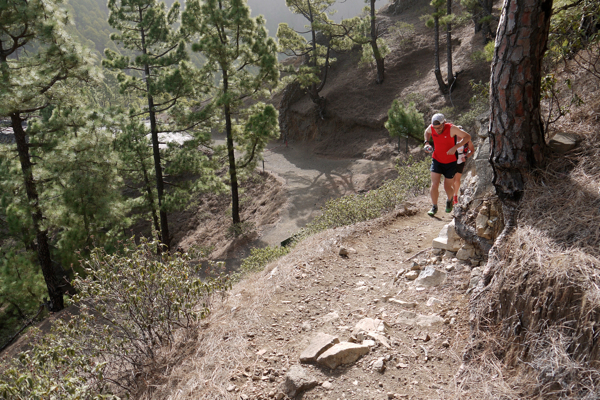
Ian Sharman is also in Nicaragua but it would appear that a knee injury has raised its head and he may well not start the race. I had an email from him last night and I am just waiting confirmation on this. Of course, should Ian be fit he has the speed to be up at the front pushing the pace. However, it is still early in the year. He extended his 2012 season to the New Year and by his own admission he should have ‘stopped’ when he had planned to stop. He has run a marathon recently so watch this space.
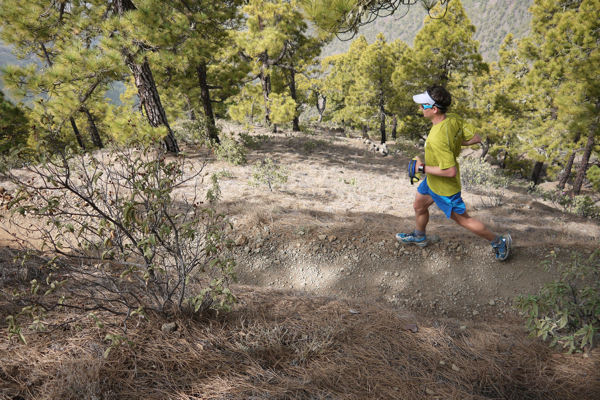
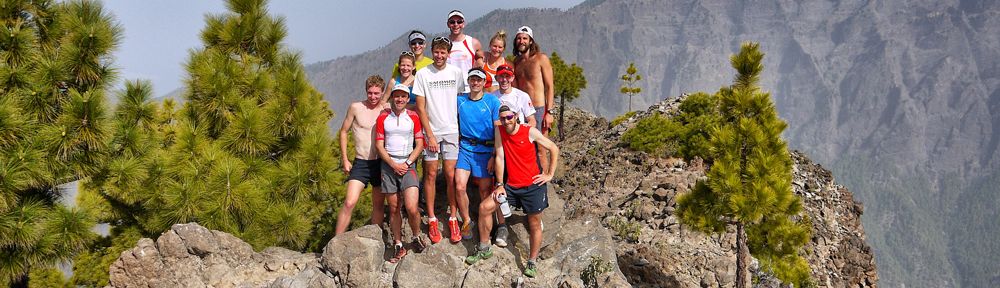
Ian Sharman in La Palma copyright Ian Corless
Yassine Diboun from Oregon, Sean Meissner and the Coury brothers, Nick and Jamil add spice at the front end of the field. I met Nick and Jamil in Costa Rica as they passed through on the way to Nicaragua. Great to hear that Nick has now been placed first option for the 24hr World Championships. Nick will be in the mix at ‘Fuego’ with that ‘leg speed’ but rumour has it Jamil will drop to the 50k distance.
What I am unsure of is what local competition will turn up and push things at the front end of the race. South America has a real talent pool of runners and one can’t underestimate the ‘severe’ conditions that this race will take place in. The heat and humidity takes some getting used to.
The course record is 11:08 held by Javier Montero set in 2009. Female record is held by Amy Sproston, 13:12 set tin 2008.
Ultrasignup link HERE
2012 results for reference HERE
The mission of Ultra Fuego y Agua is to bring responsible ecotourism to Isla de Ometepe in the form of challenging and exciting jungle races.
Our purpose for the race is to bring an event that gives back to the island without taking anything more than beautiful memories and experiences.
The word ecotourism is a form of tourism that appeals to ecologically and socially conscious individuals. Generally speaking, ecotourism focuses on volunteering, personal growth, and learning new ways to live on the planet; typically involving travel to destinations where flora, fauna, and cultural heritage are the primary attractions.
By using local guides, local food preparation, locally owned hotels and businesses, to name just a few, Ultramaraton Fuego y Agua hopes to boost the local economy and promote sustainable events on the island. For example, finisher’s trophies are locally crafted and produced by island artisans.
Runner’s and volunteers are encouraged to participate in the annual Isla Limpia trash pickup. This organized effort promotes local awareness of the island as a natural resource that must be preserved and maintained.
Portions of race entry costs and donations are used to host the Calzado Ometepe Kids Run, a children’s race for local islanders. The children’s race promotes running, fitness, healthy eating and awareness of the island as an endangered environment that must be cared for. All participants of Calzado Kids Run receive a pair of running shoes donated by supporters and participants of Ultra Fuego y Agua.
About Isla de Ometepe
Isla de Ometepe is a volcanic island (approx. 276 km sq) located on Lake Nicaragua (also known as Lago Cocibolca) in the southwestern region of Nicaragua. Two volcanoes form most of the island. Volcan Concepcion (1610 meters) is considered an active volcano but has not had a major eruption since 1957. Concepcion is thought to be the most perfectly formed volcano cone in Central America. Volcan Maderas (1394 meters) has a crater lagoon and is surrounded by cloud forest and thick jungle. Its slopes are dotted with petroglyphs and stone idols.The forests of Ometepe are full of monkeys, tropical birds, rare insects, plants and flowers. Both volcanoes are now protected as national forests. The island is full of legends surrounding the volcanoes and its former inhabitants, the Nahuatl. Ometepe literally means “two hills” in the native Nahuatl language. The fertile volcanic soil makes Ometepe an agricultural phenomenon. Coffee, cacao, beans, rice, tobacco, bananas and many other fruits are plentiful on the island.
There are two major towns on Ometepe, Moyogalpa (pop. 2900) and Altagracia (pop. 4080). The total population of the island is only about 30,000 with an economy mainly based on livestock, agriculture and tourism. See our activities section for more information on Isla de Ometepe activities.
The Story of Ometepe
As the story goes, long ago there was no Lake Nicaragua or Isla de Ometepe, only a lush valley of the gods named Valle de Coapolca. Several tribes who were hostile to each other lived around the valley and would visit it often to gather fruit and hunt game. One day, a young warrior named Nagrando met and fell in love with Ometepetl, a beautiful maiden from an enemy tribe. They tried to keep their romance a secret, but eventually Ometepetl’s father learned of the affair and vowed to kill Nagrando. The young lovers fled and hid in the forest, where they decided that the only way they could be together was by committing suicide. The pair slit their wrists and died in each other’s arms. As Ometepetl fell backwards, the sky darkened and rains flooded the valley, forming Lake Nicaragua. Ometepetl’s breasts then grew into the twin peaks of Volcan Concepcion and Volcan Maderas, and Nagrando’s body became the nearby Isla Zapatera.

No matter how experienced, no matter how long you have been running, you can always learn something…. My recent trip to Costa Rica and The Coastal Challenge which took place in a rainforest made me realize that I knew very little about running in heat with high humidity, running in a rain forest and also running on consecutive days in this environment.
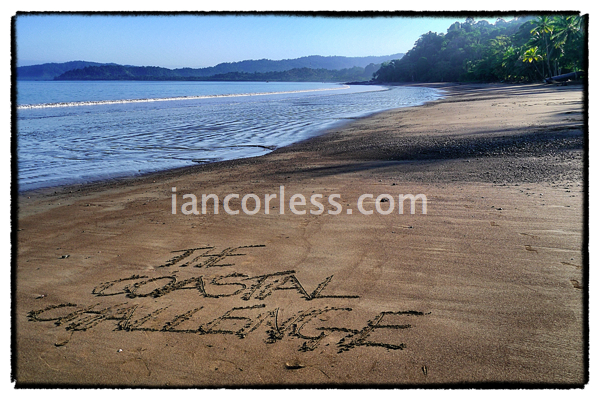
I am quite meticulous in my planning. I like to tick boxes, cross ‘to do’s’ off a list and feel content that when I am at an airport travelling to a race that I feel that I have done everything I possibly can to get the best out of myself and the race when I arrive at my destination.
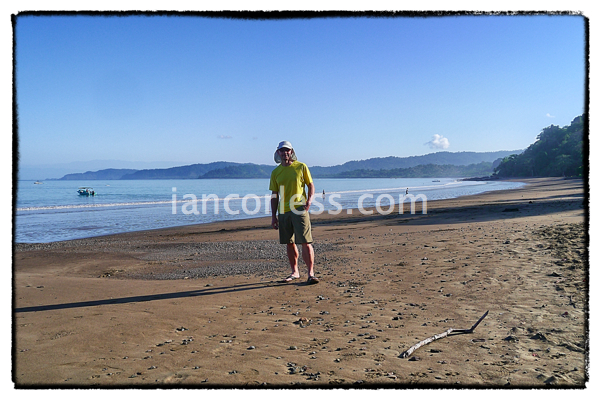
Costa Rica was nothing like this….
I only found out I was going about four weeks before, so, that 12-20 week training plan that I would have created to then taper into an event didn’t exist. I was realistically just a week or two weeks away from the taper. When you add to this that since January 2012 I hadn’t been training due to knee issues. Of course I had been ‘working out’ but I hadn’t been training. Nothing specific. Training had consisted of runs every other day with the longest being at 2hrs 15m, other days had been cross training, plenty of time on the stairmaster and stretching and core.
My brief was not to race at The Coastal Challenge. This was a good thing, however, I was working as a journalist and my need to document, photograph and experience the course would mean getting involved.
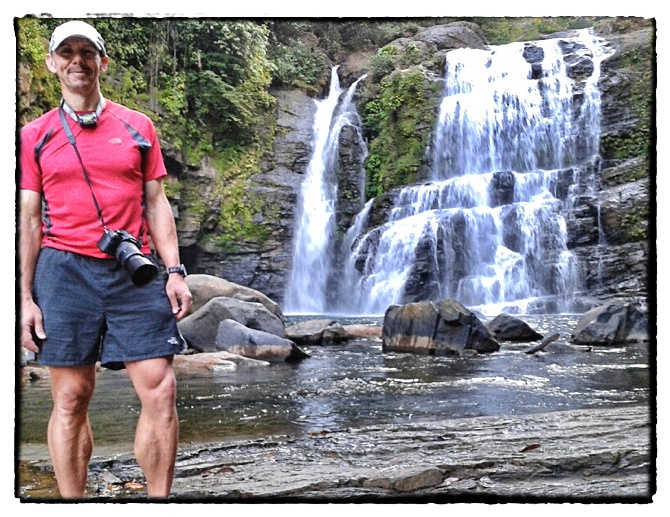
My plan was simple. Start the day on the course at a great advantage point, photograph the front runners and then run to the end capturing more images, experience the terrain and then write up and download photos at the end of the day. Simple!
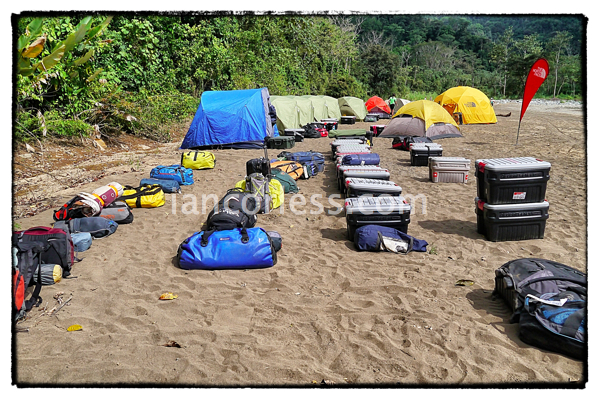
In addition to running we would be staying in a different campsite each day. Luggage and tents would be transferred ahead and food was provided.
So what did I learn?
Pacing & Hydration: Costa Rica is hot and humid. Oh yes, hot and humid. Coming from a UK winter the shock is pretty drastic. But I found it manageable. You certainly need to adjust many things and you need to make those adjustments on day one. In simple terms you need to ‘slow down’ and ‘hydrate’ more. Within 10-15 minutes of exercise your body is soaked and your clothing is completely wet.
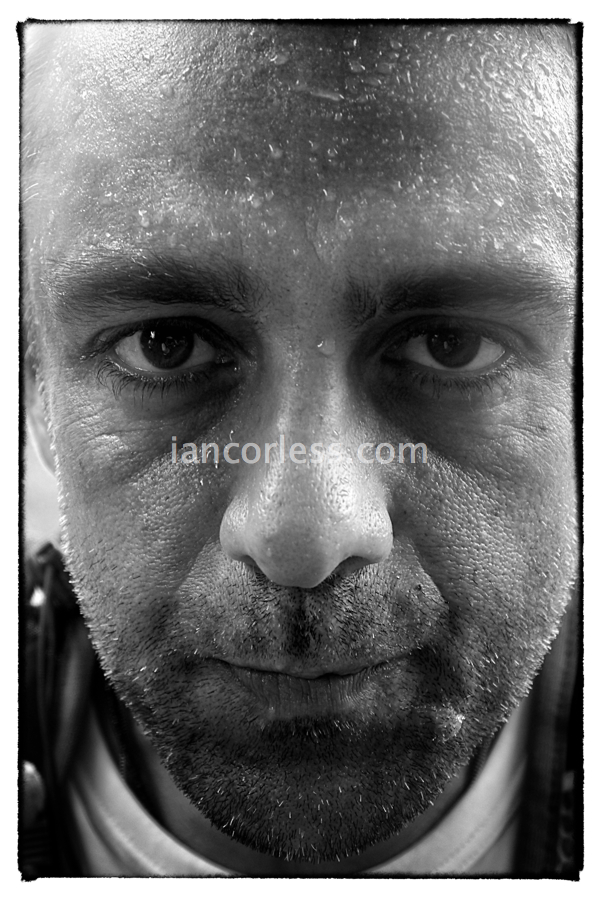
It stays that way all day so get used to it. Sweat rates vary but in the excessive humidity and adding exercise to this it is fair to assume that 750ml + will be required per hour. Replacing electrolytes will also be important so look into what works for you. Runners used a combination of ‘adding’ electrolyte to water or taking salt tabs. Day one of our race started with a 10k road section, in retrospect this was designed to ease the runners into the terrain and heat/humidity, however, I think it actually allowed to many fresh runners to run too quick right from the gun.
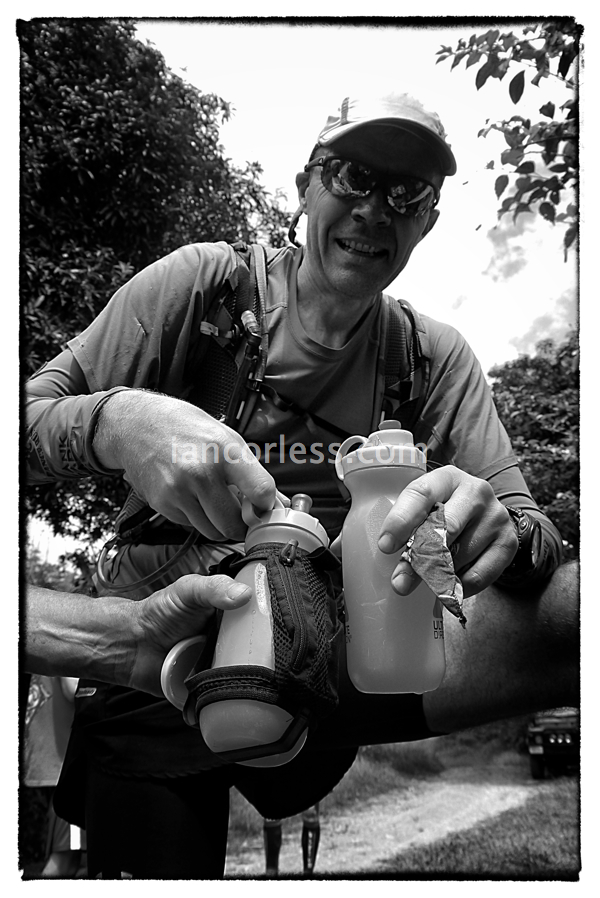
By the time they reached CP1 and the start of the jungle many were already in trouble… they didn’t know it at that point but they certainly knew it in the final 25% of the day. By pushing too hard at the beginning of the day they couldn’t then pull back the deficits in the latter stages and suffered. By the end of day one, the race had several drops and a far too large group suffering from dehydration.
Feet: Oh boy. Multi stage races are renowned for damaging feet but really this shouldn’t happen. If you look after your feet, have the correct socks and the correct shoes it should all be straightforward. Of course unexpected things can happen such as a little rubbing and the odd blister BUT at TCC I saw people with literally no skin left on bruised and damaged feet. I am actually amazed that some of these runners managed to finish the race. The rainforest will guarantee several things:
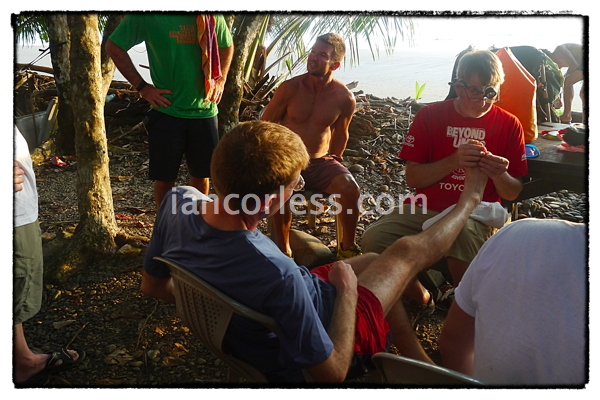
With the above in mind you need to plan accordingly. This race is not self sufficient so this is a big advantage. Why? Well for a start you can bring several run shoes. I took the two ‘styles’ of shoe, Salomon Speedcross 3 and TNF Hayasa,
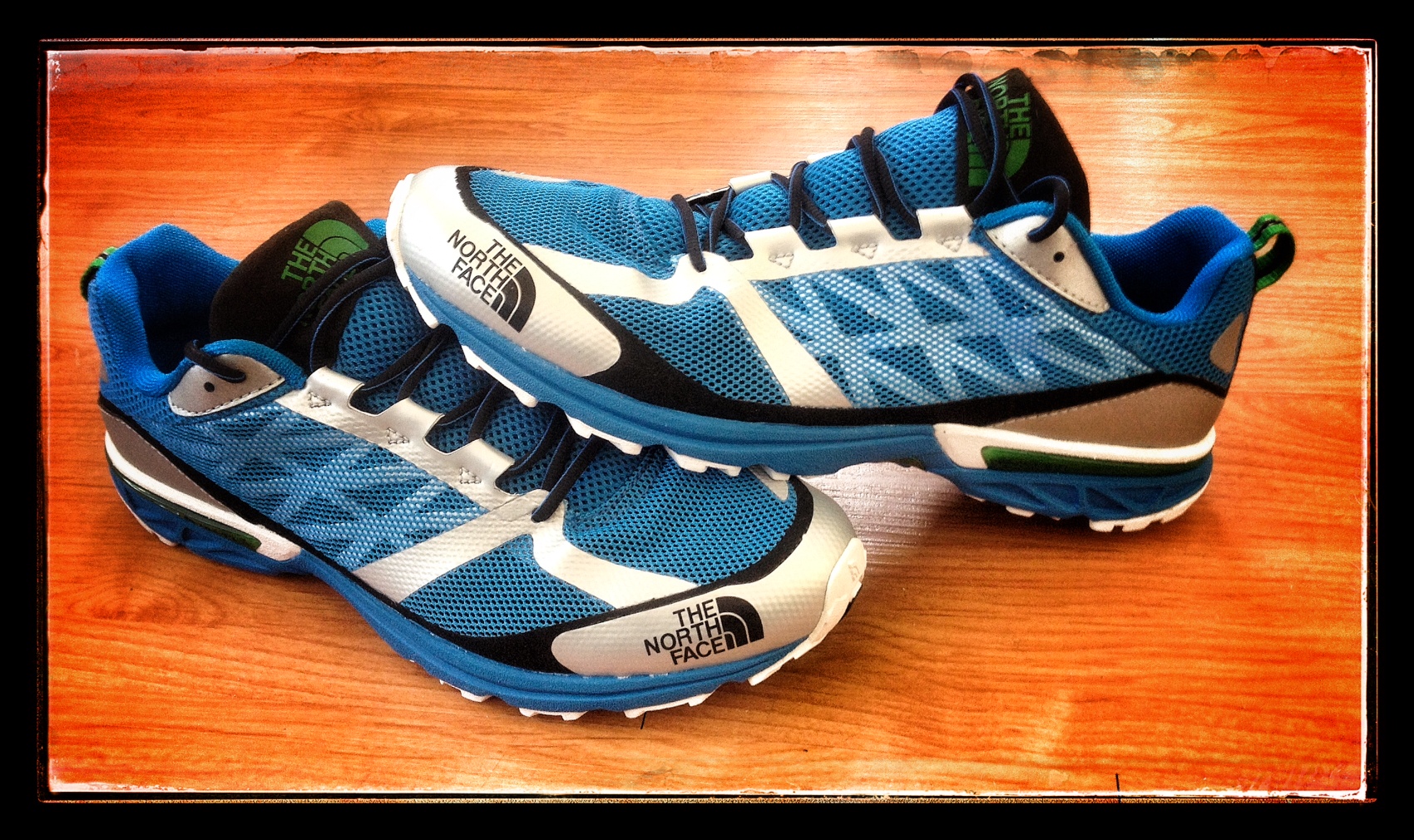
I had two pairs of each. One my correct size and the other pair a ½ size larger (just in case). A larger shoe will allow some room should my feet expand. The two styles of shoe also allowed me options in regard to ‘grip’. The Speedcross is far more aggressive than the Hayasa. Certainly something with an aggressive tread suited the environment.
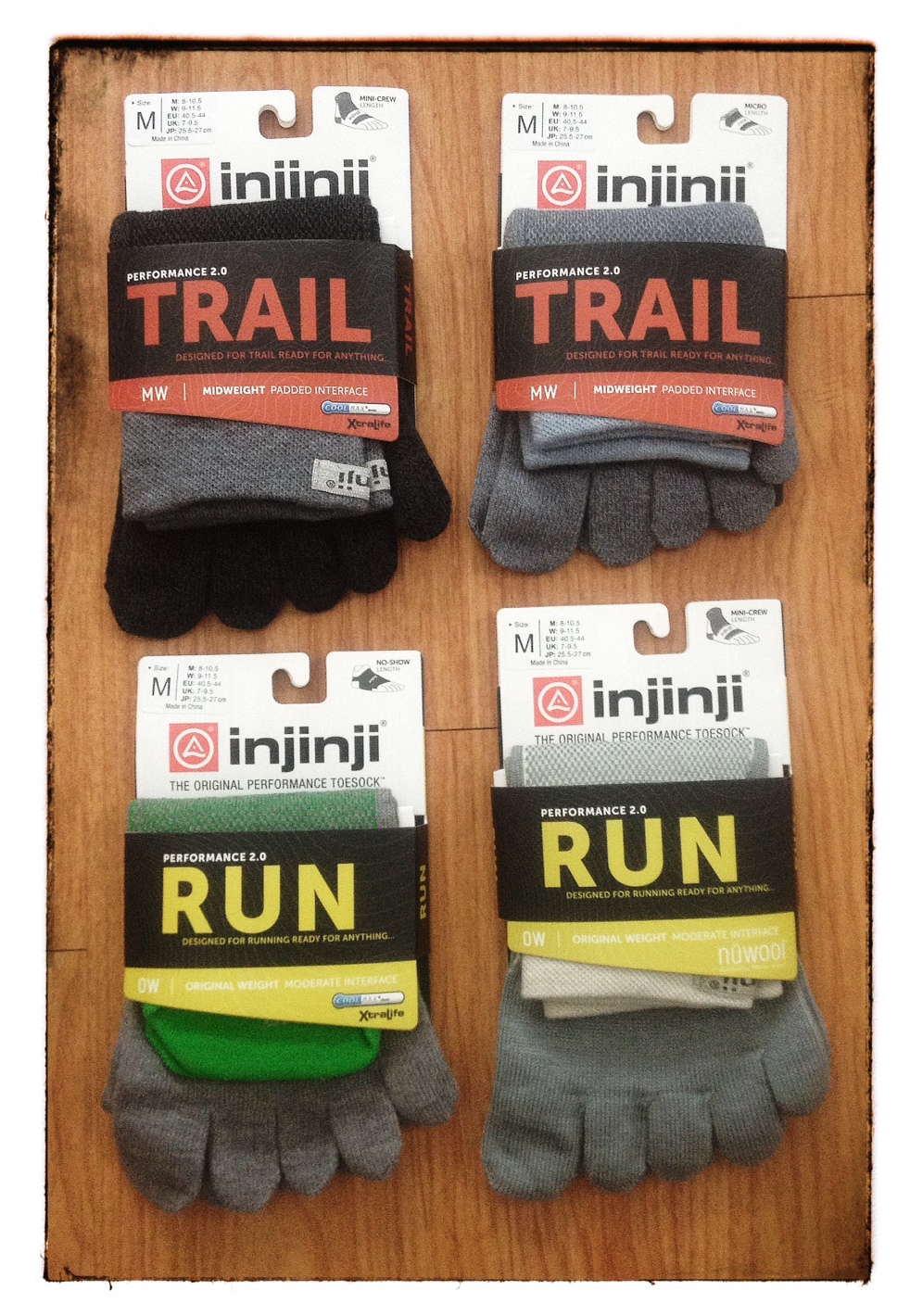
Socks, like shoes are personal but I am a firm believer in Injinji socks. Each toe is in its own ‘little pocket’. This for me reduces the possibility of problems or issues and over the 6 days of the race I never got one blister! The race had a foot doctor. Without him some runners would have been out of the race. If you have this option, take advantage.
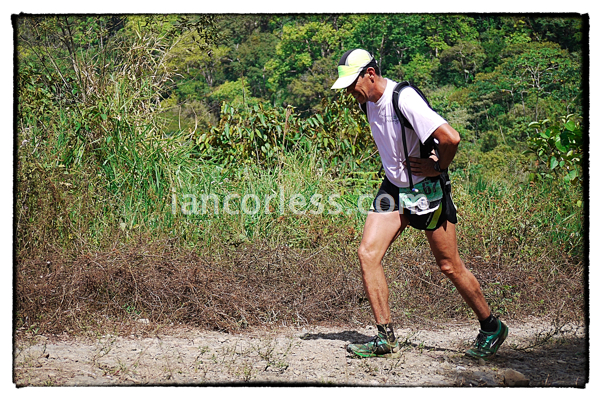
In training understand what you will be doing at your race. Practice walking, running, climbing, descending and run with wet feet. Find out what does and doesn’t work. Get the mistakes out of the way before you start the race.
I did not tape my feet prior to running and I added no Vaseline. After each day the first thing I did was to remove socks and shoes, clean them and the wear flip flops to allow them to breath.
*note – many of the runners who had problems had worn shoes too big. They had expected feet to expand but on day one and day two, the ‘larger’ shoes had allowed the foot to move within the shoe and consequently the foot had blistered. I am a firm believer that the shoe should ‘fit’. Excessive movement is a recipe for disaster.
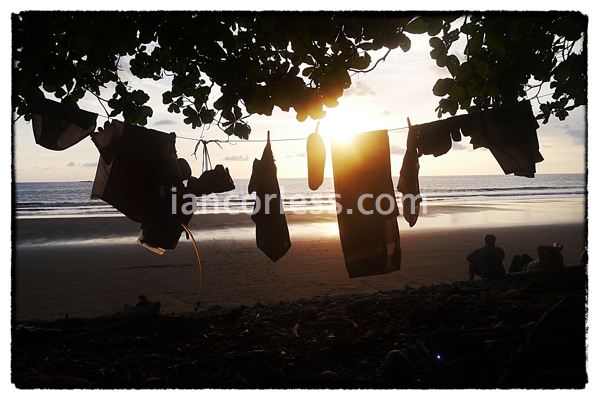
Clothing: Six days racing means six sets of kit. As far as I was concerned. It’s a simple strategy. You run in one set, get showered and cleaned up, put another set on to relax post run and then you use that kit the next day. I was fortunate that The North Face did provide me with some clothing but not six days worth.
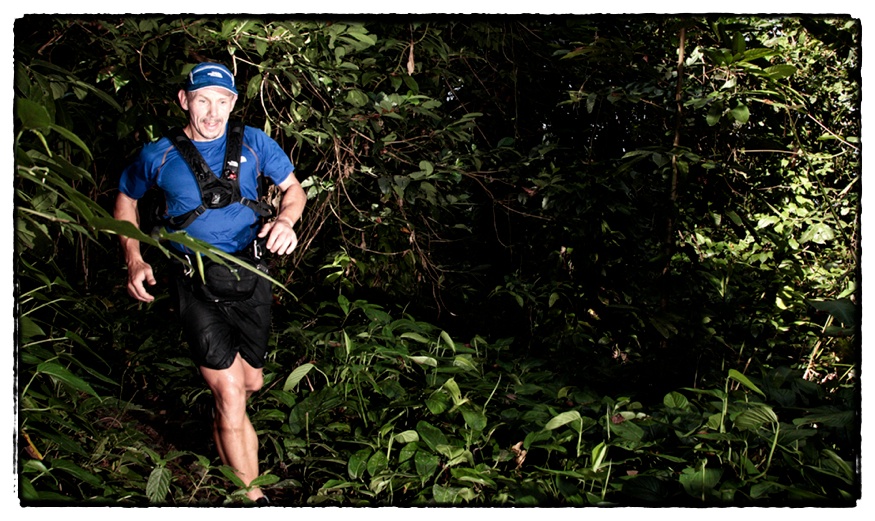
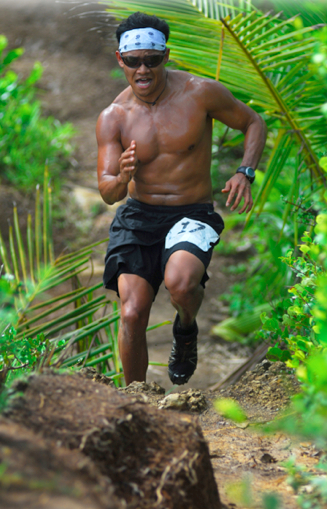
I added my existing TNF stock to the pile. Clothing is personal but the key elements for the jungle are comfort and the ability to wick sweat. I wore T-shirts instead of vests to cover my shoulders (always vulnerable) and I wore loose baggy shorts. It’s not rocket science but shirts with a mesh back certainly help with breathability, especially if using a pack. Race winner, Dave James wore no top! I don’t recommend this… it works for him but his skin looked well adjusted to the sun and I am sure he applied protection too.
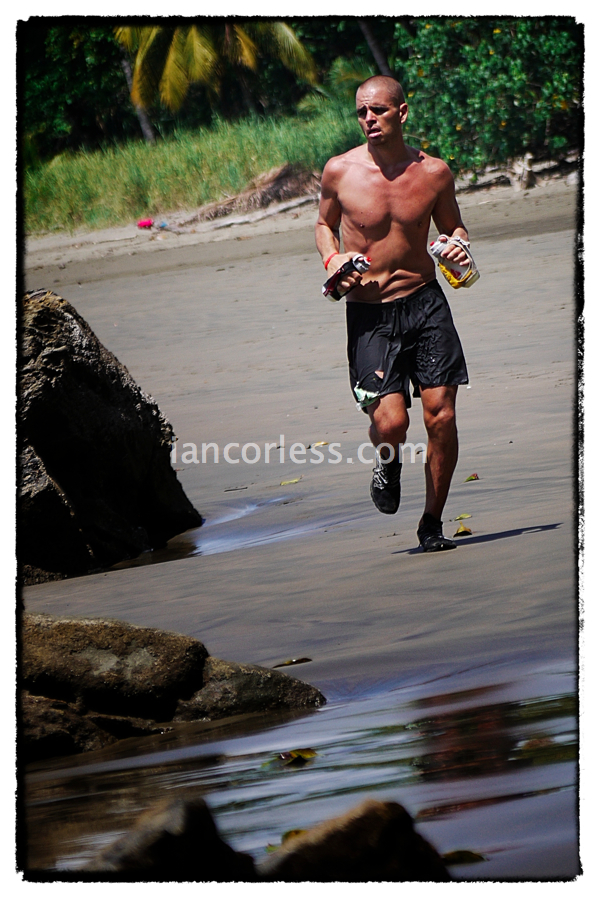
Dave also wasn’t using a pack, he used hand bottles only. Ladies have a multitude of kit options available to them, ‘looks’ can be far more important to some than functionality. However, simple functionality works best (in my opinion). Some ladies wore ‘strappy’ tops that offered minimal coverage on the shoulders and after 5+ hours on the trails the inevitable would happen… very unusual tan lines and some sunburn.

TNF Mica 1 Tent
Equipment: This race was supported with feed stations. We had no ‘essential’ kit needs other than carrying adequate liquid supplies. Dave James was the only person in the race who used just hand bottles. Everyone else used a pack of some description. In my opinion, some used packs that were way too big and heavy. I am not sure what some people were carrying but the heat, humidity and long days on the trail should mean ‘minimal’ is a priority. Bladders or bottles? I have to say I am a bottle fan. Bladders are just too awkward.
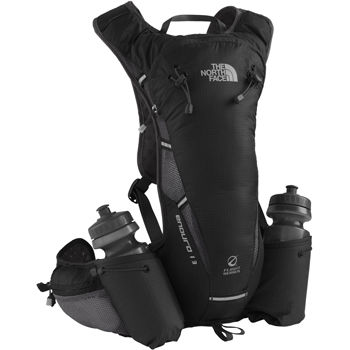
I used the TNF Enduro 13 pack with two bottles that sit on the waist. In the pack I was carrying two cameras inside and one camera which I added to the waist belt. However, this pack can also take a bladder too. So, if required I could have carried 3 liters. Had I been ‘racing’ I most certainly would have done this on the two long stages as feed stations were wider apart. Always best to stick to just water in a bladder to avoid problems with taste and bacteria. In regard to ‘essential’ kit I had a whistle, first aid kit, some food, purification tablets, phone, cash, small pocketknife and additional sun cream. With regular feed stations and such a hot climate it really wasn’t necessary to carry anything else.
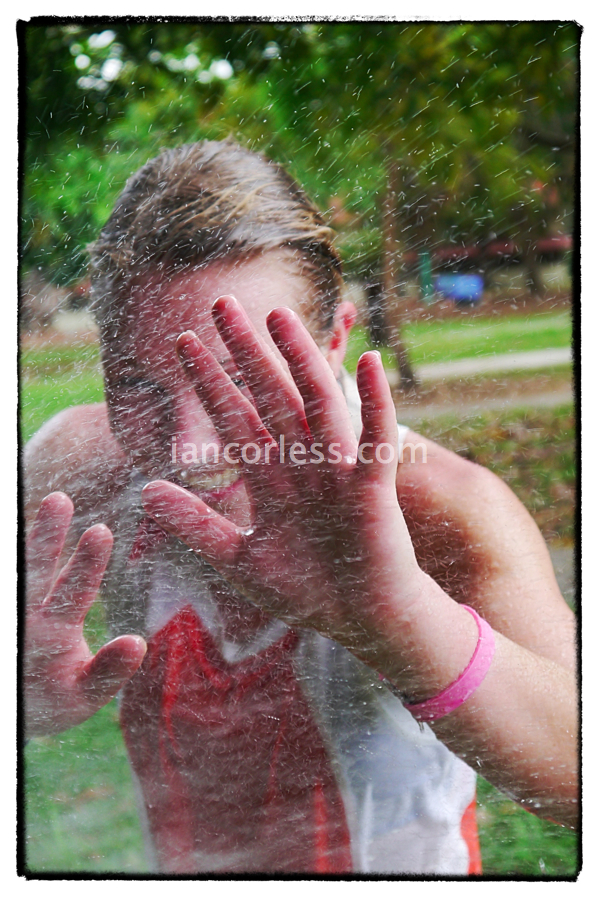
Tips on the trail: Run in the shade whenever you can. I found that as the day got hotter it was effective to run all shaded sections and then reduce pace or power walk in the open sun sections to regulate temperature.
On hills I power walked as fast as I could. On some sections of the course, depending on your run style and ability, ‘poles’ may well have been useful.
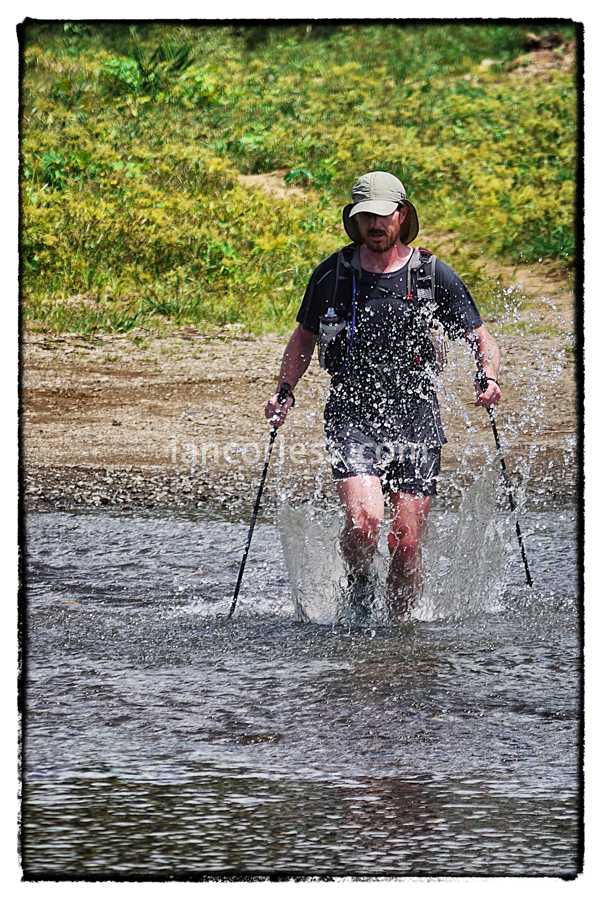
Descents on the whole were easy, however, one stage in particular was brutal. It’s always a good idea to practice going down hill. Poles again may have been useful BUT vegetation can be very thick and poles would have got caught and may very well have been an additional hazard. Remember that you want to reduce fatigue and impact as much as possible. This is not a one-day race but a six-day race. Short steps reduce the impact.
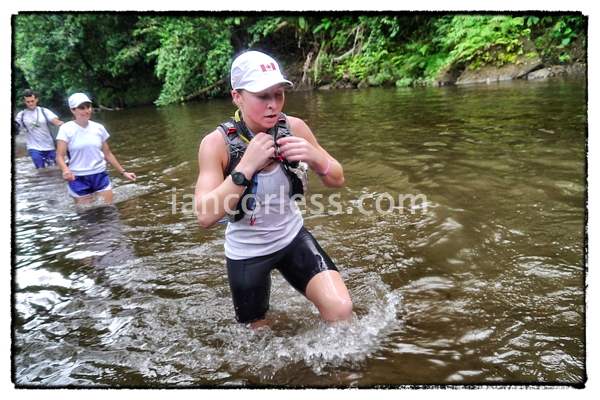
Utilize all water on the course! Any chance you get, submerge yourself in water crossings, wet your head, wet your neck and take a minute to let your core temperature drop before moving on. The route has plenty of opportunities for this, it’s crazy not to take advantage of it. I
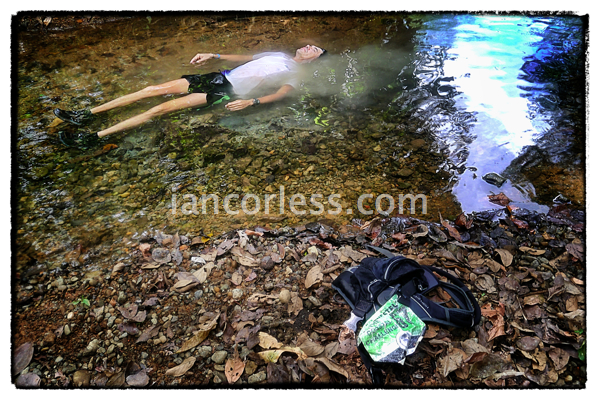
f you find ‘flowing’ water that is not near farmland then use it to drink. Many runners did this and as far as I know, nobody had issues. I carry ‘purification tablets’ just in case. Better safe than sorry.
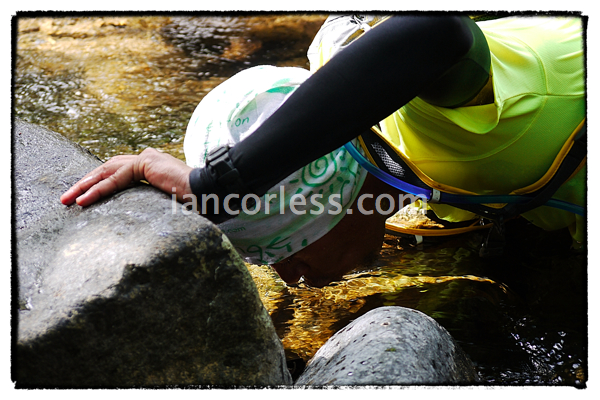
Feed stations are important. Always refill your bottles and take on energy. If you are struggling take some time out. Five minutes in the shade can make a world of difference.
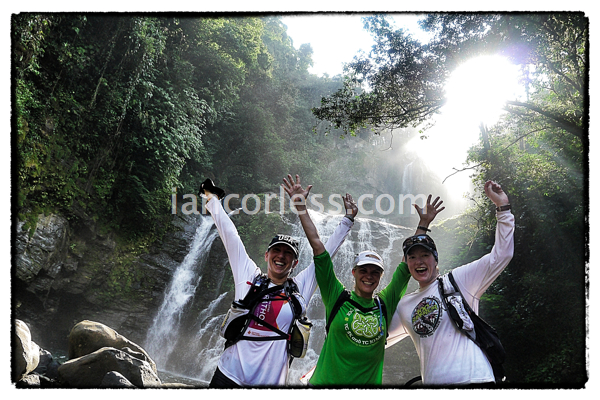
Depending on your ability, ‘buddying up’ is a great idea. If your plan is to maximize the experience and not race then buddy running can make the experience far more rewarding and potentially less stressful. The course was exceptionally well marked but you could go off course and many did. A buddy is a nice security blanket. In actual fact, 2nd and 3rd placed ladies in the 2013 edition buddied for the last two stages.
You are in a jungle so wildlife is all around you. You hear it all the time but the reality is that you see very little. All wildlife is far more scared of us than we are of them. Main issues may come from snakes or spiders. In thick vegetation its wise to look at foot and hand placement just to make sure!
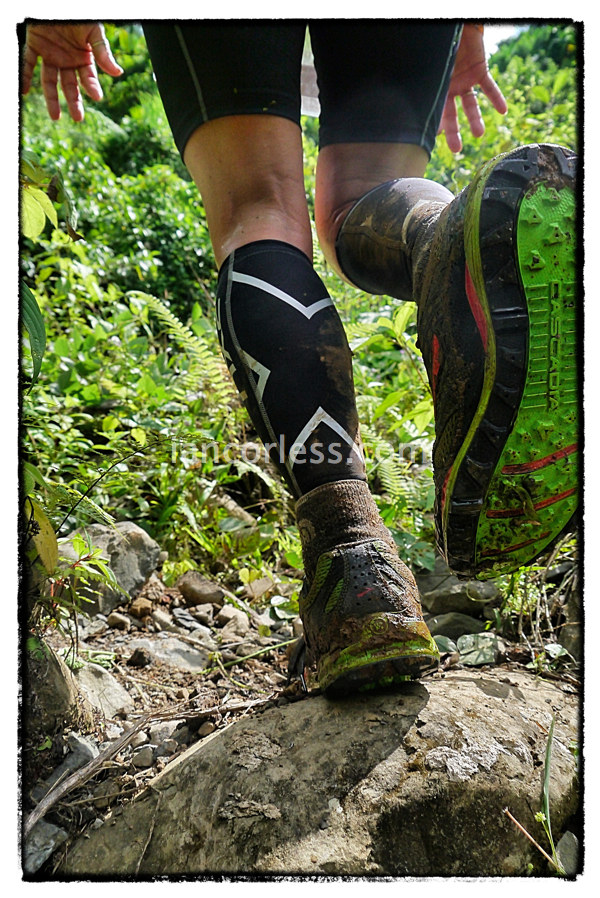
Calf guards (or compression) on one or two stages would have been good. I personally prefer not to have additional skin coverage so that I can keep cool, however, one stage in particular had undergrowth that was well above knee height and it did cut, graze and irritate my legs.
Camp life: Camp was a great place. You had very little to worry about as food and drinks are provided. It becomes a social mecca in the sun. Sites were strategically placed next to the sea or a river so you could swim or cool down that way. All sites had toilet and shower facilities (some better than others). Important factors were:

Tents that pitch ‘inner only’ are essential. It is so hot you need nothing else. Of course, it is a rainforest so make sure you bring the flysheet just in case. Other than a few short showers we had no rain (unusual apparently). I use a small one man tent, the TNF Mica 1 and it was perfect. I had an sleeping matt and inflatable pillow. I didn’t use a sleeping bag but I did take a ‘sleeping bag liner’ for any potentially cold or chilly nights. I slept in my next day run kit.
Your clothes and kit are outside all night, so, the organization recommend ‘spacepackers’ they are waterproof containers that hold all your kit. They are a good idea but hopeless for travel. One or two people had large ‘Stanley’ toolboxes that had wheels and a pull handle; much better idea.
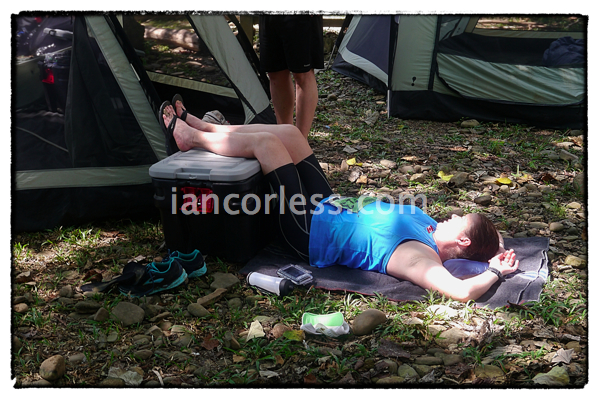
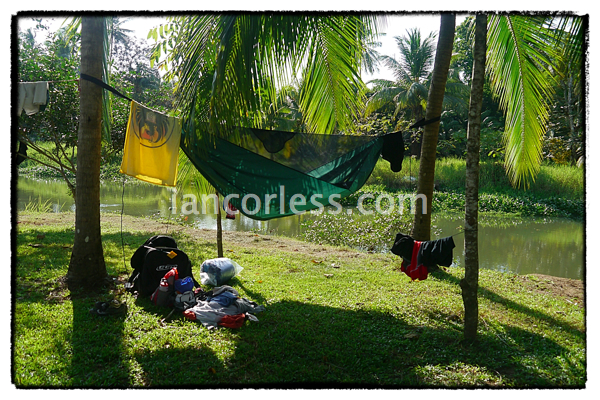
I used a TNF ‘Basecamp’ bag which was waterproof and easy to transport. I also had a TNF waterproof rucksack. It was essential. In this I stored my computer, cameras, cables, phone, microphone, etc, etc. I can’t recommend this pack enough.

Waterproof Pack
I had a full medical kit that included everything that I would need. It had all sorts of medication, scissors, tapes, creams, antiseptics etc to cover pretty much all eventualities. The race does have a medical team and foot doc but you should be responsible for all the essentials.
I carried very little additional clothing. I had lightweight long travel pants, travel shorts, hat with neck cover and some lightweight shirts all supplied by Arc’teryx. Perfect!

I had one lightweight showerproof/ windproof jacket should it be required. I didn’t need it at any point during or after the racing but San Jose before and after the race was much cooler. It came in handy then.
Flip flops or similar are essential!
I had one towel, a travel towel that you can get from any ‘outdoor’ store. Small pack size and dries quickly.
RECOVERY: Important. After each stage, recover. Drink, eat, look after your feet and then get some time with your legs in cool water and elevate. Find some shade and relax. Get a massage if it’s a possibility. At the TCC they had a team of masseurs.
Extras: Don’t get too involved in the racing. The course (and others) has so much to see and experience that you don’t want to get to the end and it be a blur. I feel very fortunate that I ran with cameras and had a job to do. I had to stop, look around, decide on photo opportunities and often wait. I really feel as though I experienced the rainforest. I will never forget sitting in the middle of a river at 0600 one morning waiting for the runners to run towards me. I saw birds, snakes, monkeys and I heard so much more… special moments that all added to the experience.
Stage racing is all about bonding and making friends. I am pretty sure that every runner left with so many more new friends. Go into these experiences with open arms and you will leave with them full.
Understand that before you start you will need to dig deep. This may be a holiday but it is no picnic. The Coastal Challenge is a tough course. The dnf’s and drop downs to the shorter Adventure category confirm this. But it is achievable for everyone. If you get day one and day two right, three, four, five and six fall into place. It’s not meant to be easy. If you understand that, the outcome will be a positive one.
Essential Kit:
Optional Kit:
All things must come to an end…. the atmosphere around camp was a little subdued. Some participants looked relieved that they didn’t have to squeeze a pair of shoes onto blistered feet. For others, they seemed sad that another day on awesome Costa Rican trails didn’t await.
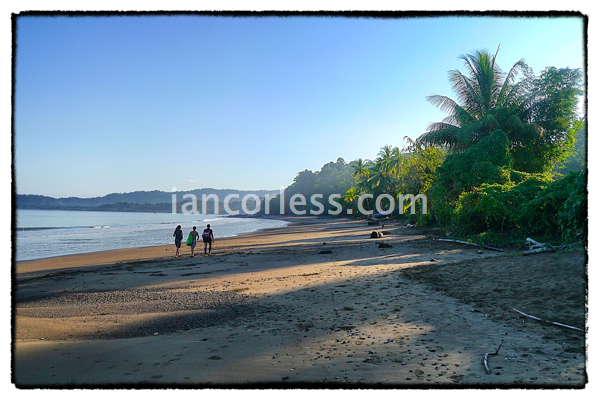 Some required quiet time away from the camp to walk Drake Beach as the sun welcomed a new day. Others huddled in groups telling stories of water crossings, quad busting descents and dehydration.
Ultimately every person had a story. A unique story, personal to themselves that they would hold within them forever. No matter how low the low points, the day after never seems so bad. If it was easy, everyone would do it…. The Coastal Challenge offers some very testing terrain with relentless heat and humidity to provide an overall race experience that will test each and every person. To cross the line on the final day requires commitment, dedication and some luck.
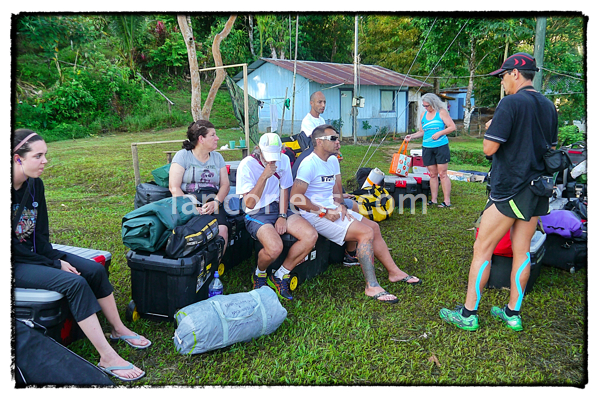
The logistics of mobilizing a camp and moving it everyday in tough terrain is nothing short of remarkable. The course marking and dedication from the TCC crew was available for all to see. This is no easy race to run, but it is certainly no easy race to coordinate. The catering team showed a dedication not often seen… rising at 0200 to have breakfast ready for 0400, break down camp, move to the next location, set up and then cook lunch ready for the runners arrival. Clear lunch and then prepare dinner all for the process to be repeated again. Respect
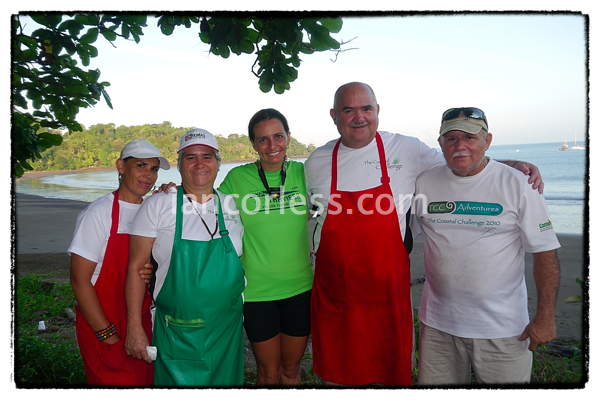 Marking the course was done before the race and then every stage had TCC crew heading out in front of the race to ensure that nobody would get lost. While the race was underway, the camp crew would mobilise moving luggage, tents and all other elements of base camp and then set up again. All this in searing heat… tough wor
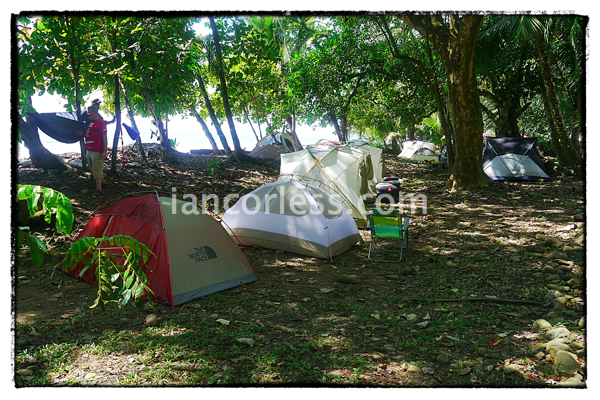 Base camp had a full medical team and feet specialists to ensure that everyone could be in the best shape possible to start the next day. It’s a really important aspect of multi stage racing and without it, many would not see the fin
Stage races are not meant to be easy! Was the The Coastal Challenge too hard? No, of course not. Was it hard? Yes, without doubt.
Several runners at TCC had participated in Marathon des Sables several times, on questioning they all said that The Coastal Challenge was a much harder race. The combination of heat, humidity, climbing and tough technical terrain was a much greater test of mind and
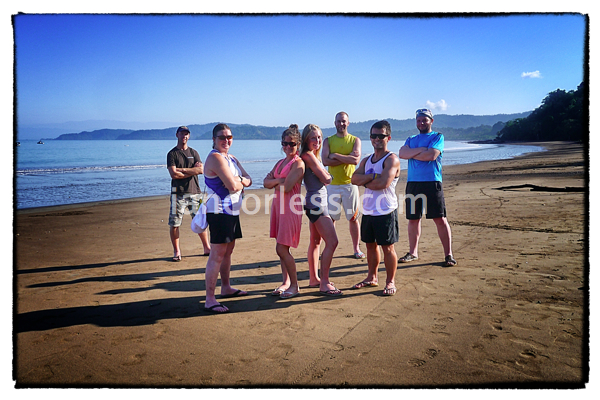 A key aspect of this race is camp life. An opportunity to relax in beautiful locations, make new friends and sleep under the stars. Strangers by the end of day 1 became best friends by day 2. The comradeship, the willingness to sacrifice time to help another is a great thing to see. One persons suffering was taken on by others and the burden shared.
With the race over these friendships will continue and no doubt be renewed at other races in the future.
But it was time to l
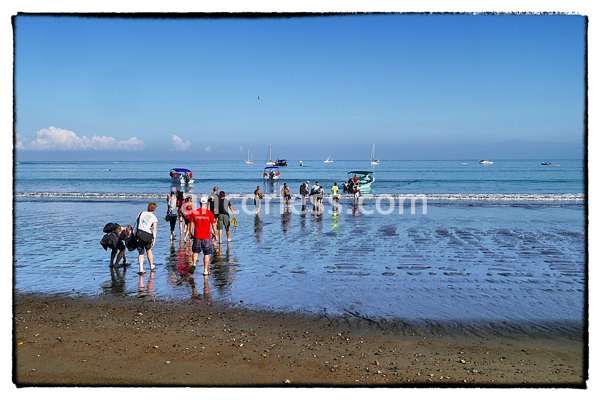 The excitement and beauty of the six previous days was repeated with an incredible journey by boat to our bus that would eventually return everyone to San Jose and a comfortable b
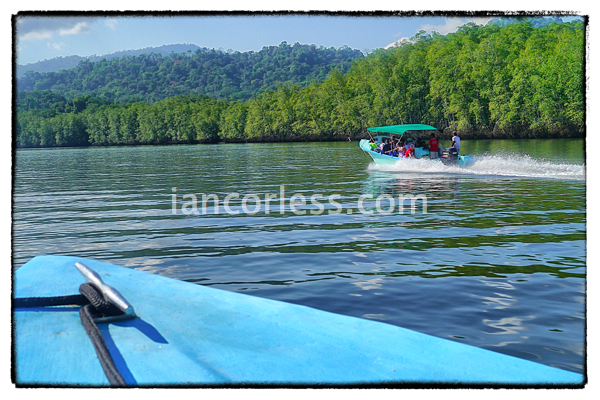 It was time to switch off, let the experience soak in and remember what had been achieved.
Congratulations to Dave James and Gemma Slaughter for the respective wins in the Expedition category.
Ultimately though, the credit goes to every participant who battled and endured the TCC Expedition or Adventure category. Tam Miller from Vancouver Canada summed it up for me when she said:
“I feel whole and complete and I have no unfinished business”
Pura Vida!
You can read day to day blog posts here:
And you can view images from each day here:
Images available to view on FLICKR
Stage 6 Drake Beach to Drake Beach

The last stage of any multistage race is always going to have a party atmosphere. For many runners, six tough days in Costa Rica comes to end. For others, some sadness that one of the most incredible journeys they have experienced comes to an end.

A later start of 0715 allowed the runners some additional sleep. No change for me. I was out on the course at 0500 with the race team to mark the course. After just a couple of km’s I stopped on the river section. Here the participants had to run several km’s straight down. It was always going to be a great photo opportunity.

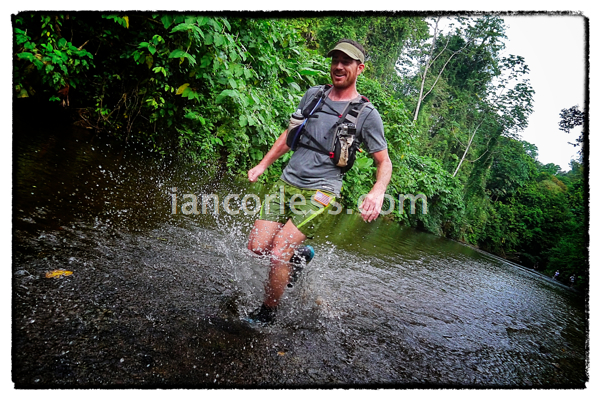
My plan today was to run the whole stage capturing as many images in as many locations as the race unfolded. Once the lead lady caught me, I would then run in to the finish with her, leap frogging her to allow for as many photos as possible.
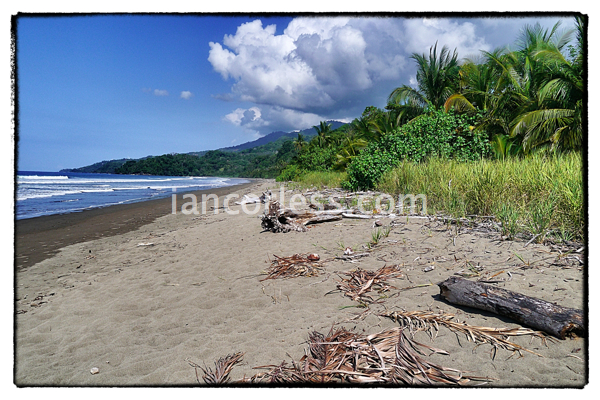
Today’s course? I N C R E D I B L E. Wow, it was all that I had come to expect of South America and Costa Rica. In just 23.7 km’s it managed to encompass everything from the previous five stages and then add more… a long run down the river was followed by a short technical climb and then a beautiful waterfall. From here the course slowly climbed up through rainforest and then we circumnavigated our way back to the coastline to make our journey back to Drake beach by running along beaches, through rocky coves, forest and then the finish line on the beach. It was a beautiful course, echoed in the words of Marcelo Jimenez Roqhuett ( from Cartago, Costa Rica)
“It was hard today but inspirational. We are tired and weak at this stage of the race. Every time you reach you find more energy to carry because the surroundings are so beautiful. I forgot my pains today and had so much fun on the course. Pura Vida”

In reality the overall top 3 in the men’s and ladies categories was not going to change today. So, if they wanted they could kick back and enjoy the stage. I am not really sure Dave James knows how to kick back… either that or he is so quick that his ‘kick back’ is way faster than anyone else.

In the early stages when he ran to me he was smiling. Dave’s stomach issues of the previous day had gone. Behind Ismael was chasing and then the usual suspects, Jose and Henry. It’s worth pointing out that on this stage many of the ‘race staff’ take part too, so you often get some fresh-legged runner mixing it up at the front.
I waited till about ten runners came through and then ran with them. It was tough going with the water level getting above waist height in places. Lead lady Gemma Slaughter was obviously kicking back a little and planned to enjoy this stage to the max… she was whoop whooping as she ran, keen to maximize the last day.

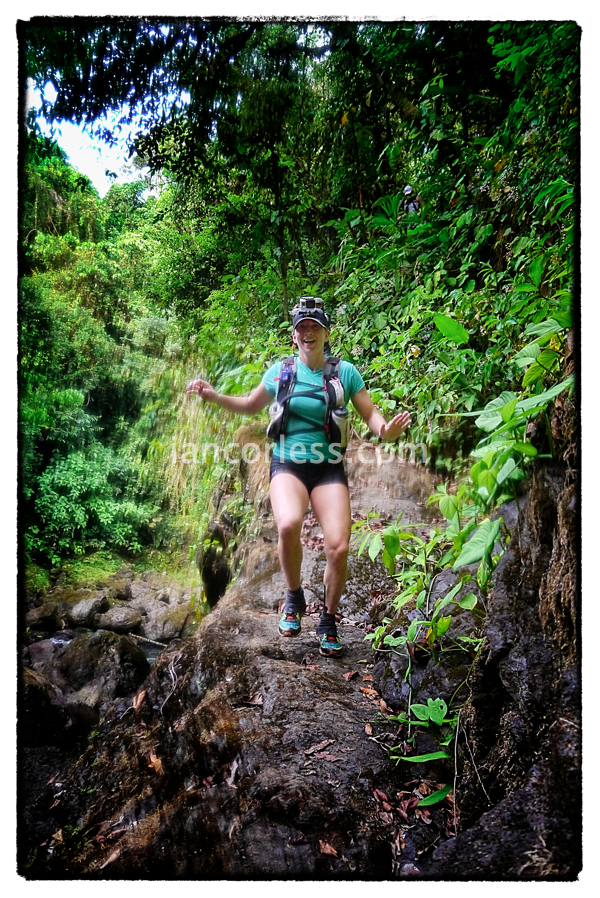
The waterfall section certainly added some difficulty as tired legs tried to navigate rocks and slippery surfaces. Race staff helped out as and when required. I moved on ahead running quite hard to gain an advantage of the runners behind me. Now running up forest trails surrounded by lush vegetation the trail moved in and out of shade. The canopy makes the running temperature so much more preferable.

Then some gravel road with a couple of water crossings before finally making the first beach section. The remainder of the run now was all about weaving in and out of coves. Soft sand allowing our feet to sink before the next stride is made. At all times lush green vegetation lines the beach to our right. On the left the waves lap the beach making that wonderful sound.
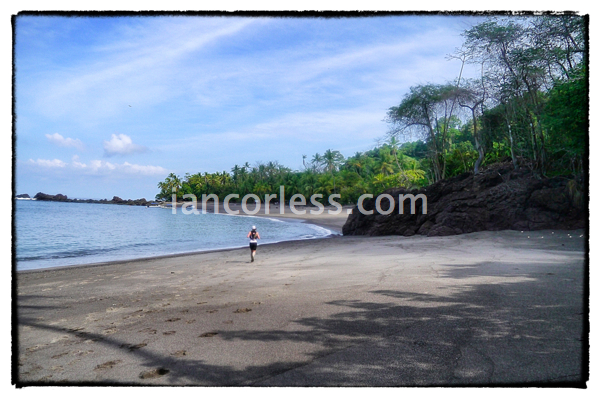
I keep leap frogging runners all the way back to the finish but ultimately always caching back up to Gemma.

Any opportunity on the beach to dip in the water and cool off is taken. Not sure if finally everyone is starting to acclimatize but certainly the heat seems less brutal today. Our hydration and sweat rate contradicts this.
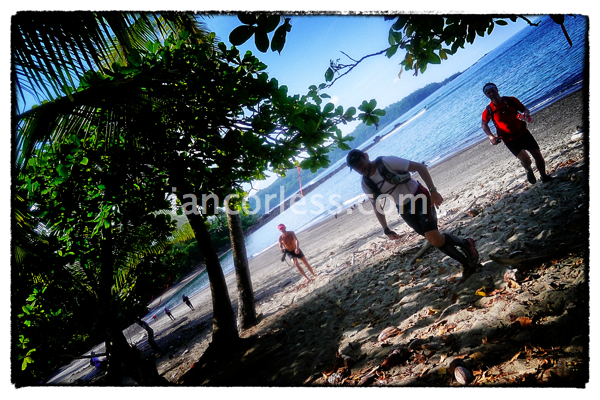
The midway feed station arrives and it’s welcome. A liter of liquid does not last long out here! Back on the trail a small climb awaits. I run ahead, get a vantage point, and capture some images and then chase.
Two Scarlet Macaw are heard. We stop, look up and see these two magnificent birds in the canopy. Wow. Flashes of red and yellow and that noise… it’s quite special.

After several more coves the finish straight awaits. Just a hundred meters or so down the final stretch of beach. It’s an emotional moment for every participant. Six grueling and beautiful days in the Costa Rican heat and humidity come to an end. The local cheers, the Coastal Challenge crew applaud and whoop whoop. Every runner is a winner on a day like this. All races have a top 3 but it makes no difference today. The line today is all about the experience; the friends that have been made, the suffering, the high points, the low points, the struggles, the views, the scenery and ultimately the memories.

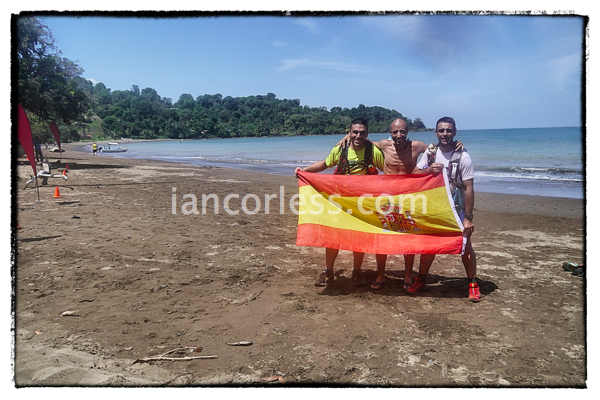
The Coastal Challenge has tested every participant in so many ways. For many the experience was considerably harder than they had initially anticipated but the mind is a wonderful thing. When the legs won’t work, the mind can take over and will you to the finish. Many participants have had to dig deep multiple times to conquer the terrain and humidity that has been placed in front of them.
Only last night, at the end of stage 5 one runner battled with fatigue, exhaustion and darkness to make the finish line. As the final meters of the course lay ahead of her she received a standing ovation from every member of the race team and every other participant. Ultimately, these runners are the heroes and the story of The Coastal Challenge. It’s about the battle within that makes the medal around the neck that so much more rewarding.
A full selection of stage 6 images are available HERE
Pura Vida!
Stage Results:
Men
Ladies
OVERALL RESULTS
MEN: 1. David James, USA (26:54) 2. Ismael Dris, España, Equipo Trail (29:17) 3. José López, Costa Rica, Talamanca Health Center (32:59)
LADIES: 1. Gemma Slaughter, Canada, imagine1day, (39:42) 2. Angela Meyer, USA (41:32) 3. Irene Hale, USA (41:38)
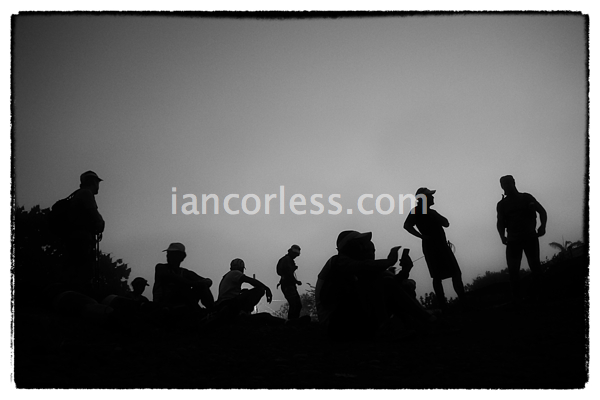
Not sure if it’s a good thing or a bad thing, but 3-4 hours broken sleep seems to be no problem here in Costa Rica. The catering team were crashing pans and chatting at 0200 as they prepared our 0400 breakfast. No animal sounds or crashing waves to break the slumber, today it was the pitter-patter of rain. Not large quantities, it was splash, splash, splash, splash; big drops of rain. When I opened my tent a mist covered the camp providing an eerie feeling to glow of headlamps.
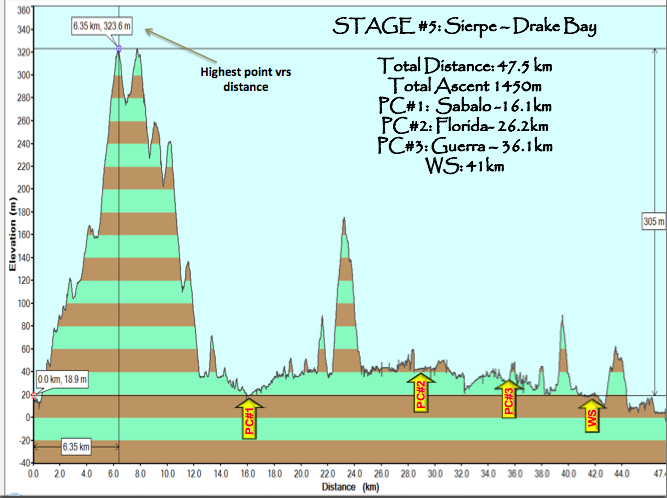
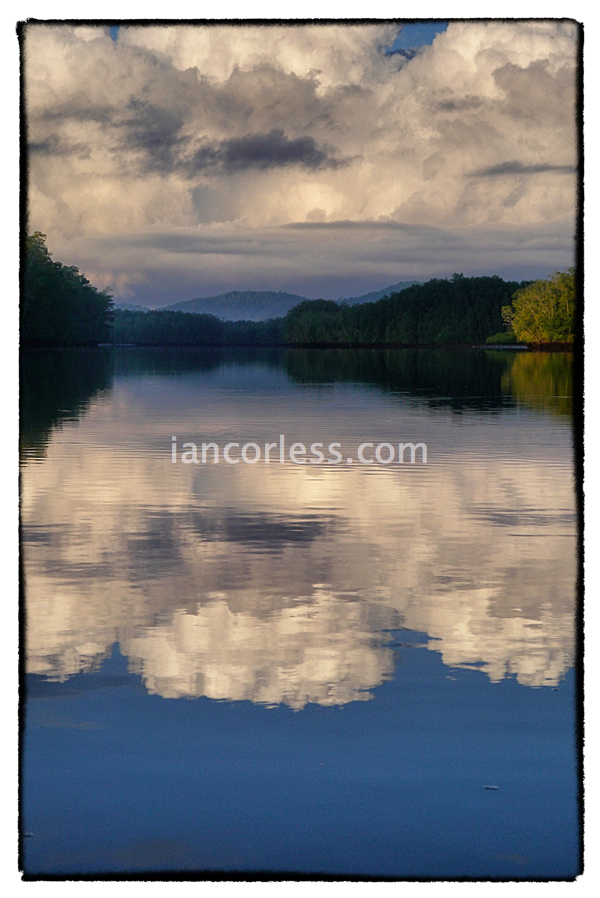
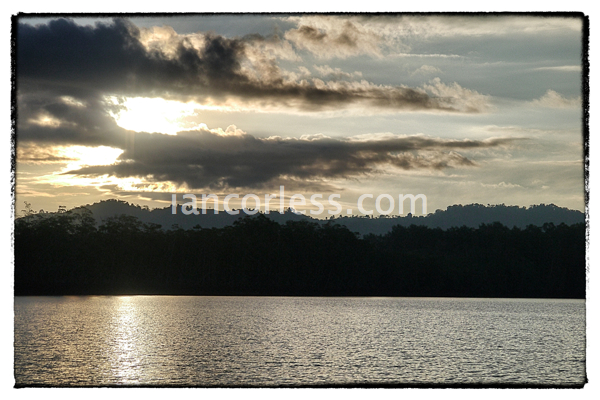
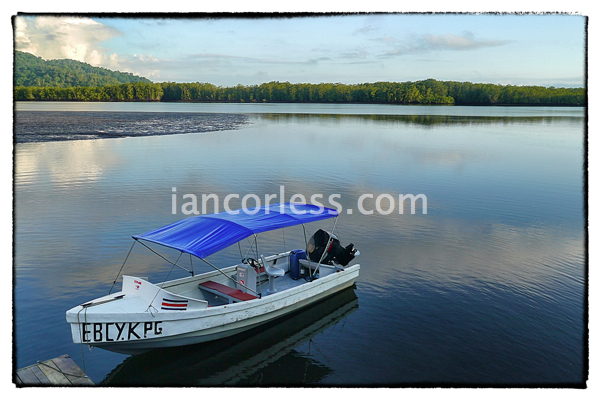
Today’s stage required a short bus transfer and then a ferry to the race start. We transferred, waved the runners off and then had the use of a speedboat to make our way to CP2. No roads to this location…. I have to say the boat trip was a real treat. We saw the sunrise and wildlife emerge for a new day. The driver showed off a little by opening the throttle and weaving from right to left. At our stop point we transferred to the grounds of a private house and set up. I ran into the trail heading toward CP1 to pick my spot and await the front-runners.
At 0600 the runners departed. Dave James had had rough night with broken sleep and was feeling a little under the weather. Would this provide an opportunity for Ismael?
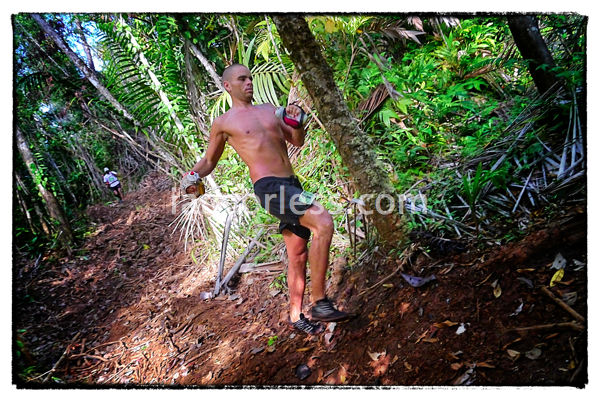
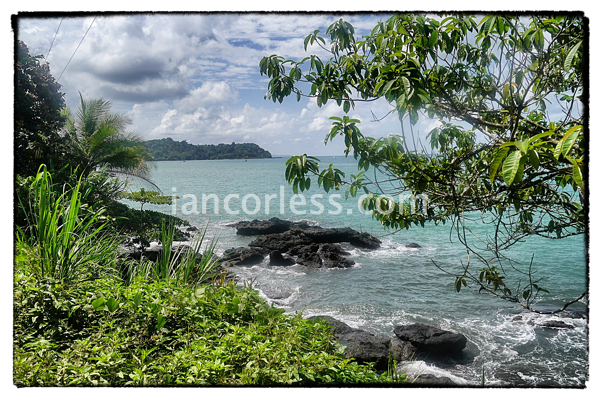
Todays course had less elevation but some of the most beautiful scenery. Dense rainforest with muddy/clay trails, single track that widened to double track and fire trail. Farming fields with long grass and lush vegetation. Water-crossings of varied in size and length. Just before the finish, a small section of road and a few hundred meters of idyllic beach. It had everything.
Running a little behind predicted time, Dave arrived with Ismael just behind. This was about 1km before CP2 and just over 2 hours into the race.
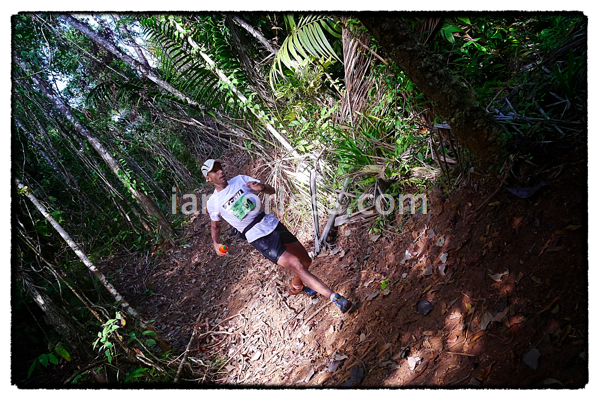
“Looking good Dave” I shouted… no response! Mmm he’s not having a good day I thought to myself. Despite what internal dilemmas he may be having he moved from left to right foot with ease. As Ismael passed, he waved with a big smile. He was obviously enjoying the day and course.
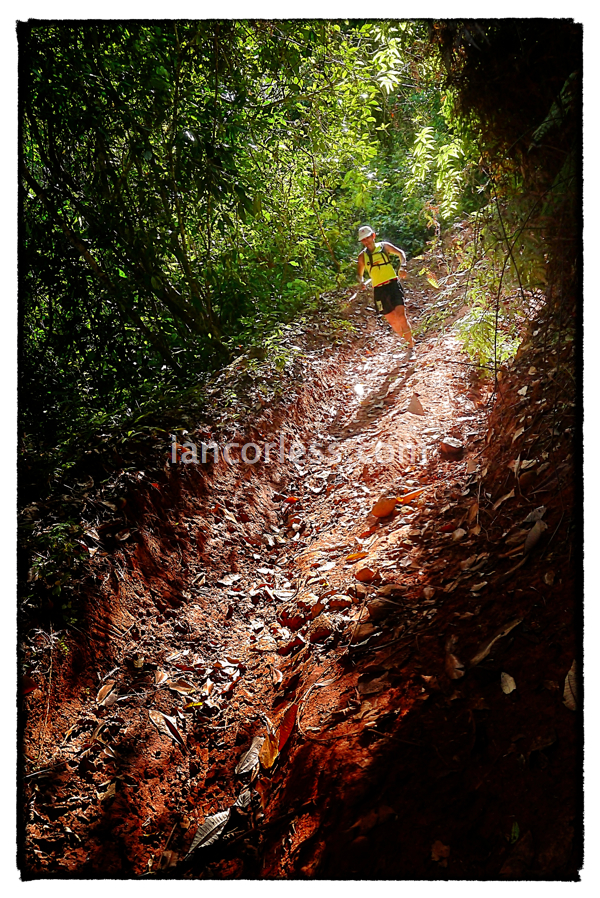
Next to arrive was Jose Lopez who is currently placed 3rd overall. He was certainly finding the tough and slippery clay trail less to his liking than James and Dris. I ran into CP2 with him and then left ahead to capture additional images.
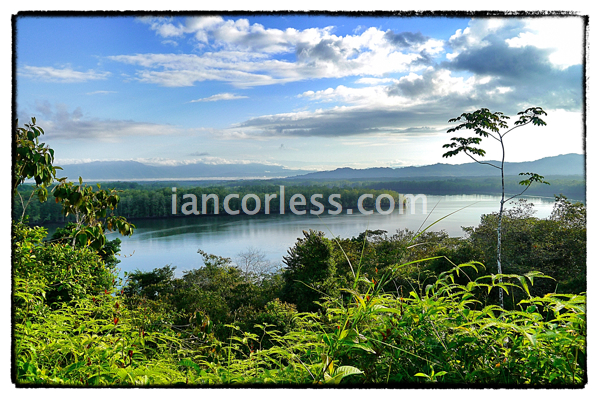
The sun was rising high now and provided greater light as it broke through the patches in the dense canopy above. A small descent with slippery clay provided an opportunity to get an image of Henry Monestel. I then decided to run with him through to the next CP some 10km away.
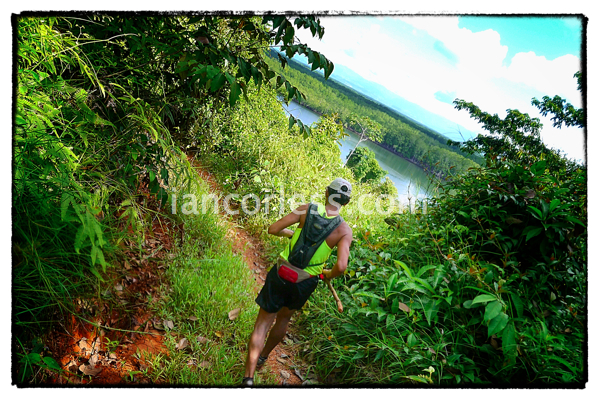
The canopy provided some great shade but when you moved out into the open sections, the sun hit and it hit hard. The difference between the two must have been 20 degrees! The logical thing is to run the shade and jog/ powerwalk the sun sections. It worked well. Every now and again I went ahead, captured an image and then ran with Henry again. The many streams provided an opportunity to completely submerge us and reduce our core temperature or take of a hat and soak it, so important when the heat and humidity is so high.
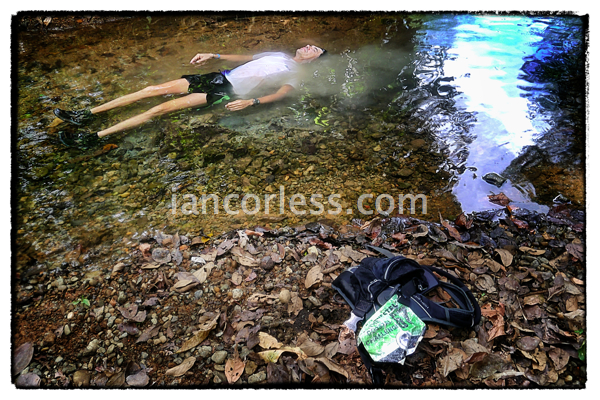
CP3 arrived and no other runners were in sight. I decided to push on keeping Henry for company. Up trail and down trail, Palm trees everywhere. The diversity and difference in the vegetation is incredible. In no time CP4 arrived and I waited a little while in the hope I would see some other runners.
Rodrigo Curazo, RD for the race told confirmed that Dave was struggling. He had arrived at the CP just behind Ismael but they had left together. Lopez currently in 3rd was also struggling. Ultimately the overall positions in the race wouldn’t change but certainly the fight for overall 3rd place was on.
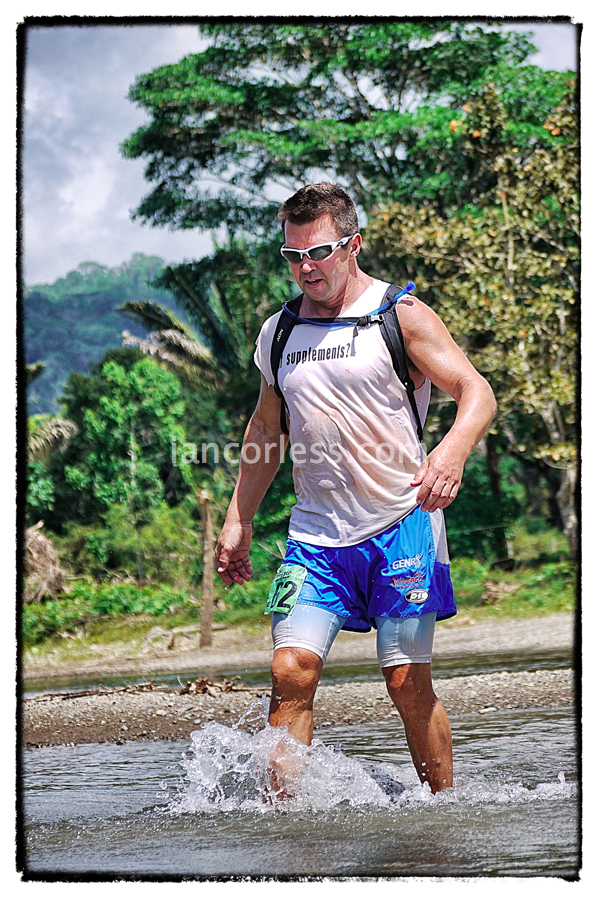
A steep climb straight out of the CP and then the trail dropped to a small village, a right turn and then a water crossing. It was the final section of the race now and a short stretch of road provided access to an awesome stretch of beach and the finish of stage 5.

Dave and Ismael ran the beach together with Ismael taking the stage win by 1 second. Lopez held on to 3rd place despite his issues.

For the ladies, Gemma Slaughter did exactly what she said she would do and attacked! Behind Hale and Meyer worked together to hopefully pull back some time but it was all to no avail. Gemma ran onto the beach beaming safe in the knowledge that had she not only won the stage but also confirmed that her consistency will almost certainly secure her the overall win now. By the time Hale & Meyer crossed the line (together) they were another 35 minutes behind giving Slaughter a 1-hour margin.
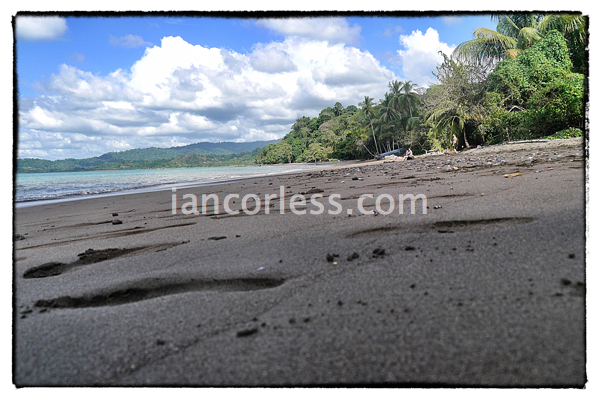
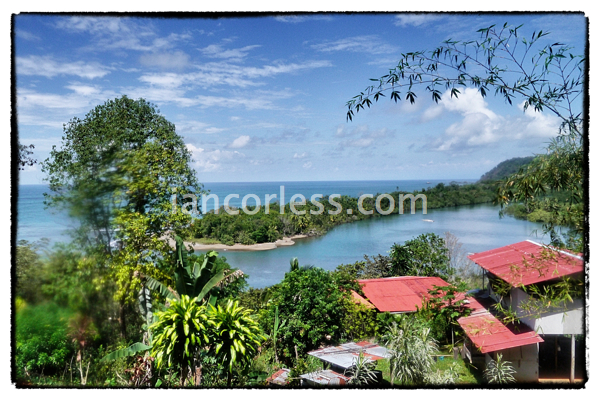
The setting for today’s stage was a remarkable testament not only to the diversity and beauty that Costa Rica offers but also a testament to Rodrigo and his team who provided access to trails that nobody runs on. The final setting at Drakes Beach is a picture postcard setting and our campsite is little more than 100m from the waters edge.
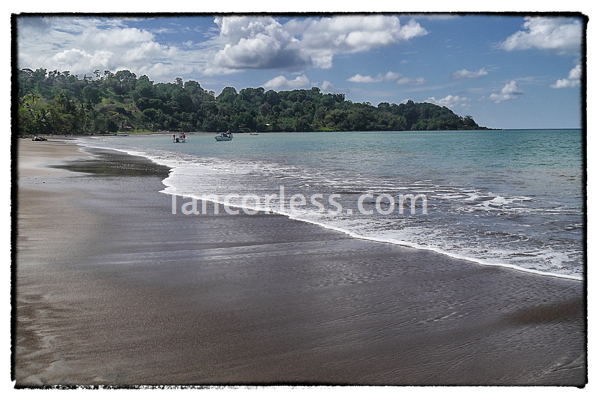
Days running and relaxing afterwards don’t get much better than what The Coastal Challenge have offered today. Apparently, tomorrow’s stage, a circular loop back to our campsite is also ‘special’. I can’t wait. We also get another night at this incredible campsite.
Pura Vida!
Tomorrows stage is the final of the race and a loop circuit back to our day 5 campsite.

A full set of images from day 5 can be viewed HERE
Results for stage

Ants, ants everywhere! But hey, that’s camping right? These little fellas are small but they bite! I made the big mistake of leaving my bag open… it turned into a little ‘night club’ for the little critters. So, 0330 this morning as my alarm went off was all about getting rid of the darn things before I could do anything.
The camp is a buzz early morning. Anticipation for a new day, nerves of what lies ahead and tired bodies ‘testing’ quads and calf’s to see if they will function today. Yesterday saw four drops and several people move down from the Expedition category to the shorter, Adventure category.
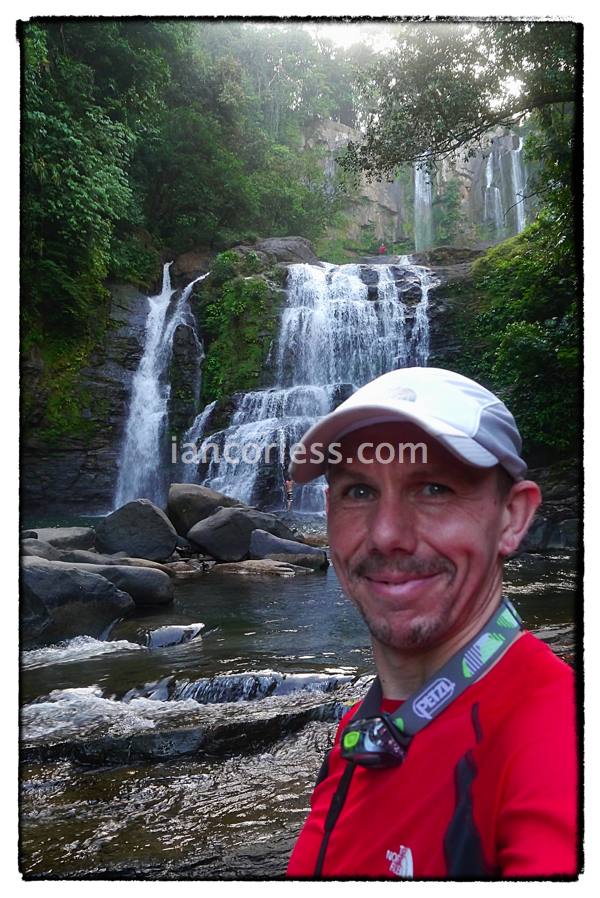
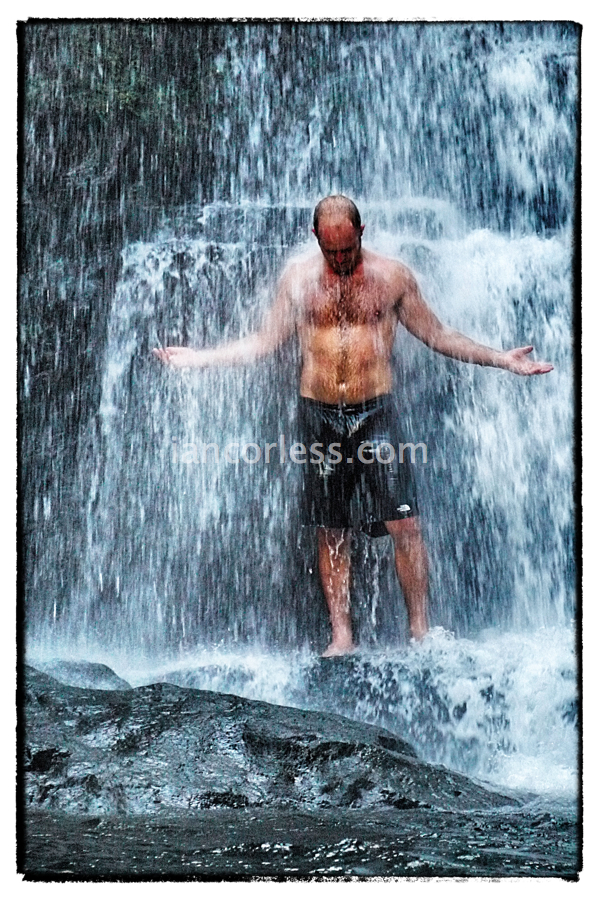
I left at 0500 to arrive at a trailhead and then I had a 4-5km run in along the race route to the Nauyaca Waterfalls… impressive! I had to run the trail with a head torch. It was thick, deep, slippery clay and with reduced visibility one could say it was fun!

Today’s route, the longest so far, had the first imposed cut offs, 7 hours at CP2 and 9 hours at CP3.
The route had a real mix of terrain today. Dense forest, waterfalls, river crossings, and a very long beach section that would be taken in the heat of the day. Many of the runners had some worries of what would lie ahead.
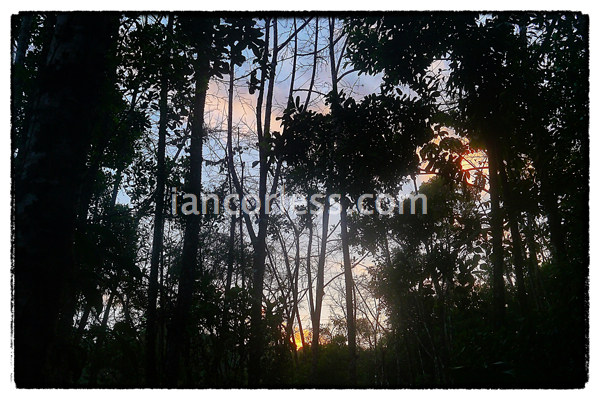
At 0545, with the rising of the sun, the ‘gun’ sounded and they were off. We anticipated the first runner at the waterfalls at approximately 0700. Dave James arrived on the dot… the stage 2 decision to run with Ismael was not being applied today. He arrived looking sharp, fast and focused. He navigating the crossing quickly and was up the trail in a flash. He later told me that he had worked out from the previous day that Ismael was not as good on the ‘ups’, so, he decided to push hard early, hold a gap and then try to beat his own CR for the stage.
 It was over 10 minutes later before Ismael Dris arrived looking less comfortable. He was more thoughtful with his foot placing’s and in contrast to Dave James you could see him loosing fractions of time with each foot strike.

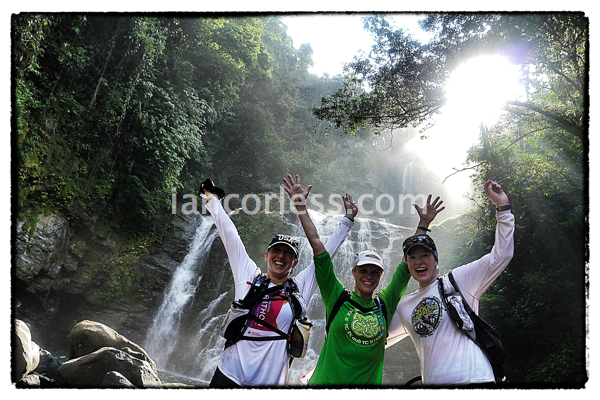


Because the waterfall section was so early in the stage I stayed to see all the runners through. I was rewarded to see the sun rise above the falls and provide us with some of the most remarkable light.

Rob Harsh from Boulder, Colorado gave me an insight into the day.
How was the early section from the start to the waterfall?
“I started easy, very comfortable. It was mostly double track. It was nice and cool, Loads of sounds from the forest. Under foot the terrain was rocky, rough and hard”
And then you arrived at the waterfall; tell me what that was like?
“Awesome, one of the best I have seen. I jumped in too cool down but I wanted to savor the moment. It felt like healing water”
From the waterfall you had to climb up to the next checkpoint?
“Yes, really pretty. Dense rainforest. Green, dark and mossy. Loved it! Then it opened up and we ran a country road”
That road lead to the first high point, did you get good views?
“Great views, rolling hills and the forest in the distance. We could also see the next climb but temperatures at this stage were still cool”
And the climb to the second and final summit?
“It was long and plenty of bushwhack. That’s what I want though… it was hard. The vines grabbed our feet. I was alone for this section. It was great to listen to the sounds, the descent was brutal. Really steep in sections. It shattered your muscles. I was glad to see the beach”
The beach… that was some long hot beach hey?
“I probably ran three quarters of the beach. But it was really hot water. It was hotter than running at Badwater…” really, hotter than Badwater? “Yeah, the humidity down here is just sapping. It is unbearable. You have to pay so much attention to hydration”
Did you take a dip at the end of the beach?
“For sure, it felt like a spa. The suffering ebbed away as we soaked”
And then you had a short and some dense forest to the road?
“Yep, super dense. Lots of wildlife and you had to almost cut your way through”
How did you feel on the final 4km road section?
“Ecstatic, for the first time that section was shorter than predicted. The finish was a welcome sight. It was a great day”
How do you feel for tomorrow, it’s a shorter day but more climbing?
“I think I have my groove now. I am sore, tired but I have no feet problems. Gonna stay steady and enjoy the scenery and hopefully enjoy the finish”
From the waterfall, I ran back to the car and then went to the start of the Adventure Race (and CP3 for the Expedition).
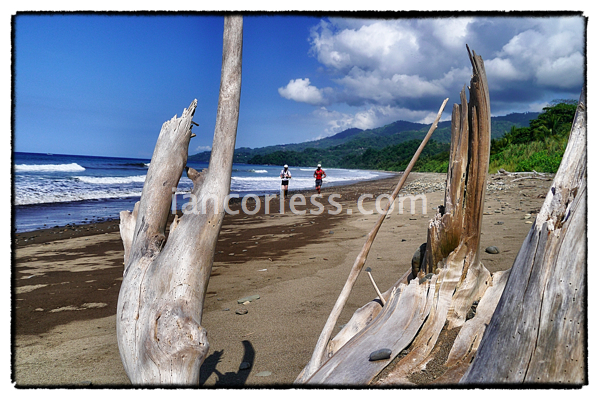
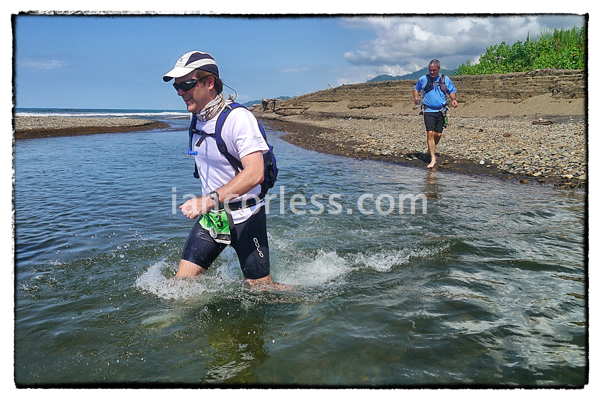

I now ran the entire Adventure section capturing images of runners as they progressed along the Playa Hermosa and then Playa Uvita. It was now mid morning and the heat was beating down. It was really hard work. At the end I waited in the shade to capture Dave James and Ismael as they ran towards me. Dave arrived still looking incredibly strong. He had gone off course and was really frustrated but his lead was secure. However, id pre race objective of maybe setting a new CR was gone. After the race I asked what happened “Some of the course markings had been moved which is very unusual for this race. I wasted time finding my way back to the route. These things happen but I was feeling really good”

His lead was secure; Ismael was nearly 30 minutes behind.

At the finish weary and tired runners arrived in dribs and drabs expressing the satisfaction of having endured a tough but beautiful day in Costa Rica.
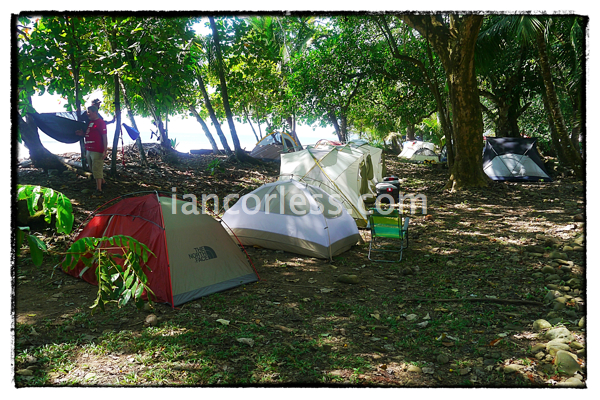
Tents were pitched and food was consumed. Our campsite today was next to the beach and as the sun set, we had the treat of Humpback Whales swimming close to the shore.
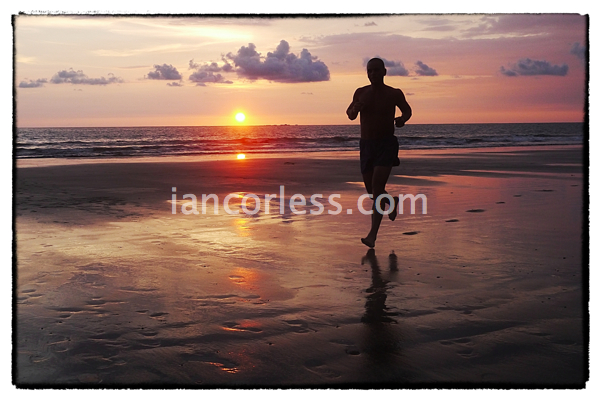
What a day! Pura Vida.
RESULTS:
Times to follow (apologies)
Overall Results at the end of stage 2:
Mens
Ladies
A selection of images from the day can be viewed HERE
Day 4 is another tough stage with a tough climb and then a series of peaks at altitude and then a VERY steep descent.
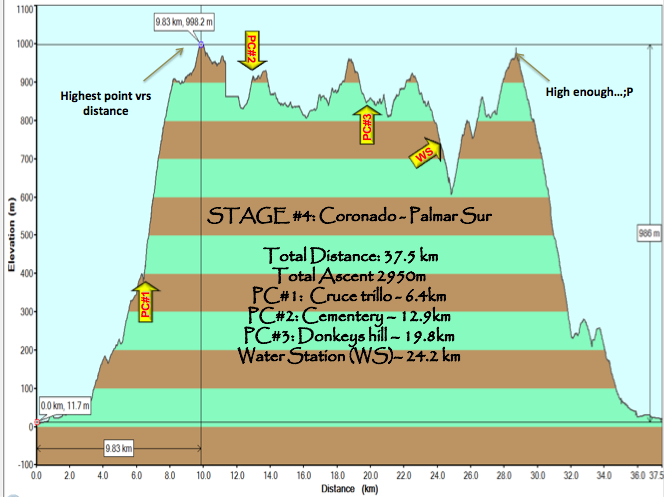
Saverge Valley to Dominical Beach via Brujo, Dos Boscas and Hatillo

The sound didn’t stop… a million ‘Chichara’ echoed into the night providing the most awesome soundtrack to a night in a tent! Believe it or not, most people hit the sack by 1930hrs. For a few adventurous runners it was 2000hrs.
The heat had subsided but it was still a warm and humid night. Tents are pitched ‘inner’ only so as to allow for more airflow and sleeping bag? No, no, no… most definitely not required.

0330 alarms disturbed the now quiet beach. The Chichara had finally gone for some RnR, it was our turn to disturb them. The kitchen staff had once again done an incredible job. These guys are doing an endurance event themselves. Cook breakfast for 0400, pack up and load up, move to the next stage finish, unpack and set up and then start cooking ready for the arrival of the runners. Provide lunch and then cook dinner. The next day, do it all again.

I went ahead of the race today, as I wanted to climb to the second summit at 760m and capture images on the way as the front-runners came towards me. This section of the course had dense forest, mud and a whole mixture of different terrain. It was ‘proper’ jungle! I was on the trail by 0630 and I anticipated the front-runners around 0815.

Back at camp runners assembled and started at 0545 with the start of a new days light. The sky was red… it was going to be a hot day. Total distance for the day was 39km but CP1 and CP2 although only 11k apart on this terrain and with the heat, this is quite far. Carrying enough liquid was essential.

Day 1’s eagerness was tempered with a little carried over fatigue and the realization that this was going to be a much harder day. Dave James in the lead by 46 mins overall was going to run with Ismael Dris today. He had said to me the night before “I have no need to run any harder that Dris wants too, it will be nice to spend time with him on the trail”.

Like clockwork they arrived at my ‘hiding place’ at around 0825. Dave, looked very relaxed and in control with no shirt and two hand bottles. Dris looked less secure as he immediately fell behind. They sped past with Dave stopping for a moment “make sure you go up Ian, the trail is awesome, some really dense undergrowth” and they were off!
Monestel and Lopez placed 3rd and 4th and held these positions to the end. Dripped in sweat they ran along the trail eyes focused on each step ahead.

I headed up the trail and the undergrowth closed in. It was really great to see. Noises wrung out from all around me. You can’t pinpoint anyone sound, it’s just a carcophony of noise. However the roar I had heard earlier (twice) did prick up my ears.

Just before I reached the summit a bunch of runners came through, obviously using the approach of safety in numbers. And then the first lady, Tricia Lopez from Costa Rica.

I continued up the trail and then turned and started my run back to the finish line. The objective to track Tricia and get a selection of images and then leapfrog to get some images on the beach.
 By this stage Dave and Ismael had finished the day in just over 5hr (5:01), 3rd place Monestel arrived 1hr and 20 mins later.
The beach section, although completely flat seemed to be the ‘gripe’ of the day. By this time runners were dehydrated, tired and just wanted to finish. However, it did have a couple of great water crossings to help cool everyone down,


Tricia held on to her advantage and crossed the line first lady at 1:14 pm, some 2 hours and 22 mins after the lead men, Angela Mayer from the USA and Gemma Slaughter finished in joint 2nd just 10 minutes behind Tina. They had definitely closed over the latter stages.

The Coastal Challenge is all about participation and as Kami Holtz, Pam Nielsen (both from Minnesota) and Helen Lavin (California) all first timers at The Coastal Challenge are as they say themselves, ‘middle of the packer’ but they had a great day finishing in just over 8 hours – “It was a challenging course, it was muddy, technical with tough climbs but we are rewarded with beautiful views. It is what we are here for. However, the beach at the end went on forever. Plus the sun was up at this point just beating down on us.”
You can see a full set of images from today HERE
Results and other additional race information are available on the race website HERE
Tomorrow
Stage 3 is a longer and tougher stage. Starting at Dominical Beach we head up and up to a highpoint of 800m but this terrain includes river running and some stunning waterfalls. At 48k it will test already tired runners and again, we have another beach finish.
Not even a 4am start could dampen the spirits of the participants of the 9th edition of The Coastal Challenge in Costa Rica.
Leaving the Best Western in San Jose some 100+ racers, crew and staff made the 2.5 hour journey to the coast and the start of the first stage at Quepos. A total distance of just under 34k this day was billed as an ‘easy’ day to allow the participants to adjust to the heat and humidity. Believe me, they needed it…
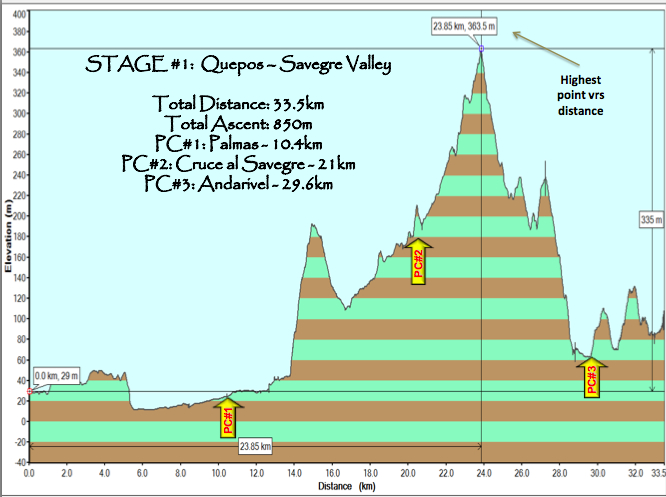
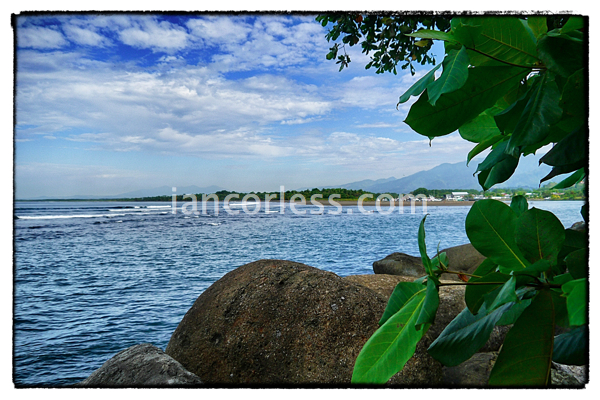
Quepos is a small town on the coast of Costa Rica and the arrival of several buses was certainly a point of interest, pre-breakfast in this little town. Runners congregated at the start and prepared for the challenge ahead. Filling packs, getting bottles ready and nervously laughing.
At 0900 they left the town and the first 10k was on road or pathway. Unusual you would think for a rainforest race? But a flat 10k of consistent surface is maybe just what all the runners needed to ease them into the day ahead. As expected Dave James hit the front and stayed in that place all the way to the finish.
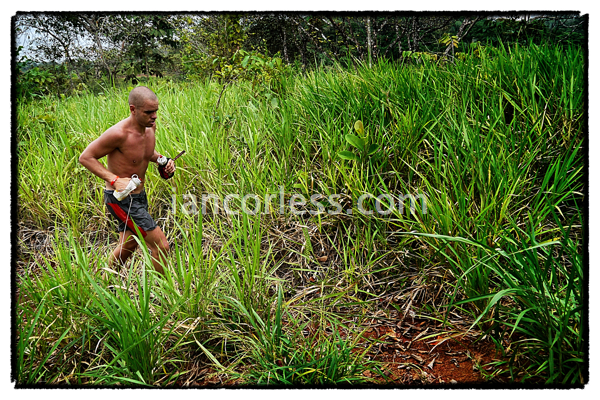
Dave James dominating the race from the front
I had gone to checkpoint 1 at 10k and then left following the course and ultimately would make the journey to the finish line under my own steam. My plan was to get into the jungle and then capture the runners as they approached.
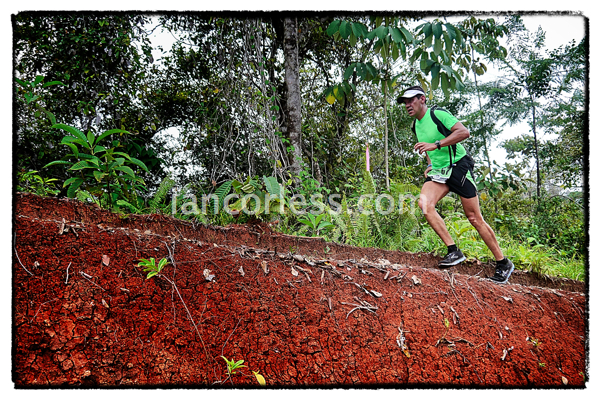
Coming from a cold winter in the UK the heat and the humidity hit me straight away. Within minutes I was soaking wet and remained that way for the whole day. The front runners seemed in control but very early on it became apparent that if you pushed too hard it was going to be a tricky day.
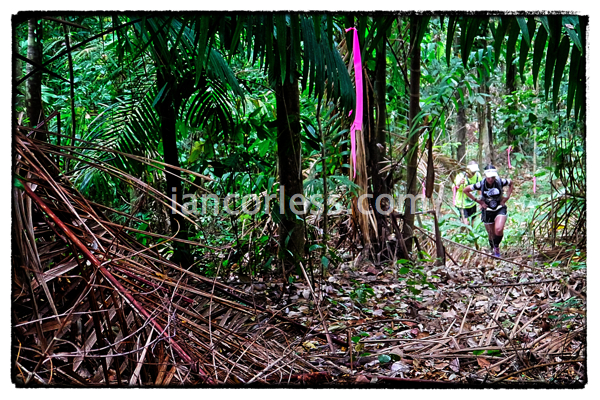
Follow the pink ribbons
The course was a mixture of rocky fire trail and jungle. Apart from the heat the most notacable thing was the noise from the canopy. Millions and millions of insects created a chorus that was deafening.
As the course progressed and we descended down to the river, a metal bridge facilitated a safe crossing and checkpoint 3. From here it was just 6k to the finish.
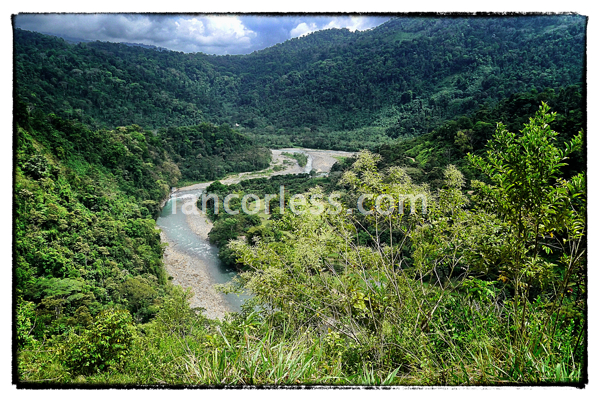
The Coastal Challenge team was already busy laying out peoples tents and arranging luggage so that it was ready for our arrival.
I have to say I was pleased to see the finish line. The heat really drained and as runners arrived you could see the stress and the impact on faces.
“This is the easy day” one lady said.
“Yeah, tell me about it… today is gonna be so interesting” replied another.

Cool campsite on the beach next to the river
With a river to cool off in and food available the recovery process immediately starts. The runners, the team and the location is excellent. What more could you ask…

When the running is done, the relaxing begins
Dave James finished in 1st place in just under 3 hours (tbc)
T Dris had an excellent run to pull back into 2nd place. He had early gone off course in the day and when he passed me he said he had run an extra 6k! A top 10 finisher at MDS he has now 46 mins behind James.
In 3rd J Lupez finished just a handful of minutes behind Dris.
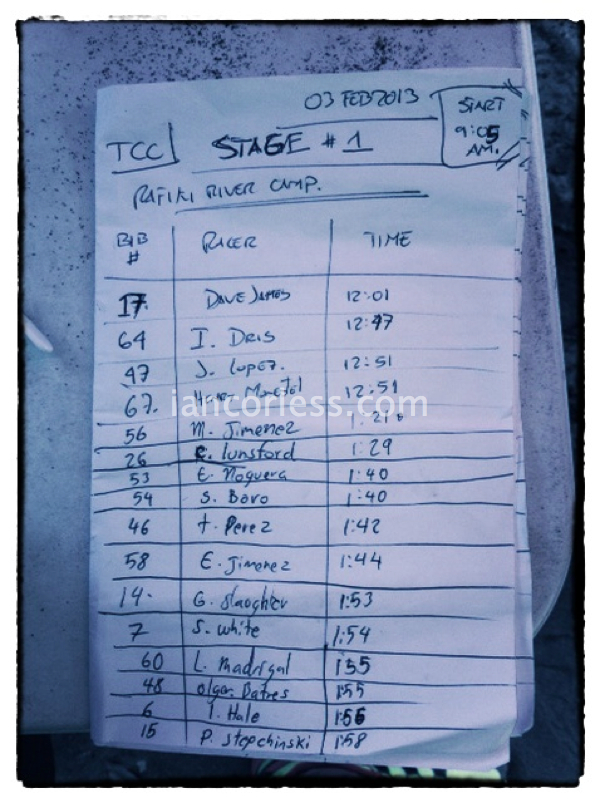
Stage Results
You can view The Coastal Challenge website HERE
Tomorrows stage is 39k with 2250m of ascent and we get underway early at 0530.

December 20th, 2012
Question – “Ian, are you free the first 10 days of February?”
Answer – “I leave Spain today and I am back in the UK late tonight. I have a busy morning on Saturday and I have some interviews to do Saturday afternoon but I will be free around midday to chat if you are? Alternatively drop me an email. Hope you are well? February should be okay, lets discuss.”
Reply – “Great, so you can go to Costa Rica for the multistage ‘Coastal Challenge'”
Answer – “Erm, yes! of course”
So, with just 4 weeks to prepare I was suddenly thrust into a week in the jungle. A whole new experience for me but one that I am so excited about! The Coastal Challenge.
I would normally be thinking to myself this is awesome. I get to go to Costa Rica, take part in a 6 day multistage, take photos, write an article and of course get some interviews. Unfortunately my long term knee injury is going to stop that… 225km over 6 days will just be too much and of course, I am not fit! Well, not race fit.
But as I said to my client and the RD, I think it is important to go these events and see it from both sides. If I am taking part, I wont see what is happening at the front of the race. I wont see ‘the race’ for the win. I also wont see the logistics and planning that go into a race like this. My trip is all about understanding every aspect of this race. So I am happy. I plan to dip in and dip out of stages but ultimately report on and bring back a whole series of images and stories that I can relate back to readers and listeners worldwide.
The first question I had was, can I die?
Heat Illness and Dehydration
Individuals who are not well conditioned traveling in hot, humid environments are susceptible to both heat illness and dehydration. Heat illness includes both very benign conditions such as heat rash as well as life threatening conditions including heat stroke. Participants should carry enough liquids to ensure hydration during the event. It is important to eat and drink appropriate amounts of liquids with electrolytes during the event to reduce the incidence of hyponatremia. Water has not been an issue in previous Coastal Challenge’s, however, this year portions of the race will be through agricultural areas that will require purification before drinking.
Plants and Animals
There are 135 species of snakes in Costa Rica with 17 being considered dangerous. Mostly these are members of the Viper, Coral and Boa families. The best prevention is watching your path and being aware.
Water Safety
While the water in Costa Rica is generally considered among the safest in Central America, traveler’s diarrhea does occur. It is advised that any water be treated prior to drinking unless its safety can be guaranteed. Speak to your Family Physician about treatment issues (Pepto Bismol, Antibiotics, etc.)
Sun
February is considered the dry season so expect warm temperatures with average highs of 20-25C/70-85C depending on altitude. Furthermore the race will be going through some of the driest areas of Costa Rica. Proper sunscreen is essential (SPF 15 or greater) with enough to last multiple daily applications for the entire race.
Okay okay, that sounds okay… the chances of survival are pretty good. So then, what is The Coastal Challenge?
The “Rainforest Run” promises to be spectacular and challenging. The course has been designed to emphasize point-to-point racing, which will put the “finish line” at or near camp at the end of each day’s race. The course is measured and will be marked. You will be given accurate course measurements and maps (Google Maps, Nat Geo maps) with route profiles for terrain, approximate distances and elevation gain or loss.
Set along Costa Rica’s tropical Pacific coastline and weaving into the Talamancas, a coastal mountain range in the southwest corner of Costa Rica. The race finishes near the border of Panama in a small and serene fishing village that until recently was only accessible by fishing boat.
Mountain, trail, rainforest, single track, across ridges, highlands and coastal ranges. We will run along beaches, rocky outcrops, reefs, river estuaries and the race finishes in the Corcovado National Park, one of the premier rainforest experiences in the world. A Unesco World Heritage site it defies description.
The course has a total elevation gain of more than 34,000 feet.
What is a Rainforest?
Rainforests are forests characterized by high rainfall, with definitions based on a minimum normal annual rainfall of 1750–2000 mm (68-78 inches). The monsoon trough, alternatively known as the intertropical convergence zone, plays a significant role in creating the climatic conditions necessary for the Earth‘s tropical rainforests.
Around 40% to 75% of all biotic species are indigenous to the rainforests.[1] It has been estimated that there may be many millions of species of plants, insects and microorganisms still undiscovered in tropical rainforests. Tropical rainforests have been called the “jewels of the Earth” and the “world’s largest pharmacy“, because over one quarter of natural medicines have been discovered there.[2] Rainforests are also responsible for 28% of the world’s oxygen turnover, sometimes misnamed oxygen production,[3] processing it through photosynthesis from carbon dioxide and consuming it through respiration.
The undergrowth in a rainforest is restricted in many areas by the poor penetration of sunlight to ground level. This makes it easy to walk through undisturbed, mature rainforest. If the leaf canopy is destroyed or thinned, the ground beneath is soon colonized by a dense, tangled growth ofvines, shrubs and small trees, called a jungle. There are two types of rainforest, tropical rainforest and temperate rainforest.
Logistics
The race is supported. This makes a big big difference. Although the race has a similar format to the Marathon des Sables, the big difference is that you do not need to carry your kit whilst running. This multistage is very much a race from the sense that the runners can race light and fast. The top runners will keep it minimal, hand bottles or a small pack. However, for most participants they will carry a pack with some ‘essentials’ and of course a bladder or bottles.
Base camp is set up by the race team. They transport the participants baggage to the finish of each day. Runners can sleep in a hammock or tent.They provide food (apparently excellent) and they also provide a series of check points and feed stations during the race.
After asking several questions, I was told by Rodrigo Carazo the following:
TNF Mica 1 Tent
The Mica 1 tent will be excellent as I can pitch just the ‘inner’ allowing me to potentially remain a little cooler in the ridiculously hot and humid climate.

Arc’teryx
Race Schedule
One’s to watch
Footnotes
FEET CARE by John Vonhof
Conditioning Your Feet
In the same way you train your legs and cardiovascular system, you need to condition your feet for the rigors 150 miles of The Coastal Challenge in Costa Rica. In short, that means training your feet in simulated race conditions. Train on somewhat similar terrain—sand, rocks, trails, hills, and in water. Knowing in advance how your feet will respond to these conditions will help you anticipate problems before they occur. Strengthening your ankles will help prevent sprained ankles common to uneven terrain and trails. Add in some walks or runs of longer amounts and vary your distance. The more miles you can get on your feet the stronger your feet will be.
Shoes
When selecting shoes, make sure your toes have wiggle room and your heels are snug with little up and down movement. Shoes with mesh may be cooler but tend to allow trail debris and sand into the shoe. Don’t start the race with worn out shoes. Make sure the shoes fit well and have space for swollen feet and toes.
Socks
Athletes should wear moisture-wicking socks. Try a few types of socks and decide whether a single sock, a thin liner with an outer sock, or two socks are the best for your feet. Remember if wearing more than one pair, more space is required inside your shoes so be sure your shoes are sized big enough. Plan on several changes of socks. The Injinji toe socks place each toe into its own little sock and might be a good move if you are prone to toe blisters.
Gaiters
Gaiters keep sand, grit and gravel, and trail debris out of your shoes and socks. There are many commercially made gaiters available to purchase or make your own. Those with a breathable material are preferred. Styles which attach to the shoe’s upper are preferred over those with the strap under the shoe since they make it easier to change socks.
Skin Preparation
The most beneficial step you can take to prevent problems is to reduce your calluses. Treating blisters under calluses is difficult and sometimes impossible. Use a callus file after showering or use callus remover creams to soften the skin.
Toenail Preparation
Untrimmed nails catch on socks putting pressure on the nail, causing blisters and black toenails, and cut into other toes. Toenails should be trimmed regularly, straight across the nail. Leave an extra bit of nail on the outside corner of the big toe to avoid an ingrown toenail. After trimming, use a nail file to smooth the top of the nail down toward the front of the toe and remove any rough edges. If you draw your finger from the skin in front of the toe up across the nail and can feel a rough edge, the nail can be filed smoother or trimmed a bit shorter.
Blister Prevention
If stopping to rest on the trail, take your shoes and socks off to air your feet, elevating them if possible. If near water, cool your feet with a quick soak. Use a silicone-based lubricant, like Hydropel or Sportslick which helps drive moisture away from your skin and reduces friction between your feet and shoes. Empty your socks of rocks and debris that can cause blisters, sores, abrasions, and cuts. If prone to blisters, consider taping your feet before problems develop.
Blister Treatment
Attend to hot spots when they develop to prevent them from turning into blisters. Cover these with tape to eliminate friction. Blisters should be drained and covered with Spenco 2nd Skin, Blister Block, or Compeed, and then tape. Your feet must be cleaned of all lubricant and oils for the patch to stick. If using a pin to drain the blister make several holes. If using a small scissors, make two small “V” cuts. Make the holes or cuts at a
point where foot pressure will expel any additional fluid build-up. Try to keep the skin on the roof of the blister. After applying a patch, roll your socks on and off to avoid disturbing the patch. Practice applying blister patches on areas of your feet most prone to problems.
Your Foot Care Kit
Wise competitors carry a small foot care kit in their packs. It doesn’t have to be big but it has to be right for your feet and small enough to fit in a Ziplock bag. I’d recommend a small container of Zeasorb powder or BodyGlide lubricant, alcohol wipes to clean oils off the skin before applying a blister patch, tincture of benzoin wipes, a small Ziplock bag with 1-inch Spenco 2nd Skin patches, a sewing needle and thread to drain blisters, and at least two yards of Leukotape wrapped around a small pencil. Duct tape can be substituted for Leukotape if you prefer. Of course it goes without saying that carrying a blister kit is useless if you don’t know how to use the materials. Use the time between now and the race to learn how to patch blisters and tape your feet before an event.
Foot Care at the End of the Day
After each day’s segment, proper care of your feet can help prepare you for the next day.
Using lightweight flip-flops around camp will allow your feet time to air and heal. If possible, soak your feet in cool water. Elevate your feet when resting. Rotate your socks to keep your feet as dry as possible and wash dirty socks. If your feet swell, you may have to remove your insoles. Use Super Salve, Bag Balm, Brave Soldier Antiseptic Healing Ointment, or a similar ointment to keep your feet as healthy as possible.
John Vonhof – Fixing Your Feet: Prevention and Treatments for Athletes, 3rd edition, June 2004 www.footworkpub.com
Essential Medical Kit
Finally….

The Coastal Challenge chose the spiral symbol because of its simple and transcendent beauty. Many of the most universally recognized meanings attached to the spiral seem relevant to the adventure in which you are about the take part. To many cultures the circular motif signifies centeredness, tranquility and balance.
Also a basic element in Western ideography, the clockwise spiral is strongly associated with water, power, life, the earth or sun, time, a journey, independent movement, and migrations of tribes, all things that will most definitely shape your life over The Coastal Challenge
Visit the race website HERE
I will be updating my blog daily with a report and photos. Also check the Talk Ultra Facebook page and Twitter feed for any updates as they happen…..
Providing I can get a signal in the rainforest.
 IAN CORLESS