The end is in sight. After five brutal, beautiful days in the high Himalayas, Stage 6 of the 2025 Everest Trail Race delivers the final blow and the final reward. It’s 28.5 kilometres fo Lukla, a day marked by more descent than ascent: 2612 meters down, 1578 meters up, and every single step earned.
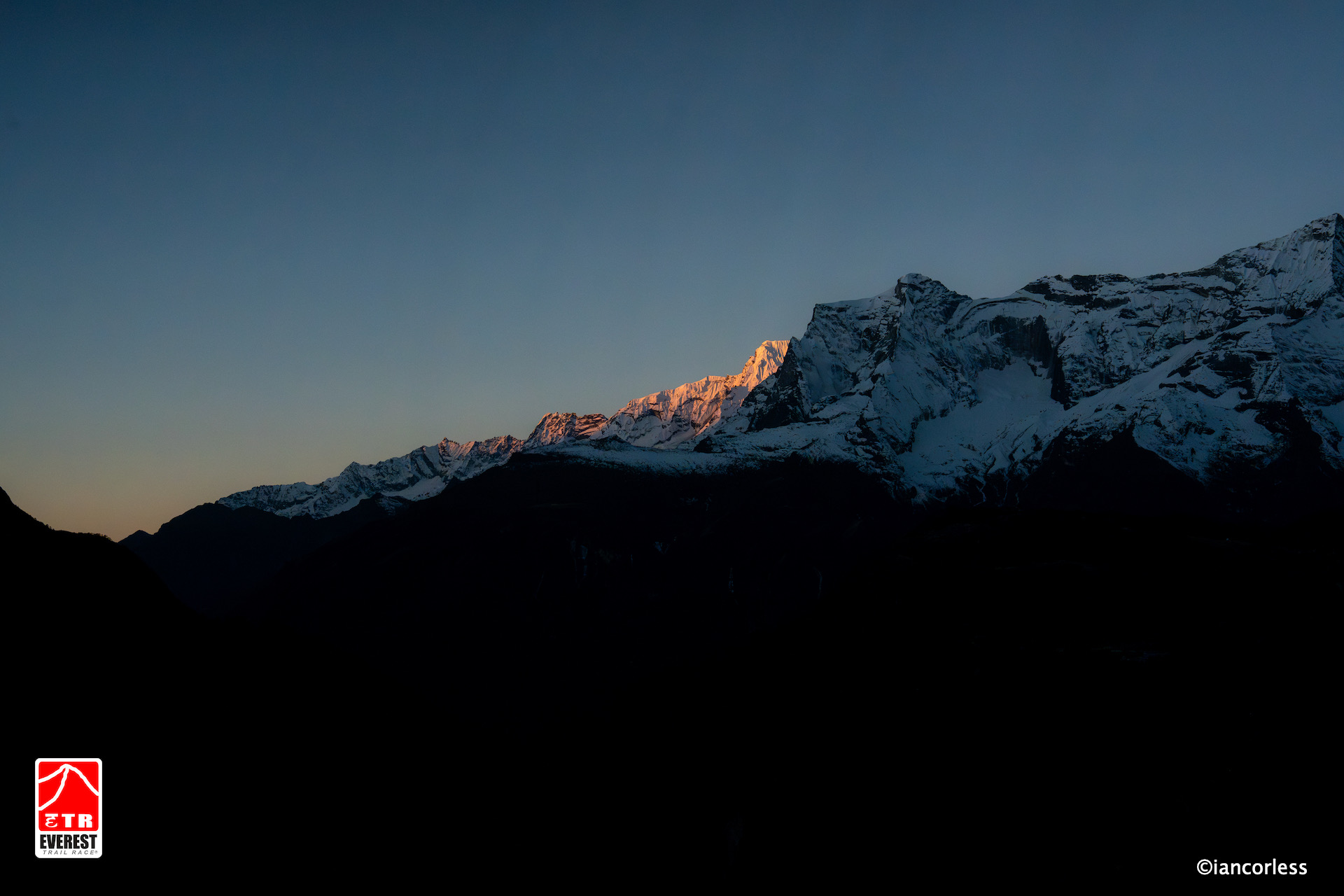
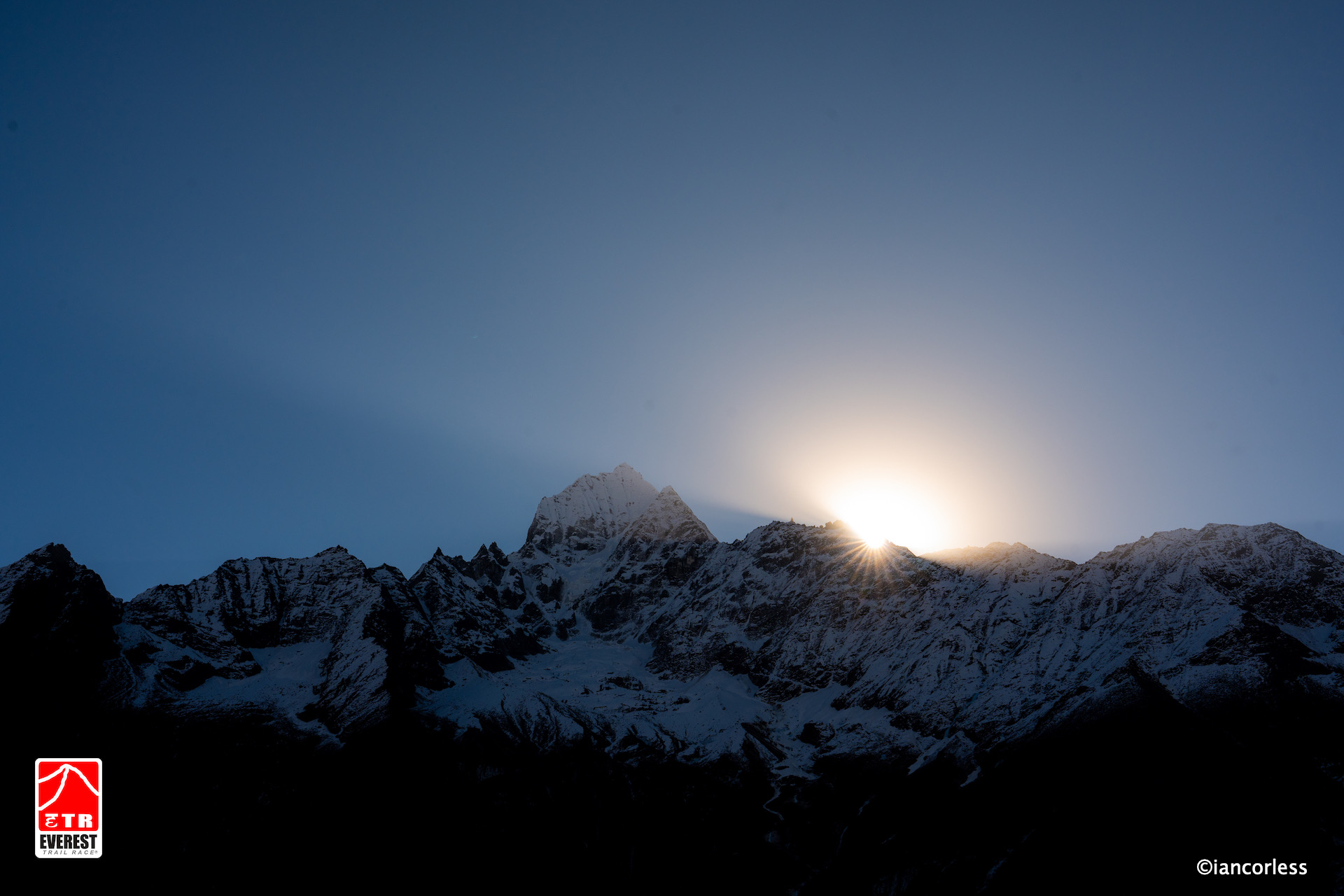
An early start, the arrival of the sun and soon, the heat will come – not only in the sky but with the bodies of each participant.
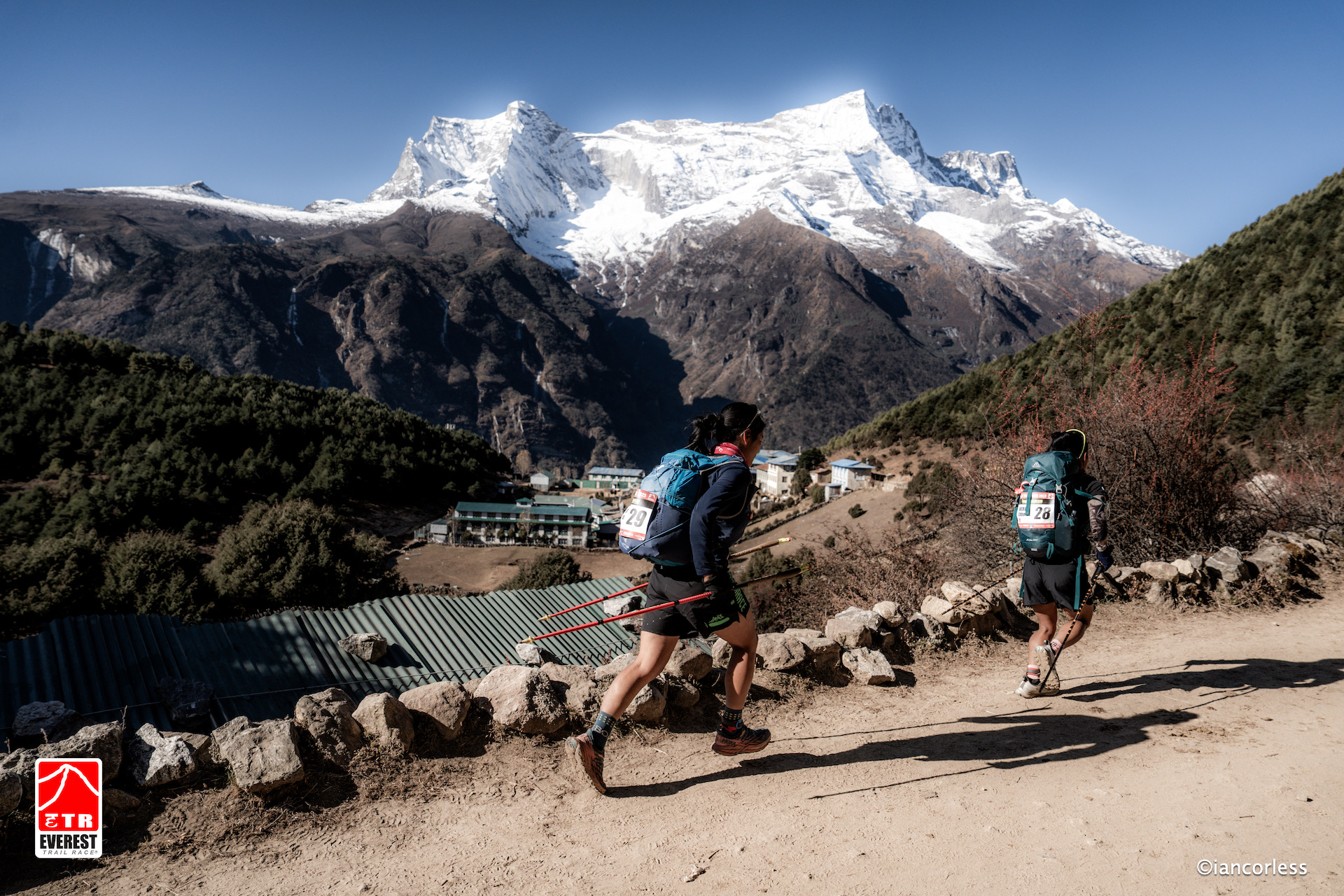
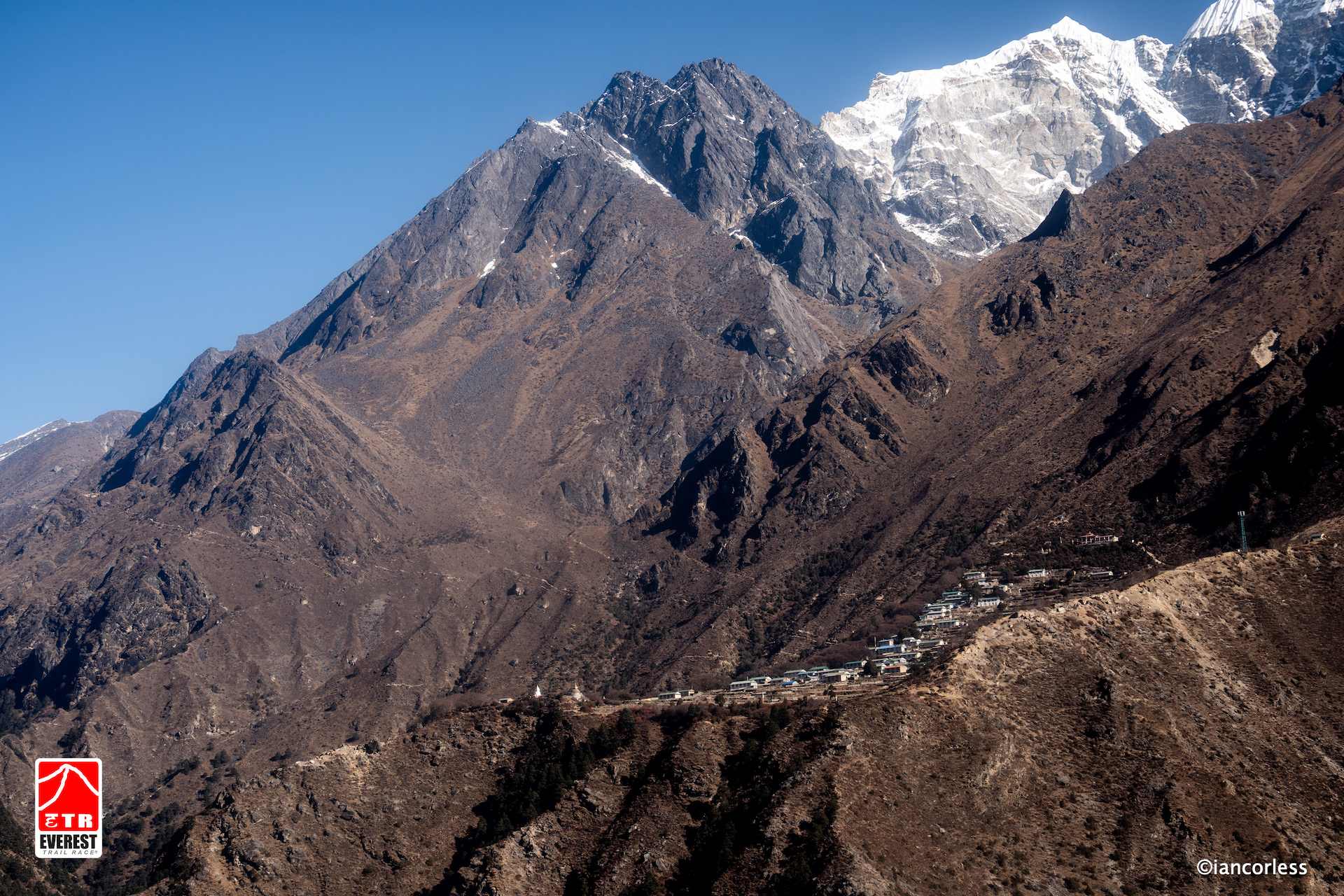
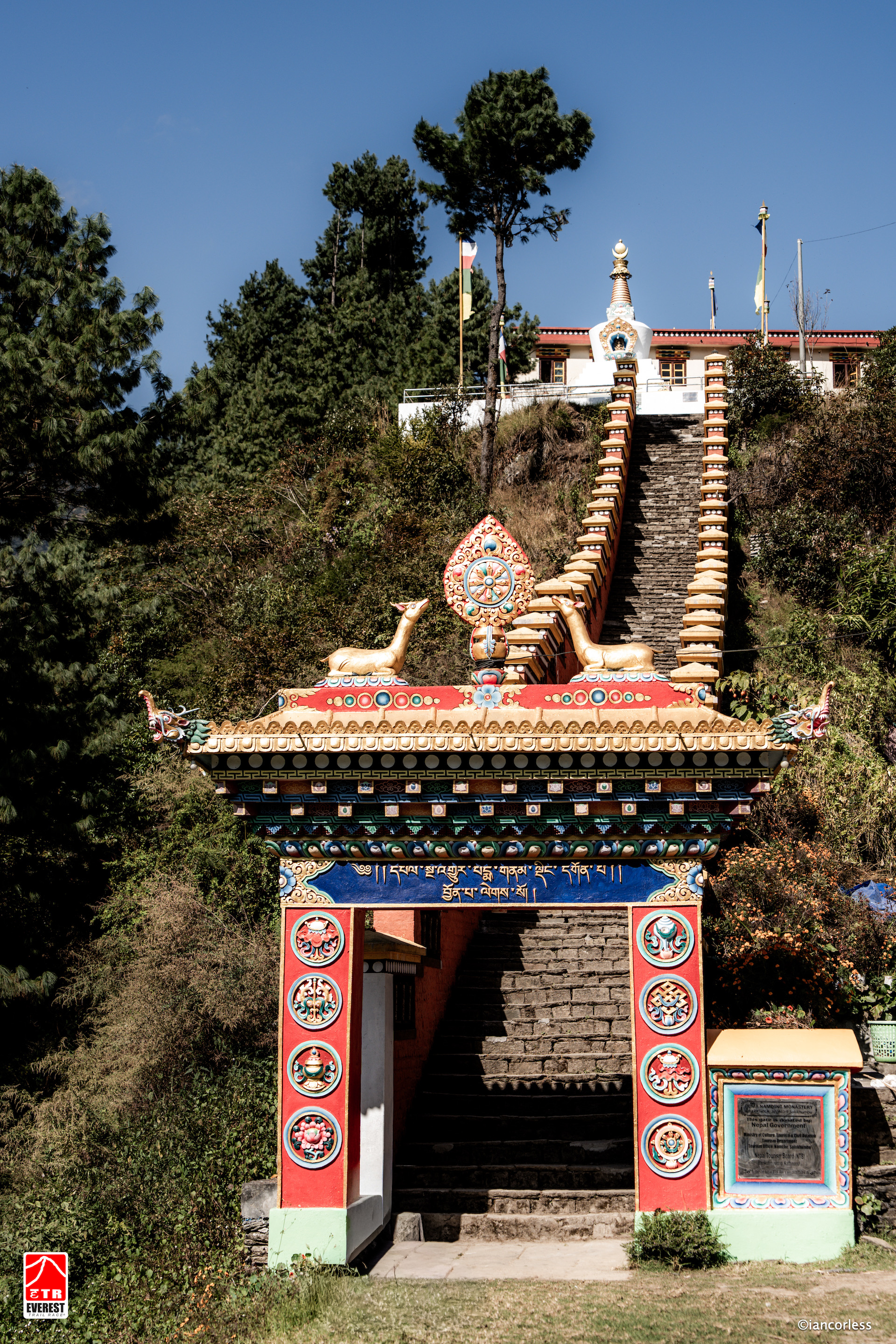
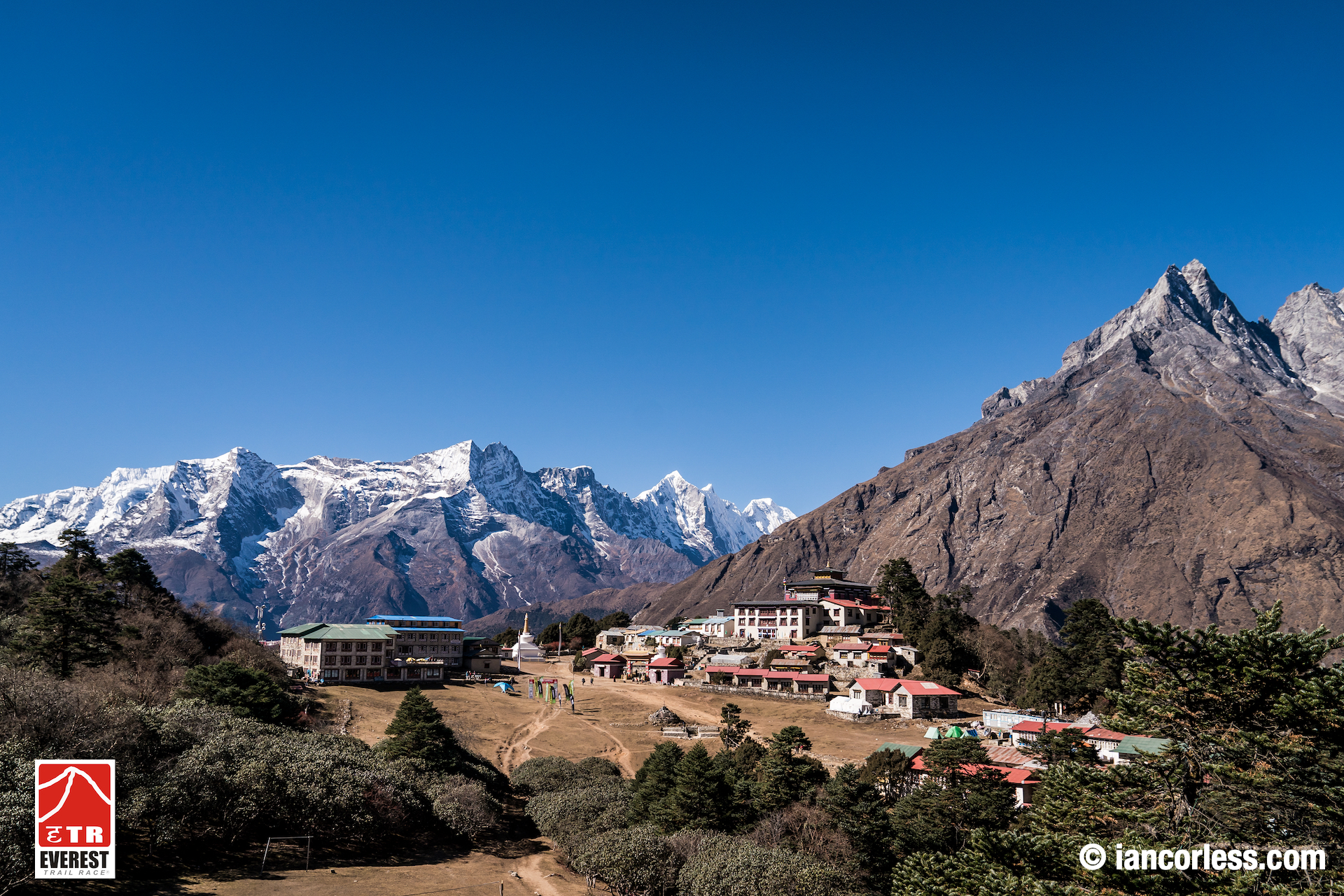
The day kicks off with iconic trails that weave from Stupa to Stupa to Namche Bazaar, the buzzing Sherpa hub perched on the mountainside like a fortress.
The backdrop behind, stunning, but the participants don’t get a chance to see it…
Namche brings checkpoint 1, it’s welcome, the early kilometres had worked the body hard with a steep descent, followed by a gentle climb and then an ‘easy’ run to the refreshment.
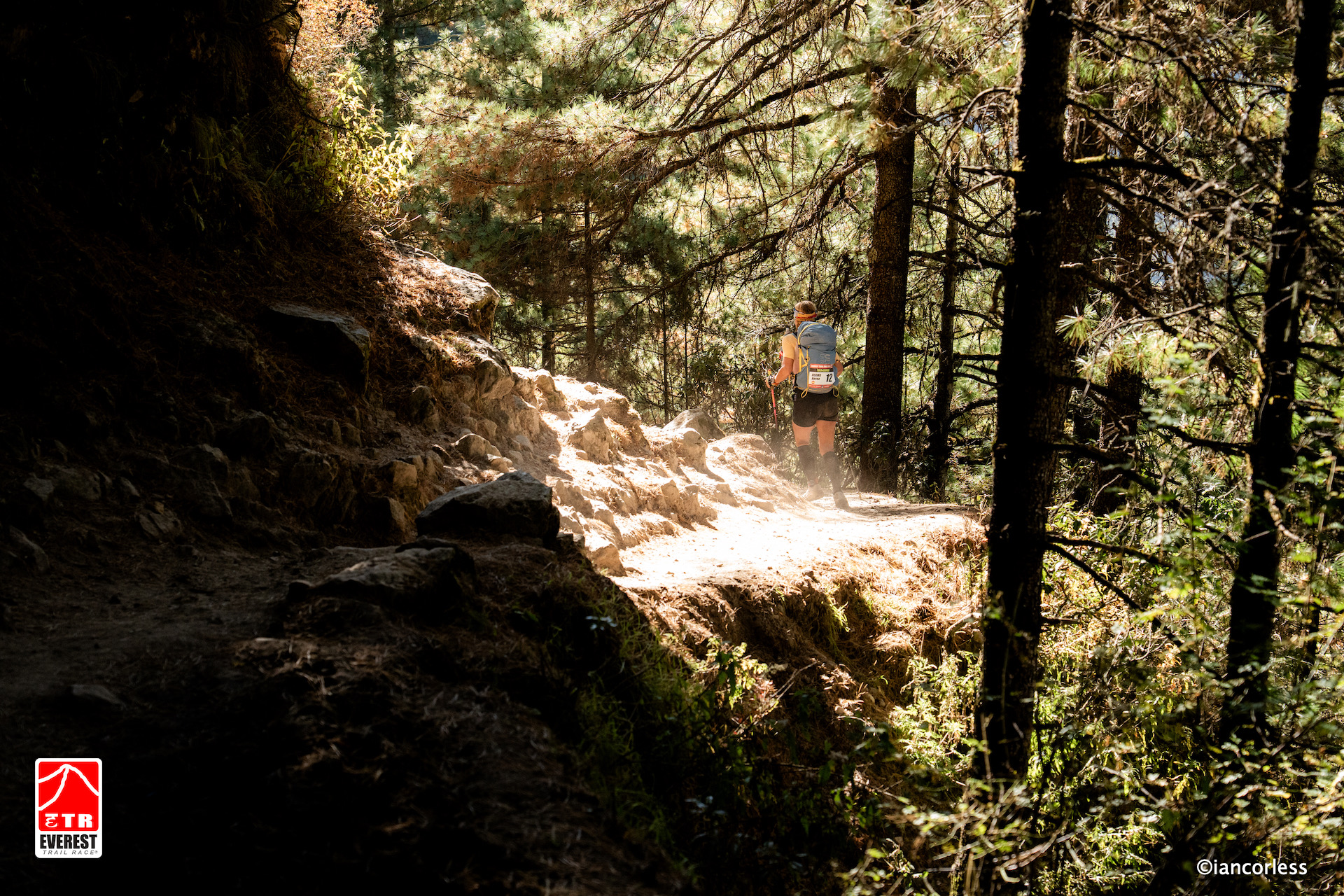
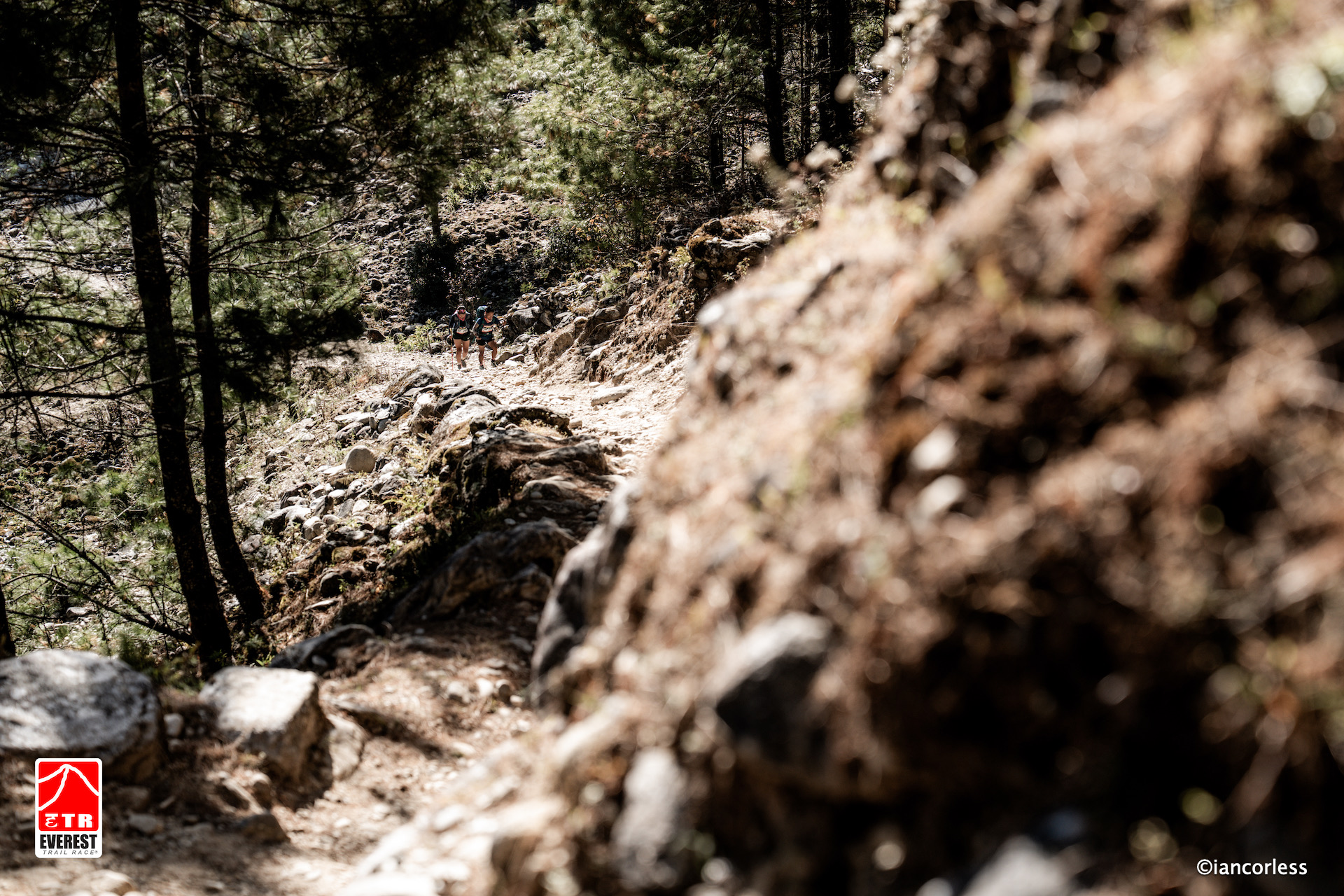
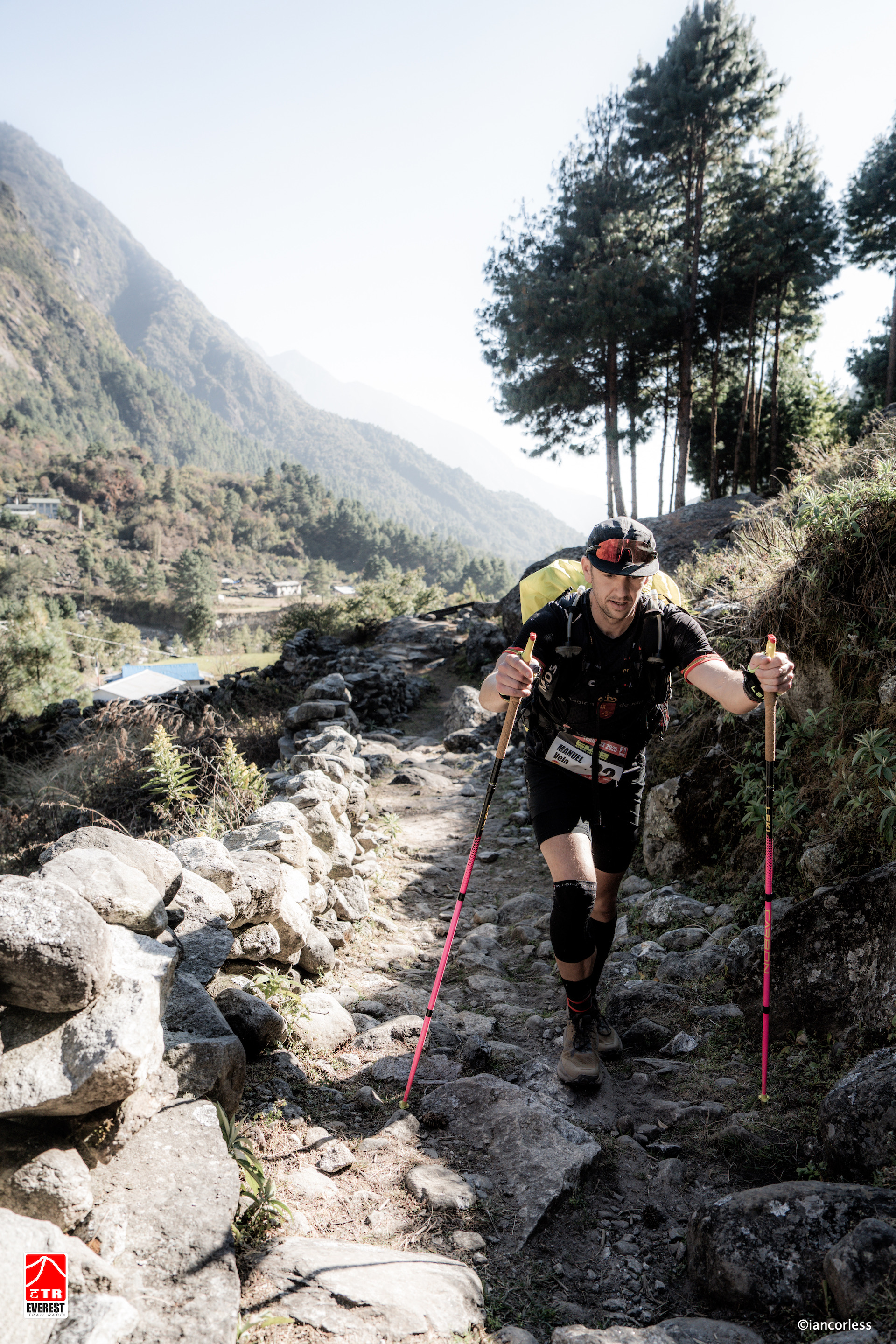
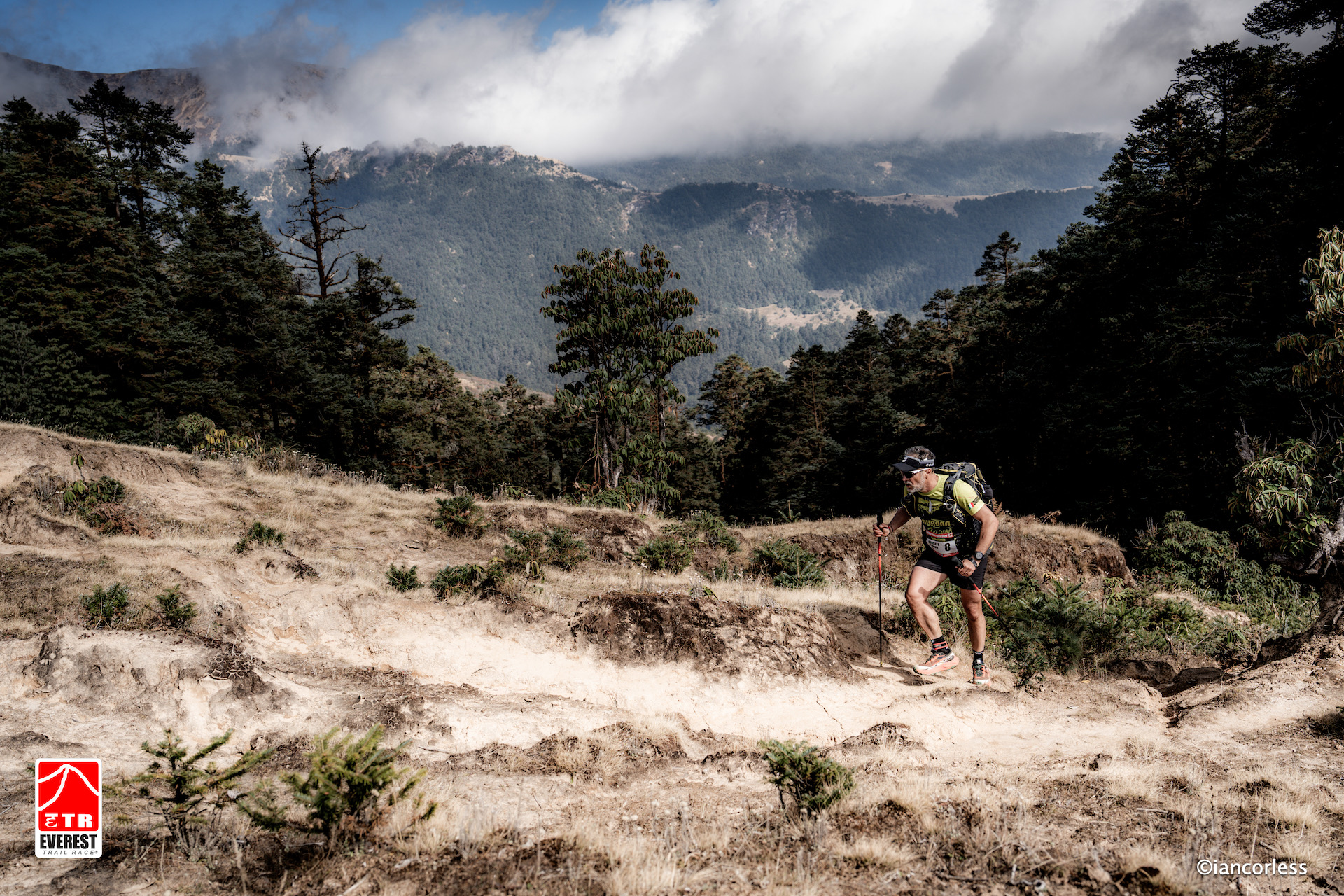
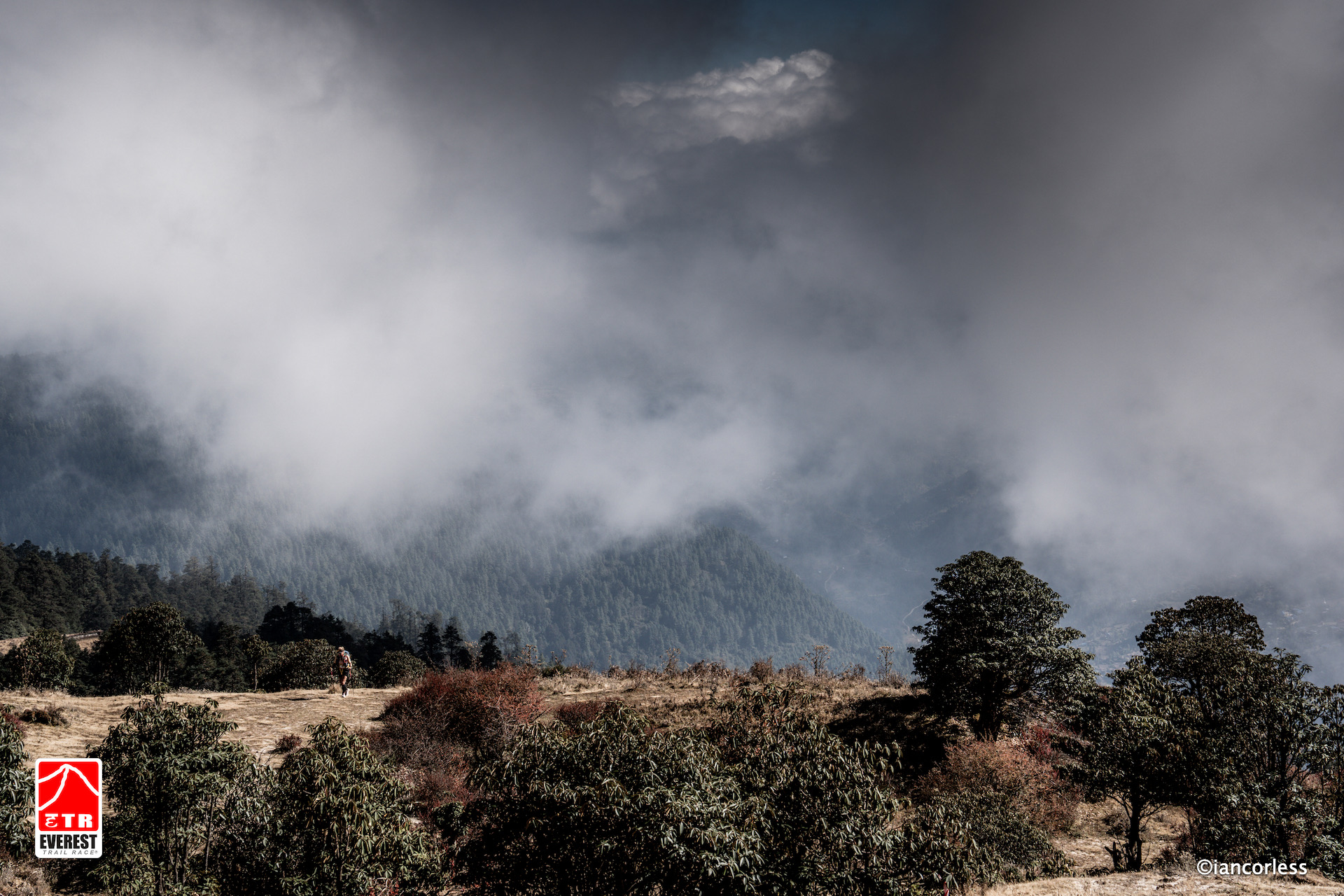
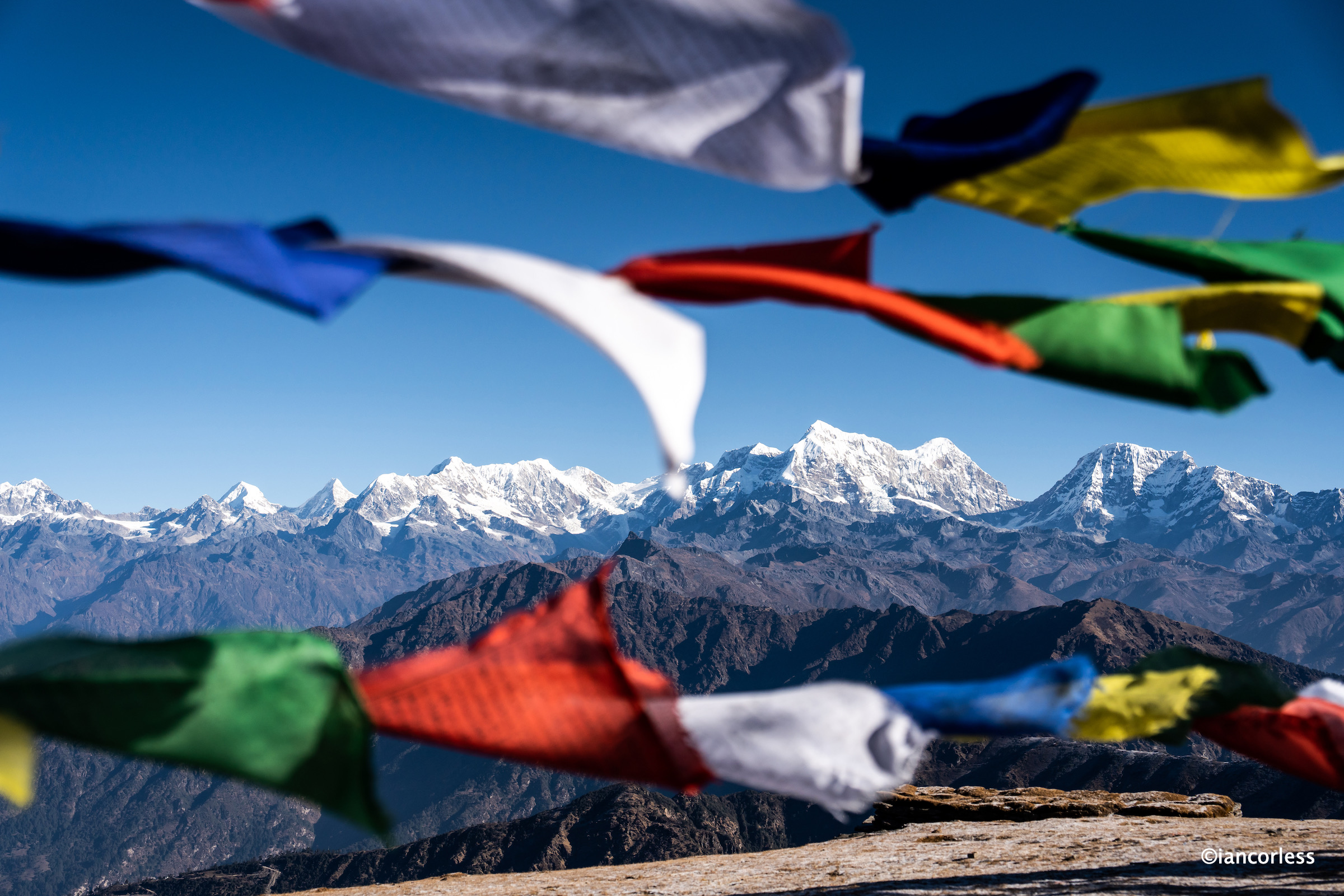
The early kilometers retrace some familiar ground – Sanasa, Phunki Tenga, and trails edged with mani stones and prayer flags, twisting through pine forests and clinging to cliffs. But don’t call it a repeat. The fatigue, the altitude, and the stakes make every step feel different.
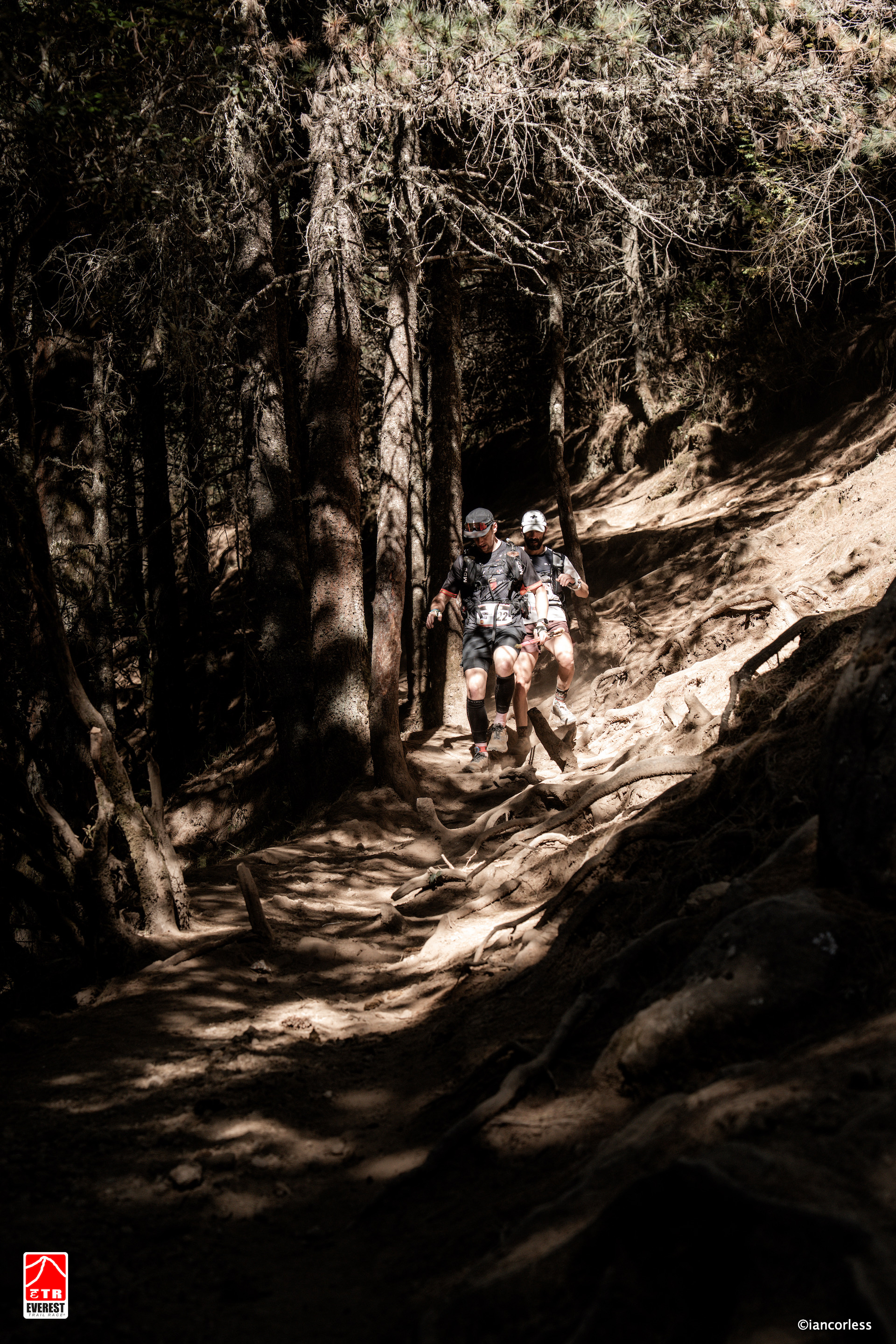
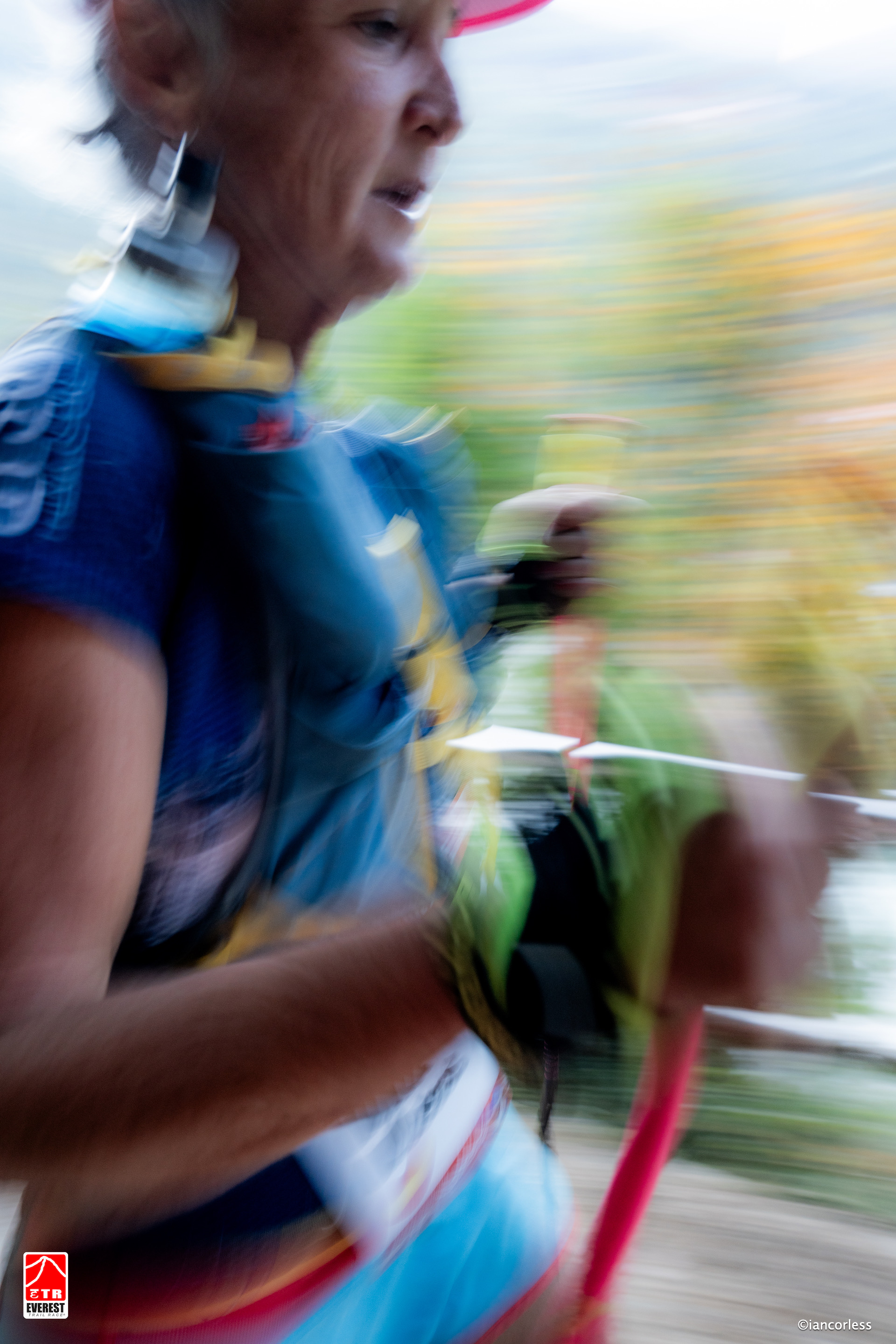
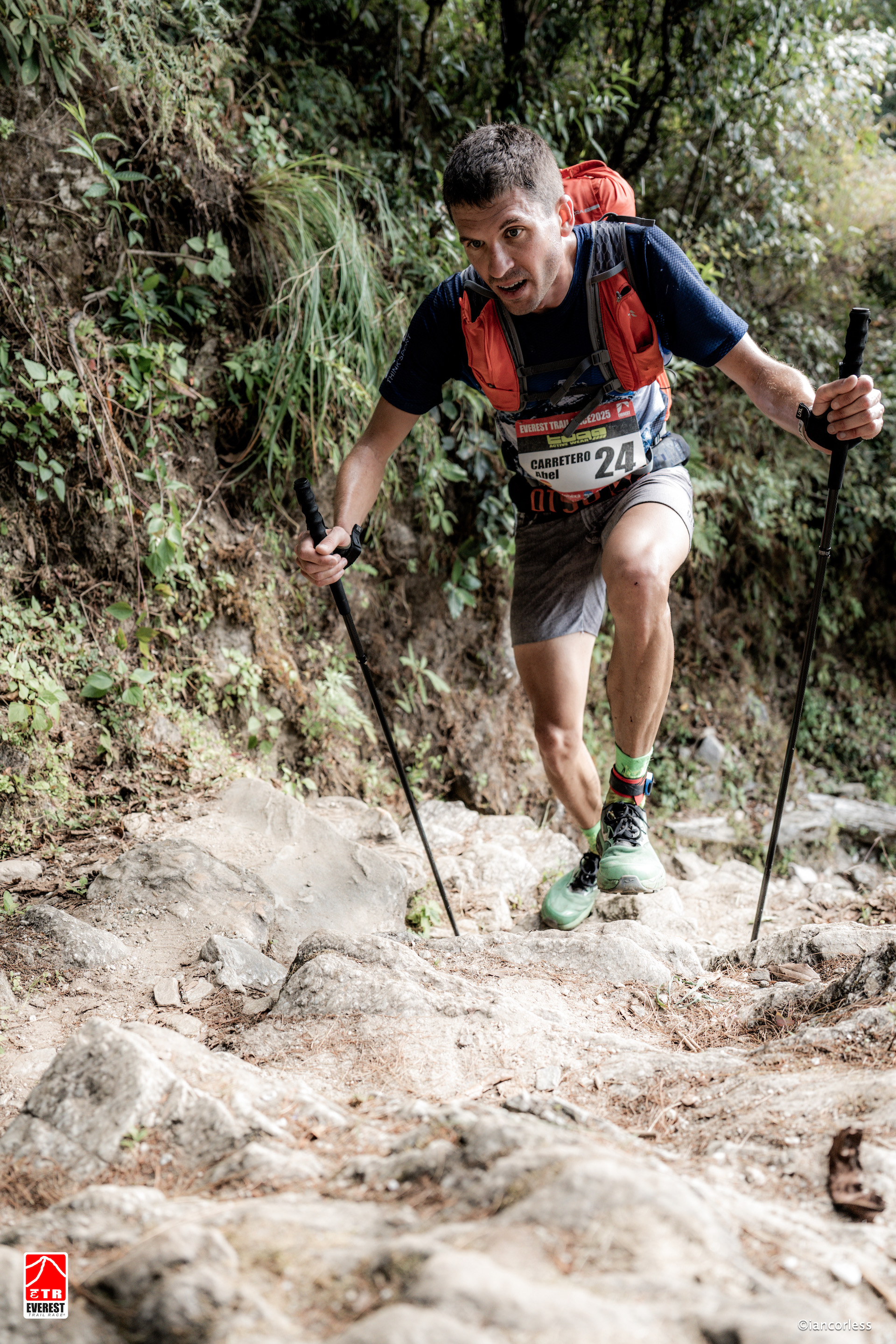
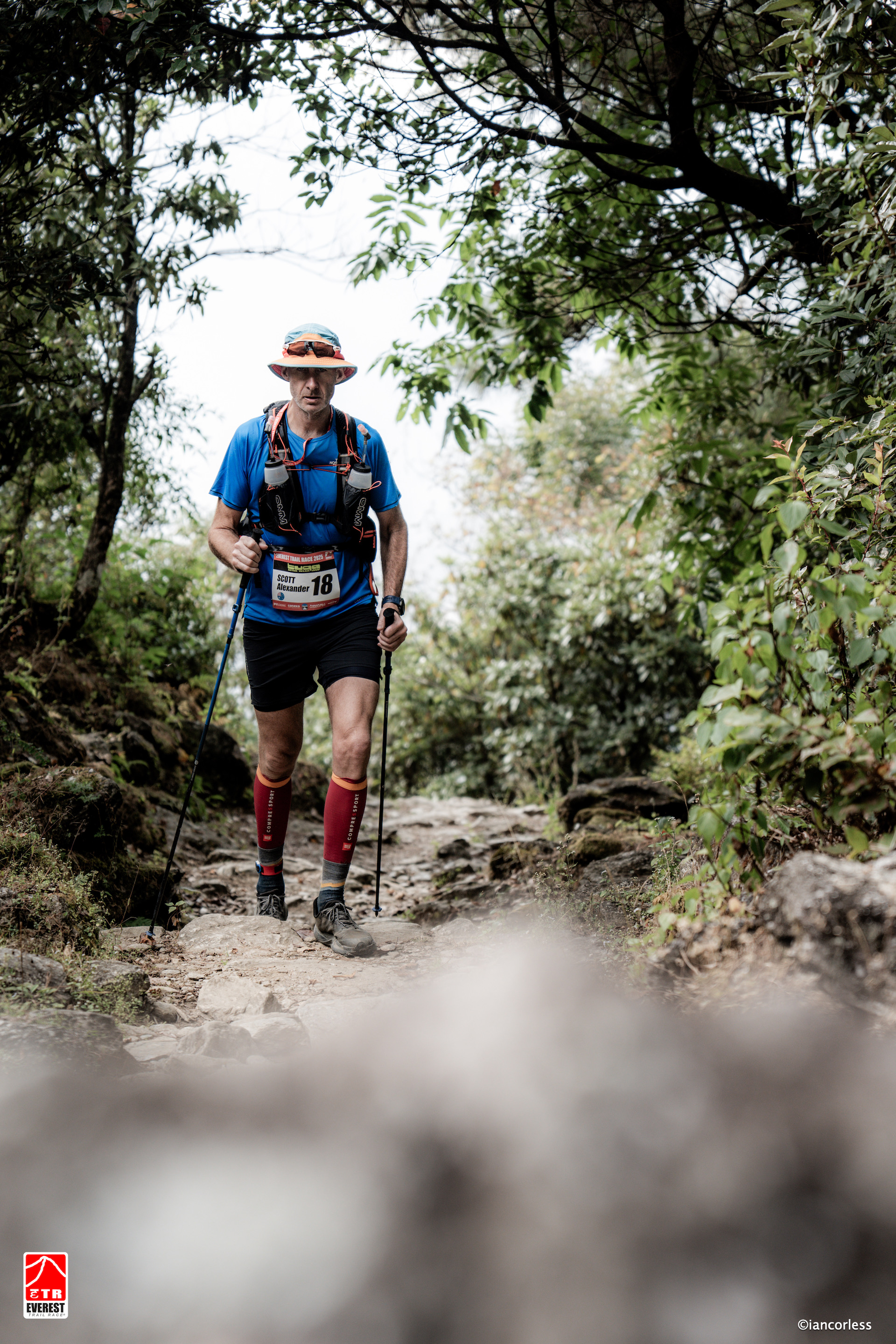
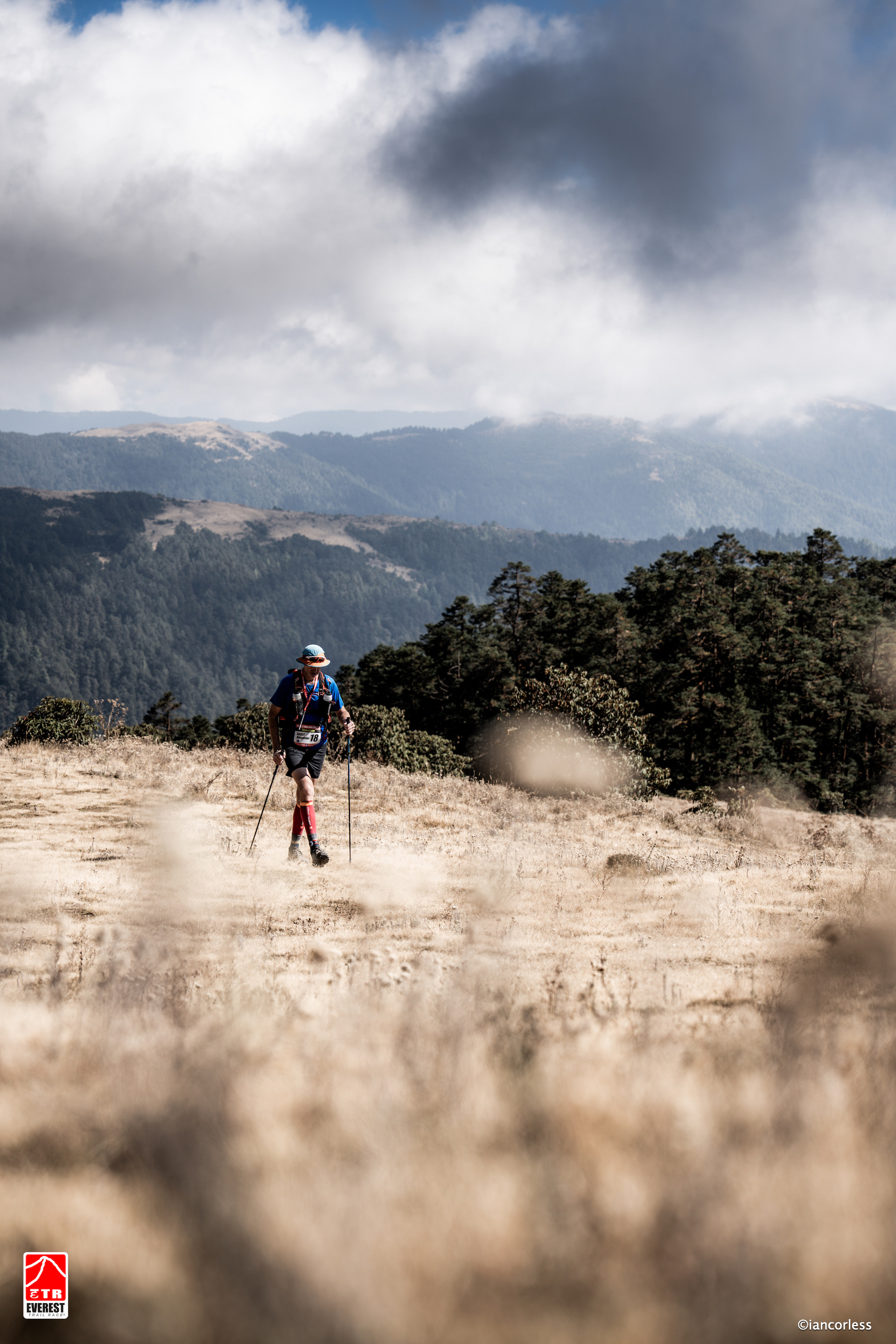
This stage is less about vertical brutality and more about holding form, keeping control as the trail drops fast and hard. Quads burn, knees scream, but momentum is everything.
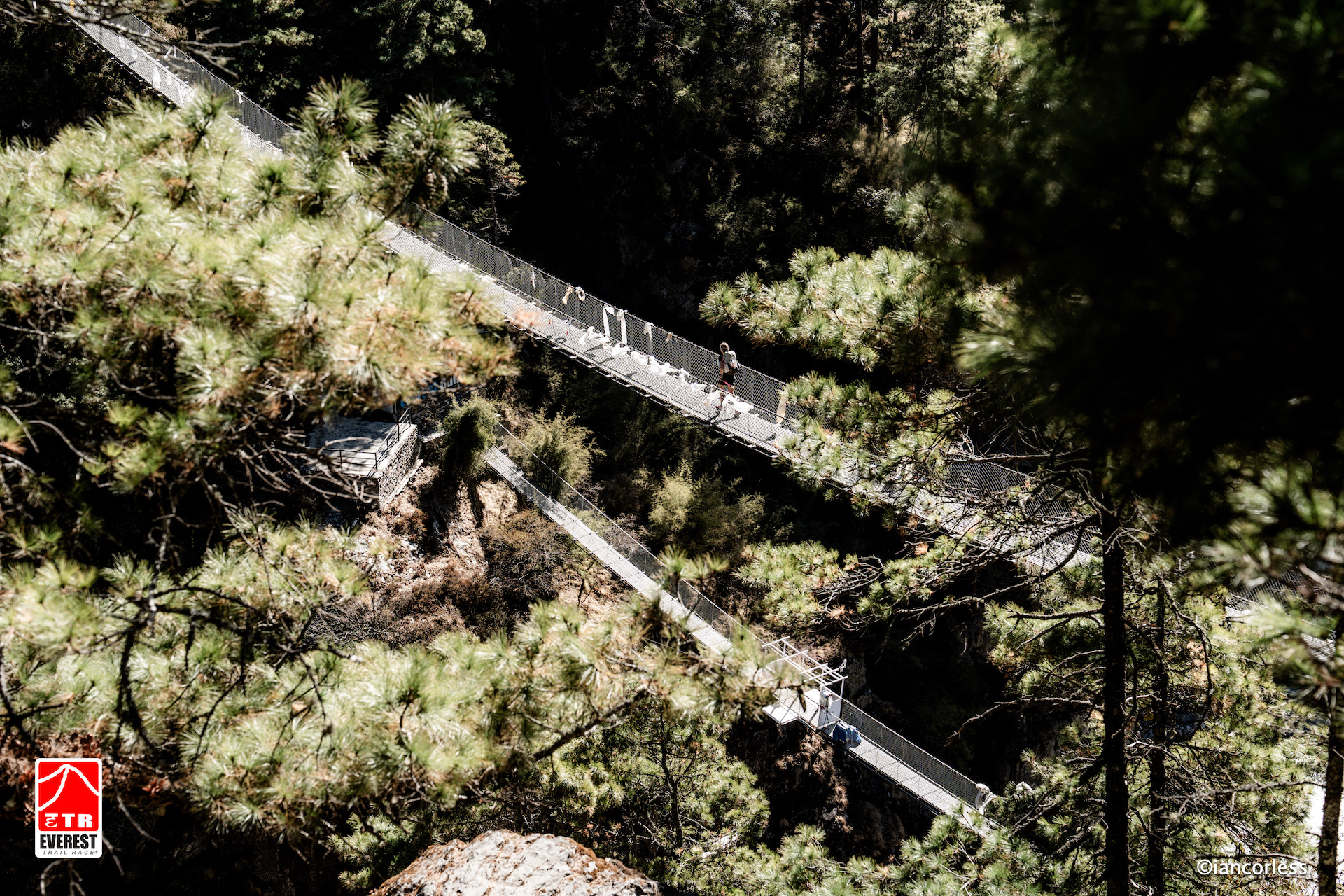
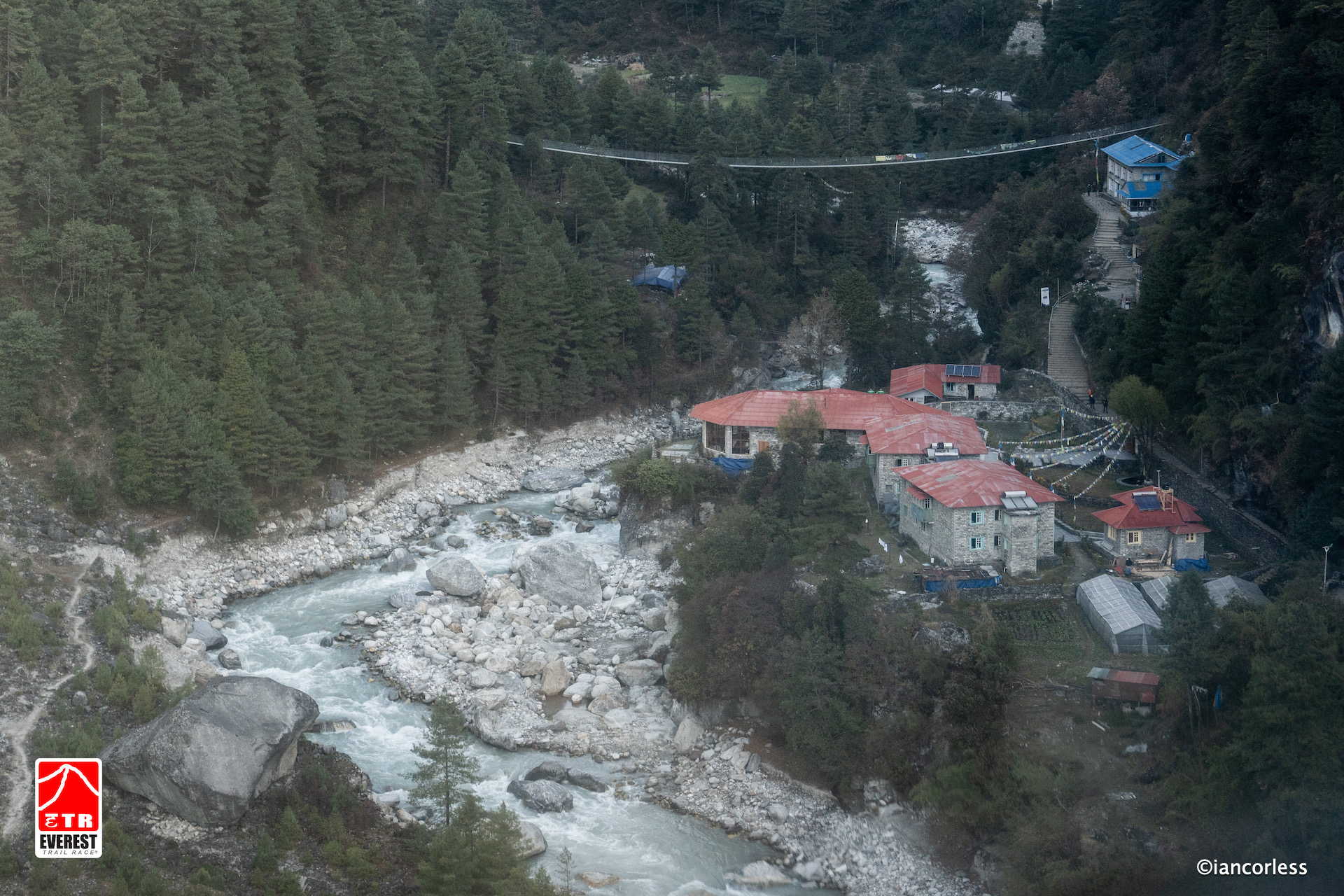
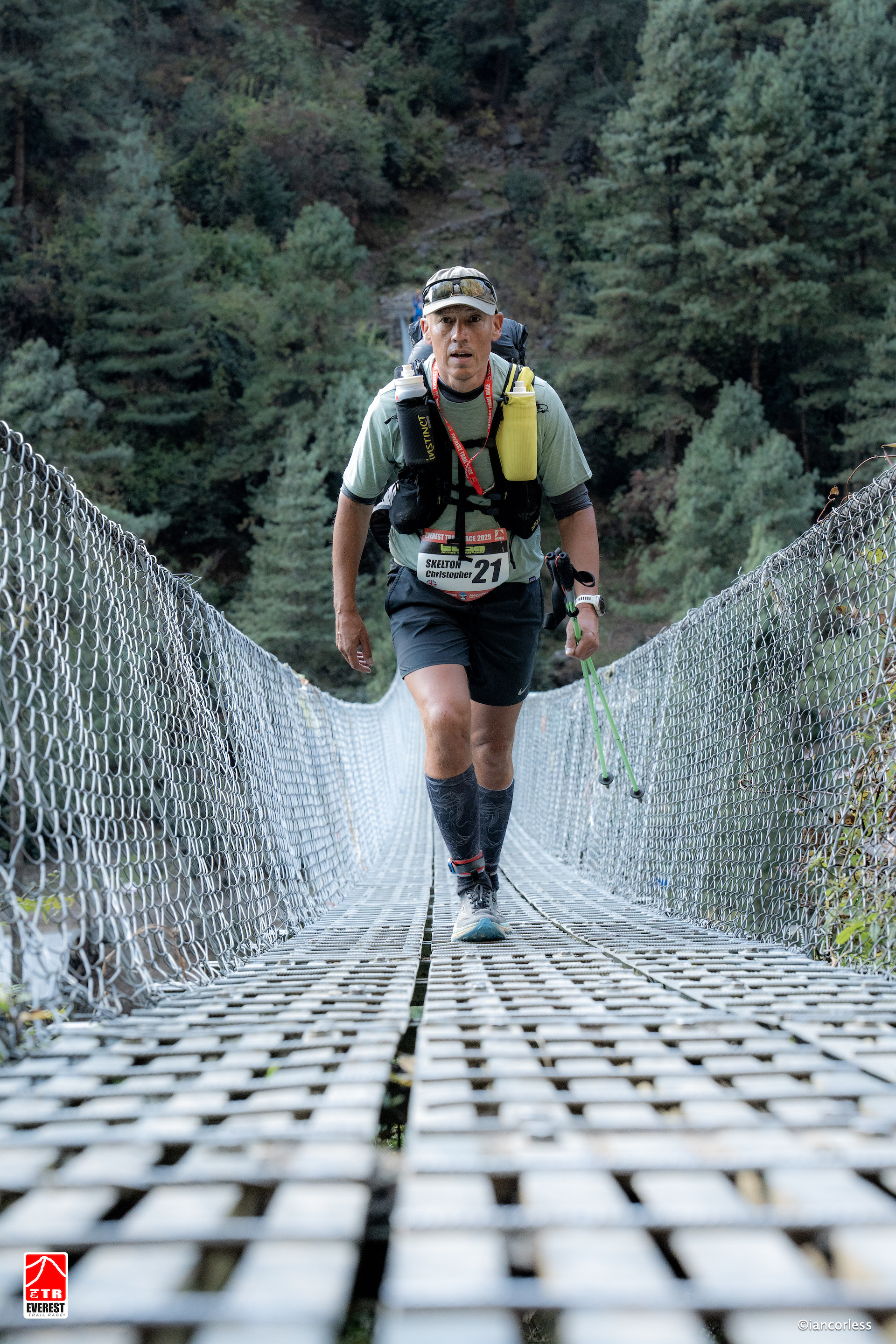
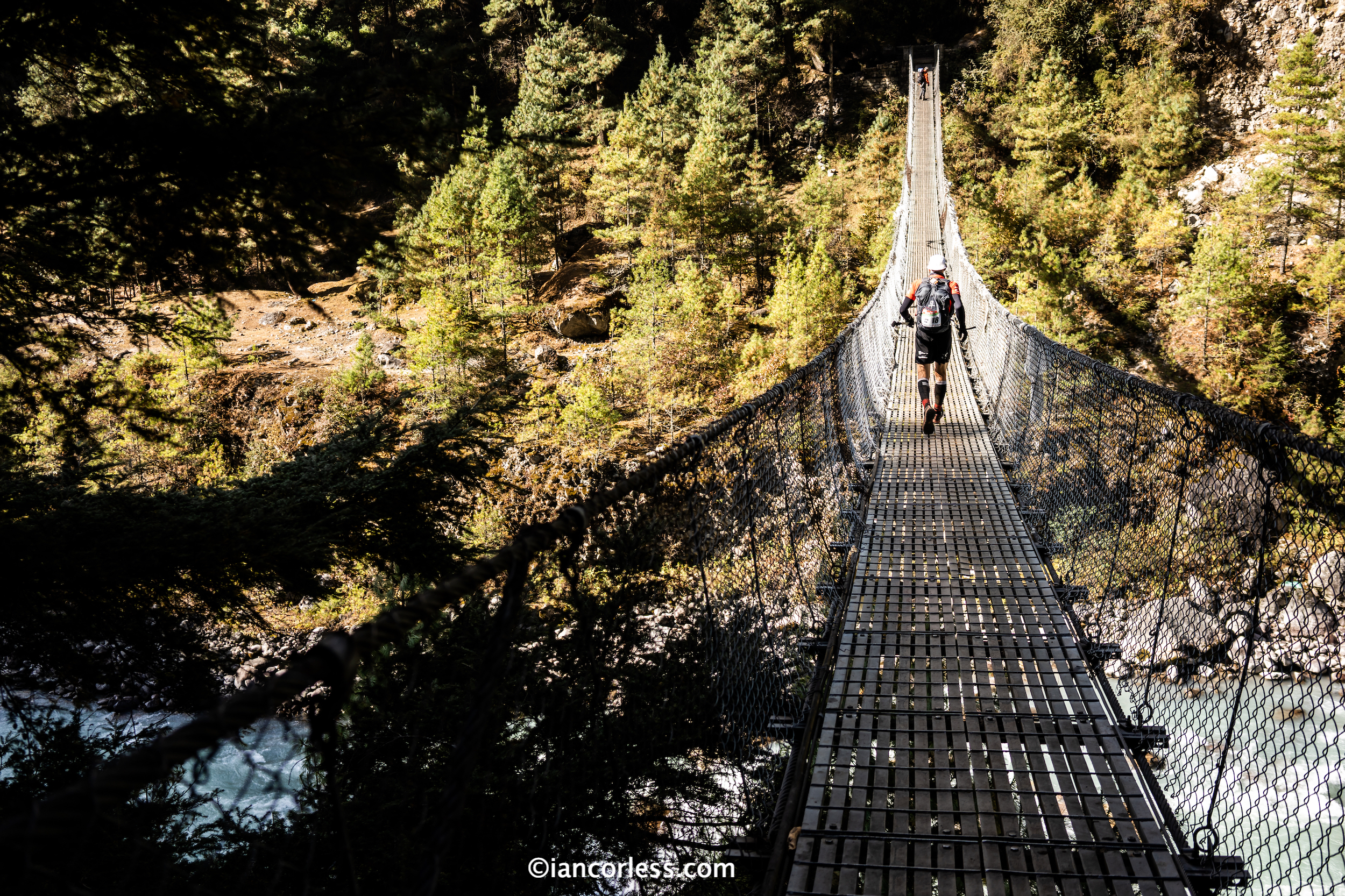
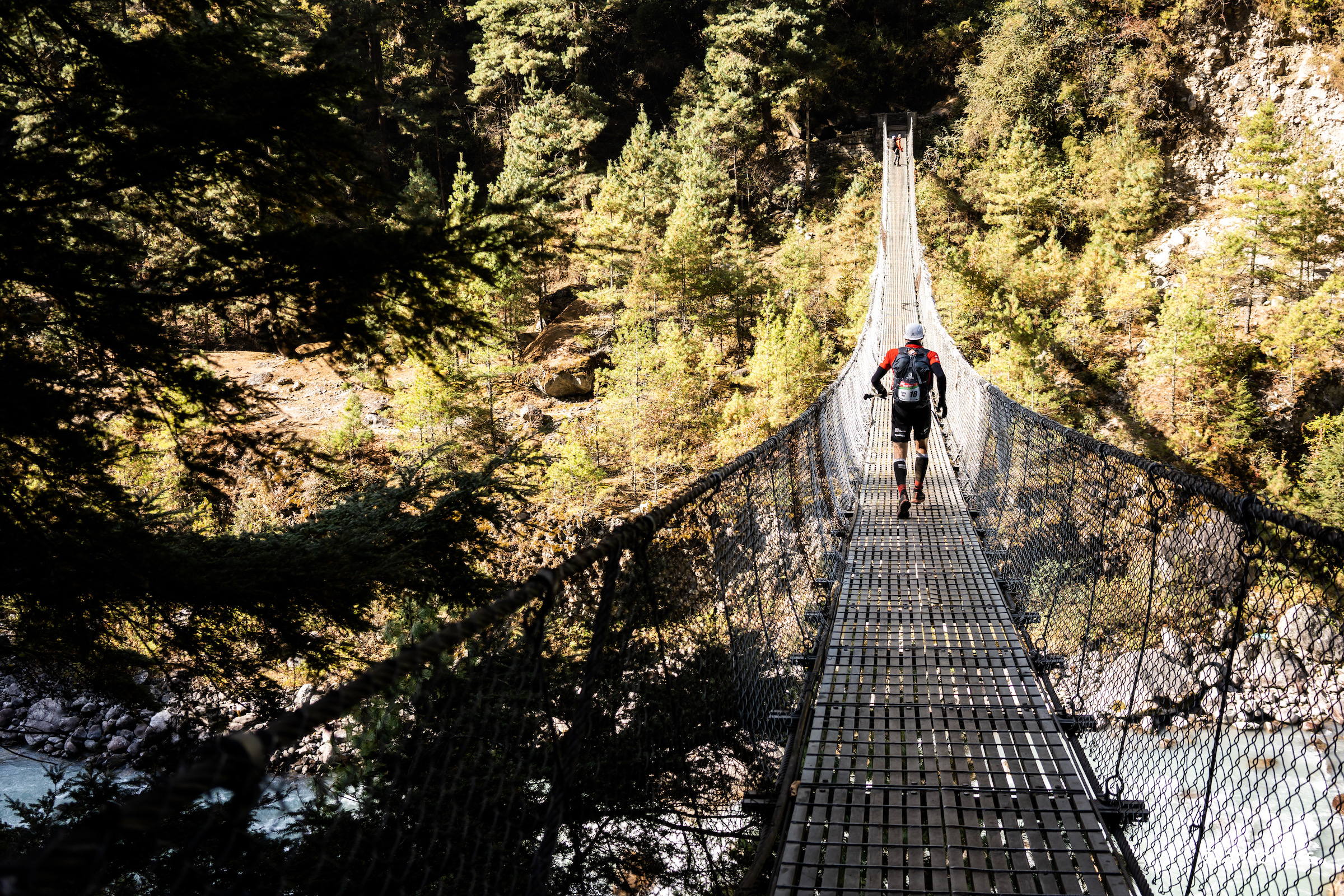
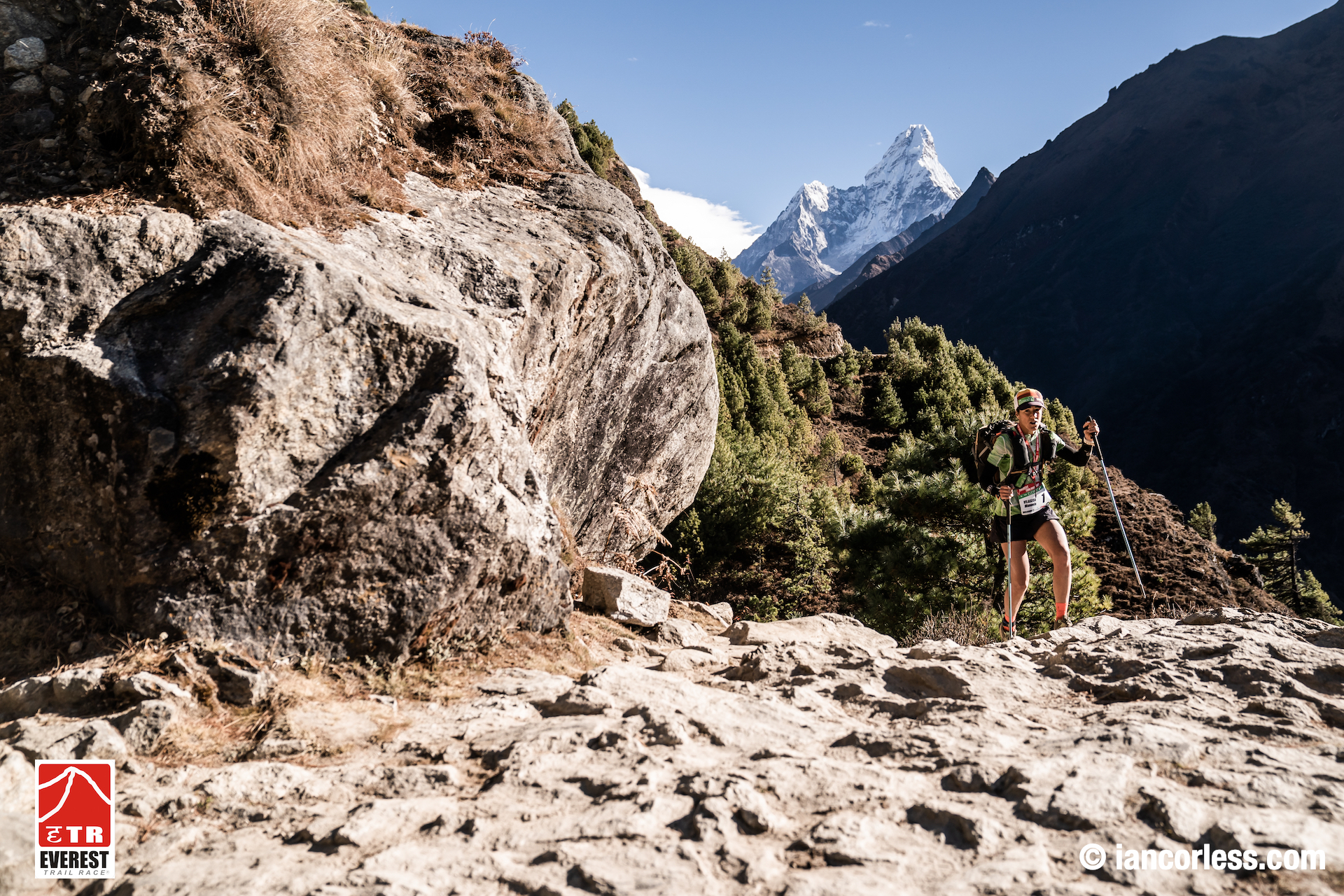
Soon, the trail funnels runners toward the legendary new Hillary Bridge – a sweeping, high-tension crossing that swings over the Dudh Kosi with views that could stop you in your tracks, if the clock wasn’t ticking.
Past the bridge, it’s Jorsale, where the race starts to feel like it’s dragging runners home. The Phakding checkpoint (CP2) marks another milestone, each bib scanned there is one step closer to Everest Trail Race glory.
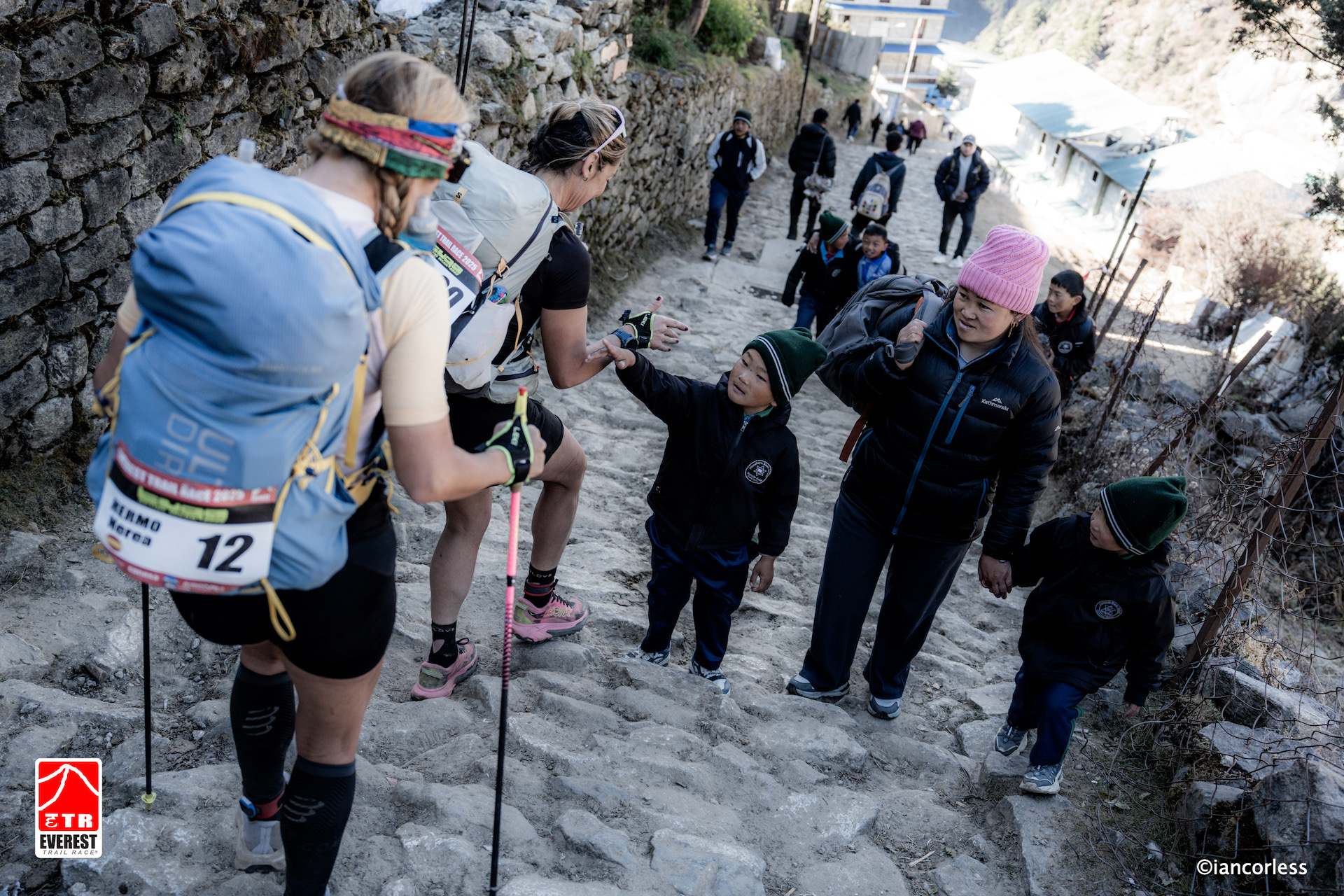
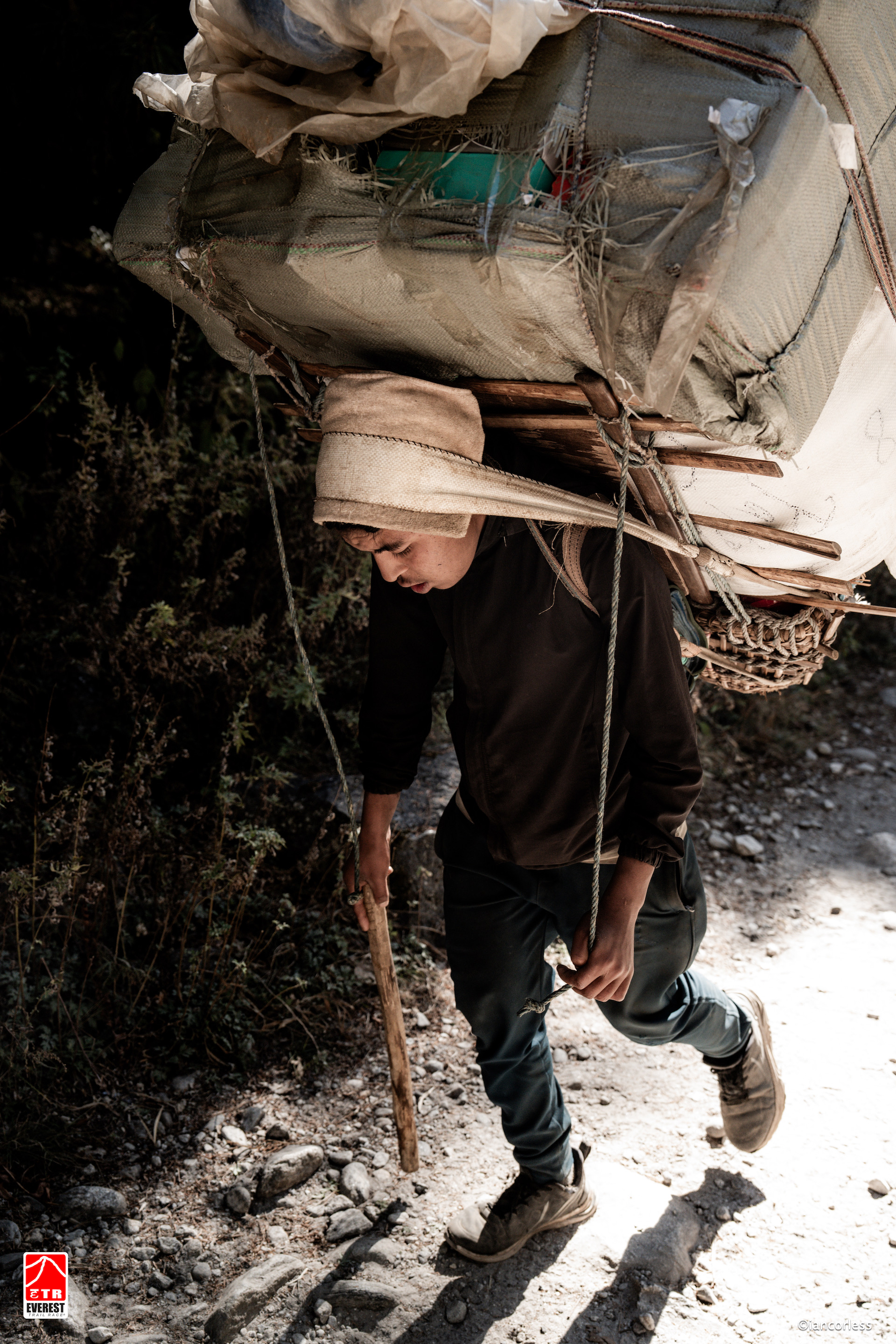
By the time runners hit Cheplung, it’s all on the table. Here, a sharp left turn signals the endgame: the final climb to Lukla and oce again, Nepal and the Porters remind us, how lucky we are!
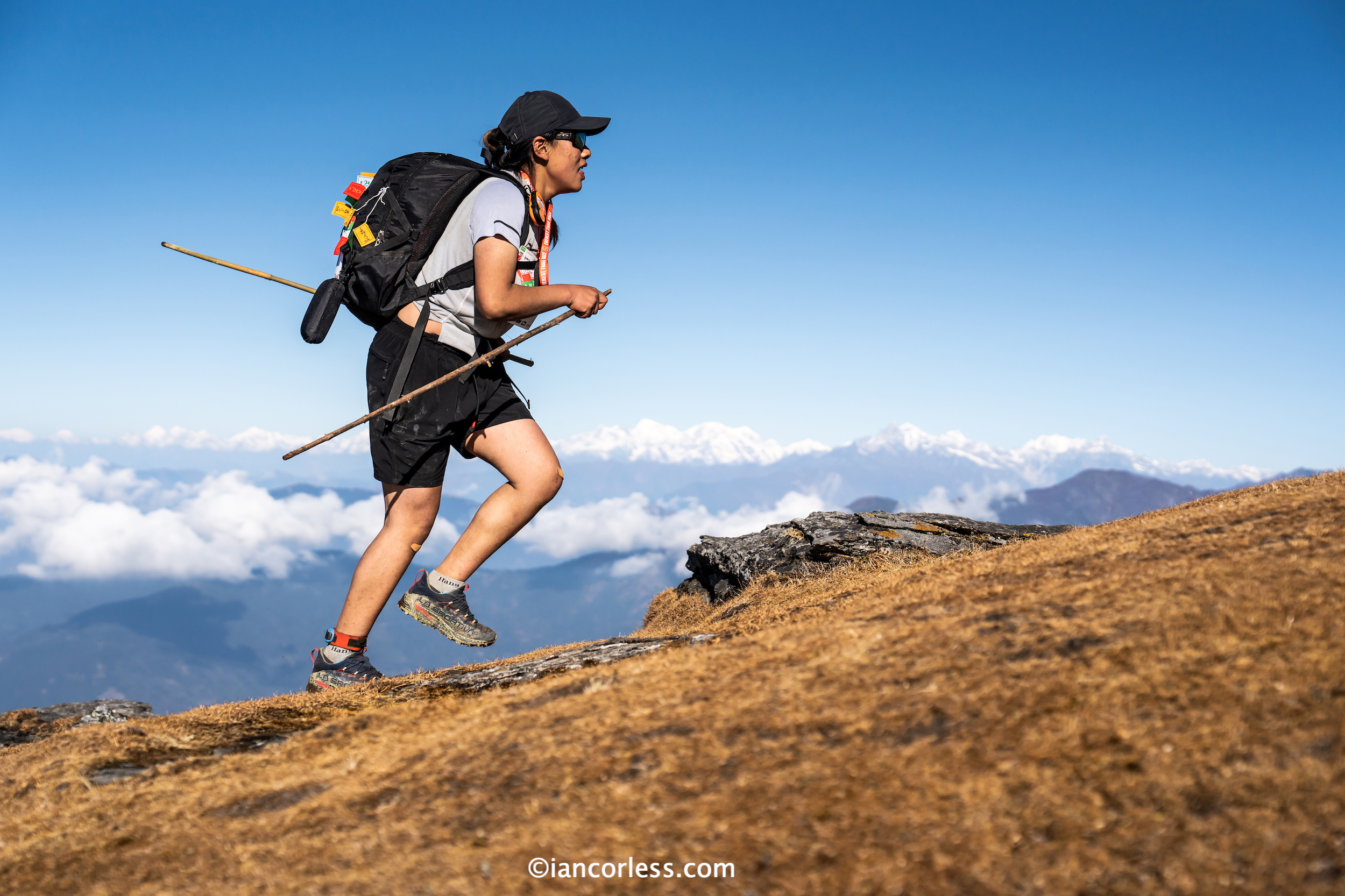
It’s not long, but it bites. After the day’s long descent, this uphill kick demands whatever strength is left in the tank. Runners grit teeth, dig deep, and push toward the town that marks the start of most Everest dreams, and now, the finish of this one.
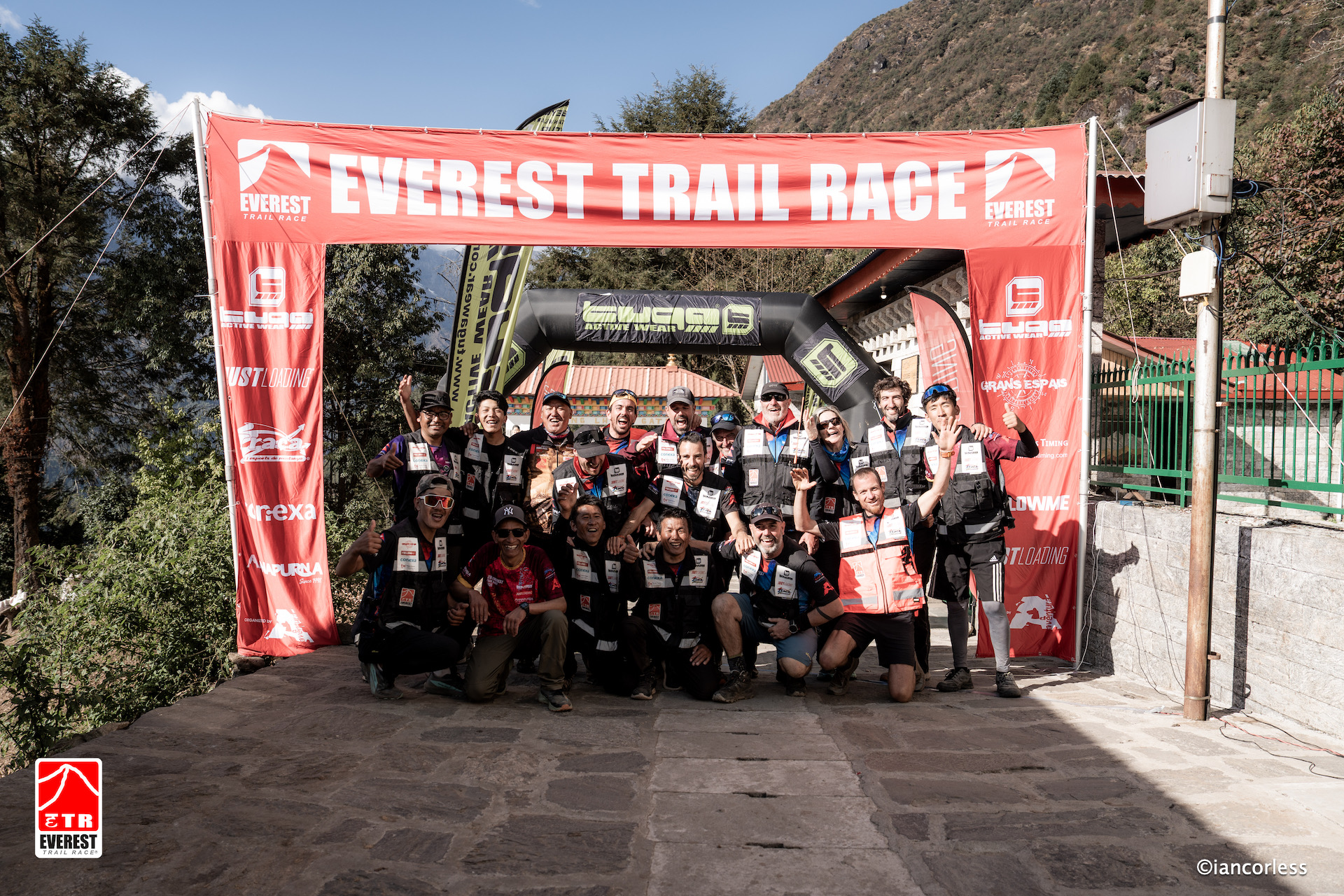
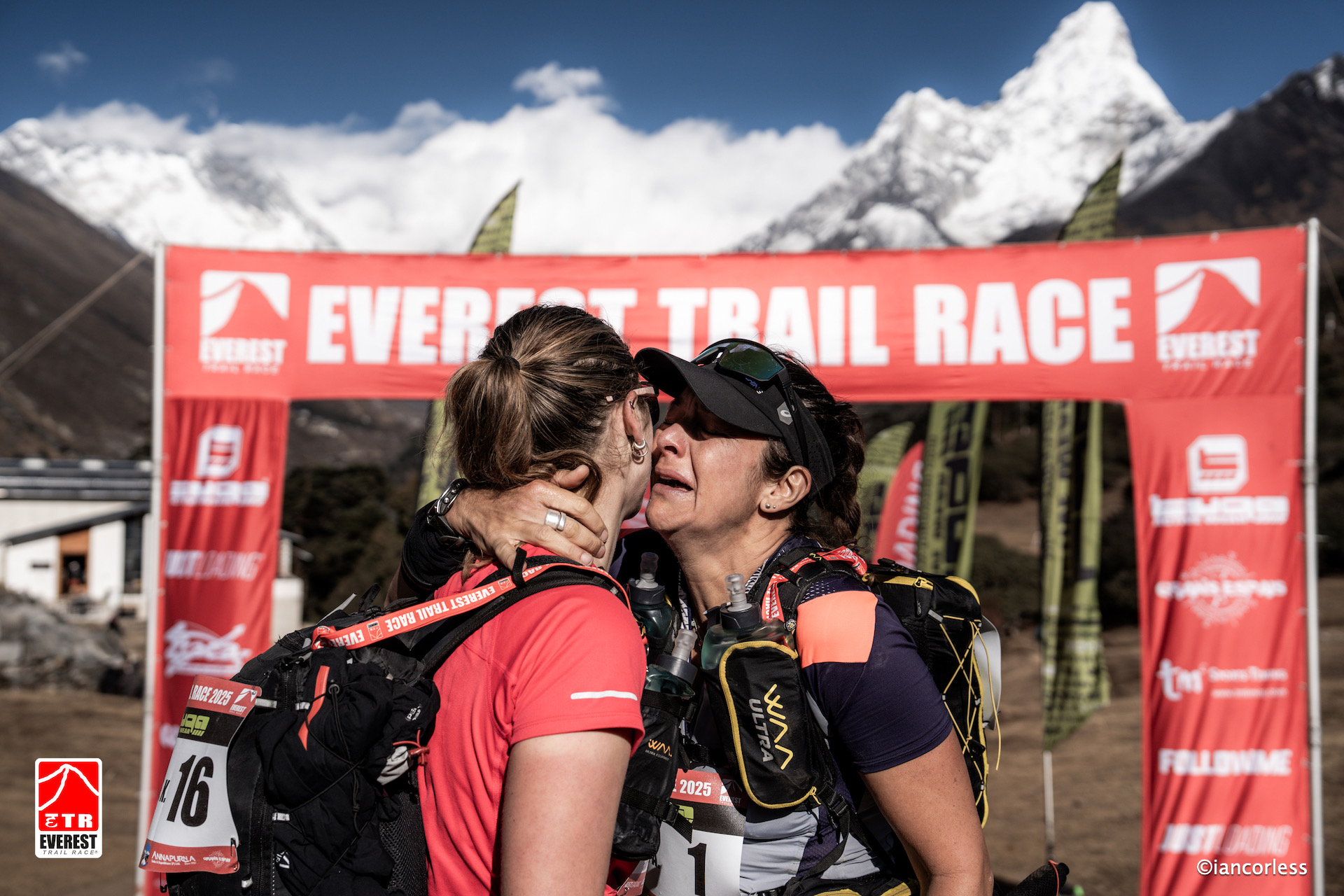
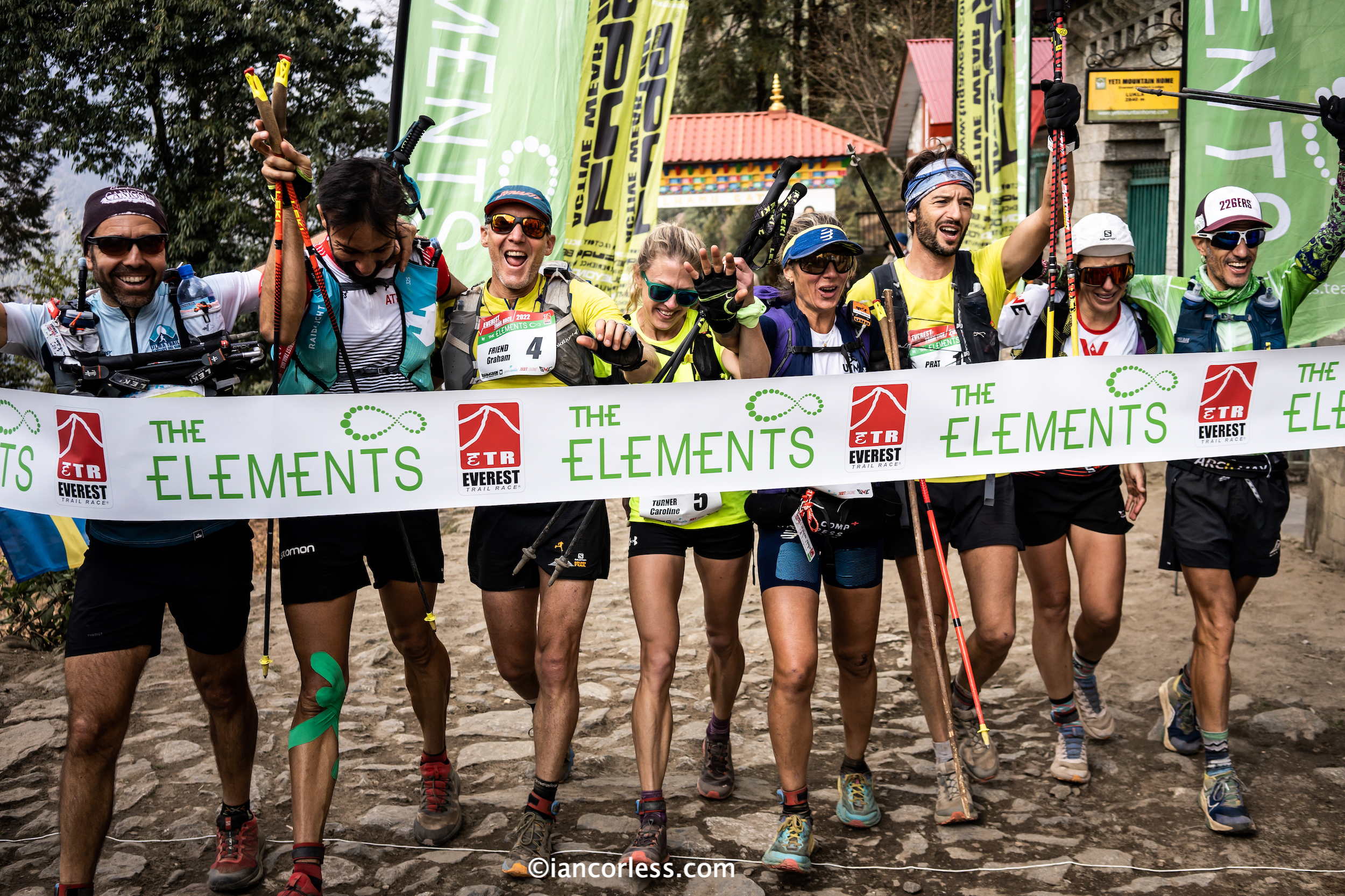
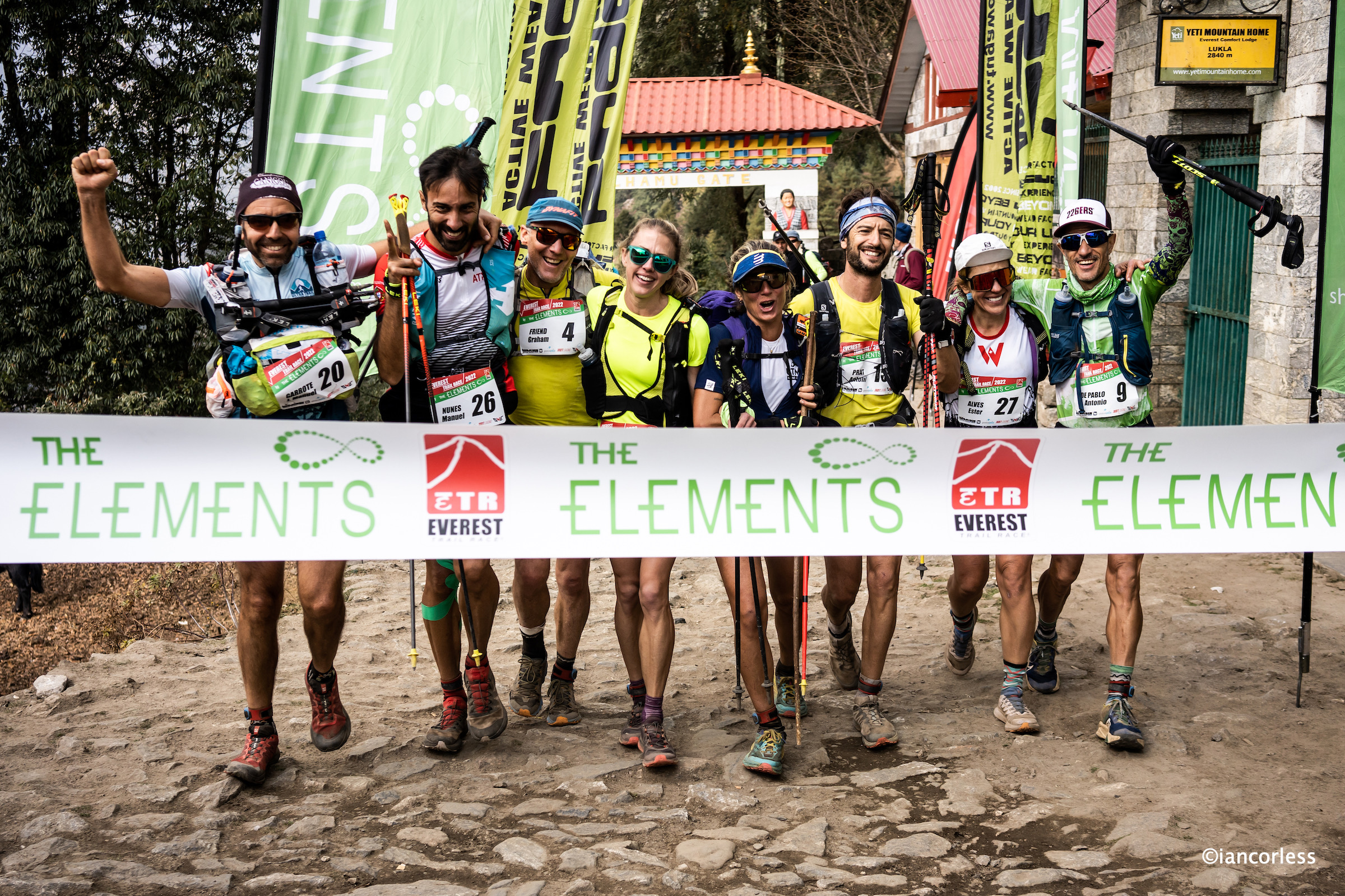
Crossing into Lukla is like breaking through into another world. Crowds, bells, cheers, and tears—this is where it all ends. For some, it’s a triumphant sprint. For others, a silent, emotional walk over the line. But for everyone, it’s the culmination of six days of relentless racing through some of the world’s toughest terrain.
The 2025 Everest Trail Race is done, everyone earned more than a medal, they earned the mountain’s respect.
Stage 5 of the Everest Trail Race pulls no punches. At 24km with a punishing 2,483 meters of ascent, this is the stage that earns its reputation as the toughest of them all. The numbers alone are intimidating, but it’s the relentless terrain and shifting altitude that test runners on every level – physical, mental, emotional.
This year’s route sees a change from previous editions, adding new layers of challenge and beauty. Starting in the shadow of Sagarmatha National Park’s giants, the trail weaves through the quiet village of Chumoa before rising into the bustling trails of Namche Bazaar, where the first checkpoint offers a brief reprieve. But this is only the beginning.
From Namche, the course climbs to Syangboche, skirting airstrips and yak paths, before pressing on to Kumjung, a Sherpa village set high beneath the peaks. Then comes Mong La – Checkpoint 2 – perched like a balcony above the valleys below. From there, it’s a steep descent to Phortse Tenga, followed by a lung-busting climb to Phortse, a village known for its mountaineering legacy.
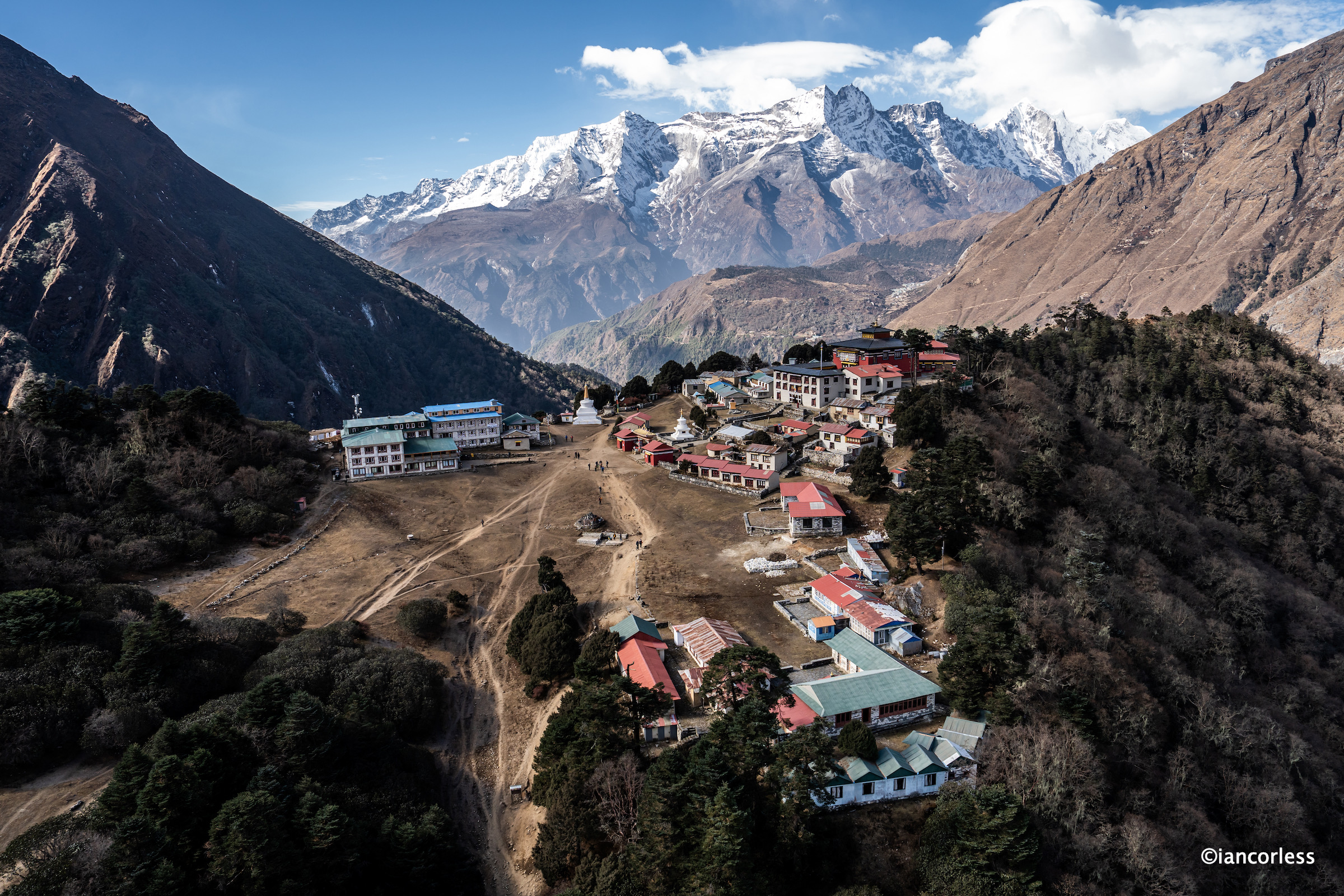
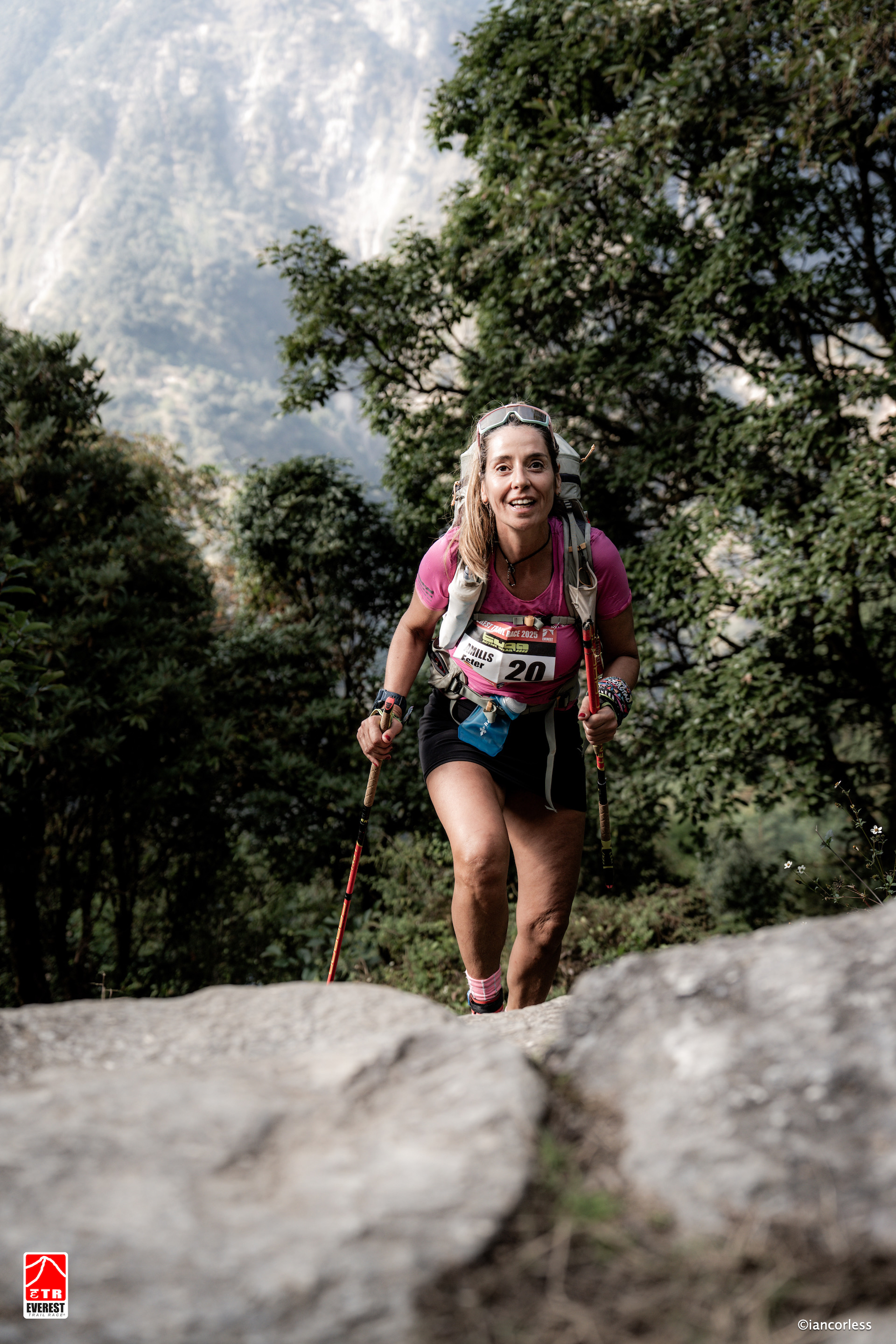
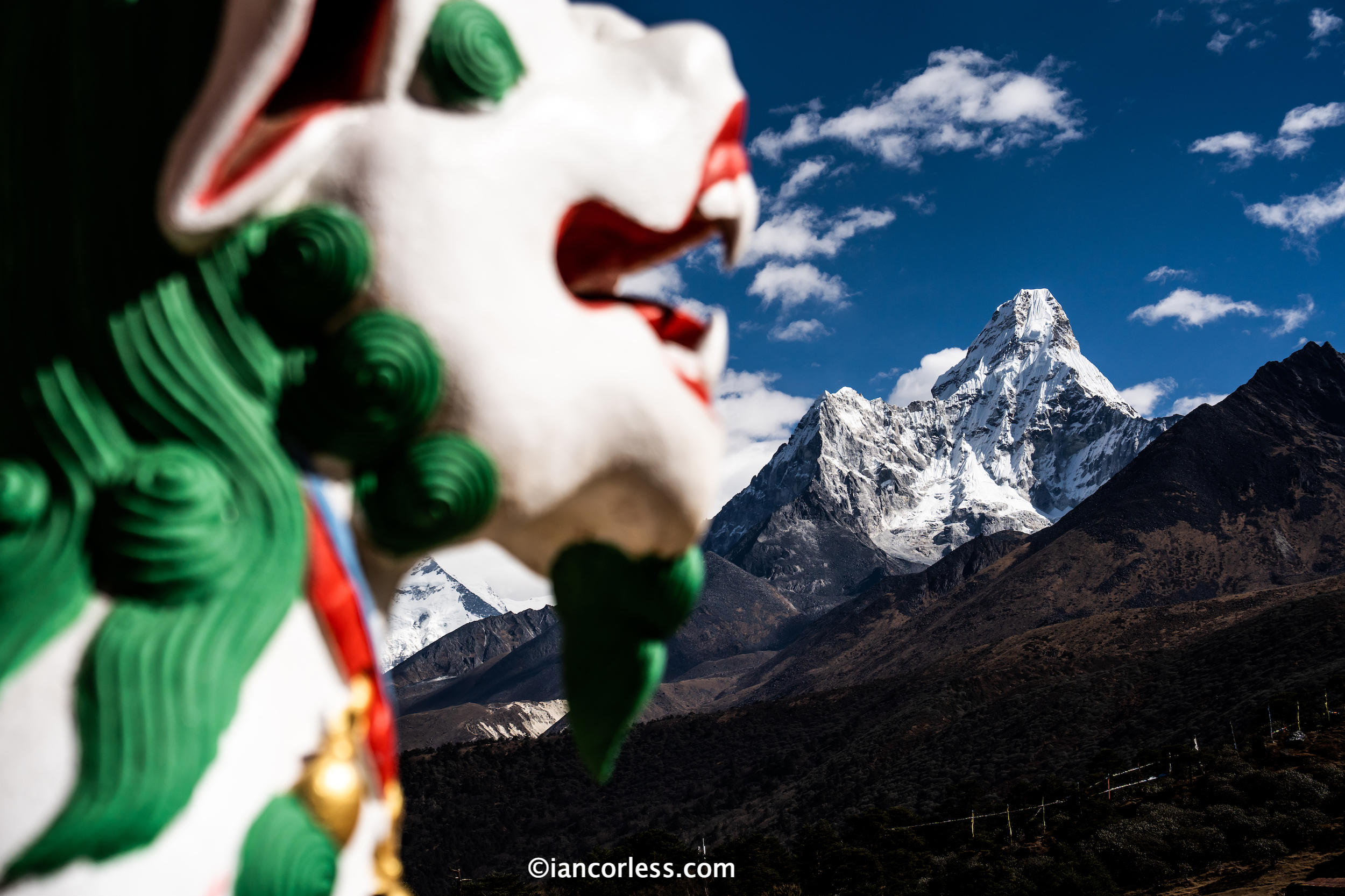
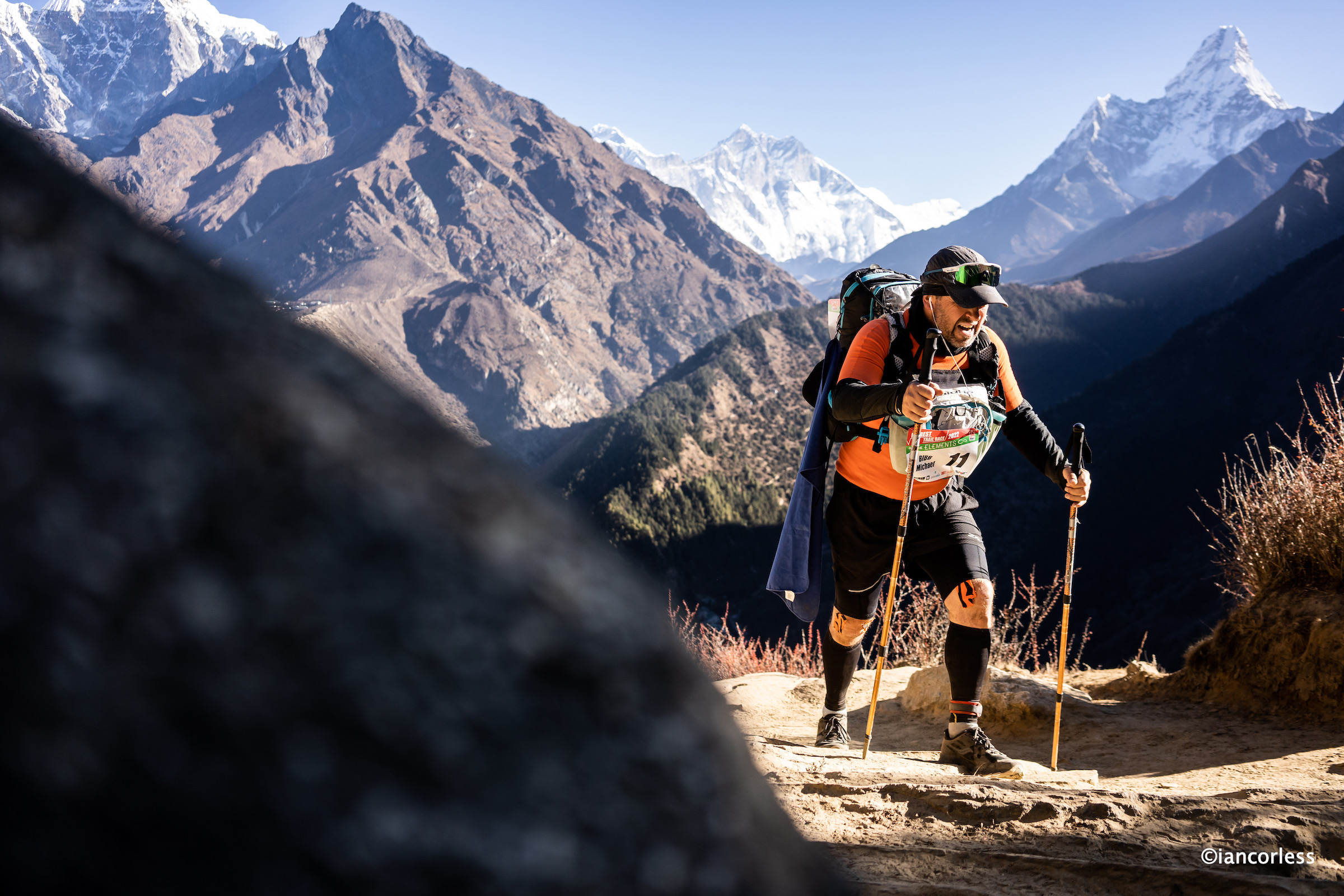
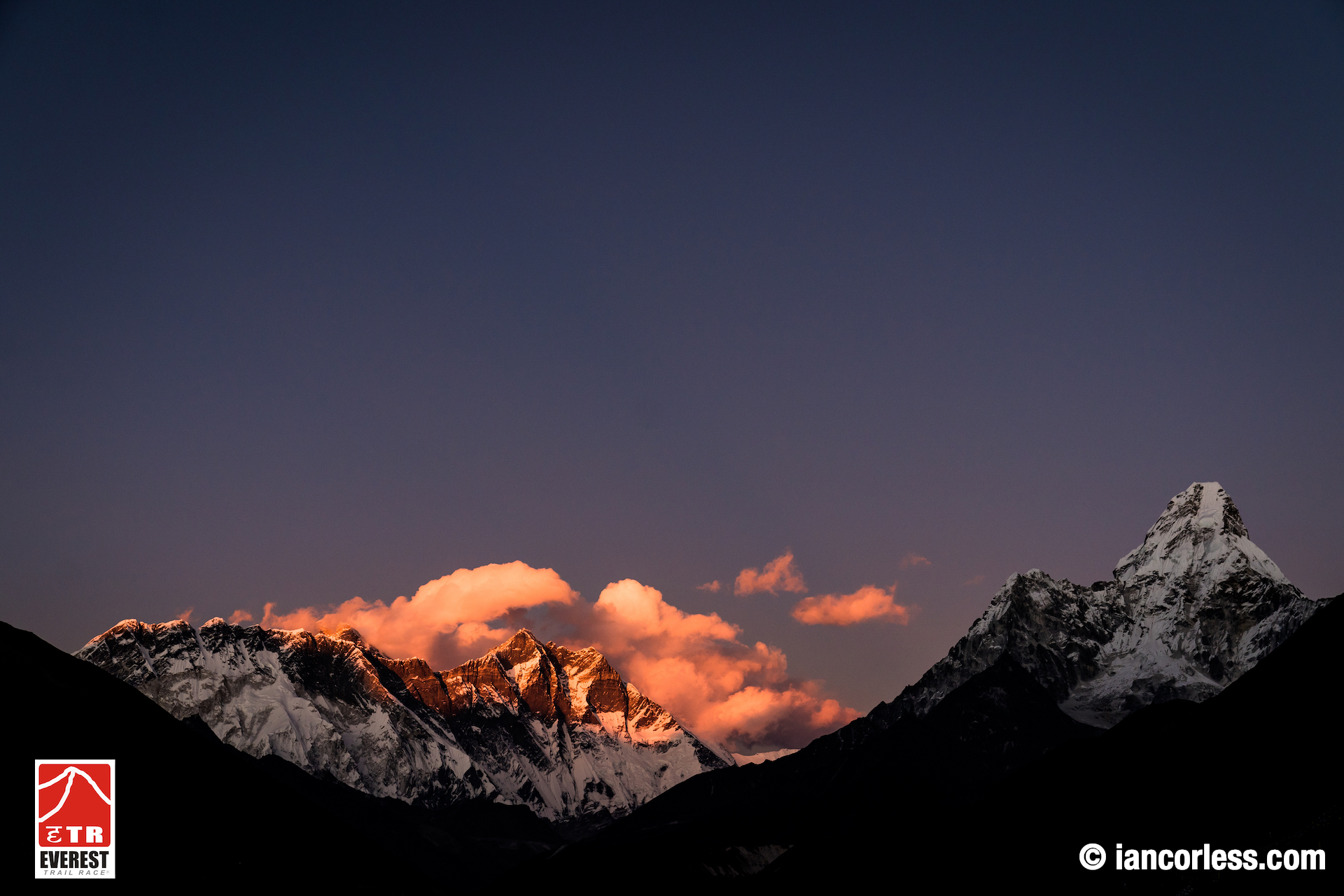
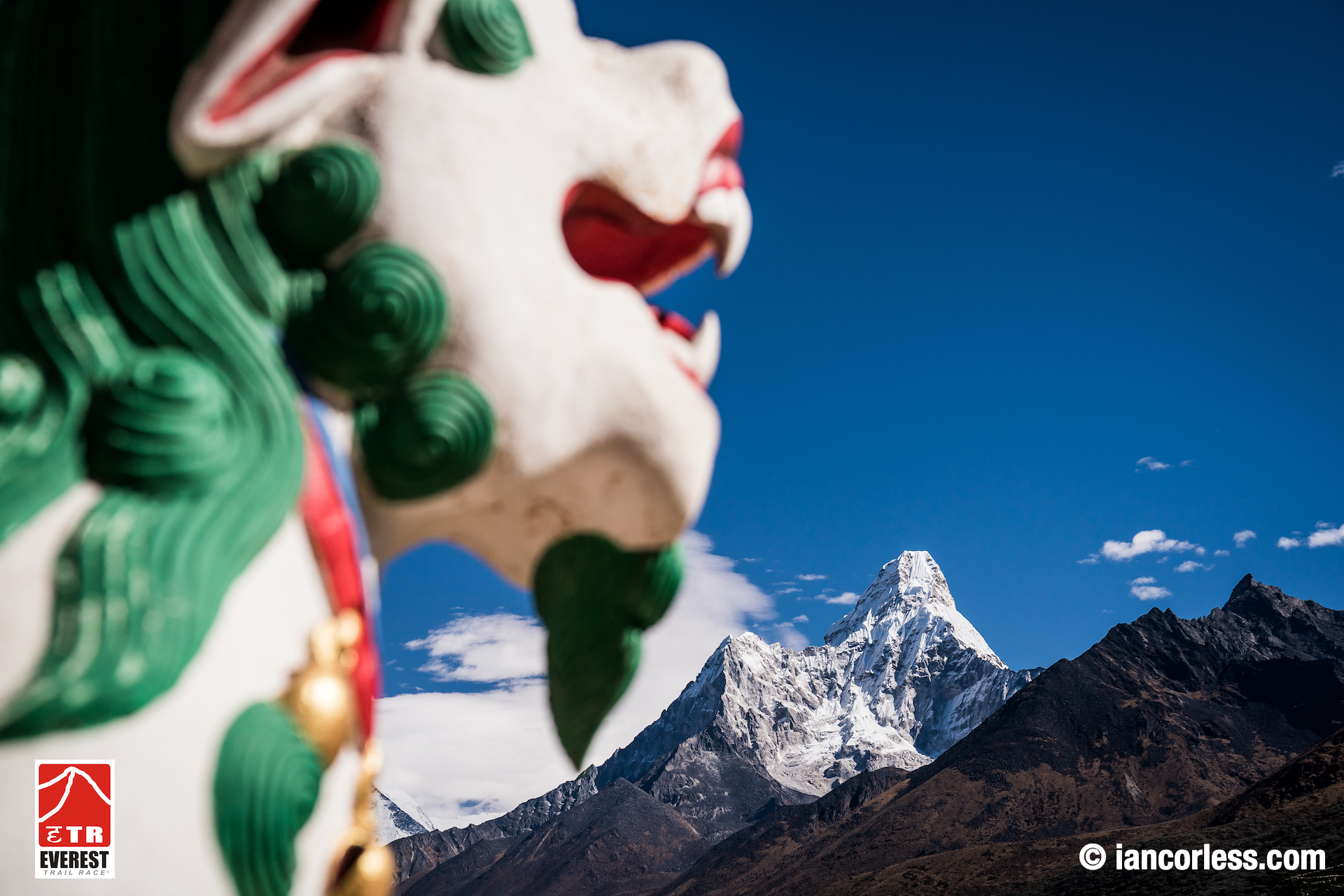
But the final ascent is where Stage 5 seals its legacy. The climb to Tyangboche Monastery, sitting at 3,860m, is a final test of grit. Legs scream, lungs burn, but the reward is immense. As runners crest the trail, they’re greeted by one of the world’s most iconic alpine views: Ama Dablam, Everest, Nuptse, and a horizon lined with Himalayan giants. Arguably, one of THE greatest finish lines in the world.
The pain is real, but so is the pride. After this brutal day, there’s relief in knowing only one stage remains. For those who made it to Tyangboche, it’s not just another finish line – it’s a summit of spirit, dedication, tenacity and perseverance.
After three gruelling stages through remote and rugged terrain, Stage 4 of the Everest Trail Race turns the page. Today, the athletes trade solitude for the storied footpaths of Nepal’s most iconic trekking corridor. This is the gateway to Everest.
A warmer night, lower altitude and this morning, the runner’s may have felt a little more rested, however, stage 4 was intimidating.
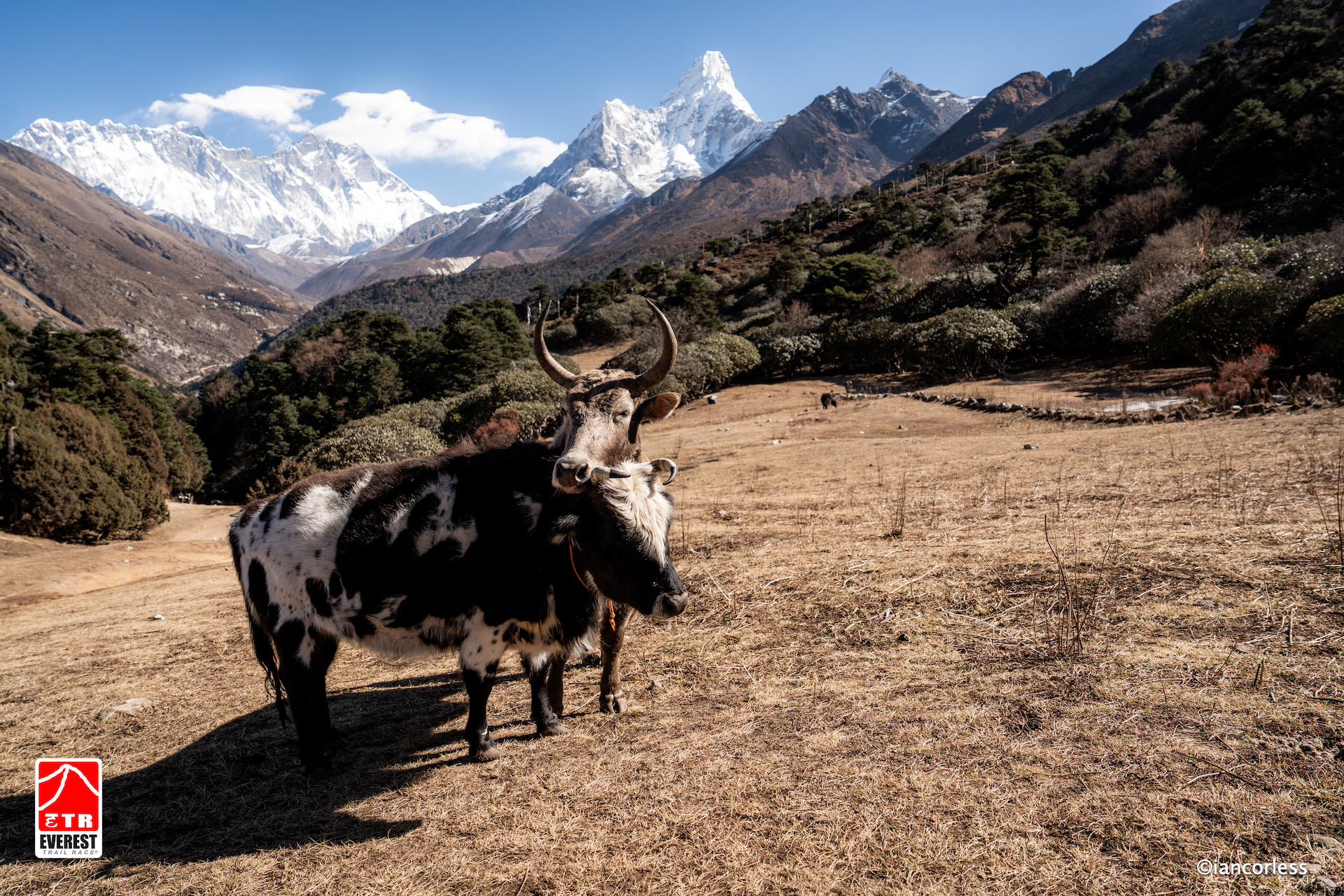
Covering 27.36 kilometers with 2,170 meters of elevation gain, Stage 4 is no break in the action. It’s a demanding route with steep climbs, quad-burning descents, and a new cast of characters on the trail: trekkers, porters, yaks, and teahouses buzzing with the hum of expedition life.
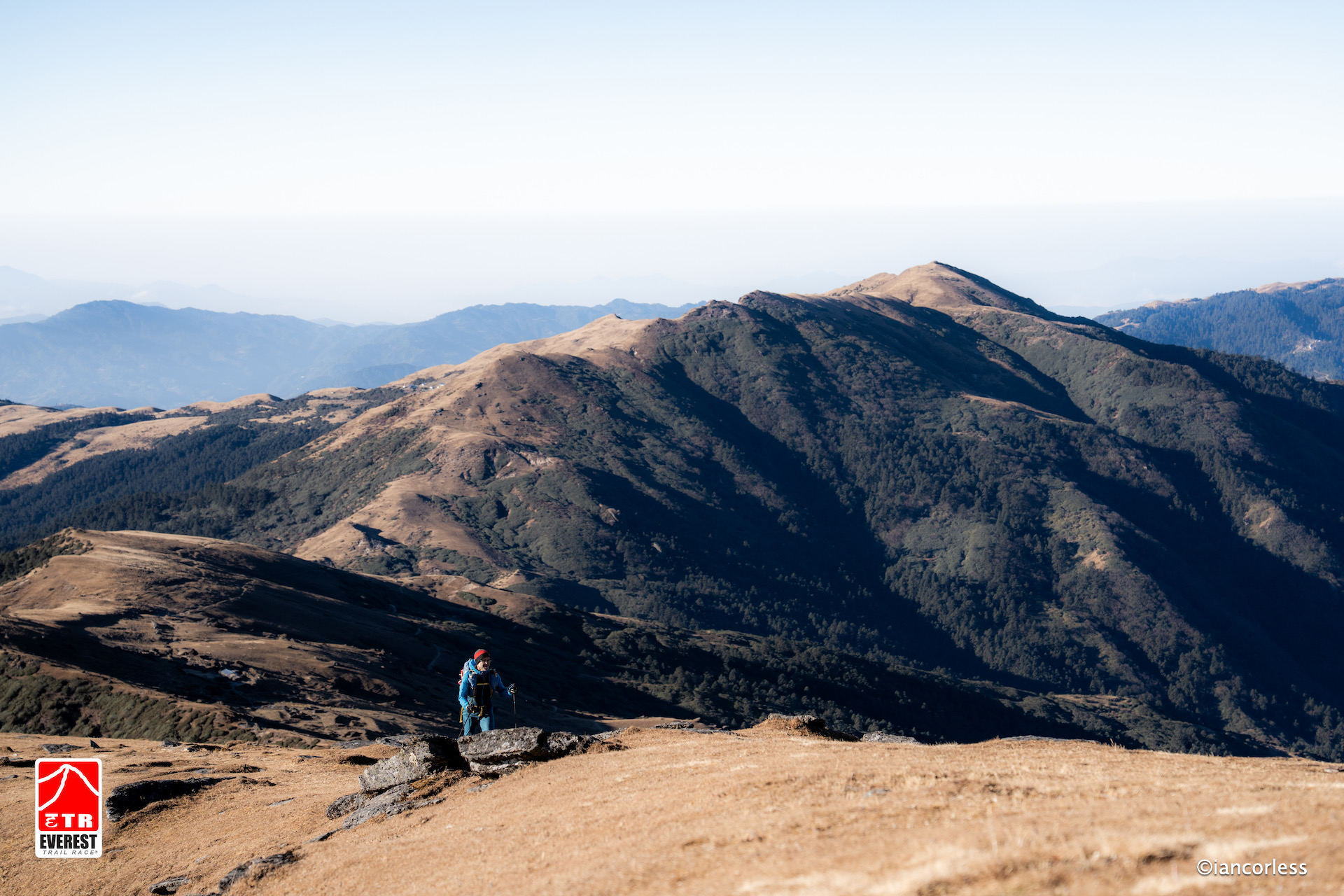
From the gun, it’s all uphill. The stage opens with a brutal 1,000-meter climb in just over 6 kilometres. The goal? Kari La, perched at 3,080 meters. This is the kind of climb that shows no mercy. Legs burn, lungs strain, and the views remind runners they’re racing through giants.
Checkpoint 1 at Paia arrives as a welcome relief. It’s a place to regroup, rehydrate, and reset. But the descent to Surke at 2,750 meters is no victory lap. Fast, technical, and relentless, it punishes tired legs before the next climb begins.
From Surke, runners face another grind: the climb to Chaurikharka (Checkpoint 2) at 2,621 meters. It’s lower in altitude but still a fight, especially coming late in the stage. From there, the course becomes unpredictable: a rollercoaster of ups and downs, testing whatever reserves are left.
The final push into Phakding at 2,620 meters marks more than the end of the stage. It’s a symbolic arrival.
The runners are now on sacred ground, part of the ancient route to Everest Base Camp. The trails are busier, the lodges more frequent, and the landscape unmistakably Himalayan.
Stage 4 isn’t just a physical battle, it’s a transition. The isolation of the early stages gives way to the buzz of one of the world’s most legendary trekking routes. But don’t let the crowds fool you. With over 2,000 meters of climbing and the fatigue of three hard days behind them, today was a war of attrition.
The finish line at Phakding means rest, food, and maybe even a little comfort, tents are traded for a lodge. Everest still looms. And the toughest stage lies ahead – stage 5 the ultimate test.
Stage 3 of the Everest Trail Race is where the real punishment begins. With 28.3 kilometres of unrelenting terrain and a leg-wrecking descent from the high-altitude village of Kamo (3855m) down to the valley floor at Jubing (1600m), this stage isn’t just tough, it’s a full-body assault.
Runners start high, where the air is thin and every step feels like a negotiation with your lungs. The early climb up to Checkpoint 1 at Kamo is already a grind, but what follows is what defines this stage: a relentless plunge that feels like it goes on forever.
The descent from Kamo to Jubing is not gentle. It’s steep, technical, and unforgiving. The views are spectacular, sure, but most runners will be too focused on staying upright to take much of it in. The drop of over 2200 meters smashes quads and shreds knees. Every rock, step, and switchback becomes part of the battle. If the climbs test your endurance, the downhills here test your durability.
Fortunately, the support is solid. CP1 at Kamo, CP2 at Hewa, and CP3 at Jubing are well-stocked and strategically placed. Runners have every opportunity to refuel and regroup, though few will find much comfort in the knowledge that the real sting comes right at the end.
Just when you think you’ve done enough, the trail throws in a final climb up to the iconic village of Kharikola. It’s a steep, grinding ascent that comes after hours of muscular destruction.
This is where mental strength counts just as much as physical preparation. After hammering down thousands of vertical meters, your legs are begging for mercy, and yet, up you go again.
Kharikola, perched proudly in the hills, is a reward in itself. Not just for the views, but for what it represents: survival. Conquering Stage 3 is a badge of toughness. It’s where the Everest Trail Race shakes out the pretenders from the contenders.
Stage 3 doesn’t just test you, you feel it in your legs for days. You carry it in your mind for longer. It’s beautiful, brutal, and unforgettable. And for every runner who arrives in Kharikola, it’s a hard-earned victory etched into the heart of the Himalayas.
Stage 2 of the Everest Trail Race doesn’t waste time. The gun goes off, and it hits hard, right into a beast of a climb that defines the day. The route is 26.6 kilometers with 1,483 meters of vertical gain, but ask anyone who ran it: it feels like double that.
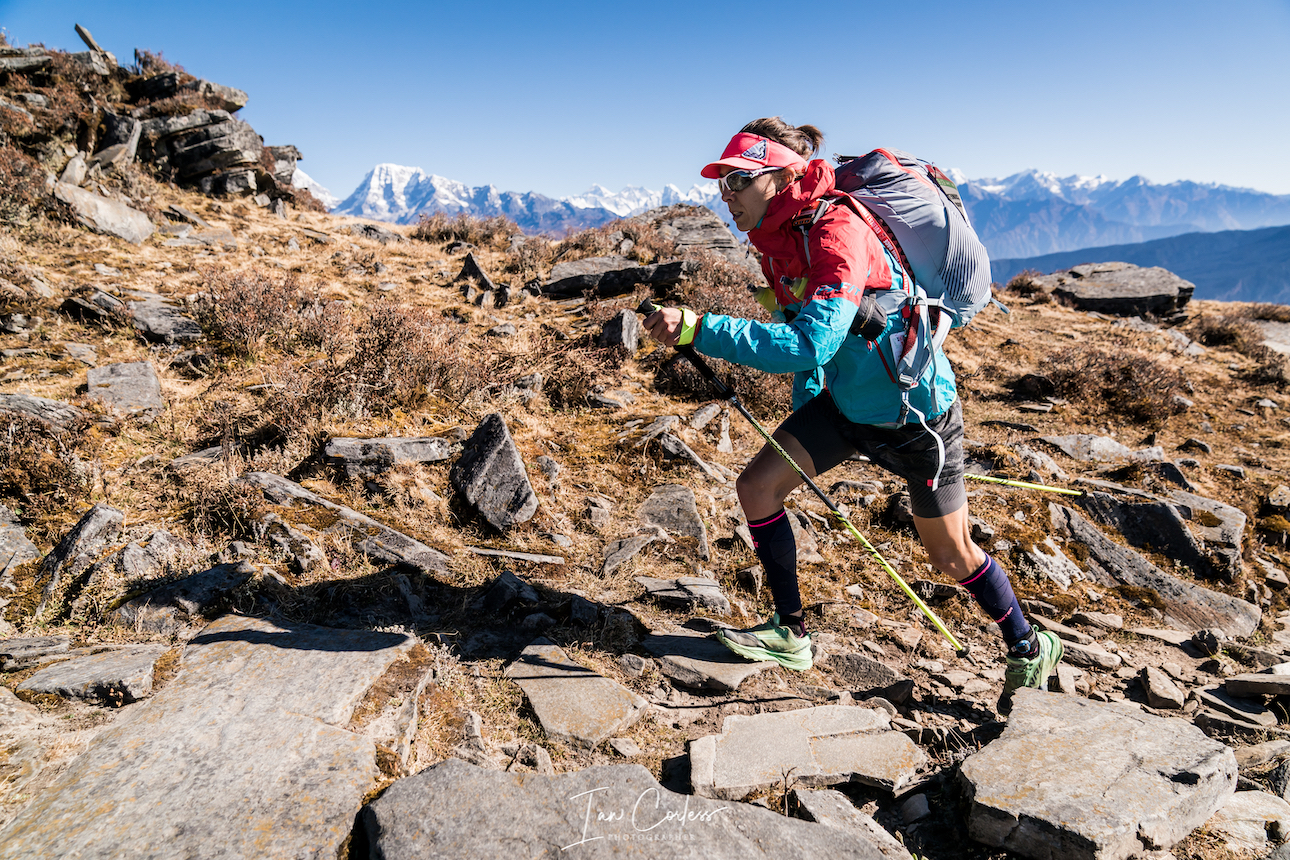
The stage opens with arguably the most iconic stretch of the entire race, a 4km climb straight out of the start gate, topping out at the summit of Pike Peak at 4,046 meters. There’s no easing into it. You’re immediately lunging skyward, legs burning, lungs gasping, every step on loose rock and narrow trail.
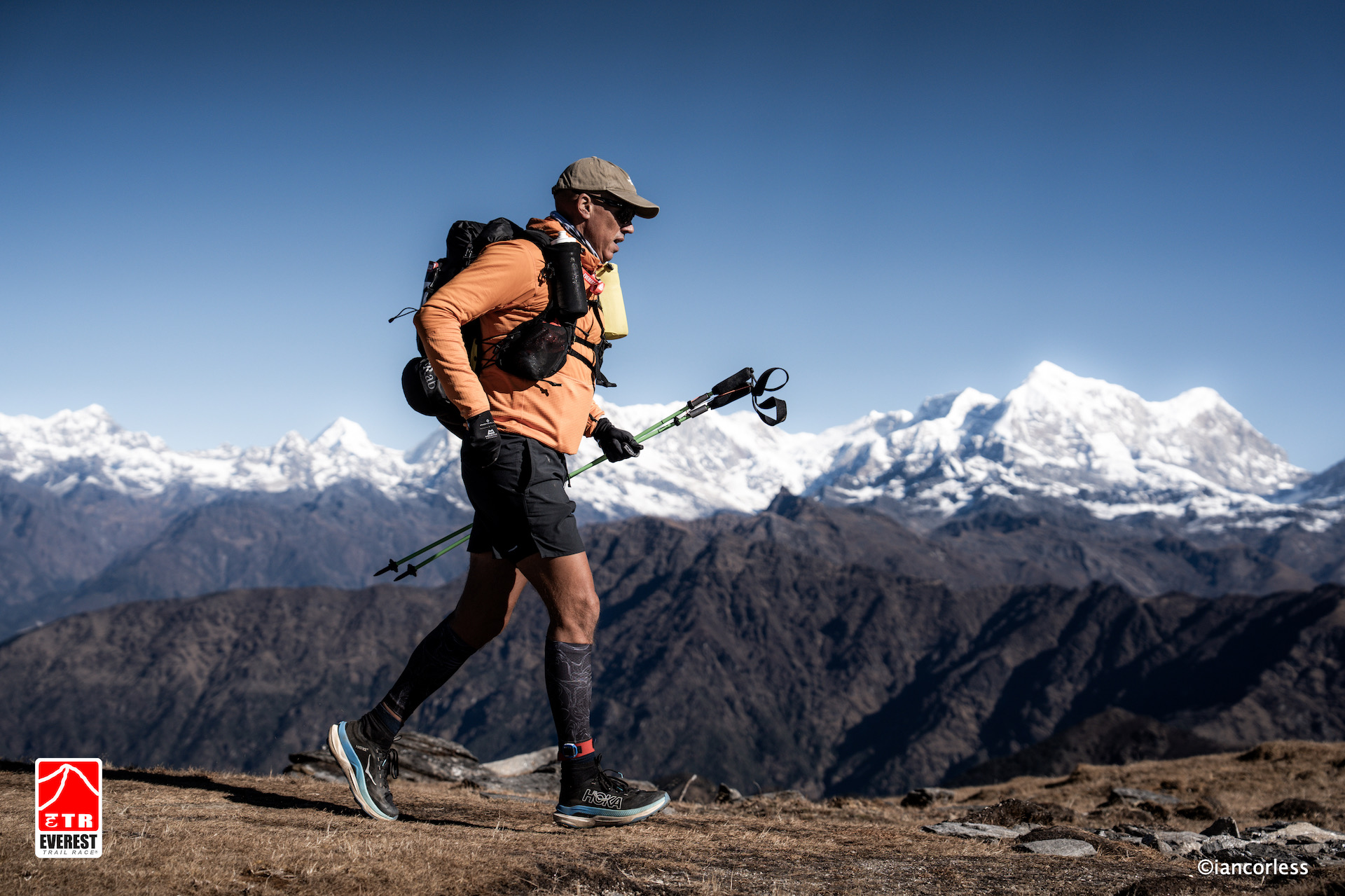
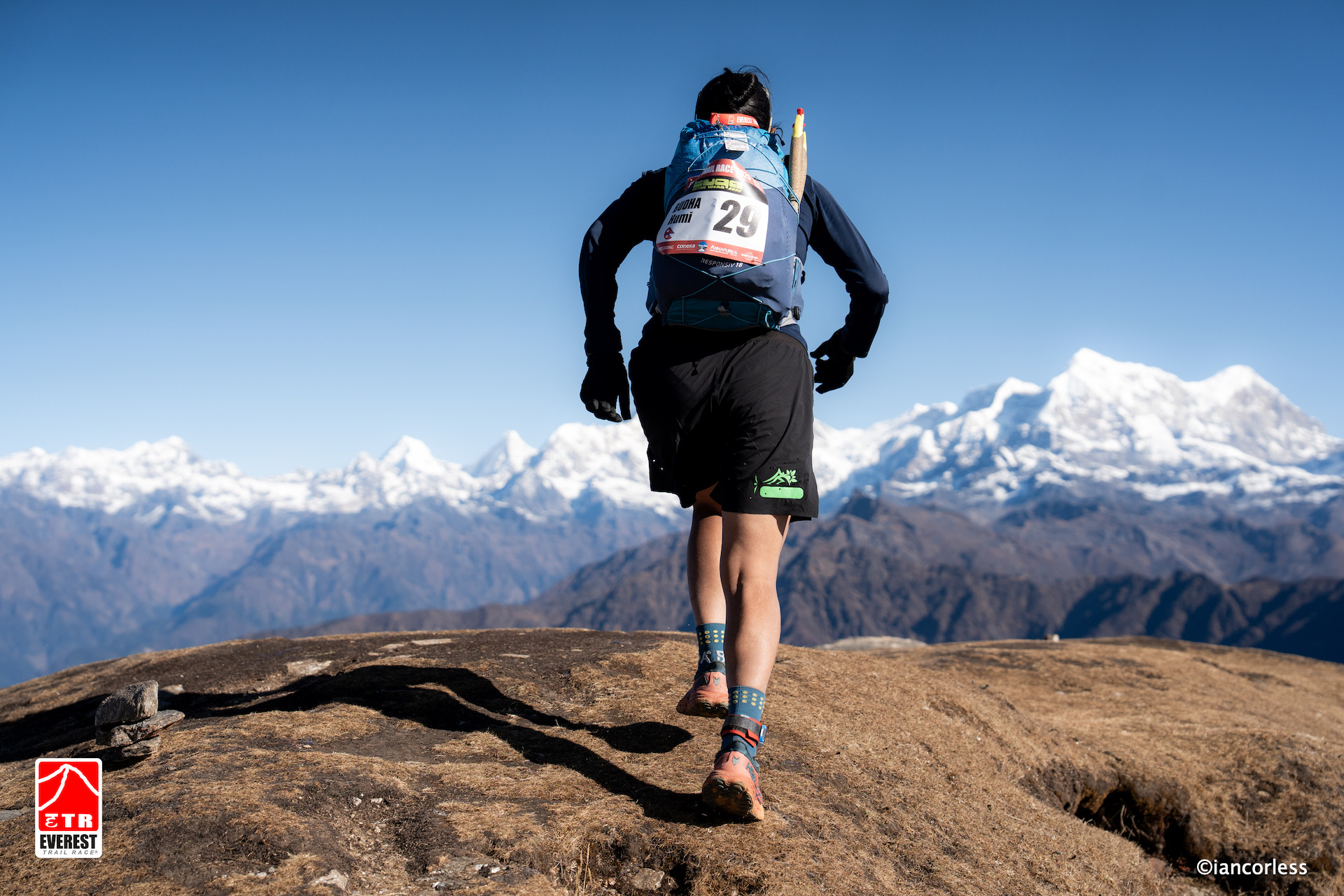
But what a reward. The views from Pike Peak are the kind you earn. Everest, Thamserku, and the distant giants of the Himalayas tower on the horizon.
There’s a strange serenity up there—above the tree line, above the chaos, if only your quads weren’t screaming so loudly.
From the summit, runners are thrown into a tricky descent, technical, steep, and demanding full attention. This is no cruise; it’s controlled aggression. The terrain underfoot is a mix of loose stone and rutted trail, constantly shifting. Jase Bhanjyang appears below like a mirage, a short-lived reprieve at 3,510m before the next test.
After a quick breath, it’s back uphill, another climb, this time to 3,800m. It’s less brutal than the first, but by now the fatigue is setting in. The altitude, the sun, the effort, they add up. This section wears on you slowly, sapping strength before delivering a massive release:
This is the stage’s exhale. A long, fast descent winds down to Jumbesi, where Checkpoint 2 awaits. The descent is runnable FOR SOME but relentless. It’s a test of patience, footwork, and knowing how much to push without blowing up. At CP2, some collapse into chairs, others refuel and move quickly, no time to waste.
From Jumbesi, the route shifts gears. A more gradual climb takes runners to Phurteng at 3,000m, a steady push that gnaws at tired legs. Then, a rolling descent gives a hint of relief, but it’s a trap.
Because this stage has a final sting: the kick to Ringmo. Just when you think you’ve made it, the trail juts upward again before finally dropping into the finish at 2,740m. It’s psychological warfare. You can see Ringmo before you reach it – but the trail makes you fight for it.
Stage 2 is a monster. On paper, it doesn’t look like the toughest, less gain than Stage 1, more downhill, but the terrain, altitude, and sequence of climbs make it punishing. The raw elevation loss (2,203m) sounds helpful, but it hammers your legs in a different way. Many finish looking shell-shocked. Others, oddly exhilarated.
This is the Everest Trail Race offers up some of the most staggering views you’ll ever see on a race course, and today, in the shadow of Pike Peak, the price of admission was steep but worth it.
Brutal and Beautiful: Stage 1 of the 2025 Everest Trail Race Sets the Tone
The 2025 Everest Trail Race exploded out of the gates with a punishing Stage 1—23.10 kilometres of raw Himalayan grit, climbing 1,551 meters and descending 1,012 meters across technical trails and high-altitude terrain. From the start line in Dhap (2,950m) to the finish at Chyangsyngma (3,490m), runners were thrown straight into the deep end of this six-stage ETR test of endurance, mindset, and mountain resilience.
There’s no easing into the ETR. Stage 1 wastes no time in reminding runners exactly where they are, high in Nepal, breathing thin air, legs already burning. Early highlights at Sigane and Chyangba delivered sweeping views and traditional village life, but the serenity masked the effort required to get there.
The route dipped and climbed through Khamding, home of the first checkpoint and a welcome chance to refuel with fluids and snacks. But nothing about this stage was easy. The technical nature of the terrain demanded constant focus, one misstep could spell disaster. Warm daytime sun gave runners a psychological lift, but cold nights and the ever-present altitude ensured no one felt too comfortable.
The trail pressed on to Juke, the second checkpoint, offering another chance to grab supplies before the day’s most brutal truth set in, the final 5 kilometres were going to hurt. With around 800 meters of elevation gain packed into that last stretch, the finish at Chyangsyngma felt like a slow-motion battle uphill, but the views help with compensation.
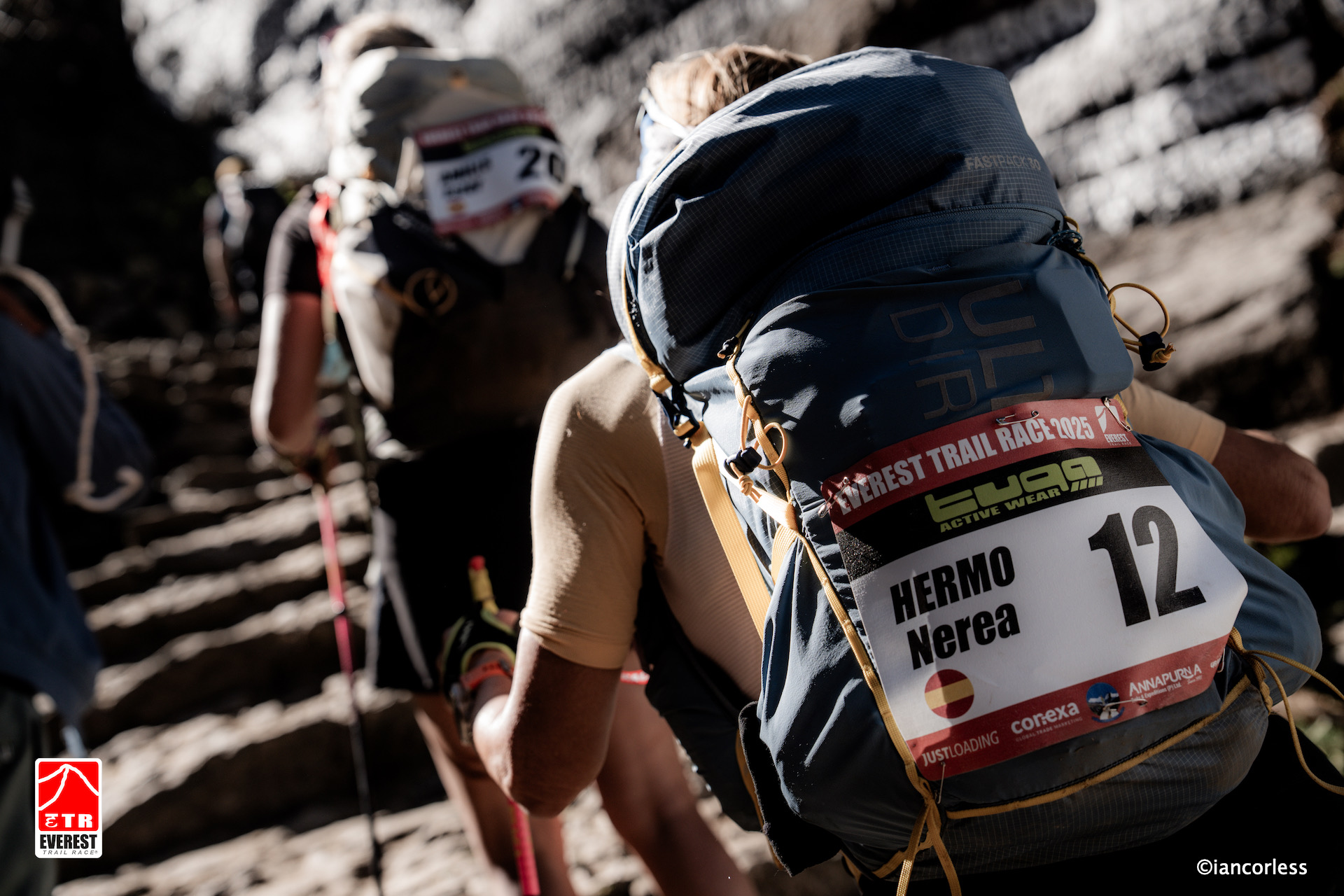
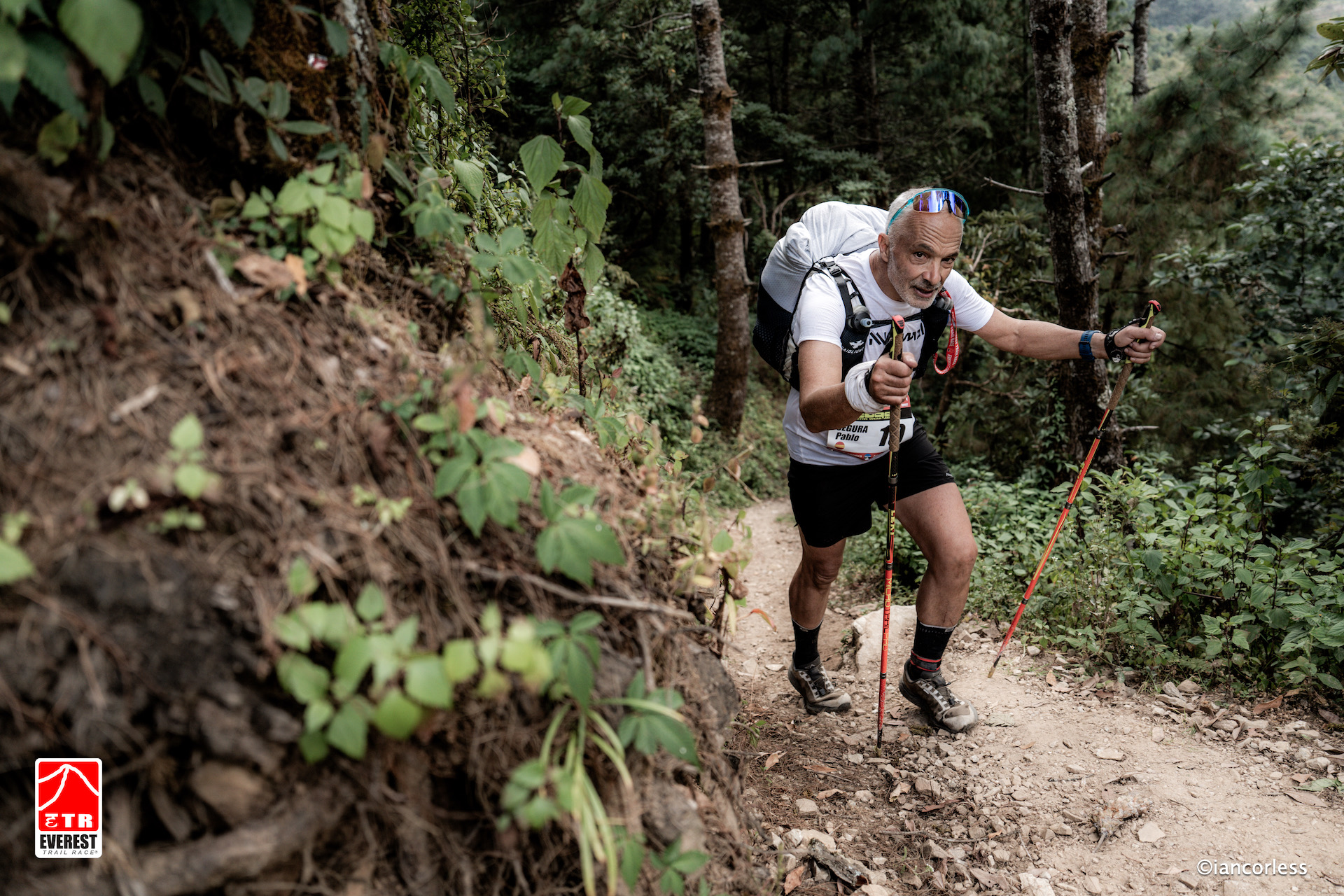
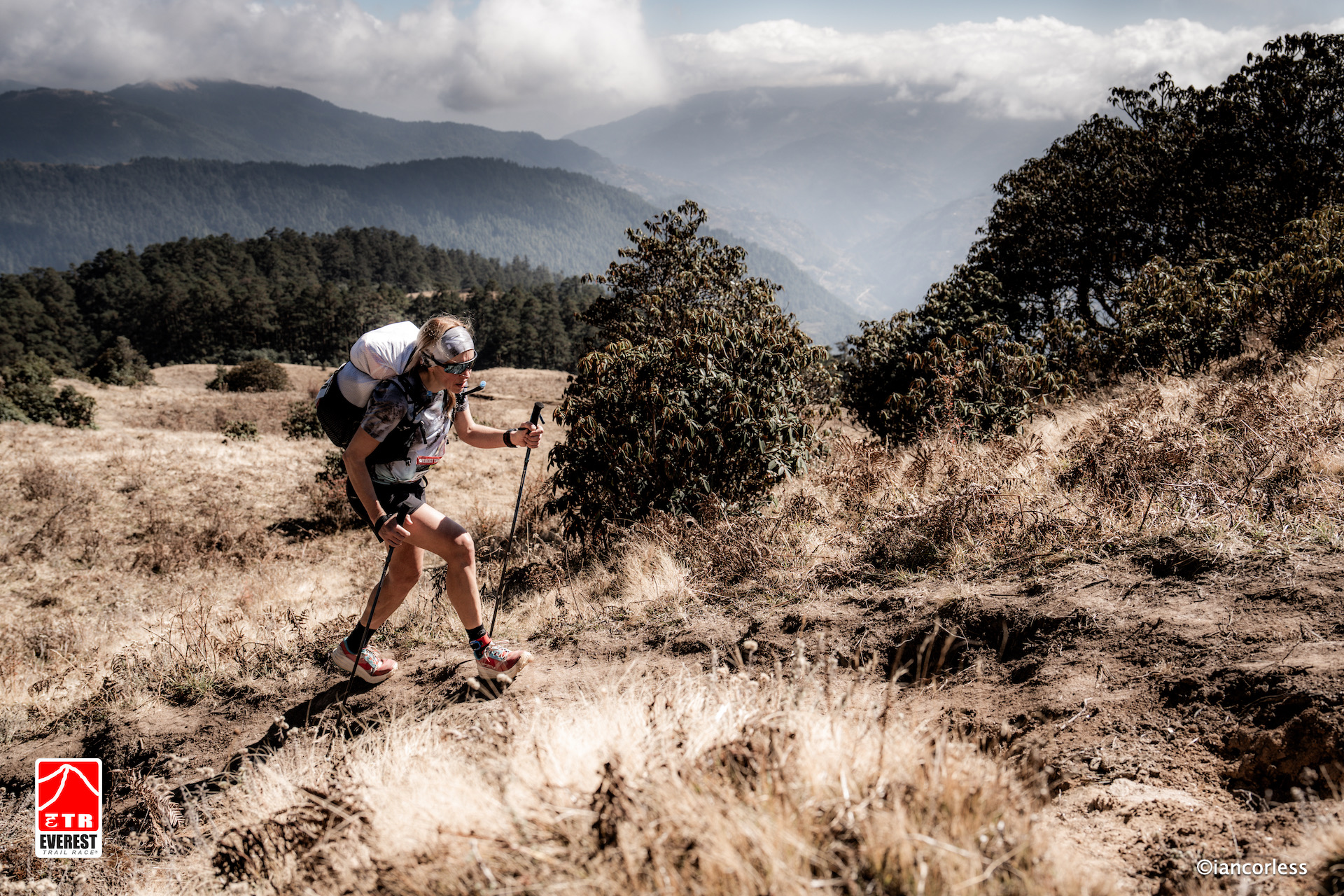
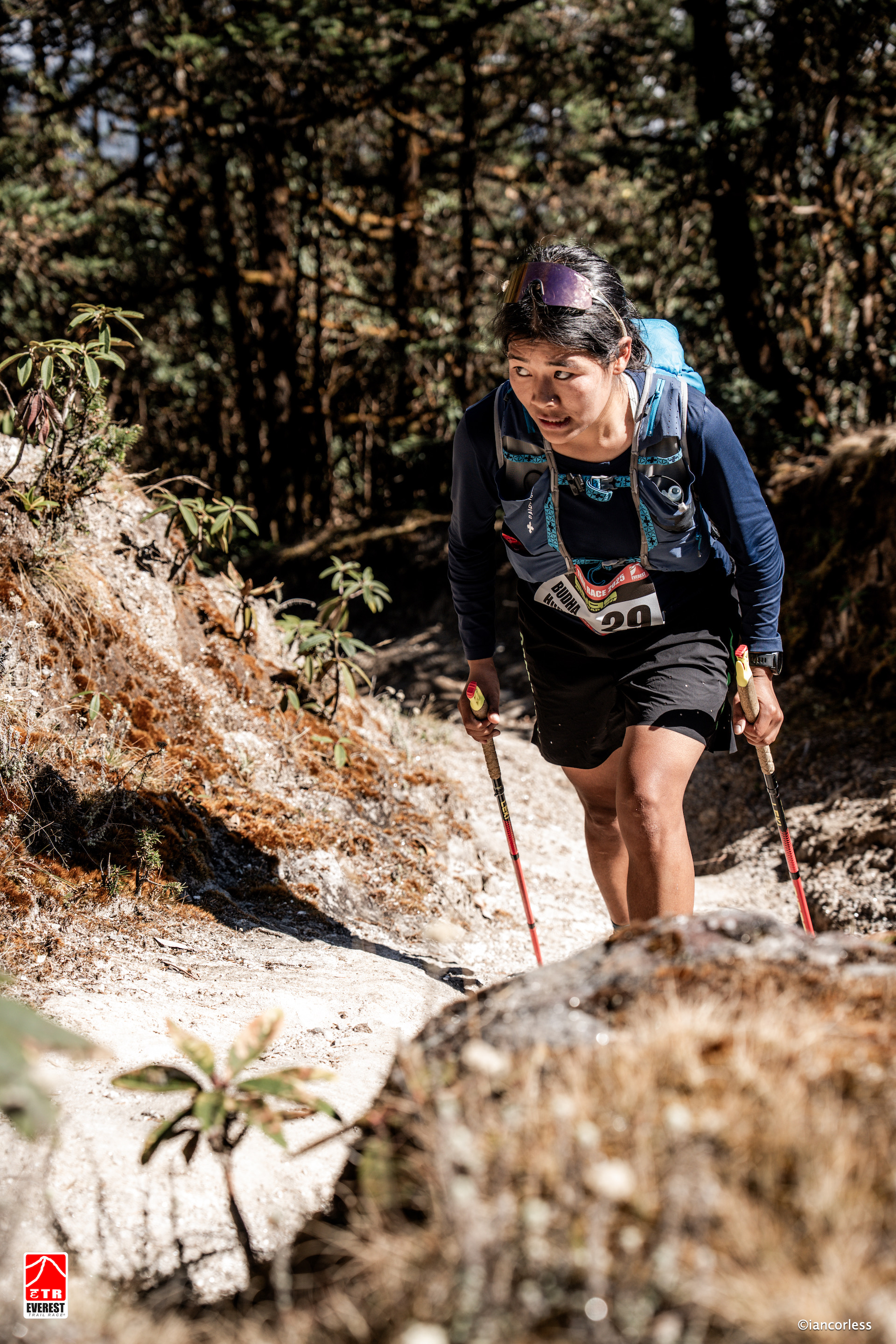
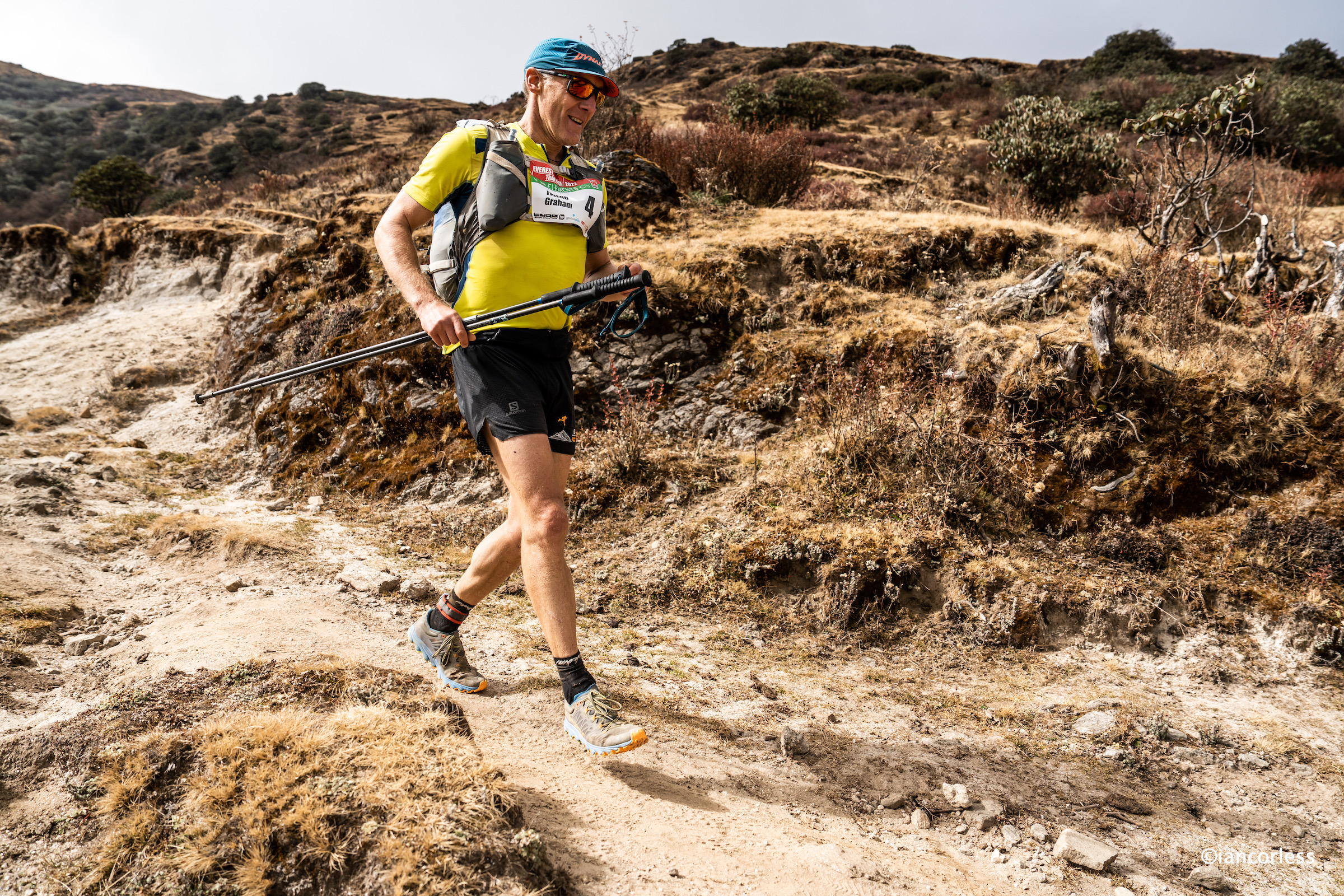
There was no room for rhythm here, just grind, grit, and survival. Poles an essential accessory. Every switchback stung. Every false summit tested patience. But that’s the Everest Trail Race. It’s not just a run; it’s a confrontation with the terrain, and Stage 1 made that clear from the outset what lies ahead.
With five stages still to come, the 2025 ETR has already thrown down the gauntlet. Those who made it through Stage 1 know what’s coming: long days, steep ascents, dizzying descents, and no shortage of mental warfare. But for now, reaching Chyangsyngma was a victory in itself and proof that this race is not for the faint-hearted.
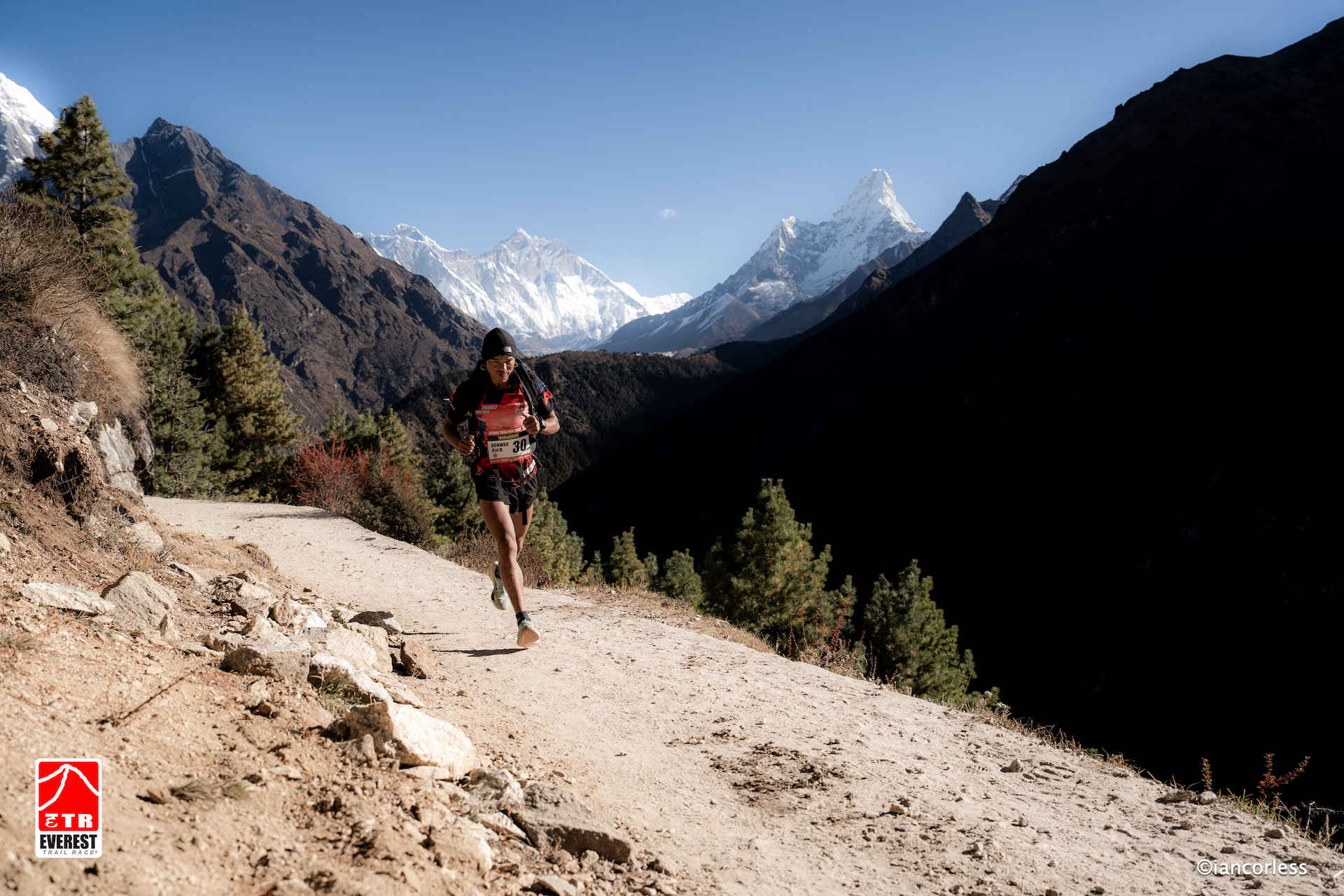
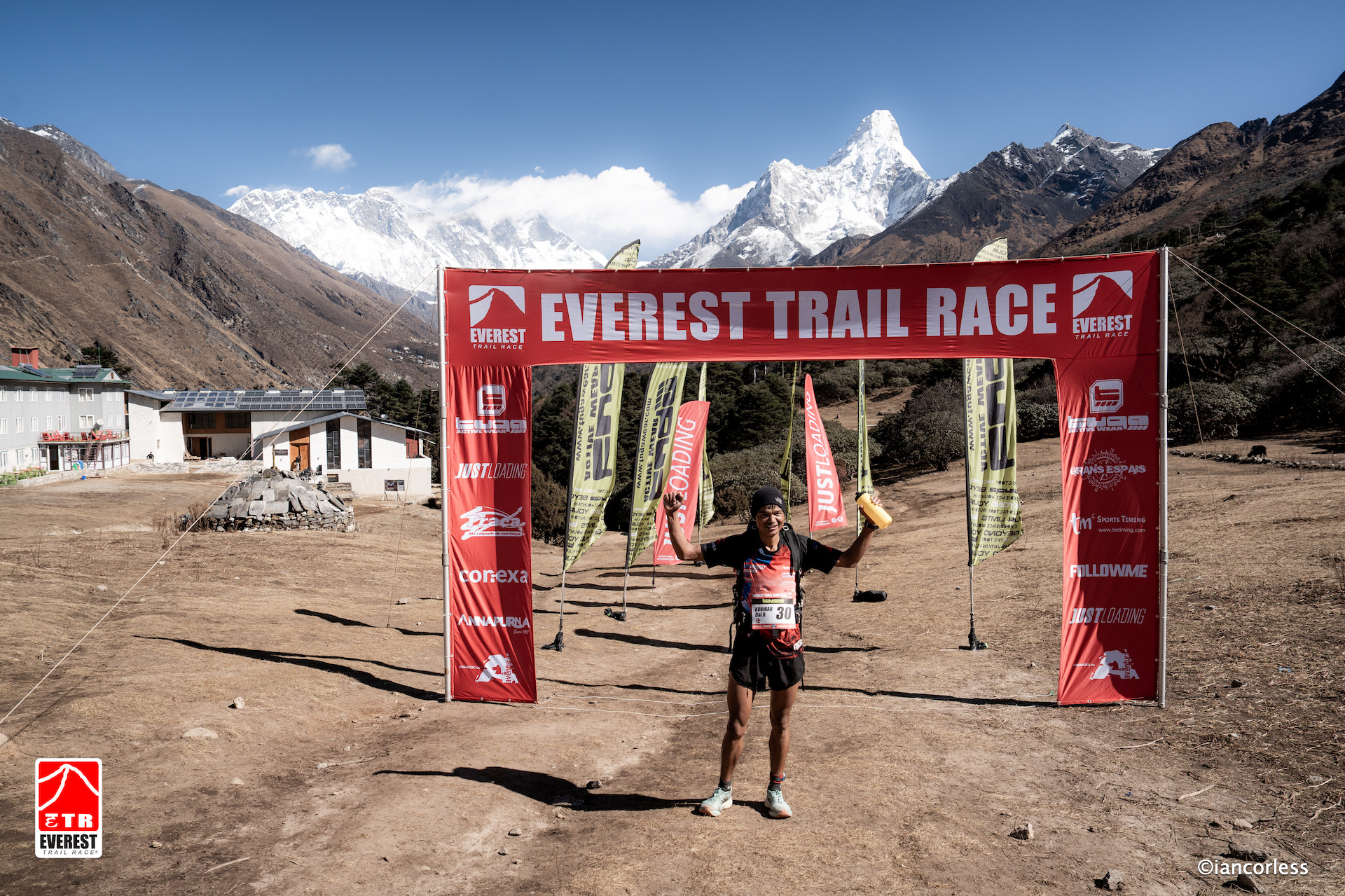
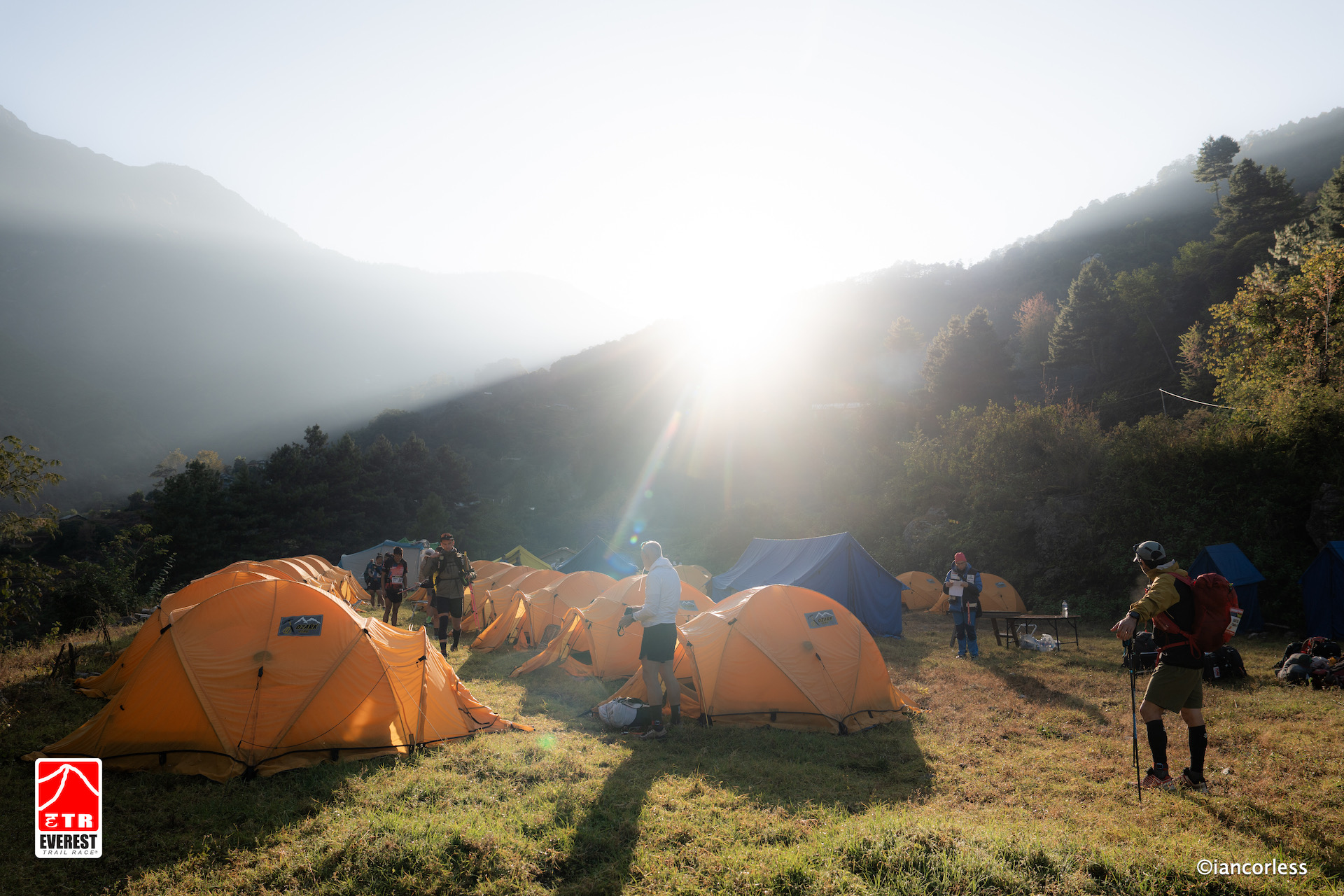
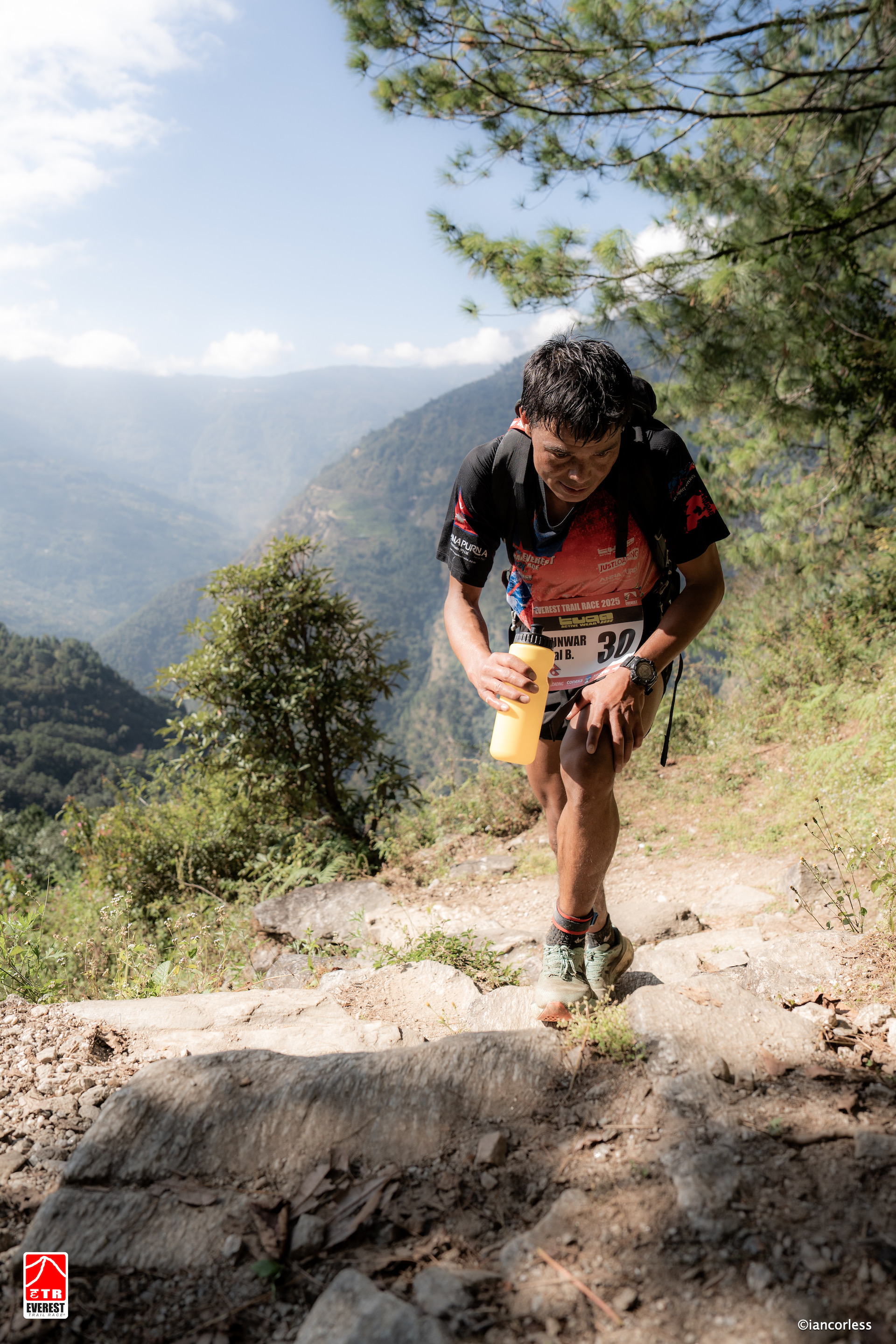
The race start time was a leisurely 0830 after an 0600 wake-up, hot tea delivered to each tent. Remarkably, Nepalee runner, Dal B Kunwar completed the stage in rapid, 2h 40min – there is a great deal to be said for being on ‘home’ turf. The first woman, Nepalee Chhoki Sherpa placed 3rd on the stage in a time of *h *m – full results can be viewed post-race at the ETR website HERE.
The Everest Trail Race is on. And it’s already living up to its legend.
If you’ve ever dreamed of running in a place that feels otherworldly, where every breath reminds you you’re alive, and every step tests your limits, the 2025 Everest Trail Race is your chance. Happening this November, 10th to 22nd, 2025.
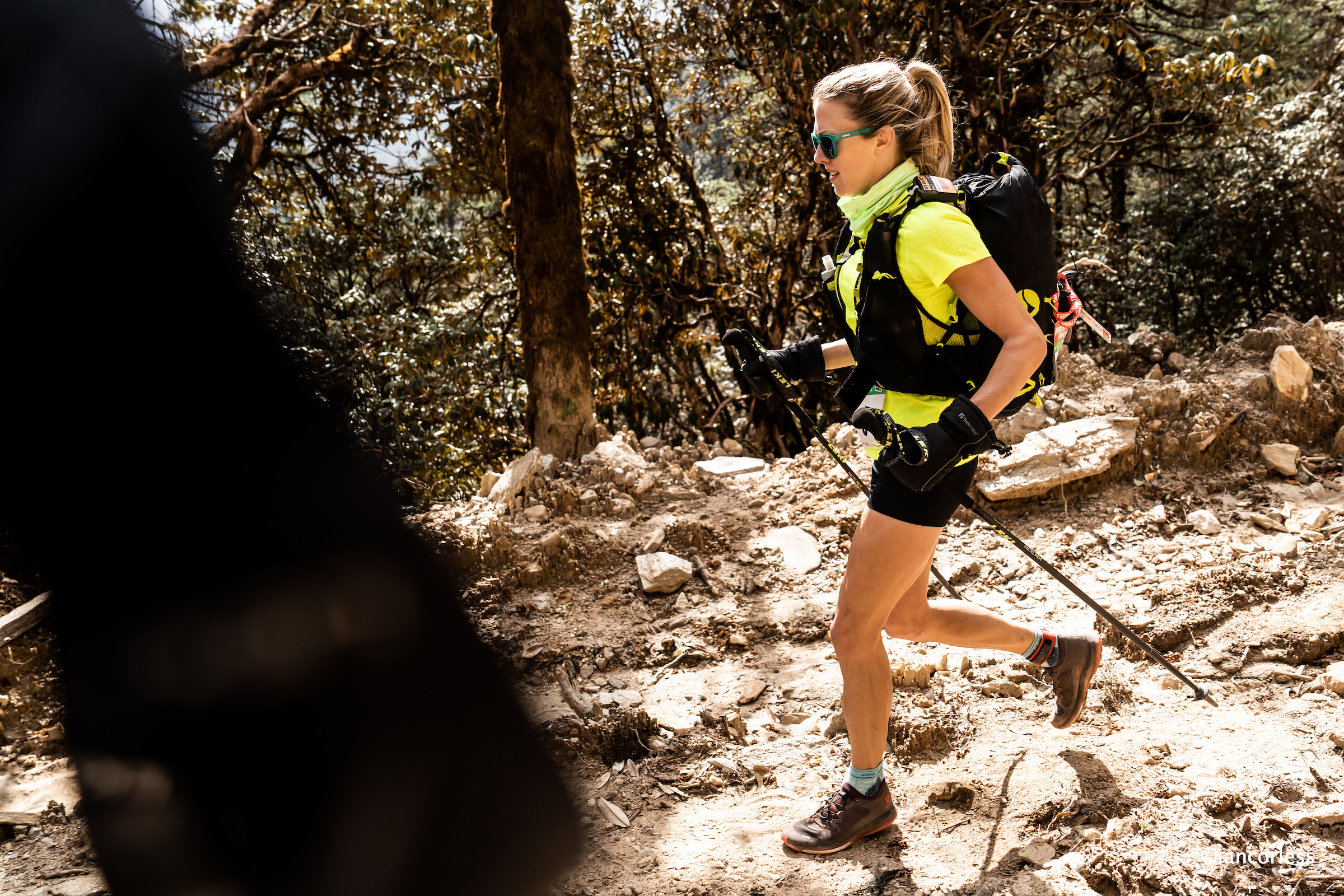
You carry your own gear. You fuel yourself. You keep going. Over six days, you’ll face steep ascents, grinding descents, suspension bridges, narrow trails, and thin air all at altitudes between 2,000 and 4,100 meters.
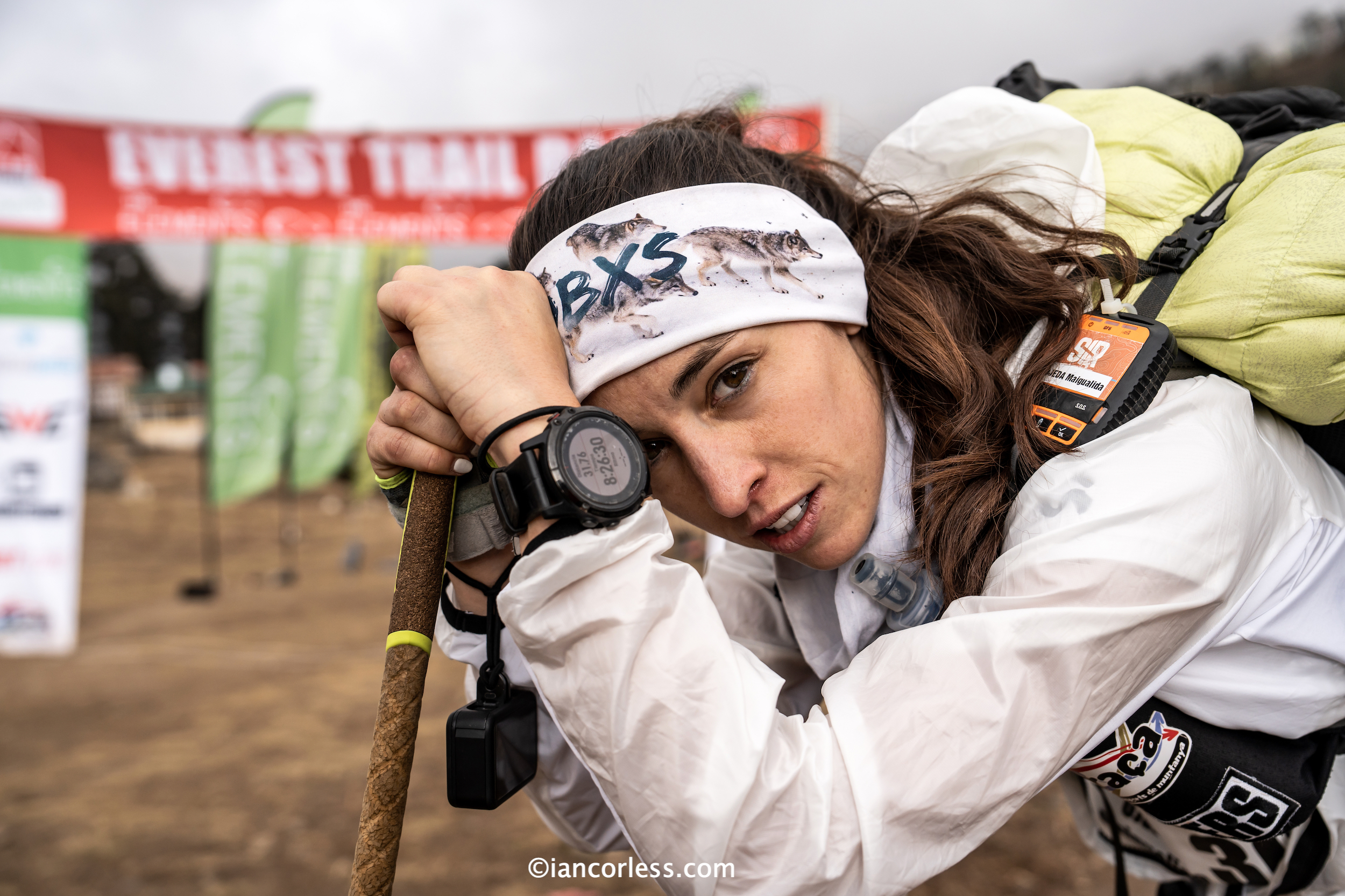
This is not a race for comfort. It’s a race for people who crave discomfort, who see sweat and struggle as part of something bigger.
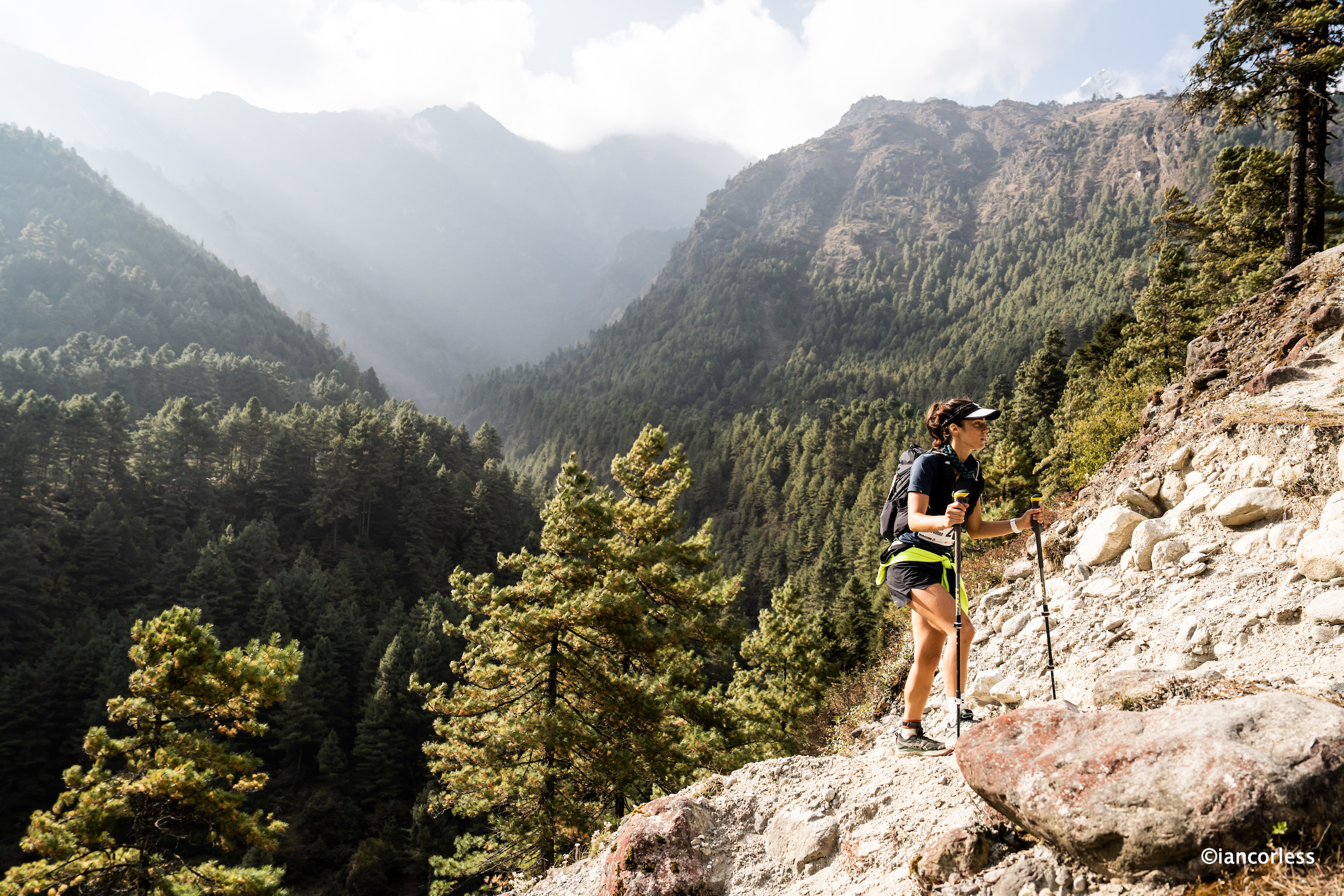
This is trail running in its purest form. Technical sections, single tracks carved into mountainsides, ancient stone paths connecting remote villages. One moment you’re running through a pine forest; the next, you’re skirting a cliff with views that stop you in your tracks.
The race route threads through the Solukhumbu region, home to the legendary Sherpa people, along the same trails used by mountaineers heading to Everest Base Camp.
November in the Himalayas is cool, crisp, and clear, perfect for trail running. Daytime temps are mild, with intense sunshine at altitude.
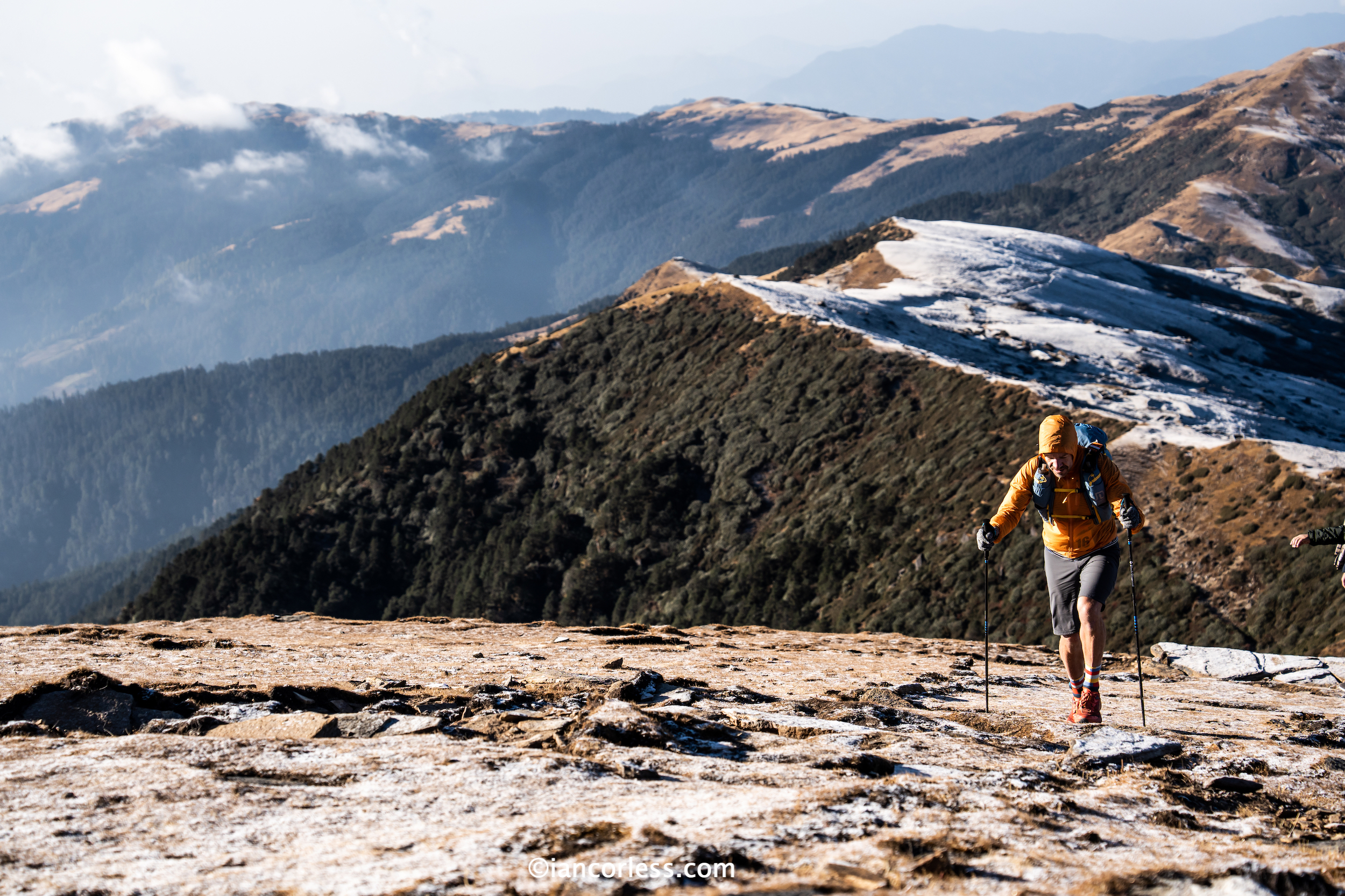
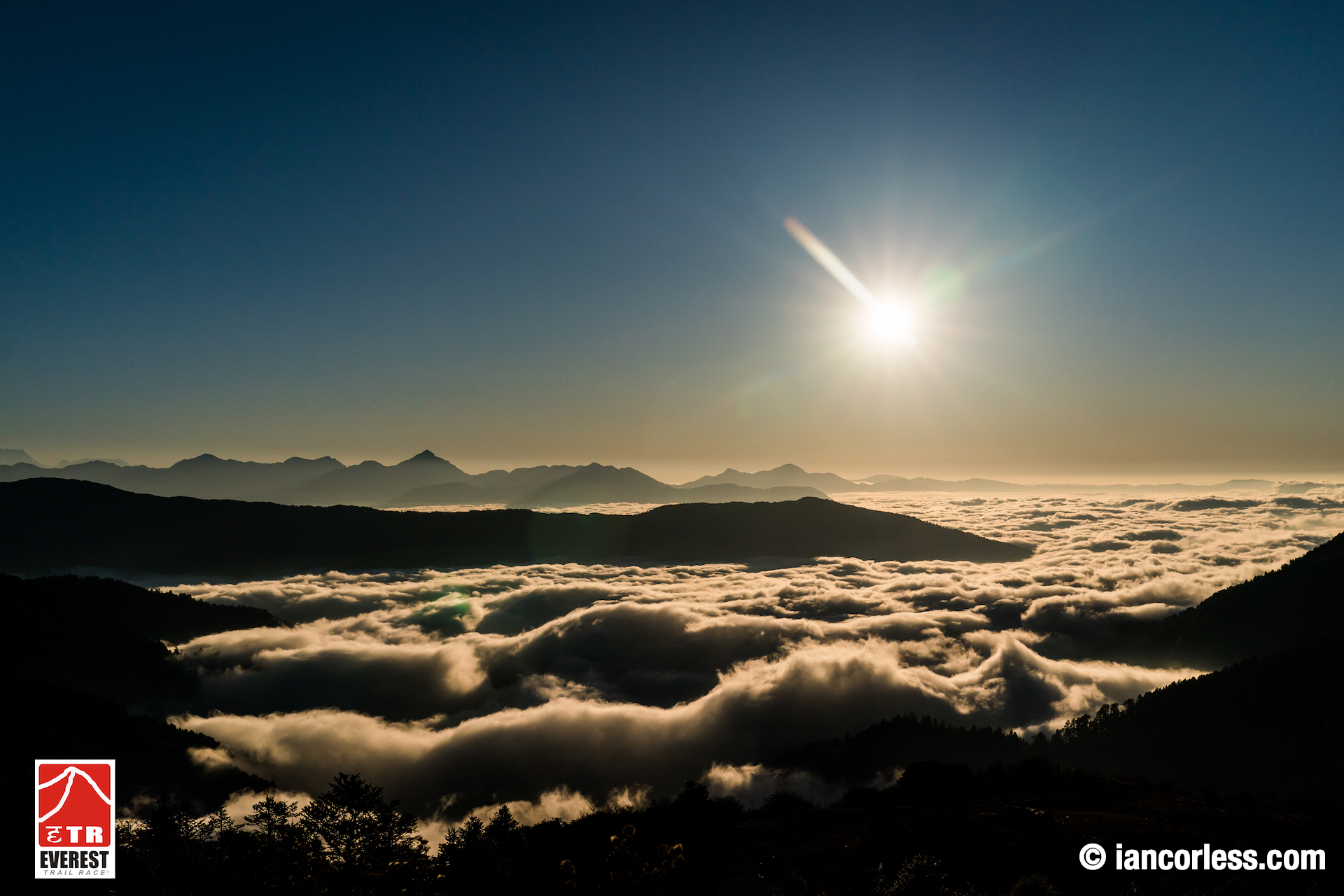
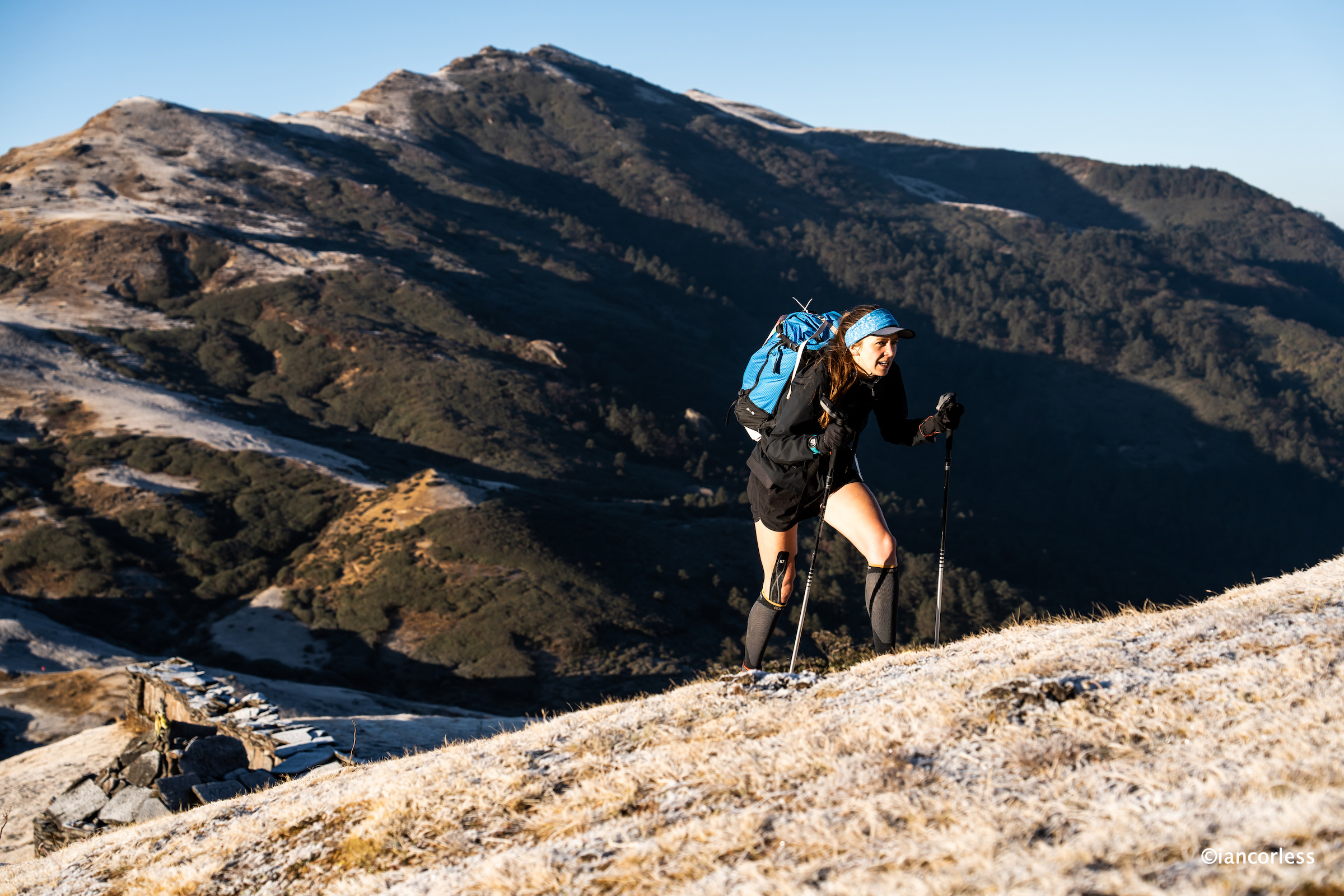
But the nights get cold. You’ll wake up to frosty mornings, and every breath will be visible. It’s the dry season, so the skies are often brilliantly blue, framing the snowcapped peaks like a postcard that never ends.
This is the kind of race where you learn to respect the air. The oxygen gets thinner, and your body feels it. It’s a slow grind uphill, and then a fast, careful descent. Pacing becomes survival. Acclimatisation is your secret weapon. But when you’re out there, breathing hard, moving slow, you realise something: you don’t need speed. You just need grit and determination.
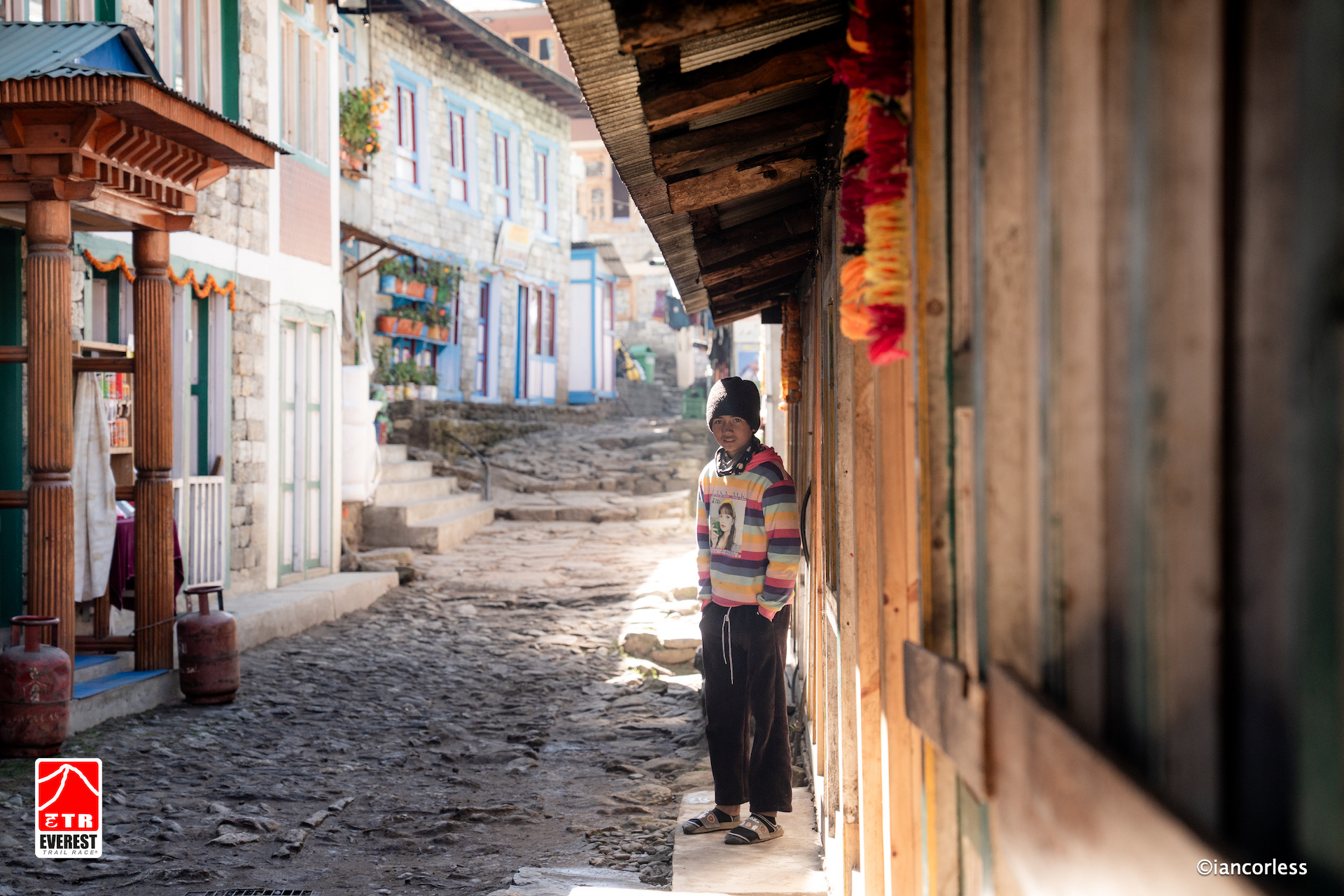
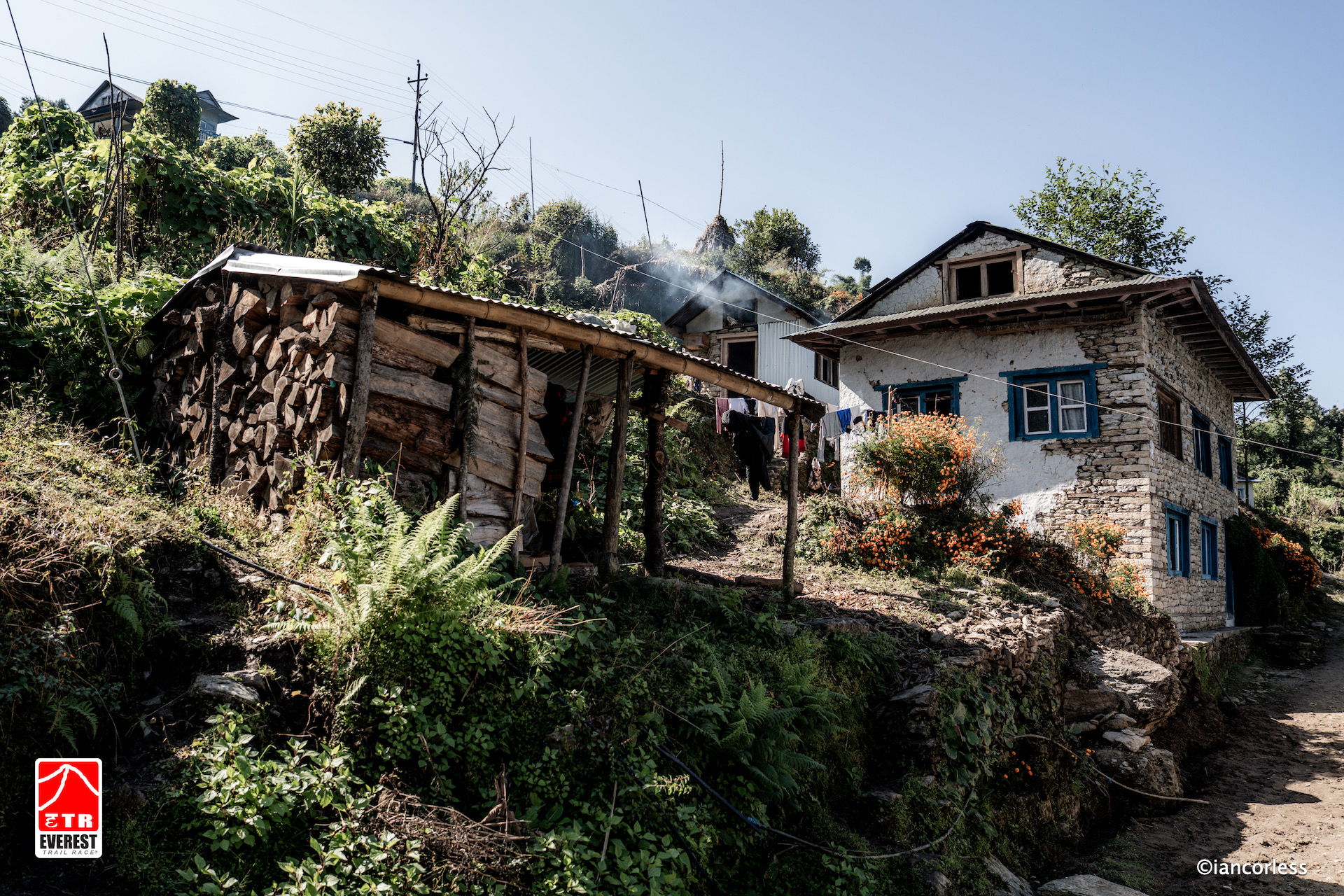
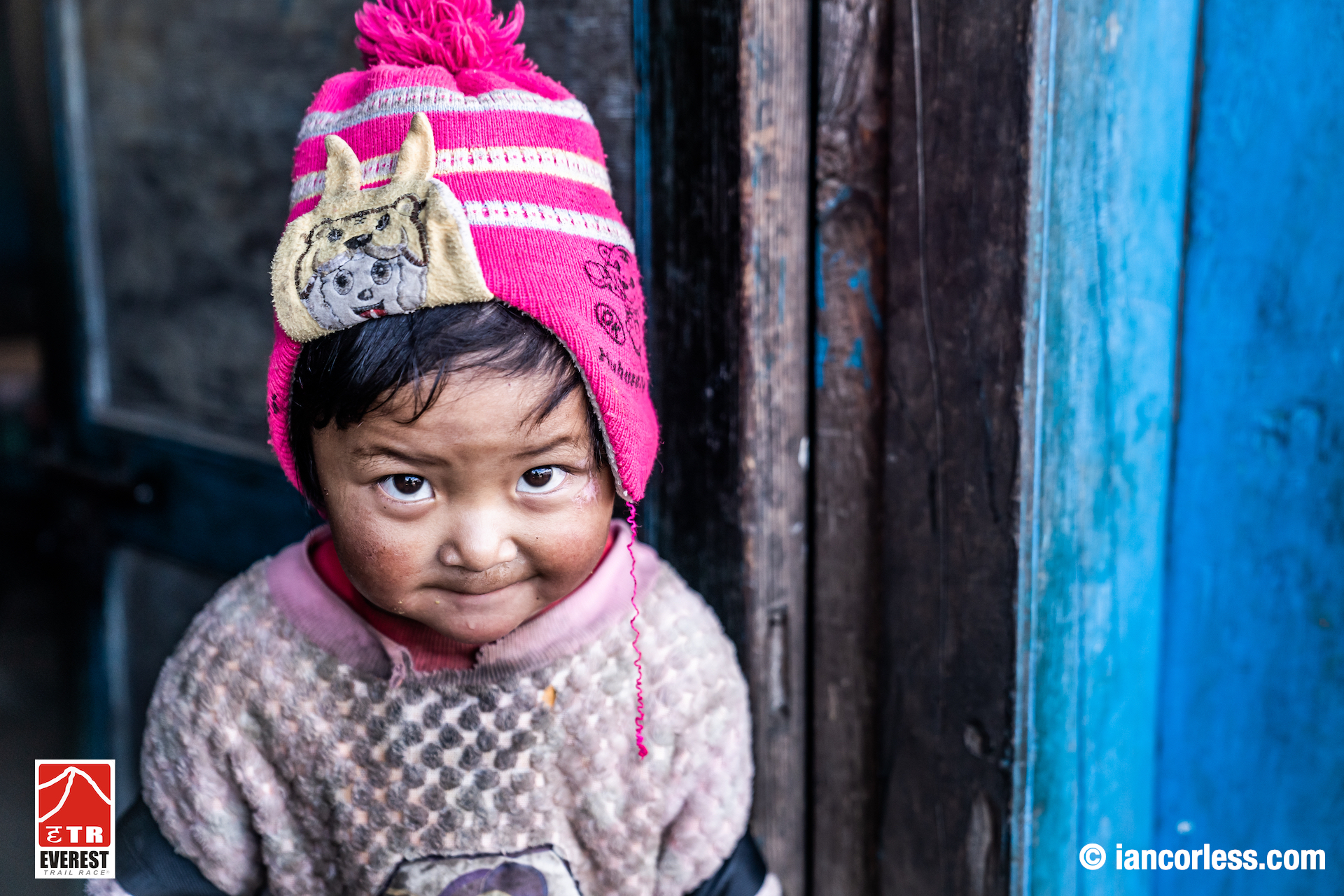
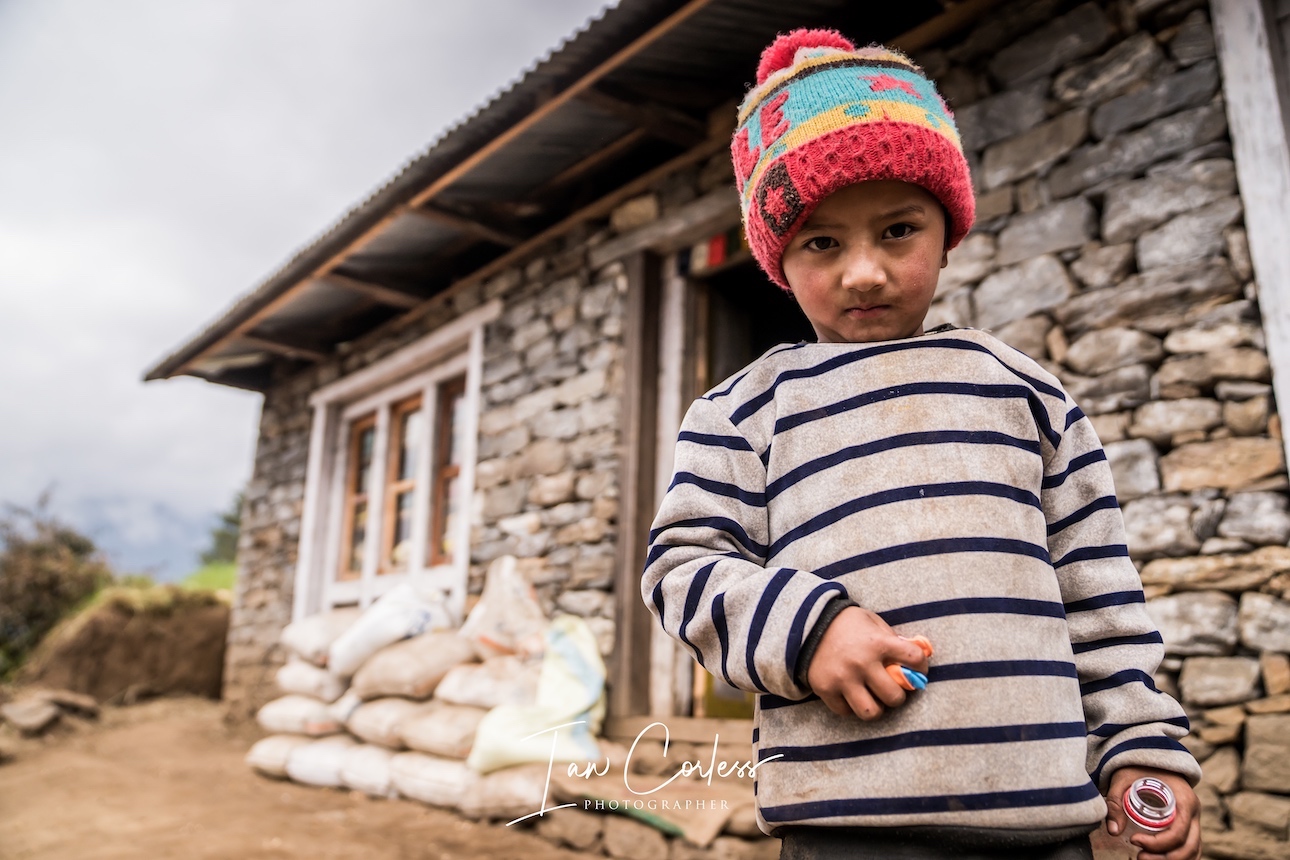
You’ll meet Sherpa families offering you tea from tin cups in smoky kitchens. Kids will run beside you, barefoot and beaming.
The camaraderie among runners is real, forged in pain, sweat, and shared awe. You’ll finish each stage beside people who were strangers, now teammates.
The Everest Trail Race is small and personal. It’s not about crowds. It’s about connection — to the land, to each other, and to something deeper inside yourself.
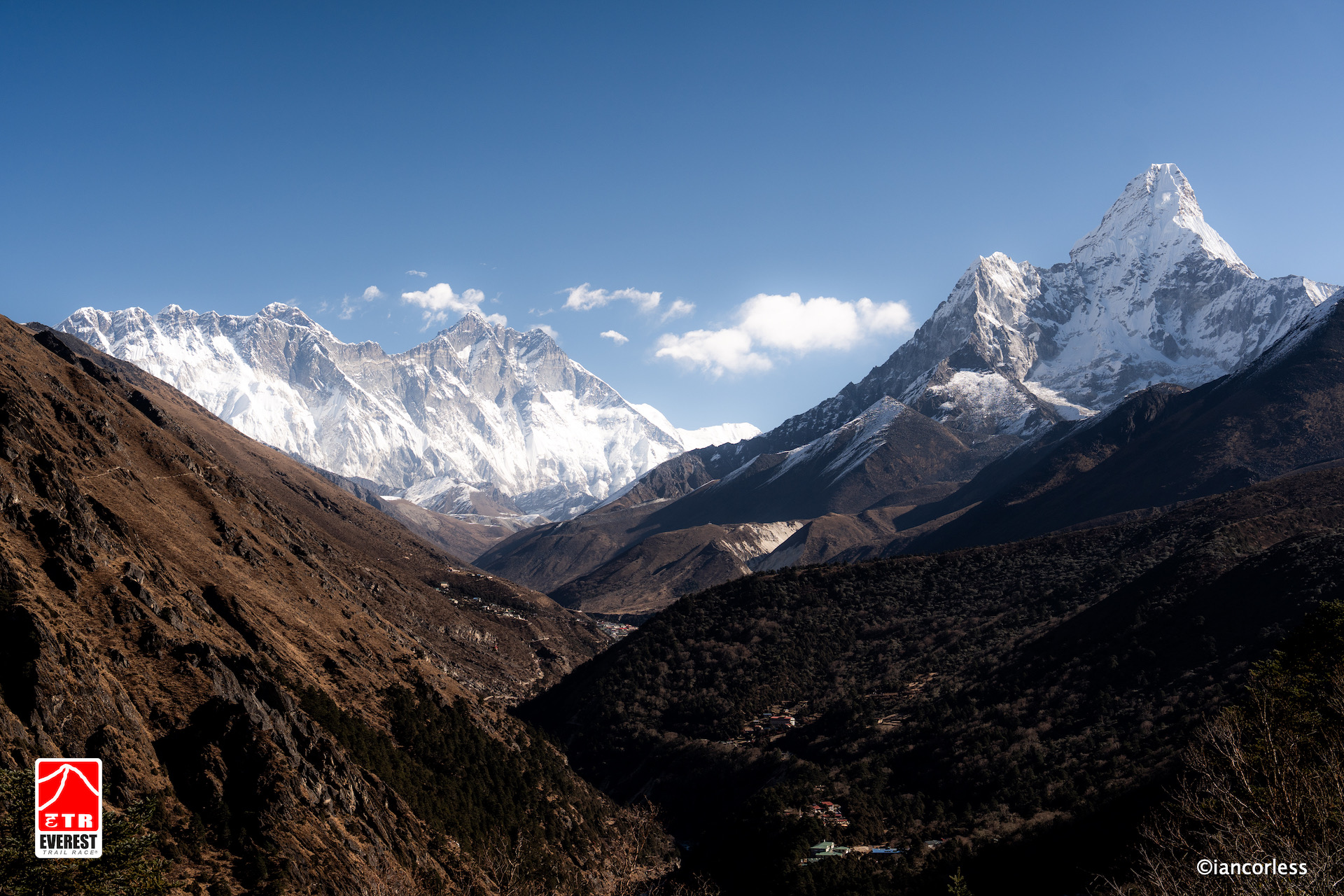
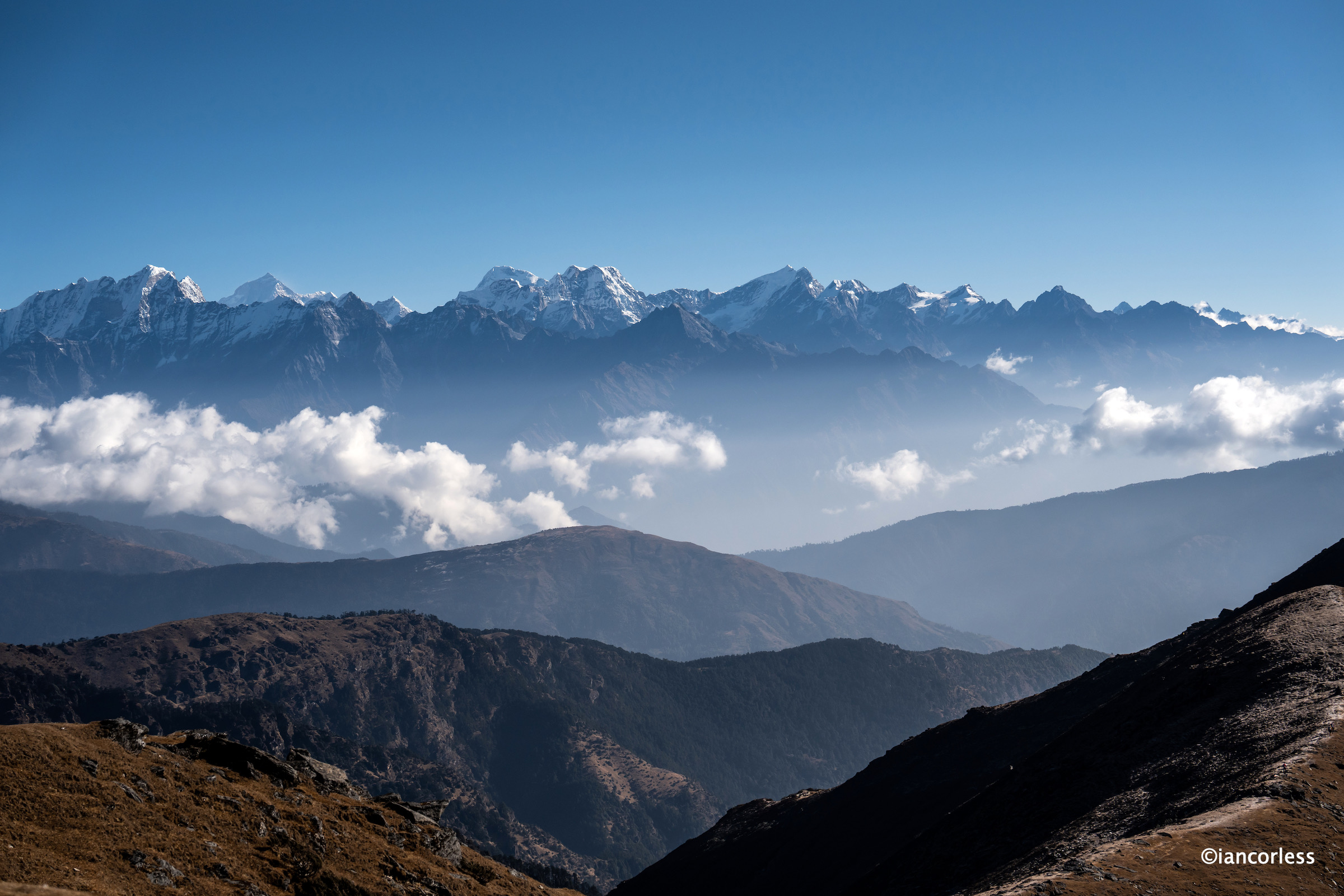
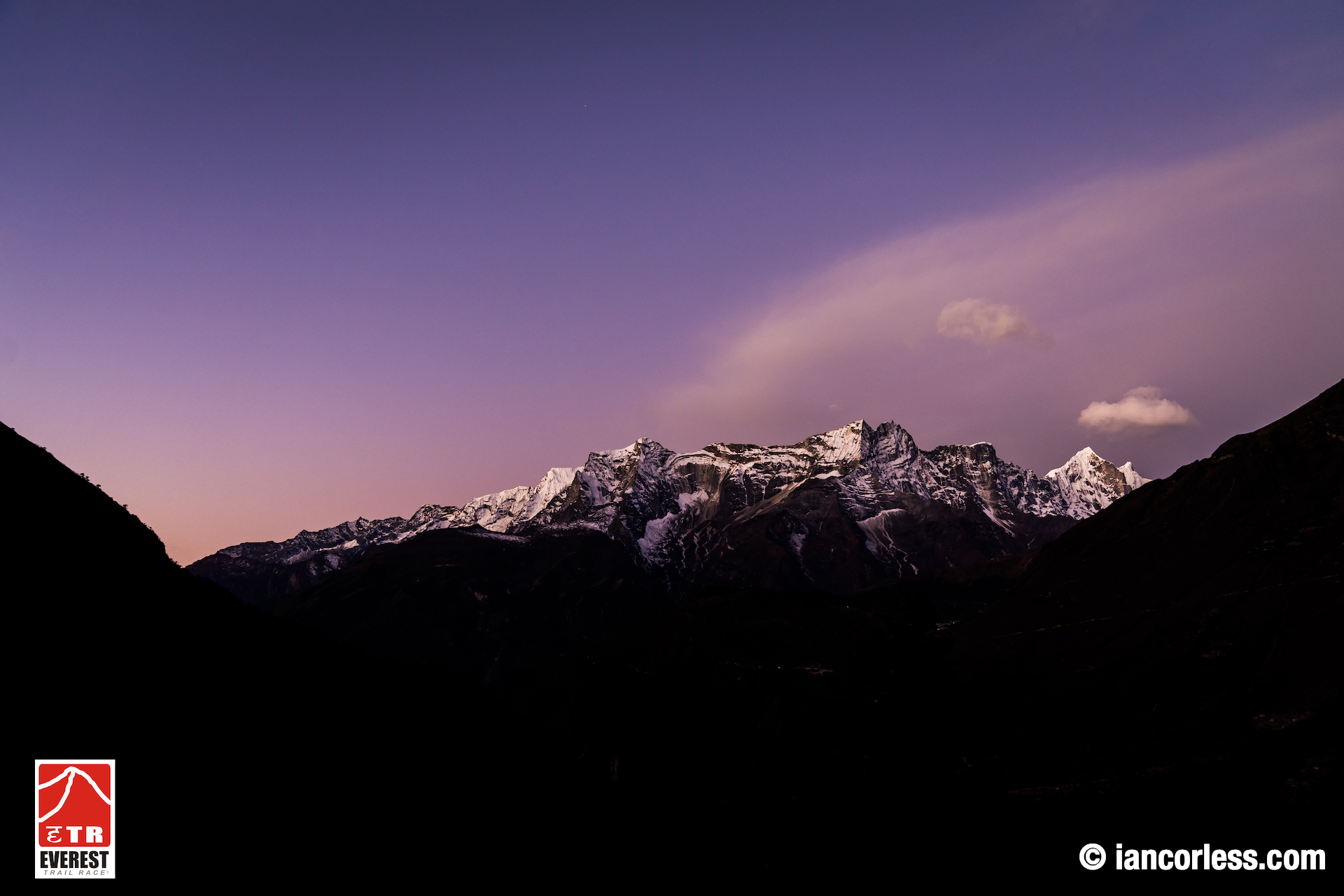
You’ll see Everest, Lhotse, Ama Dablam, and other giants of the Khumbu up close. But it’s not just the mountains — it’s the prayer flags flapping in the wind, the monasteries perched on hillsides, the layers of ridge upon ridge fading into the horizon. Every day looks like a screensaver. Every sunrise feels earned.
If you’re waiting for the “perfect moment,” this is it. You don’t need to be the fastest or the strongest. You just need to show up ready to push, adapt, and feel everything this place throws at you. The Everest Trail Race is not about conquering the mountain. It’s about discovering who you are when the mountain pushes back.
Nepal, the magic of Nepal. If you haven’t experienced it, you need to experience it! If you have experienced it before, you already know that you need to experience it again.
The ETR – Everest Trail Race, provides an opportunity to immerse yourself, to experience on foot, a journey through the heart of this magical place. The race takes place over 6-stages, a total of 170km’s with a combined elevation gain/ loss of 26,000m. A self-propelled adventure through the Himalayas reaching a maximum altitude of 4104m.
Now in its 11th year, ETR, taking place November 10th to 22nd, has become a bucket list adventure for those looking to combine travel, tourism and adventure in a package designed to provide the maximum return on the shortest amount of time.
The noise, the bustle, the chaos of Kathmandu, it needs to be experienced. It’s a cacophony of explosive elements. The transfer from the airport to the hotel gives an indication of what is to come.
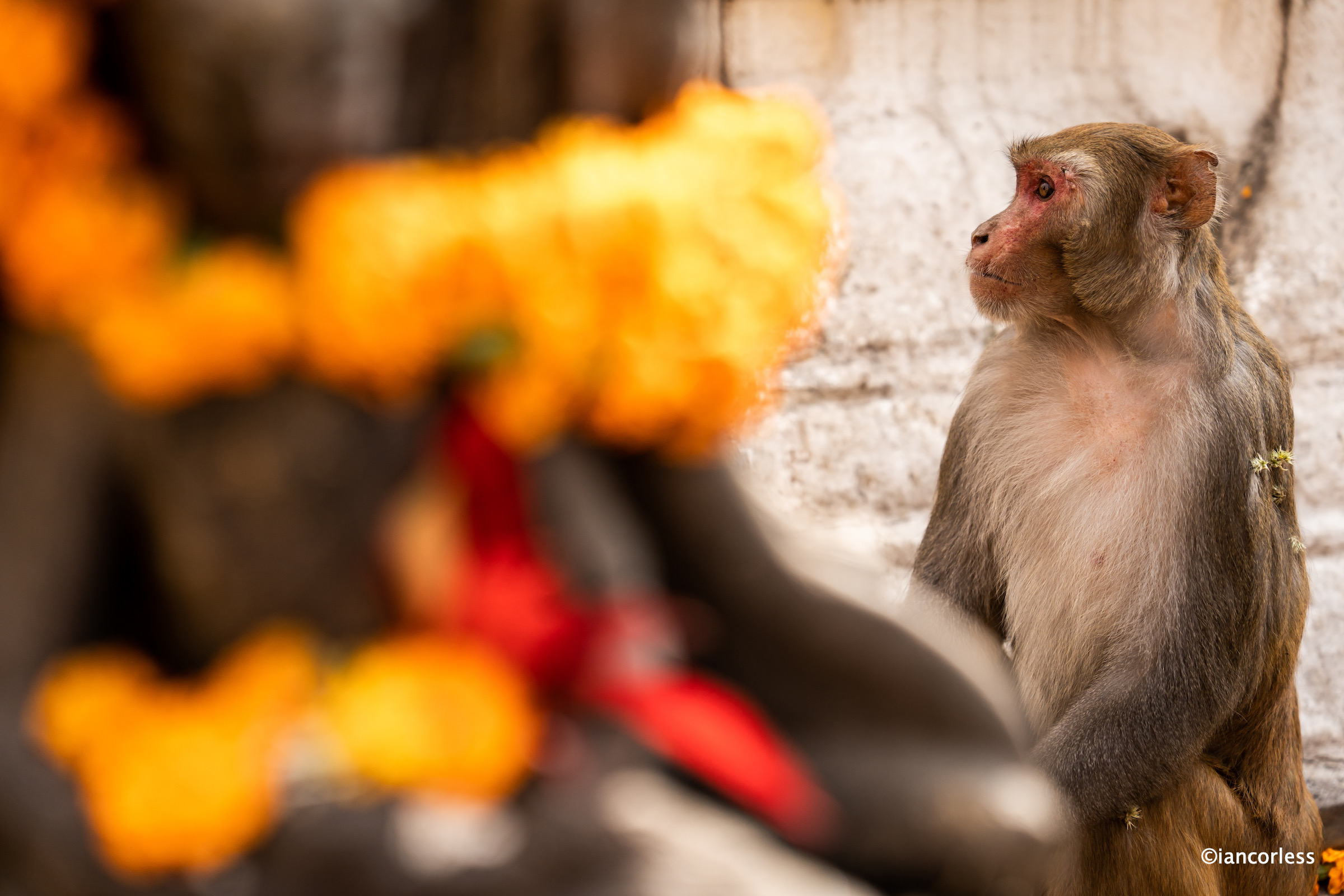
Before the admin protocols begin, a day of leisure in and around Kathmandu allows for key visits to the Monkey Temple and Patan. It’s always a shock to the senses, an assault of noise and colour and yes, poverty and hardship.
The Nepali people have hard and tough lives, and in Kathmandu you get to fully appreciate the highs and lows of this. One thing is for sure though, you will soon fall in love with the Nepali people, they are the salt of the earth.
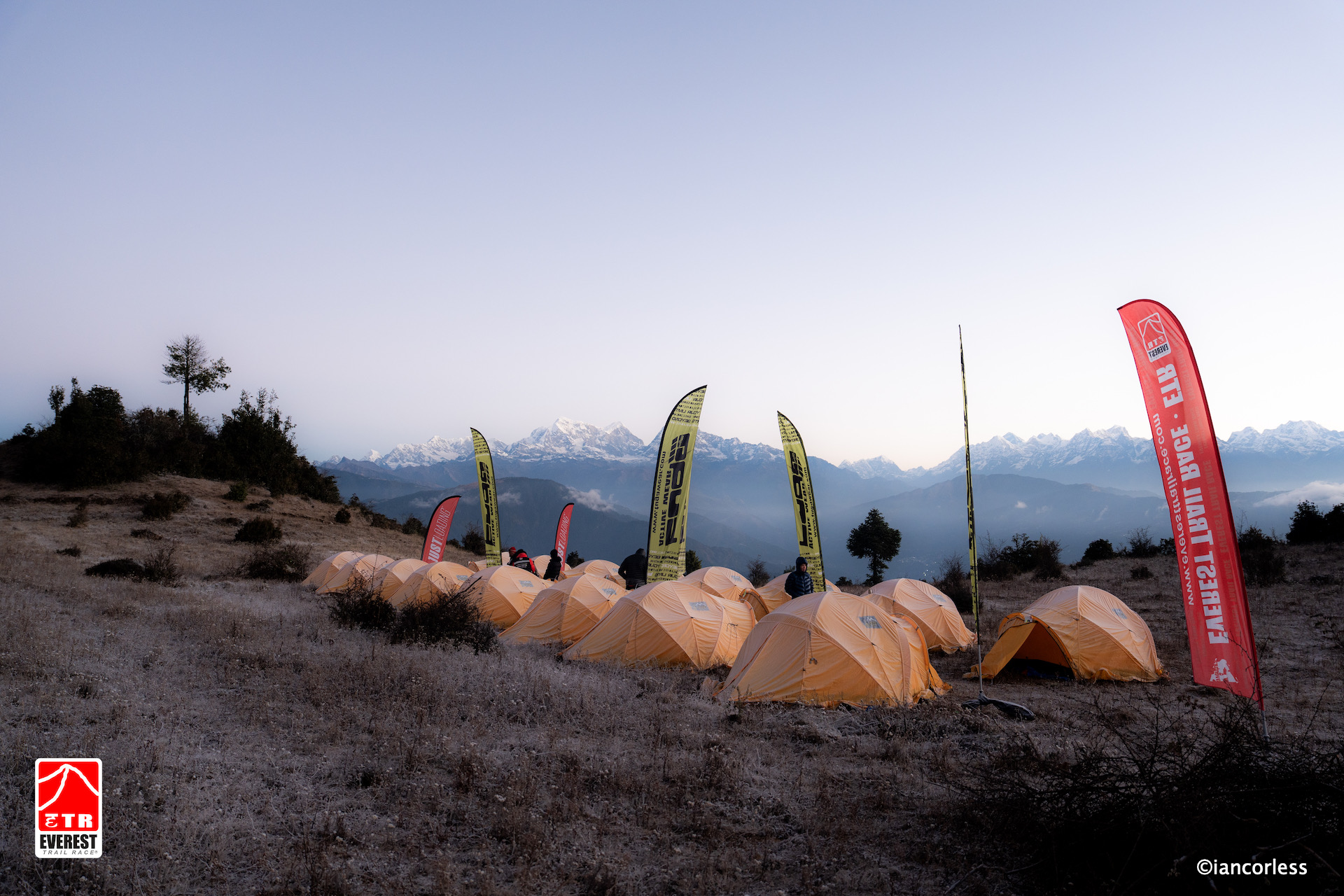
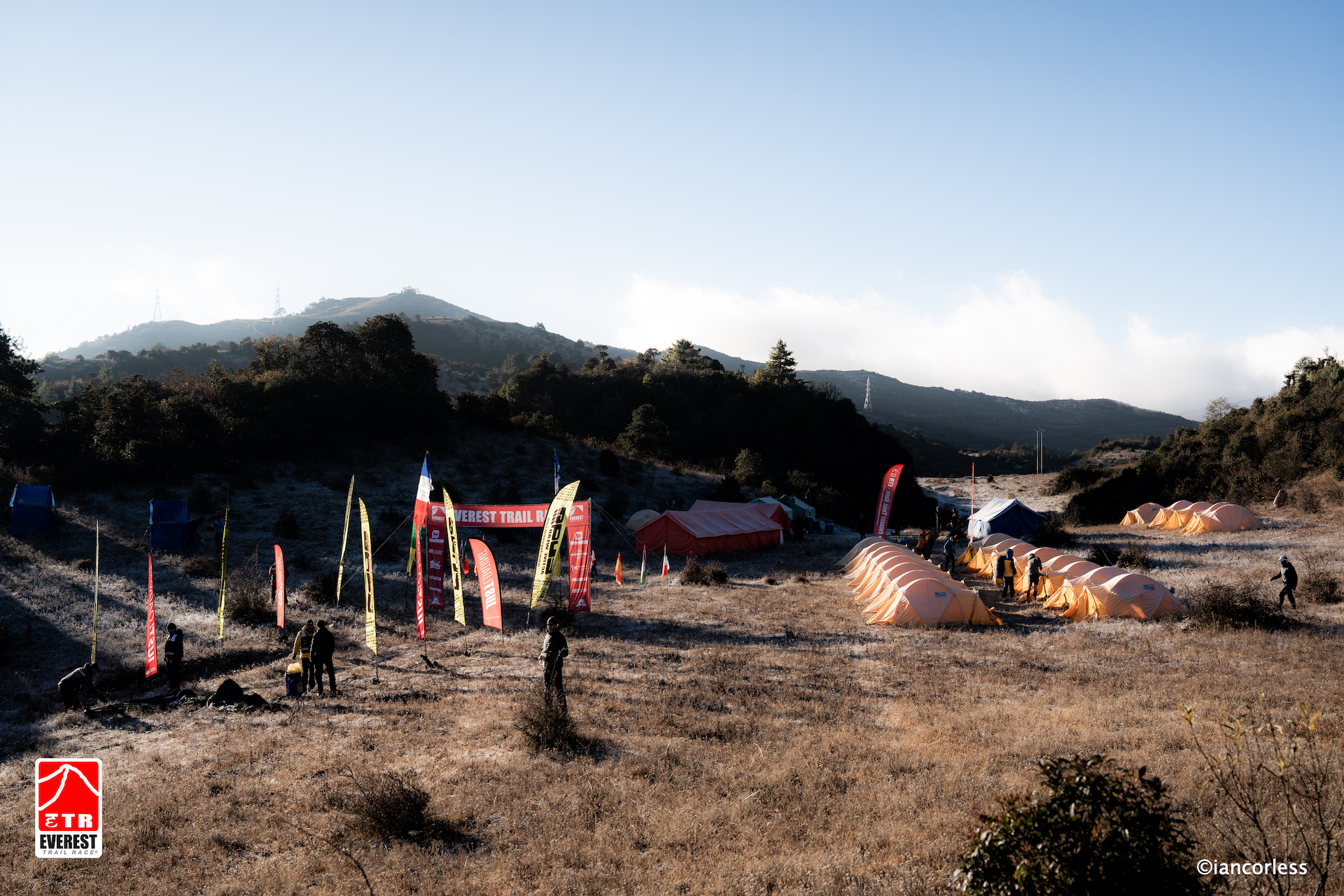
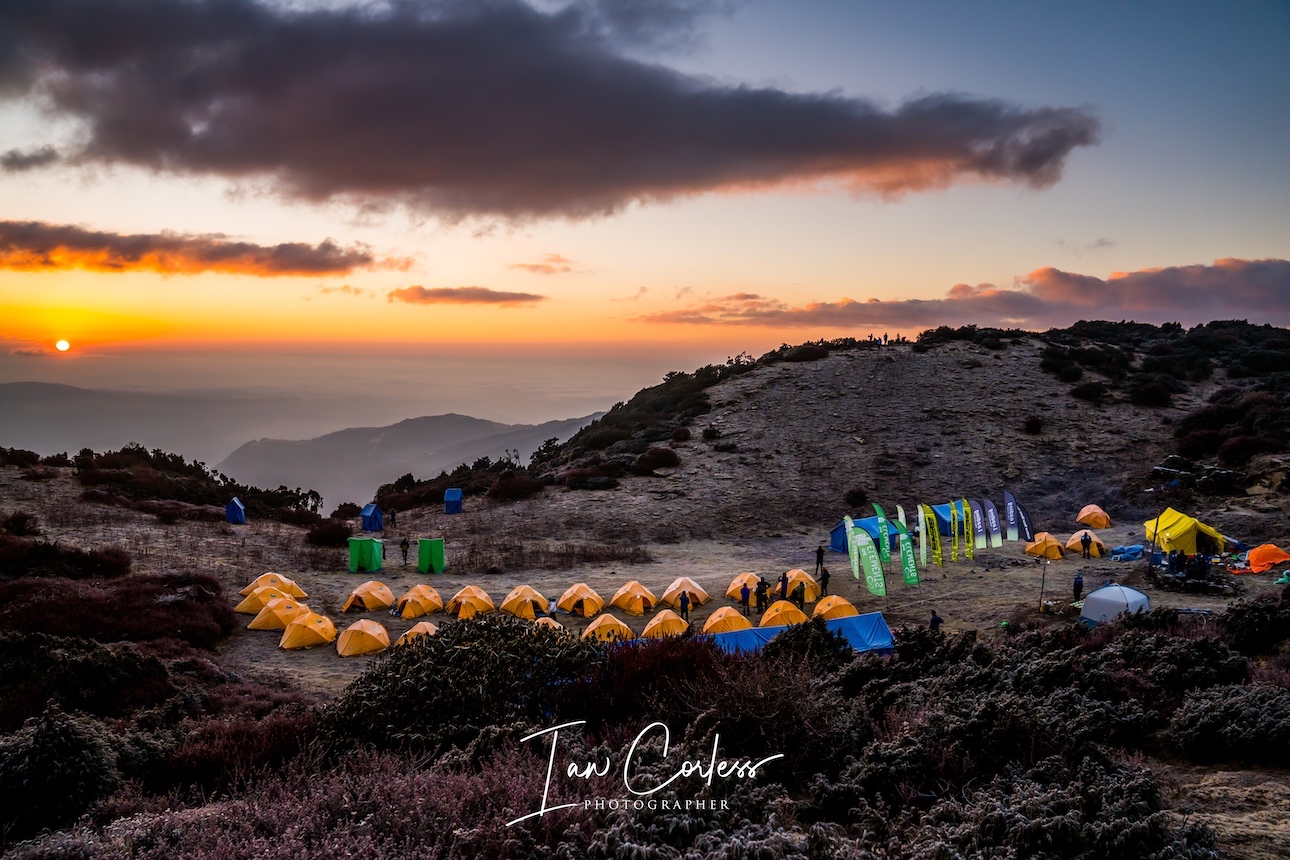
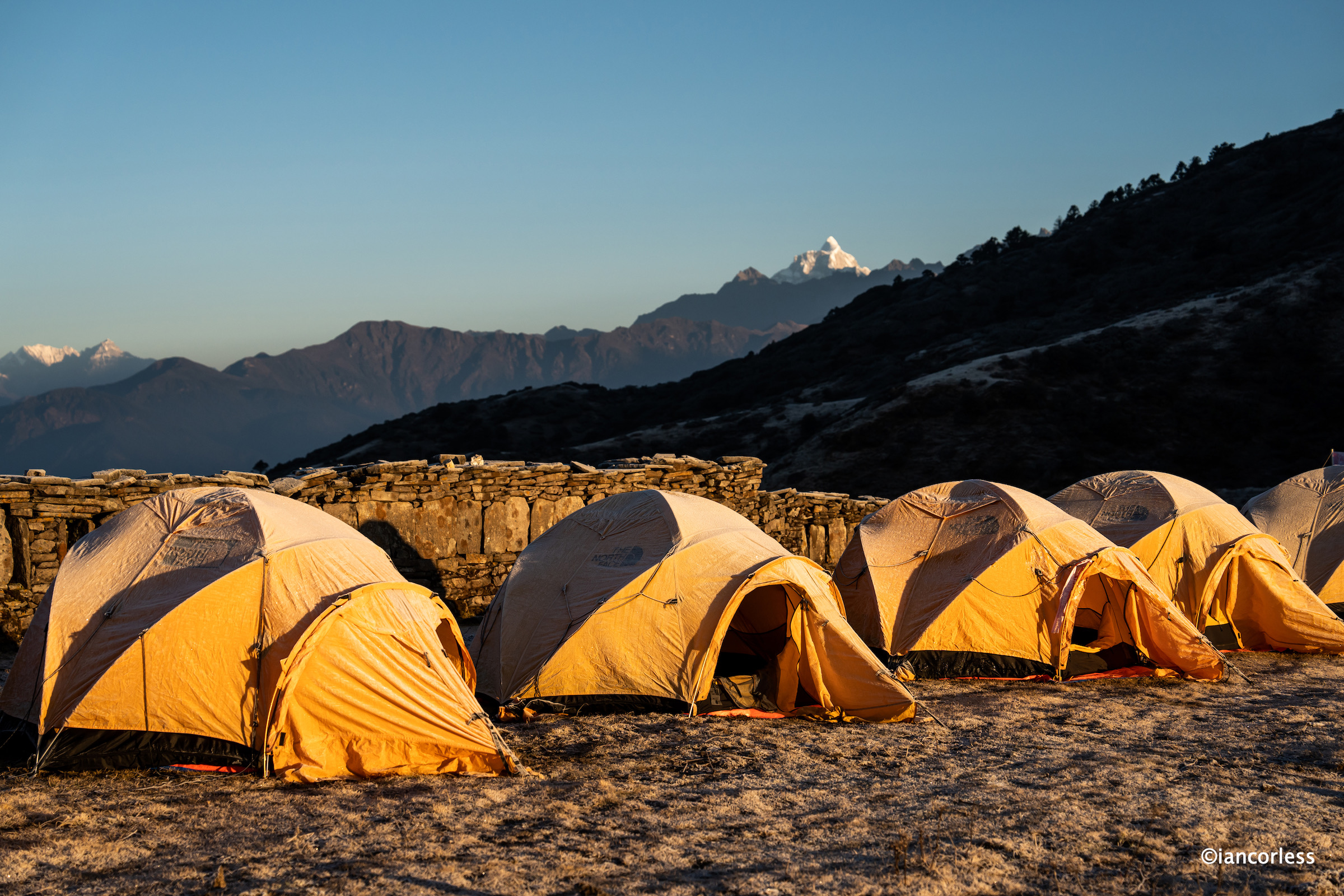
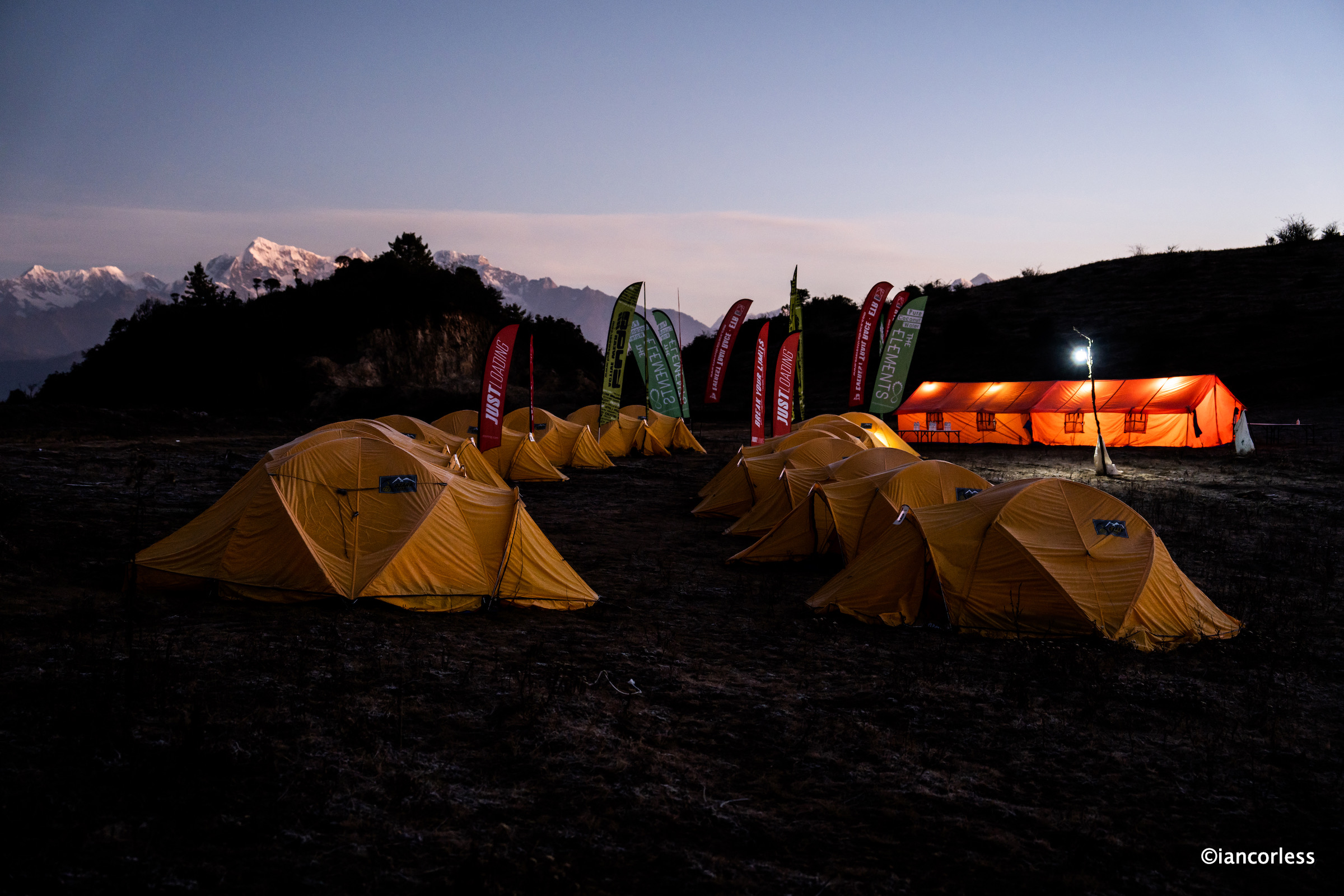
The following day, the journey to camp 1 begins, a bus drive from the noise and bustle of the city to the wild remote landscape of the Himalayas. The views for ever changing, you get to see the variety that this region brings before arriving at camp, tent allocation and a first night under canvas. The next day, the adventure begins with stage 1.
The following 6 days takes you on a journey of both physical and mental as you leave the remote and wild farmlands heading toward the majestic beasts of Lhotse, Ama Dablam, Nuptse and of course, Everest.
The early stages avoid the classic trekking routes as the participants make their way towards Lukla. Remote, isolated and free from tourism, stages 1-4 show the ‘real’ Nepal, the difficulty of life here and the harshness of weather and land. Days are warm, nights are cold.
Traveling in a semi self-sufficient manner, participants carry all they need for the journey – sleeping bag and clothes. The race organization provides a place to sleep, breakfast and dinner and en-route, there are sporadic aid stations to provide essential calories and replenish water.
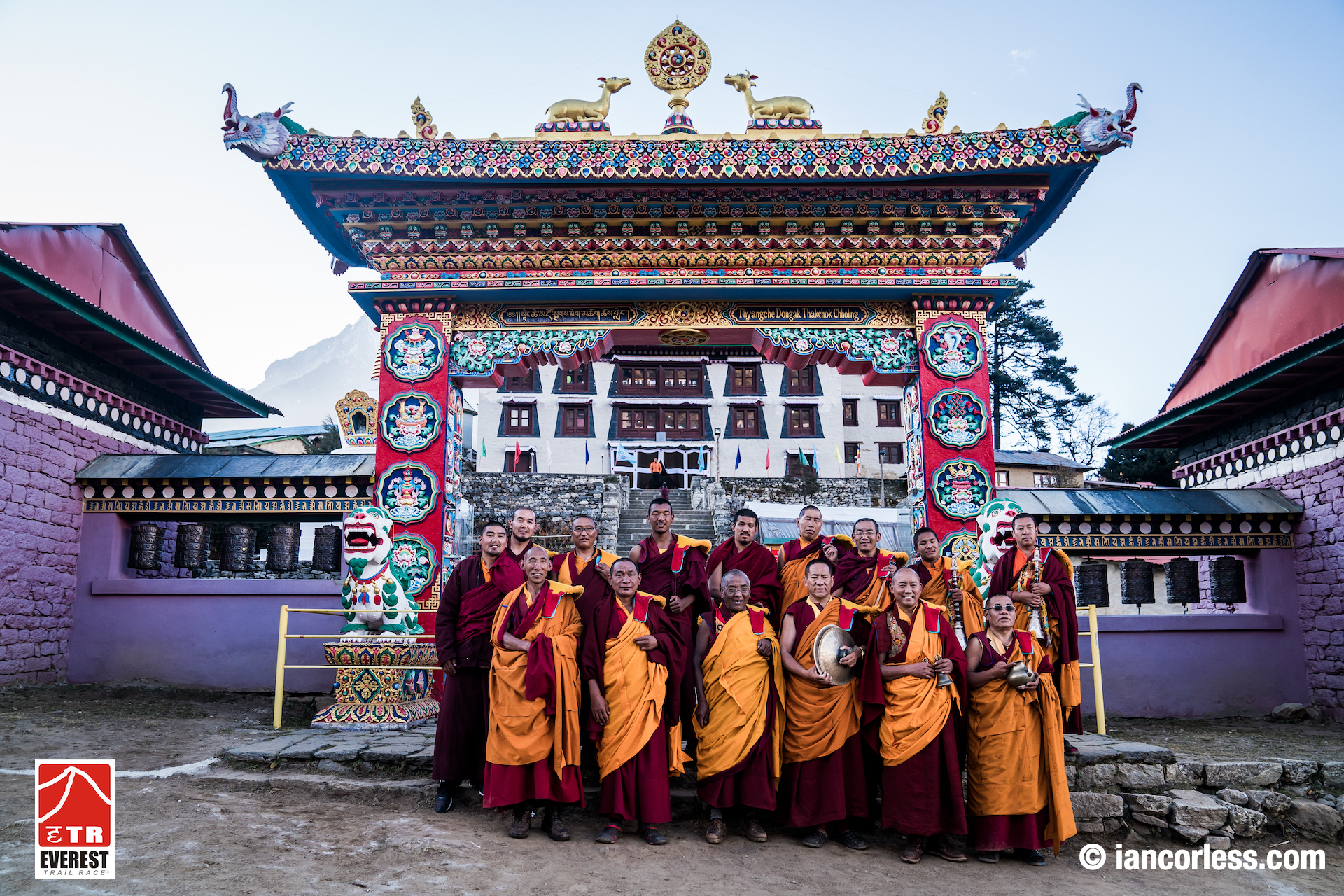
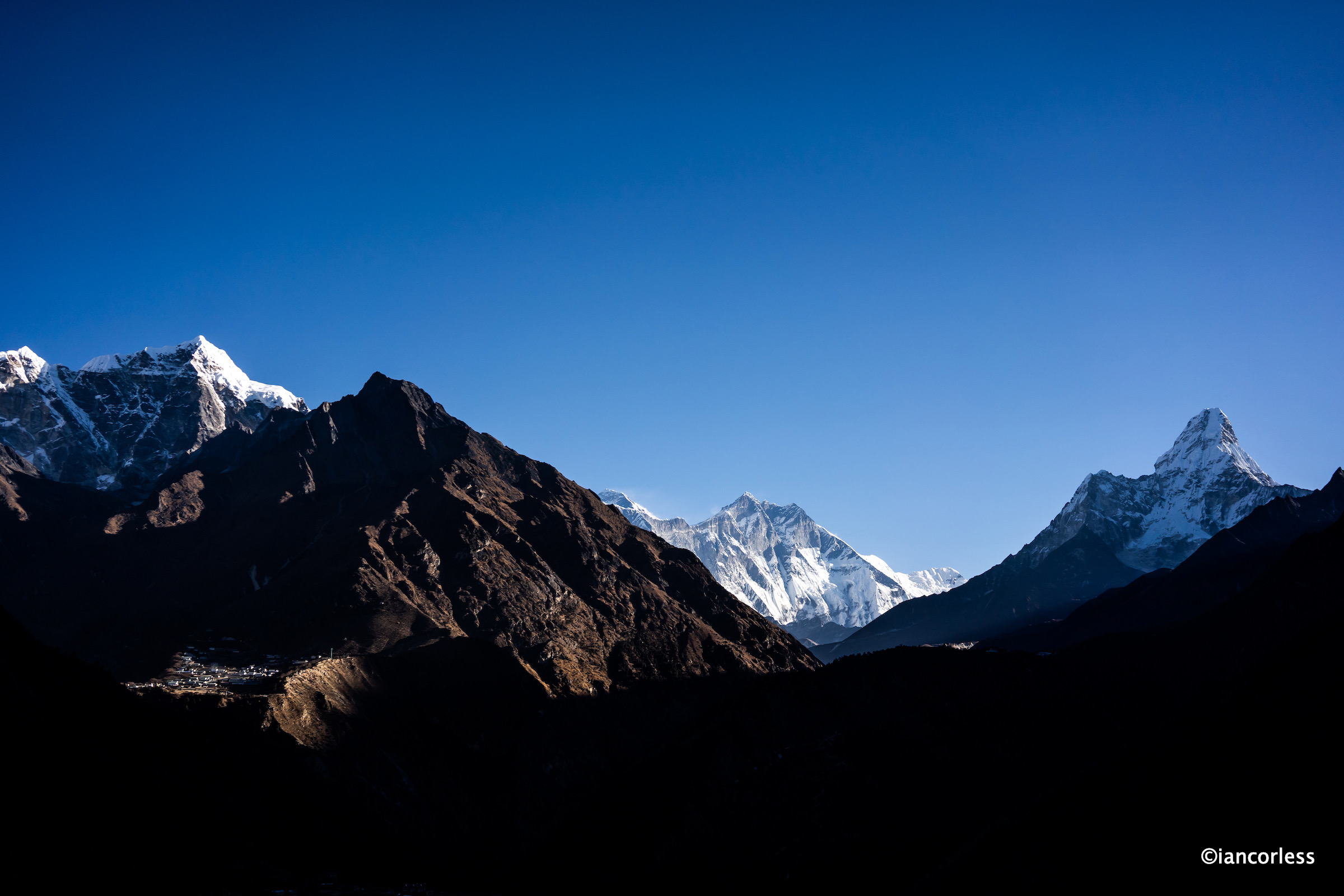
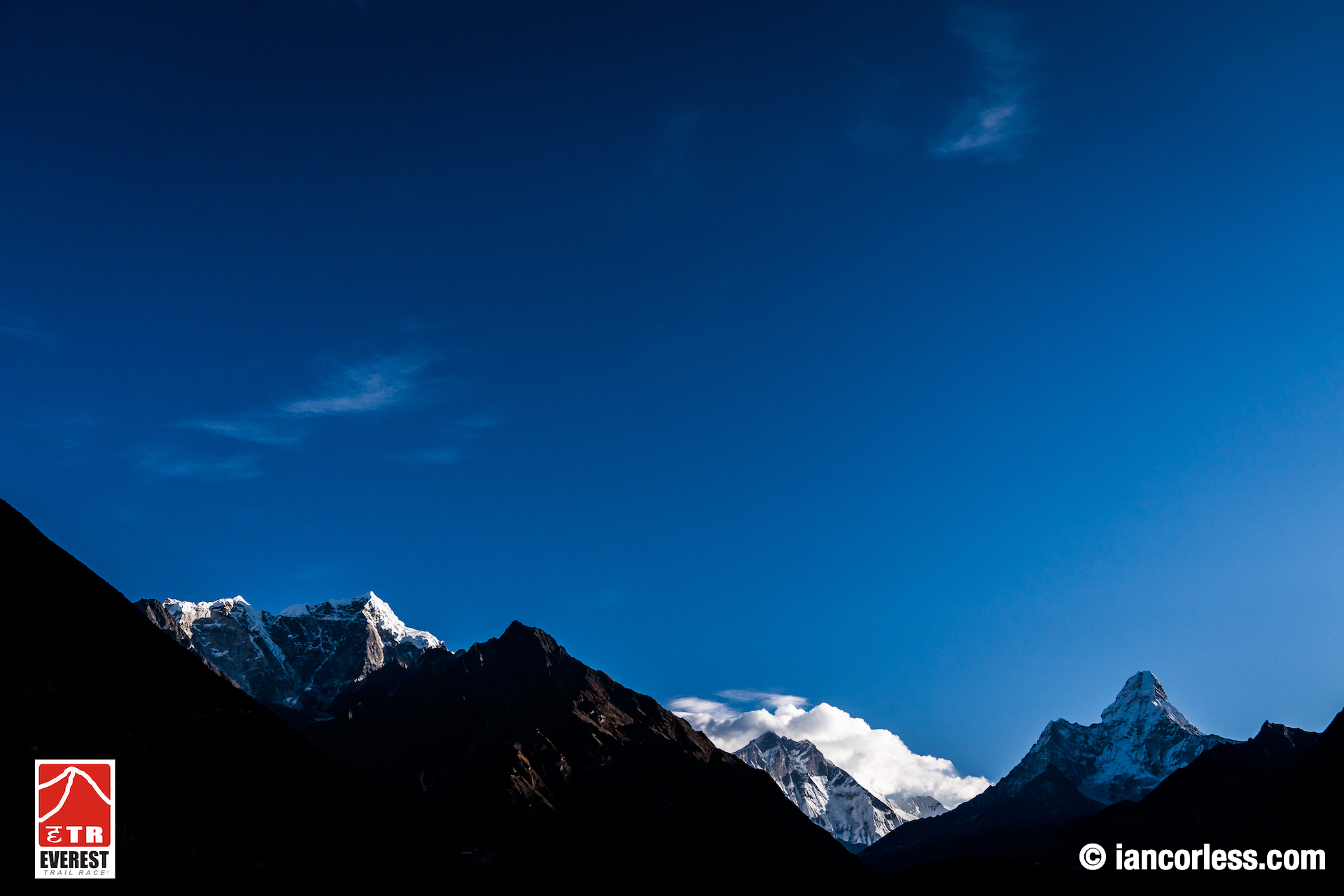
Stage 5 provides a magical journey passing through Namche Bazaar, up and onwards to the eventual finish line at Tengboche Monastery, the backdrop of the key Himalayan peaks making this, arguably, the greatest finish line on the world. Ama Dablam to the right, Everest in the middle, finish lines get no better than this.
Stage 6 returns to Lukla, the ETR finish line and a night in a lodge. The following day, a return flight to Manthali and then bus back to Kathmandu and hot showers, hotel luxury and a night in a real bed with crisp white sheets.
The following day is free, allowing for relaxation, recovery and of course, a compulsory trip in to Tamil to by souvenirs before the final night awards and gala dinner.
The Everest Trail Race is a special race, one that introduces participants to a very magical place with the safety, back up and organization to make sure the journey is a special one.
Due to the nature of the challenge, an understanding and comfort with mountain terrain is required, in addition, this is a race that takes place at altitude and reaches a high point of over 4000m. Do not underestimate the difficulty this terrain and altitude brings. Daily distances, on paper, may seem very short and achievable, but they are a challenge. But hey, that is why we sign up for these things, no? If it was easy, anyone would do it.
Leaving Tengboche the race retraces elements of stage-5 to Phakding but as opposed to previous year’s, at Sensa the runners did not go right to the Kumjung Valley. Instead they followed the main route Namche Bazaar the ETR then re-traces stage 5 all the way to Phakding and then as the trail heads back to Kharikhola, a left turn leads to the final climb and the swinish line in Lukla.
The stage is mostly downhill with 3183m of descent in comparison to 2105m of ascent over the 30km course. It’s a tough way to finish a race, but the rewards are worth it! After the high elevation from the previous day, the additional oxygen made the km’s easier.
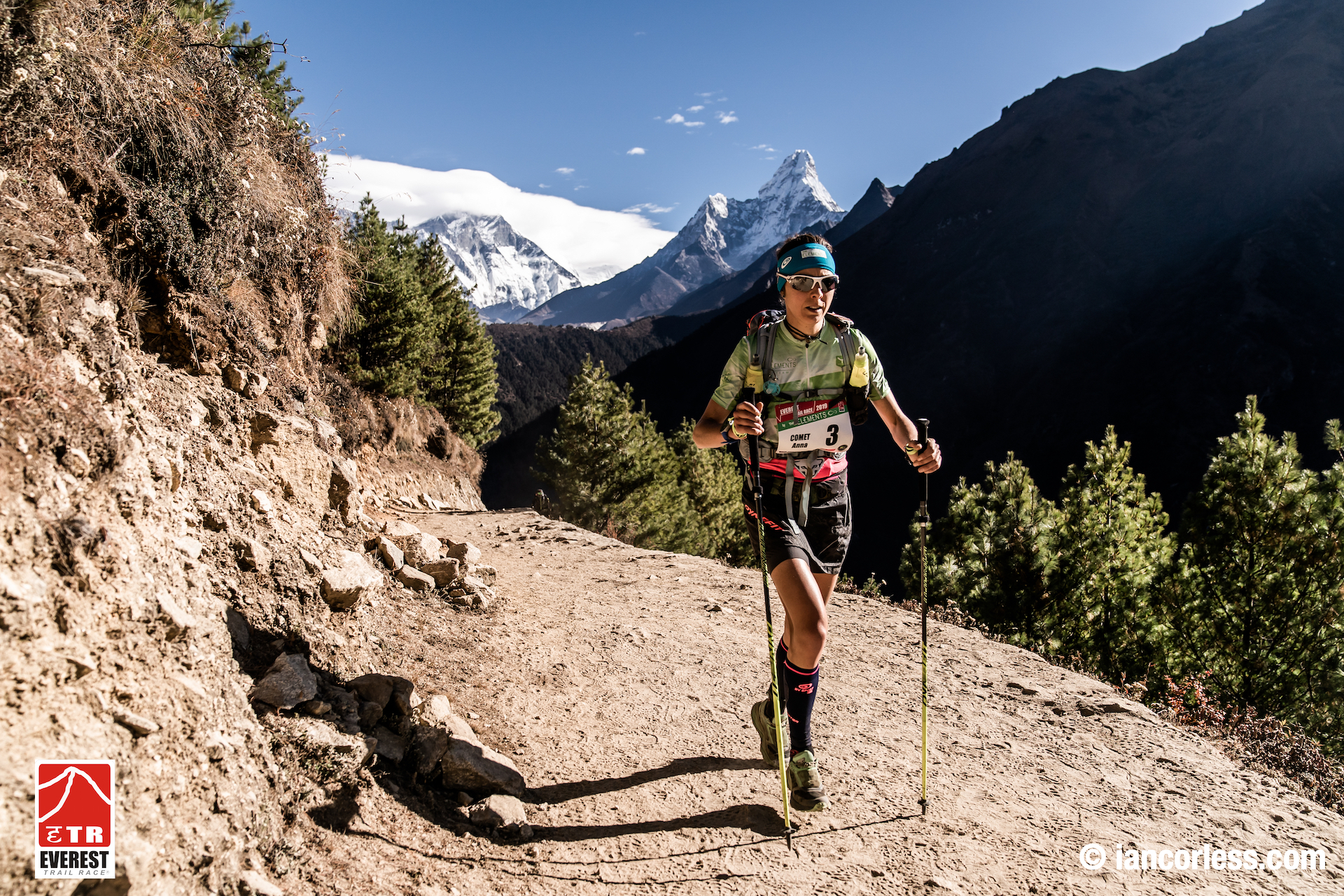
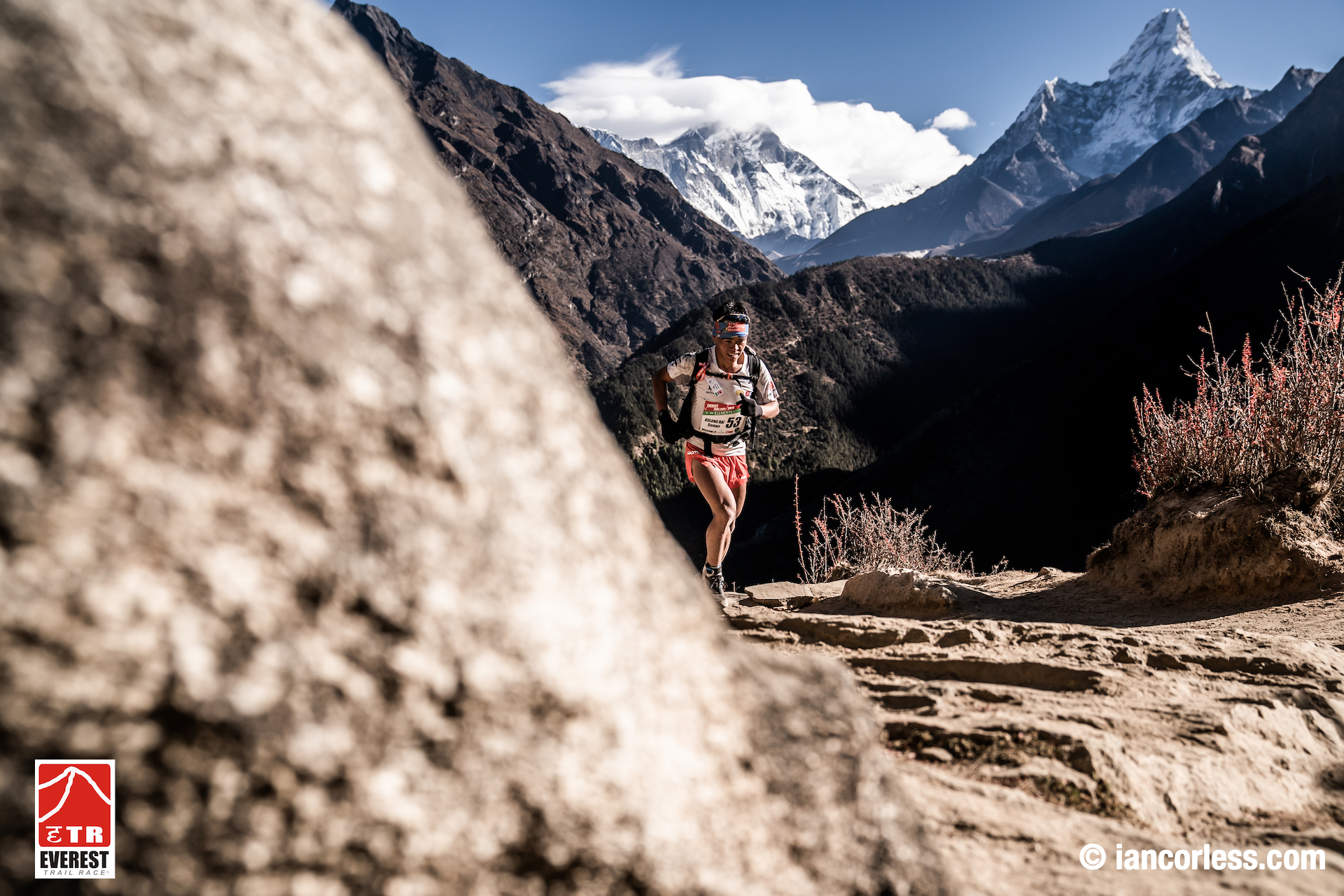
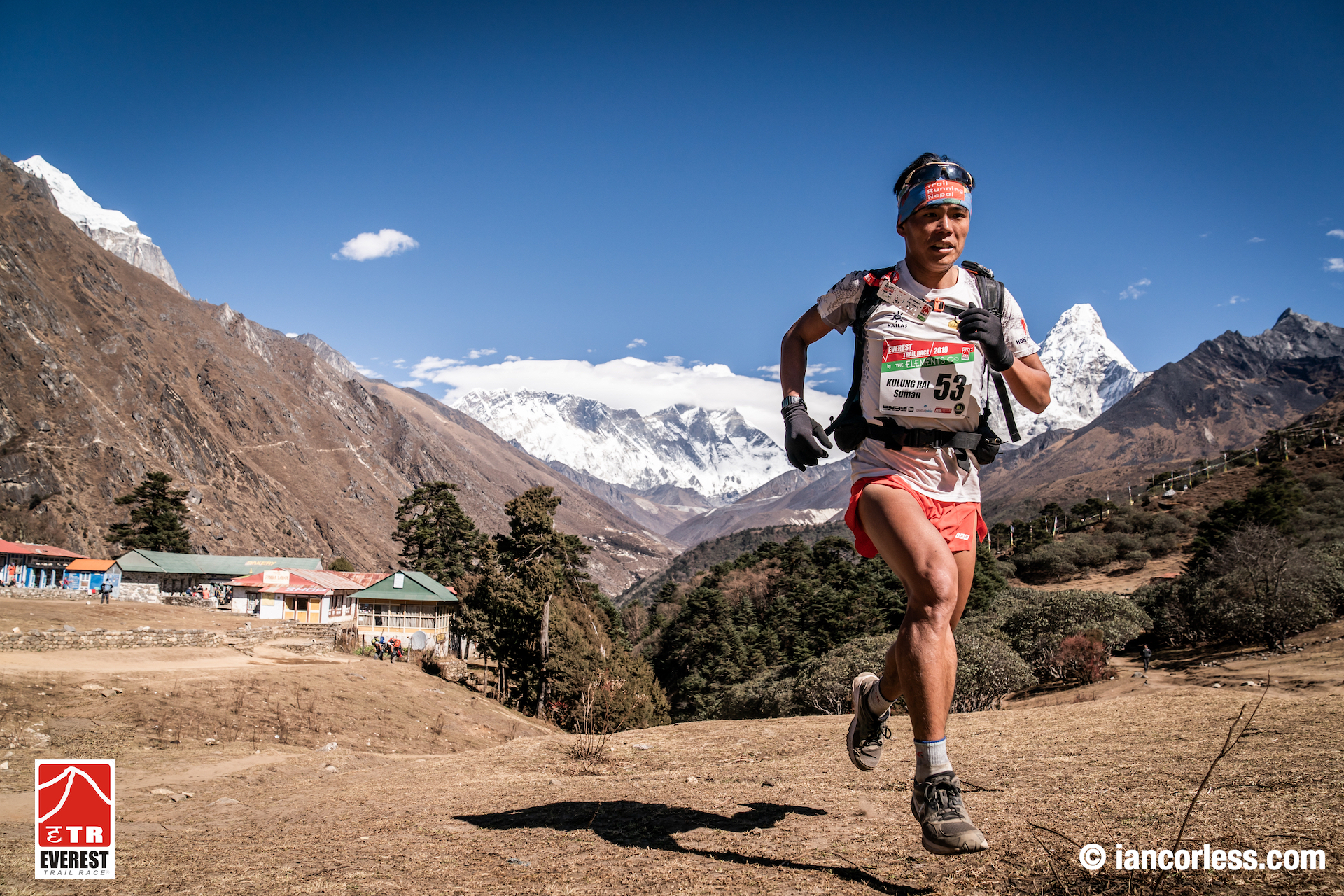
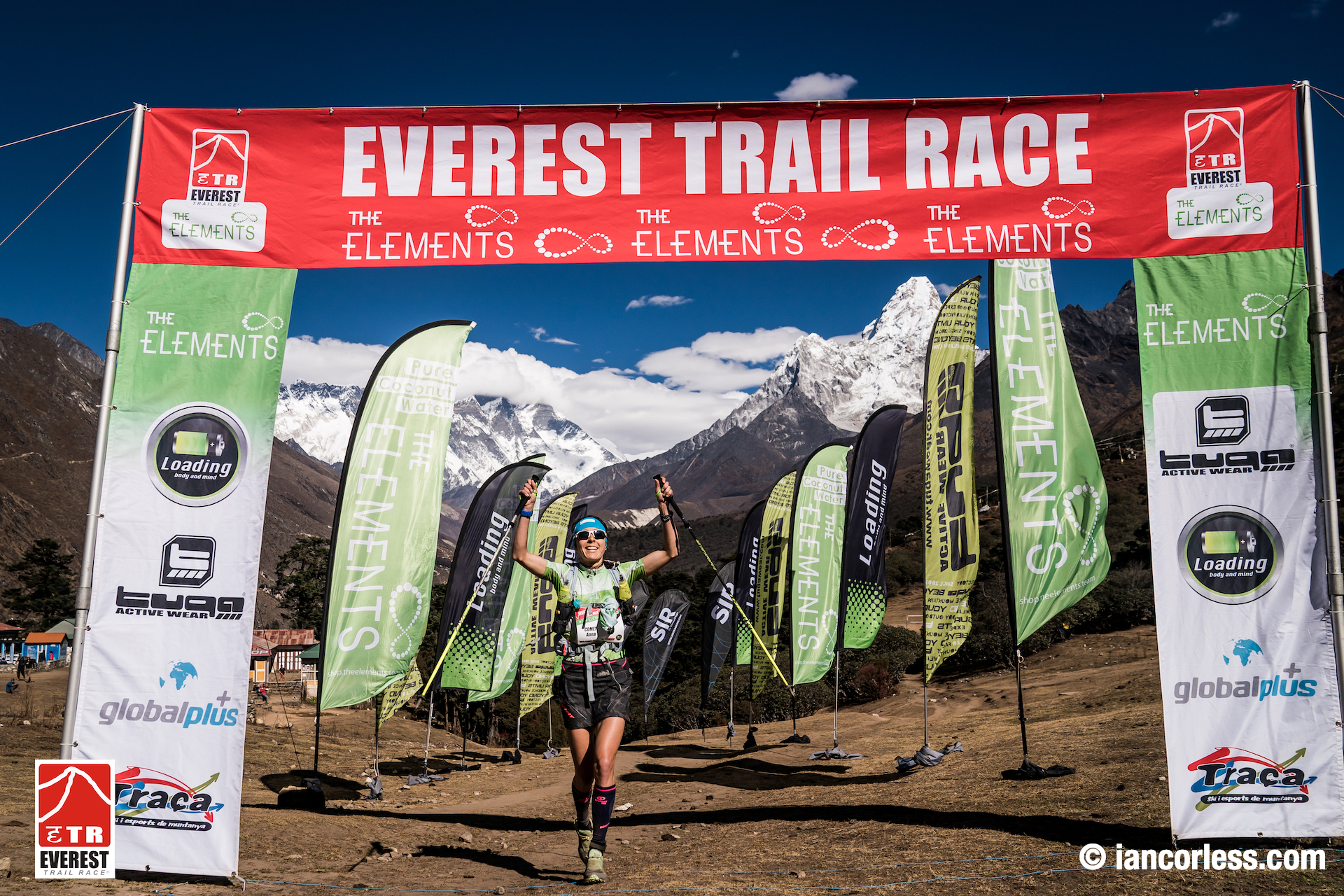
Both Suman and Anna have been on fire all week and on the final day, it was no difference. The duo pushed and pushed but at all times looked in control and relaxed. Suman actually just looked to be having fun… Playing in the mountains. The pace of them both was quite ridiculous.
Behind Anna, Manuela and Nuria once again traded blows, pushing each other and in doing so, found greater individual performances.
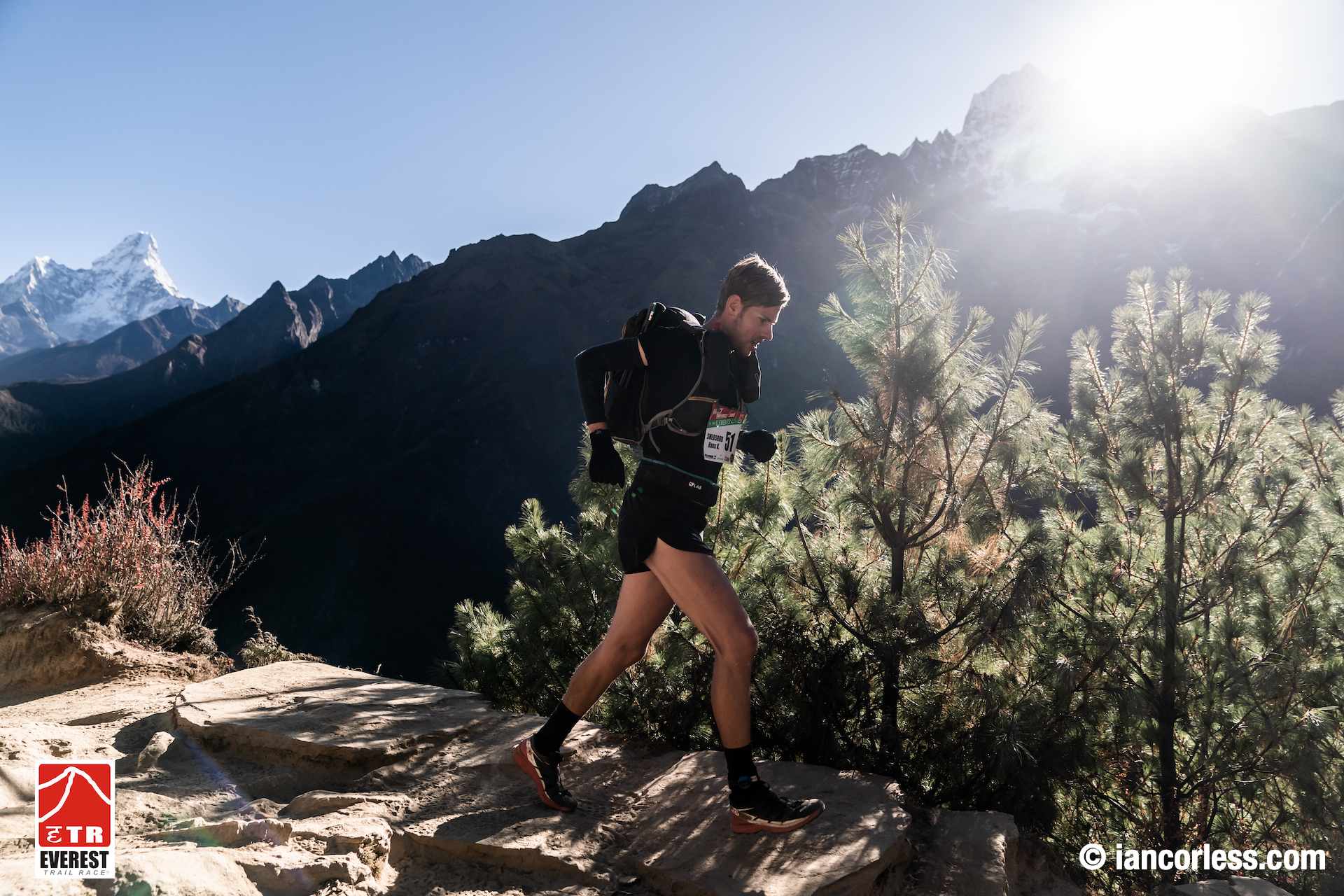
For the men, it was a real battle with Hans, Miguel and Gerard not taking things easy and all fighting for the 2nd and 3rd places on the overall podium.
At the finish line, Manuela beat Nuria, 4:10:45 to 4:19:22 and in doing so, secured her overall 2nd place just as in 2018.
Hans was the first home after Suman, then Miguel and Gerard together. Suman crossed the tape in an incredible 2:46:25 and then the respective times were 3:01:24 and 3:06:39.
Suman Kulung and Anna Comet are crowned the 2019 Elements Everest Trail Race champions but all credit goes to each and every finisher. At 170km, this race may not be the longest but it is surely one of the toughest! The combination of tough technical terrain, relentless climbing and descending and of course altitude, all combine to make the ETR a race to do!
EPIC was all the runner’s had to say as they finished stage 5 of The Elements Everest Trail Race atthe Monastery at Tengboche, the Himalayan backdrop of Everest, Lohtse, Nuptse and Ama Dablam providing context to the journey undertaken.
For the first time in ETR history, the race went beyond Tengboche taking a stunning high route to Pangboche and return to the iconic Monastery finish line.
Starting in Phakding the runners climbed to Namche at 3402m, proceeded to Syangboche at 3760m passed through Kumjung, Mong La, Phortse and then took a high pass at 4000m to reach Pangboche at 4100m. Finally the finish 3875m, 32km later with 2850m of ascent and 1650m of descent – beyond epic!
It was a feared day, everyone was aware of the challenge and under taking!
It may sound a similar story, but Suman and Anna was at another level. The Nepali completing the journey in just over 4-hours….!
Racing was hard and relentless and today Miguel Heras placed 2nd fighting off injury with a stunning performance making the podium battle once again exciting.
Hans and Gerard once again battled each other hard and the duo were separated by just minutes.
Behind Anna in the women, Nuria Dominguez once again fought hard for 2nd ahead of Manuela.
Today though, the race was all about the route and the best of what the Himalayas have to offer. It was a brave move to re-vamp stage 5 of the ETR with added distance, a new route and extended period at elevation. It’s a decision that the runners loved despite how hard and difficult the journey was.
Tomorrow, the runners return to Lukla via Namche and Phading in the final finish line of the 2019 ETR.








 IAN CORLESS