There are moments in life that will etch themselves into your memory with brutal clarity, the sting of the sun, the whip of the wind, the bite of fatigue. And then there are moments that transcend all that. Moments that shine because of what it took to get there. Today, that moment came. MDS 120 Morocco 2025 is complete. But this finish line didn’t come easy.
The Rest Day That Wasn’t
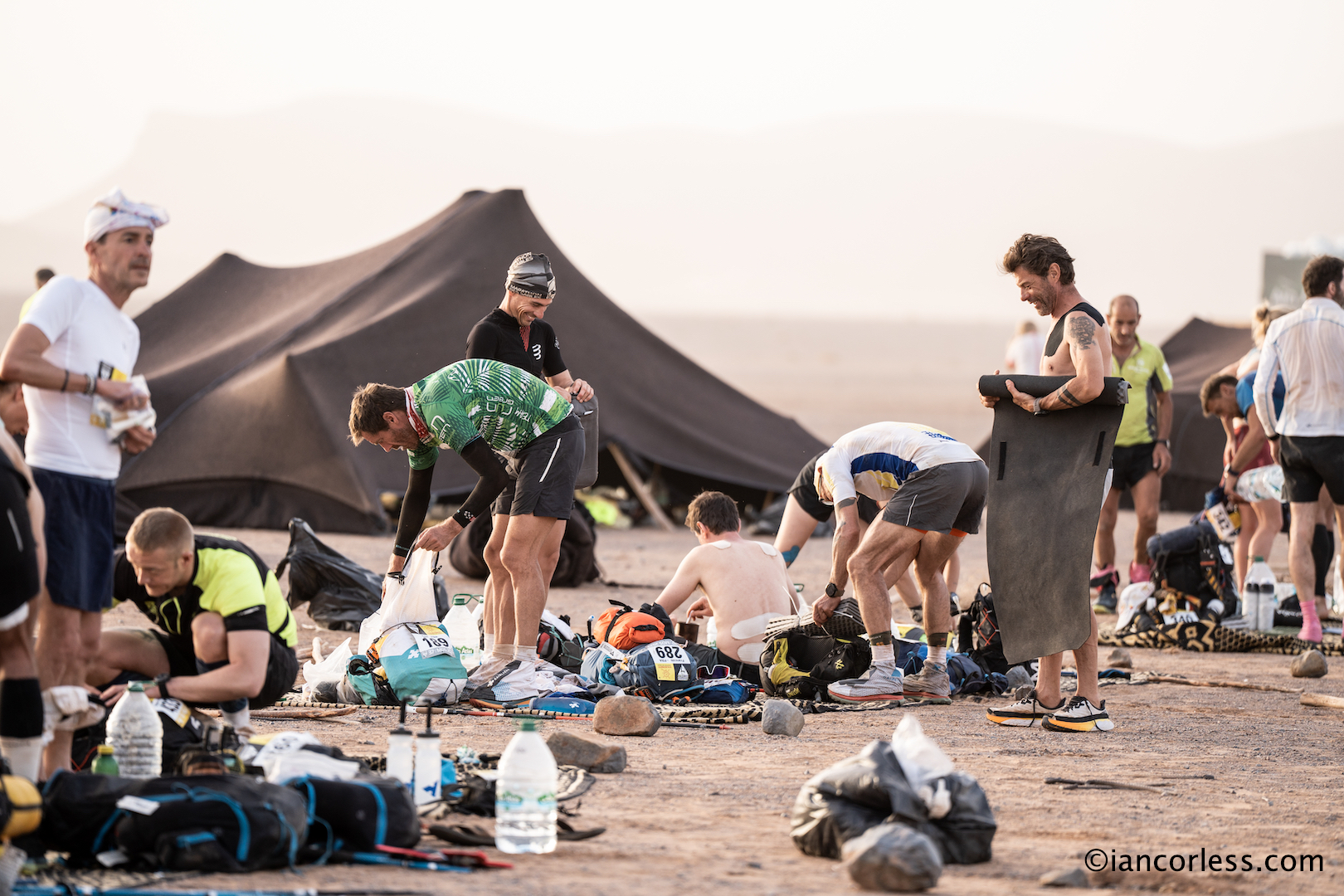
After the double blow of Stage 1 and 2 under an unforgiving sun, participants staggered into the bivouac with blistered feet and salt-crusted skin, ready for a day of rest.
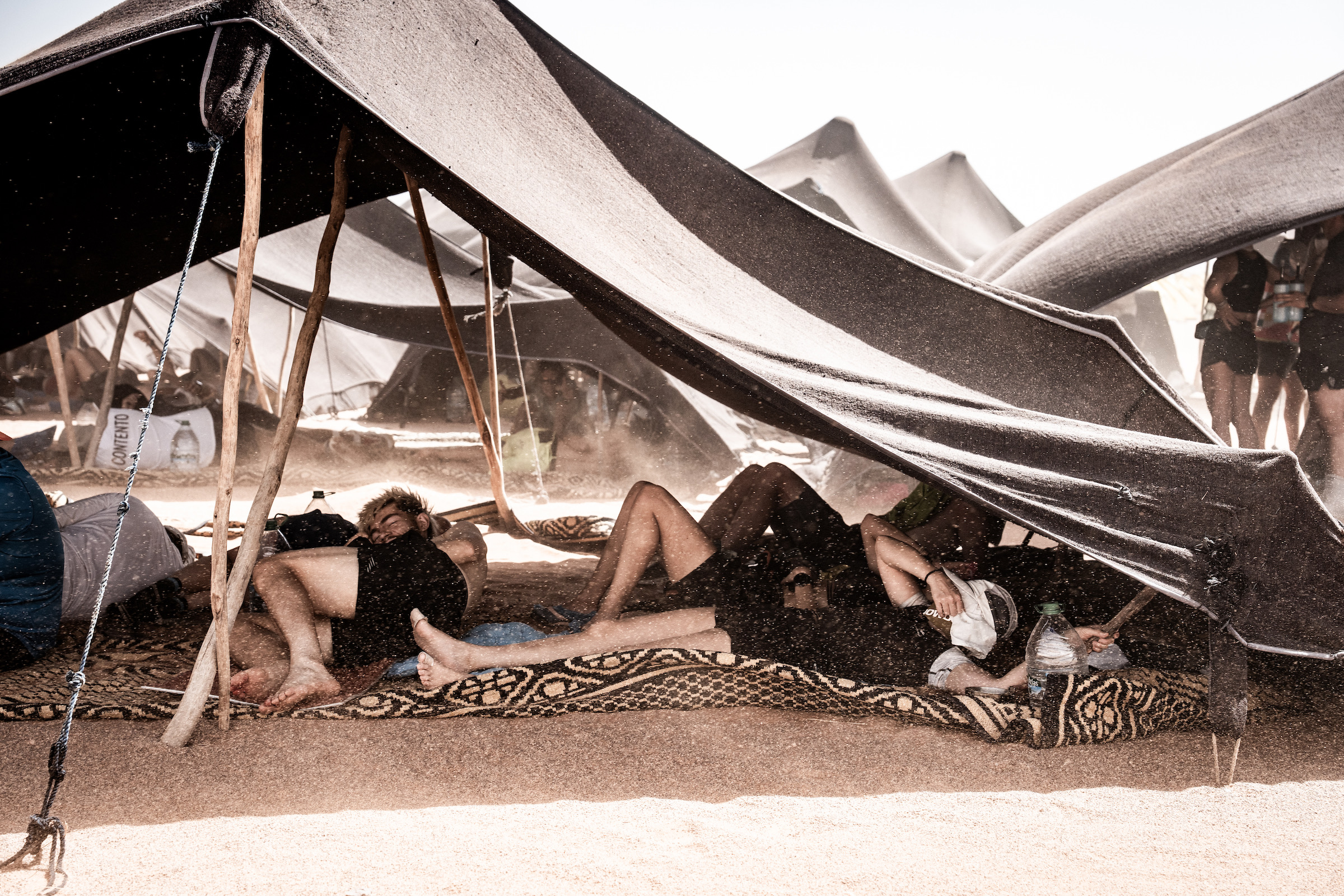
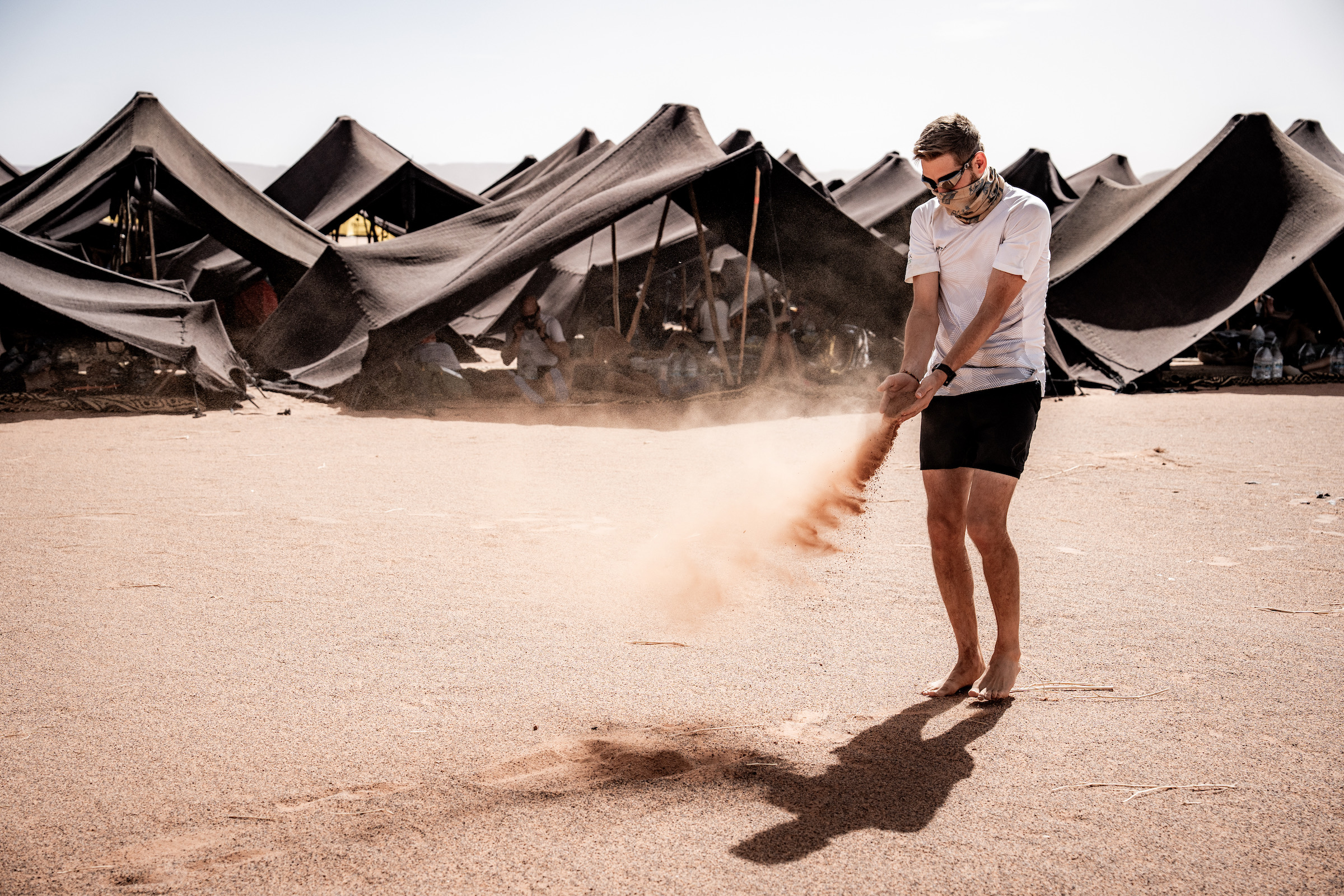
But the Sahara had other plans. Instead of recovery, they got afternoon chaos: a wild sandstorm that tore across camp like a runaway train. The sky turned thick and orange. Tents collapsed. Gear went flying. People huddled in whatever shelter they could find, eyes wrapped in buffs, trying to breathe through the dust. It lasted for hours. When it finally passed, silence hung in the air, but it wasn’t peace. It was exhaustion.
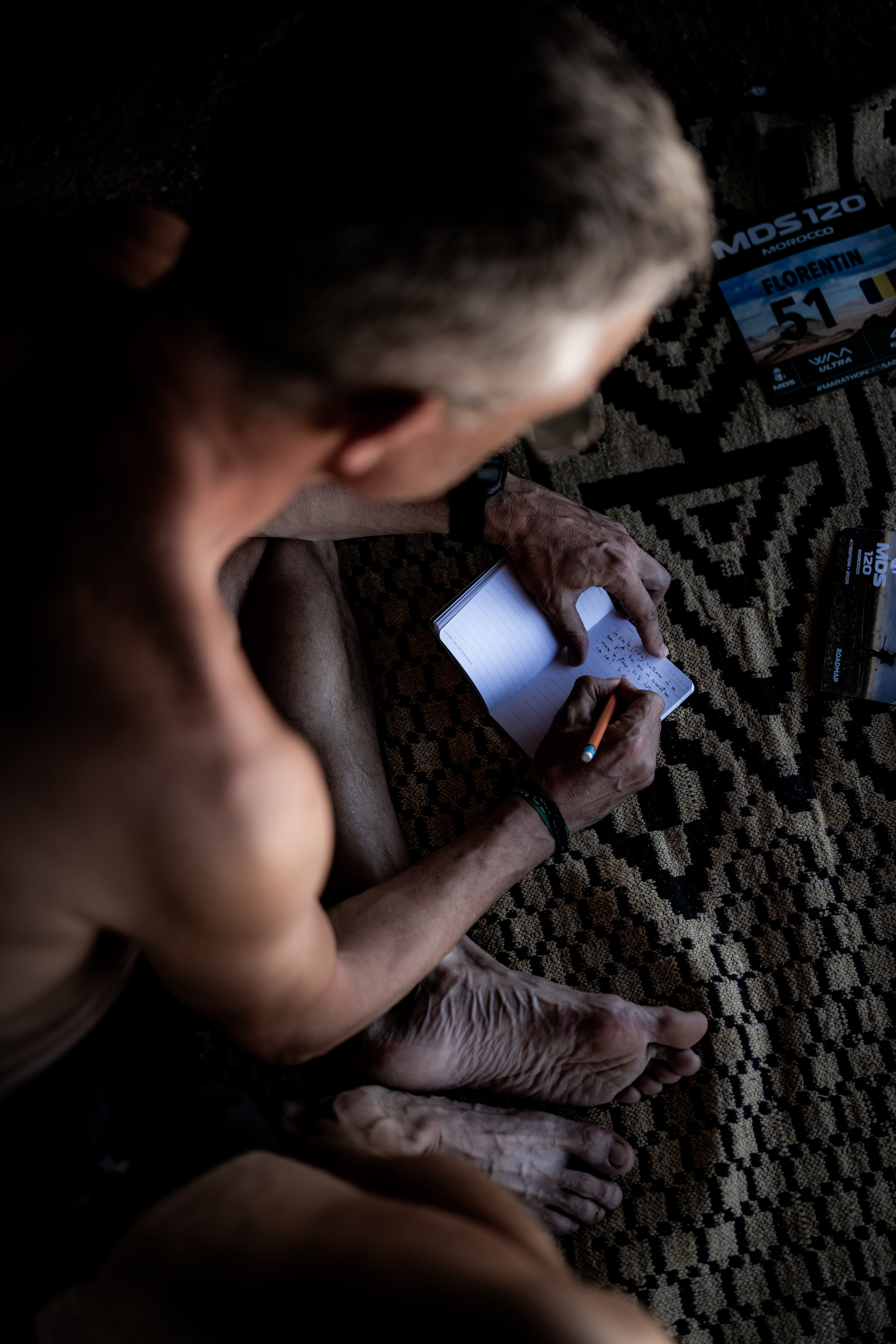
This was not the rest day anyone hoped for. But there were plenty of moment of relaxation before the chaos – lots of sleeping, adding entries in journals.
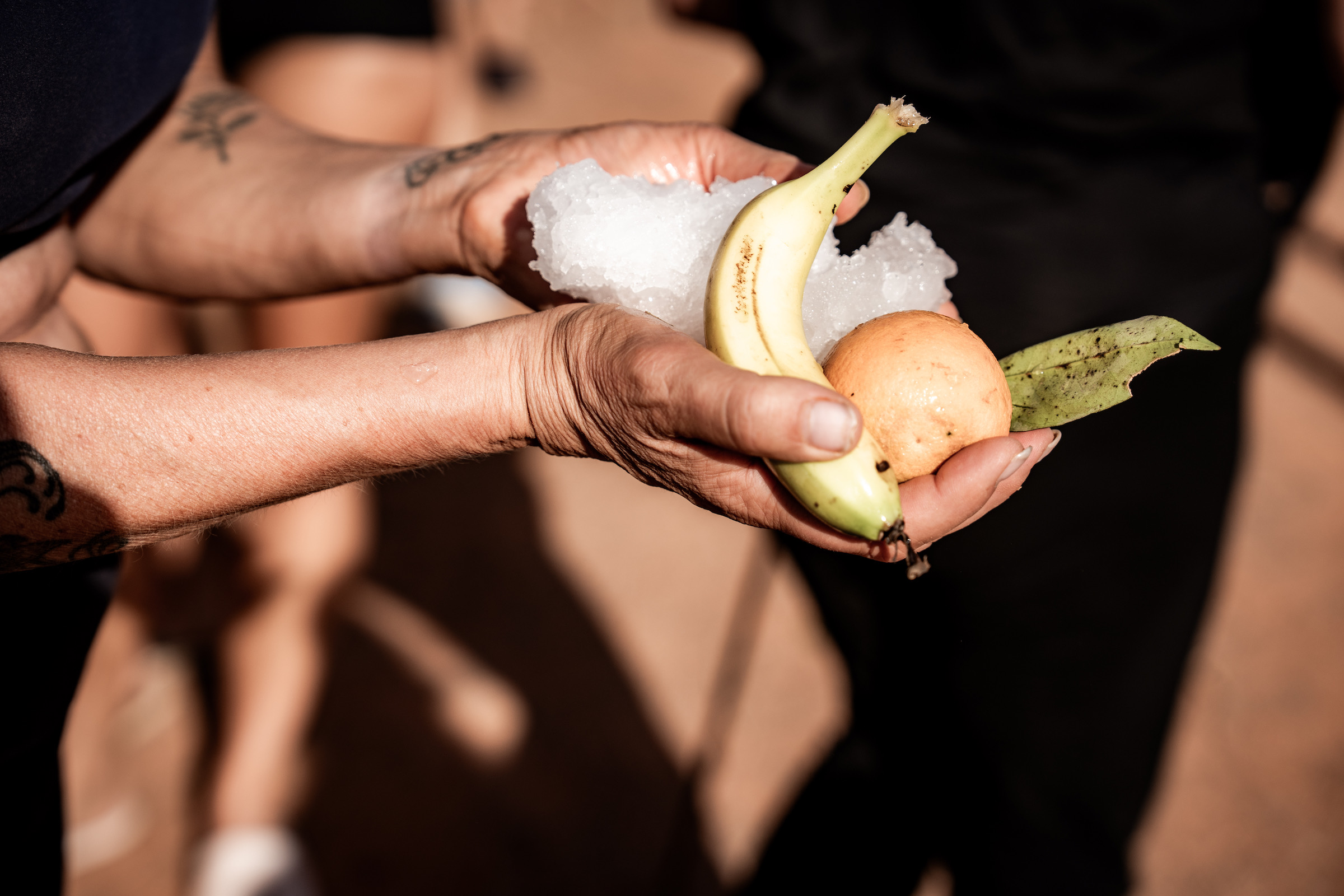
and towards the end of the day, as the wind calmed, MDS organisation offered a treat – no longer a cold can of Coke – today, fresh fruit and ice.
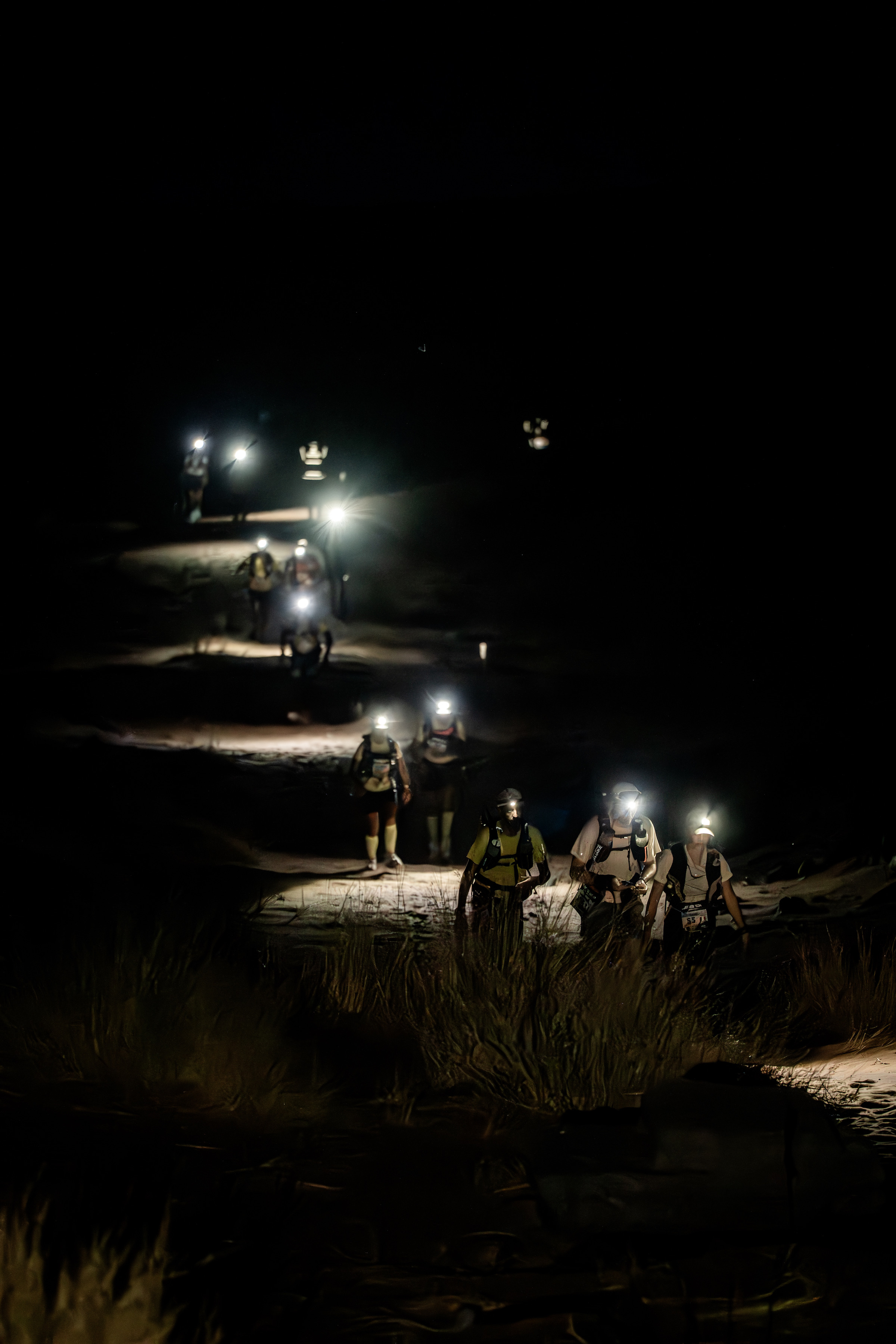
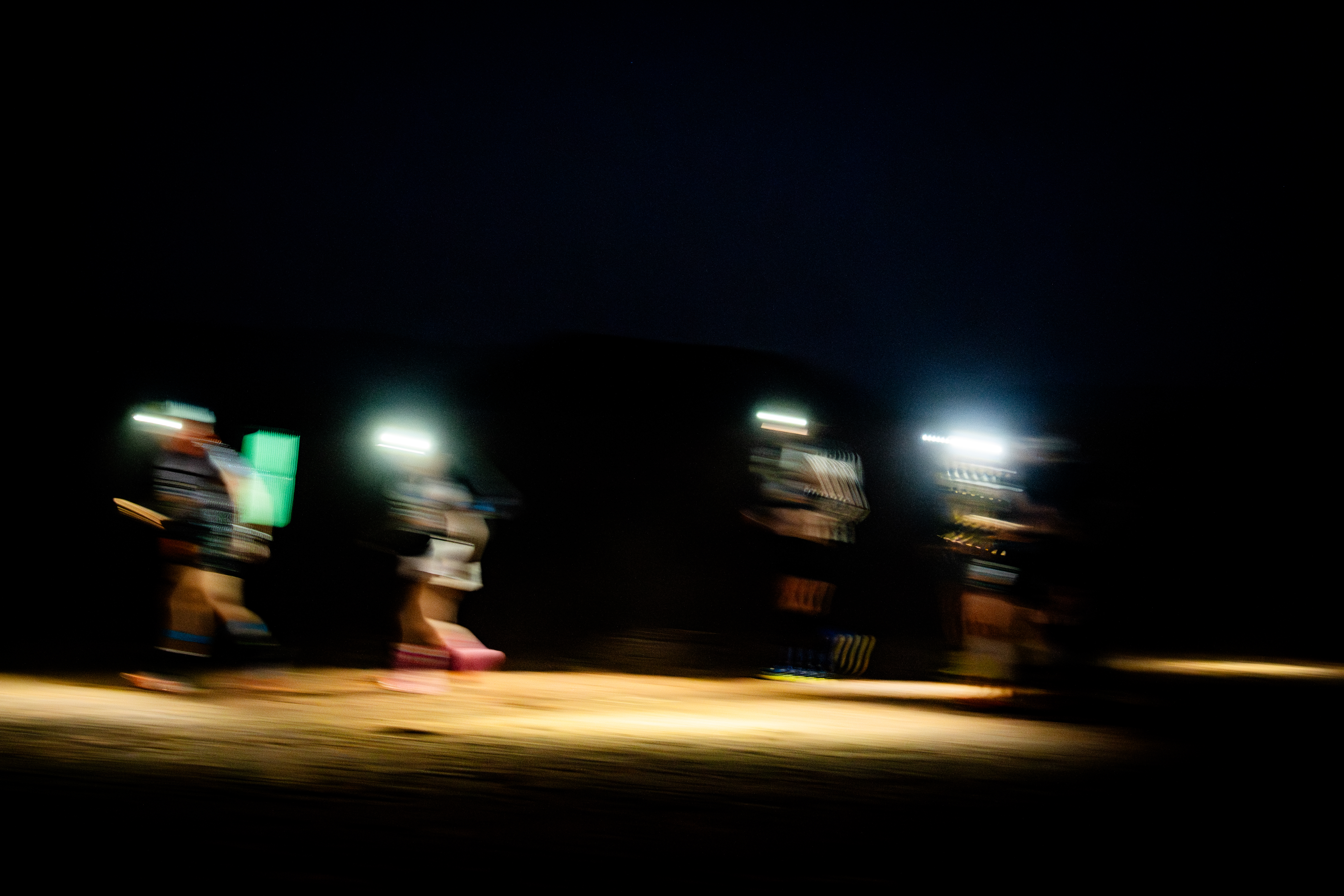
At 0400, camp began to stir. Bleary-eyed runners rose in darkness, fumbling with head torches and gear. The temperature hadn’t dropped. The air felt thick and warm, like the desert was still holding onto yesterday’s rage.
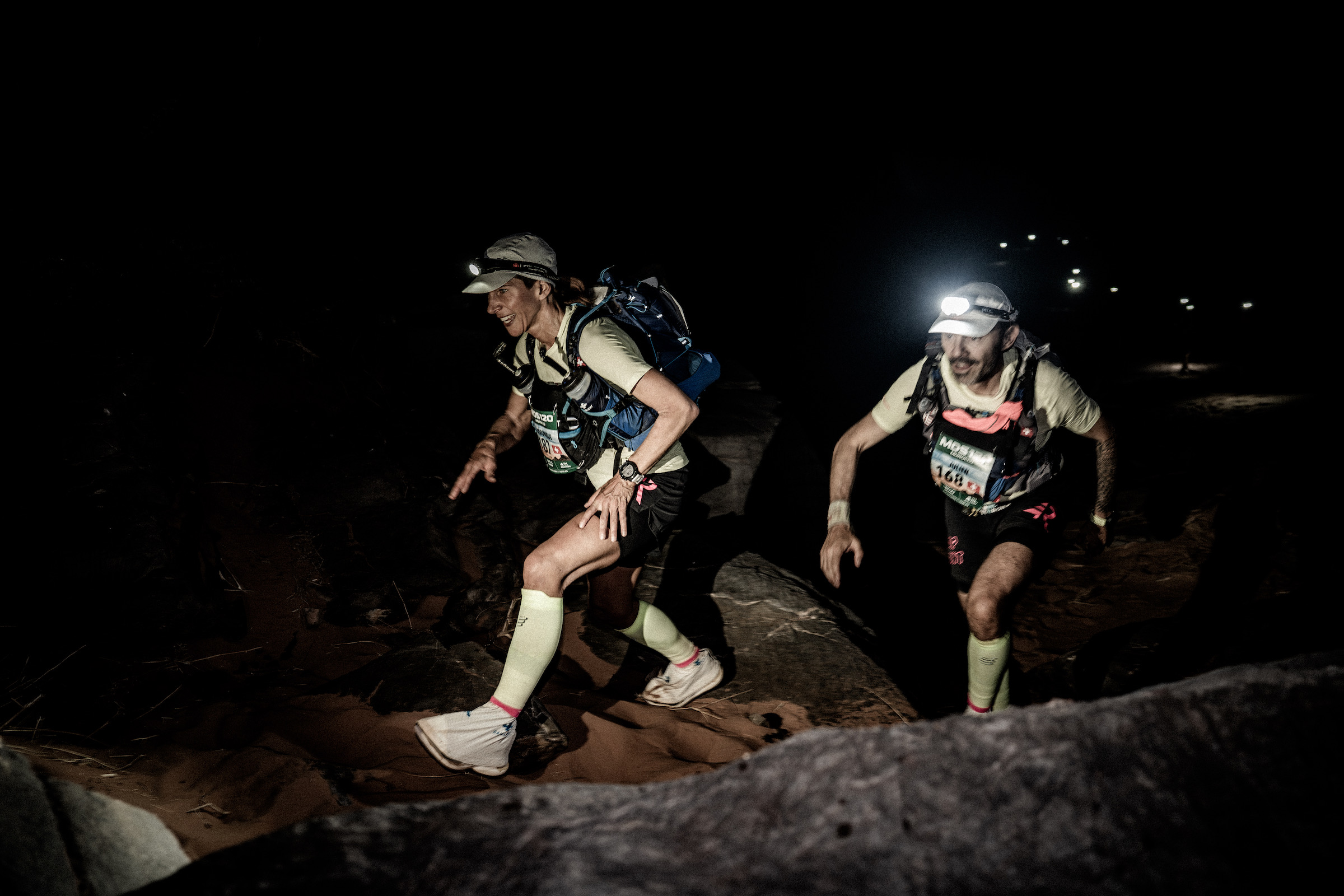
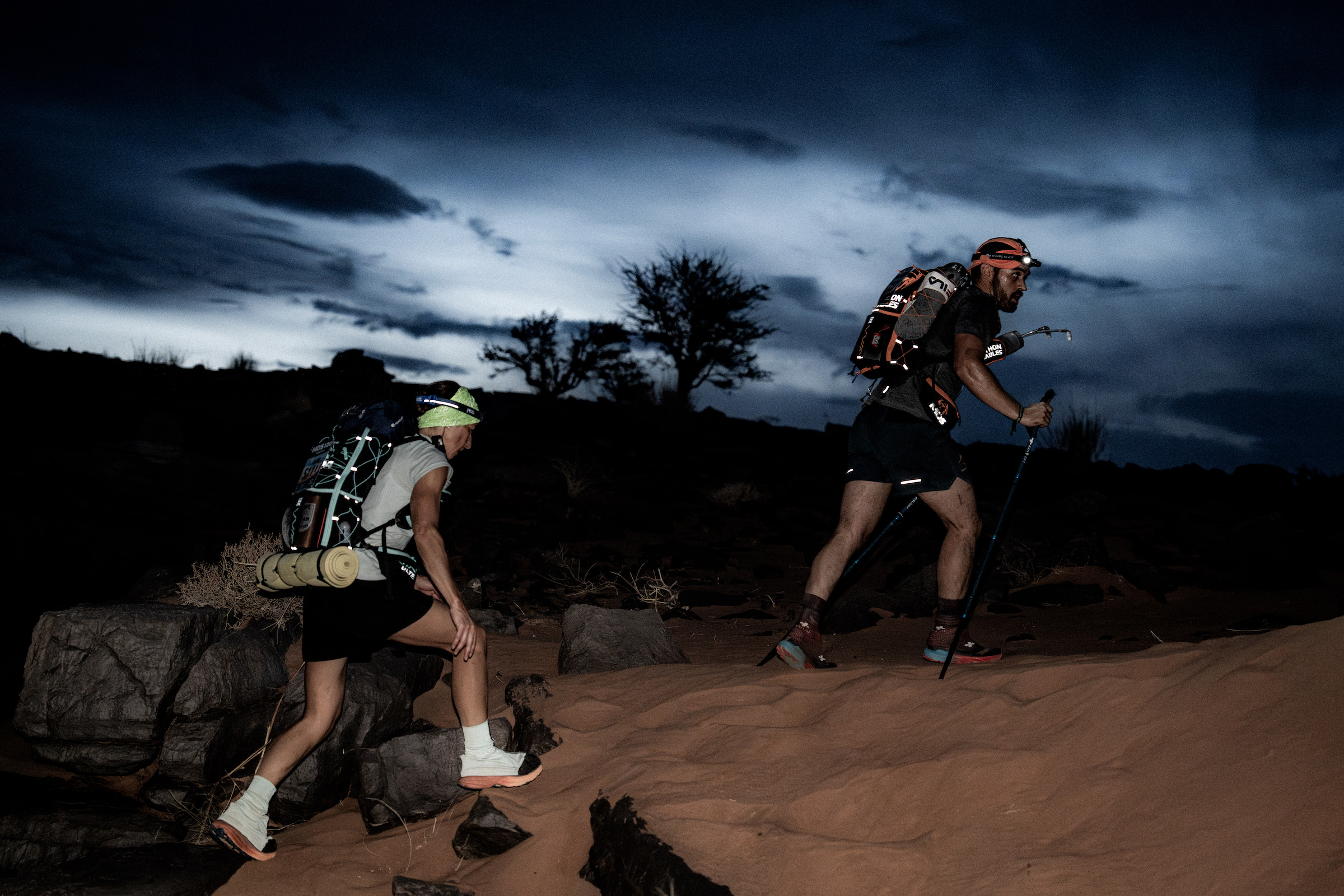
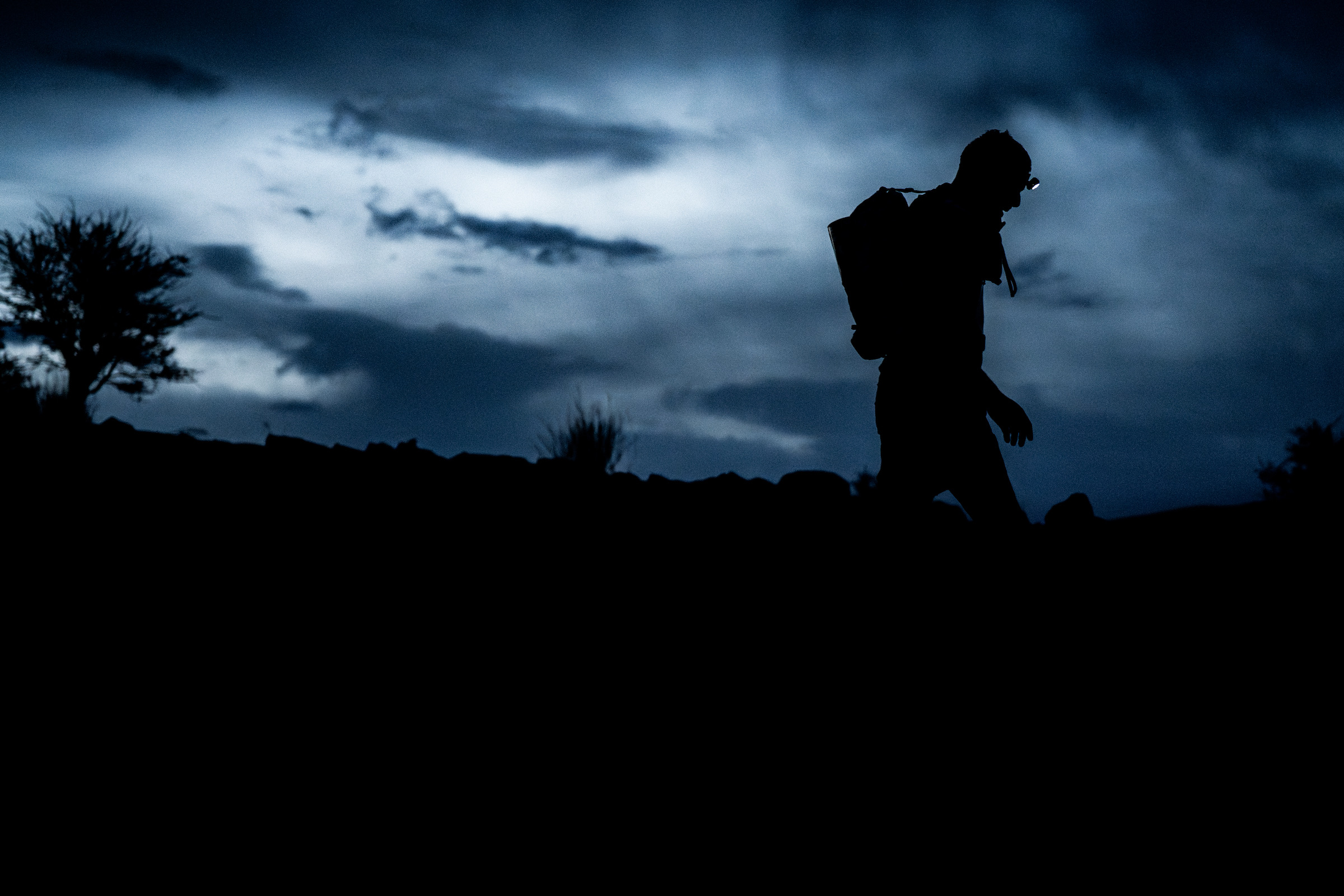
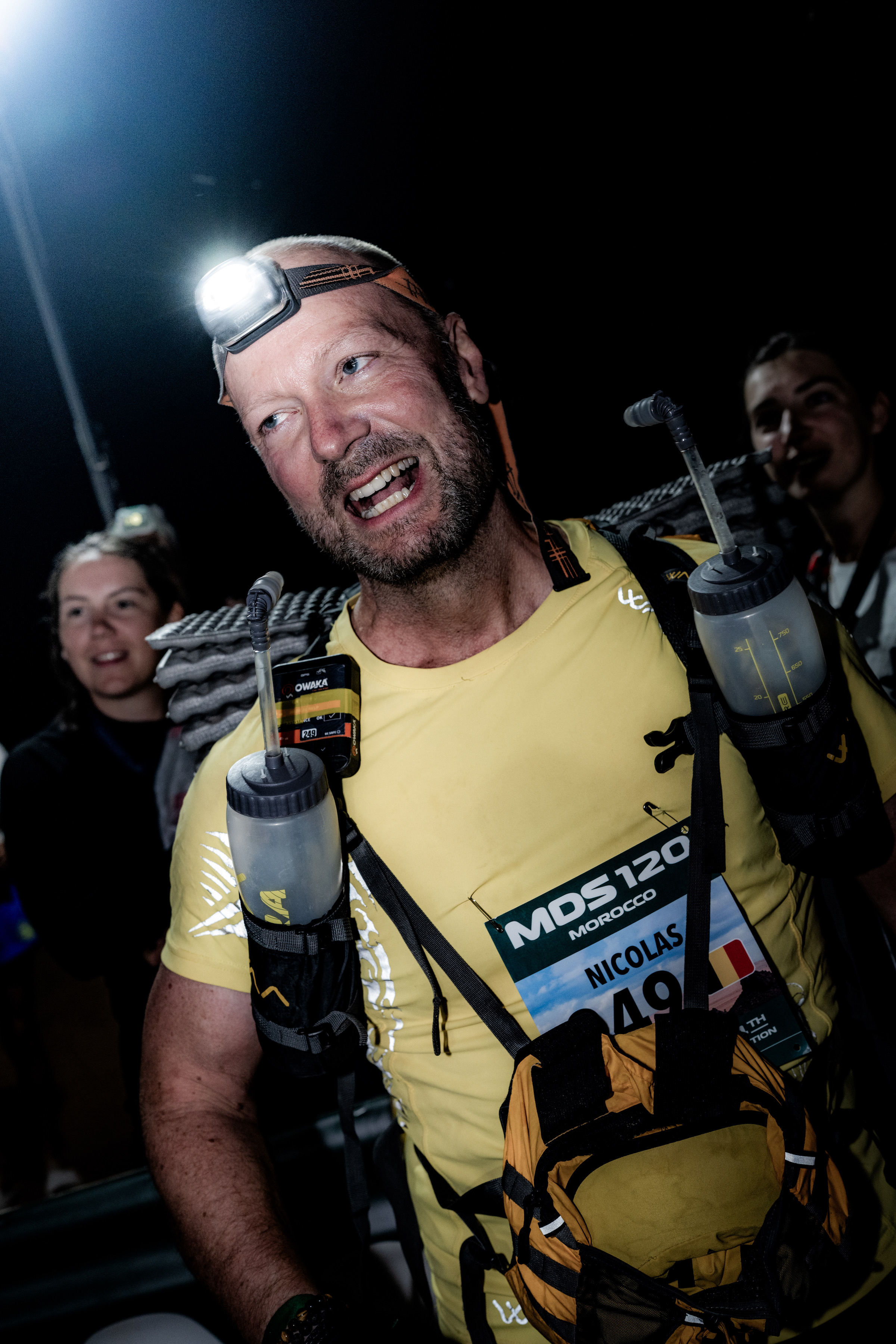
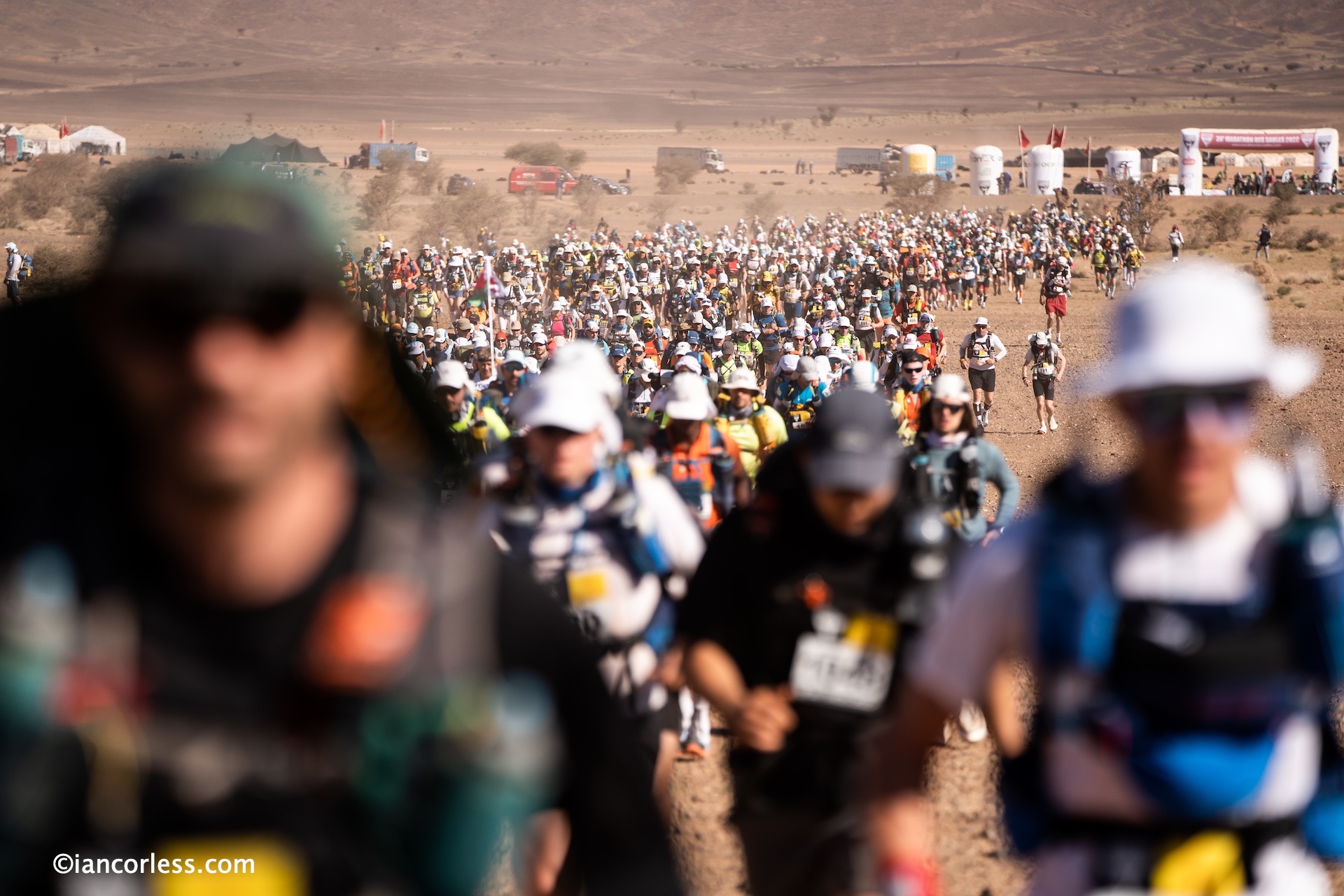
By 0530, the first runners were off. Headlamps cut through the pitch, bobbing along as the desert slowly took shape in the dim light. At 0630, the top-10 runners launched like arrows, chasing the dark down.
Then, something no one expected happened. It started softly. A few drops. Then more. Rain. Actual rain falling from a sky that hadn’t offered a single kindness in days. No one ducked. No one cursed. No one complained. Smiles broke out, quiet and stunned at first, then wide and wild. Some raised their faces to the sky. This was a blessing. A strange, surreal gift. The desert, finally, exhaled.
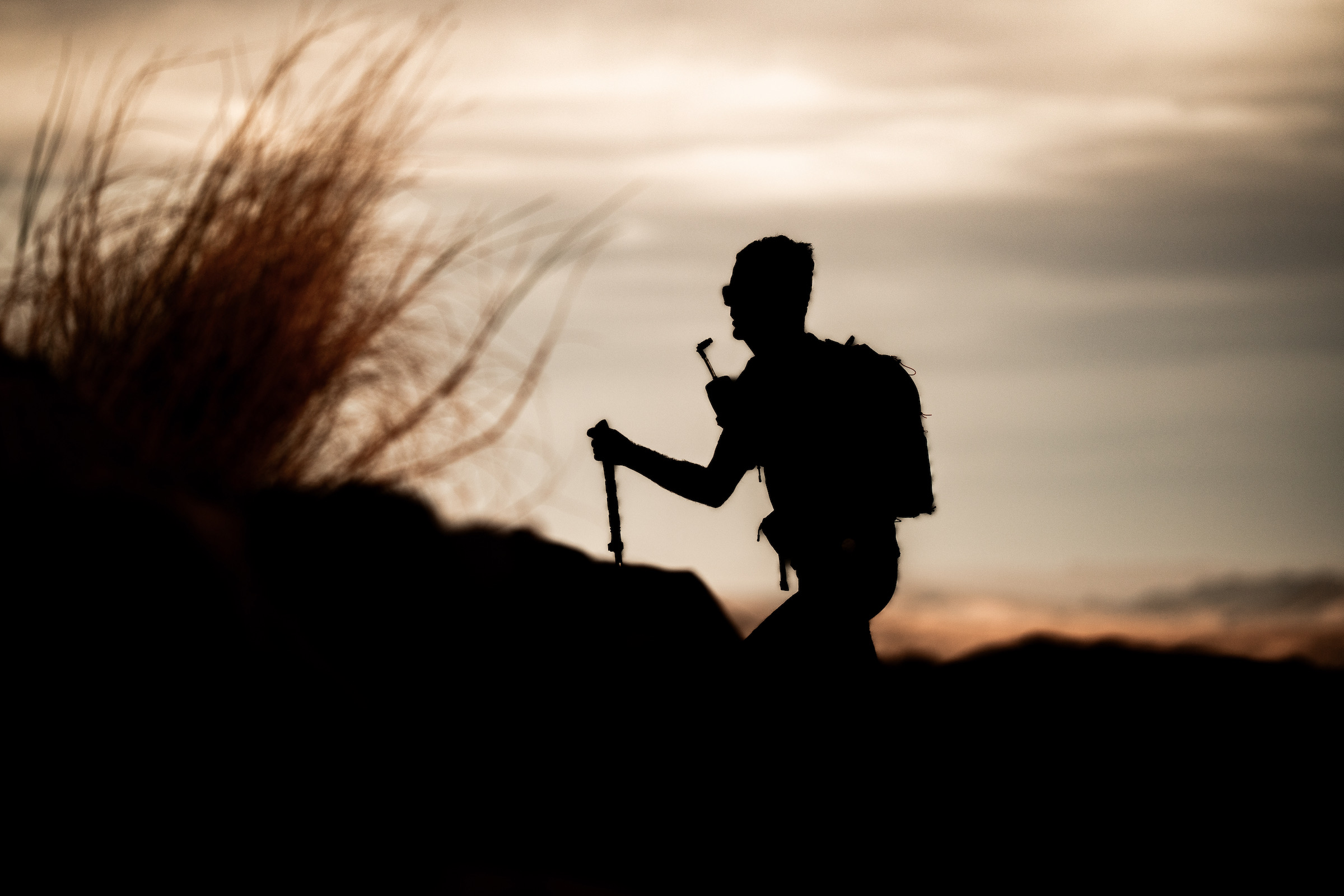
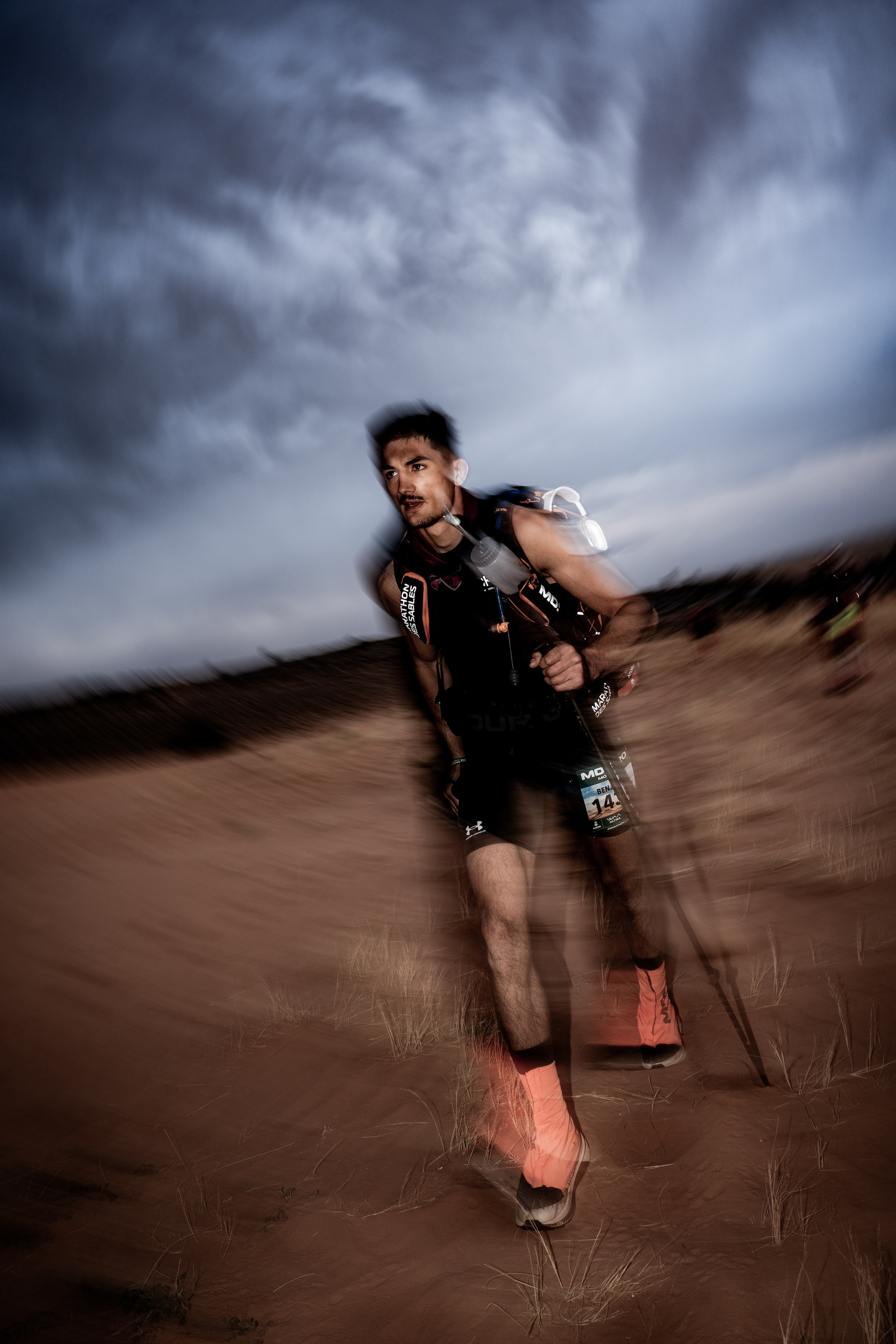
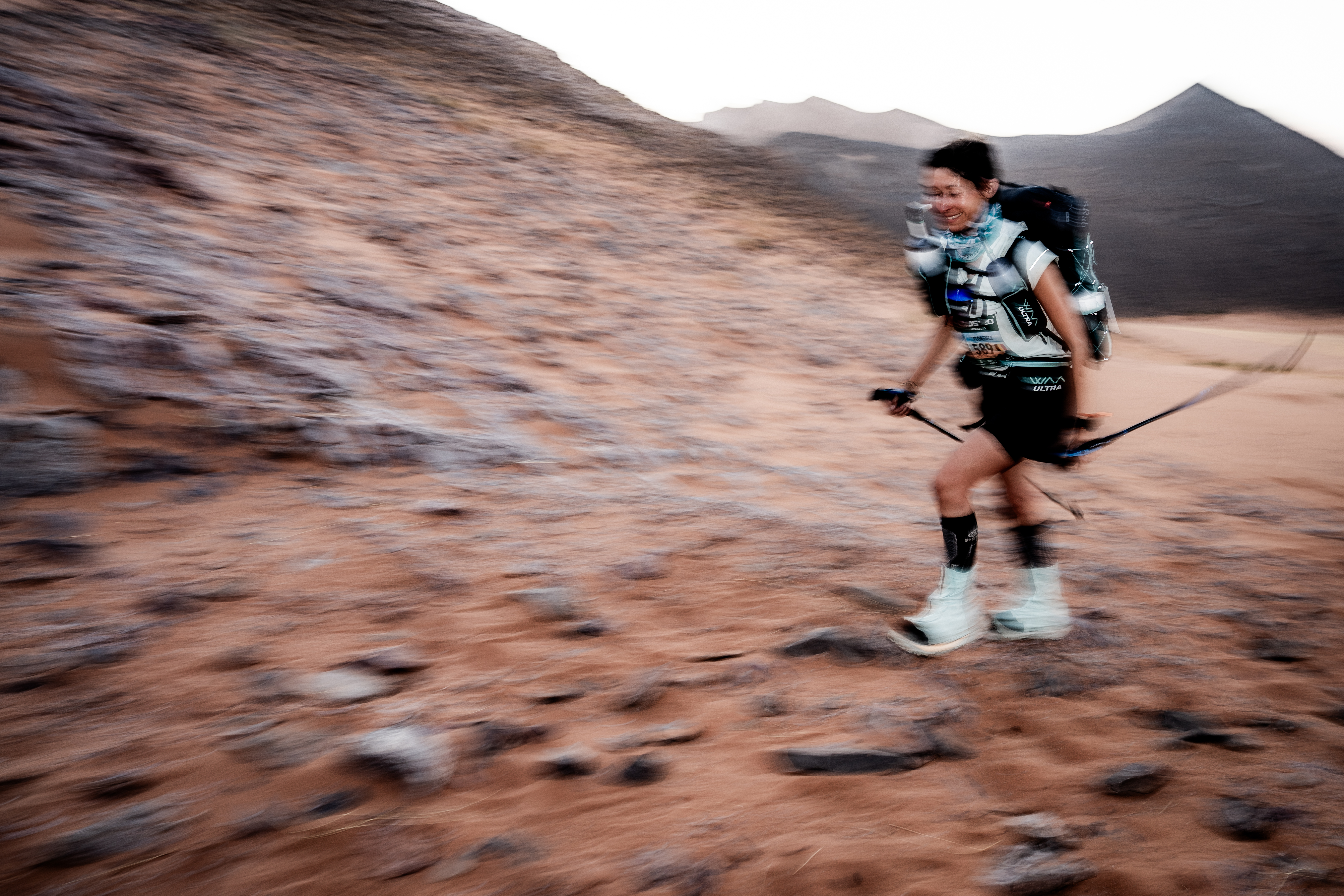
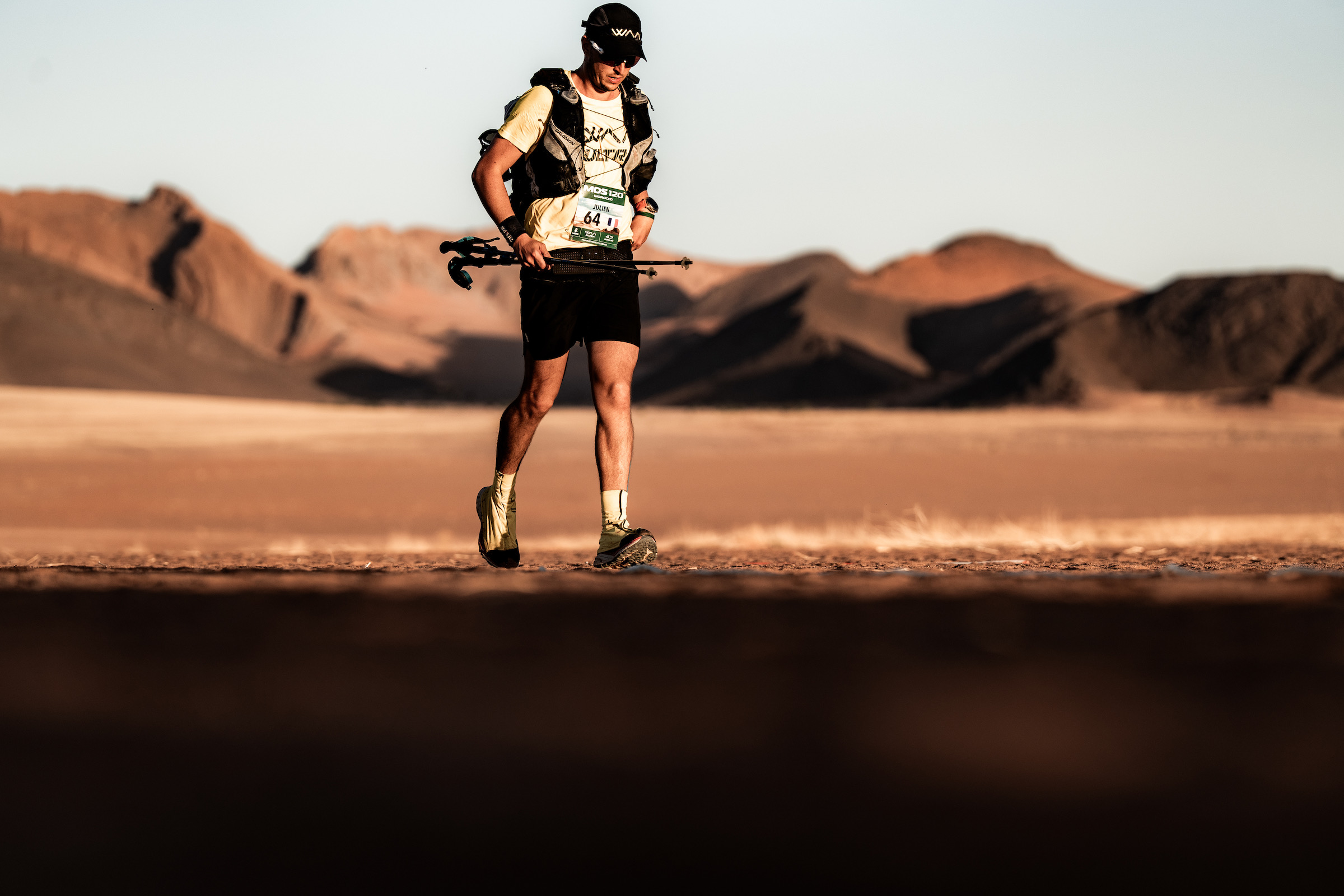
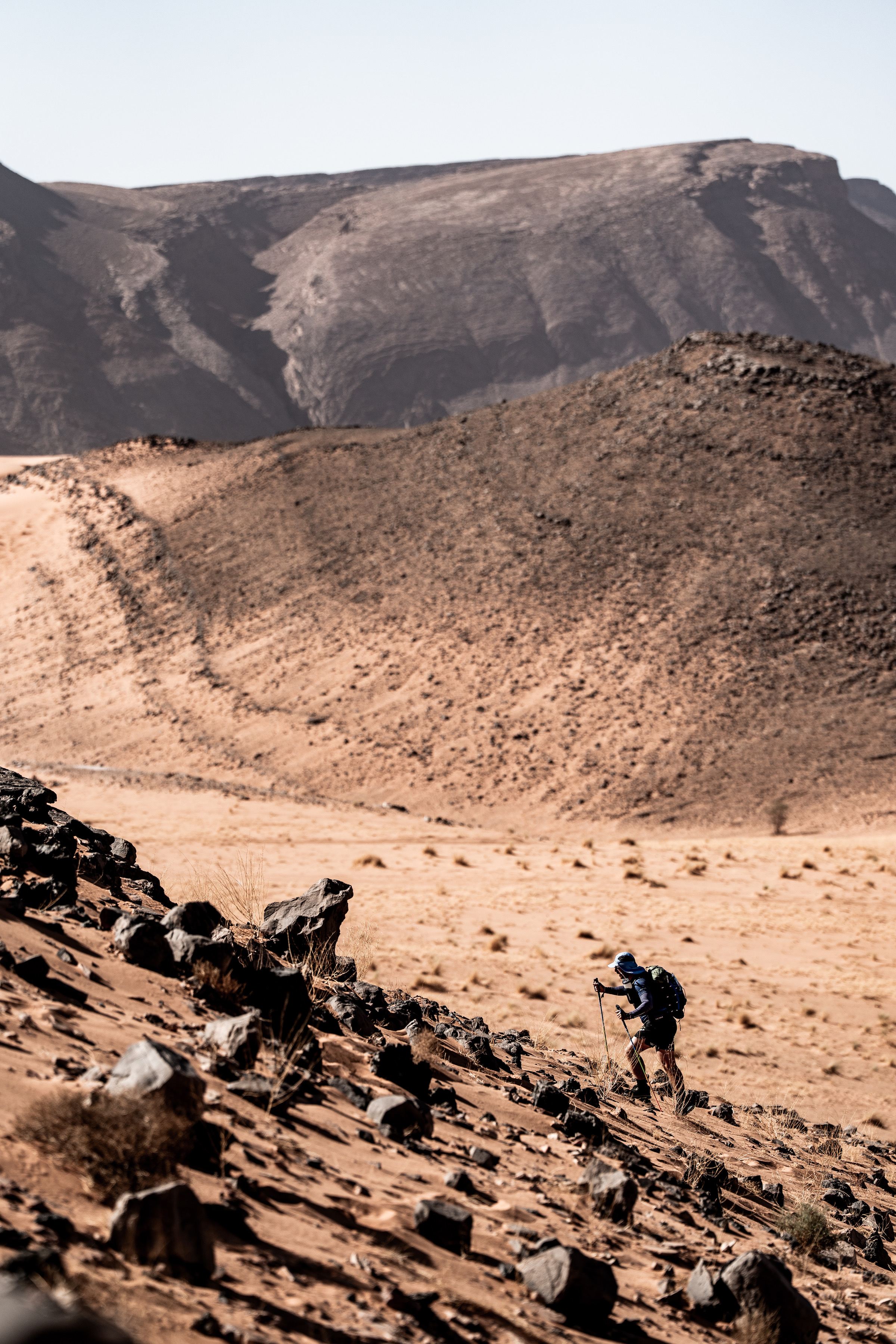
Stage 3 unfolded under gentler skies. The sun eventually returned, but not with the same vengeance. The course was still brutal – sand, rocks, one climbs that never seemed to end, but the worst of the heat was gone. Spirits rose with every kilometre. Runners, ragged but relentless, began to believe the finish was real.
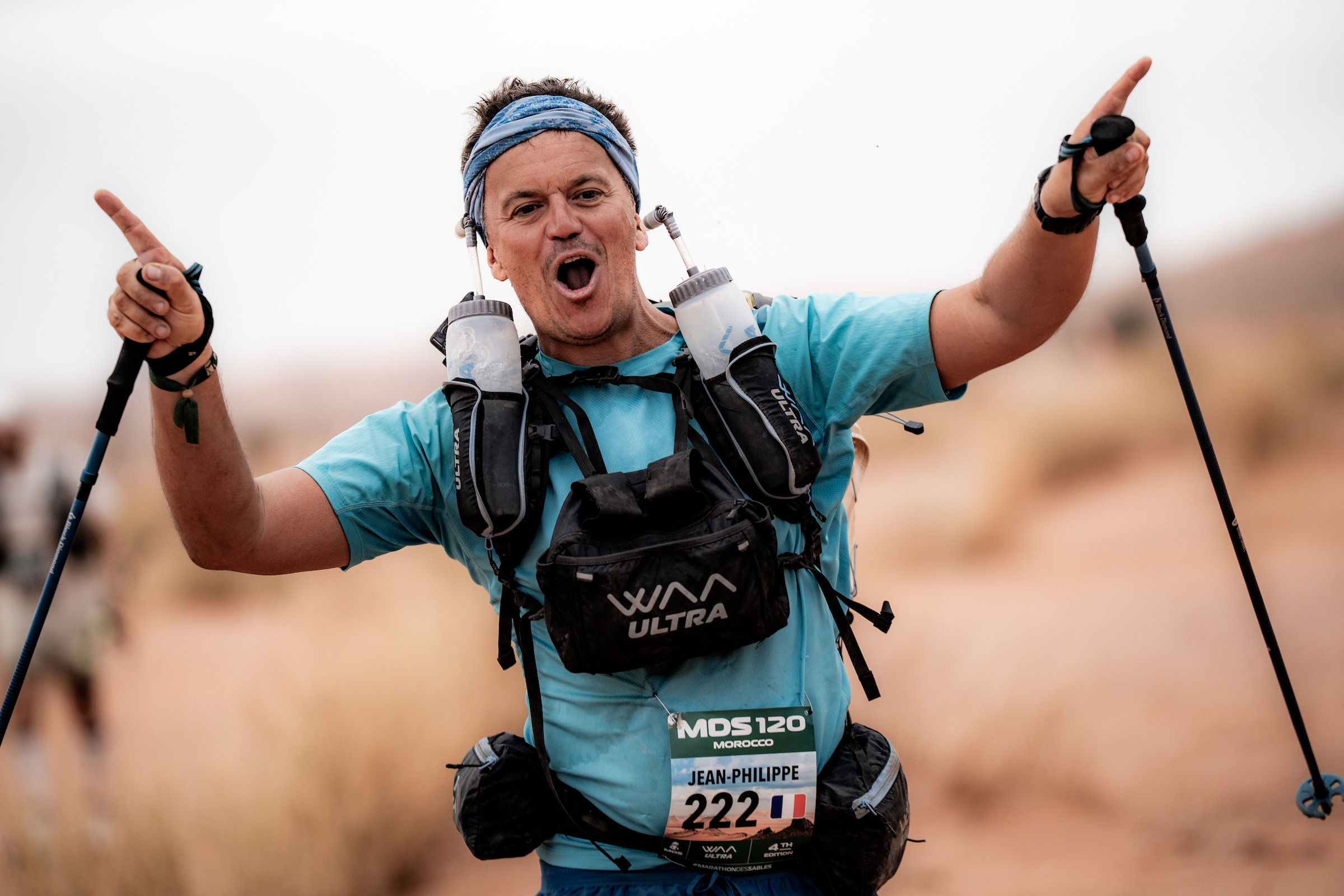
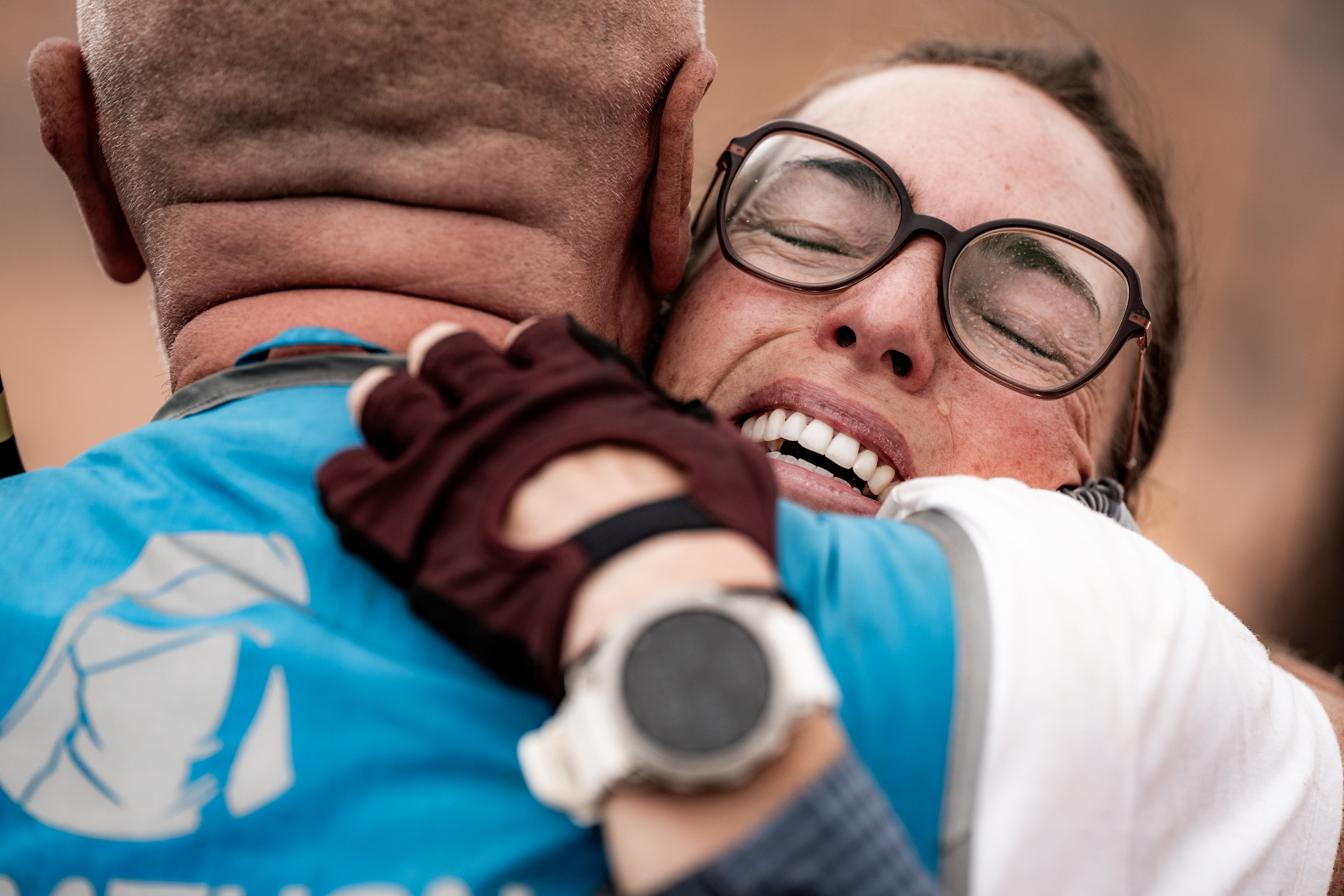
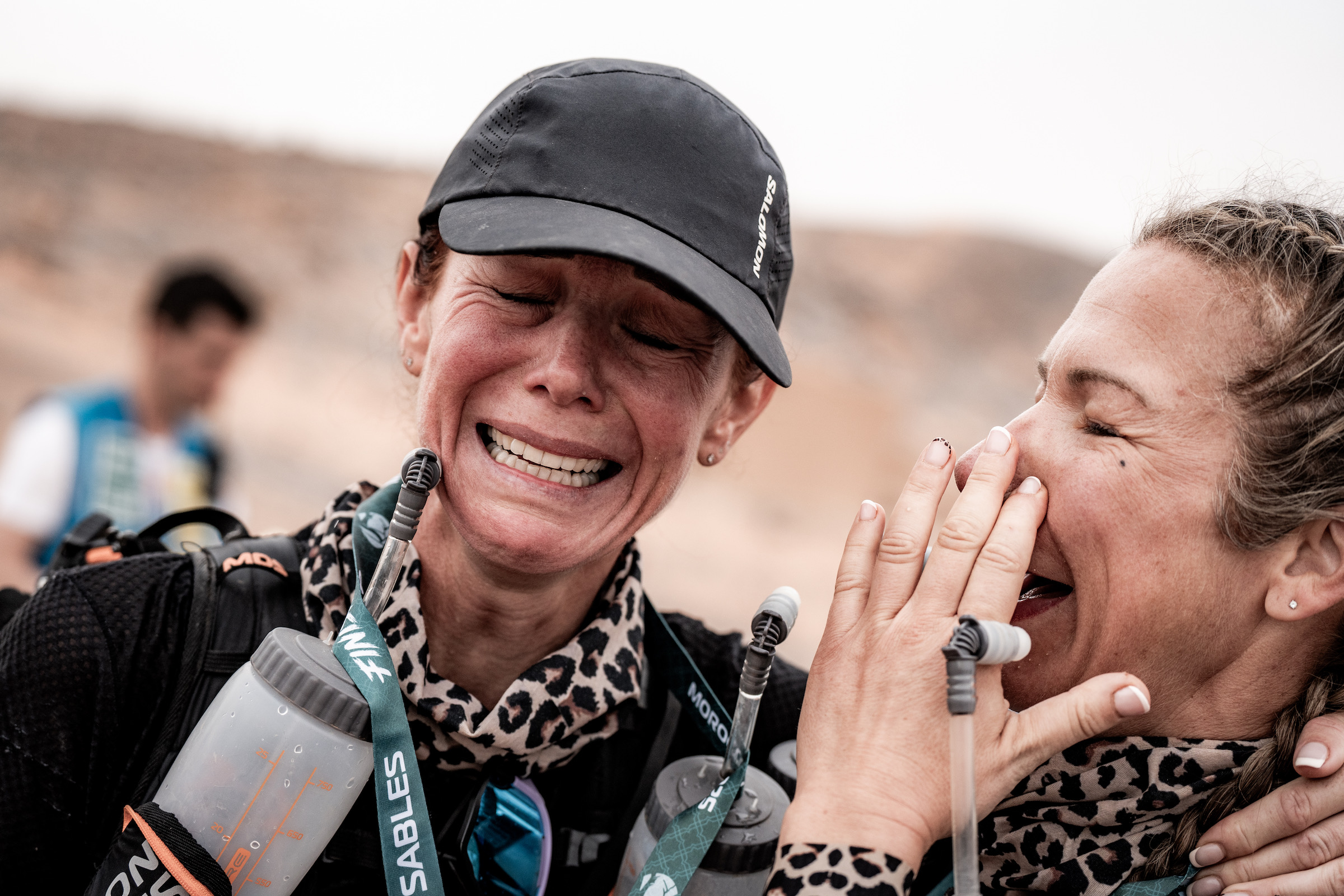
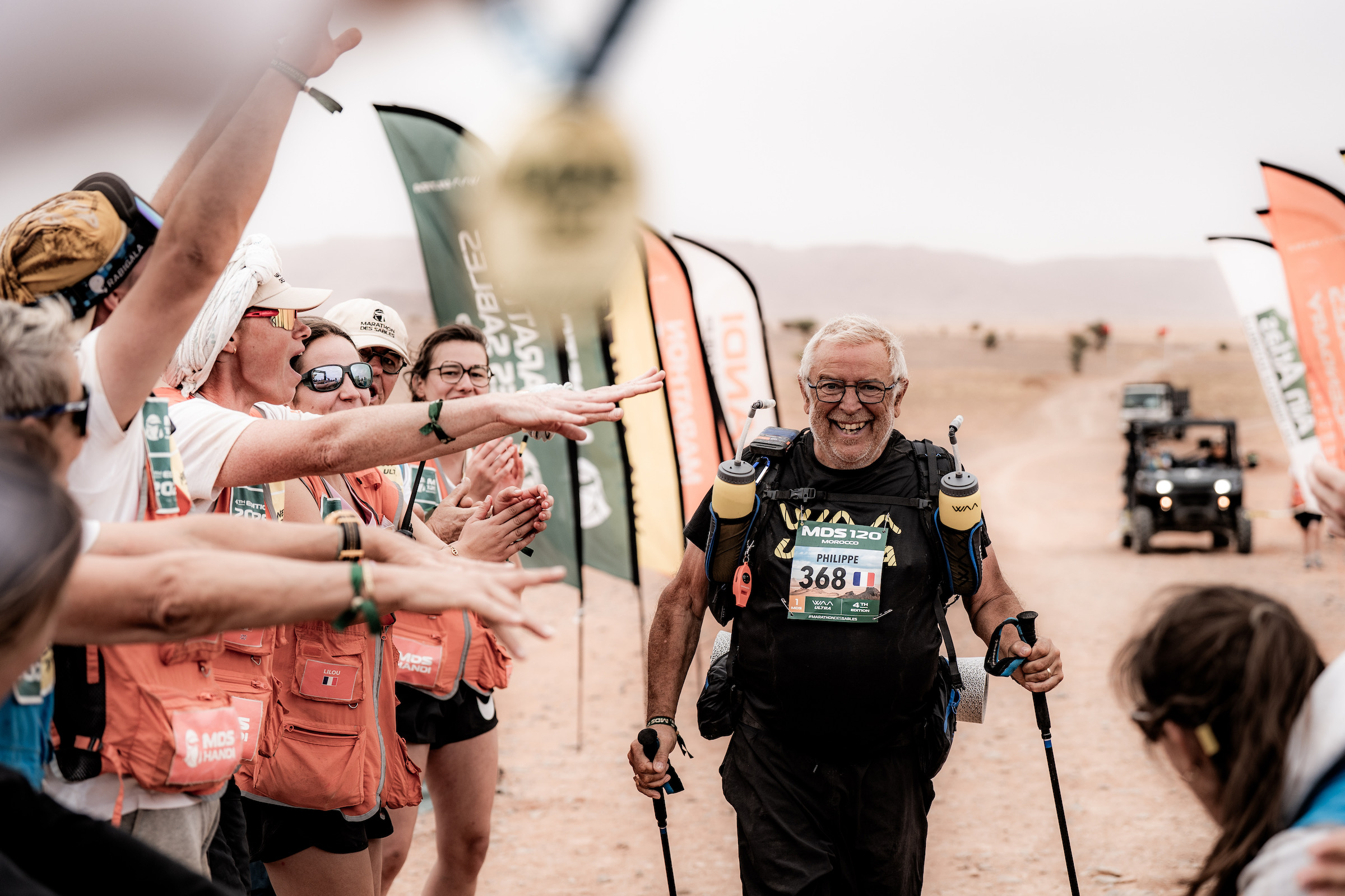
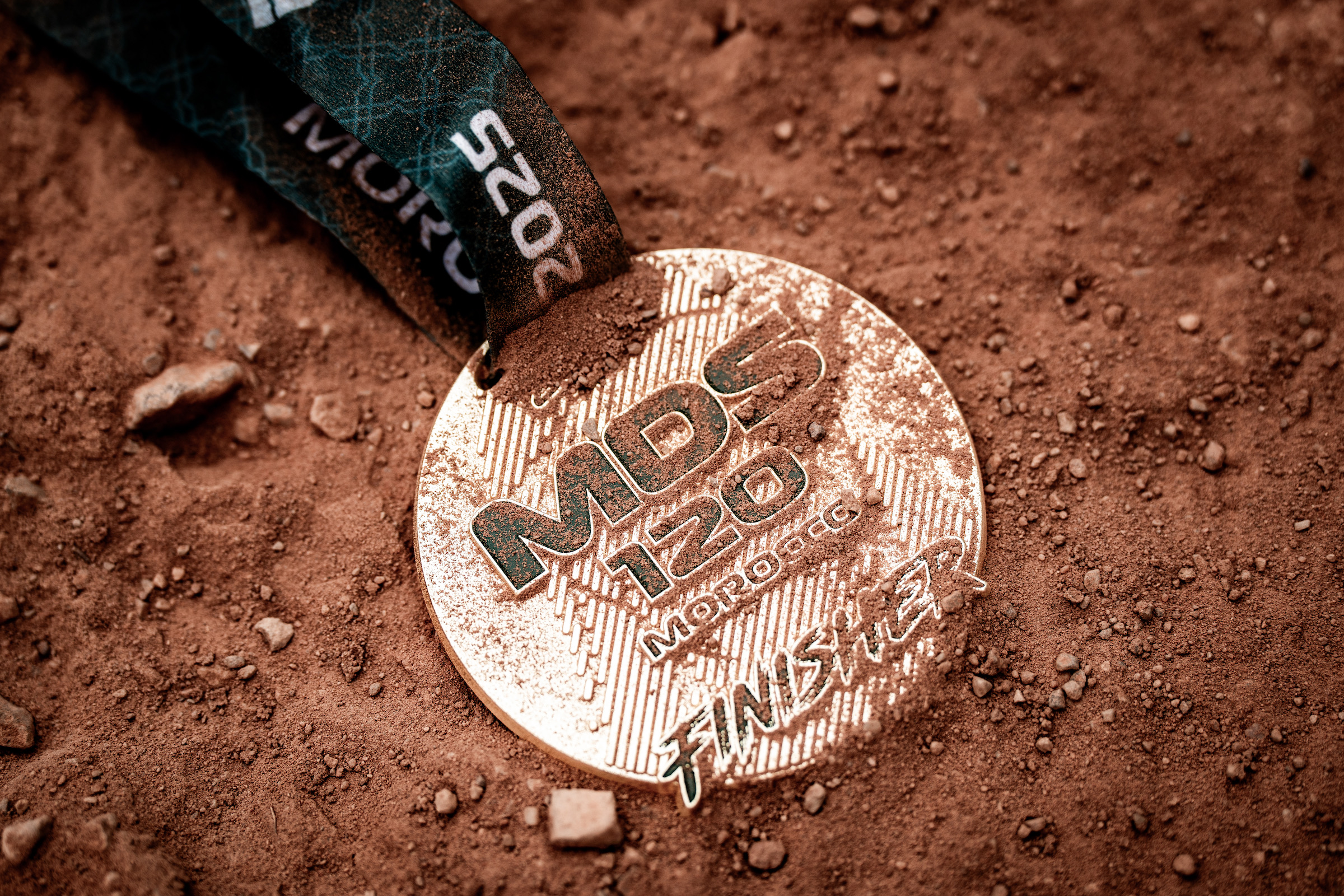
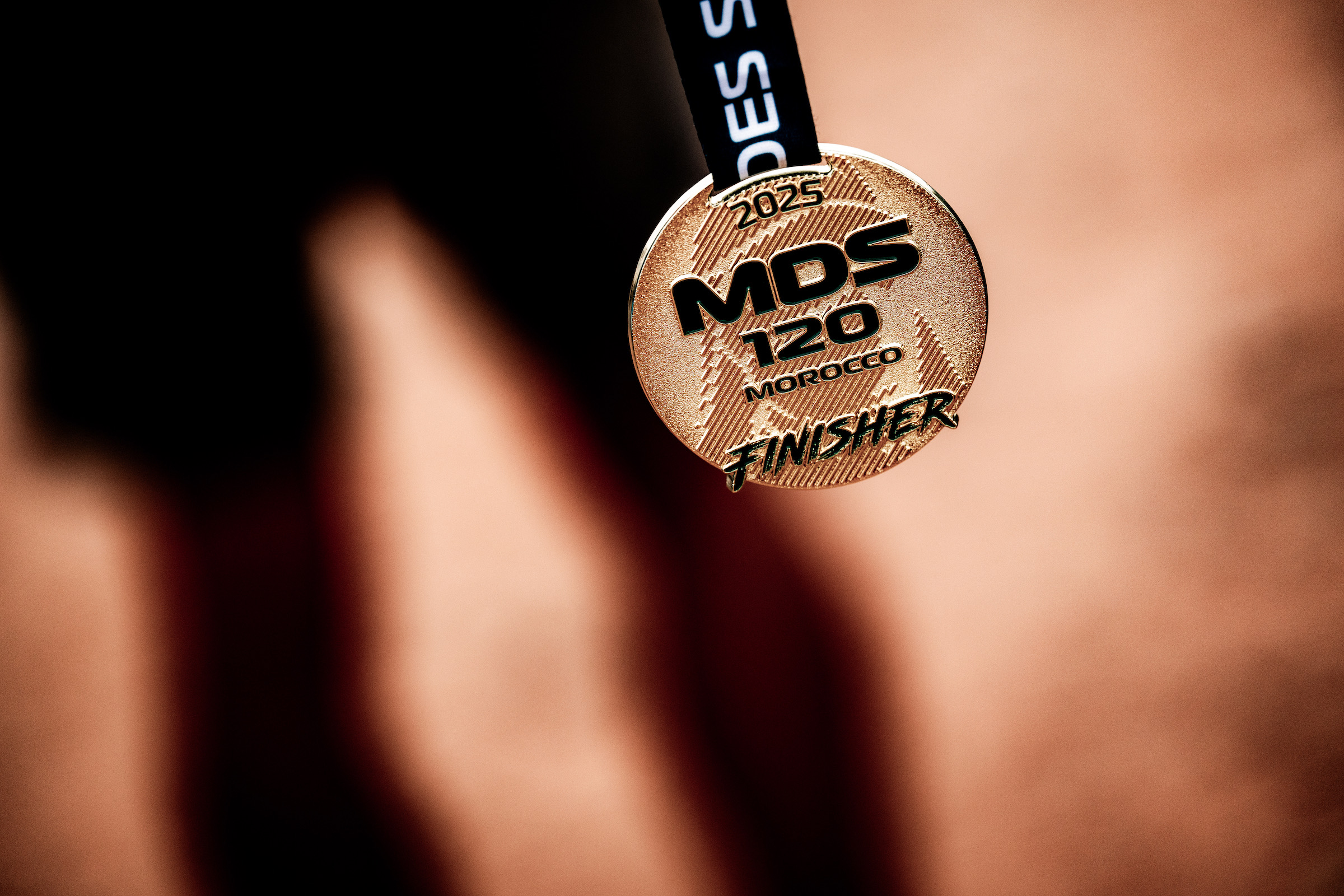
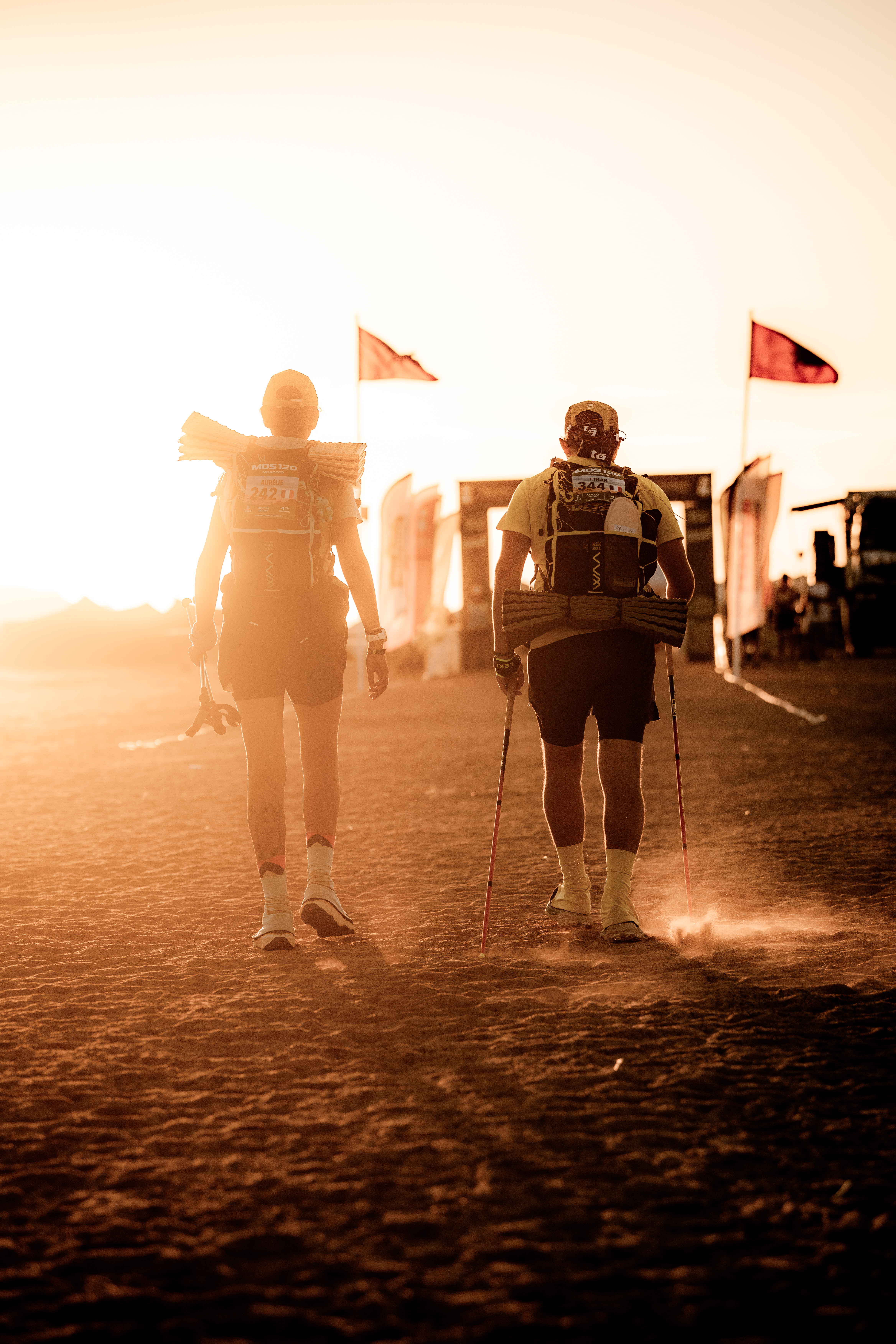
One by one, they crossed the line. Some ran with everything left in their legs. Some limped, leaning on poles. Some clutched hands with teammates or strangers who’d become family over theirshared suffering. And when that medal was placed around their necks, the tears came freely. No shame in them, only pride, release, and the overwhelming relief of completion.
There were cheers. Applause. Laughter. People hugging like they never wanted to let go. Cameras flashed. Medals clinked. Bodies that had been pushed to the limit stood a little taller.
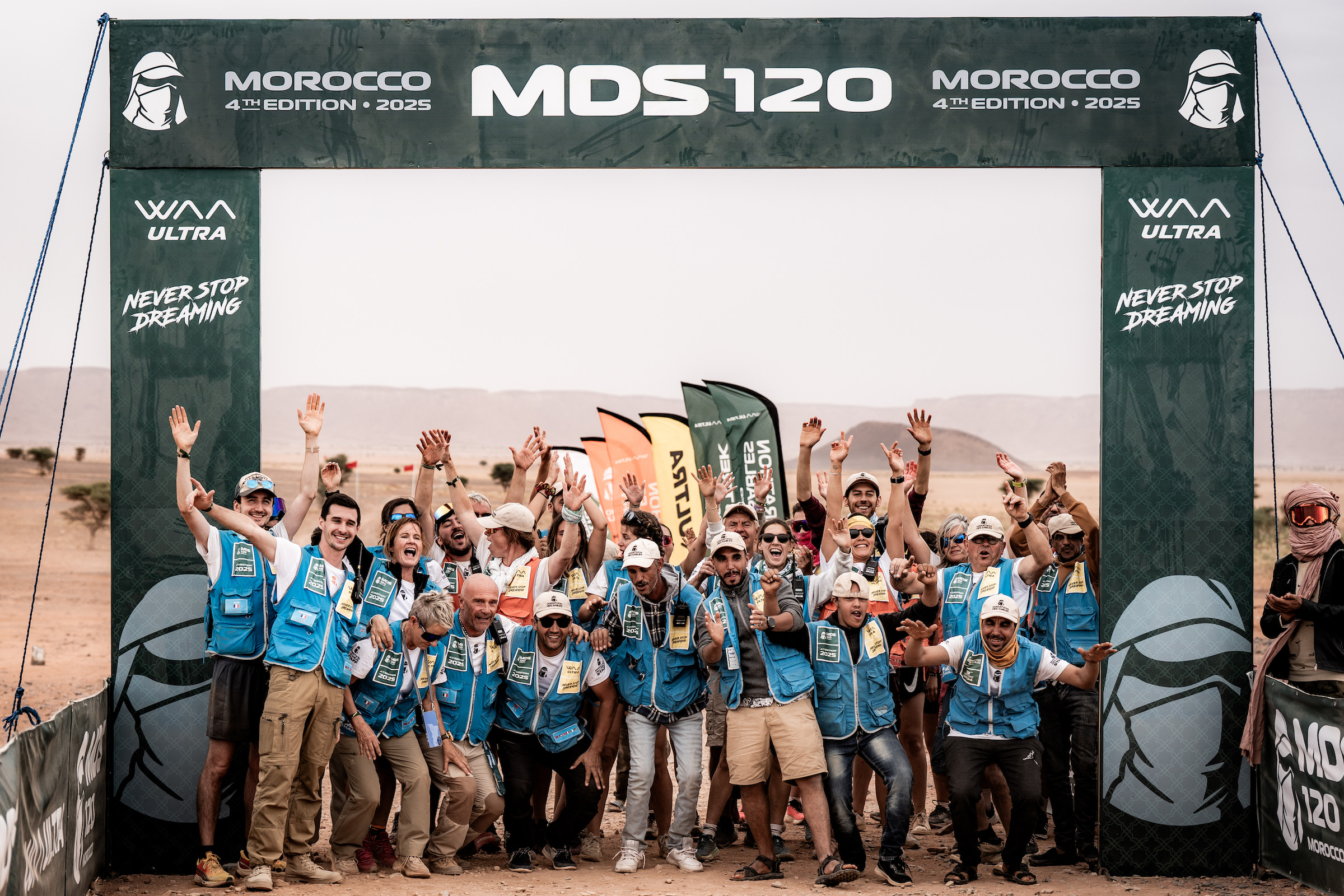
Behind every finish was an army in blue and orange.
The MDS team, the volunteers, medics, logistics crew, water distributors, checkpoint staff, tent builders, camp runners, sweepers, and everyone else in between—made this journey possible.
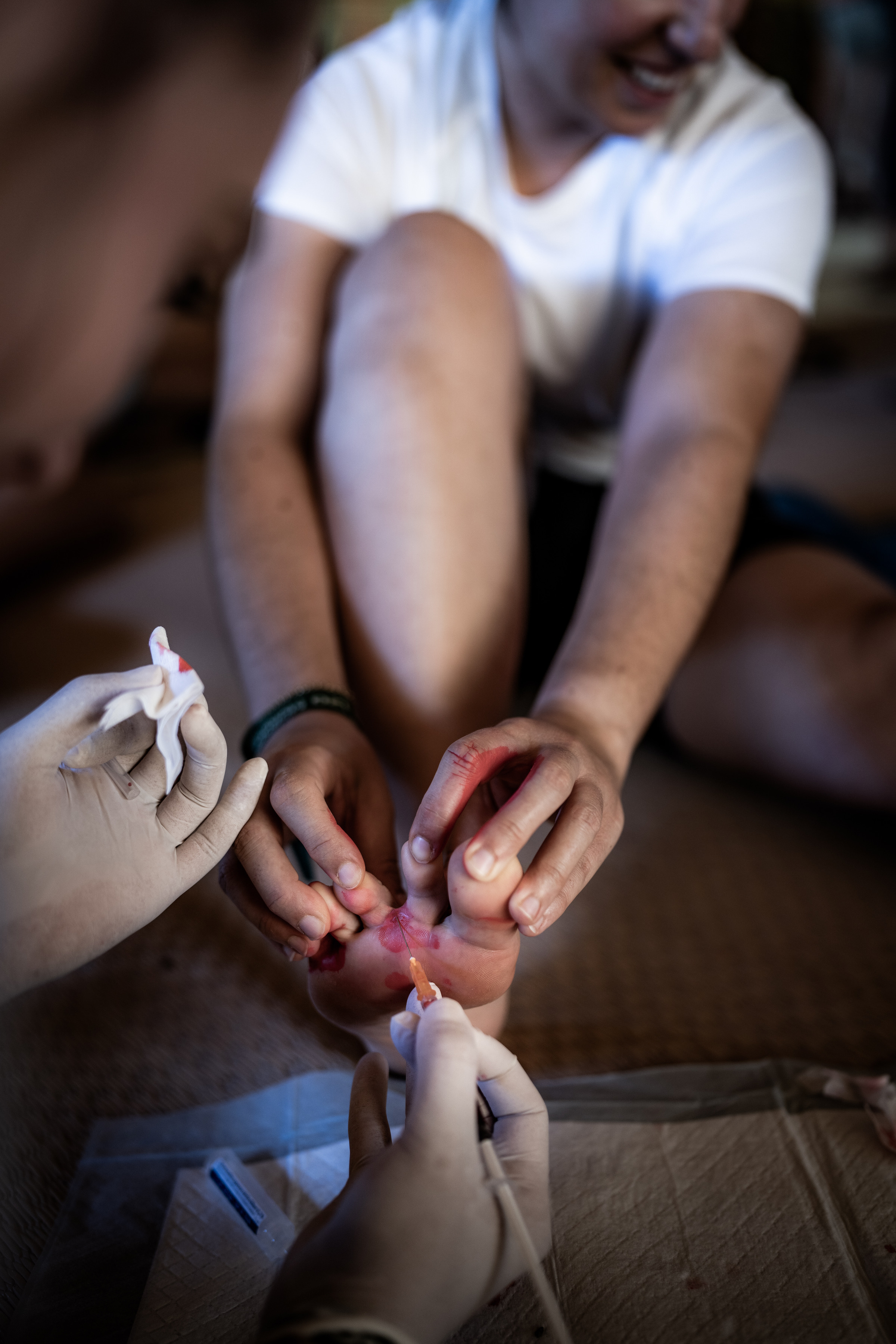
They were the quiet hands who carried everyone forward. The steady voices in the storm. The ones who handed out water in 47°C heat, packed and re-packed tents, tended to blisters, and kept this chaotic caravan moving across an unforgiving land. Their work wasn’t glamorous. It was relentless. And it matters more than words can say.
MDS 120 Morocco is more than numbers. More than distance. It’s more than the desert.
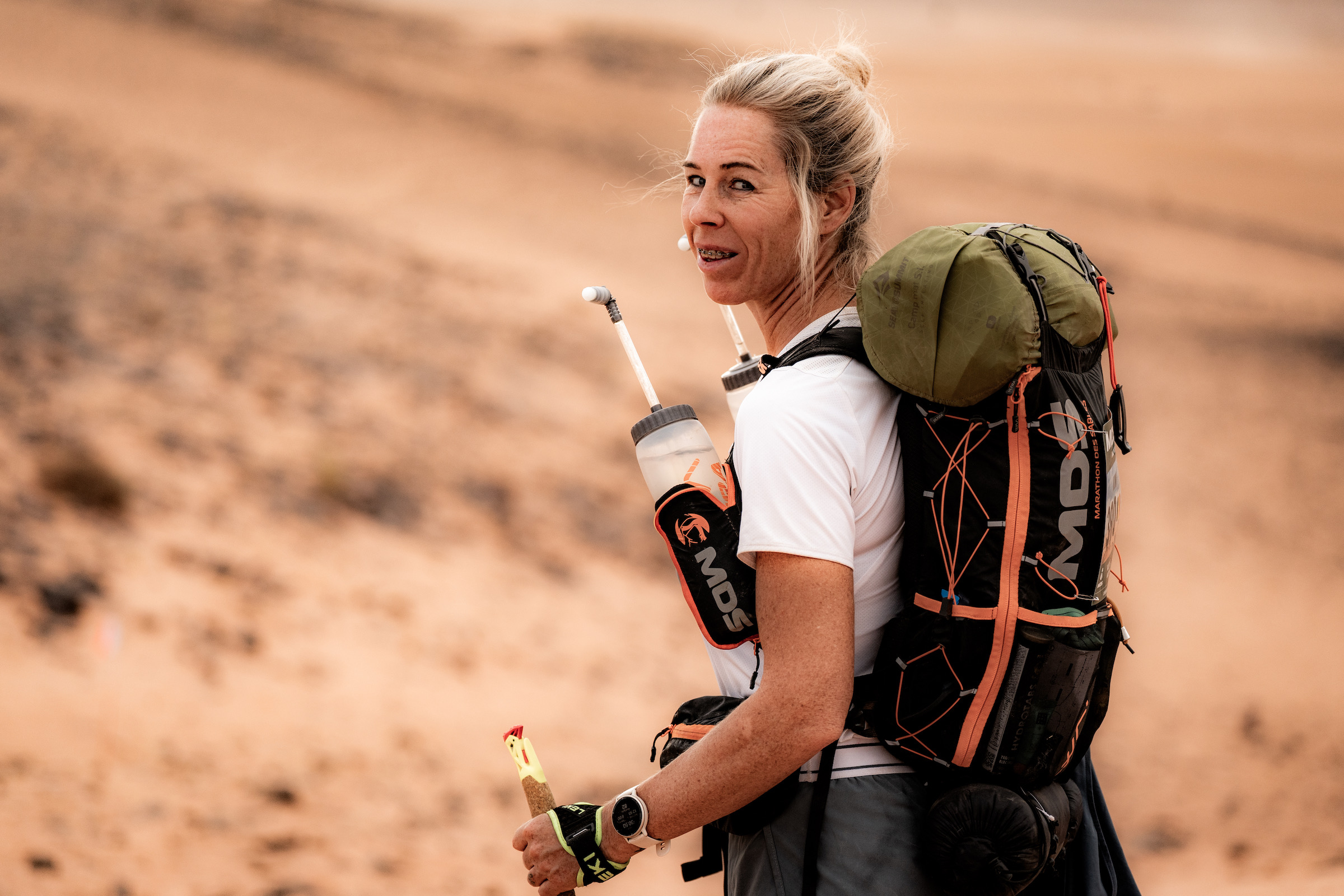
It’s about finding out what lives under your skin when the comfort is stripped away. It’s about running into the teeth of the wind and not turning back. It’s about community, people who arrive as strangers and leave as family. It’s about believing you can, even when everything hurts, and then proving it.
No one who stood on that start line is the same at the finish. And that’s the point.
So to every runner who dared to take this on: you are fierce, you are strong, and you’ve earned every second of this glory. This medal means more because you fought for it.
MDS 120 Morocco is complete. The desert tried to break us. But we endured. And that’s the story you’ll tell forever.
Stage 2 of the MDS 120 Morocco 2025 delivered a punishing reminder of what this race is all about: endurance, resilience, and respect for the elements. With three distances on offer – 20km, 40km, and 60km – runners set out early under revised start times (0630 and 0730 for the top contenders) after stage 1’s extreme heat forced organizers to adapt. It was a smart move. By midday, temperatures soared beyond 45°C, turning the day into a battle of grit and survival.
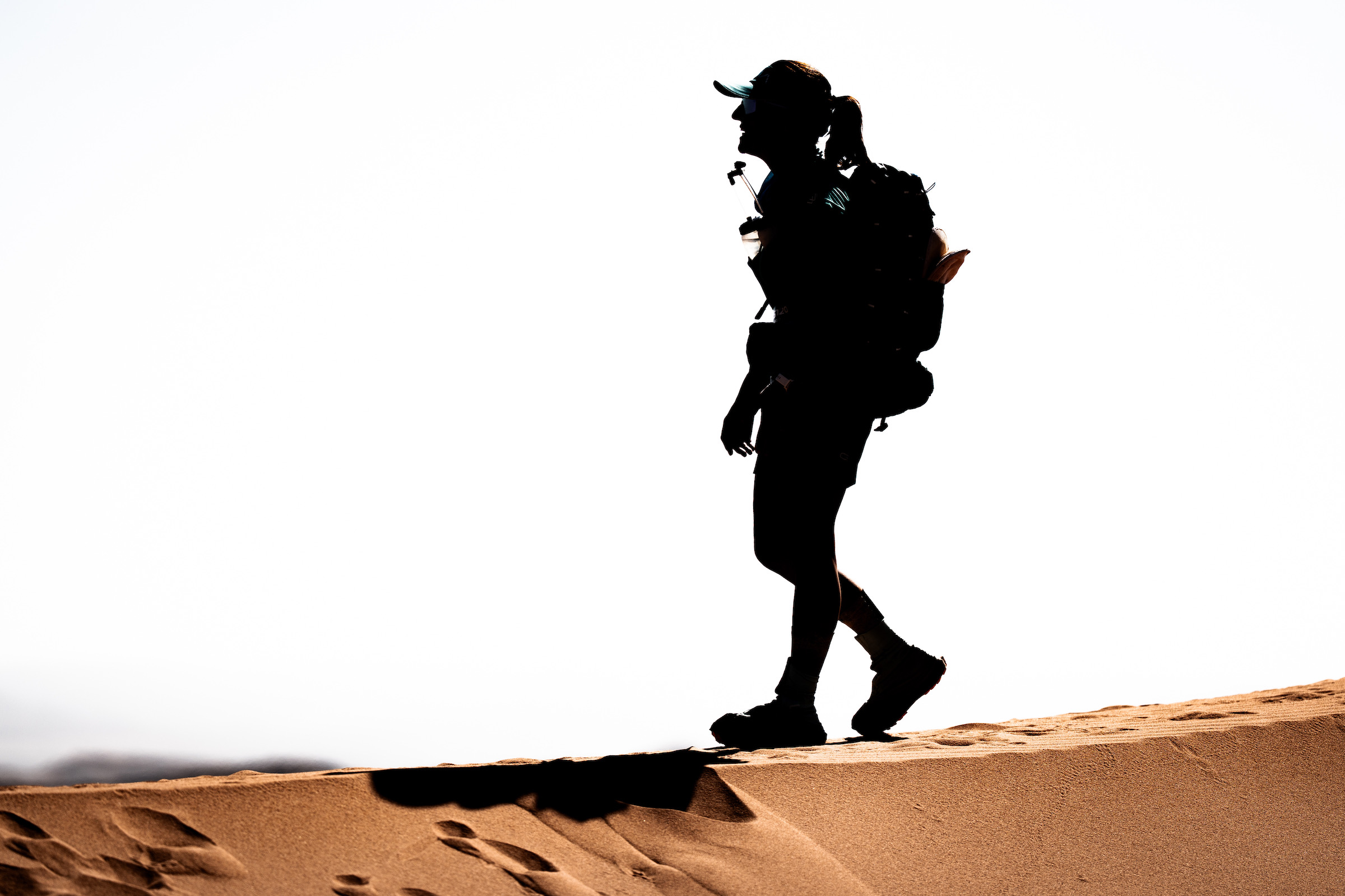
The day began deceptively calm. The early morning was still and silent, with no wind and nothing to offer relief from the sun’s growing intensity. As the hours ticked on, the heat built steadily, baking the desert landscape and punishing any runner who dared to underestimate it.
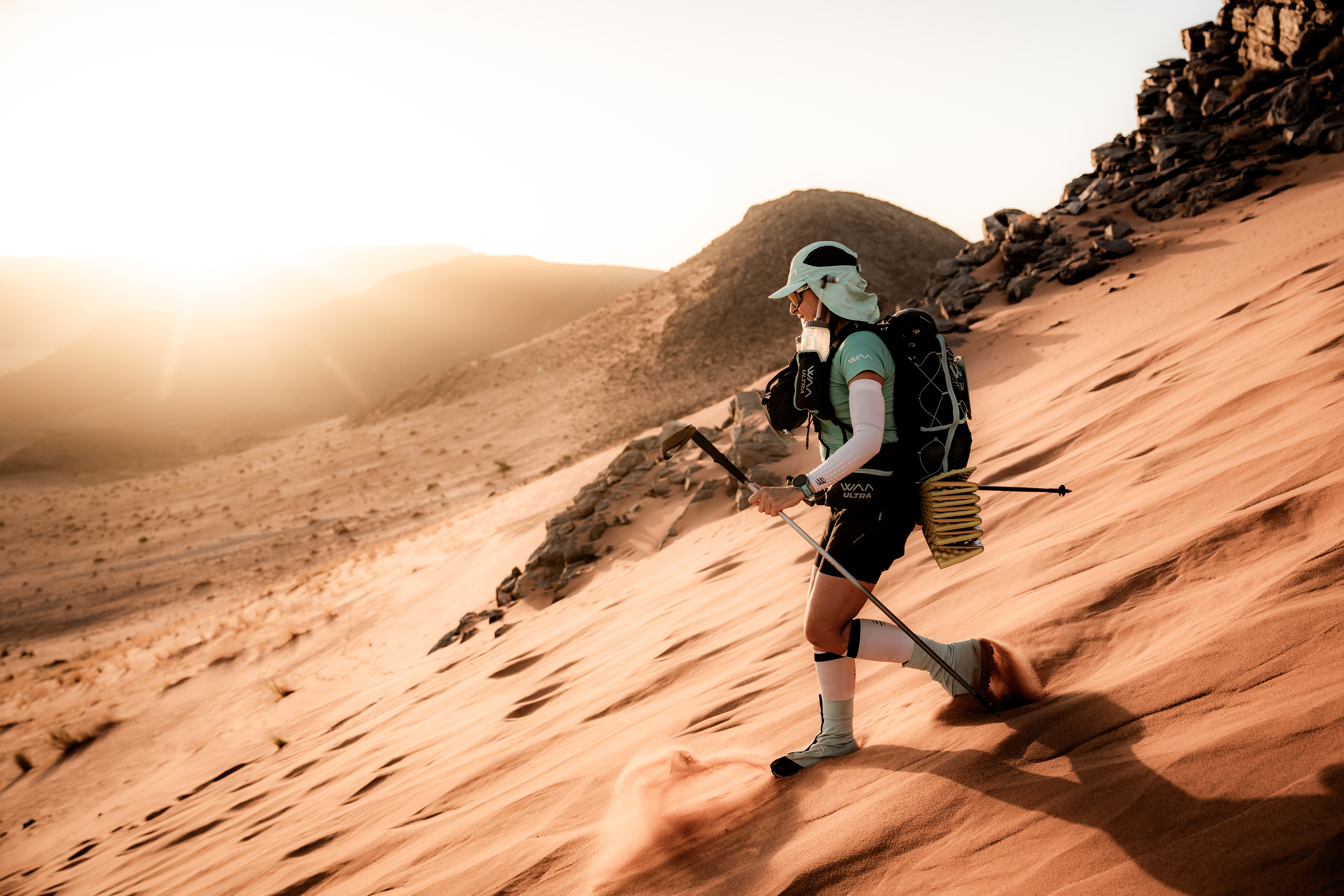
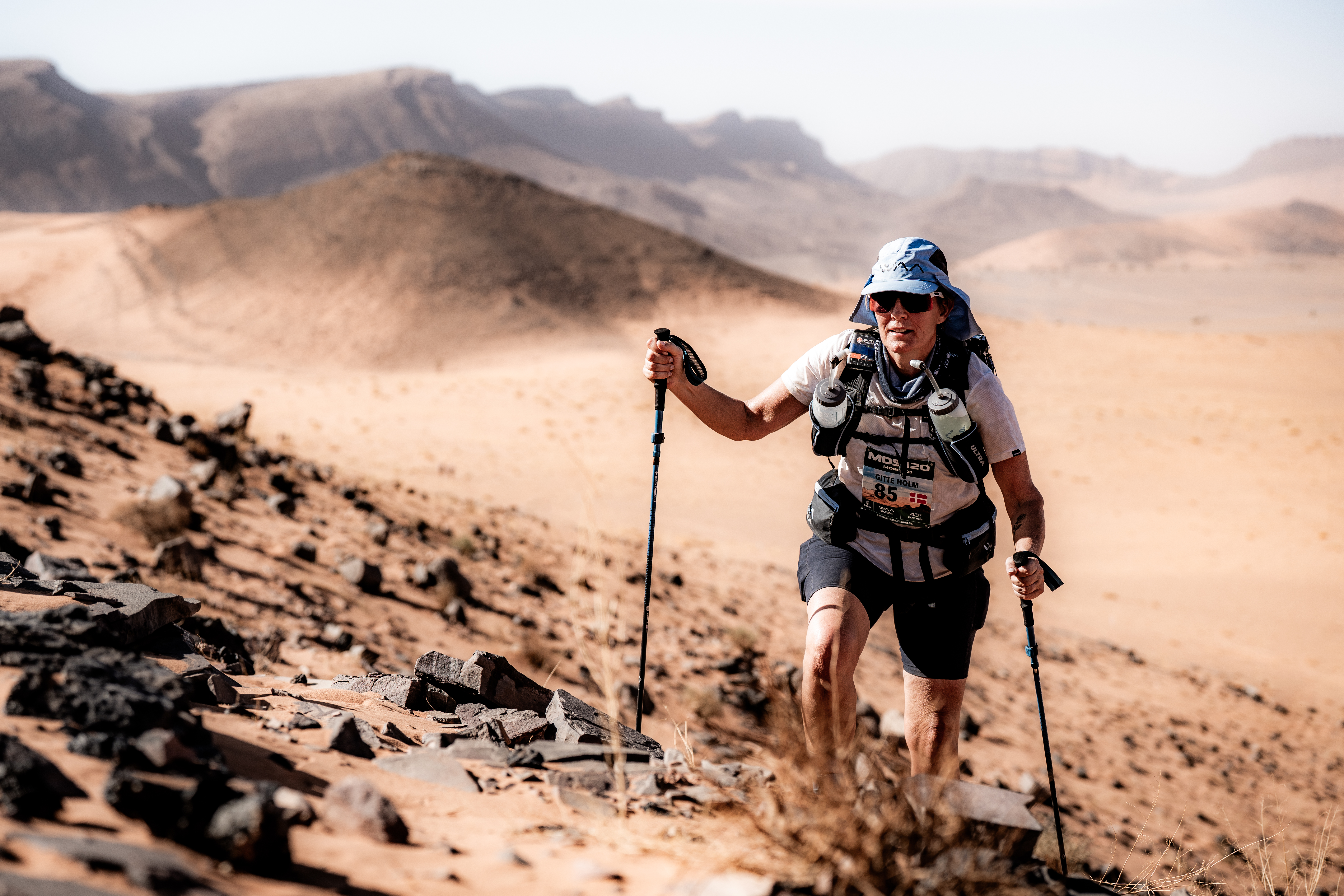
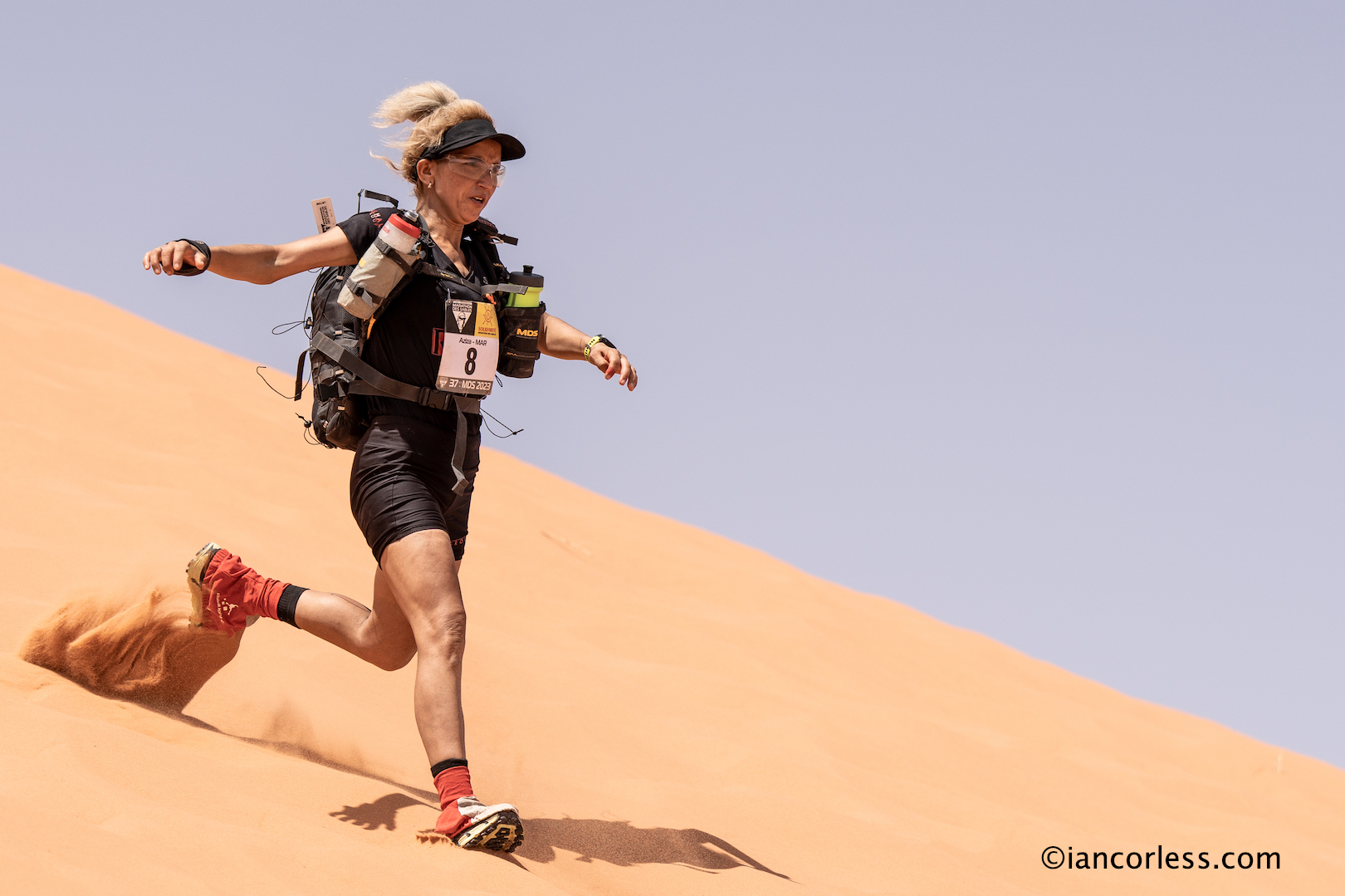
This wasn’t just another day in the desert. It was a brutal test across unforgiving terrain – soft sand, rugged mountain passes, exposed plains, and technical ridgelines. There were no shortcuts. No hiding from the sun. Just a long, scorching path to the finish.
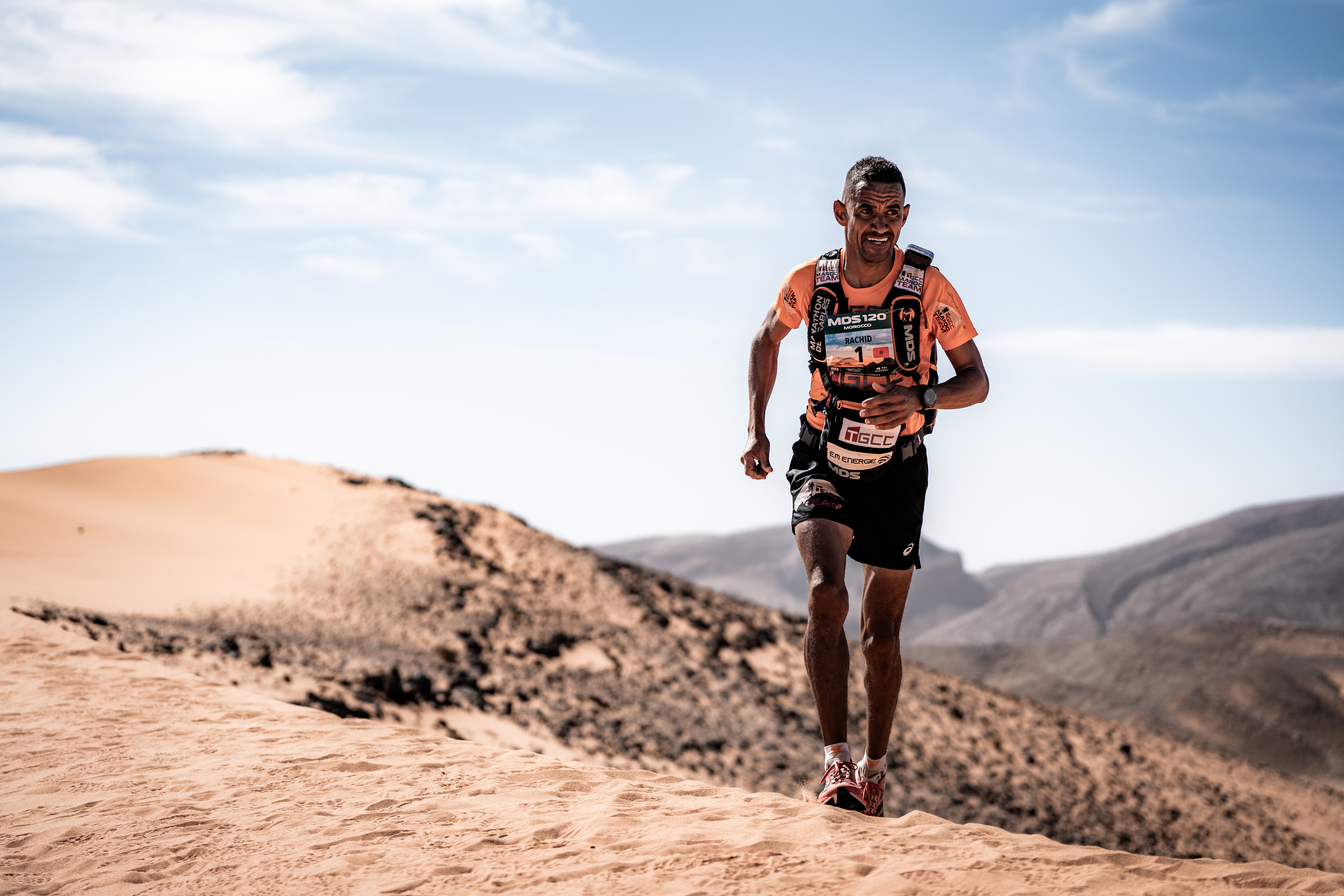
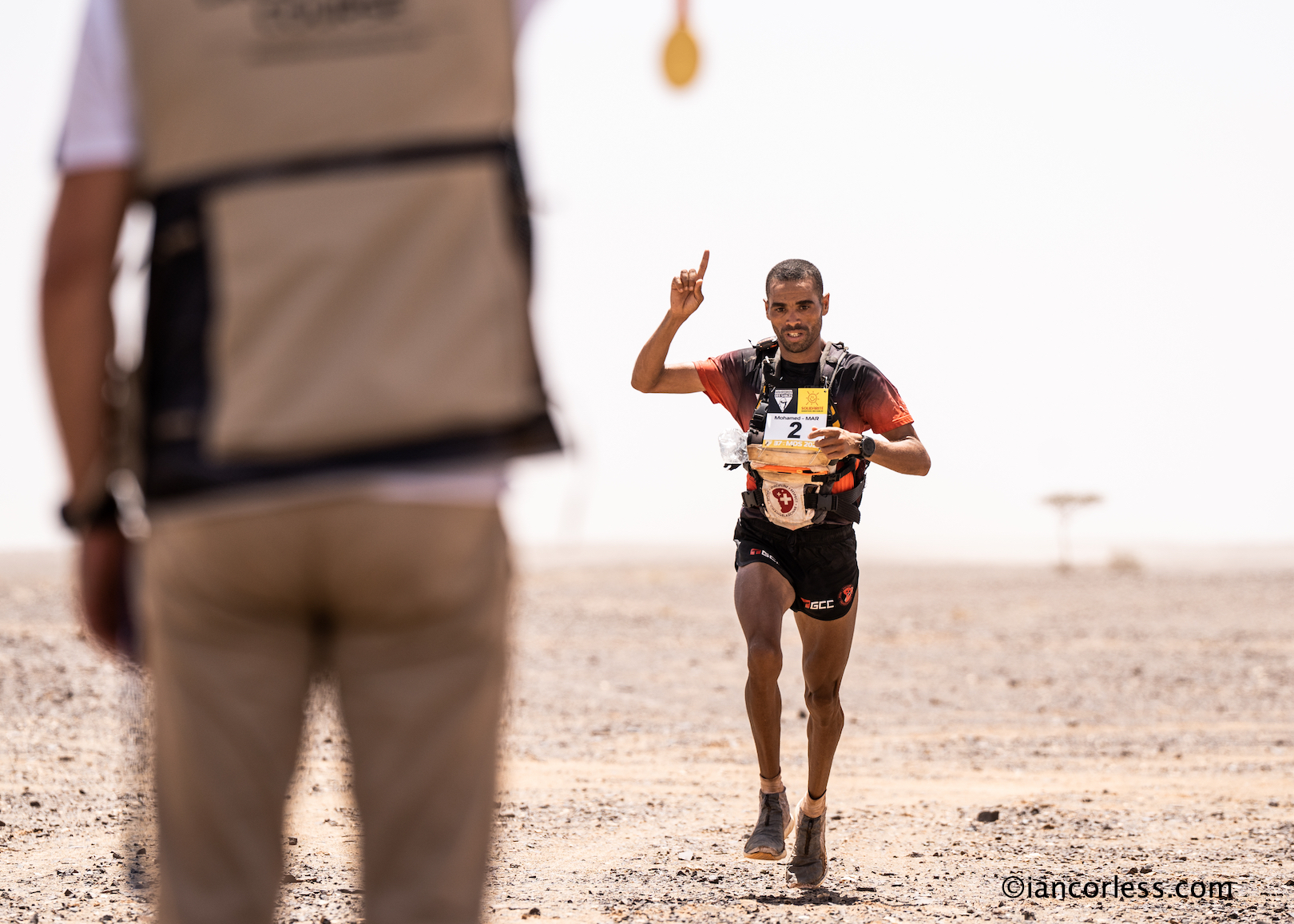
In the longest and toughest of the three routes, Rachid El Morabity did what he does best, dominate. The Moroccan ultra running legend took charge of the 60km stage, navigating the heat and terrain with trademark efficiency. His command of desert racing was evident, even in conditions that forced many to slow, stop, or drop out.
But this wasn’t just about speed — it was about survival. Pacing, hydration, and heat management became as important as footwork. Every decision counted.
On the women’s side, Julia Villanueva had a standout performance. Pushing through the worst of the afternoon furnace, she took the lead overall, ahead of Véronique Mueller-Berberat. Villanueva’s effort was both smart and strong, a calculated drive through the toughest part of the course when many were simply trying to hang on.
In the 100km event, which saw runners take on 40km in Stage 2, Lorick Buckin emerged as the new leader. He now holds a slim margin ahead of Louis Godeman, setting up an intriguing contest for the final day.
For the women, Elaine Caron-Gaudet rose to the challenge, building a lead over Charlotte Van Strydock. Both showed real composure in the heat, but Caron-Gaudet’s consistent pace gave her the edge on the day.
The 70km competitors ran their second stage under the same conditions, with Farid Alouani pulling ahead in the men’s standings. On the women’s side, Louise Marcant now leads the pack — a reward for measured effort across chaotic conditions.
This wasn’t a stage that wrapped up neatly by afternoon. It dragged into the night, with the last runner crossing the line at 23:04 – nearly 17 hours after the first starters. For many, it was less a race and more a trial by fire.
Whether running 20, 40, or 60km, every participant faced the same relentless sun, the same unshaded miles, and the same internal struggle: keep moving or give in. Water checkpoints became lifelines. The heat was no longer an obstacle; it was an adversary.
Respect the Heat. Respect the Race.
Stage 2 of MDS 120 Morocco 2025 will be remembered for one thing: its raw brutality. The course was hard. The heat was harder. And yet, hundreds pushed forward. Not everyone finished with a personal best, but finishing at all was a feat of determination.
This wasn’t just another day on the trail, it was the kind of stage that defines an event. One that strips things down to basics: survive, adapt, endure.
Stage 3 looms next. The bodies are tired. The desert, as always, is waiting.
Interested in a MARATHON DES SABLES EVENT? More Info HERE
The 37th was a tough one from many perspectives, heat, sandstorms, route and a very long, long day at 90km. You can read my summary HERE.
30% did not make the finish, the second highest in the race history, the highest coming in 2021.
Now, all eyes, look ahead to the next edition, the 38th in 2024. Many were looking to register in May, however, Marathon des Sables communicated a delay in registrations opening till the end of June. Of course, delays are never good and of course, questions get asked.
There has been many rumours if the 37th edition would be Patrick Bauer’s last? There has been no communication on this and no confirmation, equally, for clarity, there has been no official communication of new ownership. This, I assume, will be communicated in due course.
In recent days, Marathon des Sables has communicated in multiple languages to notify of significant changes that will take place for the 38th MDS. There are 3 key points:
Words as provided by Marathon des Sables.
Point 1:
The 38th MARATHON DES SABLES will take place over 5 stages instead of 6 previously. The total distance, around 250 km, does not change, and this will only slightly change the distance of each stage:
Stage 1 from 28 to 35 km
Stage 2 from 28 to 39 km
Stage 3 from 28 to 39 km
Stage 4 (The Long One) from 75 to 85 km (over 2 days)
Stage 5 (Marathon Stage) of 42.195 km
The removal of the sixth stage will allow everyone to celebrate obtaining the Finisher medal at the end of the Marathon stage: no more stress about the ten kilometers of the sixth stage! This will also allow us to offer a more substantial Solidarity program associated with this same Marathon stage, which will strengthen support for the Solidarity MARATHON DES SABLES association.
Point 2:
The MARATHON DES SABLES is contested in food self-sufficiency: only water, in limited quantities but sufficient to cover the needs of an athlete evolving in the desert, is provided to you each day. You must take along for your entire stay in the desert everything you need to eat and prepare to eat (freeze-dried meals, semolina, cereal bars, stove, etc.). This self-sufficiency will include for this 38th edition the day of your arrival in the desert, and the day of control preceding the race. These first two days will allow you to test yourself in real desert conditions, and to reduce sanitary risks.
Point 3:
To offer you more flexibility, and to reduce the carbon footprint of the event, we will charter fewer planes than in previous years. Only 400 places will be available from Paris, and 200 from London. As usual, we will of course take you from OUARZAZATE airport to the first bivouac, in the heart of the desert. And for those who wish, free shuttles will be set up from MARRAKECH to allow you to easily reach OUARZAZATE. You will thus have the possibility of anticipating or extending your stay, or of being joined by your family, much more simply than before.
SUMMARY AND THOUGHT PROCESS
The Marathon des Sables is loved and it’s fair to call the participants, staff and volunteers a family. Without doubt it’s a community that is 37-years in the making. So, when changes come, they are often taken with a sense of held breath. Some will dislike them, some will like them, some will be indifferent and if you are new to Marathon des Sables, you will probably be no wiser as you have nothing to compare to.
For perspective, Marathon des Sables has gone through many changes in its 37-years.
In 1989 participation increased to 170. I am sure competitors from previous years did not like the increase.
In 1991 the Gulf War impacted on the race and sponsors.
In ’92’ the establishment of regulation regarding equipment and food were implemented.
’94’ Doc Trotters arrives.
In ’99’ a mobile hospital becomes part of MDS.
Internet arrives in 2000.
In 2001, the ‘long day’ originally called §The 70’ exceeds 80km.
2006 146 DNF due to heat and humidity.
In 2008 Solidarité MDS is created.
Flooding at MDS in 2009.
For the 25th edition, 1013 participants.
In 2013 the final “Charity” stage sponsored by UNICEF is introduced.
2020 Coronavirus.
2021 and D&V sweeps through MDS and causes the highest DNF rate.
2023 heat impacts on the race with 30% DNF.
Quite simply, if anything can be learned from the above, change and changes happen, planned or not. So, let’s look at the new 3 changes and see the pros and cons.
The charity stage has always been a discussion point, from my perspective, having been at the past 10-editions is that the stage has been pointless. The race is over, so, it just drags out the agony for one more day.
But the counter argument is that it provides this great opportunity for a ‘tent’ to spend the time together, in the desert as a moment of celebration.
For 2024 this stage will go. Give MDS one or two editions and I don’t think it will be missed.
The downside may well be the impact on the charity and fund raising, however, the communication says, ‘…offer a more substantial Solidarity program associated with this same Marathon stage…’ So, this addresses this point.
The race will be 5-Stages. This is no different to what has happened since 2013. The race has been 5-stages and the medal is provided at the end of the ‘marathon’ stage, stage 5. However, the release outlines the following:
Stage 1 from 28 to 35 km
Stage 2 from 28 to 39 km
Stage 3 from 28 to 39 km
Stage 4 (The Long One) from 75 to 85 km (over 2 days)
If we take the longest distance from the above, 35, 39, 39, 85 and 42.195 this provides a total distance of 240.195km.
If we take the shorter distances, 28, 28, 28, 75, and 42.195 this provides a total distance of 201.195km.
So, moving forward, the Marathon des Sables has the potential to be as long as 240.195km (a significant way from 250km) and potentially as short as 201.195km and an average distance of 220km.
In fairness, the potential to have a shorter distance race could reflect or compensate for a very difficult route, for example, a great deal of soft sand, dunes, climbing and technical terrain. And by contrast, a longer route could reflect an ‘easier’ more runnable route.
For the race to live up to ‘The Toughest Race on The Planet’ and the tag of 250km or 6 marathons may/ will need to be addressed.
One of the key attractions and challenges of MDS is the self-sufficiency. It makes the race exceptionally difficult, and this is why the race is so hard. Carrying all one requires, food, clothing and equipment is THE Marathon des Sables, and this has been copied worldwide.
This self-sufficiency is manageable as before the race, one is not self-sufficient and post-race, one is NOT self-sufficient, just ask any hotel, restaurant, or cafe in Ouarzazate!
So, the new point 2, ‘Self-sufficiency will include for this 38th edition the day of your arrival in the desert, and the day of control preceding the race. These first two days will allow you to test yourself in real desert conditions, and to reduce sanitary risks.’
The above has some pros and cons.
PROS: Ironically the mention of ‘sanitary risks’ does make one ask what element of food poisoning or similar took place in 2021? Certainly, reducing any outside risk does improve one’s chance of making the stage 1 starting line without a problem, so, being self-sufficient and relying on one’s own food addresses this.
CONS: You should NOT be testing your food strategy in the two days before the race, this should have been done before! Catering by MDS took away stress and worry, getting dinner on arrival day and then breakfast, lunch, and dinner the following day offered an opportunity to fill up on calories and dine with tent mates and others, to remove this IMO it will be seen as a negative. BUT, if you haven’t been to MDS before, you will not know difference!
My initial reaction to the removal of catering was negative. The more I have thought on it, I have started to appreciate some of the benefits. But my conclusion is that the removal of catering impacts on the MDS experience, especially for those who have been before and experienced it.
POINT 3:
Quite simply, if you are someone who likes or needs a more ‘package’ holiday experience and you are French or English, you need to enter early to make sure you are one of the 200 or 400 who will have a flight included.
Outside of this, once you enter the race, you would need to arrange your own travel. For perspective, this has always been the case for anyone outside the UK and France, flights were chartered because entries made a charter possible.
PROS: The option to arrange one’s own travel offers flexibility, such as arrive early and or depart late. You may be able to get better prices. MDS are offering free shuttles to Ourzazate from Marrakech, it roughly takes 6-hours. Carbon footprint will be saved as charter planes fly out full of runners and then home empty. They would then fly out empty and return full back to UK or France.
CONS: With only 400/200 flight options for French and UK participants, this may will impact on those ‘who want’ this option and cannot have it, maybe they will not enter? Meet point in Ouarzazate will mean increased costs as it will require a hotel stay. It’s also a 6–8-hour drive to bivouac 1 the following day. For the past few years, planes have flown to Errachidia requiring only a short drive to B1 and no hotel stay.
One point not addressed is the option to meet at Bivouac 1. This would make more sense, particularly if one is arranging one’s own travel. I personally would fly to Marrakech, then fly to Errachidia and then taxi to B1.
PRICES:
The prices for the MARATHON DES SABLES 2024 are as follow:
Offer with flight included from Paris: 3,990€/person for an individual registration and 4,090€ for a team registration (priority to the participants with French residency; then reservation has to be requested by email for other countries according to the availabilities). This offer is limited to 400 people. It includes the round trip flight from Paris to Ouarzazate.
Offer without flight: 3,540€/person for an individual registration and 3,640€ for a team registration This offer does not include flight. Participants will meet at the airport in Ouarzazate on April 12.
The prices for participants living in Great Britain, Ireland and the British Islands are as follows (different service):
Offer with flight included from London: 5,280€/person for an individual registration and 5,380€ for a team registration This offer is limited to 200 people. It includes the return flight from London to Ouarzazate.
Offer without flight: 4,680€/person for an individual registration and 4,780€ for a team registration This offer does not include a flight. Participants will meet at Ouarzazate airport on April 12.
CONCLUSION
Change is always difficult. Runners who been before may not be happy, but can they learn to accept the change? If not, they may well never enter MDS again. For those who have never done the race before, they will have nothing to compare it to, so, it will be the norm! For them, it will still be an amazing experience and one that they will prepare for based on the rules.
In regard to prices: “In the history of the MARATHON DES SABLES, many crisis have affected the organization and endangered the sustainability of the event. The Covid-19 crisis is not the least, and yet, since 2018, our rates have only increased by €90 (for an individual participant taking our planes from Paris). At the same time, the costs related to the organization of the event exploded (transport, equipment, security, etc.). The increase between the 37th and 38th editions therefore acts as a rebalancing to ensure the future of the legendary desert event. And that’s without counting on the novelties, like this famous gala evening which will close the event in style! We are fully aware that this registration fee can make it difficult for some people to participate, and we will do everything to help you make your dream come true (payment in several times, advices in your sponsorship process, etc.).”
As I was told, this is evolution, not revolution. Do you agree?
Episode 144 of Talk Ultra brings you an interview with Darcy Piceu after her incredible FKT on the John Muir Trail. We also speak with Anna-Marie Watson who this year placed 7th at UTMB and just recently won the first edition of the Half Marathon des Sables Fuerteventura. Speedgoat is back co-hosting!
*****
Talk Ultra is now on Tunein – just another way to make the show available for those who prefer not to use iTunes – HERE You can download the Tunein APP HERE
Talk Ultra needs your help!
We have set up a Patreon page and we are offering some great benefits for Patrons… you can even join us on the show! This is the easiest way to support Talk Ultra and help us continue to create!
Many thanks to our Patrons who have helped via PATREON
Jeff Browning does it again winning another 100 – very soon after UTMB too. Lars Kjerengtroen 2nd and Timmy Olson 3rd – 18:28, 19:28 and 19:36 respectively.
Hannah Green beat Amie Blackham and Kelsey Bingham – 24:22, 25:50 and 25:54 respectively.
*****
Spartathlon
The legendary 153 mile race was won by Aleksandr Sorokin in 22:04. He set a relentless pace from the off and his time ranks as one of the all time best, of course, Yiannis Kouros holds the fastest times. Radek Brunner was 2nd and Nikolaos Sideridis 3rd, 22:49 and 22:58.
Patrycja Berenzowska won the ladies’ race in 24:47 setting a new CR! Zsuzanna Maraz and Aleksandra Niwinska was 2nd/ 3rd in 25:43 and 26:28.
*****
Ultra Gobi
The UK’s Dan Lawson blew the race and CR apart with 2 days and 22 hours for 248 miles. Incredible. Dan has also placed 2nd at Spartathlon.
*****
Kilimanjaro FKT
Fernanda Maciel set a new FKT 0f 7:08 for Africa’s highest peak climbing 5895m. Her round trip time was 10:06. Previous best by Anne-Marie Flammersfield was 8:32 and 12:58. Kilian Jornet did hold this record for the outright fastest time but this was bettered by Karl Egloff setting 4:56 and 6:42 for the round trip.
*****
Grand Canyon Rim to Rim FKT
FKT’s are just getting more popular… now Tim Freriks who won Transvulcania earlier this year has set a new bar of 2:39:38 beating Jim Walmsley’s time (Jim helped Tim for this FKT and are friends) – Walmsley still holds the R2R2R record.
*****
John Muir Trail FKT
Hardrock 100 specialist Darcy Piceu (formerly Africa) covered the 223 miles in California to set a new FKT of 3-days, 8-hours beating the previous CR by 12-hours. Notably this was very close the the men’s record and later this year Francois D’Haene will attempt this FKT.
*****
00:31:09 Interview with DARCY PICEU
*****
Ultra Pirineu
Pablo Villa and Maite Maiora produced solid performances at this classic race amongst world class fields. Full results HERE. In the marathon race, Kilian Jornet obliterated the old CR in a super close race and Ruth Croft won for the ladies.
****
Half MDS Fuerteventura
MDS have spread their wings and introduced a new 120km, half-distance event on the island of Fuerteventura in the Canaries. It was won by Peru’s Remigio Huaman and the UK’s Anna-Marie Watson. Full report, results and story HERE.
Importantly, go to iTunes and subscribe so that you automatically get our show when it’s released we are also available on Stitcher for iOS, Android and Web Player and now Tunein.
Please support Talk Ultra by becoming a Patron at www.patreon.com/talkultra and THANKS to all our Patrons who support us. Rand Haley and Simon Darmody get a mention on the show here for ‘Becoming 100k Runners’ with a high-tier Patronage.






 IAN CORLESS