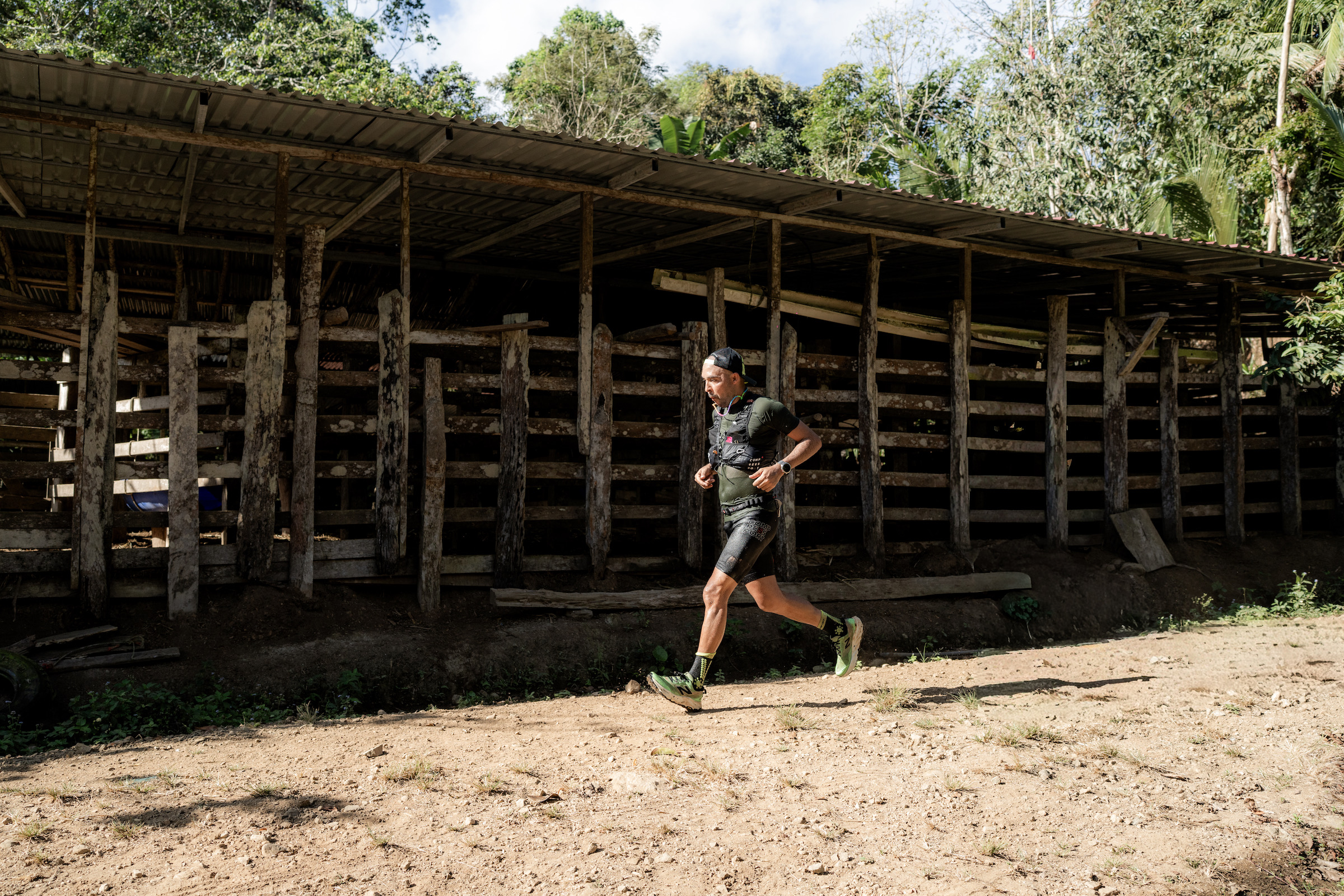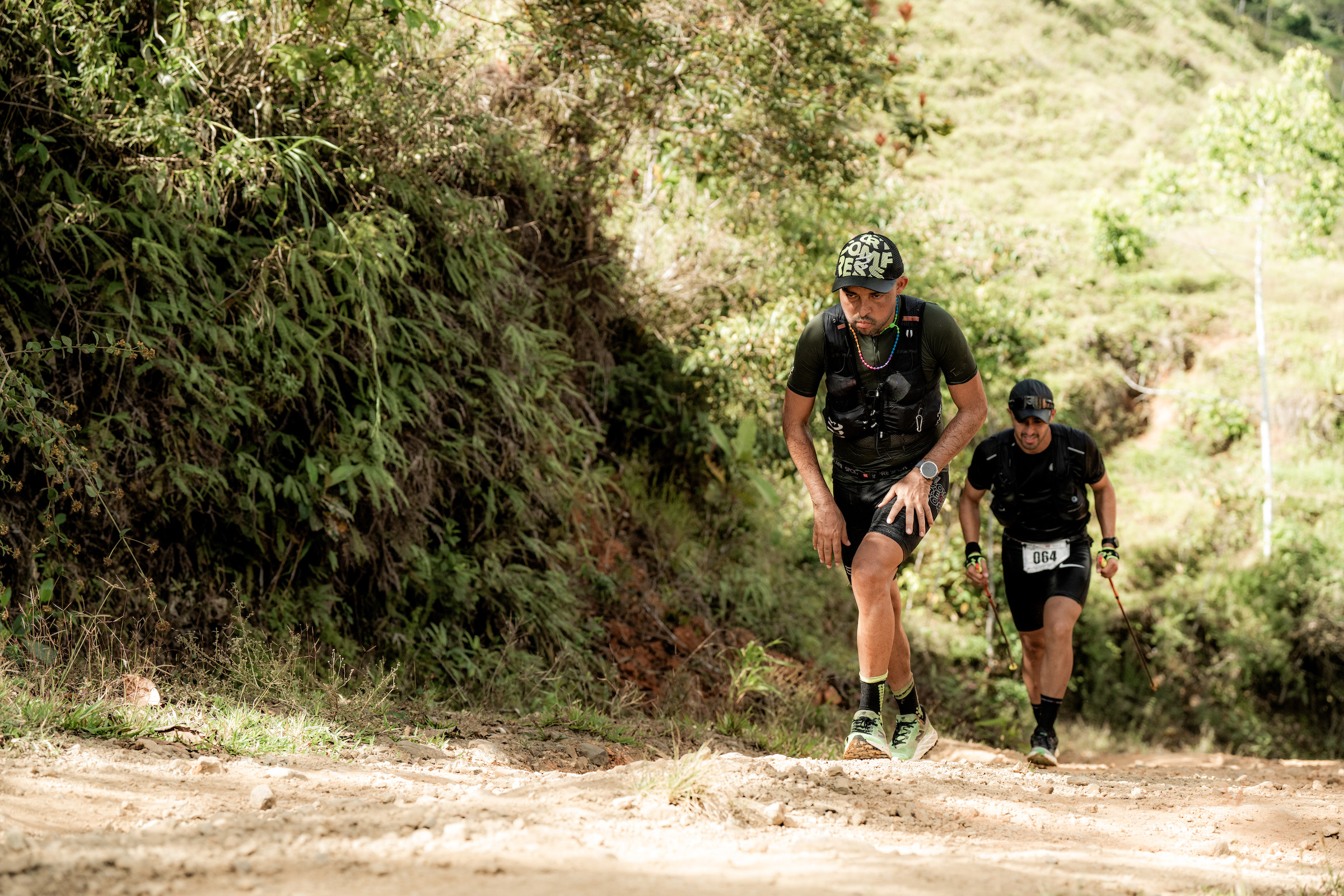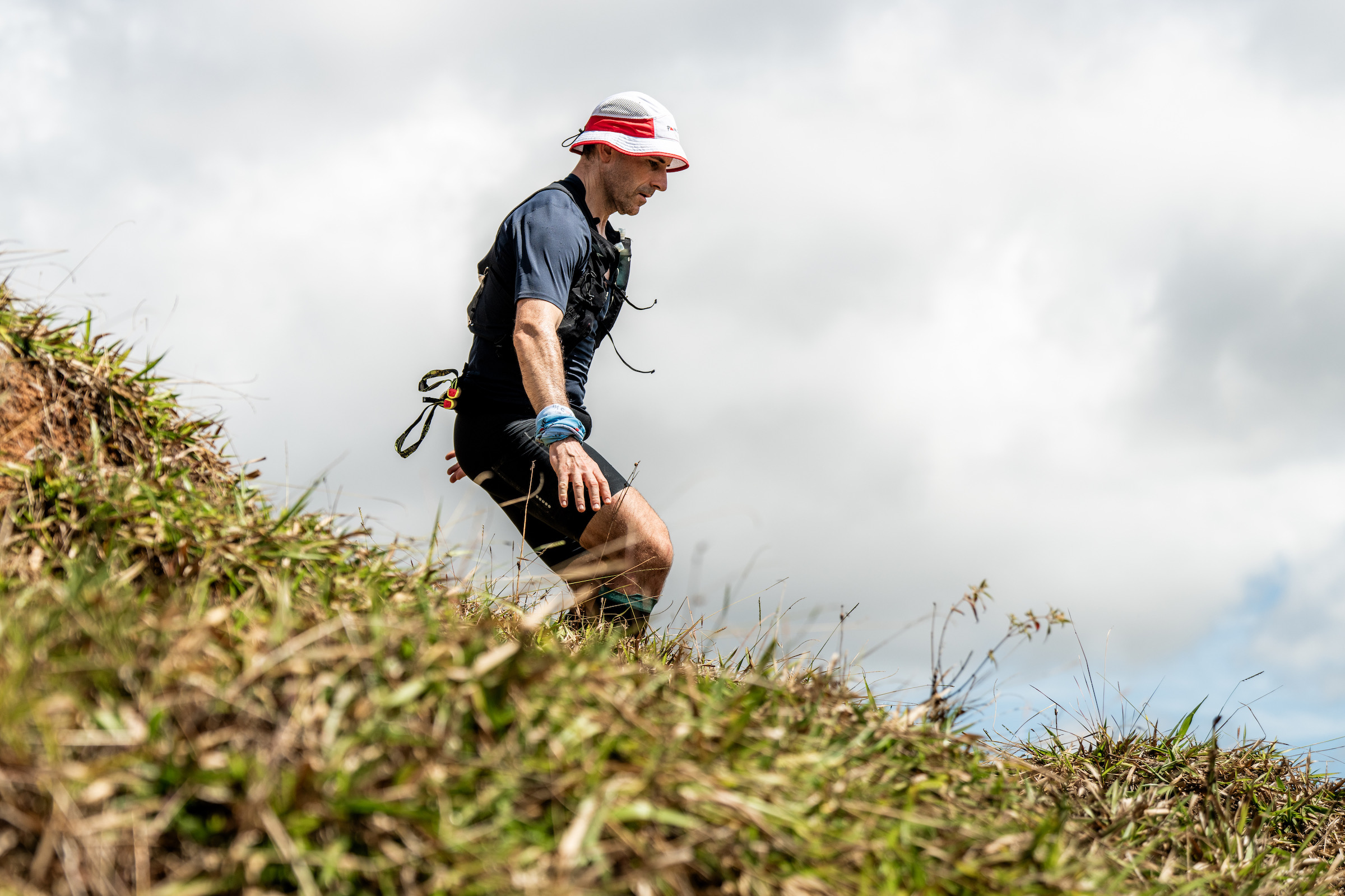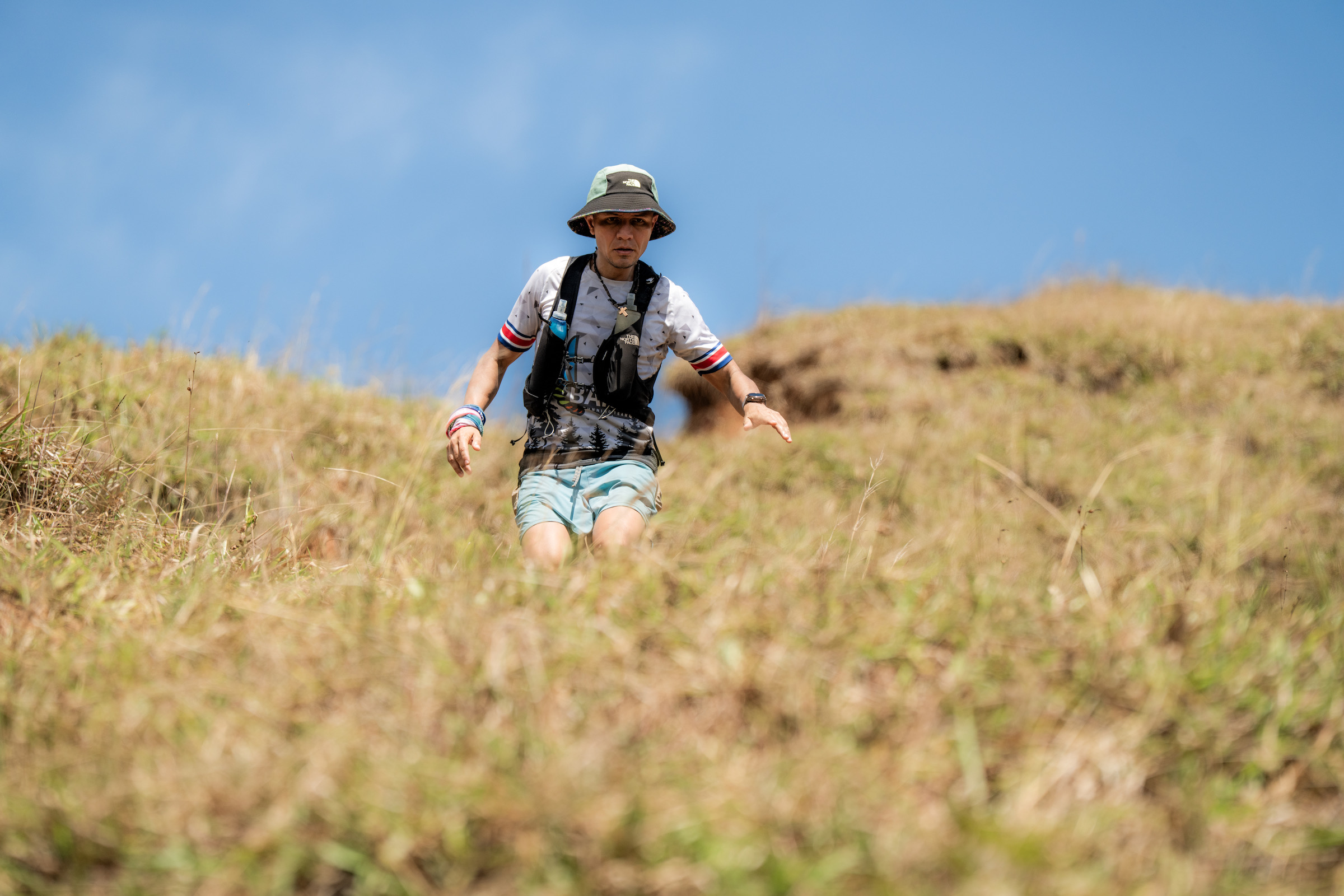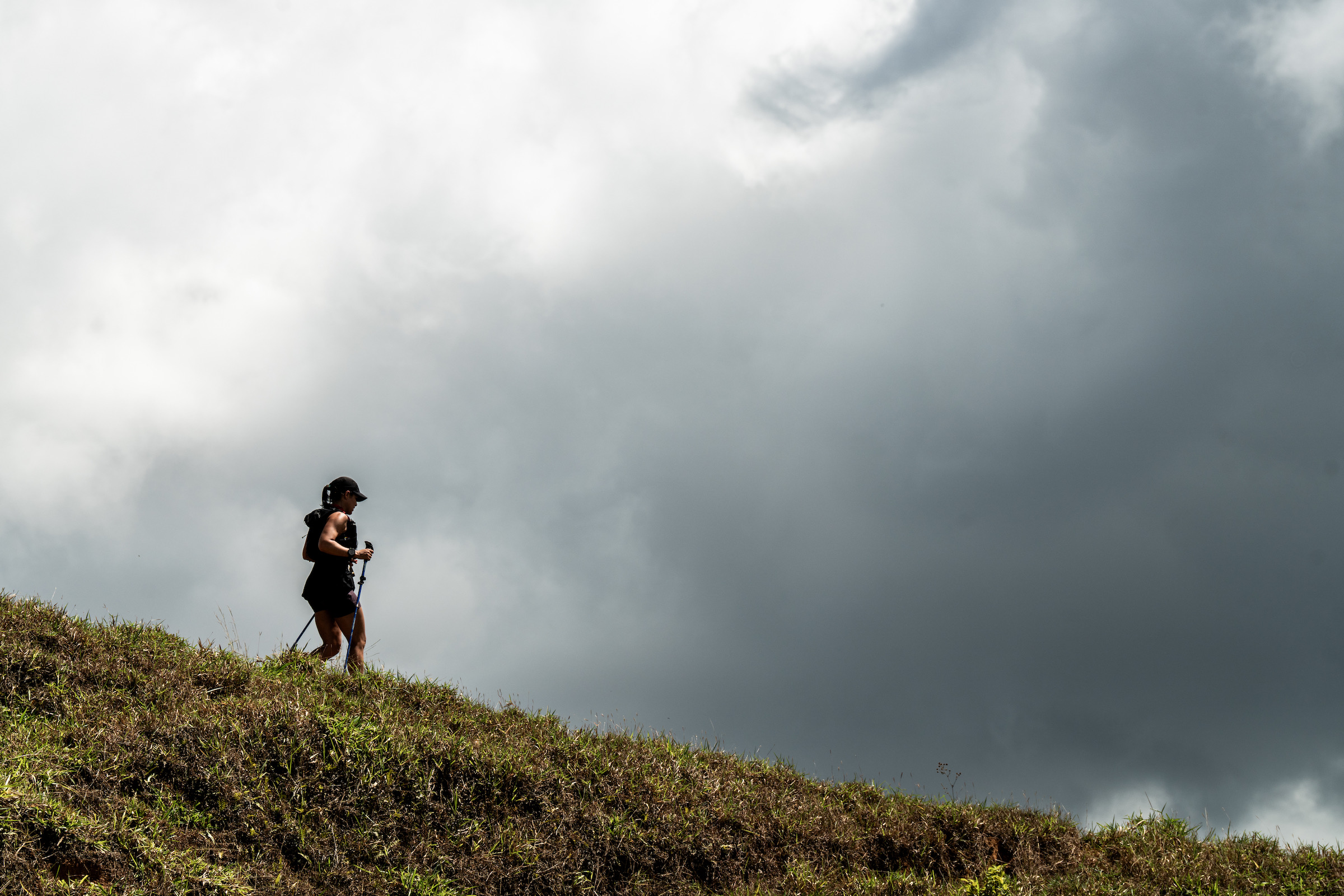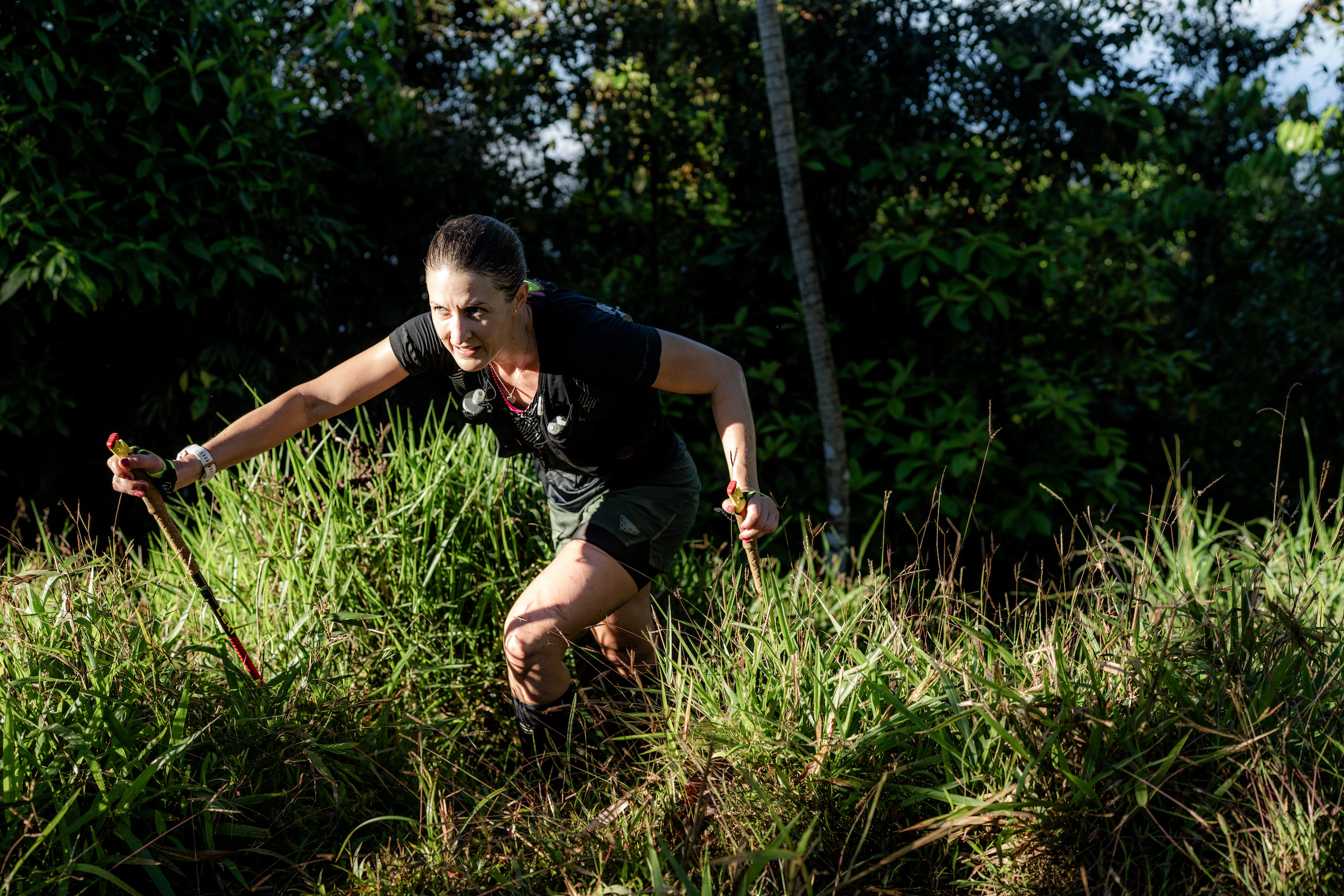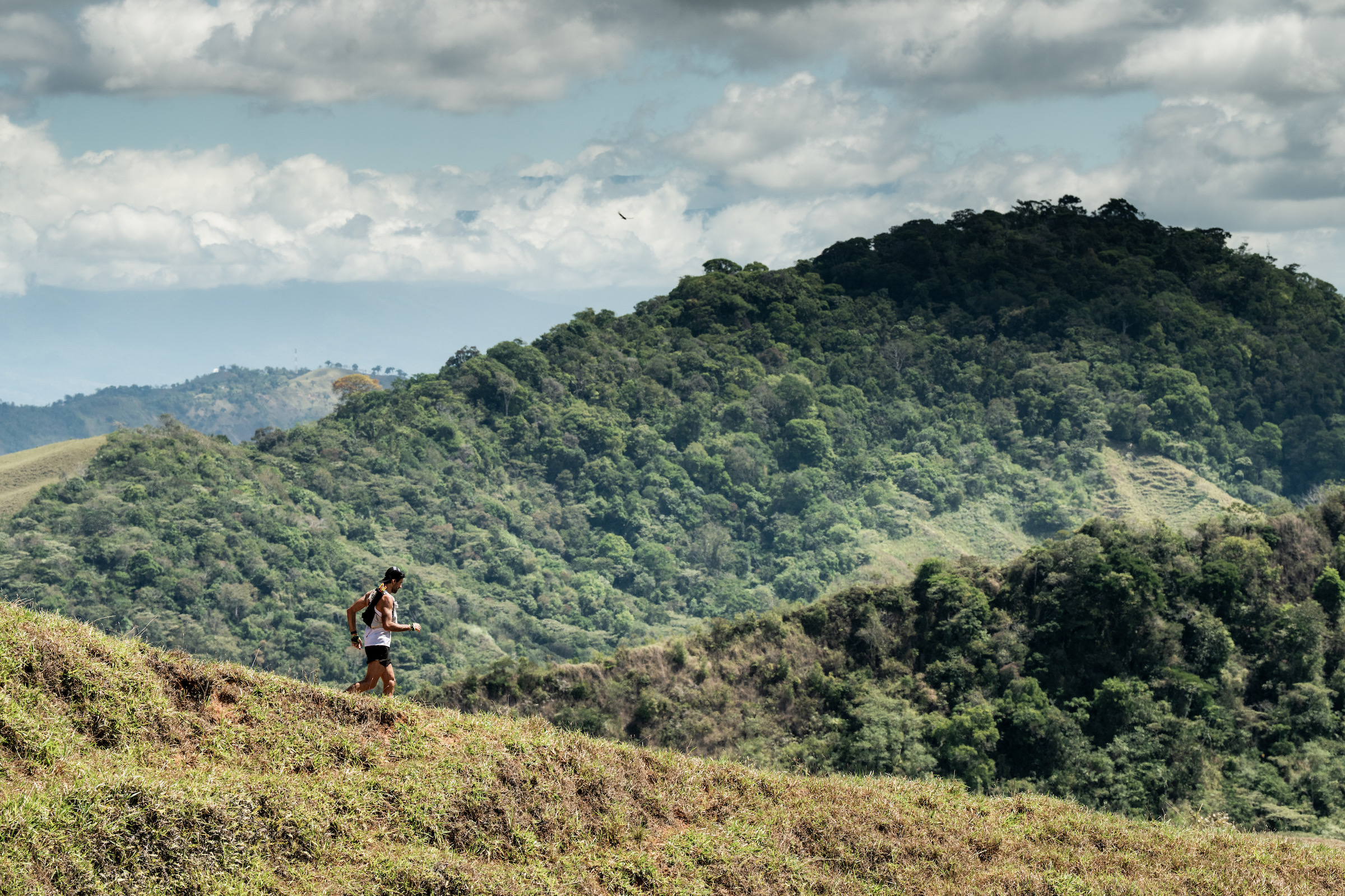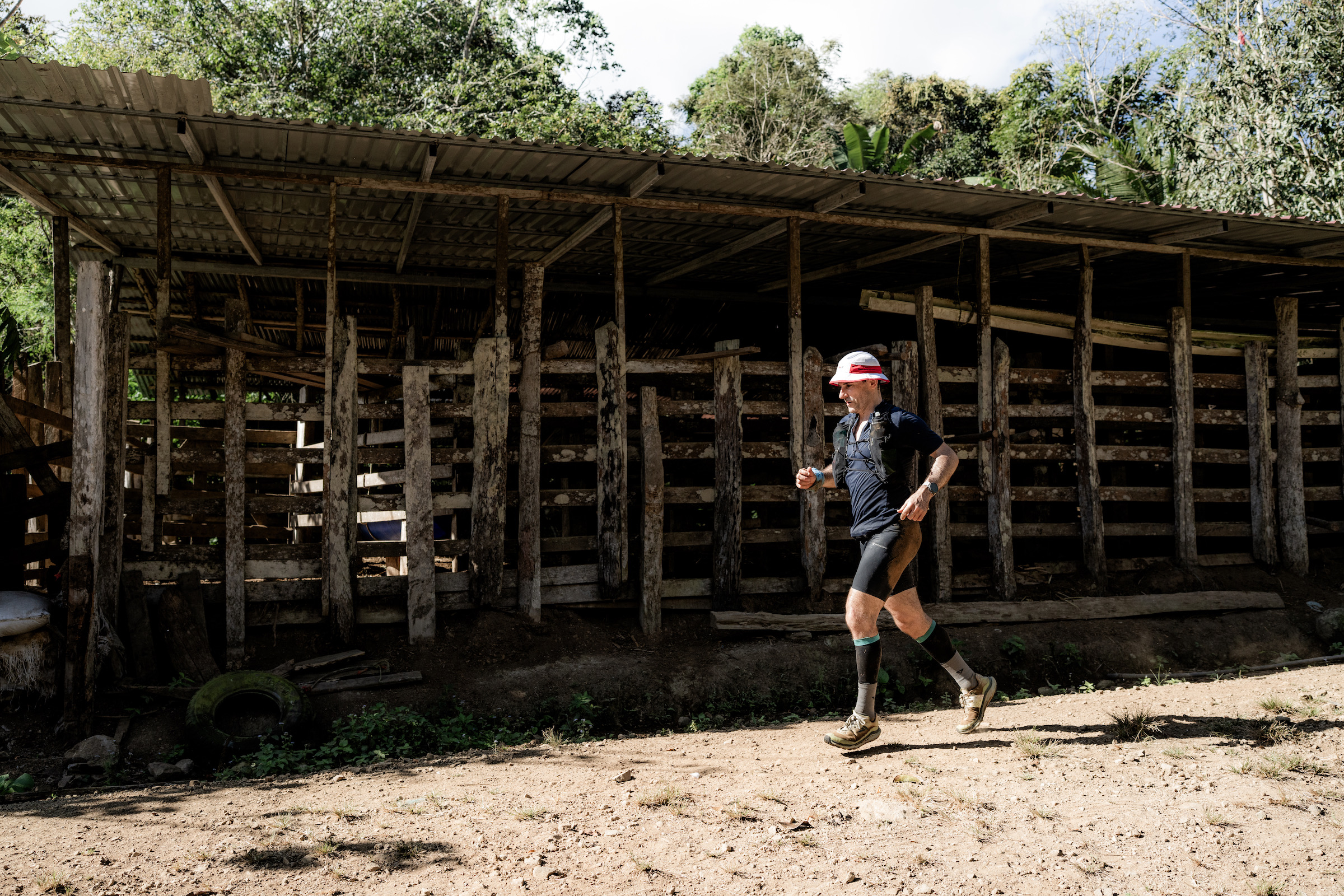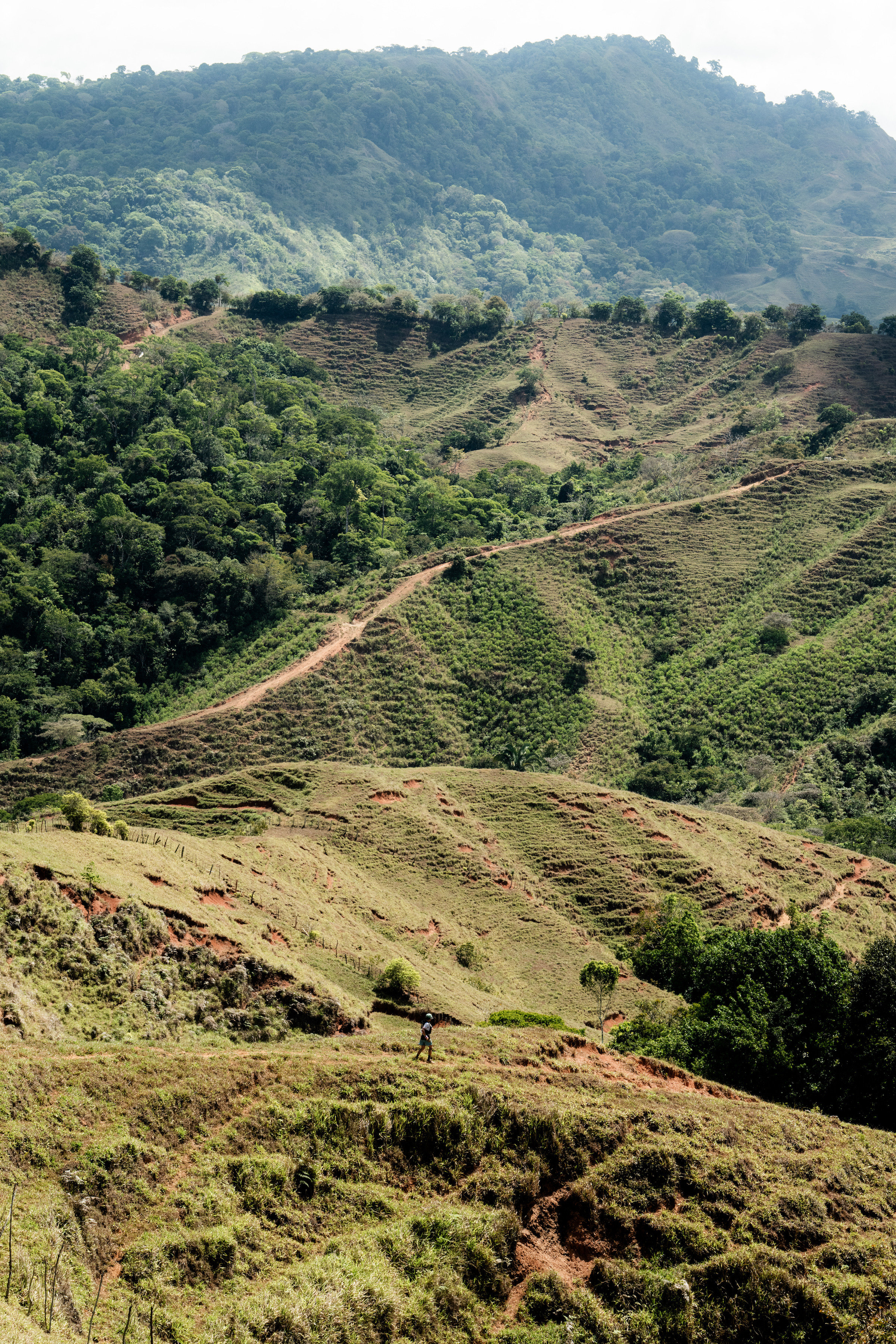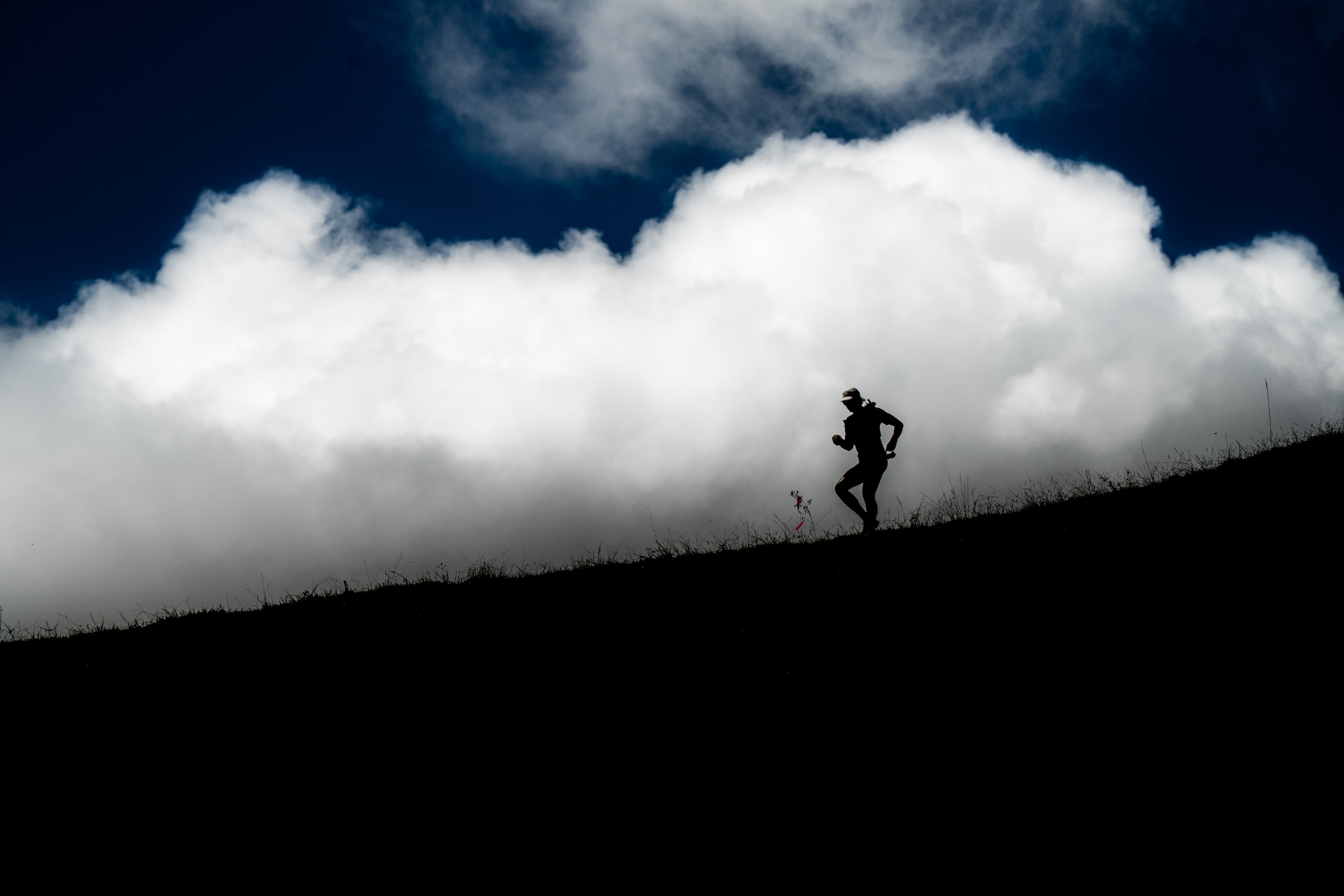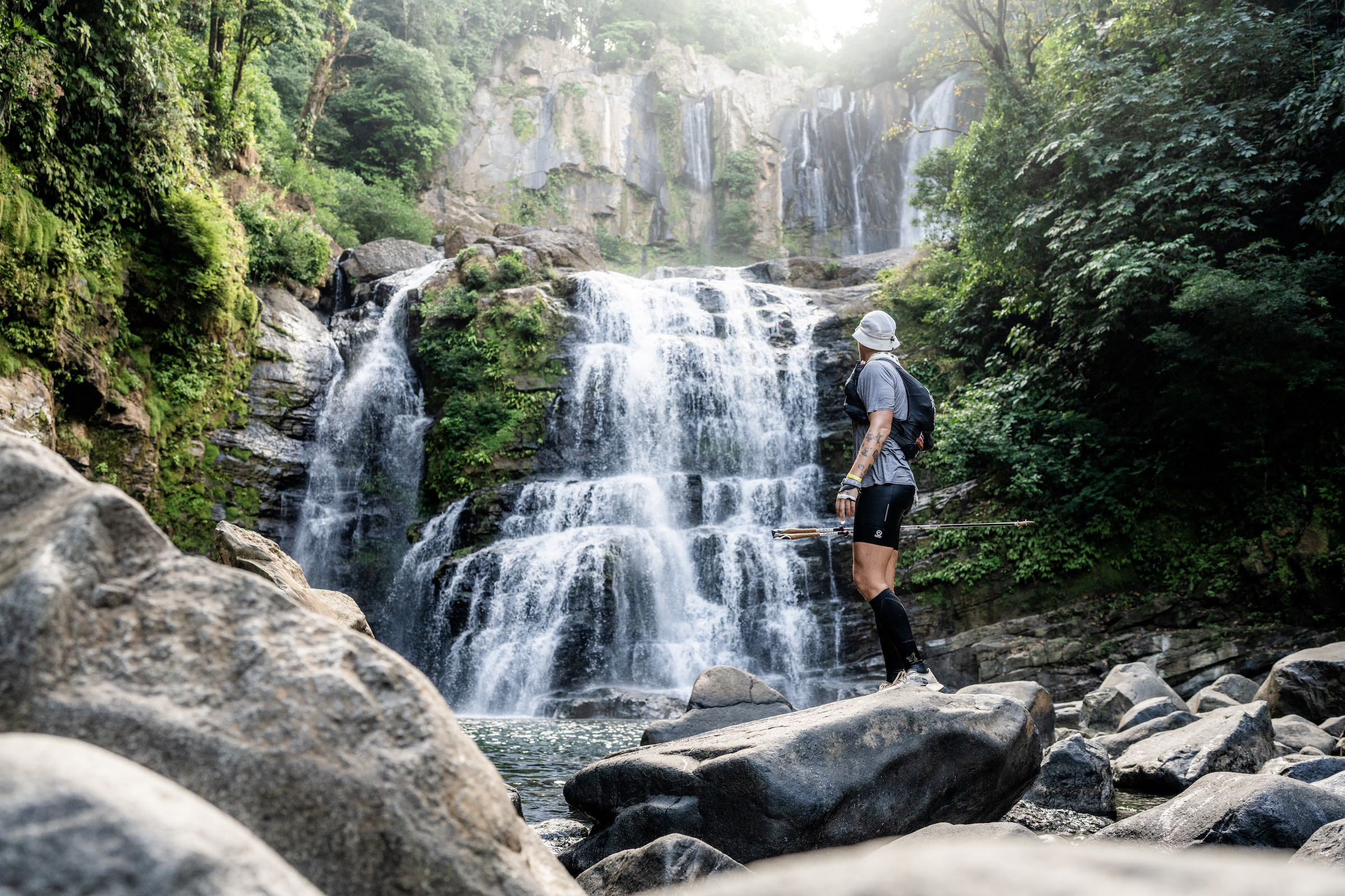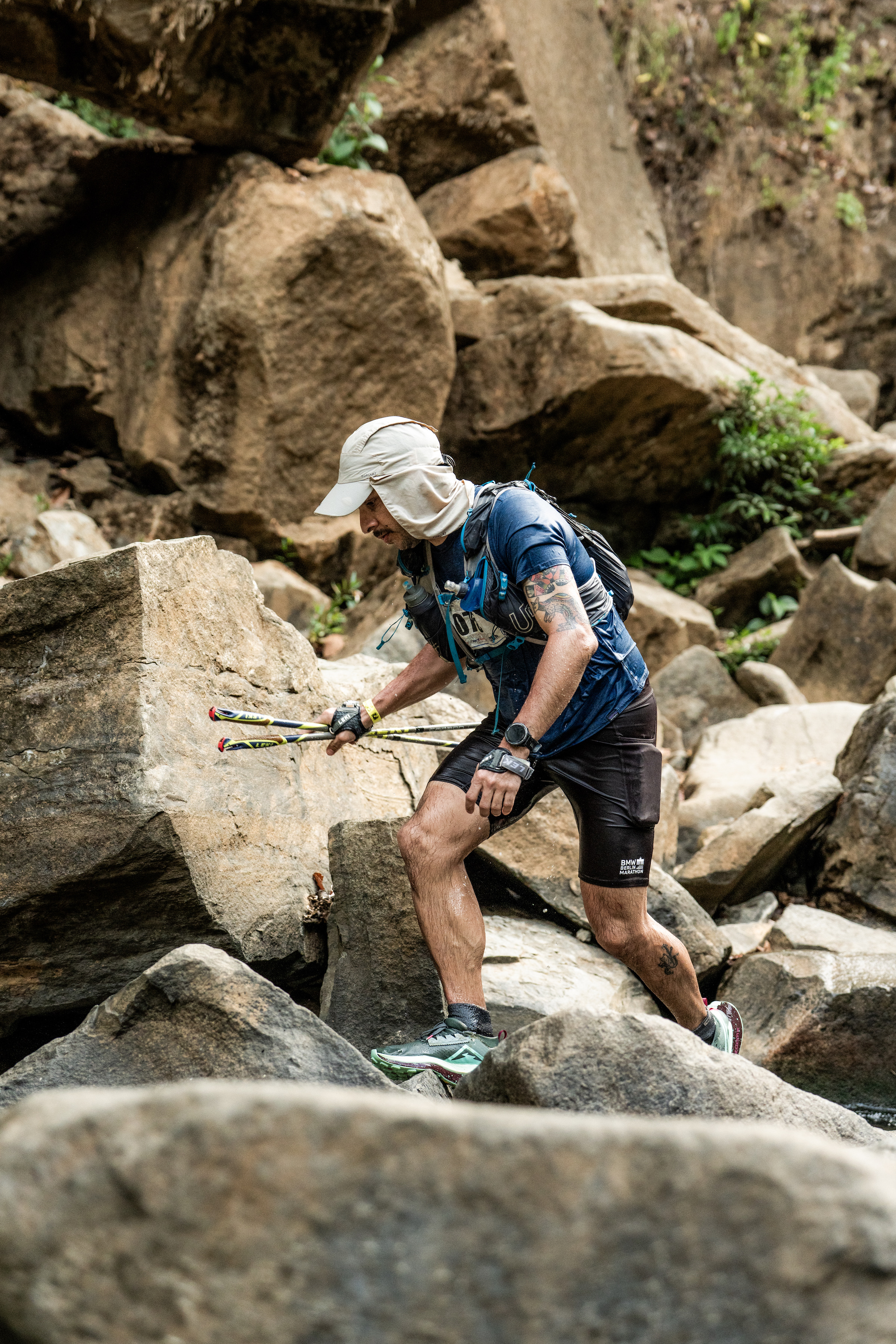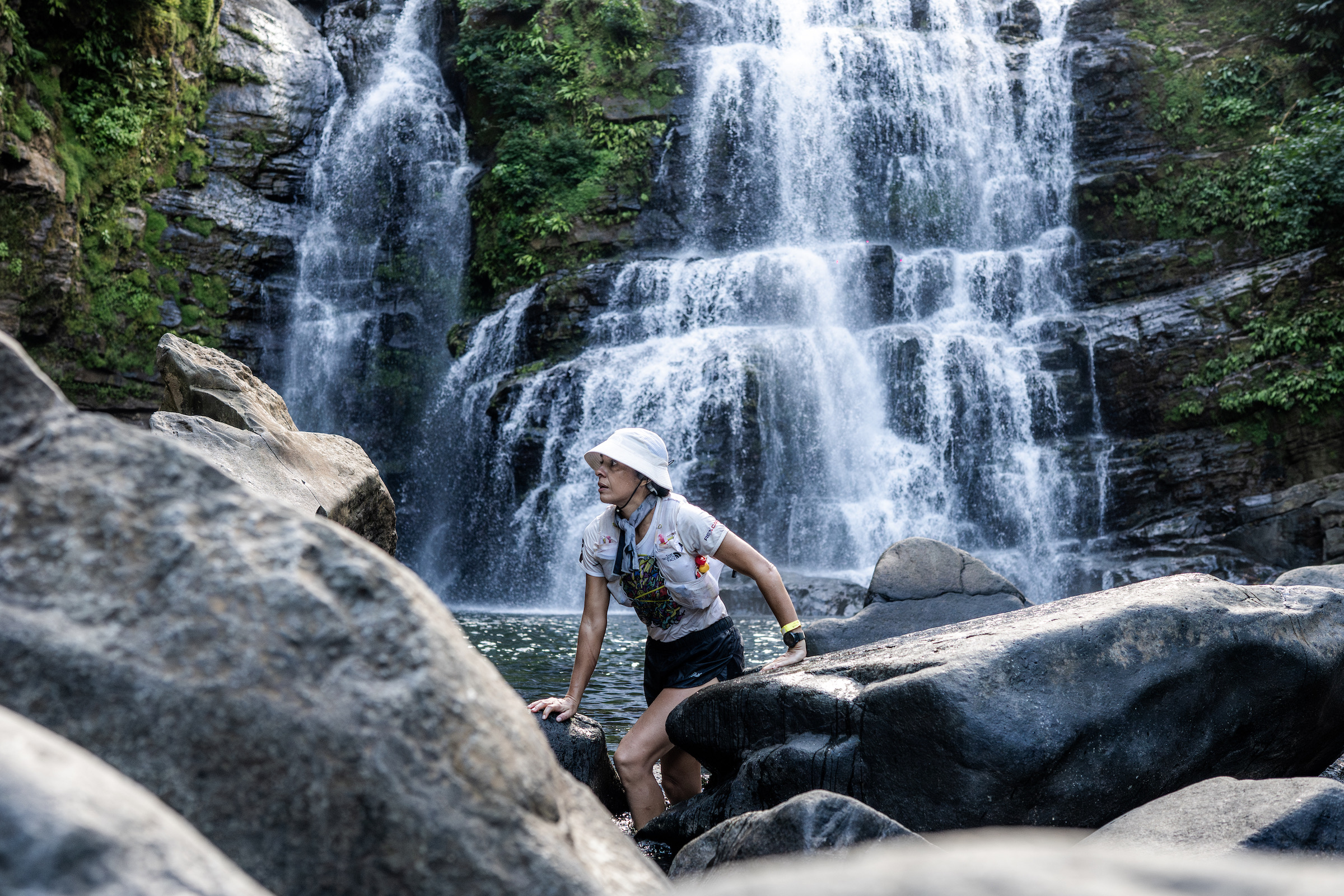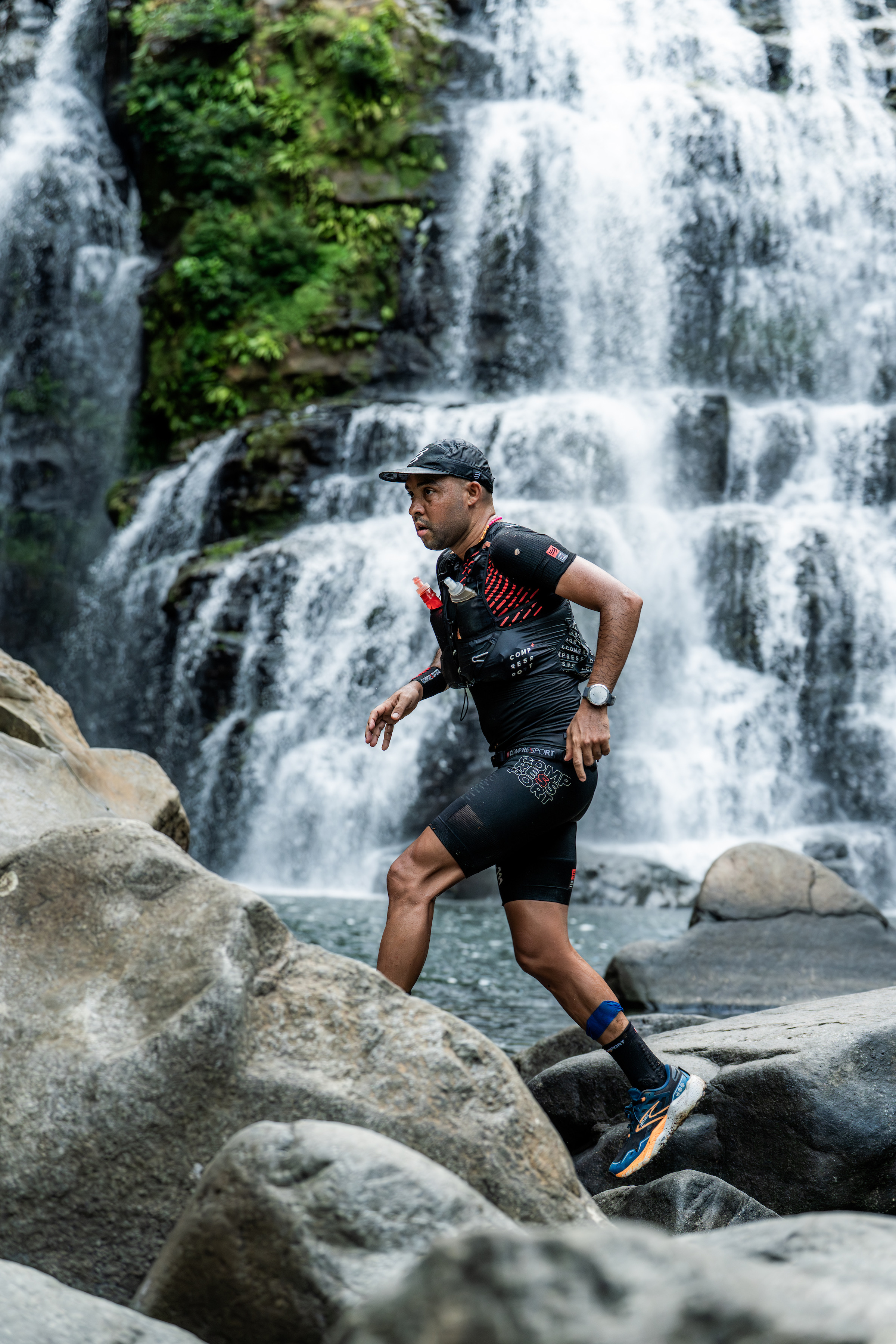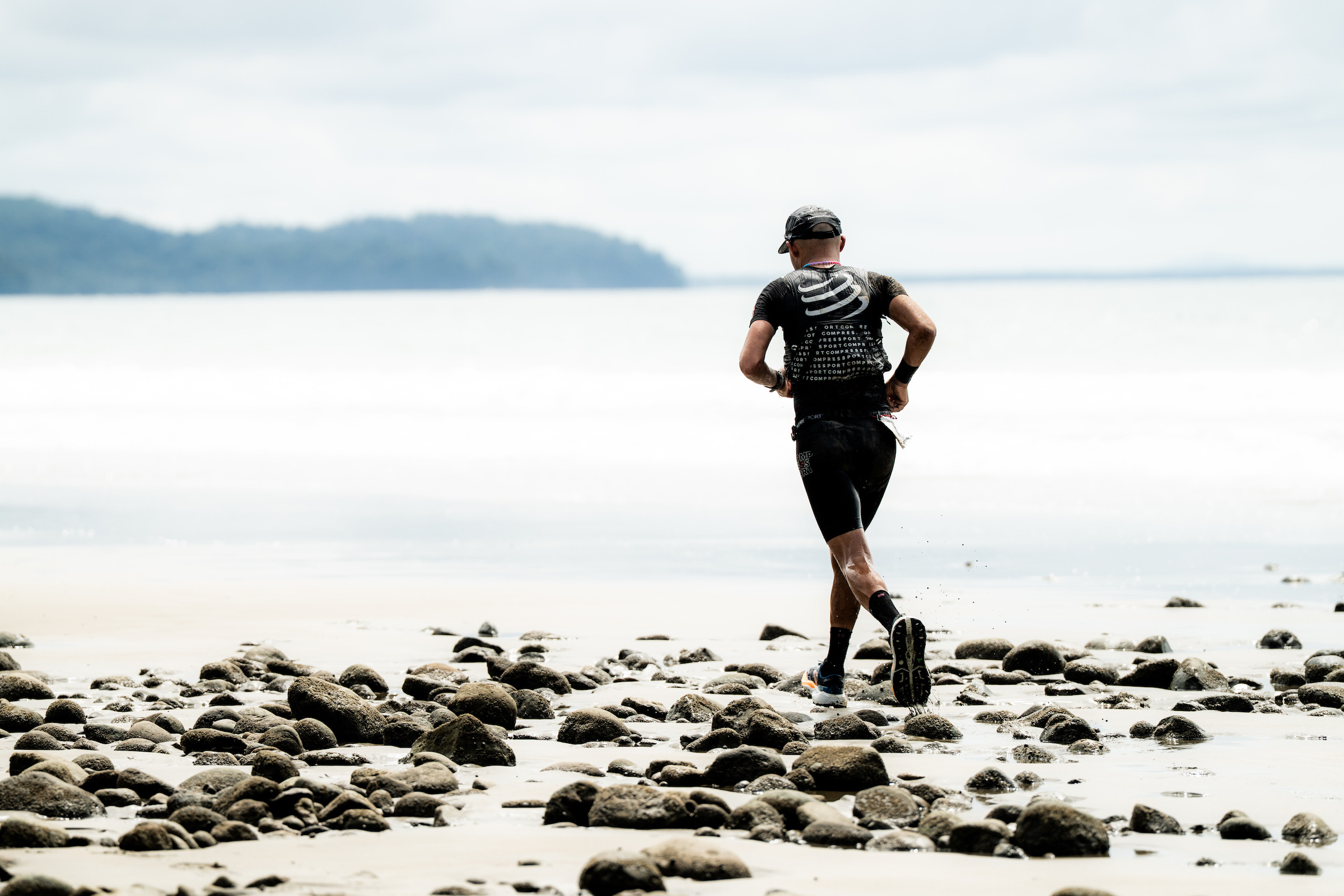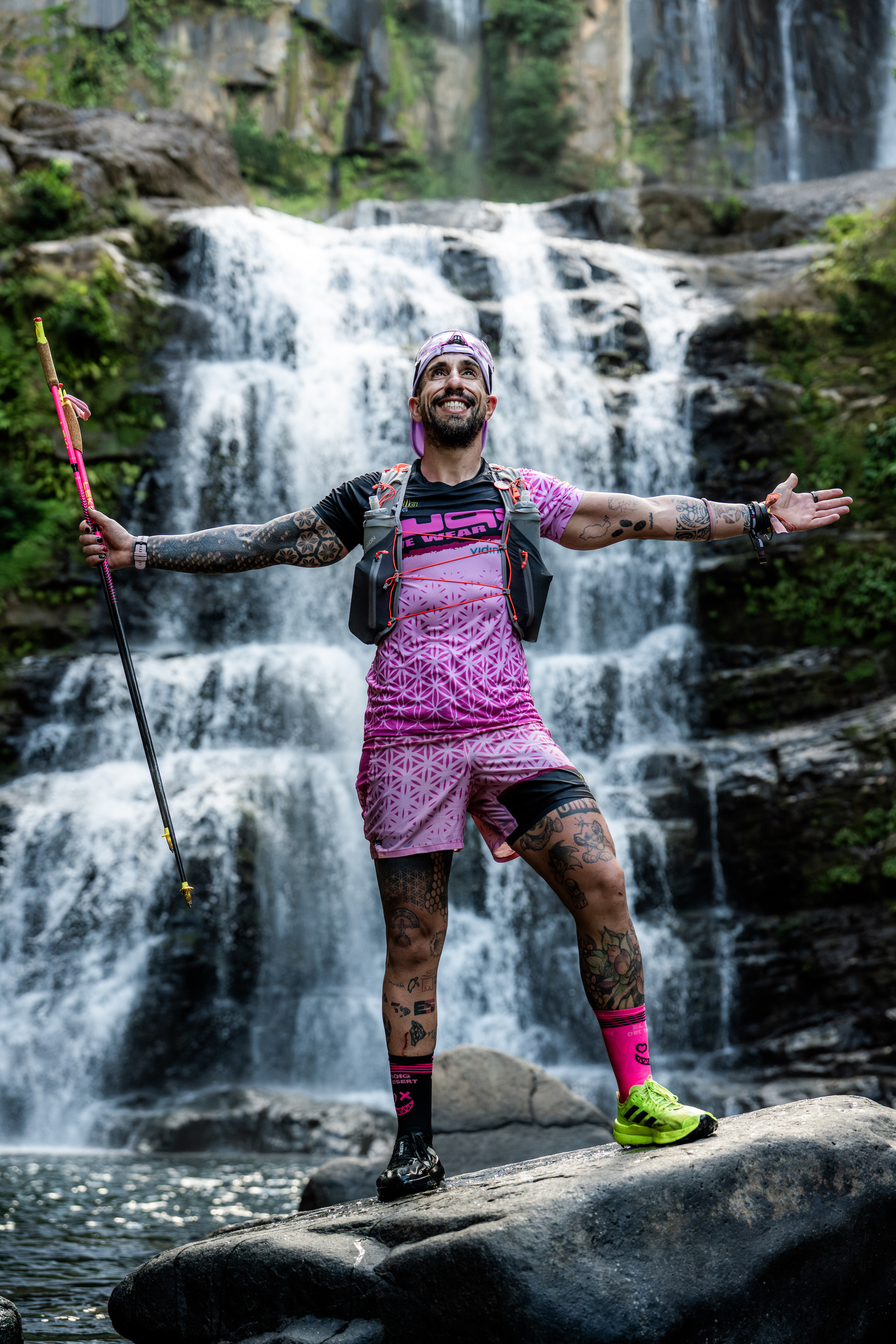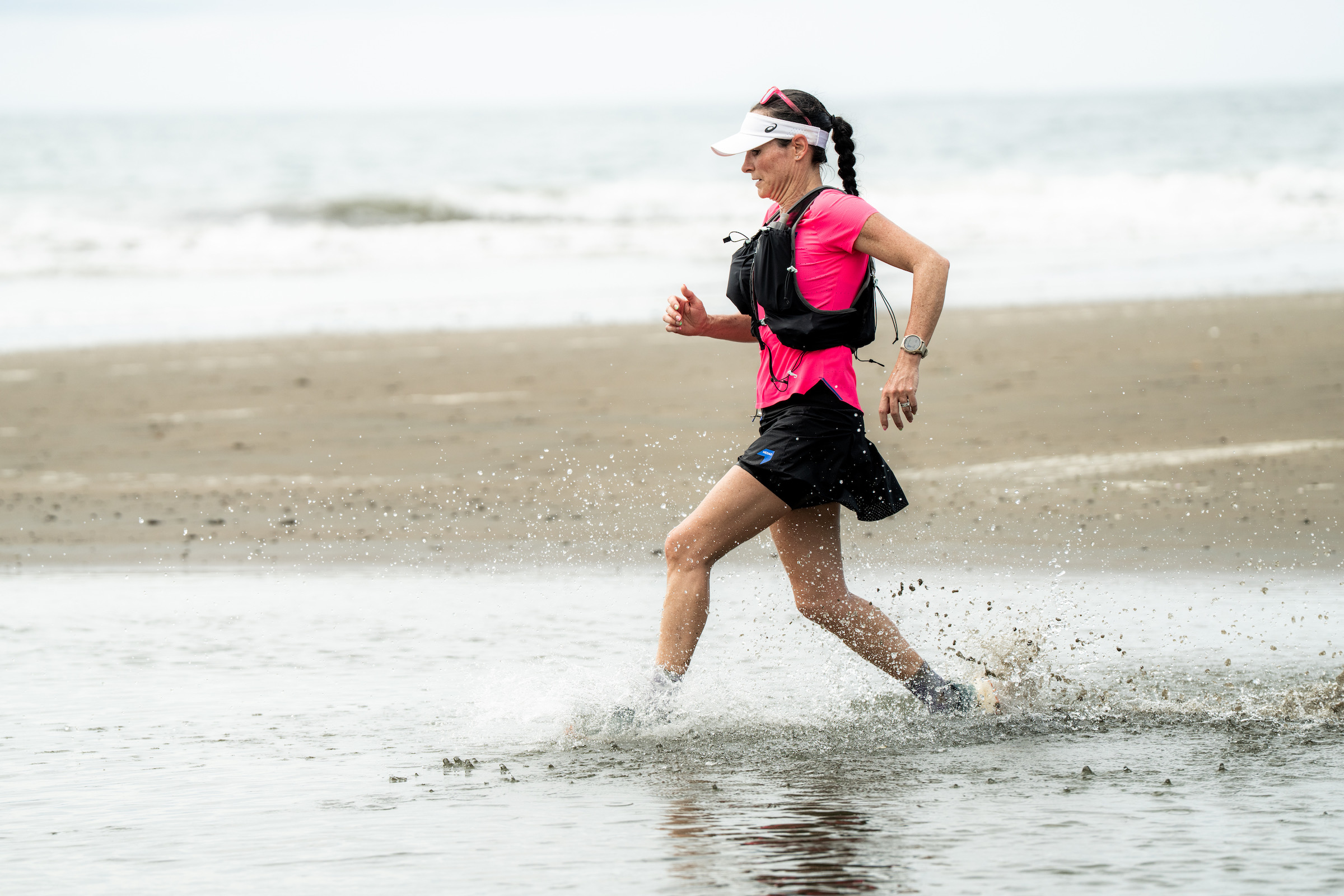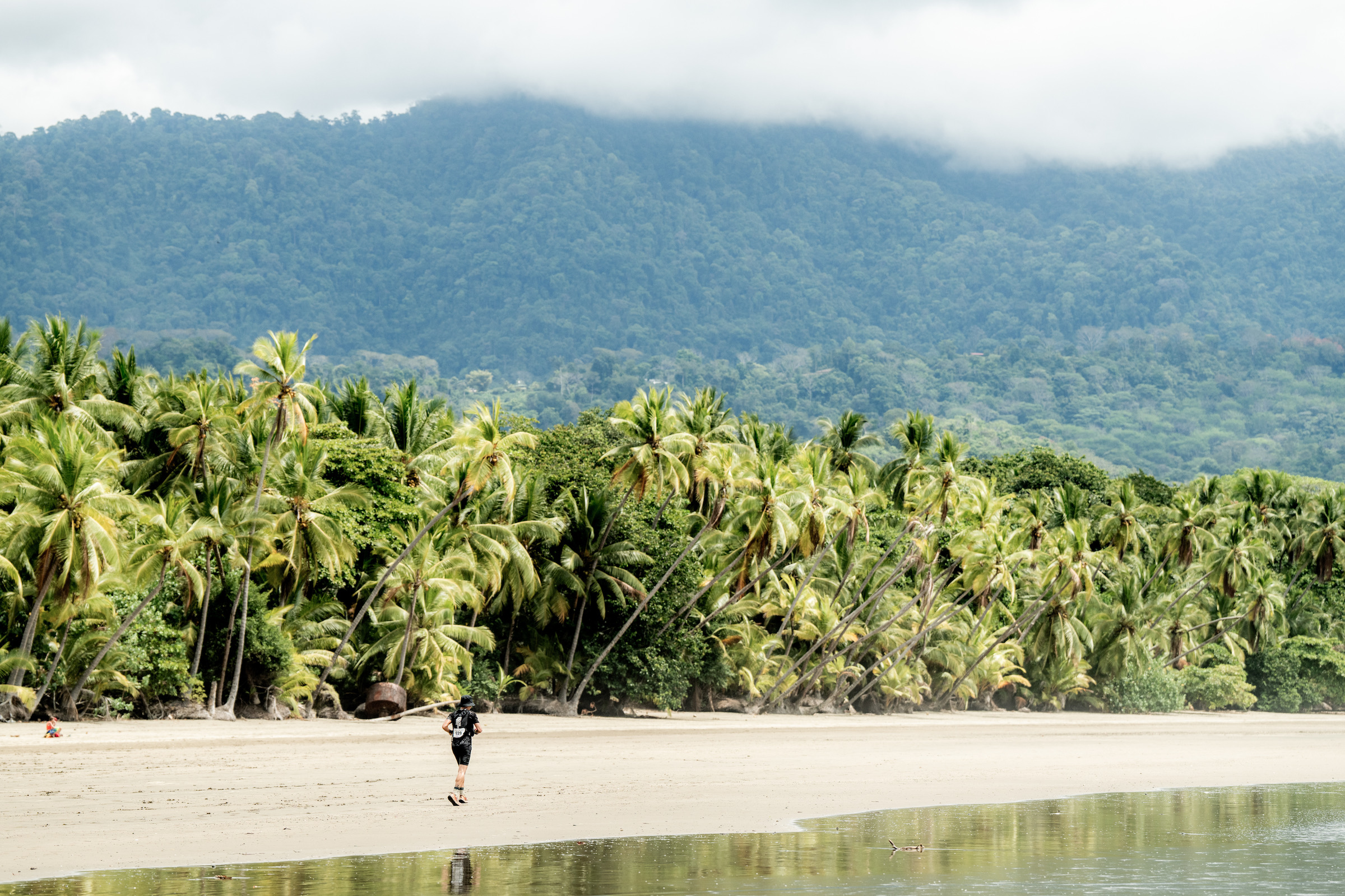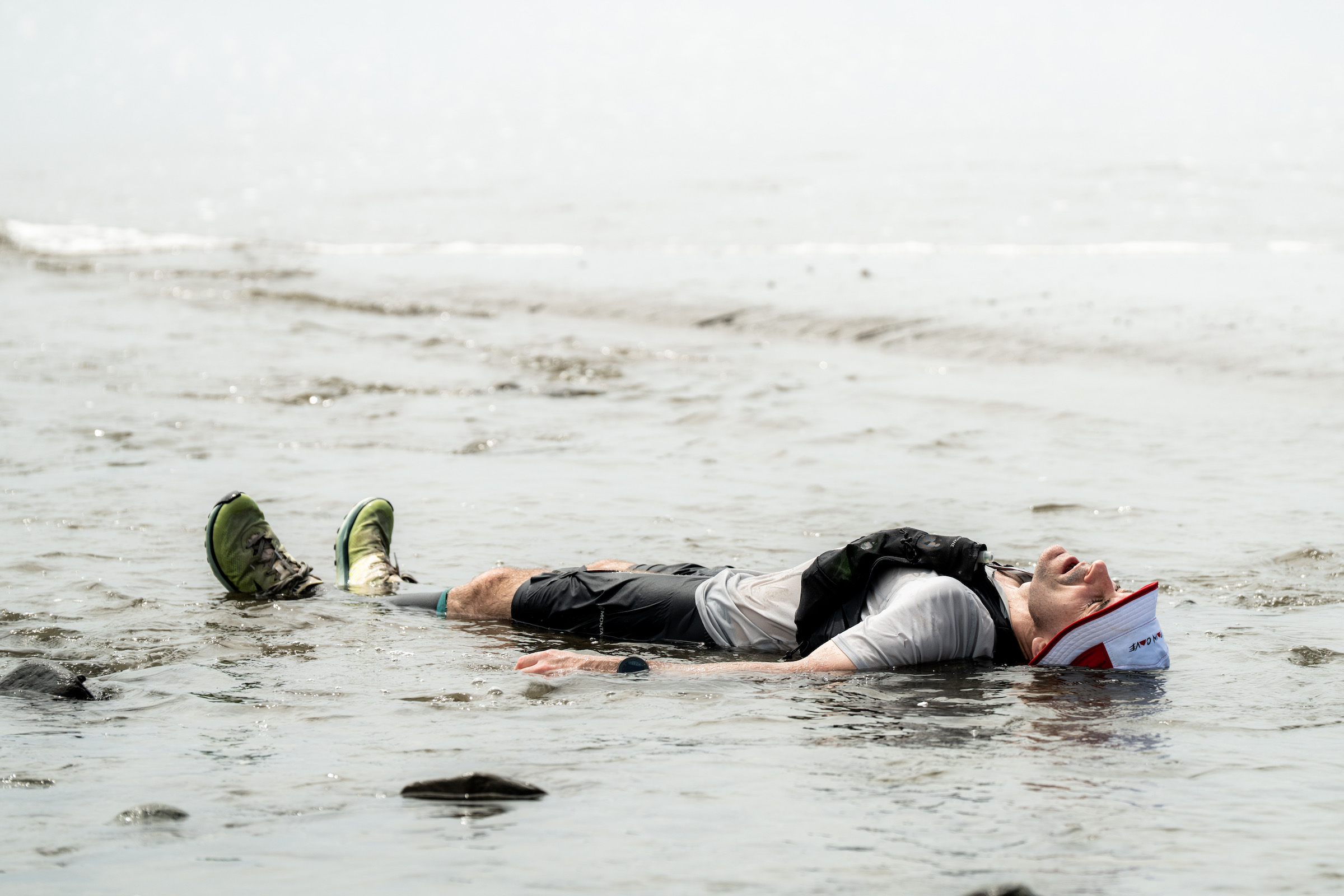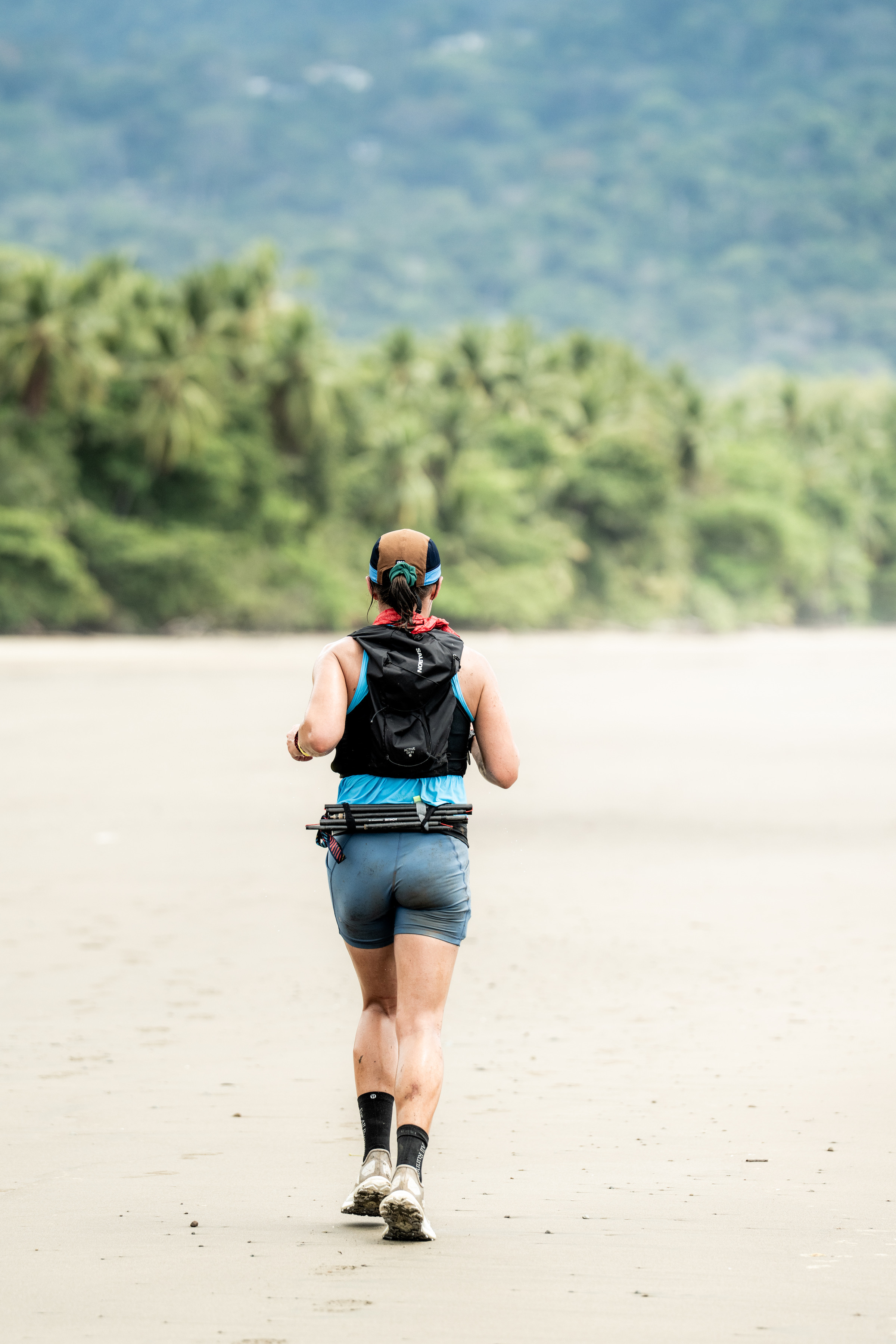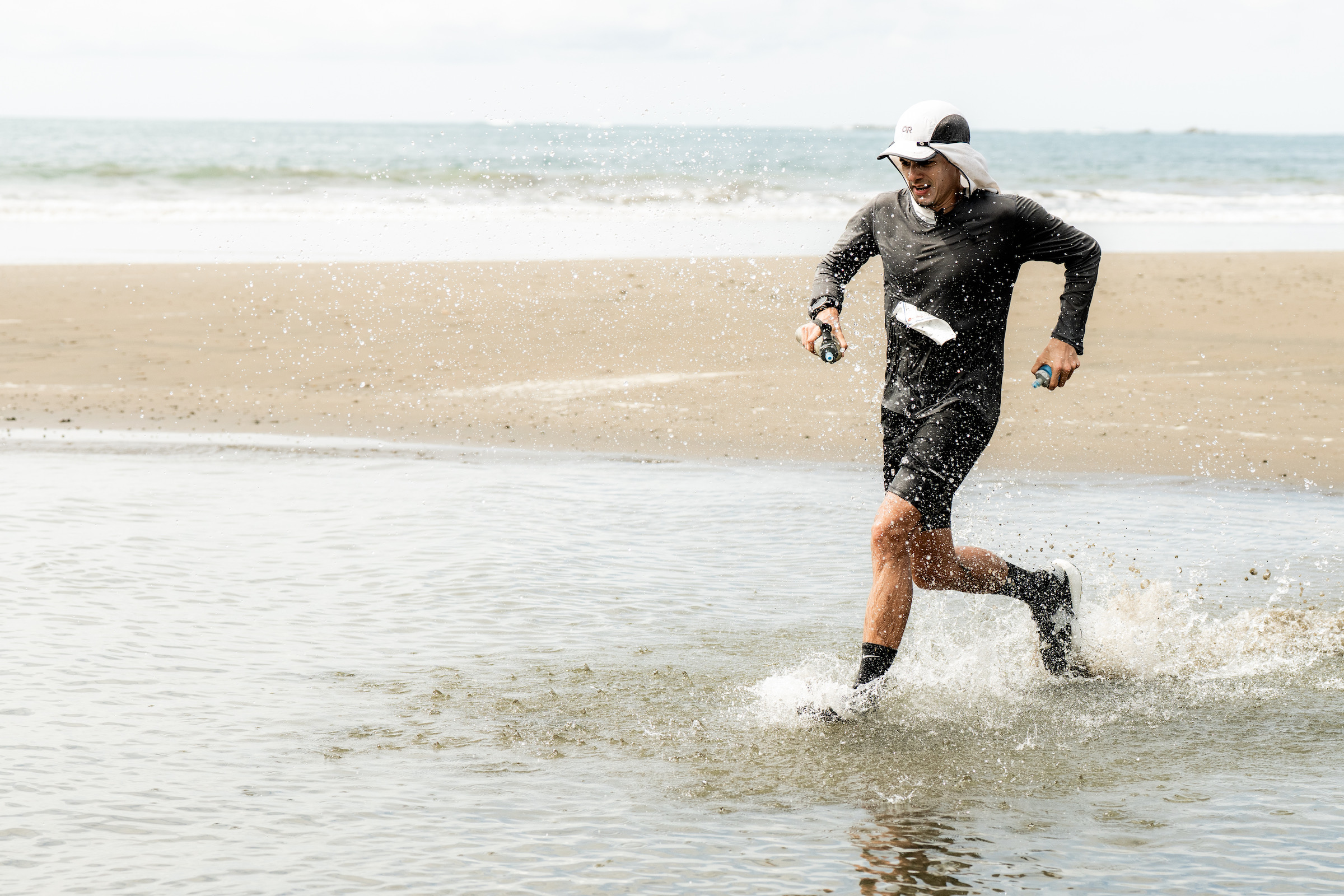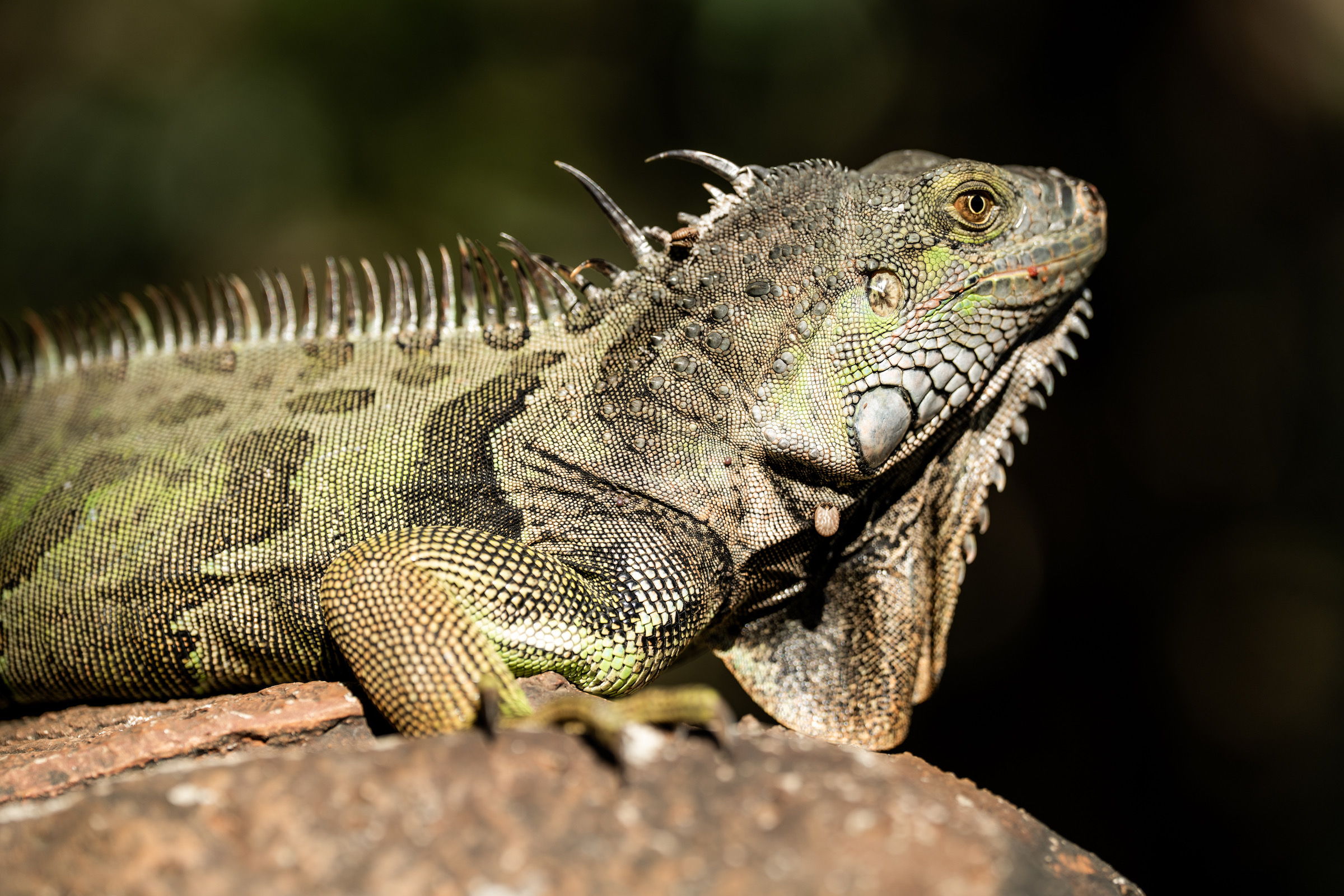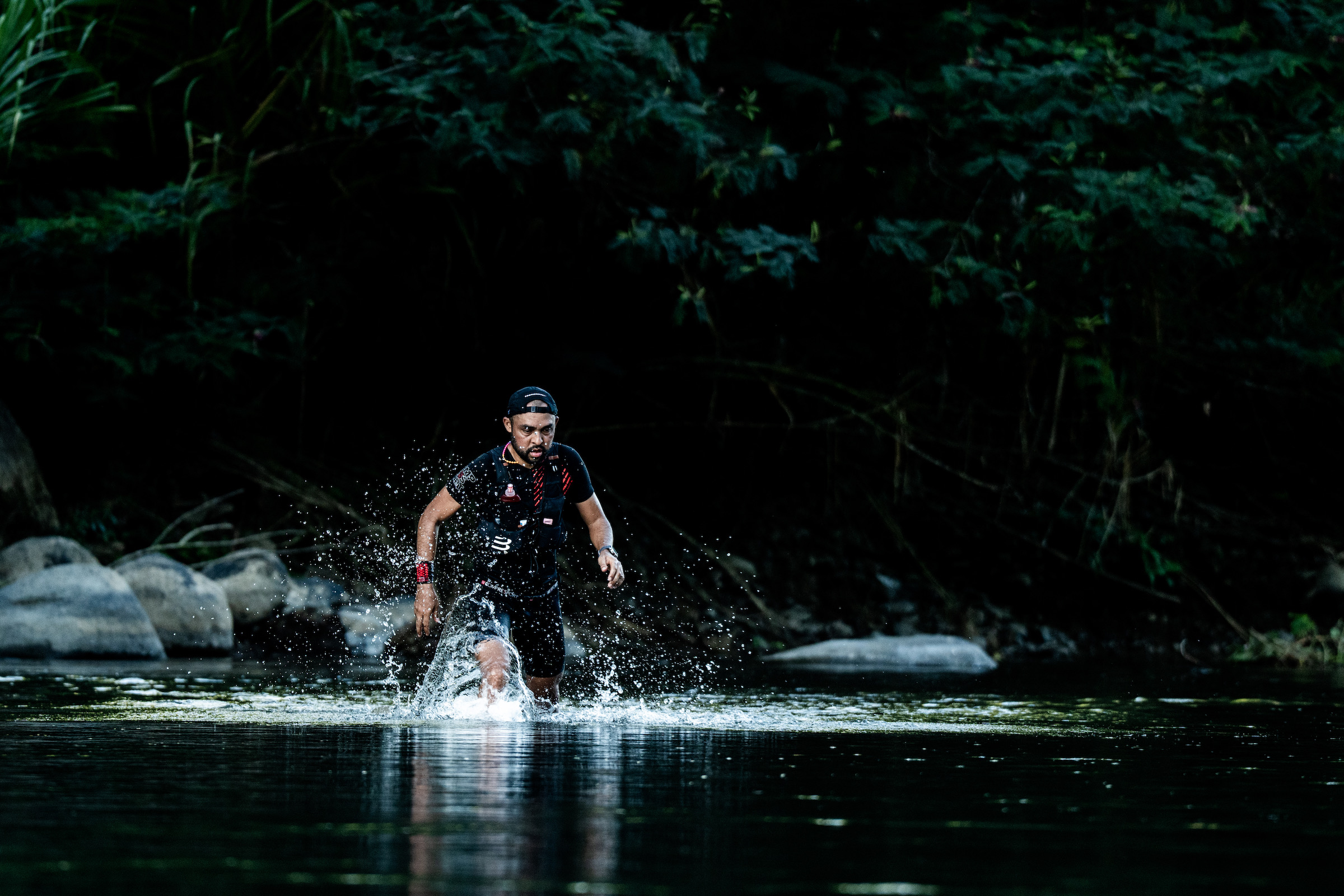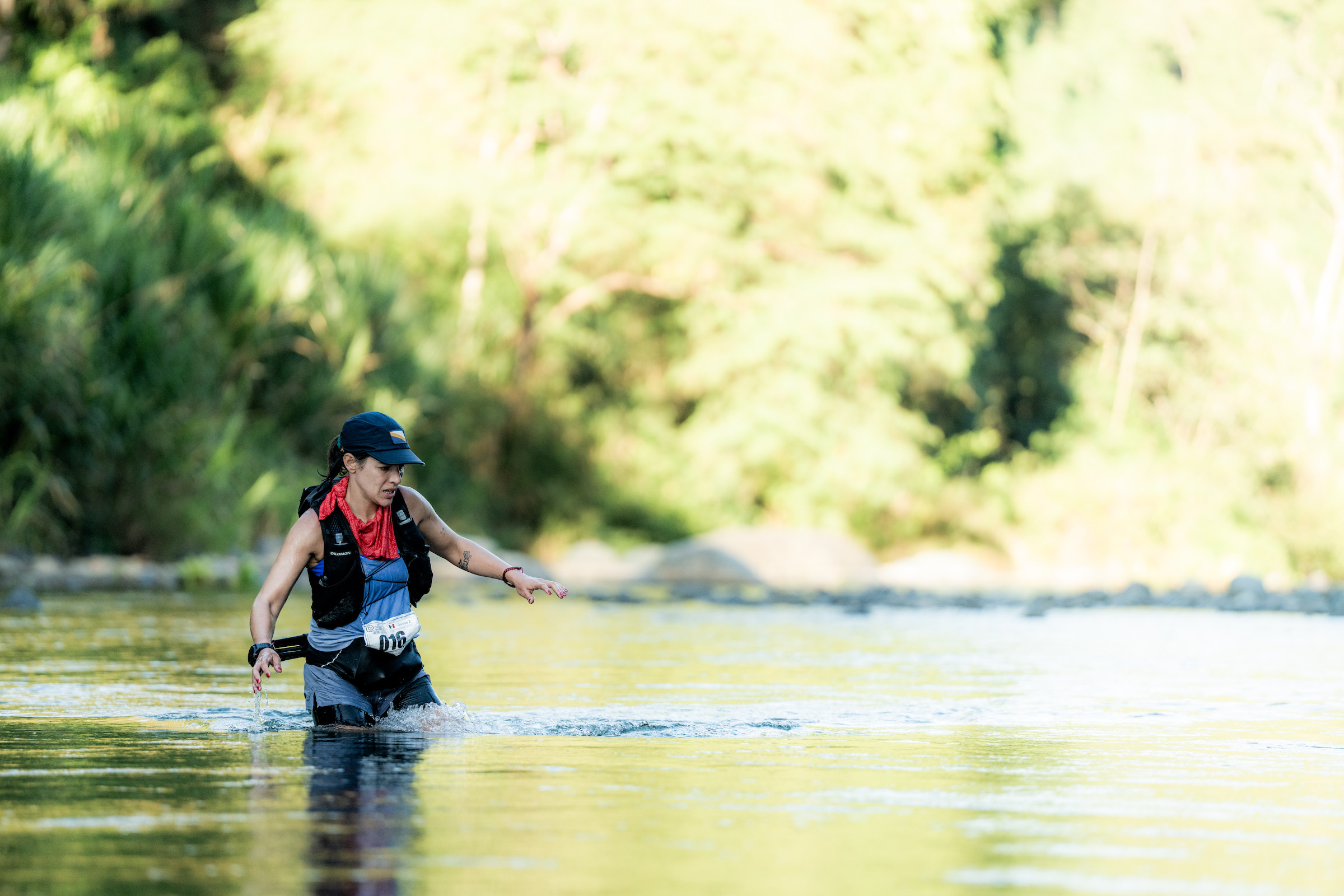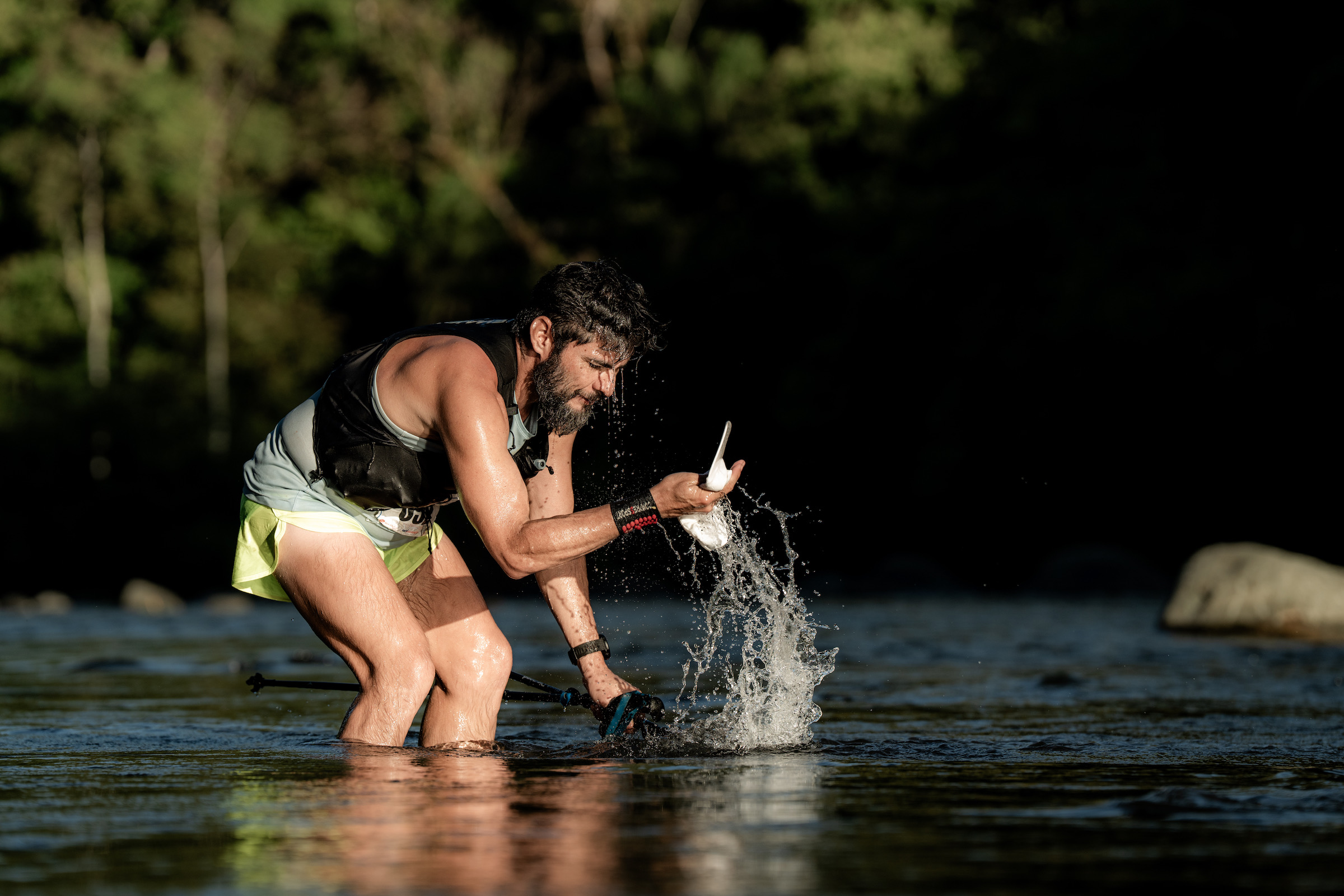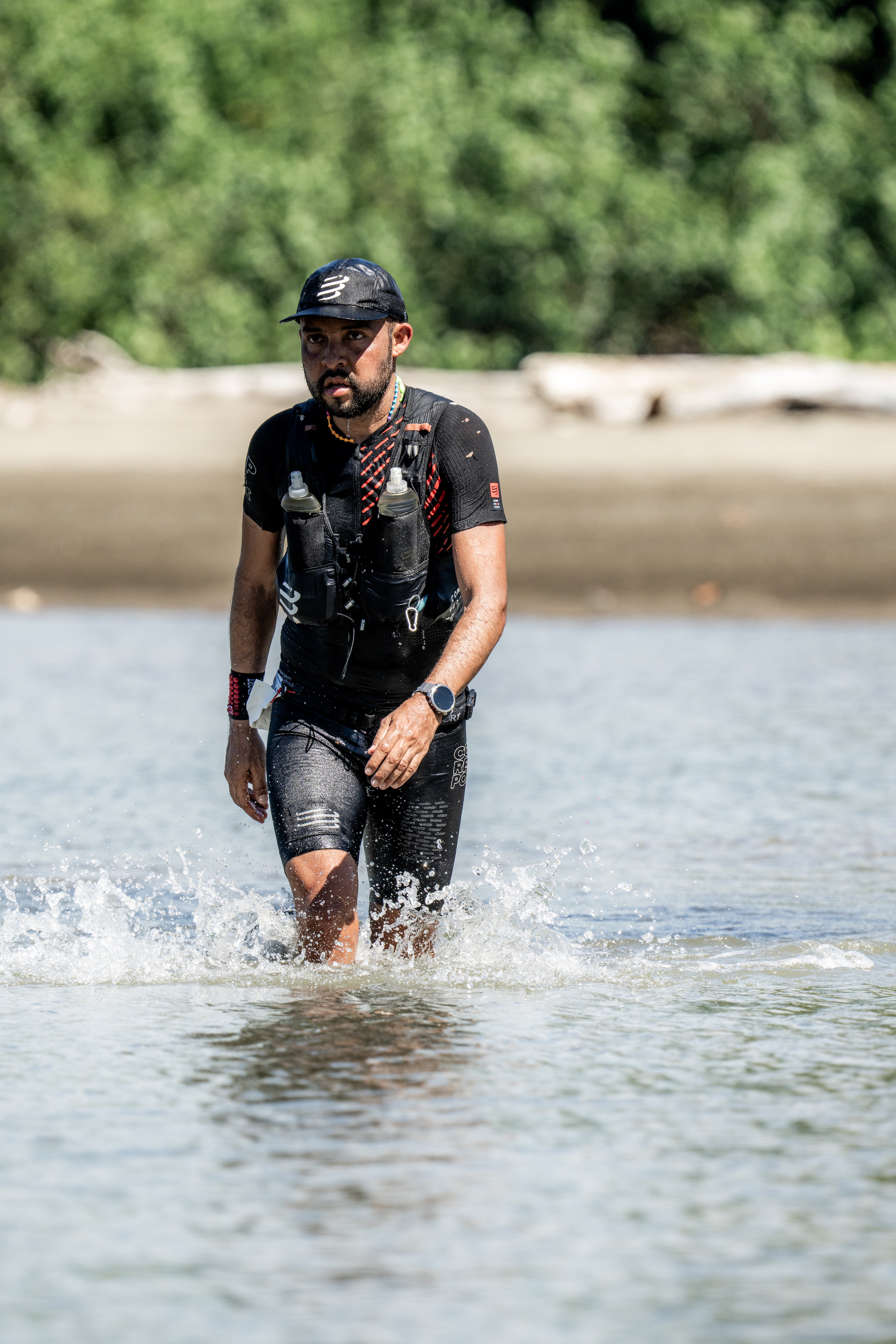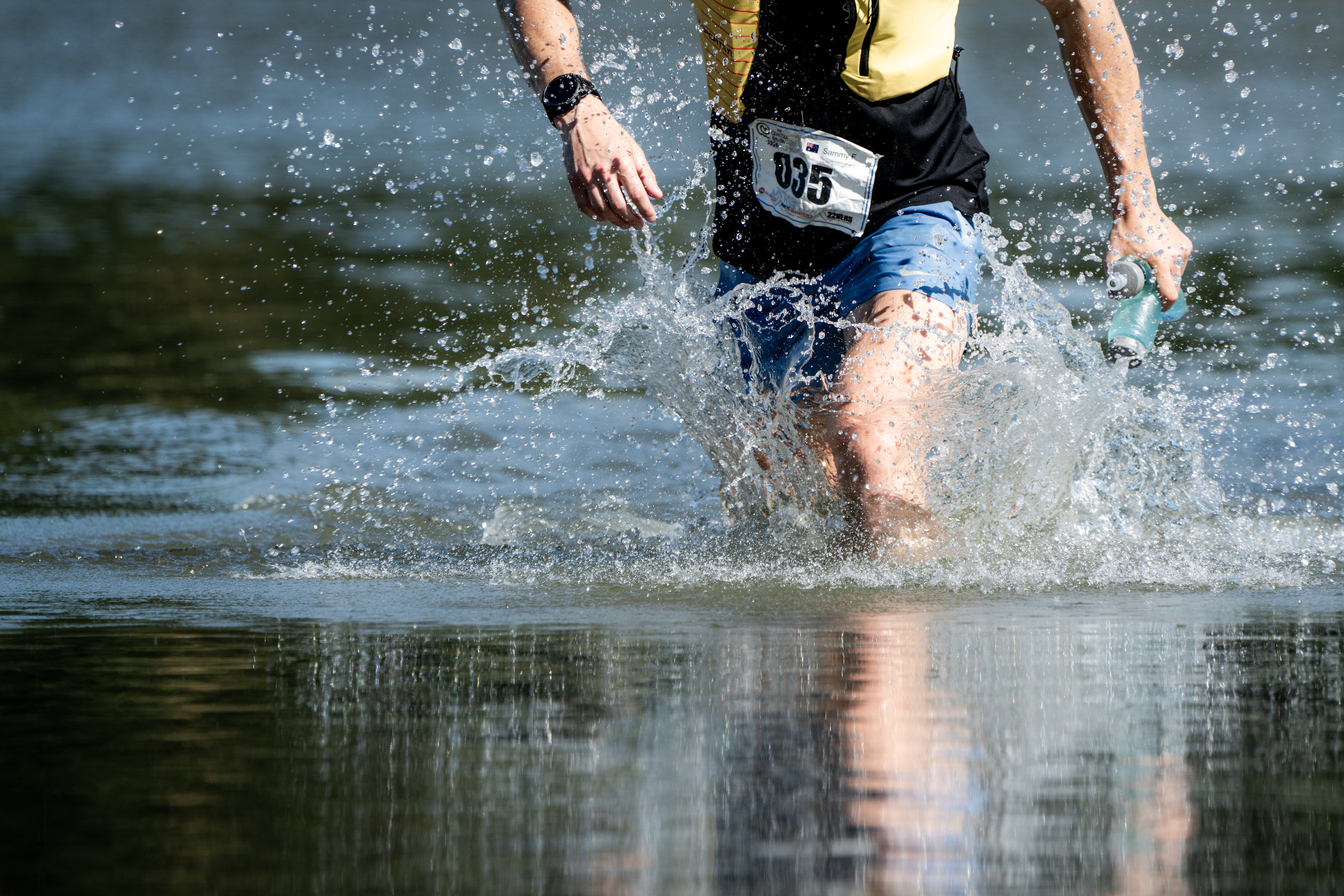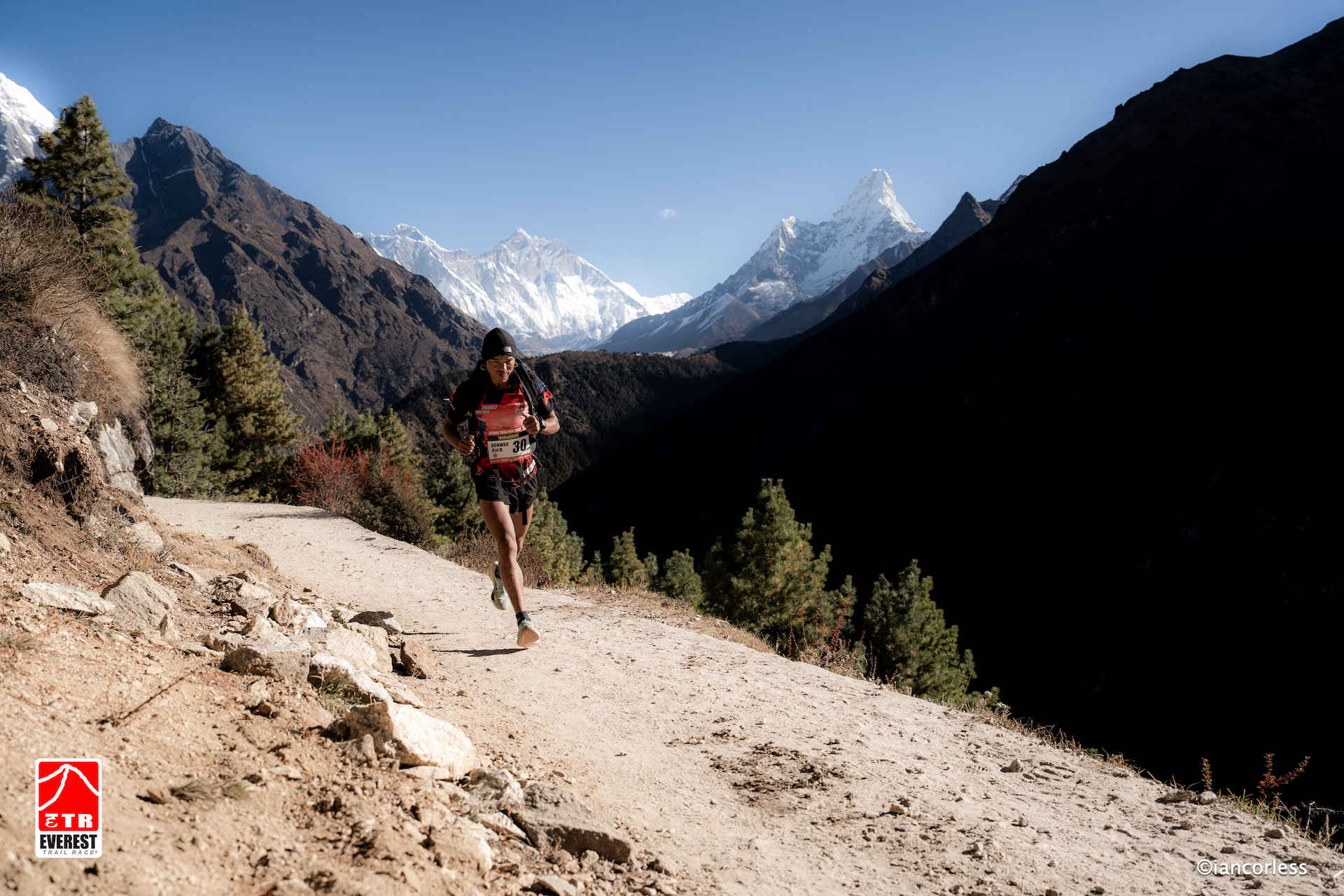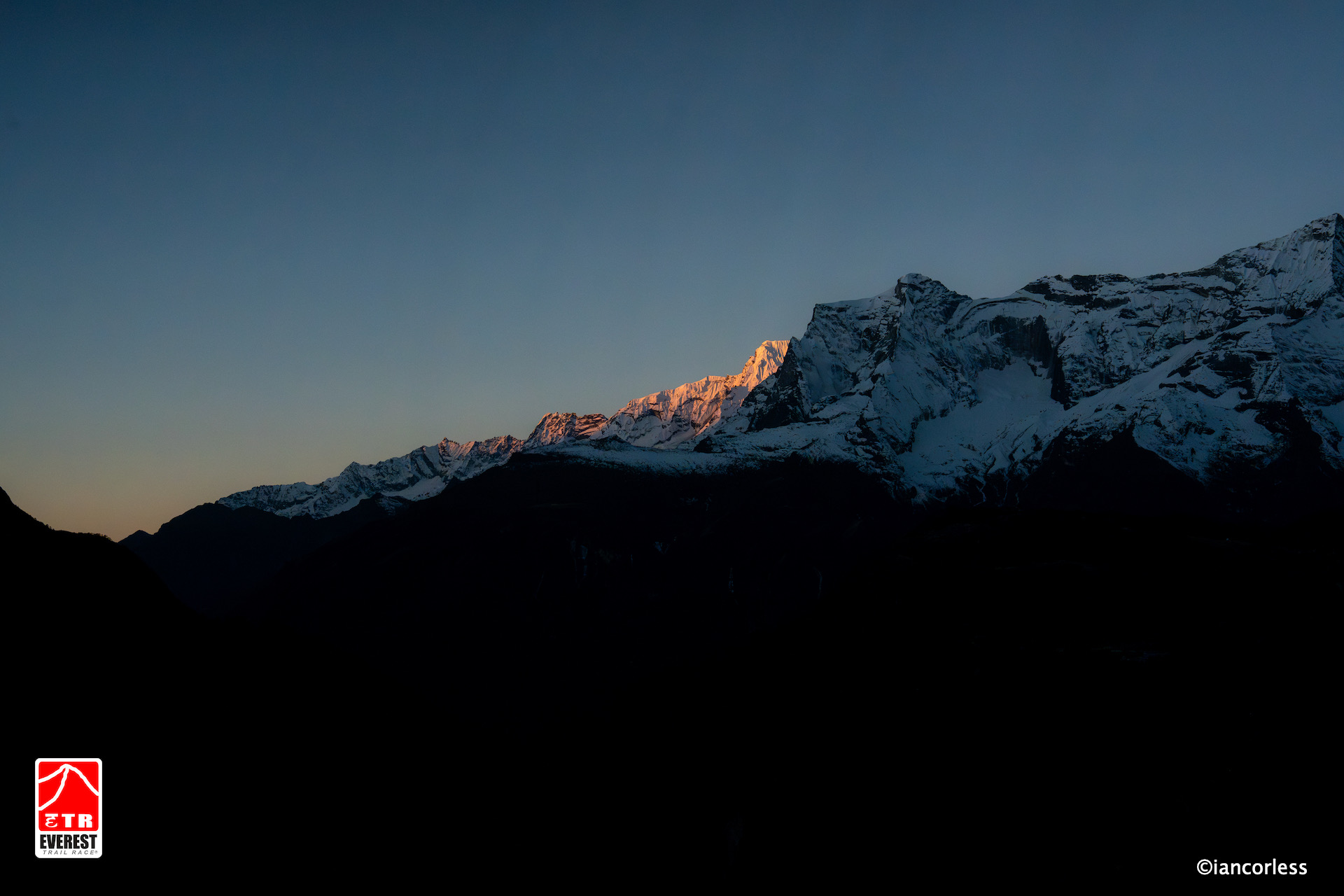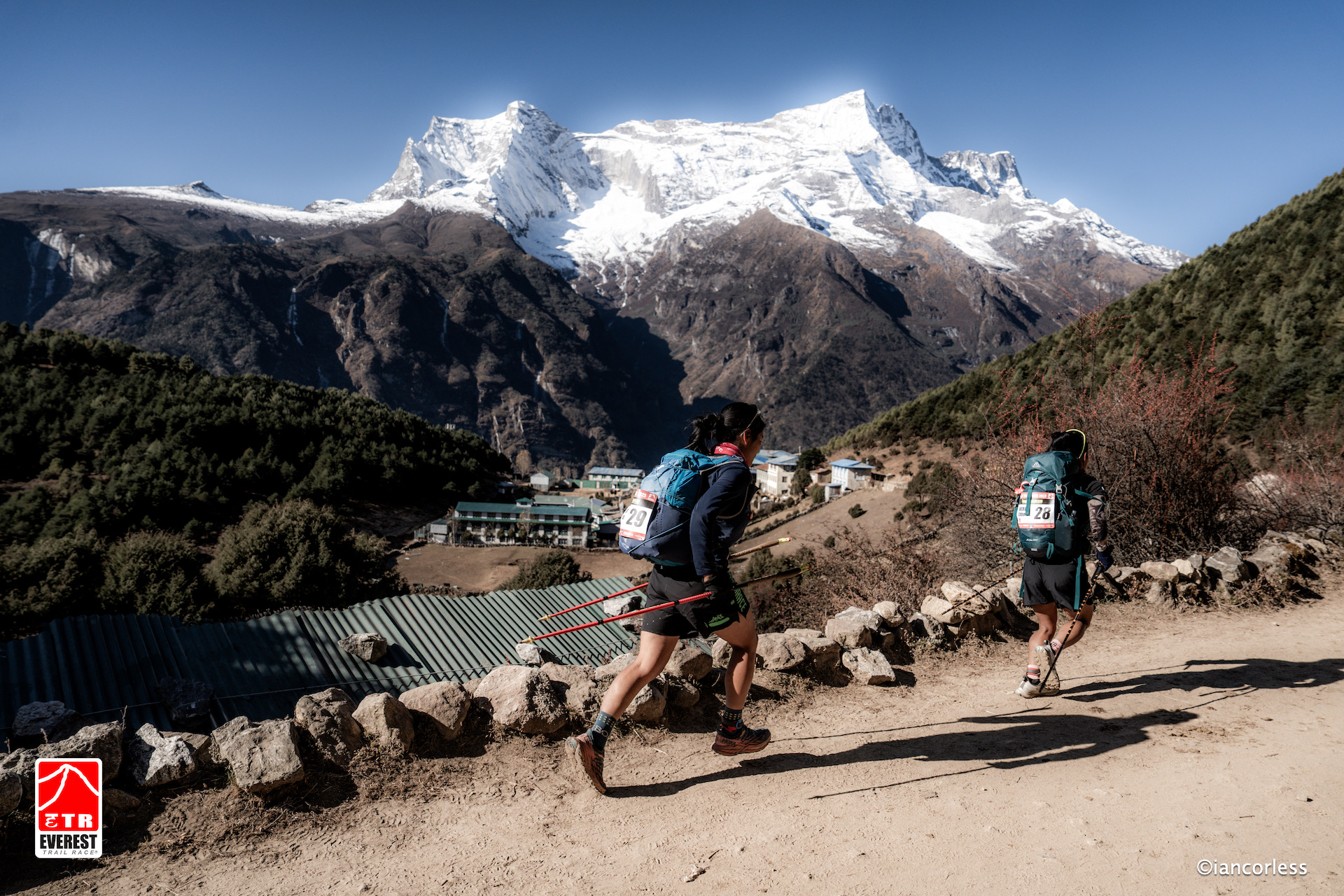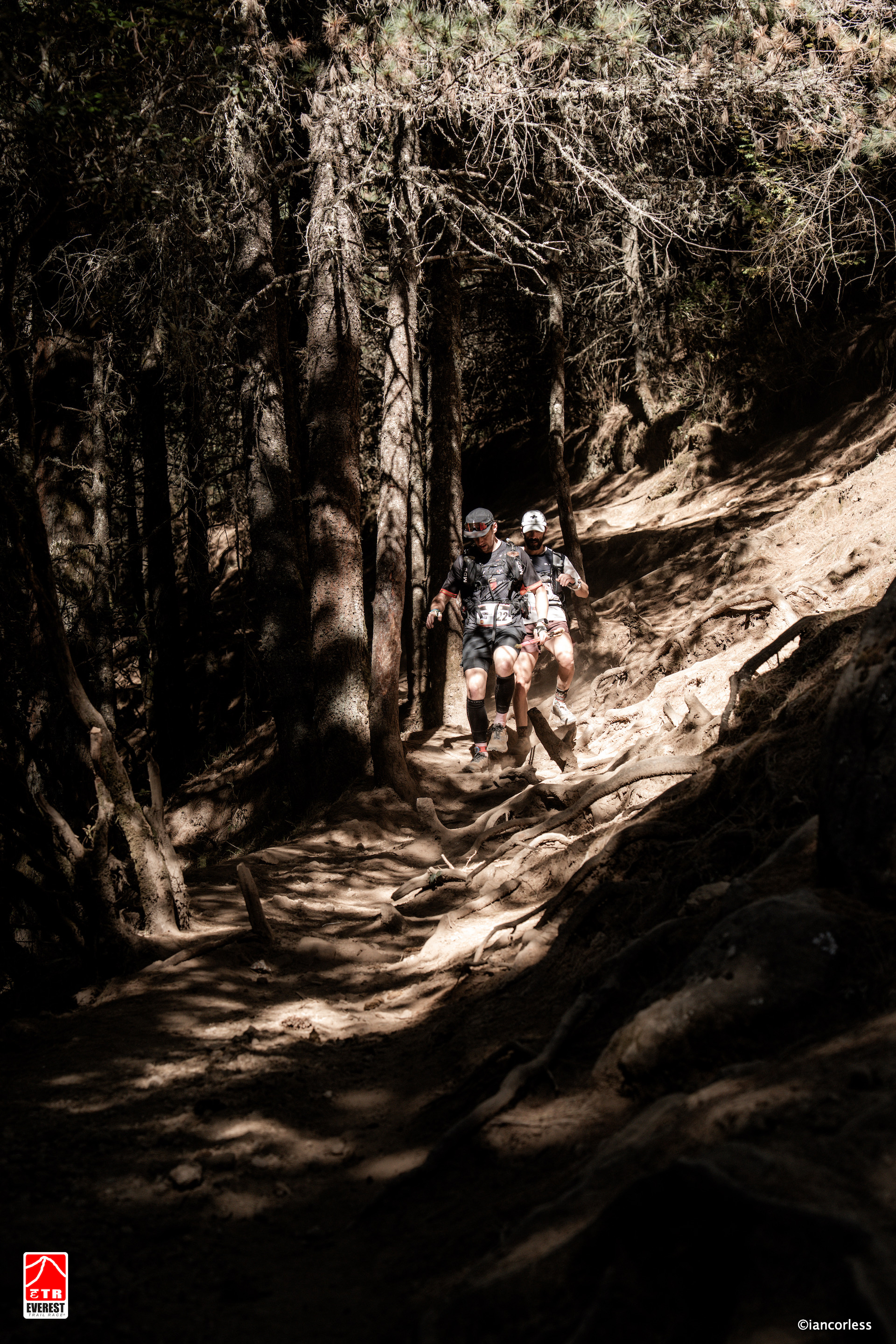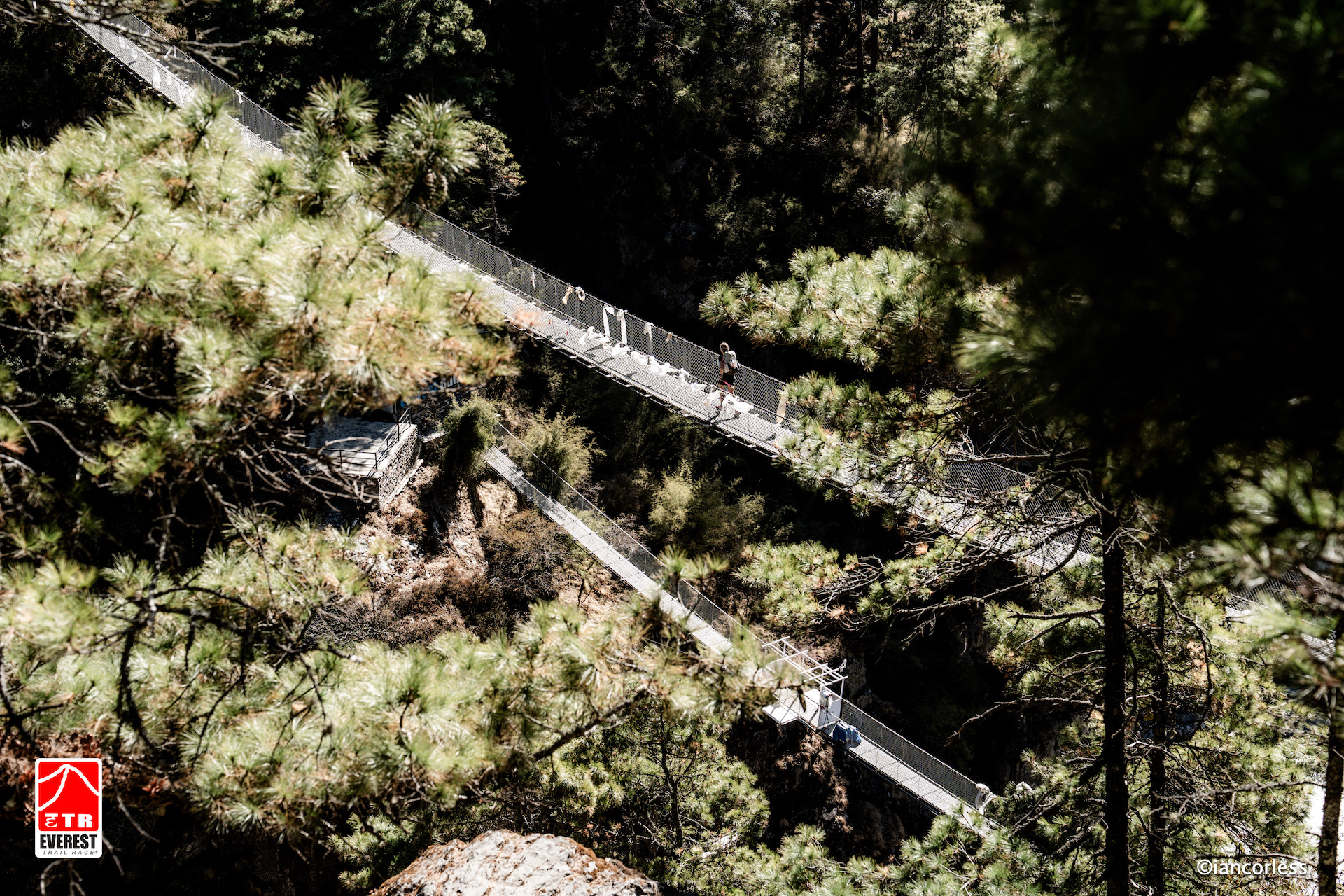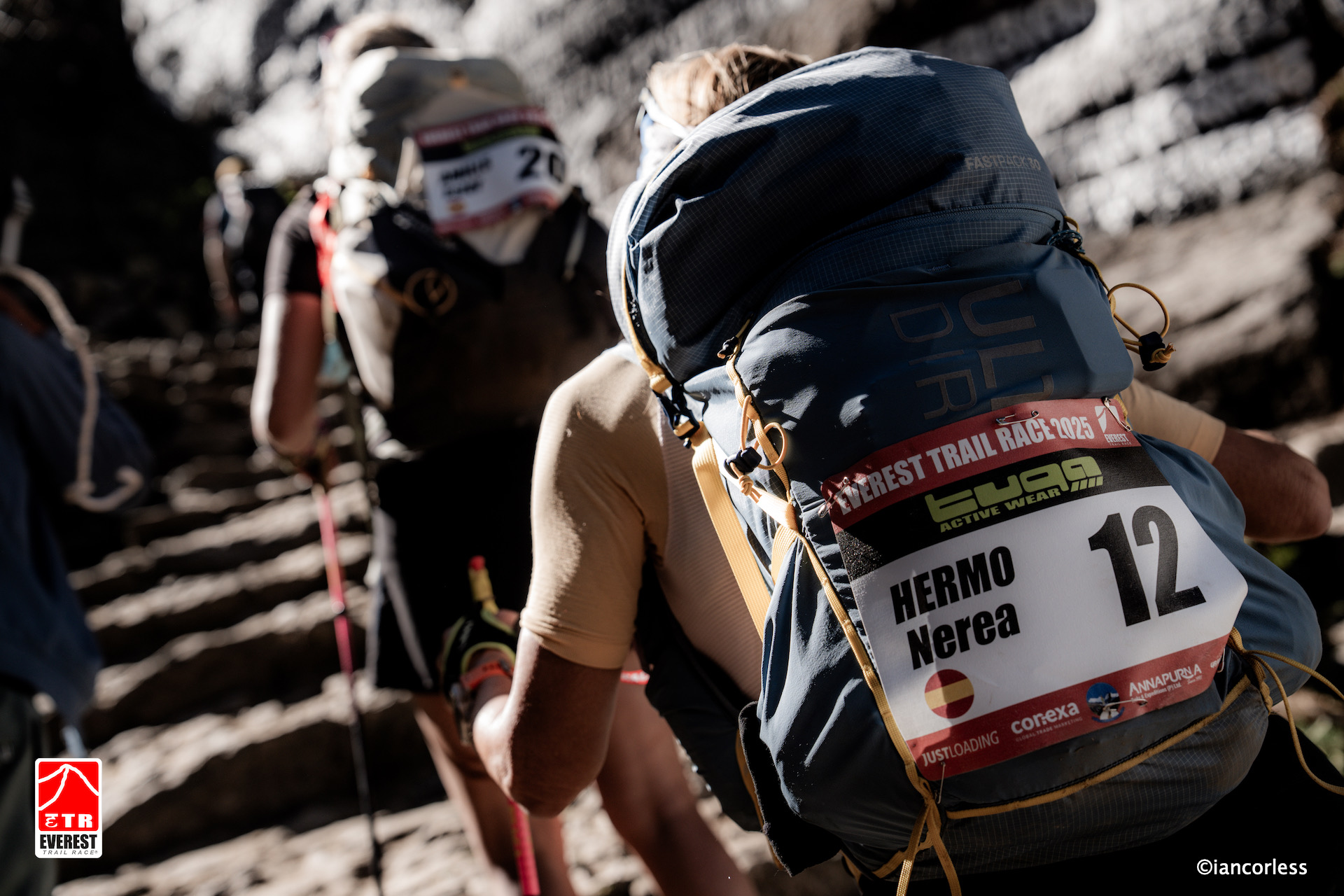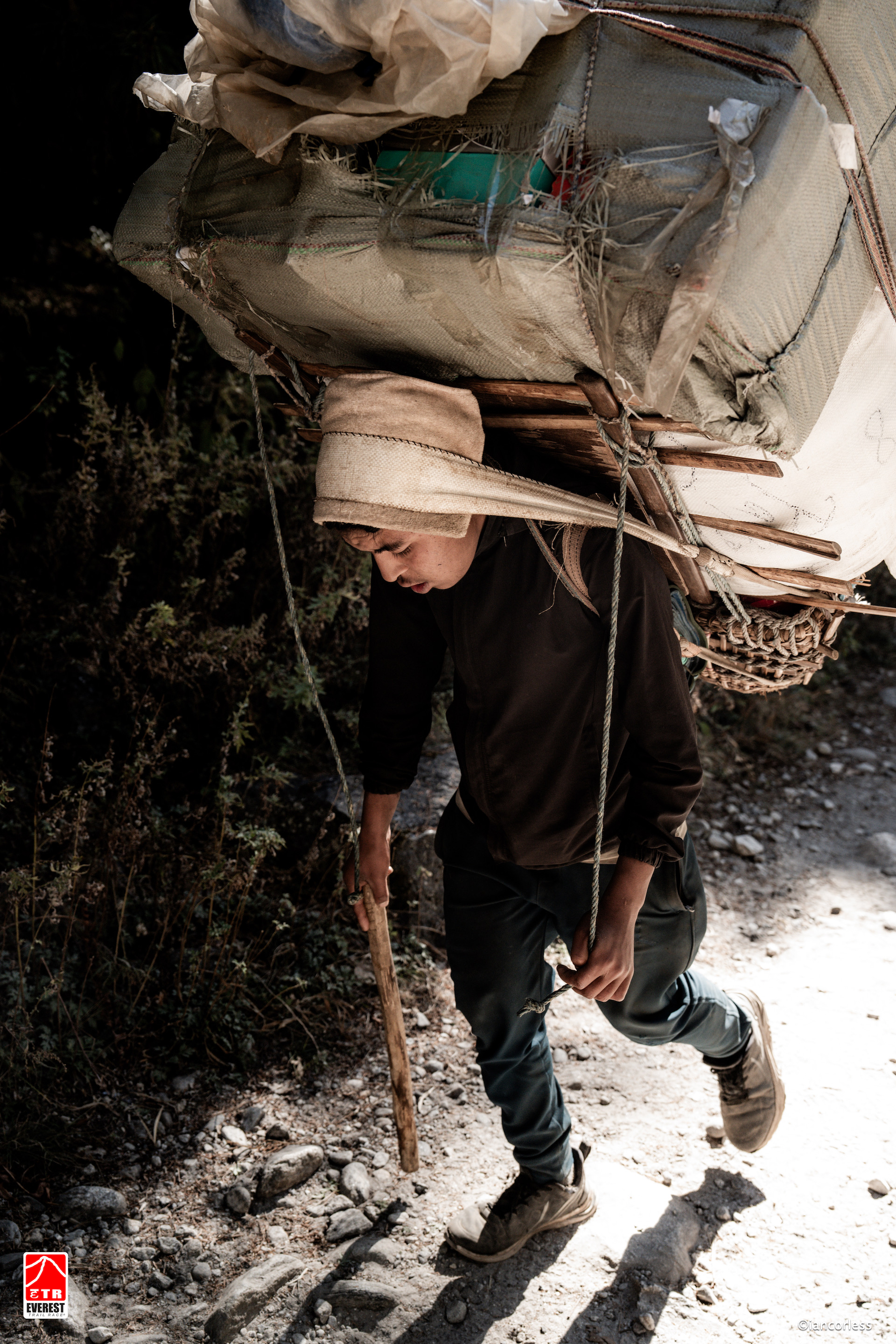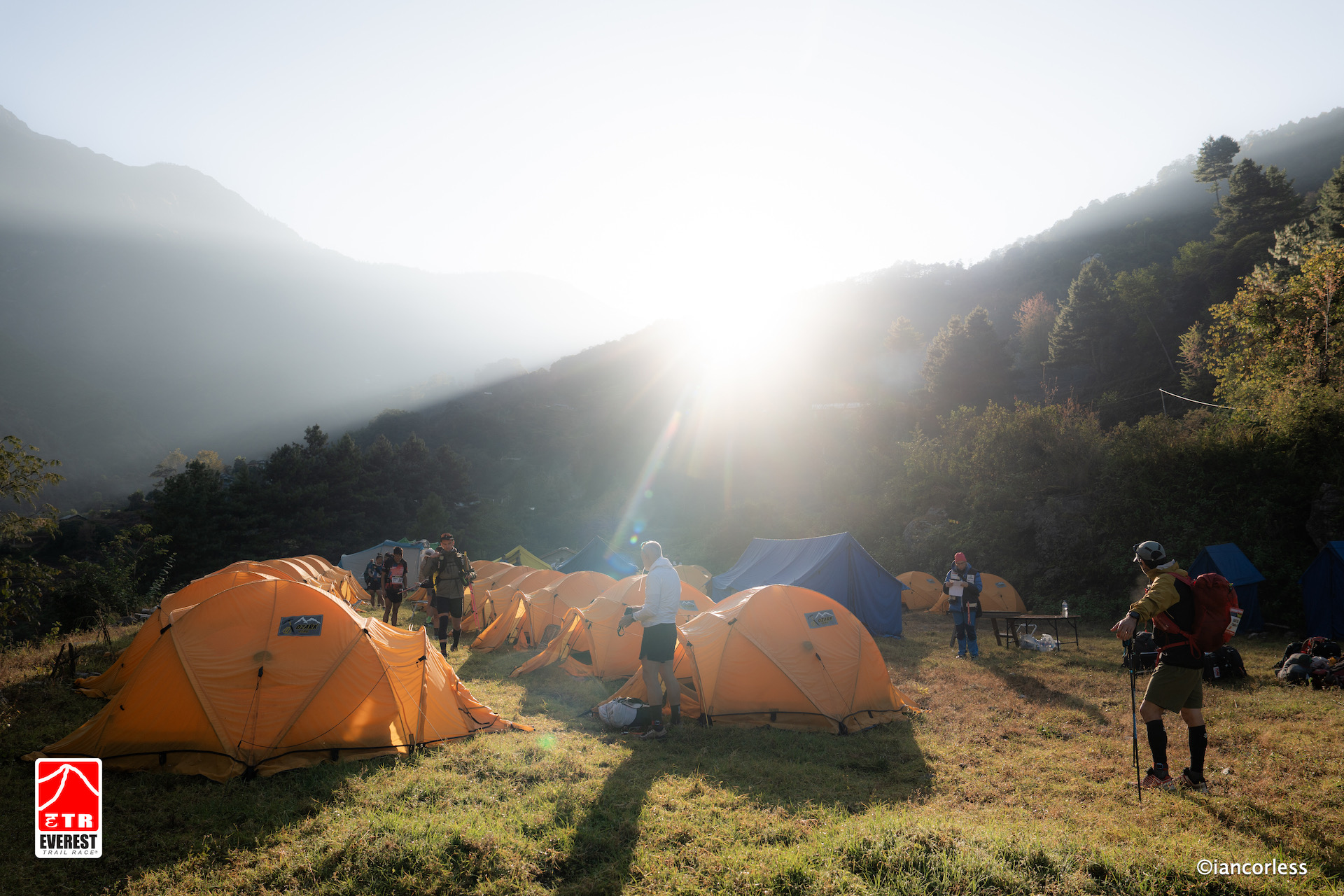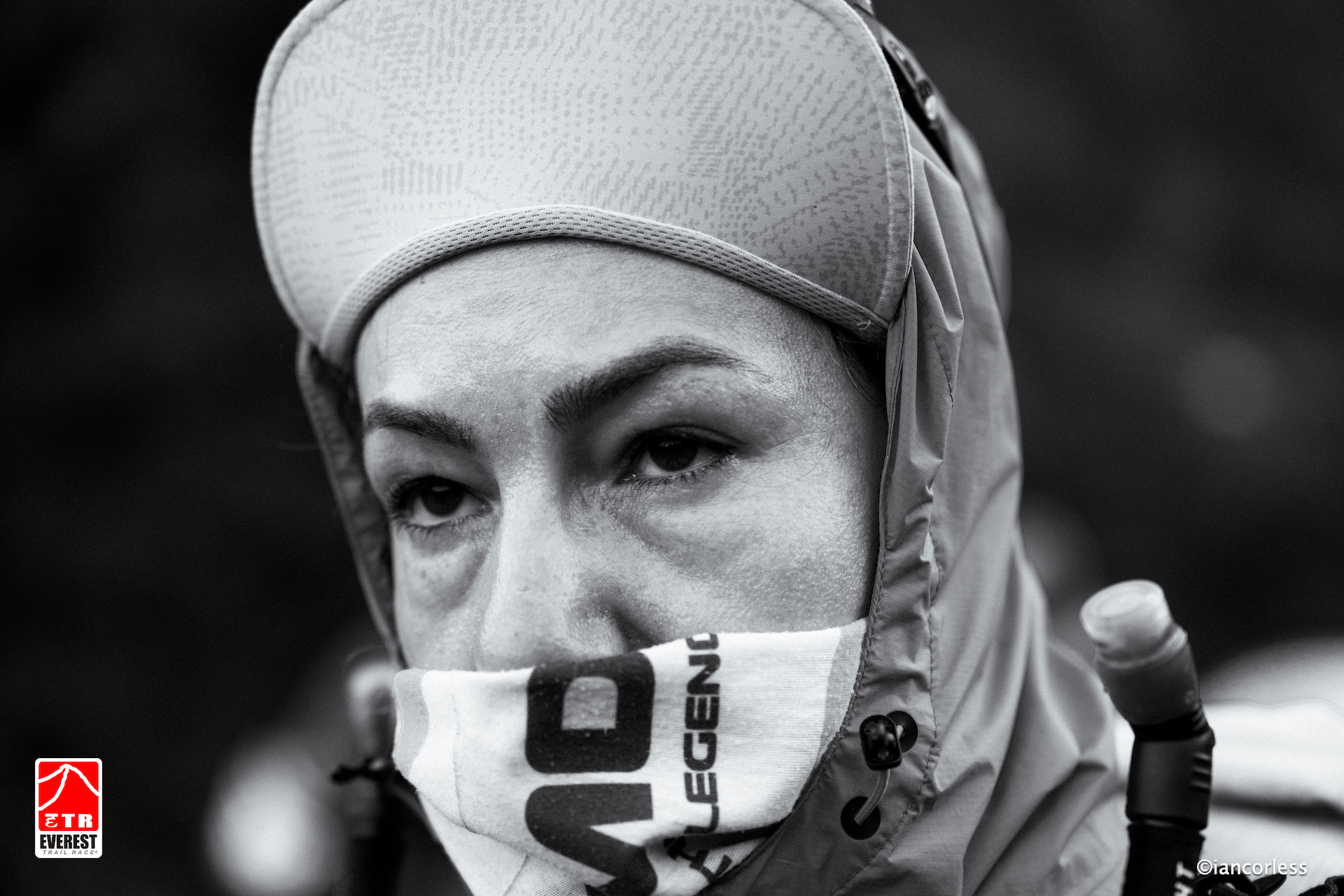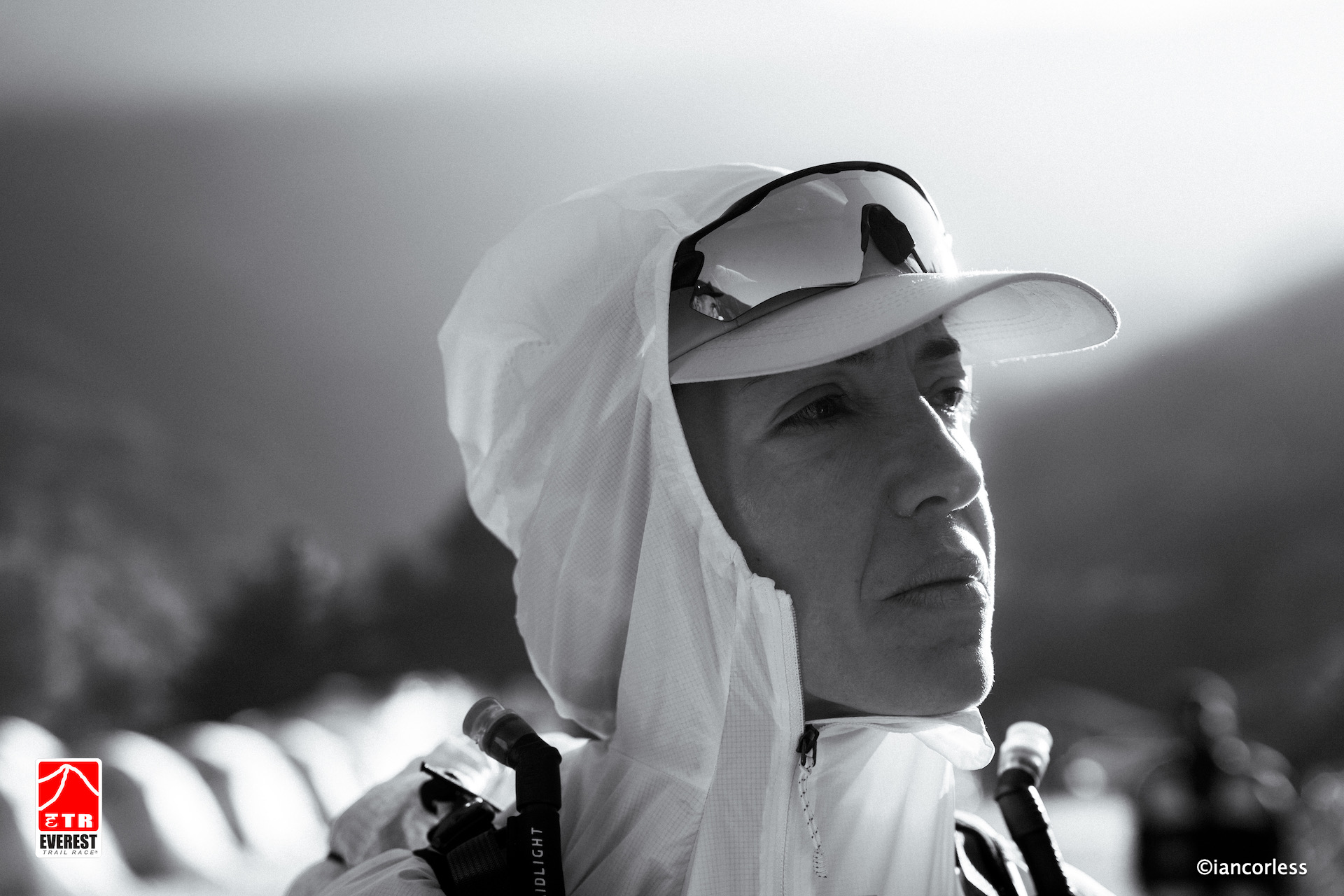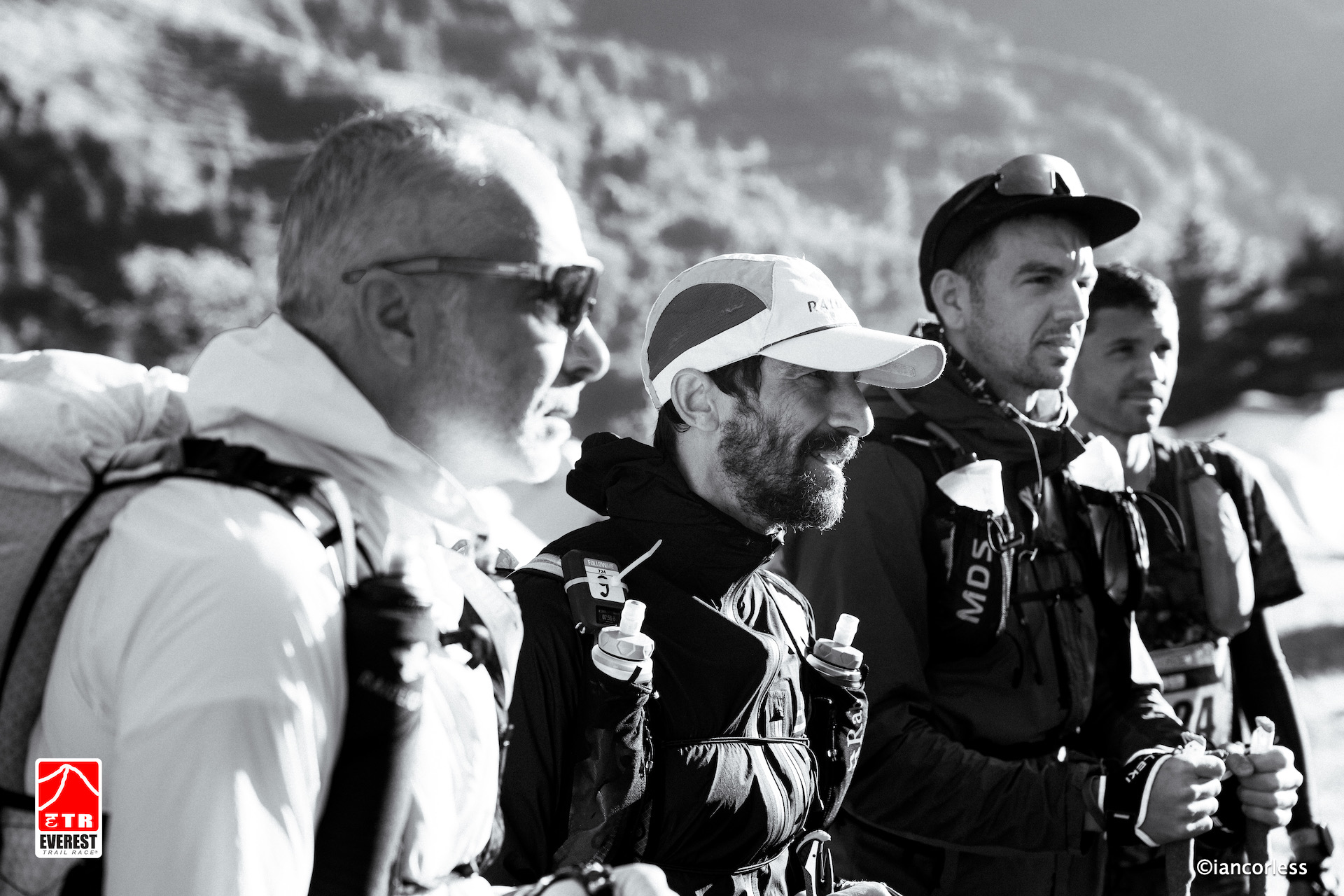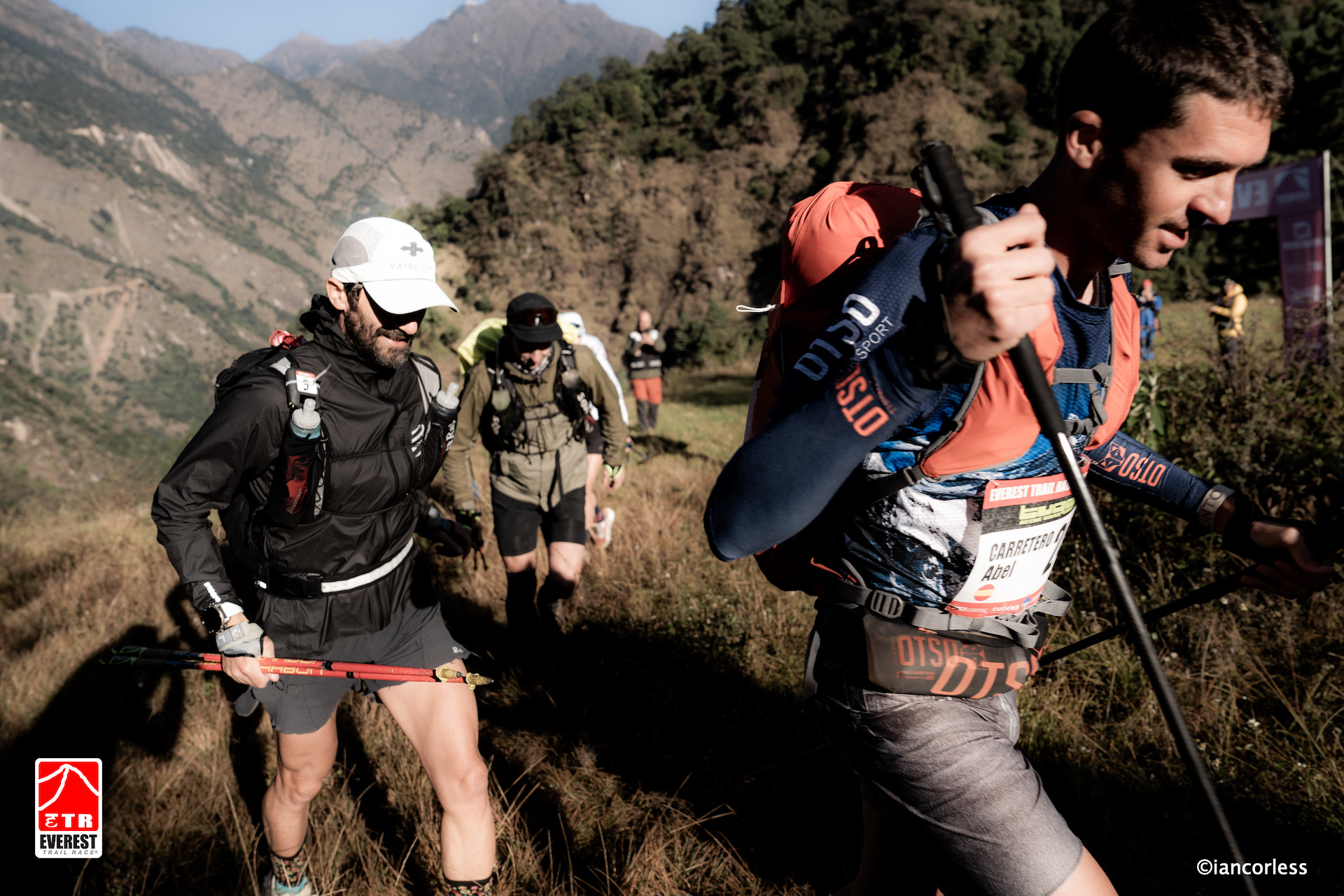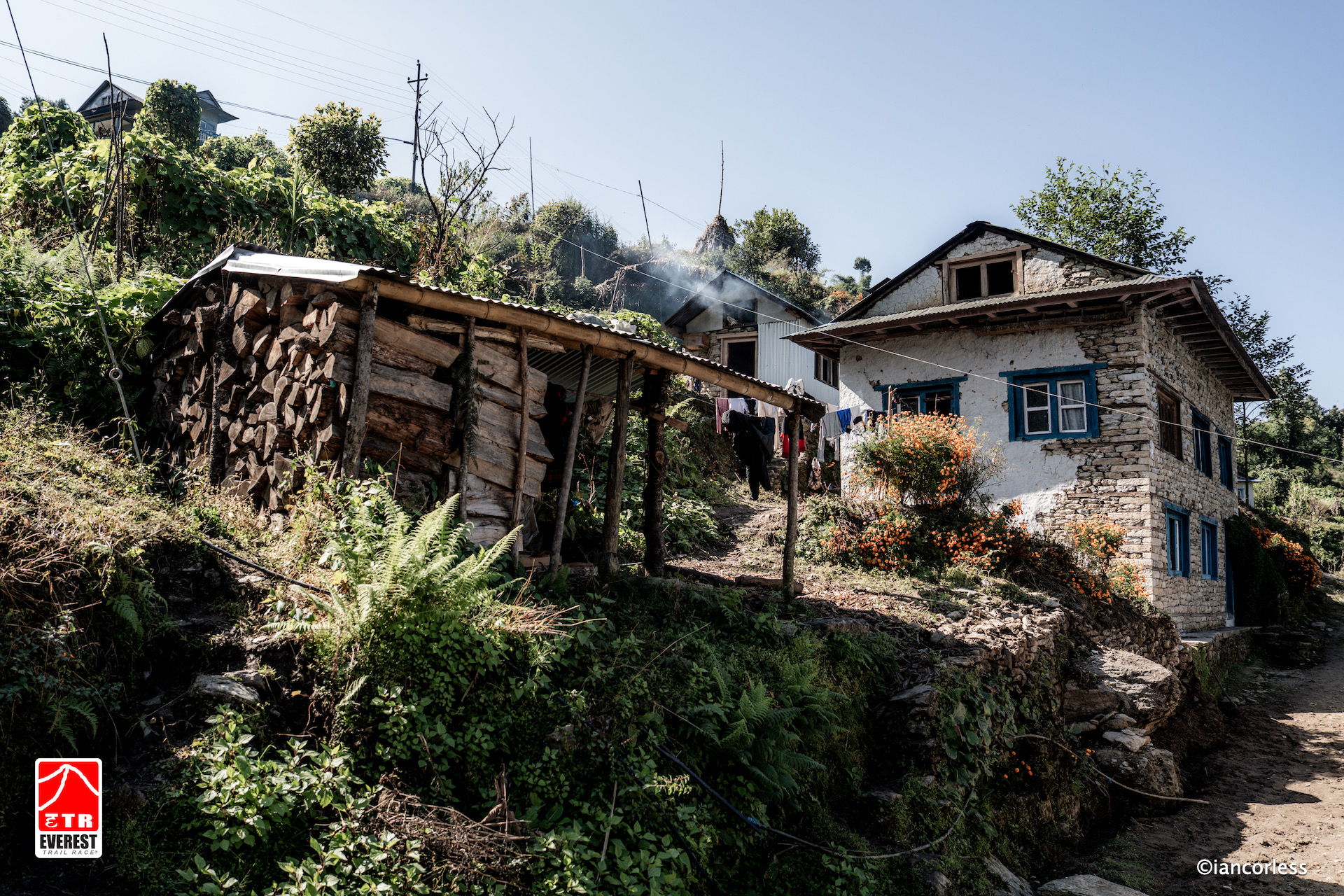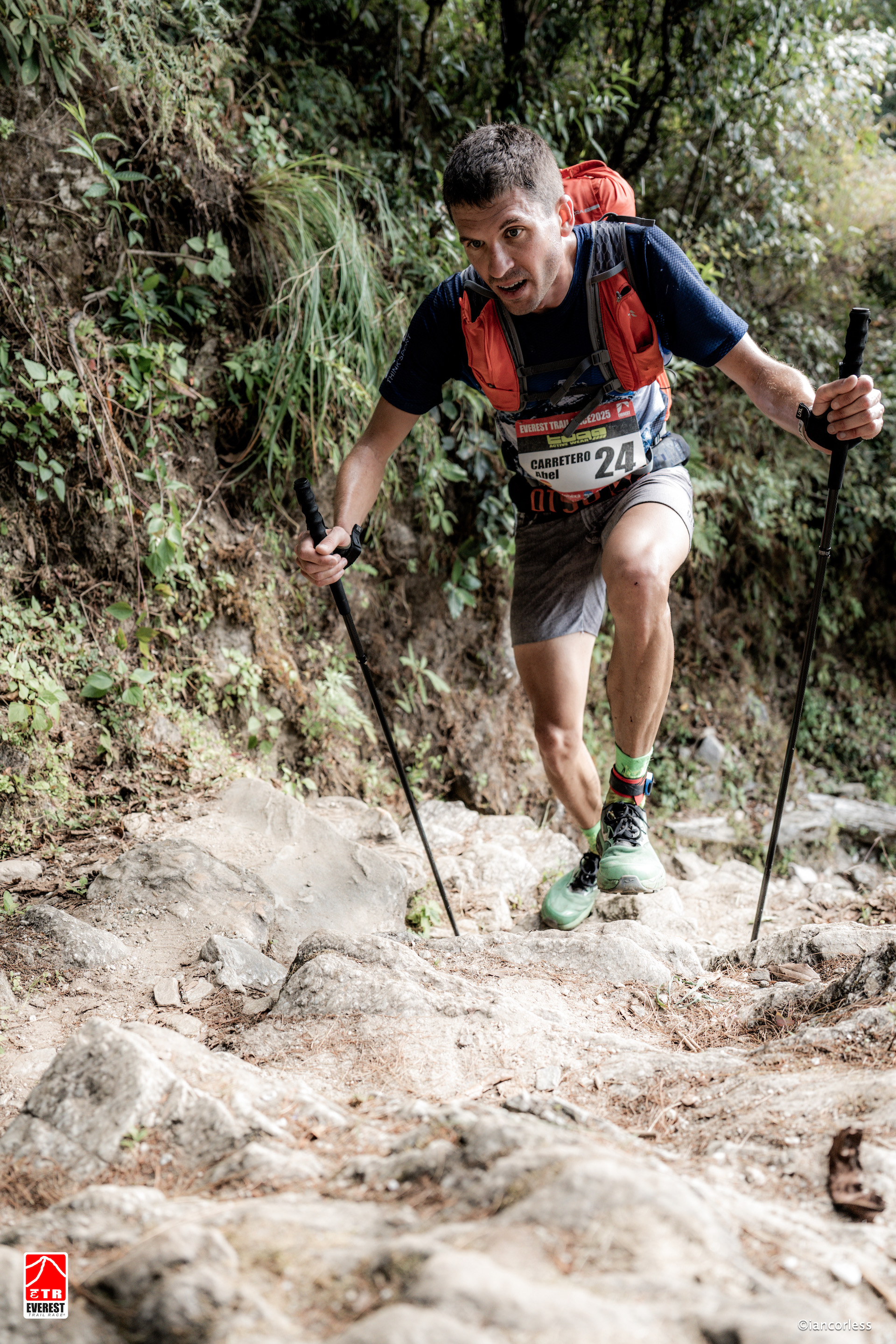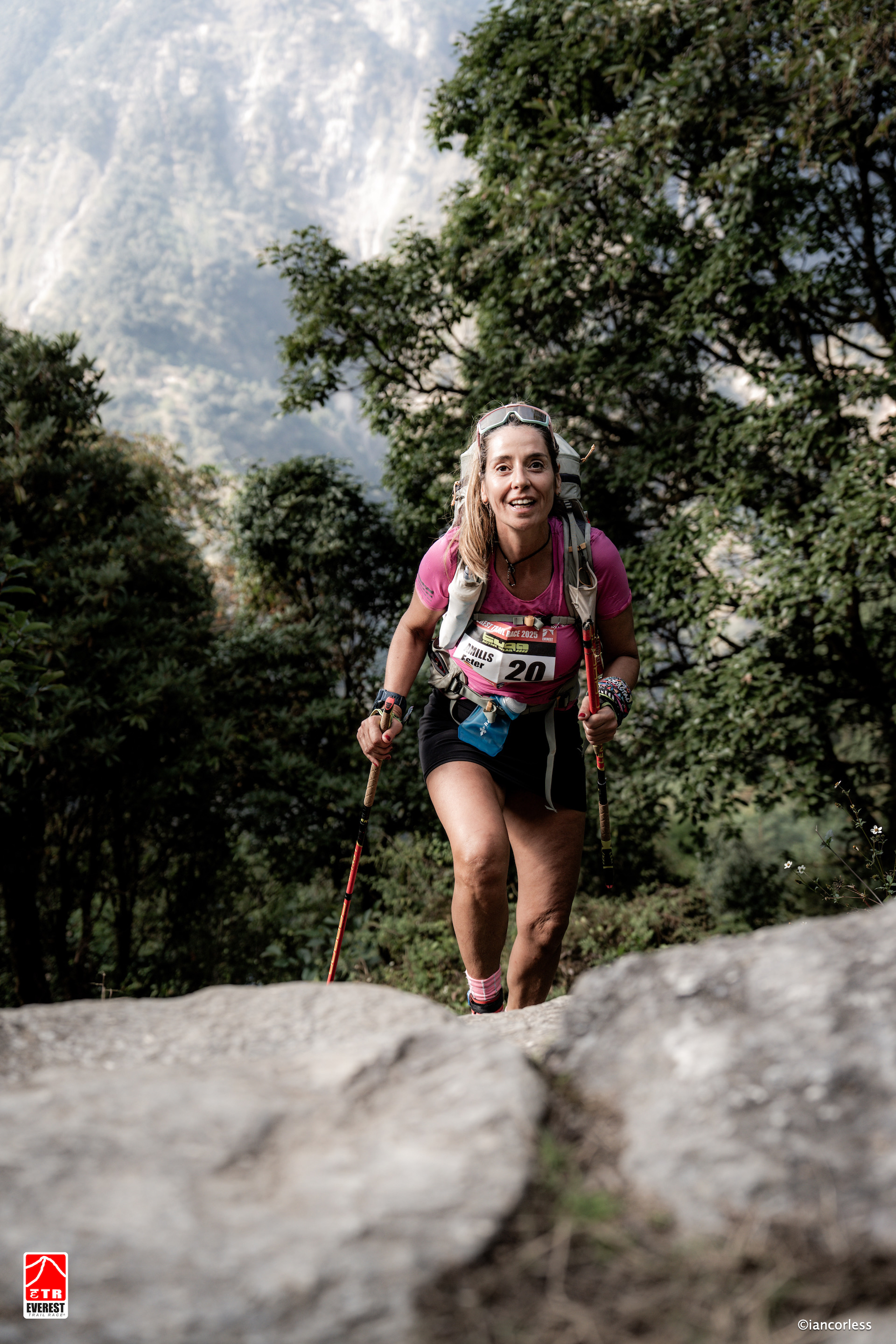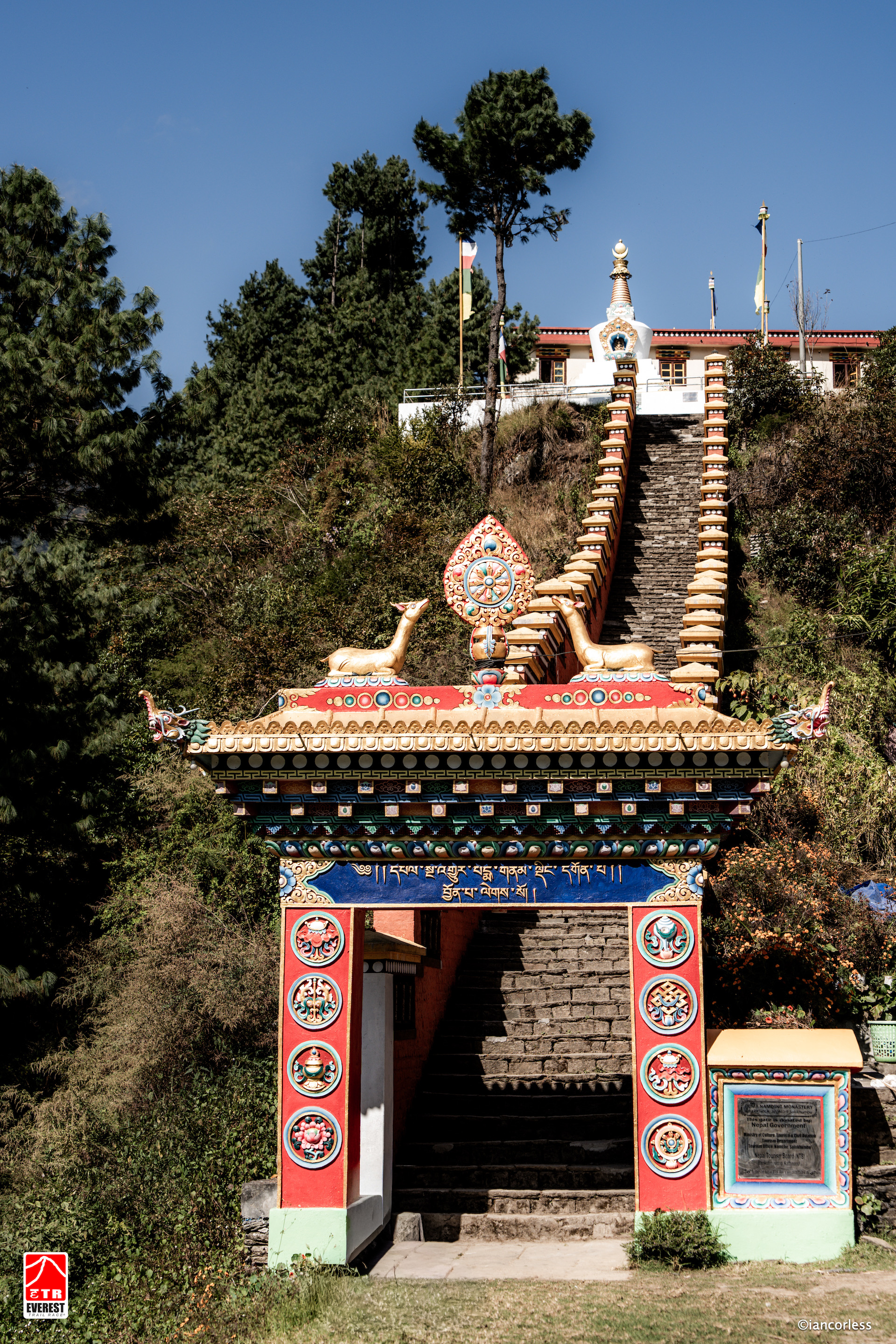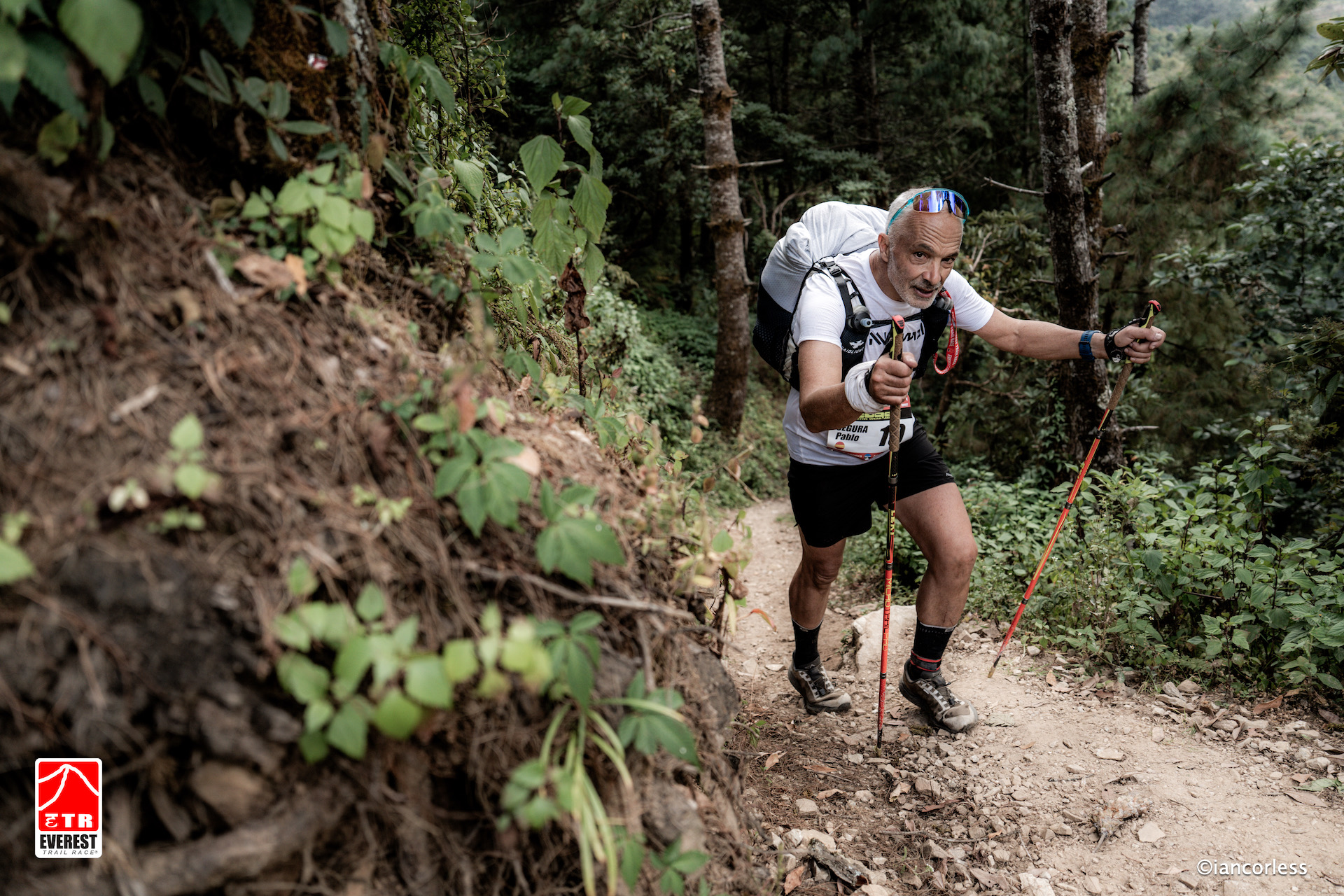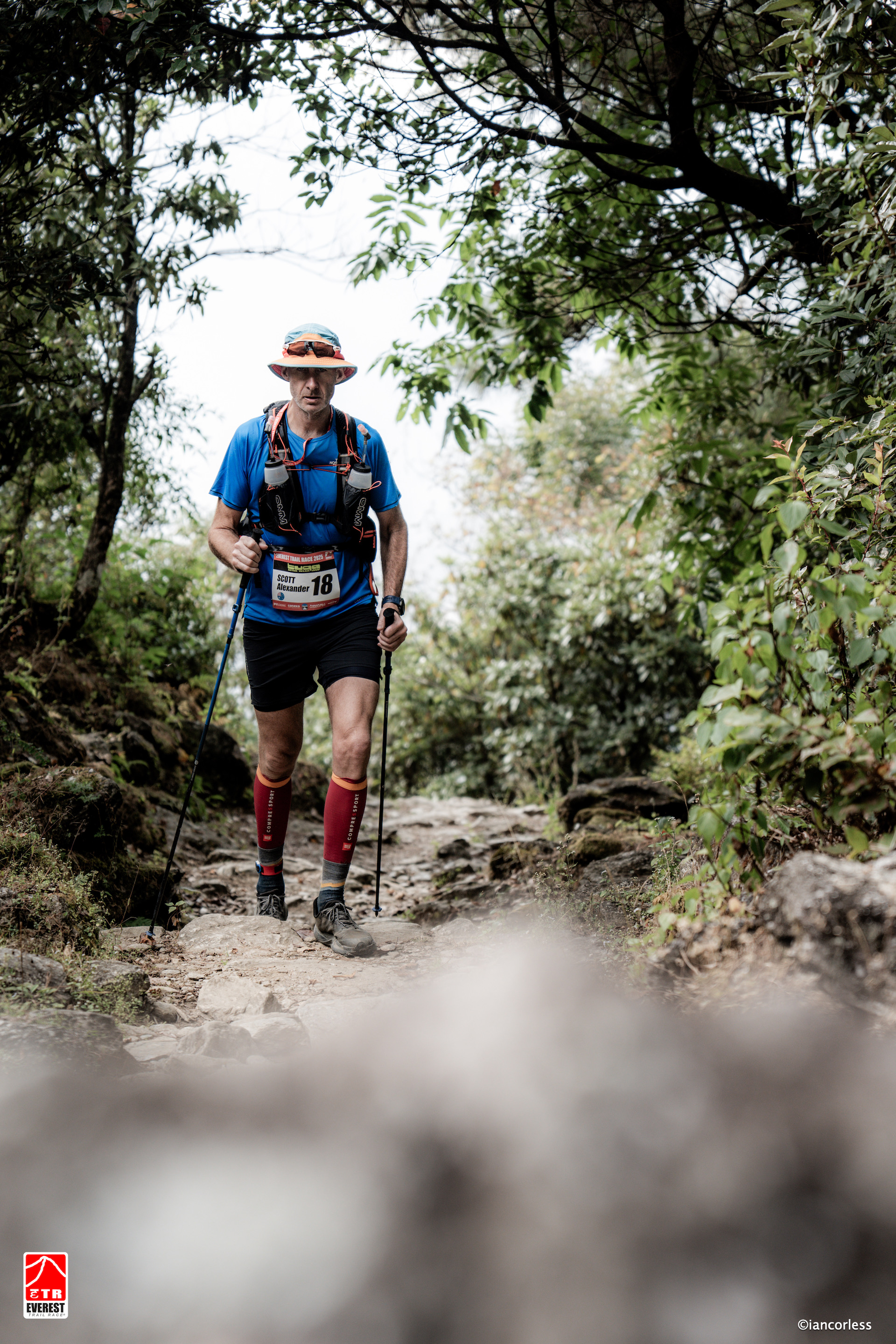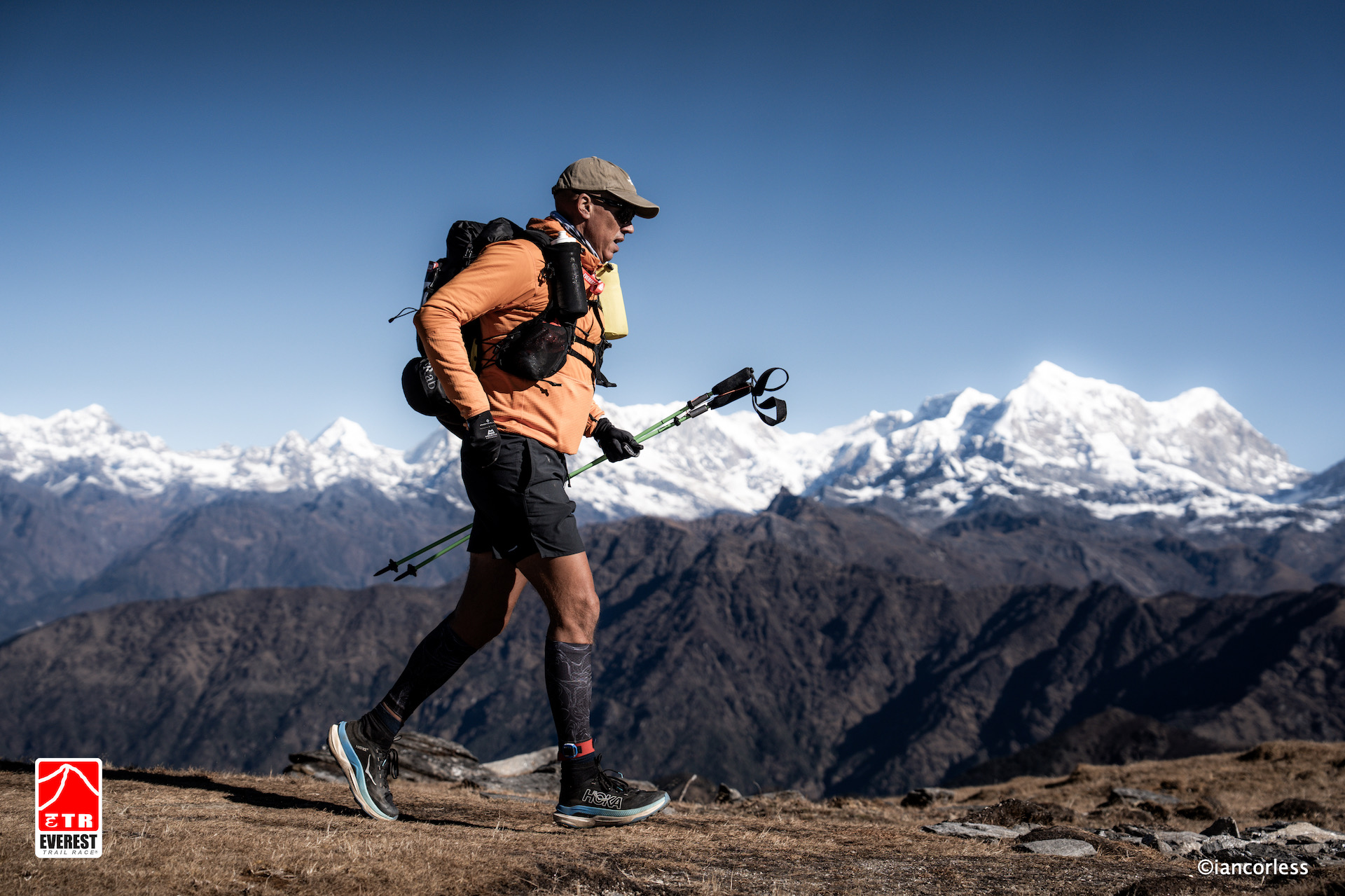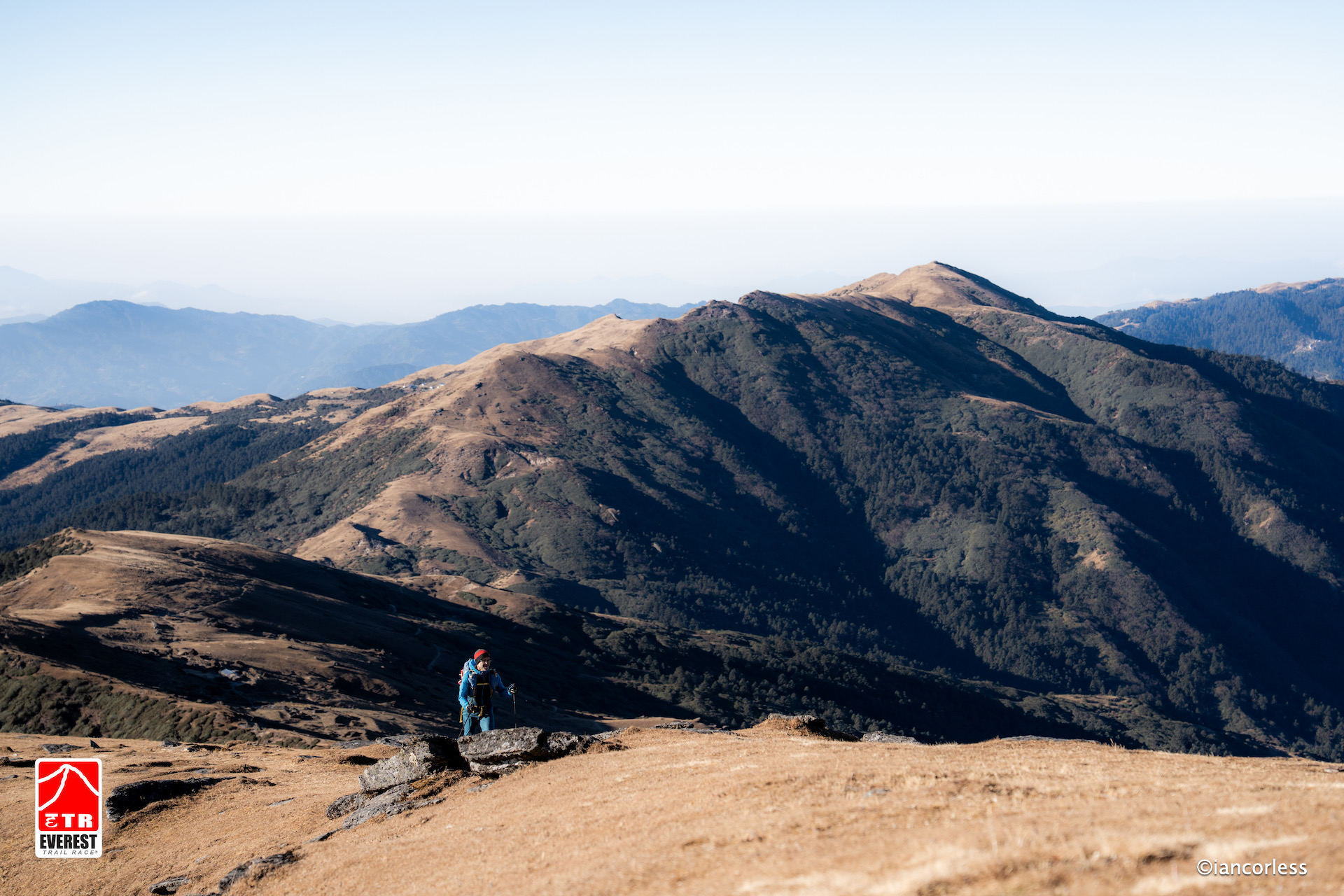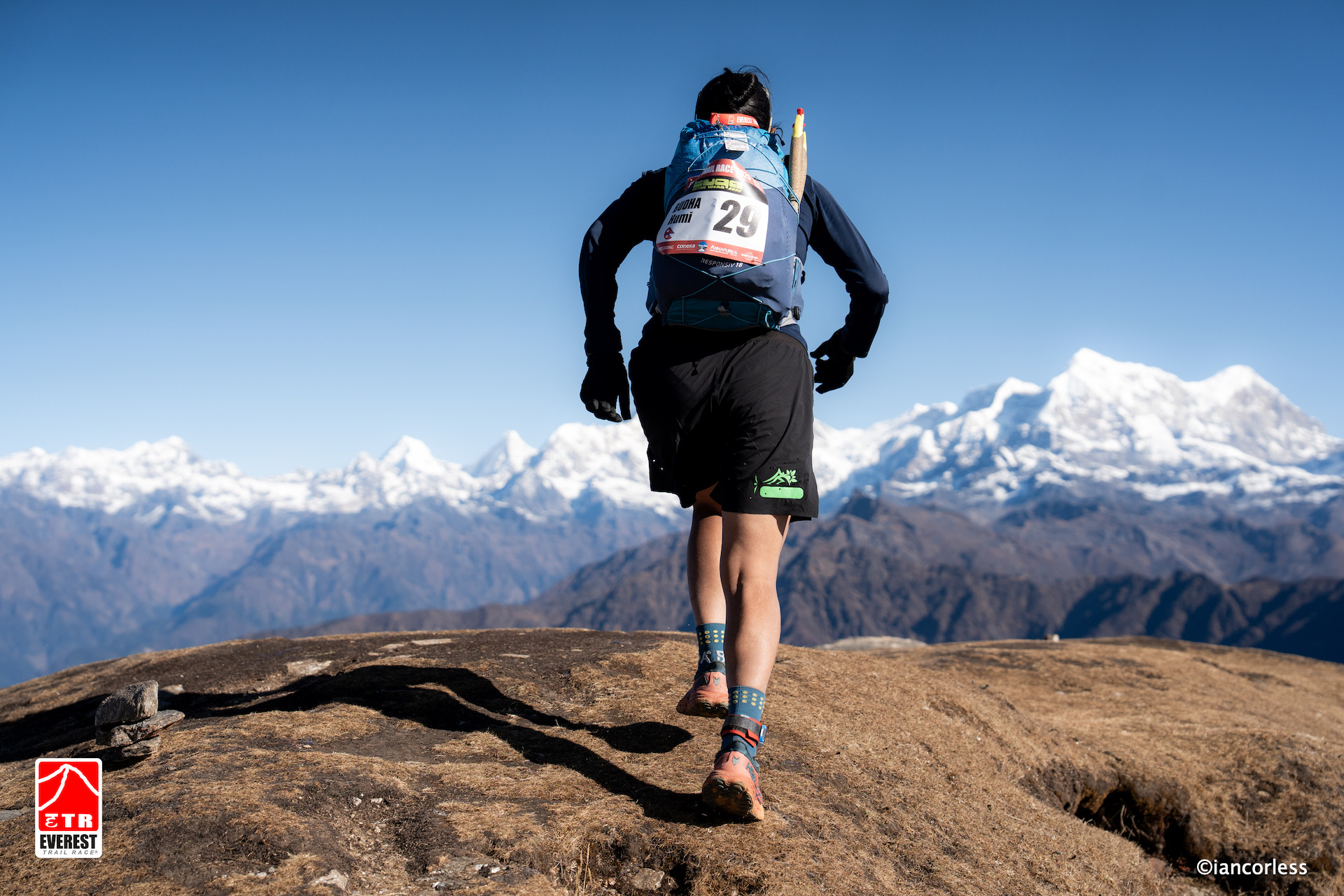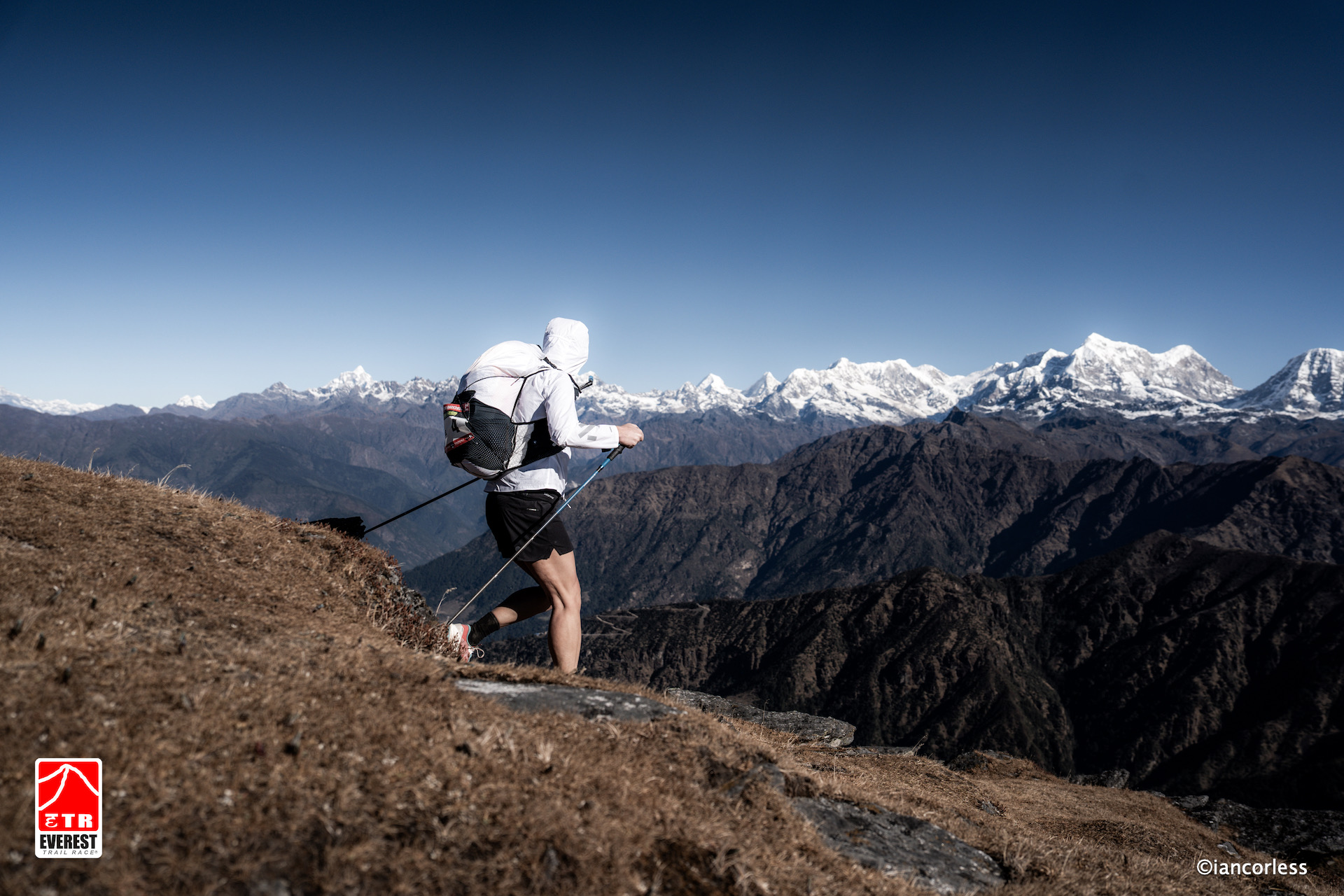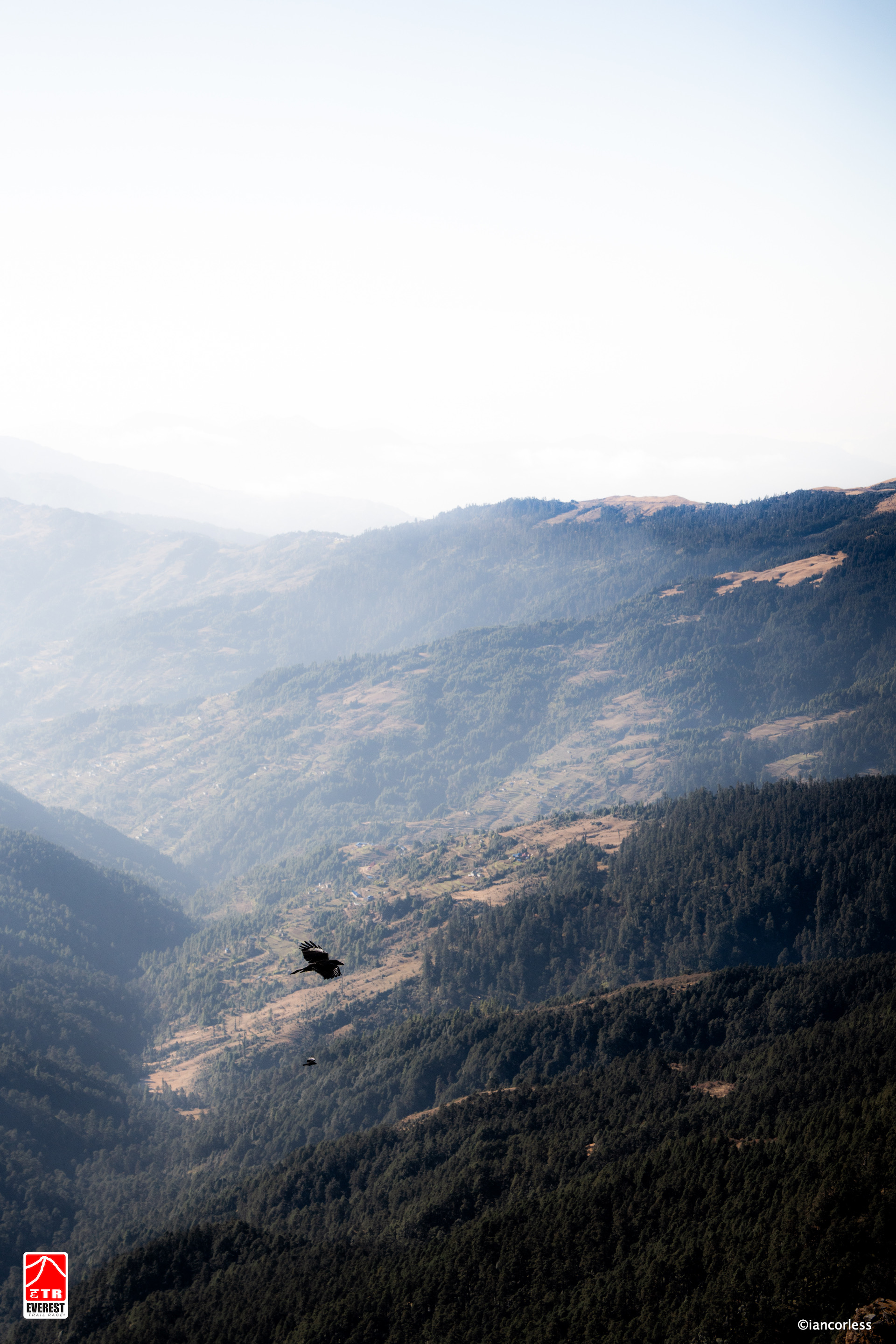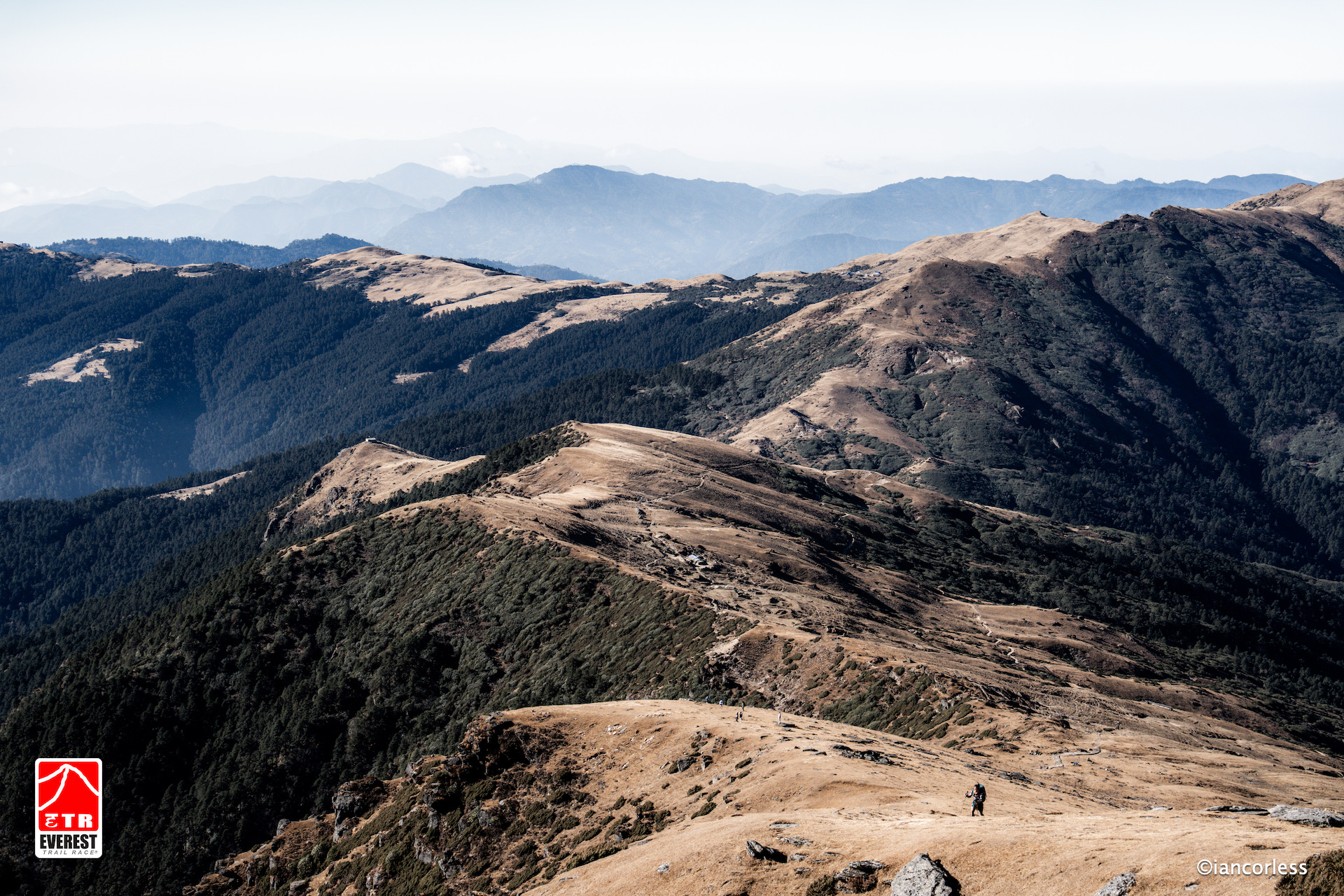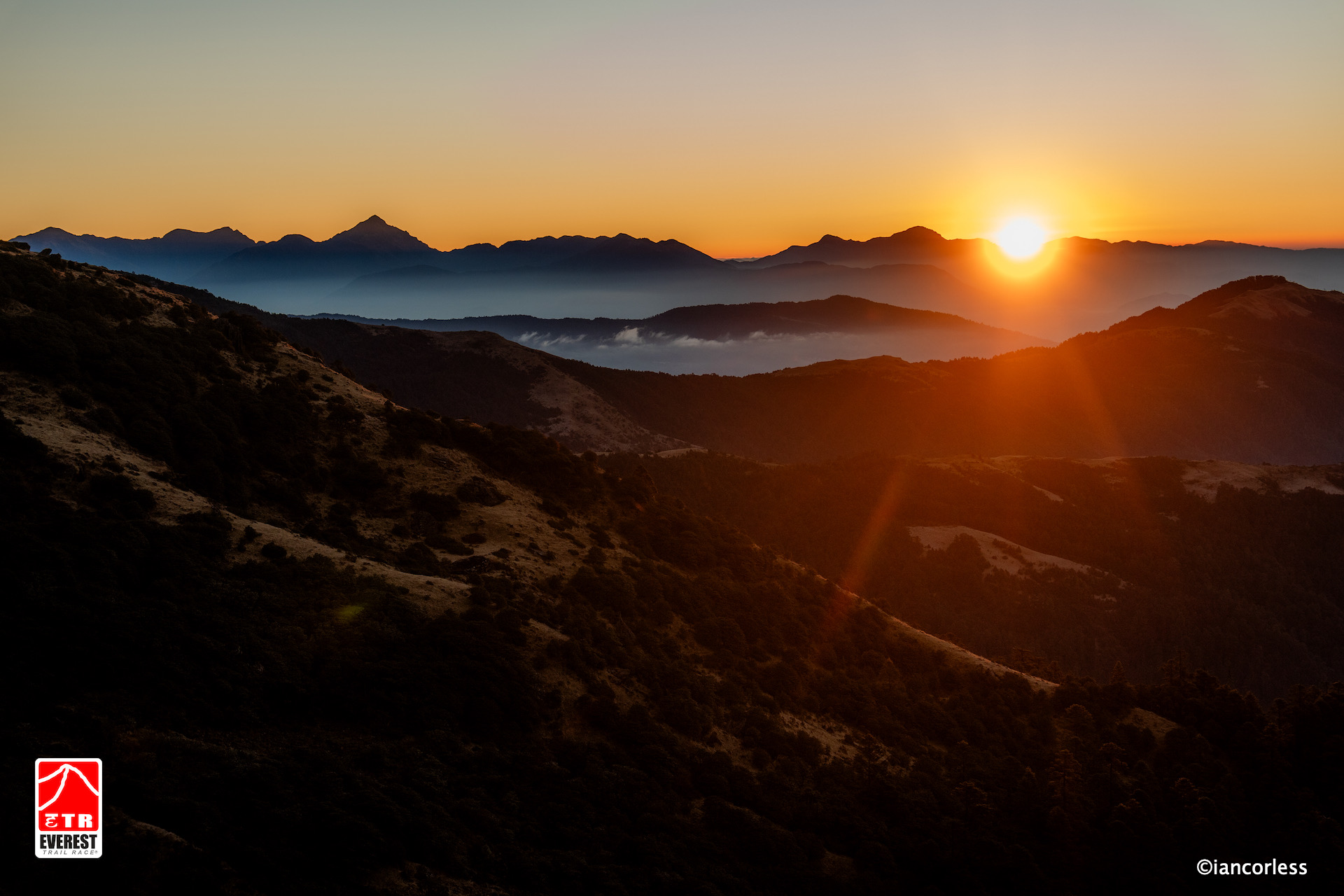
The end is in sight. After five brutal, beautiful days in the high Himalayas, Stage 6 of the 2025 Everest Trail Race delivers the final blow and the final reward. It’s 28.5 kilometres fo Lukla, a day marked by more descent than ascent: 2612 meters down, 1578 meters up, and every single step earned.
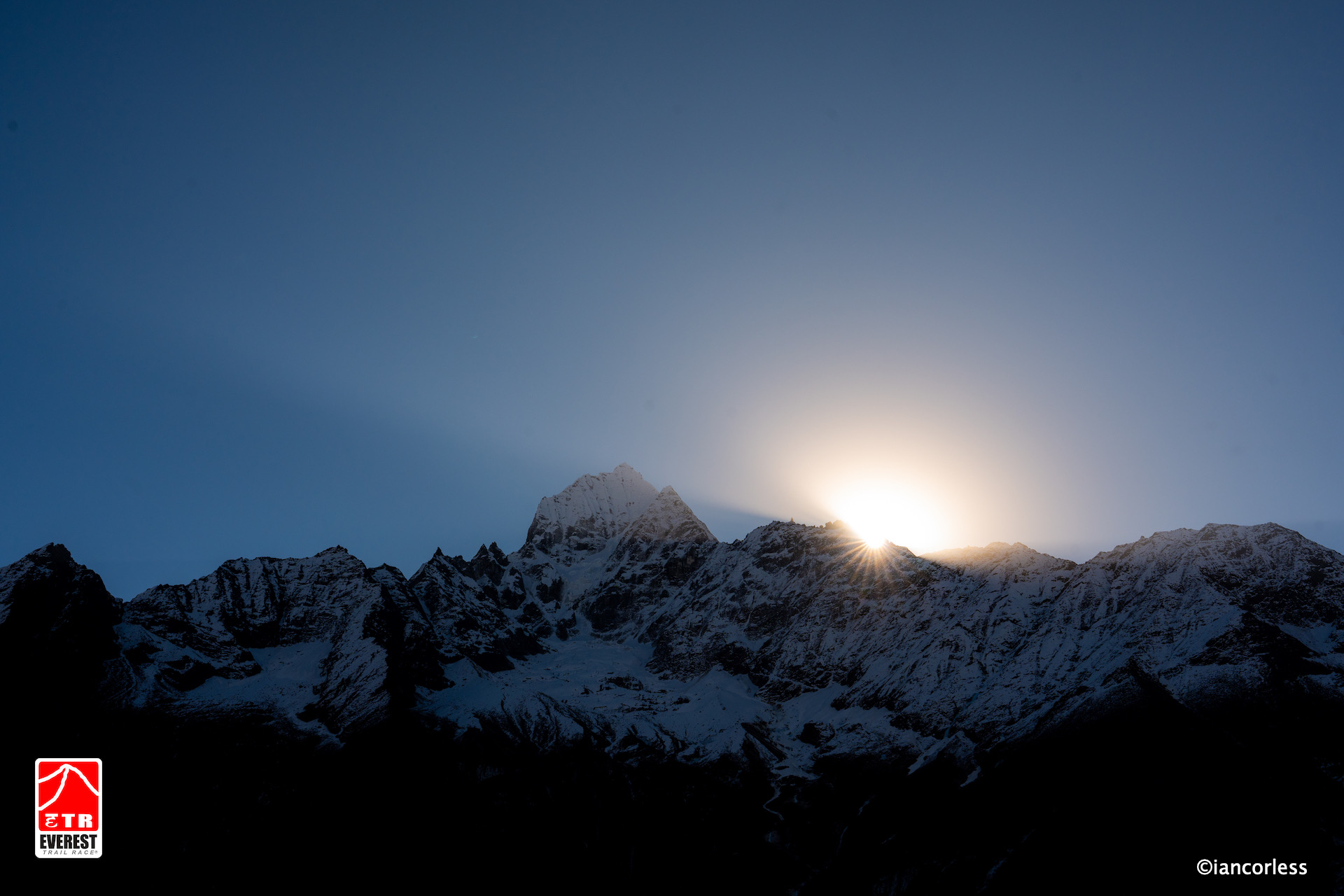
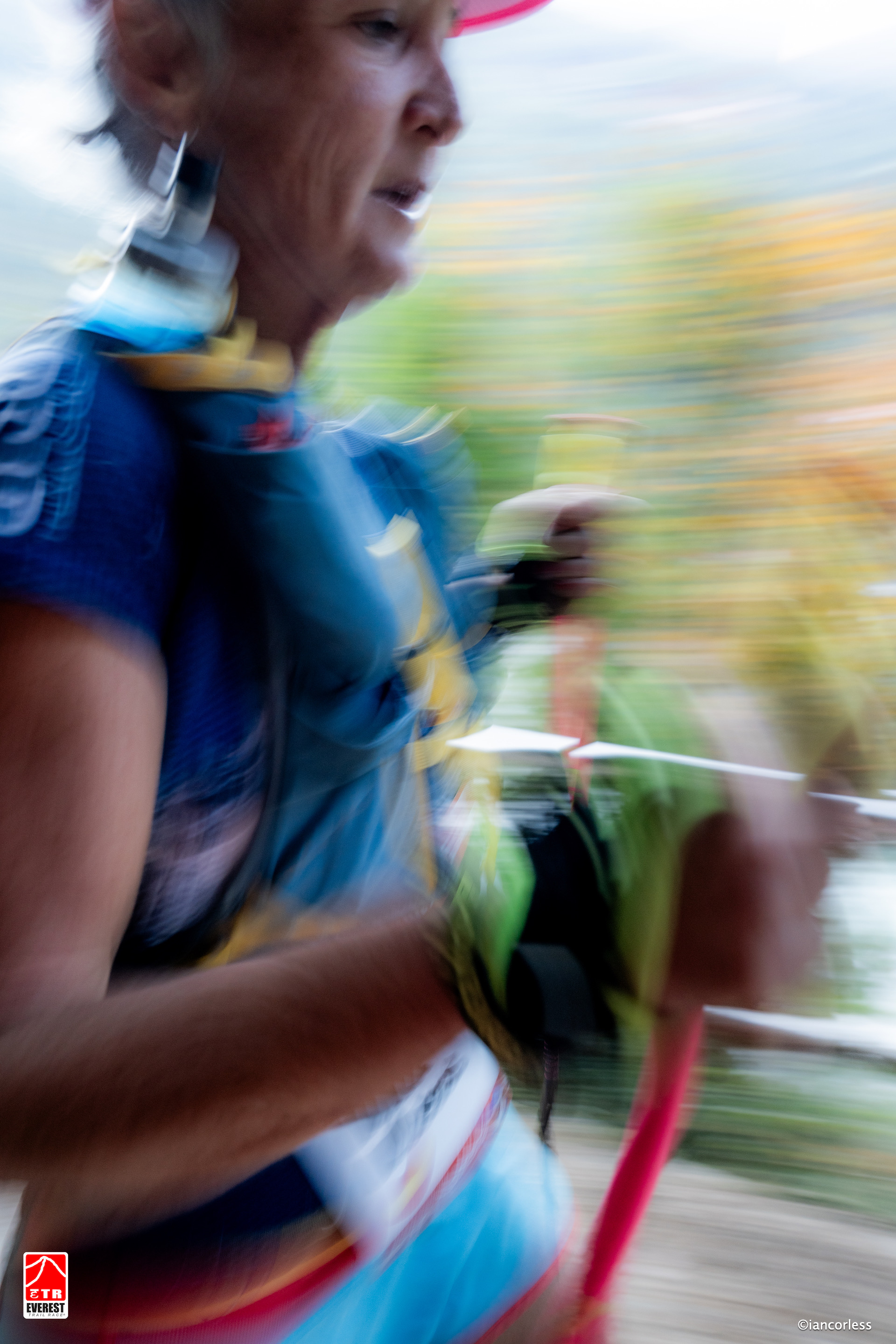
An early start, the arrival of the sun and soon, the heat will come – not only in the sky but with the bodies of each participant.
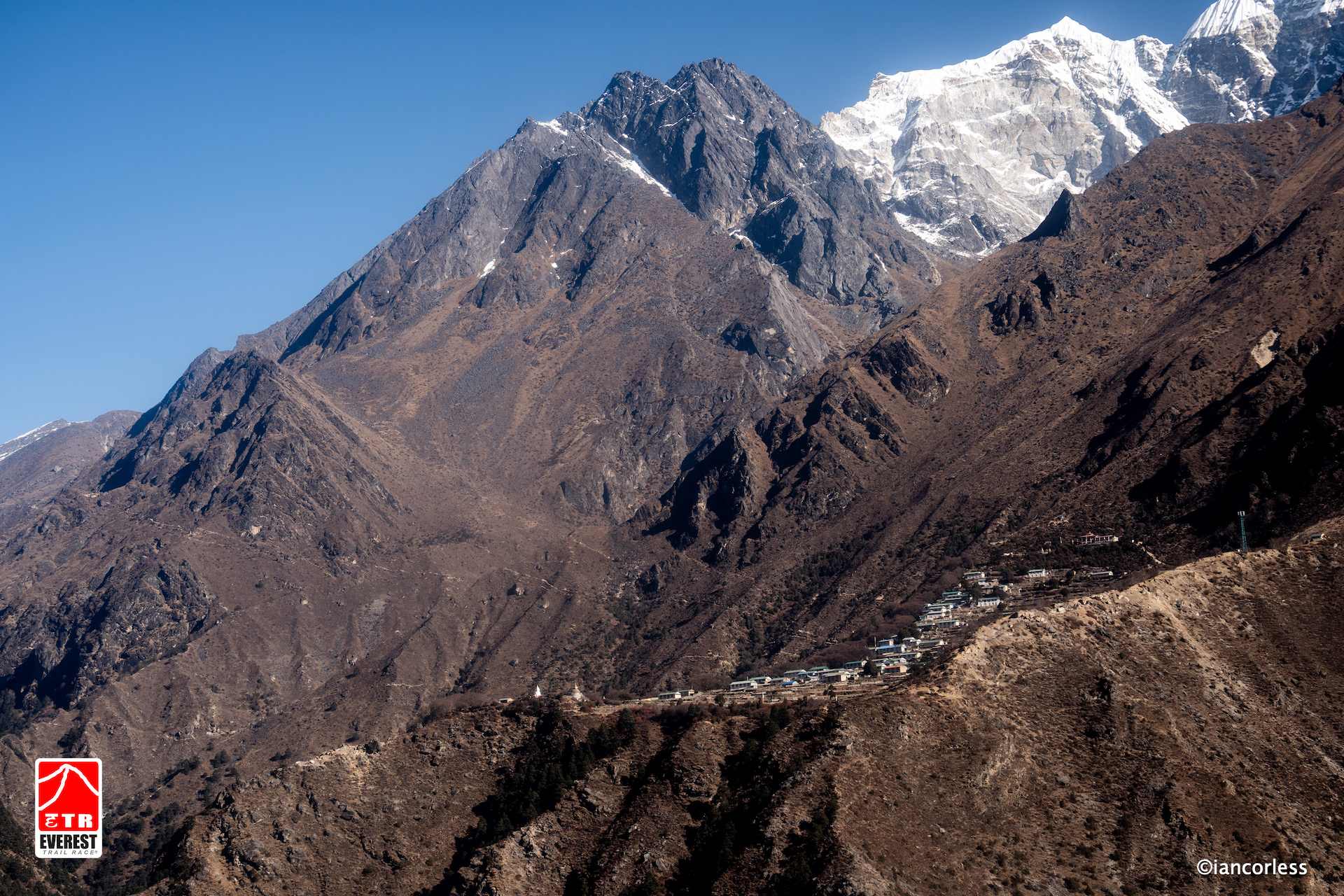
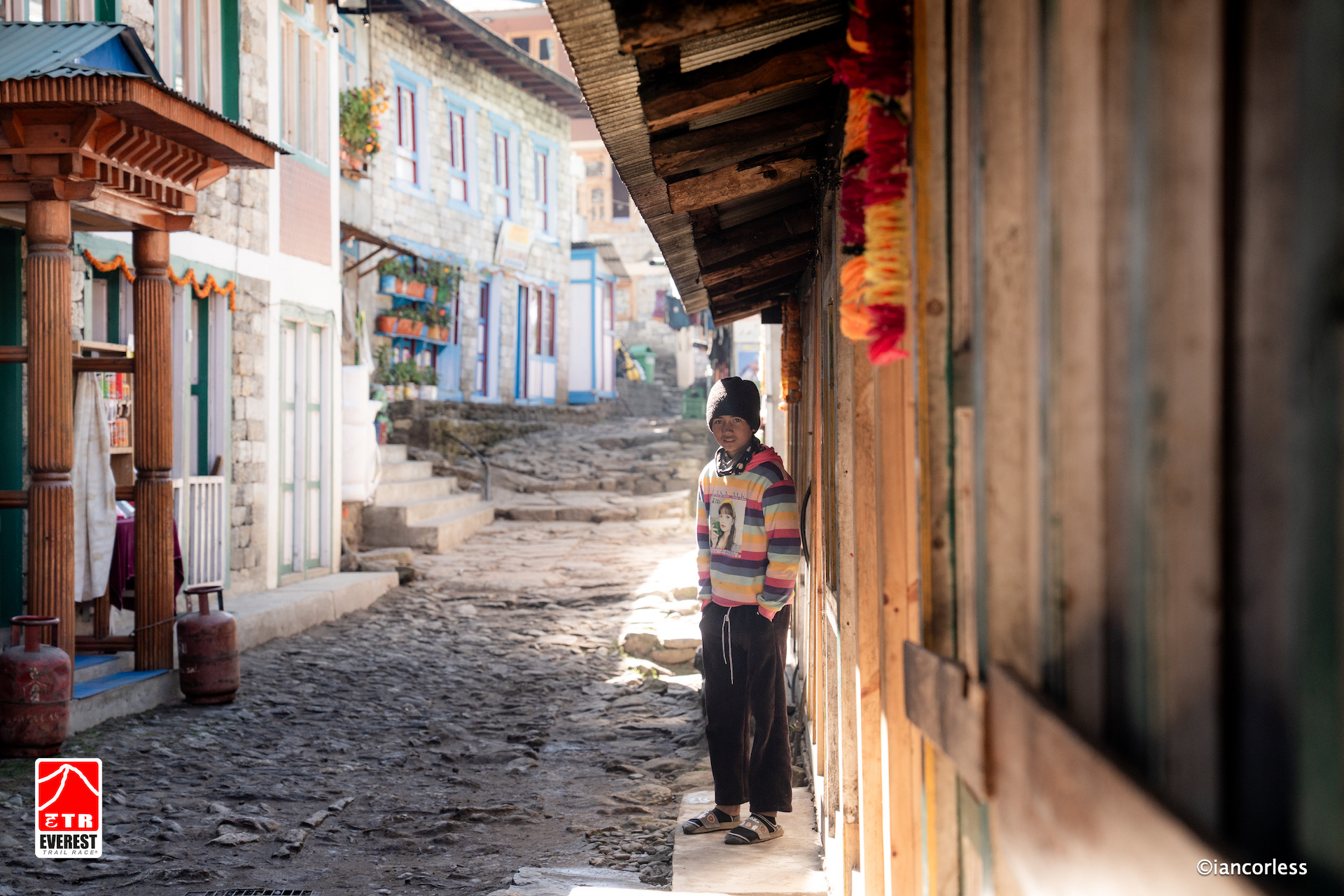
The day kicks off with iconic trails that weave from Stupa to Stupa to Namche Bazaar, the buzzing Sherpa hub perched on the mountainside like a fortress.
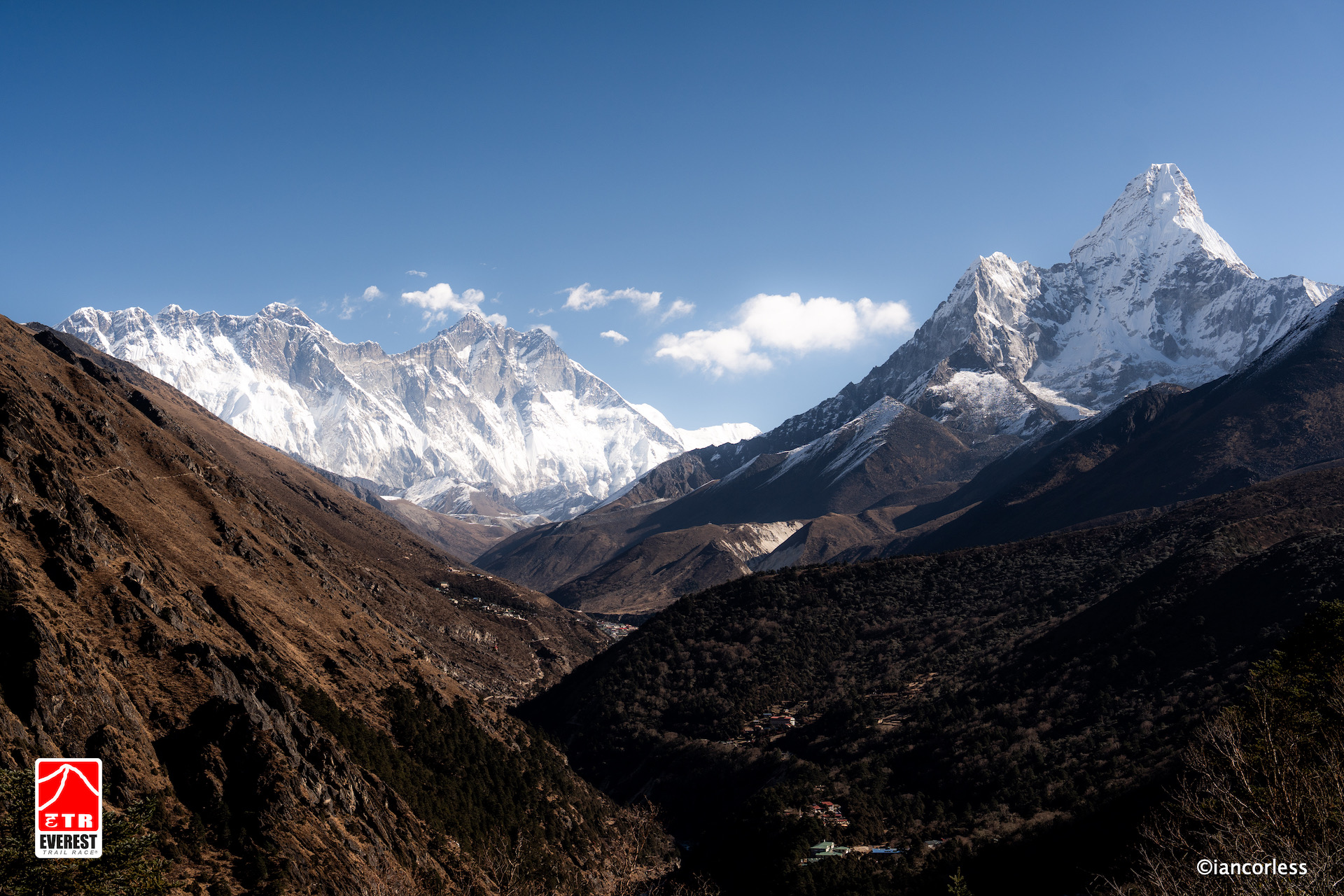
The backdrop behind, stunning, but the participants don’t get a chance to see it…
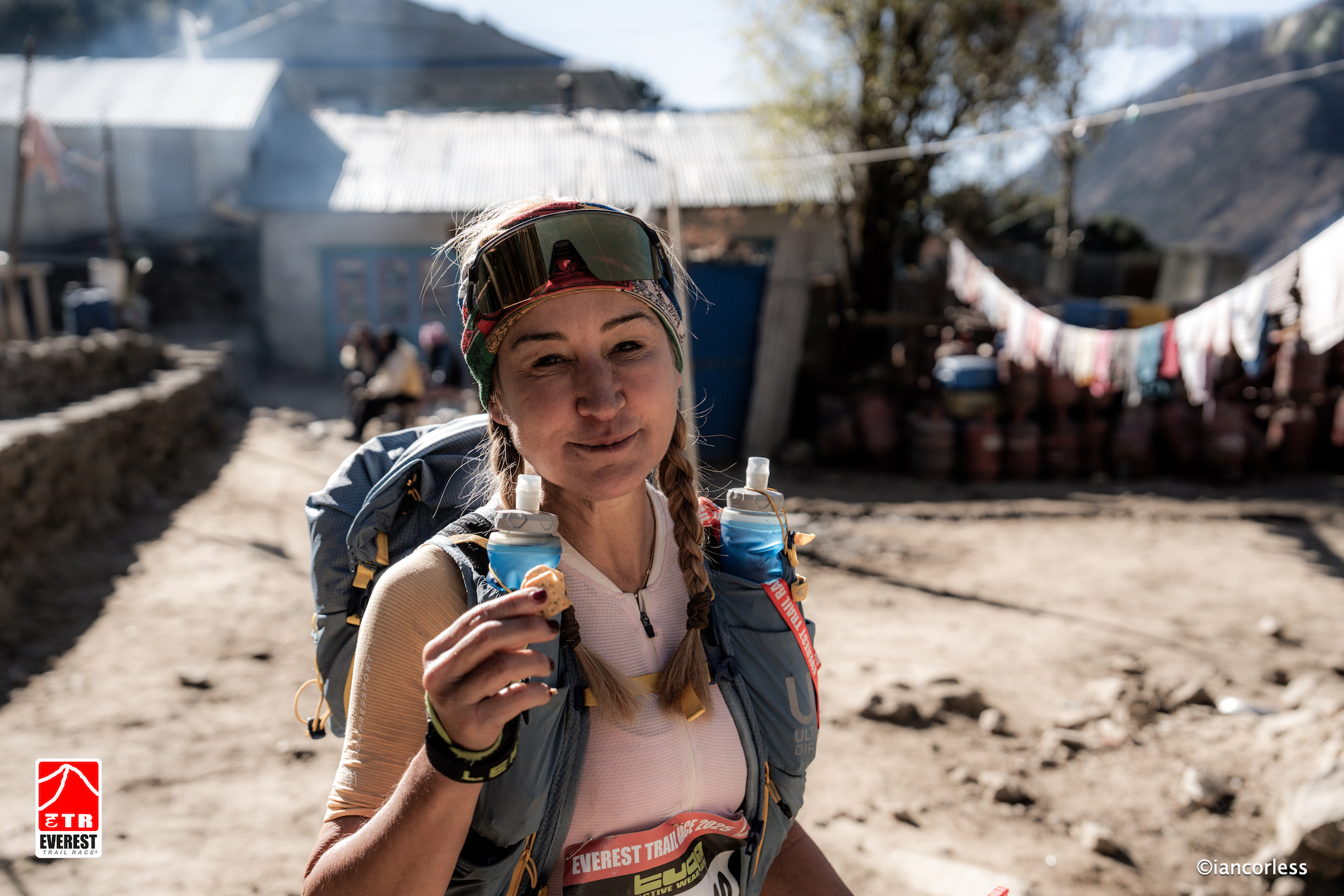
Namche brings checkpoint 1, it’s welcome, the early kilometres had worked the body hard with a steep descent, followed by a gentle climb and then an ‘easy’ run to the refreshment.
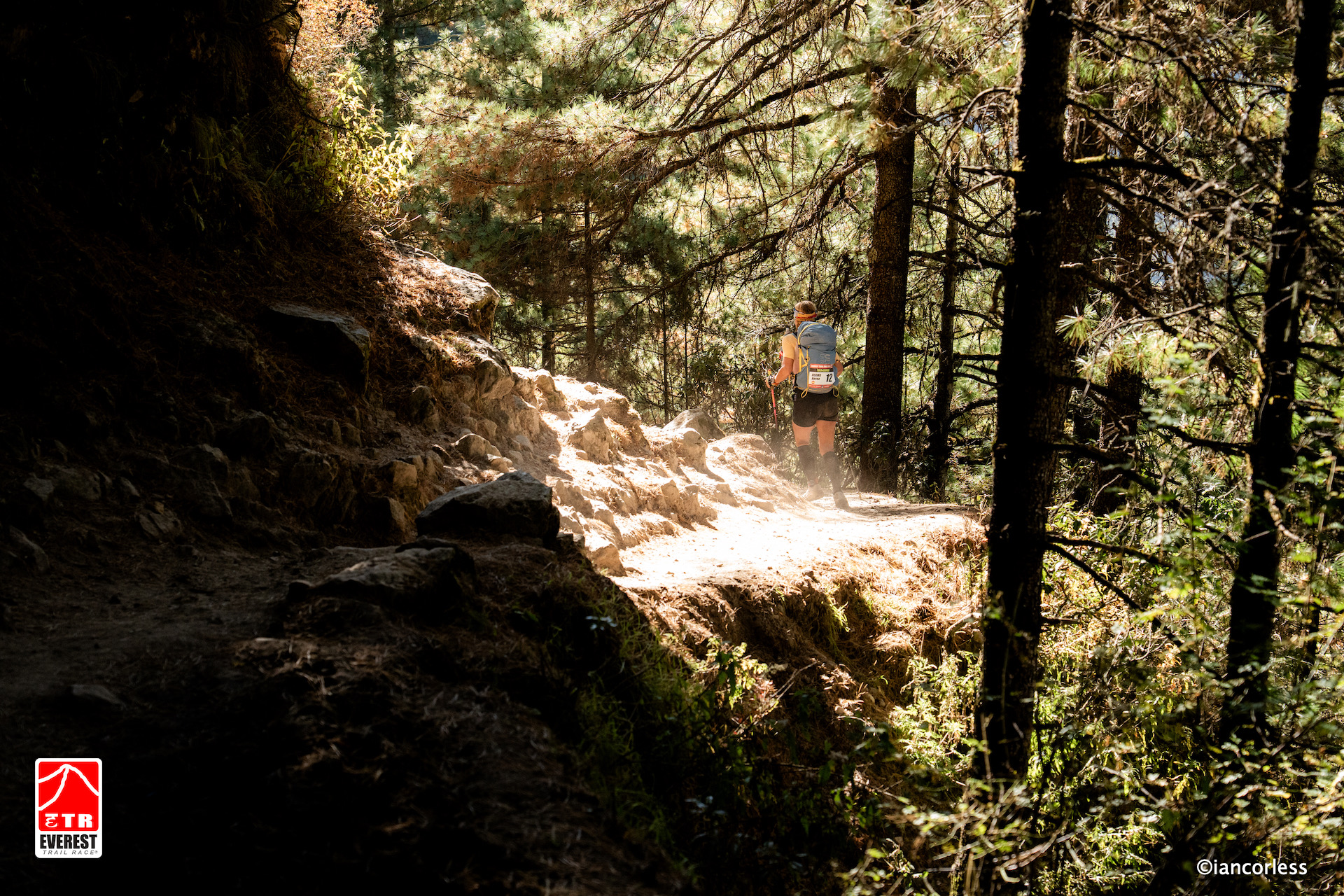
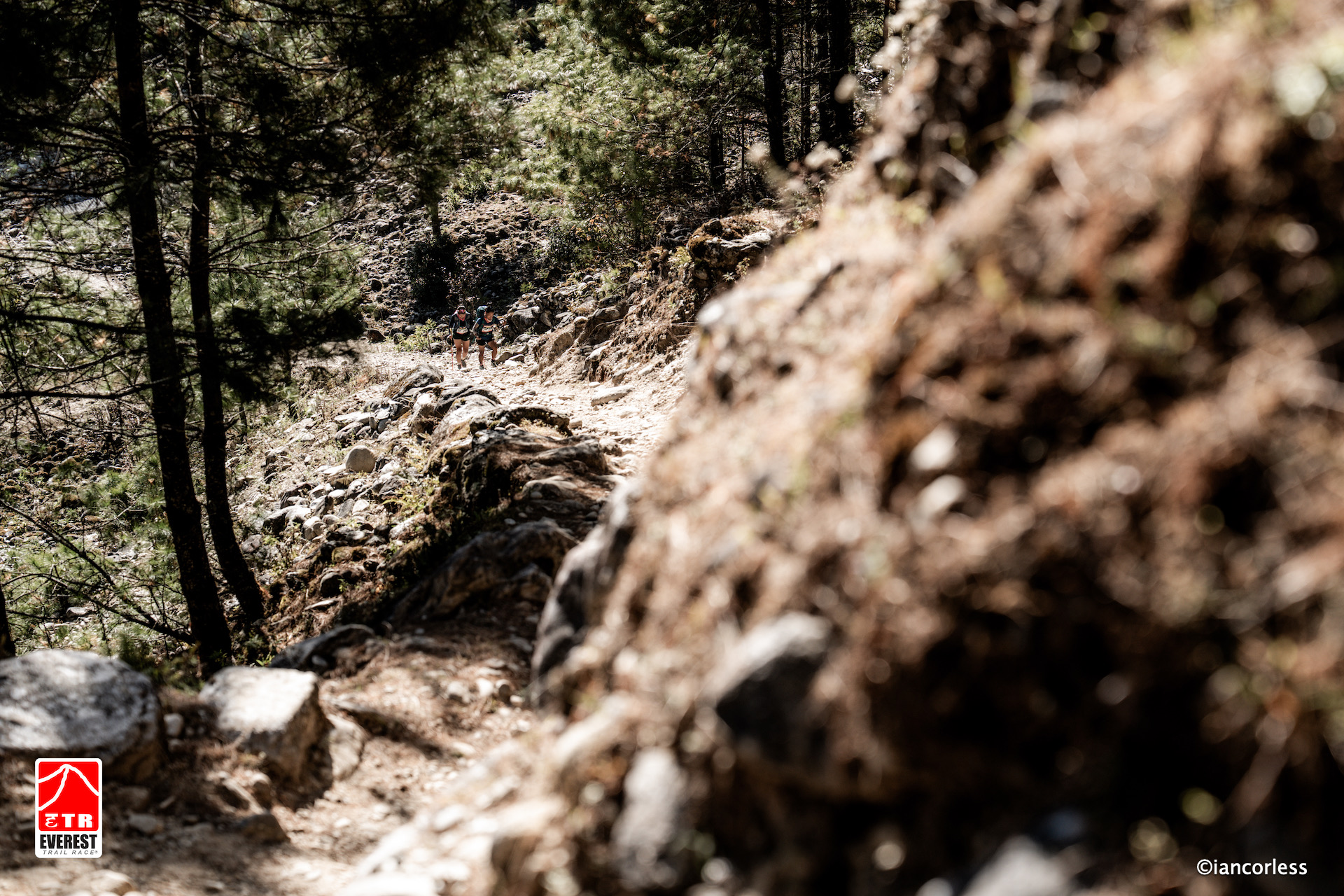
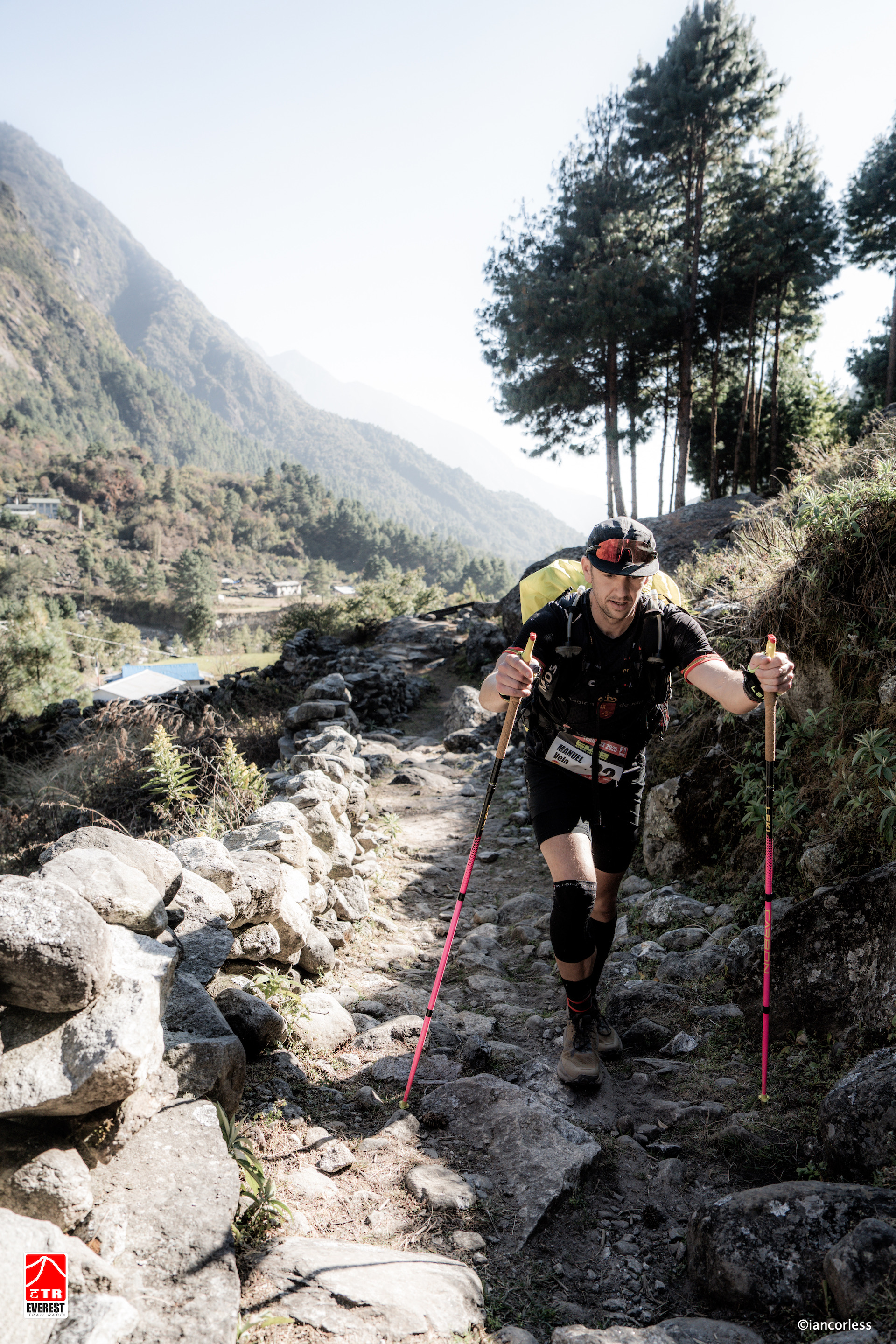
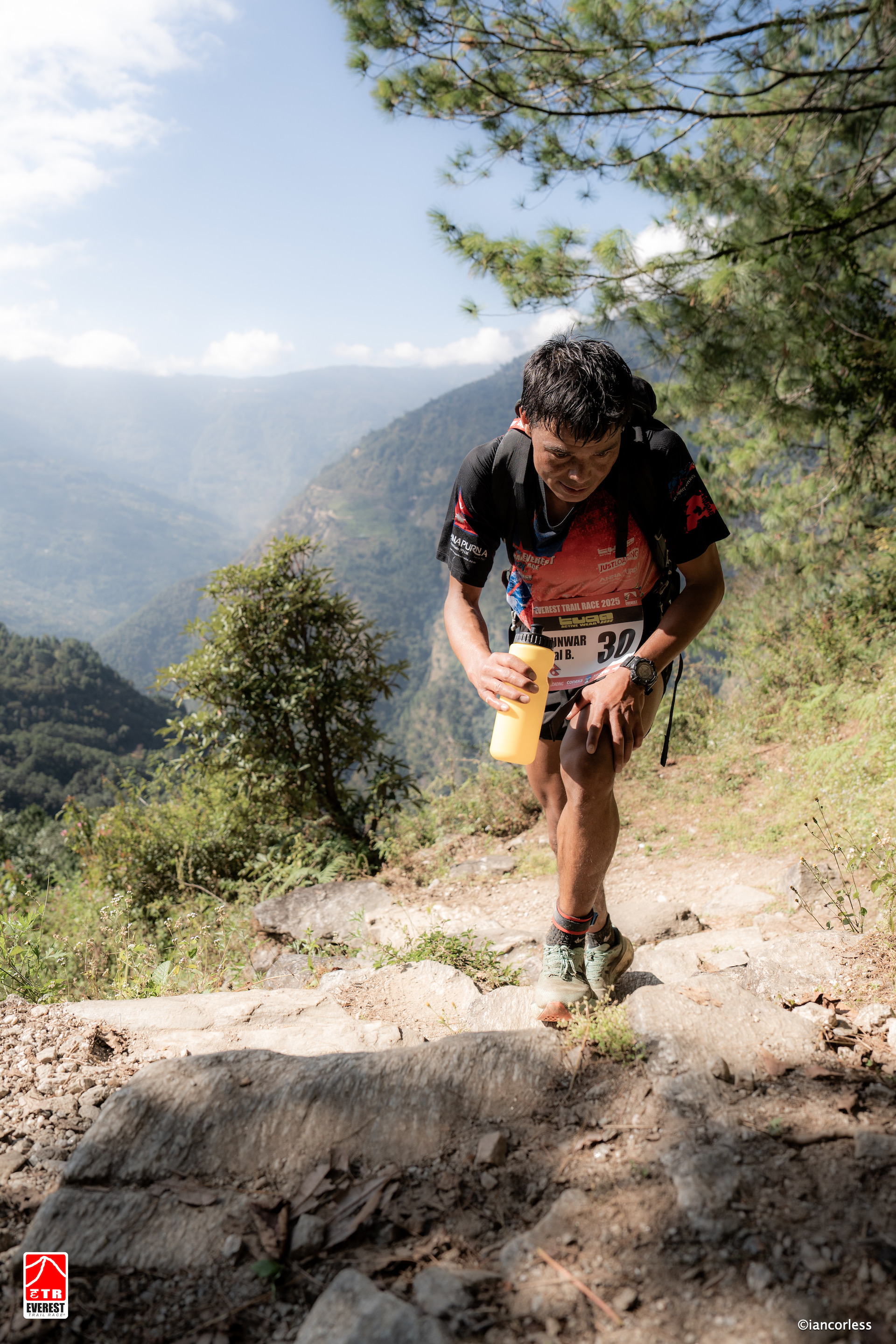
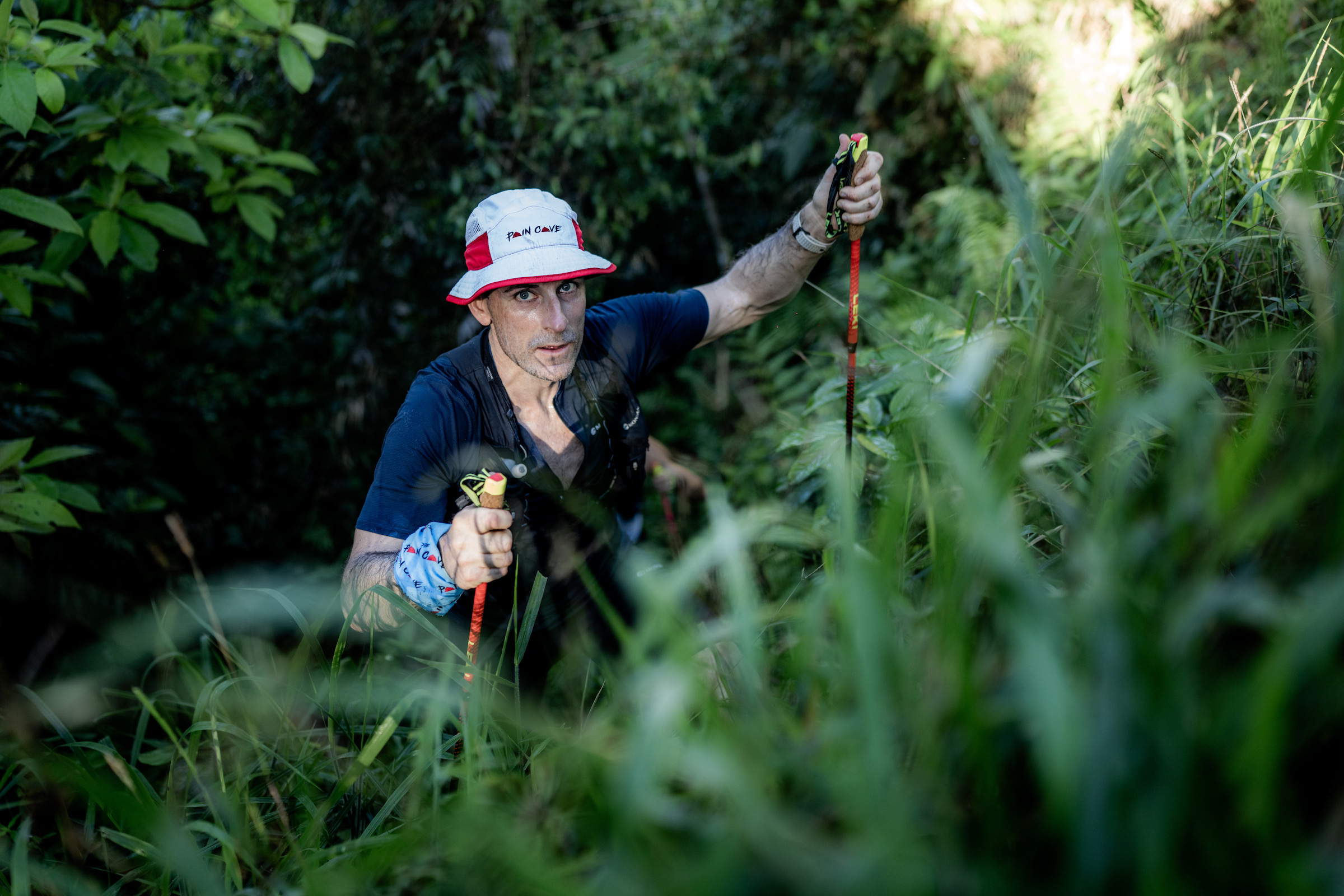
The early kilometers retrace some familiar ground – Sanasa, Phunki Tenga, and trails edged with mani stones and prayer flags, twisting through pine forests and clinging to cliffs. But don’t call it a repeat. The fatigue, the altitude, and the stakes make every step feel different.
This stage is less about vertical brutality and more about holding form, keeping control as the trail drops fast and hard. Quads burn, knees scream, but momentum is everything.
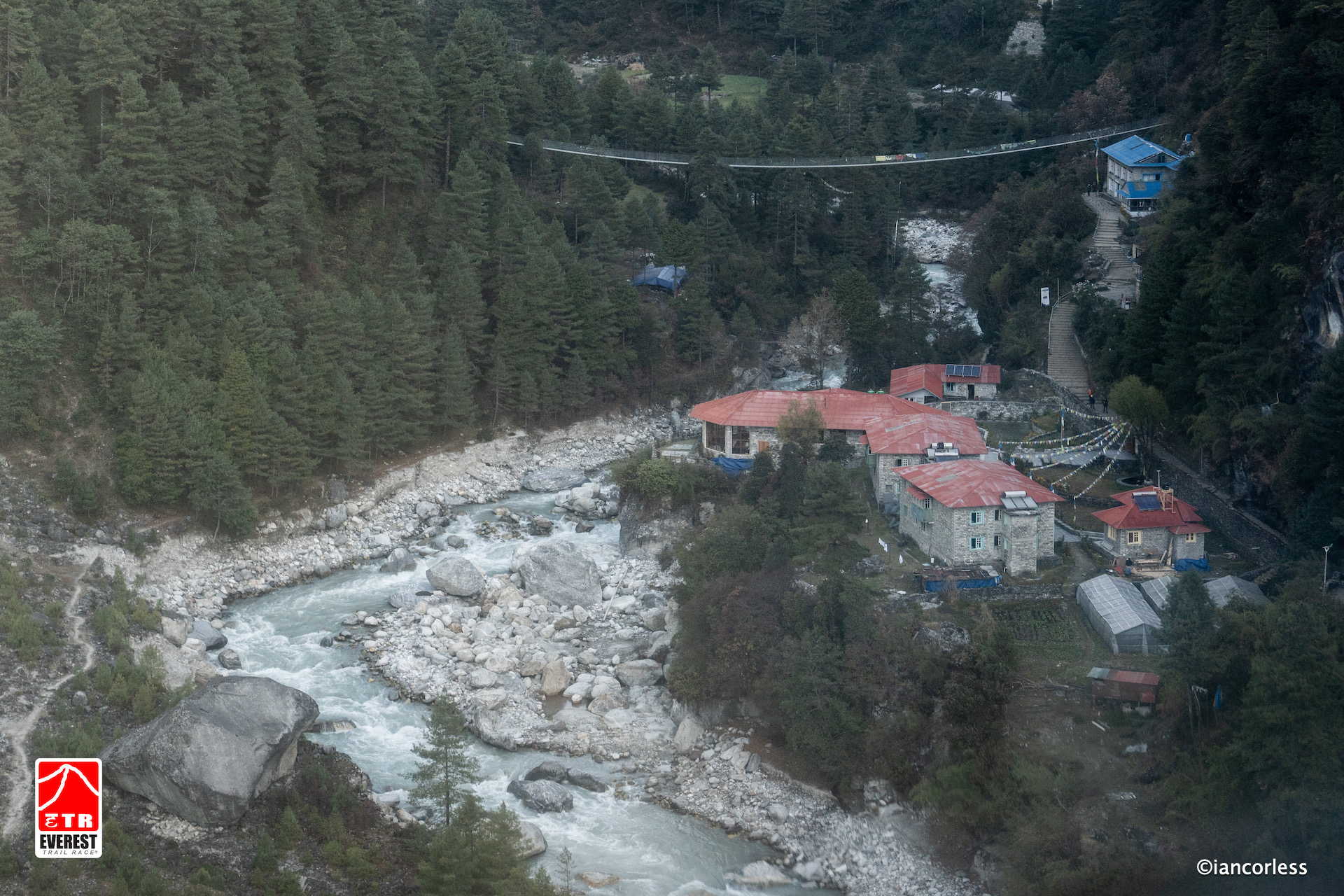
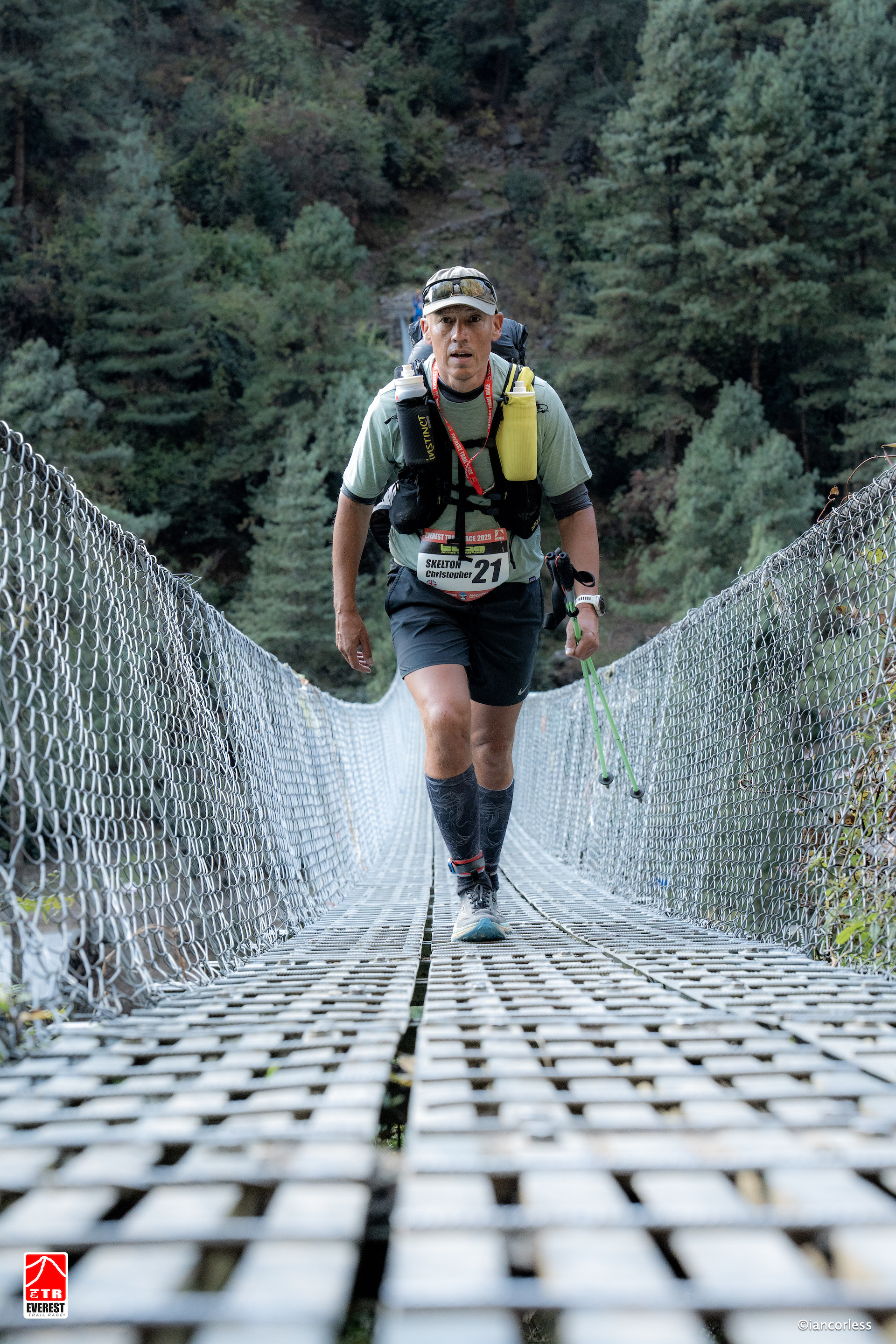
Soon, the trail funnels runners toward the legendary new Hillary Bridge – a sweeping, high-tension crossing that swings over the Dudh Kosi with views that could stop you in your tracks, if the clock wasn’t ticking.
Past the bridge, it’s Jorsale, where the race starts to feel like it’s dragging runners home. The Phakding checkpoint (CP2) marks another milestone, each bib scanned there is one step closer to Everest Trail Race glory.
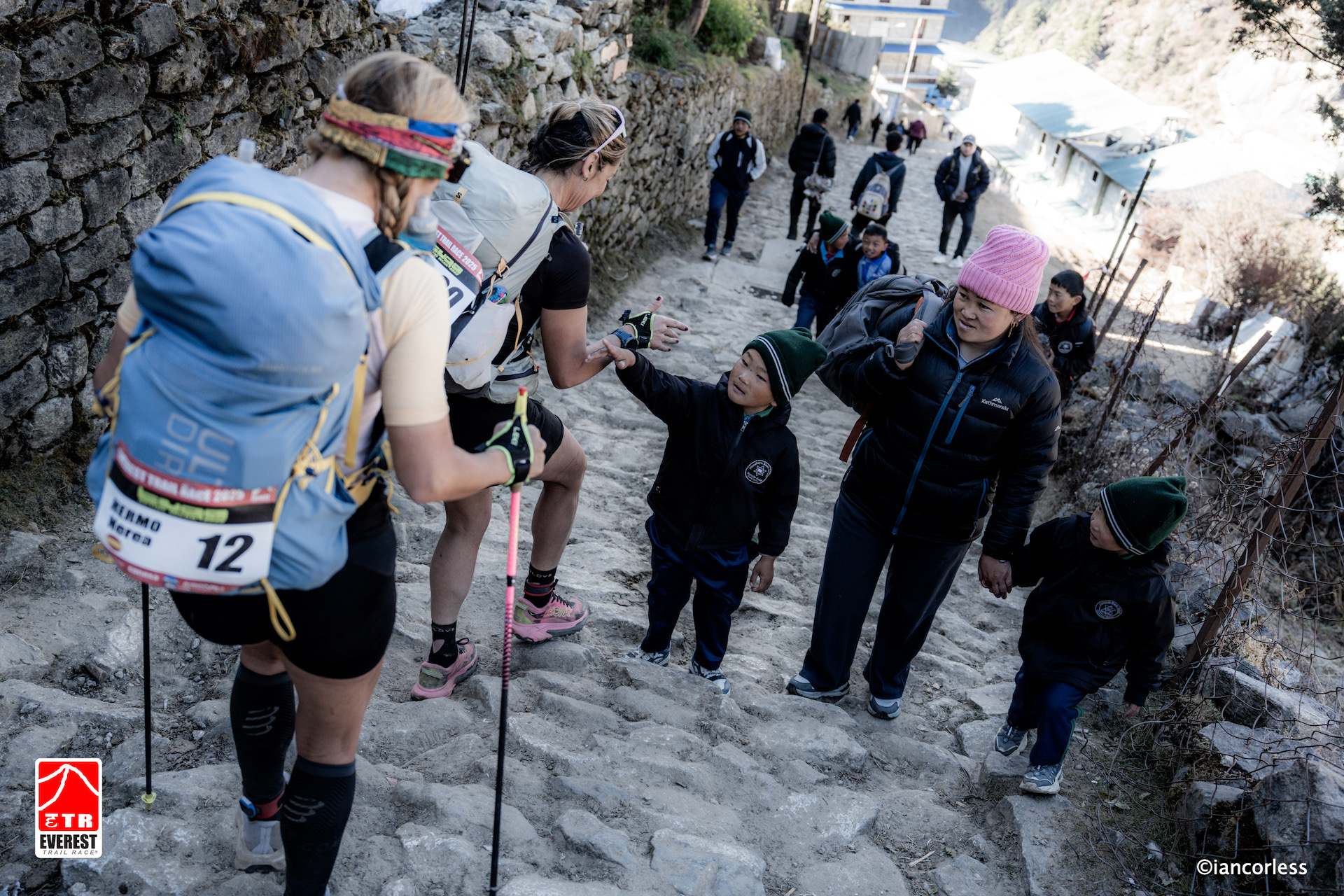
By the time runners hit Cheplung, it’s all on the table. Here, a sharp left turn signals the endgame: the final climb to Lukla and oce again, Nepal and the Porters remind us, how lucky we are!
It’s not long, but it bites. After the day’s long descent, this uphill kick demands whatever strength is left in the tank. Runners grit teeth, dig deep, and push toward the town that marks the start of most Everest dreams, and now, the finish of this one.
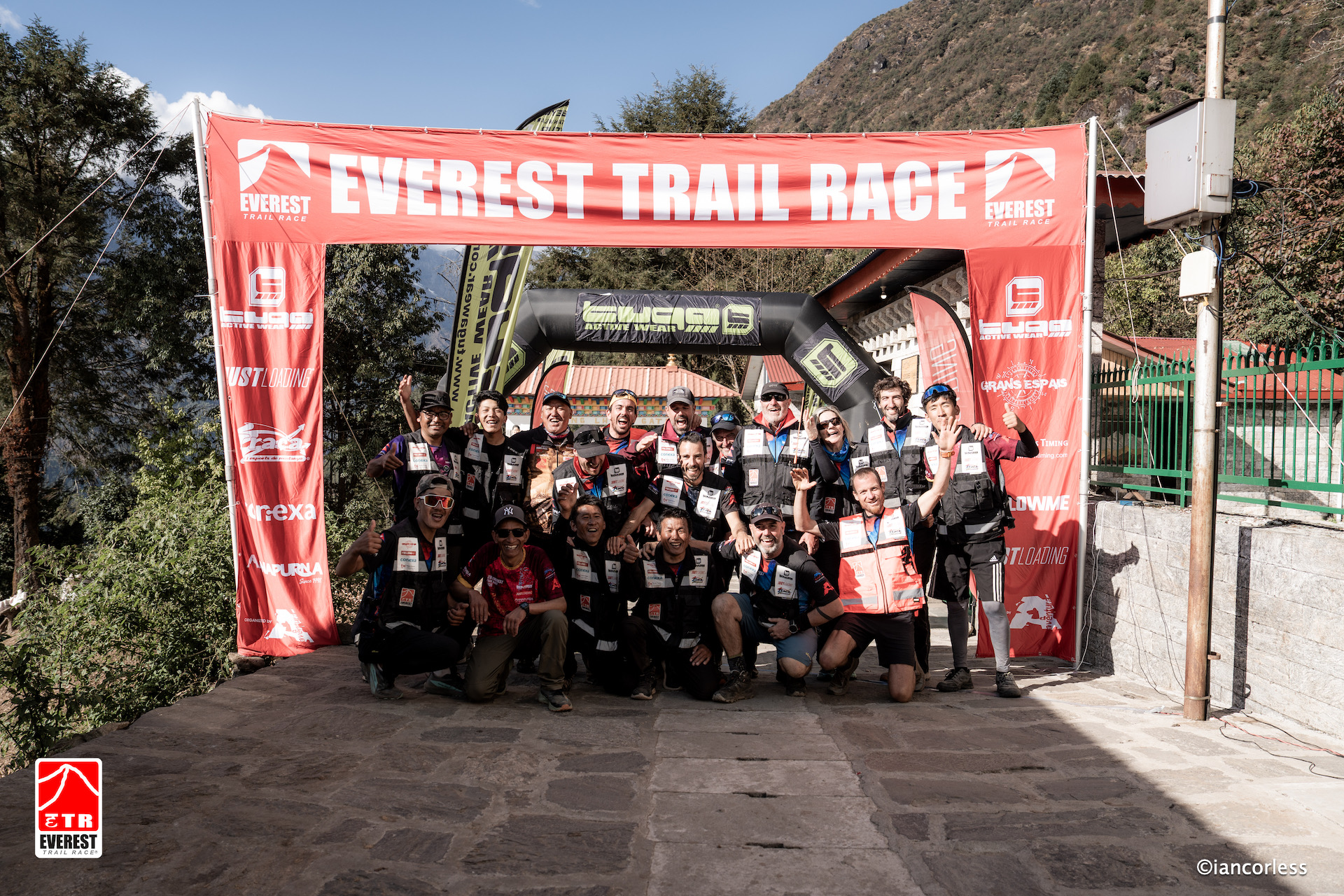
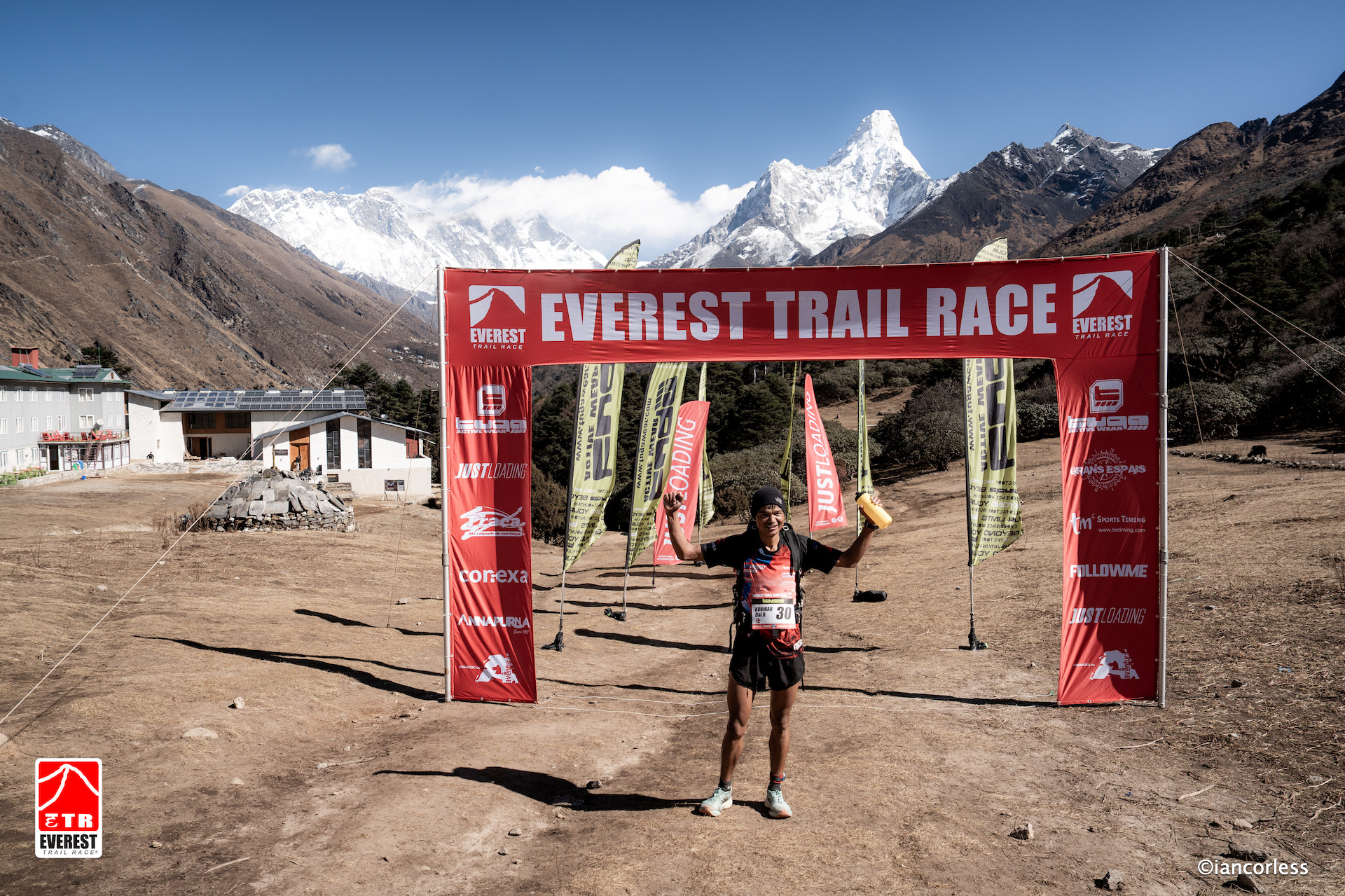
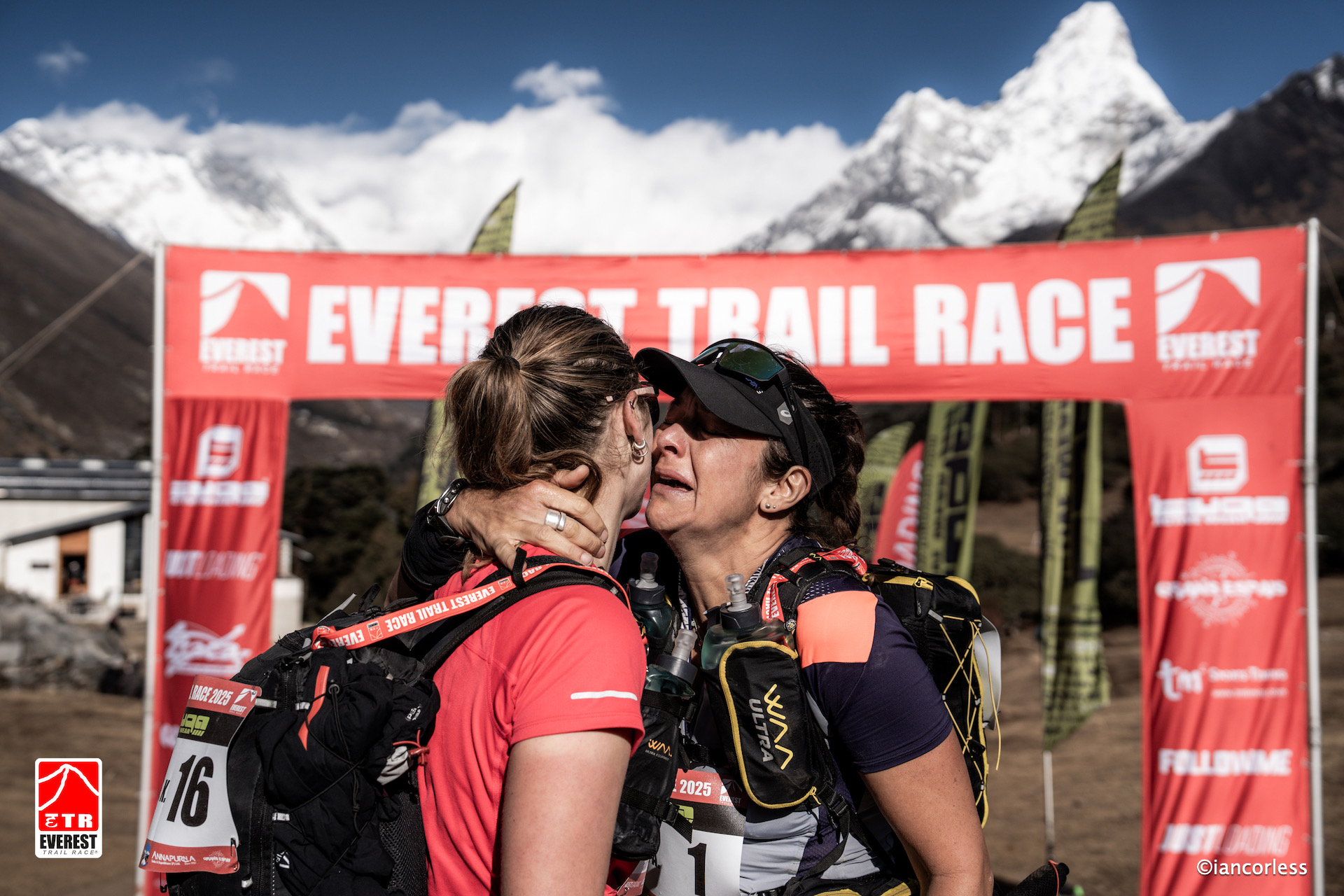
Crossing into Lukla is like breaking through into another world. Crowds, bells, cheers, and tears—this is where it all ends. For some, it’s a triumphant sprint. For others, a silent, emotional walk over the line. But for everyone, it’s the culmination of six days of relentless racing through some of the world’s toughest terrain.
The 2025 Everest Trail Race is done, everyone earned more than a medal, they earned the mountain’s respect.
Stage 5 of the Everest Trail Race pulls no punches. At 24km with a punishing 2,483 meters of ascent, this is the stage that earns its reputation as the toughest of them all. The numbers alone are intimidating, but it’s the relentless terrain and shifting altitude that test runners on every level – physical, mental, emotional.
This year’s route sees a change from previous editions, adding new layers of challenge and beauty. Starting in the shadow of Sagarmatha National Park’s giants, the trail weaves through the quiet village of Chumoa before rising into the bustling trails of Namche Bazaar, where the first checkpoint offers a brief reprieve. But this is only the beginning.
From Namche, the course climbs to Syangboche, skirting airstrips and yak paths, before pressing on to Kumjung, a Sherpa village set high beneath the peaks. Then comes Mong La – Checkpoint 2 – perched like a balcony above the valleys below. From there, it’s a steep descent to Phortse Tenga, followed by a lung-busting climb to Phortse, a village known for its mountaineering legacy.
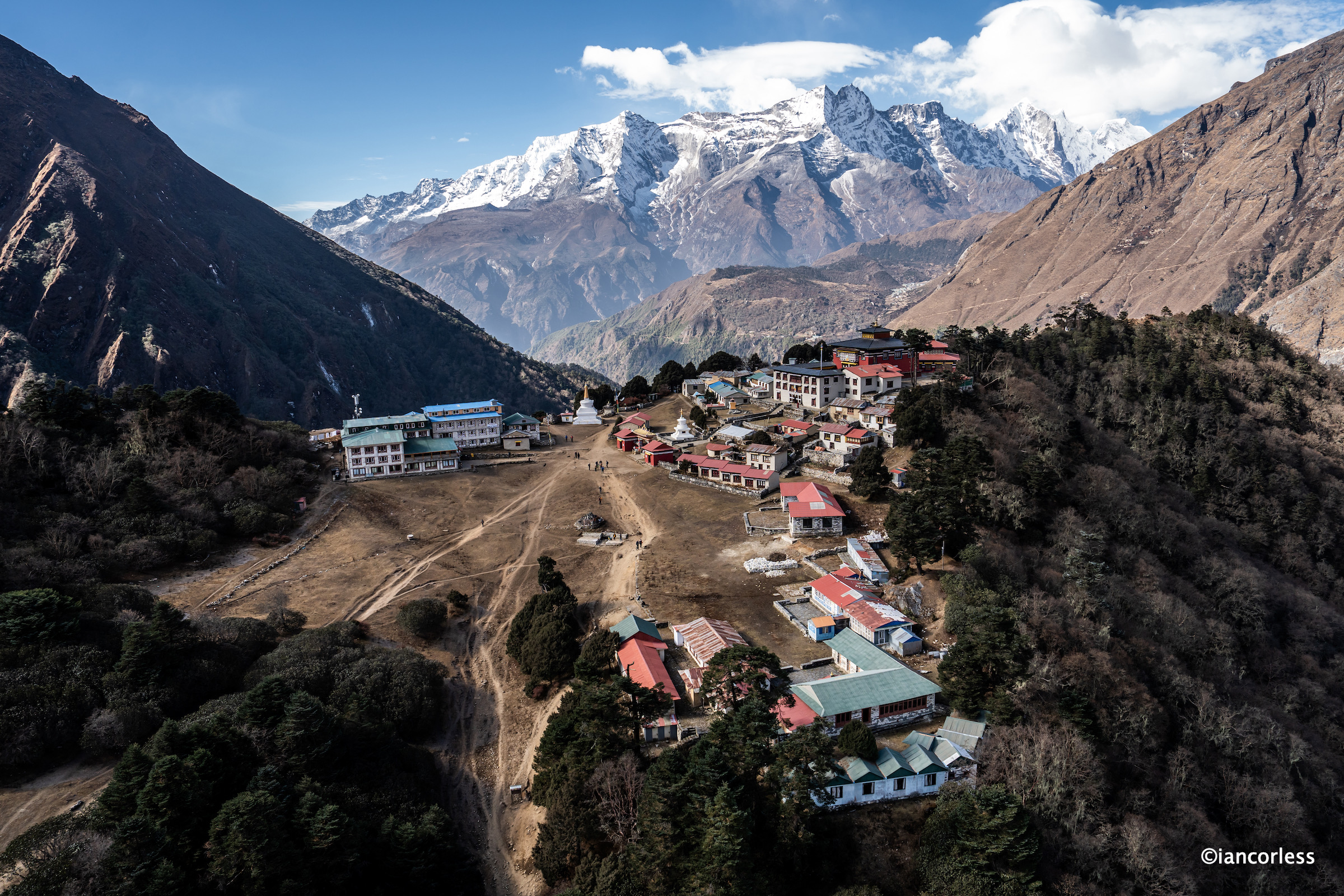
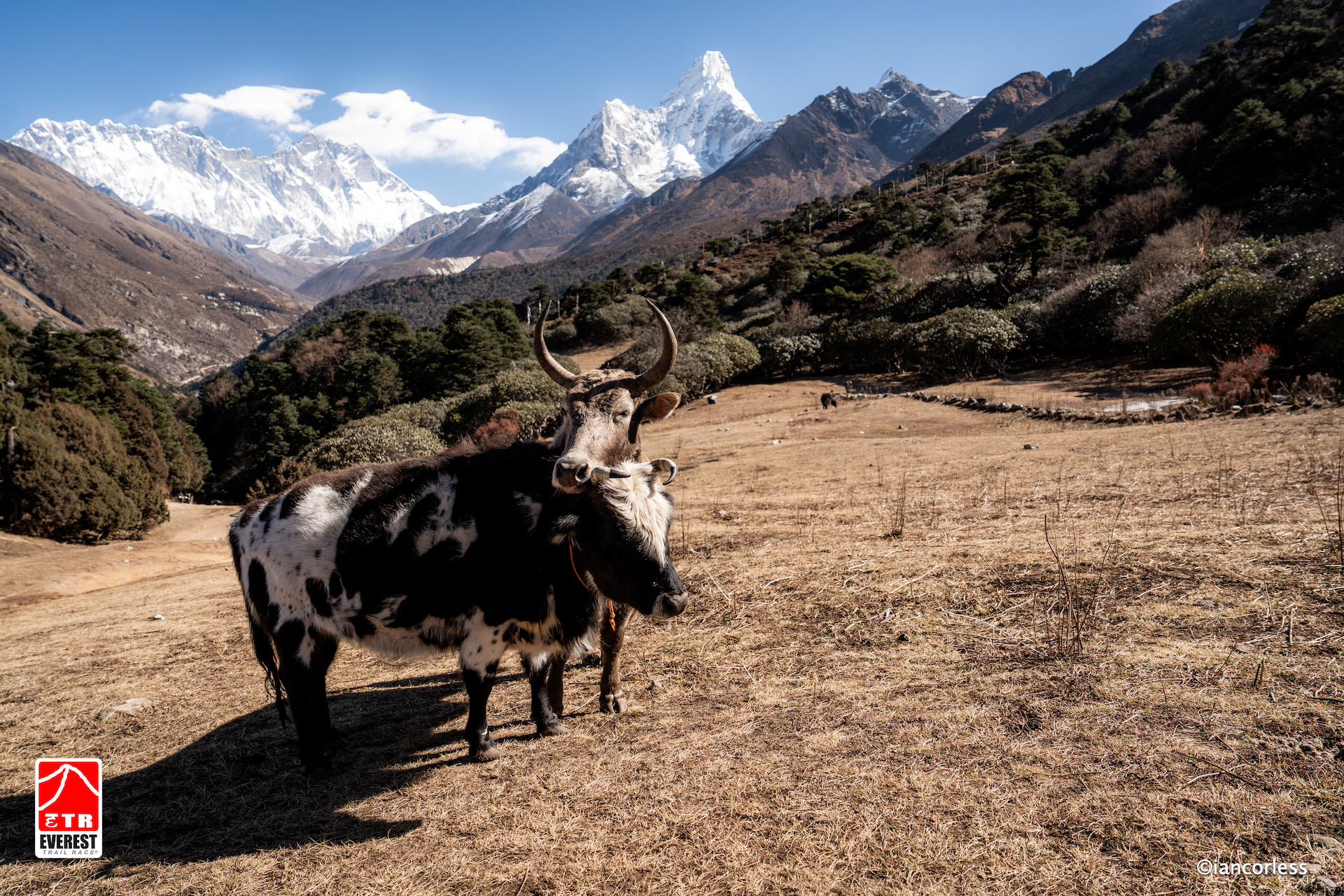
But the final ascent is where Stage 5 seals its legacy. The climb to Tyangboche Monastery, sitting at 3,860m, is a final test of grit. Legs scream, lungs burn, but the reward is immense. As runners crest the trail, they’re greeted by one of the world’s most iconic alpine views: Ama Dablam, Everest, Nuptse, and a horizon lined with Himalayan giants. Arguably, one of THE greatest finish lines in the world.
The pain is real, but so is the pride. After this brutal day, there’s relief in knowing only one stage remains. For those who made it to Tyangboche, it’s not just another finish line – it’s a summit of spirit, dedication, tenacity and perseverance.
After three gruelling stages through remote and rugged terrain, Stage 4 of the Everest Trail Race turns the page. Today, the athletes trade solitude for the storied footpaths of Nepal’s most iconic trekking corridor. This is the gateway to Everest.
A warmer night, lower altitude and this morning, the runner’s may have felt a little more rested, however, stage 4 was intimidating.
Covering 27.36 kilometers with 2,170 meters of elevation gain, Stage 4 is no break in the action. It’s a demanding route with steep climbs, quad-burning descents, and a new cast of characters on the trail: trekkers, porters, yaks, and teahouses buzzing with the hum of expedition life.
From the gun, it’s all uphill. The stage opens with a brutal 1,000-meter climb in just over 6 kilometres. The goal? Kari La, perched at 3,080 meters. This is the kind of climb that shows no mercy. Legs burn, lungs strain, and the views remind runners they’re racing through giants.
Checkpoint 1 at Paia arrives as a welcome relief. It’s a place to regroup, rehydrate, and reset. But the descent to Surke at 2,750 meters is no victory lap. Fast, technical, and relentless, it punishes tired legs before the next climb begins.
From Surke, runners face another grind: the climb to Chaurikharka (Checkpoint 2) at 2,621 meters. It’s lower in altitude but still a fight, especially coming late in the stage. From there, the course becomes unpredictable: a rollercoaster of ups and downs, testing whatever reserves are left.
The final push into Phakding at 2,620 meters marks more than the end of the stage. It’s a symbolic arrival.
The runners are now on sacred ground, part of the ancient route to Everest Base Camp. The trails are busier, the lodges more frequent, and the landscape unmistakably Himalayan.
Stage 4 isn’t just a physical battle, it’s a transition. The isolation of the early stages gives way to the buzz of one of the world’s most legendary trekking routes. But don’t let the crowds fool you. With over 2,000 meters of climbing and the fatigue of three hard days behind them, today was a war of attrition.
The finish line at Phakding means rest, food, and maybe even a little comfort, tents are traded for a lodge. Everest still looms. And the toughest stage lies ahead – stage 5 the ultimate test.
Stage 3 of the Everest Trail Race is where the real punishment begins. With 28.3 kilometres of unrelenting terrain and a leg-wrecking descent from the high-altitude village of Kamo (3855m) down to the valley floor at Jubing (1600m), this stage isn’t just tough, it’s a full-body assault.
Runners start high, where the air is thin and every step feels like a negotiation with your lungs. The early climb up to Checkpoint 1 at Kamo is already a grind, but what follows is what defines this stage: a relentless plunge that feels like it goes on forever.
The descent from Kamo to Jubing is not gentle. It’s steep, technical, and unforgiving. The views are spectacular, sure, but most runners will be too focused on staying upright to take much of it in. The drop of over 2200 meters smashes quads and shreds knees. Every rock, step, and switchback becomes part of the battle. If the climbs test your endurance, the downhills here test your durability.
Fortunately, the support is solid. CP1 at Kamo, CP2 at Hewa, and CP3 at Jubing are well-stocked and strategically placed. Runners have every opportunity to refuel and regroup, though few will find much comfort in the knowledge that the real sting comes right at the end.
Just when you think you’ve done enough, the trail throws in a final climb up to the iconic village of Kharikola. It’s a steep, grinding ascent that comes after hours of muscular destruction.
This is where mental strength counts just as much as physical preparation. After hammering down thousands of vertical meters, your legs are begging for mercy, and yet, up you go again.
Kharikola, perched proudly in the hills, is a reward in itself. Not just for the views, but for what it represents: survival. Conquering Stage 3 is a badge of toughness. It’s where the Everest Trail Race shakes out the pretenders from the contenders.
Stage 3 doesn’t just test you, you feel it in your legs for days. You carry it in your mind for longer. It’s beautiful, brutal, and unforgettable. And for every runner who arrives in Kharikola, it’s a hard-earned victory etched into the heart of the Himalayas.
Stage 2 of the Everest Trail Race doesn’t waste time. The gun goes off, and it hits hard, right into a beast of a climb that defines the day. The route is 26.6 kilometers with 1,483 meters of vertical gain, but ask anyone who ran it: it feels like double that.
The stage opens with arguably the most iconic stretch of the entire race, a 4km climb straight out of the start gate, topping out at the summit of Pike Peak at 4,046 meters. There’s no easing into it. You’re immediately lunging skyward, legs burning, lungs gasping, every step on loose rock and narrow trail.
But what a reward. The views from Pike Peak are the kind you earn. Everest, Thamserku, and the distant giants of the Himalayas tower on the horizon.
There’s a strange serenity up there—above the tree line, above the chaos, if only your quads weren’t screaming so loudly.
From the summit, runners are thrown into a tricky descent, technical, steep, and demanding full attention. This is no cruise; it’s controlled aggression. The terrain underfoot is a mix of loose stone and rutted trail, constantly shifting. Jase Bhanjyang appears below like a mirage, a short-lived reprieve at 3,510m before the next test.
After a quick breath, it’s back uphill, another climb, this time to 3,800m. It’s less brutal than the first, but by now the fatigue is setting in. The altitude, the sun, the effort, they add up. This section wears on you slowly, sapping strength before delivering a massive release:
This is the stage’s exhale. A long, fast descent winds down to Jumbesi, where Checkpoint 2 awaits. The descent is runnable FOR SOME but relentless. It’s a test of patience, footwork, and knowing how much to push without blowing up. At CP2, some collapse into chairs, others refuel and move quickly, no time to waste.
From Jumbesi, the route shifts gears. A more gradual climb takes runners to Phurteng at 3,000m, a steady push that gnaws at tired legs. Then, a rolling descent gives a hint of relief, but it’s a trap.
Because this stage has a final sting: the kick to Ringmo. Just when you think you’ve made it, the trail juts upward again before finally dropping into the finish at 2,740m. It’s psychological warfare. You can see Ringmo before you reach it – but the trail makes you fight for it.
Stage 2 is a monster. On paper, it doesn’t look like the toughest, less gain than Stage 1, more downhill, but the terrain, altitude, and sequence of climbs make it punishing. The raw elevation loss (2,203m) sounds helpful, but it hammers your legs in a different way. Many finish looking shell-shocked. Others, oddly exhilarated.
This is the Everest Trail Race offers up some of the most staggering views you’ll ever see on a race course, and today, in the shadow of Pike Peak, the price of admission was steep but worth it.
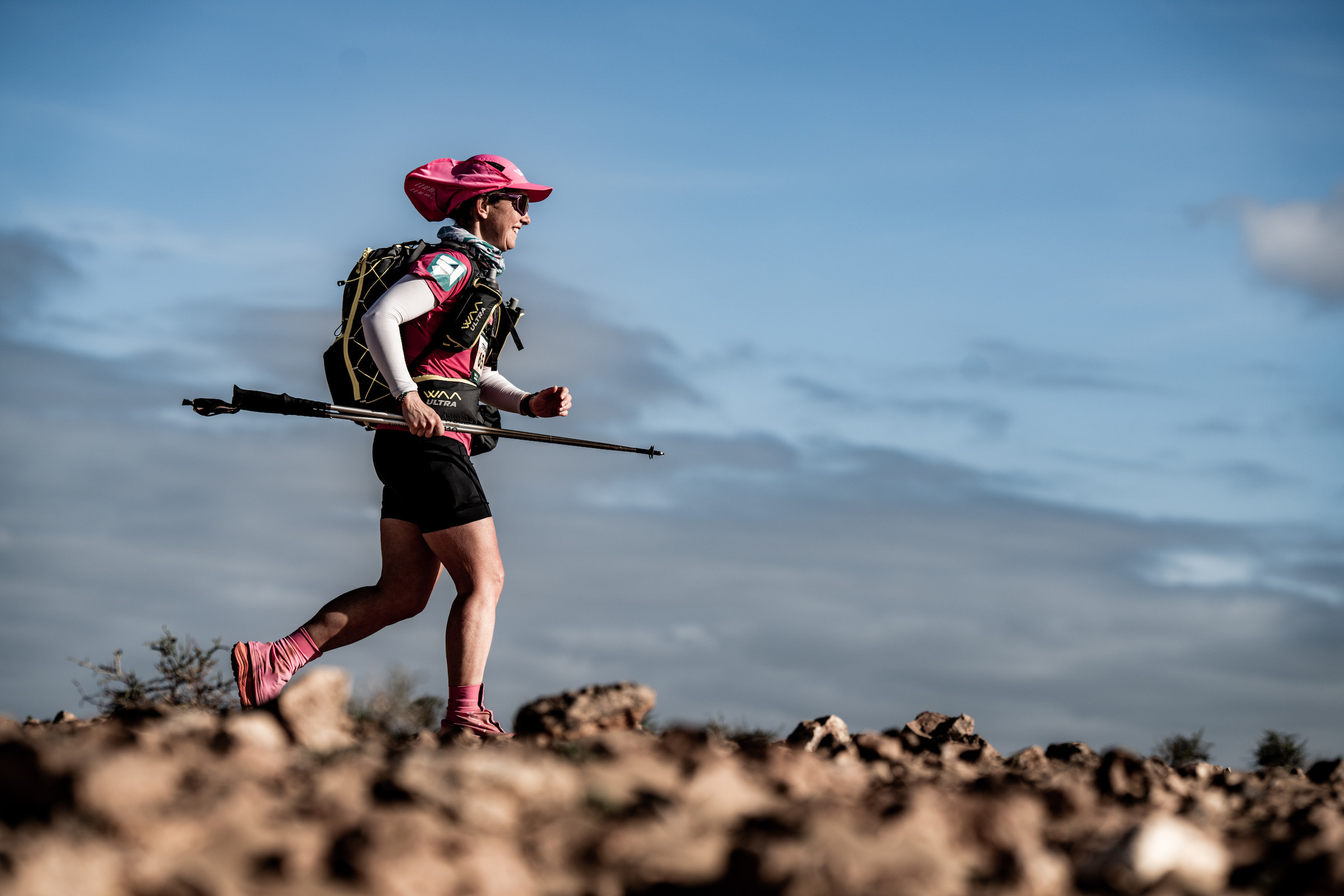
The fourth and final stage of MDS Trek Morocco is complete. What began as a journey into the vast, unforgiving desert has ended in a loop of triumph, every step earned, every moment remembered.
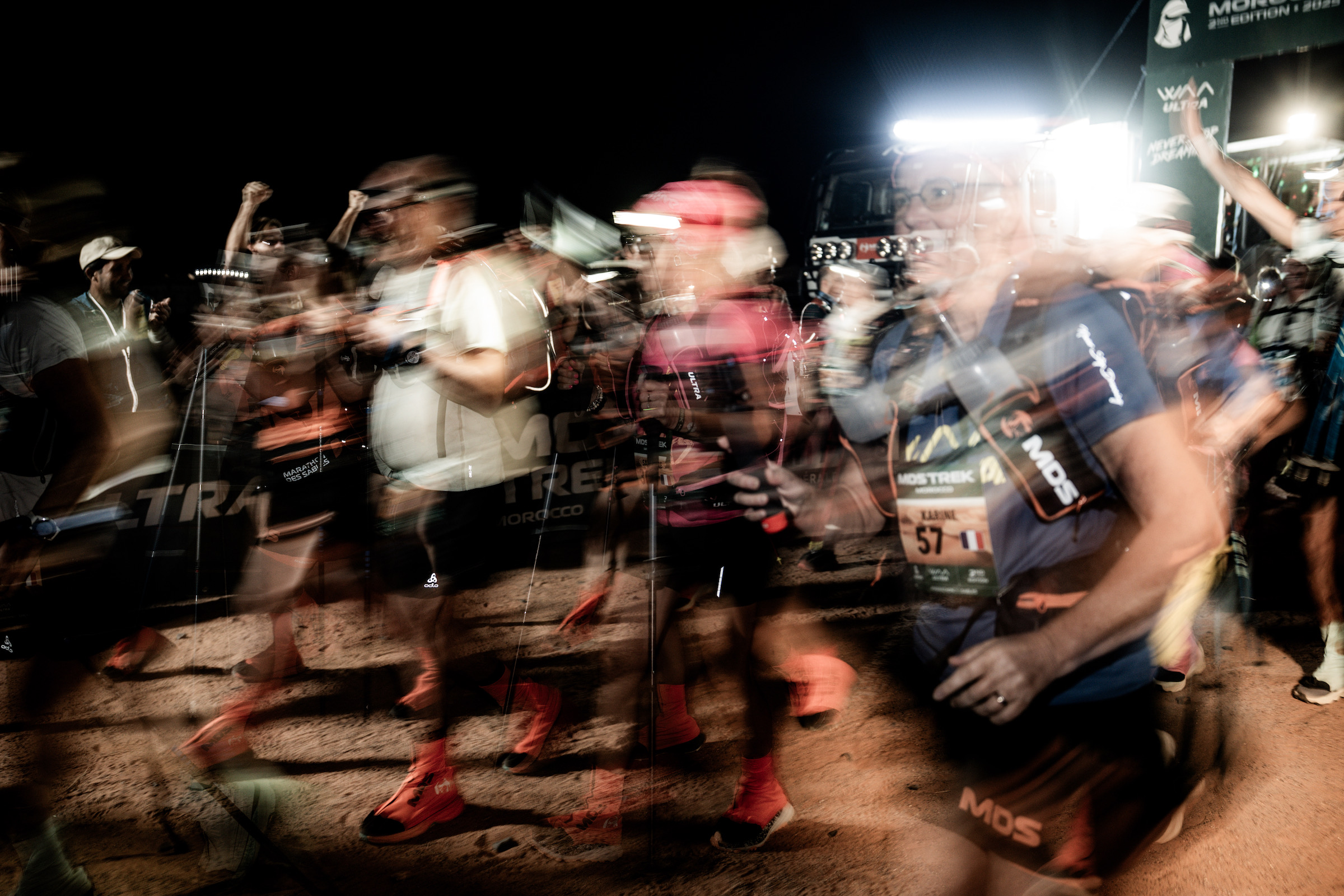
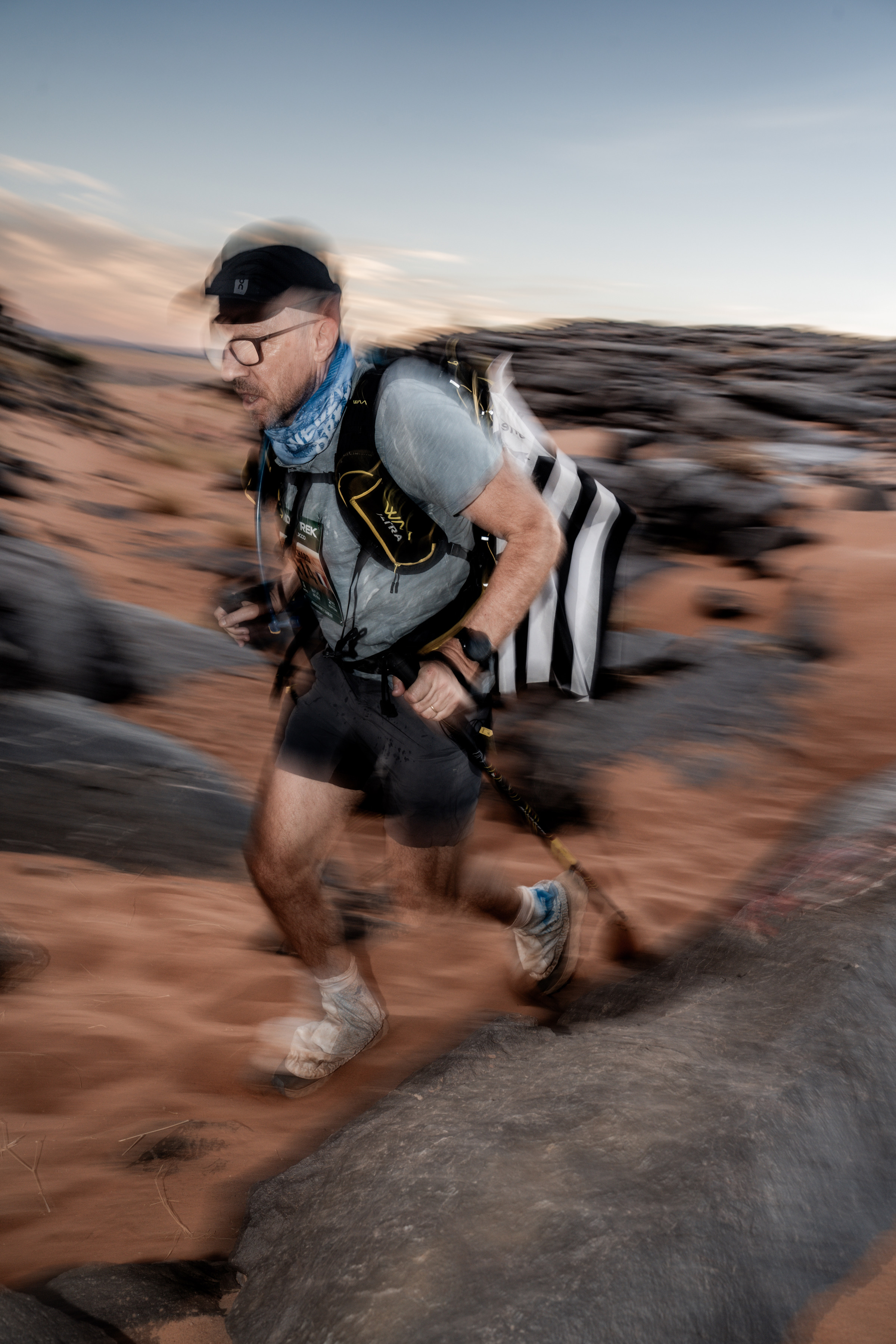
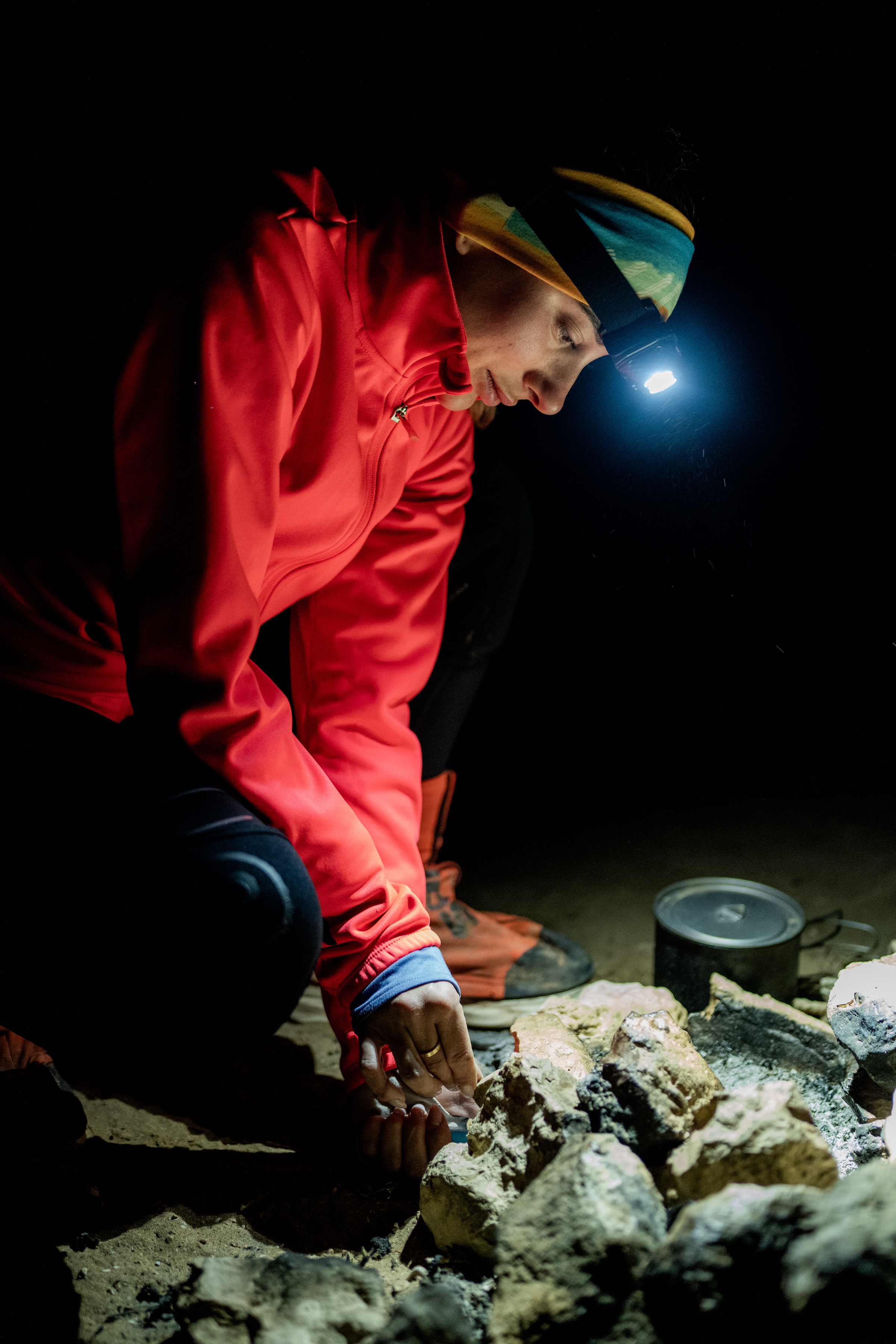
Today’s stage started in darkness. Head torches cut thin beams through the pre-dawn silence, the soft crunch of footsteps the only sound as the group moved out into the unknown once more. The air was cool, but everyone knew what was coming. The early warmth was already hinting at another scorcher in the making.
There were two distances again today, different paths, same glory. Whether you chose the longer route or a shorter challenge, the destination was the same: the finish line, and the medal that waited beyond it.
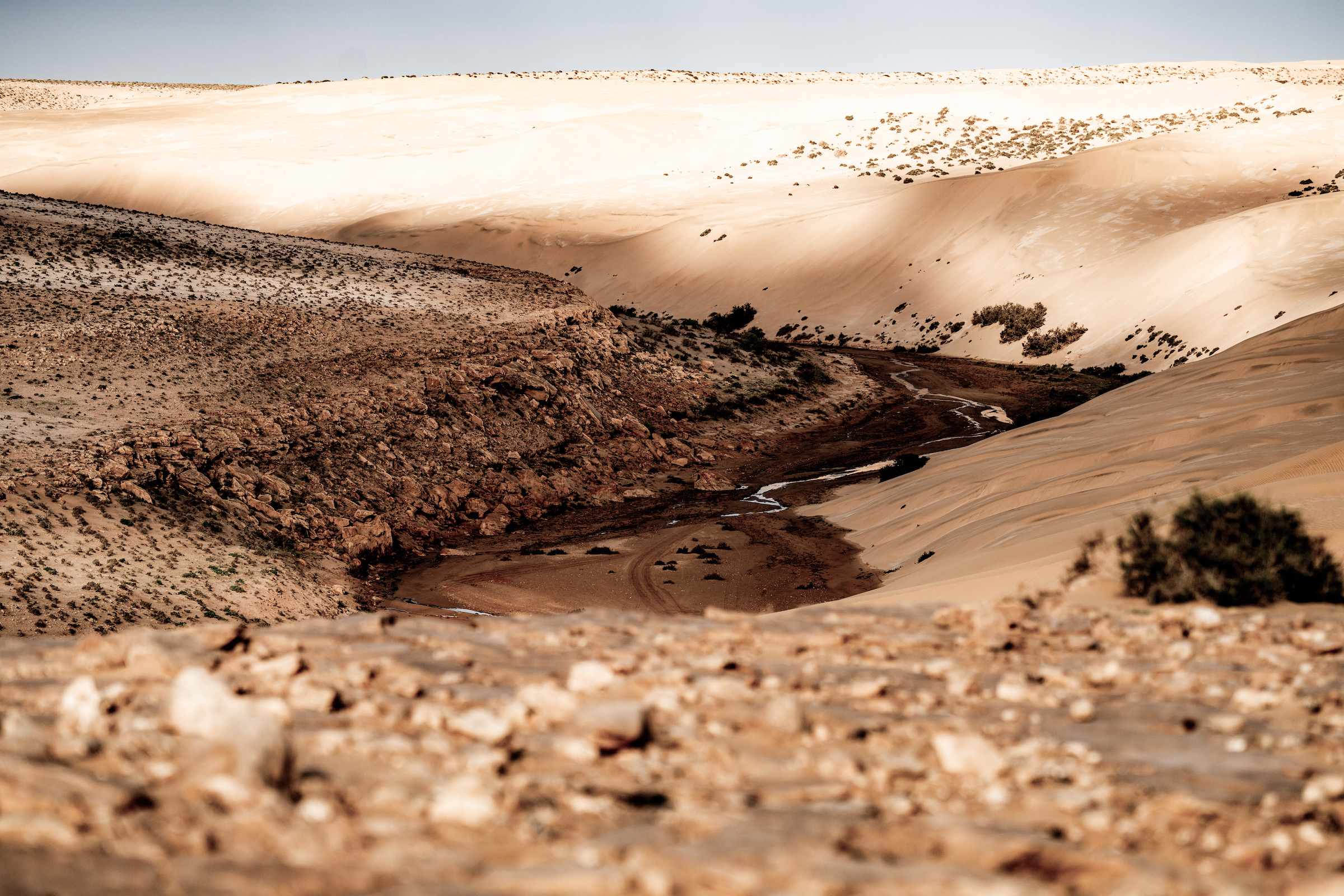
The route offered a final taste of everything the Sahara had thrown at participants over the past days, rolling ridges of sand, winding gorges, and a long, flat, rocky push to the finish. Hard, hot, and humbling. But also deeply rewarding.
Trek has been a shared adventure.
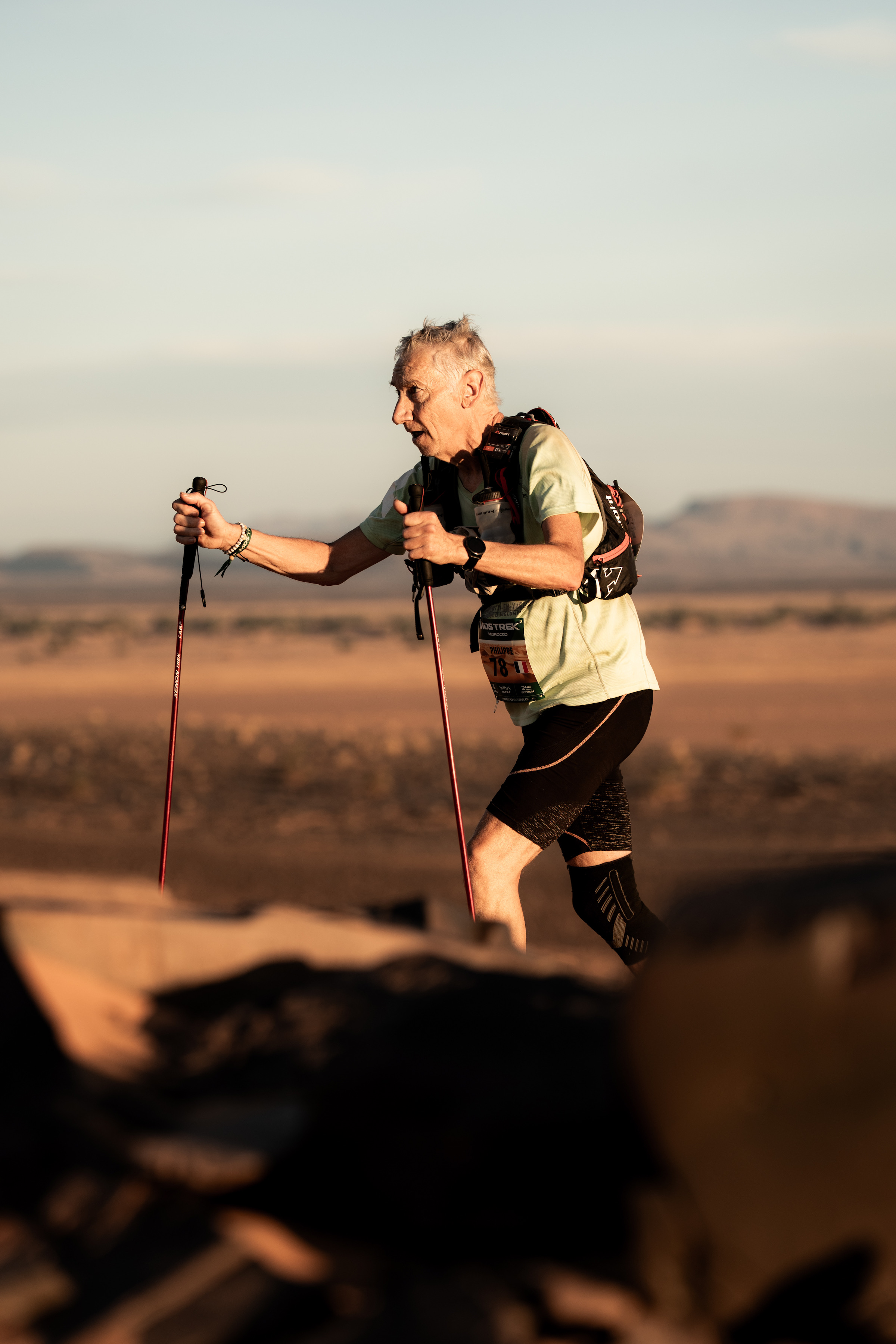
A test of resilience, not speed. MDS Trek Morocco made space for everyone, young and old, first-timers and seasoned explorers, fast hikers and slow-but-steady souls. There were no clocks to beat, only limits to expand.
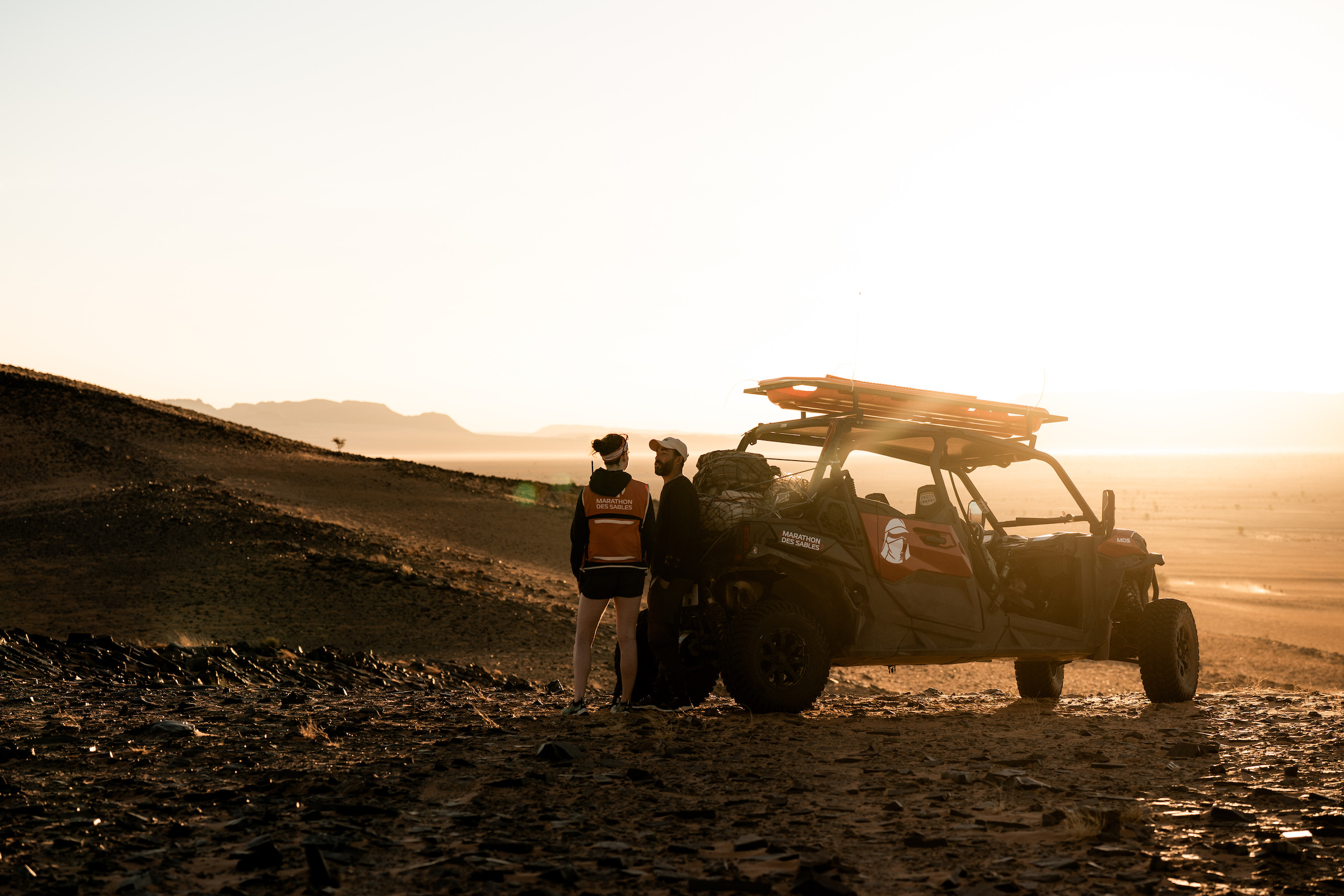
It was also safe. Every step of the way, the organisation was tight, the logistics seamless, the support unwavering. Even in this remote, elemental landscape, the structure and security allowed people to push themselves without fear.
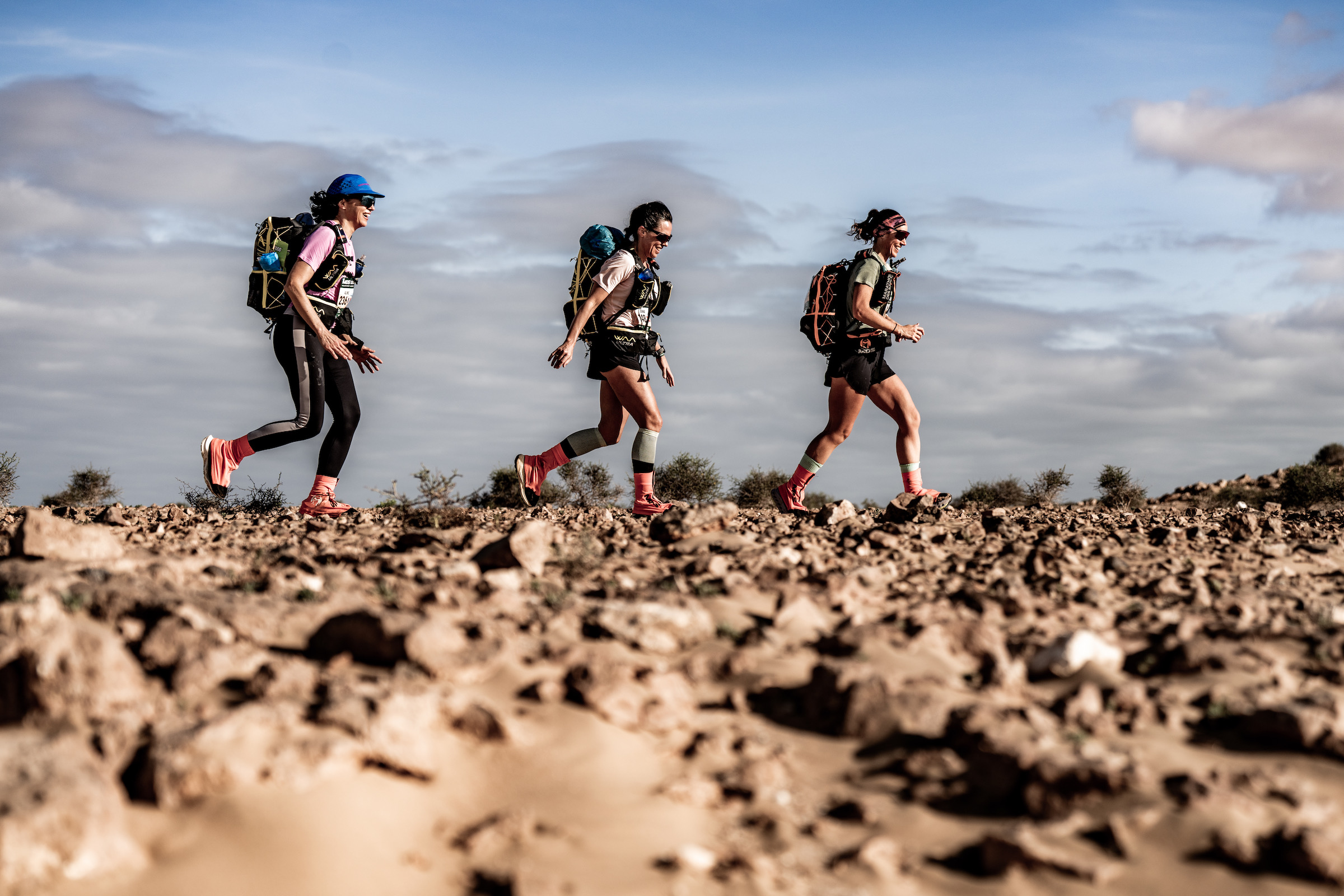
More than anything, MDS Trek was about togetherness. There were moments of solitude, yes, but also laughter, encouragement, teamwork. Bonds were built under starlit skies and blistering suns.
This trek wasn’t just through the Sahara, it was into a deeper understanding of what we’re capable of when we move with purpose, and when we move together.
The Sahara gave everything. So did the people who crossed it.
This was MDS Trek Morocco: a final stage, a victory loop, and an unforgettable finish.
Stage 2 of MDS TREK Morocco was short on distance, 11.7km or 15km, but packed with everything that makes this trek unforgettable: surreal landscapes, emotional highs, and the raw beauty of the desert revealed under first light.
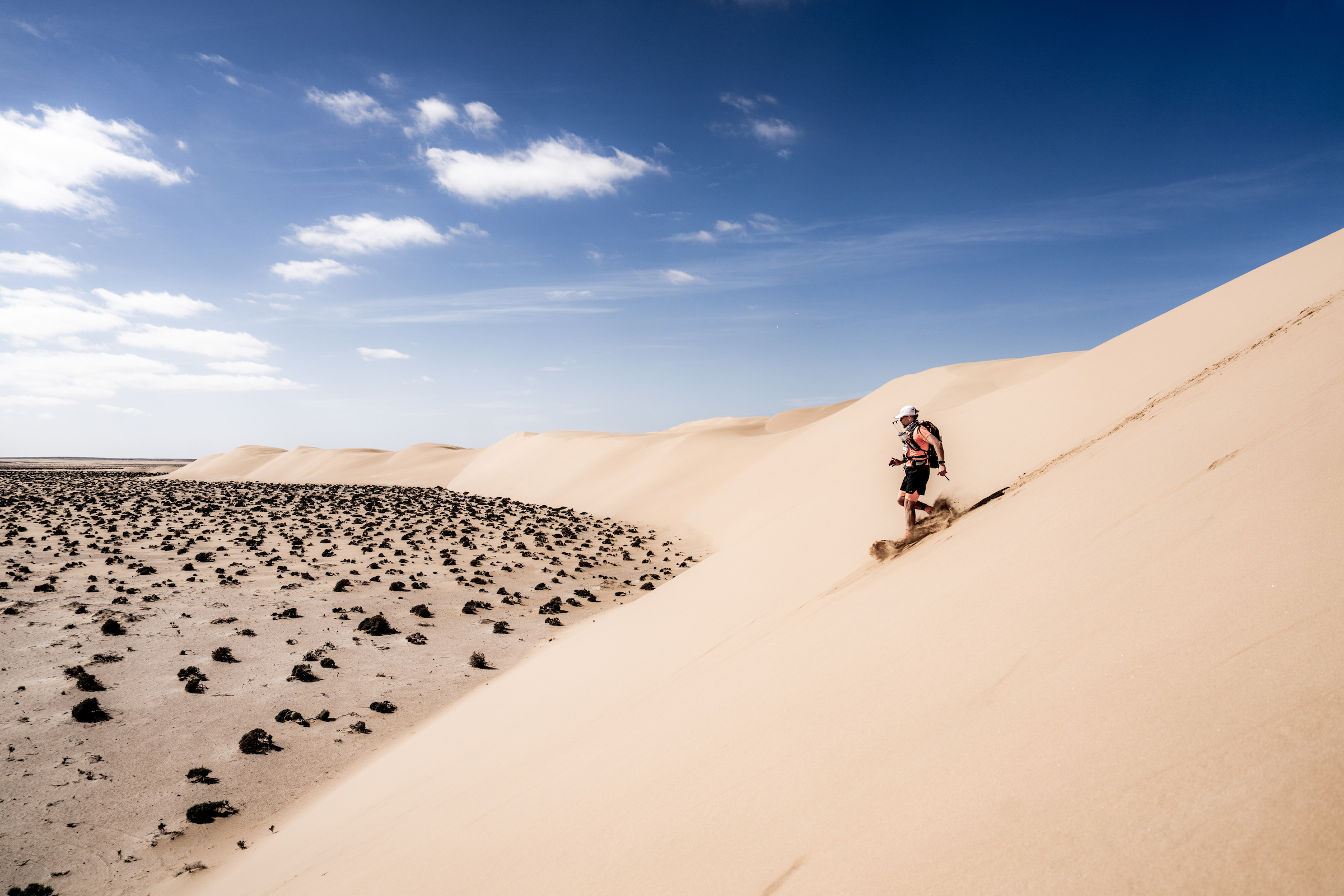
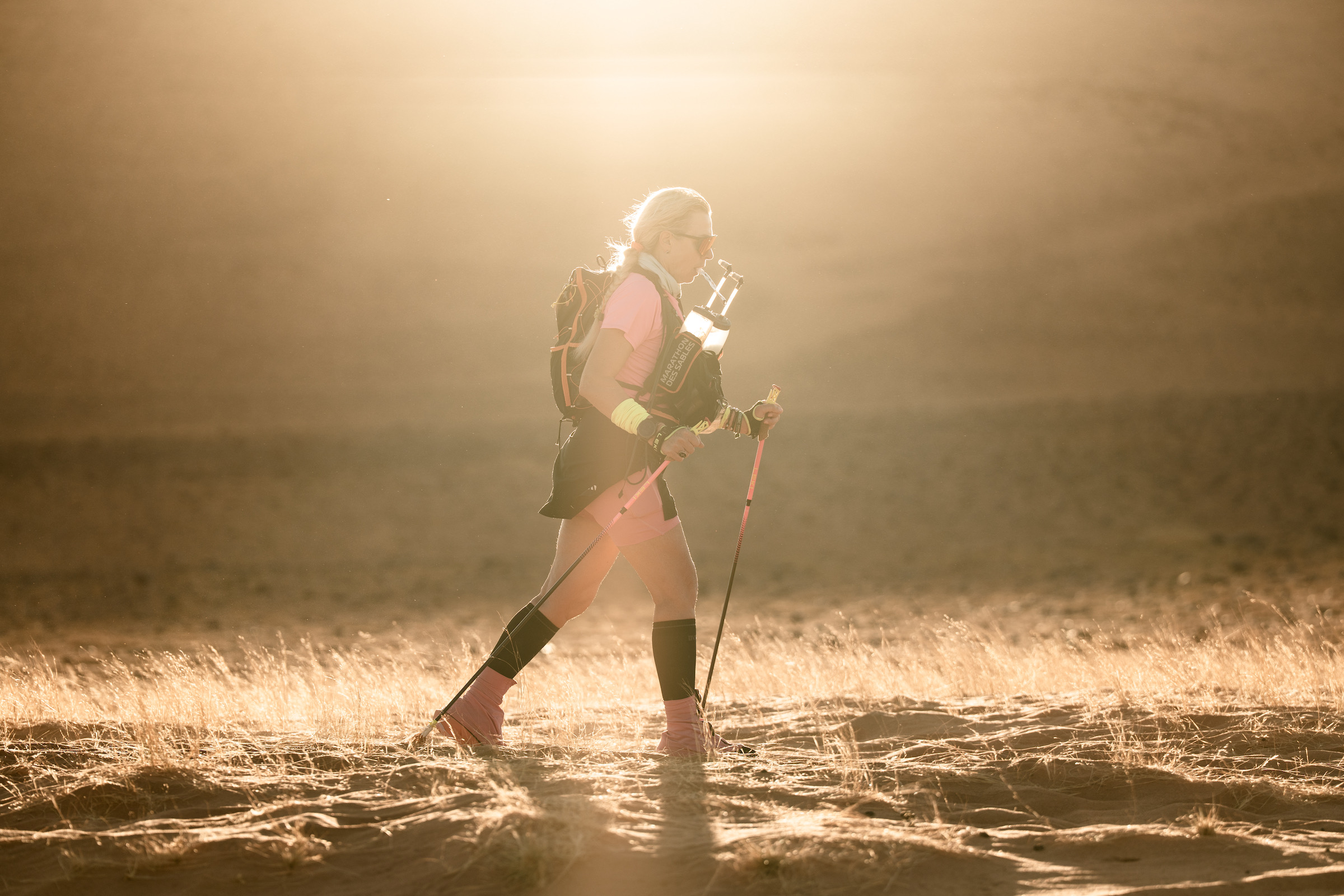
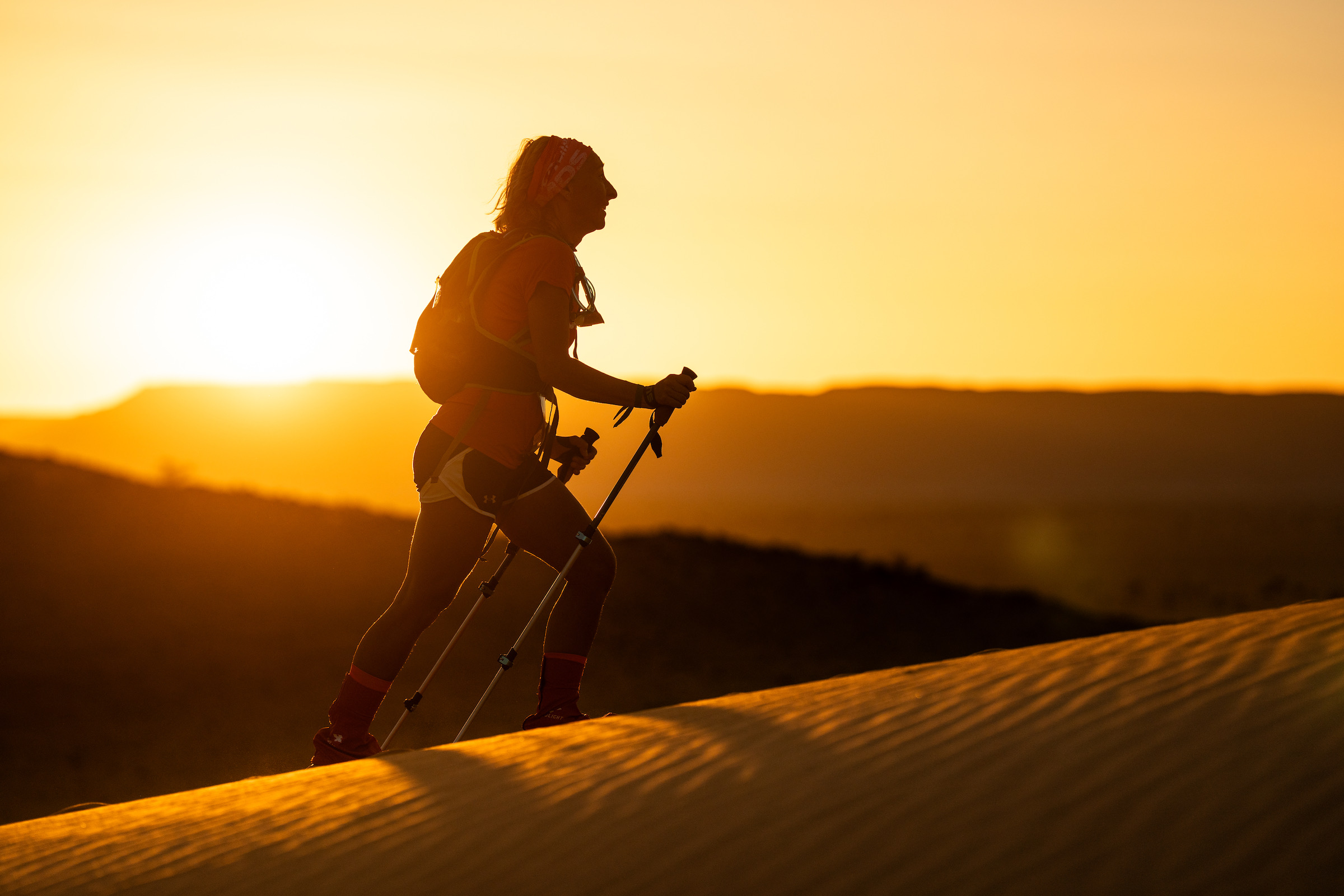
The day began with the kind of sunrise that stops you in your tracks. As the first rays hit the dunes, the Sahara shifted from cool blue shadows to warm, golden brilliance.
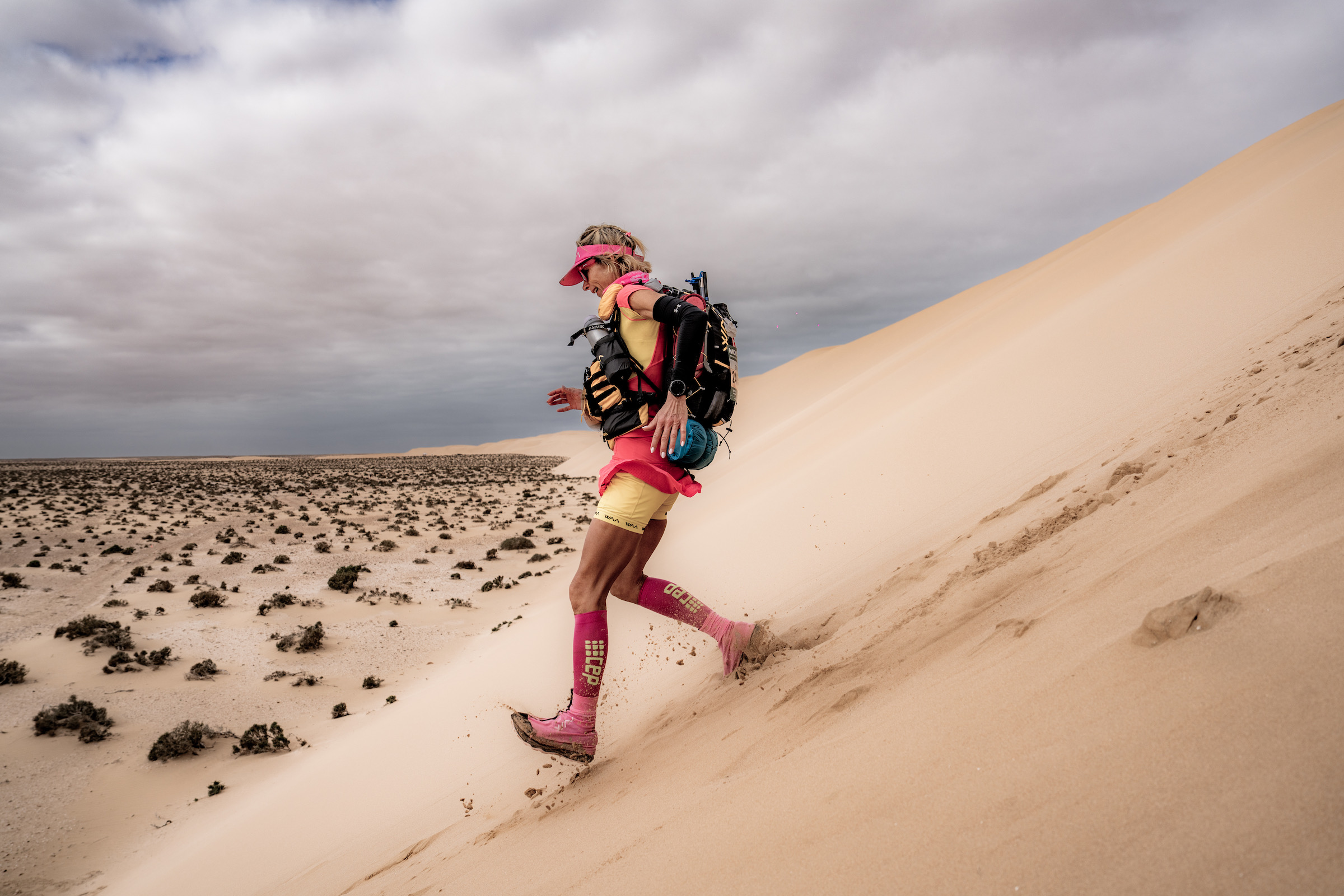
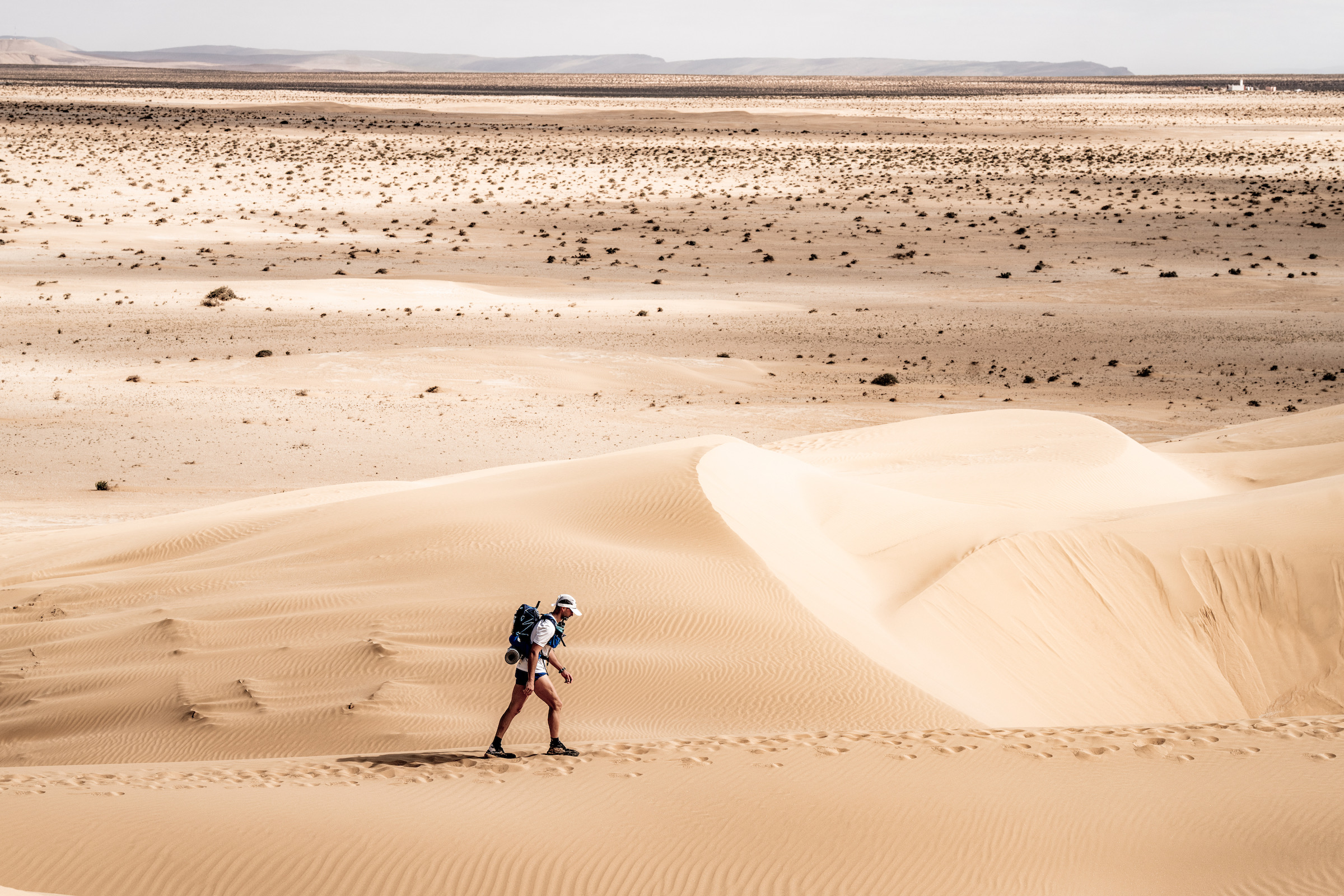
The route kicked off along a dramatic ridge, a high line with sweeping views in every direction, one of the most stunning stretches in MDS history. Sand seas rolled endlessly below, broken only by the occasional rocky outcrop or camel track winding off into nowhere.
This was not a stage to rush. With no time pressure, participants could move at their own pace, soaking in the magic of the moment.
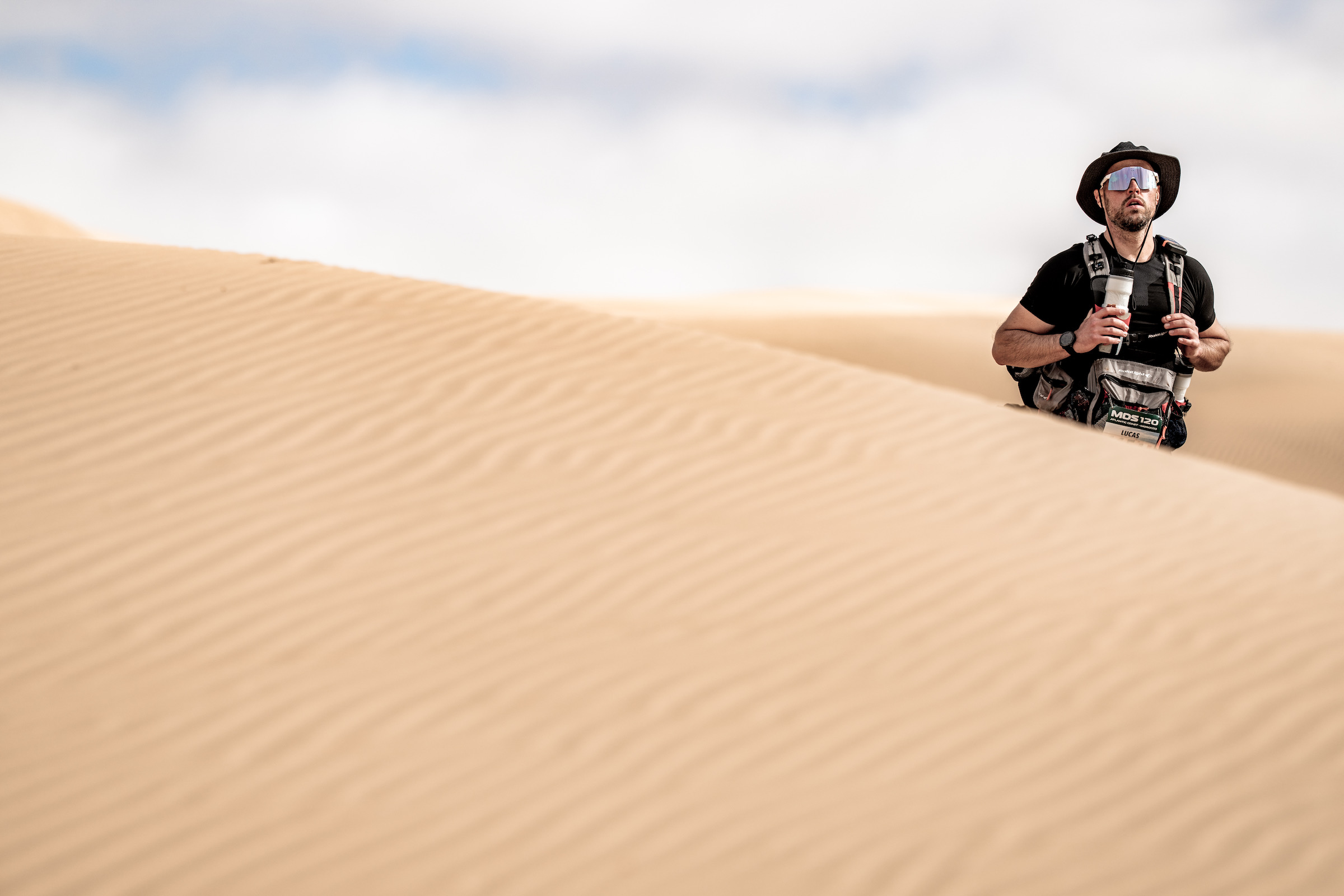
The terrain was varied, soft dune underfoot in some places, firmer ground in others, but the challenge was consistent: the heat. Even early in the day, the sun hit hard. It was a reminder that, out here, progress is earned.
At Checkpoint 2, the route split. Those craving a longer push could opt for the 15km course, while others stuck with the shorter 11.7km track. It didn’t matter which option they chose, both offered the same sense of accomplishment and wonder.
Whether climbing another dune or resting in the shade at the finish, there were smiles all around.
Stage 2 wasn’t about distance or pace. It was about presence, being fully alive in one of the most remote, beautiful places on Earth.
It was about the silence, the sweat, the sunrise. And for many, it was the moment they truly felt the spirit of MDS: the freedom, the challenge, and the deep, personal joy of moving through the Sahara under their own power.
A very special day and one that will stay etched in memory long after the sand is shaken from their shoes.
There’s a certain image that comes to mind when you hear “MDS” – blistered feet, rationed calories, endless dunes, and the punishing solitude of the Sahara. But the second edition of MDS TREK Morocco flips that narrative. It’s still tough, still raw, still proudly Saharan, but this isn’t the Marathon des Sables you’ve heard whispered about in ultra circles. This is MDS with a difference.
This is adventure, elevated.
A New Kind of Desert Challenge
Set across seven nights deep in the Moroccan desert, MDS TREK isn’t about suffering. It’s about connection – to the land, to others, and to yourself. Designed for trekkers who crave the thrill of the Sahara without the demands of full self-sufficiency, this edition delivers a rich, physically challenging, and surprisingly comfortable desert experience.
Forget dehydrated meals eaten crouched in the sand. Here, you’re fed three real meals a day. Forget sleeping shoulder-to-shoulder under a makeshift tarp, you’ll rest in spacious, tents, roomy enough to stretch and breathe. Need a shower? There are actual showers. Want a drink? There’s a desert bar. And after a long day on your feet, you can stretch out with sunset yoga or sink into a post-stage massage.
A Race for Every Level
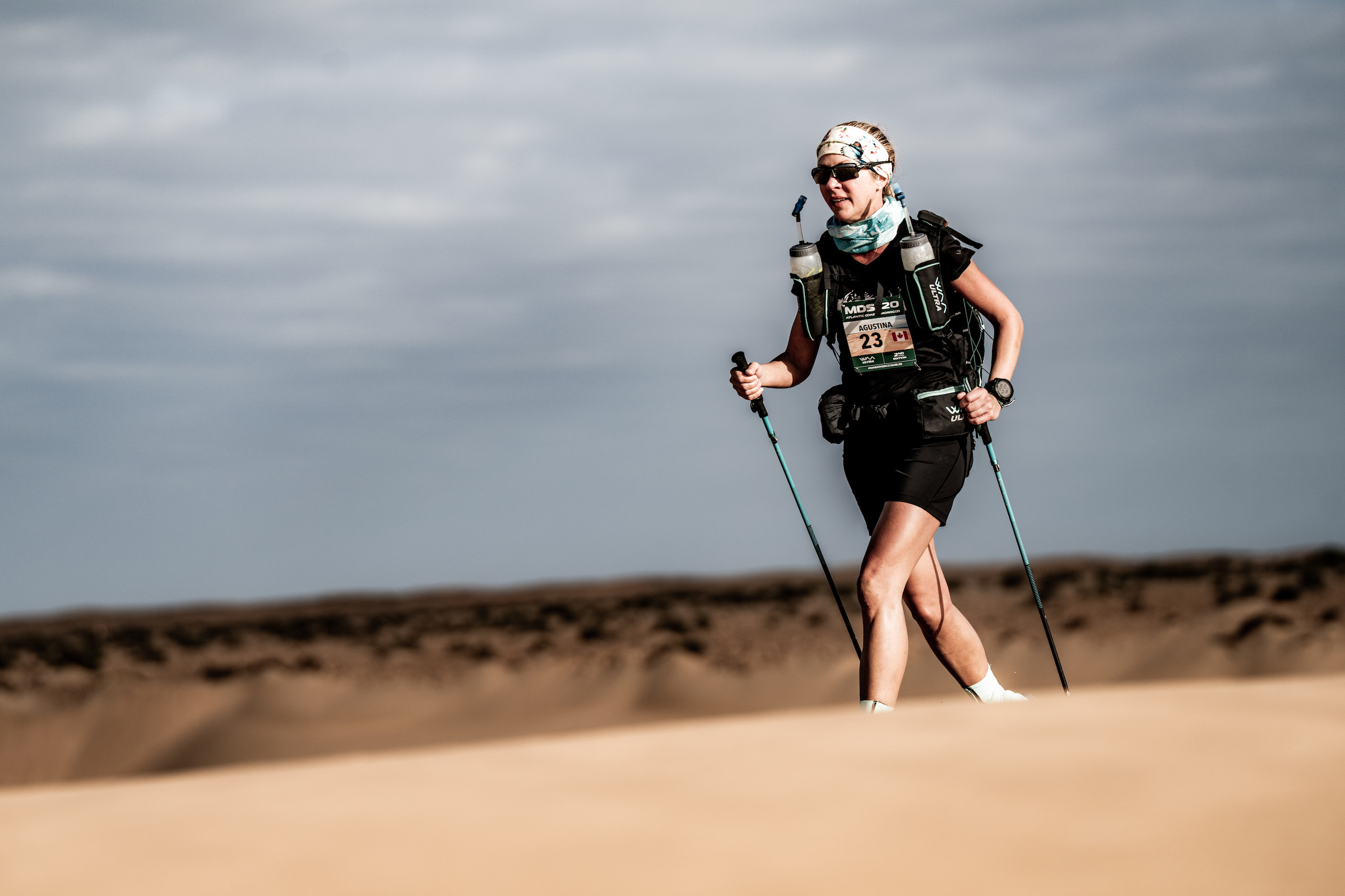
What sets MDS TREK apart isn’t just the comfort – it’s the accessibility. You don’t need to be an ultra-runner or a desert-hardened veteran to take part. This is a multi-stage trek, not a race to the death.
Each of the four stages is offered with two distance options, allowing participants to challenge themselves at their own pace. Want a longer push? Go for the full route. Need a bit less? Opt for the shorter version. The emphasis isn’t on beating the clock; it’s about the experience.
But make no mistake, this is still the Sahara. The terrain is rugged, the climbs are real, and the heat is relentless. The environment demands respect. But it also rewards you with something almost spiritual in return.
Stage 1: Into the Furnace
The adventure began under a blazing sun. Temperatures soared as 350 trekkers laced up for the first leg of the journey. The day’s route offered a choice: 15.6 km or 22.7 km, with both options weaving through a landscape as brutal as it was breathtaking.
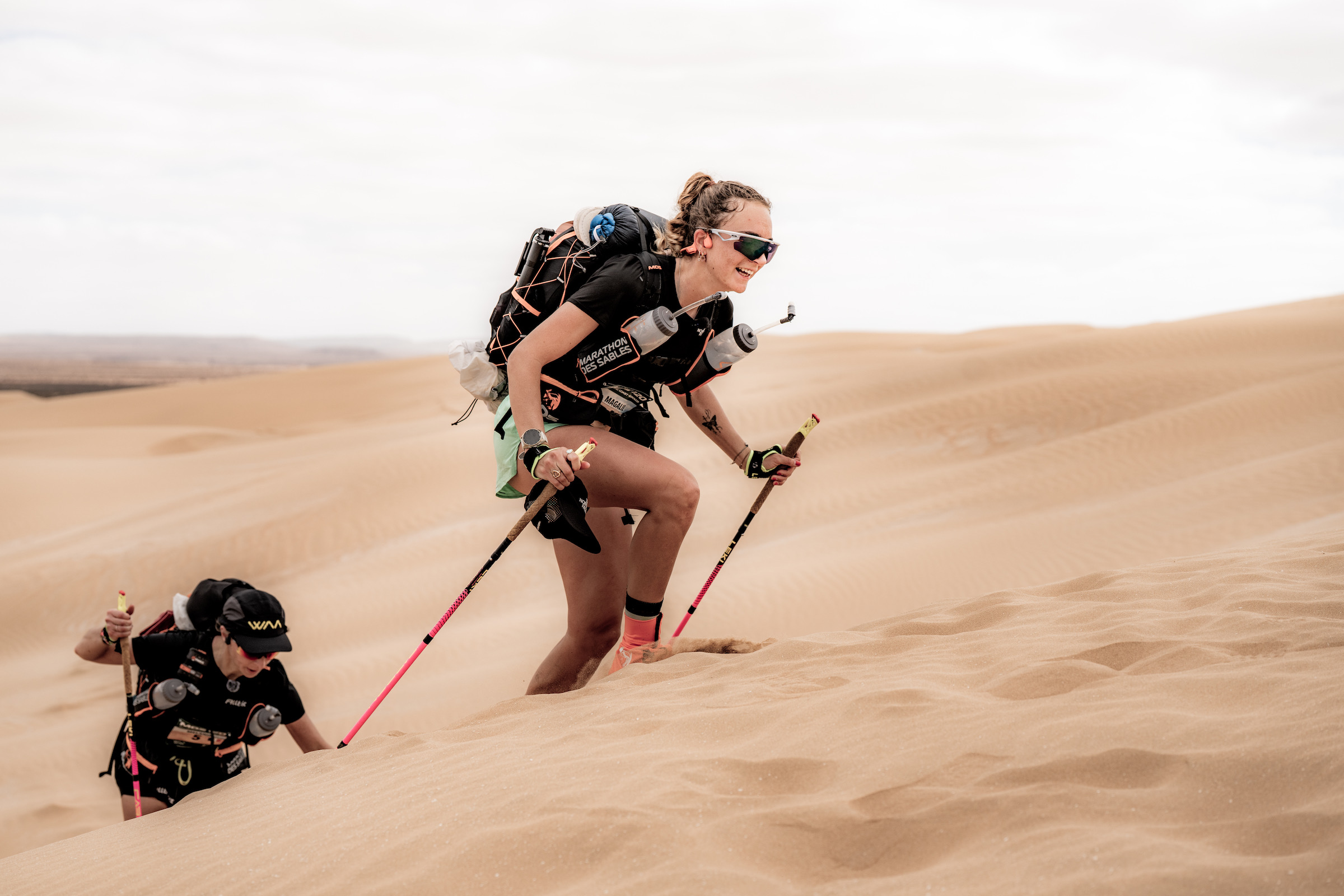
Soft, shifting sands made even the flat sections a test of will. Then came the tough climbs, sandy ascents that drained the legs and quickened the pulse.
There were sections of technical rock and loose scree, keeping everyone alert. But in between the hardship came moments of wonder: endless panoramas, wind-sculpted dunes, towering jebels casting long shadows across the desert floor.
It wasn’t easy. But that wasn’t the point. This was beauty wrapped in brutality – a reminder of how the desert strips you down, and in doing so, shows you something pure.
And perhaps the most defining feature of the field? More than 60% of participants were women. This wasn’t just an event—it was a movement.
Evenings of Contrast
Post-stage life in MDS TREK is where the magic deepens. After pushing their limits under the sun, participants returned to a camp that was more oasis than outpost.
There’s shade. There’s cool water. There’s time to kick off the boots, breathe, and reset.
Then, as the desert begins to exhale and the day gives way to dusk, trekkers gather for sunset yoga – a quiet, grounding practice led against the backdrop of endless sky. Others opt for a massage under canvas, loosening the knots earned over each step.
And later, with dinner shared and bellies full, the real depth of the event reveals itself: evening talks and lectures that inspire, educate, and connect. Whether it’s stories from desert veterans, lessons on resilience, or reflections on personal growth, these sessions remind everyone that MDS TREK isn’t just about distance. It’s about transformation.
A Community Like No Other
The mix of people is part of what makes MDS TREK so powerful. Solo adventurers. Groups of friends. Veterans of the classic MDS alongside first-time desert explorers. Young and old. Every background. Every story. This is a space where no one is left behind, and every victory, every climb, every kilometre is cheered like a medal.
MDS TREK Morocco isn’t about breaking records. It’s about breaking through.
To comfort.
To challenge.
To something unforgettable.
Whether you’re a seasoned adventurer or simply someone looking for your next big reset, this is the one.
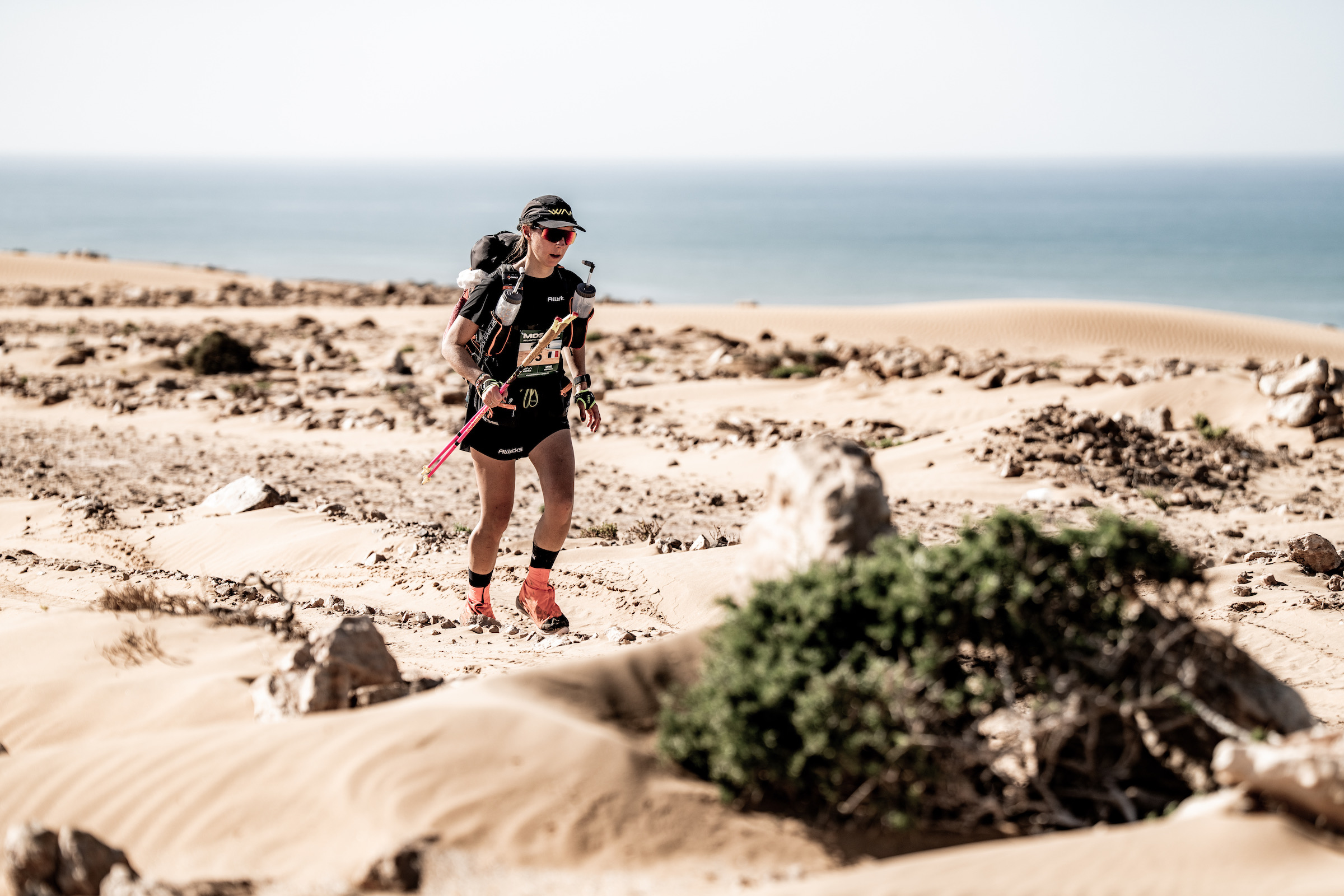
There are moments in life that will etch themselves into your memory with brutal clarity, the sting of the sun, the whip of the wind, the bite of fatigue. And then there are moments that transcend all that. Moments that shine because of what it took to get there. Today, that moment came. MDS 120 Morocco 2025 is complete. But this finish line didn’t come easy.
The Rest Day That Wasn’t
After the double blow of Stage 1 and 2 under an unforgiving sun, participants staggered into the bivouac with blistered feet and salt-crusted skin, ready for a day of rest.
But the Sahara had other plans. Instead of recovery, they got afternoon chaos: a wild sandstorm that tore across camp like a runaway train. The sky turned thick and orange. Tents collapsed. Gear went flying. People huddled in whatever shelter they could find, eyes wrapped in buffs, trying to breathe through the dust. It lasted for hours. When it finally passed, silence hung in the air, but it wasn’t peace. It was exhaustion.
This was not the rest day anyone hoped for. But there were plenty of moment of relaxation before the chaos – lots of sleeping, adding entries in journals.
and towards the end of the day, as the wind calmed, MDS organisation offered a treat – no longer a cold can of Coke – today, fresh fruit and ice.
At 0400, camp began to stir. Bleary-eyed runners rose in darkness, fumbling with head torches and gear. The temperature hadn’t dropped. The air felt thick and warm, like the desert was still holding onto yesterday’s rage.
By 0530, the first runners were off. Headlamps cut through the pitch, bobbing along as the desert slowly took shape in the dim light. At 0630, the top-10 runners launched like arrows, chasing the dark down.
Then, something no one expected happened. It started softly. A few drops. Then more. Rain. Actual rain falling from a sky that hadn’t offered a single kindness in days. No one ducked. No one cursed. No one complained. Smiles broke out, quiet and stunned at first, then wide and wild. Some raised their faces to the sky. This was a blessing. A strange, surreal gift. The desert, finally, exhaled.
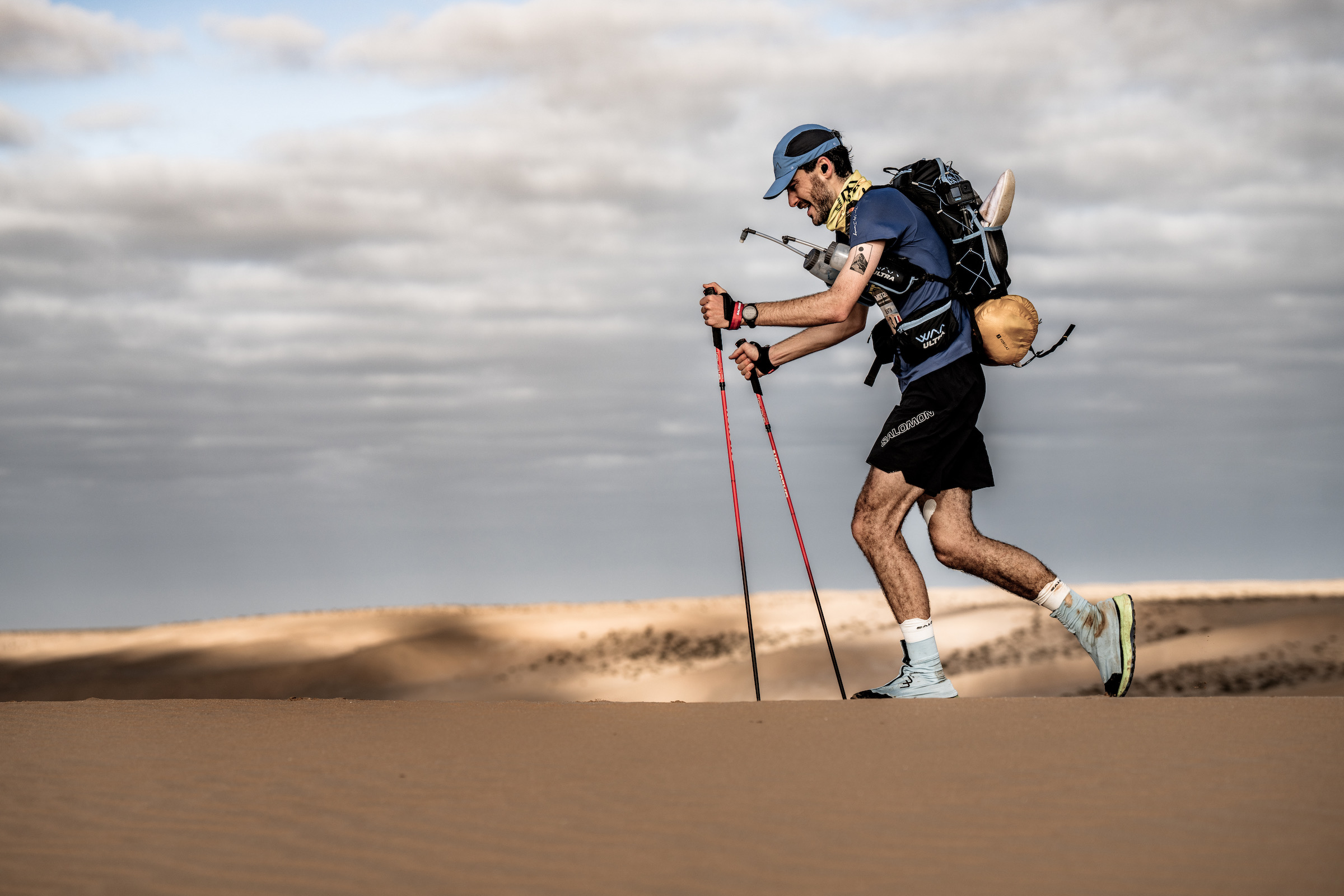
Stage 3 unfolded under gentler skies. The sun eventually returned, but not with the same vengeance. The course was still brutal – sand, rocks, one climbs that never seemed to end, but the worst of the heat was gone. Spirits rose with every kilometre. Runners, ragged but relentless, began to believe the finish was real.
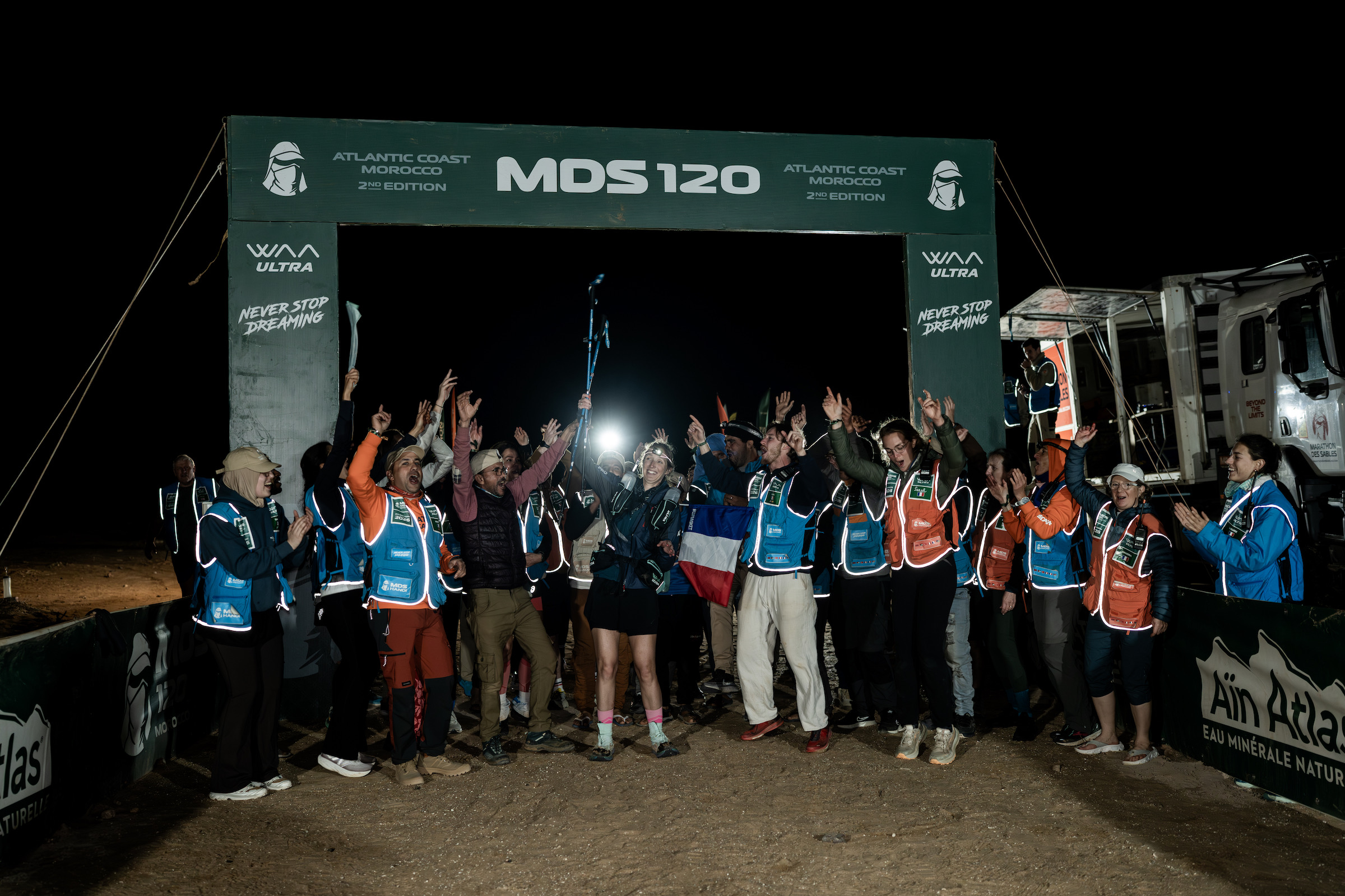
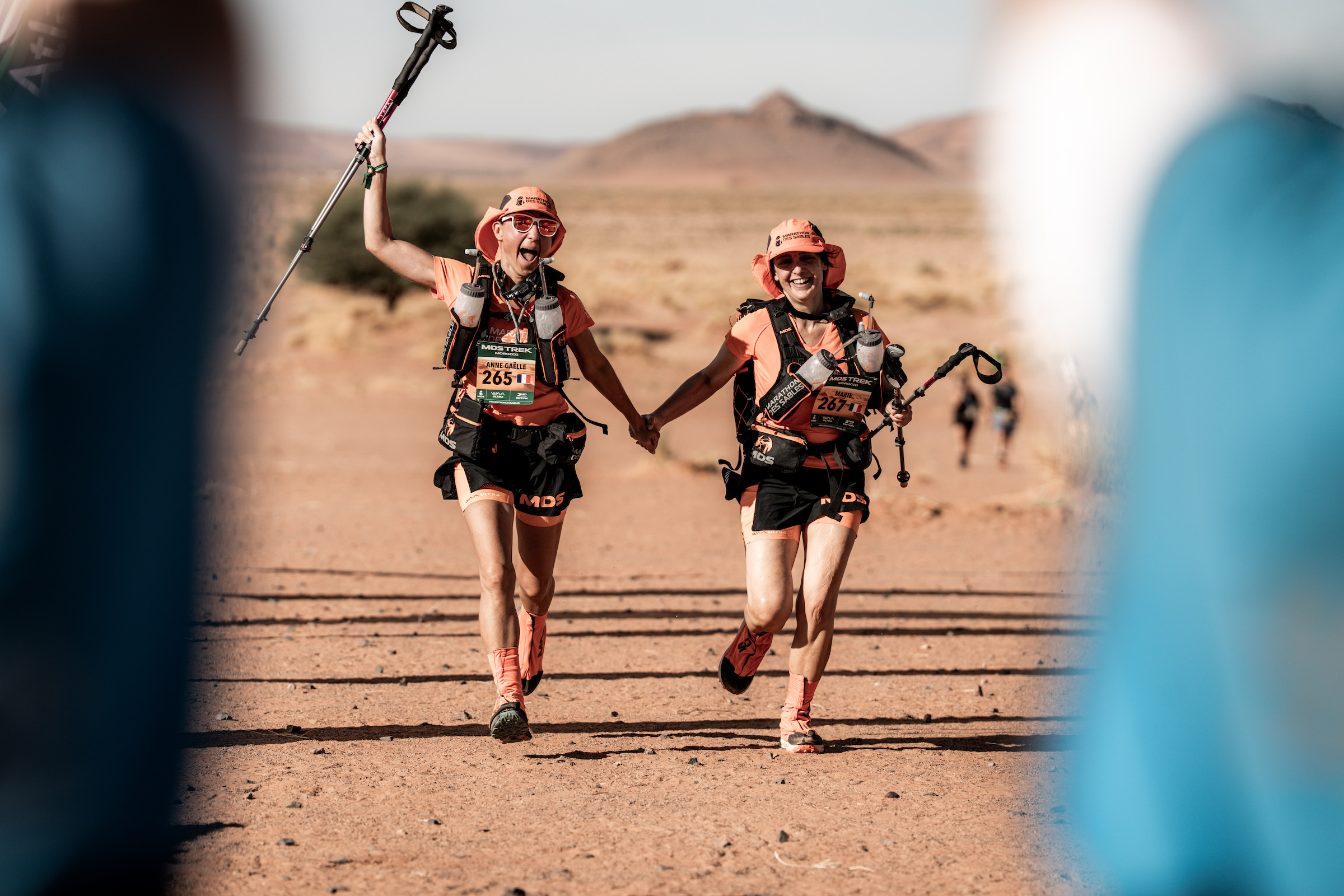
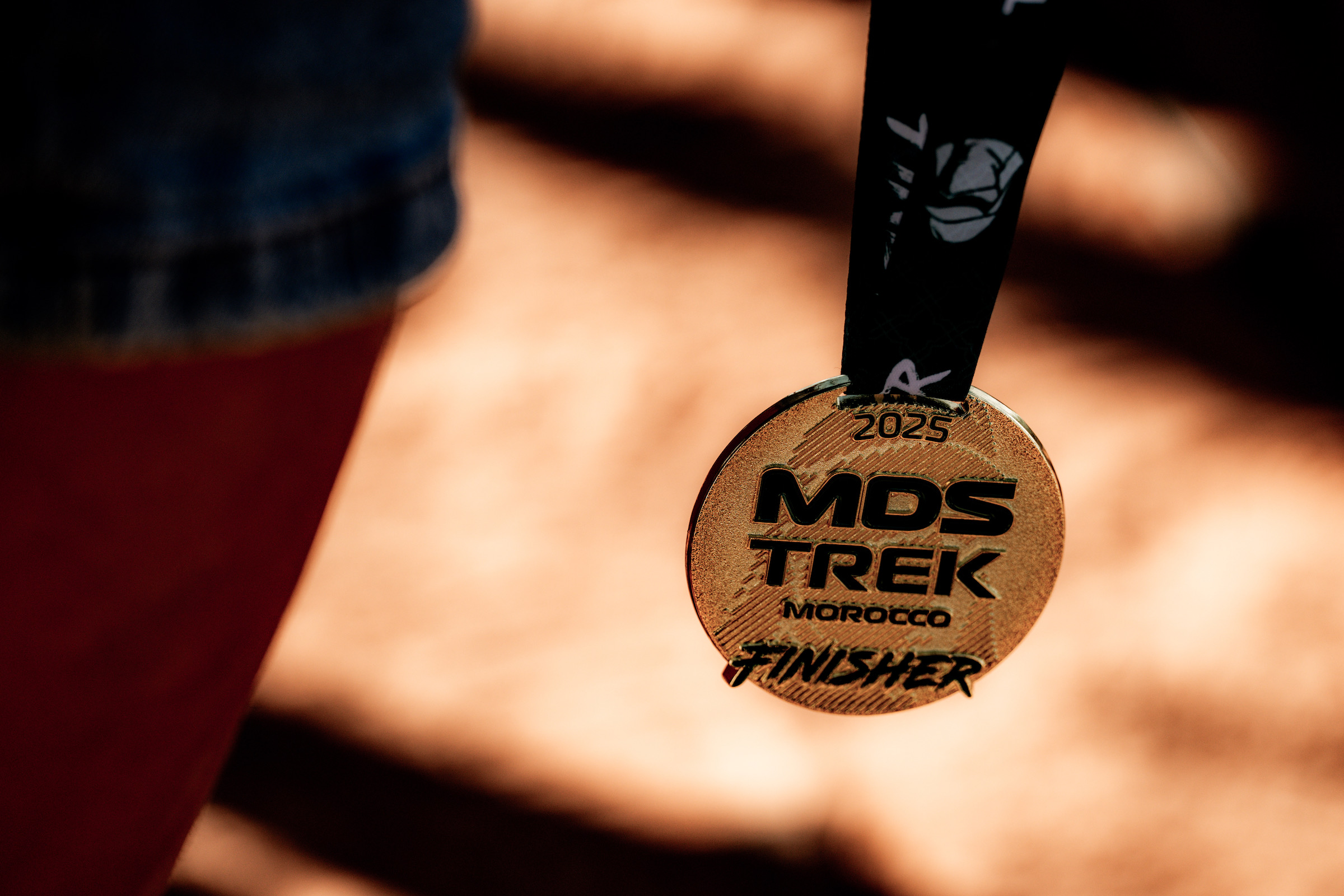
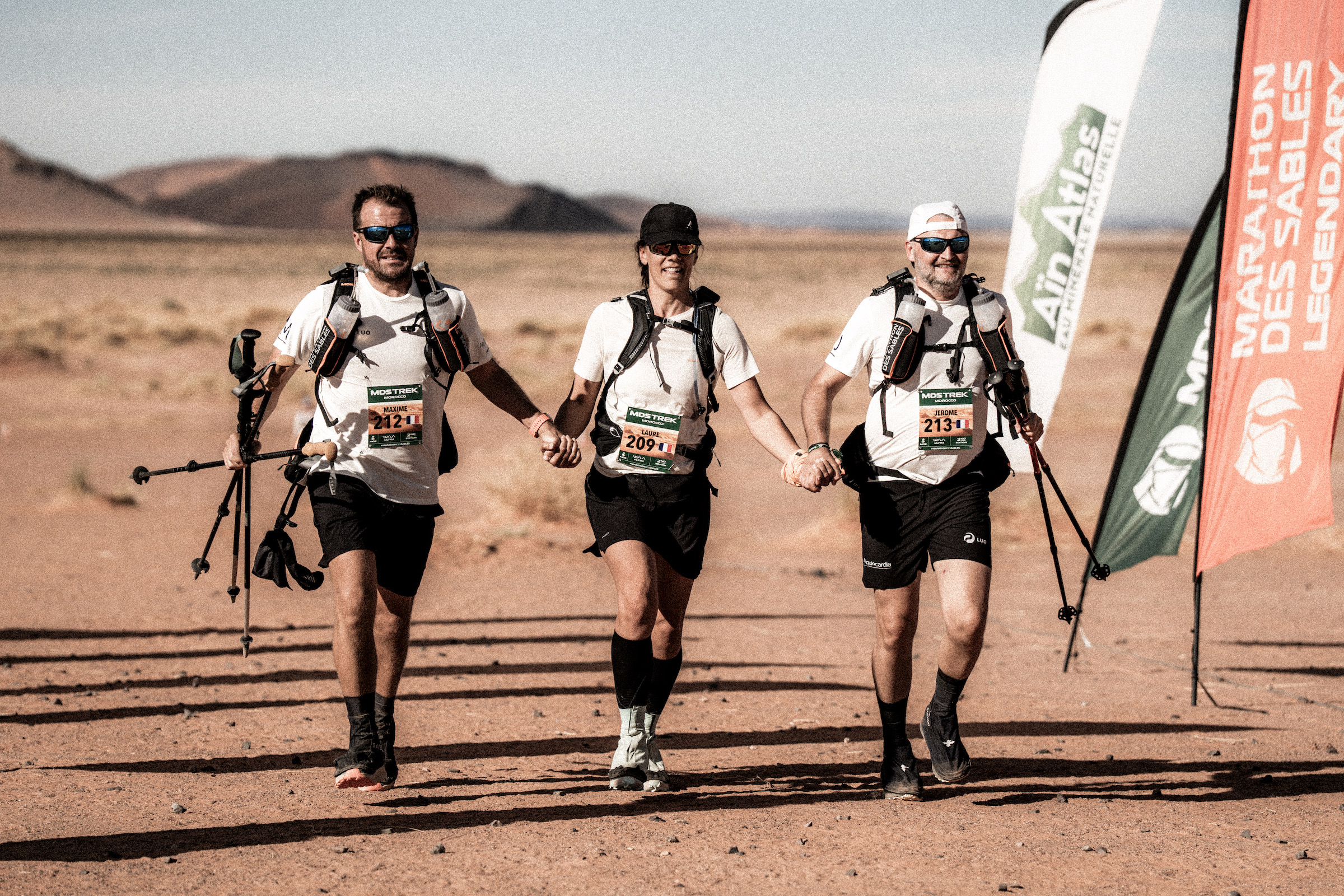
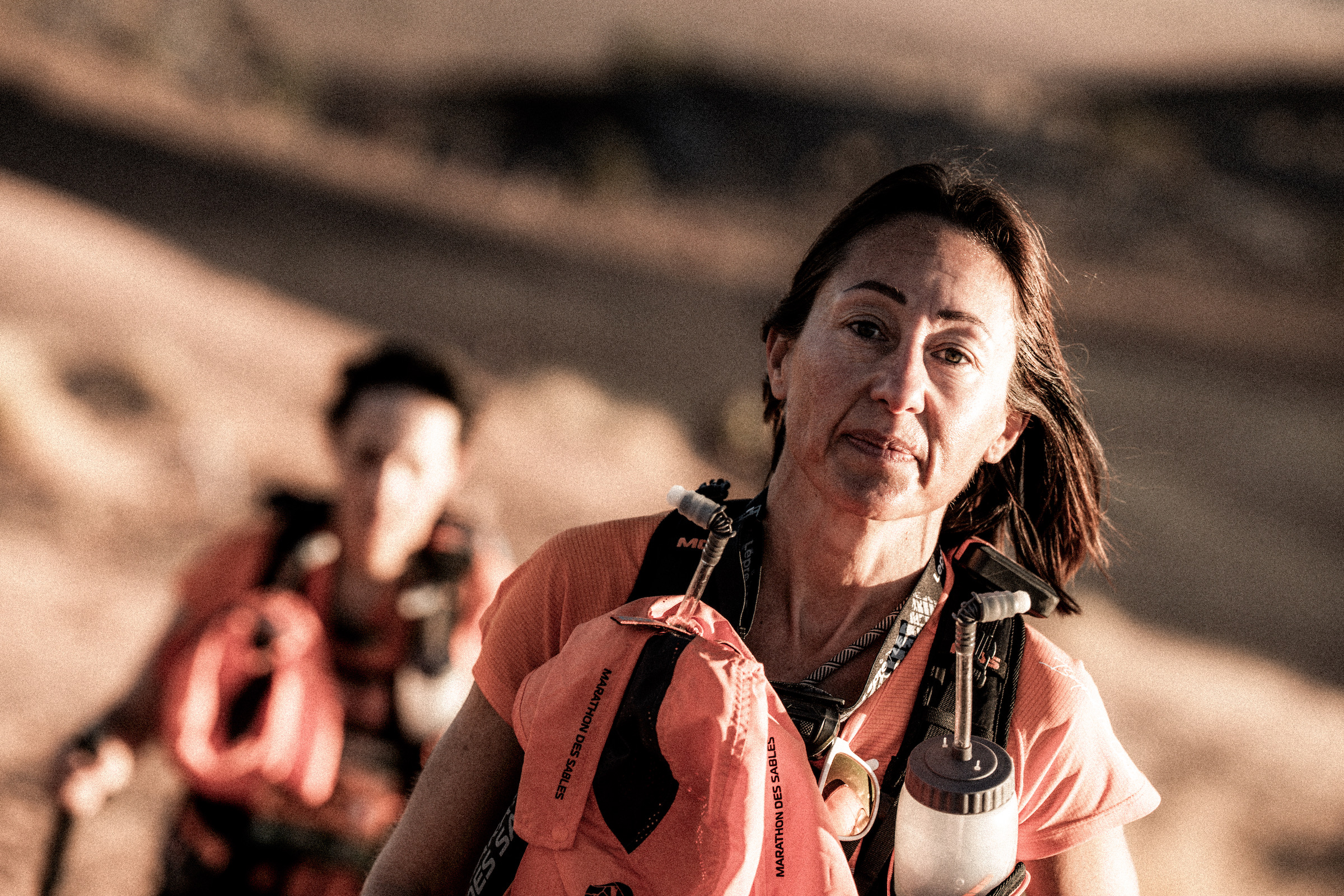
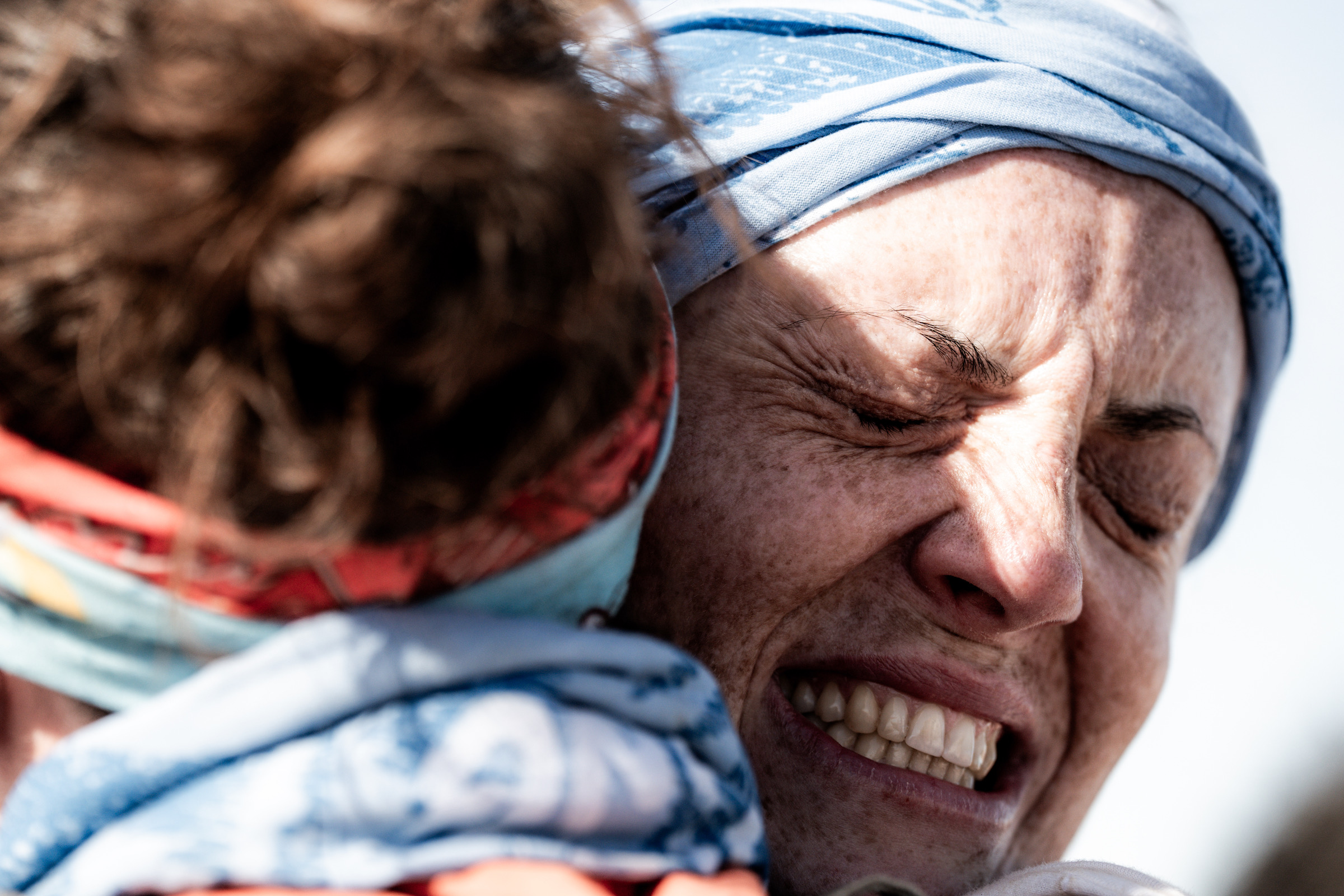
One by one, they crossed the line. Some ran with everything left in their legs. Some limped, leaning on poles. Some clutched hands with teammates or strangers who’d become family over theirshared suffering. And when that medal was placed around their necks, the tears came freely. No shame in them, only pride, release, and the overwhelming relief of completion.
There were cheers. Applause. Laughter. People hugging like they never wanted to let go. Cameras flashed. Medals clinked. Bodies that had been pushed to the limit stood a little taller.
Behind every finish was an army in blue and orange.
The MDS team, the volunteers, medics, logistics crew, water distributors, checkpoint staff, tent builders, camp runners, sweepers, and everyone else in between—made this journey possible.
They were the quiet hands who carried everyone forward. The steady voices in the storm. The ones who handed out water in 47°C heat, packed and re-packed tents, tended to blisters, and kept this chaotic caravan moving across an unforgiving land. Their work wasn’t glamorous. It was relentless. And it matters more than words can say.
MDS 120 Morocco is more than numbers. More than distance. It’s more than the desert.
It’s about finding out what lives under your skin when the comfort is stripped away. It’s about running into the teeth of the wind and not turning back. It’s about community, people who arrive as strangers and leave as family. It’s about believing you can, even when everything hurts, and then proving it.
No one who stood on that start line is the same at the finish. And that’s the point.
So to every runner who dared to take this on: you are fierce, you are strong, and you’ve earned every second of this glory. This medal means more because you fought for it.
MDS 120 Morocco is complete. The desert tried to break us. But we endured. And that’s the story you’ll tell forever.
On Wednesday, September 10 at 12:00 PM UTC+2, registration opens for three unforgettable endurance adventures:
MDS 120 Morocco – October 2–10, 2026
MDS Trek Morocco – October 11–20, 2026
MDS 120 Jordan – October 31–November 7, 2026
For runners, trekkers, and anyone who dreams of testing their limits in the most breathtaking landscapes on Earth, these dates mark the beginning of a once-in-a-lifetime journey.
What is the MDS?
The Marathon des Sables (MDS) is not just a race. It’s a legend. Born in Morocco in the 1980s, the event has earned a reputation as “the toughest footrace on Earth.” Participants cross vast stretches of desert on foot, carrying their own food and gear, with only water and tents supplied. It’s as much a mental battle as it is a physical one – a journey into resilience, camaraderie, and discovery.
But MDS isn’t just about the ultra-hardcore. Over the years, the family has grown to include formats that open the experience to more people while retaining its wild, adventurous spirit. That’s where MDS 120 and MDS Trek come in.
MDS 120 vs. MDS Trek: What’s the Difference?
Both are designed to immerse you in the magic of the desert, but the style of challenge is different.
MDS 120
A shorter, yet still demanding, version of the iconic Marathon des Sables.
120 kilometers spread across three stages.
Self-sufficient format: you carry your food and equipment.
Runners and fast hikers alike join in, moving between marked checkpoints across some of the most beautiful, wild landscapes imaginable.
Nights are spent in camp, bonding with fellow adventurers under desert skies.
MDS TREK
Designed for those who want the MDS atmosphere without the clock.
Roughly the same length as the 120, but completed at a trekking pace over five stages.
Guided and supported: you carry a daypack, while larger bags are stored in bivouac.
Perfect for walkers, adventurers, and anyone who prefers to savour the desert at a slower rhythm.
In short: MDS 120 is a race. MDS Trek is an adventure. Both give you the thrill of the desert, the community spirit, and the sense of achievement that comes from stepping far outside your comfort zone.
Photo by Ian Corless
Morocco: The Heart of MDS
It’s no accident that MDS was born in Morocco. The Sahara here is everything you imagine when you hear the word “desert”: towering golden dunes, dry salt lakes, endless rocky plains, and distant mountains shimmering in the heat.
During the MDS 120 Morocco (Oct 2–10, 2026), participants will move through terrain that feels ancient and otherworldly. Running or trekking across sand seas lor along fossil-studded plateaus, you’ll witness landscapes that seem unchanged for millennia.
If you prefer a slower, more contemplative journey, MDS Trek Morocco (Oct 11–20, 2026) is your chance to follow in the footsteps of nomadic caravans. Expect strong mint tea at camp, Berber hospitality, and sunrises that wash the dunes in pink and gold.
Jordan: A Desert of Myths and Monuments
After Morocco, MDS 2026 turns east to another jewel of the desert world: Jordan.
From October 31 to November 7, 2026, MDS 120 Jordan takes place in Wadi Rum, a place so breathtaking it has been called “the Valley of the Moon.” Red sandstone cliffs, natural arches, and wide sandy valleys create a setting that feels almost Martian—no wonder so many films have been shot here.
Photo by Ian Corless
The terrain is ideal for running and trekking: firm sand flats, winding canyons, and rocky ridges that offer sweeping views. And the cultural backdrop is equally unforgettable. This is the land of Lawrence of Arabia, Nabataean traders, and Bedouin camps where hospitality is still sacred.
Photo by Ian Corless
Add in the chance to visit Petra – the rose-red city carved into cliffs – and float in the Dead Sea, and you’ve got a trip that balances physical challenge with world-class cultural exploration.
Why These Events Sell Out
Every MDS event is capped to maintain its unique atmosphere: a balance of challenge, safety, and community. That’s why when registration opens, places vanish fast.
Here’s what draws people back year after year:
The Challenge: 120 kilometers may sound daunting, but it’s achievable for anyone willing to train. Past participants range from elite athletes to everyday adventurers.
The Camaraderie: Camps become villages of shared struggle and shared joy. By the end, strangers become family.
The Scenery: Whether it’s sunrise over Moroccan dunes or starlight over Jordan’s cliffs, the landscapes will etch themselves into memory.
The Transformation: You leave with more than a medal. You leave knowing you can do hard things—and that realization follows you into every part of life.
Photo by Ian Corless
Preparing for MDS
MDS is not something you show up to on a whim. But it’s also not as unreachable as it may seem. With six to twelve months of structured training – mixing endurance, strength, and practice carrying a pack – most people can get ready.
What both demand is an open mindset: ready for sand in your shoes, dust on your face, and joy in small things like shade, water, and shared laughter.
The post-pandemic years have sparked a surge of people craving real experiences – not just vacations, but adventures with meaning. MDS embodies that perfectly. It’s travel, sport, culture, and self-discovery all wrapped into one.
If you’ve ever dreamed of running across the Sahara or walking through Wadi Rum, 2026 is your chance. Spots are limited, and once they’re gone, you’ll be waiting another year.
Photo by Ian Corless
Think about it: ten days where your only job is to put one foot in front of the other. No emails, no deadlines, no noise – just the sound of your breath, the crunch of sand, the laughter of fellow adventurers, and the vast silence of the desert.
That’s what awaits you at MDS 120 Morocco, MDS Trek Morocco and MDS 120 Jordan 2026.
On September 10, 2025 at noon (UTC+2), the door opens.