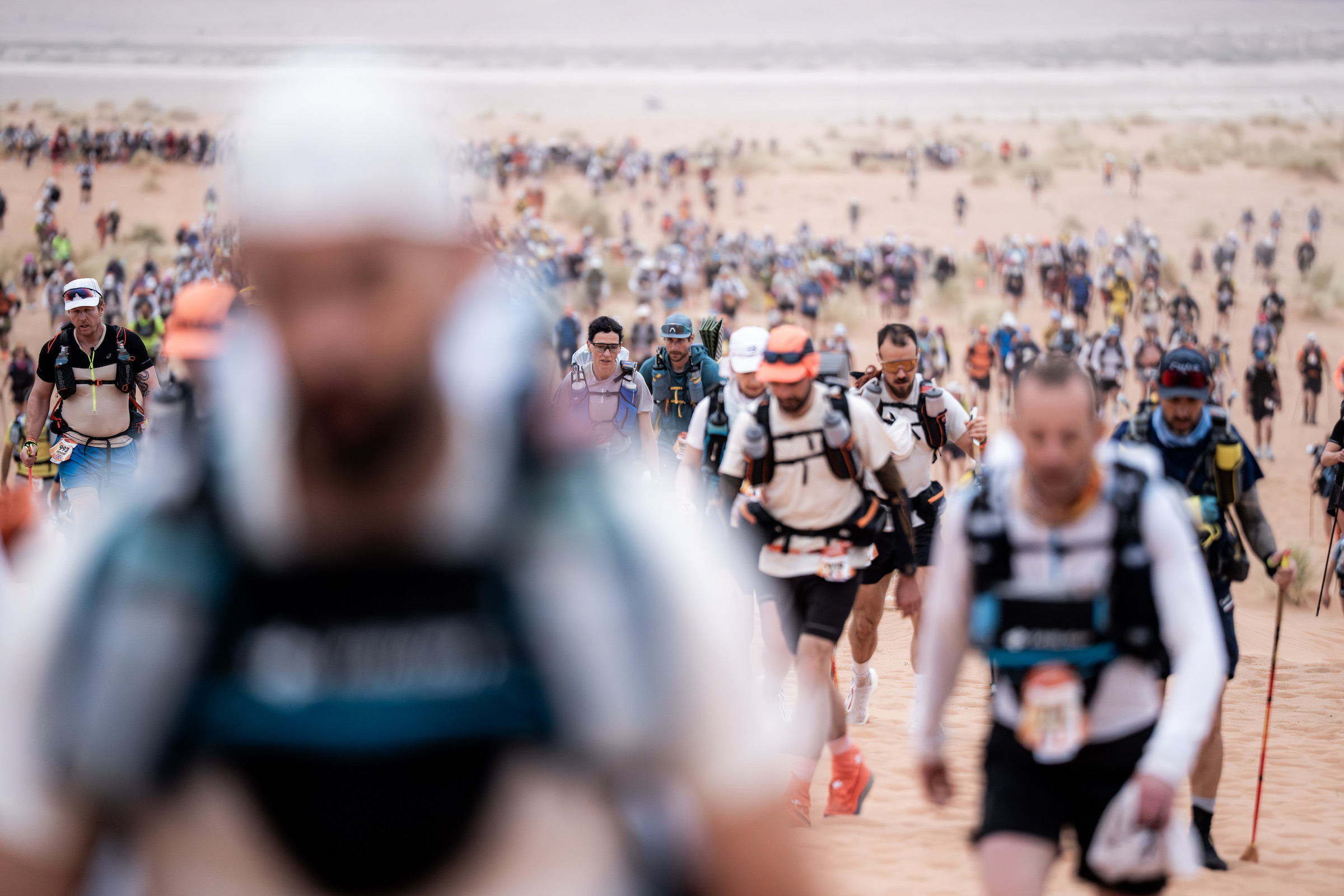
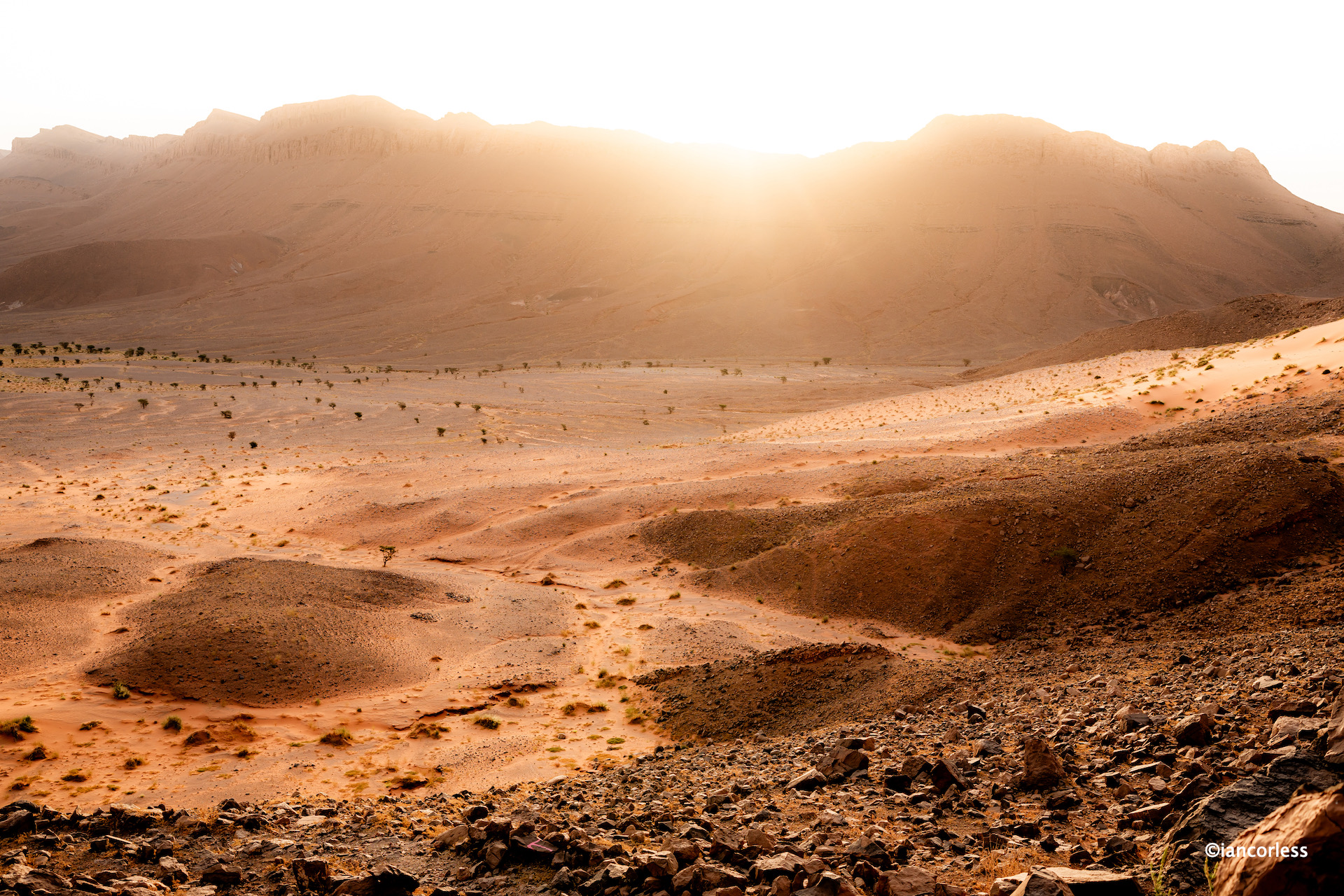
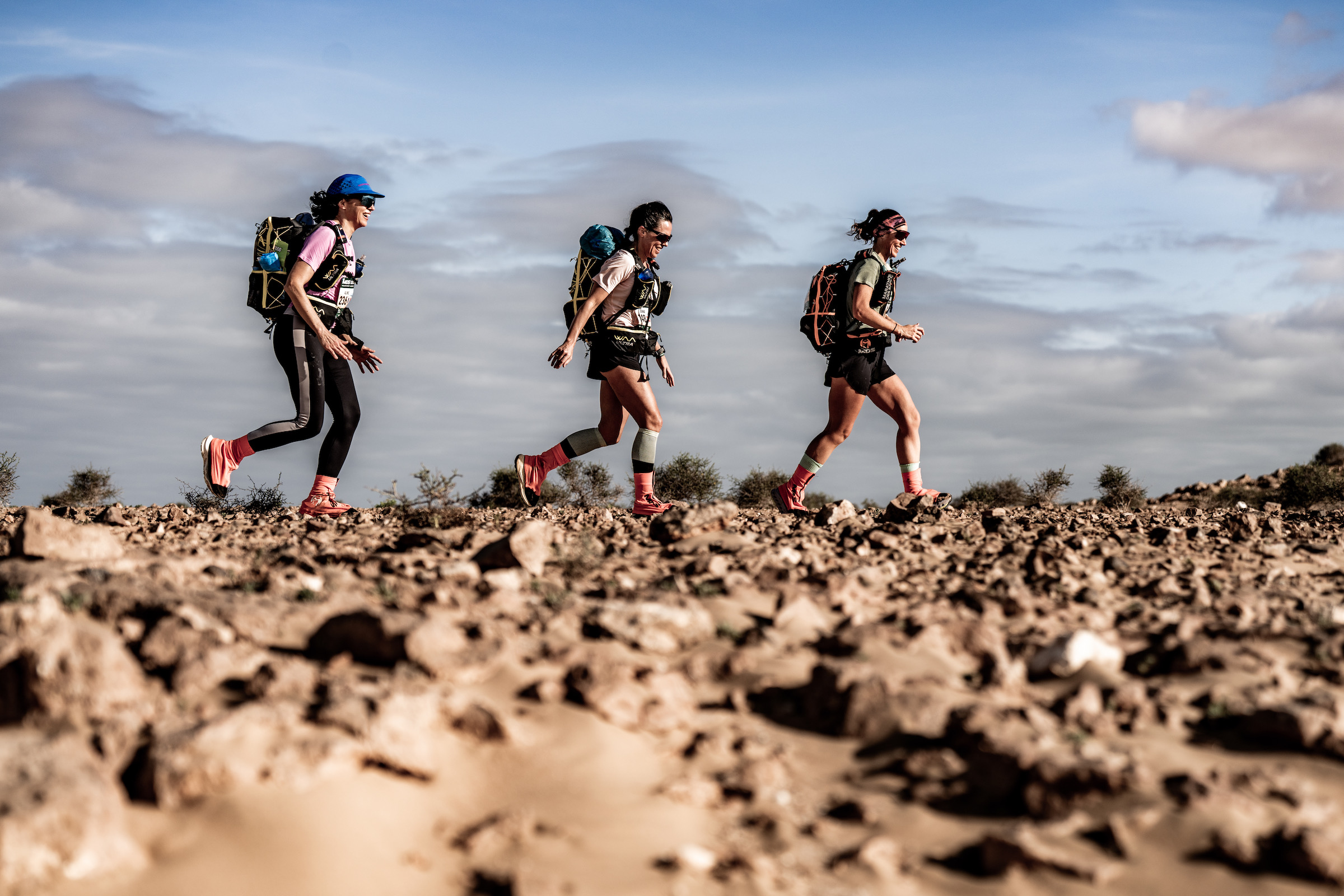
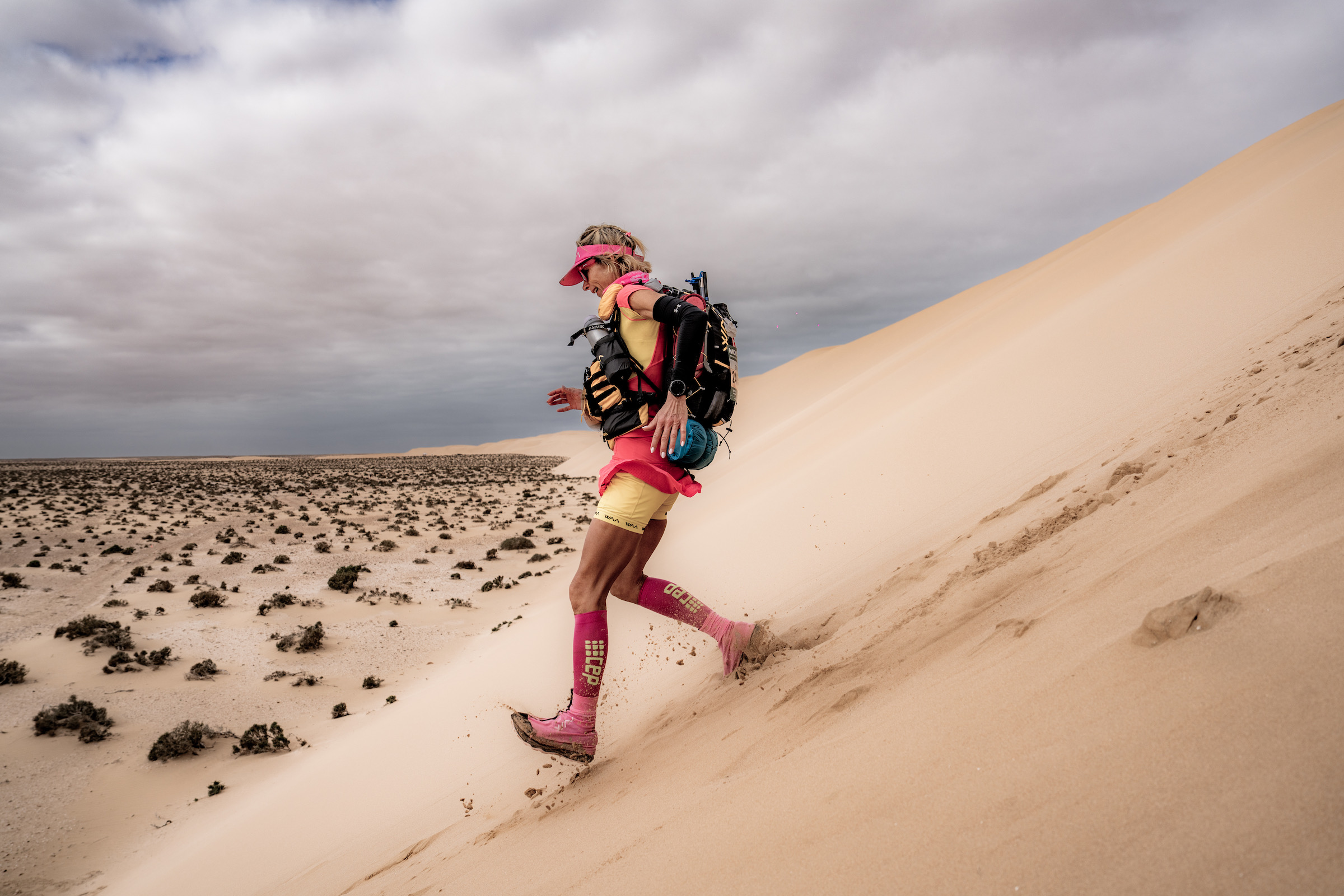
Stage 3 of the MDS Legendary 40th edition unfolded beneath a blanket of cloud, a rare, almost deceptive calm over the Sahara. The cooler start hinted at opportunity, and the elite men seized it immediately.
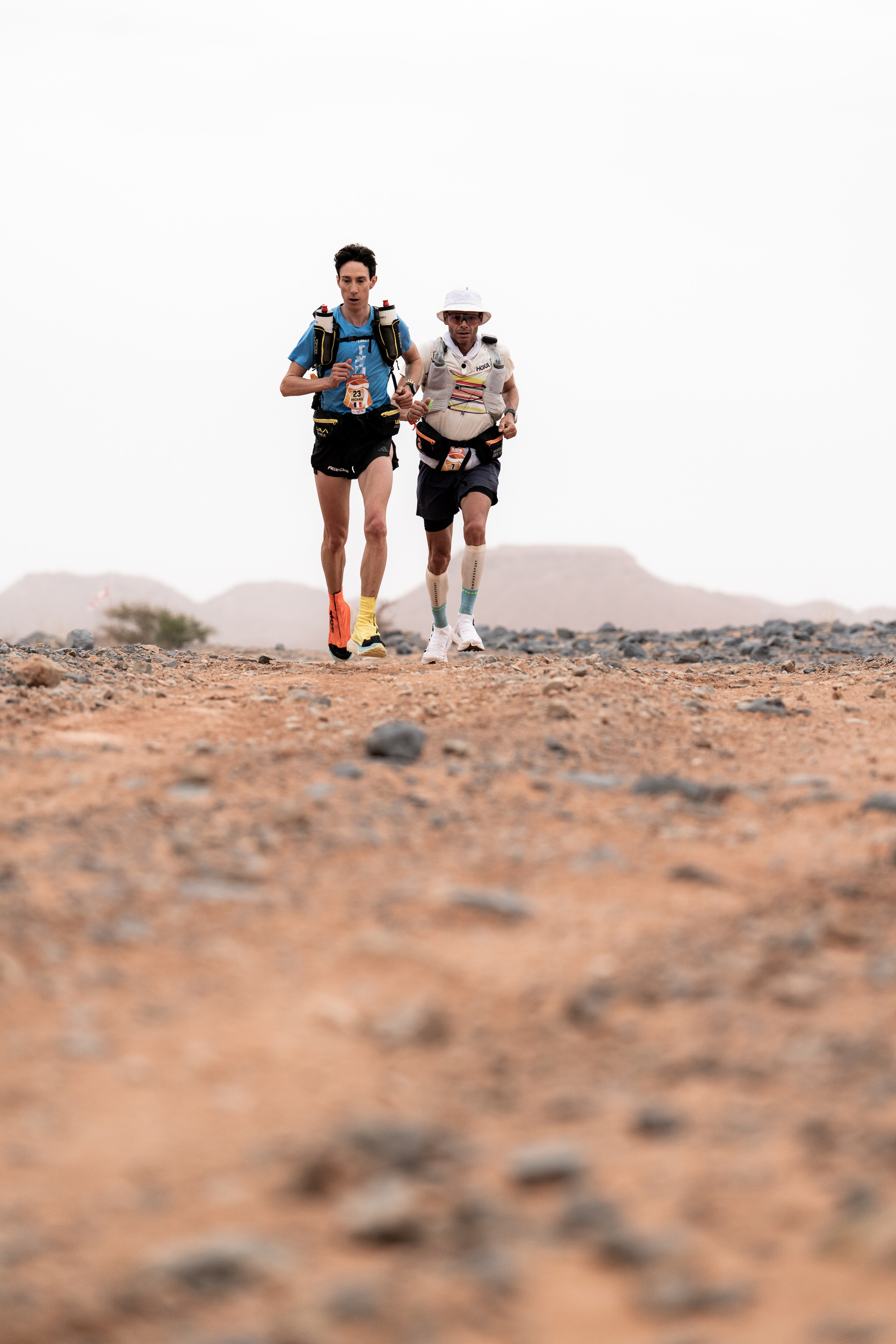
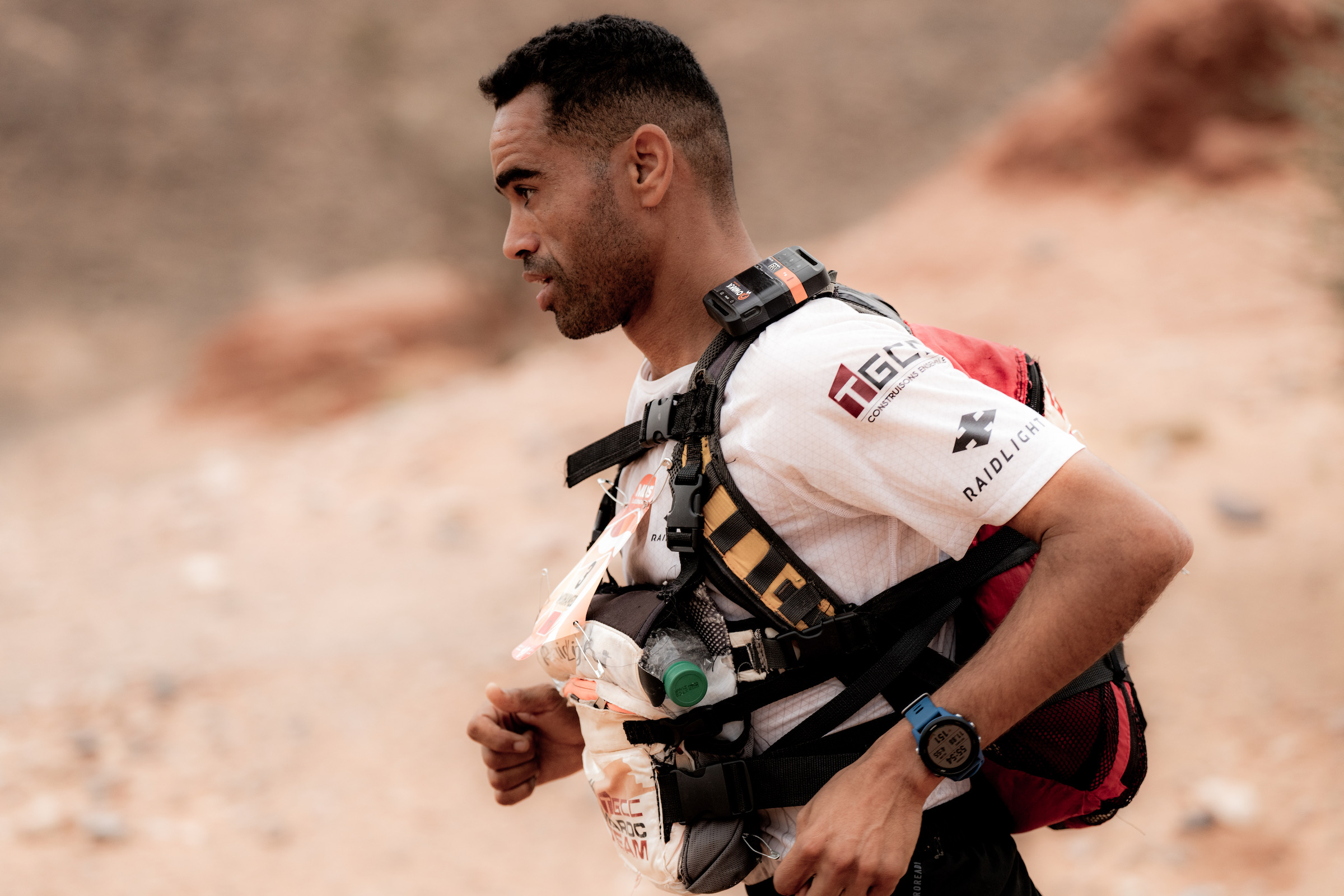
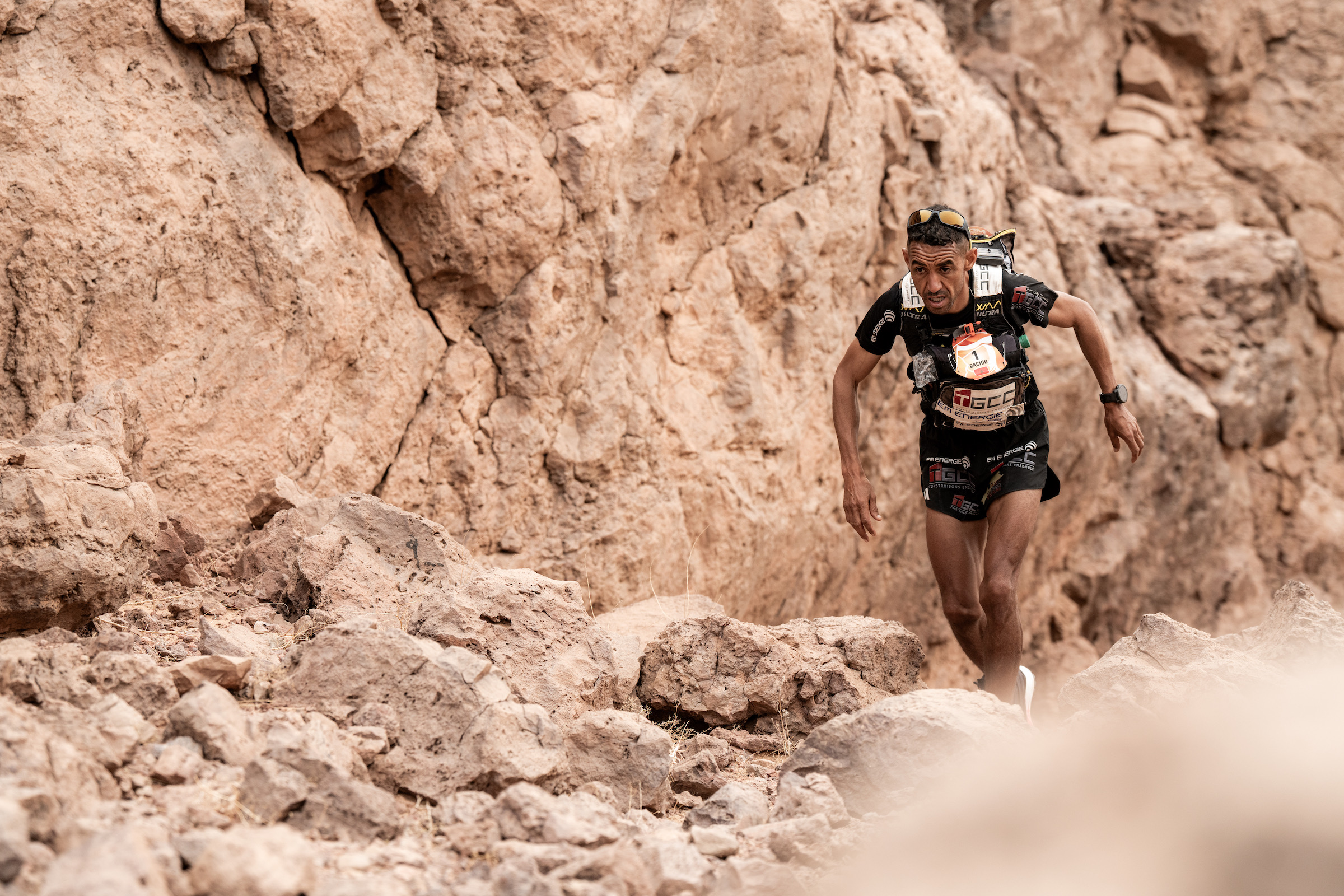
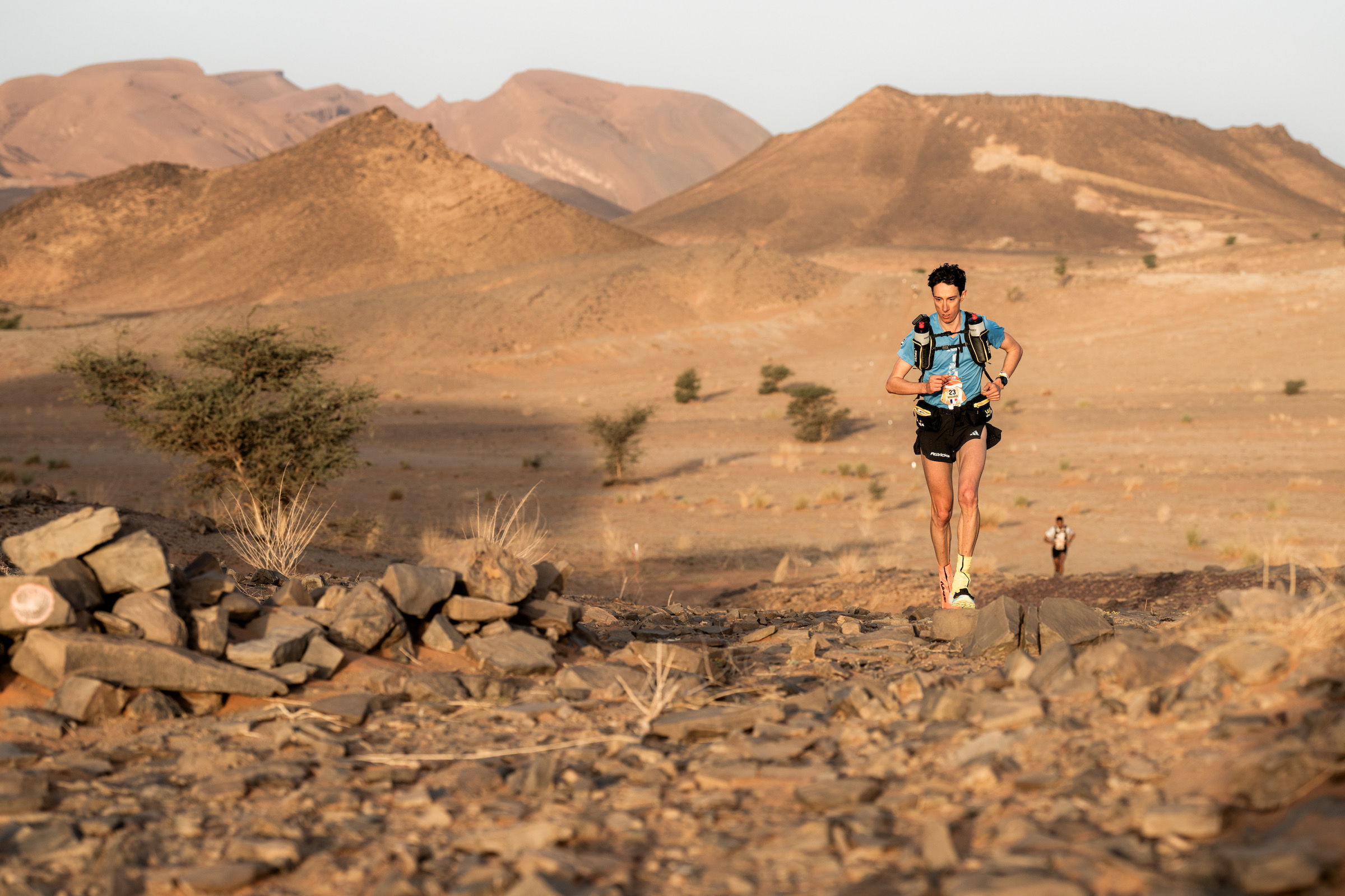
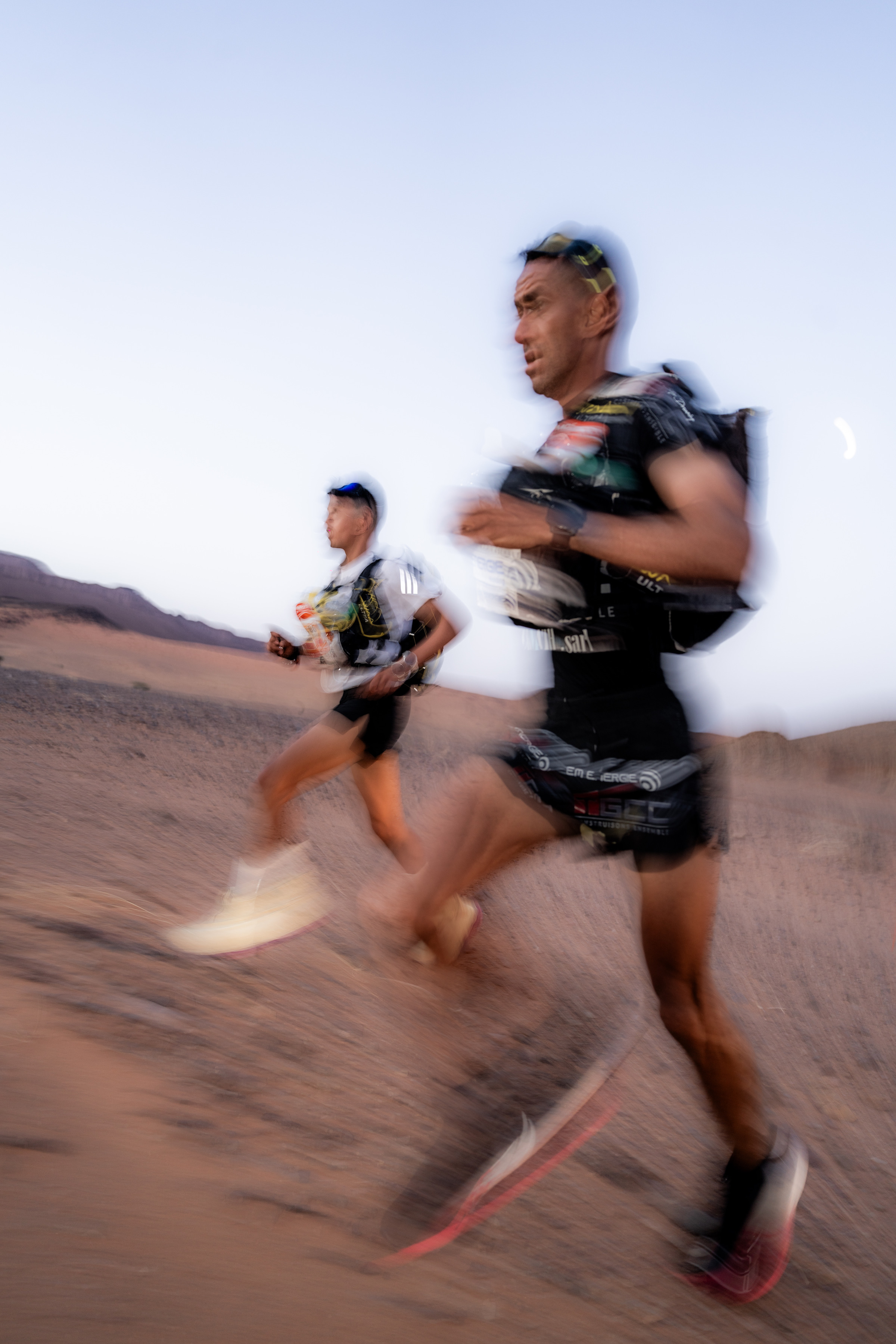
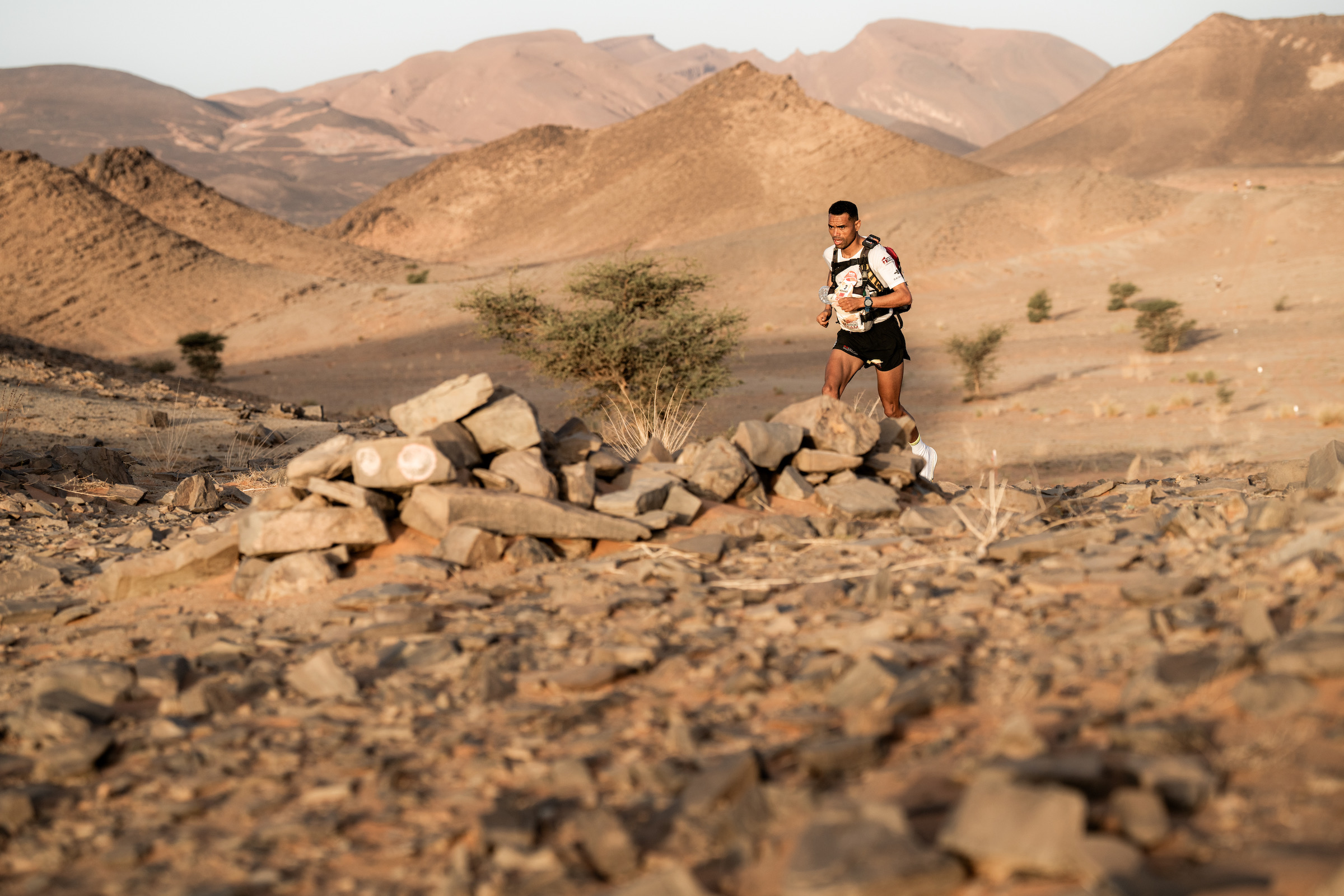
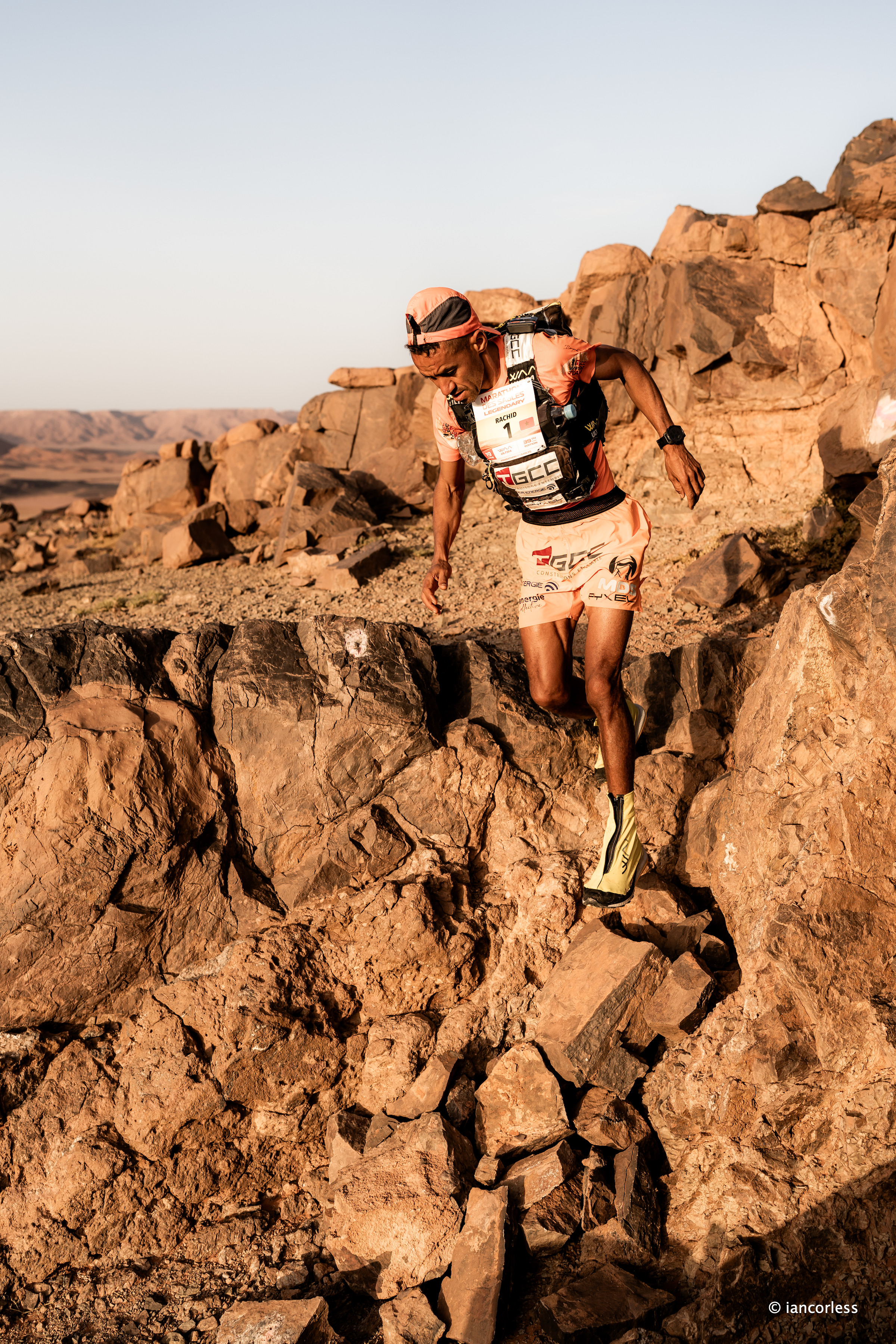
Michael Gras and Ludovic Pommeret set a relentless pace, clearly intent on breaking the dominance of the El Morabity brothers. For a moment, it looked possible. But in true form, the Moroccan duo absorbed the pressure. Mohamed steadily closed the gap, reining the leaders back in with controlled precision before Rachid surged, reasserting their authority at the front.
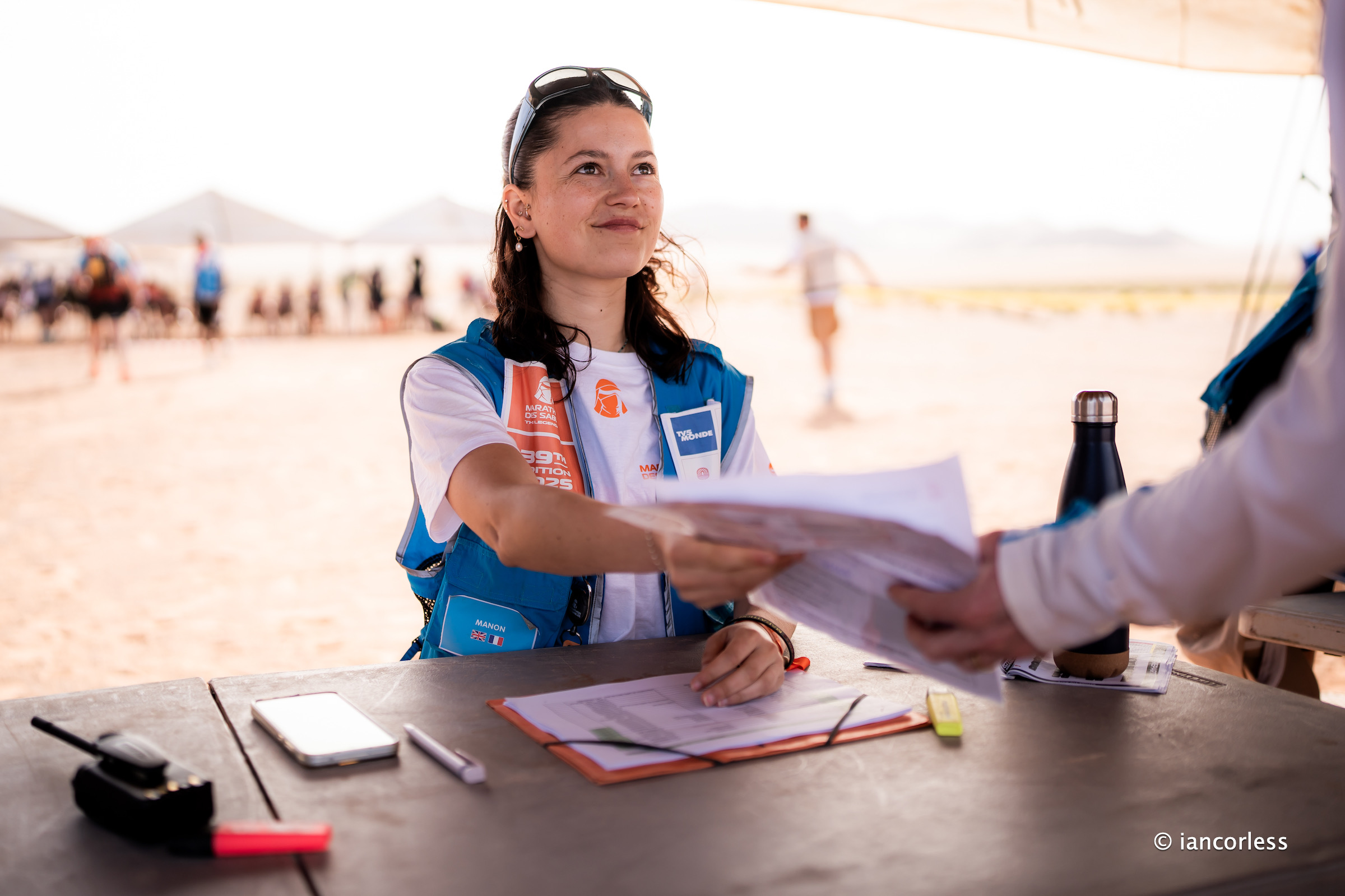
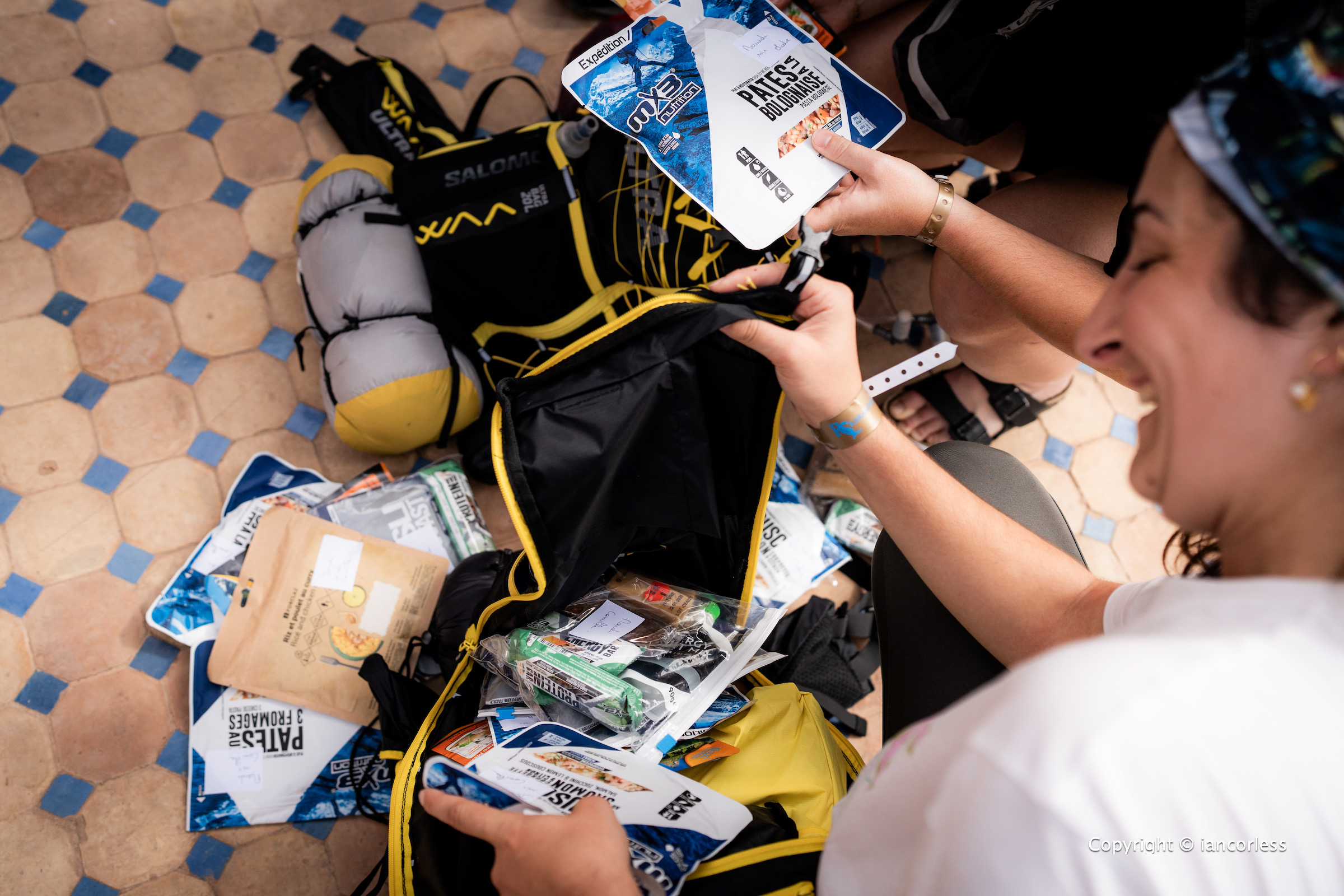
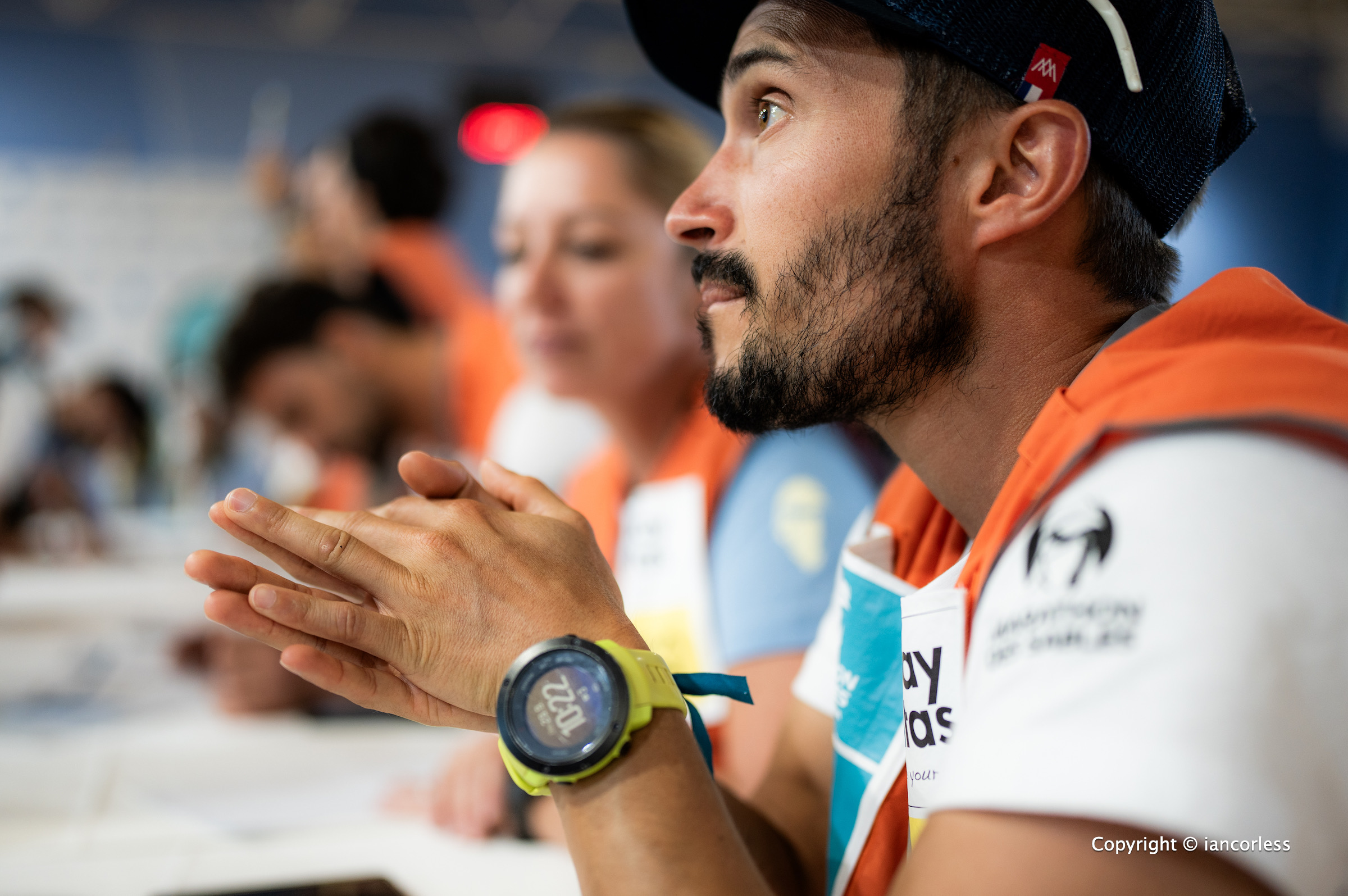
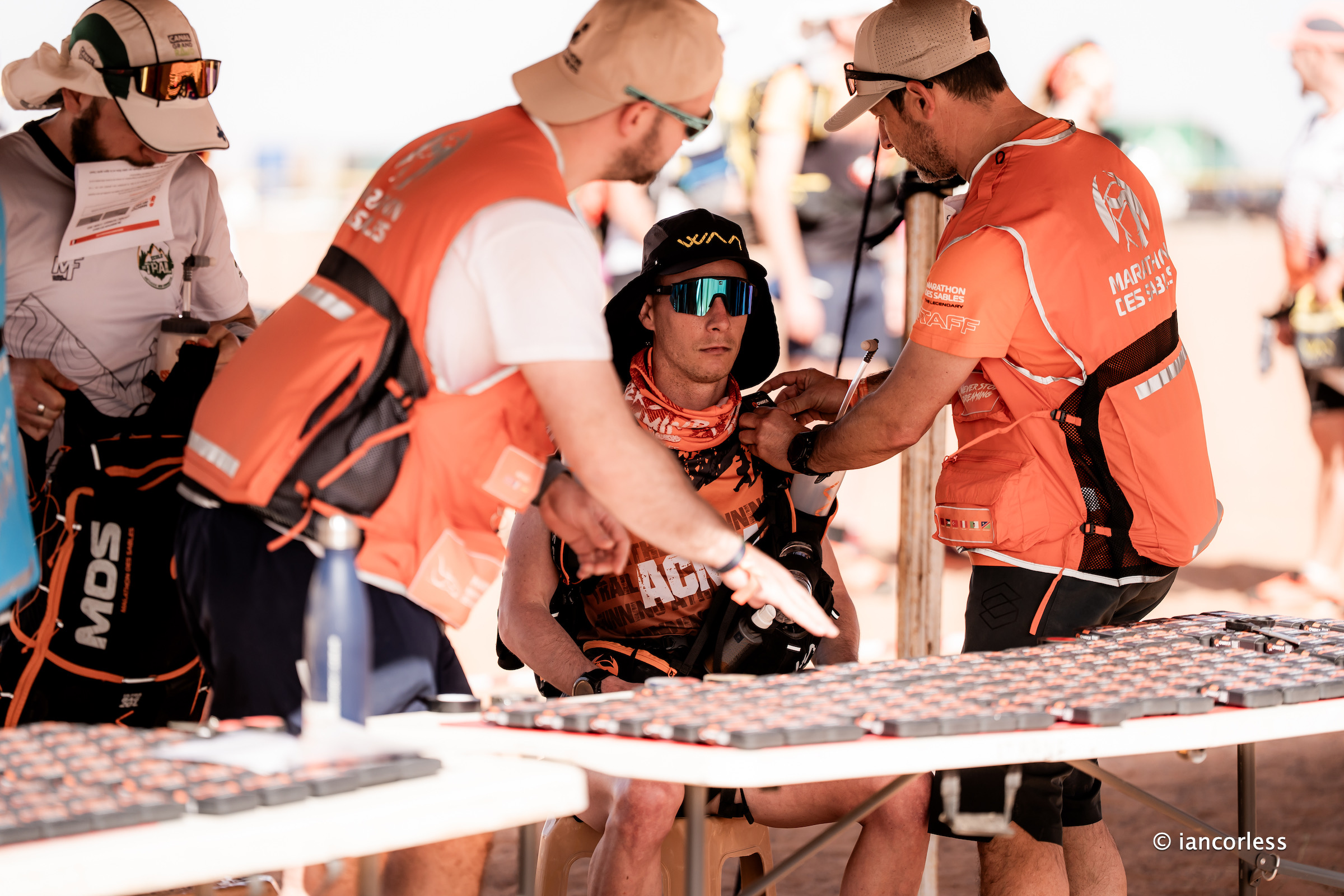
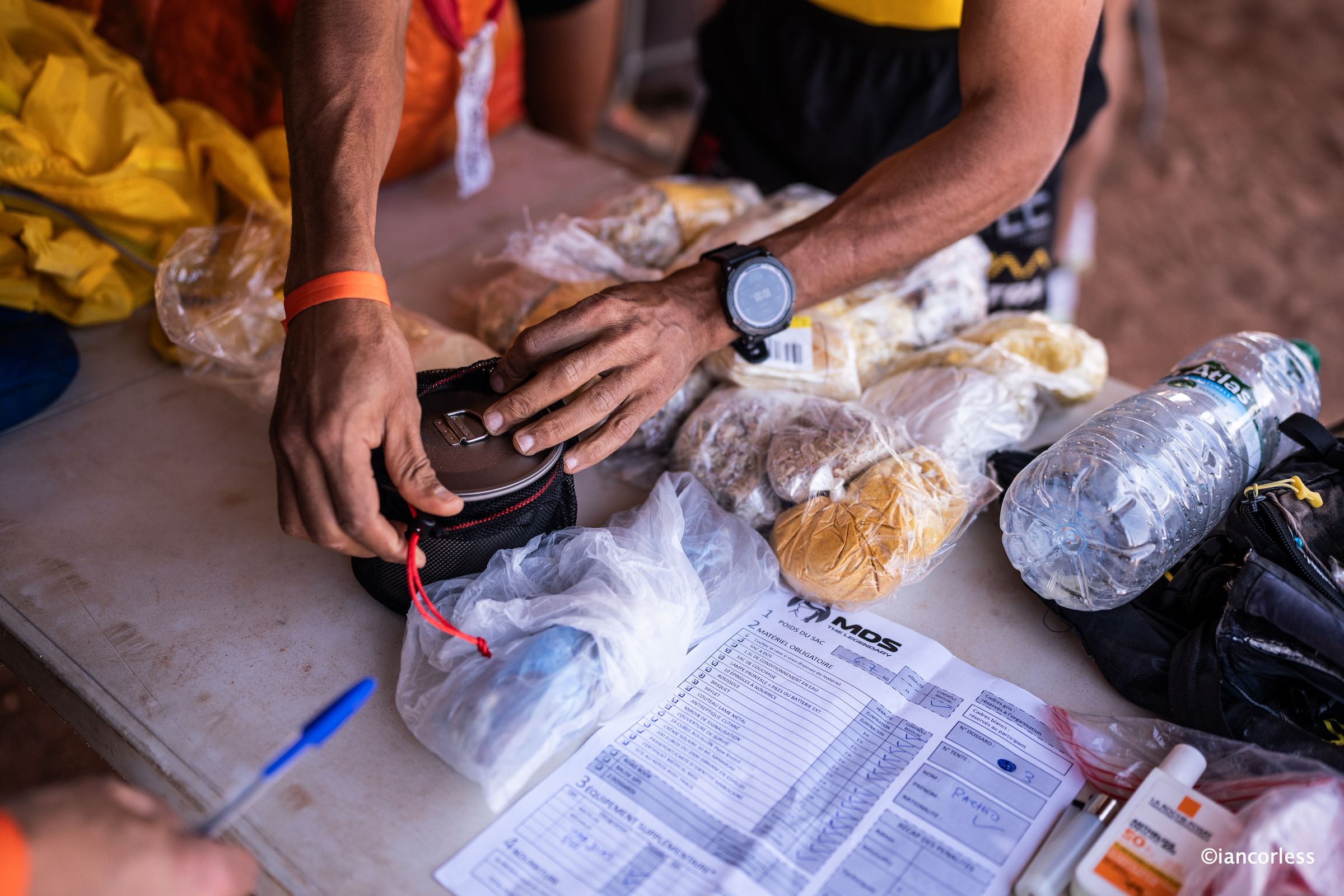
Then came a twist, a surprise control at CP3 for the leading men and women. It disrupted rhythm, fractured momentum, and added a layer of tension to an already tactical day in the desert. The MDS is self-sufficient and each runner must comply with regulations – mandatory equipment and required calories were checked.
By the end of Stage 3, the battle lines are drawn: Mohamed leads overall in 7:43:23, with Rachid just behind at 7:47:20. Michael Gras holds strong in third with 7:56:18 — still within striking distance, but the brothers remain firmly in control.
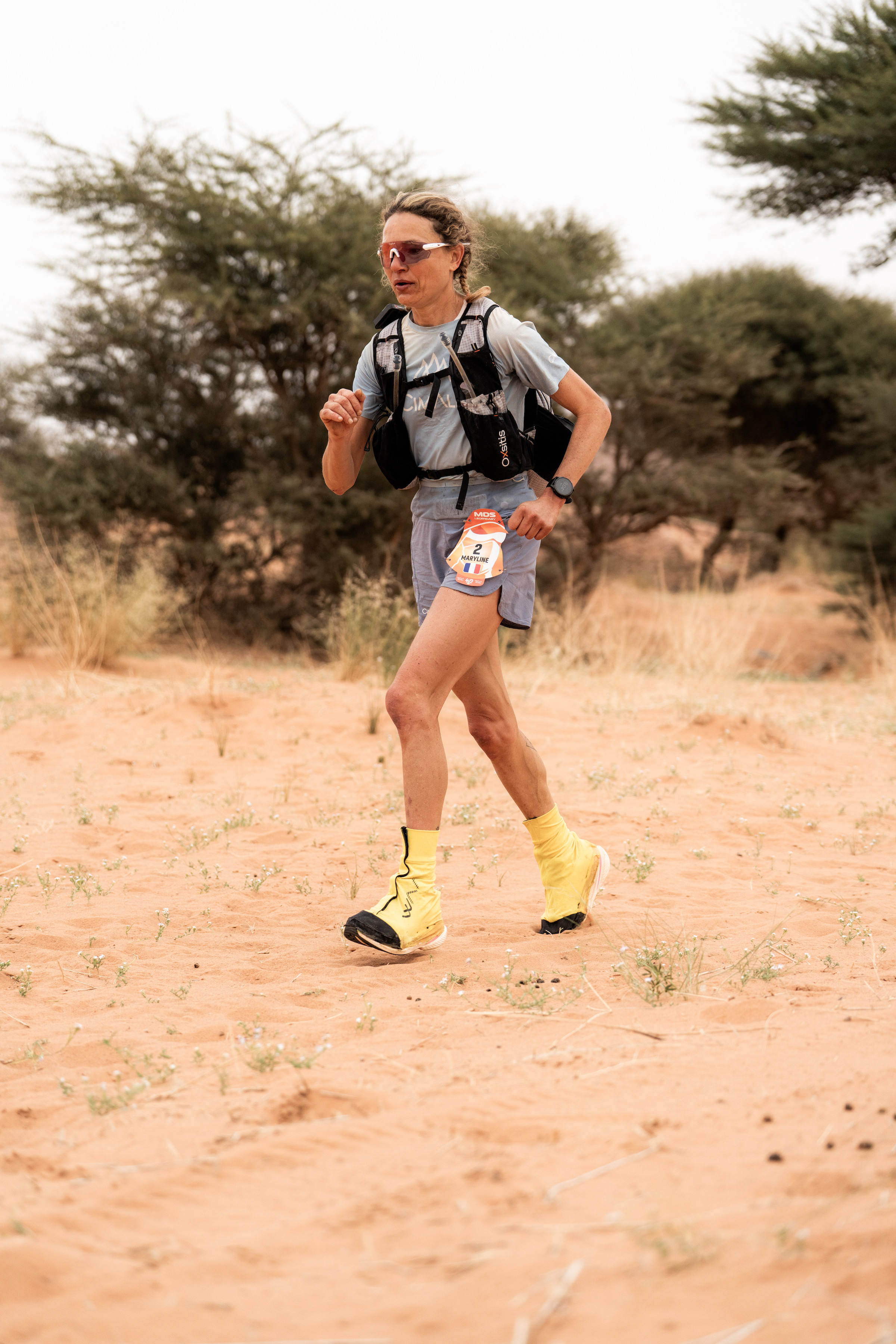
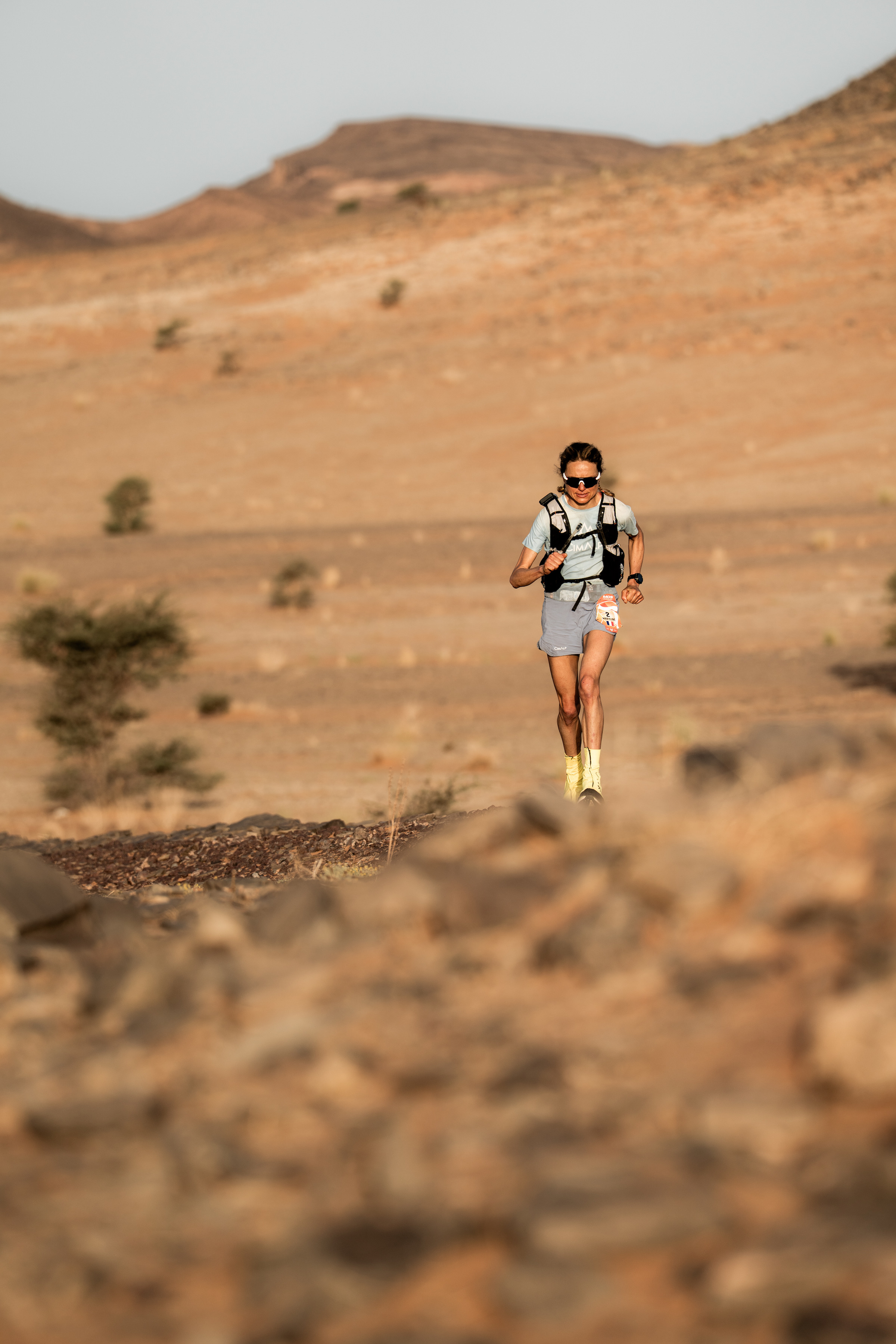
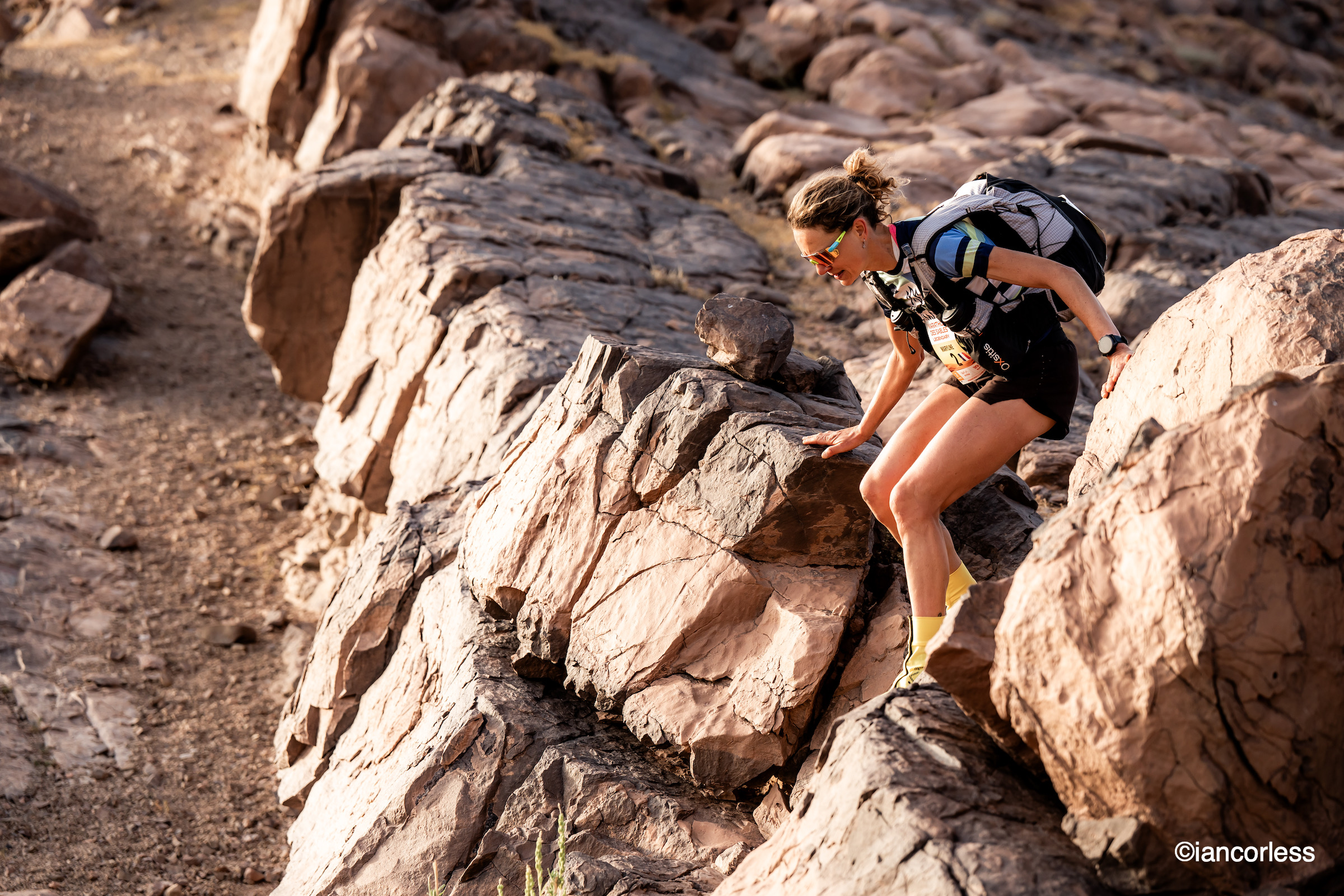
In the women’s race, Maryline continues to dominate with composure and strength. Another commanding stage sees her extend her lead to a full hour ahead of Agathe Teillet-Magot in second, while Aziza El Amrany holds third.
Now, all eyes turn to Stage 4, for the 40th edition, a 100km stretch with 40-hour cut off. In the Sahara, nothing is guaranteed: fortunes can rise, bodies can falter, and rankings can be rewritten in a single day.
Stage 2 of the 40th edition of the MDS Legendary delivered speed, strategy… and something far deeper, a raw fight for survival.
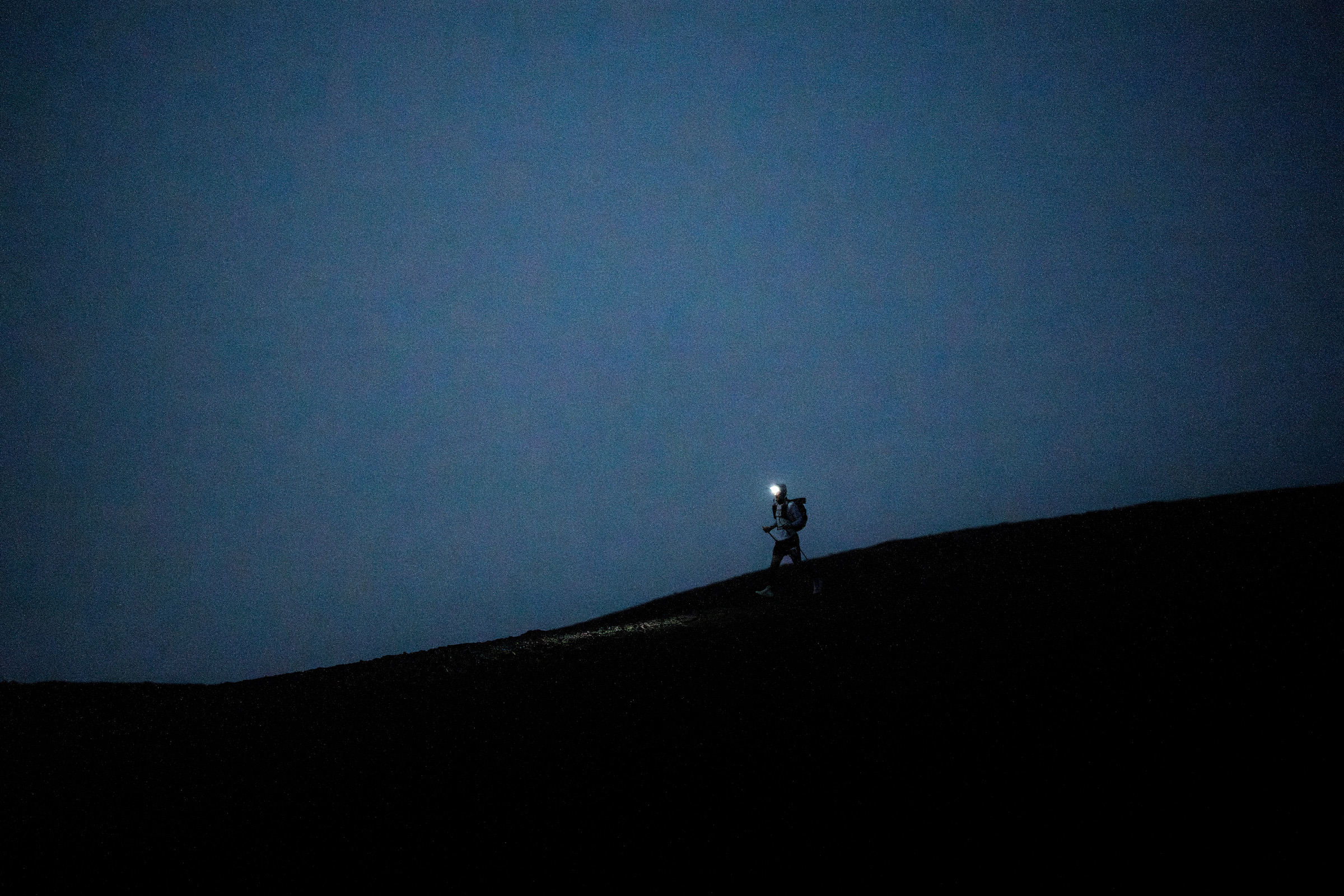
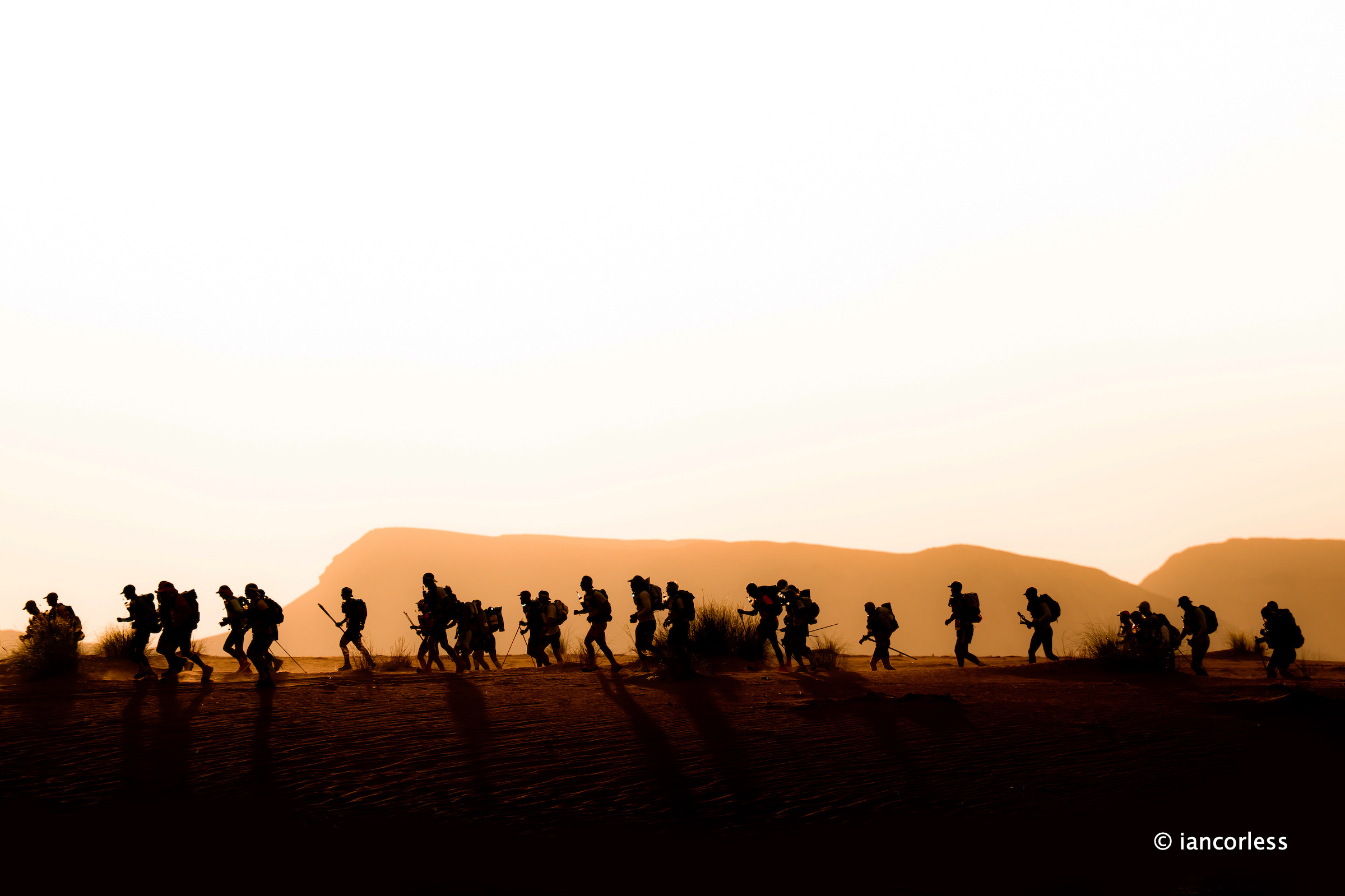
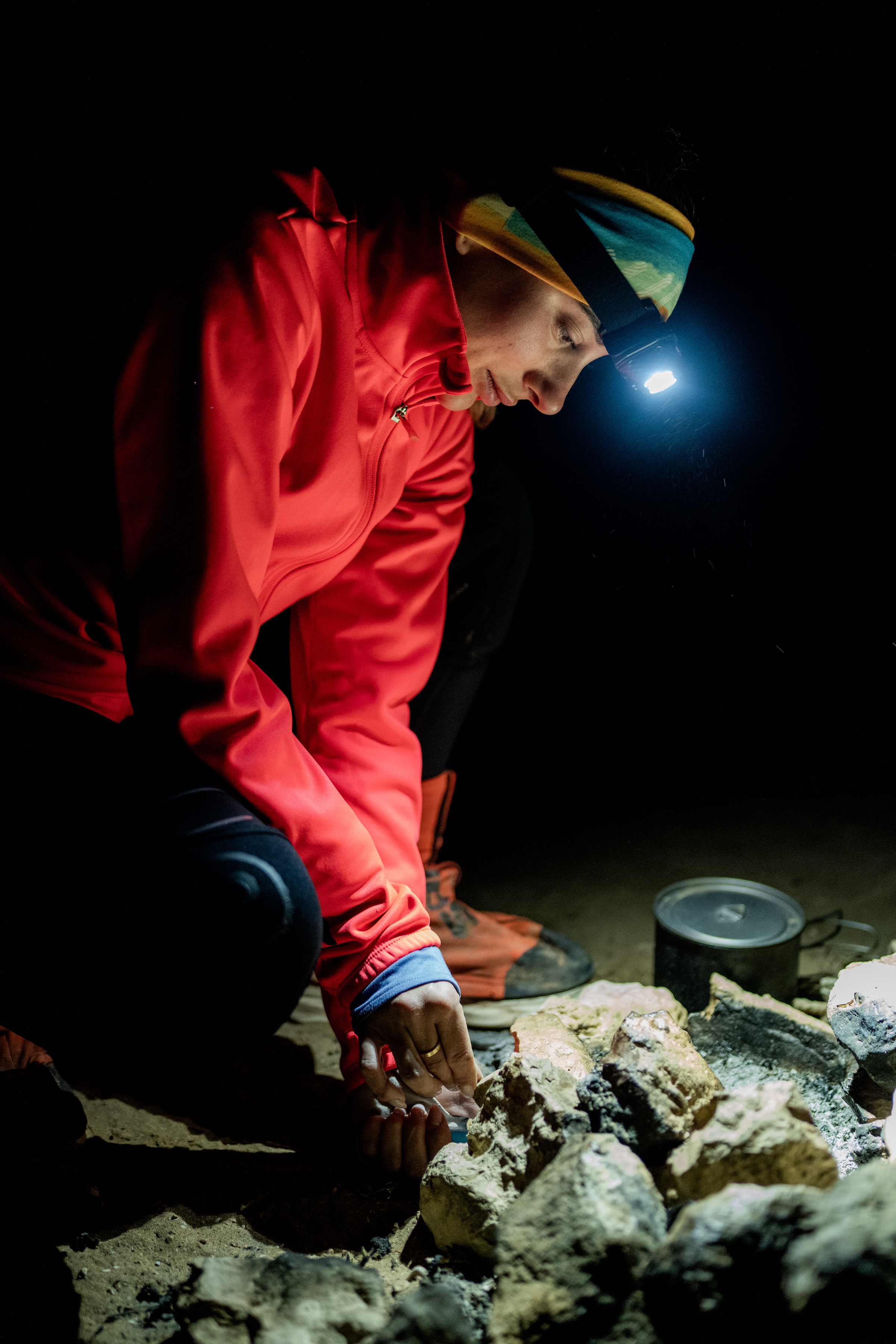
A crisp 06:00 start gave runners a rare gift: cool desert air, fragile and fleeting. In the darkness, the start line shimmered with the glow of head torches, like a moving constellation about to be swallowed by the vastness ahead. For a brief moment, it felt almost forgiving.
But the desert never gives for long.
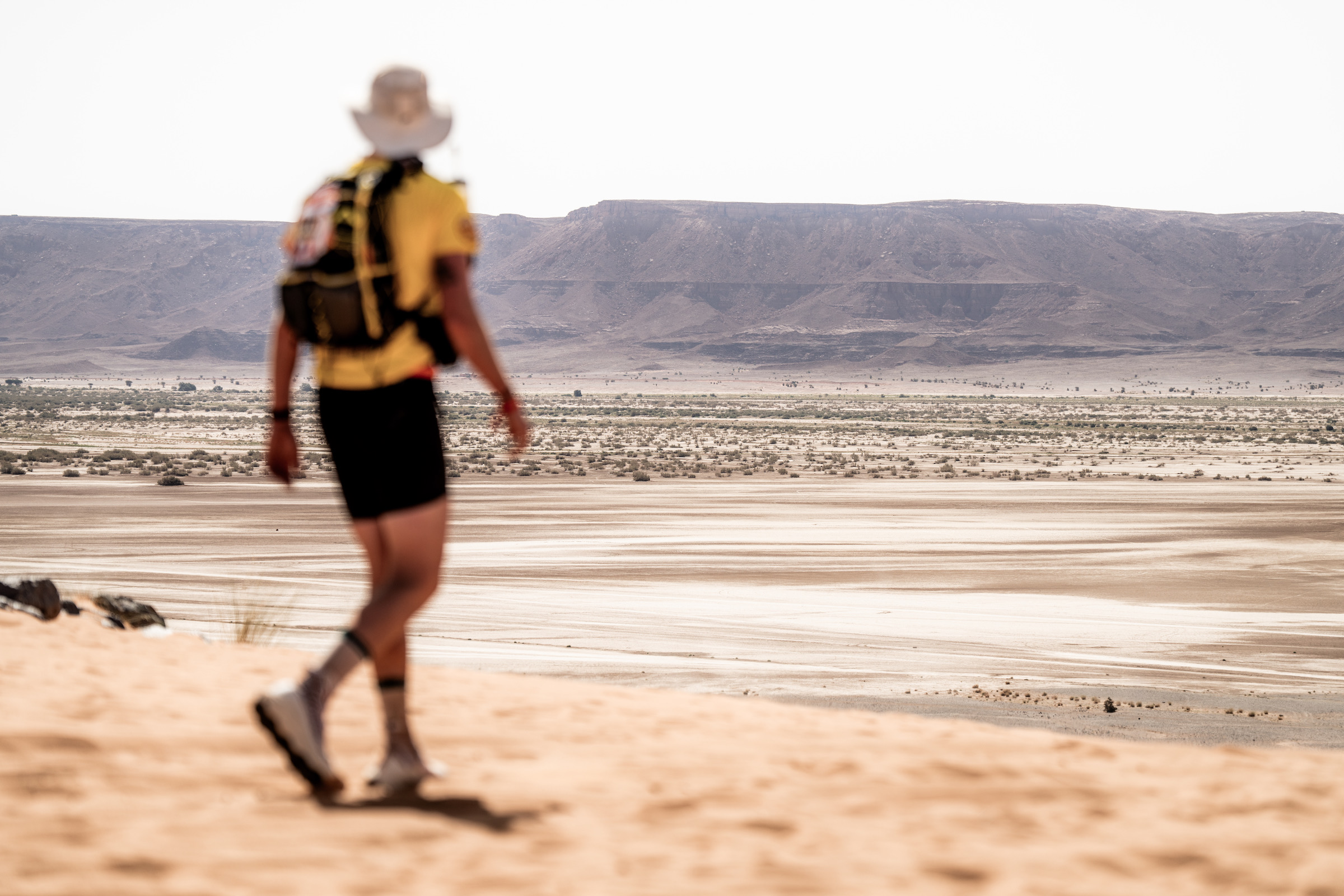
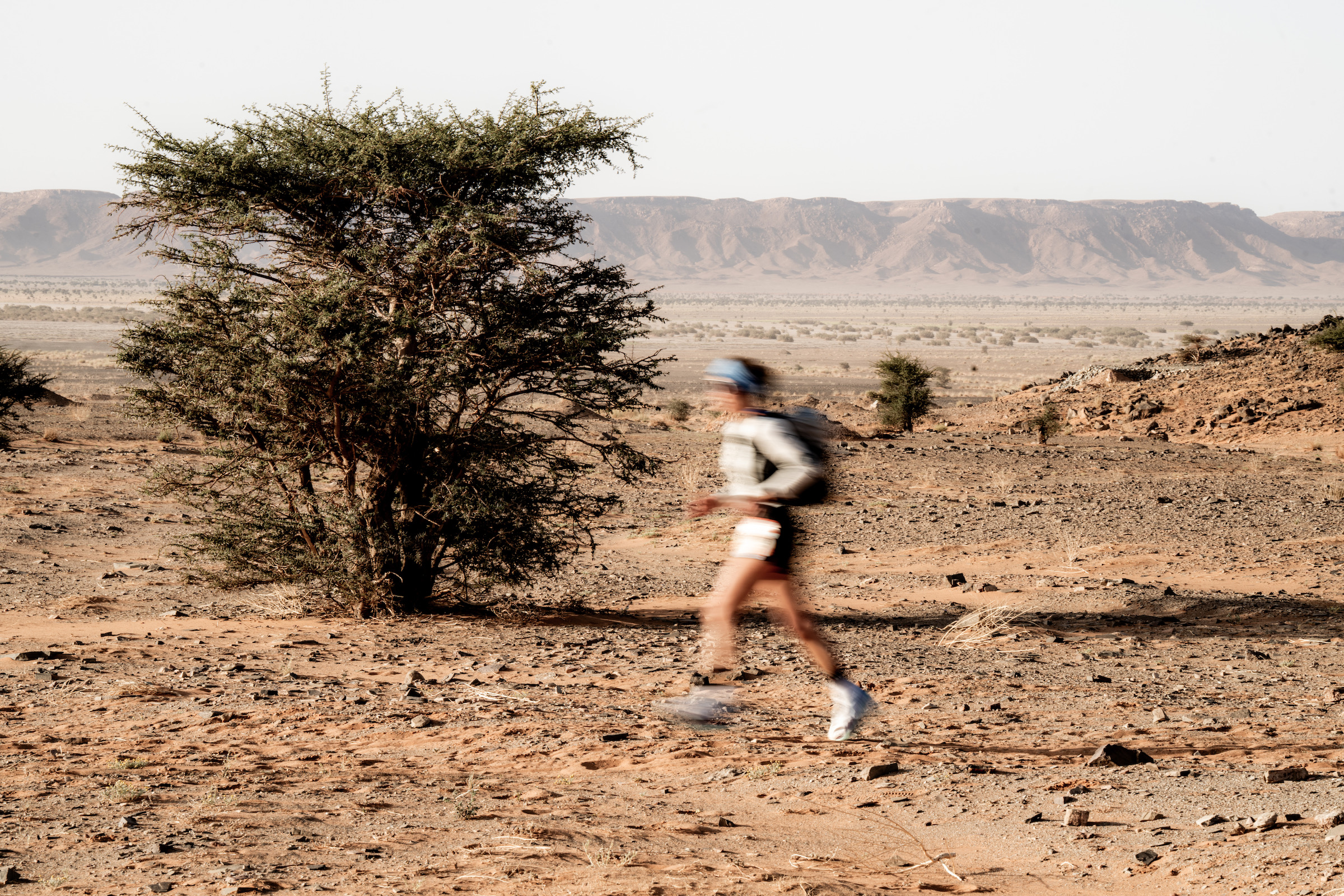
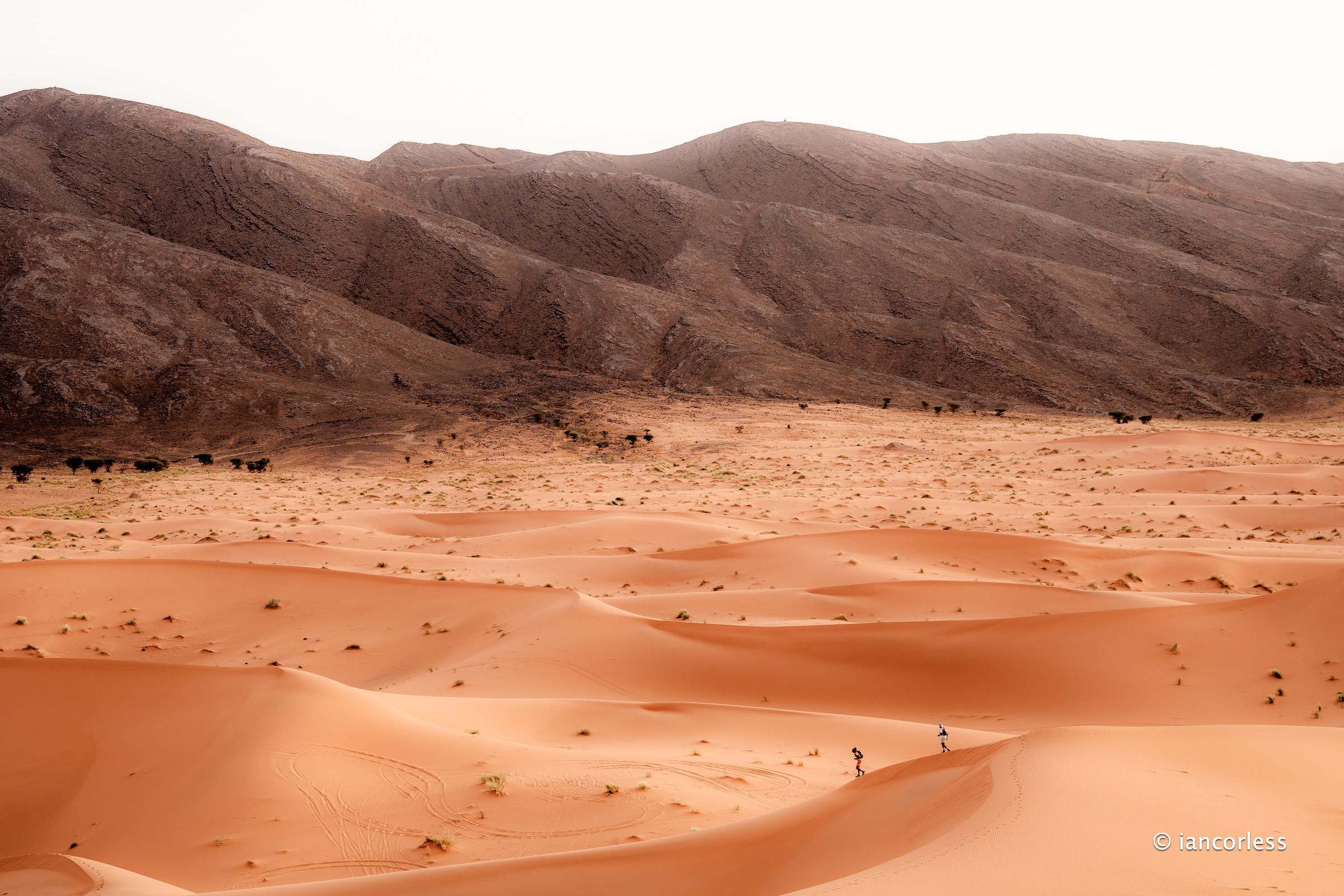
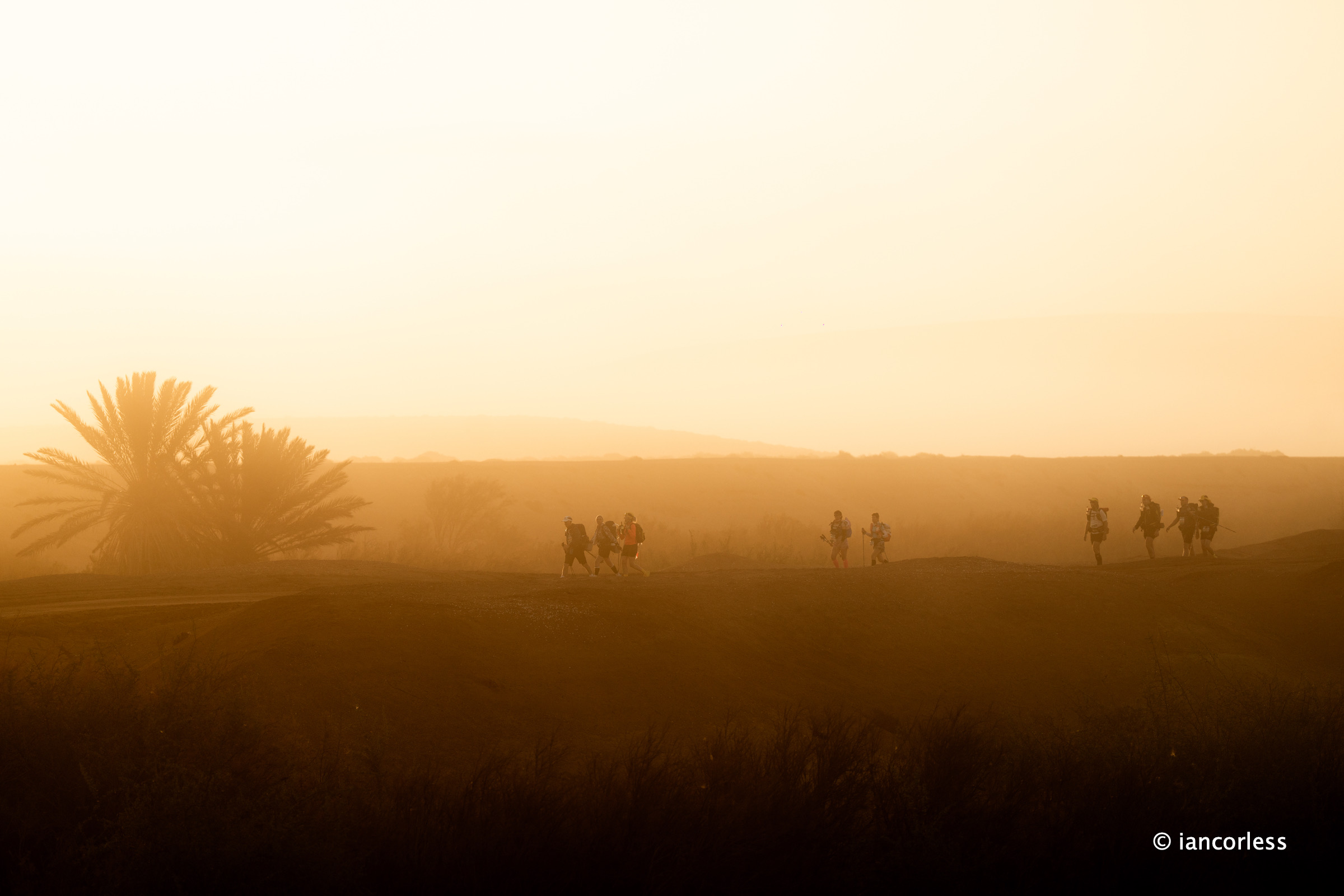
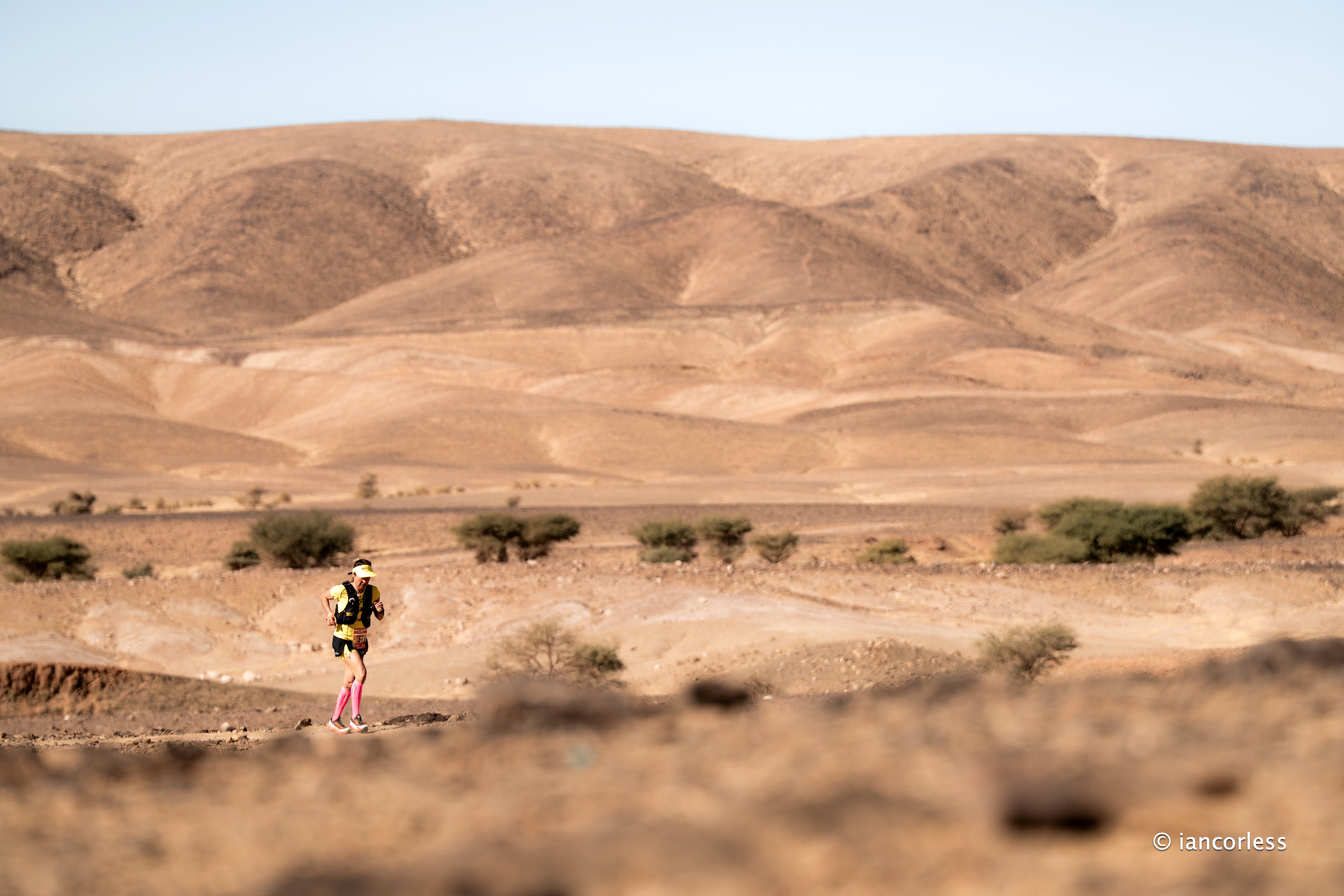
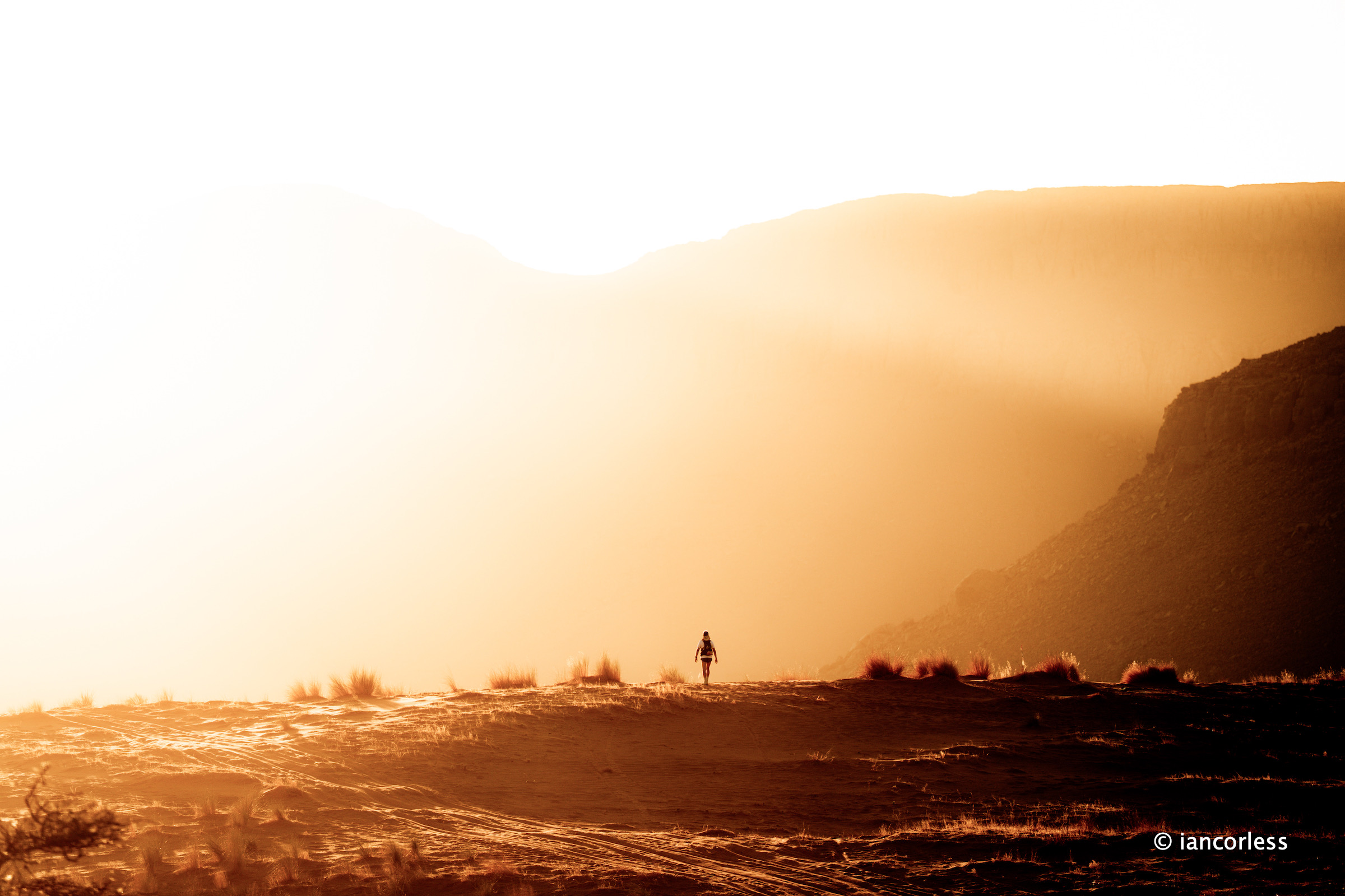
The 40.5km point-to-point stage, stretching across a fast, flat expanse toward a brand-new bivouac, was broken by checkpoints at 8, 15, 21, 28.1, and 33.7km, lifelines scattered across an otherwise merciless landscape. There was no shade. No escape. Only distance, heat, and the quiet question each runner carried: how much more can I endure?
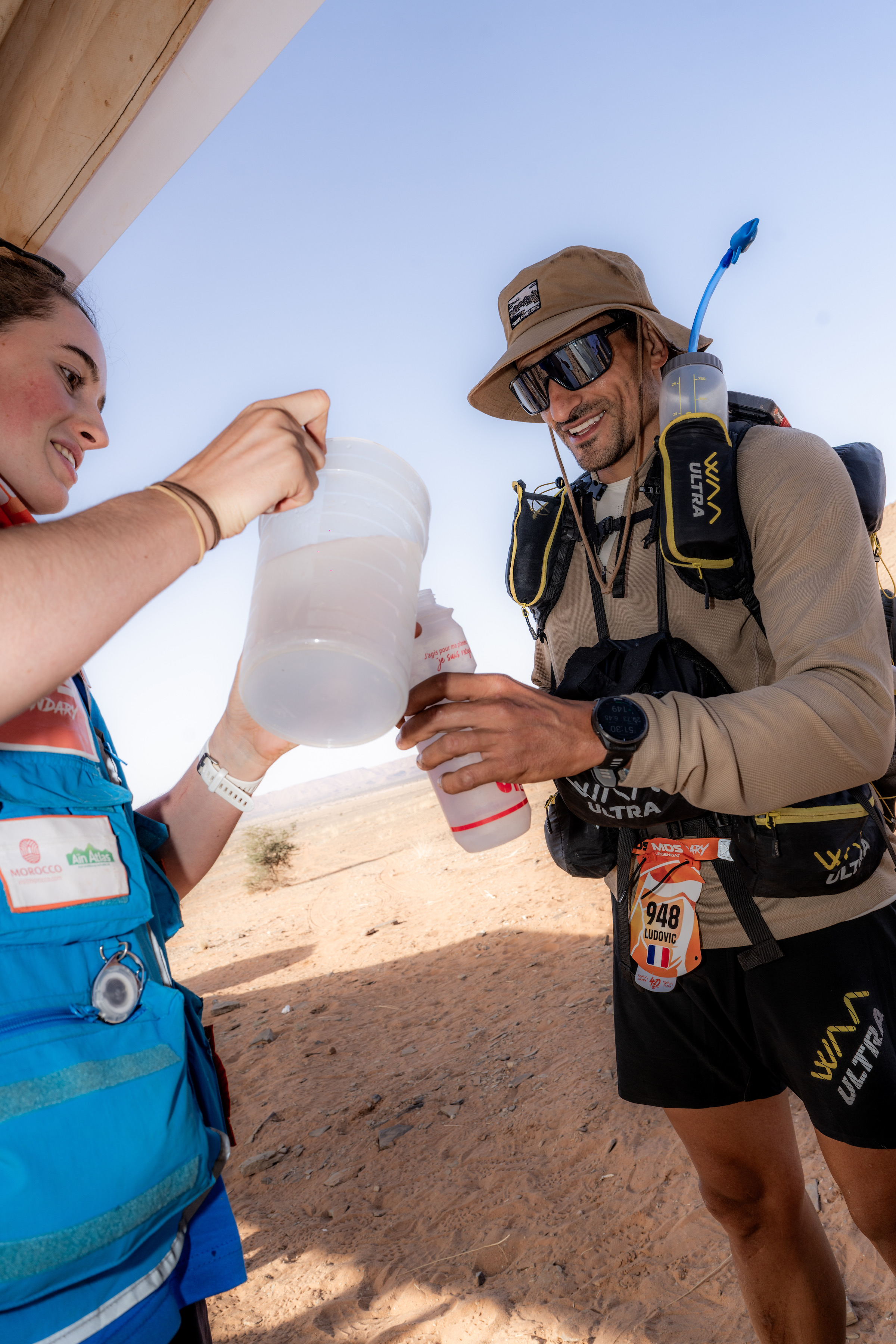
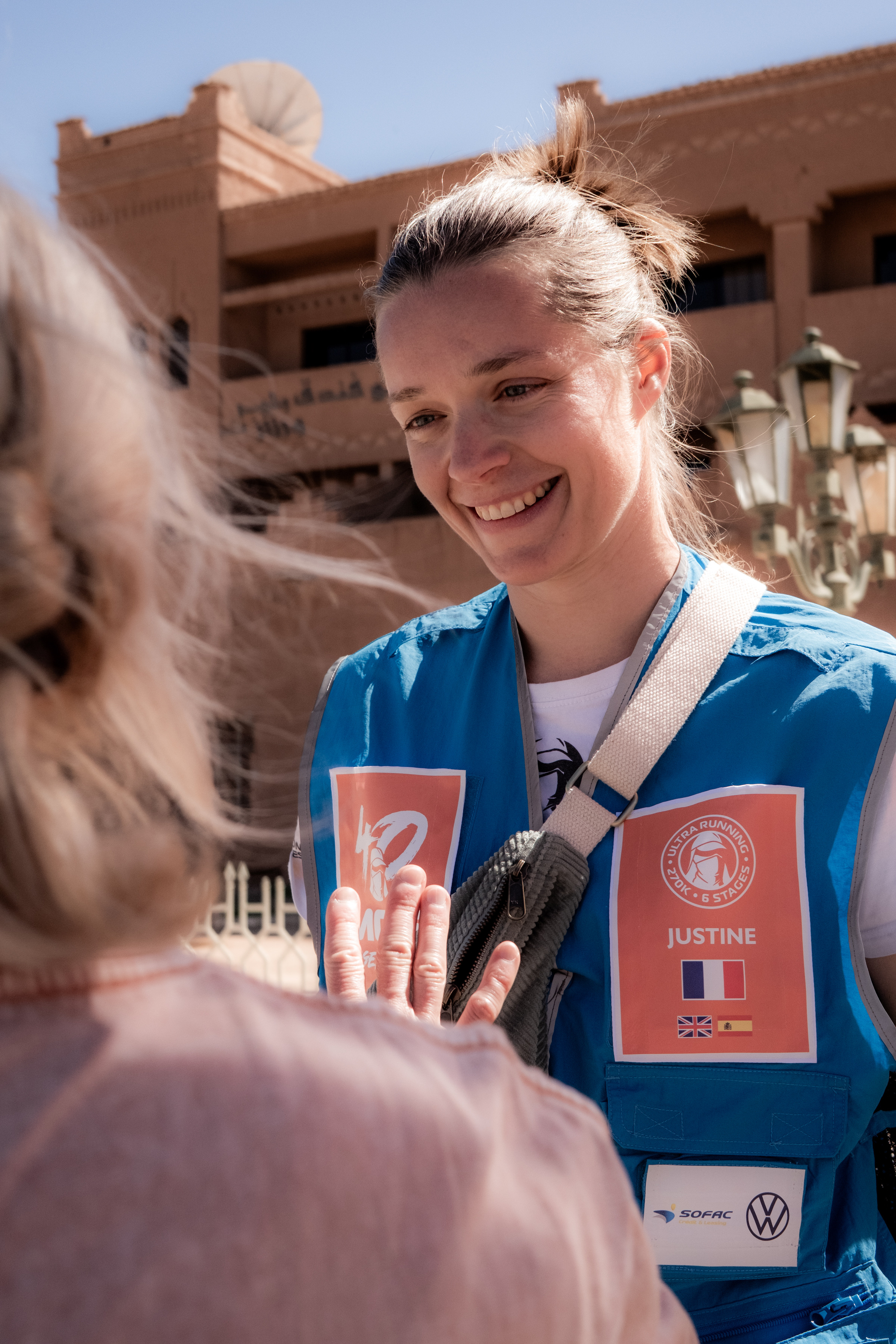
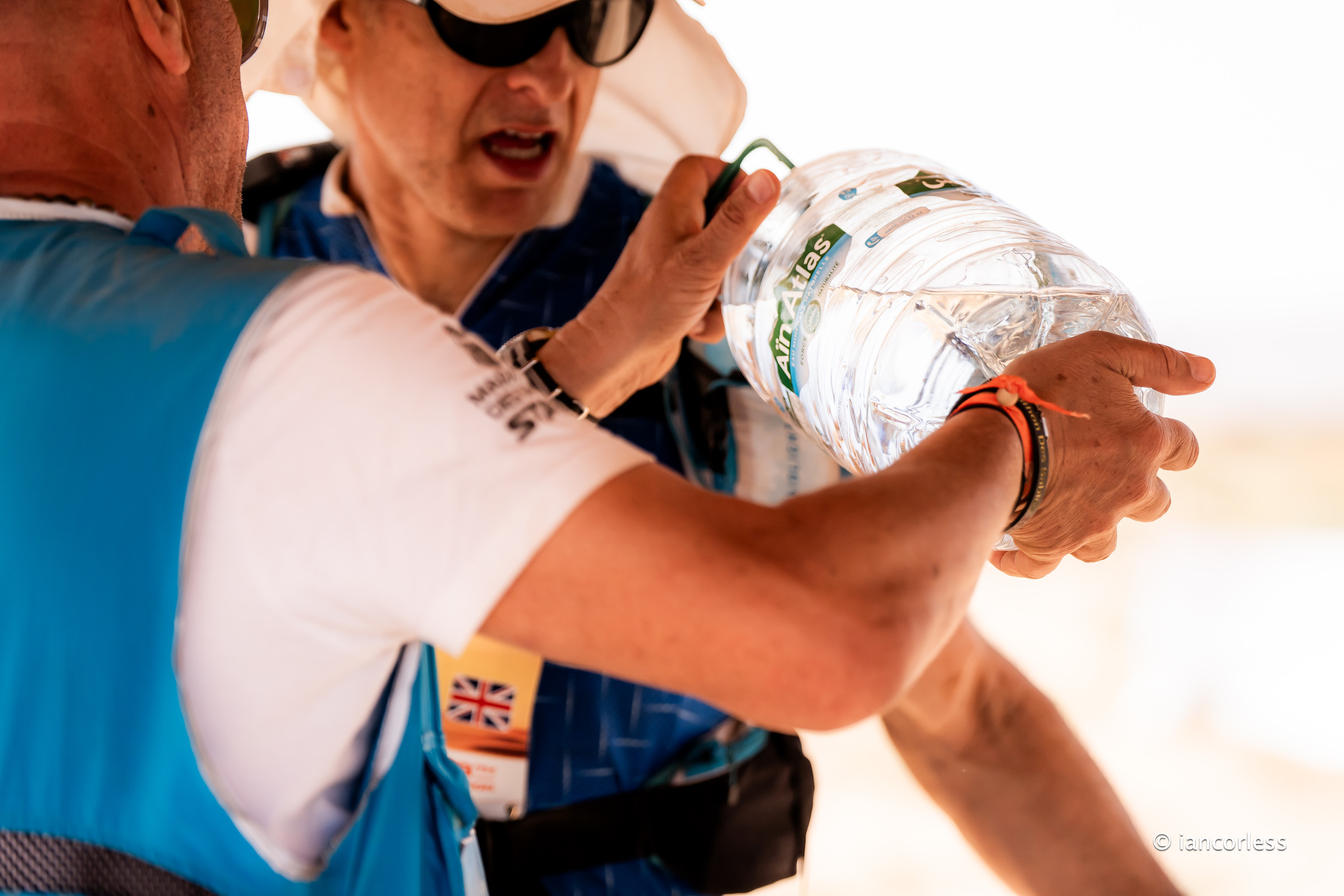
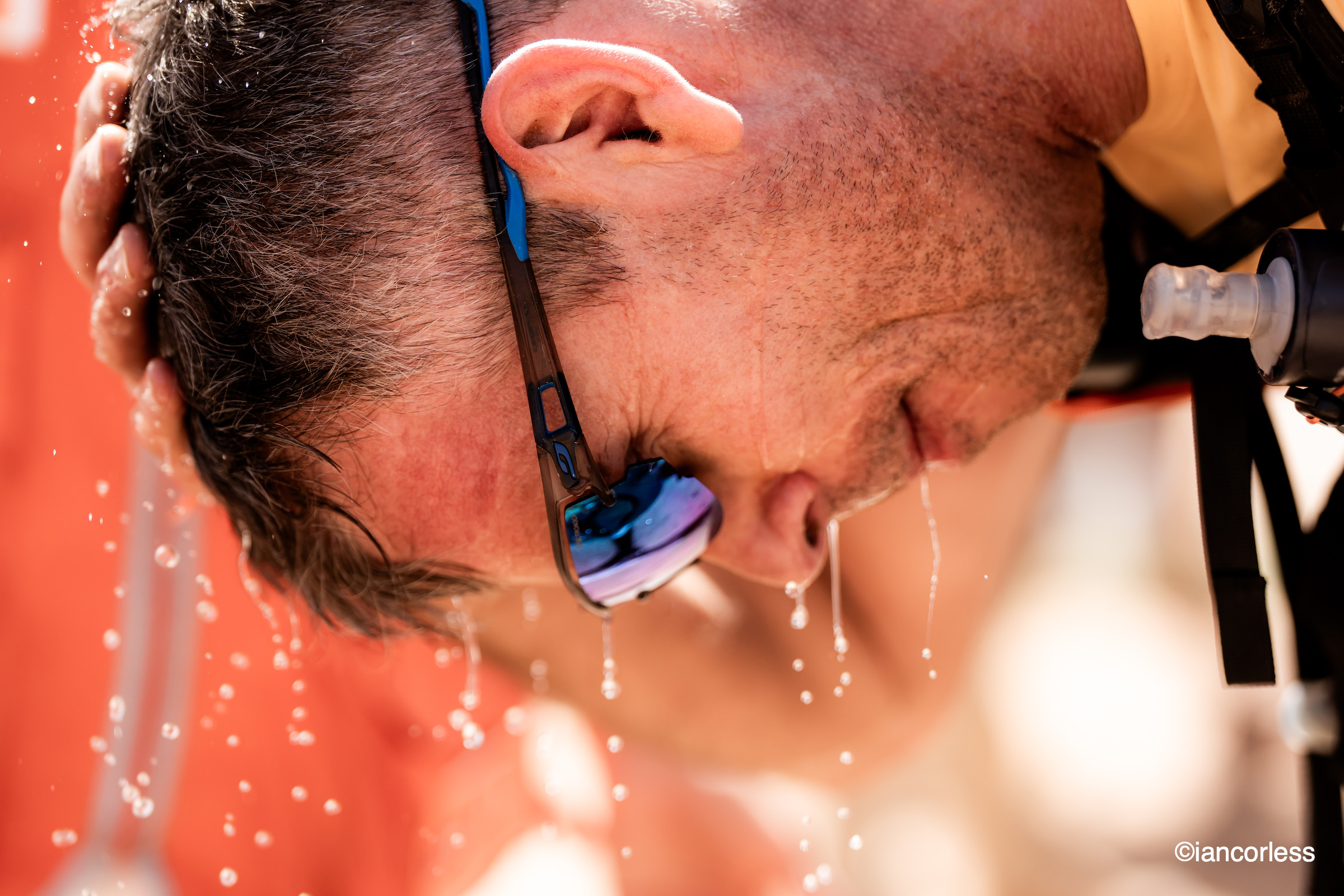
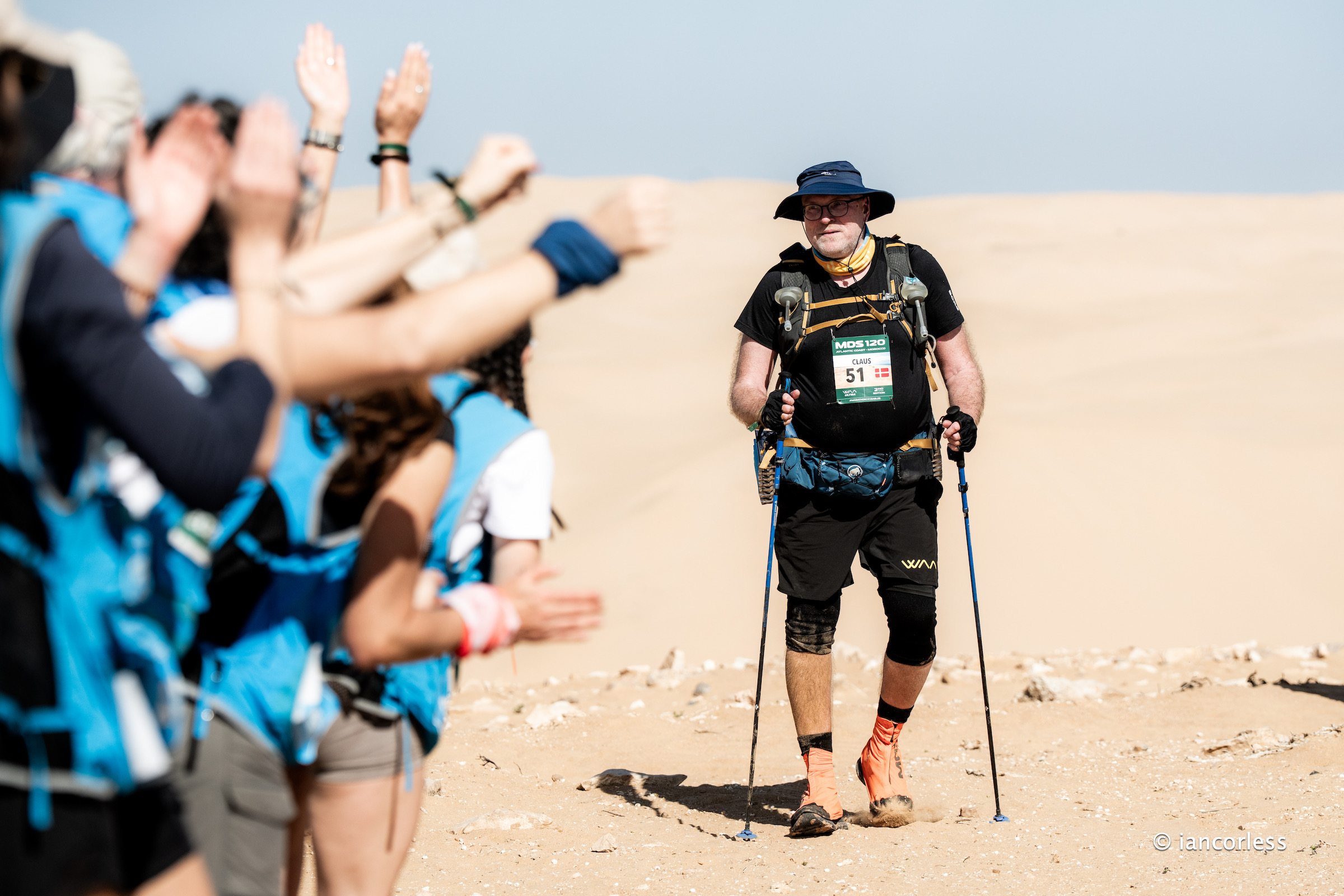
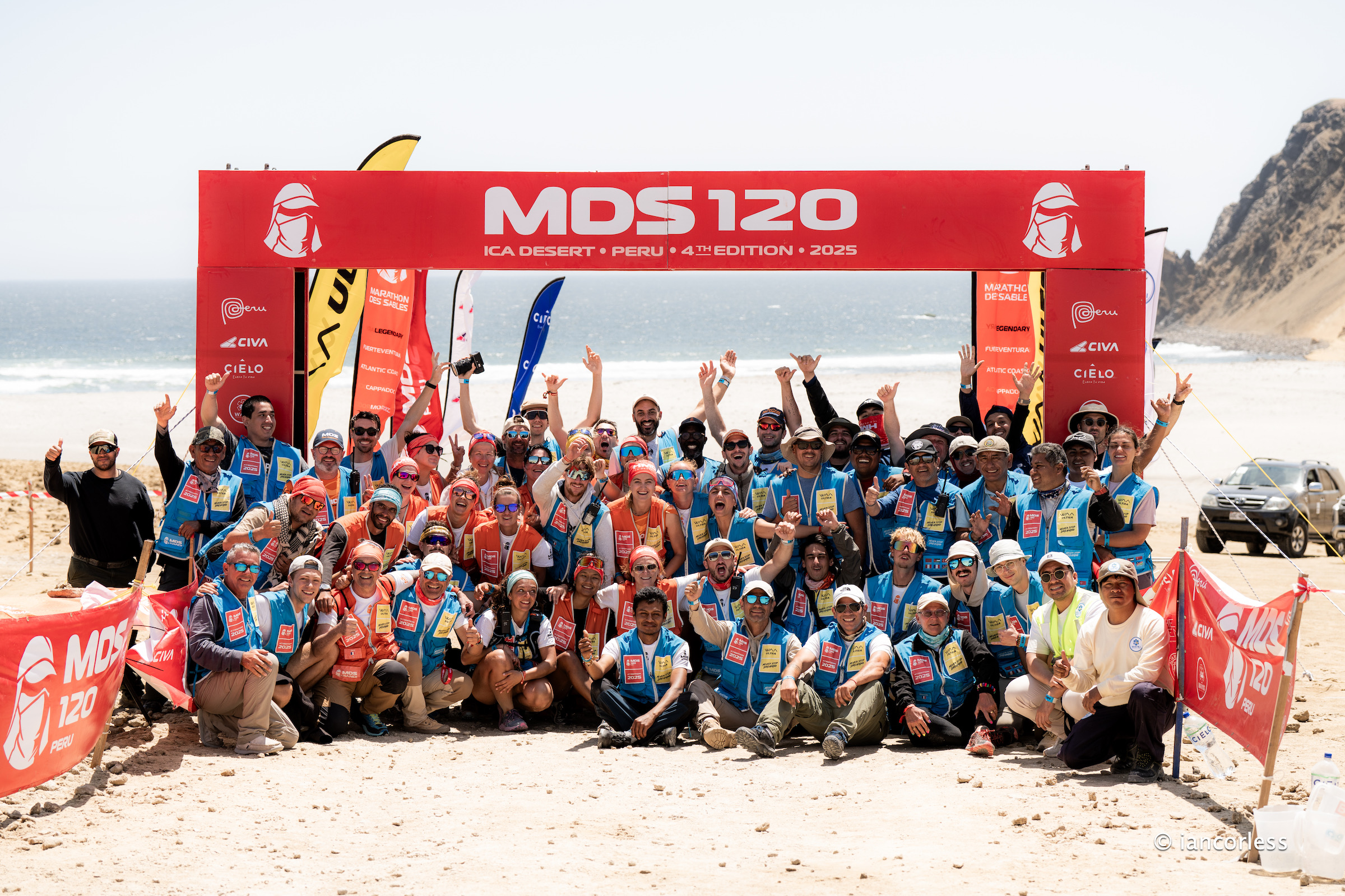
At every CP, blue coats stood as silent heroes in the furnace, offering water, and iced water poured over the neck, brief moments of relief before the long march resumed.
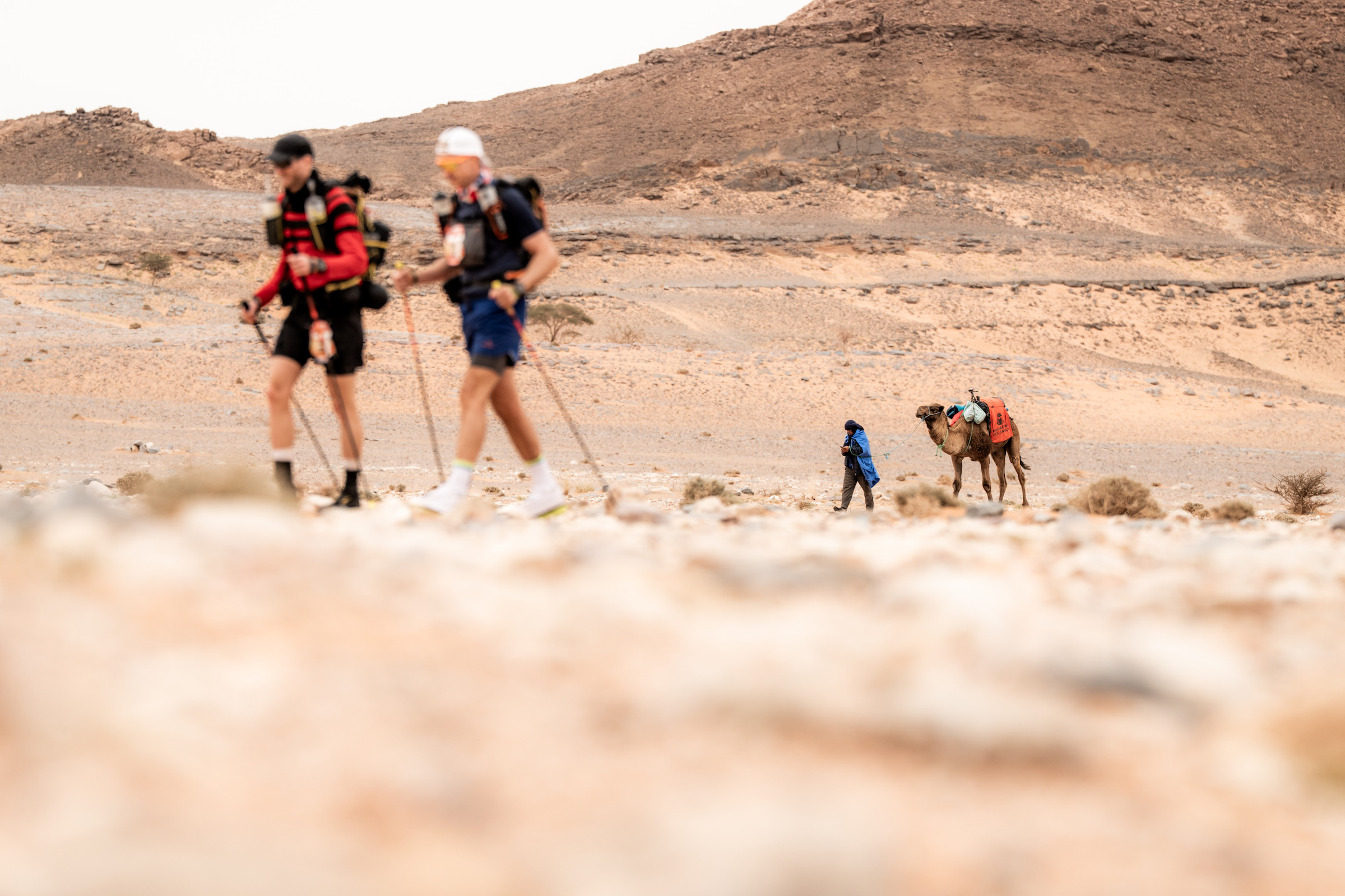
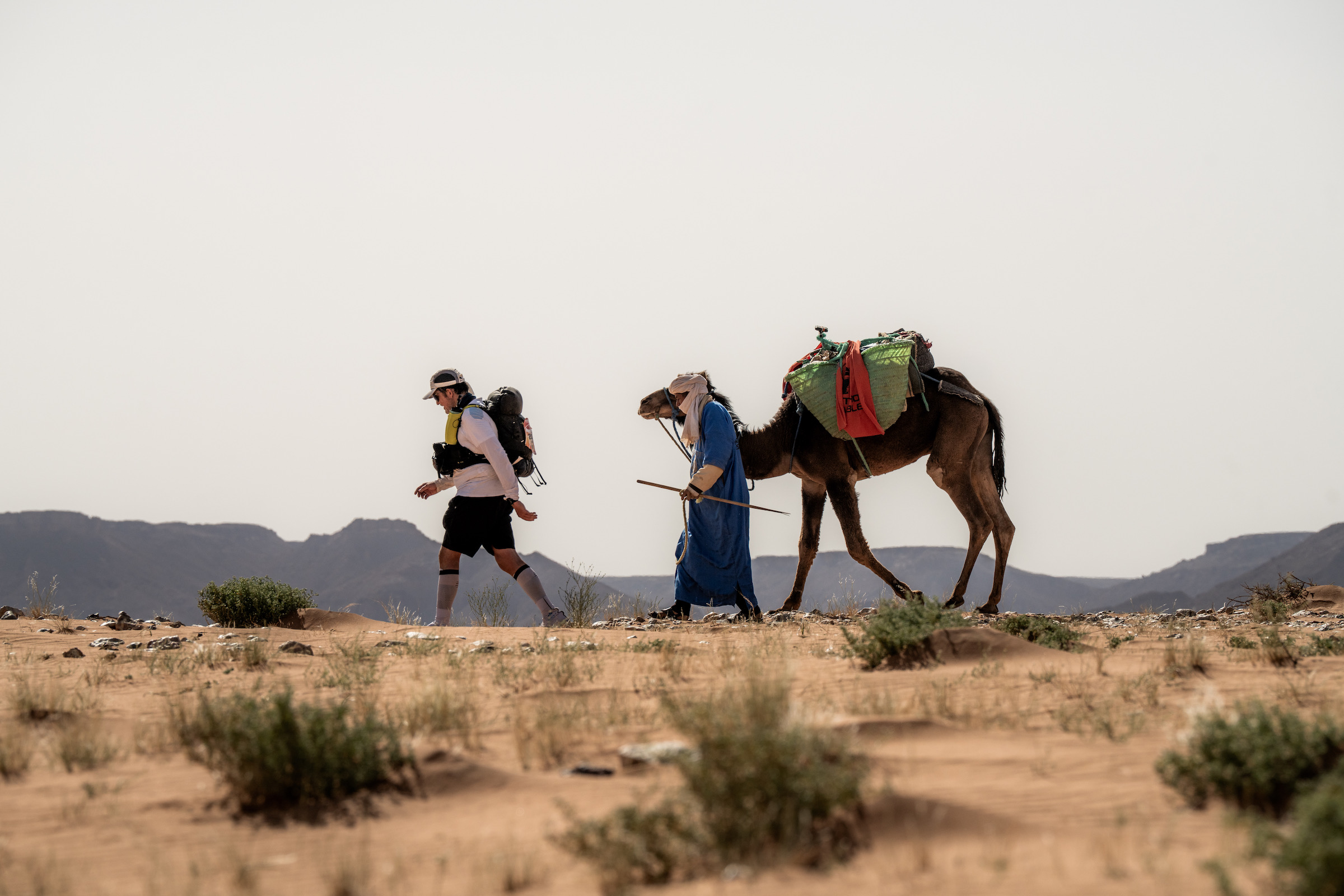
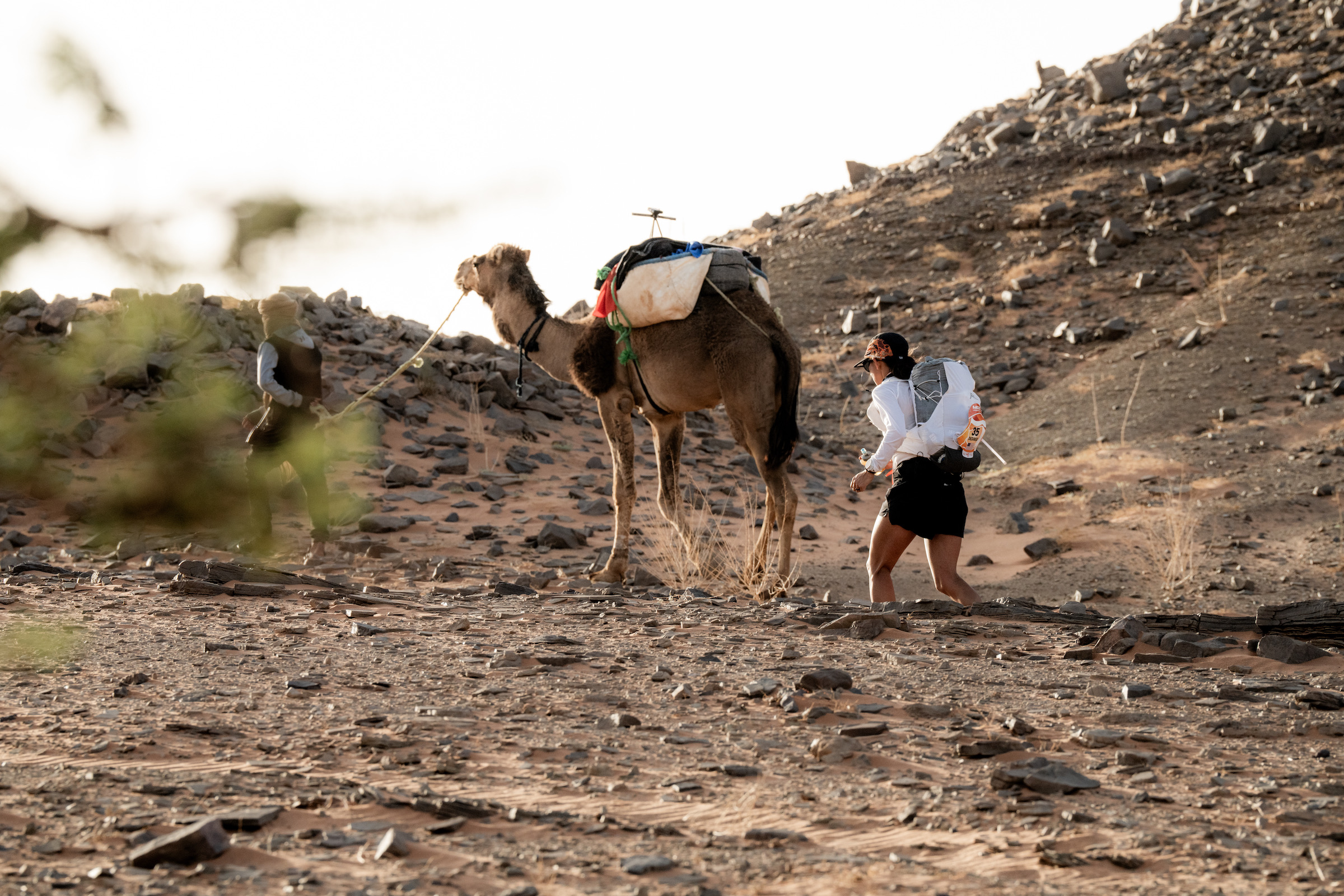
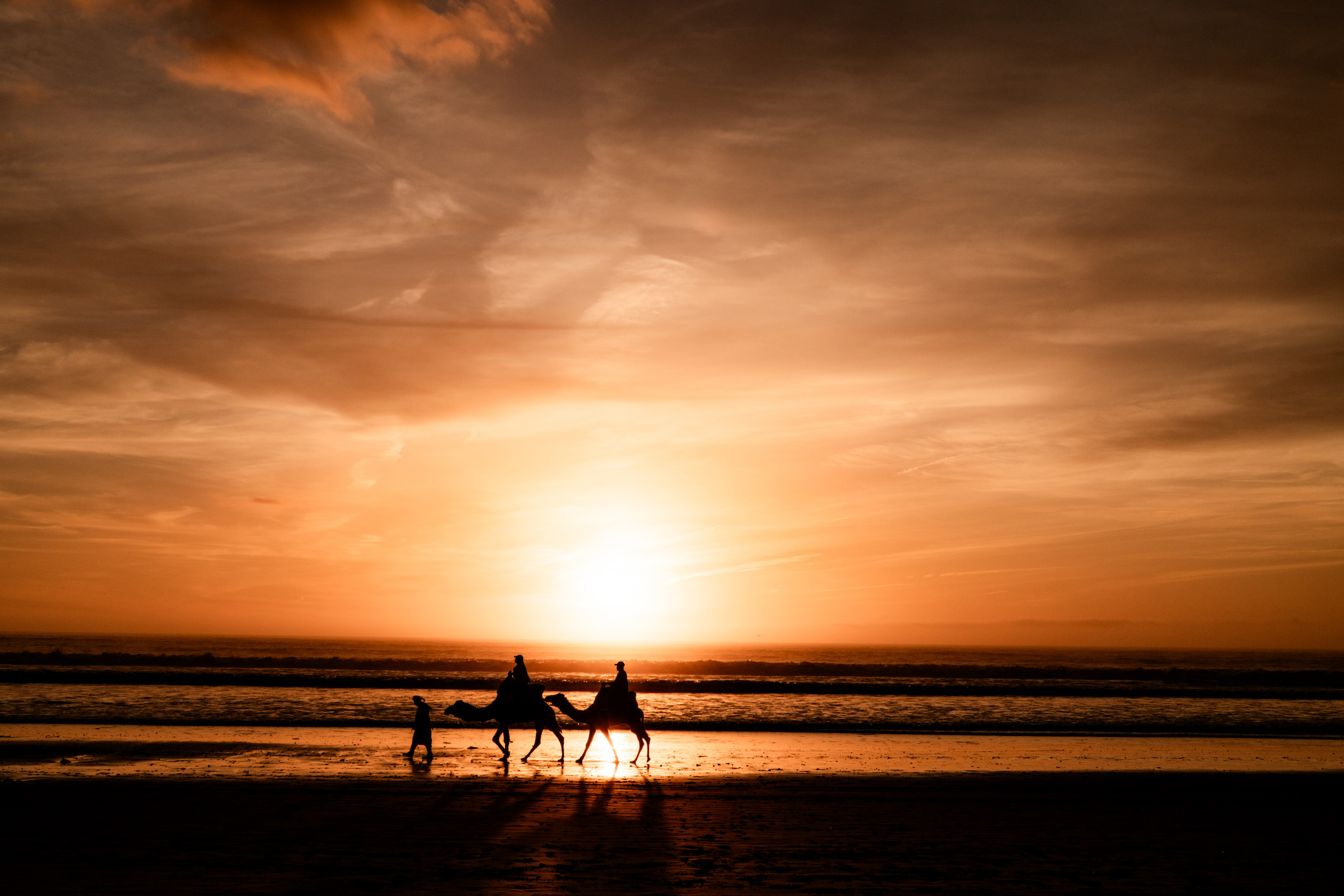
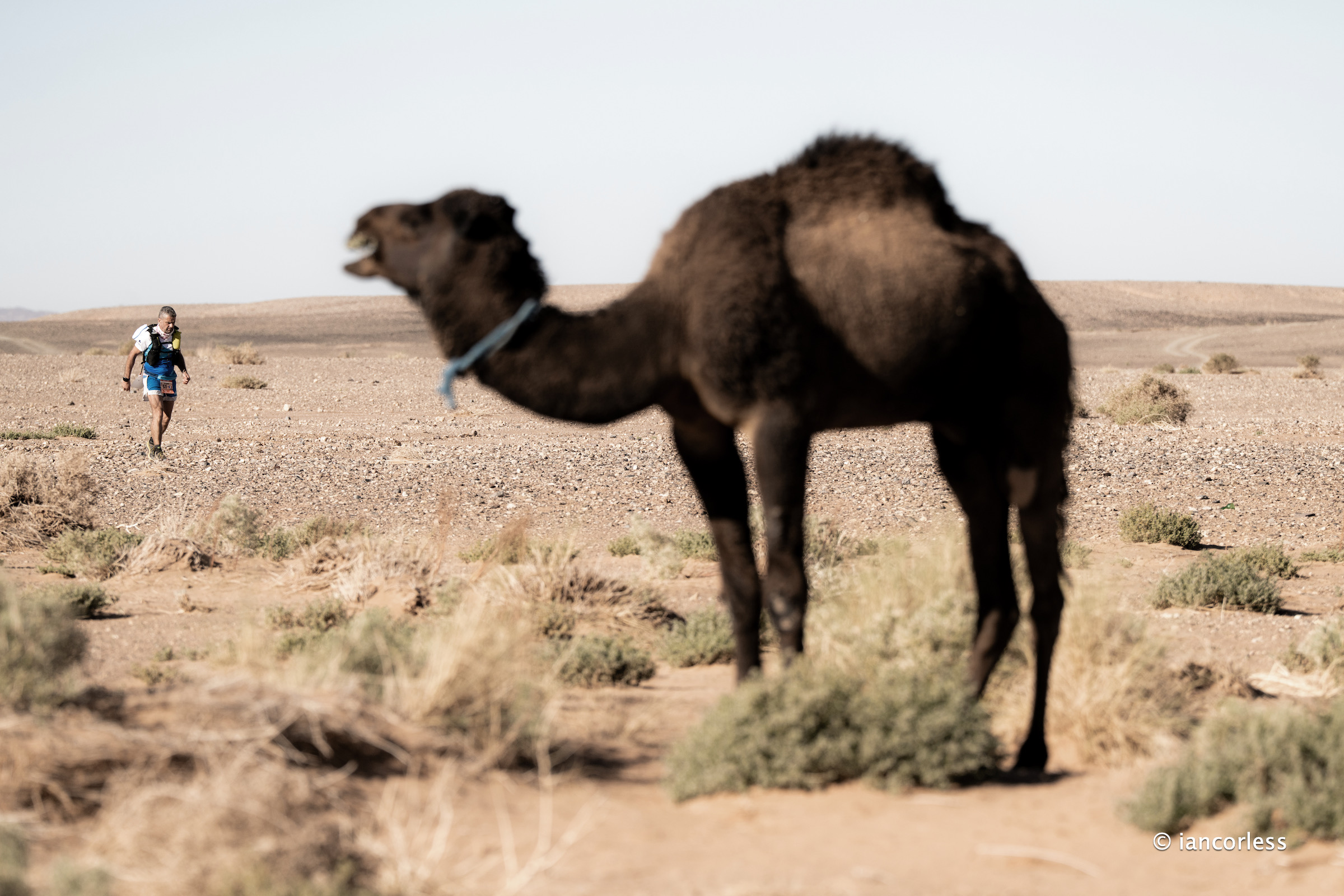
In the distance, the camel safety patrols moved steadily across the horizon, watchful and calm—guardians of the race, there for the moment when determination might tip into danger. A reminder that here, in the heart of the desert, this is more than competition.
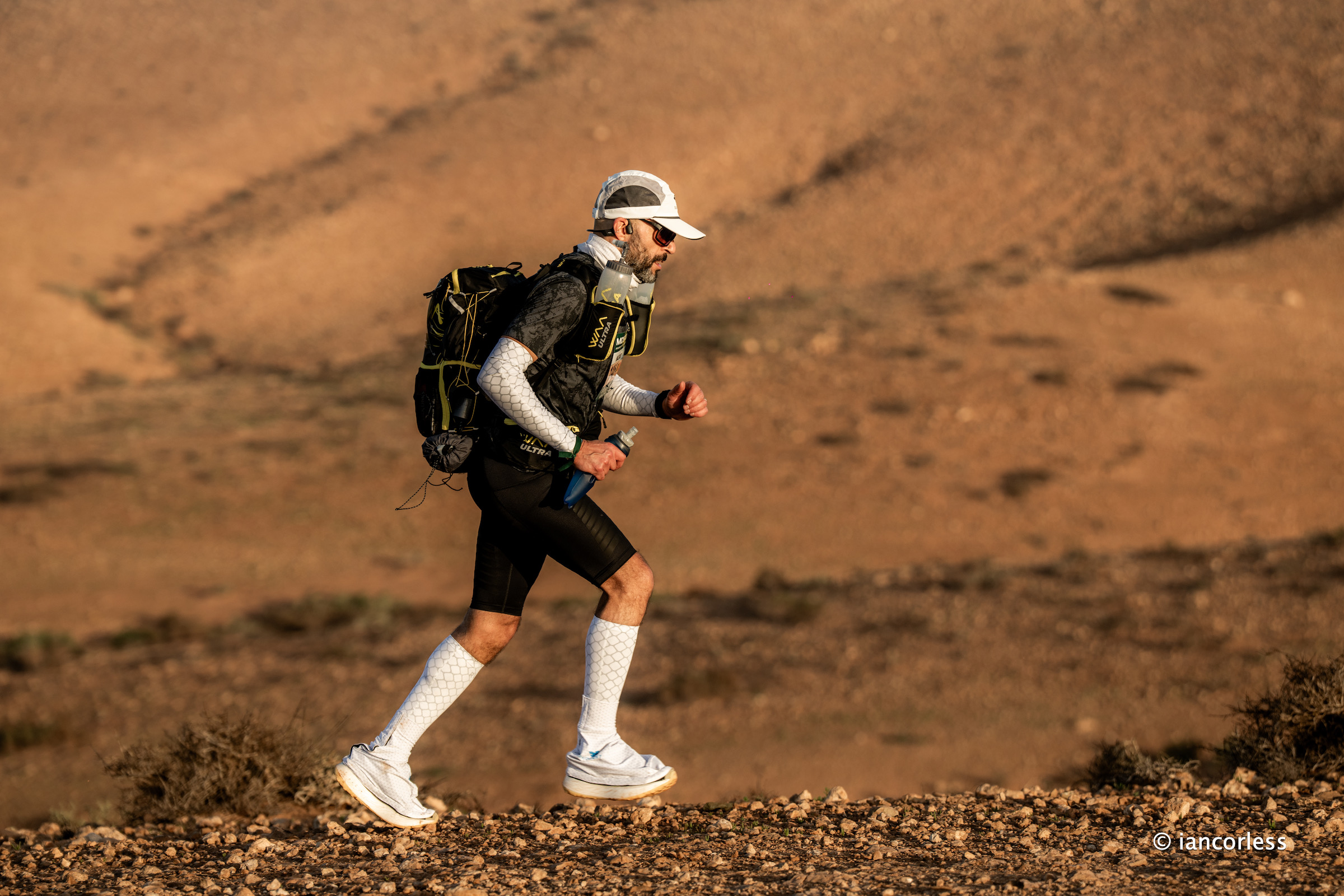
In the men’s race, Michaël Gras ignited the stage early, daring to disrupt the dominance of Mohamed and Rachid El Morabity. For a time, the pace burned hot with ambition. But experience has its own rhythm. By CP3, the El Morabity brothers had taken control, waiting, measuring, then striking. Mohamed surged to victory in 2:58:26, Rachid close behind in 3:03:01. Gras, after a relentless fight against both rivals and the rising heat, held on for third in 3:03:46.
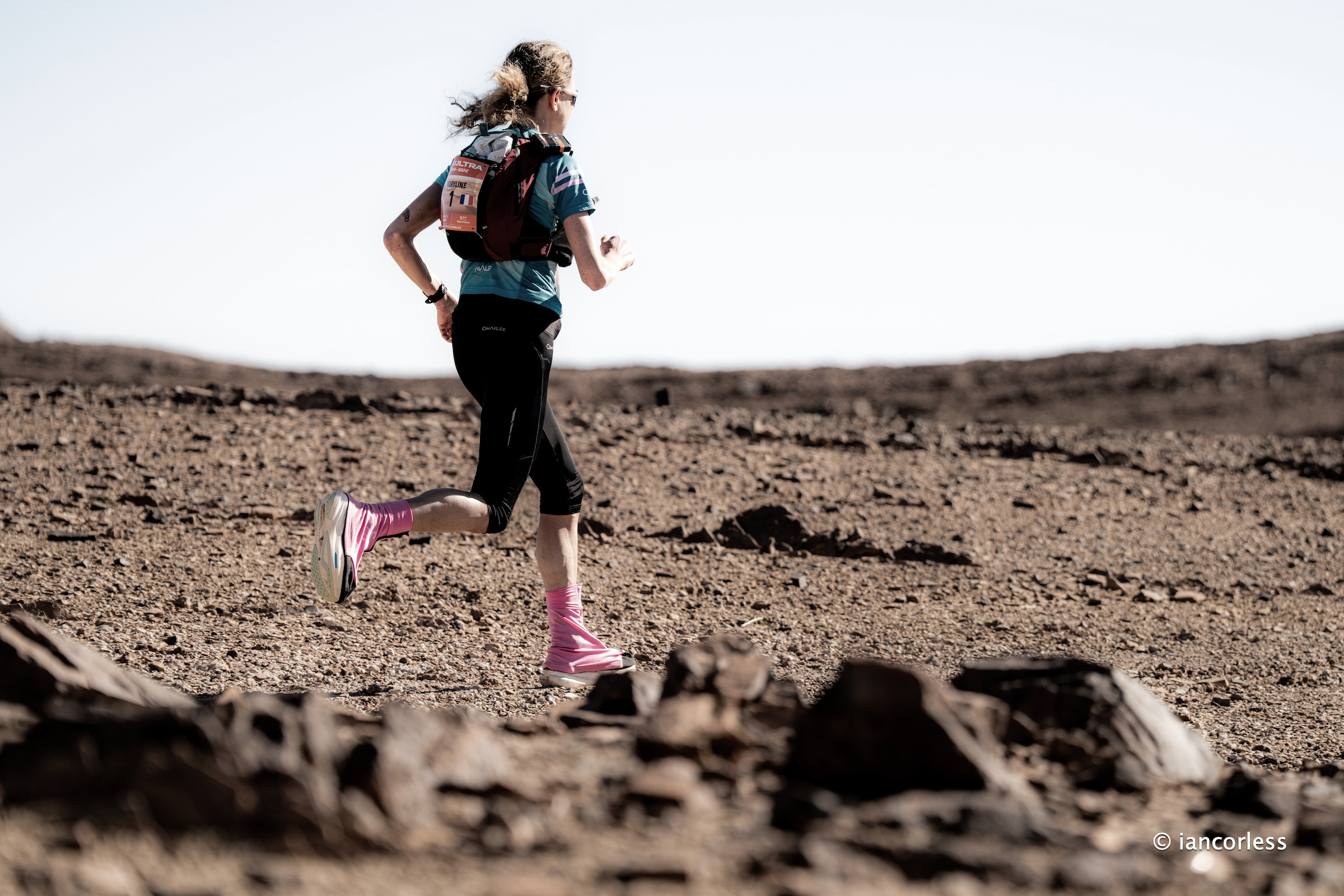
The women’s race told its own story of strength and resilience. Maryline Nakache led from the front with authority, claiming victory in 3:48:21.
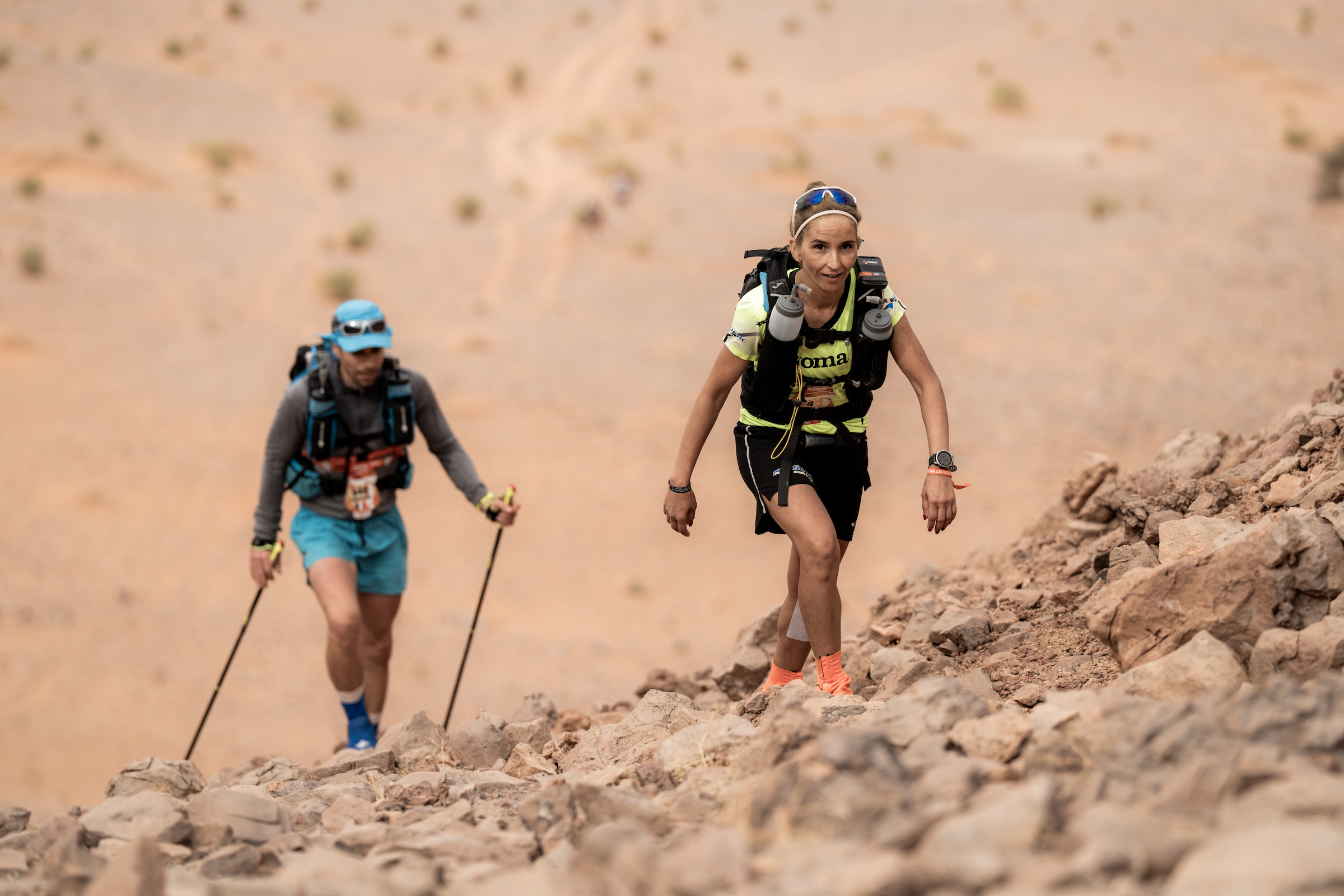
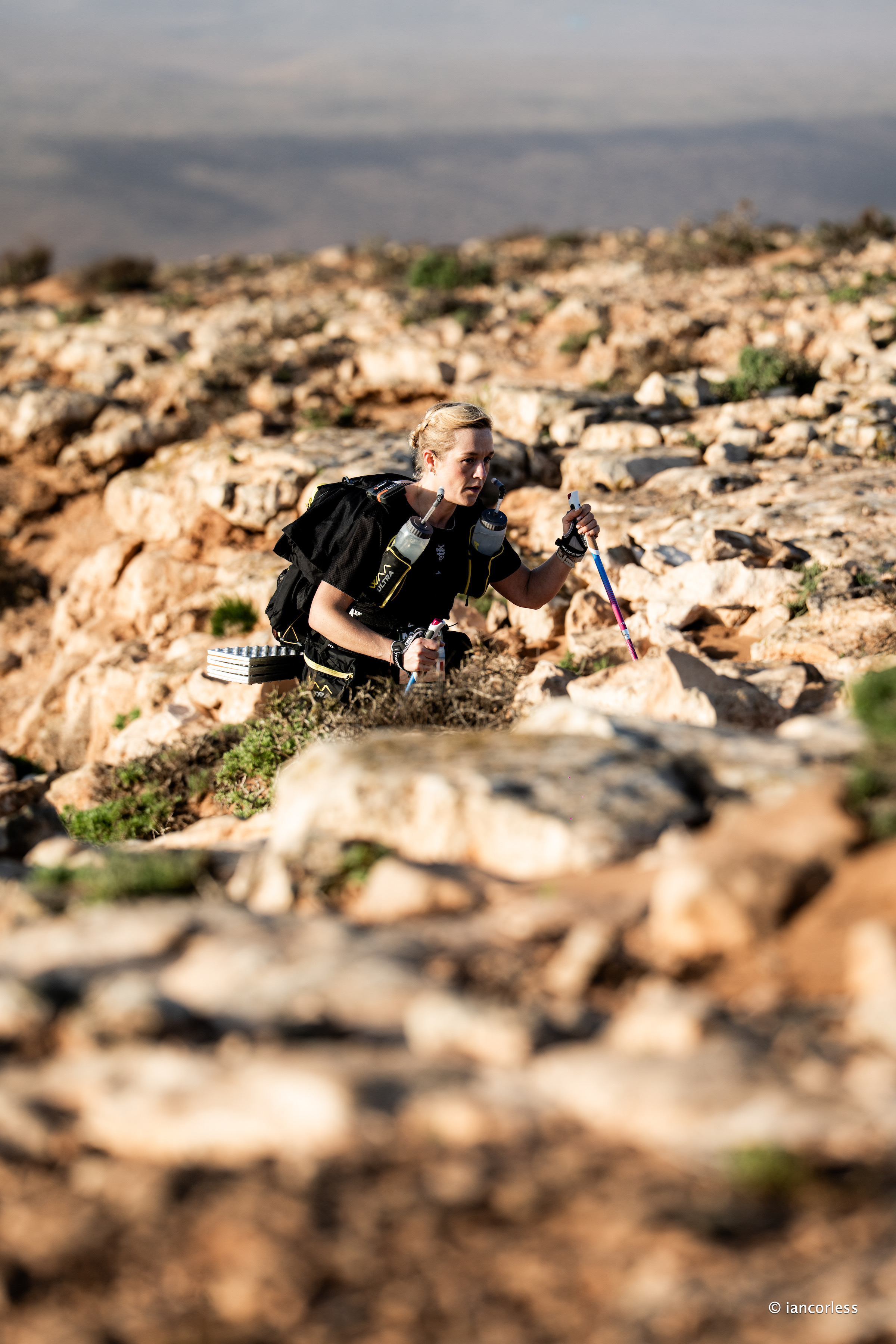
Behind her, the desert reshaped the field. Aziza El Amrany faltered under the pressure, and opportunity emerged through the heat haze. Agathe Teillet-Magot and Desiree Linden pushed through to secure their podium places in 4:10:31 and 4:13:00.
But beyond the podiums, beyond the times, every runner was fighting a quieter, more personal battle, against the sun, against fatigue, against the voice that whispers stop.
And still… they kept going. With Stage 3 ahead, a shorter but pivotal test, the focus already shifts to what looms large on the horizon: Stage 4 and its brutal 100km reckoning.
The desert is not done. In truth… it’s only just beginning.
The 40th edition of the MDS LEGENDARY is here and it’s unlike anything that’s come before it.
Six stages. 270 kms. A route that raises the bar once again.
This year’s course delivers both scale and variety. It opens with a steady 35km to find your rhythm before stepping up to a longer 40.5km day for stage 2.
Stage 3 pulls things slightly shorter at 29.1km ahead of the stage 4 ‘long day,’ but by this point, the cumulative load is already building.
Then comes the centrepiece.
Stage 4 stretches to a record-breaking 100km, the longest single stage in MDS Legendary history. With two staggered starts and a 40-hour cut-off, it’s a true test of pacing, resilience, and decision-making under fatigue. This is where the 2026 and 40th edition will be defined.
With a 40-hour cut-off, the need to rest, recover and reset quickly is important. A classic marathon distance of 42.2km follows on Stage 5, before the final 23.2km push to the finish and the glory of medal.
Across the six days, the route totals 270km’s with 2612m+ of climbing, in the Sahara, every metre and every step counts, this will be tough.
Since its creation, the Marathon des Sables has built its reputation as one of the toughest footraces on earth. The 40th edition honours that history while pushing into new territory, with its longest stage ever and one of its most demanding overall distances.
An epic edition.
An iconic race.
A route that will be remembered.
Race Summary:
Day 1 – Stage 1 35km 285m+ 0700am start – 1000h cut off
Day 2 – Stage 2 40.5km 486m+ 0600am start – 1135h cut off
Day 3 – Stage 3 29.1km 413m+ 0700am start – 0620h cut off
Day 4 – Stage 4 100km 721m+ – two starts, 0500/0700am – 4000h cut off
Day 5 – Stage 4 continuation/ rest day
Day 6 – Stage 5 42.2km 424m+ 0630am start – 1205h cut off
Day 7 – Stage 6 23.2km 238m+ 0630am start – 0440h cut off
270km and 2612m+
Stats
Over 1500 participants
30% women
68 nationalities
68% new to an MDS event
France lead with 403 participants, followed by the UK and then Belgium
Key age is between 35 and 44 closely followed by 45 to 54.
This edition marks the 40th anniversary of the MDS Legendary. Four decades of runners crossing the Sahara under their own power. As we move through March, I’m sharing a short series of weekly articles to help sharpen your preparation. This is the fourth of four.
By now, the nerves are real. Anticipation is building. And yes, stress might be creeping in too. That’s normal. You’re about to take on one of the toughest endurance races on the planet. But here’s the truth: the hard work is already done.
Now, the focus shifts.
Ease Back to Move Forward
It’s tempting to squeeze in one last long run. Don’t.
At this stage, there’s nothing to gain and everything to lose. Fatigue and injury are the only likely outcomes. Instead, keep sessions short and purposeful. Stay loose. Stay sharp. This is taper time. Think of it as recharging your battery so you arrive on the start line fresh, not drained.
Prepare for the Heat
If you can, use these final days to adapt to the heat. It doesn’t need to be perfect, but every little bit helps.
Hot yoga, saunas, hot baths, even treadmill sessions with extra layers can all make a difference. If you have access to a heat chamber, even better. The Sahara is unforgiving, and any adaptation you build now will pay off when it matters most.
Plan Everything, Then Simplify
Now is the time to get meticulous.
Lay everything out. Build a spreadsheet if that helps. Go item by item through your kit. Ask yourself what you truly need.
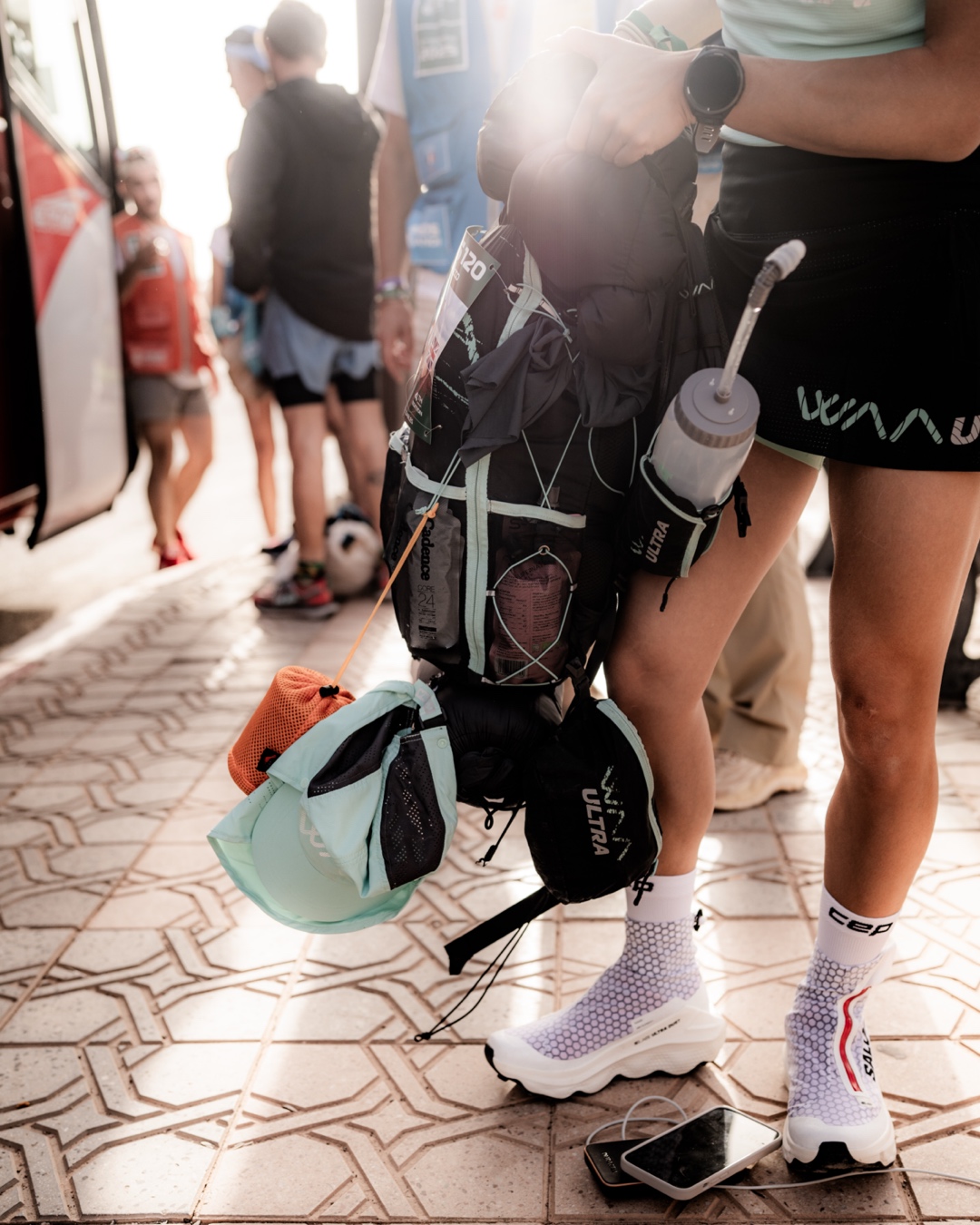
Weight matters. Every gram counts when it’s on your back for multiple days. Strip out the luxuries. Be ruthless. The goal is to go as light as possible without compromising safety or performance.
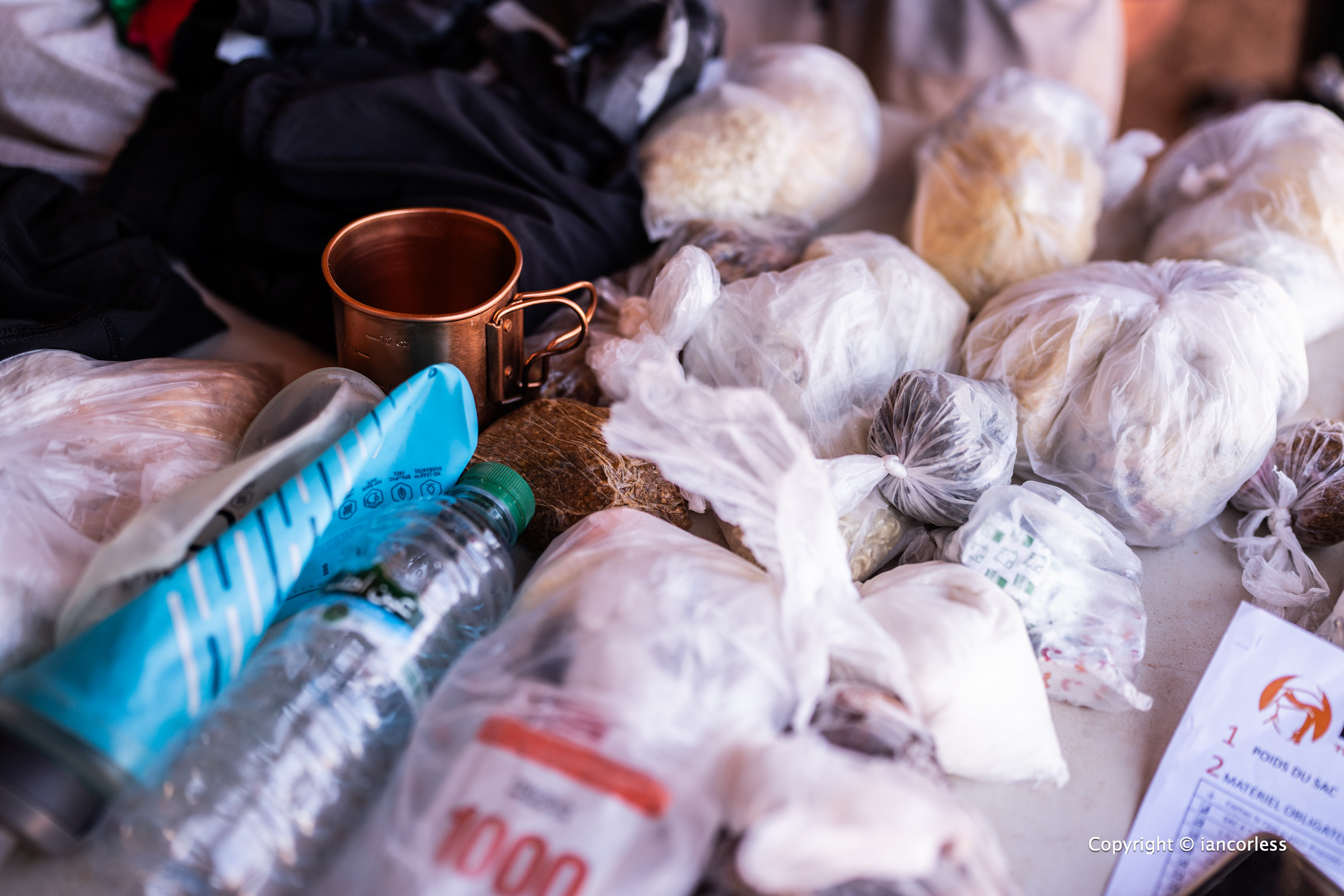
The same applies to food. Check your calories. Repack if needed. Remove excess packaging. Make sure what you carry is efficient, practical, and something you can actually eat under stress.
Get the Admin Right
Details matter here.
Medical certificates must be correct and meet all race requirements, especially your ECG. Don’t assume, double-check.
Photo by Ian Corless
Your passport needs to be valid. It sounds obvious, but it catches people out every year. Confirm your travel documents, bookings, and transfers. Know your plan from departure to arrival.
The goal is simple: remove every possible source of stress before you leave.
Travel Smart
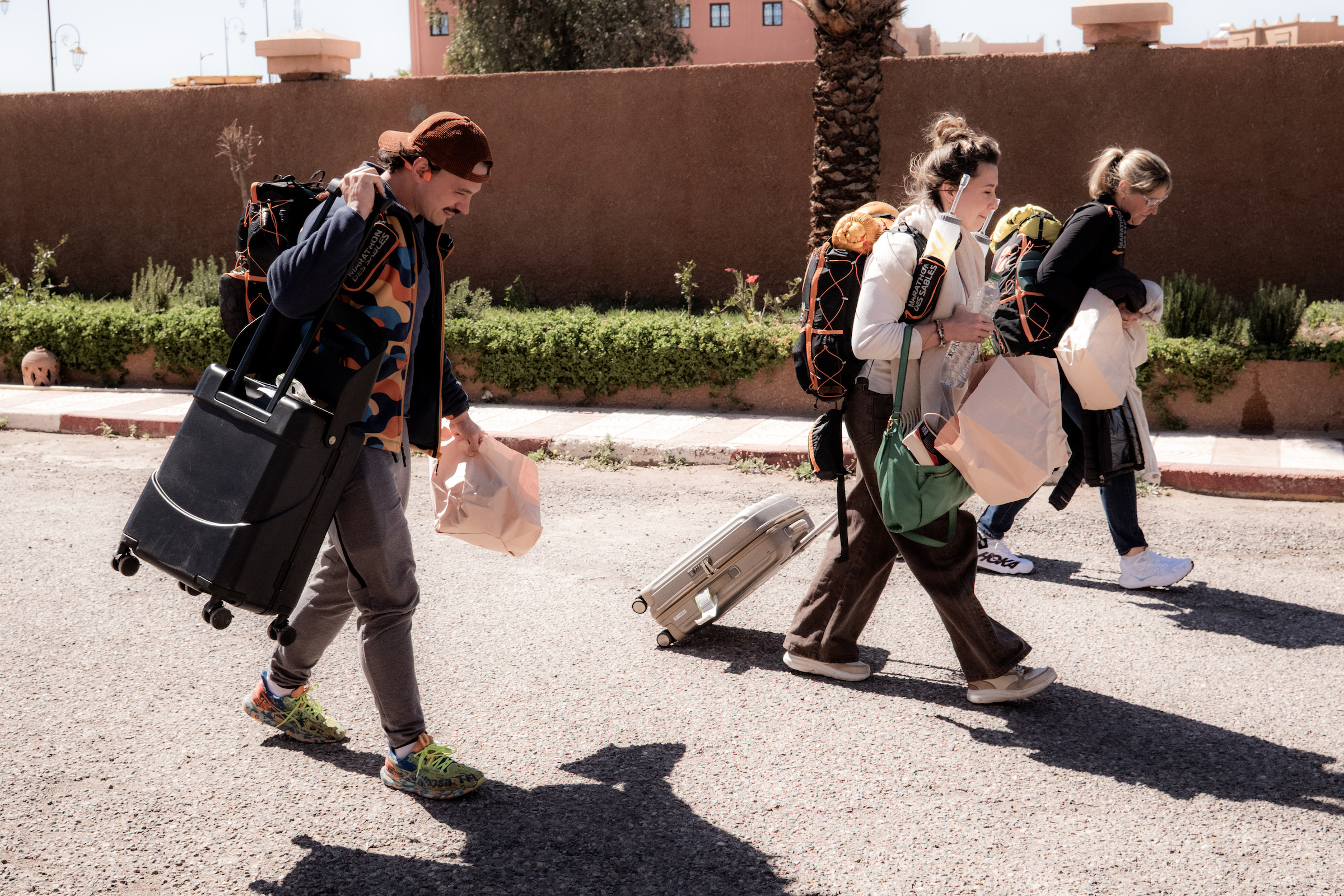
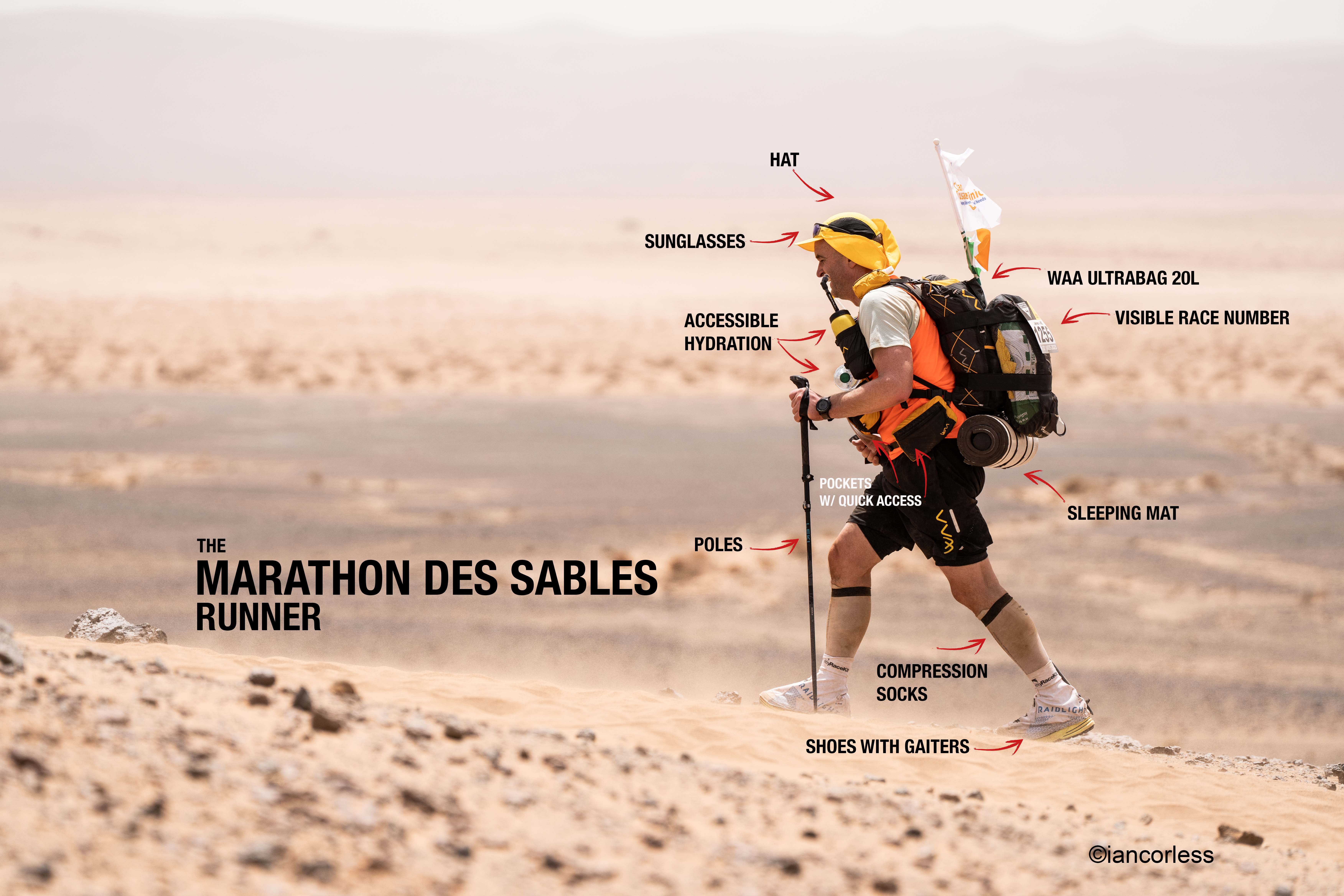
Wear your race kit when you travel. That includes your shoes and gaiters.
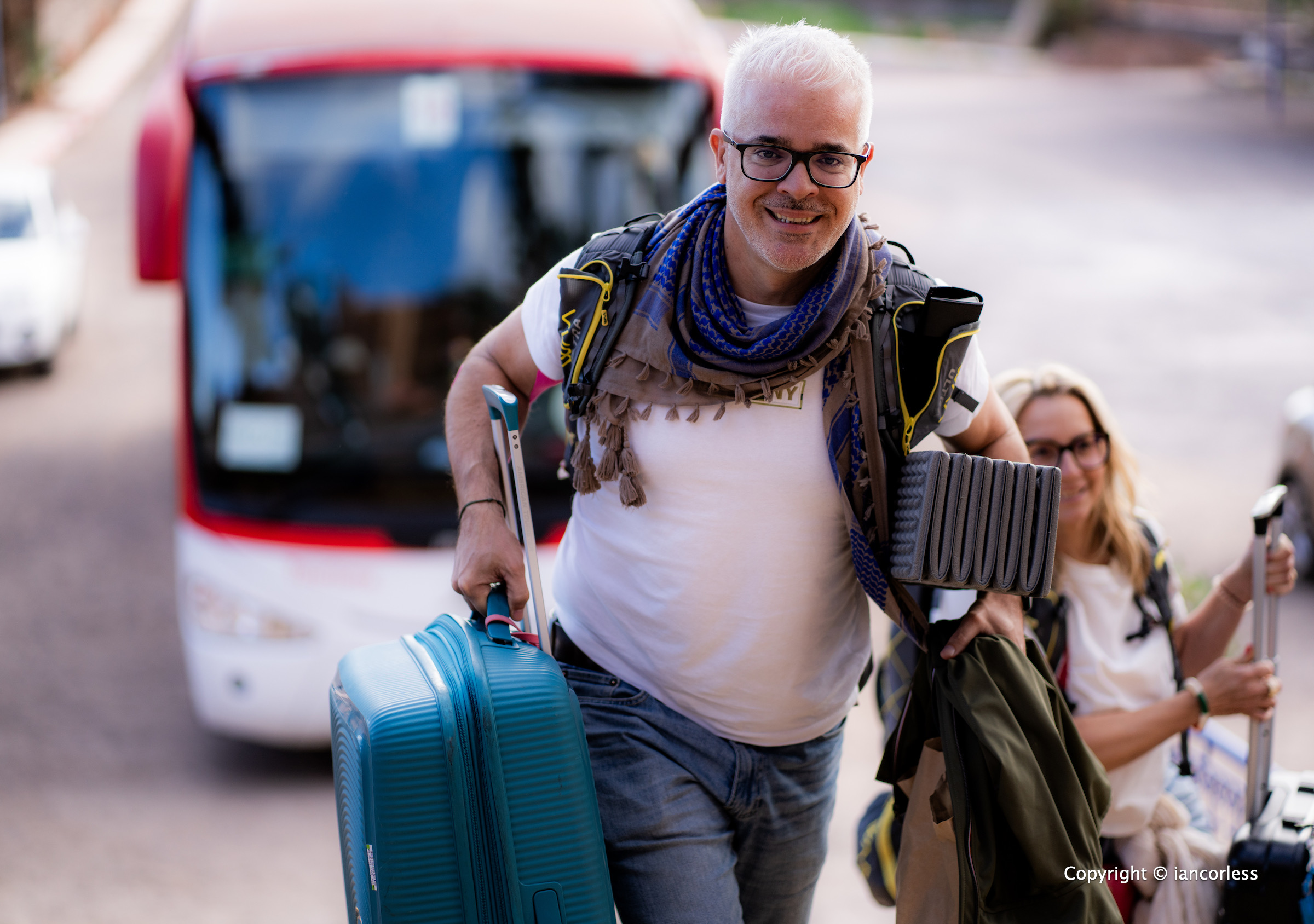
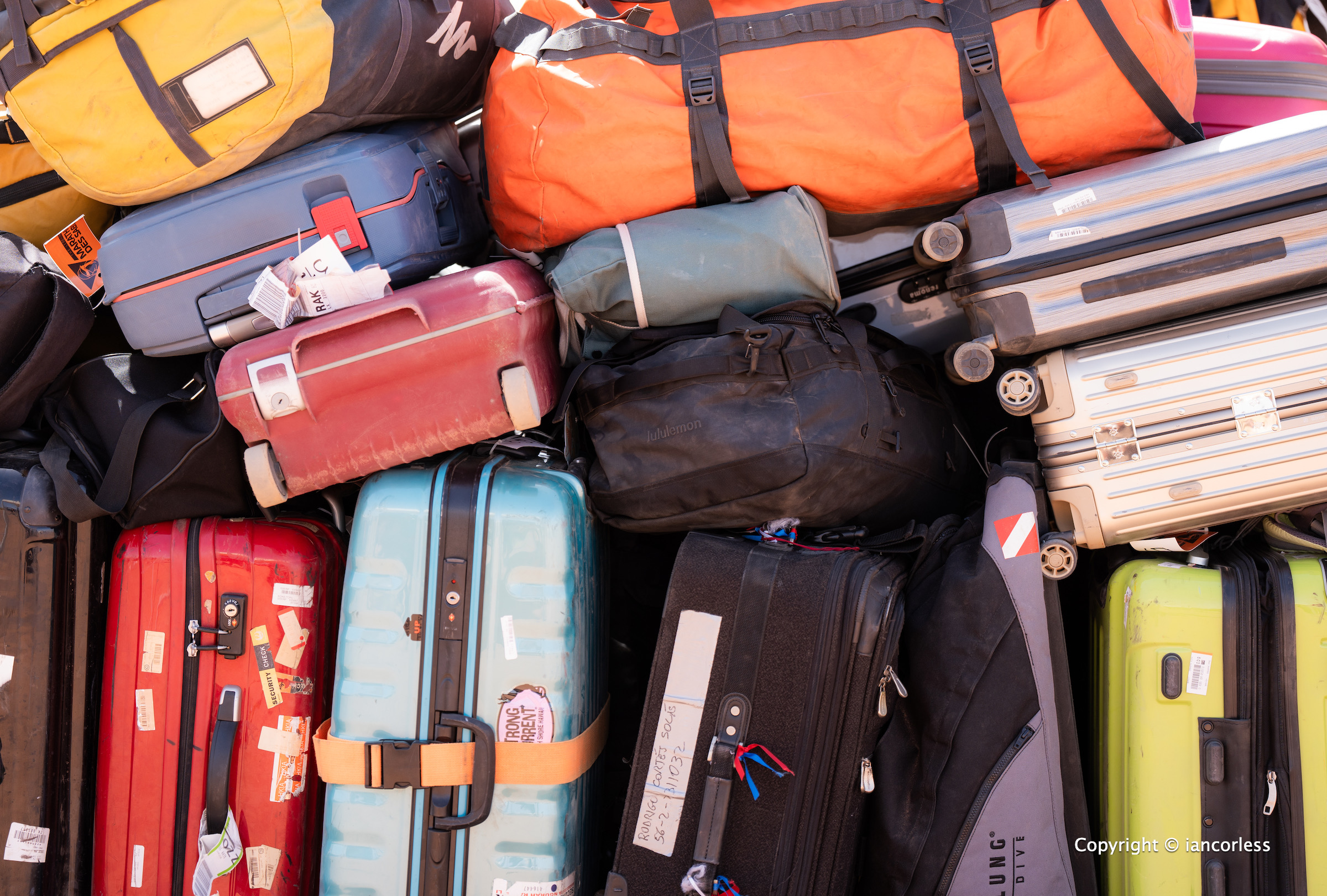
Your race pack should go as carry-on, with all essential gear inside. The only items that should go in checked luggage are those that have to, like a knife or trekking poles.
If checked luggage gets delayed, you’ll still be able to race. That’s the mindset.
Protect Your Health
This part might feel extreme, but it’s important.
Avoid unnecessary contact with others. A cold or virus now could undo months of work. Skip handshakes, hugs, and shared food or drinks. A simple “Namaste” with hands together works just fine.
Avoid salads or anything that might carry risk. Stick to well-cooked, straightforward meals. This isn’t the time to experiment with local cuisine.
Bring your own food for travel and the days before the race. Remember, you’re self-sufficient even before the start. Having familiar food and drink helps you stay relaxed and in control.
Use the Bivouac to Your Advantage
Before admin, your luggage stays with you in the bivouac. Use this.
Bring spares. Extra layers. Small options that allow you to adjust based on real conditions. The desert can surprise you, and this is your chance to fine-tune your setup before committing fully.
Be Ready
Have a clear plan for admin. Know what’s required. Be organized.
Then shift your focus forward.
Stage 1 is coming.
Photo by Ian Corless
Trust the Process
You’ve done the training. You’ve made the sacrifices. You’ve earned your place on that start line.
Now it’s about arriving calm, prepared, and ready to embrace what’s ahead.
Because this isn’t just a race.
It’s a journey. An experience that will stay with you long after the dust has settled.
Take a breath. Stay focused. And get ready for the adventure of a lifetime.
The 2026 Marathon des Sables – The Legendary is not just another year in the desert. It marks 40 years of the race. That alone tells you something about what’s coming. This edition matters. It will be longer, tougher, and built to celebrate the history of the event properly.
As we move through March, I will release weekly articles to help you sharpen your preparation. This is the first of four. The aim here is simple: give you clarity. No surprises. No guesswork.
Photo by Ian Corless
The Shape of the 2026 Race
If you raced in 2025, you already experienced the longest edition in MDS history. In 2026, the format stays similar but the distance increases again.
Six stages. Seven days. All timed.
Photo by Ian Corless
In previous years, the charity stage was not timed. That changed in 2025 and continues in 2026. Every stage now counts.
The long stage returns to Stage 4, just as it did in 2025. This time it will be 100km. Read that again. One hundred kilometres across two days in the desert.
Photo by Ian Corless
While total distance has fluctuated over the years, 250km has often been the benchmark. For 2026, you should plan for approximately 270km plus or minus. It should not shock you. But it will test you.
One positive? Depending on how quickly you complete the long stage, you may have almost a full day and night to recover before Stages 5 and 6. That recovery window could be valuable.
Daily stage distances are rarely confirmed in advance. It remains unclear whether exact distances will be released before arrival in Morocco. Historically, that information is kept quiet. Still, it’s not hard to estimate how the race could look.
Photo by Ian Corless
A likely outline might be:
Stage 1: 32km (Day 1) – total 32km
Stage 2: 38km (Day 2) – total 70km
Stage 3: 36km (Day 3) – total 106km
Stage 4: 100km (Days 4 and 5) – total 206km
Stage 5: 42km (Day 6) – total 248km
Stage 6: 21km (Day 7) – total 269km
Total: approximately 269km +/-
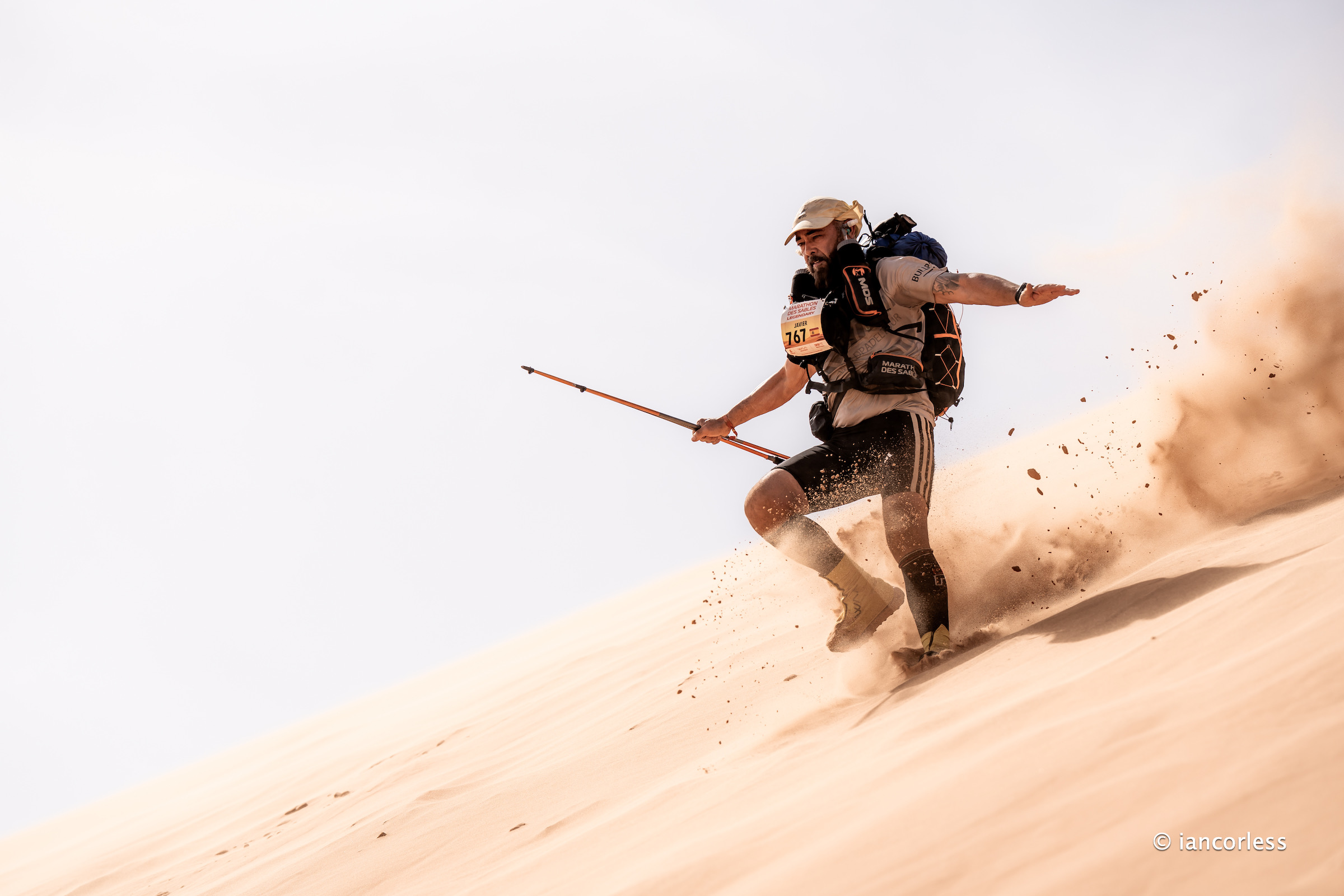
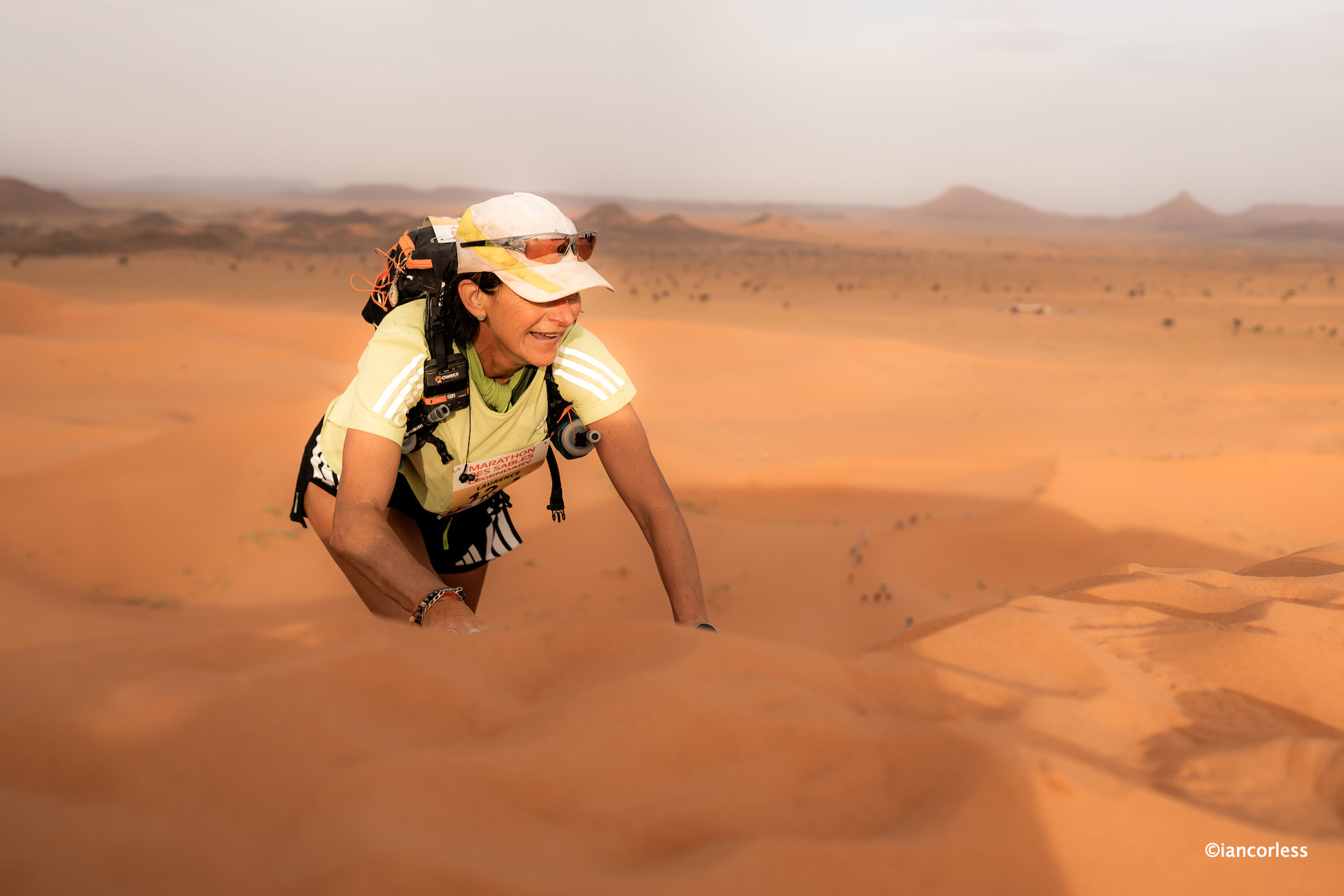
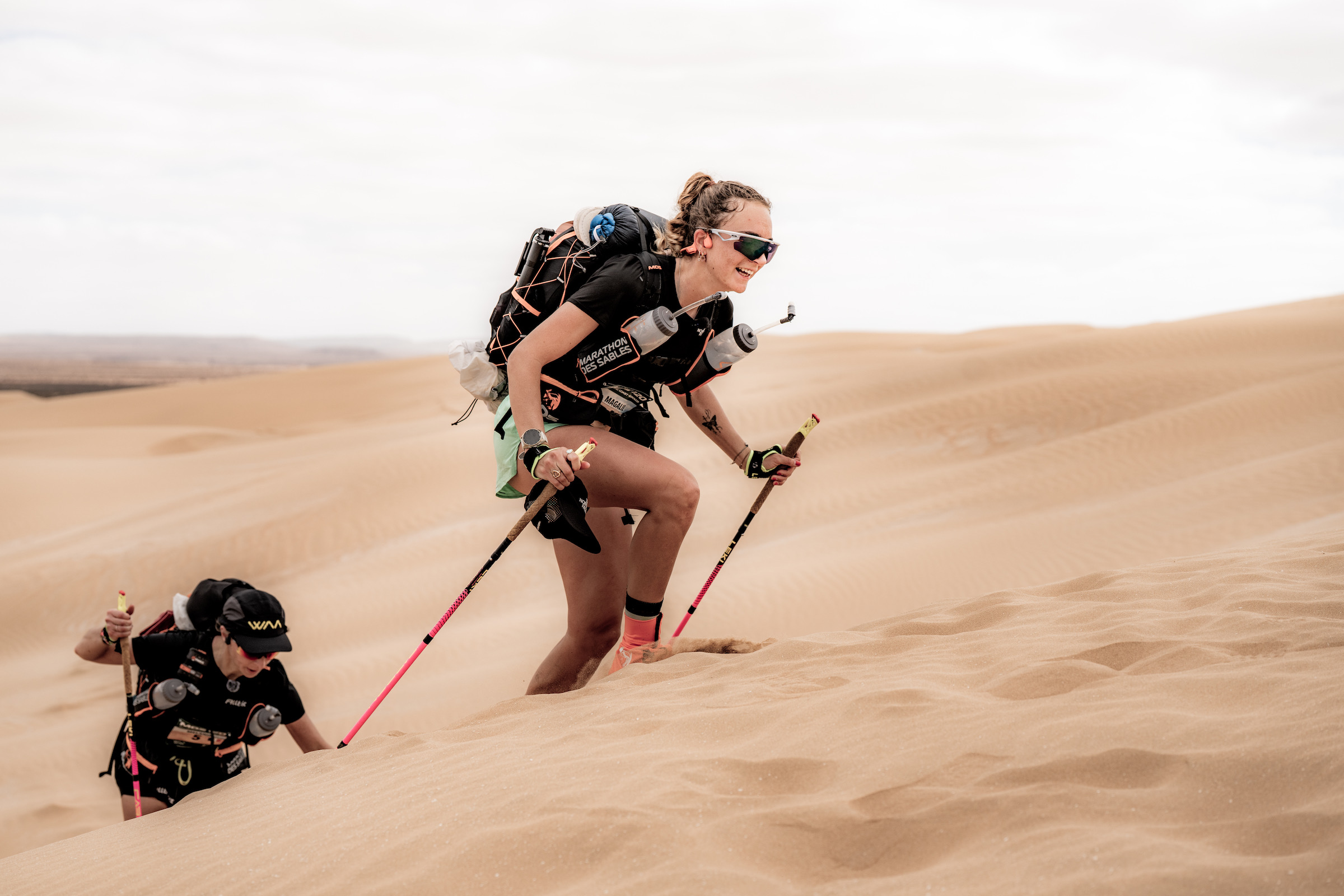
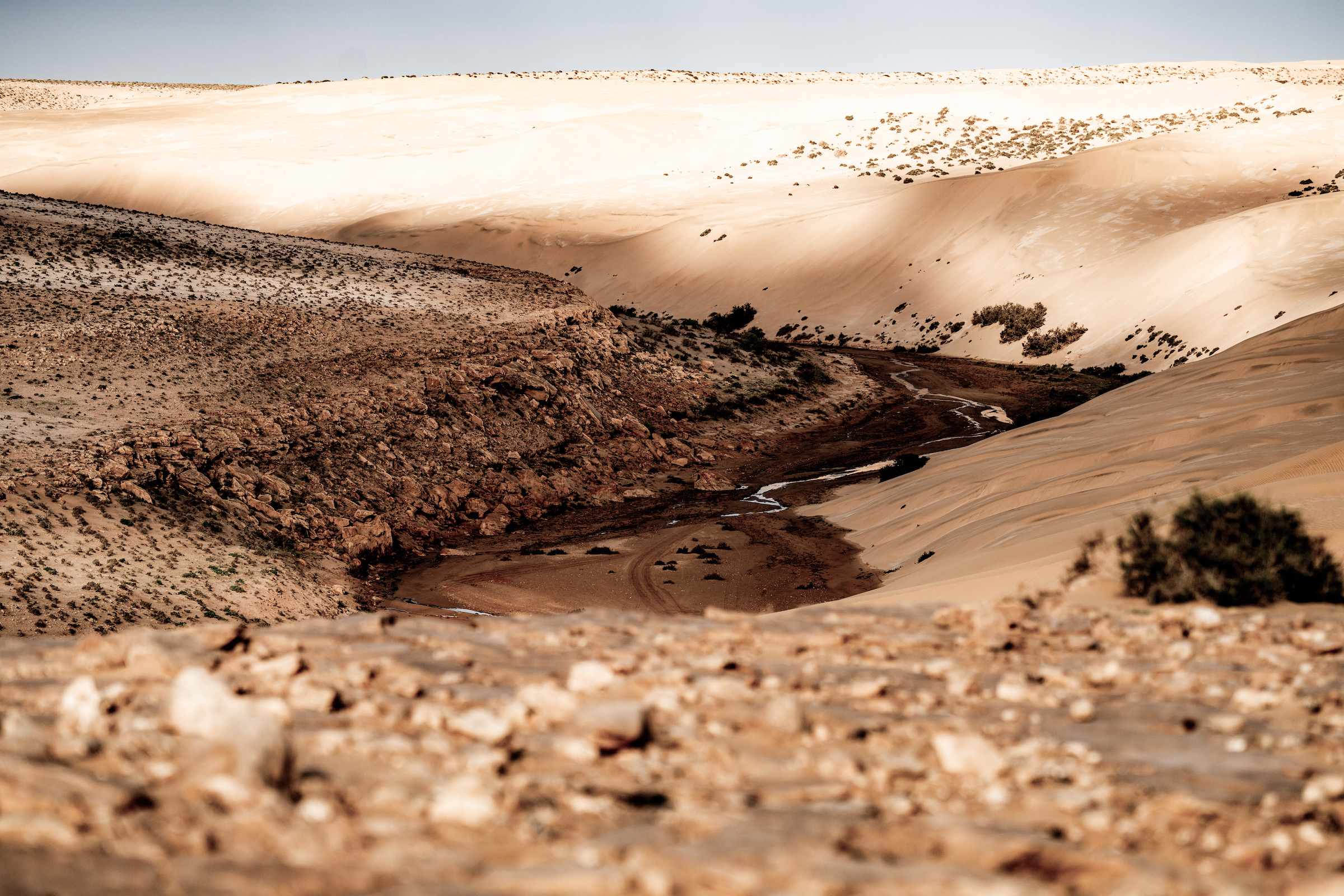
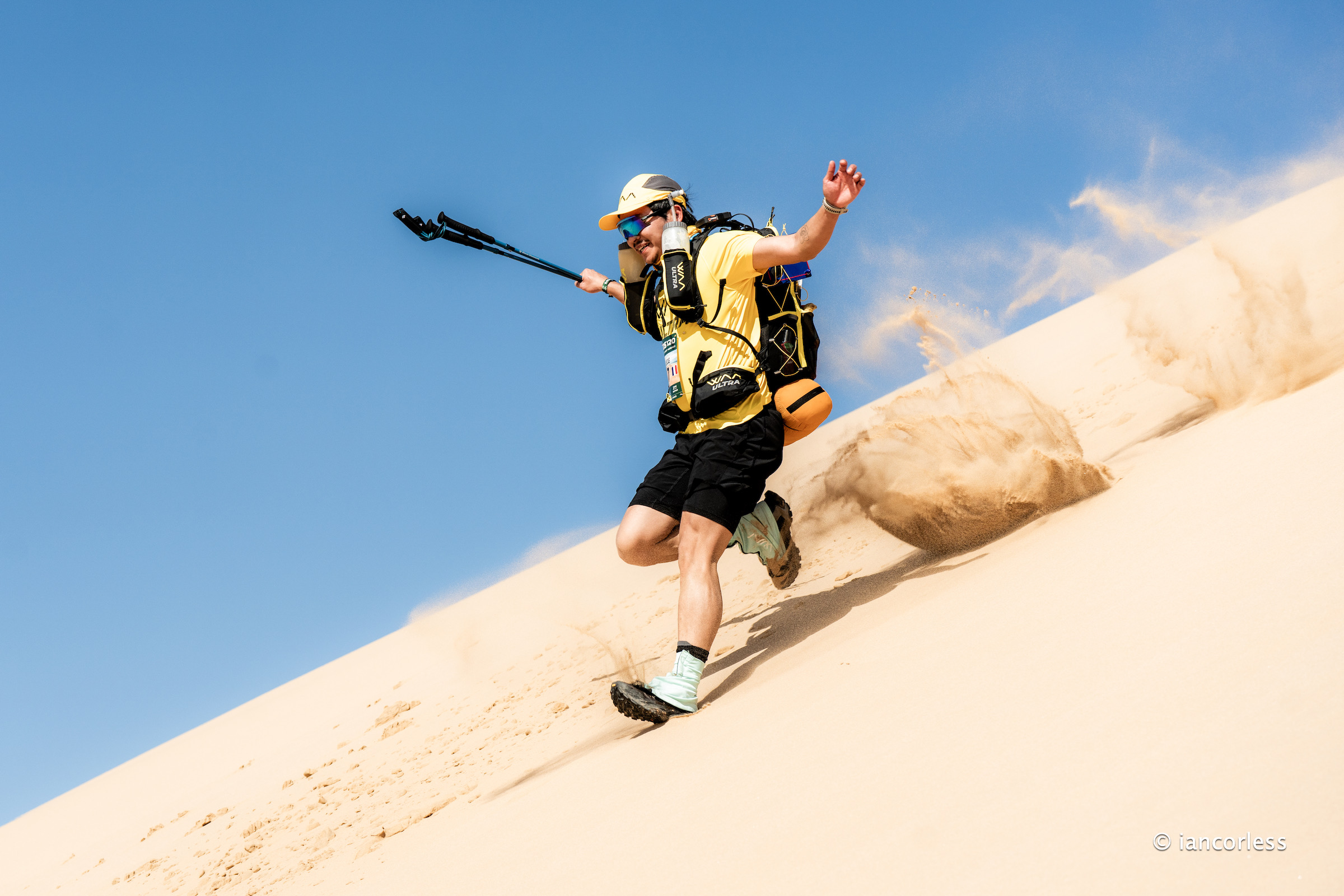
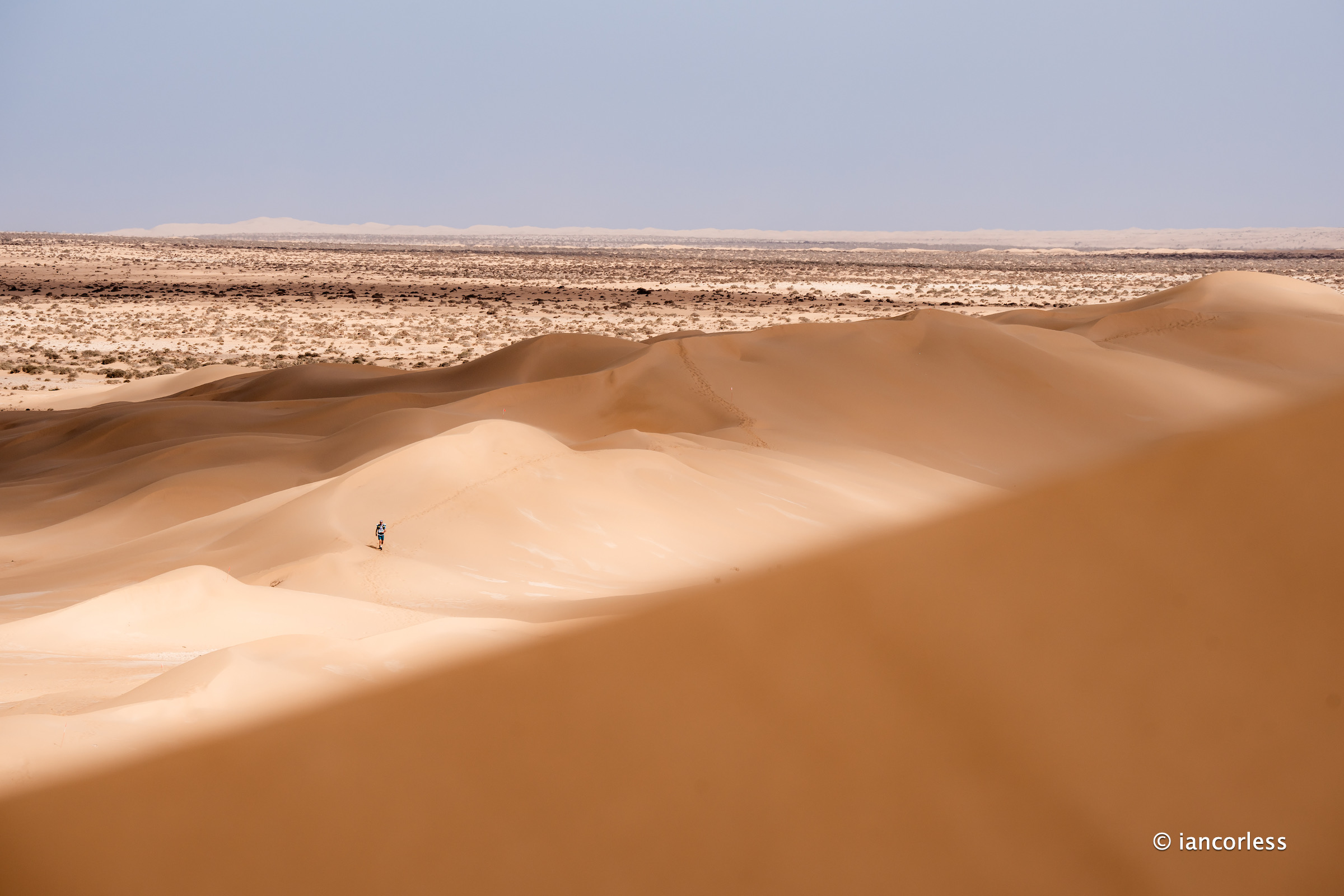
As in 2025, expect sand. A lot of it. Expect the Merzouga Dunes. Do not expect Djebel El Otfal.
You now have a working template to mentally prepare for the challenge ahead.
Before the Race Even Starts
Your race does not begin at the start line. It begins with logistics.
Photo by Ian Corless
In the final 2 to 3 weeks before the race, taper training back so that you are fresh and strong. Also plan for heat adaptation, this could be specific heat chamber sessions or a series of sauna sessions or similar.
Photo by Ian Corless
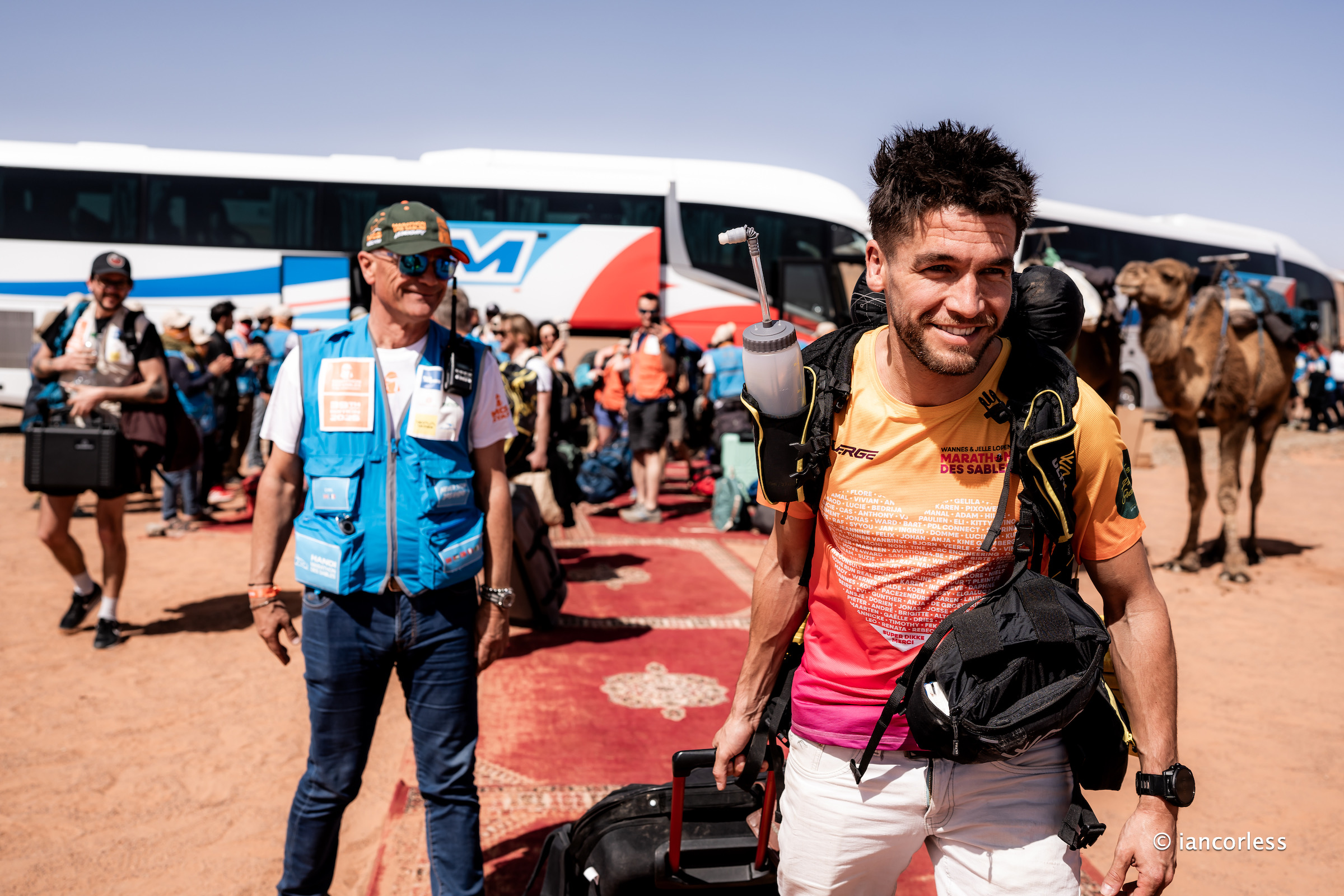
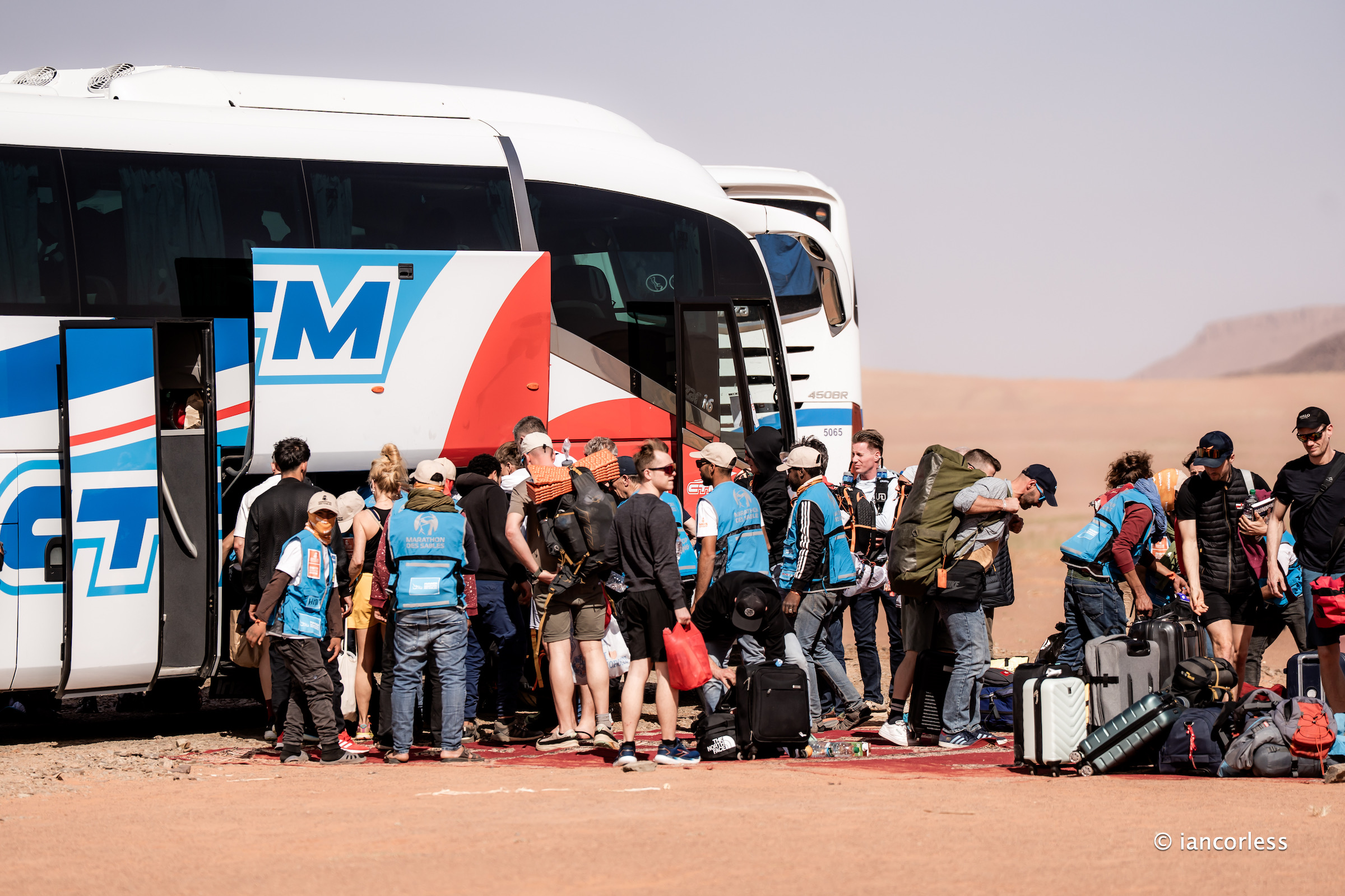
You are responsible for arranging your own accommodation before the official transfer from Ouarzazate to bivouac one. If you fly into Marrakech, you may need a hotel there as well. There are free transfer buses from Marrakech to Ouarzazate. Arrive in Ouarzazate at least one day before required, have a good hotel night and time to relax and prepare before the transfer to the desert. MDS will confirm the dates and times for transfers etc.
From there, the structure usually follows this pattern:
Day 1 – Bus transfer from Ouarzazate to the desert bivouac. You settle in and stay overnight. This is self-sufficient. No meals are provided. Bring enough food for arrival day and admin day. There is no weight restriction at this point, so bring what you want.
Day 2 – Technical, administrative, and medical checks. Overnight in bivouac, still self-sufficient.
Day 3 – Stage 1
Day 4 – Stage 2
Day 5 – Stage 3
Days 6 and 7 – Stage 4, the 100km long stage
Day 8 – Stage 5
Day 9 – Stage 6, medal at the finish, bus transfer back to Ouarzazate. Overnight hotel with half-board.
Day 10 – Free day in Ouarzazate, awards ceremony and gala evening. Hotel half-board.
Day 11 – Airport transfers. End of the adventure.
Bivouac Reality
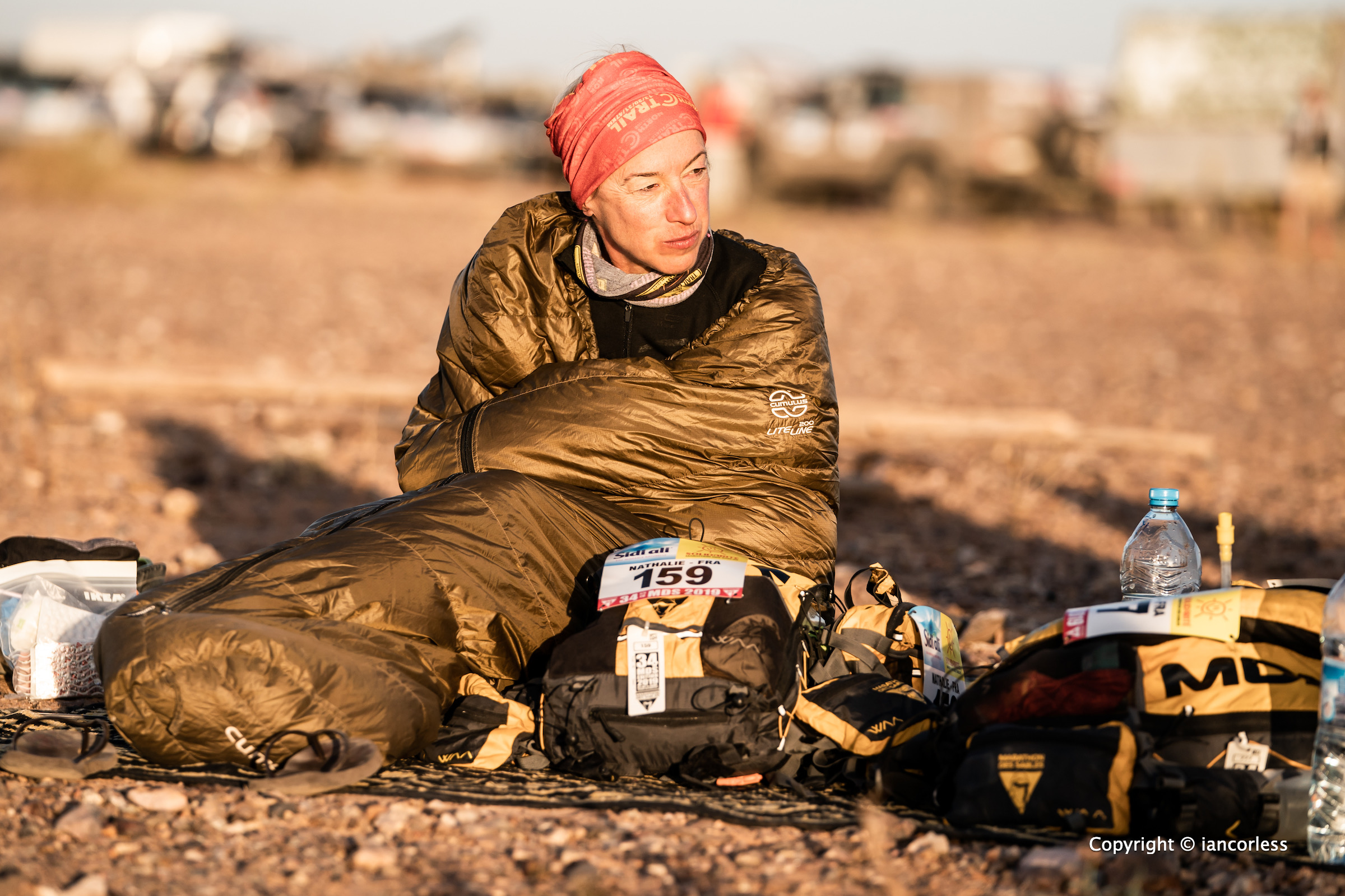
From the moment you step into the bivouac, you are self-sufficient. Water is provided. Everything else is your responsibility.
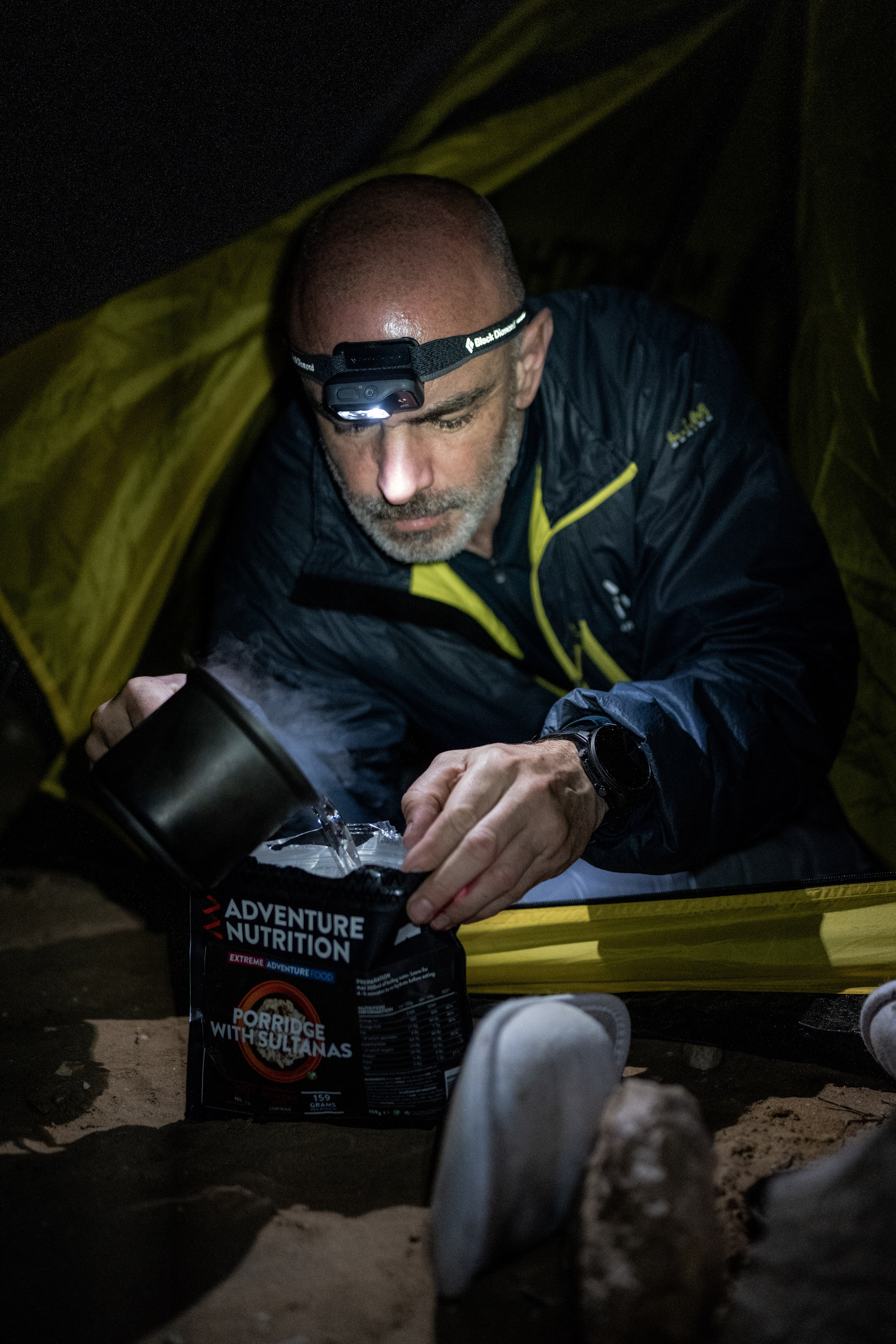
You must bring food and drink to cover arrival day and admin day before racing begins. You do not carry this food during the race, so be smart. Bring proper meals. Rachid, for example, makes a Tagine in camp.
You also have access to your luggage before admin checks. This is valuable. Bring spare kit, extra layers, backup options. You can fine tune your equipment in real desert conditions.
And do not assume MDS = heat. In 2025, we had rain, strong winds and sand storms.
Recent editions have shown how unpredictable conditions can be. The October MDS 120 Morocco race in 2024 saw rain and flooding. The Atlantic Coast edition had extreme wind, cold temperatures and rain. The desert is not always hot and dry. Prepare for variation.
Before admin, you can adjust your race pack. After that, your pack must meet regulations:
Minimum weight: 6.5kg excluding 1.5 lts of water.
Minimum food: 2000 calories per day.
All mandatory kit must be present.
No exceptions.
Water Strategy Has Changed
Since 2024, water provision has evolved.
Photo by Ian Corless
Once Stage 1 begins, water during stages is effectively unlimited. You are no longer handed sealed 1.5L bottles at checkpoints. Instead, volunteers in blue coats pour water from large containers into your bottles.
If you stand at a checkpoint and drink a full bottle, they refill it.
Typically, checkpoints are spaced around 10km apart, terrain permitting. However, if conditions demand it, additional water stations may be placed between checkpoints, for example at 5km. This flexibility is important to combat excessive heat.
Photo by Ian Corless
For the long stage, there may be a requirement to carry additional water capacity. This could be supplied in a 1.5L bottle. Plan ahead. Either have spare capacity to decant, or a system to carry a full bottle.
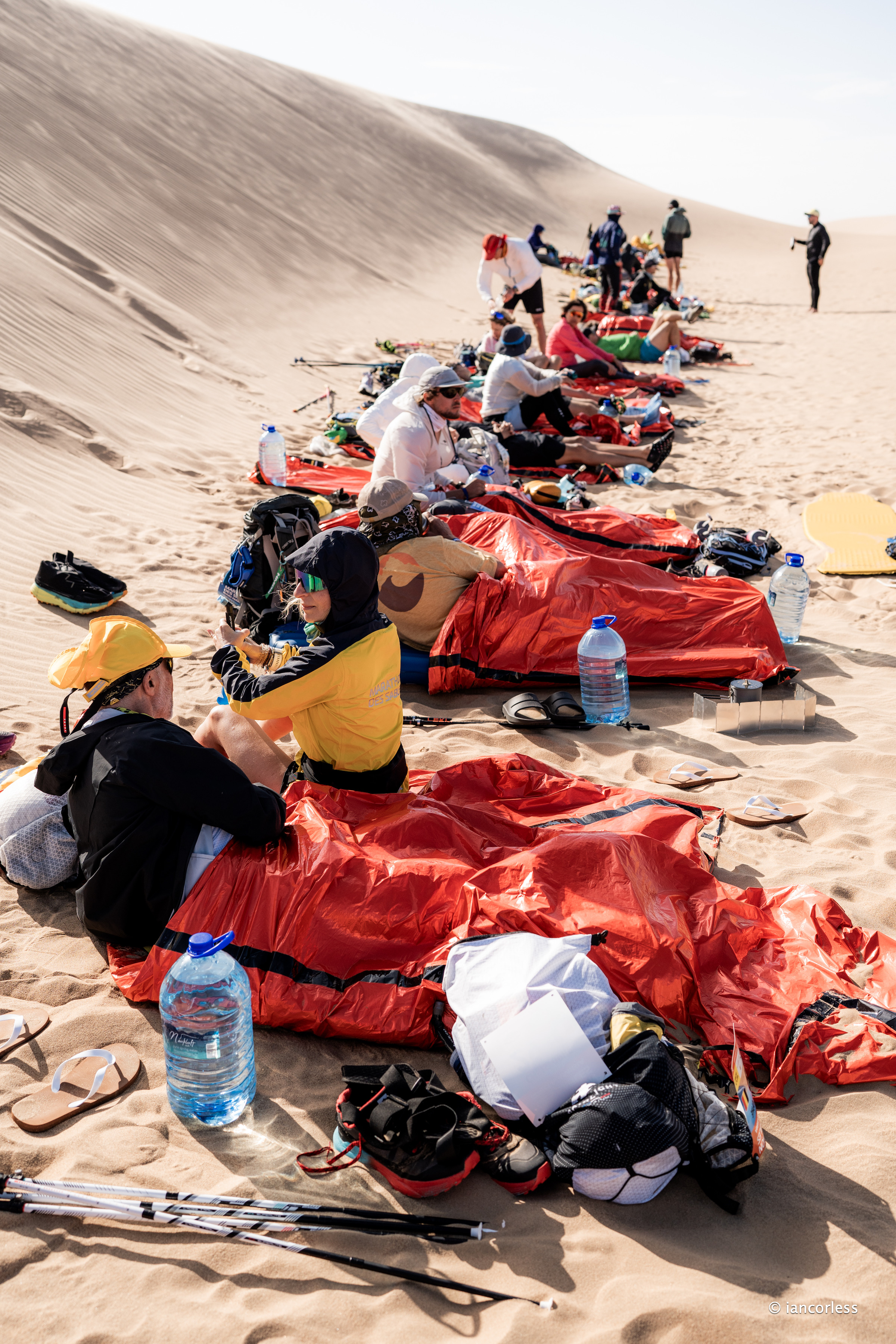
After each stage, water is rationed. You receive one 5L bottle. That 5L must cover:
Post-stage hydration
Dinner preparation
Breakfast preparation
Water allocation to CP1 the next day
If you want to wash, that also comes from the same 5L. Prioritize drinking and eating. Washing is optional. Hydration is not.
Salt Is Now Non-Negotiable
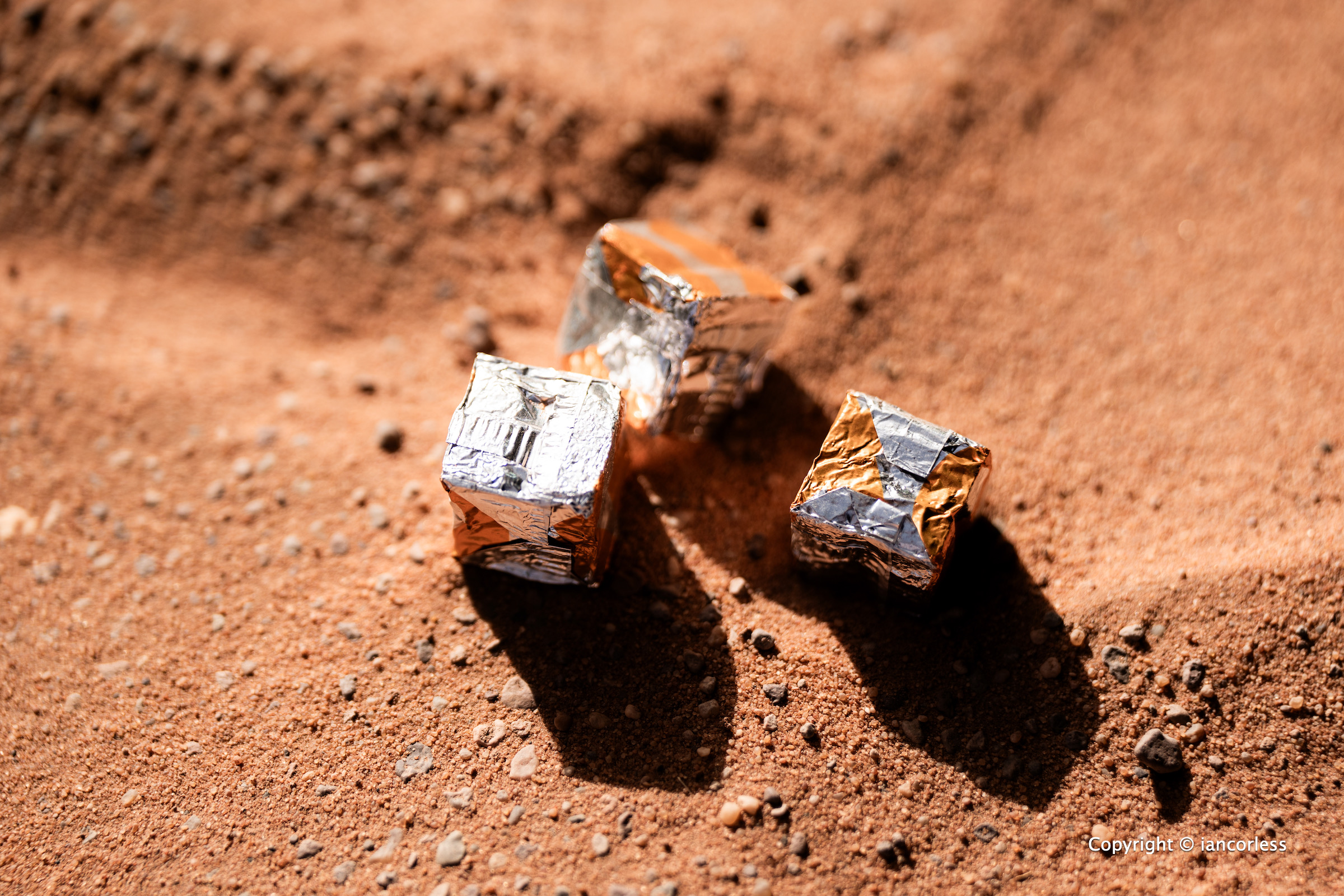
The race rules require 14 broth cubes. They are salty and mandatory.
In 2024, this change was questioned. By the end of the race, feedback was largely positive.
Not all cubes dissolve well. Test them. Many athletes use ‘Knorr’ because it dissolves reliably. Build a salt replacement strategy that works for you. This is a self-sufficient race. You must manage your own electrolyte plan.
Feet: The Deciding Factor
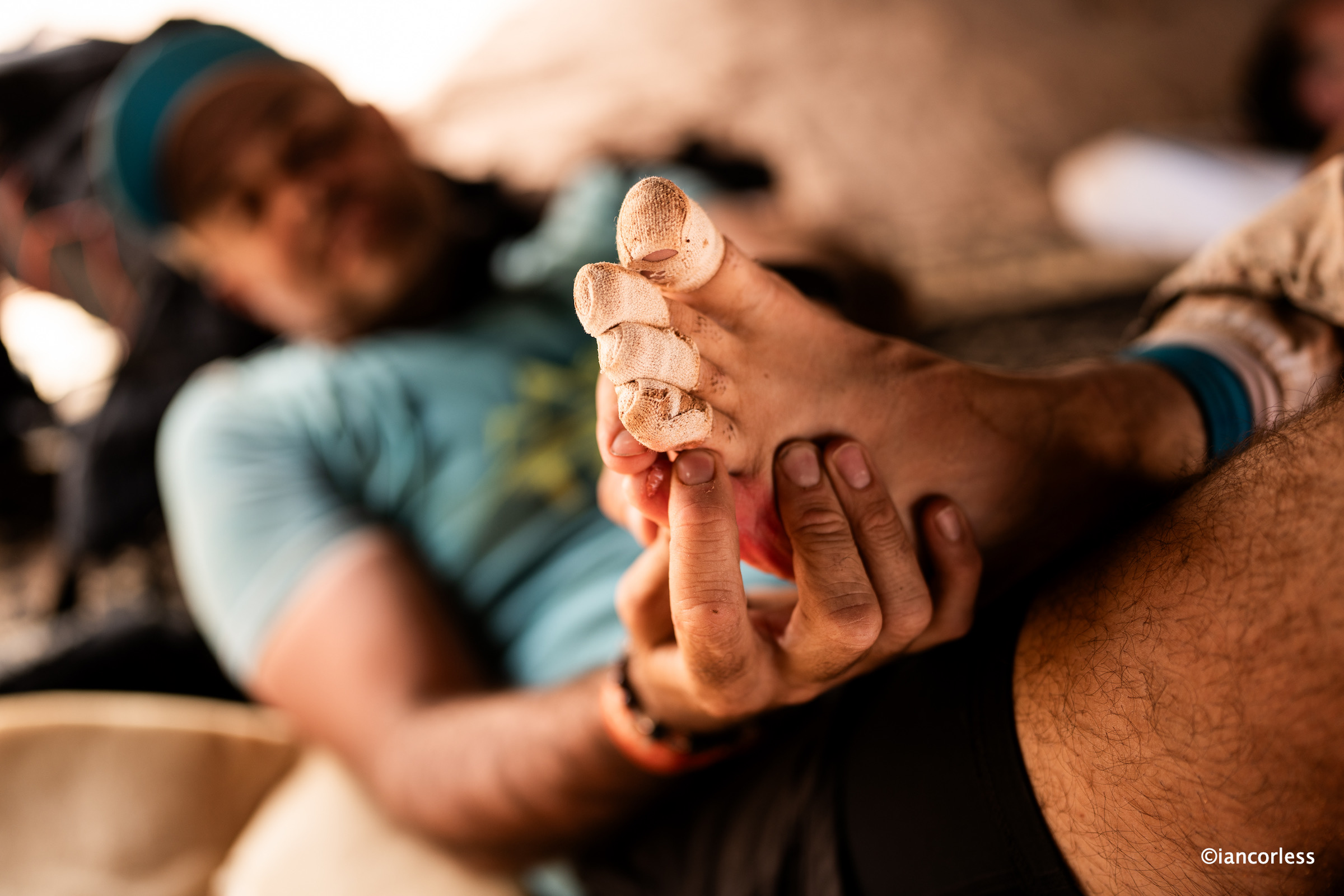
Along with dehydration, damaged feet are one of the main reasons people do not finish.
Your shoes must fit correctly. Your socks must suit you. You must know how to treat hot spots and blisters. Desert sand magnifies small problems quickly.
Ignore your feet at your peril.
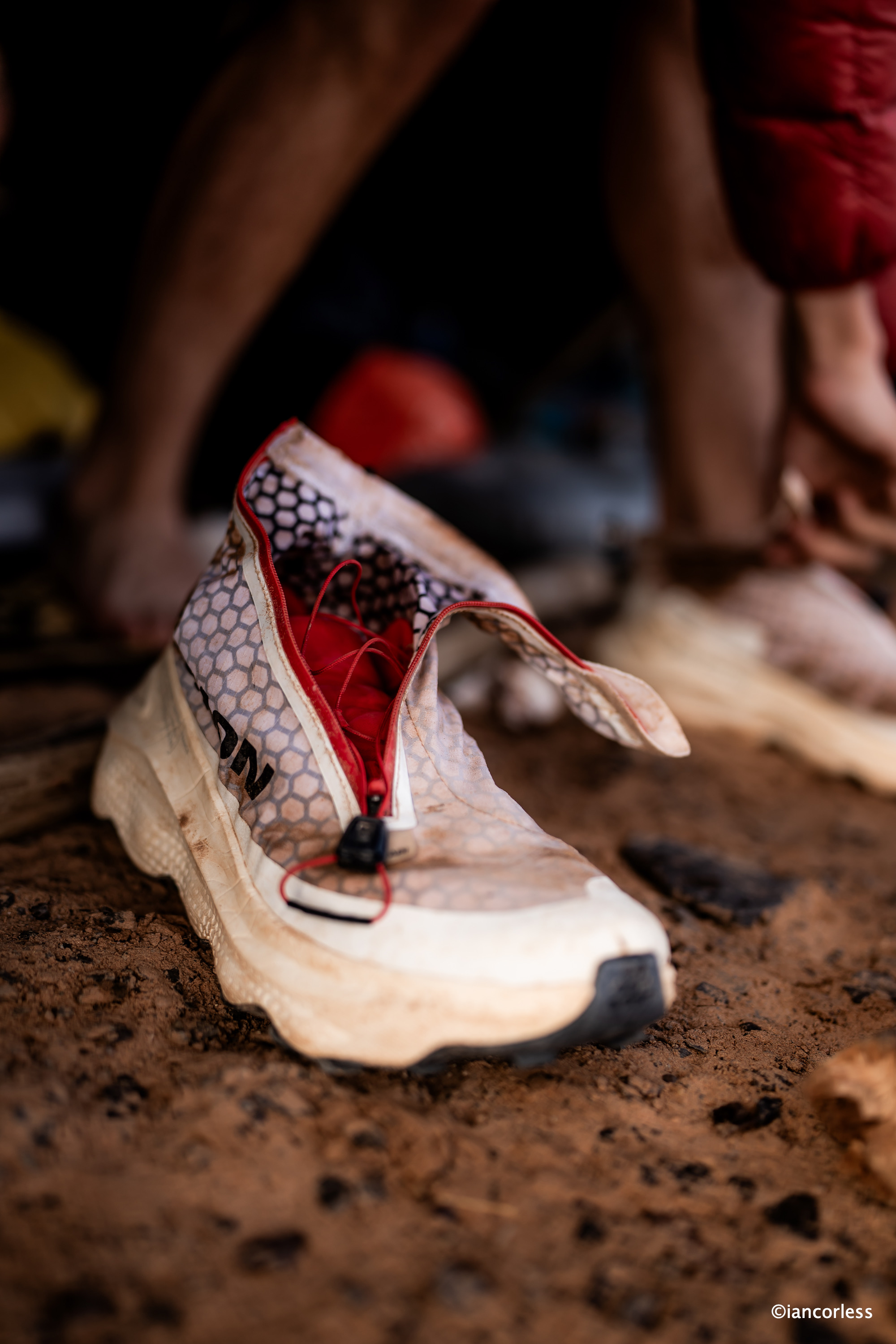
Advice – A thumb nail of space above your longest toe is ideal. Note, I say longest toe – this may not be your big toe! A wider shoe is a good idea to allow for toe splay. If a shoe is too big, your foot will move when walking or running. A moving foot causes friction, friction means blisters.
Photo by Ian Corless
Make sure your shoes have gaiters so no sand can get in the shoe.
Safety on Course
The race operates under strict safety protocols.
Photo by Ian Corless
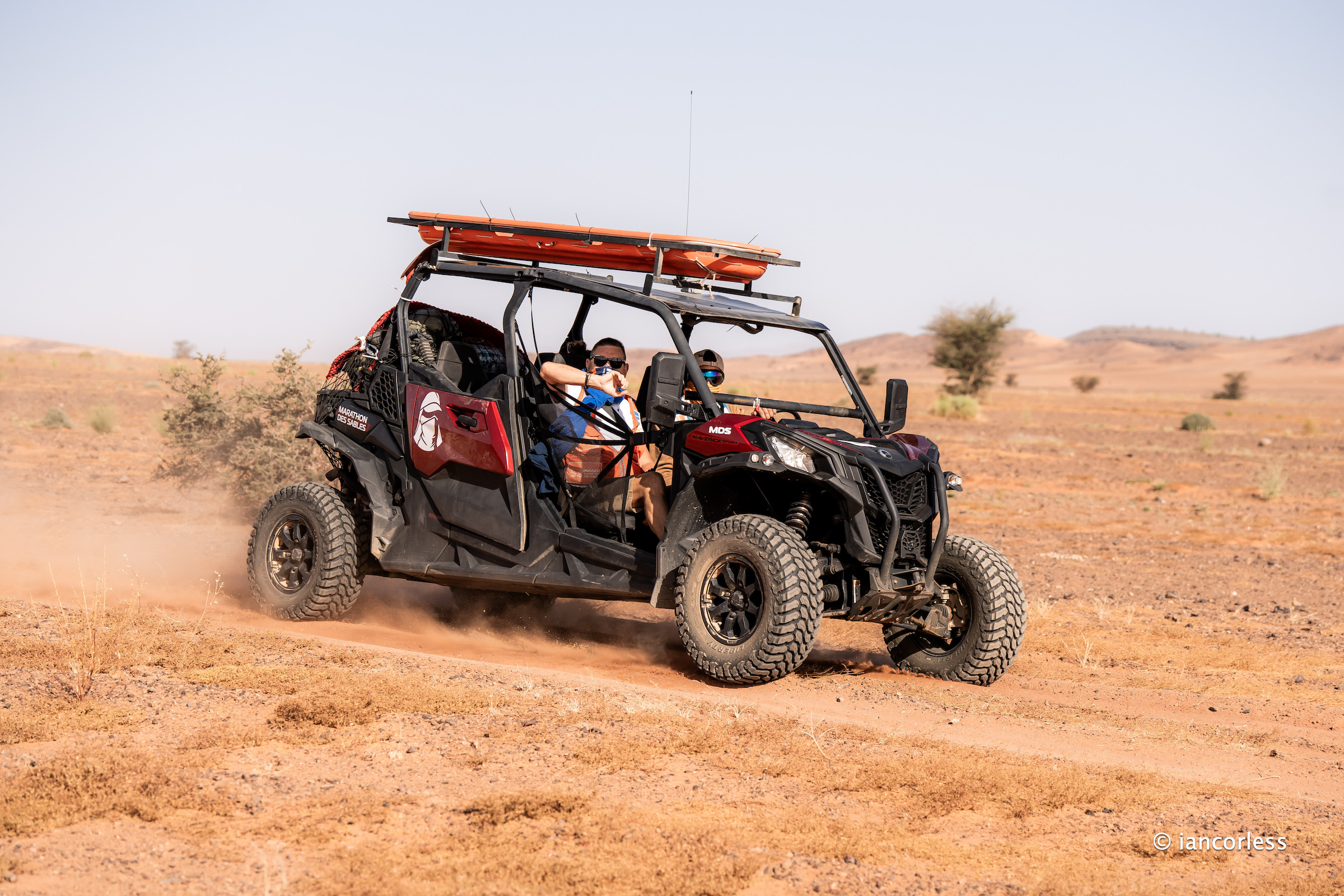
Fast response buggies are positioned to access difficult terrain quickly. 4×4 vehicles are spread across the course.
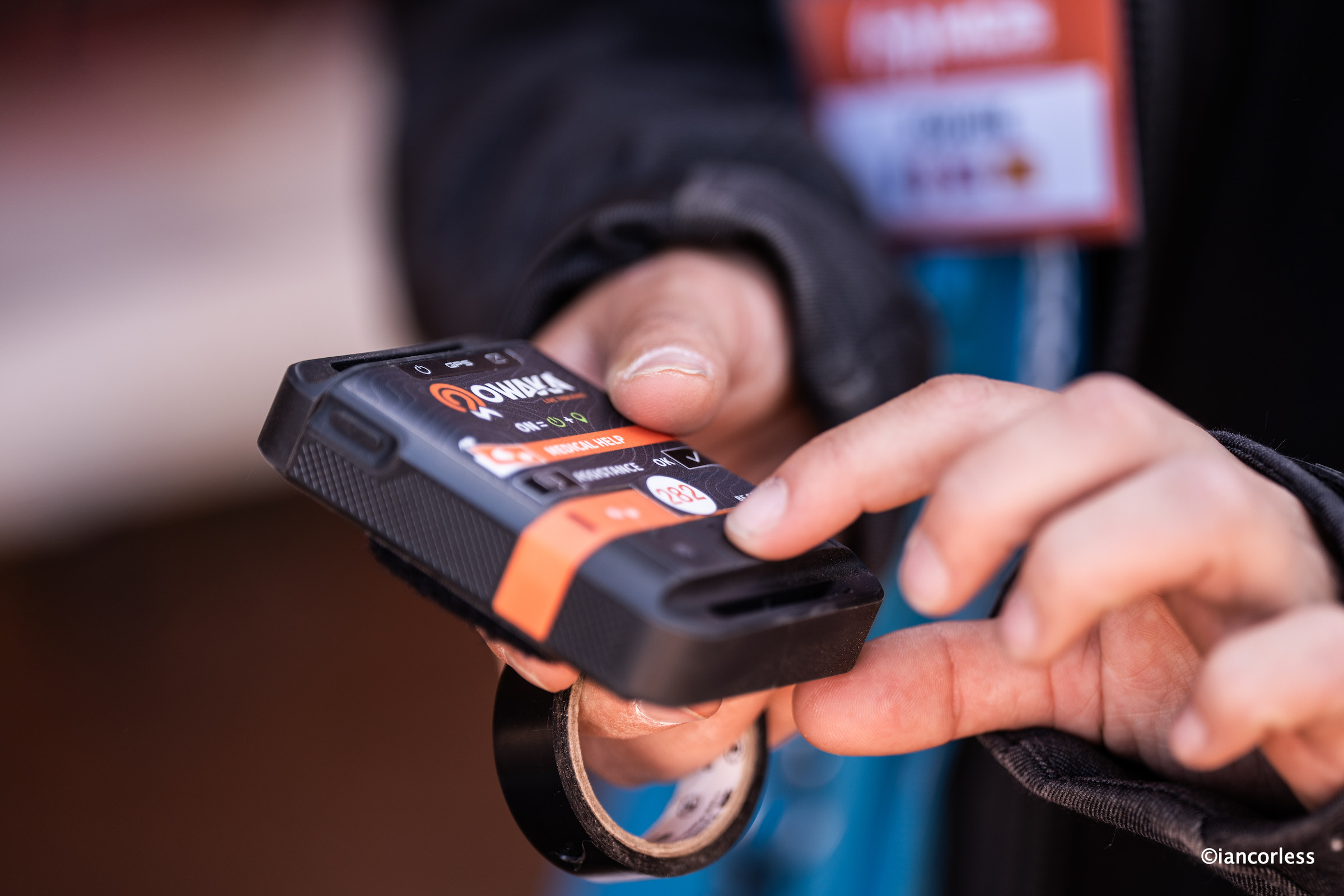
Every runner carries a tracker attached to their pack. This allows the organization to monitor your position in real time. It includes an emergency button for immediate assistance.
There are also medical runners on course. These are trained medical professionals competing in the race. They wear a different colour race number so you can identify them. They can provide immediate care if necessary. In addition, the full medical team is equipped to respond anywhere in the desert.
Photo by Ian Corless
During stages, water is not rationed. If you need more, you can have it. At key checkpoints, iced water is available for cooling and is poured over your head by blue coat volunteers. Orange jackets manage medical incidents.
Mandatory Equipment Means Mandatory
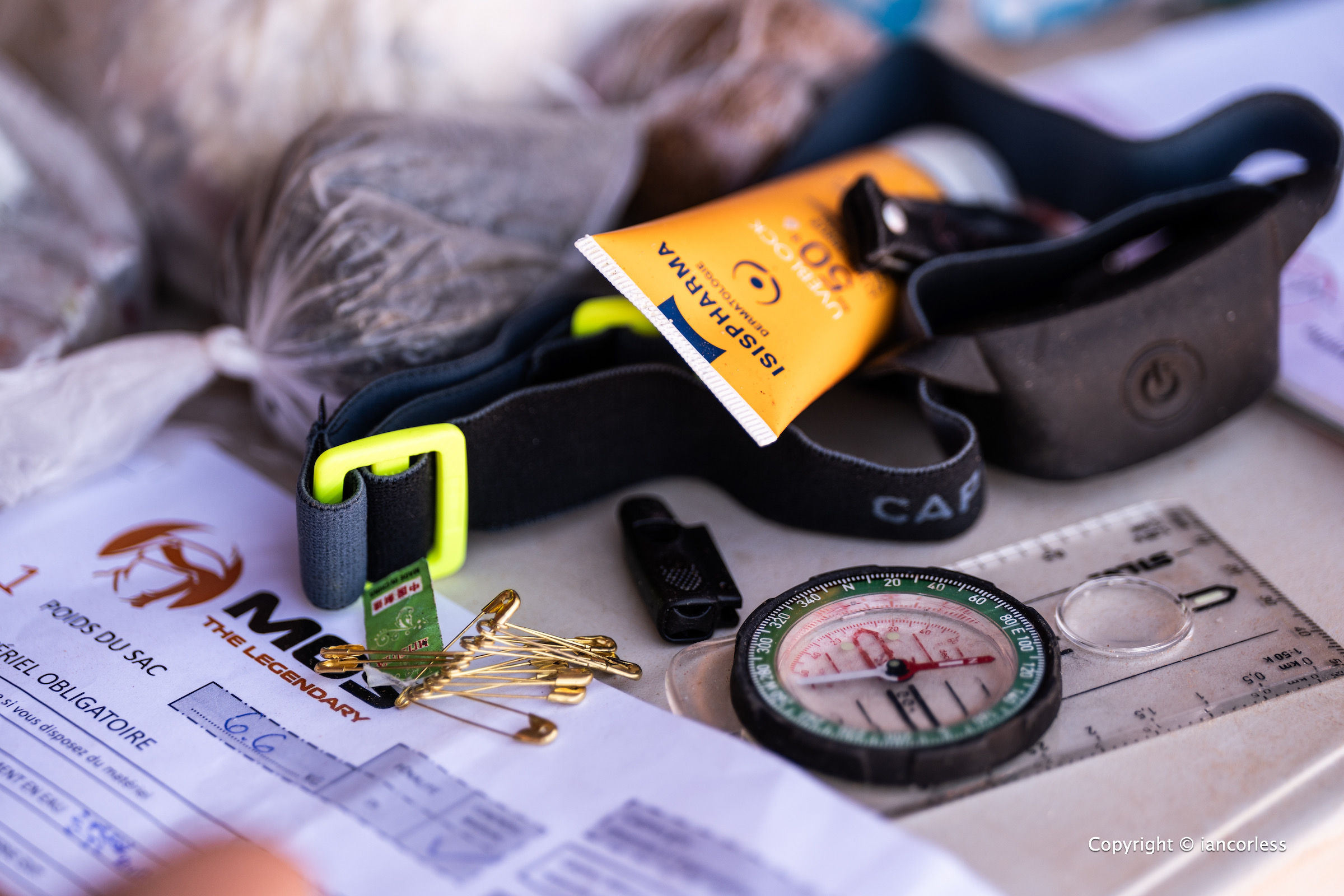
You must carry:
Pack such as WAA Ultra Bag 20L
Minimum 1.5L water capacity
Sleeping bag
Head torch plus spare batteries (charger or solar charger allowed)
10 safety pins
Compass with 1–2 degree precision
Lighter
Whistle
Knife
Topical disinfectant
Signal mirror
Survival blanket
14 broth cubes
Sun cream
200 euros or 2000 dirhams
Passport or ID card
Original ECG document and medical certificate
Roadbook (provided on arrival)
GPS tracker
Pay close attention to deadlines and rules for ECG and medical forms. The regulations are strict.
Calories: The Real Numbers
The rules require 2000 calories per day across six stages. That equals 12,000 calories minimum to comply.
However, with the rest period during the long stage, 14,000 calories is a more realistic minimum. You may carry more. For example, a small and slight women weighing 50kg has very different calorie needs to a tall, muscular 90kg male. Understand your calorie needs.
You must be able to prove calorie totals. If you repackage food into lighter containers, keep the nutritional labels.
To break it down clearly:
Stage 1 – 14,000 calories remaining
Stage 2 – 12,000 calories remaining
Stage 3 – 10,000 calories remaining
Stage 4 – 8,000 calories remaining (long stage)
Day 5 – 6,000 calories remaining (rest day, still requires 2000 calories)
Stage 5 – 4,000 calories remaining
Stage 6 – 2,000 calories remaining
On Day 5, you may still be moving during the long stage or recovering in camp, but you still require 2000 calories. On Stage 6, you technically only need breakfast and race snacks.
Essential Personal Kit
Beyond mandatory equipment and food, you will need:
Shoes with gaiters, Velcro sewn securely in advance
Hat with potential neck cover
Sunglasses with strong protection and good fit for sandstorms or take extra goggles
Watch
Warm layer – windproof and possibly lightweight down jacket
Foot care supplies
Hygiene products
Toilet roll or wipes
Lip balm
Blindfold
Ear plugs
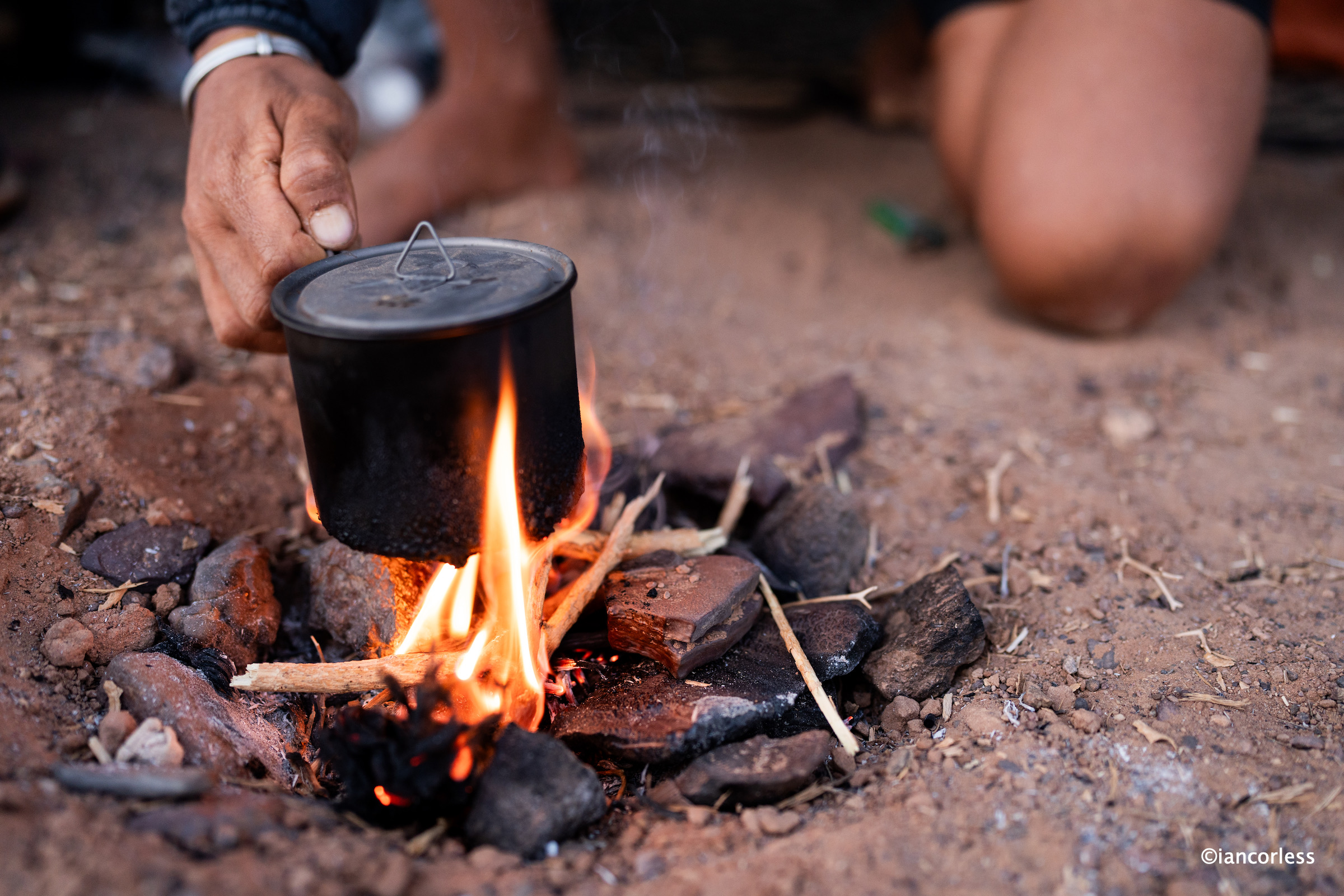
Spoon
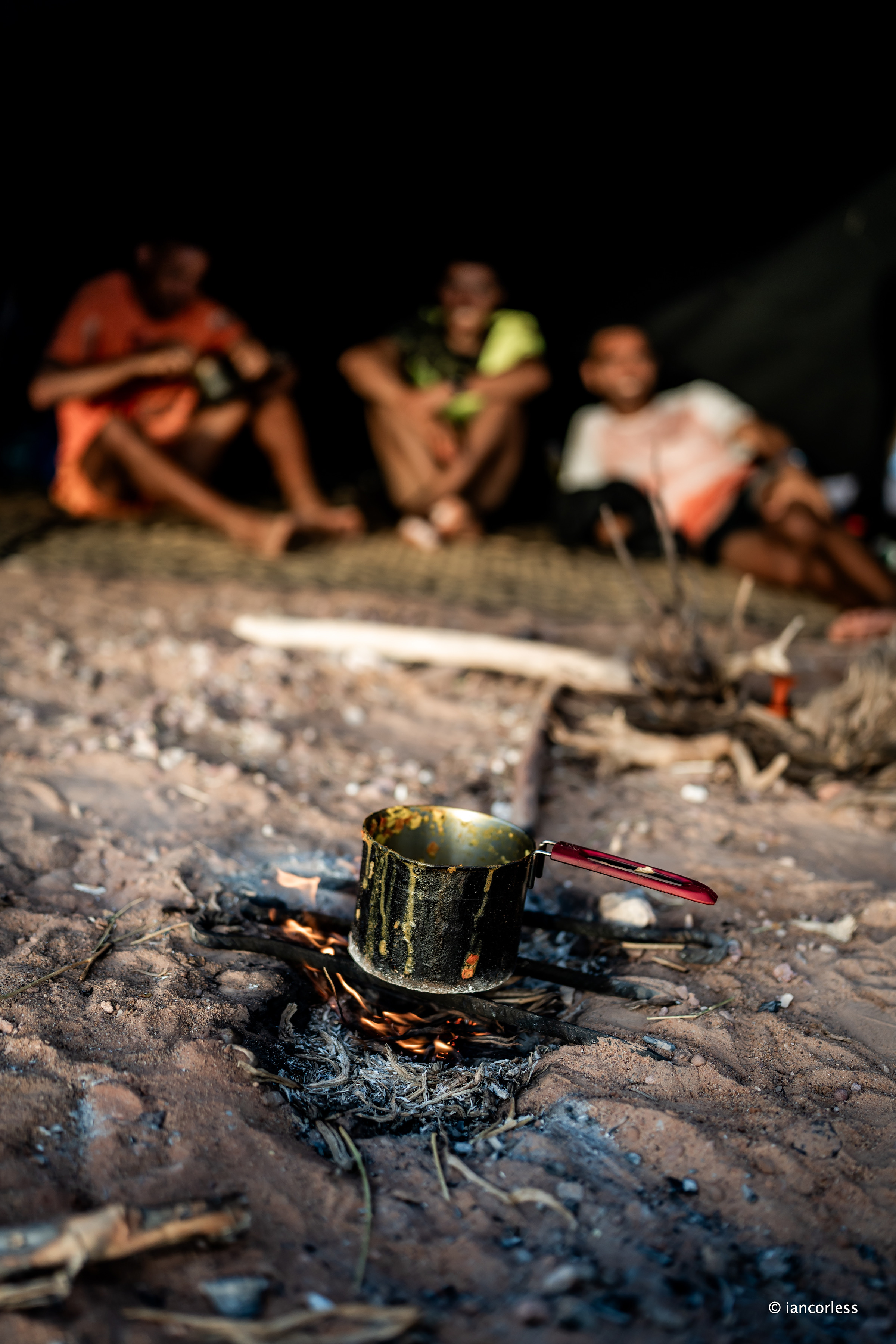
Pot or bowl
Stove
Fuel cubes
Sleeping mat
Pillow
Flip flops or similar
Note – If you plan to NOT heat water, you will not need a stove of fuel cubes. However, you will still need a bowl or something similar to eat food from.
Photo by Ian Corless
For repairs, consider:
Zip ties
Gorilla tape
Super glue
Sewing kit
Cord or thin rope
Equipment can fail. Plan for that.
Final Practical Advice
Keep your pack as close to 6.5kg as possible. Extra weight adds unnecessary stress, especially in the longest edition to date with a 100km long stage.
Limit luxuries. If you take one, make it a lightweight MP3 player with reliable battery and earphones.
Accept the conditions. You may not wash. You will get dirty. You will smell. That is normal
Start conservatively. Ease into the race.
Photo by Ian Corless
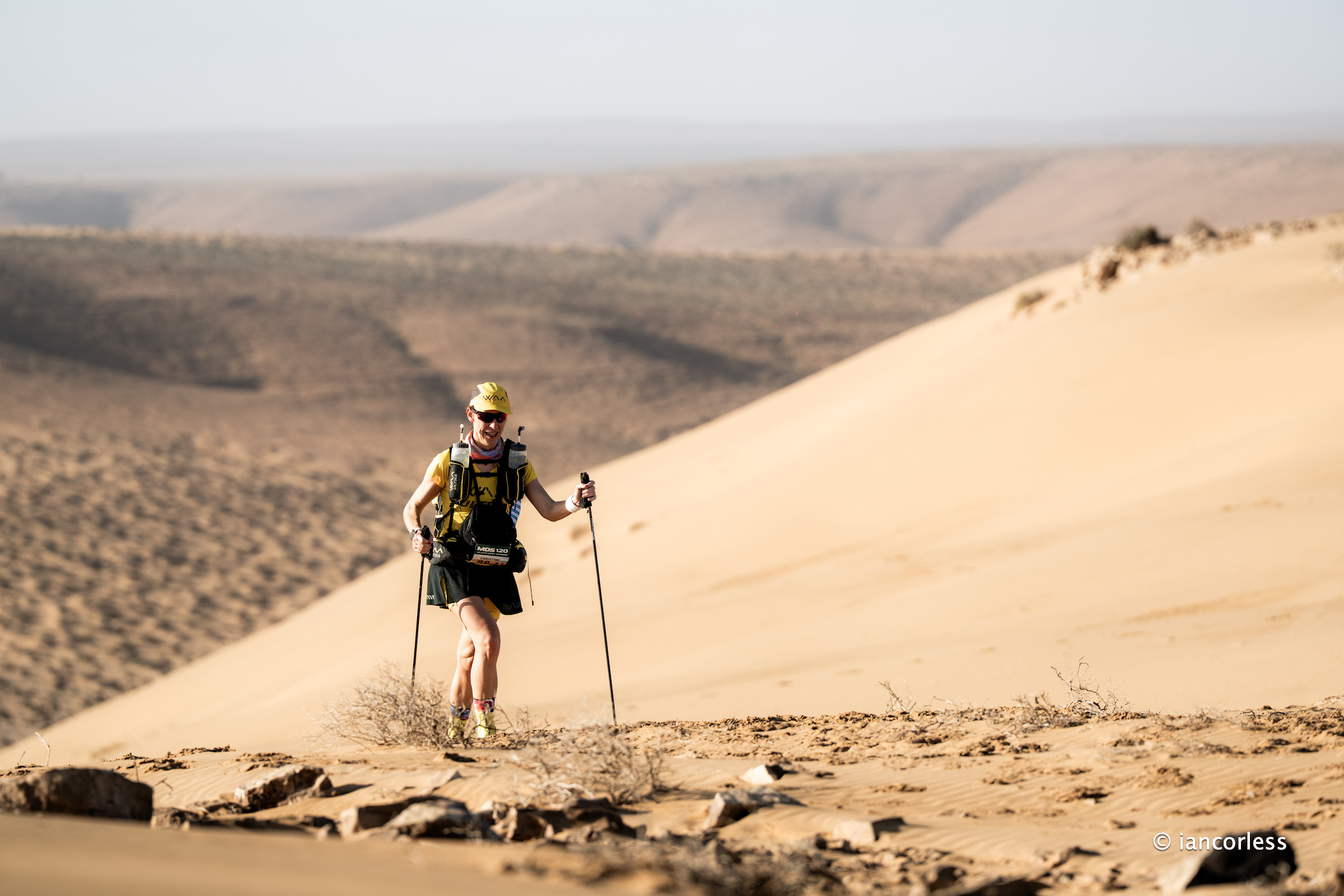
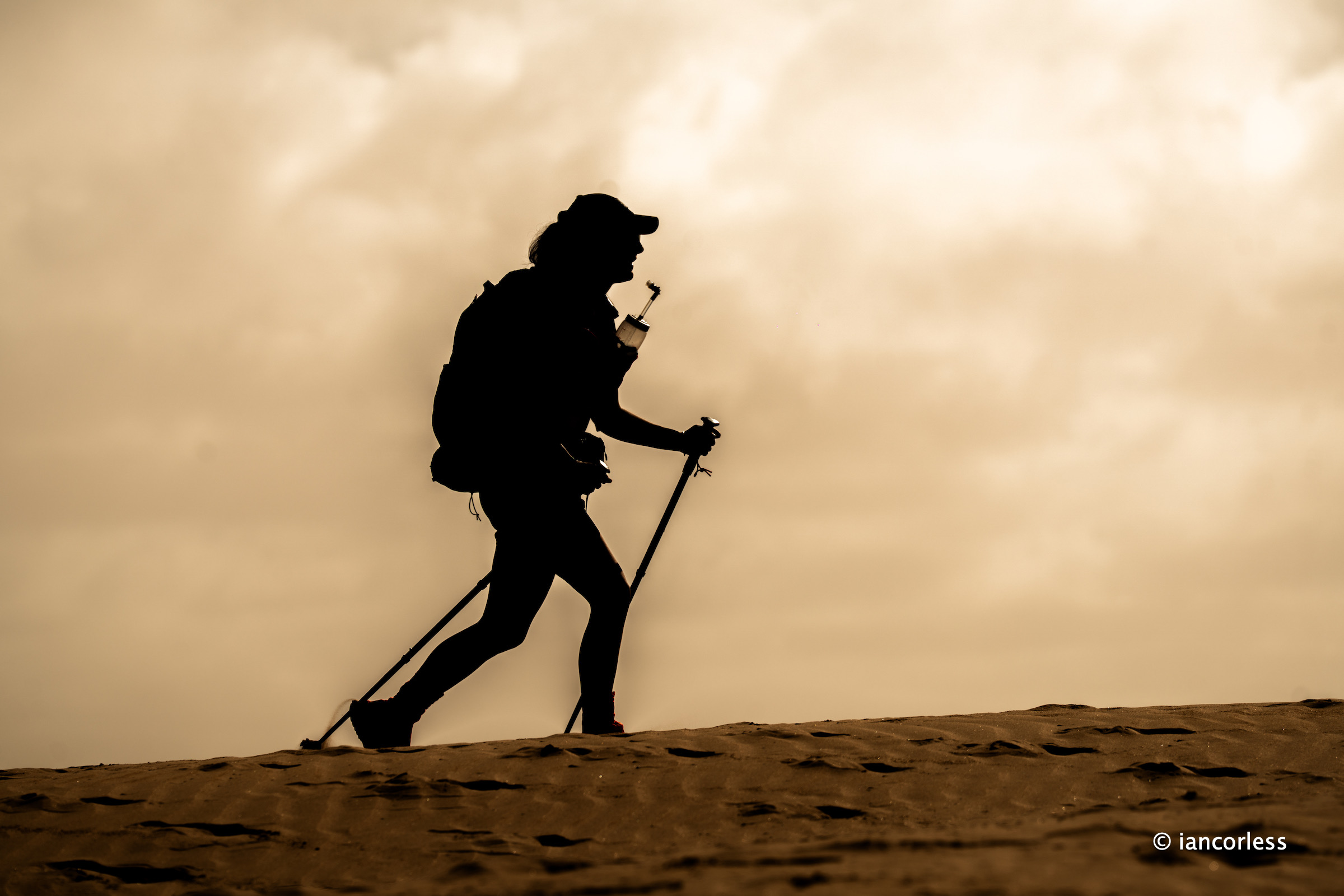
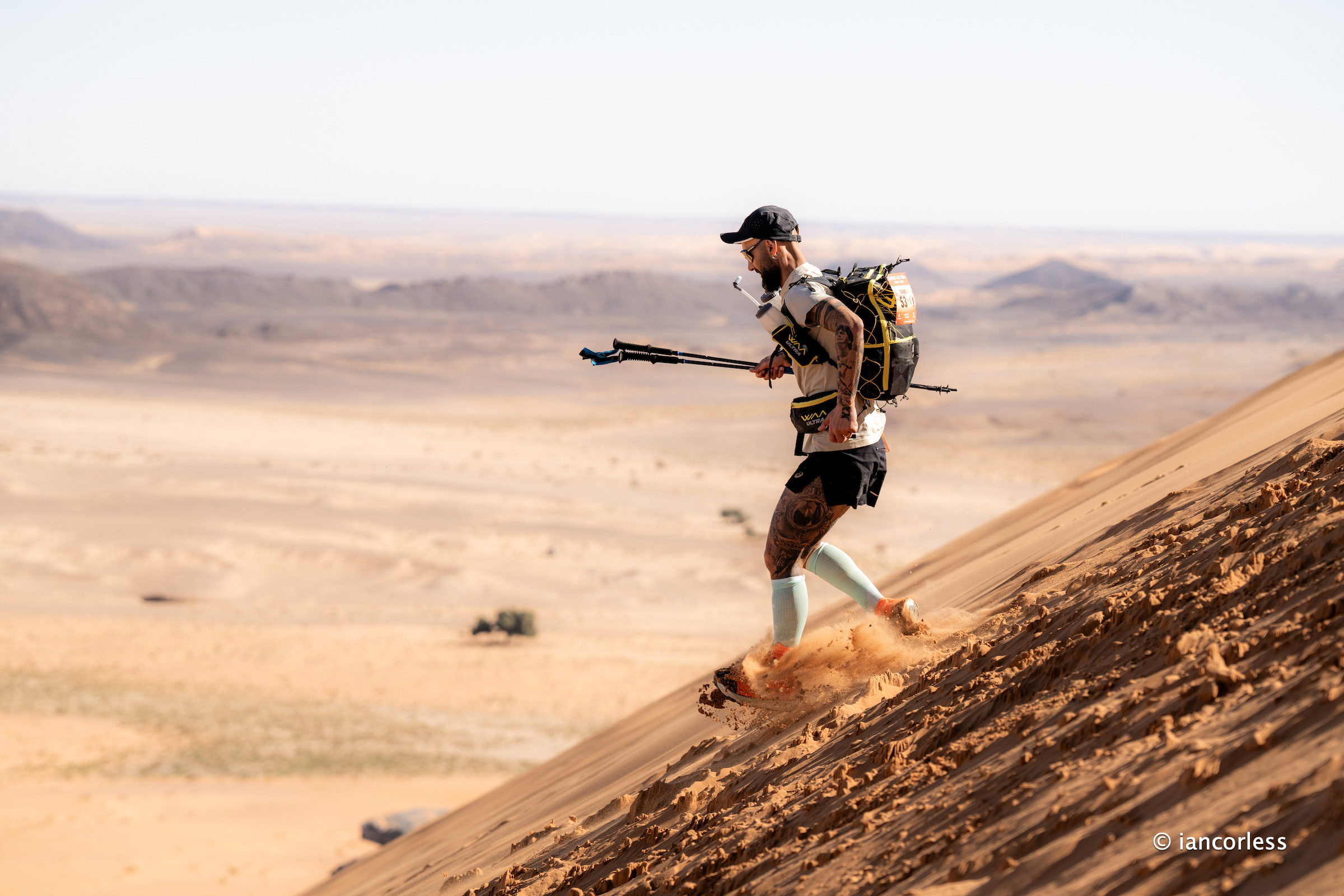
Poles can make a huge difference, but only if you know how to use them properly. Front runners may not need them. Most people benefit from them.
Learn to walk efficiently. Many arrive expecting to run 80 percent and walk 20 percent. In reality, it is often reversed.
Protect your feet from day one.
Take a sleeping mat. In the desert, your job is simple: run, eat, sleep. Good sleep improves recovery. Recovery keeps you in the race.
Stage 3 of the MDS 120 Atlantic Coast wasn’t about pace. It was about heart. Twenty-seven kilometres stood between every runner and the finish. The final stage. The one that decides how the story ends.
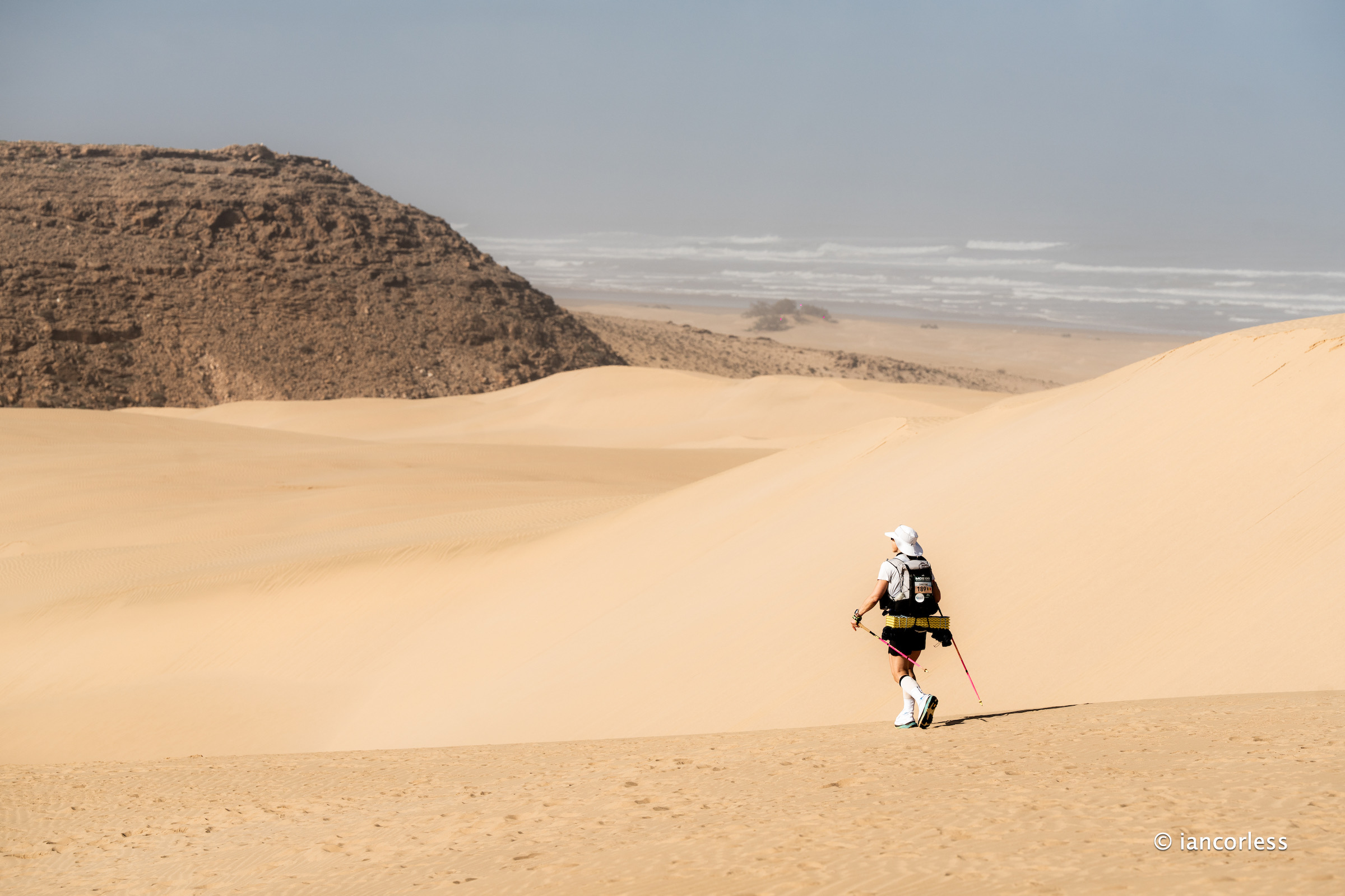
The day opened under a heavy sky. Low cloud hung over the coast, light rain drifting in and out, just enough to cool the skin and sharpen the mood. It felt serious. Proper. A stage that demanded respect.
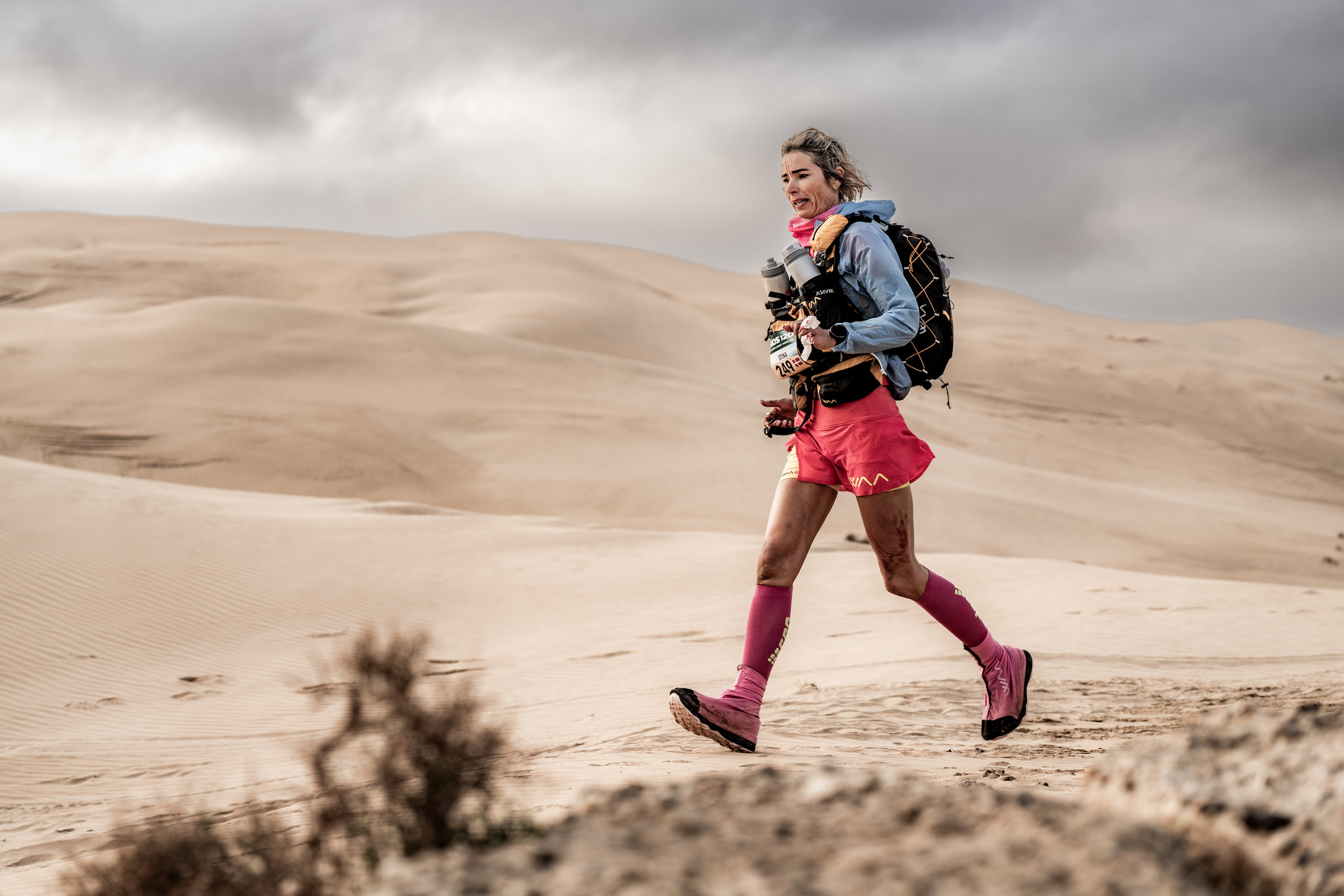
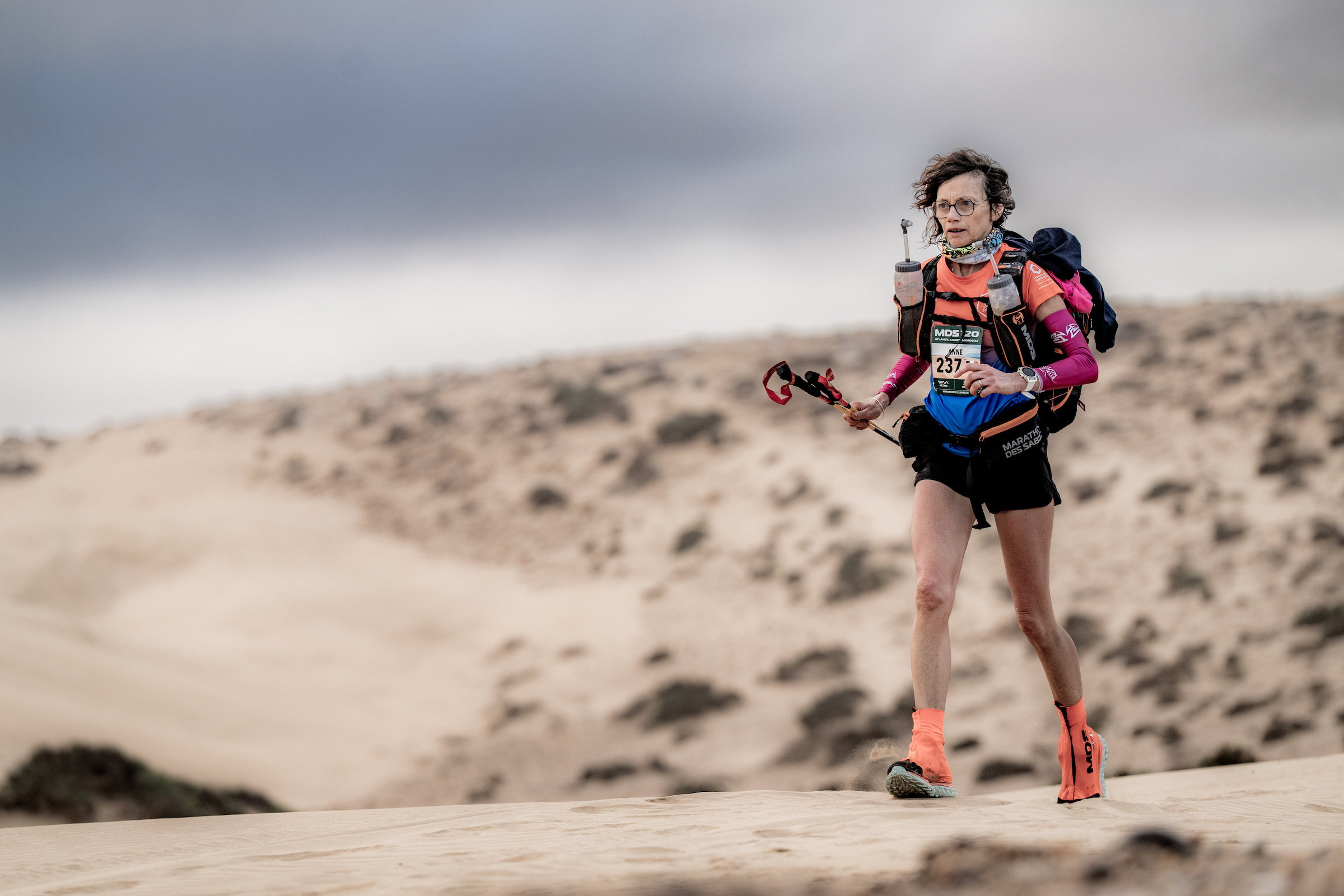
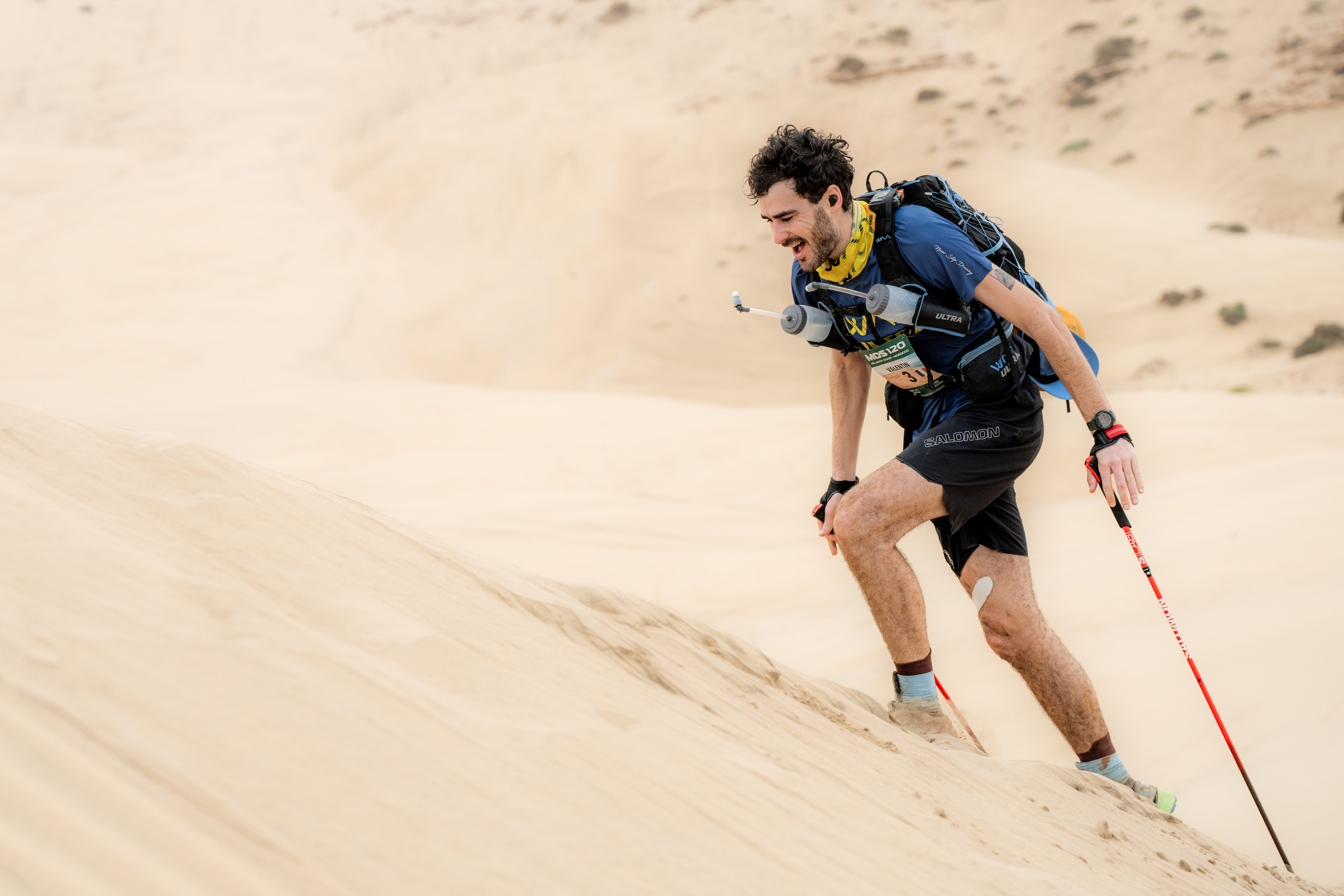
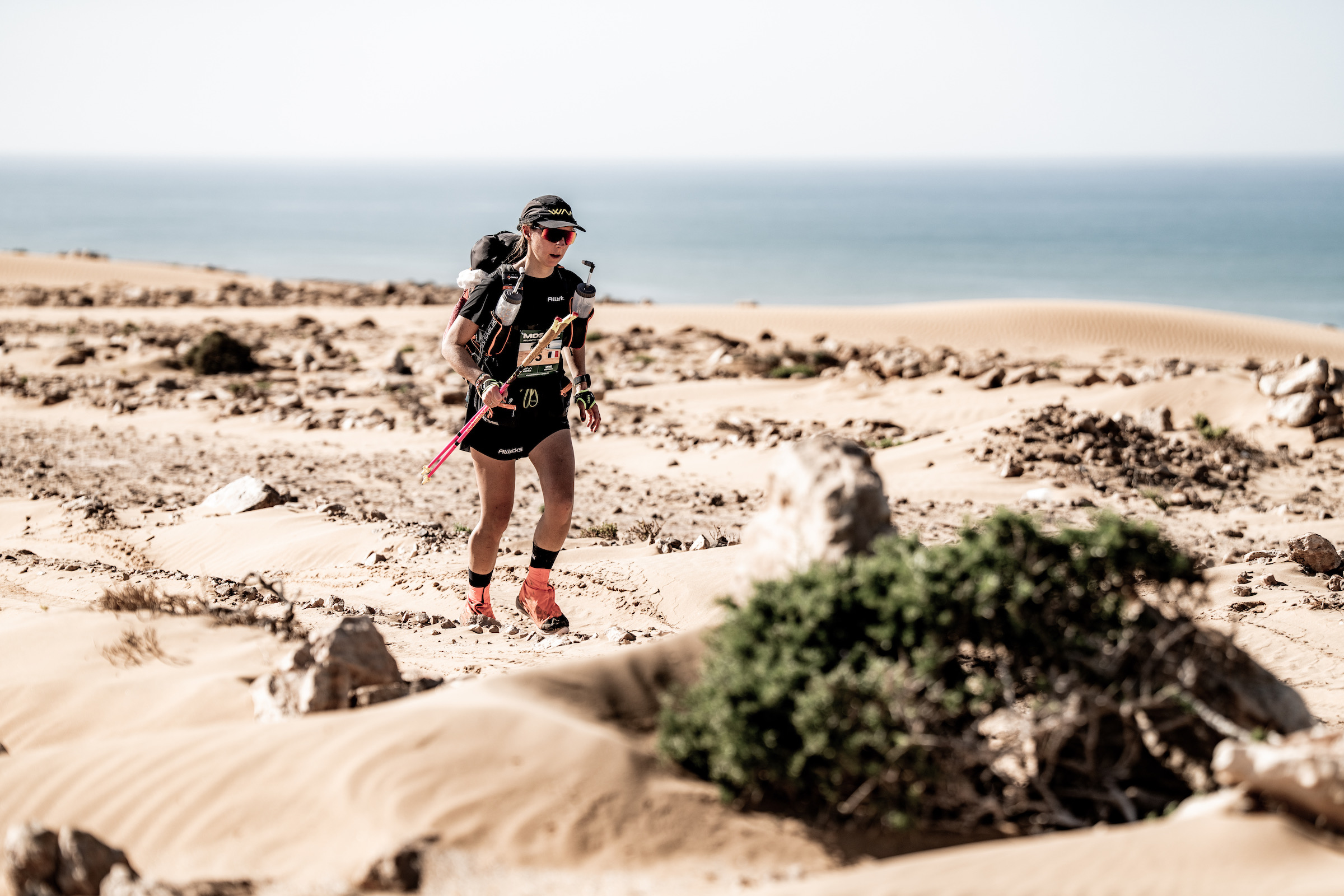
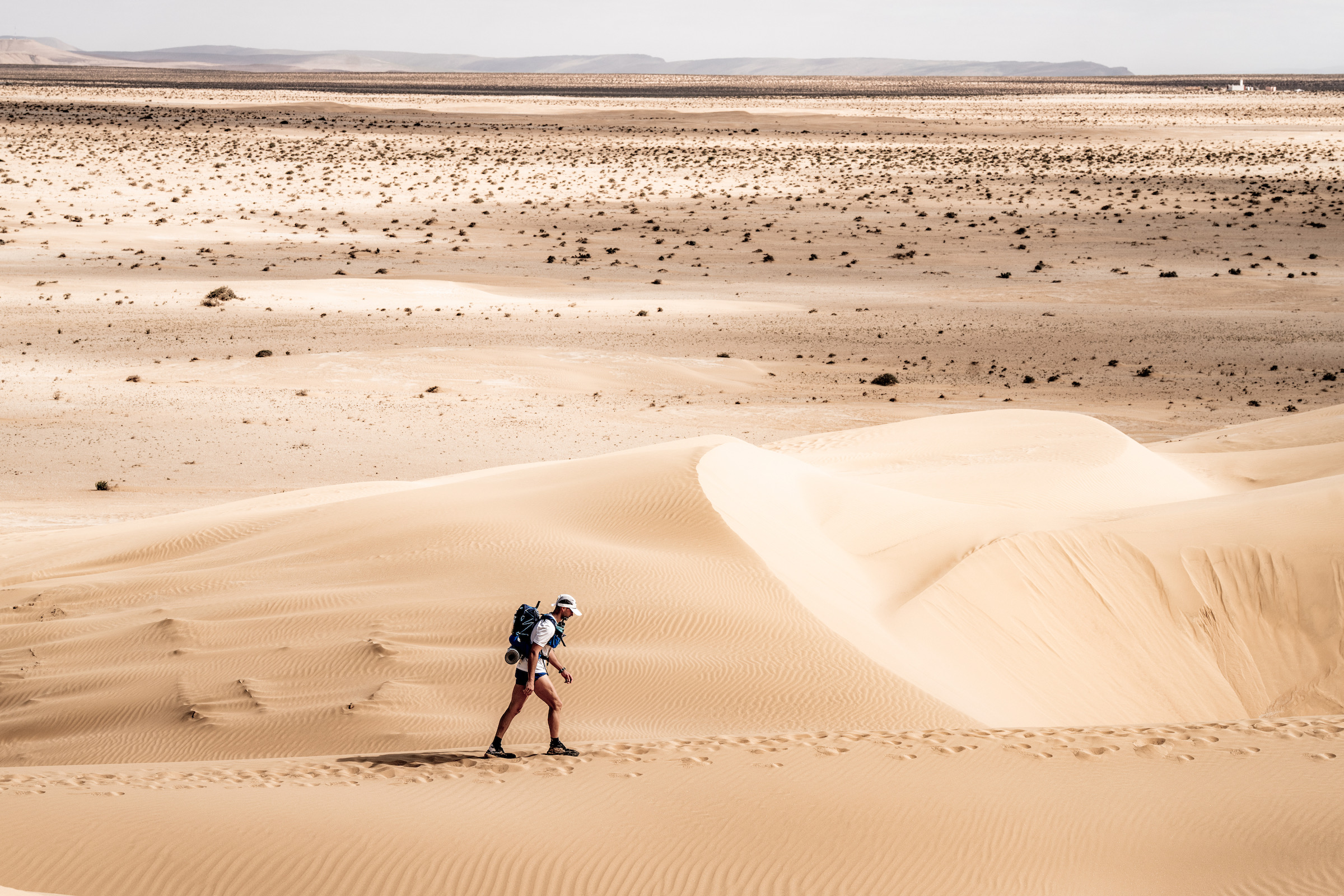
From the first steps, the terrain made its intentions clear. Soft sand soaked up energy. Feet sank, calves burned, rhythm disappeared. Progress came the hard way, one honest stride at a time.
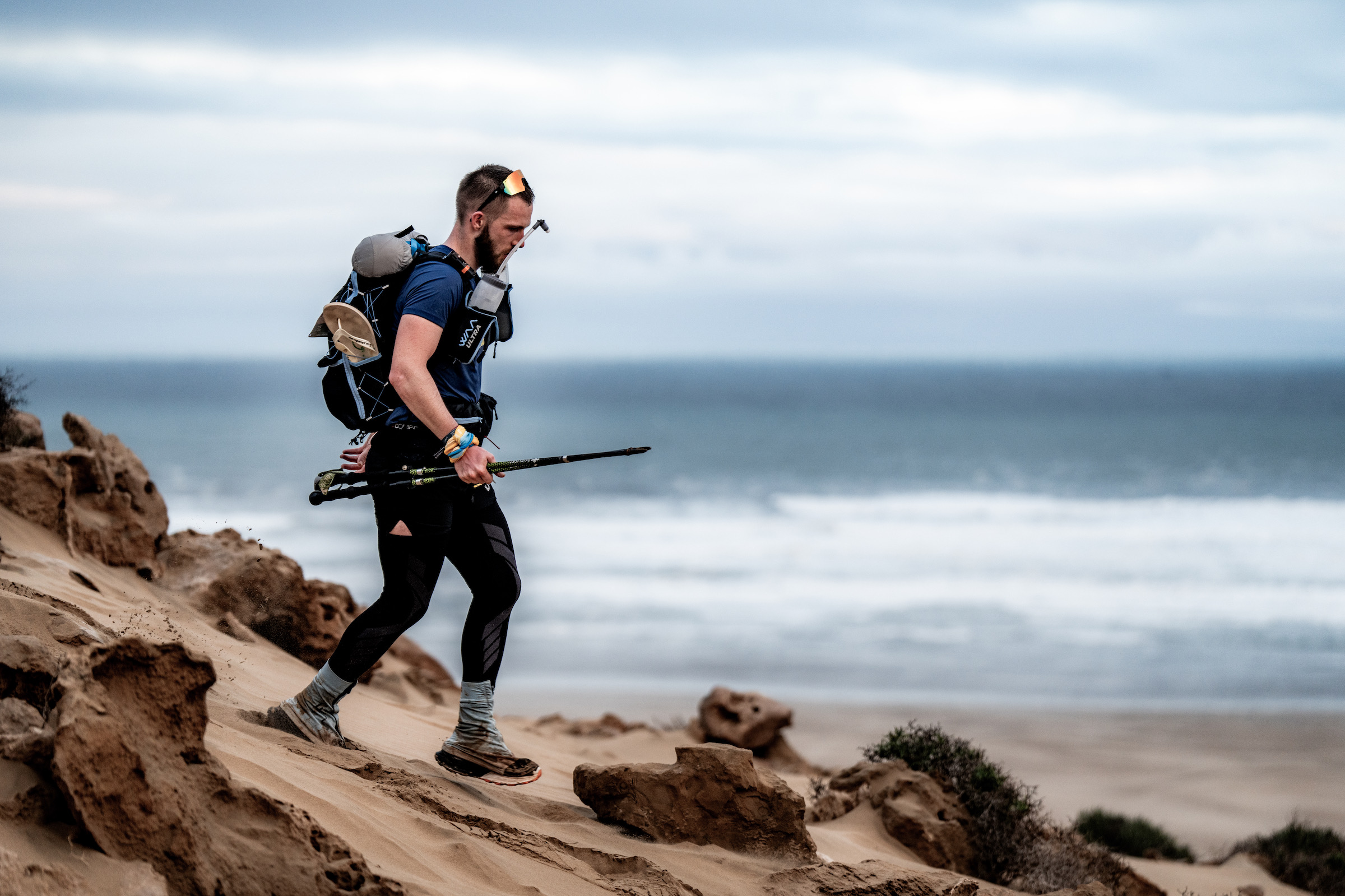
Then there was the Atlantic – Wild. Loud. Unapologetic. The ocean pushed high up the beach, swallowing the firm running line and forcing everyone into deeper, slower sand. The final ten kilometres became a test of patience and grit. Shoes heavy with water. Legs tight. Eyes fixed forward. The sound of the waves constant, relentless, daring you to stop.
Every runner carried their own journey into those final kilometres. Some had 70 kilometres in their legs. Others 100. Many the full 120. Different distances, same effort. Same doubts. Same determination.
And then, finally, the finish.
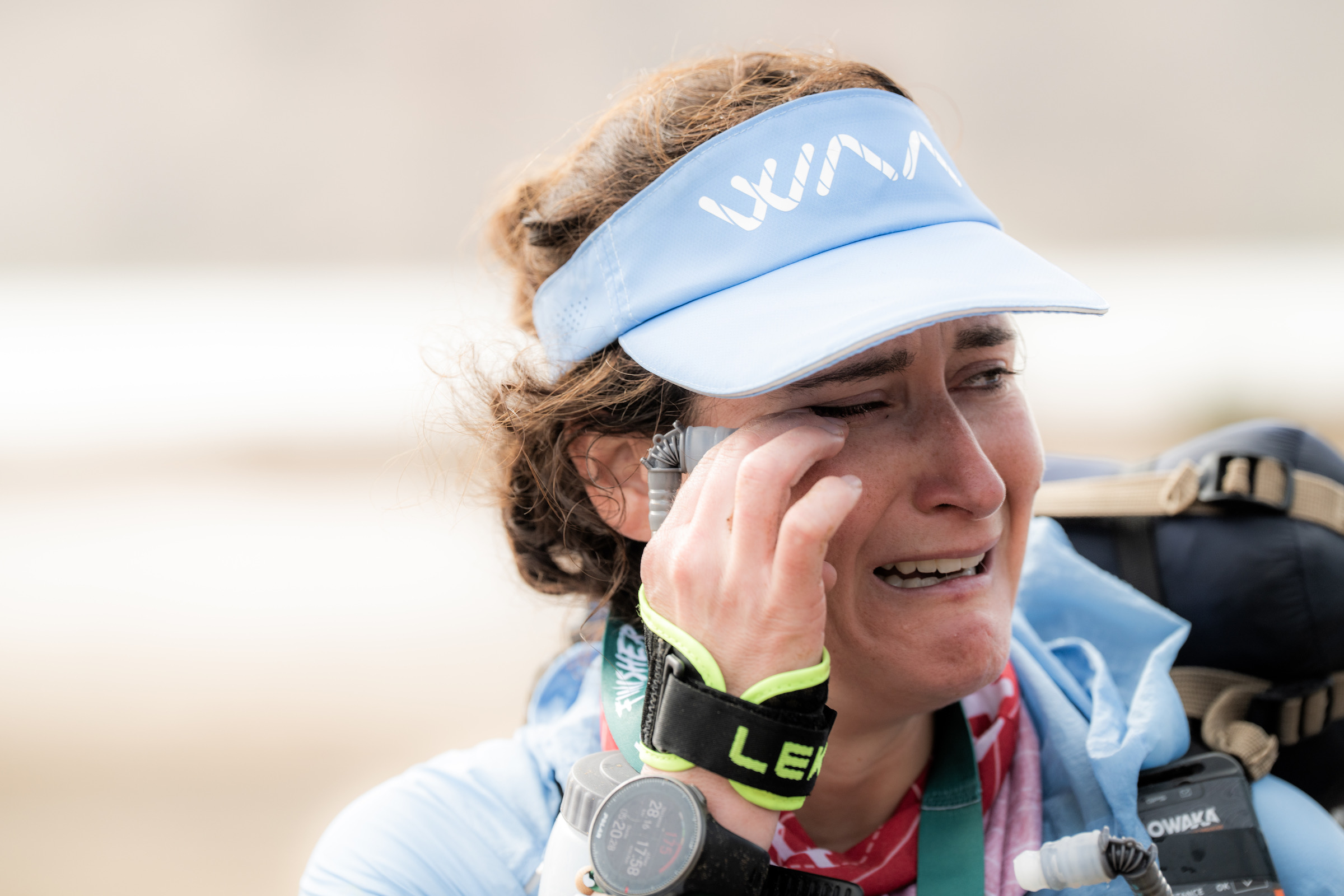
Not a sprint. Not fireworks. Just raw, unfiltered emotion.
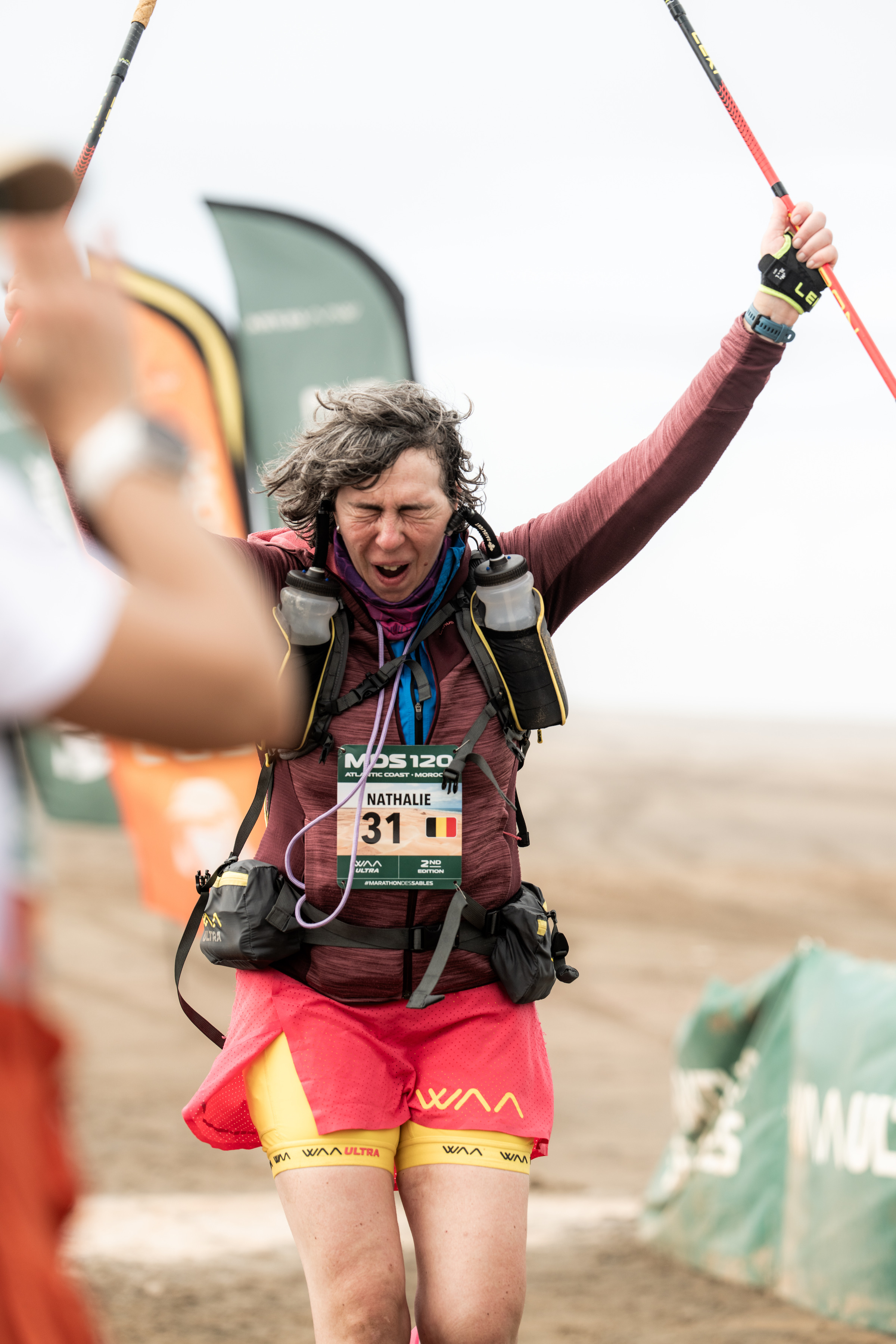
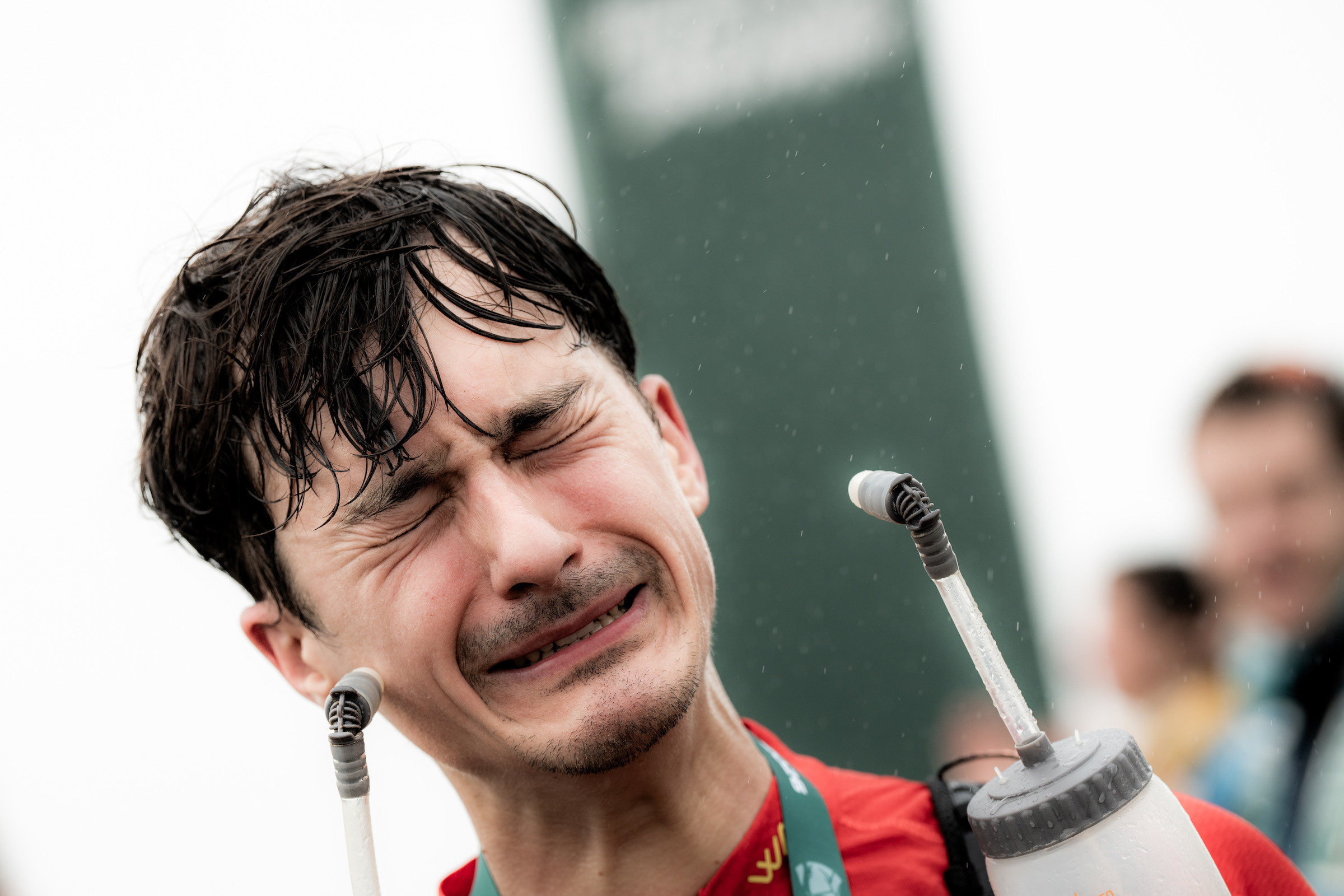
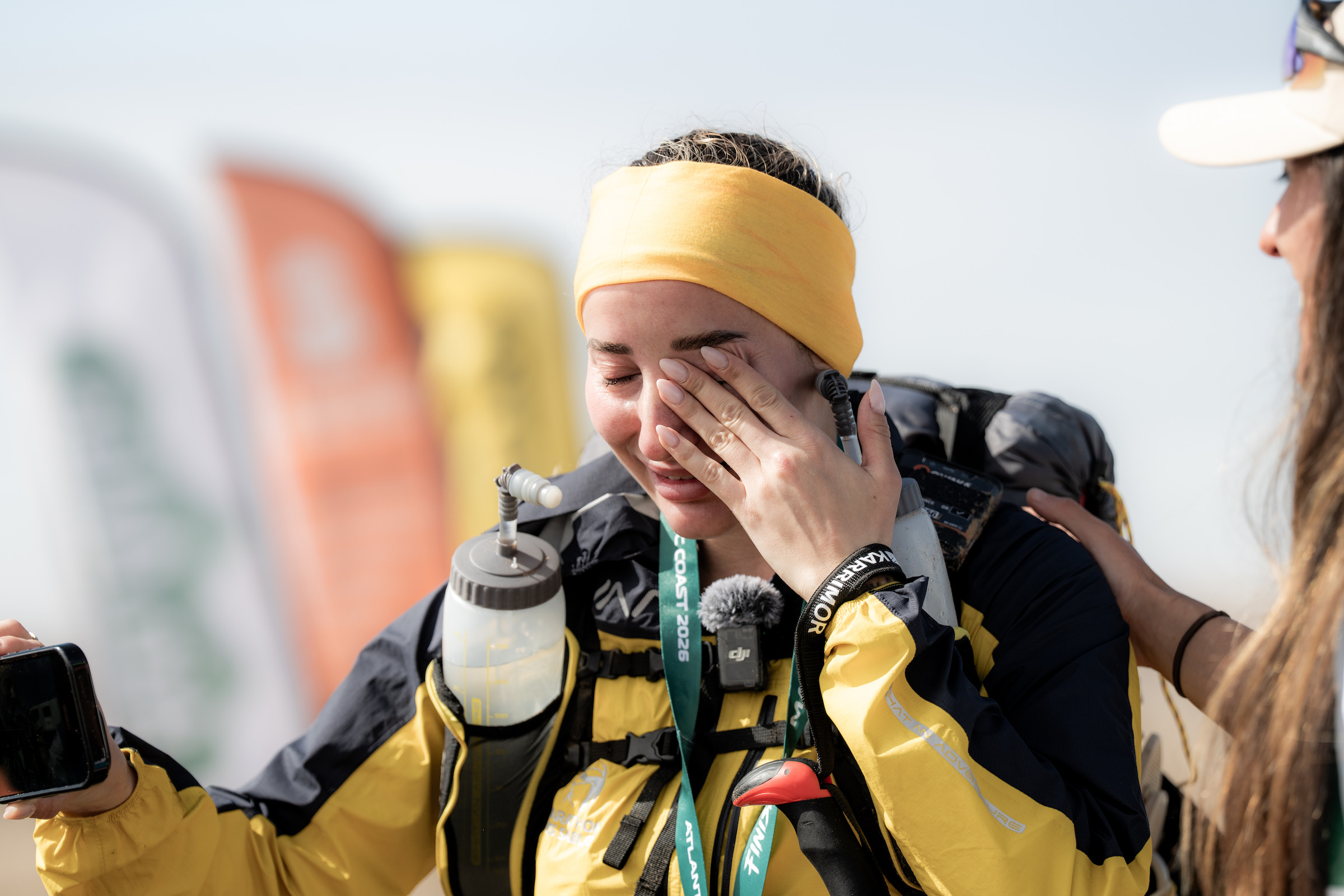
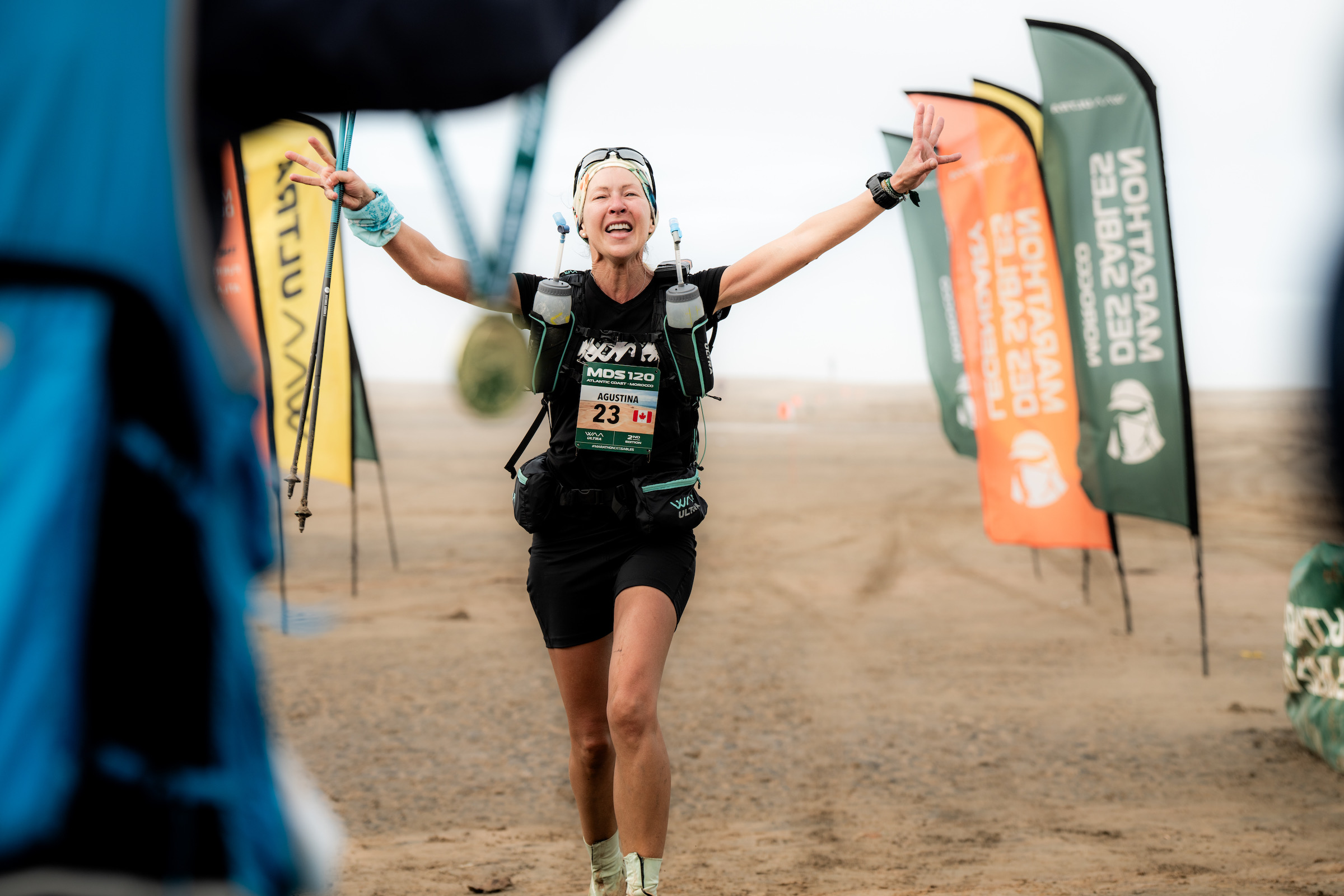
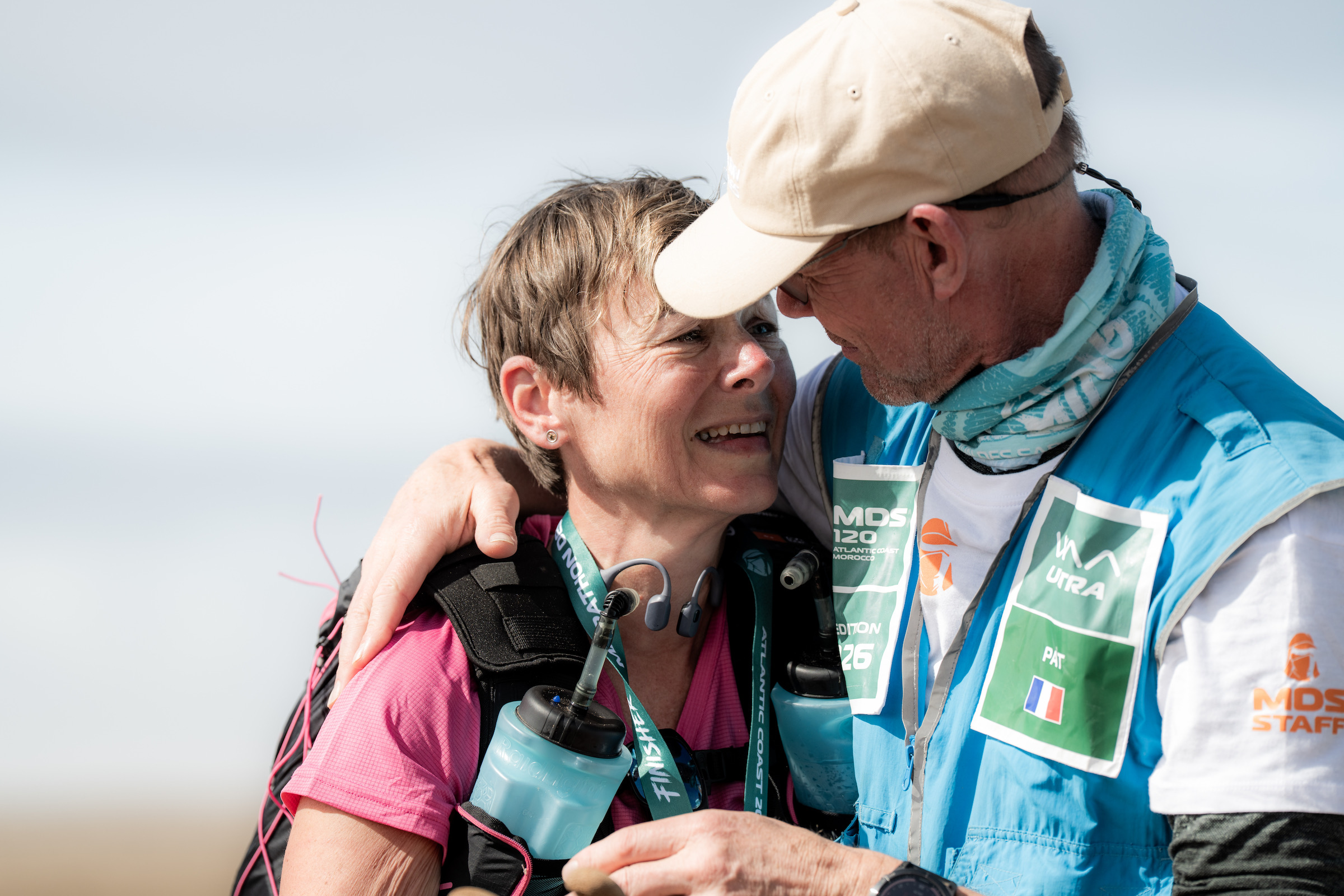
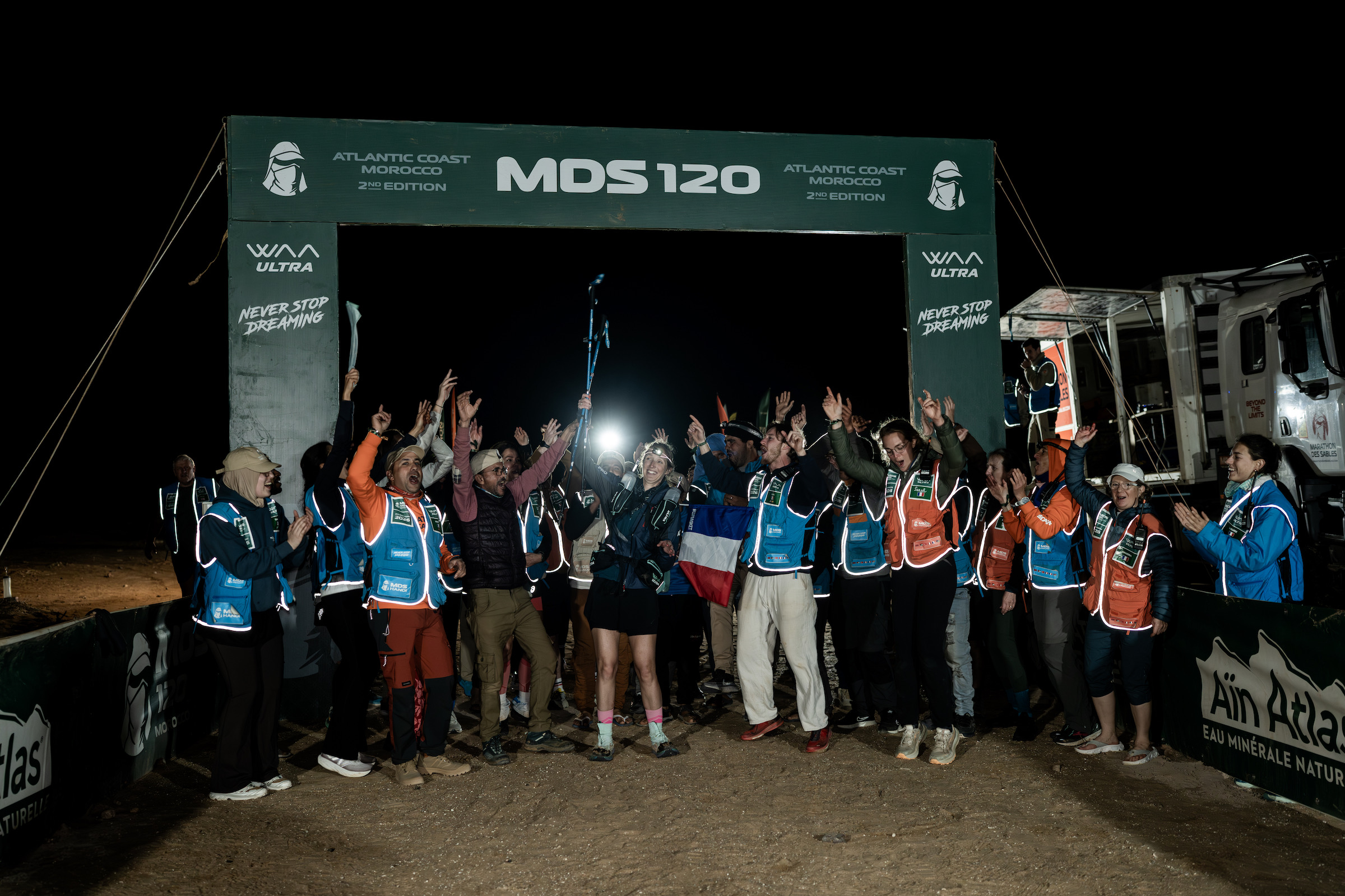
Tears mixed with rain. Smiles broke through exhaustion. Hugs lasted longer than words. That medal, placed gently around tired necks, meant everything. It wasn’t just metal. It was proof. Of discipline. Of resilience. Of promises kept when quitting would have been easier.
This is what the Atlantic Coast gives you.
It gives you challenge. It gives you atmosphere. It gives you moments where the world narrows down to breath, movement, and will. And in return, it gives you something rare. A finish that feels truly earned.
If you’re looking for a race that stays with you long after the sand is washed from your shoes, this is it. The coast is waiting.
Stage 2 of the MDS 120 Atlantic Coast 2026 arrived with options and consequences. Twenty kilometres, forty, or the full sixty. Three distances, one shared truth: today would ask more than legs. It would ask for patience, judgement, and honesty. The course did not care which option was chosen. It simply waited, stretching out along the Atlantic edge, ready to test everyone who stepped onto it.
The morning hinted at uncertainty. Low cloud rolled in from the ocean, cool air brushing faces that had already been scoured by salt and sand. There was a little rain, just enough to darken the ground and sharpen the smell of wet earth. Then the sun broke through, sudden and bright, as if to remind the field that comfort would be temporary and effort unavoidable. It was a day of changeable weather in every sense, and the tone was set early. Adjust. Adapt. Keep moving.
From the first kilometres, the terrain refused to settle into anything predictable. Soft sand swallowed shoes and rhythm, turning simple forward motion into work. Each step demanded attention. Ankles wobbled, calves burned, and breathing grew louder. Then the sand gave way to rocky plateau, hard and uneven underfoot.
The pace changed again, this time to caution. Eyes stayed down, scanning for safe placement. The plateau opened wide, exposing runners to the elements and to themselves. There was nowhere to hide from the wind, the sun, or the thoughts that arrive when the body starts to ask hard questions.
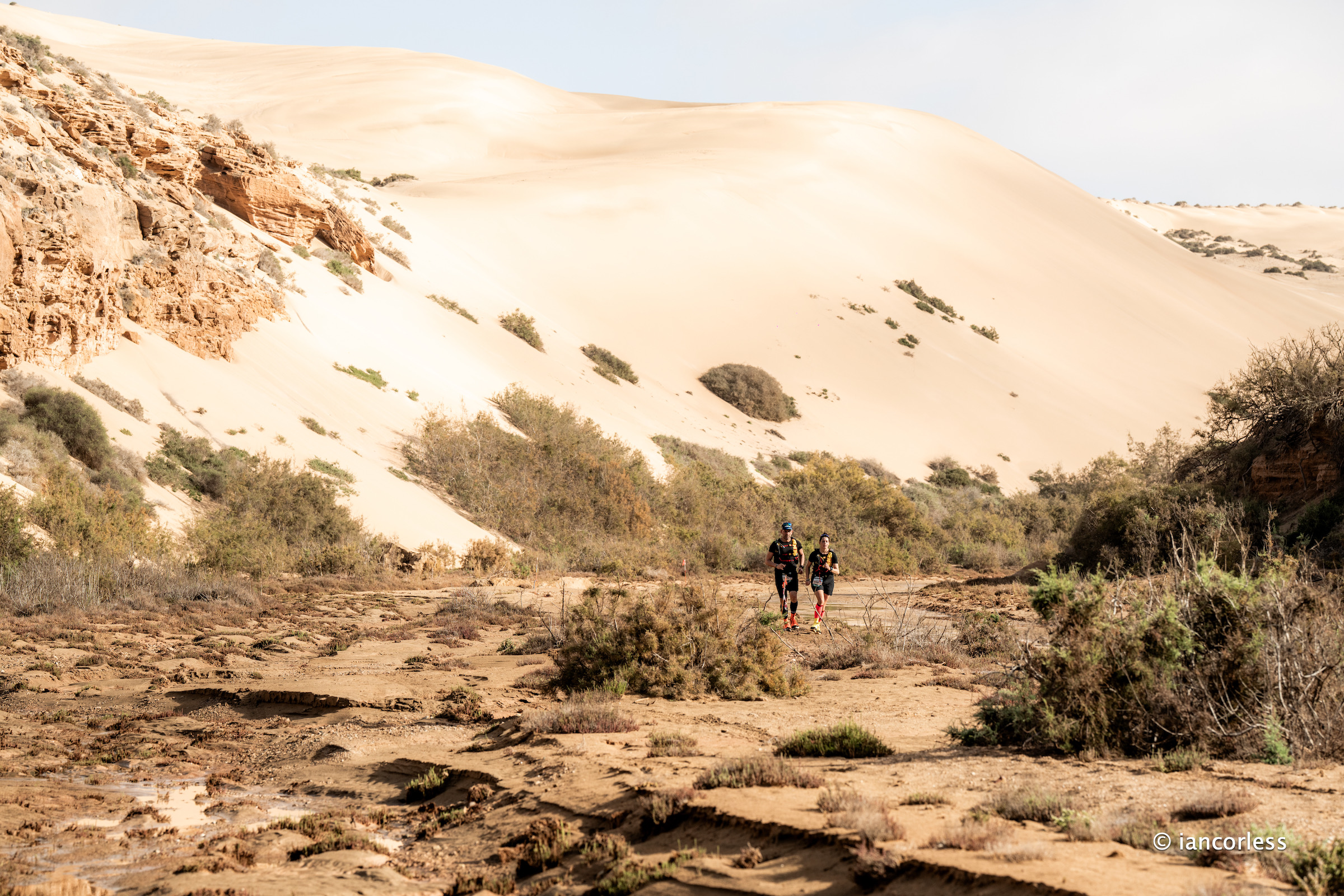
Flooded gorges brought a different challenge. Water pooled where it was least expected, cool and deceptively deep. Shoes filled, socks soaked, and the familiar squelch followed each step on the exit. Some laughed at the absurdity of it. Others grimaced, knowing wet feet mean blisters later. But everyone crossed, because stopping was never really an option. This race does not negotiate.
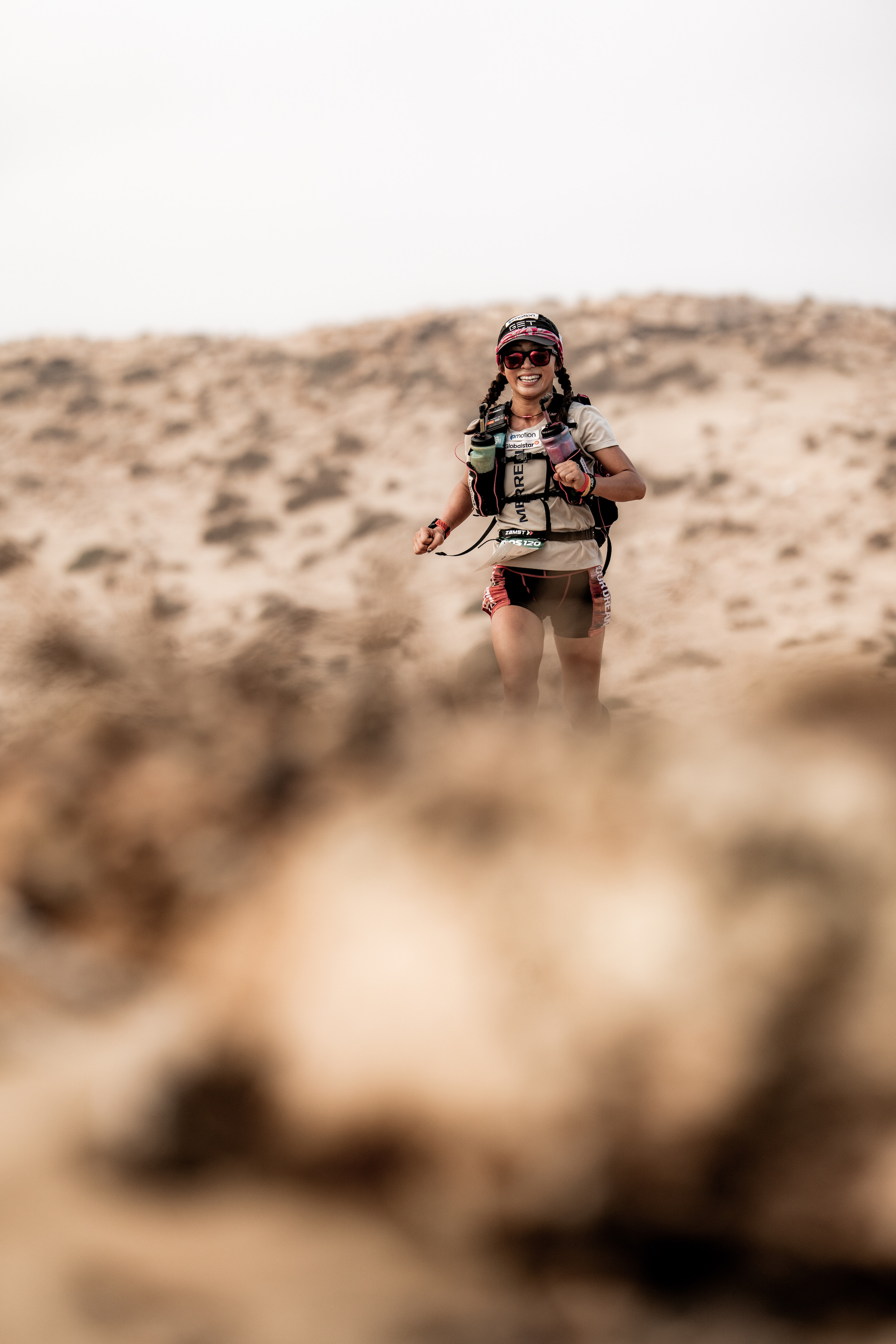
Beyond the gorges, the course stretched into wide open terrain. The Atlantic Ocean appeared and disappeared, sometimes a distant shimmer, sometimes close enough to hear. The scale of the landscape made individuals feel small, but also free. Lines of colour moved slowly across the land as runners spread out, each locked into their own effort. This was where time began to behave strangely. Minutes felt long. Hours blurred. The distance chosen mattered less than the simple act of continuing.
The final stretch ran flat and true, parallel to the ocean. It should have felt easier. On paper, it was. In reality, it was where fatigue spoke loudest. The body was already empty. The mind had been negotiating for kilometres. Yet the finish lay ahead, invisible at first, then slowly, mercifully, real. The ocean rolled on, indifferent and steady, while the race reached its quiet climax.
The finish line became a gathering point for everything this day had taken and given. It was a welcome sight, one that drew out raw emotion without apology. Tears fell freely, sometimes before the line, sometimes after. Laughter broke out in short bursts, the kind that comes when tension finally releases. There was joy, genuine and earned, mixed with exhaustion that sat deep in the bones. Some crossed upright and strong. Others bent double, hands on knees, searching for breath. All were changed.
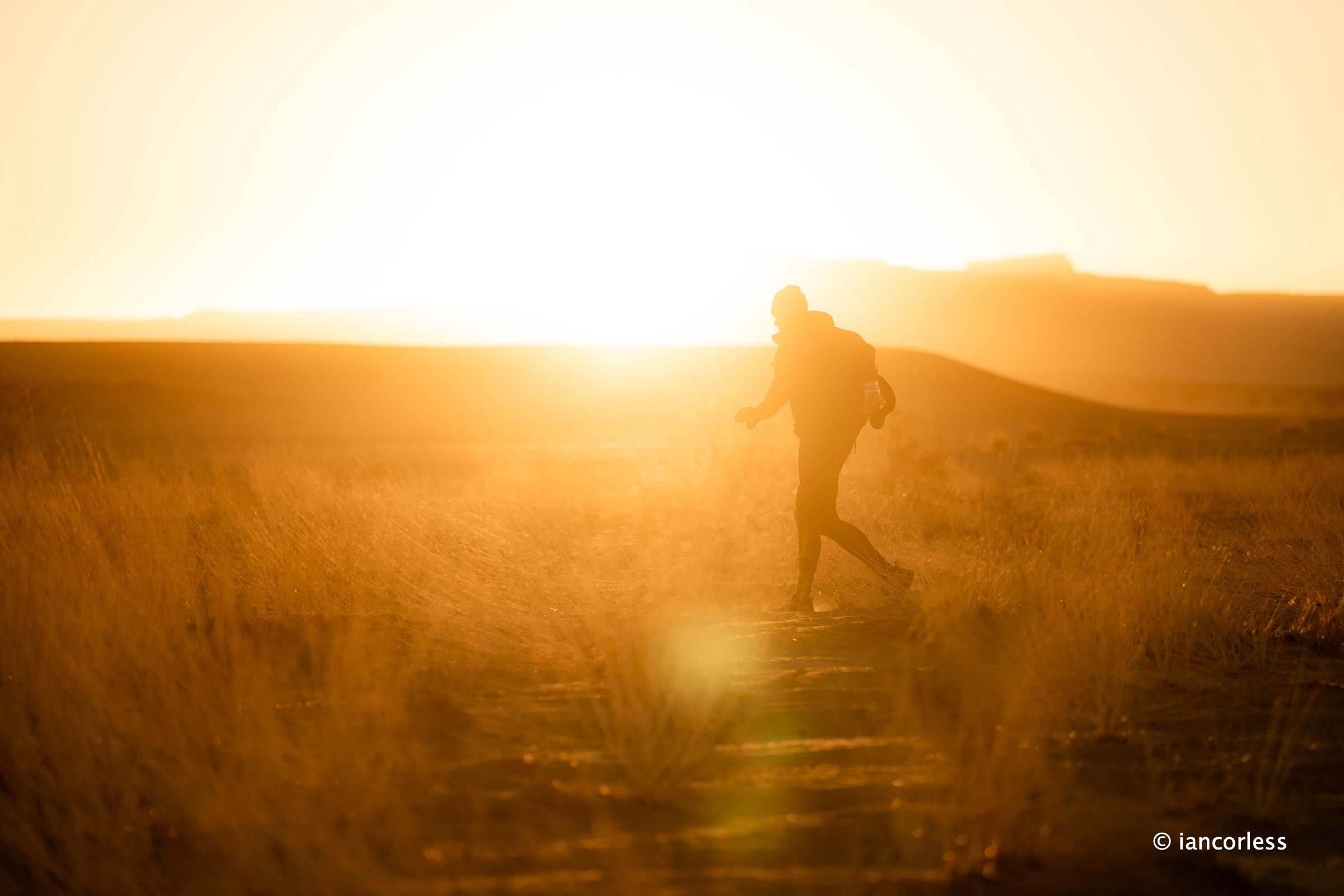
The day stretched long into the night. Headlamps flickered in the distance as darkness closed in. Volunteers stayed wrapped in layers, voices steady, encouragement unwavering. The clock kept moving. And then, close to 2300 hours, the final finisher crossed the line. There was no rush. No hurry to be anywhere else. Just a moment held for someone who refused to stop. Applause cut through the night, not loud, but meaningful. This, too, mattered.
Stage 2 was not about speed. It was about choice and consequence, about learning the difference between discomfort and danger, about discovering how much is left when you think there is nothing. Today, participants found out who they are and why they are here. Some answers were quiet. Others arrived with force. But they arrived all the same.
There were moments of doubt, of frustration, of anger at the sand, the stones, the weather, the distance. There were also moments of clarity, when effort narrowed the world down to the essentials. Step. Breathe. Drink. Keep going. In those moments, the noise of everyday life fell away. What remained was simple and honest.
As the camp settles and the body begins to cool, tomorrow offers something rare in this environment. A day of rest. A pause. Time to recharge and recover. Muscles will stiffen, feet will tell their stories, and minds will replay the day in fragments. There will be care, conversation, and quiet pride. Because Stage 2 demanded respect, and those who met it earned that rest.
The Atlantic continues to roll in the dark. The course waits. And the field, changed by today, will rise again when it is time.
Stage 1 of the 2nd edition of the MDS 120 Atlantic Coast marked a powerful and inspiring beginning to the adventure in Morocco, where the desert meets the Atlantic Ocean. A field of 250 participants set out on this opening day, with an impressive 80 percent taking on their very first MDS experience. Just under half of the runners were women, and the age range spoke volumes about the inclusive spirit of the race, from the youngest at 19 years old to the oldest at 78. With 30 nationalities represented and the support of 147 dedicated staff, the event immediately felt global, vibrant, and alive.
This first stage covered 23km, with 343m of elevation gain, following a point-to-point route along the Atlantic coast. Checkpoints were placed at 9.1km and 17km, guiding runners through a constantly changing landscape.
The terrain offered little rhythm. Soft sand drained energy, dry river beds broke momentum, and rocky plateaus demanded focus and careful footwork. While the elevation profile looked modest on paper, the reality underfoot made it a demanding day from start to finish. The sand, in particular, turned every step into a test of patience and strength.
The challenge began long before the start line. A 2am wake-up, followed by a 3am departure and a lengthy transfer, asked a lot of the runners before dawn had even broken. Yet spirits remained high. These athletes were fully self-sufficient, carrying everything they needed on their backs, managing their nutrition, hydration, and equipment as they moved across the course. It was a true test of endurance, organisation, and resilience.
Despite the early start, the travel, and the relentless terrain, the performance across the field was outstanding. Every runner dug deep, and the final participant crossed the finish line well within the cut-off time, greeted with applause and encouragement.
As the sun dipped and the day drew to a close, the runners settled in for their first night under the stars on the Atlantic coast. Tired legs, sandy shoes, and quiet smiles told the story of a hard-earned first stage completed. It was a demanding, memorable opening chapter, and a clear signal that the MDS 120 Atlantic Coast is as much about heart and determination as it is about distance.
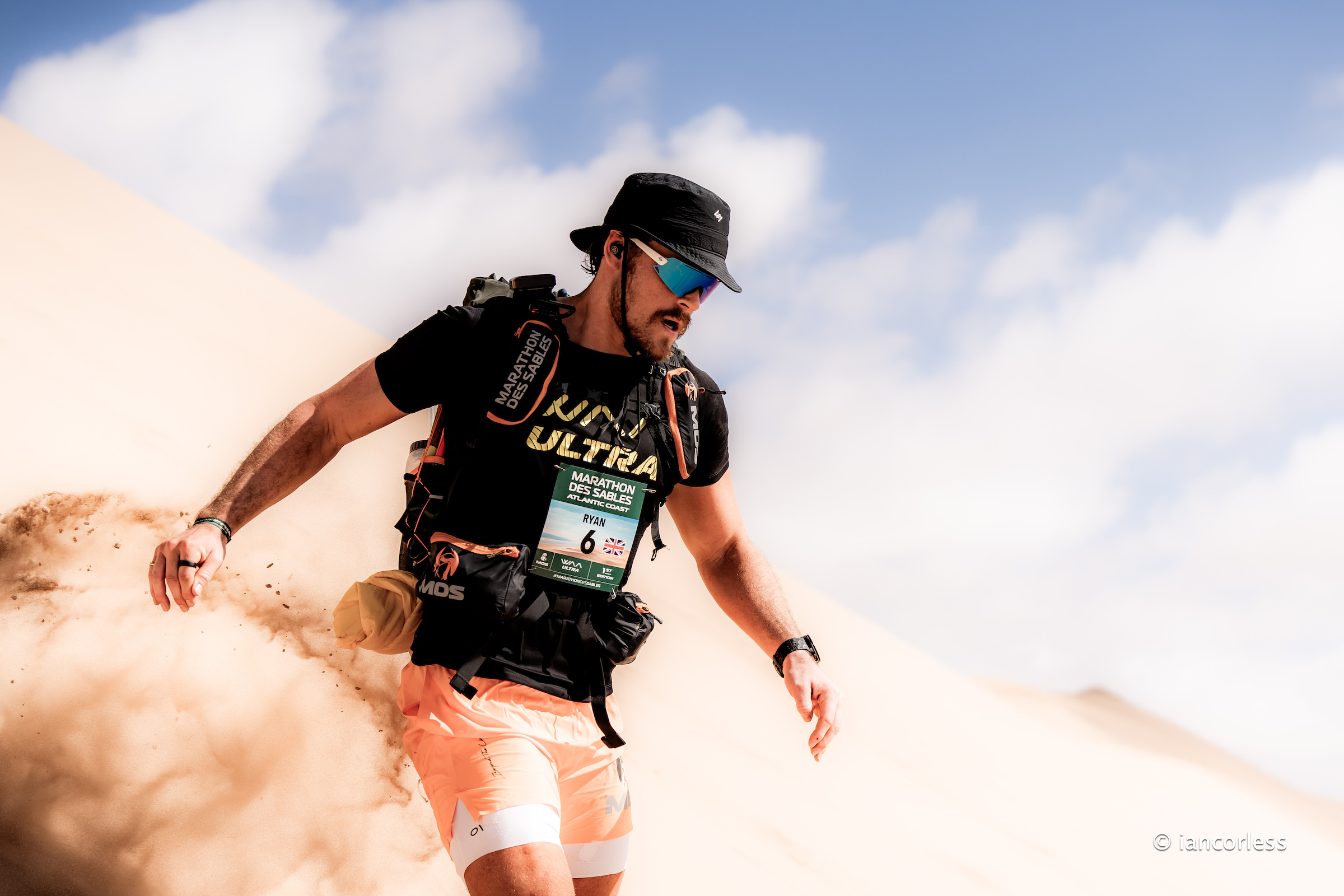
Forty years after the first chapter of desert racing was written, a new one opened in the Merzouga region of Morocco with the inaugural edition of MDS ULTRA. This was not a return to the past, an acknowledgement of history but also a clear statement of intent – one race, two distances, no stages and no reset. Just a single, continuous effort across the desert, with runners committing to either 100 kilometres or 100 miles within a strict 40-hour time limit.
Set against the wide, open landscapes surrounding Merzouga, the race introduced a different way to experience the Sahara. Held in winter, the conditions reshaped the challenge. Days offered pleasant, manageable heat that allowed athletes to settle into rhythm and pace. Nights told a different story. Temperatures dropped fast, the cold biting through fatigue, turning the long hours of darkness into a test of preparation, focus, and resolve. Managing layers, energy, and morale became as important as managing speed.
The course reinforced a stripped-back philosophy. Predominantly flat and designed with less soft sand, for some, it encouraged sustained running, for others, the distance and challenge required survival marching. But flat did not mean easy. Over such distances, the lack of variety became its own challenge. Every mistake was amplified, every slowdown hard to recover from. The desert demanded patience and discipline, hour after hour, the cold nights bringing the greatest challenge.
On the ground, the scale of the operation matched the ambition of the format. Five life bases were positioned across the route offering a place to sleep, food, a warm fire and incredible support. Nine water stations filled the gaps in-between and a team of 147 staff working across logistics, medical care, safety, and race control made the whole thing tick. Organisation was tight, communication clear, and participant safety central throughout.
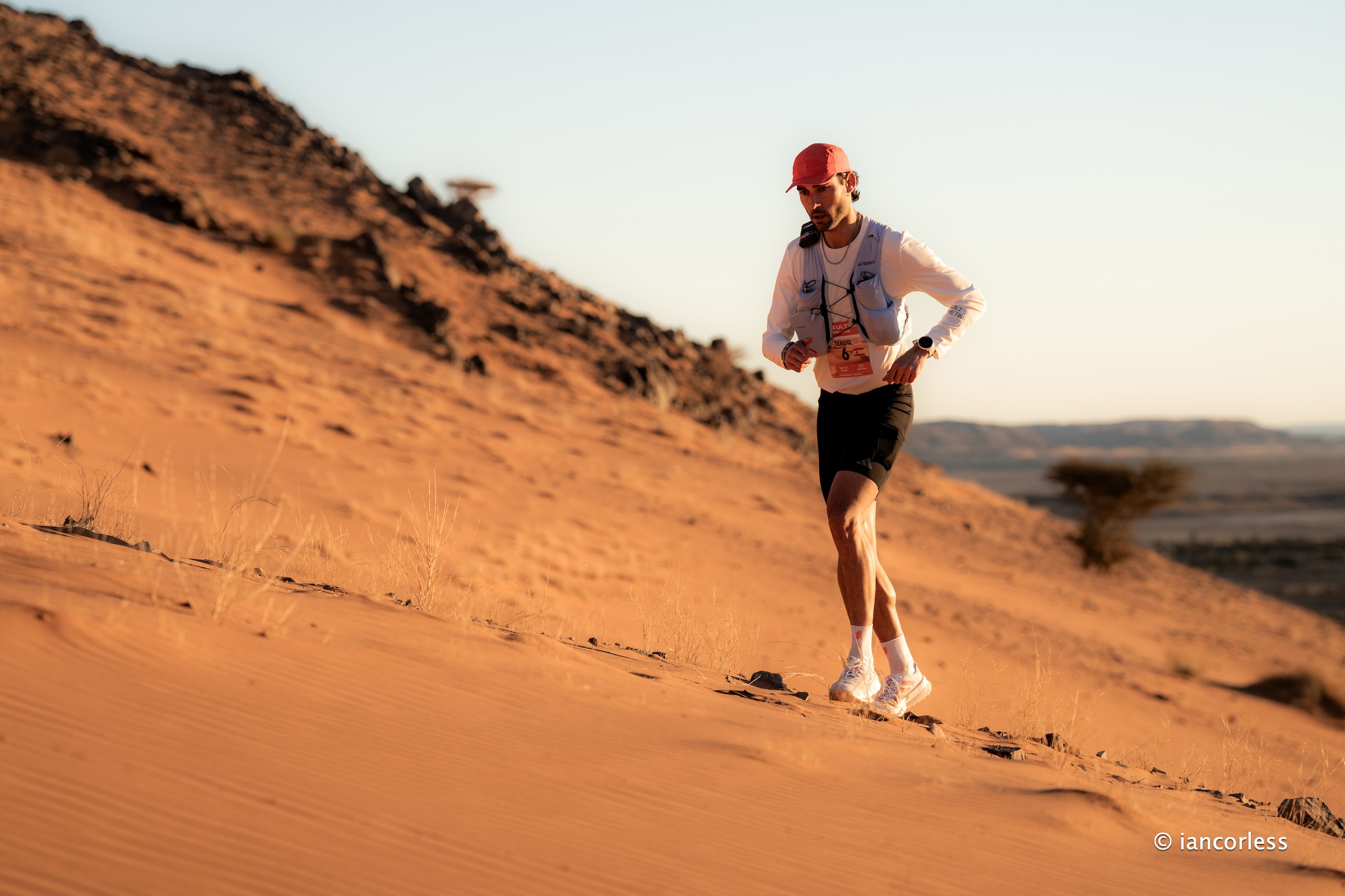
The racing itself gave the event its heartbeat. Athletes from 30 countries lined up, bringing an international energy to the desert, with women making up 30 percent of the field. What followed were two races and countless individual battles. In the 100-mile event, Martin Gallardo charged ahead in the early stages of the race, but after 40km’s, Maryline Nakache delivered a standout performance, coming from behind taking the outright win. In the 100-kilometre race, Adriana Moser claimed second place overall behind Sergio Turull, Francesca Canepa placing third – a podium underlining the depth and quality of competition across both distances and the dominance of women in the ultra distance.
But beyond the podiums, MDS ULTRA was 40-hours of stories. The glory of victory played out at the front, while deeper in the field some runners faced the agony of a DNF – forced to stop by injury, exhaustion, or the quiet accumulation of small failures.
For others, the reward was simpler and just as powerful: survival. Reaching the finish after a single, unbroken push through heat, cold, daylight, and darkness.
This first edition of MDS ULTRA established its own identity – it honoured Morocco’s and the MDS desert racing heritage without trying to recreate it. Fast but unforgiving, simple in concept and demanding in execution, it proved that even after four decades, the desert still has new ways to test those who dare to cross it.
A milestone anniversary, new formats, familiar classics, and a season that stretches from the Sahara to the Alps. Some years feel bigger than others. In 2026, the calendar alone tells you this will be one of those years for Marathon des Sables.
Forty editions after its beginnings in the Moroccan desert, Marathon des Sables has grown into a family of events that test endurance in different ways, across different landscapes, and for very different runners. Yet the heart of MDS remains the same. Self-sufficiency, shared hardship, and the quiet satisfaction that comes from moving forward when stopping would be easier.
January opens with something new and bold: MDS Ultra. Two distances. Two very clear challenges. A 100km option for runners ready to push beyond the classic stage format, and a 100-mile race for those who want to see how deep the well really goes.
Photo by Ian Corless
An opening act designed to grab attention. Long distances, sustained effort, and the mental strain that only ultra racing can deliver. For many, it will be the first real test of their winter training. For others, it will be the centrepiece of their season. What matters most is what MDS Ultra represents – It signals evolution not revolution. MDS is not standing still, even as it celebrates its past.
Photo by Ian Corless
Before January ends, the focus shifts west to the ocean for MDS 120 Atlantic Coast. Where dunes once dominated the horizon, runners now deal with open beaches, shifting sand, and the constant presence of the sea. The Atlantic Coast event has its own rhythm. Wind can play a bigger role. Footing changes by the kilometre. Temperatures can vary greatly, and yes, rain may be present? Still self-supported, still demanding, but in a way that surprises many first-timers. By the time the final runners cross the line, January has already delivered two very different expressions of what Marathon des Sables can be.
February and March bring a noticeable change of pace. No race numbers. No finish lines. Instead, preparation. The MDS team turns its attention fully toward the centrepiece of the year: the 40th edition of MDS Legendary. Four decades after the first runners set off into the Sahara, this anniversary edition carries weight. Not just for the organisation, but for the community that has grown around it.
Photo by Ian Corless
Behind the scenes, logistics are refined, routes considered, and details checked and checked again. The Legendary event is not just another race, it is a reference point for stage racing, for many, a rites of passage, and in 2026, it will also be a celebration of everything Marathon des Sables has become.
Once the Legendary edition is complete, the calendar opens up again, and the global nature of MDS takes centre stage.
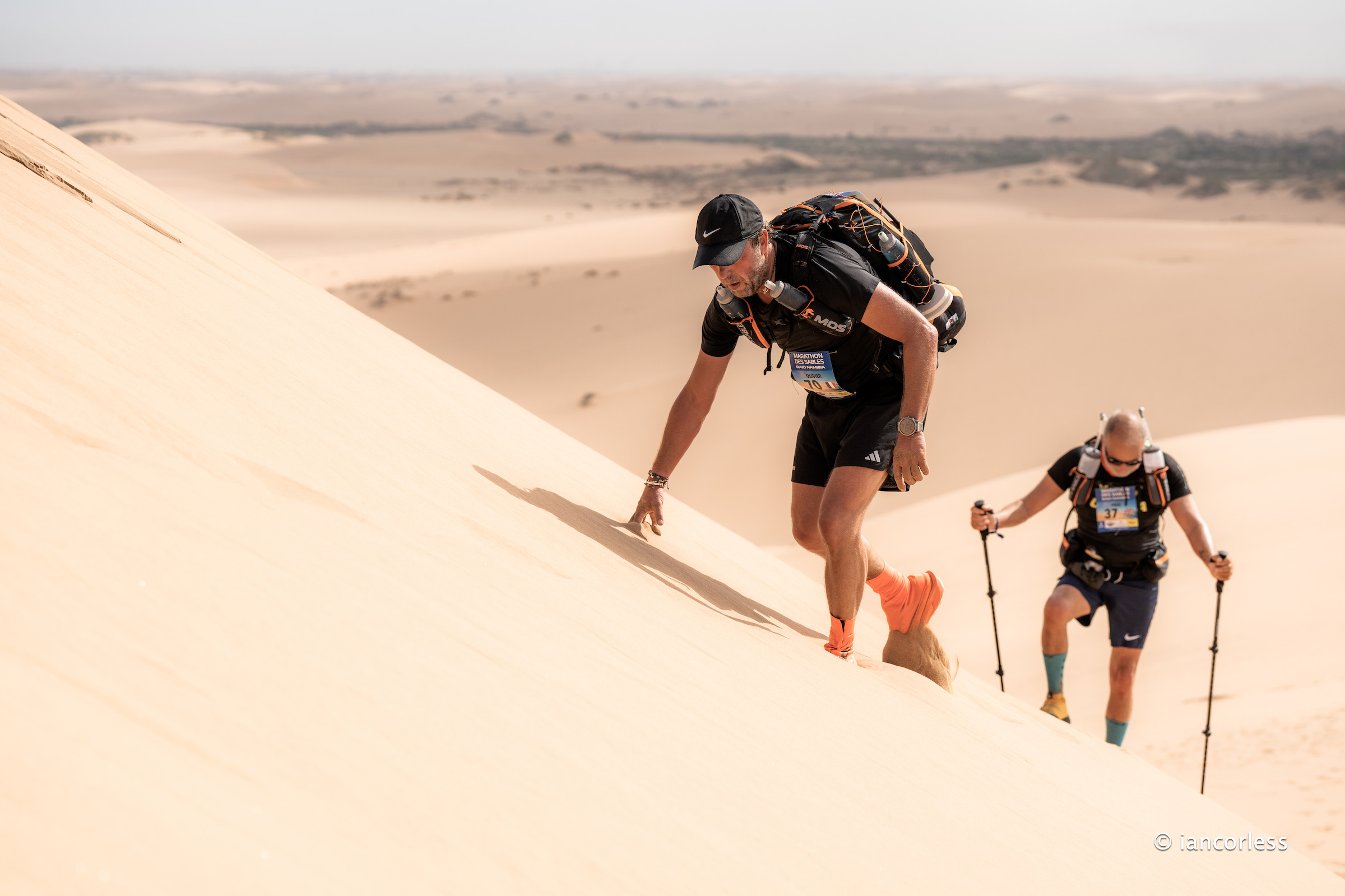
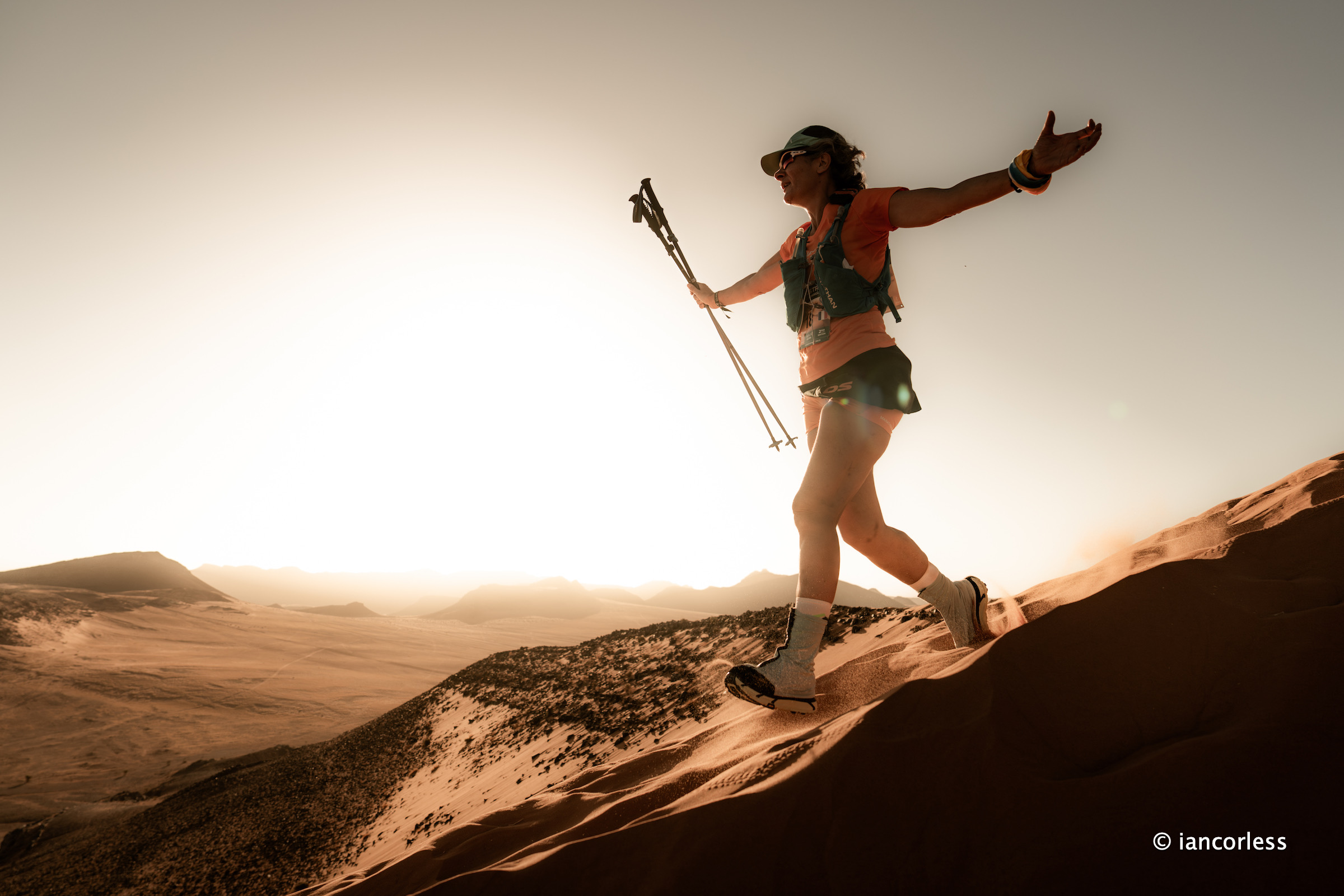
MDS Raid Namibia delivers raw beauty and isolation in one of Africa’s most striking landscapes. Namibia’s vast spaces, sharp light, and unforgiving terrain strip things back to basics. This is running in its purest form, where the environment sets the rules. A unique event as teams of two challenge a more stripped back and raw experience.
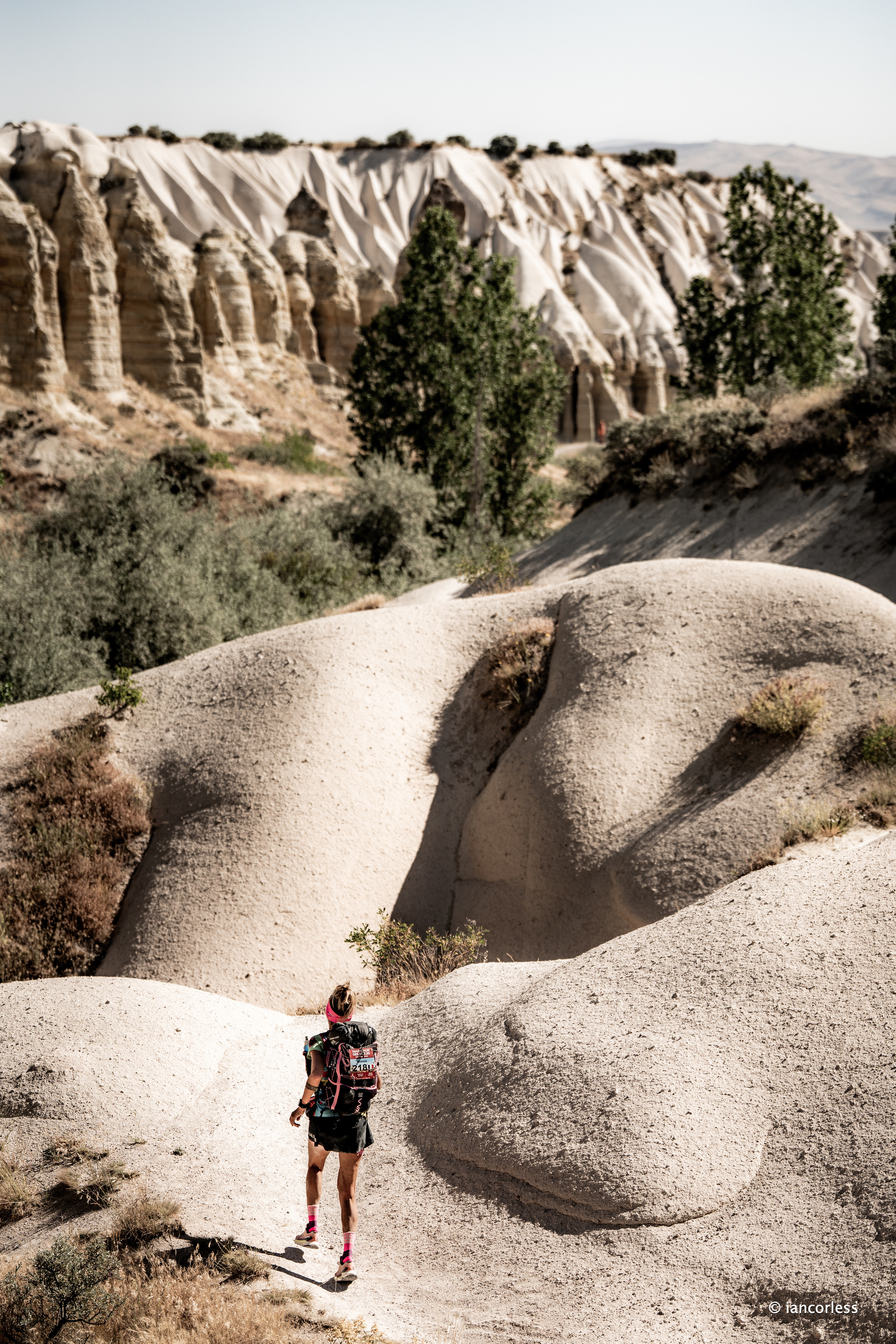
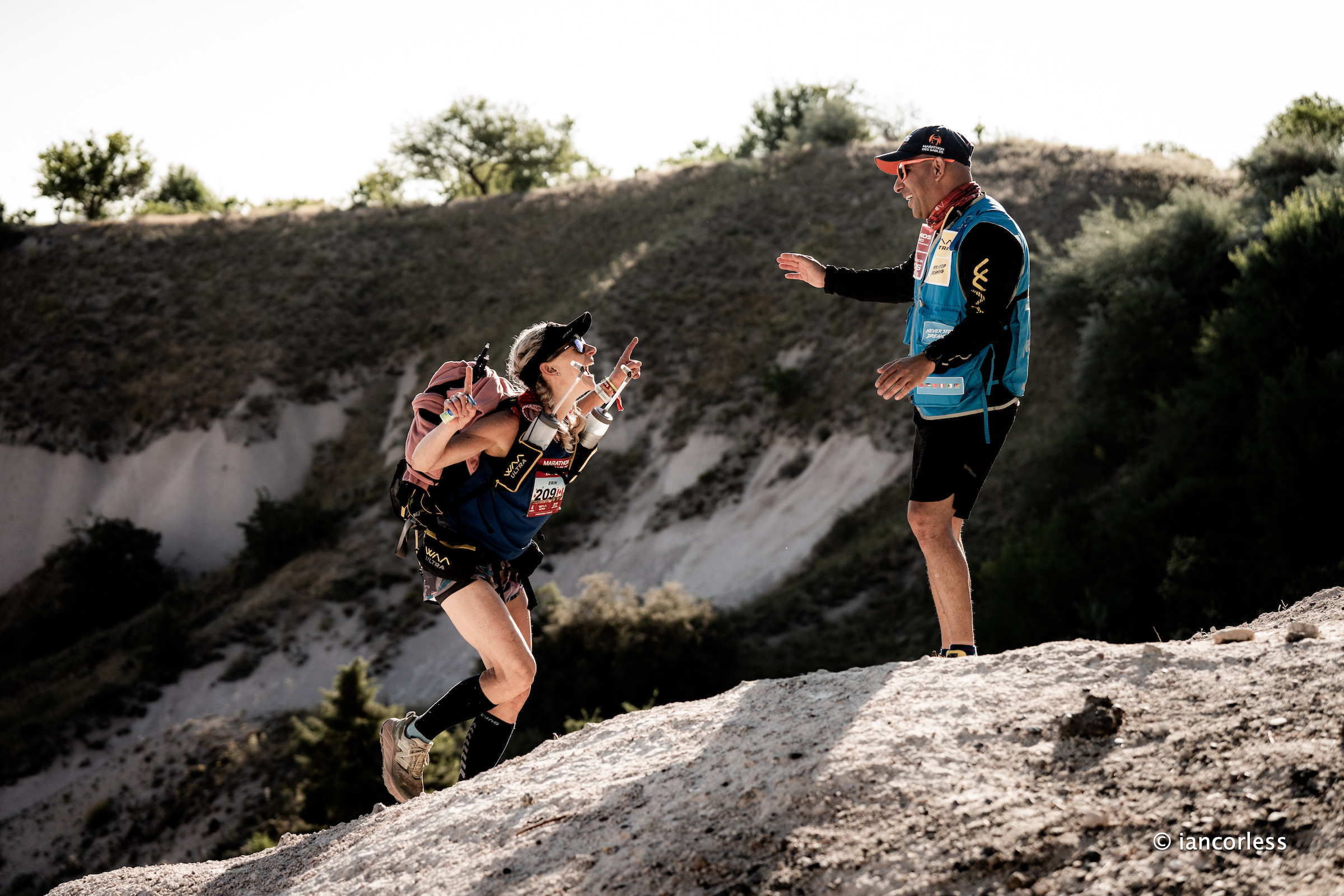
From Namibia, the series moves to Turkey for MDS 120 Cappadocia. Volcanic rock formations, flowing trails, and a sense of history underfoot make this one of the most visually distinctive events on the calendar. It is demanding, but also deeply immersive, ironically, despite the ‘sables’ tag, this event is much more a trail race – something new, different and unique.
MDS Crazy Loops – a format that lives up to its name. Short loops, repeated efforts, and a psychological game that can unravel even experienced runners over 24-hours. It is less about distance on paper and more about resilience in the moment. A fun and challenging event for all abilities that takes place at iconic ski resorts within Europe during July and August. A community event that brings the MDS vibe to the mountains.
As the year moves toward its final months, the pace does not slow. If anything, it accelerates. MDS 120 Morocco returns runners to familiar terrain, but with the confidence and refinement that come from years of experience. This is the desert, revisited with fresh eyes.
Alongside it, MDS Handi continues to redefine what inclusion looks like in endurance sport. It is a powerful reminder that challenge is not one-size-fits-all, and that determination takes many forms.
For those drawn more to movement than racing, MDS Trek Morocco offers a different relationship with the landscape. Still demanding, still immersive, but with space to absorb the experience in full where all abilities are catered for and yes, there is even some luxury – larger tents, no self-sufficiency, showers and so much more…
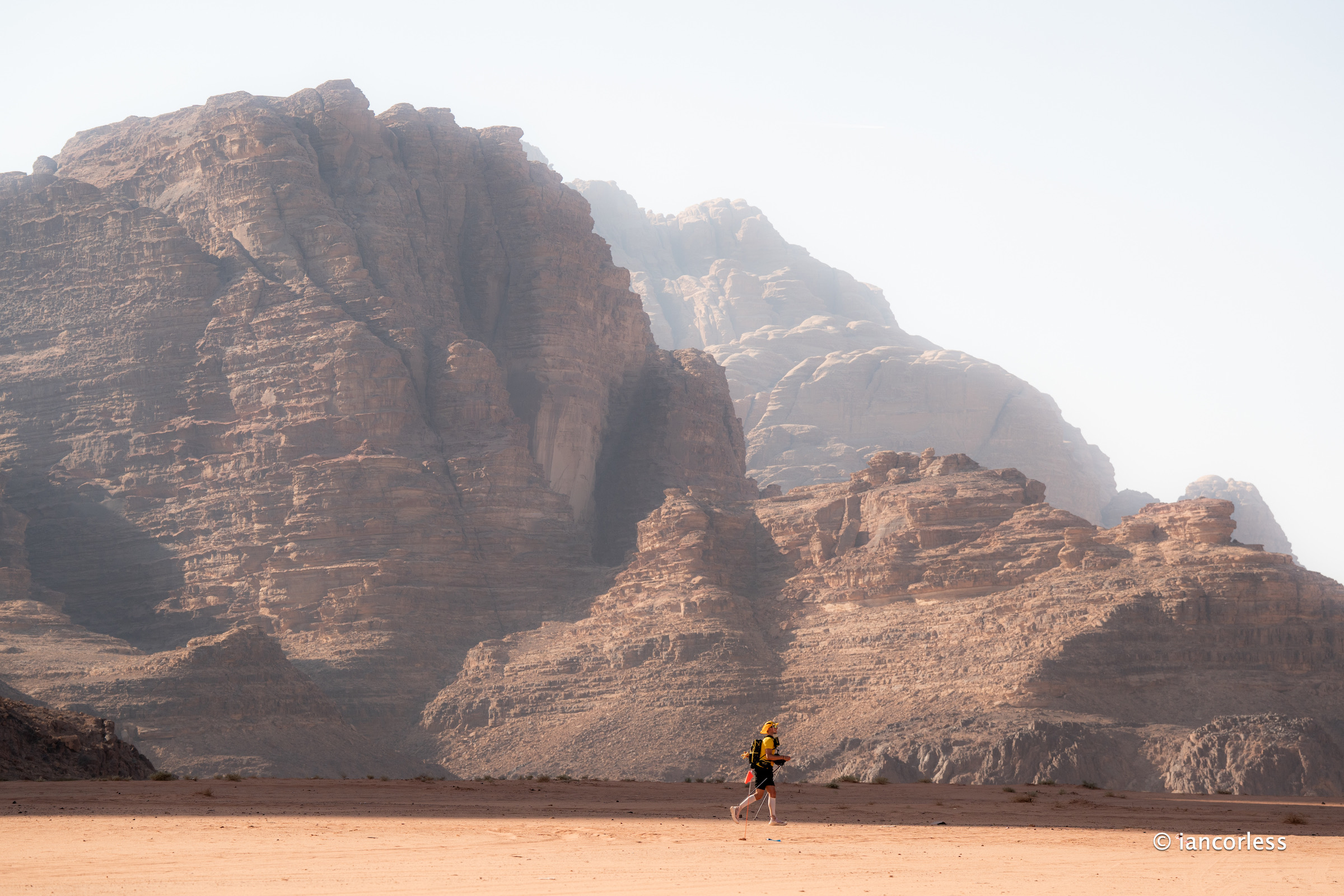
The international push continues with MDS 120 Jordan, where desert running meets ancient history. The terrain is tough, the scenery unforgettable, and the sense of scale impossible to ignore. An iconic event and arguably one of the most desired events on the MDS calendar.
And yes, there are hints of more to come. Potential surprises remain under wraps, but if past years are any guide, they will add another layer to an already remarkable season.
Photo by Ian Corless
By the time 2026 draws to a close, Marathon des Sables will have crossed continents and climates. Morocco, Jordan, Peru, Turkey, Namibia, and Europe, with the Alps adding altitude to the mix. Each location brings its own challenges, its own stories, and its own reasons for being unforgettable.
What ties them all together is not just branding or format. It is philosophy. Self-reliance. Respect for the environment. And the shared understanding among participants that this is about more than running.
A milestone year invites reflection, but it also demands momentum. In 2026, Marathon des Sables manages both. Honouring 40 years of history while pushing forward into new territory, new formats, and new ways to test human endurance.
For runners, supporters, and the wider endurance community, it is hard not to look at the year ahead and feel a quiet sense of anticipation.
What a year it promises to be.
In addition to the above, there is the MDS Tour and MDS Clubs.



 IAN CORLESS