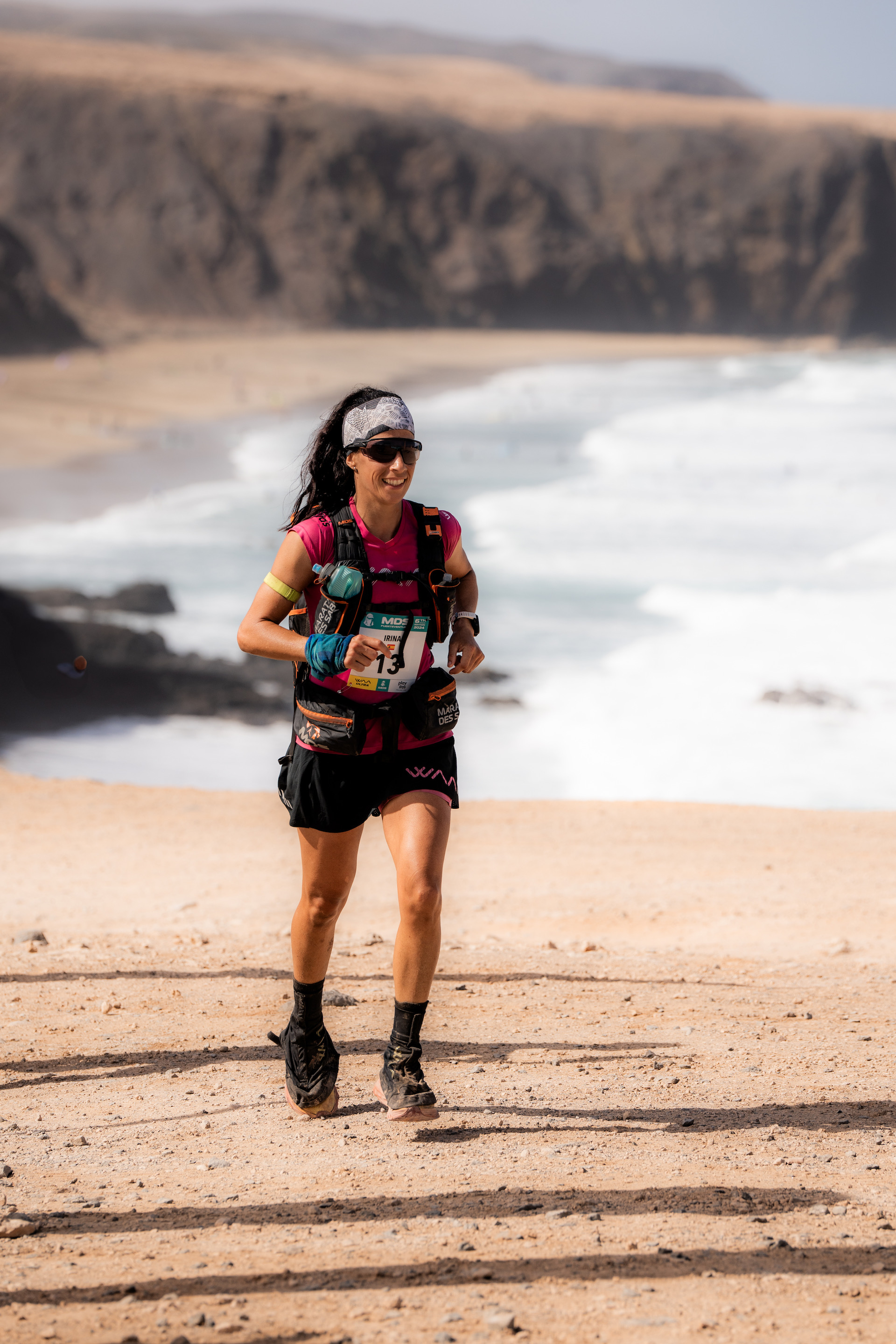
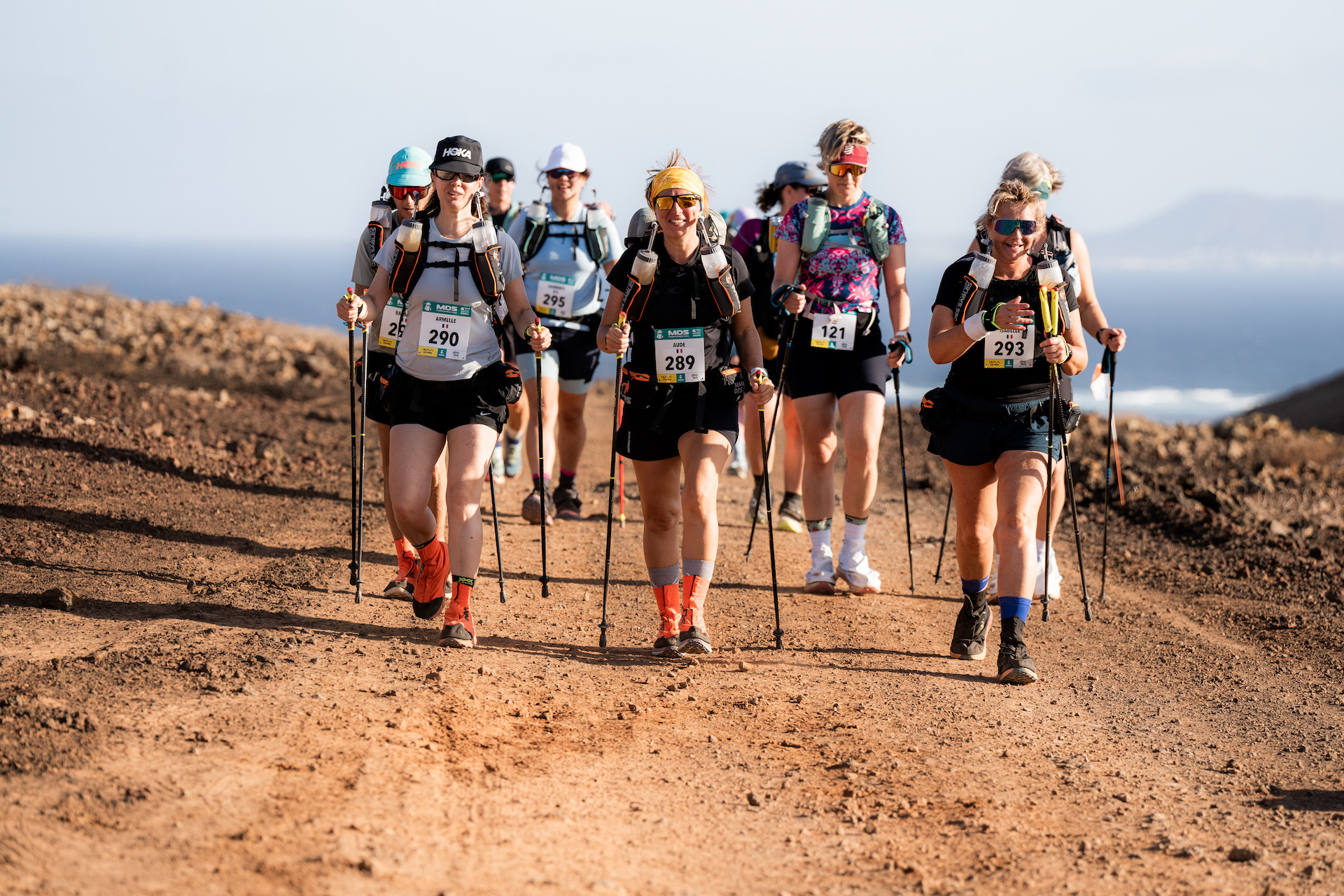
MDS 120 Fuerteventura returns in September 2025, not ‘just’ another race on the calendar, but an important marker in the history of the MDS 120 format. A collision of raw endurance and wild beauty, where athletes trade comfort for grit, and discover just how far their bodies and minds can be pushed. Set against the sunburnt backdrop of the Canary Islands, the race is part expedition, part survival trial, and part celebration of human resilience. A race for all with 3 distance options available, 70, 100 and 120km’s.
What Is the MDS Fuerteventura?
MDS 120 Fuerteventura is the younger sibling of MDS The Legendary, the original multi-stage ultramarathon across the Sahara Desert in Morocco. Like its parent race, the Fuerteventura edition demands that competitors carry their own supplies while covering gaily distances under variable conditions.
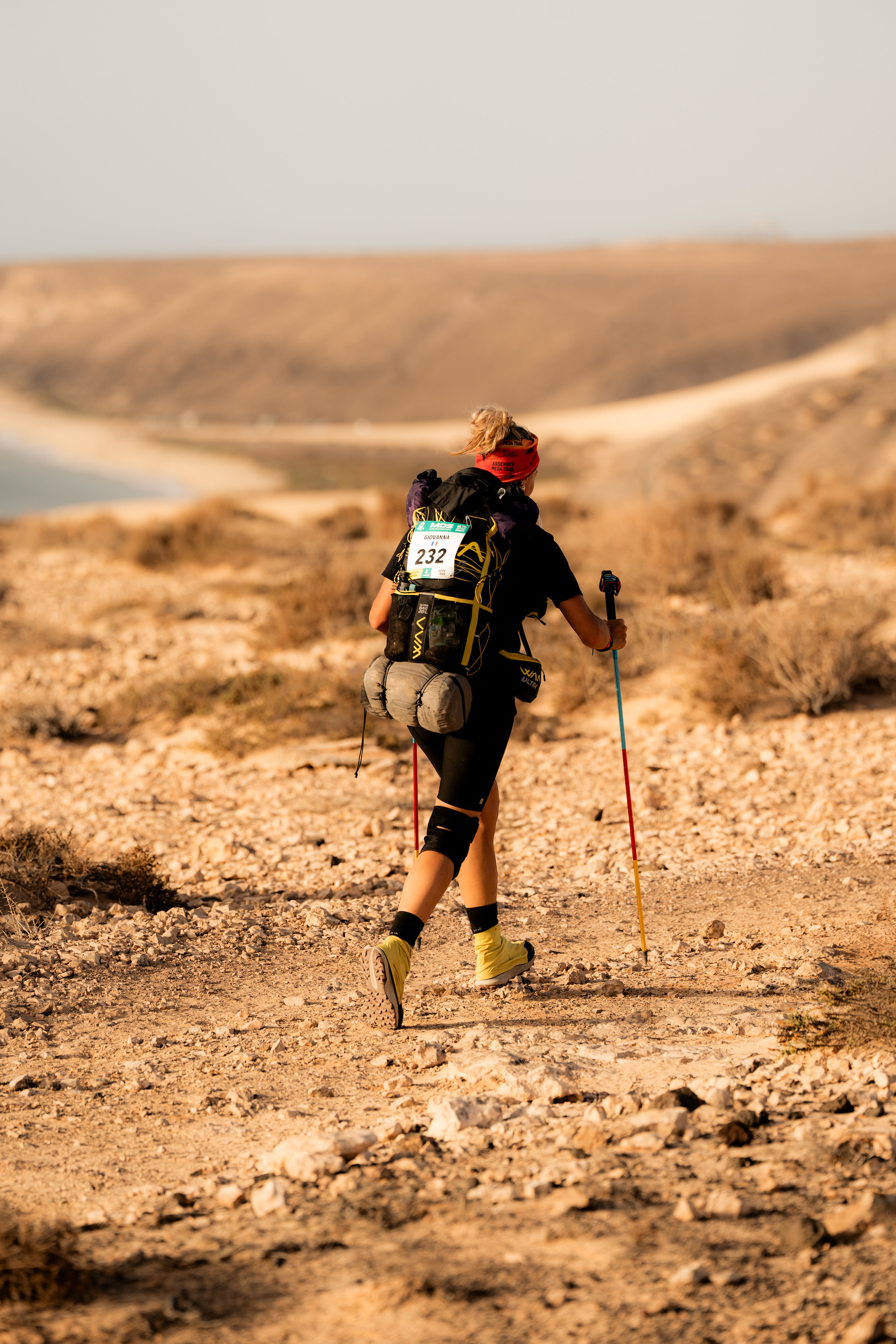
The format is simple but brutal: three stages spread across four days with desert, volcanic ridges, and coastline to endure. Each participant must carry their own food, sleeping kit, and survival essentials, relying only on the organization for water, medical support and a tent. Each stage offers a different flavor of challenge, from long, flat stretches where heat and monotony test mental strength, to rugged climbs that punish the legs and lungs in equal measure.
This self-sufficiency format transforms the MDS 120 Fuerteventura from a simple race into an expedition where every choice is an important aspect – how much food to pack? which shoes to wear? when to push and when to conserve energy? – each decision carries a consequences that can make or break the experience.
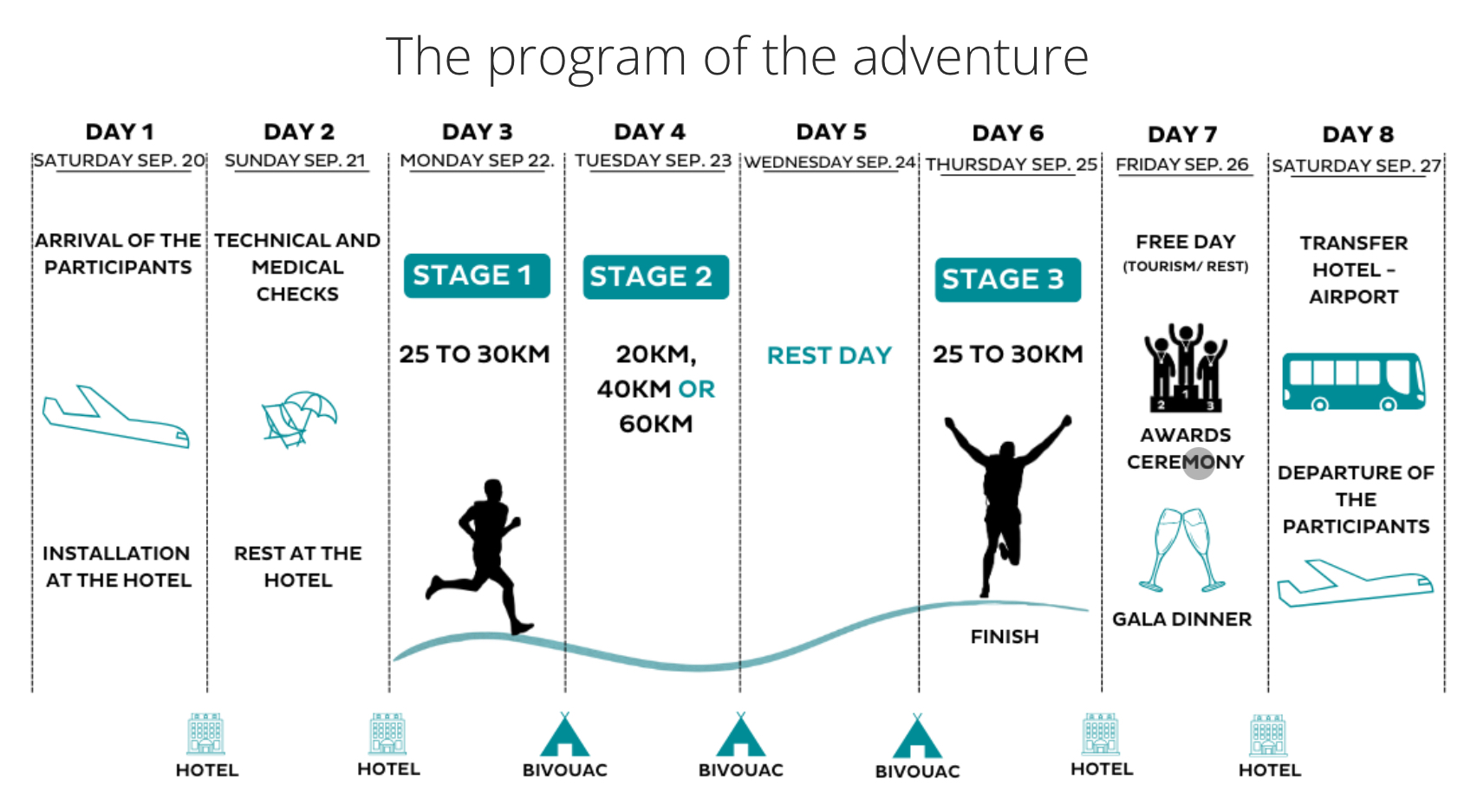
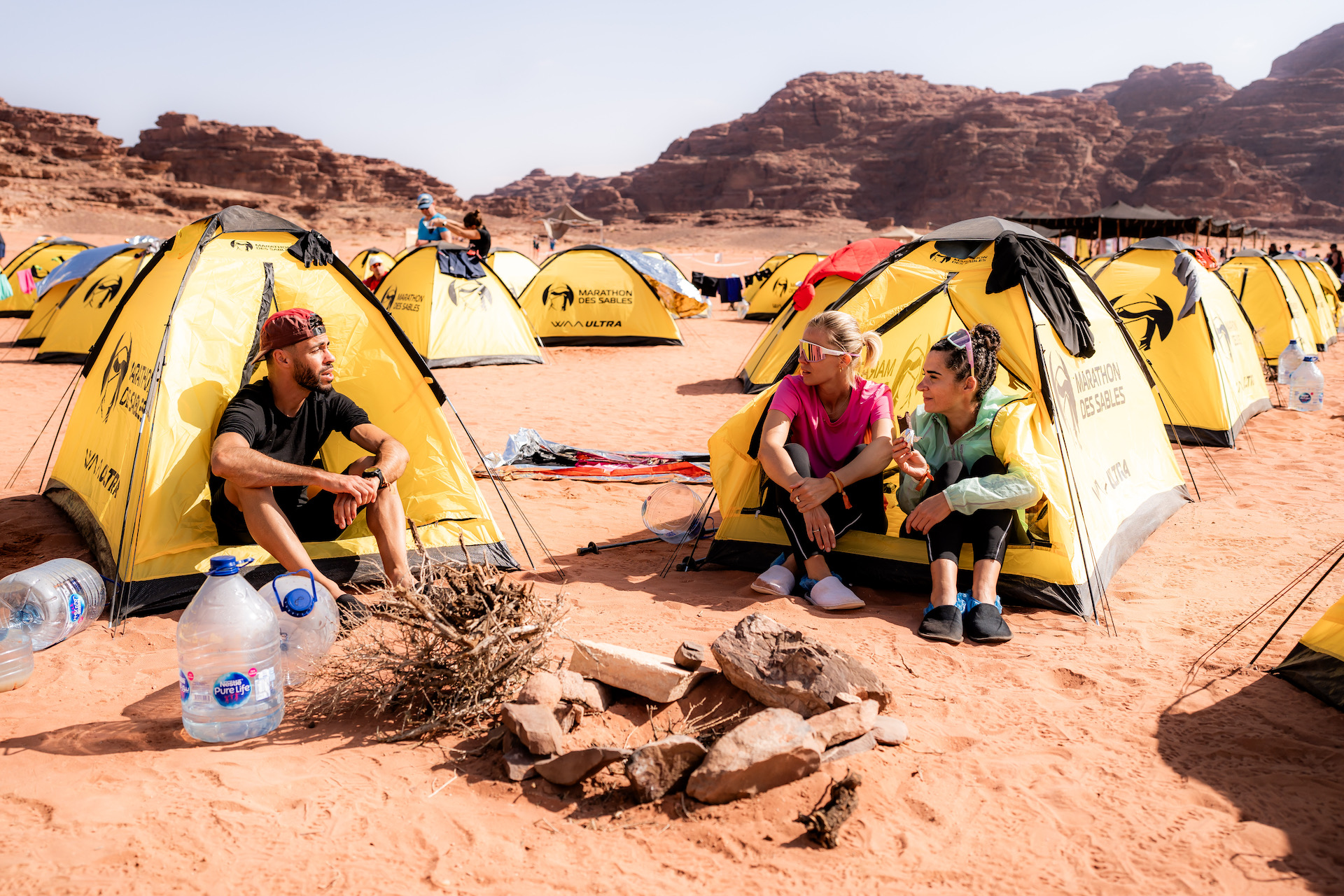
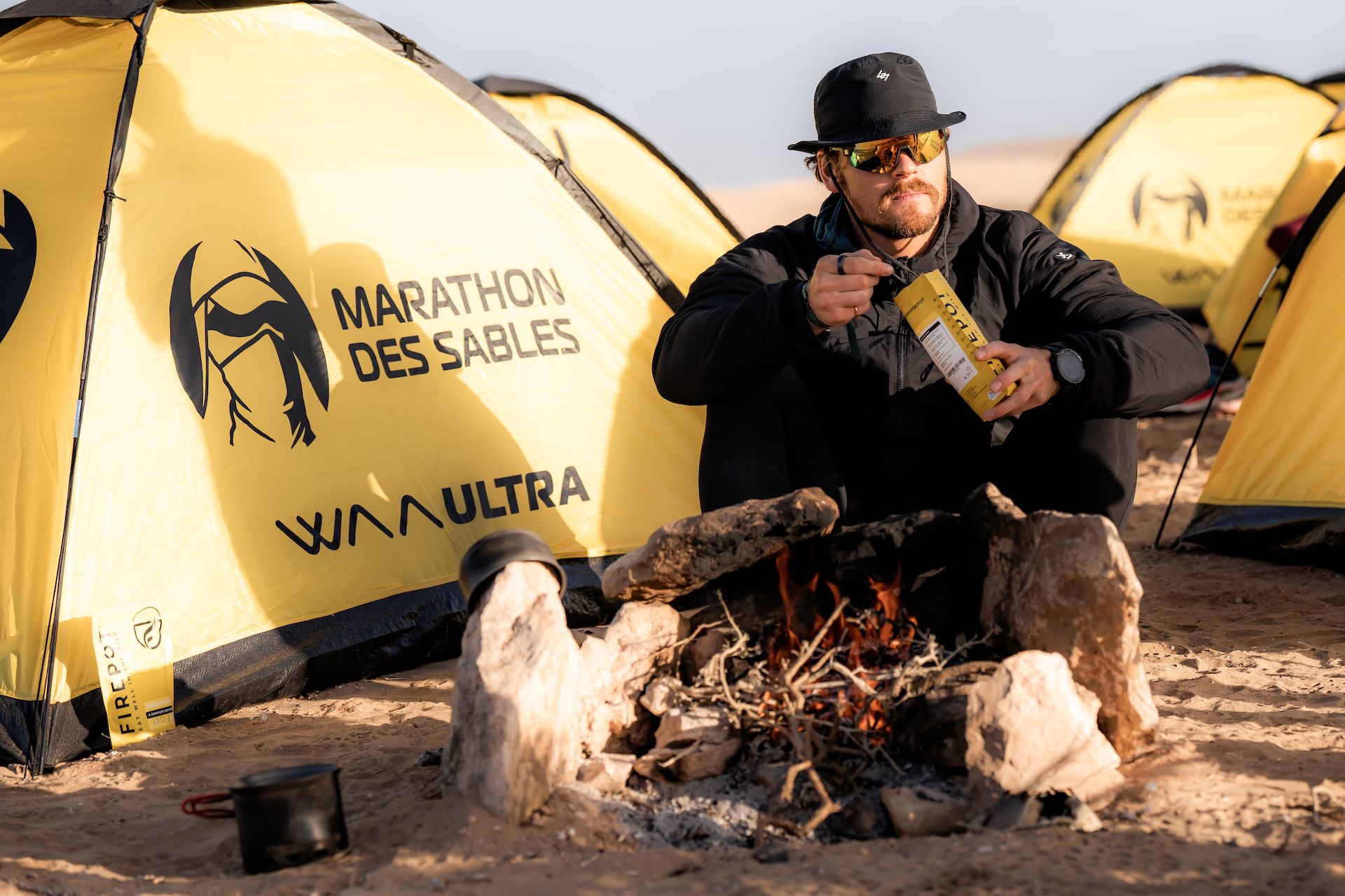
Participants spend 3 nights at the MDS bivouac and enjoy 4 nights at the Playitas Resort hotel, offering numerous facilities (two nights before, two nights after).
Participants choose between 3 different distances: 70, 100 or 120km, divided into 3 stages, over 4-days. This includes 1 full day of rest.
Here is the breakdown:
Stage 1: around 25 to 30km
Stage 2: around 20, 40 or 60km
Stage 3: around 25 to 30km
The Experience: More Than a Race
Fuerteventura is often described as the most “African” of the Canaries, its landscape shaped by ancient volcanic eruptions, relentless winds, and a climate closer to desert than Mediterranean. It’s the perfect environment for a stand-alone adventure, or an ideal preparastion ground for a further adventure in Morocco.
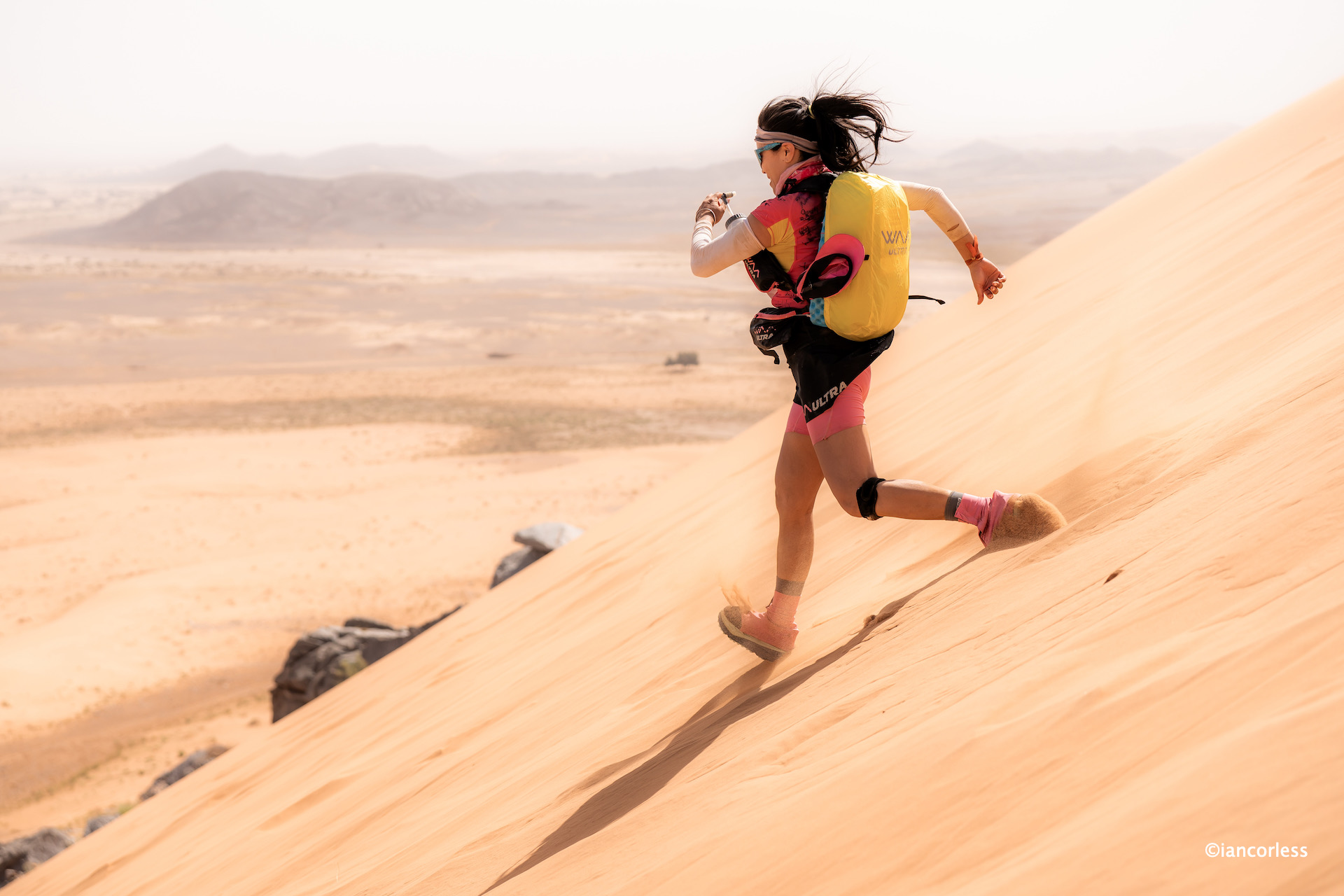
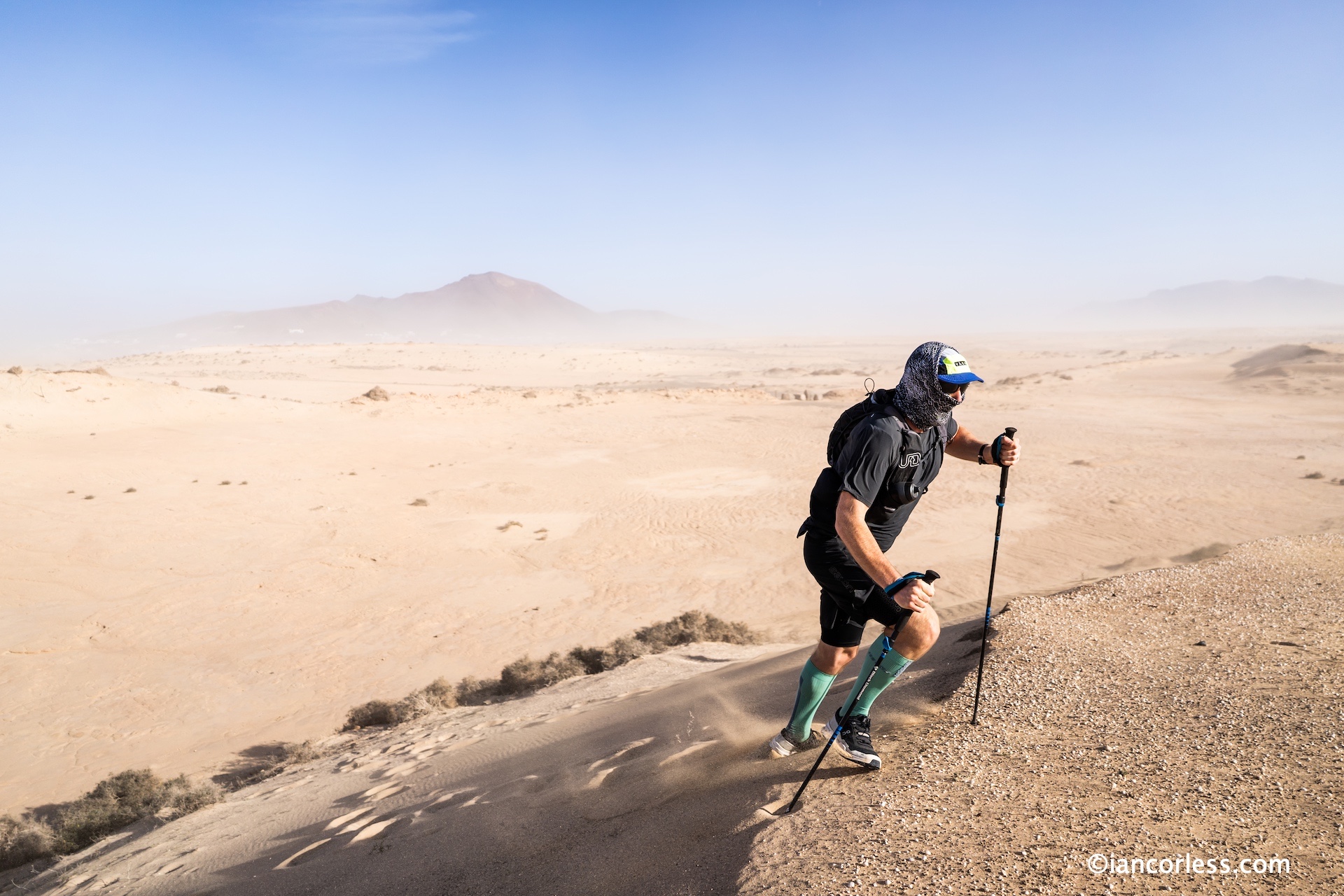
Beautiful yet brutal. Wide expanses of golden sand stretch for kilometers, interrupted by jagged lava fields and rocky ridgelines. The sun can beat down with unflinching intensity, but be warned, temperatures can swing wildly between scorching afternoons and cooler desert nights.
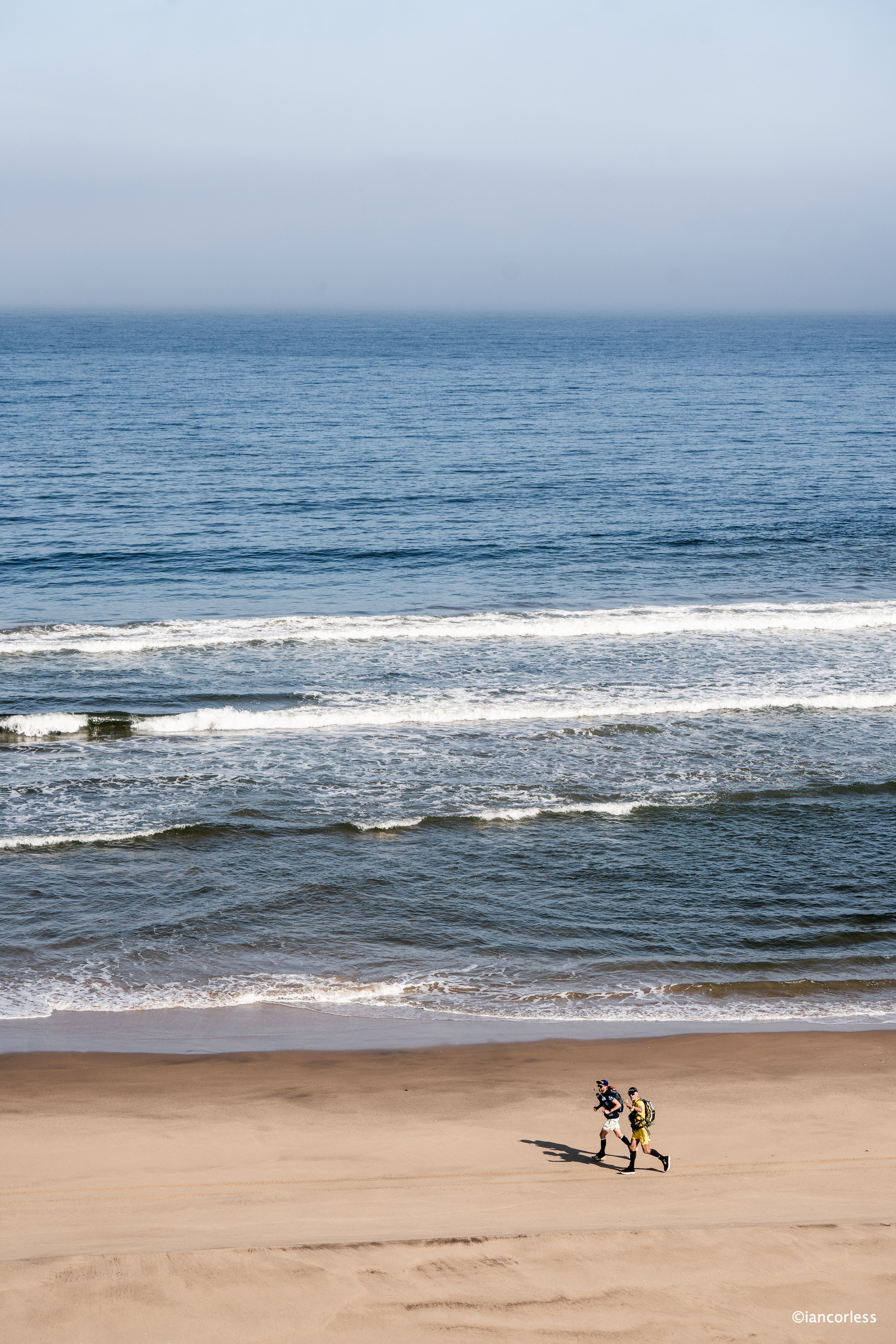
Coastal stages hug turquoise waters where waves crash against black cliffs. Inland routes weave through barren plains dotted with cactus and aloe, offering glimpses of a stark, unspoiled wilderness.
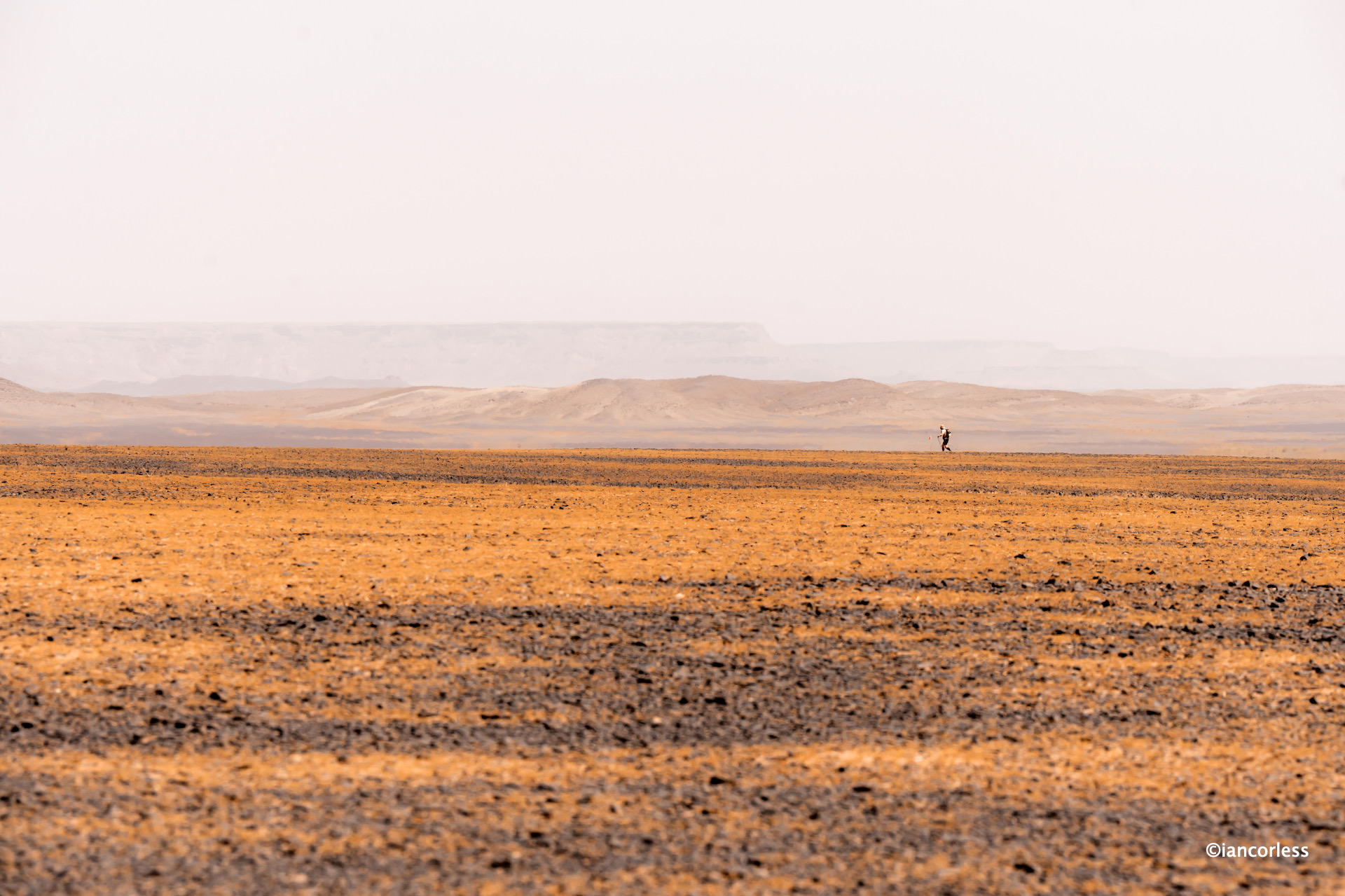
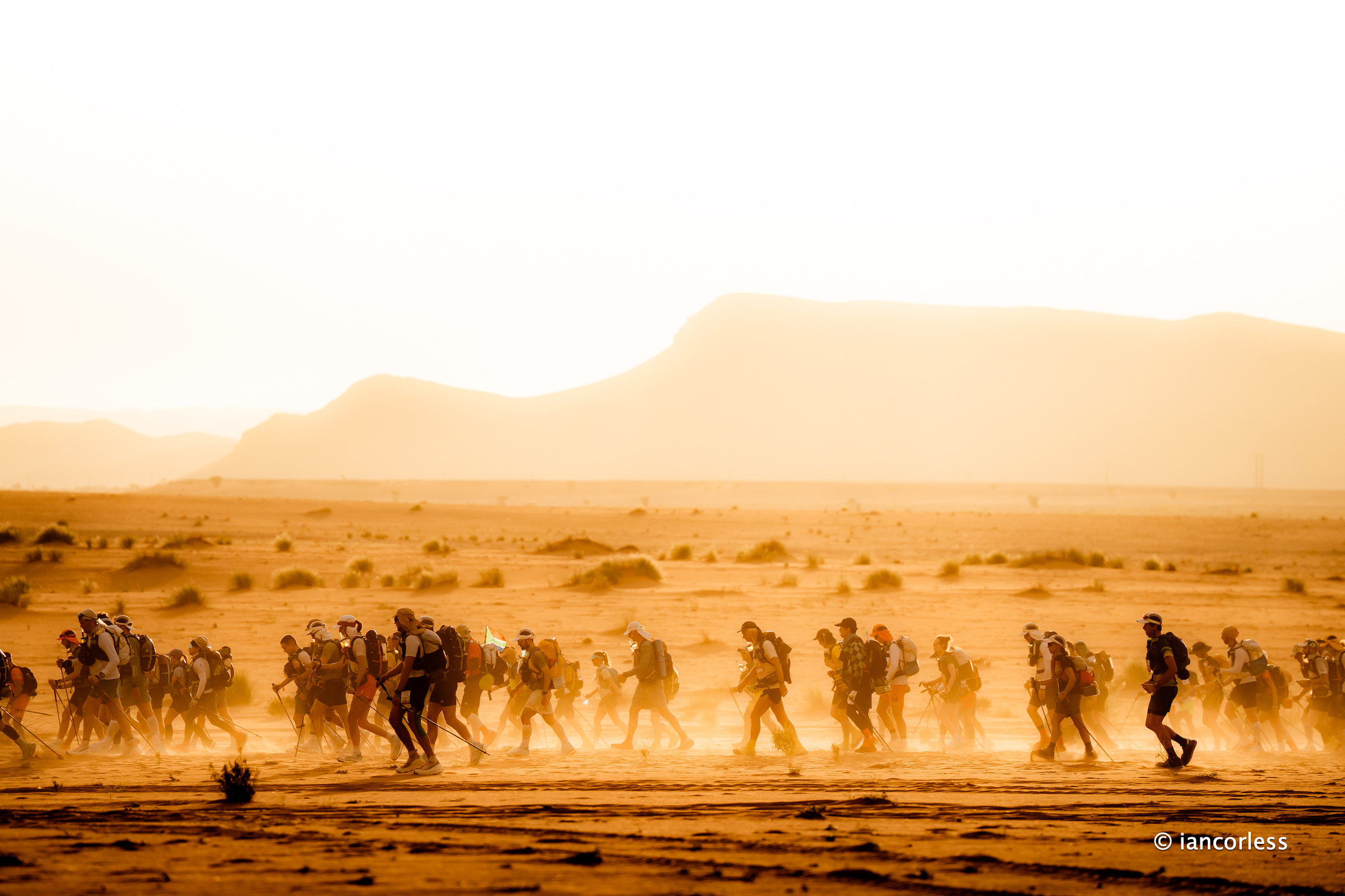
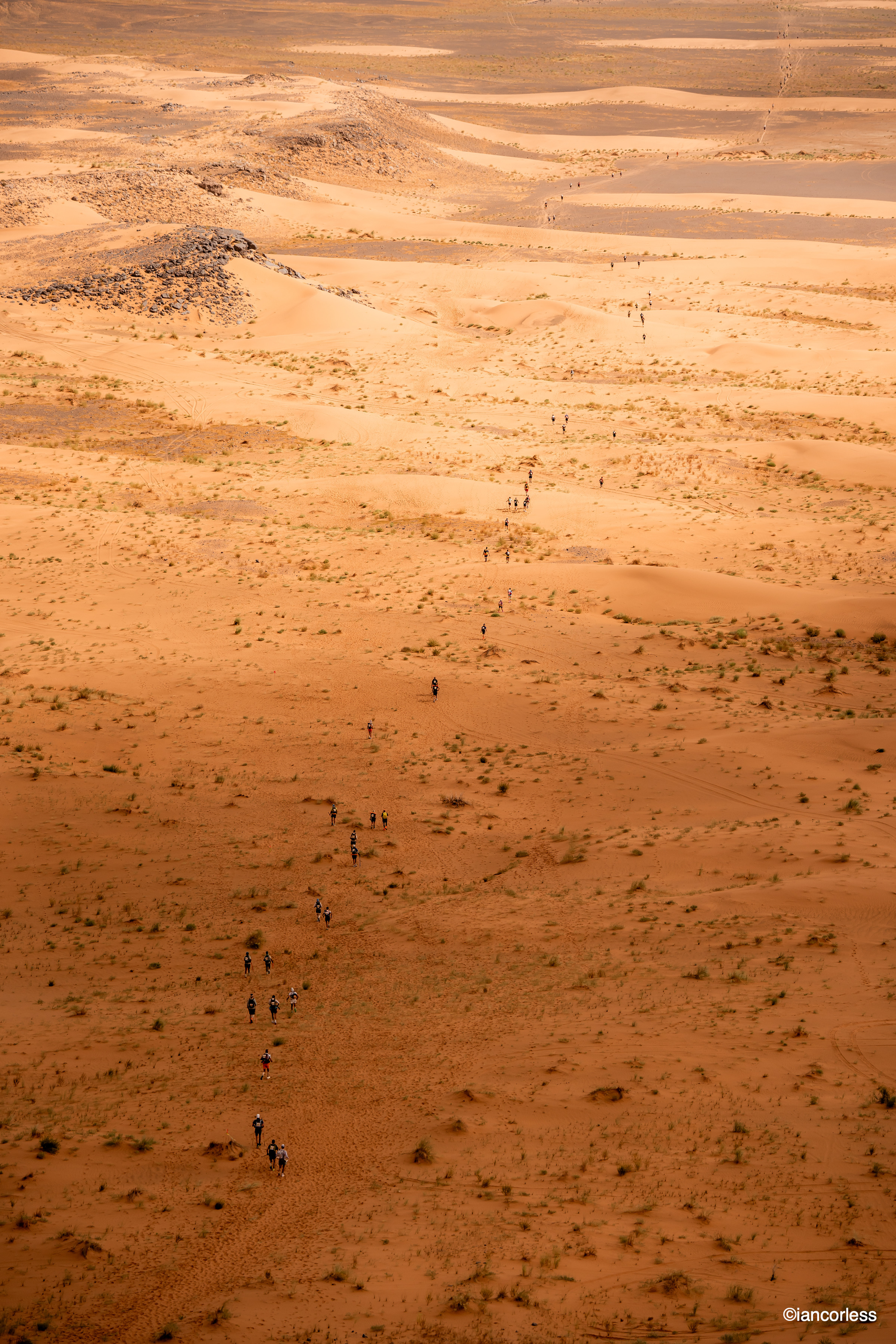
Ask anyone who has completed the MDS Fuerteventura, and they’ll tell you it’s not just about running. It’s about living in a stripped-down, elemental state for nearly a week. Each day begins with the ritual of packing up camp, stuffing sleeping bags and rations back into packs, ready for a day on the trails. By mid-morning, the desert heat has arrived, runners are strung out across the horizon like a line of ants marching into infinity. The rhythm of the race is simple: walk, run, eat, drink, rest. Repeat.
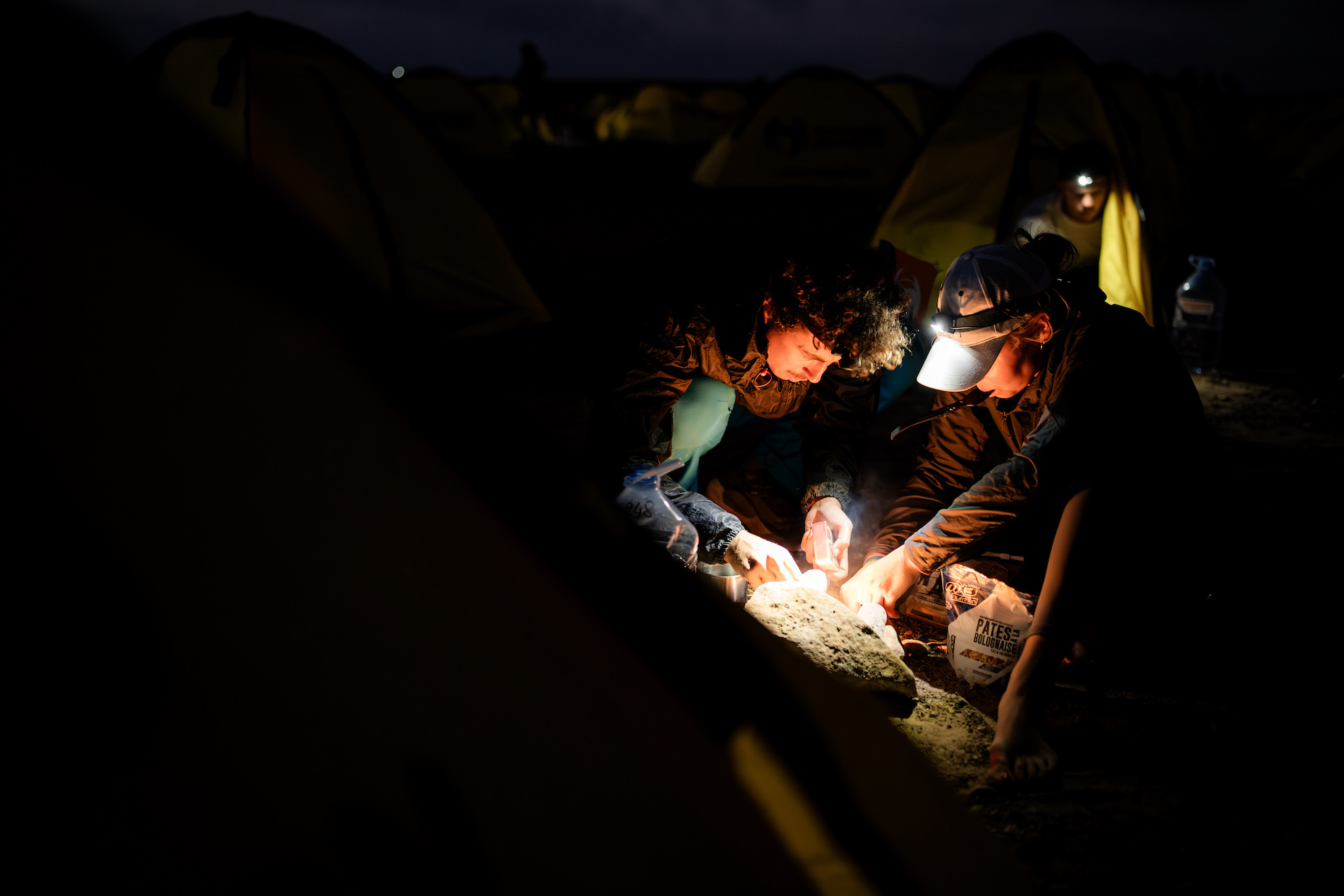
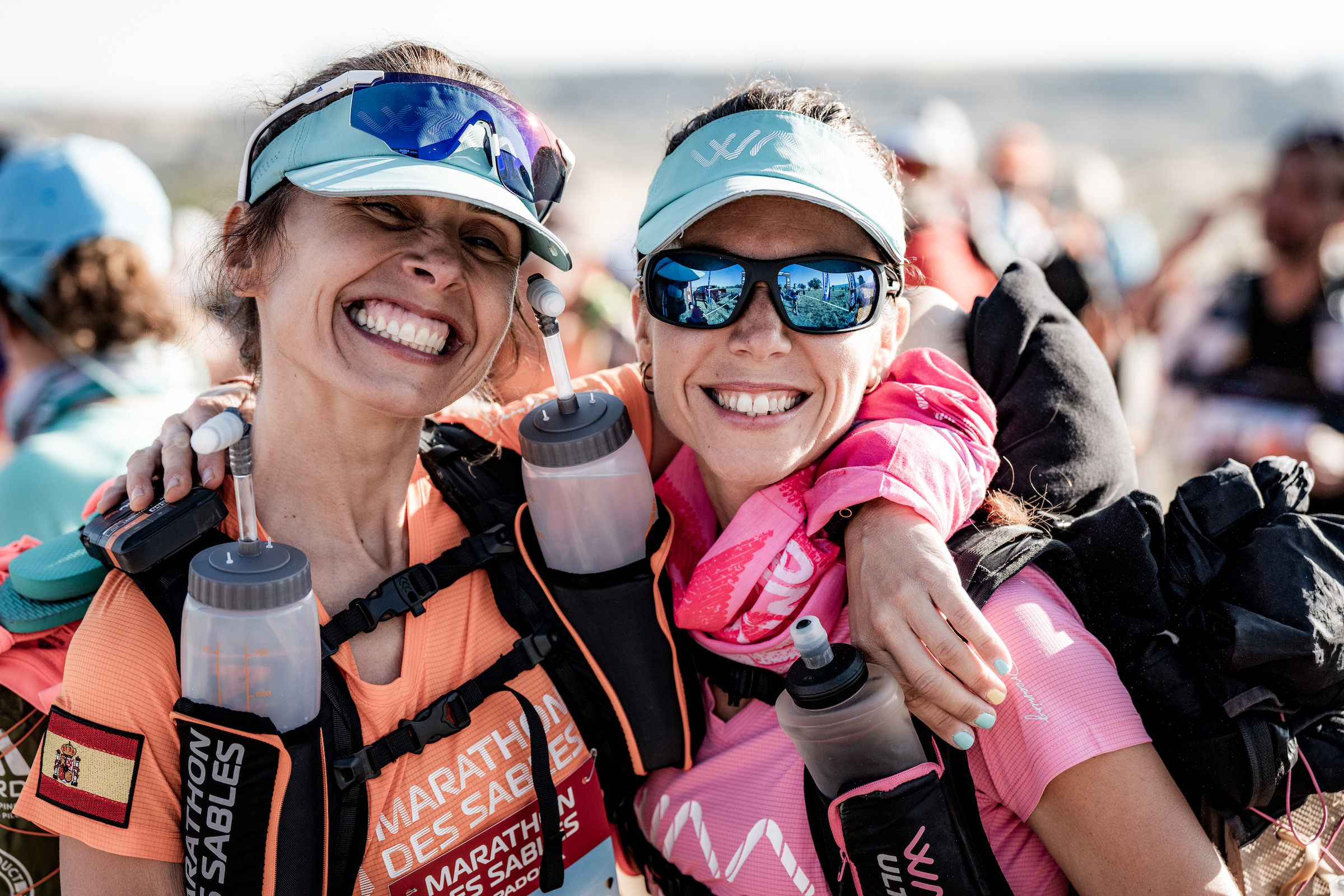
At night, exhaustion gives way to camaraderie. Competitors gather under the stars, swapping stories, sharing advice, and laughing about the day’s suffering. Bonds form quickly because everyone is in the same fight, battling the same heat, hunger, and fatigue. By the end of the week, the MDS 120 Fuerteventura community feels like family, one forged in adversity.
The finish line is more than a marker of distance. It’s a rite of passage. For many, crossing it means proving to themselves that they can endure more than they ever imagined. That’s why the MDS format is addictive: once you’ve lived through it, you carry its lessons into every part of life.
The Spirit of the Race
Beyond the logistics, numbers, and training plans, what makes the MDS 120 Fuerteventura extraordinary is its spirit. It’s about stripping life down to its essentials: water, food, movement, survival. In a world cluttered with convenience and noise, the race forces participants into clarity. You discover not only the limits of your body but also the surprising depths of your will.
Looking Ahead
MDS is not about beating others. It’s about discovering what you’re really made of. And for those lucky enough to be there in Fuerteventura, September 2025 will be a week they’ll never forget.
Marathon des Sables – information and race entry HERE
Second Edition Confirmed for April 25 to May 2, 2026
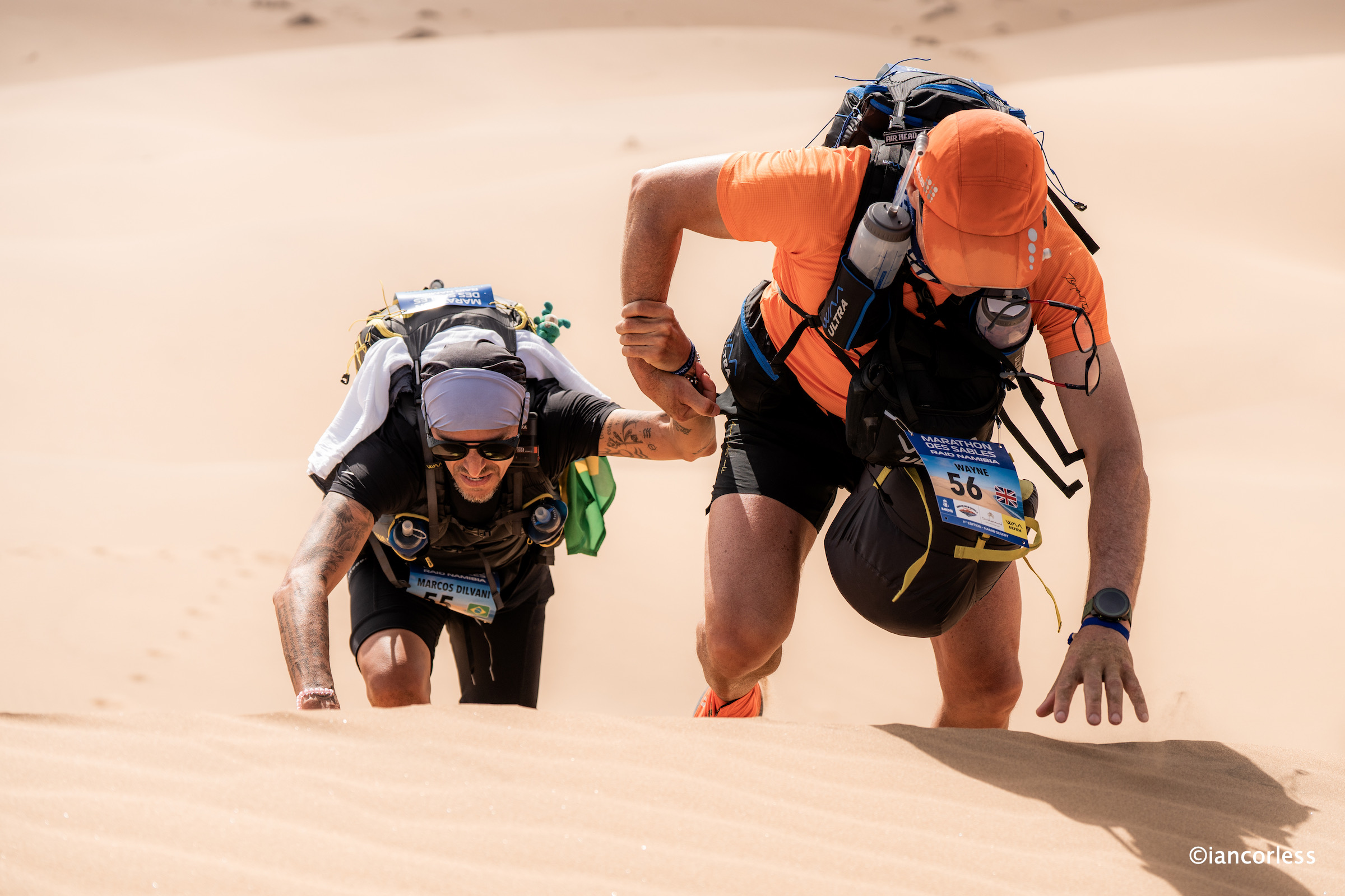
The adventure is back. From April 25 to May 2, 2026, the second edition of MDS Raid Namibia will return to one of the most breathtaking landscapes on Earth, and this time, it’s bigger, bolder, and ready to test your limits.
A Race Like No Other
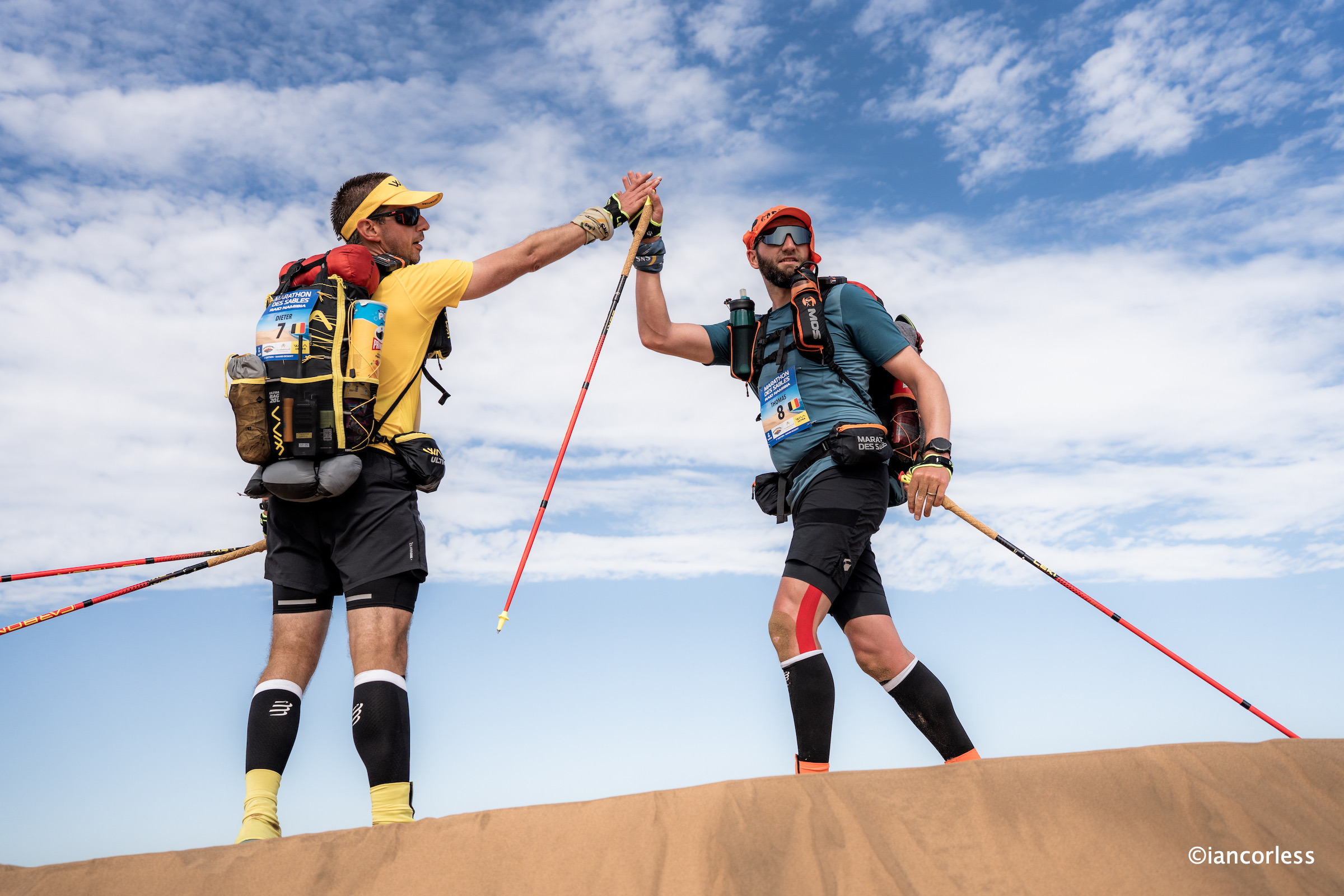
MDS Raid Namibia isn’t your typical ultra. It’s a Raid format: multi-day racing where each stage takes you deeper into wild, untouched terrain. You and your partner navigate the course together, carrying your essentials, relying on one another’s grit and skill. The rhythm is different from a single-stage event, it’s about strategy, recovery, and building momentum over days in the desert.
Namibia: More Than a Backdrop
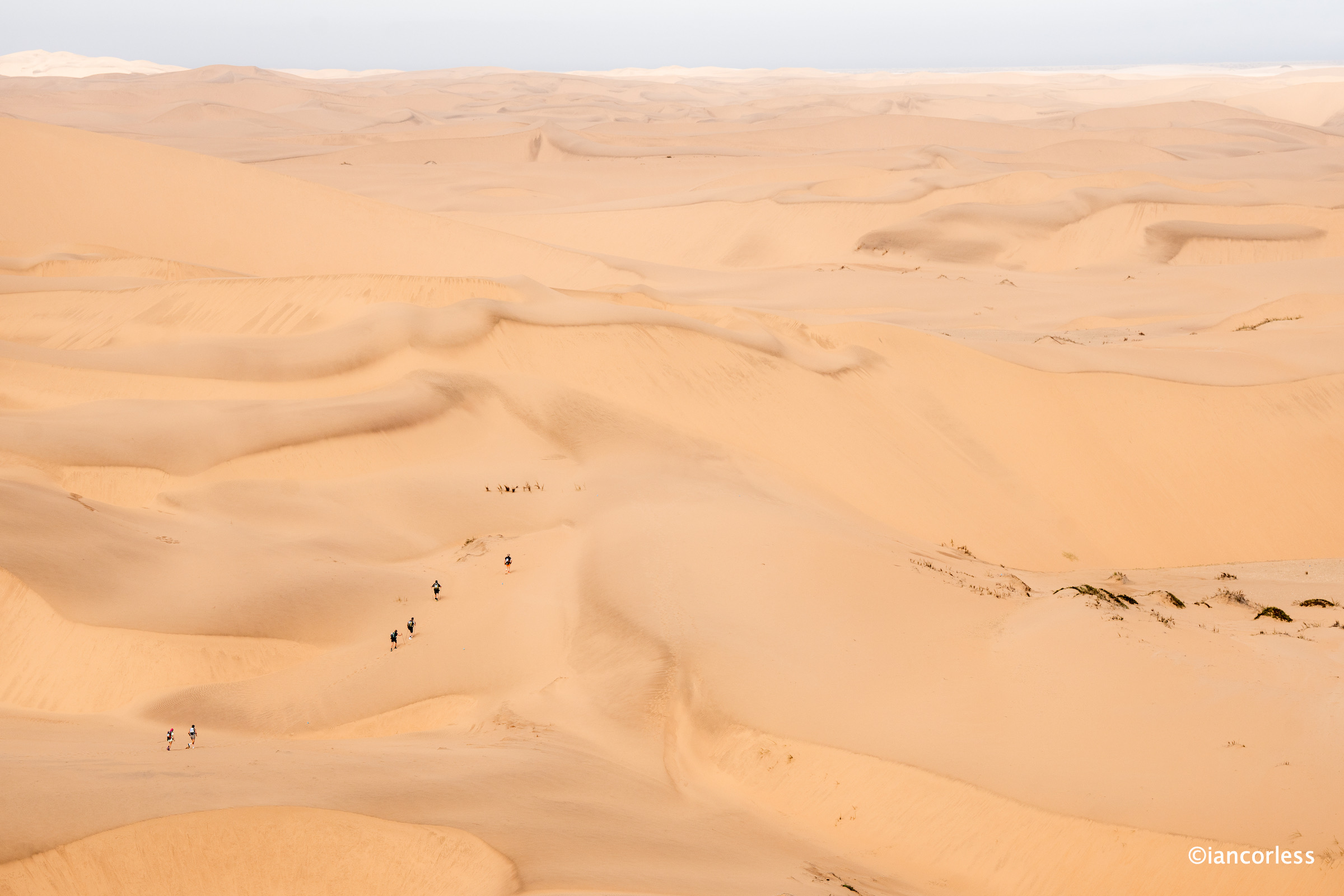
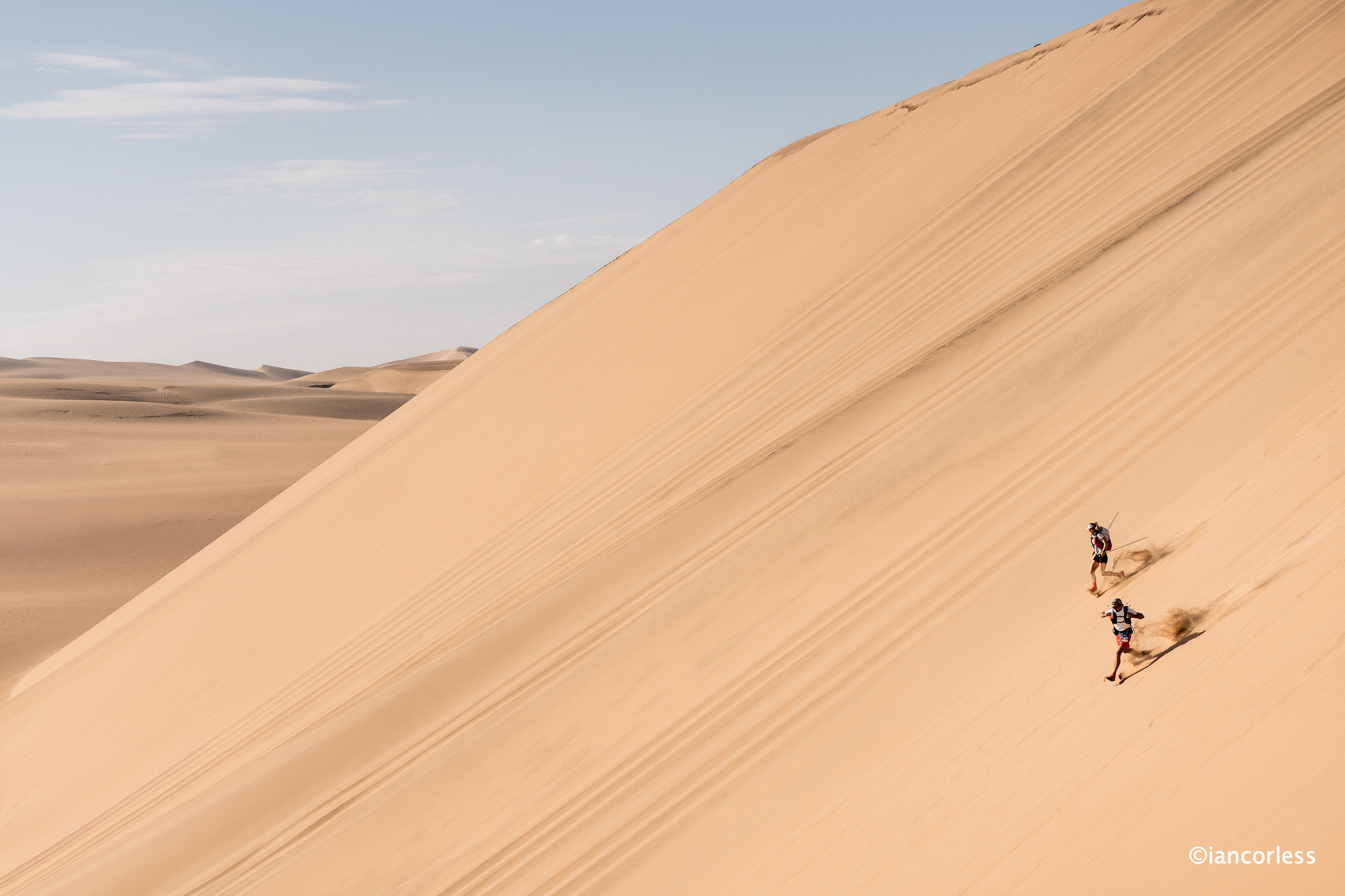
The desert here is alive with colour and contrast, towering red dunes, sun-bleached plains, and skies so vast they feel infinite. But the real magic? The people. From the warmth of local communities to the camaraderie among competitors, every smile, handshake, and shared moment turns the race into something unforgettable.
Two Distances, One Challenge
Whether you choose 90km or 107km, you’ll face a course that demands strength, patience, and partnership. The shorter option is still a serious test; the longer route adds extra sting to already challenging days.
Teams of Two
This is not a solo fight. Every team is two runners — sharing the highs, lows, decisions, and celebrations. It’s about knowing when to push, when to pace, and how to keep each other moving forward. You’ll finish this race with more than just a medal — you’ll leave with a bond forged in heat, dust, and determination.
Under the Star Night
And then there’s Star Night — a moment that transcends competition. Out in the desert, far from city lights, the sky becomes a canvas of constellations. It’s an evening to pause, breathe, and feel the scale of where you are. Stories are shared, laughter carries through the darkness, and the adventure takes on a whole new light.
⸻
MDS Raid Namibia 2026 is more than a race. It’s an odyssey. Whether you come for the challenge, the scenery, or the connection, you’ll leave with a story only this desert can write.
The desert is calling.
Read and in-depth summary of the first edition in 2025 HERE and be inspired to join this magical adventure, ‘Testing Limits on the Edge of the Atlantic.’
The Marathon des Sables (MDS) isn’t just a race, it’s a test of grit, strategy, and survival.
Whether you’re taking on the MDS 120 (70km, 100km, or 120km across three stages in four days) MDS RAID, MDS TREK or the infamous MDS LEGENDARY (250km across six stages in seven days), the physical and mental demands are unlike any other event.
Photo by Ian Corless
Training for the MDS means more than just running a lot. You’re preparing your body to carry gear (Trek excluded) across uneven terrain WITH varied temperatures all while potentially sleep-deprived, sunburned, and blistered. It requires smart progression, precise planning, and brutal honesty about your strengths and weaknesses.
Here’s a guide how to build a training system that prepares you to compete if you’re aiming for the top, or complete if you’re focused on finishing strong and unbroken.
⸻
Understanding the Events
MDS LEGENDARY:
• Distance: 250 km
• Duration: 6 stages over 7 days
• Focus: Endurance monster; includes one long stage (often 80-90 km,) a marathon stage and on the final day a half-marathon.
• Logistics: Self-sufficient, sleep on the ground, rationed water, blister clinics, potentially extreme heat and sharing a bivouac (tent) with 7-0ther people.
MDS 120:
• Distance: 70, 100, or 120 km.
• Duration: 3 stages over 4 days
• Focus: Shorter but intense; good as a first step into stage racing
• Logistics: Self-sufficient, similar rules to the full MDS but over a condensed period and participants sleep in individual tents. Remember, MDS 120 events have varied terrain, MDS 120 Cappadocia as an example is much more a ‘trail’ race than a desert race.
Photo by Ian Corless
MDS RAID:
• Distance: 100, or 120 km.
• Duration: 3 stages over 4 days as MDS 120 but with a ‘star night.’
• Focus: Shorter but intense; good as a first step into stage racing
• Logistics: Self-sufficient, similar rules to the MDS 120 but in teams of two and ideally the participant has more experience.
MDS TREK:
• Distance: 70 to 120 km.
• Duration: 4 stages over 6 days.
• Focus: An introduction to MDS with no self-sufficiency, extra comfort and daily distances to be undertaken ‘trekking.’
MDS ULTRA and MDS CRAZY LOOPS:
• Two unique events that do not follow the ’typical’ MDS format. The ULTRA is a single-stage race of 100km’s or 100-miles. CRAZY LOOPS is a trail event, in the mountains, participants complete as many loops as possible in a 24-hour time period.
⸻
Competing vs. Completing
Photo by Ian Corless
These are two entirely different approaches:
Competing means aiming for the front of the pack. You’re trying to place well, maybe top-100 or higher. This demands high mileage, precise gear choices, low pack weight, and serious pacing strategy. Your training must be performance-focused, often replicating race conditions with deliberate intensity.
Completing means finishing within cutoff times, avoiding injury, and keeping yourself intact. You still need to train hard, but the mindset is survival over speed. You train to handle discomfort and manage variables like foot care, heat, and nutrition. A slower pace still means a high physical load due to long time-on-feet days.
Photo by Ian Corless
⸻
The Influence of Previous Experience
If you’re coming from a road marathon or ultra background, your endurance engine is a huge asset. But you’ll still need to adapt:
• Road runner? Learn to move efficiently on sand, rocks, and uneven terrain. Focus on gait adaptation and ankle stability.
• Trail ultra veteran? You’ve got terrain dialled in so develop strategies based on your goals to maximise your experience. This may be to ‘perform’ aiming for a top-100 position. Asses strengths and weaknesses, add gym work, core, stability and so on.
• New to ultras? Start with time-on-feet progression and hike-run strategies. You’ll need to build both endurance and mental resilience slowly and methodically.
Prior experience informs your pace, nutrition, and how aggressively you can train. Beginners must respect the build-up. Veterans must respect the different environment. Walk, and walk a great deal.
⸻
The Foundation: Gradual Progression and Rest
Ultra training is about progressive and controlled block of stress and recovery. You don’t jump into 30 km runs with a pack. You build tolerance over months.
Golden Rule: Progress weekly volume by no more than 10%. Rest every 3-4 weeks. Use time-on-feet as much as distance early on.
Your weekly progression may look like:
• Week 1: 45 km (with one 15 km light pack run)
• Week 2: 50 km
• Week 3: 55 km
• Week 4: 30 km (recovery)
• Week 5: 60 km (add second pack run)
And so on, depending on fitness level, adaptation, targets and goals.
⸻
Training Cycles: Macrocycles, Mesocycles, and Microcycles
Long-term success in MDS starts with understanding training periodisation and structuring your year into manageable and purposeful blocks.
Depending on experience and the time to your event, the Macrocycle, Mesocycle and Microcycle blocks will vary.
Example 1:
As an example, if it is currently August and you have entered MDS LEGENDARY, you can plan a Macrocycle as you have 8-months to April and the race date. You can then plan the Mesocycle and blocks and then fine-tune the Microcycle as you progress.
Example 2:
By contrast, if it is August and you have entered MDS 120 Jordan (in November) it’s fair to assume you have already been training and therefore you’d start by planning four Mesocycle blocks – August, September, October and November.
Macrocycle (6–12 months)
This is the full plan from now until race day. It includes base building, load development, peak volume, and taper.
• Base (12–16 weeks): Build aerobic engine, mobility, strength. Focus on consistent running and body conditioning.
• Mesocycle 2: Terrain work, hills, stability, light pack
• Mesocycle 3: Long runs, sand training, heat exposure
• Mesocycle 4: Race simulations, high pack weight, nutrition testing
Microcycles (1 week)
These are your weekly training schedules. Balance hard/easy days, recovery, and cross-training.
Sample microcycle for intermediate runner in build phase:
• Mon: Rest or yoga
• Tue: 12 km trail run + core
• Wed: Hill repeats + strength
• Thu: 10 km easy run (pack)
• Fri: Rest or swim
• Sat: 25 km long run (pack)
• Sun: 15 km hike-run combo (pack, terrain)
⸻
The Desert Load: Equipment and Pack Weight
Photo by Ian Corless
In MDS, you carry everything, TREK excluded. Your pack should include food, sleeping bag, medical kit, cooking gear, clothing, and mandatory gear. That’s 6.5kg minimal weight for MDS LEGENDARY plus water. MDS 120 / MDS RAID will have a lighter packs due to less days.
Light is fast and safe. Every gram adds significant energy demand over the race distance, the less weight you have will mean less fatigue, less stress and a faster pace..
Key strategies:
• Weigh everything. Cut ruthlessly.
• Test gear in training. Run with your pack at full race weight, but, do not do this all the time, you risk injury.
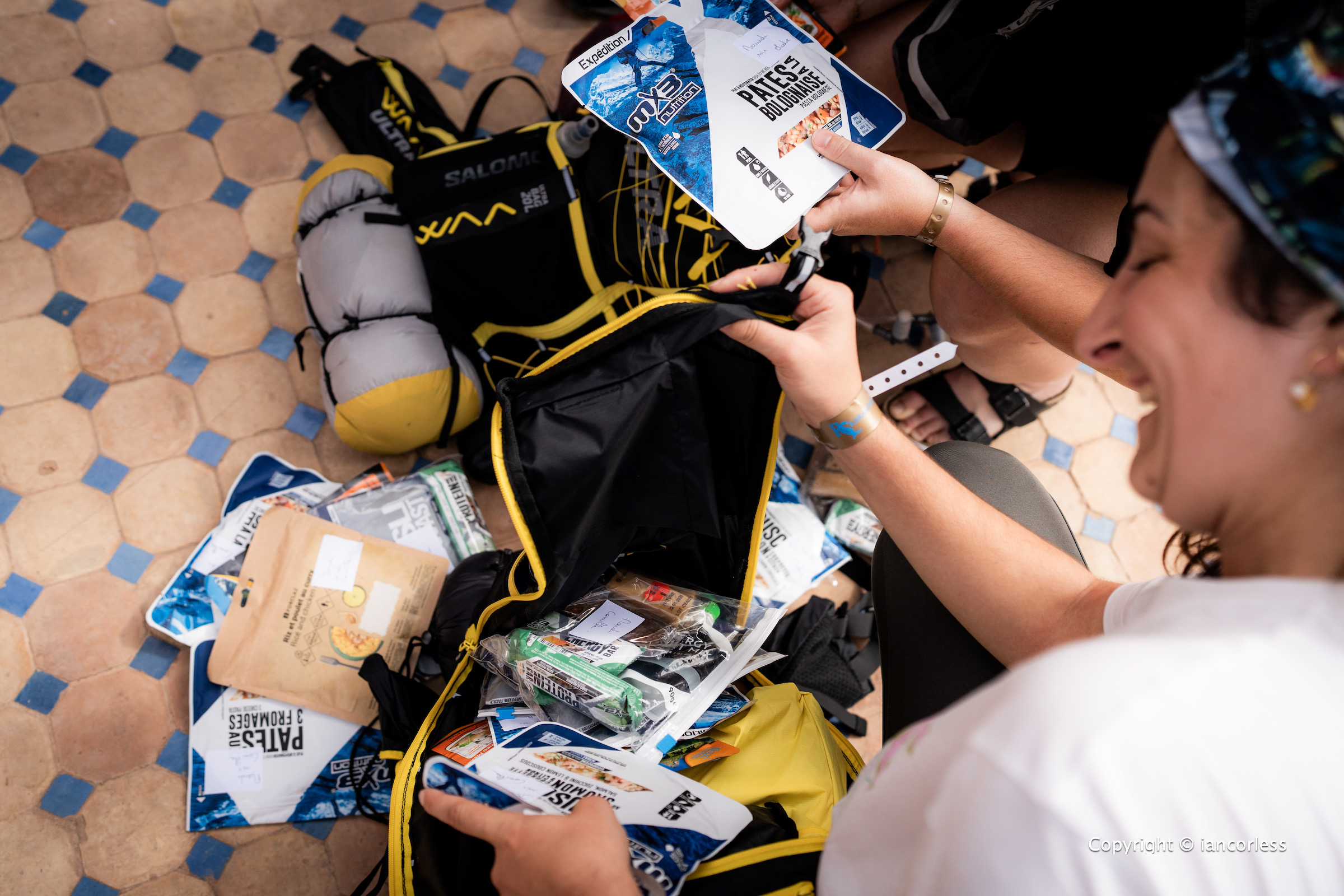
• Practice eating on the go. Your daily calorie requirement will be 2500–4000 kcal depending on pace and build.
You’ll also need:
• Desert gaiters
• Trail shoes with cushioning
• Anti-chafing strategies (tape, powders, creams)
• Ultralight sleeping setup
• Efficient stove or cold-soak food plan
⸻
Specific Training Focuses
The more you plan, the more specific you are, the better prepared you will be.
1. Back-to-back Long Runs
Simulate cumulative fatigue. Do a 30 km Saturday, 20 km Sunday combo. Later in the cycle, increase both and wear your pack.
2. Heat Acclimation
• Train in heat or use sauna/hot baths post-run.
• Wear layers during training to simulate heat stress.
• Aim for 10–14 days of adaptation close to race.
3. Running with Weight
Start with 2–3 kg, progress to full 7–9 kg by peak phase. Train your posture, core strength, and blister care during these sessions.
4. Footcare Mastery
Practice taping, changing socks, lancing blisters, and prevention strategies. Your feet will suffer unless you prepare.
5. Nutrition Practice
Test every food item you plan to bring. Can you stomach 3000 calories of freeze-dried meals and energy bars daily? What about in 45°C heat?
⸻
Simulate Race Weeks
Training in Lanzarote
The most effective training tool is a mini stage race. For example, you may enter MDS TREK as preparation for an MDS 120 event, or, you may enter an MDS 120 event in preparation for MDS LEGENDARY. Alternatively, you can plan specific race simulation in your training, think about three to four days of 20–30 km runs with a pack. As an example, you could try the following 5-weeks before an event:
• Day 1: 30 km trail run (morning), sleep on mat
• Day 2: 25 km (pack), minimal food, no shower
• Day 3: 20 km (pack), hot day if possible
You’ll discover gear weaknesses, hydration issues, and psychological fatigue, these are critical insights before the real event.
⸻
Mental Training
Photo by Ian Corless
This race is more mental than physical. You must train:
• Positive self-talk
• Pain compartmentalisation
• Visualisation: Imagine suffering at km 60 with 40 to go—how will you manage?
• Sleep deprivation and discomfort: Train your tolerance.
Consider journaling after hard sessions. Track what worked mentally, and build a playbook.
⸻
Rest and Recovery
Photo by Ian Corless
Rest is training. Without it, you break.
• At least one full rest day weekly
• Active recovery (walk, yoga, swim) after long runs
• Taper at least two weeks before MDS: reduce volume, stay mobile, eat well, sleep lots
⸻
Final Thoughts
The MDS is brutal, beautiful, and deeply personal. Whether you’re aiming to finish with a smile or place in the top tier, your success depends on how well you plan, adapt, and respect the journey. Importantly, remember, we are all individual and this guide is designed to provide you with information so that you can go away and plan and prepare accordingly.
• Choose your event based on readiness and goals.
• Build your training around realistic volume and smart progression.
• Don’t skip rest, it’s when you grow.
• Test your gear and nutrition repeatedly.
• Simulate the real thing when you can.
• Remember: your brain is the strongest muscle you’ll use in the desert.
For 40 years, the Marathon des Sables has defined the edge of human endurance. It began as a wild idea, could someone run across the Sahara carrying everything they needed to survive?
That idea sparked a revolution. MDS became the godfather of the ultra-stage racing, a test of self-sufficiency, resilience, and pure grit. In recent years, MDS has expanded beyond its roots: the MDS 120, the exploratory TREK, the demanding RAID, and the mind-bending Crazy Loops.
Each one a new take on the same promise, to push the limits of what a runner can handle.
Photo by Ian Corless
January 2026, 9th to 14th
MDS returns to Morocco with something raw, stripped back, and different.
MDS Ultra – Morocco
One stage.
One journey.
A single unbroken push across the Sahara.
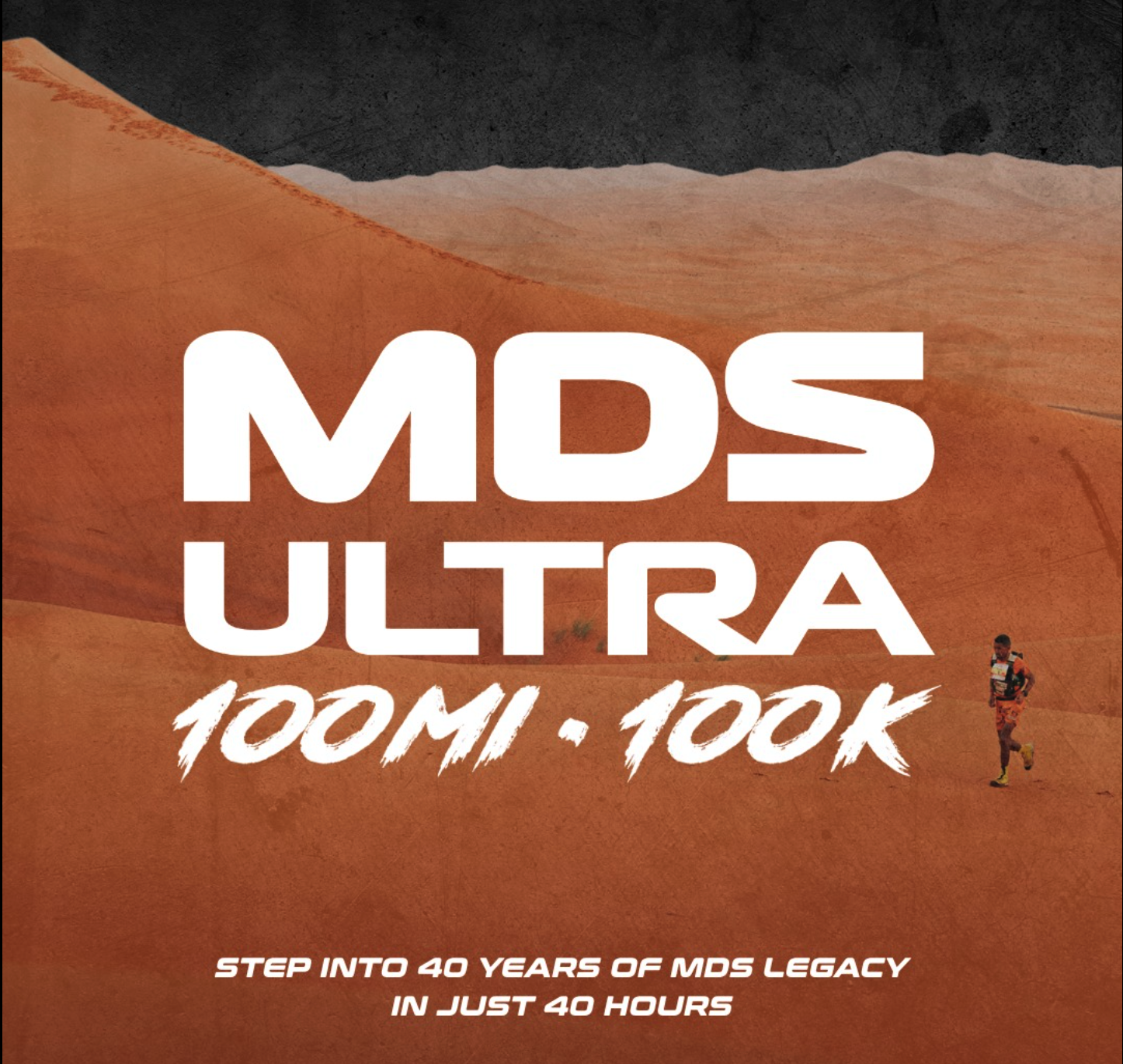
One race, two distances, the iconic 100-miles or 100km’s. You choose the distance, and, you don’t even have to decide until mid-race… At around 60 km’s (tbc), you’ll face a moment: choose100K or push through to the full 100-miles.
Photo by Ian Corless
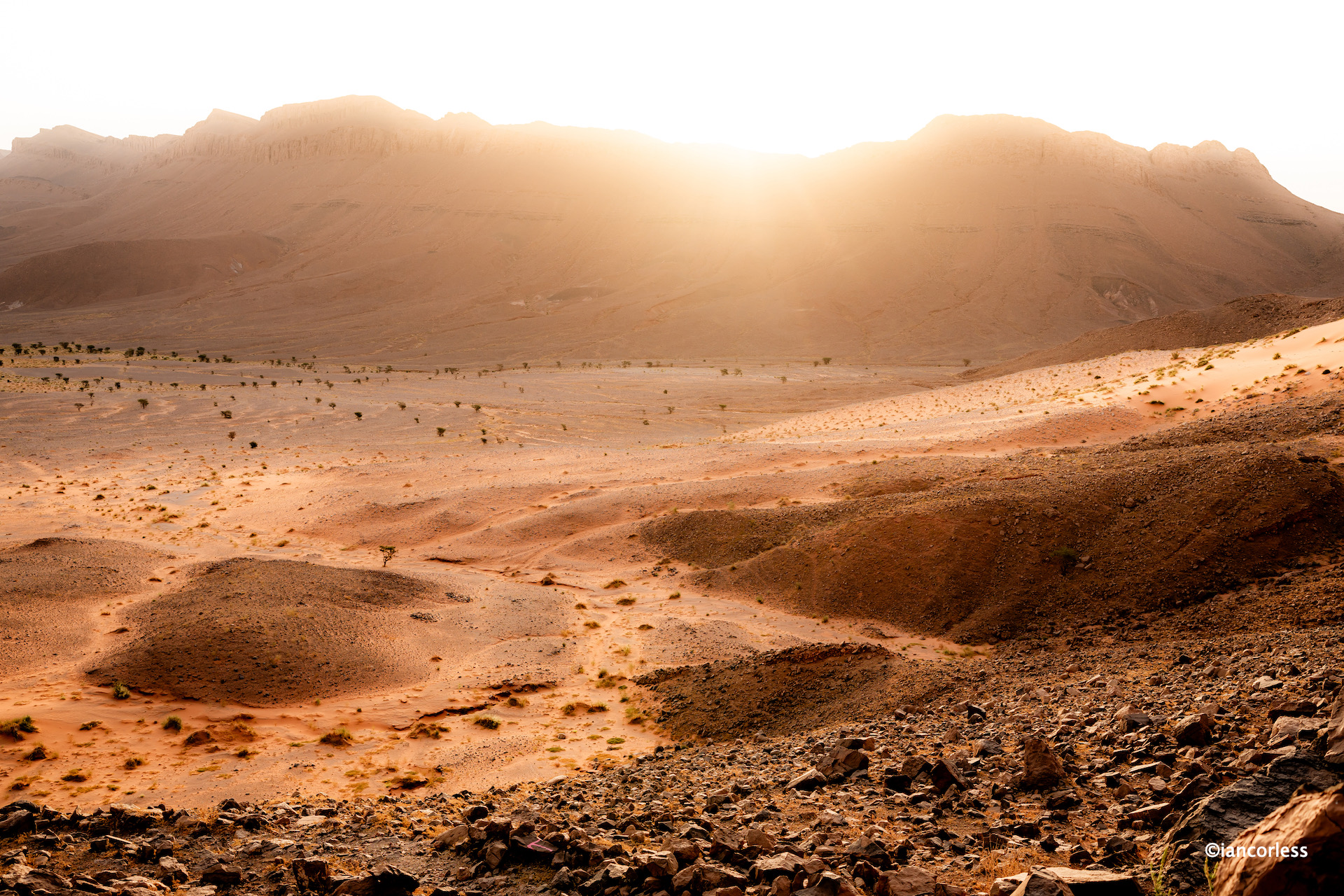
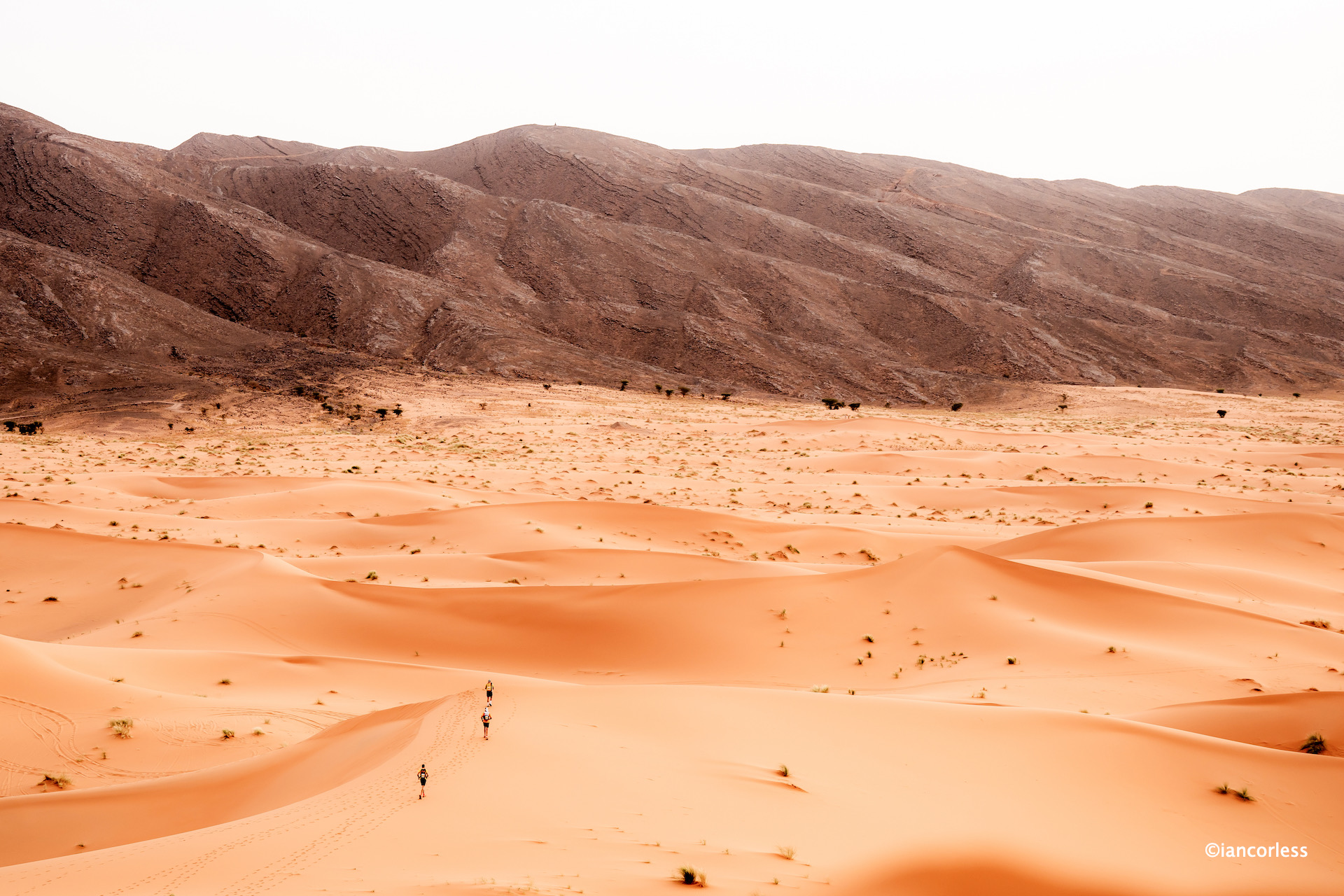
The course is fully marked. You won’t need to navigate. What you will need is focus, patience, and fight. You’ll be moving across the open desert, flatter than the classic MDS route, with firmer, more compact sand underfoot. The terrain will allow for speed, but don’t let that fool you. Weather in the Sahara is unpredictable, especially in January. You could get heat, wind, even rain. And when the sun drops, the temperature will follow. Nights will be cold, and you’ll feel it in your bones.
Photo by Ian Corless
This is self-sufficiency in its purest form. You carry your own food, survival kit, and race gear. Water is provided at aid stations every 10 km’s, and every 30 km’s, you’ll reach a life base: a checkpoint to rest, refuel, seek medical support, or just sit in silence for a moment. But no outside help is allowed. No pacers. No spectators. Just you and the desert, on your terms.
Photo by Ian Corless
The race begins with your arrival in Morocco on January 9 2026. You’ll be transferred to a hotel where the countdown begins. The next day, the technical briefing will cover everything: your gear, the course, the conditions, the risk, and the reward. Then, on January 11, you’ll be taken deep into the Sahara for the start. No frills. No countdown show. Just the wind, the sand, and the clock ticking. You have 40-hours to finish. Whether you run 100 km’s or 100-miles, that’s the window. What happens inside that window will stay with you for the rest of your life.
Photo by Ian Corless
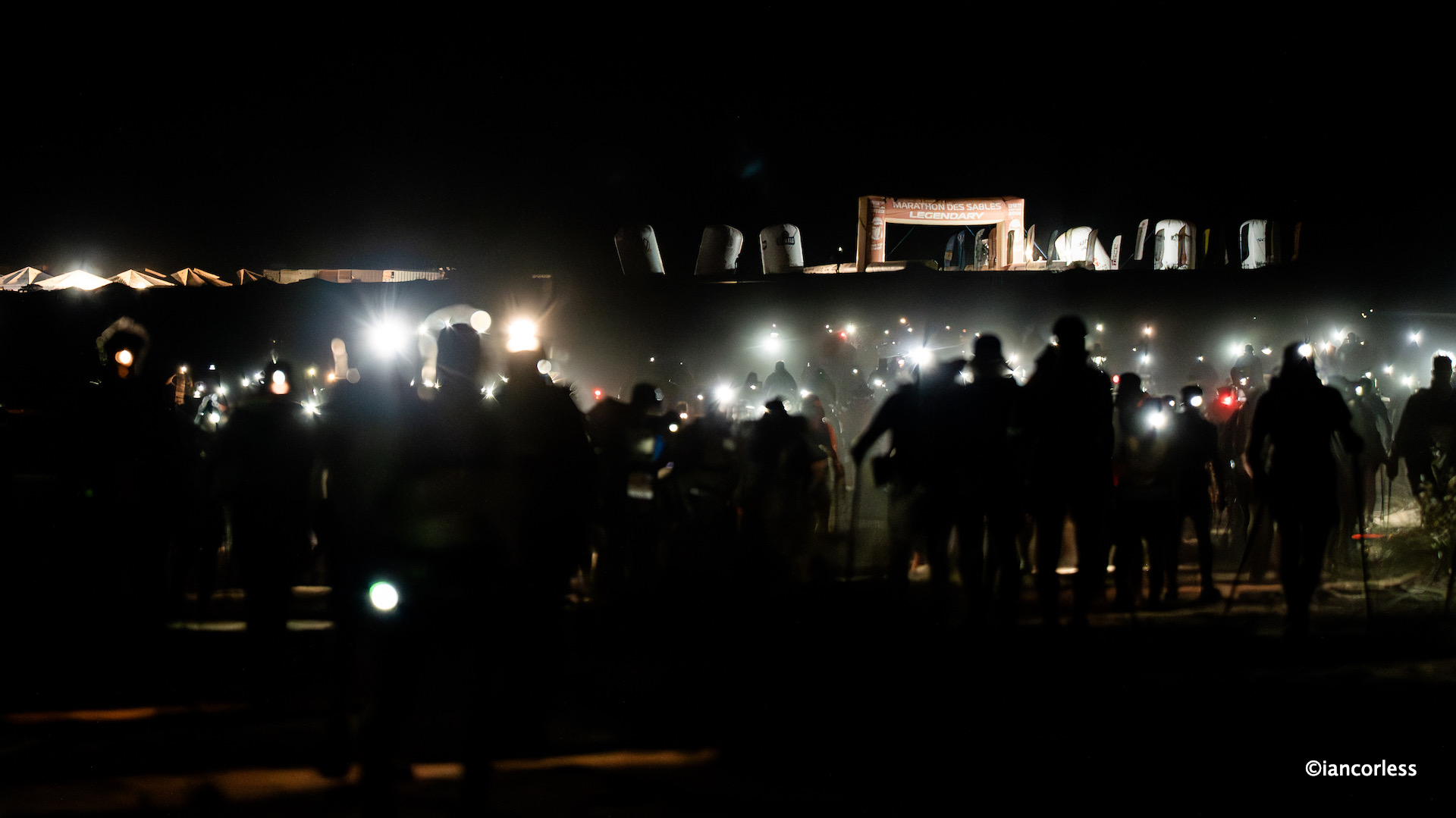
As the race unfolds, time stretches and bends. The sun scorches your back, the wind whistles across the flats, and at night, under the stars, the desert becomes silent and infinite.
Photo by Ian Corless
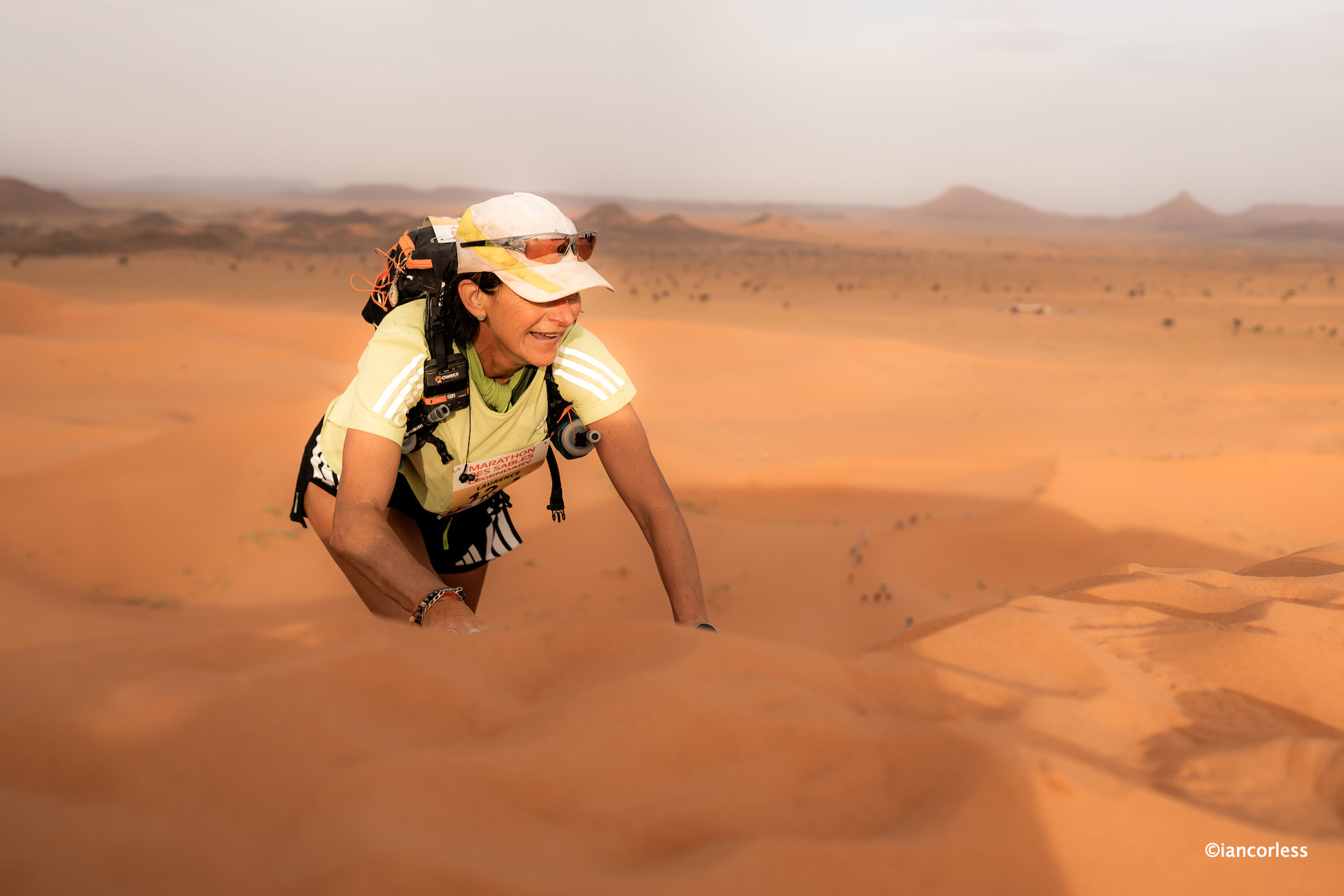
Somewhere out there, maybe after 70K, maybe after 90, your mind will try to pull you backwards. That’s when you’ll know you’re doing something real. When your legs ache and your thoughts get loud, you’ll understand what makes this event different. This isn’t just an ultra. It’s a rite of passage.
Photo by Ian Corless
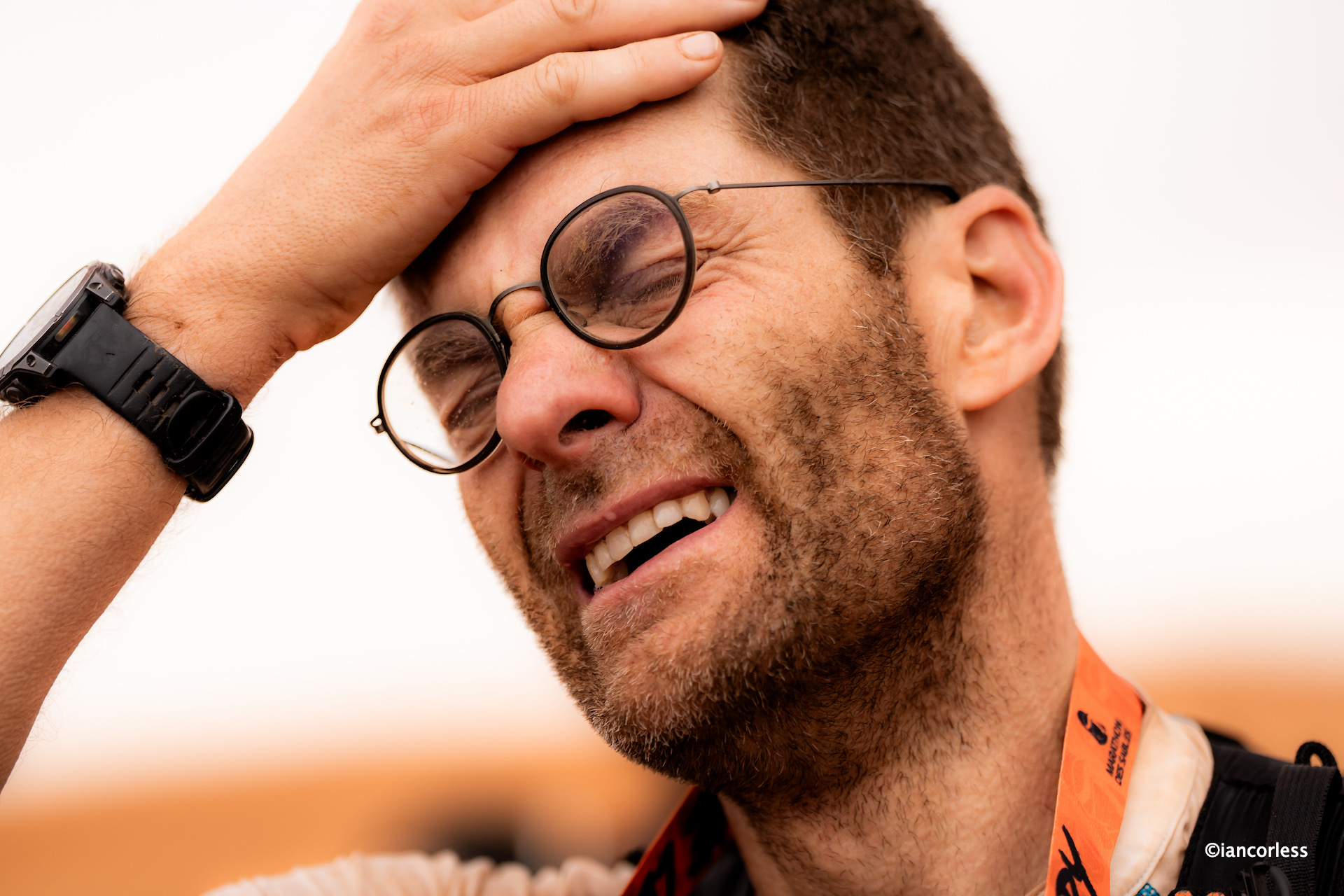
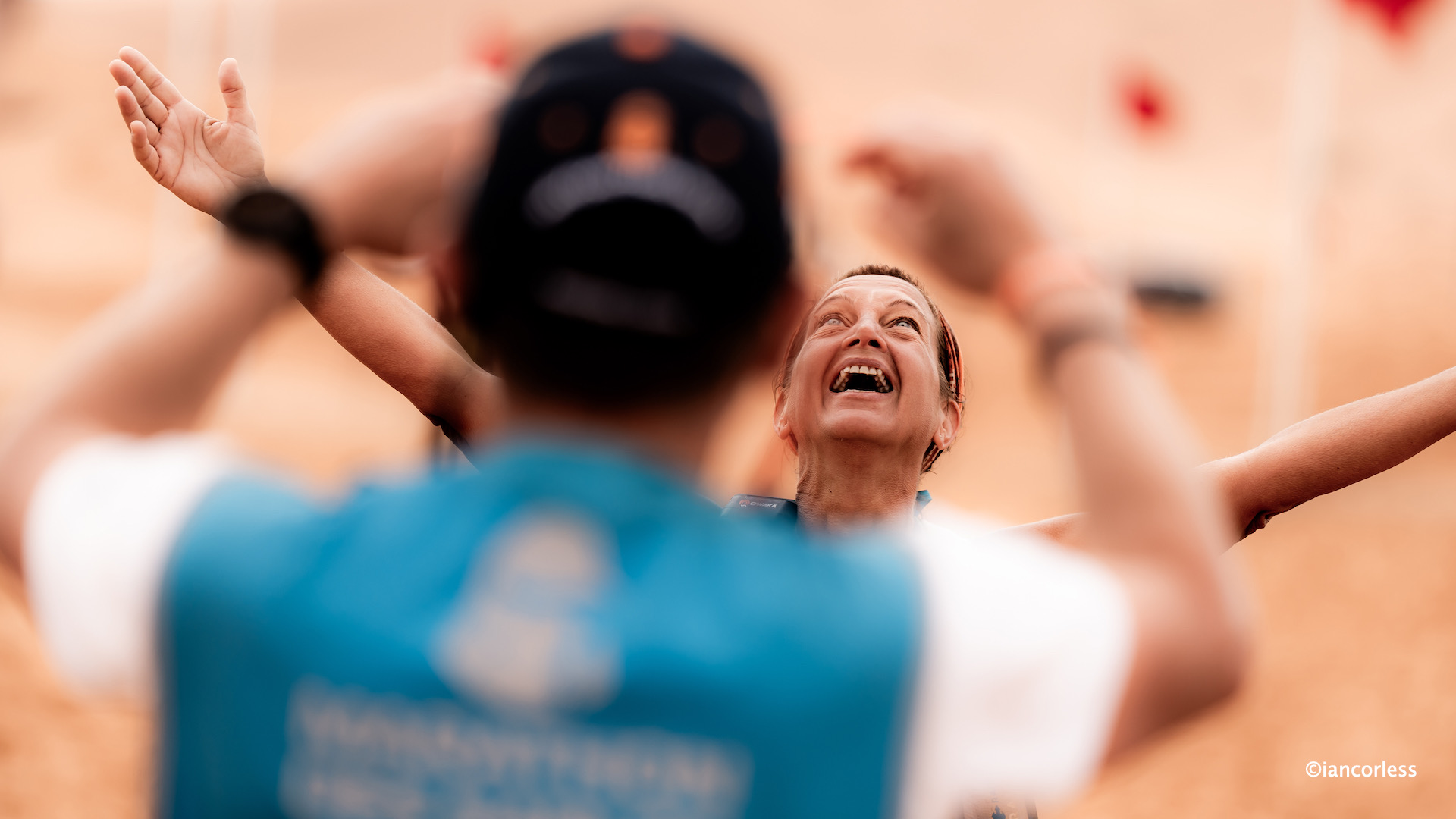
Cross the finish line, and the pressure falls away. You’ll eat real food, sleep in a warm bed, and look around at the other 199 people who know exactly what you just went through. The next day is yours to rest, recover, and celebrate. An awards ceremony and gala dinner mark the end of the journey. You’ll laugh, maybe cry, and raise a glass with strangers who’ve become something more. Then, on January 14, you go back to the world – changed.
MDS Ultra – Morocco is for those who want more from an ultra than just a finish time. It’s for those who don’t need a crowd to run, who are curious about what happens deep into the night, when the course is quiet and the only thing guiding you forward is the sound of your own breath. This race is designed to be accessible and challenging at once. The course is fast and flat. The cut-off is generous. The experience is massive. You don’t have to be a world-class runner to finish. You just have to want it enough.
Photo by Ian Corless
Only 200 runners will be accepted. The entry fee is €1750, but the first 40 to register get a €150 discount. Any previous MDS finisher, regardless of which event, gets €200 off. You can defer your entry for free, and the cancellation policy is flexible to protect you from life’s curveballs. There’s no fine print. No hidden extras. What you see is what you get.
Photo by Ian Corless
This is a return to the roots.
A simple journey.
One course, one finish line, one desert.
No stages.
No shortcuts.
Just the raw, beautiful brutality of a long-distance run through one of the most iconic landscapes on Earth.
Photo by Ian Corless
This isn’t about medals or social media moments. It’s about becoming part of something that can’t be manufactured, a moment of stillness inside suffering, a glimpse of clarity inside chaos.
Photo by Ian Corless
Be a pioneer. Be part of the very first MDS Ultra. The stories from this race will be the ones others reference for years to come. In a world of overproduced, overhyped events, this is something real. The desert doesn’t care who you are. It doesn’t care what you’ve done before. But if you show up, if you commit, it will show you something few others will ever experience.
Photo by Ian Corless
Become a legend. Sign up now. The desert is waiting.
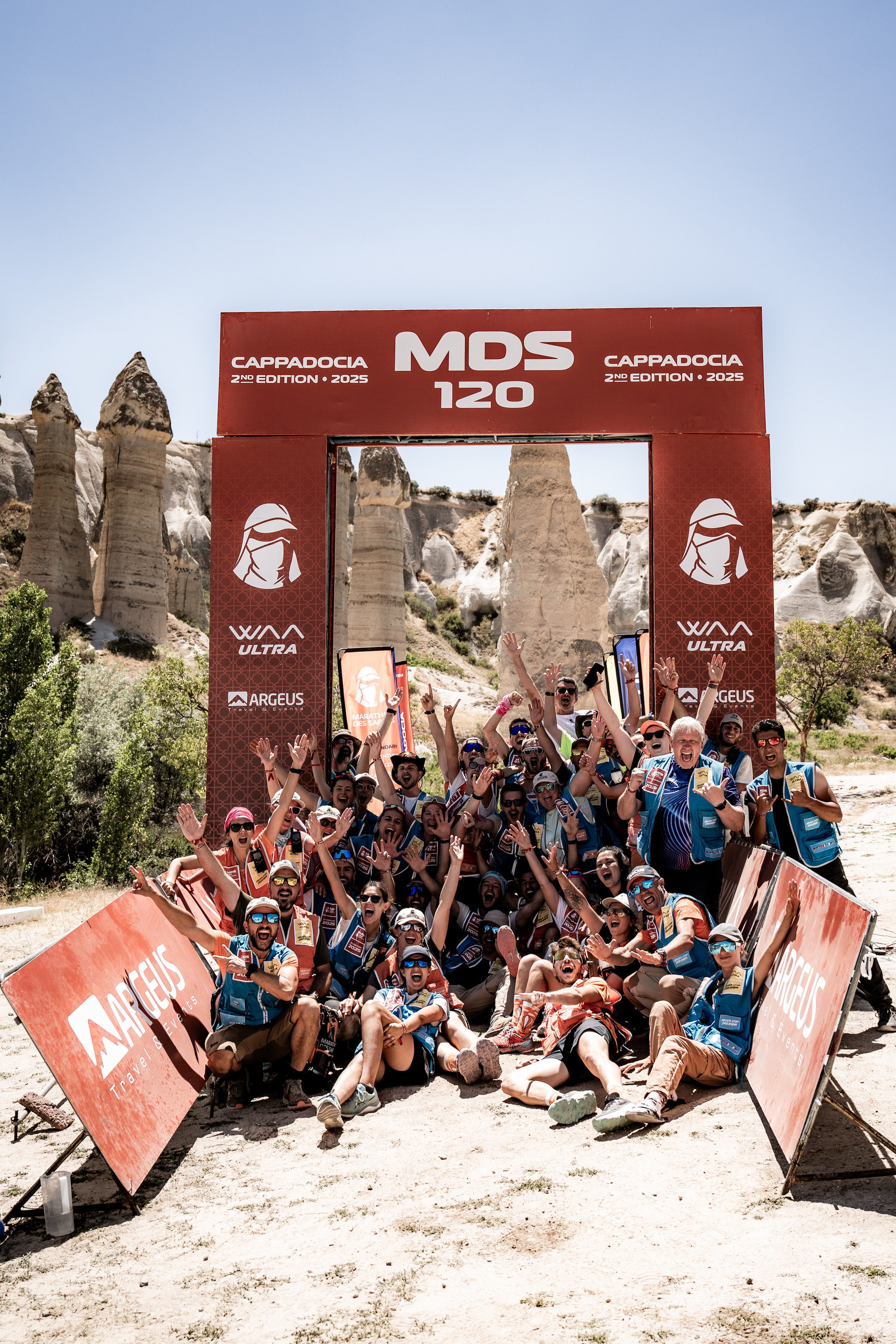
There are races that test your legs. There are others that test your mind. Then there’s the MDS 120 Cappadocia, a four-day,3-stage footrace that breaks down and rebuilds runner’s in one of the most staggering landscapes on Earth.
The second edition of this extraordinary event was nothing short of epic. It fused the spirit of ultra-running with the magic of deep time, where each participant pushed through heat, fatigue, and self-doubt and yet felt part of something much larger, something ancient, something eternal.
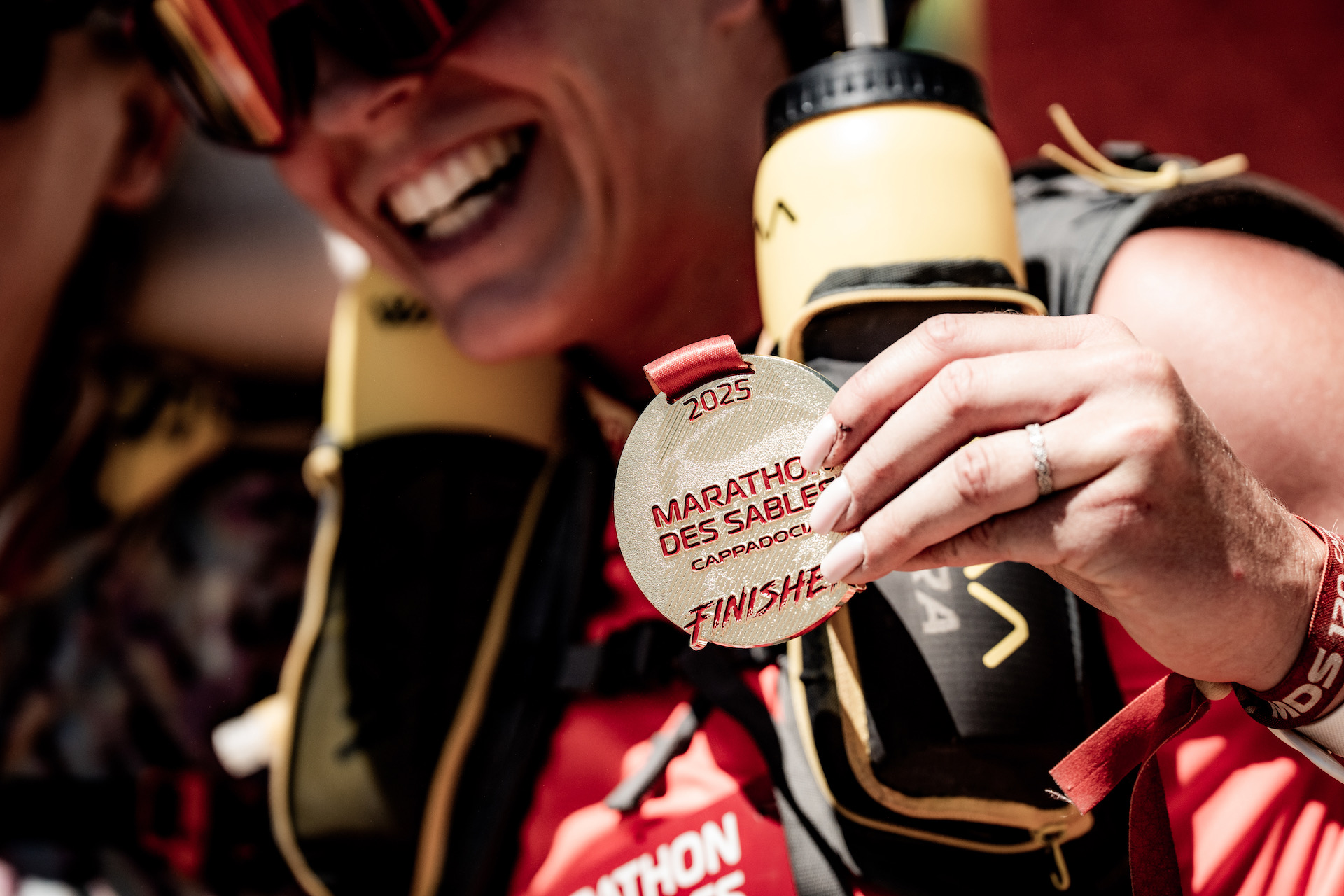
Cappadocia is not a place that’s easily explained. Words fall short, pictures get close, but to run through it, that’s where the real story begins. From the first light of dawn to the finish line and the glow of the medal, the 2025 MDS 120 Cappadocia offered an experience that was brutal, beautiful, and of course, unforgettable.
Runners arrived from across the globe with 25 countries represented to stand on the start line beneath towering rock formations that look like they belong on another planet. With female participation at a record 62%!
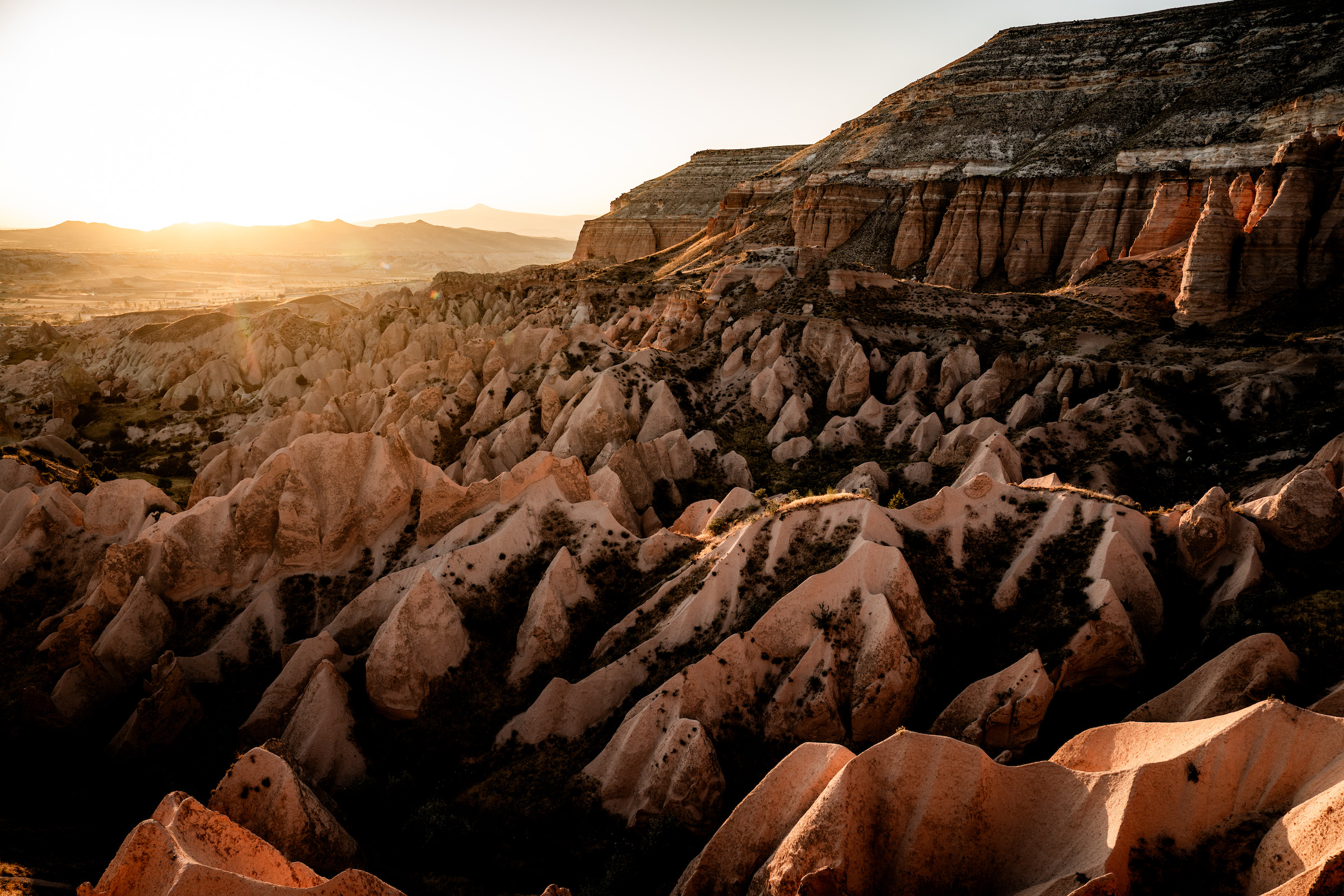
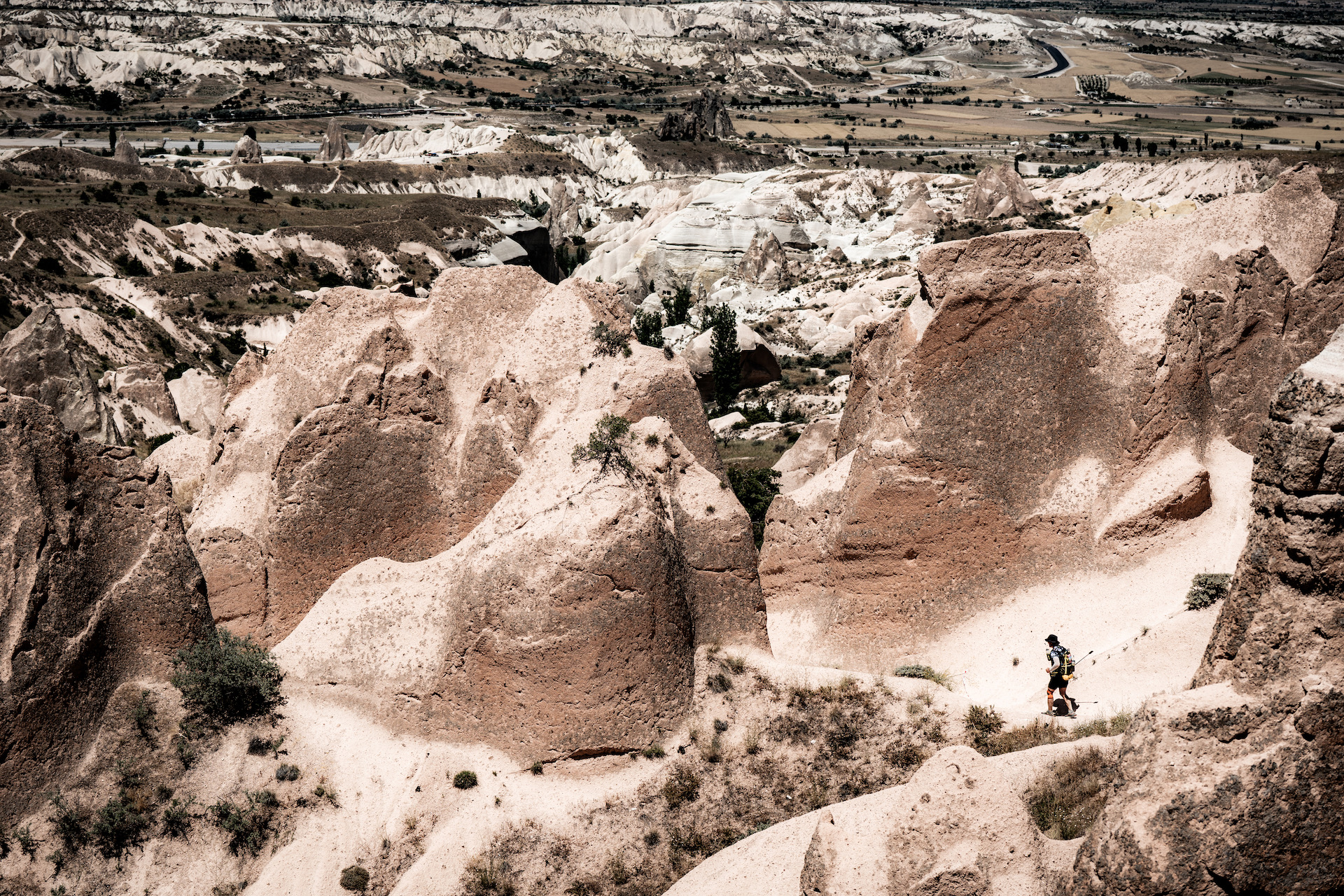
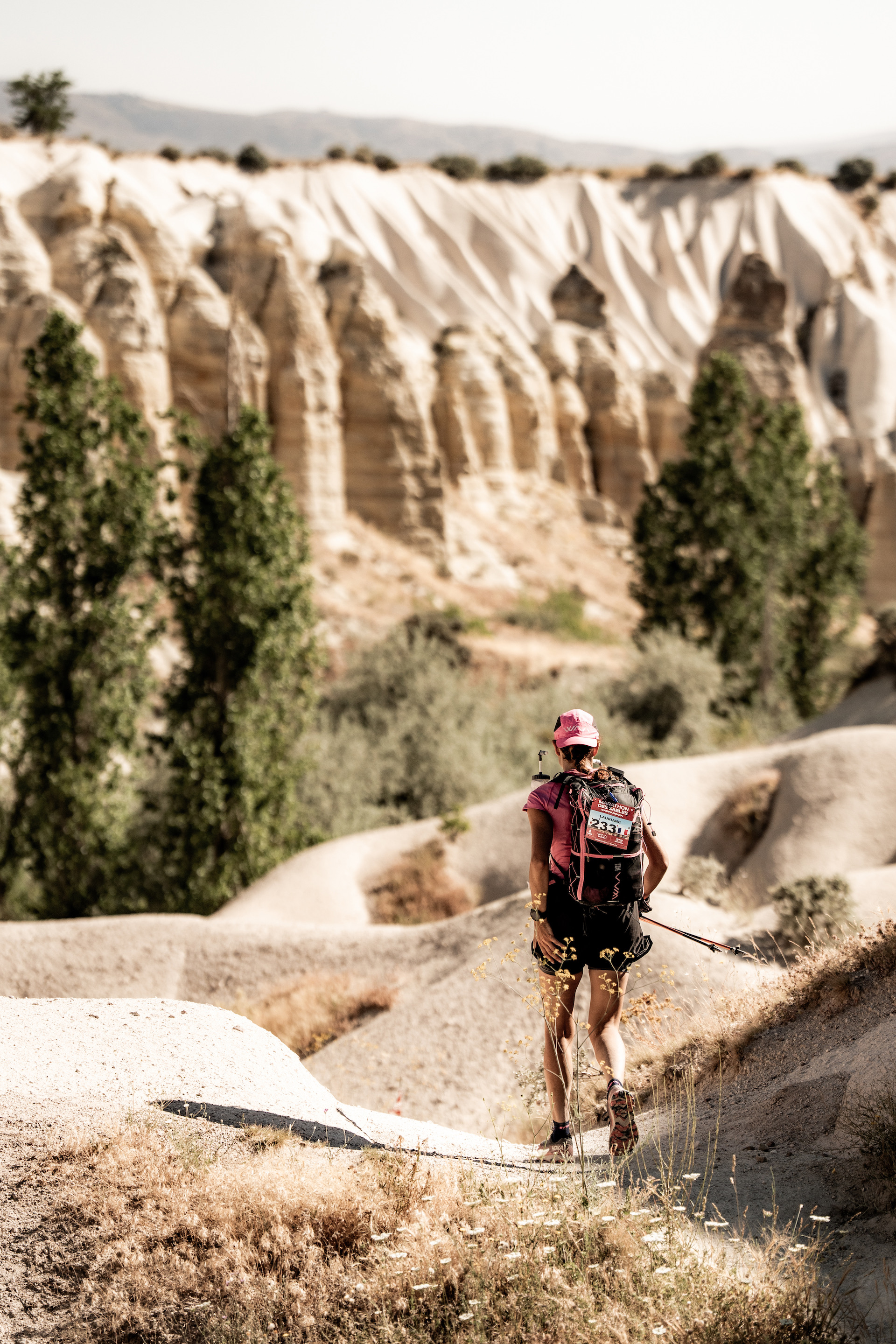
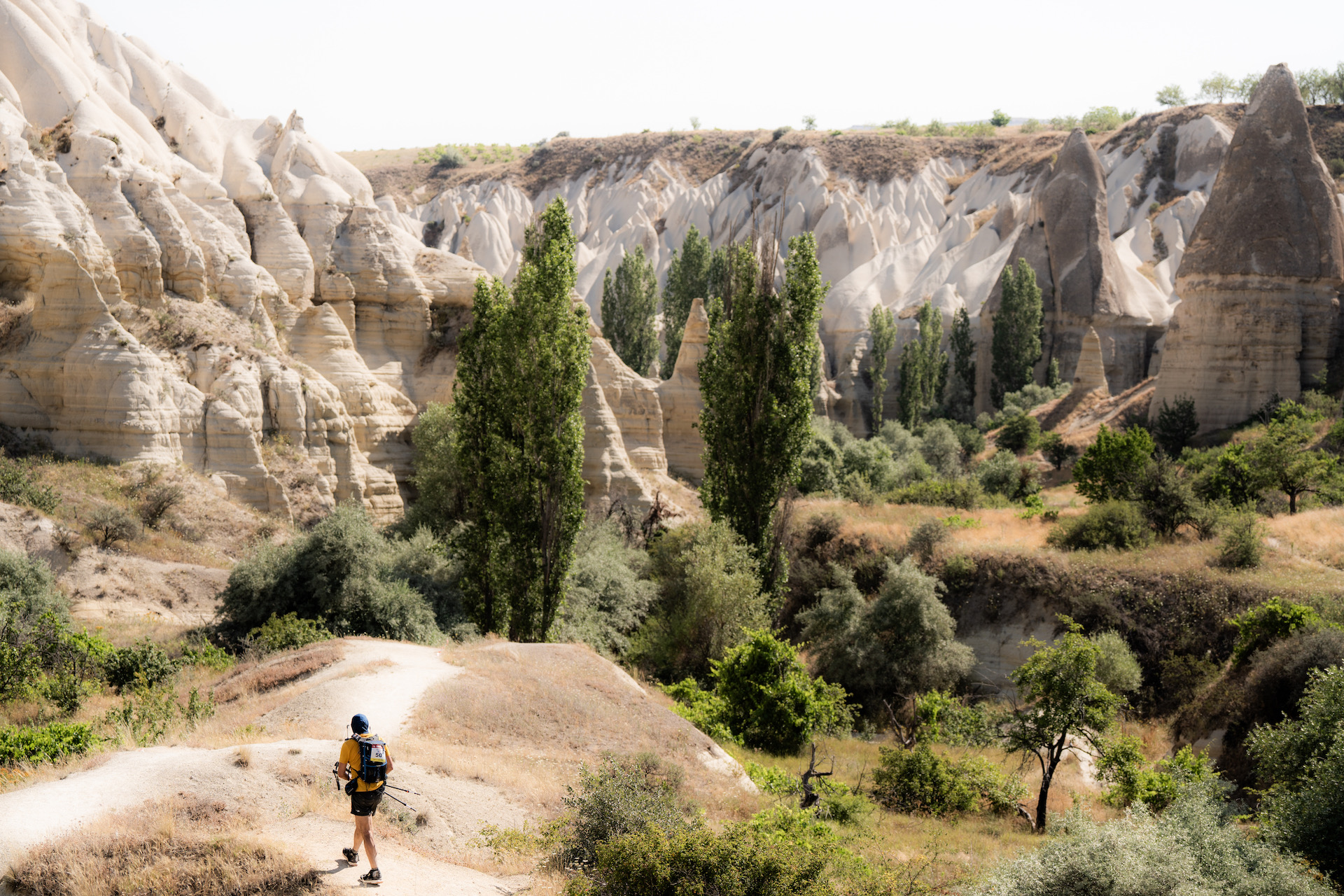
Trails cut through a high-altitude dreamscape where volcanoes once erupted, empires rose and fell, and entire civilisations carved homes into the rock. To run here is to move through living history, a living museum of geology, culture, and time itself. Cappadocia is the kind of place that feels mythic. Its valleys have names like Love, Rose, and Red.
The format of the race was designed to challenge runners of all levels while still demanding serious endurance. The full race spanned up to 120 kms over three stages, spread across four days with one rest day in the middle. Stage 1 and Stage 3 were the same for all runners, but Stage 2 offered a unique choice: 20, 40, or 60 kms, allowing each participant to tailor their challenge to their ability and ambition. This approach gave the event a powerful sense of inclusivity while preserving the core of what MDS stands for: pushing yourself farther than you thought you could go.
“The terrain, however, had no intention of making anything easy.”
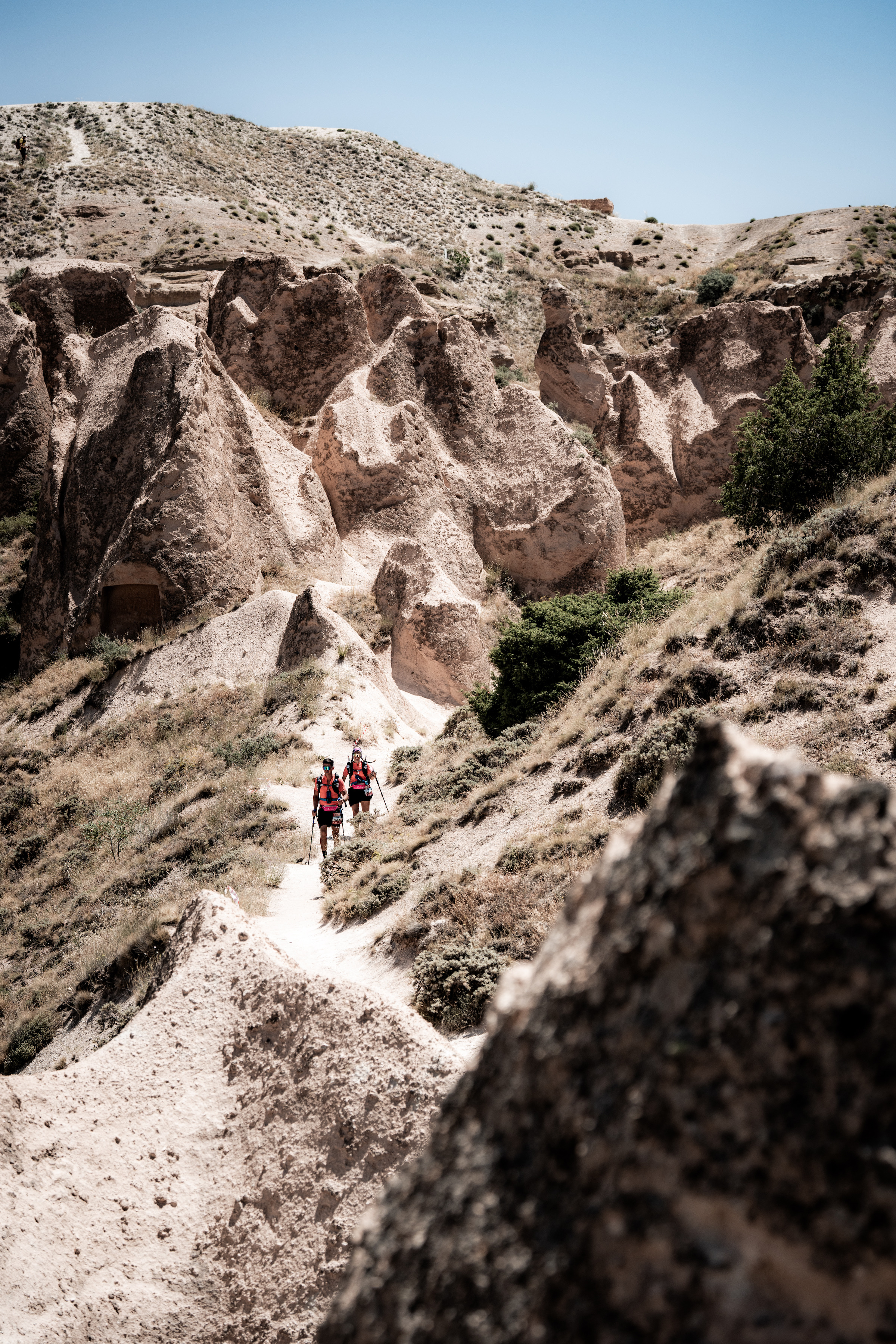
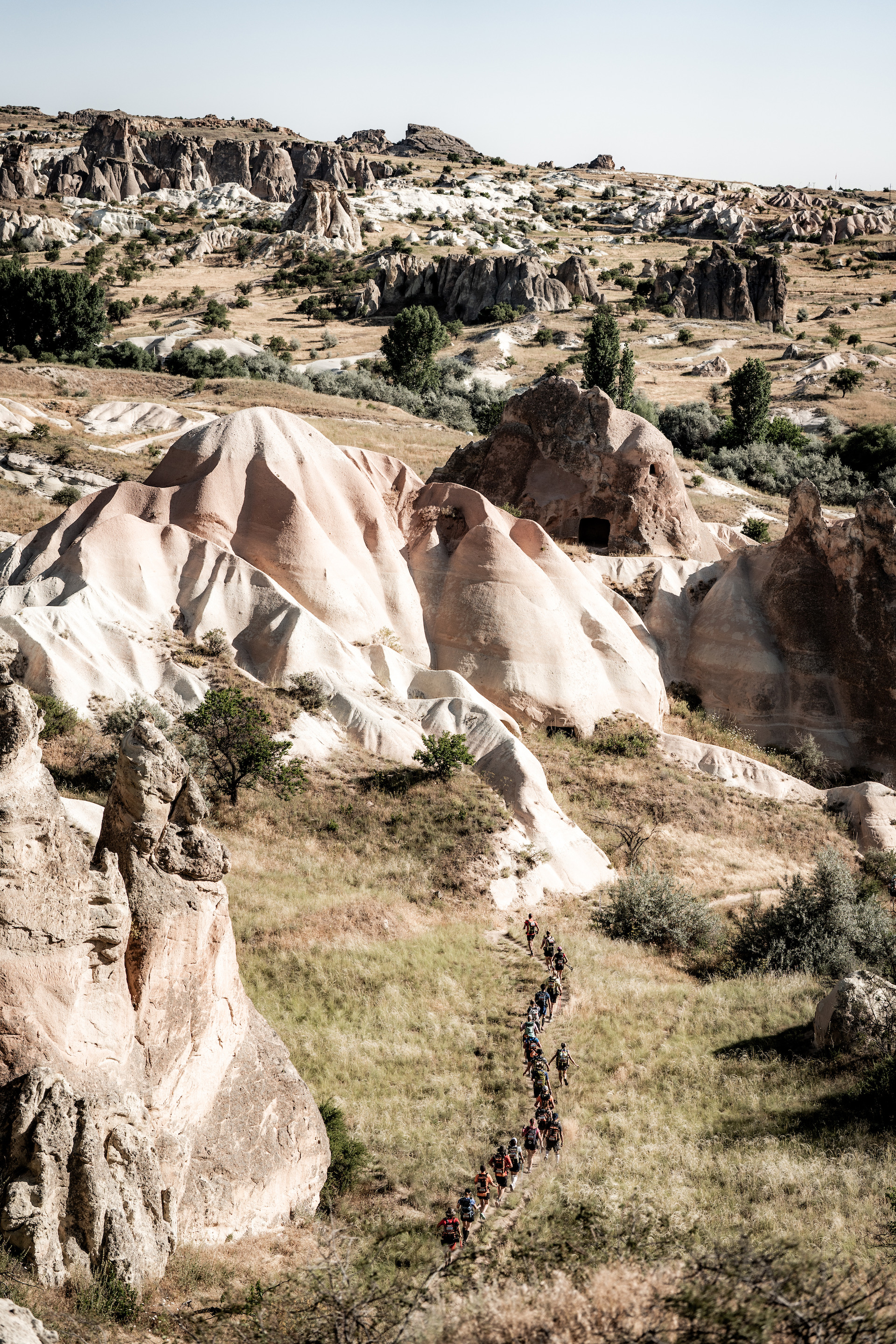
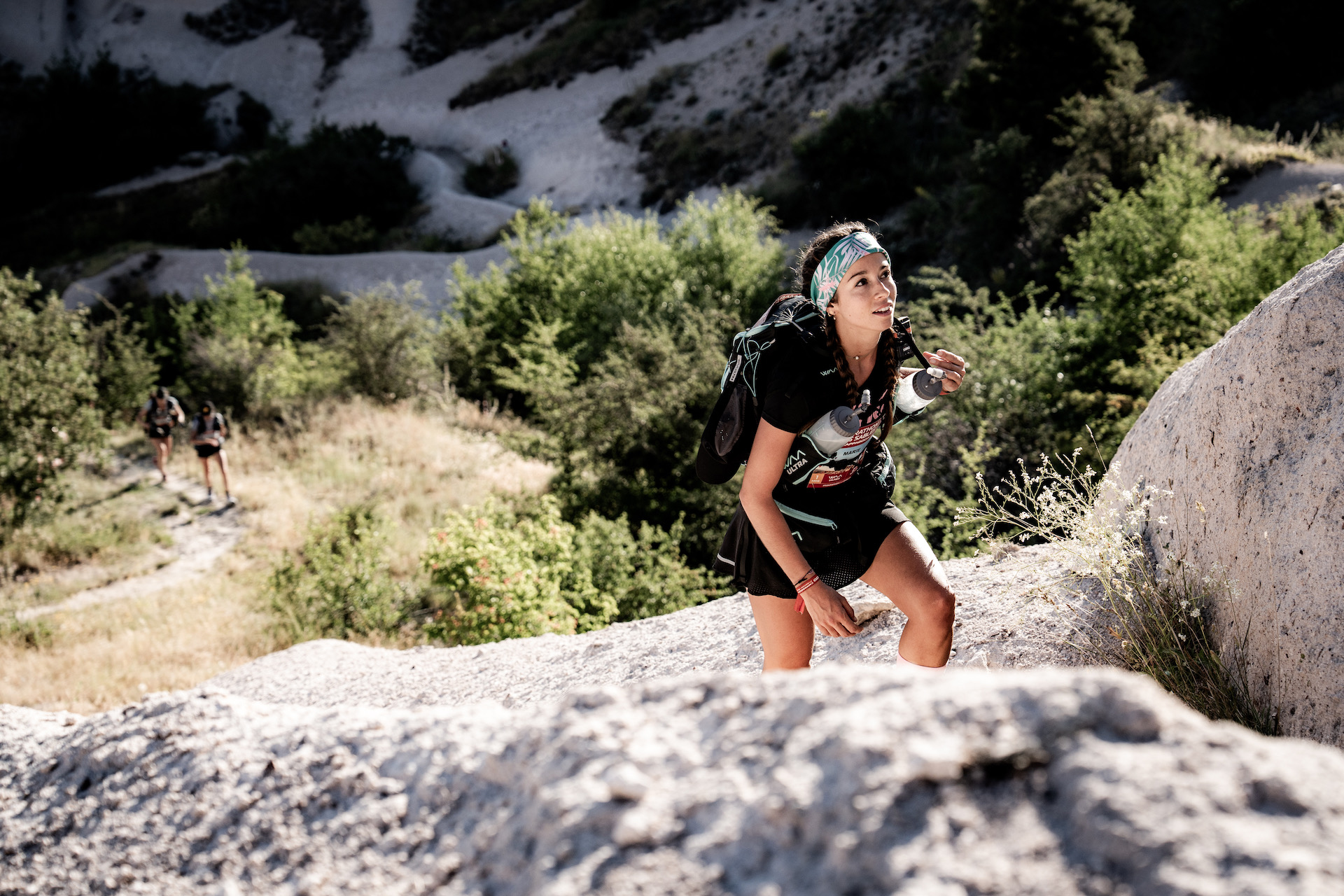
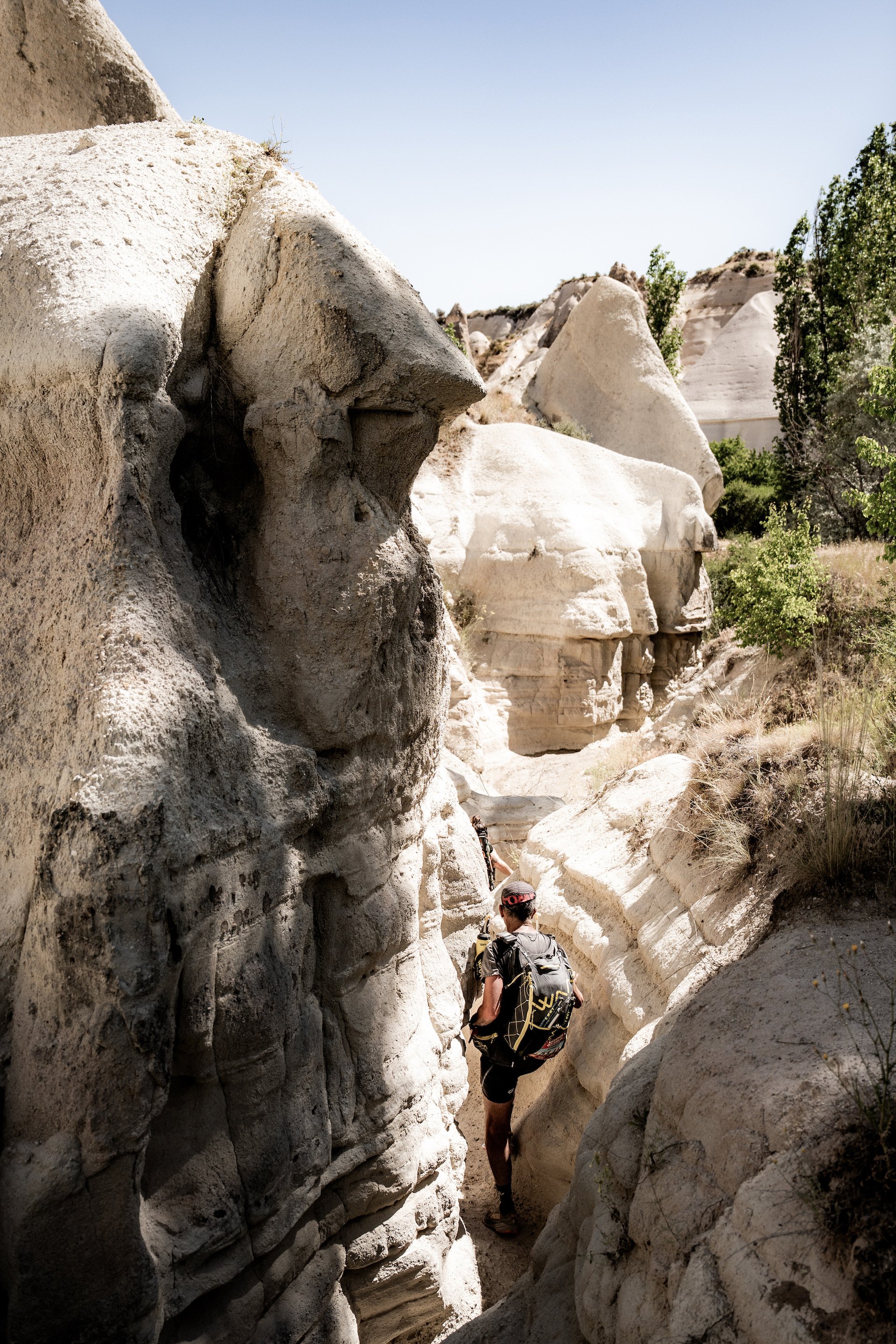
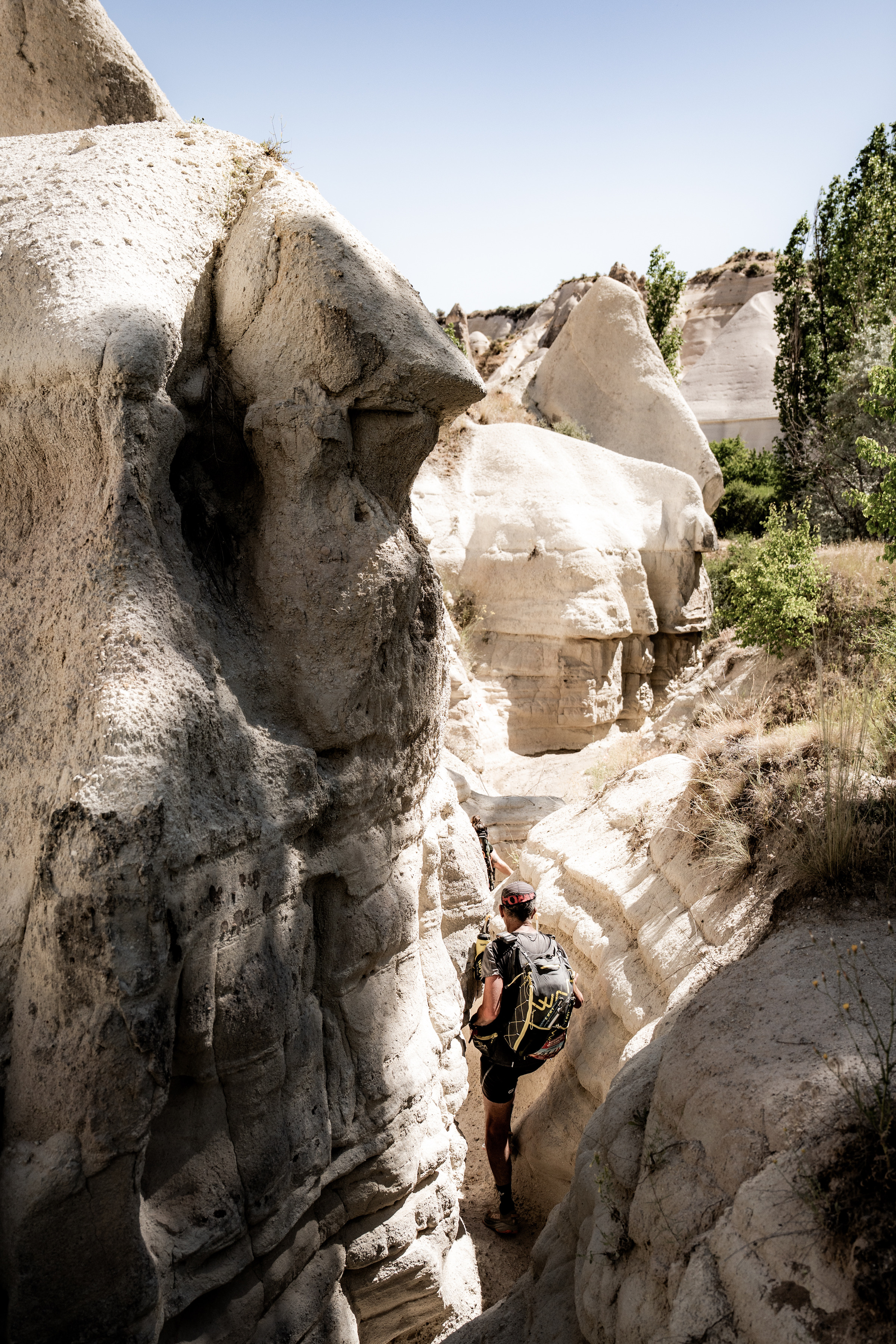
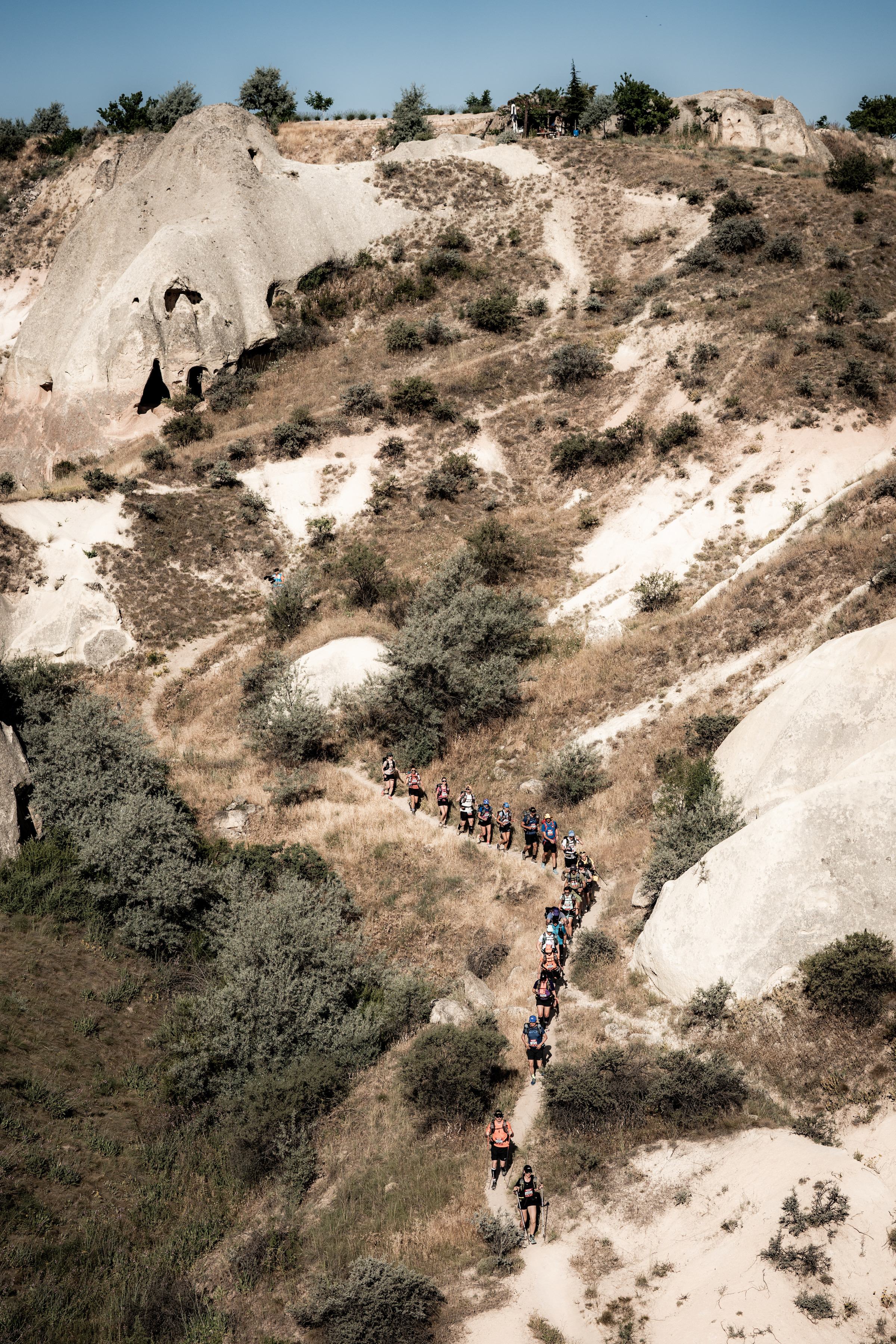
Each day brought something different, a test of legs, lungs, and willpower. Stage 1 began with a baptism of dust and stone, leading runners through twisting canyons and across ancient paths etched into the volcanic rock. The climbs were relentless. The descents were technical and punishing.
Stage 2, whether 20, 40, or the full 60 kms, was a crucible in the heat, sending runners through sun-scorched valleys and across ridges with no shade and no mercy.
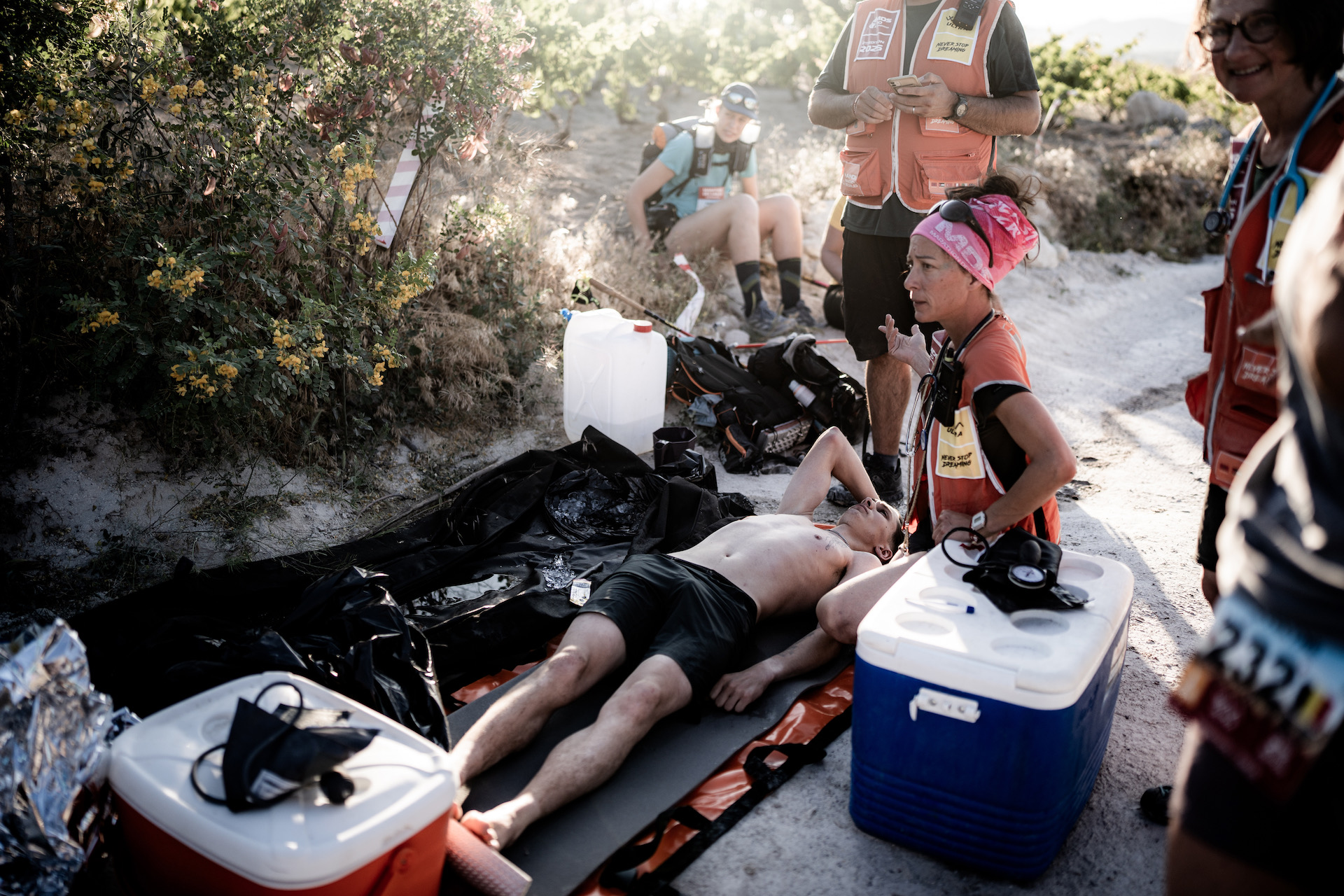
It was here that the Cappadocian sun made itself known. Temperatures soared into the mid-30s Celsius, radiating off the rocks and baking every exposed inch of trail. What began as a scenic adventure quickly became a battle against dehydration, overheating, and sheer exhaustion. The ‘orange’ jackets ensuring that medical protocols and safety for each runner was paramount.
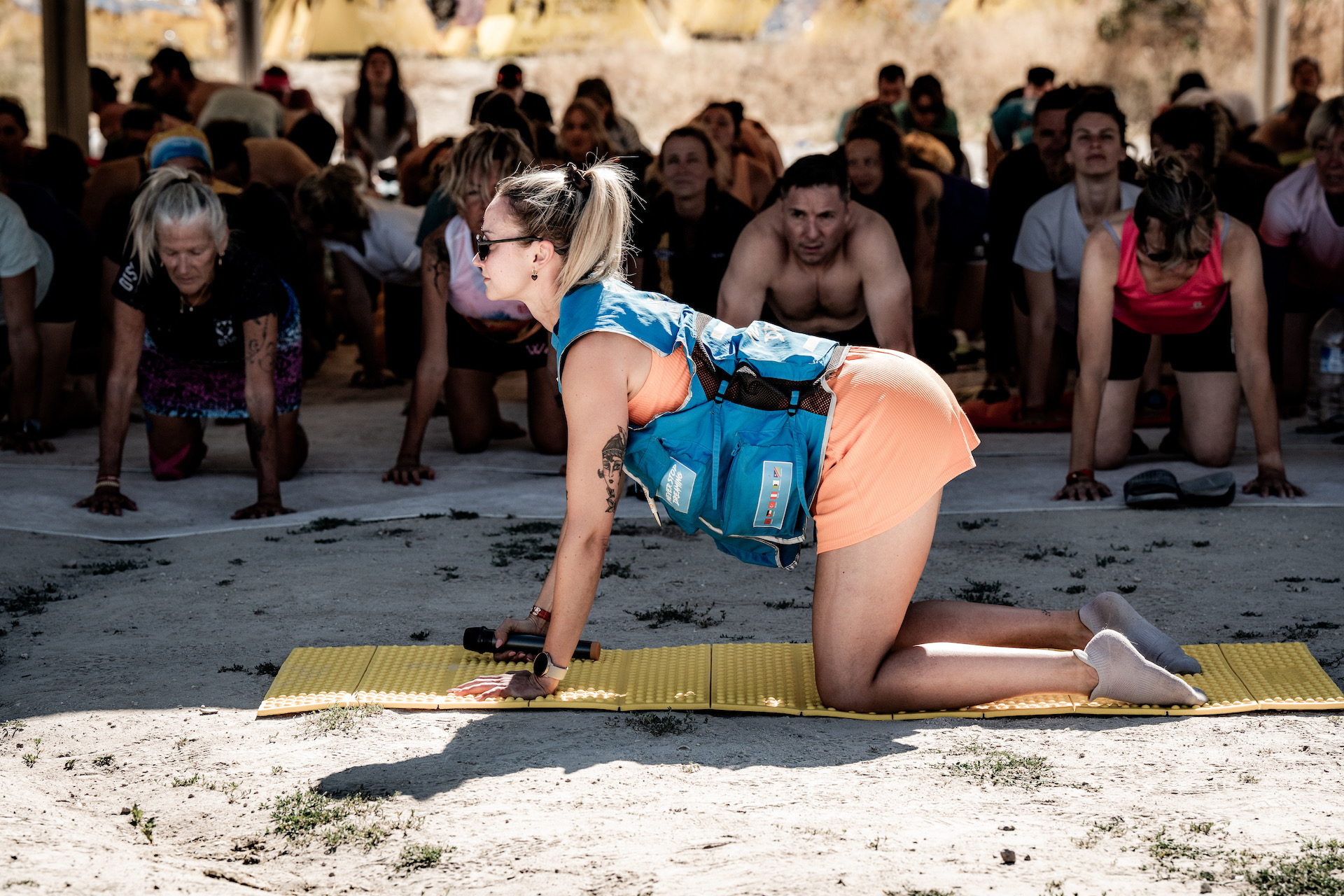
The rest day was welcome, a day to re-charge, relax, eat, sleep and yes, even some yoga was an opportunity to find some zen amongst the chimneys that surrounded bivouac.
Stage 3, the finale, was no victory lap. It was a final reckoning. After the rest day, legs were stiff, feet swollen and raw, but spirits were high.
The route wound past ancient cave dwellings and hidden churches, finishing in a dramatic final stretch that felt more like a pilgrimage than a race. The Love Valley an amazing conclusion to a stunning journey.
Four runners, despite grit and effort, didn’t make it to the end. But in the spirit of MDS, the organization extended them free entry into the 2026 edition, a gesture that underscores the ethos of the race: resilience over results, and community over competition.
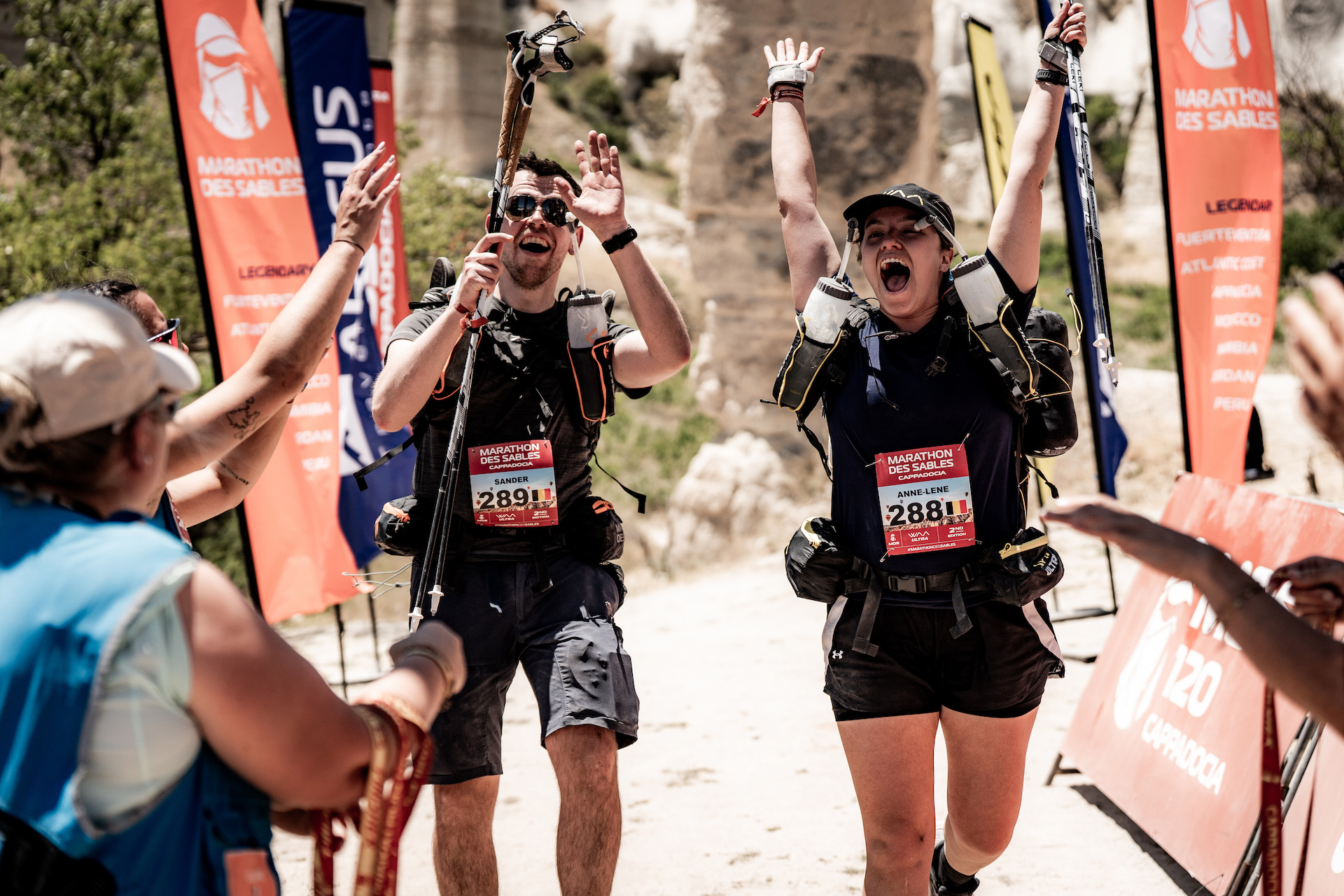
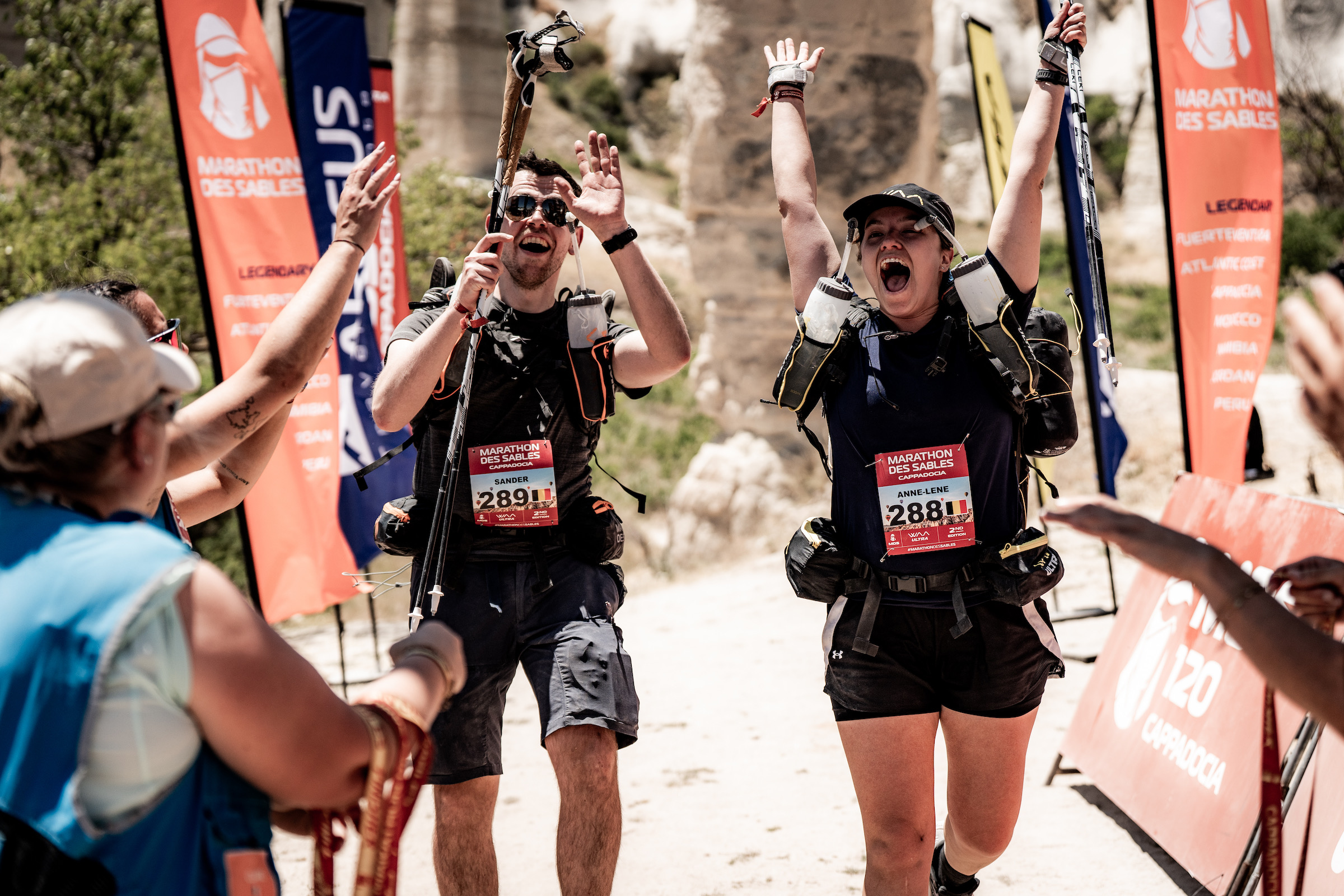
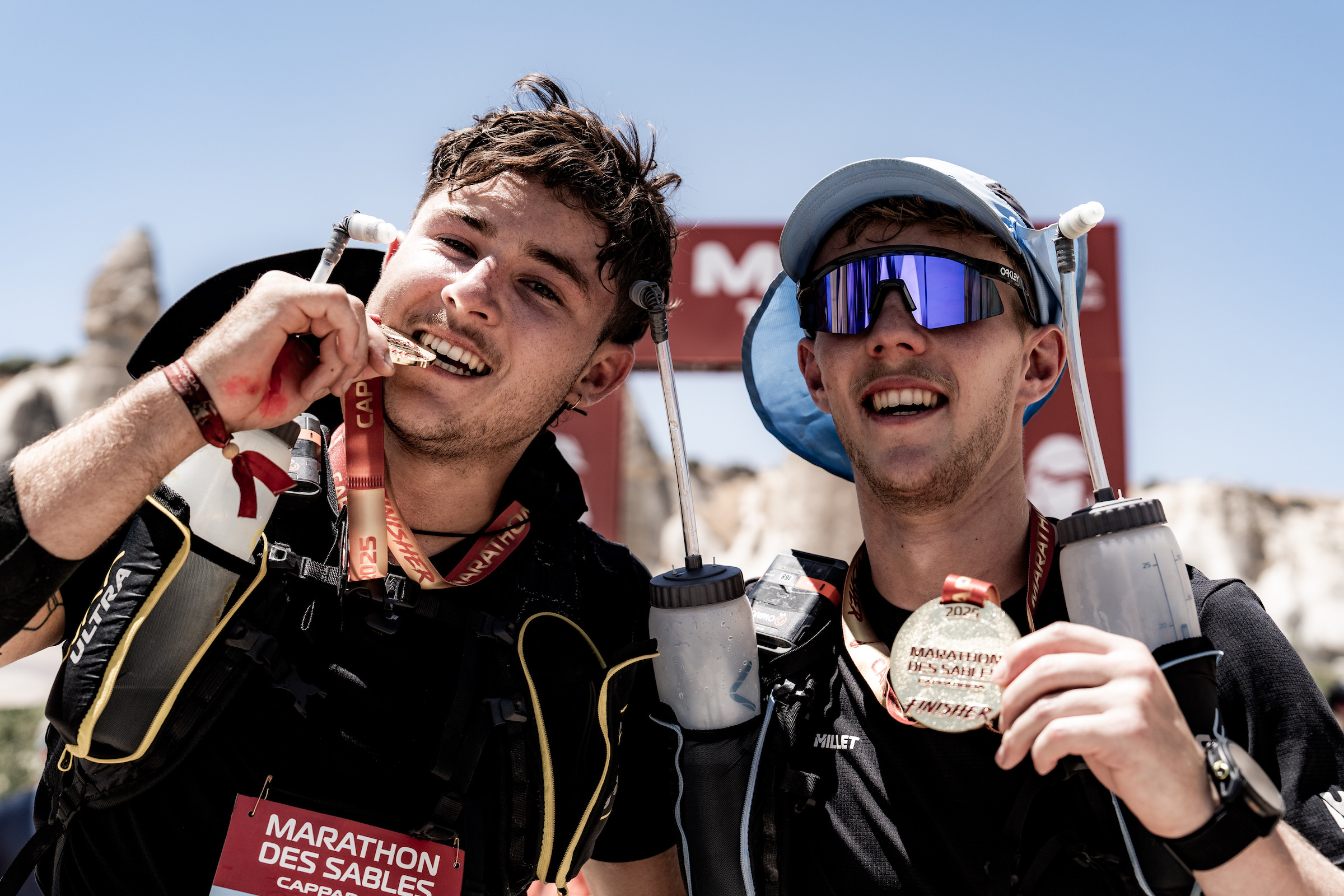
What makes MDS 120 Cappadocia unique isn’t just the landscape or the difficulty. It’s the way it all comes together. The suffering is real, but so is the reward. Every runner finished with a story that could never be captured in a finisher’s medal alone. There were tears, high fives, sunburns, hallucinations, and moments of silence that felt like communion with the land.
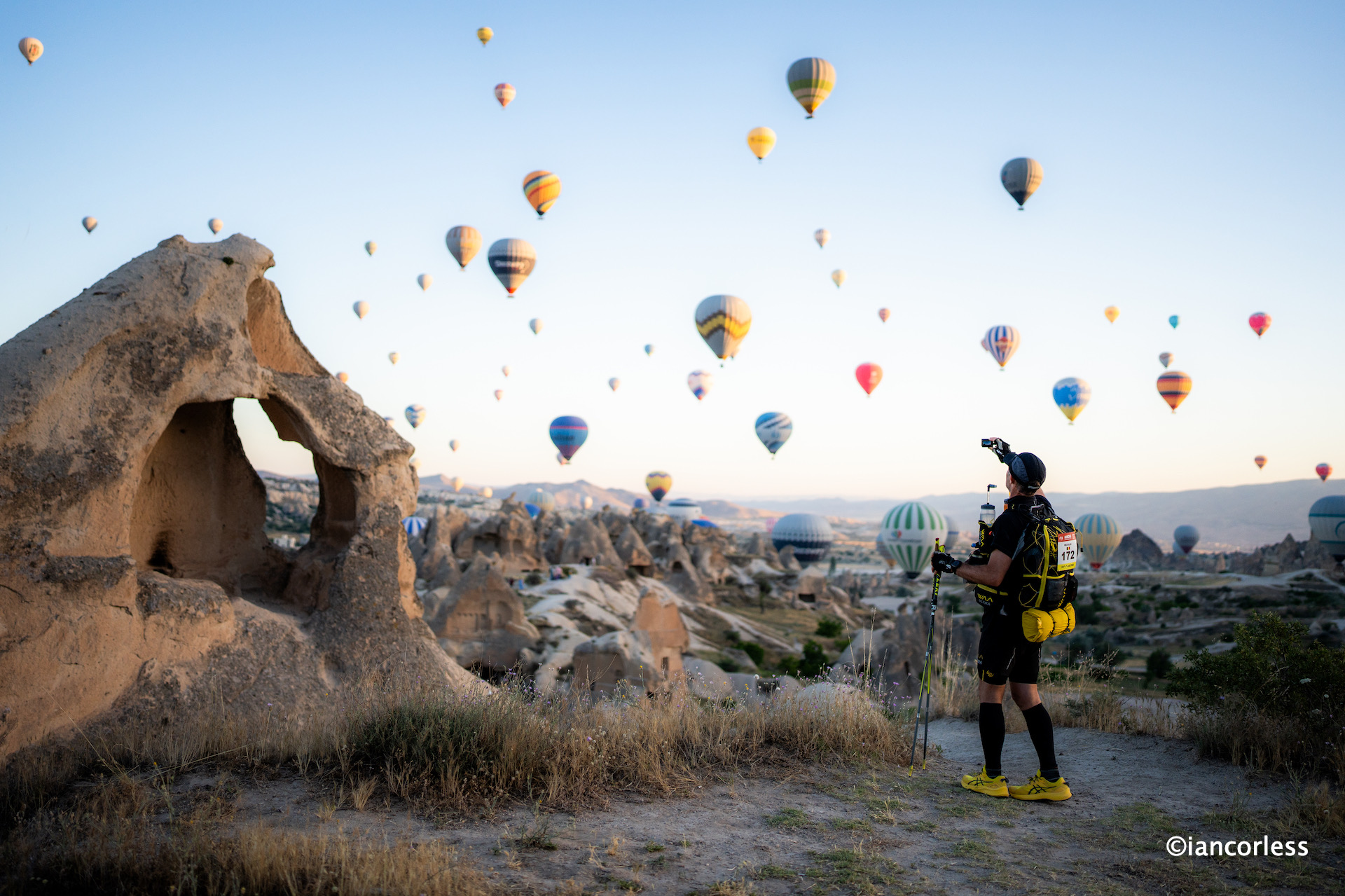
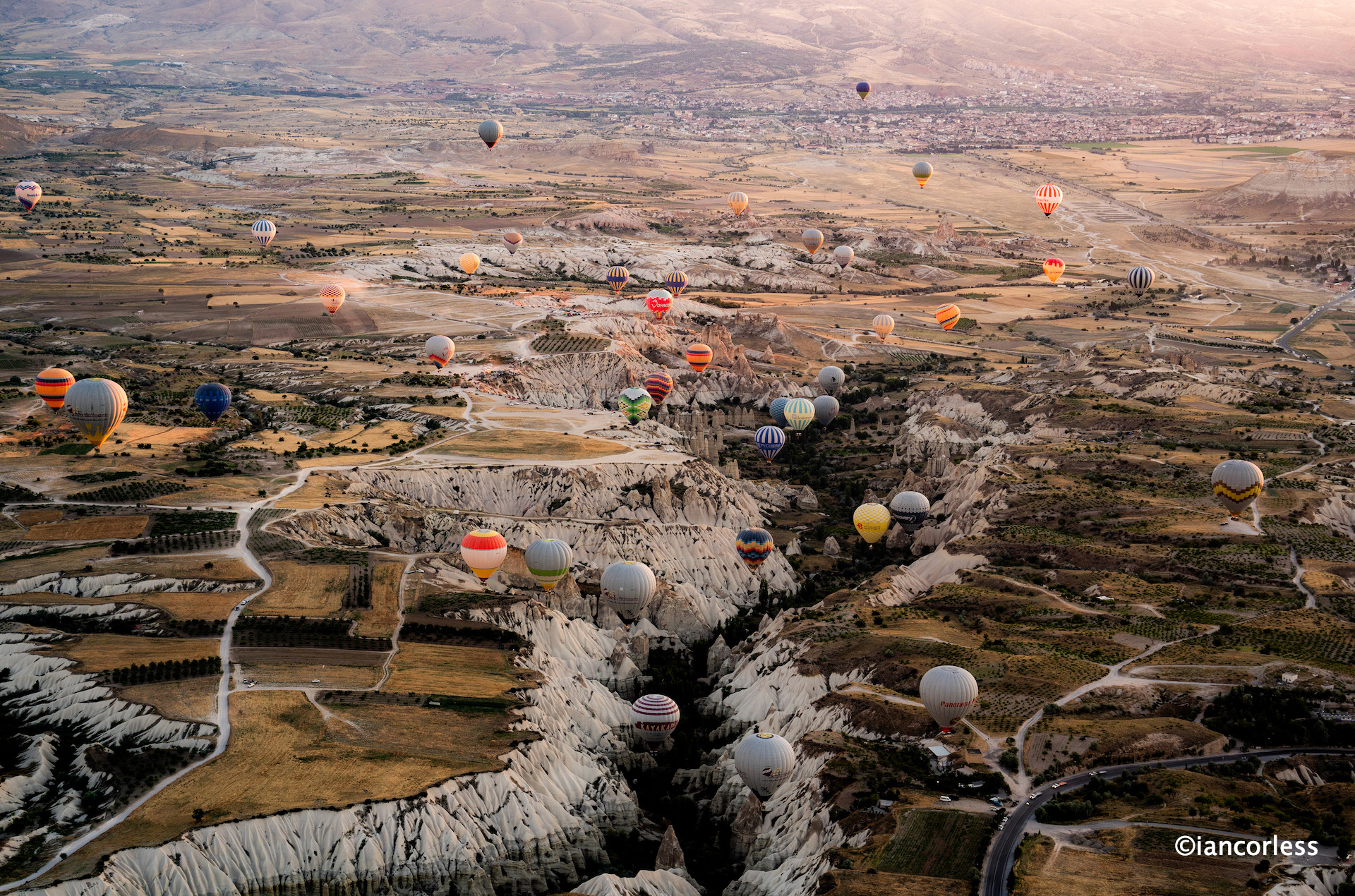
And just when it seemed the adventure was over, the organisers gave one final gift: a sunrise hot air balloon flight on the last morning. It wasn’t a tourist gimmick, it was a floating tribute to everything the runners had just done. Watching the sun rise over the Göreme Valley, suspended in silence above the trails they’d conquered, was a moment that stitched the entire experience together. From above, the rock valleys, the winding trails, the start and finish lines, it all made sense. It was breathtaking.
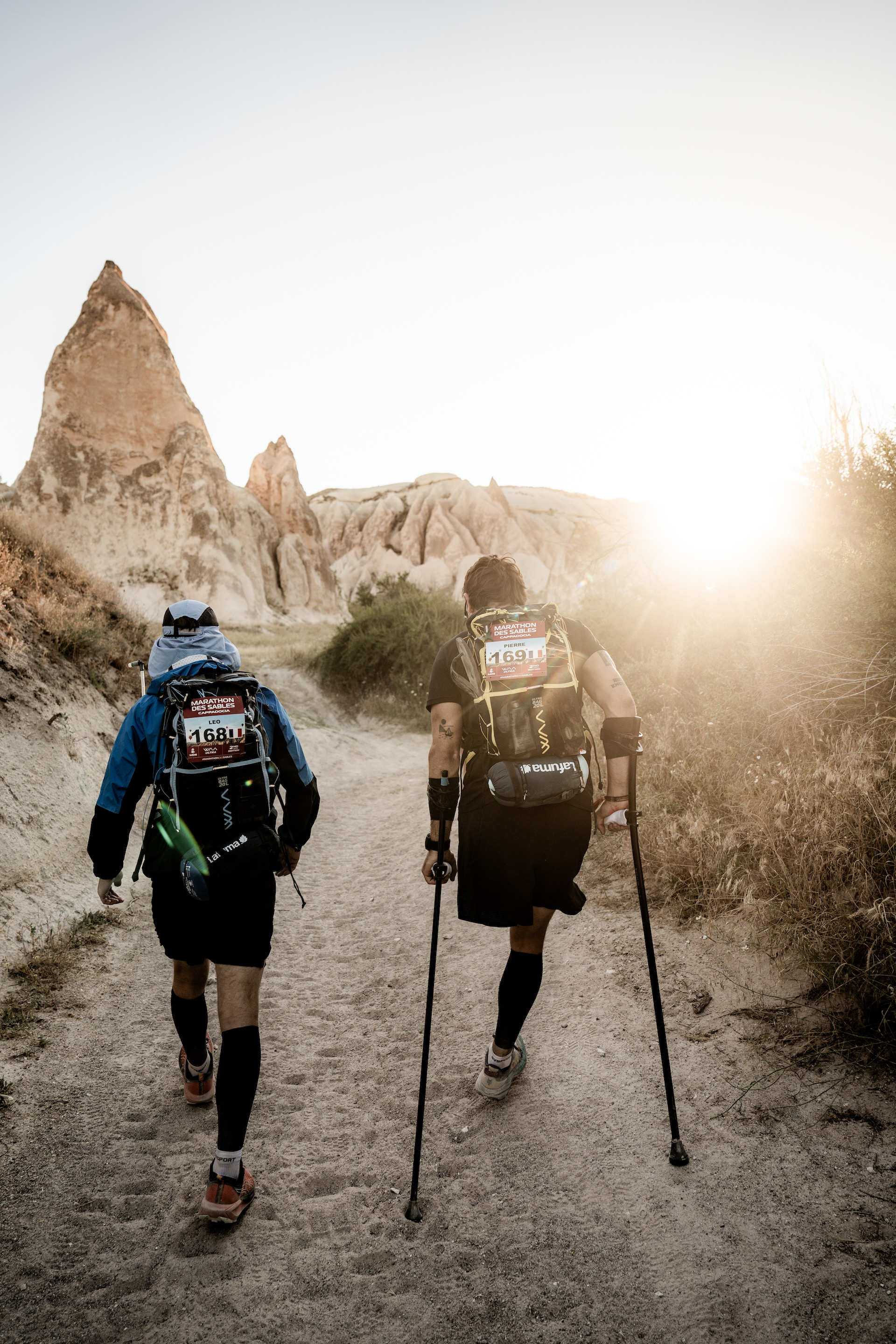
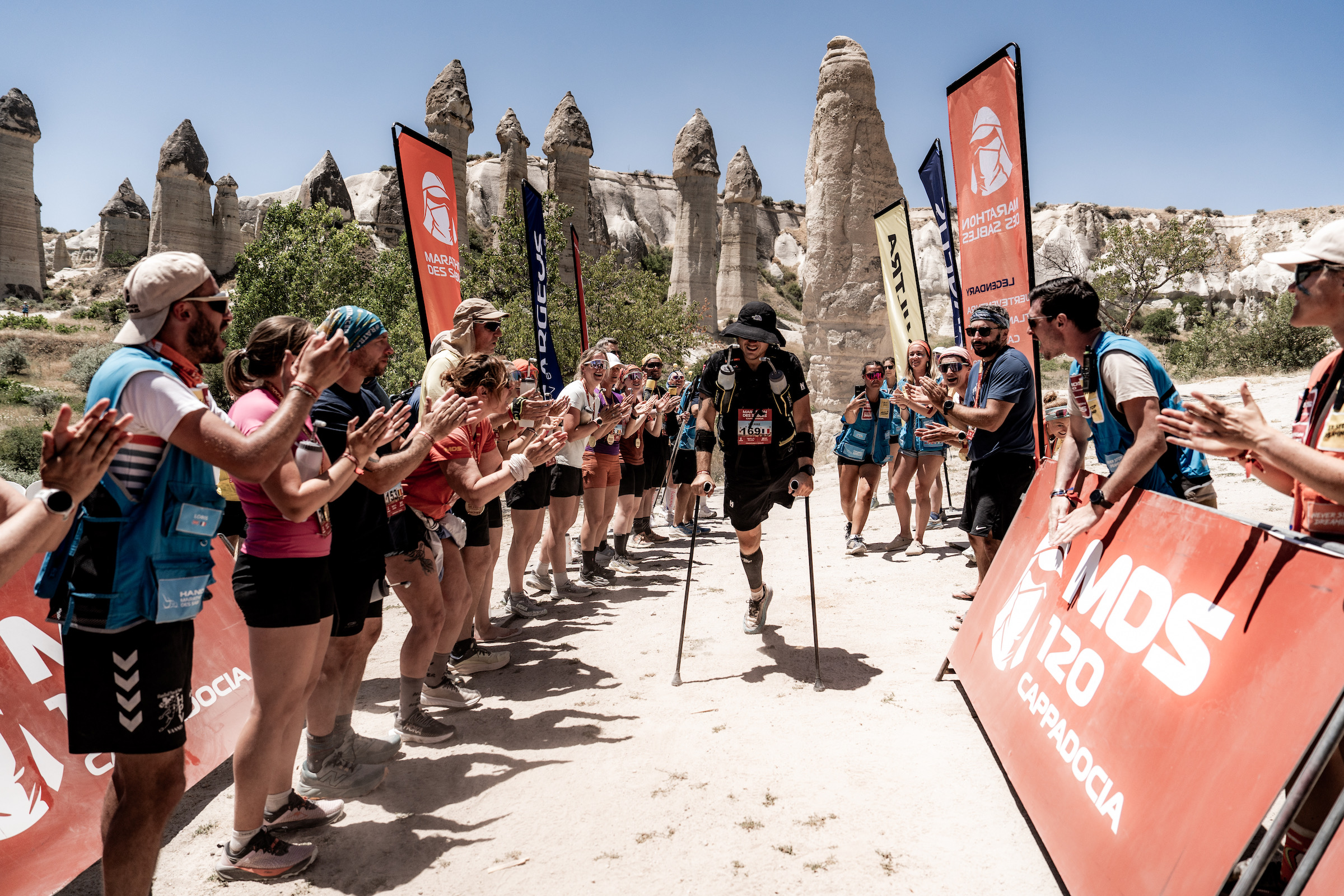
After the balloon flight, runners were finally allowed to stop. A full day of rest and recovery followed, giving battered bodies a chance to relax and reconnect. The evening brought everyone back together for a gala dinner, an award ceremony that celebrated not just the fastest, but the toughest and most spirited. Pierre (a single leg amputee) and Leon getting special recognition for personifying the meaning of MDS solidarity.
A film screening that captured the emotion and scale of what had unfolded over the past four days. Laughter mixed with tears. Strangers had become teammates. Solo runners had become family.
The verdict from every corner was the same: this race had delivered something extraordinary. It had pushed people to their edges and rewarded them with a kind of beauty, depth, and meaning that’s rare in the ultra-running world.
MDS 120 Cappadocia wasn’t just a race across Turkey. It was a race through deep time, a personal reckoning, and a reminder of what the human body and spirit can endure when the landscape is fierce, and the story is this good.
The bar is set. The expectations are high. But if the 2025 edition proved anything, it’s that this race is only getting better, stronger, and more awe-inspiring.
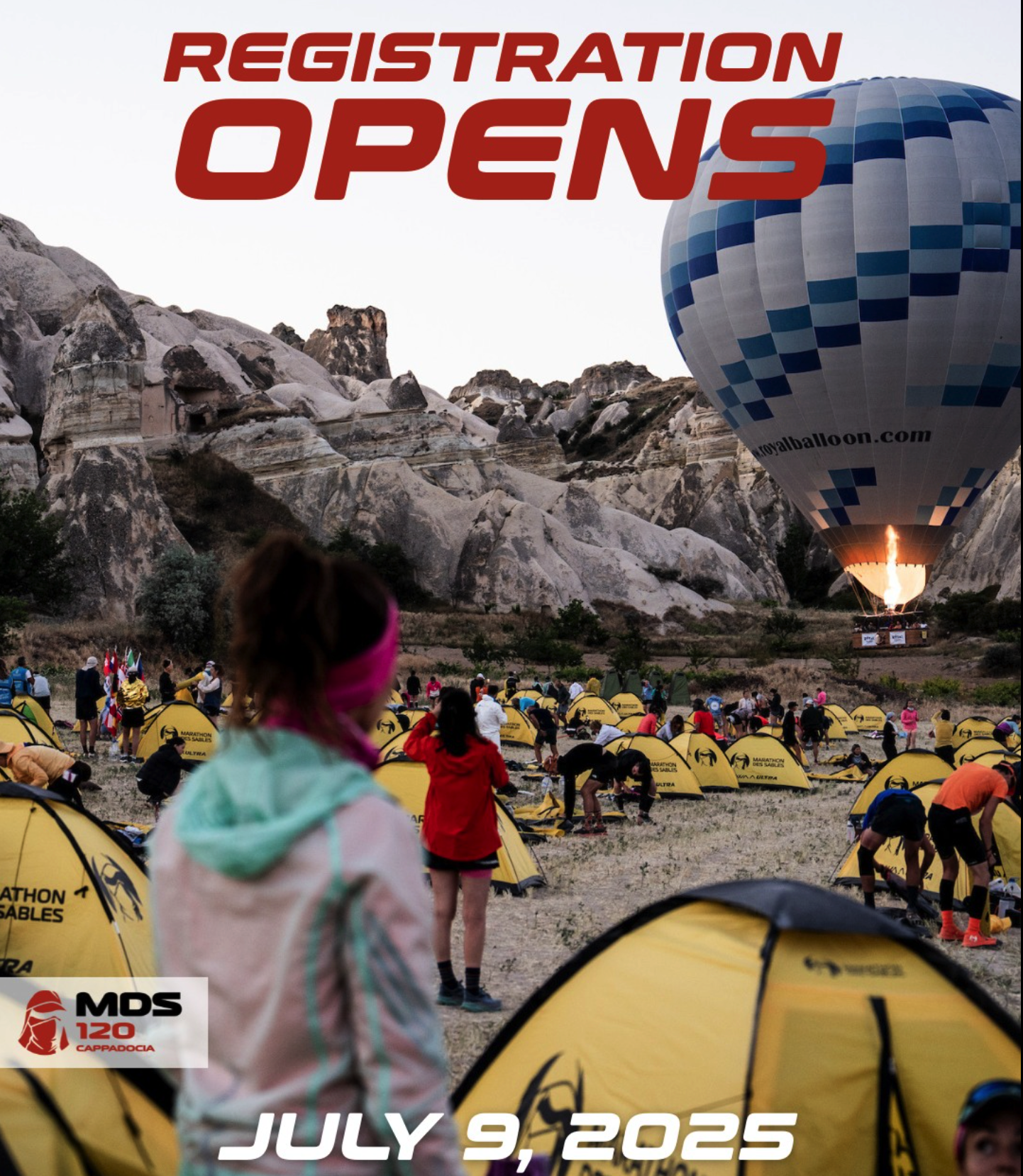
If you’re looking for an ultra that leaves a mark, not just on your legs, but on your soul: get ready for the 2026 dates, registration opens July 9th 2025.
Pack your shoes. Respect the heat. And come run through fire and stone in Cappadocia.
Stage 3 of the MDS 120 Cappadocia delivered a brutal, beautiful reckoning. Spanning 26 kms under a punishing sun, the course cut through some of Turkey’s most iconic landscapes, from the pastel walls of Red Valley to the towering spires of Love Valley. But make no mistake: this stage wasn’t just about scenery. It was a furnace.
Love Valley – amazing
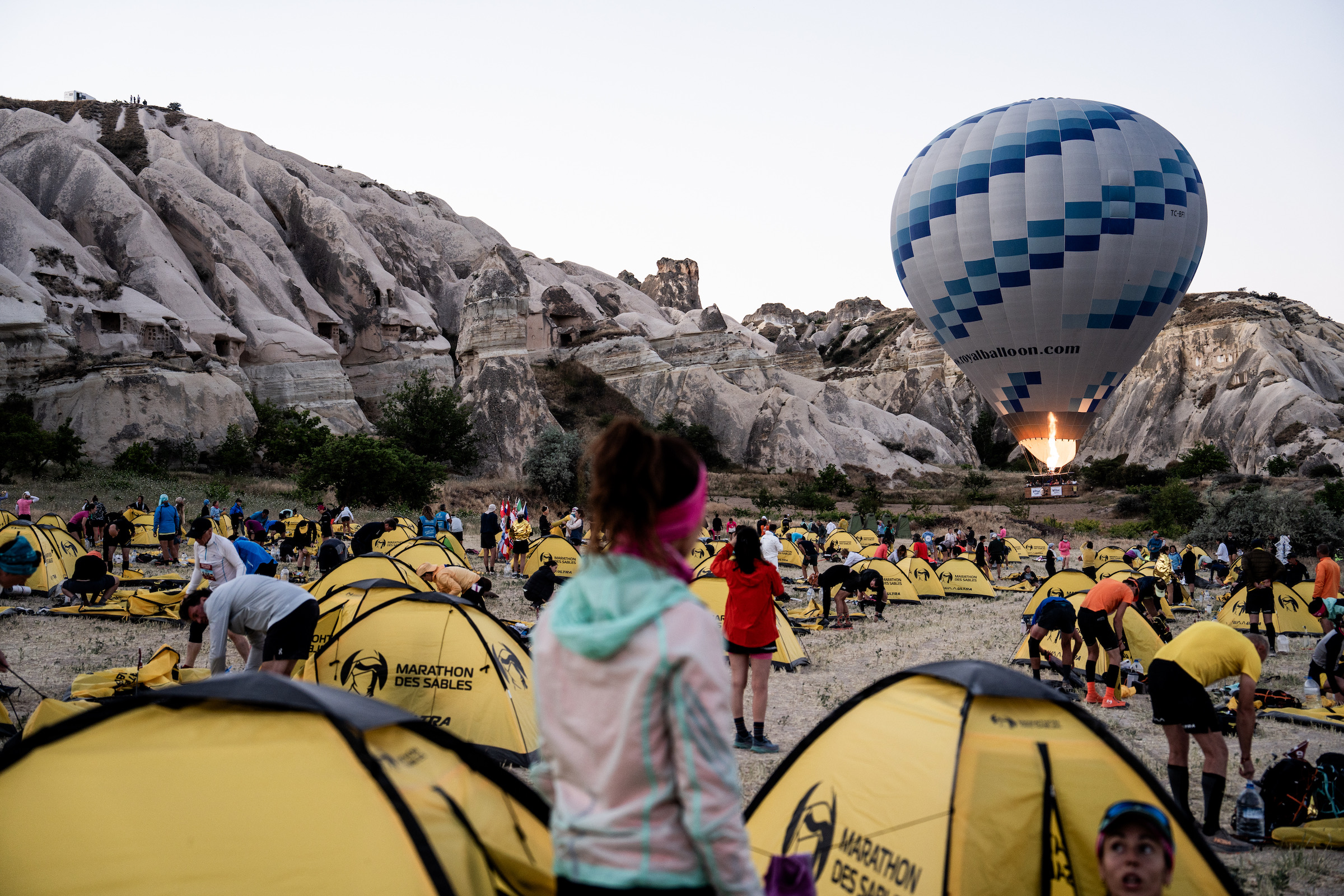
With temperatures soaring past 36°C and a heat index that felt closer to 48°C the early start with hot air balloons was welcome.
Not all bivouacs are the same
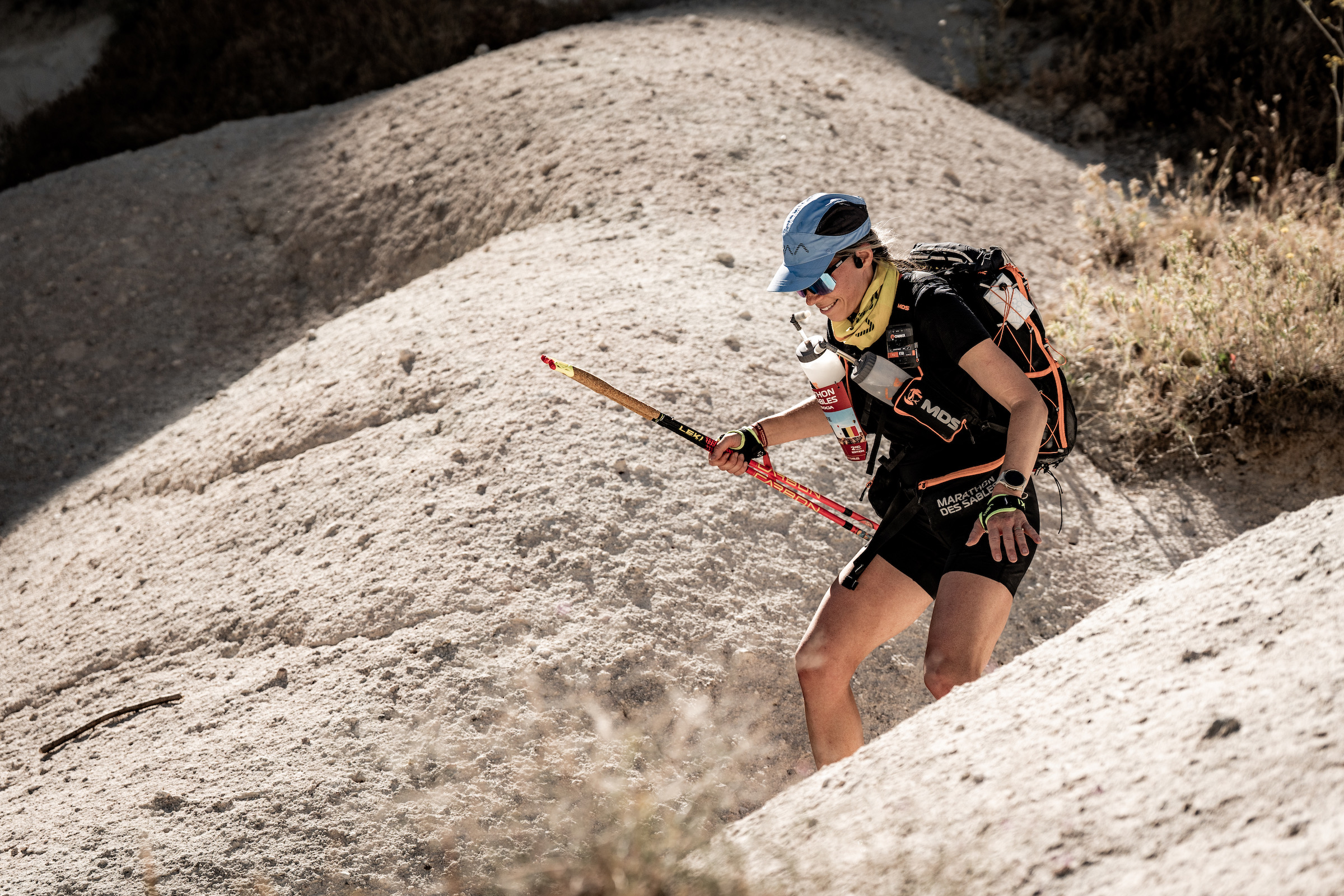
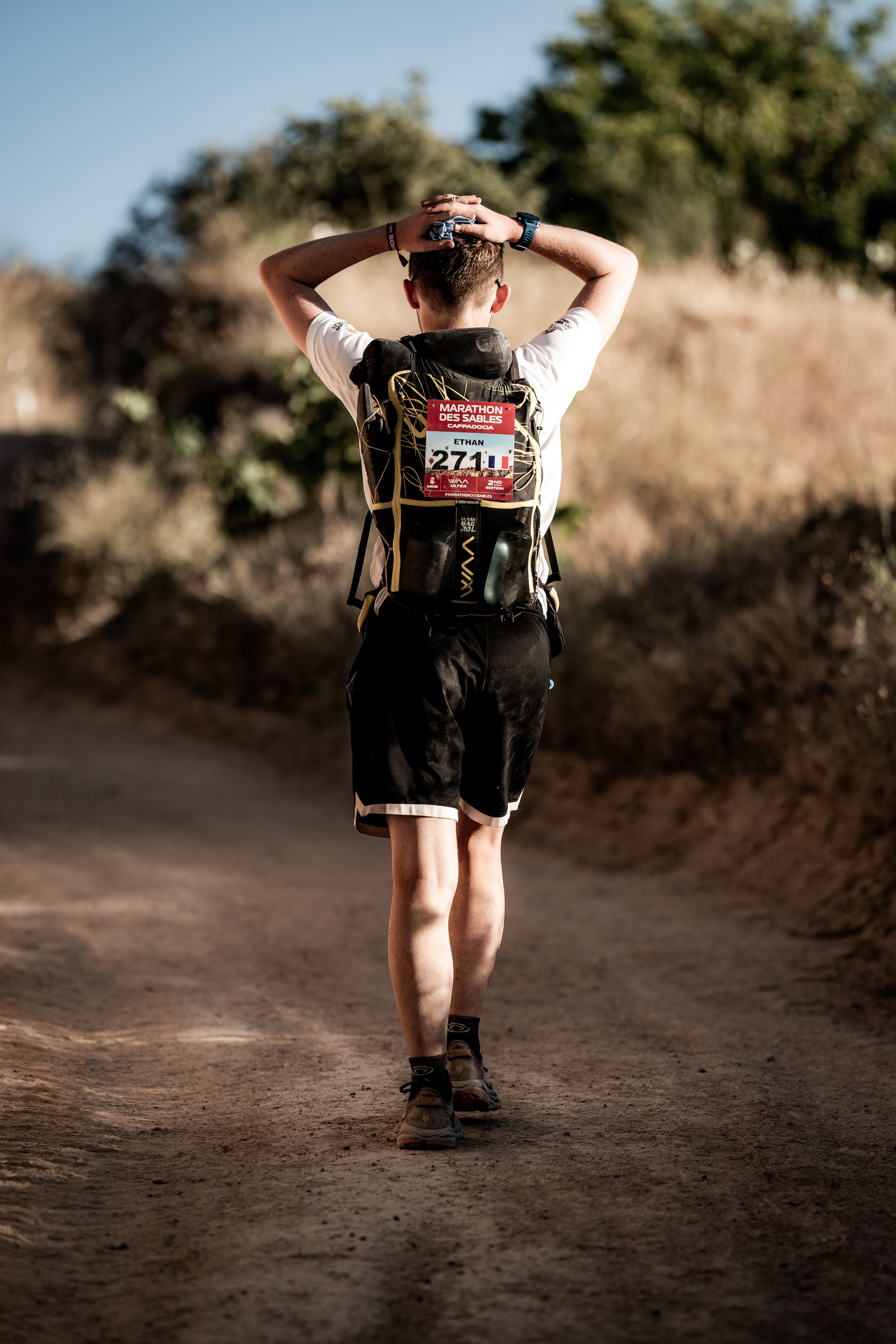
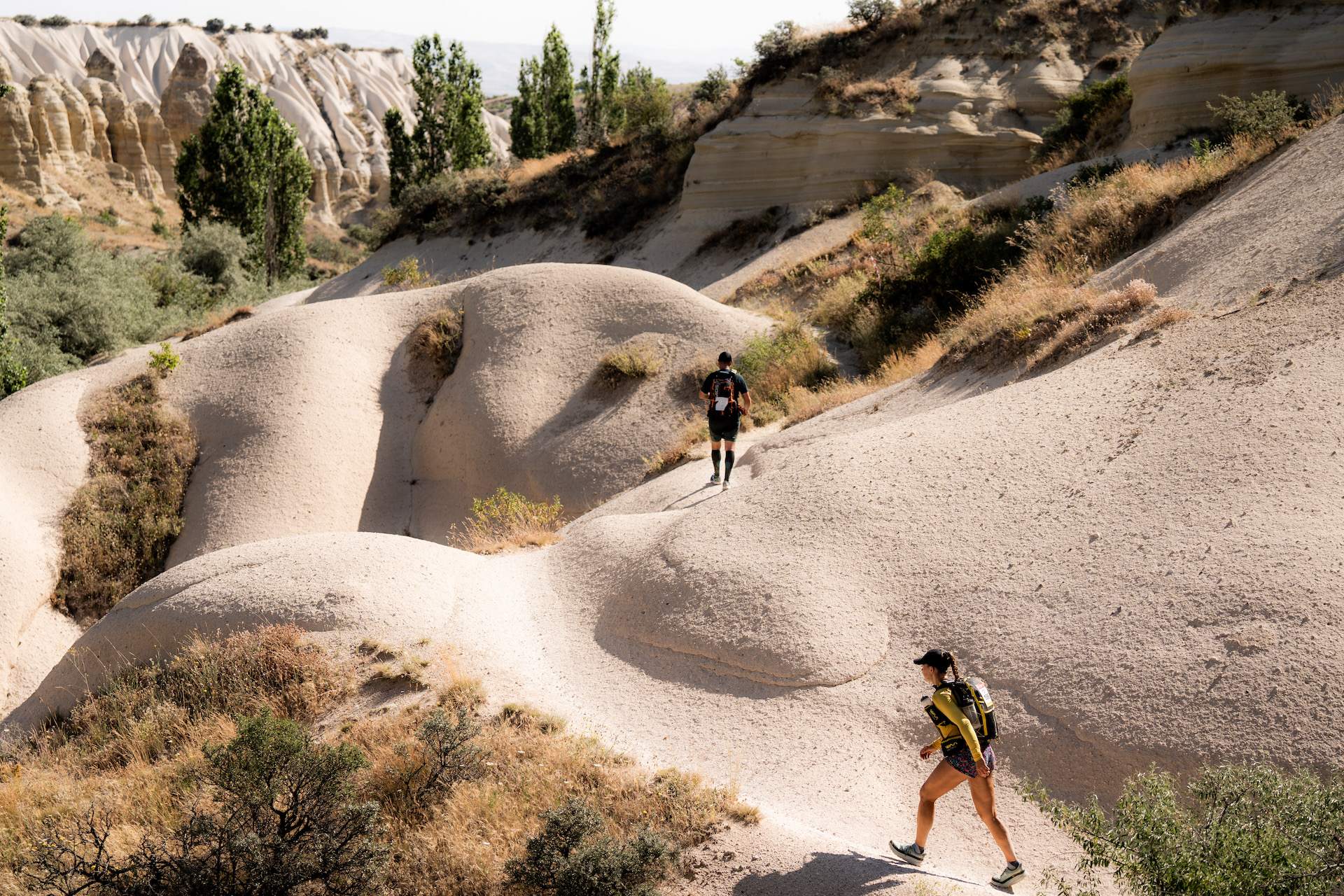
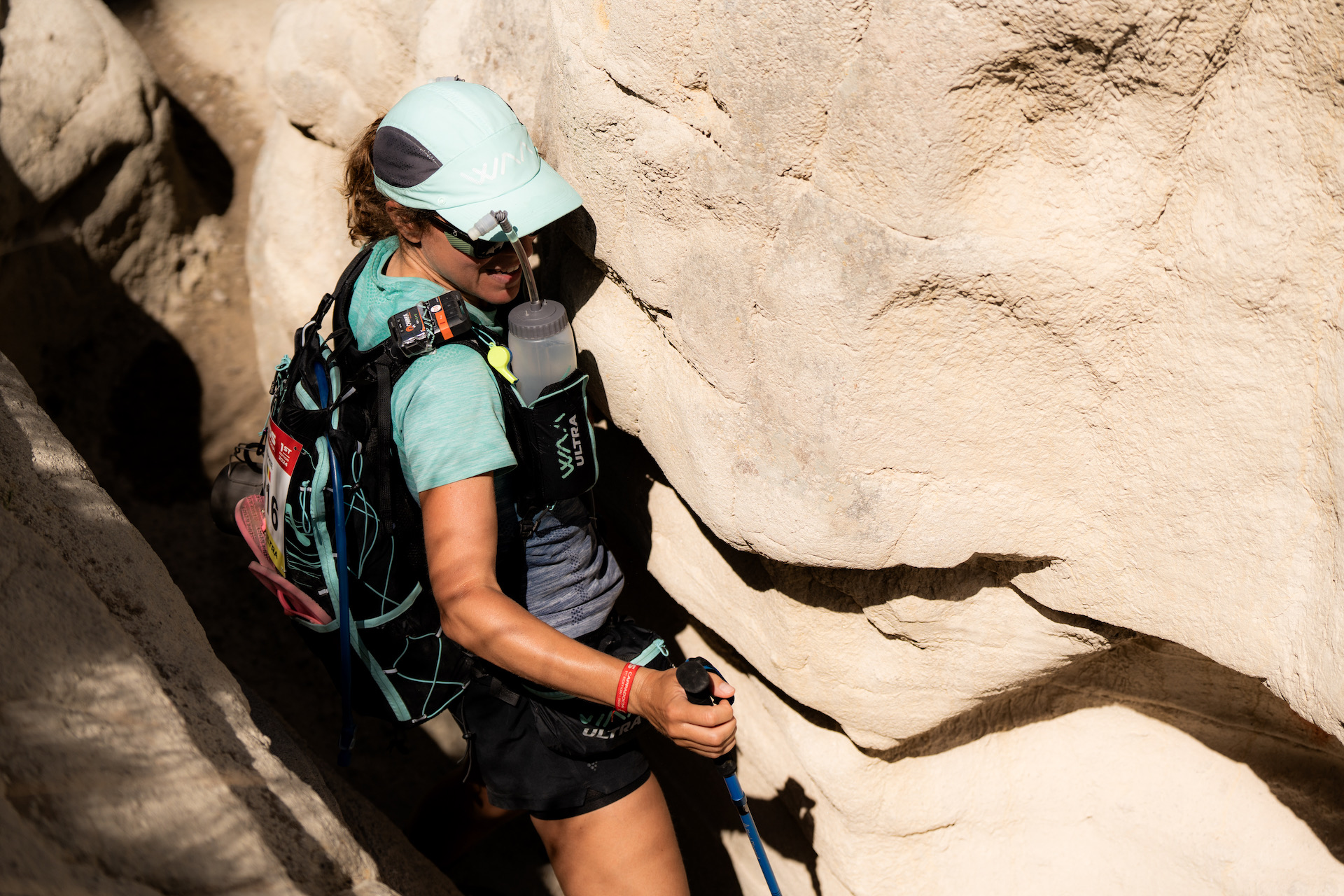
Even so, runners were fighting the heat within minutes. Shade was rare, and the terrain offered no favours: narrow single tracks, slot canyons, technical descents, and long exposed stretches tested every step.
By mid-morning, the route through Love Valley felt less like a romantic postcard and more like a slow-motion survival drill.
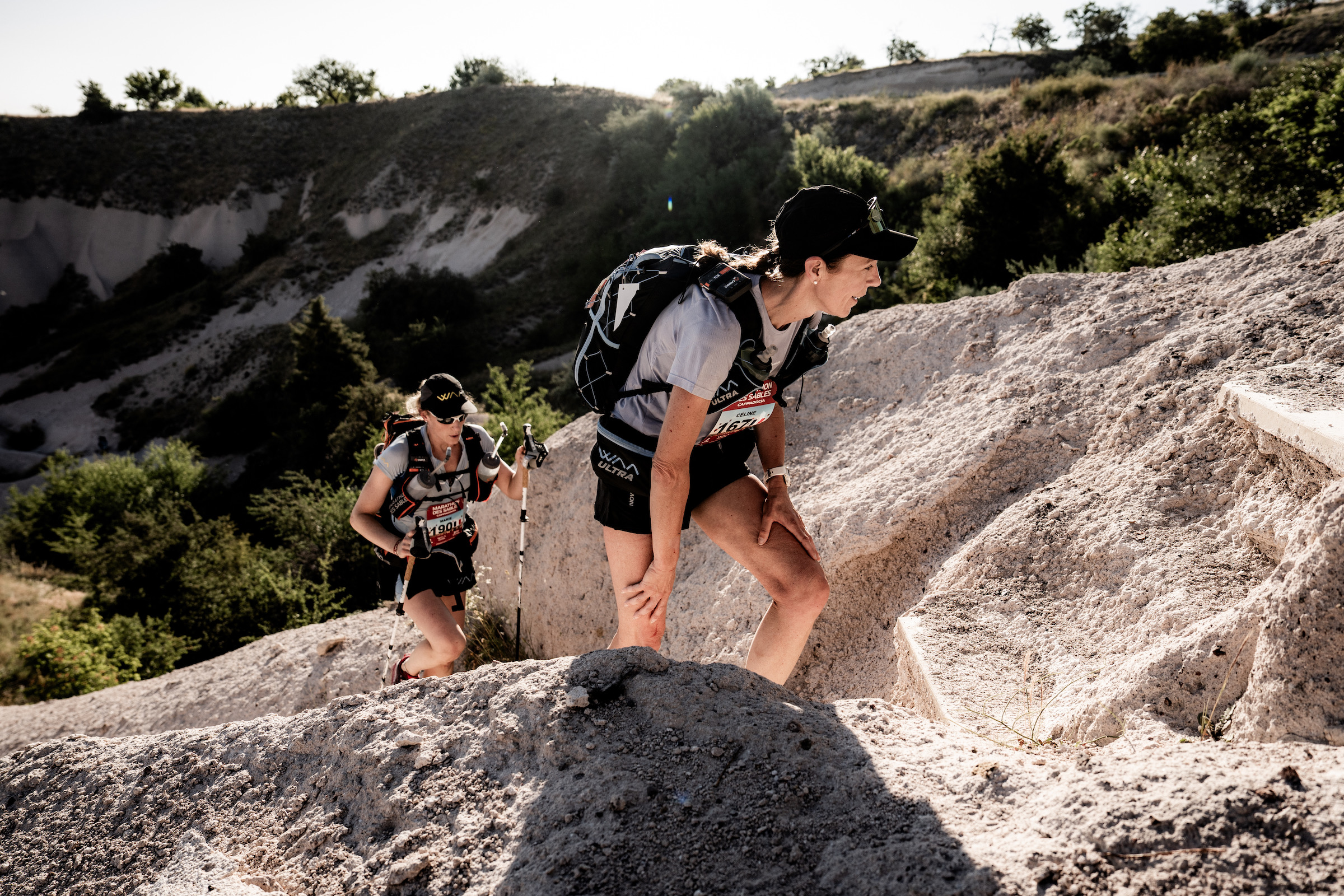
Despite the conditions, runners dug deep. The lead pack charged forward with astonishing control, weaving through the heat haze with purpose, but it was the back of the pack that showed the rawest version of the struggle. Blistered feet, overheated cores, and sheer exhaustion painted a stark picture of just how hard-earned every kilometer was.
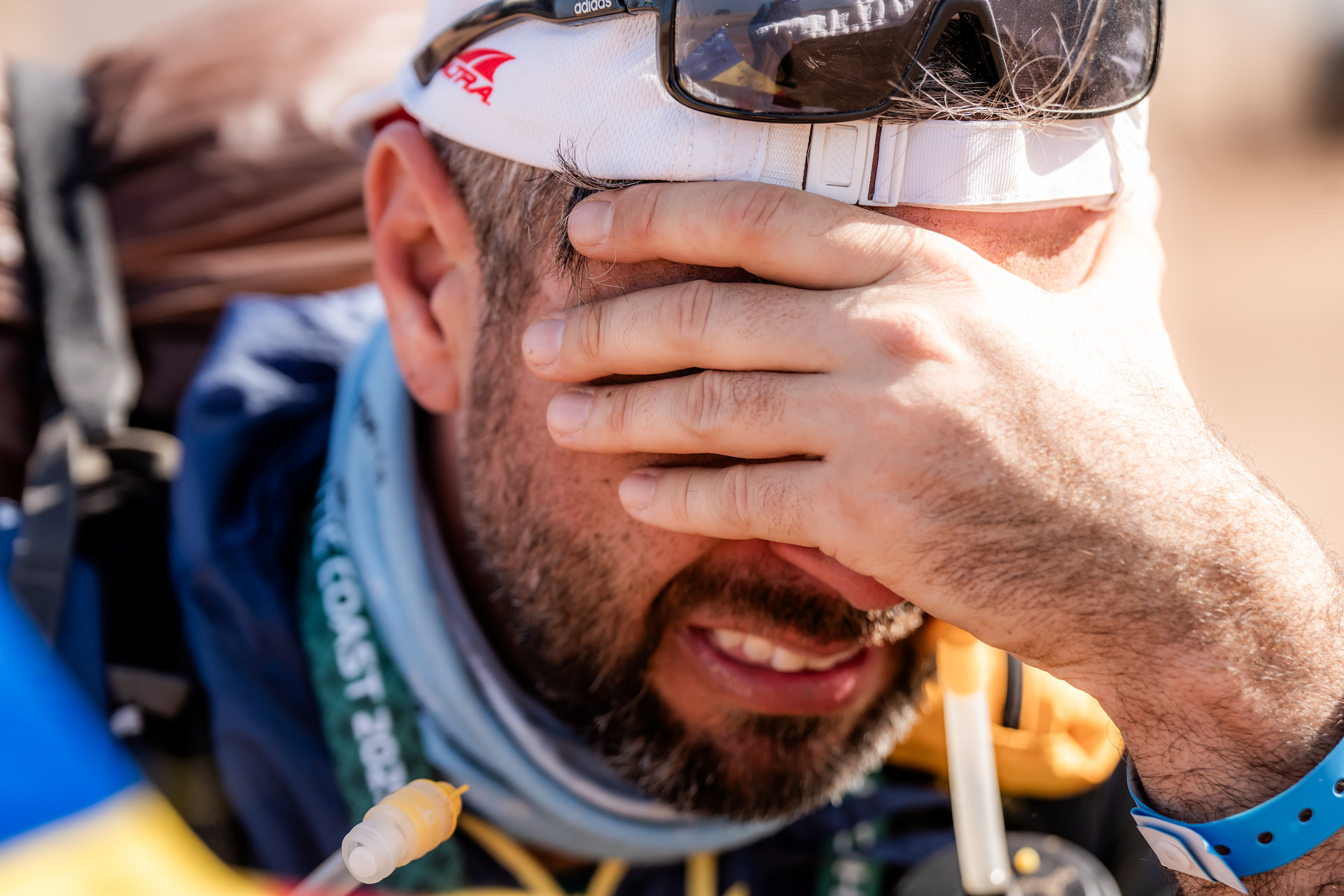
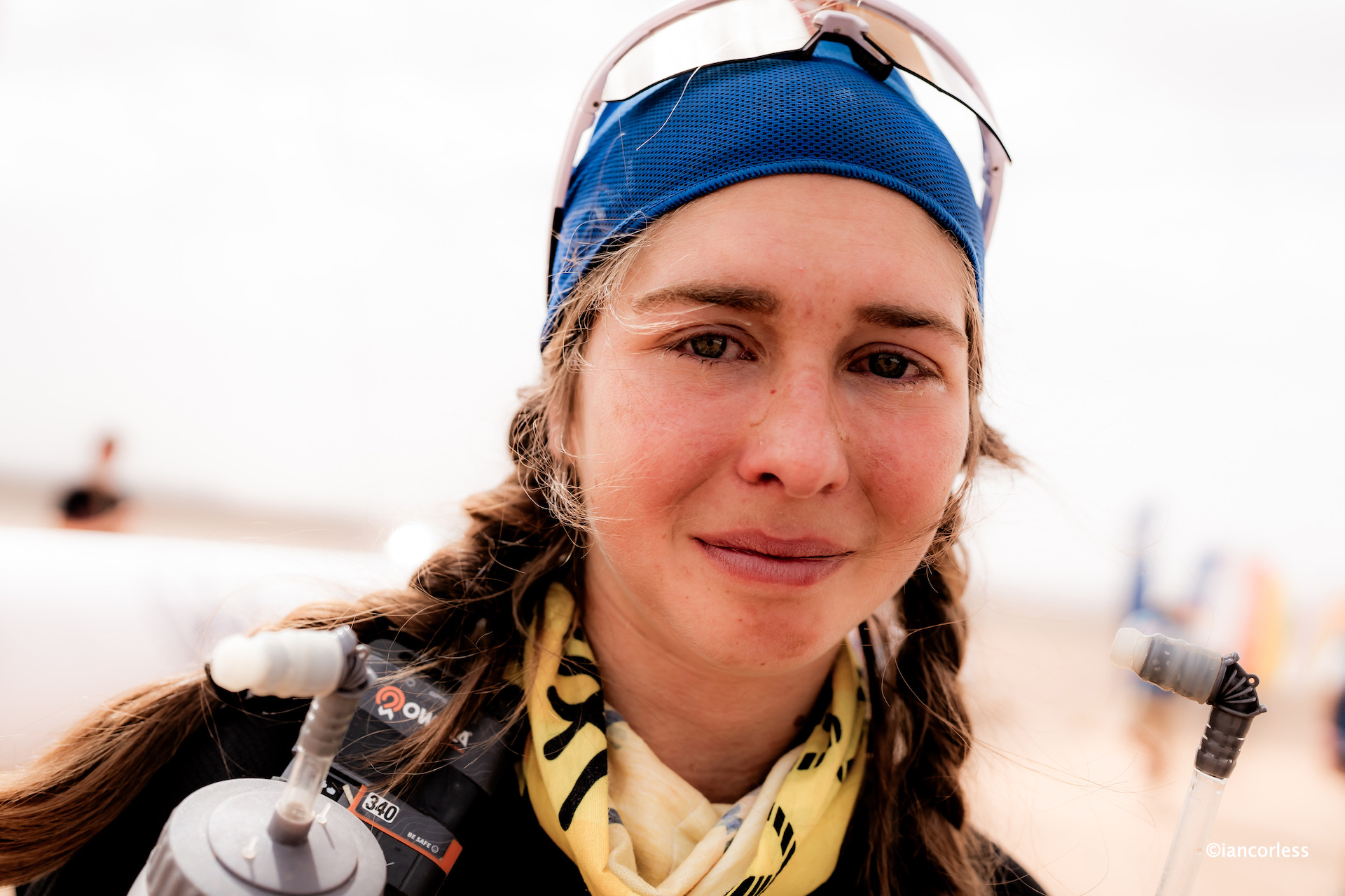
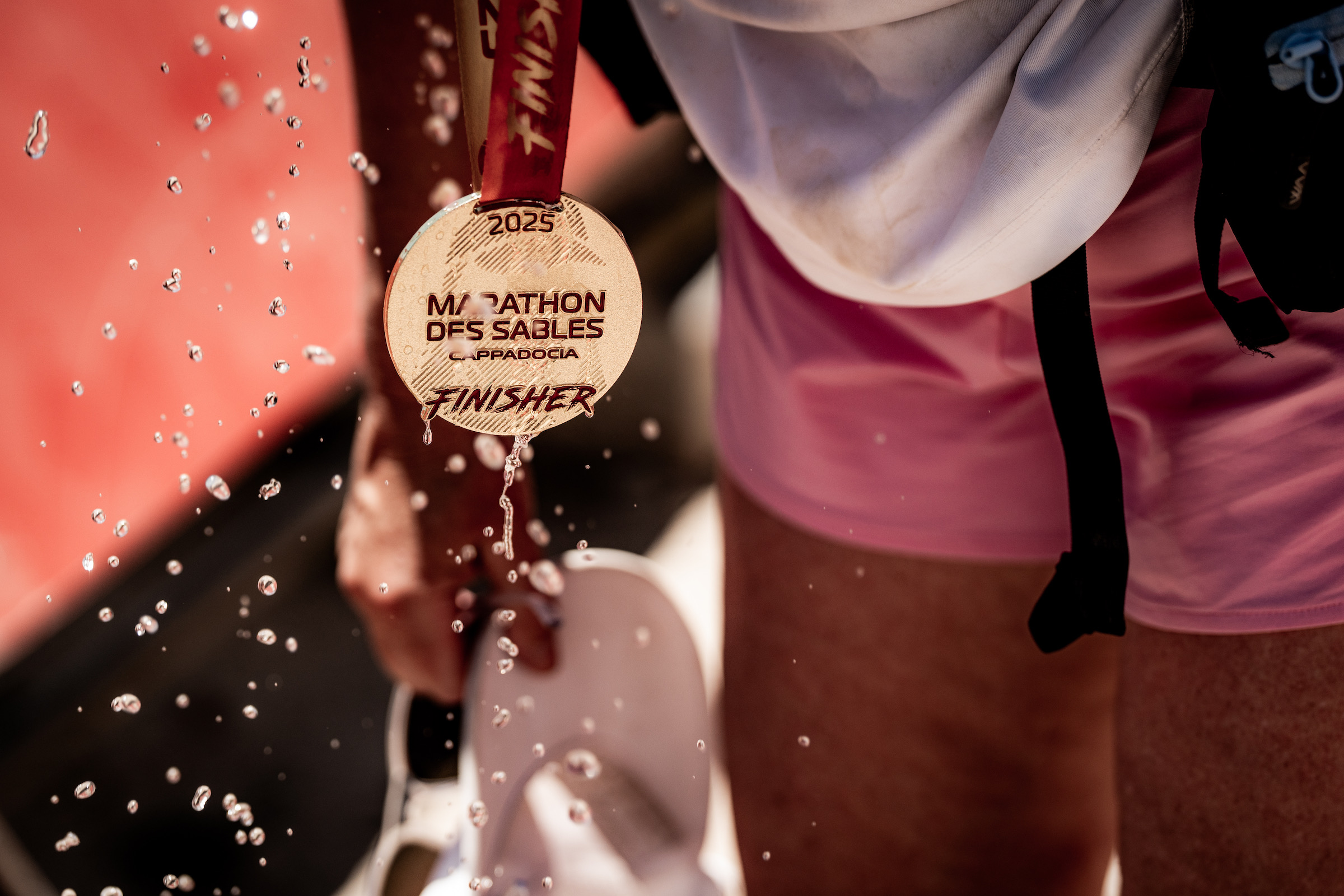
Crossing the finish line at the edge of Love Valley brought a wave of emotion. Some wept, others collapsed. The medal placed around each finisher’s neck wasn’t just symbolic, it was earned in full, mile by scorching mile. For many, it marked the toughest test they’d ever faced in a race.
From first to last, the results were staggering. All athletes held their nerve in the heat, but it was the collective will of the entire field that defined the day. This was more than a stage, it was a battle. And everyone who crossed that line came out the other side changed.
Blue and Orange jackets make it all happen
Stage 3 didn’t give anyone an easy finis. It demanded everything. The landscape may have been romantic, but the race was ruthless. The medal, deserved!
Stage 2 of the 2025 MDS 120 Cappadocia tested every ounce of determination runners had left in the tank.
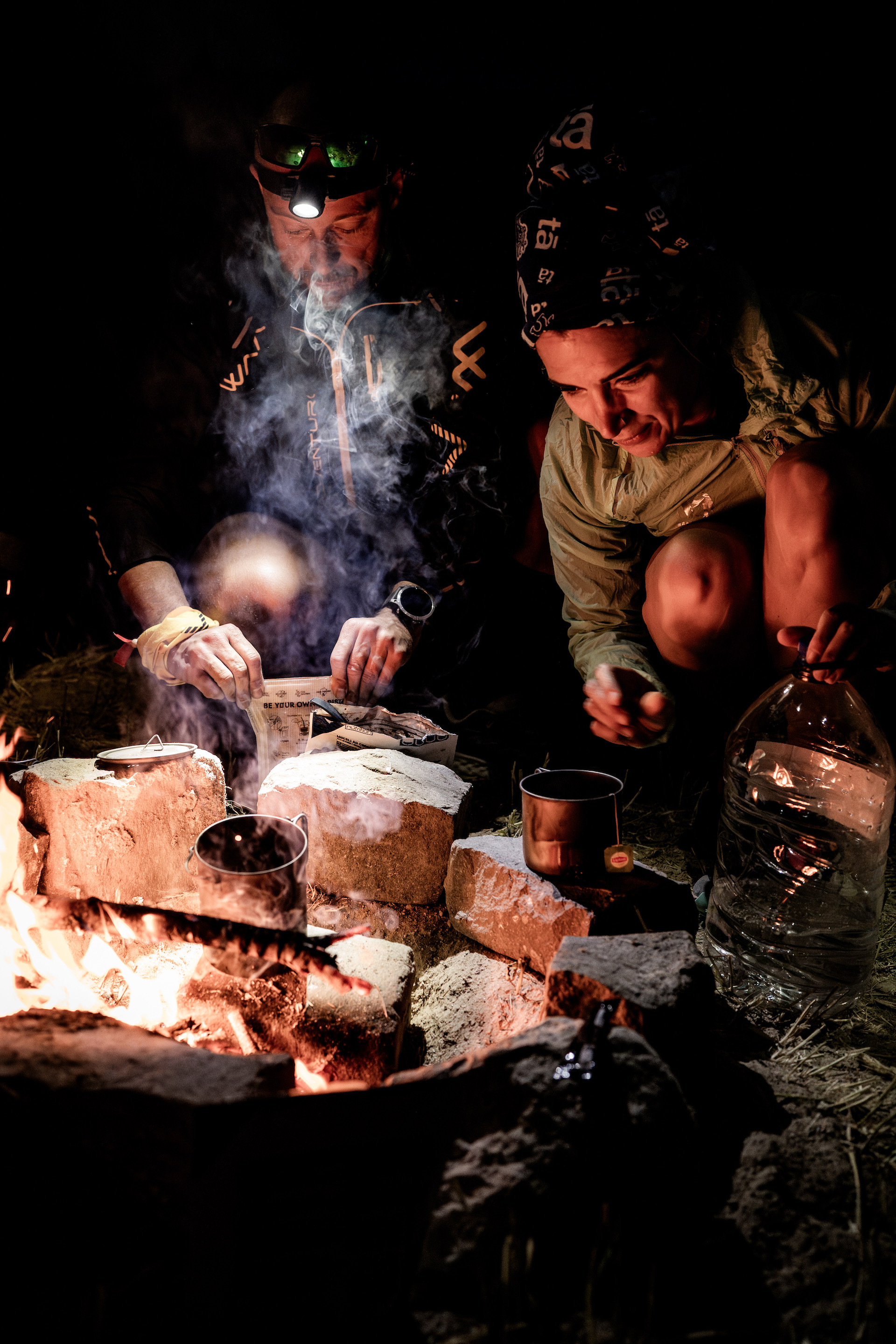
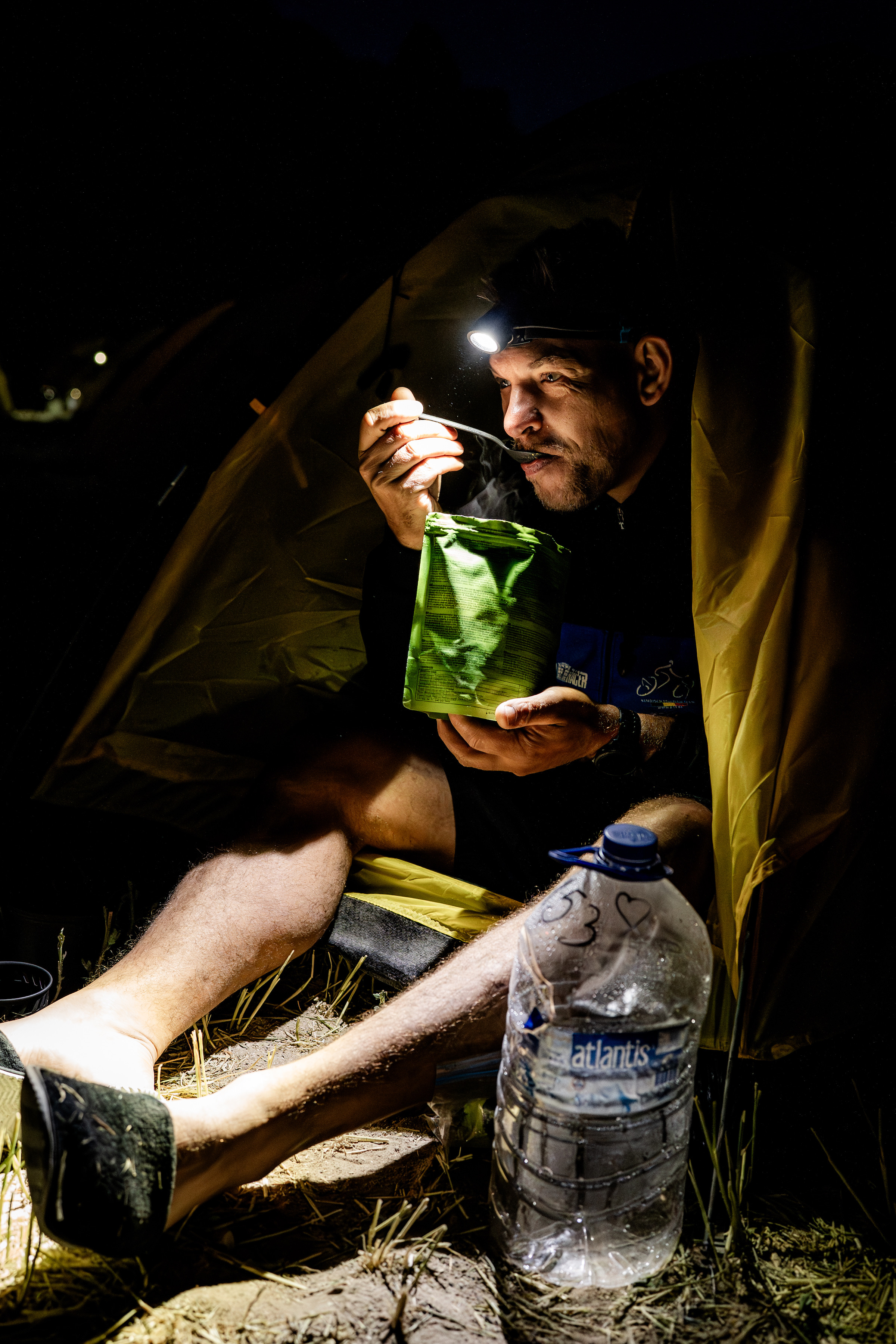
Breakfast bivouac style
The day began with a 4:00 AM wake-up call under a pitch-black sky.
Just WOW!
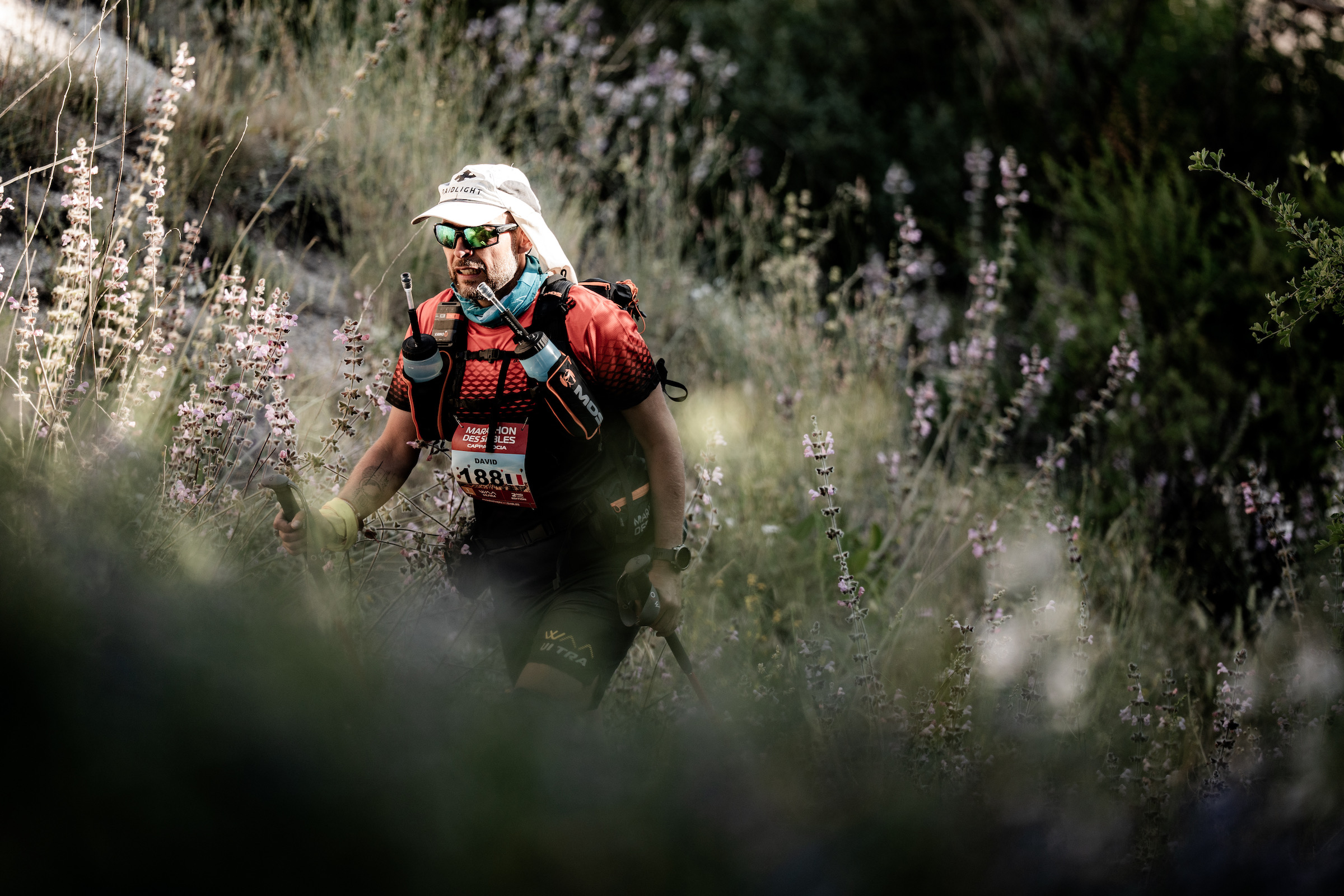
By the time the starting line buzzed to life, the first glow of sunrise was filled with dozens of hot air balloons over the otherworldly landscape, a surreal and unforgettable sendoff into a brutal, beautiful day. This is what makes MDS 120 Cappadocia so special.
Blue coats, a key and important element of MDS 120.
Participants had a choice: 20km, 40.9km, or 58.6km. Three distances, one shared battle. No matter which course they committed to, the terrain made sure no one got an easy ride.
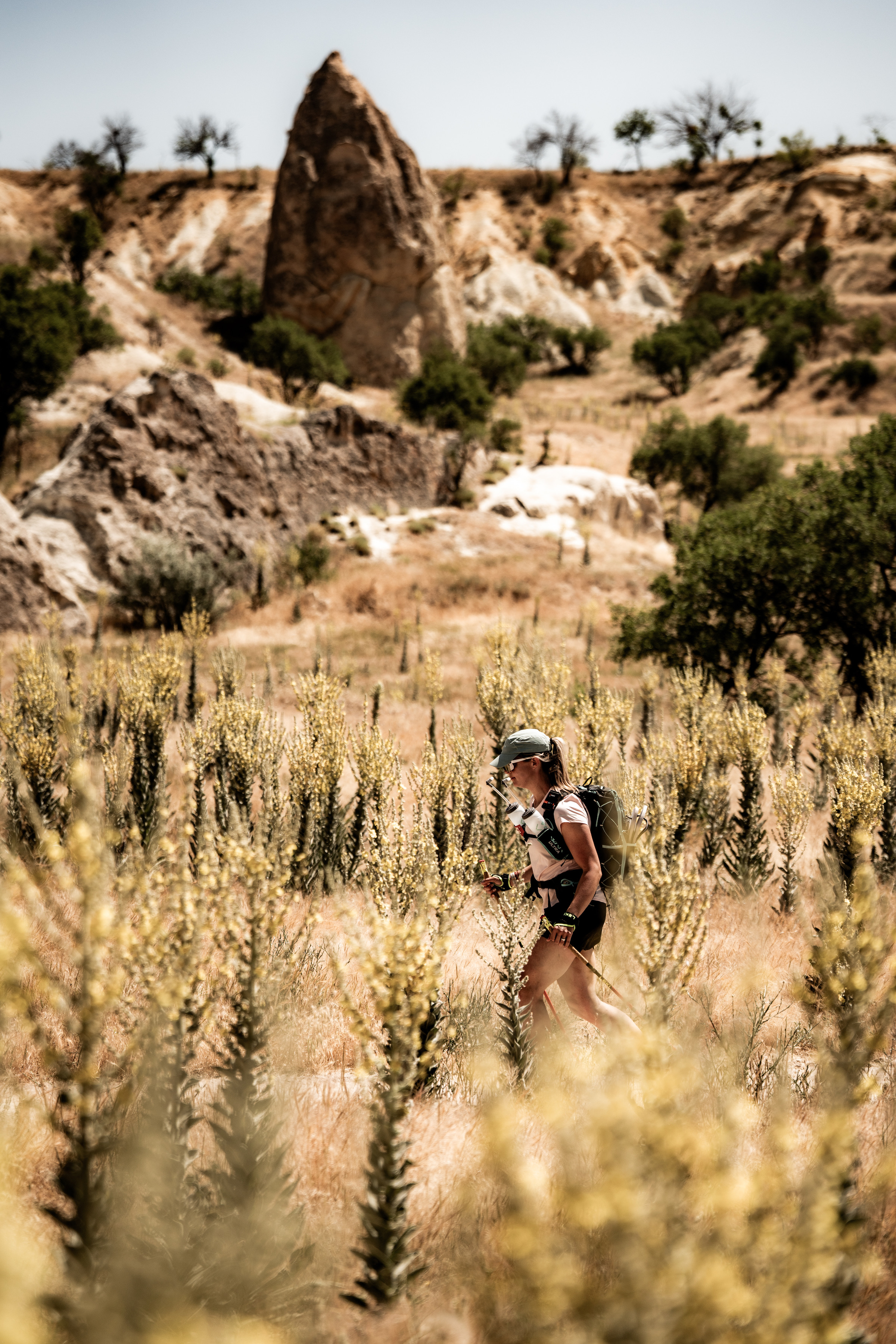
Stunning varied landscape
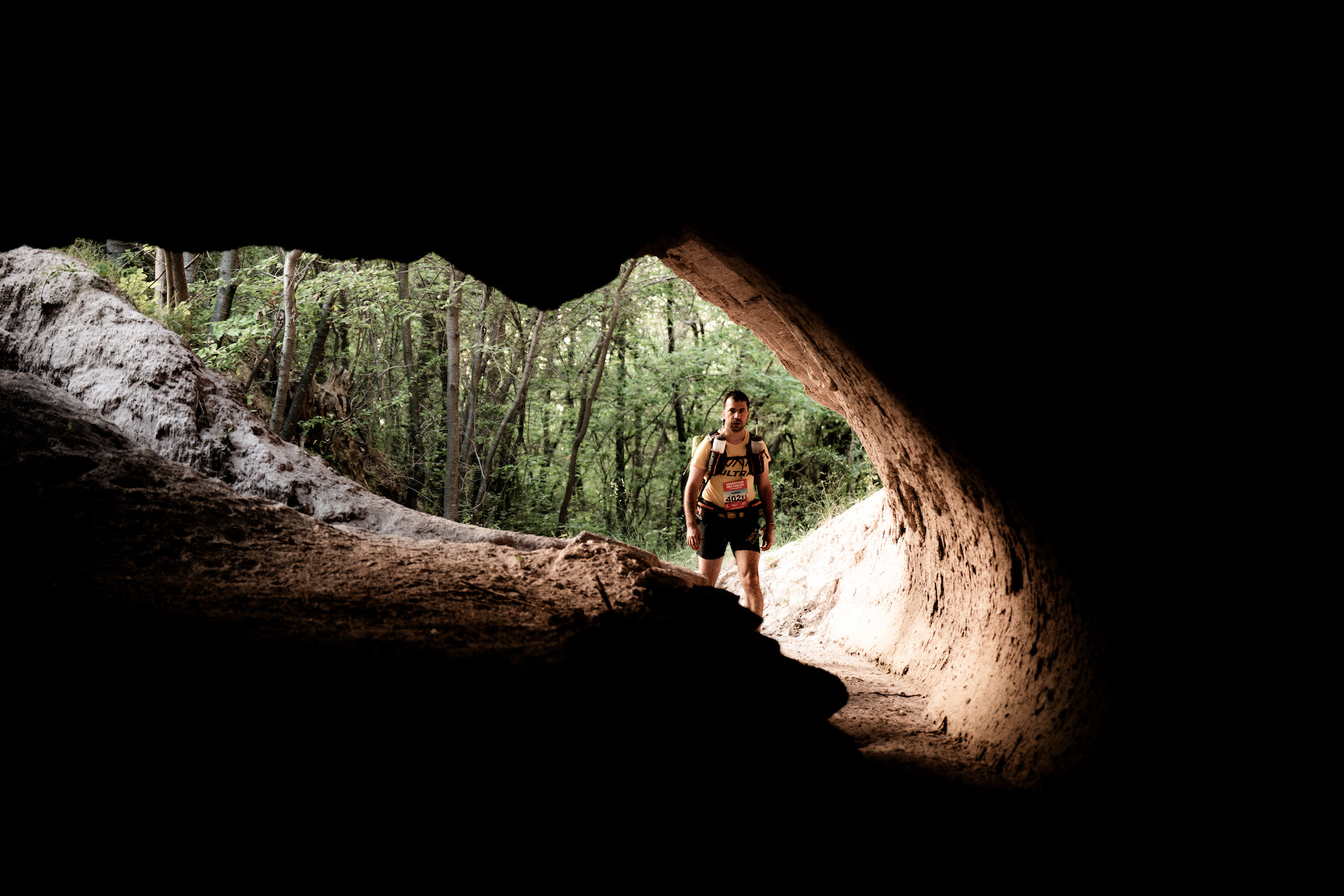
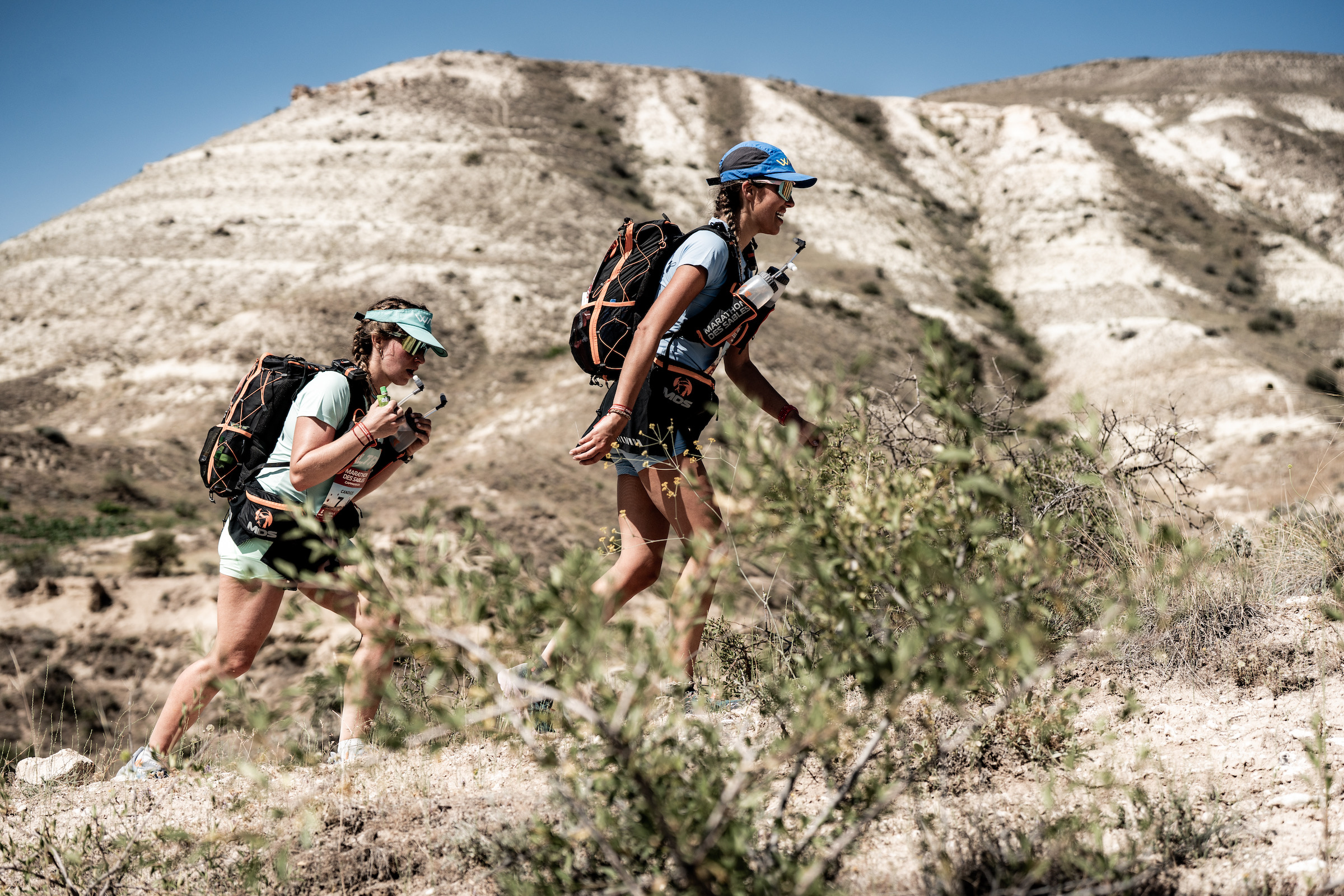
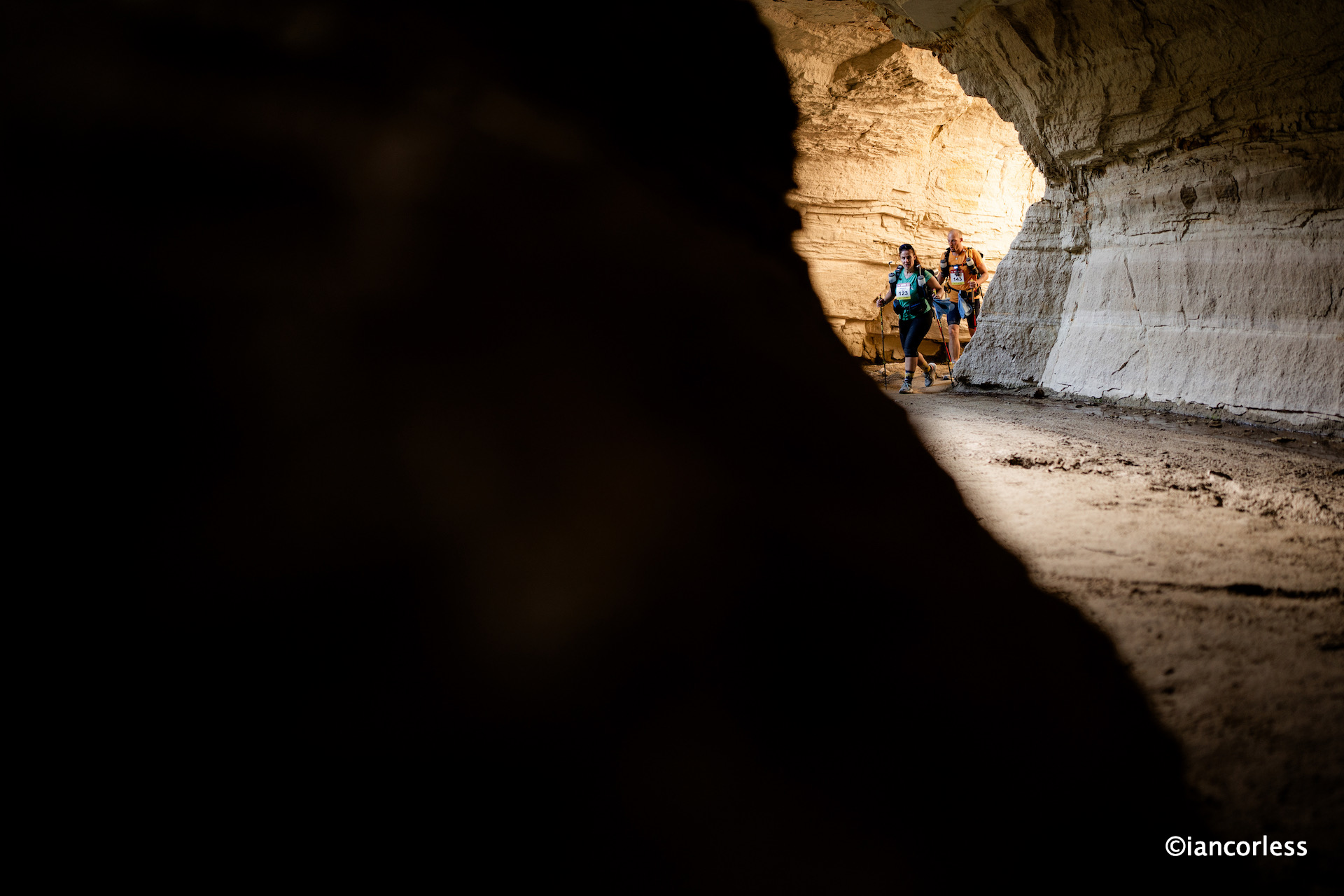
From the start, runners faced a punishing mix of steep canyons, tight tunnels, dusty switchbacks, and rocky plateaus.
Dense vegetation
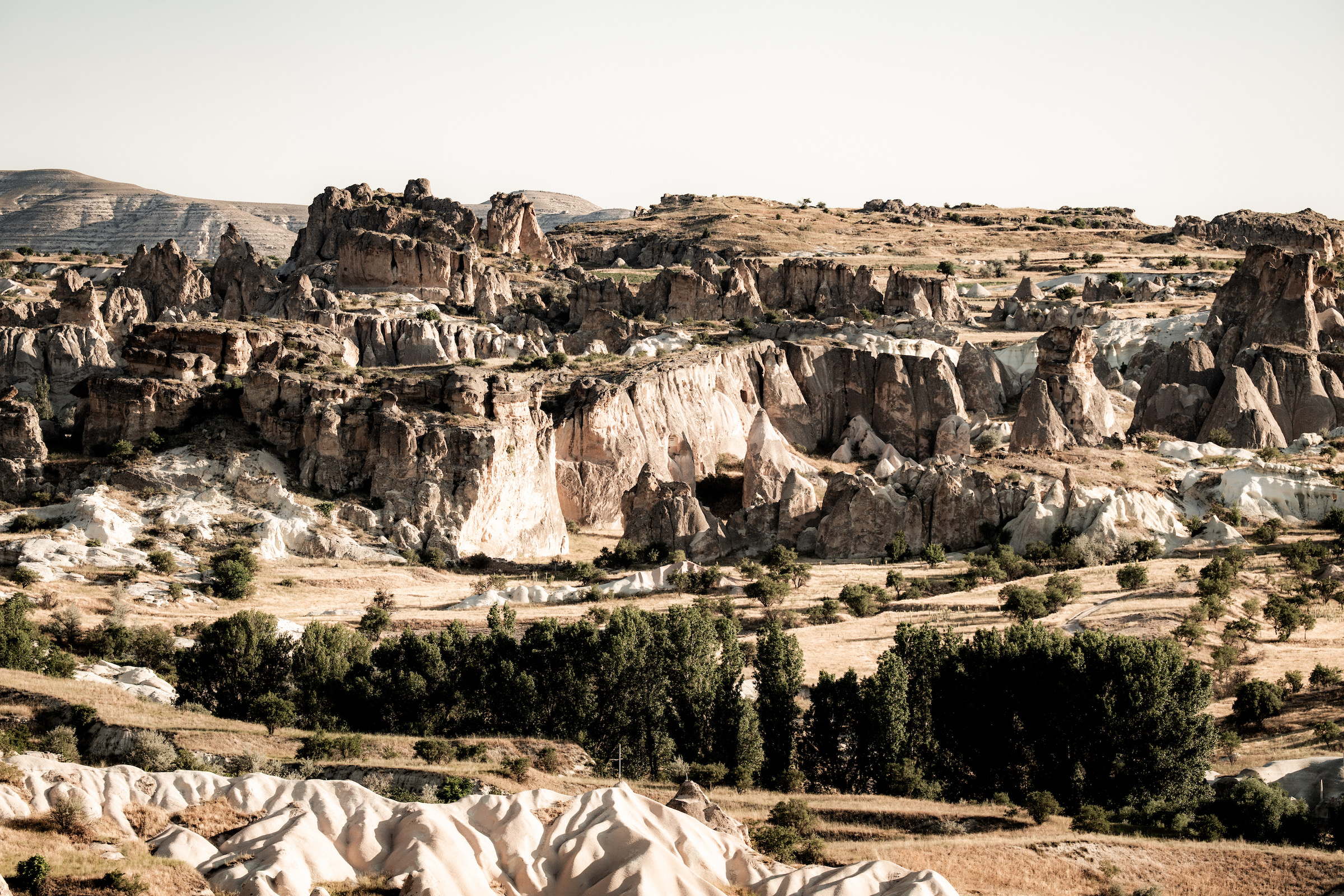
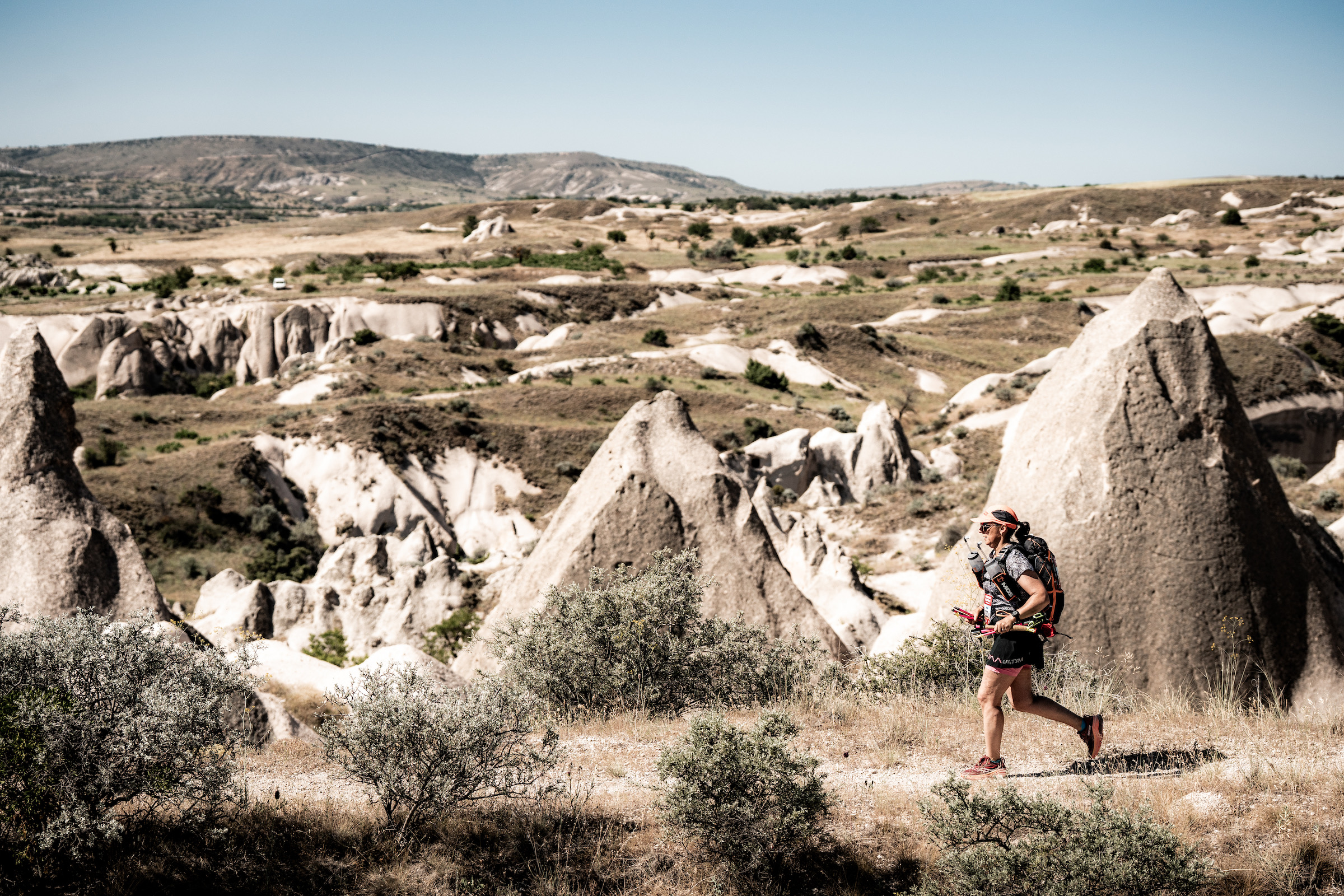
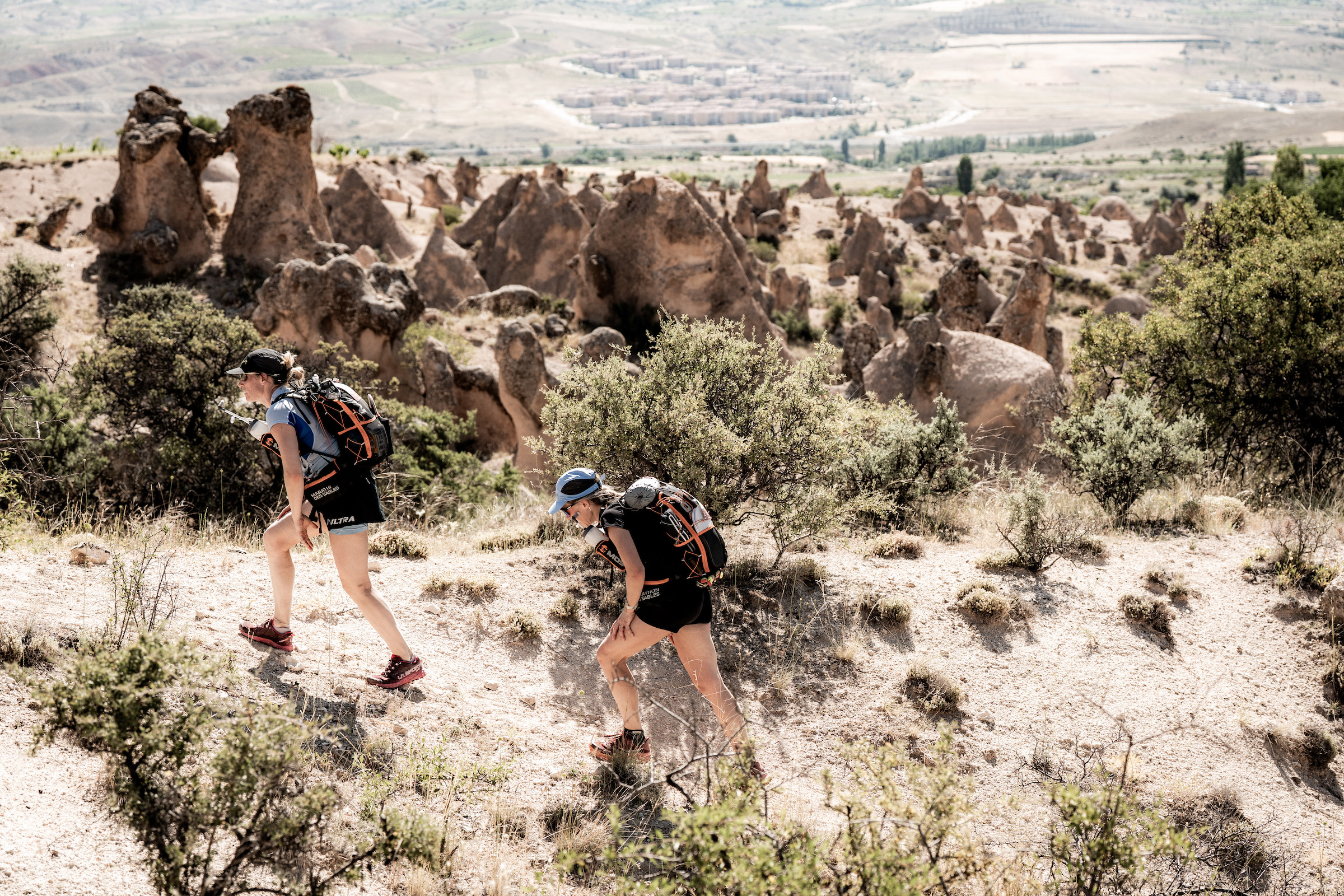
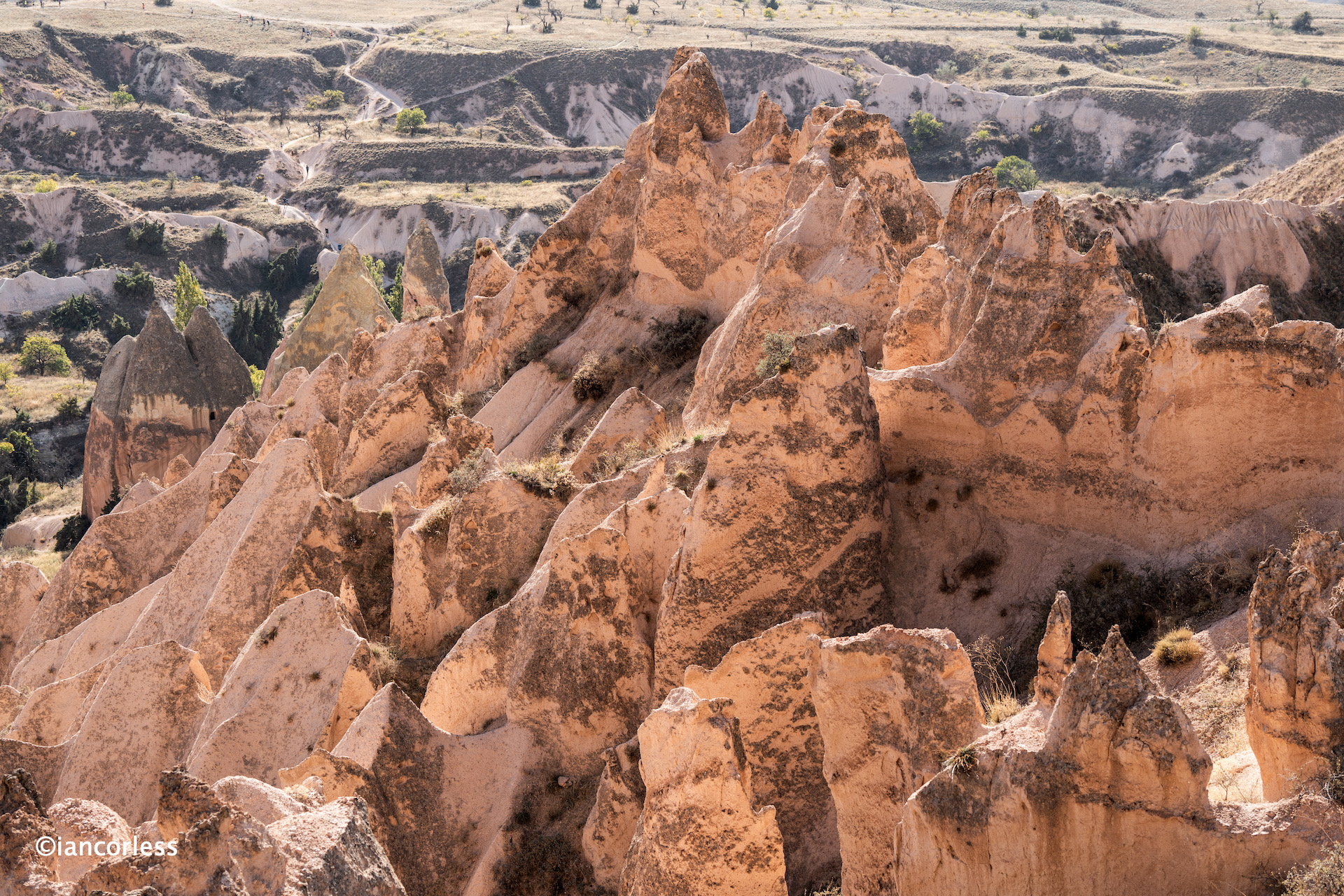
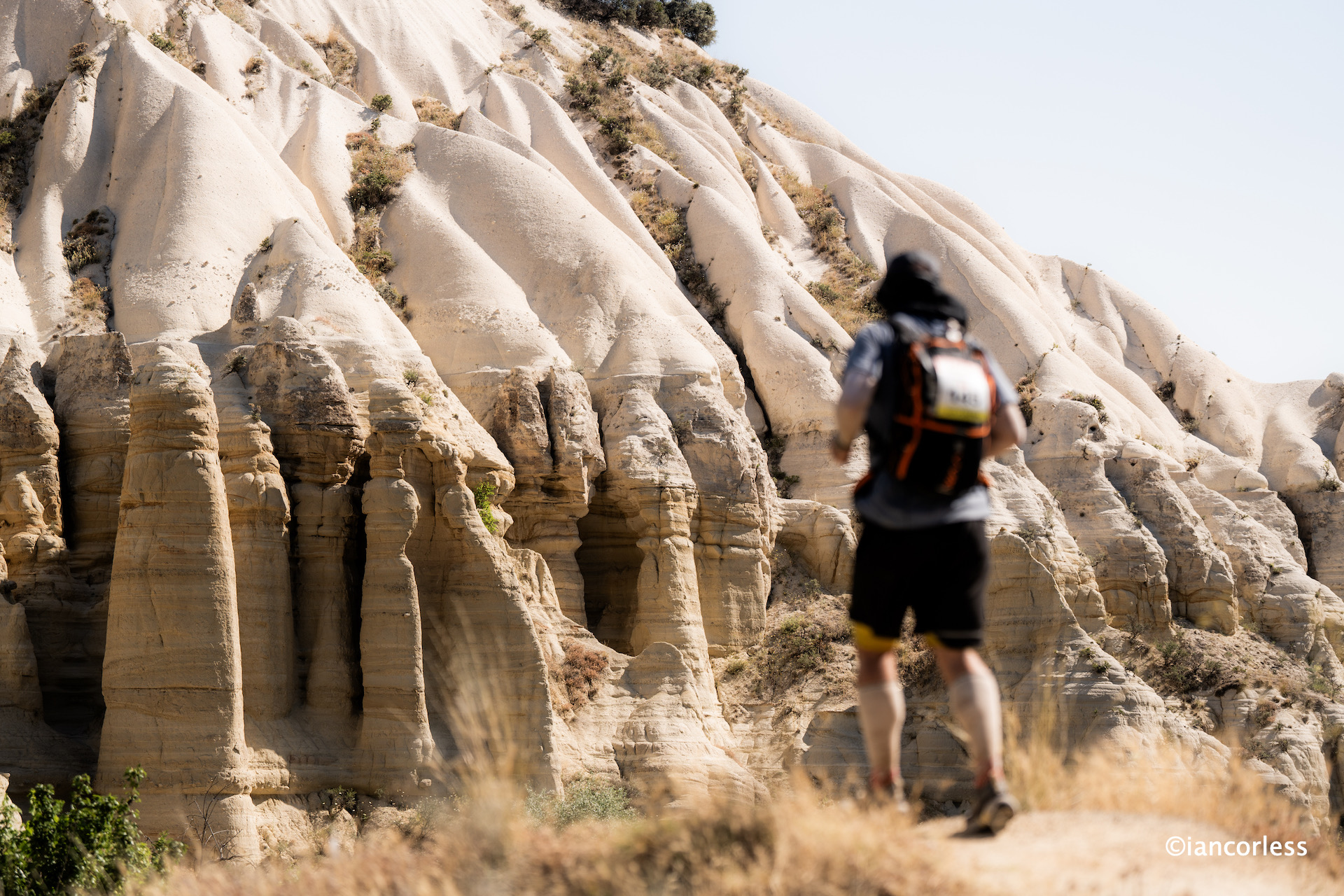
The famed Cappadocia chimneys, towering rock formations sculpted by time and wind rose like sentinels along the route, offering brief moments of awe in between relentless stretches of heat and effort.
Unique landscape
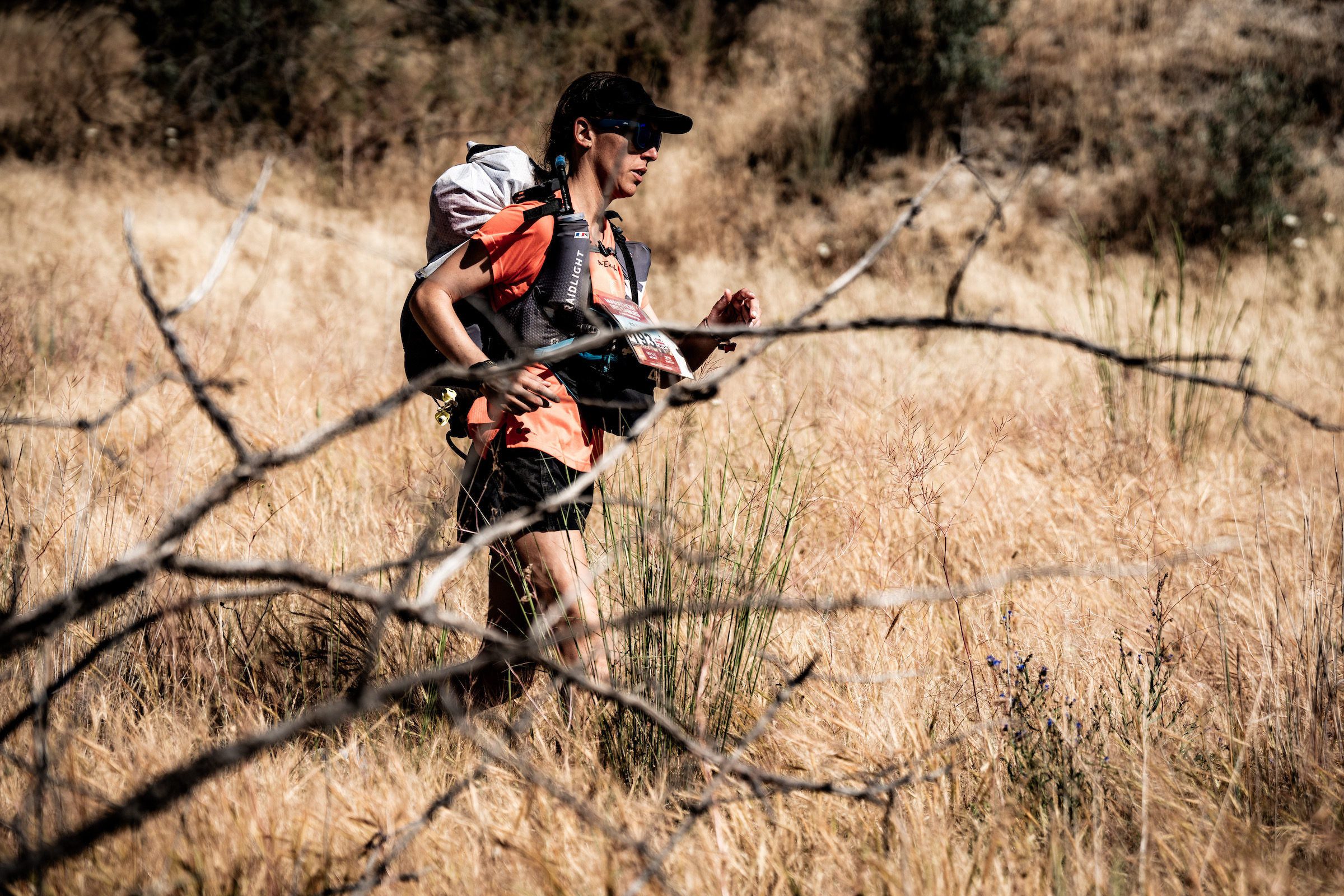
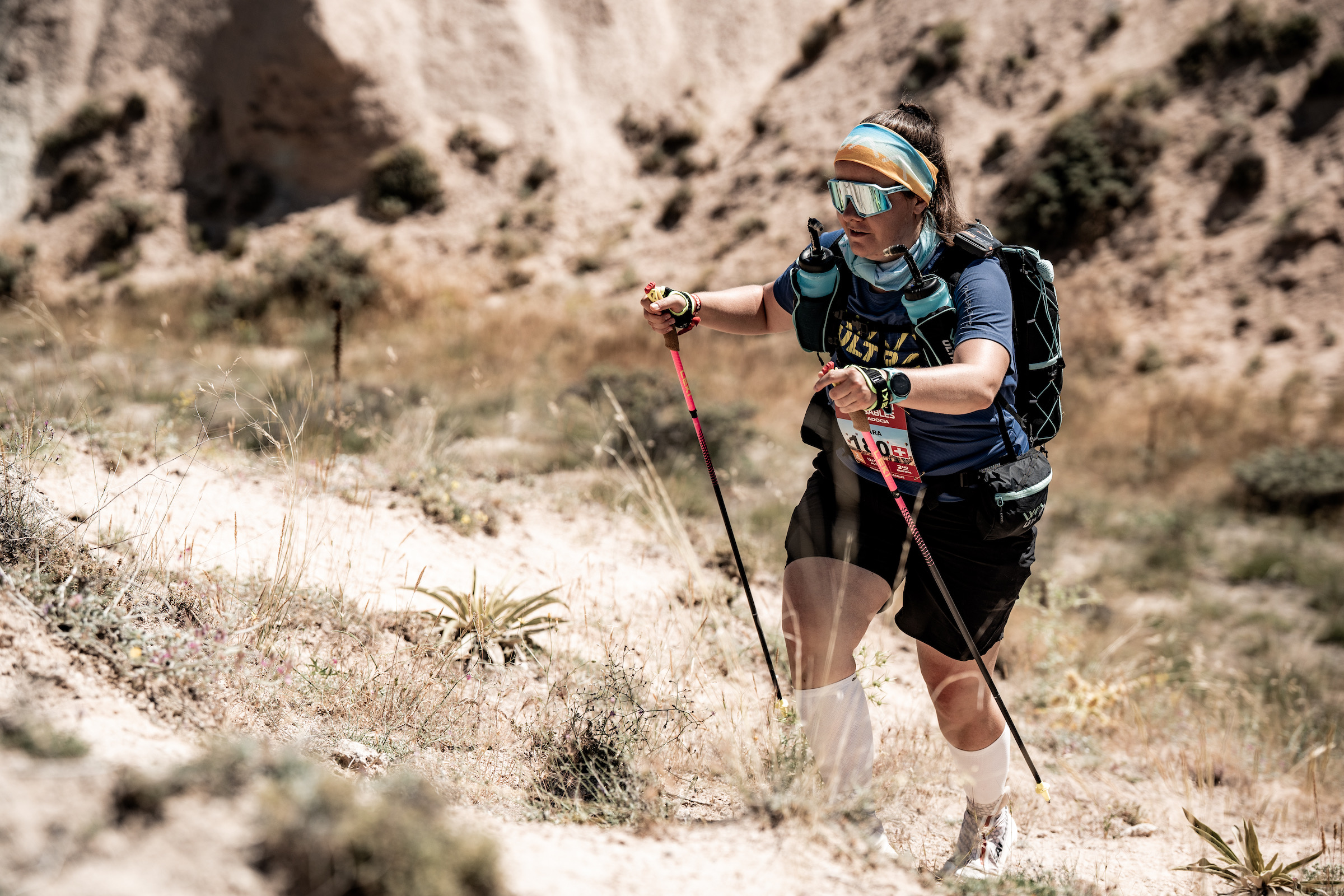
At times, dense vegetation clawed at legs and arms. Elsewhere, there was nothing but the sun, dry air, and the crunch of feet against rock and dust.
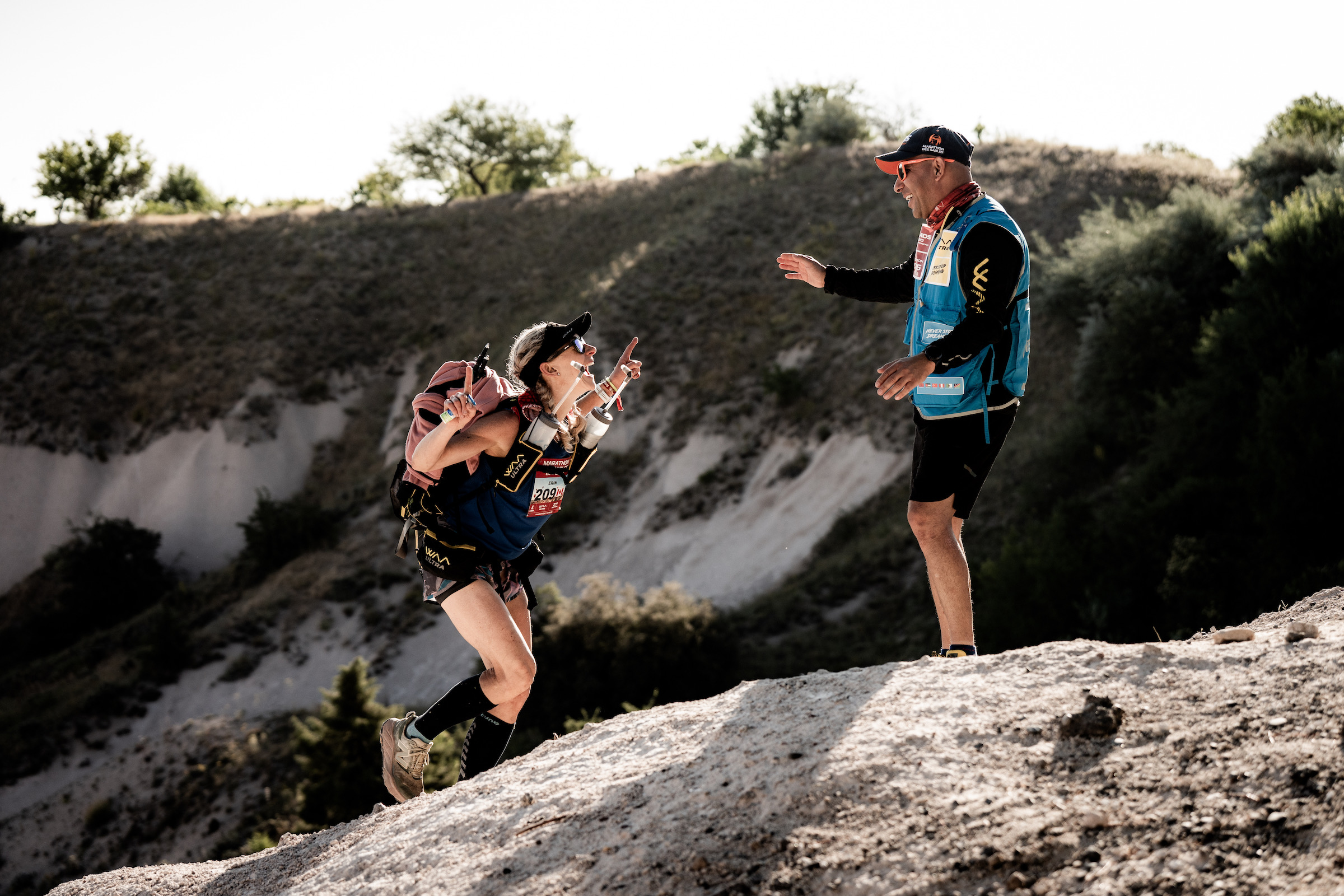
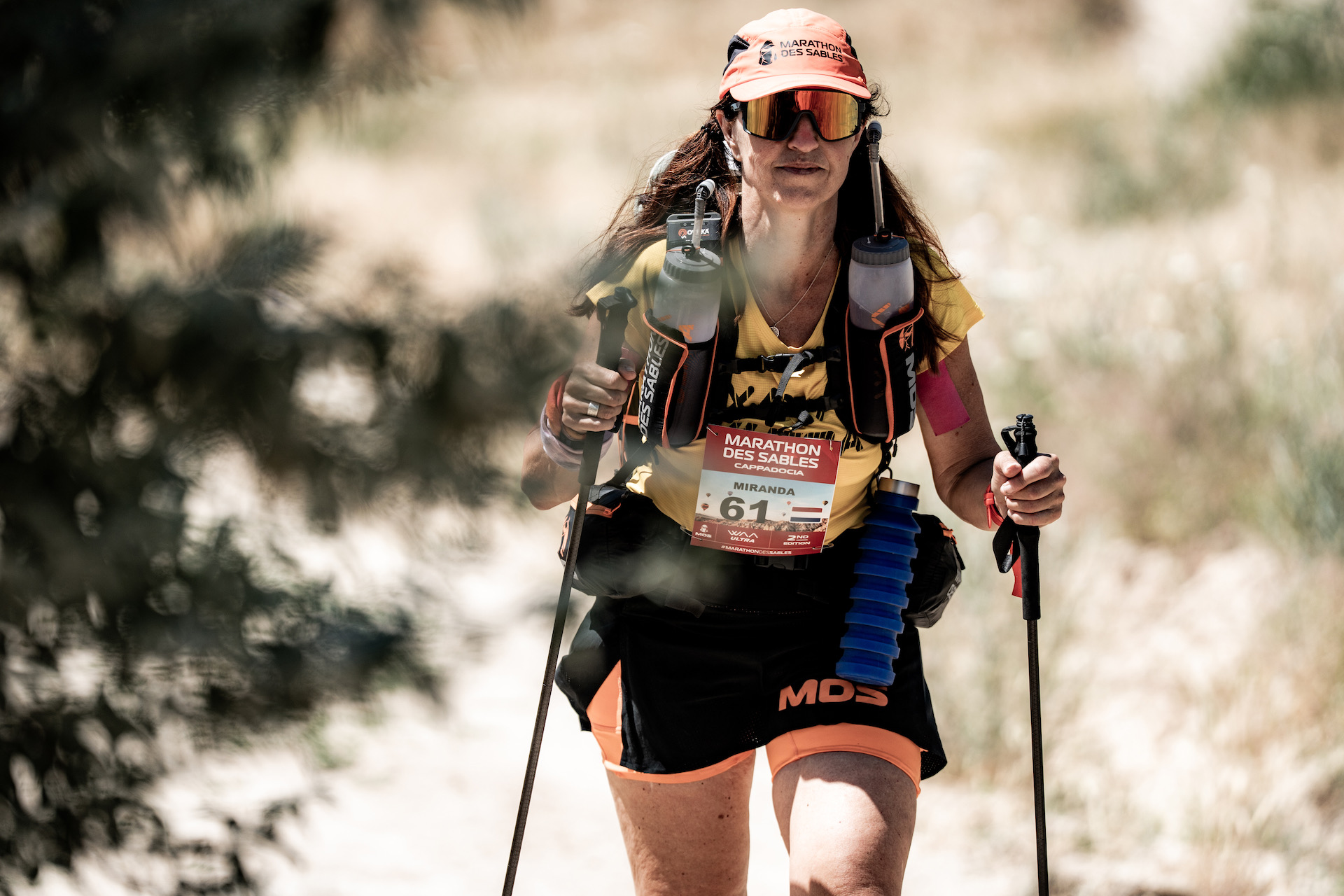
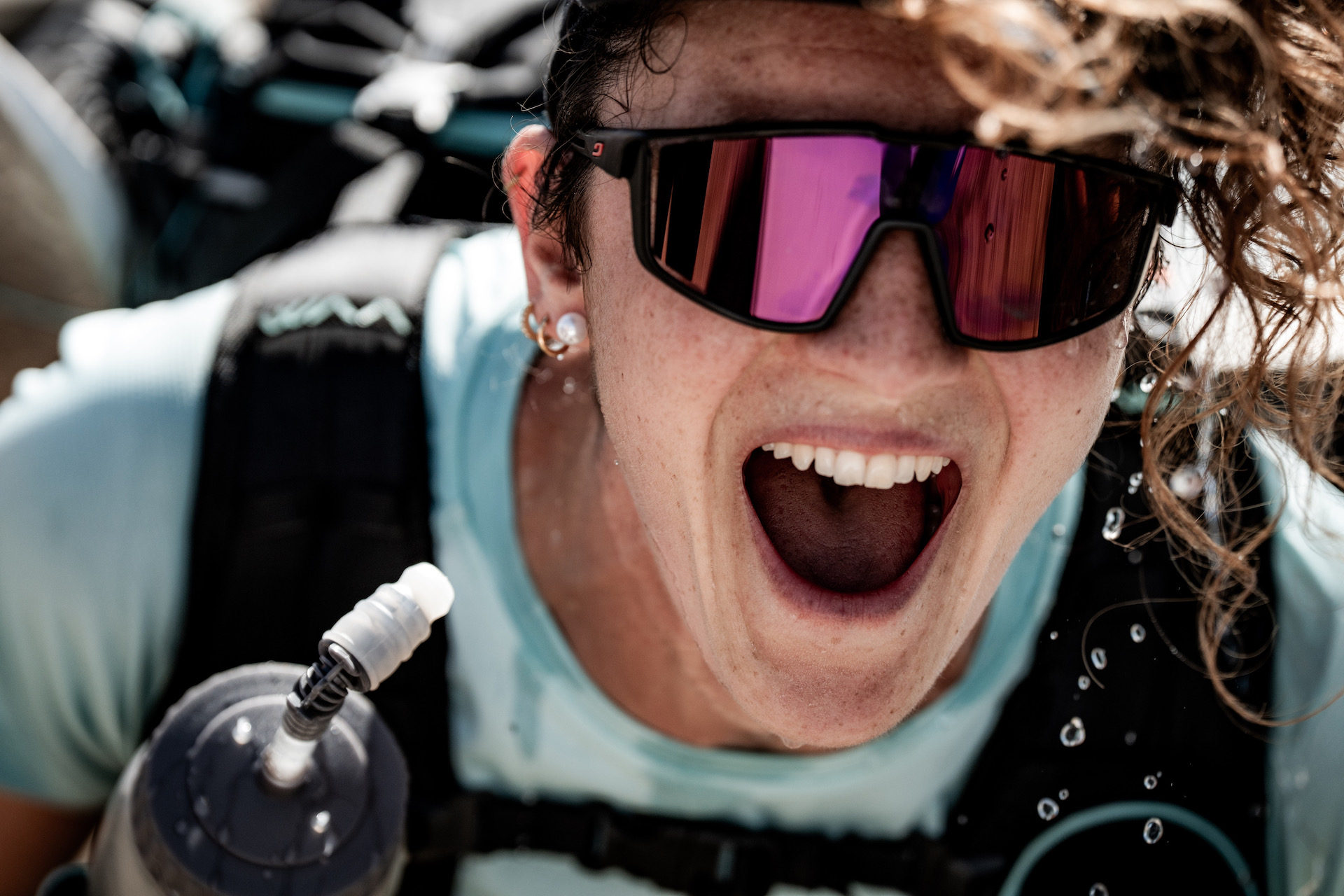
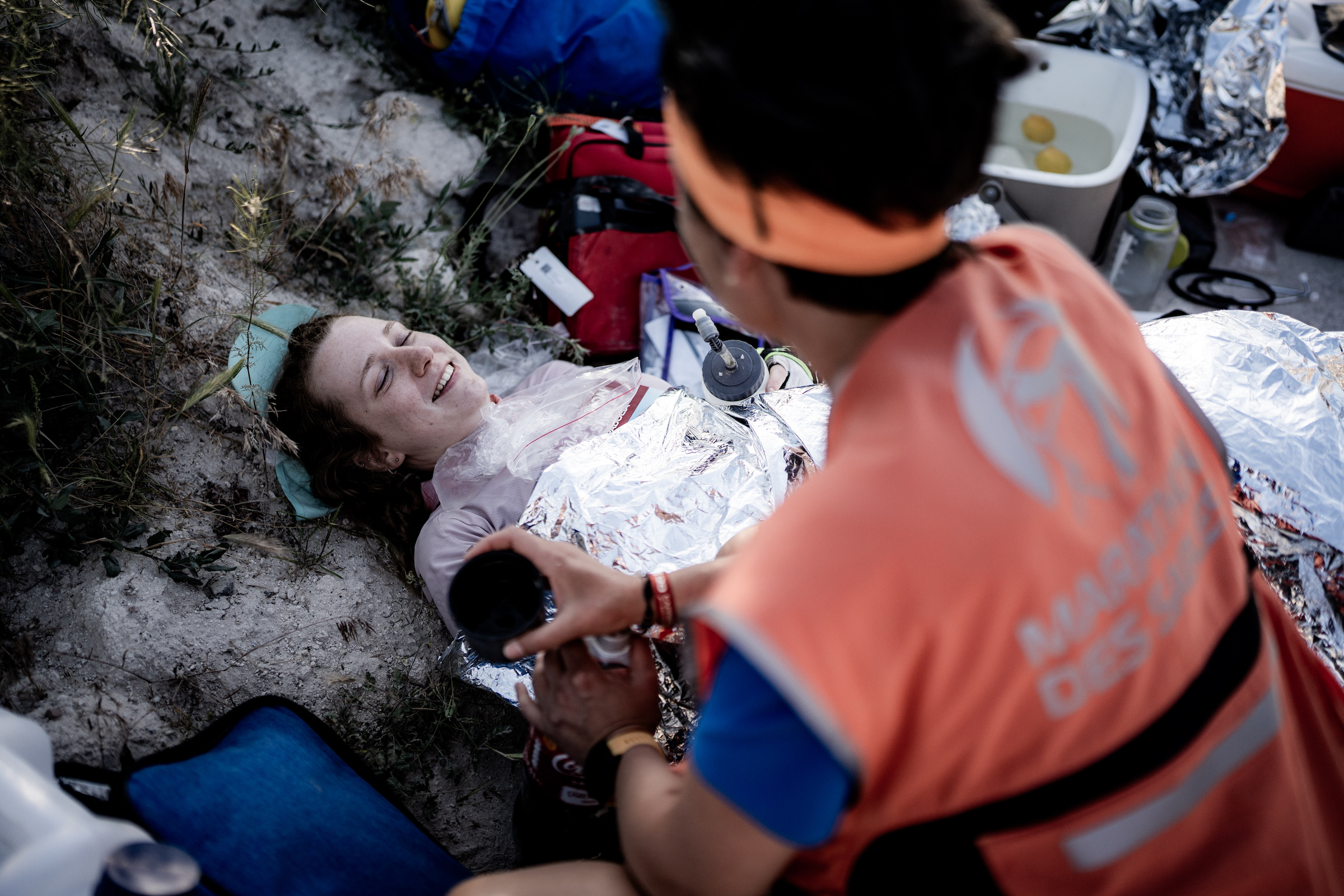
The longer the distance, the deeper the challenge. The sun bore down with intent, turning even the breezes into blasts from a hair dryer. Hydration and mindset became as critical as foot placement. There were stumbles, cramps, and moments of silence where only the sound of breath and grit kept runners going. This is where the MDS 120 orange (medical) and blue (logistics) help keep the runner’s going, importantly, they bring a key safety element to the race.
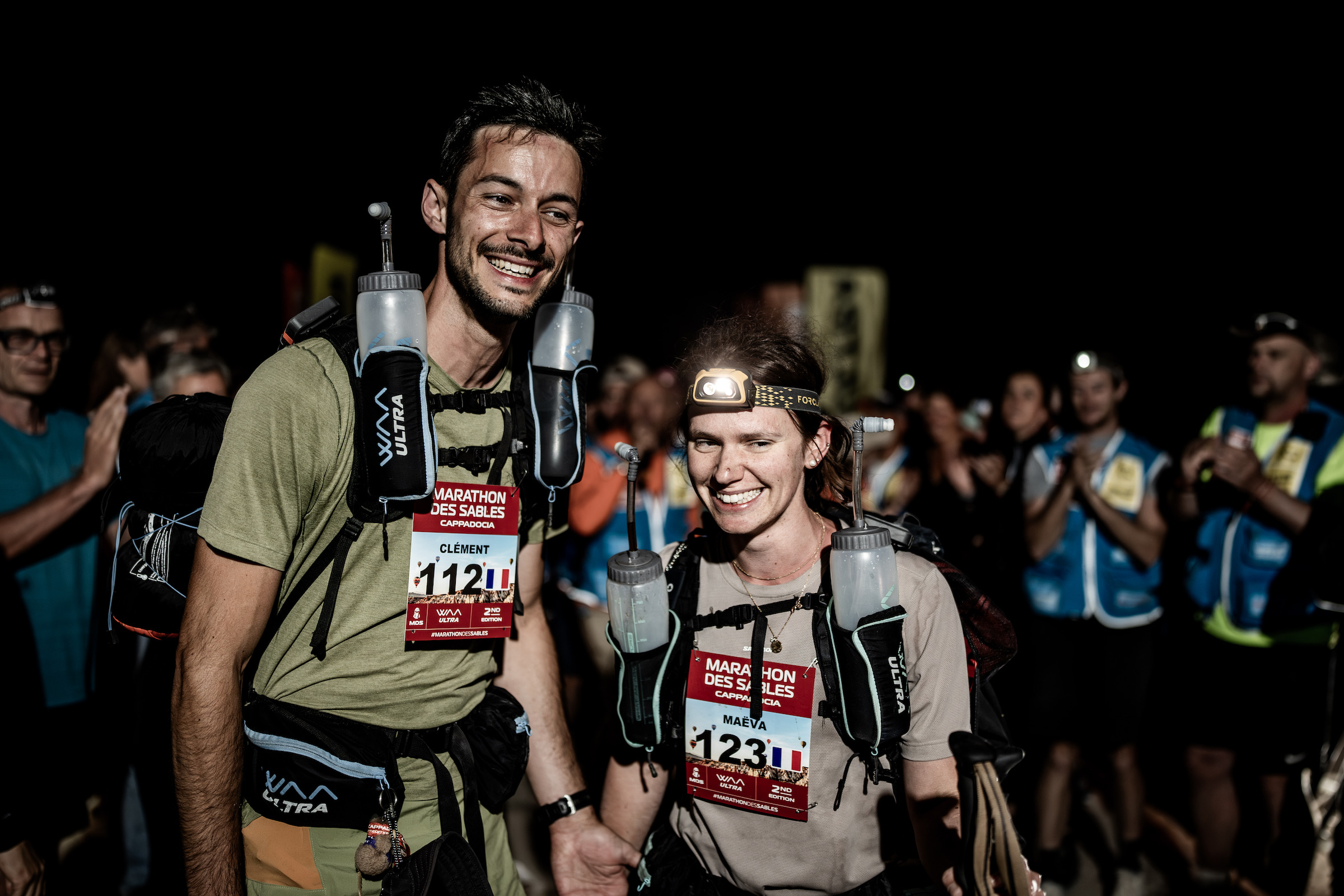
Maëva, our last finisher receiving treatment just 4km’s from the finish.
But they did go. Every last one of them.
The final competitors crossed the line after an incredible 16 hours and 25 minutes on the move. A huge shoutout to Maëva and Clémment, who showed unreal resilience and heart, pushing through to the very end.
To all who took on Stage 2, no matter the distance, no matter the time, today you didn’t just run through Cappadocia. You conquered it.
Tomorrow brings the third and final stage, concluding in the Love Valley.
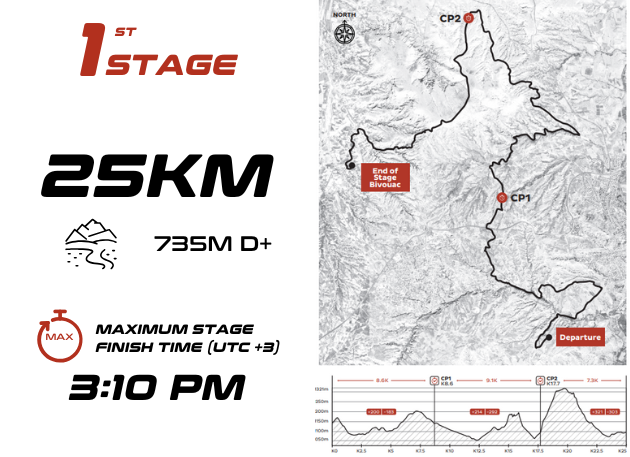
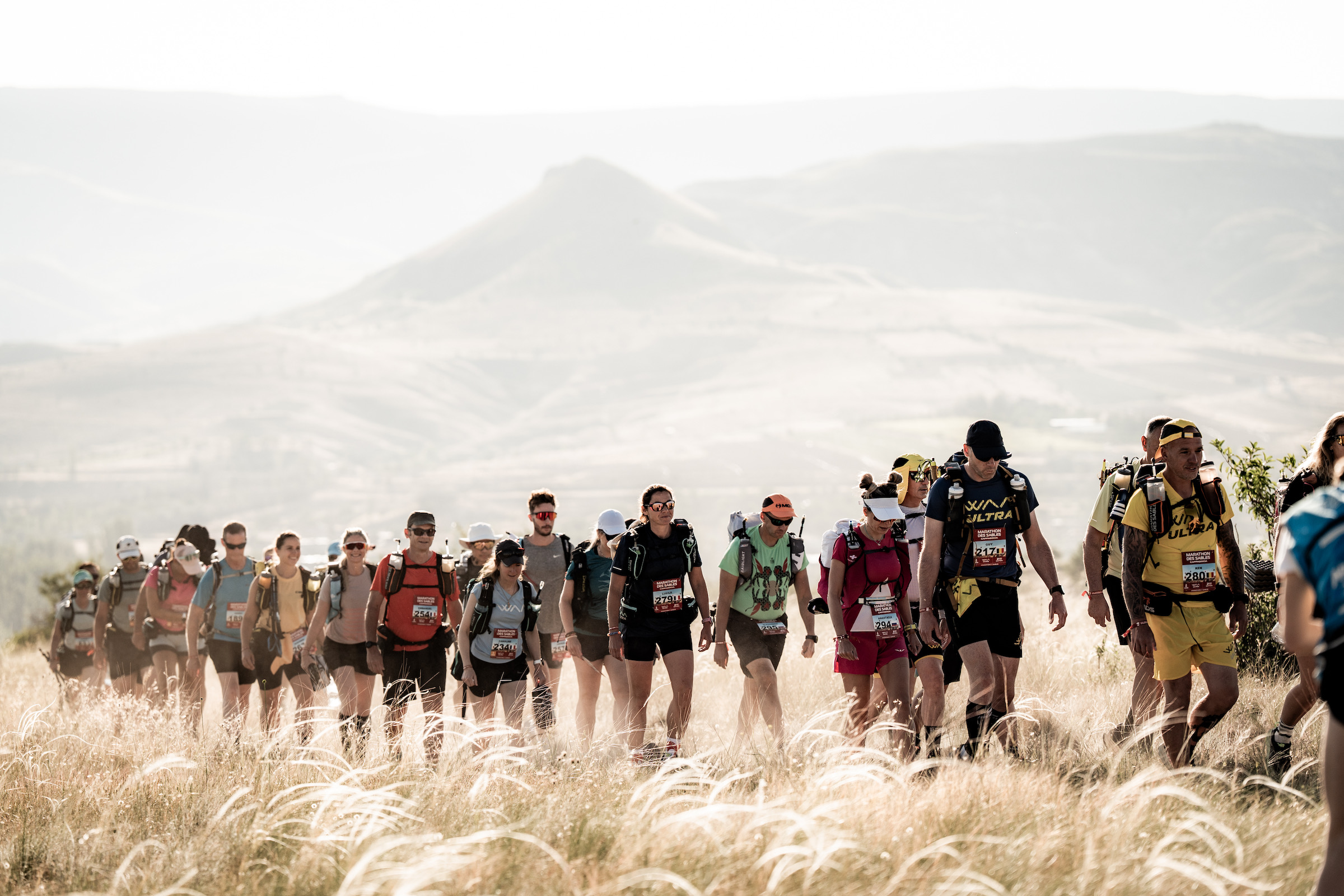
Stage 1 of the 2nd edition of MDS 120 Cappadocia kicked off under the early light of an Anatolian sunrise, with 25 km’s of raw terrain waiting to test the field. A race drawing runners from 25 countries, with 62% of the field made up of women, the stage offered more than just a test of fitness. It celebrated resilience, international camaraderie, and the wild beauty of one of Earth’s most spectacular landscapes.
At 08:00, runners surged forward through soft dust and rising heat, chasing not just the finish line, but the promise of the valleys, ridges, and canyons that make Cappadocia a runner’s dream.
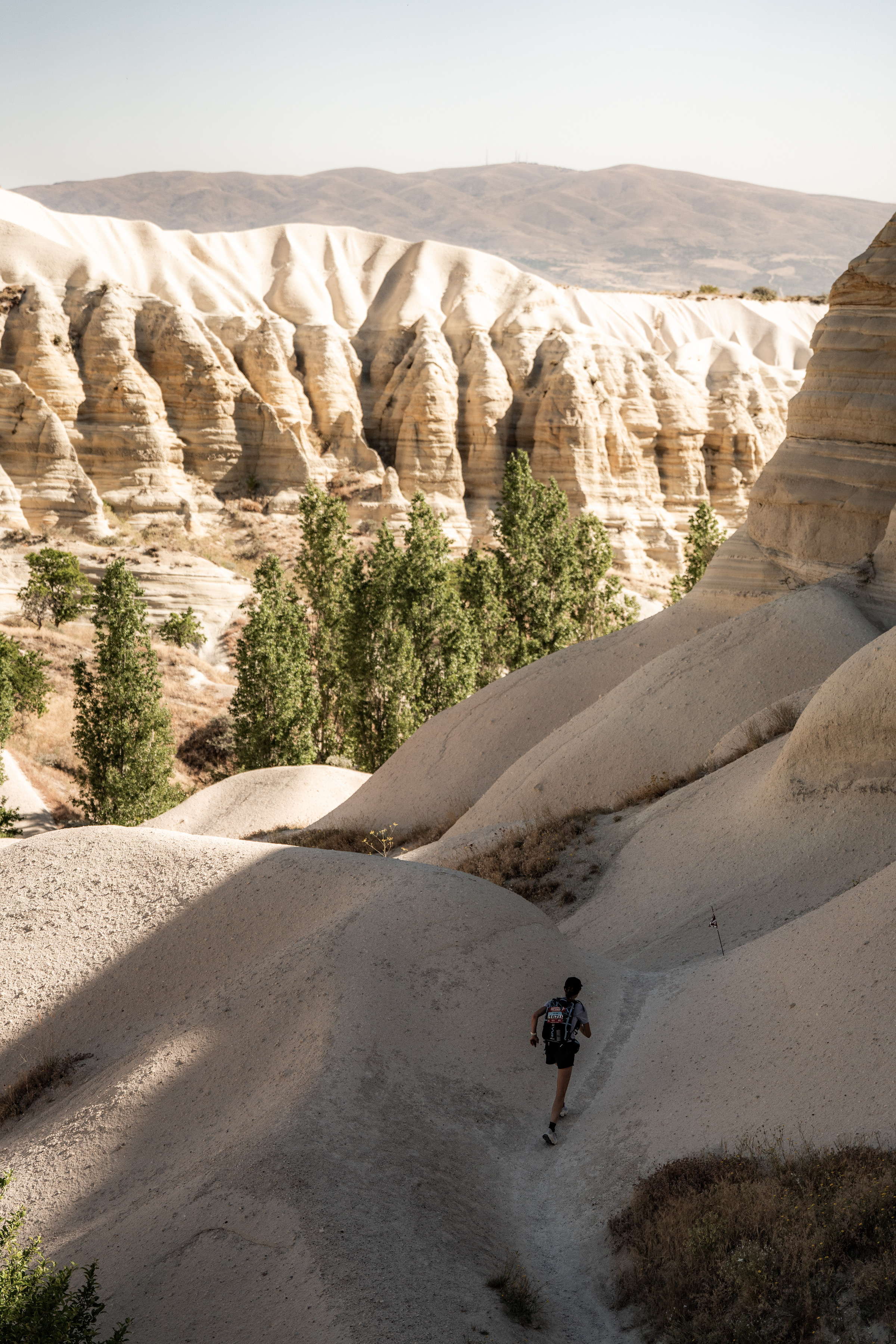
A perfect introduction to this region’s surreal terrain. Cappadocia’s sculpted rock formations and ancient pathways aren’t just scenic, they’re alive underfoot. The ground shifts from soft tuff to jagged stone without warning. Trails wrap through fairy chimneys, drop into hidden valleys, and climb ancient volcanic ridges that defy rhythm and punish pacing mistakes.
In Sword Valley, the finish line was framed by tall rock blades that towered like silent spectators. But before that moment of glory, runners had to earn it, through a twisting, relentless route that refused to give them anything for free.
This stage, at 25km’s, may have been short by ultra standards, but it made up for that in technicality and vertical grind.
“That climb? That was a truth serum to the CP,” said one British runner, laughing between gulps of water.
“I’ve raced ultras all over the world, and I’ve never seen terrain like this,”
This was only the opening round, but already the stage has shaped expectations for the rest of the MDS 120 Cappadocia: With deeper valleys, hotter days, and longer distances on the horizon, strategy will start to matter even more. Pacing, hydration, and mental grit will be required in abundance, especially with increasing hotter temperatures.
Equal parts brutal and beautiful, it gave runners a taste of what’s ahead: unpredictable terrain, and heat. The landscape demands respect. The heat punishes the arrogant. And the first finish line felt like a small rebirth.
One stage down. Two to go. Cappadocia has opened the door and it’s not letting anyone through without a fight.
The MDS Cappadocia returns for its second edition, bringing trail runners back to one of the most visually surreal landscapes on Earth.
Set across three demanding stages over four days, this is not your typical desert race, on the contrary, it’s a technical, high-impact trail event through ancient terrain steeped in history and visual splendour.
Runners choose between 70km, 100km, or 120km of total distance, stages 1 and 3 are the same for everyone, stage 2 participants choose 20/40 or 60km.
Each course is carved through a landscape that feels pulled from another planet.
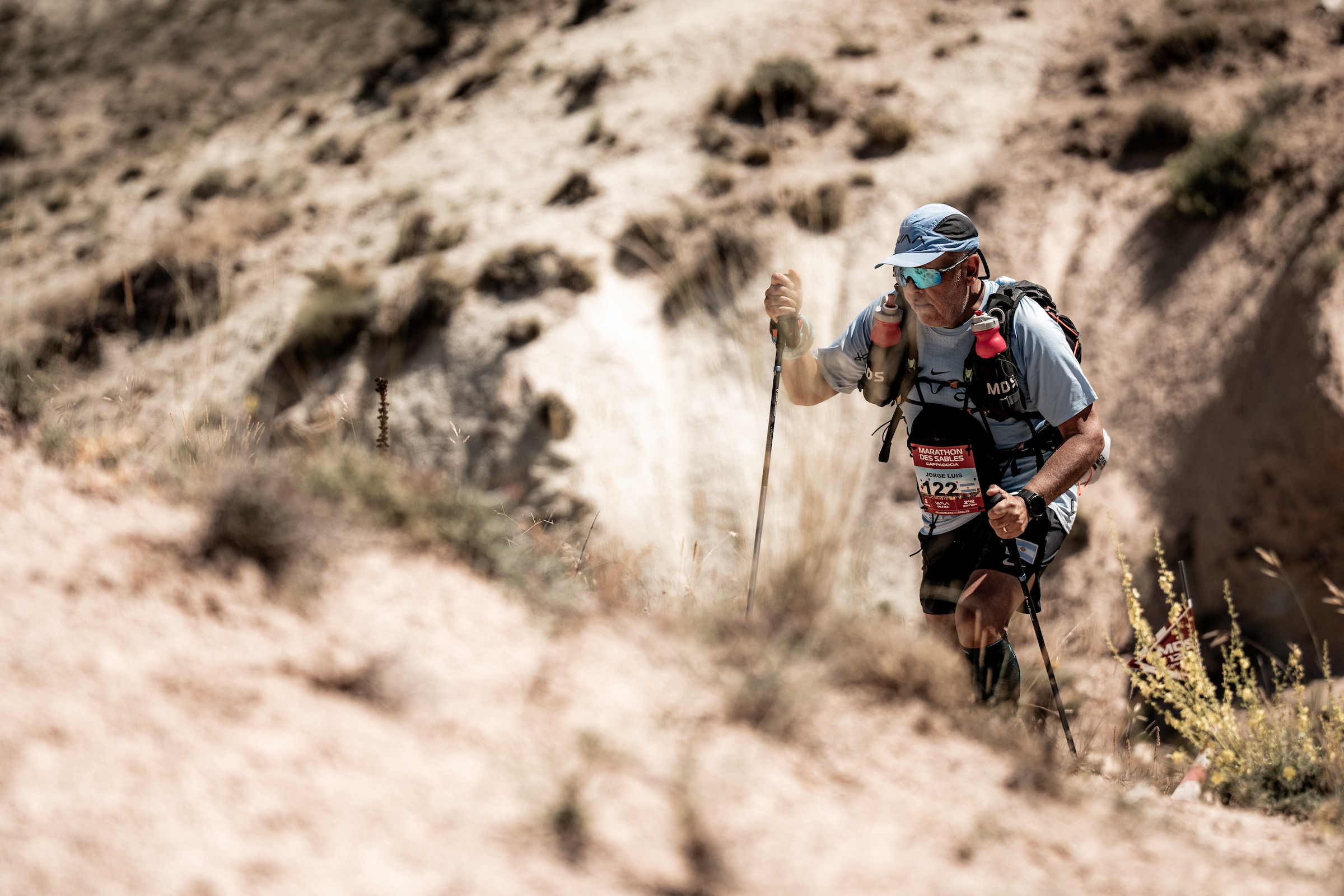
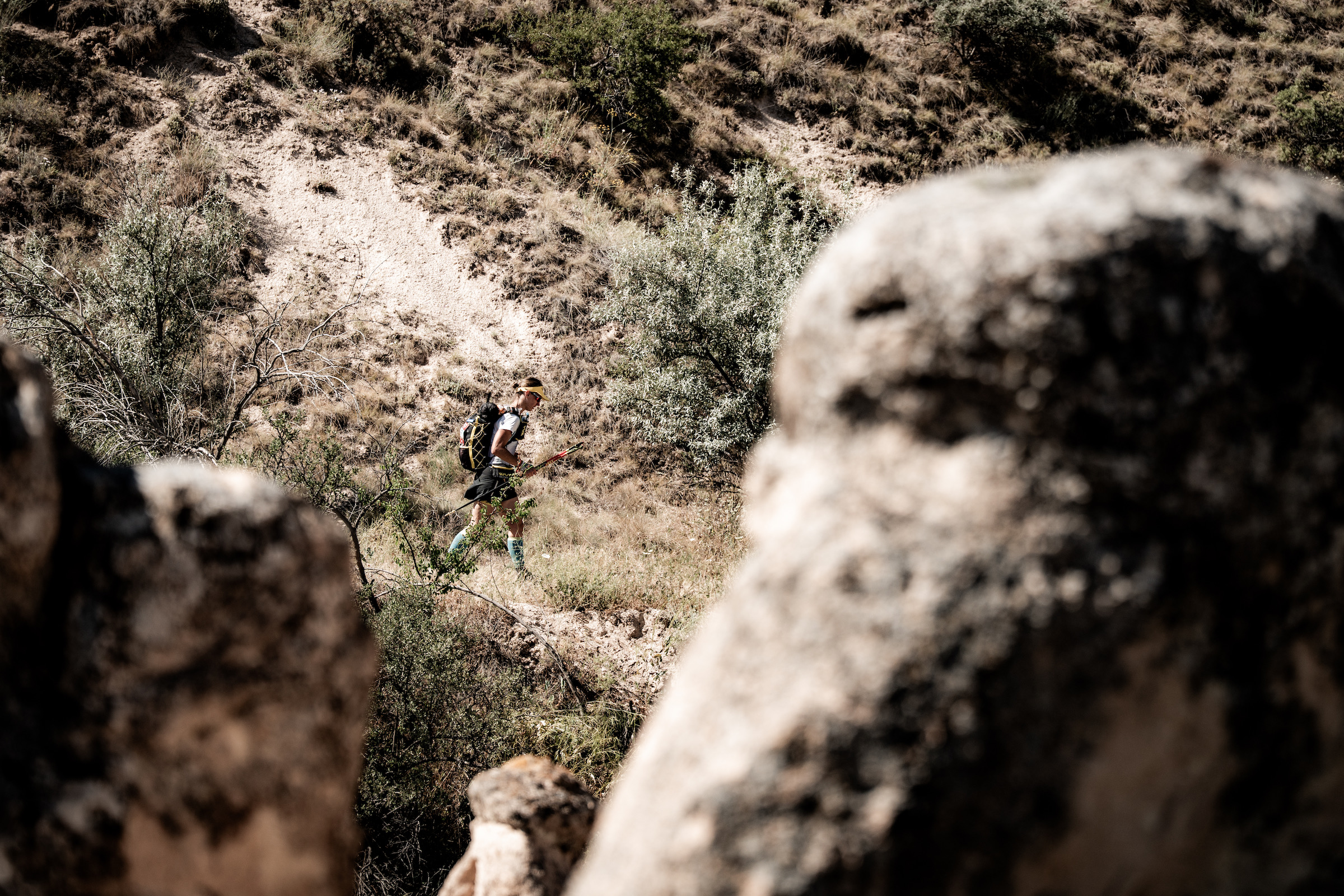
This isn’t a race of endless dunes, Cappadocia stands unique in the MDS format with no sand. It’s a test of grit over rock, gravel, and dust trails, winding through steep valleys, high plateaus, and narrow chimney-like formations.
The terrain shifts constantly. One moment you’re powering up a canyon, the next you’re cruising past thousand-year-old cave dwellings.
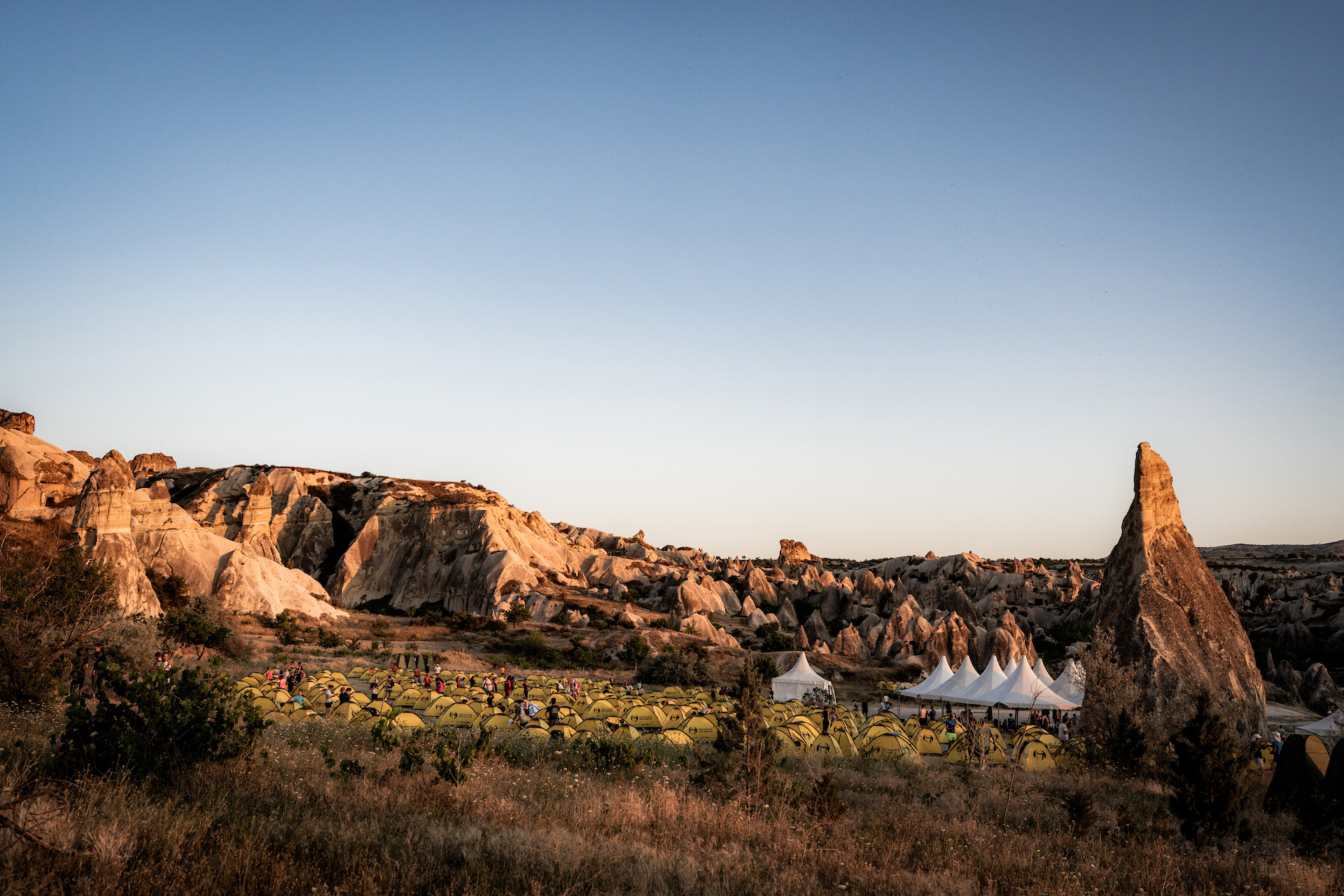
Cappadocia’s late summer weather is unpredictable. Days can scorch above 30°C (86°F), while nights drop sharply in temperature. As with all MDS events, participants will sleep in individual tents in a stunning location set within an amphitheatre of rock.
The sky, often cloudless, fills at dawn with dozens of hot air balloons, silent giants drifting above the rock spires and carved cliffs. Arguably, one of the most unique and memorable sights in any MDS event.
Whether you’re going for the 70km or pushing through the full 120km, MDS Cappadocia strips away distractions and puts the challenge squarely on participant versus the trail: raw, remote, and unforgettable.
Since 1986, the Marathon des Sables – The Legendary (MDS) has carved its name into endurance racing history as one of the most gruelling, soul-stripping tests of human resilience. For 39 editions, it has pushed thousands to their physical and psychological limits under the crushing sun of the Moroccan Sahara.
In 2026, this legendary race will celebrate its 40th edition and it promises to be the most unforgettable one yet.
MDS The Legendary is six stages over roughly 250 km (155 miles), on blistering sand, across jagged jebels, and through soul-sapping salt plains. Runners carry everything they need for the week: food, sleeping equipment and clothes. The only luxury provided? A rationed daily water supply and a communal bivouac tent to crawl into at night which is shared with 7 other competitors.
Photo by Ian Corless
Every ounce carried matters. Bring too little and you starve. Bring too much and the weight drags you down. Success depends on ruthless efficiency and mental grit.
For four decades, the The Legendary has become a rite of passage for ultra runners, adventurers, and those seeking to rewrite their limits. It has seen amputees cross the line, cancer survivors, soldiers, CEOs and importantly, ordinary people doing extraordinary things. The terrain has remained the same: raw, relentless, and unforgiving.
Photo by Ian Corless
Despite the challenges, runner’s keep coming back, some for redemption, some for addiction, and all for the transformation.
The 40th Edition: What’s Coming in 2026
Photo by Ian Corless
The 40th MdS won’t just be another race, it will be a celebration of the madness. A tribute to every blistered foot, every tear shed under Saharan stars, every finisher’s medal earned in blood, sand, and sweat.
Photo by Ian Corless
The 40th will honour the legacy with style and fury.
Think You’ve Got What It Takes?
Entries for the 2026 edition open on June 11, 2025. Veteran or rookie, this is the year to go. Not just to run, but to become part of history.Become a Legend!














 IAN CORLESS