The final stage of the 2024 MDS Morocco started with an early wake up ahead of the 0530 start. There was a chill in the air as participants prepared their last meals.
WAA – What An Adventure
The stage 3 route had been modified due to flooding, but the course would take place in the same region of the Sahara as planned, just a slight detour avoiding the requirement to swim…
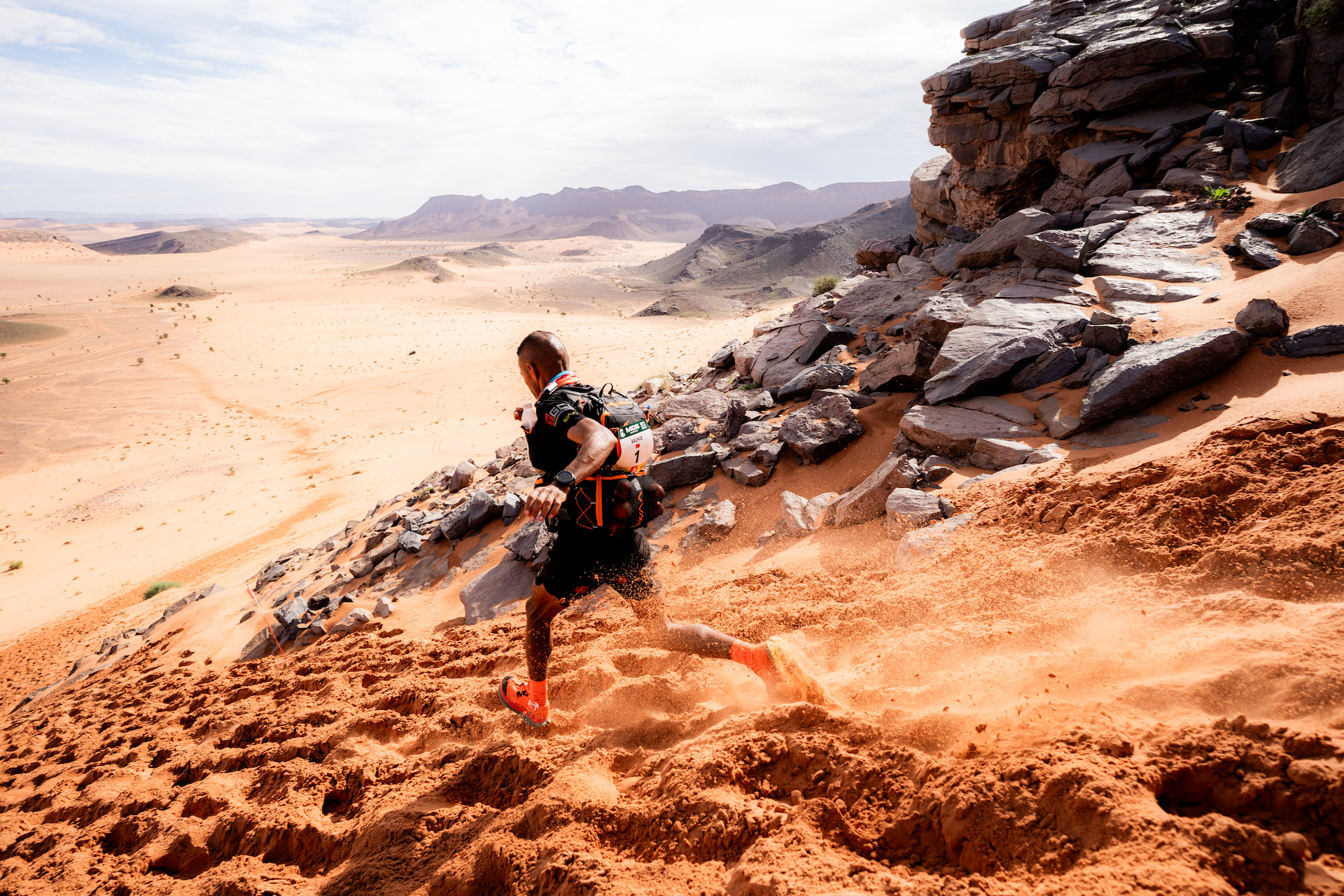
Race winner, Rachid El Morabity
The stage of 25km’s was notable as the HANDI category would complete the entire stage, just one section at around 11km, a narrow gorge, requiring outside assistance from the MDS blue coats to help ensure safe passage.
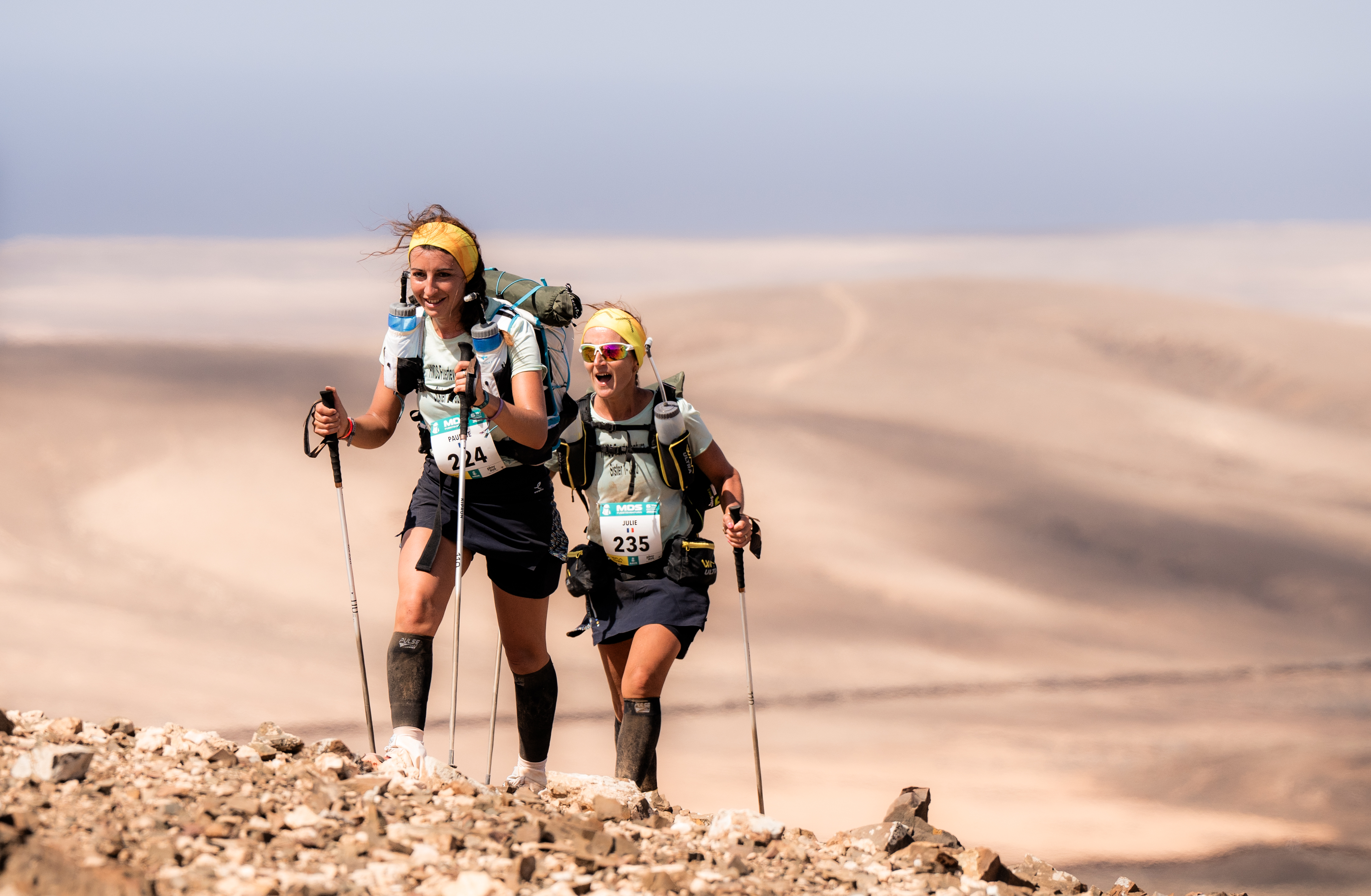
Teamwork makes the dream work.
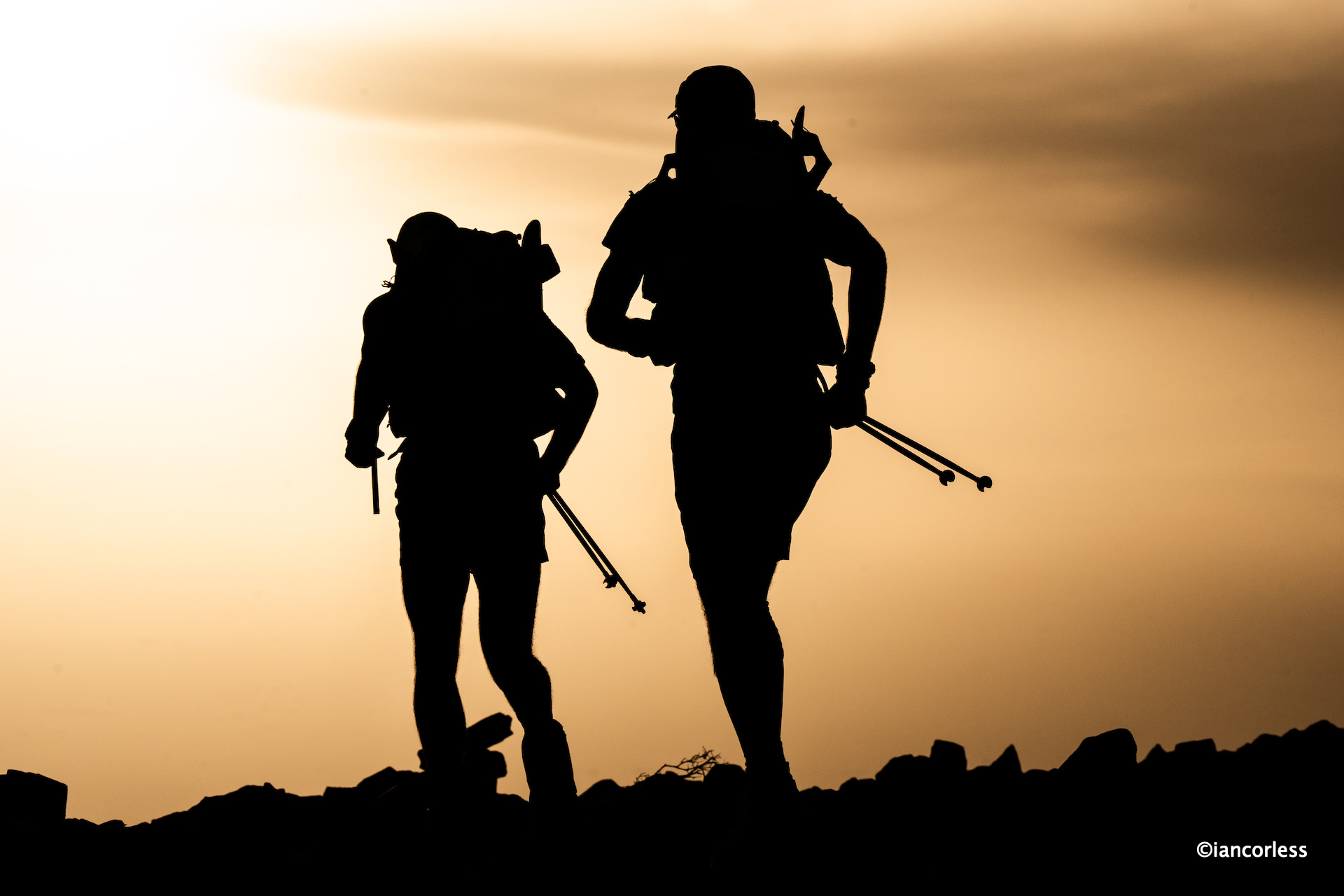
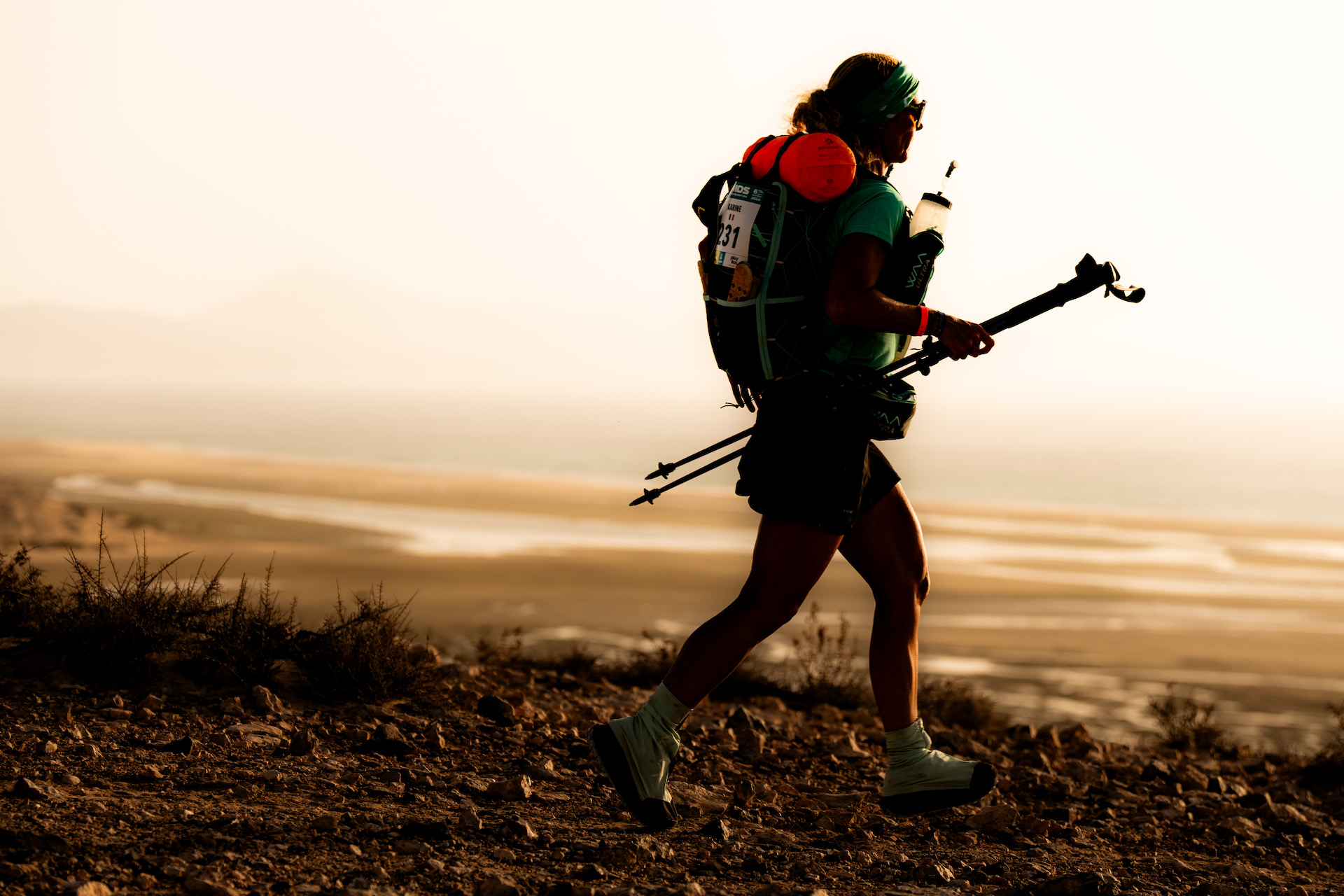
For the top runner’s, the stage would be completed in almost darkness, with sunrise coming at 0720 and the expected first finisher at 0730.
Amazing sunrise
It was a magical day, the glow and lines of headlamps creating a visual spectacle. The Handi teams inspiring and showing that there are no limits and of course, the sunrise was really exceptional.
Magic of the Sahara
The 2024 MDS Morocco will be remembered in the history of the Marathon des Sables legacy; strong winds, sand storms, thunderstorm, torrential rain, flooding and the Handi teams.
The flooding created unique visual moments.
The experience has been all the greater for these moments of test. And for future editions of MDS lessons can be learnt, participants must be prepared for all eventualities. History has shown, the Sahara is not always hot, it is not always dry and it is not always calm and relaxing. This is what makes the adventure and challenge so great and rewarding.
The Handi category, amazing and emotional.
As with all MDS events. there are three distance categories, 70km, 100km and 120km. For the 2024 MDS Morocco, a fourth category, the Handi. A category that we all hope that can grow and develop to more races in the MDS portfolio.
The MDS Morocco 2024 came to an end. Winners were crowned at the awards ceremony, but the top-3 in each distance are only the tip of the iceberg in a race of 630 participants. The MDS format truly appreciates and applauds all who take part, be them fast runner or walker. These races exist to allow all abilities an opportunity to seek an adventure at a pace and a distance that is a challenge to themselves, it’s a wonderful concept.
Since 1986, the MARATHON DES SABLES has crossed the world’s most stunning deserts with several unique concepts: the MARATHON DES SABLES THE LEGENDARY (252 km in the Sahara Desert in Morocco), the MARATHON DES SABLES (70, 100, or 120 km spread over 3 stages), and the new 2024 concept, the MDS TREK (4 stages with a total distance of up to 120 km), offering an accessible adventure with optimal comfort. These international events have seen over 50 editions in various countries such as Morocco, Fuerteventura Island, Peru, Jordan, Turkey, and offer adventures that combine running/hiking in the desert with tourism.
A sunny afternoon, some heat and strong winds brought a welcome end to stage 1, however, on the horizon, storms were visible from bivouac. Gladly, they never appeared and everyone had a calm night after a beautiful sunset.
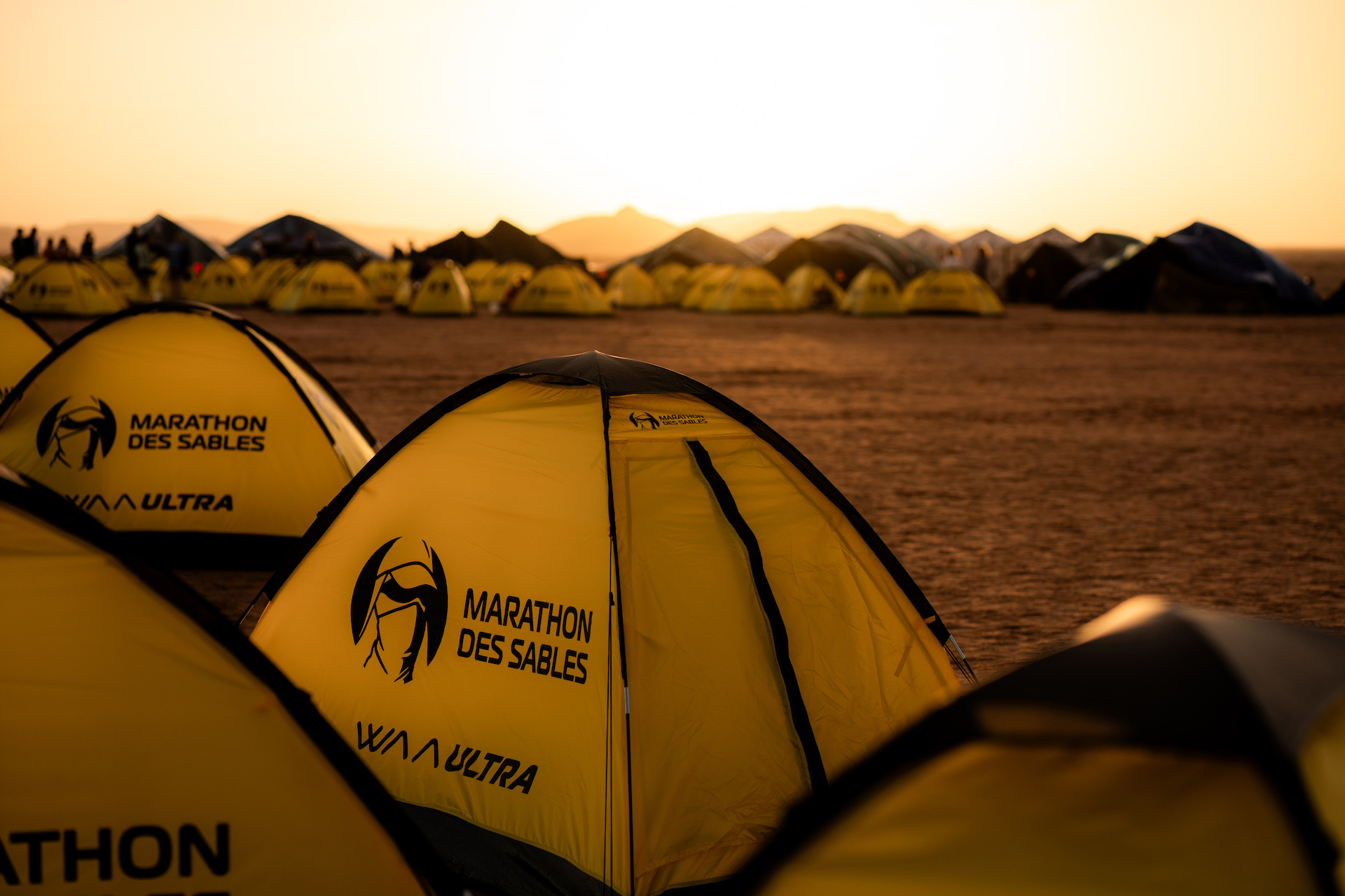
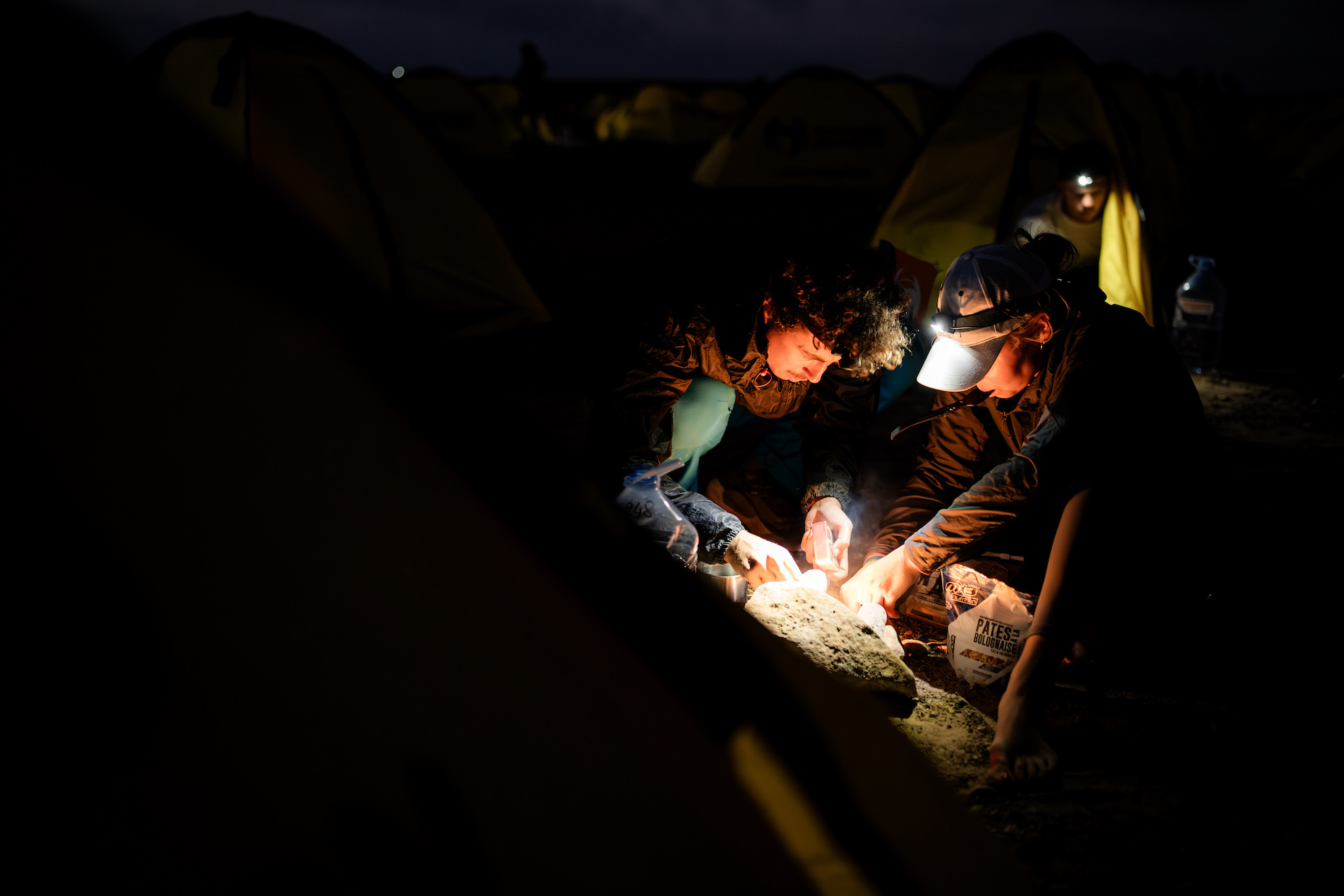
Camp life
The impact of the weather on stage 1 however, caused a complete re-working of the stage 2 route, as key sections were still under flood water.
The 0800 start.
With two starts for stage 2, 0800 and 1000 (for the top 50) the day started with some light rain, needless to say, there was concern within the whole bivouac. However, after a cloudy start, the weather started to clear and by mid-afternoon, we were back to a normal Sahara day with temperatures close to 30deg and blue skies. The main difference coming with some extra humidity.
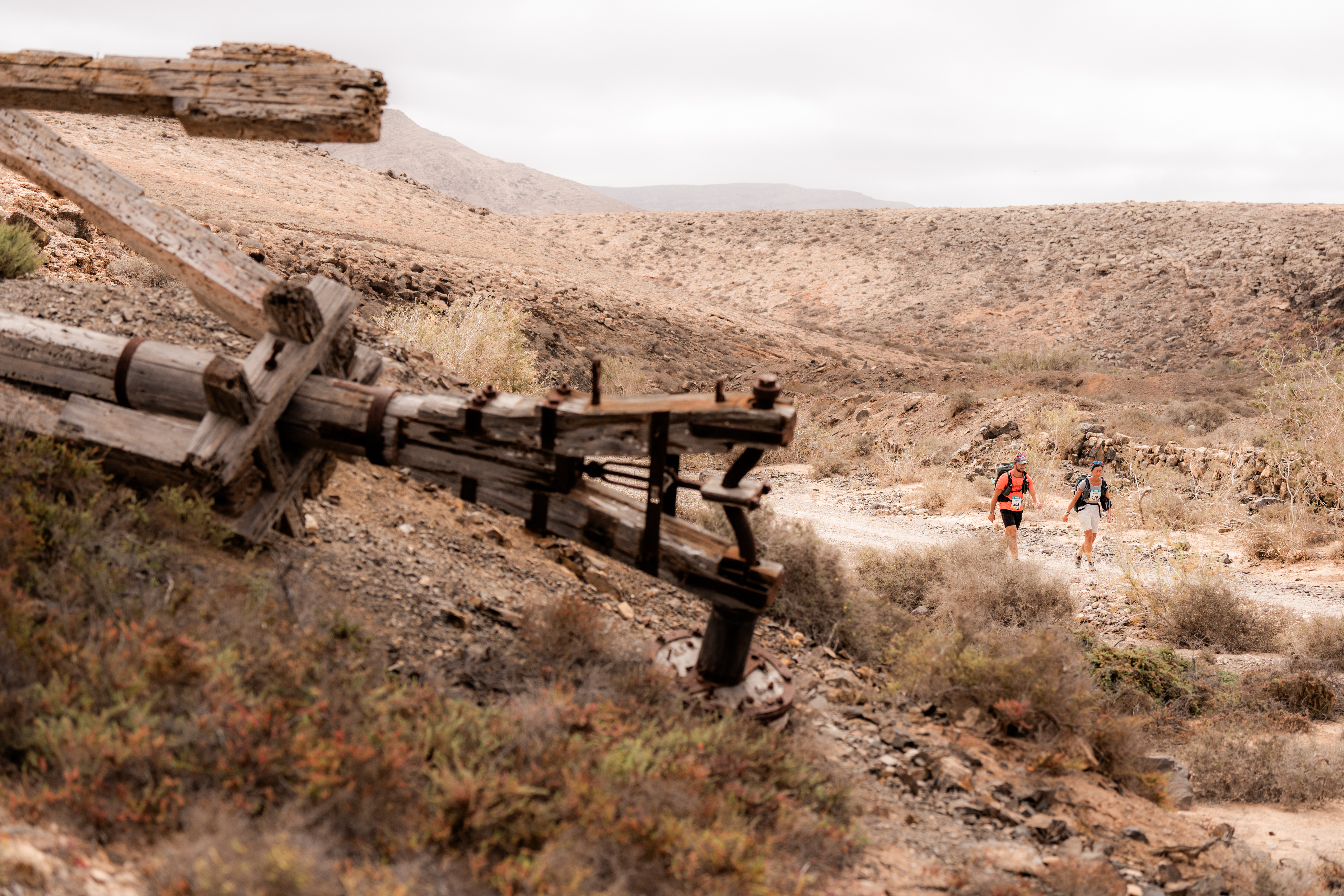
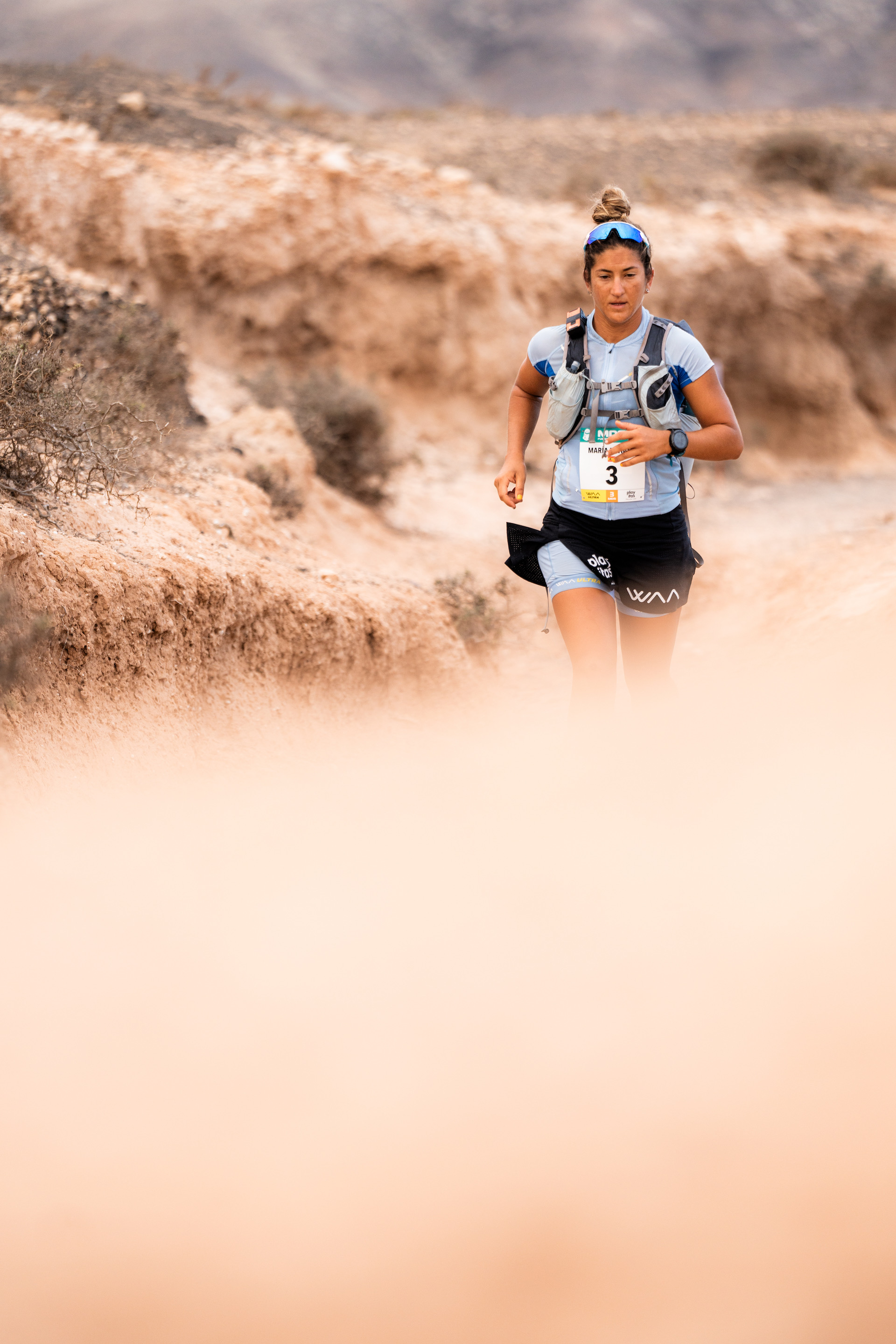
The route was a wonderful mix of climbs, soft-sand, stoney plateau all in an area that is considered a highlight of the Sahara.
The heat returned
With three route options available, 20km, 40km or 60km the full results from the day will only be known when all participants have finished and the timekeepers have collated the data, so, please check the results via the link below.
Full MDS Morocco results are available to be viewed HERE
One thing we do know is that Rachid El Morabity crossed the finish line, hand-in-hand with Abdekkader Elmouaziz.
The landscape in the Sahara is very different at the moment
The HANDI race started with the masses as they did on stage 1 and proceed for 1km before transferring via vehicle to Cp1. They then raced to Cp2. Once at Cp2 they then transferred back to the final km to finish under the MDS arch.
Tomorrow is a rest day and an opportunity to re-charge before stage 3 on Thursday.
Since 1986, the MARATHON DES SABLES has crossed the world’s most stunning deserts with several unique concepts: the MARATHON DES SABLES THE LEGENDARY (252 km in the Sahara Desert in Morocco), the MARATHON DES SABLES (70, 100, or 120 km spread over 3 stages), and the new 2024 concept, the MDS TREK (4 stages with a total distance of up to 120 km), offering an accessible adventure with optimal comfort. These international events have seen over 50 editions in various countries such as Morocco, Fuerteventura Island, Peru, Jordan, Turkey, and offer adventures that combine running/hiking in the desert with tourism.
Bivouac in the distance towered by the ominous weather
The 2024 MDS Morocco officially got underway after a day of strong winds, sandstorms and rain through the night.
With the glow of fires in bivouac, the sky was ominous and the flashes of light and sound in the distance was a warning of what was to come.
A river runs through it
Stage 1, 24.7km and 507m+ was in theory, an easier day passing through very familiar MDS territory. With 2.5km´s of easy terrain before a short sand climb and descent before a long flat section to cp1.
Climbing the early pass before the rain came
Cp1 to Cp2 contained more soft-sand and soft-sand followed as the runners climbed to the highest point via a mountain pass and then a descent all the way to bivouac.
Making a splash
The story of the day was the weather, the ominous clouds and distance sounds moved to bivouac and then reached the first mountain pass just as the last runner came through.
The fagility of nature
What followed was nothing short of a biblical downpour turning certain sections of the stage 1 route into a mud bath of flooding, rivers and streams. Cp2 was hit hard, but participants embraced the challenge. Everyone was smiles, fully understanding that they were experiencing a very unique moment in MDS history.
As quickly as the storm came, it disappeared and as the day passed, by midday, skies were blue, the sune was once again beating down and all was resumed for a typical MDS day!
Full MDS Morocco results are available to be viewed HERE
El Morabity after cp2 in the rain
Top 3 for stage 1 came as no surprise for the men with Elmouaziz and El Morabity playing a game setting up Rachid for the long stage tomorrow.
The HANDI race started with the masses and proceed for 1km before transferring via vehicle to Cp1. They then move from Cp1 to Cp2, km8.5 to km12.2 in ´race mode.´ A tough and arduous challenge moving a special wheelchair through the soft sand of the Sahara. One pushes, the other pulls. It’s incredible to see these 10 pioneering teams pave a new way in Morocco.
Inspiration from the Handi teams
Tomorrow, stage 2, which is the theoretical long day. Athletes can choose, 20km, 40km or 60km. However, after the heavy rains of today and localised flooding, there may be a change of routes.
Since 1986, the MARATHON DES SABLES has crossed the world’s most stunning deserts with several unique concepts: the MARATHON DES SABLES THE LEGENDARY (252 km in the Sahara Desert in Morocco), the MARATHON DES SABLES (70, 100, or 120 km spread over 3 stages), and the new 2024 concept, the MDS TREK (4 stages with a total distance of up to 120 km), offering an accessible adventure with optimal comfort. These international events have seen over 50 editions in various countries such as Morocco, Fuerteventura Island, Peru, Jordan, Turkey, and offer adventures that combine running/hiking in the desert with tourism.
Following on from MDS Fuerteventura, the MDS team quickly transition to Morocco and the 2024 edition of MDS Morocco that will take place in the heart of the Sahara. MDS Morocco offers an adventure accessible to all kind of walkers and runners. A unique journey, where you will cross breathtaking landscapes. Far from any form of civilization, this is a unique opportunity to refocus on yourself and enjoy the simple pleasures of life.
This 3rd edition, 12th to the 19th October will see 600 participants arrive for the adventure of a lifetime in the place where the Marathon des Sables story started over 37-years ago, Morocco.
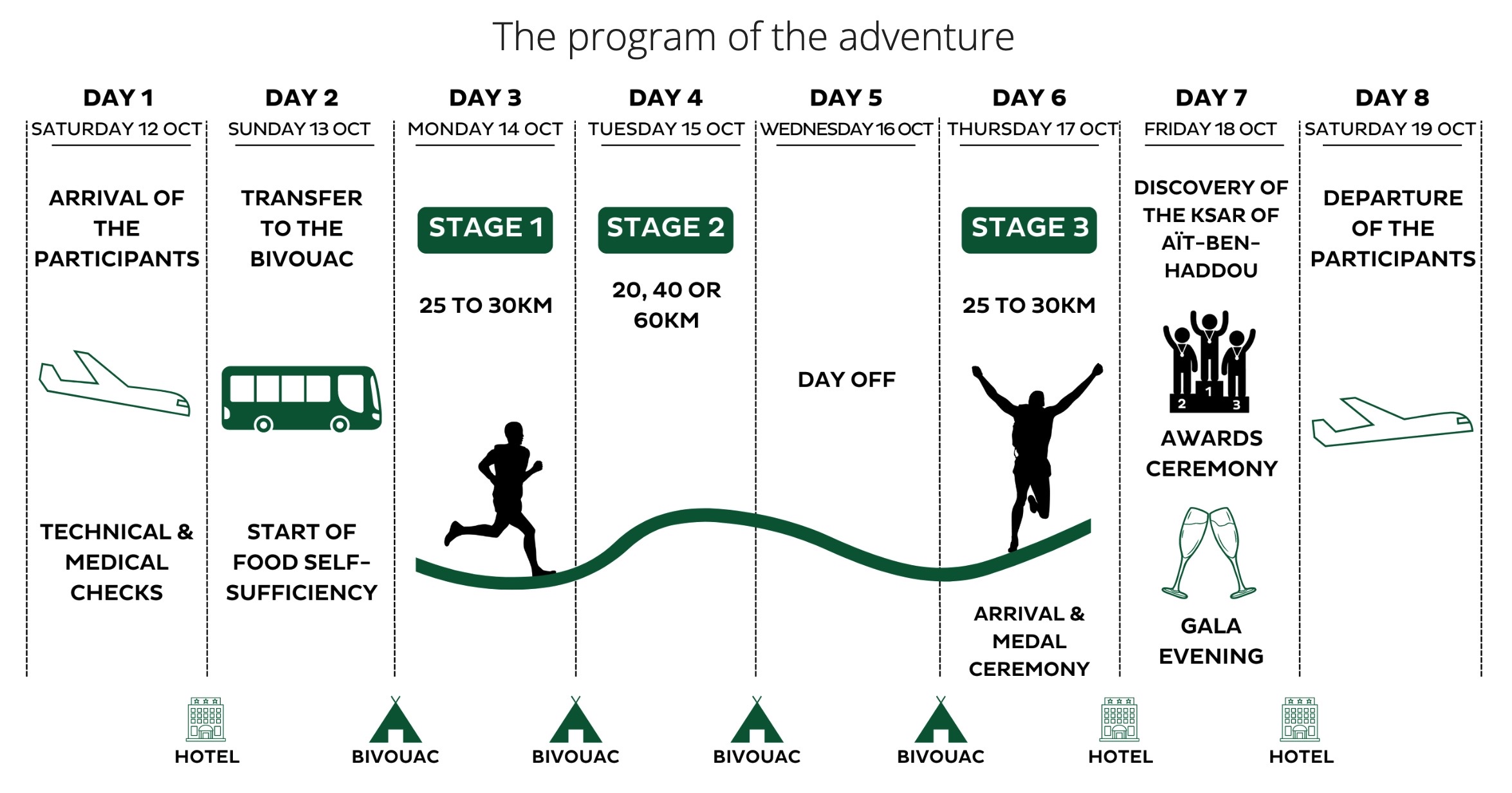
Participants will arrive in Ouarzazate on Saturday October 12th for technical and medical checks followed by a night in a hotel.
Admin and medical checks
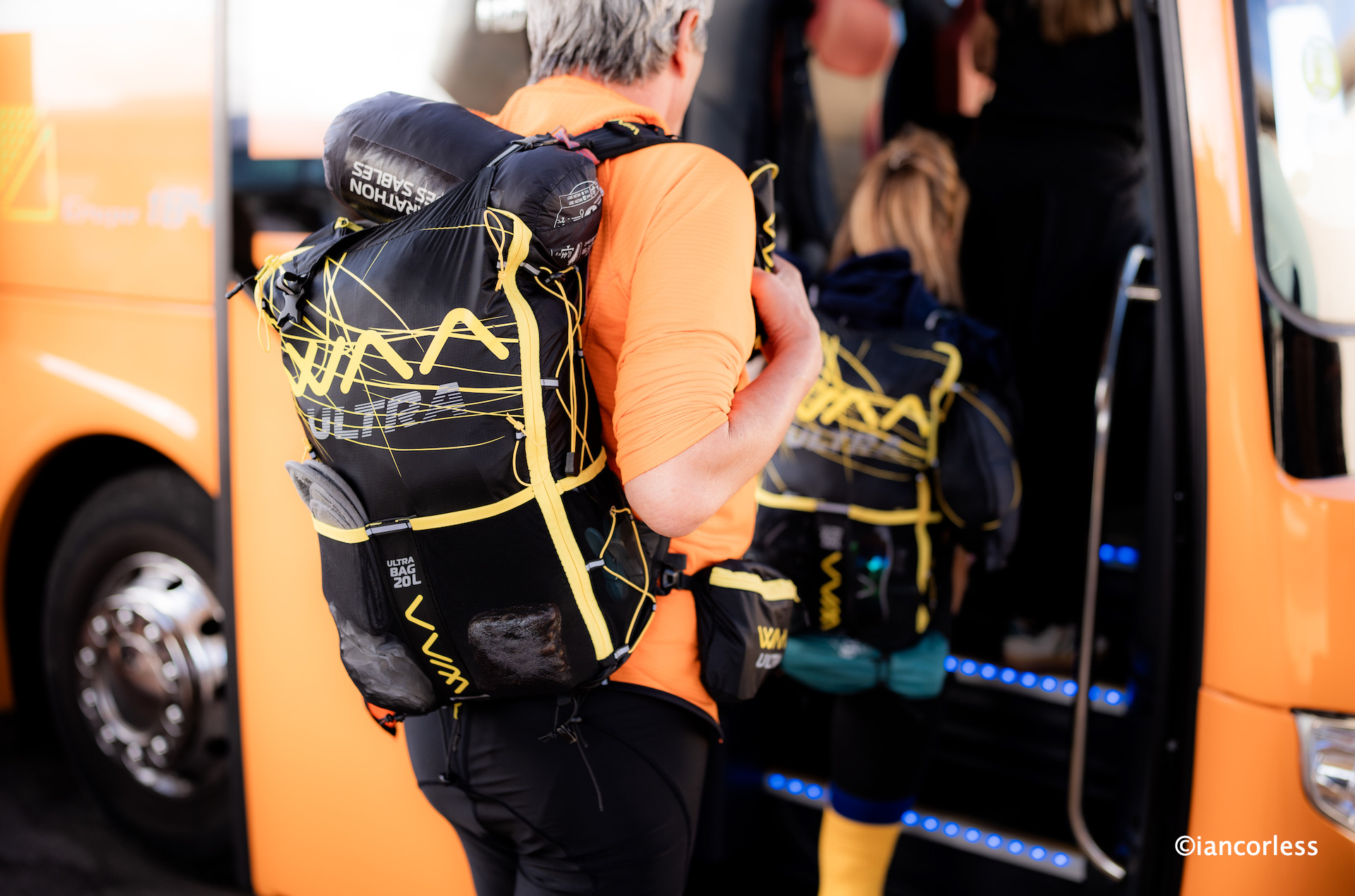
The following day, Sunday, is the journey, via bus, to the desert (approximately 6 hours) with arrival in bivouac and the start of self-sufficiency.
Bus transfer to the desert
Day 3, 4, 5 and 6 will have participants follow the classic MDS format of racing, 3 stages spread over 4-days.
Day 1 / Stage 1 25-30km.
Day 2 / Stage 2 choose 20km, 40km or 60km.
Day 3 Rest day
Day 4 / Stage 3 25-30km followed by transfer to hotel.
Importantly, MDS Morocco will see the addition of the NEW category, HANDI MDS which will cover 51km and 867m+
The following day provides the opportunity to visit the iconic site of Aït-Benhaddou(one of the locations of the film Gladiator). On arrival back at the hotel, time to relax and prepare for the awards ceremony and gala dinner.
Saturday 19h October is departure day.
Three sublime stages which will transport participants in the most beautiful places of the Moroccan Sahara, sleeping 4 nights in the MDS bivouac, this is the start of one of the adventures of a lifetime.
What is the MDS?
The MARATHON DES SABLES is a unique adventure, shared by thousands of enthusiasts since 1986.
To differentiate the full distance race of 250km’s, Marathon des Sables will now be known at MDS The Legendary, reflecting the legendary status of this iconic event and its long history as a pioneer of the stage racing and multi-day format.
The ‘HMDS’ format will still follow the same protocols as before but has now dropped the ‘half’ title and moving forward, events will be called MDS Jordan, MDS Morocco, MDS Cappadocia and so on.
MDS always an adventure
The MDS events are a one-week sporting adventure that combines the discovery, travel, meeting new people and physically challenging yourself in a self-sufficient manner.
Since 1986, the MARATHON DES SABLES has crossed the world’s most stunning deserts with several unique concepts: the MARATHON DES SABLES THE LEGENDARY (252 km in the Sahara Desert in Morocco), the MARATHON DES SABLES (70, 100, or 120 km spread over 3 stages), and the new 2024 concept, the MDS TREK (4 stages with a total distance of up to 120 km), offering an accessible adventure with optimal comfort. These international events have seen over 50 editions in various countries such as Morocco, Fuerteventura Island, Peru, Jordan, Turkey, and offer adventures that combine running/hiking in the desert with tourism.
MARATHON DES SABLES 2025 events are already open:
MDS Morocco – Atlantic Coast: January 25 to February 1, 2025
A rest day made all the difference for the participants of MDS Fuerteventura and stage 3 was eagerly anticipated.
An early departure from bivouac and then a bus transfer to the start at Sotavento Beach, ahead 26.3km with 587m+ to La Pared.
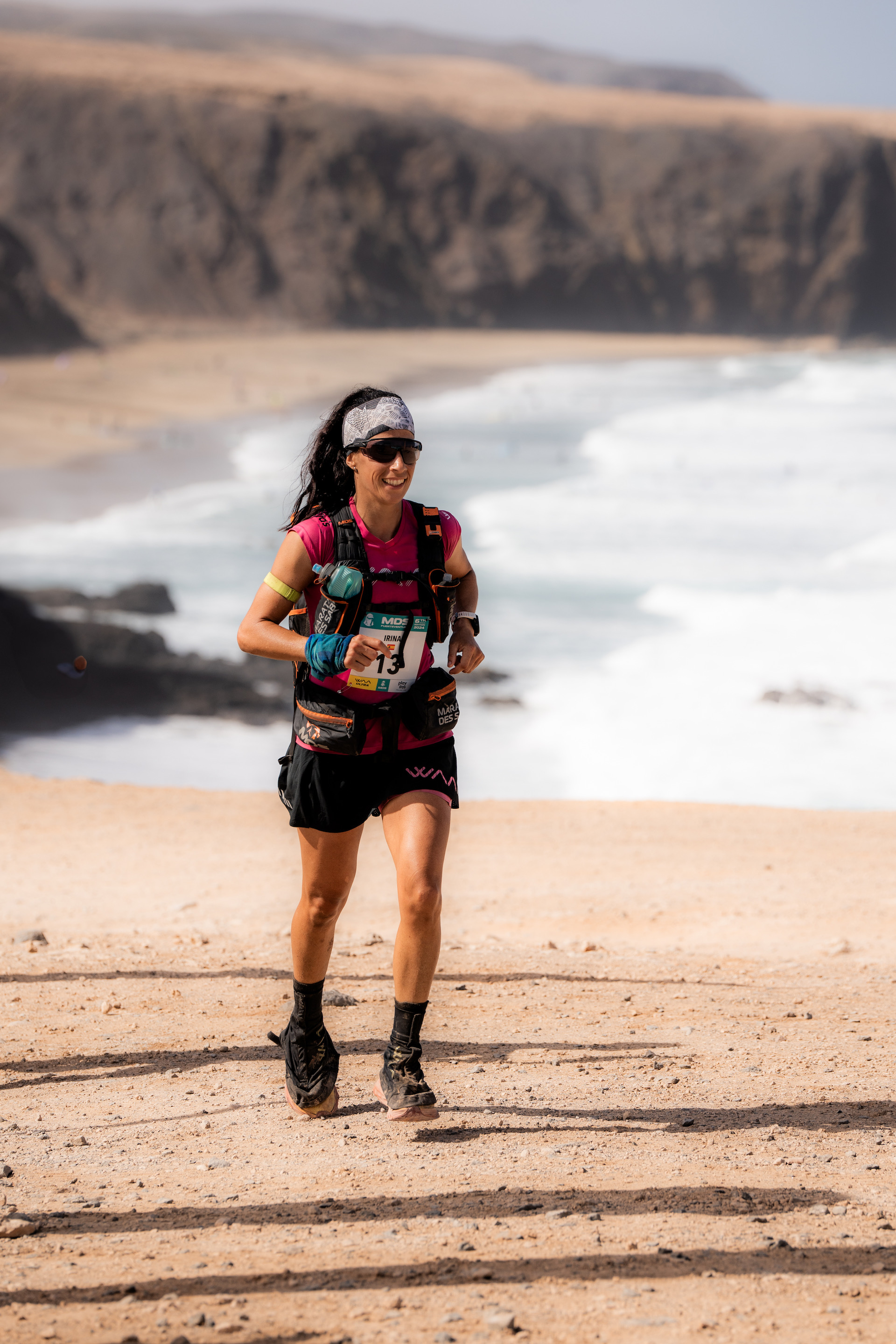
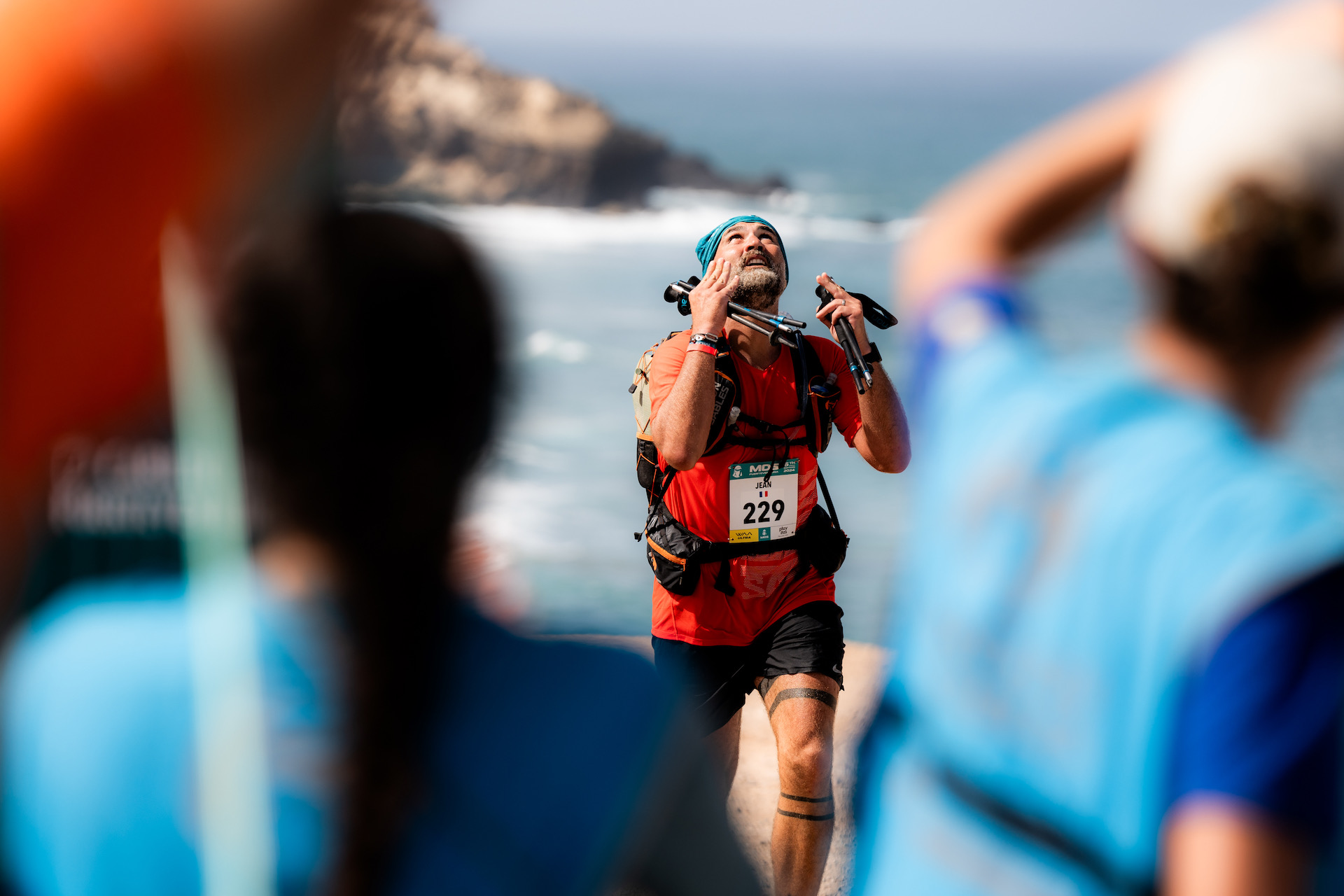
A beautiful day of sand and path passing through Jandia National Park and concluding with epic coastal cliffs and an ocean backdrop.
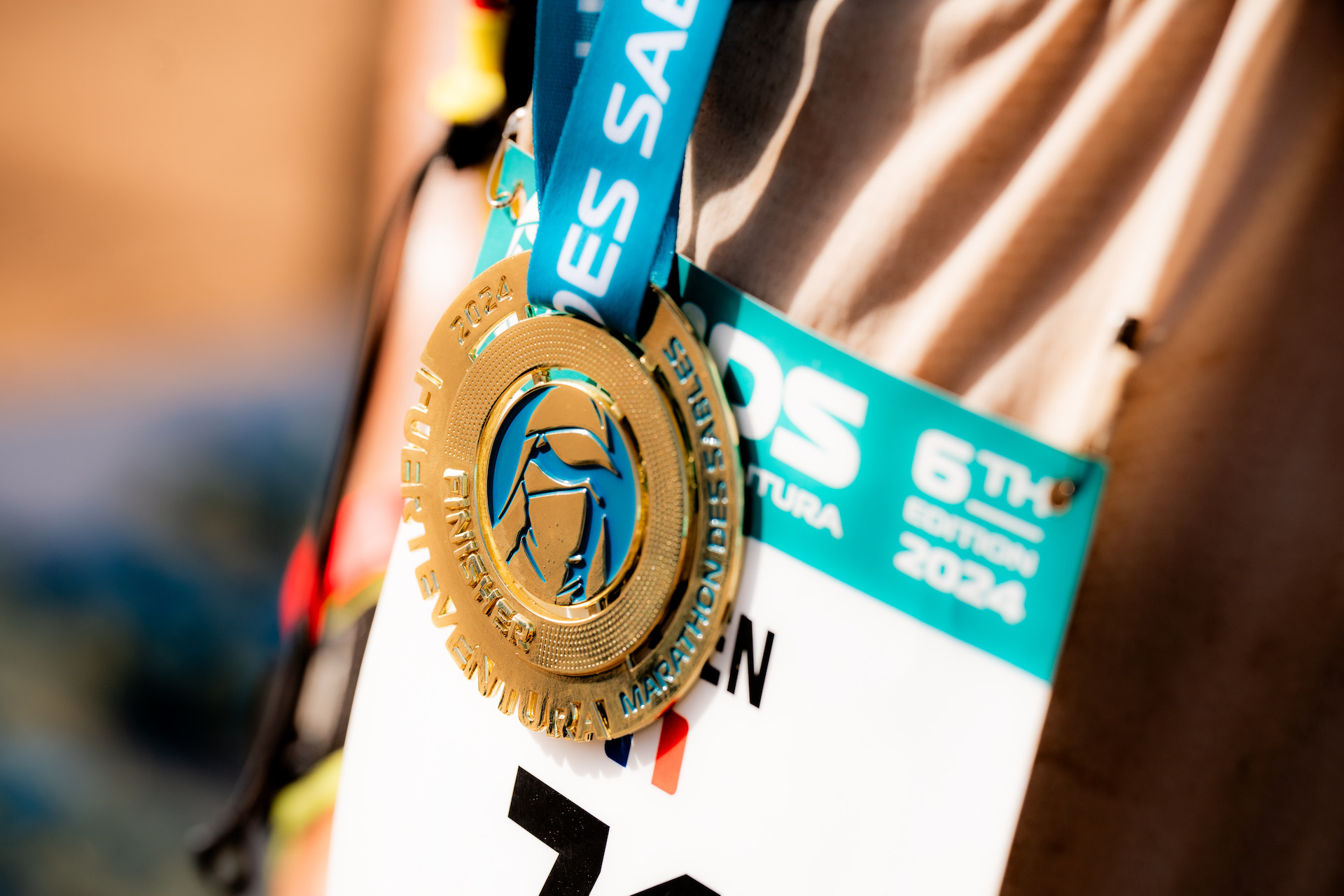
Today, was all about the medal gladly, all achieved there goal finishing before the cut-off time of 16.45, a huge success.
After the bad weather in 2022 and the missing 2023, MDS Fuerteventura is well and truly back!
In the 120km race, SANTANA FERNÁNDEZ was crowned the winner with an elapsed time of 9:36:35. FOULQUIÉ PADILLA and ROGER PÉREZ placed 2nd and 3rd, 9:40:37 and 9:48:15 respectively.
For the women, DEL RIO VALLES, BOLLENGIER and NACHARD placed 1, 2 and 3, 13:54:20, 14:47:42 and 15:47:08 respectively.
PÉREZ DE LA CRUZ 10:23:12 and MUJICA GONZÁLEZ 11:53:49 were the male and female winners of the 100km and RODRÍGUEZ MORENO 9:02:44 and MAHIQUES 8:47:49 were the male and female winners in the 70km class, with MAHIQUES the outright winner.
Full results are available HERE for 120km, HEREfor the 100km andHERE for the 70km.
Now it is time for a shower, fresh clothes, a good dinner and bed with clean sheets. Tomorrow is a day of relaxation and then a gala dinner with awards ceremony.
Since 1986, the MARATHON DES SABLES has crossed the world’s most stunning deserts with several unique concepts: the MARATHON DES SABLES THE LEGENDARY (252 km in the Sahara Desert in Morocco), the MARATHON DES SABLES (70, 100, or 120 km spread over 3 stages), and the new 2024 concept, the MDS TREK (4 stages with a total distance of up to 120 km), offering an accessible adventure with optimal comfort. These international events have seen over 50 editions in various countries such as Morocco, Fuerteventura Island, Peru, Jordan, Turkey, and offer adventures that combine running/hiking in the desert with tourism.
Stage 1 was a challenging day for many, the 33.6km proving a tough start to the 2024 MDS Fuerteventura. On the positive side, there were no DNF’s.
Stage 2 is called ‘The Long Day’ as this is the day that for 100km and 120km will prove to be the longest of the race. However, the challenge can be as much mental as physical.
An early start
Challenge 1.
After the start, almost immediately, the runner’s are given the option to to turn right and take on the 17.8kmm loop, 20 men and 63 women chose this. Alternatively, you can turn right and start the 40.5km loop. The remainder of the participants chose this.
Challenge 2.
At the end of the 40.5 km loop, you can turn right and run to the finish – 25 min and 41 women chose this.
Challenge 3.
For the brave, a left turn after the 40.5km loop provides the option to complete a final loop and the total long day distance of 56.7km – 75 men and 61 women chose this.
MUJICA GONZÁLEZ
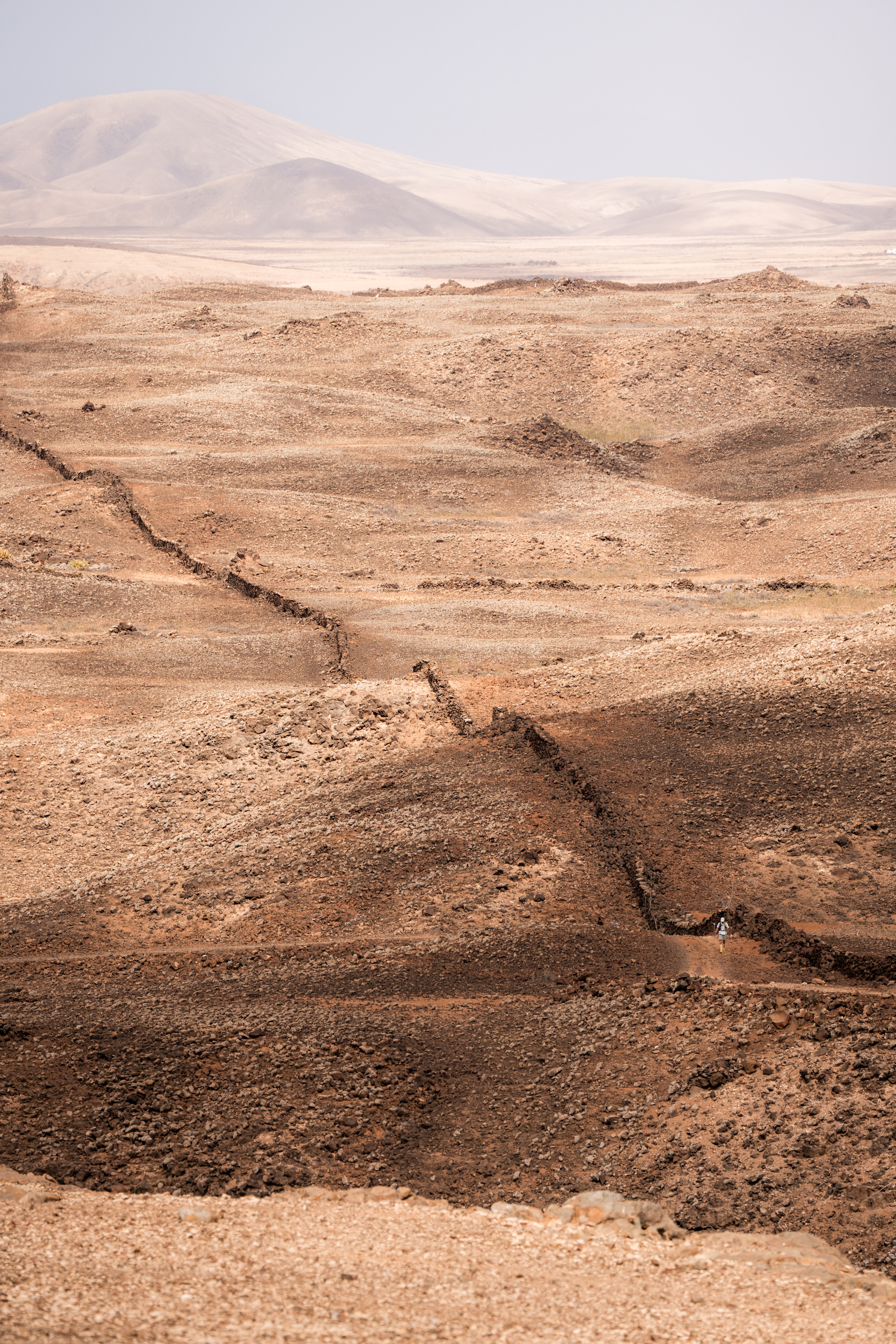
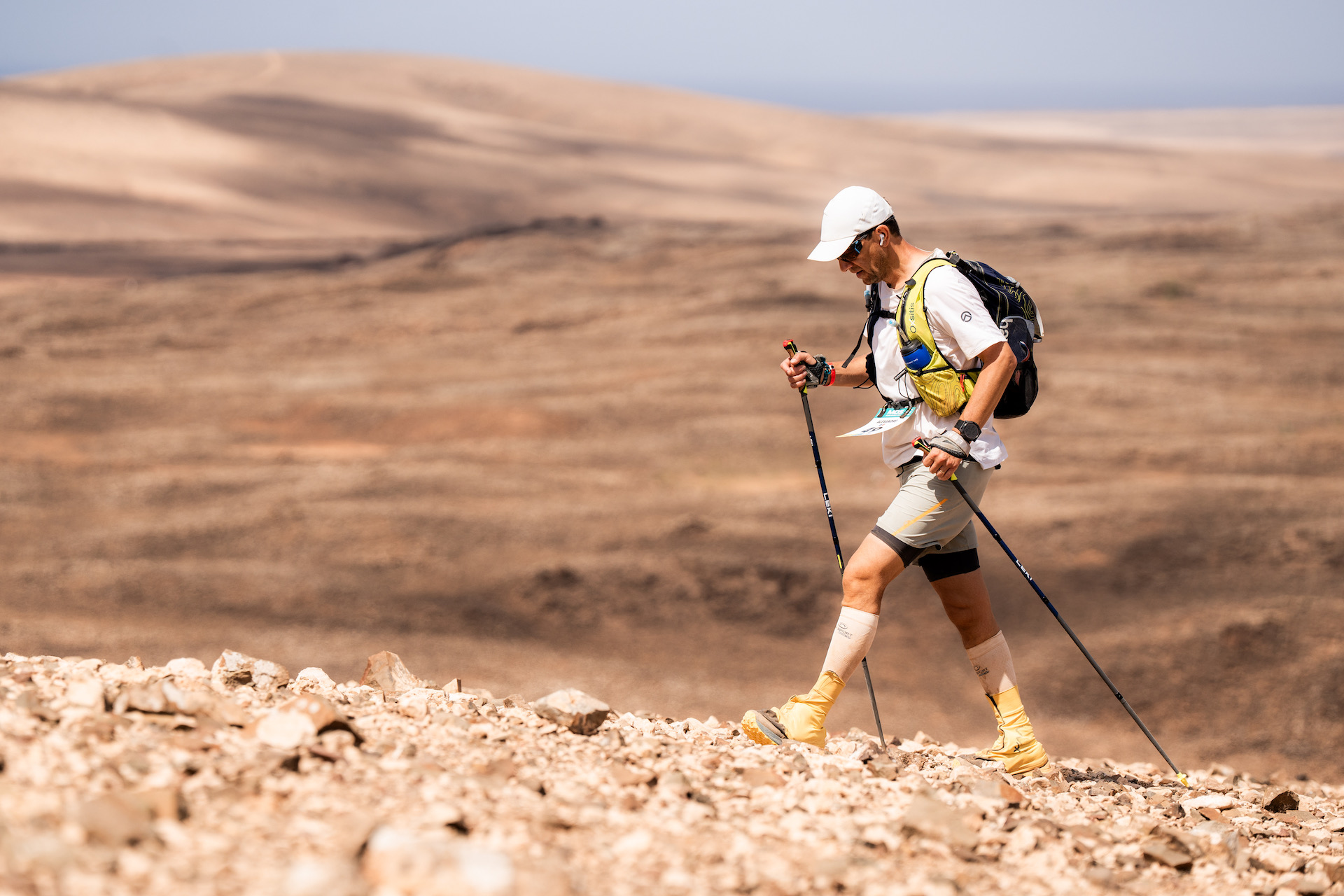
Today’s route followed a figure of 8 shape for the 120km. The terrain mostly sandy and rocky path, the need for gaiters minimal.
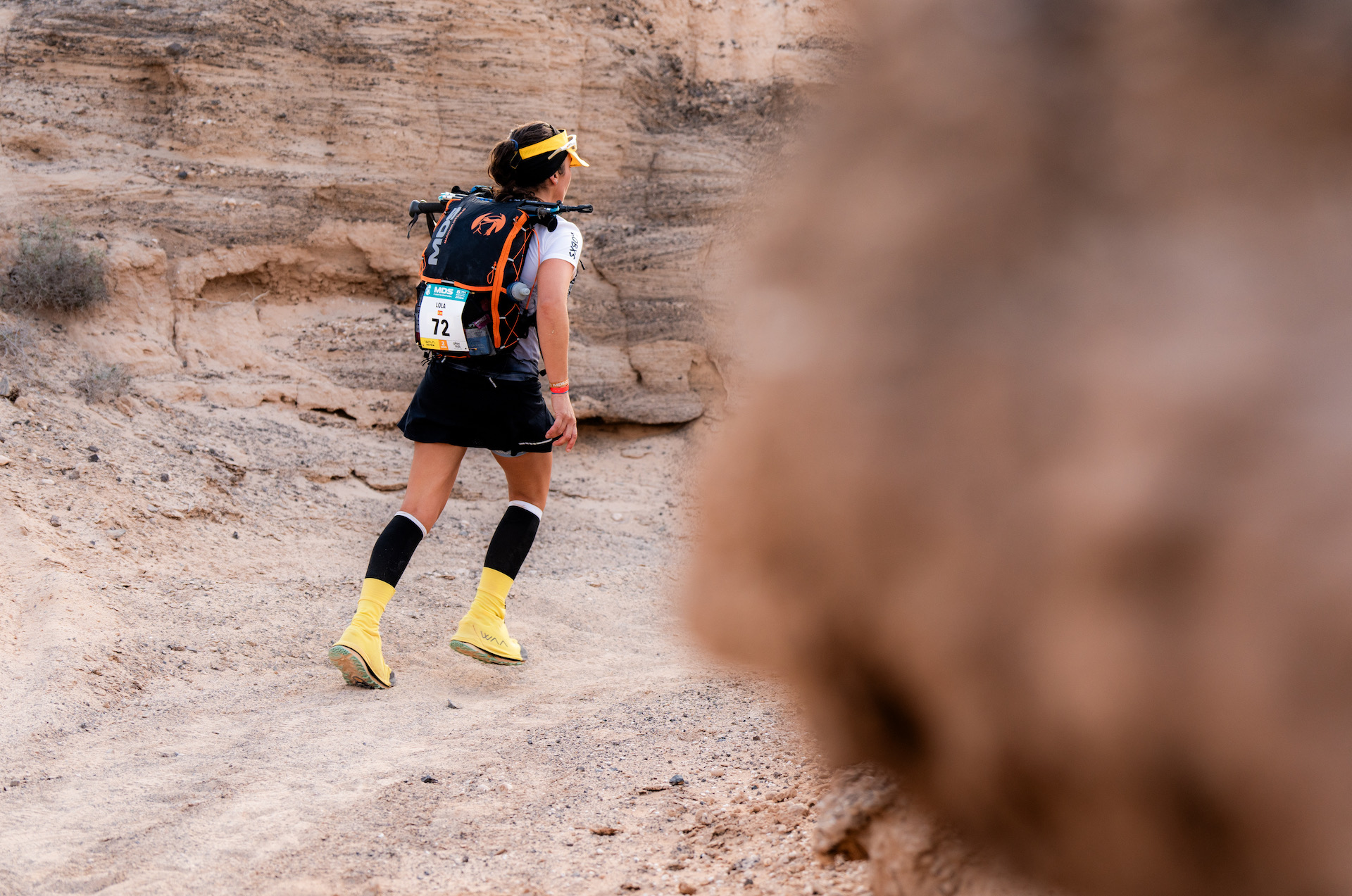
Some wonderful small canyons to run through
The day started at 0600 after a warm night under the stars. The winds had calmed but the sky was cloudy and it would remain that way until midday, when a sunny period provide some blue skies. Temperatures reached a high of 28 degrees and running conditions were good.
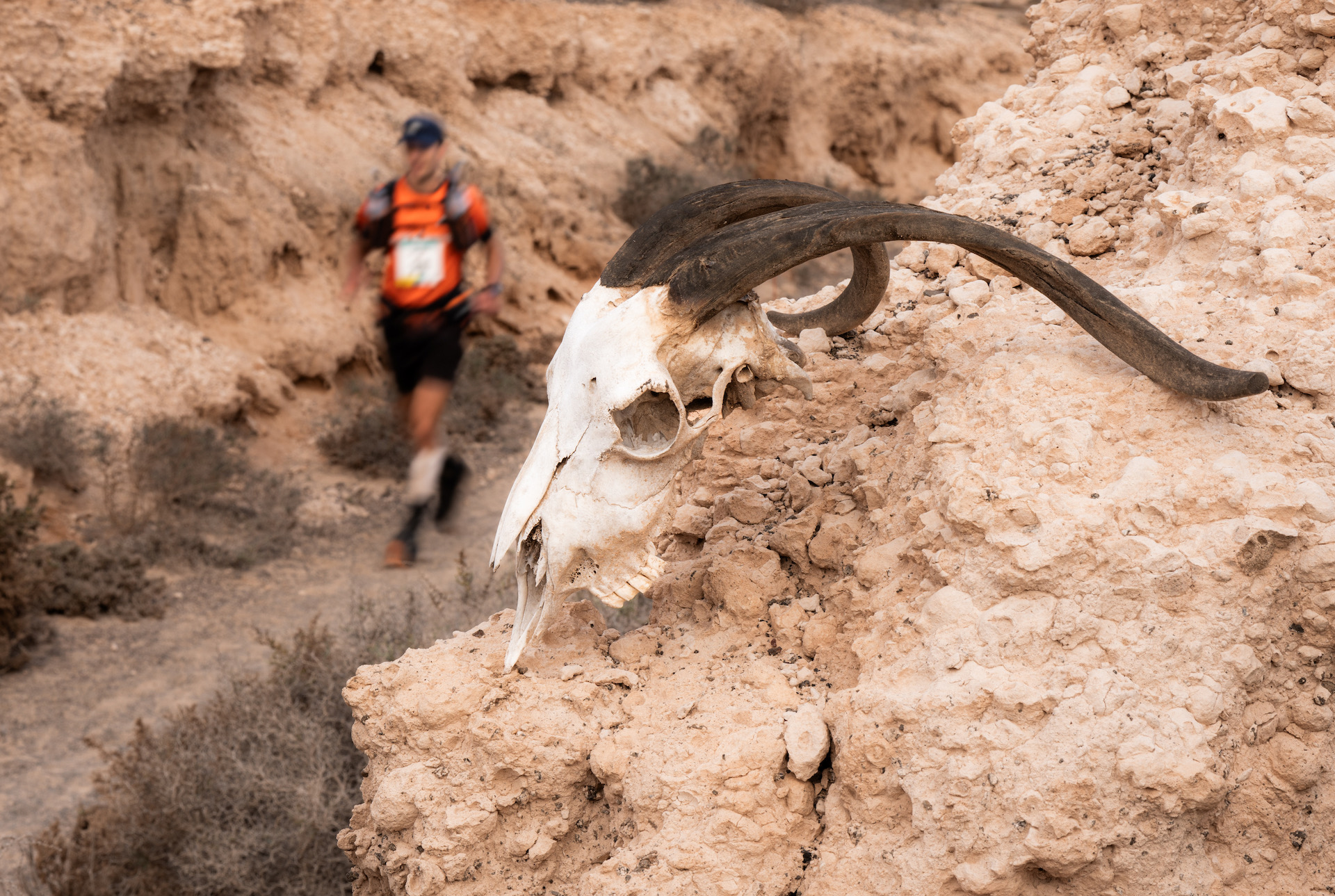
Time to grab the race by the horns
With three race distance options, rankings would change considerably during stage 2, however, in the 120km distance, the main protagonists of SANTANA FERNÁNDEZ, ROGER PÉREZ and FOULQUIÉ PADILLA would remain the same. However, today it was FOULQUIÉ PADILLA who now takes the overall lead with an elapsed time of 7:31:21 closely followed by SANTANA FERNÁNDEZ in 7:32:11. ROGER PÉREZ remains in third.
For the women, stage 1 winner MUJICA GONZÁLEZ started the day slower but then moved up through the field and is now in the women’s overall lead with a time of 8:56:08. BOLLENGIER who was 2nd on stage 1 is now 4th on GC with DEMARQUILLY moving into 2nd 9:55:47 and DEL RIO VALLES 3rd with 10:49:47.
Since 1986, the MARATHON DES SABLES has crossed the world’s most stunning deserts with several unique concepts: the MARATHON DES SABLES THE LEGENDARY (252 km in the Sahara Desert in Morocco), the MARATHON DES SABLES (70, 100, or 120 km spread over 3 stages), and the new 2024 concept, the MDS TREK (4 stages with a total distance of up to 120 km), offering an accessible adventure with optimal comfort. These international events have seen over 50 editions in various countries such as Morocco, Fuerteventura Island, Peru, Jordan, Turkey, and offer adventures that combine running/hiking in the desert with tourism.
It’s countdown time to the 2024 MDS Fuerteventura, the 6th edition taking place from September 28 to October 5th.
The MDS format is the perfect synergy of travel, adventure and luxury.
The 2024 edition, once again, uses the Playitas Resort Hotel as a pre and post-race hub for 4 nights: two nights pre and two nights post.
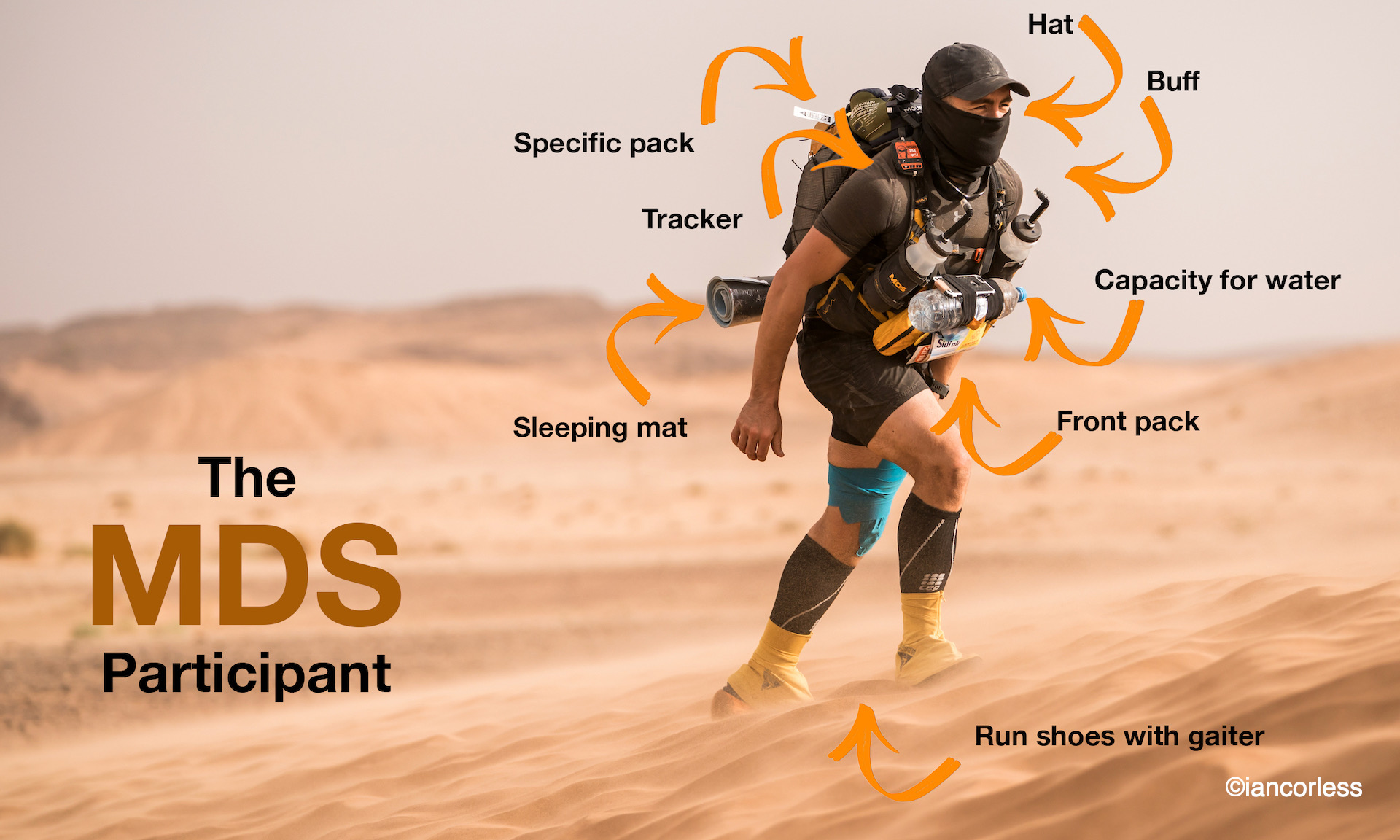
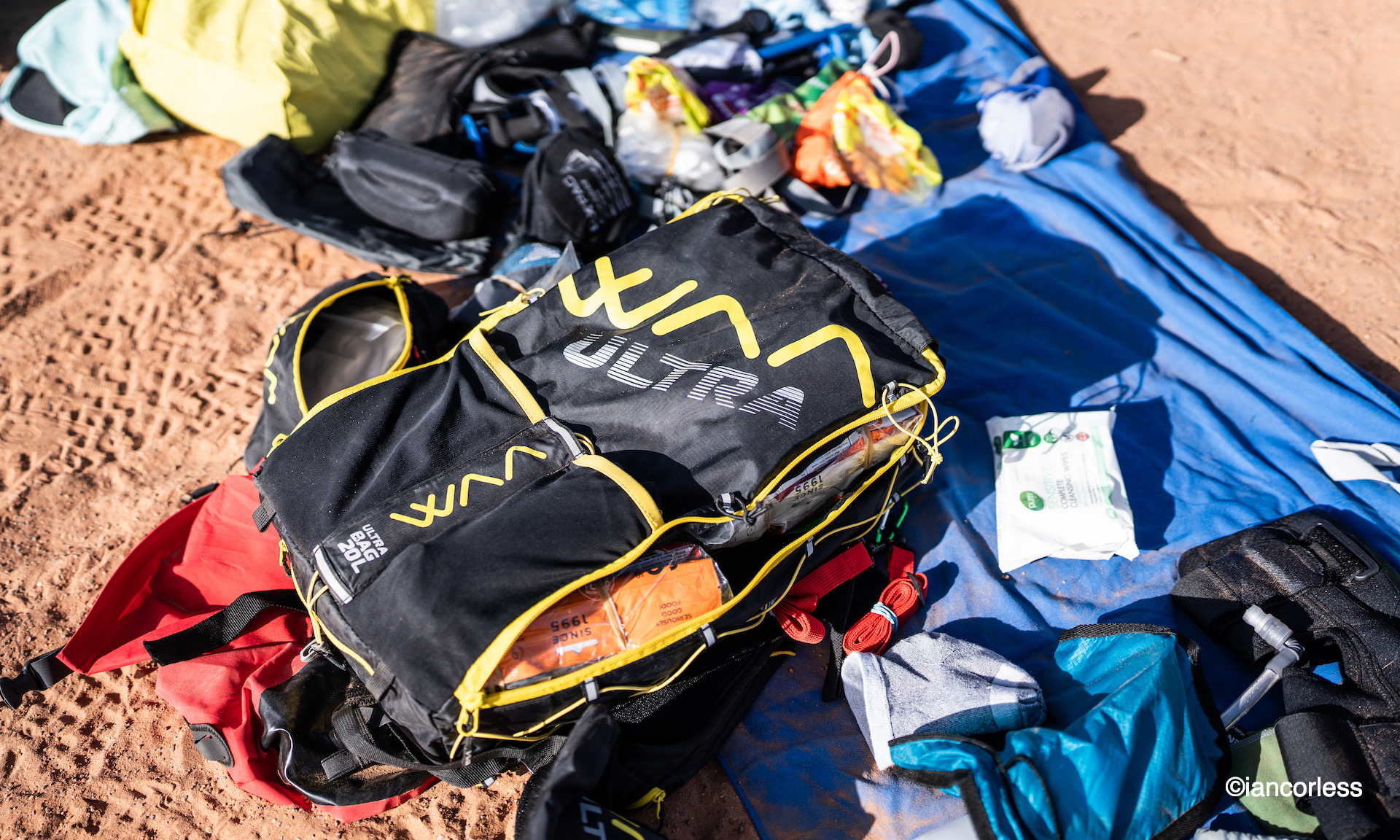
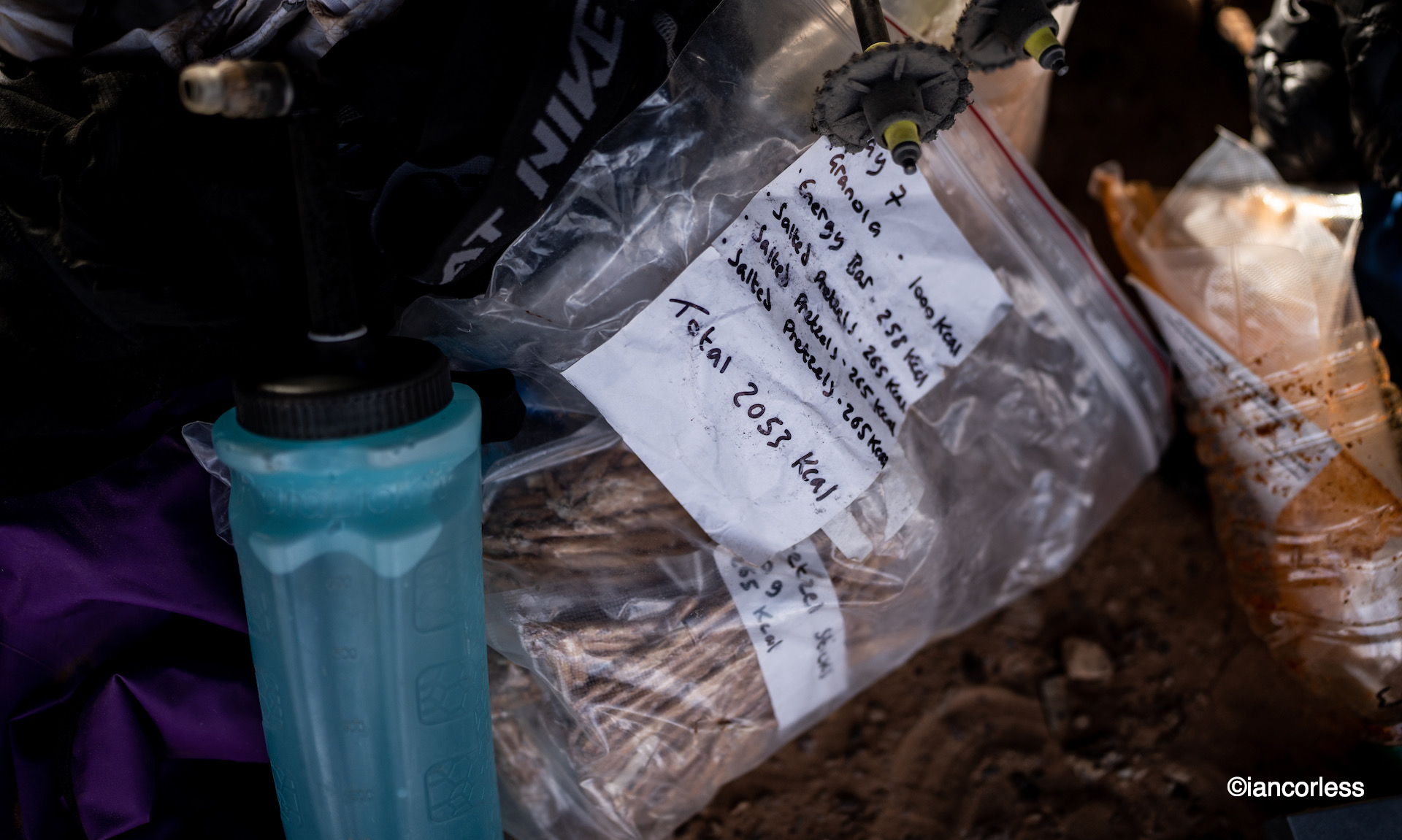
Three nights will be spent in bivouac in full self-sufficiency, the only provision provided is a tent in which to sleep and water. All other items the participant must carry, this includes all food and snacks for the duration of the event, clothes, sleeping bag, sleeping mat and any luxuries.
Day 2 and 3: breakfast, lunch, dinner. (Stage 2 and rest day)
Day 4: breakfast, lunch. (Stage 3)
If a participant requires power for phone, watch, mp3 player etc, they must provide this themselves in the form of a portable battery which they must carry.
The MDS format is the same for all events, MDS The Legendary and MDS Trek excluded.
The race will take place over 4-days and 3-stages, typically broken down as follows:
Day 1/ Stage 1 between 25 and 30km.
Day 2/ Stage 2 20, 40 or 60km – the participant chooses the appropriate distance.
Day 3 Rest day
Day 4/ Stage 3 between 25 and 30km.
The race is designed so that finishing is a possibility for all, regardless of ability or speed. Importantly, if a runner does not finish, they are provided a free race entry for the following year.
The last edition of the race took place in 2022 which turned out to be a considerable challenge due extreme and unprecedented weather. 2023 did not take place due to environmental rules. So, 2024 will be a special year for MDS Fuerteventura. Notably, 300 participants will toe the line of which, 58% are women. A fantastic statistic.
The Program for the week will be as follows:
Saturday September 28
Arrival of participants and relaxed night at Playitas Resort Hotel.
Sunday September 29
Technical and medical checks followed by relaxation at Playitas Resort Hotel.
Monday September 30
Stage 1 – overnight bivouac
Tuesday October 1
Stage 2 – overnight bivouac
Wednesday October 2
Rest day – overnight bivouac
Thursday October 3
Stage 3 – followed by relaxation at Playitas Resort Hotel.
Friday October 4
Tourism and rest day followed by evening Gala dinner.
Saturday October 5
Onward travel
Playitas Resort Hotel is one of the key sports hotels in Europe. Located in the southeast of Fuerteventura, it is the perfect hub for a sports minded person, there is a gym, yoga, indoor cycling, CrossFit, pools and so much more available.
MDS Fuerteventura is closely followed by MDS Morocco, October 12-19, MDS Trek, October 20-29 and MDS Jordan, November 2-9.
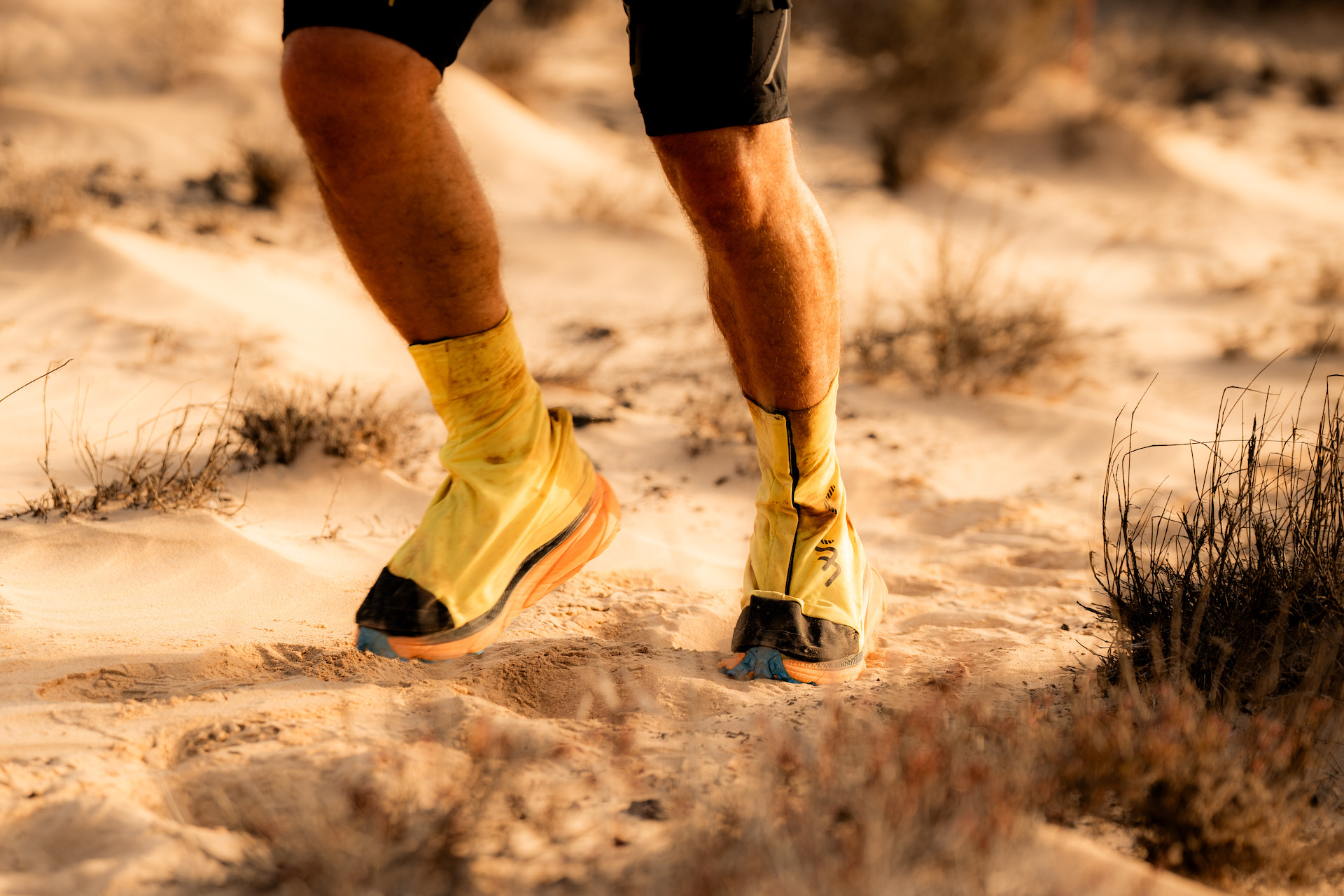
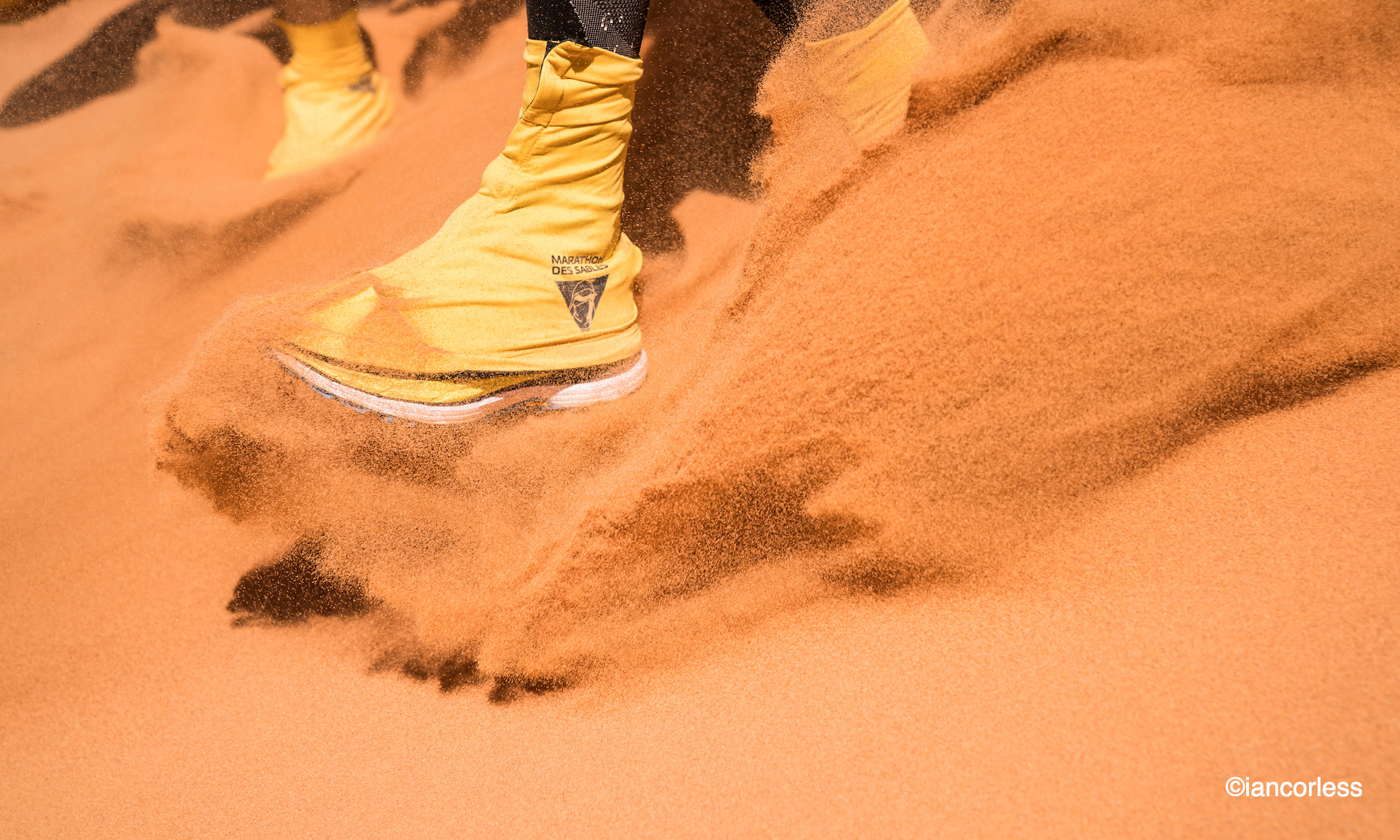
Gaiters for a desert race are an essential item. Quite simply, sand and feet are NOT friends. So, you need to do everything you possibly can to keep sand out of your shoes and keep your feet healthy and trouble free.
In 2024, Raidlight, the legendary French brand released the first mass produced desert specific shoe supplied with velcro sewn on and gaiter provided. I have tested them extensively and they are a great option if you want a one-stop and no hassle solution, my review isHERE – Raidlight Ultra Desert 4 Protect Shoe Review
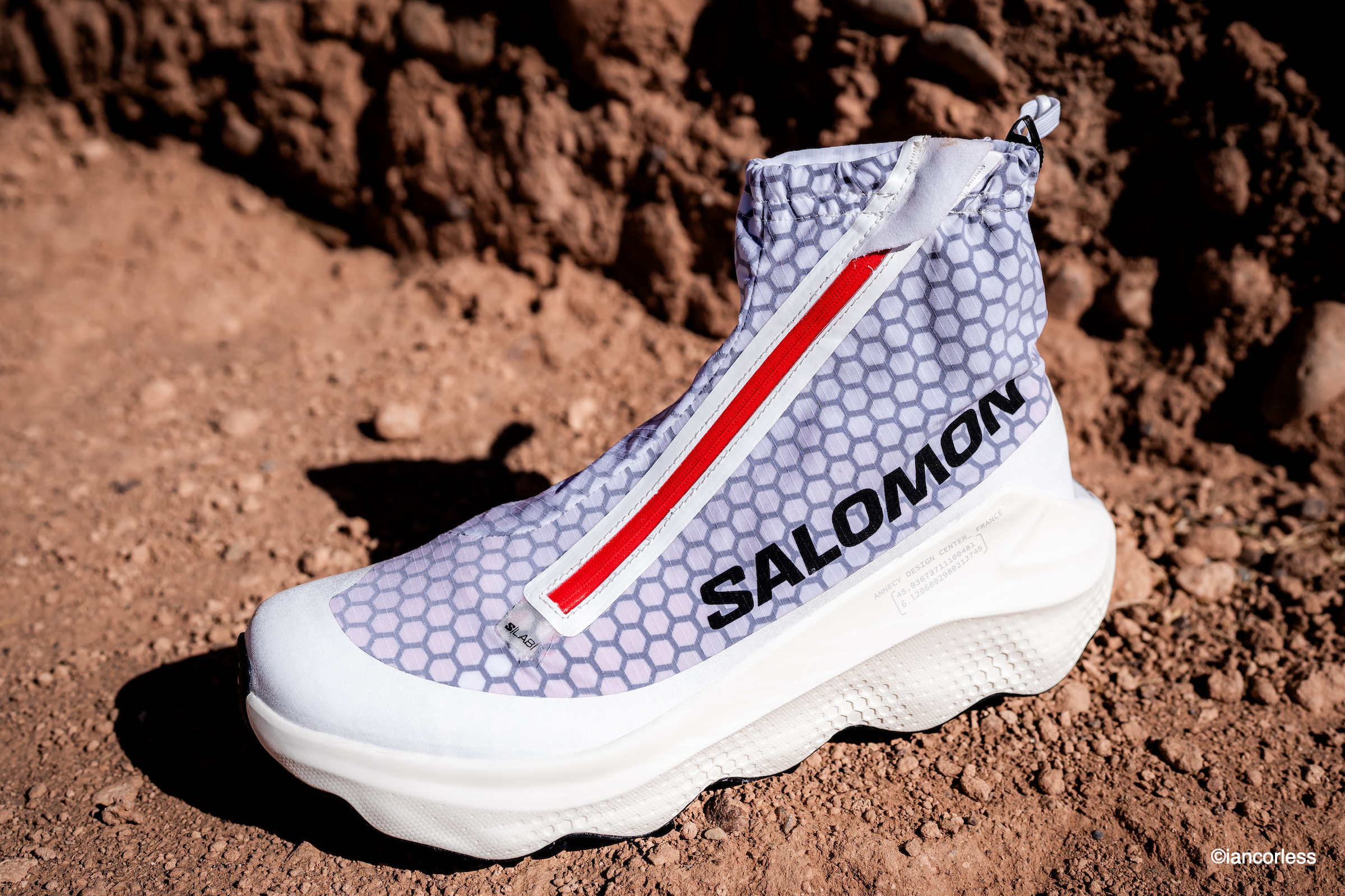
In addition, Salomon joined the desert market with the Ultra Dust – review HERE – This shoe has increased in use in the last year or so and is extremely popular. From a personal point of view, the Salomon Ultra Dust would be the shoe I use.
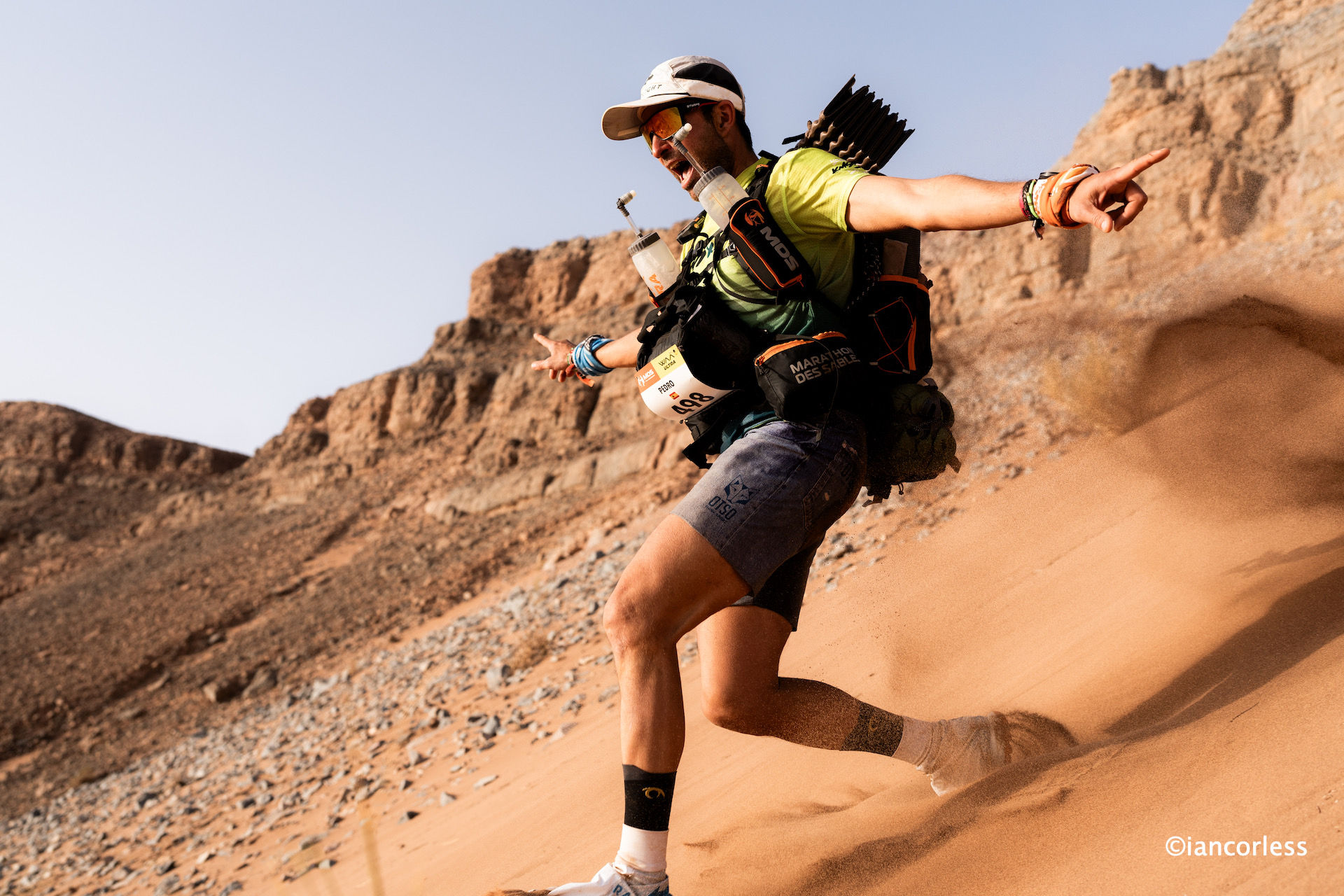
Photo by Ian Corless
However, many of you (most of you) will be using your favourite run shoe and will need velcro sewn to your shoe. Let’s get one thing clear, do not ask, “What shoe shall I use?” We are all individuals with different body weights, gaits, needs and speed. Shoes are very specific to the person. Read an articleHEREHow to Find Your Running Shoe Size and Fit.
Every year, the same question gets asked, “Where can I get my gaiters attached to my run shoes?”
So here is a list of current resources, this list will be added to as more names/ contacts become available.
UK
Kevin Bradley is the man. He has been sewing gaiters on shoes for years. He has probably done 1000’s. Very experienced and he knows his stuff. Alex Shoe Repair, 103c Lavender Hill, London, SW11 – Telephone +44 207 2223 4931
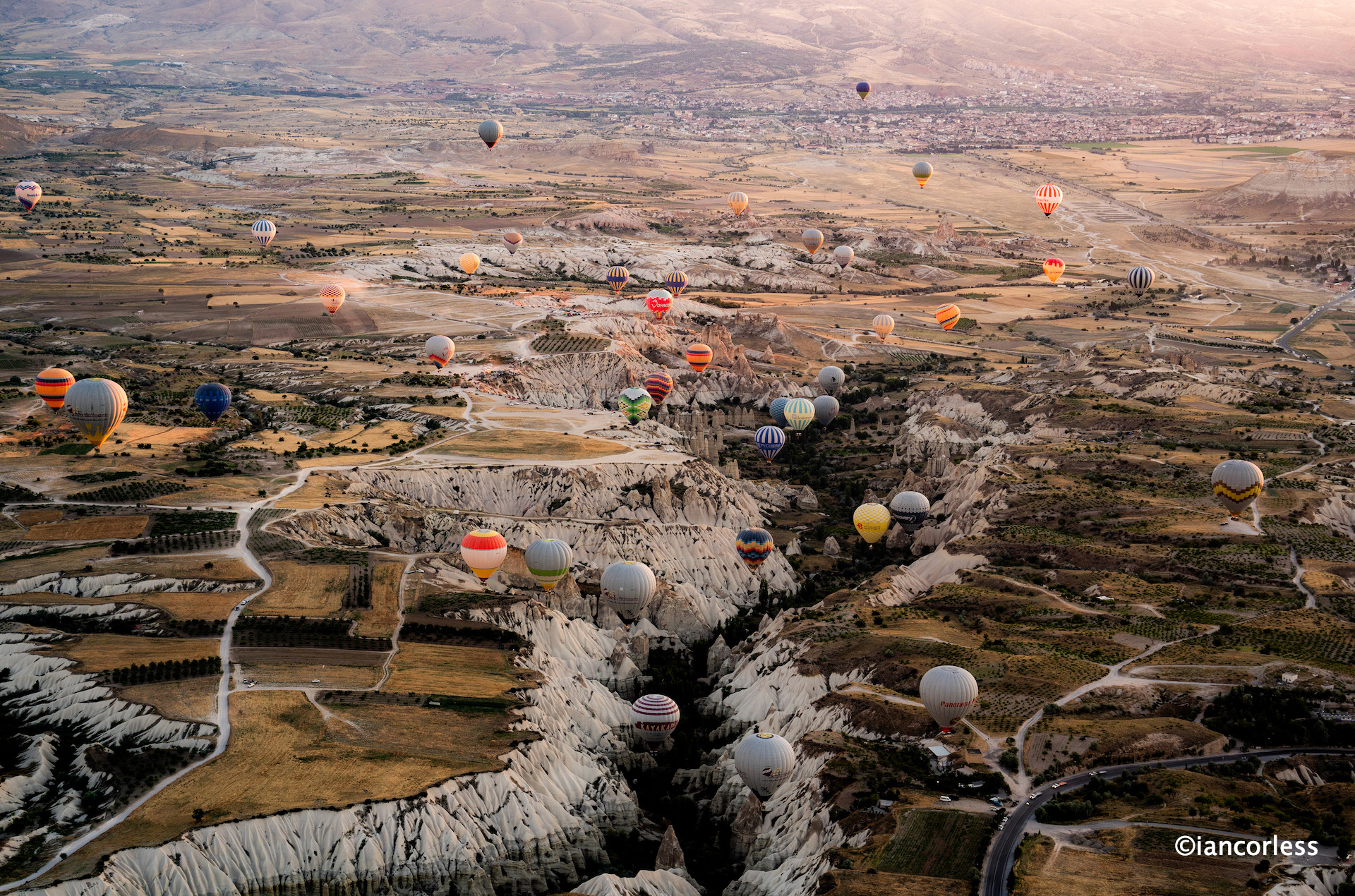
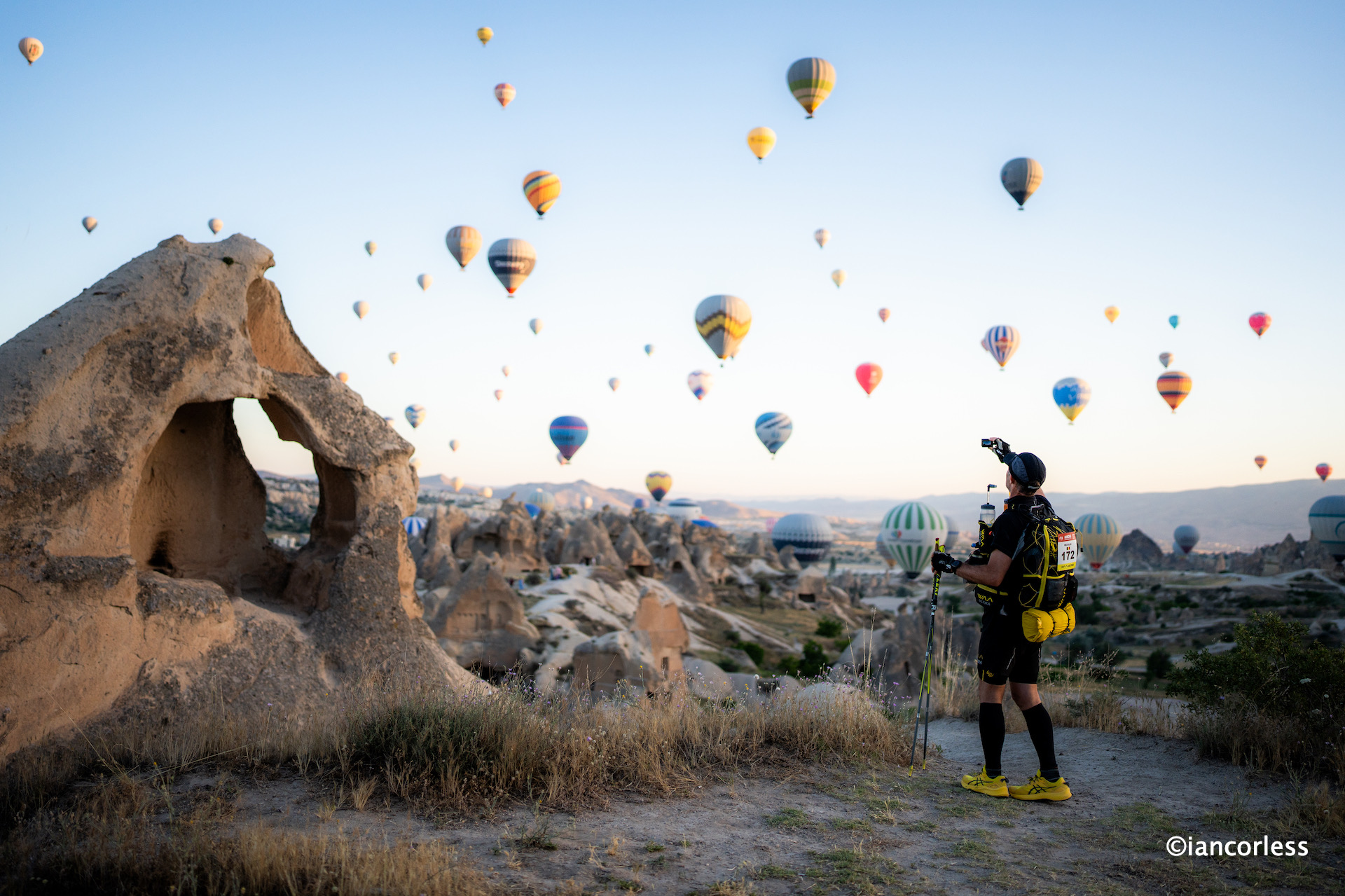
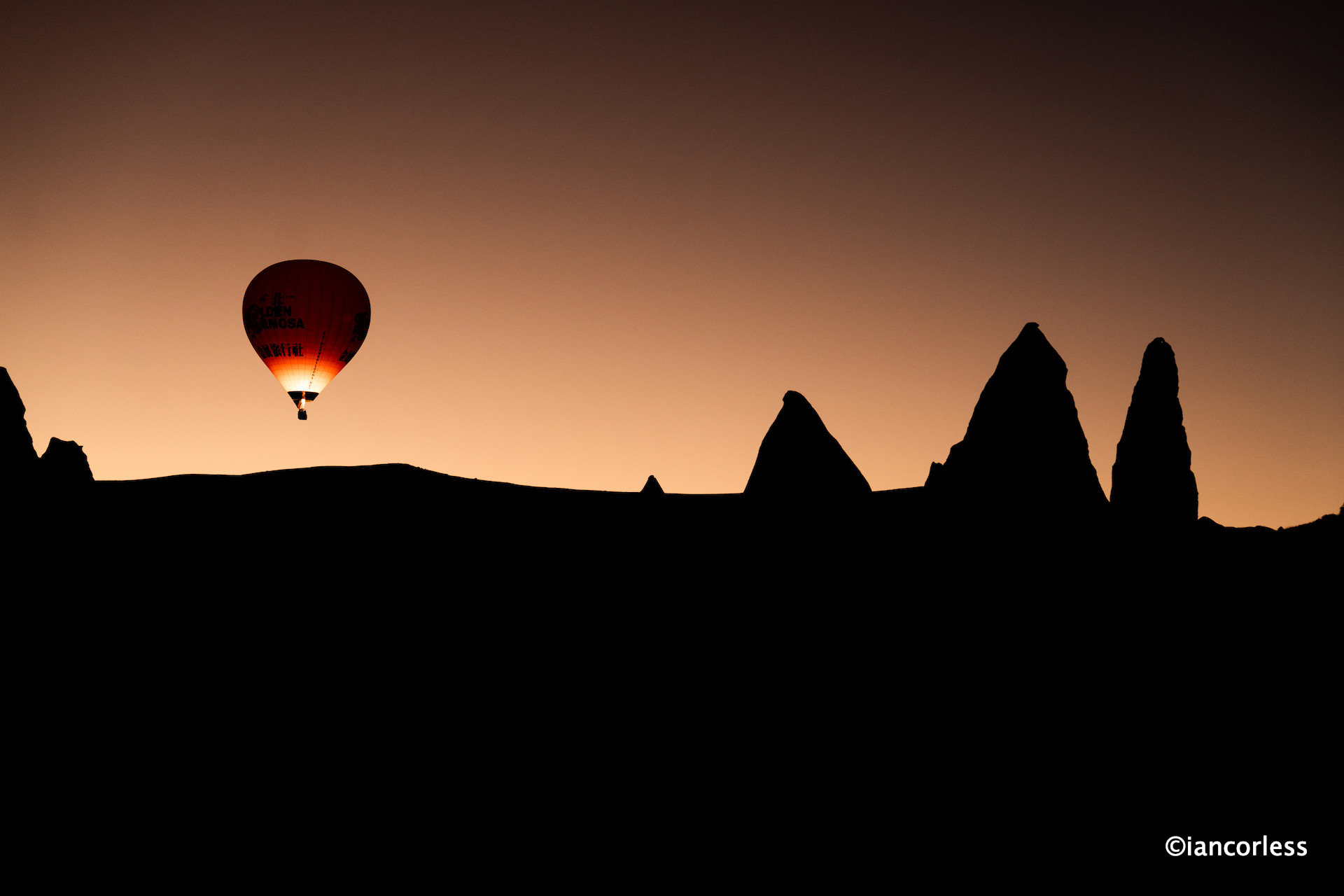
The 2024 inaugural MDS CAPPADOCIA has concluded on a high, quite literally, as all participants and staff were treated to a surprise early morning balloon flight by the organisation to celebrate a pioneering moment for the MDS brand.
The Love Valley
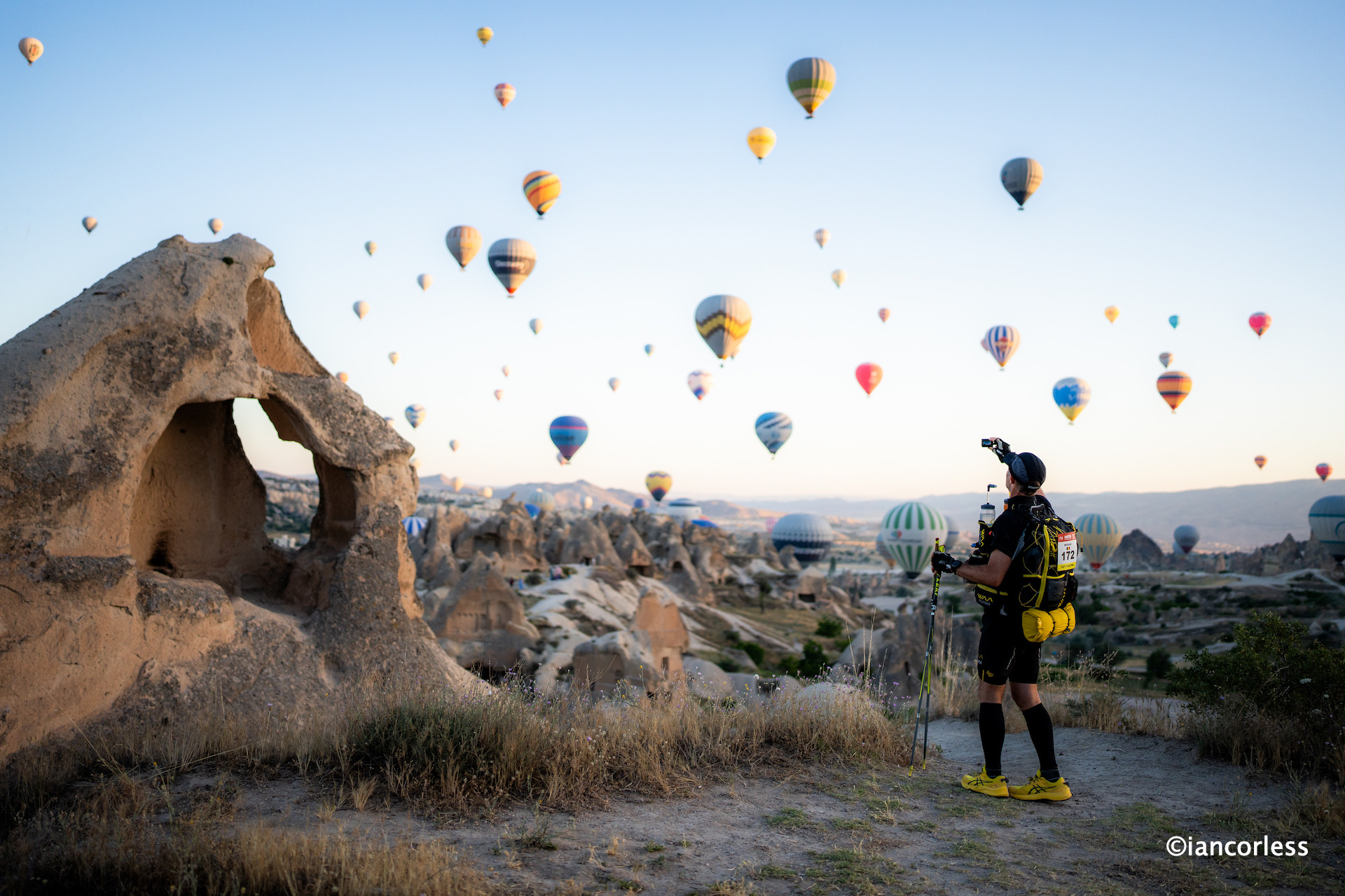
For many, the early morning sky filled with 100’s of balloons is one of those lifetime memory moments, to be given the option to fly, was a dream come true. From the airy heights, the full MDS Cappadocia route was able to be viewed providing a new perspective of the incredible journey that was only completed the day before.
Memory for a lifetime
And what a journey this MDS experience was.
As Cyril Gauthier mentioned in his opening briefing before the race, ‘Welcome to first edition of Marathon des Sables Cappadocia, but ironically, the sables element is missing here…’
Cyril before stage 1
It of course came as no surprise, however, Cappadocia is very much a desert-like landscape, correctly though, the element of soft sand and dunes is completely missing.
Unique and special
One may question, ‘Is this a bad thing?’ The simple answer here is no, each and every participant could not speak highly enough about this unique MDS experience and actually, many were very vocal and happy that MDS Cappadocia was a very new and different.
OVERVIEW
MDS Cappadocia is a 7-day experience following the same format of other MDS events that have gone before, Fuerteventura, Jordan and so on as perfect examples.
MDS team meet and greet before transfer to hotel
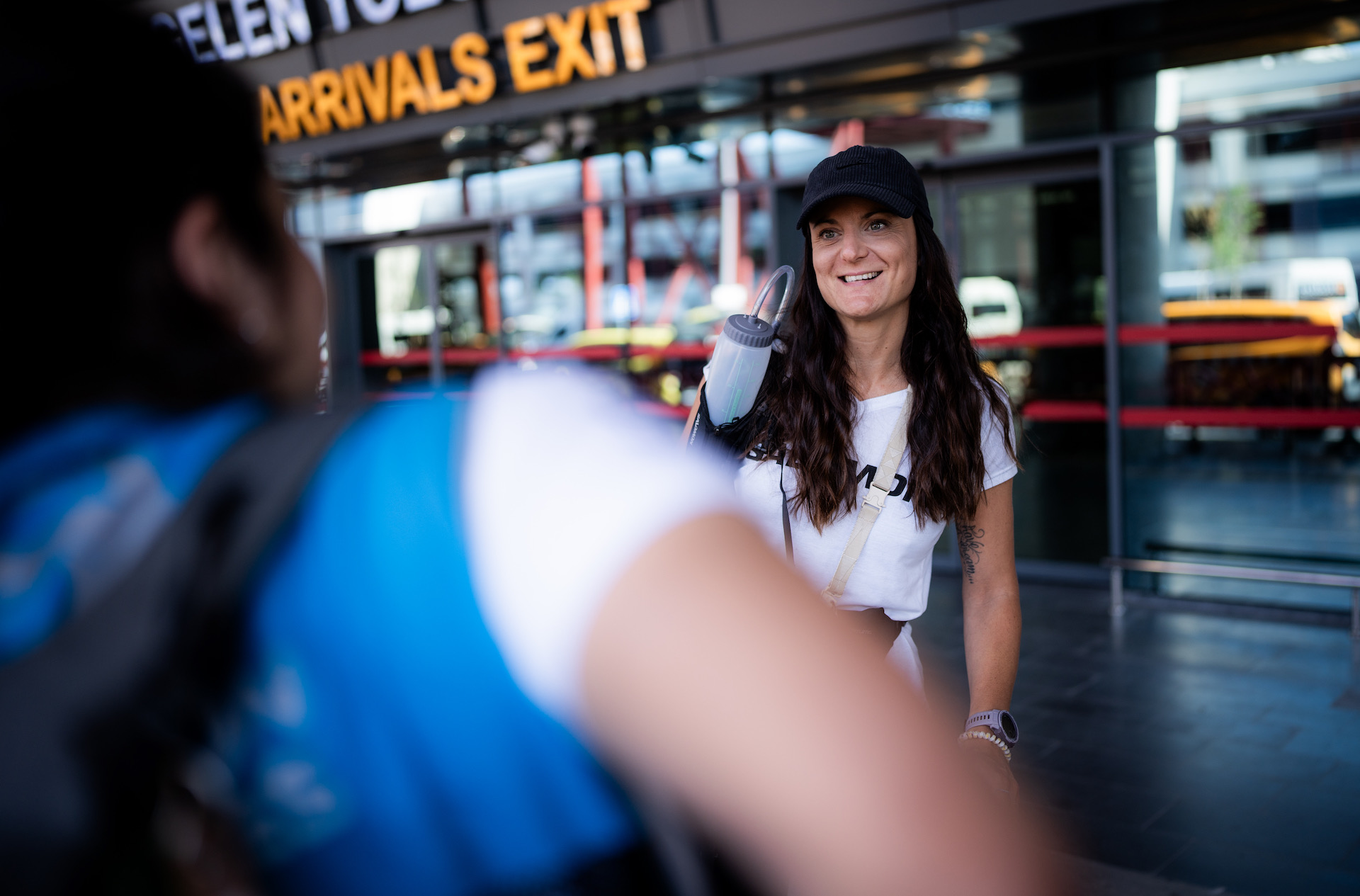
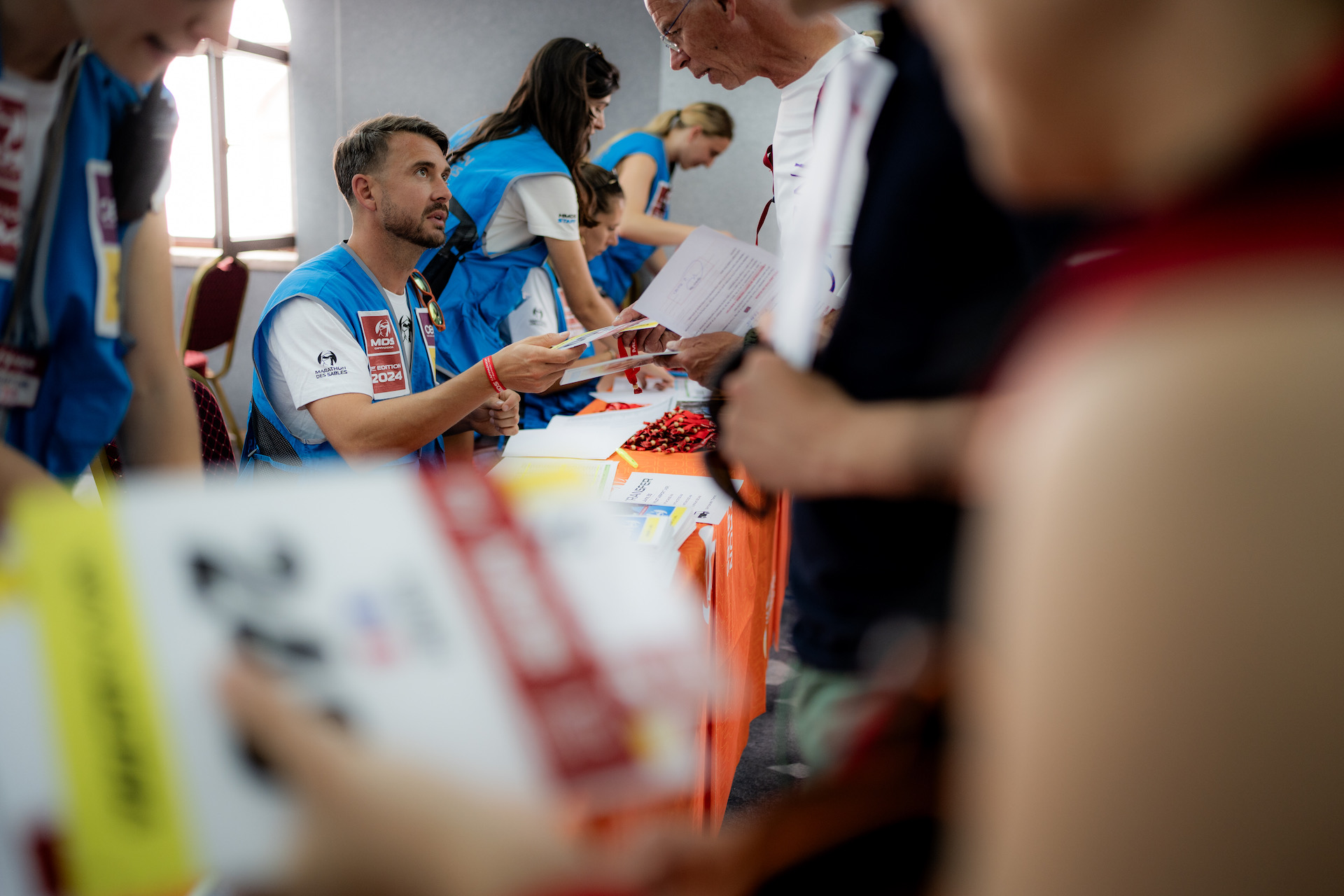
Day 1 – Runner’s are required to travel to Kayseri airport and arrive on a certain day so that they are able to take a transfer, provided by the organisation to the race hotel. At the hotel, technical checks and admin take place. In the evening dinner is provided.
admin and technical checks
Day 2 – Runner’s depart the hotel via transfer to the start. Now self-sufficiency begins and stage 1 starts. Runner’s run/walk 25km to the bivouac and conclusion of stage 1.
Stage 1
Day 3 – Stage 2 starts at bivouac and runner’s return to the bivouac choosing the option to run/ walk 20km, 40km or 60km.
Stage 2
Day 4 – A rest and recovery day.
Bivouac
Day 5 – Stage 3 26km which concludes in the Love Valley. A short transfer to the race hotel is provide. The evening is free.
Stage 3
Day 6* – A relaxing day at the hotel or sightseeing followed by awards, gala dinner and party.
The balloon flight
Day 7 – Onward travel.
*Runner’s were surprised with a hot air balloon flight, this required a 04:00 departure from the hotel to experience the magic of Cappadocia from the sky. They returned between 0700-0800 for breakfast.
THE RACE
Travel, admin and the race hotel was slick providing a relatively easy and relaxed start to the MDS Cappadocia experience.
Stage 1 had a bus departure of 0800, race briefing at 0900 and race start of 0930. I think everyone welcomed a relaxed start, however, the challenge of stage 1 was very real.
There are several key factors that must be considered for MDS Cappadocia.
It was hot
The heat for the duration of the race week was very high, temperatures were consistently between 33 to 36-degrees with a ‘feel’ on the skin of high 40’s. It was hot!
The Göreme Valley where much of the race takes place has an altitude of 1100m. This of course is not high altitude, but, the impact on breathing and physical effort was significant.
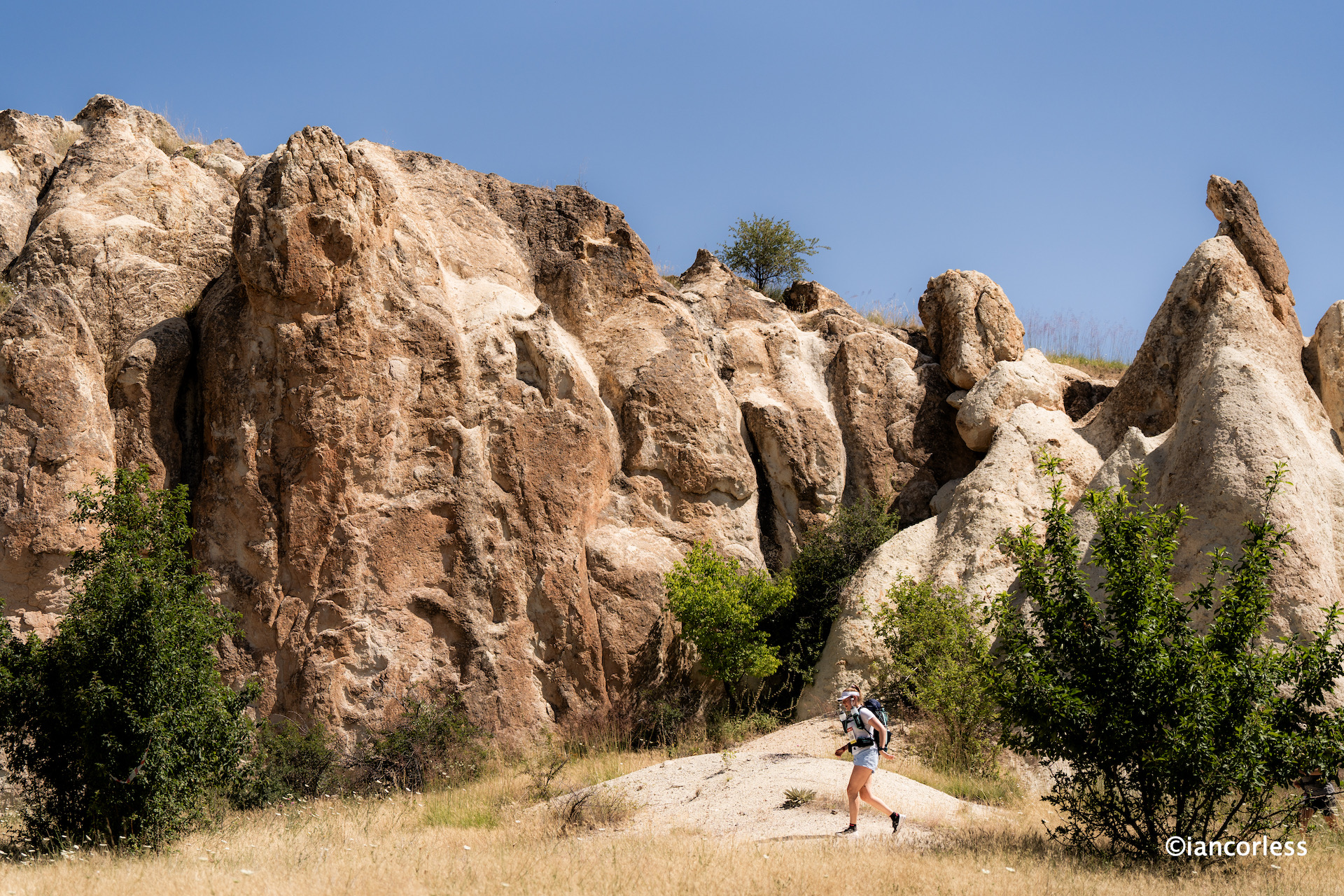
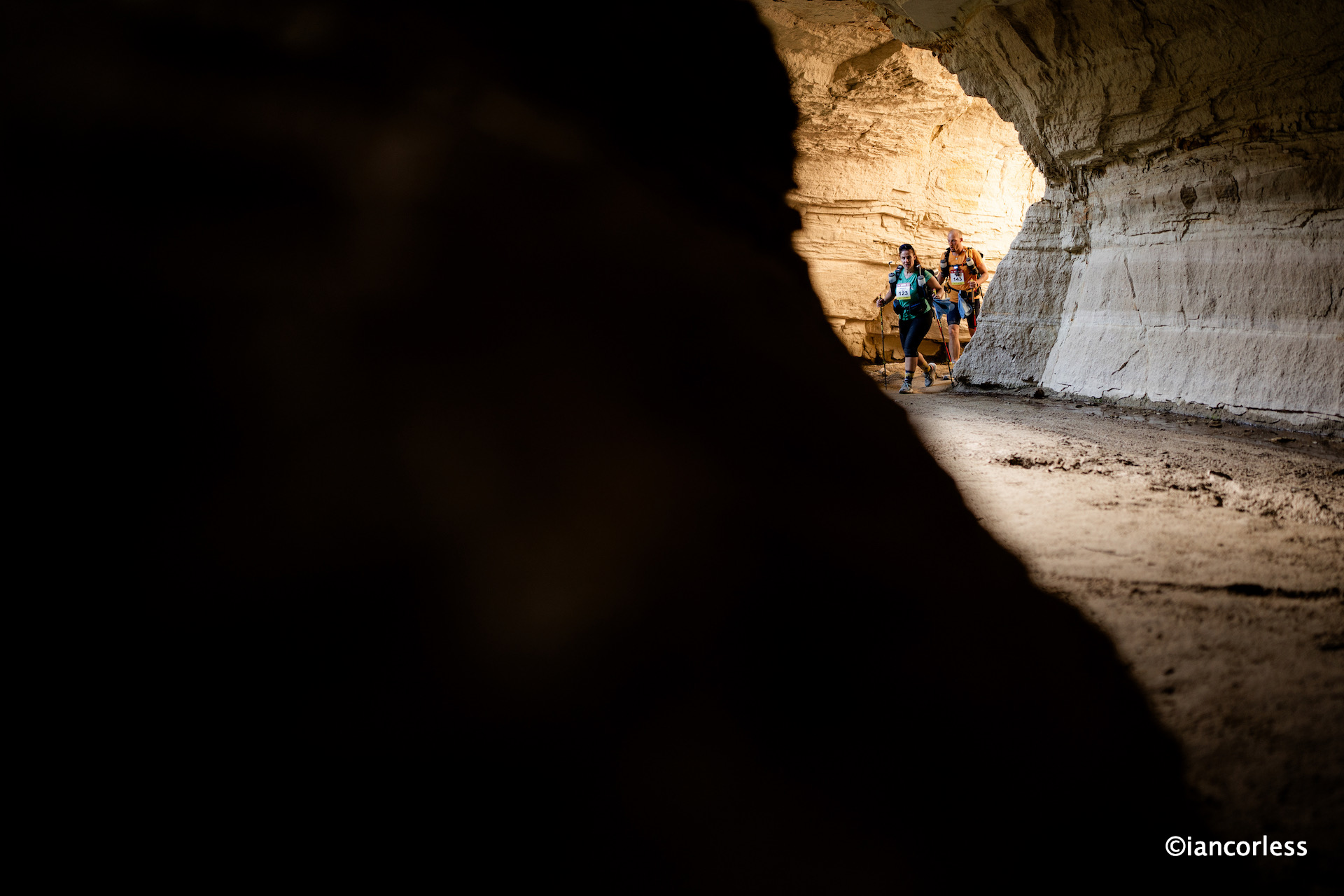
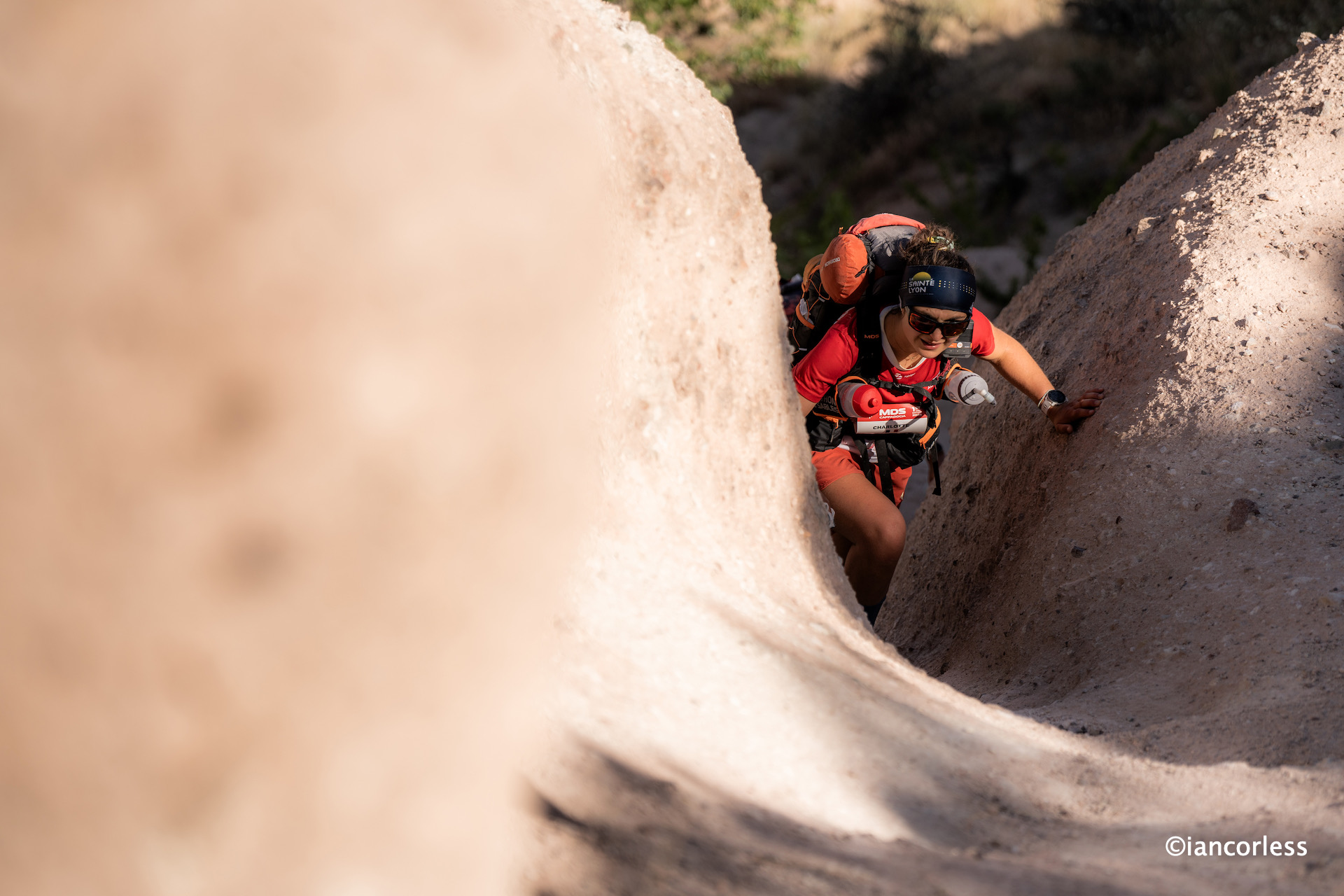
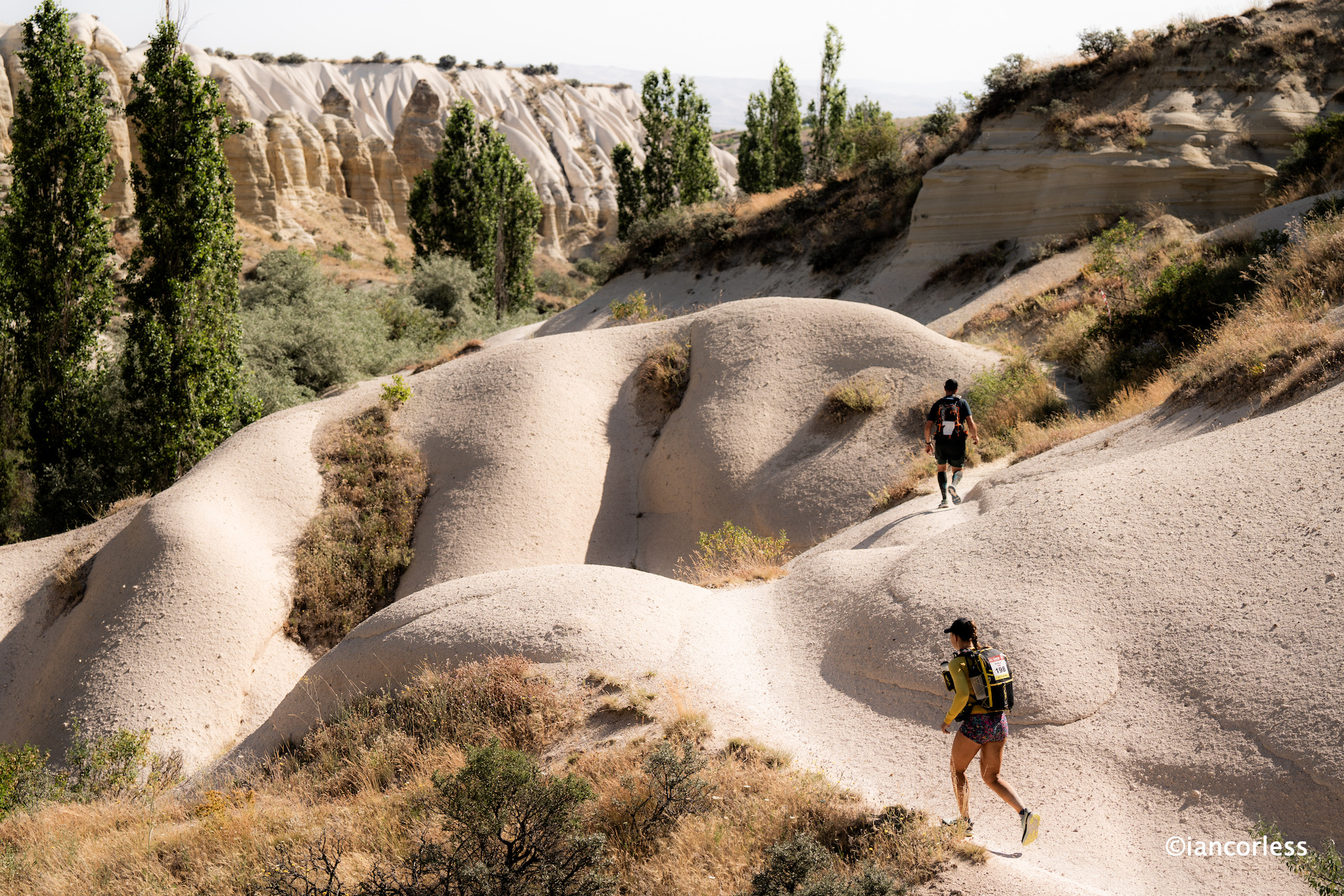
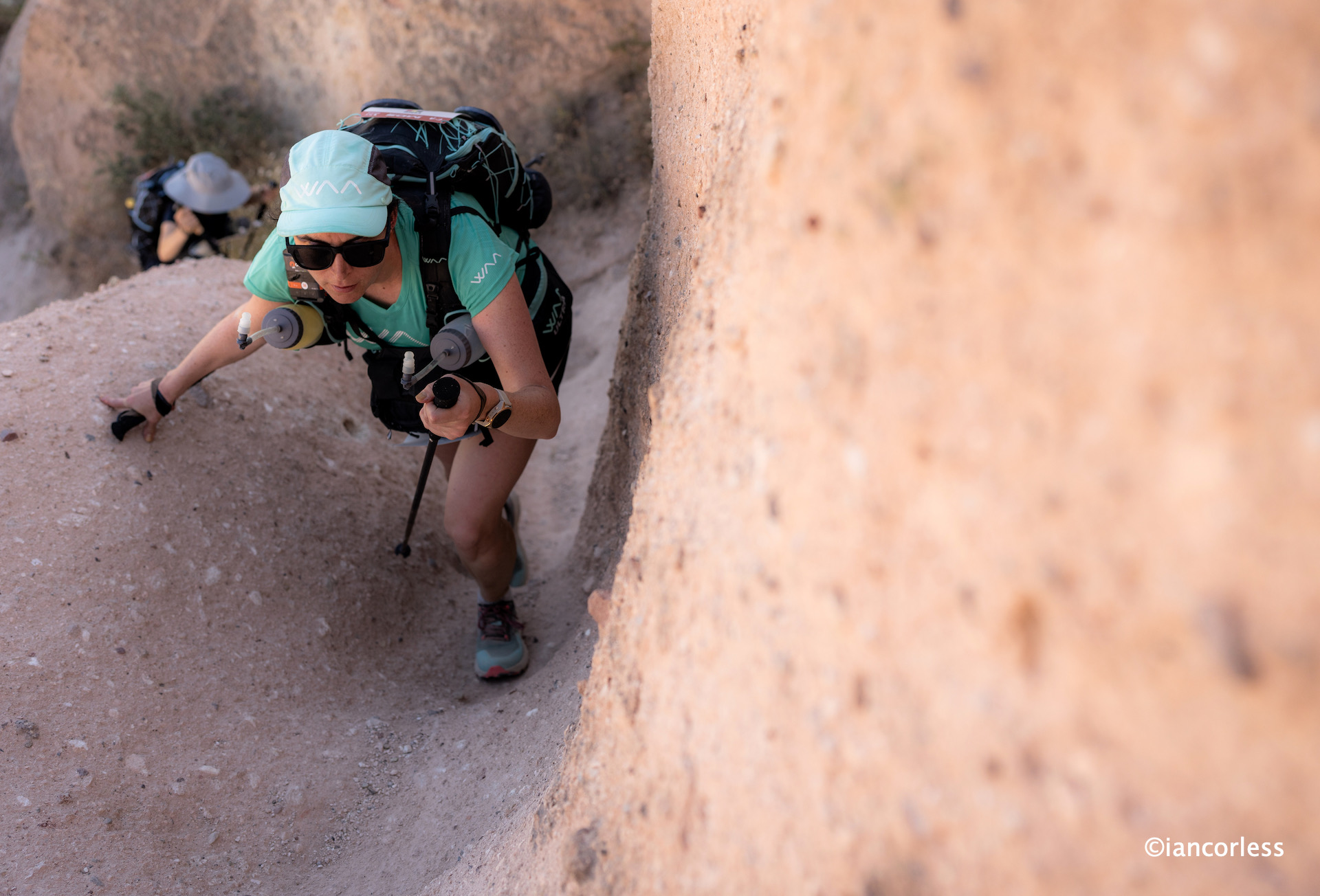
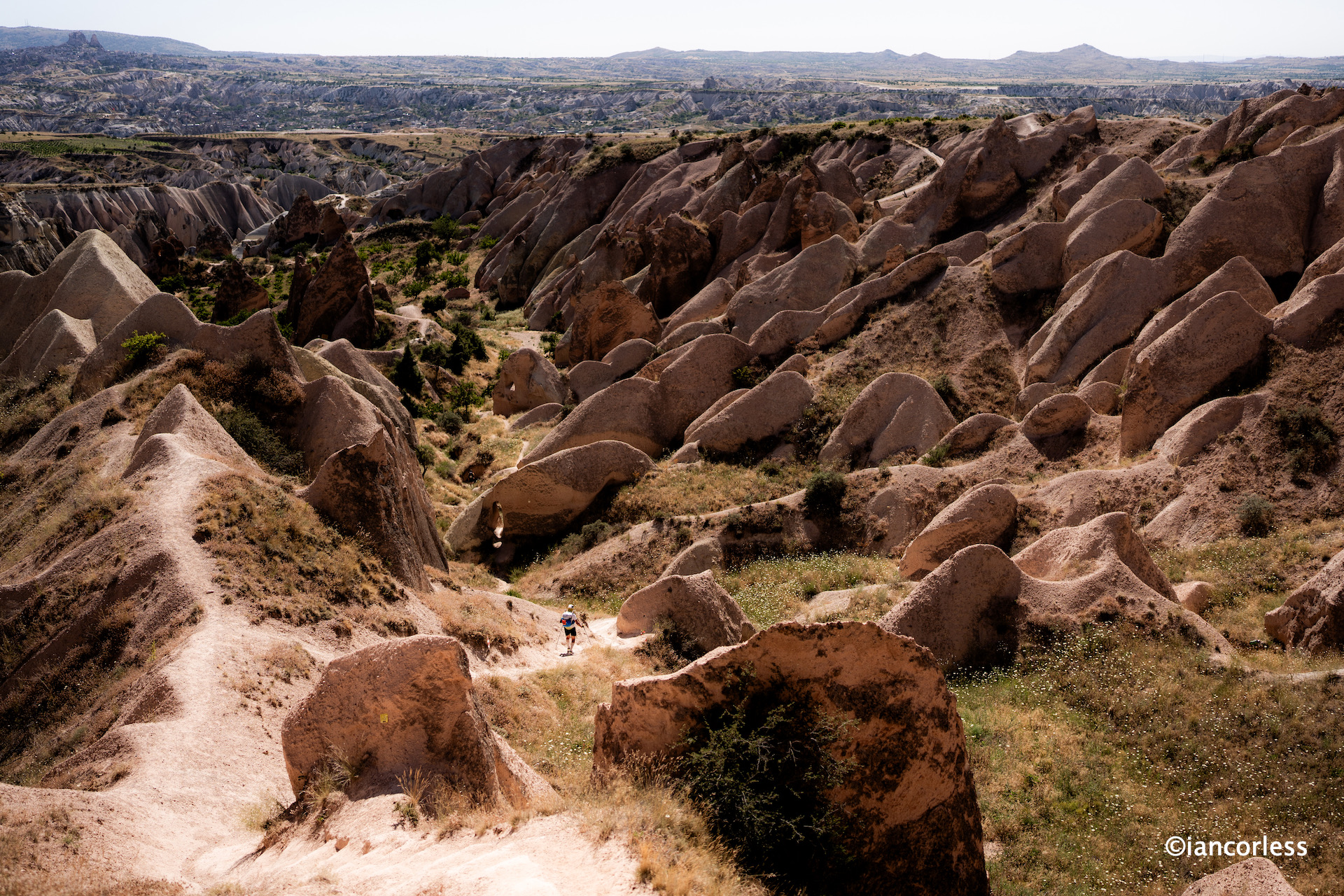
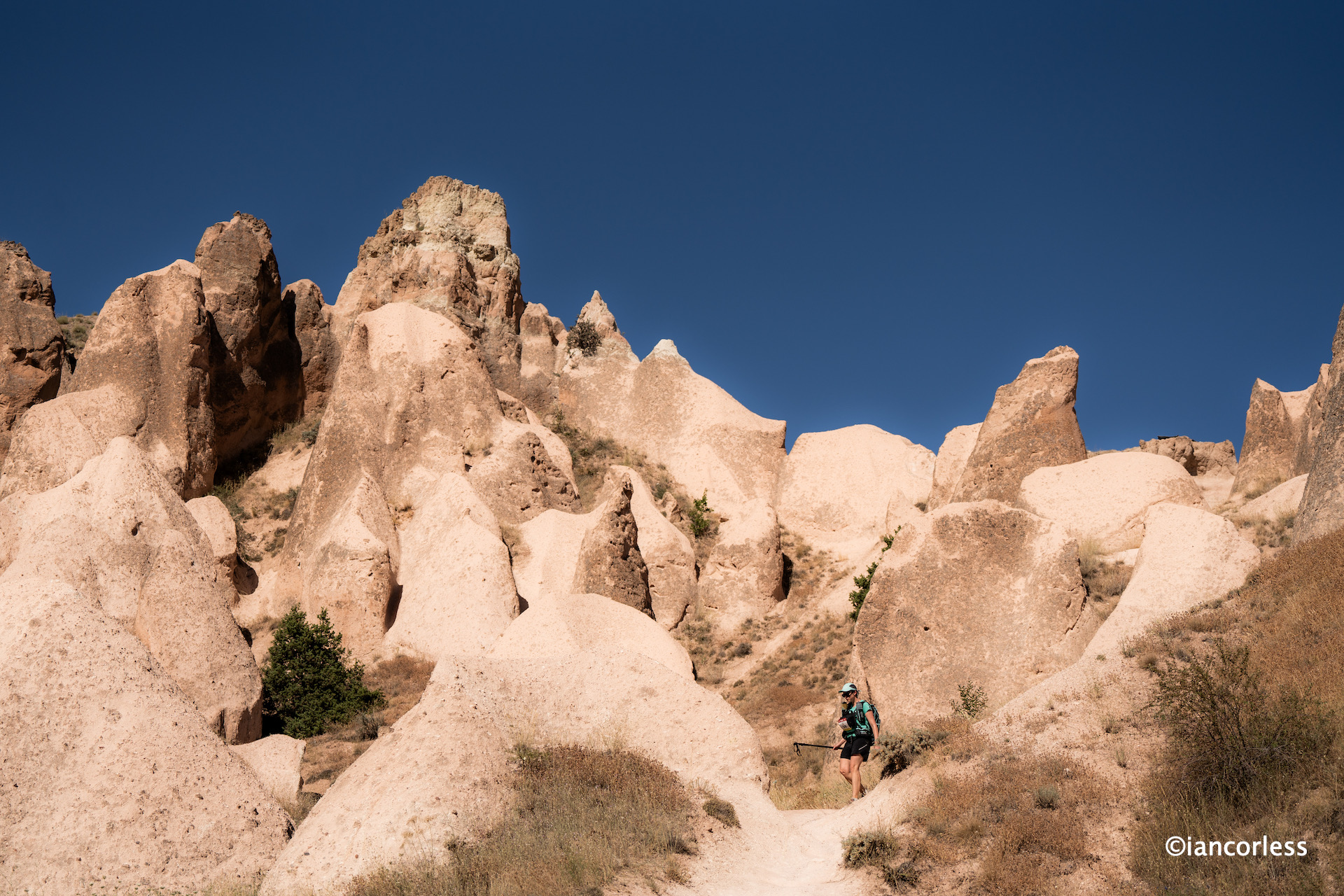
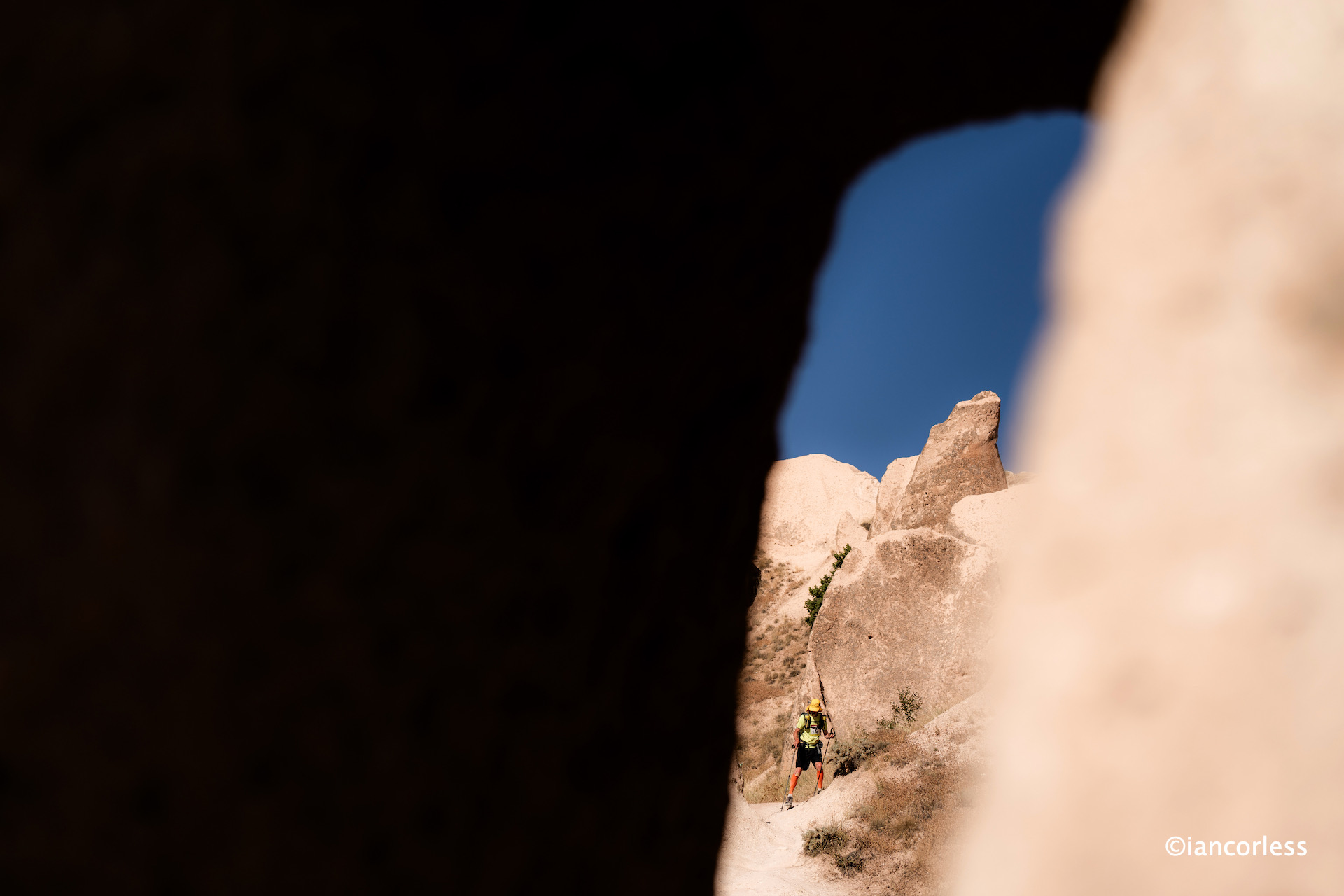
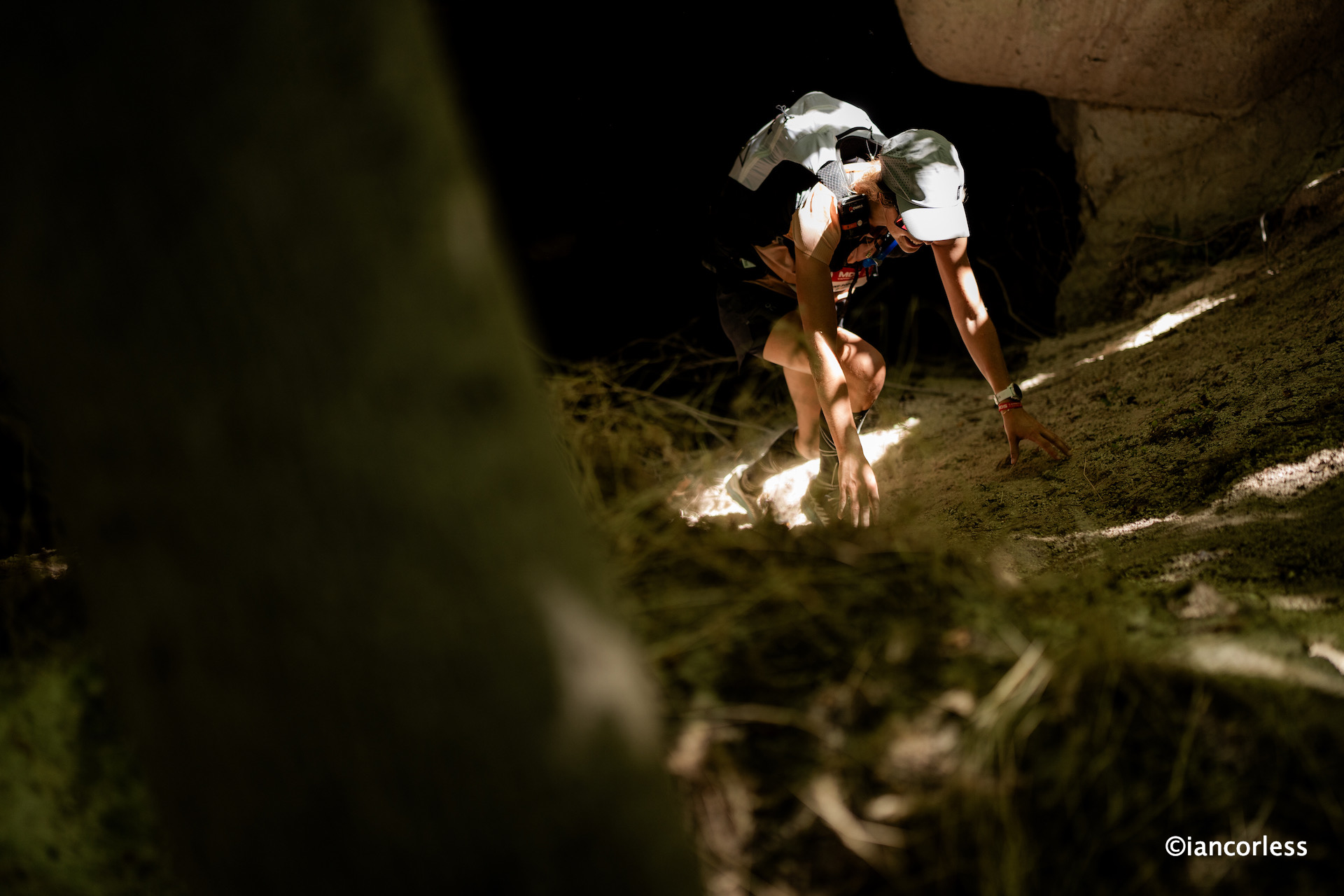
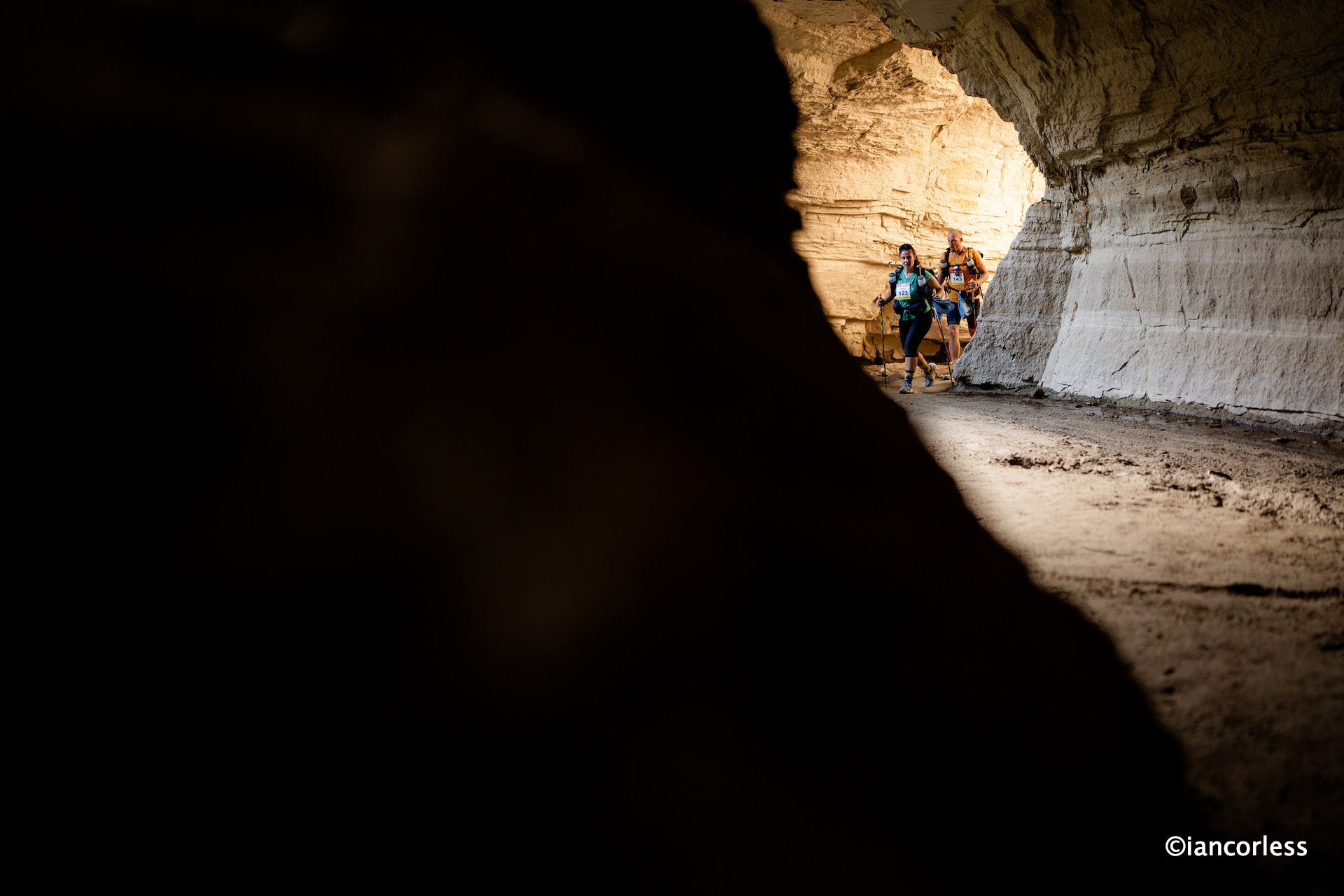
The route is considerably more challenging than other MDS events. Much of the route is single-track trails, mountain passes, gorges, tunnels, forest, technical trail, loose ground and it is undulating.
The vertical gain for each stage is significant, for the 72km it is 1767m, for the 91km it is 2243m and for the 111km it is 2576m.
Unique terrain
The combination of elements above made MDS Cappadocia, km for km, more challenging and difficult than any other MDS race, The Legendary included. If MDS Cappadocia was an equivalent 250km distance of The Legendary, it would be a very hard race.
This is no ordinary race.
After stage 1, it was very clear to the organisation that start times were needed to be adjusted to allow for cooler temperatures. Stage 2 moved from a 0600 start to 0500, and stage 3 was moved from a 0700 start to a 0500 start. This quite simply was an excellent decision and it is fair to assume that future MDS Cappadocia will have earlier start times, especially on stage 1.
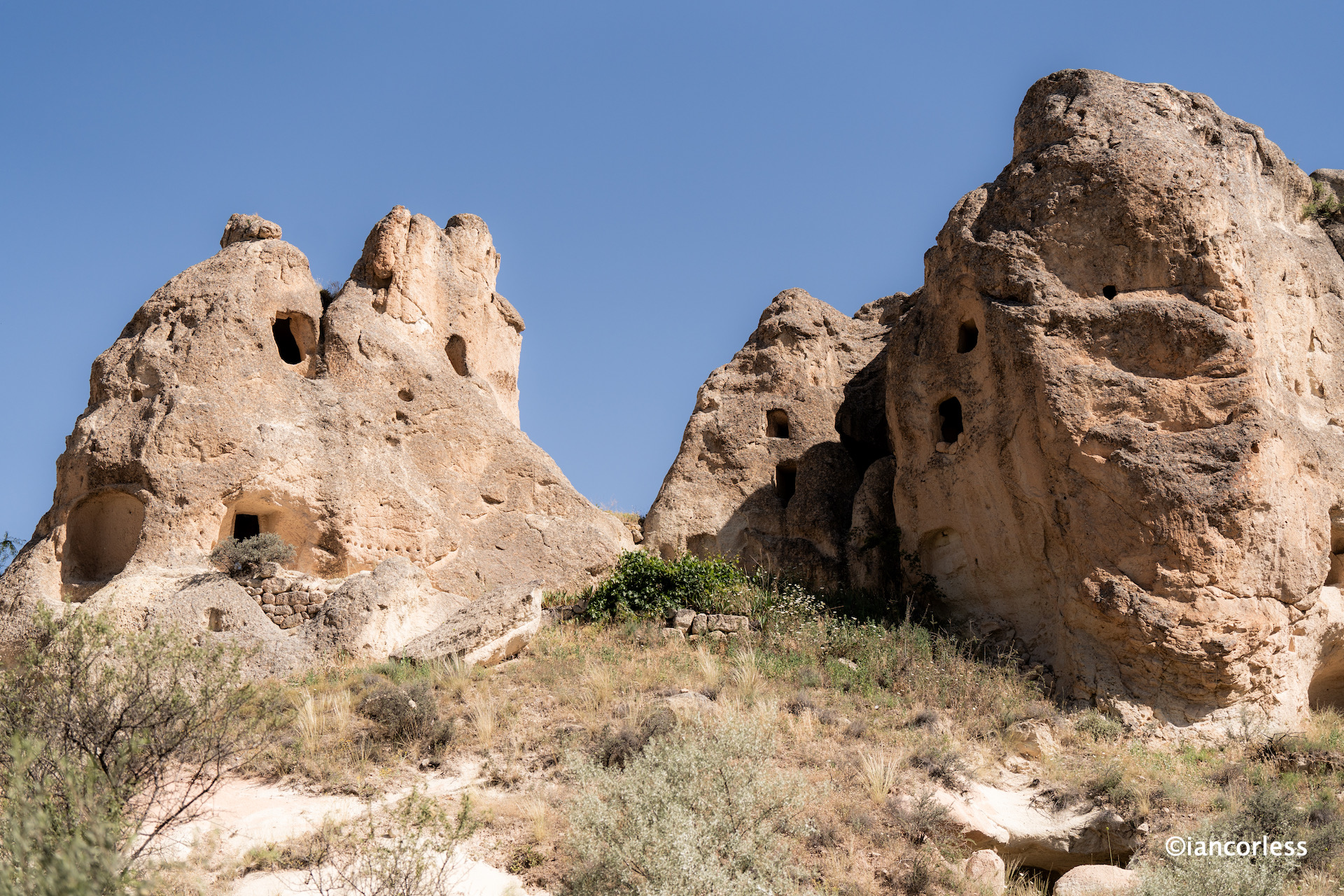
Bivouac was in a stunning location surrounded by iconic Cappadocia landscape such as fairy towers and Troglodyte caves. A very special place.
Camp life
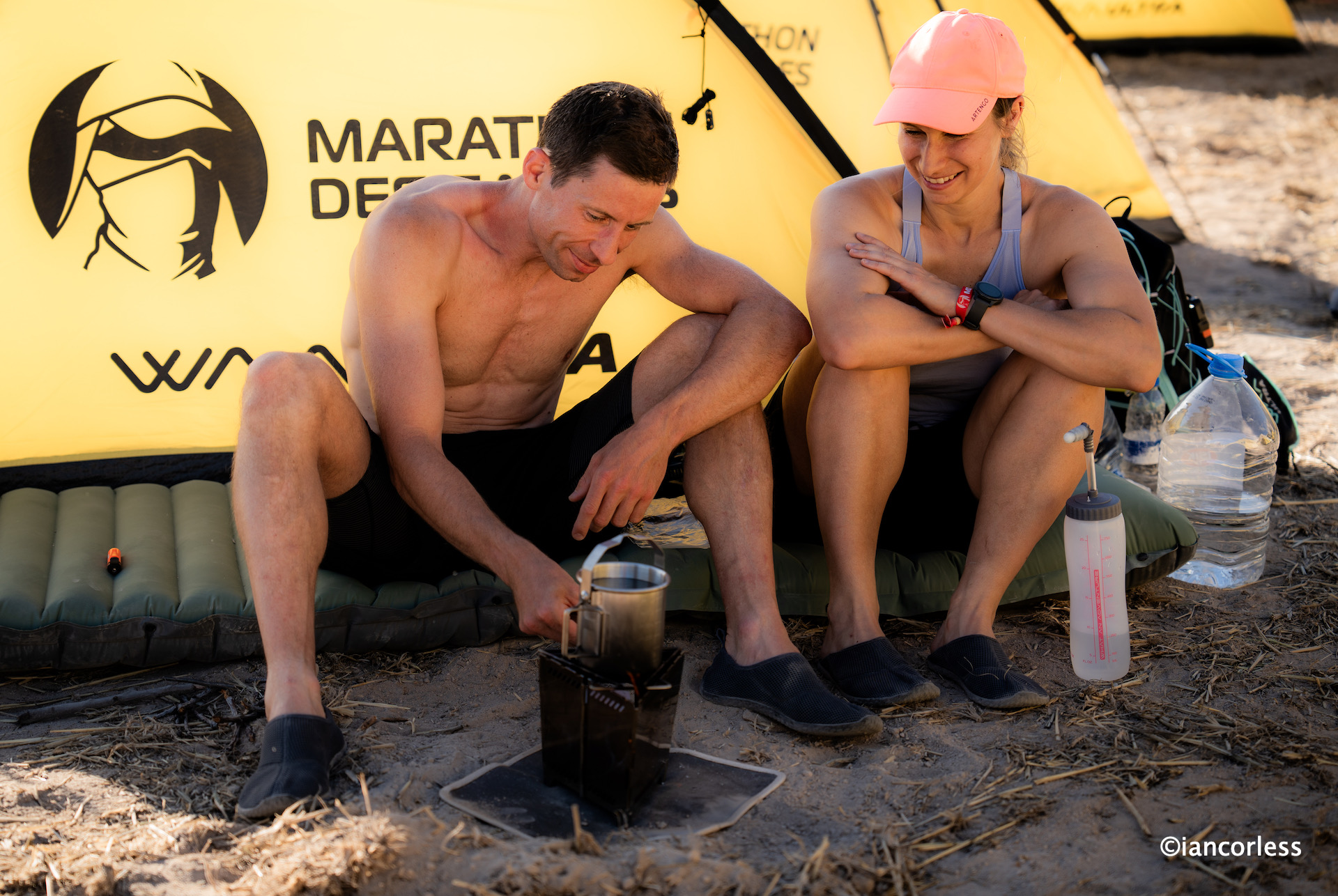
Participants sleep in individual MDS tents in cells of 6. There is a communal shaded area with matts so that everyone can relax post-race.
Camp life is like all other MDS events, The Legendary excluded, as here the bivouac tents hold 8-people. Priority is to relax, hydrate, eat and sleep. It’s a simple life. Participants are self-sufficient and therefore they must have all they need for the duration of the event. The exception is water, at the end of each stage, participants are provided a 5L bottle of water which must last to CP1 the next day (rest day excluded.)
In camp, there is medical/ foot care to ensure competitor safety.
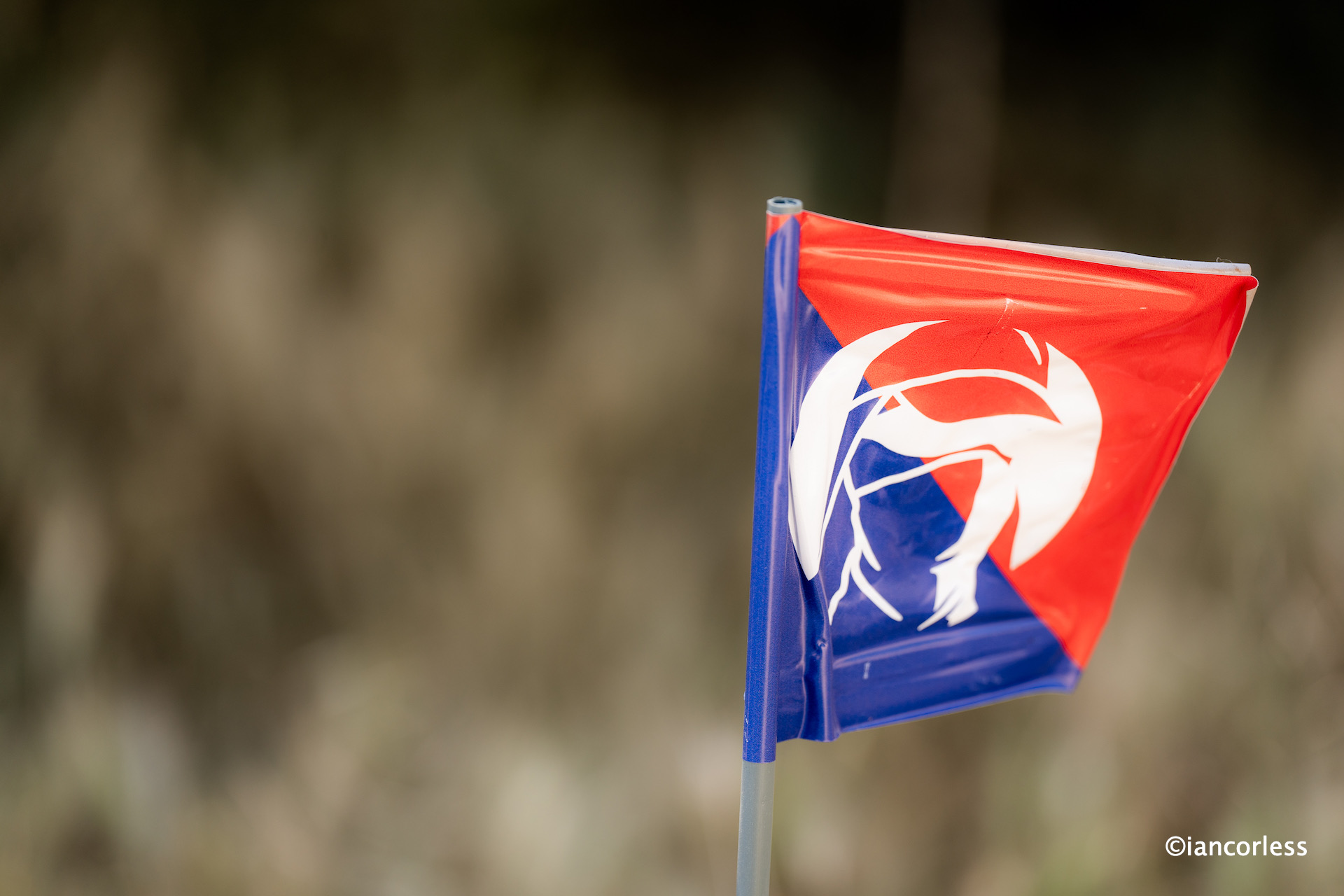
Flag markers
The race route is considerably more complex than other MDS events and as such, route marking is crucial. Marking consisted of red/ white tape and flags, and the route was very well marked. However, I do feel that the provision of GPX files would be a great addition.
Aid stations with medical teams
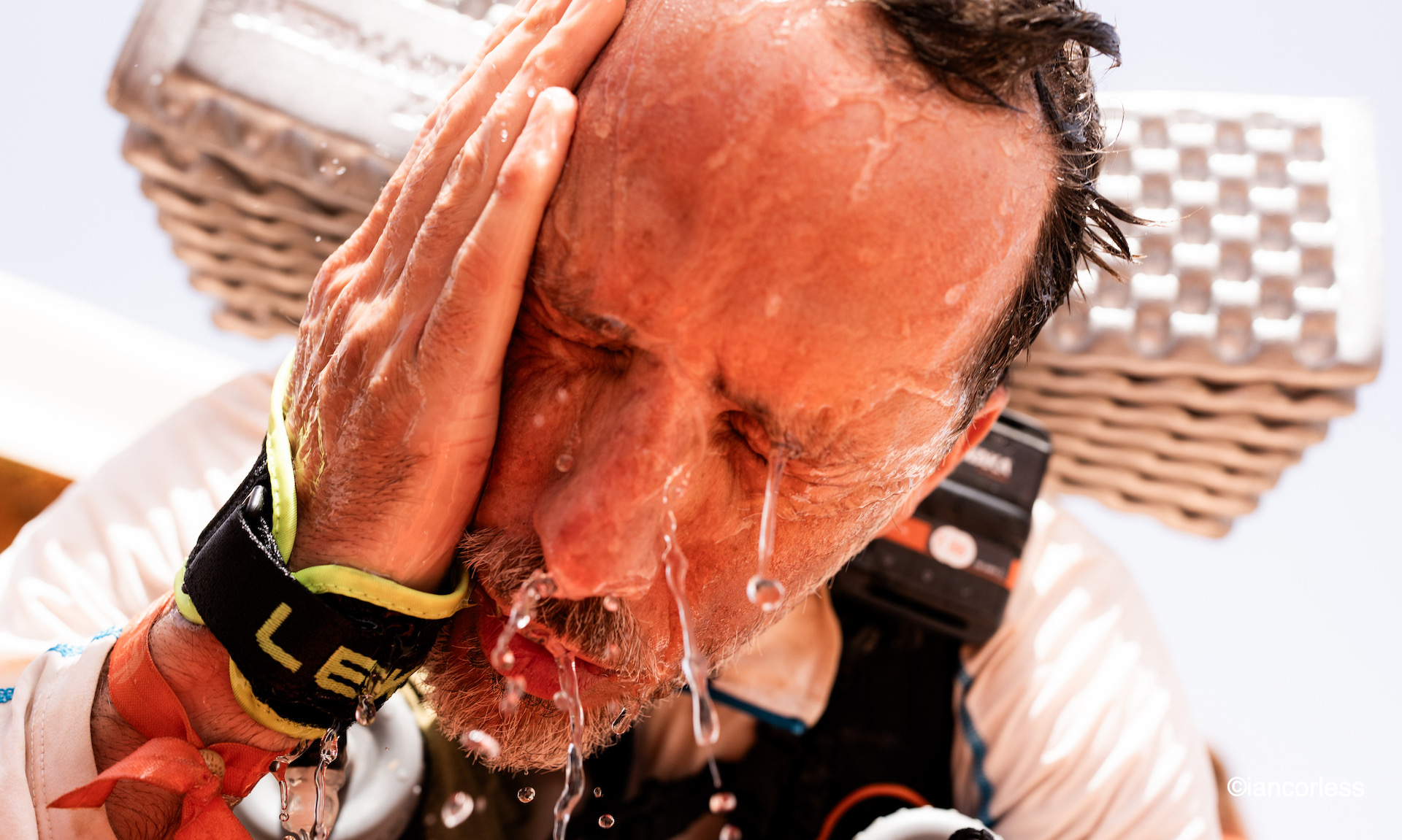
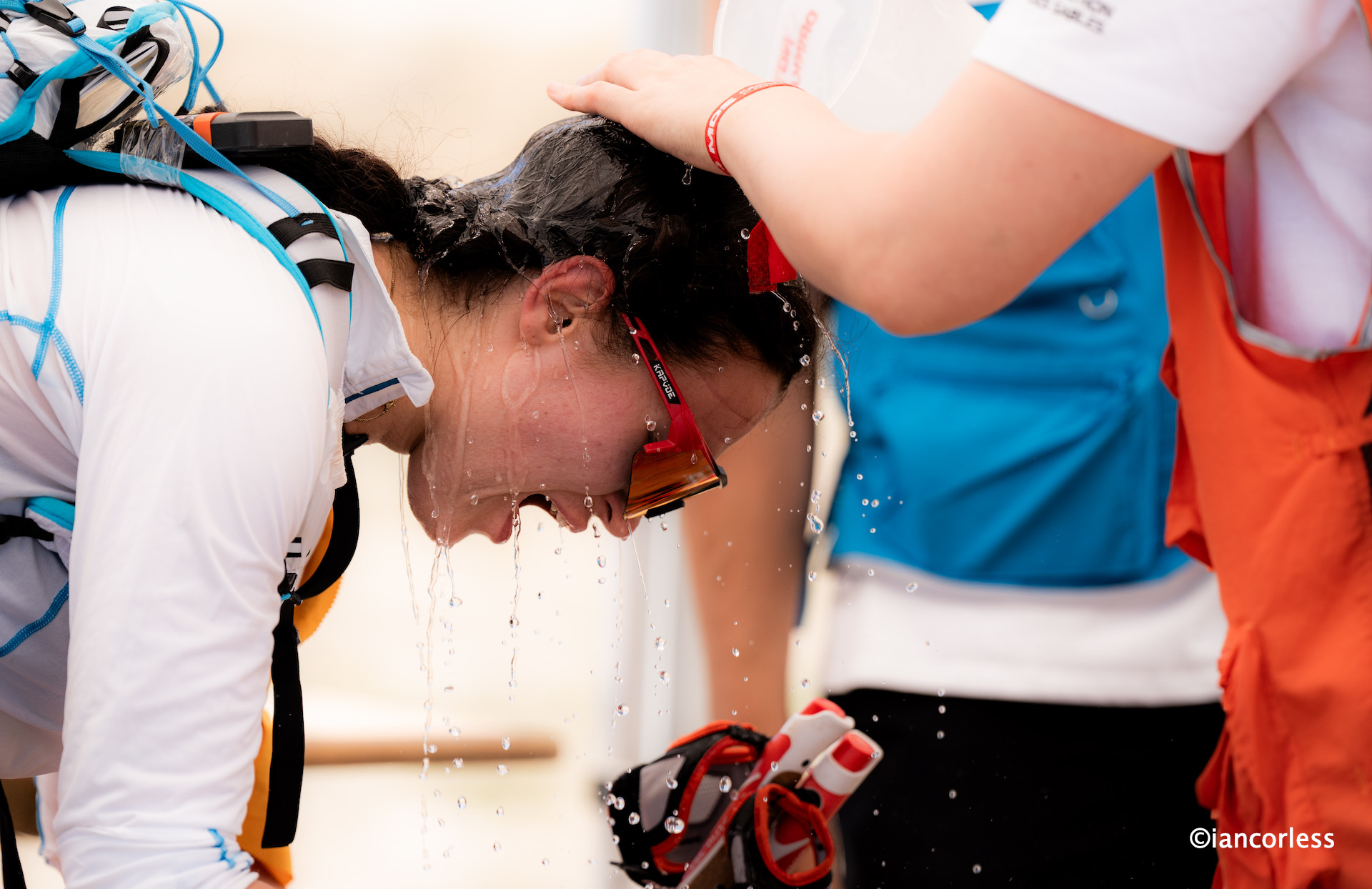
Aid stations were superb offering a shaded area, an abundance of water and importantly, iced water which the medical team pour on heads and necks to enable cooling. Medical provision is at each CP. For stage 1 there was two CP, stage 2 depending on the chosen distance had up to five CP’s and stage 3 had two CP. If required, the organisation added impromptu water stations to ensure competitor safety.
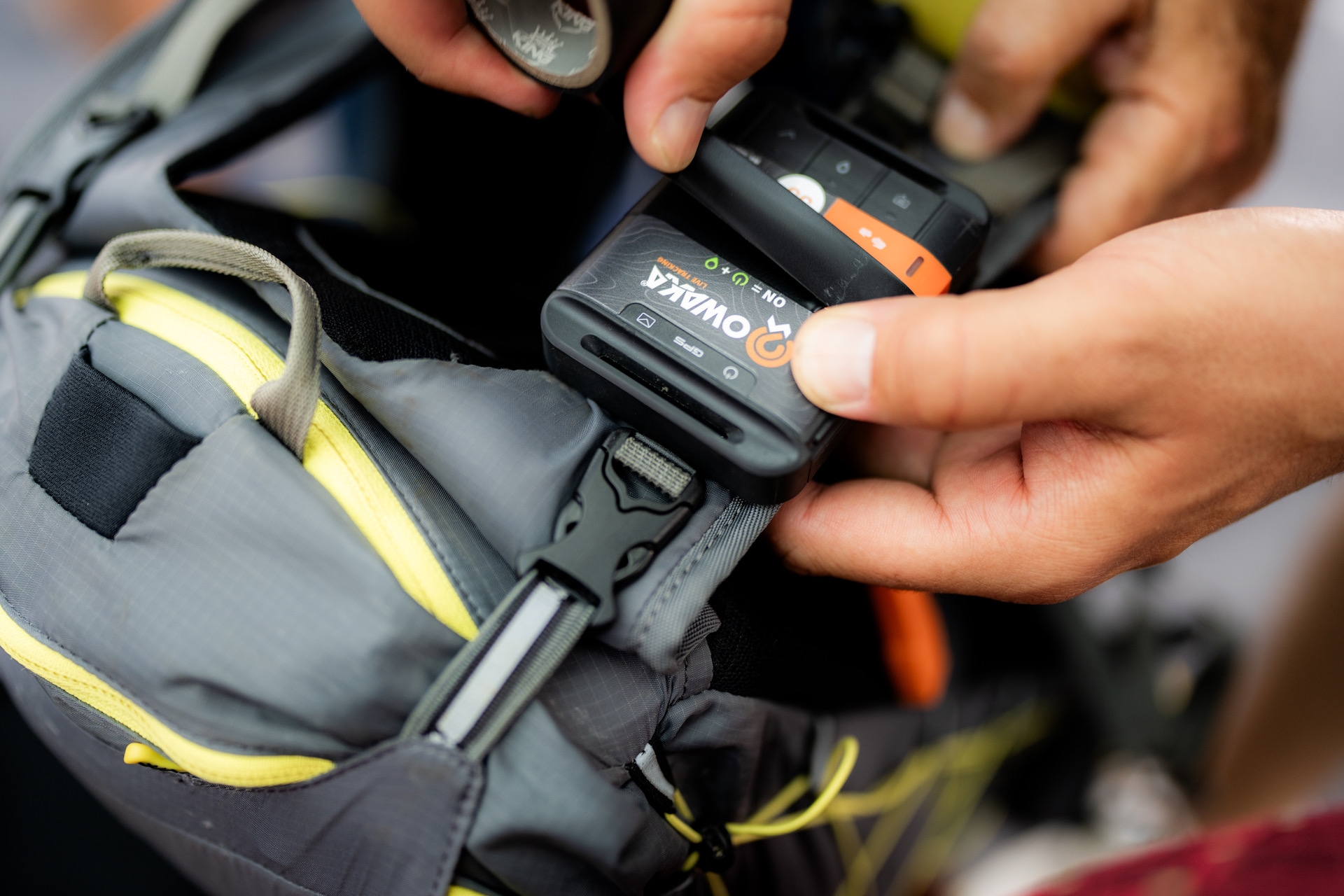
A tracker for each participant
Competitors each have a tracker so they they can be monitored and in addition, there is a SOS button in the event of an emergency.
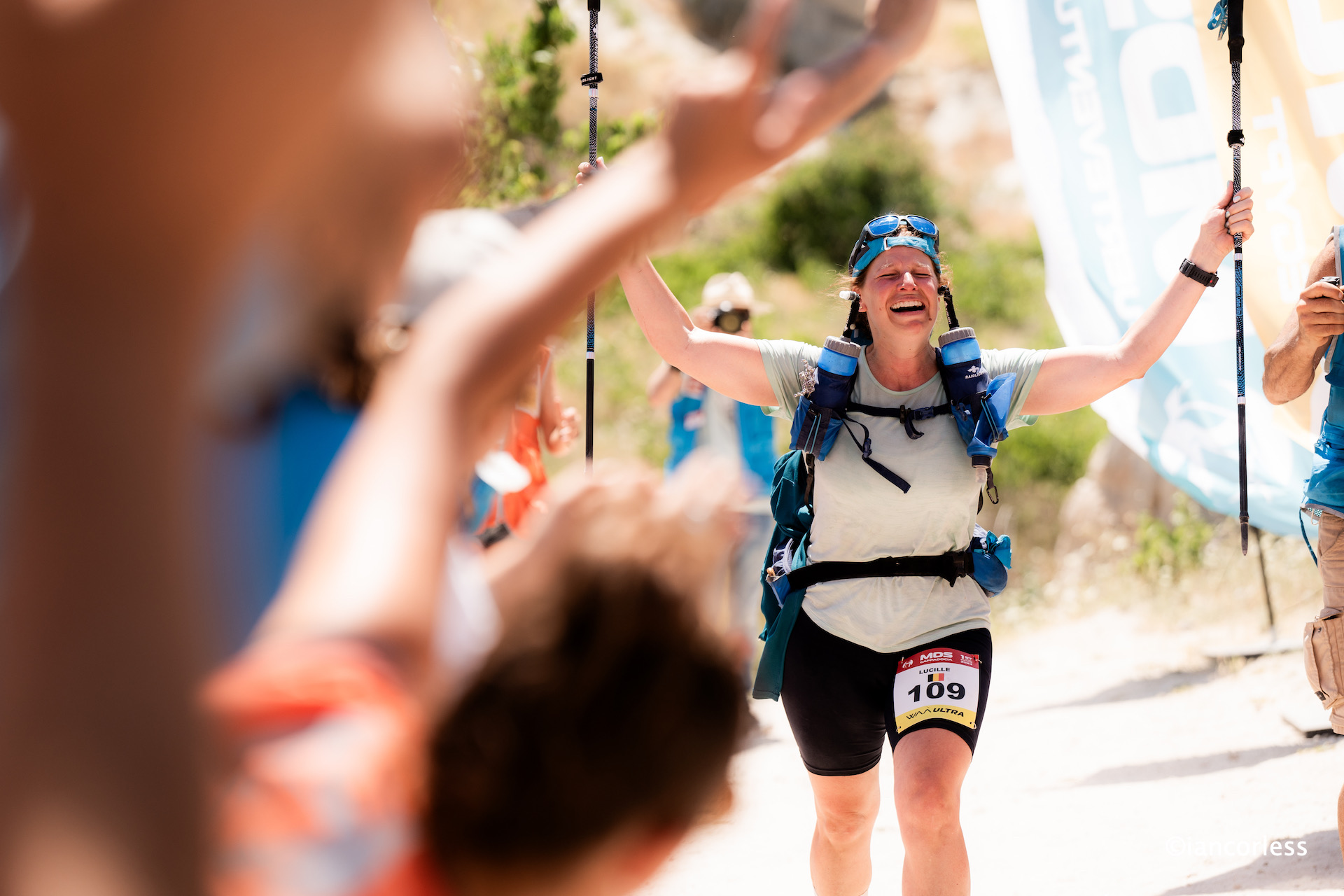
All about the finish
The event has cut-off times, however, the goal of MDS events is that each participant finishes, therefore, the organisation do all they can to facilitate runner’s crossing the line. Should someone DNF, they are given a free entry for the following year!
THE ROUTE
Troglodyte homes
MDS Cappadocia brings something very unique to the MDS line-up. This is not a desert race, it is much more a trail race.
Underfoot, there are considerably more challenges with an ever changing terrain.
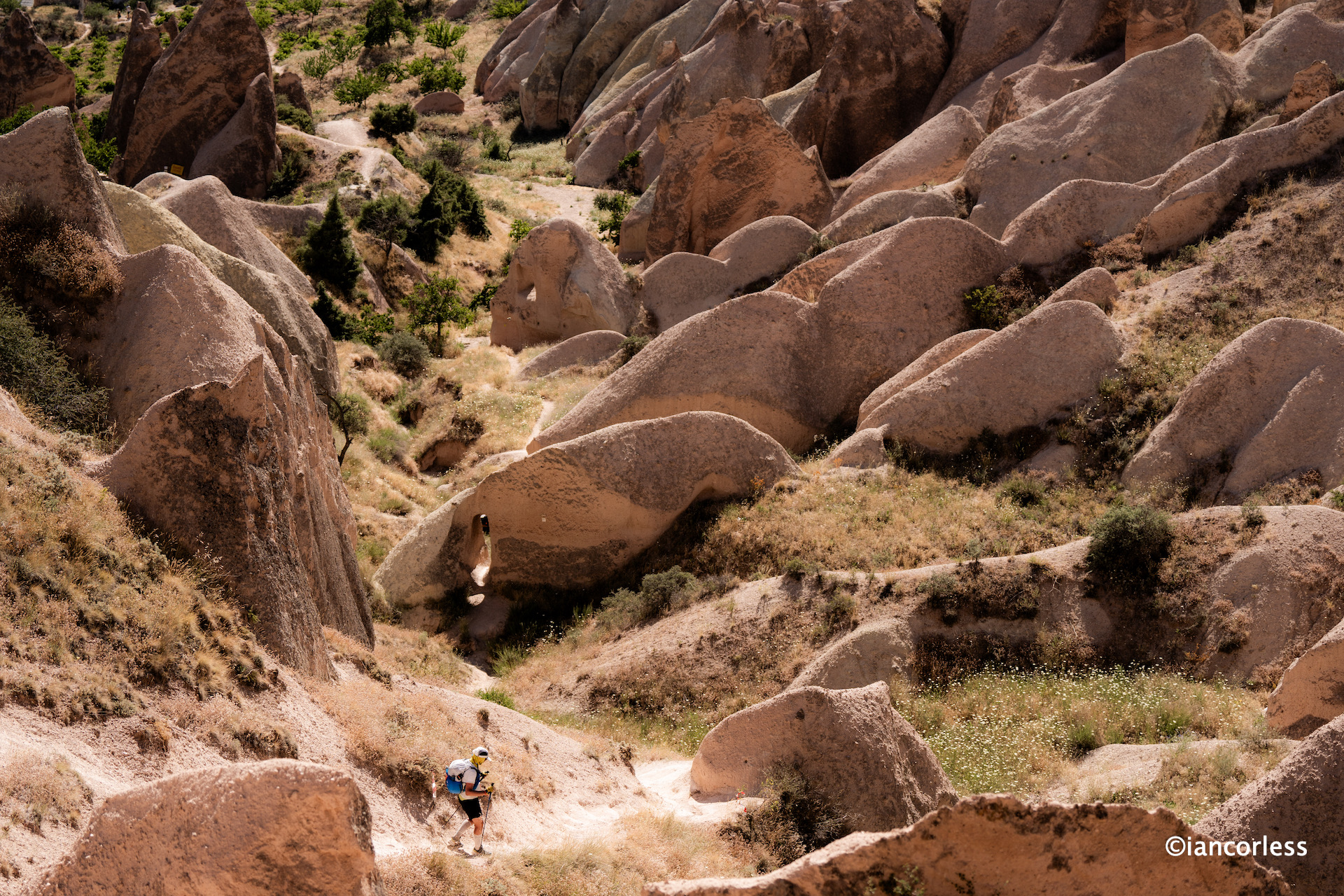
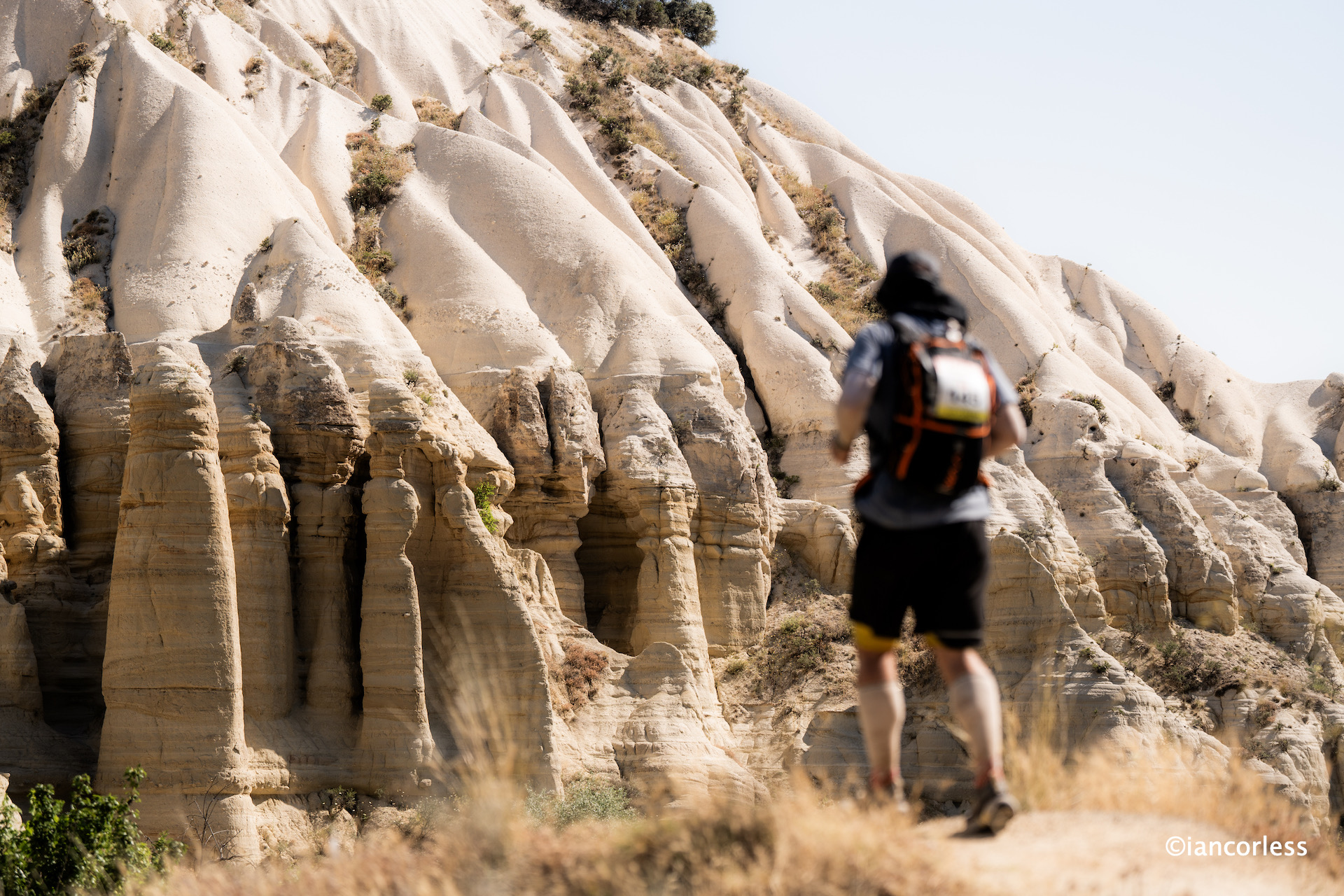
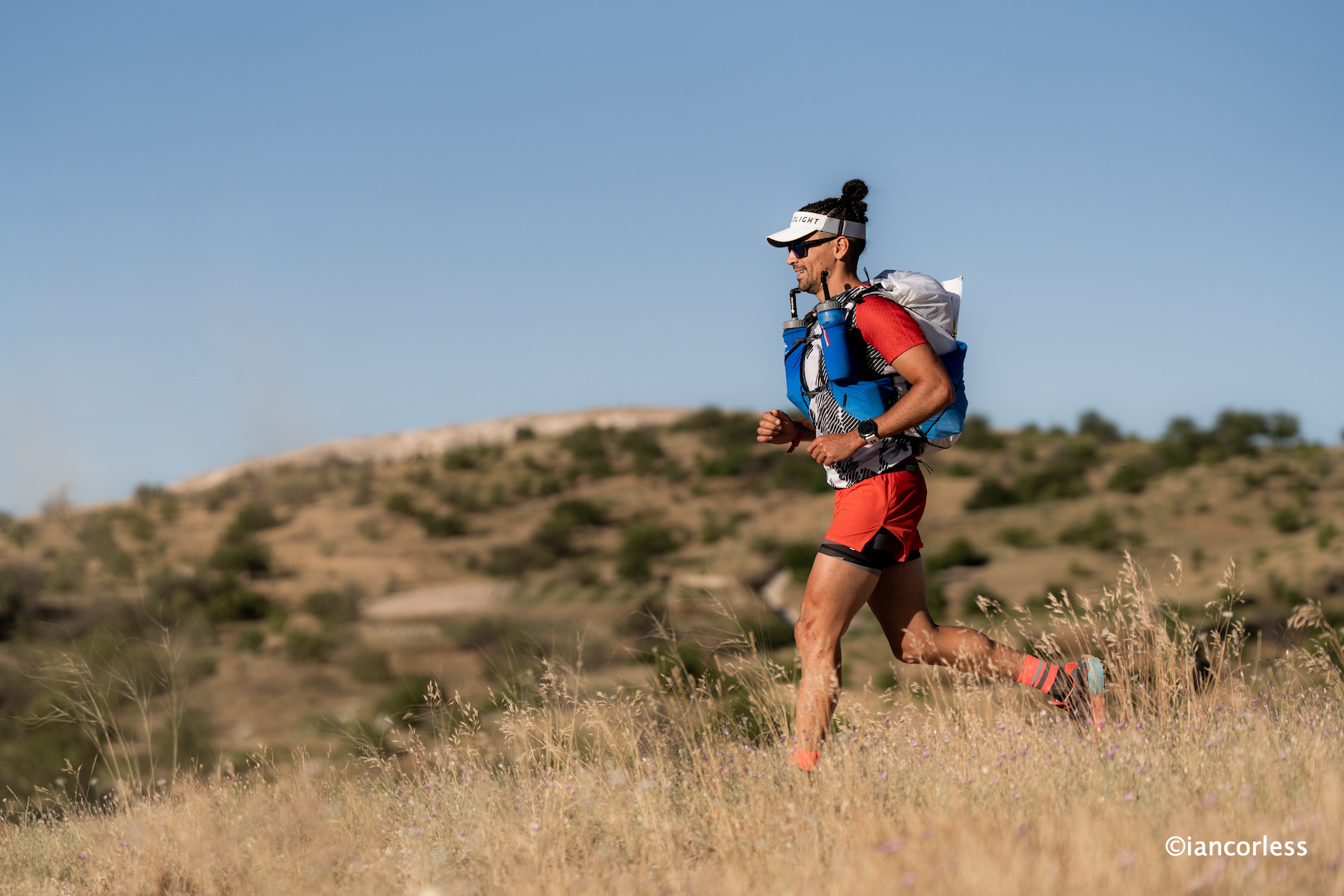
Just look at the photos, the route is a visual splendour of a very unique landscape. Taking in key areas of the Göreme Valley such as the Red Valley and Love Valley, the experience is special. A volcanic landscape, that has been shaped by wind, rain, lava, ice and erosion. Add the early morning spectacle of the hot air balloons and I firmly believe that Cappadocia needs to be experienced at least once. What better way to do this running or walking?
As mentioned above, the route is much more of a physical challenge, km for km, this is a harder race, however, as all the 2024 competitors confirmed, it is an achievable one… If it was easy, anyone could do it!
THE EXPERIENCE
Quite simply, the feedback from participants was a wow. From the moment stage 1 started, the visual splendour begins and that is consistent throughout the whole race experience.
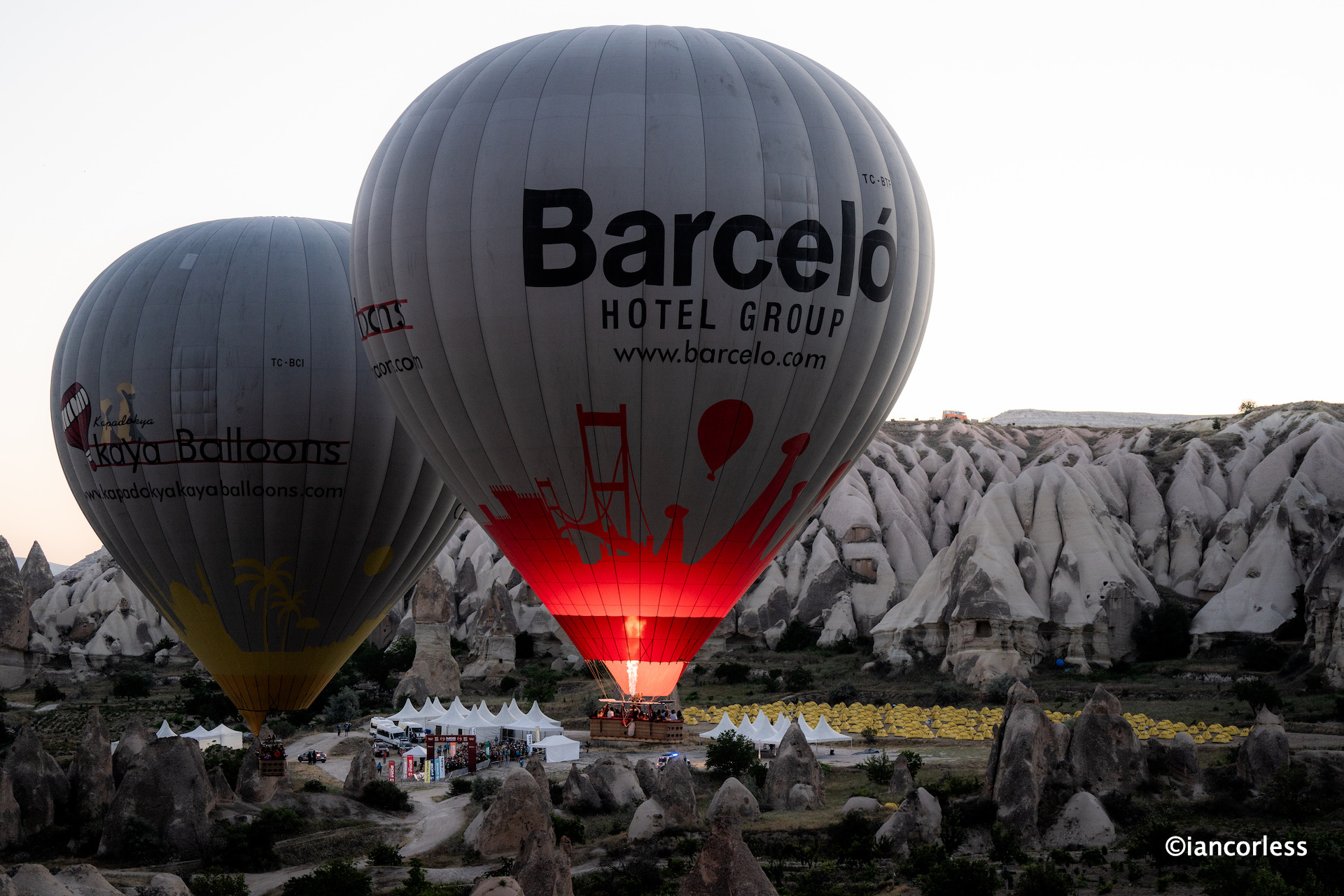
Balloons at bivouac
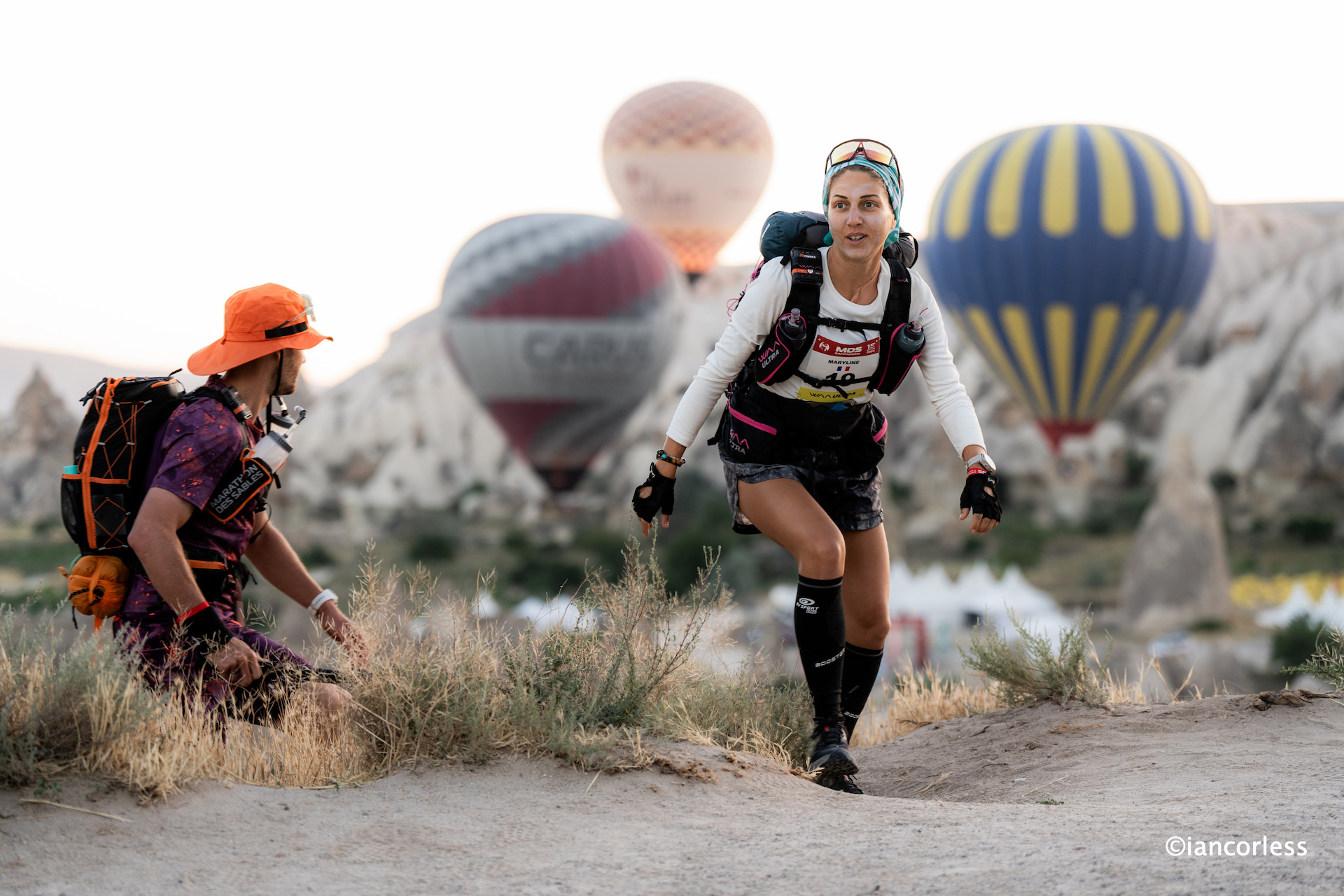
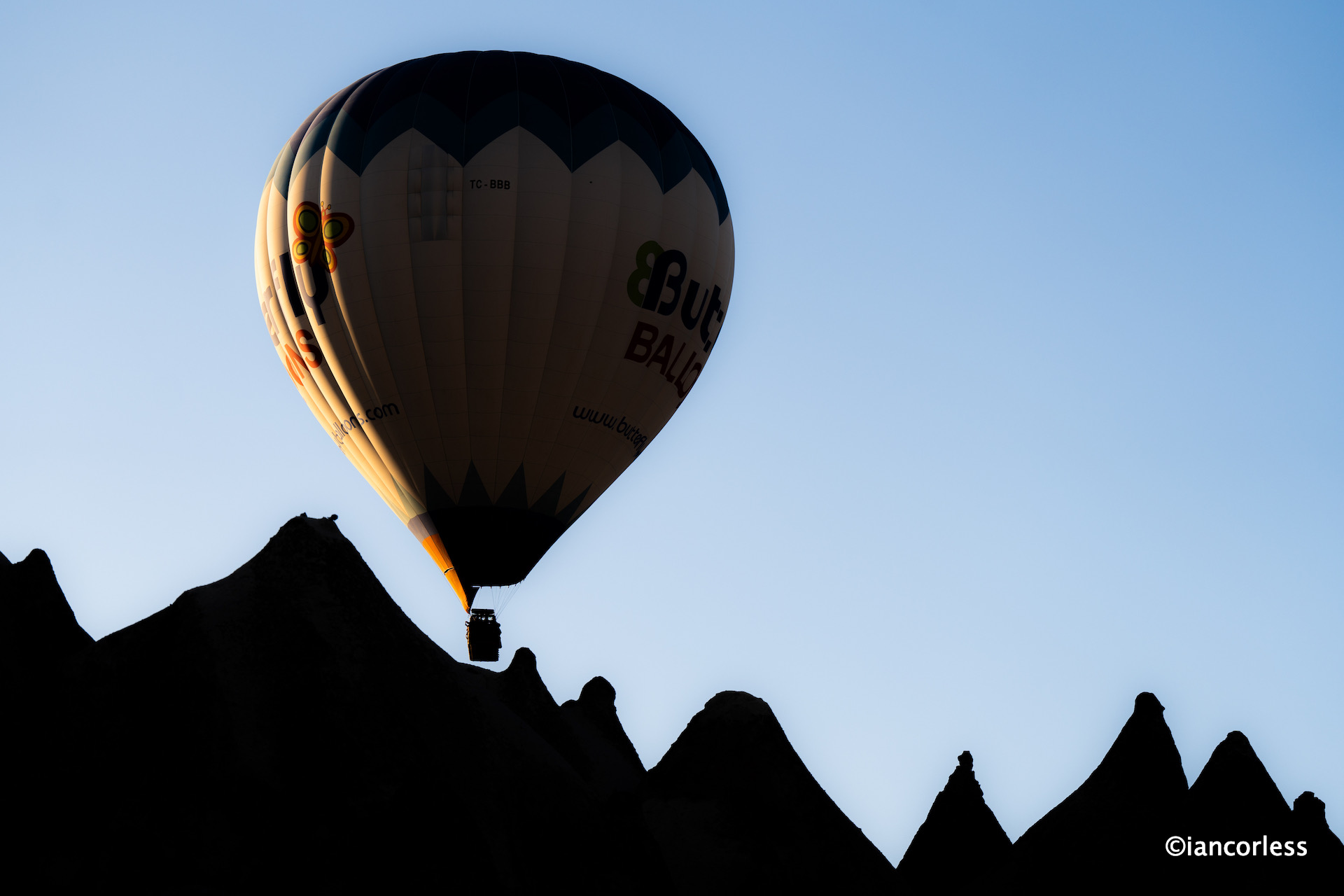
A highlight was the early start for stage 2 when the whole bivouac area was surrounded hot air balloons. I personally have experienced start lines all over the world and this was a highlight. It was completely mind-blowing and one that will last with everyone for their lifetime. It was a privilege and honour to experience it.
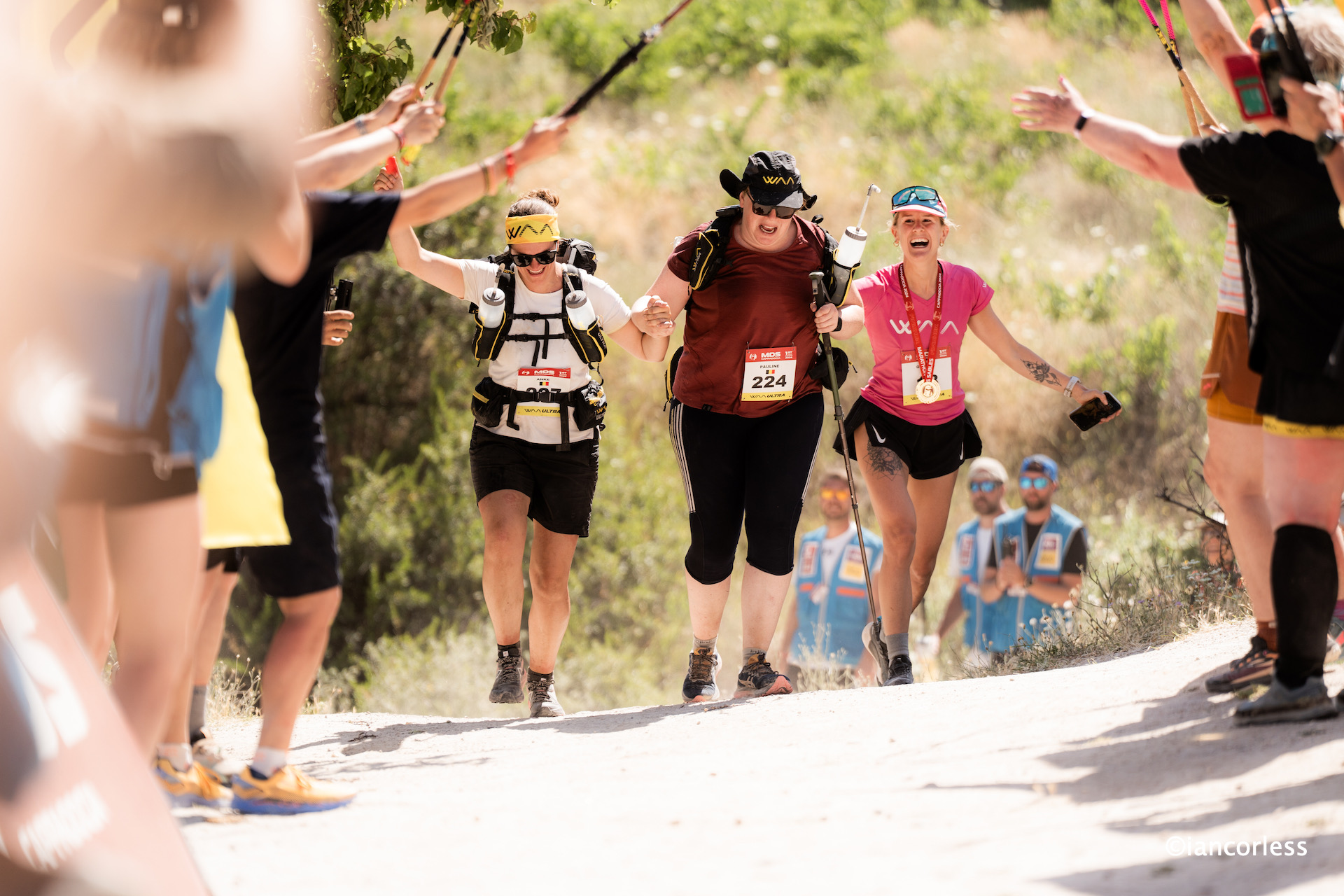
The last finisher emotions
The race was hard, especially with the intense heat. However, the MDS option to provide three distances for stage 2 is inspired and it gives everyone an opportunity to challenge themself in their own way.
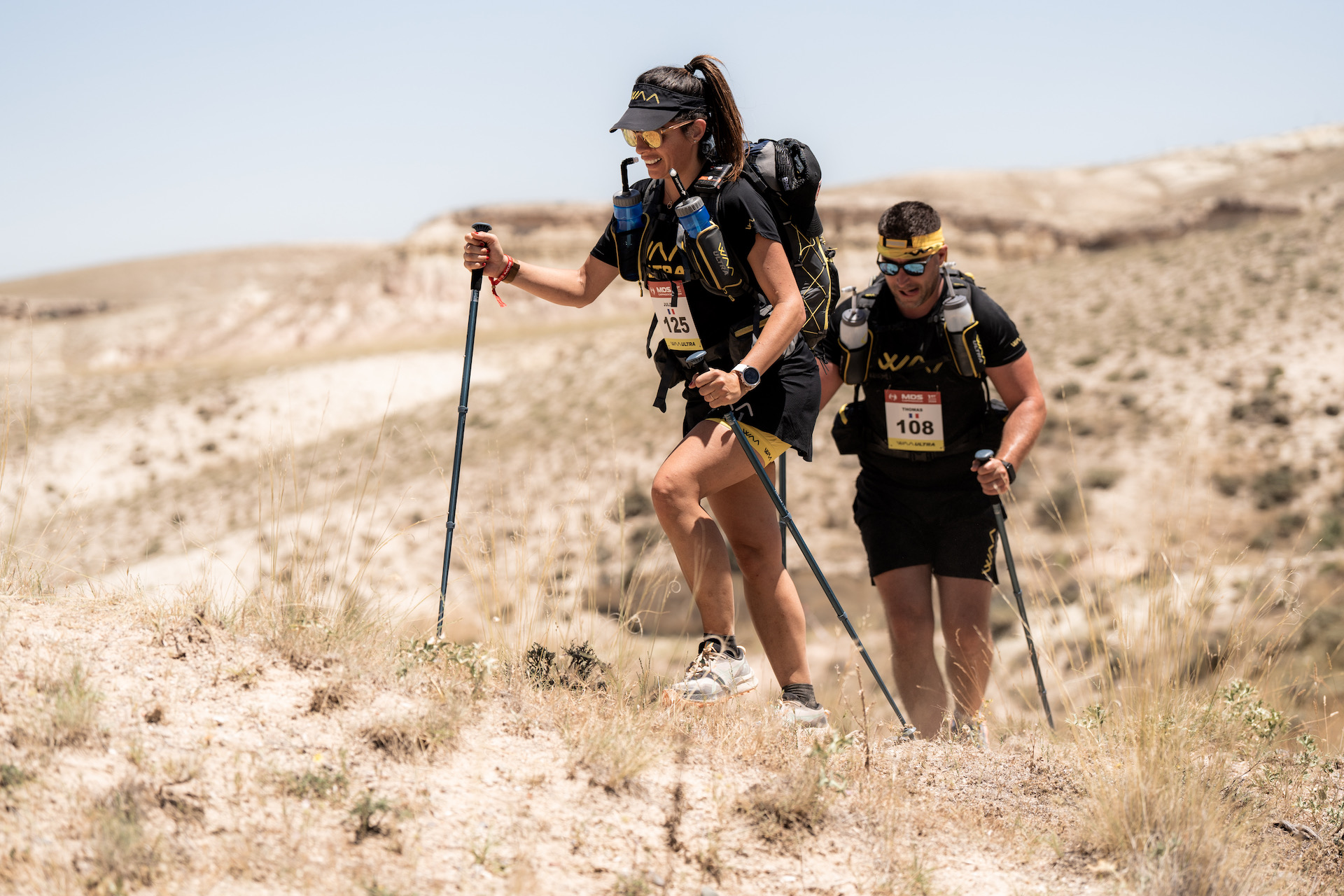
In terms of runner’s needs, this is just like any other MDS event, however, there are some key considerations: 1. You need good trail shoes with excellent grip and toe protection. 2. Sand gaiters are not required but small ankle gaiters are a good idea to stop stones etc entering the shoe at the ankle. 3. Poles (and knowing how to use them) are a very good idea for the majority of the participants.
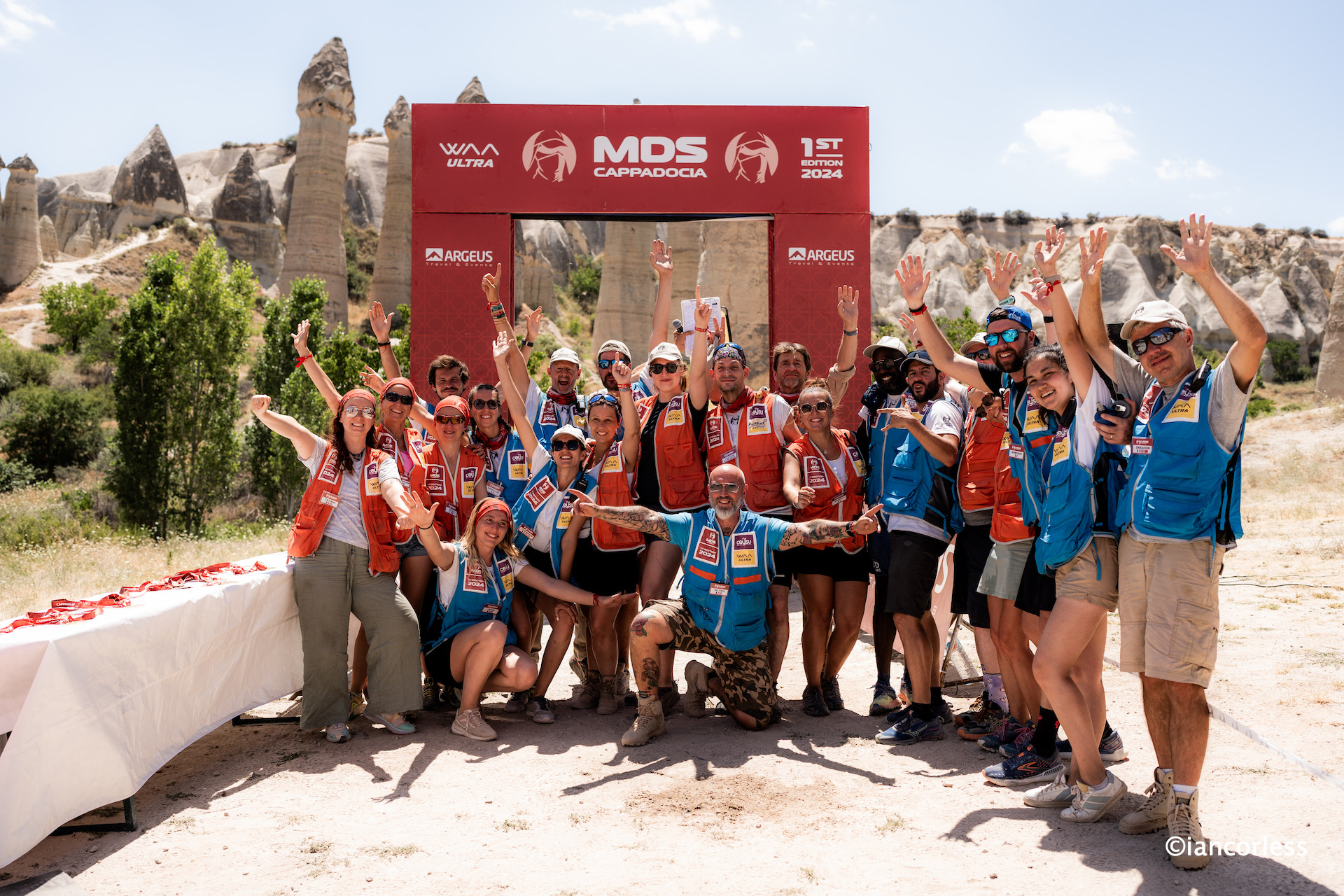
Teamwork
The MDS team have these events dialled and with a dedicated team they ensure competitor happiness and safety. Of course, first editions are always difficult, they are an opportunity to learn what does and what does not work. The general consensus post-race was one of huge success, however, it wasn’t perfect and the team look for this, so, tweaks.
The surprise of a hot air balloon flight was an incredible gesture by the MDS organisation, I think this almost certainly will be ‘option’ to add to the race experience in future editions.
The post-race awards, film, gala dinner and party was a great success.
It takes a dedicated team to make an event happen and it’s important to acknowledge Argeus Travel and in particular, Koray and Hayden for their on ground experience in facilitating the first edition of MDS Cappadocia.
The event brings something new and different to the MDS line-up and that should be applauded. There is something special here in Turkey that needs to be experienced just once.
The challenge is real, respect this environment. The combination of altitude, heat, challenging terrain, self-sufficiency and camp life is something special.
And finally, this landscape is very, very special it needs to be experienced to be believed.
The sky came alive with arguably, one of the most impressive start lines I have ever witnessed. Stage 2 of MDS CAPPADOCIA was amidst the stunning hot air balloon spectacle that only Cappadocia bring. A wow!
The glimmer of a new day, the orange burn from the burners in the baskets of the balloons, at 05:20 stage 2 got underway. Today, the participants can choose a distance, 20km, 40km or 60km.
After a tough stage 1 for many, the 20km and 40km loops were going to be popular for sure. Starting slowly, the spectacle around the runner’s was just too impressive not to stop, look, film and photograph. One runner said as she passed, “This is the most impressive thing I have ever seen, this is truly magnificent.”
And so, MDS Cappadocia is etched in the mind, the unique landscape, the unique bivouac location and the dawn spectacle of hot air balloons, this is MDS Cappadocia.
An early start was welcome, the heat of day 1 was relentless, so, several hours of calm temperatures facilitated a good start to the day before the heat started to rise around 09:00, by early afternoon, temperatures were at 34-degrees.
There were lots of smiling faces, as runner’s tested themselves over a distance that was a challenge for them.
The terrain was constantly changing showing the best of what Cappadocia has to offer. Single-track, fairy towers, Troglodyte caves, lush green landscape, tunnels, gorges, canyons and so much more.
With three distances on offer, finishing times were spread throughout the day, in the 60km distance, Serge Fortini crossed first in 9:37:29, Hugo Brincard 2nd 9:57:54 and Alexandre Mallier 3rd 10:34:41. Maryline Demangel, Axelle Bellec and Augistina Gonzalez Fileur were 1,2, 3 for the women, 12:24:41, 12:47:25 and 15:17:55.
The final finishers arrived after midnight, a full day of challenge lasting over 19-hours of intense heat, beautiful views and challenging trail, a showcase of determination and strength.
For the 40km and 20km, we will need to wait for updated results to place athletes in the appropriate distance category, go to livetrail.com
Day 3 of the race is a rest and then stage 3 follows the following day and the conclusion of the first edition of MDS Cappadocia.
















 IAN CORLESS