It’s countdown time to the 2024 MDS Fuerteventura, the 6th edition taking place from September 28 to October 5th.
The MDS format is the perfect synergy of travel, adventure and luxury.
The 2024 edition, once again, uses the Playitas Resort Hotel as a pre and post-race hub for 4 nights: two nights pre and two nights post.
Three nights will be spent in bivouac in full self-sufficiency, the only provision provided is a tent in which to sleep and water. All other items the participant must carry, this includes all food and snacks for the duration of the event, clothes, sleeping bag, sleeping mat and any luxuries.
Day 2 and 3: breakfast, lunch, dinner. (Stage 2 and rest day)
Day 4: breakfast, lunch. (Stage 3)
If a participant requires power for phone, watch, mp3 player etc, they must provide this themselves in the form of a portable battery which they must carry.
The MDS format is the same for all events, MDS The Legendary and MDS Trek excluded.
The race will take place over 4-days and 3-stages, typically broken down as follows:
Day 1/ Stage 1 between 25 and 30km.
Day 2/ Stage 2 20, 40 or 60km – the participant chooses the appropriate distance.
Day 3 Rest day
Day 4/ Stage 3 between 25 and 30km.
The race is designed so that finishing is a possibility for all, regardless of ability or speed. Importantly, if a runner does not finish, they are provided a free race entry for the following year.
The last edition of the race took place in 2022 which turned out to be a considerable challenge due extreme and unprecedented weather. 2023 did not take place due to environmental rules. So, 2024 will be a special year for MDS Fuerteventura. Notably, 300 participants will toe the line of which, 58% are women. A fantastic statistic.
The Program for the week will be as follows:
Saturday September 28
Arrival of participants and relaxed night at Playitas Resort Hotel.
Sunday September 29
Technical and medical checks followed by relaxation at Playitas Resort Hotel.
Monday September 30
Stage 1 – overnight bivouac
Tuesday October 1
Stage 2 – overnight bivouac
Wednesday October 2
Rest day – overnight bivouac
Thursday October 3
Stage 3 – followed by relaxation at Playitas Resort Hotel.
Friday October 4
Tourism and rest day followed by evening Gala dinner.
Saturday October 5
Onward travel
Playitas Resort Hotel is one of the key sports hotels in Europe. Located in the southeast of Fuerteventura, it is the perfect hub for a sports minded person, there is a gym, yoga, indoor cycling, CrossFit, pools and so much more available.
MDS Fuerteventura is closely followed by MDS Morocco, October 12-19, MDS Trek, October 20-29 and MDS Jordan, November 2-9.
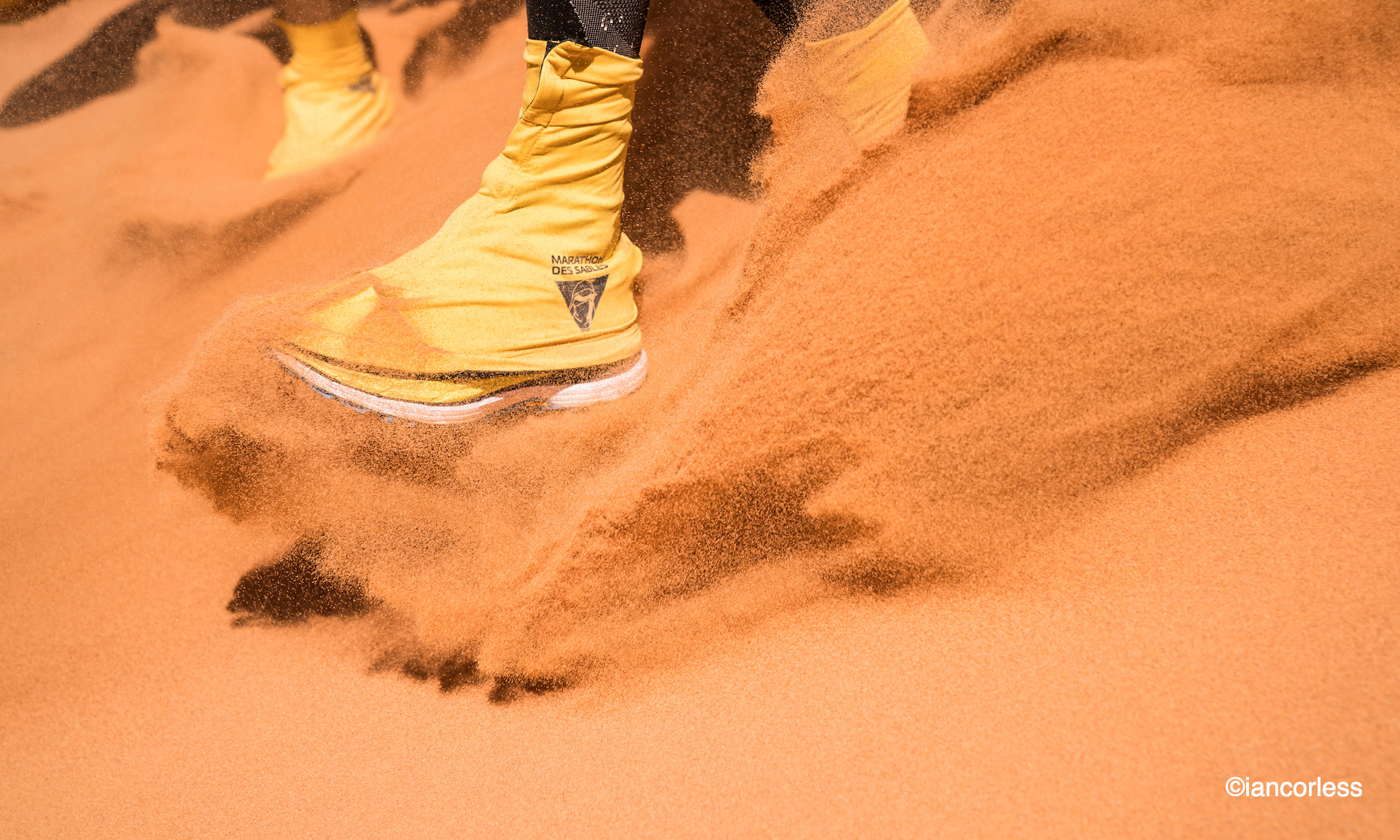
Gaiters for a desert race are an essential item. Quite simply, sand and feet are NOT friends. So, you need to do everything you possibly can to keep sand out of your shoes and keep your feet healthy and trouble free.
In 2024, Raidlight, the legendary French brand released the first mass produced desert specific shoe supplied with velcro sewn on and gaiter provided. I have tested them extensively and they are a great option if you want a one-stop and no hassle solution, my review isHERE – Raidlight Ultra Desert 4 Protect Shoe Review
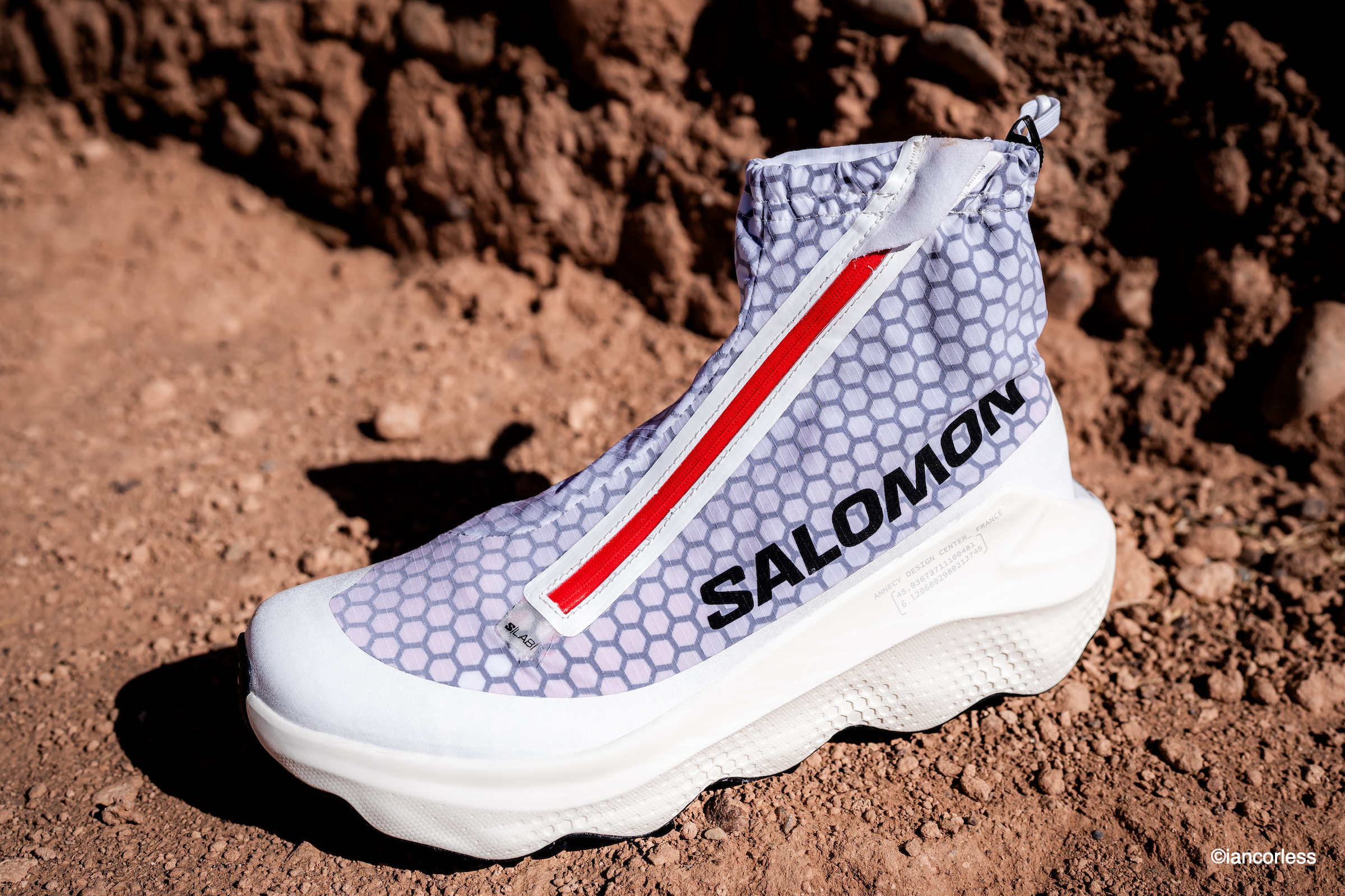
In addition, Salomon joined the desert market with the Ultra Dust – review HERE – This shoe has increased in use in the last year or so and is extremely popular. From a personal point of view, the Salomon Ultra Dust would be the shoe I use.
Photo by Ian Corless
However, many of you (most of you) will be using your favourite run shoe and will need velcro sewn to your shoe. Let’s get one thing clear, do not ask, “What shoe shall I use?” We are all individuals with different body weights, gaits, needs and speed. Shoes are very specific to the person. Read an articleHEREHow to Find Your Running Shoe Size and Fit.
Every year, the same question gets asked, “Where can I get my gaiters attached to my run shoes?”
So here is a list of current resources, this list will be added to as more names/ contacts become available.
UK
Kevin Bradley is the man. He has been sewing gaiters on shoes for years. He has probably done 1000’s. Very experienced and he knows his stuff. Alex Shoe Repair, 103c Lavender Hill, London, SW11 – Telephone +44 207 2223 4931
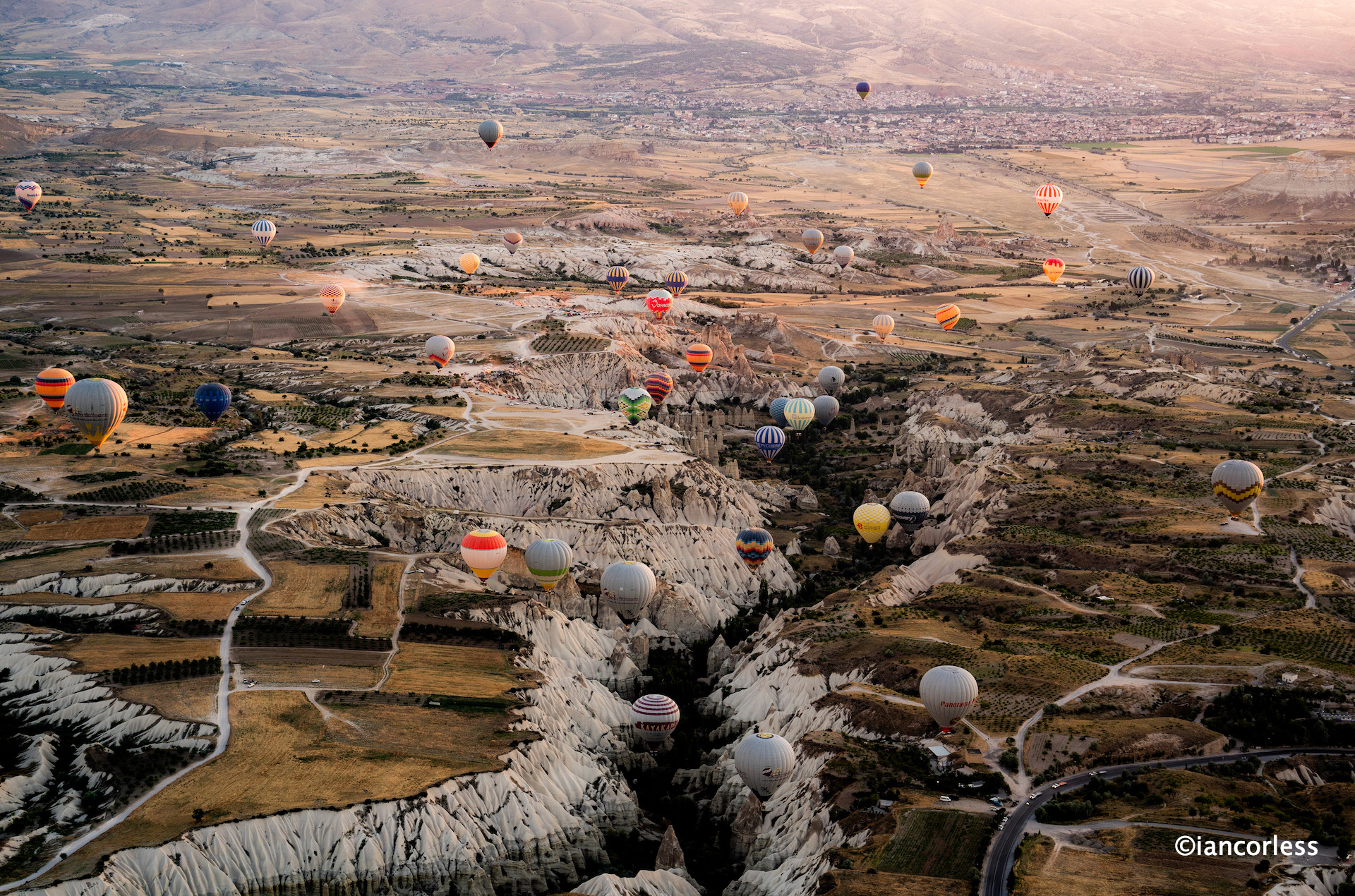
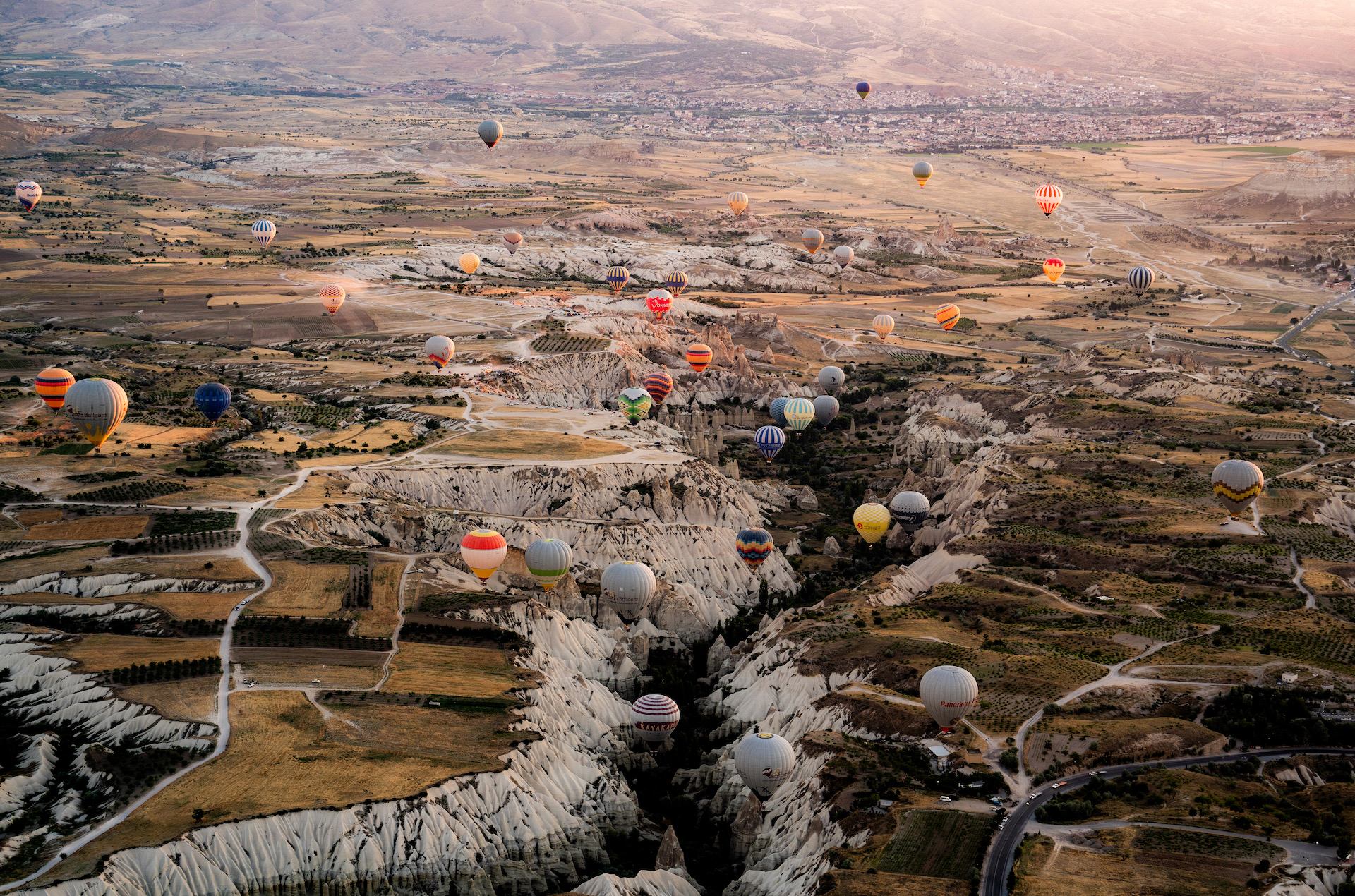
The 2024 inaugural MDS CAPPADOCIA has concluded on a high, quite literally, as all participants and staff were treated to a surprise early morning balloon flight by the organisation to celebrate a pioneering moment for the MDS brand.
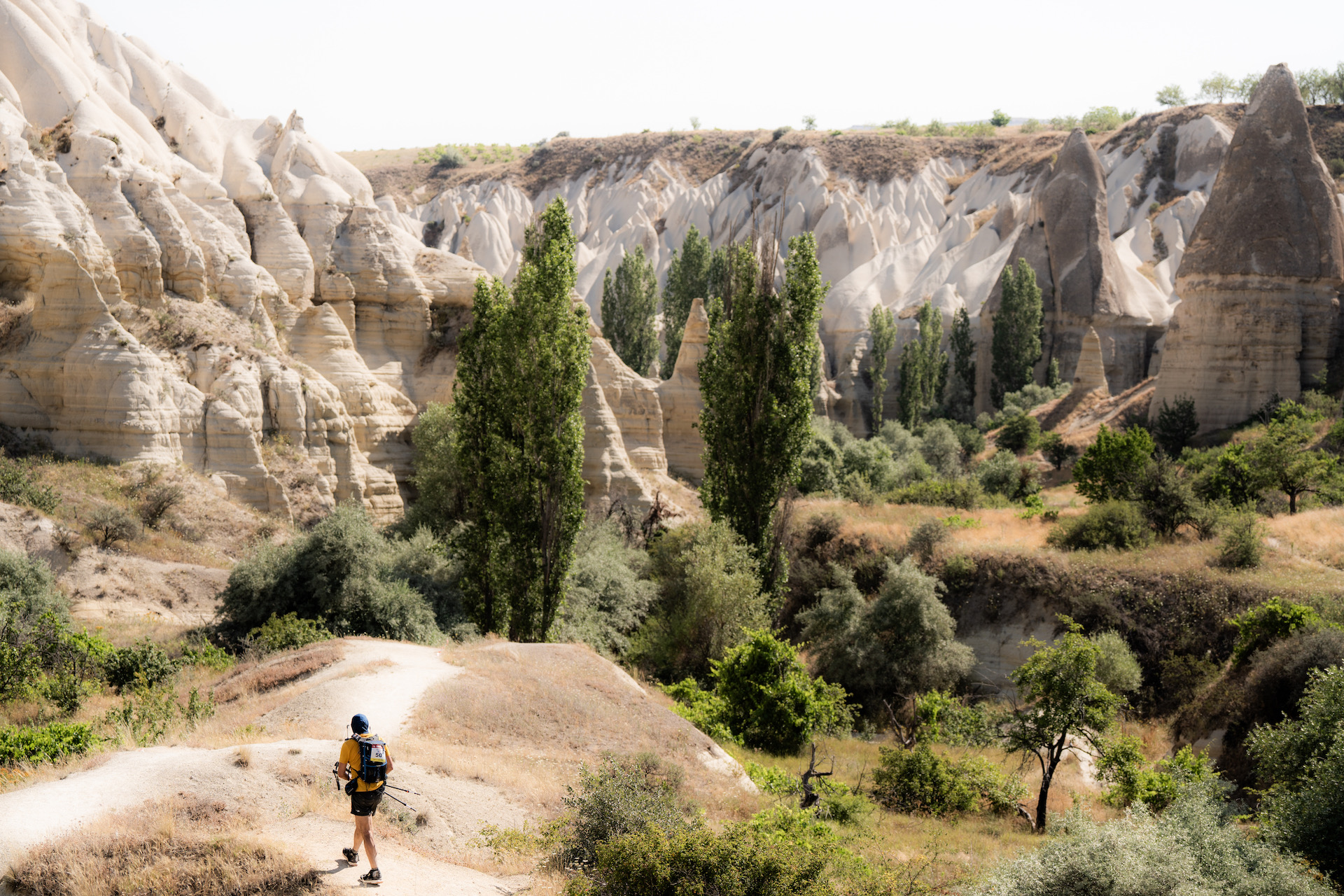
The Love Valley
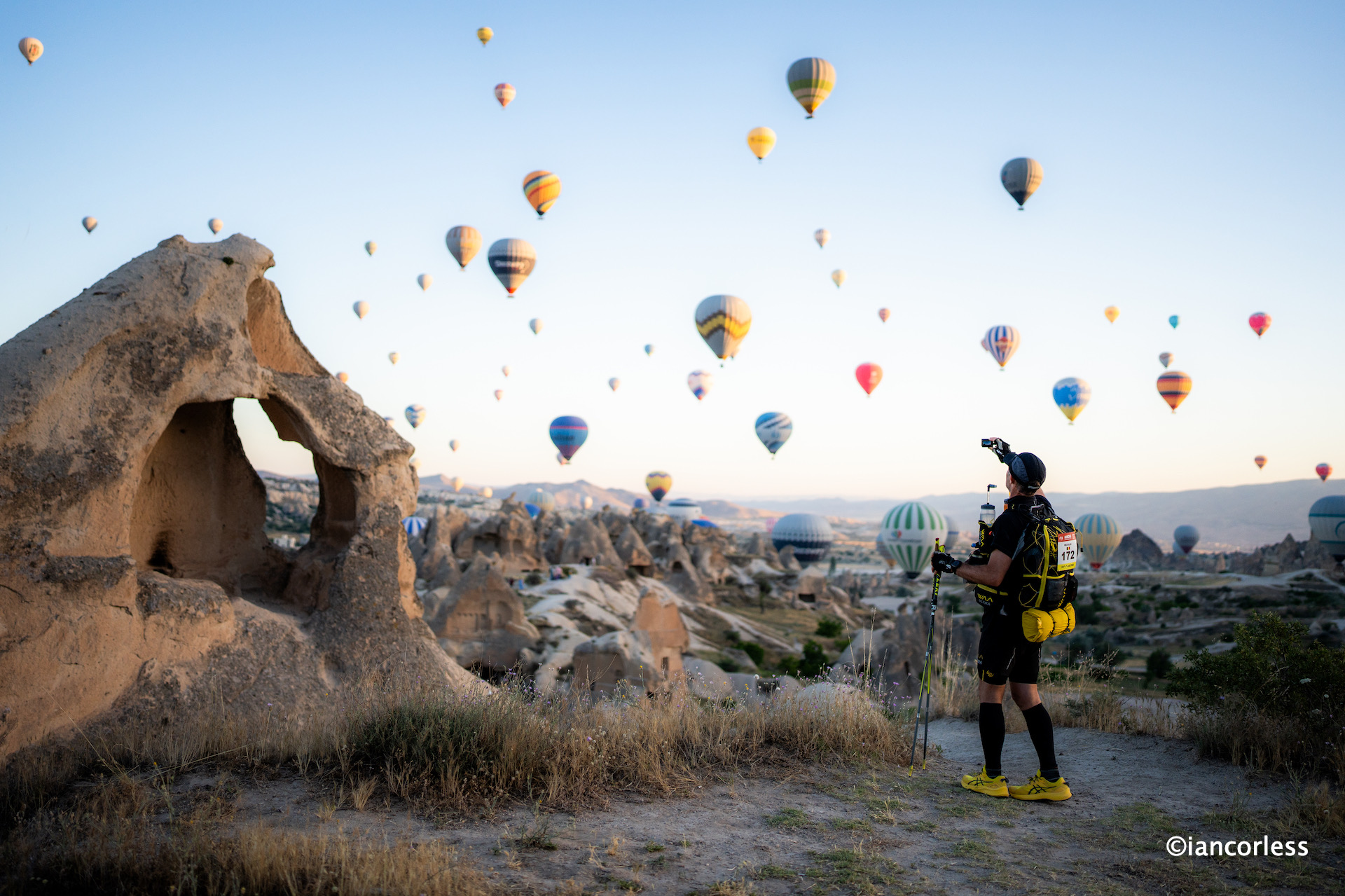
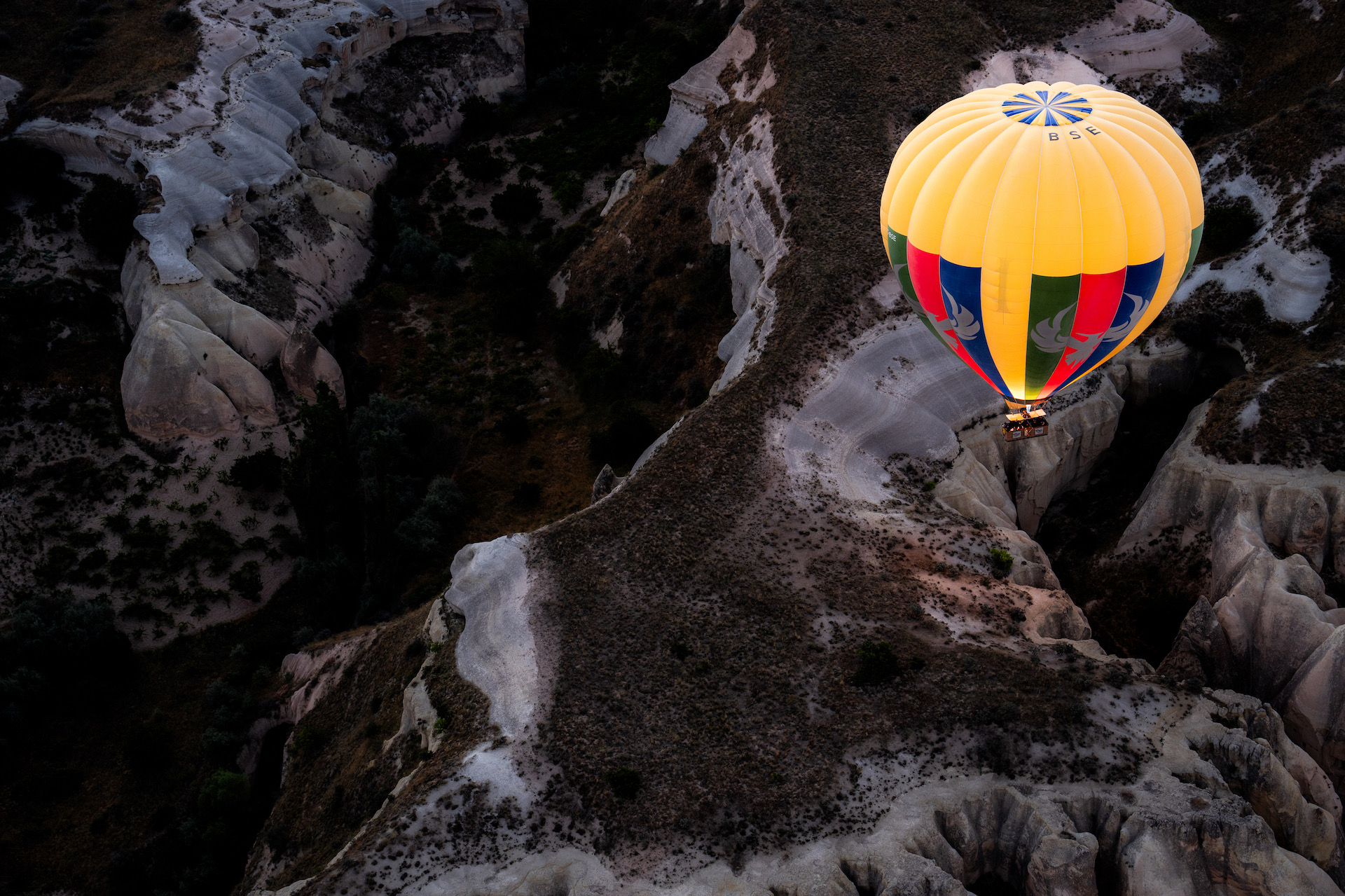
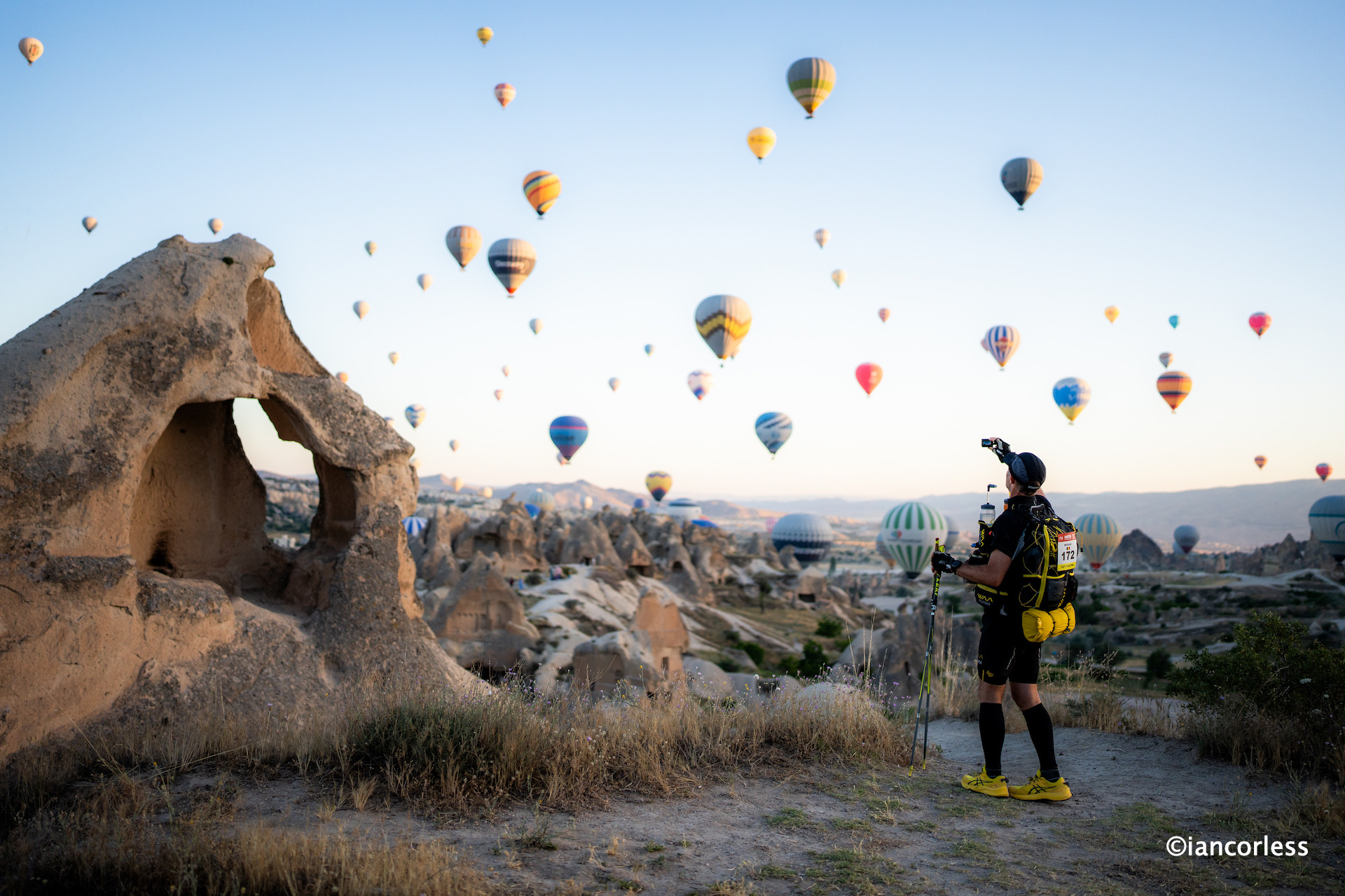
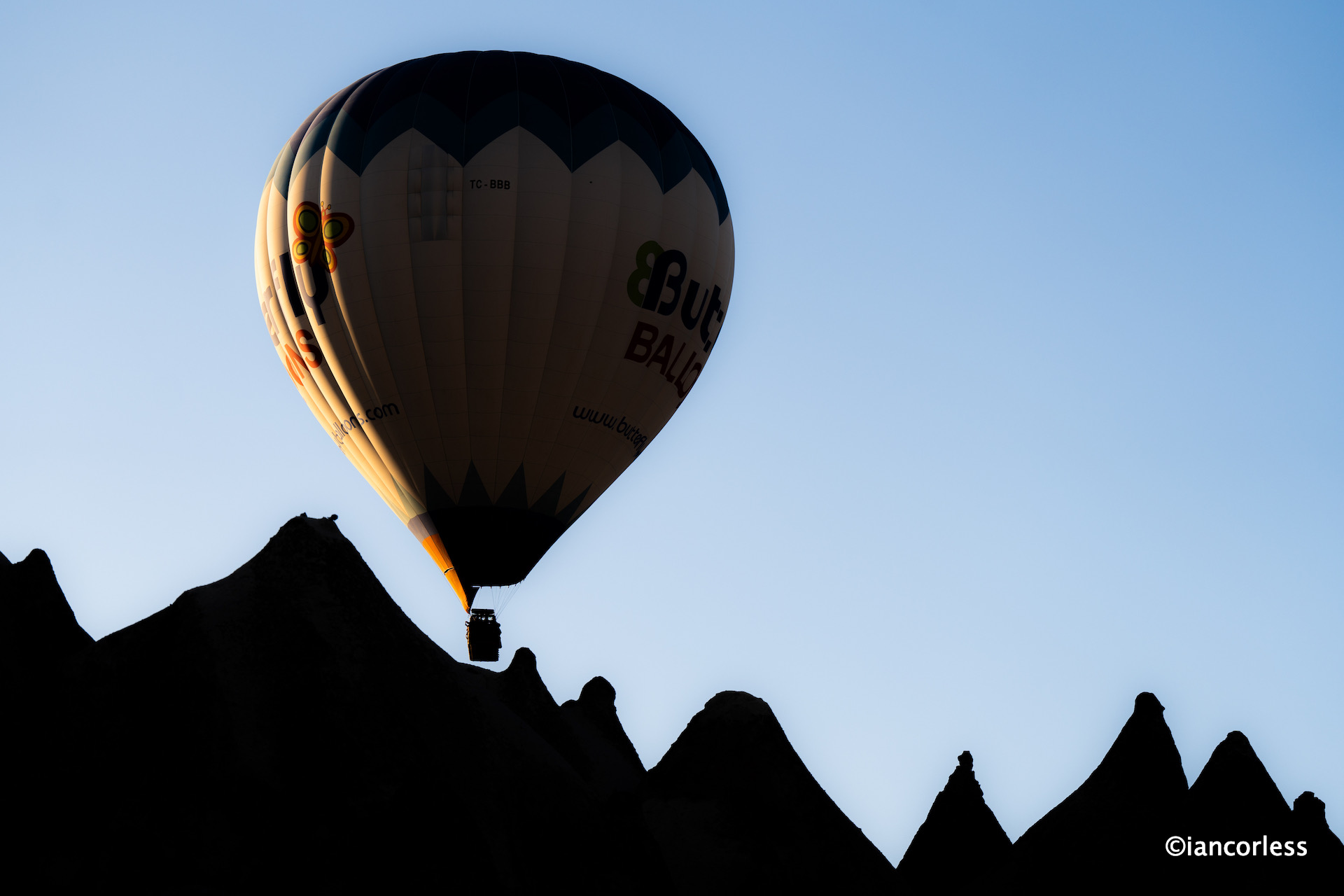
For many, the early morning sky filled with 100’s of balloons is one of those lifetime memory moments, to be given the option to fly, was a dream come true. From the airy heights, the full MDS Cappadocia route was able to be viewed providing a new perspective of the incredible journey that was only completed the day before.
Memory for a lifetime
And what a journey this MDS experience was.
As Cyril Gauthier mentioned in his opening briefing before the race, ‘Welcome to first edition of Marathon des Sables Cappadocia, but ironically, the sables element is missing here…’
Cyril before stage 1
It of course came as no surprise, however, Cappadocia is very much a desert-like landscape, correctly though, the element of soft sand and dunes is completely missing.
Unique and special
One may question, ‘Is this a bad thing?’ The simple answer here is no, each and every participant could not speak highly enough about this unique MDS experience and actually, many were very vocal and happy that MDS Cappadocia was a very new and different.
OVERVIEW
MDS Cappadocia is a 7-day experience following the same format of other MDS events that have gone before, Fuerteventura, Jordan and so on as perfect examples.
MDS team meet and greet before transfer to hotel
Day 1 – Runner’s are required to travel to Kayseri airport and arrive on a certain day so that they are able to take a transfer, provided by the organisation to the race hotel. At the hotel, technical checks and admin take place. In the evening dinner is provided.
admin and technical checks
Day 2 – Runner’s depart the hotel via transfer to the start. Now self-sufficiency begins and stage 1 starts. Runner’s run/walk 25km to the bivouac and conclusion of stage 1.
Stage 1
Day 3 – Stage 2 starts at bivouac and runner’s return to the bivouac choosing the option to run/ walk 20km, 40km or 60km.
Stage 2
Day 4 – A rest and recovery day.
Bivouac
Day 5 – Stage 3 26km which concludes in the Love Valley. A short transfer to the race hotel is provide. The evening is free.
Stage 3
Day 6* – A relaxing day at the hotel or sightseeing followed by awards, gala dinner and party.
The balloon flight
Day 7 – Onward travel.
*Runner’s were surprised with a hot air balloon flight, this required a 04:00 departure from the hotel to experience the magic of Cappadocia from the sky. They returned between 0700-0800 for breakfast.
THE RACE
Travel, admin and the race hotel was slick providing a relatively easy and relaxed start to the MDS Cappadocia experience.
Stage 1 had a bus departure of 0800, race briefing at 0900 and race start of 0930. I think everyone welcomed a relaxed start, however, the challenge of stage 1 was very real.
There are several key factors that must be considered for MDS Cappadocia.
It was hot
The heat for the duration of the race week was very high, temperatures were consistently between 33 to 36-degrees with a ‘feel’ on the skin of high 40’s. It was hot!
The Göreme Valley where much of the race takes place has an altitude of 1100m. This of course is not high altitude, but, the impact on breathing and physical effort was significant.
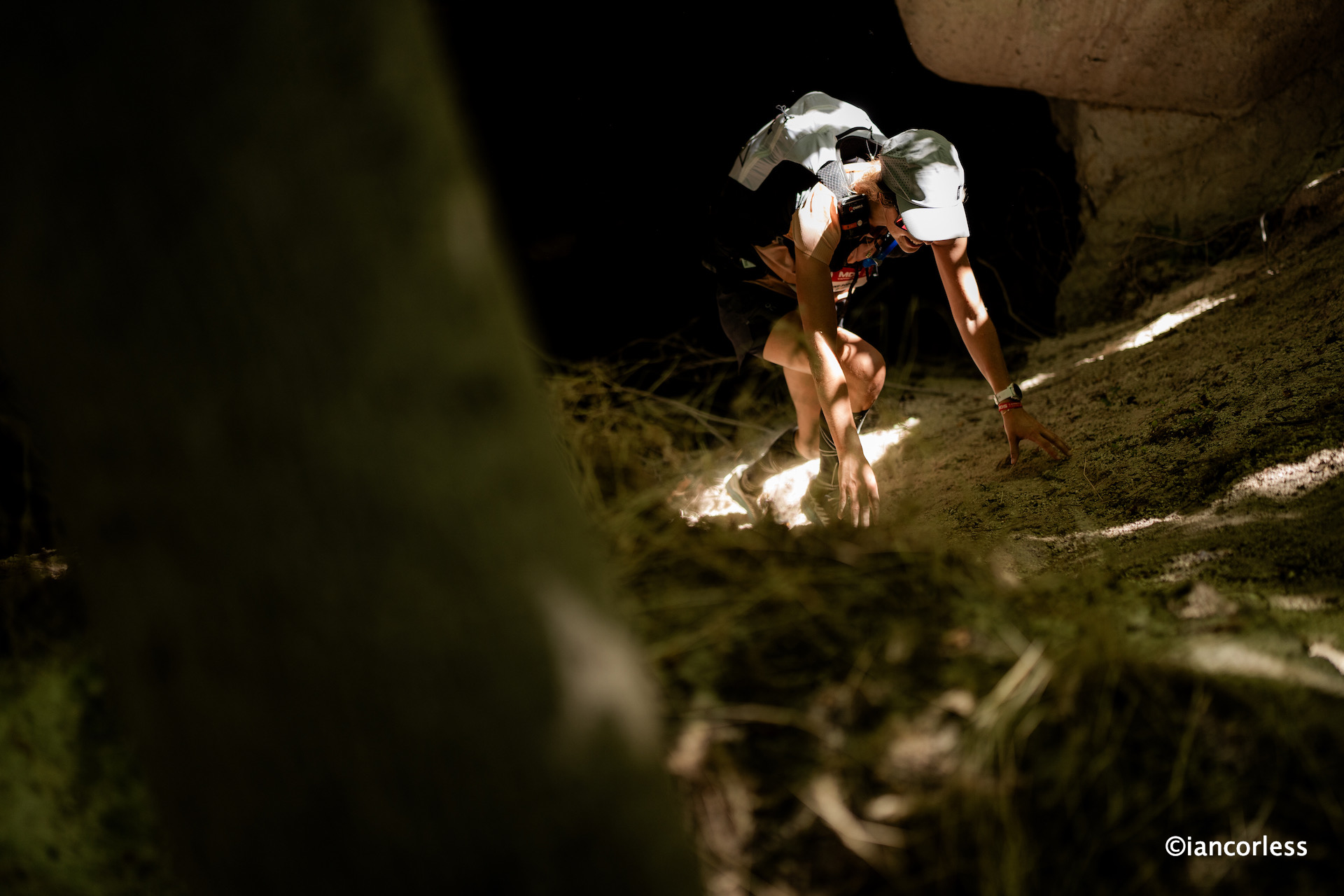
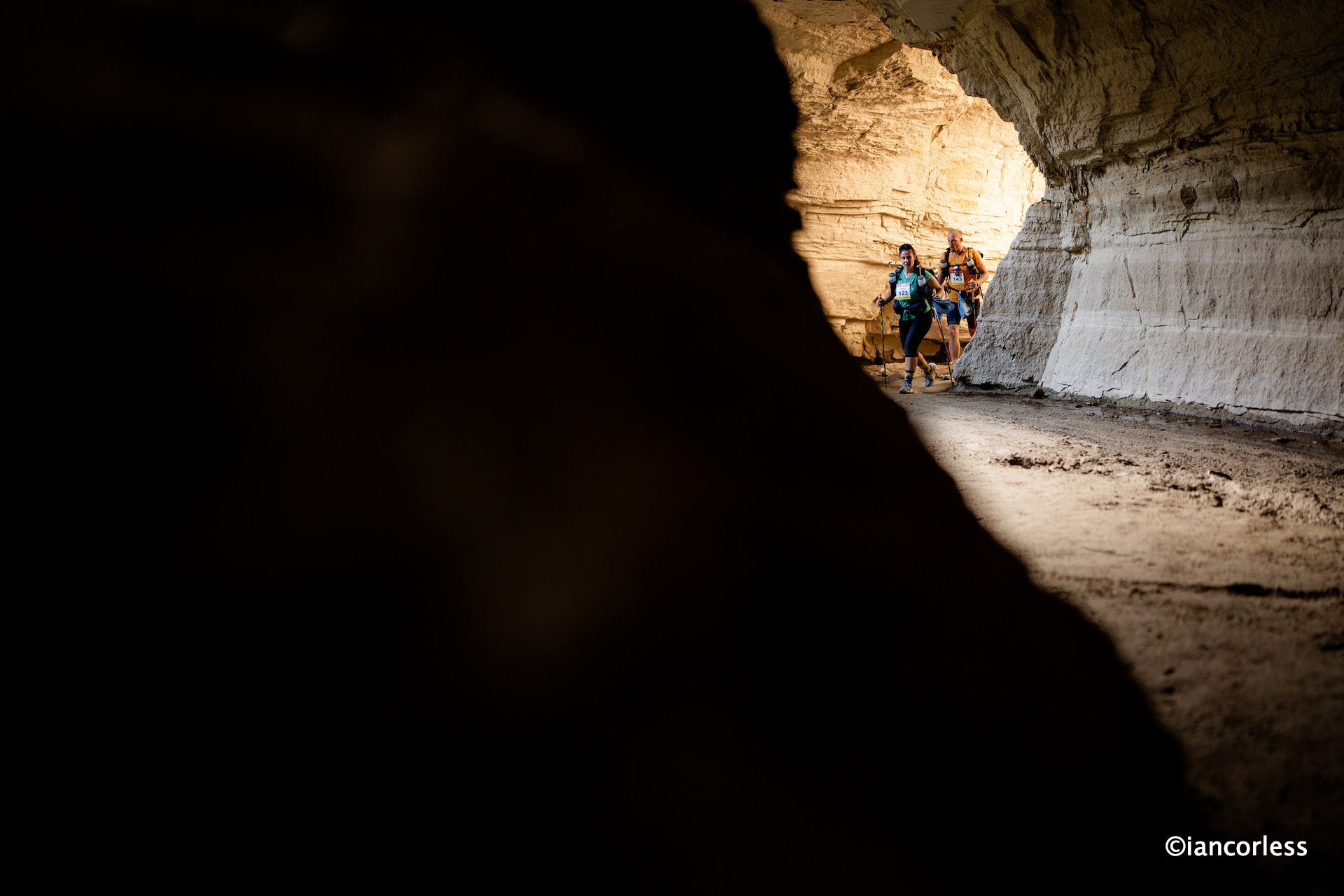
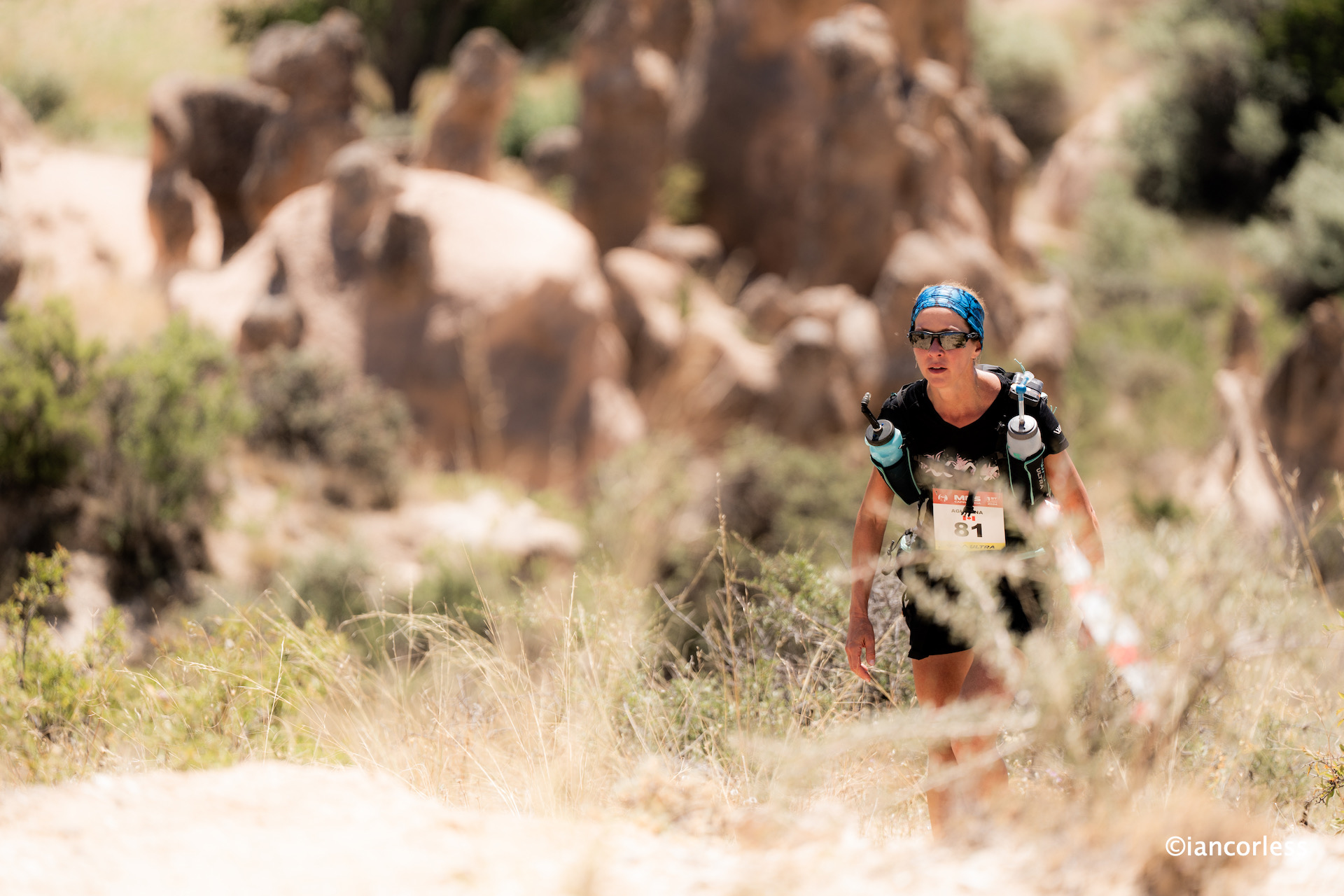
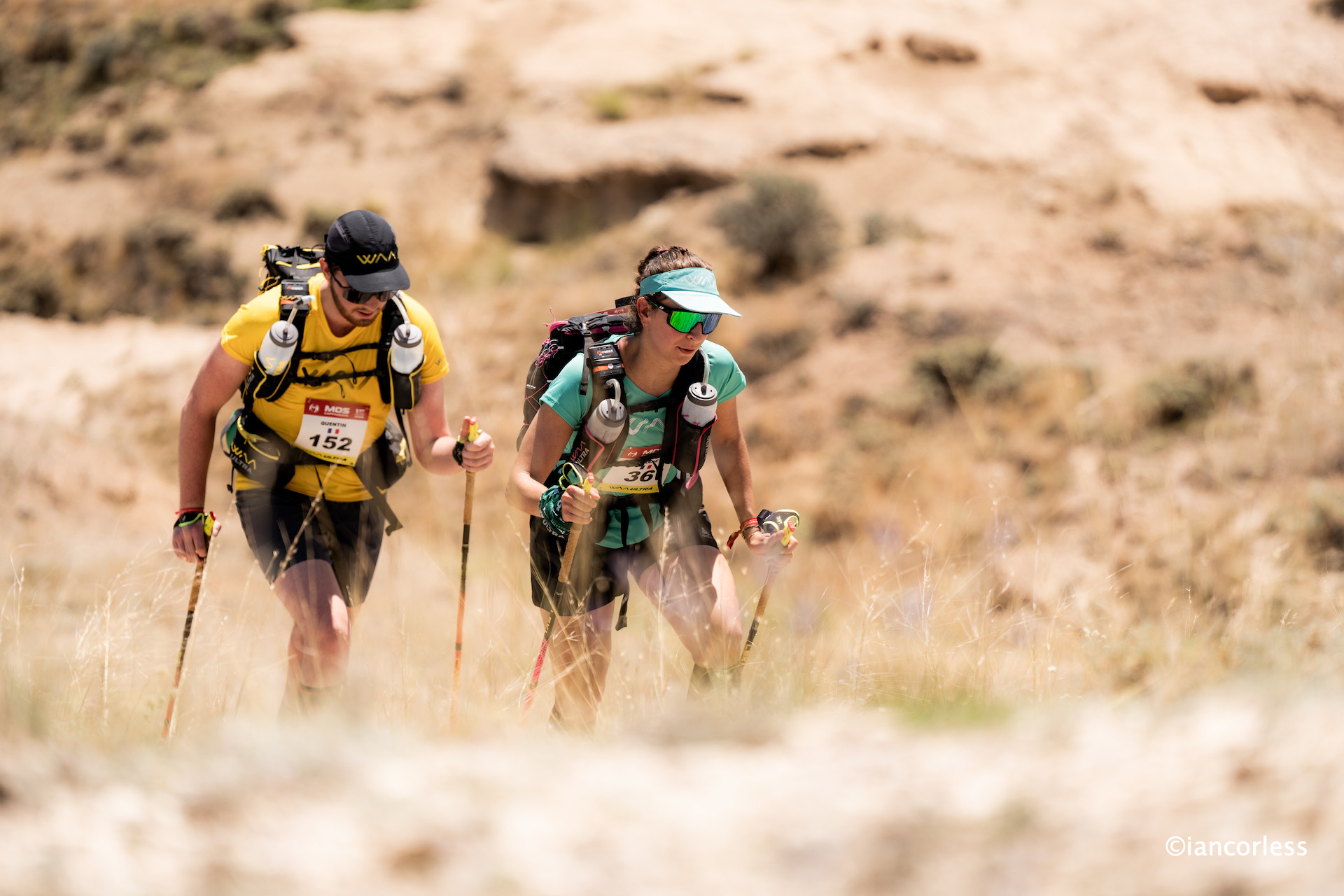
The route is considerably more challenging than other MDS events. Much of the route is single-track trails, mountain passes, gorges, tunnels, forest, technical trail, loose ground and it is undulating.
The vertical gain for each stage is significant, for the 72km it is 1767m, for the 91km it is 2243m and for the 111km it is 2576m.
Unique terrain
The combination of elements above made MDS Cappadocia, km for km, more challenging and difficult than any other MDS race, The Legendary included. If MDS Cappadocia was an equivalent 250km distance of The Legendary, it would be a very hard race.
This is no ordinary race.
After stage 1, it was very clear to the organisation that start times were needed to be adjusted to allow for cooler temperatures. Stage 2 moved from a 0600 start to 0500, and stage 3 was moved from a 0700 start to a 0500 start. This quite simply was an excellent decision and it is fair to assume that future MDS Cappadocia will have earlier start times, especially on stage 1.
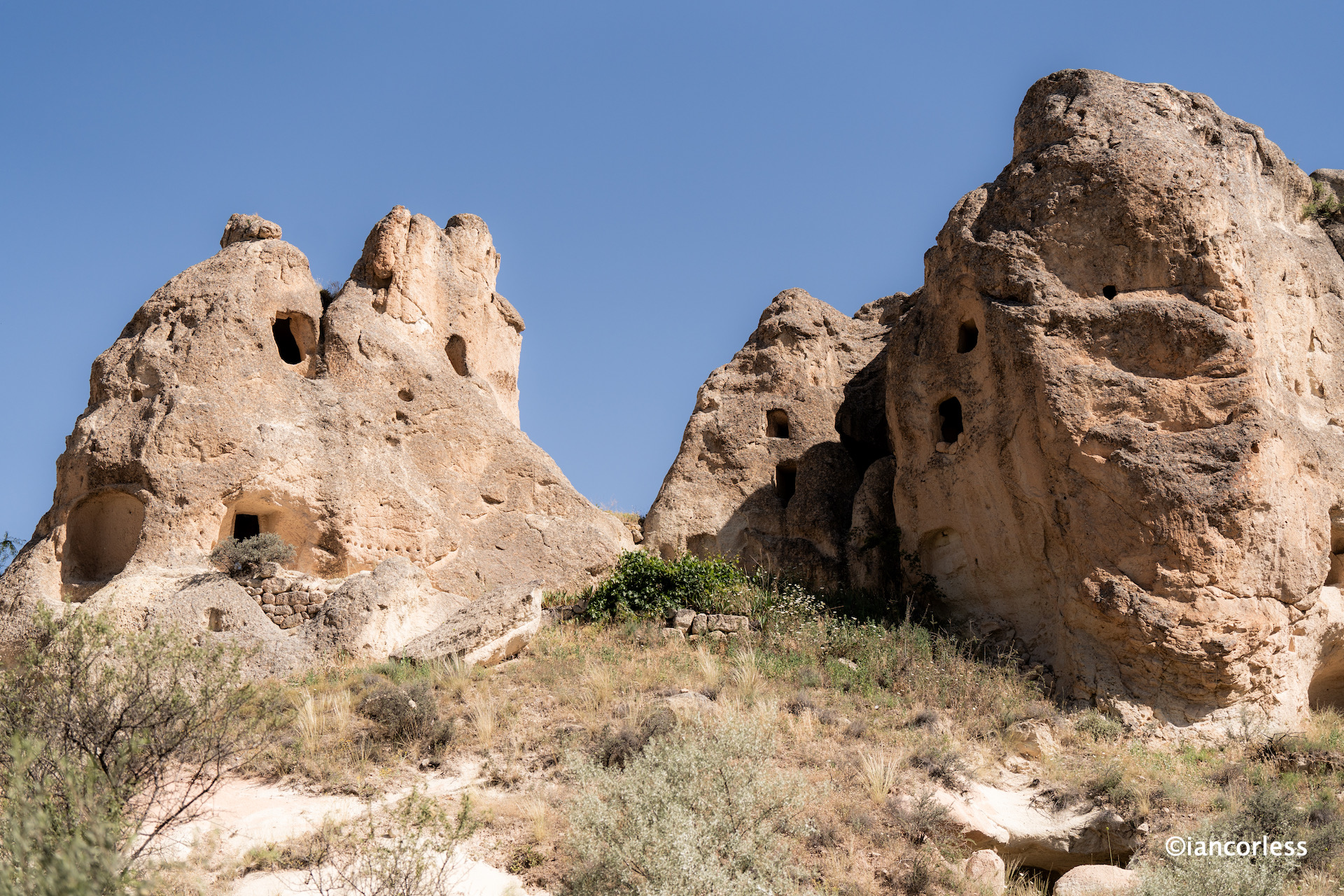
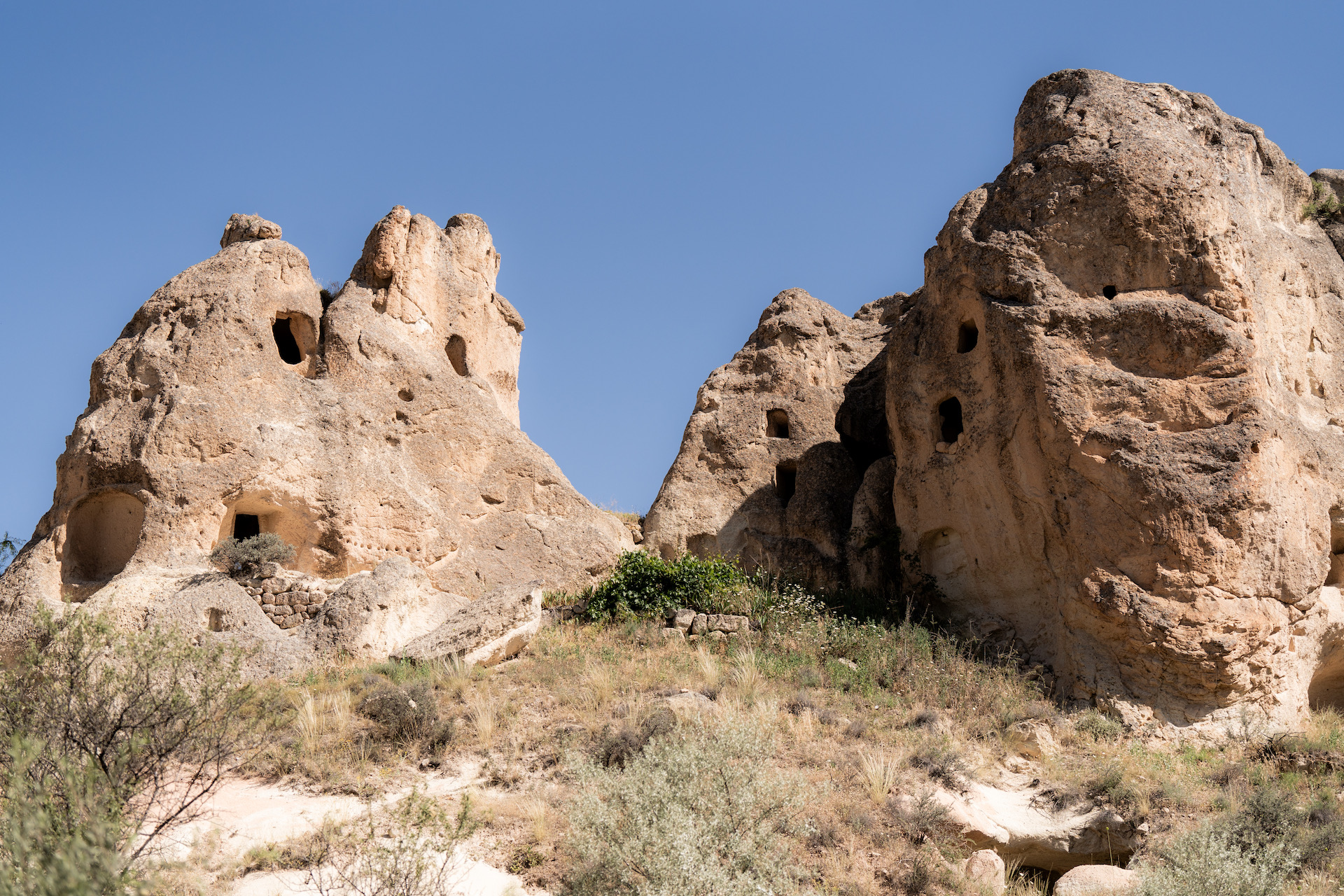
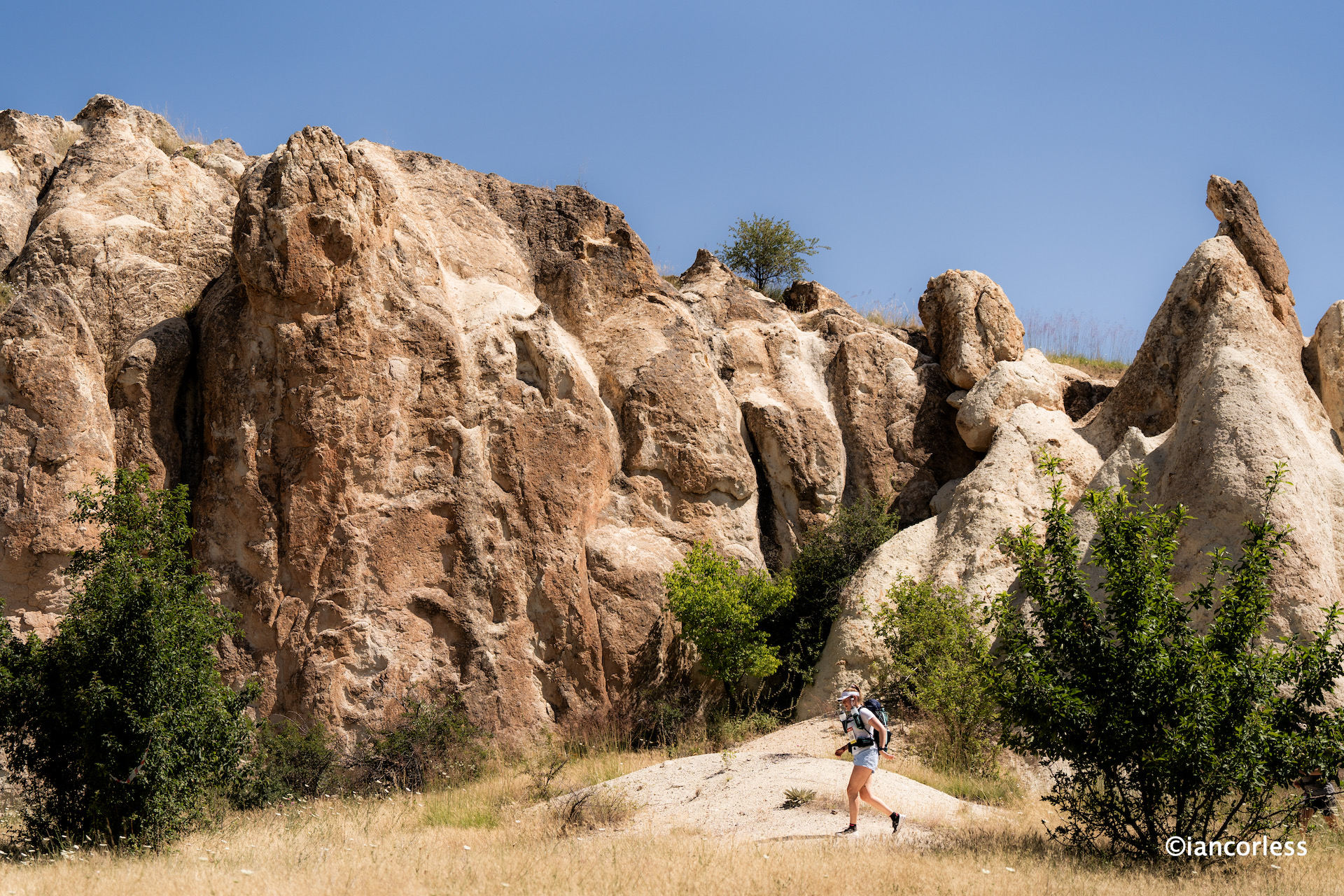
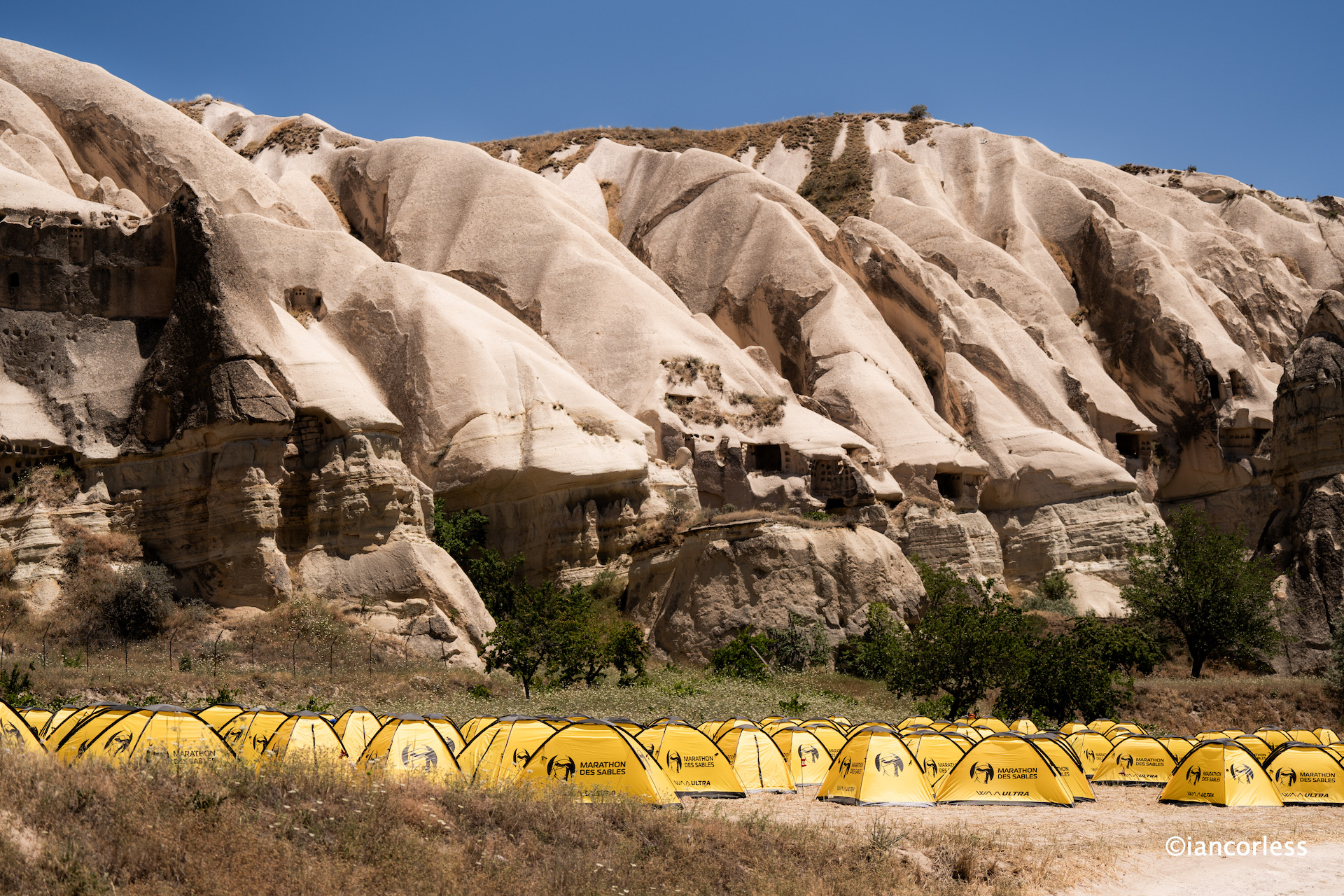
Bivouac was in a stunning location surrounded by iconic Cappadocia landscape such as fairy towers and Troglodyte caves. A very special place.
Camp life
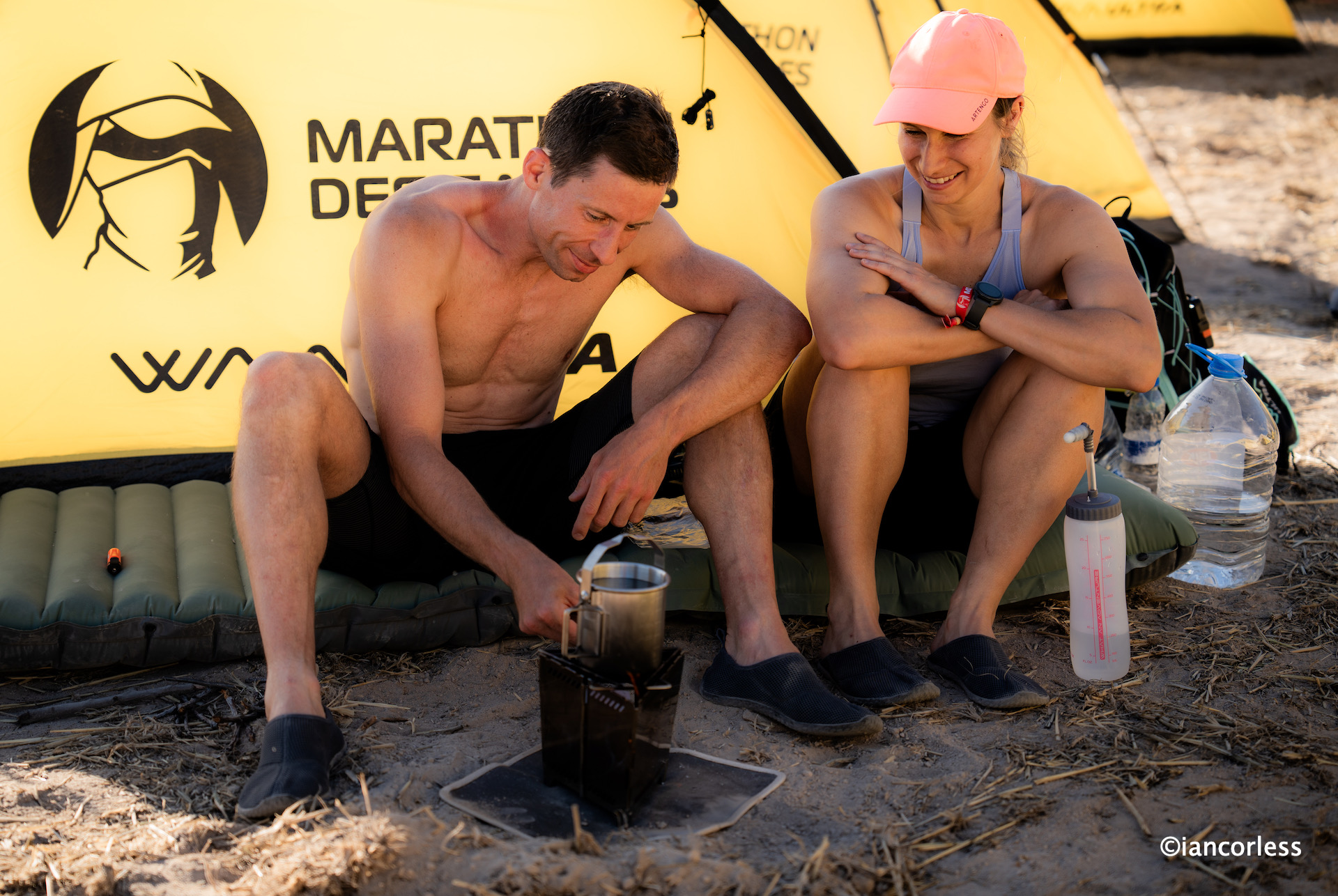
Participants sleep in individual MDS tents in cells of 6. There is a communal shaded area with matts so that everyone can relax post-race.
Camp life is like all other MDS events, The Legendary excluded, as here the bivouac tents hold 8-people. Priority is to relax, hydrate, eat and sleep. It’s a simple life. Participants are self-sufficient and therefore they must have all they need for the duration of the event. The exception is water, at the end of each stage, participants are provided a 5L bottle of water which must last to CP1 the next day (rest day excluded.)
In camp, there is medical/ foot care to ensure competitor safety.
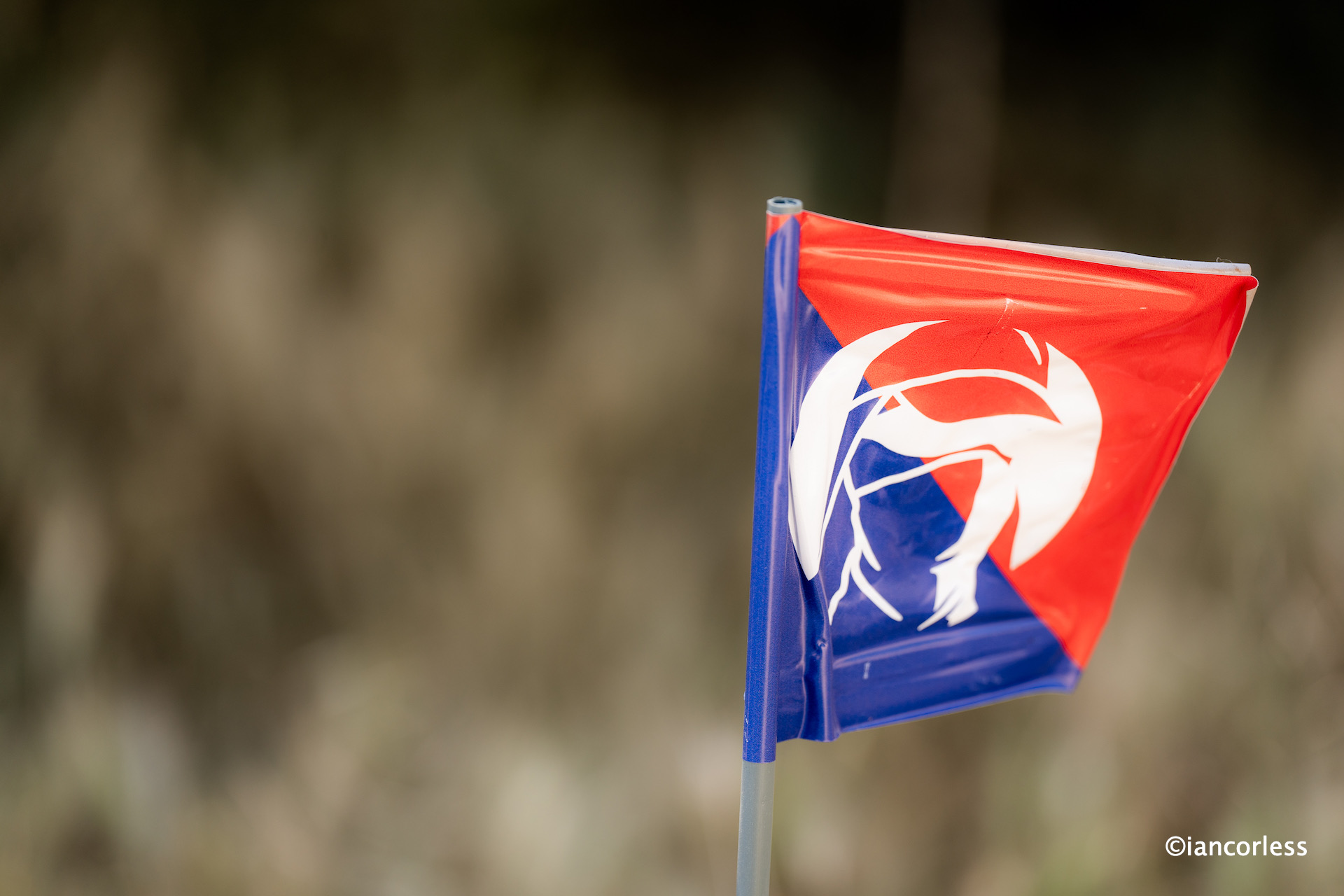
Flag markers
The race route is considerably more complex than other MDS events and as such, route marking is crucial. Marking consisted of red/ white tape and flags, and the route was very well marked. However, I do feel that the provision of GPX files would be a great addition.
Aid stations with medical teams
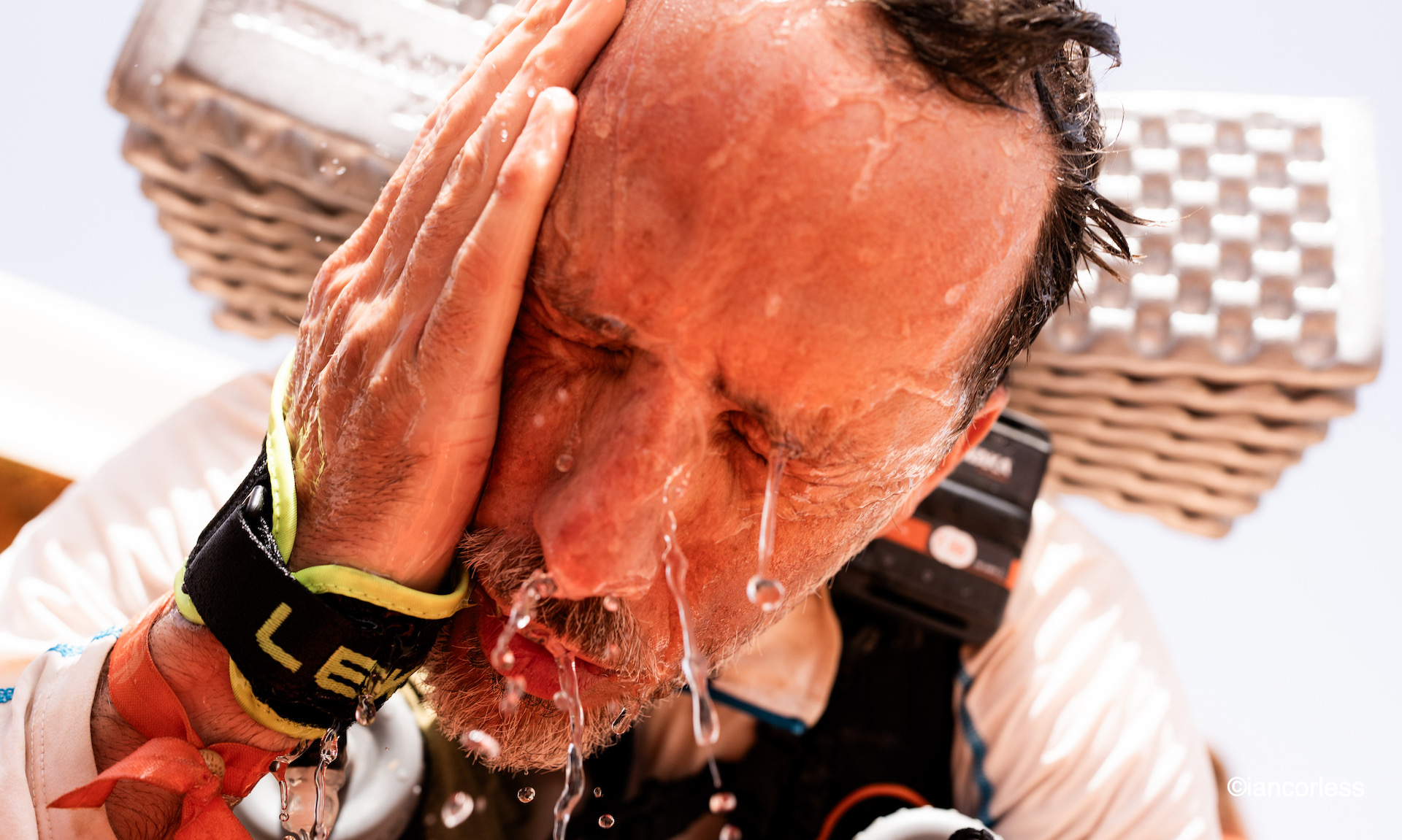
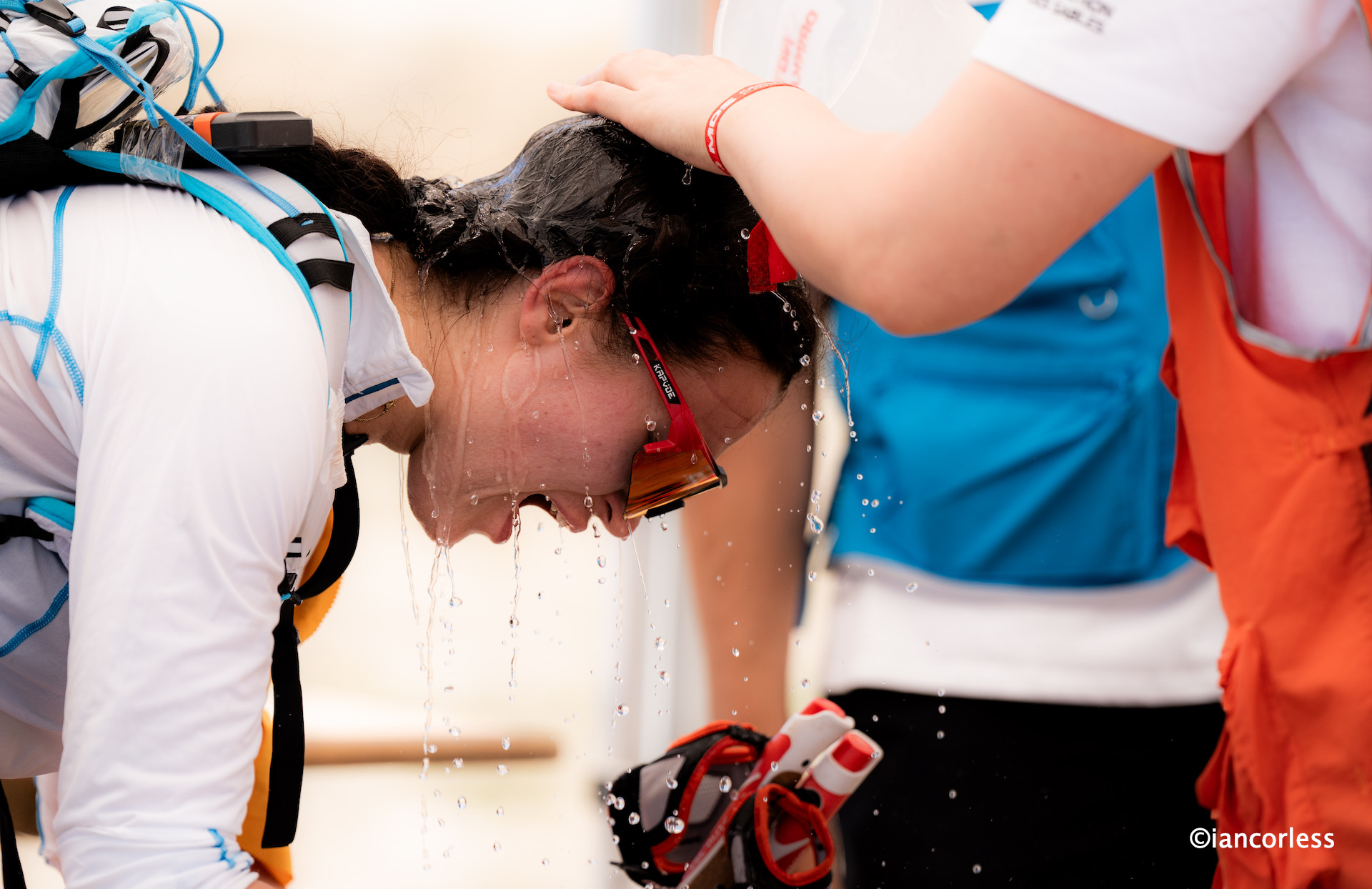
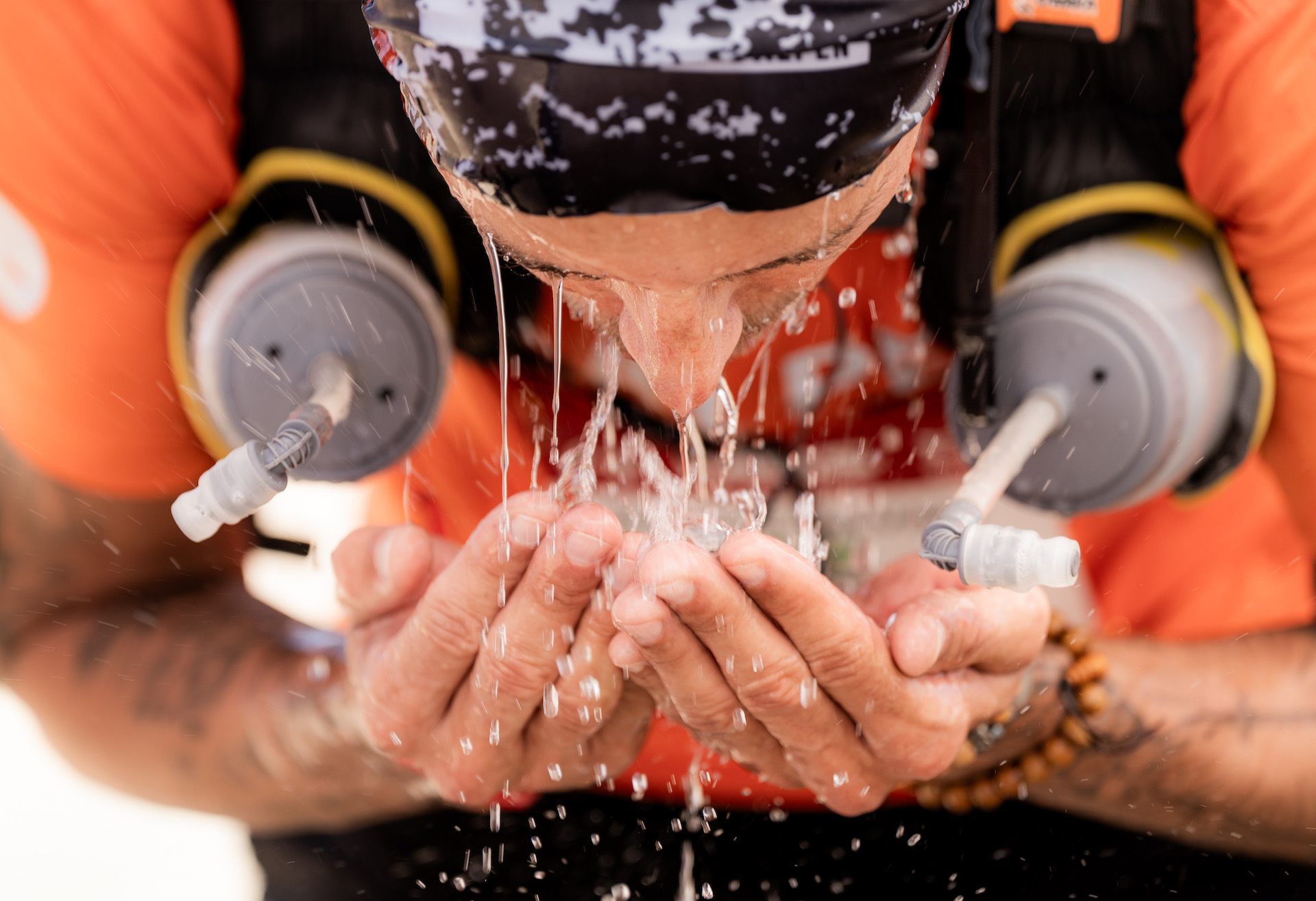
Aid stations were superb offering a shaded area, an abundance of water and importantly, iced water which the medical team pour on heads and necks to enable cooling. Medical provision is at each CP. For stage 1 there was two CP, stage 2 depending on the chosen distance had up to five CP’s and stage 3 had two CP. If required, the organisation added impromptu water stations to ensure competitor safety.
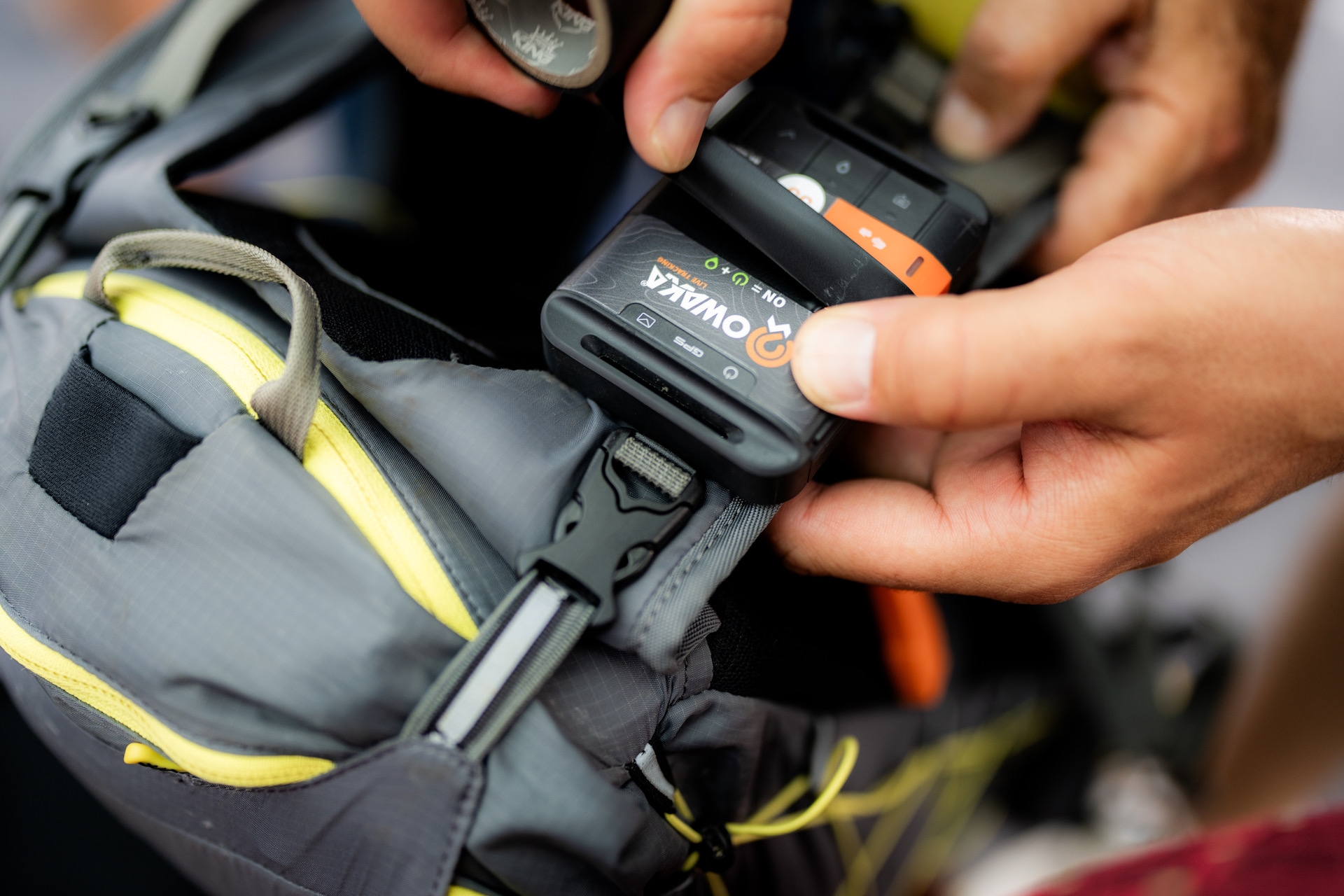
A tracker for each participant
Competitors each have a tracker so they they can be monitored and in addition, there is a SOS button in the event of an emergency.
All about the finish
The event has cut-off times, however, the goal of MDS events is that each participant finishes, therefore, the organisation do all they can to facilitate runner’s crossing the line. Should someone DNF, they are given a free entry for the following year!
THE ROUTE
Troglodyte homes
MDS Cappadocia brings something very unique to the MDS line-up. This is not a desert race, it is much more a trail race.
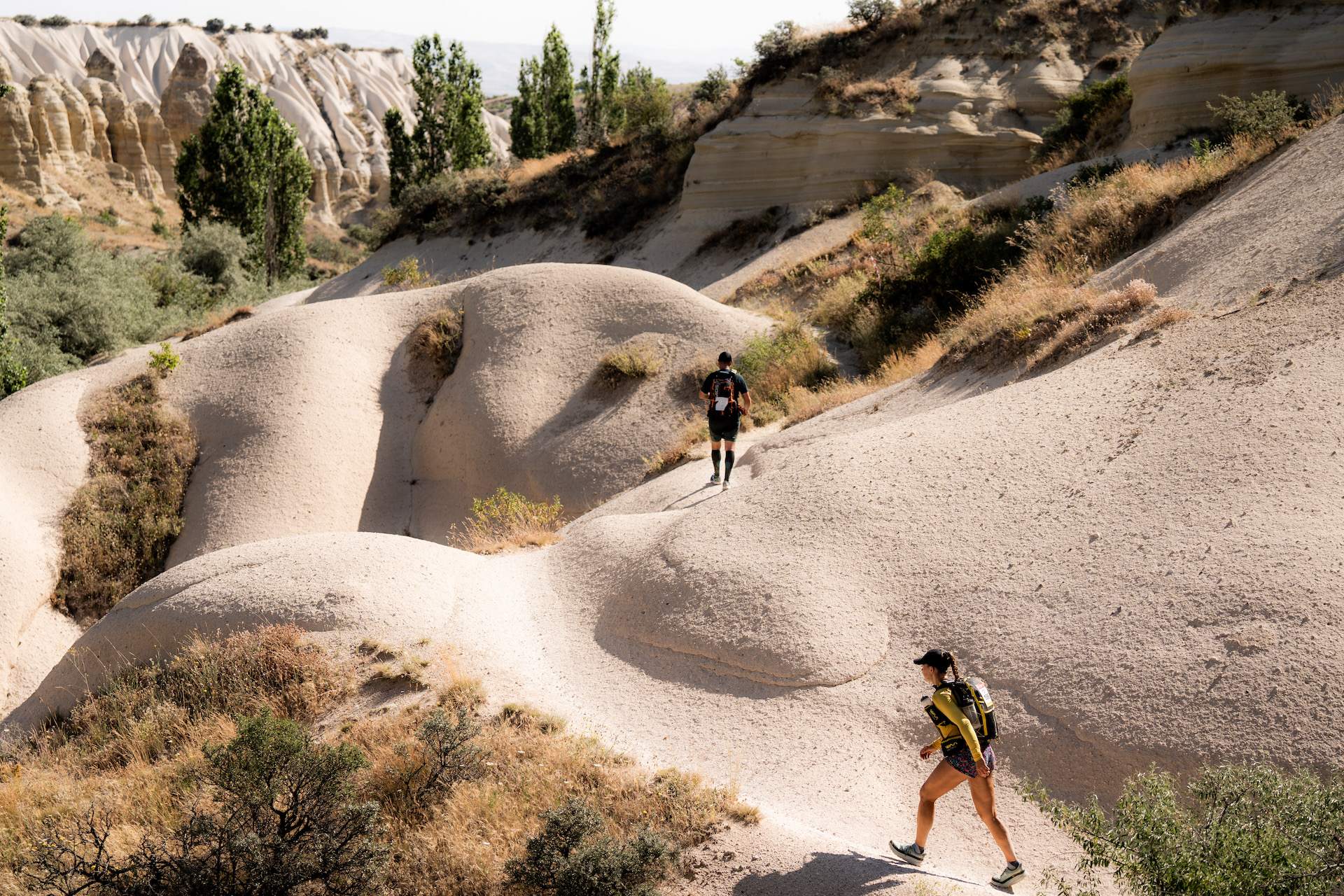
Underfoot, there are considerably more challenges with an ever changing terrain.
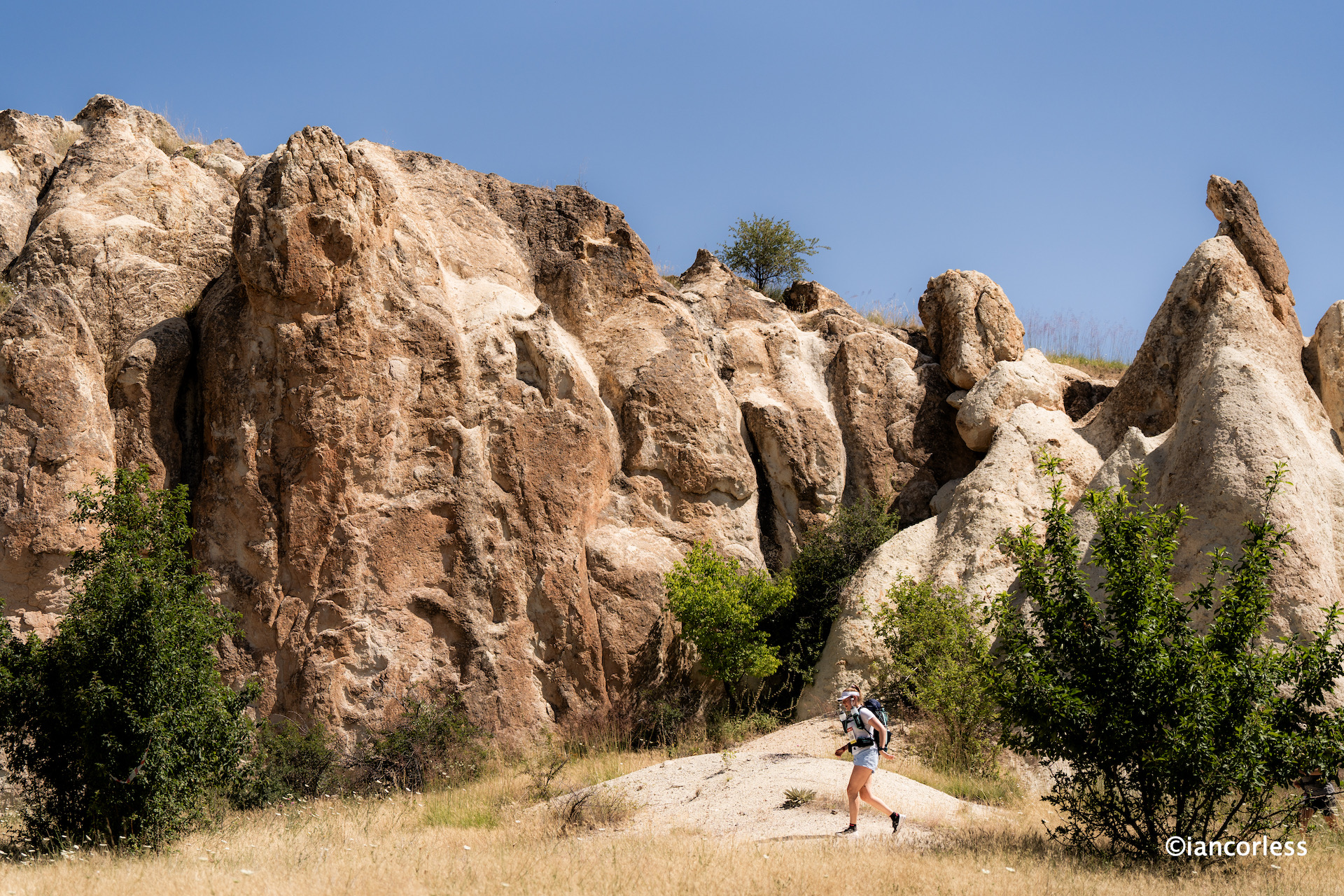
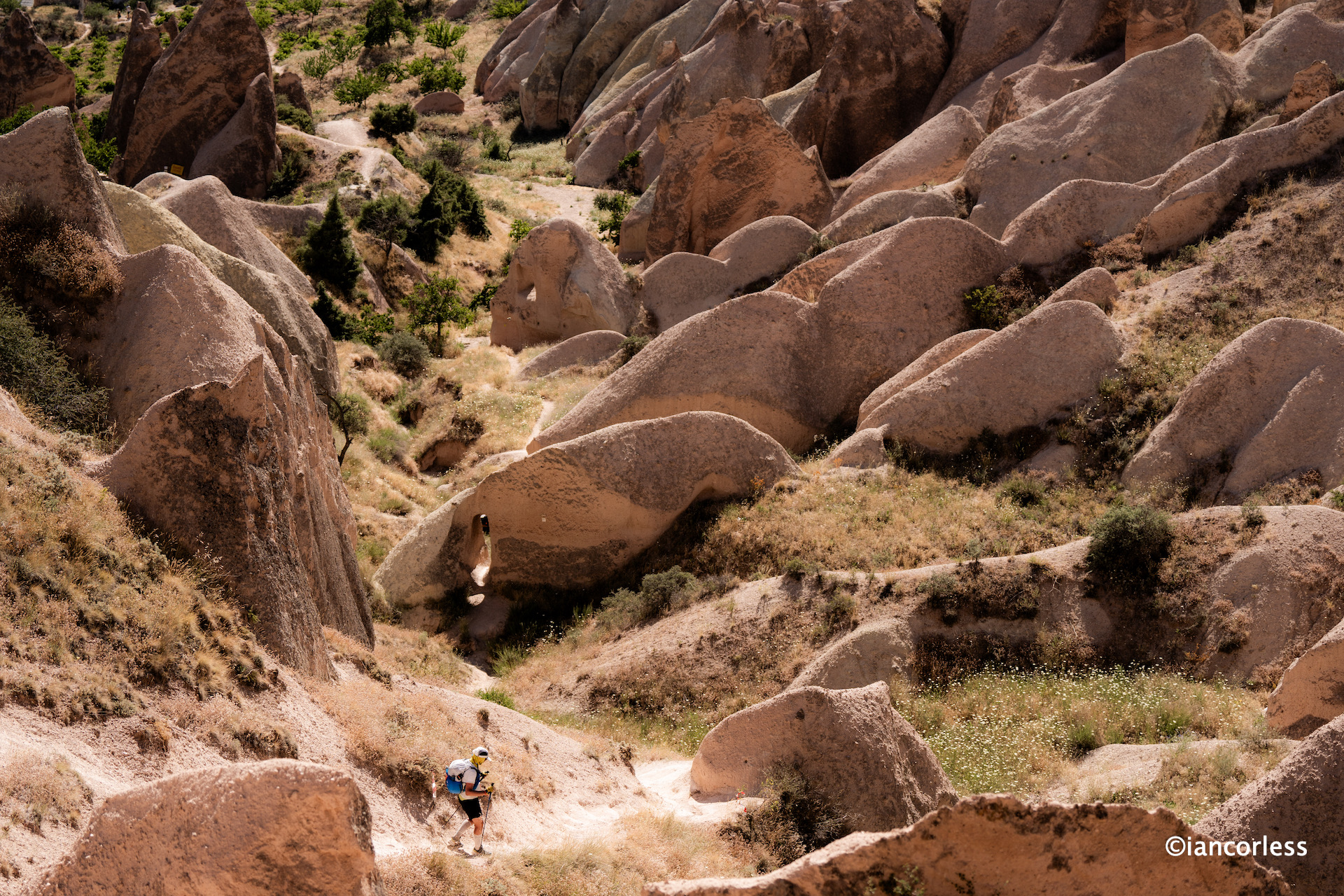
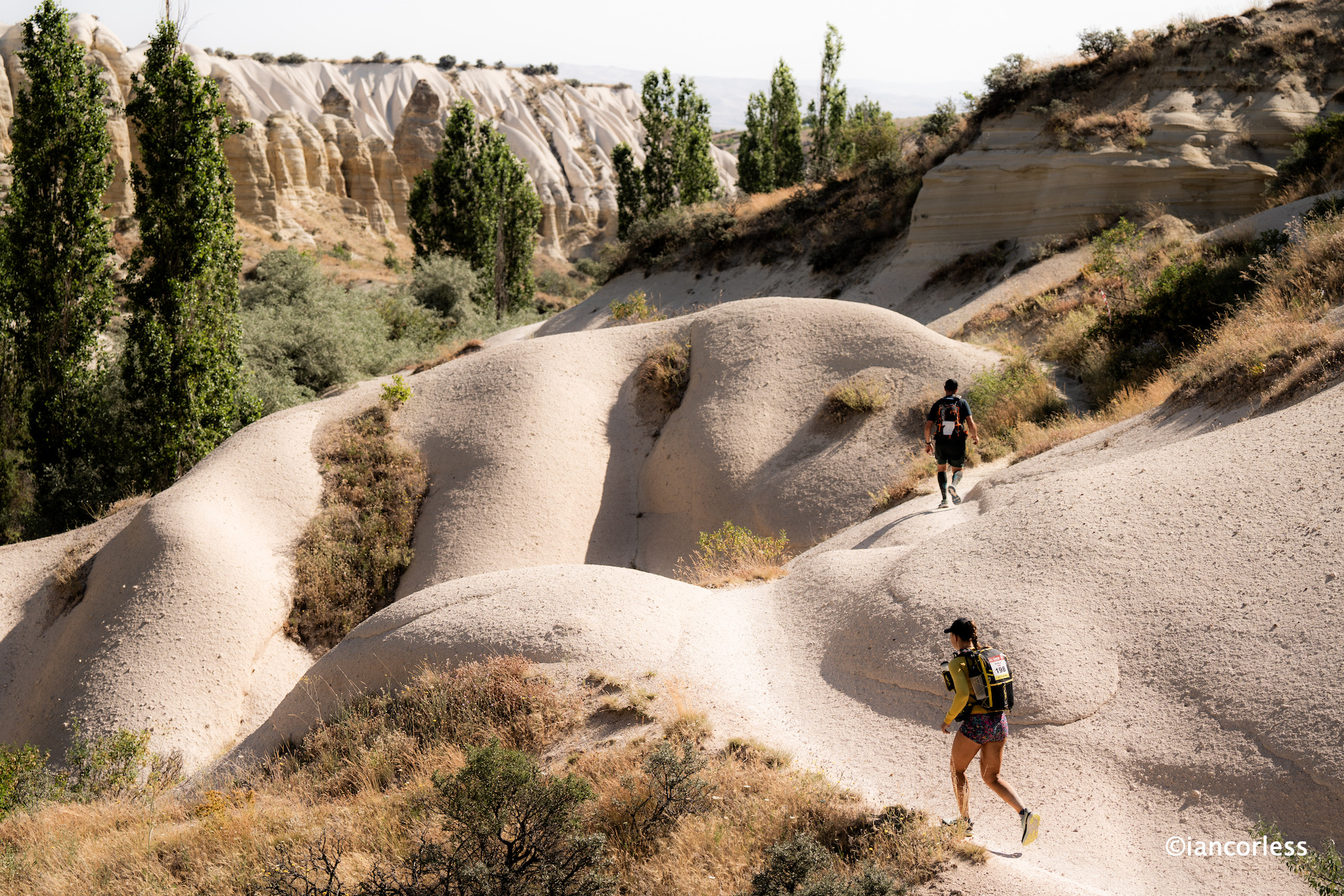
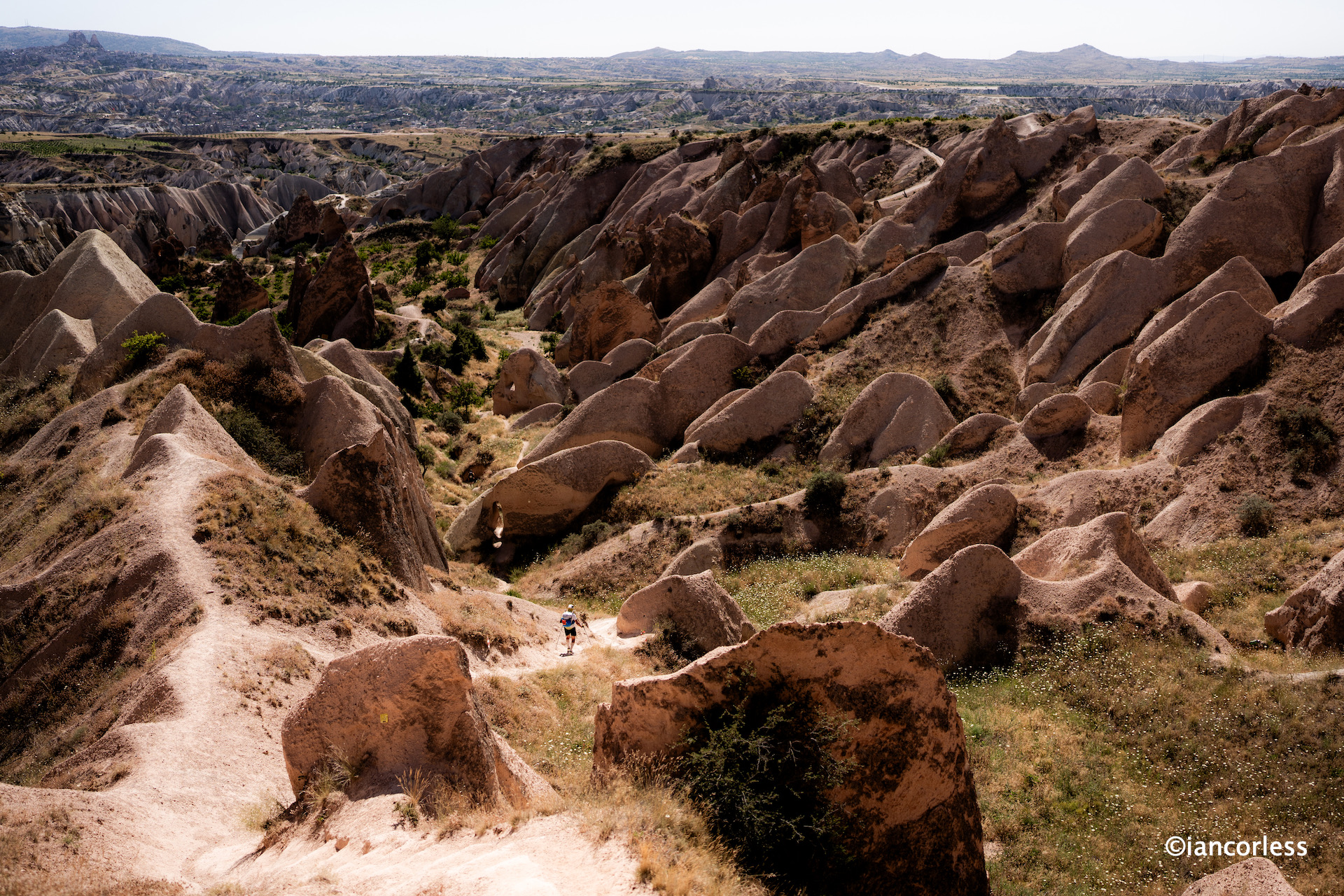
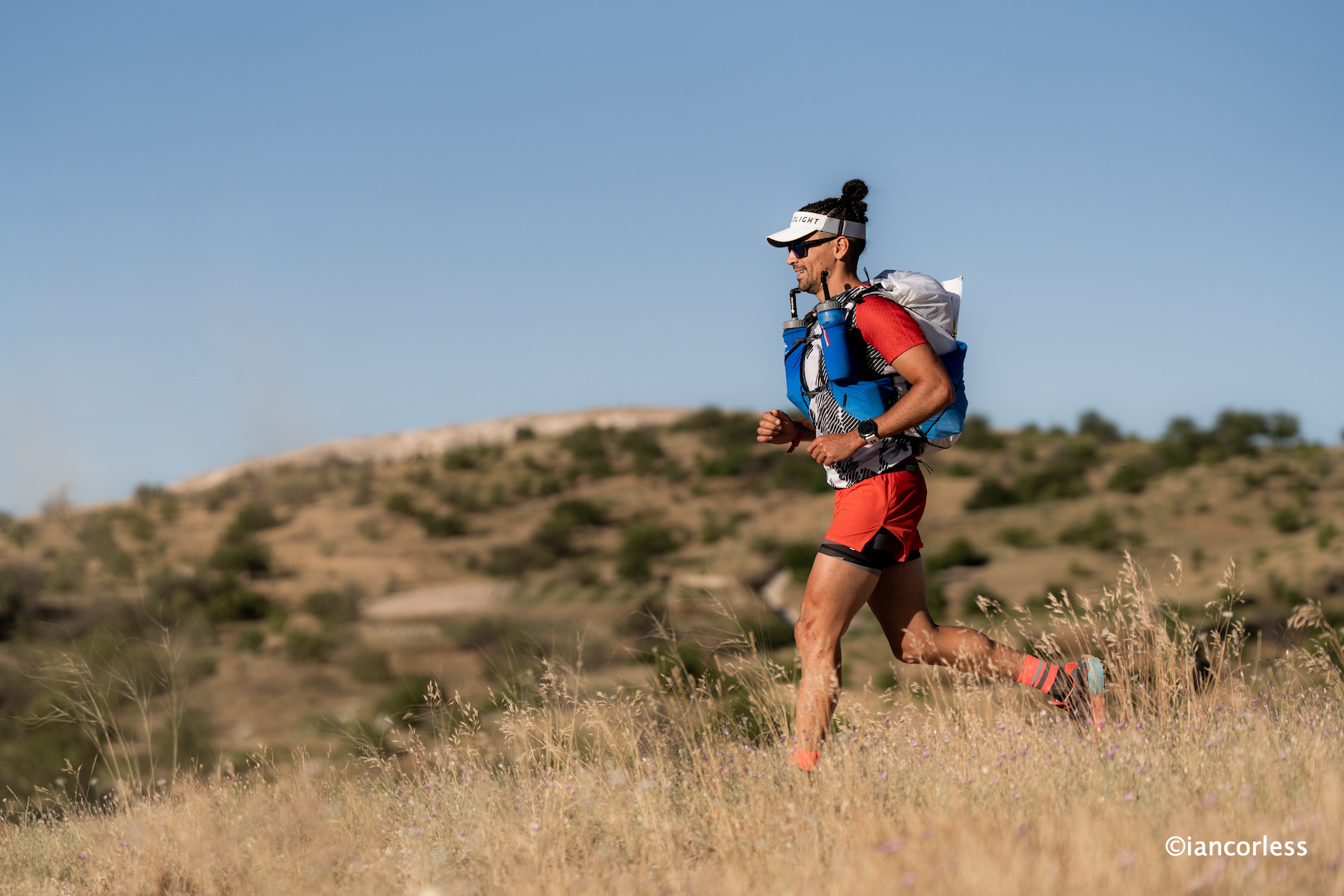
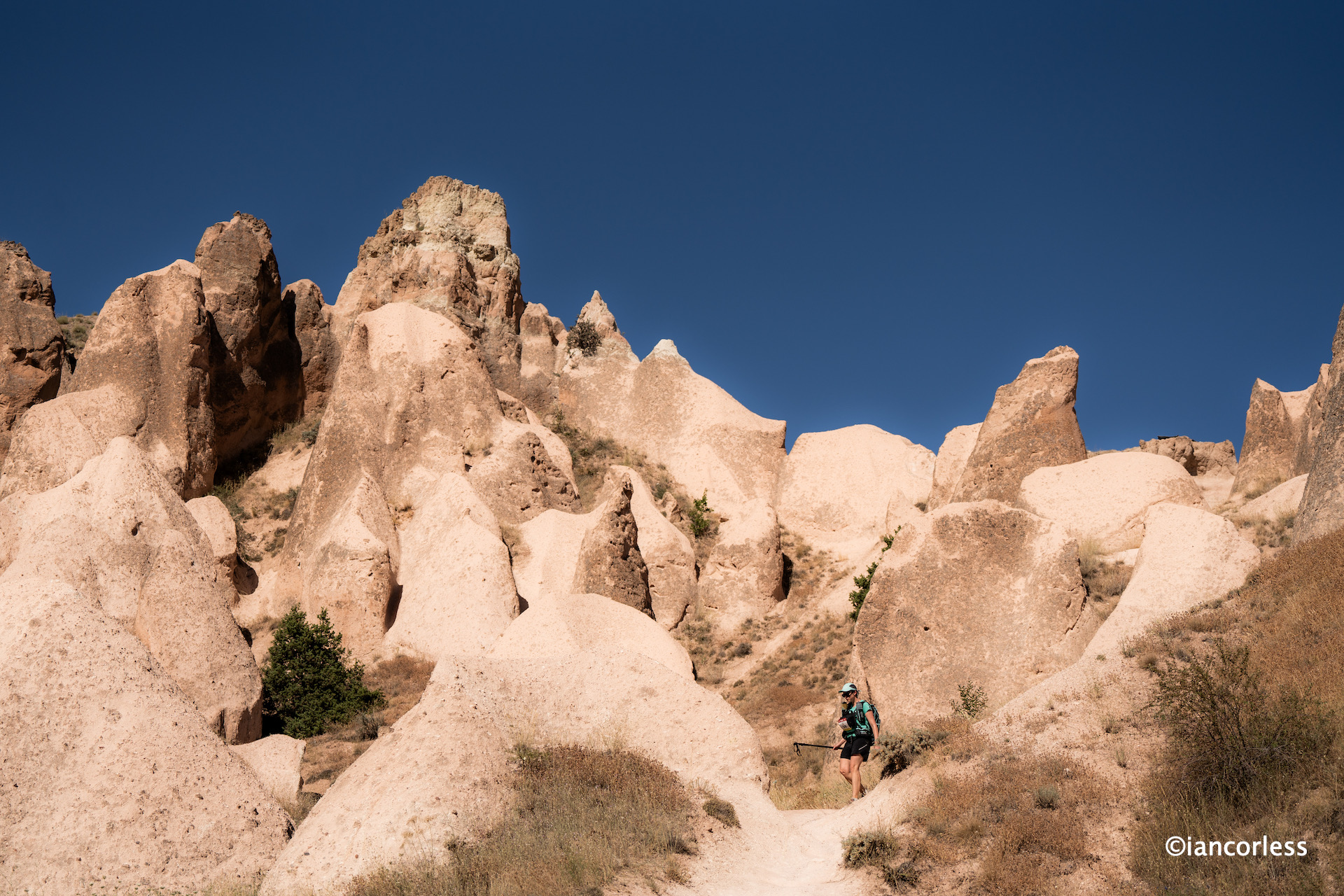
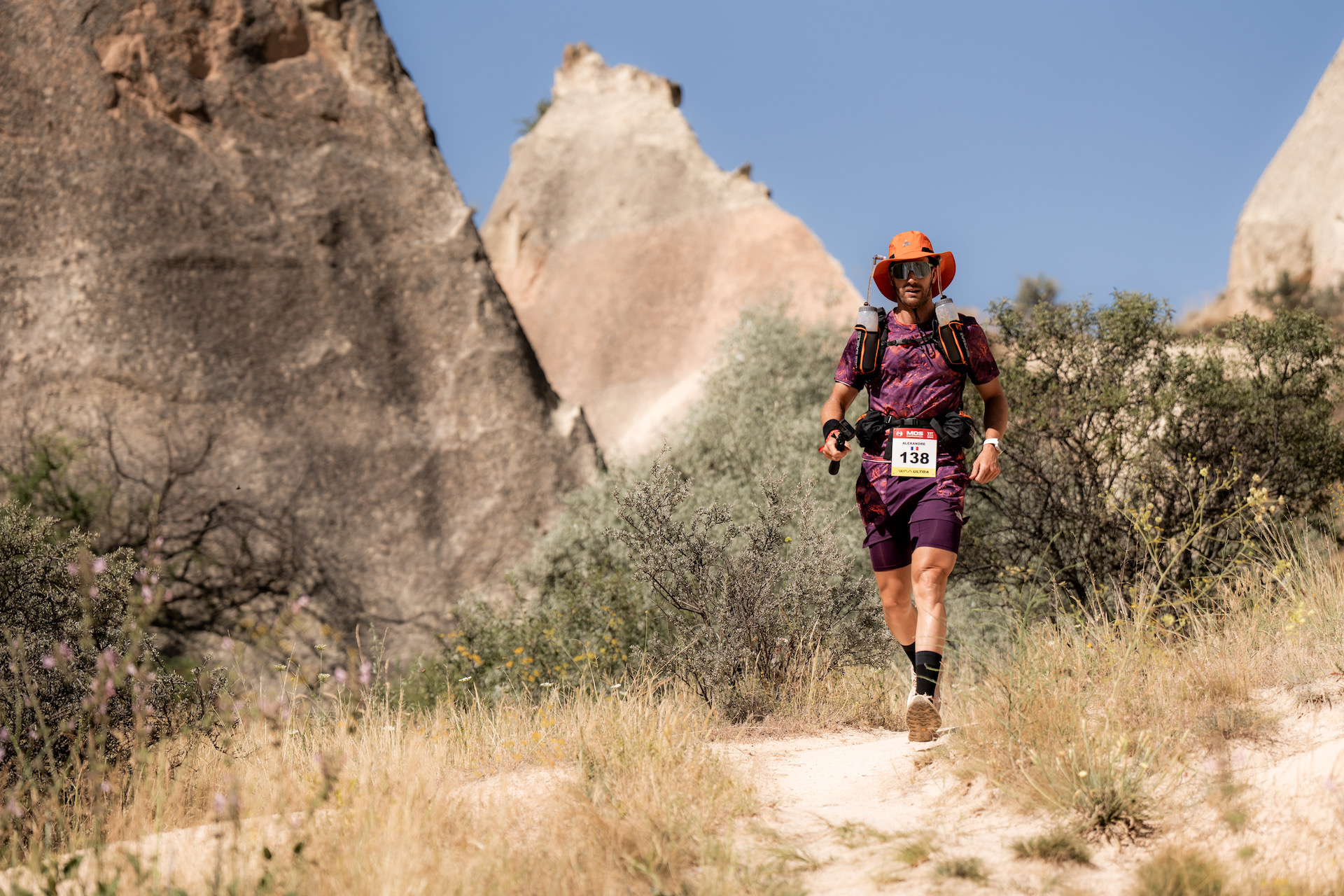
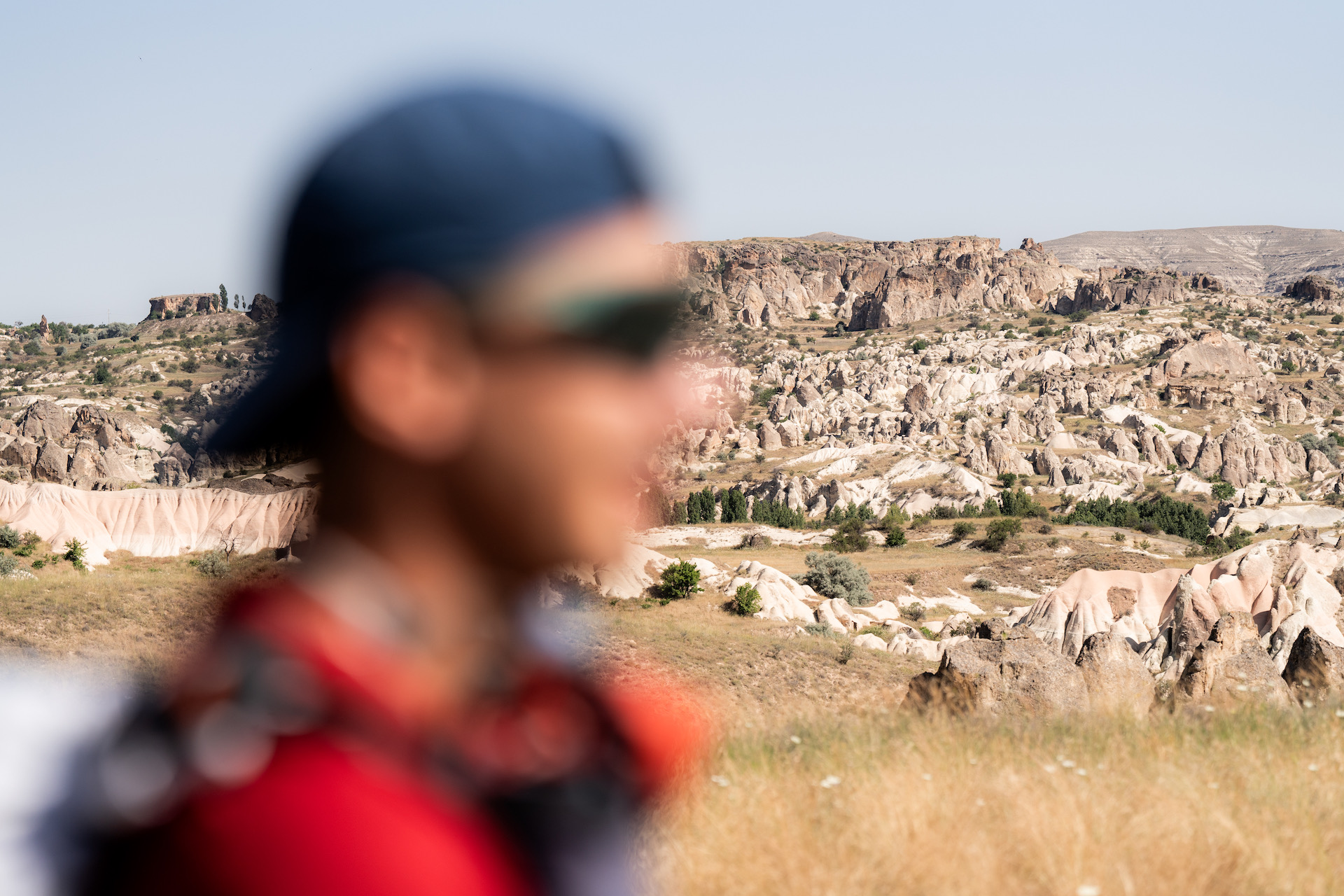
Just look at the photos, the route is a visual splendour of a very unique landscape. Taking in key areas of the Göreme Valley such as the Red Valley and Love Valley, the experience is special. A volcanic landscape, that has been shaped by wind, rain, lava, ice and erosion. Add the early morning spectacle of the hot air balloons and I firmly believe that Cappadocia needs to be experienced at least once. What better way to do this running or walking?
As mentioned above, the route is much more of a physical challenge, km for km, this is a harder race, however, as all the 2024 competitors confirmed, it is an achievable one… If it was easy, anyone could do it!
THE EXPERIENCE
Quite simply, the feedback from participants was a wow. From the moment stage 1 started, the visual splendour begins and that is consistent throughout the whole race experience.
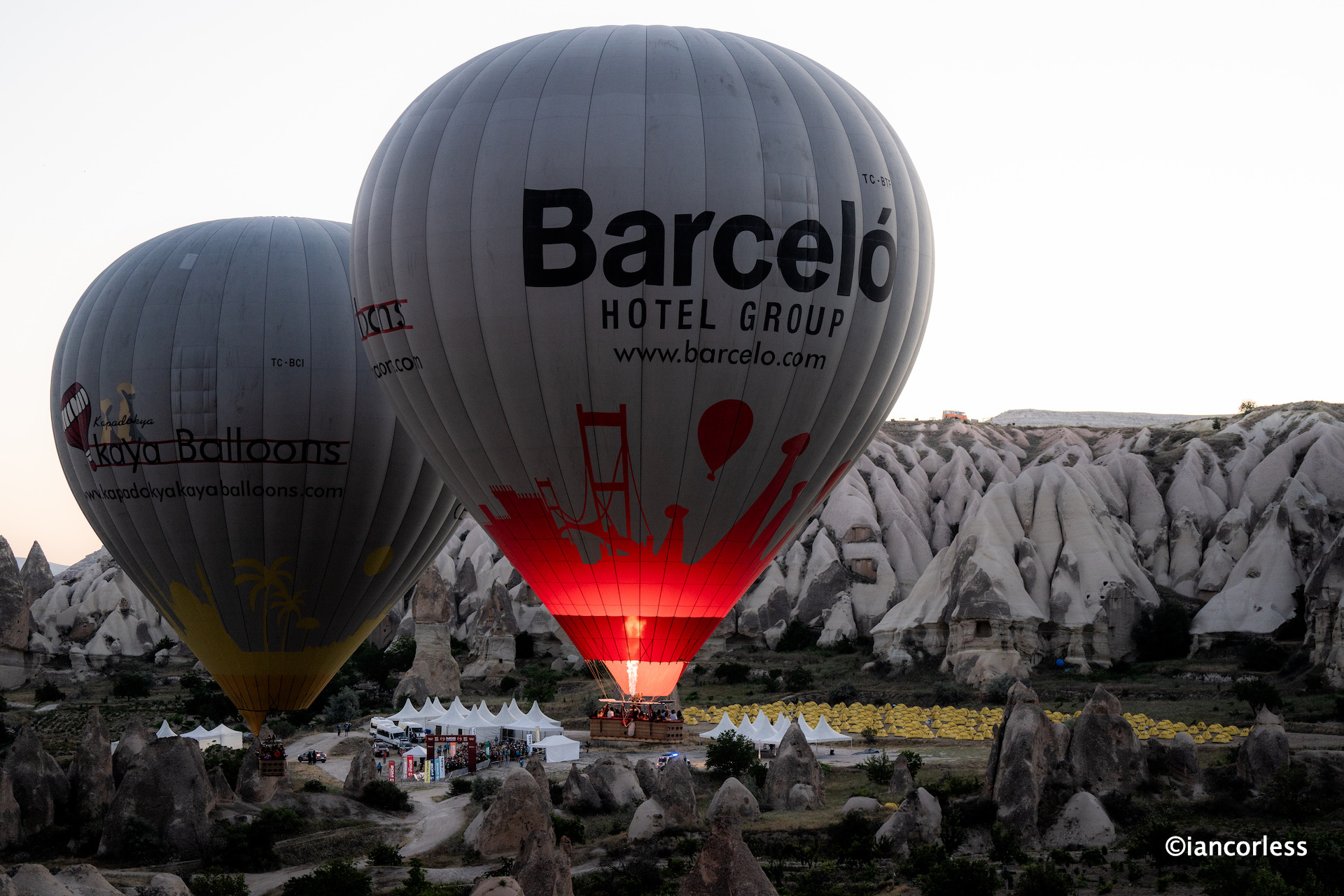
Balloons at bivouac
A highlight was the early start for stage 2 when the whole bivouac area was surrounded hot air balloons. I personally have experienced start lines all over the world and this was a highlight. It was completely mind-blowing and one that will last with everyone for their lifetime. It was a privilege and honour to experience it.
The last finisher emotions
The race was hard, especially with the intense heat. However, the MDS option to provide three distances for stage 2 is inspired and it gives everyone an opportunity to challenge themself in their own way.
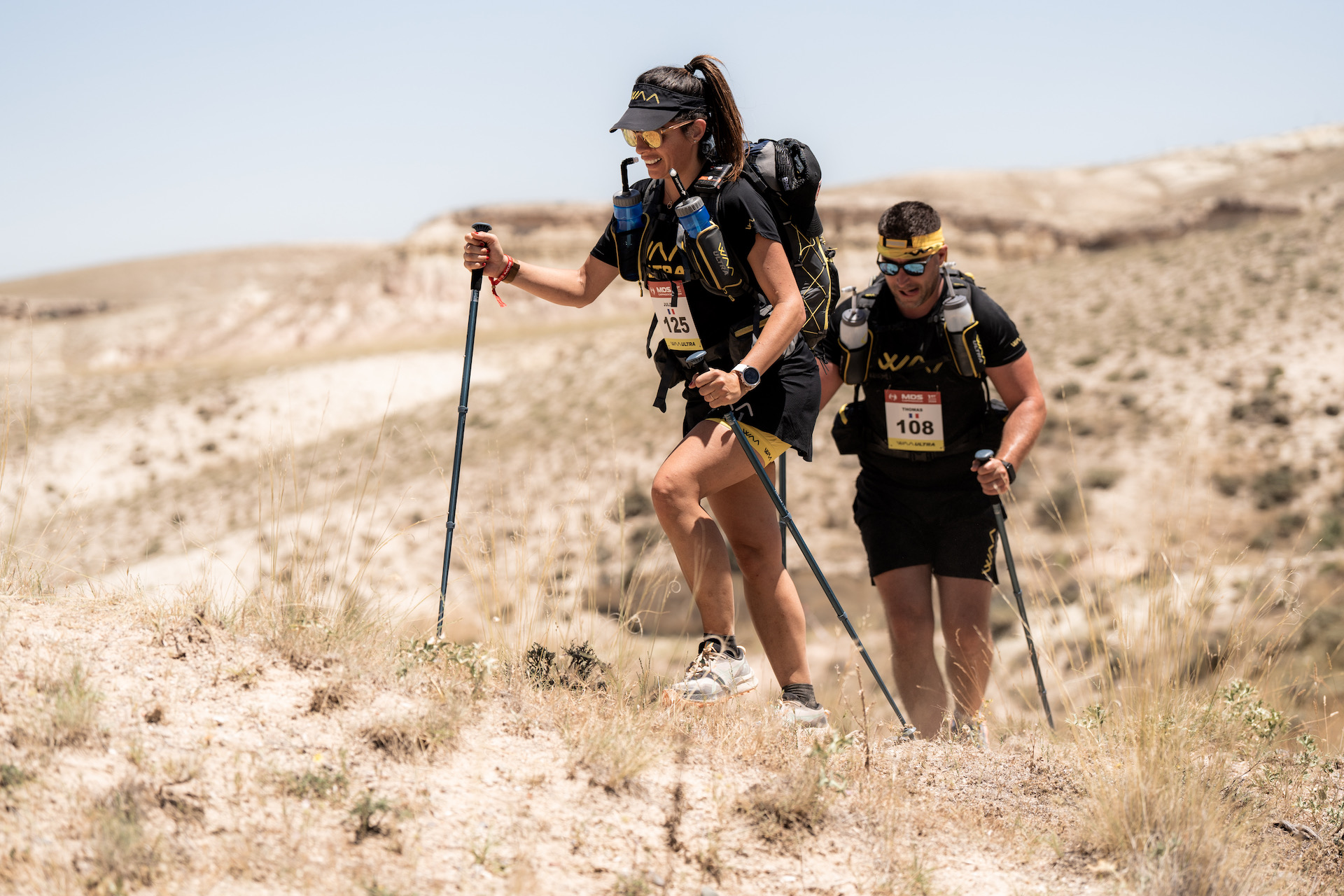
In terms of runner’s needs, this is just like any other MDS event, however, there are some key considerations: 1. You need good trail shoes with excellent grip and toe protection. 2. Sand gaiters are not required but small ankle gaiters are a good idea to stop stones etc entering the shoe at the ankle. 3. Poles (and knowing how to use them) are a very good idea for the majority of the participants.
Teamwork
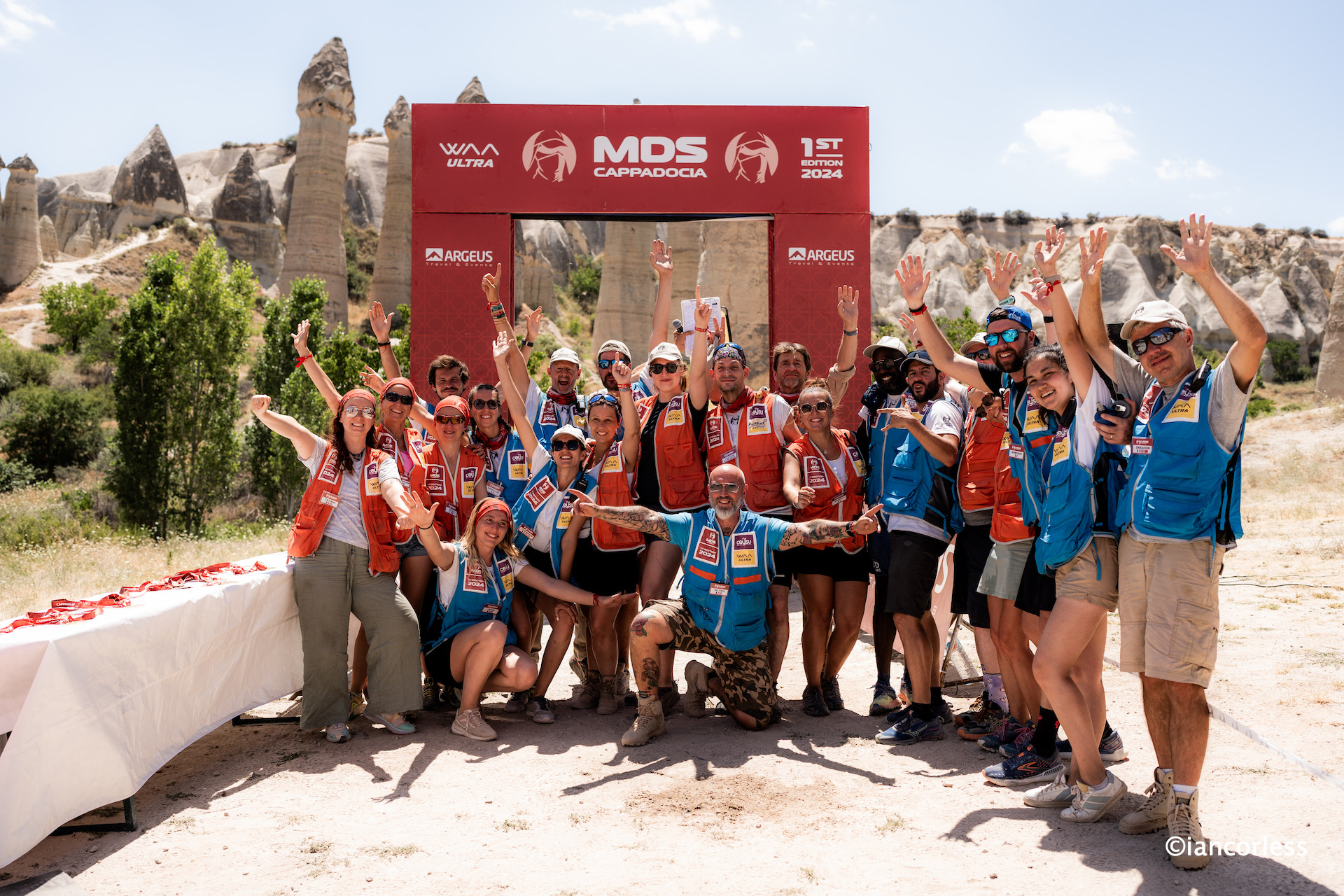
The MDS team have these events dialled and with a dedicated team they ensure competitor happiness and safety. Of course, first editions are always difficult, they are an opportunity to learn what does and what does not work. The general consensus post-race was one of huge success, however, it wasn’t perfect and the team look for this, so, tweaks.
The surprise of a hot air balloon flight was an incredible gesture by the MDS organisation, I think this almost certainly will be ‘option’ to add to the race experience in future editions.
The post-race awards, film, gala dinner and party was a great success.
It takes a dedicated team to make an event happen and it’s important to acknowledge Argeus Travel and in particular, Koray and Hayden for their on ground experience in facilitating the first edition of MDS Cappadocia.
The event brings something new and different to the MDS line-up and that should be applauded. There is something special here in Turkey that needs to be experienced just once.
The challenge is real, respect this environment. The combination of altitude, heat, challenging terrain, self-sufficiency and camp life is something special.
And finally, this landscape is very, very special it needs to be experienced to be believed.
The first edition of MDS CAPPADOCIA concluded with stage 3 and 25km’s. What an edition it has been…
Red Valley
The MDS name is synonymous with sand, and yes, for sure, Cappadocia is not a desert, however, it is a desert like location and this has been one of the unique stories of the race.
Uçhisar
Cappadocia is marvel for the eyes, the landscape, the features, the trails, the awe-inspiring views and yes, the balloons. Cappadocia is not Cappadocia without balloons.
Love Valley
The heat has been intense, temperature was recorded with a high of 36-degrees, this was close to a ‘feel’ of 48-degrees. It has been a tough edition and as ones expects with the MDS organisation, they responded accordingly by bringing the start times forward. Stage 3 was no exception and started at 05:20 instead of the scheduled 07:00.
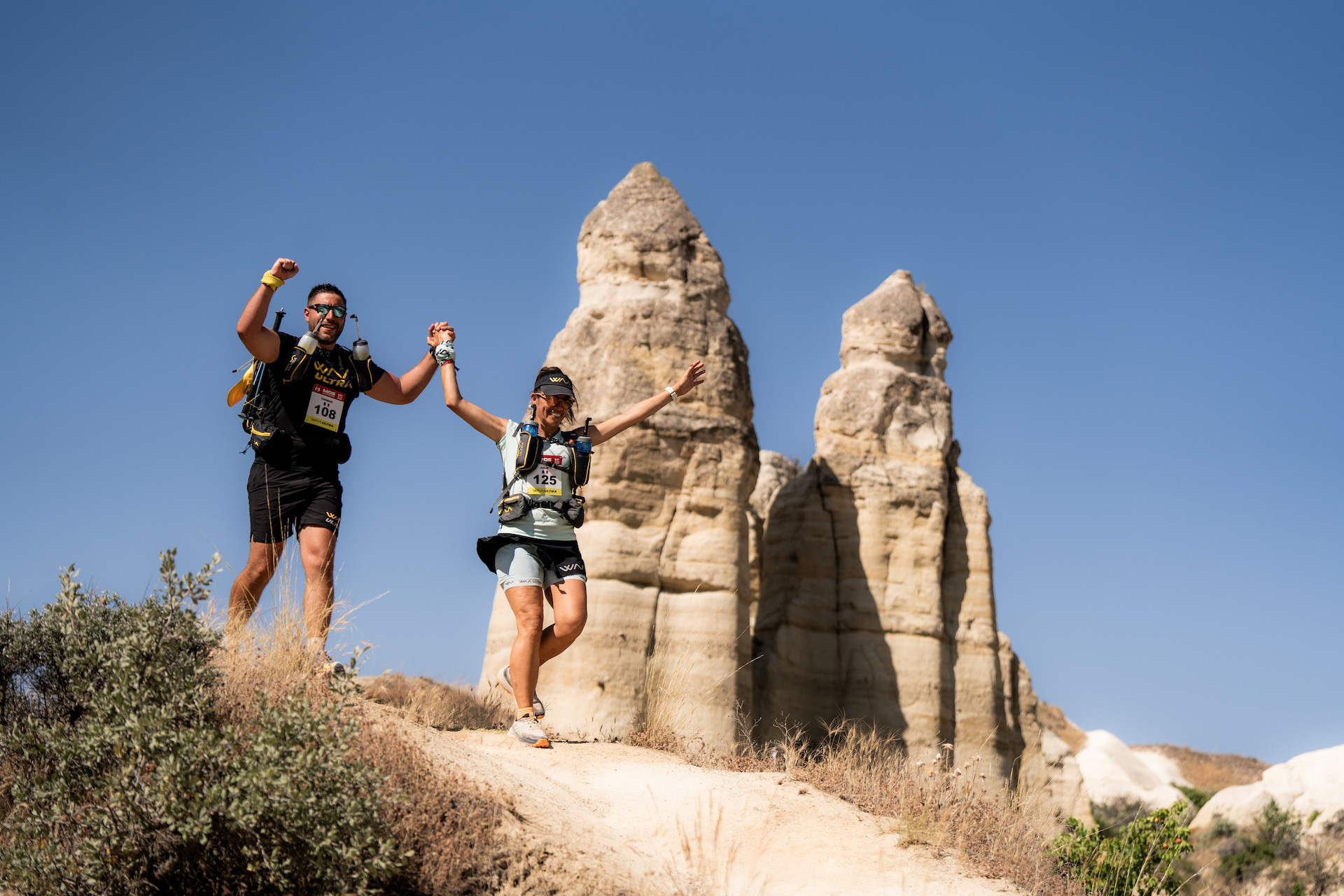
Love Valley – magical
Today, there were no distance options, 26km and 604m+ of elevation gain.
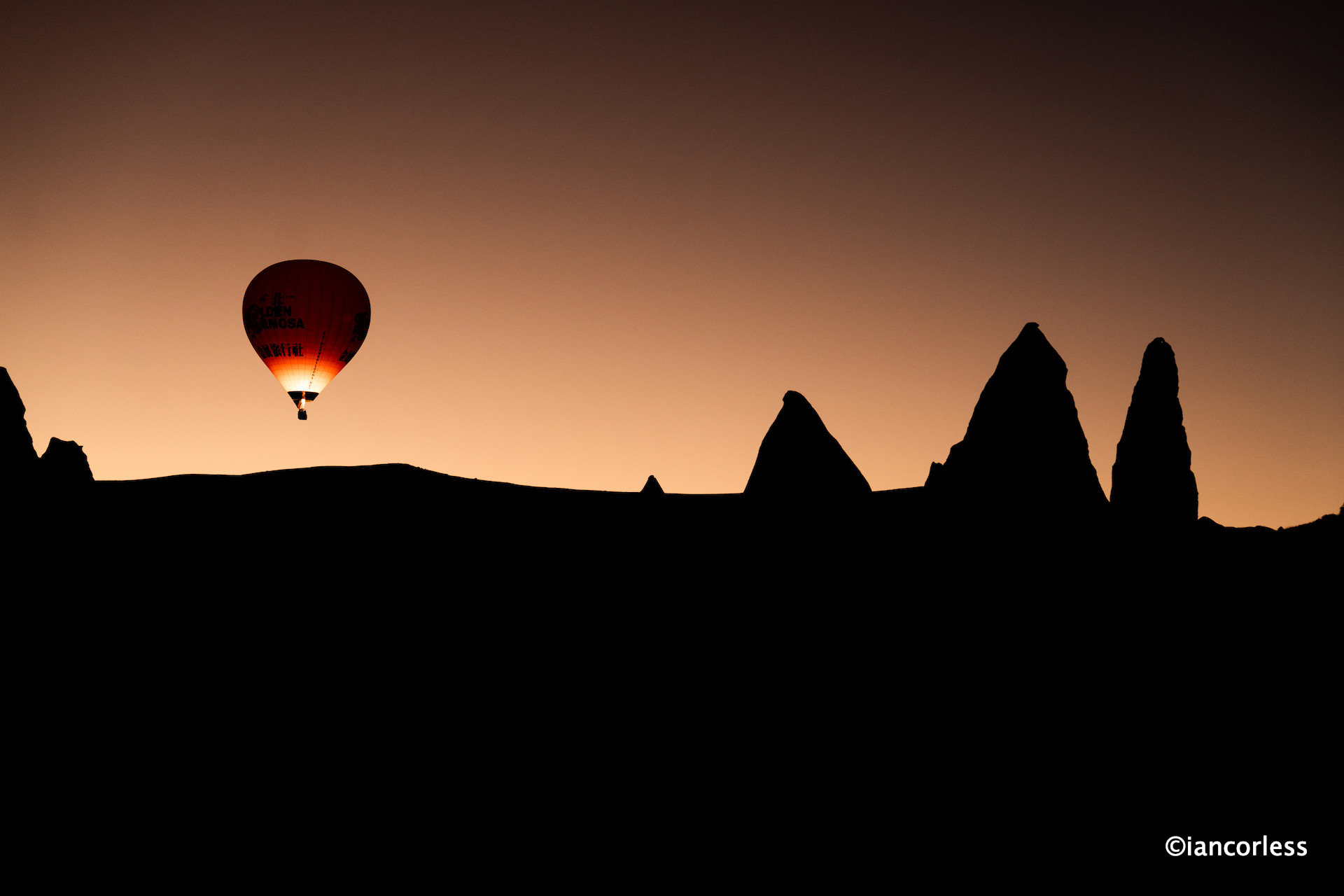
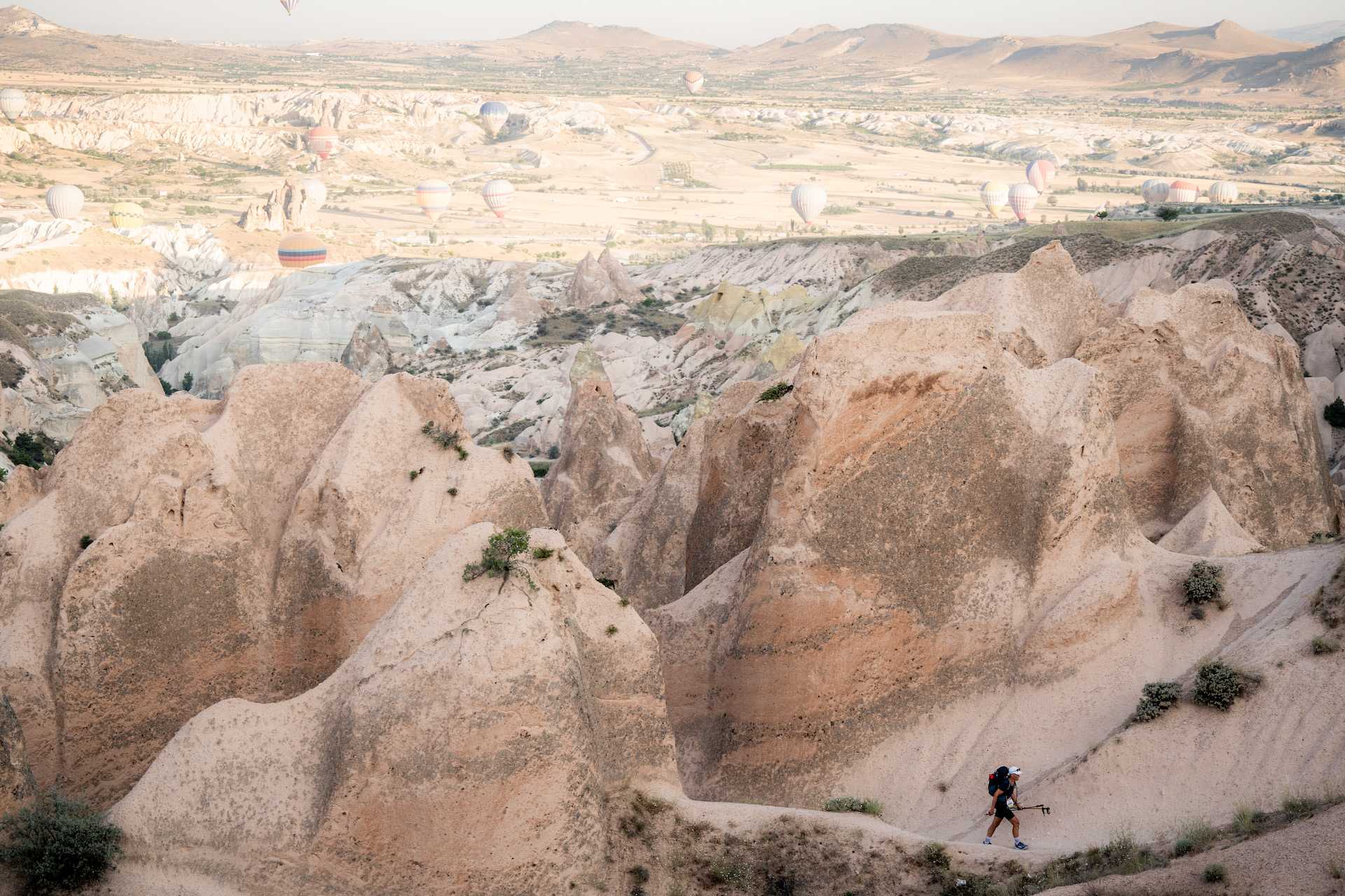
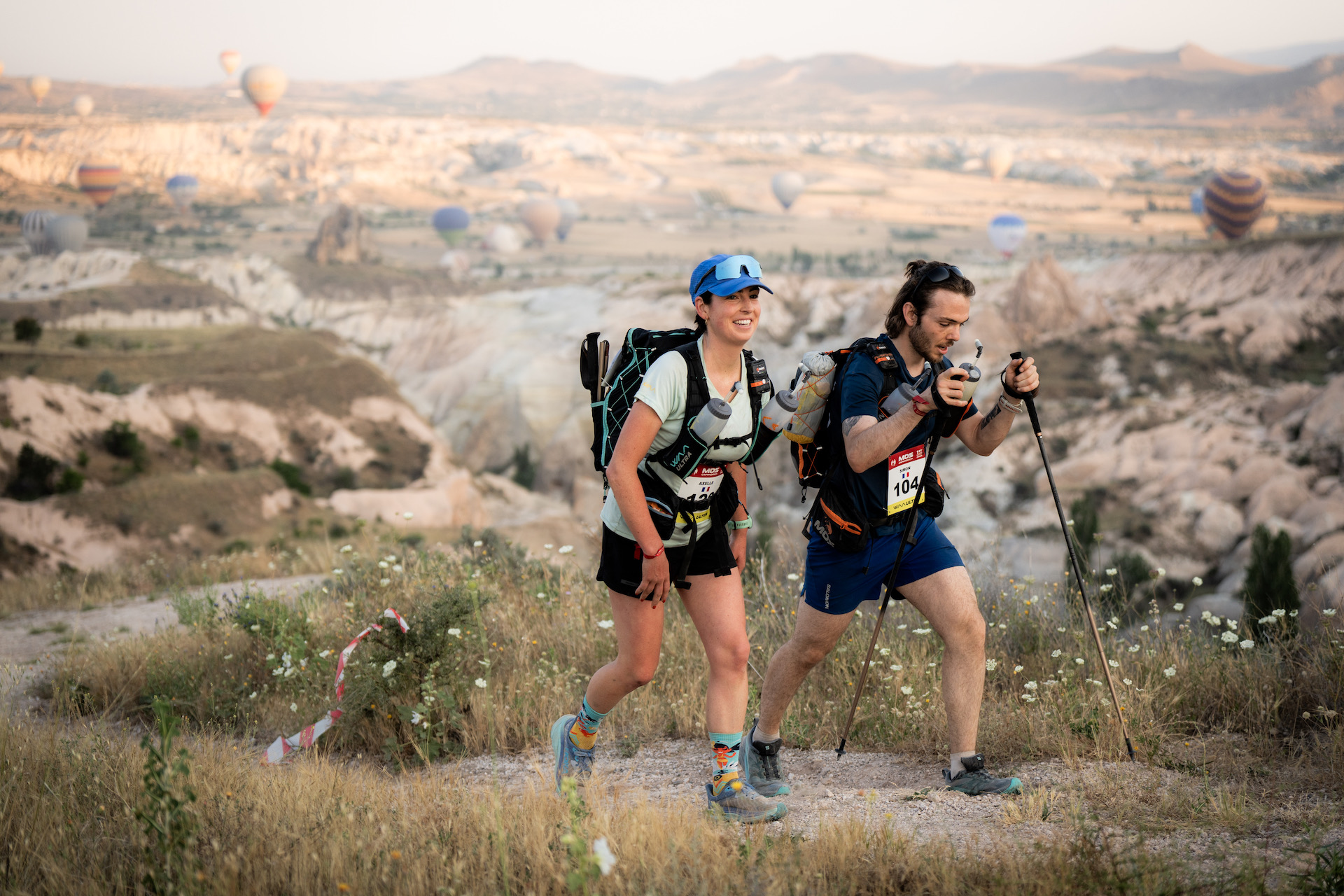
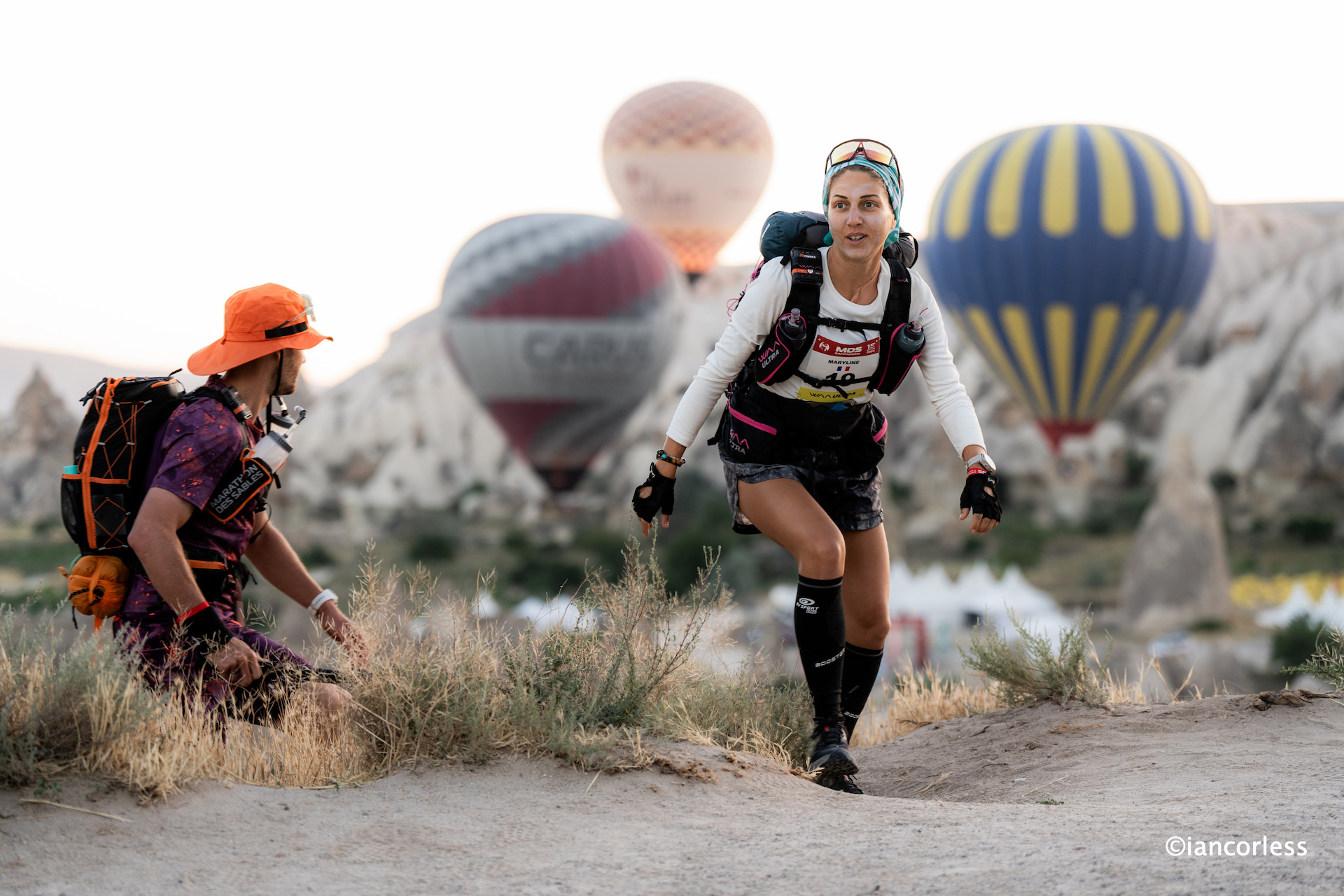
Red Valley and early morning balloons
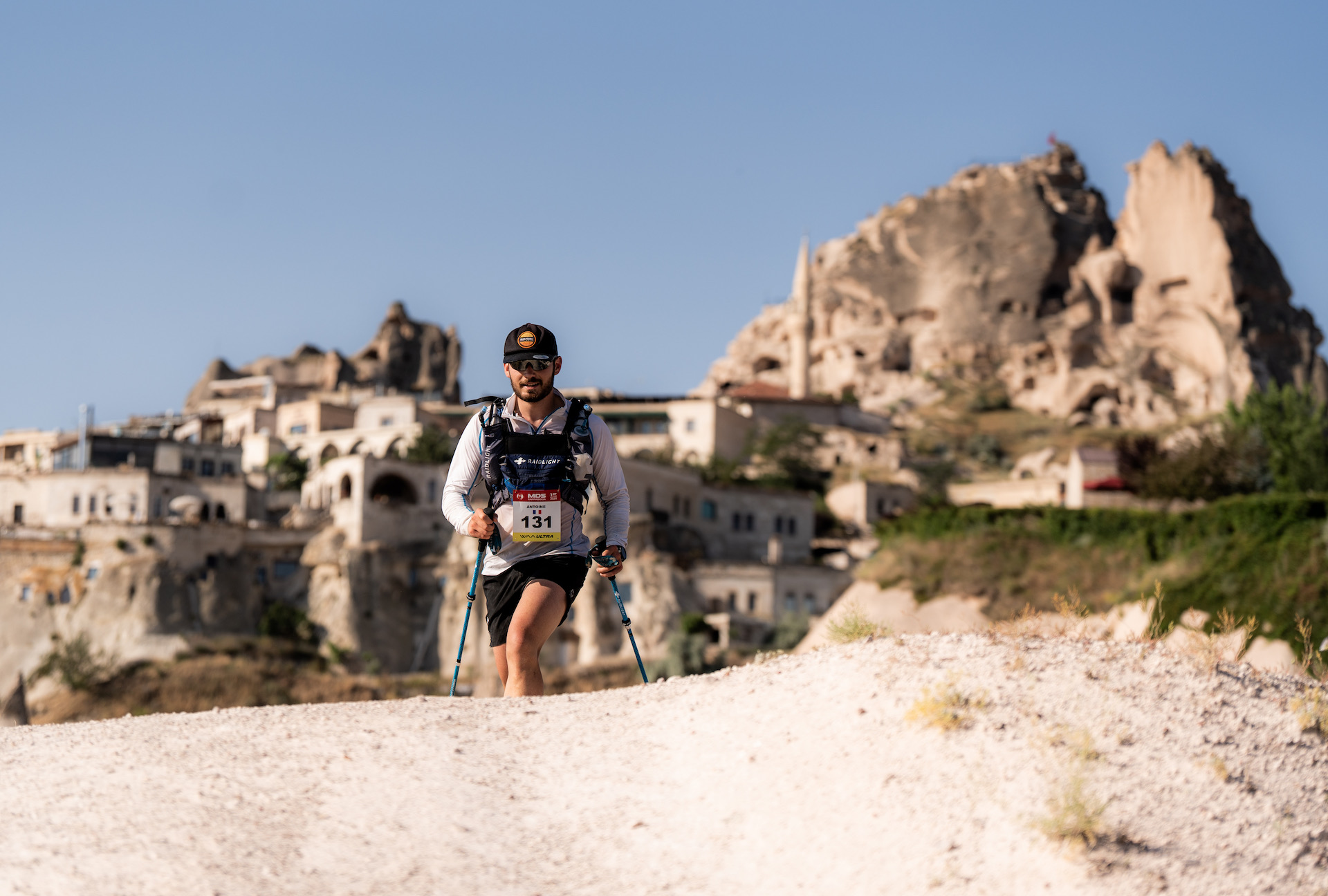
The opening km’s passing through the stunning Red Valley full of fairy towers and Troglodyte caves. Single-track mountain path and valley running and soon the stunning town of Uçhisar was passed before entering the Love Valley and the final km’s that would lead to the finish line.
Love Valley
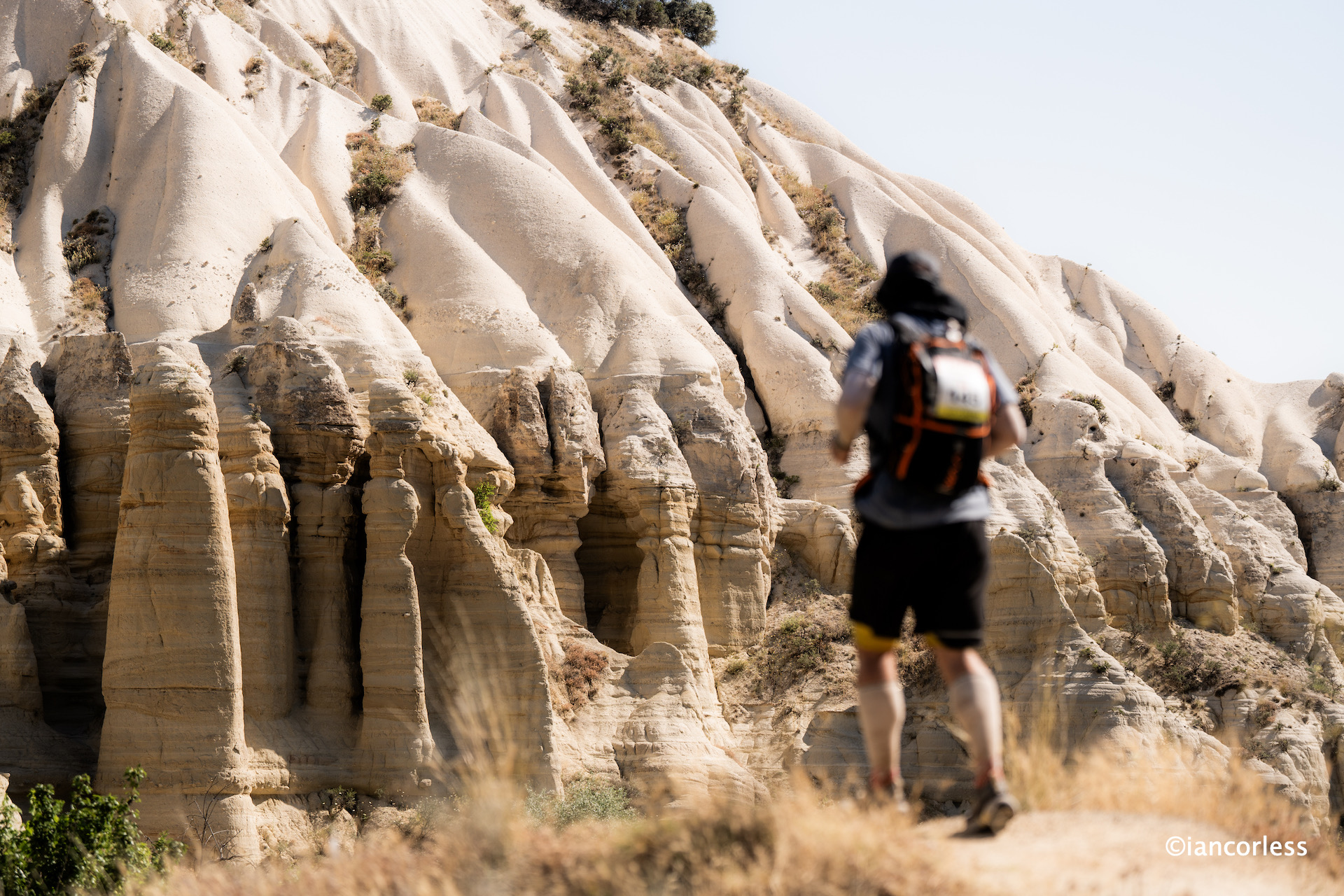
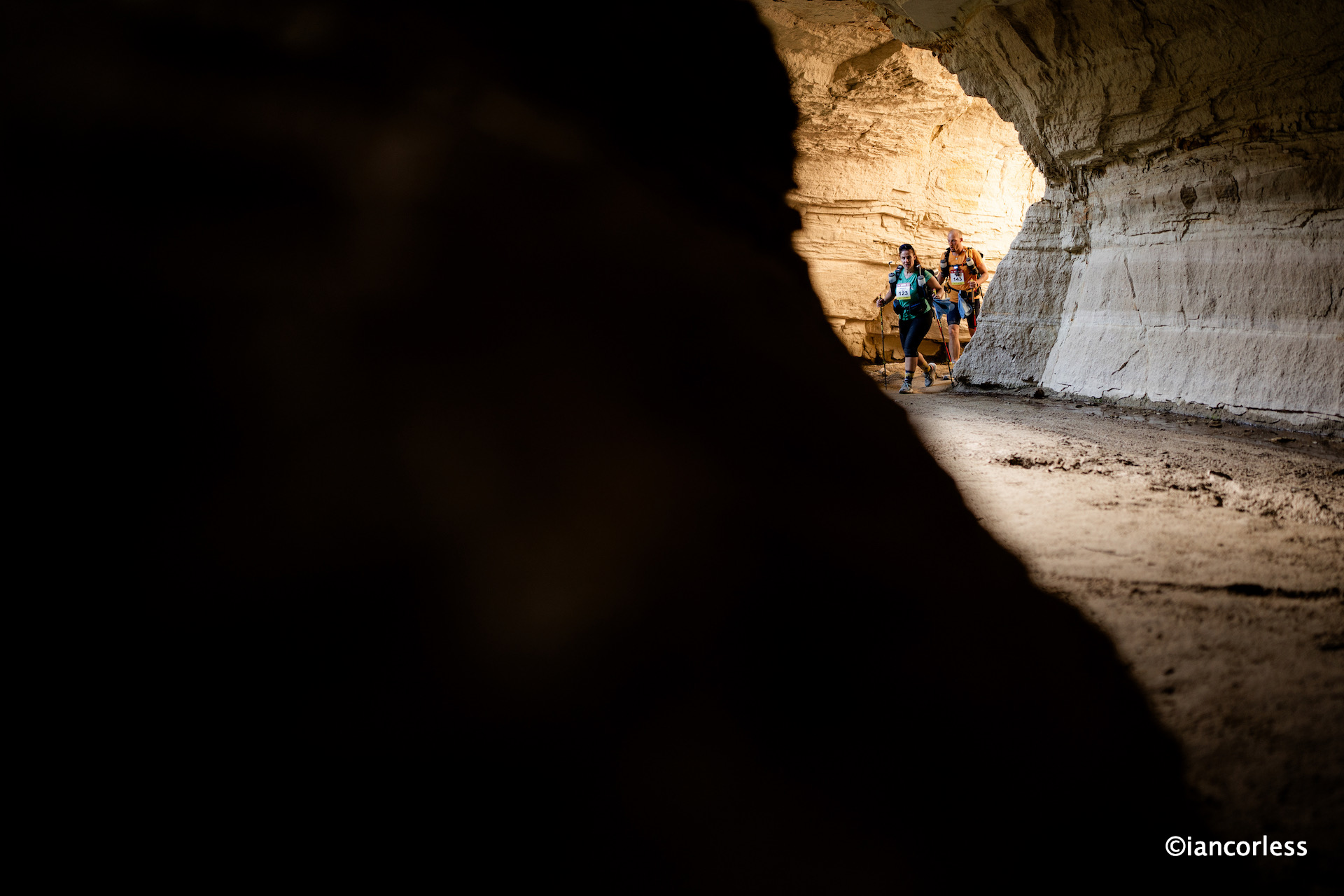
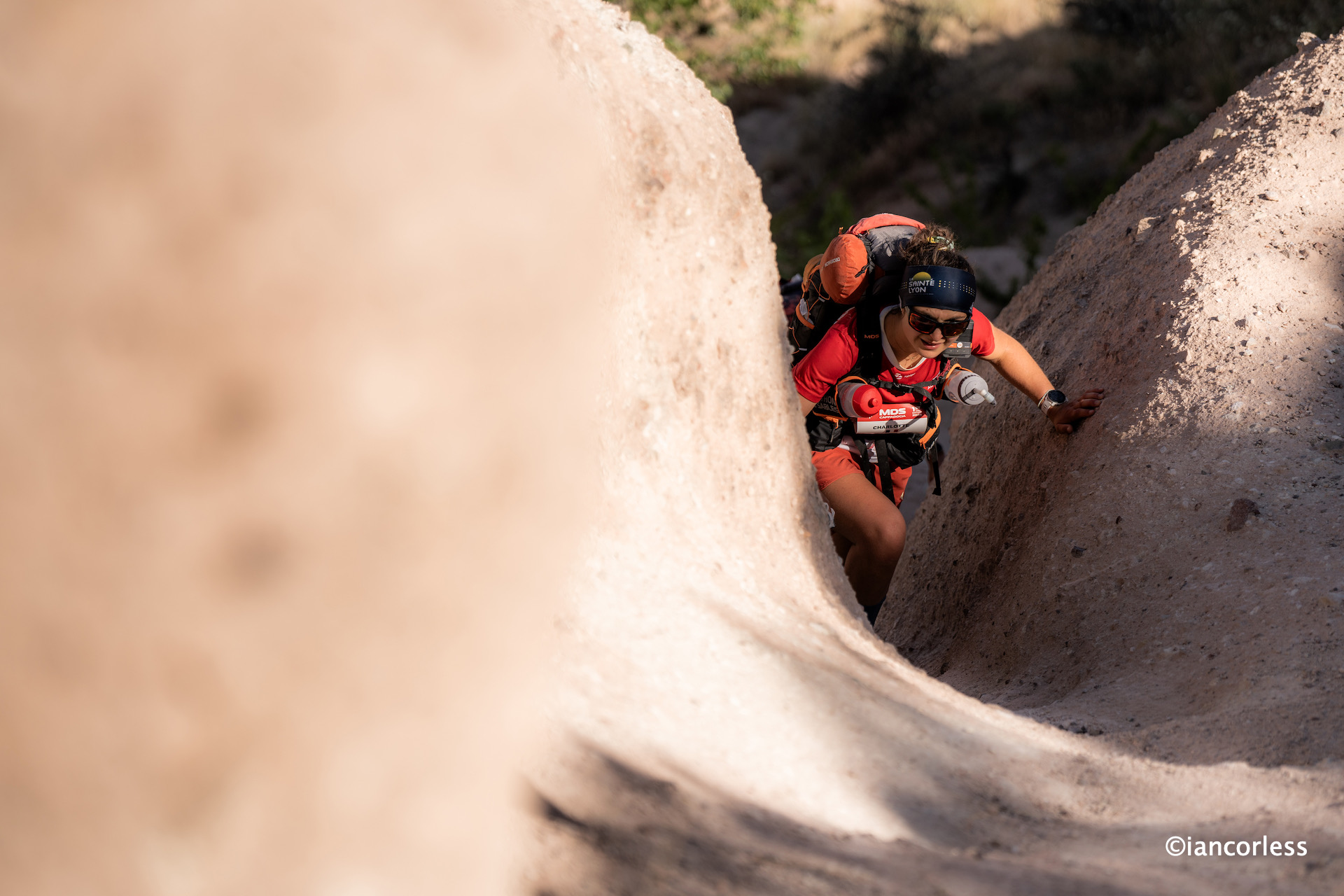
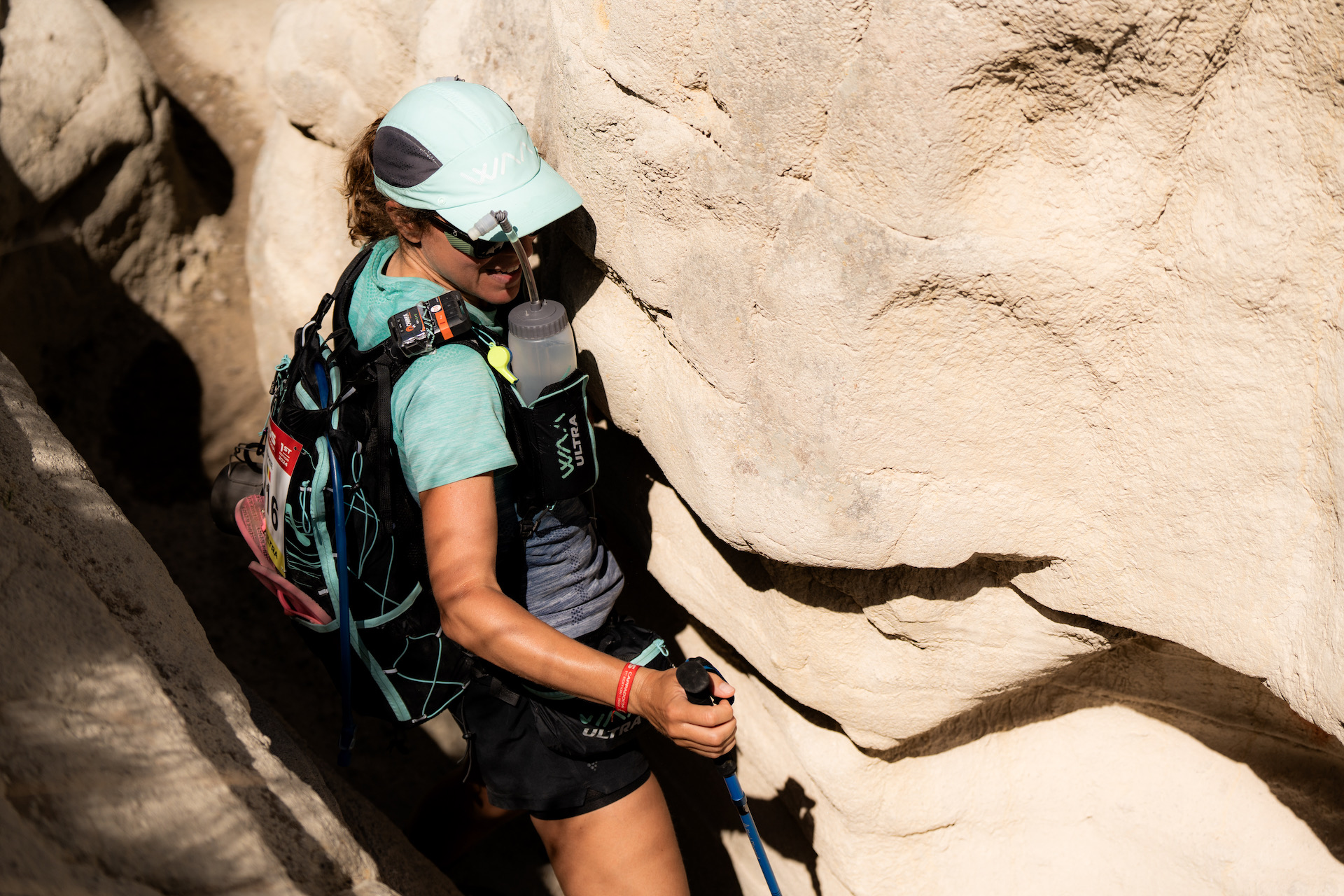
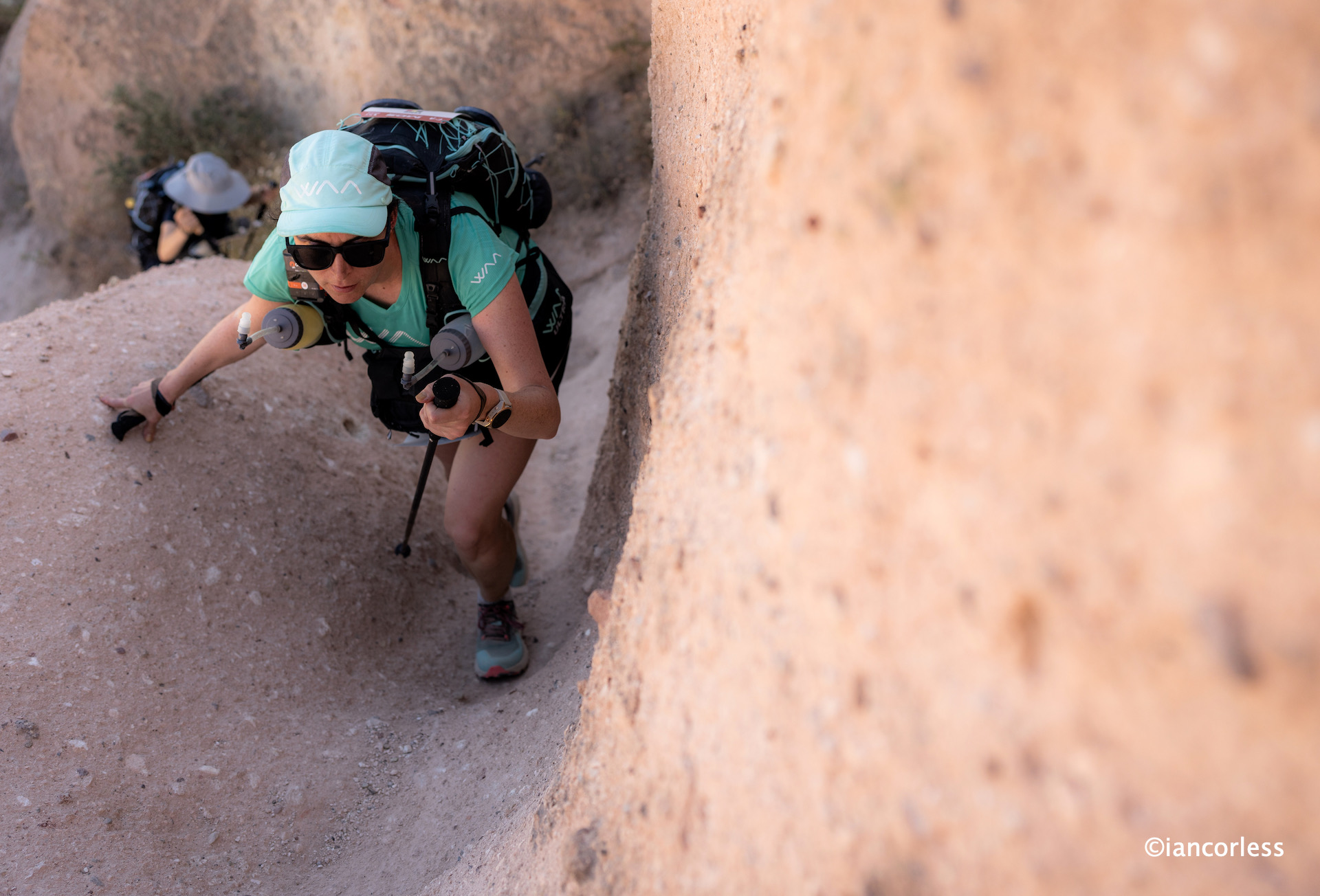
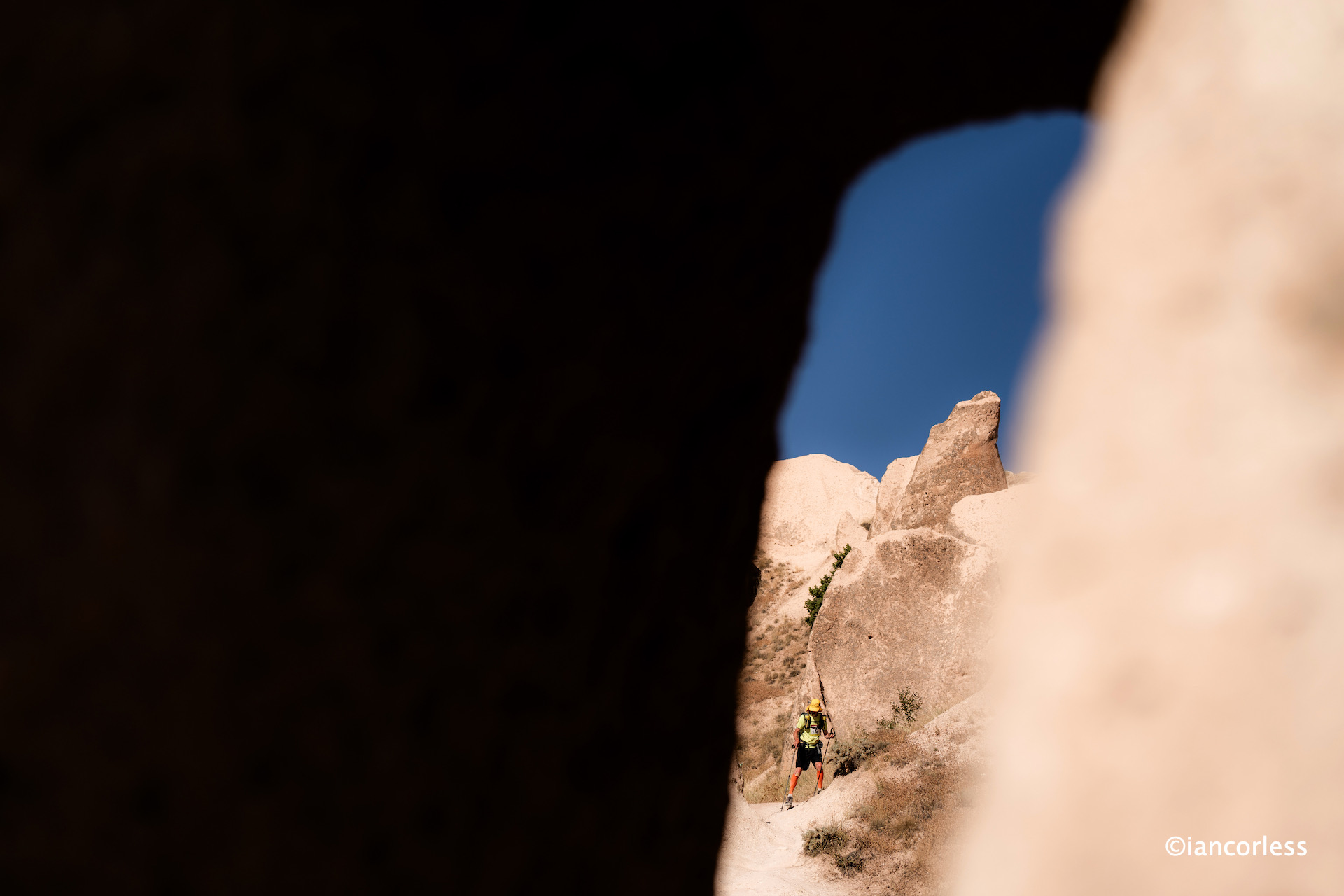
What a way to finish a race, the Love Valley is hidden from view and full of scenic formations that bring a challenge of at times technical single-track, running through narrow passages and at all times, you are surrounded by the stunning landscape that makes Cappadocia unique.
Narrow passages
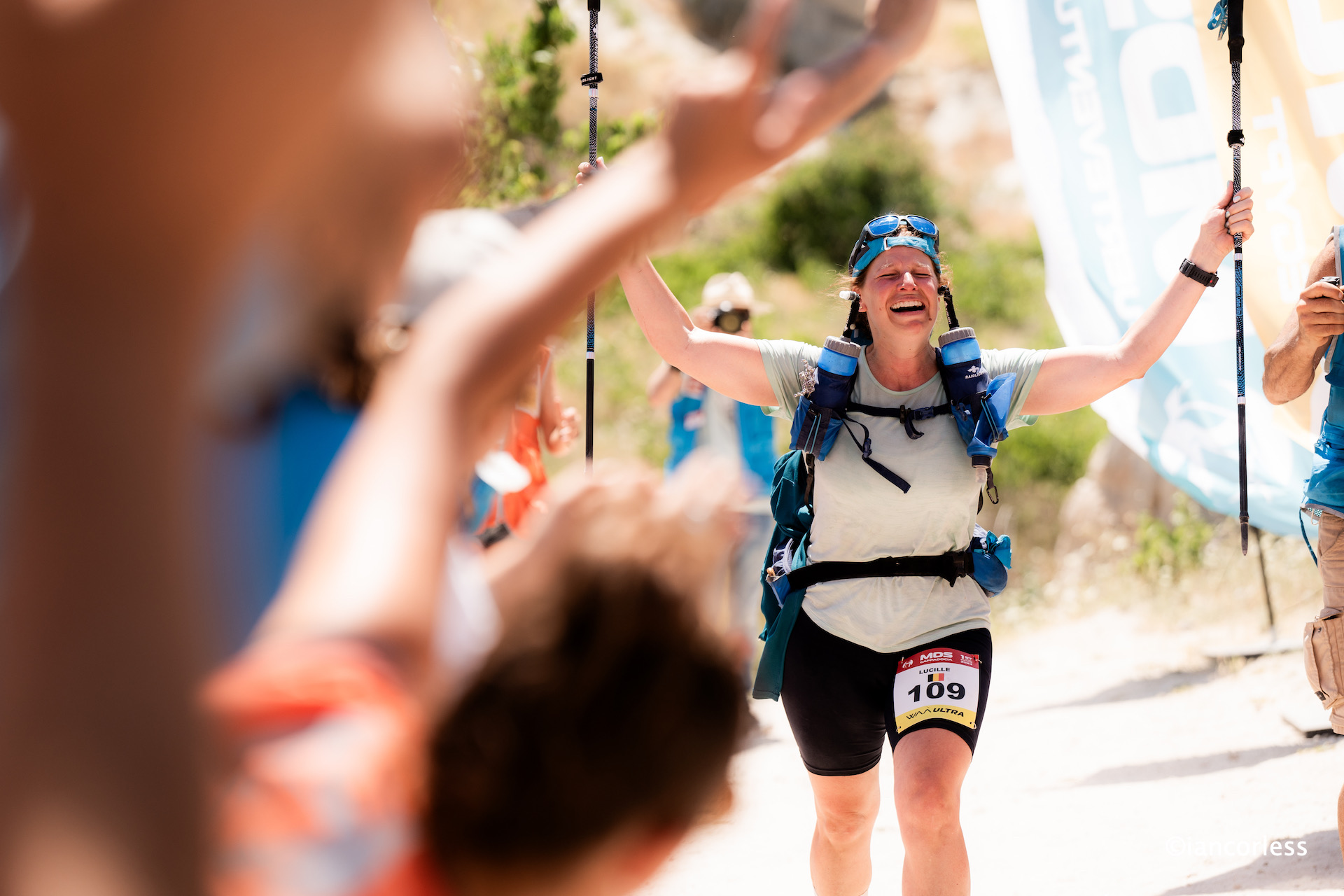
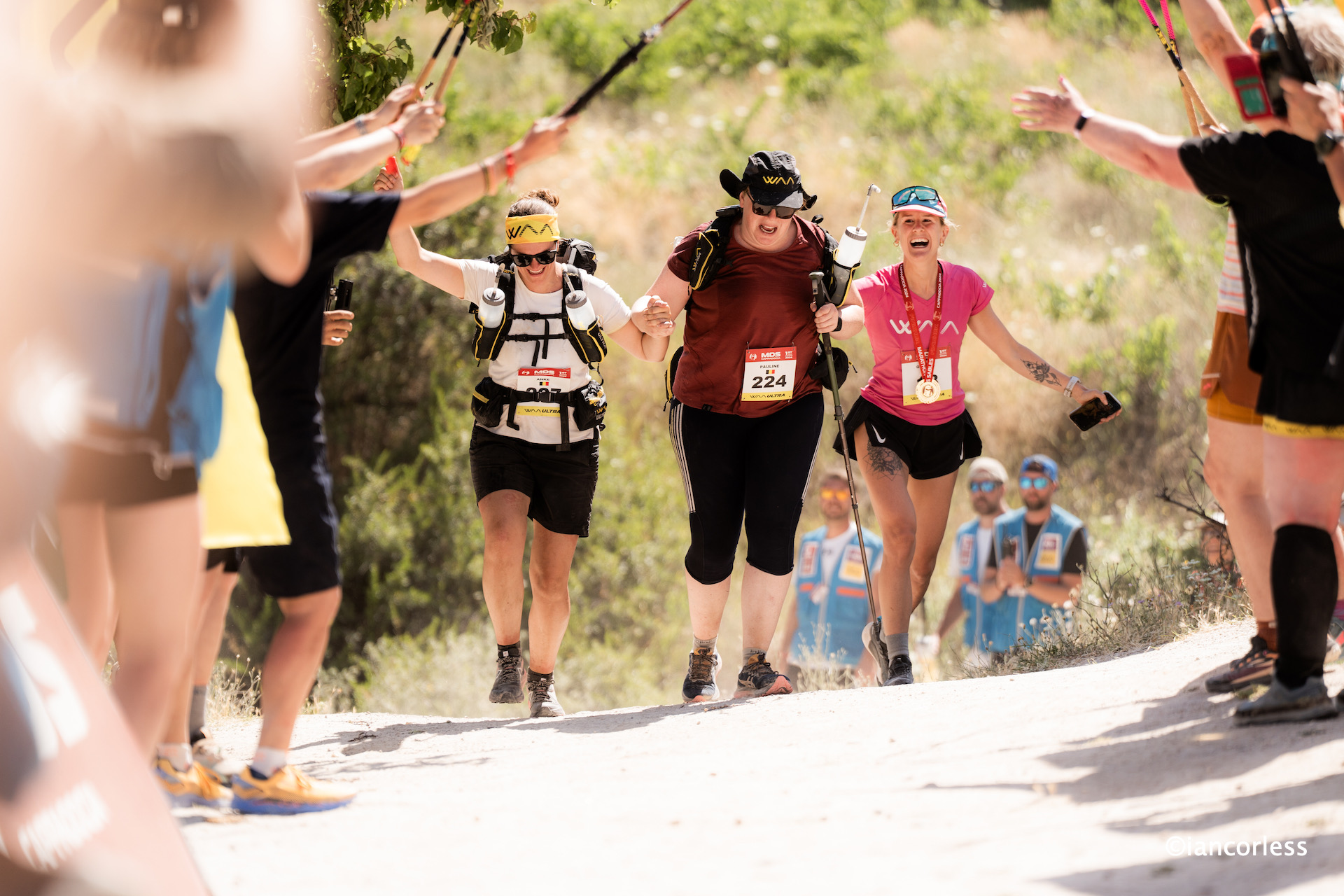
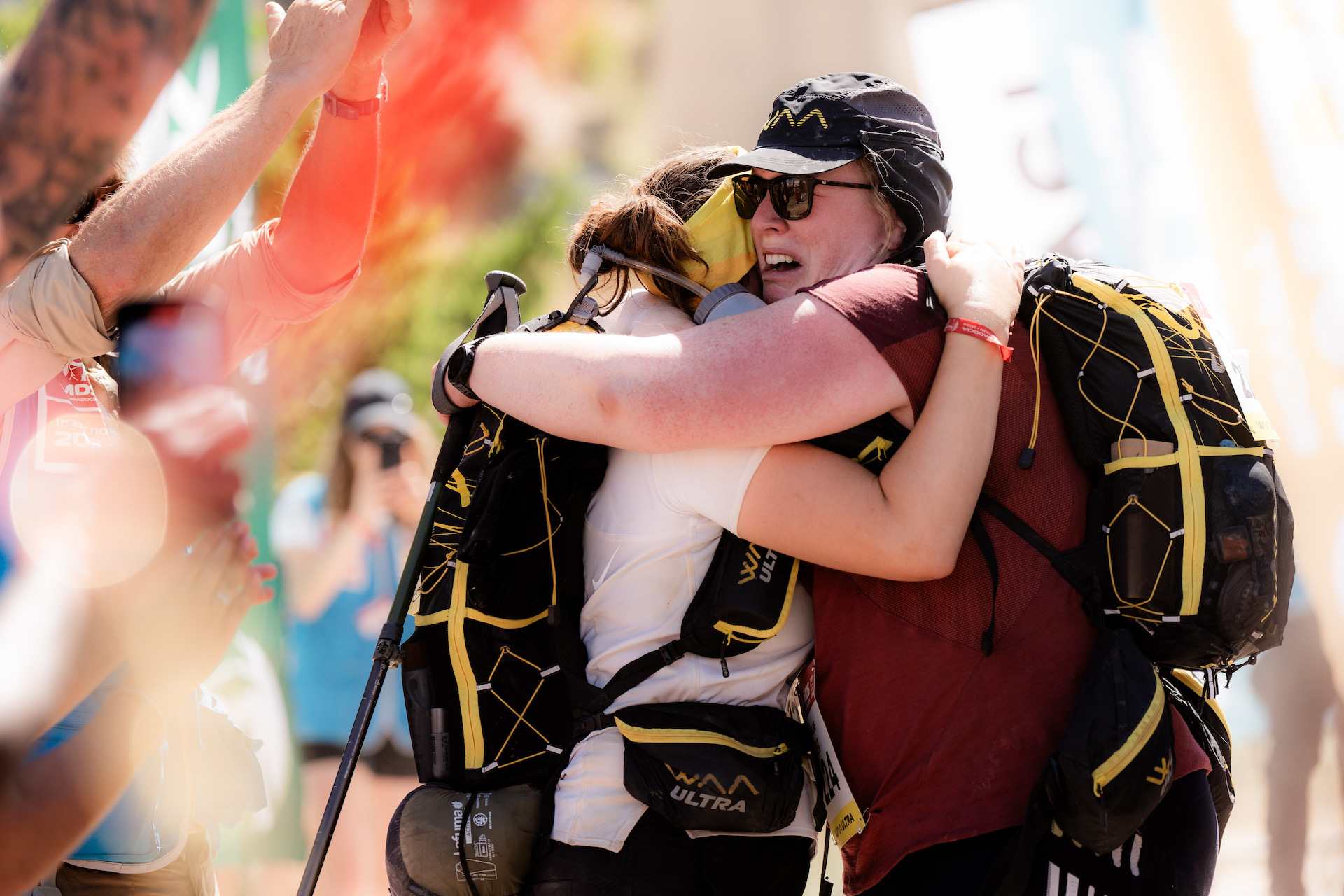
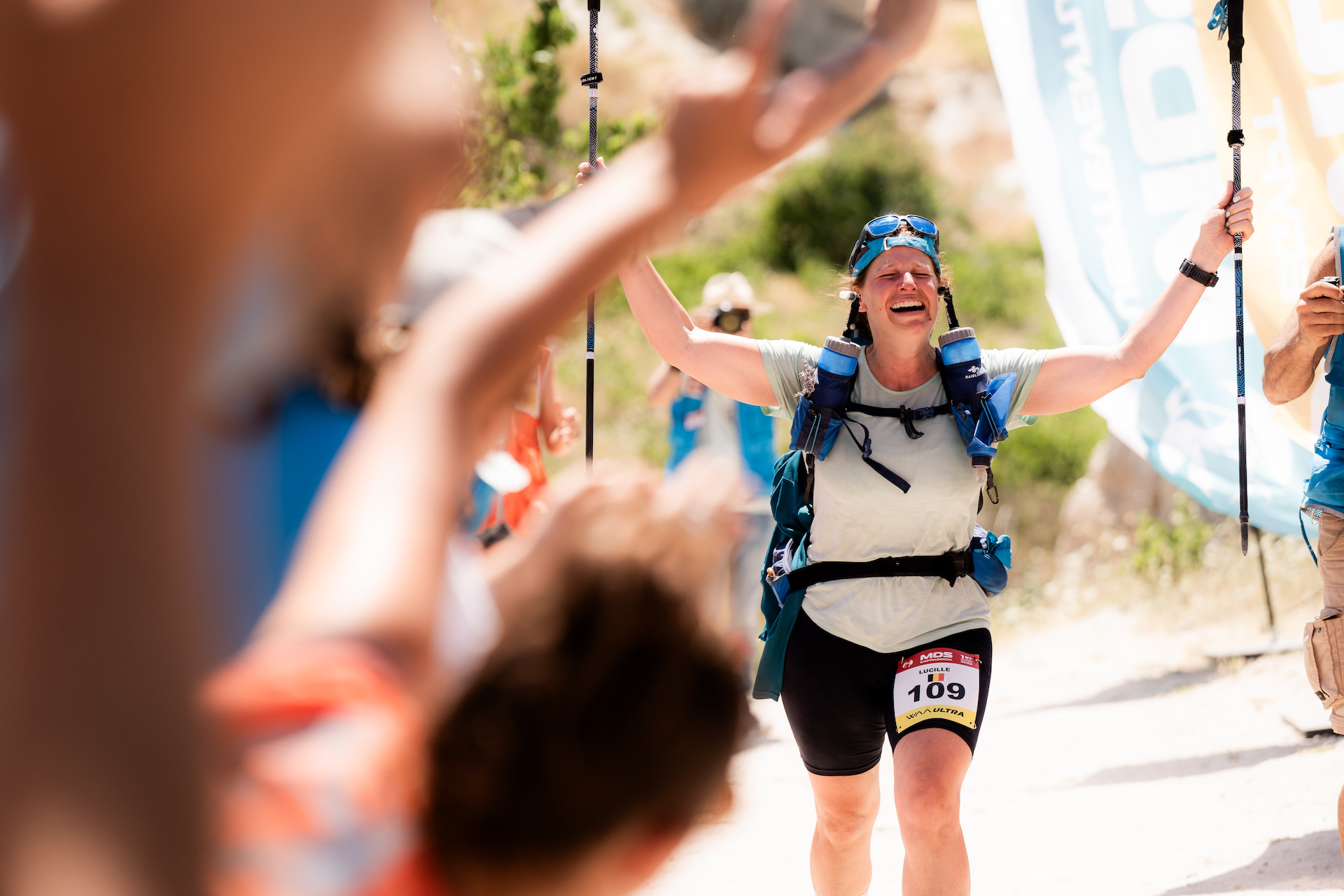
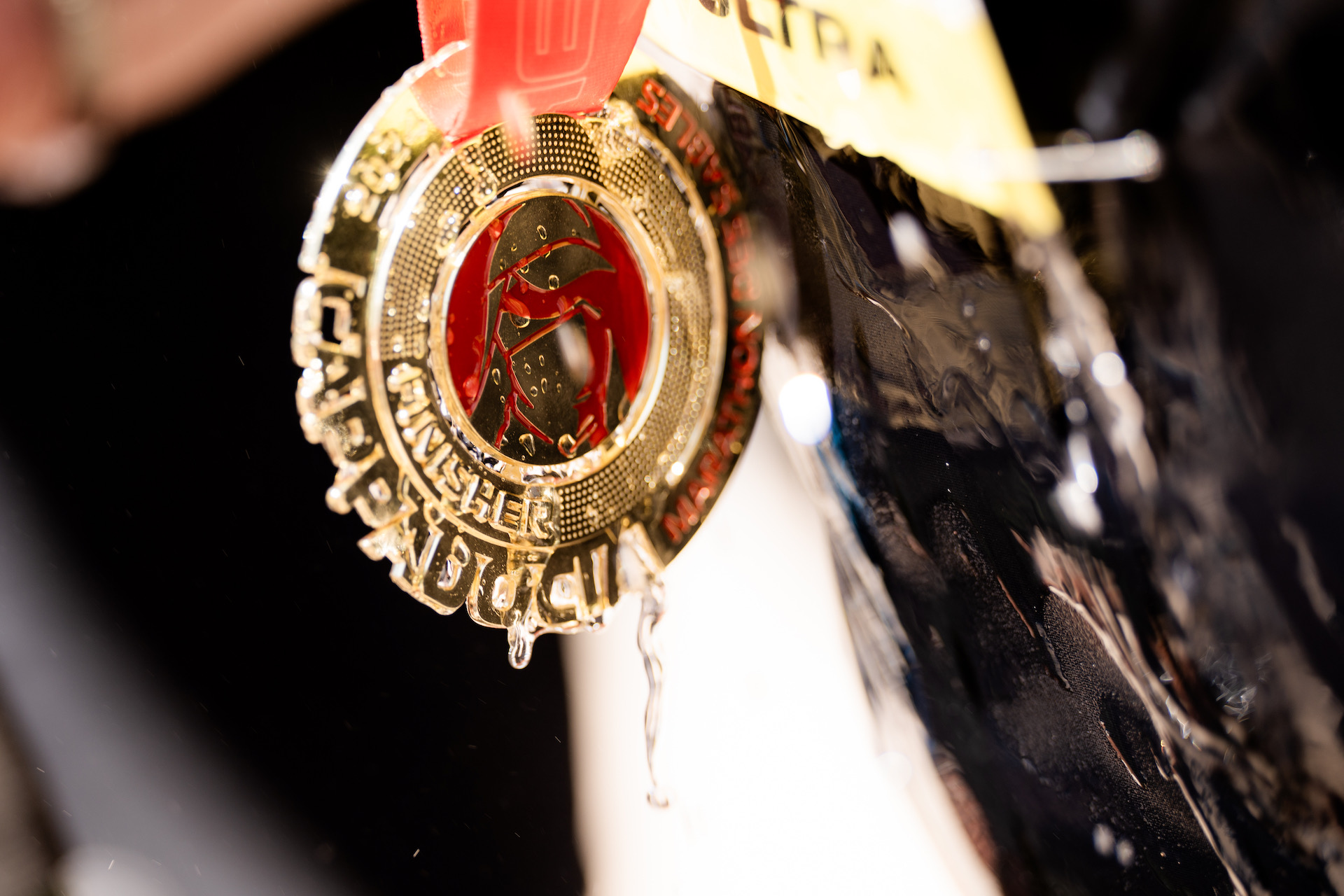
The finish line, as one would expect, was full of emotion, 3-stages and 4-days and finally, a medal around the neck and a very welcome shower, meal and a bed.
EmotionEmotionHard earned medal
But the surprise for participants did not stop here.
The MDS organisation decided to surprise everyone with an iconic balloon flight to conclude what has been a very memorable and successful first edition of MDS Cappadocia.
The sky came alive with arguably, one of the most impressive start lines I have ever witnessed. Stage 2 of MDS CAPPADOCIA was amidst the stunning hot air balloon spectacle that only Cappadocia bring. A wow!
The glimmer of a new day, the orange burn from the burners in the baskets of the balloons, at 05:20 stage 2 got underway. Today, the participants can choose a distance, 20km, 40km or 60km.
After a tough stage 1 for many, the 20km and 40km loops were going to be popular for sure. Starting slowly, the spectacle around the runner’s was just too impressive not to stop, look, film and photograph. One runner said as she passed, “This is the most impressive thing I have ever seen, this is truly magnificent.”
And so, MDS Cappadocia is etched in the mind, the unique landscape, the unique bivouac location and the dawn spectacle of hot air balloons, this is MDS Cappadocia.
An early start was welcome, the heat of day 1 was relentless, so, several hours of calm temperatures facilitated a good start to the day before the heat started to rise around 09:00, by early afternoon, temperatures were at 34-degrees.
There were lots of smiling faces, as runner’s tested themselves over a distance that was a challenge for them.
The terrain was constantly changing showing the best of what Cappadocia has to offer. Single-track, fairy towers, Troglodyte caves, lush green landscape, tunnels, gorges, canyons and so much more.
With three distances on offer, finishing times were spread throughout the day, in the 60km distance, Serge Fortini crossed first in 9:37:29, Hugo Brincard 2nd 9:57:54 and Alexandre Mallier 3rd 10:34:41. Maryline Demangel, Axelle Bellec and Augistina Gonzalez Fileur were 1,2, 3 for the women, 12:24:41, 12:47:25 and 15:17:55.
The final finishers arrived after midnight, a full day of challenge lasting over 19-hours of intense heat, beautiful views and challenging trail, a showcase of determination and strength.
For the 40km and 20km, we will need to wait for updated results to place athletes in the appropriate distance category, go to livetrail.com
Day 3 of the race is a rest and then stage 3 follows the following day and the conclusion of the first edition of MDS Cappadocia.
The 2024 first edition of MDS Cappadocia got underway today, three stages with a potential longest distance of 120km’s and options to run 71.9km/ 92.8km and 110.5km based on the desired distance of stage 2.
A unique playground
Stage 1 25km
Stage 2 20.9km/ 41.8km/ 59.5km
Stage 3 26km
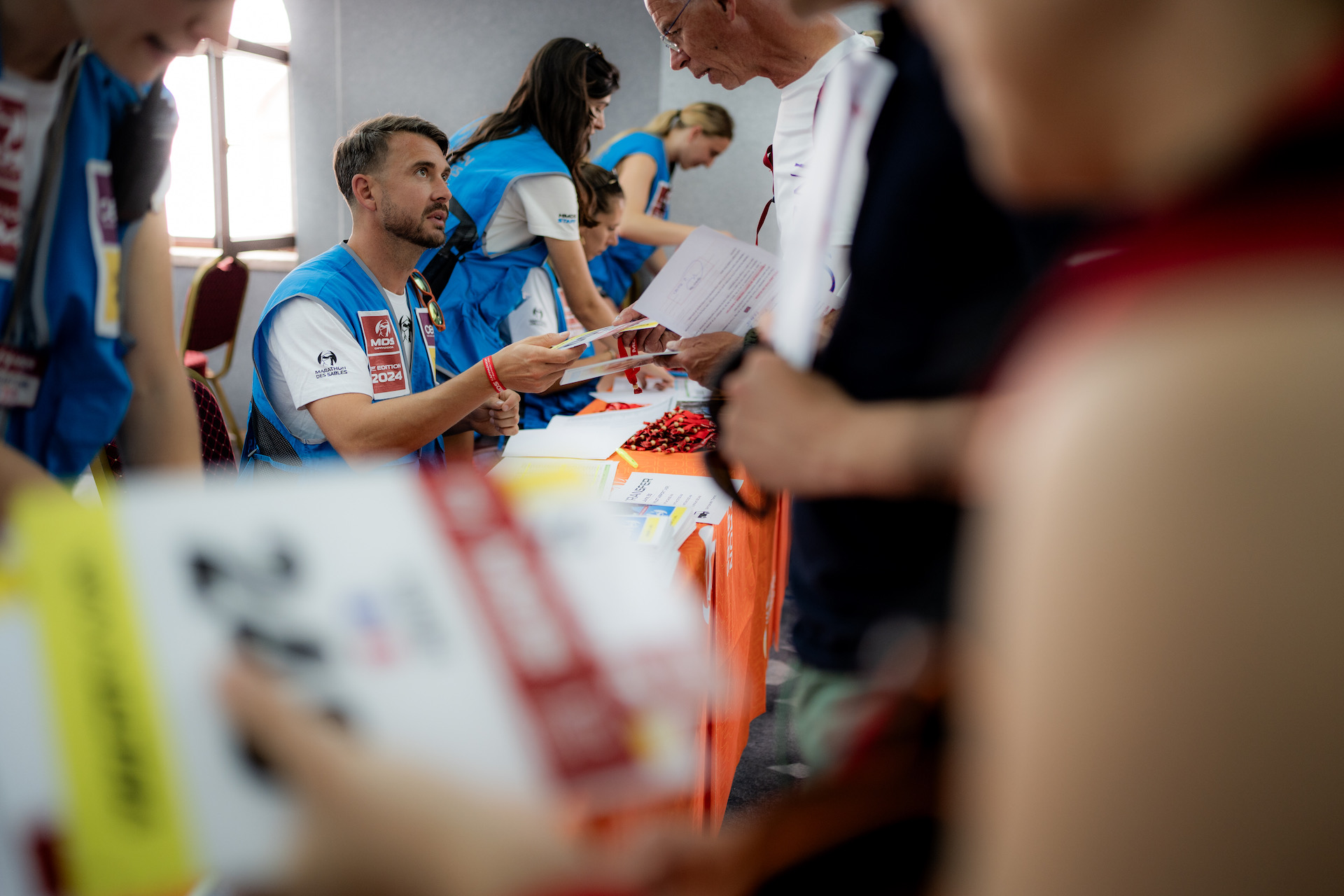
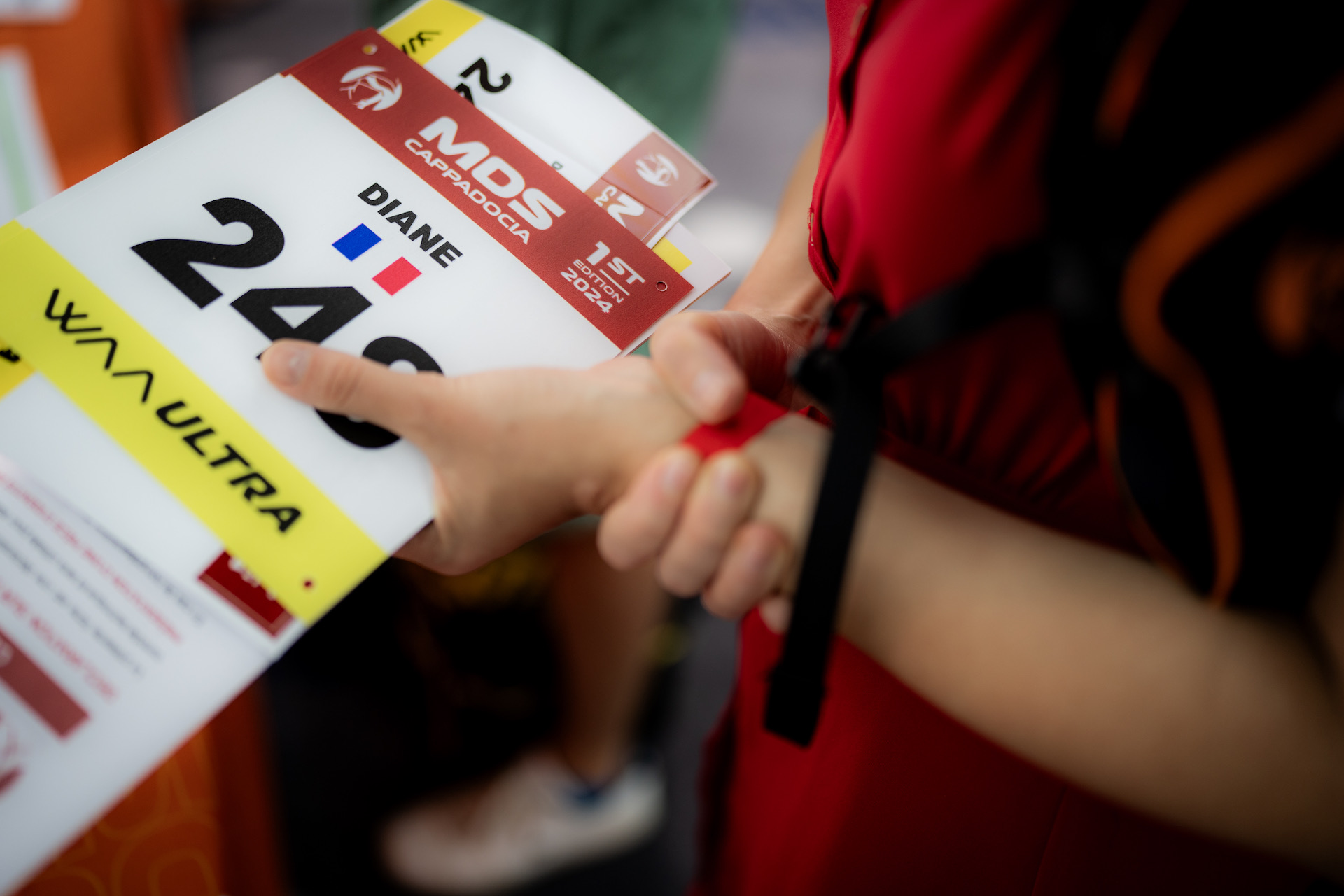
Bib collection and admin checks
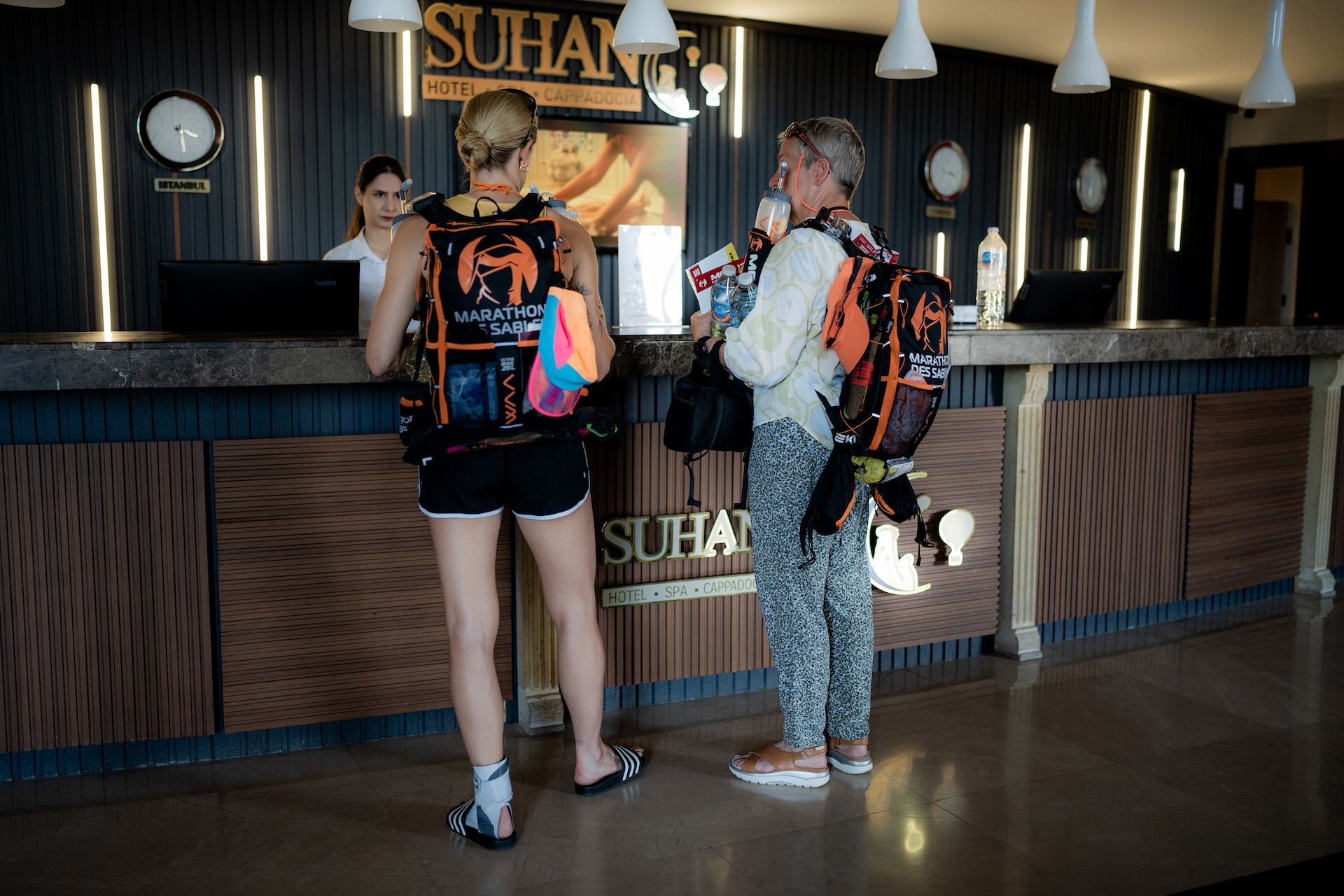
Many participants arrived in Turkey on Friday or Saturday with admin taking place on Saturday afternoon ahead of a relaxed dinner followed by a comfortable night in Suhan Cappadocia Hotel in Avanos.
Suhan Hotel, some luxury before self-sufficiency
Stage 1 began with a relaxed breakfast and 0800 departure to the start of the race and the beginning of self-sufficiency.
The challenge ahead
At 0900 briefing began and at 0930, the runners departed for 25km and 678m of elevation gain.
Cyril Gauthier
In contrast to MDS The Legendary and other MDS races, Cappadocia is not a desert race. Although the landscape has a desert feel, the route is much more single-track, mountain paths, grassland and of course it is all encompassed within the unique landscape of this area.
Troglodyte Caves a unique feature of Cappadocia
The Göreme valley is captivating, especially if never seen before.
Single-track trails
For the participants, it was the start of a journey of discovery and at each point throughout stage, the beauty and experience was one that was passed on to MDS staff during and afterwards.
A hot day, cold water at CP’s make all the difference
A hot day, with a recorded high of 33-degrees, however, a gentle wind throughout many sections of the race helped to cool. Main CP’s also offered iced water which was poured on the heads and necks to facilitate cooling the core.
It wasn’t all flat and easy.
The stage was won in 02:29:40 by Keven Moncelli. Hugo Brincard and Alexandre Mallier were 2nd and 3rd, 02:32:41 and 02:39:08 respectively.
A unique and magical playground
For the women, Maryline Demangel finished ahead of Axelle Bellec and Gudrun Hespel, 03:10:59, 03:20:23 and 03:39:08.
Stage 1 finish and the bivouac for the coming days is a hidden away gem backed by the unique Troglodyte homes, cut away in the rock that makes Cappadocia so unique and special.
Stage 2 (Monday) has an early wake-op of 03:30, briefing at 04:30 and the start of the stage at 05:00. Runner’s are able to choose the distance to cover.
Episode 247 of Talk Ultra and we catch up with competitors from the 2024MDS The Legendary for thoughts and feedback with Cecilie Lehmann Gianneri, Natalya Platanova and Nicki Marsh.
The 2024 MDS The legendary was highly anticipated, after 37-years, the race came under new ownership and while the core structure of the race remained the same or similar, many changes did take place. We catch up with Cecilie, Natalya and Nicki, all three first time competitors to get their thoughts and feedback.
If you’d like a re-cap of the 2024 edition, please see below:
Episode 246 of Talk Ultra is with Nicki Marsh as we countdown to Marathon des Sables – The Legendary. With a 50th birthday looming in 2024 Nicki had been toying with lots of ideas of how to celebrate… The only thing that truly excited me (and could fit around work!) was MDS. Her husband had done it in 2017 and said never again. However, it took him all of 30 seconds to agree to do it again, with Nicki!
“I have degenerative disc disease and osteoarthritis, 4 foot surgeries on and another one on the cards I am determined to keep moving. My goal for the race when we entered was to get to the start line, then do the best I can to finish, the plan was to walk. I believe setting the right goals helps you develop the right mindset and avoid disappointment.”
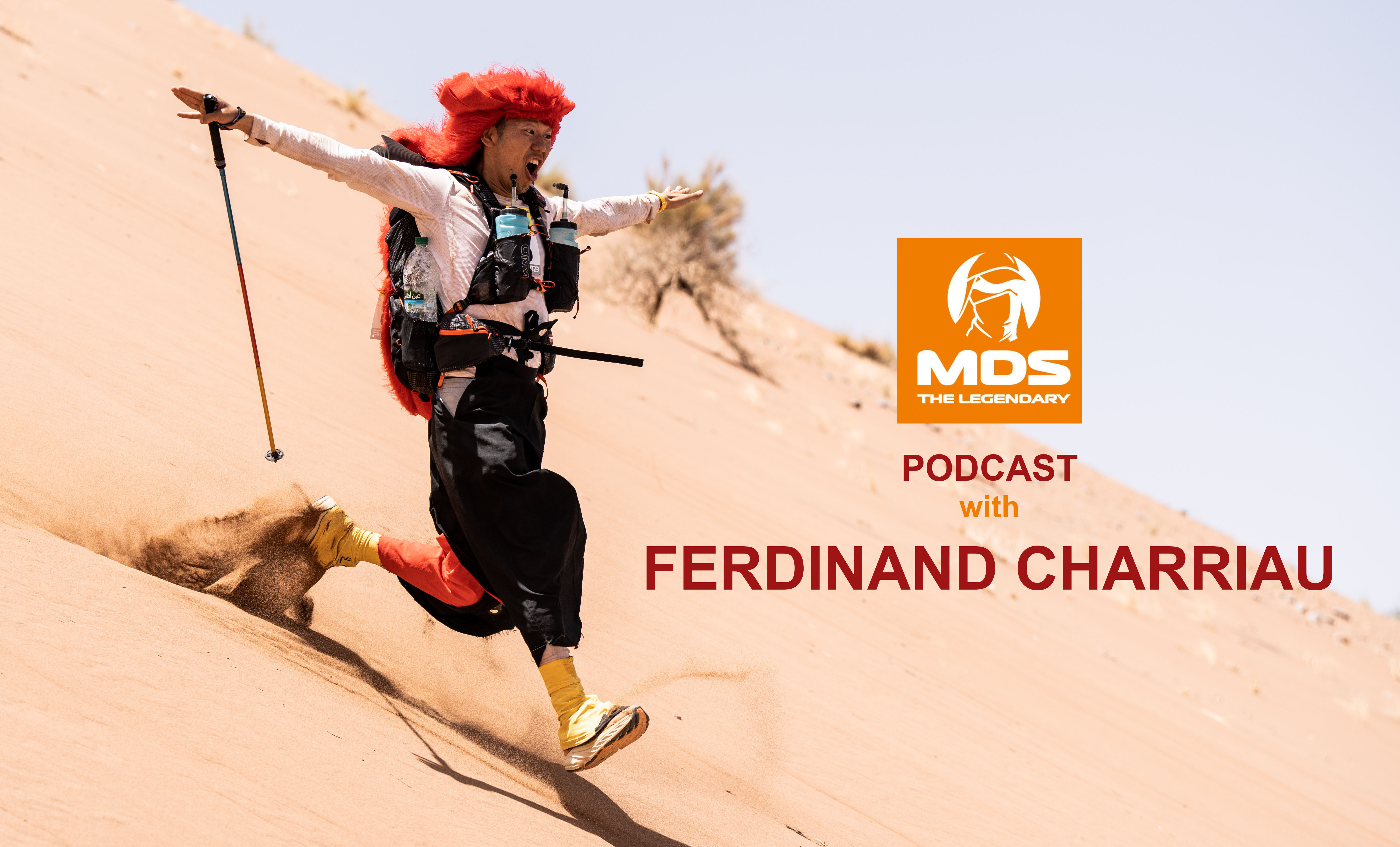
Episode 245 of Talk Ultra is with Ferdinand Charriau, head of communications for Marathon des Sable – The Legendary. In this podcast we discuss the final details as the 2024 edition is just weeks away.
The stock cubes provide a better and less aggressive provision of salt.
Water rations will not be as strict as in previous years, for example, at a CP, if you have 2 x 750ml bottles and a 500ml soft-flask, you can fill all three.
A 1.5ltr bottle will be issued at CP1 on the ‘long day’ so that it is possible to have a 3ltr capacity for the ‘long day!’
CP distances will be as usual 10 to 13km apart. HOWEVER, there will be intermediate water stations now, say at 6km +/- so you can access additional water.
There will be cold water at CP’s (not to drink) but the medical team will pour cold water to cool body temperature.
Stage starts will be between 0600 and 0730 depending on the stage and the length. For example, the ‘long-day’ will start at 0600. Most days will start around 0700 to 0730.
Email in printed format will not be provided. There will also be no email tent. However, there will be IP phones available for emergency use only. MDS ideally do not want you to use them, but, the option is there.
Mobile phones are allowed BUT you must not use them in bivouac – You must leave the camp in communicate in an isolated place. However, the MDS recommend being disconnected – be with yourself, and your tent mates.
Foot care will be as good if not better than before.
There will be fast response vehicles too – extra security en-route
There will also be medical runners – They will wear an orange bib and they will run the route for immediate response on the course.
There will be live tracking – access via the MDS website so people at home can follow.
Fuel blocks – If you have problems taking fuel. Fuel will be available in B1 and there will be enough for well over 200 people.
There will be a MDS shop in B1 selling all the mandatory kit – just in case!
Make sure you travel wearing your run apparel and carry you pack.
Meeting point is Ouarzazate airport on Friday 12th from 0800.
Be patient on arrival for passport control.
Bus transfer to B1 is approximately 6-hours. You will be given the road book. Also a lunch pack will be provided.
At B1 you will be provided a 5Ltr bottle of water, there will be a welcome briefing and then self-sufficiency starts.
There will be NO hot water provision in camp. If you want hot water, you provide it yourself.
Admin day will have a significant change and will be done via tents and not numbers as in the past, this will mean less wait time and more opportunity to sit in the shade.
Make sure you have original medical documents for admin day.
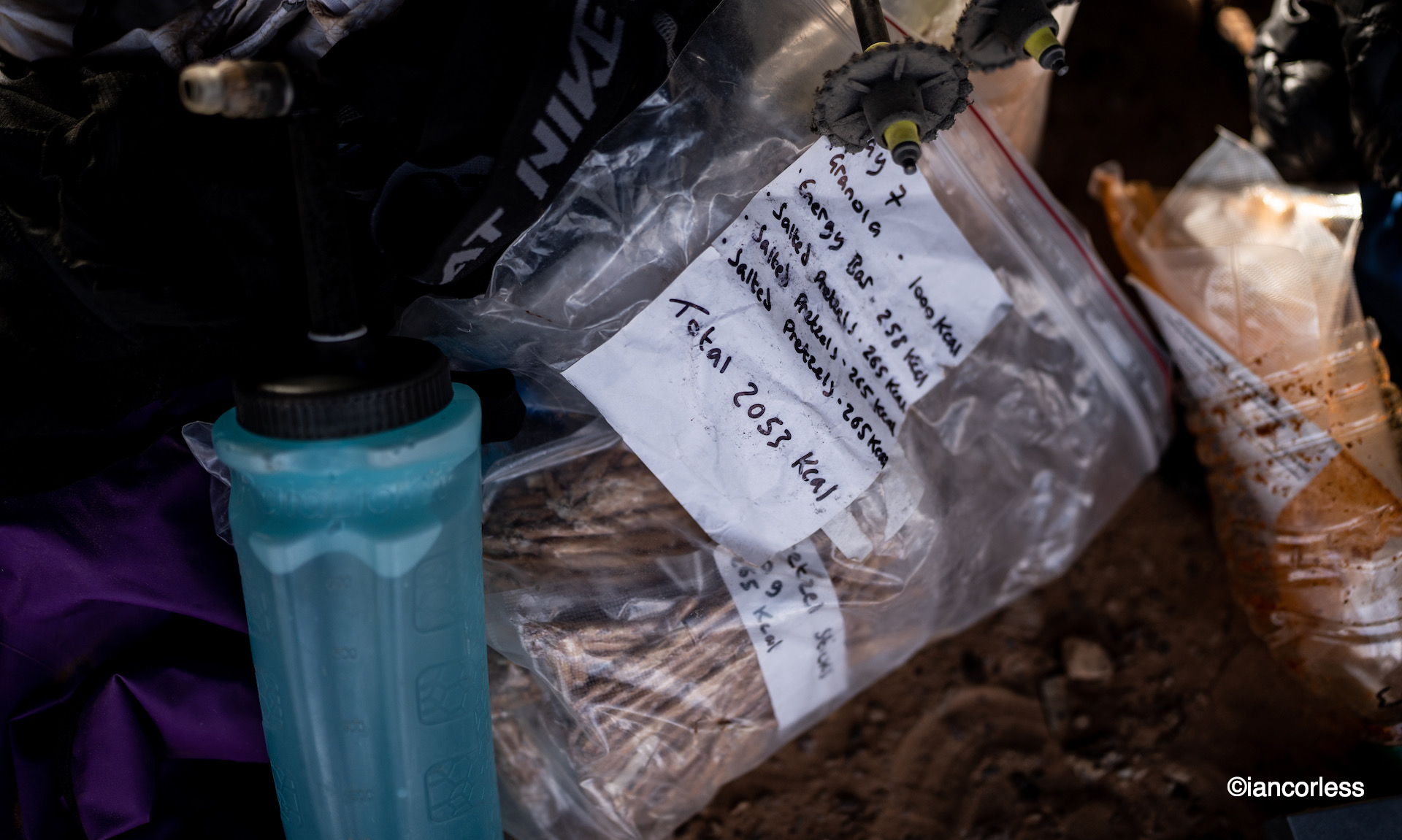
It’s important to have the minimum 2000 calories per day, but at admin, the team will not be very strict. Take personal responsibility. Have your food in bags for each day and then state the total calories in each bag.
There will be a medical emergency tent in the middle of bivouac. There will be more staff in the runner’s bivouac.
If there are any questions – email, contact on social media or call. The MDS team are available for you.
Wednesday 27th there will be an English and French broadcast.
There will be some new surprises, to be revealed in bivouac!
Now is the time to make all the final preparations for a goal that you have been building towards for 6-months, 1-year or maybe even years.
DON’T PANIC.
If you have got this far, you are in a great place.
There is time for one last key week of training, adding the final touches to make sure you are in the best shape possible, BUT, after this week you need to start easing things back, looking after yourself and allowing your body to recover, rest and get ready for what may be one of the biggest weeks of your life?
MEDICAL
Make sure you have all the medical requirements fulfilled and an up to date ECG as specified in MDS rules and regulations.
The organization’s medical certificate (to download from your online account from March 11th 2024) and the resting electrocardiogram (ECG) report plus graph, dated less than 30 days before the start of the race, i.e. from March 12th 2024, are to be presented during the administrative, technical and medical checks on 13th of April 2024. Only the original documents, dated and signed, will be accepted (unvalid photocopy). Failure to present these documents will incur penalties (see ART.27 et 28). The signature and the stamp of the doctor must be applied on them.
The electrocardiogram of effort is advised for participants over 40 years. It is not compulsory and does not replace the ECG at rest and its plan. This can be joined to the medical certificate and presented in Morocco.
TRAINING
From a training perspective, what may the next weeks looks like? Well, we are all individuals, we all have different abilities, we all have different goals, we all have different free time and the list could go on. However, I have found over the years that using a ‘percentage’ taper works across the board, irrespective of the person.
Race date: 14th April 2024
Taper schedule:
Week 4: 17th March
Week 3: 24th March
Week 2: 31st March
Week 1: 7th April
If we look at the weeks above, a taper to Marathon des Sables could look like as follows:
Week 4: 80%
Week 3: 60%
Week 2: 40%
Week 1: 20%
The percentages are based as a percentage of what would be week 5, starting 10th March. For simplicity, let’s assume that week 5 is your last big training week and it was 100km or 12-hours.
The Taper:
Week 4: 80km or 9.6 hours
Week 3: 60km or 7.2 hours
Week 2: 40km or 4.8 hours
Week 1: 20km or 2.4 hours
Importantly, keep the balance of training days the same. If you typically run 5-days a week, maintain those 5-days and reduce the volume/ intensity.
Your body needs to keep alert and active. So make sure you add some stimulus in this taper period, short periods of faster running and/ or hill work are ideal. However, do all this with the priority not to get injured. Now is not the time to get a niggle, a sprain or a problem.
ACCLIMATE
In the final two weeks of taper you need to hone in on acclimation to heat and prepare the body.
Don’t leave this to the last minute, plan ahead, especially if using a heat chamber. Heat chambers are limited and obviously, time slots are limited.
If you do not have access to a heat chamber think of other options: sauna, hot baths, bikram yoga, adding layers when running, or if you are lucky with time, arrive in Morocco early and taper in a real situation.
EQUIPMENT
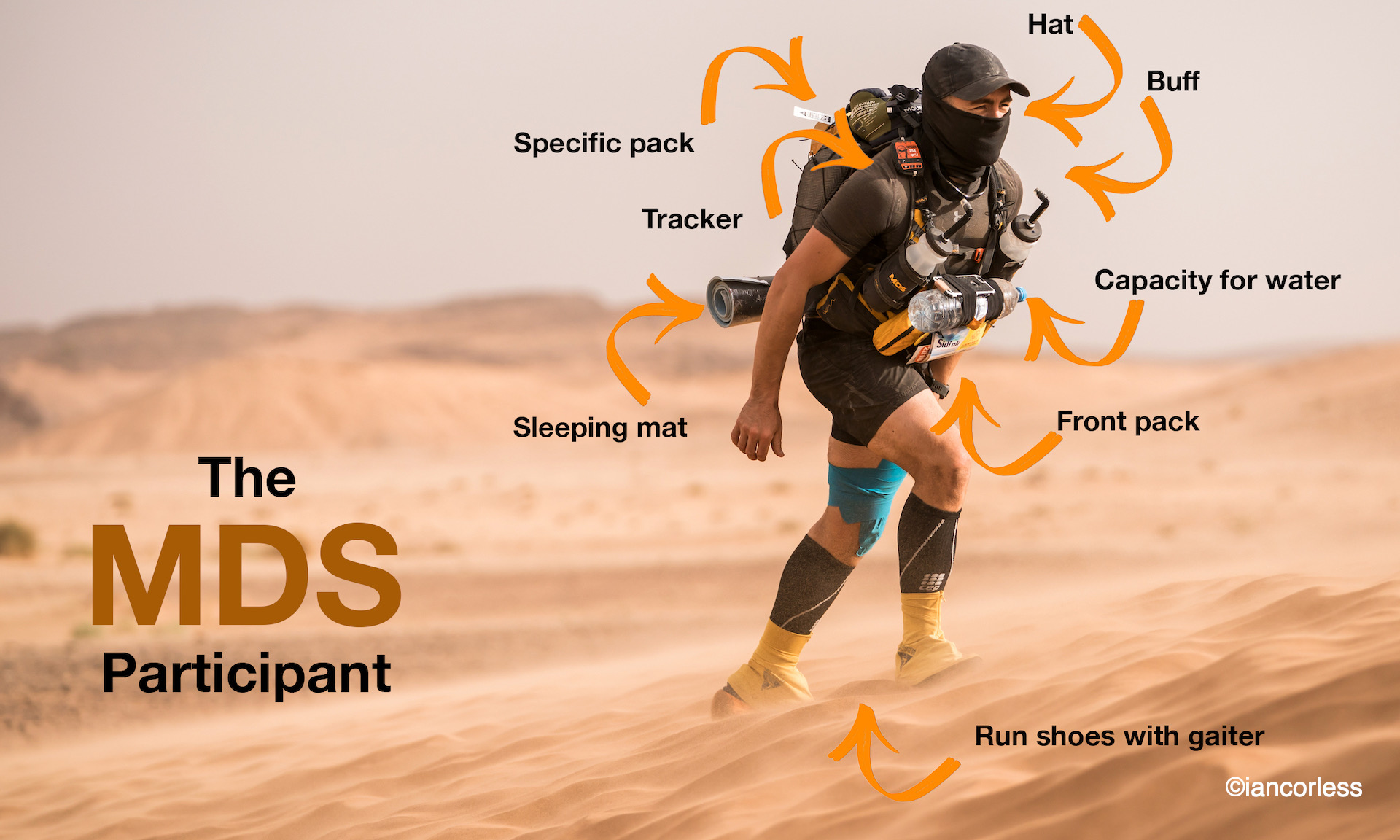
You will have been mulling over equipment for months and you may well have tweaked and changed your choices. Now, with 4-weeks to go, this is the time to make sure you have everything you need and also understand what it all weighs.
Clothes must be comfortable and not rub.
Shoes fit perfectly, give no hot spots and are suitable for the desert environment and have gaiters.
Socks work for you.
Sleeping bag is light and warm.
Sleeping mat
Food
Mandatory kit
Top Tip –
Use LighterpackHERE to list all your equipment. You can see an example HERE that I used for a trip climbing in the Atlas Mountains. This is a great way to look at everything and make sure you have nothing missing.
Keep luxuries to an absolute minimum, they only add weight.
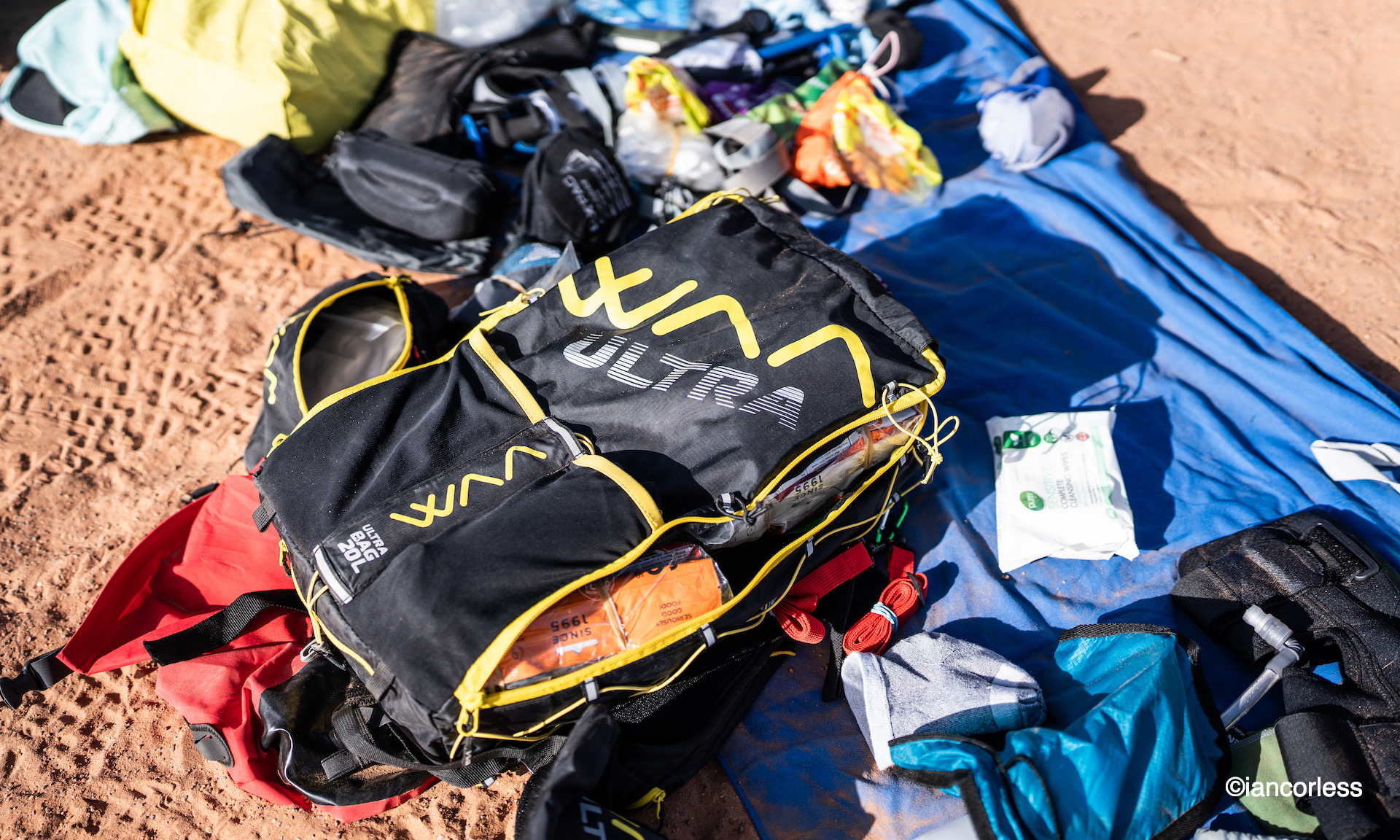
Pack and re-pack your pack to make sure you have the most comfortable solution and importantly, you have immediate access to essential items.
Read my Top 20 Tips HERE which provides a great overview of all the things you need to consider now in this final phase.
FOOD
You need a minimum of 2000 calories per day. Lay food out for each day and have a spreadsheet that itemises everything and shows the weight and calories.
Where possible, re-package food in smaller and lighter packaging. Particularly important with dehydrated meals. Read HERE
TRAVEL
Travel in your run clothing including your run shoes with the gaiters. Yes, you are going to look somewhat ‘special’ at the airport but trust me, luggage goes missing and you do not want to be the person standing in the Sahara watching your dream slip away because of lost luggage. Equally, take your run pack with all contents for the race as carry-on. You can take pretty much take everything: food, sleeping bag, essentials etc. However, check with your airline what can and cannot go on the plane.
Put your main luggage in the hold and here you can take spares, extras and options. MDS varies considerably in temperature, we get hot and cold years. Never assume it will be hot, it may not be. Before admin day you can fine tune your ‘race kit’ with more or less layers.
Purchase food and drinks at the airport to take on the plane. Also consider when you land in Morocco, you will have an approximate 6-hour bus journey to bivouac 1, take food and drink with you for this trip.
Have cash with you, depending on which airline you use, card payments are not always possible, also, in Morocco, cash is king.
ARRIVAL
You will arrive in Morocco from London or Paris on one of the arranged flights on Friday 12th April. If you are not on one of these flights, you need to be at Ouarzazate airport (typically for 0900) on the same day.
Runners will then fill buses, road books will be given and then you transfer to the desert. Expect 6-hours.
At bivouac you will find your tent and settle in.
REMEMBER food is now NOT provided and you therefore need to feed yourself on arrival day and admin day. There are no restrictions on weight or calories here, so, take as much as you want and plenty of variety, this includes drinks. Only water will be in camp.
As mentioned above, until admin, you have your luggage with you, so, you can have more layers, a more comfortable inflatable bed and some luxuries – consider what will make these days more pleasurable and comfortable.
ADMIN DAY
On admin day, prepare all your kit and make sure you have everything prepared and ready. Also make sure you have all mandatory and essential kit. Once you have passed through admin, your luggage is taken away and you will not see it again until after the race.
Race self-sufficiency actually only starts the following day with stage 1.
Admin can take a while, so make sure you take liquid and snacks and my top-tip is take an umbrella to protect from standing in the direct heat.









 MDS Legendary 2025
 11-day adventure
 April 4 to 14, 2025
 Sahara Desert, Morocco


 IAN CORLESS