There are moments in life that will etch themselves into your memory with brutal clarity, the sting of the sun, the whip of the wind, the bite of fatigue. And then there are moments that transcend all that. Moments that shine because of what it took to get there. Today, that moment came. MDS 120 Morocco 2025 is complete. But this finish line didn’t come easy.
The Rest Day That Wasn’t
After the double blow of Stage 1 and 2 under an unforgiving sun, participants staggered into the bivouac with blistered feet and salt-crusted skin, ready for a day of rest.
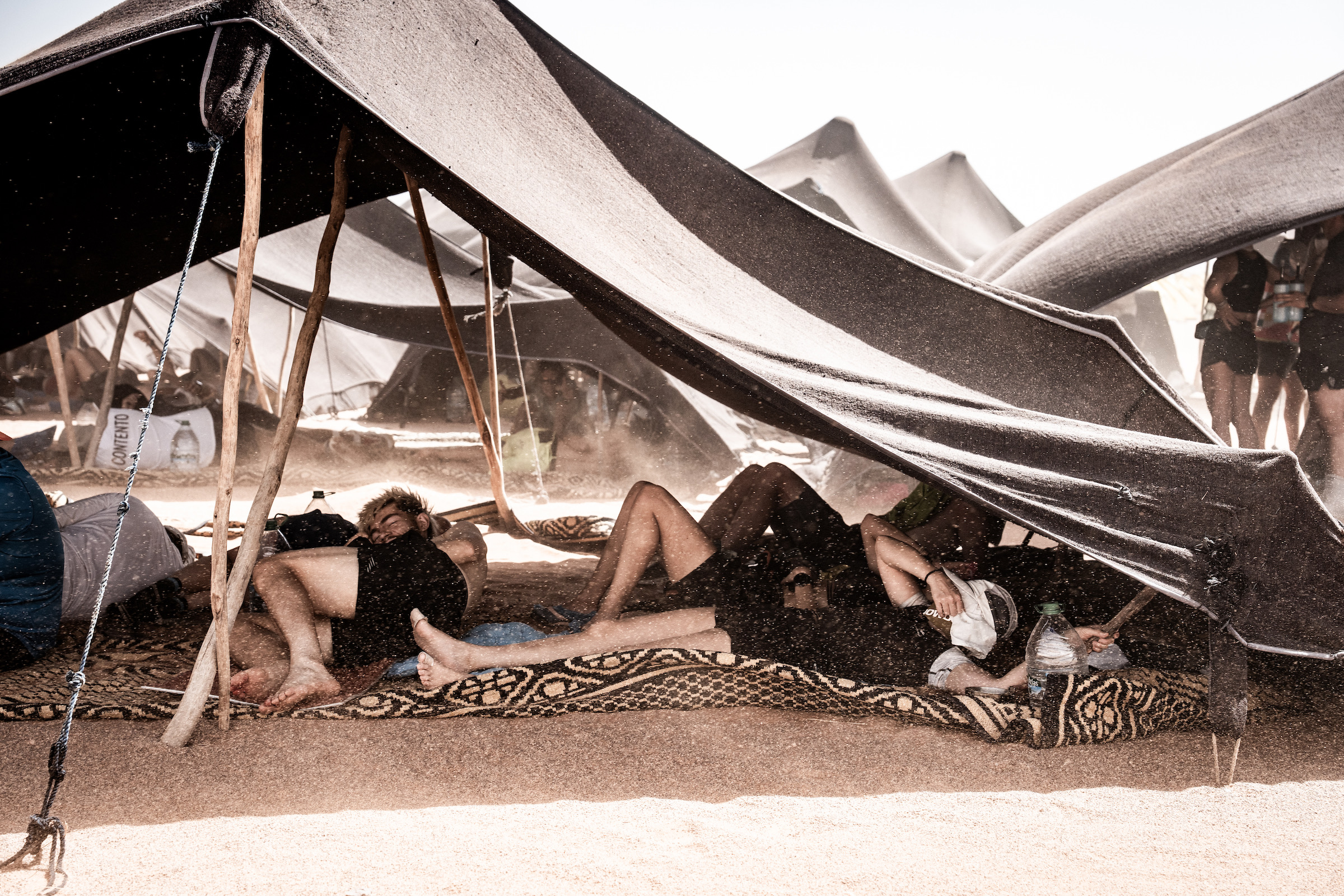
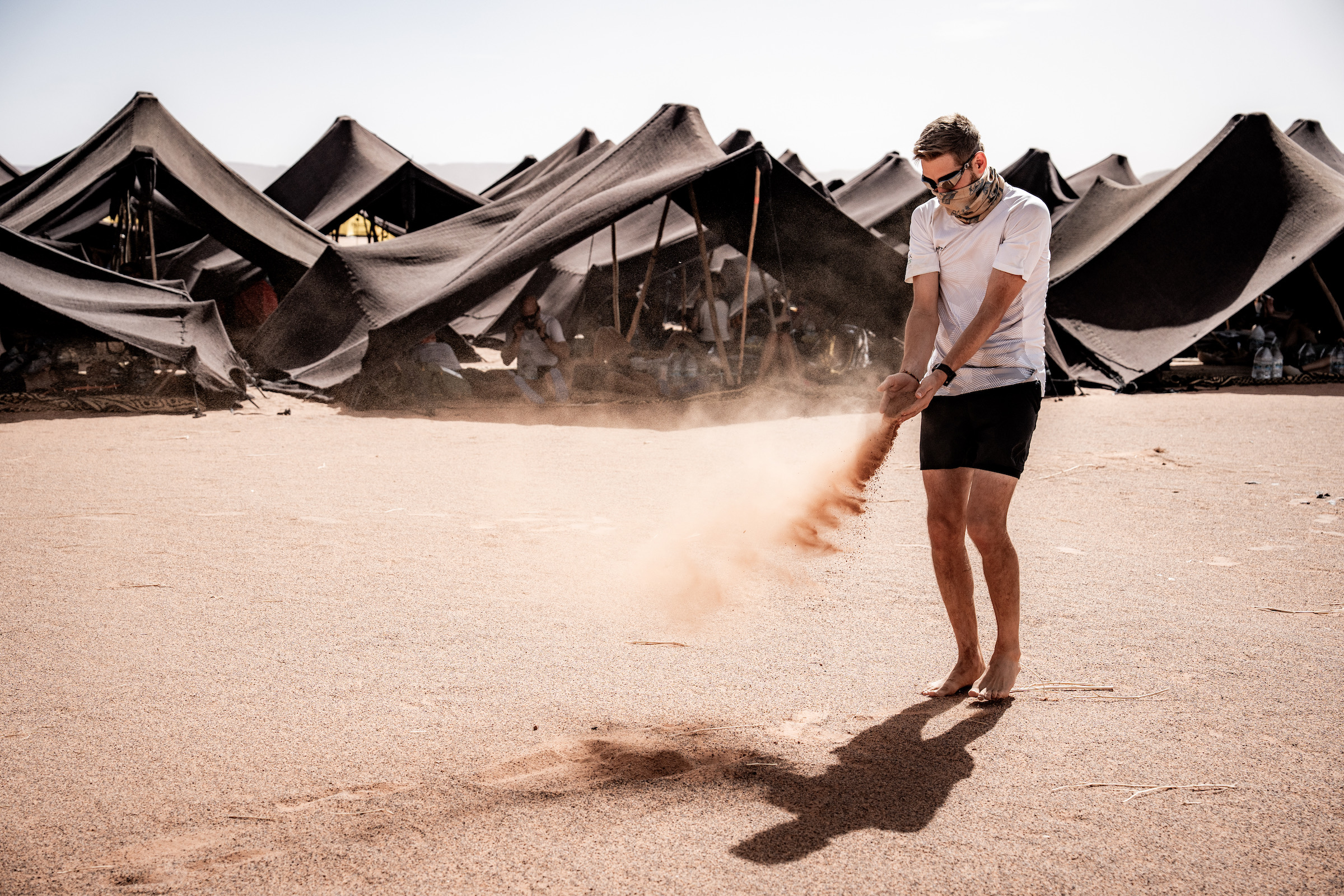
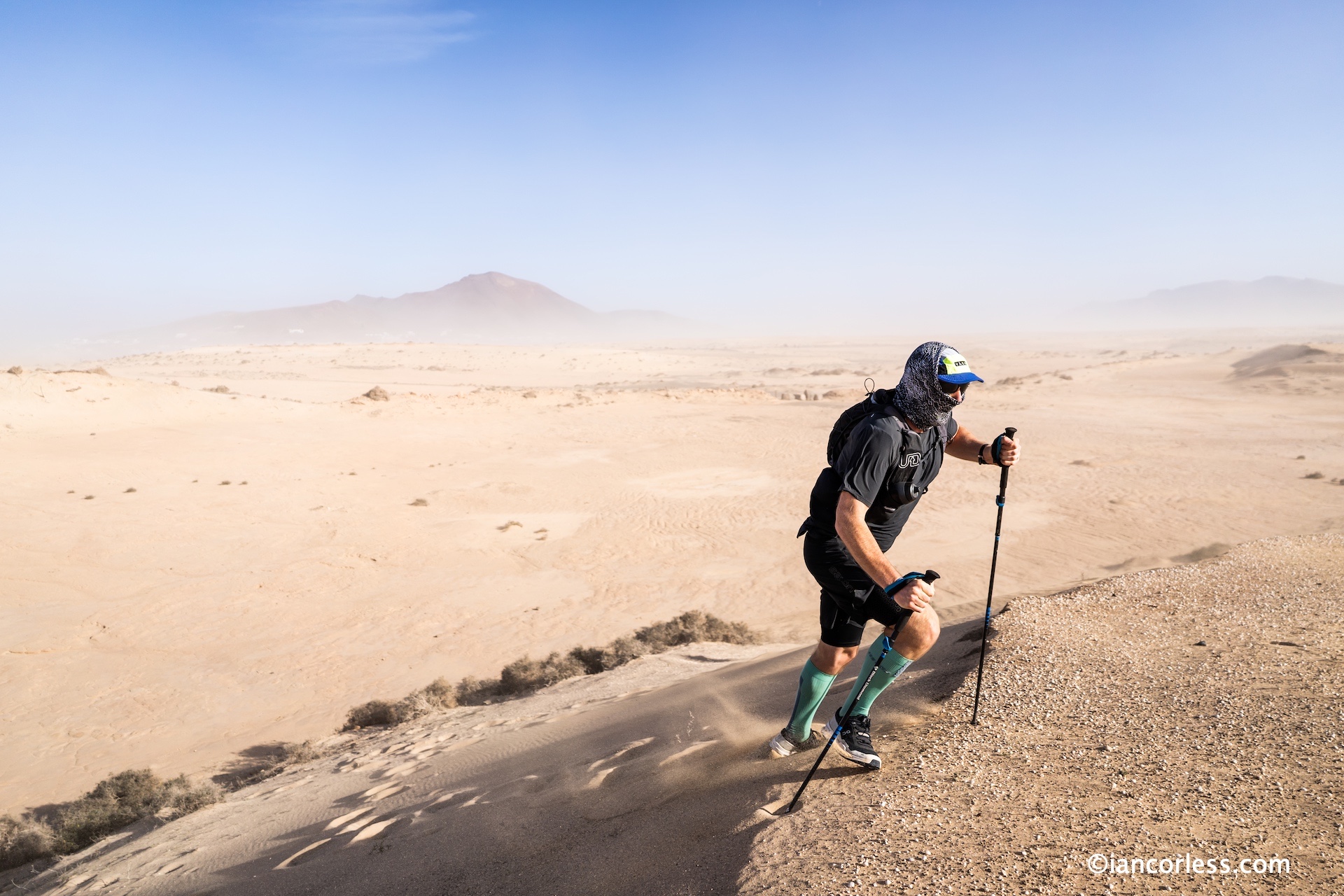
But the Sahara had other plans. Instead of recovery, they got afternoon chaos: a wild sandstorm that tore across camp like a runaway train. The sky turned thick and orange. Tents collapsed. Gear went flying. People huddled in whatever shelter they could find, eyes wrapped in buffs, trying to breathe through the dust. It lasted for hours. When it finally passed, silence hung in the air, but it wasn’t peace. It was exhaustion.
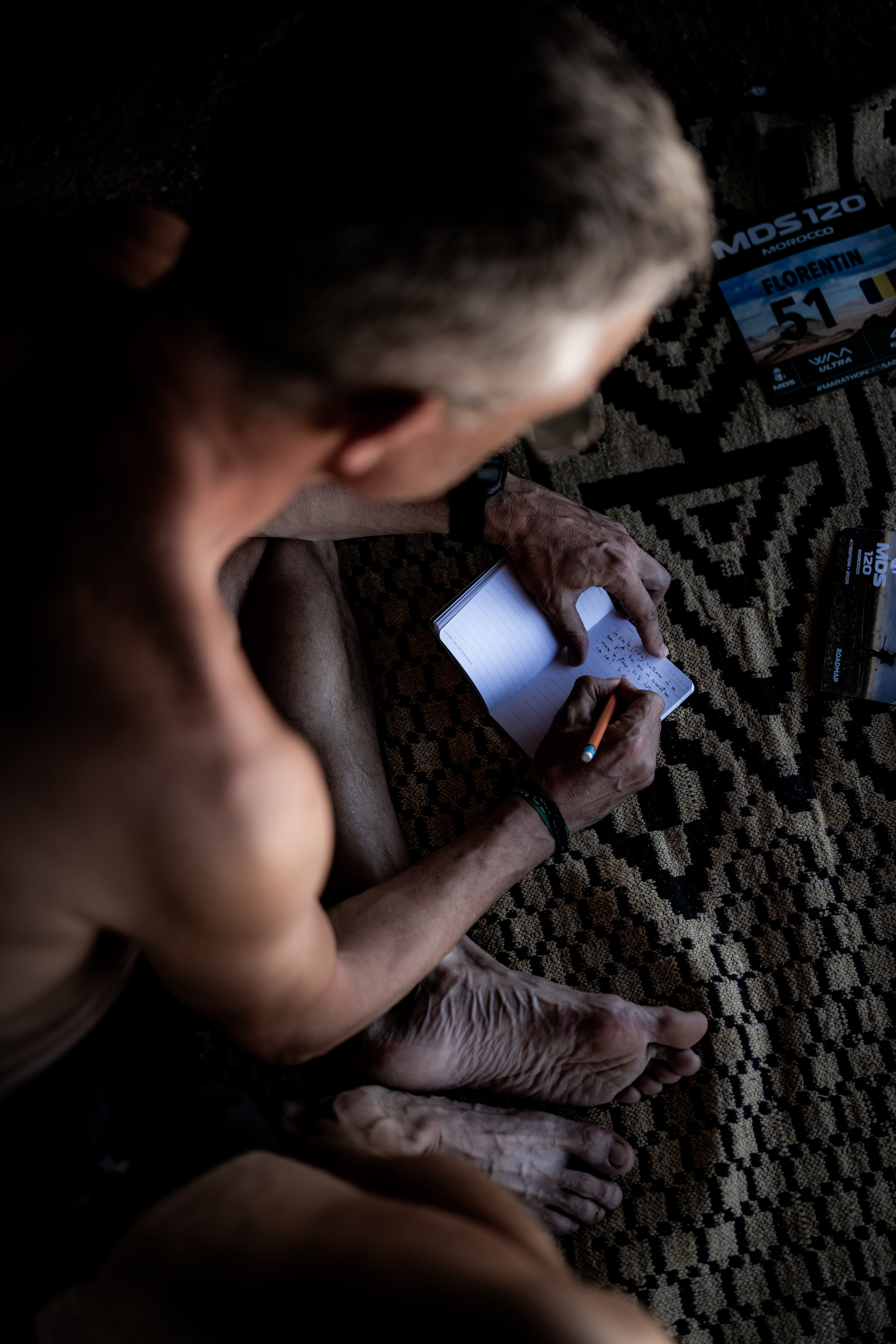
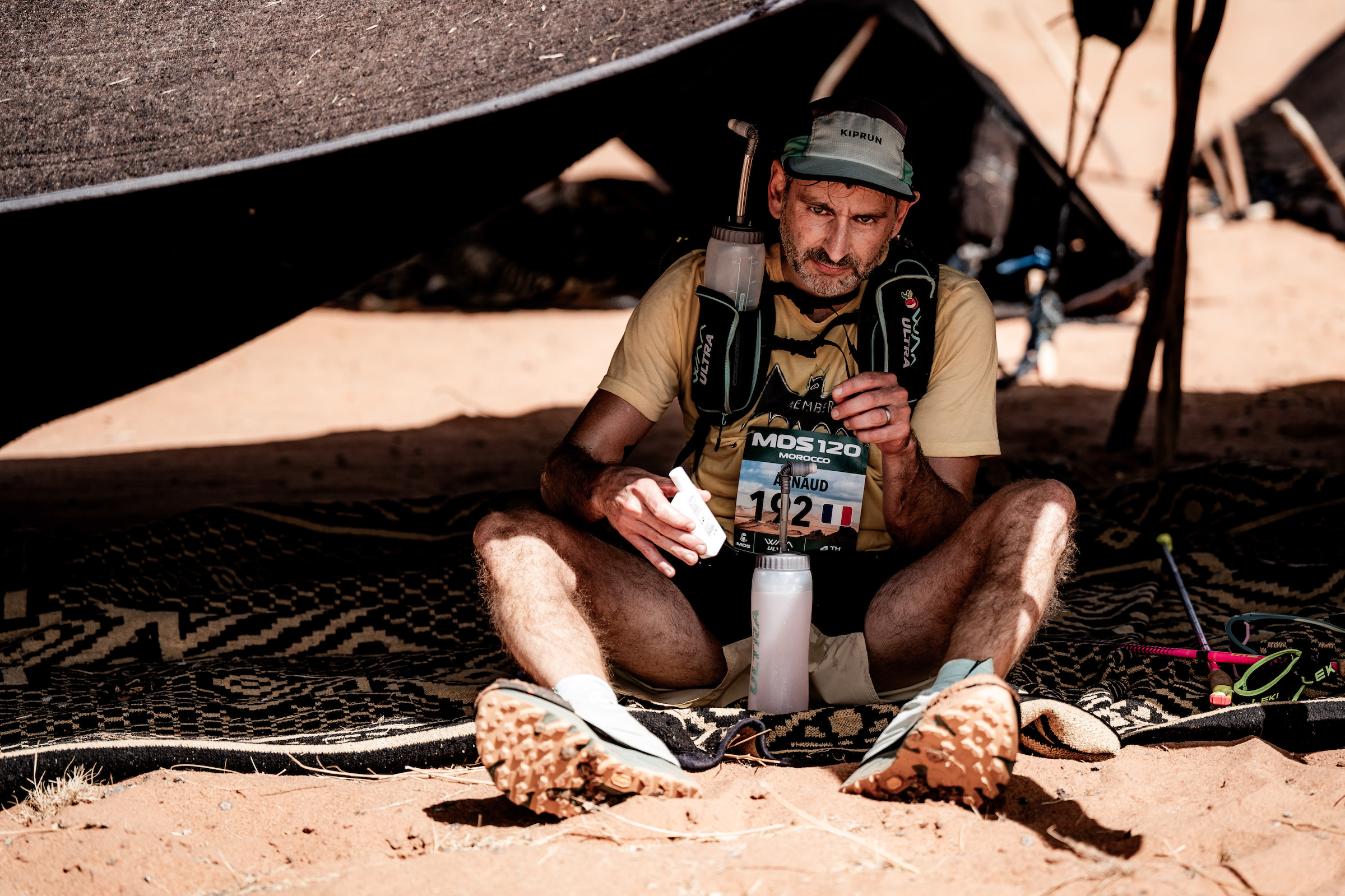
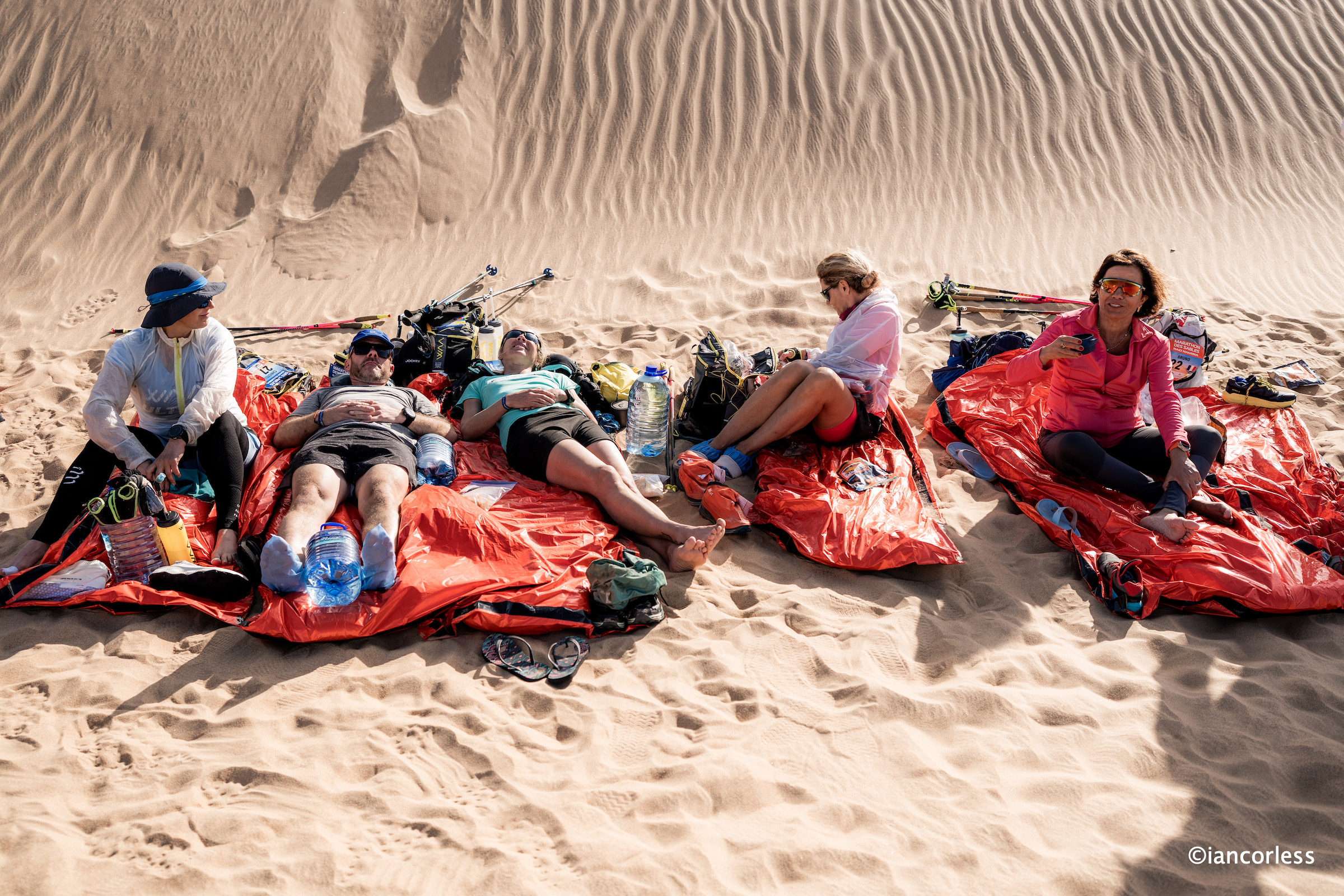
This was not the rest day anyone hoped for. But there were plenty of moment of relaxation before the chaos – lots of sleeping, adding entries in journals.
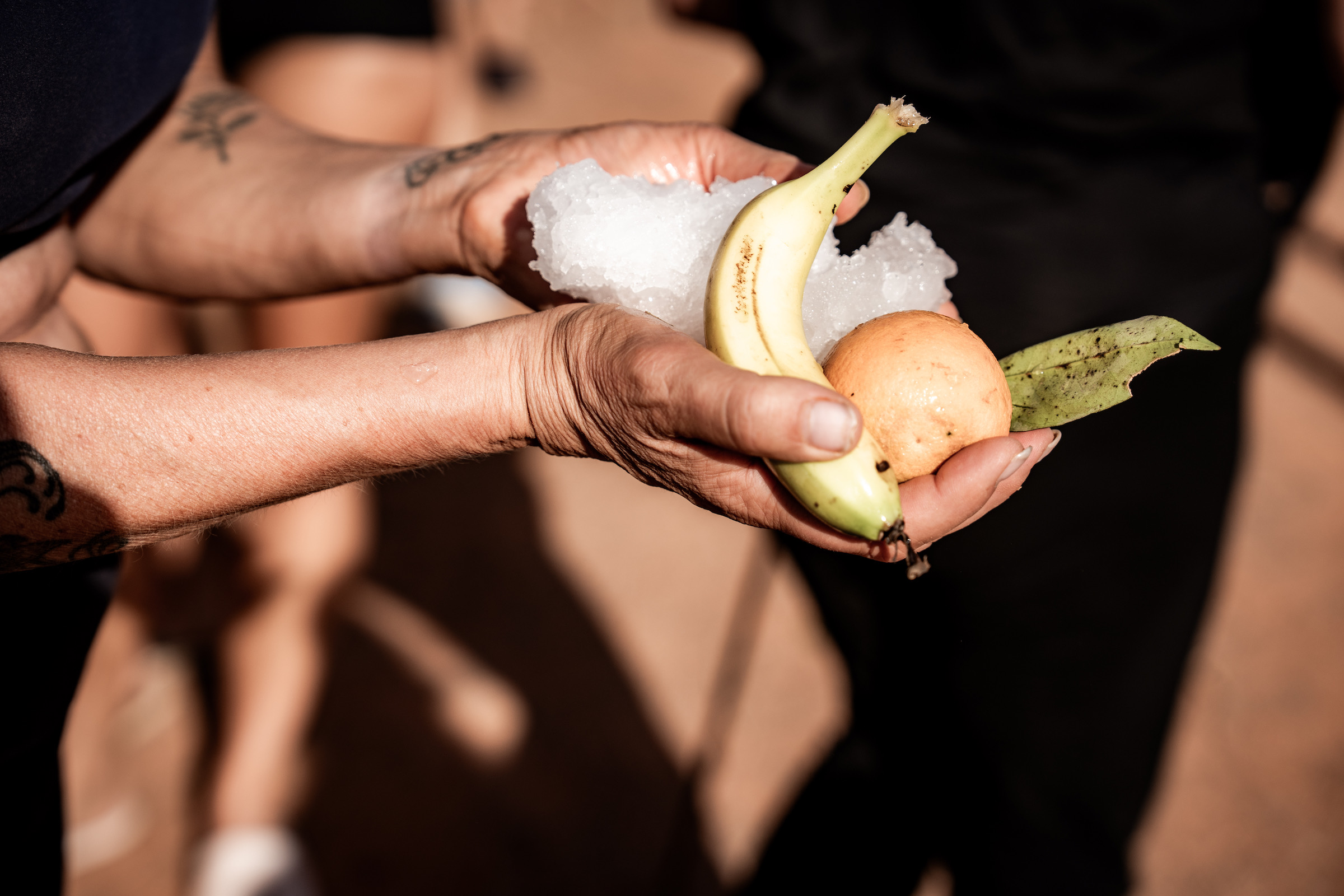
and towards the end of the day, as the wind calmed, MDS organisation offered a treat – no longer a cold can of Coke – today, fresh fruit and ice.
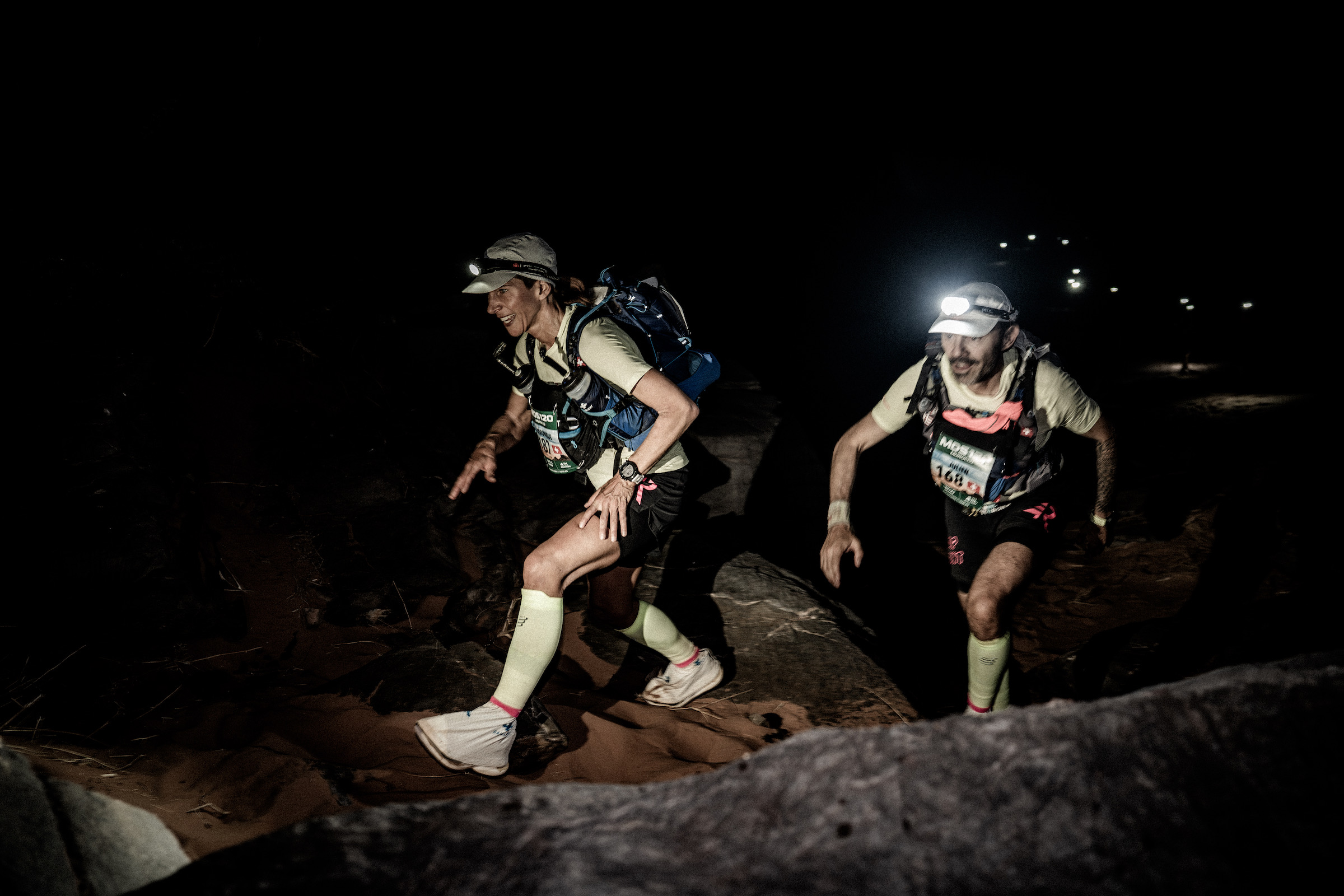
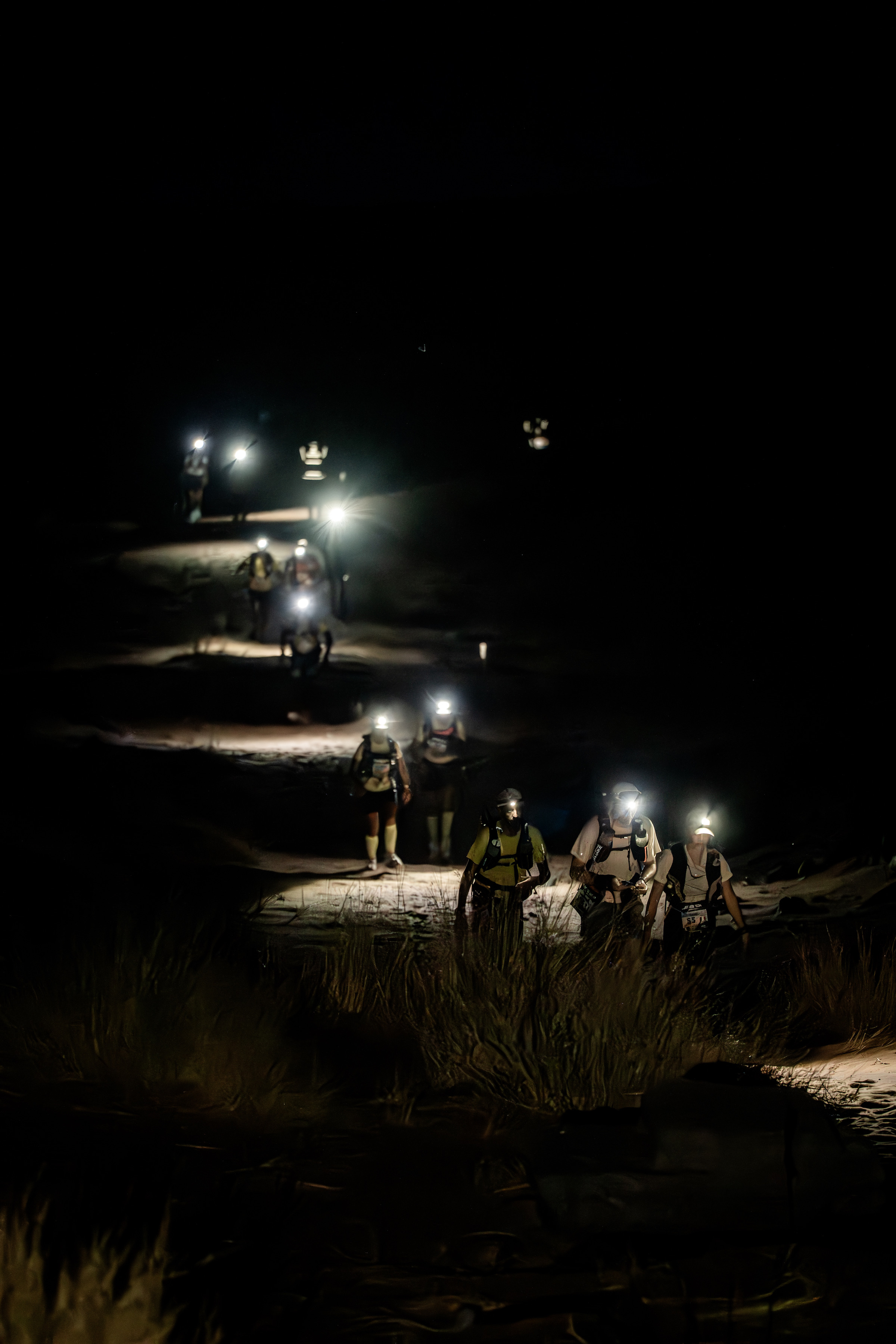
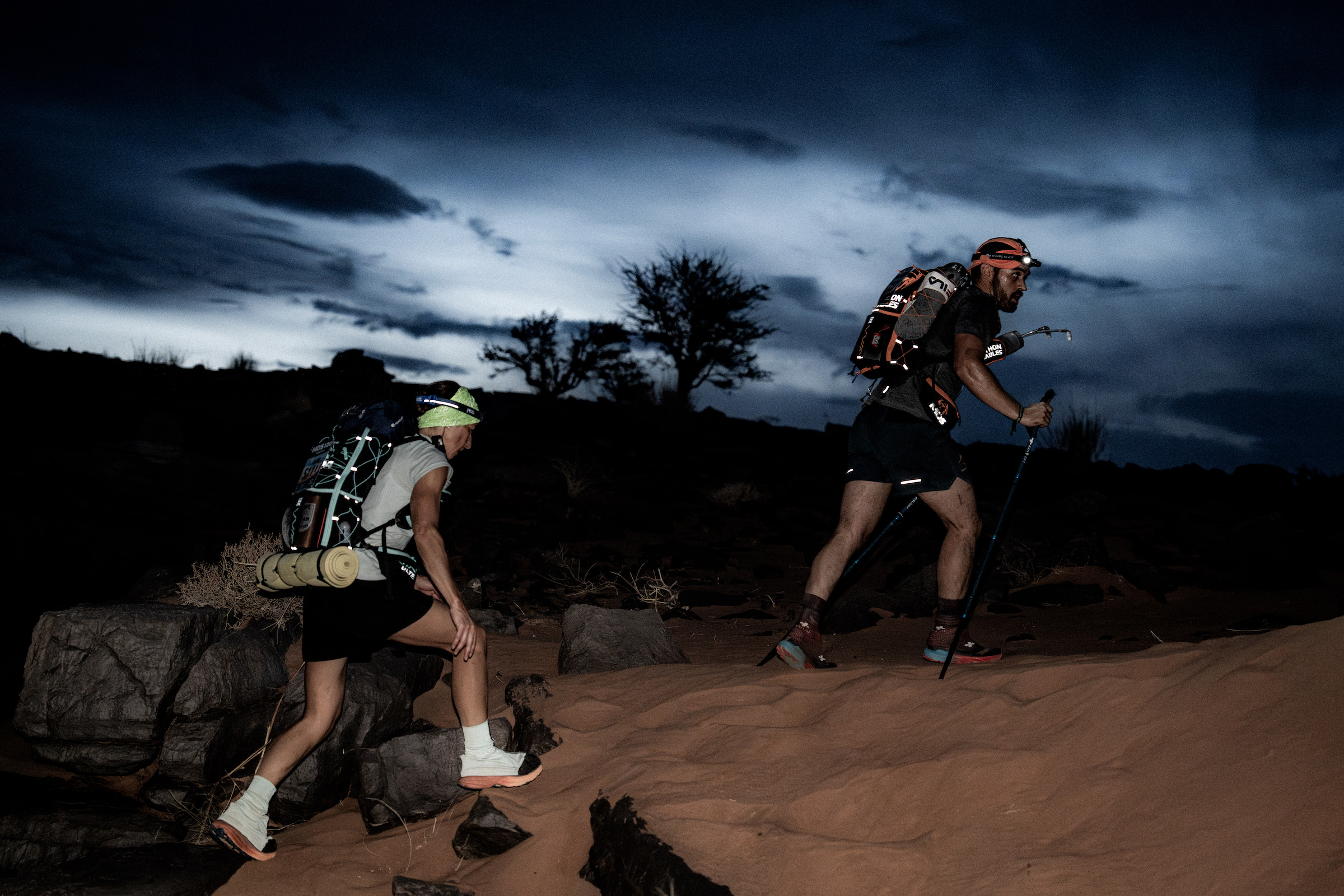
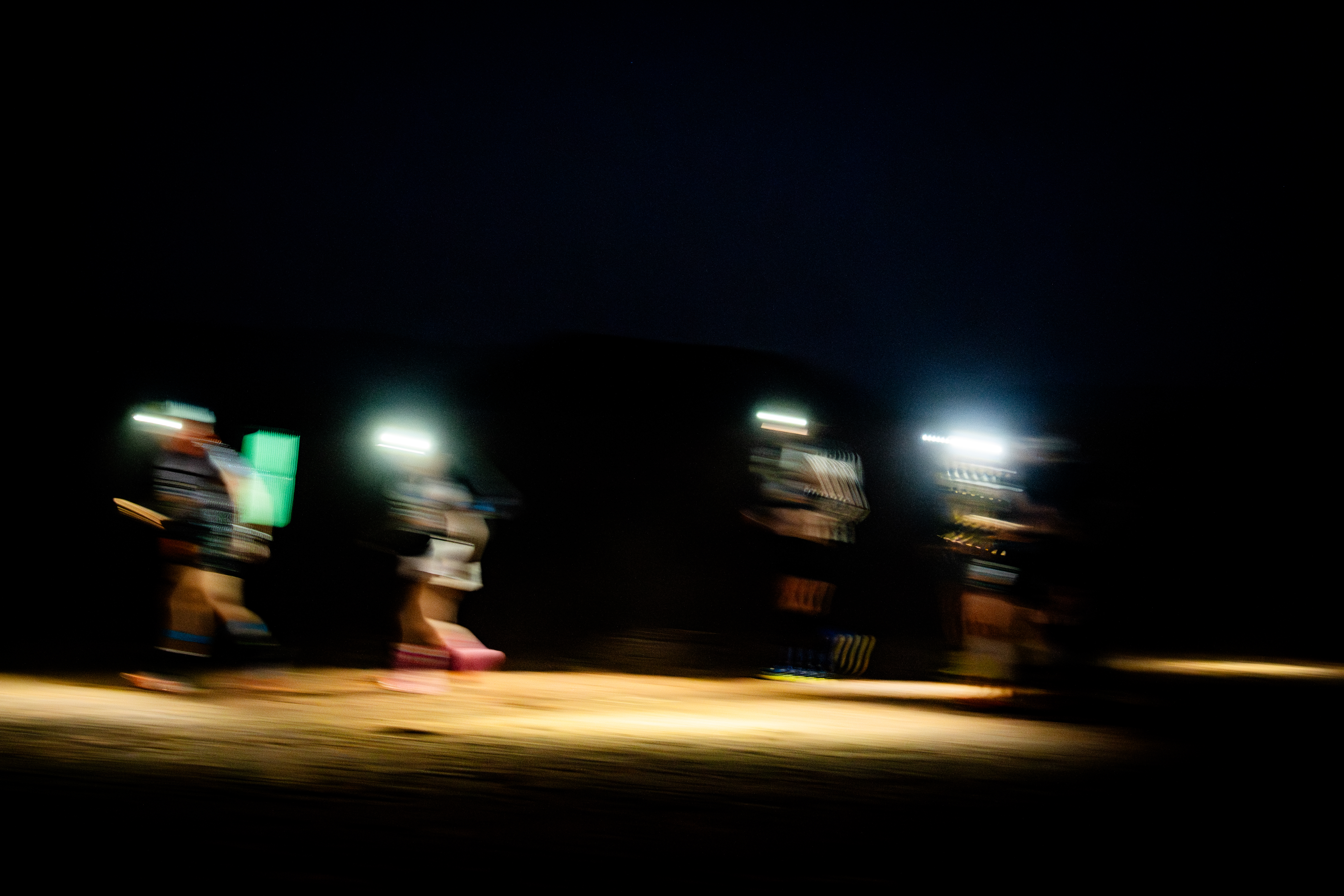
At 0400, camp began to stir. Bleary-eyed runners rose in darkness, fumbling with head torches and gear. The temperature hadn’t dropped. The air felt thick and warm, like the desert was still holding onto yesterday’s rage.
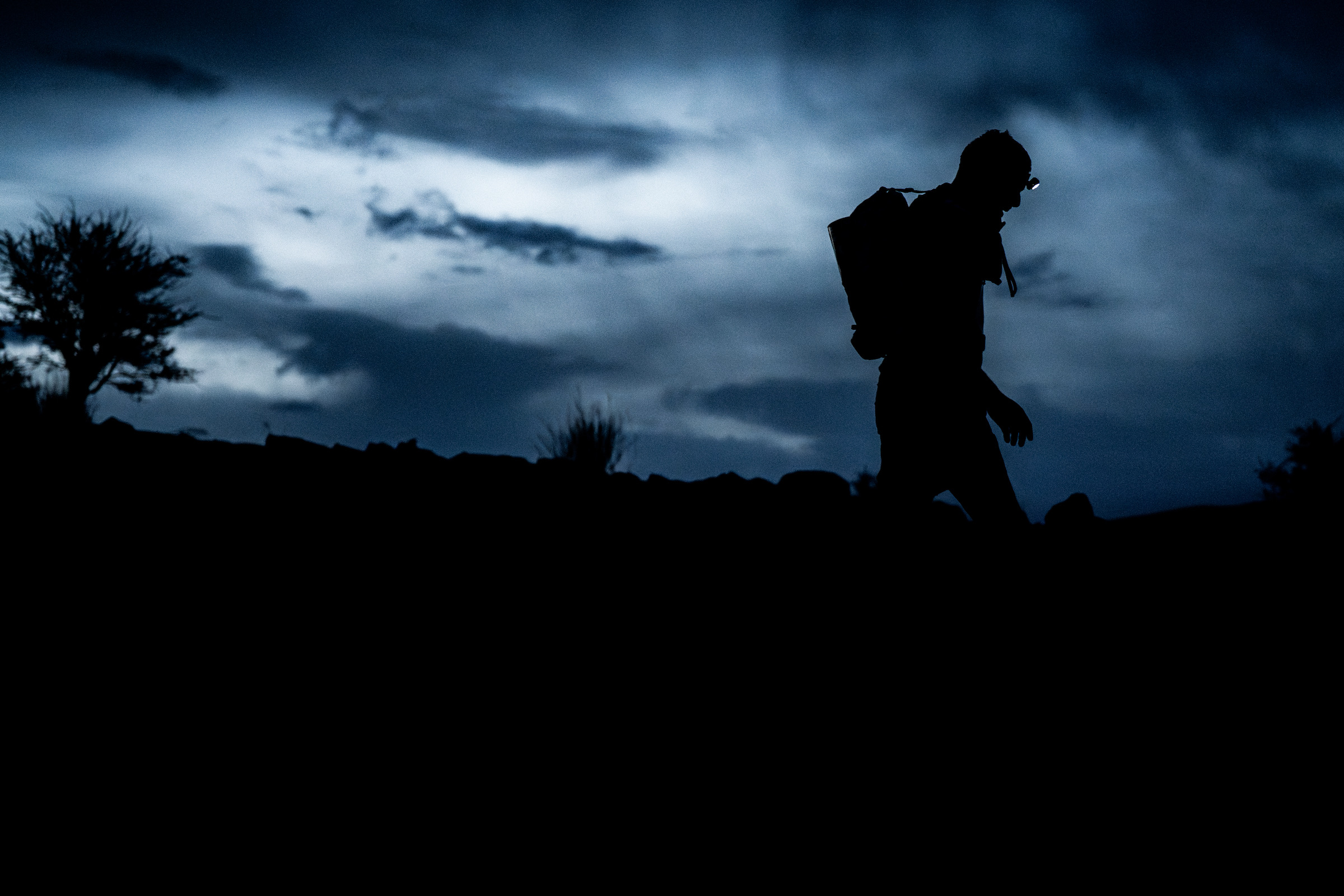
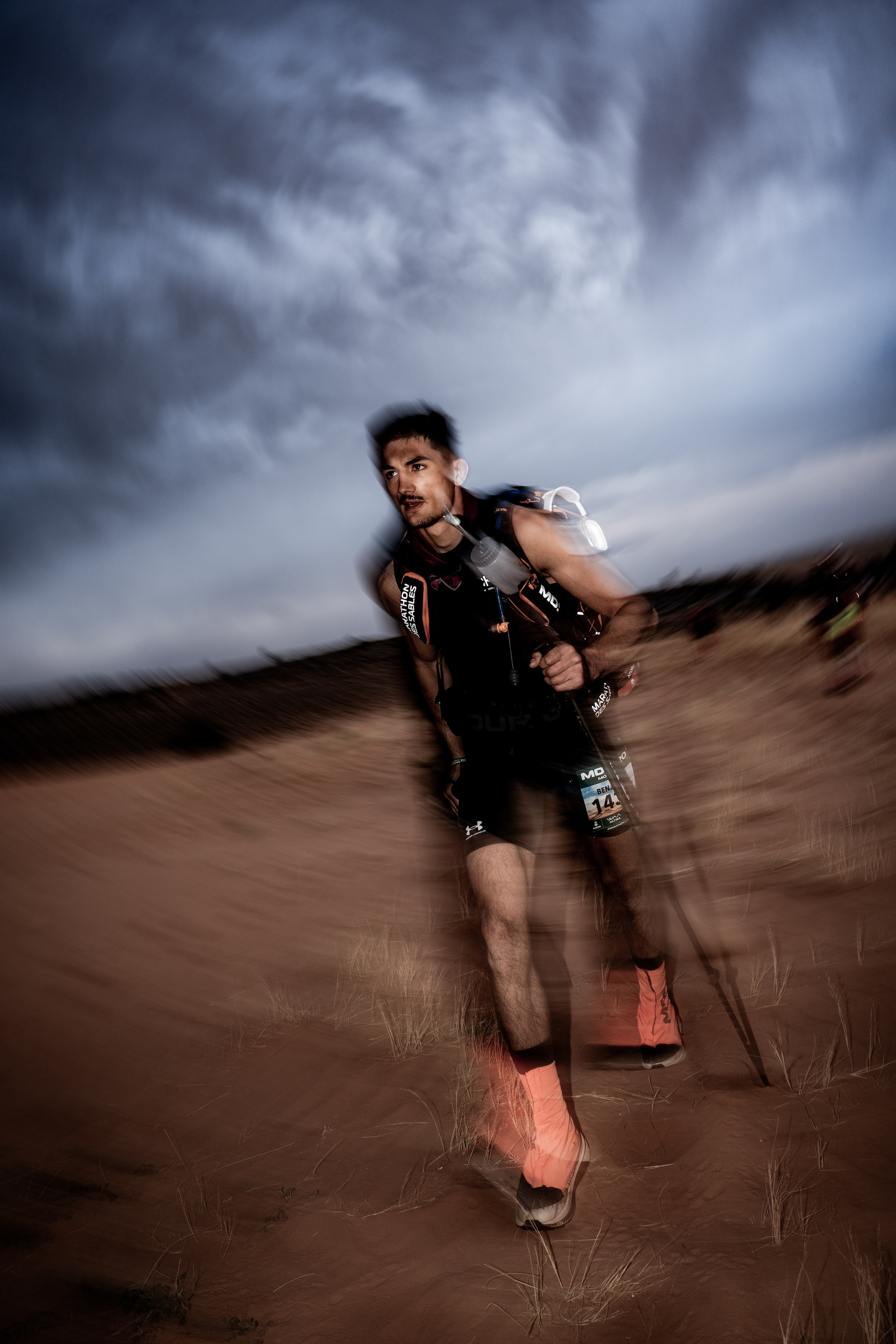
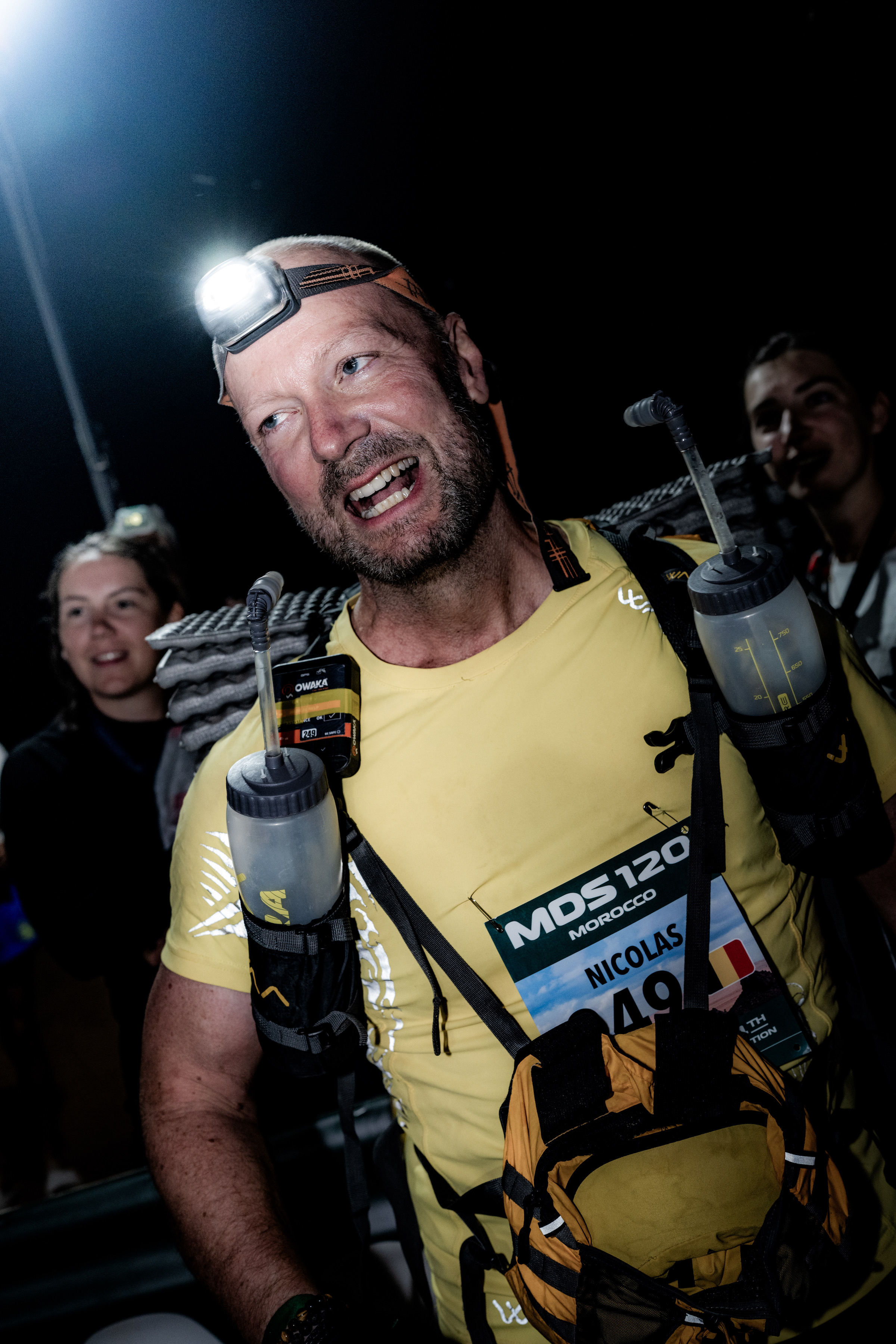
By 0530, the first runners were off. Headlamps cut through the pitch, bobbing along as the desert slowly took shape in the dim light. At 0630, the top-10 runners launched like arrows, chasing the dark down.
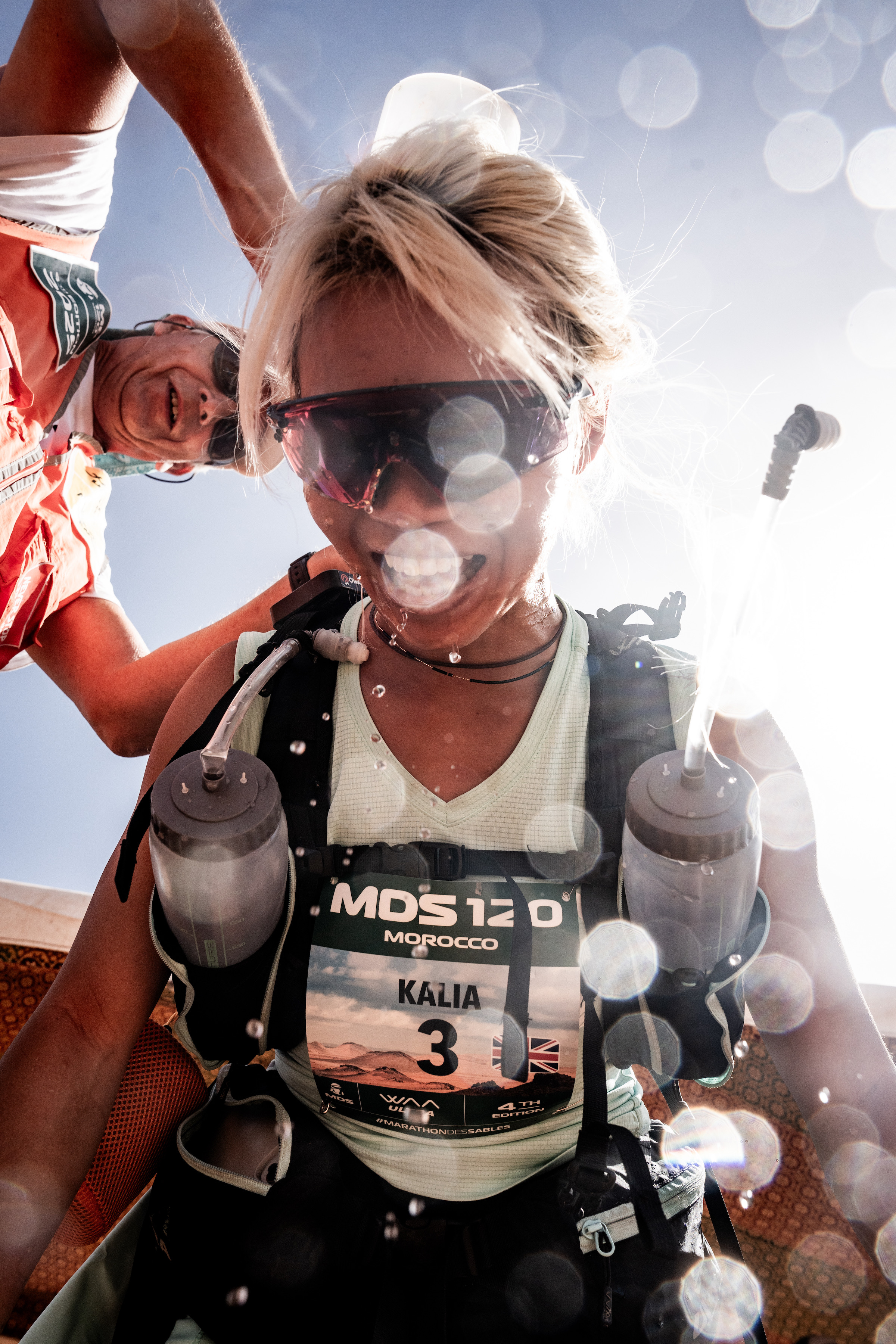
Then, something no one expected happened. It started softly. A few drops. Then more. Rain. Actual rain falling from a sky that hadn’t offered a single kindness in days. No one ducked. No one cursed. No one complained. Smiles broke out, quiet and stunned at first, then wide and wild. Some raised their faces to the sky. This was a blessing. A strange, surreal gift. The desert, finally, exhaled.
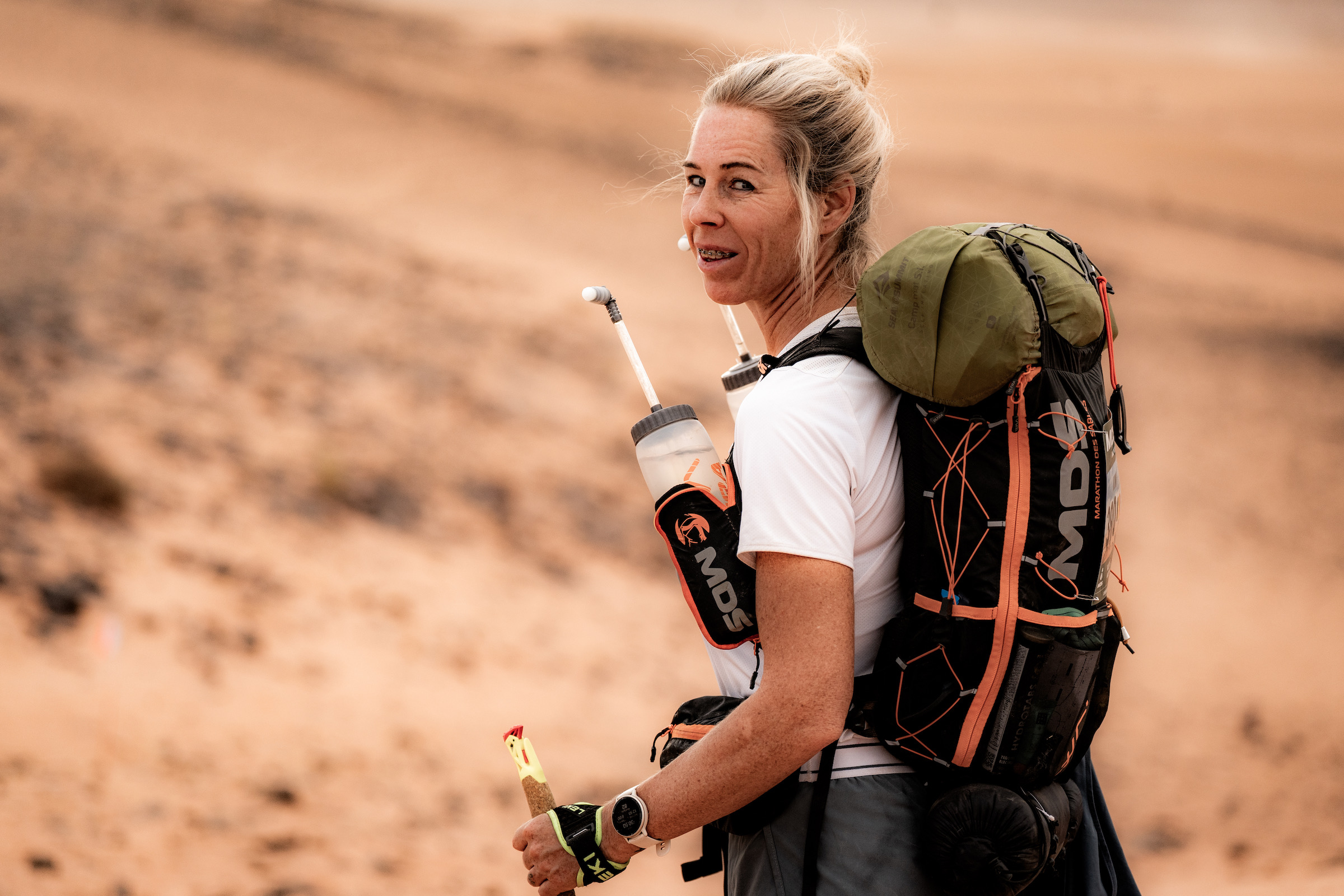
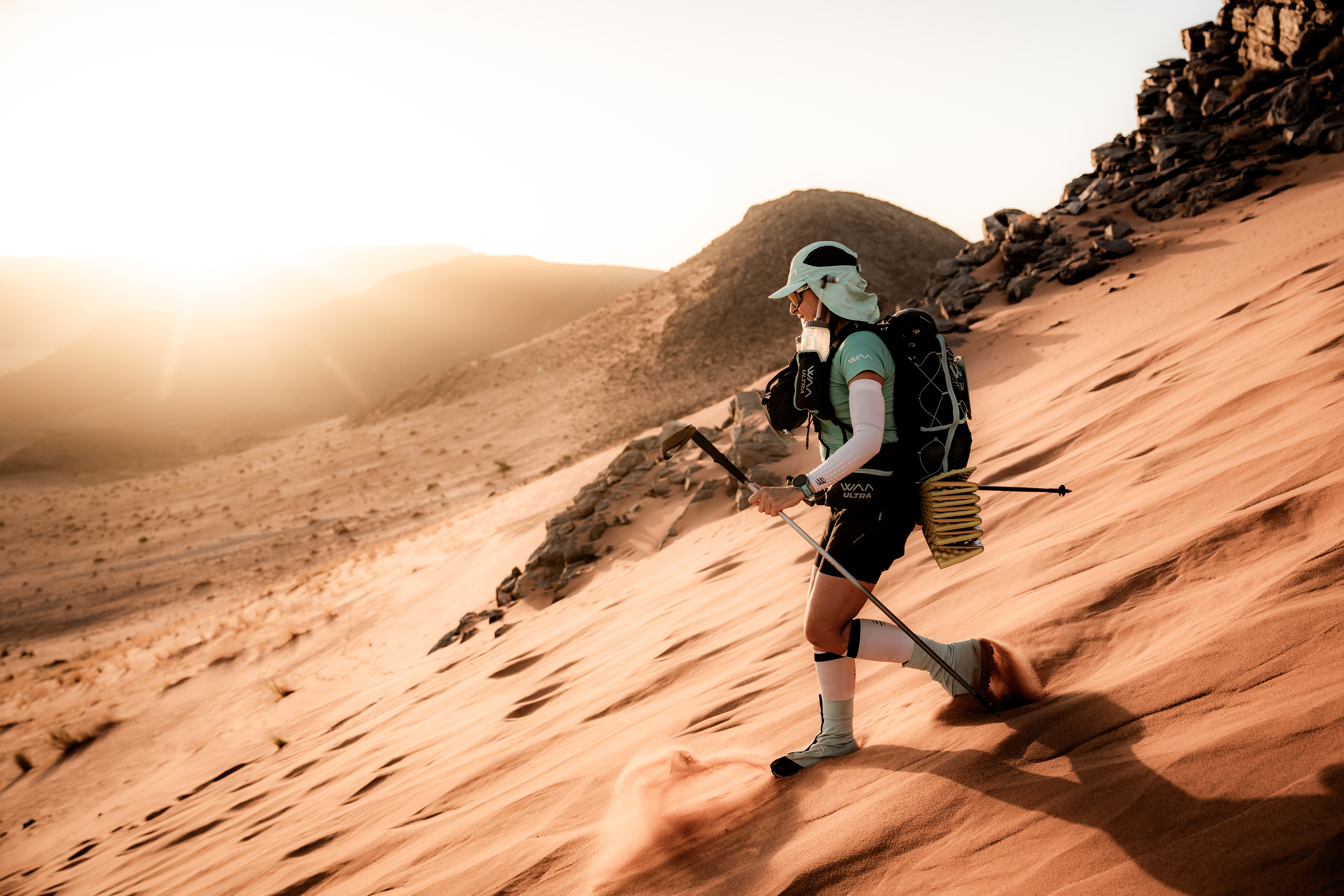
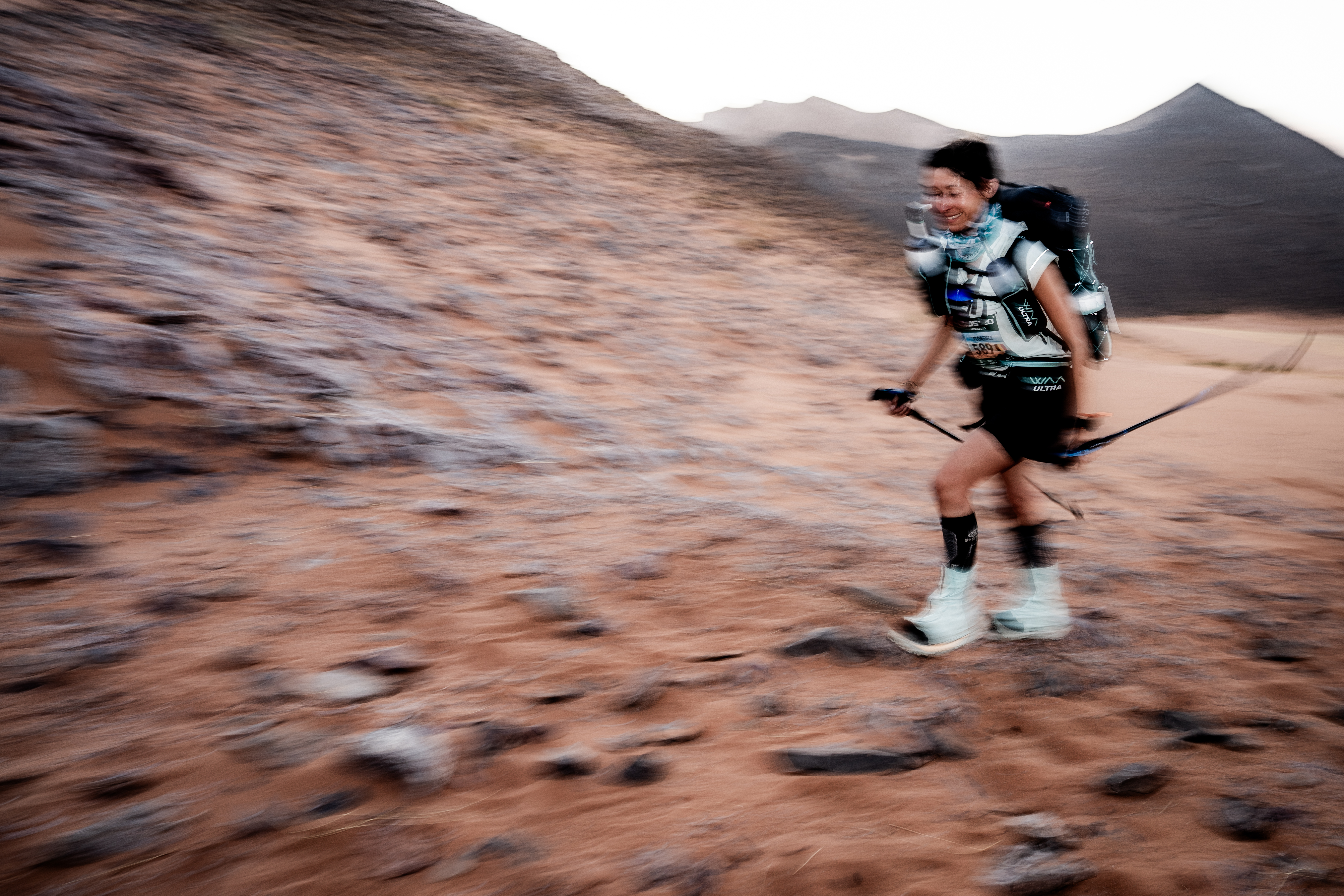
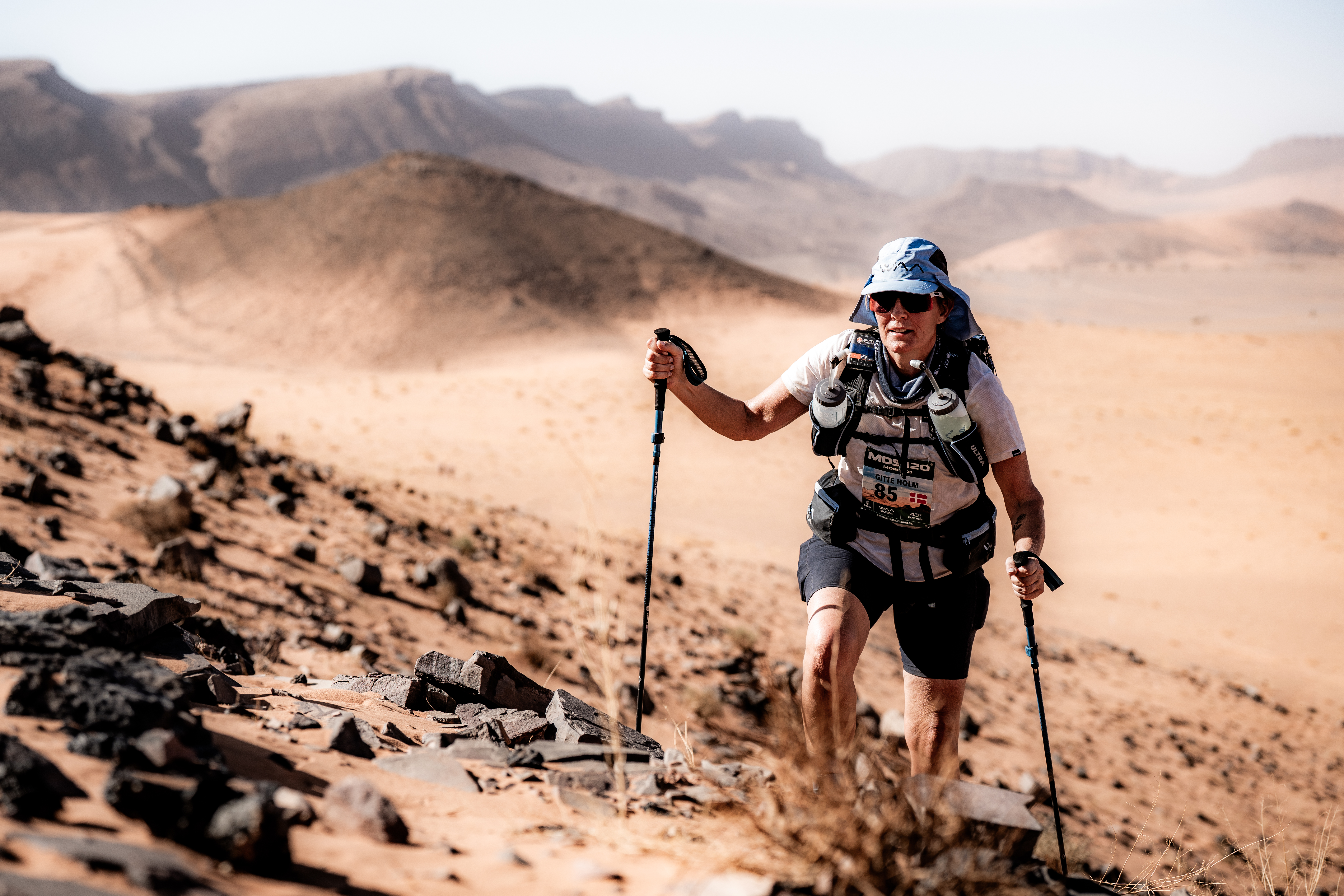
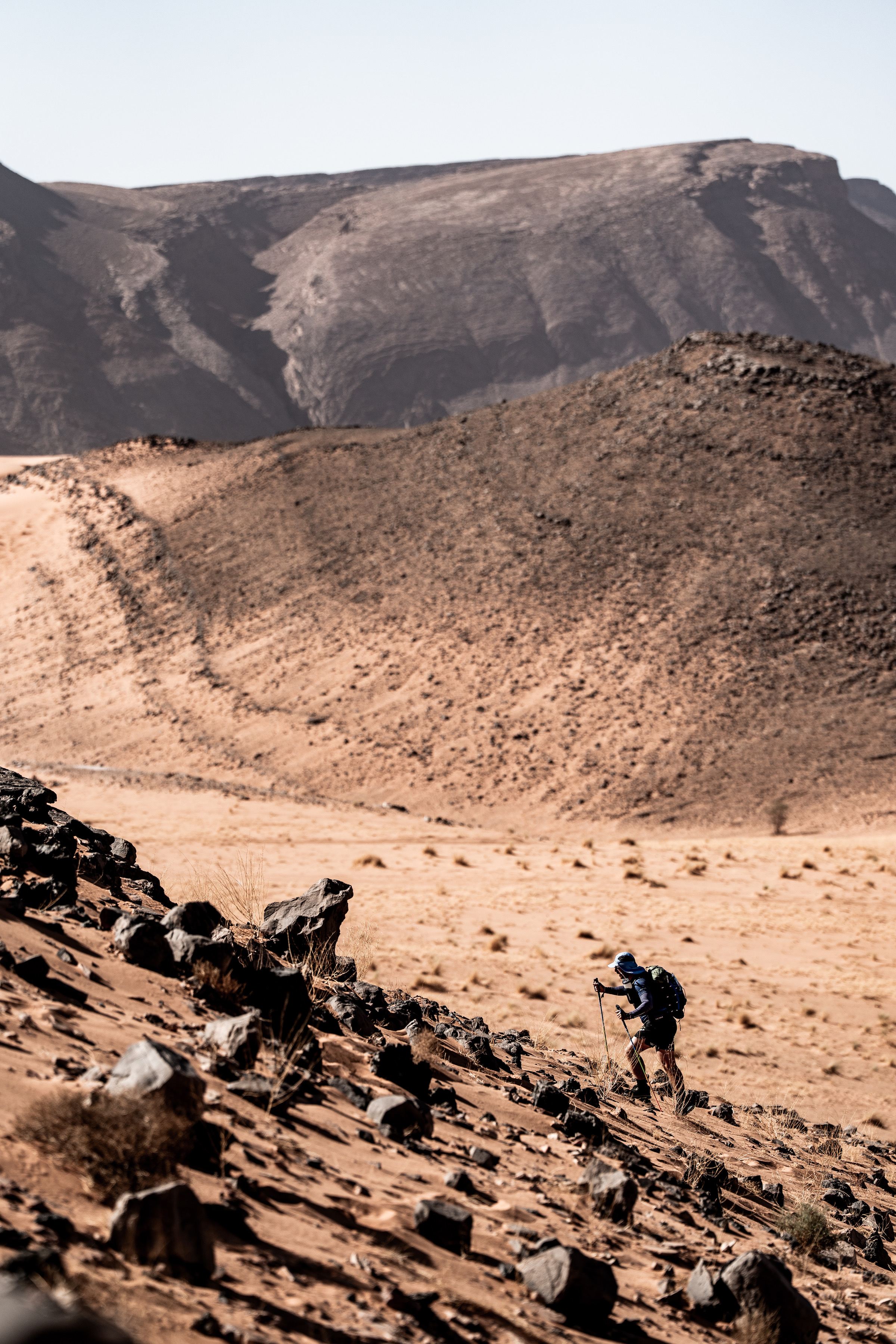
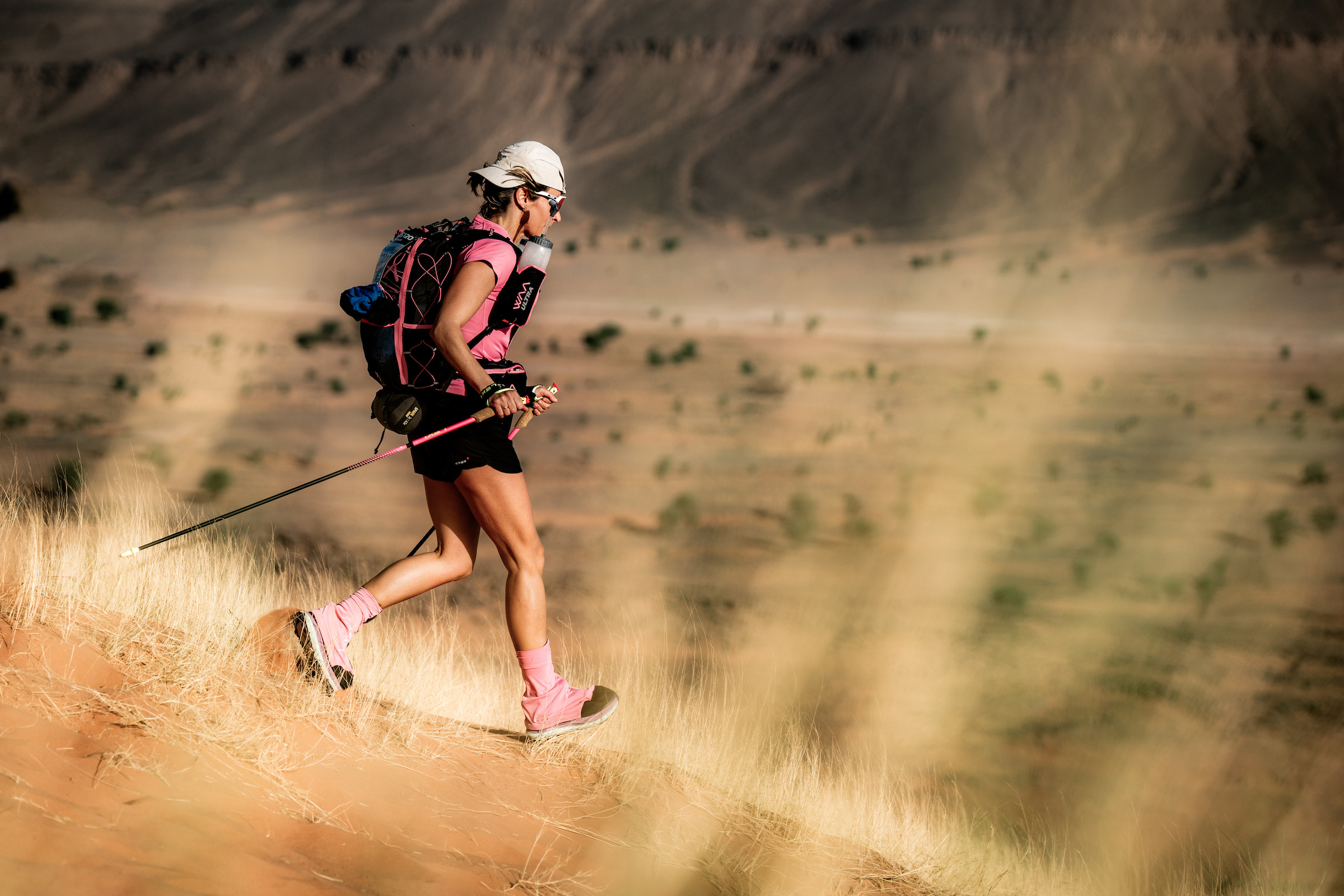
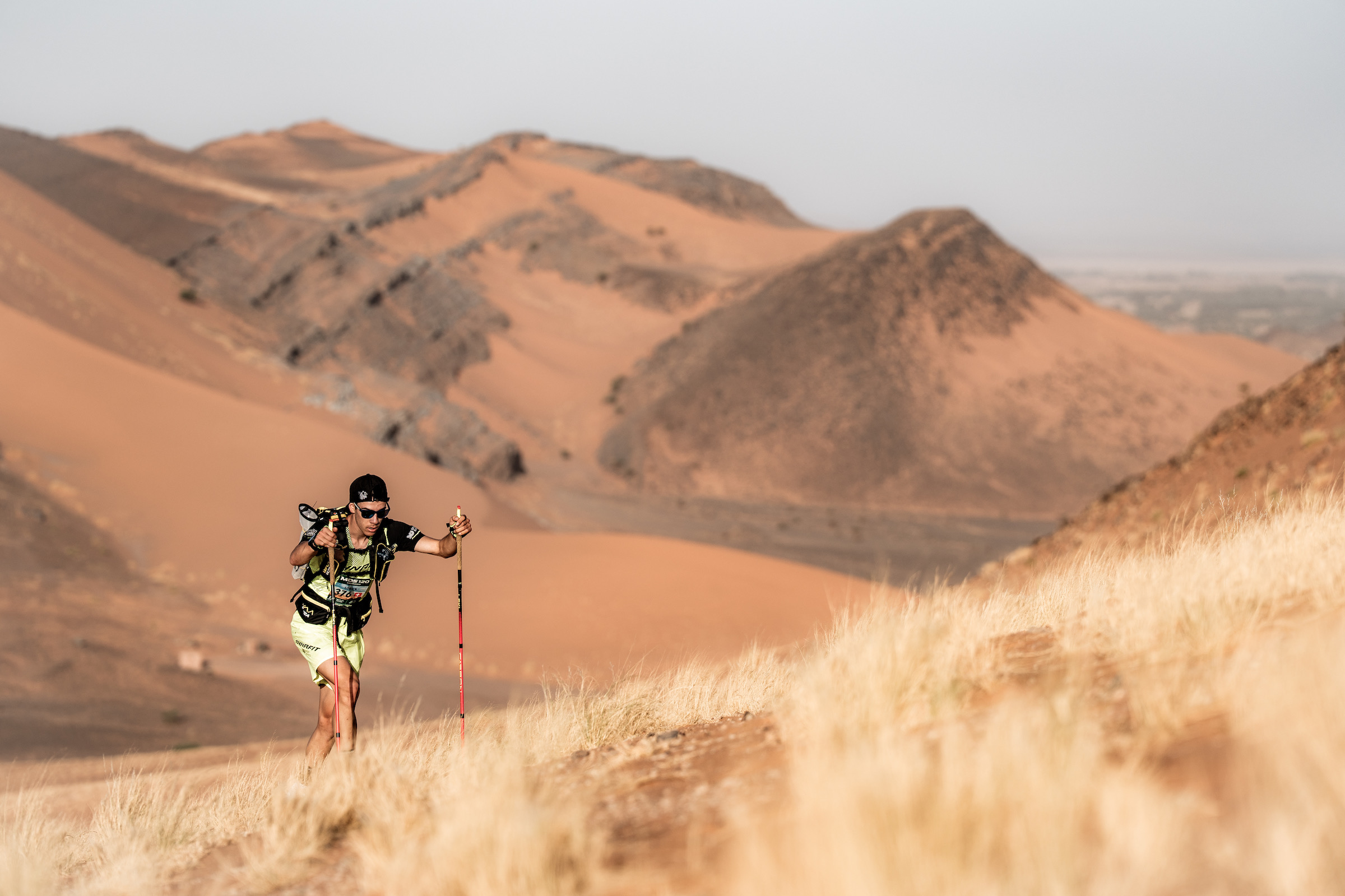
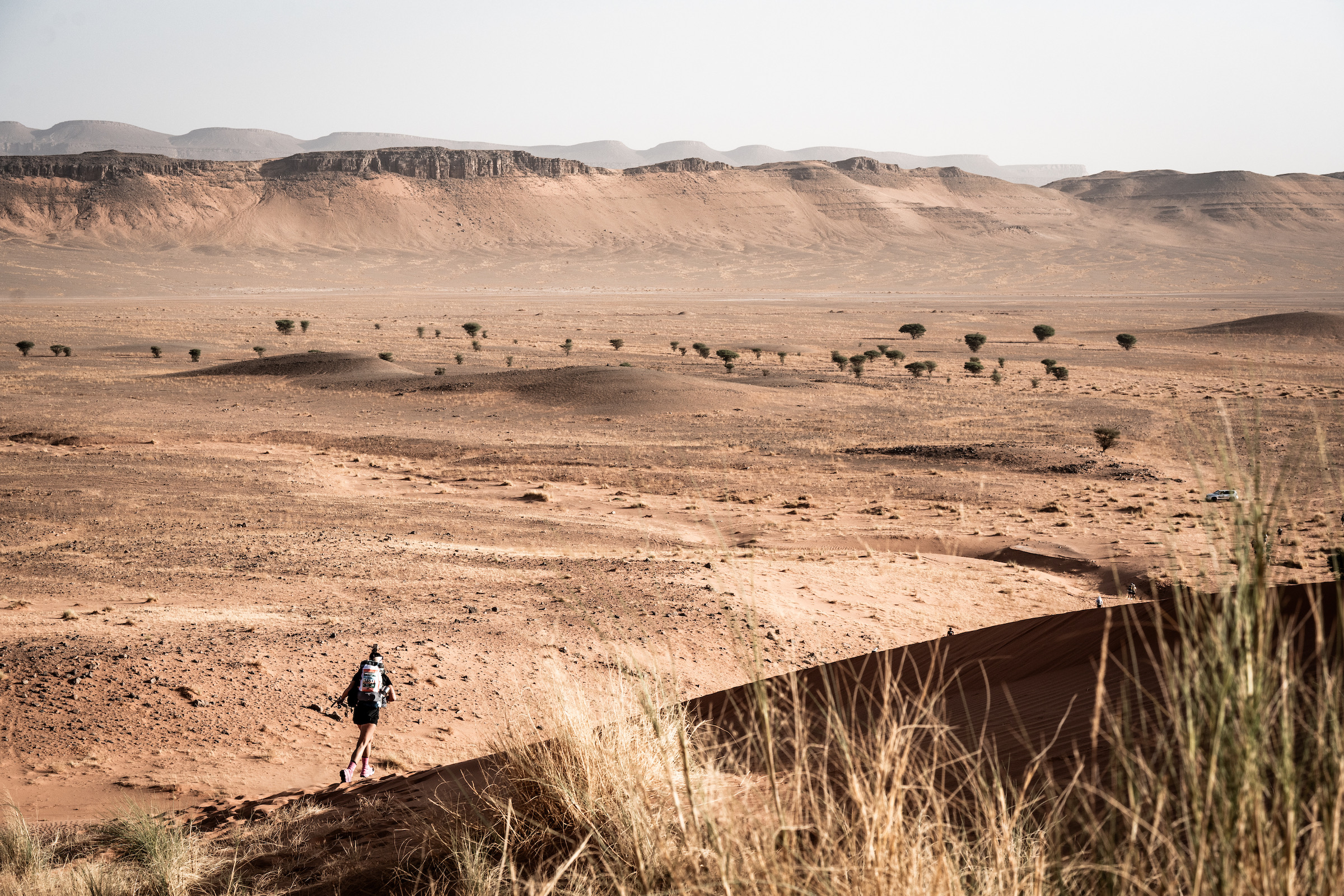
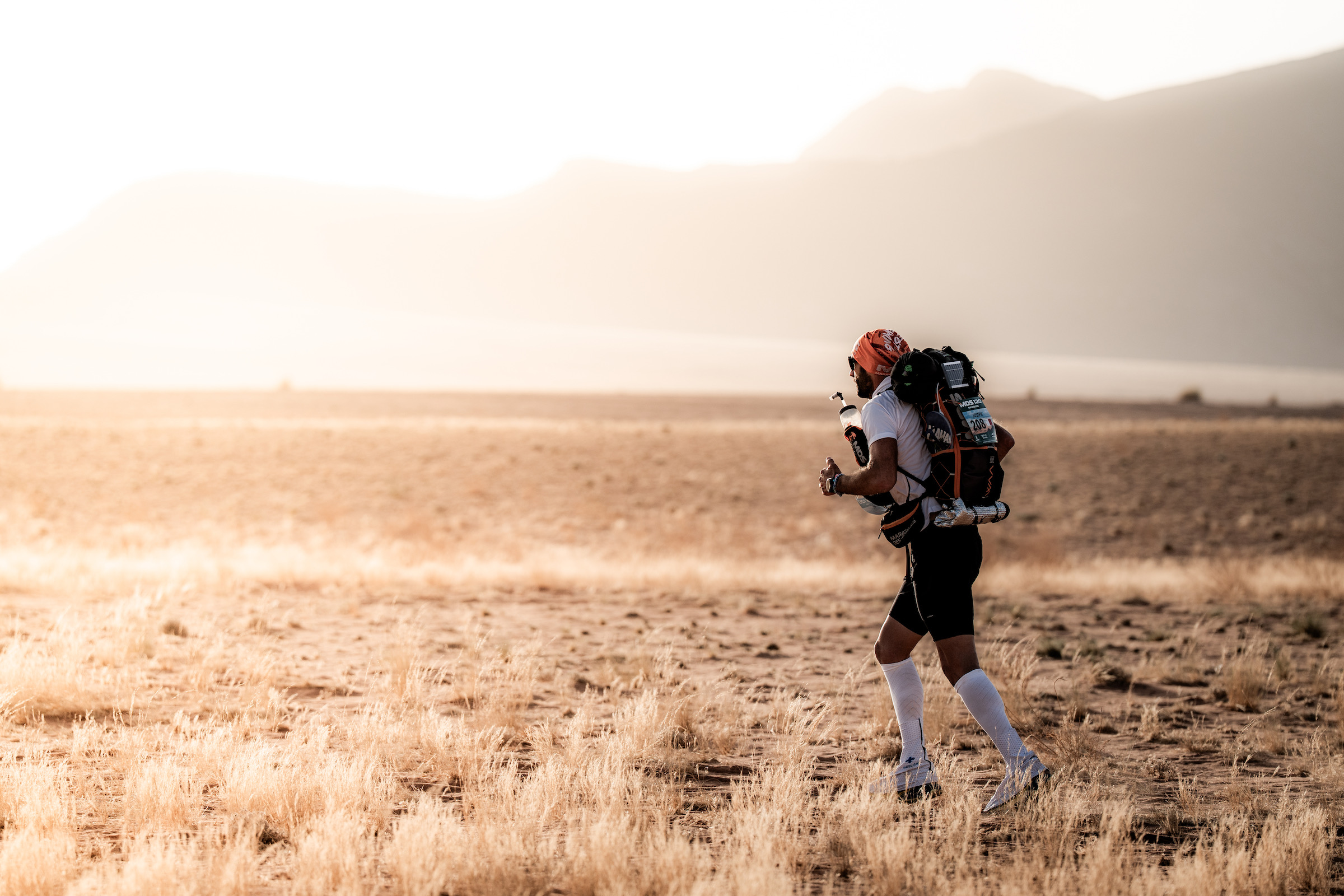
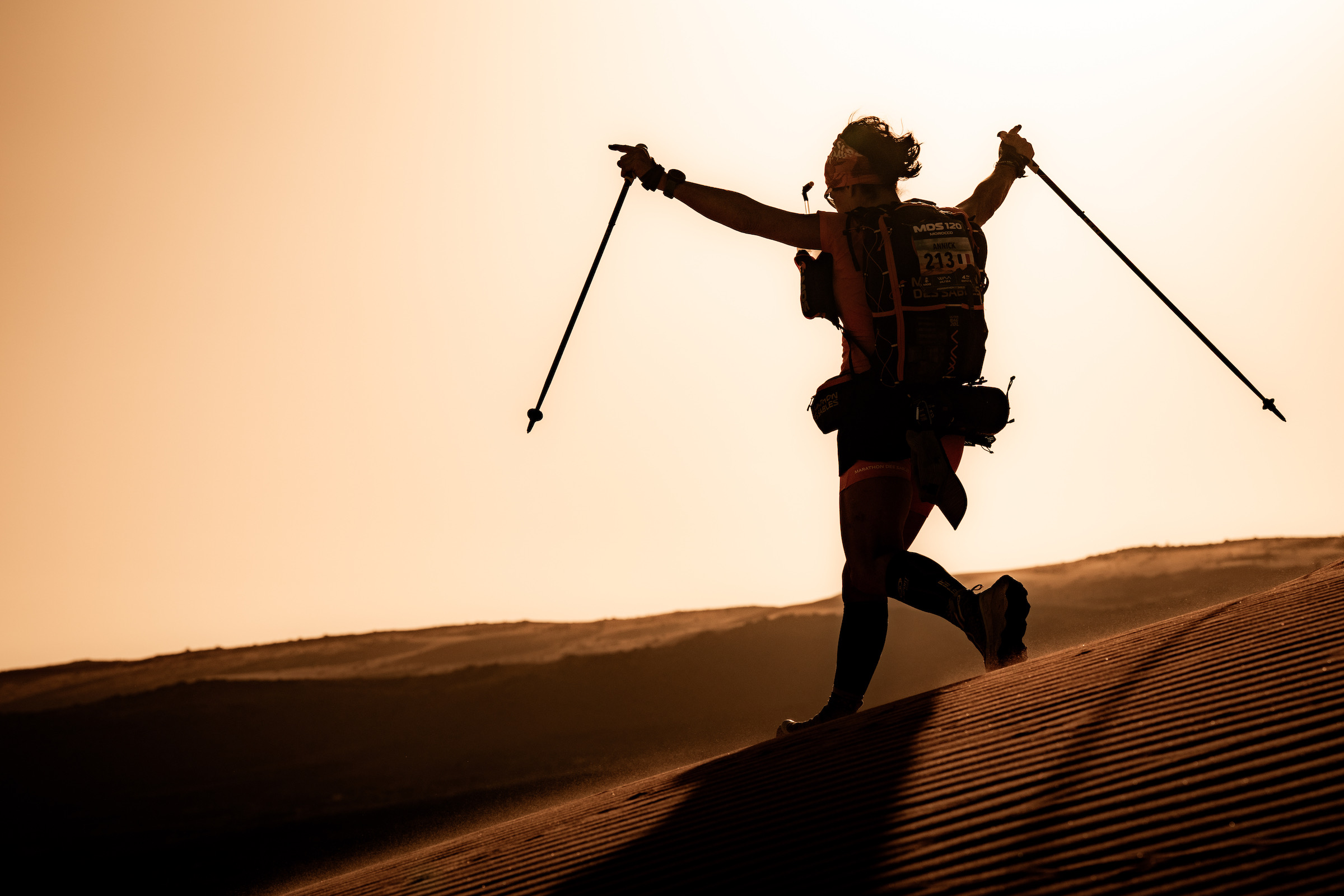
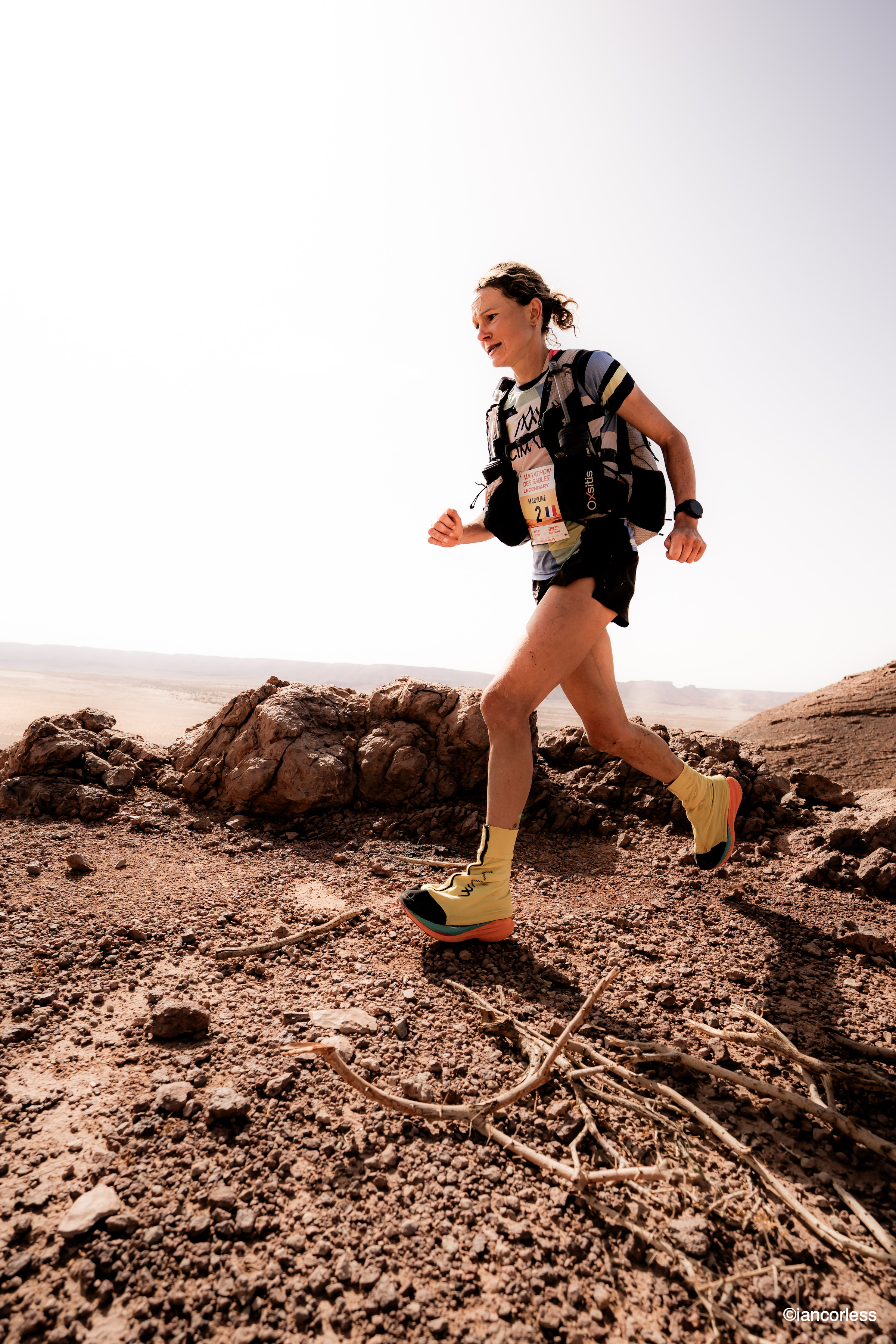
Stage 3 unfolded under gentler skies. The sun eventually returned, but not with the same vengeance. The course was still brutal – sand, rocks, one climbs that never seemed to end, but the worst of the heat was gone. Spirits rose with every kilometre. Runners, ragged but relentless, began to believe the finish was real.
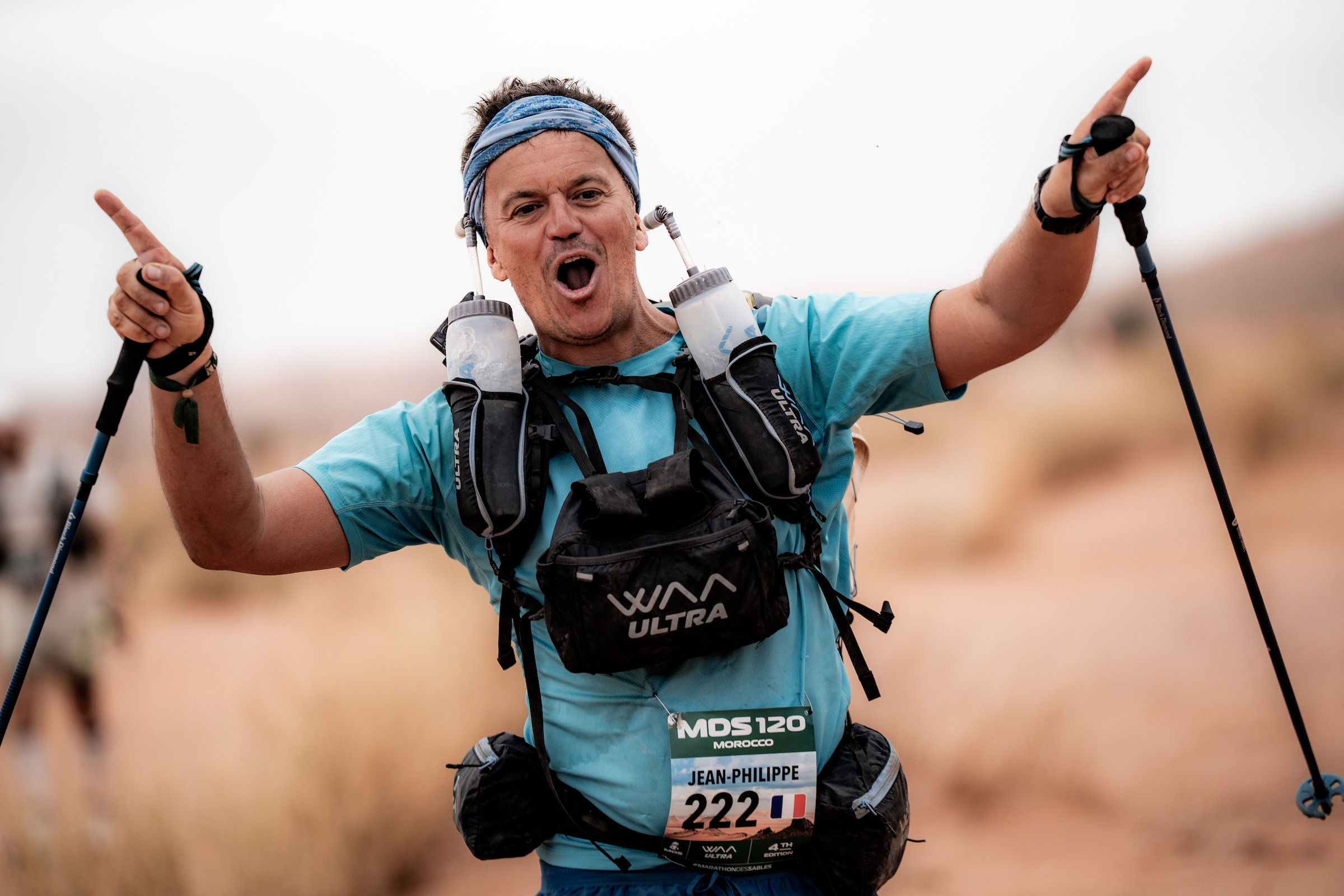
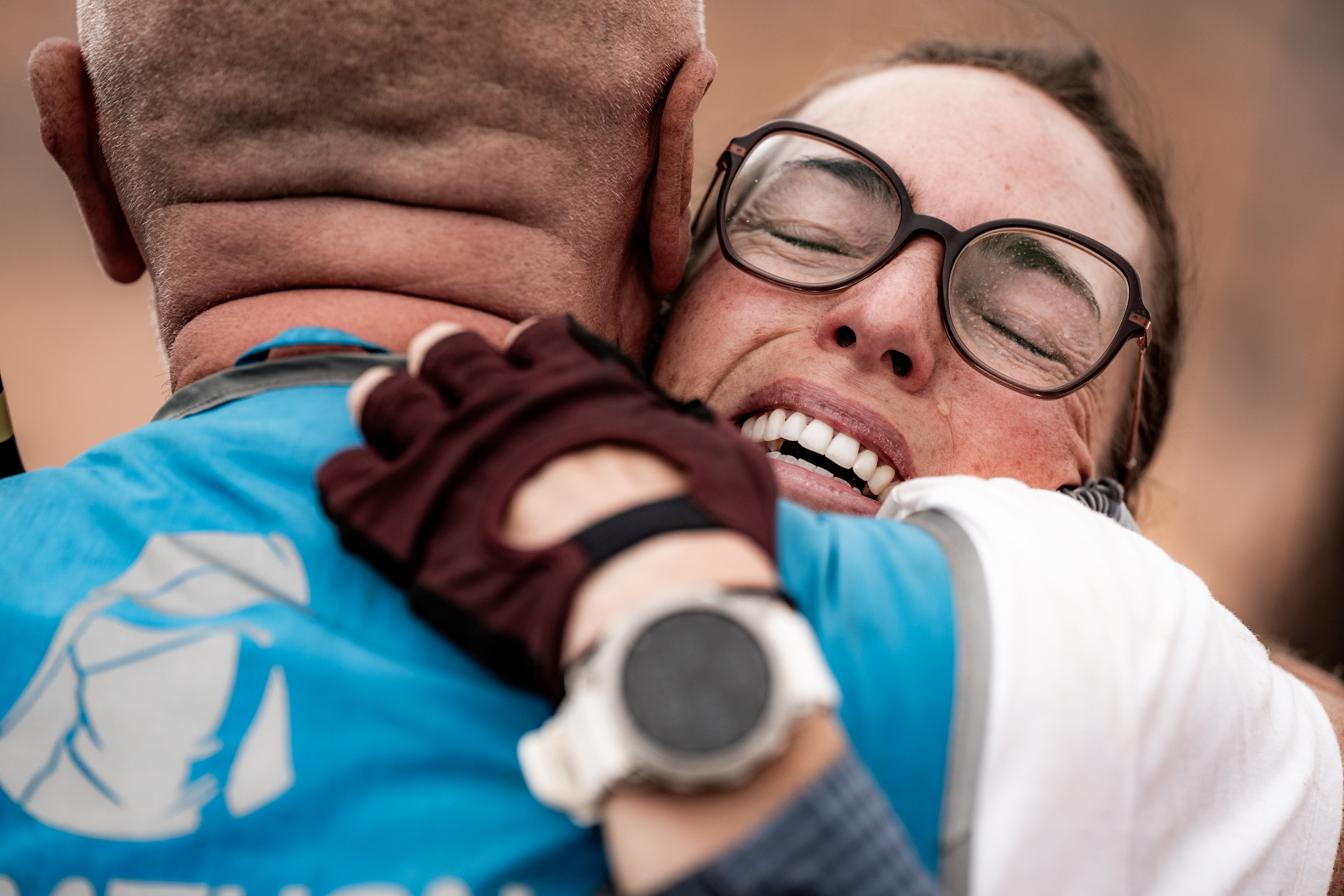
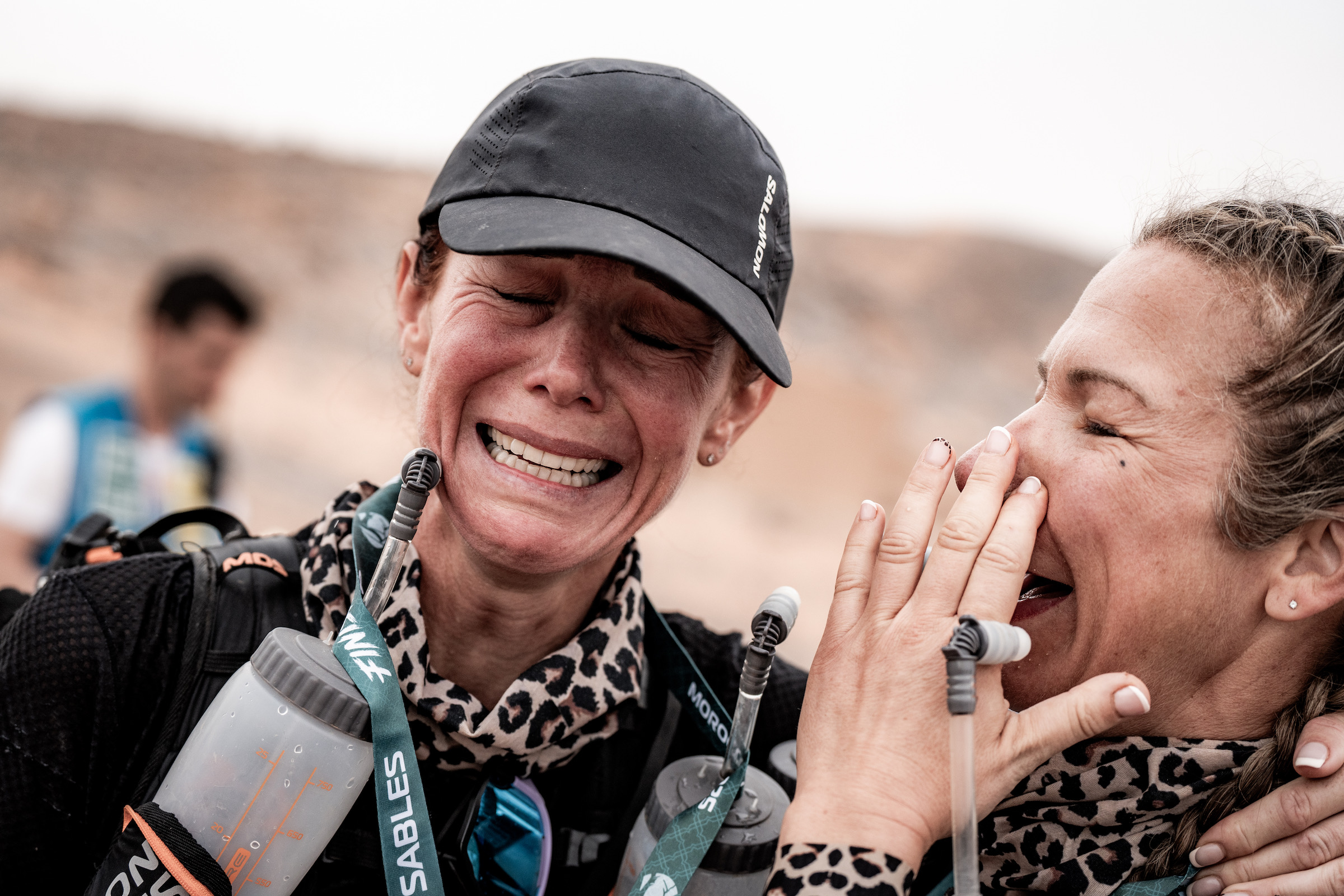
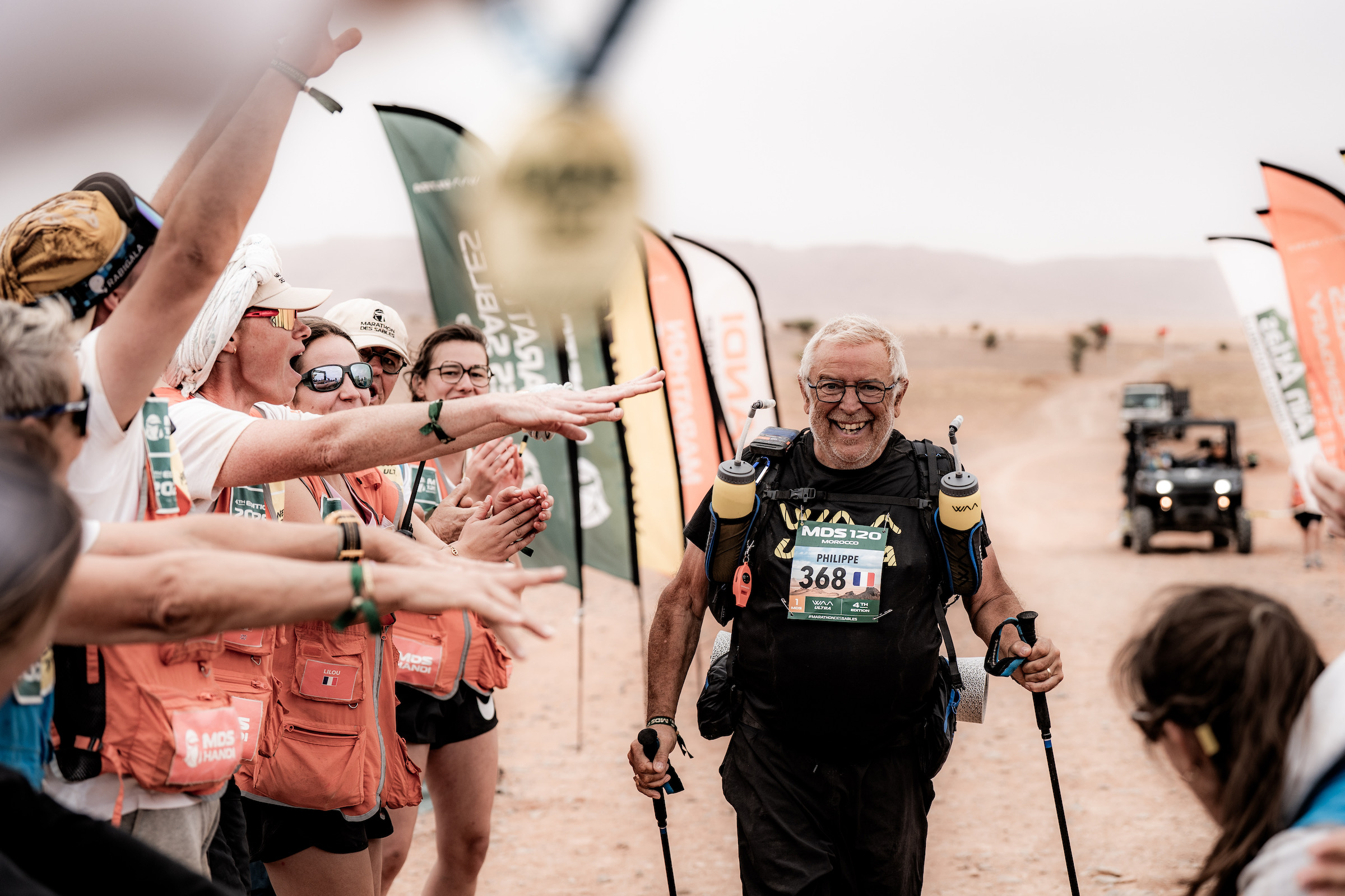
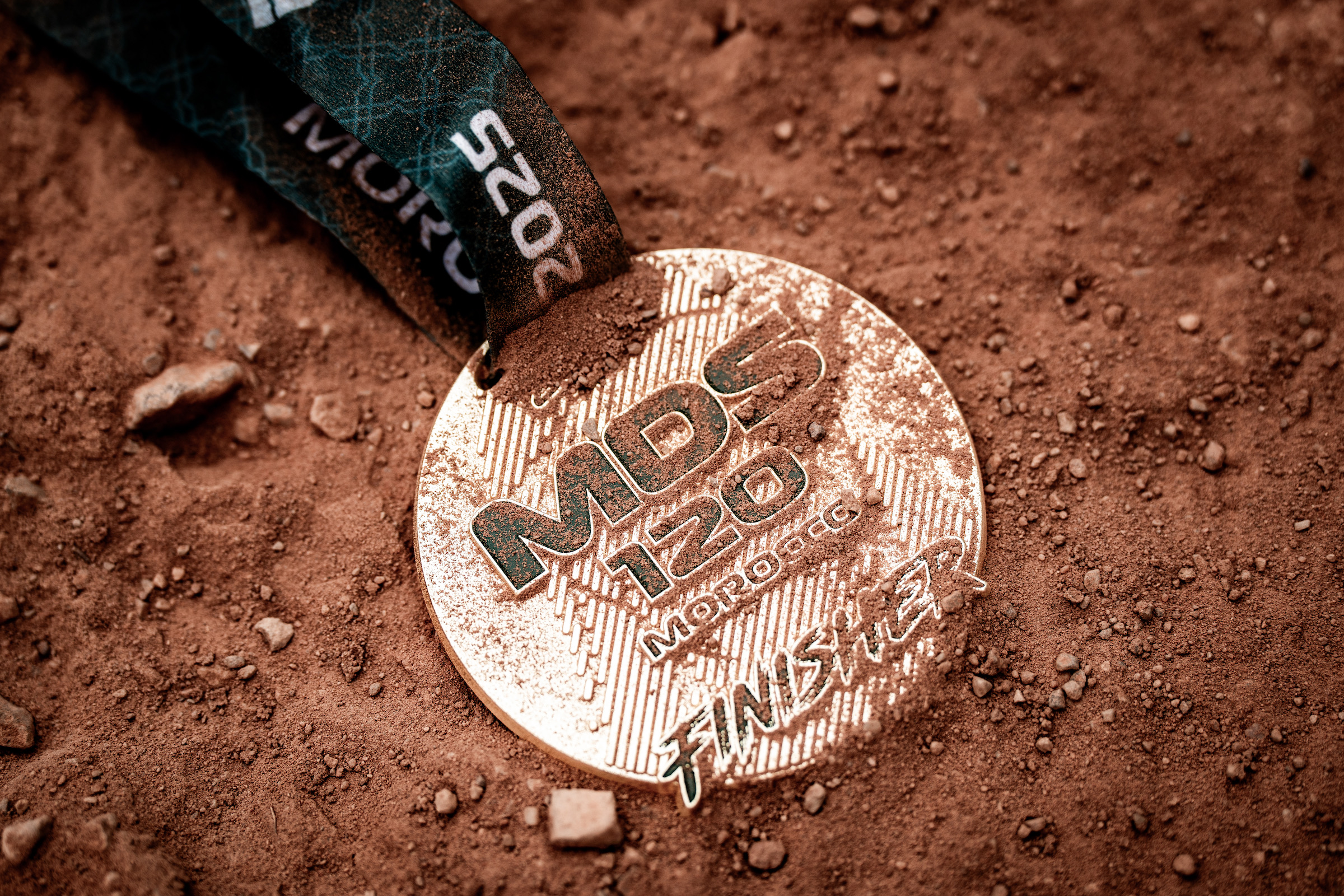
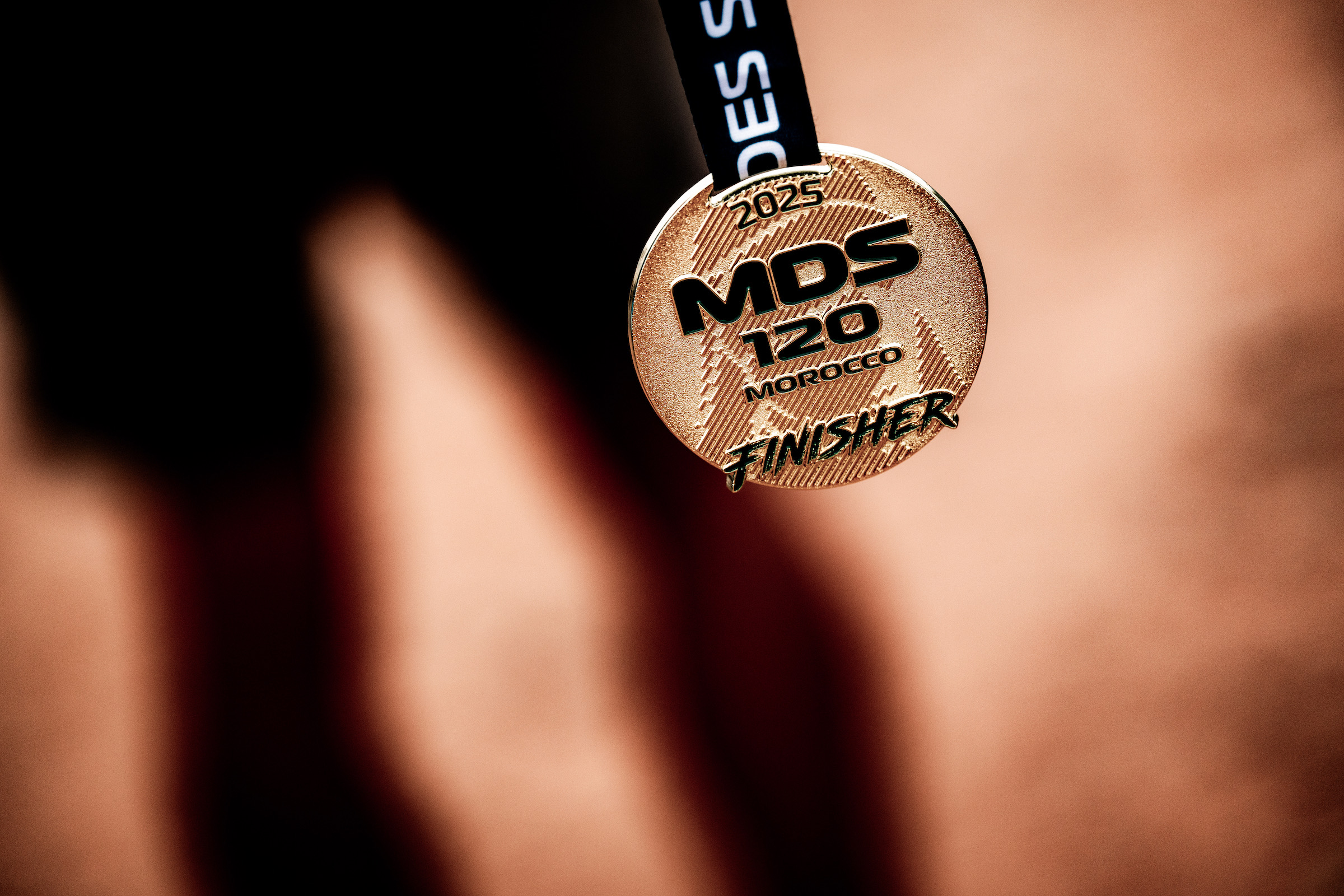
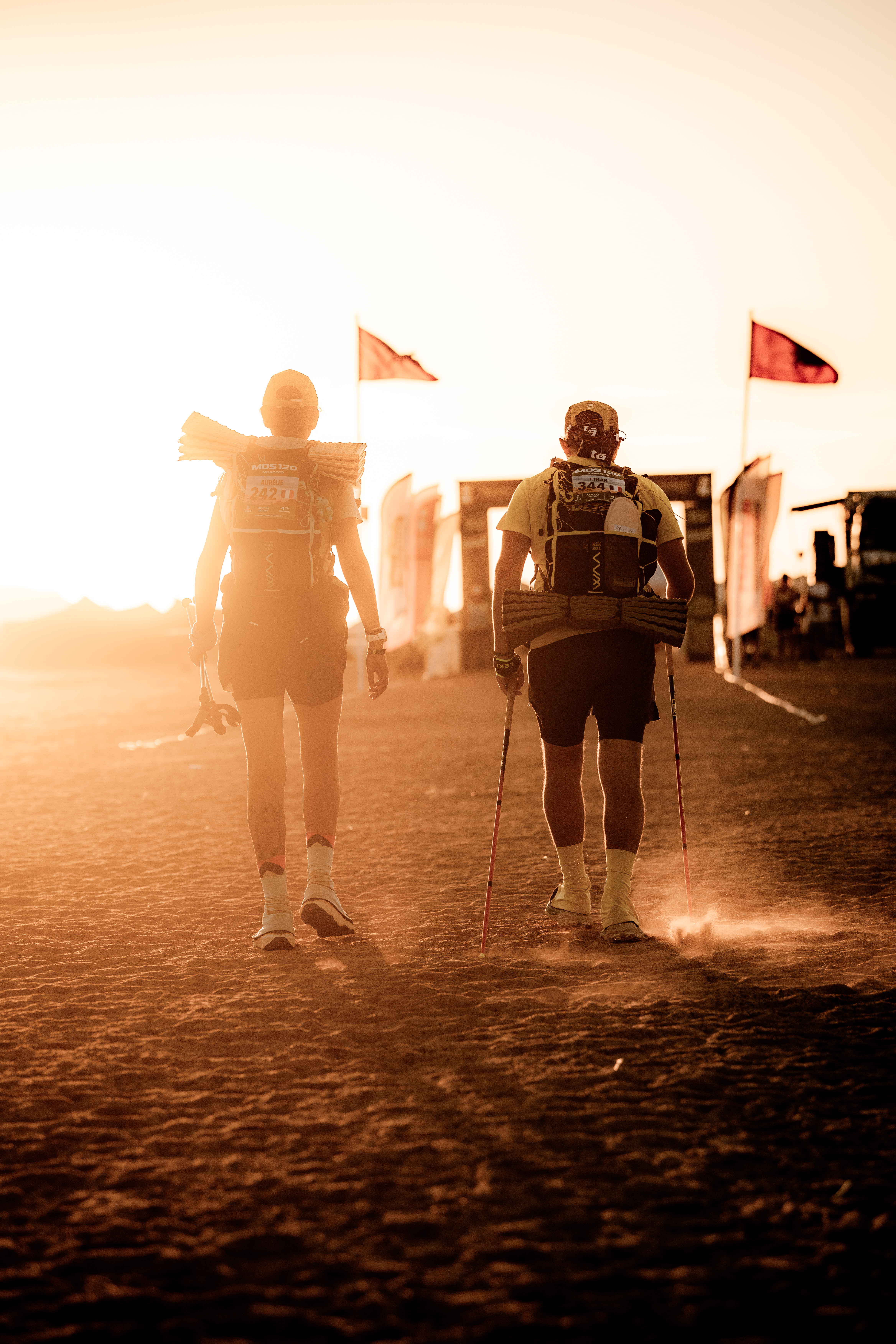
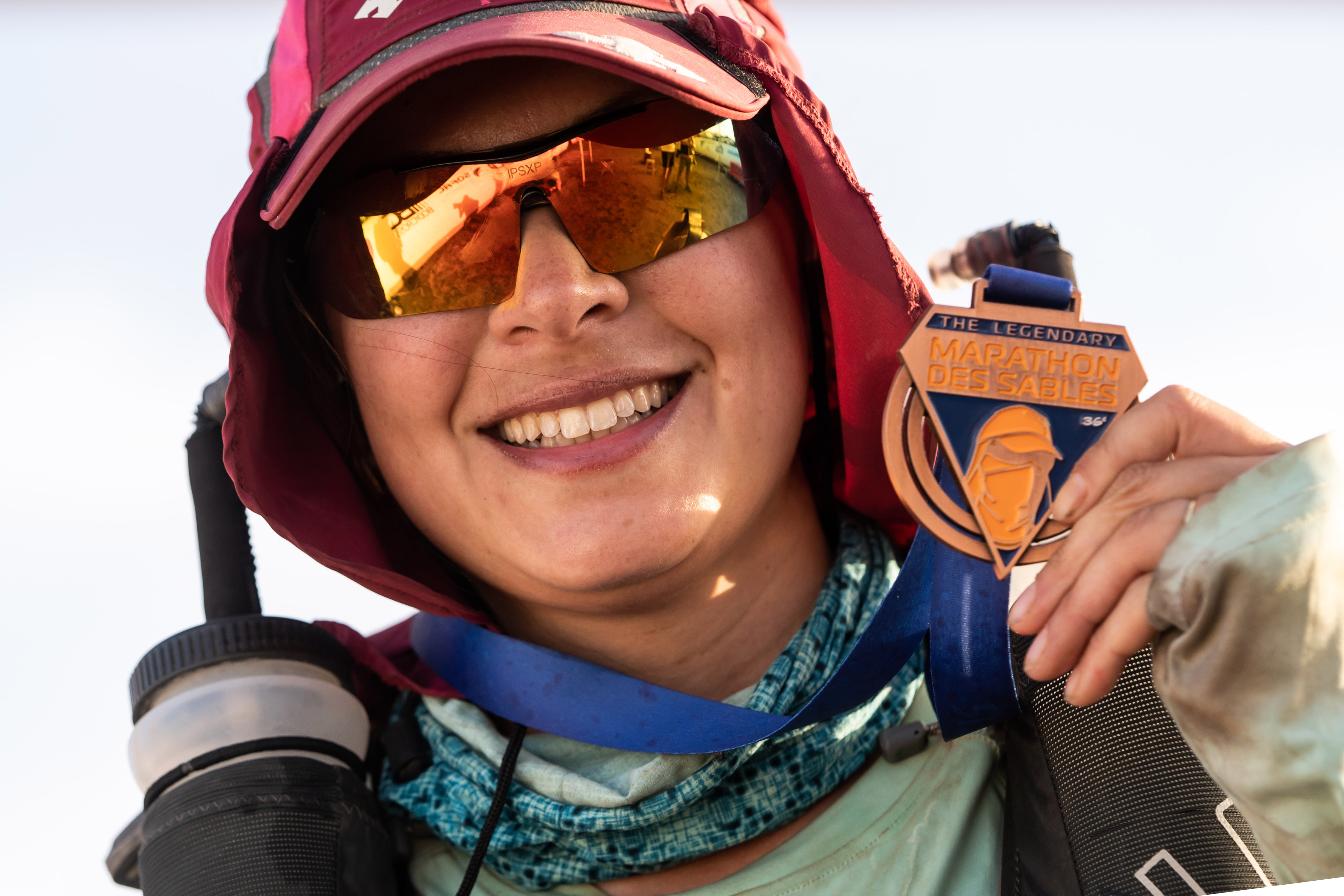
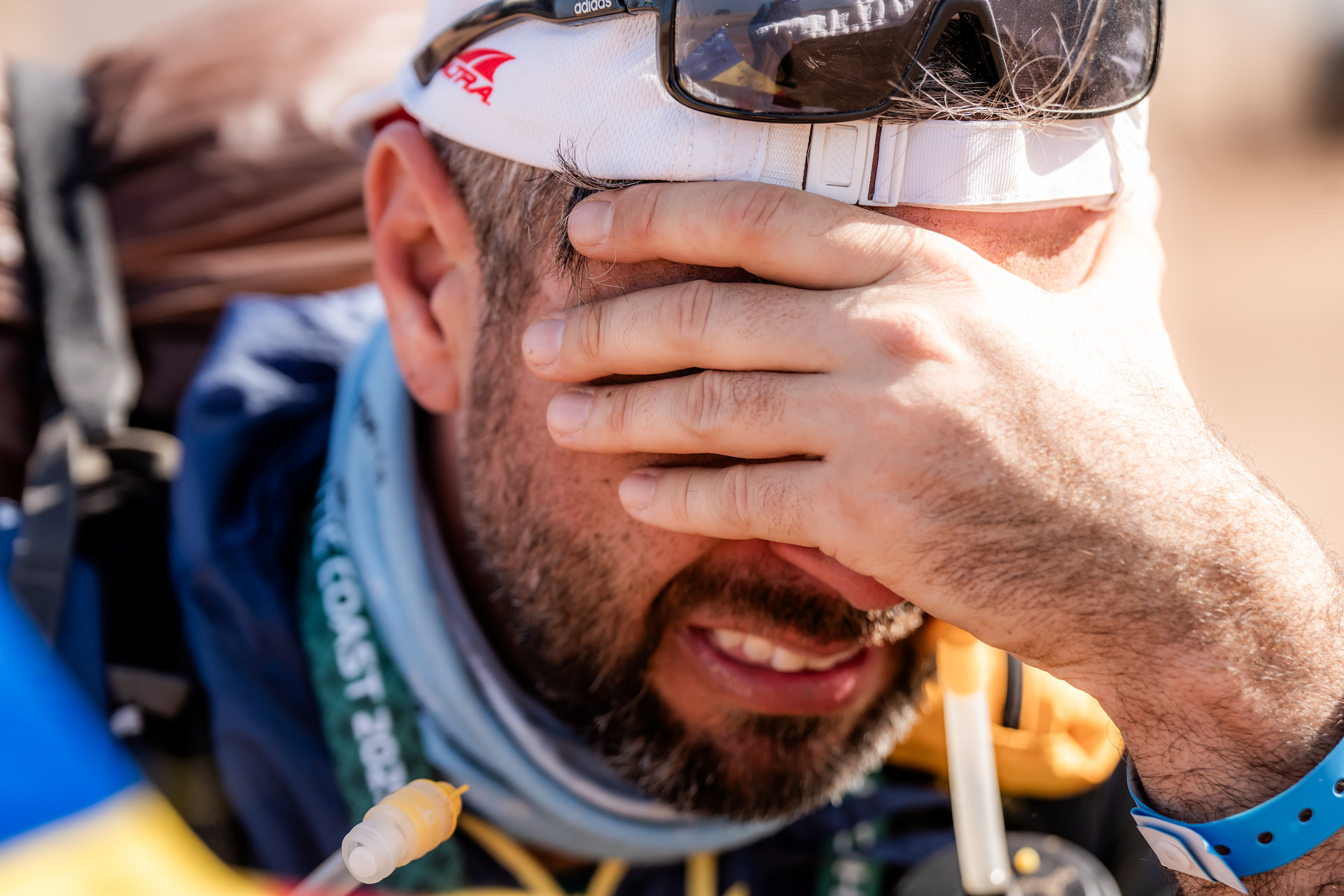
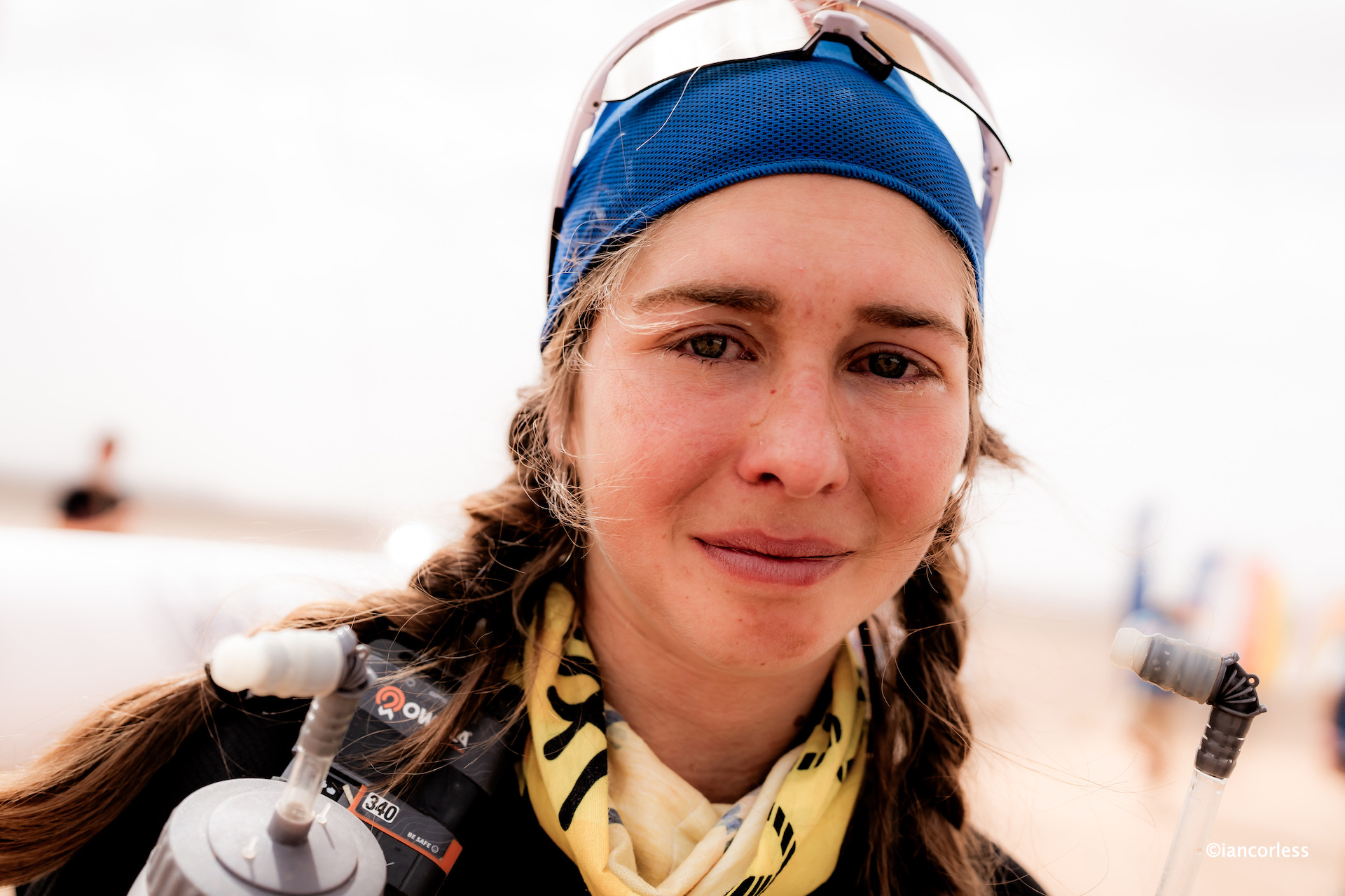
One by one, they crossed the line. Some ran with everything left in their legs. Some limped, leaning on poles. Some clutched hands with teammates or strangers who’d become family over theirshared suffering. And when that medal was placed around their necks, the tears came freely. No shame in them, only pride, release, and the overwhelming relief of completion.
There were cheers. Applause. Laughter. People hugging like they never wanted to let go. Cameras flashed. Medals clinked. Bodies that had been pushed to the limit stood a little taller.
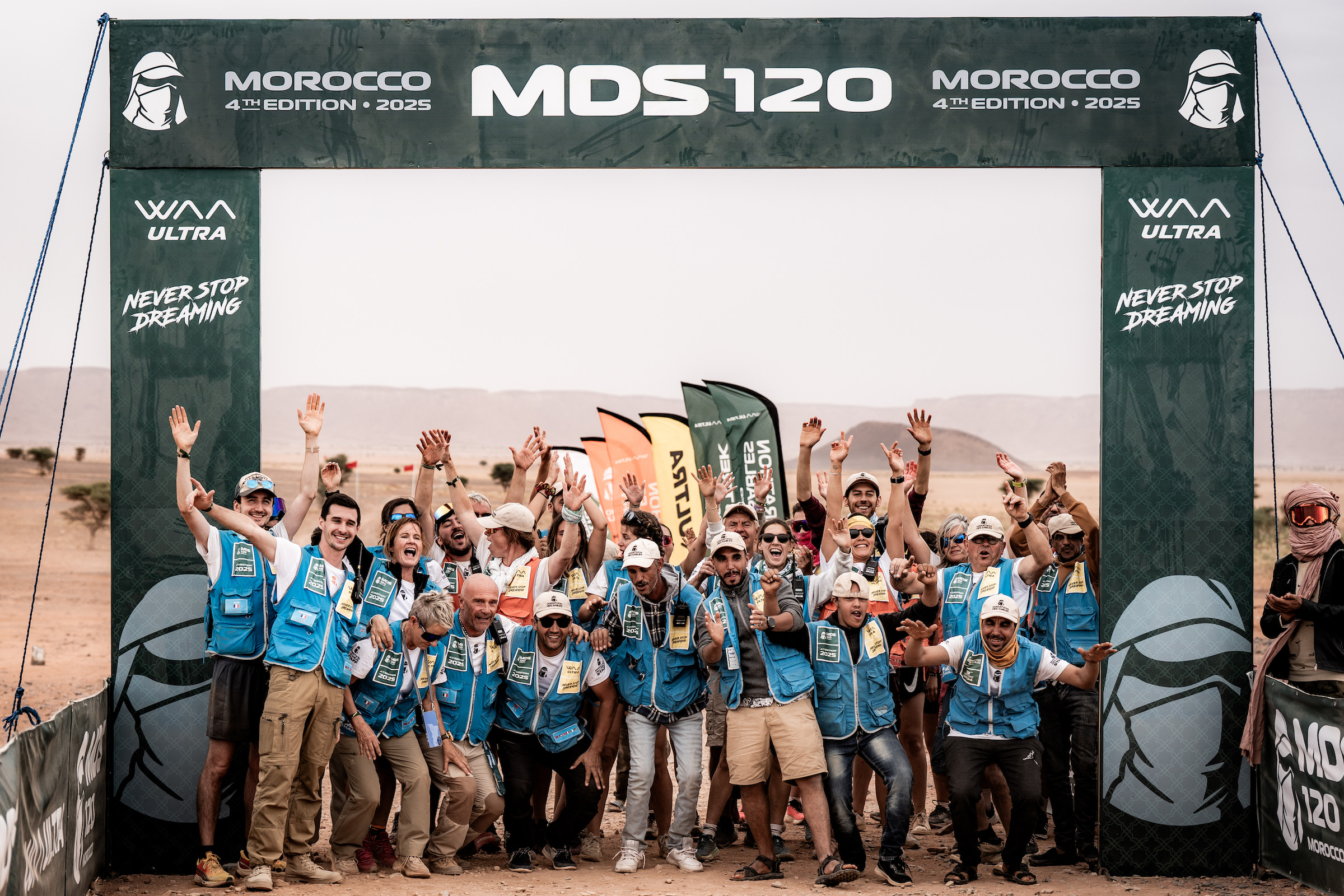
Behind every finish was an army in blue and orange.
The MDS team, the volunteers, medics, logistics crew, water distributors, checkpoint staff, tent builders, camp runners, sweepers, and everyone else in between—made this journey possible.
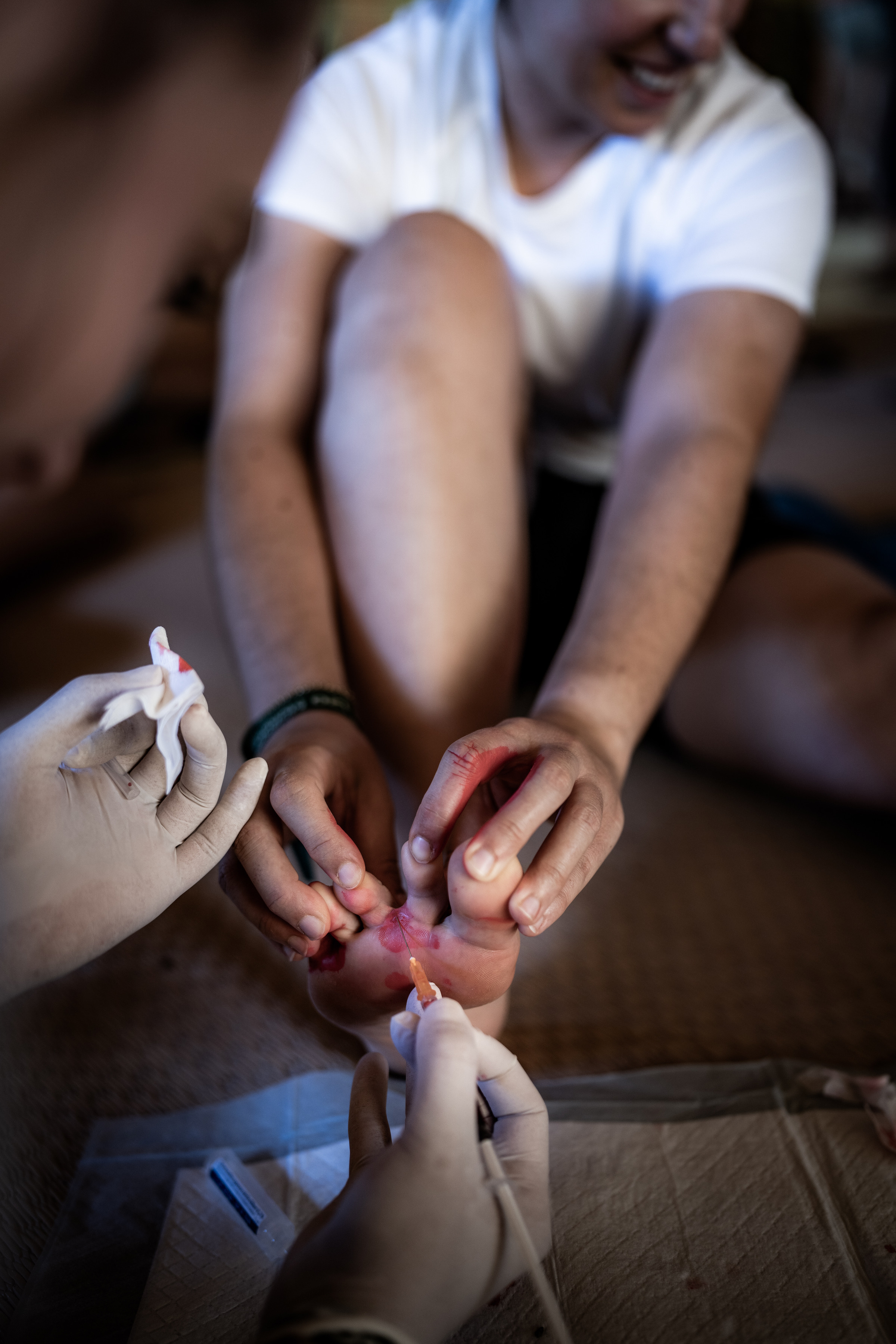
They were the quiet hands who carried everyone forward. The steady voices in the storm. The ones who handed out water in 47°C heat, packed and re-packed tents, tended to blisters, and kept this chaotic caravan moving across an unforgiving land. Their work wasn’t glamorous. It was relentless. And it matters more than words can say.
MDS 120 Morocco is more than numbers. More than distance. It’s more than the desert.
It’s about finding out what lives under your skin when the comfort is stripped away. It’s about running into the teeth of the wind and not turning back. It’s about community, people who arrive as strangers and leave as family. It’s about believing you can, even when everything hurts, and then proving it.
No one who stood on that start line is the same at the finish. And that’s the point.
So to every runner who dared to take this on: you are fierce, you are strong, and you’ve earned every second of this glory. This medal means more because you fought for it.
MDS 120 Morocco is complete. The desert tried to break us. But we endured. And that’s the story you’ll tell forever.
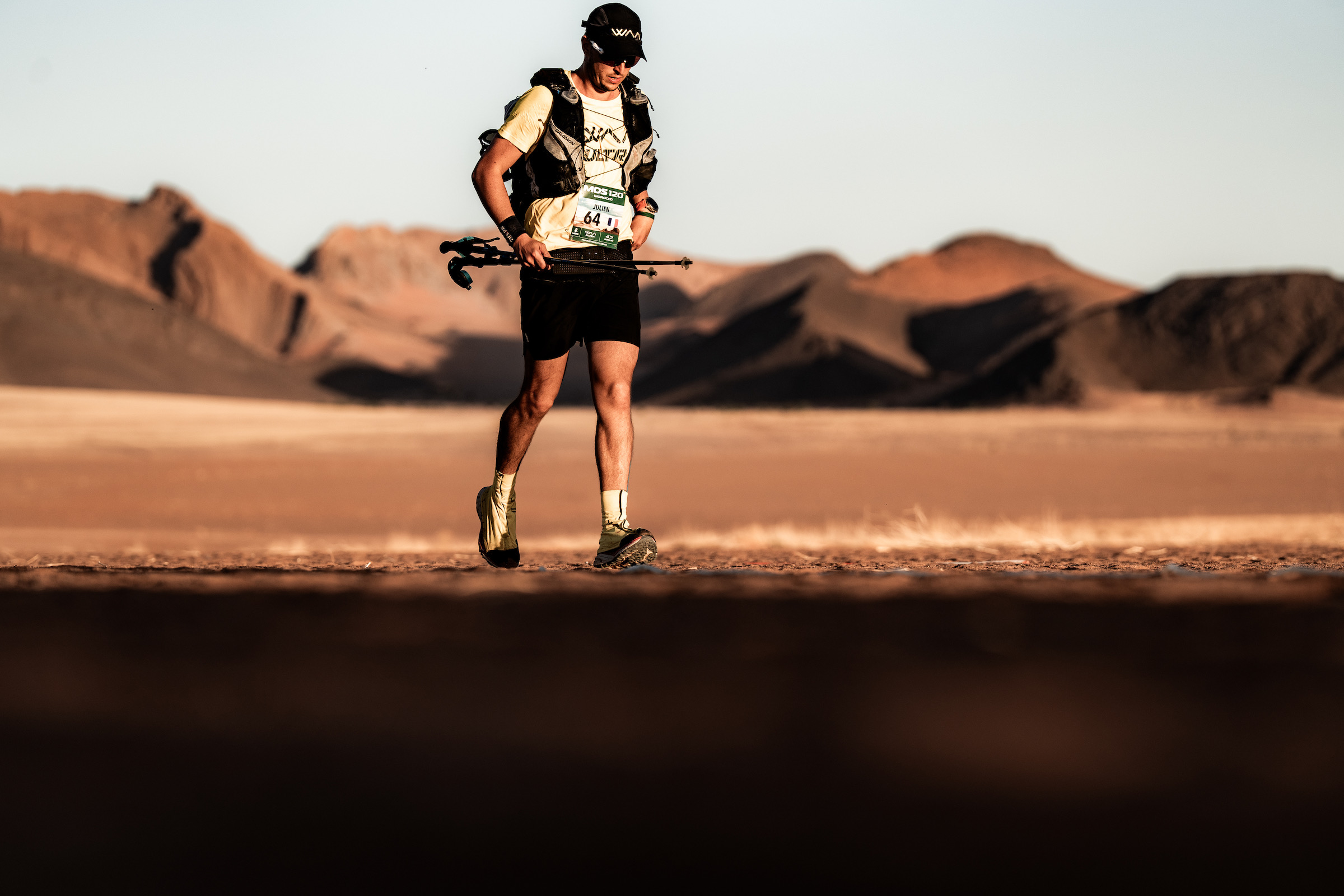
Stage 2 of the MDS 120 Morocco 2025 delivered a punishing reminder of what this race is all about: endurance, resilience, and respect for the elements. With three distances on offer – 20km, 40km, and 60km – runners set out early under revised start times (0630 and 0730 for the top contenders) after stage 1’s extreme heat forced organizers to adapt. It was a smart move. By midday, temperatures soared beyond 45°C, turning the day into a battle of grit and survival.
The day began deceptively calm. The early morning was still and silent, with no wind and nothing to offer relief from the sun’s growing intensity. As the hours ticked on, the heat built steadily, baking the desert landscape and punishing any runner who dared to underestimate it.
This wasn’t just another day in the desert. It was a brutal test across unforgiving terrain – soft sand, rugged mountain passes, exposed plains, and technical ridgelines. There were no shortcuts. No hiding from the sun. Just a long, scorching path to the finish.
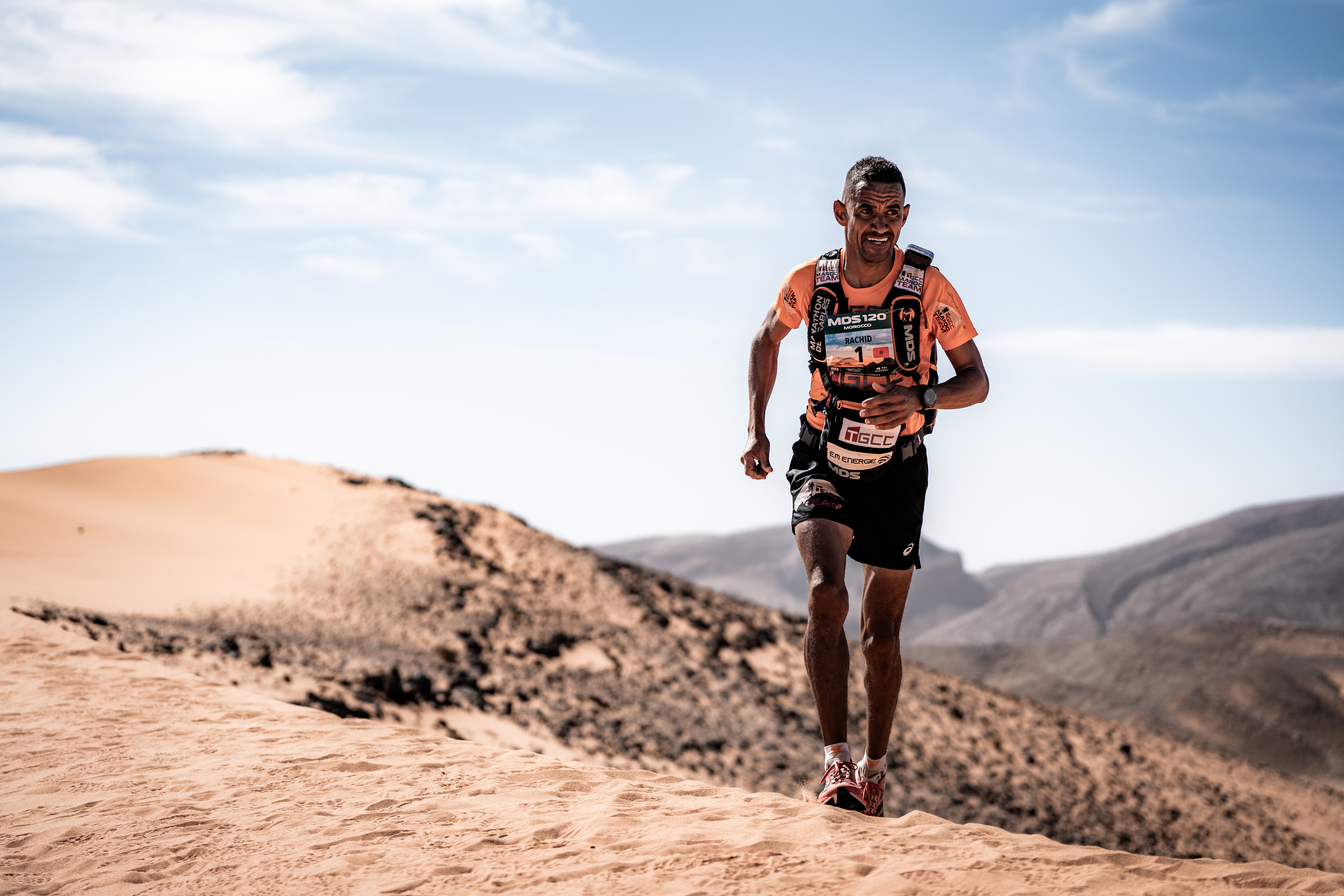
In the longest and toughest of the three routes, Rachid El Morabity did what he does best, dominate. The Moroccan ultra running legend took charge of the 60km stage, navigating the heat and terrain with trademark efficiency. His command of desert racing was evident, even in conditions that forced many to slow, stop, or drop out.
But this wasn’t just about speed — it was about survival. Pacing, hydration, and heat management became as important as footwork. Every decision counted.
On the women’s side, Julia Villanueva had a standout performance. Pushing through the worst of the afternoon furnace, she took the lead overall, ahead of Véronique Mueller-Berberat. Villanueva’s effort was both smart and strong, a calculated drive through the toughest part of the course when many were simply trying to hang on.
In the 100km event, which saw runners take on 40km in Stage 2, Lorick Buckin emerged as the new leader. He now holds a slim margin ahead of Louis Godeman, setting up an intriguing contest for the final day.
For the women, Elaine Caron-Gaudet rose to the challenge, building a lead over Charlotte Van Strydock. Both showed real composure in the heat, but Caron-Gaudet’s consistent pace gave her the edge on the day.
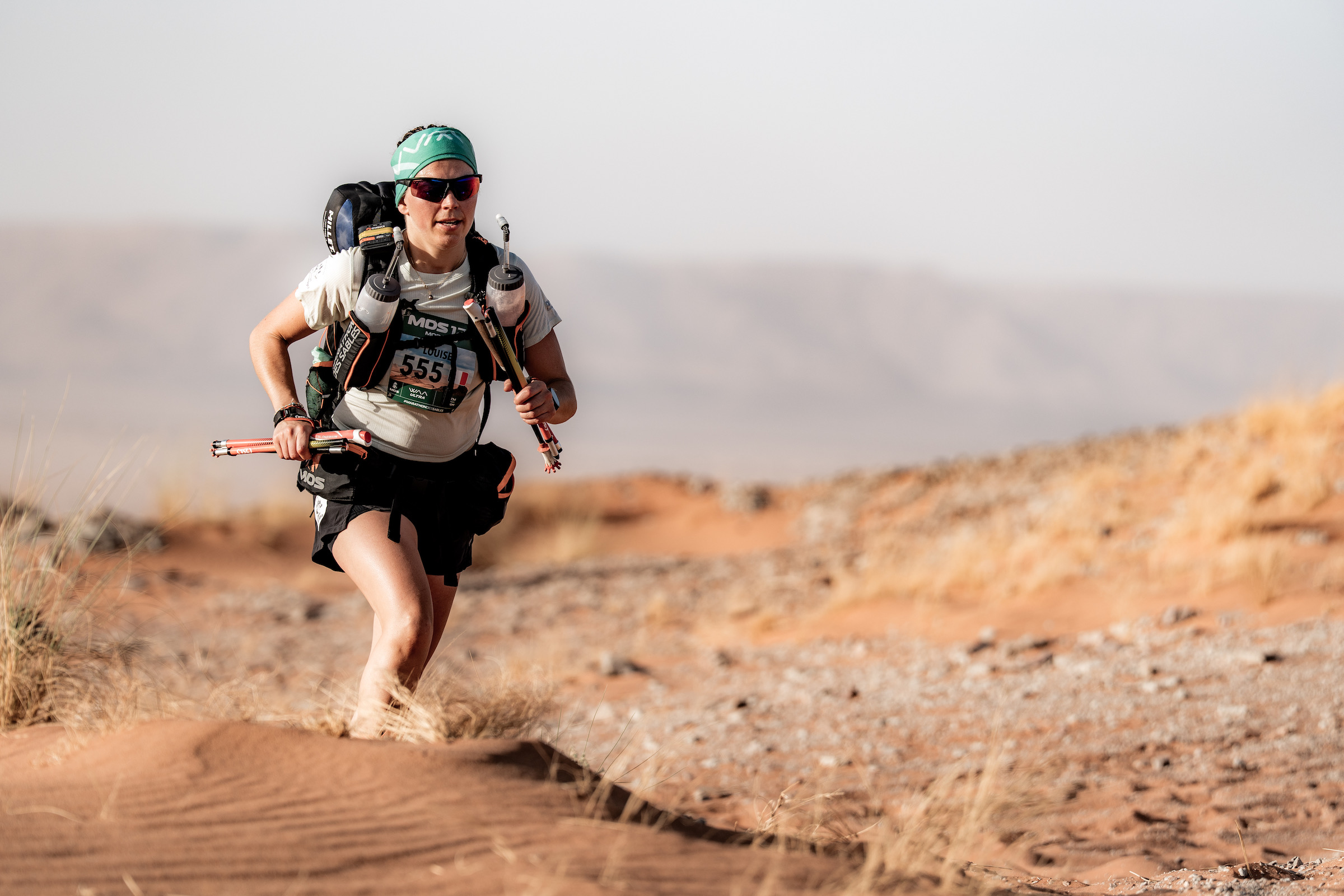
The 70km competitors ran their second stage under the same conditions, with Farid Alouani pulling ahead in the men’s standings. On the women’s side, Louise Marcant now leads the pack — a reward for measured effort across chaotic conditions.
This wasn’t a stage that wrapped up neatly by afternoon. It dragged into the night, with the last runner crossing the line at 23:04 – nearly 17 hours after the first starters. For many, it was less a race and more a trial by fire.
Whether running 20, 40, or 60km, every participant faced the same relentless sun, the same unshaded miles, and the same internal struggle: keep moving or give in. Water checkpoints became lifelines. The heat was no longer an obstacle; it was an adversary.
Respect the Heat. Respect the Race.
Stage 2 of MDS 120 Morocco 2025 will be remembered for one thing: its raw brutality. The course was hard. The heat was harder. And yet, hundreds pushed forward. Not everyone finished with a personal best, but finishing at all was a feat of determination.
This wasn’t just another day on the trail, it was the kind of stage that defines an event. One that strips things down to basics: survive, adapt, endure.
Stage 3 looms next. The bodies are tired. The desert, as always, is waiting.
Interested in a MARATHON DES SABLES EVENT? More Info HERE
The 2025 MDS 120 Morocco roared to life this morning at 08:00 sharp under a glowing desert sunrise and clear, windless skies. Stage 1, a 25km loop through the heart of the Moroccan Sahara quickly reminded everyone why this race is not for the faint of heart.
With checkpoints at 8.5km, 12.4km, and 19.7km, the route unfolded across varied terrain that punished and amazed in equal measure.
The temperature soared early, peaking at 32°C in the shade—but shade was a rare luxury. Out in the dunes and rocky passes, it felt much hotter.
The stage featured 509 meters of elevation gain and four demanding climbs. The highest ascent, topping out at 837 meters. The route was a grind over soft sand, stony trails, and shifting ground that sapped energy and tested resolve.
Despite the brutal conditions, the elites wasted no time. As expected, Morocco’s own Rachid El Morabity cruised to victory in 02:22:37, showing his class and desert mastery once again.
On the women’s side, Véronique Mueller-Berberat delivered a commanding performance, finishing in 03:31:23.
Today was more than just a race, it was a trial by heat, sand, and elevation.
The loop offered sweeping views and raw Saharan beauty, but it demanded everything in return.
Tomorrow, the challenge deepens with Stage 2, offering three route options: 20km, 40km, or 60km.
Whether racers go short, long, or ultra, they’ll need to dig deep again—this desert doesn’t let up.
In 2026, the Marathon des Sables (MDS) reaches a milestone: its 40th “Legendary” edition. What better way to celebrate four decades of desert ultra-endurance than by rewriting the record books? Among the announcements already stirring excitement: the “long day” stage for 2026 will be extended to 100 km, making it the longest single stage ever in MDS history. This bold move not only raises the bar for what runners will face, but signals that the 40th edition aims to become a defining moment of the race’s legacy.
Laurence Klein, 3x MDS champion – Photo by Ian Corless
A Brief History:
The roots of the Marathon des Sables reach back to the daring vision of French promoter Patrick Bauer. In 1984, he traversed part of the Sahara on his own, over 350 km in 12 days, with no external support, an experiment in isolation and survival. Two years later, in 1986, the first official Marathon des Sables was held, with 23 participants tackling a self-supported desert crossing. The winners, Bernard Gaudin and Christiane Plumere making history.
Over the years, MDS has grown from a niche extreme-race to one of the world’s most respected ultramarathons. Its signature format currently features around 250 km over 6-stages (7-days) in the Moroccan Sahara, with participants carrying their own supplies (food, sleeping gear, etc.) in full self-sufficiency – water and a place to sleep the only logistical supply. Terrain at The Legendary shifts from endless dunes, rocky plateaus, dried wadis, occasional mountains and shifting sands; daytime heat can often soar, while nighttime temperatures can drop sharply.
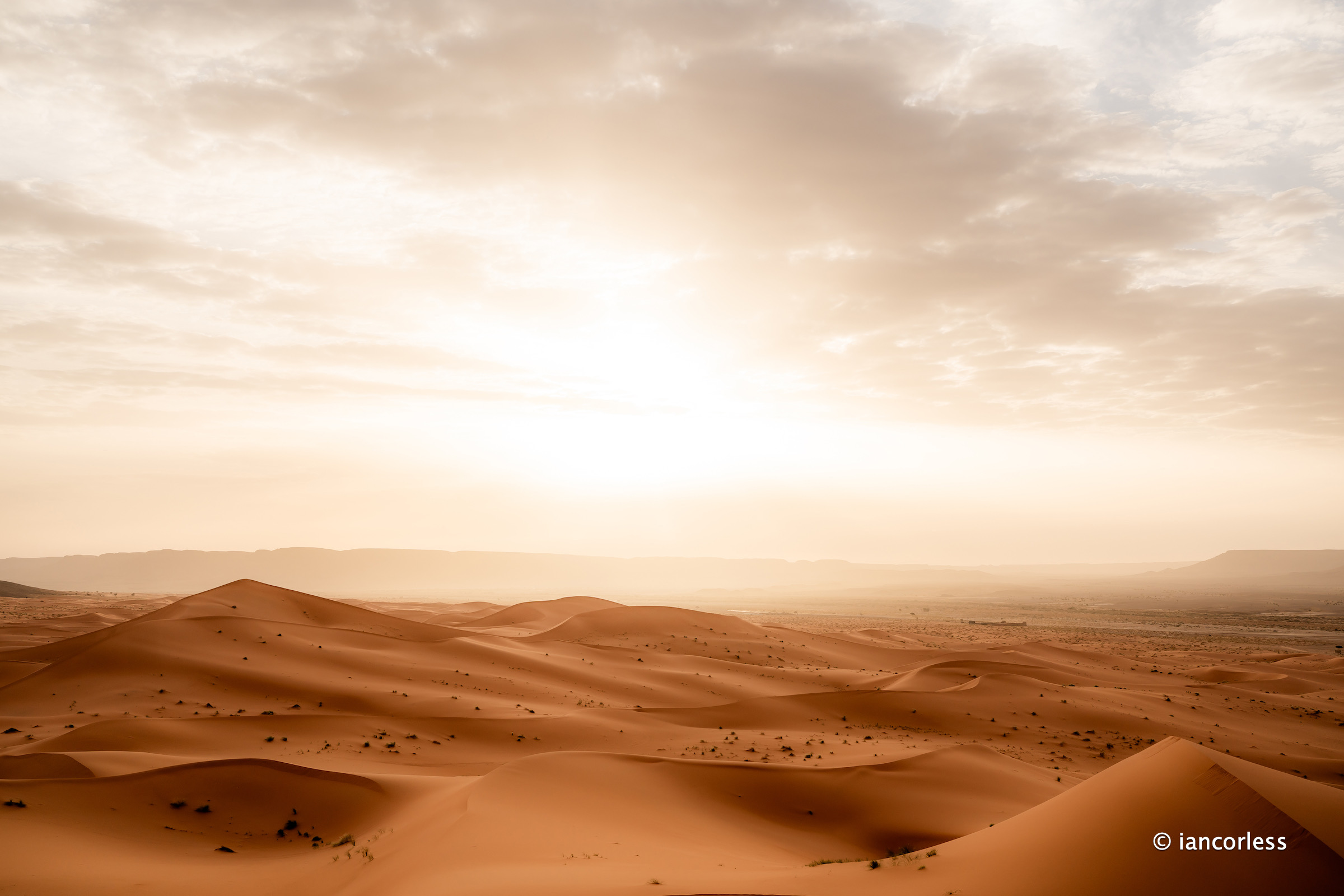
Stunning vistas at The Legendary – Photo by Ian Corless
Notably, throughout its history, MDS Legendary has always included a stage that stretches well beyond the “single marathon” distance, 80–90 km is normal to test endurance in extremes. In 2009, there was a long-stage of 92km’s…. But a full 100 km in one go will top them all.
With a passing of time, MDS Legendary has also diversified; now offering shorter formats such as MDS 120 (70–120 km), the MDS Trek variant with lighter logistics, MDS RAID and for 2026, the MDS Ultra which for the first time offers a single-stage ultra of 100km’s or 100-miles to be undertaken with a 40-hour cut-off. But the heart of the MDS remains firmly with The Legendary stage race.
The 100 km “Long Day” and What It Means
MDS will feature a 100 km long day, a stage longer than anything ever attempted in MDS history. This is more than a symbolic gesture, it’s a structural change that forces participants to rethink pacing, supplies, strategy, and mindset. Will the 40th edition of MDS The Legendary be considered the hardest ever edition? With an expected total distance of 270km +/- the answer is yes!
Photo by Ian Corless
From a participant perspective, there will be some key considerations.
Pacing will be crucial with a delicate balance between enthusiasm and energy conservation. During the day, monitoring thermal stress will be crucial.
Pack weight will be crucial – the 40th edition of MDS Legendary, now more than ever, will require participants to have the lightest possible pack without breaking the strict rules and regulations.
Food – With a long day that is in real terms approximately 10 to 25% longer than usual, the need for extra calories and how those calories are consumed will become extra important.
The mental toll will have a huge impact, that will start now with the announcement of a 100km stage – just as you prepare equipment and training, set time aside to prepare the mind for the challenge ahead. This new length will push athletes into deeper zones of fatigue, testing resilience, self-talk, and mental fortitude.
Runners will traverse more varied landscapes, perhaps crossing more dunes, rocky flats, and most certainly everyone will require more night navigation.
Announcing the 100 km day well in advance gives aspirants time to rework prep plans – use this time effectively.
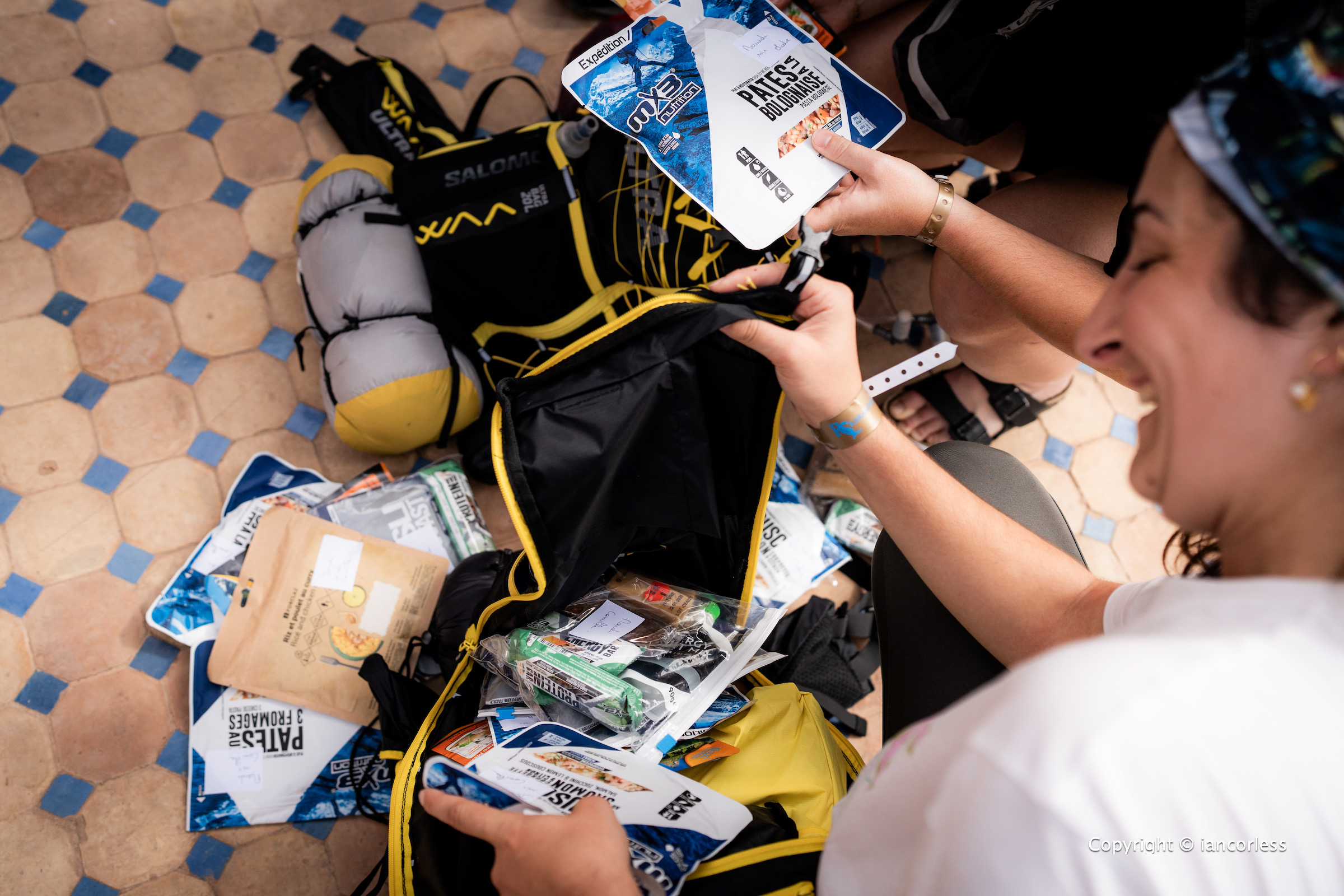
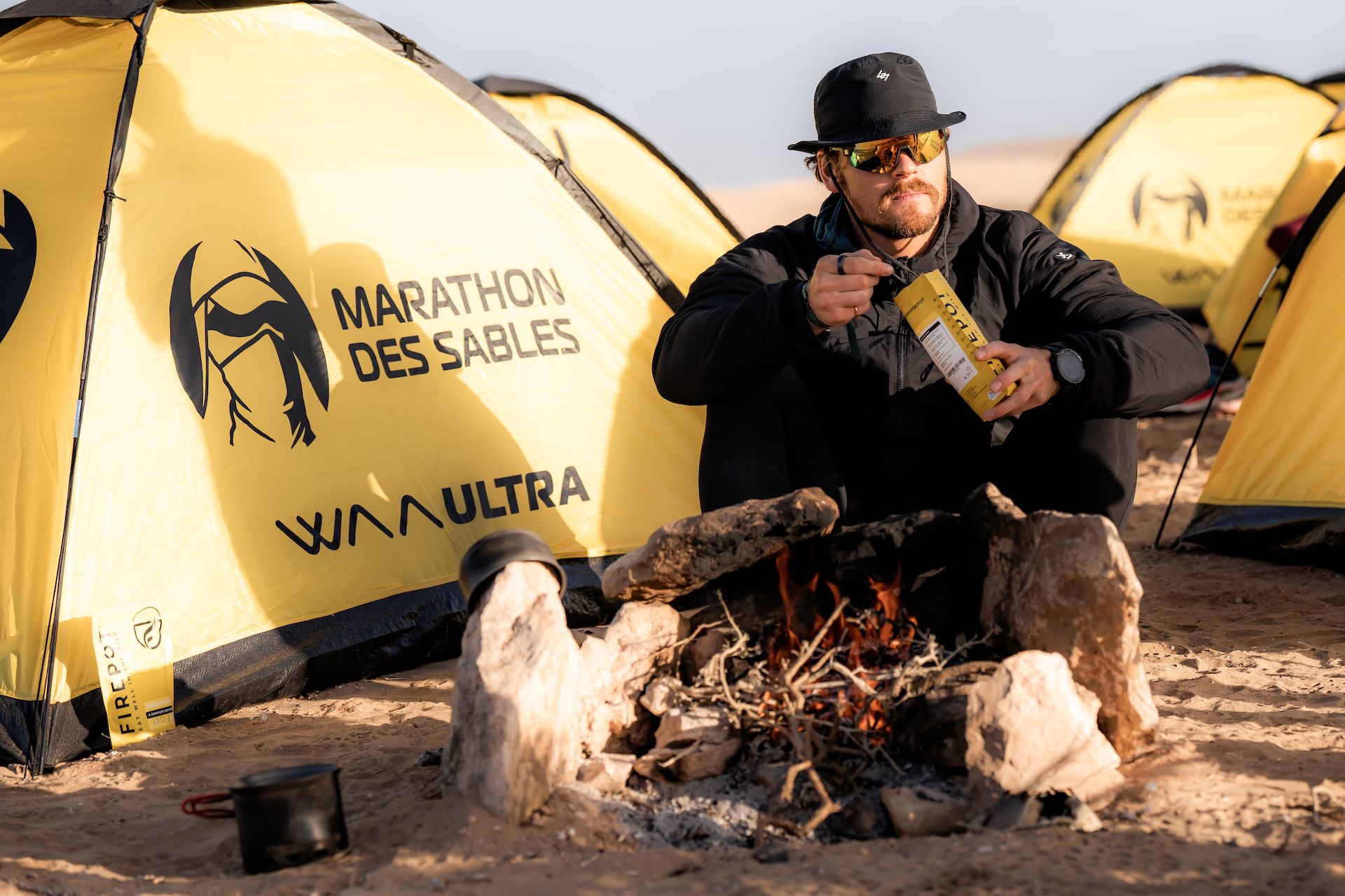
Food, as always, important at MDS – Photo by Ian Corless
Why 2026 Will Be a History-Making Edition
This is not just “another year” of MDS The Legendary, several factors are aligning to make the 40th edition uniquely compelling:
Milestone Significance – Forty years is a symbolic turning point. And by choosing to mark it with the toughest-ever stage, the organisers are intentionally raising the narrative: “Legendary by name, Legendary by reputation.”
New Records, New Legends – With no past precedent for a 100 km stage in MDS The Legendary, whoever finishes that leg (especially among the leaders) will enter the record books.
Attracting Ambition – Some ultra runners chase the “most difficult” challenge. A 100 km desert stage is a headline that will draw audacious minds and bodies, possibly pushing the field performance upward.
Legacy and Storytelling – In future retellings, the 2026 MDS The Legendary will be a pivotal point, some may say, the 40th edition was when MDS truly redefined itself. It’s the kind of turning point that historians of sport may hark back to.
Amplifying the Extremes – MDS has always lived on the edge: heat, sand, navigation, resource management. By stretching one day to 100 km, the extremity is amplified. The race becomes less about surviving the day, and more about mastering it.
The Longest Ever – With a long stage of 100km, the anticipated total distance for the 40th edition will be a record breaking 270km +/-.
Photo by Ian Corless
Challenges & Risks to Keep in Mind
No radical shift comes without risks and MDS The Legendary are required to balance risk against challenge. A 100km stage has long been discussed for this iconic stage race, it’s only right that the 40th edition will personify the Legendary tag with a landmark distance. However, even the world’s top ultra runners may falter under a 100 km leg in desert conditions. Managing attrition will be critical. The required pace will be, as usual, 3.5km per-hour. And of course, the MDS blue and orange jackets will be on-hand, more than ever, to facilitate everyone crossing the line.
100% support from the MDS team – Photo by Ian Corless
Some participants may feel disadvantaged if their prior prep or experience didn’t anticipate such a long stage, but, this is why this early announcement helps – fail to prepare, prepare to fail.
Perspective: How This Compares to Classic Ultra Benchmarks
To put 100 km in context: many stand-alone ultramarathons are in the 100 km to 100-mile range. But those are often supported events, with aid stations and crew support. In MDS The Legendary, with self-sufficiency, navigation demands, and desert extremes, layering a 100 km day is far harder than a flat 100k road ultra.
In prior MDS editions, long days of 80–90 km have already pushed runners to the brink, many cross the nights and run long into another day – for 2026, this will be the ‘norm’ for nearly all the participants.
The 40th edition becomes not just “another chapter,” but a rewriting of what MDS can be.
Final Thoughts: A Legendary Promise
Photo by Ian Corless
The 2026 Marathon des Sables is setting the stage, literally and metaphorically for a landmark event. The 100 km long day announcement signals ambition, courage, and a willingness to push the narrative frontier of desert ultra-running. In addition, the implications for the overall race distance being 270k +/- adds to the drama.
For participants, 2026 will demand a rethinking of training philosophies, gear choices, pacing strategies, and mental frameworks. For the sport, it may become a reference point for what is “next level” in multi-stage desert ultras. And for storytelling, it offers rich stories:”
“Who conquered 100 km in the sands?”
“How 2026 changed MDS forever.”
Legendary by name, and with this edition, legendary by reputation in a whole new way.
Interested in a Marathon des Sables event? More informationHERE
After the last-minute cancellation of MDS 120 Fuerteventura, the focus now shifts firmly to Morocco, where two cornerstone events are about to take center stage: MDS 120 Morocco and MDS Trek Morocco. Anticipation is high, the energy is back, and participants are ready for the desert challenge they’ve been waiting for.
What Are MDS 120 and MDS Trek?
The MDS 120 is a three-stage, four-day 10/100 or 120 km endurance race in the desert, modelled after the legendary Marathon des Sables but in a shorter, more accessible format. Athletes carry their food and gear, manage their effort in the heat, and experience the highs and lows of true desert racing, every kilometer tests both body and mind.
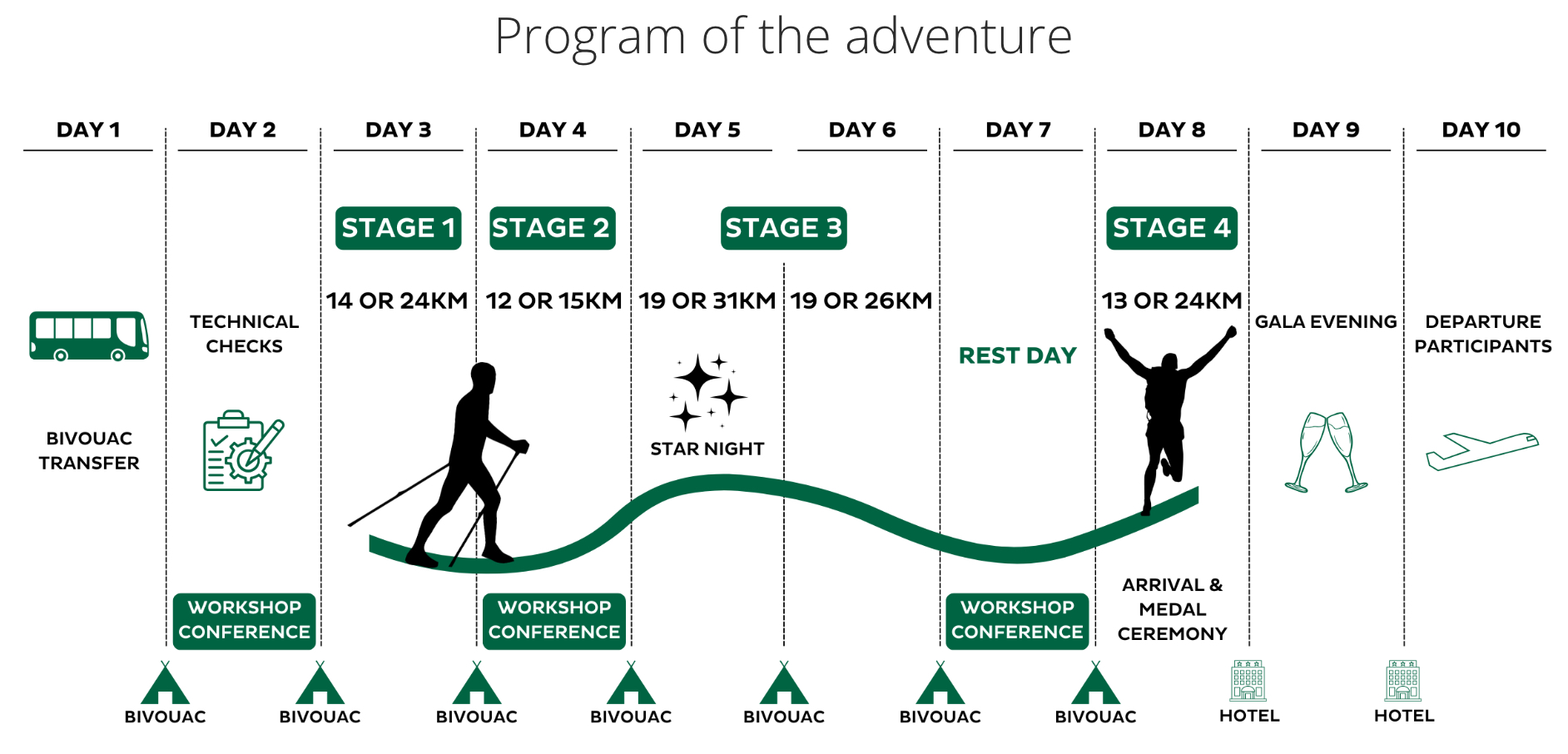
The MDS Trek shares the same landscapes and spirit as all MDS events but swaps competition for exploration. Designed for adventurers and walkers, it offers a supported trek across the Sahara, with each stage a new chance to discover the desert at a different pace. Participants are not self-sufficient, camp has more luxury and yes, even showers are possible!
The Journey Into the Desert
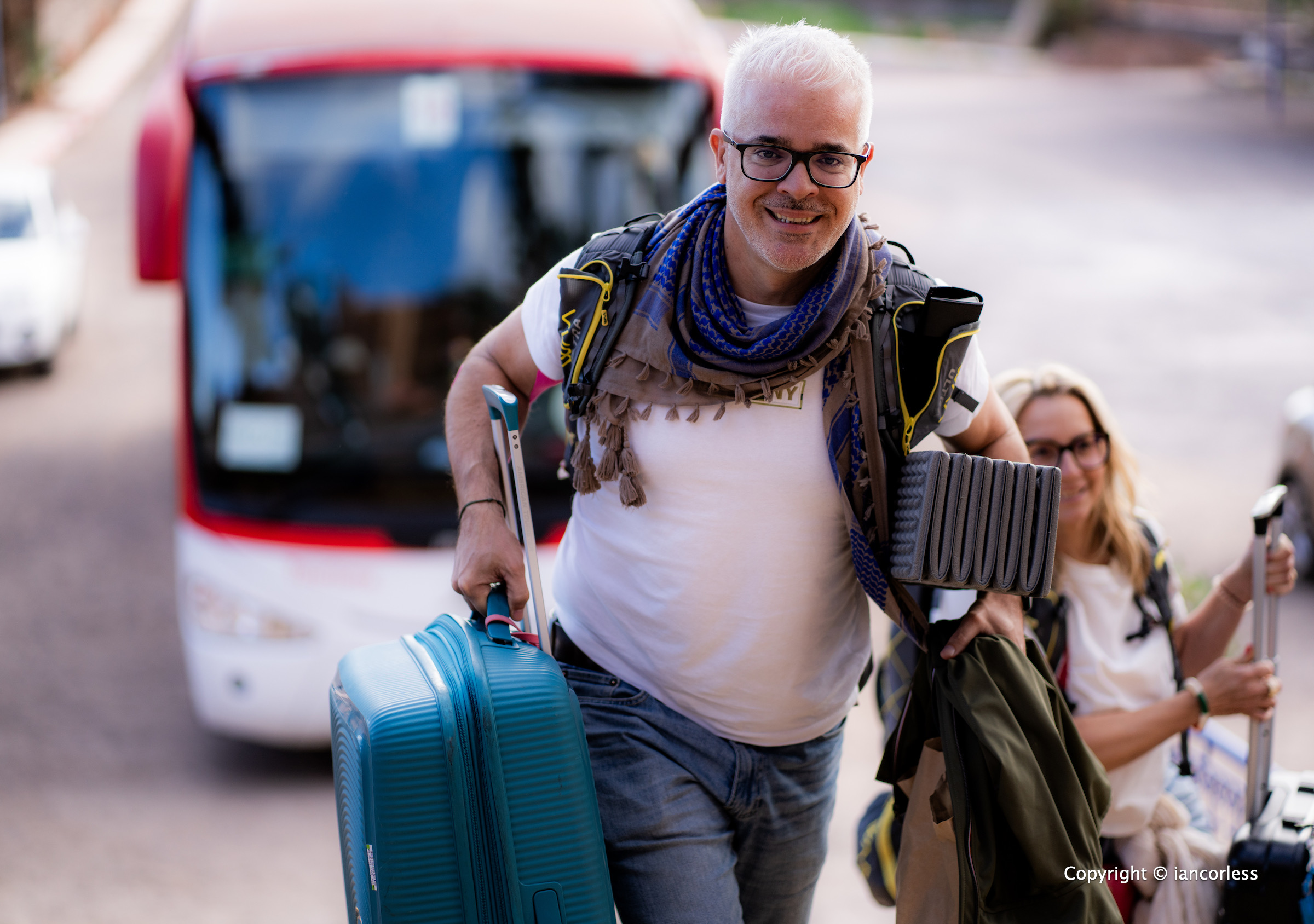
The adventure begins well before the start line. Most participants first gather in Marrakech, where the atmosphere is electric as athletes and trekkers from around the world converge. From there, MDS arrange transfers over the High Atlas mountains to Ouarzazate, often called the “door of the desert.”
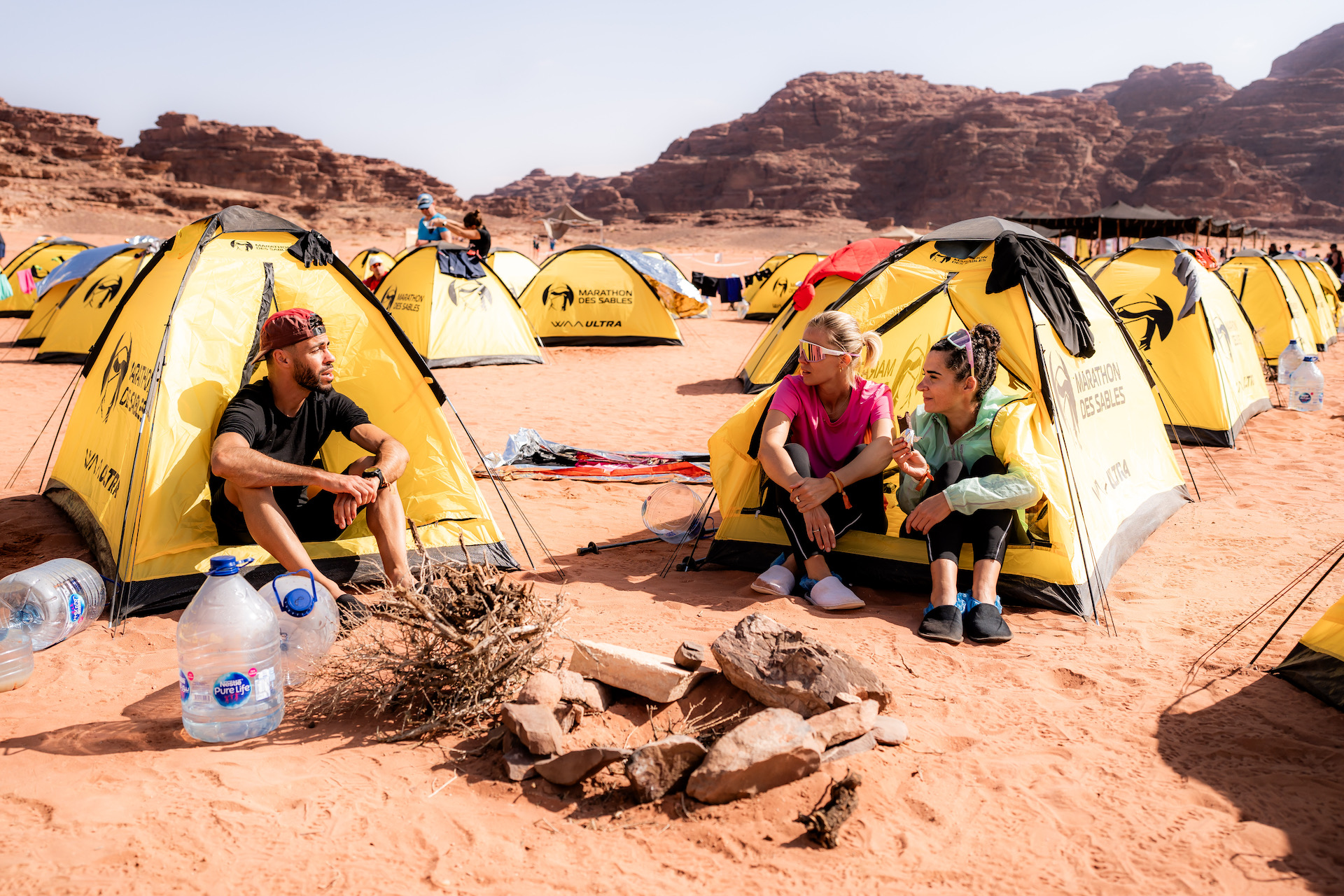
Two hotel nights in a hotel with administration protocols, then the caravan heads deeper into the Sahara. The transfer to Bivouac 1 marks the true start of the experience: the desert horizon stretching endlessly, the iconic WAA tents awaiting, and the realization that the adventure is about to begin.
MDS 120 Morocco:
MDS Trek Morocco:
Looking Back at 2024
The 2024 editions showed the enduring strength of the MDS spirit. Morocco delivered outstanding editions and for MDS 120, there were some challenging climatic conditions with rain and flooding.
MDS Trek, was business as usual with classic Morocco weather. Participants took on dunes, jebels, and starlit nights. These moments reinforced Morocco’s reputation as the spiritual home of the Marathon des Sables.
Why 2025 Will Be Bigger and Better
In 2025, expect the same, but amplified. The organisers have doubled down on delivering unforgettable events, and the buzz suggests the community is ready for it. The MDS 120 Morocco will push competitors harder, while the MDS Trek will continue to offer an inclusive and inspiring path through the Sahara.
And Then Comes Jordan
Photo by Ian Corless
The adventure doesn’t stop in Morocco. Just weeks after the conclusion of the MDS Trek, the focus shifts east for MDS 120 Jordan, where runners and trekkers will swap the Sahara for the dramatic landscapes of Wadi Rum. It’s a quick turnaround, but for those chasing the full MDS experience, it’s the perfect continuation of a year dedicated to desert discovery.
The countdown is on.
Morocco awaits.
Interested in a Marathon des Sables event? More informationHERE
Amy McCulloch is a world-renowned author who in 2022 toed the line of the iconic Marathon des Sables. The race and the experience planted seeds for a story, one of ultra-running and mystery. In June 2025, ‘RUNNER 13‘ was released.
Amy McCulloch is the internationally bestselling author of BREATHLESS, MIDNIGHT (also known as THE GIRL ON THE ICE) and RUNNER 13 – coming out worldwide in Summer 2025. She has also written eight novels for children and young adults, including the #1 bestselling YA novel The Magpie Society: One for Sorrow. In September 2019, she became the youngest Canadian woman to climb Mt. Manaslu in Nepal — the world’s eighth highest mountain. She has also summited the highest mountain in the Americas, Aconcagua, in -45C and 90kmph winds, and has visited all seven continents. In 2022, she completed the 36th Marathon des Sables, a 250km stage marathon through the Sahara Desert. She is also an A-licensed skydiver. She is currently working on her next adult thriller, continuing to draw inspiration from her adventures.
Amy joins the podcast to discuss the book and her MDS story.
Runner 13 is a thriller that drops readers straight into a deadly stage race across the Sahara, echoing the notorious Marathon des Sables in Morocco. McCulloch’s own experience running that event shapes every detail – the brutal desert landscape, the psychological toll, and the obsession with endurance that defines the sport. The story follows Adrienne, a once-great ultrarunner forced back into competition, and Stella, daughter of the race’s manipulative director, Boones, whose events, modelled on real-world extreme events, aren’t designed to be won, but to break runners. Central to the mystery is Runner 13, a symbol of both glory and doom. Told in sharp, cliff-hanging chapters that jump between present and past, the novel feels like Agatha Christie transplanted to the Sahara: a brutal race where survival, not victory, is the prize, and where Morocco’s desert becomes both the setting and the trap.
If you have participated in Marathon des Sables, the narrative of the book will feel familiar, you will relive your desert experience and of course, the added bonus of a murder mystery only makes the book more interesting. For newbies to the desert, rest assured, the book will be a wonderful escape and it can only make your future event even more ‘hotly’ anticipated – hopefully, the murder mystery element will be missing.
On Wednesday, September 10 at 12:00 PM UTC+2, registration opens for three unforgettable endurance adventures:
MDS 120 Morocco – October 2–10, 2026
MDS Trek Morocco – October 11–20, 2026
MDS 120 Jordan – October 31–November 7, 2026
For runners, trekkers, and anyone who dreams of testing their limits in the most breathtaking landscapes on Earth, these dates mark the beginning of a once-in-a-lifetime journey.
What is the MDS?
The Marathon des Sables (MDS) is not just a race. It’s a legend. Born in Morocco in the 1980s, the event has earned a reputation as “the toughest footrace on Earth.” Participants cross vast stretches of desert on foot, carrying their own food and gear, with only water and tents supplied. It’s as much a mental battle as it is a physical one – a journey into resilience, camaraderie, and discovery.
But MDS isn’t just about the ultra-hardcore. Over the years, the family has grown to include formats that open the experience to more people while retaining its wild, adventurous spirit. That’s where MDS 120 and MDS Trek come in.
MDS 120 vs. MDS Trek: What’s the Difference?
Both are designed to immerse you in the magic of the desert, but the style of challenge is different.
MDS 120
A shorter, yet still demanding, version of the iconic Marathon des Sables.
120 kilometers spread across three stages.
Self-sufficient format: you carry your food and equipment.
Runners and fast hikers alike join in, moving between marked checkpoints across some of the most beautiful, wild landscapes imaginable.
Nights are spent in camp, bonding with fellow adventurers under desert skies.
MDS TREK
Designed for those who want the MDS atmosphere without the clock.
Roughly the same length as the 120, but completed at a trekking pace over five stages.
Guided and supported: you carry a daypack, while larger bags are stored in bivouac.
Perfect for walkers, adventurers, and anyone who prefers to savour the desert at a slower rhythm.
In short: MDS 120 is a race. MDS Trek is an adventure. Both give you the thrill of the desert, the community spirit, and the sense of achievement that comes from stepping far outside your comfort zone.
Photo by Ian Corless
Morocco: The Heart of MDS
It’s no accident that MDS was born in Morocco. The Sahara here is everything you imagine when you hear the word “desert”: towering golden dunes, dry salt lakes, endless rocky plains, and distant mountains shimmering in the heat.
During the MDS 120 Morocco (Oct 2–10, 2026), participants will move through terrain that feels ancient and otherworldly. Running or trekking across sand seas lor along fossil-studded plateaus, you’ll witness landscapes that seem unchanged for millennia.
If you prefer a slower, more contemplative journey, MDS Trek Morocco (Oct 11–20, 2026) is your chance to follow in the footsteps of nomadic caravans. Expect strong mint tea at camp, Berber hospitality, and sunrises that wash the dunes in pink and gold.
Jordan: A Desert of Myths and Monuments
After Morocco, MDS 2026 turns east to another jewel of the desert world: Jordan.
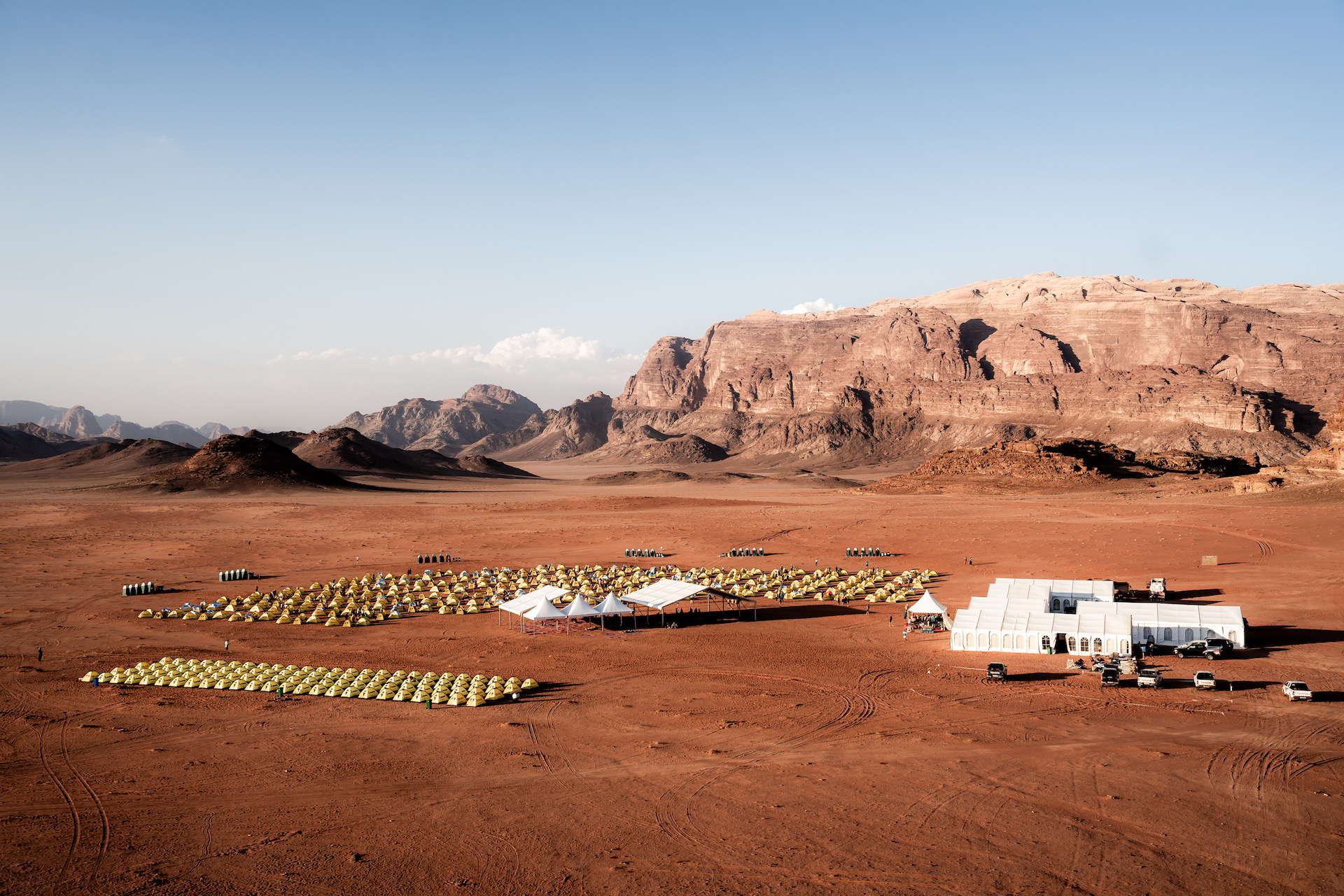
From October 31 to November 7, 2026, MDS 120 Jordan takes place in Wadi Rum, a place so breathtaking it has been called “the Valley of the Moon.” Red sandstone cliffs, natural arches, and wide sandy valleys create a setting that feels almost Martian—no wonder so many films have been shot here.
Photo by Ian Corless
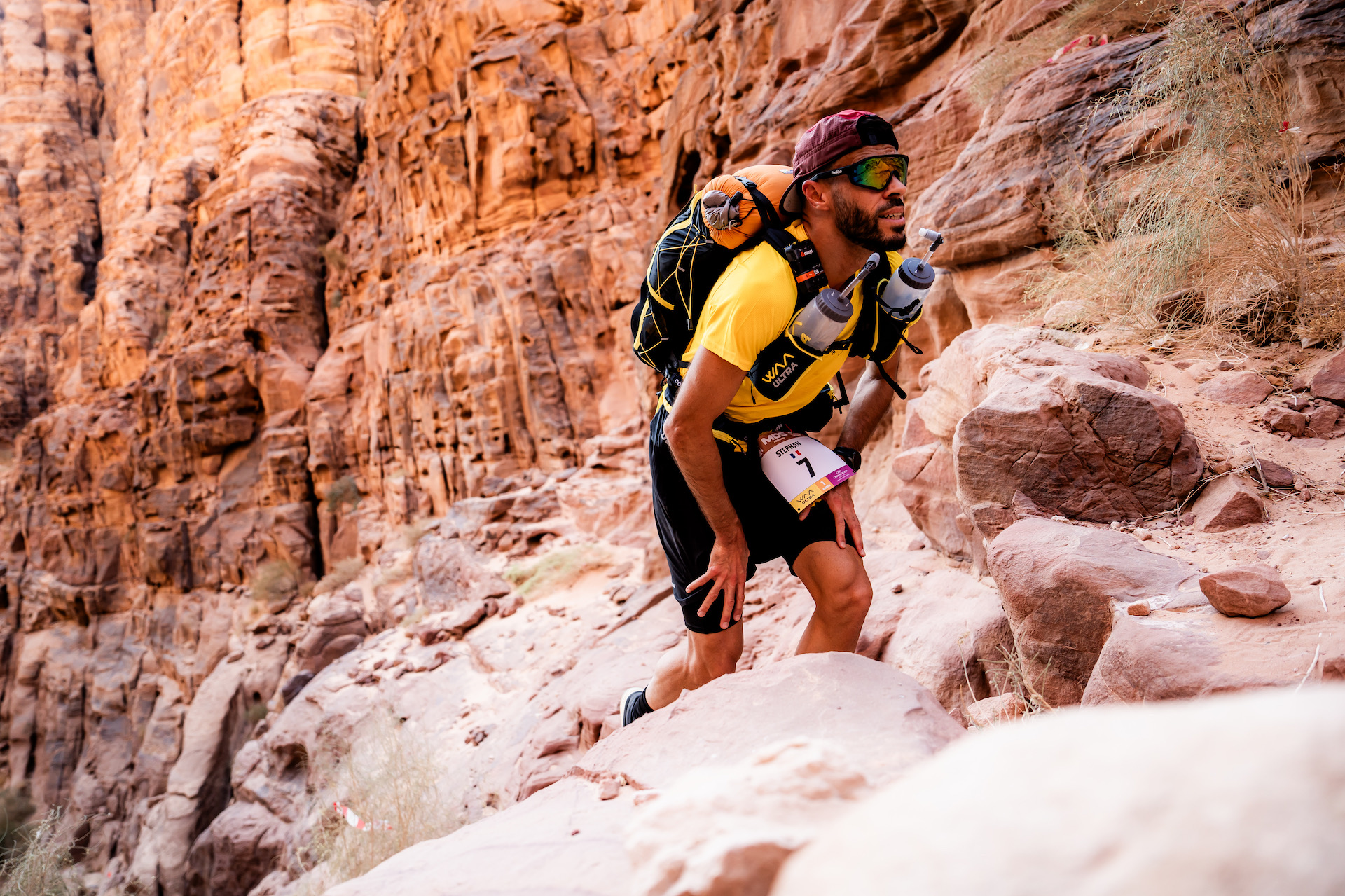
The terrain is ideal for running and trekking: firm sand flats, winding canyons, and rocky ridges that offer sweeping views. And the cultural backdrop is equally unforgettable. This is the land of Lawrence of Arabia, Nabataean traders, and Bedouin camps where hospitality is still sacred.
Photo by Ian Corless
Add in the chance to visit Petra – the rose-red city carved into cliffs – and float in the Dead Sea, and you’ve got a trip that balances physical challenge with world-class cultural exploration.
Why These Events Sell Out
Every MDS event is capped to maintain its unique atmosphere: a balance of challenge, safety, and community. That’s why when registration opens, places vanish fast.
Here’s what draws people back year after year:
The Challenge: 120 kilometers may sound daunting, but it’s achievable for anyone willing to train. Past participants range from elite athletes to everyday adventurers.
The Camaraderie: Camps become villages of shared struggle and shared joy. By the end, strangers become family.
The Scenery: Whether it’s sunrise over Moroccan dunes or starlight over Jordan’s cliffs, the landscapes will etch themselves into memory.
The Transformation: You leave with more than a medal. You leave knowing you can do hard things—and that realization follows you into every part of life.
Photo by Ian Corless
Preparing for MDS
MDS is not something you show up to on a whim. But it’s also not as unreachable as it may seem. With six to twelve months of structured training – mixing endurance, strength, and practice carrying a pack – most people can get ready.
What both demand is an open mindset: ready for sand in your shoes, dust on your face, and joy in small things like shade, water, and shared laughter.
The post-pandemic years have sparked a surge of people craving real experiences – not just vacations, but adventures with meaning. MDS embodies that perfectly. It’s travel, sport, culture, and self-discovery all wrapped into one.
If you’ve ever dreamed of running across the Sahara or walking through Wadi Rum, 2026 is your chance. Spots are limited, and once they’re gone, you’ll be waiting another year.
Photo by Ian Corless
Think about it: ten days where your only job is to put one foot in front of the other. No emails, no deadlines, no noise – just the sound of your breath, the crunch of sand, the laughter of fellow adventurers, and the vast silence of the desert.
That’s what awaits you at MDS 120 Morocco, MDS Trek Morocco and MDS 120 Jordan 2026.
On September 10, 2025 at noon (UTC+2), the door opens.
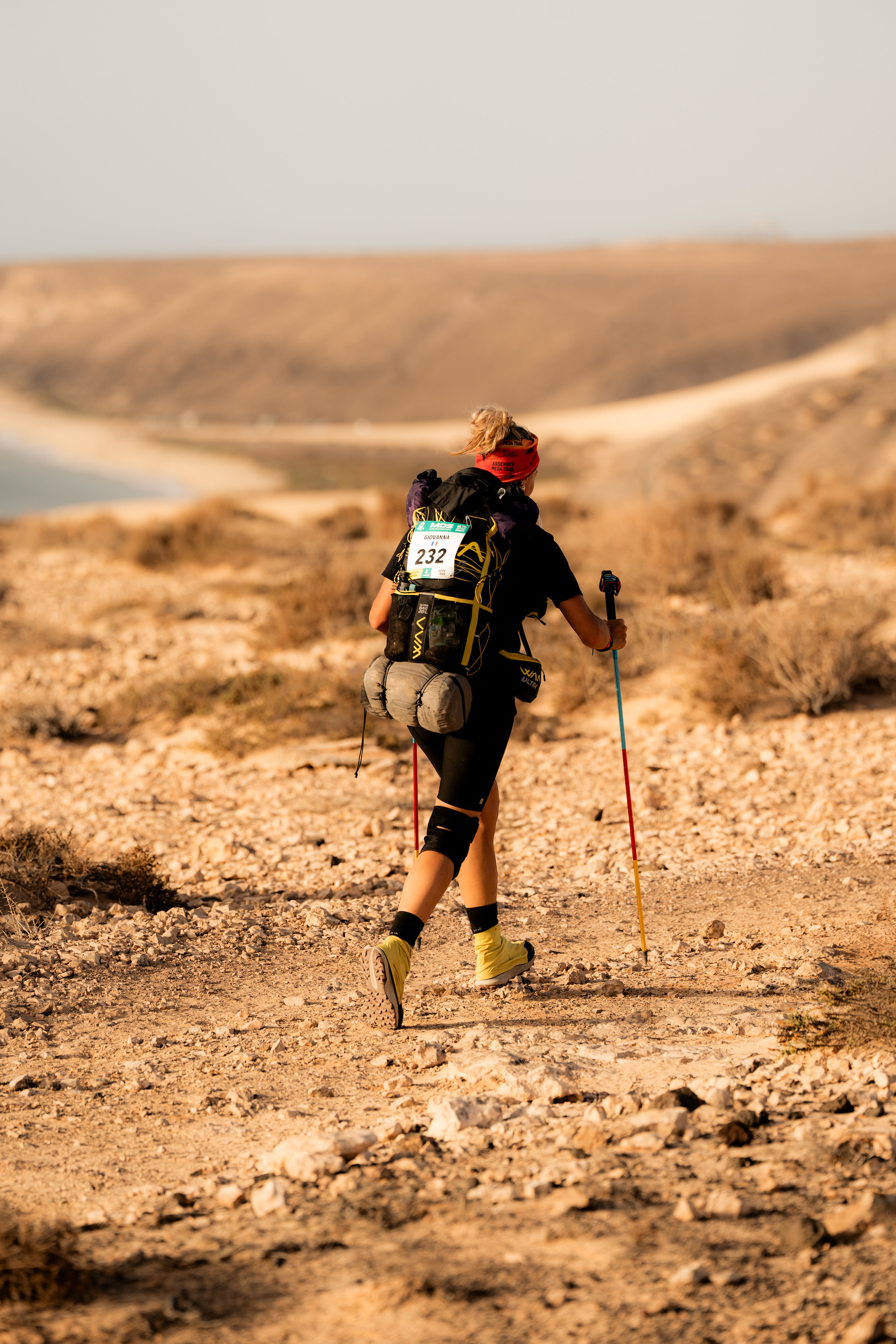
MDS 120 Fuerteventura returns in September 2025, not ‘just’ another race on the calendar, but an important marker in the history of the MDS 120 format. A collision of raw endurance and wild beauty, where athletes trade comfort for grit, and discover just how far their bodies and minds can be pushed. Set against the sunburnt backdrop of the Canary Islands, the race is part expedition, part survival trial, and part celebration of human resilience. A race for all with 3 distance options available, 70, 100 and 120km’s.
What Is the MDS Fuerteventura?
MDS 120 Fuerteventura is the younger sibling of MDS The Legendary, the original multi-stage ultramarathon across the Sahara Desert in Morocco. Like its parent race, the Fuerteventura edition demands that competitors carry their own supplies while covering gaily distances under variable conditions.
The format is simple but brutal: three stages spread across four days with desert, volcanic ridges, and coastline to endure. Each participant must carry their own food, sleeping kit, and survival essentials, relying only on the organization for water, medical support and a tent. Each stage offers a different flavor of challenge, from long, flat stretches where heat and monotony test mental strength, to rugged climbs that punish the legs and lungs in equal measure.
This self-sufficiency format transforms the MDS 120 Fuerteventura from a simple race into an expedition where every choice is an important aspect – how much food to pack? which shoes to wear? when to push and when to conserve energy? – each decision carries a consequences that can make or break the experience.
Participants spend 3 nights at the MDS bivouac and enjoy 4 nights at the Playitas Resort hotel, offering numerous facilities (two nights before, two nights after).
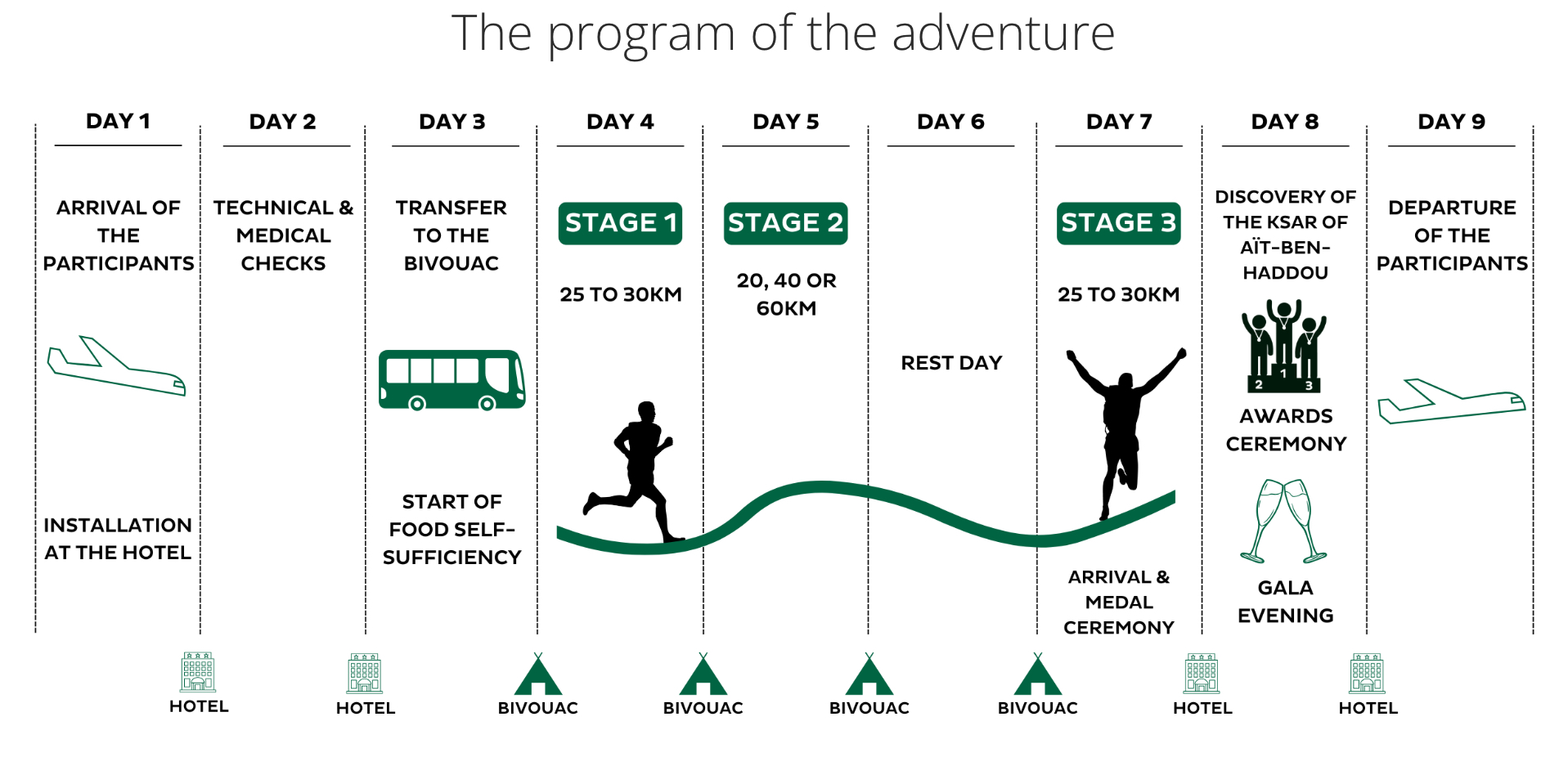
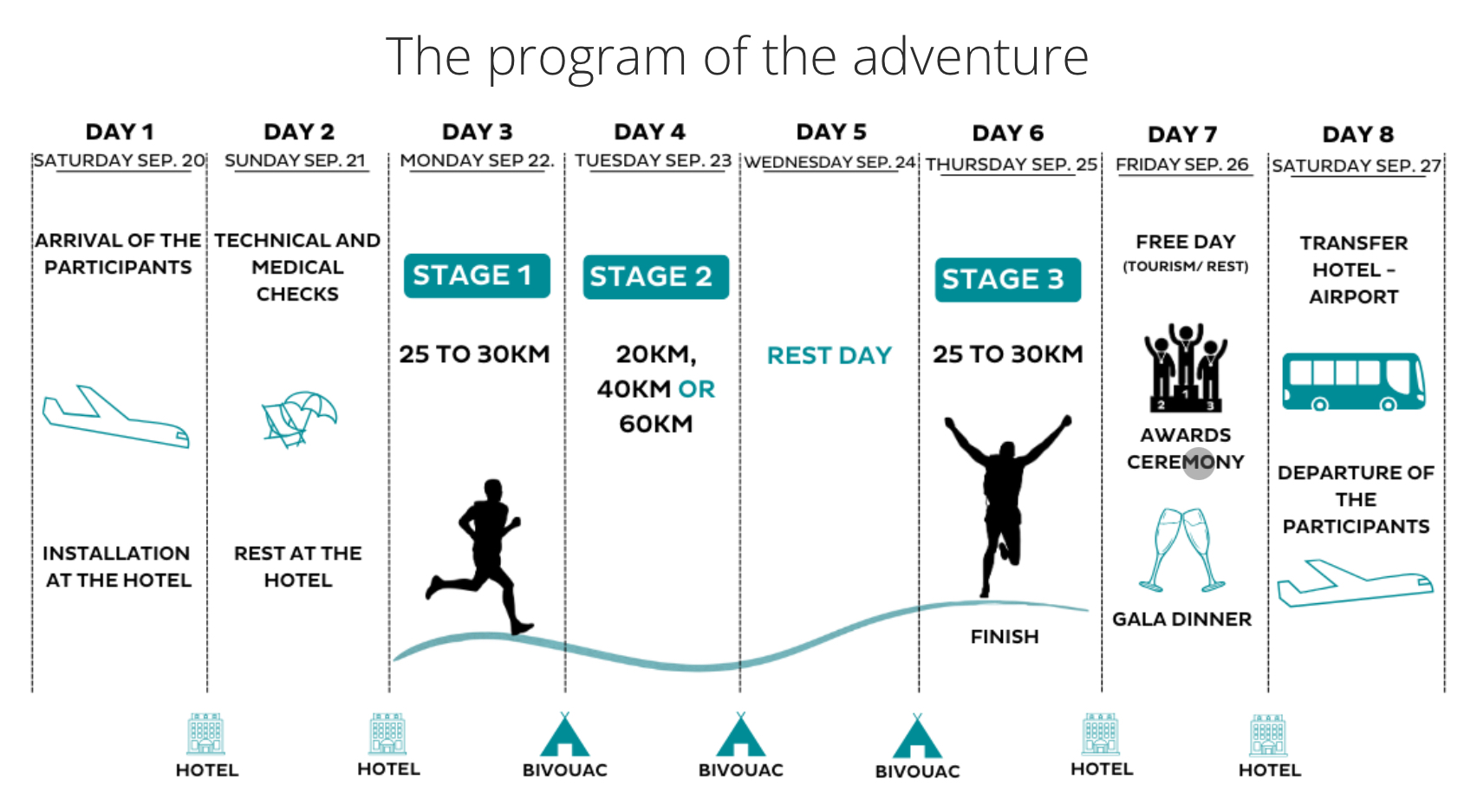
Participants choose between 3 different distances: 70, 100 or 120km, divided into 3 stages, over 4-days. This includes 1 full day of rest.
Here is the breakdown:
Stage 1: around 25 to 30km
Stage 2: around 20, 40 or 60km
Stage 3: around 25 to 30km
The Experience: More Than a Race
Fuerteventura is often described as the most “African” of the Canaries, its landscape shaped by ancient volcanic eruptions, relentless winds, and a climate closer to desert than Mediterranean. It’s the perfect environment for a stand-alone adventure, or an ideal preparastion ground for a further adventure in Morocco.
Beautiful yet brutal. Wide expanses of golden sand stretch for kilometers, interrupted by jagged lava fields and rocky ridgelines. The sun can beat down with unflinching intensity, but be warned, temperatures can swing wildly between scorching afternoons and cooler desert nights.
Coastal stages hug turquoise waters where waves crash against black cliffs. Inland routes weave through barren plains dotted with cactus and aloe, offering glimpses of a stark, unspoiled wilderness.
Ask anyone who has completed the MDS Fuerteventura, and they’ll tell you it’s not just about running. It’s about living in a stripped-down, elemental state for nearly a week. Each day begins with the ritual of packing up camp, stuffing sleeping bags and rations back into packs, ready for a day on the trails. By mid-morning, the desert heat has arrived, runners are strung out across the horizon like a line of ants marching into infinity. The rhythm of the race is simple: walk, run, eat, drink, rest. Repeat.
At night, exhaustion gives way to camaraderie. Competitors gather under the stars, swapping stories, sharing advice, and laughing about the day’s suffering. Bonds form quickly because everyone is in the same fight, battling the same heat, hunger, and fatigue. By the end of the week, the MDS 120 Fuerteventura community feels like family, one forged in adversity.
The finish line is more than a marker of distance. It’s a rite of passage. For many, crossing it means proving to themselves that they can endure more than they ever imagined. That’s why the MDS format is addictive: once you’ve lived through it, you carry its lessons into every part of life.
The Spirit of the Race
Beyond the logistics, numbers, and training plans, what makes the MDS 120 Fuerteventura extraordinary is its spirit. It’s about stripping life down to its essentials: water, food, movement, survival. In a world cluttered with convenience and noise, the race forces participants into clarity. You discover not only the limits of your body but also the surprising depths of your will.
Looking Ahead
MDS is not about beating others. It’s about discovering what you’re really made of. And for those lucky enough to be there in Fuerteventura, September 2025 will be a week they’ll never forget.
Marathon des Sables – information and race entry HERE
Second Edition Confirmed for April 25 to May 2, 2026
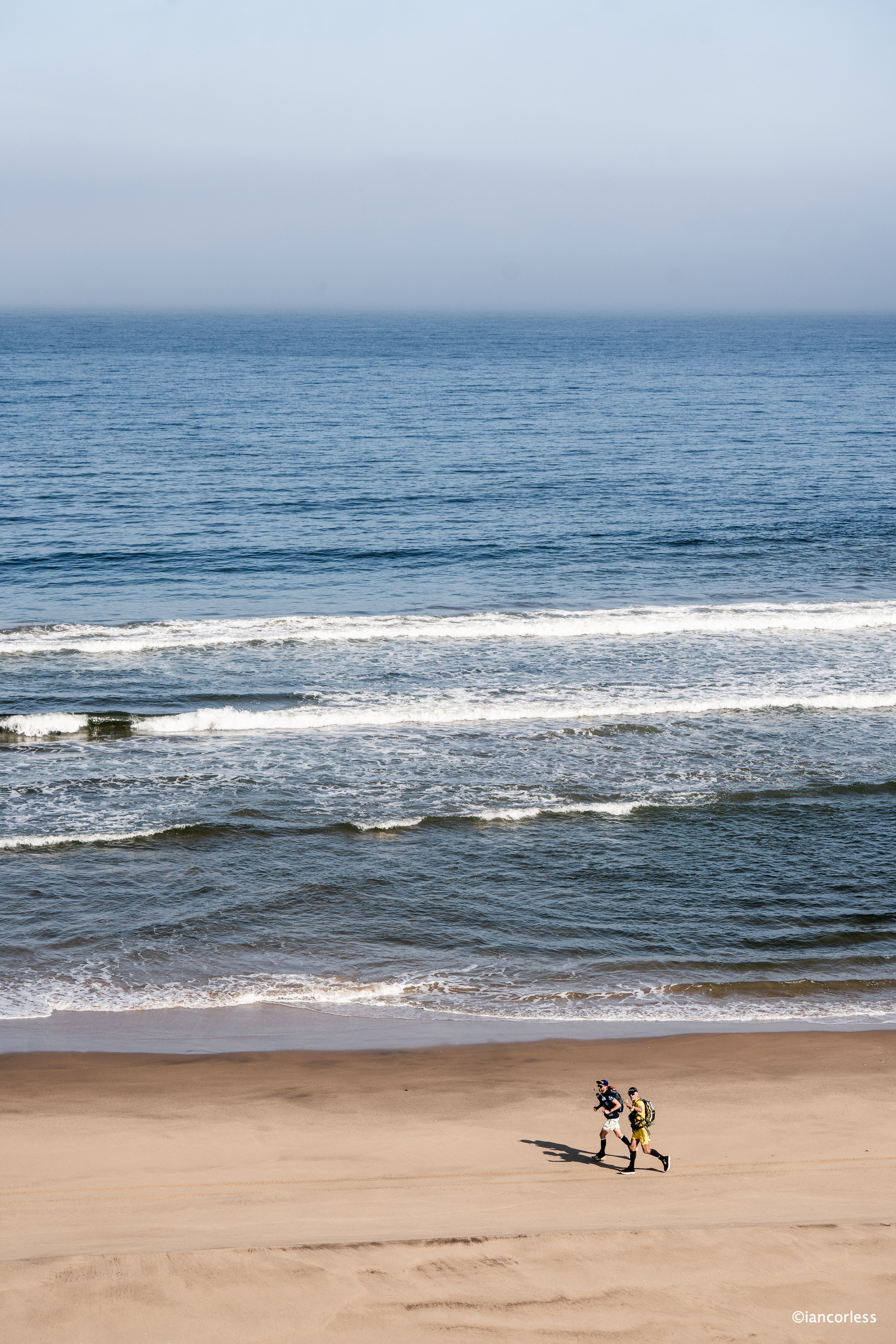
The adventure is back. From April 25 to May 2, 2026, the second edition of MDS Raid Namibia will return to one of the most breathtaking landscapes on Earth, and this time, it’s bigger, bolder, and ready to test your limits.
A Race Like No Other
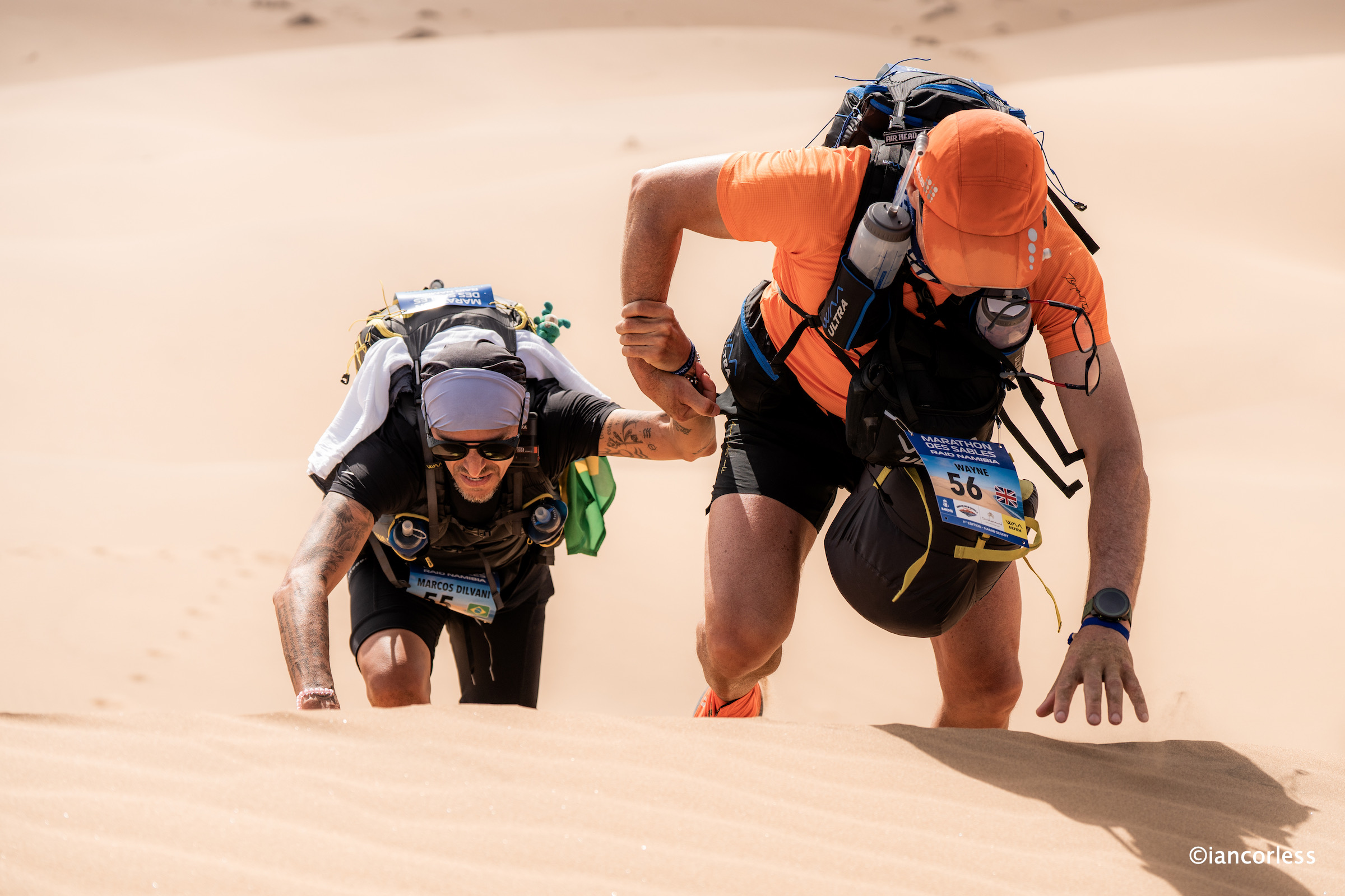
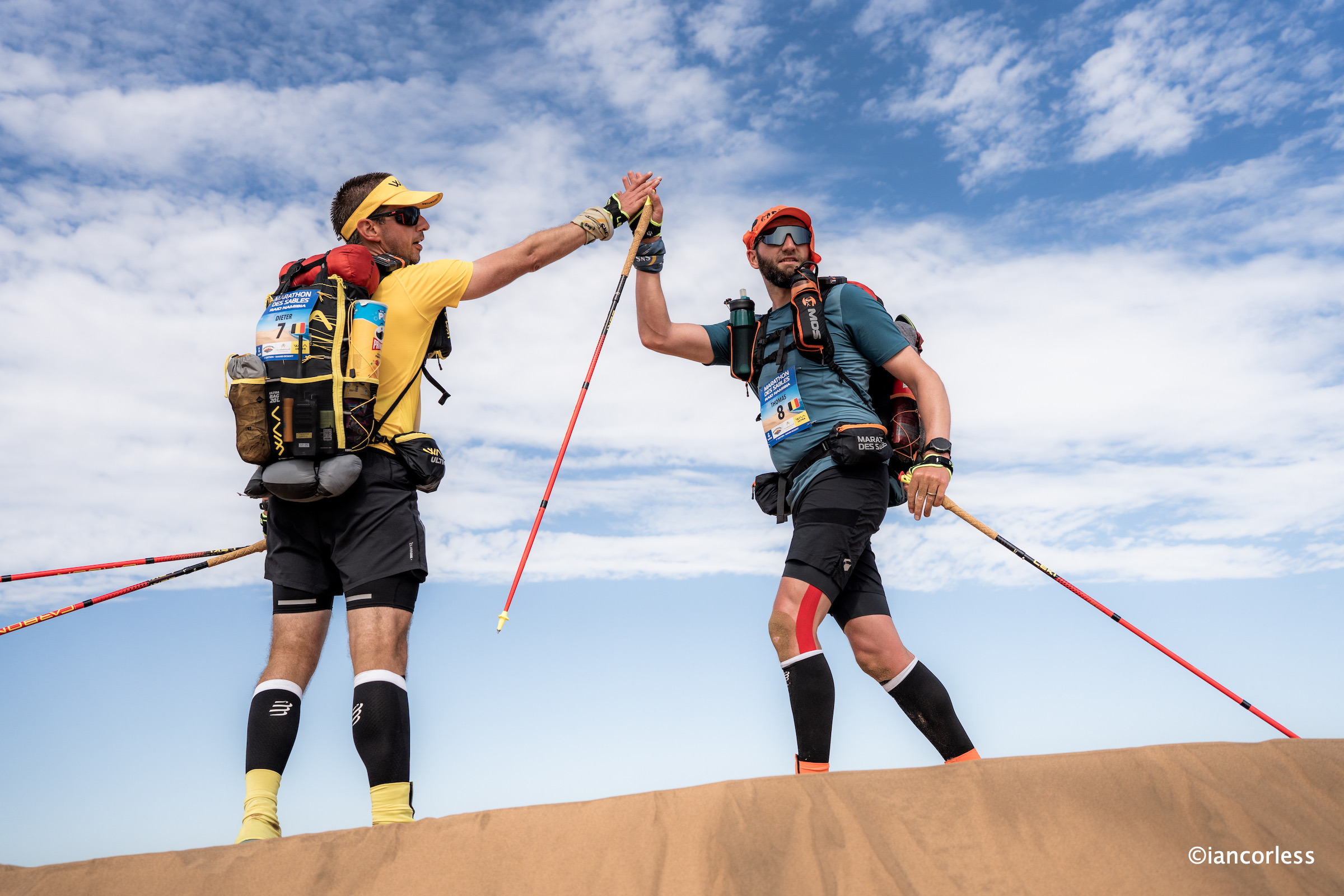
MDS Raid Namibia isn’t your typical ultra. It’s a Raid format: multi-day racing where each stage takes you deeper into wild, untouched terrain. You and your partner navigate the course together, carrying your essentials, relying on one another’s grit and skill. The rhythm is different from a single-stage event, it’s about strategy, recovery, and building momentum over days in the desert.
Namibia: More Than a Backdrop
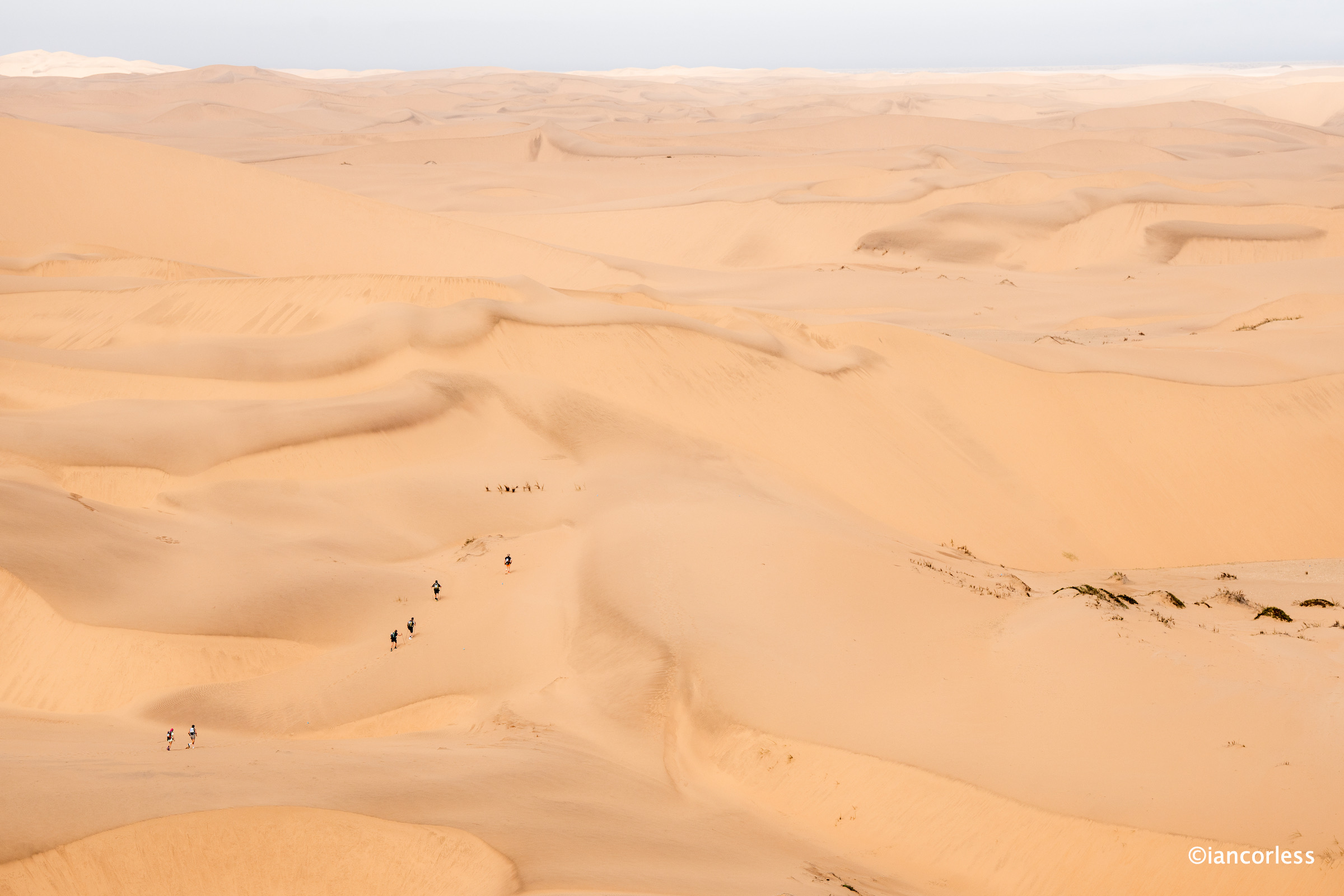
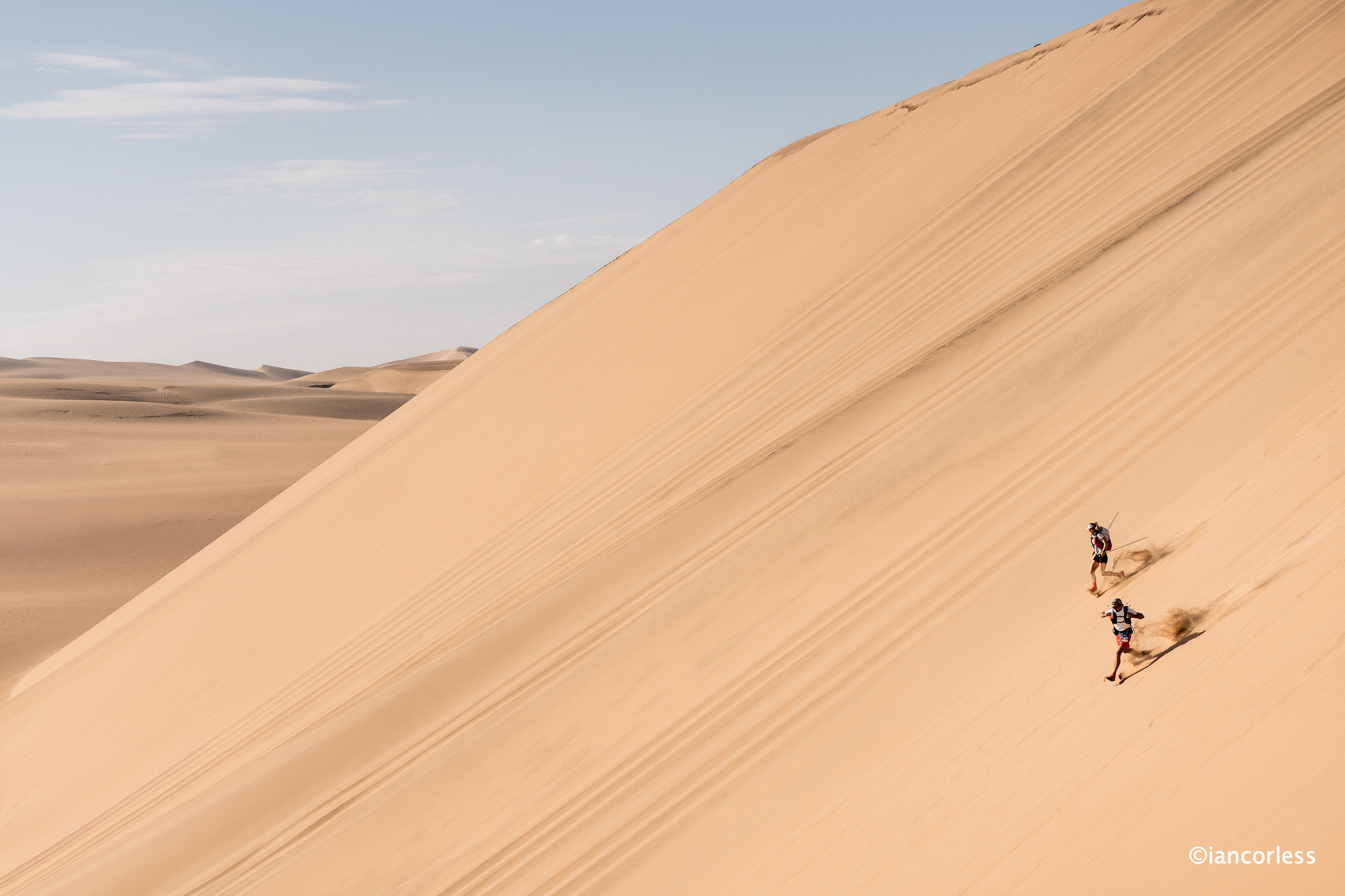
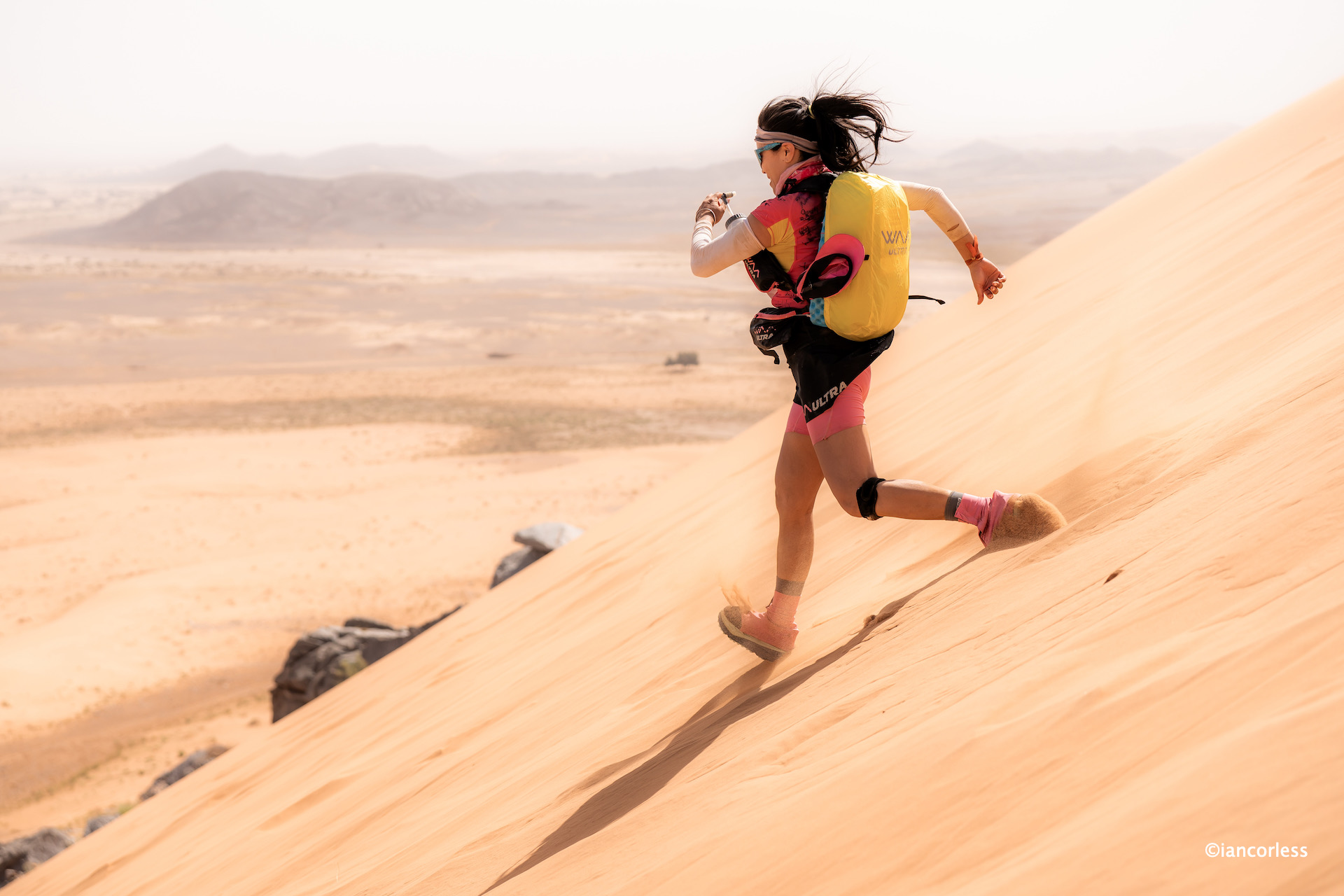
The desert here is alive with colour and contrast, towering red dunes, sun-bleached plains, and skies so vast they feel infinite. But the real magic? The people. From the warmth of local communities to the camaraderie among competitors, every smile, handshake, and shared moment turns the race into something unforgettable.
Two Distances, One Challenge
Whether you choose 90km or 107km, you’ll face a course that demands strength, patience, and partnership. The shorter option is still a serious test; the longer route adds extra sting to already challenging days.
Teams of Two
This is not a solo fight. Every team is two runners — sharing the highs, lows, decisions, and celebrations. It’s about knowing when to push, when to pace, and how to keep each other moving forward. You’ll finish this race with more than just a medal — you’ll leave with a bond forged in heat, dust, and determination.
Under the Star Night
And then there’s Star Night — a moment that transcends competition. Out in the desert, far from city lights, the sky becomes a canvas of constellations. It’s an evening to pause, breathe, and feel the scale of where you are. Stories are shared, laughter carries through the darkness, and the adventure takes on a whole new light.
⸻
MDS Raid Namibia 2026 is more than a race. It’s an odyssey. Whether you come for the challenge, the scenery, or the connection, you’ll leave with a story only this desert can write.
The desert is calling.
Read and in-depth summary of the first edition in 2025 HERE and be inspired to join this magical adventure, ‘Testing Limits on the Edge of the Atlantic.’
The Marathon des Sables (MDS) isn’t just a race, it’s a test of grit, strategy, and survival.
Whether you’re taking on the MDS 120 (70km, 100km, or 120km across three stages in four days) MDS RAID, MDS TREK or the infamous MDS LEGENDARY (250km across six stages in seven days), the physical and mental demands are unlike any other event.
Photo by Ian Corless
Training for the MDS means more than just running a lot. You’re preparing your body to carry gear (Trek excluded) across uneven terrain WITH varied temperatures all while potentially sleep-deprived, sunburned, and blistered. It requires smart progression, precise planning, and brutal honesty about your strengths and weaknesses.
Here’s a guide how to build a training system that prepares you to compete if you’re aiming for the top, or complete if you’re focused on finishing strong and unbroken.
⸻
Understanding the Events
MDS LEGENDARY:
• Distance: 250 km
• Duration: 6 stages over 7 days
• Focus: Endurance monster; includes one long stage (often 80-90 km,) a marathon stage and on the final day a half-marathon.
• Logistics: Self-sufficient, sleep on the ground, rationed water, blister clinics, potentially extreme heat and sharing a bivouac (tent) with 7-0ther people.
MDS 120:
• Distance: 70, 100, or 120 km.
• Duration: 3 stages over 4 days
• Focus: Shorter but intense; good as a first step into stage racing
• Logistics: Self-sufficient, similar rules to the full MDS but over a condensed period and participants sleep in individual tents. Remember, MDS 120 events have varied terrain, MDS 120 Cappadocia as an example is much more a ‘trail’ race than a desert race.
Photo by Ian Corless
MDS RAID:
• Distance: 100, or 120 km.
• Duration: 3 stages over 4 days as MDS 120 but with a ‘star night.’
• Focus: Shorter but intense; good as a first step into stage racing
• Logistics: Self-sufficient, similar rules to the MDS 120 but in teams of two and ideally the participant has more experience.
MDS TREK:
• Distance: 70 to 120 km.
• Duration: 4 stages over 6 days.
• Focus: An introduction to MDS with no self-sufficiency, extra comfort and daily distances to be undertaken ‘trekking.’
MDS ULTRA and MDS CRAZY LOOPS:
• Two unique events that do not follow the ’typical’ MDS format. The ULTRA is a single-stage race of 100km’s or 100-miles. CRAZY LOOPS is a trail event, in the mountains, participants complete as many loops as possible in a 24-hour time period.
⸻
Competing vs. Completing
Photo by Ian Corless
These are two entirely different approaches:
Competing means aiming for the front of the pack. You’re trying to place well, maybe top-100 or higher. This demands high mileage, precise gear choices, low pack weight, and serious pacing strategy. Your training must be performance-focused, often replicating race conditions with deliberate intensity.
Completing means finishing within cutoff times, avoiding injury, and keeping yourself intact. You still need to train hard, but the mindset is survival over speed. You train to handle discomfort and manage variables like foot care, heat, and nutrition. A slower pace still means a high physical load due to long time-on-feet days.
Photo by Ian Corless
⸻
The Influence of Previous Experience
If you’re coming from a road marathon or ultra background, your endurance engine is a huge asset. But you’ll still need to adapt:
• Road runner? Learn to move efficiently on sand, rocks, and uneven terrain. Focus on gait adaptation and ankle stability.
• Trail ultra veteran? You’ve got terrain dialled in so develop strategies based on your goals to maximise your experience. This may be to ‘perform’ aiming for a top-100 position. Asses strengths and weaknesses, add gym work, core, stability and so on.
• New to ultras? Start with time-on-feet progression and hike-run strategies. You’ll need to build both endurance and mental resilience slowly and methodically.
Prior experience informs your pace, nutrition, and how aggressively you can train. Beginners must respect the build-up. Veterans must respect the different environment. Walk, and walk a great deal.
⸻
The Foundation: Gradual Progression and Rest
Ultra training is about progressive and controlled block of stress and recovery. You don’t jump into 30 km runs with a pack. You build tolerance over months.
Golden Rule: Progress weekly volume by no more than 10%. Rest every 3-4 weeks. Use time-on-feet as much as distance early on.
Your weekly progression may look like:
• Week 1: 45 km (with one 15 km light pack run)
• Week 2: 50 km
• Week 3: 55 km
• Week 4: 30 km (recovery)
• Week 5: 60 km (add second pack run)
And so on, depending on fitness level, adaptation, targets and goals.
⸻
Training Cycles: Macrocycles, Mesocycles, and Microcycles
Long-term success in MDS starts with understanding training periodisation and structuring your year into manageable and purposeful blocks.
Depending on experience and the time to your event, the Macrocycle, Mesocycle and Microcycle blocks will vary.
Example 1:
As an example, if it is currently August and you have entered MDS LEGENDARY, you can plan a Macrocycle as you have 8-months to April and the race date. You can then plan the Mesocycle and blocks and then fine-tune the Microcycle as you progress.
Example 2:
By contrast, if it is August and you have entered MDS 120 Jordan (in November) it’s fair to assume you have already been training and therefore you’d start by planning four Mesocycle blocks – August, September, October and November.
Macrocycle (6–12 months)
This is the full plan from now until race day. It includes base building, load development, peak volume, and taper.
• Base (12–16 weeks): Build aerobic engine, mobility, strength. Focus on consistent running and body conditioning.
• Mesocycle 2: Terrain work, hills, stability, light pack
• Mesocycle 3: Long runs, sand training, heat exposure
• Mesocycle 4: Race simulations, high pack weight, nutrition testing
Microcycles (1 week)
These are your weekly training schedules. Balance hard/easy days, recovery, and cross-training.
Sample microcycle for intermediate runner in build phase:
• Mon: Rest or yoga
• Tue: 12 km trail run + core
• Wed: Hill repeats + strength
• Thu: 10 km easy run (pack)
• Fri: Rest or swim
• Sat: 25 km long run (pack)
• Sun: 15 km hike-run combo (pack, terrain)
⸻
The Desert Load: Equipment and Pack Weight
Photo by Ian Corless
In MDS, you carry everything, TREK excluded. Your pack should include food, sleeping bag, medical kit, cooking gear, clothing, and mandatory gear. That’s 6.5kg minimal weight for MDS LEGENDARY plus water. MDS 120 / MDS RAID will have a lighter packs due to less days.
Light is fast and safe. Every gram adds significant energy demand over the race distance, the less weight you have will mean less fatigue, less stress and a faster pace..
Key strategies:
• Weigh everything. Cut ruthlessly.
• Test gear in training. Run with your pack at full race weight, but, do not do this all the time, you risk injury.
• Practice eating on the go. Your daily calorie requirement will be 2500–4000 kcal depending on pace and build.
You’ll also need:
• Desert gaiters
• Trail shoes with cushioning
• Anti-chafing strategies (tape, powders, creams)
• Ultralight sleeping setup
• Efficient stove or cold-soak food plan
⸻
Specific Training Focuses
The more you plan, the more specific you are, the better prepared you will be.
1. Back-to-back Long Runs
Simulate cumulative fatigue. Do a 30 km Saturday, 20 km Sunday combo. Later in the cycle, increase both and wear your pack.
2. Heat Acclimation
• Train in heat or use sauna/hot baths post-run.
• Wear layers during training to simulate heat stress.
• Aim for 10–14 days of adaptation close to race.
3. Running with Weight
Start with 2–3 kg, progress to full 7–9 kg by peak phase. Train your posture, core strength, and blister care during these sessions.
4. Footcare Mastery
Practice taping, changing socks, lancing blisters, and prevention strategies. Your feet will suffer unless you prepare.
5. Nutrition Practice
Test every food item you plan to bring. Can you stomach 3000 calories of freeze-dried meals and energy bars daily? What about in 45°C heat?
⸻
Simulate Race Weeks
Training in Lanzarote
The most effective training tool is a mini stage race. For example, you may enter MDS TREK as preparation for an MDS 120 event, or, you may enter an MDS 120 event in preparation for MDS LEGENDARY. Alternatively, you can plan specific race simulation in your training, think about three to four days of 20–30 km runs with a pack. As an example, you could try the following 5-weeks before an event:
• Day 1: 30 km trail run (morning), sleep on mat
• Day 2: 25 km (pack), minimal food, no shower
• Day 3: 20 km (pack), hot day if possible
You’ll discover gear weaknesses, hydration issues, and psychological fatigue, these are critical insights before the real event.
⸻
Mental Training
Photo by Ian Corless
This race is more mental than physical. You must train:
• Positive self-talk
• Pain compartmentalisation
• Visualisation: Imagine suffering at km 60 with 40 to go—how will you manage?
• Sleep deprivation and discomfort: Train your tolerance.
Consider journaling after hard sessions. Track what worked mentally, and build a playbook.
⸻
Rest and Recovery
Photo by Ian Corless
Rest is training. Without it, you break.
• At least one full rest day weekly
• Active recovery (walk, yoga, swim) after long runs
• Taper at least two weeks before MDS: reduce volume, stay mobile, eat well, sleep lots
⸻
Final Thoughts
The MDS is brutal, beautiful, and deeply personal. Whether you’re aiming to finish with a smile or place in the top tier, your success depends on how well you plan, adapt, and respect the journey. Importantly, remember, we are all individual and this guide is designed to provide you with information so that you can go away and plan and prepare accordingly.
• Choose your event based on readiness and goals.
• Build your training around realistic volume and smart progression.
• Don’t skip rest, it’s when you grow.
• Test your gear and nutrition repeatedly.
• Simulate the real thing when you can.
• Remember: your brain is the strongest muscle you’ll use in the desert.

















 IAN CORLESS