
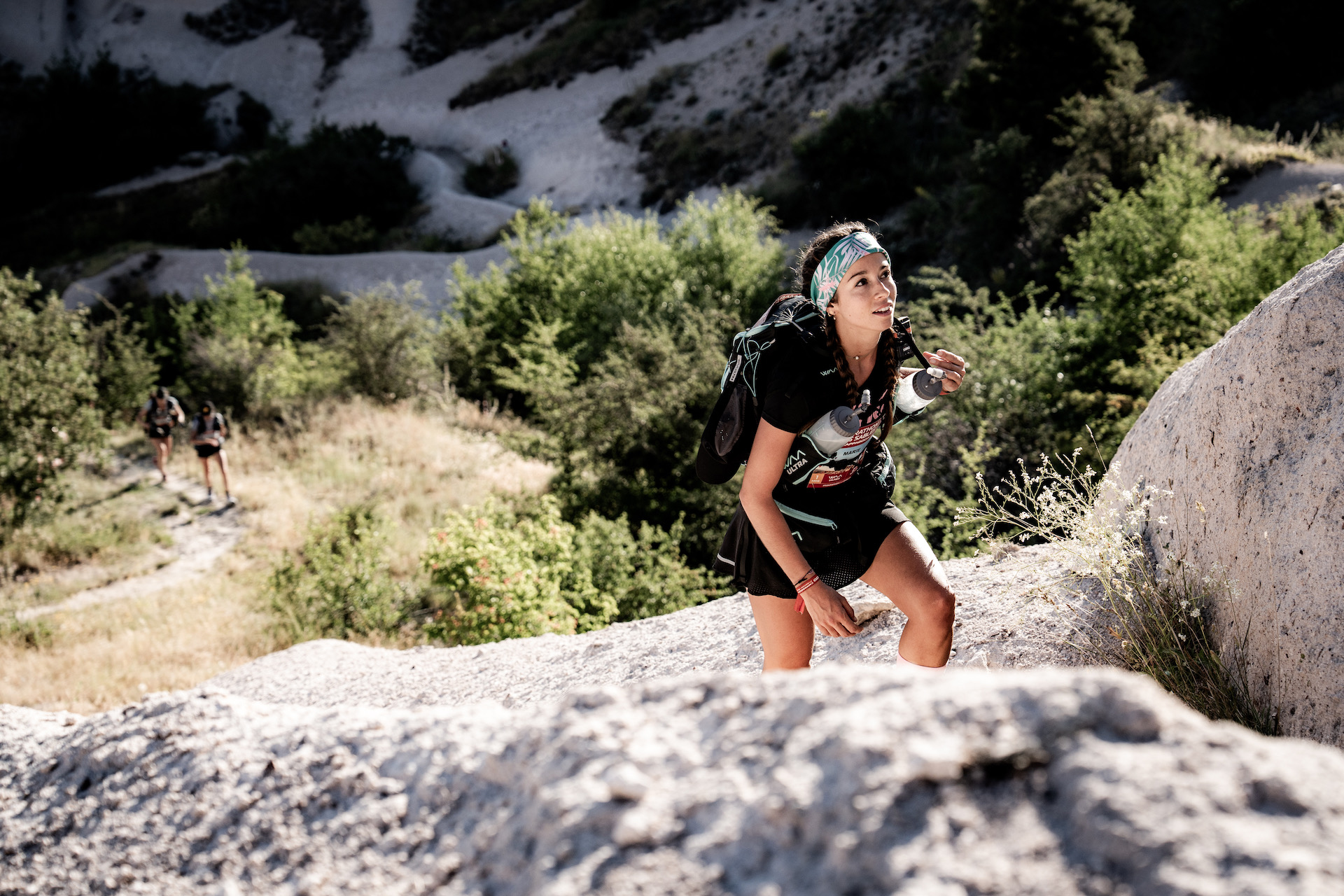
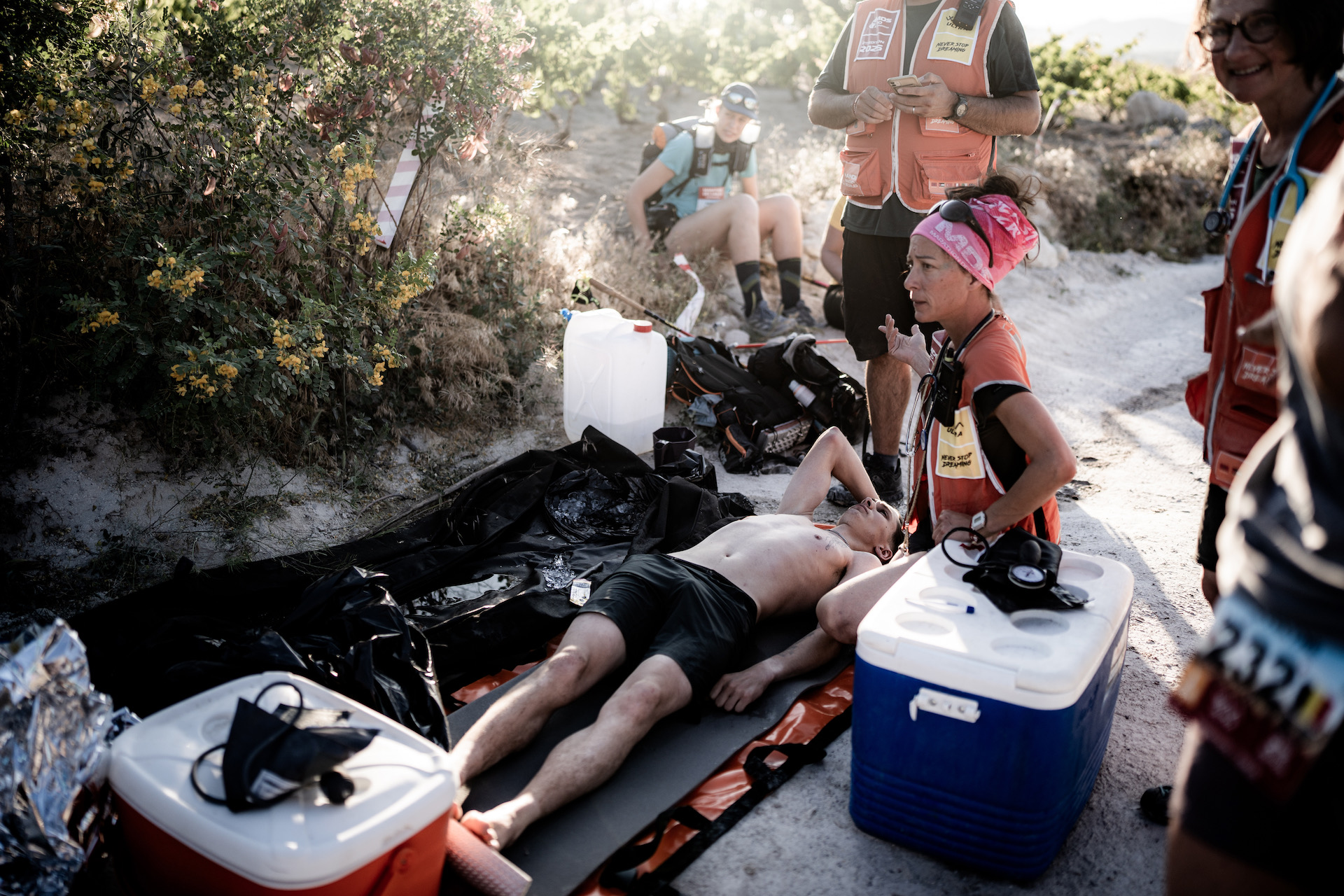
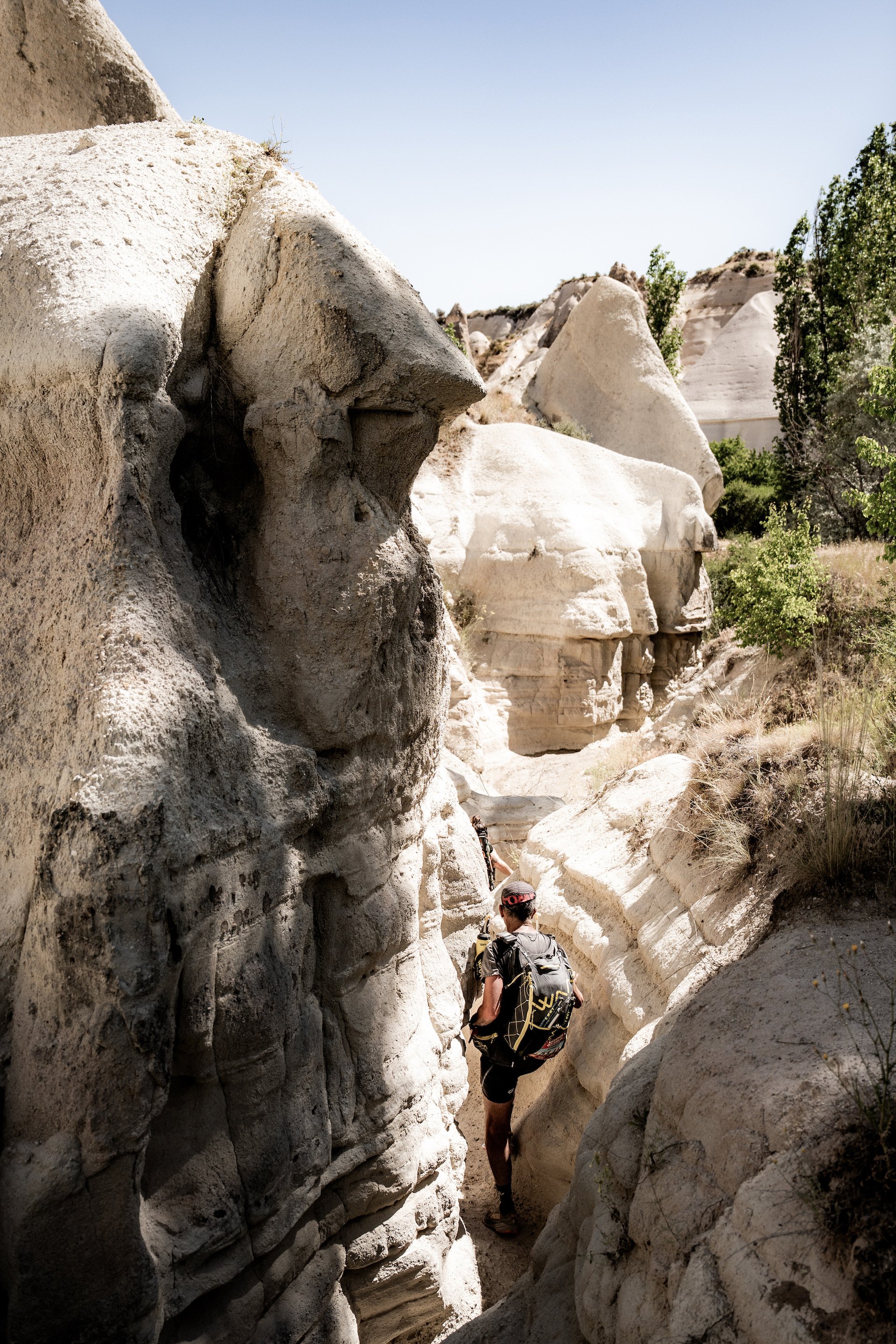
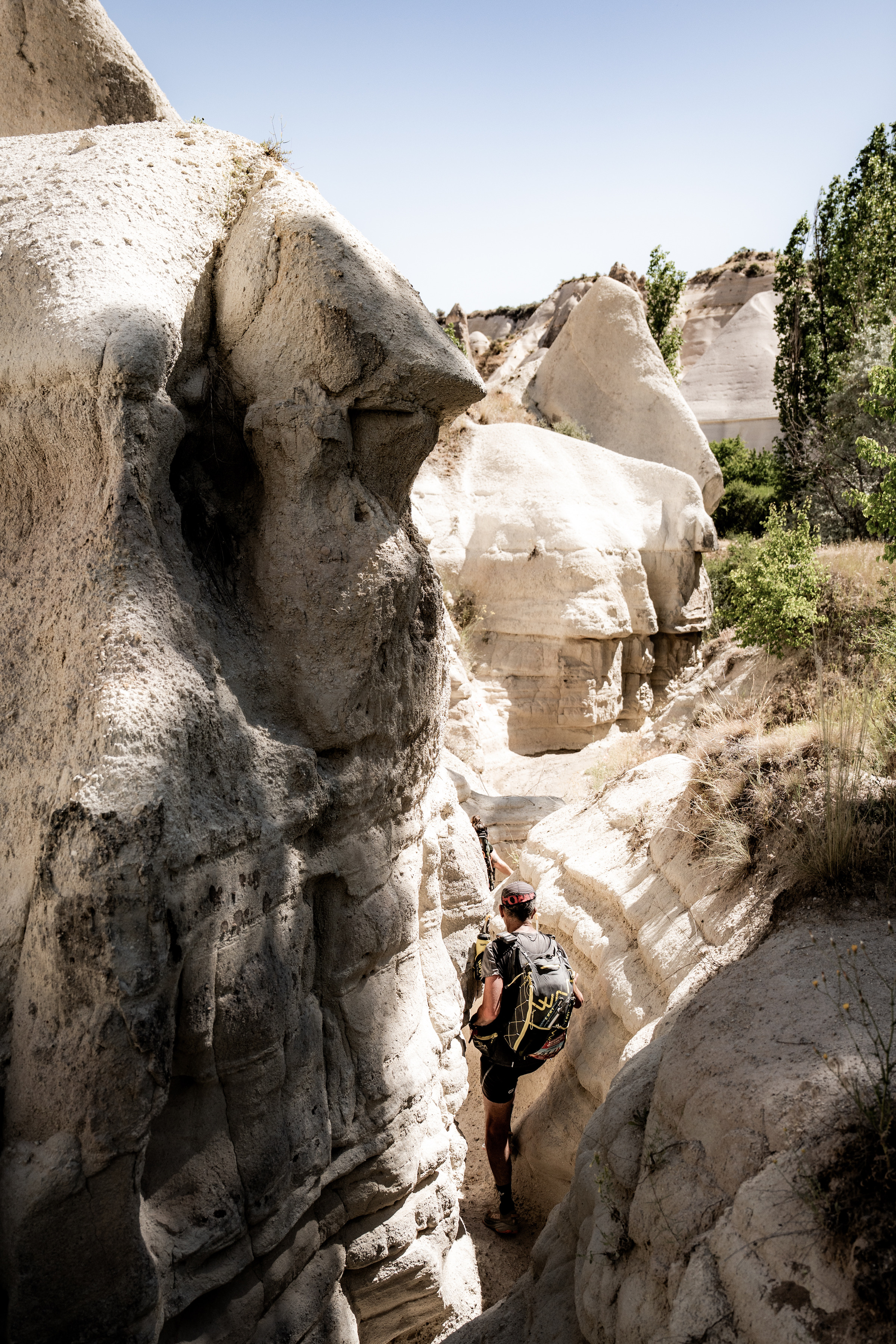
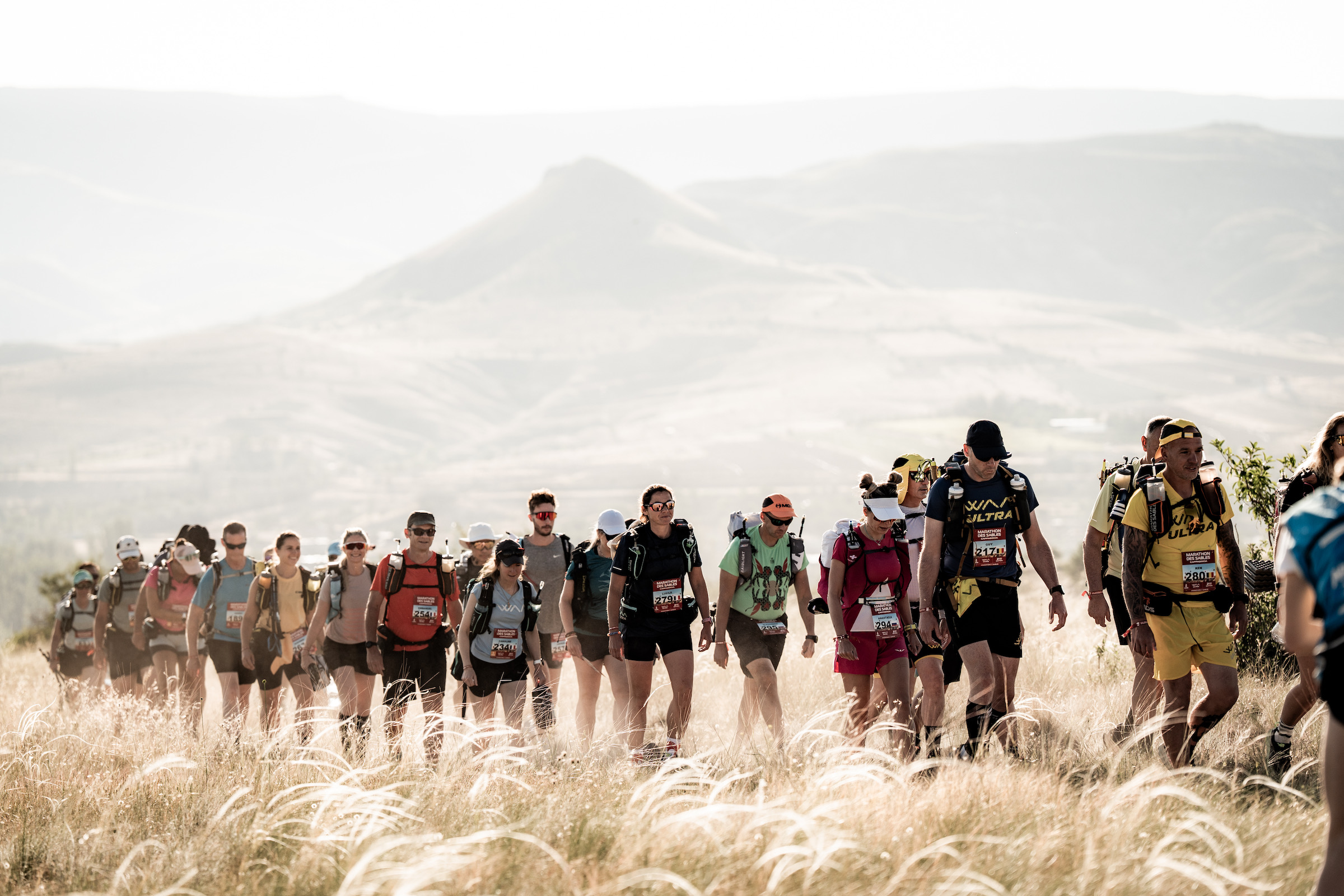
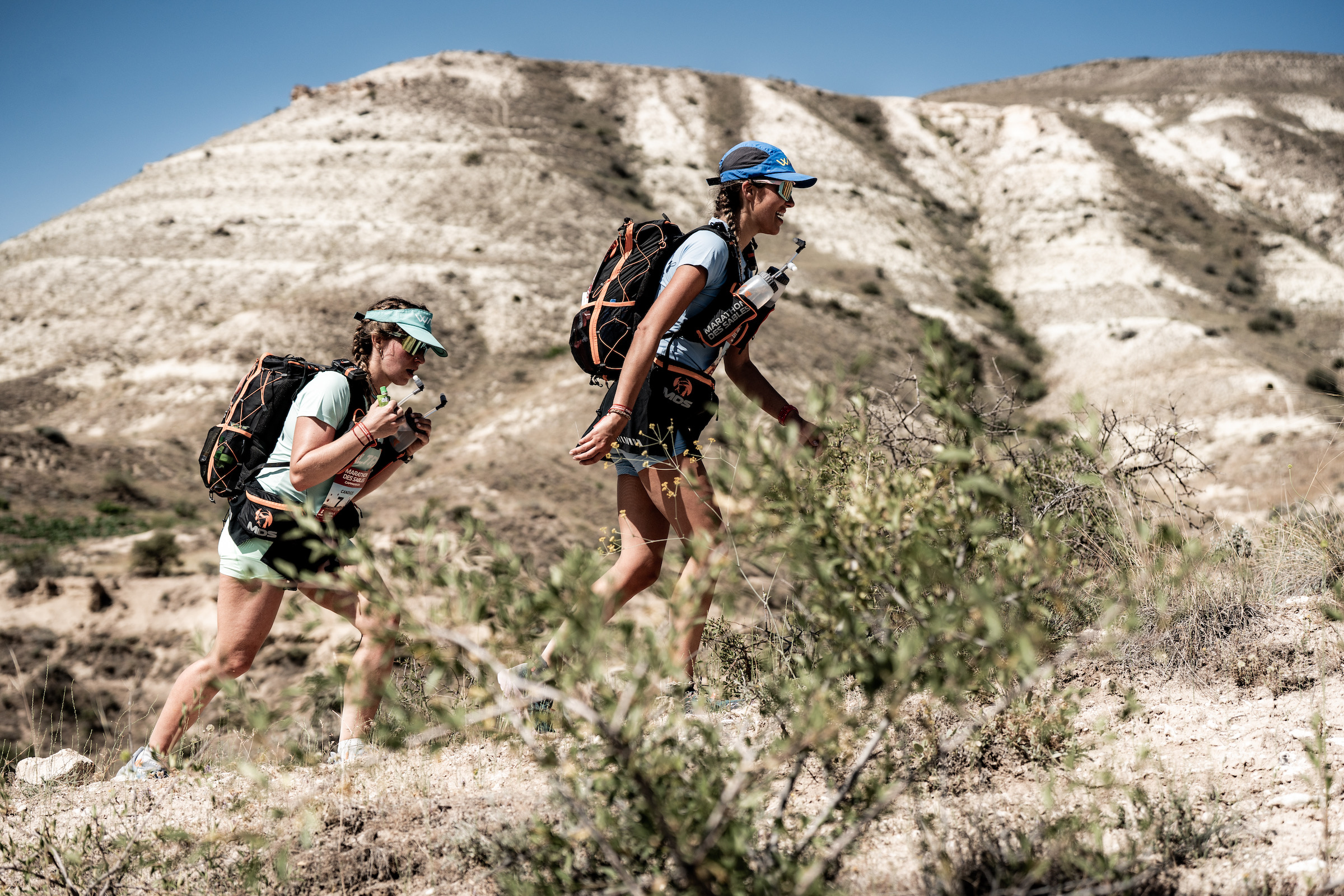
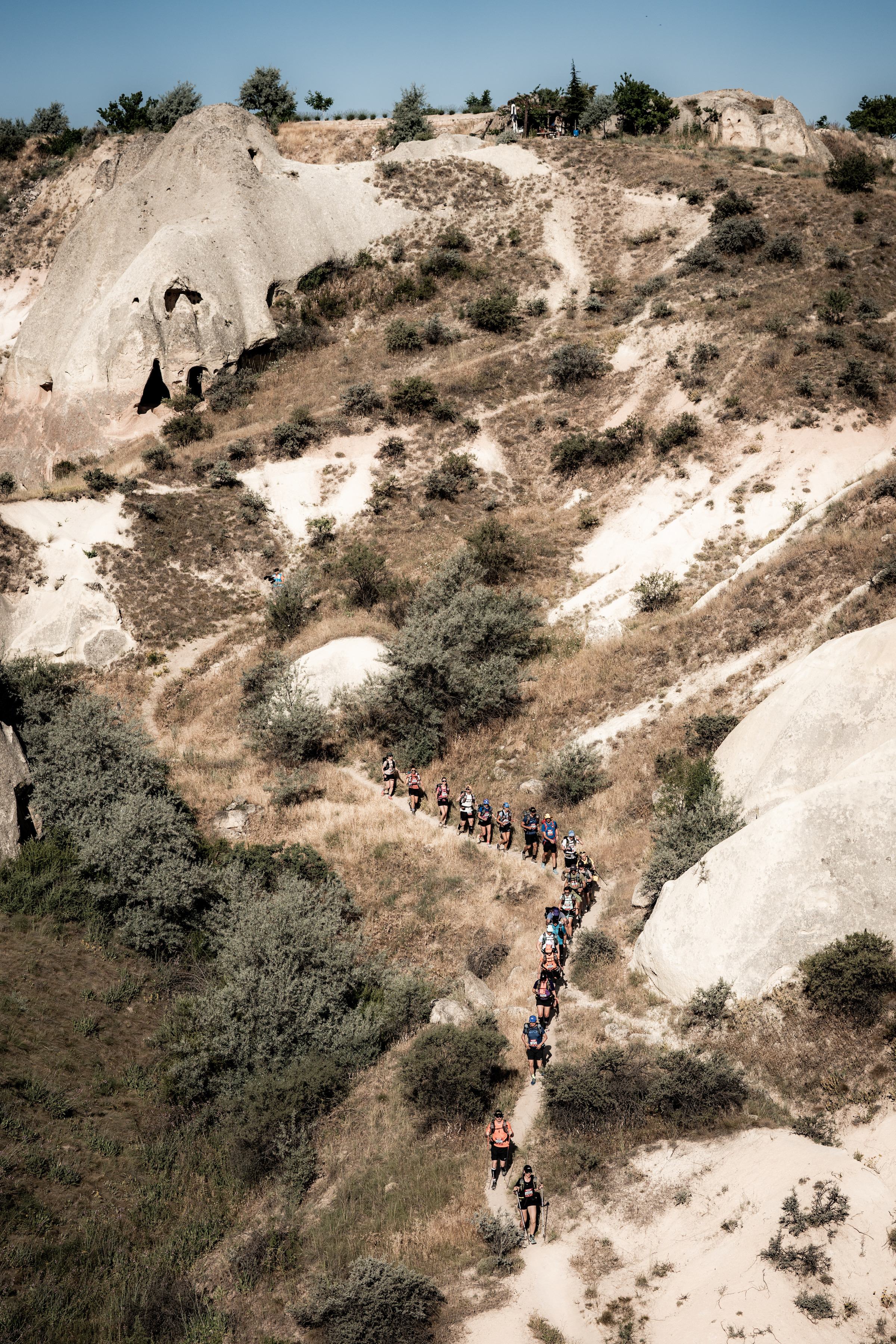
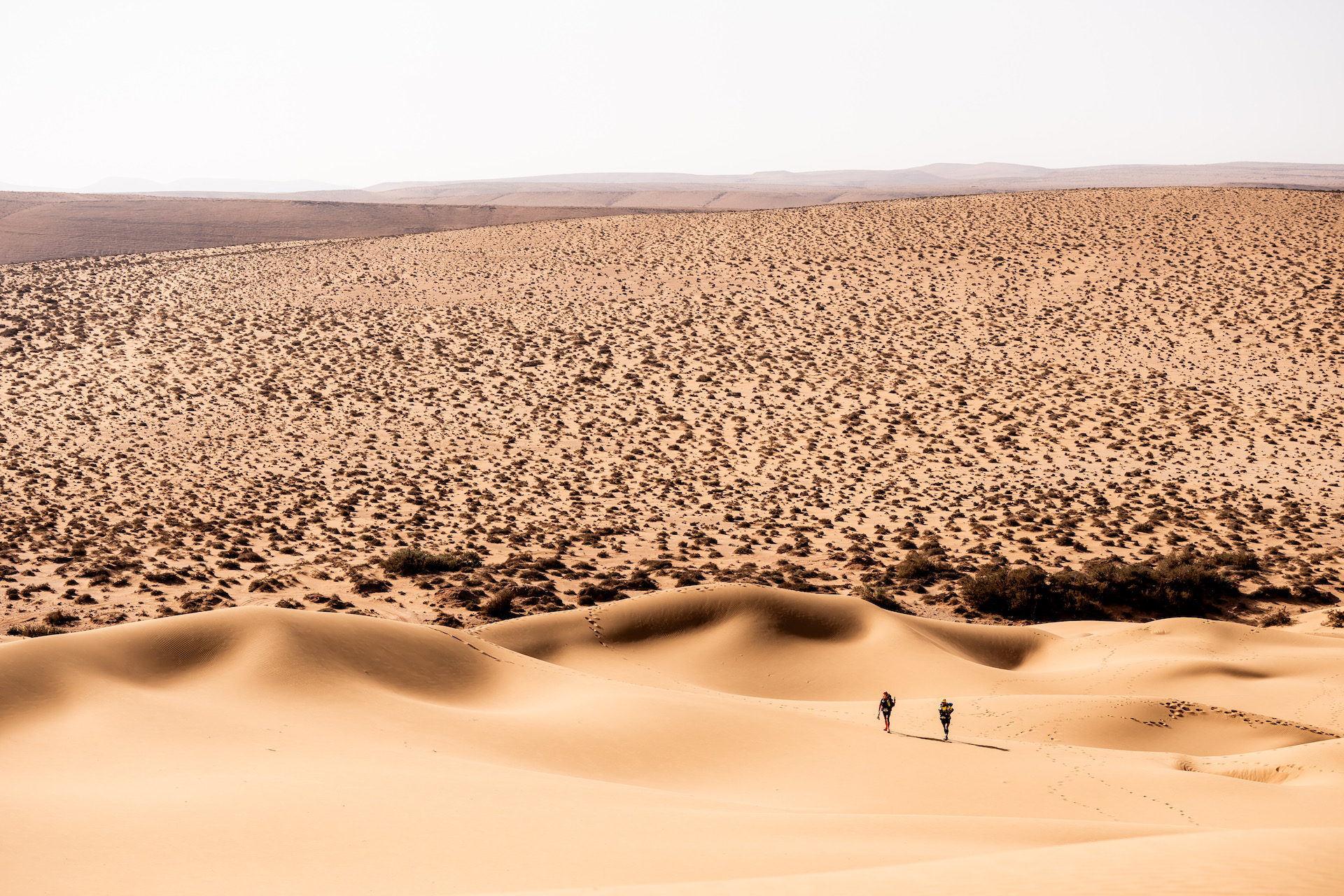
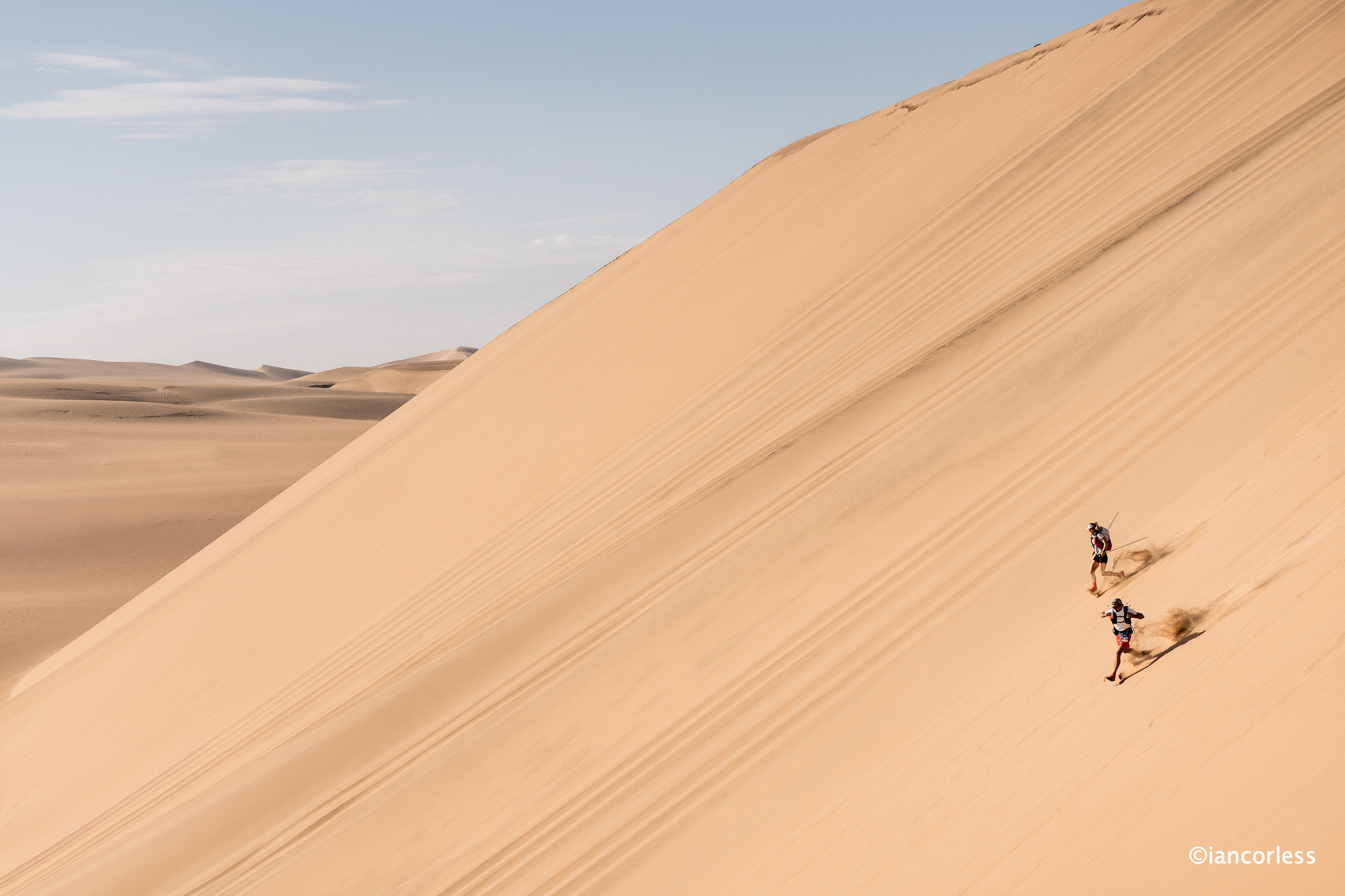
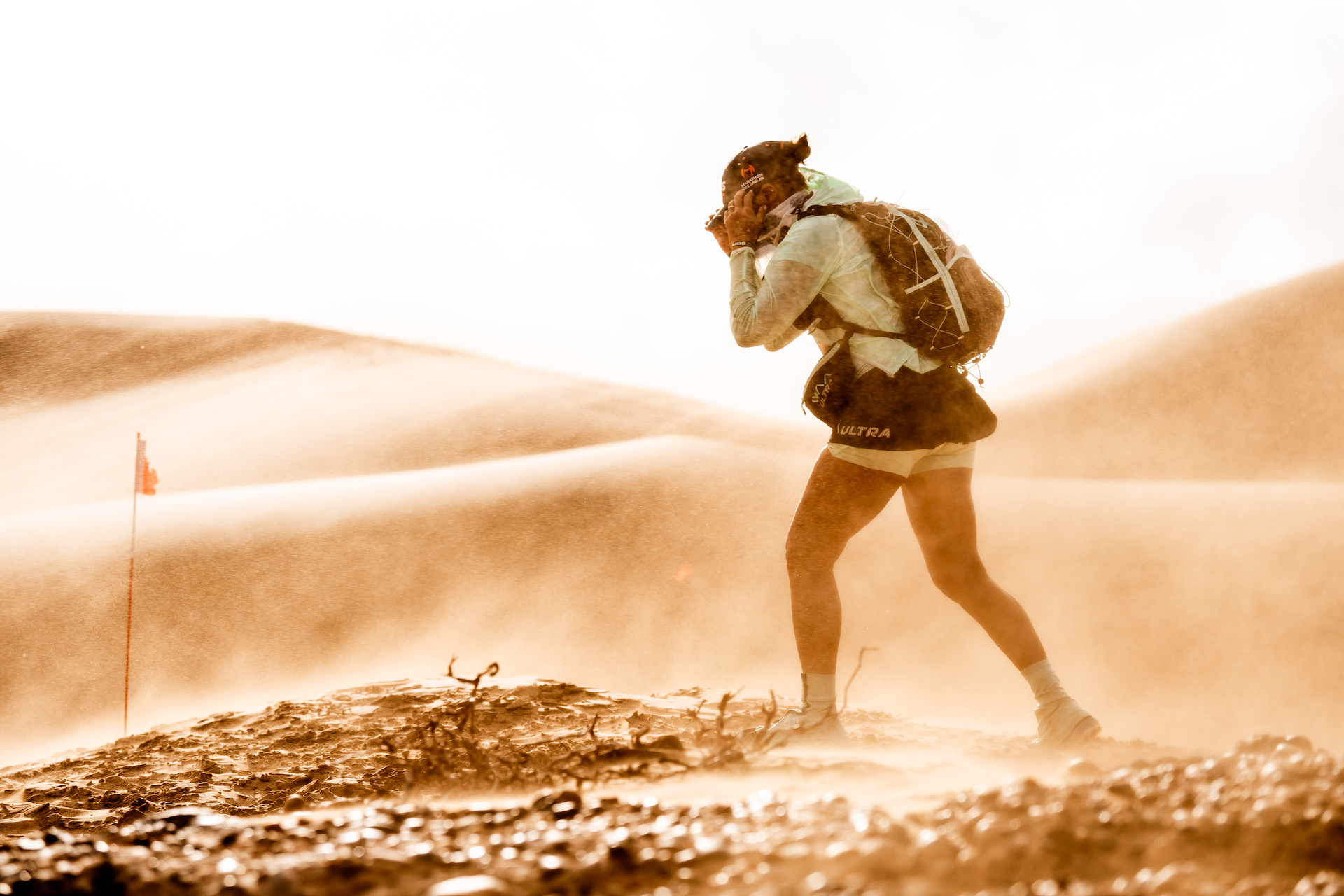
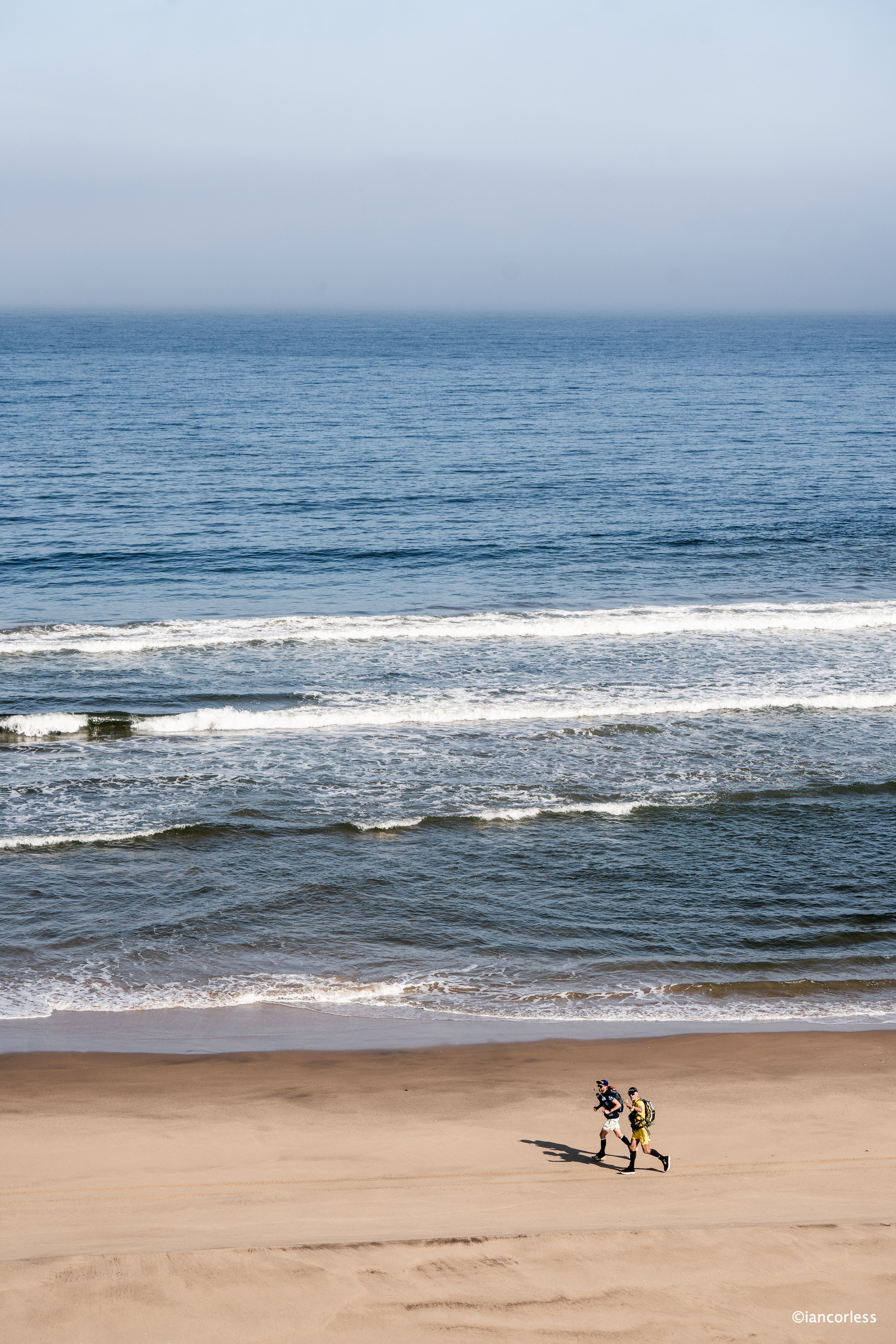
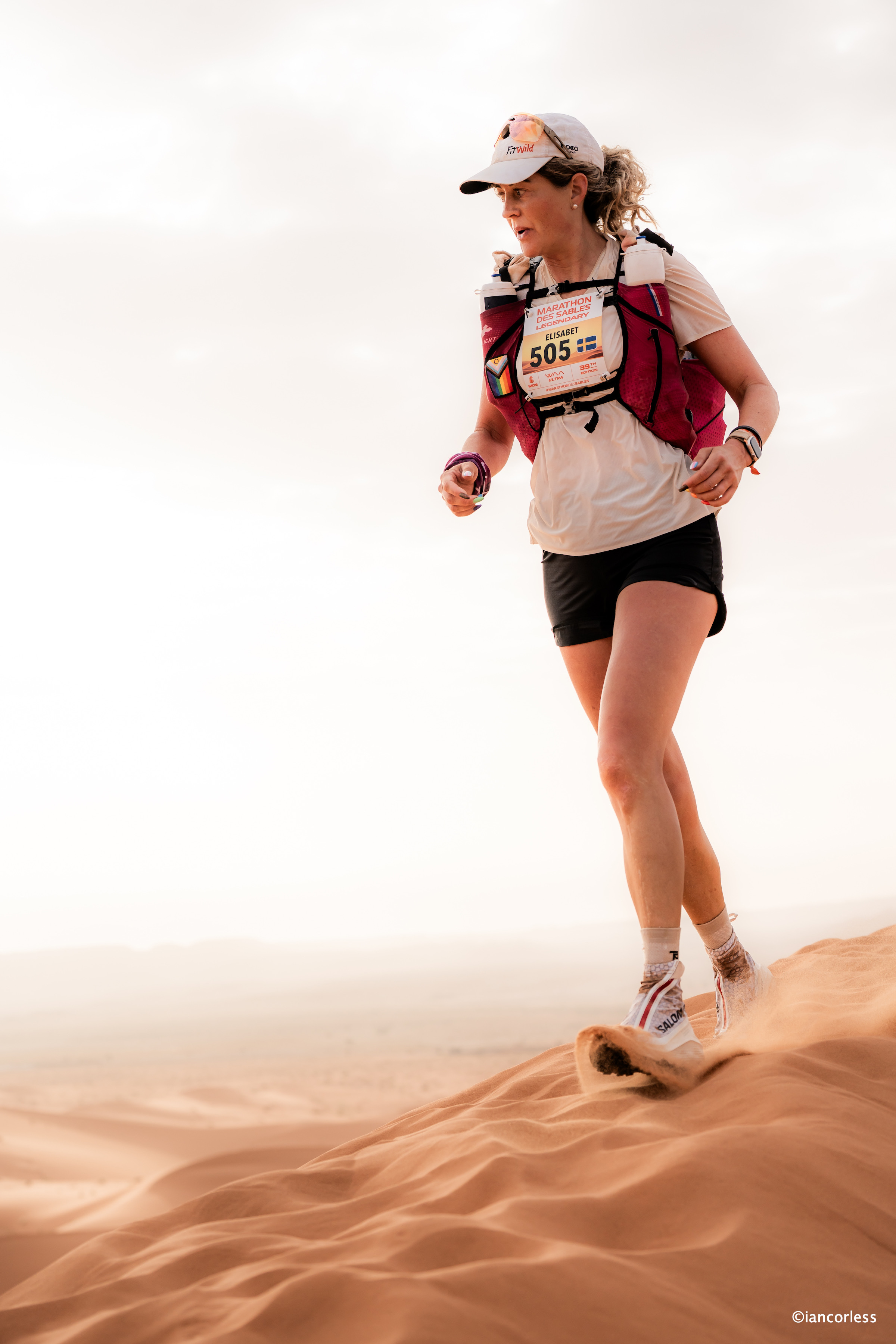
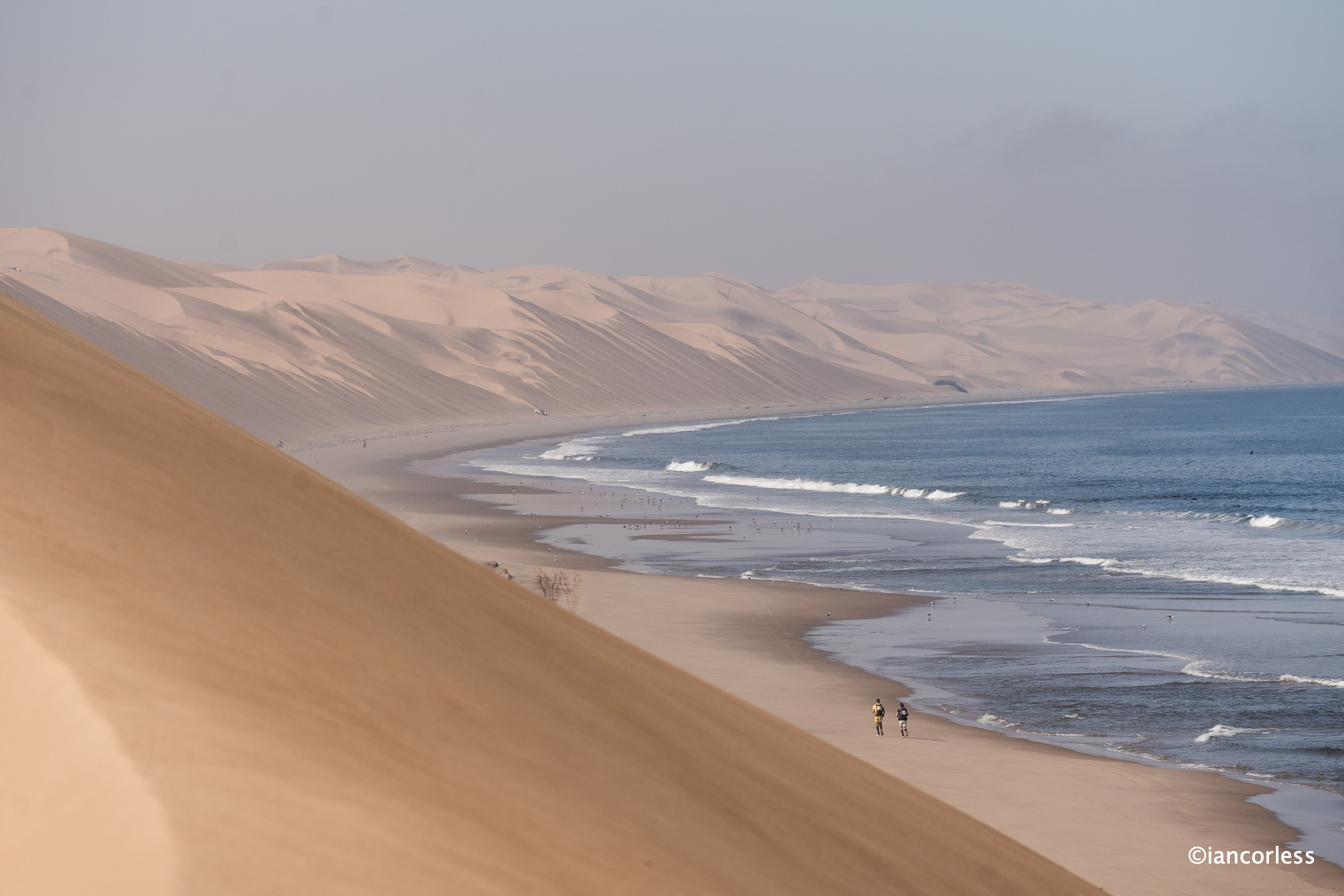
Desert running brings many challenges and running in a desert for multiple days brings a whole new set of challenges.
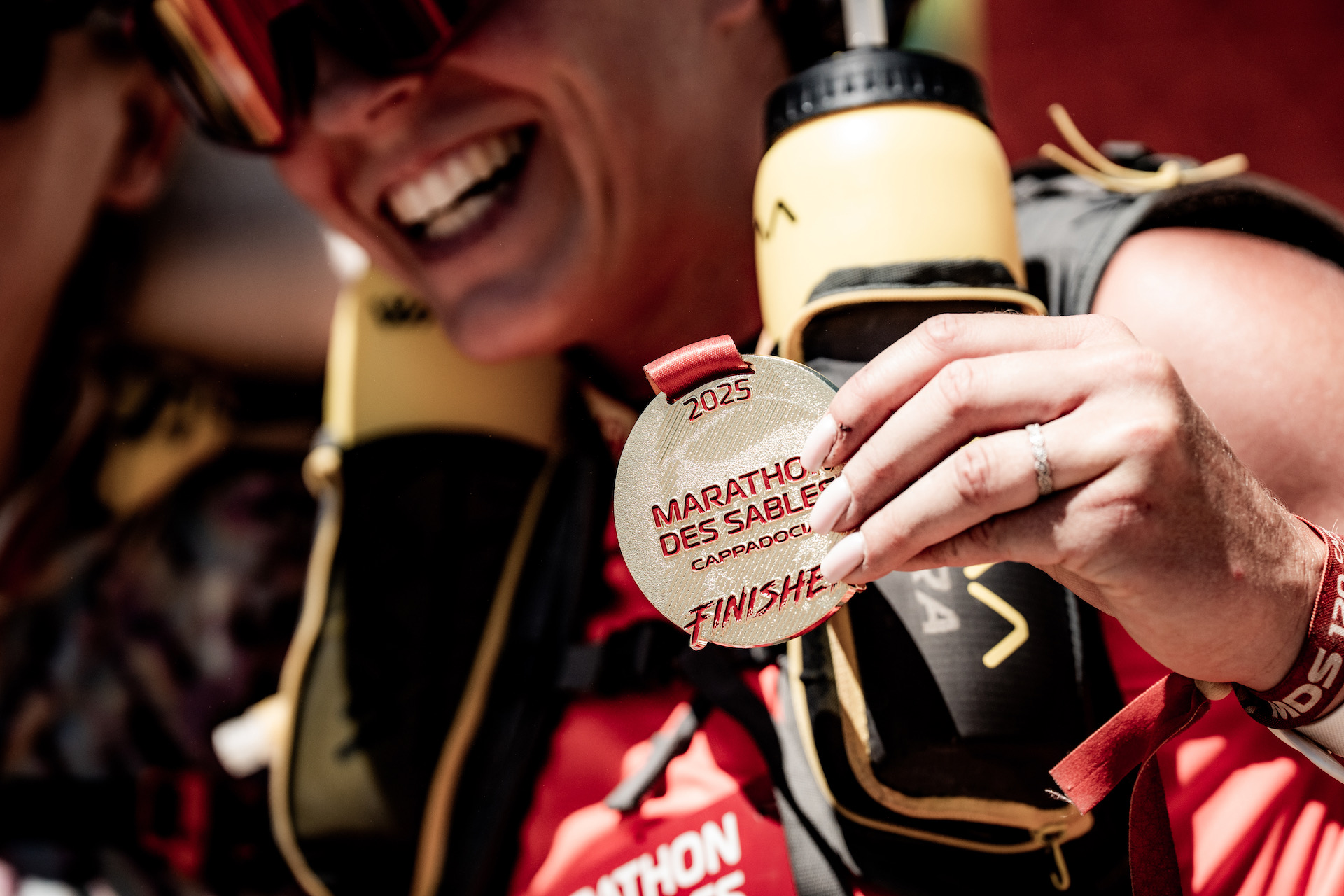
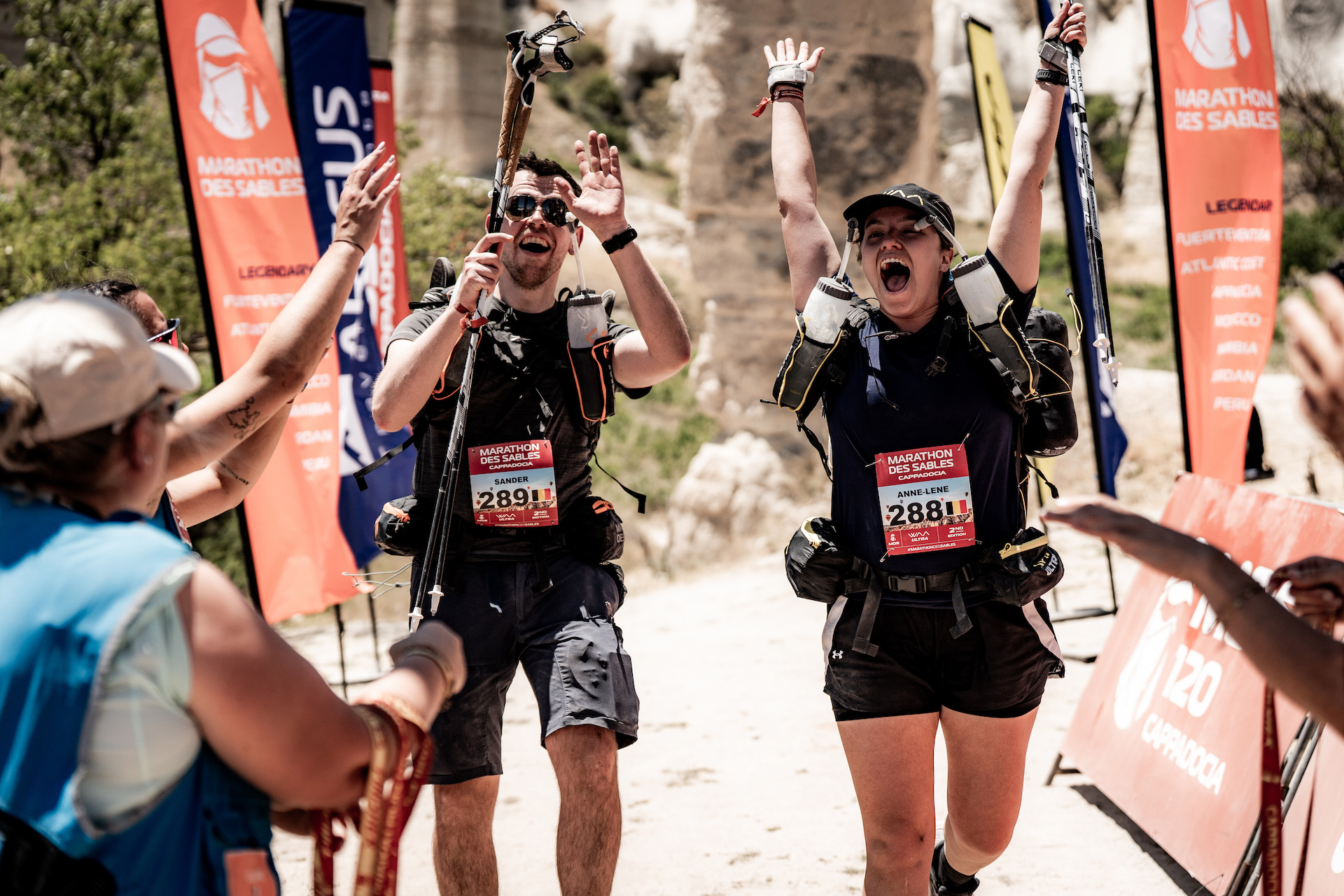
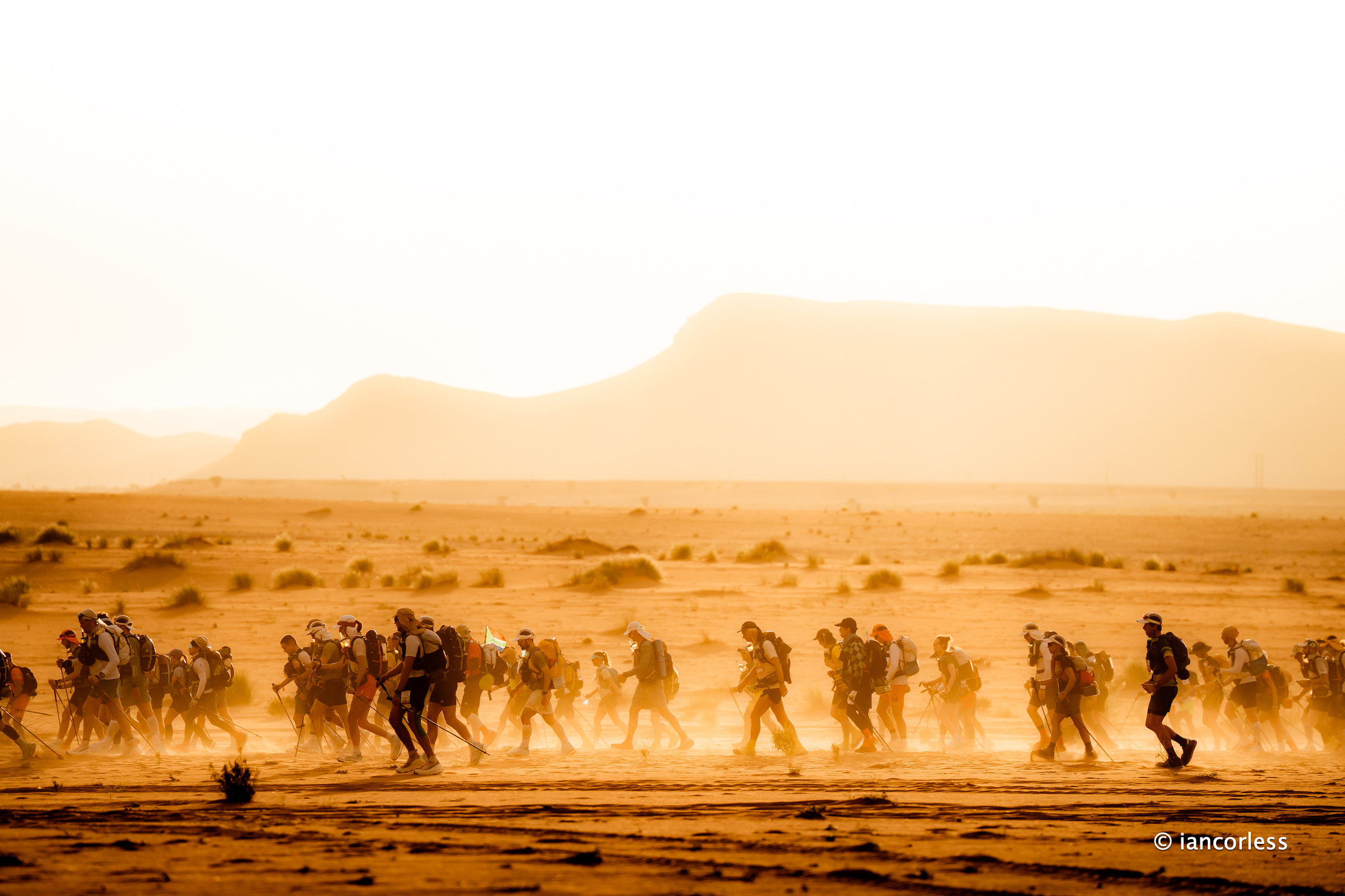
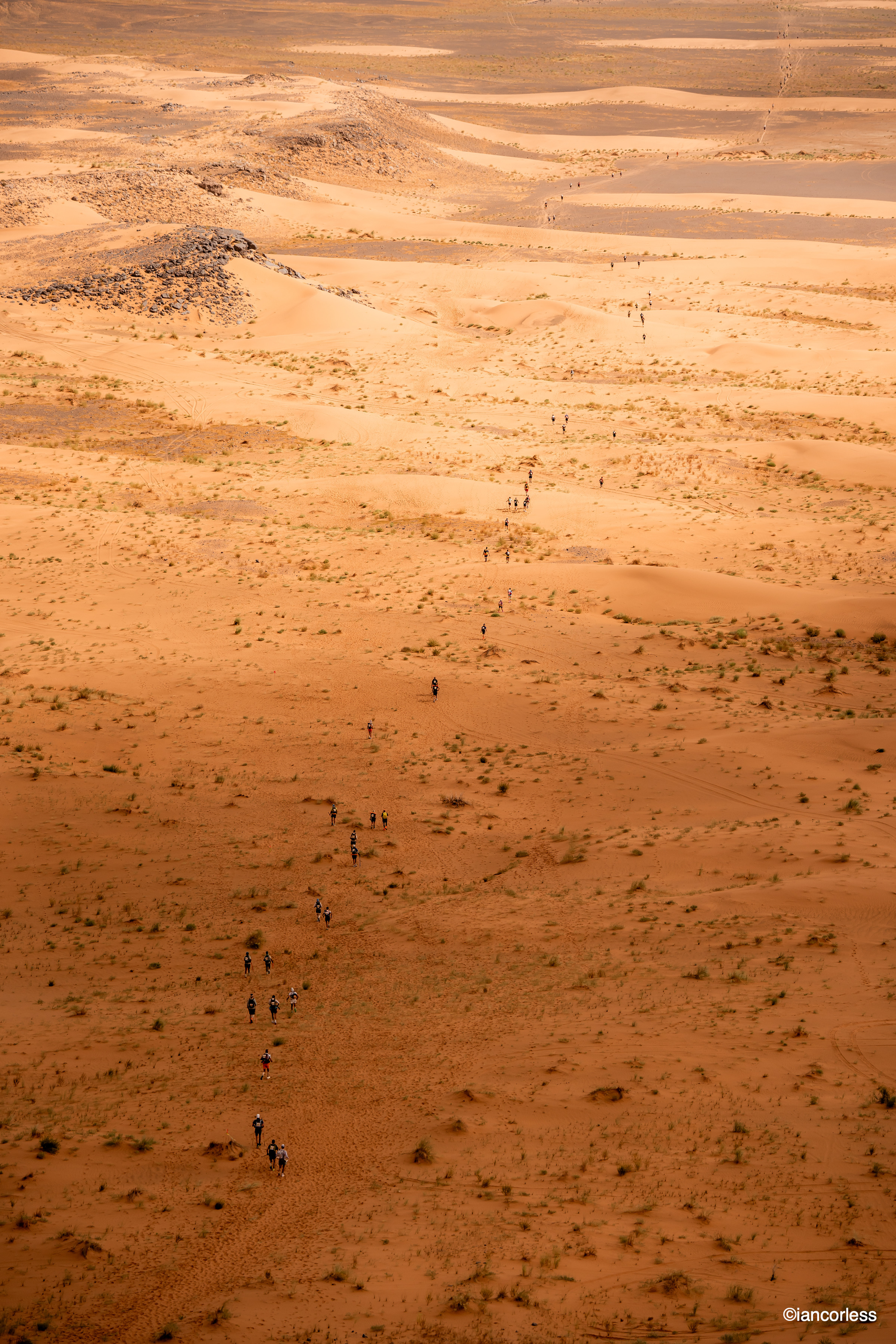
For 40 years, the Marathon des Sables (MDS)has defined the edge of human endurance. It began as a wild idea—could someone run across the Sahara carrying everything they needed to survive? That idea sparked a revolution. MDS became the godfather of the ultra-stage race, a test of self-sufficiency, resilience, and pure grit. Over time, it expanded beyond its roots: the MDS 120, the exploratory MDS TREK, the demanding MDS RAID, and the mind-bending MDS Crazy Loops. Each one a new take on the same promise, to push the limits of what a runner can handle.
Also read
Fuelling for a Multi-Day HERE
How to choose a Sleeping Bag HERE
Top Tips to better Multi-Day Running HERE
Fastpacking Guide HERE
Winter Fastpacking HERE
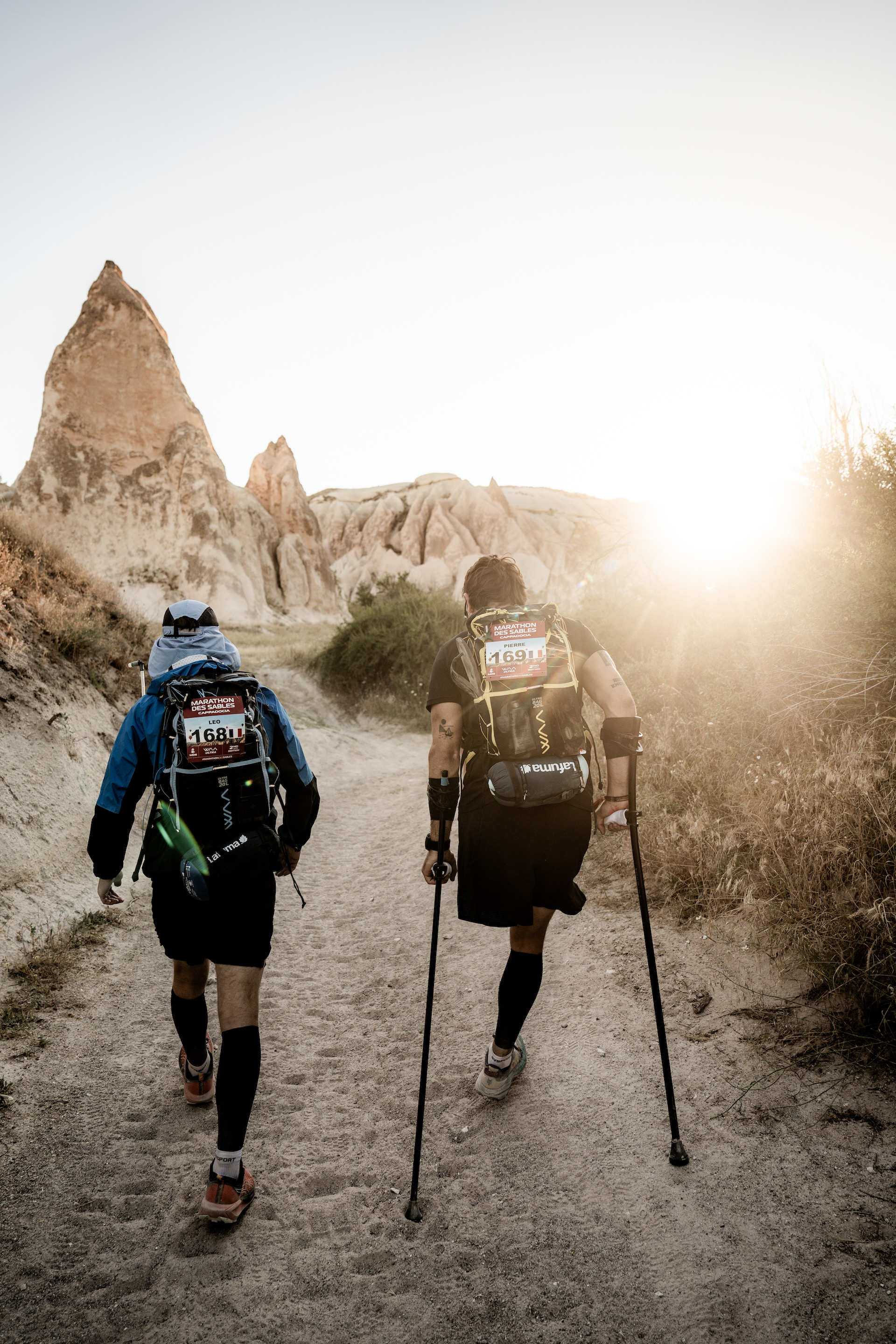
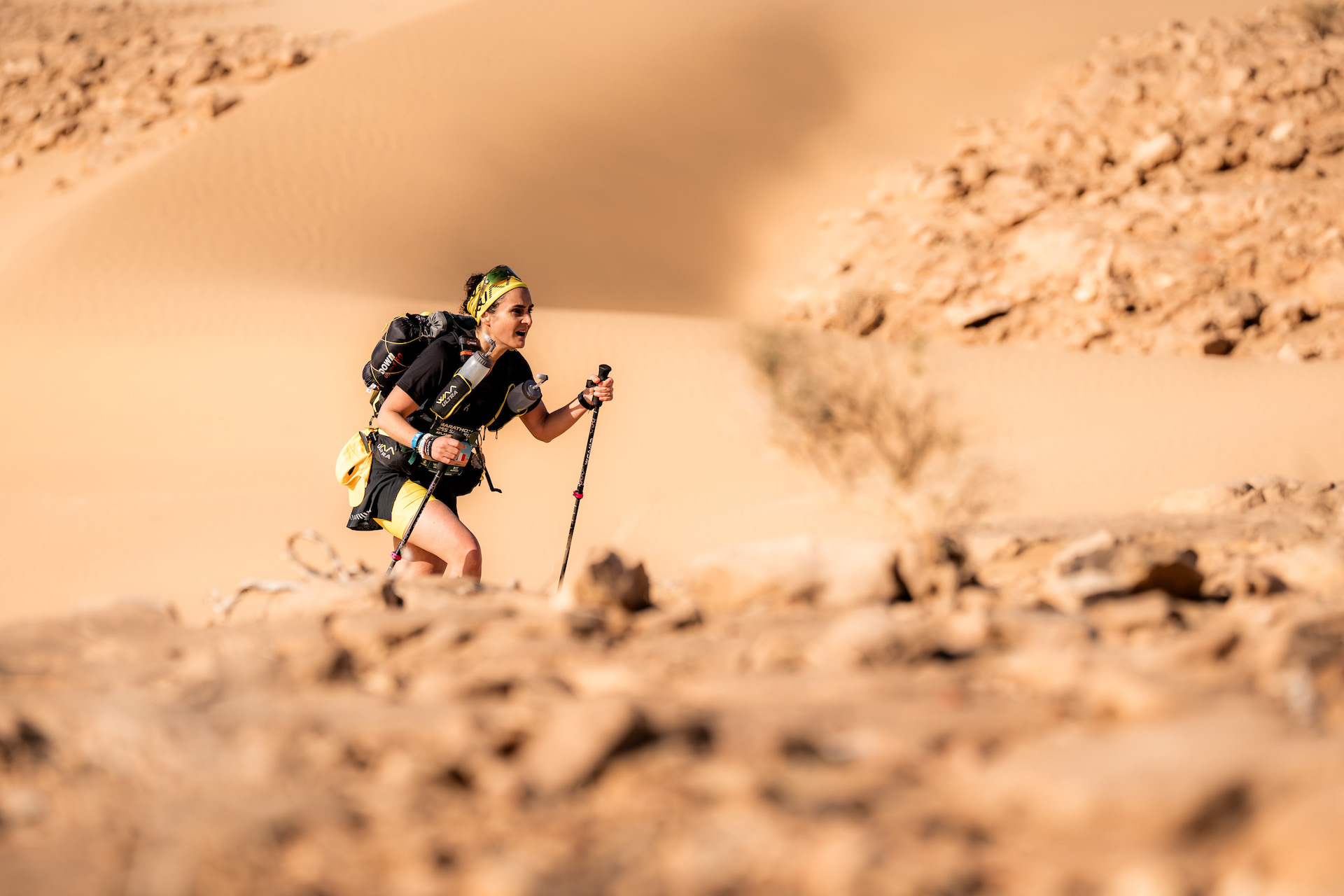
Walking with poles HERE
Walking efficiency when climbing HERE
Long Term Goal Setting HERE
MDS as it is affectionately known paved the way not only for multi-day desert racing but ‘all’ multi-day racing, be that in snow, ice, rainforest, jungle or the mountains. If multi-day racing was the mafia, MDS would be the Corleone family.
All multi-day races have followed and tried to replicate the MDS format, however, the reality is, I have yet to experience a race that matches the size, the scale, the organisation and awe-inspiring splendour of what MDS has created in the Sahara. Ask anyone, despite experience, despite achievement, MDS is usually ‘on the bucket list!’ It’s fair to say, that MDS is directly attributable for many new ultra-runners. You see, MDS offers more than just running, it offers a challenge, it offers something quite unique – the Sahara and the MDS strips the runner back to basics and deprives them of all luxuries so that they are stripped raw. Runners find themselves in the desert.
2024 and onwards:
2024 saw a new team take over the MDS brand, at the head, Cyril Gauthier and Olivier Cerbeland. Significant changes took place for the 38th (2024) MDS Legendary pioneered at what was the HMDS format (now MDS 120) and they remained for 2025 and moving forward.. There are 3 key points:
Point 1:
Legendary is now 6 timed stages and not 5 stages with a charity stage. The distance will be, +/- 250km’s. The long day in 2024 was stage 3, for 2025 this will be stage 4.
Point 2:
MDS events are contested in food self-sufficiency: only water, in limited quantities but sufficient to cover the needs of an athlete evolving in the desert, is provided to you each day. You must take along for your entire stay in the desert everything you need to eat and prepare to eat (freeze-dried meals, semolina, cereal bars, stove, etc.). This self-sufficiency will include the day of your arrival in the desert, and the day of control preceding the race. *Trek is exempt from food self-sufficiency.
Point 3:
You must arrange your own travel to race destination. As usual, MDS will take care of you from your arrival airport, this will depend on race location. Typically, free shuttles will be offered from one key airport. You will thus have the possibility of anticipating or extending your stay, or of being joined by your family, much more simply than before.
It is recommended you listen to a podcast with co-owner and CEO Cyril Gauthier. Listen HERE.
MDS Events, 2025 moving forward:
LEGENDARY the iconic 6-stage, 250km race celebrating 40-years in 2026.
MDS 120 (used to be HMDS) this is 3-stages over 4-days with distance options of 70/ 100 or 120km.
MDS TREK this is similar to the MDS 120 format, however, there is no self-sufficiency, more comfortable accommodation and additional facilities, an excellent introduction to the MDS.
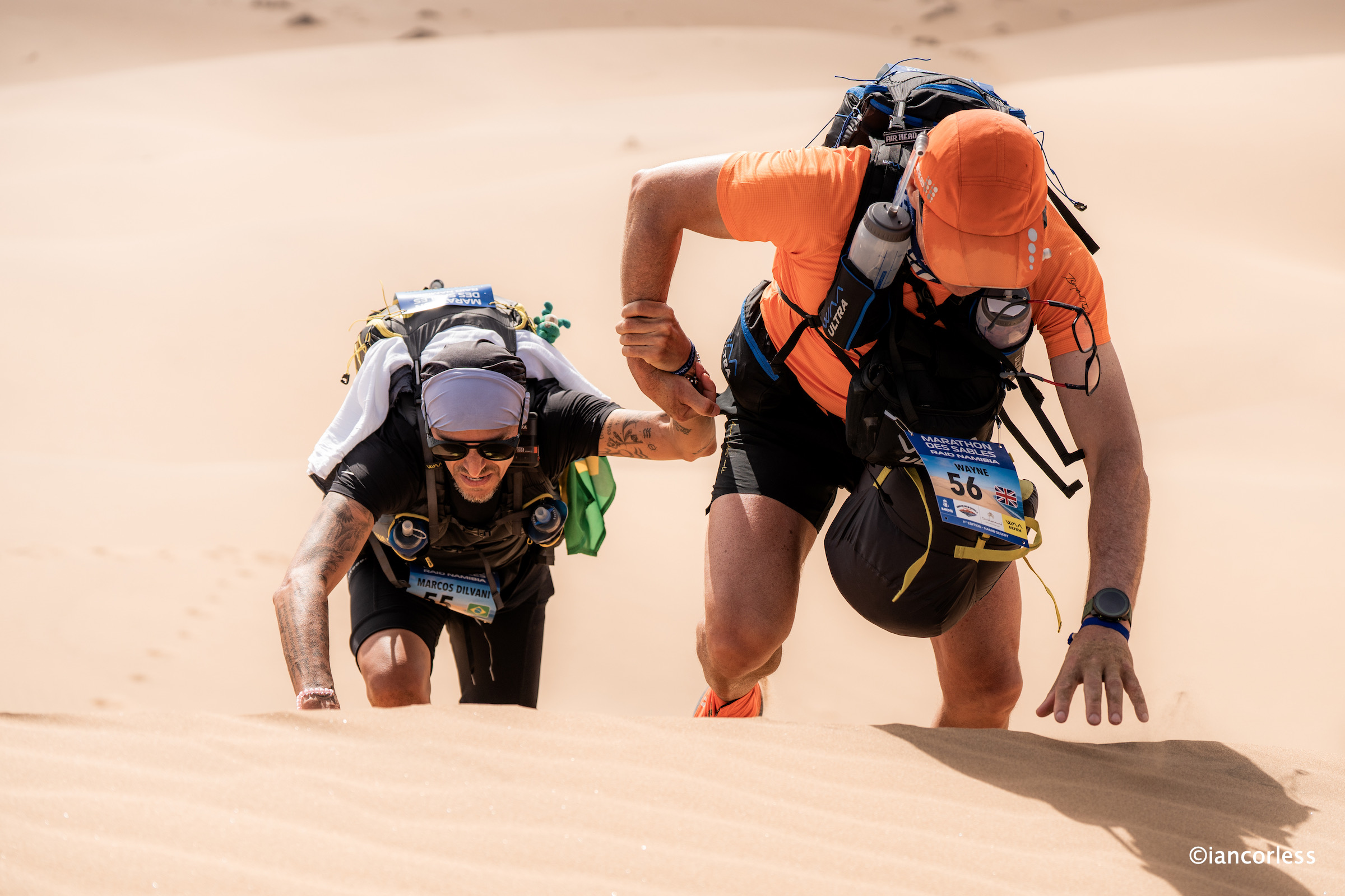
MDS RAID an event for more experienced athletes that is undertaken in teams of two, over approximately 90-120km’s, typically, two distance options are provided. The format is similar to MDS 120 with 3-stages over 4-days. One night will be undertaken under the stars with no bivouac.
MDS ULTRA new for 2025, a 100-mile or 100km single stage race with a 40-hour cut off.
MDS CRAZY LOOPS three new events for 2025 undertaken in ski resorts, the format is to run as many loops as possible in 24-hours. The loops will be typically, 3-5km’s in length.
DESTINATIONS:
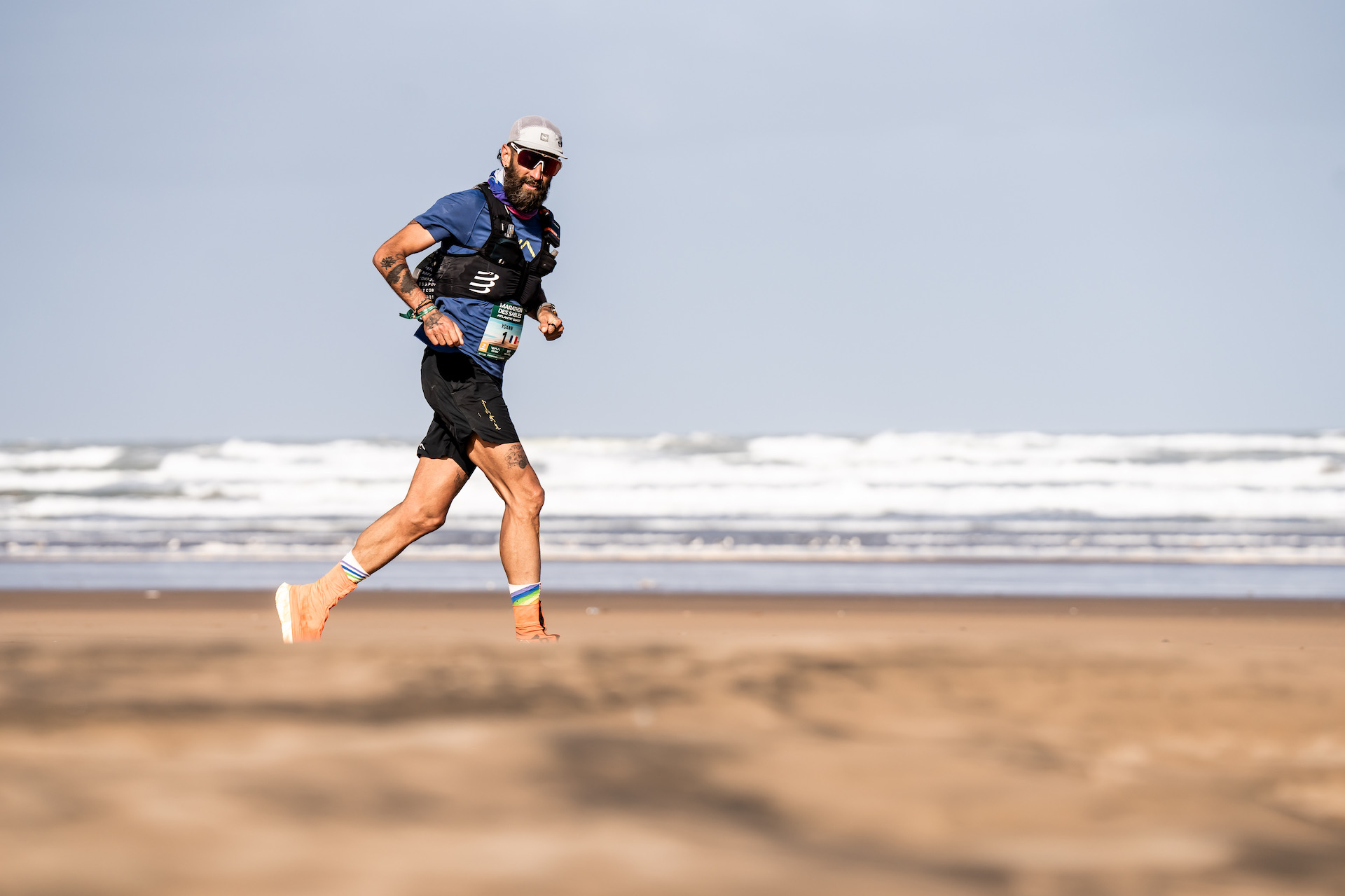
Morocco – has multiple events: Atlantic Coast, Legendary, MDS Ultra, MDS 120 Morocco, and MDS Trek.
Namibia – a MDS Raid event
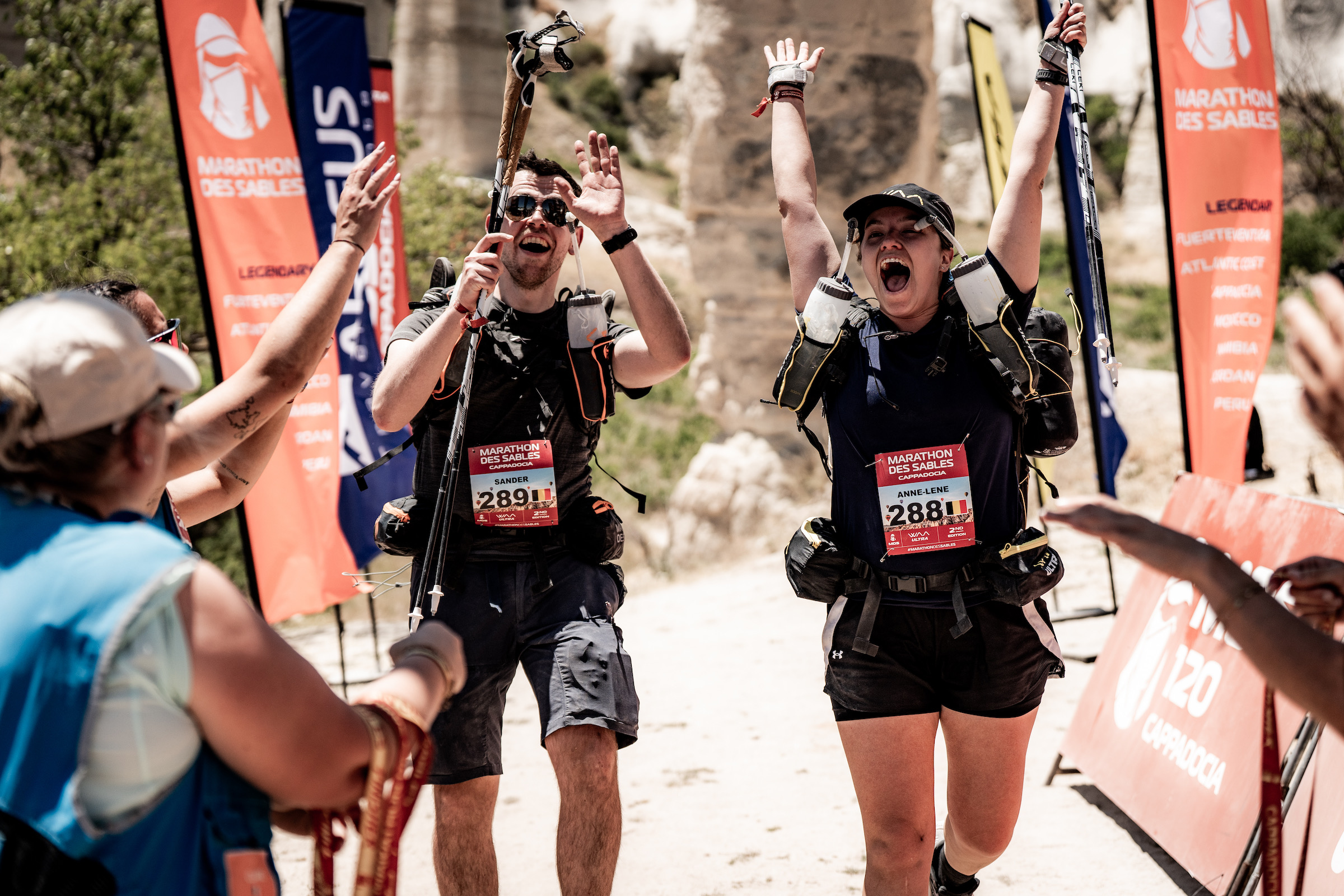
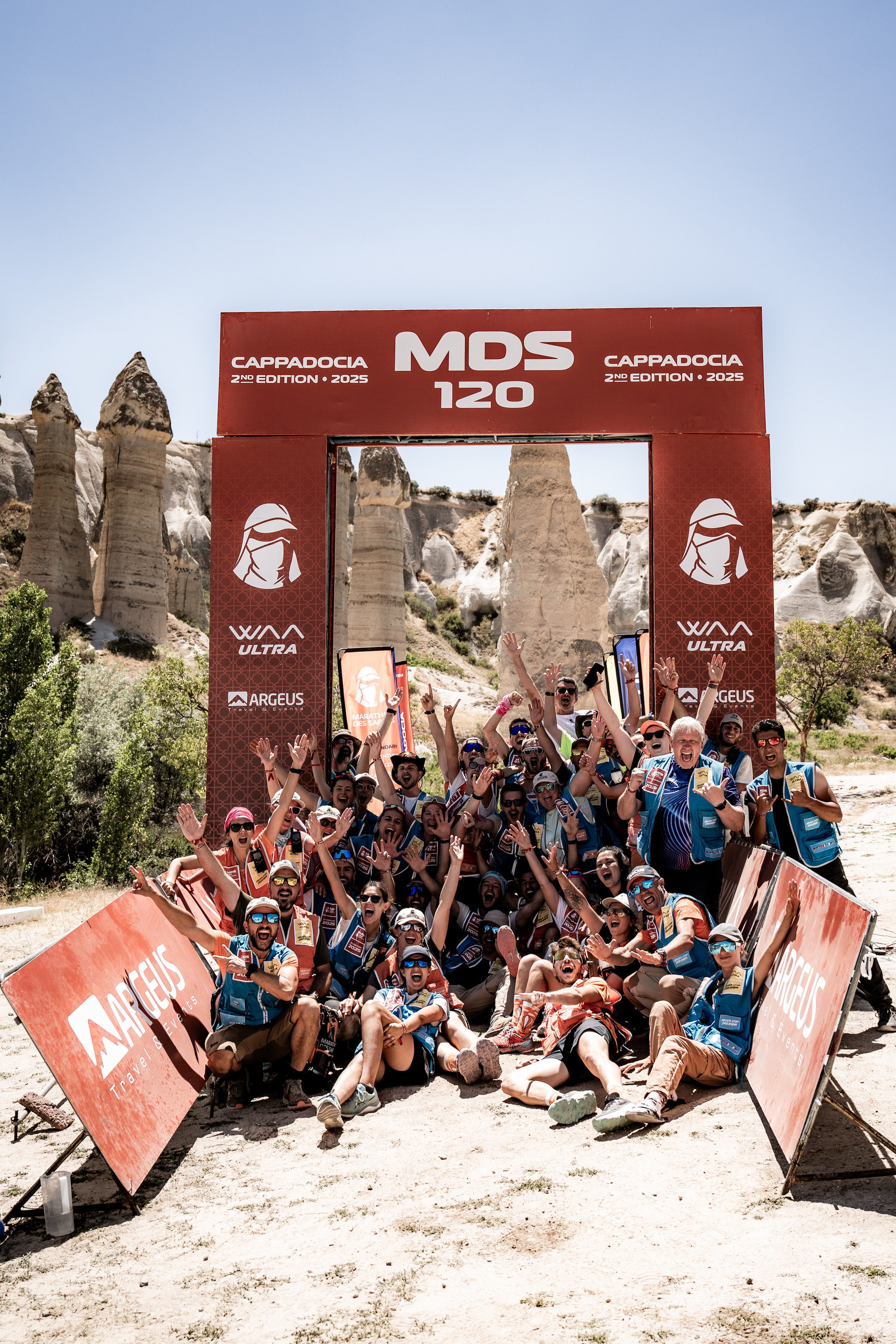
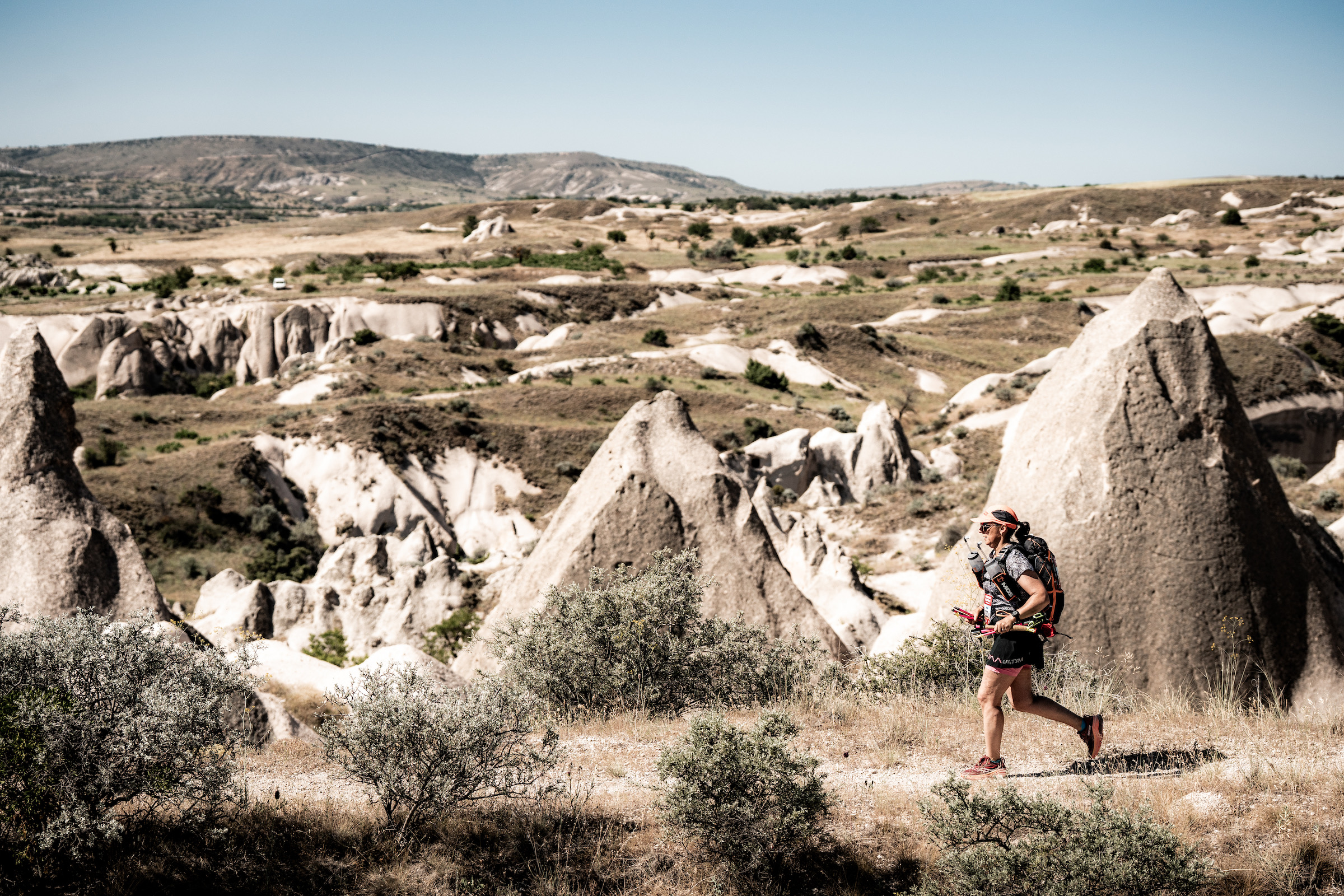
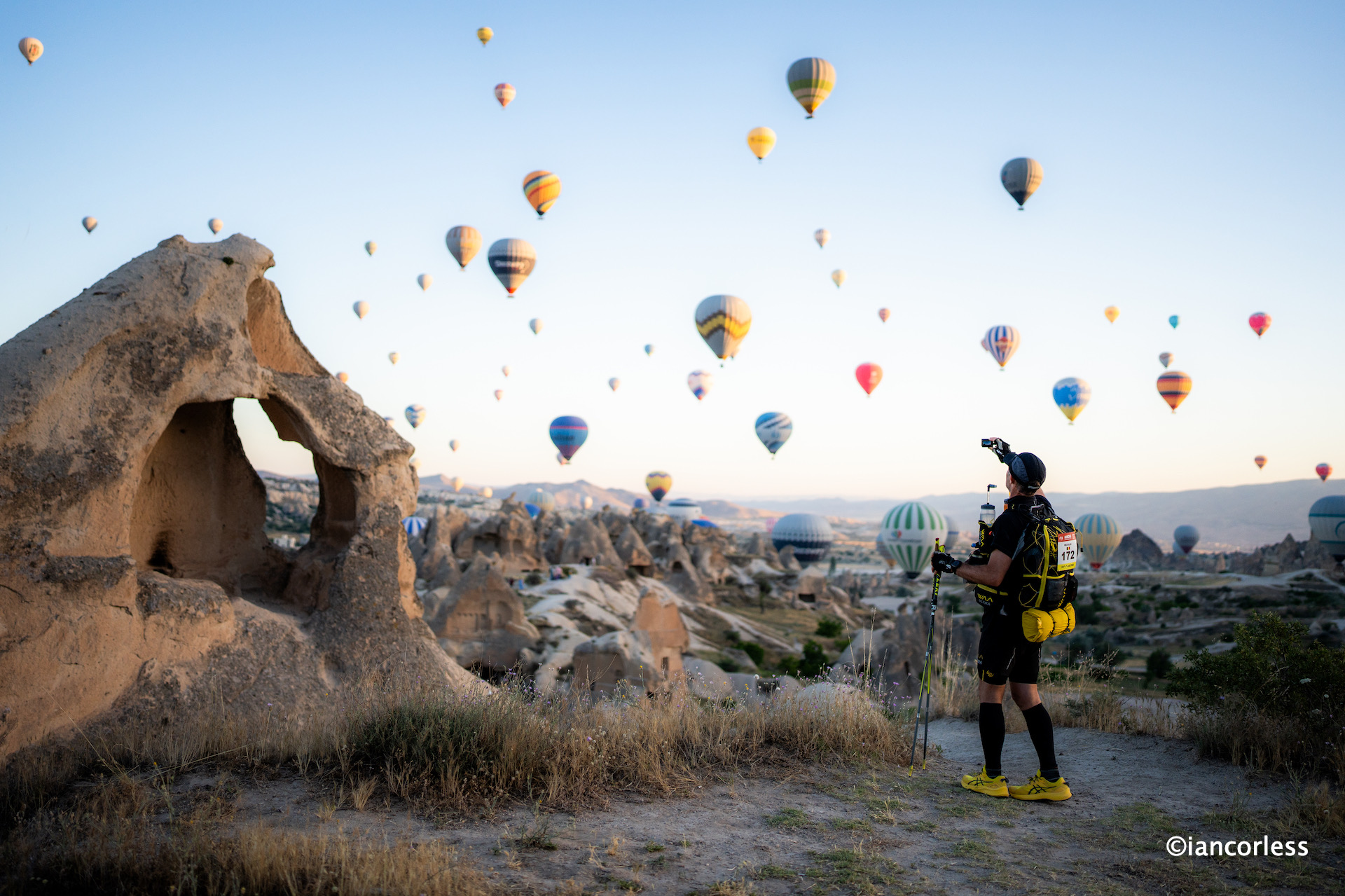
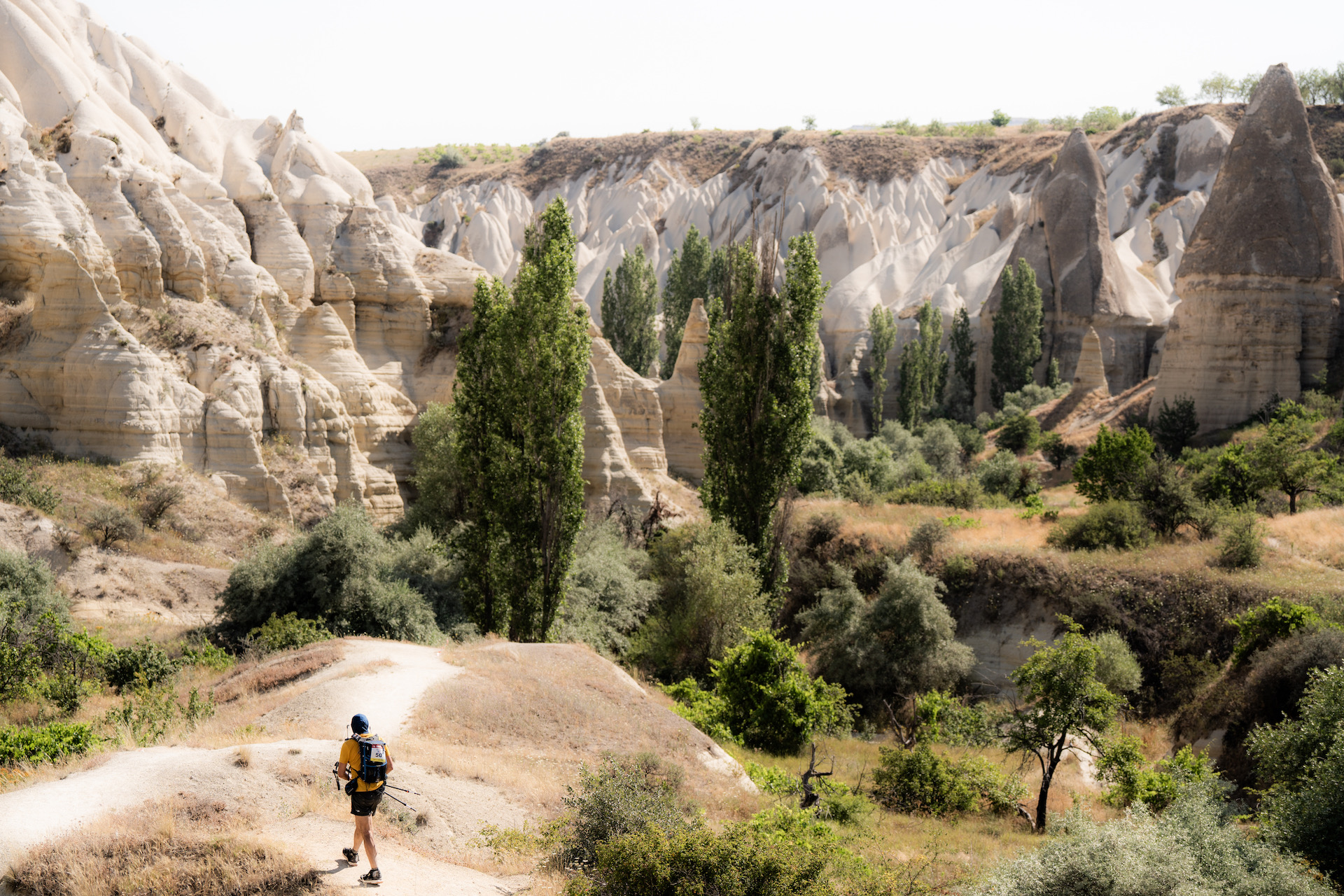
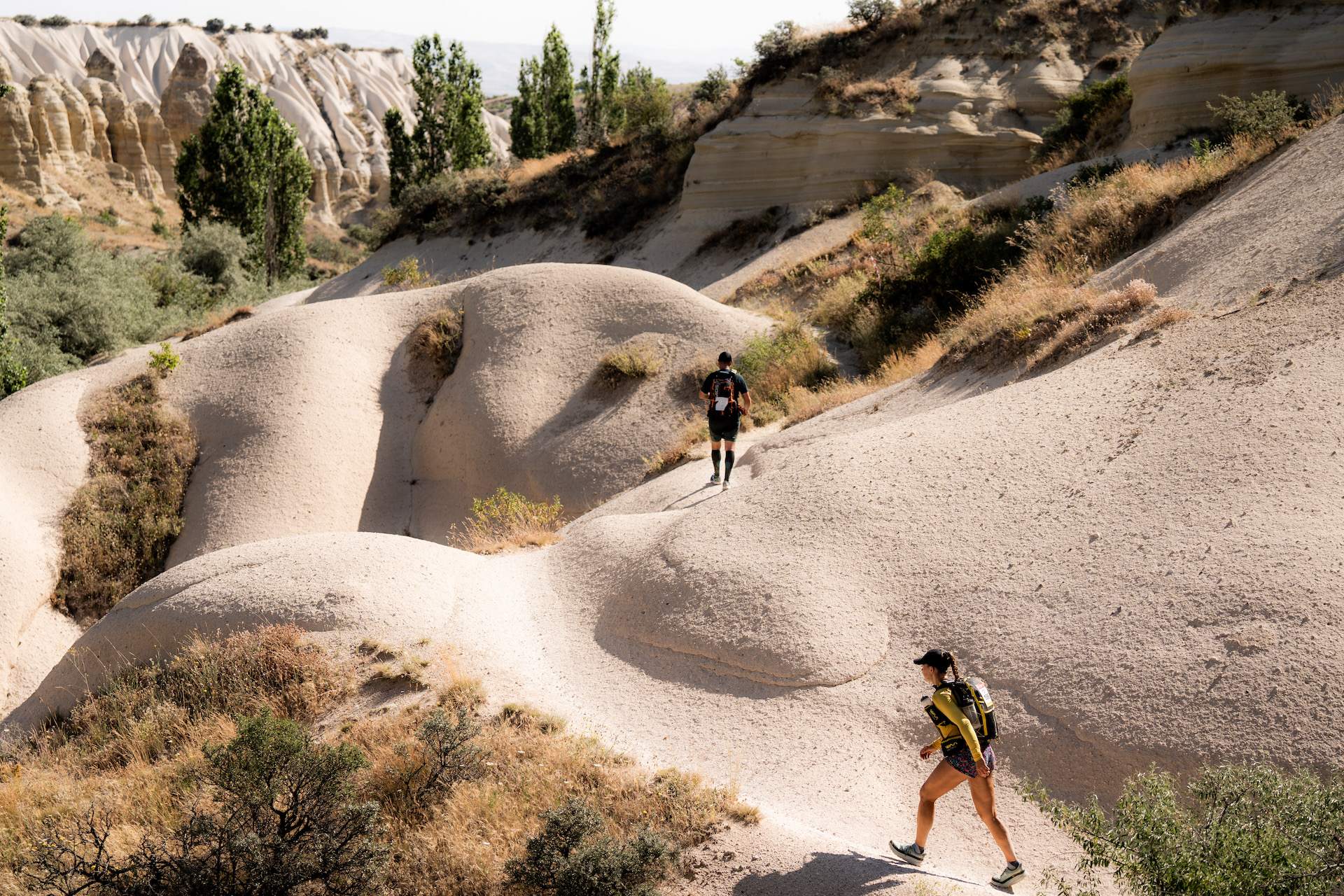
Turkey – MDS 120
France – Crazy Loops – La Rosière and Courchavel
Fuerteventura – MDS 120
Jordan – MDS 120
Peru – MDS 120 – This event takes place every 3-years.
****
If you have entered MDS or another self-sufficient multi-day race or adventure, you will be asking:
“What equipment do I need?”
This question is the same for many other desert races but I need to be clear, not all races are the same. For example, MDS requires the runner to be completely self-sufficient. This harks back to Bauer’s pioneering expedition in 1984. The runner must carry ‘all’ they need for the duration of the event, the only exception being:
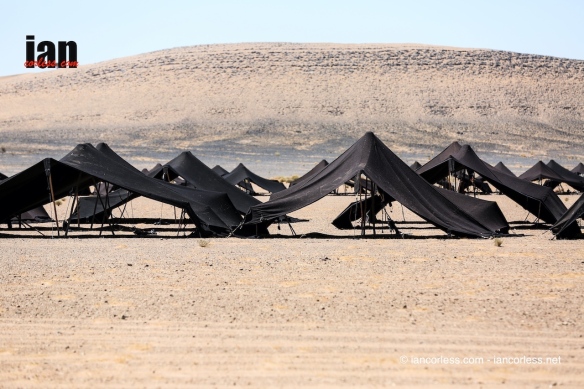
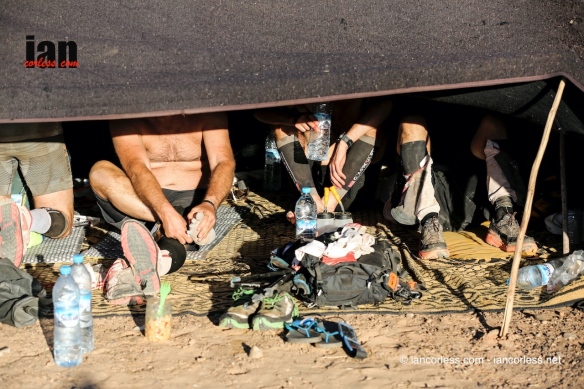
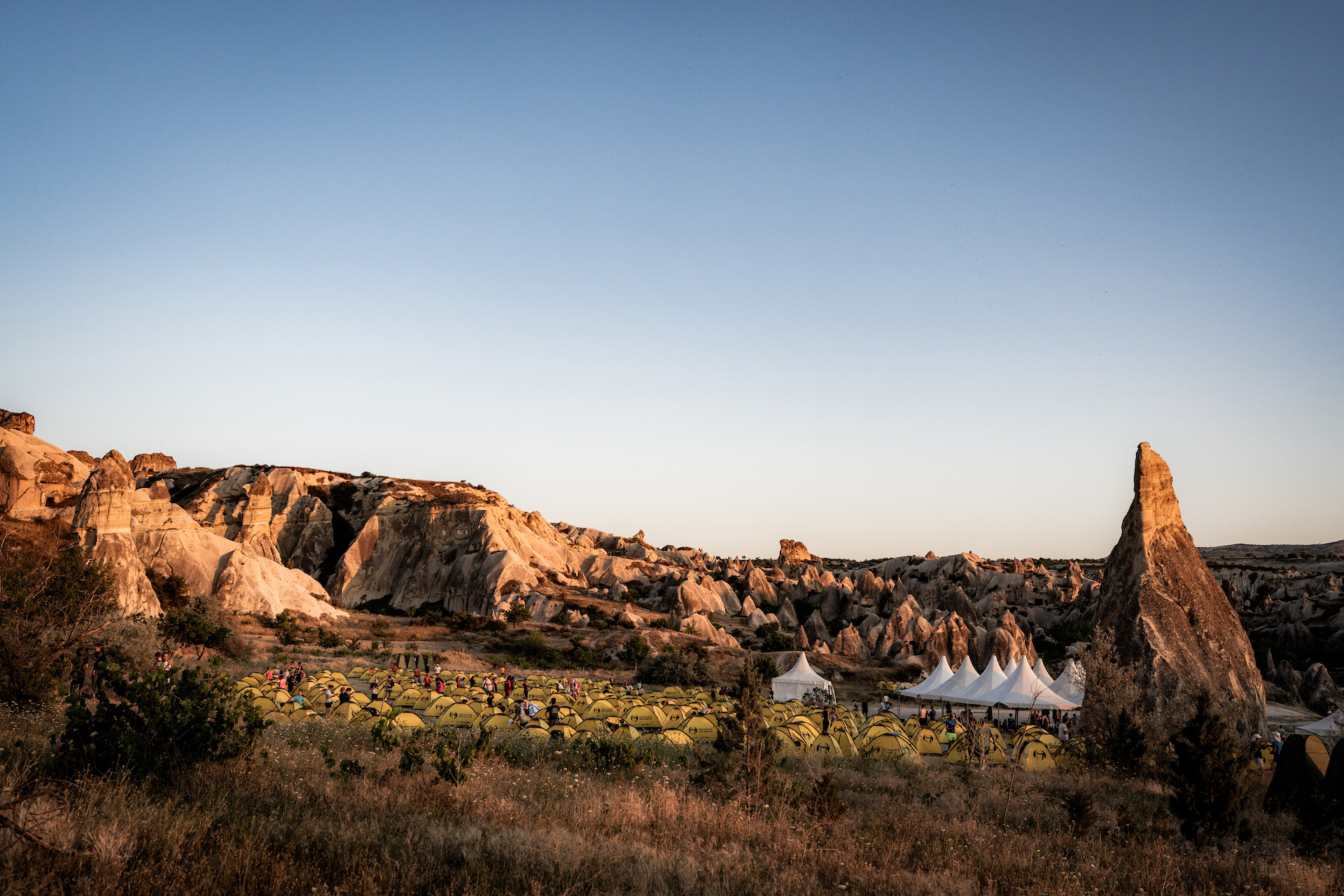
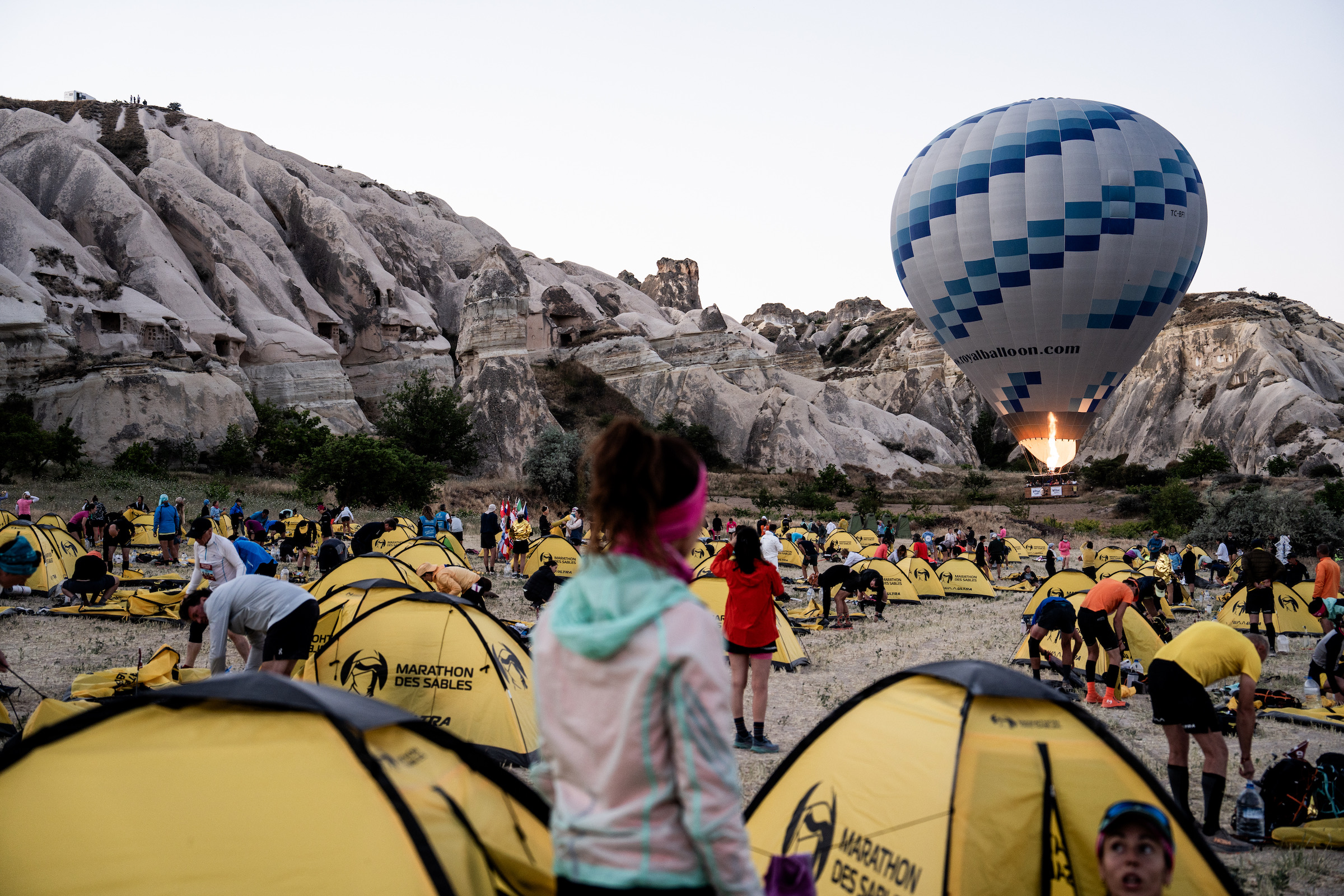
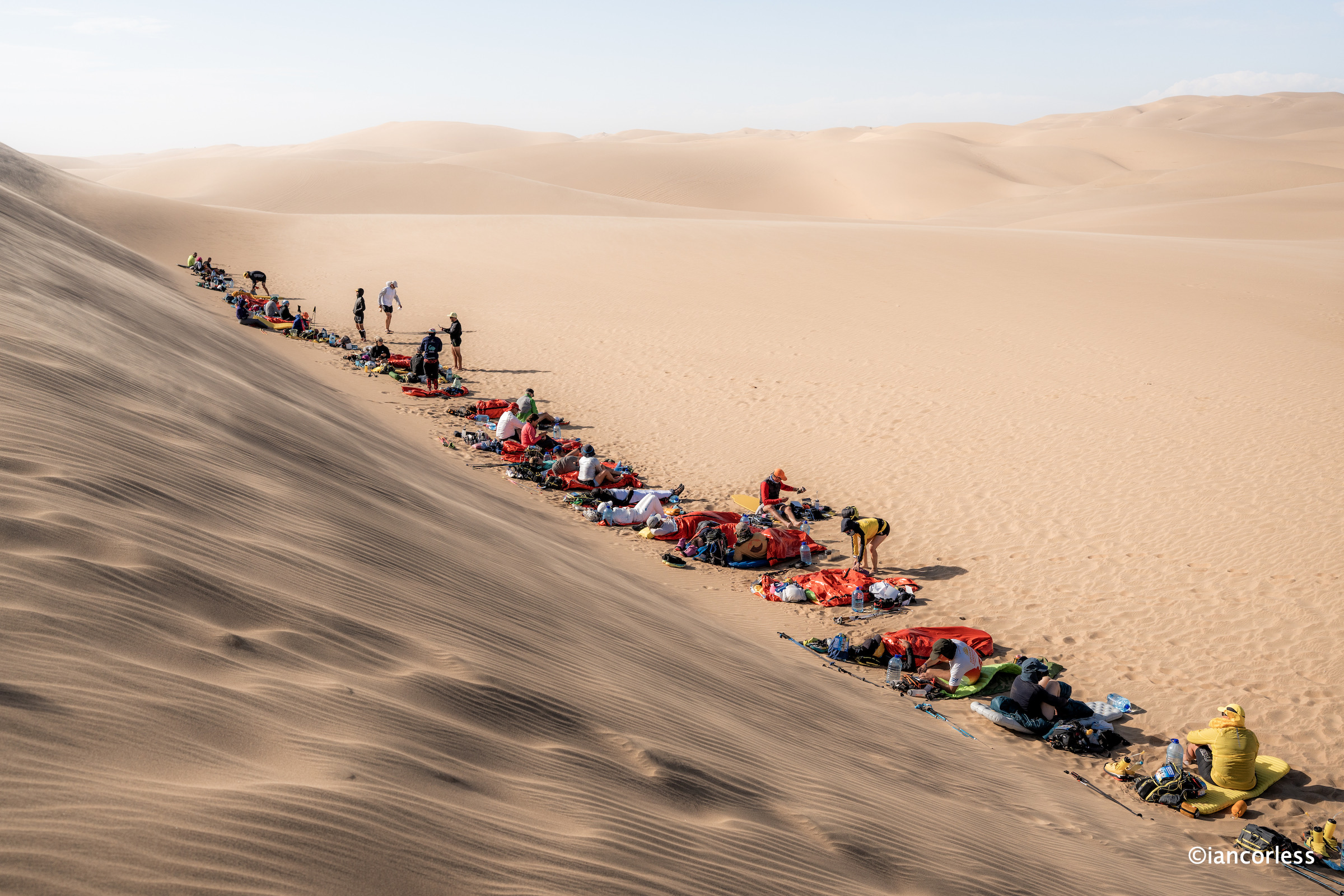
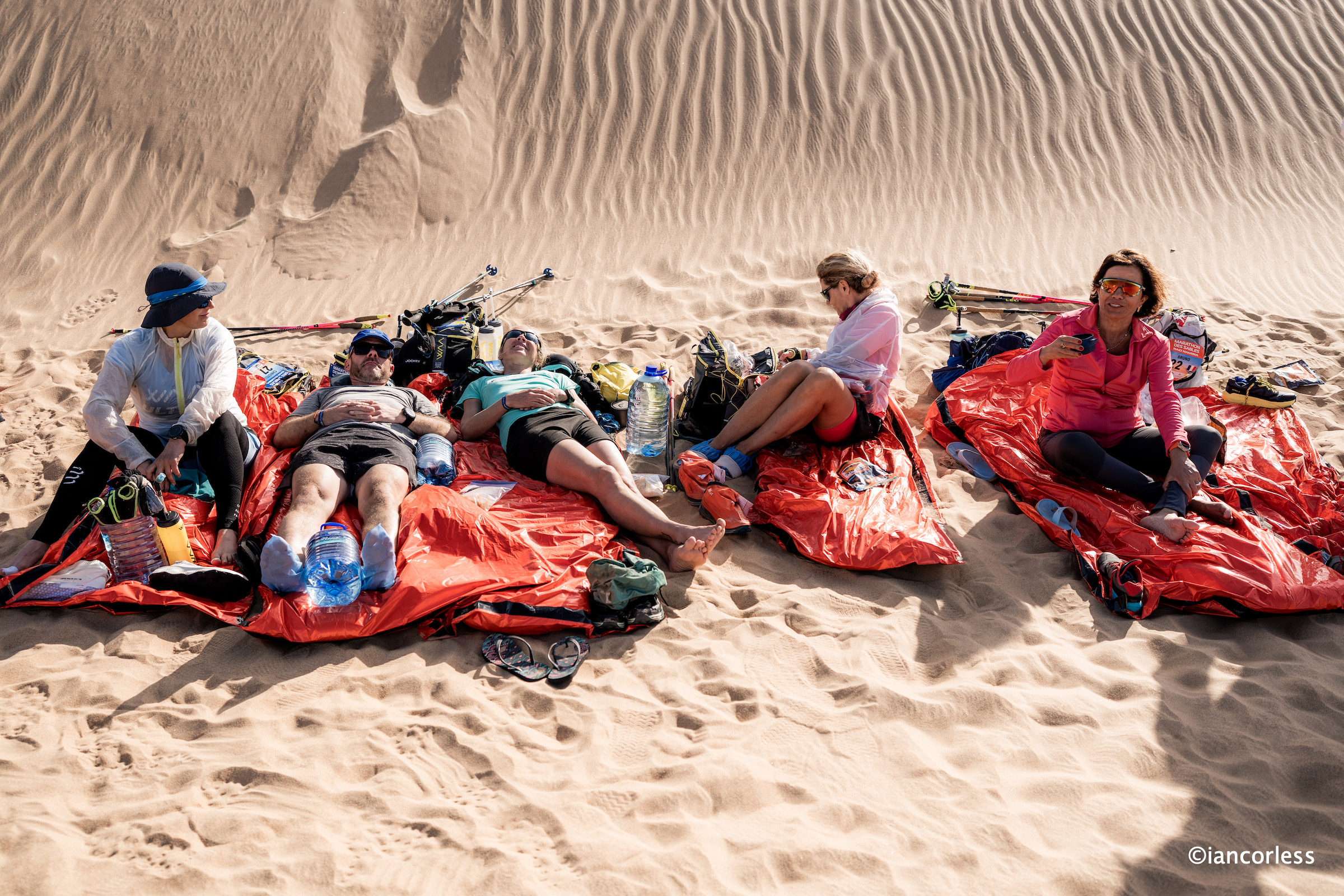
Bivouac – A simple tent cover is provided at the end of each day and this tent must be shared with 7 other runners. This is specific to Legendary. Other MDS events, MDS 120 as an example, runner’s a re provided solo-occupancy small yellow WAA tents.
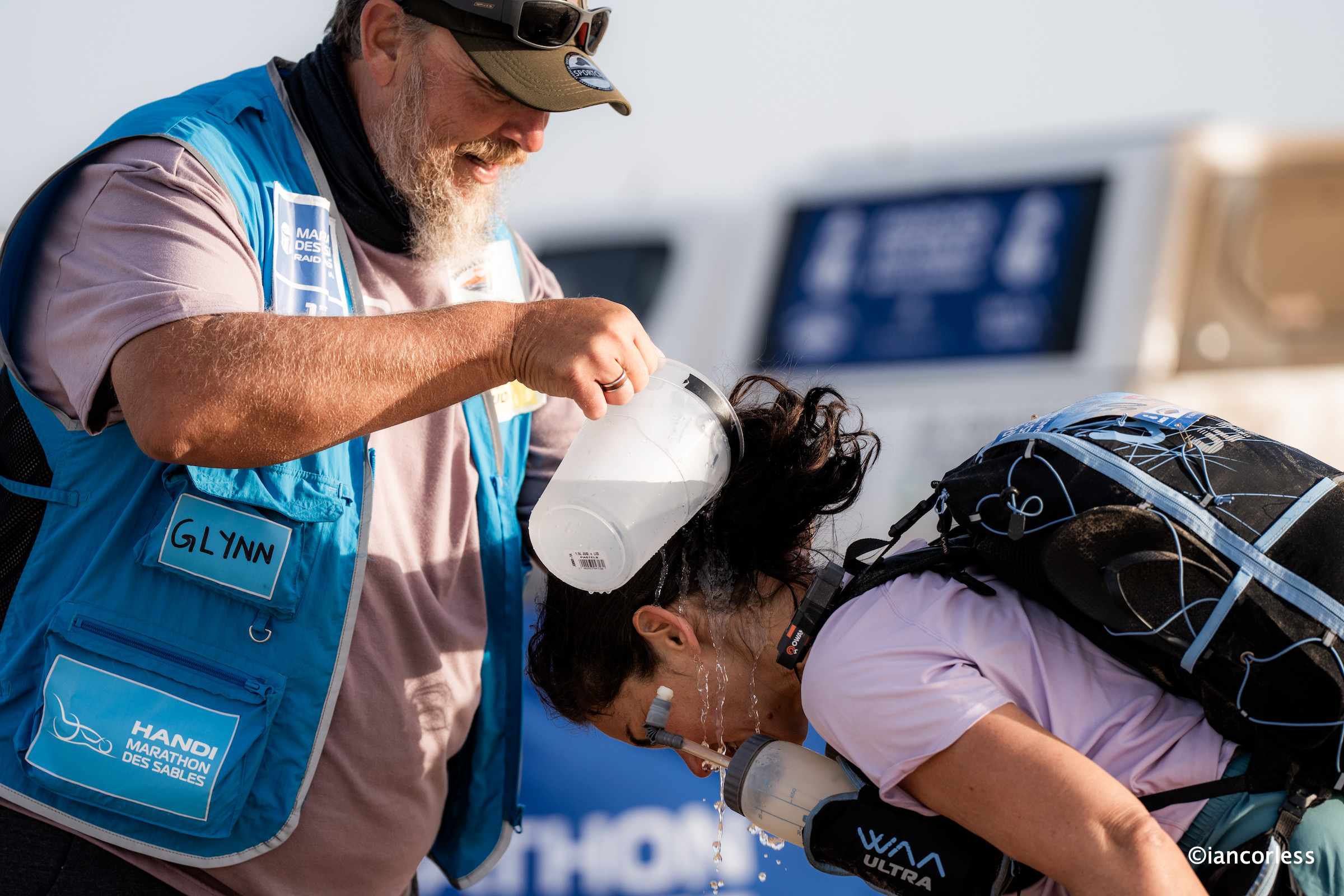
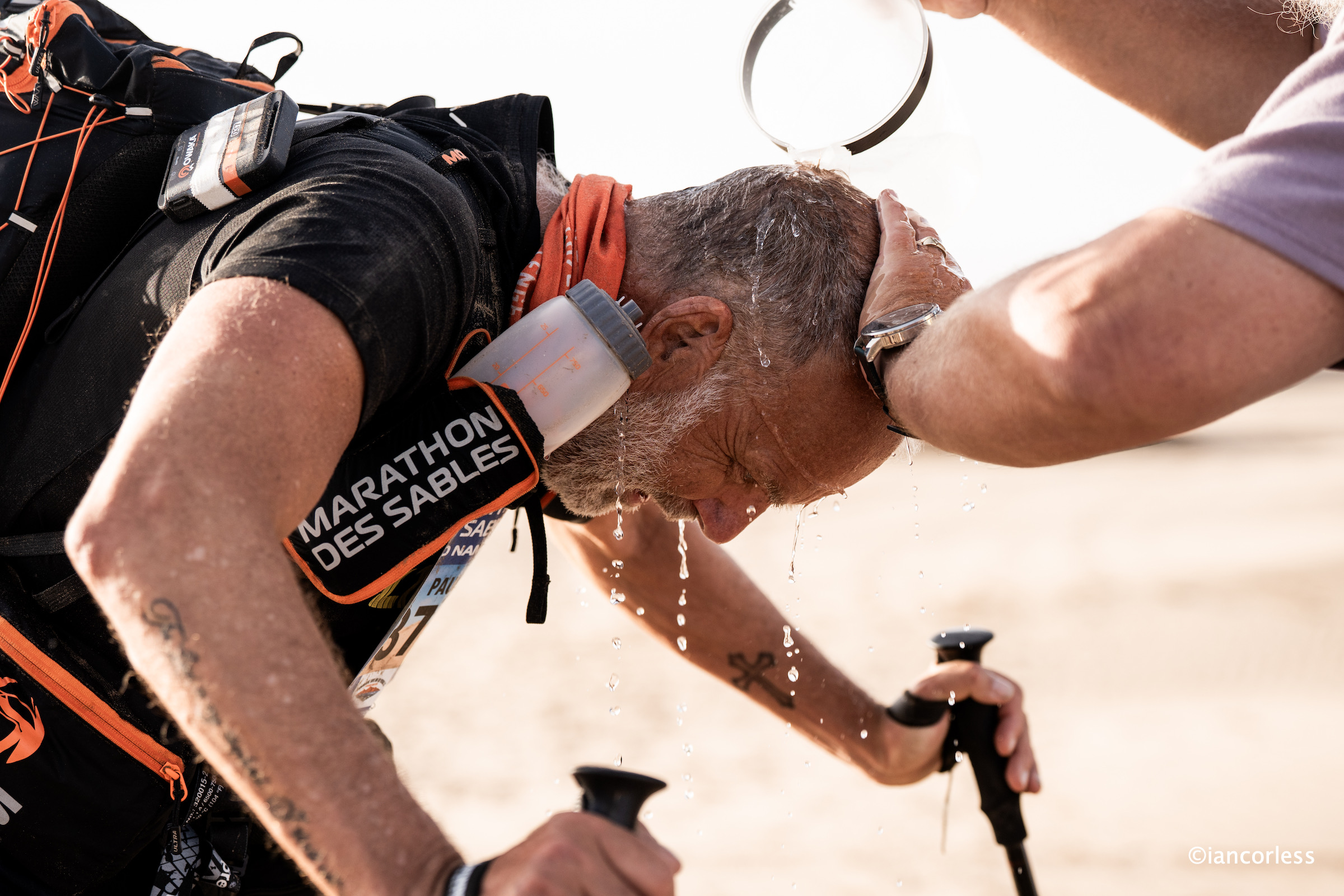
Water – Water is provided in bivouac and out on the course. Whilst running, water is abundant and not rationed. At the end of the day, you are provided 5ltr of water which must last to CP1 the following day.
Anything else the runner needs must be carried – pack, sleeping bag, sleeping mat, food, snacks, luxuries etc.…
The Detail
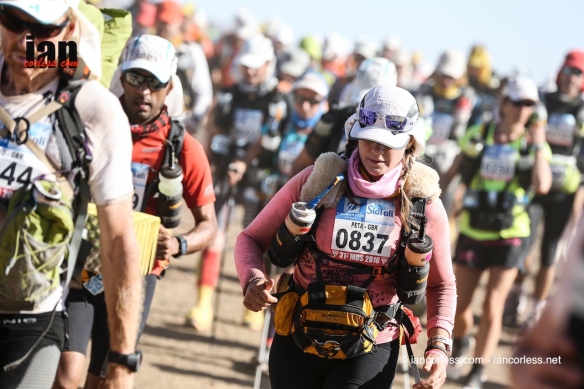
Let’s be clear, it is important to note that equipment will not make you complete any race. What it can do is make the process easier and more comfortable. Equipment is something we all must take to any race and finding out what works and doing the research is part of the fun.
If you want to increase your chances of completing your chosen race, commit to the training required, get your head in the correct place and then finish off with the appropriate equipment for the job. Far too many stress about what equipment they need and neglect the appropriate training.
Multi-day racing in its purest form should be very simple. However, over the year’s deciding what equipment to take has become increasingly more complicated.
It shouldn’t be complicated and in all honesty, it isn’t!
Here is just a list of absolute essentials, one could say that this list is mandatory:
- Hat
- Sunglasses
- Buff
- Jacket (usually down)
- T-Shirt
- Shorts/ Skort
- Socks
- Shoes
- Gaiters
- Rucksack
- Sleeping Mat (optional)
- Sleeping bag
- Head Torch
- Flip-flops or similar
- Toilet paper
- Personal medical kit (feet etc.)
- Spot Tracker (supplied at MDS, optional at other races)
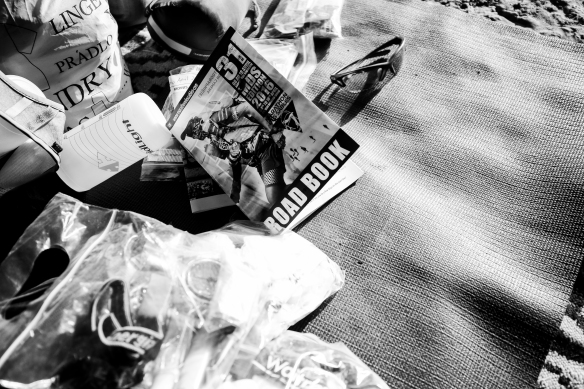
- Road Book (supplied)
- Stock cubes
- *Food for the required days
- **Mandatory kit
- ***Water
Optional items:
- Warm jacket (usually down that packs small and light) – I consider this essential and not optional
- Stove and fuel blocks
- Sleeping bag liner
- Spare socks
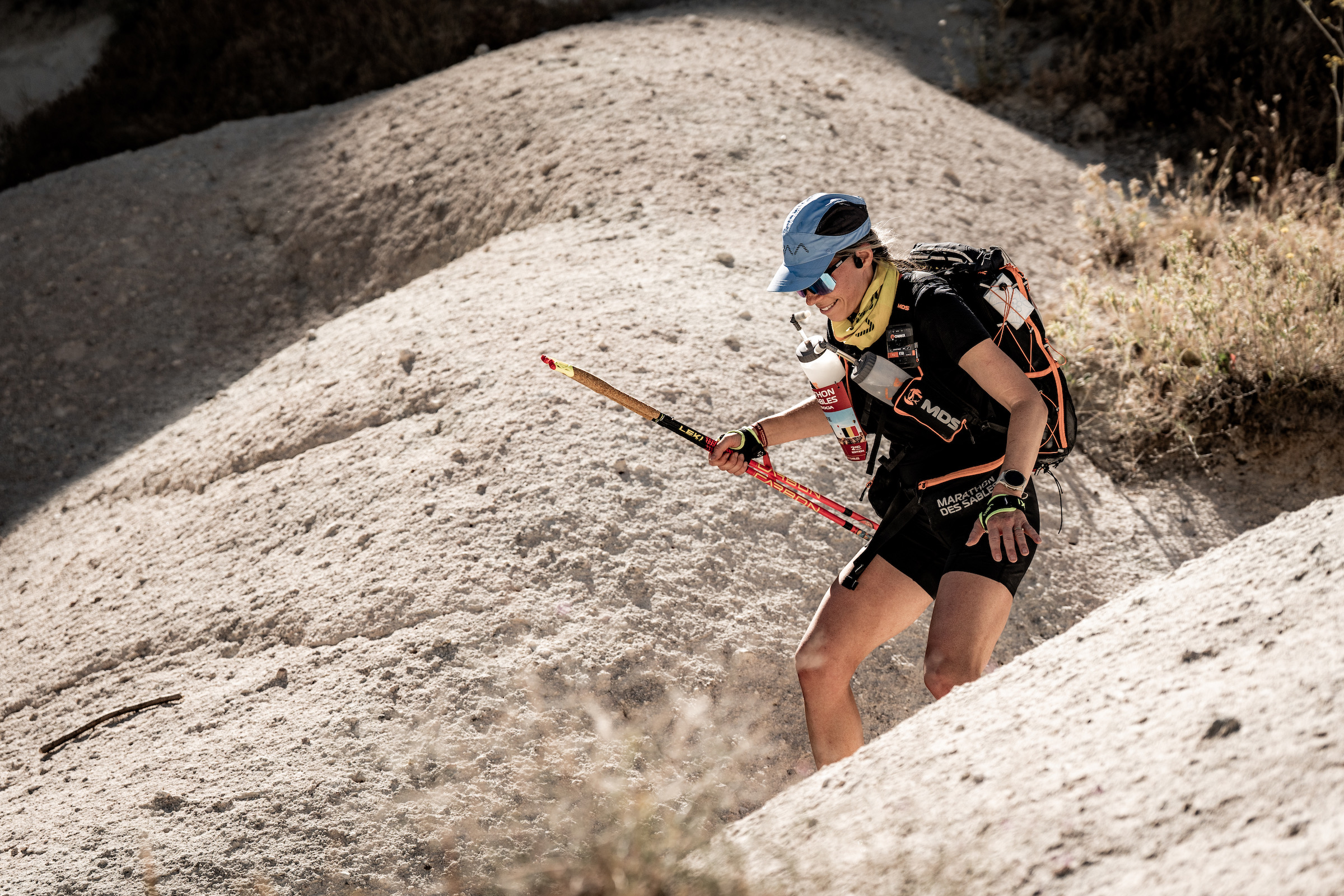
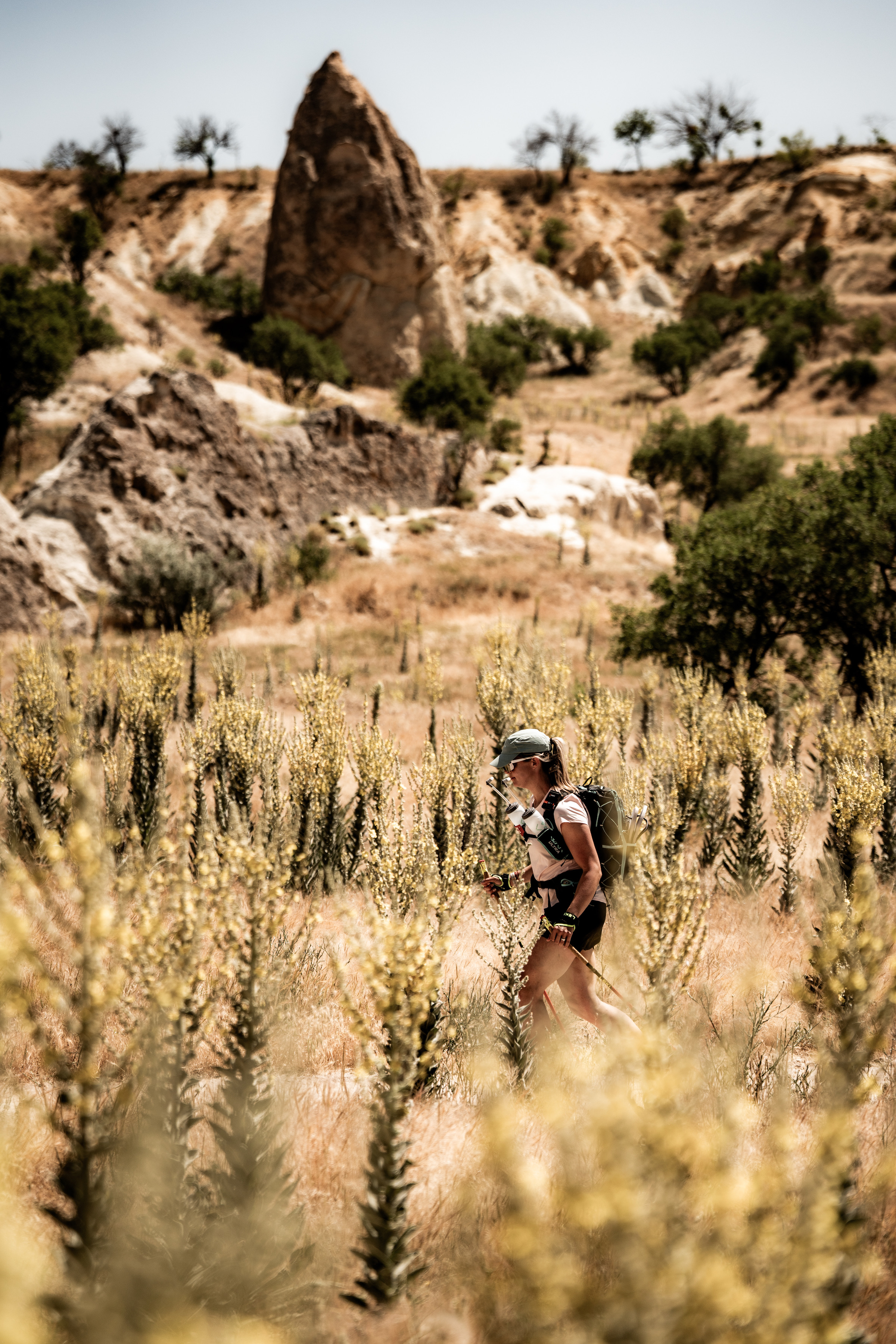
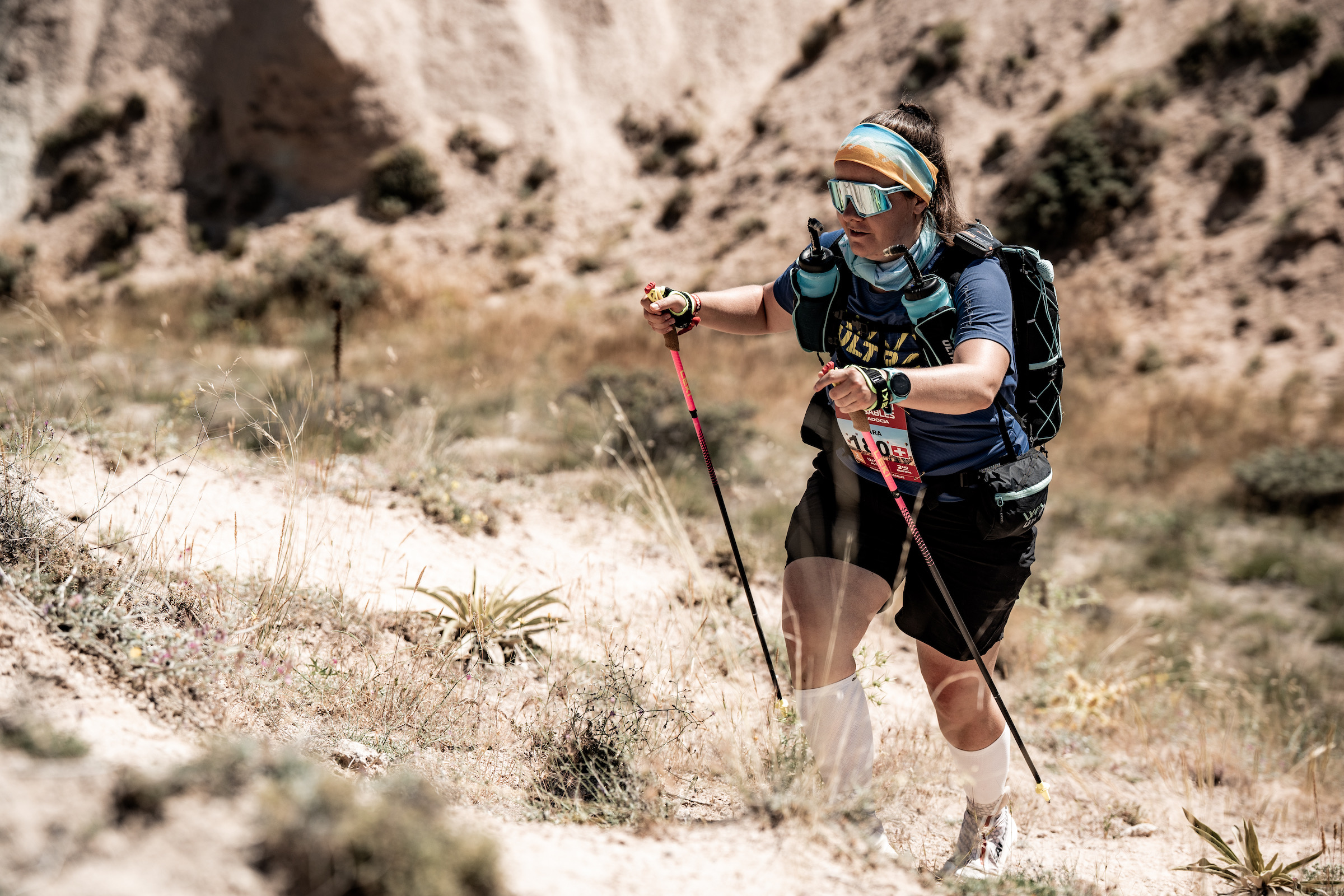
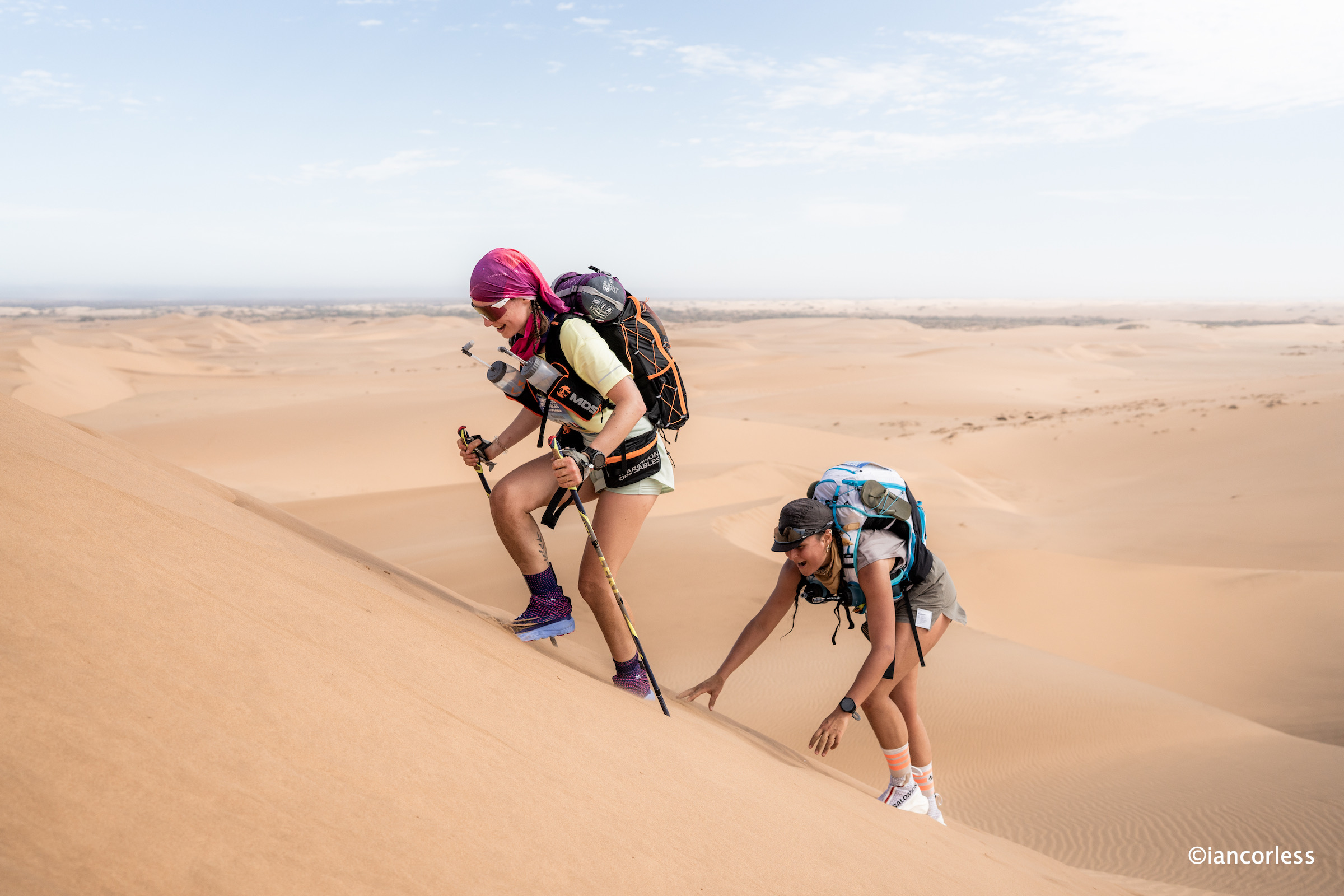
- Walking Poles
- Goggles
- Spare clothes (?)
Luxuries:
- Mp3 player
- Phone
- Solar charger
- Kitchen sink…
Perspective:
Any multi-day race has (arguably) five types of participant:
- The elite races who will contest the high-ranking positions.
- Top age groupers who will look to race for a high place and test themselves overall.
- Competitive runners looking for a challenge.
- Those who wish to complete and not compete.
- Newbies who are out of their comfort zone looking to finish at all costs.

When one looks at kit and requirements, it’s easy to think that the needs of the top elites in group 1 will vary from those in group 5. I would arguably say no! All the runners need the same things; they all must carry the same mandatory kit and they all must carry the same minimum food requirement.

I think the differences come with experience. Novices and newbies will more than likely prepare for the unknown, the ‘just in case’ scenario. Whereas top runners will be on a minimum, the absolute minimum. Groups 2- 4 are a mix of groups 1 and 5 and they fall somewhere between.
So, for me, groups 2, 3, 4 and 5 should (where possible) aim to be like group 1. The only key difference comes with shoe choice. Runners who will spend much longer on their feet and out on the course will most definitely need a shoe that can withstand that pressure and the shoe must also be good for walking. Groups 2-5 never fully appreciate (often until it’s too late) how much they will walk in a desert race.
EQUIPMENT IN DETAIL

When looking at equipment, I am going to provide a brief synopsis and then some recommendations. I will then supply ‘my’ equipment list.
I strongly advice using a tool such as LIGHTERPACK which is a great tool. Here is an example of one of my personal fastpack lists.

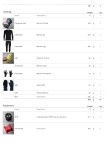

Remember WAA is the official equipment of MDS and you can purchase many of the key items via their website HERE
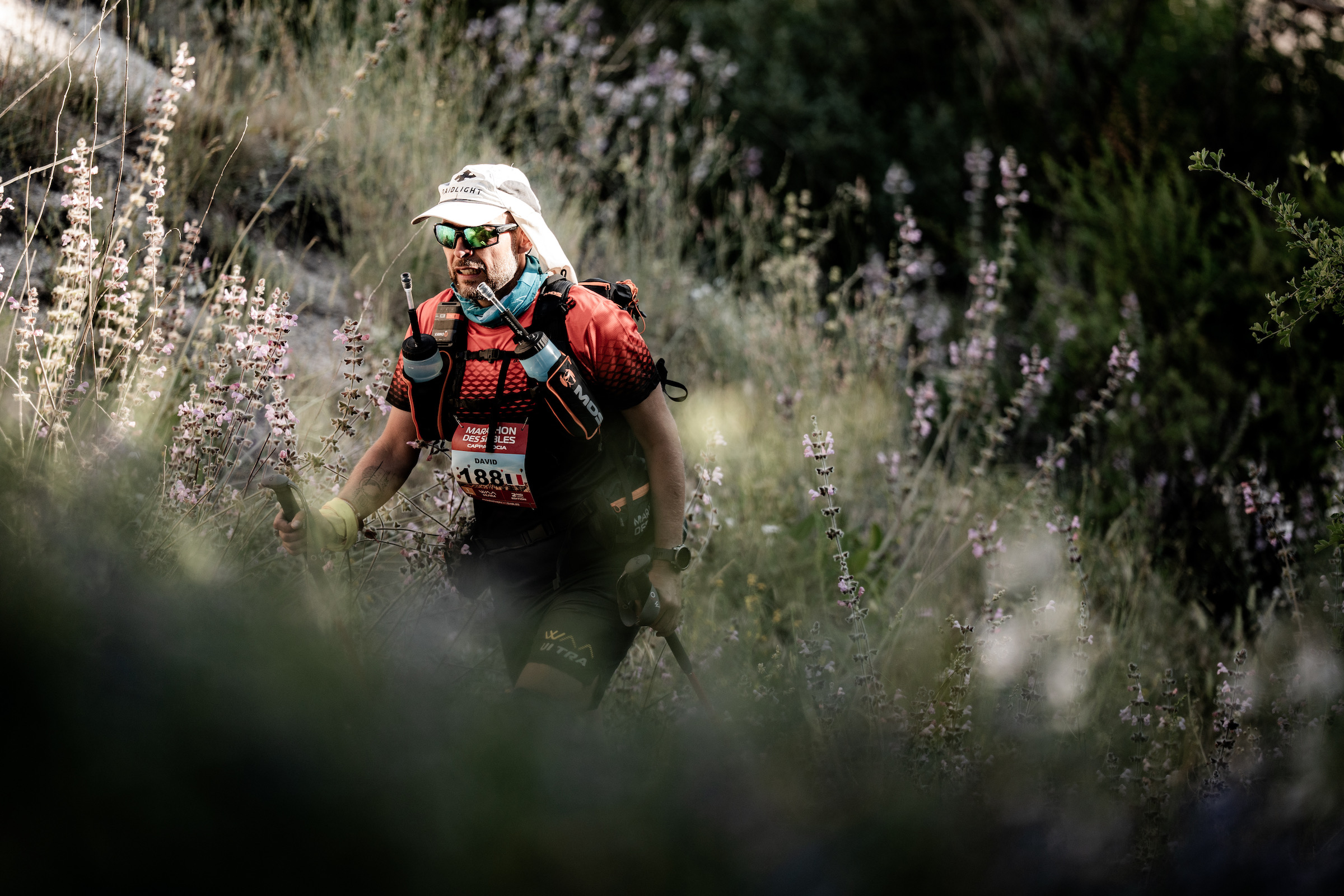
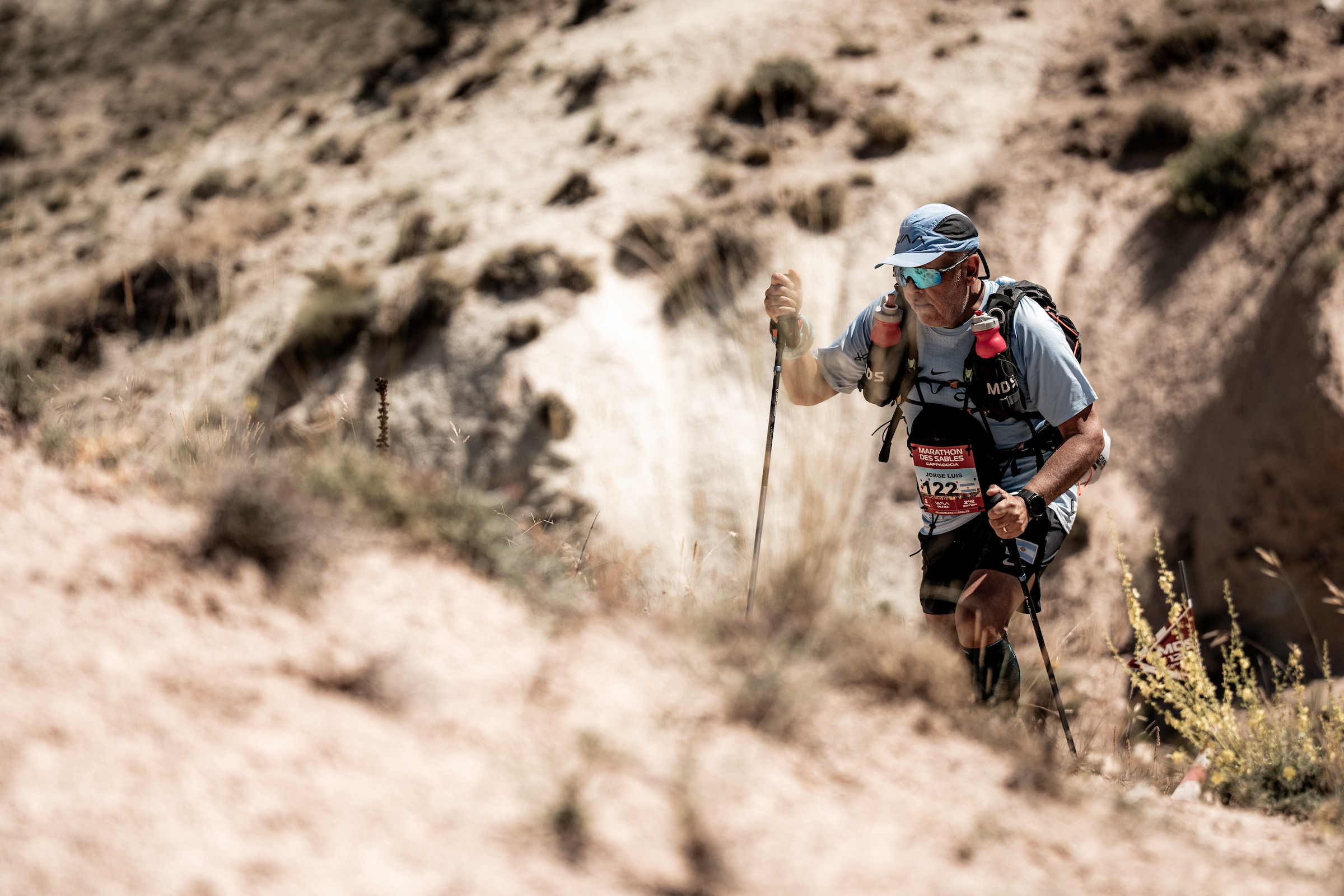
Hat – A hat is essential to keep the sun off your head; options exist that have a neck cover built in to avoid that delicate area that will almost certainly be in the sun all day.
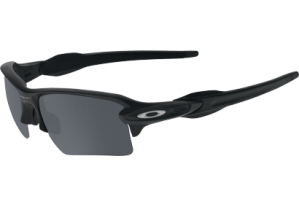
Sunglasses – So many choice, but you need a good pair that has ideally a large lens to protect the eye. Some desert specific sunglasses include a brow pad that helps stop sweat dripping in your eye. Do you need prescription? If so, I use prescription Oakley and they are excellent. Do you need goggles? Yes and no. If you have good sunglasses with good coverage, then no. However, should a sand storm hit, it can be uncomfortable. Goggles guarantee no sand in the eyes.
Buff – A buff or even two are essential. One around the neck helps keep the sun off and you can also wet it to help reduce core temperature. In wind and sand storms, the Buff is lifted and protects mouth, nose and sometimes eyes. A spare Buff is a luxury but worth considering.
Jacket – Jacket choice will depend on sleeping bag choice. If you are using a light bag, a lightweight down jacket is an essential item. Häglofs, Yeti, Mont Bell, Rab and others have exceleent super light options.
T-Shirt – It’s not rocket science, you will have been running in a shirt already, if it works, why change it? I read countless arguments about should it be black or white – you know what, it doesn’t ‘really’ matter. Look at the elite runners, they are often sponsored and have little or no choice on colour. However, lighter colours reflect heat. Comfort however is key.
Shorts/ Skort – Same answer as T-Shirt.
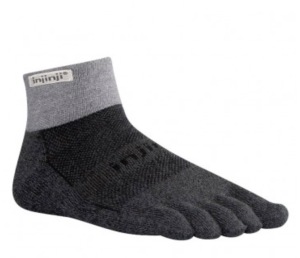
Socks – Getting the correct socks are key for any race and like I have said for shirt and shorts, if you have socks that work, why change? So many options exist but for me I am a firm believer in Injinji toe socks.
Shoes – Read HERE – Shoes are personal and must be suited to you, the individual. Consider your gait (neutral, supinate or pronate), consider time on feet, consider your weight, consider how much you will walk (and then double it) also consider shoe drop and how much cushioning you need. It’s impossible to recommend any one shoe because of these variables. You will see top runners using a lighter shoe, remember, these shoes only need to last 20-30 hours. However, you may well need a shoe for 40, 50 or 60-hours. Do you need a trail shoe? No, you don’t need a trail shoe but I would say that many trail shoes are more durable as they are designed for the rough and tumble of variable terrain. Do you need an aggressive outsole? No, you don’t, but I do think some grip is better than none and therefore I would use a trail shoe over road. Protection? Toe box protection is a good idea as deserts include lots or rocks, far more than you may think. Do I need a size bigger? Shoe sizing does depend on what is ‘normal’ for you. I always recommend a thumb nail of space above the big toe, you don’t need any more than this. Recommendations of going a size is bigger is bad advice in my opinion. A shoe that is too large allows your foot to move, a moving foot causes friction, friction causes blisters and the rest is the same old story that I see at desert races all over the world. However, I would recommend a shoe with a little more width in the toe box, this will allow for some comfort as the days progress. If you are prone to feet swelling, discomfort, blisters and so on, get a strategy sorted before you head out to your chosen race.
Gaiters – Are essential and they should be sewn and glued on to the shoe to guarantee that no sand can enter. WAA provide race gaiters.
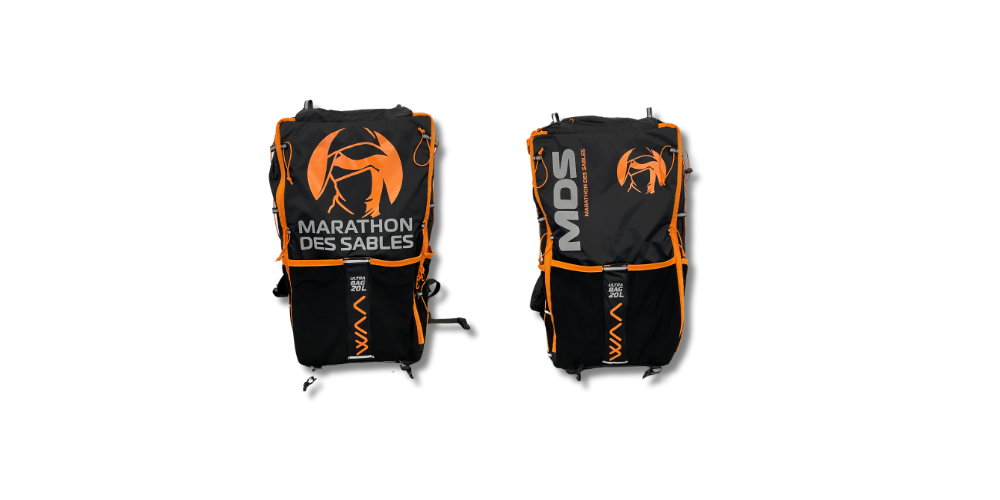
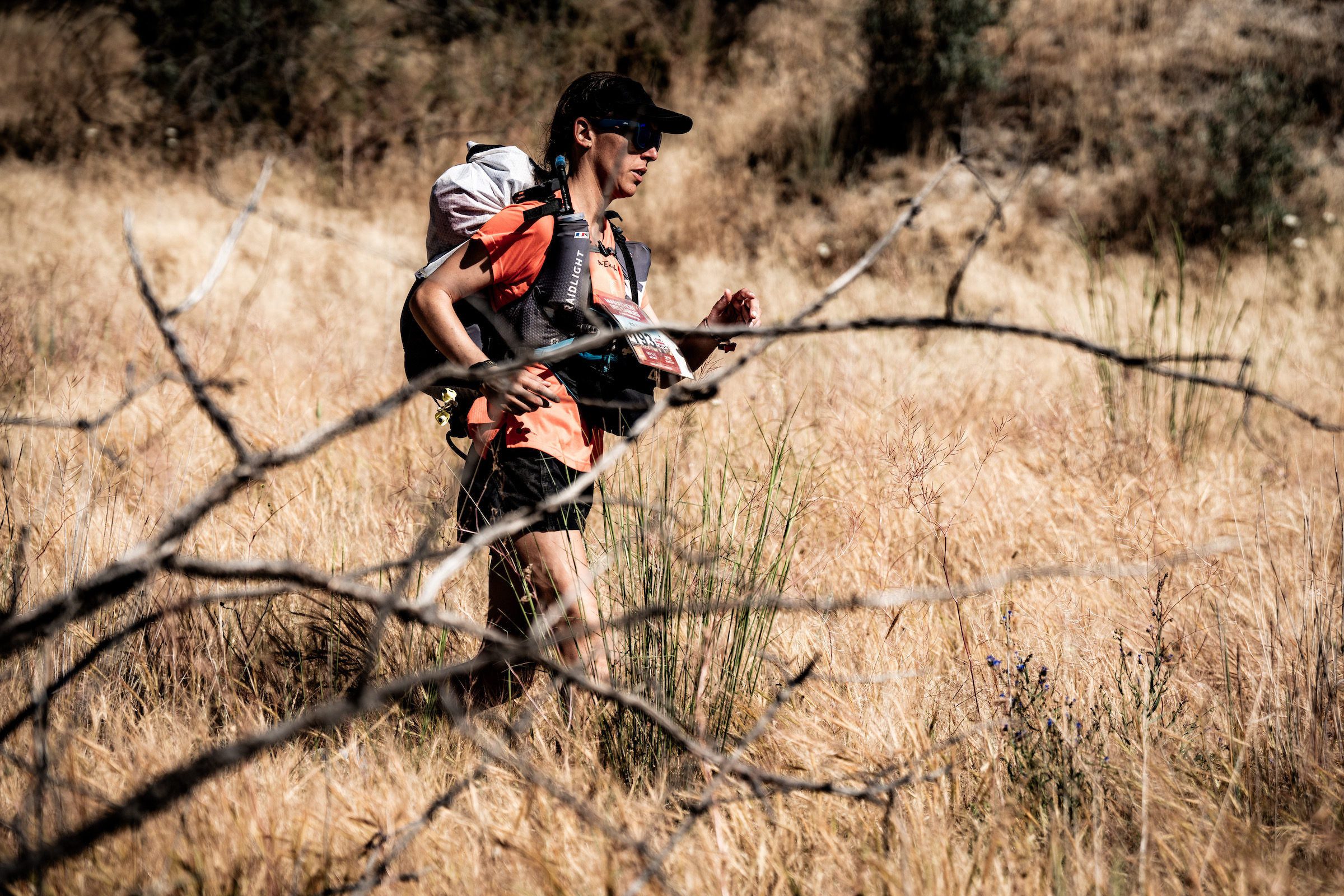
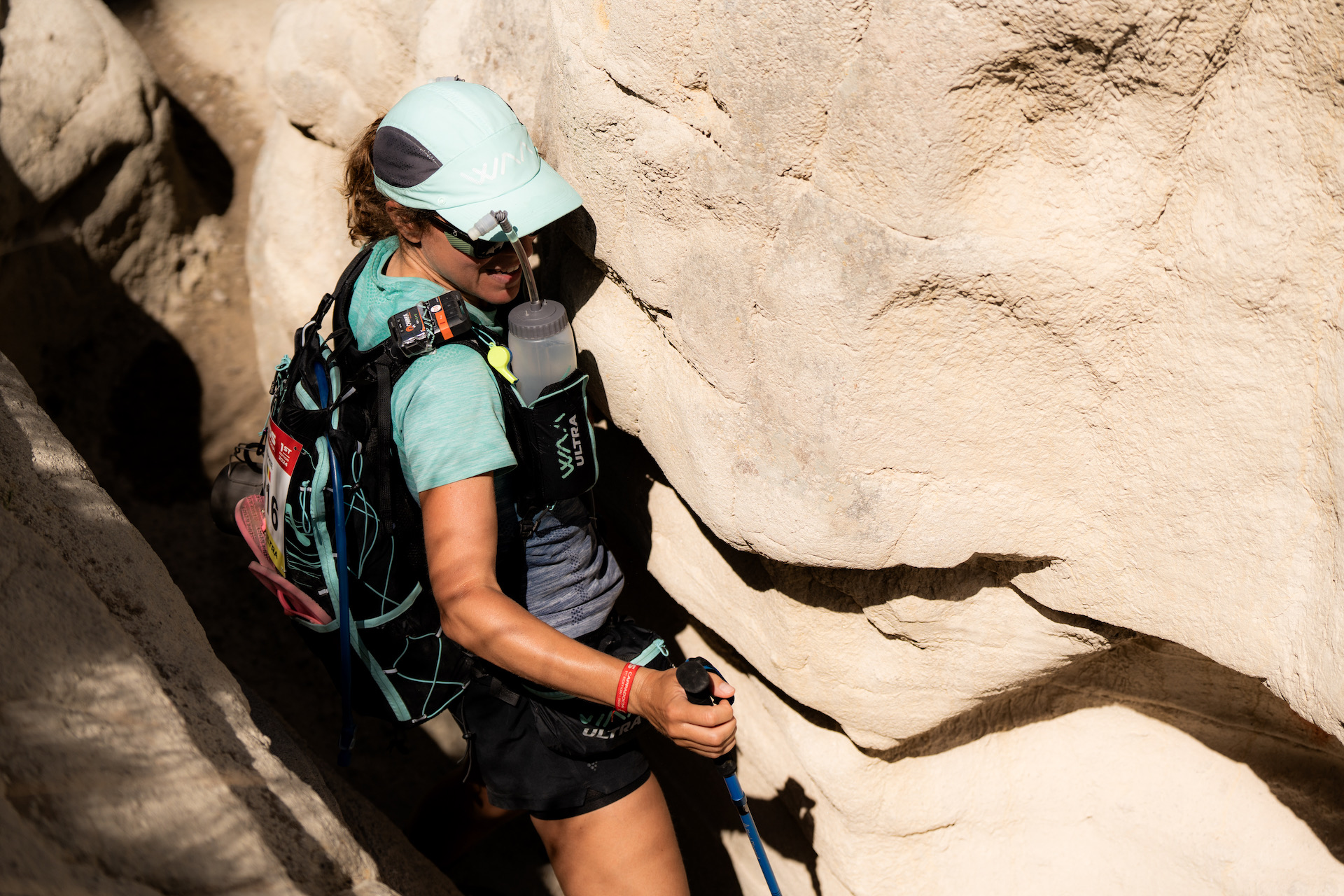
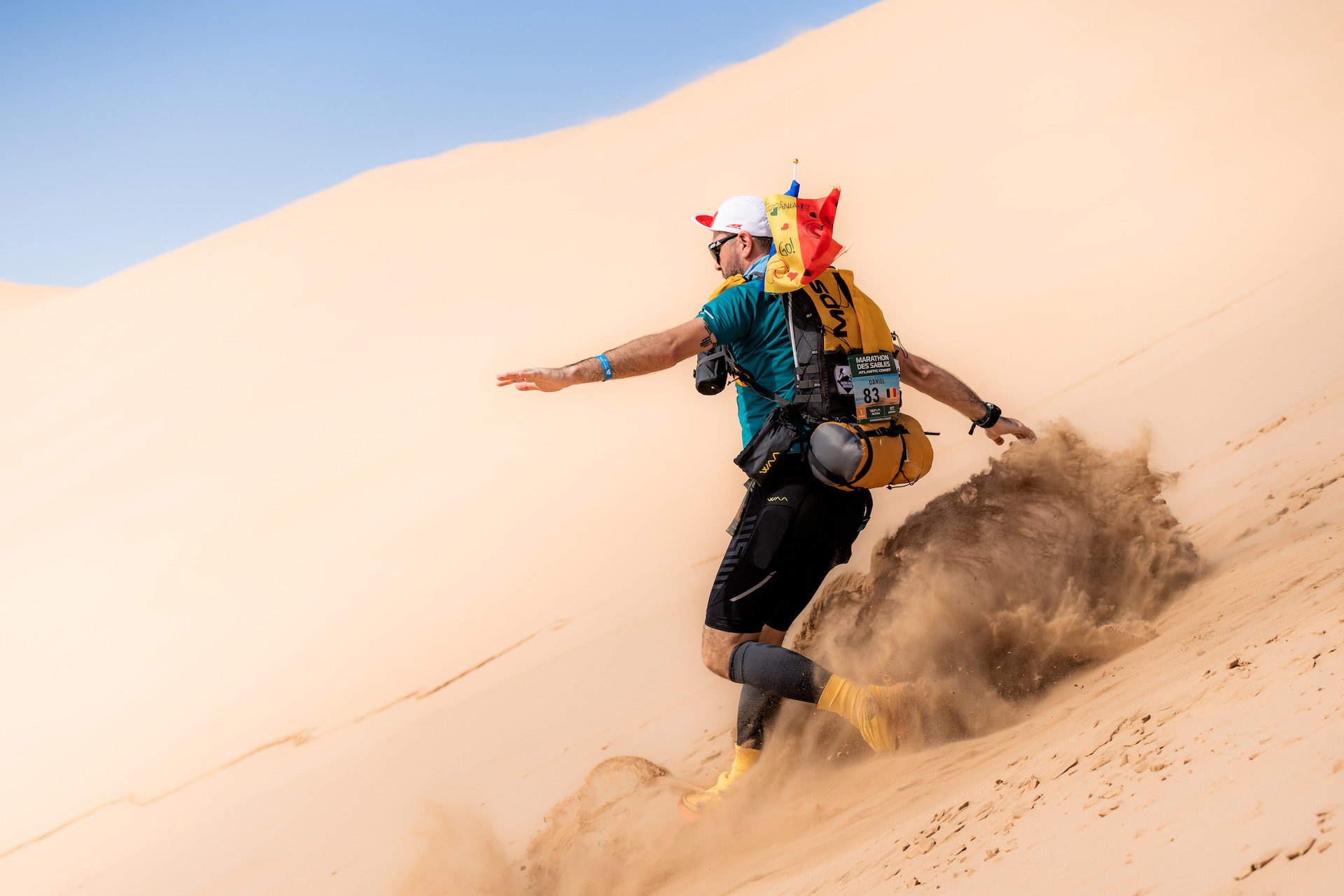
Rucksack – A rucksack is one of the most essential items for the race as it will hold on your kit for the duration of the event. Many versions exist and the type of pack you choose depends on many things: Male/ Female, Small/ Large, Tall/ Short and so on. Some packs just don’t work for some people. You also need to consider if you need a front pack to hold essential items. How will you drink on the go? How much do you plan to run in comparison to walk? I have some simple advice:
- Keep the pack as small as possible, if you have a bigger pack you will just fill it.
- Keep the pack simple – far too many packs are over complicated and messy
- Keep the pack light
- Make sure that drinks are accessible, easy to use and don’t bounce
- See how the pack feels full with all food and then see how the pack feels with 5-days food missing.
- Make sure you can access ‘on the go’ essentials.
Needless to say, WAA is arguably the most popular pack at MDS. However, find what works for you.
Sleeping Mat (optional) – Inflatable, Foam or no mat. I’m a firm believer in taking a mat, the weight v comfort is a no brainer. I would also choose an inflatable mat even though it does run a risk of puncture. However, with good admin, good care, and years of using inflatable I have never had an issue. A foam mat is guaranteed to last the race but for me is large and cumbersome. Look at products from Thermarest, Sea to Summit, Klymvit and OMM.
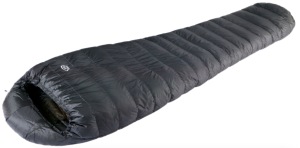
Sleeping bag – Like the pack, a sleeping bag is a key item is it is likely to be the largest and heaviest item (except food and water) that you will carry. A sleeping bag is important as a good night’s rest is key for day-to-day running. I will always go with a sleeping bag and down jacket scenario is this for me provides less weight, less packed size, more flexibility and the option to get warmer at night by wearing the jacket inside the bag. Problem is, this comes at a price. Also, consider your size, shoulder width, height and so on. Some bags are very small whereas bags such as PHD and Yeti can be purchased in small, medium or large. Recommended bags are PHD (custom or off-the peg), Yeti, Western Mountaineering, Häglofs, RAB, OMM (not down) and Raidlight. Read HERE
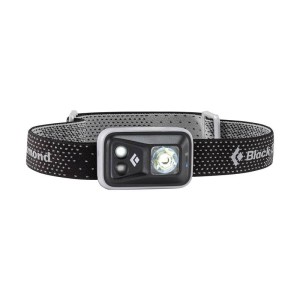
Head Torch – Don’t compromise, you need a good head-torch that provides enough light for running in a black desert at night. Don’t use rechargeable or a torch with gizmos. You just ideally need variable power, a red-light option so you don’t disturb others at night and it will either take AA or AAA batteries. Recommendations are Black Diamond, Petzl, Silva or LED Lenser.
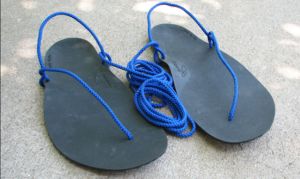
Flip-flops – Free slippers that hotels give away are popular as they are small, fold and are lightweight. However, they don’t stay on and they don’t protect from thorns or stones. Cheap, lightweight plastic or rubber flip flops work for me. I have seen some improvised flip-flops made from run shoe insoles and some string. It’s that group 1 to group 5 scenario again!
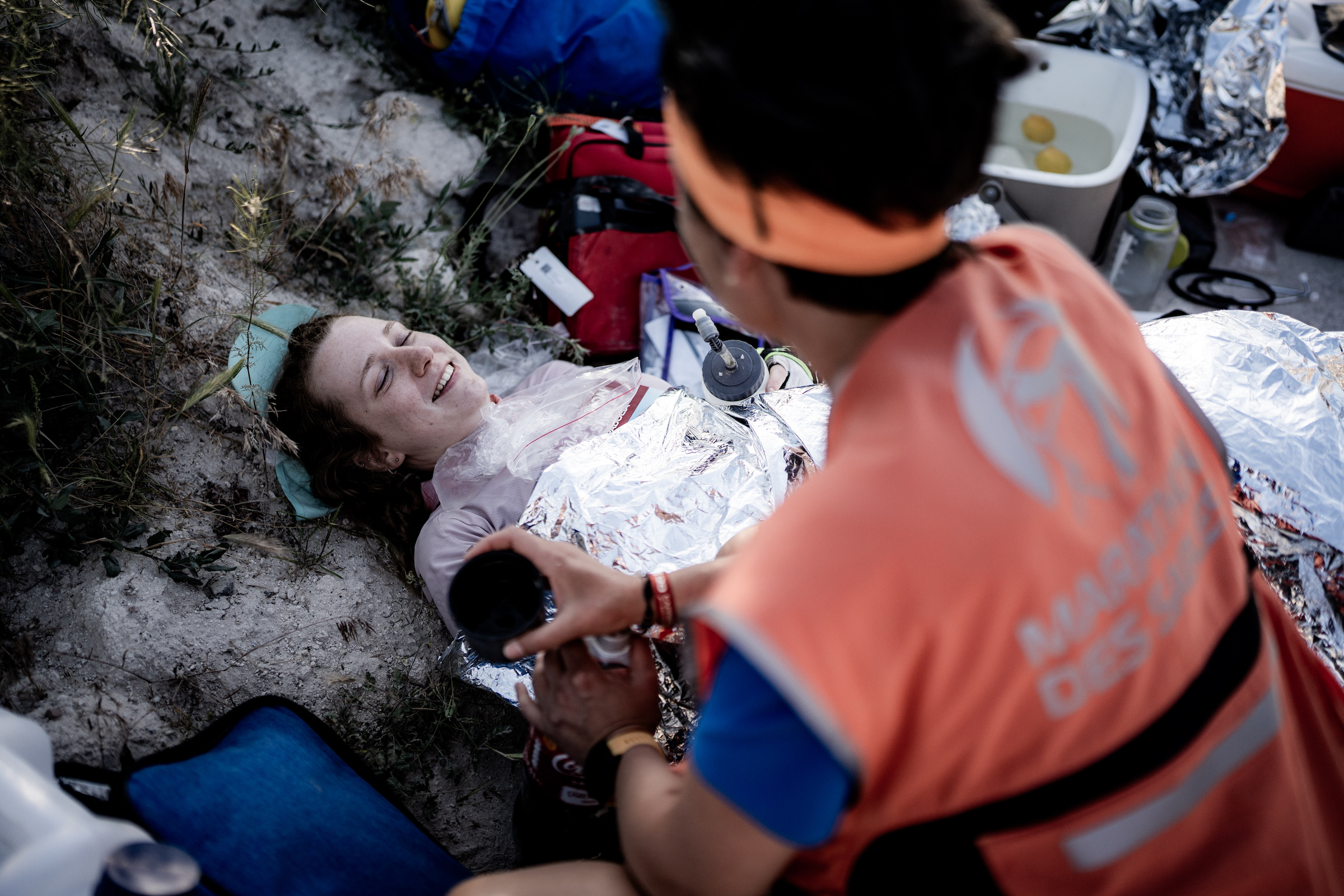
Personal medical kit (feet etc.) – Foot care is essential and although many races have a medical team on hand to look after you and your feet, understanding how to do this yourself is key. learn foot care and treatment and understand how to tape your feet. Ready-made foot care kits are available such as this at MyRaceKit here
Spot Tracker (supplied at MDS, optional at other races)
Road Book (supplied)
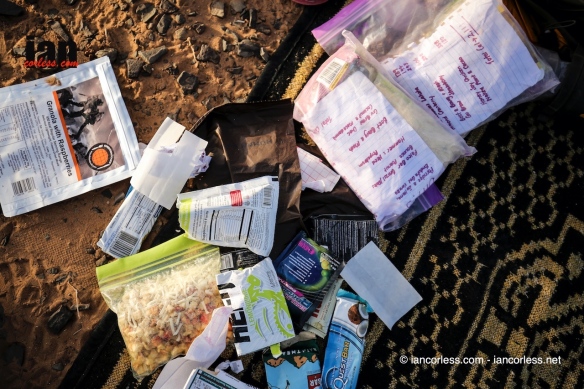
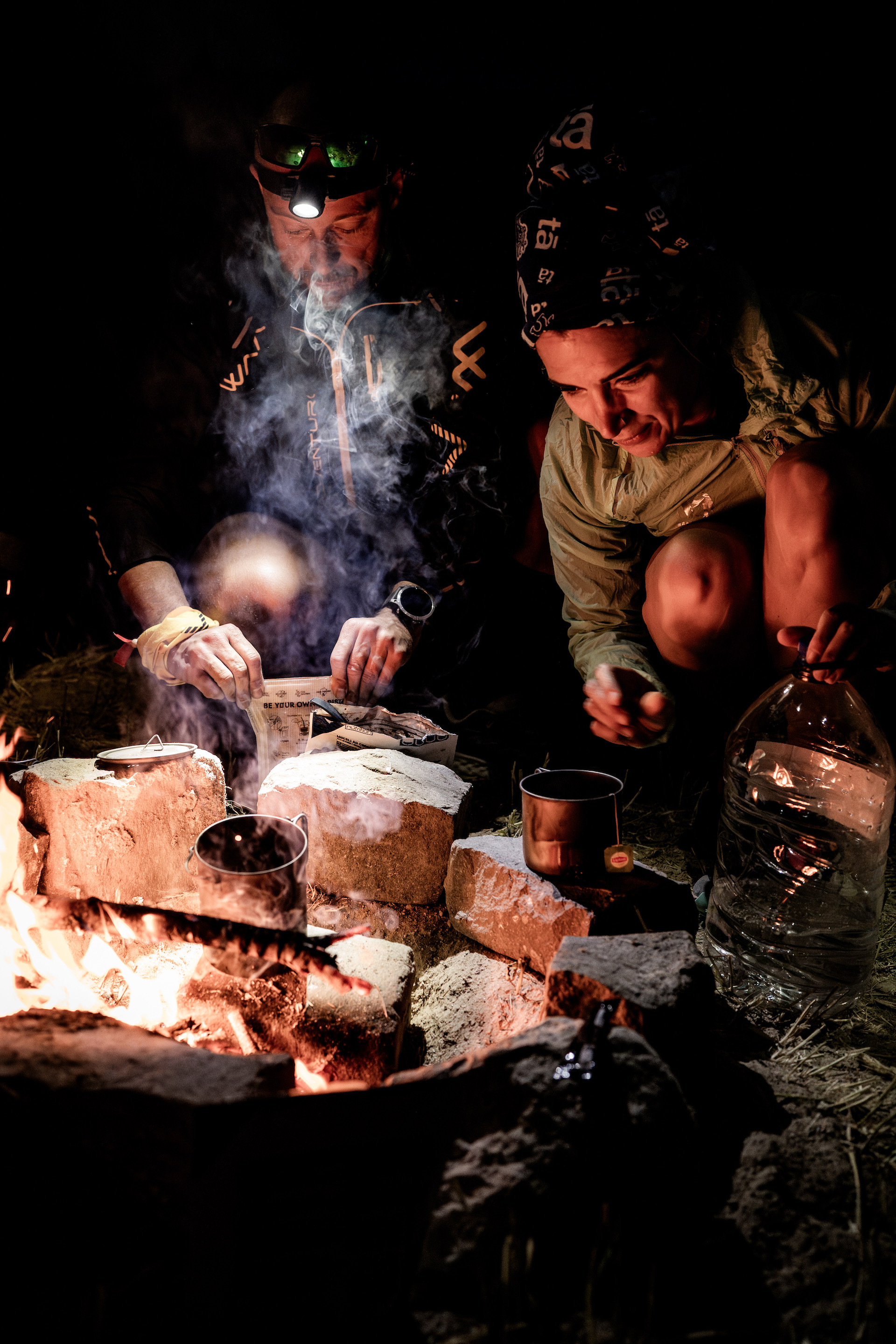
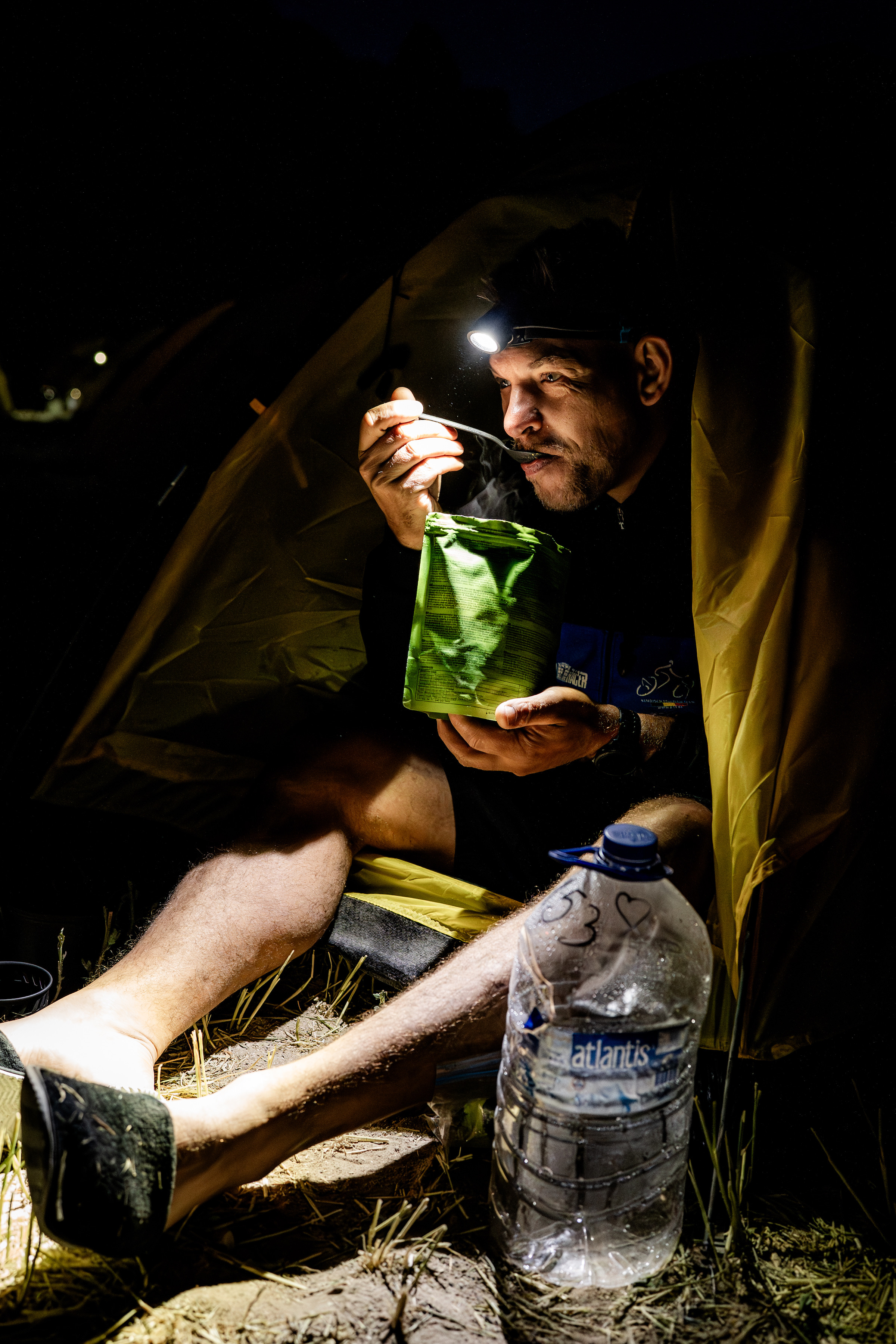
*Food for the required days – (see clarification below). Food is very personal and it’s imperative you find out what works for you based on your size, gender, calorie burn and speed of running. The front runners will use carbohydrate and fat as fuel as they will run at a faster pace and therefore they will potentially fuel ‘during’ each stage with carbs. However, as you move through the pack going into groups 2-5 the need for fat as a fuel is more important and therefore ALL runners before heading out to any multi-stage race should ideally have taught their bodies to use fat – we have an unlimited supply of this fuel! Post run it’s important to repair, we need protein for this and re-stock energy supplies, we need carbs for this. Dehydrated meals for many runners form the basis of a morning meal and evening meal. Many options are available, some people can eat anything, others are very particular. Keep in mind allergies such as gluten intolerance and decide in advance will you go hot or cold food. For me, the additional weight of a Titanium stove and fuel is worth it for hot food and a drink. We sampled some dehydrated food in 2015 HERE. In 2015 I worked hard to reduce pack weight to the minimum with a coaching client and we made sure we dialled food choices in to provide desired calorie needs but also keep weight low.
Recommended meals FIREPOT
As an example:
- Dehydrated Meals x6 672g
- Dried Mango 93g x 4 372g
- Porridge 59g x 7 413g
- Coffee 1g x 10 10g
- Peanut Butter 33g x 5 165g
- Honey 21g x 8 168g
- Mini Salami 10g x 10 100g
- Tropical Mix Bag 194g
- Sesame Bites 27g x 6 162g
- Dried Banana Block 270g
- Mixed Nuts 200g x 2 400g
- Macademia Nuts Bag 153g
- Cranberries Bag 175g
- Pitta Wraps 296g
Total Weight 3550g
**Mandatory kit – see clarification
***Water – see clarification
EQUIPMENT LIST as an example
It’s important to note that equipment must be specific to the race you are doing and race conditions. The list below is an example of equipment for Marathon des Sables. However, if I was going to Atacama or the Grand to Grand (both self-sufficient) I would be looking at a heavier and warmer sleeping bag and a warmer jacket. Temperatures at night get much colder than the Sahara. The Grand to Grand can also have rain, so that would need consideration.
It’s important to note that equipment will not make you complete any race. What it can do is make the process easier and more comfortable. If you were looking for a one-stop solution, I would say that if you went away and purchased the equipment list below, you would have a comfortable and successful race. The exceptions come with shoes, that is personal and food. Food choices below are personal but a good example, you must find what works for you.
Also, note that minimum pack weight (on day one) at MDS is 6.5kg. So, you can keep purchasing lighter and lighter and then find that you are too light. I have done this. The plus side of this, is that lighter equipment allows you to take more food and/ or more options – again a good thing. For example, in my equipment list, I could go with a slightly lighter jacket, I could not take poles and I could leave the iPods at home and that would allow me 2 or 3 more dehydrated meals. However, I would prefer the equipment I want and am happy with and add 2,3,4 or 500g for the first day. Remember, the pack gets lighter as the day’s pass.
WEARING:
Hat: A good hat that will keep the sun off your head, the option to have neck coverage is a good idea and ideally make sure the inside of the peak is black. It reduces flare from the sand.
Shirt: A good t-shirt that provides coverage for the shoulders, is light and breathable.
Shorts: Lightweight shorts that cause no irritation or friction.
Socks: Injinji Trail Midweight or Injinji Outdoor 2.0 (which is Merino wool)
Shoes: Ultimately a shoe must fit you and fit well. There is no need to go larger, on the contrary, a shoe that is too large allows ones foot to move, a moving foot creates friction and friction creates blisters! However, a wider toe box can be a good option, depending on individual foot shape. Read HERE about how a shoe should fit. Consider how long you will be on your feet, the demands on a shoe are very different for someone who will finish in 20-hours in comparison to someone who will take 60-hours. Consider body weight too; a heavier individual may well need a more substantial shoe. For a race like MDS, a trail shoe is not essential, but for most preferable. Good shoe options for ‘neutral’ runners: Nike Wildhorse, inov-8 Trail Talon, Hoka One One are very popular and for zero-drop enthusiasts, Altra and inov-8 Terraultra G270. Gaiters are essential and typically Raidlight or MyRaceKit are the most popular. You can glue them on (with care and ideally some experience) but most people have them sewn on via Kevin Bradley at Alex Shoe Repairs.

Watch: Coros Vertix and Garmin Enduro are the two key considerations to last any MDS event on one charge
Buff: Any
Glasses: Look for sunglasses that fill well, cover the eyes so as to be suitable for sandstorms. You need a good strong lens that blocks the sun, however, photochromatic offers flexibility. Oakley (and others) offer the option for prescription lenses. I would avoid using contact lenses, there can be endless problems, sand and eyes do not mix well!
IN THE PACK:
WAA Ultrabag has been designed for the race and is the most popular.
Häglofs Essens 160g – is super light jacket with treated down suitable for a multitude of conditions – here
PHD Minimus K Sleeping Bag 380g – PHD work for me, you can have them custom made with or without zips and they are excellent. Yeti make a bag that is more than 100g lighter but I prefer the warmth and comfort of the PHD. Here
Thermarest Prolite Small 310g – Small, comfortable and you can double up and use it as padding in your pack OR Sea to Summit (here)

Black Diamond Carbon Z Poles 290g – Lightweight and folding that provide 4-wheel drive when walking.

Black Diamond Spot Headtorch w/ batteries and spares 120g – Powerful (200 lumens), lightweight with many varied settings.
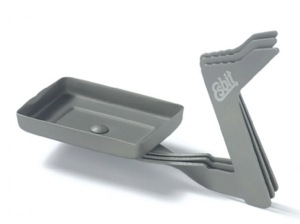
Esbit Stove 11g – Small, lightweight and simple.
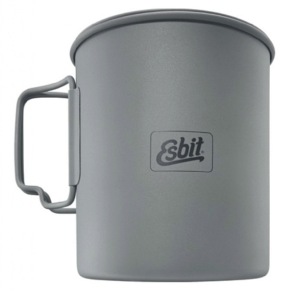
Esbit Titanium Pot 106g – Small, lightweight and durable.
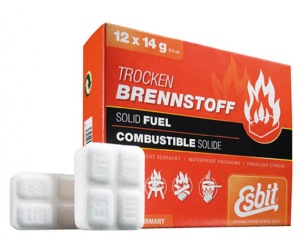
Esbit Fuel 168g
iPod Shuffle x2 64g – Life saver
Spare Socks 91g – Injinji Trail Midweight or Injinji Outdoor 2.0 (which is Merino wool)
Flip-Flops 150g – But Xero True Feel are good.
Total Weight 2406g If I was looking to be very minimalist and as light as possible, I would not take the stove, pot and fuel and the poles, total 1831g. But, I would probably prefer the option for hot food/ drinks and work around no poles, so total weight would be 2116g.
Note – with constant changing weather in MDS locations, a waterproof jacket is highly recommended!
EXTRAS:
- Compeed 22g
- Sportshield 8g
- Corn Wraps 8g
- Spork 10g
- Pen Knife 22g
- Compass 32g
- Matches 20g
- Savlon Antiseptic 18g
- Toothpaste 36g
- Tooth Brush 15g
- Superglue 3g
- Space Blanket 60g
- Hand Gel 59g
- Wipes 85g
- Toilet Paper 36g
- Safety Pins 5g
- Ear Plugs 2g
- Venom Pump 28g
- Blindfold 15g
- Sun Cream 80g
- Whistle 15g
- Signal Mirror 12g
- SPOT Tracker 113g
Total Weight 806g
TOTALS:
Pack and Main Kit Contents: 2406g
Extras: 806g
Food: 3550g
Total 6762g
This pack weight includes poles and cooking utensils plus luxuries like Mp3
(water would be added to this weight)
IN SUMMARY
I enjoy the process of looking at kit, looking at the options available and working out what is best for me and my situation. In some respects, I am lucky as I can test many items out in the market place and decide what I do and what I don’t like. However, trust me, products these days are so good that you can’t go wrong with almost any of the choices. Yeti, PHD, Haglofs etc. all make great sleeping bags, they will all work. Mountain Hardwear, Yeti, Mont-Bell etc. down jackets are all excellent, they all work. I could go on, but you get the picture. Like I said at the beginning, multi-day and desert racing is not complicated, don’t make it so. The only item you need to be sure on is shoes, make sure you get that right. But then again, I am sure you were running before you entered your multi-day race? You were using run shoes, be them road or trail and one must assume that they gave you no problems? If the answer is yes – why change them!

Finally, we all love equipment and gadgets, it’s fun to go shopping and get new items. However, being physically fit and mentally strong is what will get you to the finish line – equipment is just part of the process, remember that.
Good luck!
Clarification:
*Food (As required at Marathon des Sables)
He/she must select the type of food best suited to his/her personal needs, health, weather conditions, weight and backpack conditions. We remind you that airlines strictly forbid the carrying of gas (for cooking) on board either as hand luggage or otherwise. Each competitor must have 14 000 k/calories, that is to say a minimum of 2,000 k/calories per day, otherwise he/she will be penalized (see ART. 27 and 28). Any food out of its original packaging must be equipped, legibly, of the nutrition label shown on the product concerned. Any food out its original packaging must be equipped, legibly, of the nutrition label shown on the product concerned.
**Mandatory Kit (as specified at Marathon des Sables)
- 10 safety pins
- Compass 1deg precision
- Whistle
- Knife
- Disinfectant
- 12 stock cubes
- Signal mirror
- Survival blanket
- Sun cream
- 200-euro note
- Passport
- Medical certificate
***Water (as specified for Marathon des Sables)
Why not join our Multi-Day Training Camp in Lanzarote. The camp takes place in January each year.
Information HERE
RESOURCES
- MDS website
- WAA website
- Read THE ULTIMATE GUIDE TO MDS
- Basecamp Food
- Ultralight Outdoor Gear
- MyRaceKit
- Insurance for MDS

Interested in another MDS event in 2025?
A full calendar of dates and destinations are available HERE


Instagram – @iancorlessphotography
Twitter – @talkultra
facebook.com/iancorlessphotography
Web – www.iancorless.com
Web – www.iancorlessphotography.com
Follow on:
Instagram – @iancorlessphotography
Twitter – @talkultra
facebook.com/iancorlessphotography
Web – www.iancorless.com
Web – www.iancorlessphotography.com
Image sales –www.iancorless.photoshelter.com













 IAN CORLESS