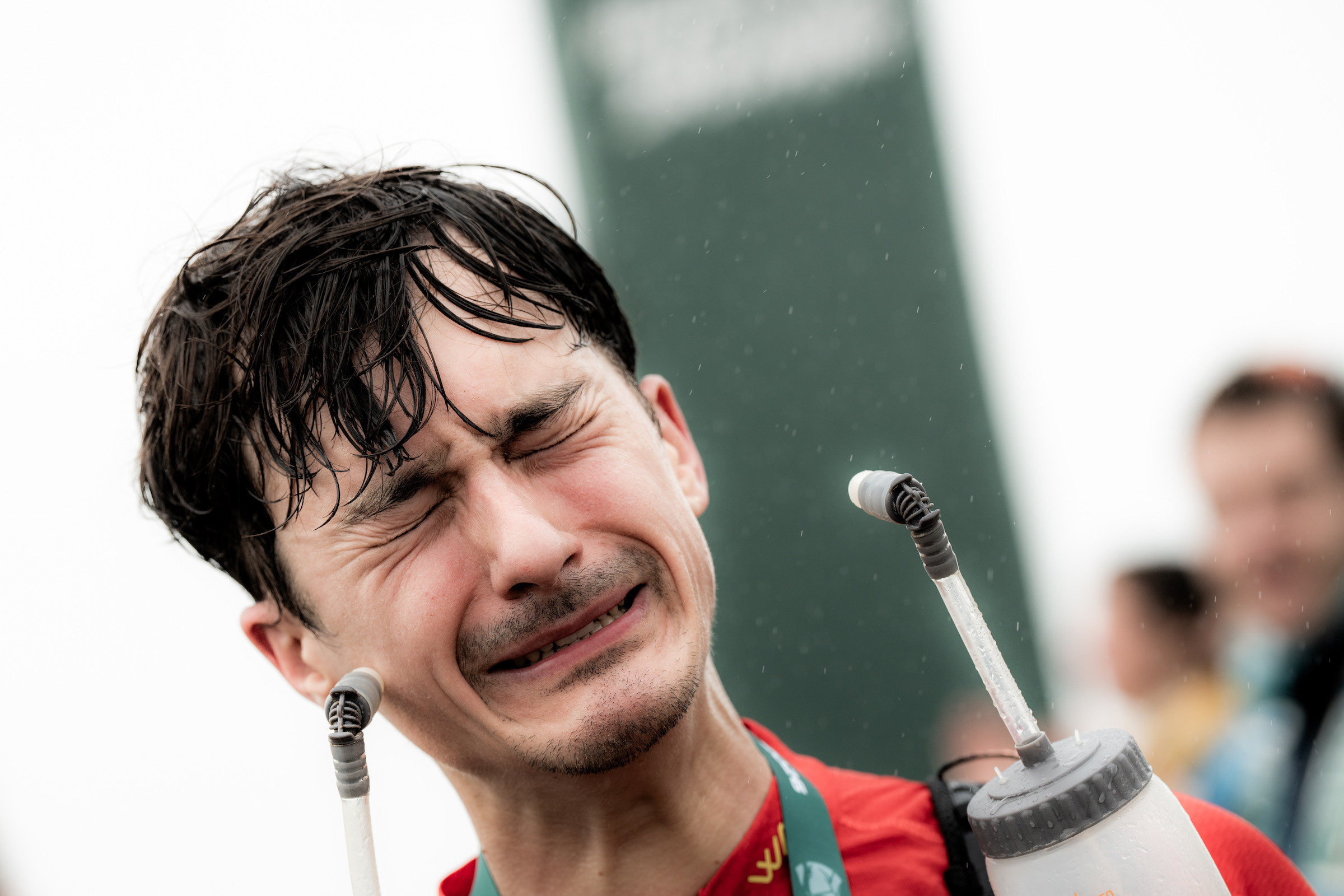
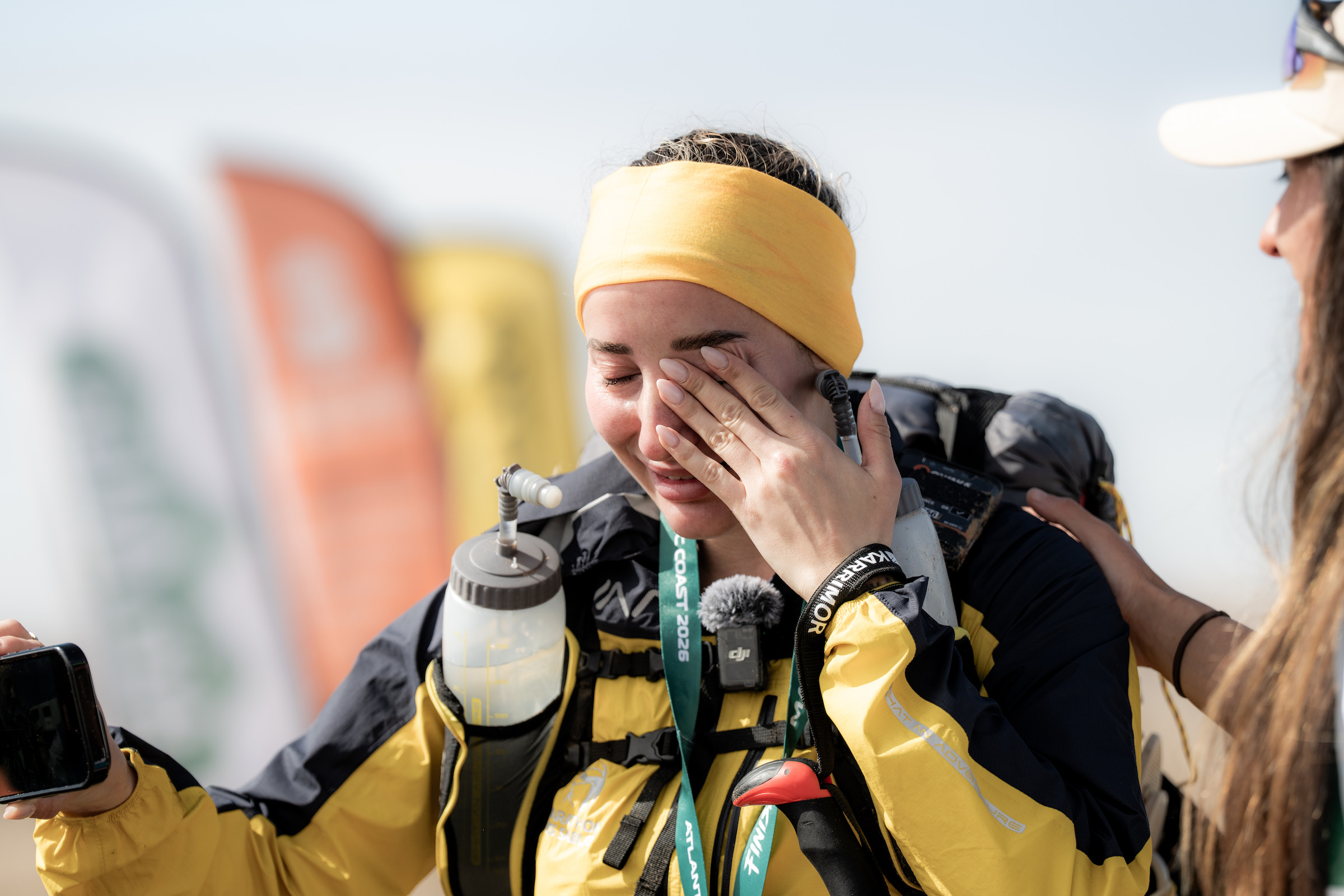
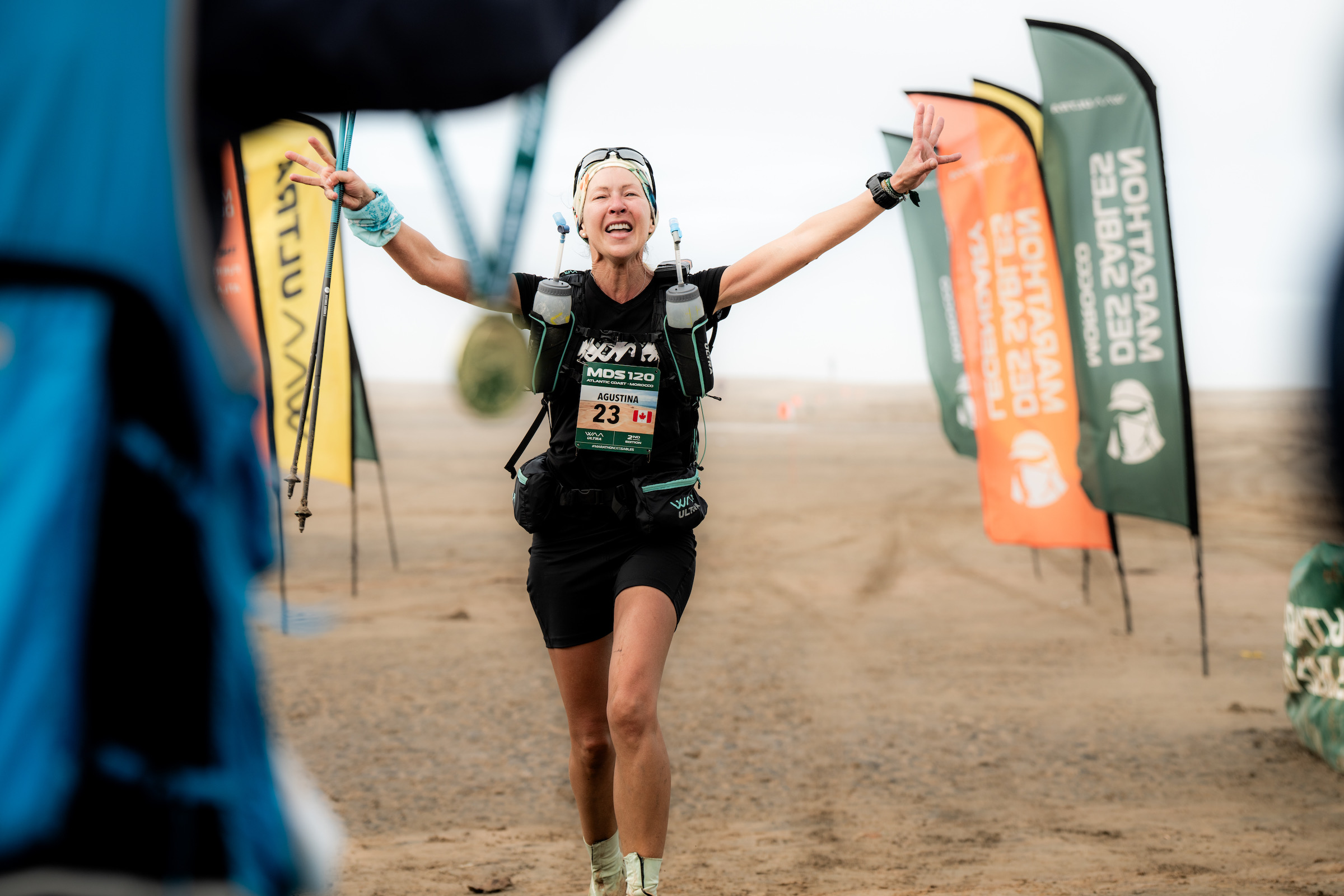
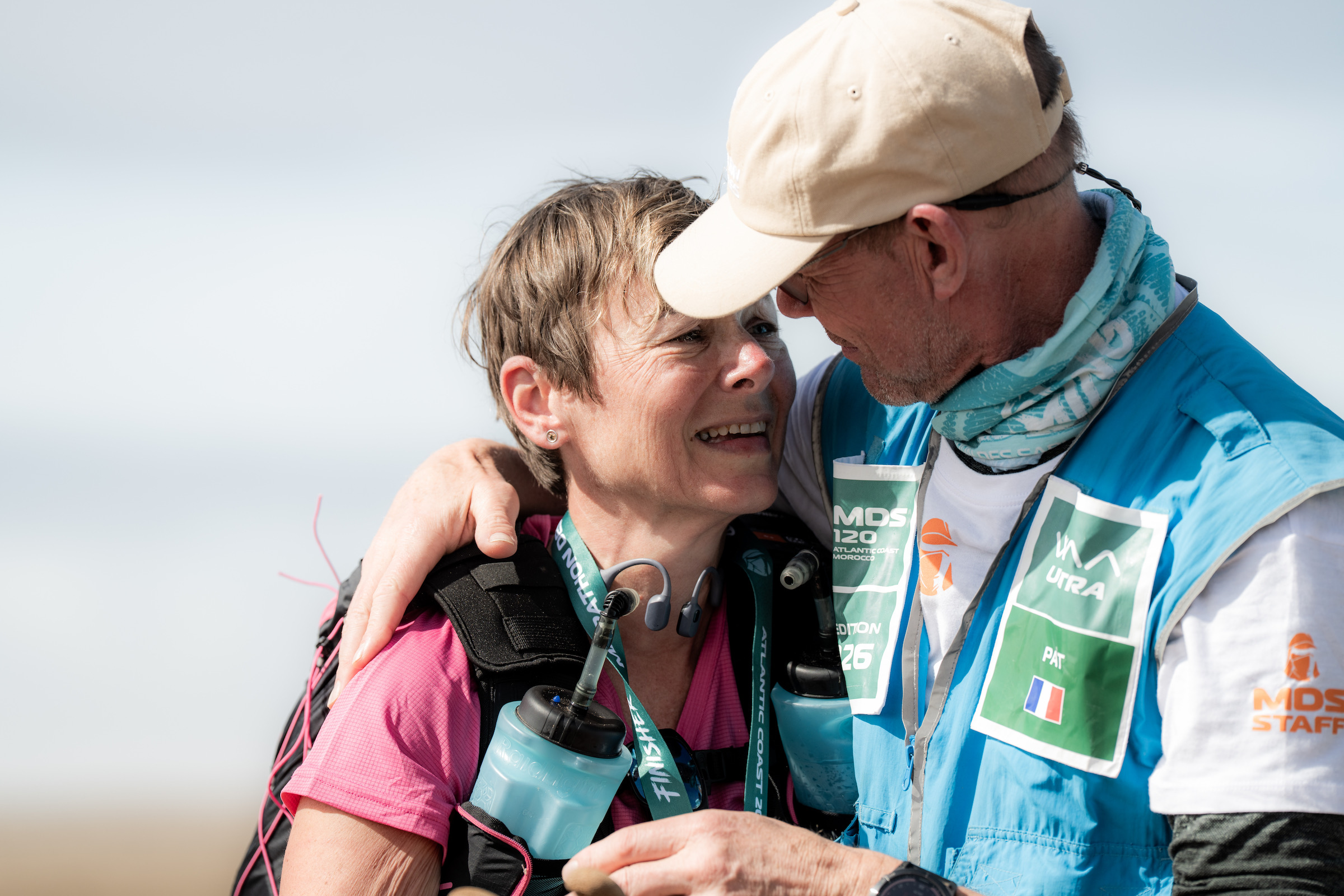
Stage 3 of the MDS 120 Atlantic Coast wasn’t about pace. It was about heart. Twenty-seven kilometres stood between every runner and the finish. The final stage. The one that decides how the story ends.
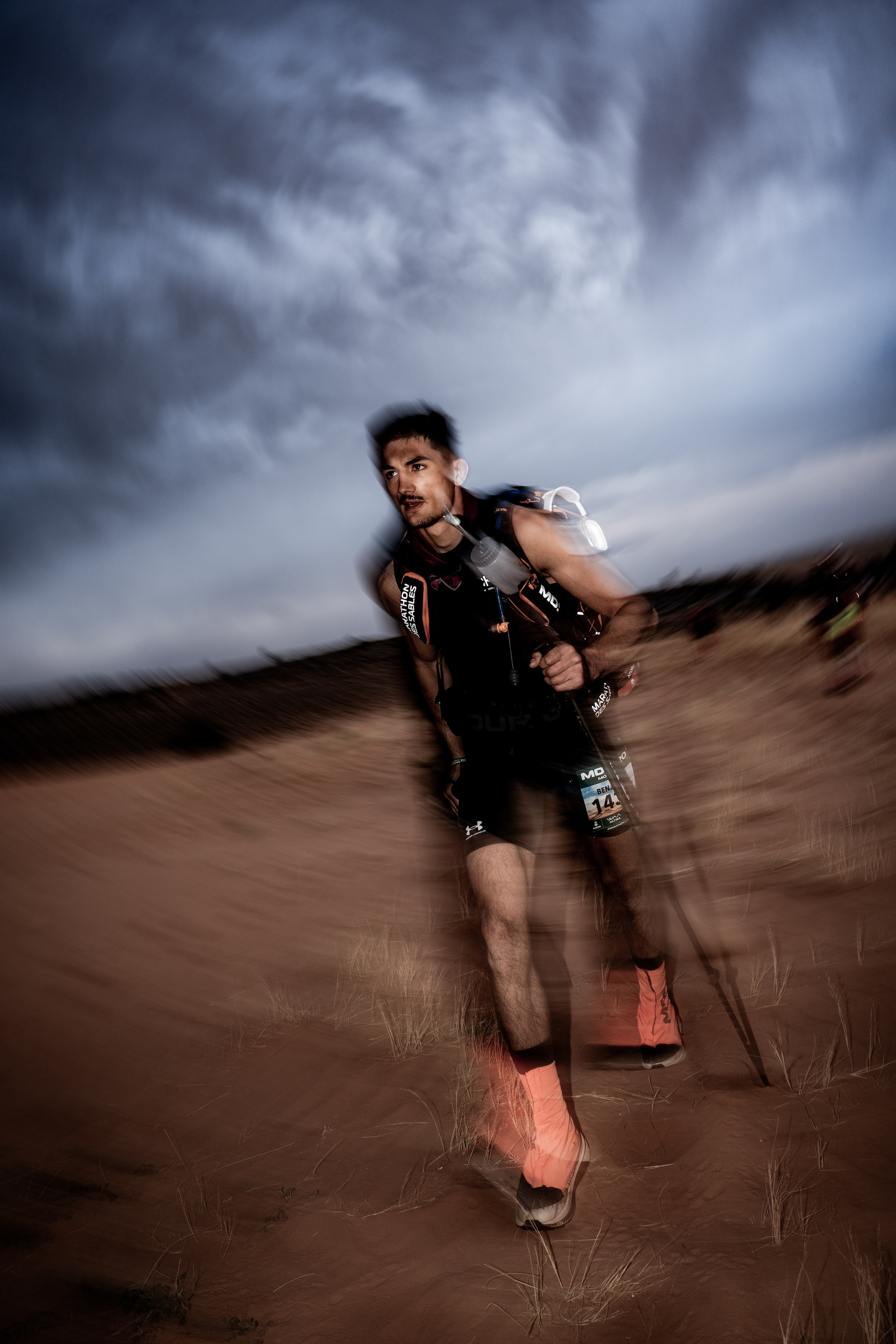
The day opened under a heavy sky. Low cloud hung over the coast, light rain drifting in and out, just enough to cool the skin and sharpen the mood. It felt serious. Proper. A stage that demanded respect.
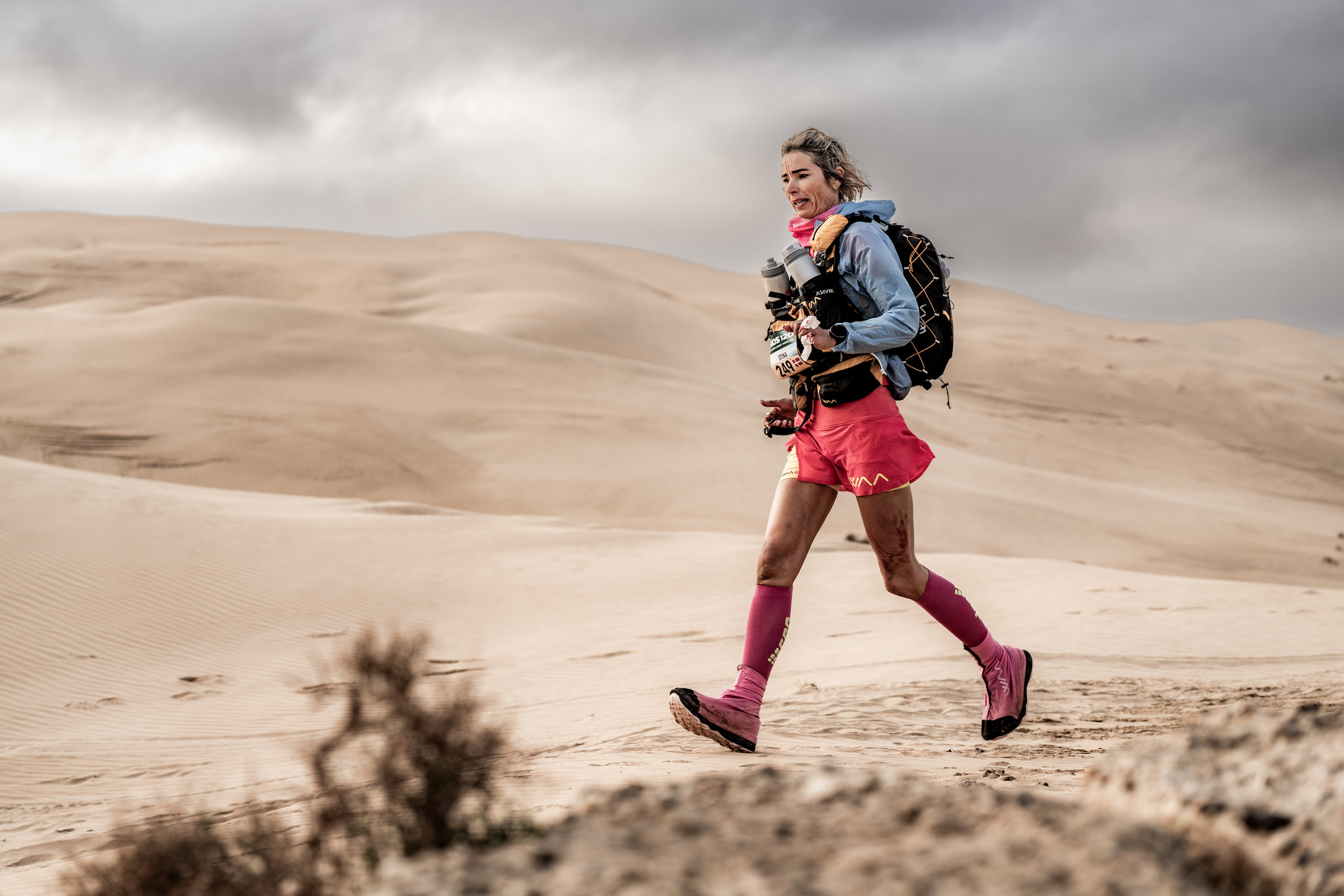
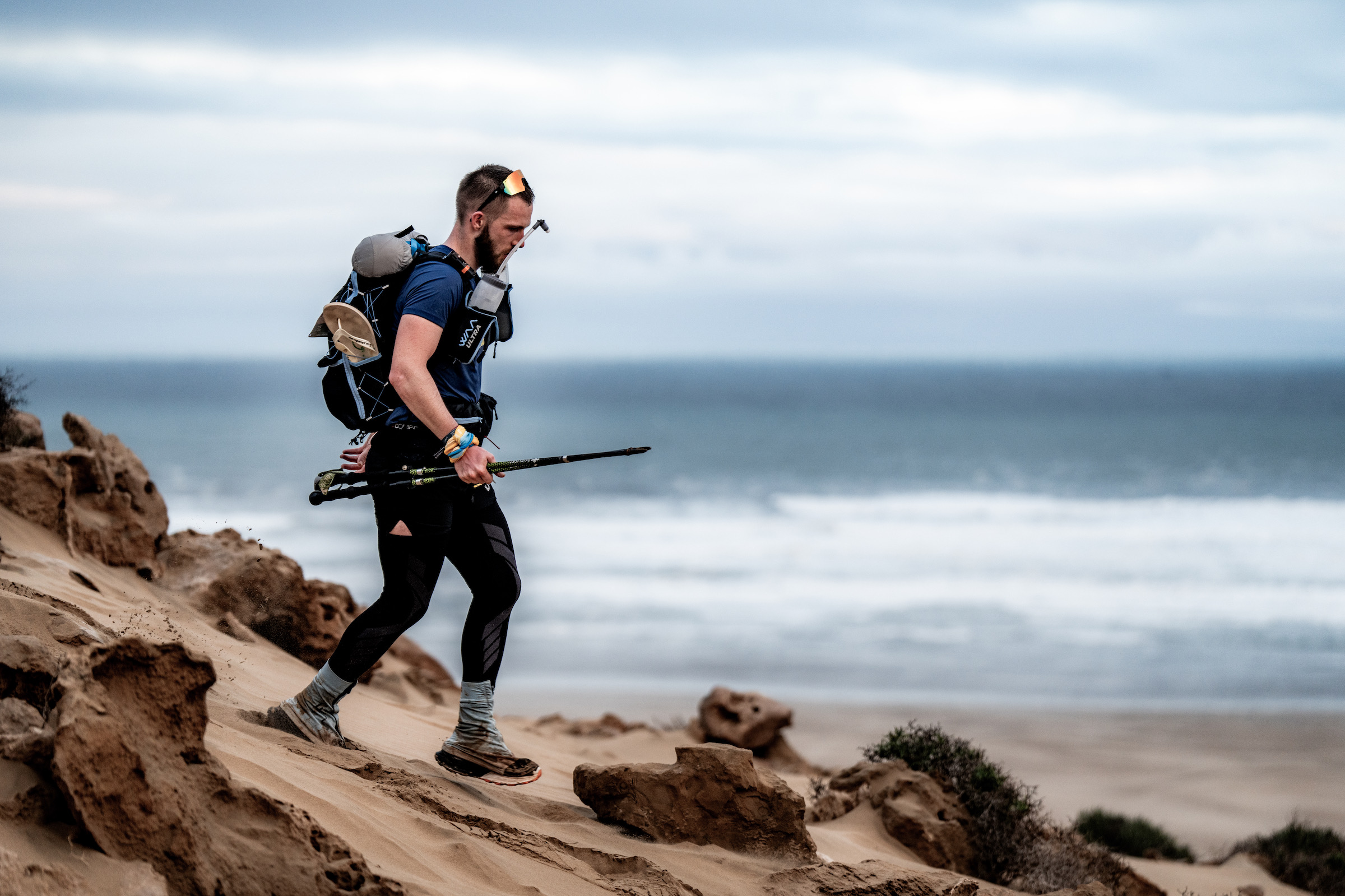
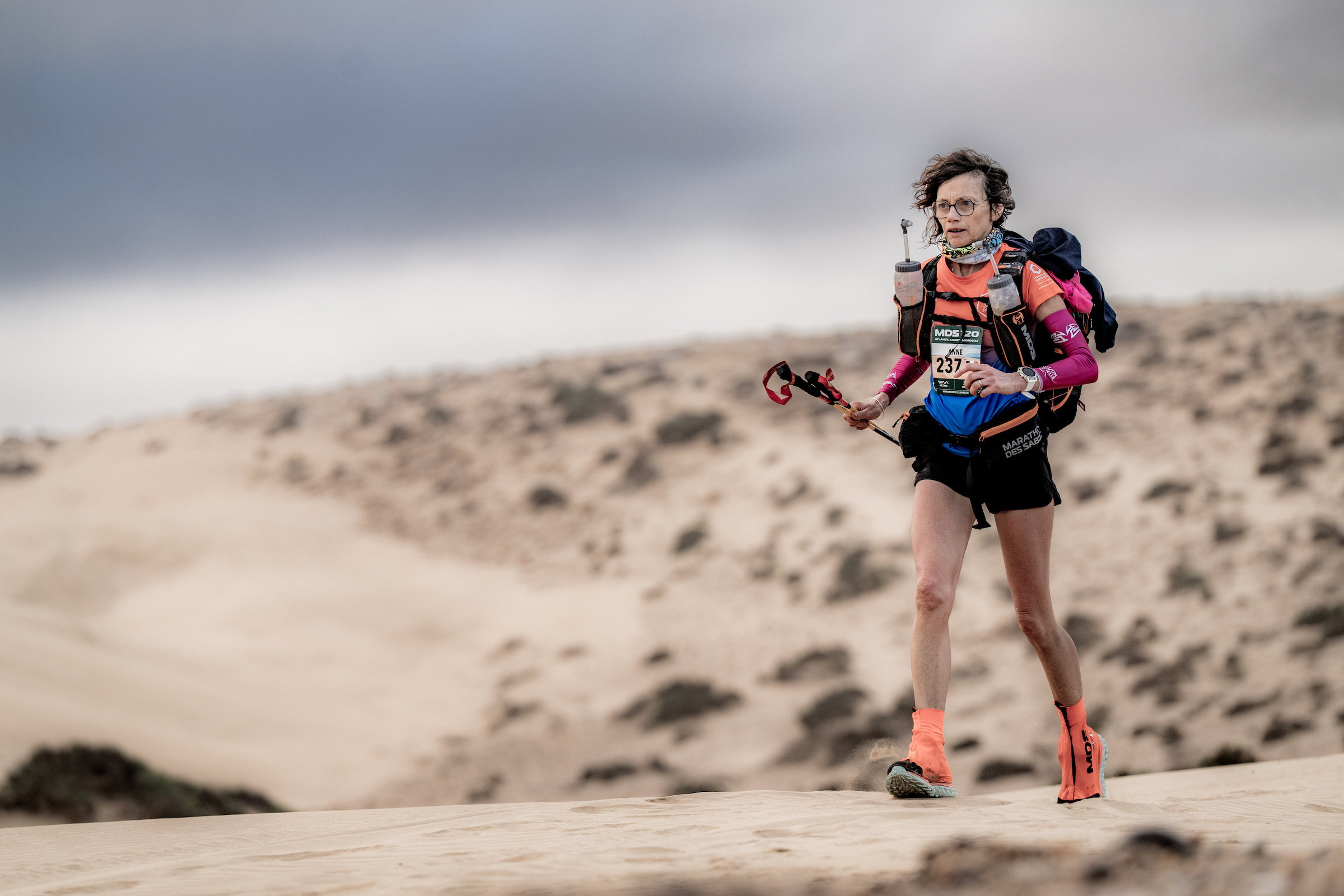
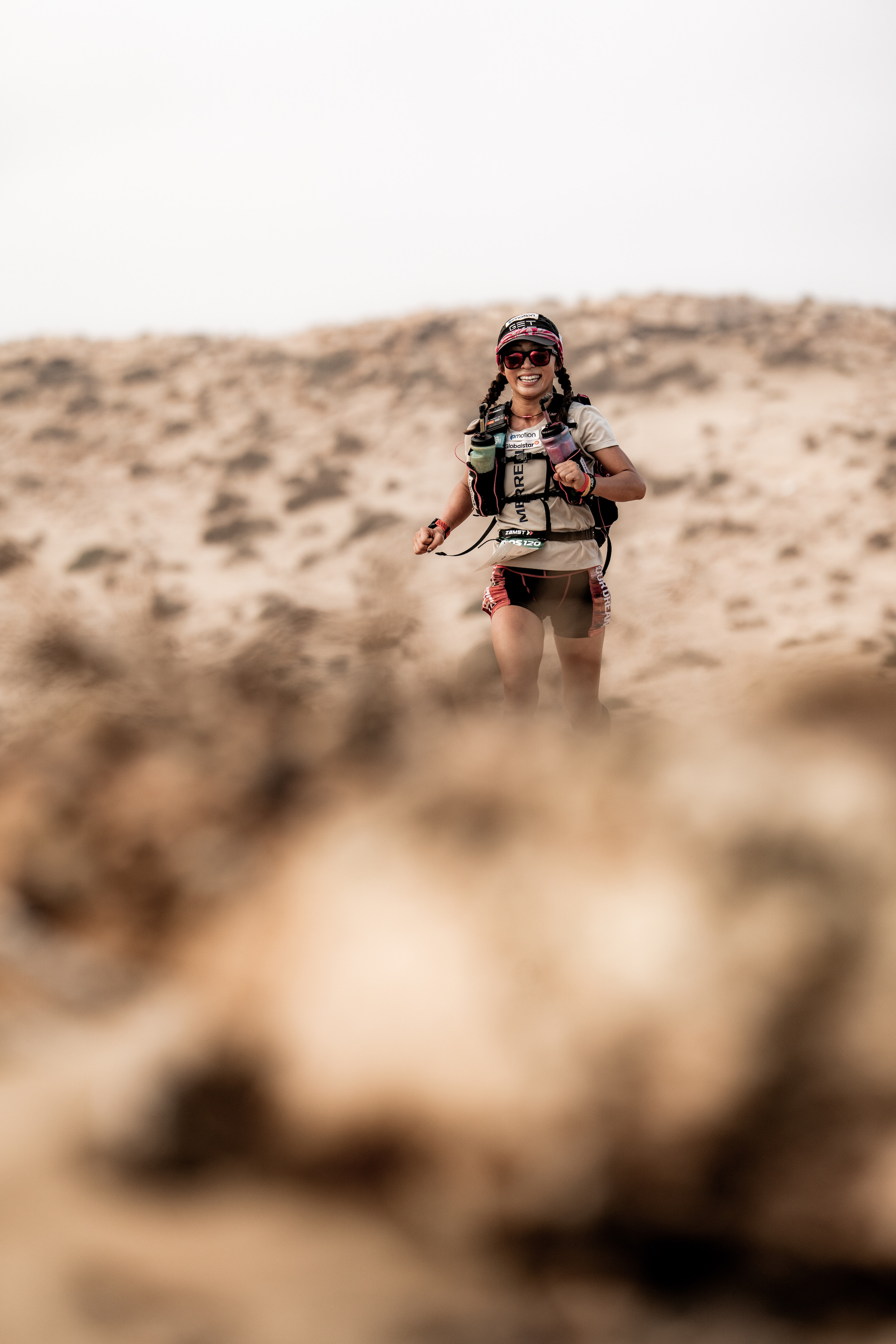
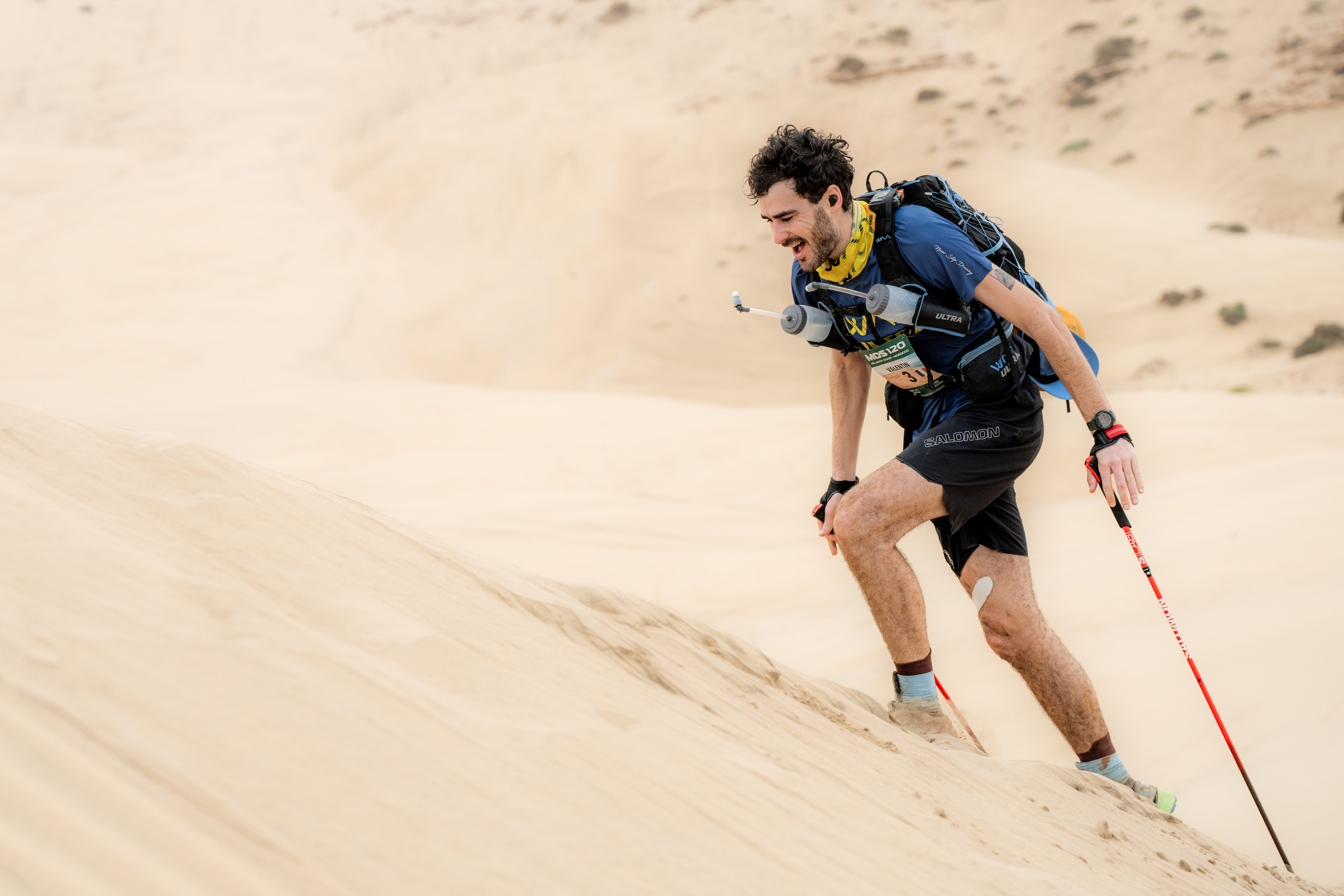
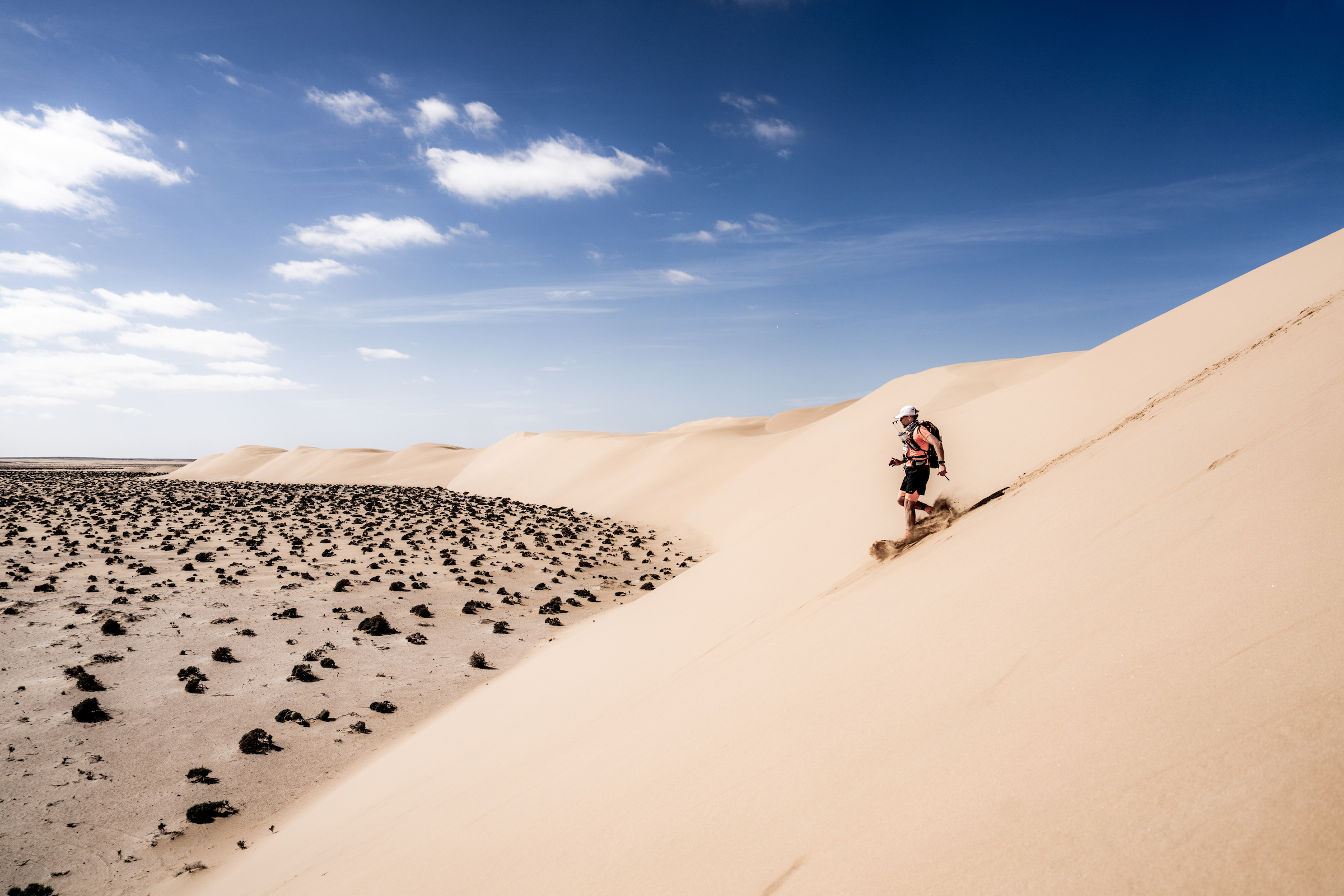
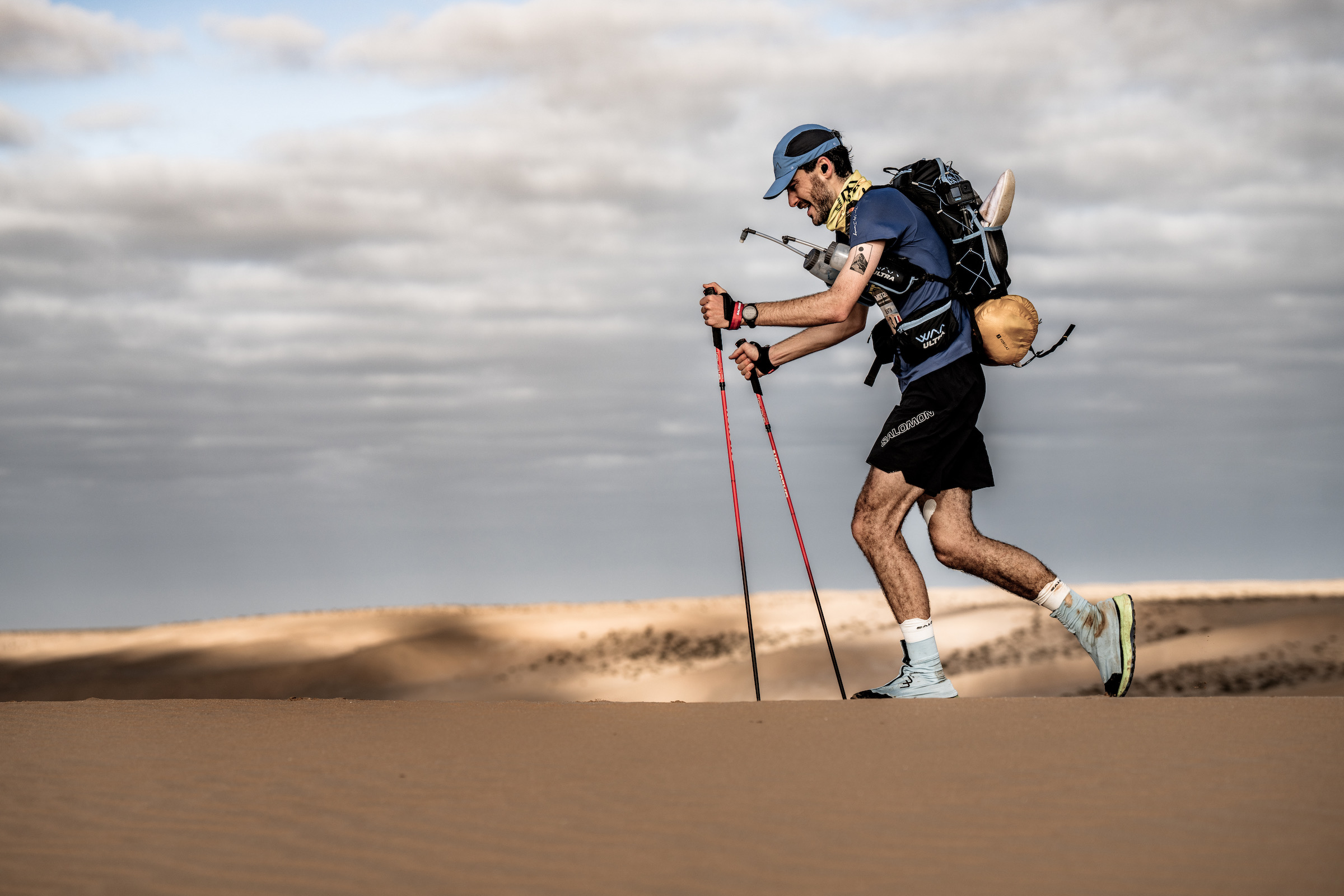
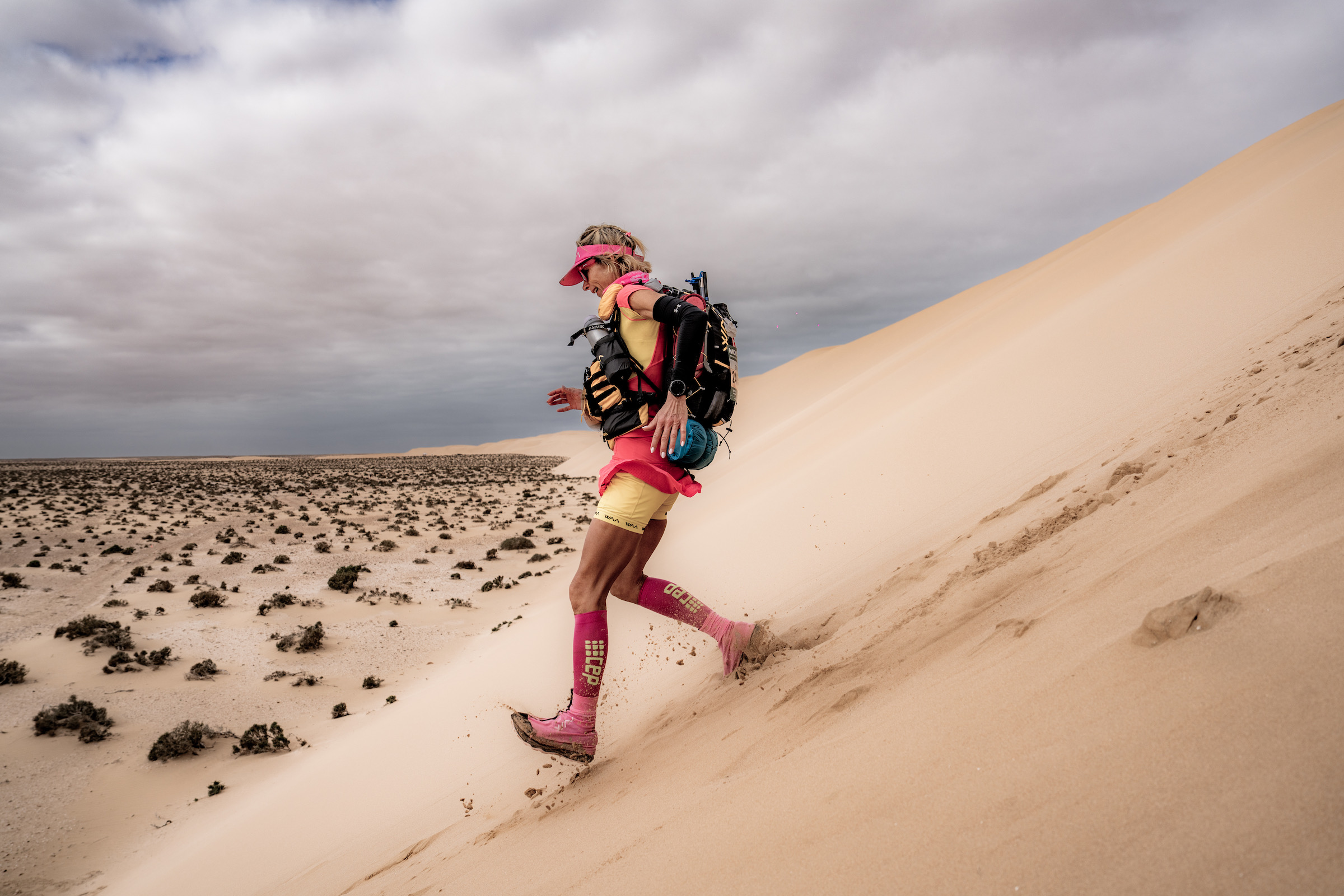
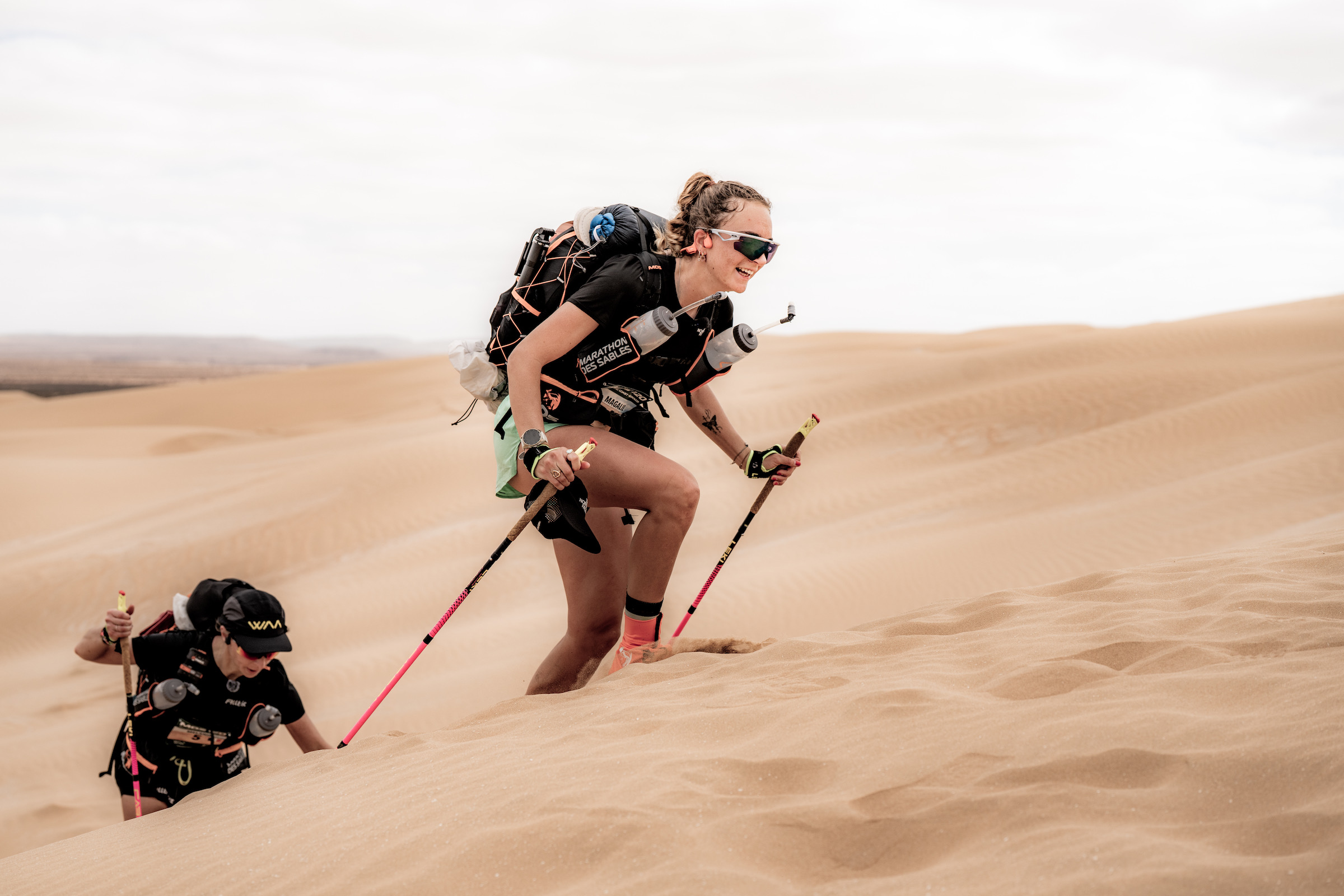
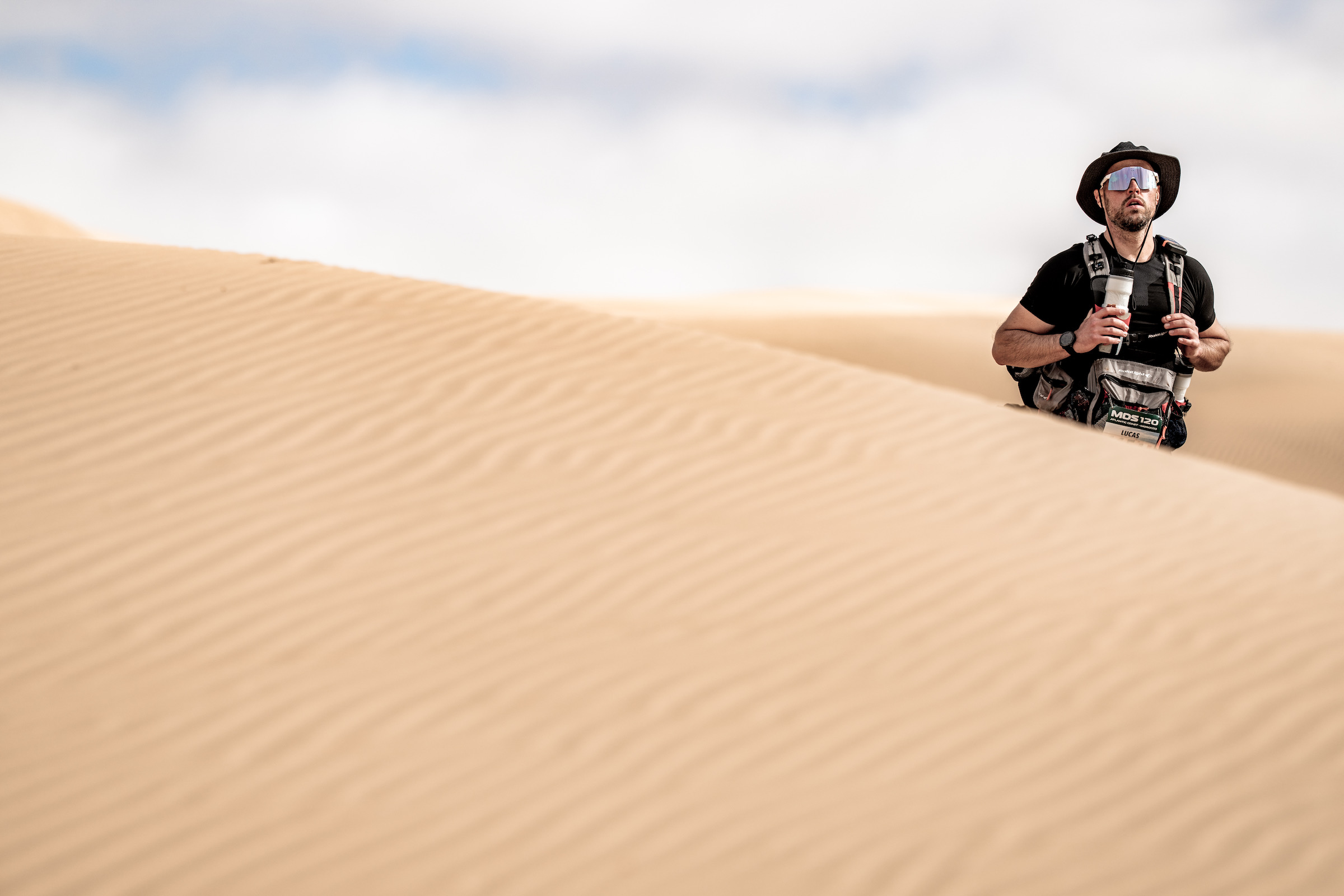
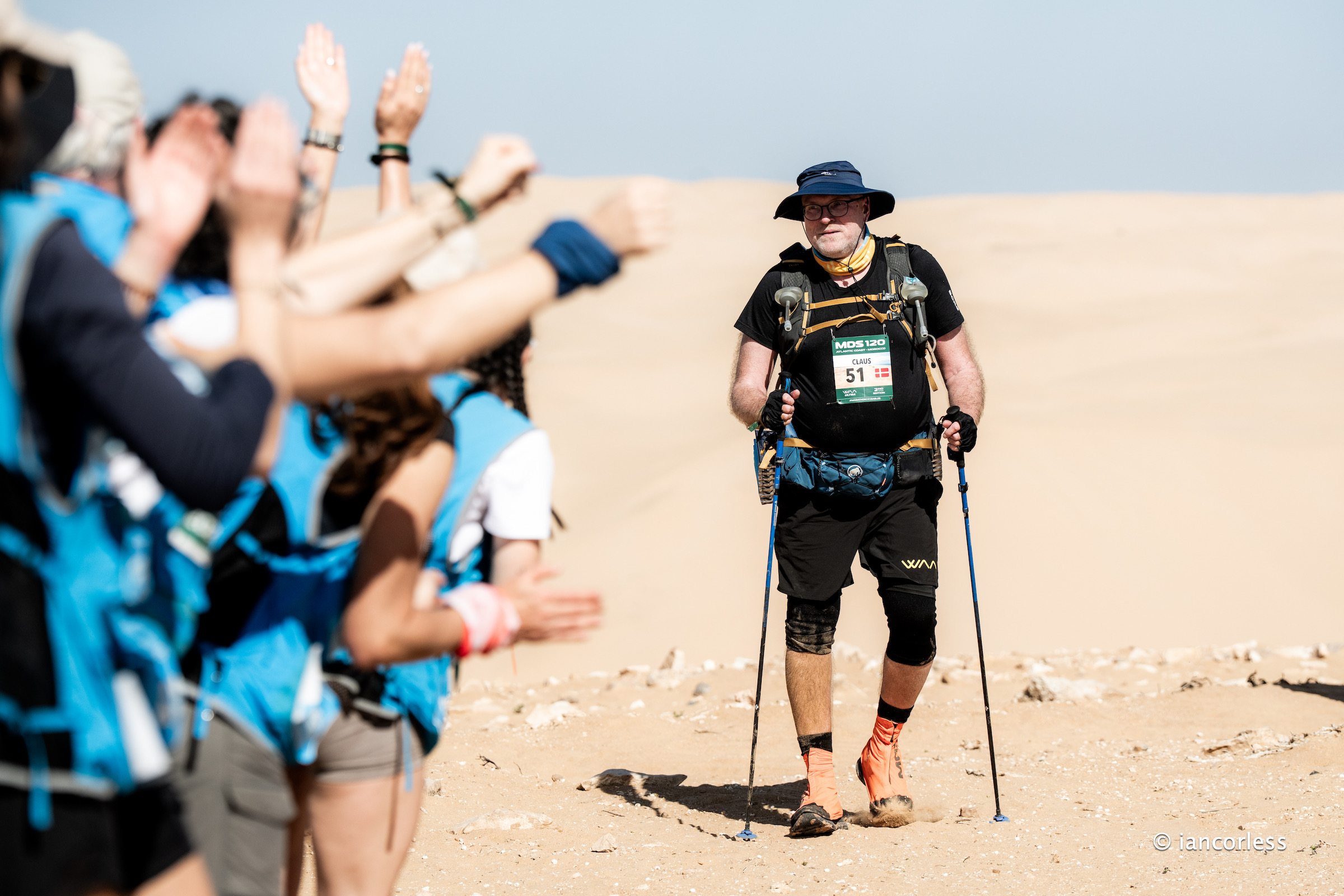
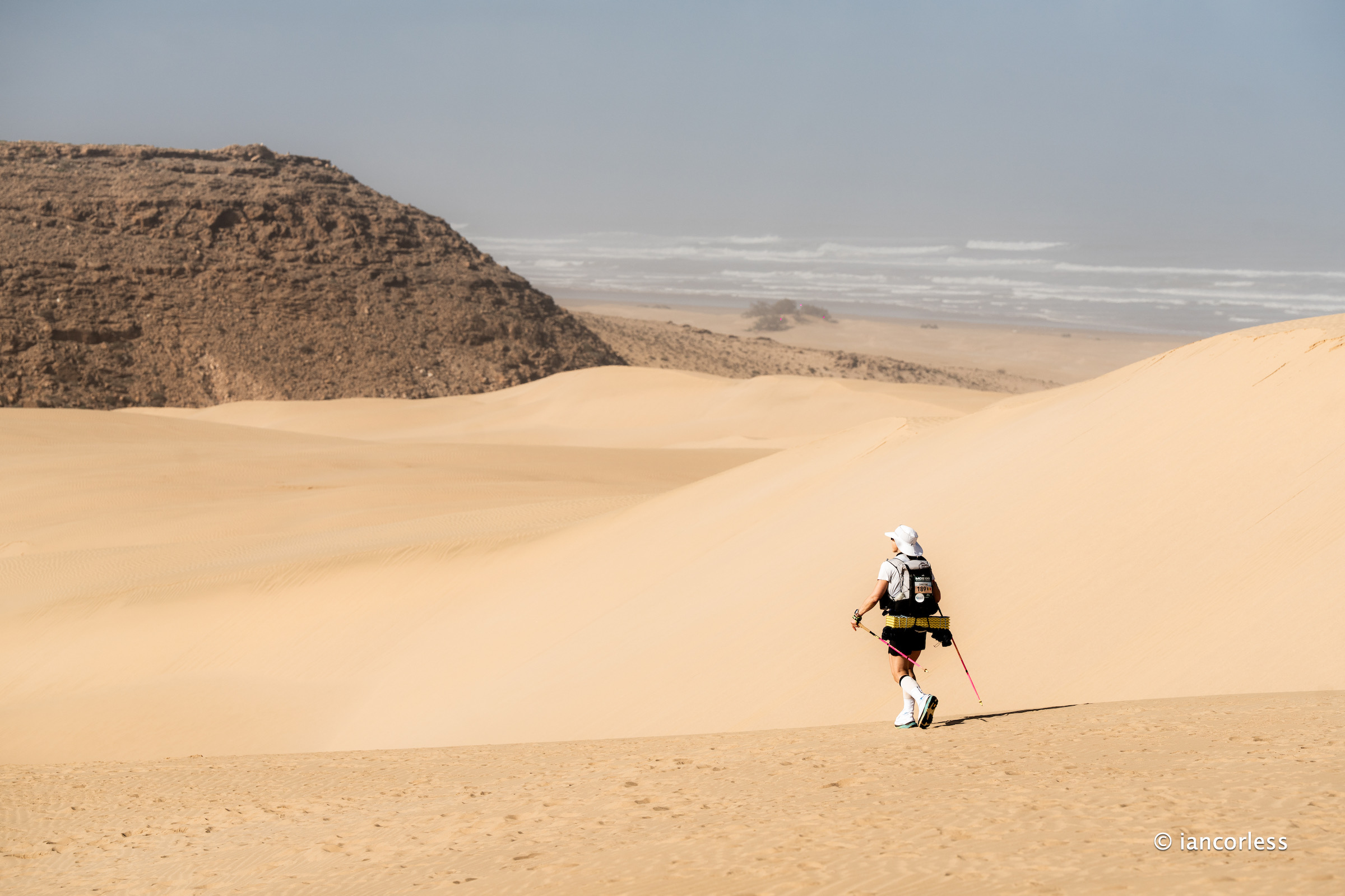
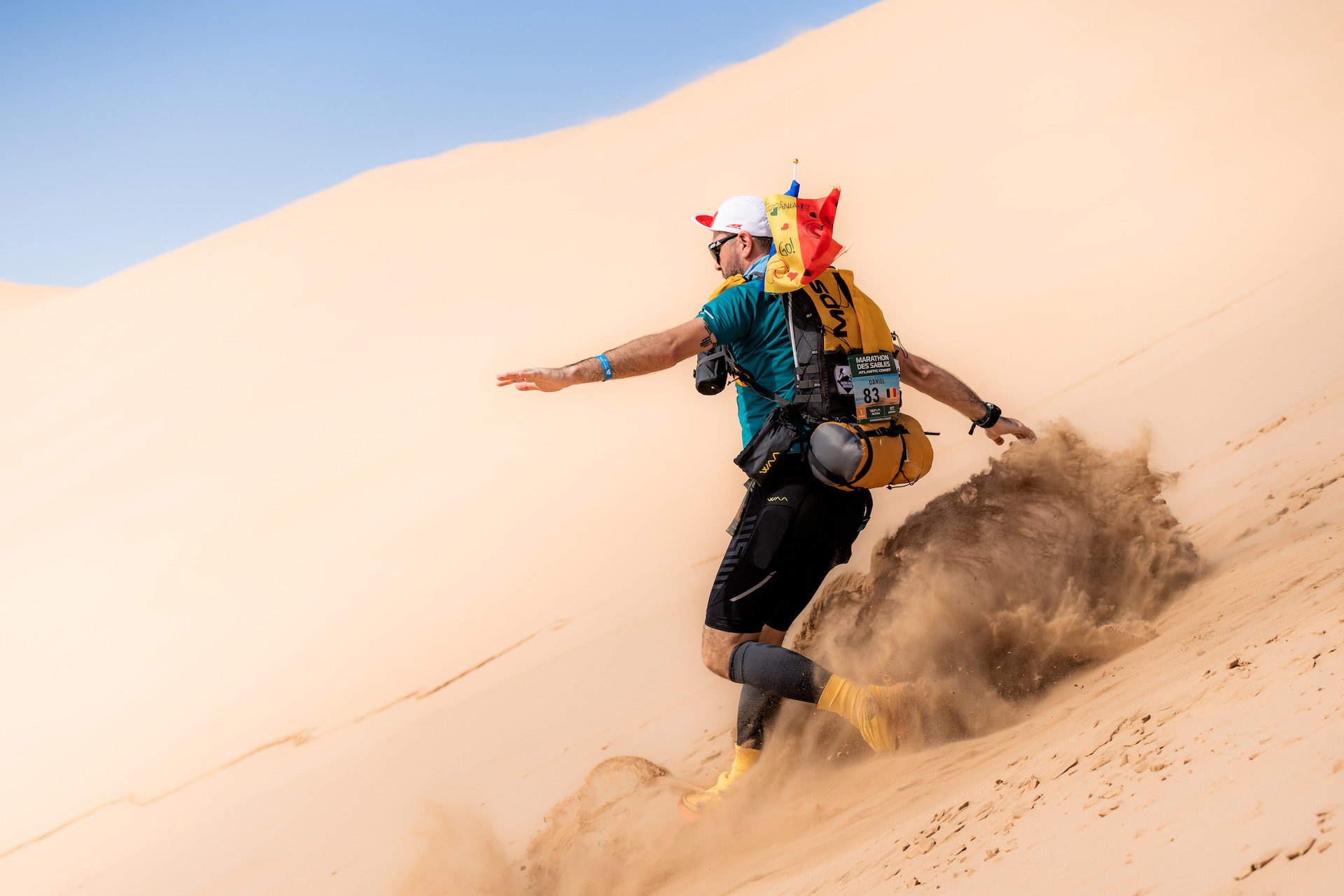
From the first steps, the terrain made its intentions clear. Soft sand soaked up energy. Feet sank, calves burned, rhythm disappeared. Progress came the hard way, one honest stride at a time.
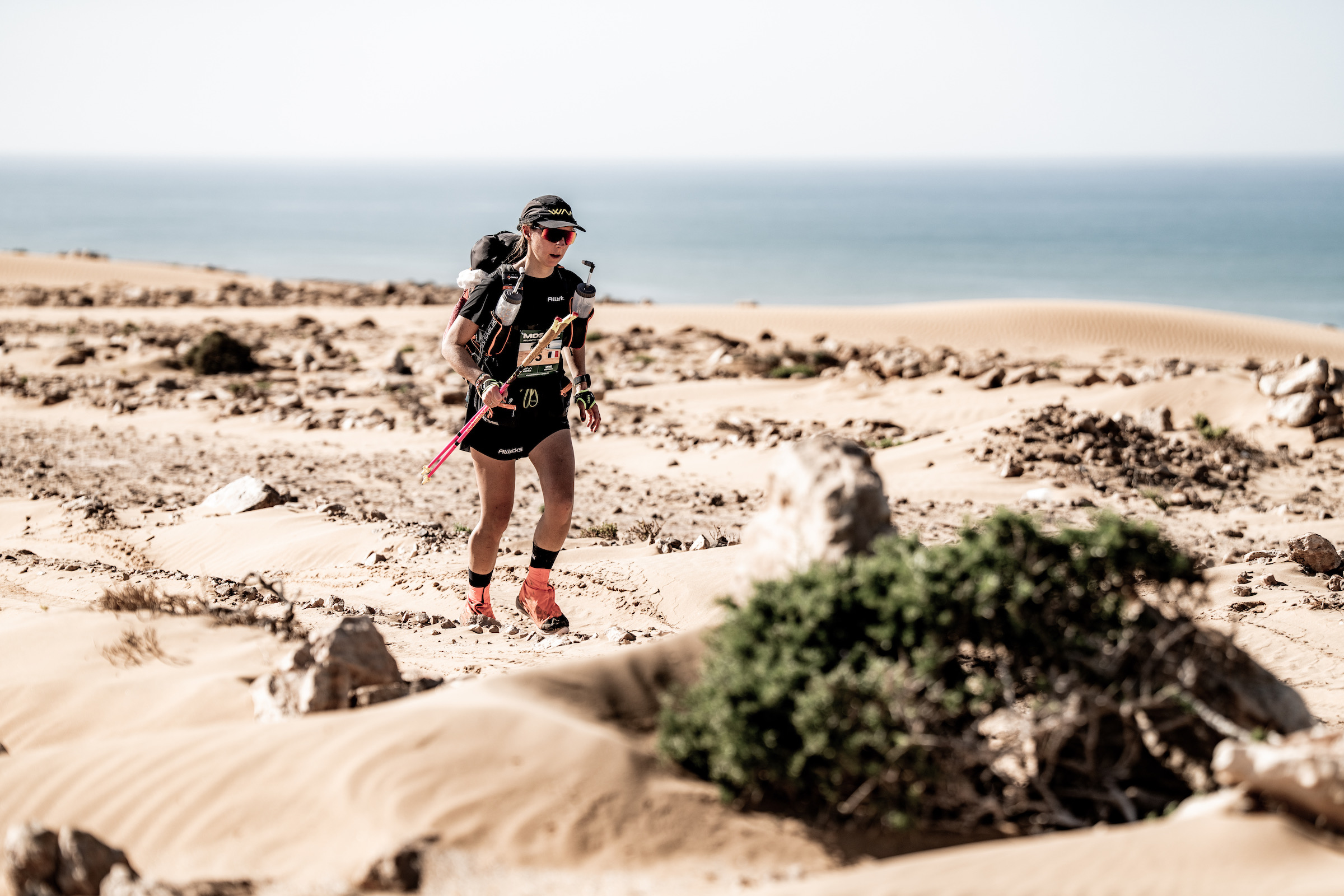
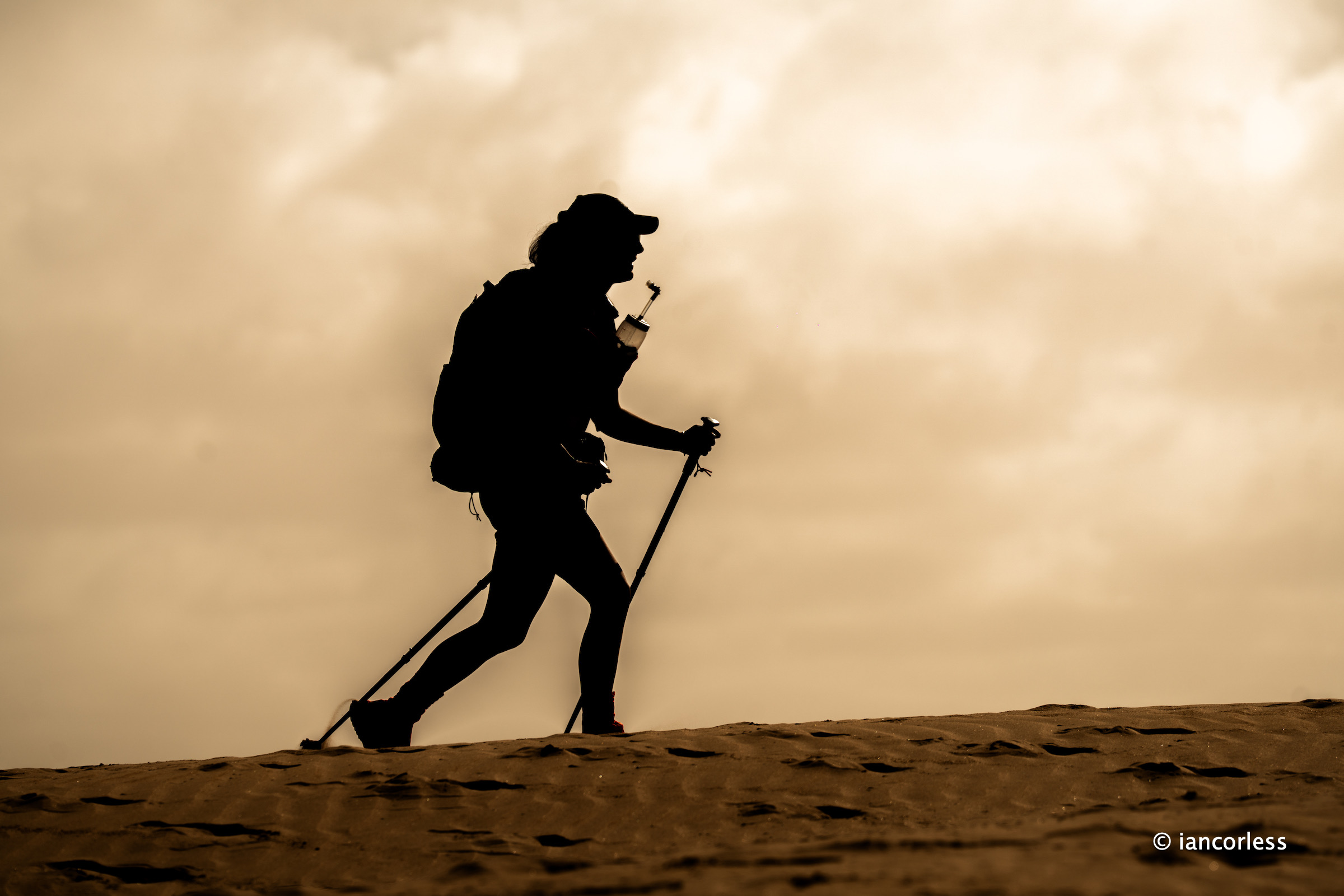
Then there was the Atlantic – Wild. Loud. Unapologetic. The ocean pushed high up the beach, swallowing the firm running line and forcing everyone into deeper, slower sand. The final ten kilometres became a test of patience and grit. Shoes heavy with water. Legs tight. Eyes fixed forward. The sound of the waves constant, relentless, daring you to stop.
Every runner carried their own journey into those final kilometres. Some had 70 kilometres in their legs. Others 100. Many the full 120. Different distances, same effort. Same doubts. Same determination.
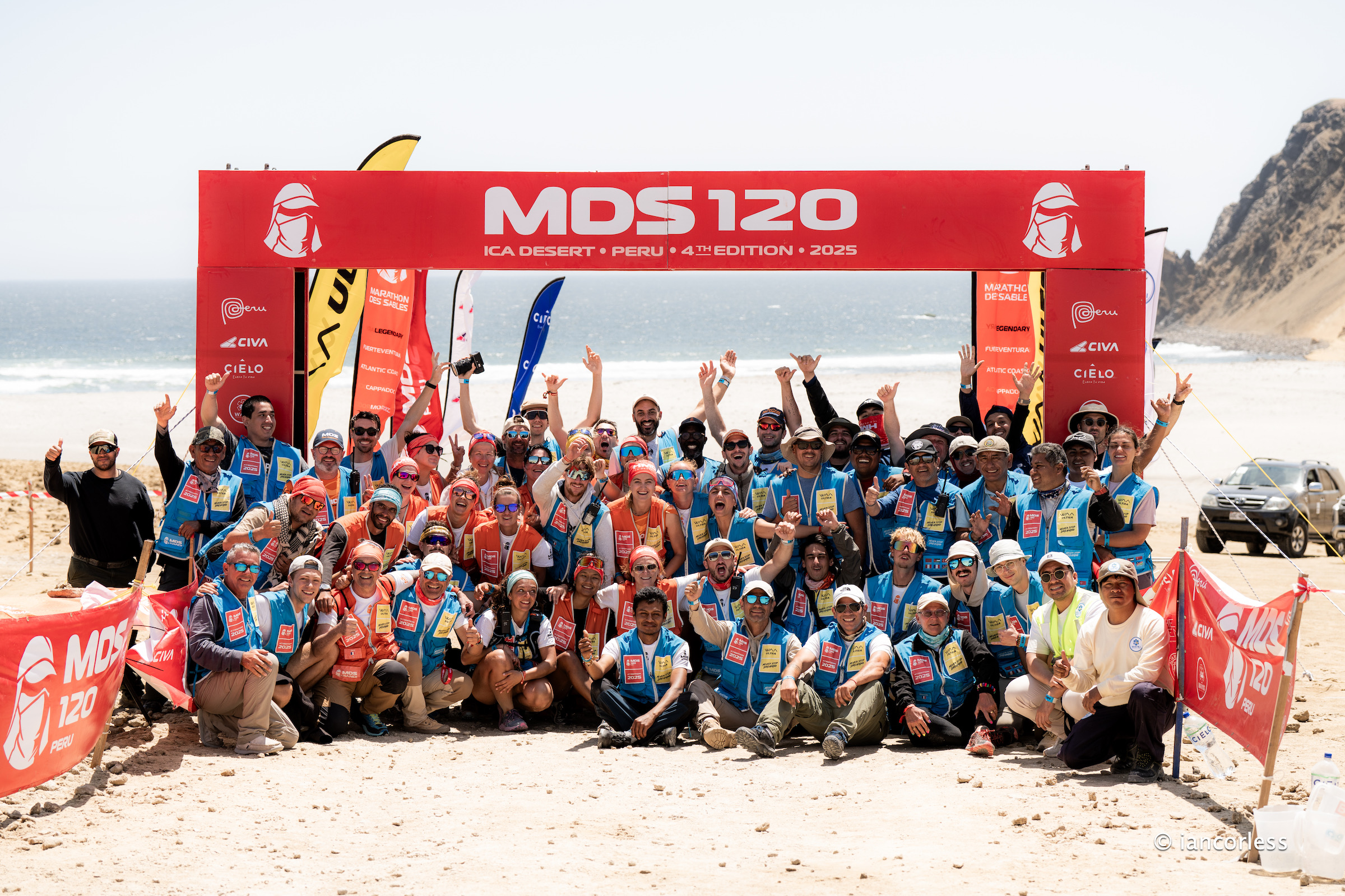
And then, finally, the finish.
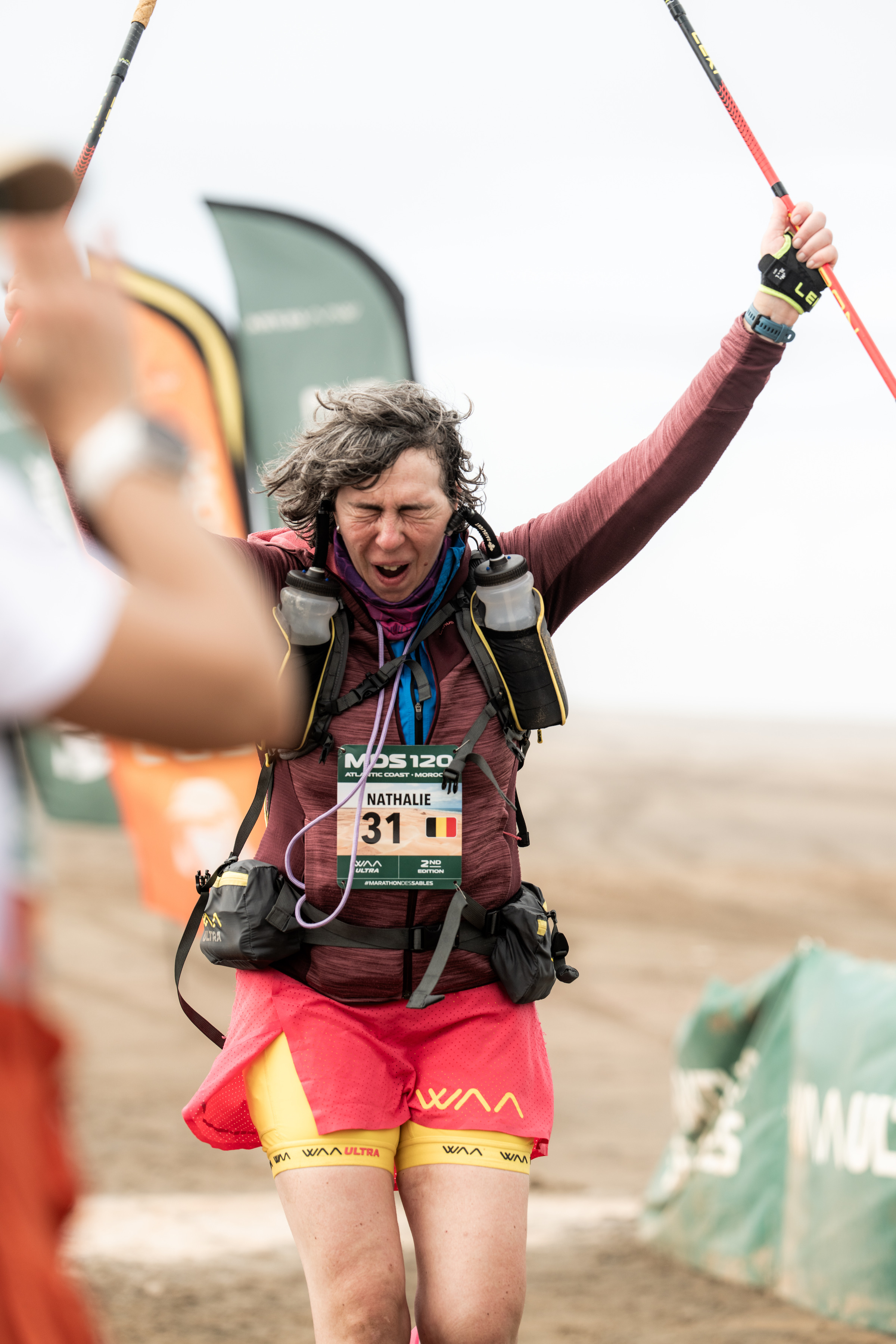
Not a sprint. Not fireworks. Just raw, unfiltered emotion.
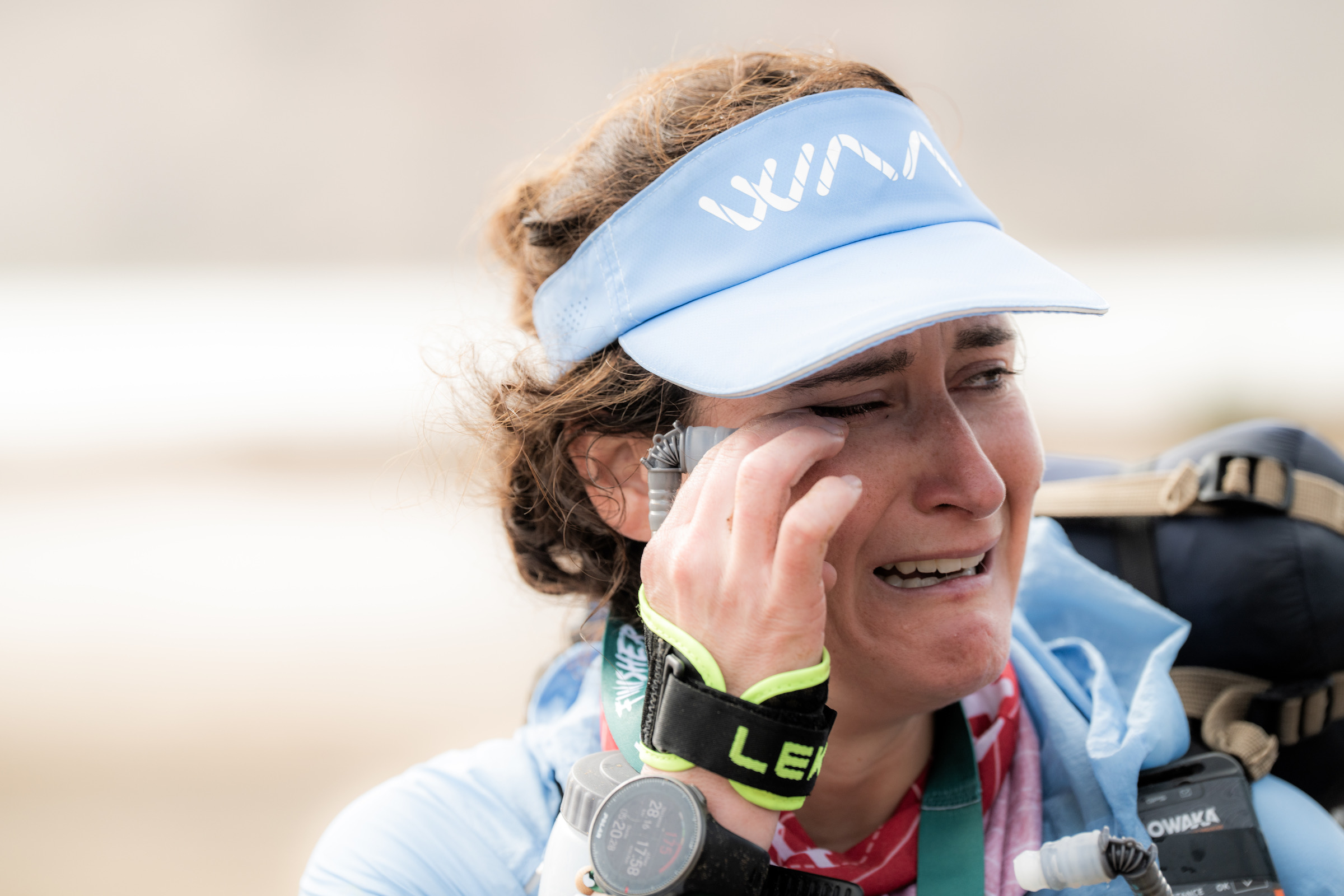
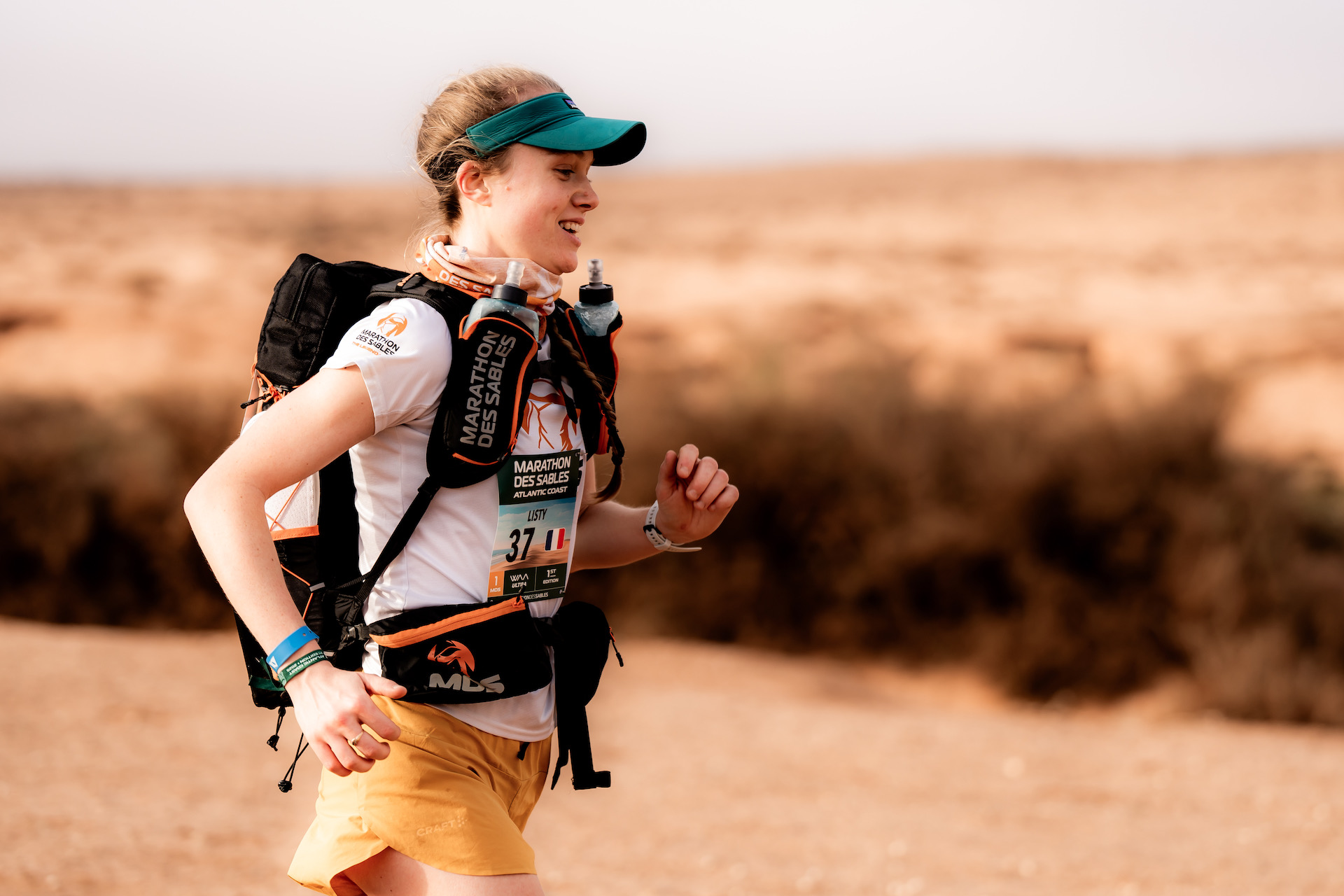
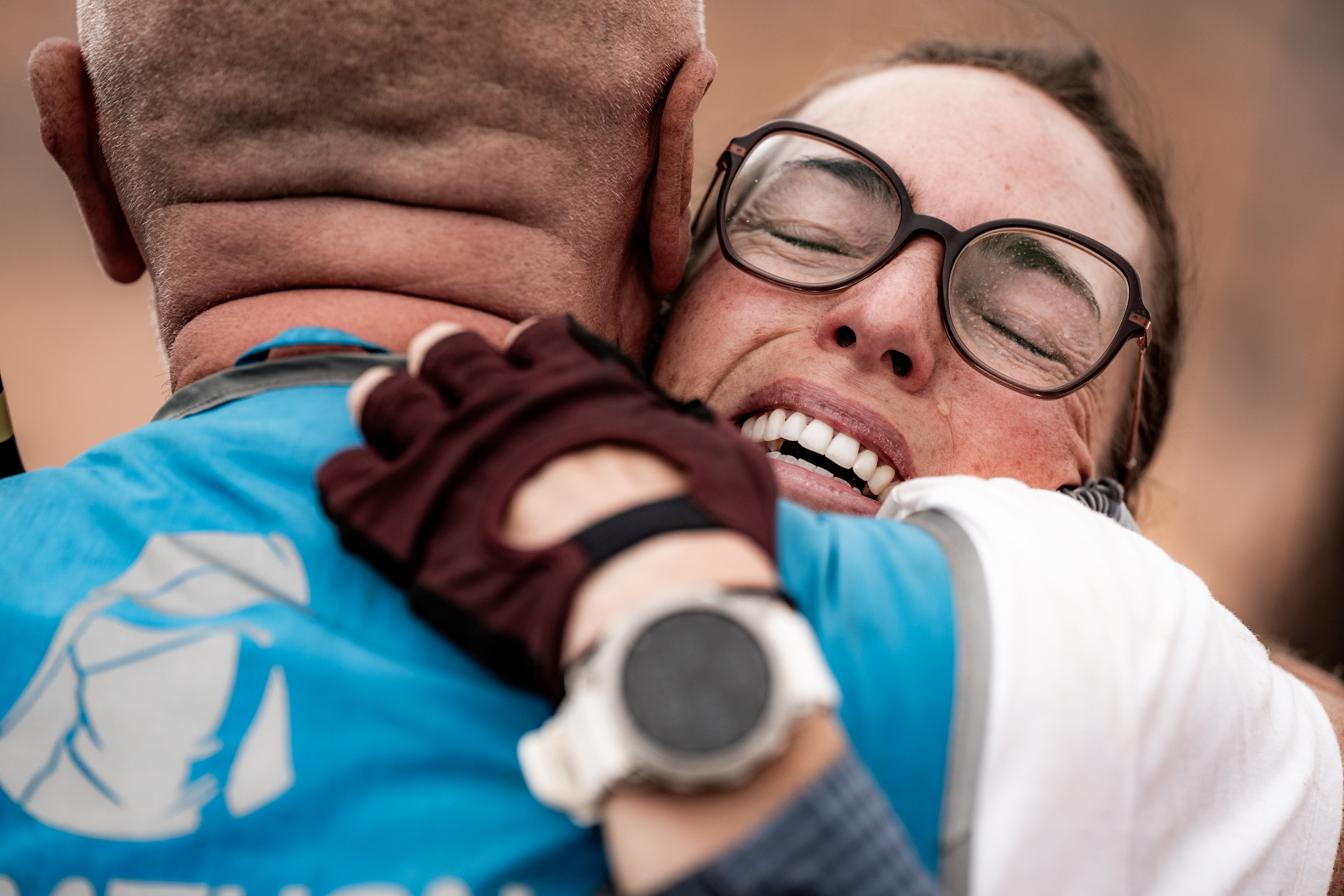
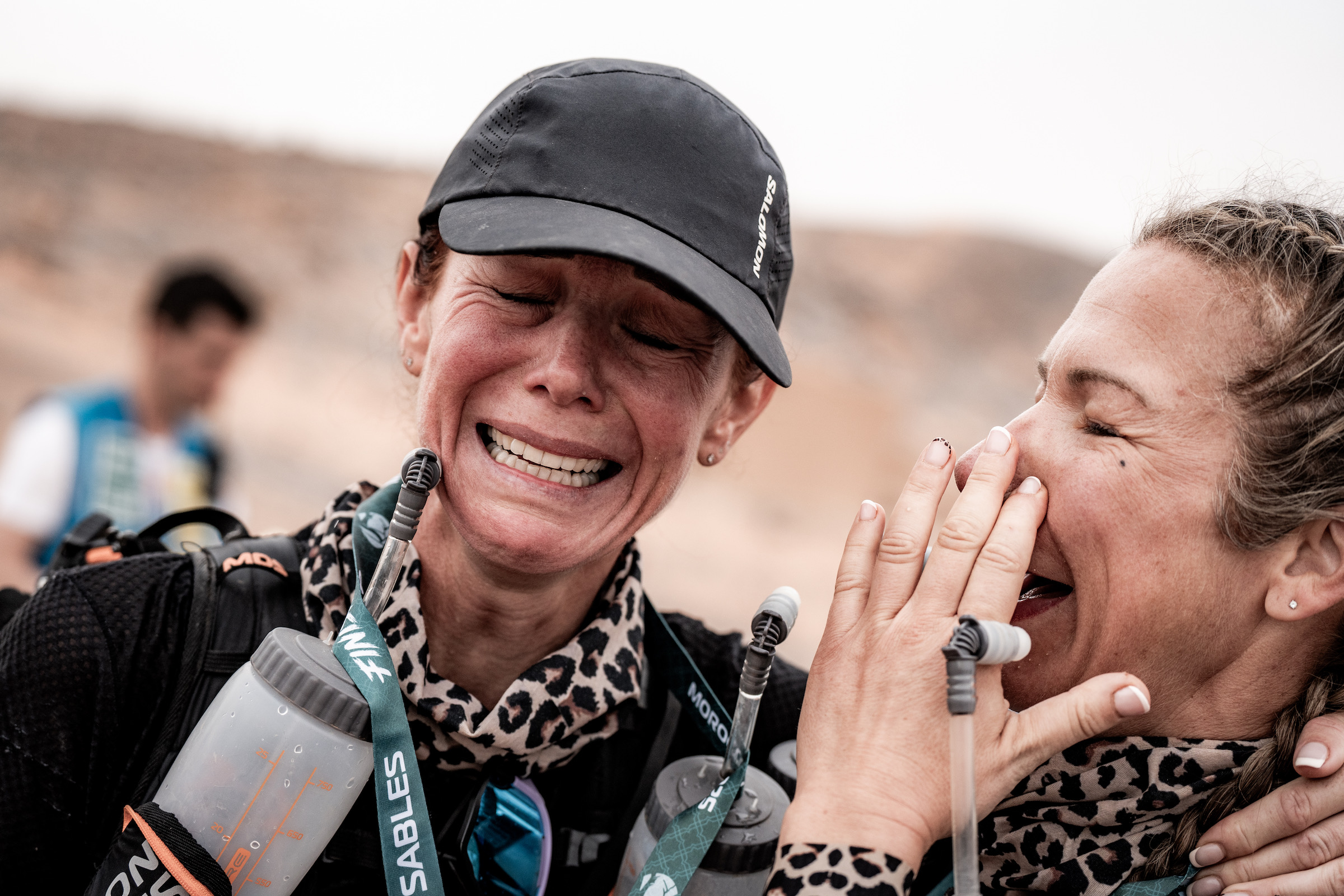
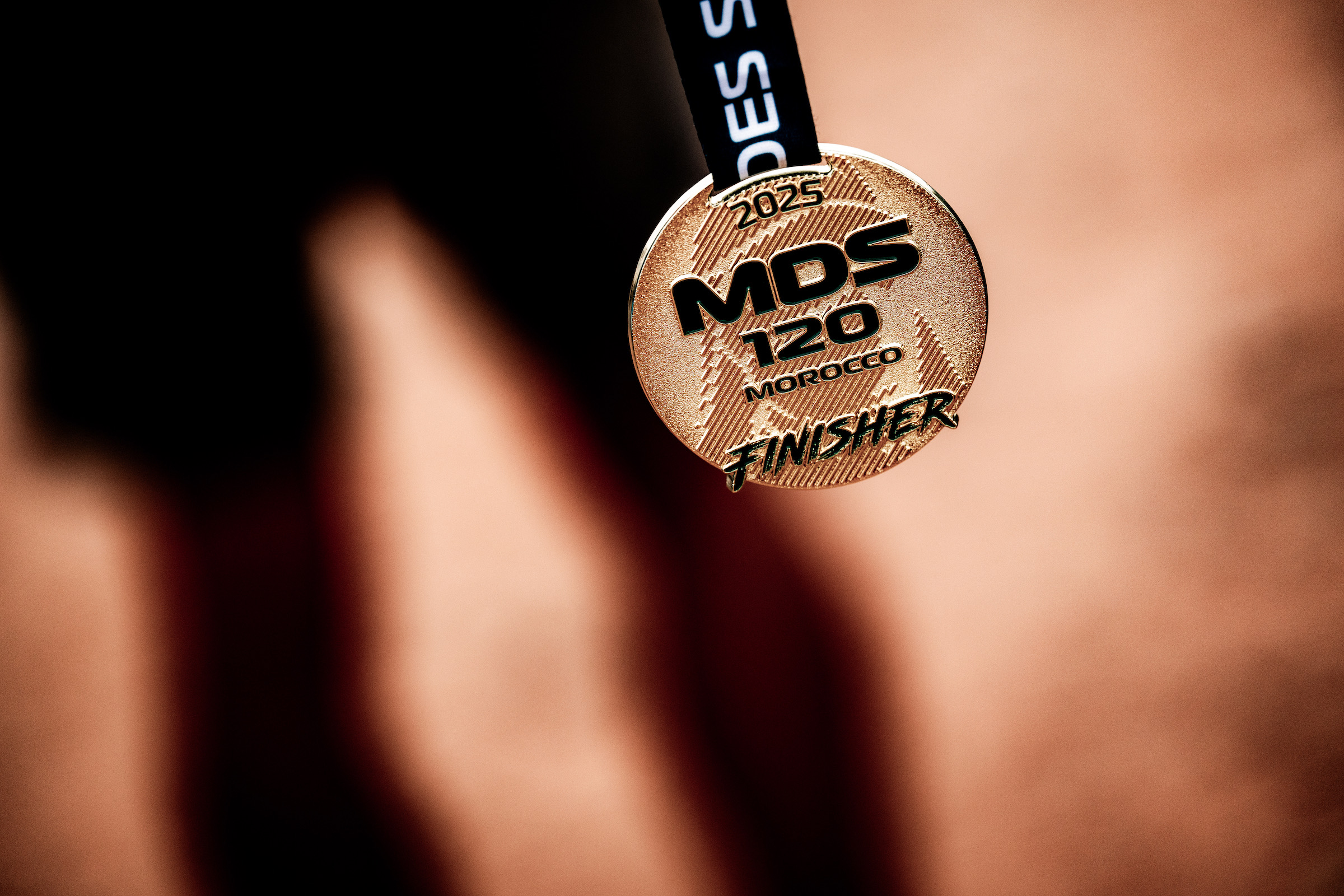
Tears mixed with rain. Smiles broke through exhaustion. Hugs lasted longer than words. That medal, placed gently around tired necks, meant everything. It wasn’t just metal. It was proof. Of discipline. Of resilience. Of promises kept when quitting would have been easier.
This is what the Atlantic Coast gives you.
It gives you challenge. It gives you atmosphere. It gives you moments where the world narrows down to breath, movement, and will. And in return, it gives you something rare. A finish that feels truly earned.
If you’re looking for a race that stays with you long after the sand is washed from your shoes, this is it. The coast is waiting.
Stage 2 of the MDS 120 Atlantic Coast 2026 arrived with options and consequences. Twenty kilometres, forty, or the full sixty. Three distances, one shared truth: today would ask more than legs. It would ask for patience, judgement, and honesty. The course did not care which option was chosen. It simply waited, stretching out along the Atlantic edge, ready to test everyone who stepped onto it.
The morning hinted at uncertainty. Low cloud rolled in from the ocean, cool air brushing faces that had already been scoured by salt and sand. There was a little rain, just enough to darken the ground and sharpen the smell of wet earth. Then the sun broke through, sudden and bright, as if to remind the field that comfort would be temporary and effort unavoidable. It was a day of changeable weather in every sense, and the tone was set early. Adjust. Adapt. Keep moving.
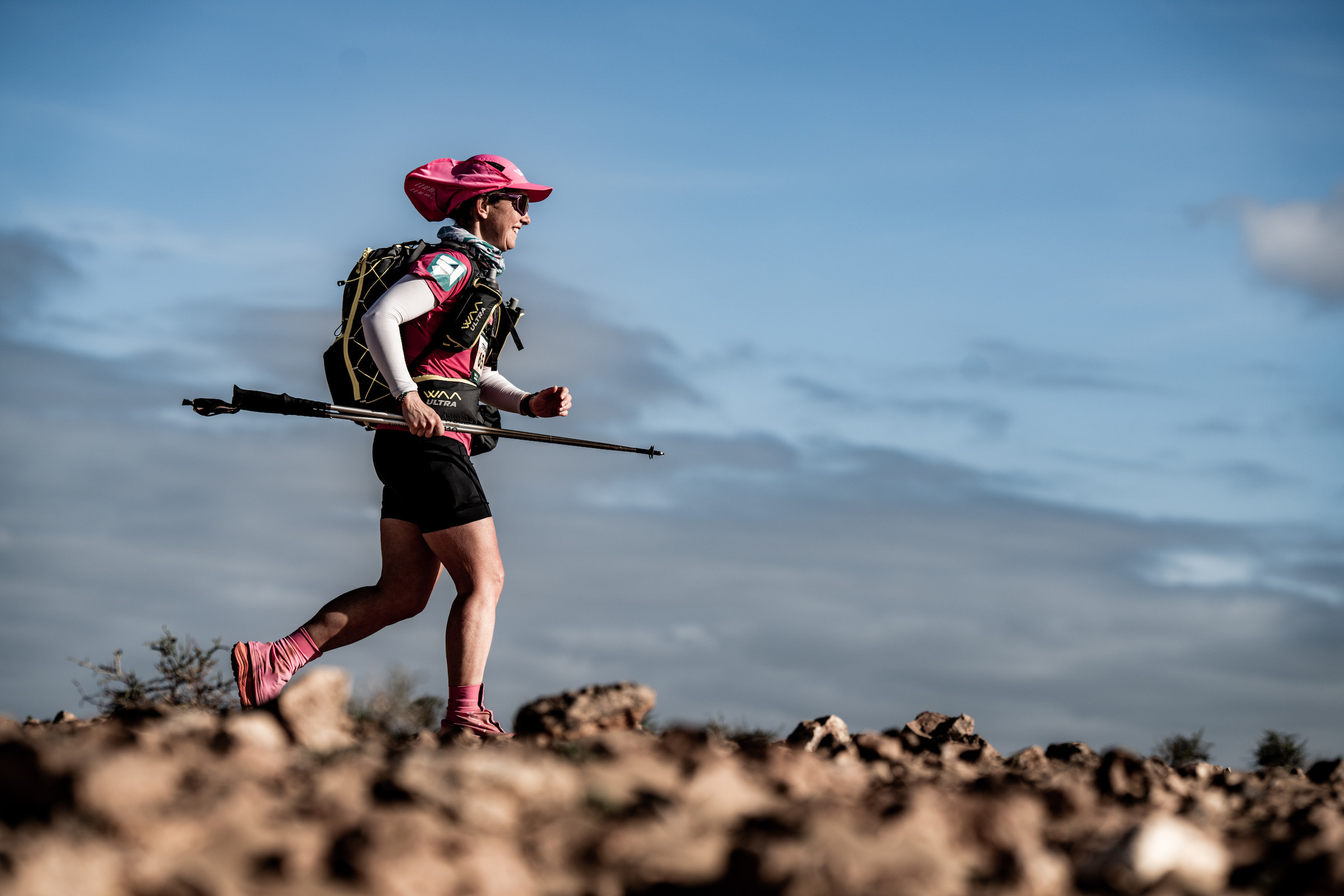
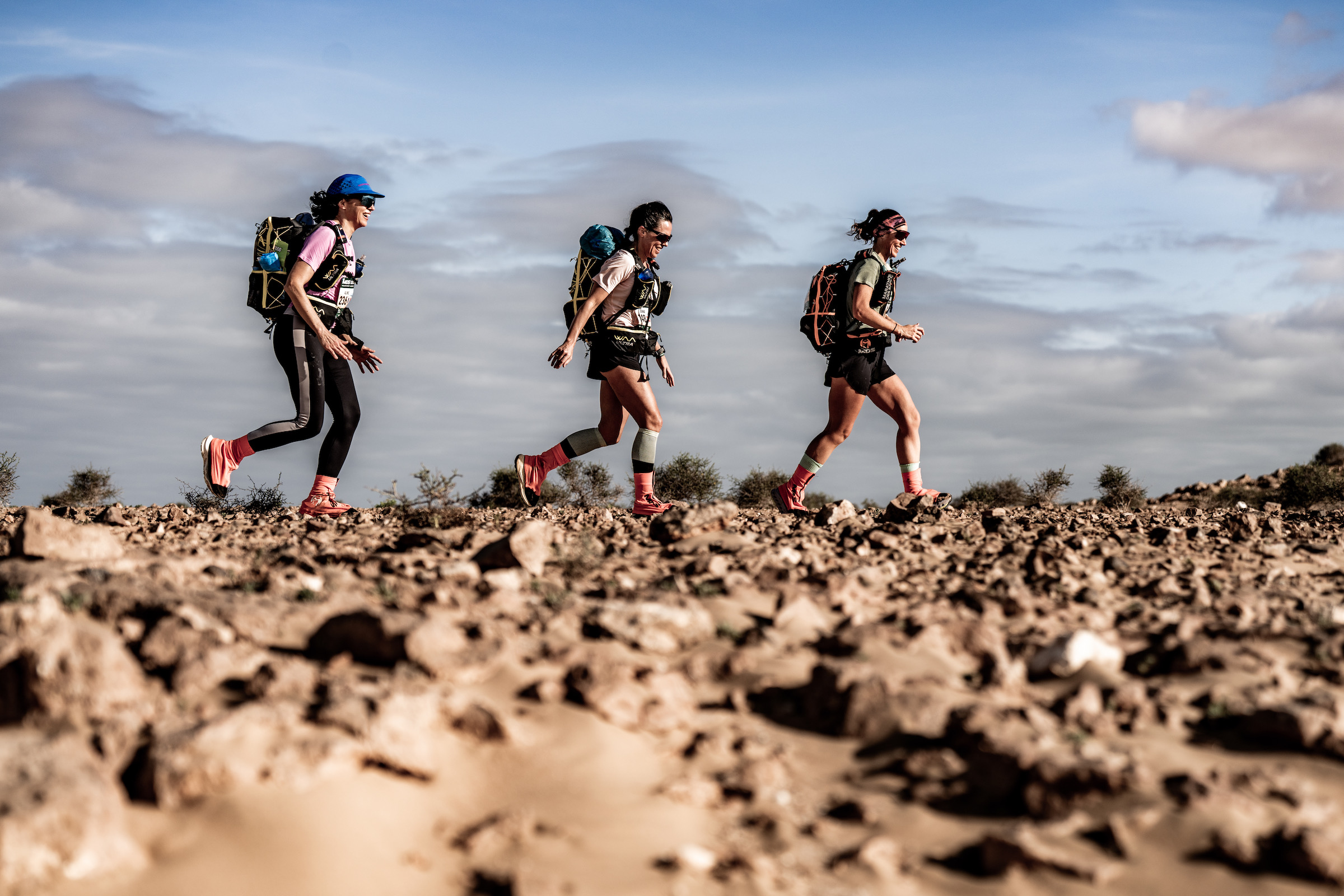
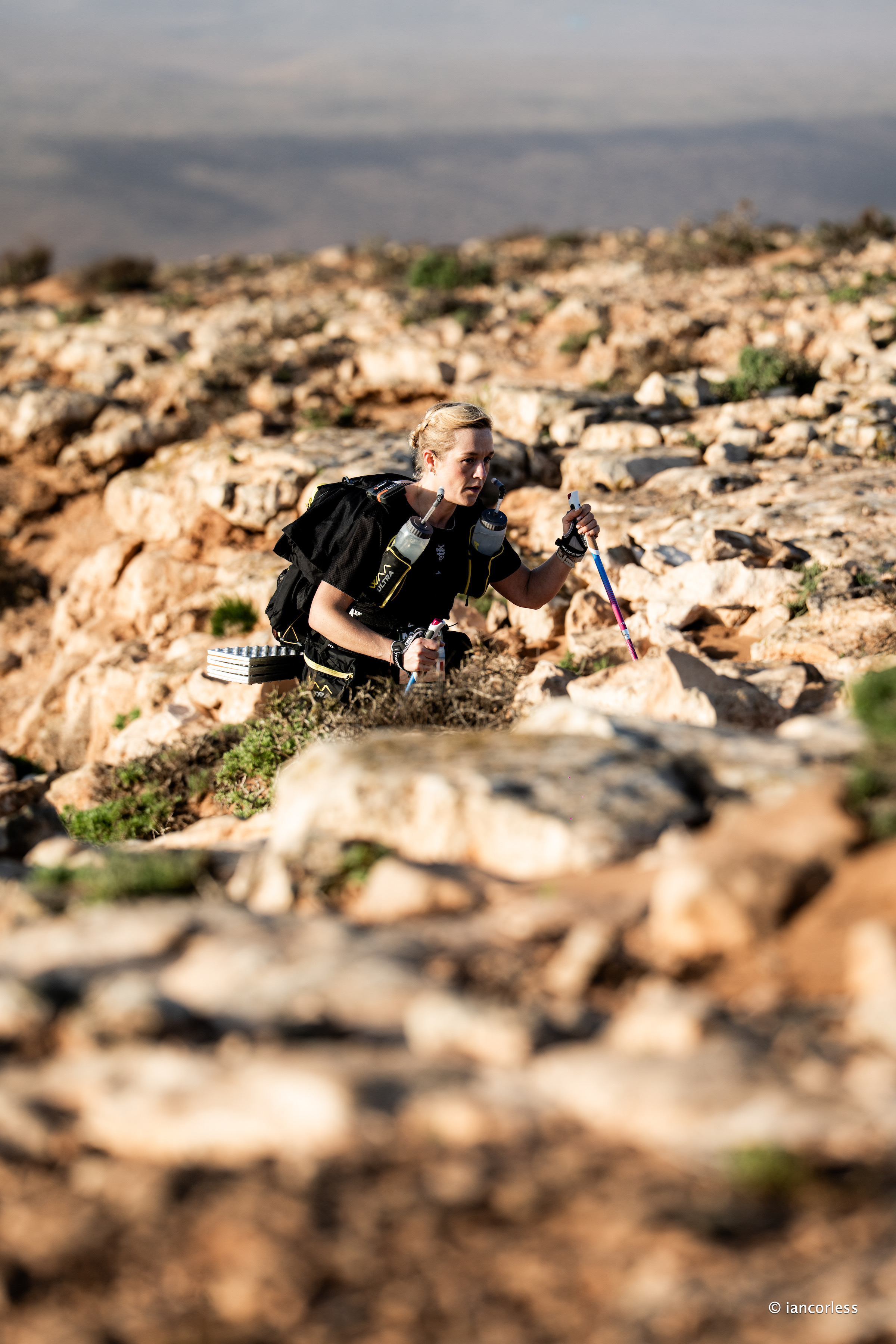
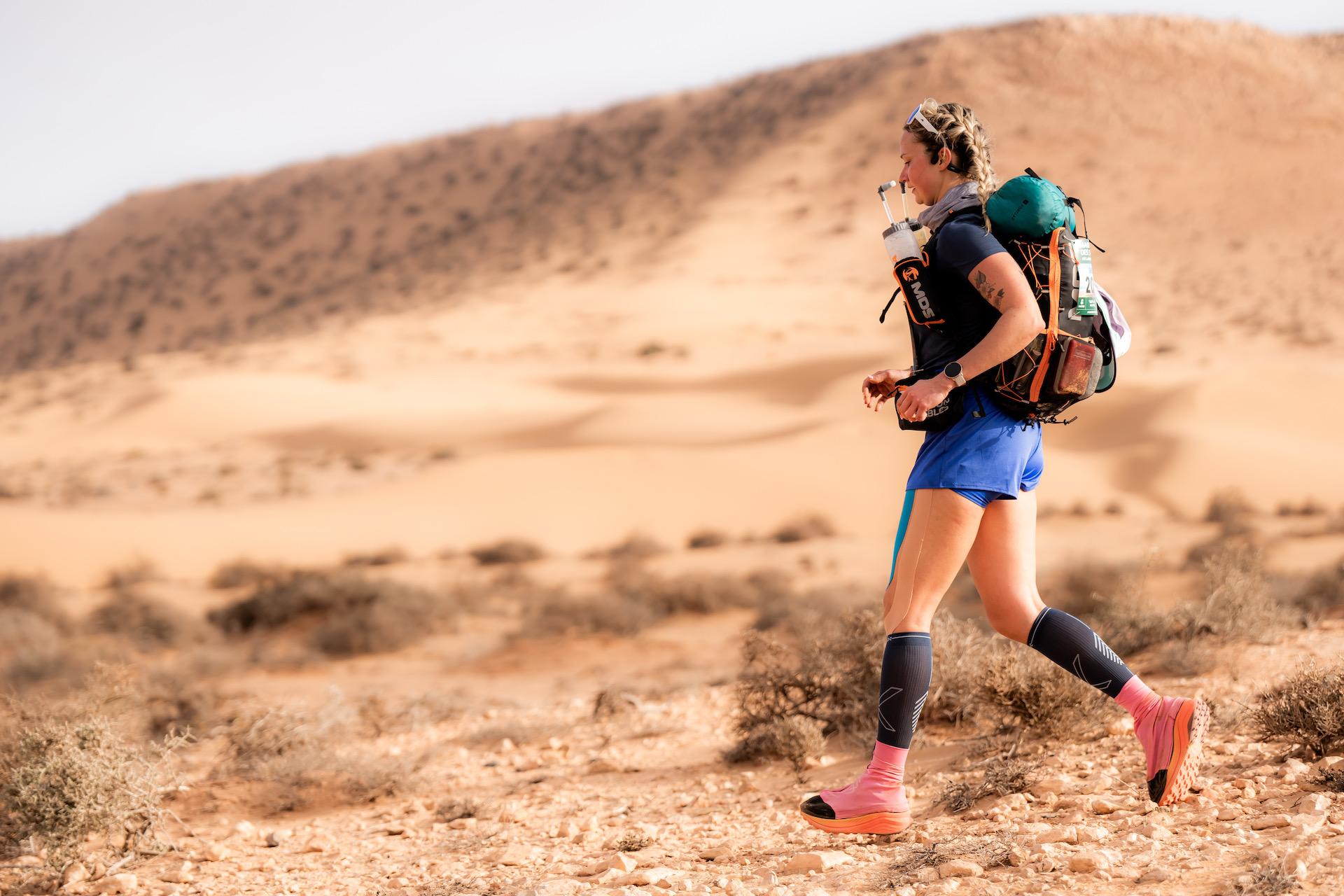
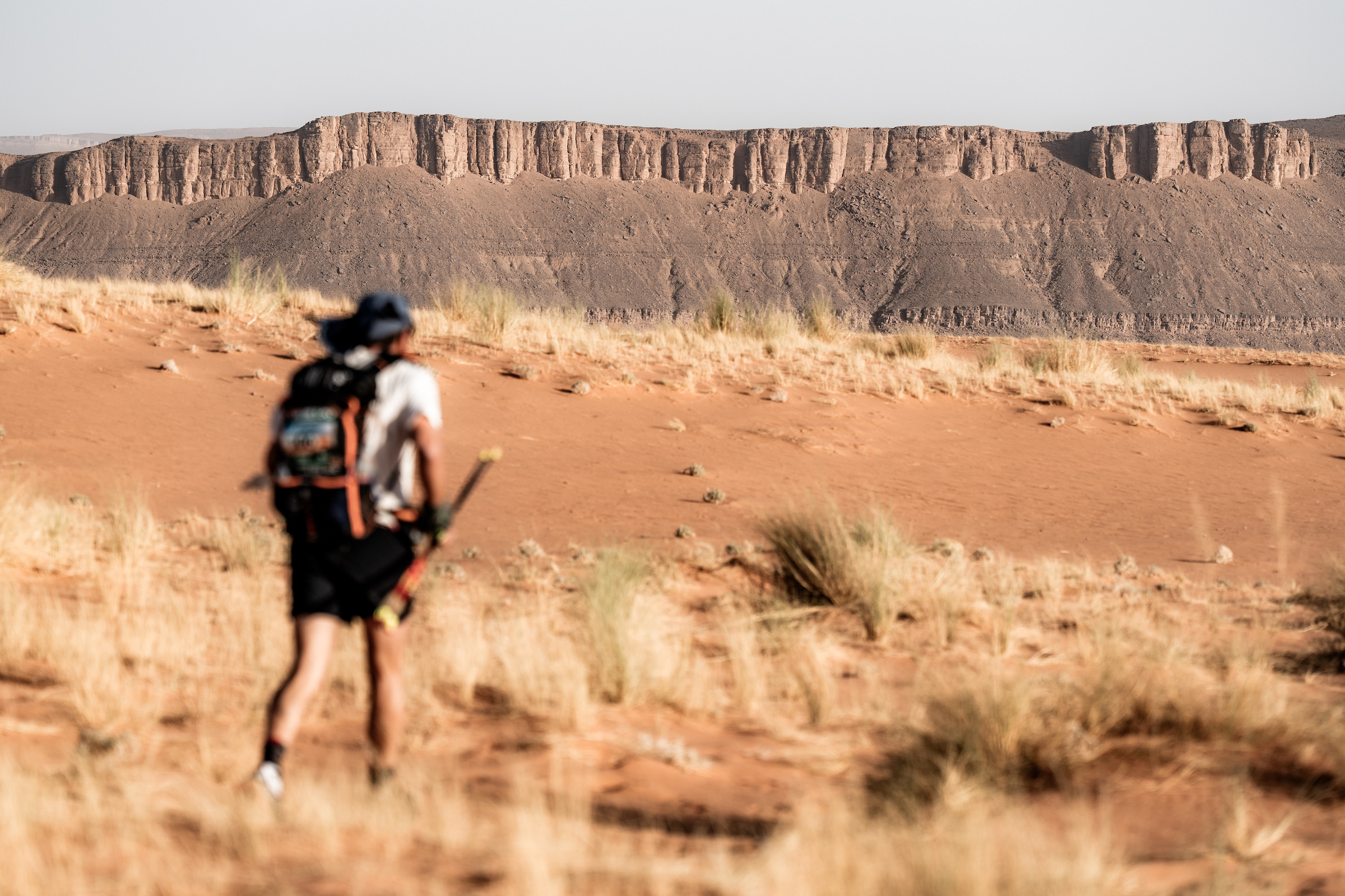
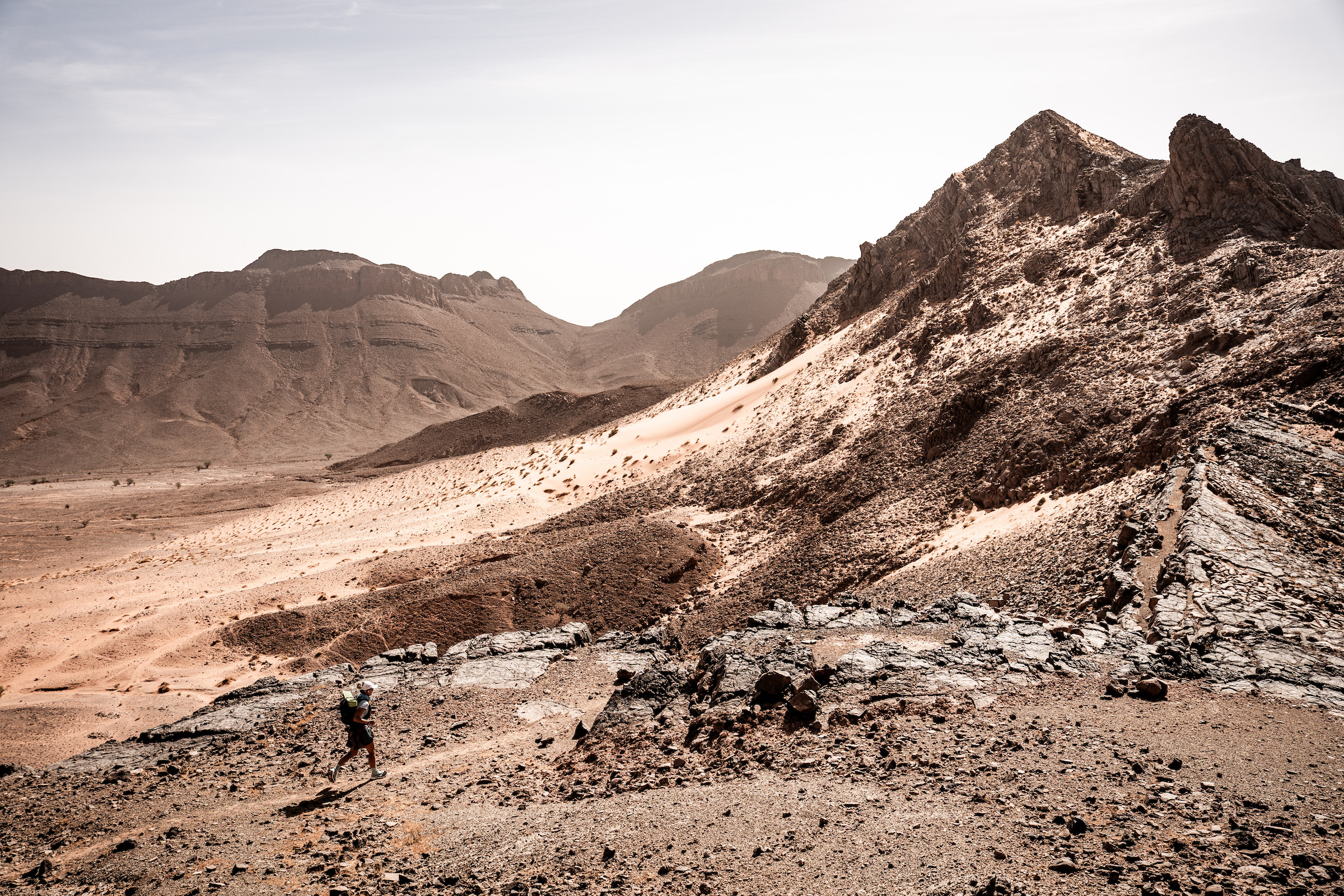
From the first kilometres, the terrain refused to settle into anything predictable. Soft sand swallowed shoes and rhythm, turning simple forward motion into work. Each step demanded attention. Ankles wobbled, calves burned, and breathing grew louder. Then the sand gave way to rocky plateau, hard and uneven underfoot.
The pace changed again, this time to caution. Eyes stayed down, scanning for safe placement. The plateau opened wide, exposing runners to the elements and to themselves. There was nowhere to hide from the wind, the sun, or the thoughts that arrive when the body starts to ask hard questions.
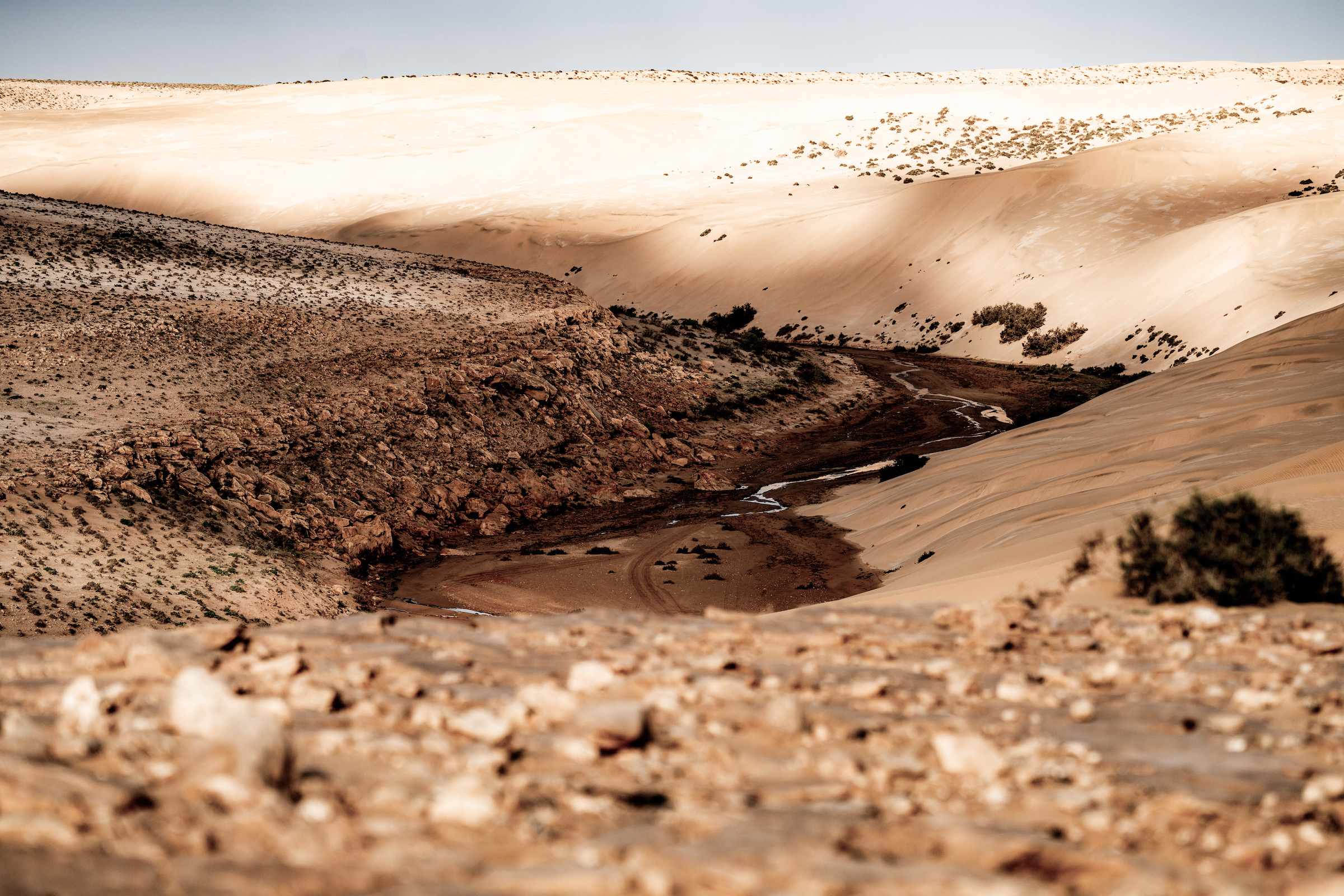
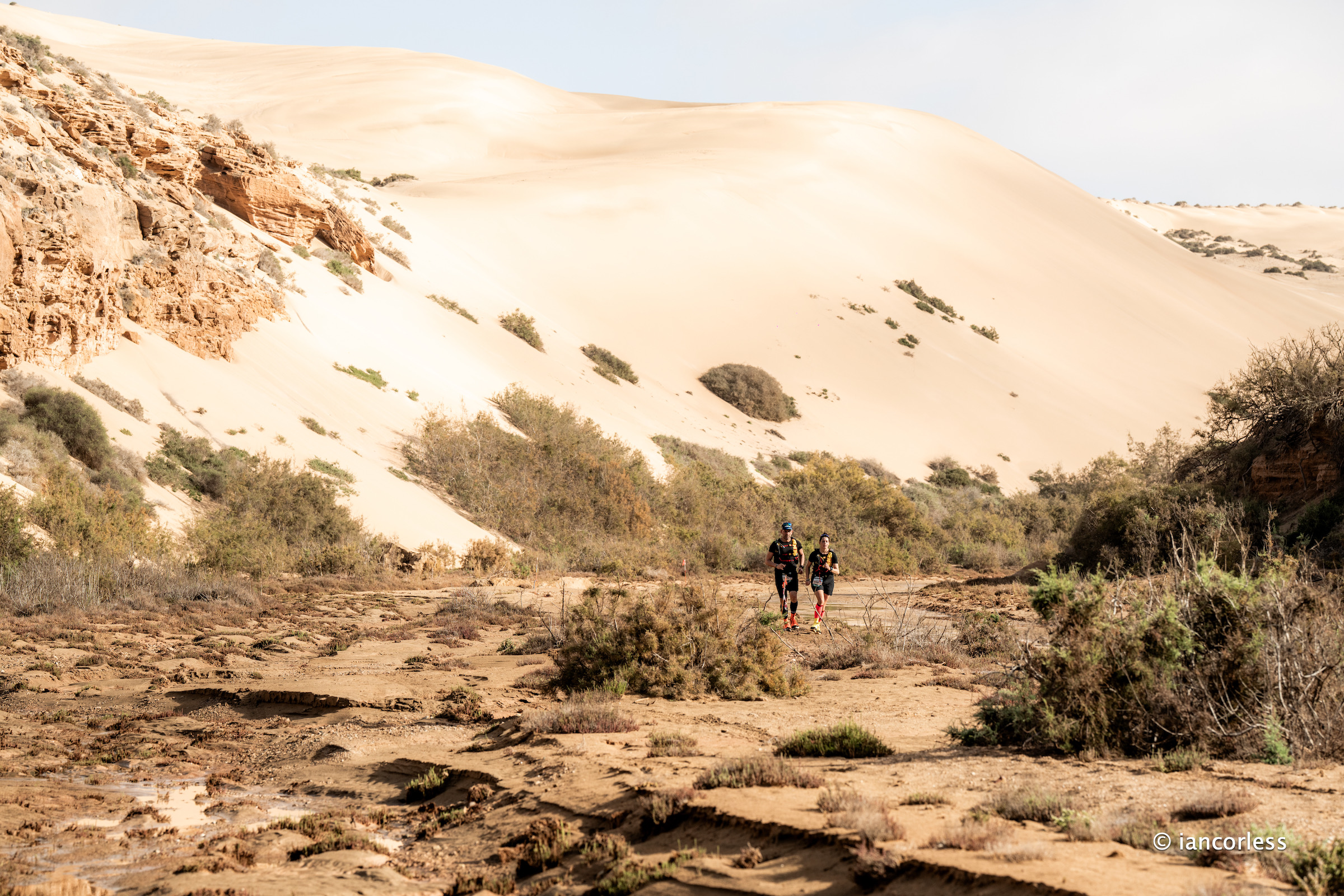
Flooded gorges brought a different challenge. Water pooled where it was least expected, cool and deceptively deep. Shoes filled, socks soaked, and the familiar squelch followed each step on the exit. Some laughed at the absurdity of it. Others grimaced, knowing wet feet mean blisters later. But everyone crossed, because stopping was never really an option. This race does not negotiate.
Beyond the gorges, the course stretched into wide open terrain. The Atlantic Ocean appeared and disappeared, sometimes a distant shimmer, sometimes close enough to hear. The scale of the landscape made individuals feel small, but also free. Lines of colour moved slowly across the land as runners spread out, each locked into their own effort. This was where time began to behave strangely. Minutes felt long. Hours blurred. The distance chosen mattered less than the simple act of continuing.
The final stretch ran flat and true, parallel to the ocean. It should have felt easier. On paper, it was. In reality, it was where fatigue spoke loudest. The body was already empty. The mind had been negotiating for kilometres. Yet the finish lay ahead, invisible at first, then slowly, mercifully, real. The ocean rolled on, indifferent and steady, while the race reached its quiet climax.
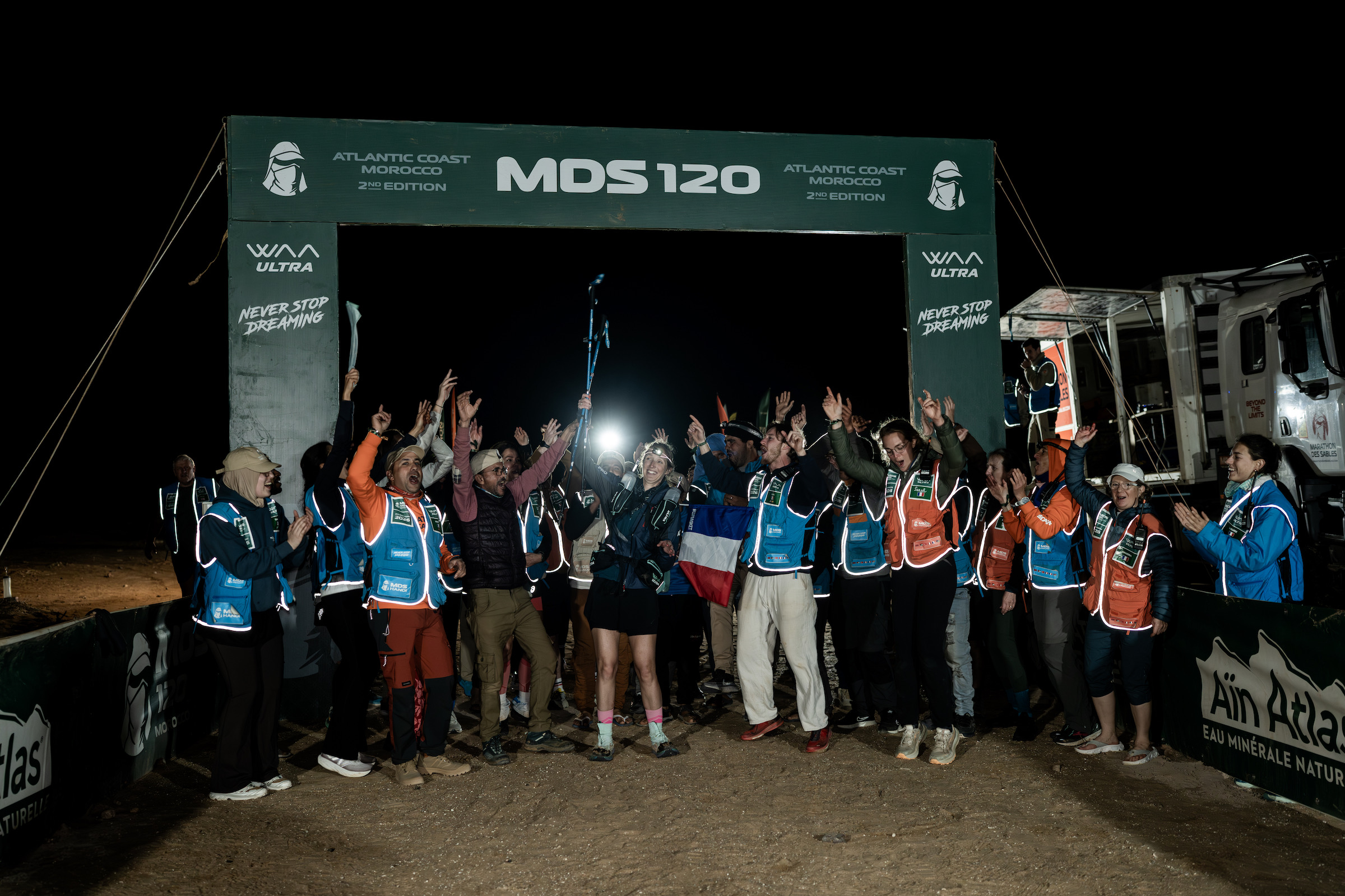
The finish line became a gathering point for everything this day had taken and given. It was a welcome sight, one that drew out raw emotion without apology. Tears fell freely, sometimes before the line, sometimes after. Laughter broke out in short bursts, the kind that comes when tension finally releases. There was joy, genuine and earned, mixed with exhaustion that sat deep in the bones. Some crossed upright and strong. Others bent double, hands on knees, searching for breath. All were changed.
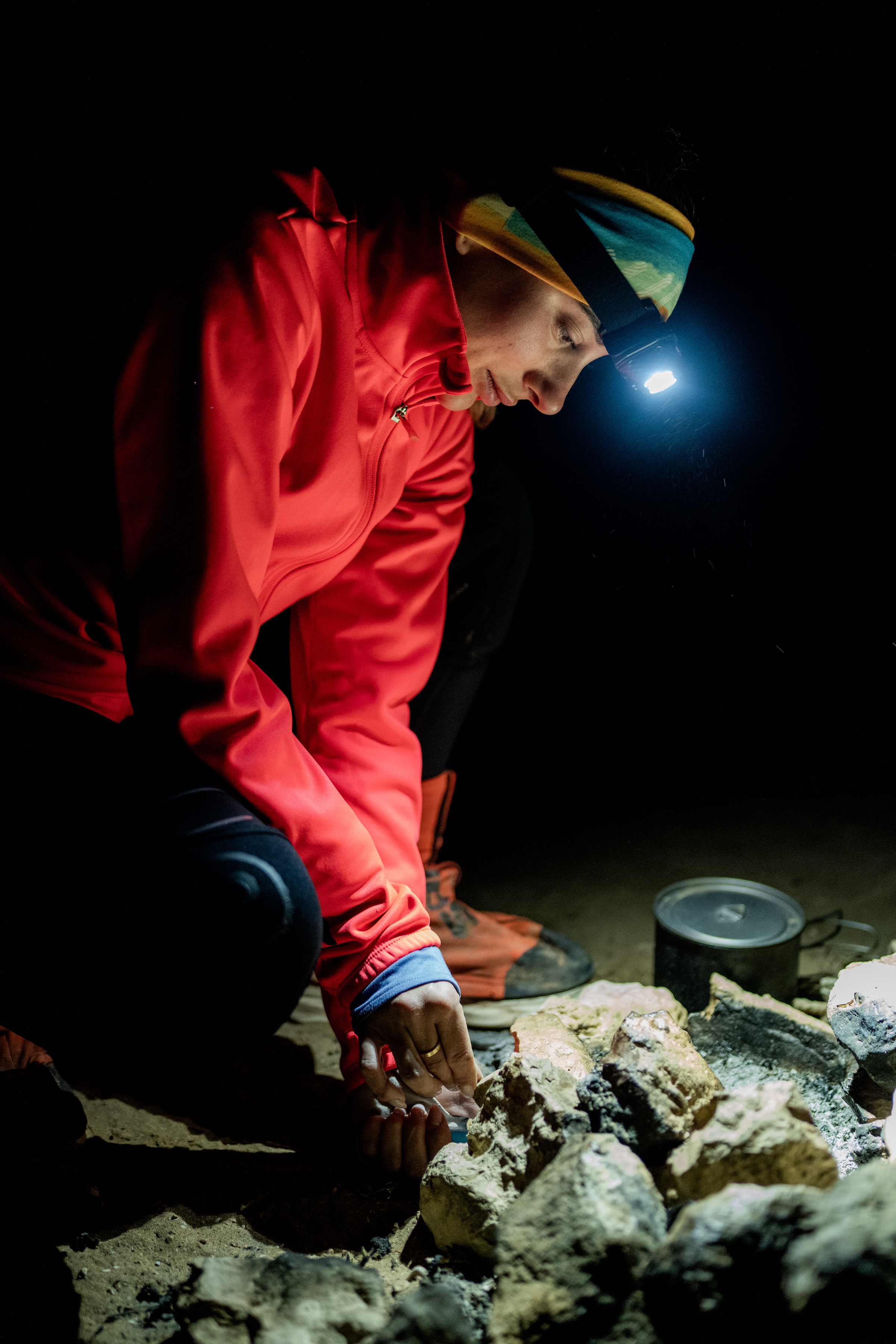
The day stretched long into the night. Headlamps flickered in the distance as darkness closed in. Volunteers stayed wrapped in layers, voices steady, encouragement unwavering. The clock kept moving. And then, close to 2300 hours, the final finisher crossed the line. There was no rush. No hurry to be anywhere else. Just a moment held for someone who refused to stop. Applause cut through the night, not loud, but meaningful. This, too, mattered.
Stage 2 was not about speed. It was about choice and consequence, about learning the difference between discomfort and danger, about discovering how much is left when you think there is nothing. Today, participants found out who they are and why they are here. Some answers were quiet. Others arrived with force. But they arrived all the same.
There were moments of doubt, of frustration, of anger at the sand, the stones, the weather, the distance. There were also moments of clarity, when effort narrowed the world down to the essentials. Step. Breathe. Drink. Keep going. In those moments, the noise of everyday life fell away. What remained was simple and honest.
As the camp settles and the body begins to cool, tomorrow offers something rare in this environment. A day of rest. A pause. Time to recharge and recover. Muscles will stiffen, feet will tell their stories, and minds will replay the day in fragments. There will be care, conversation, and quiet pride. Because Stage 2 demanded respect, and those who met it earned that rest.
The Atlantic continues to roll in the dark. The course waits. And the field, changed by today, will rise again when it is time.
Stage 1 of the 2nd edition of the MDS 120 Atlantic Coast marked a powerful and inspiring beginning to the adventure in Morocco, where the desert meets the Atlantic Ocean. A field of 250 participants set out on this opening day, with an impressive 80 percent taking on their very first MDS experience. Just under half of the runners were women, and the age range spoke volumes about the inclusive spirit of the race, from the youngest at 19 years old to the oldest at 78. With 30 nationalities represented and the support of 147 dedicated staff, the event immediately felt global, vibrant, and alive.
This first stage covered 23km, with 343m of elevation gain, following a point-to-point route along the Atlantic coast. Checkpoints were placed at 9.1km and 17km, guiding runners through a constantly changing landscape.
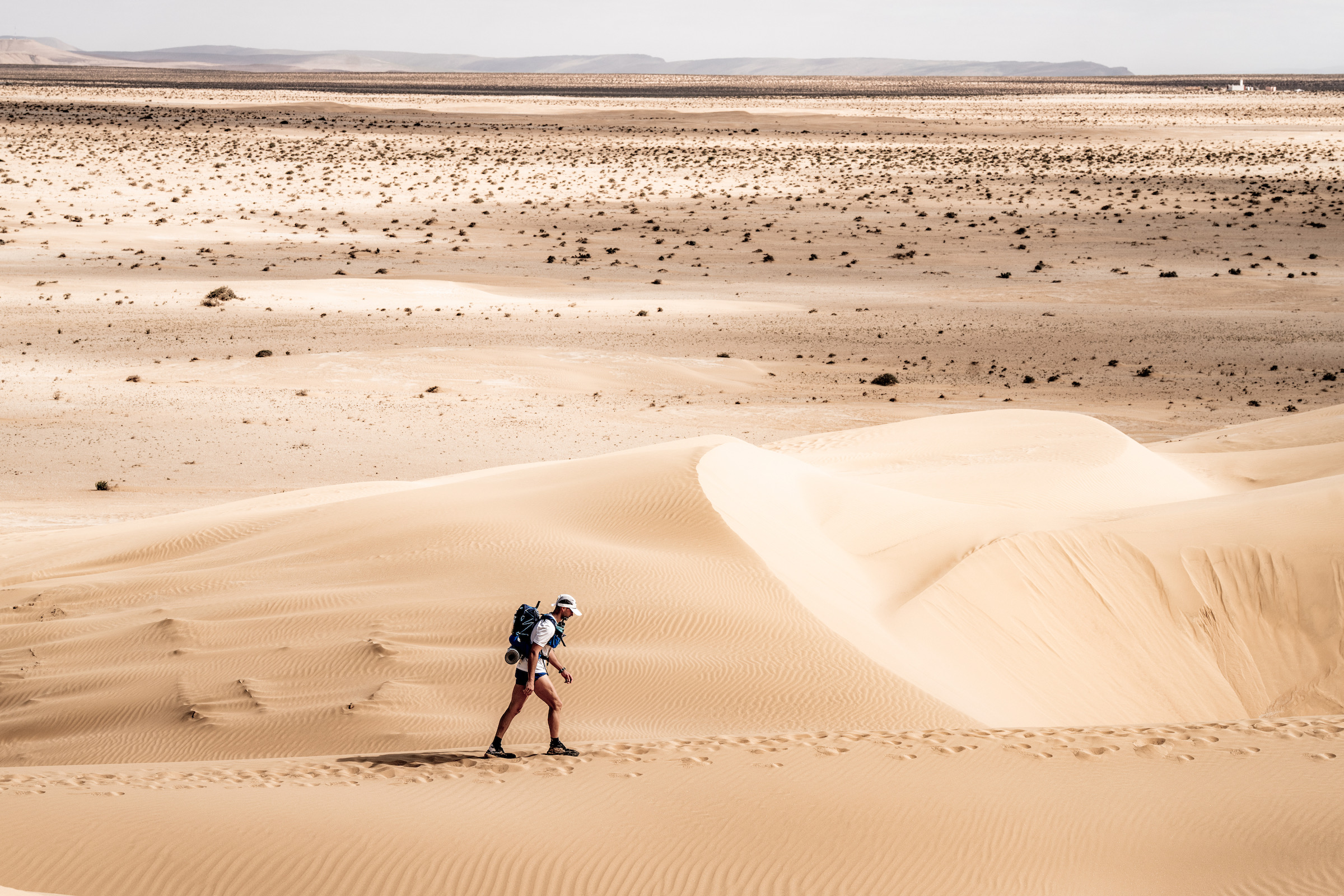
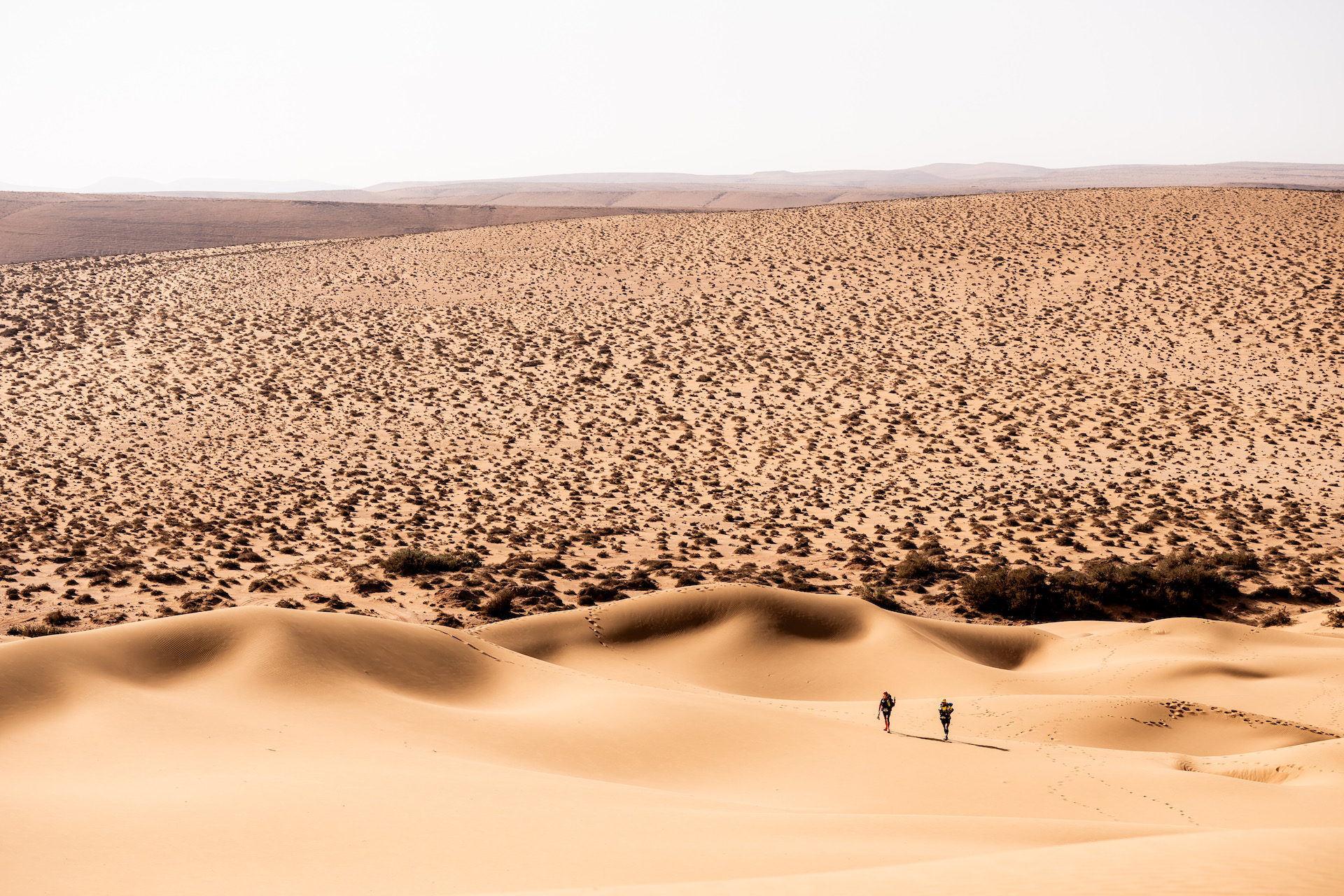
The terrain offered little rhythm. Soft sand drained energy, dry river beds broke momentum, and rocky plateaus demanded focus and careful footwork. While the elevation profile looked modest on paper, the reality underfoot made it a demanding day from start to finish. The sand, in particular, turned every step into a test of patience and strength.
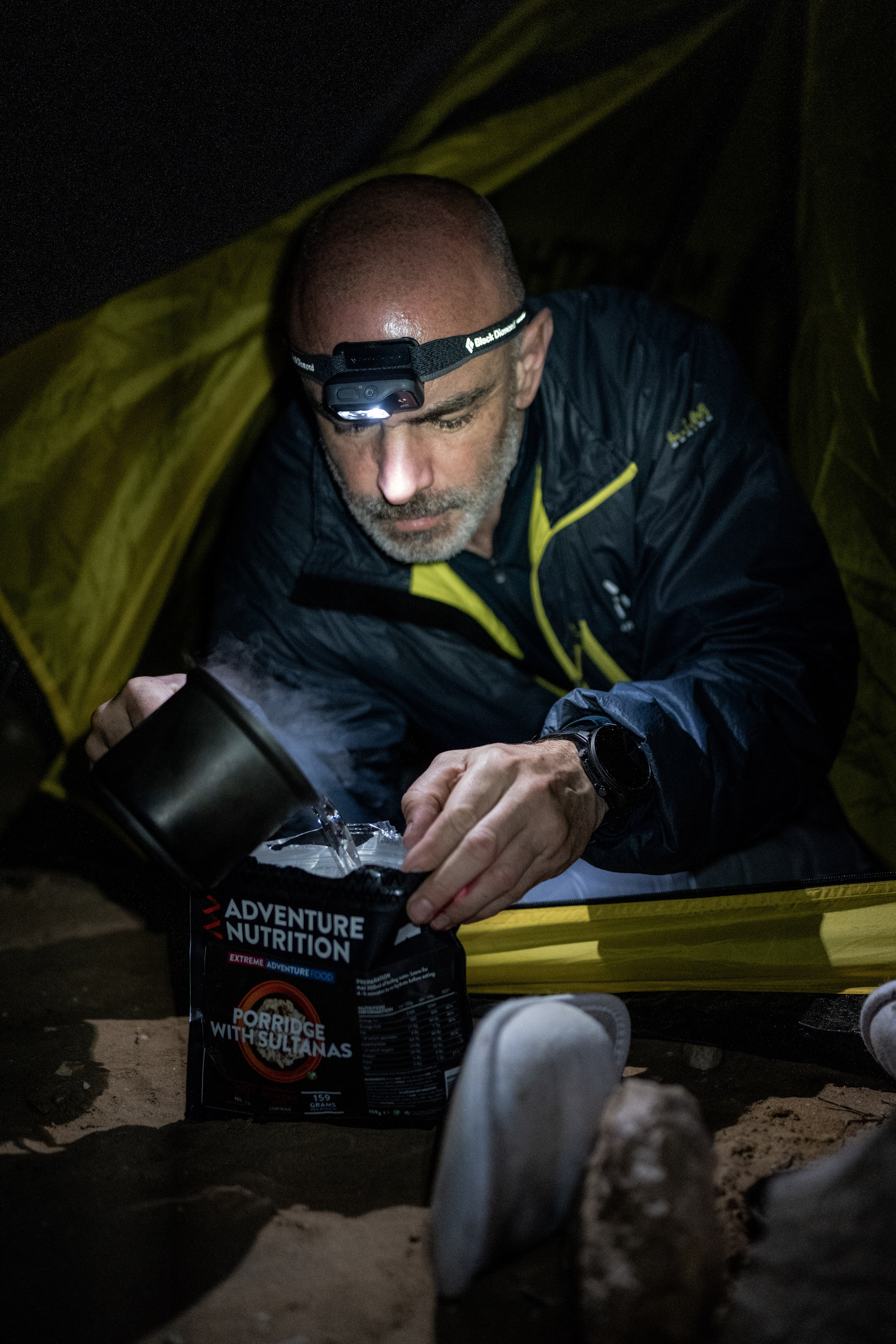
The challenge began long before the start line. A 2am wake-up, followed by a 3am departure and a lengthy transfer, asked a lot of the runners before dawn had even broken. Yet spirits remained high. These athletes were fully self-sufficient, carrying everything they needed on their backs, managing their nutrition, hydration, and equipment as they moved across the course. It was a true test of endurance, organisation, and resilience.
Despite the early start, the travel, and the relentless terrain, the performance across the field was outstanding. Every runner dug deep, and the final participant crossed the finish line well within the cut-off time, greeted with applause and encouragement.
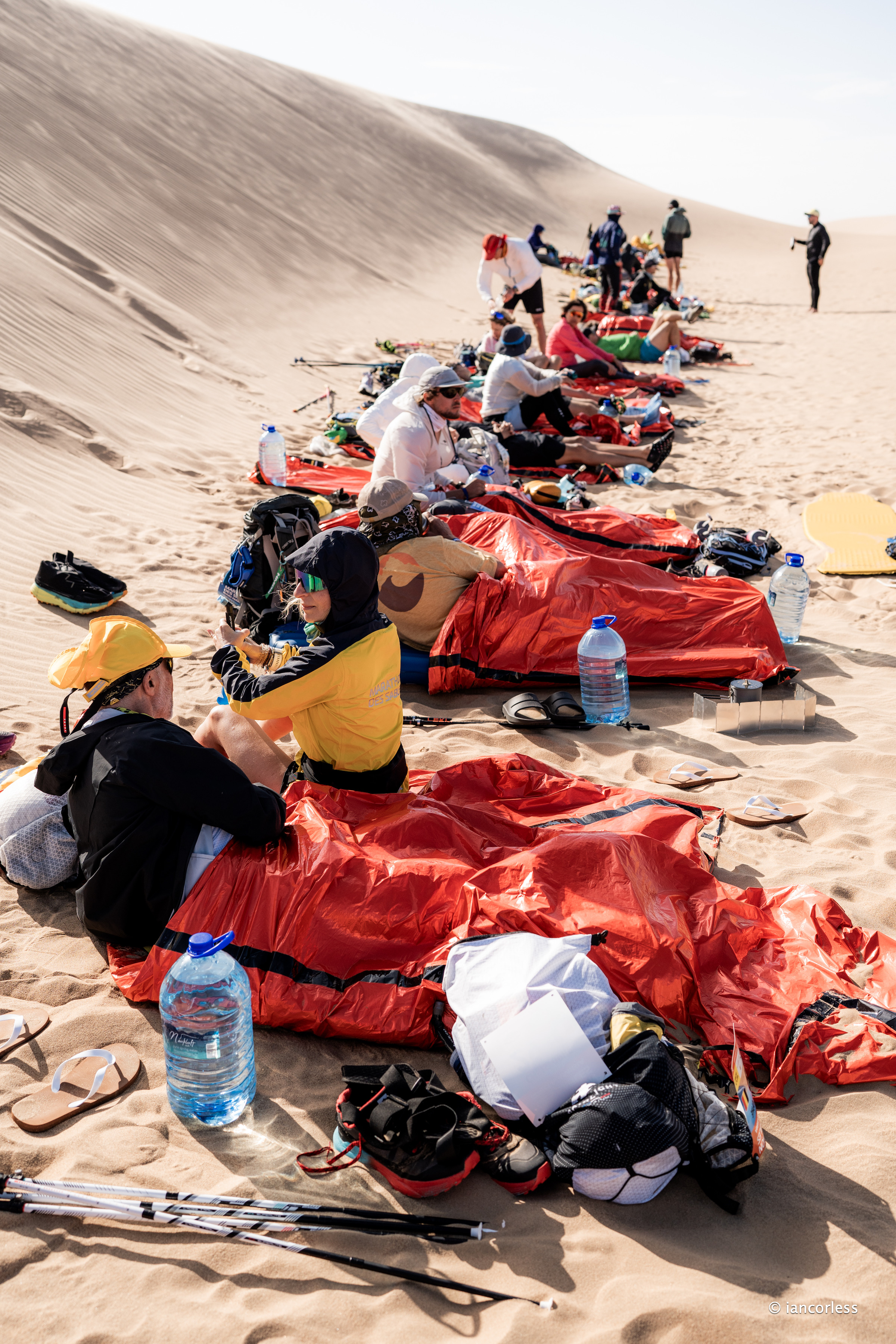
As the sun dipped and the day drew to a close, the runners settled in for their first night under the stars on the Atlantic coast. Tired legs, sandy shoes, and quiet smiles told the story of a hard-earned first stage completed. It was a demanding, memorable opening chapter, and a clear signal that the MDS 120 Atlantic Coast is as much about heart and determination as it is about distance.
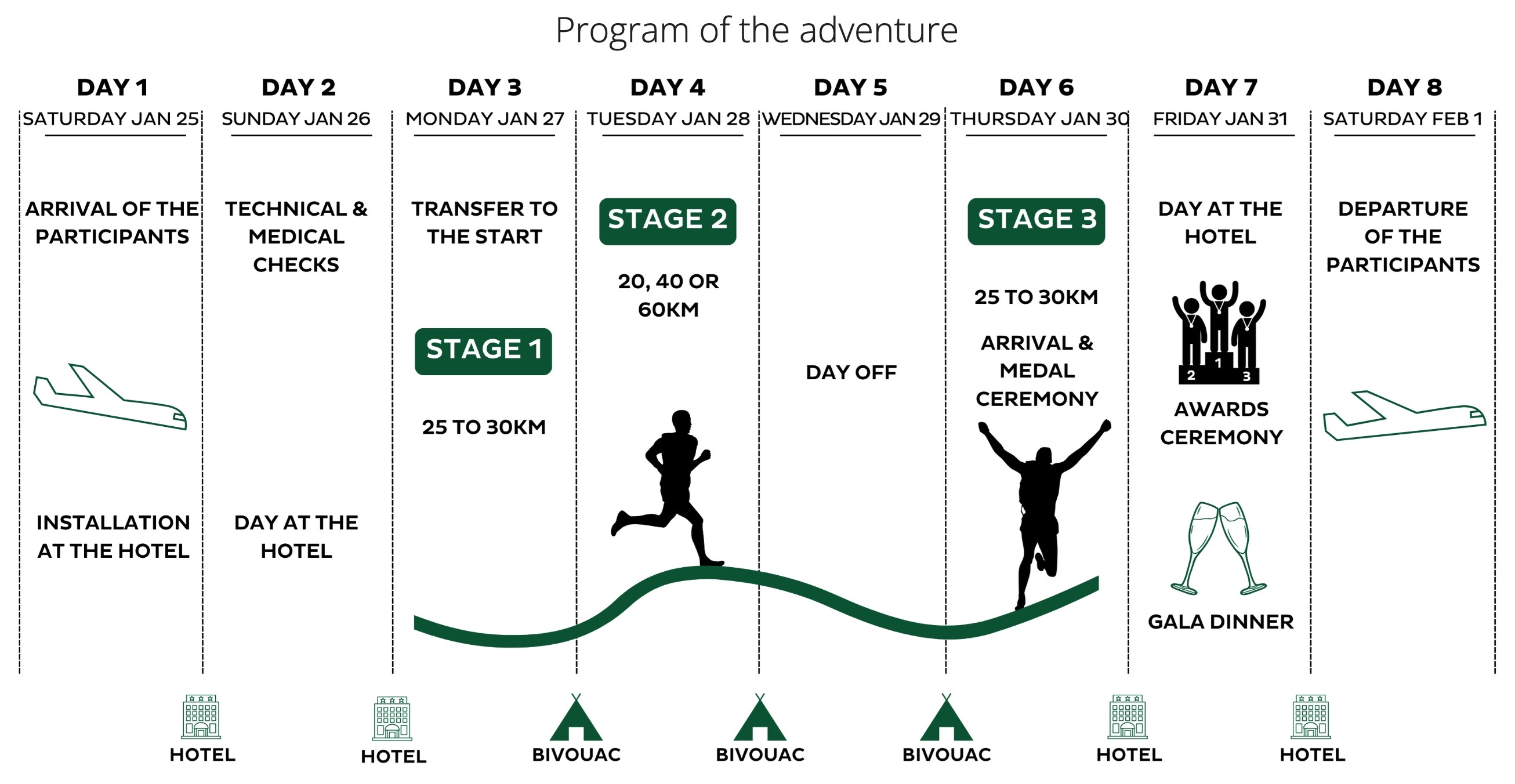
MDS 120 Atlantic Coast returns for 2026 with a bold 2nd edition that invites walkers and runners alike to a three-stage, four-day self-sufficient challenge along Morocco’s Atlantic shores. Competitors will take on routes of 70, 100, or 120 kilometres in total, choosing their own distance while mastering the same demanding, coast-to-coast format that has become a hallmark of the MDS family. This year’s edition follows closely on the heels of the inaugural MDS Ultra, which wrapped up just a week earlier, making the Atlantic Coast event the season’s first MDS 120 race of 2026. Participants will gather in Agadir for a seamless pre-race briefing, then linger after the finish for a relaxed post-race stay in a comfortable hotel. The event is designed for all abilities, from dedicated walkers to seasoned runners, offering a true test of endurance without sacrificing accessibility.
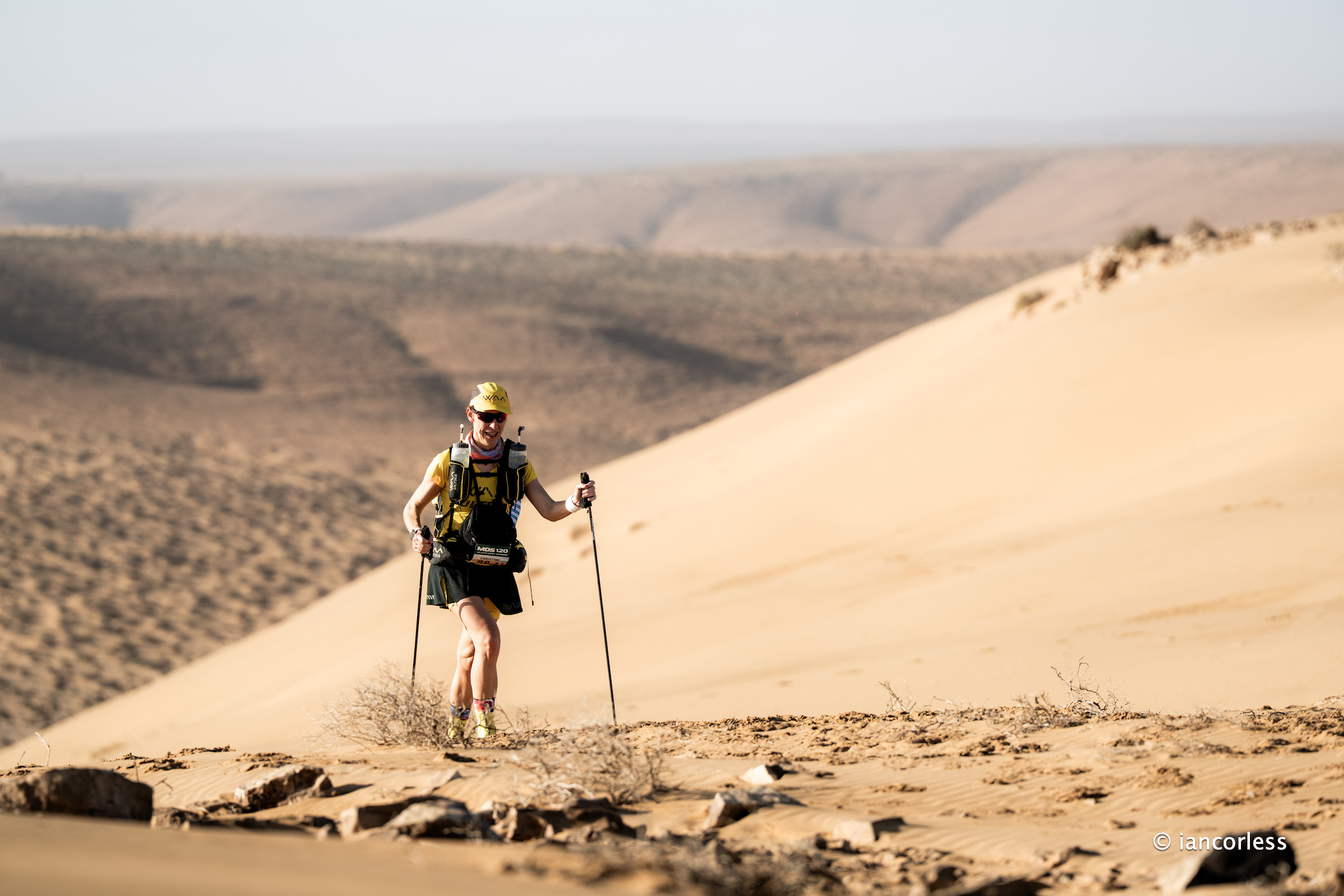
Photo by Ian Corless
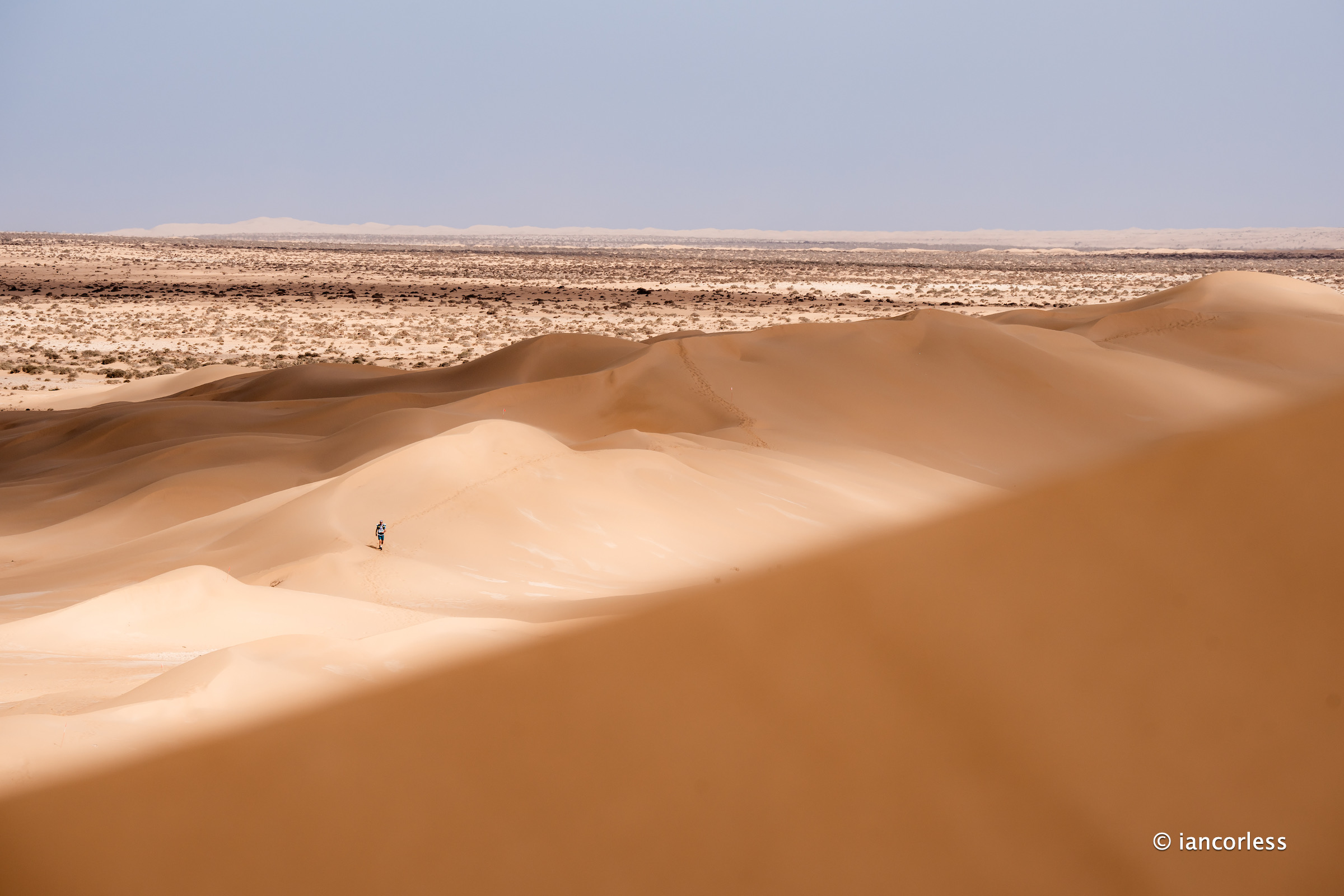
The coastline landscape promises a mix of open beaches, wind-sculpted dunes, and rugged hinterland, delivering diverse terrain without losing the sense of adventure that draws participants back year after year. By welcoming walkers right beside runners, the event reaffirms its commitment to inclusivity while preserving the challenge that marks the MDS family. For those who crave the feel of a grand adventure without crossing continents, the Atlantic Coast edition offers a perfect balance of scenery, camaraderie, and personal achievement.
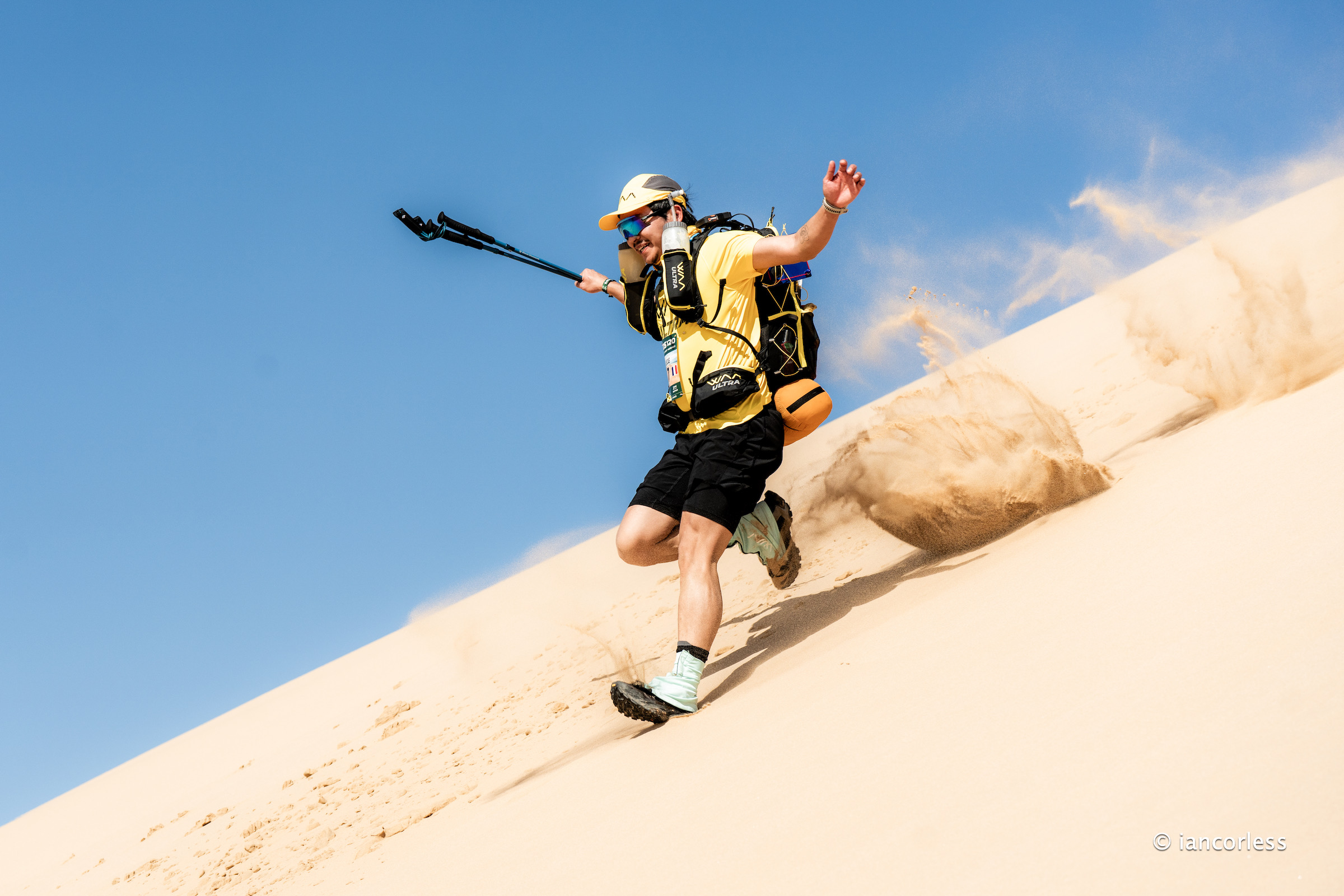
Photo by Ian Corless
What to expect on the three stages
The race unfolds over three days of stage racing, spread across four calendar days. Each participant selects their total distance – 70, 100, or 120 kilometres – and completes the corresponding combination of stage lengths. The route design emphasises a continuous, day-by-day test of endurance, and self-reliance, with the sense of discovery growing as the coastline unveils new horizons.
Expect a demanding yet spectacular mix of beach stretches, coastal dunes, rocky outcrops, and inland trails that thread along the Atlantic fringe. While the sea air and sun contribute to the challenge, the route rewards rhythm, efficient pacing, and smart planning.
As a self-sufficient event, participants rely on well-marked courses and a robust safety net. Course marshals, remote safety teams, and medical support are in place, with clear guidelines on mandatory equipment and daily checkpoints. Competitors manage their own nutrition and water, planning for the day ahead while staying mindful of weather and terrain. This combination of independence and structure is what defines the MDS 120 experience.
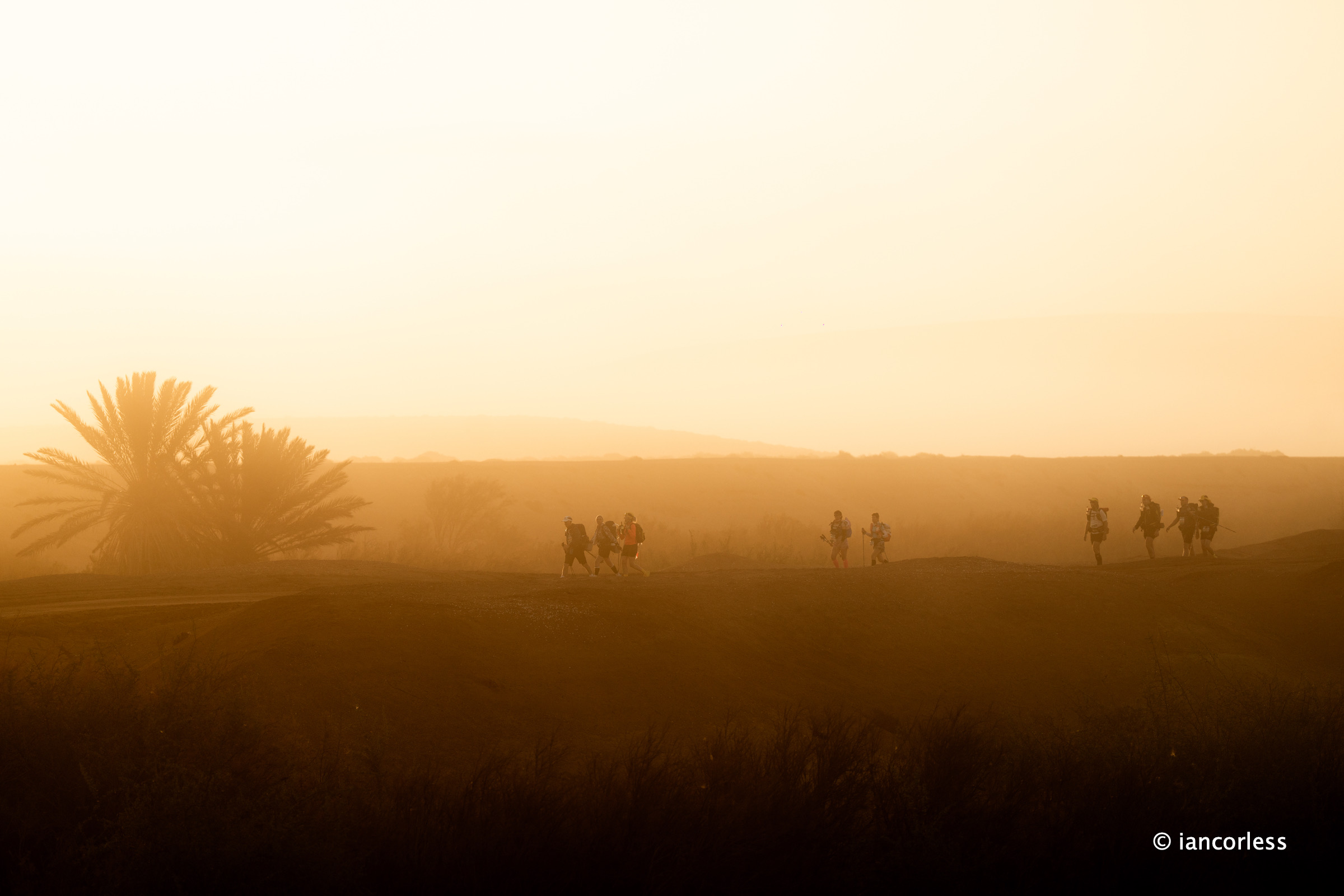
Photo by Ian Corless
The MDS 120 Atlantic Coast is explicitly designed to welcome a wide spectrum of abilities. If you’re a walker who can cover long distances with steady pace, or a runner seeking a new endurance benchmark, this event offers a supported, self-sufficient platform to push limits in a beautiful, accessible setting. It’s ideal for first-time MDS 120 participants seeking a well-structured introduction without compromising the sense of accomplishment, as well as returning athletes looking for a coastal contrast to Sahara routes.
Why MDS 120?
Expanded inclusivity with a broader distance range: The 70/100/120 km options enable more participants to tailor the challenge to their current level while still delivering the iconic MDS 120 experience.
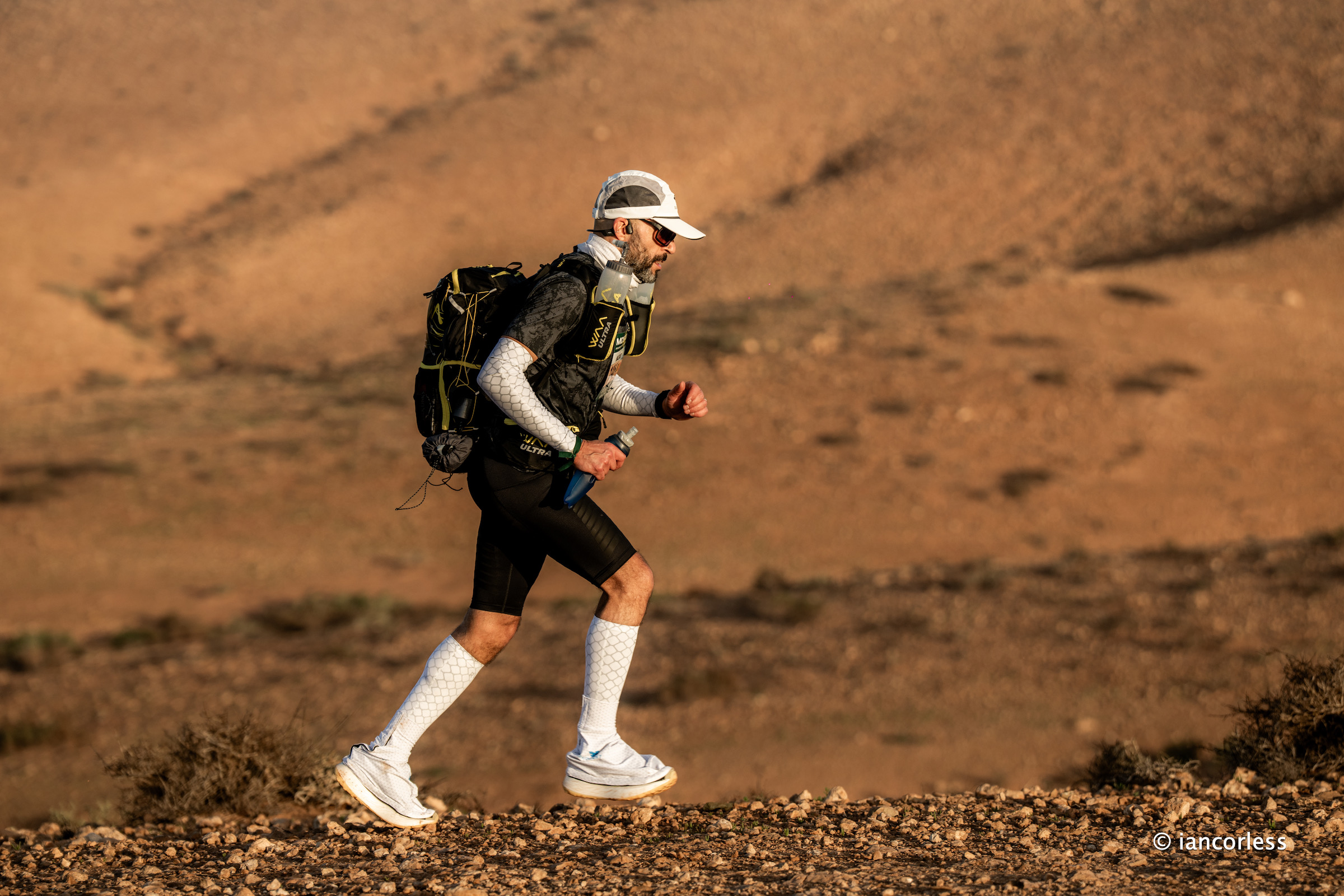
Photo by Ian Corless
A fresh Atlantic coastal route: The coastline around Agadir offers new routes that emphasise coastal beauty and wind-sculpted terrain, creating a distinctive mood and pacing compared with prior editions.
Photo by Ian Corless
Athletes travel to Agadir, where a hotel base serves as the staging ground for briefing and support, with a hotel stay also planned for post-race recovery and celebration. The overall package aims to balance challenge with comfort, giving participants a strong sense of community without sacrificing the rugged essence of self-sufficiency.
A celebration of pace, place, and persistence MDS 120 Atlantic Coast 2nd edition is more than a test of endurance. It’s a celebration of pace, place, and persistence, inviting a broad range of athletes to test their limits in a setting that blends the raw beauty of Morocco’s Atlantic edge with the camaraderie and strategy that define the MDS experience. The 70, 100, and 120 km distances let participants choose a level of challenge that matches their training, experience, and appetite for adventure, while the three-stage format over four days preserves the thrill of back-to-back days on the trail.
If you’re looking for a race that marries coastline drama with self-sufficient racing, where every kilometre earned is a personal milestone and every sunset over the Atlantic is a reward, the 2nd edition of MDS 120 Atlantic Coast in Morocco awaits.
A milestone anniversary, new formats, familiar classics, and a season that stretches from the Sahara to the Alps. Some years feel bigger than others. In 2026, the calendar alone tells you this will be one of those years for Marathon des Sables.
Forty editions after its beginnings in the Moroccan desert, Marathon des Sables has grown into a family of events that test endurance in different ways, across different landscapes, and for very different runners. Yet the heart of MDS remains the same. Self-sufficiency, shared hardship, and the quiet satisfaction that comes from moving forward when stopping would be easier.
January opens with something new and bold: MDS Ultra. Two distances. Two very clear challenges. A 100km option for runners ready to push beyond the classic stage format, and a 100-mile race for those who want to see how deep the well really goes.
Photo by Ian Corless
An opening act designed to grab attention. Long distances, sustained effort, and the mental strain that only ultra racing can deliver. For many, it will be the first real test of their winter training. For others, it will be the centrepiece of their season. What matters most is what MDS Ultra represents – It signals evolution not revolution. MDS is not standing still, even as it celebrates its past.
Photo by Ian Corless
Before January ends, the focus shifts west to the ocean for MDS 120 Atlantic Coast. Where dunes once dominated the horizon, runners now deal with open beaches, shifting sand, and the constant presence of the sea. The Atlantic Coast event has its own rhythm. Wind can play a bigger role. Footing changes by the kilometre. Temperatures can vary greatly, and yes, rain may be present? Still self-supported, still demanding, but in a way that surprises many first-timers. By the time the final runners cross the line, January has already delivered two very different expressions of what Marathon des Sables can be.
February and March bring a noticeable change of pace. No race numbers. No finish lines. Instead, preparation. The MDS team turns its attention fully toward the centrepiece of the year: the 40th edition of MDS Legendary. Four decades after the first runners set off into the Sahara, this anniversary edition carries weight. Not just for the organisation, but for the community that has grown around it.
Photo by Ian Corless
Behind the scenes, logistics are refined, routes considered, and details checked and checked again. The Legendary event is not just another race, it is a reference point for stage racing, for many, a rites of passage, and in 2026, it will also be a celebration of everything Marathon des Sables has become.
Once the Legendary edition is complete, the calendar opens up again, and the global nature of MDS takes centre stage.
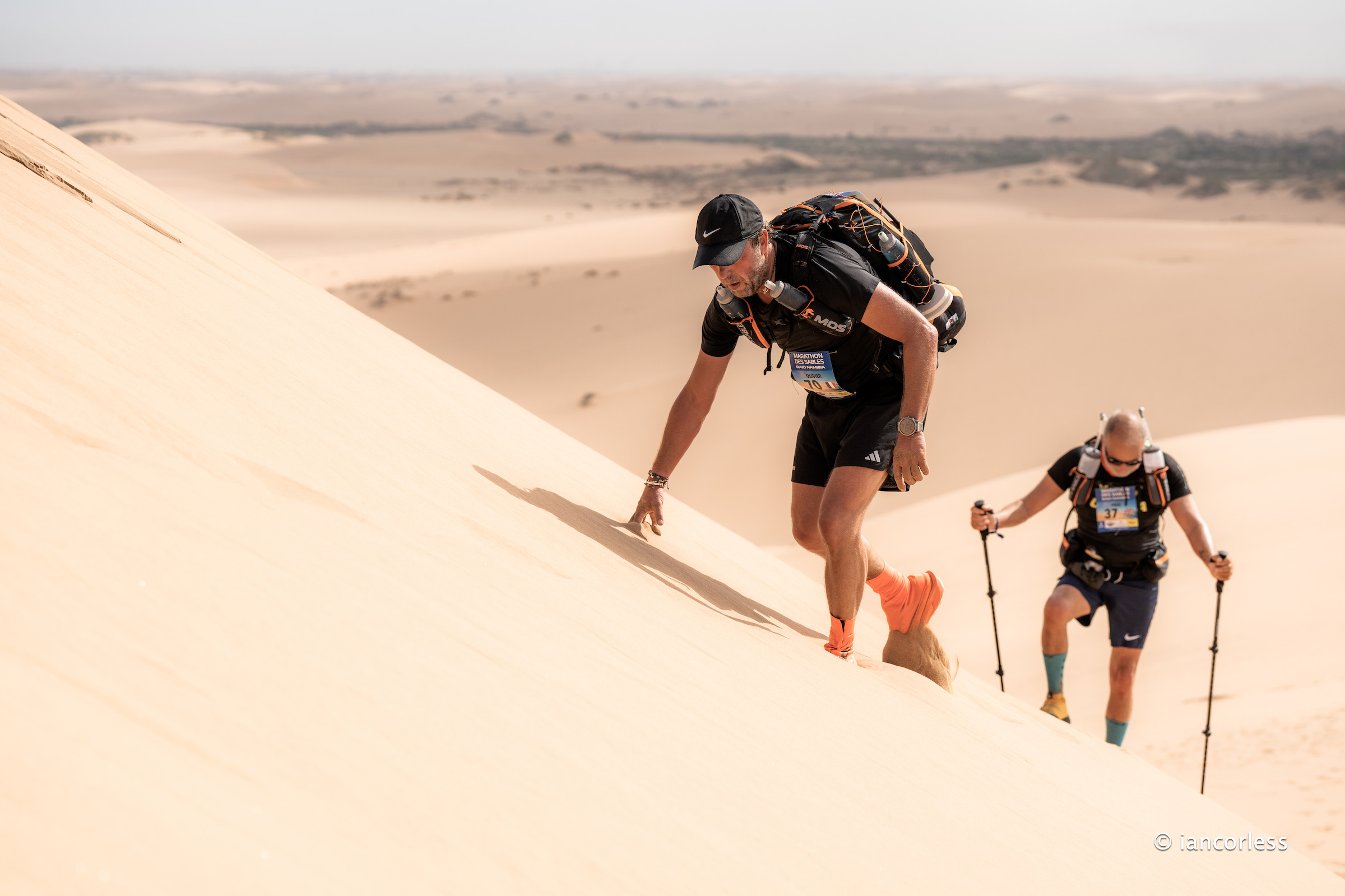
MDS Raid Namibia delivers raw beauty and isolation in one of Africa’s most striking landscapes. Namibia’s vast spaces, sharp light, and unforgiving terrain strip things back to basics. This is running in its purest form, where the environment sets the rules. A unique event as teams of two challenge a more stripped back and raw experience.
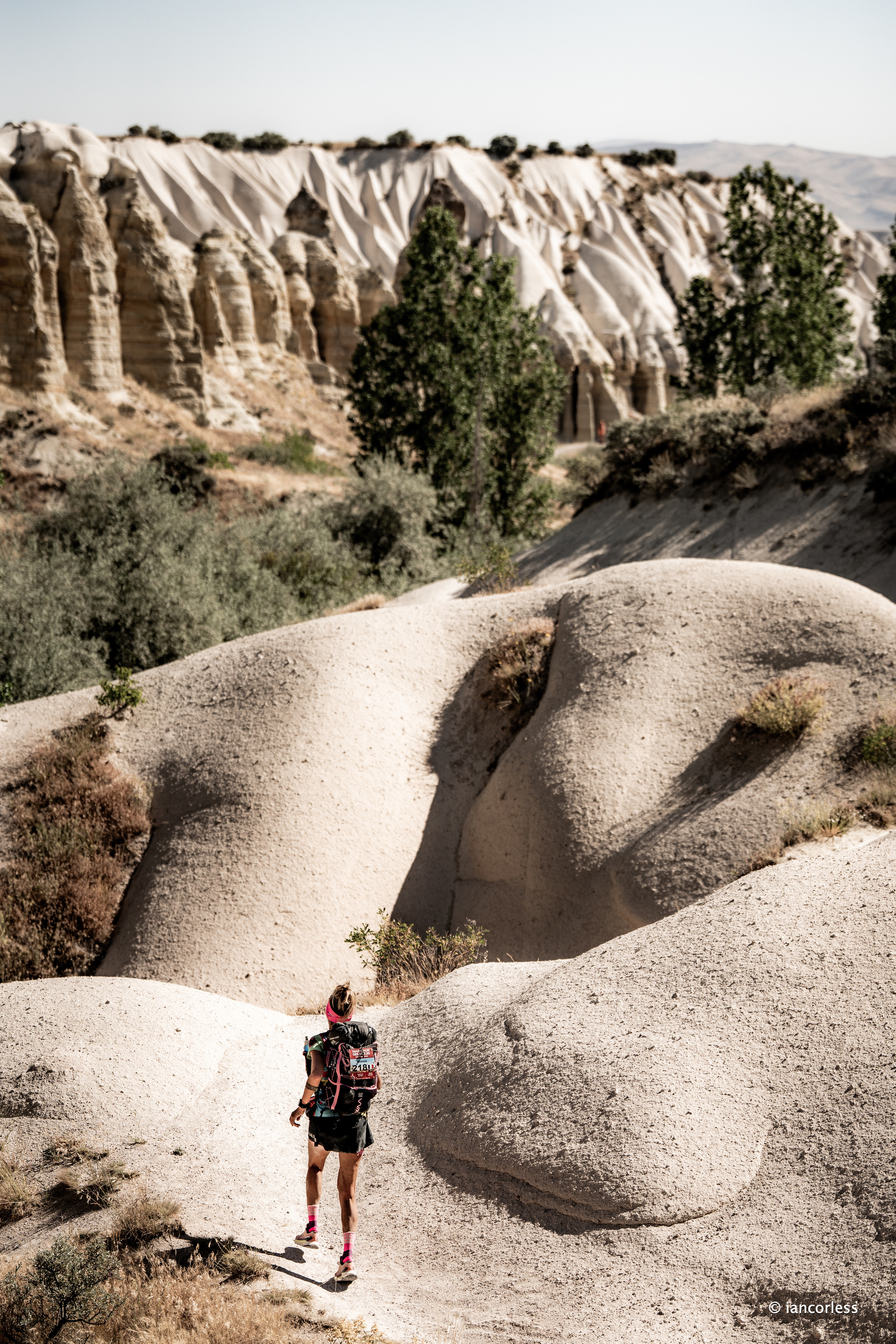
From Namibia, the series moves to Turkey for MDS 120 Cappadocia. Volcanic rock formations, flowing trails, and a sense of history underfoot make this one of the most visually distinctive events on the calendar. It is demanding, but also deeply immersive, ironically, despite the ‘sables’ tag, this event is much more a trail race – something new, different and unique.
MDS Crazy Loops – a format that lives up to its name. Short loops, repeated efforts, and a psychological game that can unravel even experienced runners over 24-hours. It is less about distance on paper and more about resilience in the moment. A fun and challenging event for all abilities that takes place at iconic ski resorts within Europe during July and August. A community event that brings the MDS vibe to the mountains.
As the year moves toward its final months, the pace does not slow. If anything, it accelerates. MDS 120 Morocco returns runners to familiar terrain, but with the confidence and refinement that come from years of experience. This is the desert, revisited with fresh eyes.
Alongside it, MDS Handi continues to redefine what inclusion looks like in endurance sport. It is a powerful reminder that challenge is not one-size-fits-all, and that determination takes many forms.
For those drawn more to movement than racing, MDS Trek Morocco offers a different relationship with the landscape. Still demanding, still immersive, but with space to absorb the experience in full where all abilities are catered for and yes, there is even some luxury – larger tents, no self-sufficiency, showers and so much more…
The international push continues with MDS 120 Jordan, where desert running meets ancient history. The terrain is tough, the scenery unforgettable, and the sense of scale impossible to ignore. An iconic event and arguably one of the most desired events on the MDS calendar.
And yes, there are hints of more to come. Potential surprises remain under wraps, but if past years are any guide, they will add another layer to an already remarkable season.
Photo by Ian Corless
By the time 2026 draws to a close, Marathon des Sables will have crossed continents and climates. Morocco, Jordan, Peru, Turkey, Namibia, and Europe, with the Alps adding altitude to the mix. Each location brings its own challenges, its own stories, and its own reasons for being unforgettable.
What ties them all together is not just branding or format. It is philosophy. Self-reliance. Respect for the environment. And the shared understanding among participants that this is about more than running.
A milestone year invites reflection, but it also demands momentum. In 2026, Marathon des Sables manages both. Honouring 40 years of history while pushing forward into new territory, new formats, and new ways to test human endurance.
For runners, supporters, and the wider endurance community, it is hard not to look at the year ahead and feel a quiet sense of anticipation.
What a year it promises to be.
In addition to the above, there is the MDS Tour and MDS Clubs.
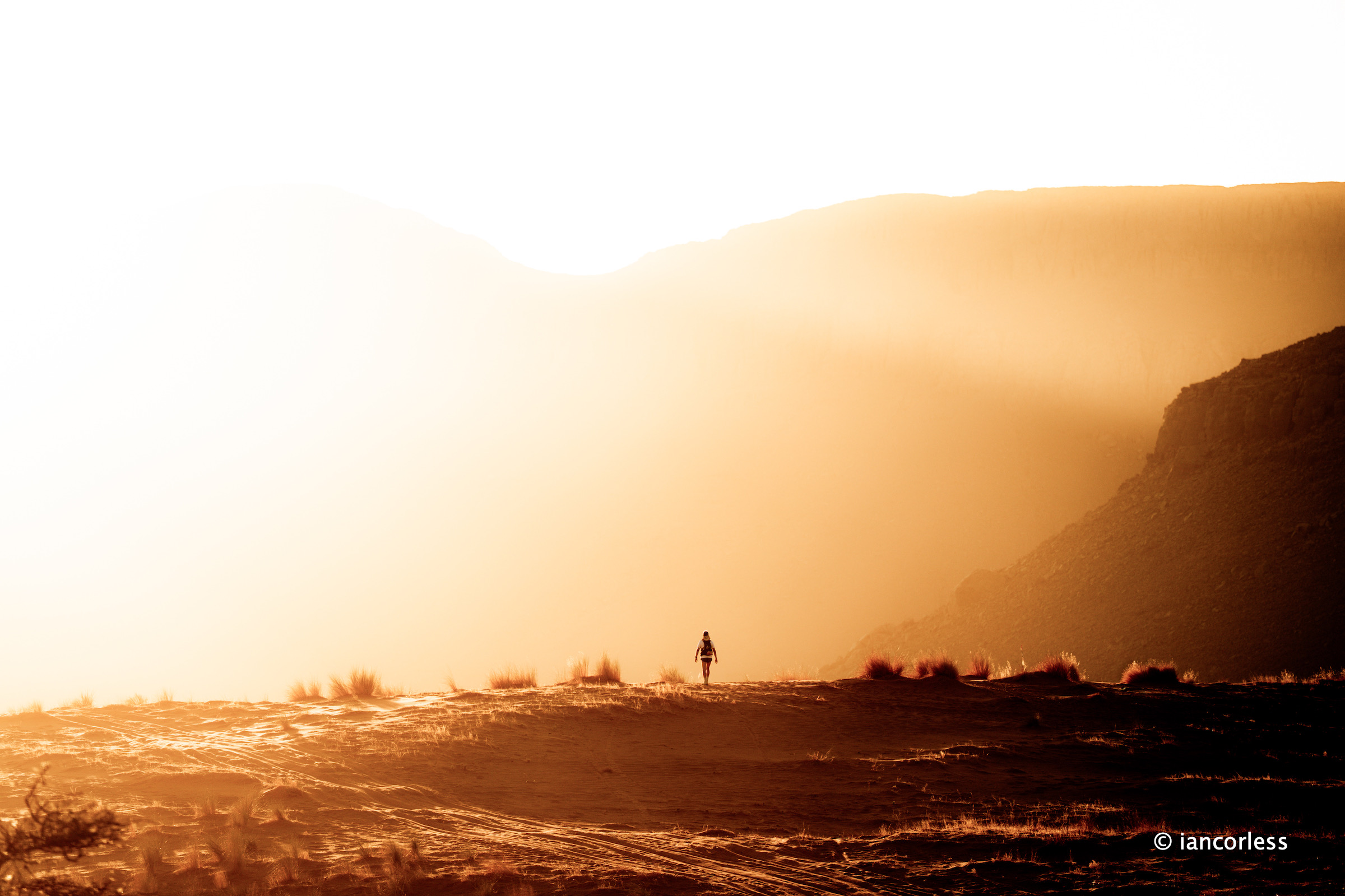
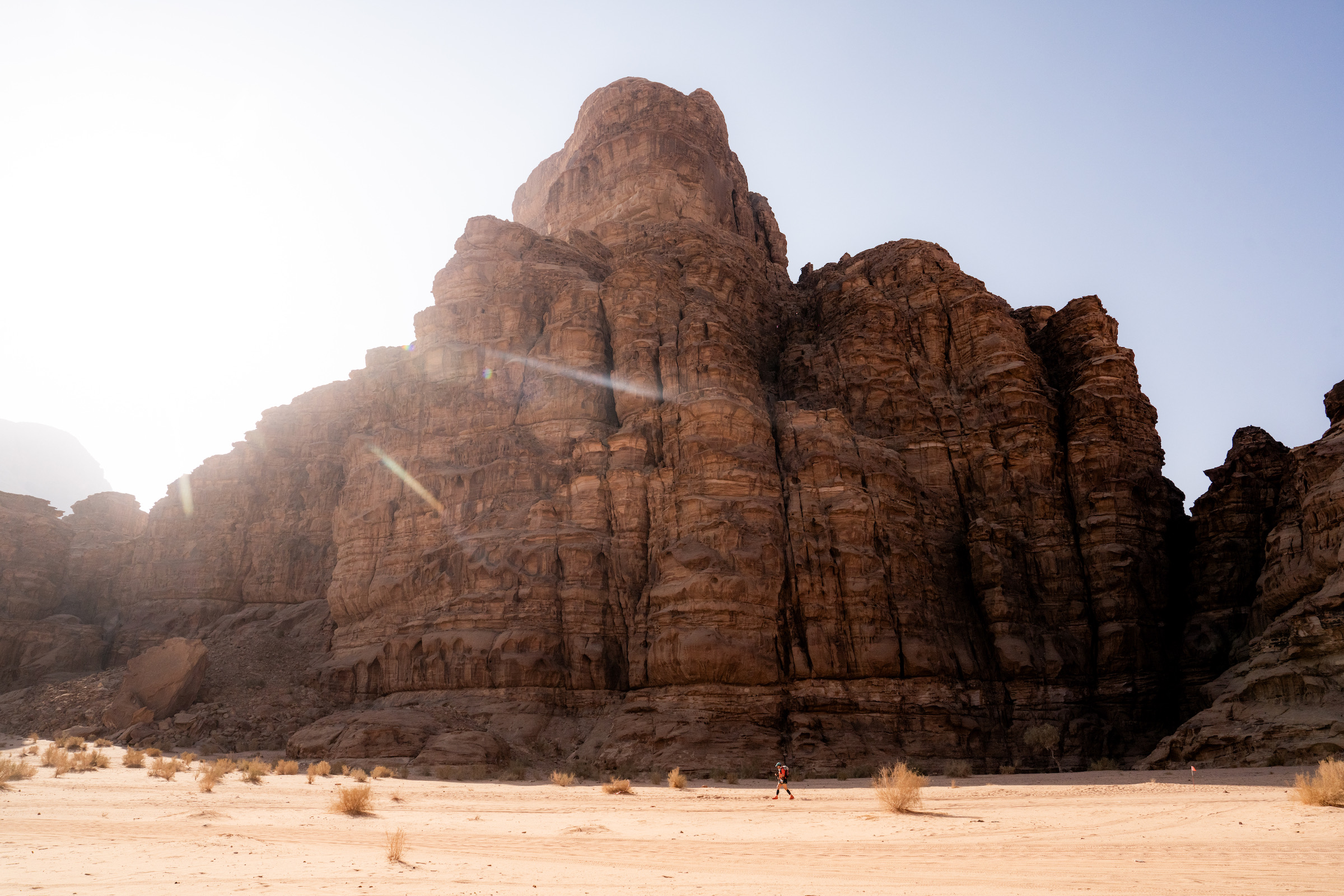
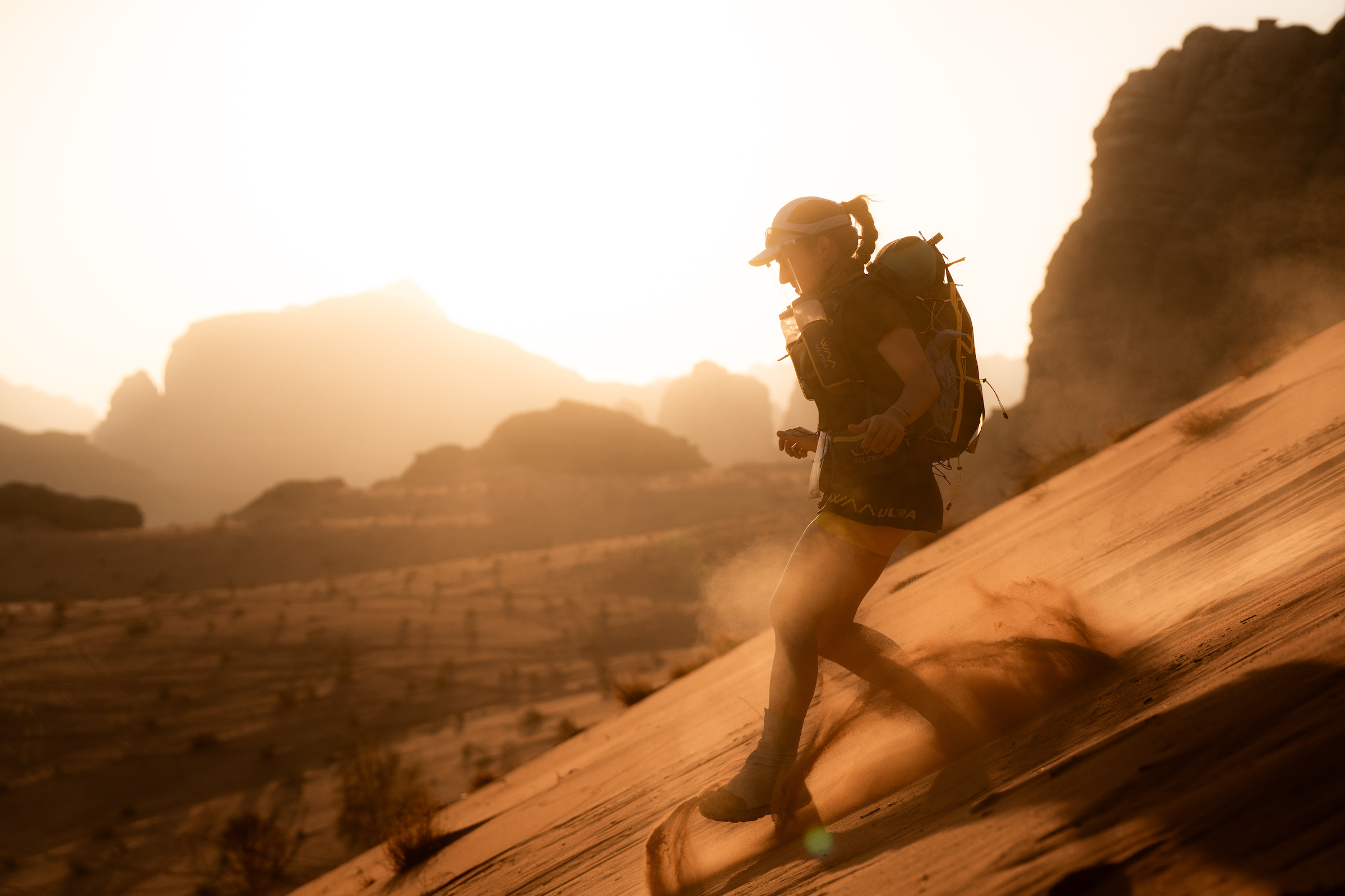
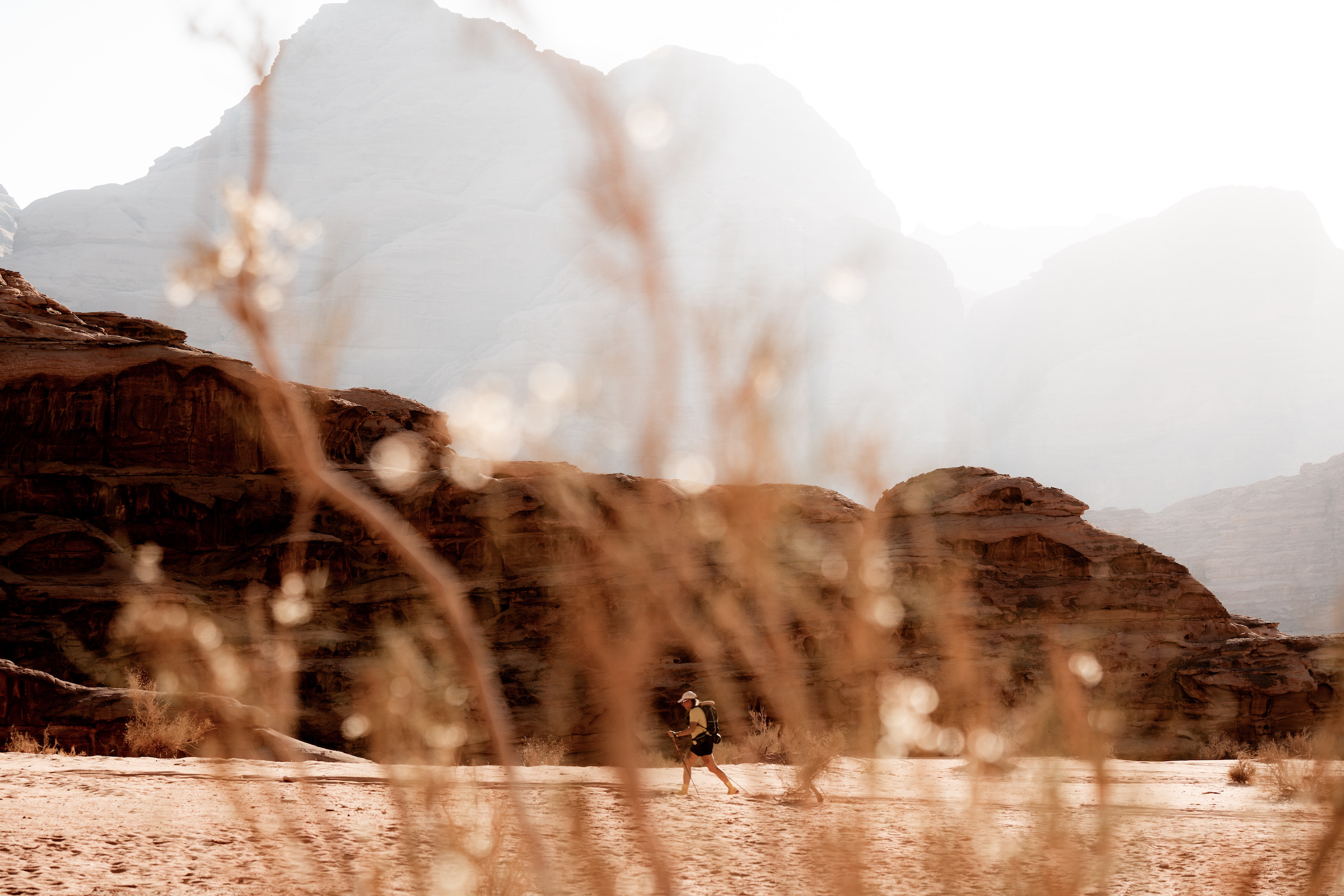
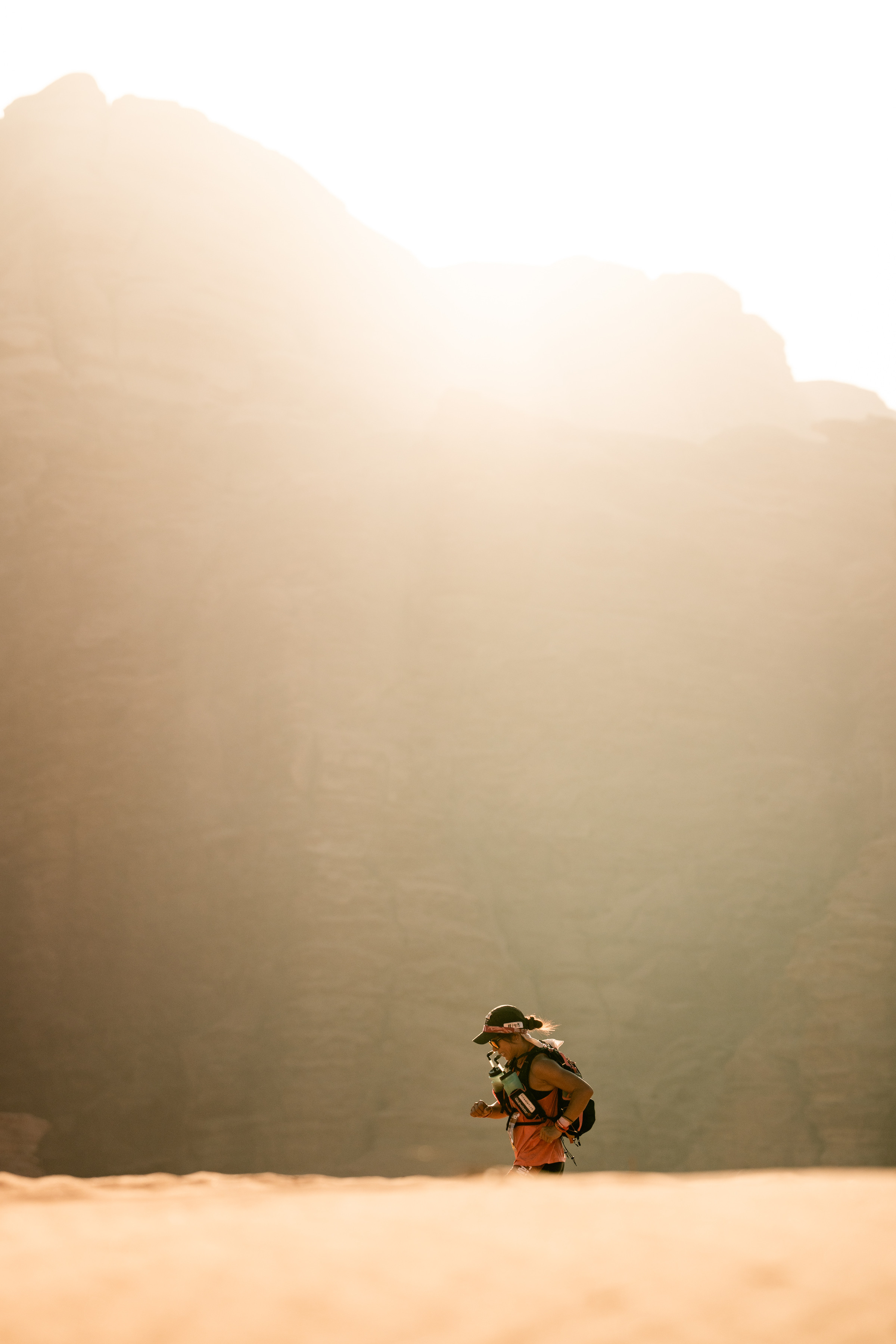
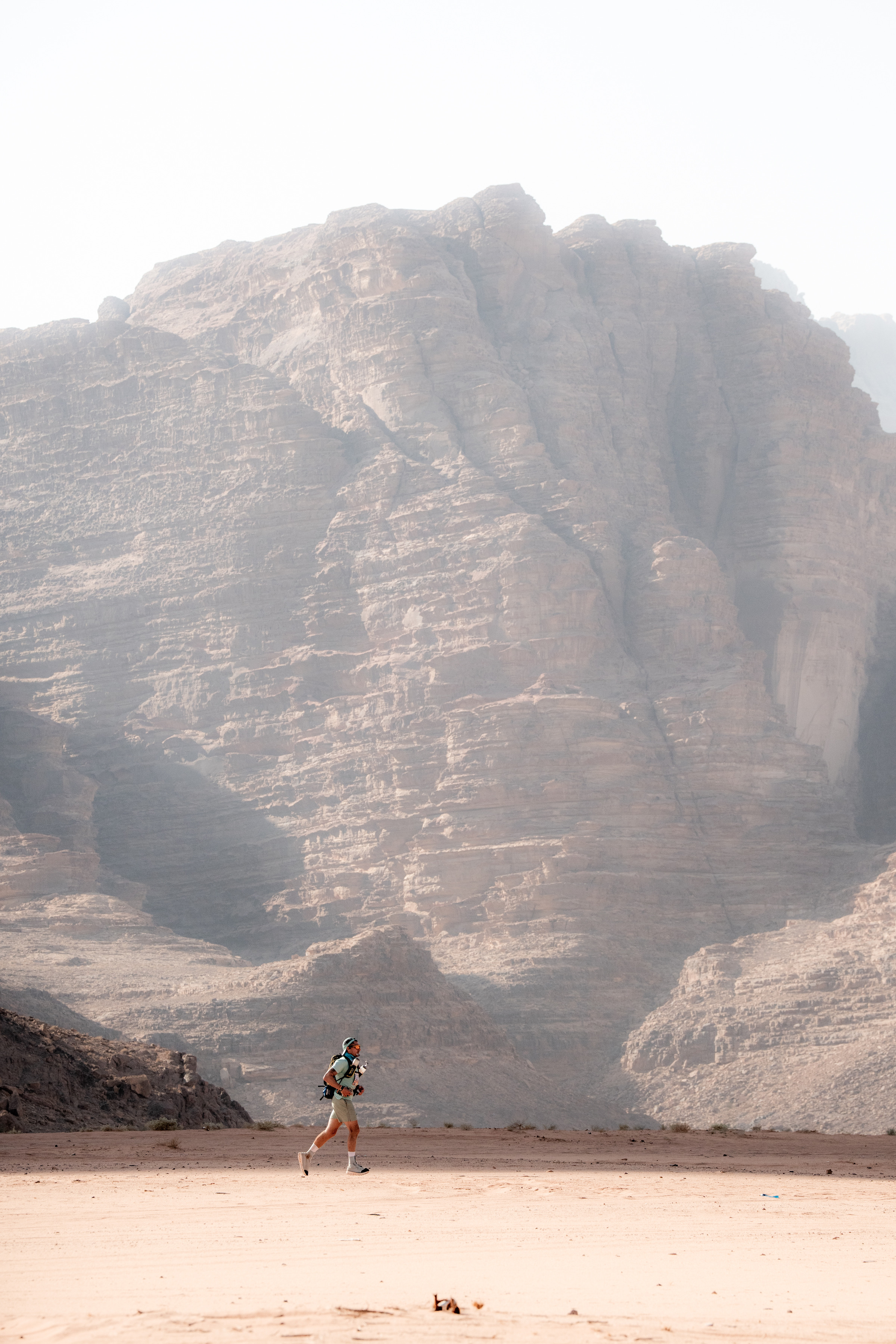
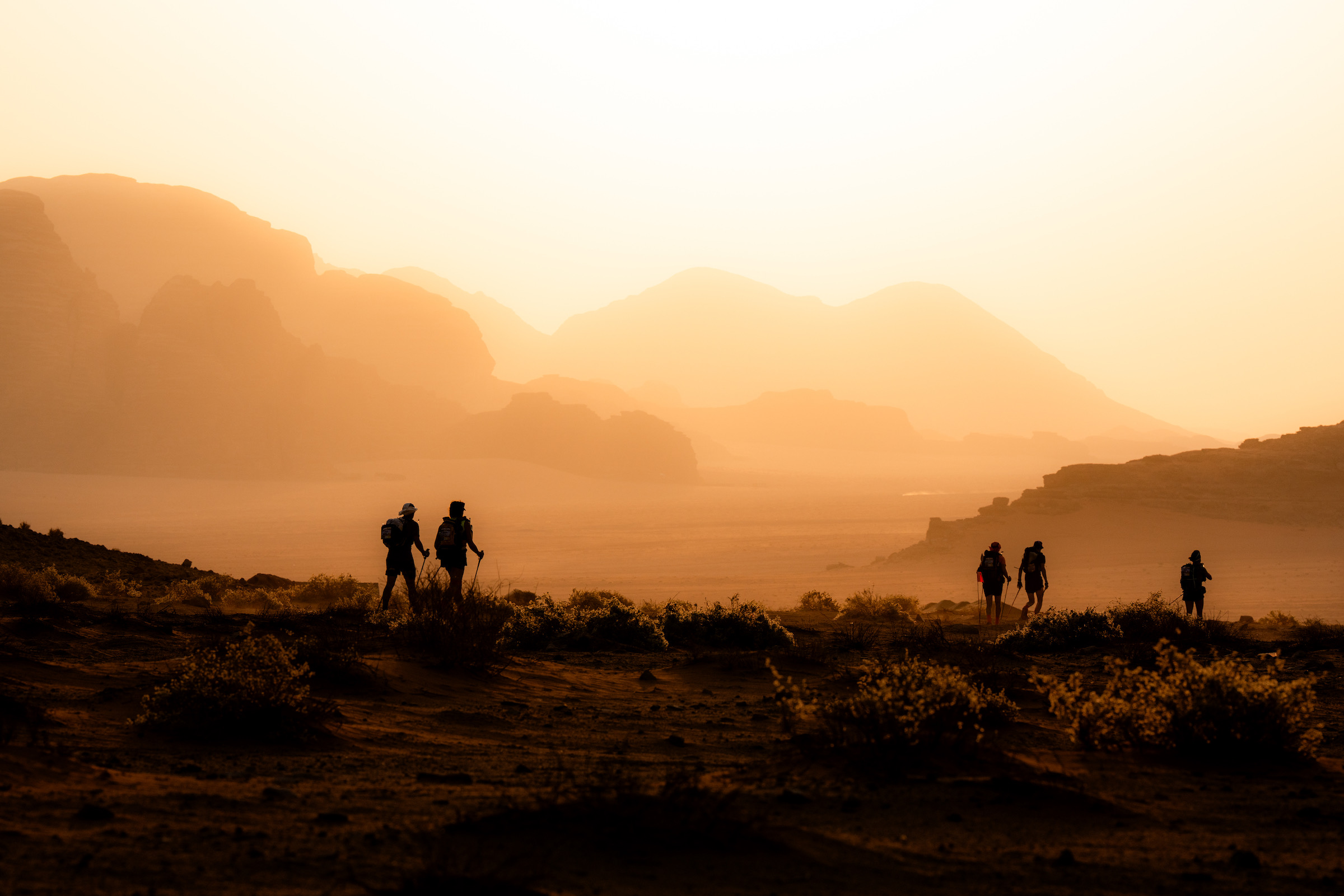
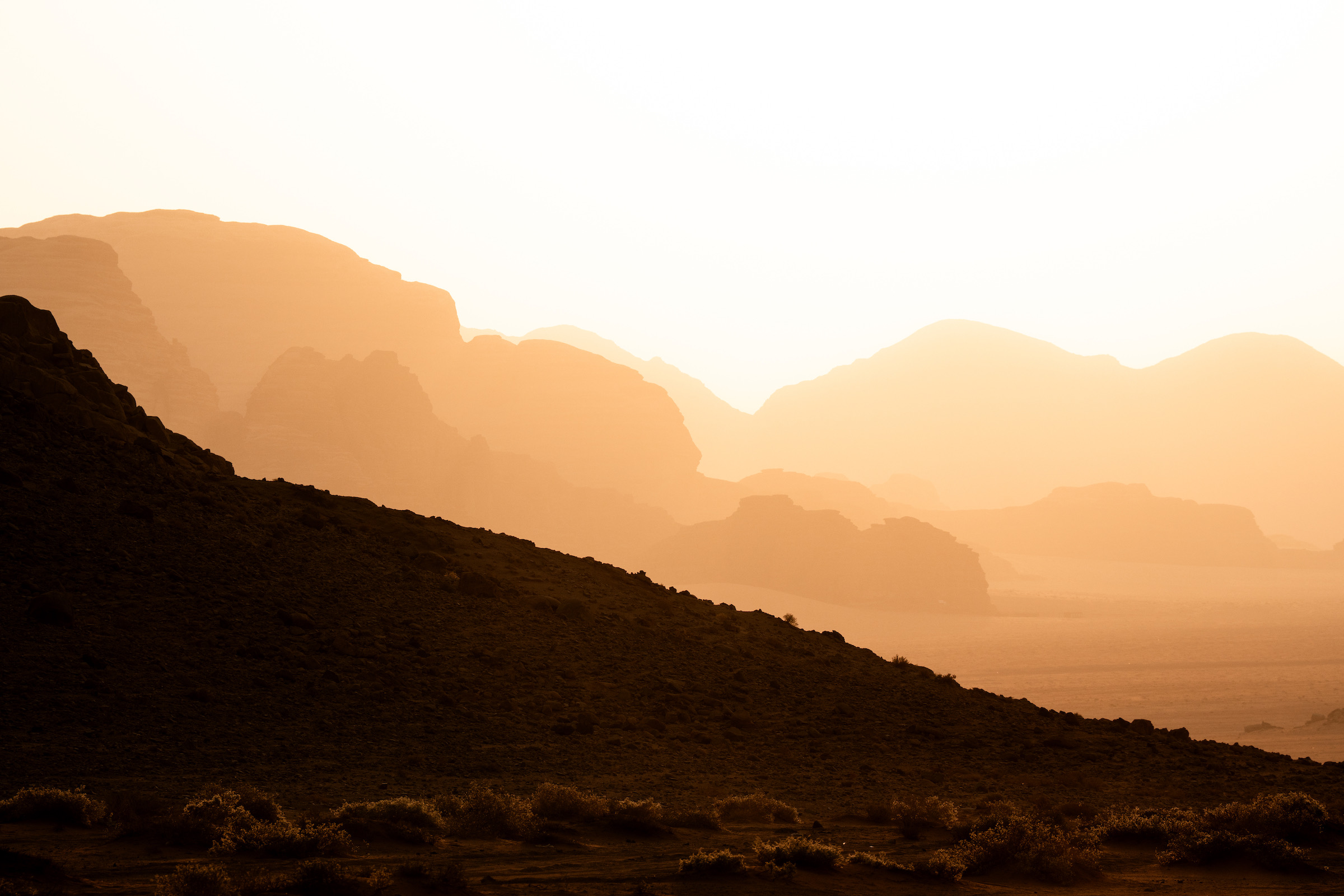
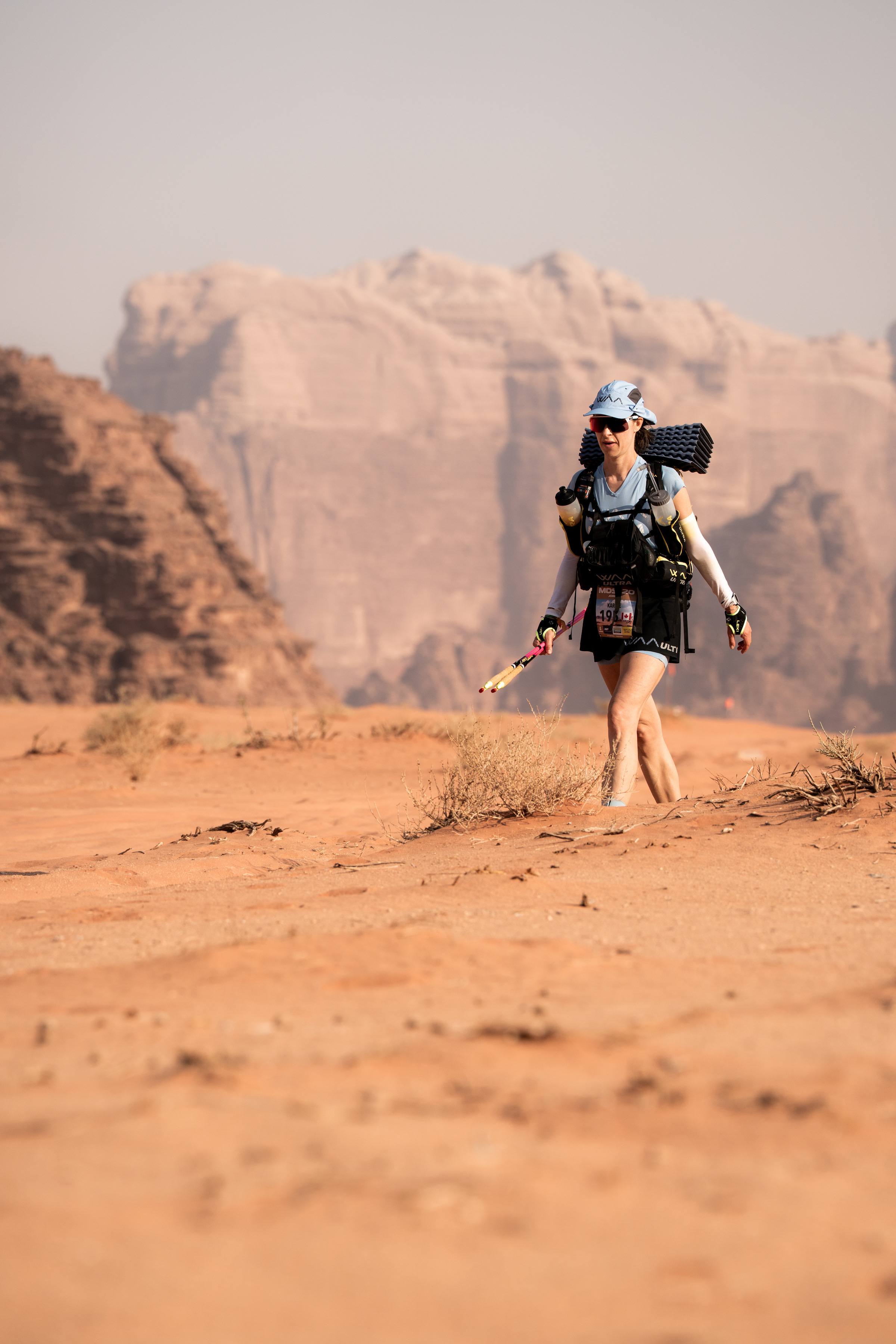
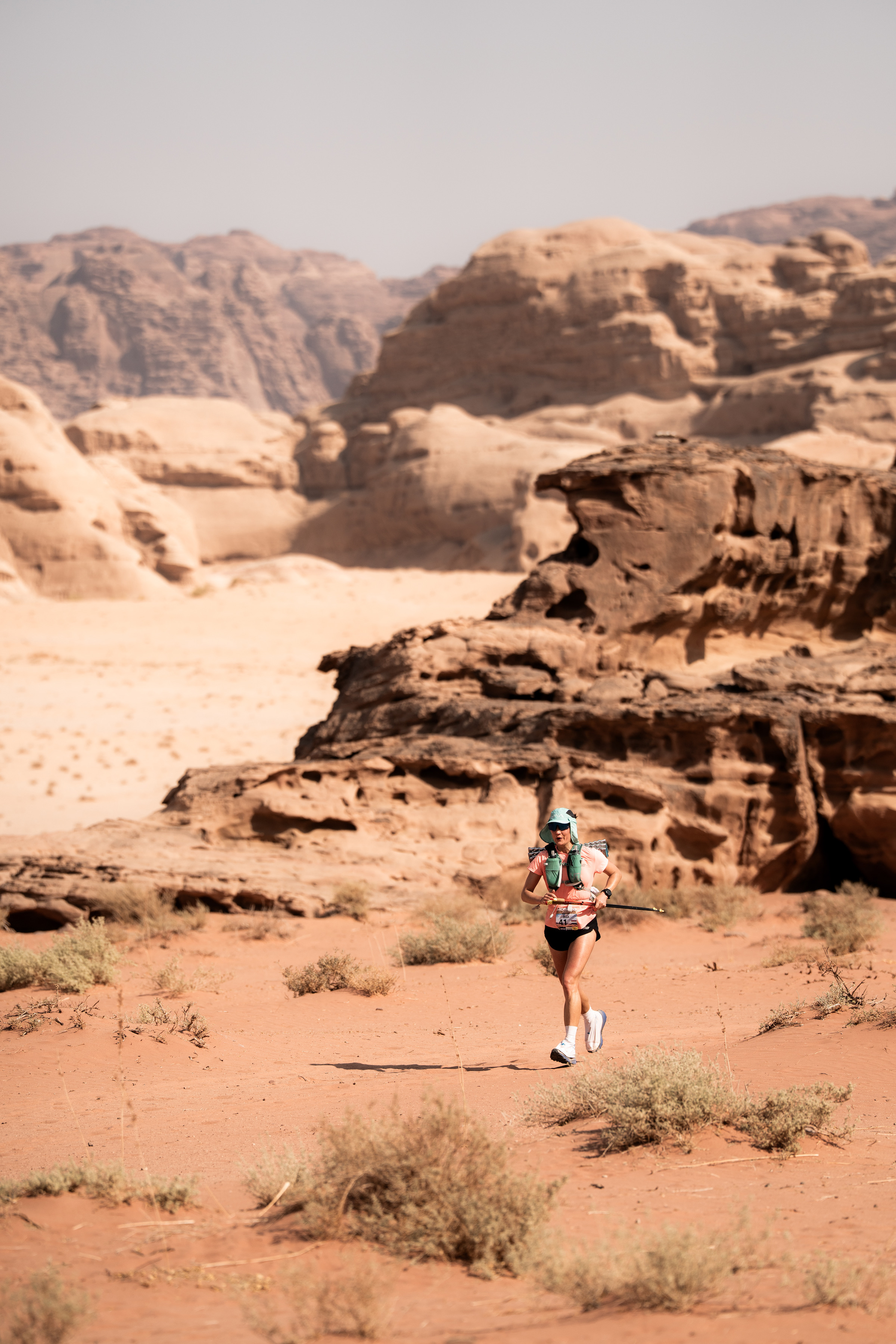
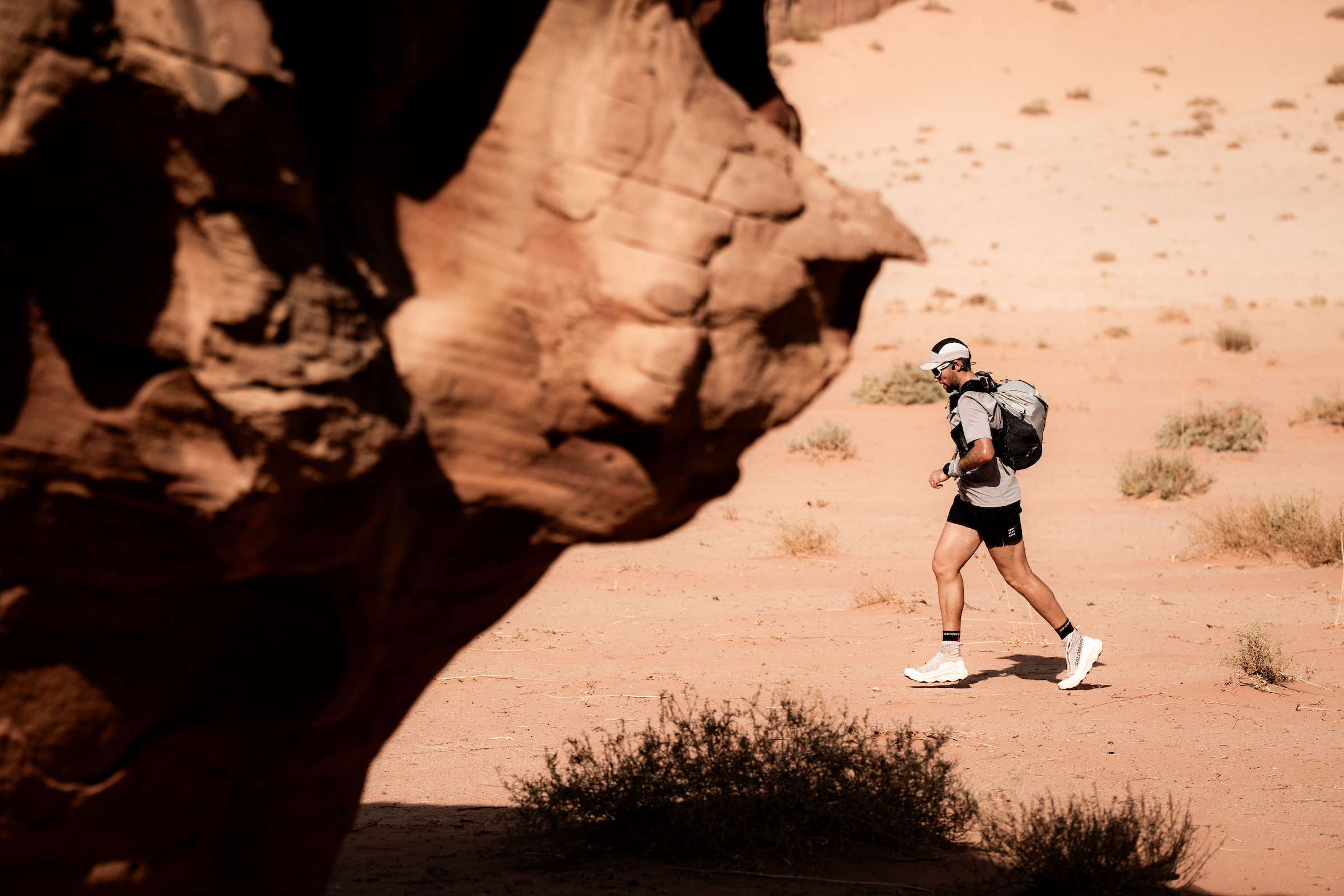
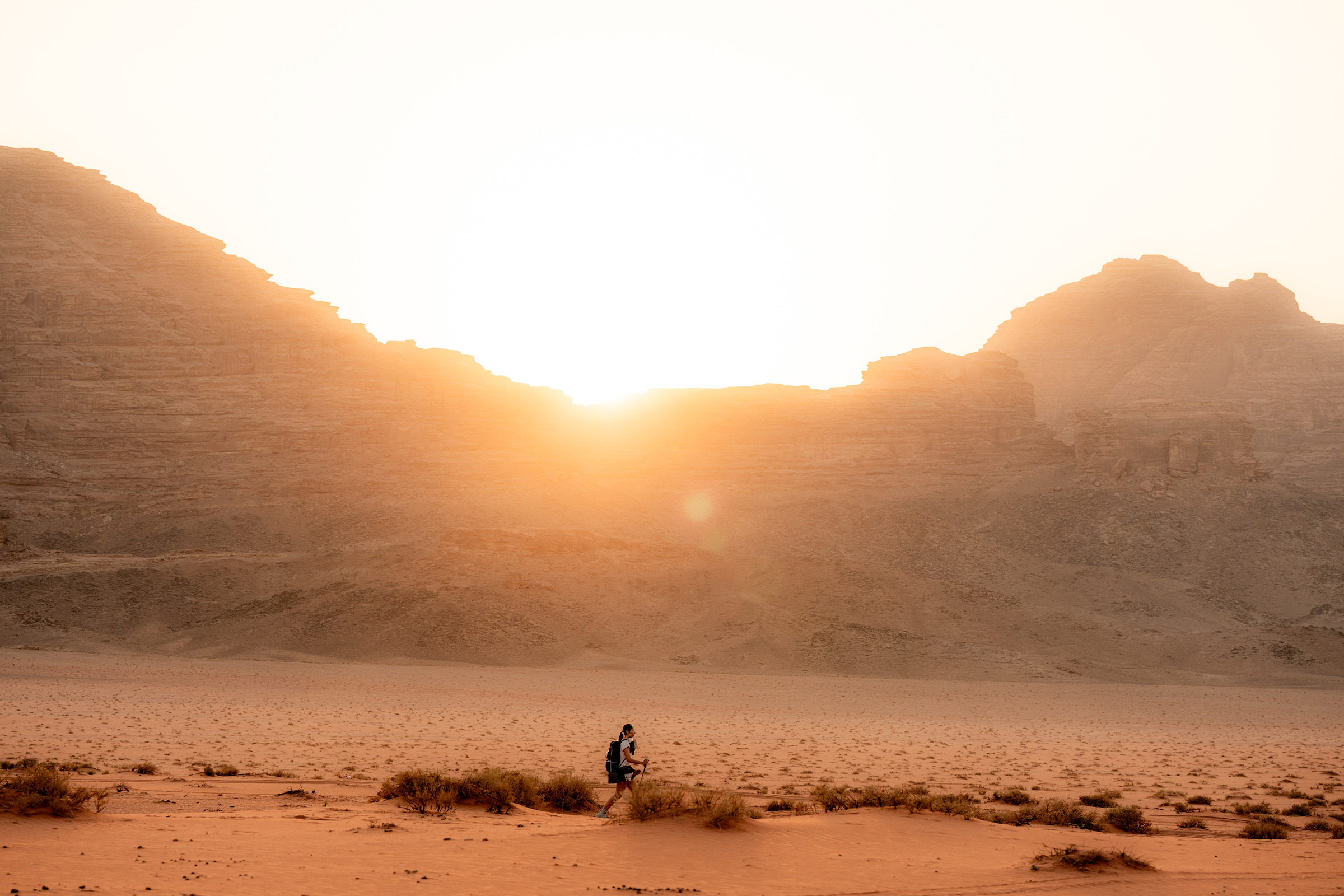
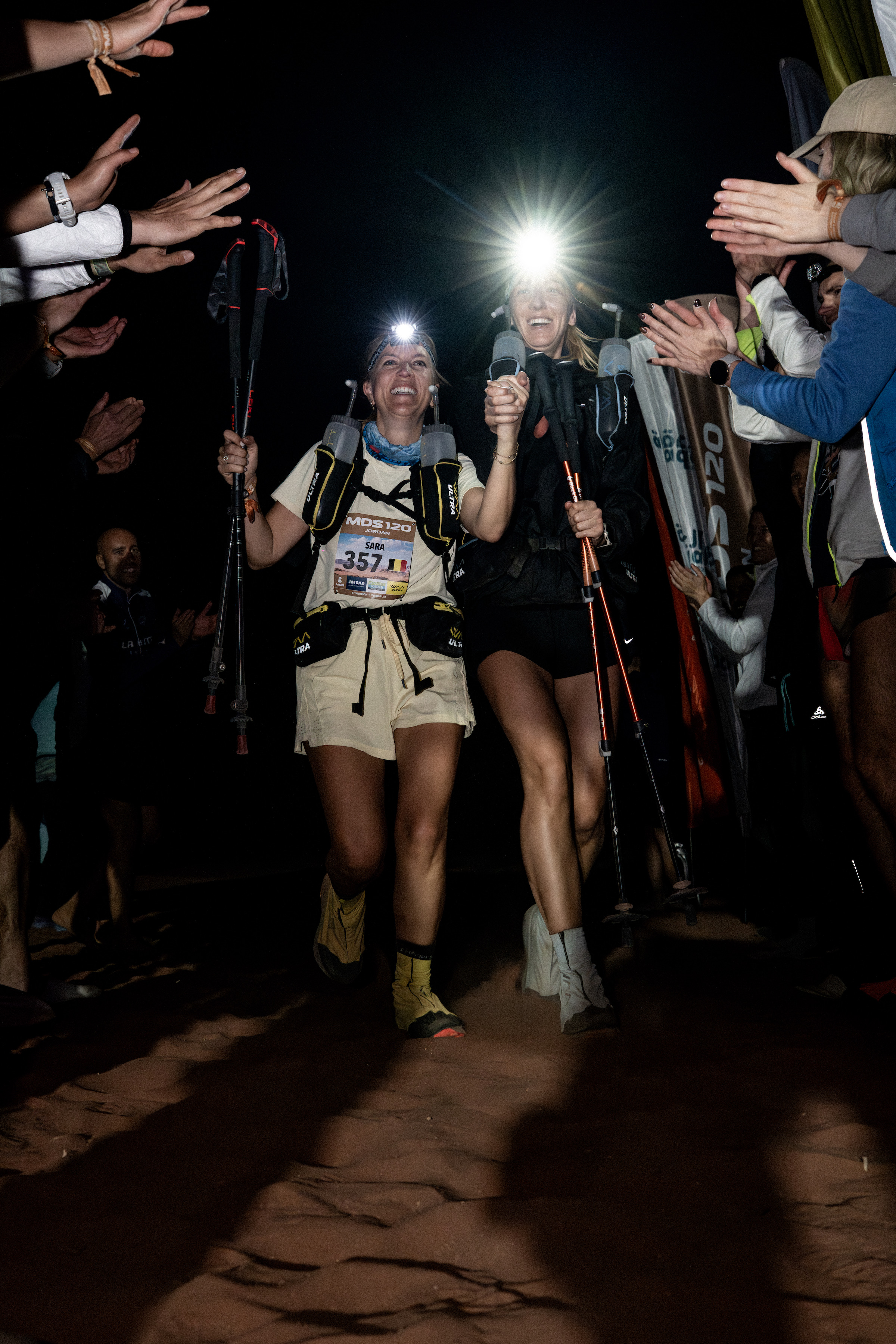
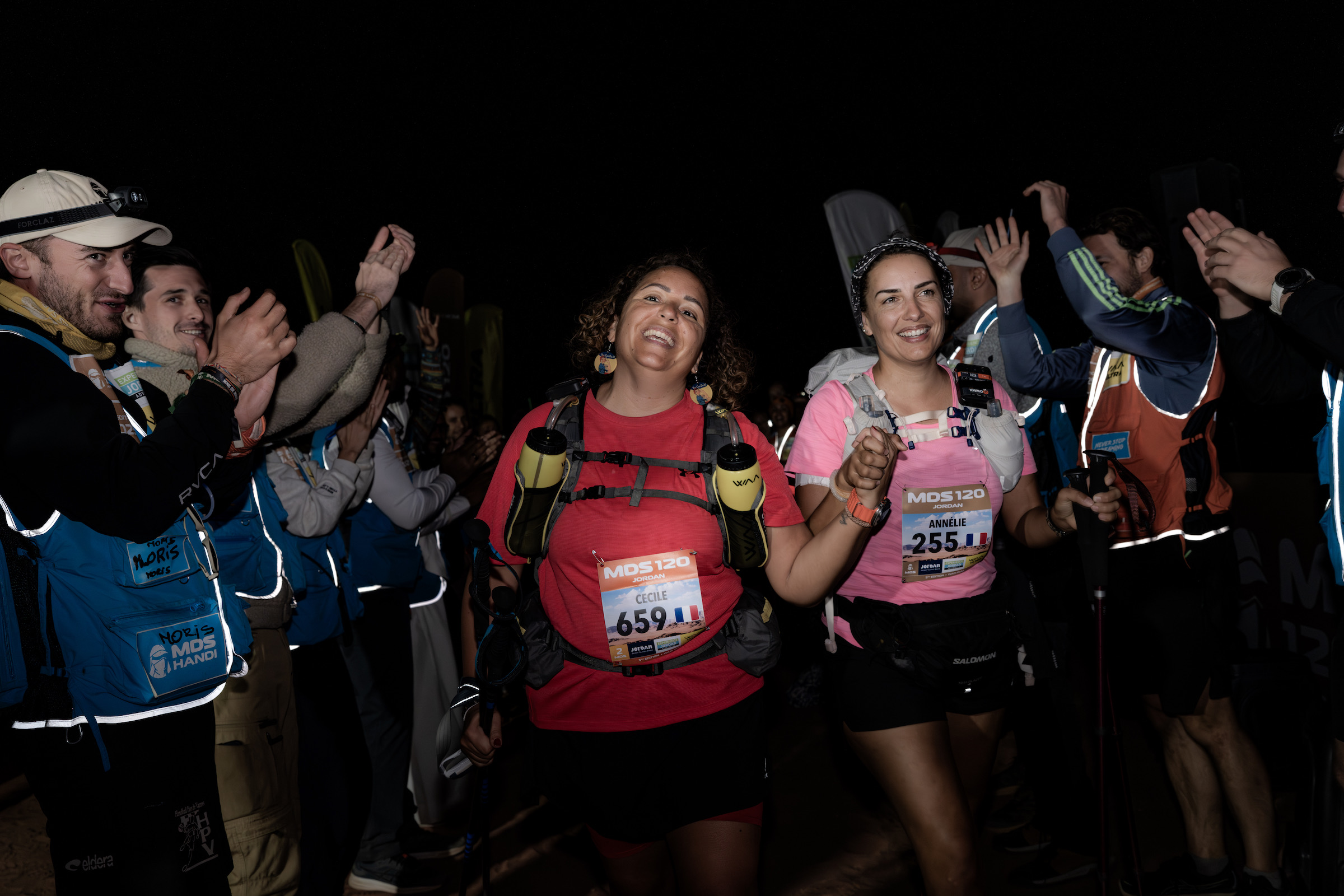
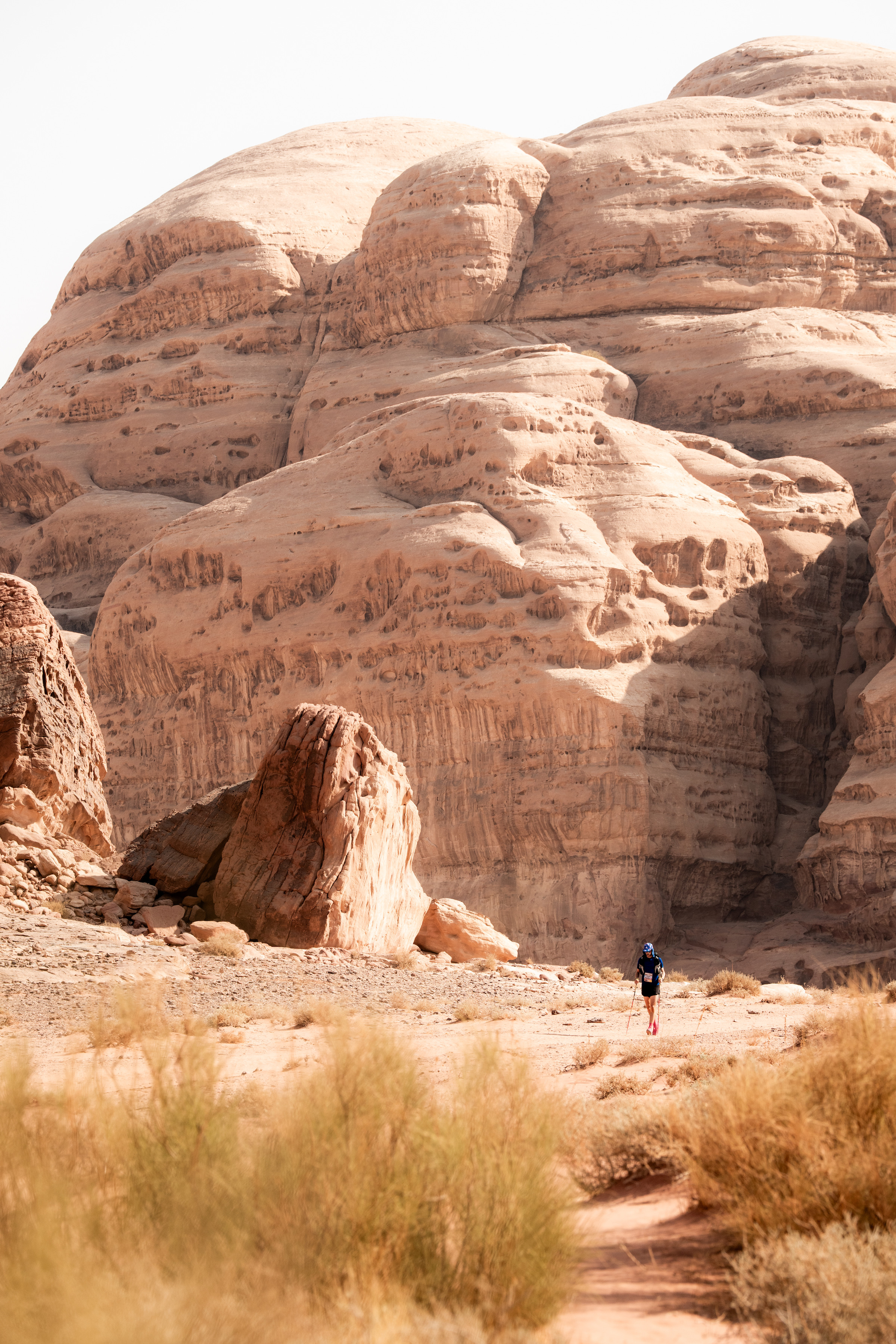
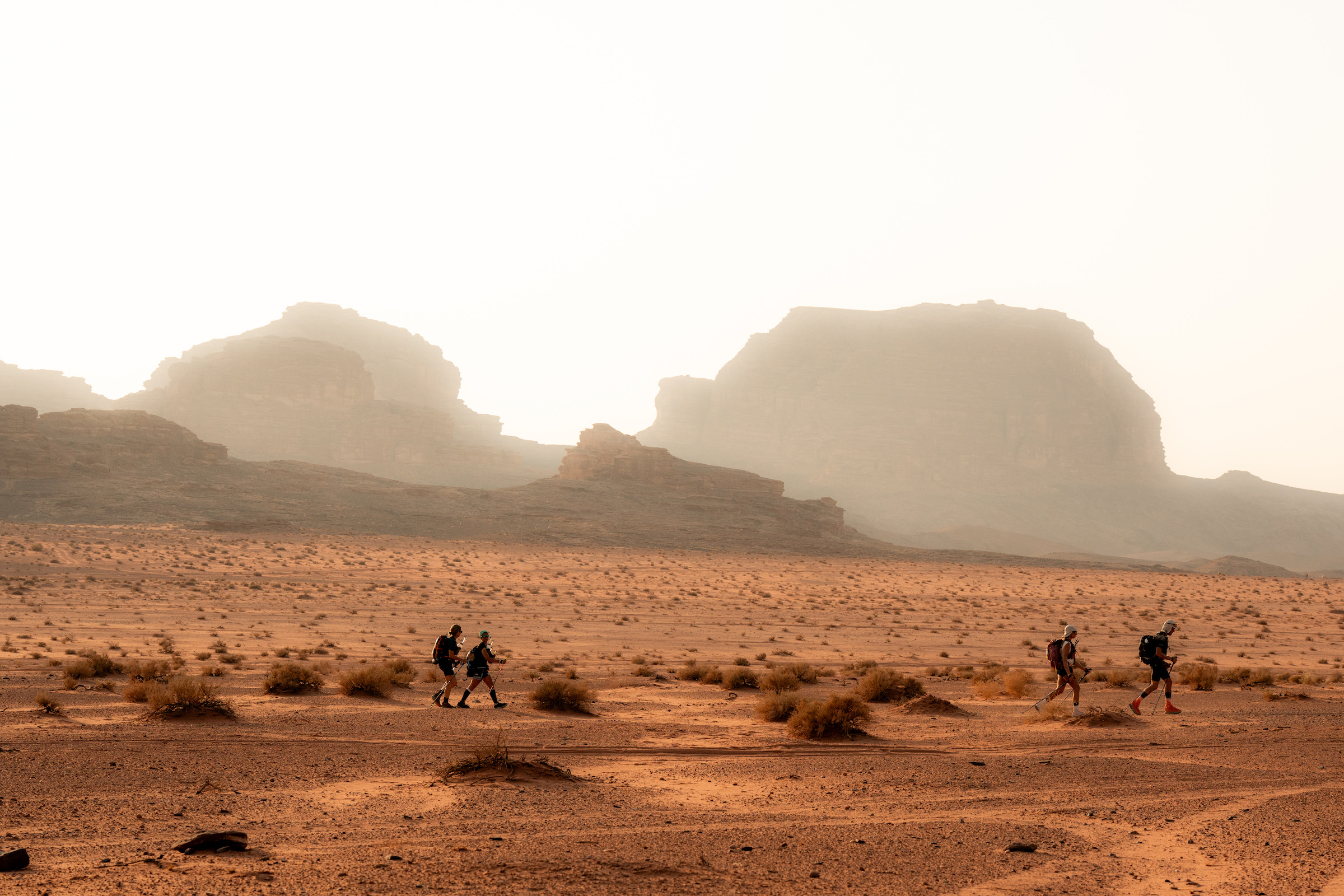
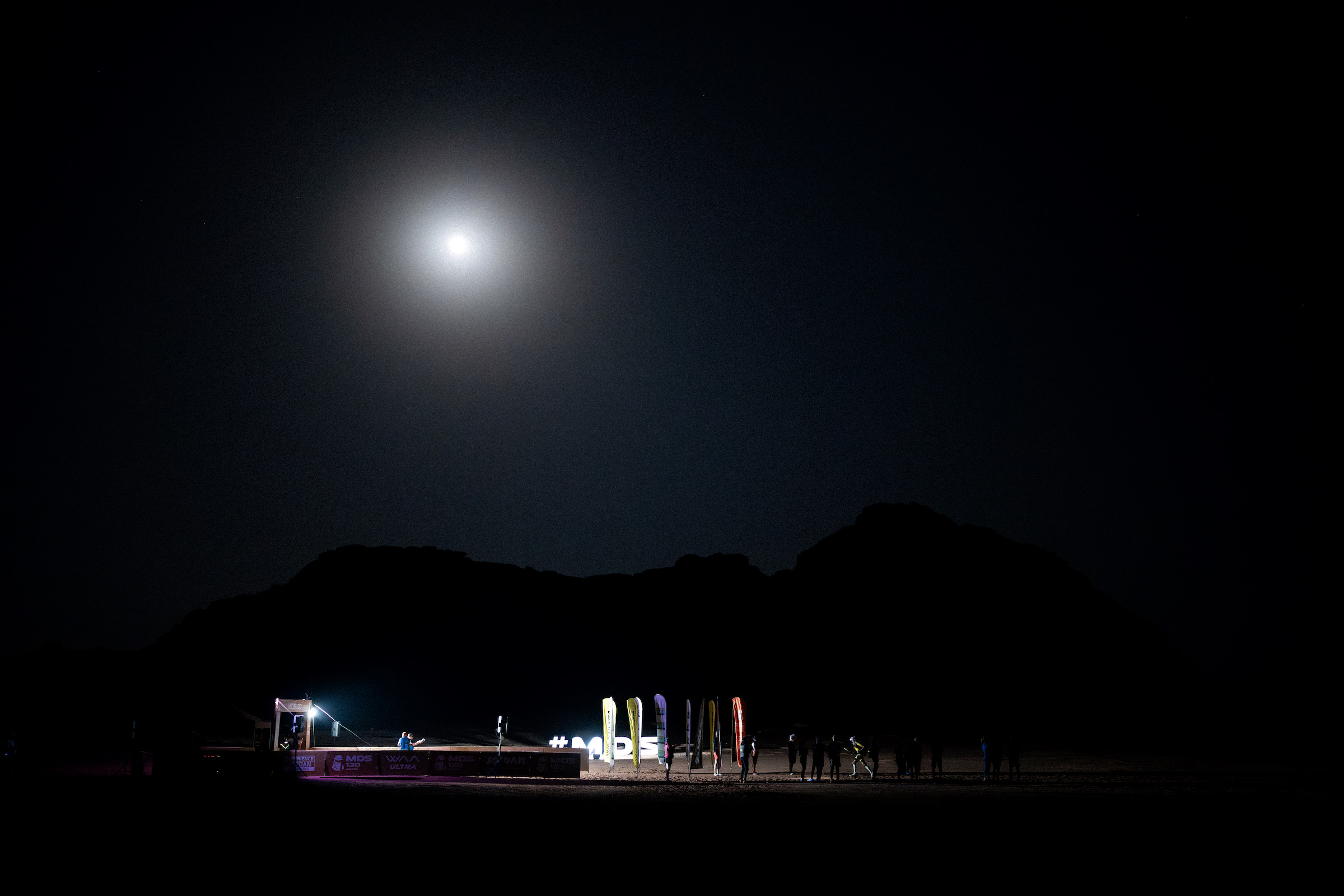
Stage 3 of MDS 120 Jordan, 26 unforgiving kilometres, darkness and the glow of head torches started a day full of promise and pressure. At sunrise, Wadi Rum ignited in gold.
This was the final stretch, the last push through soft sand, searing silence, and soul-stirring scenery. One last chance to earn the medal. One last trial through the desert’s raw beauty and brutal truth.
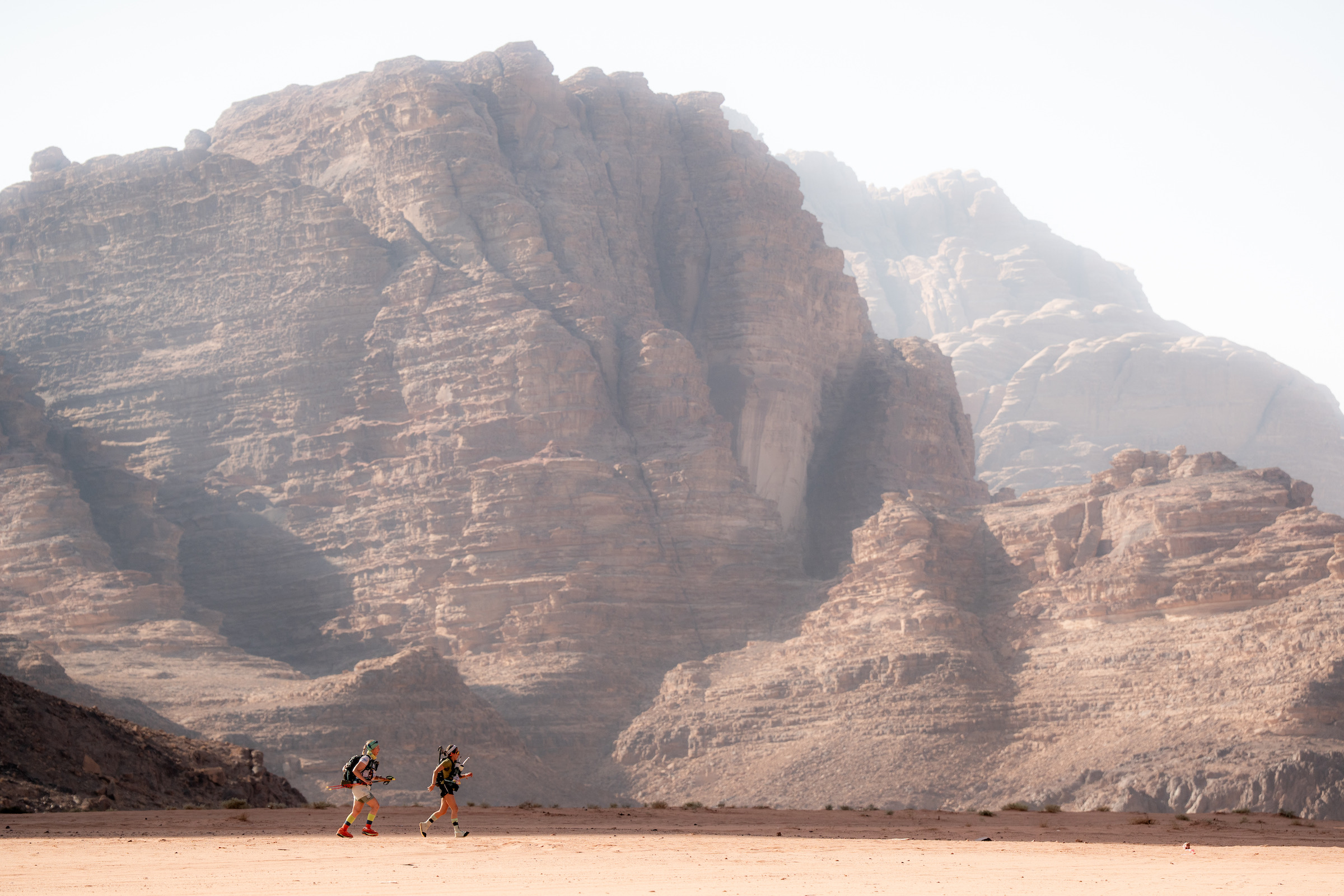
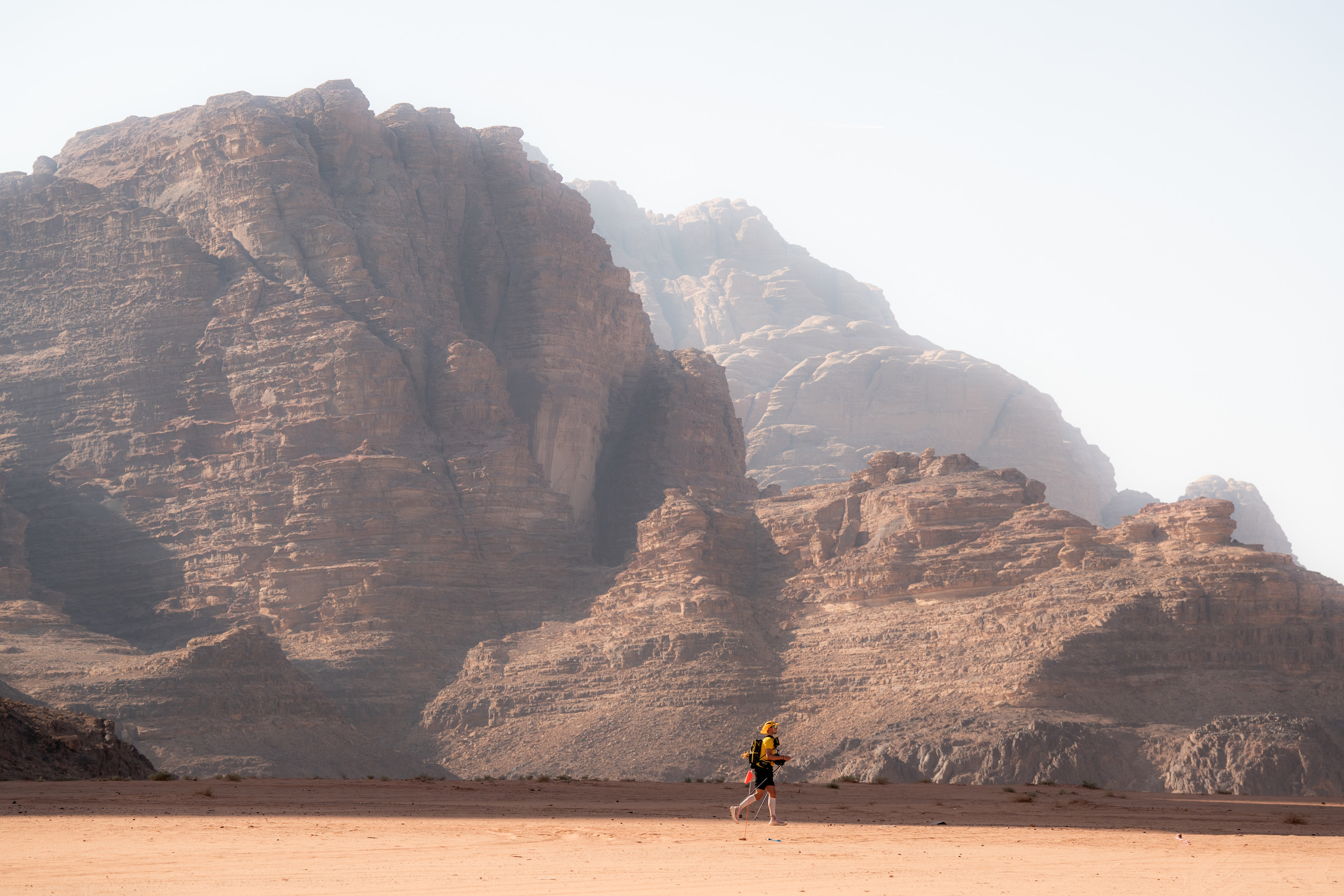
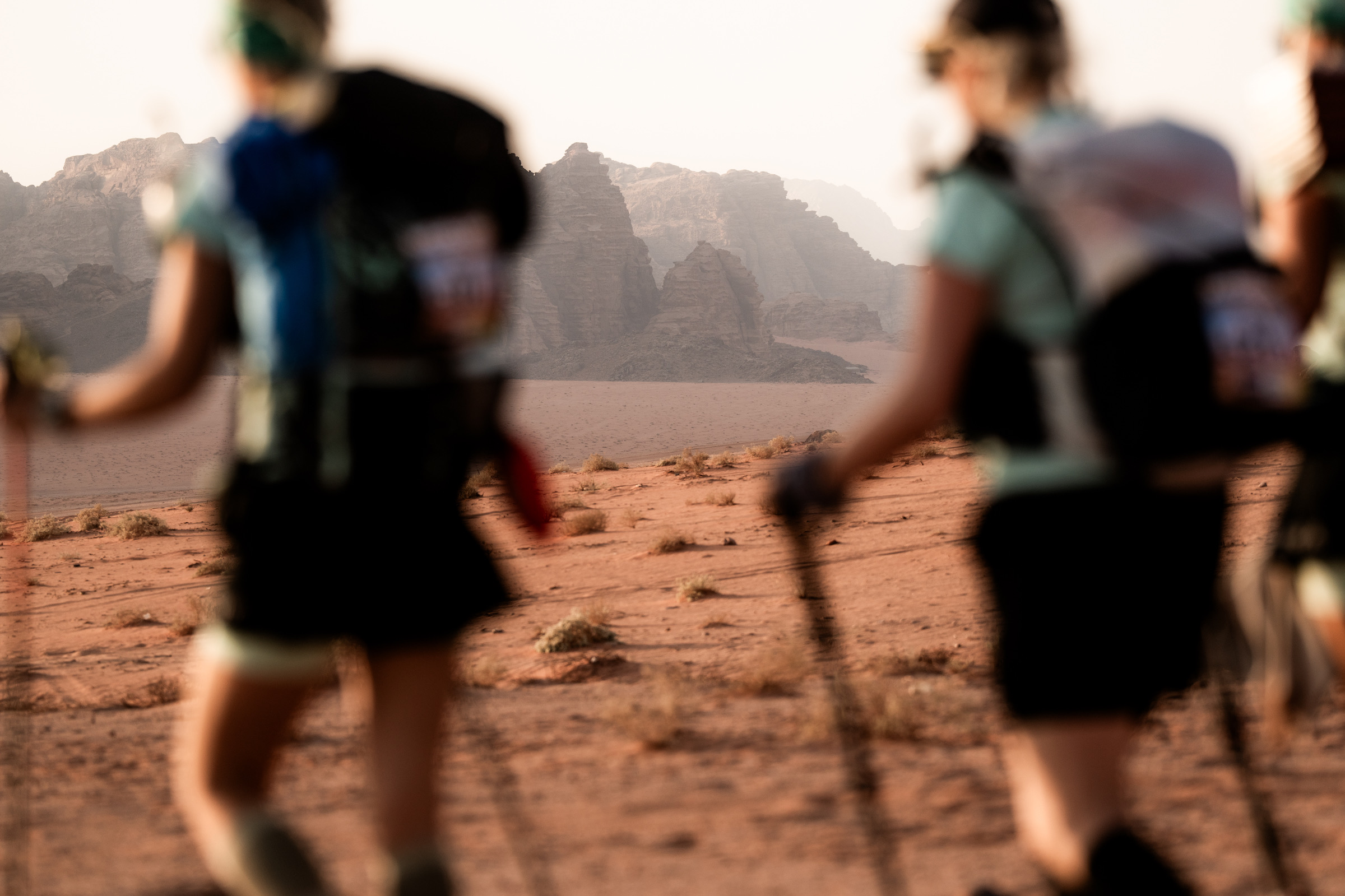
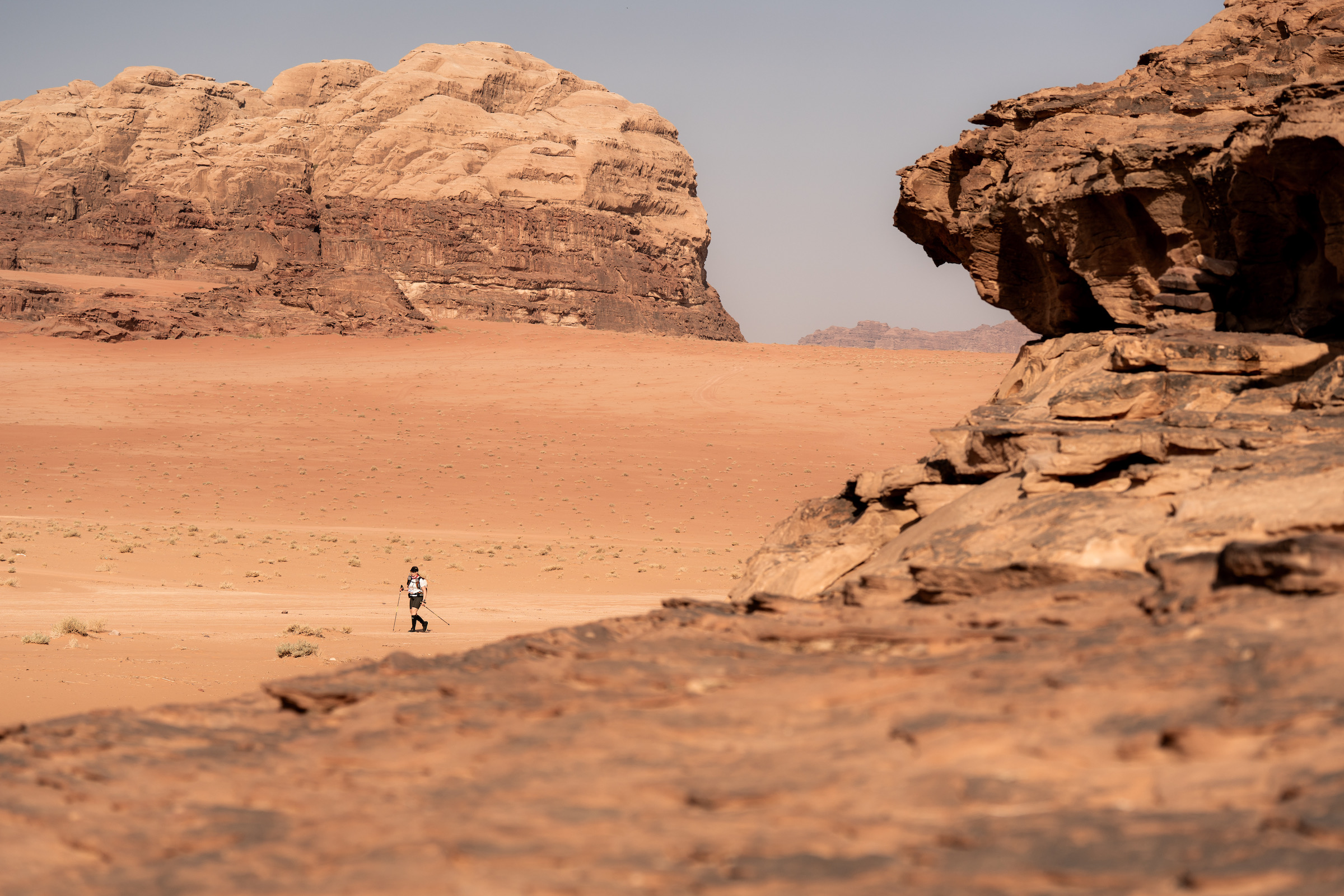
The route cut through a living painting, towering rock faces, vast plains, and dunes sculpted by centuries of wind.
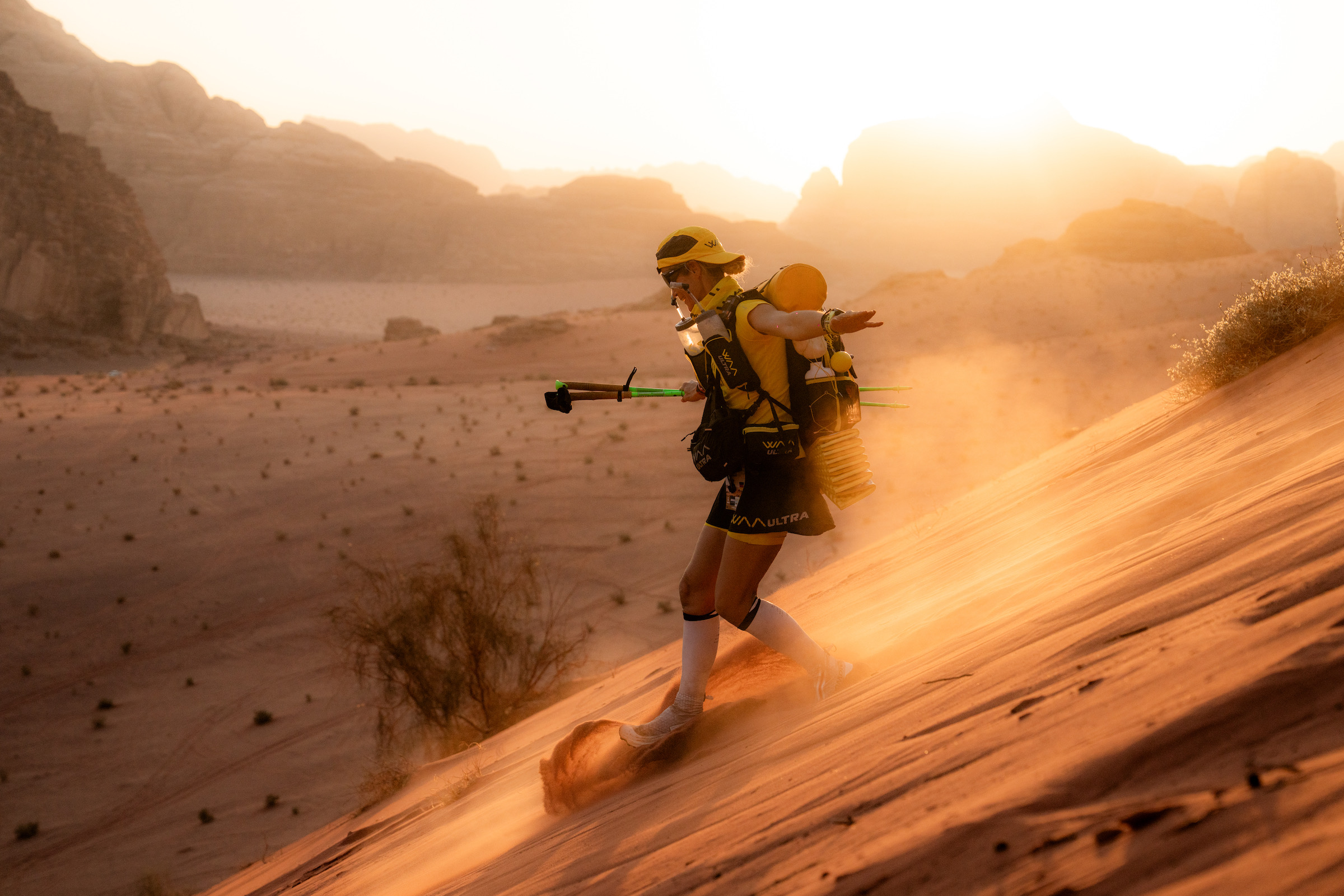
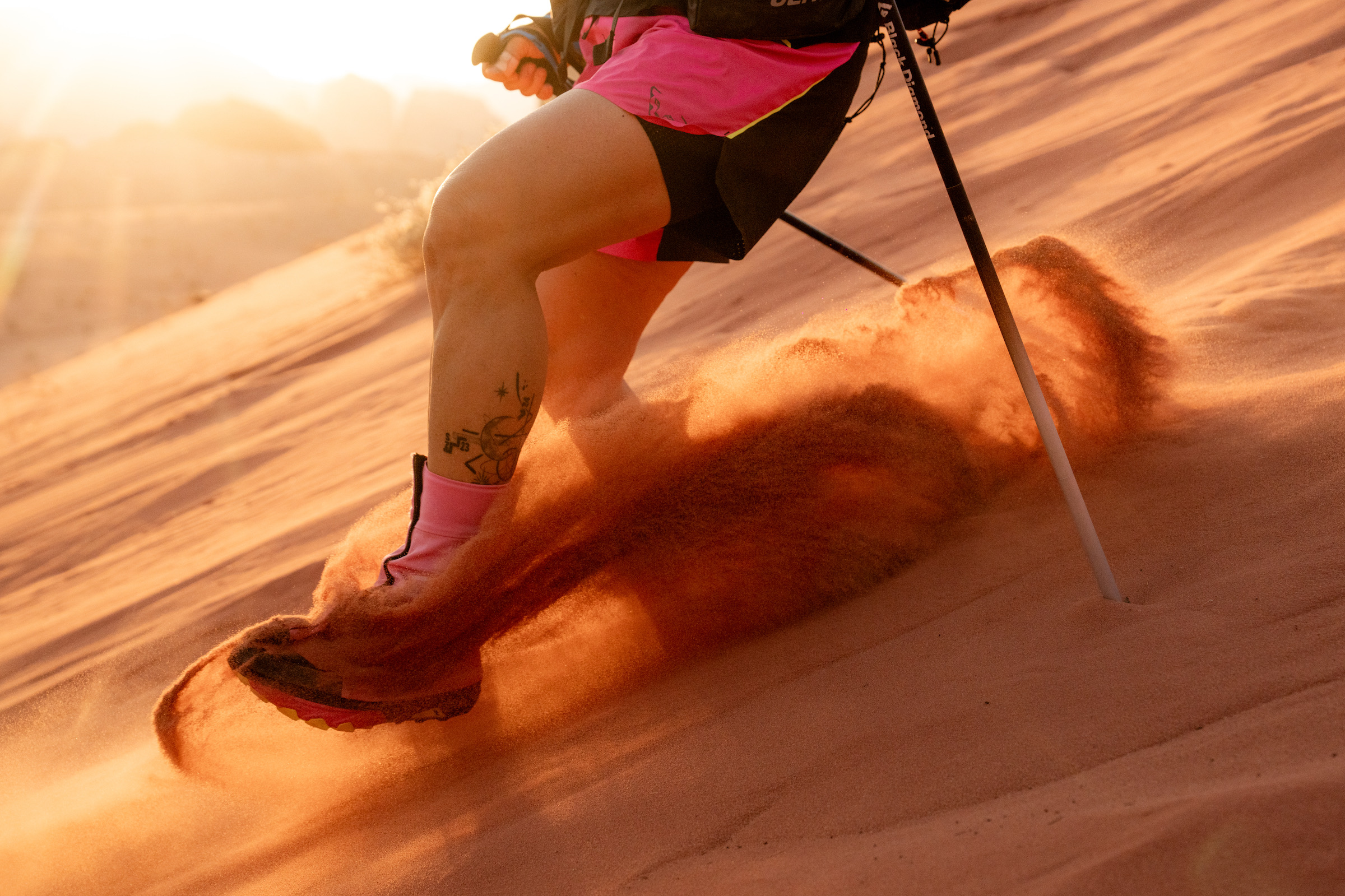
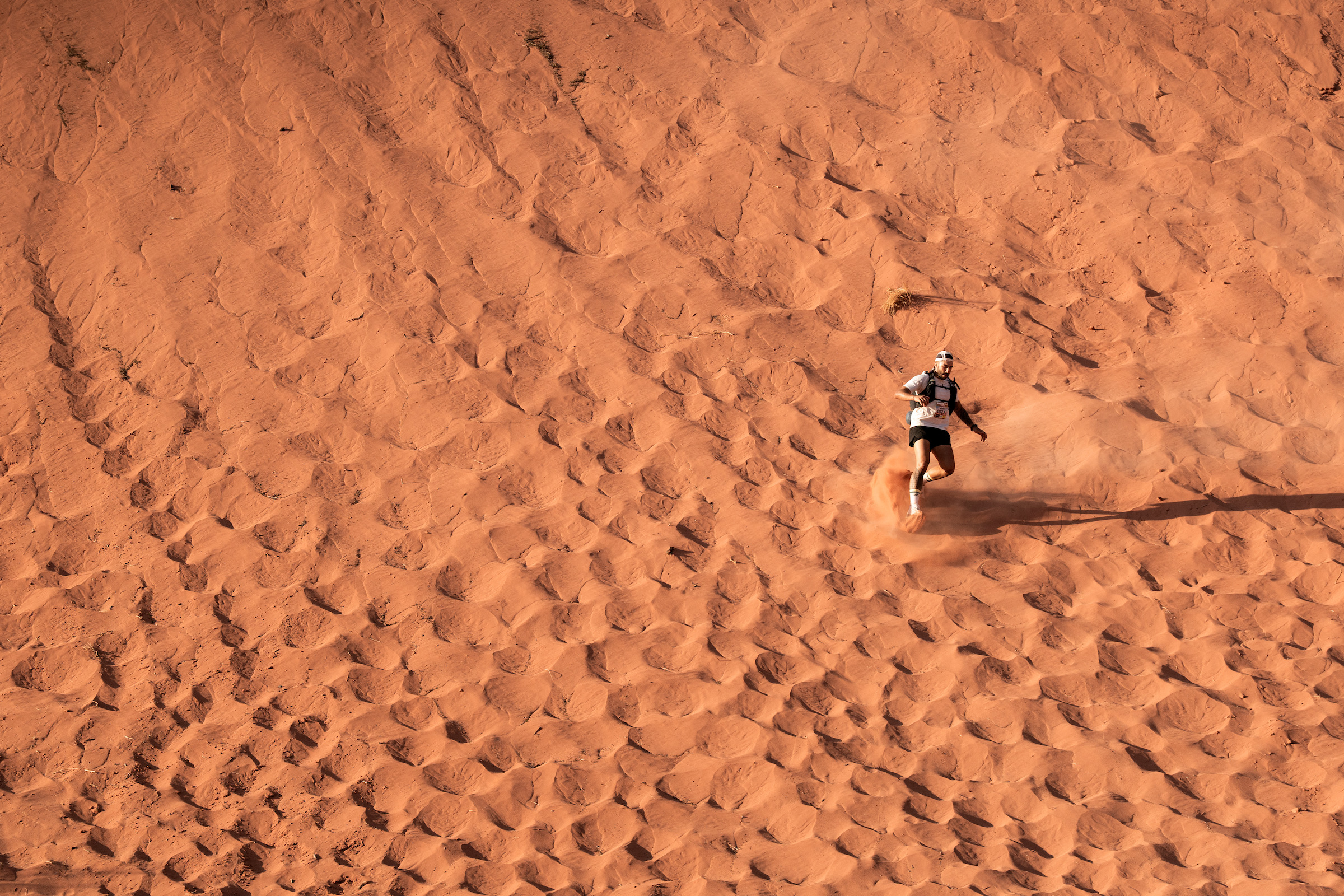
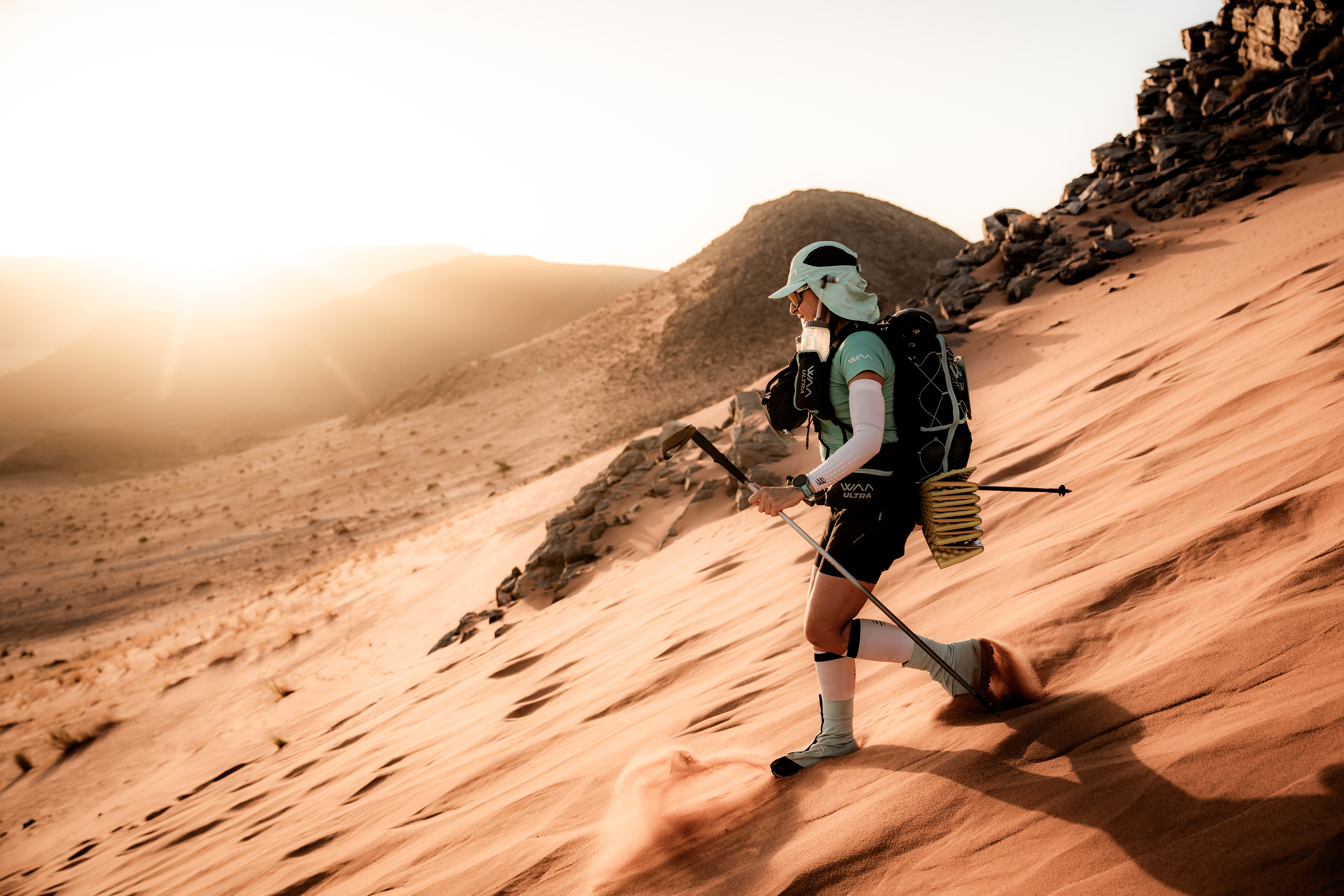
The first challenge: a steep descent down a glowing dune, soft sand cascading beneath every step. It was beautiful. It was punishing.
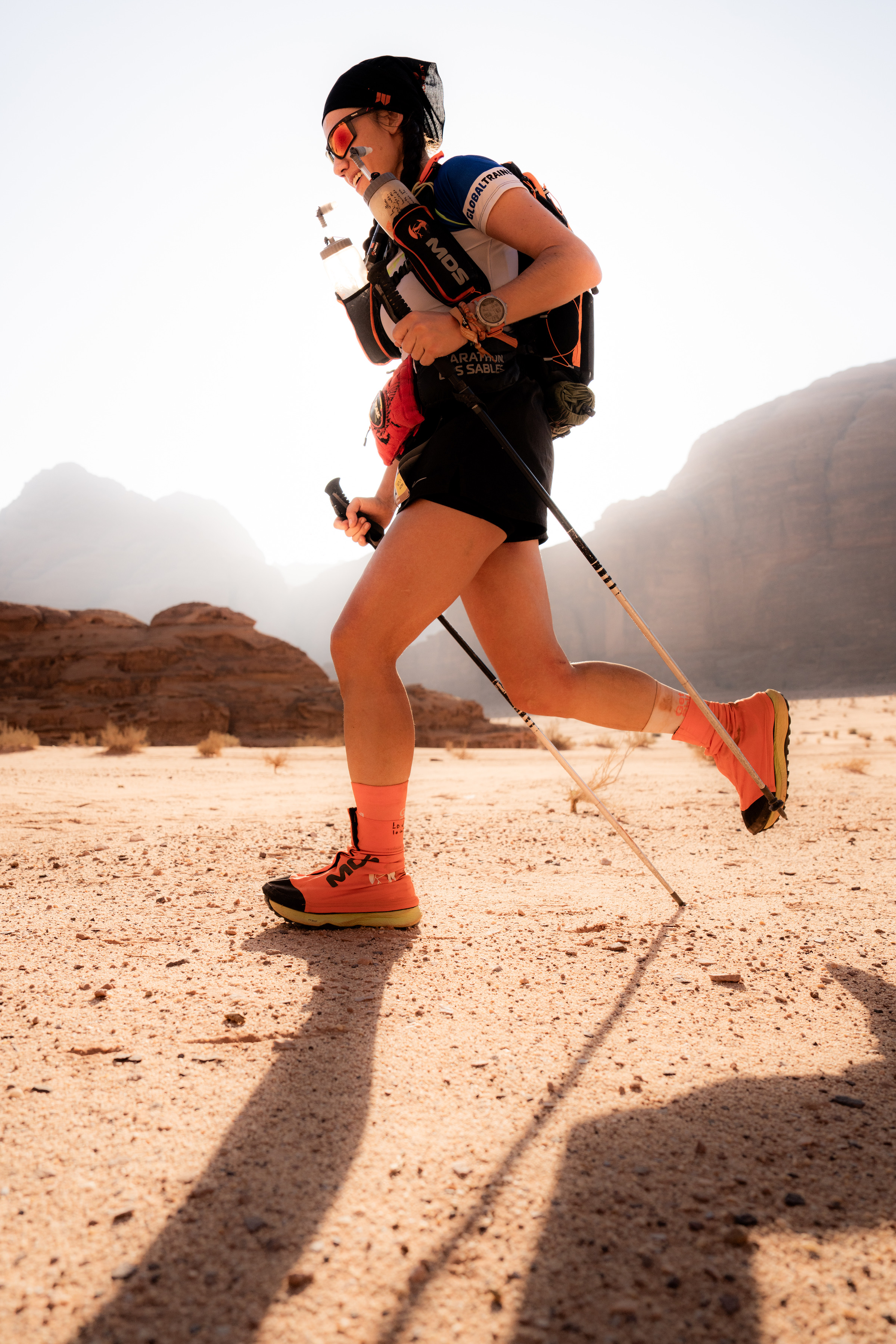
As the sun climbed, so did the heat. Every footfall dragged through thick sand. Every glance ahead revealed more of the same: no shortcuts, no reprieve, just the relentless call to keep going.
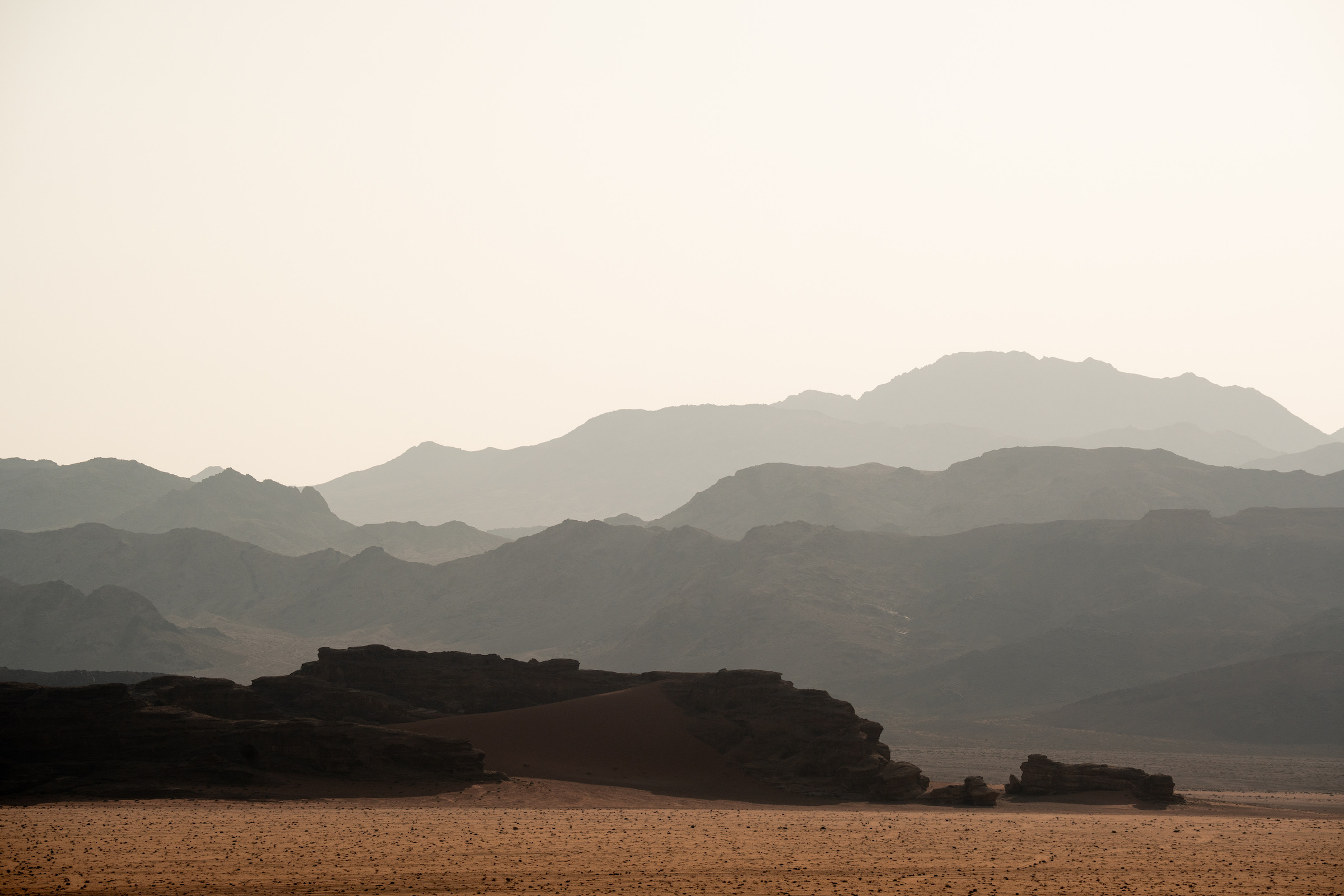
The terrain twisted between jagged mountains and flat expanses that played tricks on your sense of distance. Wadi Rum doesn’t offer false hope, only real demands. But in that, it gives something rare – clarity.
At the conclusion of stage 3, runners will have logged 70, 100, or even 120 kilometres across Jordan’s desert. Stage 3 wasn’t just the final day, it was the exclamation point.
Bodies were depleted, minds frayed, but the finish line pulled like gravity.
And what a finish. The final stretch opened into a wide, sun-drenched plain, the sound of cheers carried by desert wind.
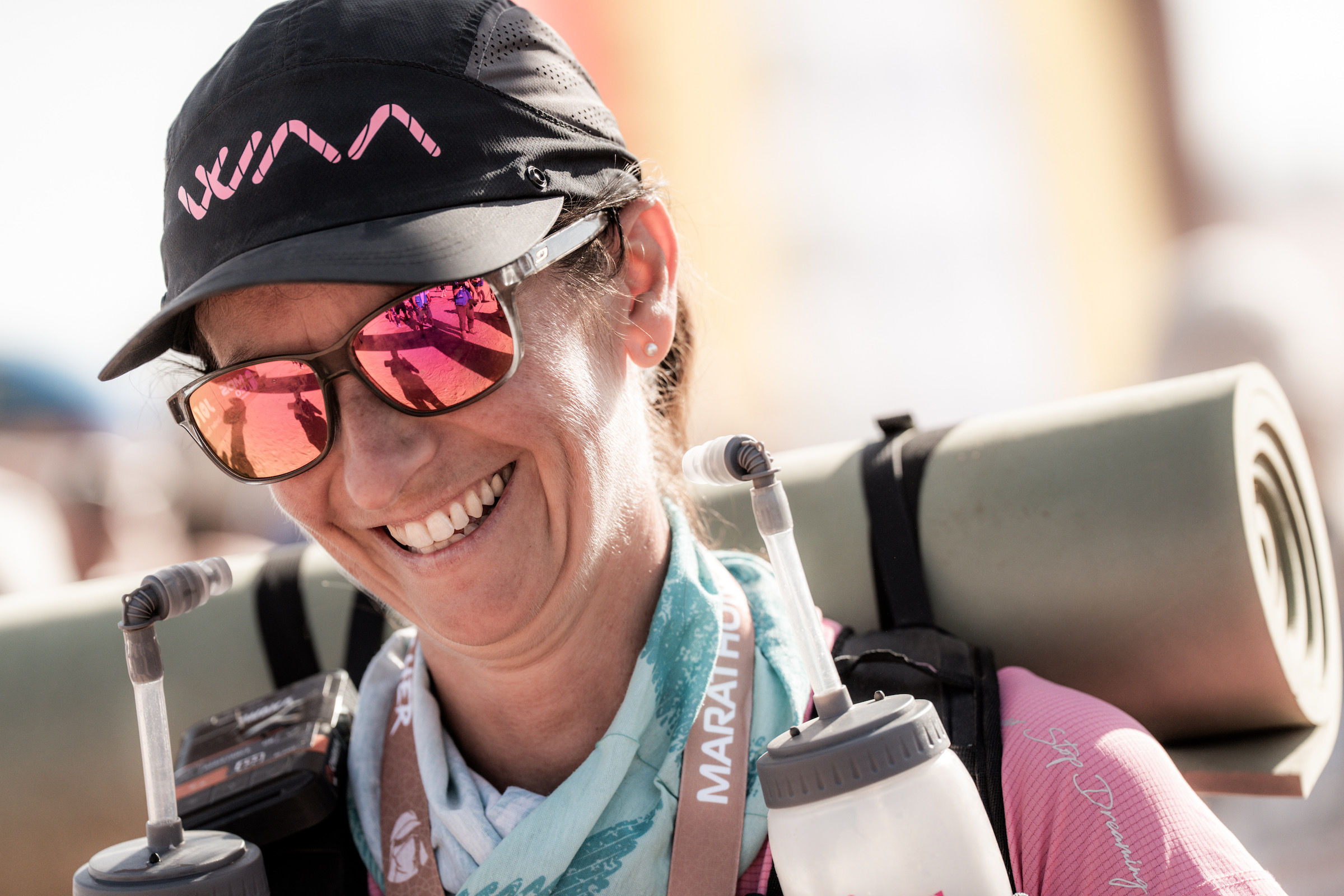
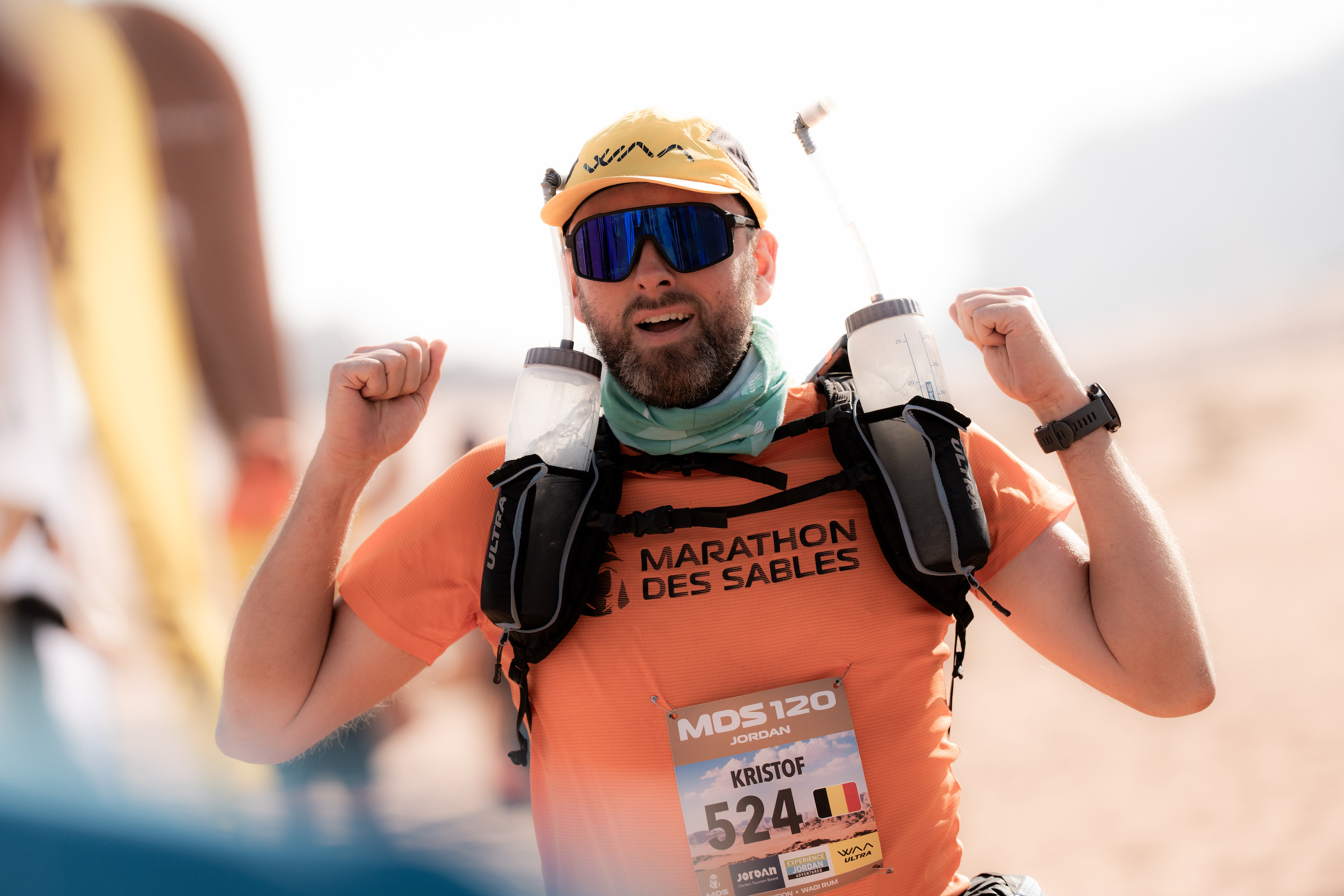
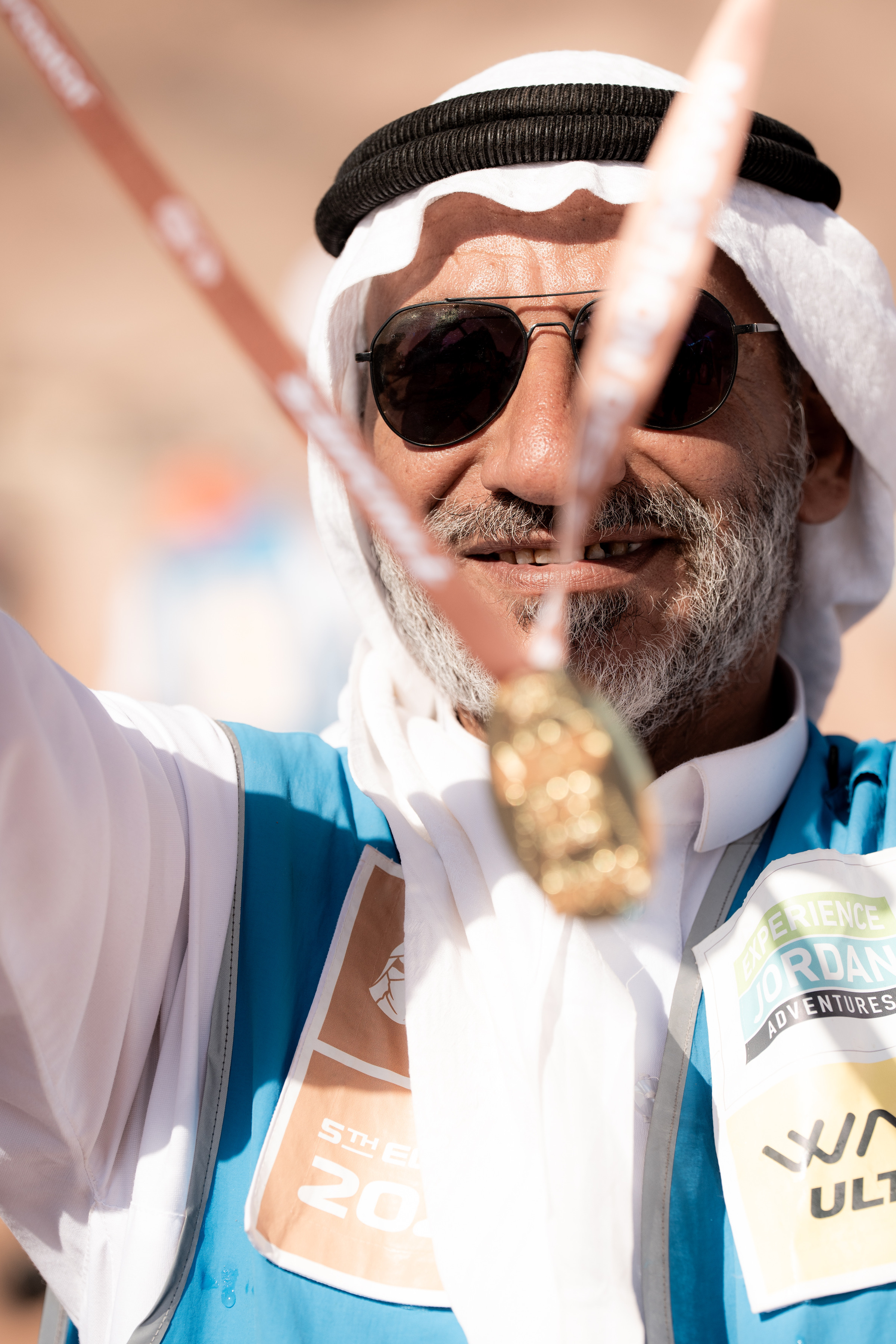
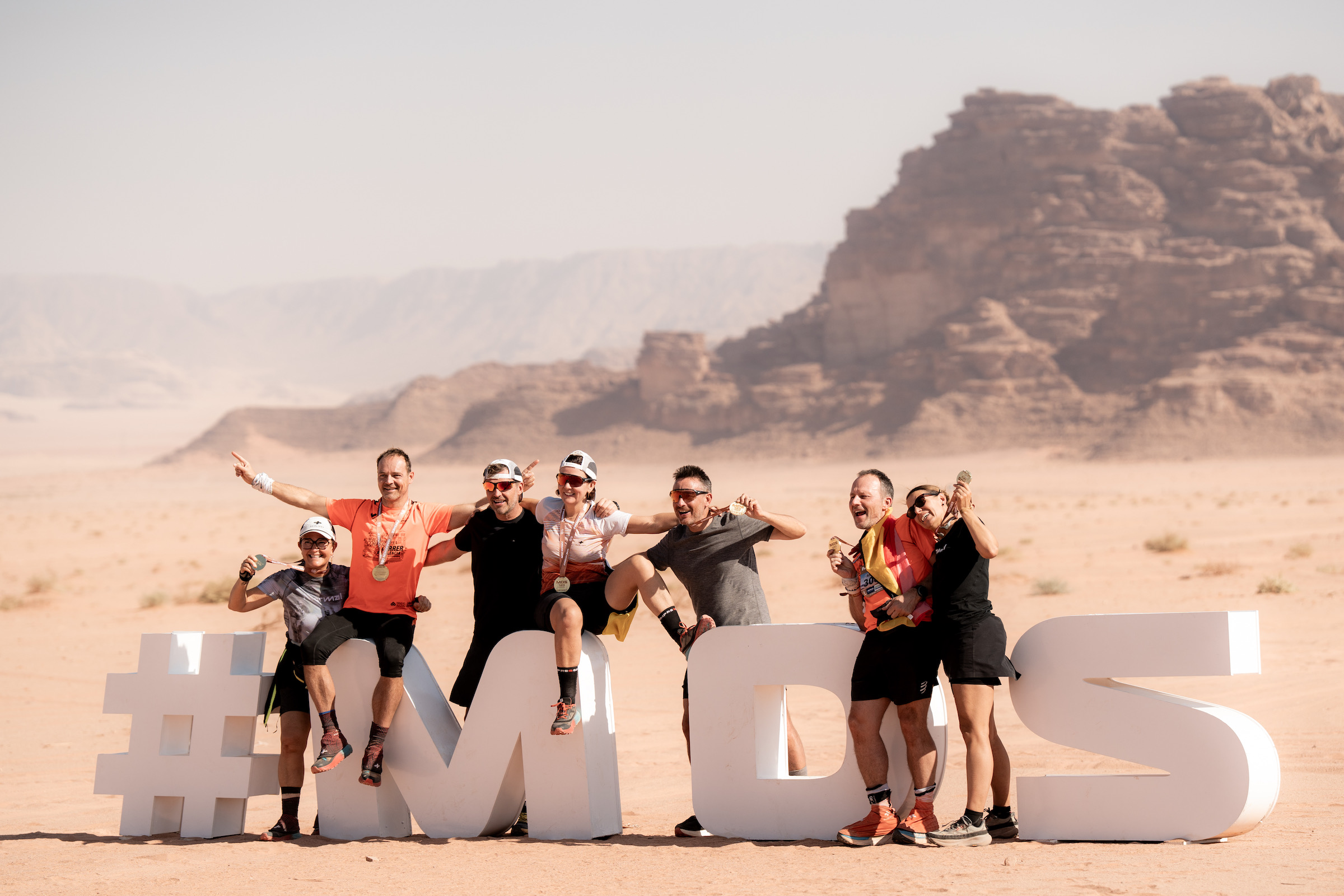
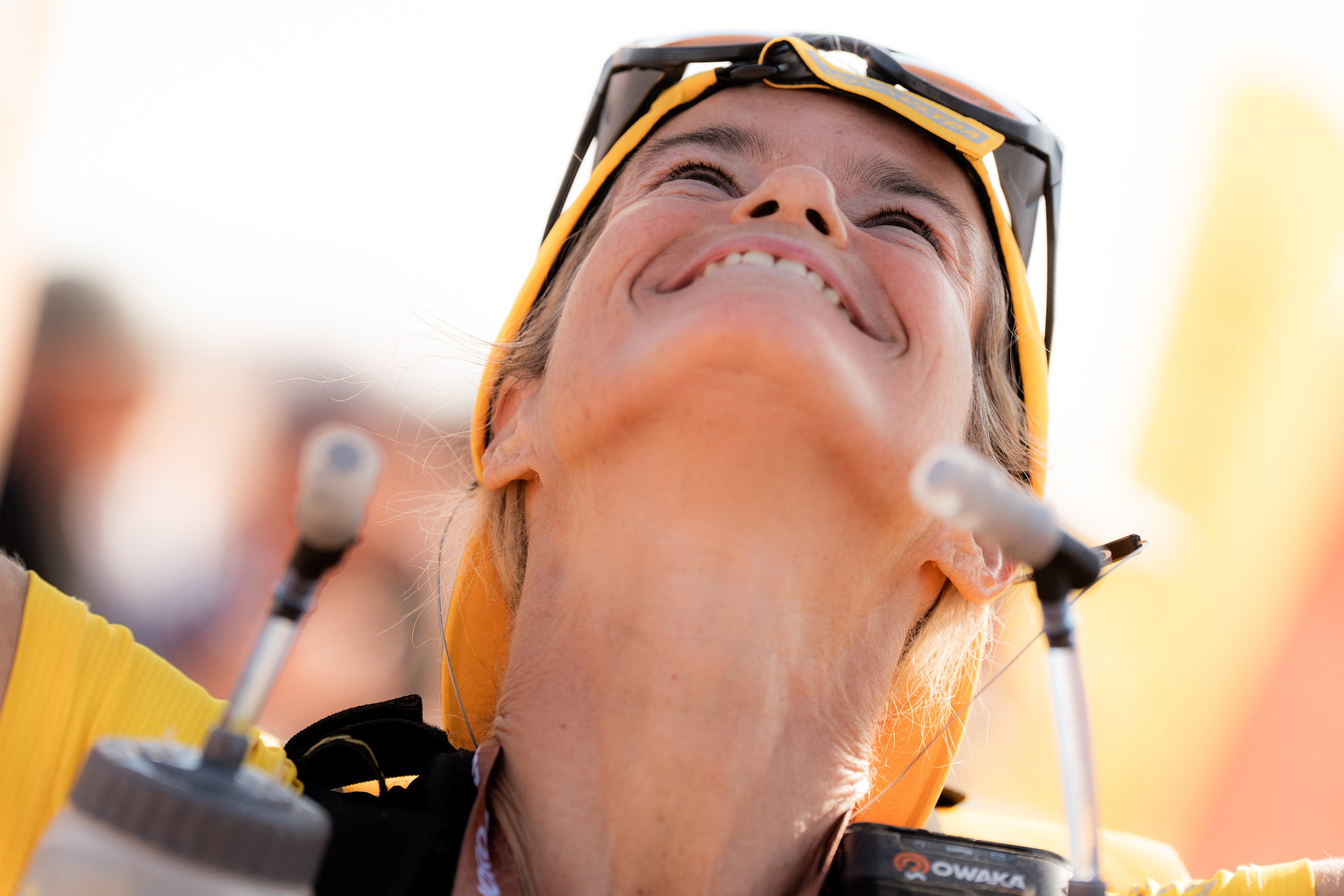
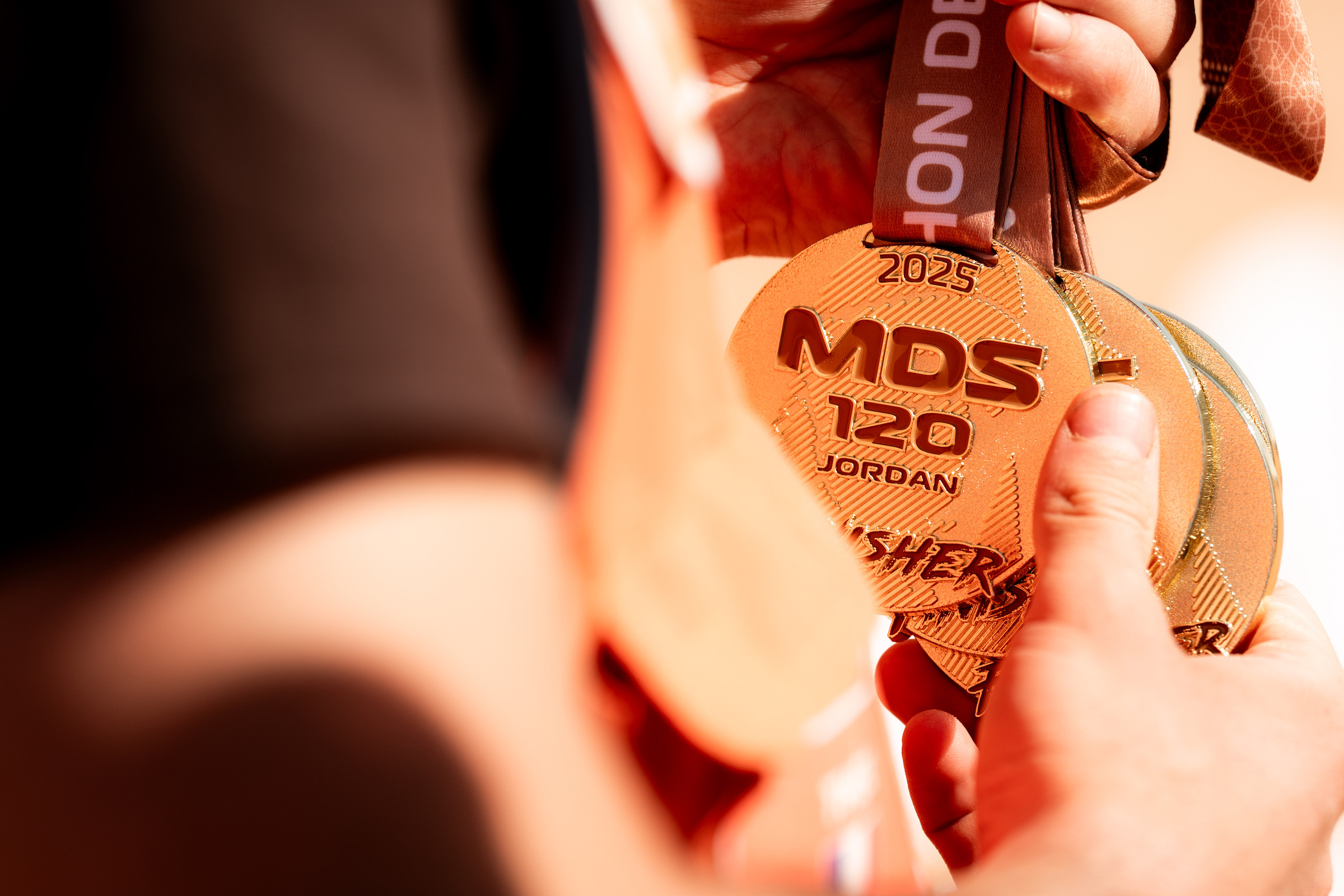
At the line, tears flowed freely of pain, pride, exhaustion, and elation. Medals were placed on tired and elated bodies, but the real reward was something deeper.
Every runner who crossed that line brought a story. Some came to test limits, others to heal, some to prove a point only they could understand. Each journey was personal, yet all were part of something greater, a living, breathing mosaic of endurance and emotion. This is what made MDS 120 Jordan more than a race.
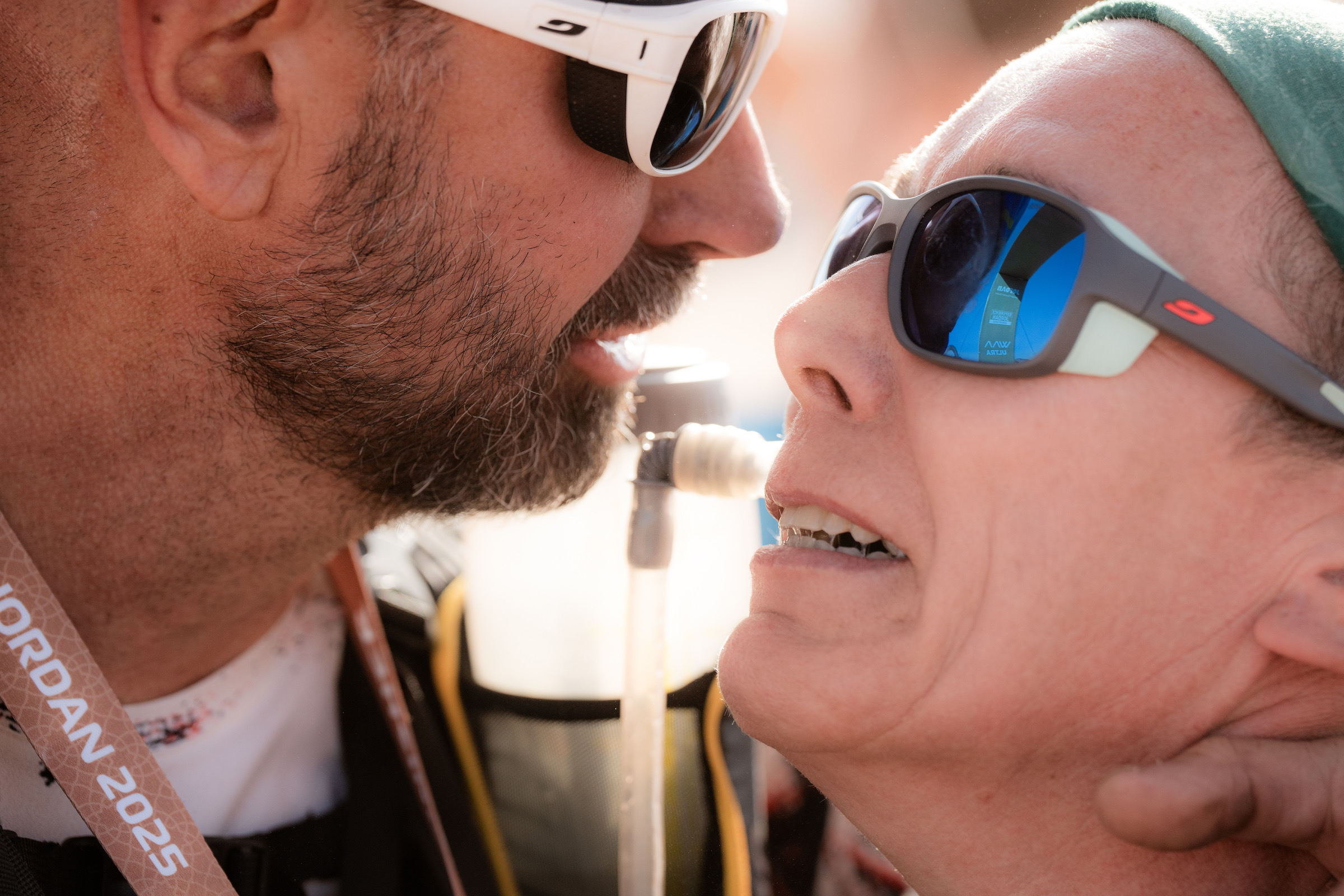
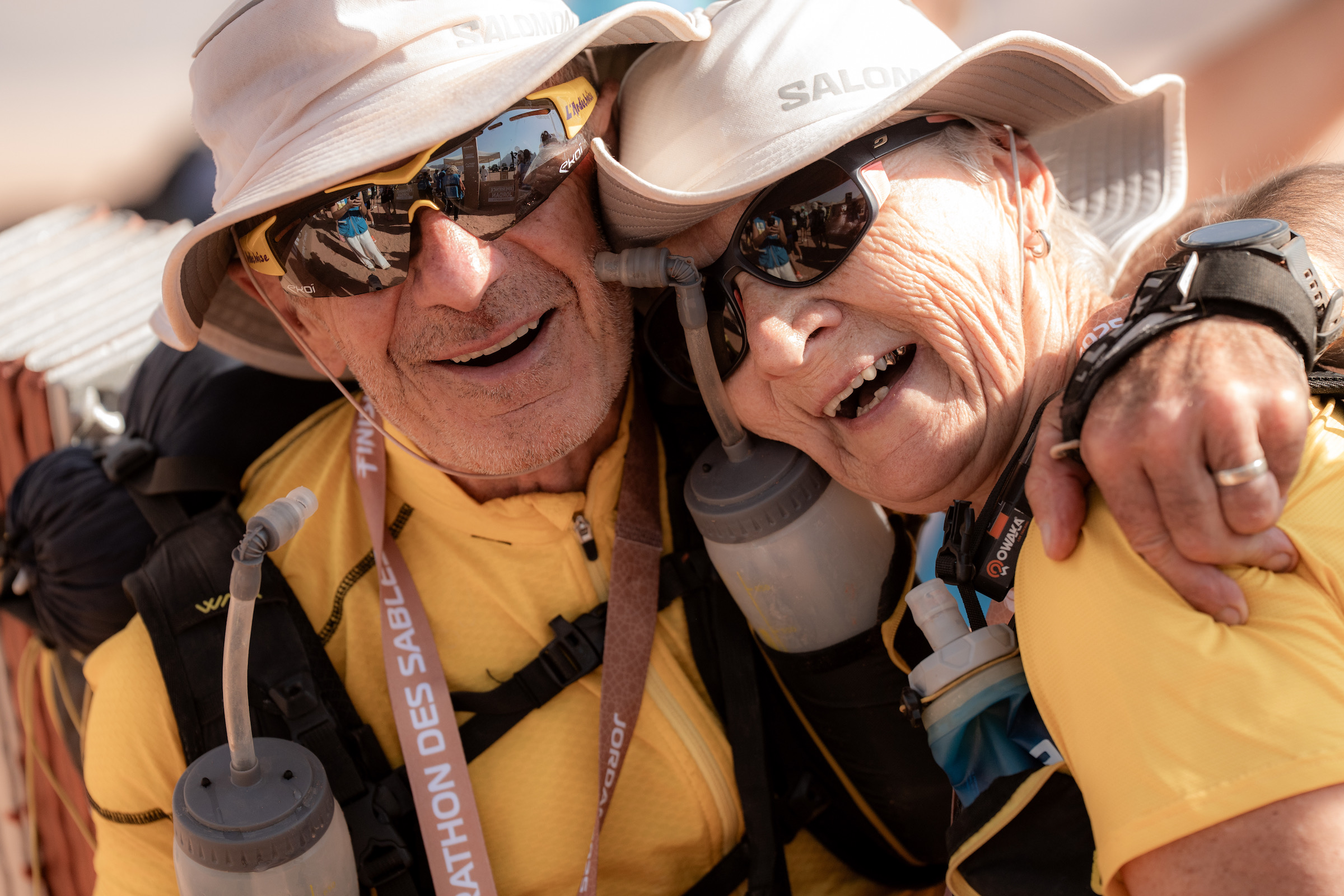
And within the mosaic, some pieces really stood out, especially the two pieces of Danielle and Bernard – Bernard had completed MDS Legendary and wanted to share the MDS experience with his wife of 50-years – they experienced MDS 120 Jordan, side-dy-side, an incredible and awe inspiring journey of love and solidarity that touched the sole of every participant and staff – this personifies MDS.
And then there’s Jordan itself, its people, its land, its soul. Their generosity turned this challenge into a celebration. Without them, the journey would have been just hard. With them, it was unforgettable.
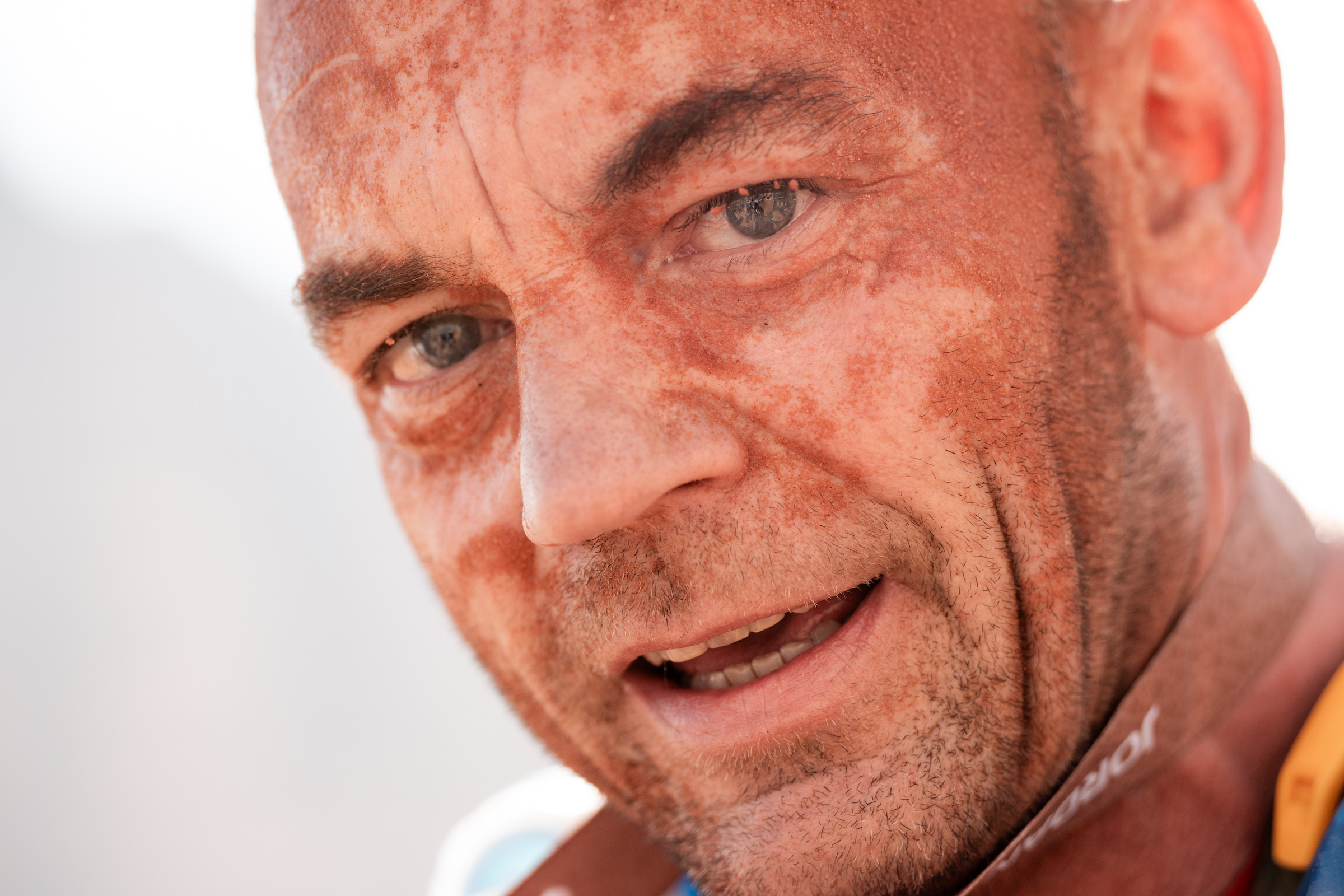
Now it’s over. Sand still clings to shoes and skin.
Muscles ache. But the desert leaves more than blisters and fatigue, it leaves memories burned into the heart. It leaves friendships forged in dust and sweat.
Stage 3 wasn’t just an ending. It was a transformation. And the desert? It watched silently, as always, as each runner a piece, a small tiny piece and part of the vast, magnificent puzzle that is MDS 120 Jordan.
And each runner will carry it with them forever…. It leaves a new version of themself, one they didn’t know existed.
The second stage of the MDS 120 Jordan began today under a sky that could stop you in your tracks. As the sun climbed over the horizon, it lit up Wadi Rum in gold and fire. Towers of sandstone blazed in the morning light, and the vast silence of the desert seemed to breathe. It was a moment of calm before the suffering.
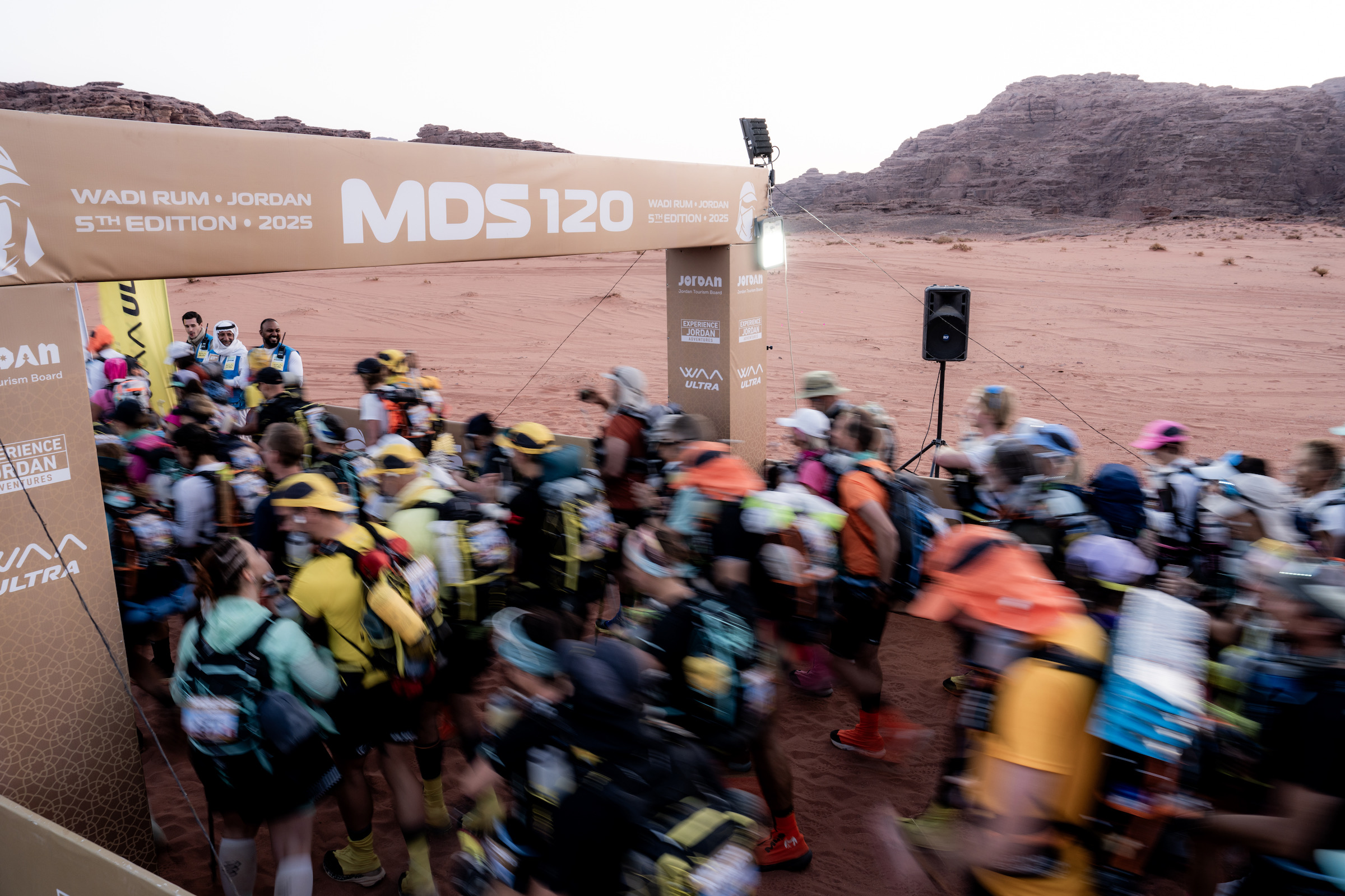
At 0700, the main field set off, hundreds of runners stretching out across the sand in a single wave.
An hour later, at 0800, the top-50 elites launched from the start line, eyes locked on the far horizon and the distances ahead. Three choices lay before all runners: 20 km, 40 km, or 60 km. No matter the distance, no one got an easy day.
By mid-morning, the heat was already rising fast. There’s no mercy in the Wadi Rum sun. The sand, soft and shifting, sucked at every step. It was a grind from the first kilometer. For many, fatigue from Stage 1 was already in their legs. Now, it became a question of how much pain they could manage, and for how long.
But the landscape kept pulling people forward.
Runners wound through canyons where shadows clung to the rock walls, through open plains that shimmered in the heat, and over dunes that seemed to have no top. The colours changed constantly, red, orange, ochre, bone-white. Every climb gave a new view, and every descent brought another challenge.
Support points were lifelines. Blue and orange jackets worked hard to keep everyone hydrated, motivated, and upright. Every shaded tent was a brief oasis. Words of encouragement were exchanged in multiple languages, often between competitors who had just met but already felt like teammates. That’s how it goes out here: shared struggle, instant connection.
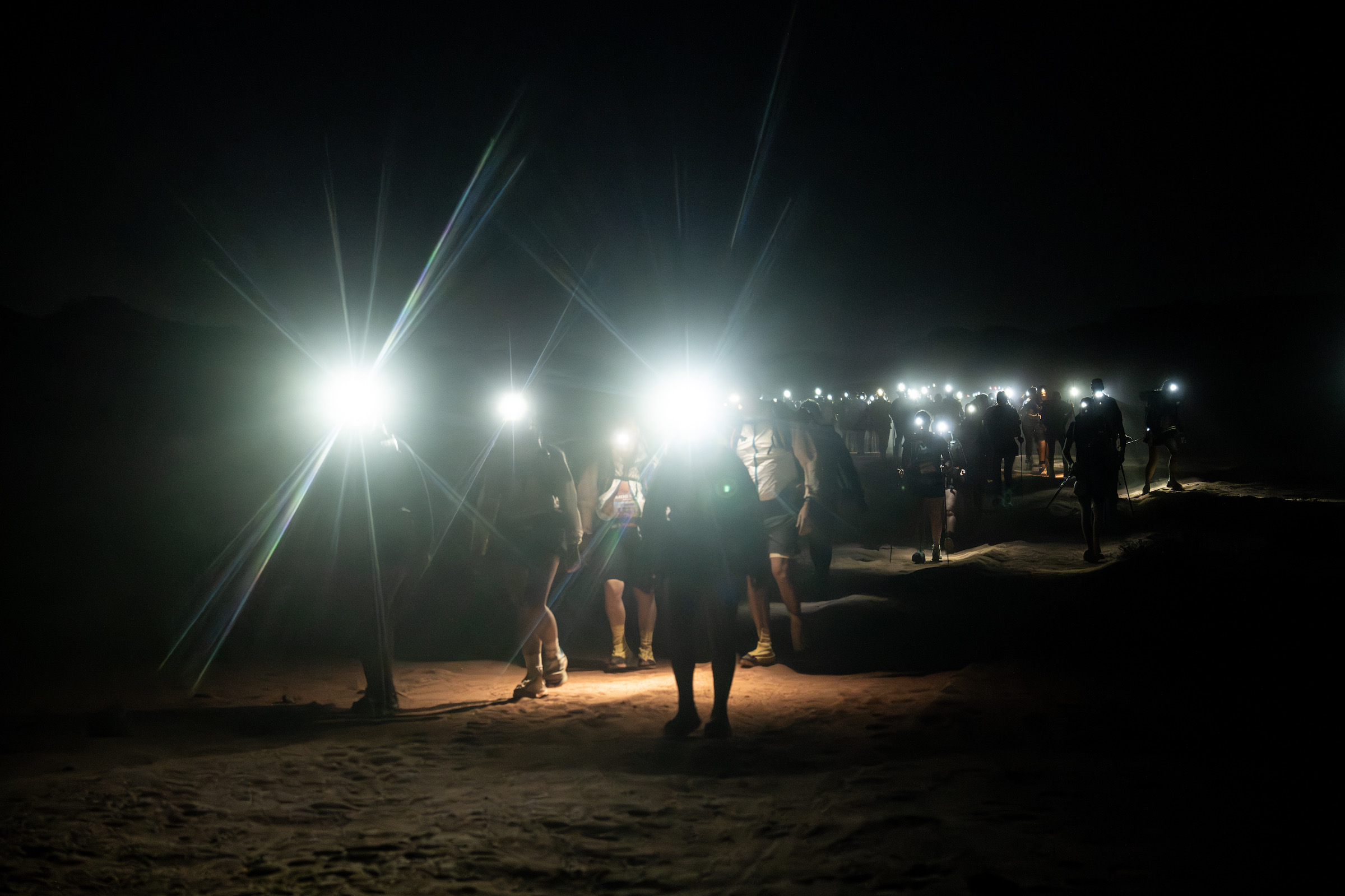
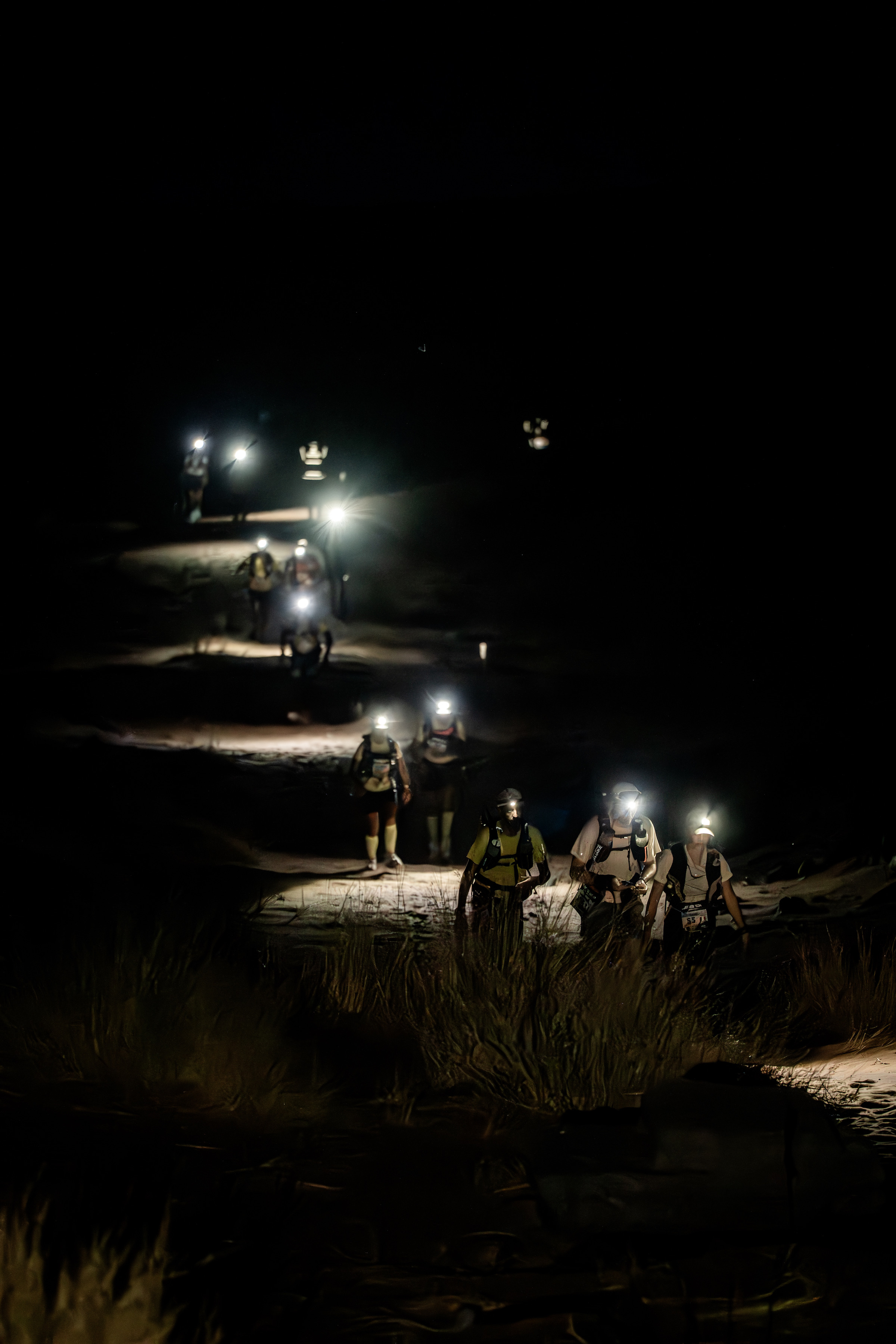
For those tackling the 60 km, it was a full day and night affair. As the sun dropped, temperatures fell fast, and headlamps started flickering on across the desert. The sound of footsteps on sand and the occasional burst of laughter carried in the darkness. Some ran together in quiet partnership; others moved solo, locked in their own internal battles.
By midnight, many had reached the bivouac, collapsing into sleeping bags or cheering others in. But the course was still alive. The final competitors came in just after 0100, nearly 18 hours after the first wave set off. There were hugs, tears, and a level of exhaustion that only the desert can deliver.
It was a brutal day. But it was also unforgettable.
Wadi Rum tested everyone, their legs, their lungs, their minds. But it gave something back too: the raw beauty of this land, the solidarity of the competitors, the deep satisfaction of pushing past limits. Stage 2 didn’t just challenge people. It changed them.
A rest day brings and opportunity to re-charge, and stage 3 brings more kms, more heat, more unknowns. The reward, a medal and memories for a lifetime.
Wadi Rum sleeps under a silent sky, and every runner who crosses the finish line , whether first or last, has earned the reward.
There are moments in life that will etch themselves into your memory with brutal clarity, the sting of the sun, the whip of the wind, the bite of fatigue. And then there are moments that transcend all that. Moments that shine because of what it took to get there. Today, that moment came. MDS 120 Morocco 2025 is complete. But this finish line didn’t come easy.
The Rest Day That Wasn’t
After the double blow of Stage 1 and 2 under an unforgiving sun, participants staggered into the bivouac with blistered feet and salt-crusted skin, ready for a day of rest.
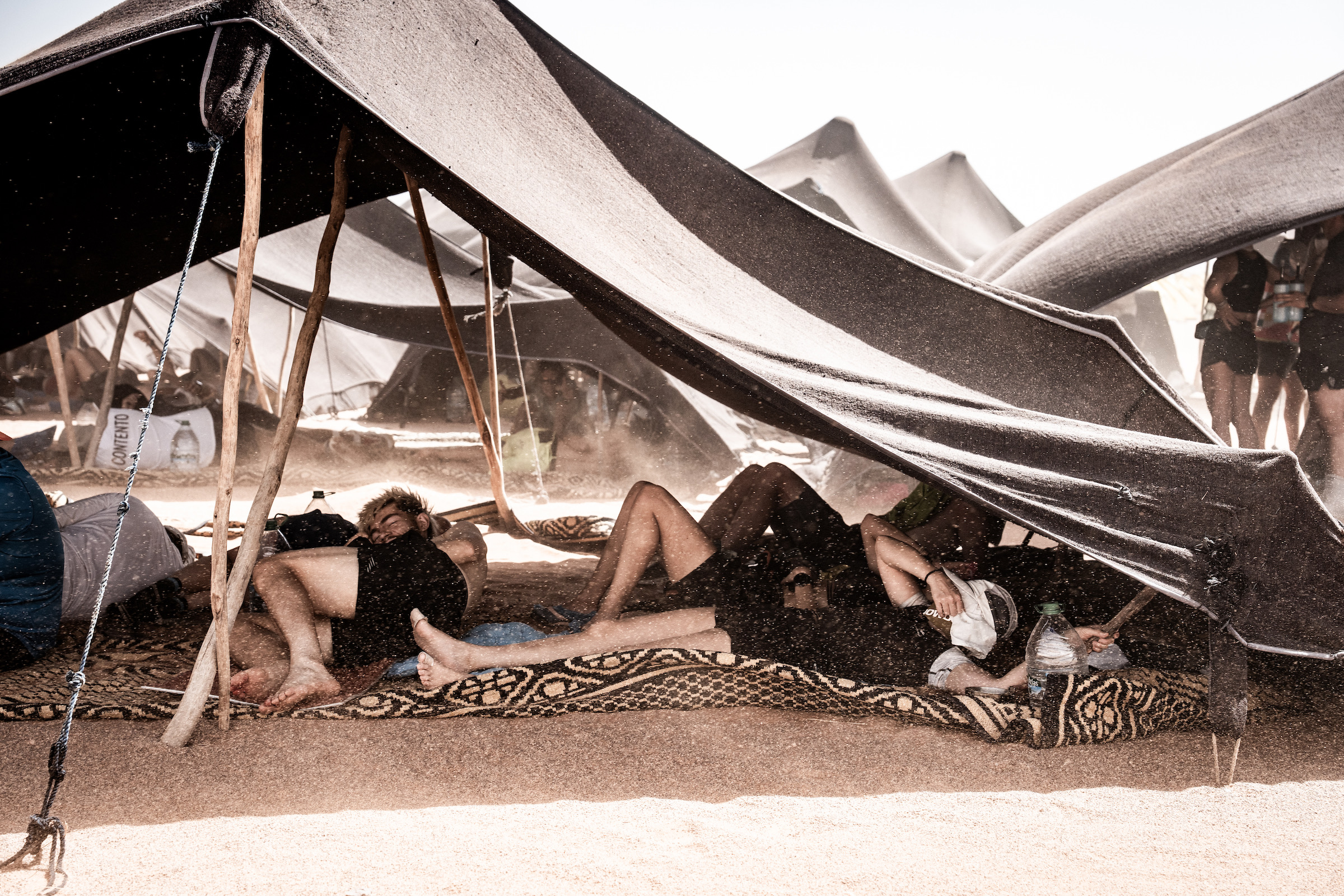
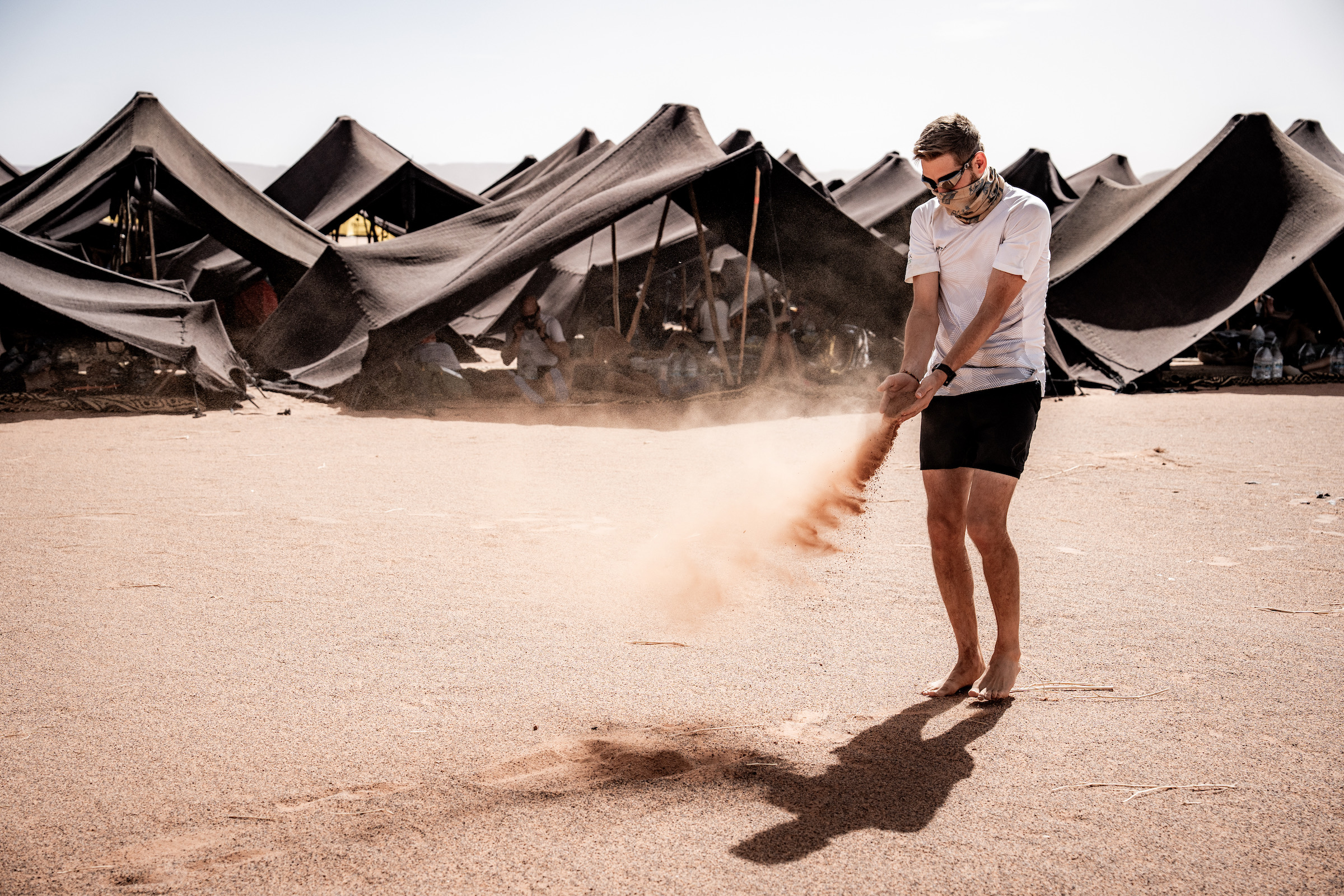
But the Sahara had other plans. Instead of recovery, they got afternoon chaos: a wild sandstorm that tore across camp like a runaway train. The sky turned thick and orange. Tents collapsed. Gear went flying. People huddled in whatever shelter they could find, eyes wrapped in buffs, trying to breathe through the dust. It lasted for hours. When it finally passed, silence hung in the air, but it wasn’t peace. It was exhaustion.
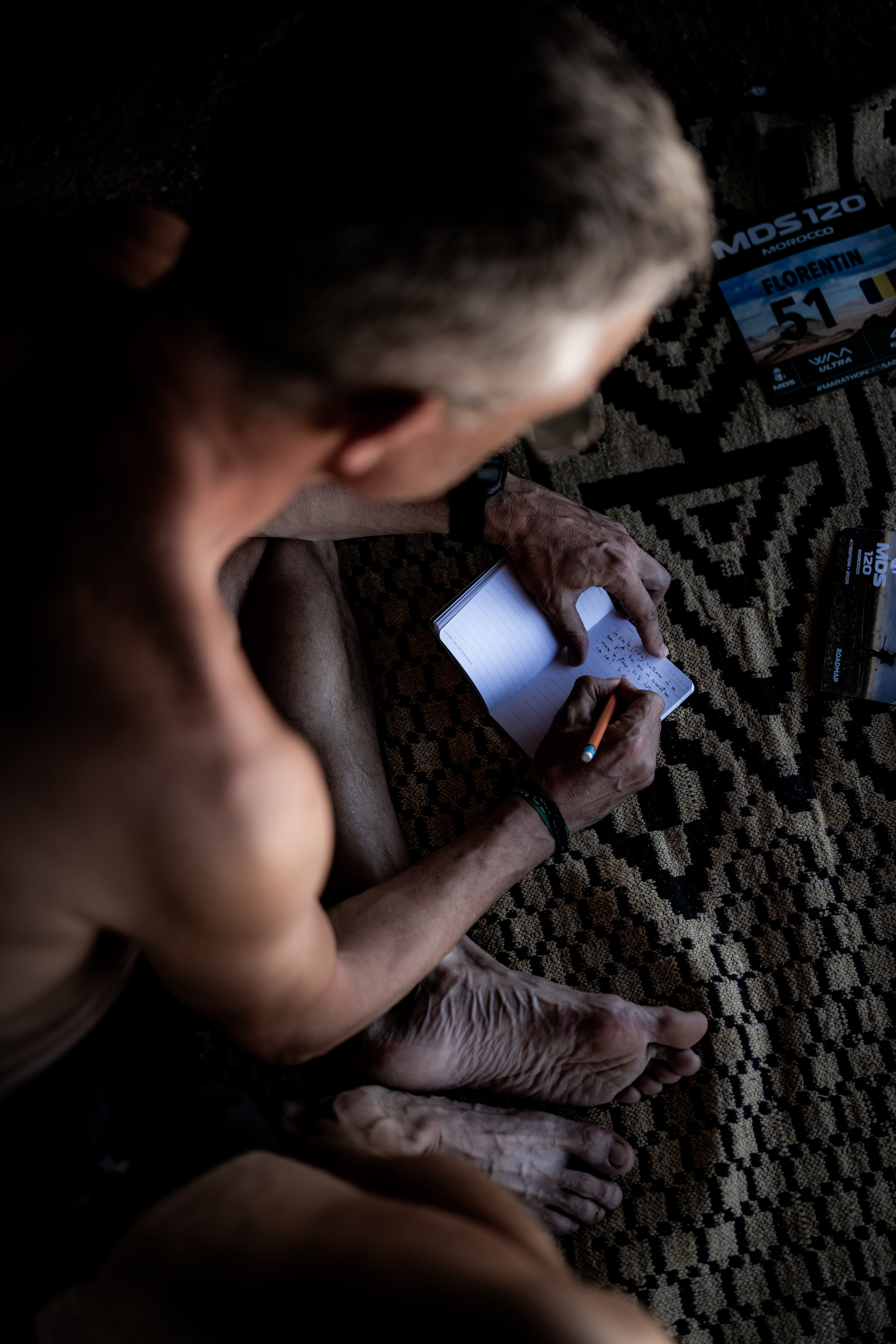
This was not the rest day anyone hoped for. But there were plenty of moment of relaxation before the chaos – lots of sleeping, adding entries in journals.
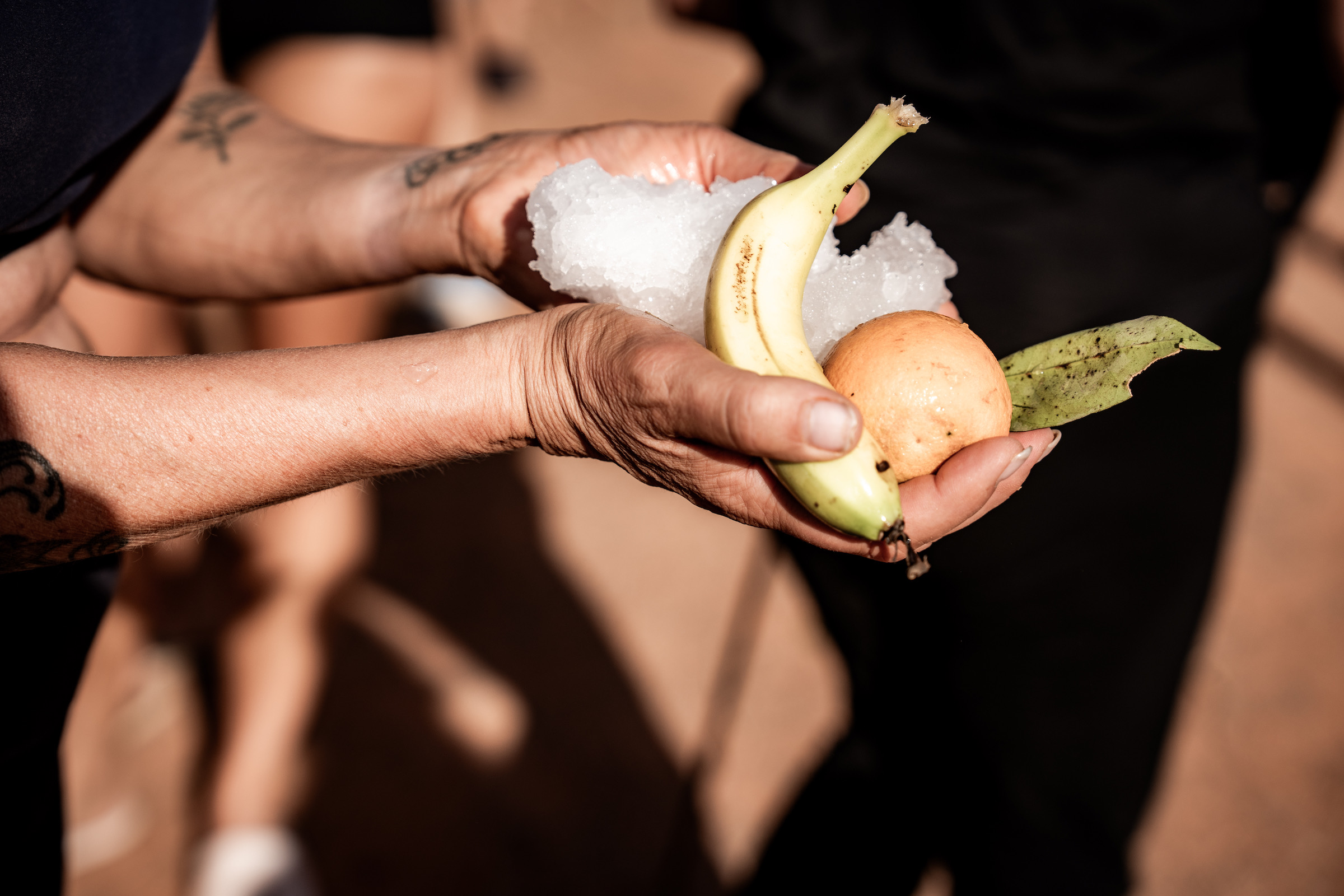
and towards the end of the day, as the wind calmed, MDS organisation offered a treat – no longer a cold can of Coke – today, fresh fruit and ice.
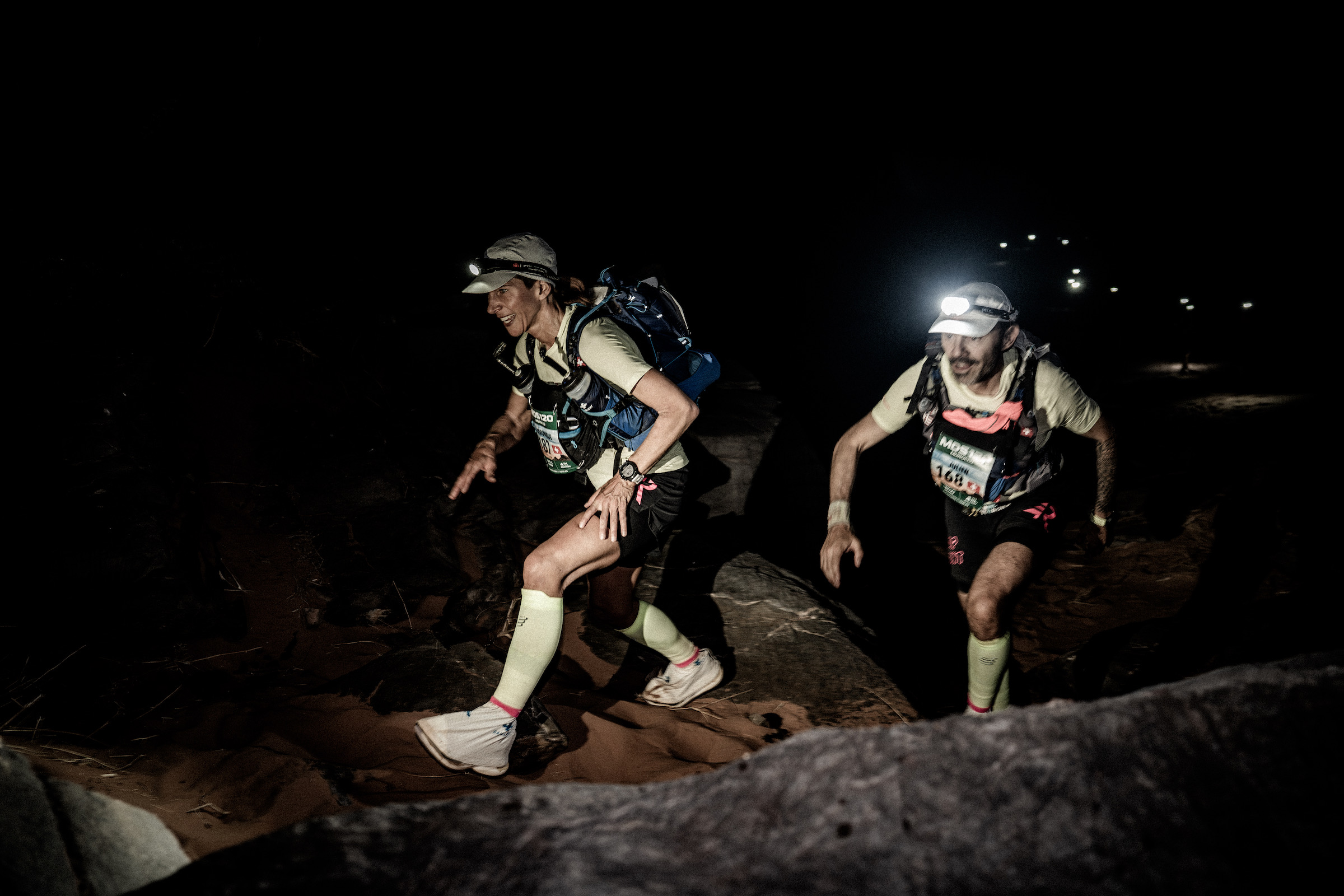
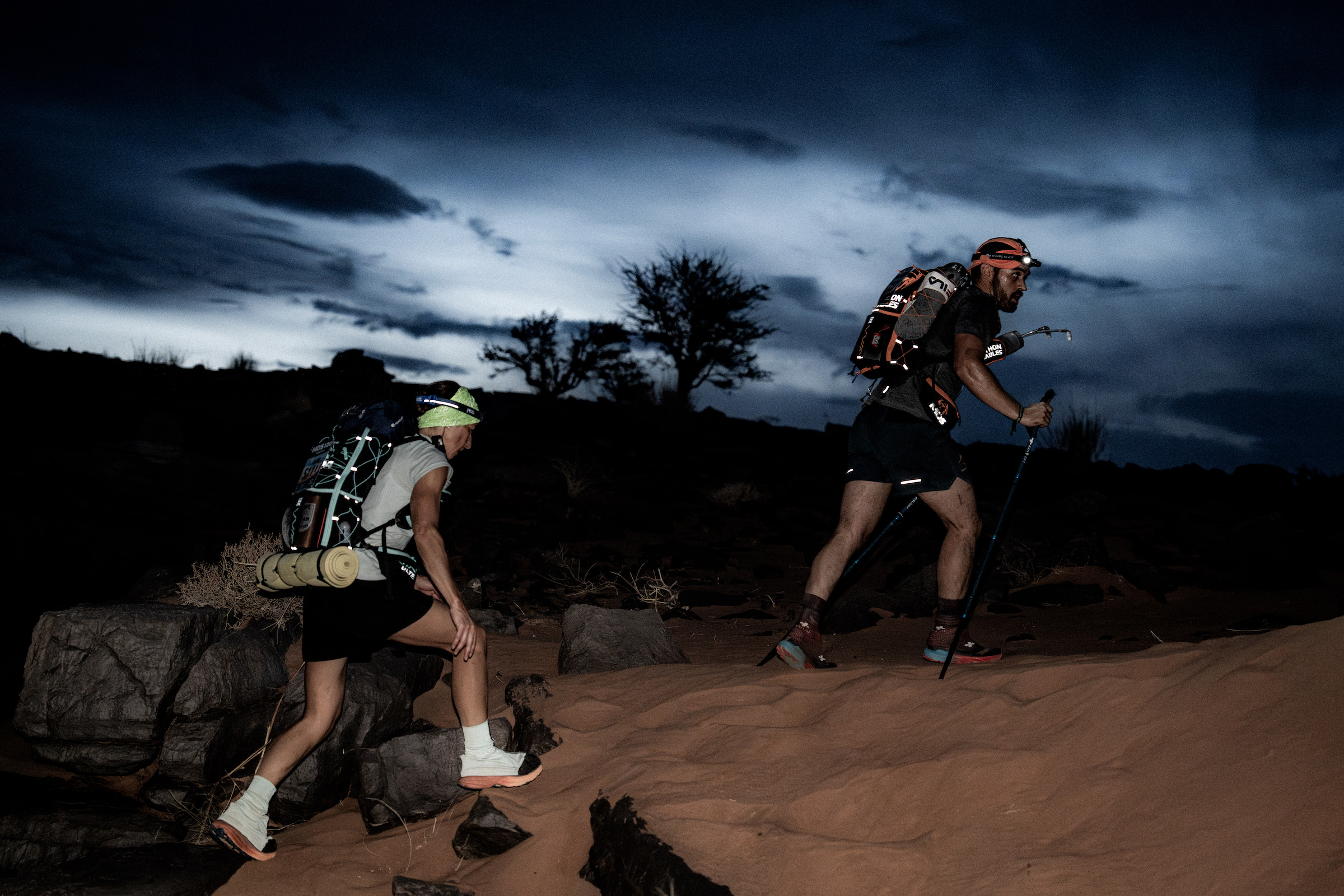
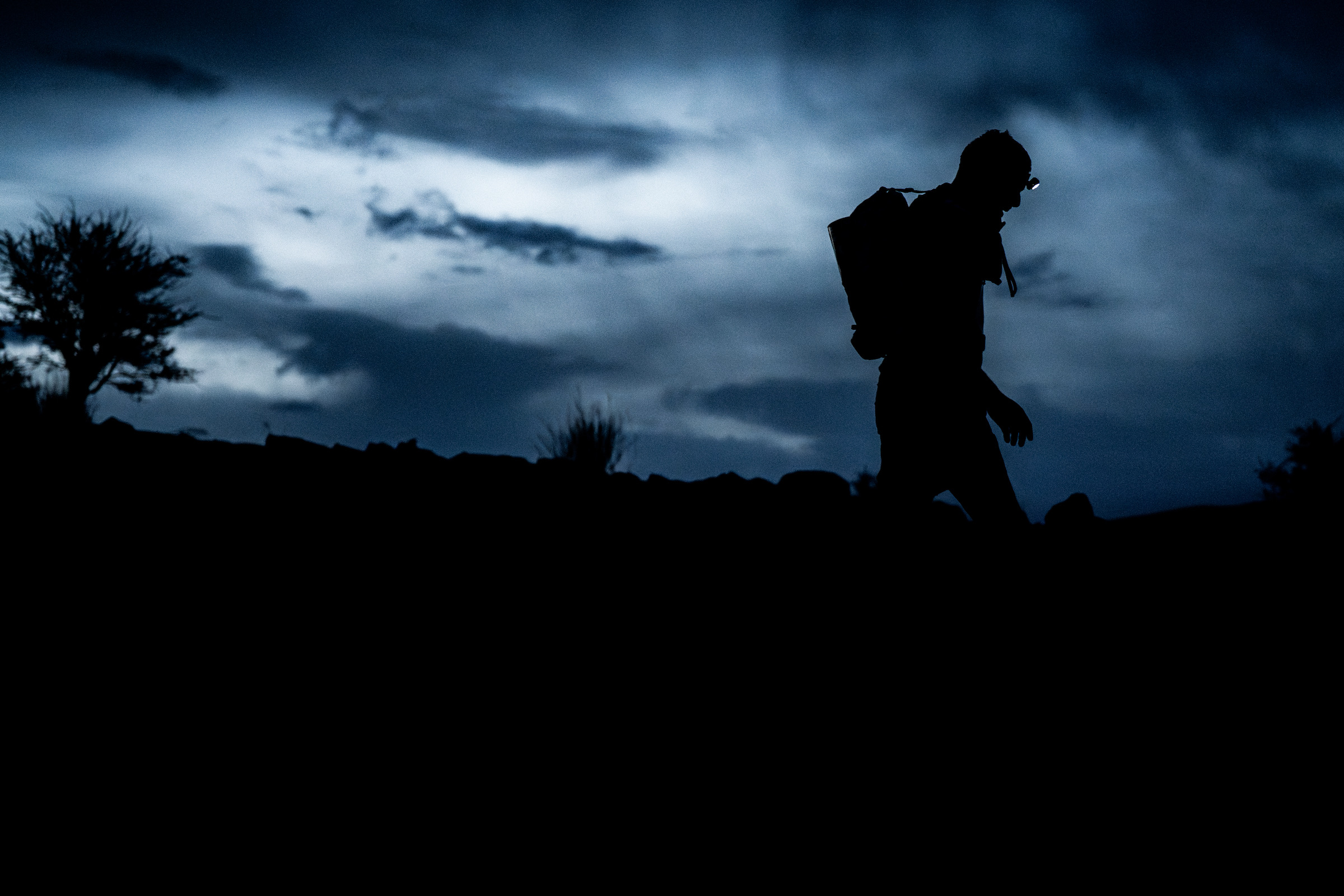
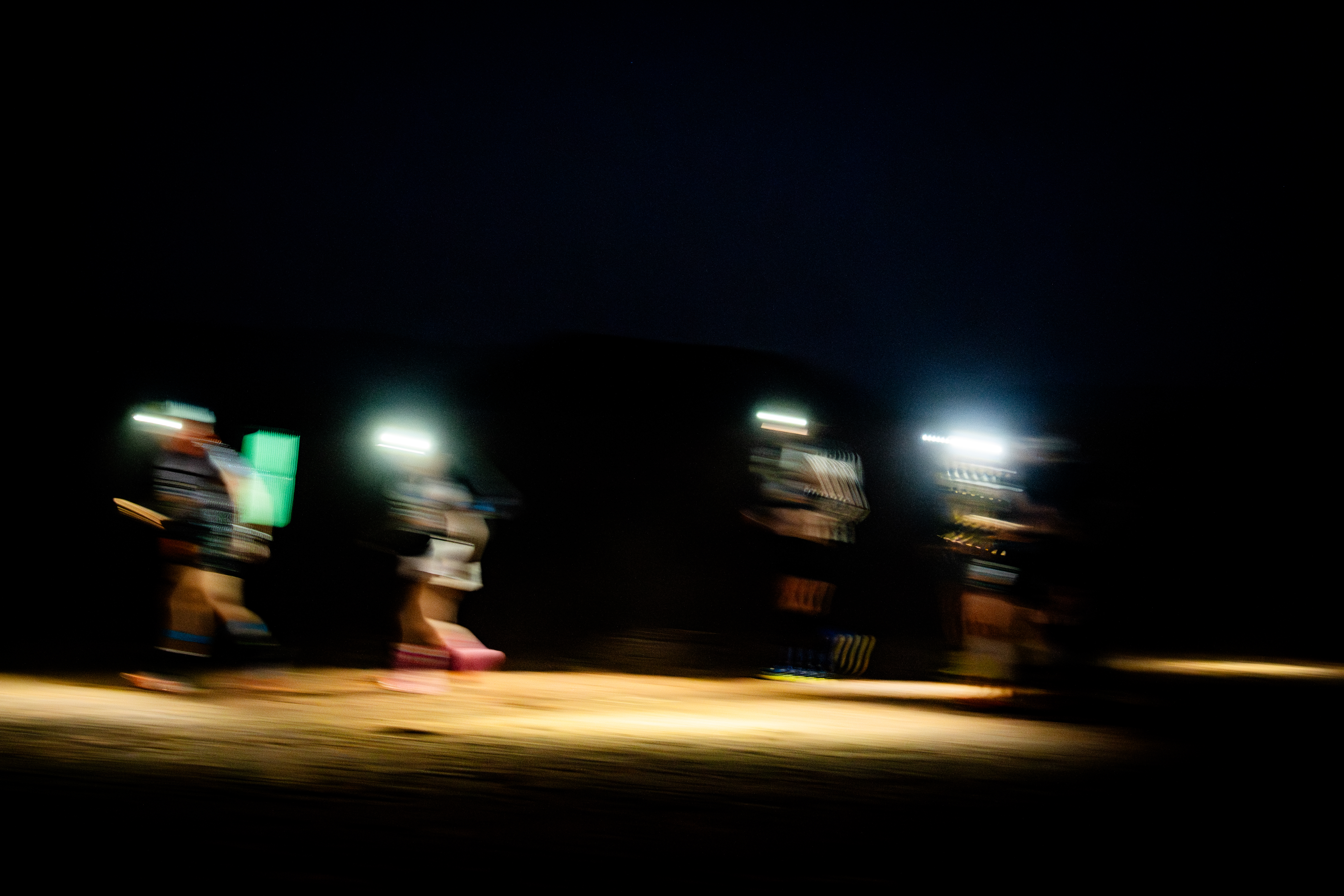
At 0400, camp began to stir. Bleary-eyed runners rose in darkness, fumbling with head torches and gear. The temperature hadn’t dropped. The air felt thick and warm, like the desert was still holding onto yesterday’s rage.
By 0530, the first runners were off. Headlamps cut through the pitch, bobbing along as the desert slowly took shape in the dim light. At 0630, the top-10 runners launched like arrows, chasing the dark down.
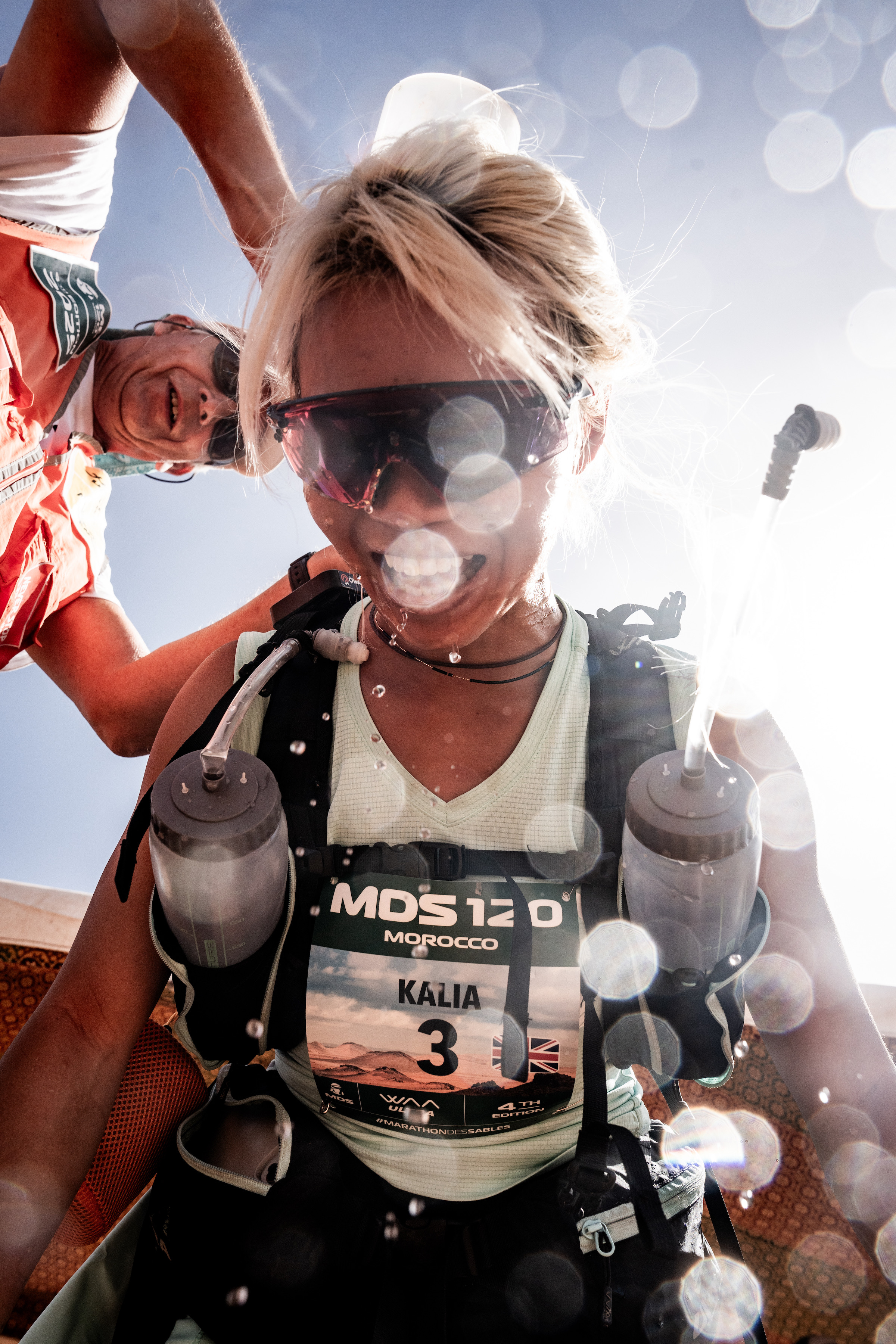
Then, something no one expected happened. It started softly. A few drops. Then more. Rain. Actual rain falling from a sky that hadn’t offered a single kindness in days. No one ducked. No one cursed. No one complained. Smiles broke out, quiet and stunned at first, then wide and wild. Some raised their faces to the sky. This was a blessing. A strange, surreal gift. The desert, finally, exhaled.
Stage 3 unfolded under gentler skies. The sun eventually returned, but not with the same vengeance. The course was still brutal – sand, rocks, one climbs that never seemed to end, but the worst of the heat was gone. Spirits rose with every kilometre. Runners, ragged but relentless, began to believe the finish was real.
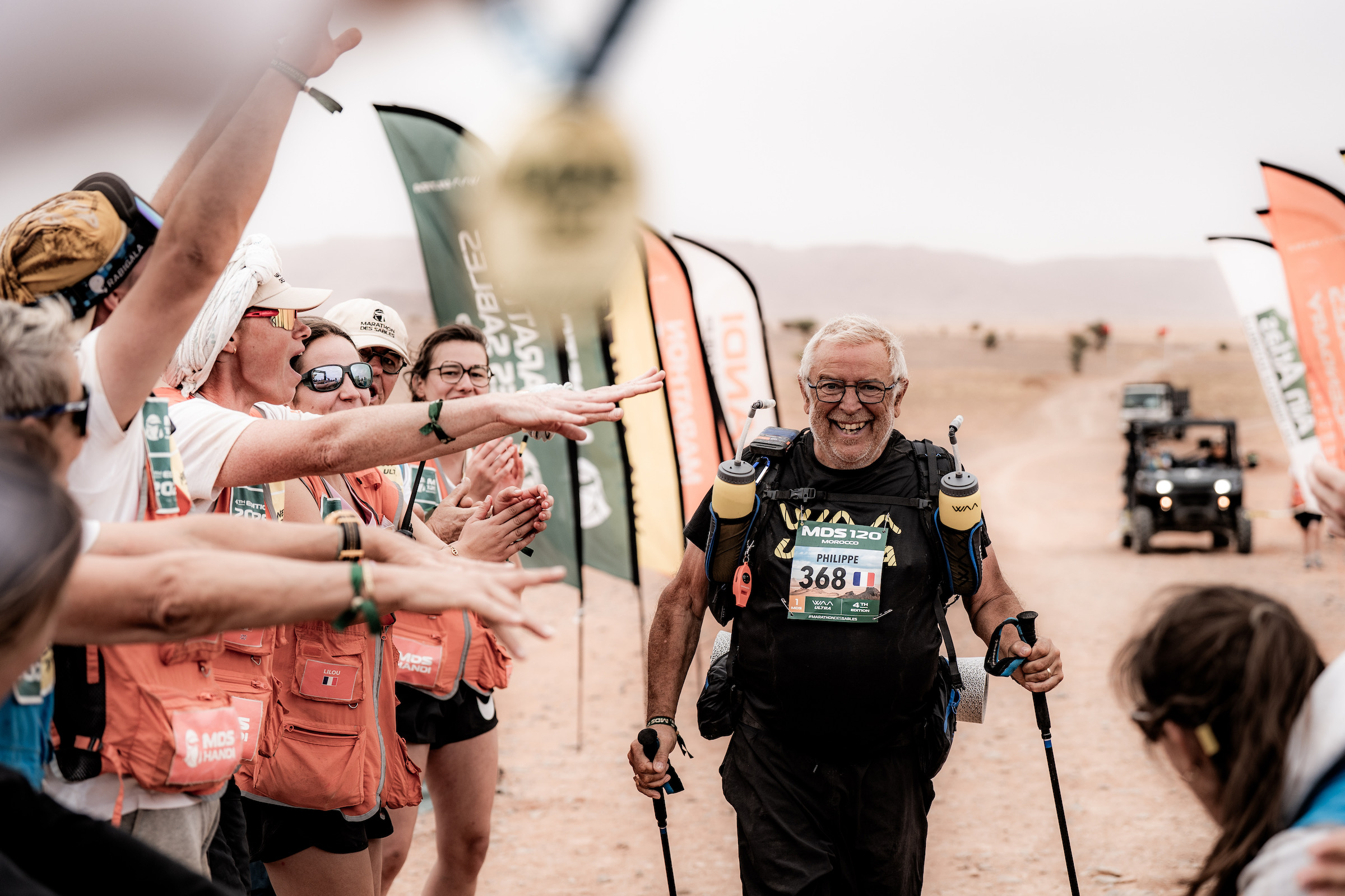
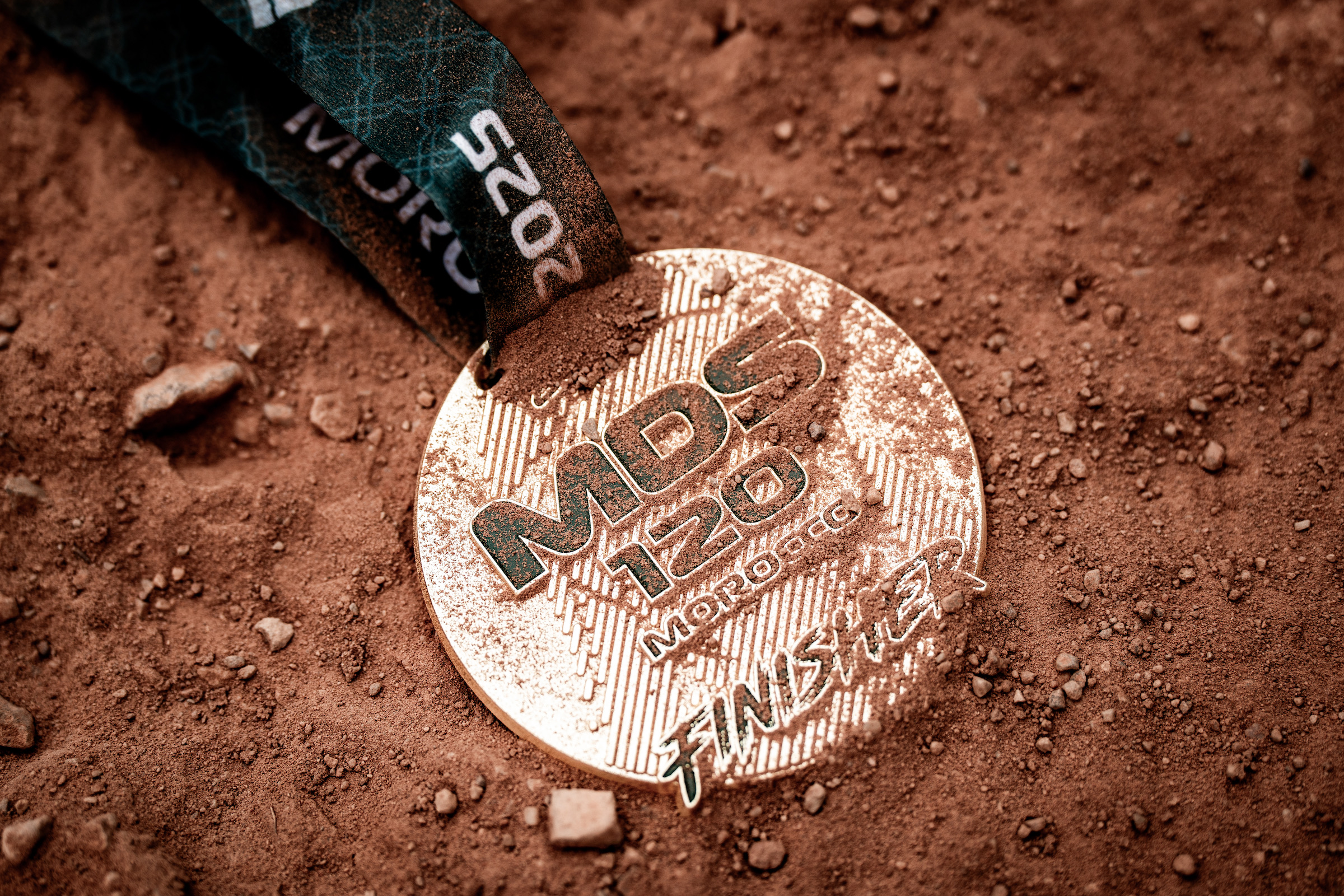
One by one, they crossed the line. Some ran with everything left in their legs. Some limped, leaning on poles. Some clutched hands with teammates or strangers who’d become family over theirshared suffering. And when that medal was placed around their necks, the tears came freely. No shame in them, only pride, release, and the overwhelming relief of completion.
There were cheers. Applause. Laughter. People hugging like they never wanted to let go. Cameras flashed. Medals clinked. Bodies that had been pushed to the limit stood a little taller.
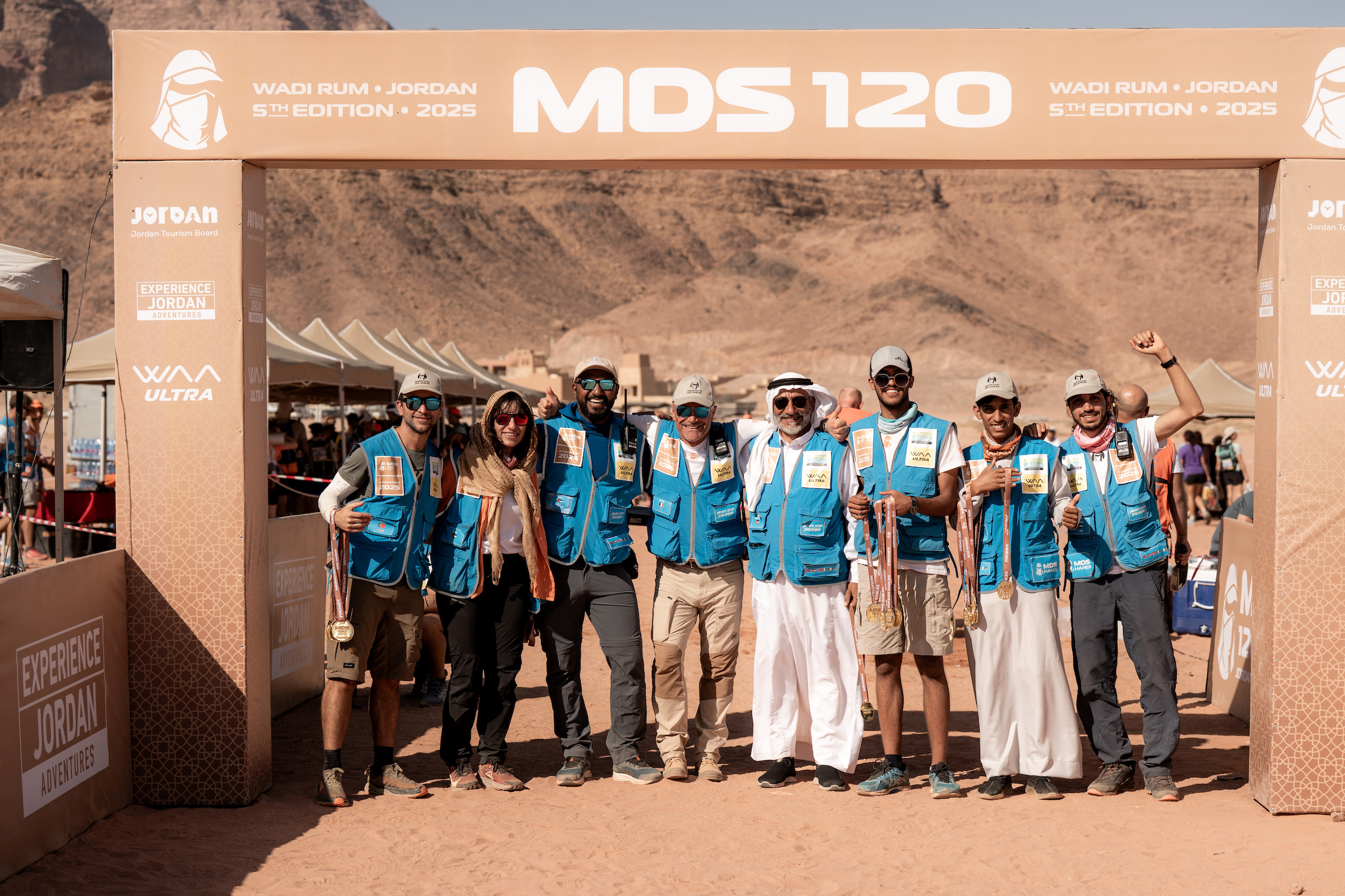
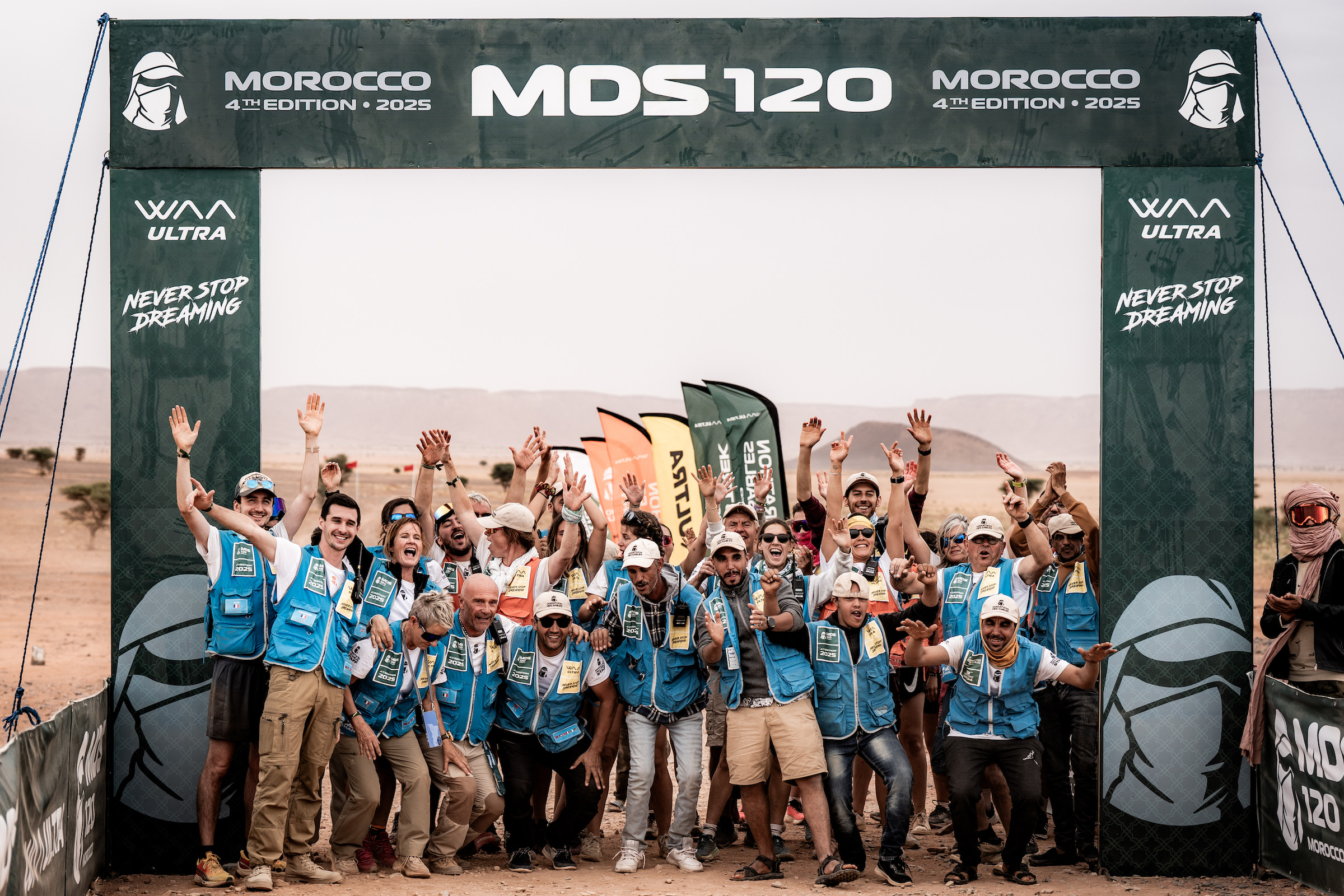
Behind every finish was an army in blue and orange.
The MDS team, the volunteers, medics, logistics crew, water distributors, checkpoint staff, tent builders, camp runners, sweepers, and everyone else in between—made this journey possible.
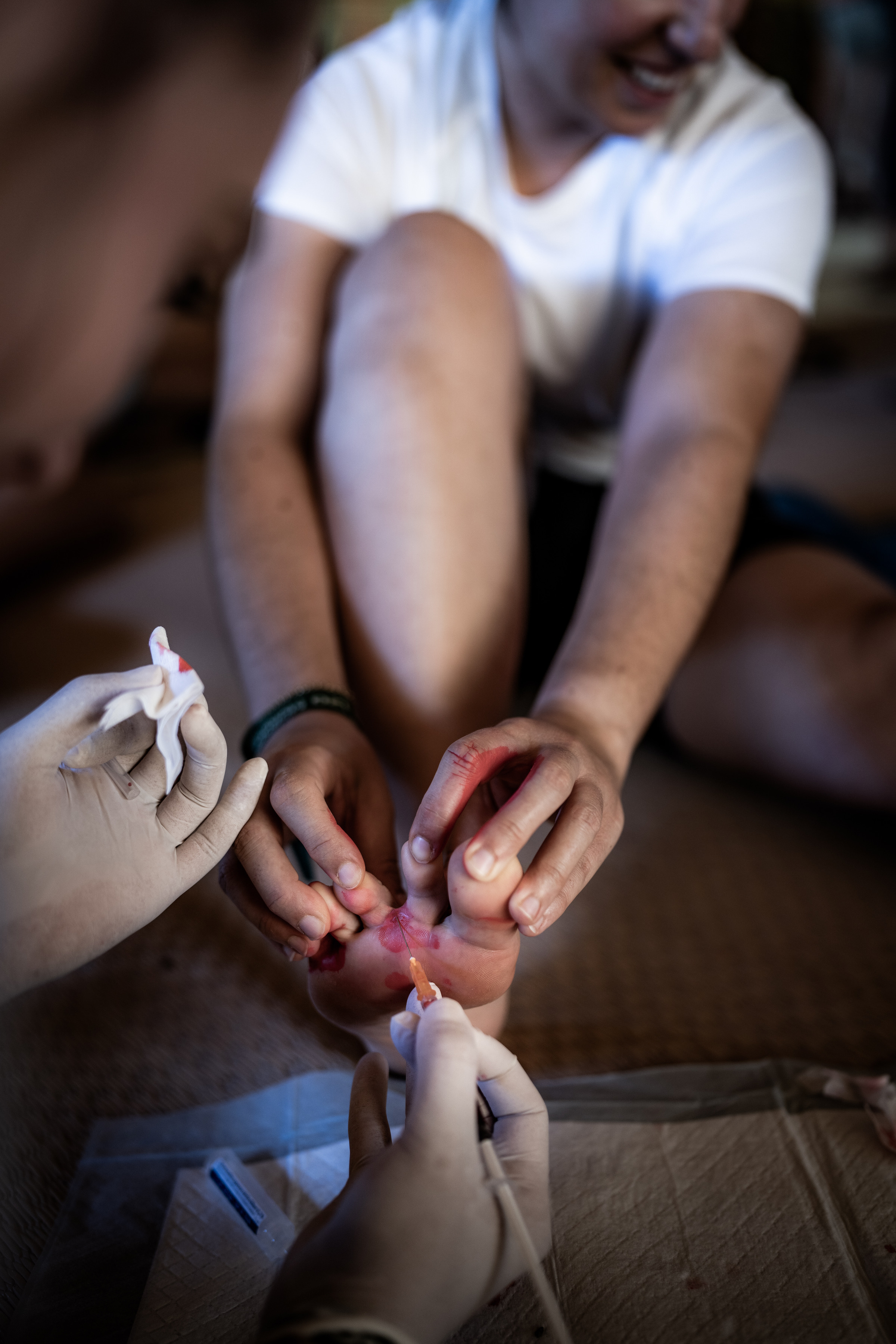
They were the quiet hands who carried everyone forward. The steady voices in the storm. The ones who handed out water in 47°C heat, packed and re-packed tents, tended to blisters, and kept this chaotic caravan moving across an unforgiving land. Their work wasn’t glamorous. It was relentless. And it matters more than words can say.
MDS 120 Morocco is more than numbers. More than distance. It’s more than the desert.
It’s about finding out what lives under your skin when the comfort is stripped away. It’s about running into the teeth of the wind and not turning back. It’s about community, people who arrive as strangers and leave as family. It’s about believing you can, even when everything hurts, and then proving it.
No one who stood on that start line is the same at the finish. And that’s the point.
So to every runner who dared to take this on: you are fierce, you are strong, and you’ve earned every second of this glory. This medal means more because you fought for it.
MDS 120 Morocco is complete. The desert tried to break us. But we endured. And that’s the story you’ll tell forever.
Stage 2 of the MDS 120 Morocco 2025 delivered a punishing reminder of what this race is all about: endurance, resilience, and respect for the elements. With three distances on offer – 20km, 40km, and 60km – runners set out early under revised start times (0630 and 0730 for the top contenders) after stage 1’s extreme heat forced organizers to adapt. It was a smart move. By midday, temperatures soared beyond 45°C, turning the day into a battle of grit and survival.
The day began deceptively calm. The early morning was still and silent, with no wind and nothing to offer relief from the sun’s growing intensity. As the hours ticked on, the heat built steadily, baking the desert landscape and punishing any runner who dared to underestimate it.
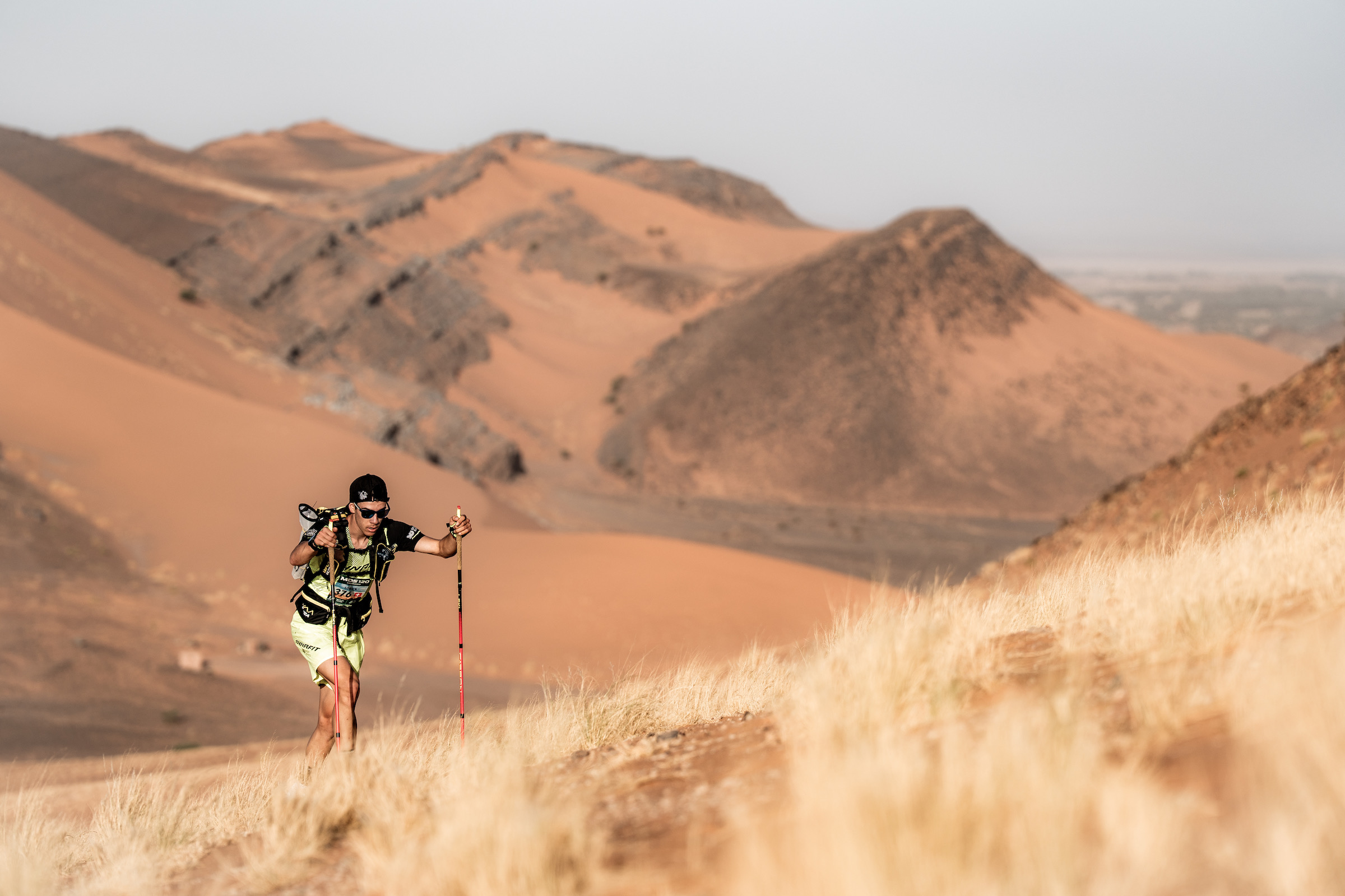
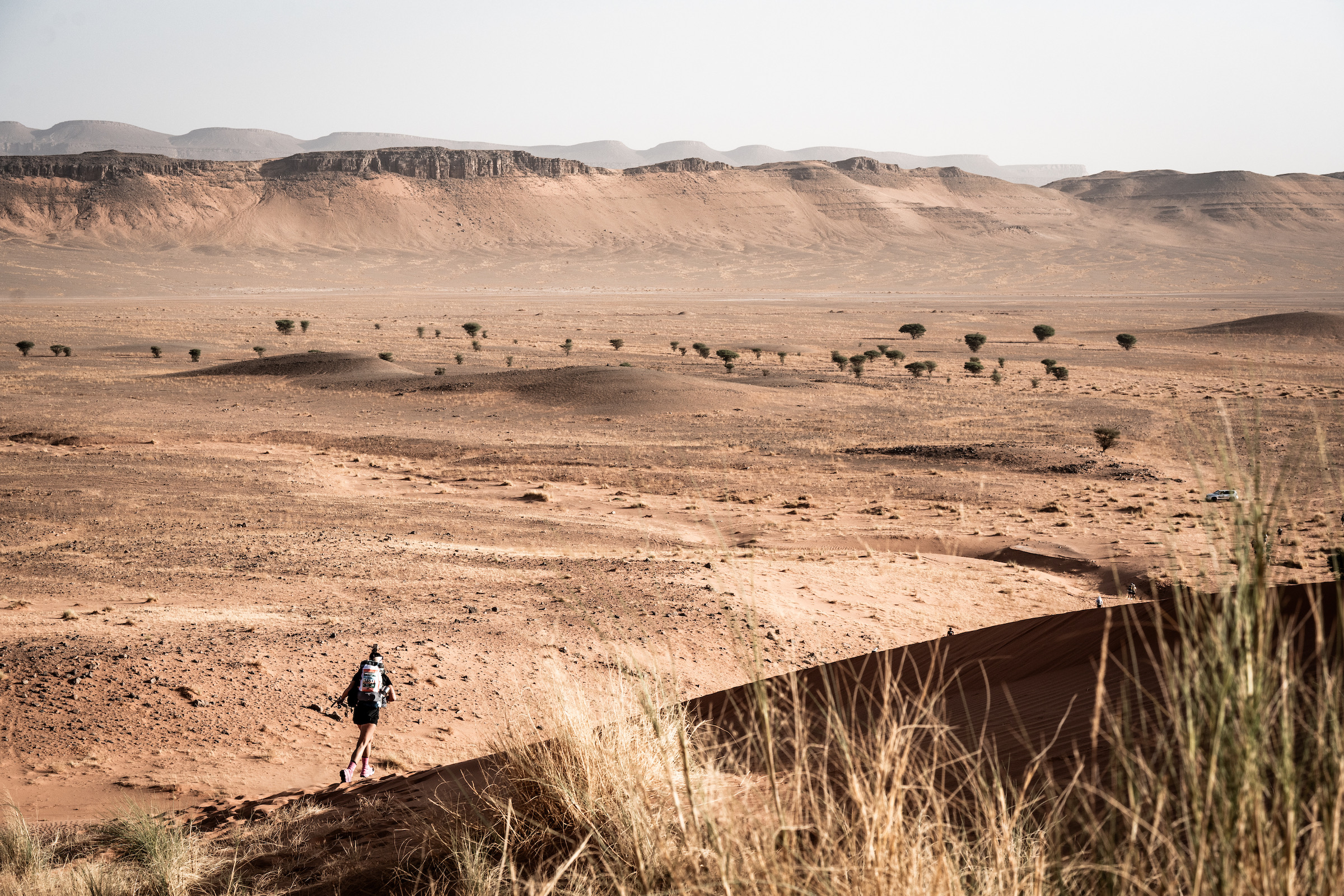
This wasn’t just another day in the desert. It was a brutal test across unforgiving terrain – soft sand, rugged mountain passes, exposed plains, and technical ridgelines. There were no shortcuts. No hiding from the sun. Just a long, scorching path to the finish.
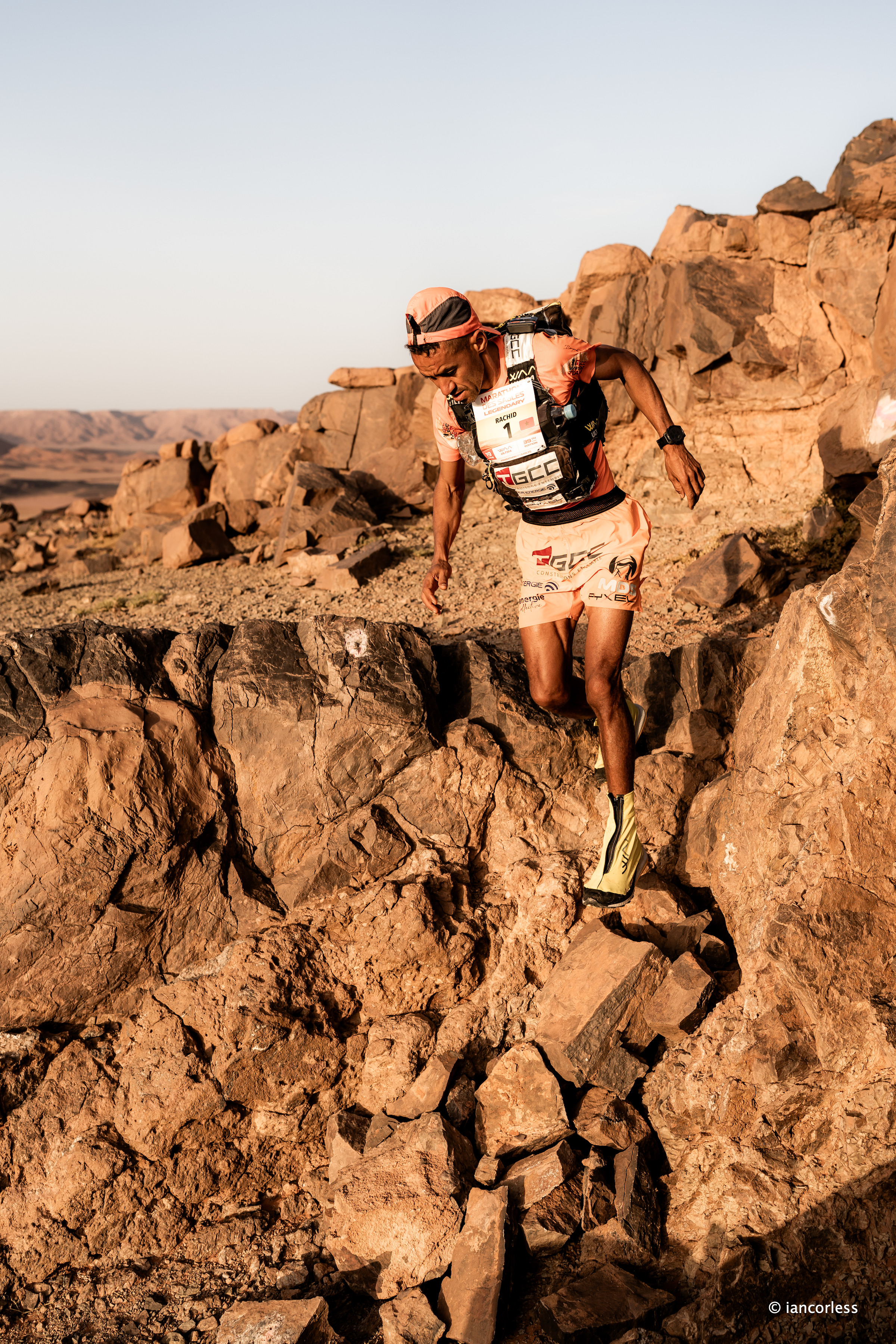
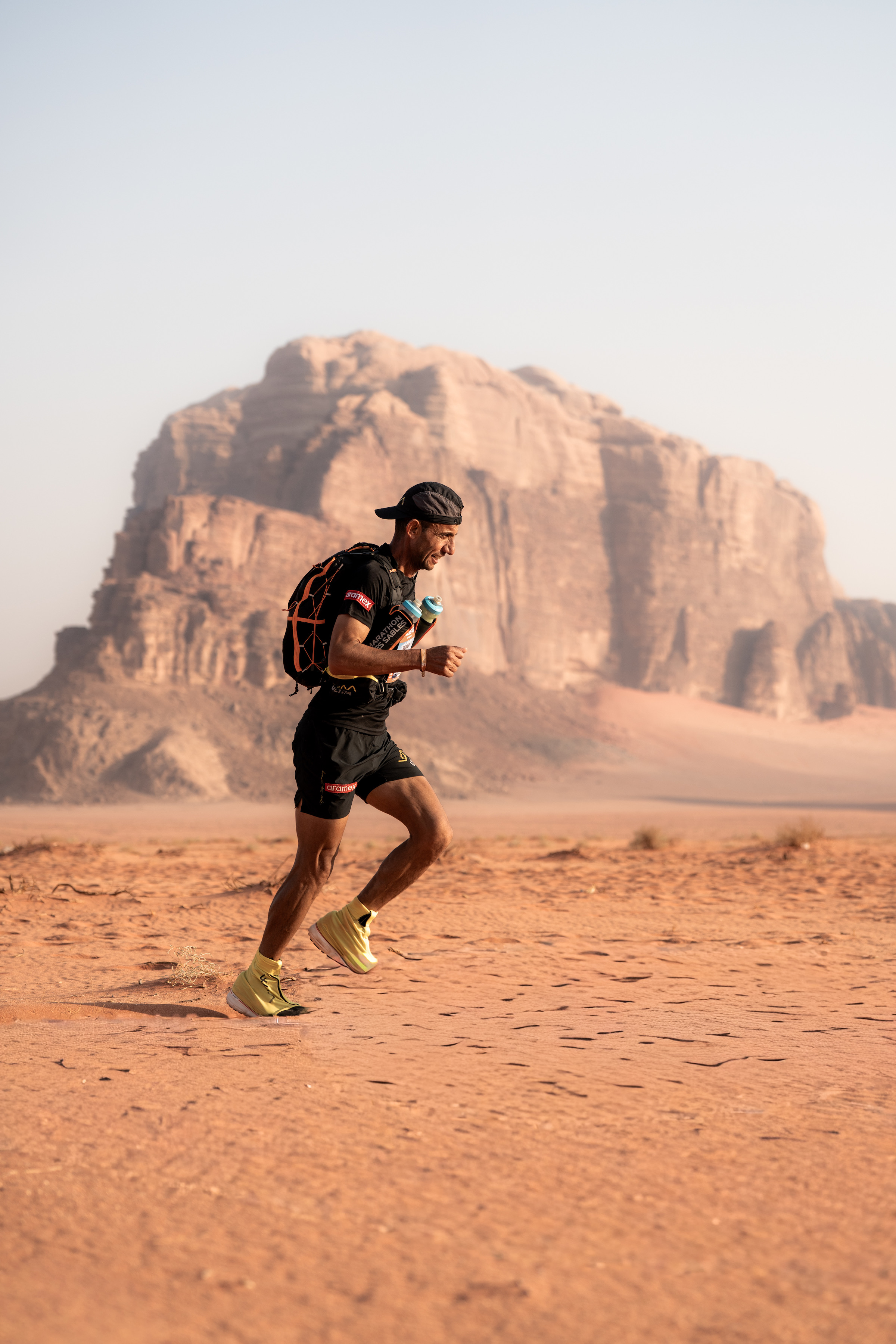
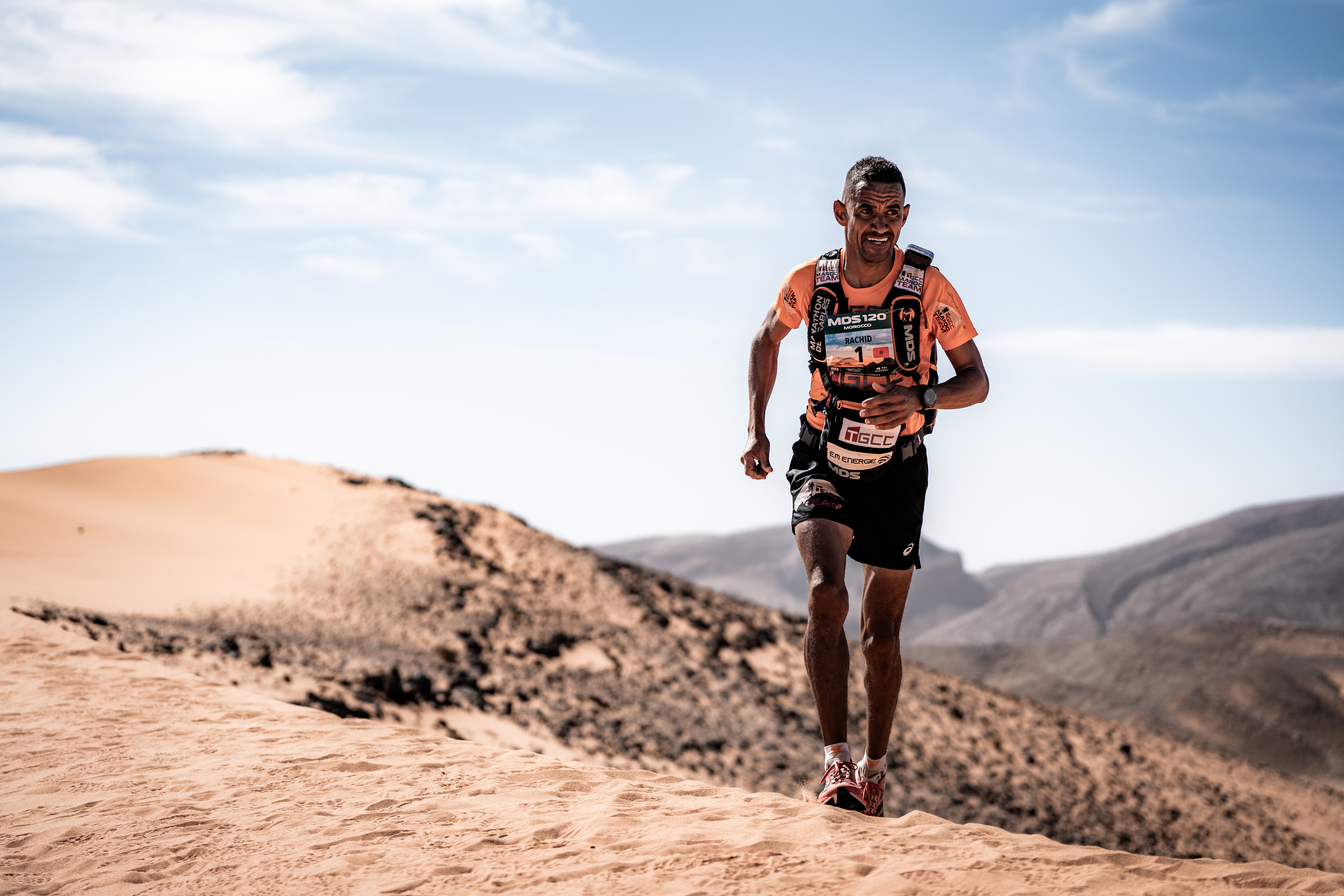
In the longest and toughest of the three routes, Rachid El Morabity did what he does best, dominate. The Moroccan ultra running legend took charge of the 60km stage, navigating the heat and terrain with trademark efficiency. His command of desert racing was evident, even in conditions that forced many to slow, stop, or drop out.
But this wasn’t just about speed — it was about survival. Pacing, hydration, and heat management became as important as footwork. Every decision counted.
On the women’s side, Julia Villanueva had a standout performance. Pushing through the worst of the afternoon furnace, she took the lead overall, ahead of Véronique Mueller-Berberat. Villanueva’s effort was both smart and strong, a calculated drive through the toughest part of the course when many were simply trying to hang on.
In the 100km event, which saw runners take on 40km in Stage 2, Lorick Buckin emerged as the new leader. He now holds a slim margin ahead of Louis Godeman, setting up an intriguing contest for the final day.
For the women, Elaine Caron-Gaudet rose to the challenge, building a lead over Charlotte Van Strydock. Both showed real composure in the heat, but Caron-Gaudet’s consistent pace gave her the edge on the day.
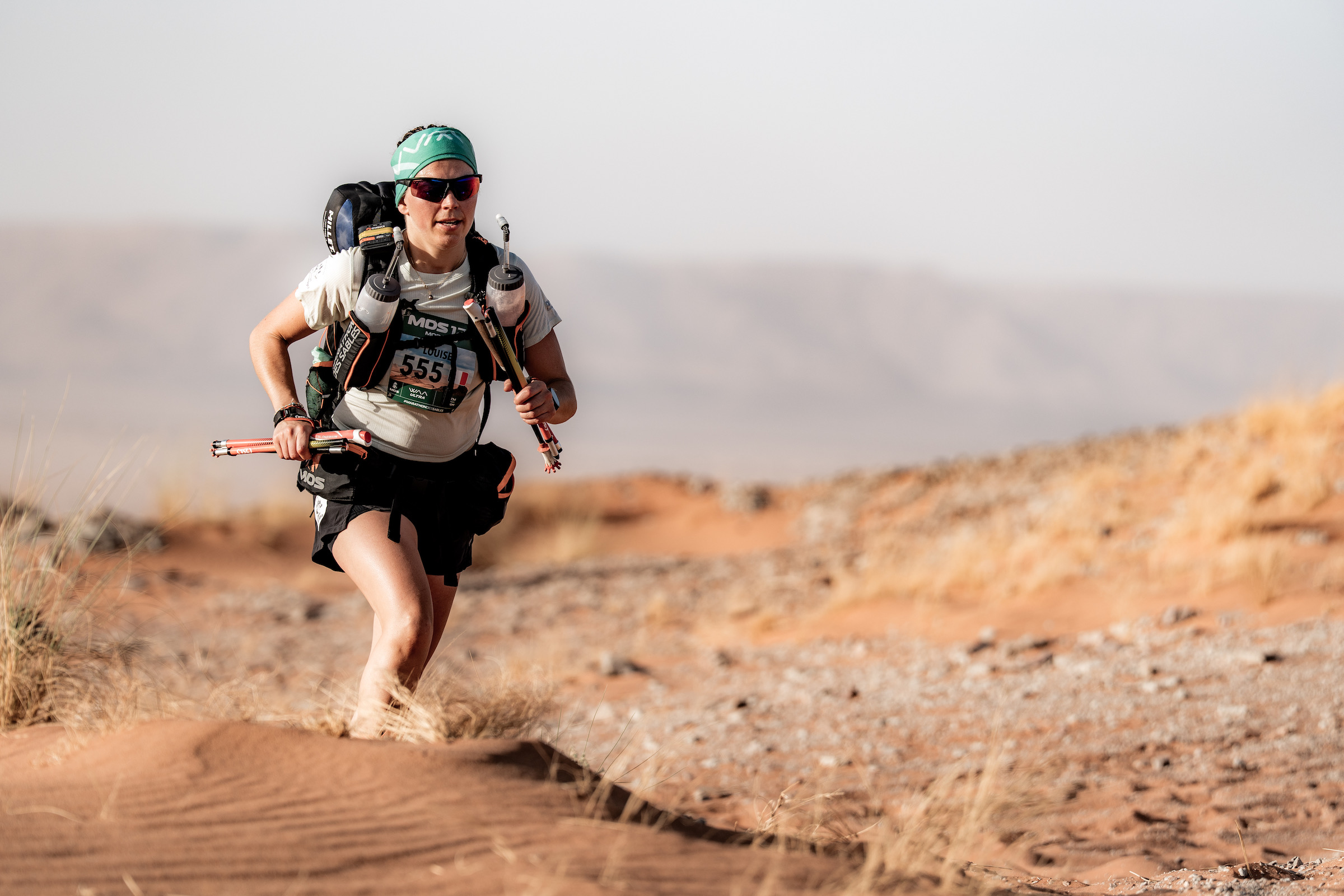
The 70km competitors ran their second stage under the same conditions, with Farid Alouani pulling ahead in the men’s standings. On the women’s side, Louise Marcant now leads the pack — a reward for measured effort across chaotic conditions.
This wasn’t a stage that wrapped up neatly by afternoon. It dragged into the night, with the last runner crossing the line at 23:04 – nearly 17 hours after the first starters. For many, it was less a race and more a trial by fire.
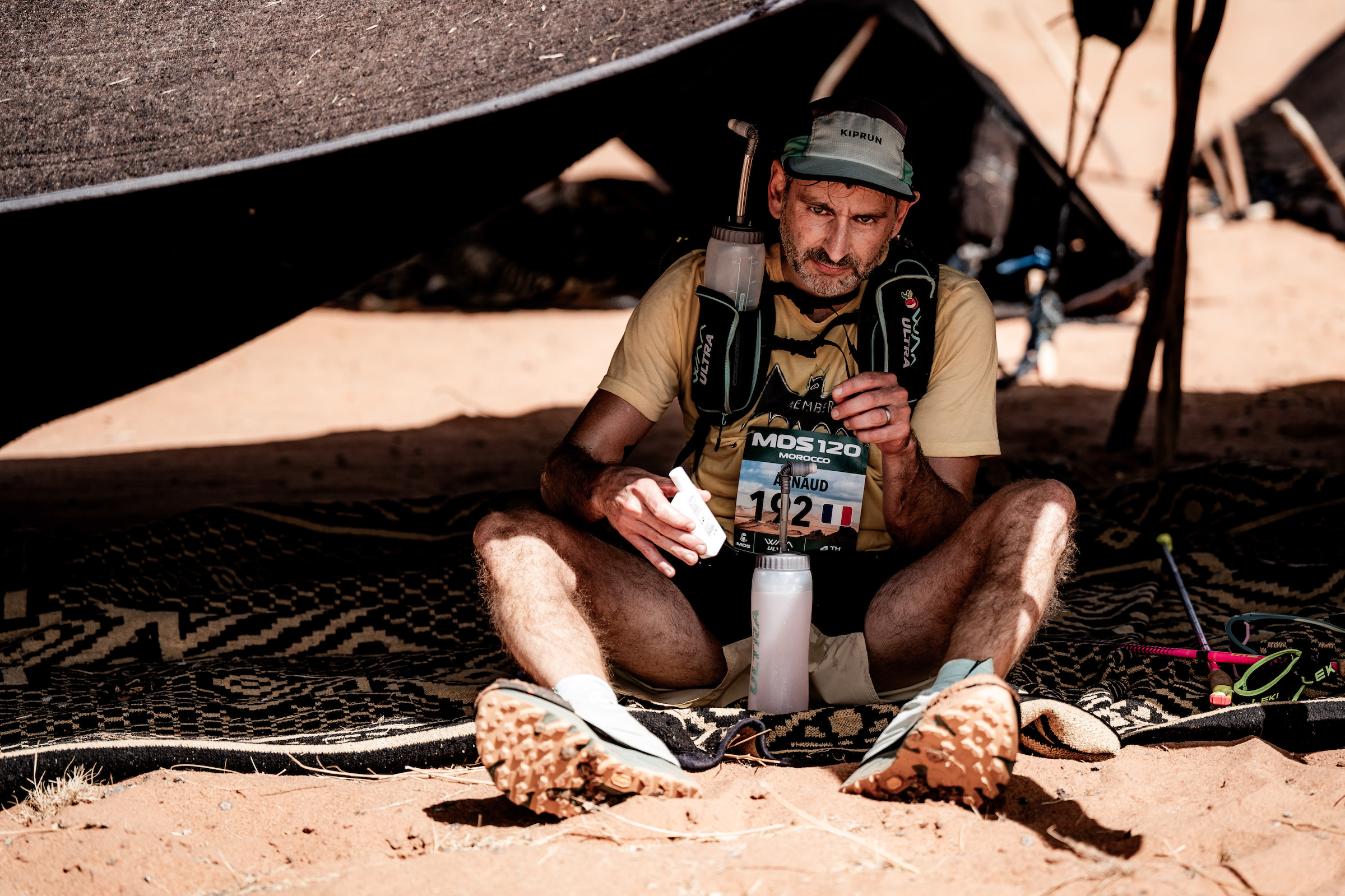
Whether running 20, 40, or 60km, every participant faced the same relentless sun, the same unshaded miles, and the same internal struggle: keep moving or give in. Water checkpoints became lifelines. The heat was no longer an obstacle; it was an adversary.
Respect the Heat. Respect the Race.
Stage 2 of MDS 120 Morocco 2025 will be remembered for one thing: its raw brutality. The course was hard. The heat was harder. And yet, hundreds pushed forward. Not everyone finished with a personal best, but finishing at all was a feat of determination.
This wasn’t just another day on the trail, it was the kind of stage that defines an event. One that strips things down to basics: survive, adapt, endure.
Stage 3 looms next. The bodies are tired. The desert, as always, is waiting.
Interested in a MARATHON DES SABLES EVENT? More Info HERE
The 2025 MDS 120 Morocco roared to life this morning at 08:00 sharp under a glowing desert sunrise and clear, windless skies. Stage 1, a 25km loop through the heart of the Moroccan Sahara quickly reminded everyone why this race is not for the faint of heart.
With checkpoints at 8.5km, 12.4km, and 19.7km, the route unfolded across varied terrain that punished and amazed in equal measure.
The temperature soared early, peaking at 32°C in the shade—but shade was a rare luxury. Out in the dunes and rocky passes, it felt much hotter.
The stage featured 509 meters of elevation gain and four demanding climbs. The highest ascent, topping out at 837 meters. The route was a grind over soft sand, stony trails, and shifting ground that sapped energy and tested resolve.
Despite the brutal conditions, the elites wasted no time. As expected, Morocco’s own Rachid El Morabity cruised to victory in 02:22:37, showing his class and desert mastery once again.
On the women’s side, Véronique Mueller-Berberat delivered a commanding performance, finishing in 03:31:23.
Today was more than just a race, it was a trial by heat, sand, and elevation.
The loop offered sweeping views and raw Saharan beauty, but it demanded everything in return.
Tomorrow, the challenge deepens with Stage 2, offering three route options: 20km, 40km, or 60km.
Whether racers go short, long, or ultra, they’ll need to dig deep again—this desert doesn’t let up.






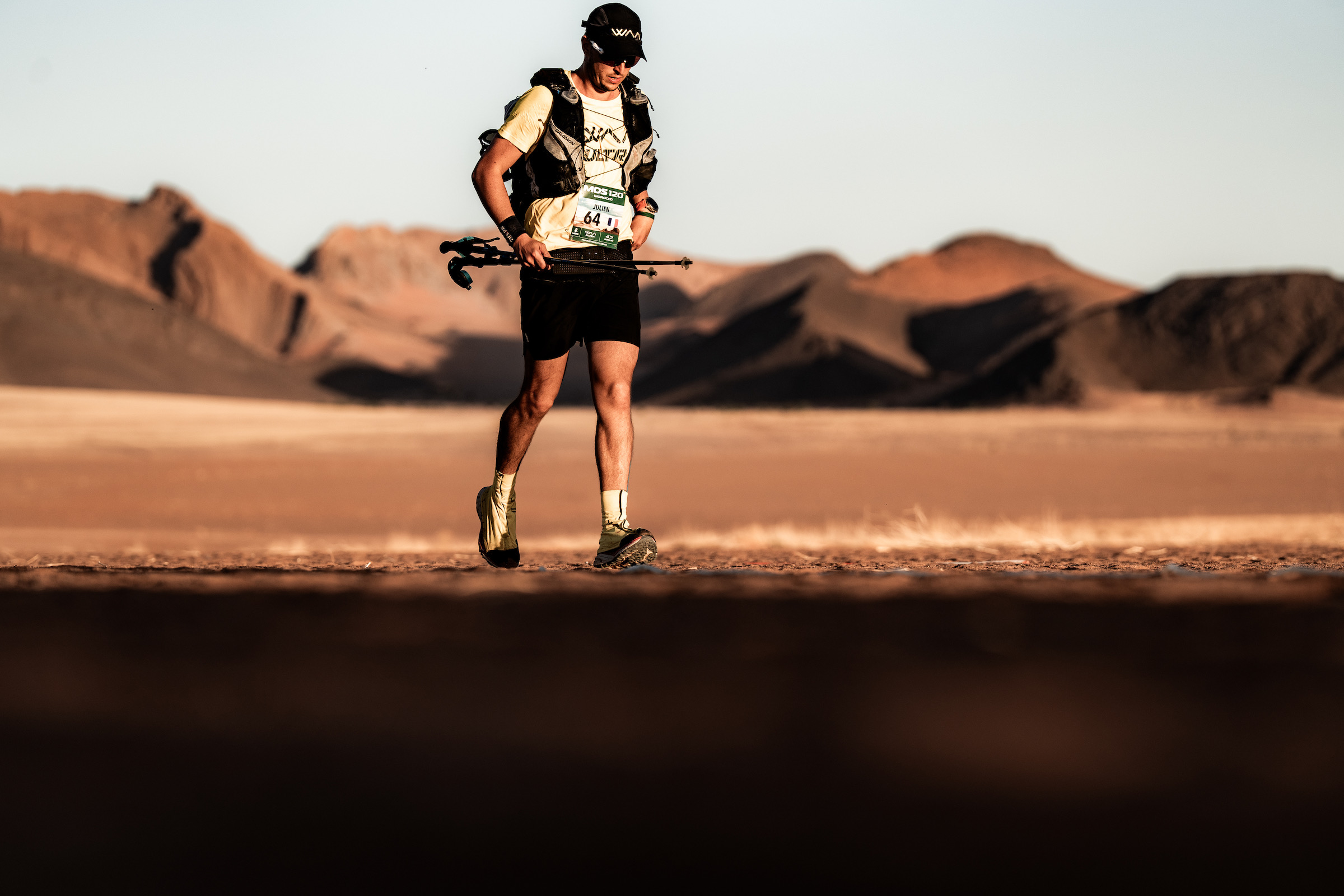

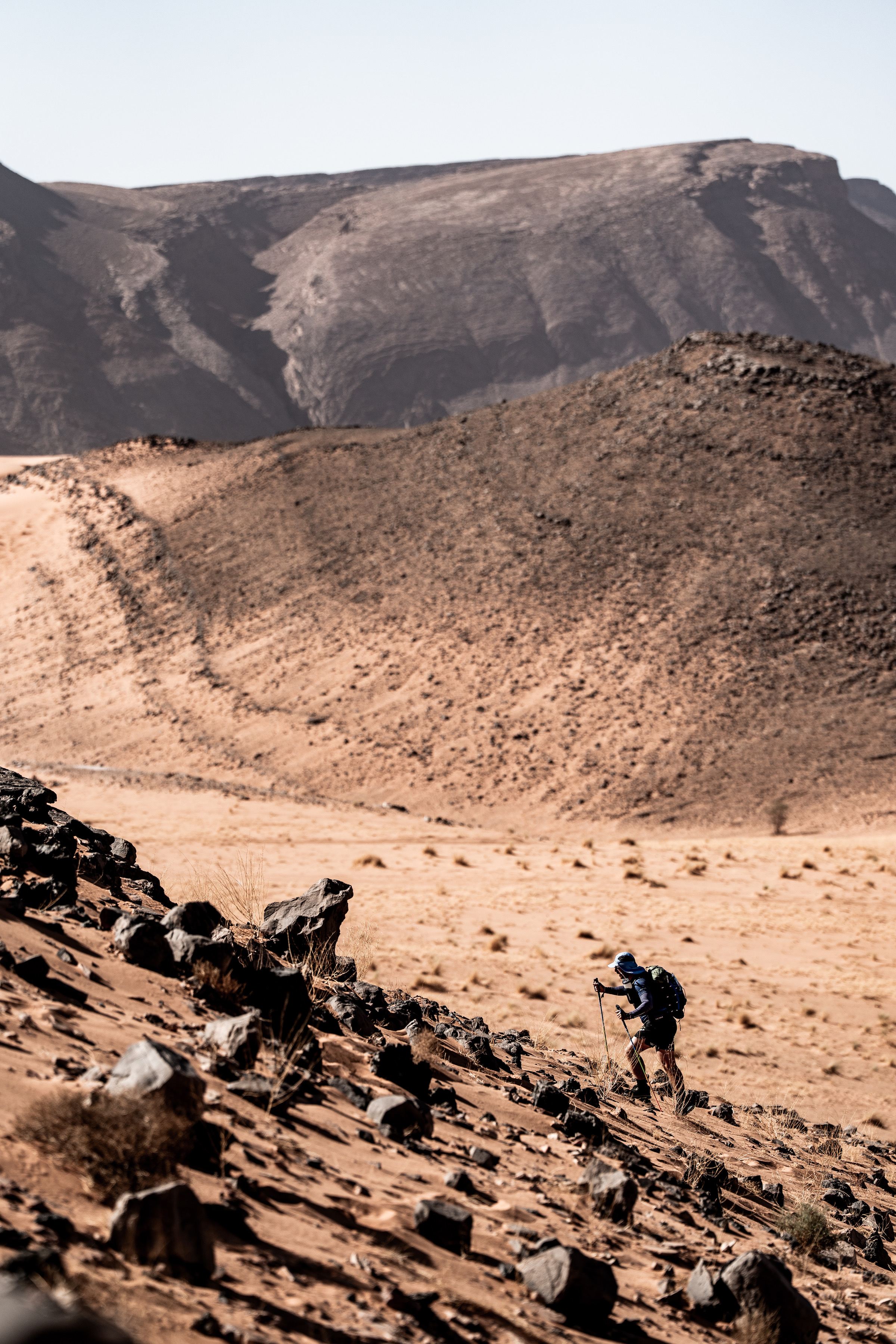
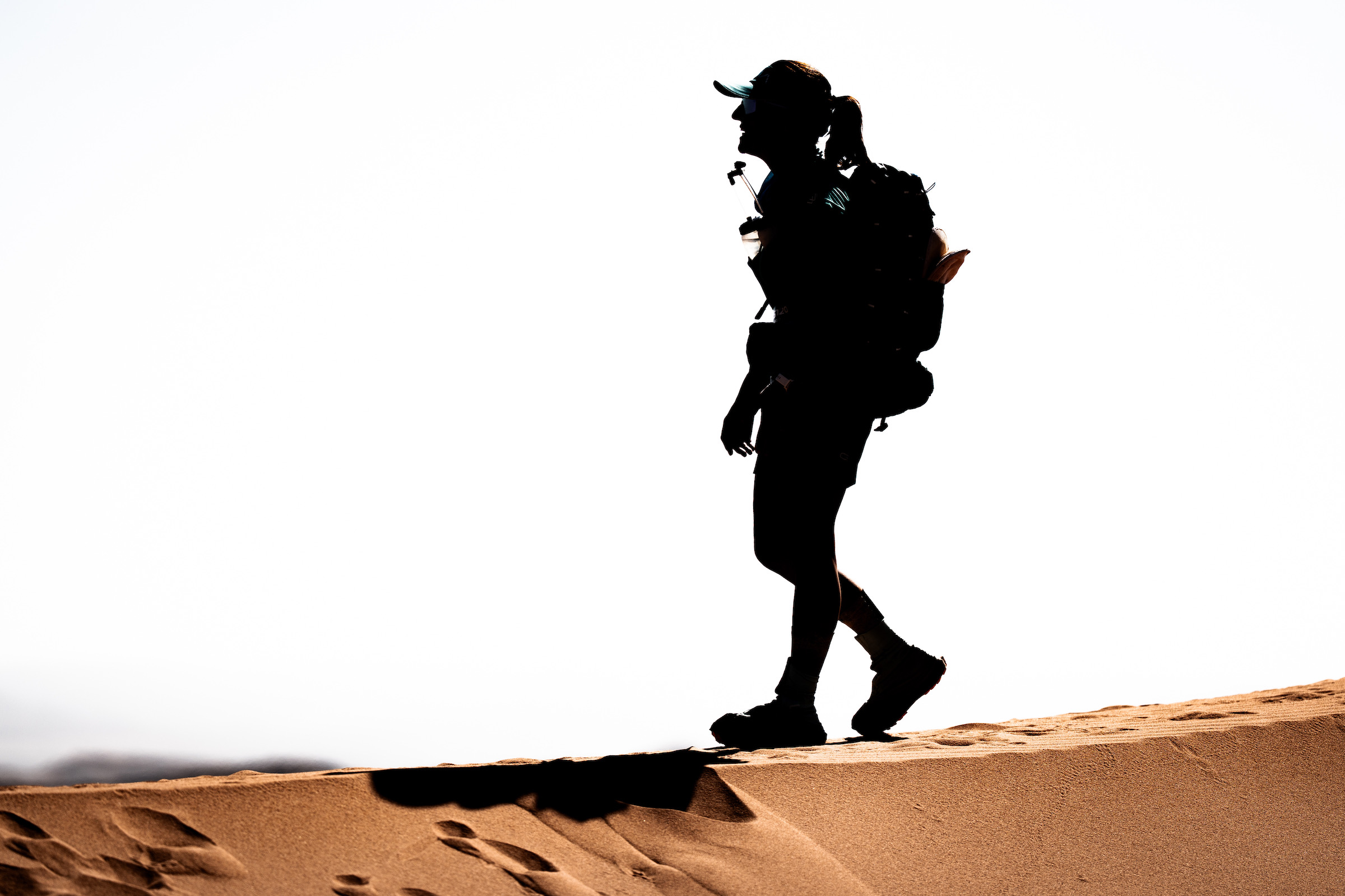
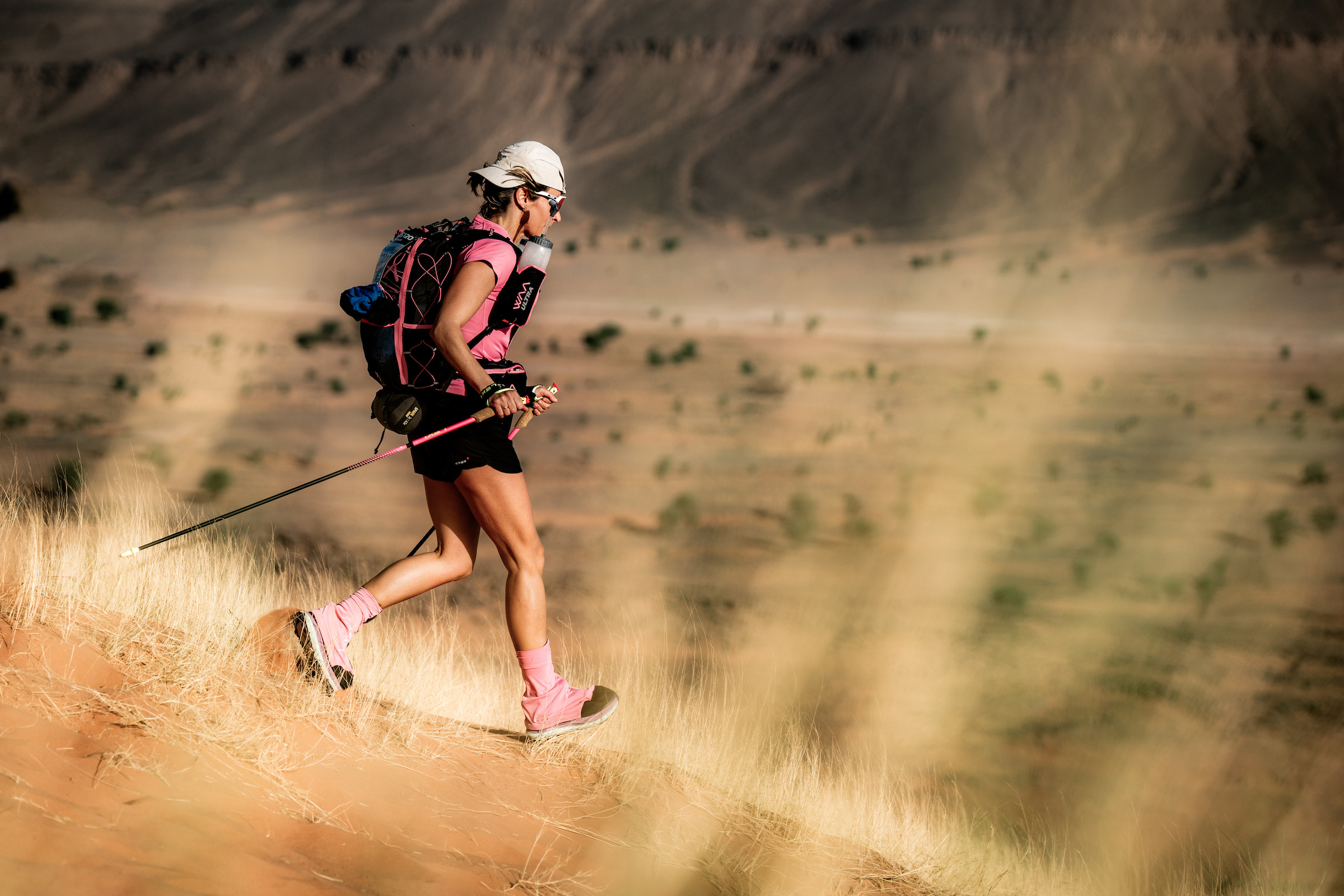

 IAN CORLESS