A milestone anniversary, new formats, familiar classics, and a season that stretches from the Sahara to the Alps. Some years feel bigger than others. In 2026, the calendar alone tells you this will be one of those years for Marathon des Sables.
Forty editions after its beginnings in the Moroccan desert, Marathon des Sables has grown into a family of events that test endurance in different ways, across different landscapes, and for very different runners. Yet the heart of MDS remains the same. Self-sufficiency, shared hardship, and the quiet satisfaction that comes from moving forward when stopping would be easier.
January opens with something new and bold: MDS Ultra. Two distances. Two very clear challenges. A 100km option for runners ready to push beyond the classic stage format, and a 100-mile race for those who want to see how deep the well really goes.
Photo by Ian Corless
An opening act designed to grab attention. Long distances, sustained effort, and the mental strain that only ultra racing can deliver. For many, it will be the first real test of their winter training. For others, it will be the centrepiece of their season. What matters most is what MDS Ultra represents – It signals evolution not revolution. MDS is not standing still, even as it celebrates its past.
Photo by Ian Corless
Before January ends, the focus shifts west to the ocean for MDS 120 Atlantic Coast. Where dunes once dominated the horizon, runners now deal with open beaches, shifting sand, and the constant presence of the sea. The Atlantic Coast event has its own rhythm. Wind can play a bigger role. Footing changes by the kilometre. Temperatures can vary greatly, and yes, rain may be present? Still self-supported, still demanding, but in a way that surprises many first-timers. By the time the final runners cross the line, January has already delivered two very different expressions of what Marathon des Sables can be.
February and March bring a noticeable change of pace. No race numbers. No finish lines. Instead, preparation. The MDS team turns its attention fully toward the centrepiece of the year: the 40th edition of MDS Legendary. Four decades after the first runners set off into the Sahara, this anniversary edition carries weight. Not just for the organisation, but for the community that has grown around it.
Photo by Ian Corless
Behind the scenes, logistics are refined, routes considered, and details checked and checked again. The Legendary event is not just another race, it is a reference point for stage racing, for many, a rites of passage, and in 2026, it will also be a celebration of everything Marathon des Sables has become.
Once the Legendary edition is complete, the calendar opens up again, and the global nature of MDS takes centre stage.
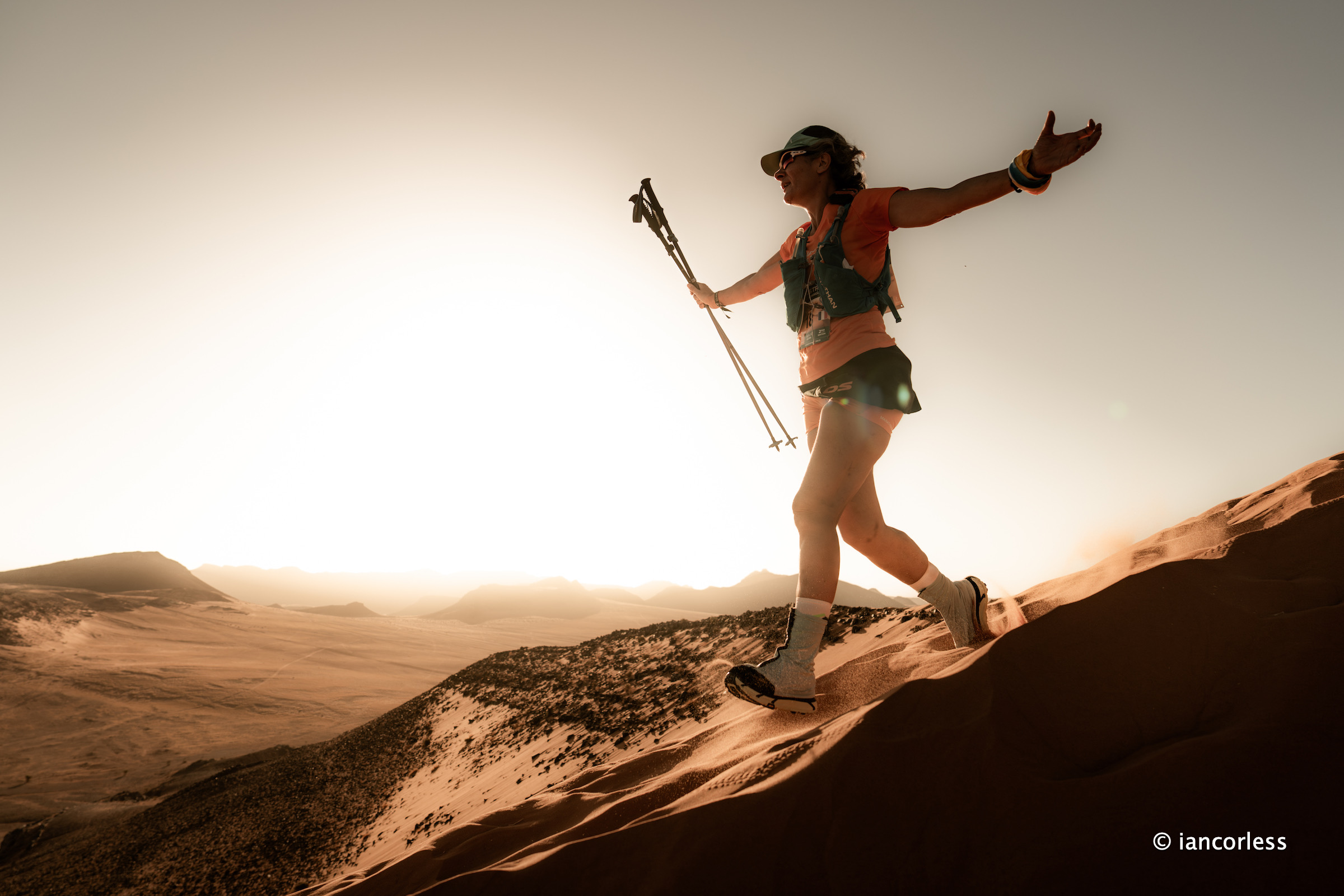
MDS Raid Namibia delivers raw beauty and isolation in one of Africa’s most striking landscapes. Namibia’s vast spaces, sharp light, and unforgiving terrain strip things back to basics. This is running in its purest form, where the environment sets the rules. A unique event as teams of two challenge a more stripped back and raw experience.
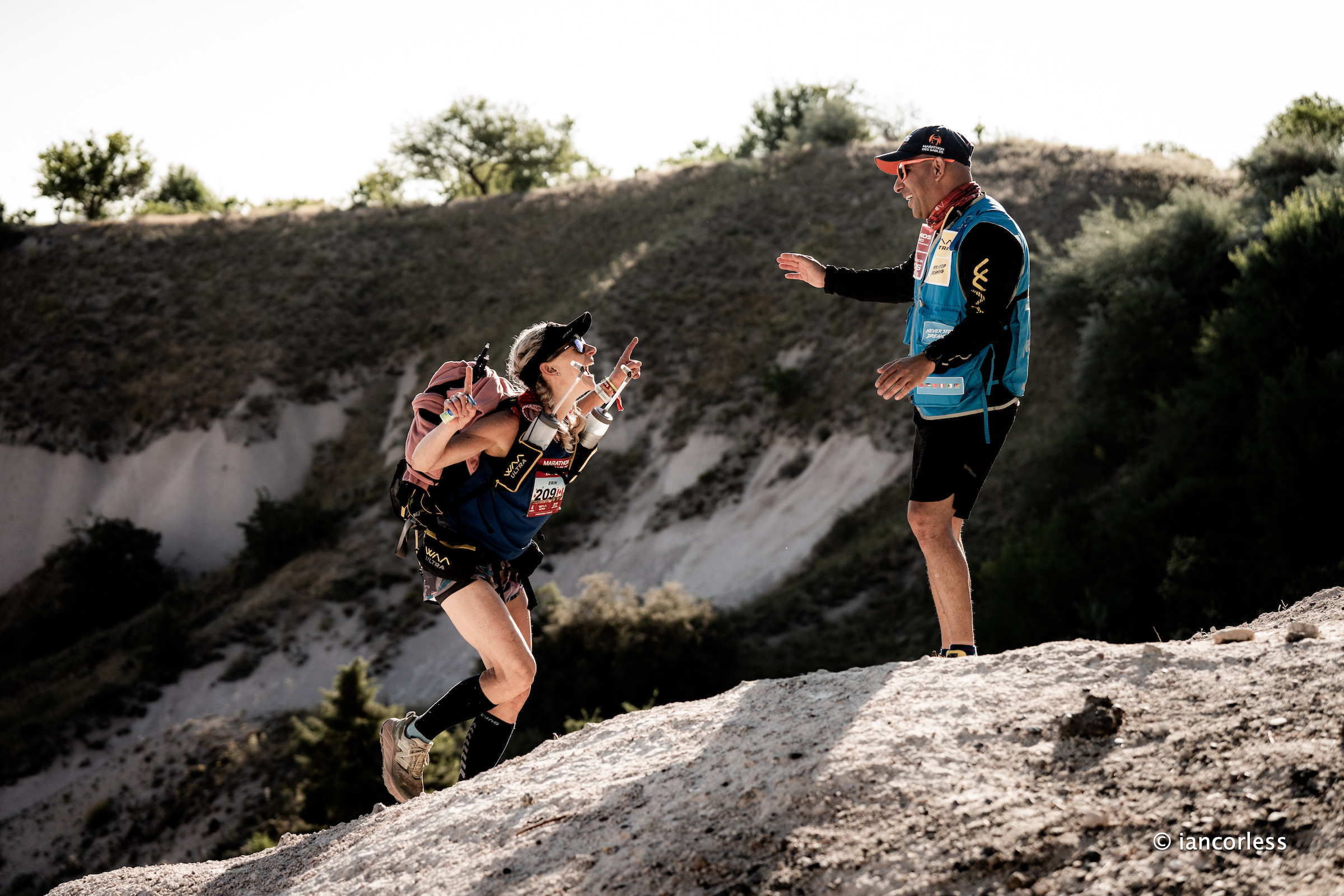
From Namibia, the series moves to Turkey for MDS 120 Cappadocia. Volcanic rock formations, flowing trails, and a sense of history underfoot make this one of the most visually distinctive events on the calendar. It is demanding, but also deeply immersive, ironically, despite the ‘sables’ tag, this event is much more a trail race – something new, different and unique.
MDS Crazy Loops – a format that lives up to its name. Short loops, repeated efforts, and a psychological game that can unravel even experienced runners over 24-hours. It is less about distance on paper and more about resilience in the moment. A fun and challenging event for all abilities that takes place at iconic ski resorts within Europe during July and August. A community event that brings the MDS vibe to the mountains.
As the year moves toward its final months, the pace does not slow. If anything, it accelerates. MDS 120 Morocco returns runners to familiar terrain, but with the confidence and refinement that come from years of experience. This is the desert, revisited with fresh eyes.
Alongside it, MDS Handi continues to redefine what inclusion looks like in endurance sport. It is a powerful reminder that challenge is not one-size-fits-all, and that determination takes many forms.
For those drawn more to movement than racing, MDS Trek Morocco offers a different relationship with the landscape. Still demanding, still immersive, but with space to absorb the experience in full where all abilities are catered for and yes, there is even some luxury – larger tents, no self-sufficiency, showers and so much more…
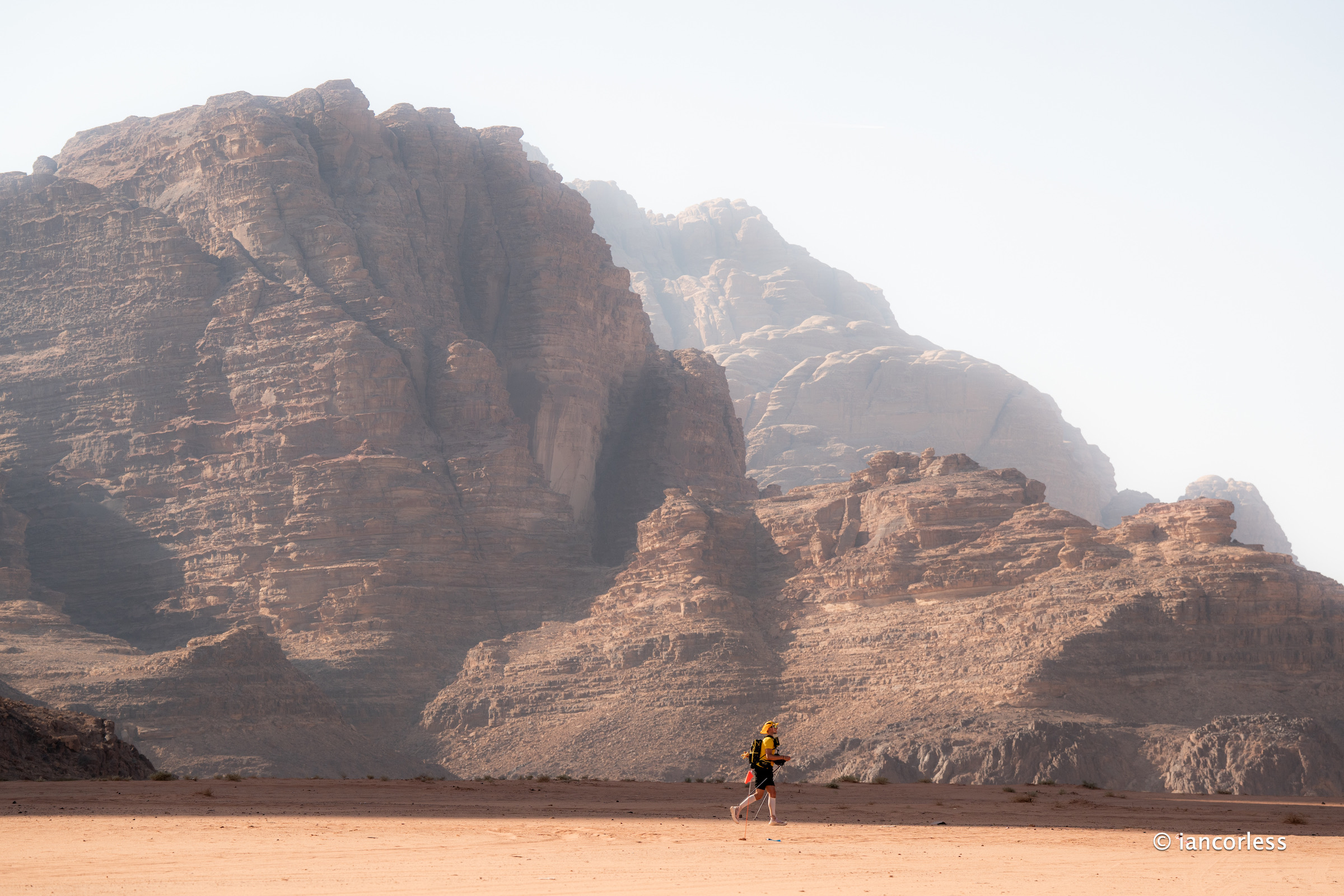
The international push continues with MDS 120 Jordan, where desert running meets ancient history. The terrain is tough, the scenery unforgettable, and the sense of scale impossible to ignore. An iconic event and arguably one of the most desired events on the MDS calendar.
And yes, there are hints of more to come. Potential surprises remain under wraps, but if past years are any guide, they will add another layer to an already remarkable season.
Photo by Ian Corless
By the time 2026 draws to a close, Marathon des Sables will have crossed continents and climates. Morocco, Jordan, Peru, Turkey, Namibia, and Europe, with the Alps adding altitude to the mix. Each location brings its own challenges, its own stories, and its own reasons for being unforgettable.
What ties them all together is not just branding or format. It is philosophy. Self-reliance. Respect for the environment. And the shared understanding among participants that this is about more than running.
A milestone year invites reflection, but it also demands momentum. In 2026, Marathon des Sables manages both. Honouring 40 years of history while pushing forward into new territory, new formats, and new ways to test human endurance.
For runners, supporters, and the wider endurance community, it is hard not to look at the year ahead and feel a quiet sense of anticipation.
What a year it promises to be.
In addition to the above, there is the MDS Tour and MDS Clubs.
Second Edition Confirmed for April 25 to May 2, 2026
The adventure is back. From April 25 to May 2, 2026, the second edition of MDS Raid Namibia will return to one of the most breathtaking landscapes on Earth, and this time, it’s bigger, bolder, and ready to test your limits.
A Race Like No Other
MDS Raid Namibia isn’t your typical ultra. It’s a Raid format: multi-day racing where each stage takes you deeper into wild, untouched terrain. You and your partner navigate the course together, carrying your essentials, relying on one another’s grit and skill. The rhythm is different from a single-stage event, it’s about strategy, recovery, and building momentum over days in the desert.
Namibia: More Than a Backdrop
The desert here is alive with colour and contrast, towering red dunes, sun-bleached plains, and skies so vast they feel infinite. But the real magic? The people. From the warmth of local communities to the camaraderie among competitors, every smile, handshake, and shared moment turns the race into something unforgettable.
Two Distances, One Challenge
Whether you choose 90km or 107km, you’ll face a course that demands strength, patience, and partnership. The shorter option is still a serious test; the longer route adds extra sting to already challenging days.
Teams of Two
This is not a solo fight. Every team is two runners — sharing the highs, lows, decisions, and celebrations. It’s about knowing when to push, when to pace, and how to keep each other moving forward. You’ll finish this race with more than just a medal — you’ll leave with a bond forged in heat, dust, and determination.
Under the Star Night
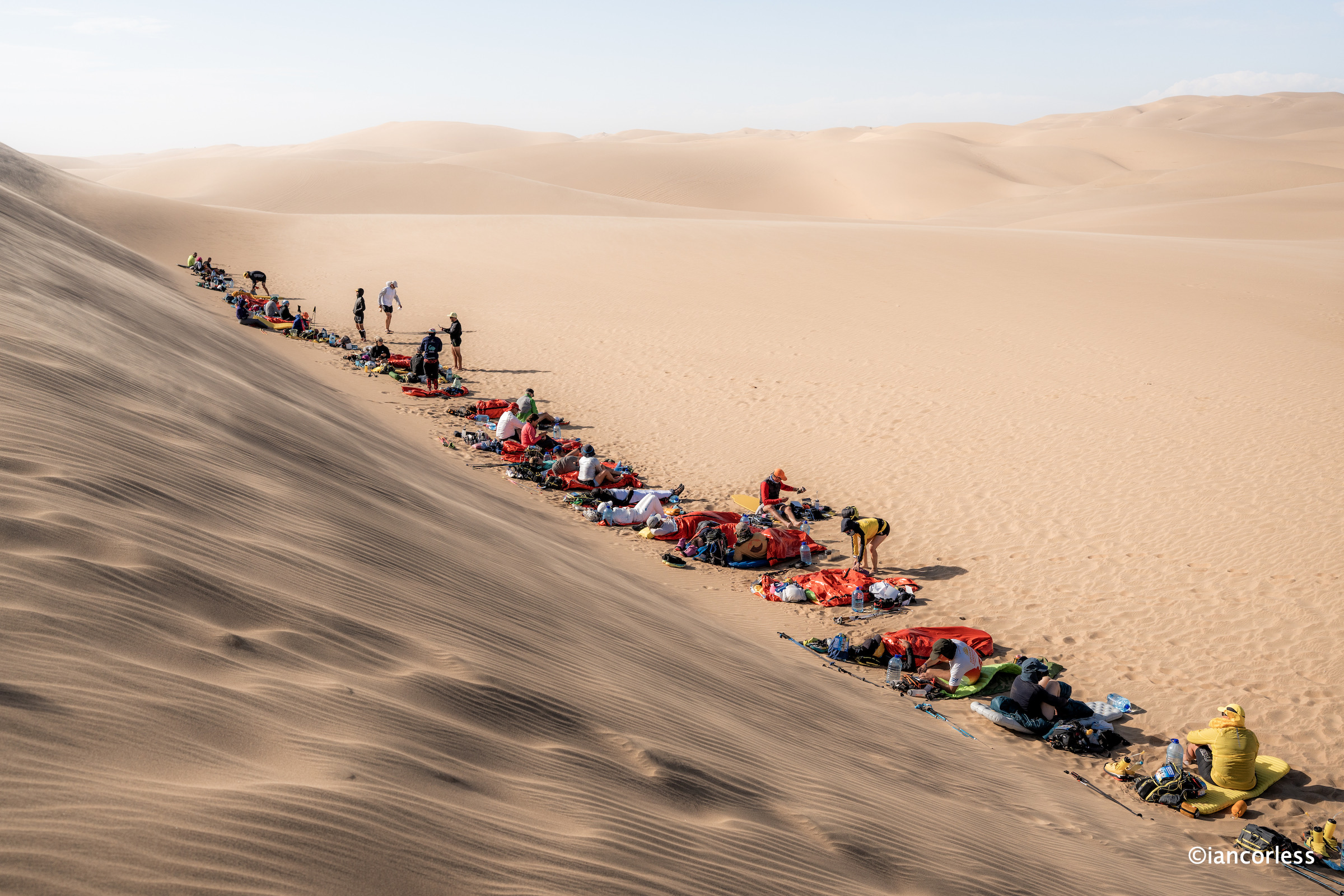
And then there’s Star Night — a moment that transcends competition. Out in the desert, far from city lights, the sky becomes a canvas of constellations. It’s an evening to pause, breathe, and feel the scale of where you are. Stories are shared, laughter carries through the darkness, and the adventure takes on a whole new light.
⸻
MDS Raid Namibia 2026 is more than a race. It’s an odyssey. Whether you come for the challenge, the scenery, or the connection, you’ll leave with a story only this desert can write.
The desert is calling.
Read and in-depth summary of the first edition in 2025 HERE and be inspired to join this magical adventure, ‘Testing Limits on the Edge of the Atlantic.’
Desert running brings many challenges and running in a desert for multiple days brings a whole new set of challenges.
For 40 years, the Marathon des Sables (MDS)has defined the edge of human endurance. It began as a wild idea—could someone run across the Sahara carrying everything they needed to survive? That idea sparked a revolution. MDS became the godfather of the ultra-stage race, a test of self-sufficiency, resilience, and pure grit. Over time, it expanded beyond its roots: the MDS 120, the exploratory MDS TREK, the demanding MDS RAID, and the mind-bending MDS Crazy Loops. Each one a new take on the same promise, to push the limits of what a runner can handle.
MDS as it is affectionately known paved the way not only for multi-day desert racing but ‘all’ multi-day racing, be that in snow, ice, rainforest, jungle or the mountains. If multi-day racing was the mafia, MDS would be the Corleone family.
All multi-day races have followed and tried to replicate the MDS format, however, the reality is, I have yet to experience a race that matches the size, the scale, the organisation and awe-inspiring splendour of what MDS has created in the Sahara. Ask anyone, despite experience, despite achievement, MDS is usually ‘on the bucket list!’ It’s fair to say, that MDS is directly attributable for many new ultra-runners. You see, MDS offers more than just running, it offers a challenge, it offers something quite unique – the Sahara and the MDS strips the runner back to basics and deprives them of all luxuries so that they are stripped raw. Runners find themselves in the desert.
2024 and onwards:
2024 saw a new team take over the MDS brand, at the head, Cyril Gauthier and Olivier Cerbeland. Significant changes took place for the 38th (2024) MDS Legendary pioneered at what was the HMDS format (now MDS 120) and they remained for 2025 and moving forward.. There are 3 key points:
Point 1:
Legendary is now 6 timed stages and not 5 stages with a charity stage. The distance will be, +/- 250km’s. The long day in 2024 was stage 3, for 2025 this will be stage 4.
Point 2:
MDS events are contested in food self-sufficiency: only water, in limited quantities but sufficient to cover the needs of an athlete evolving in the desert, is provided to you each day. You must take along for your entire stay in the desert everything you need to eat and prepare to eat (freeze-dried meals, semolina, cereal bars, stove, etc.). This self-sufficiency will include the day of your arrival in the desert, and the day of control preceding the race. *Trek is exempt from food self-sufficiency.
Point 3:
You must arrange your own travel to race destination. As usual, MDS will take care of you from your arrival airport, this will depend on race location. Typically, free shuttles will be offered from one key airport. You will thus have the possibility of anticipating or extending your stay, or of being joined by your family, much more simply than before.
It is recommended you listen to a podcast with co-owner and CEO Cyril Gauthier. Listen HERE.
MDS Events, 2025 moving forward:
LEGENDARY the iconic 6-stage, 250km race celebrating 40-years in 2026.
MDS 120 (used to be HMDS) this is 3-stages over 4-days with distance options of 70/ 100 or 120km.
MDS TREK this is similar to the MDS 120 format, however, there is no self-sufficiency, more comfortable accommodation and additional facilities, an excellent introduction to the MDS.
MDS RAID an event for more experienced athletes that is undertaken in teams of two, over approximately 90-120km’s, typically, two distance options are provided. The format is similar to MDS 120 with 3-stages over 4-days. One night will be undertaken under the stars with no bivouac.
MDS ULTRA new for 2025, a 100-mile or 100km single stage race with a 40-hour cut off.
MDS CRAZY LOOPS three new events for 2025 undertaken in ski resorts, the format is to run as many loops as possible in 24-hours. The loops will be typically, 3-5km’s in length.
DESTINATIONS:
Morocco – has multiple events: Atlantic Coast, Legendary, MDS Ultra, MDS 120 Morocco, and MDS Trek.
Namibia – a MDS Raid event
Turkey – MDS 120
France – Crazy Loops – La Rosière and Courchavel
Fuerteventura – MDS 120
Jordan – MDS 120
Peru – MDS 120– This event takes place every 3-years.
****
If you have entered MDS or another self-sufficient multi-day race or adventure, you will be asking:
“What equipment do I need?”
This question is the same for many other desert races but I need to be clear, not all races are the same. For example, MDS requires the runner to be completely self-sufficient. This harks back to Bauer’s pioneering expedition in 1984. The runner must carry ‘all’ they need for the duration of the event, the only exception being:
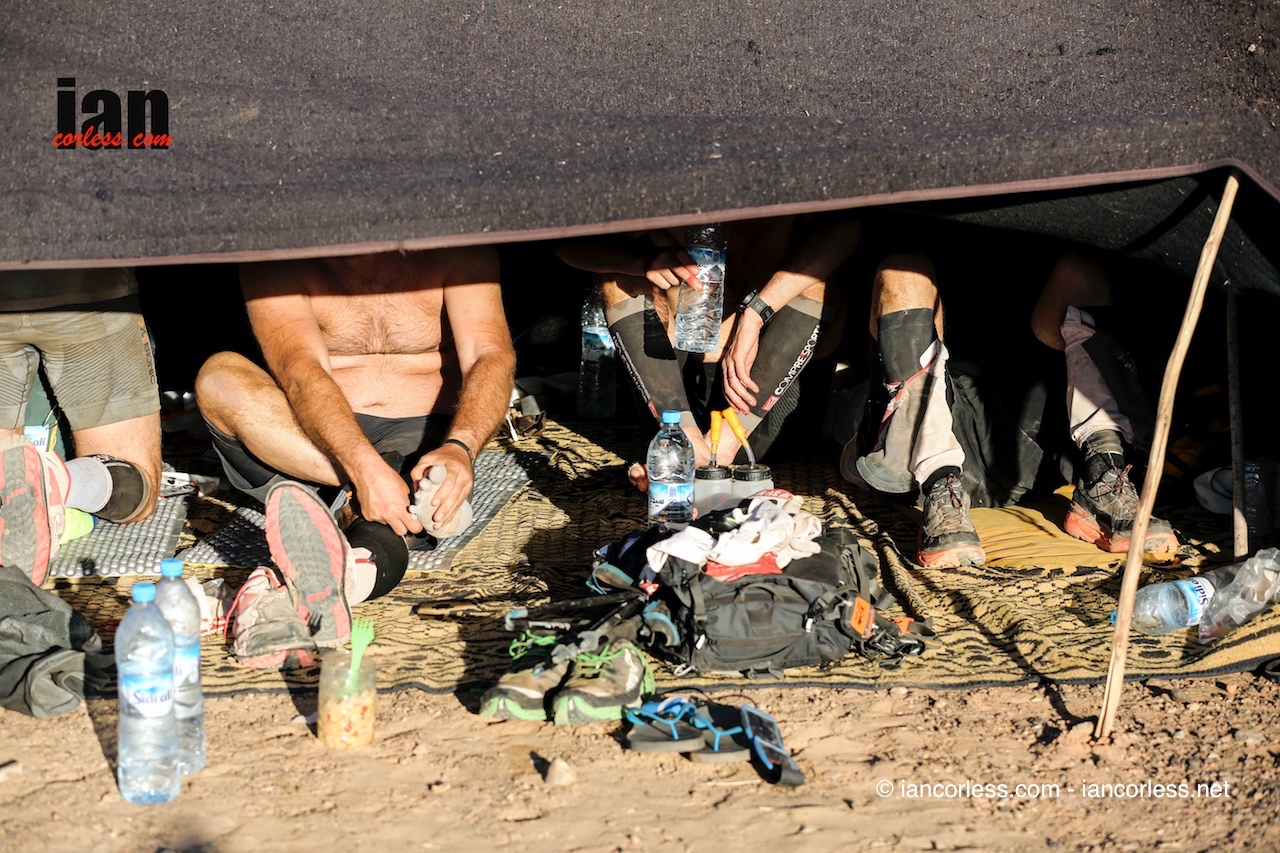
Bivouac – A simple tent cover is provided at the end of each day and this tent must be shared with 7 other runners. This is specific to Legendary. Other MDS events, MDS 120 as an example, runner’s a re provided solo-occupancy small yellow WAA tents.
Water – Water is provided in bivouac and out on the course. Whilst running, water is abundant and not rationed. At the end of the day, you are provided 5ltr of water which must last to CP1 the following day.
Anything else the runner needs must be carried – pack, sleeping bag, sleeping mat, food, snacks, luxuries etc.…
The Detail
Let’s be clear, it is important to note that equipment will not make you complete any race. What it can do is make the process easier and more comfortable. Equipment is something we all must take to any race and finding out what works and doing the research is part of the fun.
If you want to increase your chances of completing your chosen race, commit to the training required, get your head in the correct place and then finish off with the appropriate equipment for the job. Far too many stress about what equipment they need and neglect the appropriate training.
Multi-day racing in its purest form should be very simple. However, over the year’s deciding what equipment to take has become increasingly more complicated.
It shouldn’t be complicated and in all honesty, it isn’t!
Here is just a list of absolute essentials, one could say that this list is mandatory:
Hat
Sunglasses
Buff
Jacket (usually down)
T-Shirt
Shorts/ Skort
Socks
Shoes
Gaiters
Rucksack
Sleeping Mat (optional)
Sleeping bag
Head Torch
Flip-flops or similar
Toilet paper
Personal medical kit (feet etc.)
Spot Tracker (supplied at MDS, optional at other races)
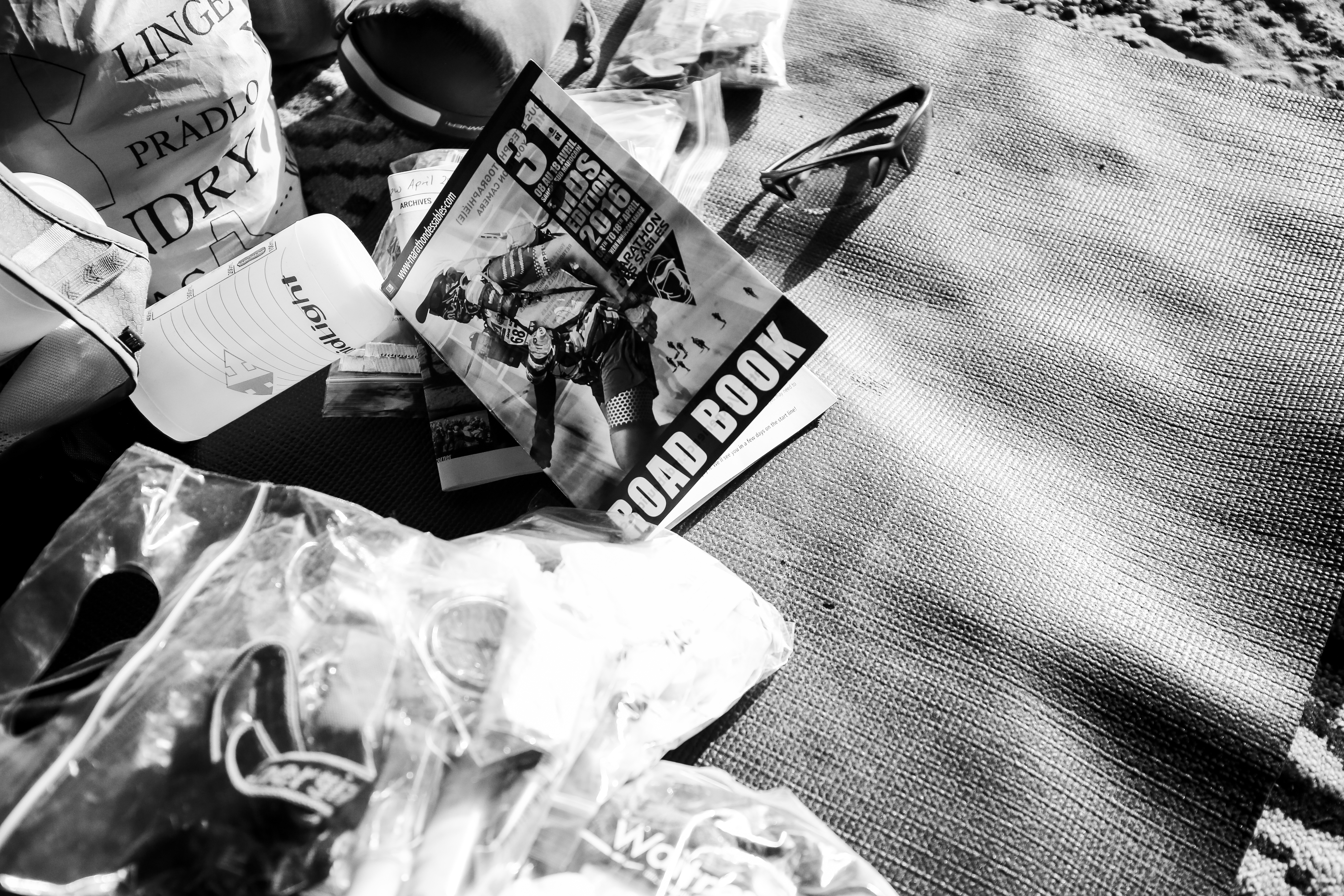
Road Book (supplied)
Stock cubes
*Food for the required days
**Mandatory kit
***Water
Optional items:
Warm jacket (usually down that packs small and light) – I consider this essential and not optional
Stove and fuel blocks
Sleeping bag liner
Spare socks
Walking Poles
Goggles
Spare clothes (?)
Luxuries:
Mp3 player
Phone
Solar charger
Kitchen sink…
Perspective:
Any multi-day race has (arguably) five types of participant:
The elite races who will contest the high-ranking positions.
Top age groupers who will look to race for a high place and test themselves overall.
Competitive runners looking for a challenge.
Those who wish to complete and not compete.
Newbies who are out of their comfort zone looking to finish at all costs.
When one looks at kit and requirements, it’s easy to think that the needs of the top elites in group 1 will vary from those in group 5. I would arguably say no! All the runners need the same things; they all must carry the same mandatory kit and they all must carry the same minimum food requirement.
I think the differences come with experience. Novices and newbies will more than likely prepare for the unknown, the ‘just in case’ scenario. Whereas top runners will be on a minimum, the absolute minimum. Groups 2- 4 are a mix of groups 1 and 5 and they fall somewhere between.
So, for me, groups 2, 3, 4 and 5 should (where possible) aim to be like group 1. The only key difference comes with shoe choice. Runners who will spend much longer on their feet and out on the course will most definitely need a shoe that can withstand that pressure and the shoe must also be good for walking. Groups 2-5 never fully appreciate (often until it’s too late) how much they will walk in a desert race.
EQUIPMENT IN DETAIL
When looking at equipment, I am going to provide a brief synopsis and then some recommendations. I will then supply ‘my’ equipment list.
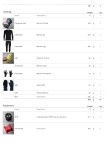
I strongly advice using a tool such as LIGHTERPACK which is a great tool. Here is an example of one of my personal fastpack lists.
Remember WAA is the official equipment of MDS and you can purchase many of the key items via their website HERE
Hat – A hat is essential to keep the sun off your head; options exist that have a neck cover built in to avoid that delicate area that will almost certainly be in the sun all day.
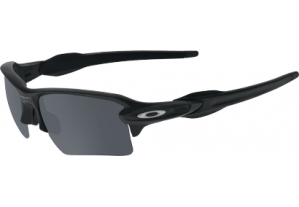
Sunglasses – So many choice, but you need a good pair that has ideally a large lens to protect the eye. Some desert specific sunglasses include a brow pad that helps stop sweat dripping in your eye. Do you need prescription? If so, I use prescription Oakley and they are excellent. Do you need goggles? Yes and no. If you have good sunglasses with good coverage, then no. However, should a sand storm hit, it can be uncomfortable. Goggles guarantee no sand in the eyes.
Buff – A buff or even two are essential. One around the neck helps keep the sun off and you can also wet it to help reduce core temperature. In wind and sand storms, the Buff is lifted and protects mouth, nose and sometimes eyes. A spare Buff is a luxury but worth considering.
Jacket – Jacket choice will depend on sleeping bag choice. If you are using a light bag, a lightweight down jacket is an essential item. Häglofs, Yeti, Mont Bell, Rab and others have exceleent super light options.
T-Shirt – It’s not rocket science, you will have been running in a shirt already, if it works, why change it? I read countless arguments about should it be black or white – you know what, it doesn’t ‘really’ matter. Look at the elite runners, they are often sponsored and have little or no choice on colour. However, lighter colours reflect heat. Comfort however is key.
Shorts/ Skort – Same answer as T-Shirt.
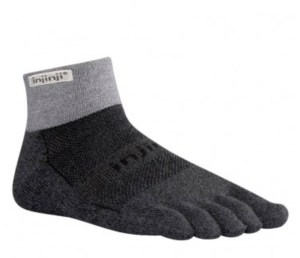
Socks – Getting the correct socks are key for any race and like I have said for shirt and shorts, if you have socks that work, why change? So many options exist but for me I am a firm believer in Injinji toe socks.
Shoes – Read HERE – Shoes are personal and must be suited to you, the individual. Consider your gait (neutral, supinate or pronate), consider time on feet, consider your weight, consider how much you will walk (and then double it) also consider shoe drop and how much cushioning you need. It’s impossible to recommend any one shoe because of these variables. You will see top runners using a lighter shoe, remember, these shoes only need to last 20-30 hours. However, you may well need a shoe for 40, 50 or 60-hours. Do you need a trail shoe? No, you don’t need a trail shoe but I would say that many trail shoes are more durable as they are designed for the rough and tumble of variable terrain. Do you need an aggressive outsole? No, you don’t, but I do think some grip is better than none and therefore I would use a trail shoe over road. Protection? Toe box protection is a good idea as deserts include lots or rocks, far more than you may think. Do I need a size bigger? Shoe sizing does depend on what is ‘normal’ for you. I always recommend a thumb nail of space above the big toe, you don’t need any more than this. Recommendations of going a size is bigger is bad advice in my opinion. A shoe that is too large allows your foot to move, a moving foot causes friction, friction causes blisters and the rest is the same old story that I see at desert races all over the world. However, I would recommend a shoe with a little more width in the toe box, this will allow for some comfort as the days progress. If you are prone to feet swelling, discomfort, blisters and so on, get a strategy sorted before you head out to your chosen race.
Gaiters – Are essential and they should be sewn and glued on to the shoe to guarantee that no sand can enter. WAA provide race gaiters.
Rucksack – A rucksack is one of the most essential items for the race as it will hold on your kit for the duration of the event. Many versions exist and the type of pack you choose depends on many things: Male/ Female, Small/ Large, Tall/ Short and so on. Some packs just don’t work for some people. You also need to consider if you need a front pack to hold essential items. How will you drink on the go? How much do you plan to run in comparison to walk? I have some simple advice:
Keep the pack as small as possible, if you have a bigger pack you will just fill it.
Keep the pack simple – far too many packs are over complicated and messy
Keep the pack light
Make sure that drinks are accessible, easy to use and don’t bounce
See how the pack feels full with all food and then see how the pack feels with 5-days food missing.
Make sure you can access ‘on the go’ essentials.
Needless to say, WAA is arguably the most popular pack at MDS. However, find what works for you.
Sleeping Mat (optional) – Inflatable, Foam or no mat. I’m a firm believer in taking a mat, the weight v comfort is a no brainer. I would also choose an inflatable mat even though it does run a risk of puncture. However, with good admin, good care, and years of using inflatable I have never had an issue. A foam mat is guaranteed to last the race but for me is large and cumbersome. Look at products from Thermarest, Sea to Summit, Klymvit and OMM.
Sleeping bag – Like the pack, a sleeping bag is a key item is it is likely to be the largest and heaviest item (except food and water) that you will carry. A sleeping bag is important as a good night’s rest is key for day-to-day running. I will always go with a sleeping bag and down jacket scenario is this for me provides less weight, less packed size, more flexibility and the option to get warmer at night by wearing the jacket inside the bag. Problem is, this comes at a price. Also, consider your size, shoulder width, height and so on. Some bags are very small whereas bags such as PHD and Yeti can be purchased in small, medium or large. Recommended bags are PHD (custom or off-the peg), Yeti, Western Mountaineering, Häglofs, RAB, OMM (not down) and Raidlight. Read HERE
Head Torch – Don’t compromise, you need a good head-torch that provides enough light for running in a black desert at night. Don’t use rechargeable or a torch with gizmos. You just ideally need variable power, a red-light option so you don’t disturb others at night and it will either take AA or AAA batteries. Recommendations are Black Diamond, Petzl, Silva or LED Lenser.
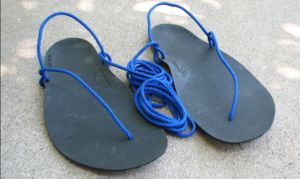
Flip-flops – Free slippers that hotels give away are popular as they are small, fold and are lightweight. However, they don’t stay on and they don’t protect from thorns or stones. Cheap, lightweight plastic or rubber flip flops work for me. I have seen some improvised flip-flops made from run shoe insoles and some string. It’s that group 1 to group 5 scenario again!
Personal medical kit (feet etc.) – Foot care is essential and although many races have a medical team on hand to look after you and your feet, understanding how to do this yourself is key. learn foot care and treatment and understand how to tape your feet. Ready-made foot care kits are available such as this at MyRaceKit here
Spot Tracker (supplied at MDS, optional at other races)
Road Book (supplied)
*Food for the required days – (see clarification below). Food is very personal and it’s imperative you find out what works for you based on your size, gender, calorie burn and speed of running. The front runners will use carbohydrate and fat as fuel as they will run at a faster pace and therefore they will potentially fuel ‘during’ each stage with carbs. However, as you move through the pack going into groups 2-5 the need for fat as a fuel is more important and therefore ALL runners before heading out to any multi-stage race should ideally have taught their bodies to use fat – we have an unlimited supply of this fuel! Post run it’s important to repair, we need protein for this and re-stock energy supplies, we need carbs for this. Dehydrated meals for many runners form the basis of a morning meal and evening meal. Many options are available, some people can eat anything, others are very particular. Keep in mind allergies such as gluten intolerance and decide in advance will you go hot or cold food. For me, the additional weight of a Titanium stove and fuel is worth it for hot food and a drink. We sampled some dehydrated food in 2015 HERE. In 2015 I worked hard to reduce pack weight to the minimum with a coaching client and we made sure we dialled food choices in to provide desired calorie needs but also keep weight low.
It’s important to note that equipment must be specific to the race you are doing and race conditions. The list below is an example of equipment for Marathon des Sables. However, if I was going to Atacama or the Grand to Grand (both self-sufficient) I would be looking at a heavier and warmer sleeping bag and a warmer jacket. Temperatures at night get much colder than the Sahara. The Grand to Grand can also have rain, so that would need consideration.
It’s important to note that equipment will not make you complete any race. What it can do is make the process easier and more comfortable. If you were looking for a one-stop solution, I would say that if you went away and purchased the equipment list below, you would have a comfortable and successful race. The exceptions come with shoes, that is personal and food. Food choices below are personal but a good example, you must find what works for you.
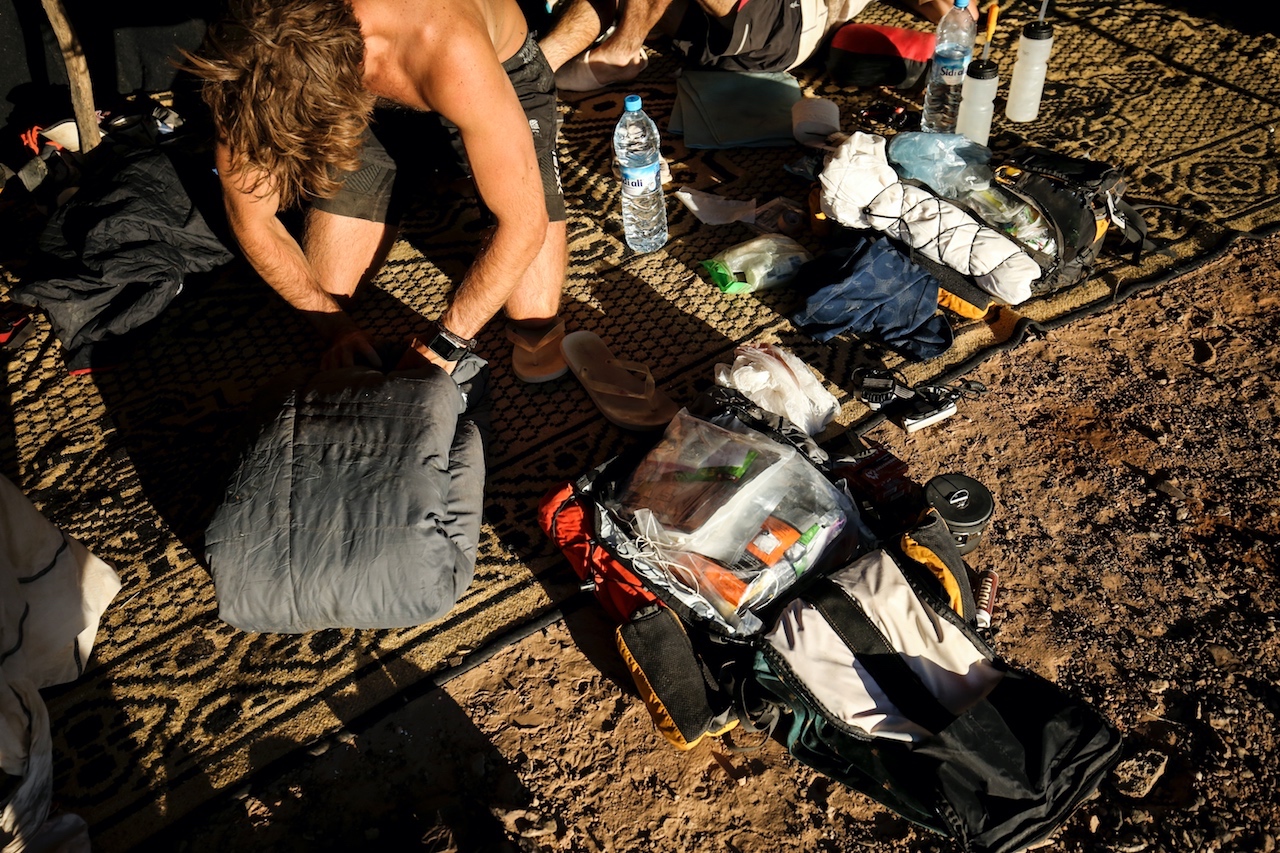
Also, note that minimum pack weight (on day one) at MDS is 6.5kg. So, you can keep purchasing lighter and lighter and then find that you are too light. I have done this. The plus side of this, is that lighter equipment allows you to take more food and/ or more options – again a good thing. For example, in my equipment list, I could go with a slightly lighter jacket, I could not take poles and I could leave the iPods at home and that would allow me 2 or 3 more dehydrated meals. However, I would prefer the equipment I want and am happy with and add 2,3,4 or 500g for the first day. Remember, the pack gets lighter as the day’s pass.
WEARING:
Hat: A good hat that will keep the sun off your head, the option to have neck coverage is a good idea and ideally make sure the inside of the peak is black. It reduces flare from the sand.
Shirt: A good t-shirt that provides coverage for the shoulders, is light and breathable.
Shorts: Lightweight shorts that cause no irritation or friction.
Socks: Injinji Trail Midweight or Injinji Outdoor 2.0 (which is Merino wool)
Shoes: Ultimately a shoe must fit you and fit well. There is no need to go larger, on the contrary, a shoe that is too large allows ones foot to move, a moving foot creates friction and friction creates blisters! However, a wider toe box can be a good option, depending on individual foot shape. Read HERE about how a shoe should fit. Consider how long you will be on your feet, the demands on a shoe are very different for someone who will finish in 20-hours in comparison to someone who will take 60-hours. Consider body weight too; a heavier individual may well need a more substantial shoe. For a race like MDS, a trail shoe is not essential, but for most preferable. Good shoe options for ‘neutral’ runners: Nike Wildhorse, inov-8 Trail Talon, Hoka One One are very popular and for zero-drop enthusiasts, Altra and inov-8 Terraultra G270. Gaiters are essential and typically Raidlight or MyRaceKit are the most popular. You can glue them on (with care and ideally some experience) but most people have them sewn on via Kevin Bradley at Alex Shoe Repairs.
Watch: Coros Vertix and Garmin Enduro are the two key considerations to last any MDS event on one charge
Buff: Any
Glasses: Look for sunglasses that fill well, cover the eyes so as to be suitable for sandstorms. You need a good strong lens that blocks the sun, however, photochromatic offers flexibility. Oakley (and others) offer the option for prescription lenses. I would avoid using contact lenses, there can be endless problems, sand and eyes do not mix well!
IN THE PACK:
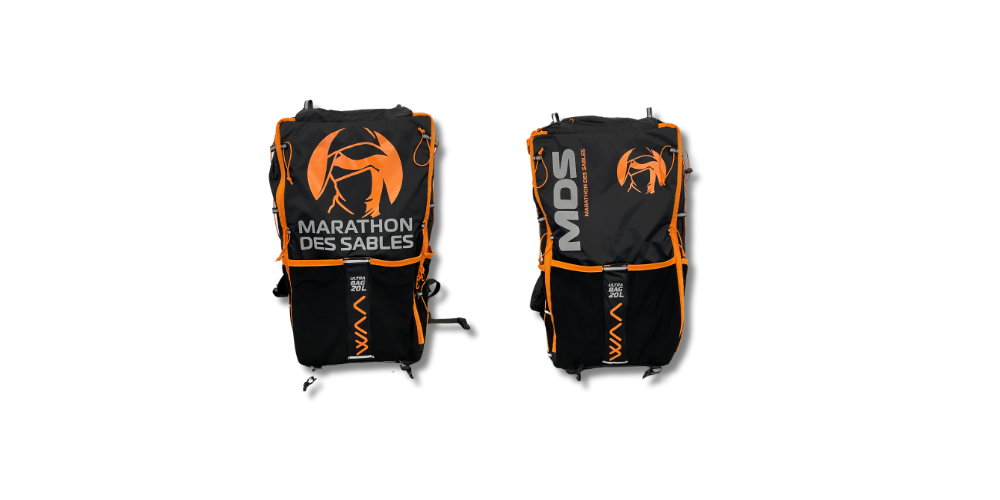
WAA Ultrabag has been designed for the race and is the most popular.
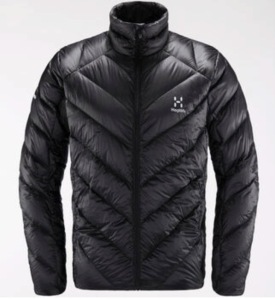
Häglofs Essens160g – is super light jacket with treated down suitable for a multitude of conditions – here
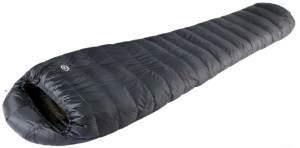
PHD Minimus K Sleeping Bag380g – PHD work for me, you can have them custom made with or without zips and they are excellent. Yeti make a bag that is more than 100g lighter but I prefer the warmth and comfort of the PHD. Here
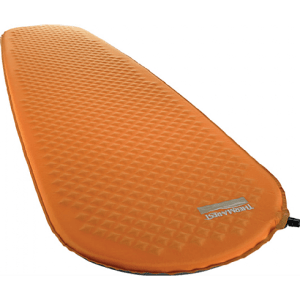
Thermarest Prolite Small310g – Small, comfortable and you can double up and use it as padding in your pack OR Sea to Summit (here)
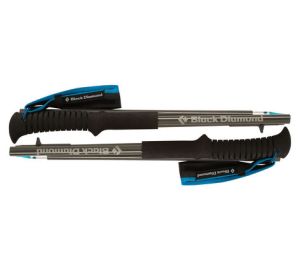
Black Diamond Carbon Z Poles 290g – Lightweight and folding that provide 4-wheel drive when walking.
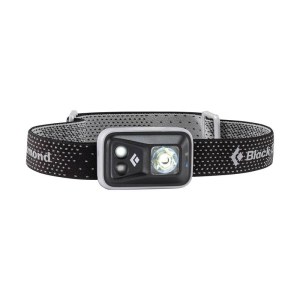
Black Diamond Spot Headtorch w/ batteries and spares 120g – Powerful (200 lumens), lightweight with many varied settings.
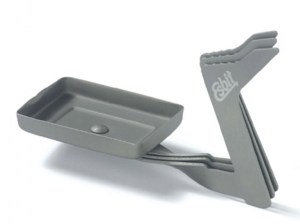
Esbit Stove 11g – Small, lightweight and simple.
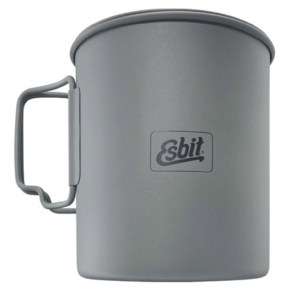
Esbit Titanium Pot 106g – Small, lightweight and durable.
Esbit Fuel 168g
iPod Shuffle x2 64g – Life saver
Spare Socks91g – Injinji Trail Midweight or Injinji Outdoor 2.0 (which is Merino wool)
Flip-Flops 150g – But Xero True Feel are good.
Total Weight 2406g If I was looking to be very minimalist and as light as possible, I would not take the stove, pot and fuel and the poles, total 1831g. But, I would probably prefer the option for hot food/ drinks and work around no poles, so total weight would be 2116g.
Note – with constant changing weather in MDS locations, a waterproof jacket is highly recommended!
EXTRAS:
Compeed 22g
Sportshield 8g
Corn Wraps 8g
Spork 10g
Pen Knife 22g
Compass 32g
Matches 20g
Savlon Antiseptic 18g
Toothpaste 36g
Tooth Brush 15g
Superglue 3g
Space Blanket 60g
Hand Gel 59g
Wipes 85g
Toilet Paper 36g
Safety Pins 5g
Ear Plugs 2g
Venom Pump 28g
Blindfold 15g
Sun Cream 80g
Whistle 15g
Signal Mirror 12g
SPOT Tracker 113g
Total Weight 806g
TOTALS:
Pack and Main Kit Contents: 2406g
Extras: 806g
Food: 3550g
Total 6762g
This pack weight includes poles and cooking utensils plus luxuries like Mp3
(water would be added to this weight)
IN SUMMARY
I enjoy the process of looking at kit, looking at the options available and working out what is best for me and my situation. In some respects, I am lucky as I can test many items out in the market place and decide what I do and what I don’t like. However, trust me, products these days are so good that you can’t go wrong with almost any of the choices. Yeti, PHD, Haglofs etc. all make great sleeping bags, they will all work. Mountain Hardwear, Yeti, Mont-Bell etc. down jackets are all excellent, they all work. I could go on, but you get the picture. Like I said at the beginning, multi-day and desert racing is not complicated, don’t make it so. The only item you need to be sure on is shoes, make sure you get that right. But then again, I am sure you were running before you entered your multi-day race? You were using run shoes, be them road or trail and one must assume that they gave you no problems? If the answer is yes – why change them!
Finally, we all love equipment and gadgets, it’s fun to go shopping and get new items. However, being physically fit and mentally strong is what will get you to the finish line – equipment is just part of the process, remember that.
Good luck!
Clarification:
*Food (As required at Marathon des Sables)
He/she must select the type of food best suited to his/her personal needs, health, weather conditions, weight and backpack conditions. We remind you that airlines strictly forbid the carrying of gas (for cooking) on board either as hand luggage or otherwise. Each competitor must have 14 000 k/calories, that is to say a minimum of 2,000 k/calories per day, otherwise he/she will be penalized (see ART. 27 and 28). Any food out of its original packaging must be equipped, legibly, of the nutrition label shown on the product concerned. Any food out its original packaging must be equipped, legibly, of the nutrition label shown on the product concerned.
**Mandatory Kit (as specified at Marathon des Sables)
10 safety pins
Compass 1deg precision
Whistle
Knife
Disinfectant
12 stock cubes
Signal mirror
Survival blanket
Sun cream
200-euro note
Passport
Medical certificate
***Water (as specified for Marathon des Sables)
Why not join our Multi-Day Training Camp in Lanzarote. The camp takes place in January each year.
MDS has never been just a race. It’s a full-body, full-heart experience. In 2026, following on from first editions in 2025, MDS Atlantic Coast and MDS Raid Namibia return for 2026. If you’re looking for adventure with meaning, either one could be the race of your life, registration opens June 18 2025.
This isn’t your typical desert run. MDS Atlantic Coast cuts through a rugged, wind-carved stretch of Morocco, where the Atlantic and dunes meet with force. Raw and exposed, this region of Morocco is a place where the elements are alive and always in motion.
Photo by Ian Corless
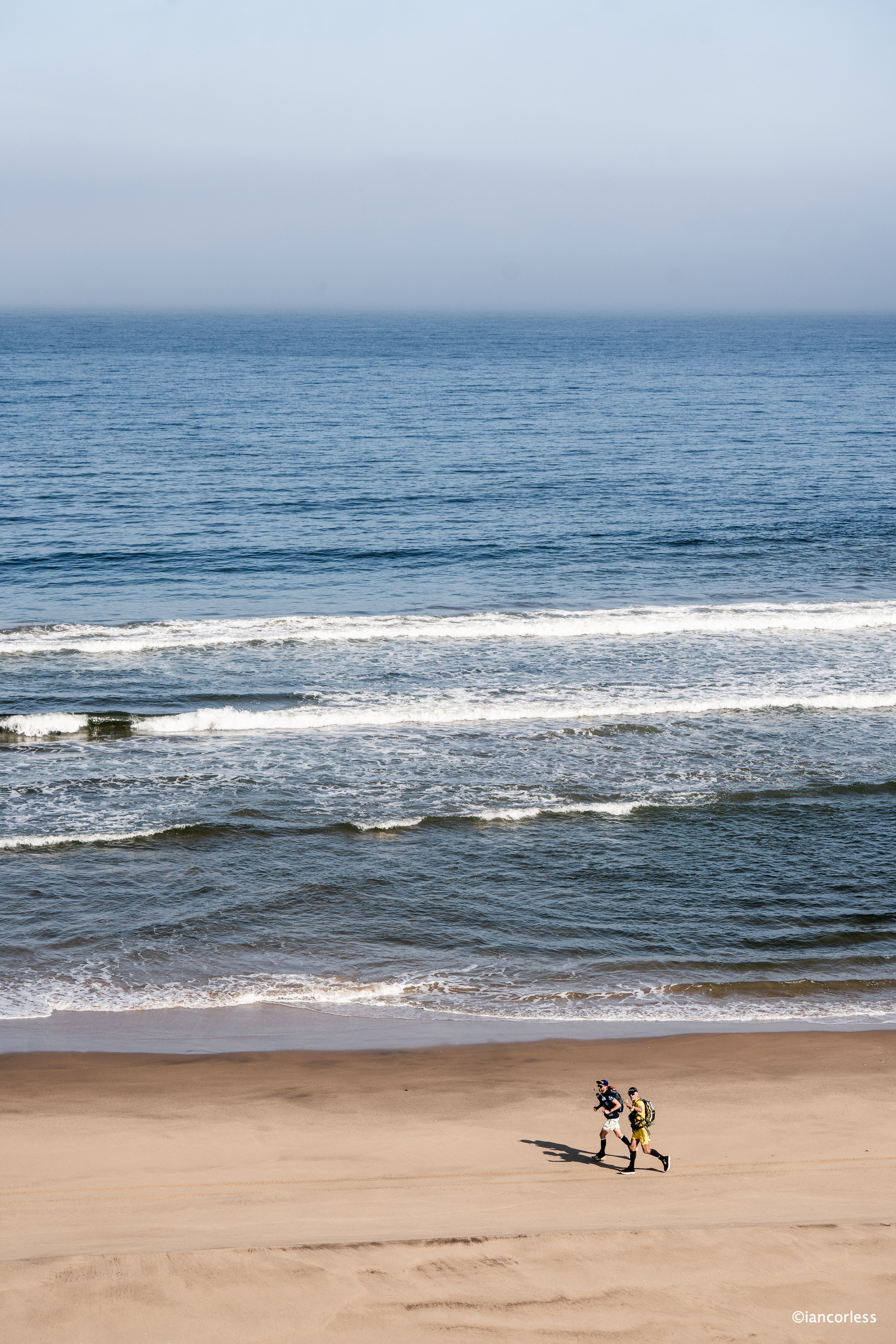
The route spans beaches, a rollercoaster of sand, and coastal dunes. Sweeping ocean views and the pulse of open nature. The terrain shifts fast: soft sand, hard-packed trail, technical descents. You’ll run through untouched coastline where the horizon feels infinite.
Photo by Ian Corless
What makes it special? The contrast. The wild energy of the Atlantic meeting the quiet resolve of the desert. It’s Morocco, but different, fresher, rougher, windswept. A race built for runners who crave variety and the edge of the map.
Photo by Ian Corless
The event will take place January 24th to 30th 2026. The format will offer 70km, 100km or 120km’s over 4-days and 3-stages.
Then there’s the magic of Namibia, a race that doesn’t just test your endurance, it rewires your sense of scale. You run through the Namib Desert, the oldest on Earth, where everything feels ancient, vast, and impossibly quiet.
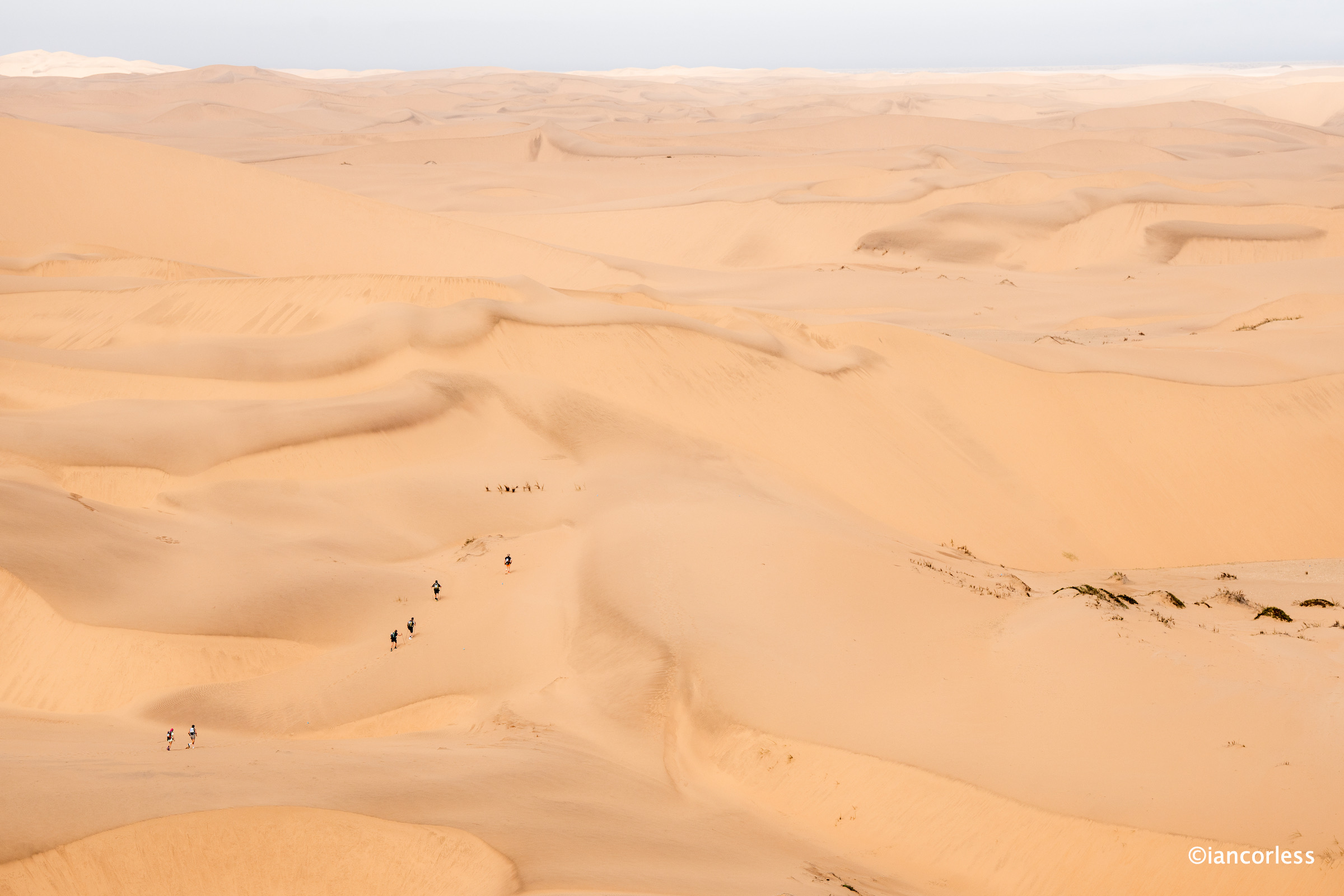
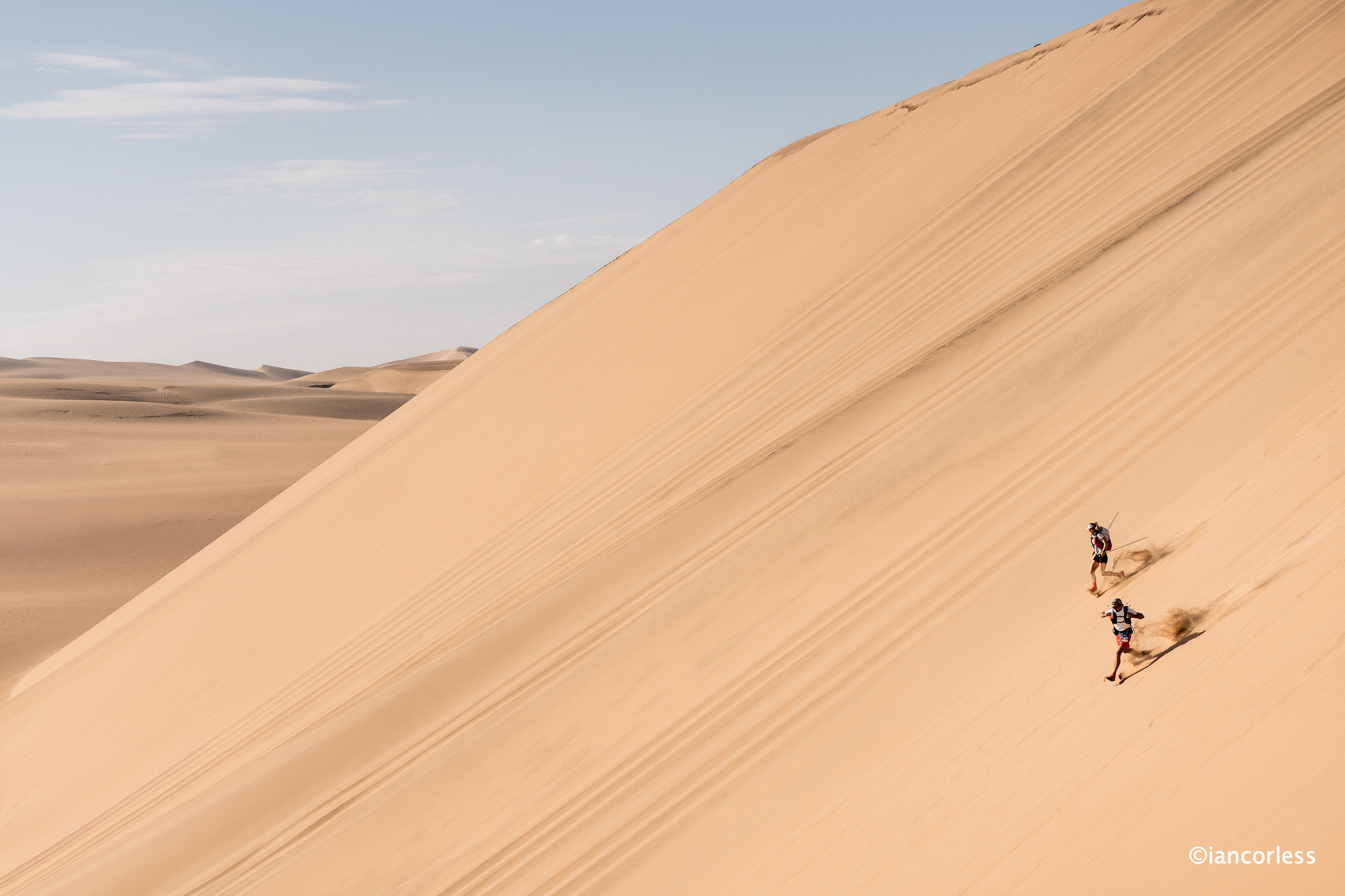
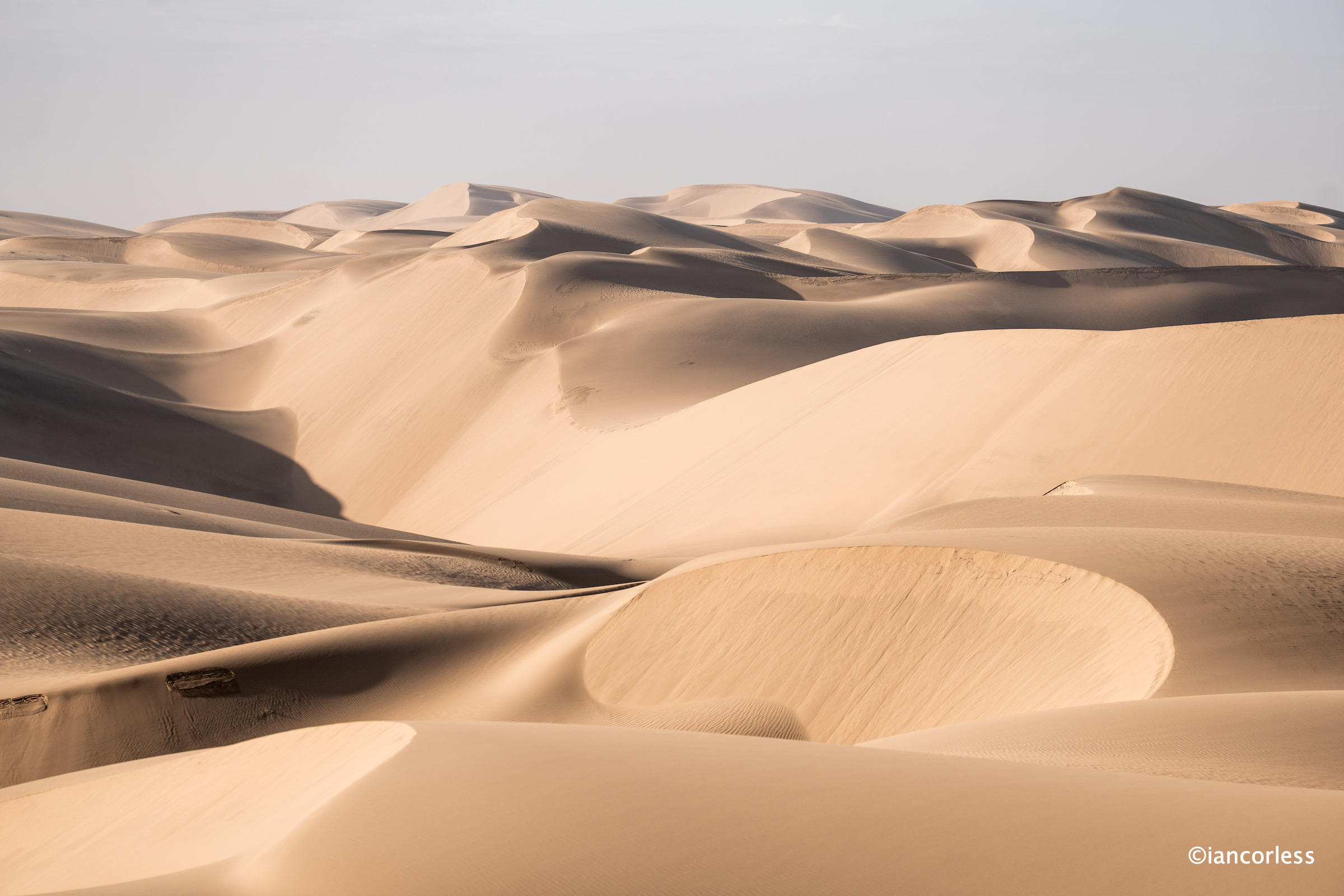
Here, the dunes don’t just rise, they tower. Temperatures swing fast. The sand swallows every sound. You’ll face long stretches with no sign of human life, just you, your breath, and the endless desert.
Raid Namibia is all about extremes: isolation, heat, and beauty so intense it’s almost surreal. You’re not just running across a landscape, you’re running inside a moment that feels untouched by time.
Unique for the MDS format, Raid Namibia is undertaken in teams of two with two distance options, 100km or 120km. Taking place April 25th to May 2nd 2026, this race is a very special event in the MDS line-up and as such, participants will ideally have prior experience of an MDS event or similar.
• MDS Atlantic Coast brings wind, waves, and a constantly changing terrain under the open Moroccan sky.
• MDS Raid Namibia delivers pure stillness and a surreal immersion in the world’s most ancient desert as teams of two with a special star night.
One ocean, the Atlantic, two unique events. Experience the silence of the desert, experience different landscapes and share the same unshakable spirit that brings all MDS events together.
If you’ve ever dreamed of pushing your limits somewhere unforgettable, entries open:
June 18, 2025 1200 CET.
MDS Atlantic Coast and MDS Raid Namibia are more than races — they’re experiences that shape you.
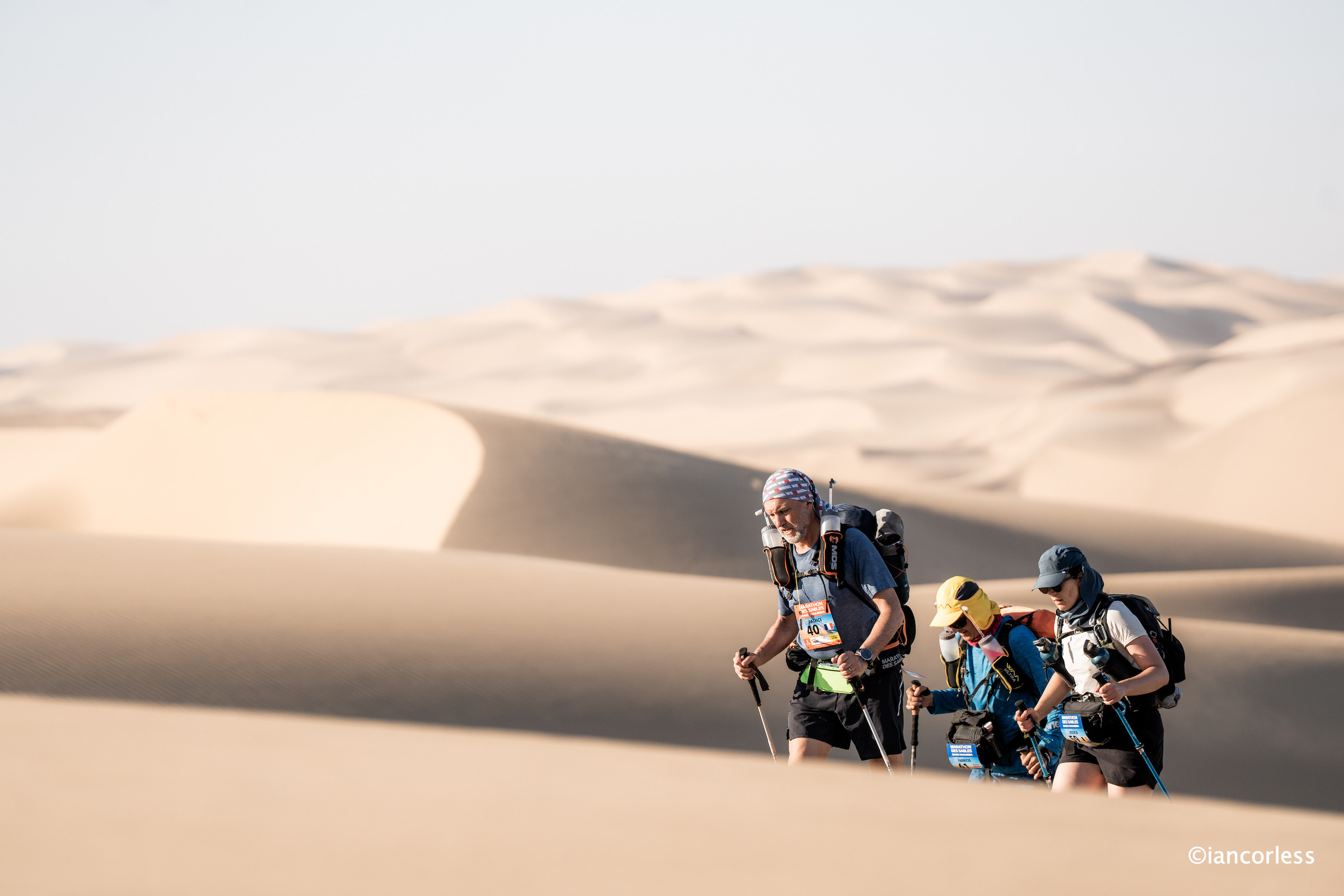
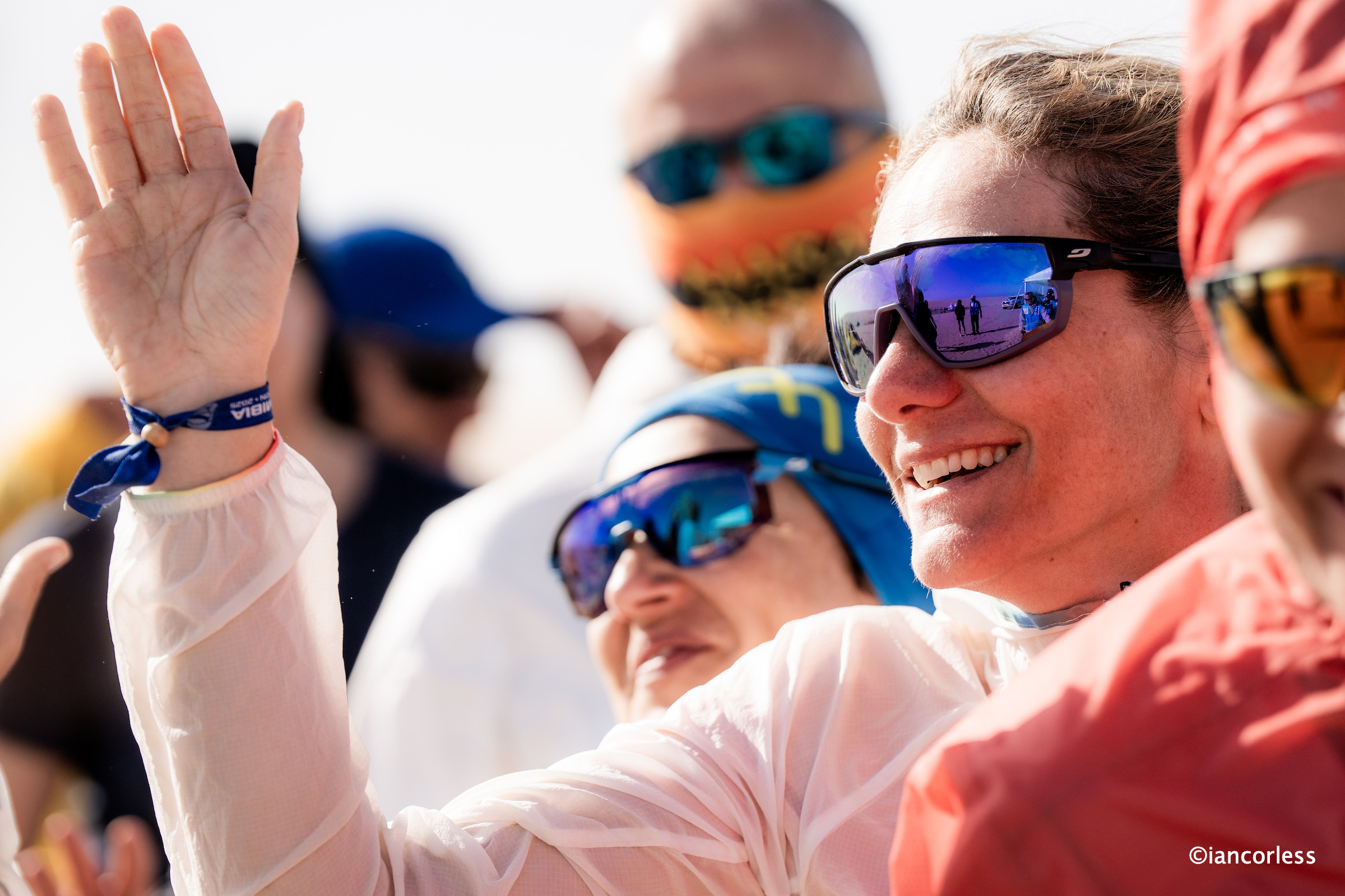
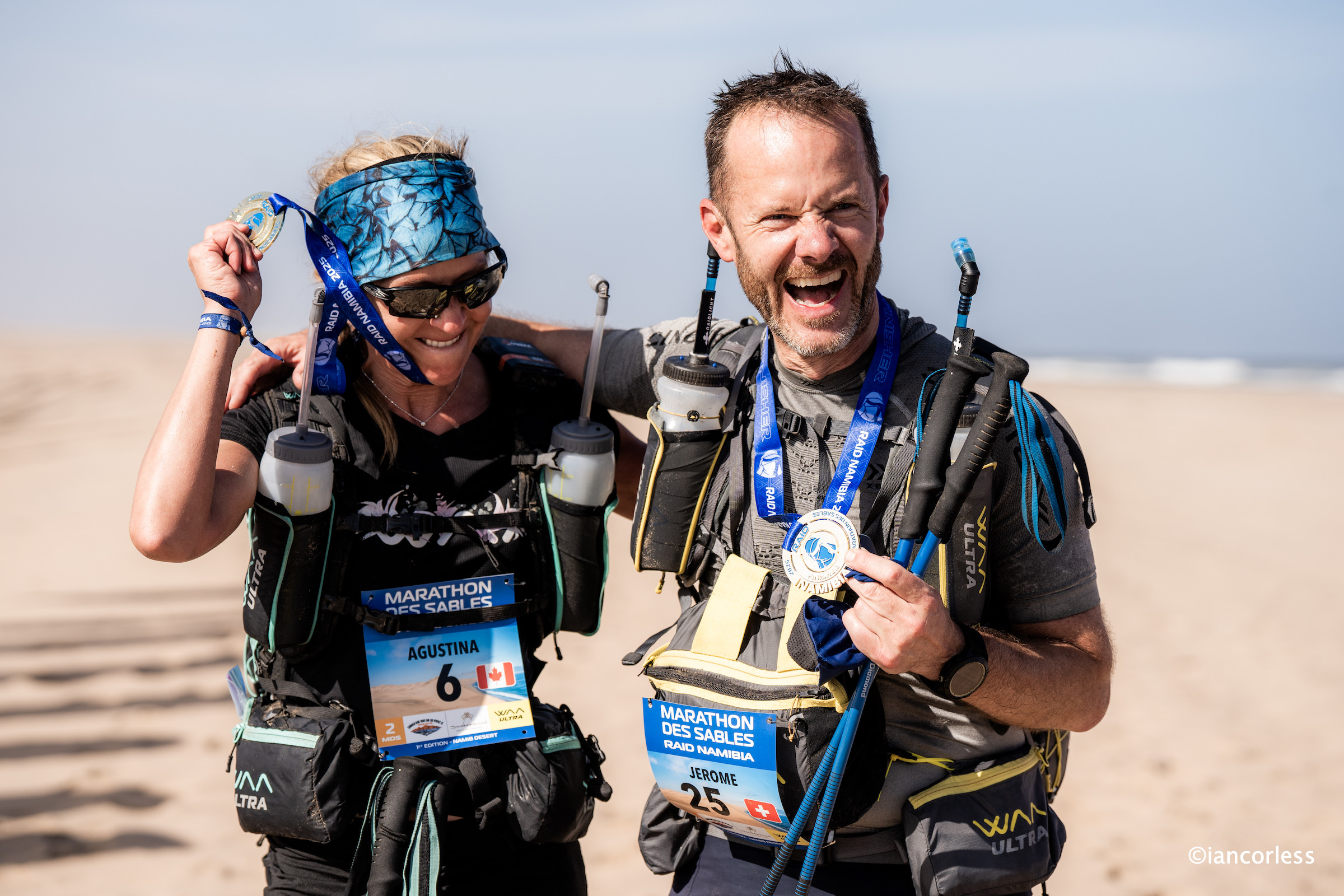
The first edition of MDS Raid Namibia has come to a close, leaving behind exhausted bodies, and memories that will last a lifetime. This was more than just a race across the sands—it was a shared journey in one of the world’s most extreme environments. Over four days participants moved through heat, wind, and shifting dunes with only one constant: each other.
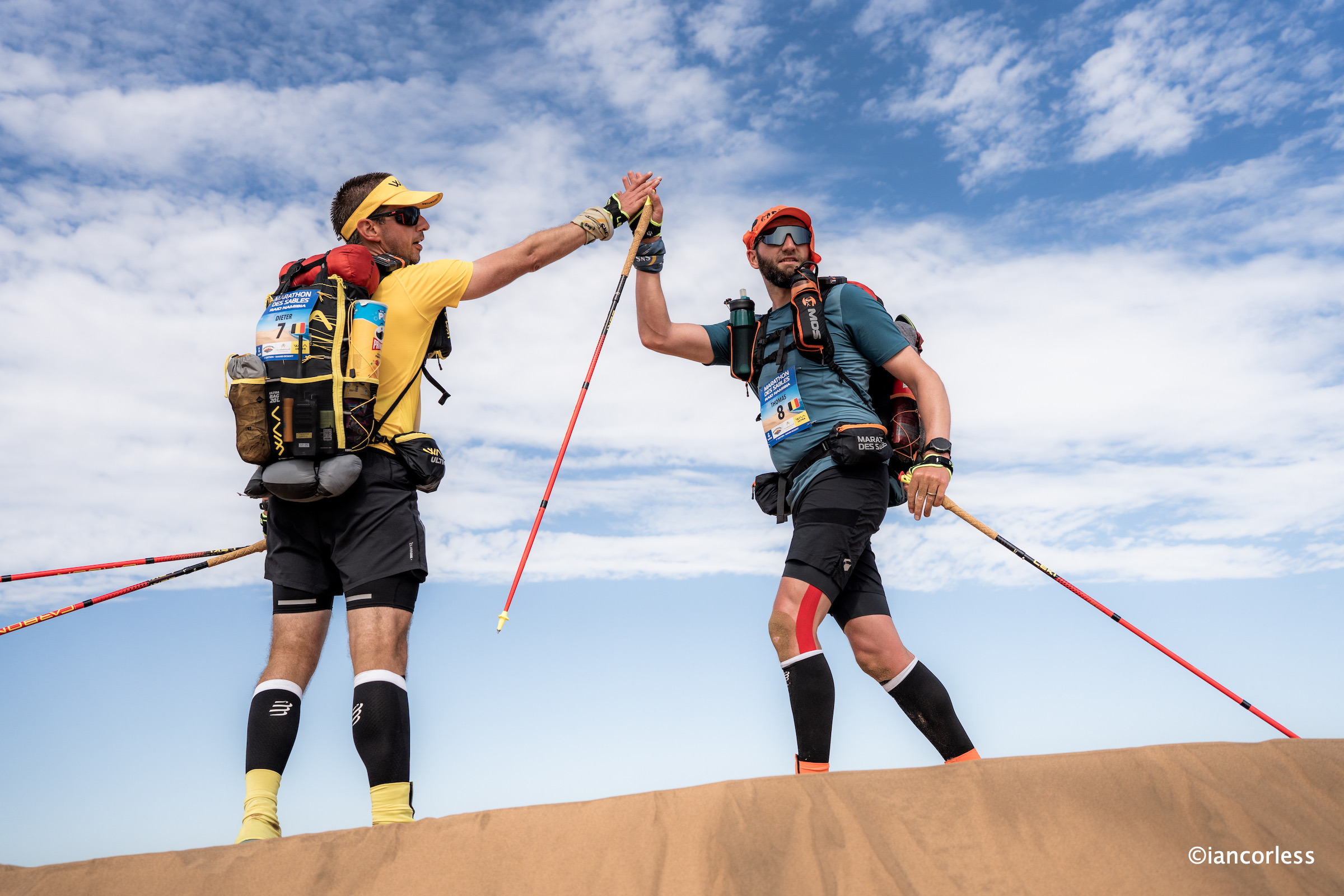
This inaugural and pioneering edition introduced a unique format – teams of two. Every participant was matched, not just in distance and pace, but in mindset. They ran, rested, and overcame together. And in those long hours on foot, under relentless skies, something powerful happened. Partnerships turned into friendships. Teams became a family.
Self-sufficiency is the foundation of MDS Raid Namibia. Runners carry all their food and essential gear for four days on their backs. It’s a constant of the MDS format: a journey on foot through an incredible environment that returns participants to a more primitive time, one of survival. Support comes from each other and the MDS crew.
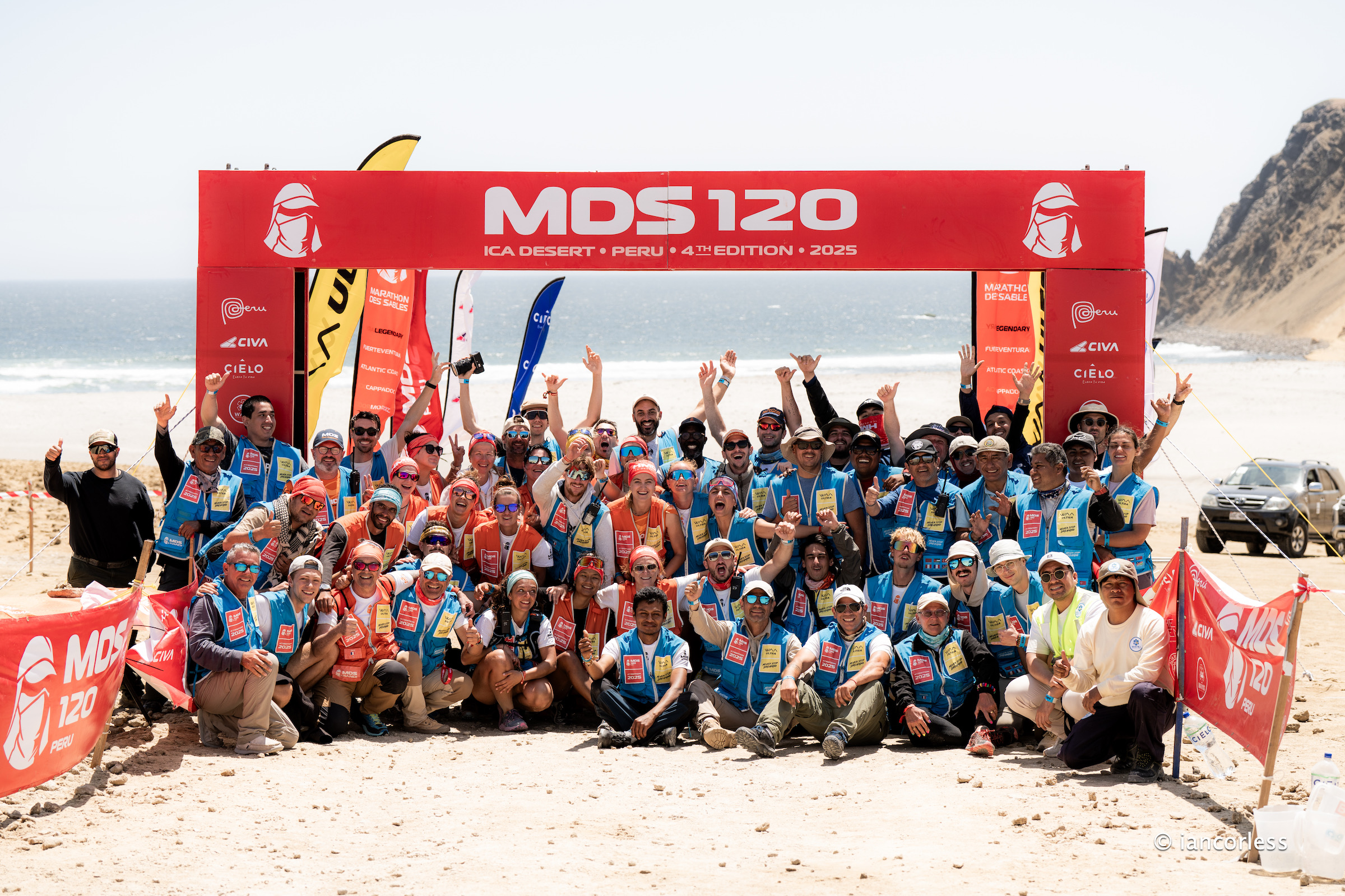
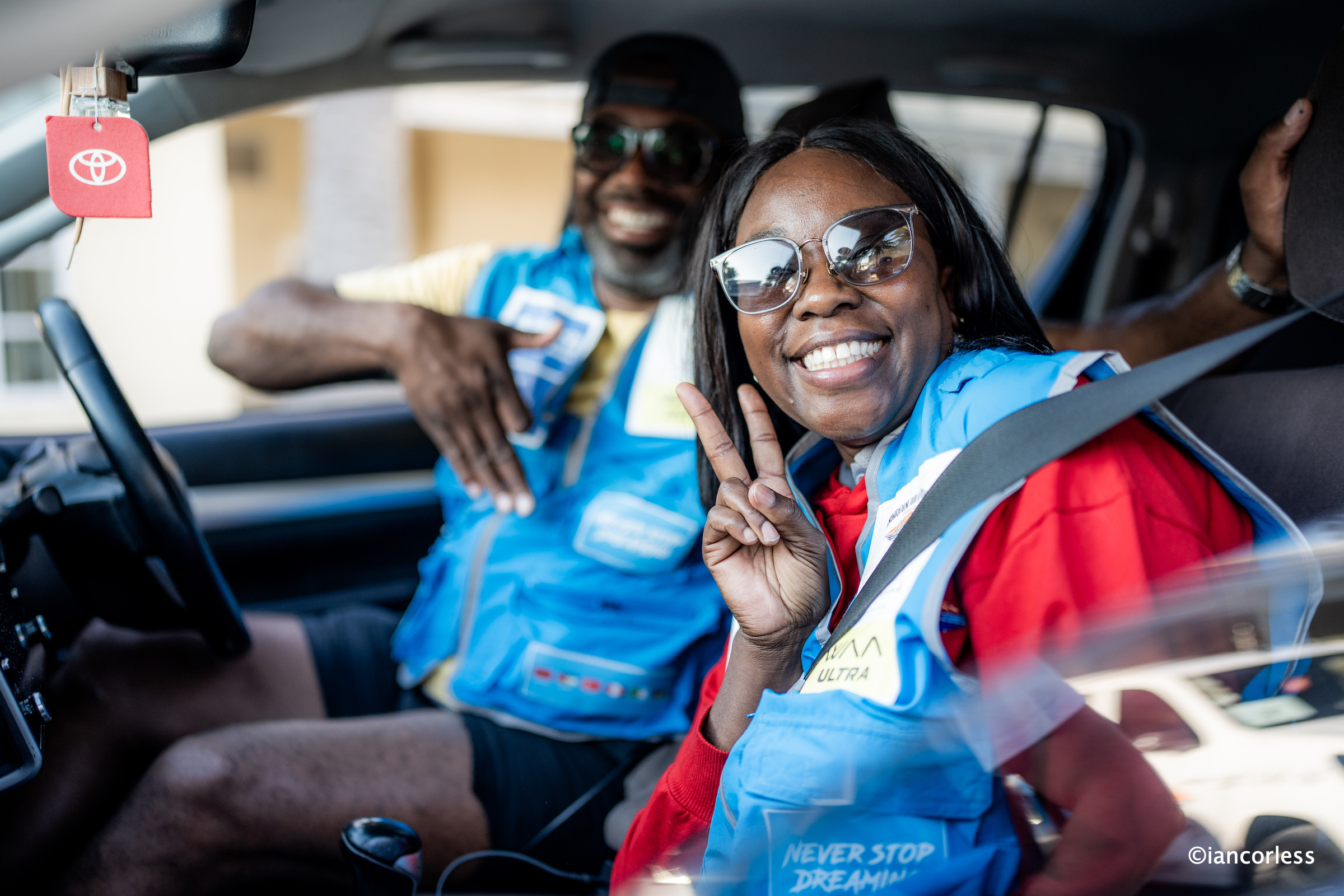
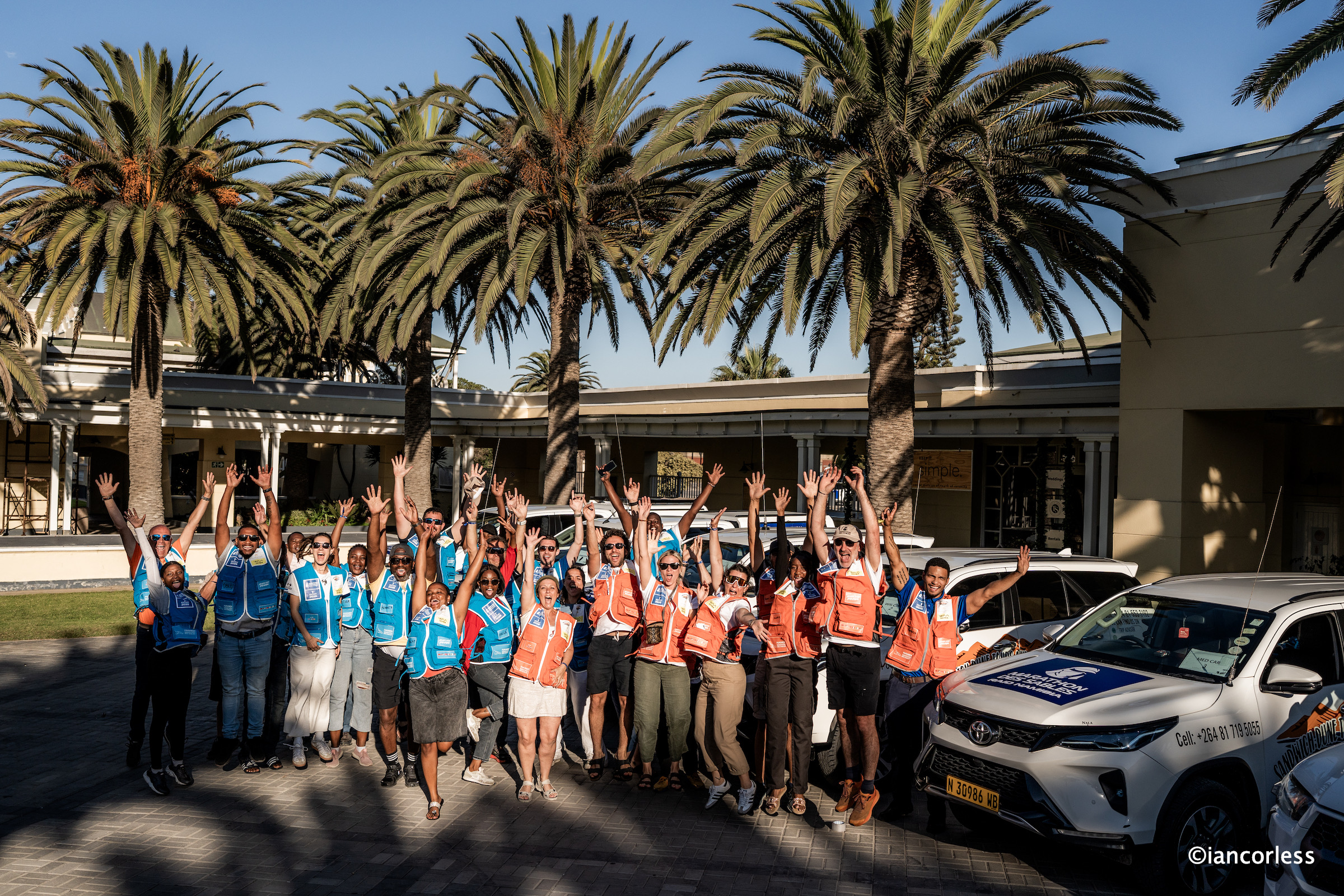
The Blue Coats and the Orange Coats: Backbone of the Race
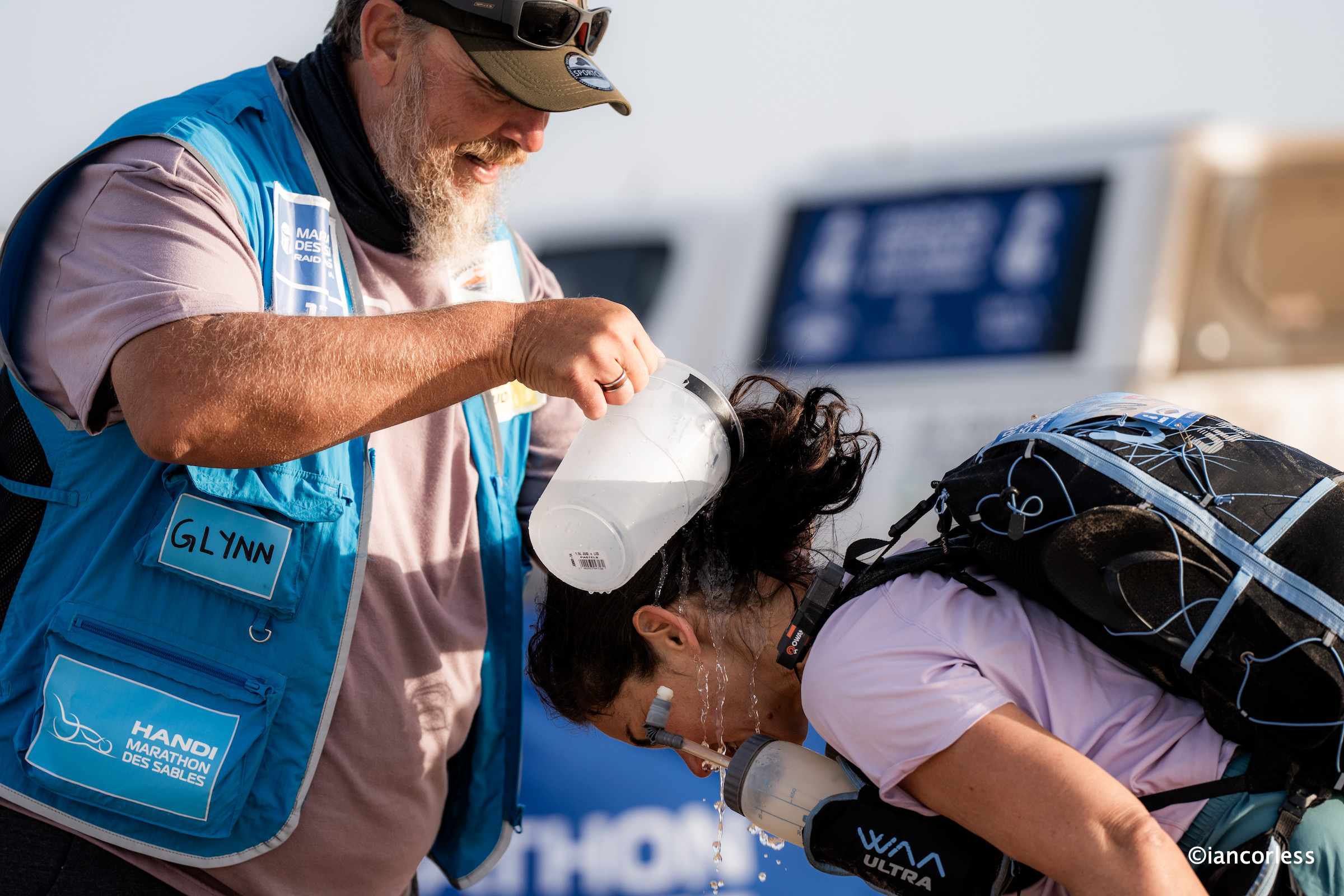
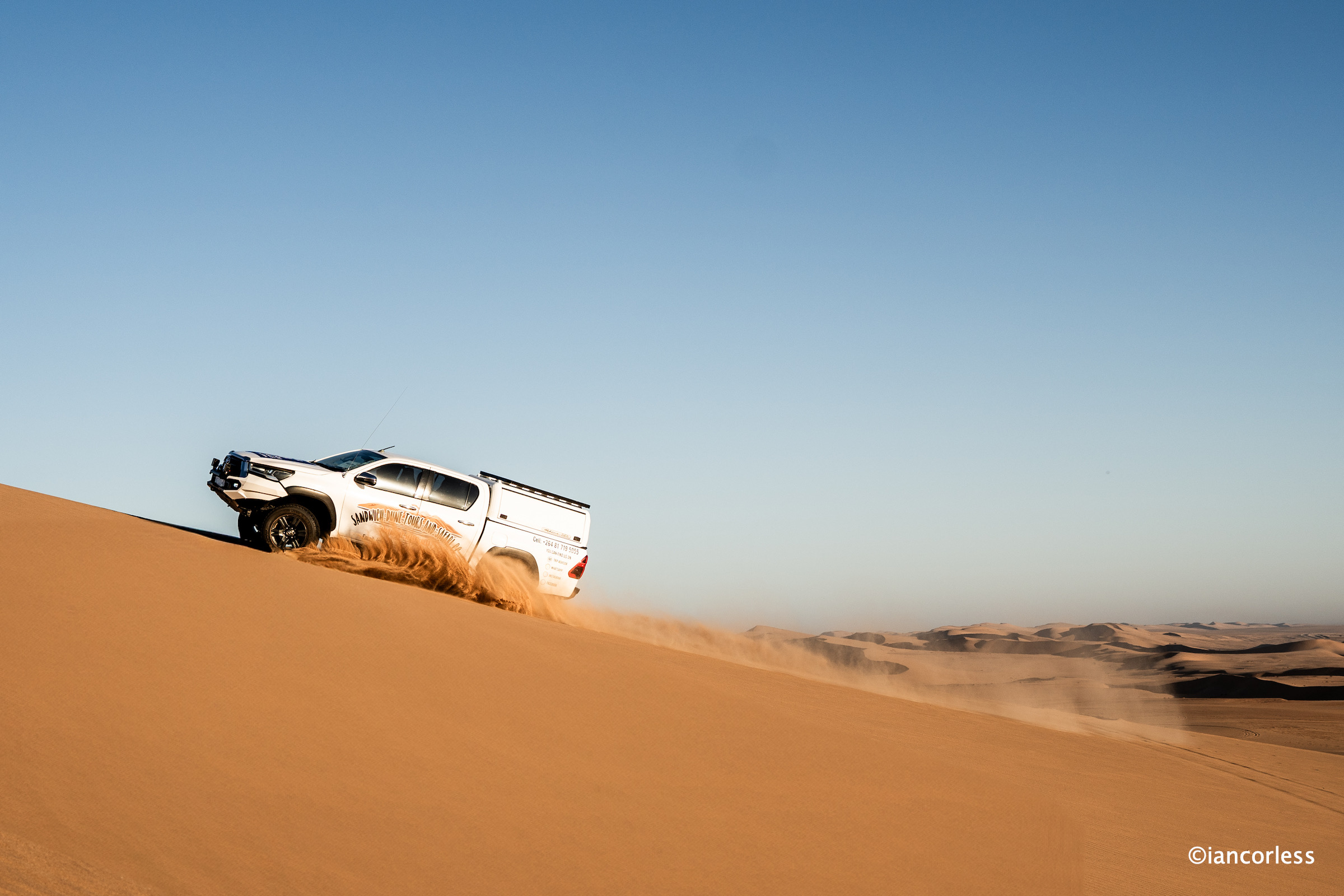
Behind every successful kilometer run or walked were the volunteers – the unsung heroes of MDS Raid Namibia. Dressed in blue jackets, the logistics team ran the show from behind the scenes. They handled transportation, managed camp setup, checkpoint supplies, vehicle recovery, and every little thing that kept the race moving forward. Without them, the race wouldn’t have happened.
Equally essential were the orange-coated medical teams. These men and women brought experience, calm, and skill to a setting where even small injuries can become dangerous fast. From treating blisters and hydration to monitoring serious fatigue and heat issues, they kept a constant watch over the runners. Their presence allowed participants to push harder, knowing someone had their backs.
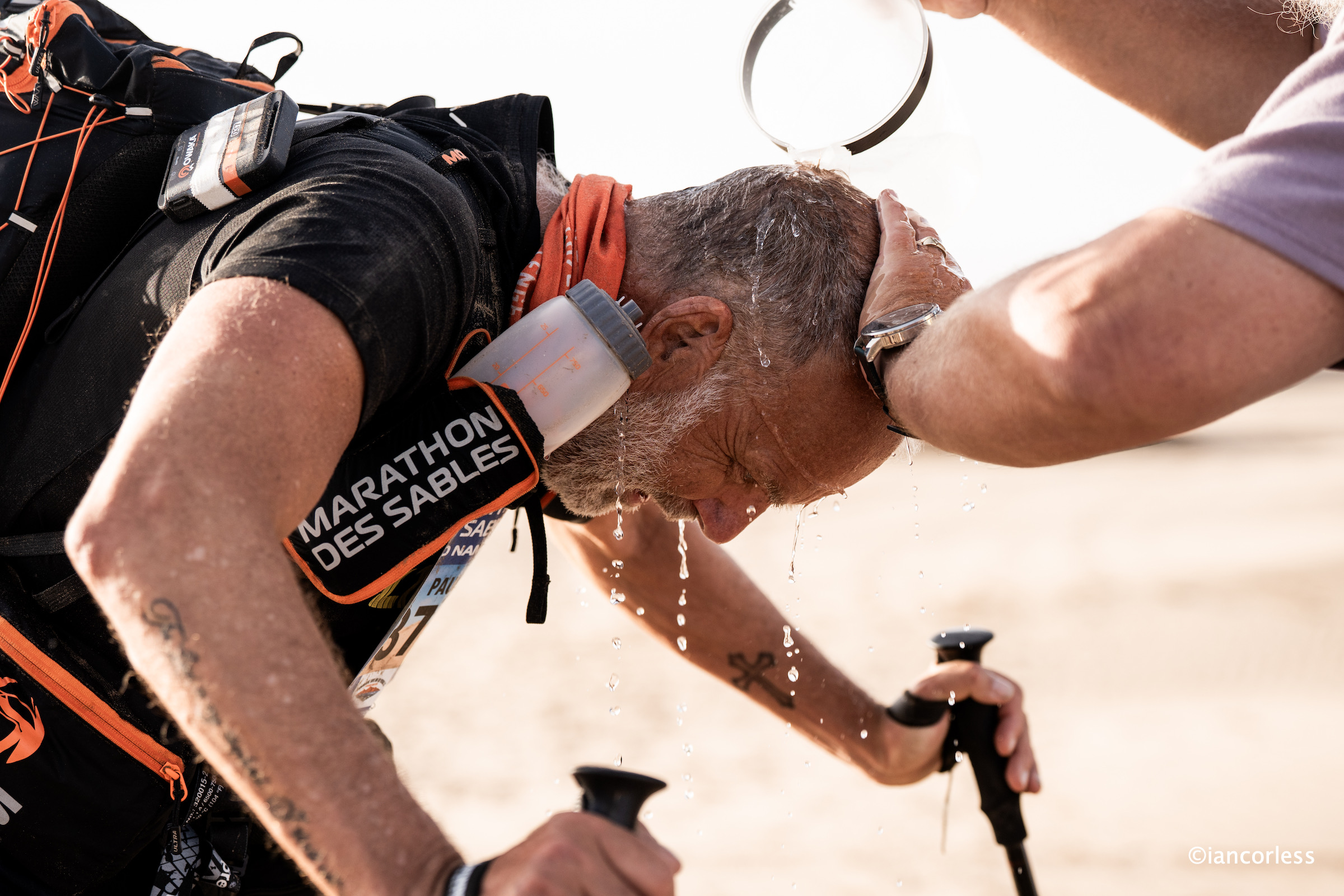
Crucial to the survival and success of every runner were the course checkpoints, spaced strategically each day. These oases offered one vital thing: water. The weight of self-sufficiency was lifted slightly at each stop, where volunteers filled bottles, tracked progress, and cheered with smiles that mattered more than they knew. These checkpoints weren’t just pit stops – they were lifelines.
Volunteers often worked longer hours than the racers. They were the first up, the last to sleep, and the steady hands that made this entire event possible. Their professionalism and compassion were matched only by their quiet strength. They didn’t ask for recognition – but they deserve it all.
Running Together, Surviving Together
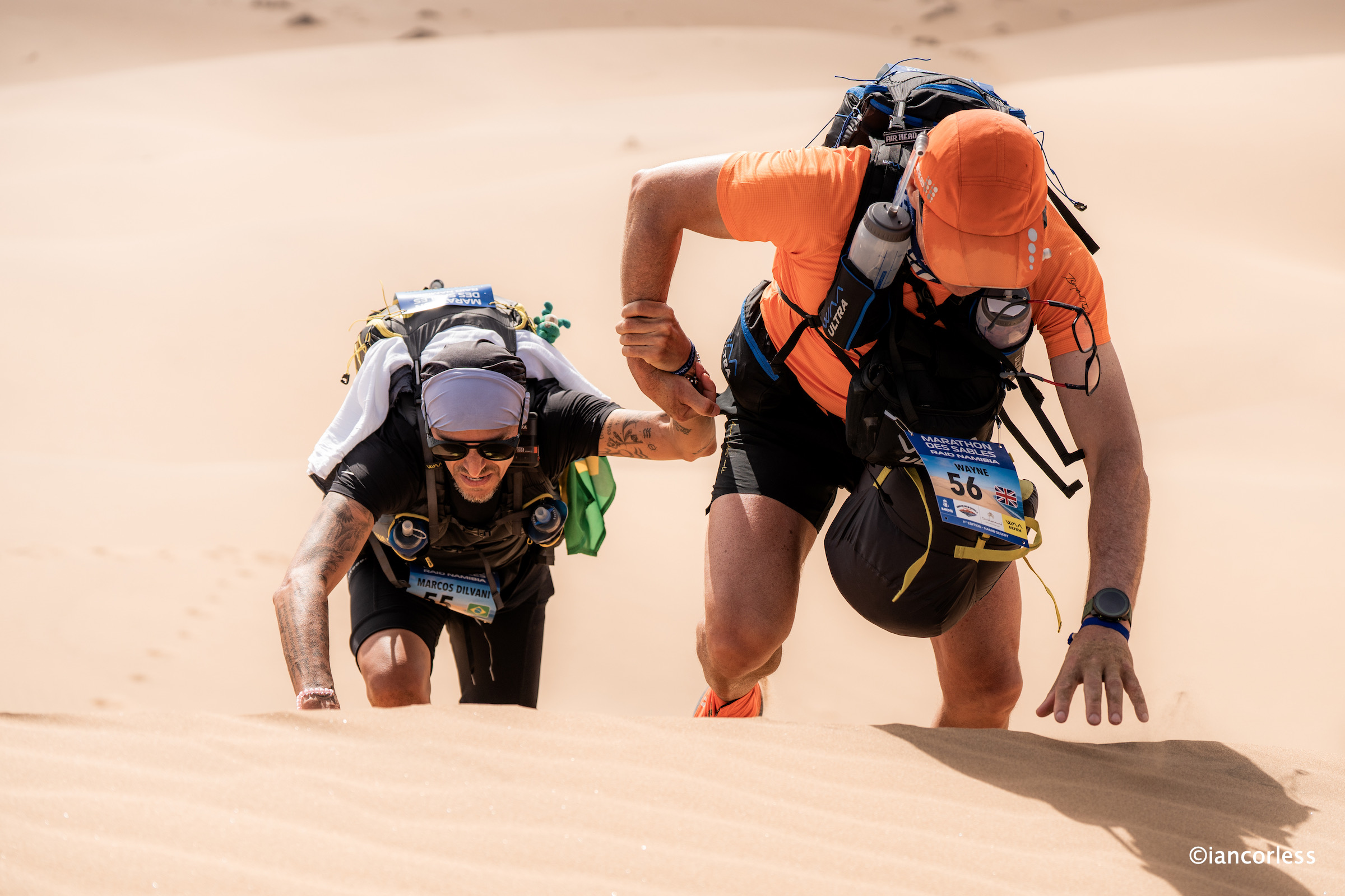
On the course, teammates and other teams took turns setting pace, checking the route, monitoring hydration, and offering quiet encouragement when the kilometres got heavy.
When one teammate faltered, the other picked up the emotional slack. When both were down, they leaned on each other and climbed back out together.
What surprised many was how close they grew to not just their partner, but to everyone else out there. Between finish line and camp life, barriers fell.
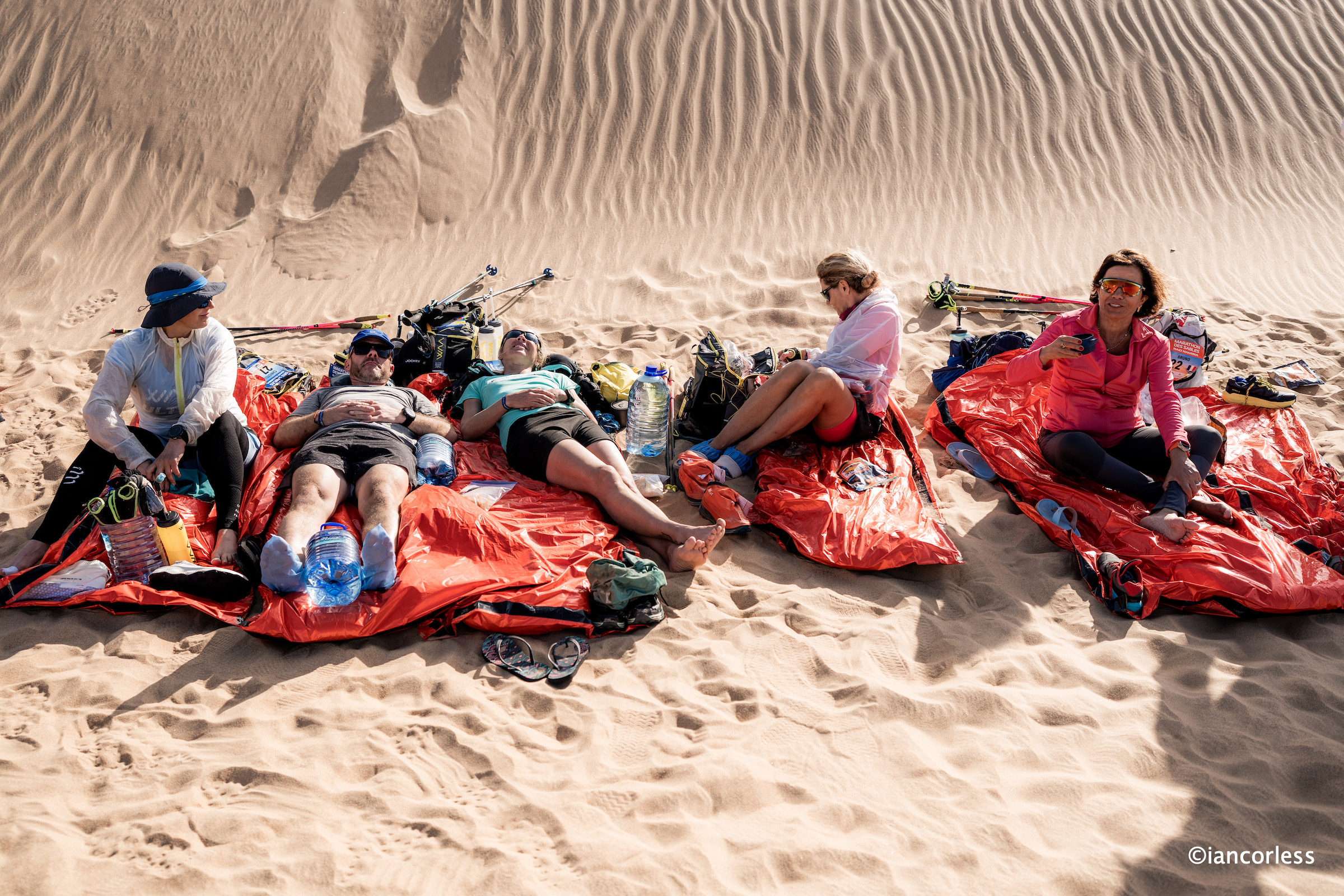
Every evening, the camp came alive with laughter, shared meals, stories, and exhausted, genuine connection. Strangers at the start became a family by the end. No one knew how hard it would get. No one knew how deep the friendships would run.
The Desert Gave Everything
The course itself was as raw and real as it gets. Each day offered a new section of Namibia’s coastal desert, where runners encountered moonscape vistas of sand that disappered into endless horizons.,
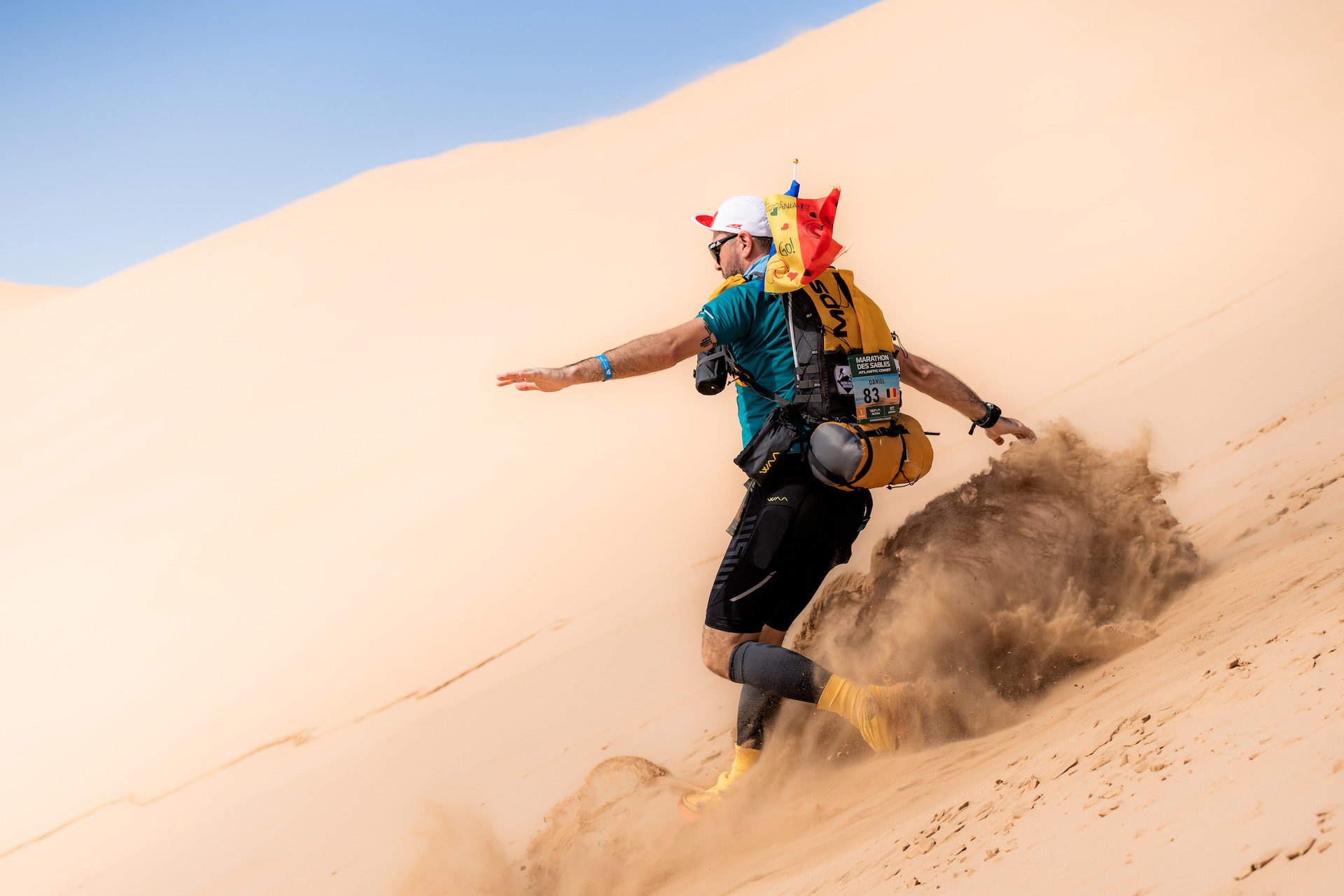
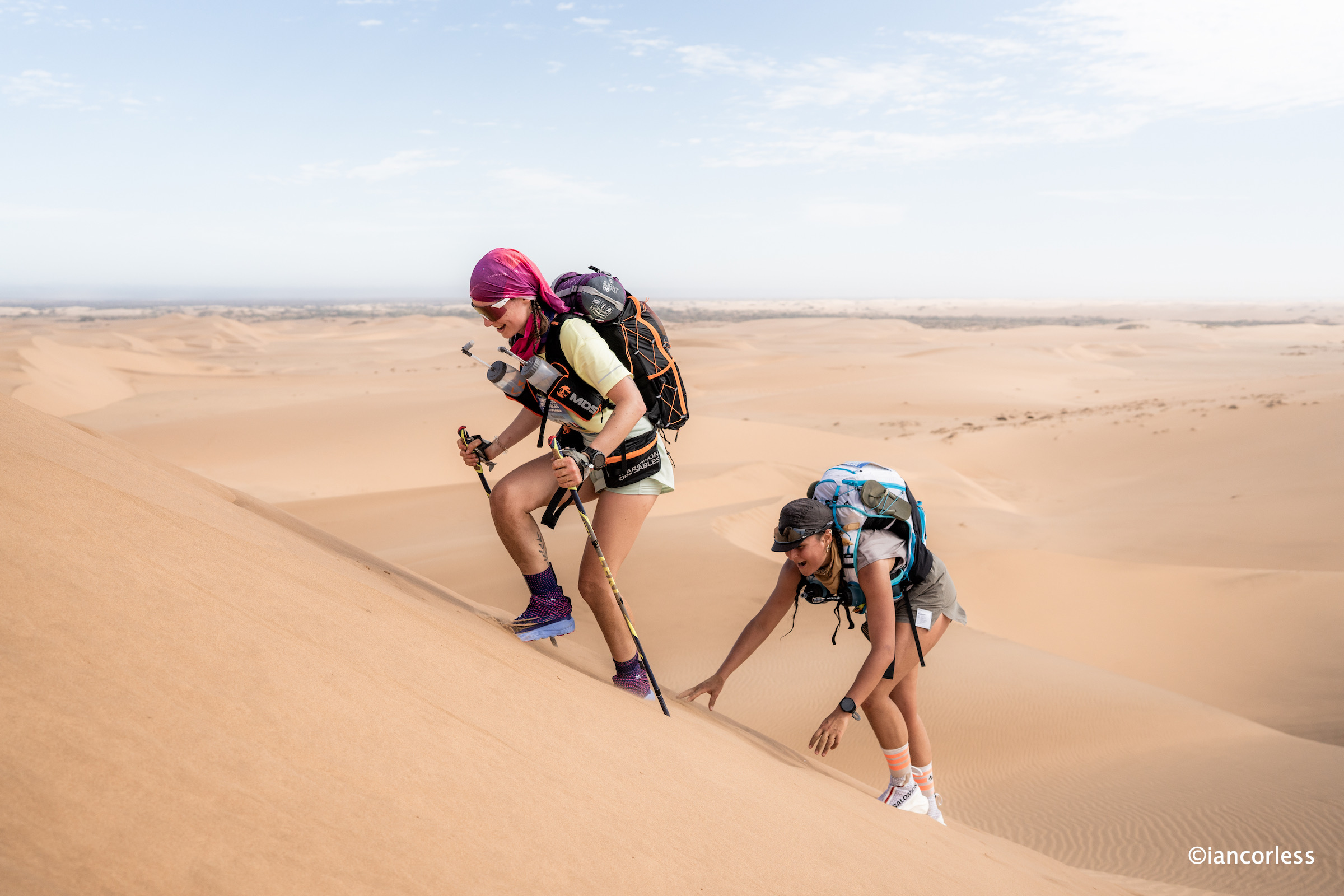
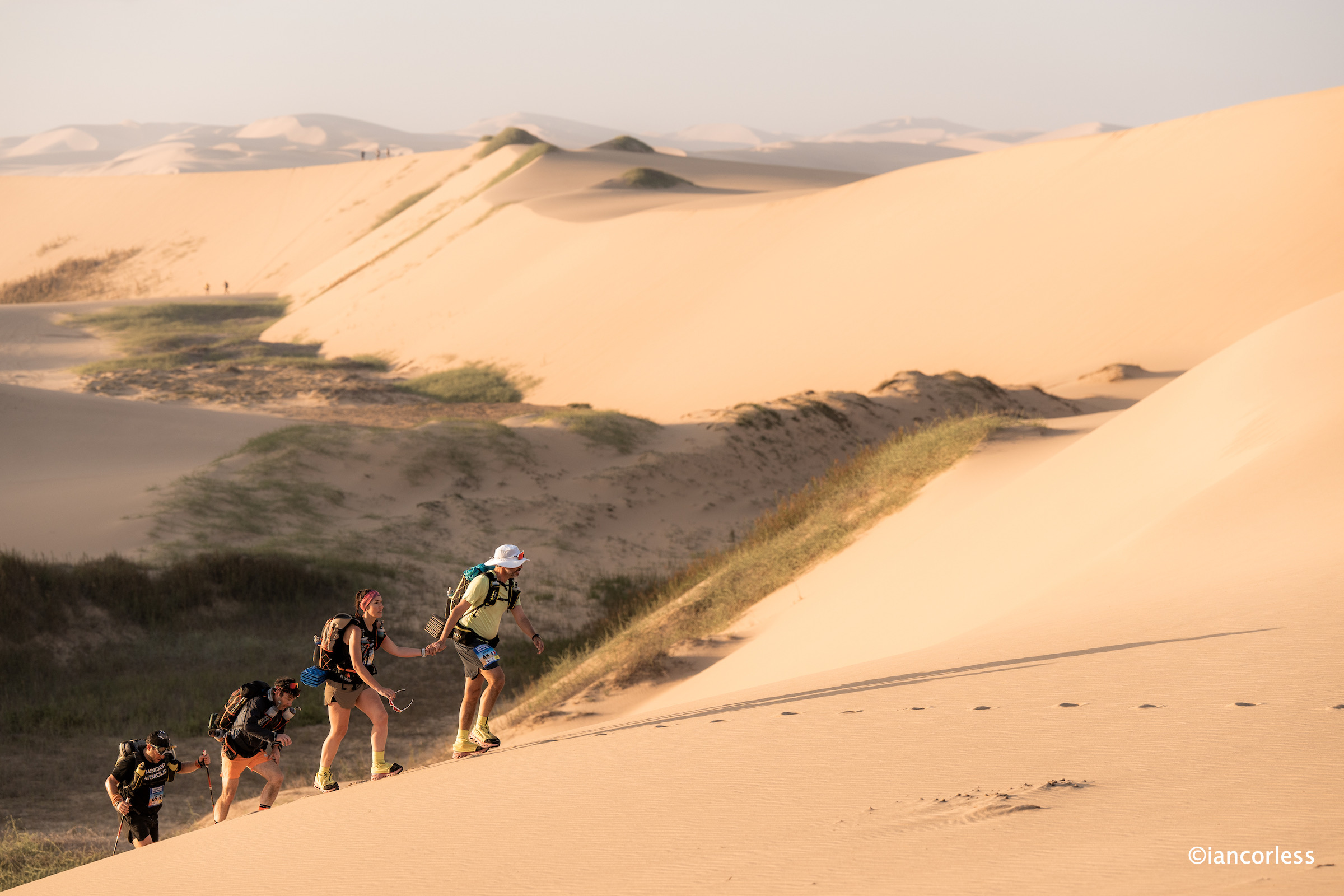
Soft, energy-sapping dunes that define this region were the relentless playground that made MDS Raid Namibia unique.
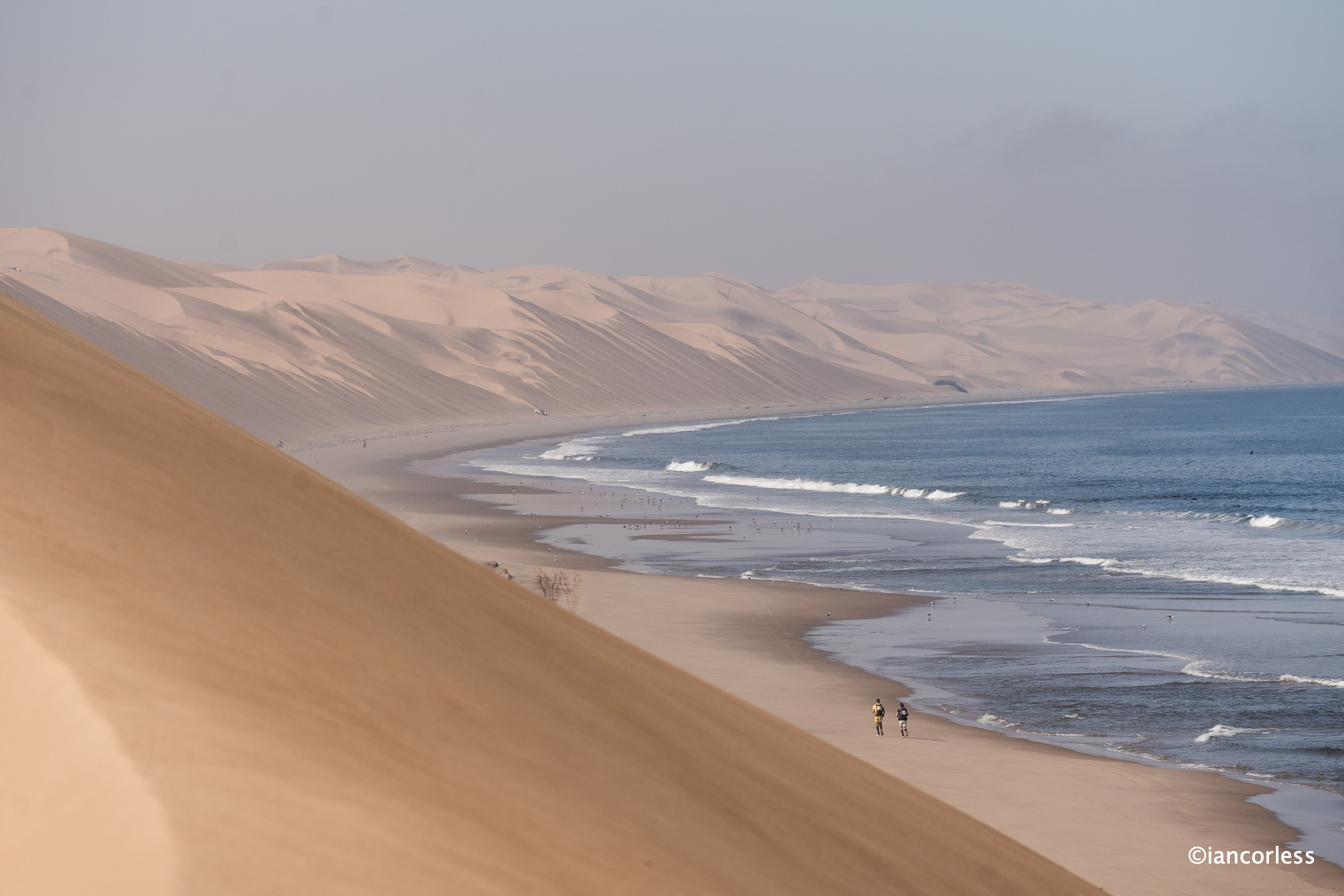
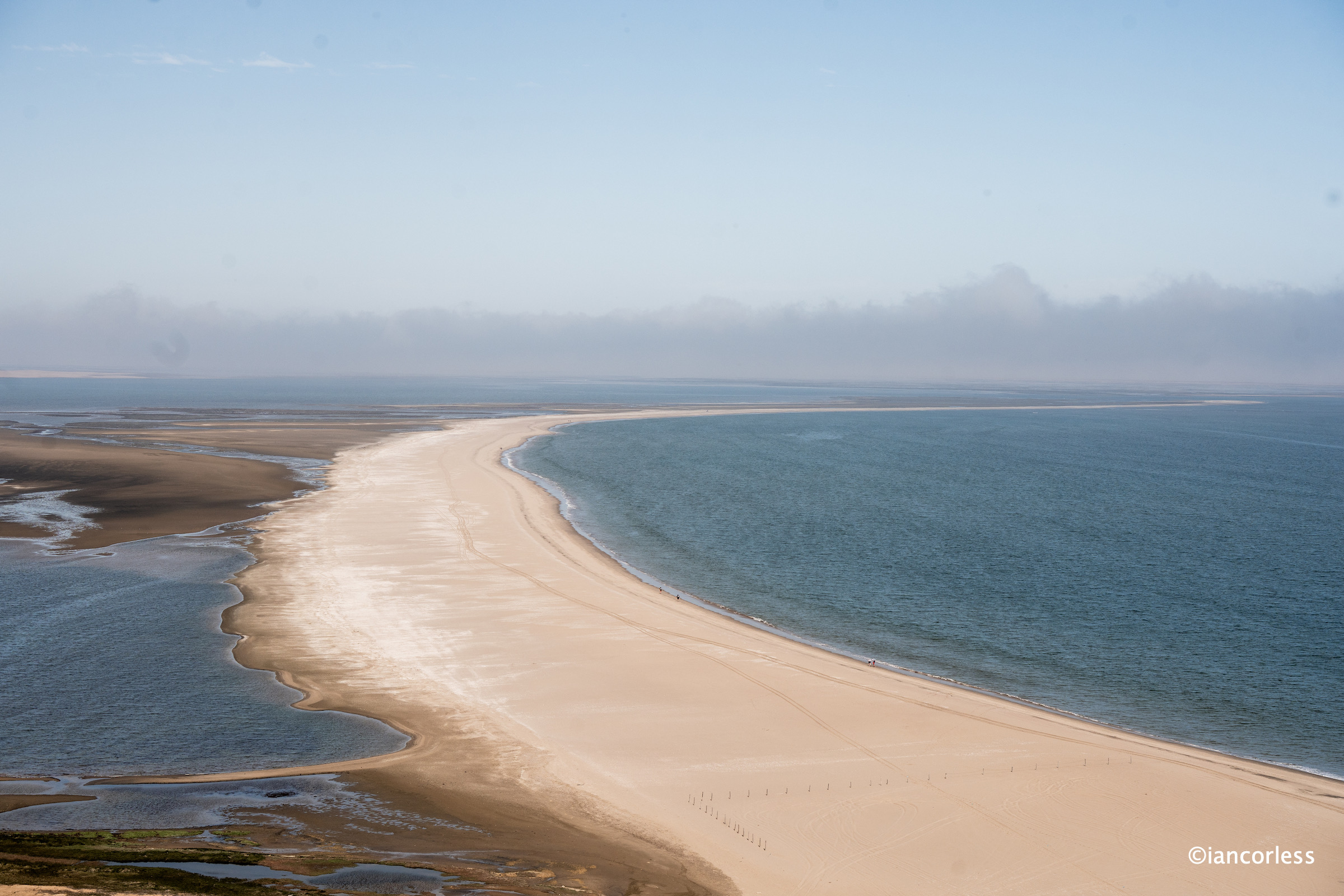
The Atlantic Ocean sat just out of reach, visible but untouchable, as if guarding the coastline. A highlight? For the first time in history, participants were granted access to the restricted Sandwich Harbour.
From the start, the desert tested resolve. Heat during the day, cold at night, and relentless sand underfoot made every kilometer earned. The course cut through some of the most stunning and unforgiving landscapes in Africa: ancient dunes, wind-carved valleys, and the stark openness of Namibia’s coastal desert. It was physically punishing, but visually surreal.
Unique for RAID was star night: a night without shelter, raw, exposed to the sky and elements. Teams bonded as they revelled in the unique privilege to share an African sky as a communal blanket.
Gratitude to the Namibian People
No event of this scale happens without the trust and cooperation of local communities. The MDS team expresses deep thanks to the people of Namibia – the landowners, the local guides, the regional authorities, and the communities near the course. A special thanks to Namibian Tourist Board and the Governor. The race would not have been possible without Kenneth and the team at Sandwich Dune Tours and Safari.
The generosity, the hospitality, and the pride in sharing this land made it possible for us to experience something few ever will. Namibia’s desert is wild, beautiful, and humbling – and it’s also a place of heritage and strength. We were guests in this landscape, and we honor those who welcomed us into it.
More Than a Finish Line
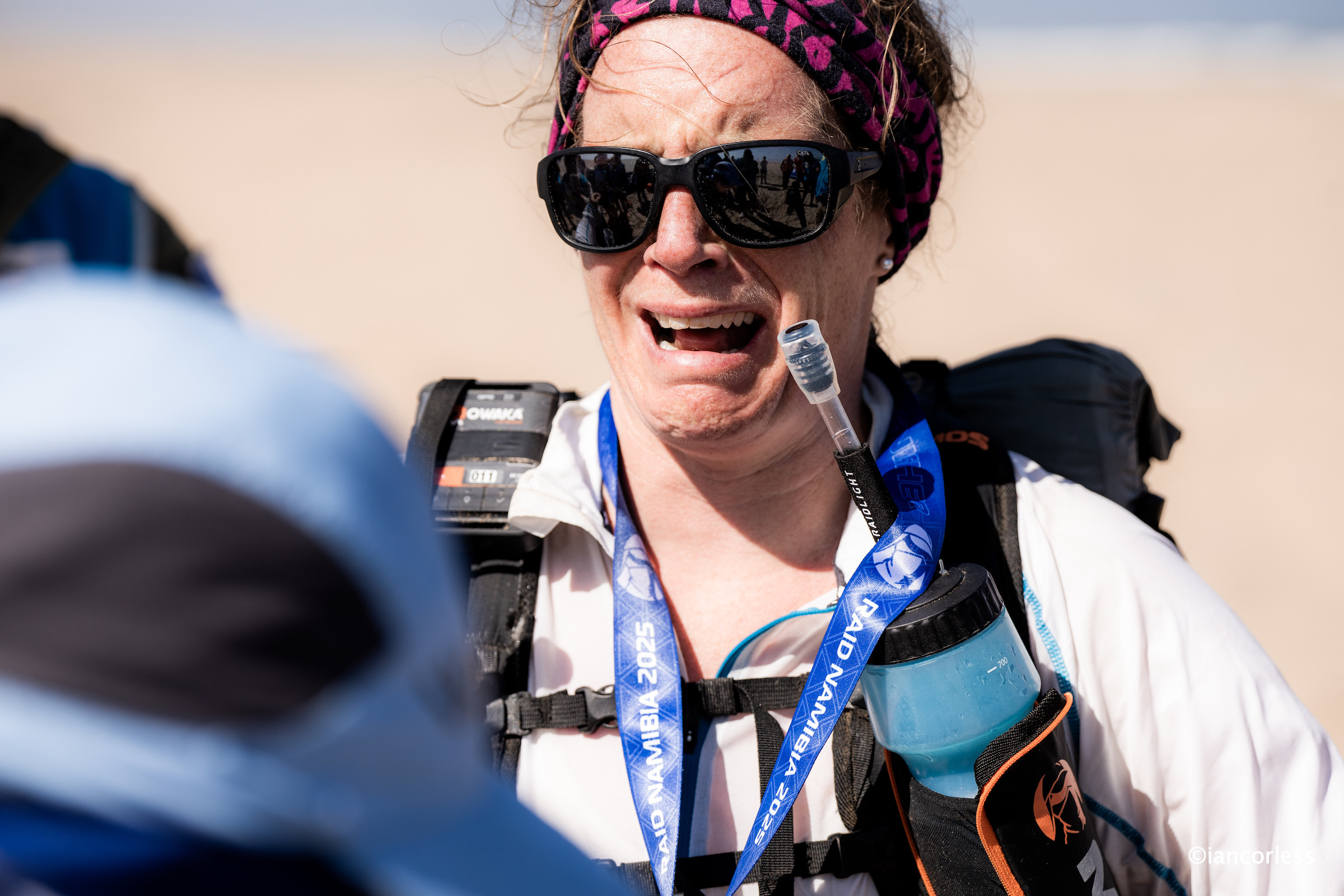
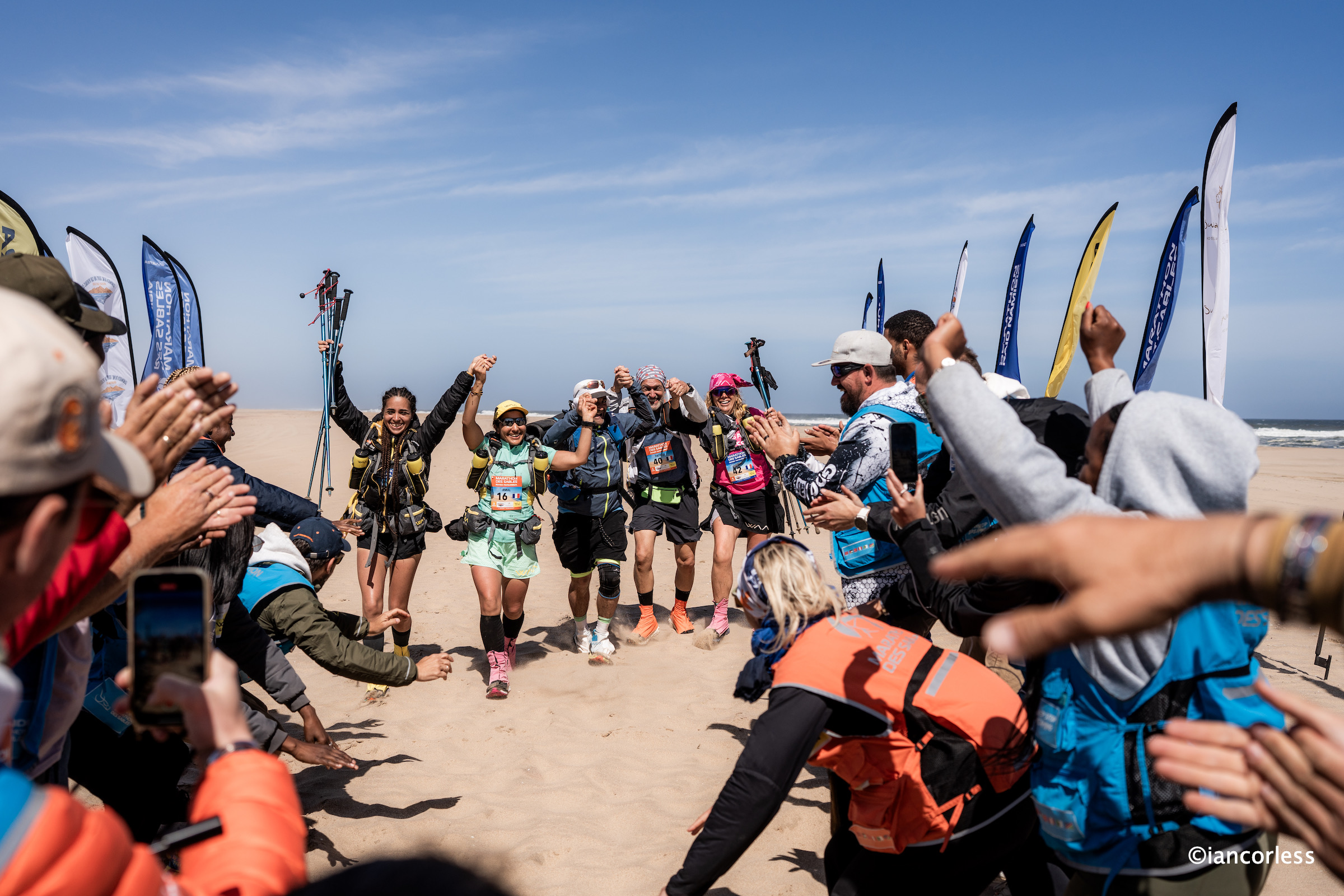
When the final teams crossed the finish line – worn out, arms raised, sometimes in tears – there was no grand ceremony, no confetti. Just the wind, the sand, and the quiet satisfaction of doing something very few people ever will.
Yet, in that exhaustion, something else was clear: no one was truly the same person who had arrived days earlier. This race changed people. It stripped them down, exposed their limits, and revealed what was underneath. Some discovered endurance. Others rediscovered purpose. Everyone left with more than they brought.
Looking Forward
The success of this first edition has set a powerful tone. MDS Raid Namibia may not be for the faint-hearted – but it is for the curious, the determined, the seekers. Those who want more than medals. Those who want something real.
What began as a desert race ended as a shared story of grit, resilience, and human connection. And the desert – harsh and indifferent – gave something beautiful in return.
To the runners, the volunteers, the partners, and the people of Namibia: thank you.
These Omani nights are cold. Dare I say that last night was colder than the night before? It’s tough for the runner’s, especially those that are minimum with kit, particularly lightweight sleeping bag and no down jacket.
Stage 3 at 40km is the second longest of the week and arguably the toughest, compensated for with incredible beauty.
Saleh – Photo by Ian Corless
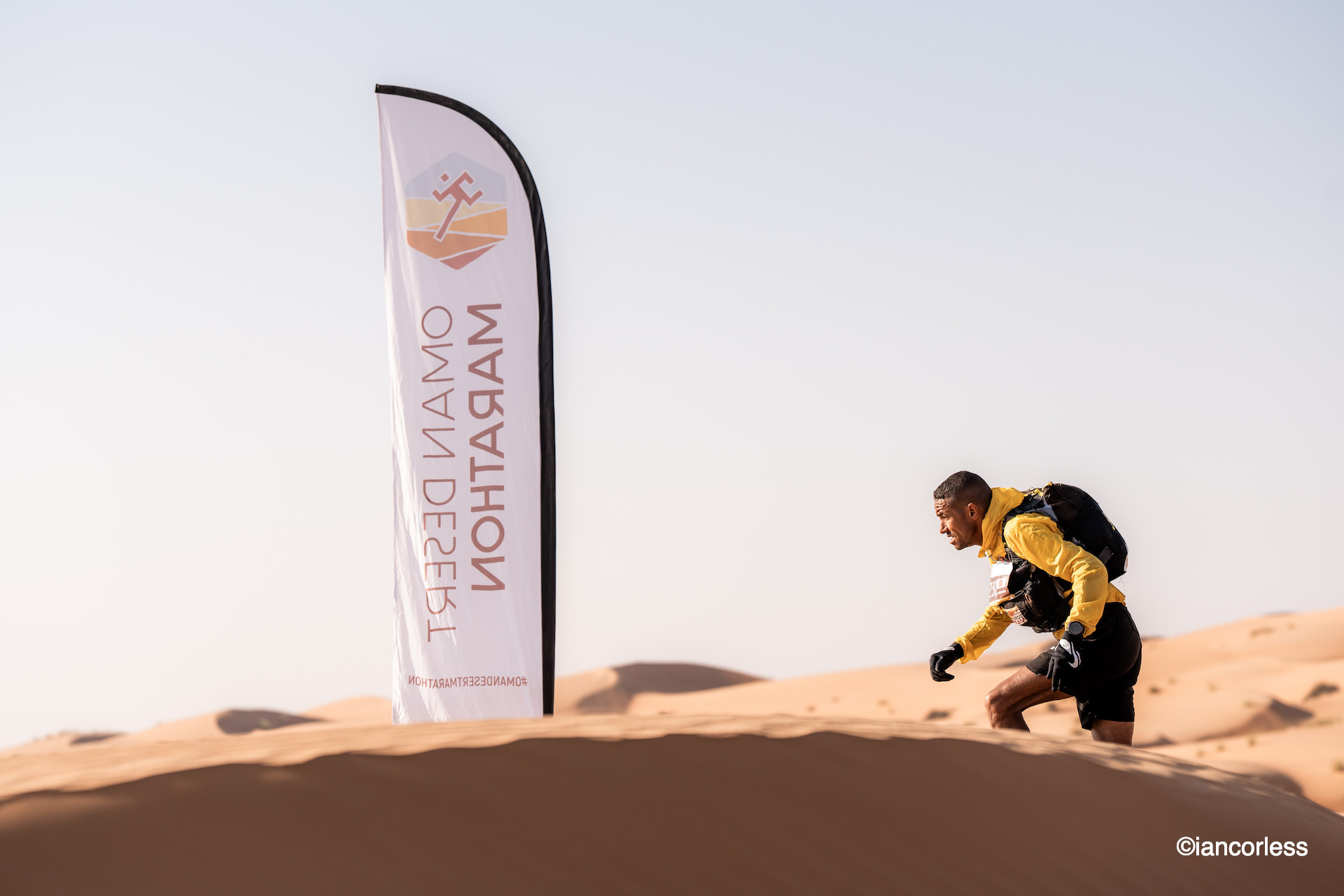
The Oman Desert Marathon is very much a sand race. Every step is on varying decrees of soft-sand and stage 3 adds the spice of a rollercoaster of dunes. There is even a dune section to the finish line.
Lots of sand – Photo by Ian Corless
Starting just after sunrise, the early morning light and views in the first and second dune sections were spectacular. Up high, you really get to see the enormity and expanse of the sand here in Oman, it is relentless.
A tough day – Photo by Ian Corless
Early km’s of the day saw many wearing a windbreaker, trying to get warm after a cold night and chilly start. The heat soon came though and it would keep rising to a high of 27-degrees.
Rachid feeling the chill – Photo by Ian Corless
The top male contenders ran much of the day together, nobody seemed particularly eager to push the pace. Rachid took it very easy wearing a windbreaker and gloves for the whole day, he was a long way back early on and then little by little he moved up the field as the race progressed.
Mohamed playing a waiting game – Photo by Ian Corless
Mohamed and Saleh are inform and the duo finished first and second on the stage just 11-seconds apart, 4:14:39 and 4:14:50 respectively. Rachid moved up to third by the finish line crossing nearly 10-minutes behind his brother.
Aziza Raji – Photo by Ian Corless
For the women, Aziza finished 11th overall in 5:52:44 and a long way ahead of Lydia Oldham in second, 6:30:49. Sally ford was third nearly 50-minutes behind second.
Tomorrow is the penultimate stage of 30km. With three starts, 1500hrs, 1600hrs and 1700hrs, the participants will go into the night and finish in darkness.
2025 will see a new MDS event, the MDS RAID NAMIBIA.
This event will bring something unique and special to the MDS portfolio and certainly, it will be an event for the more experienced participant.
Unlike other MDS events that offer 70, 100 or 120km route options over 3-stages in 4-days, RAID will offer just one distance, somewhere between 100-120km distance over 3-stages and 4-days. Importantly, there will be no ‘rest day,’ and on the 2nd stage there will be no return to bivouac, instead, there will be a ‘star night’ which will see the runner’s sleep in the middle of the dunes.
For safety, this will not be a solo event. Runner’s will complete in pairs, rest assured, if you enter solo, you will be paired with another participant.
Adding to the RAID concept, there will be no classic checkpoints, just water stations. Route marking will be minimal and therefore this will place more emphasis on the participants to be autonomous and confident.
For edition one, just 80-participants (40 teams of 2), will toe the line.
While this level of autonomy will not appeal to some, the sense of adventure will most definitely appeal to many. Without doubt, this is a hark back to how the original Marathon des Sables concept was created.
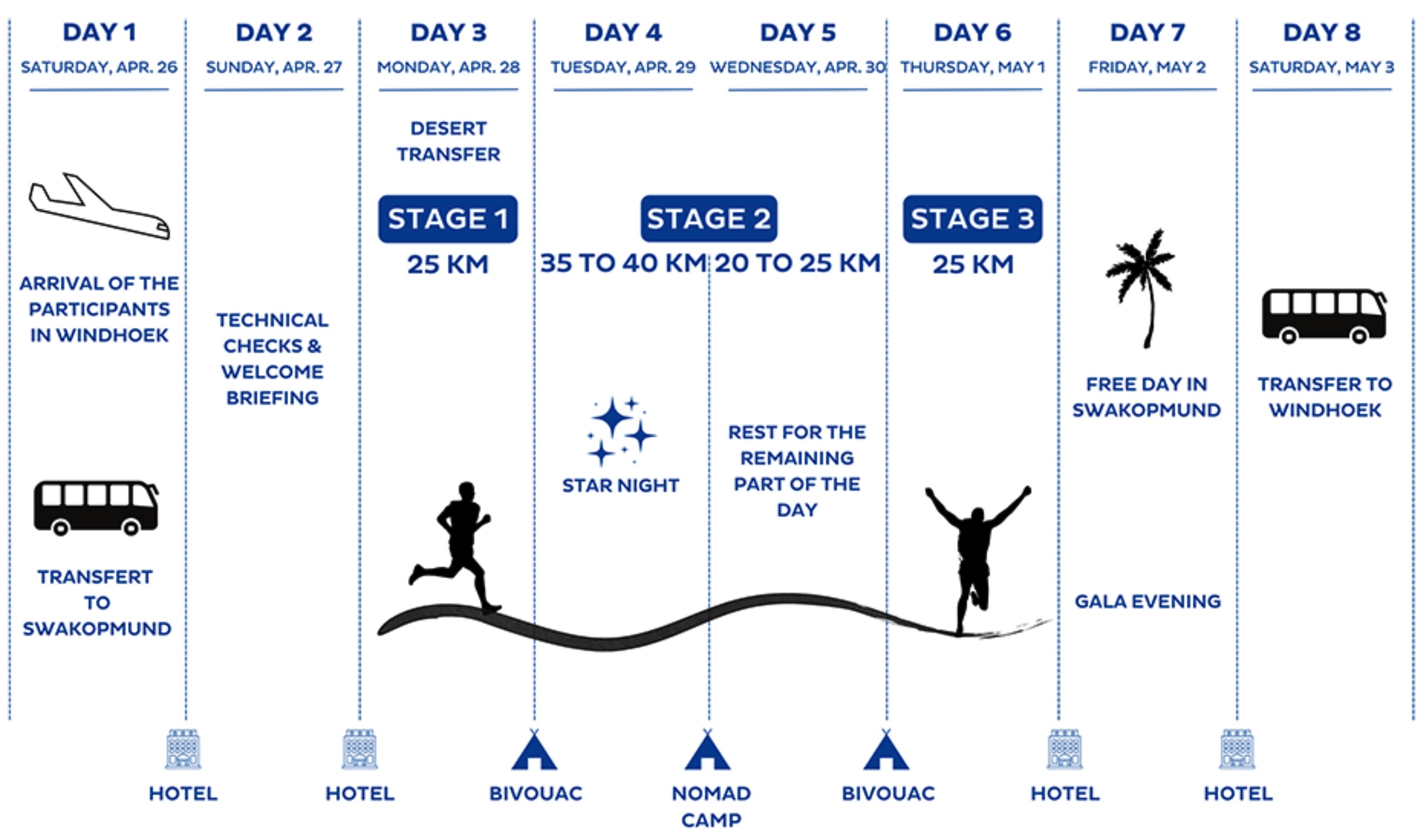
The race format will be as follows:
Stage 1 25 to 30km.
Stage 2 will be 45 to 55km’s, however, this distance will be split with an overnight star night. After the sleep, the remaining distance will completed on day 3 returning to bivouac. Typically, for MDS events, this day would be a complete rest day.
Participants will arrive in Windhoek Saturday April 26th, night in a hotel.
Technical checks and briefing April 27th, night in a hotel.
Stage 1 April 28th with bivouac night.
Stage 2 part 1 April 29th with star night.
Stage 2 part 2 April 30th with bivouac night.
Stage 3 May 1st and then overnight in hotel
Free day in Swakopmund and then awards/ gala dinner May 2nd
Transfer to Windhoek May 3rd and onward travel
NAMIB and the RAID
The oldest and driest desert in the world, the Namib is the perfect destination for the RAID concept. With dunes over 300m high, this environment is one of the most impressive in the world. Known for incredible diversity, intense heat, strong winds, demanding terrain, flora and fauna, RAID will be a unique challenge. An ability to move well in soft sand will be an integral part of the challenge, needless to say, gaiters will be an essential item. Add self-sufficiency, a star night, minimal marking and just water stations, RAID is going to be something very special.
What is the MDS?
The MARATHON DES SABLES is a unique adventure, shared by thousands of enthusiasts since 1986.
To differentiate the full distance race of 250km’s, Marathon des Sables will now be known at MDS The Legendary, reflecting the legendary status of this iconic event and its long history as a pioneer of the stage racing and multi-day format.
The ‘HMDS’ format whill still follow the same protocols as before but has now dropped the ‘half’ title and moving forward, events will be called MDS Jordan, MDS Morocco, MDS Cappadocia and so on.
The MDS events are a one-week sporting adventure that combines the discovery, travel, meeting new people and physically challenging yourself in a self-sufficient manner.
Since 1986, the MARATHON DES SABLES has crossed the world’s most stunning deserts with several unique concepts: the MARATHON DES SABLES THE LEGENDARY (252 km in the Sahara Desert in Morocco), the MARATHON DES SABLES (70, 100, or 120 km spread over 3 stages), and the new 2024 concept, the MDS TREK (4 stages with a total distance of up to 120 km), offering an accessible adventure with optimal comfort. These international events have seen over 50 editions in various countries such as Morocco, Fuerteventura Island, Peru, Jordan, Turkey, and offer adventures that combine running/hiking in the desert with tourism.
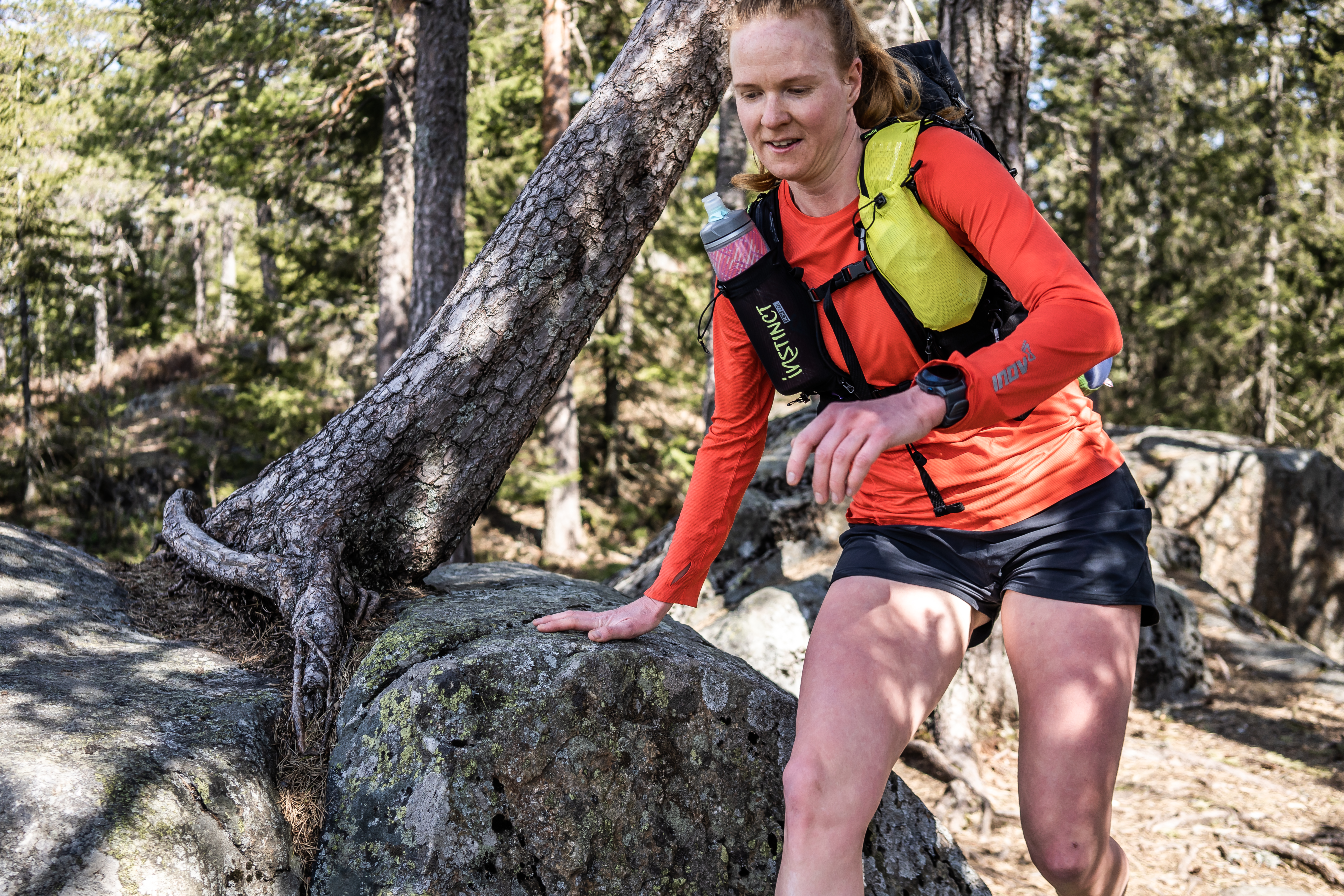
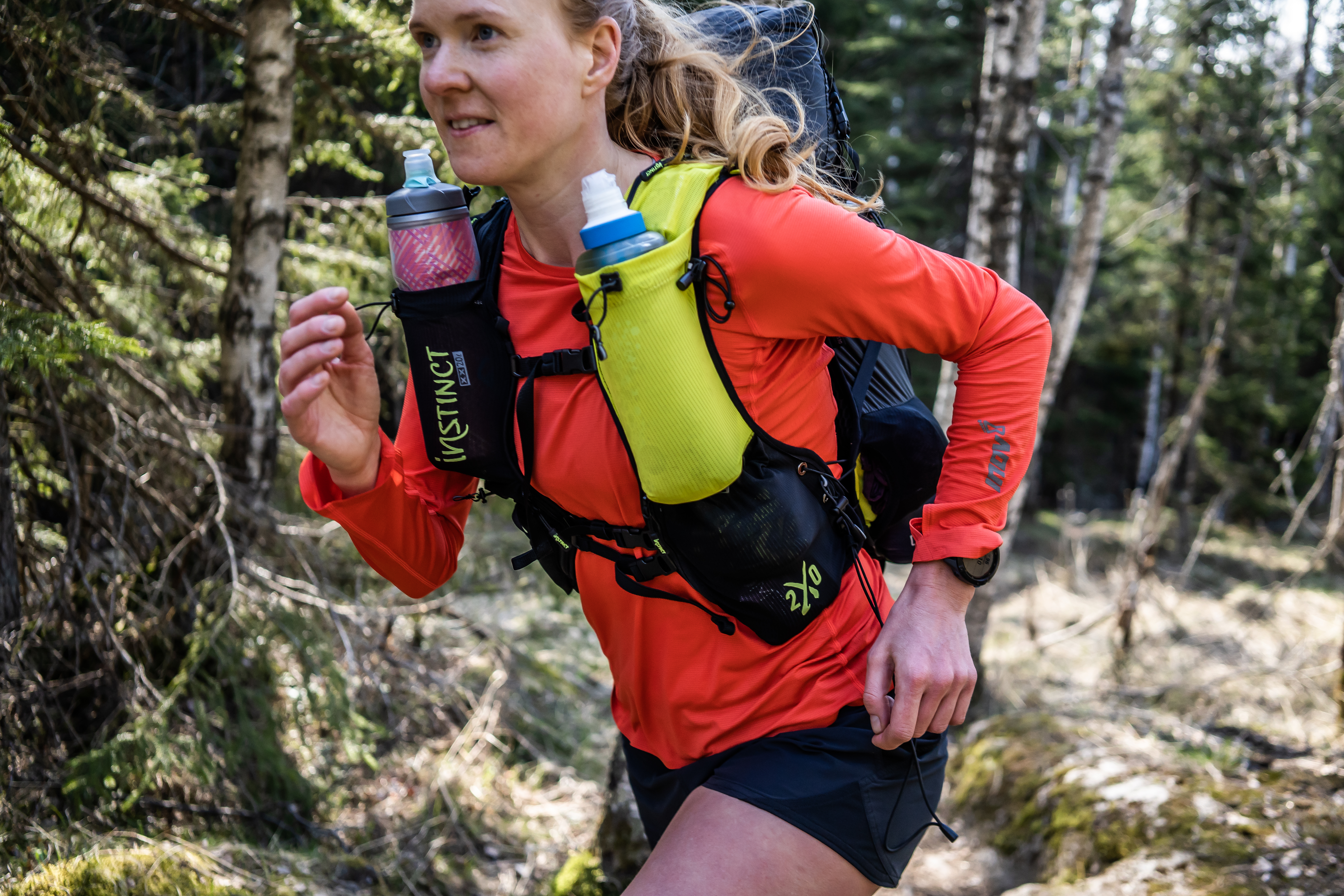
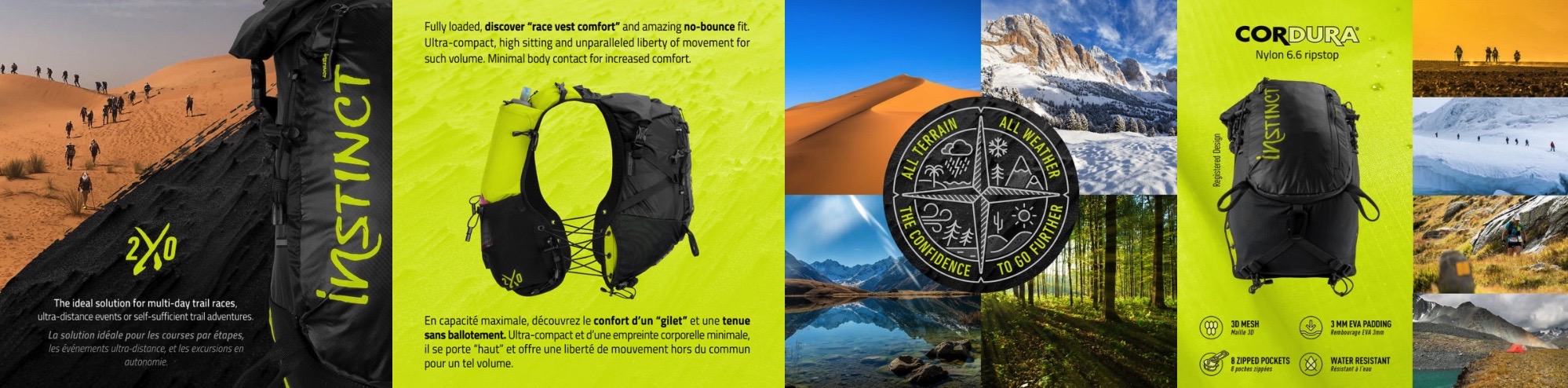
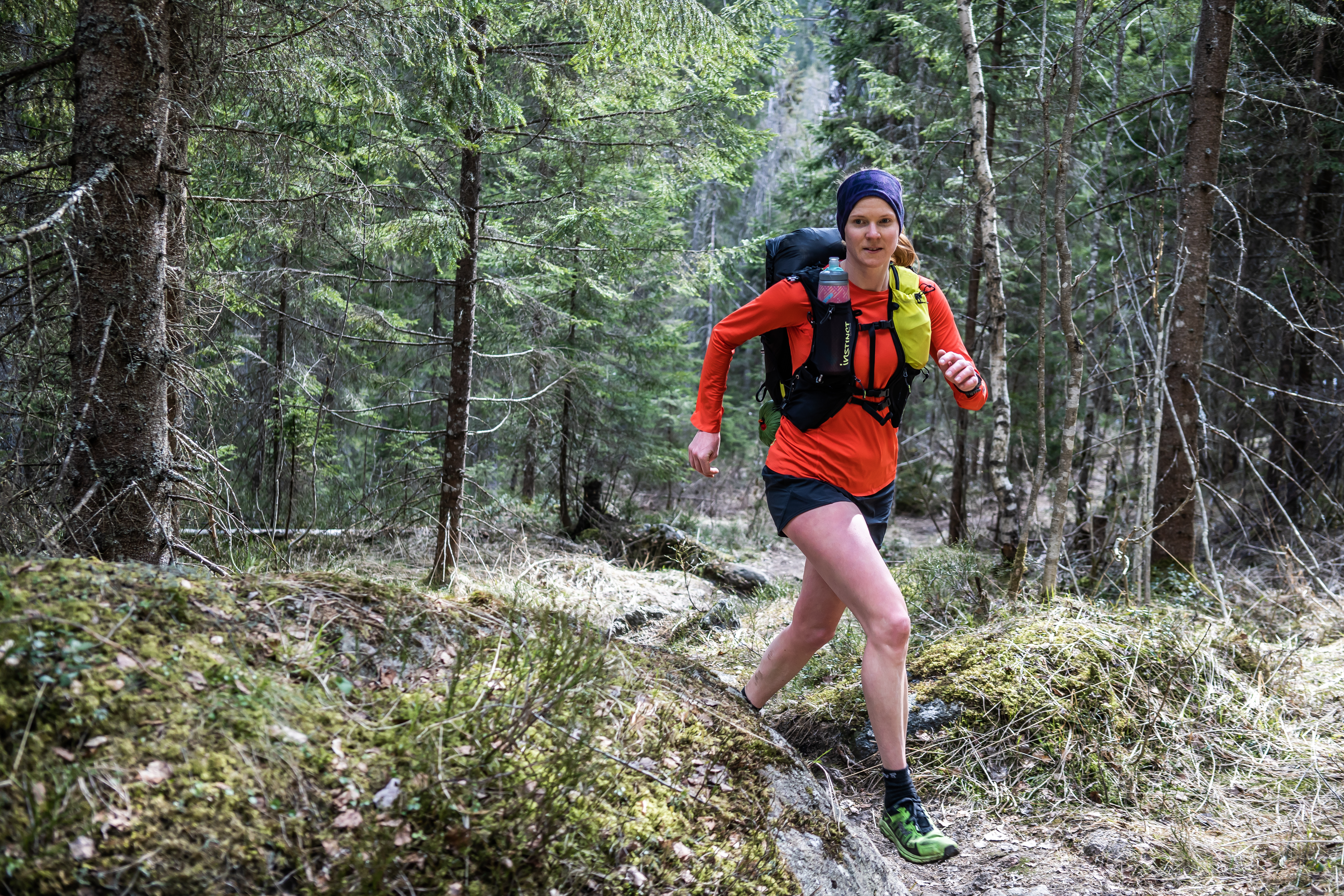
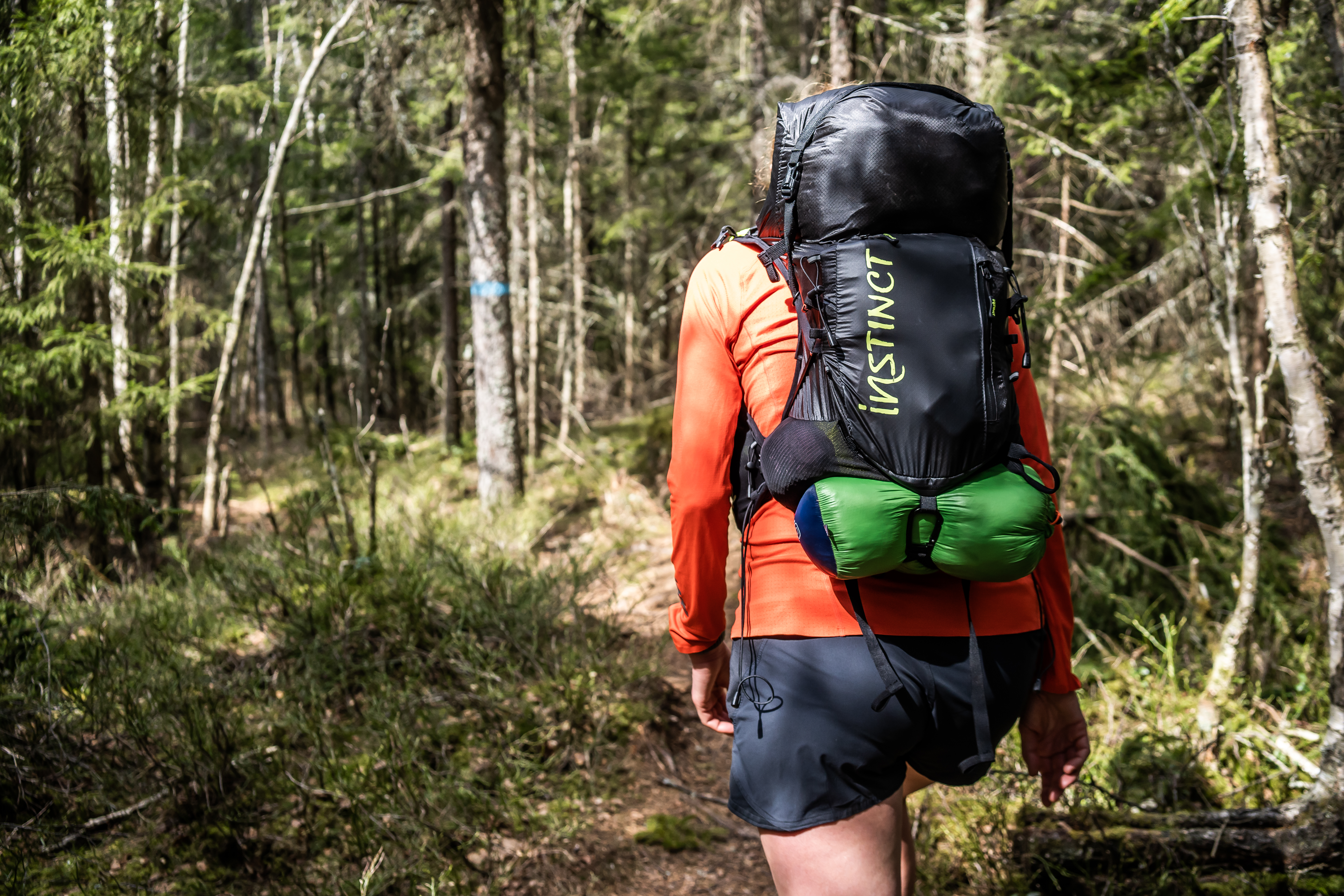
The INSTINCT XX 20L pack is a new addition to the stage/ multi-day racing scene and finally, dare I say, this pack begins to address many of the failures experienced in other packs.
It is in summary, the best pack we have used.
To clarify, this pack was provided free to test and this is not a paid review or advertisement. You can read and view some initial videos here.
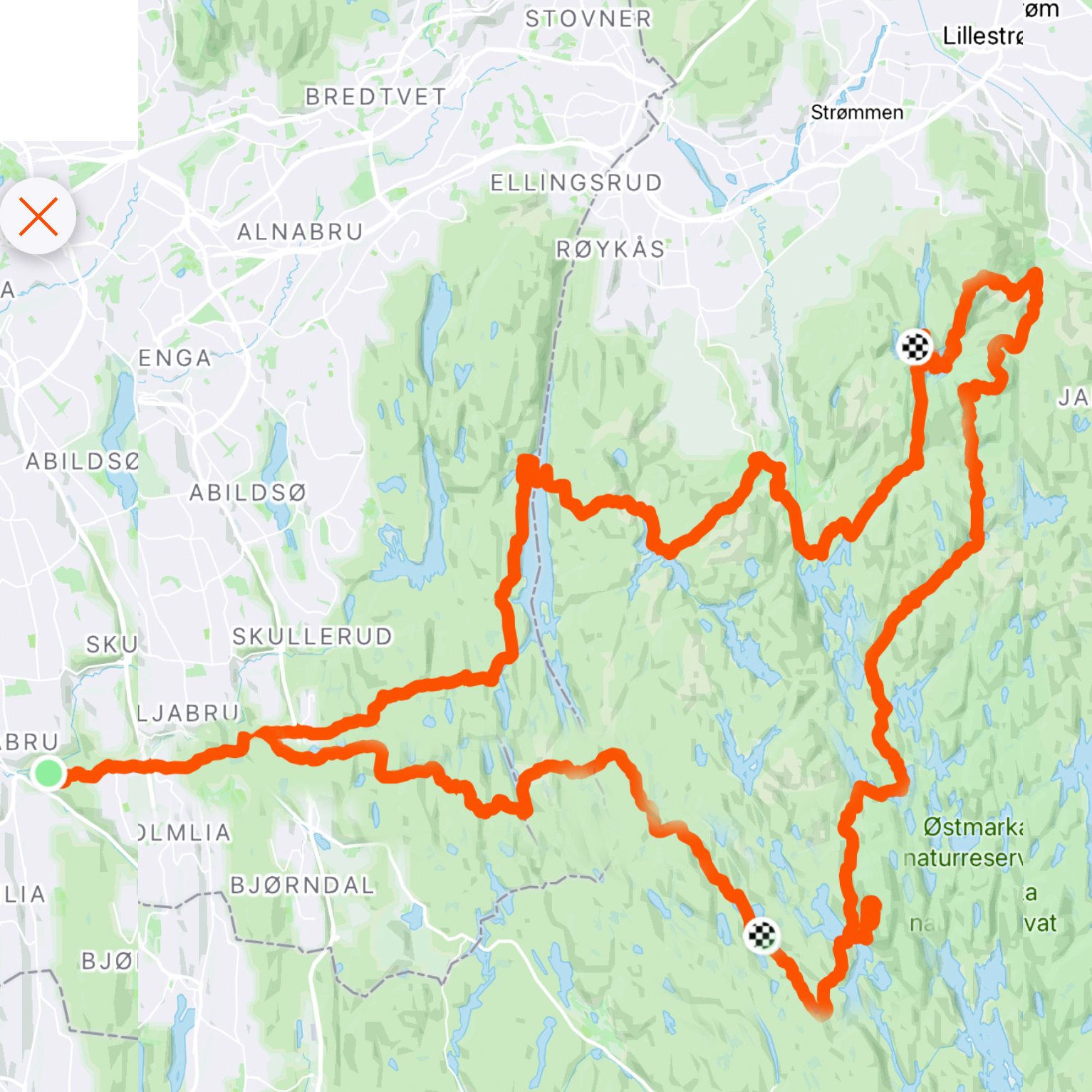
The only way to test any pack like this is in a ‘real’ scenario for male and female. So, Abelone Lyng and myself set off for a 3-day fastpack covering 65km carrying all we required.
Our 65km route.
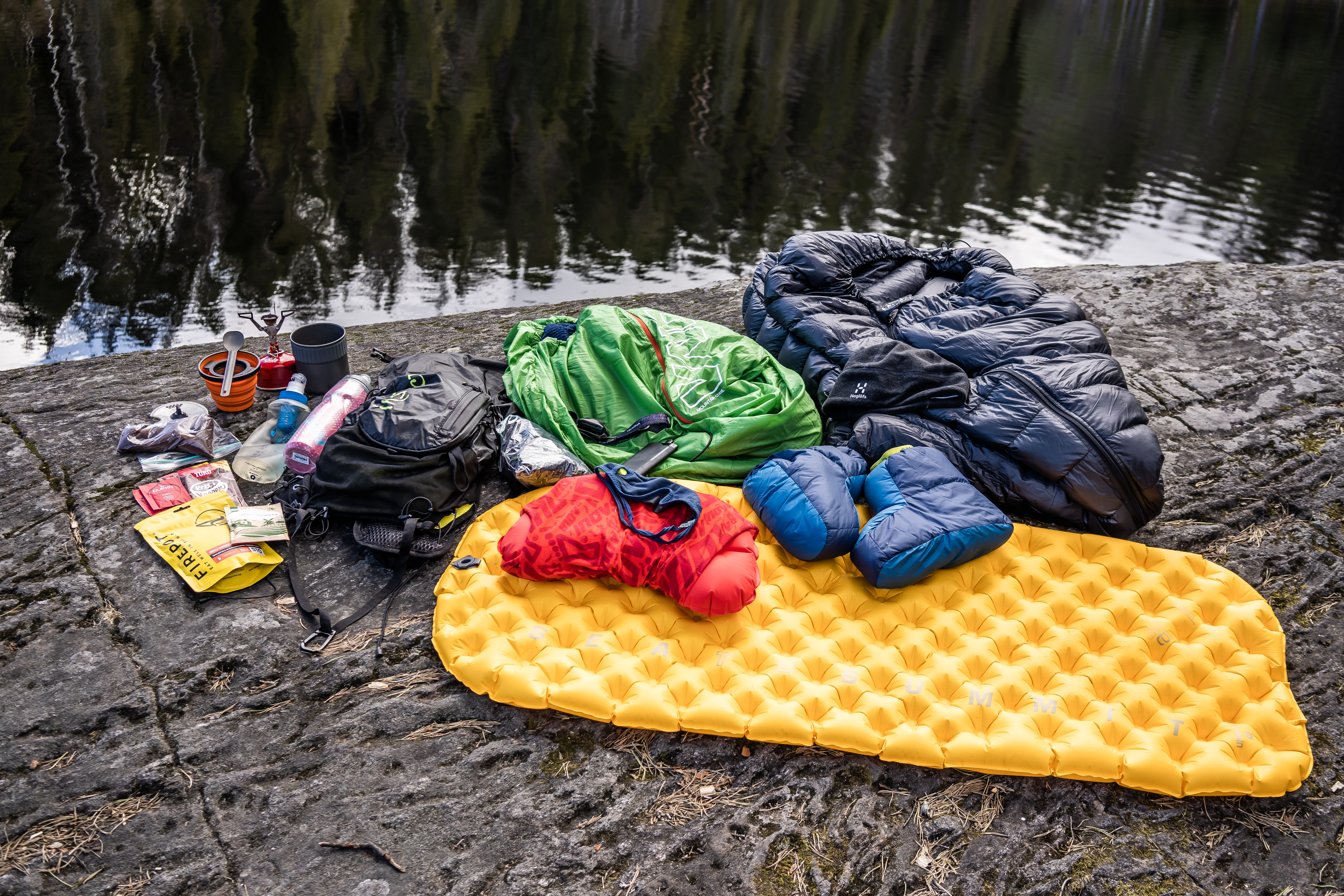
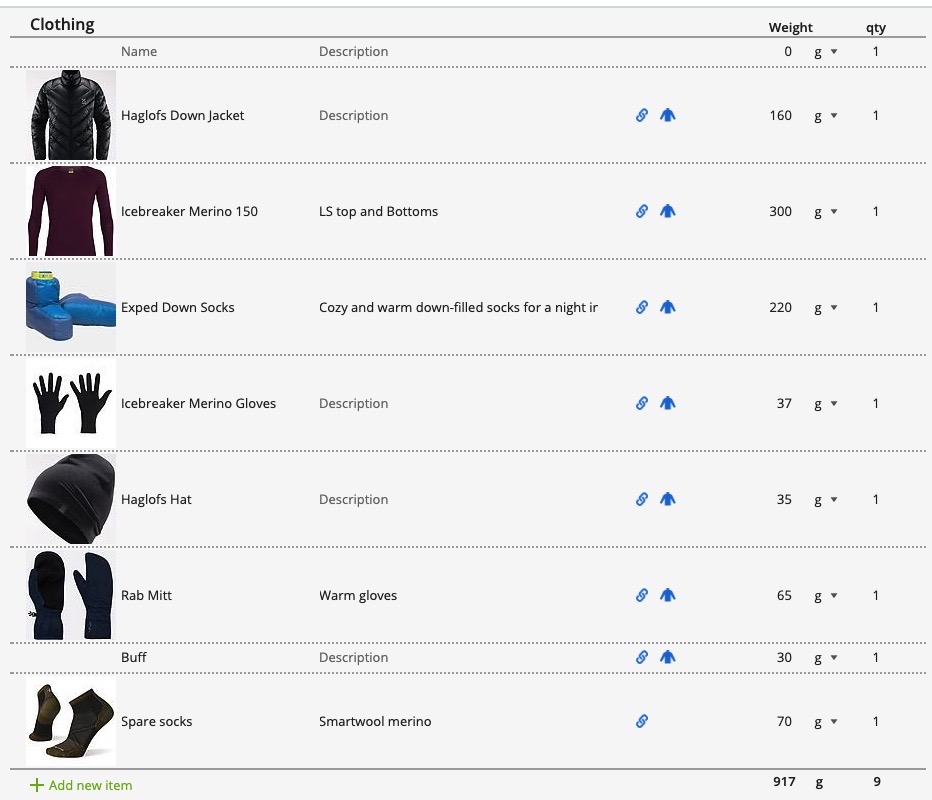
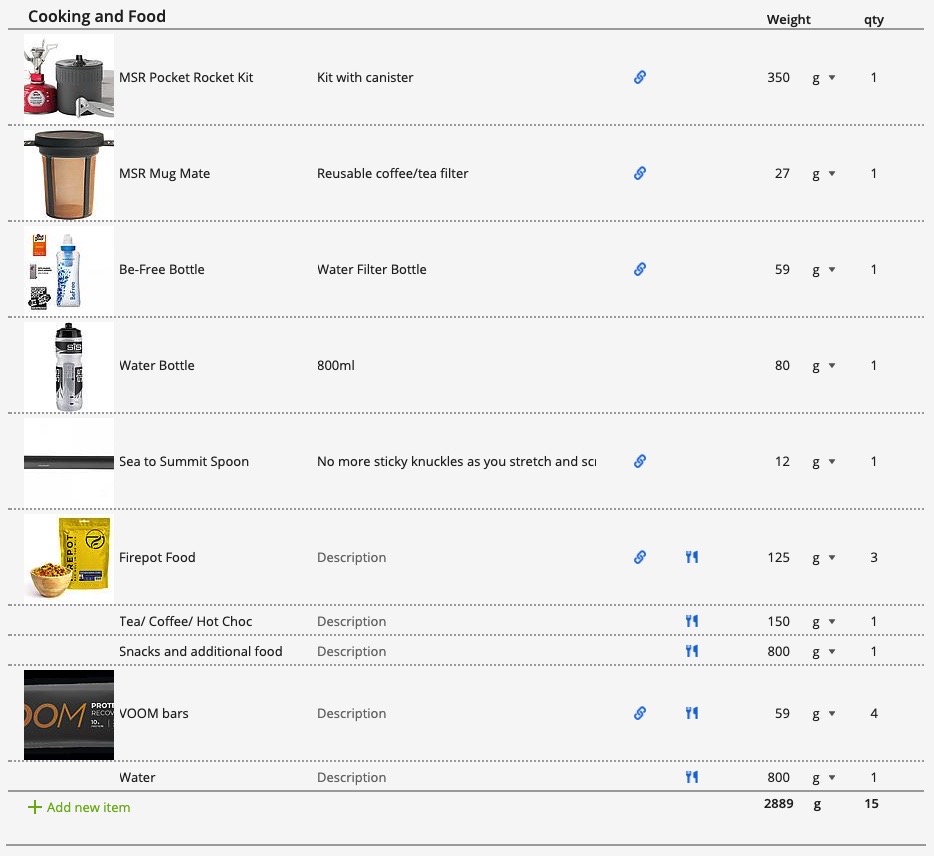
We both carried a pack, and the INSTINCT had more than required for one person. You can see in the photo above the majority of contents but in addition to the above was a 2-person tent, merino top and leg base layer, down jacket, hat and gloves. Also, 3 Firepot meals and additional snacks. Total weight, inc the pack was approx 6.5kg with 800g water.
See a time-lapse of packing below:
HERE are the pack contents itemised with weights and links.
There are several key features to the instinct and depending on the adventure you are undertaking, you would pack the bag differently. For our 3-day trip we needed a tent, but as an example, if doing a race like Marathon des Sables, you would have no need for a tent and this would free up considerable space for the food requirement of six or seven days.
The pack has a maximum capacity of 24L and compresses to 18L by rolling down the top of the pack and compressing it. We recommend you view the videos here. This is extremely useful in self-sufficient races when you basically ‘eat’ the contents of the pack and therefore the pack reduces in size, weight and volume.
Here is a review video which gives a real-time review of the INSTINCT XX 20L.
Both Abelone and myself found the pack arguably the most comfortable we have used and tested and it stands out in several areas:
Flexibility and adaptability.
The ability to reduce the pack size as per requirements.
The ability to segregate items in different areas – top pocket, main pocket, two mesh pockets, zipper pockets.
The front of the pack is the best we have tried not only for two hard bottles but the ability to use four bottles or use two bottles and use the other pockets for storage.
The fit is excellent and while extremes of size, both large and small cannot be accounted for, in general, we feel that the pack will work with most body sizes and shapes.
Movement while running is minimal but not zero. It is the best we have used.
There are many small features – zipper pockets, elastics, the external carabiner fitting and so on that make the pack a pleasure to use.
With full weight (8kg) you soon realise if you have the Instinct packed incorrectly and it is worthwhile playing and spending time with different configurations. What works for one, may not work for another, so, find what what works for you. Certainly, what I personally thought would work for me initially, did not work and I had too much movement in the top pocket. When I re-packed, the improvement was considerable.
The one size fits all and elastic side does provide incredible flexibility and comfort and both Abelone or myself found no hot spots or irritation.
Packed correctly, the ability to access what you need, on the go, is superb. Ultimately, fine-tuning the pack to an individuals need is part of the process of what makes fastpacking fun. However, the crossover of fit, packing and individual needs between Abelone and myself was seamless and we could easily swap and change at any time with just an adjustment to the chest and elastic side straps making for a perfect fit.
How to fit the pack?
Notably, there are features to the pack that we did not use or mention:
Large zipper pocket that will take a 2 to 3ltr bladder that will occupy the length of the pack between the back pad and the main compartment. This pocket could also be used to segregate clothes, for example, clean and dirty.
Removable top pouch that we did not use that can also be used to secure a helmet if required – useful for snow/ climbing adventures.
Three different areas to secure poles.
Ice axe and shovel friendly with attachment points.
Specs:
The XX allows : – 2 x 750ml+ bottles/softflasks in front – 2 XL vertical front zip pockets – 2 zipped shoulder pockets – 2 XL mesh front pockets – 3 fixing options for poles (front/back) – Ice pick on back – Shovel fixture – Easy backside carrying of sleeping mat or other objects (ex: tent) – Independent 3L water bladder pocket – X-Large 2-in-1 overlapping stretch mesh pockets on lower backside
KEY FEATURES : – Large back door = instant access to main compartment and easy viewing of internal items – Independent roll-top pocket for increased storage – Removeable top pouch carries smaller items (first aid kit, knife, etc). A stretch mesh pocket over the top allows instant access to jacket storage or a solar battery panel
Is the INSTINCT perfect? No, it’s not, but it comes pretty darn close… I guess the question that I have is the zipper on the main compartment? If that fails, this would cause huge problems, however, it is a special zip, reinforced and extremely durable, I have no reason to think this would fail. The pack may be compromised on fit with small men or women, however, in general, based on myself and Abelone, we can see it fitting most body shapes.
Ultimately, for both of us, the INSTINCT XX 20L is the most complete and flexible pack we have used. It’s great to look at, it is really well thought out, it provides multiple options and flexibility and without doubt, has the best bottle holding and capacity of any pack I have used. The option to compress the pack to 18L means it can also be used for long single-day races, such as UTMB, when the need for mandatory kit is high.
Please support this website. I believe everyone deserves to read quality, independent and factual articles – that’s why this website is open to all. Free press has never been so vital. I hope I can keep providing independent articles with your help. Any contribution, however big or small, is so valuable to help finance regular content. Please support me on Patreon HERE.
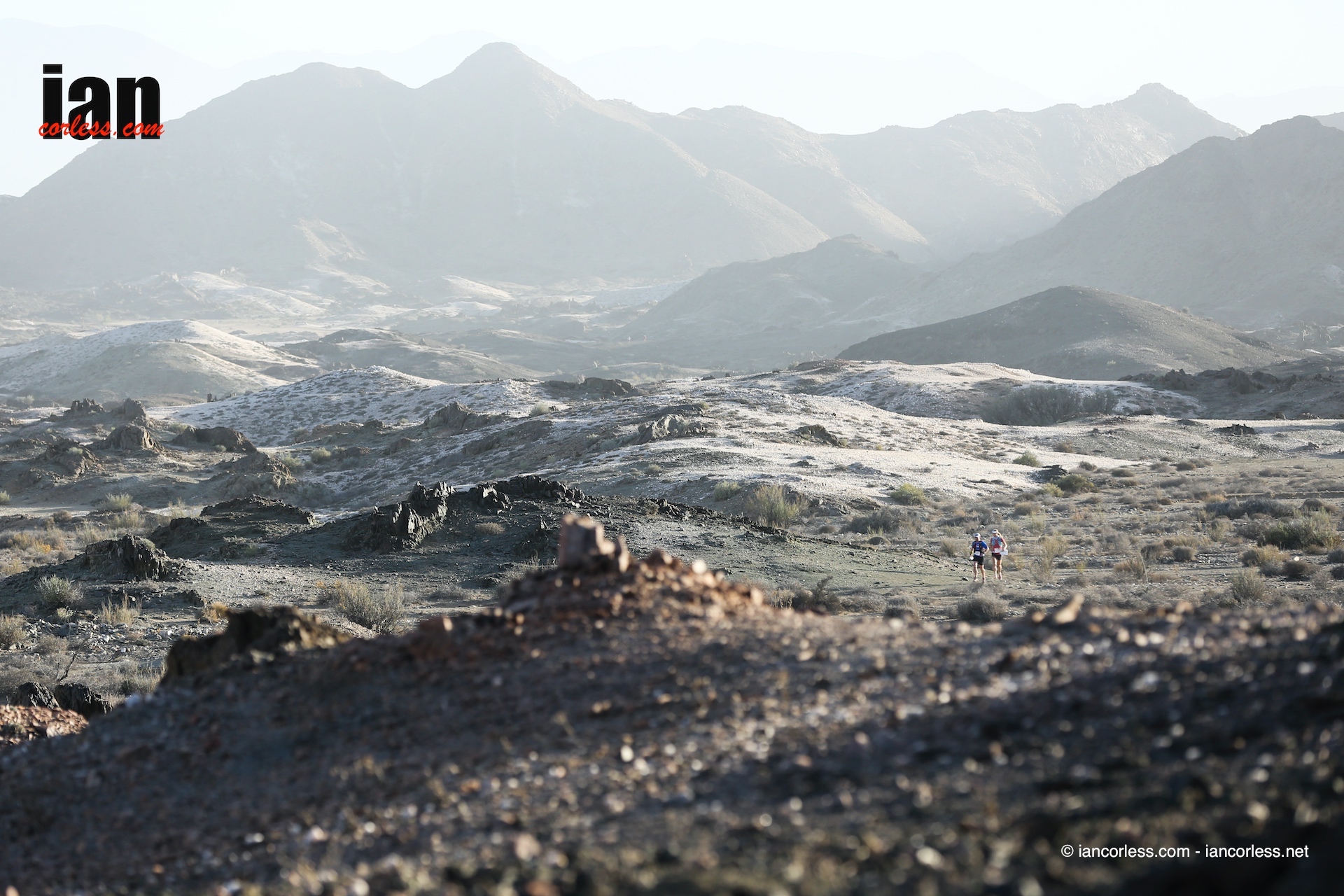
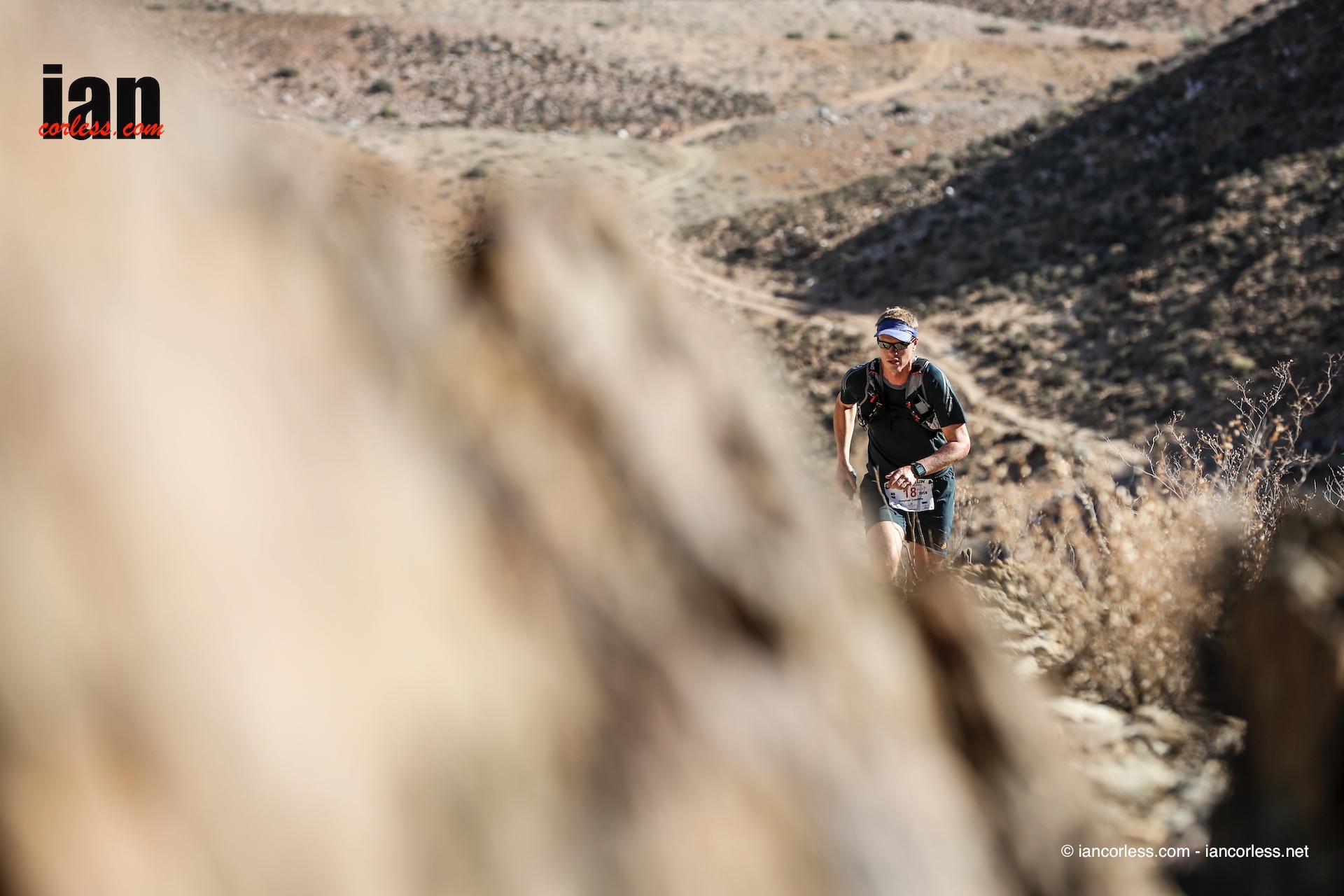
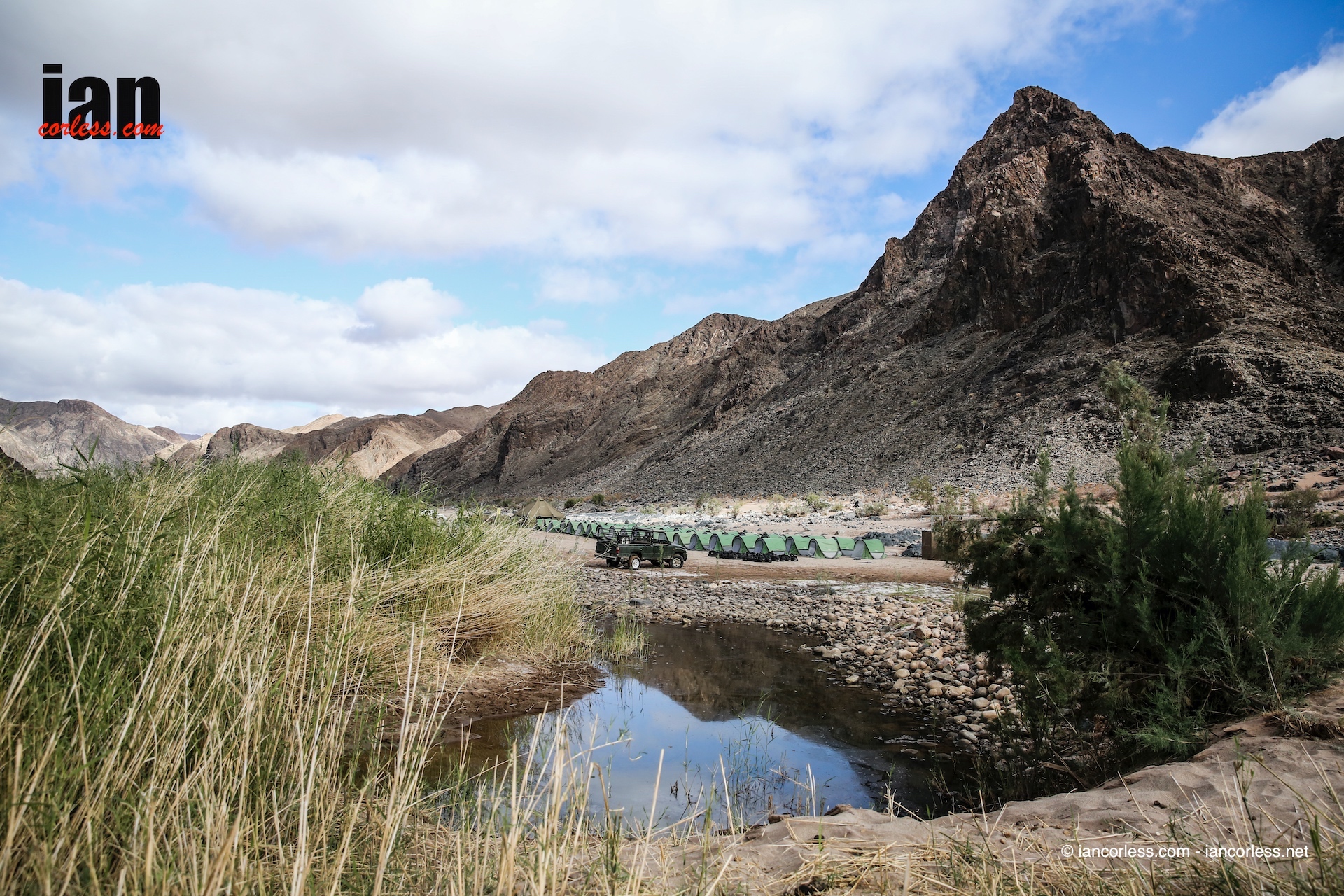
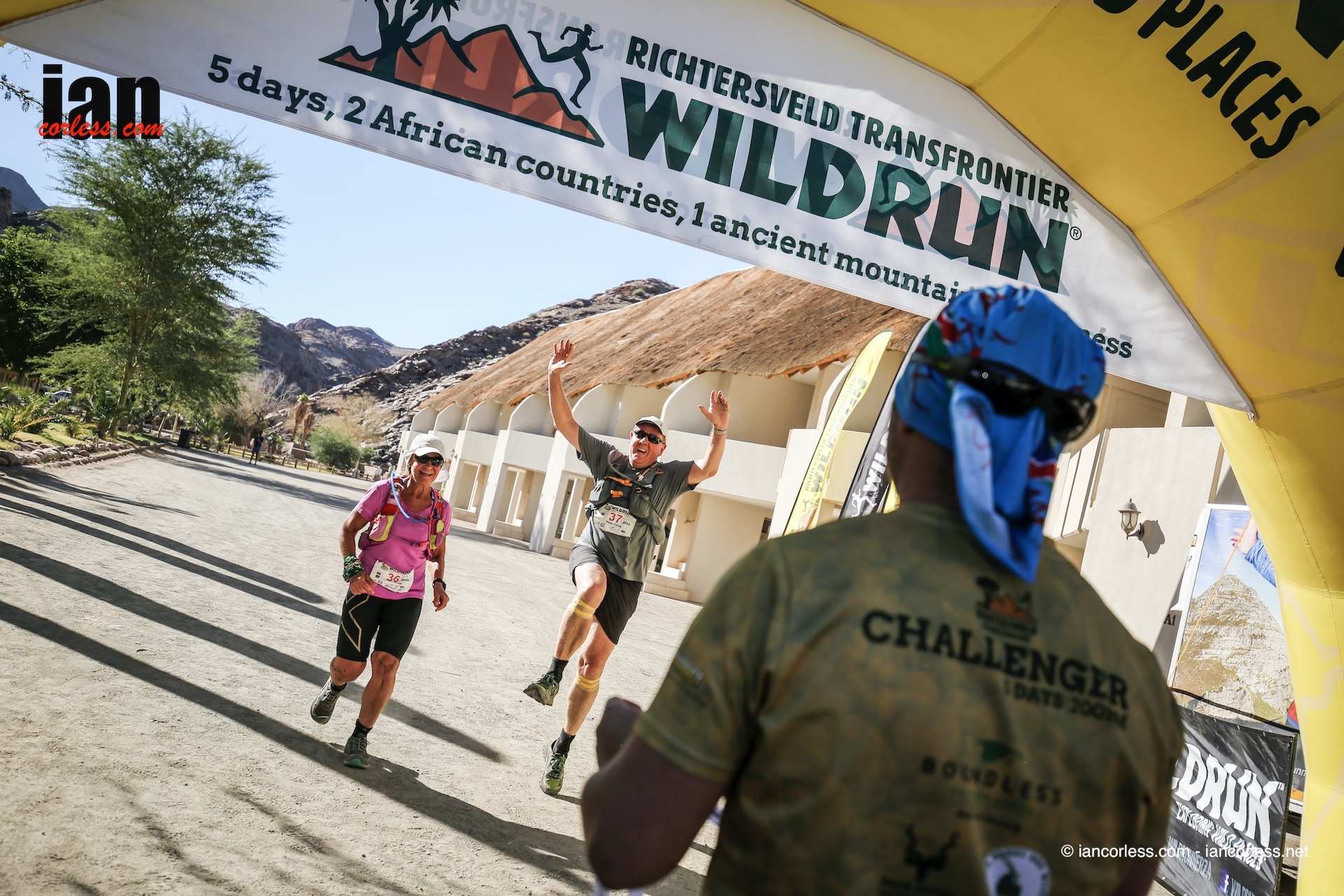
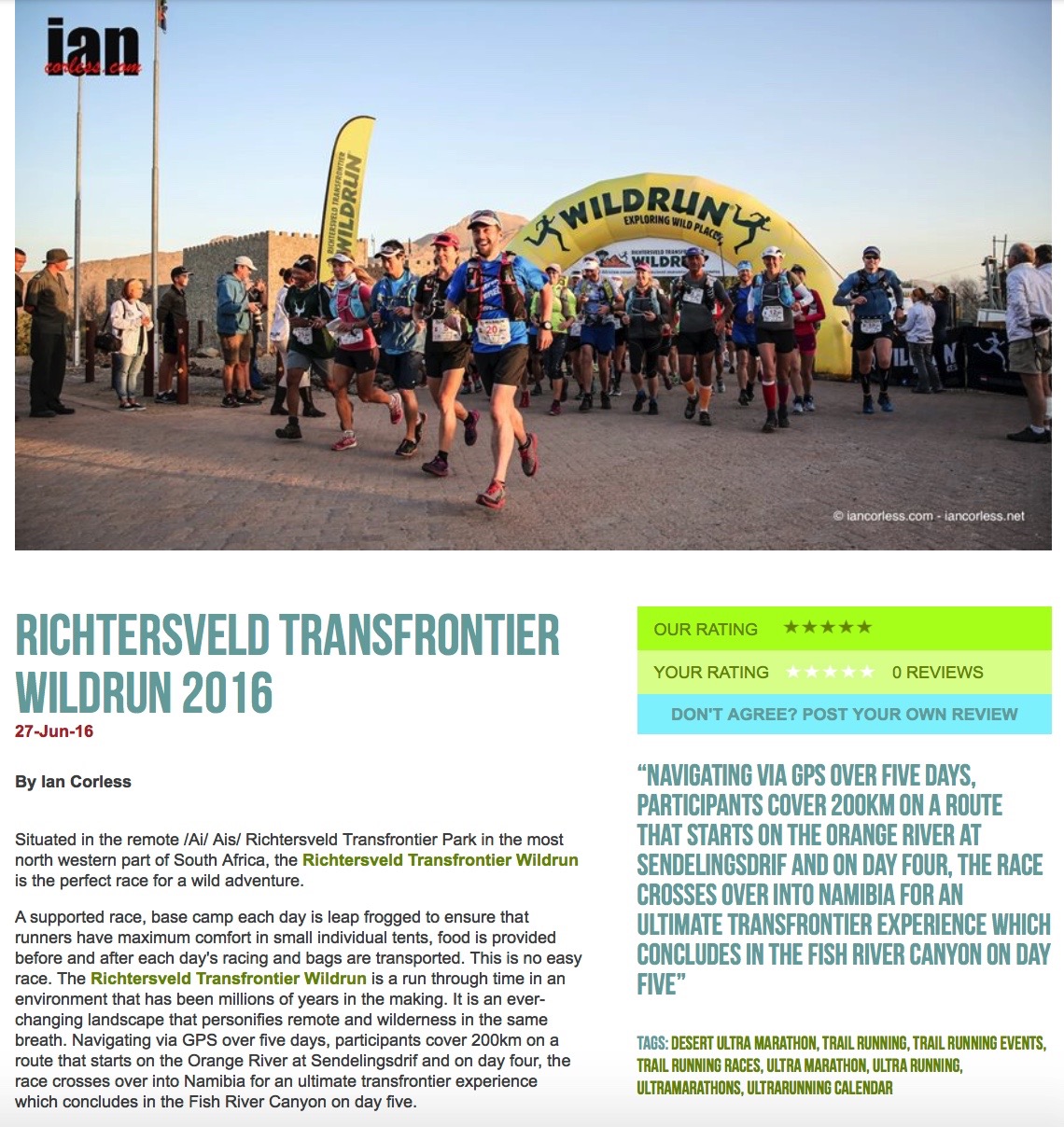
A new name, a new adventure! The NAMIBIA CROSSING is a 200km, five-day foot race from South Africa to Namibia through the ancient arid landscape of the /Ai/Ais-Richtersveld Transfrontier Park. The race was previously known as the Richtersveld Transfrontier Wildrun, the new name reflects the ‘crossing’ of the Orange River and the doorway to Namibia.
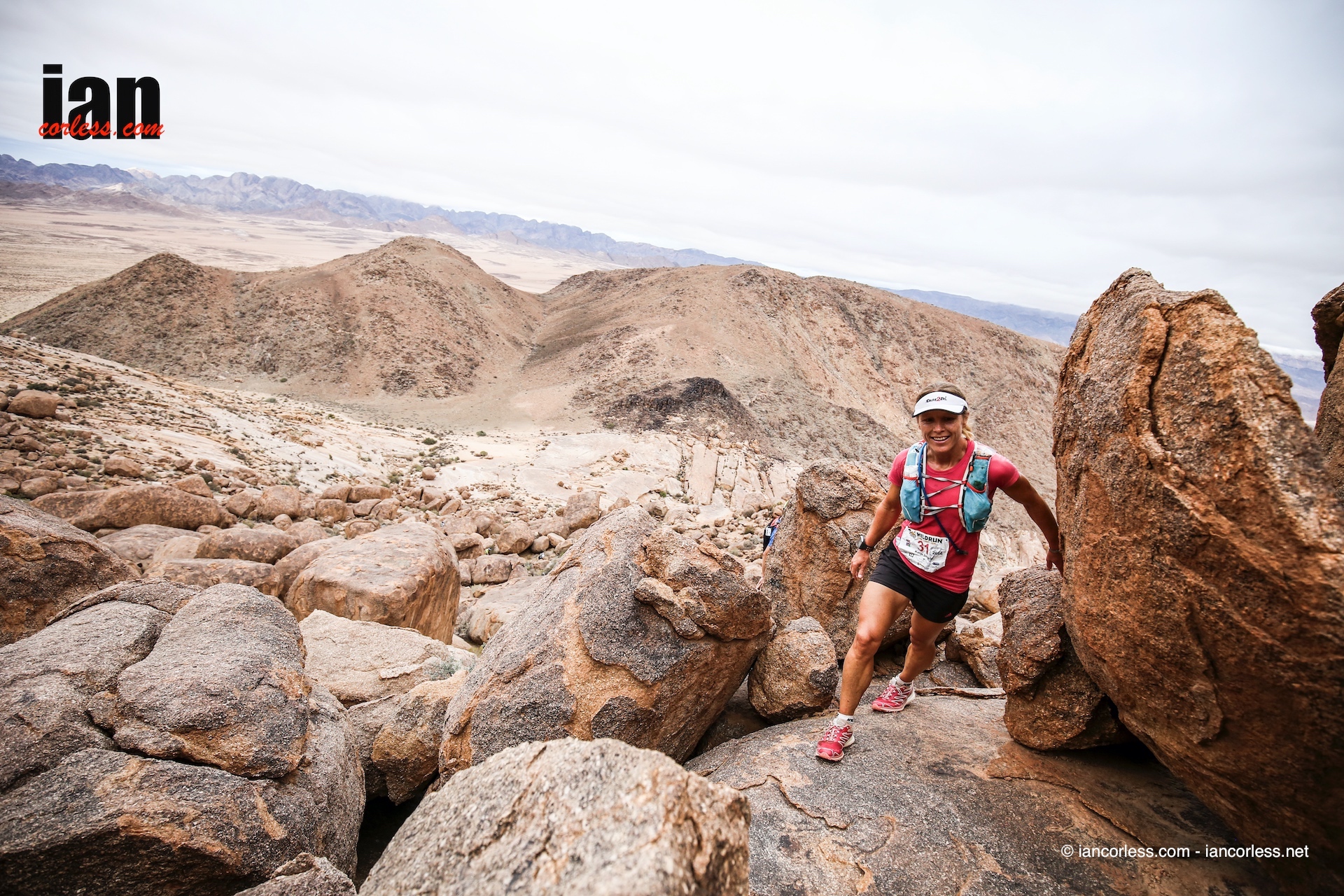
From the crystal fields of Sendelingsdrif in South Africa to the infamous giant boulders of Tatasberg deep in the /Ai/Ais-Richtersveld Transfrontier Park; this unparalleled journey then crosses the Orange River into Namibia and the wild lands of the Fish River Canyon. This is the running experience of a lifetime; this is the this is the Namibia Crossing.
Add the dates to your diary, June 16th to June 22nd 2019
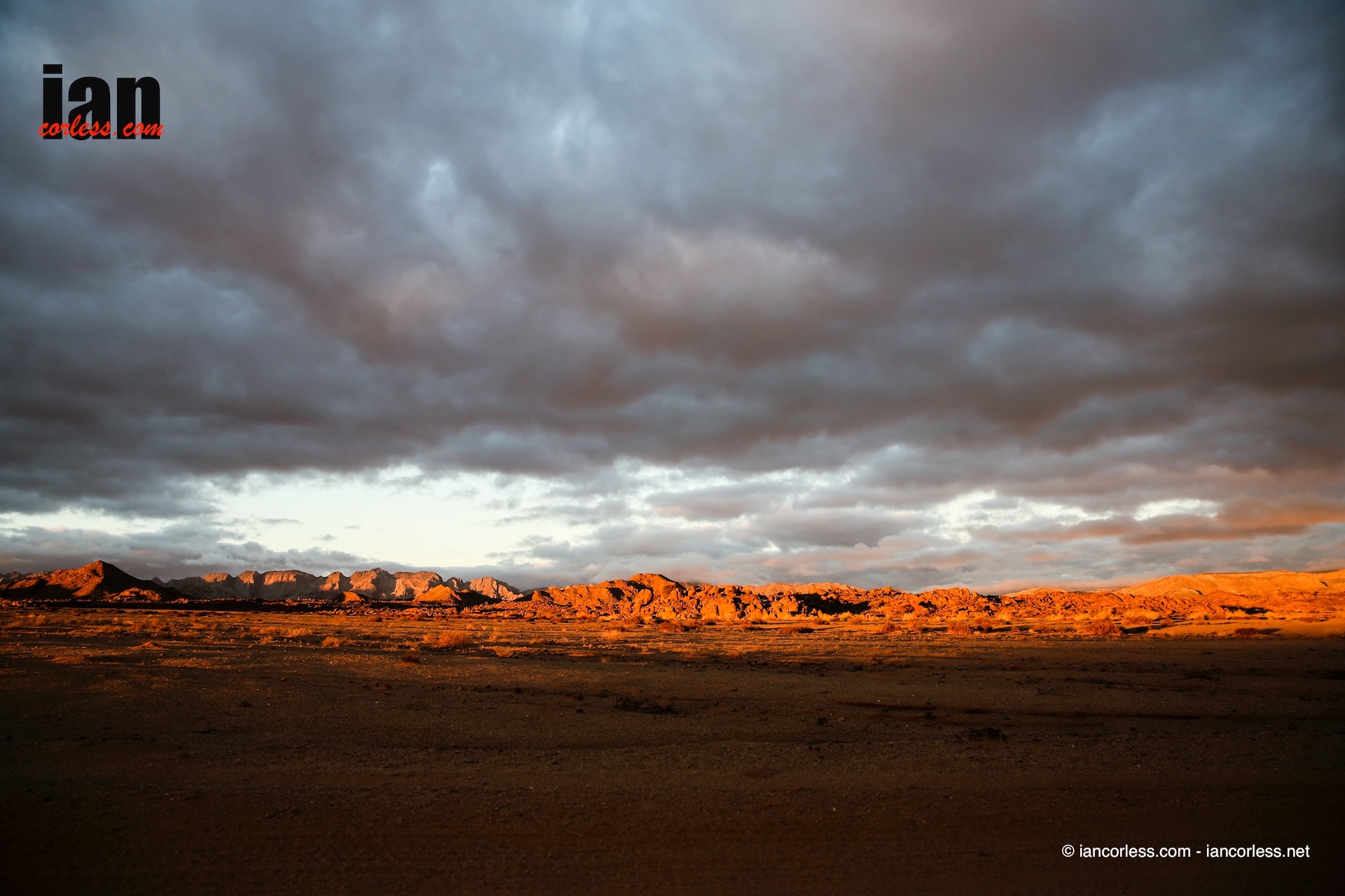
Overlaying the Orange River border line between South Africa and Namibia is a 5,920km2 arid mountain desert wilderness unlike any other in the world. This area is a jointly managed conservation initiative called the /Ai /Ais- Richtersveld Transfrontier Park, that incorporates the Richtersveld National Park in South Africa and the Fish River Canyon National Park in Namibia.
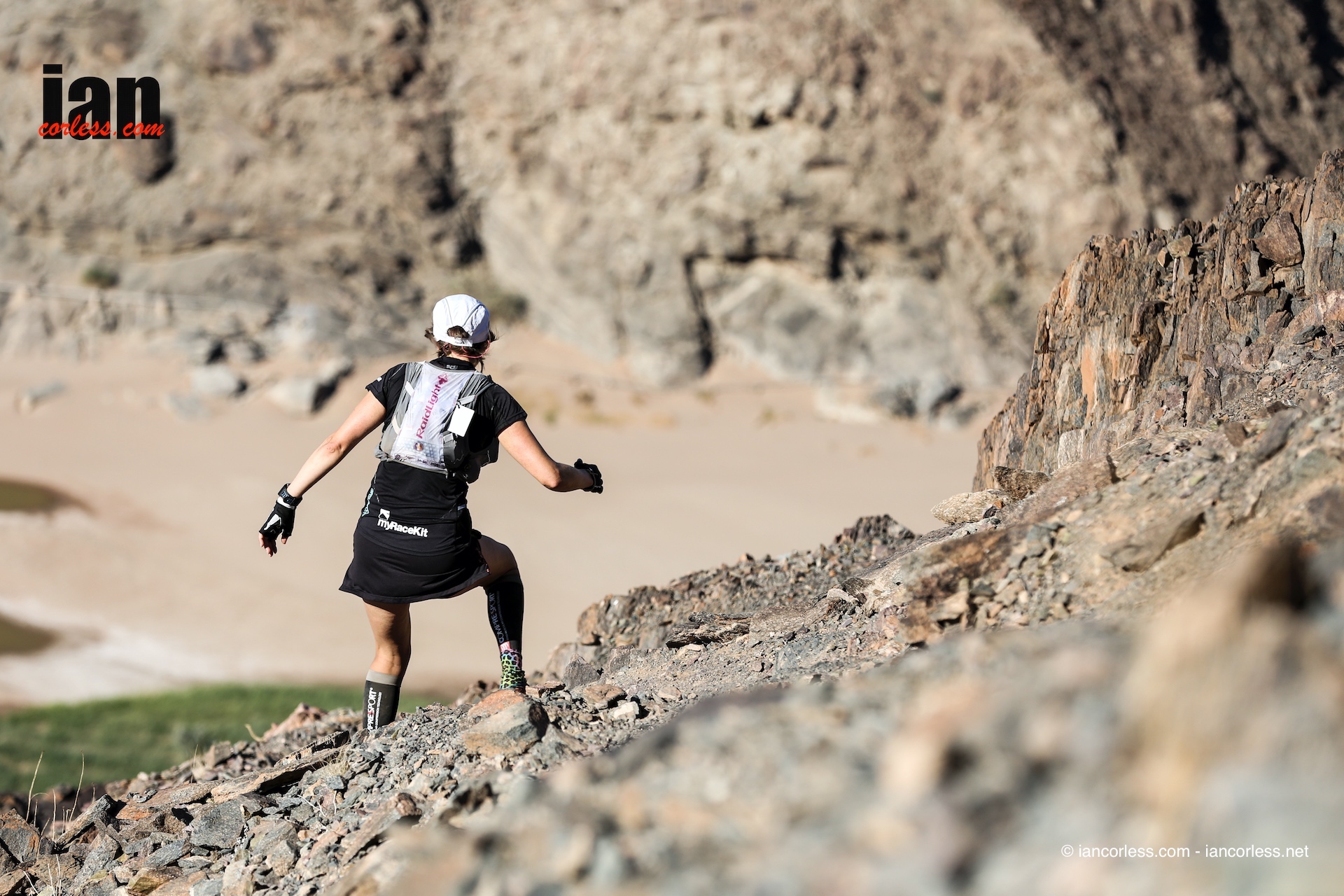
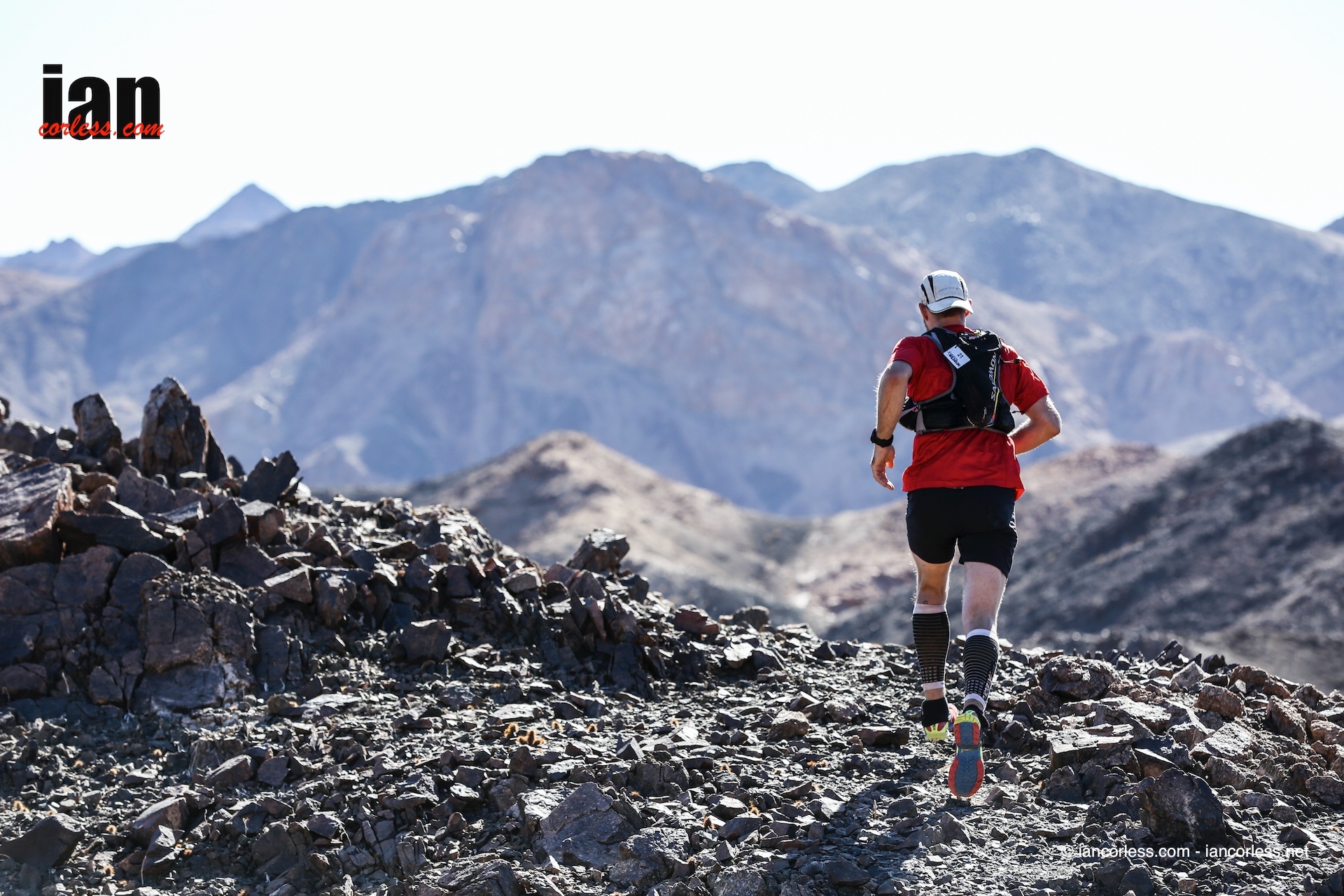
What this area contains is an ancient geological and natural landscape that is quite simply unparalleled on Earth. Not only is this is the oldest mountain desert in the world, it’s the richest one – holding more than a third of the worlds known succulent species. In fact, it’s second only to the Cape Floral Kingdom in terms of botanical diversity.
Throw in the largest canyon in Africa and some uniquely desert-adapted African wildlife and you have yourself a wilderness running experience that is quite simply unmatched.
The Race in Summary:
Day 1:
This 42km day takes us over the crystal fields, past the ‘Vyf Susters’ and up ‘Helskloof’ pass, to break through the ‘Numeesberge’ and into the heart of the Richtersveld and our overnight camp at De Koei.
Day 2:
This 33kms day takes us into the magnificent valley between the Tswayisberg and Vandersterrberg mountain ranges to a seldom visited ‘Armmanshoek’ (Poor-mans- corner). We overnight at Hakkiesdoring.
Day 3:
One of the most iconic days on the Namibia Crossing – this 39km day takes us across
the Springbok Vlakte, over the Tatasberg mountain and down to the Orange River.
Relaxing and washing off in the Orange River at De Hoop camp rounds out a thoroughly rewarding day.
Day 4:
The Namibia Crossing – A short boat trip across the Orange will drop you on Namibian soil and to the start of the longest day, at 50kms. This is a tough day but as your reward, you can relax in the hot hot springs right in the riverbed, where you will be staying the night. The final briefing will precede dinner in this open-air, canyon camp.
Day 5:
The final 25km takes on a final few bends of the Fish River, before we duck out, up Zebra valley, and follow game trails through the rolling foothills. There is a sting in the tail, but the view is worth it! A short elevator drop gets us to the finish at the Hot Springs Resort.
This is a fully supported running experience in a remote wilderness area which includes six nights fully-catered, individual tented accommodation, luxury bus transport from Cape Town to the reception venue and return, exquisite camp cuisine and a fully-stocked, remote camp setup. This also includes all entrance and permit fees, transport of personal items during the event and logistical & medical support throughout.
Embrace the journey of a lifetime!
South African entries and info:
Tamaryn Middleton – tamaryn@wildrunner.co.za or +27 21 789 0318. Otherwise try her mobile phone: +27 72 373 5081.
UK and European entries use the contact form below.
“South African trail running pioneer Linda Doke and 2015 Marathon des Sables female champion, Elisabet Barnes placed 2nd and 3rd respectively in the ladies’ race. Both ladies summing up their experiences with a similar thought process, “What an incredible privilege it was to spend 5 days running through this magnificent part of the world on the Richtersveld Transfrontier Wildrun®. Sometimes it takes experiencing places like this to remind us how just how fragile and yet so powerful nature is, and how unbelievably insignificant we are in the bigger scheme of things.” – Linda Doke –

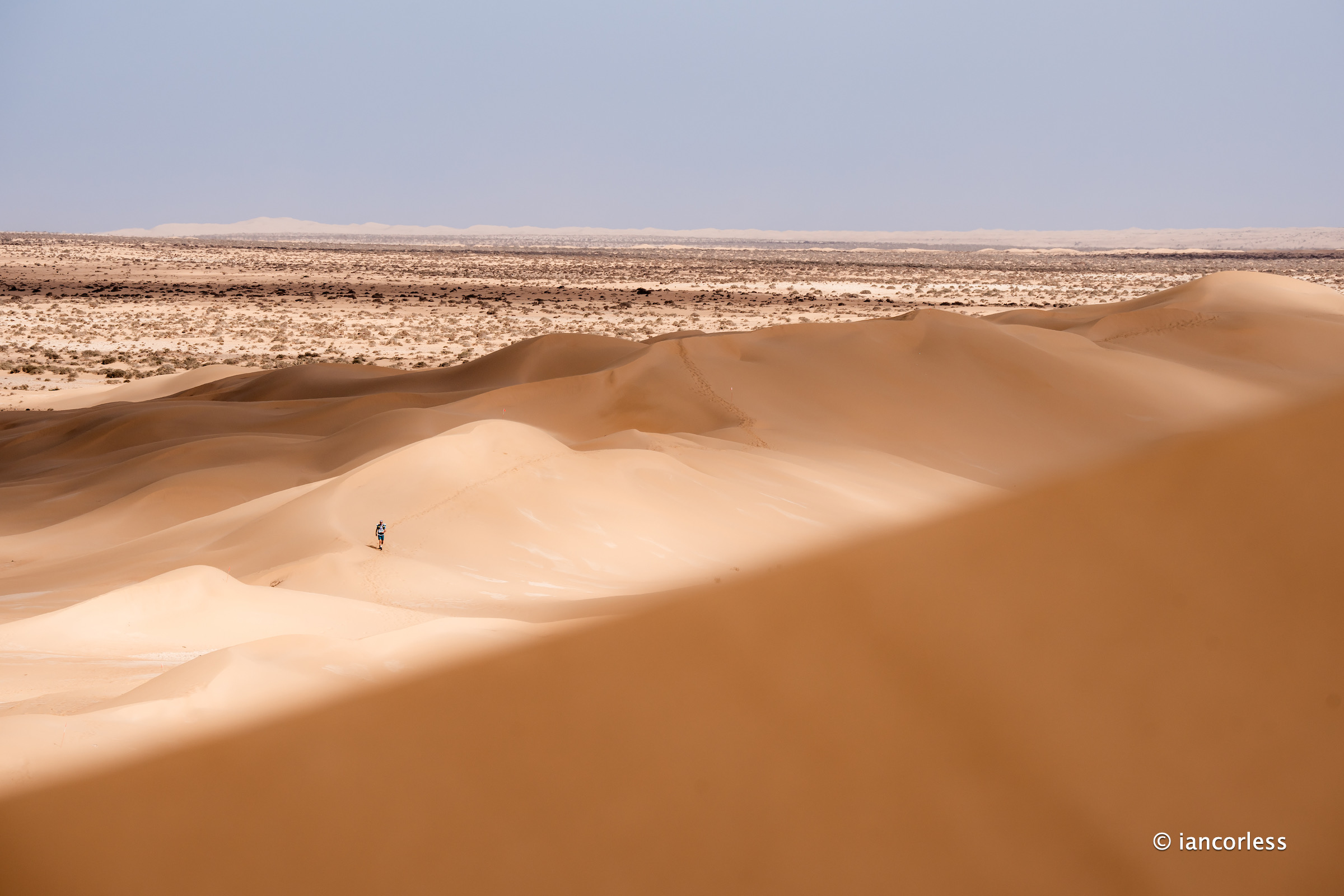
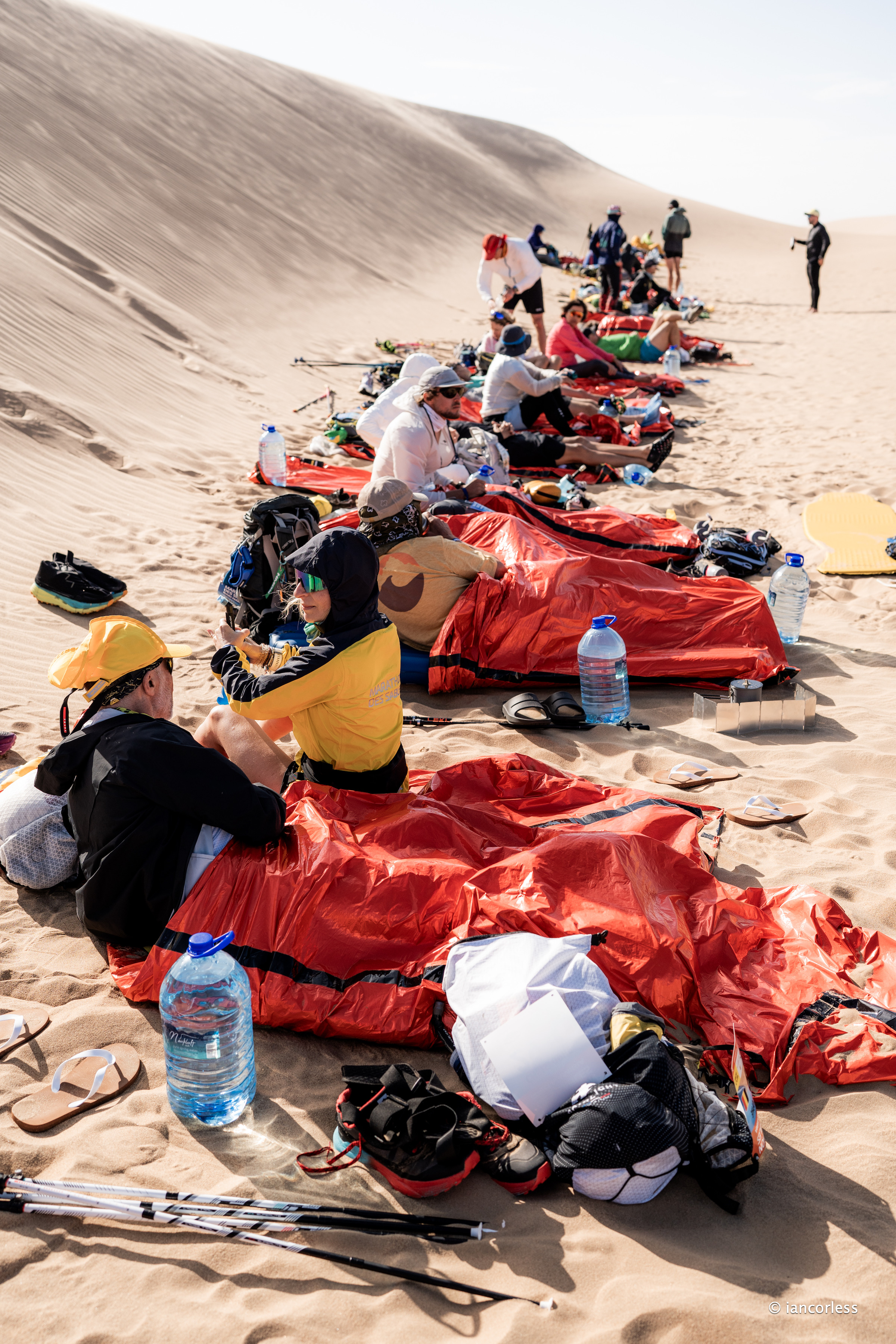
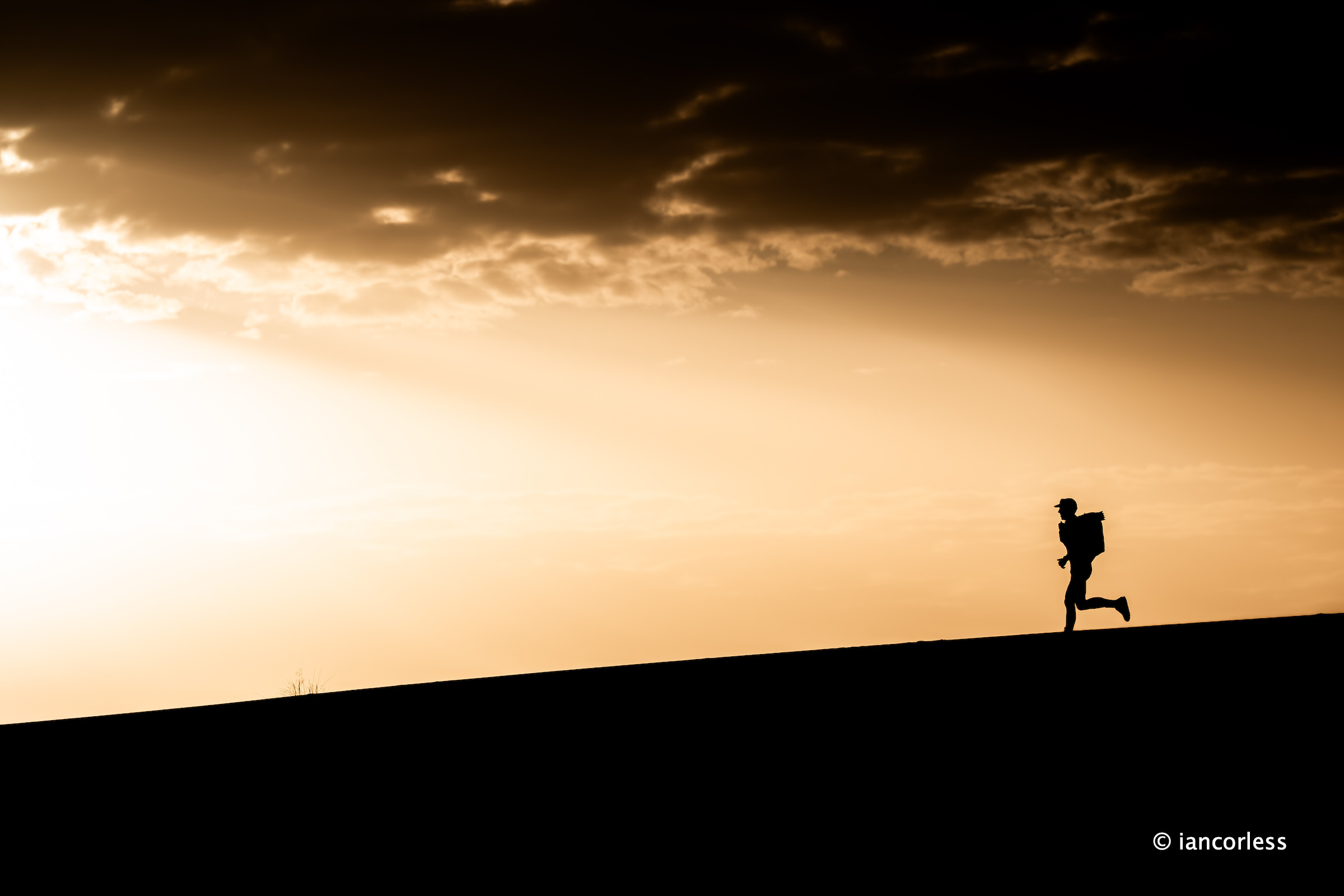
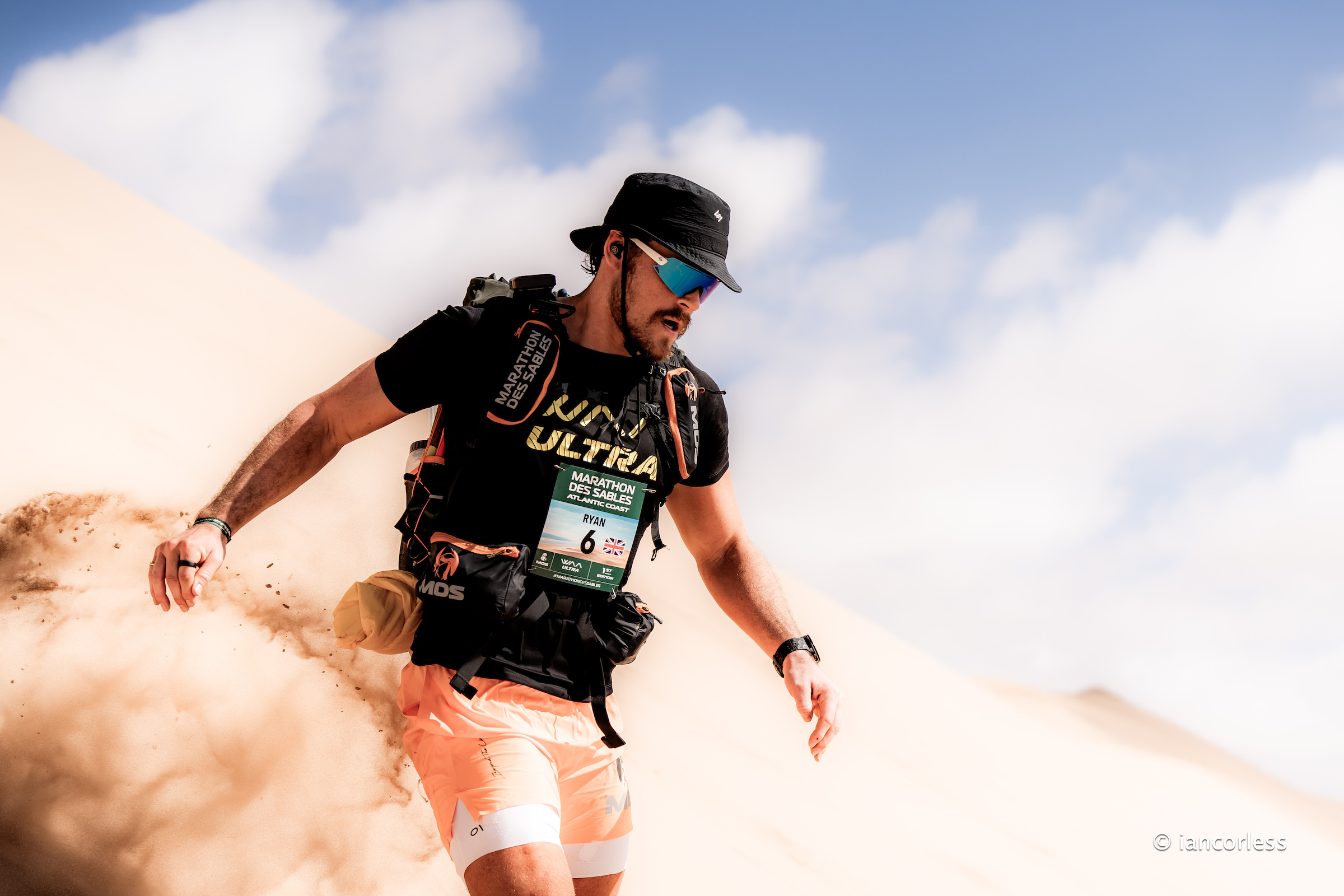
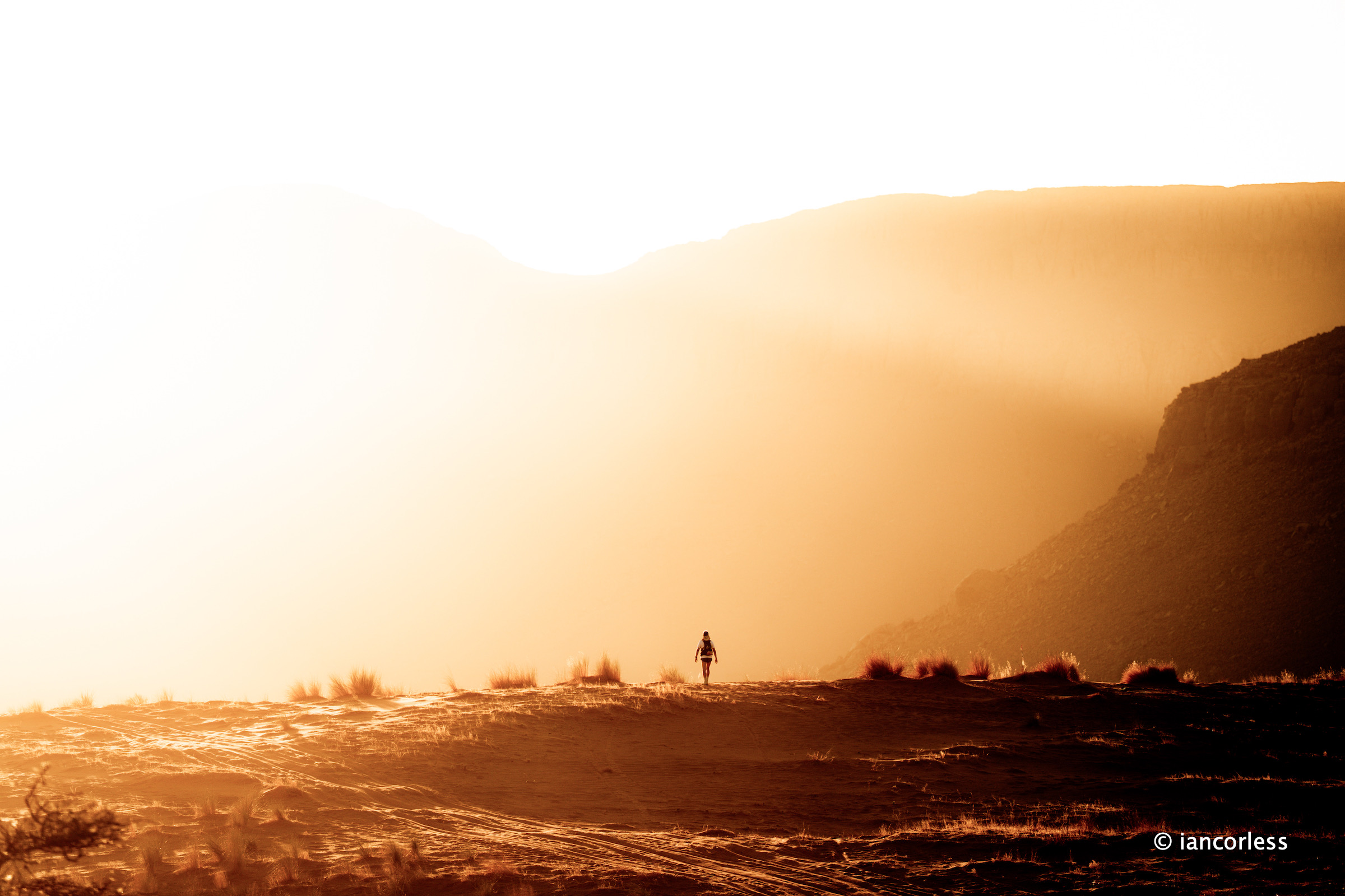
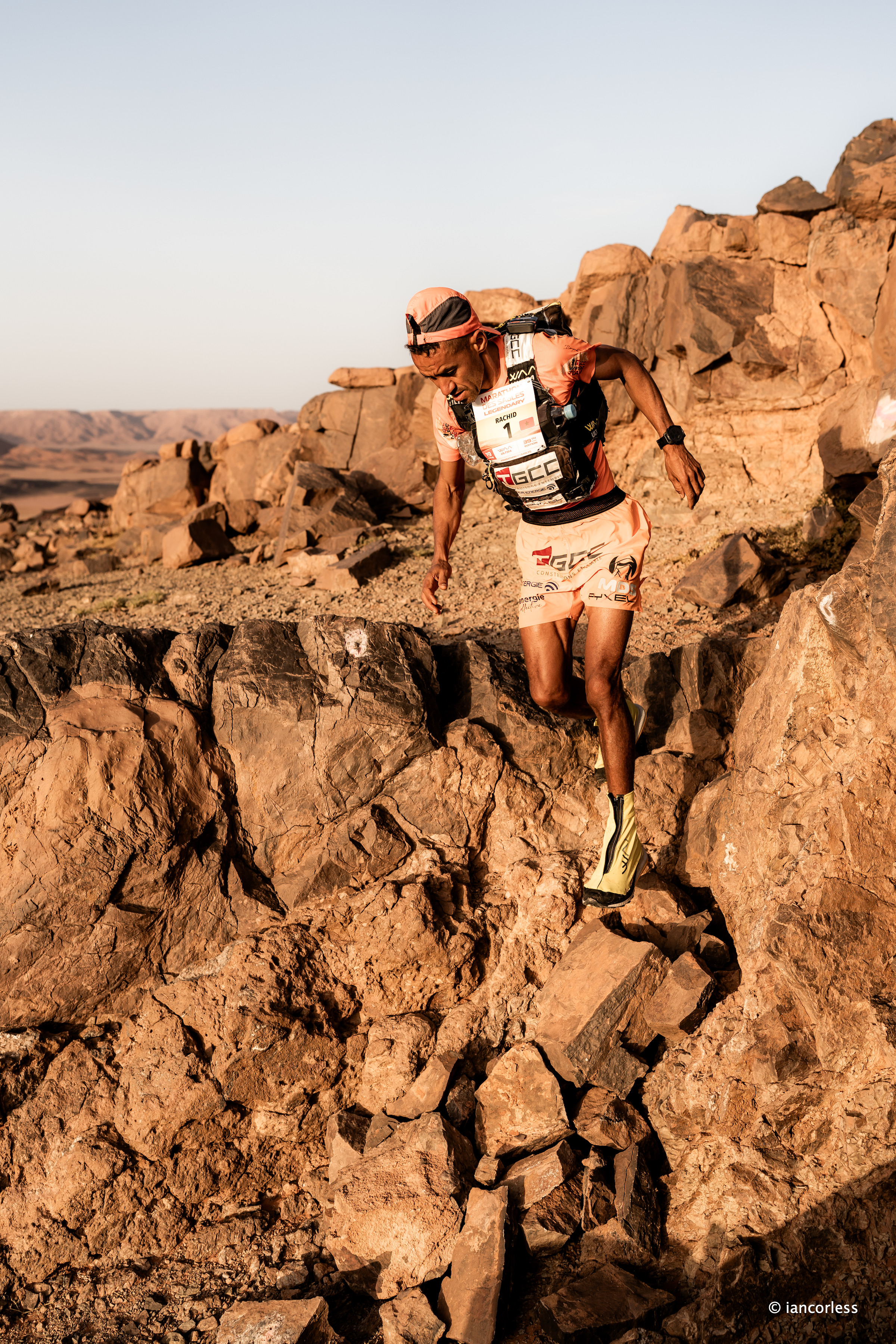
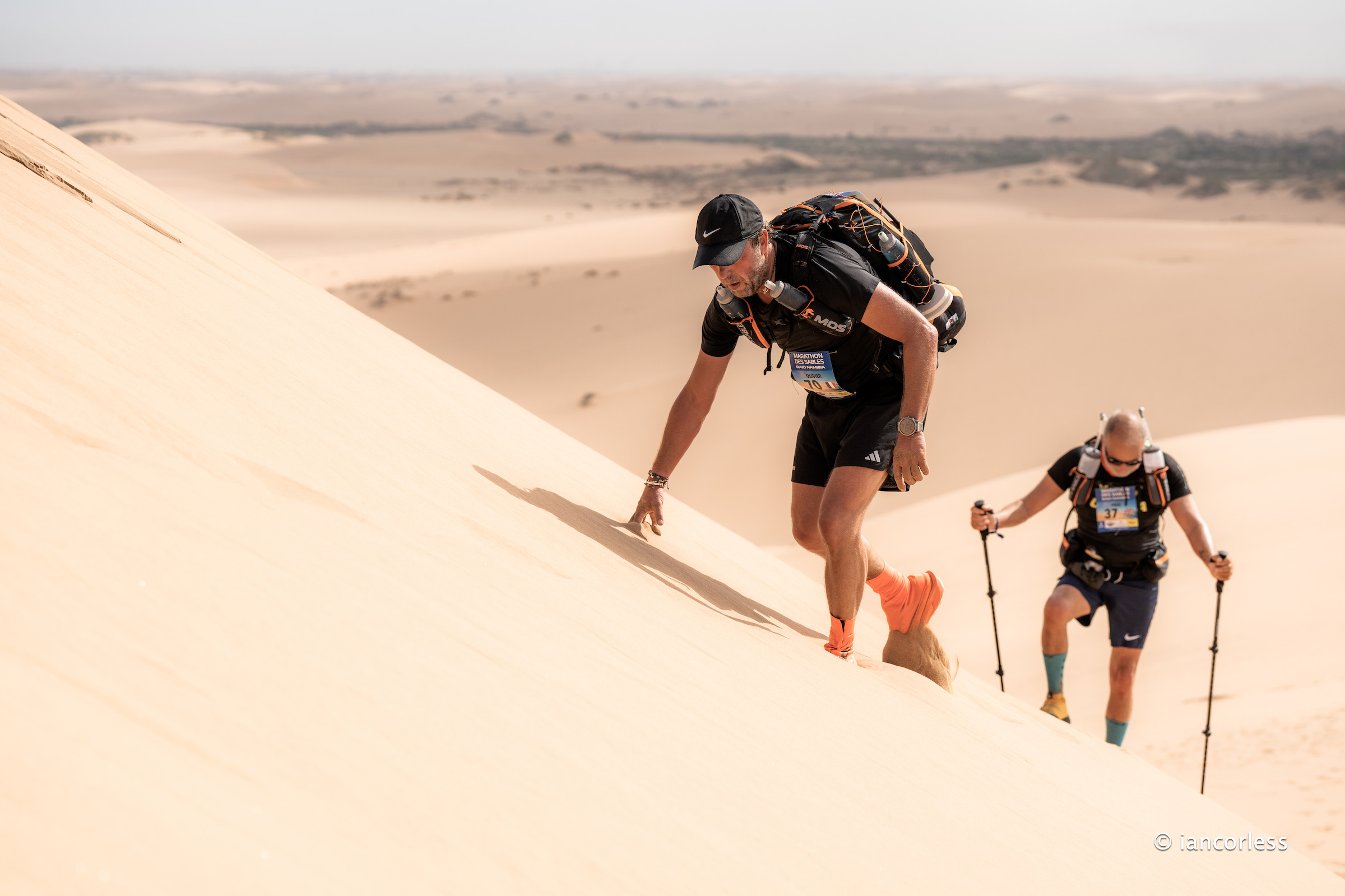
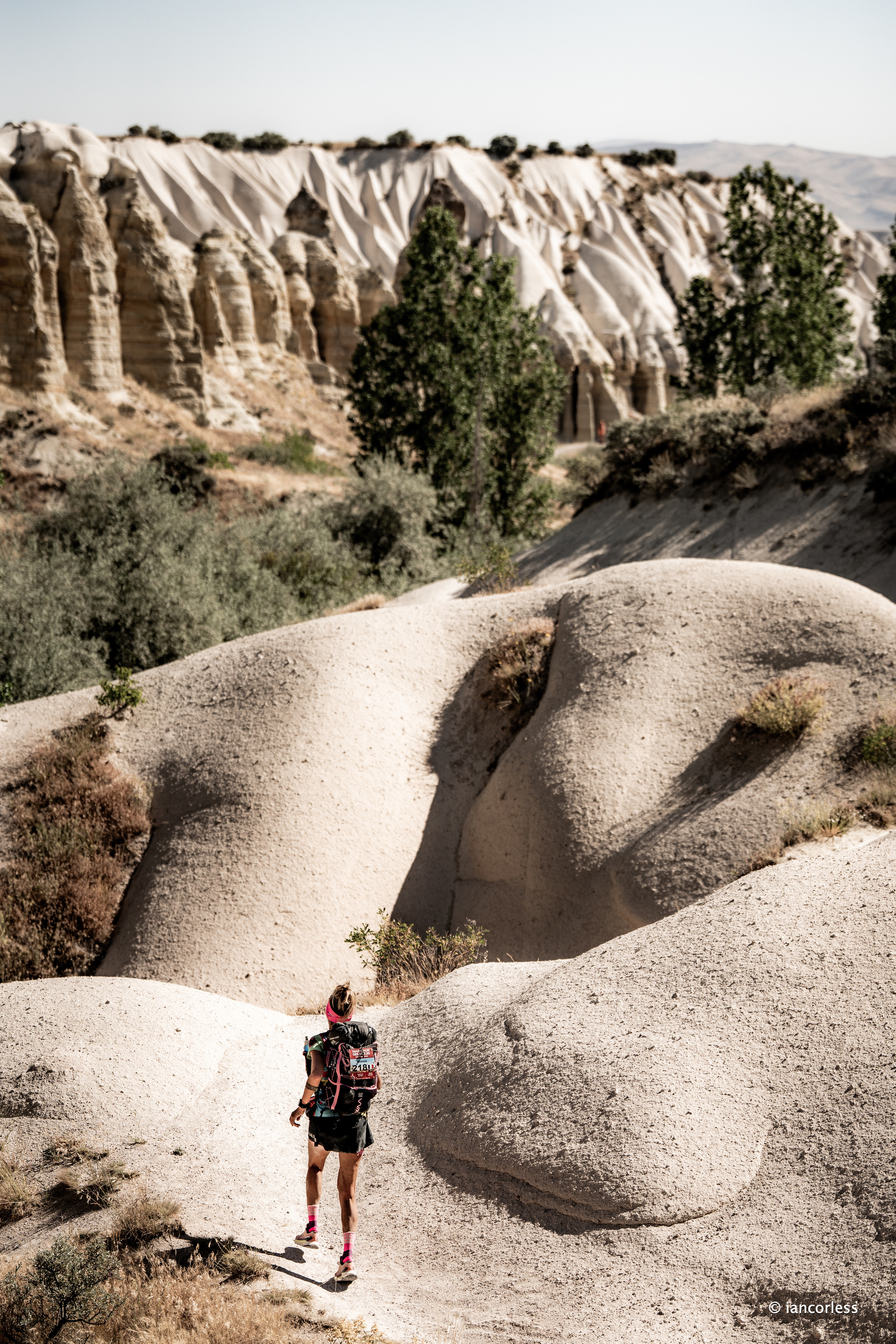




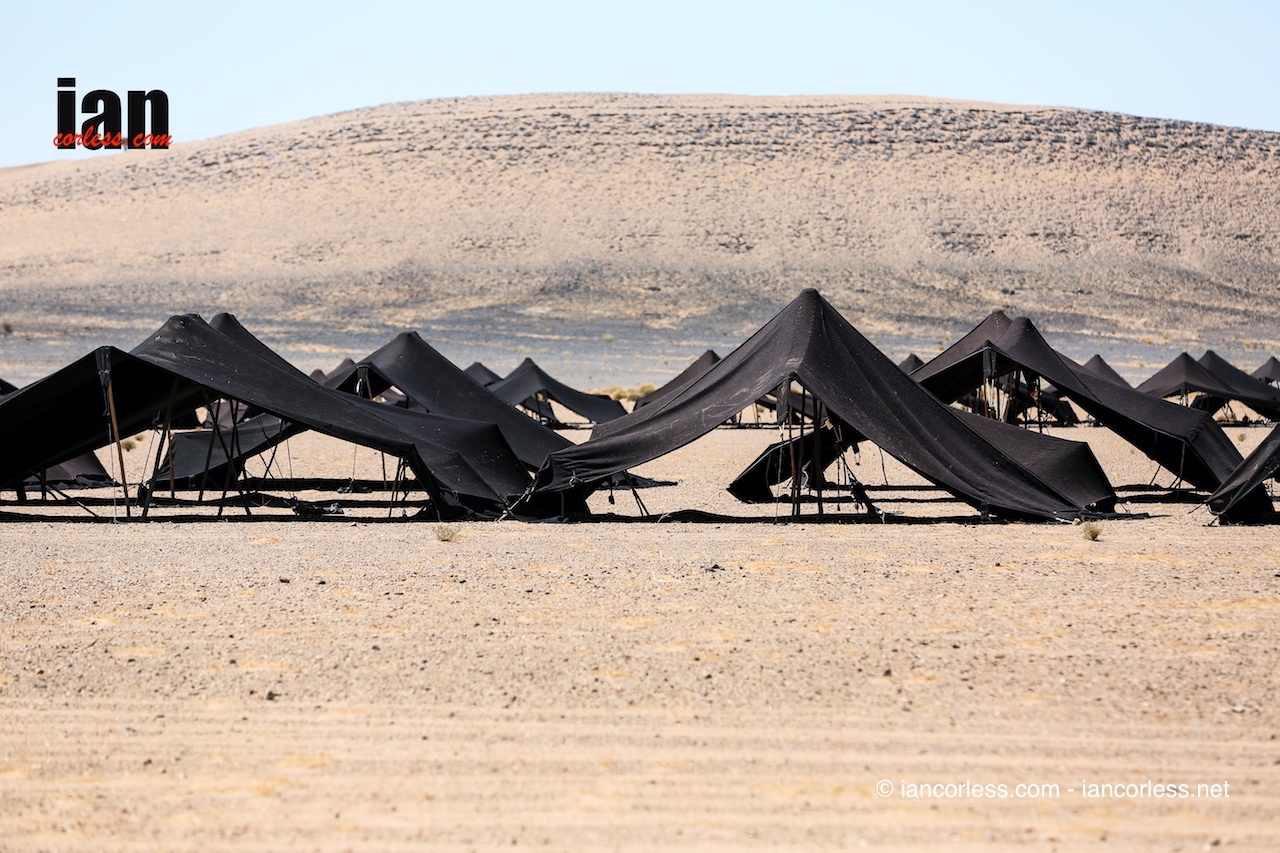
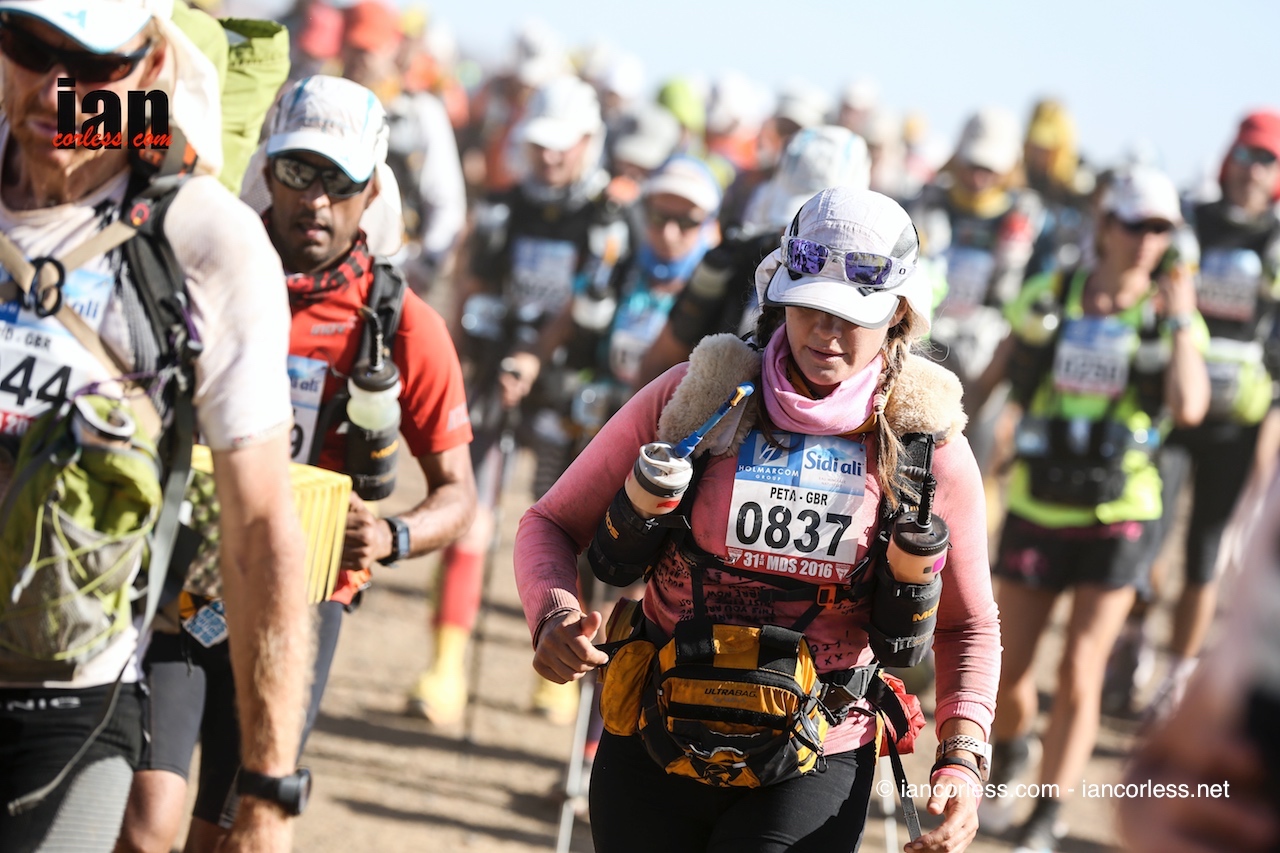

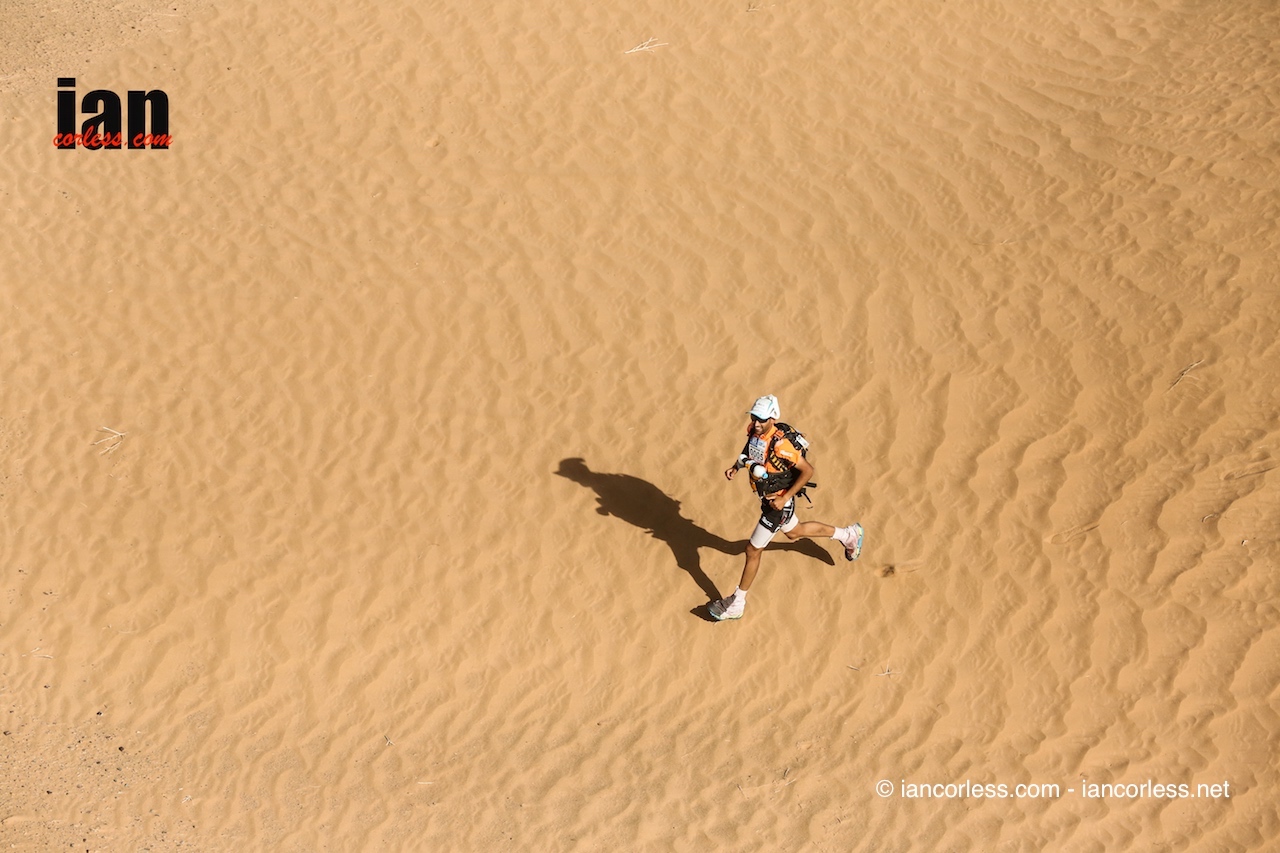
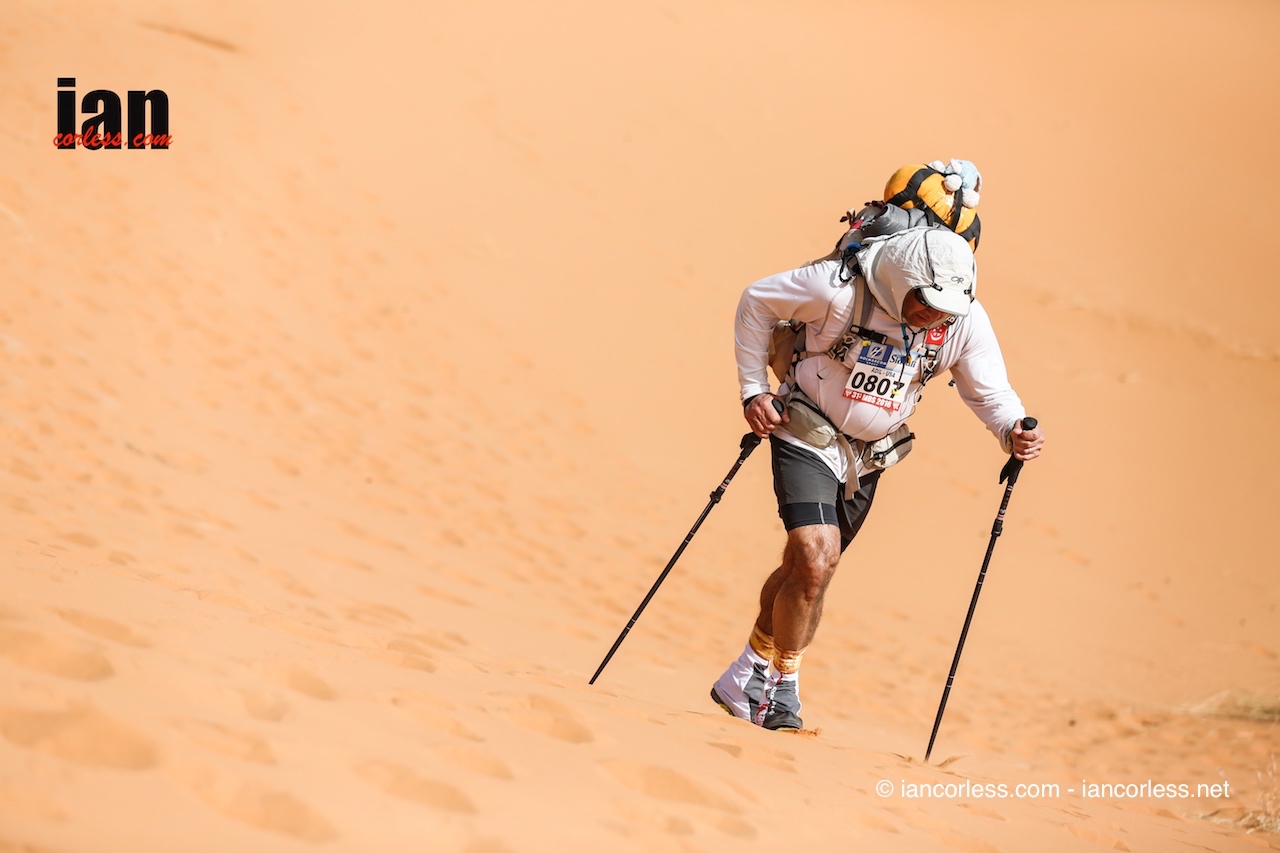









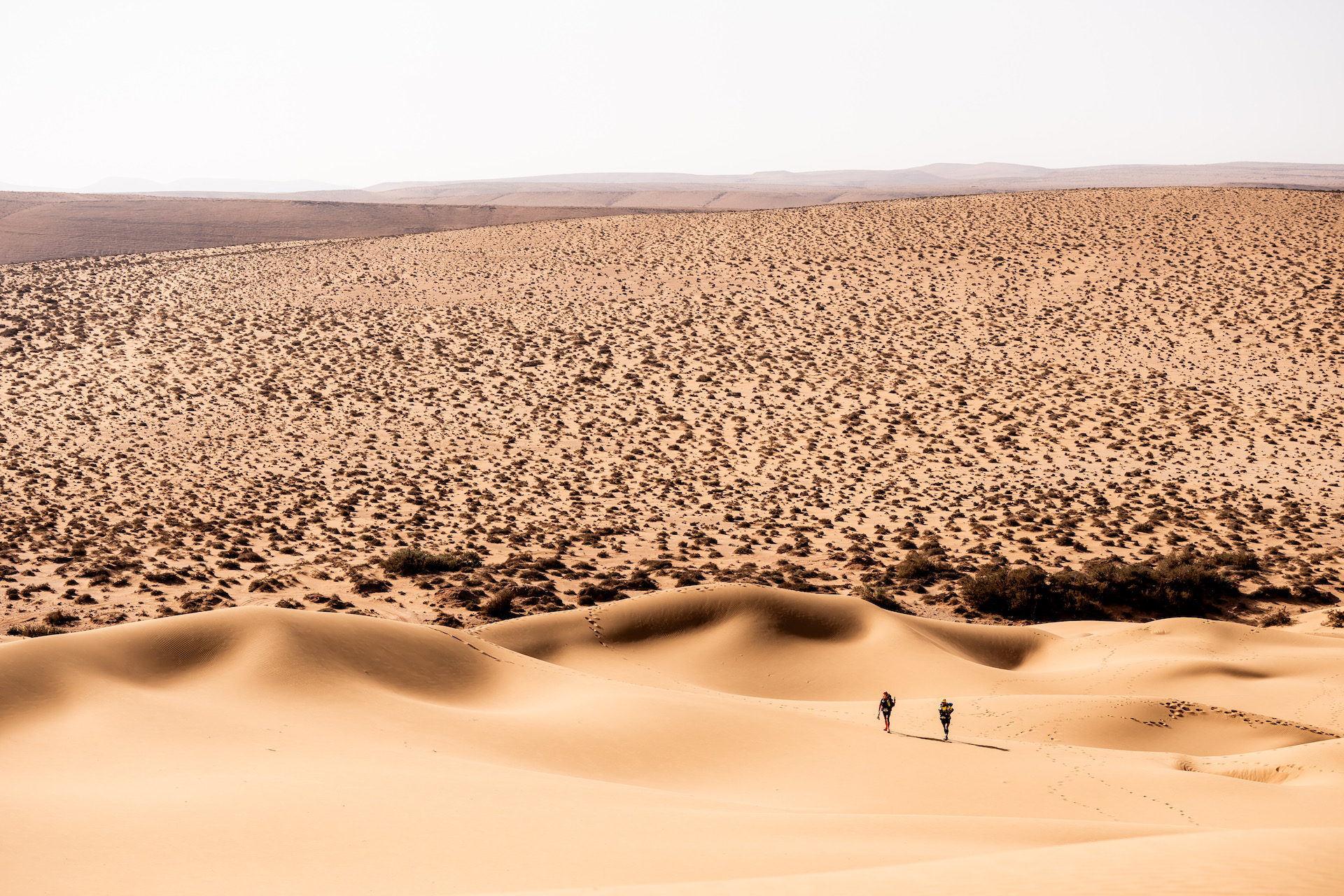

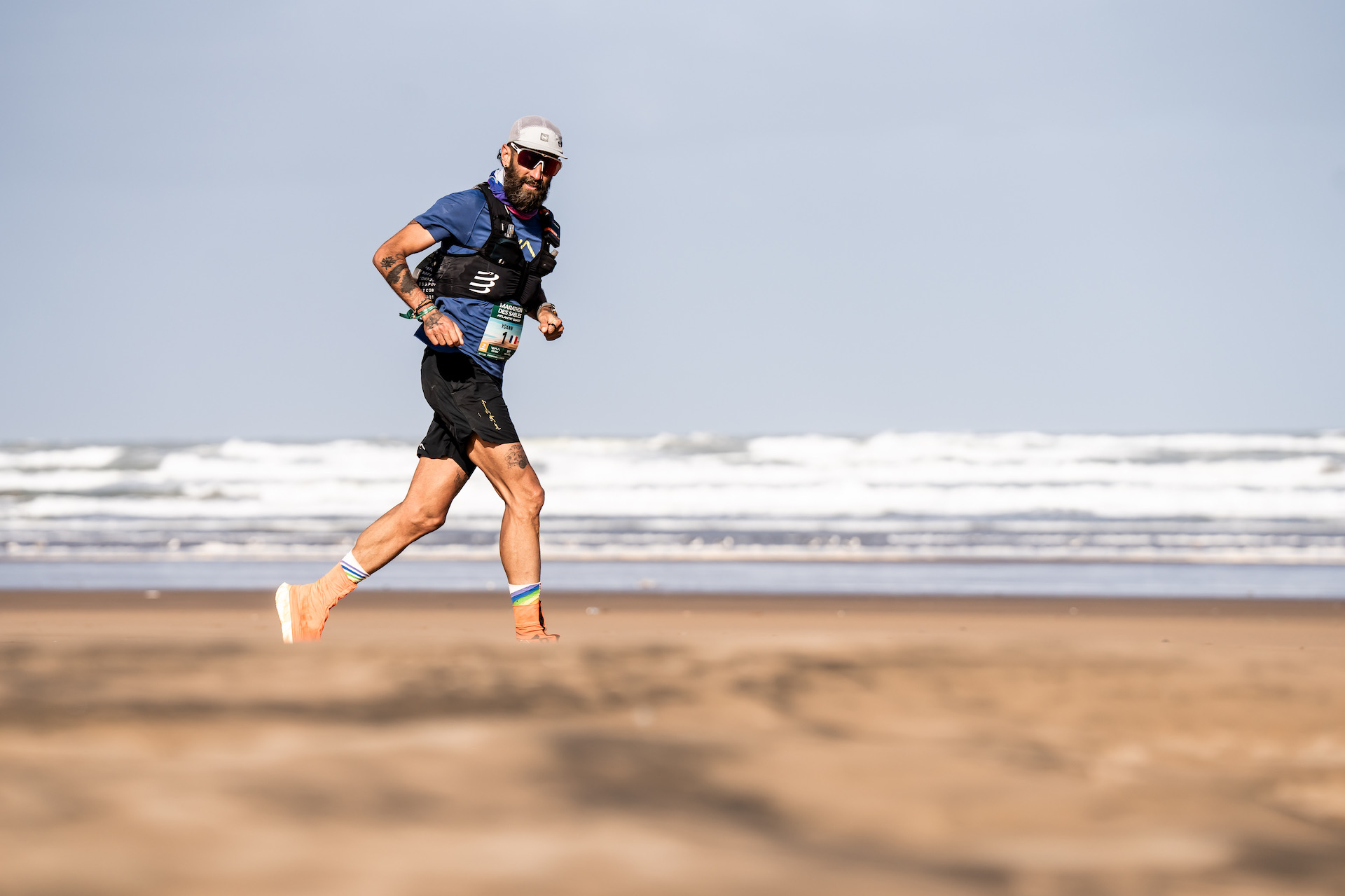
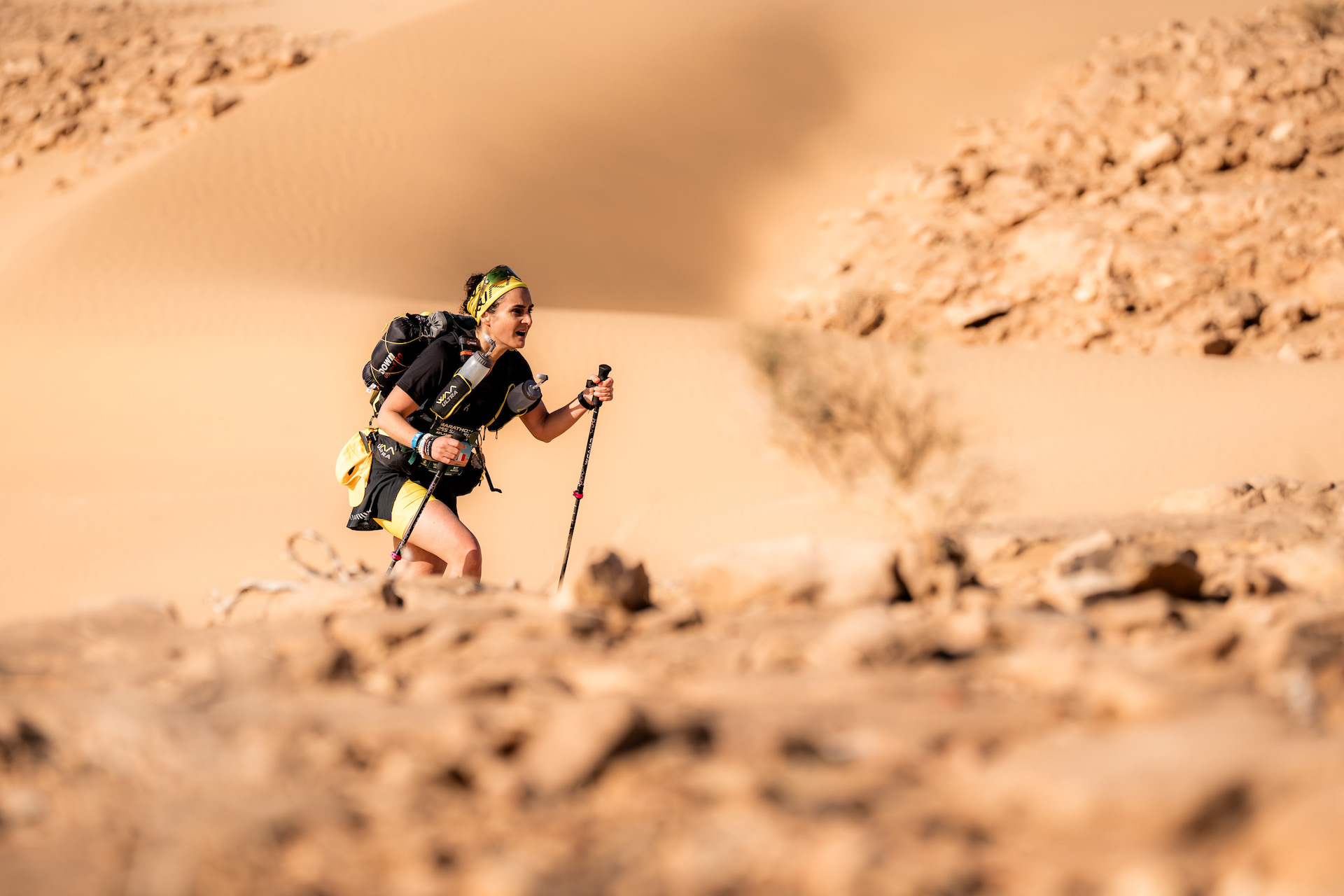
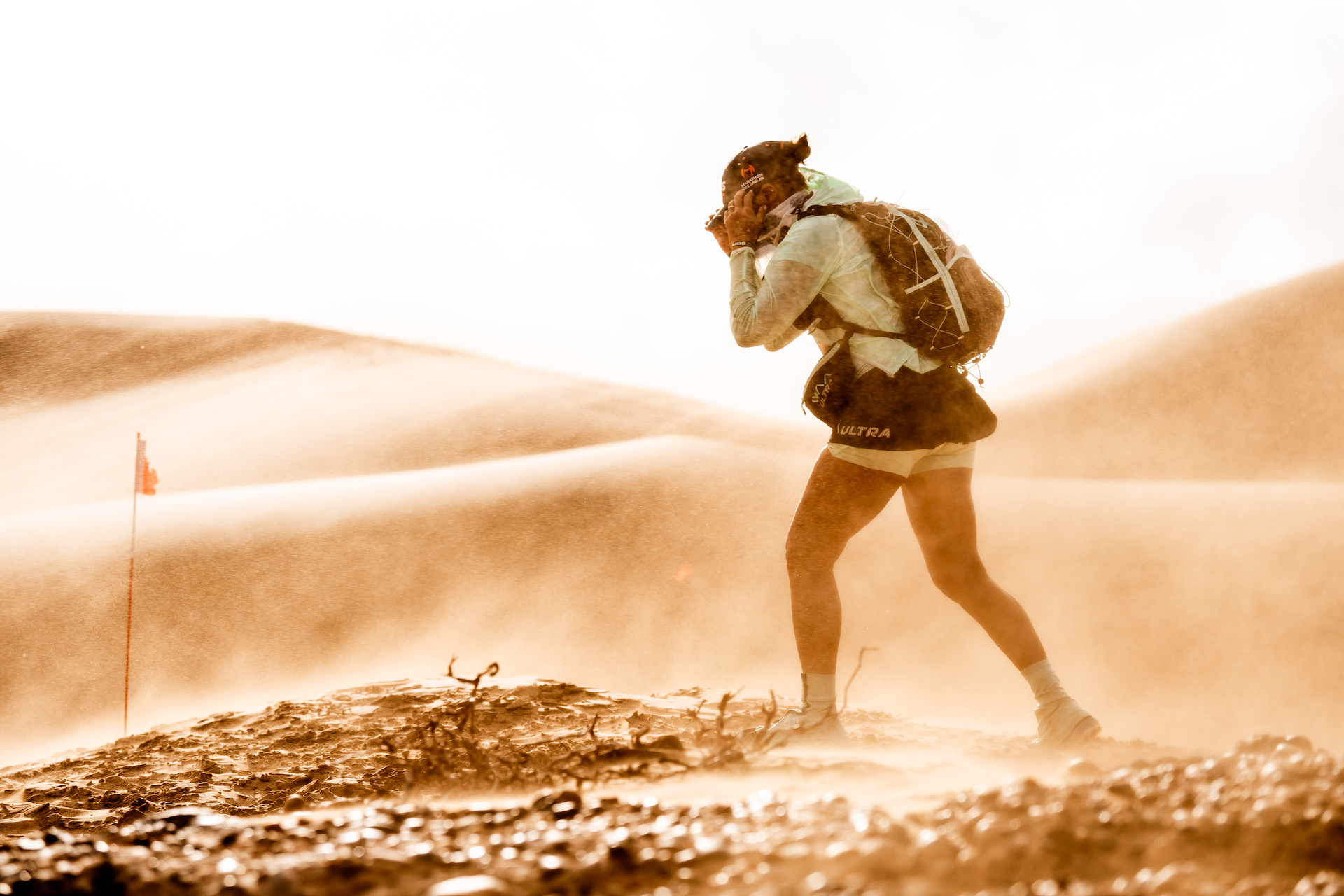


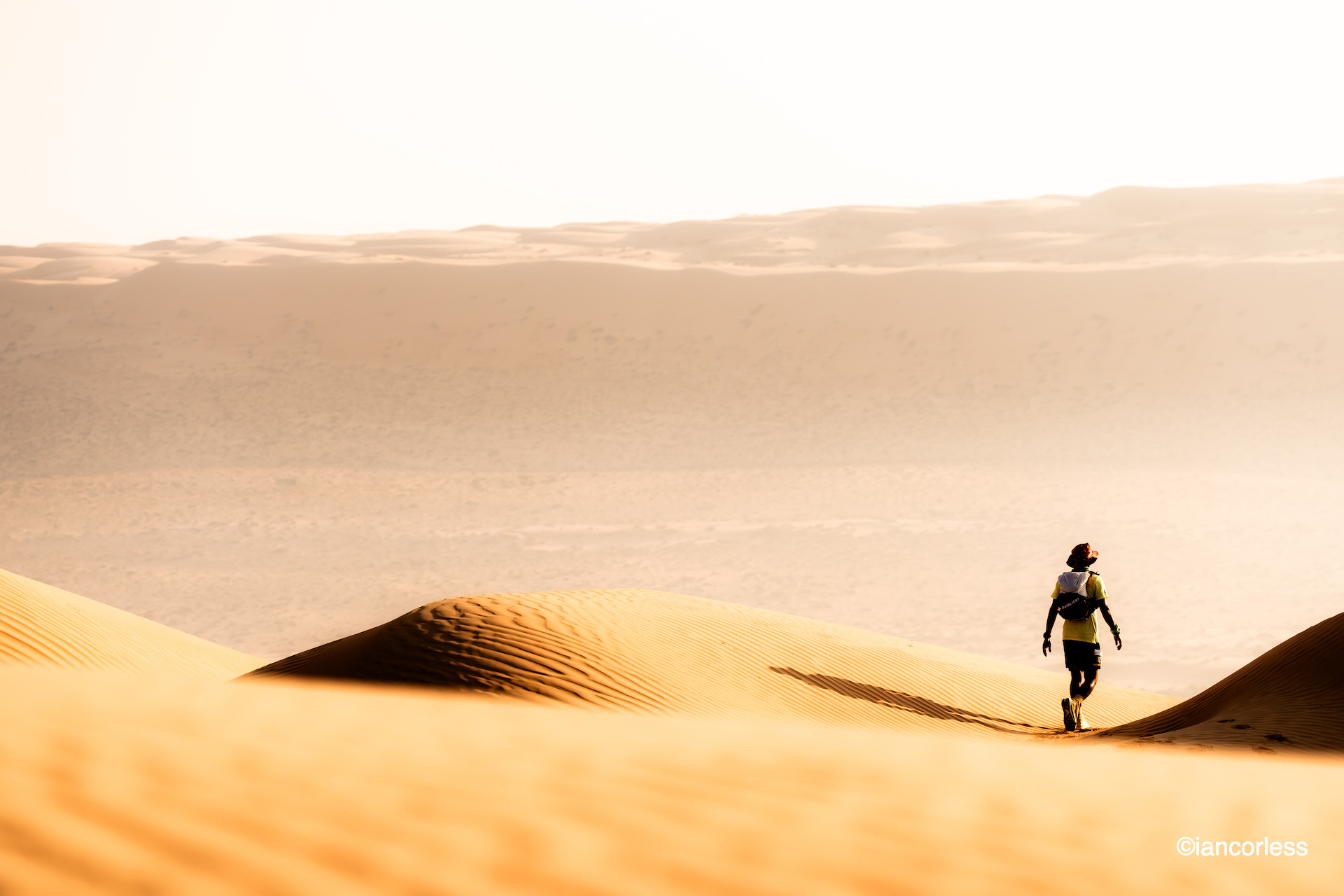
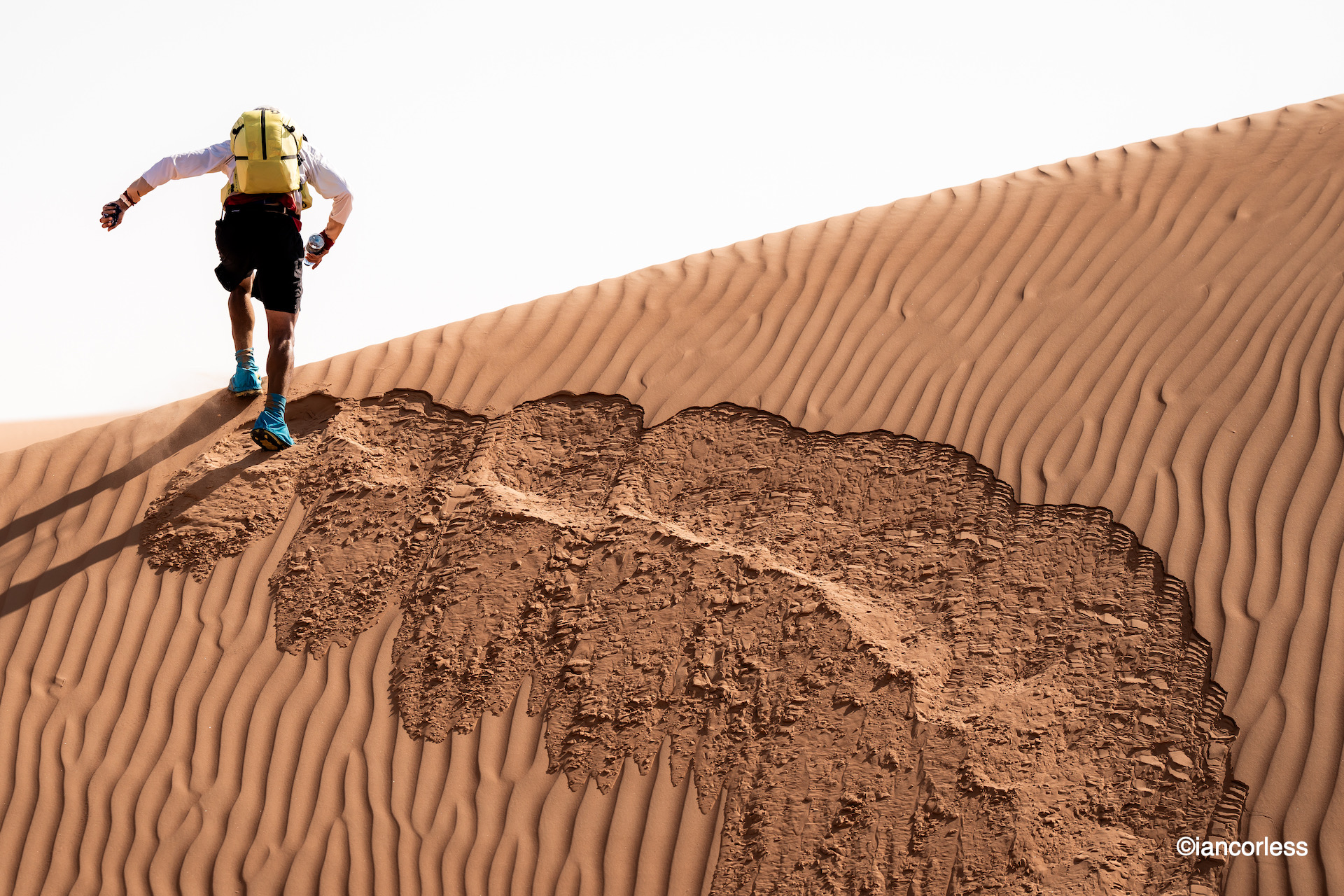
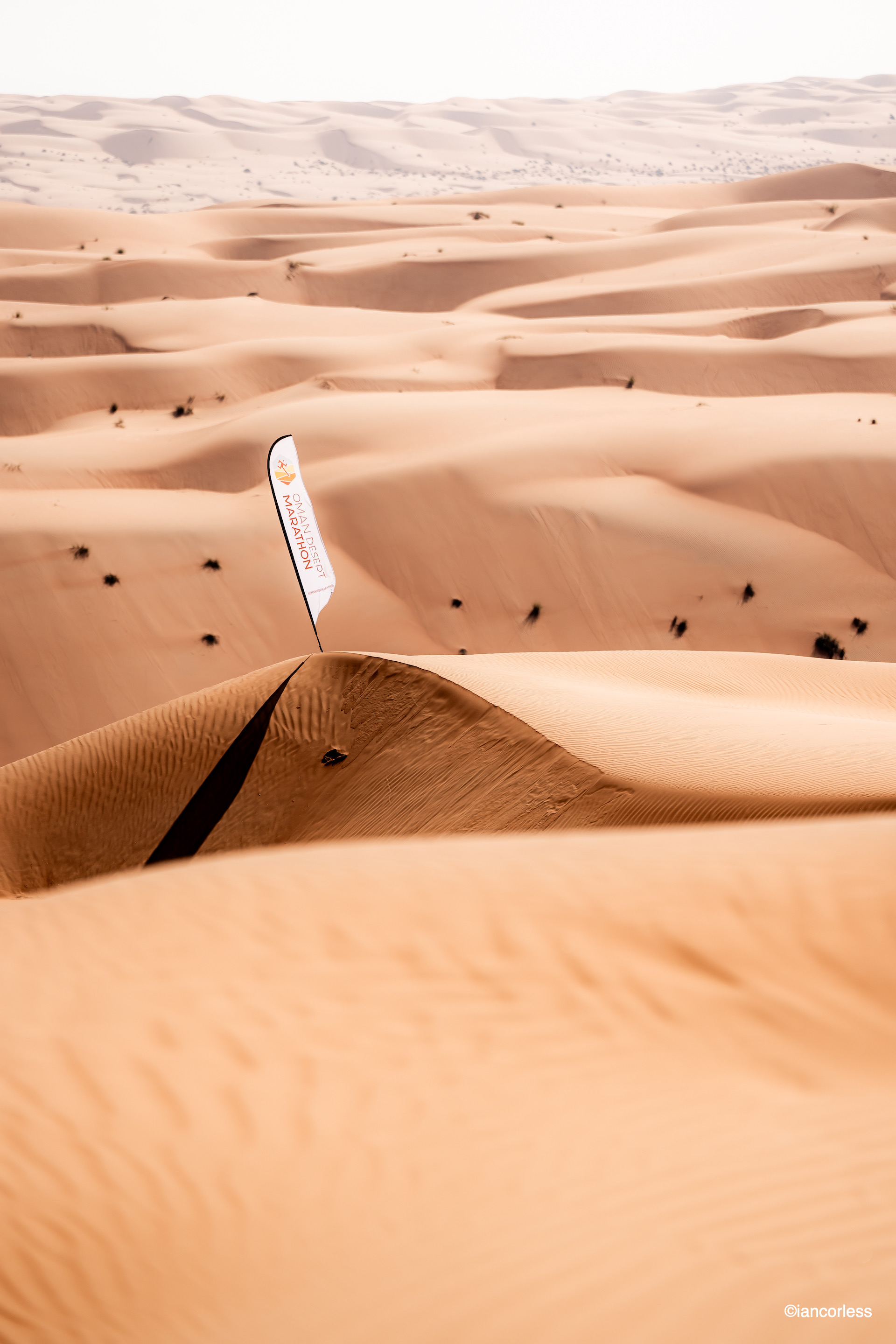
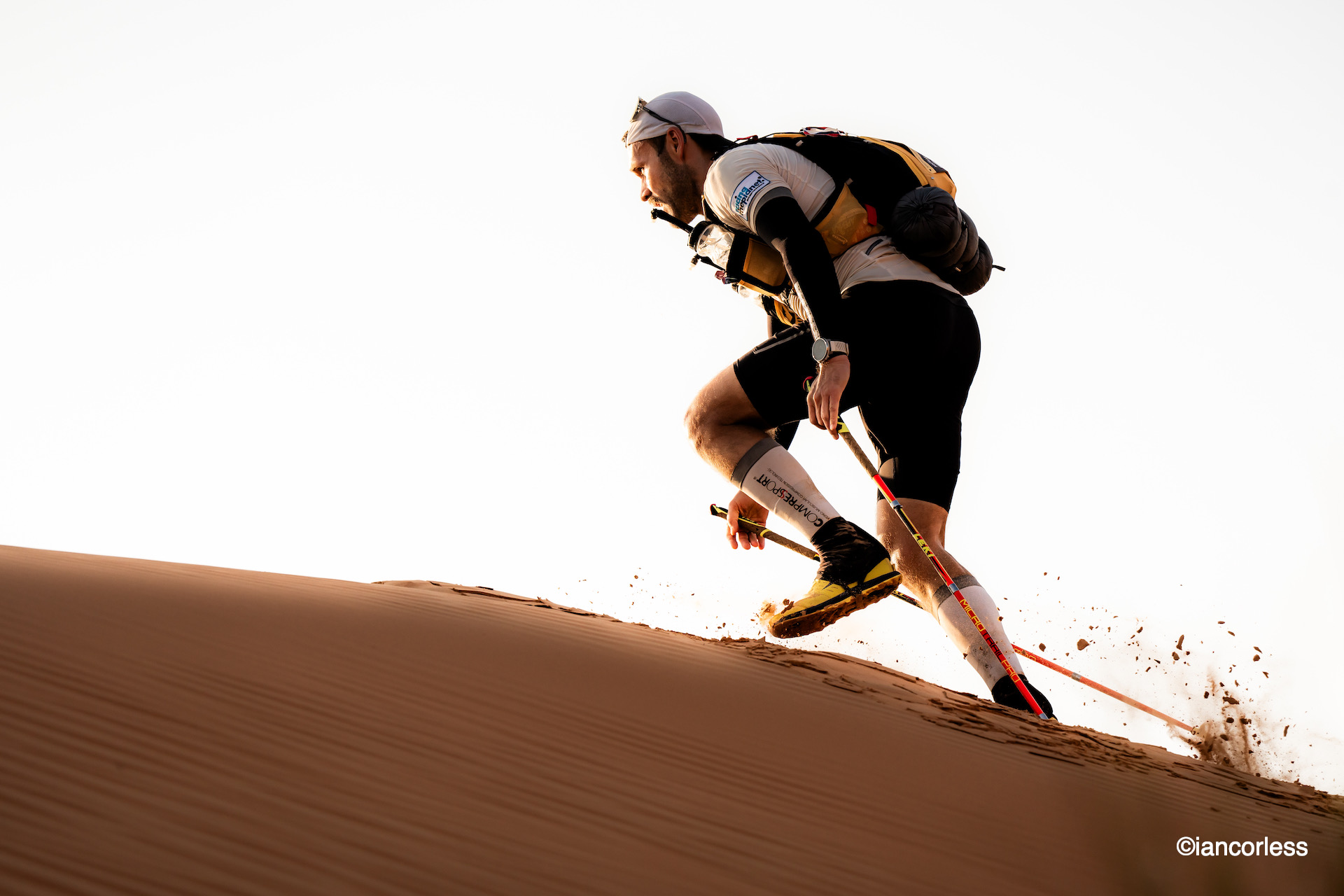
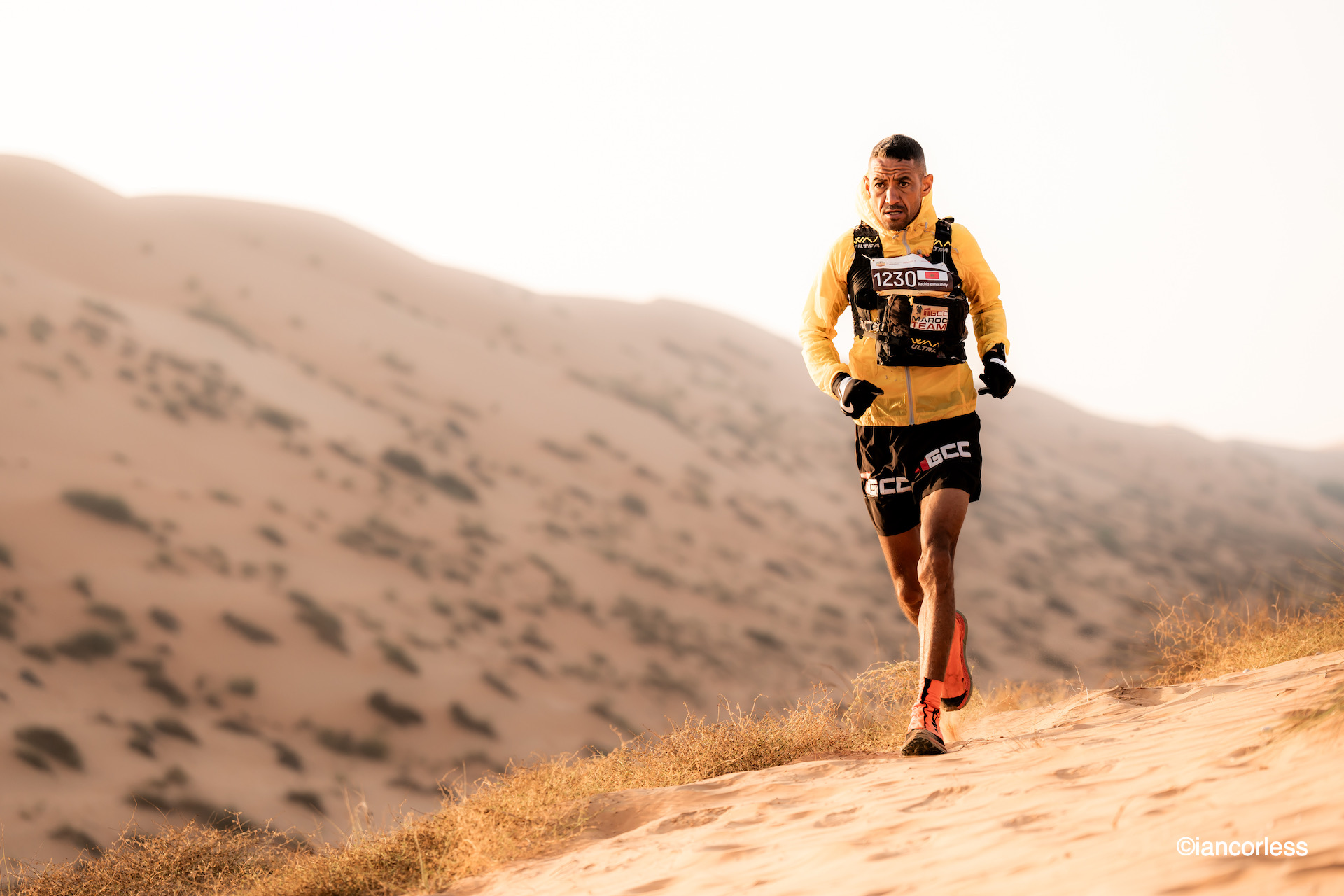
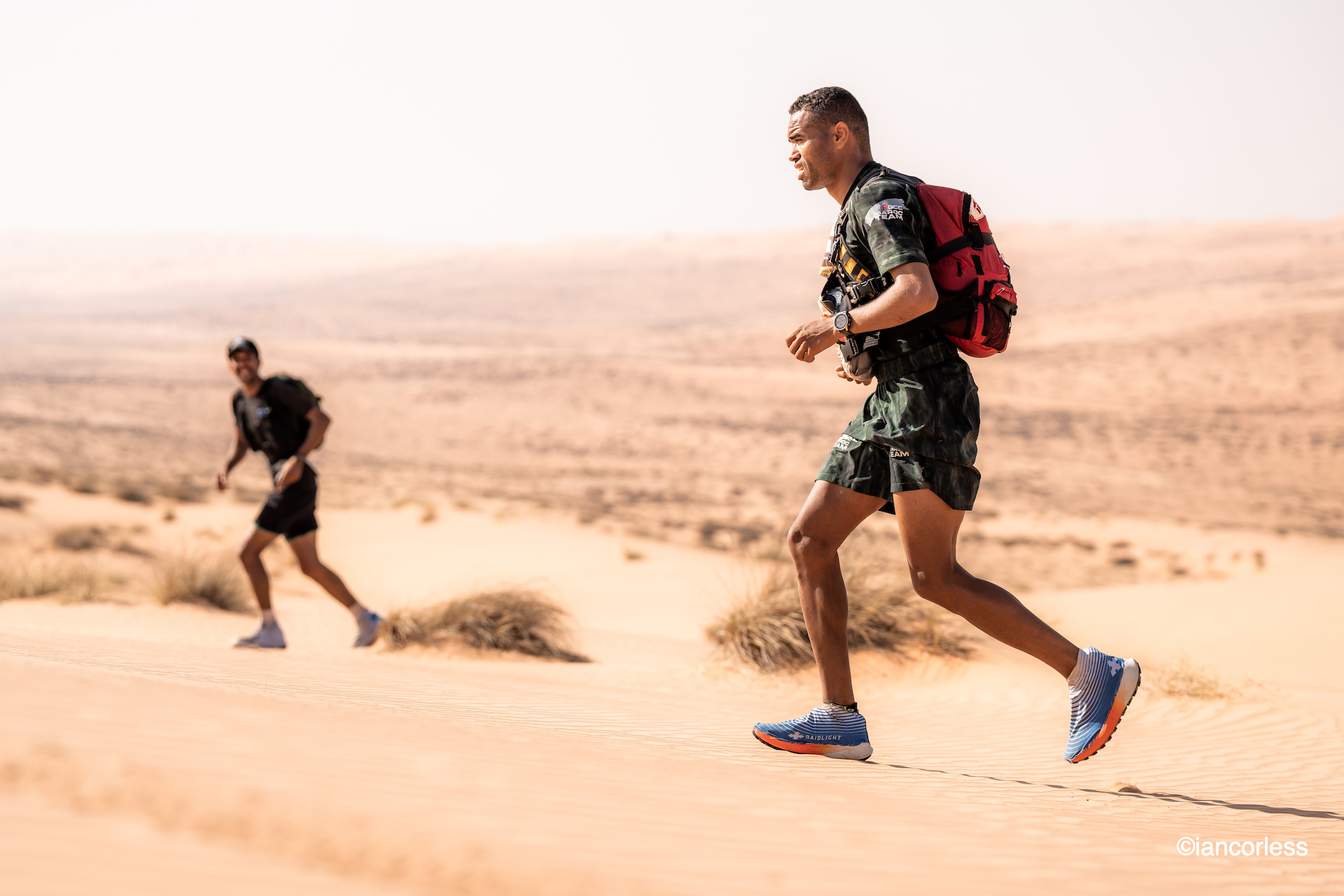
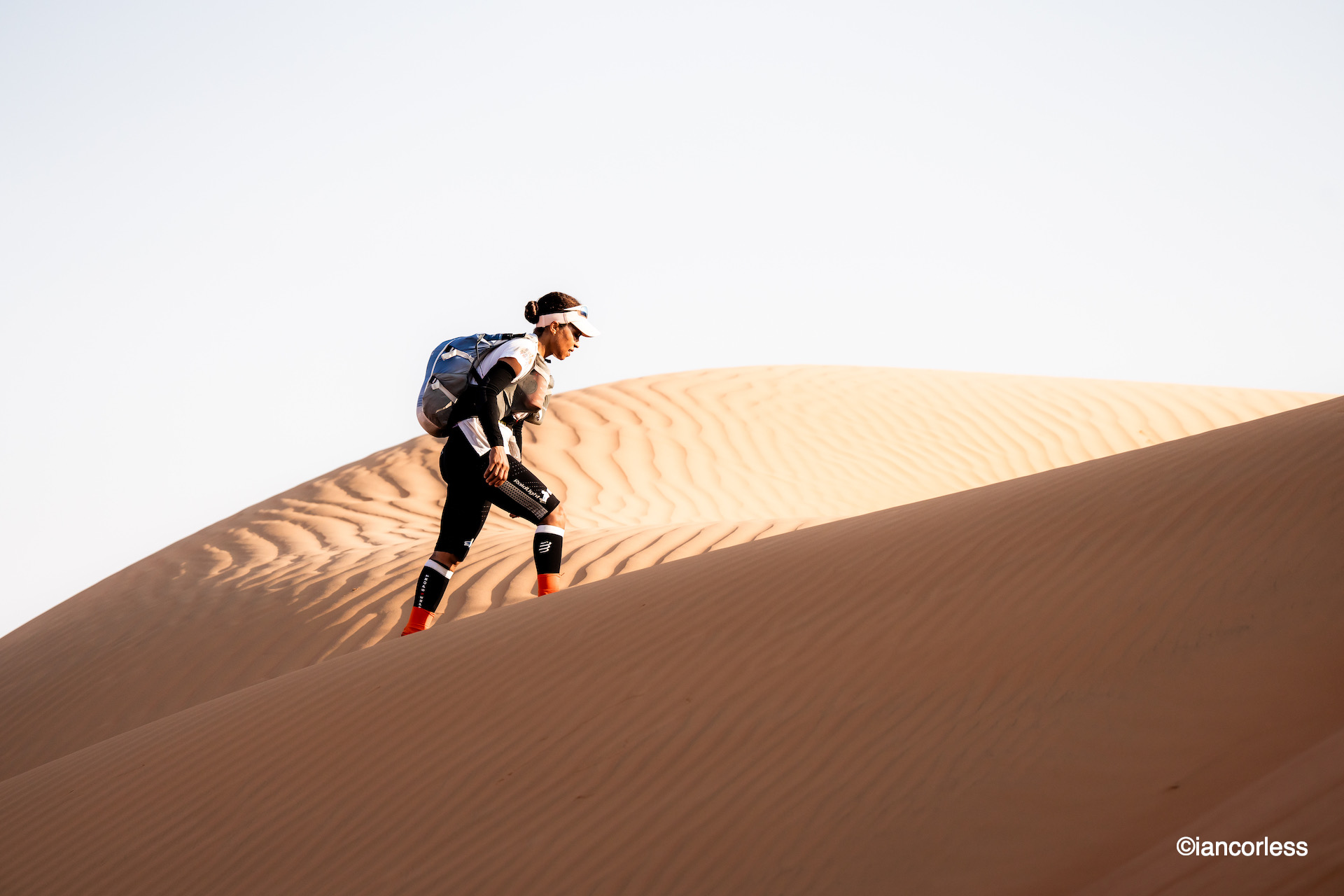
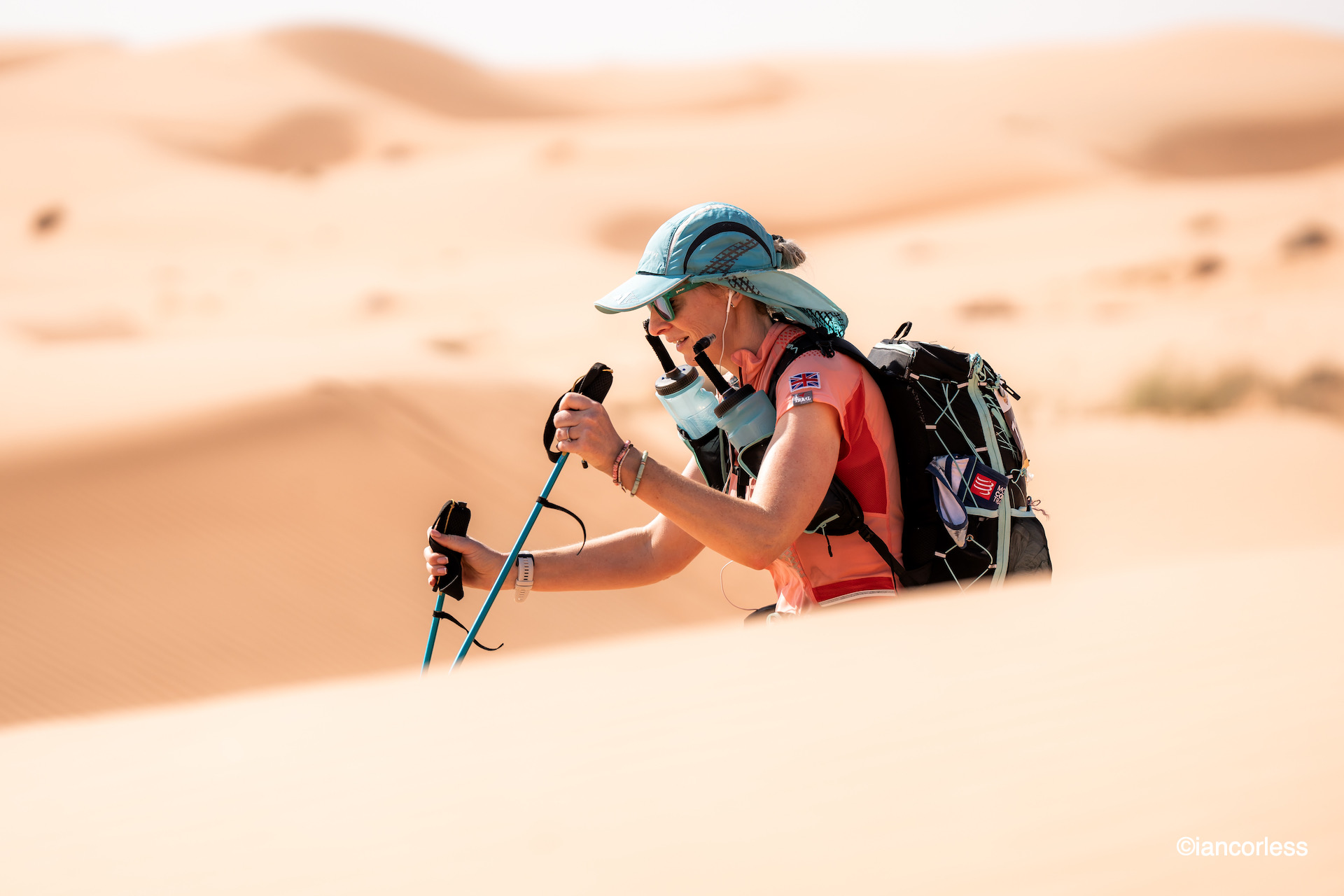










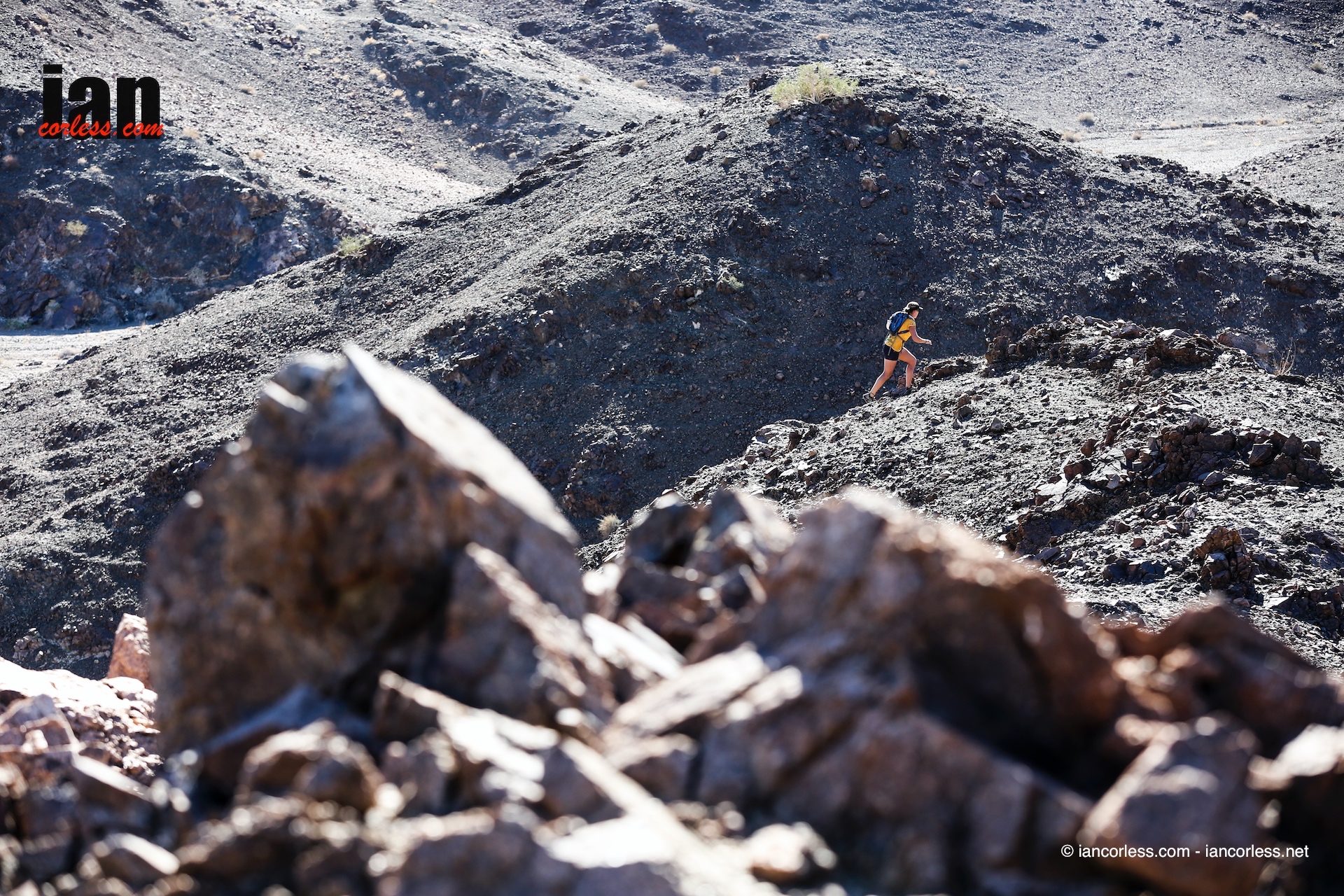
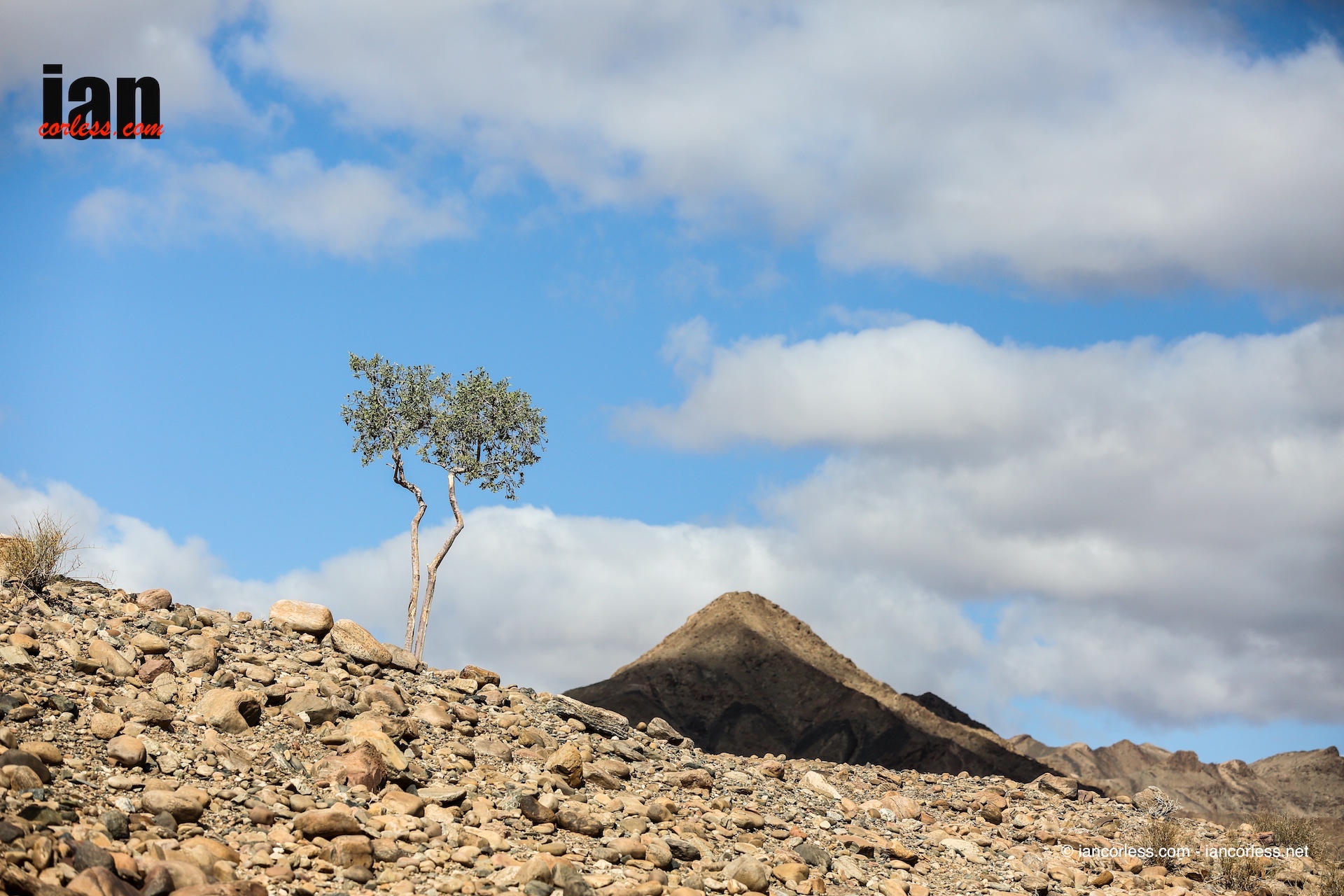
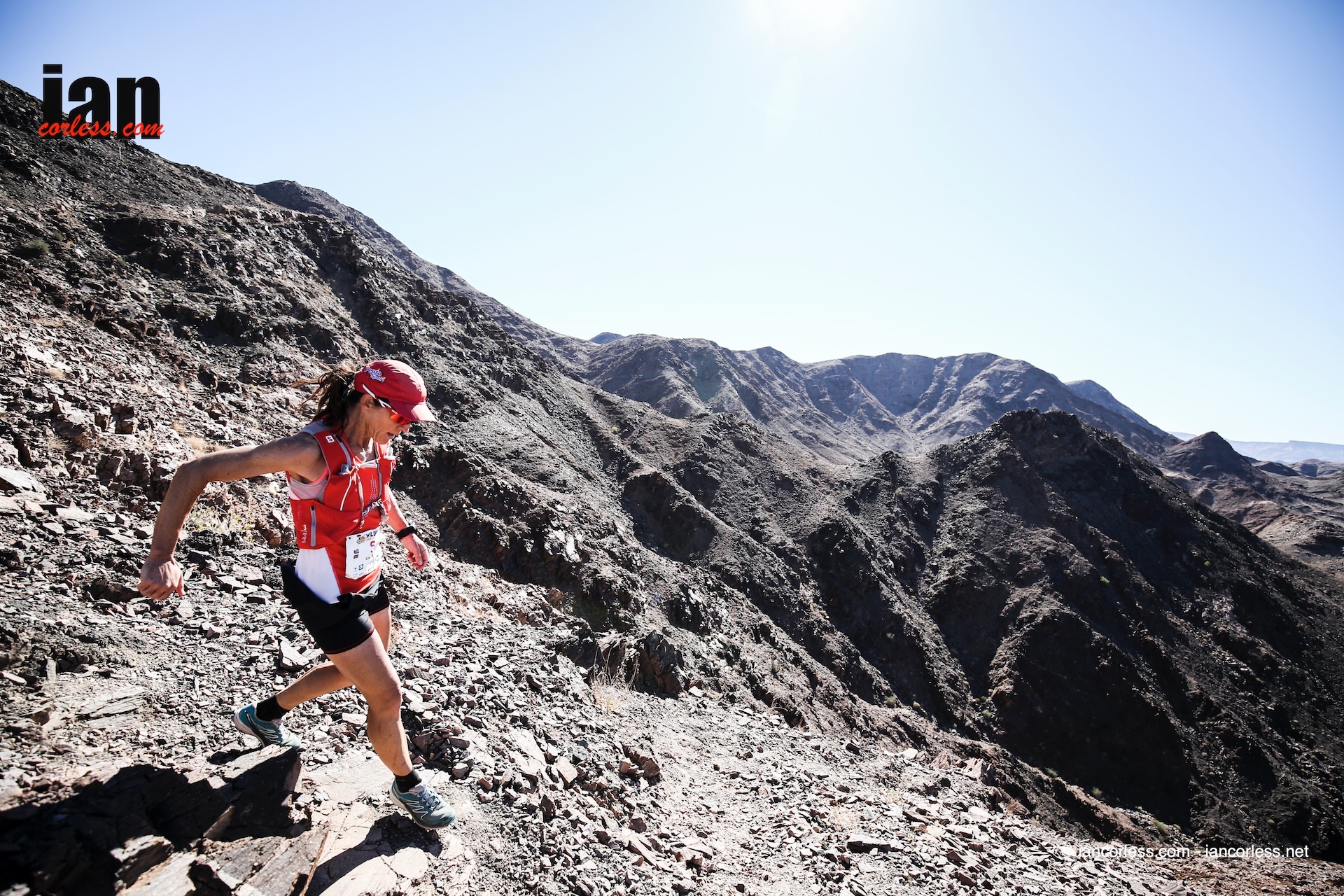 From the crystal fields of Sendelingsdrif in South Africa to the infamous giant boulders of Tatasberg deep in the /Ai/Ais-Richtersveld Transfrontier Park; this unparalleled journey then crosses the Orange River into Namibia and the wild lands of the Fish River Canyon. This is the running experience of a lifetime; this is the this is the Namibia Crossing.






 IAN CORLESS