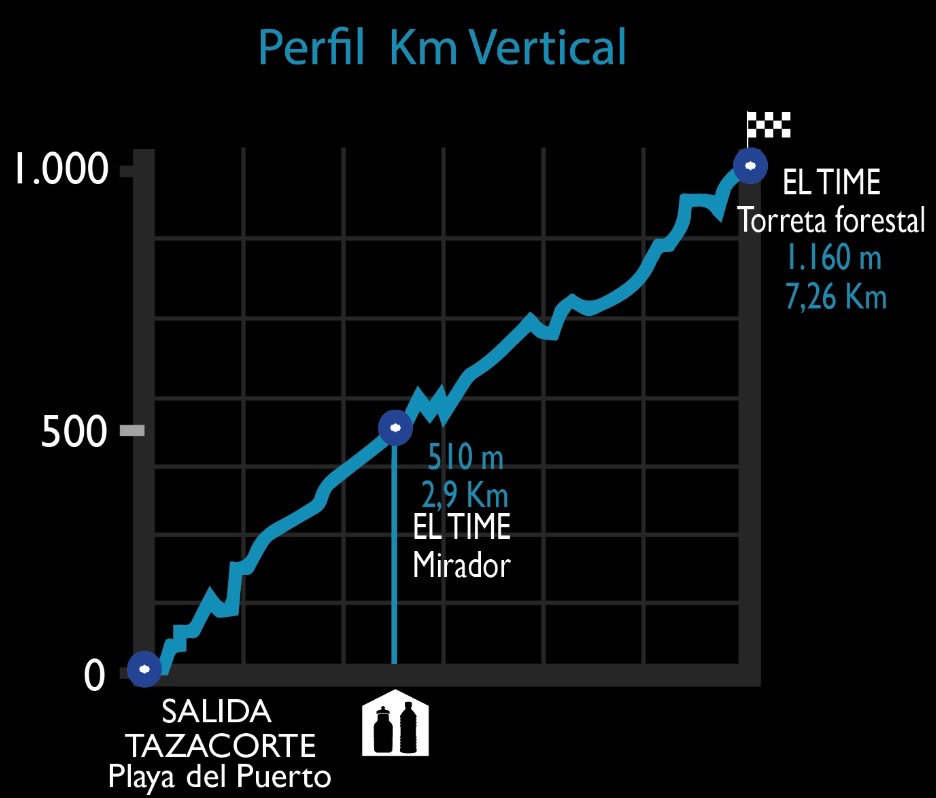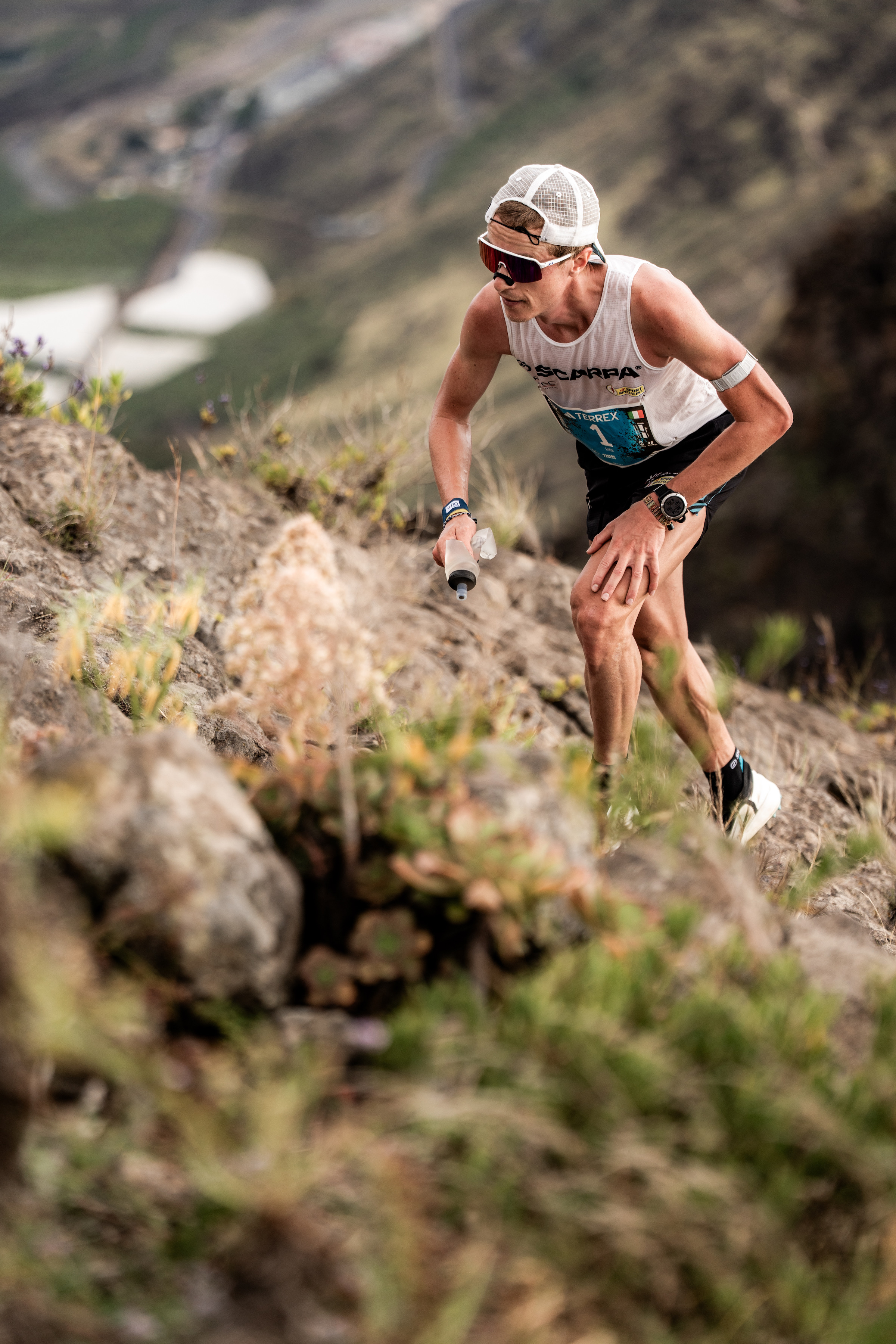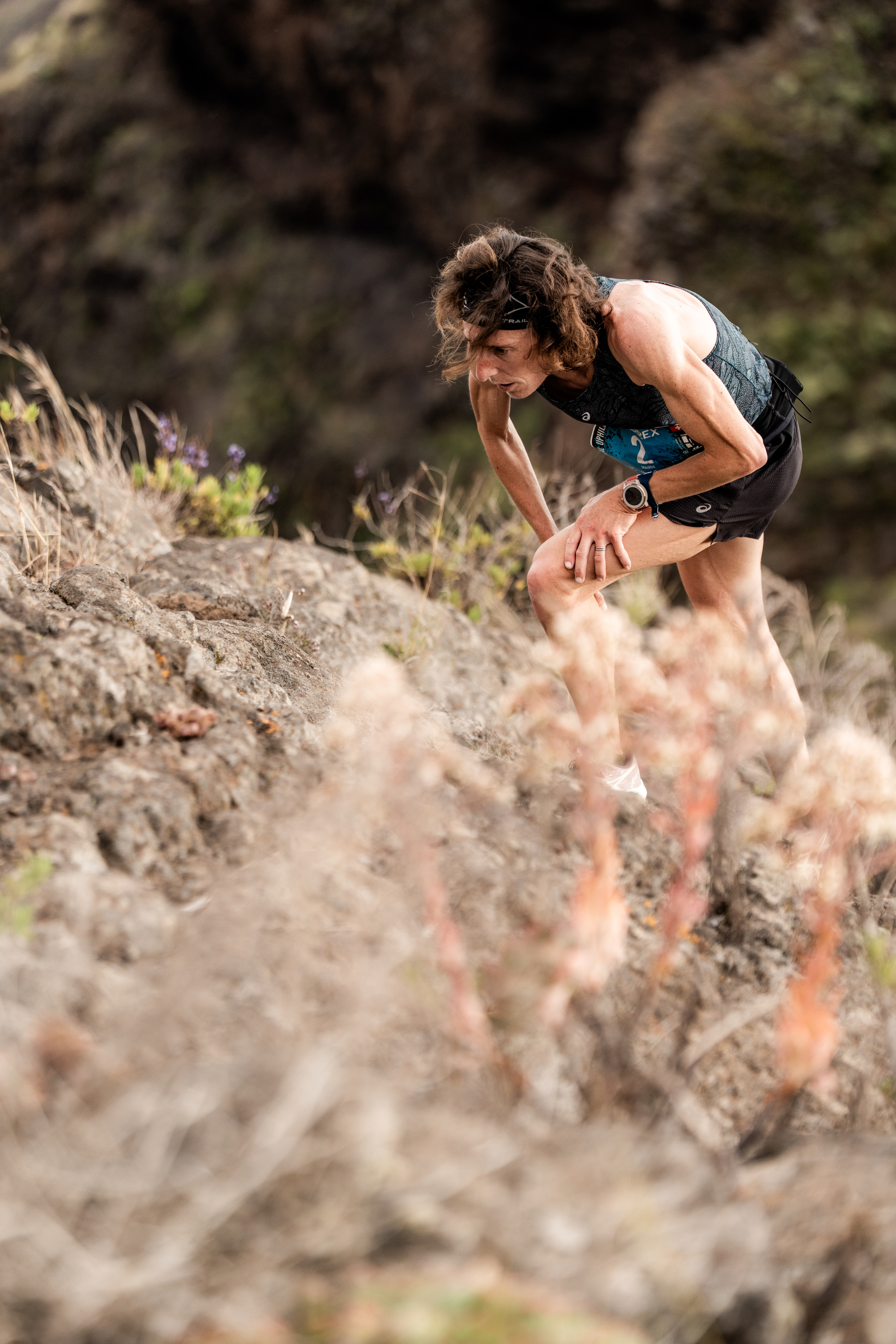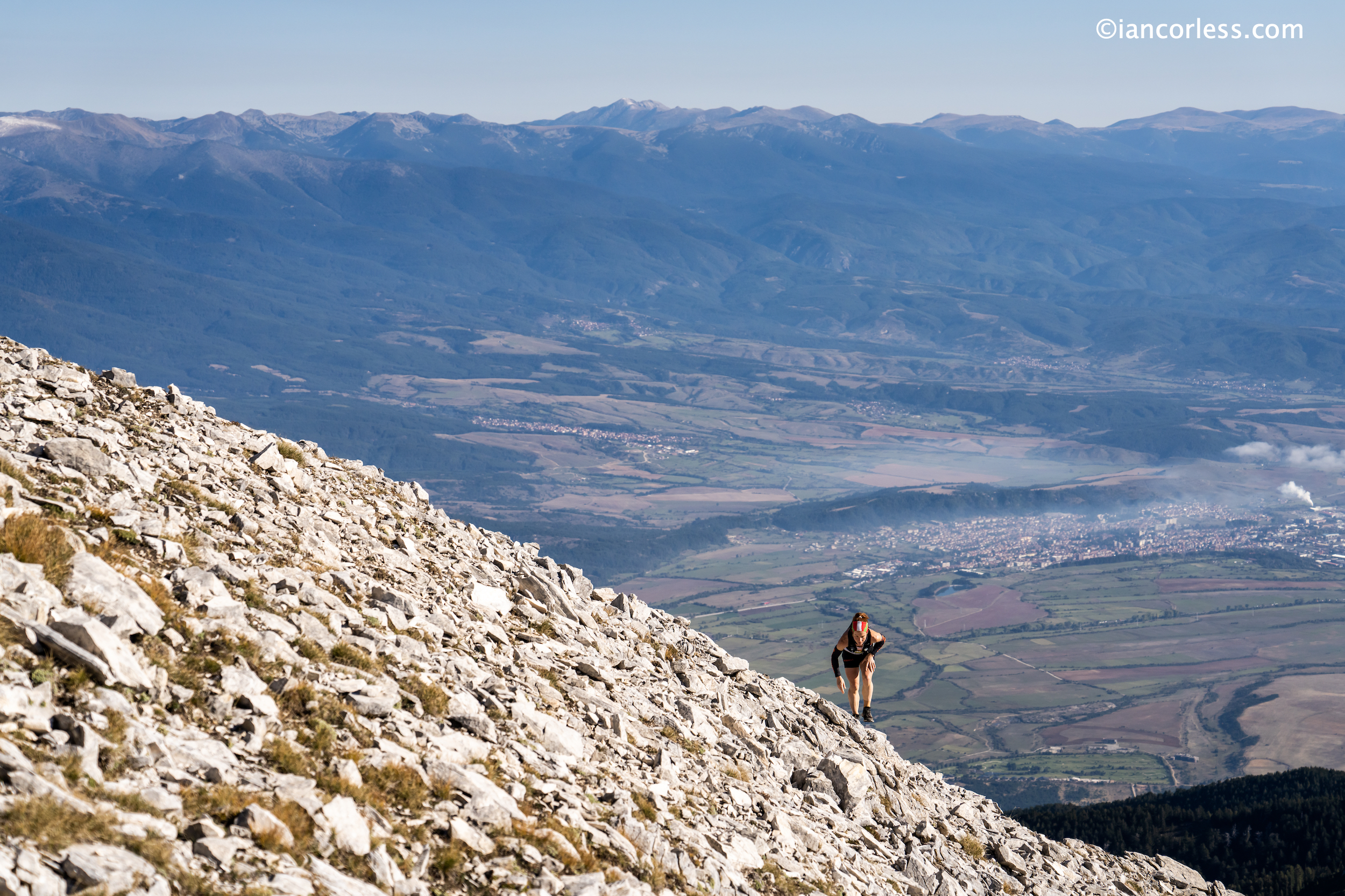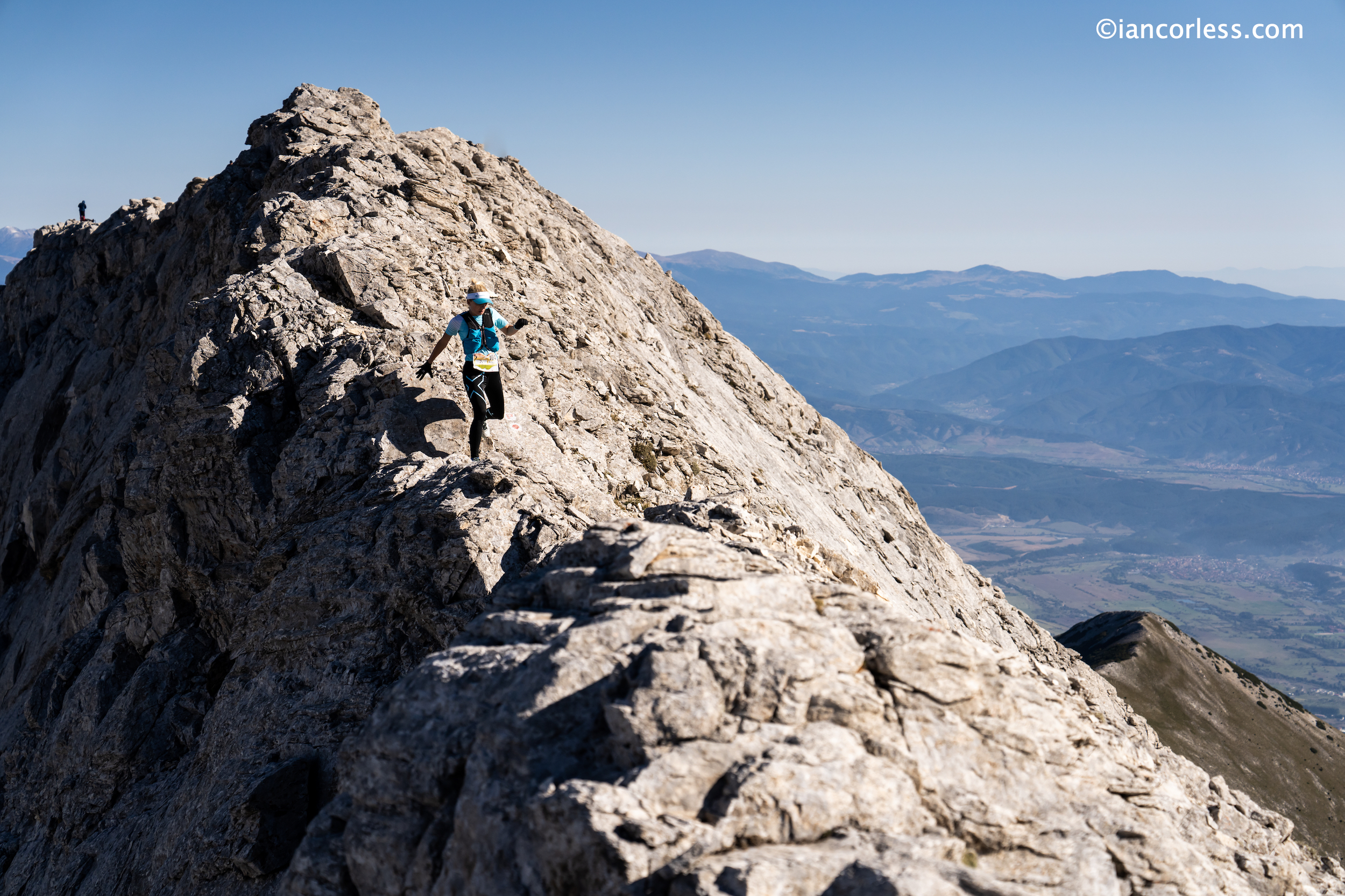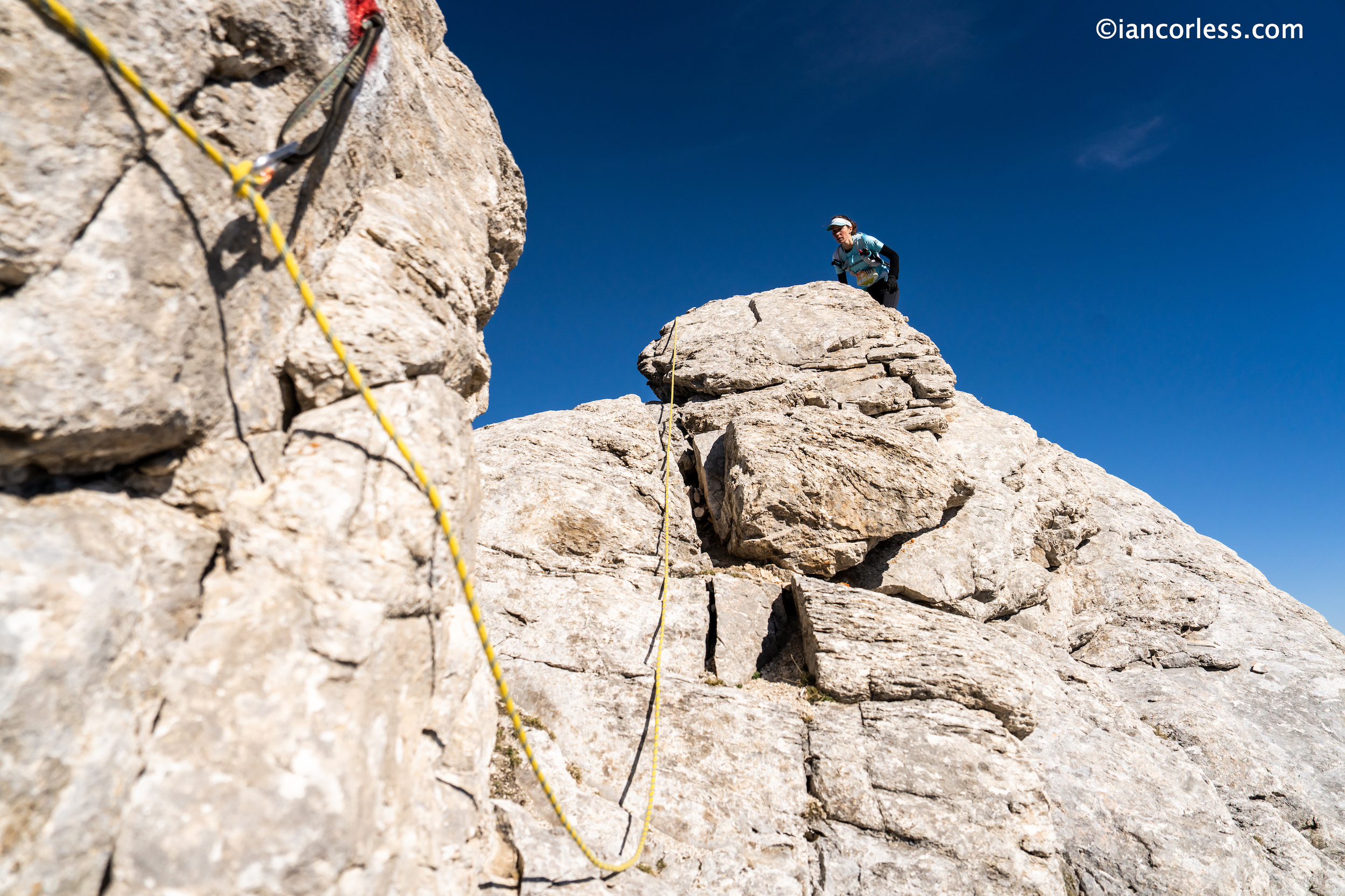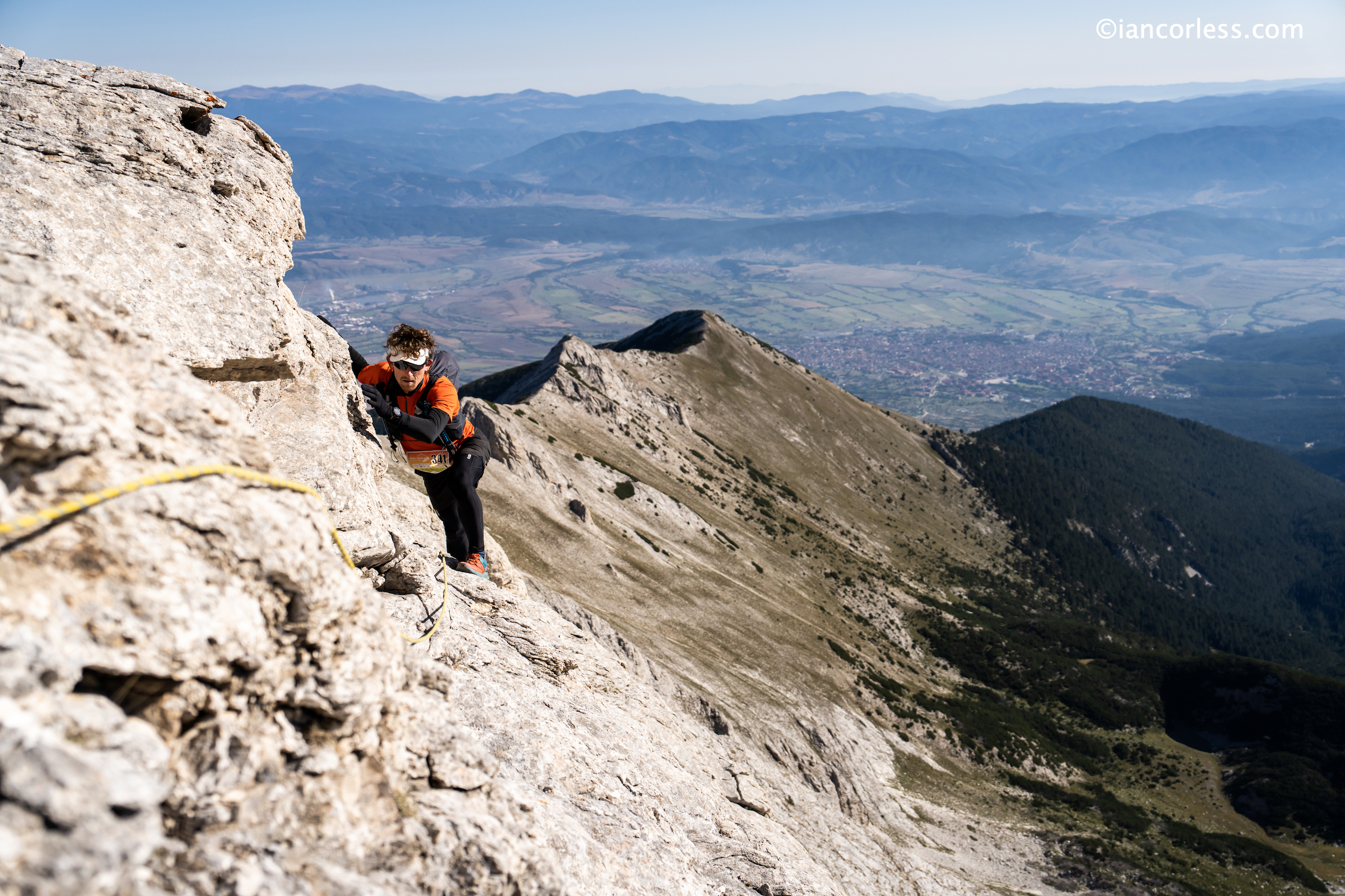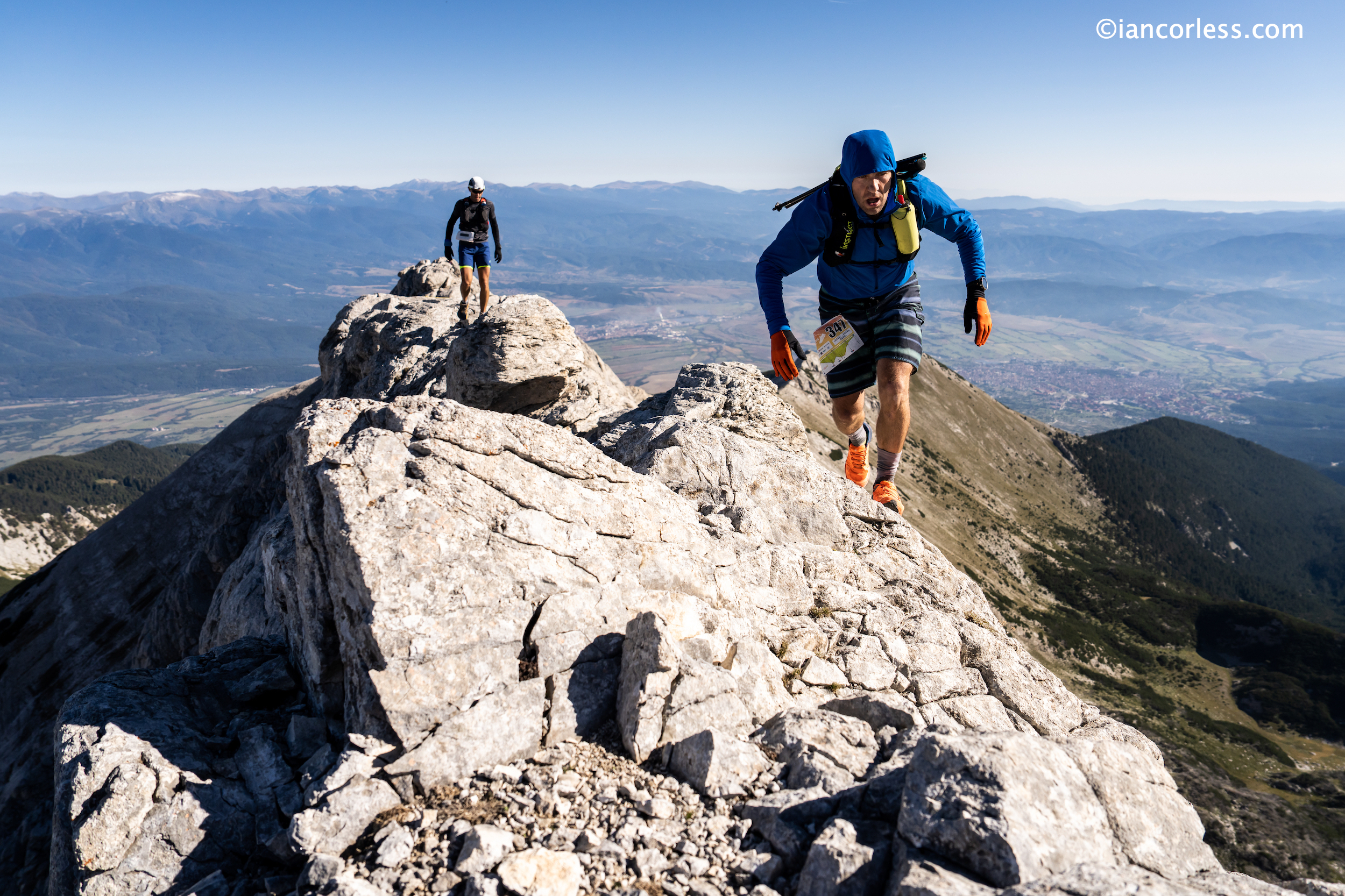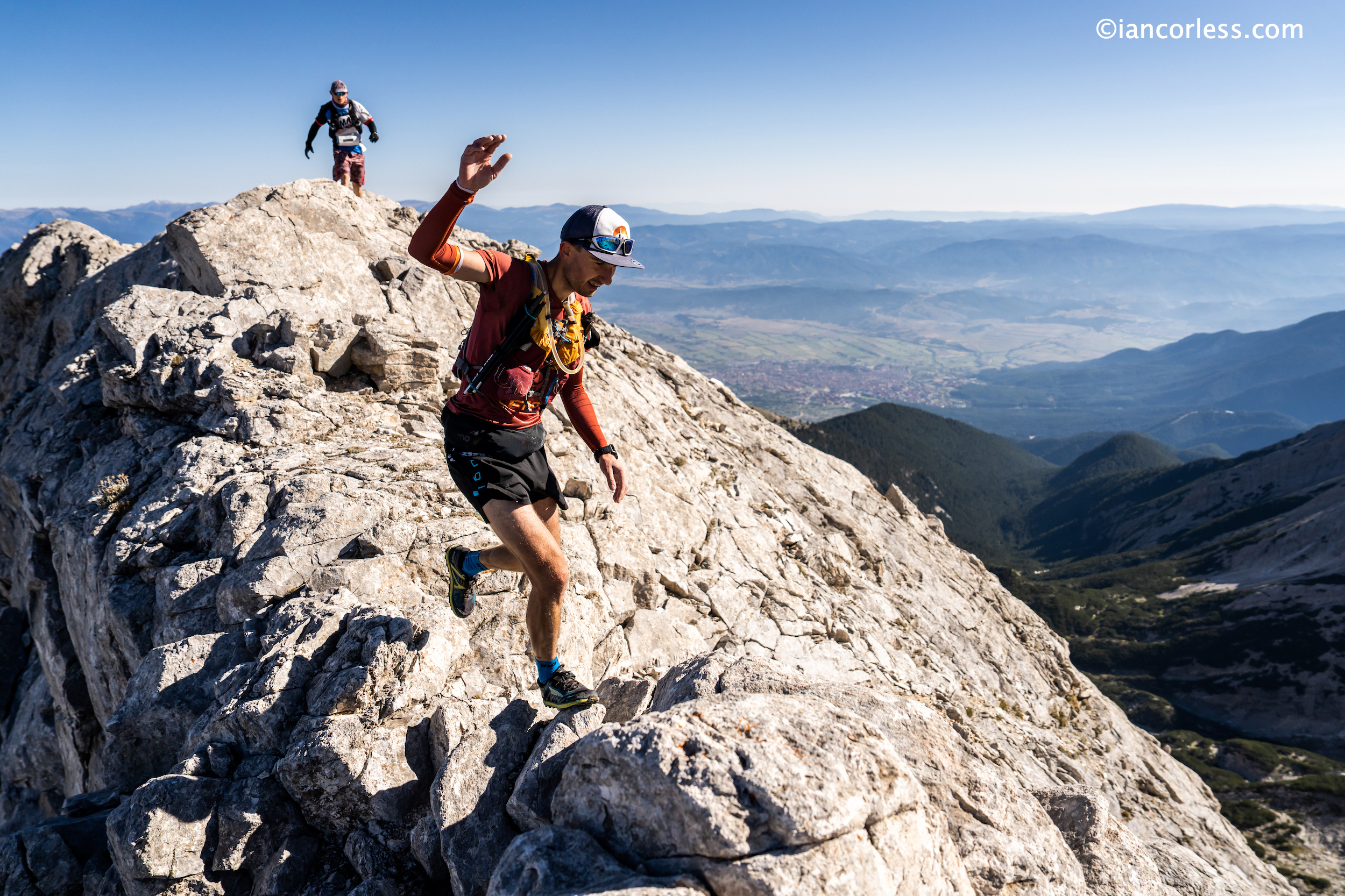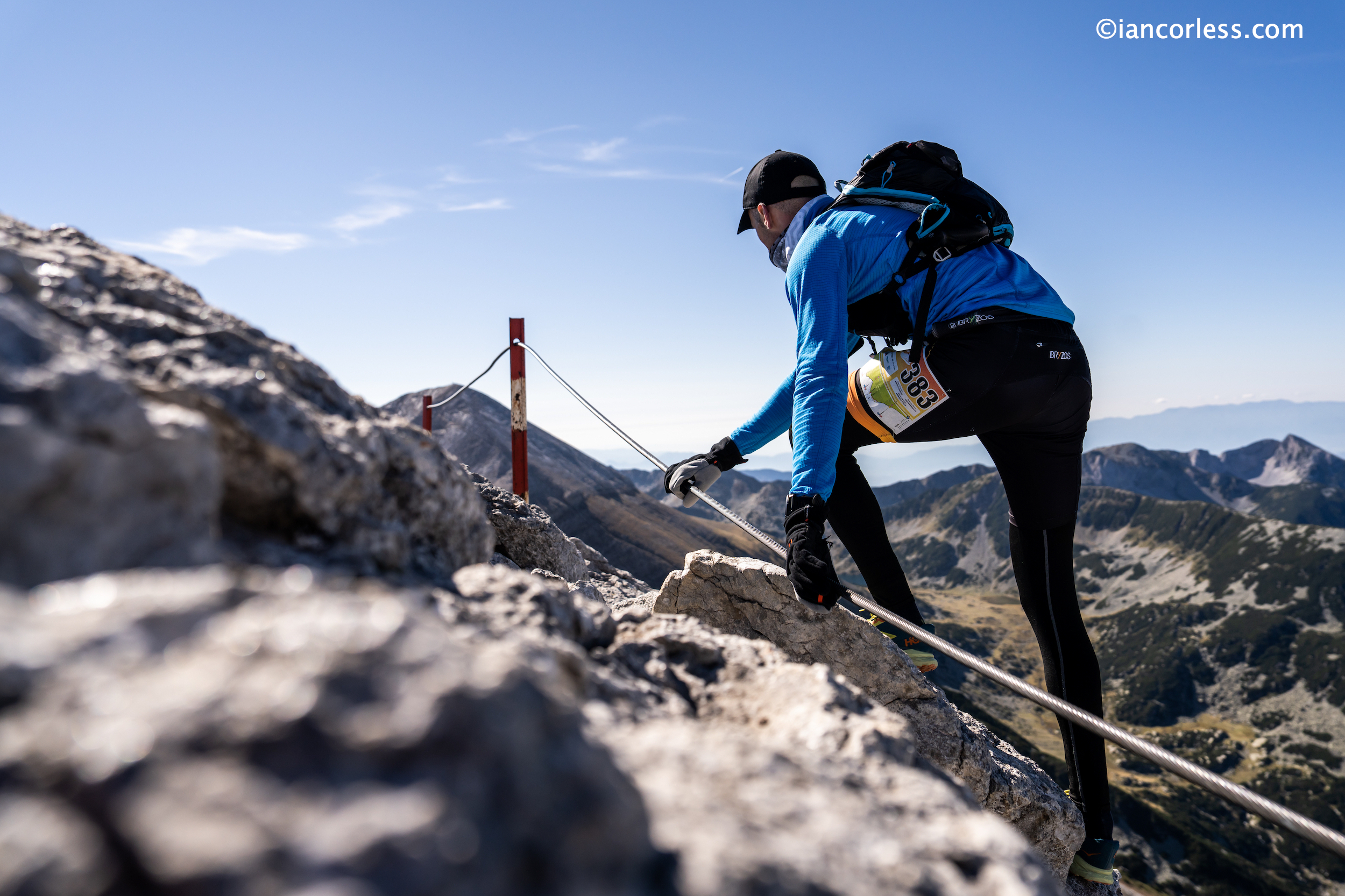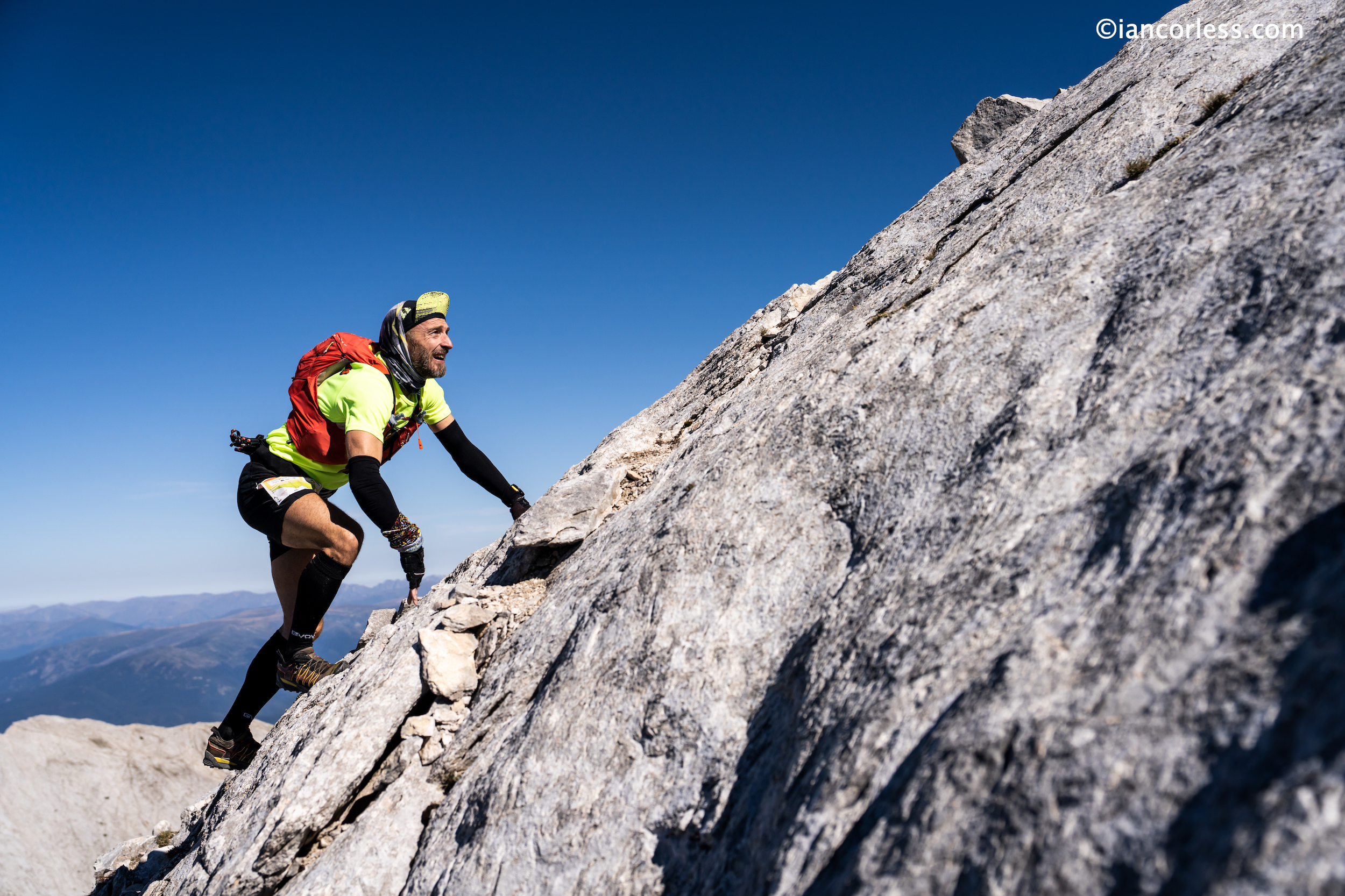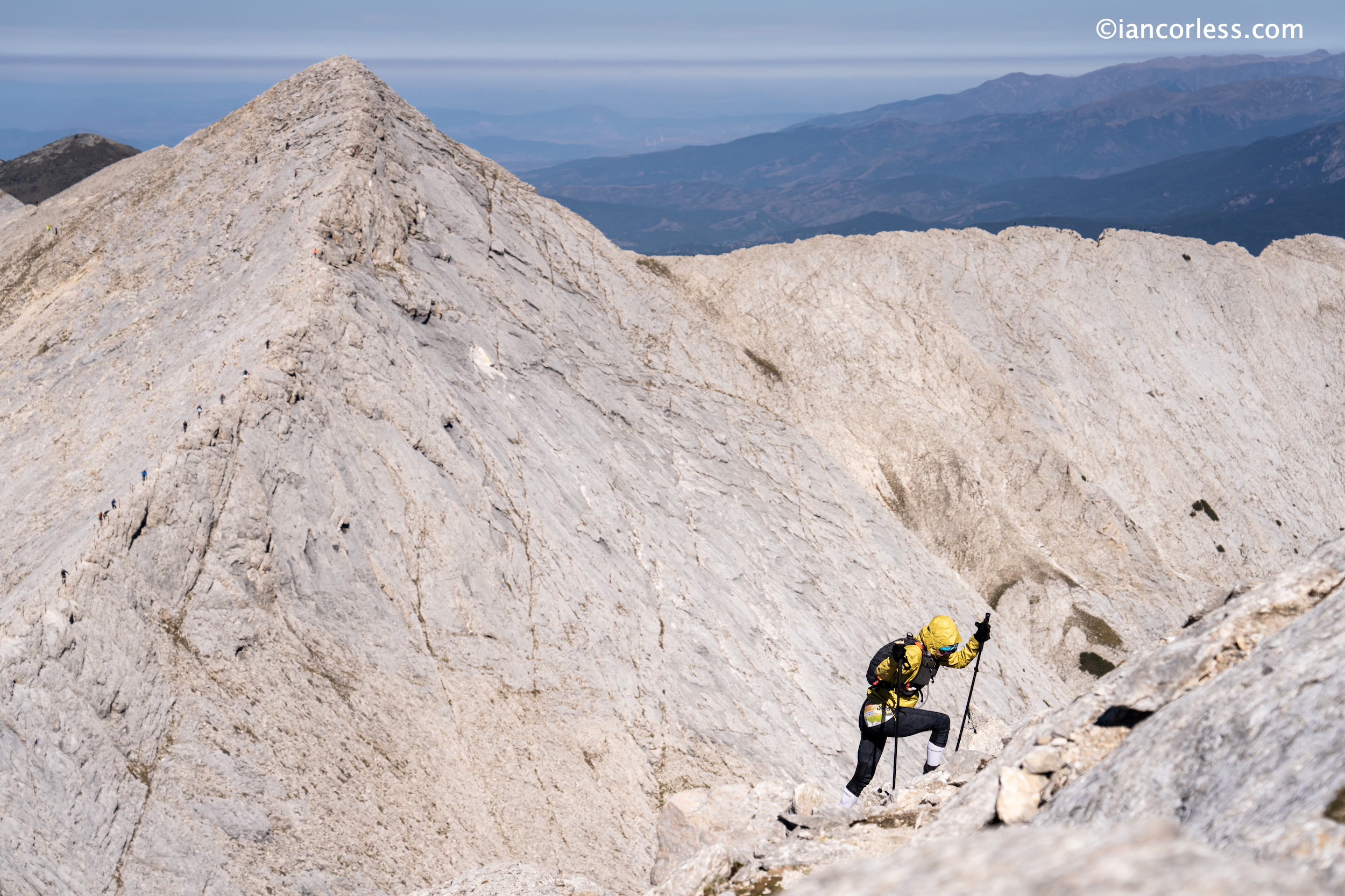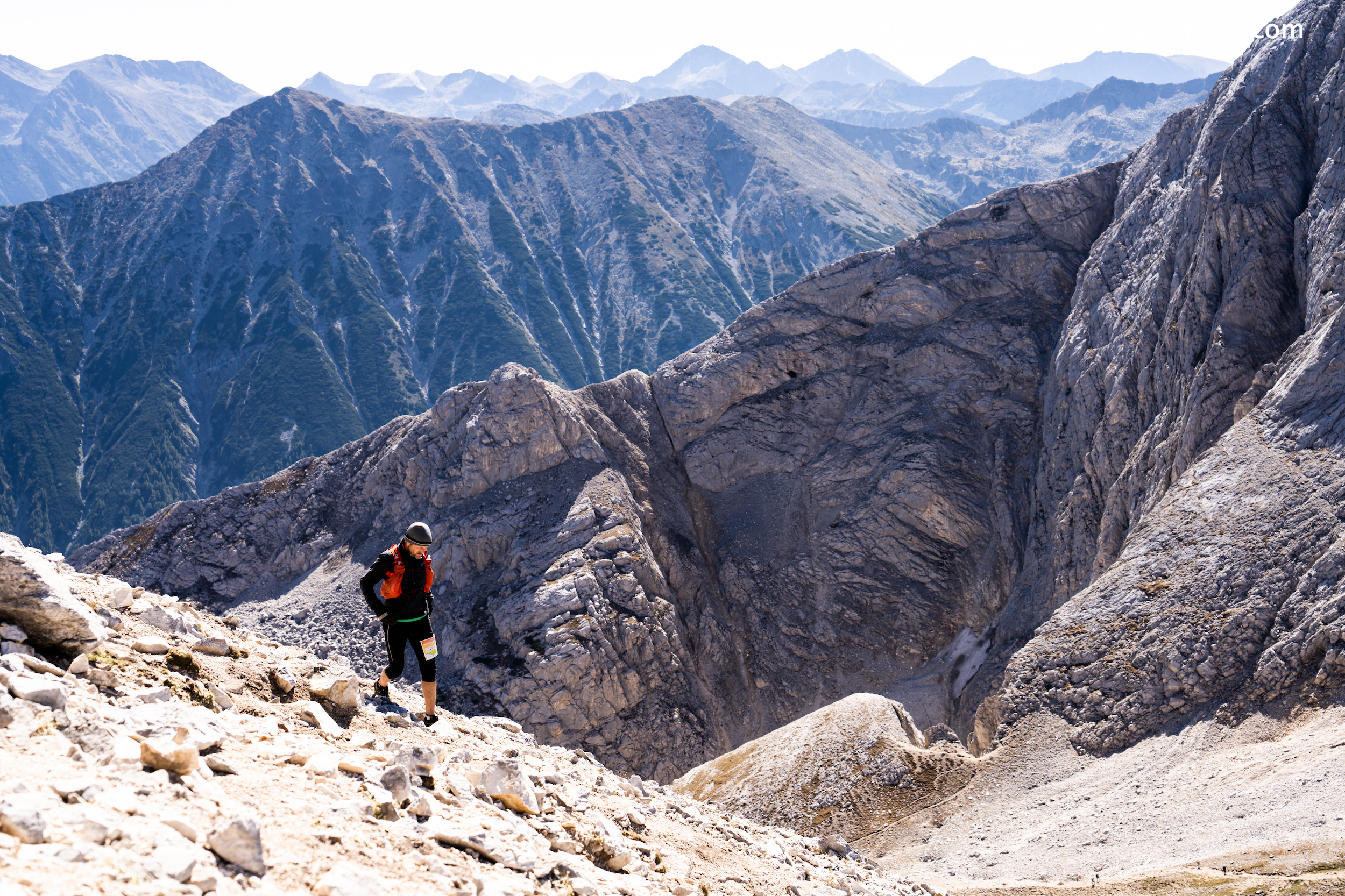
The Transvulcania Vertical Kilometre isn’t long – but it hits hard. Spanning just 7.26 km with 1,203 meters of vertical gain, it’s a race that turns uphill suffering into spectacle.
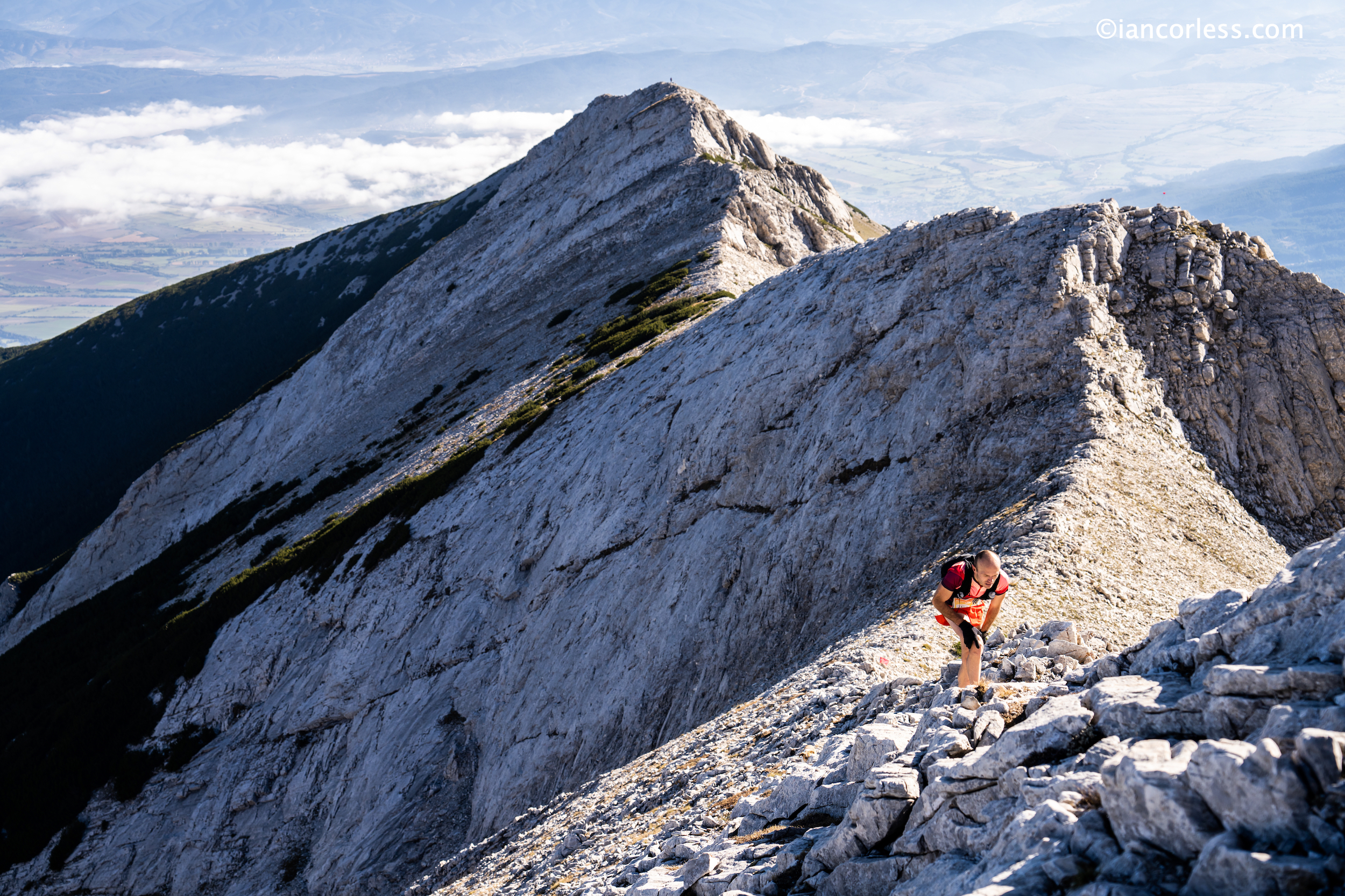
Starting from Tazacorte Puerto, the route climbs the iconic zig-zag paths that disappear into a mountain of rock when looked at from a distance. Passing El Time, runner’s cross the road and re-trace sections of the Transvulcania route on the GR131, at Casa Hungara, the route deviates to join paths with more exposure and stunning vistas. At 1000m vertical, the route re-joins the GR131 and concludes at the Torreta Forestal tower at 1600m.
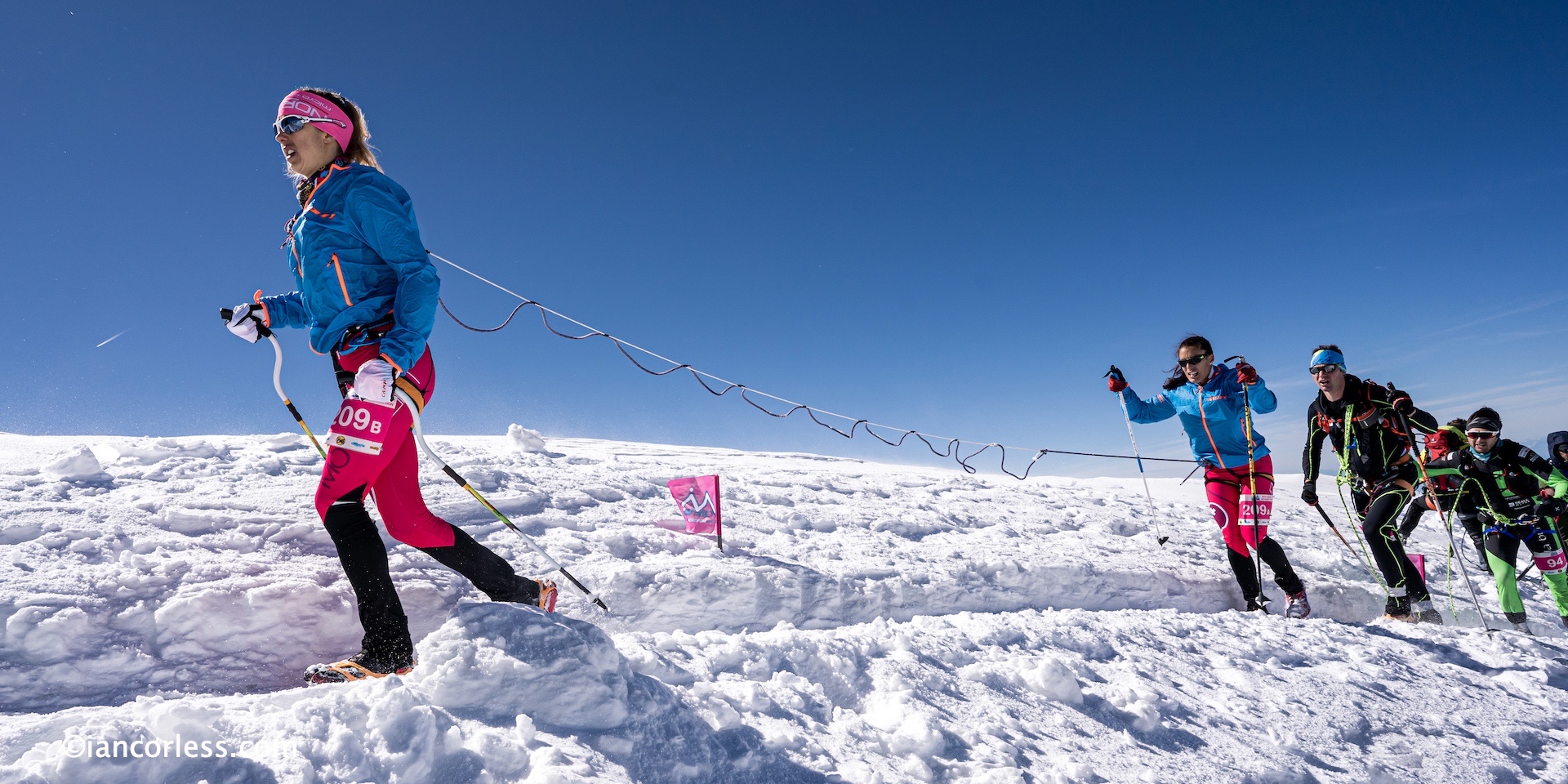
Runners leave the start line one by one every minute from 17:00 to 18:30, climbing relentlessly toward the finish.
The format is simple: solo effort, full gas, no room to hide.
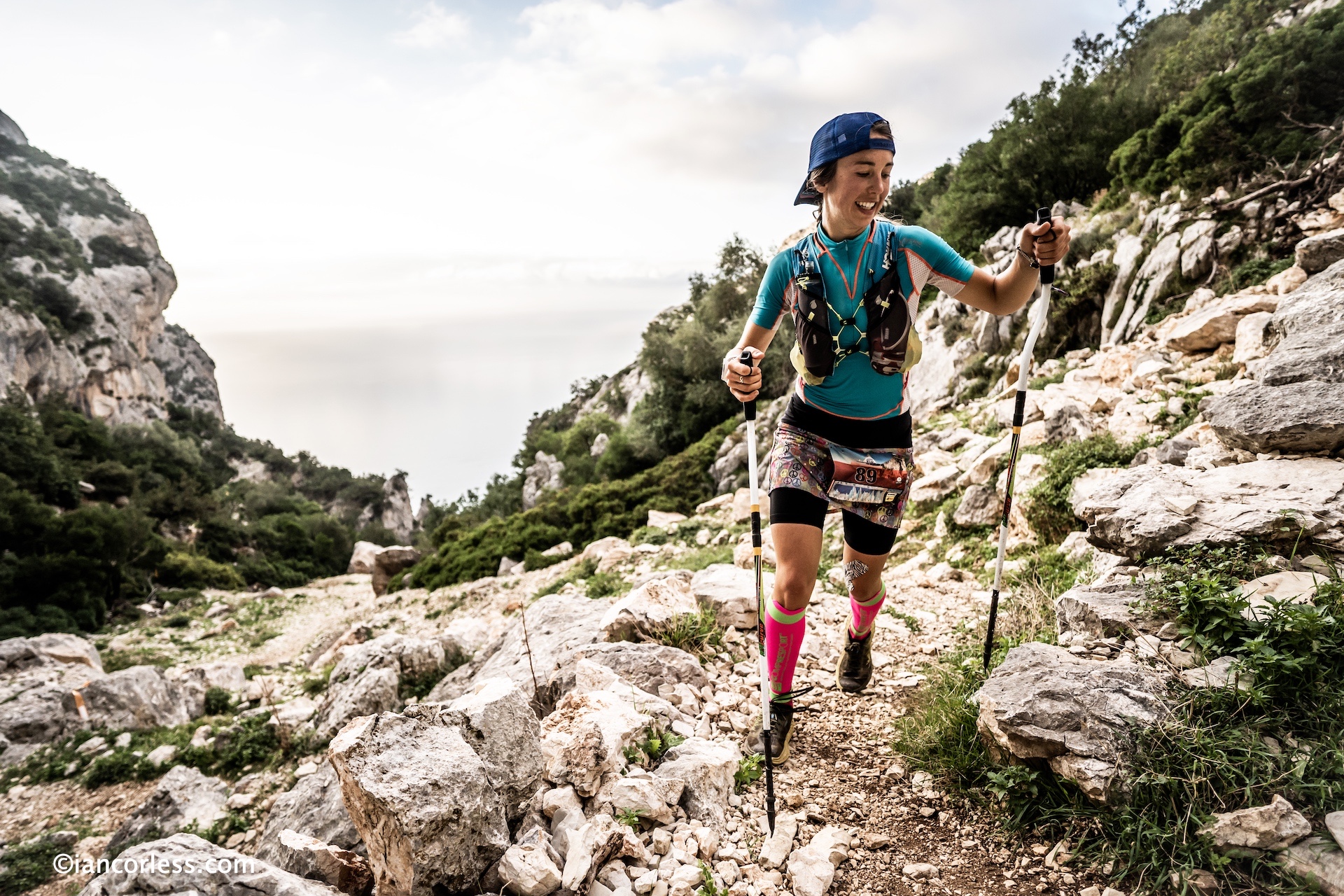
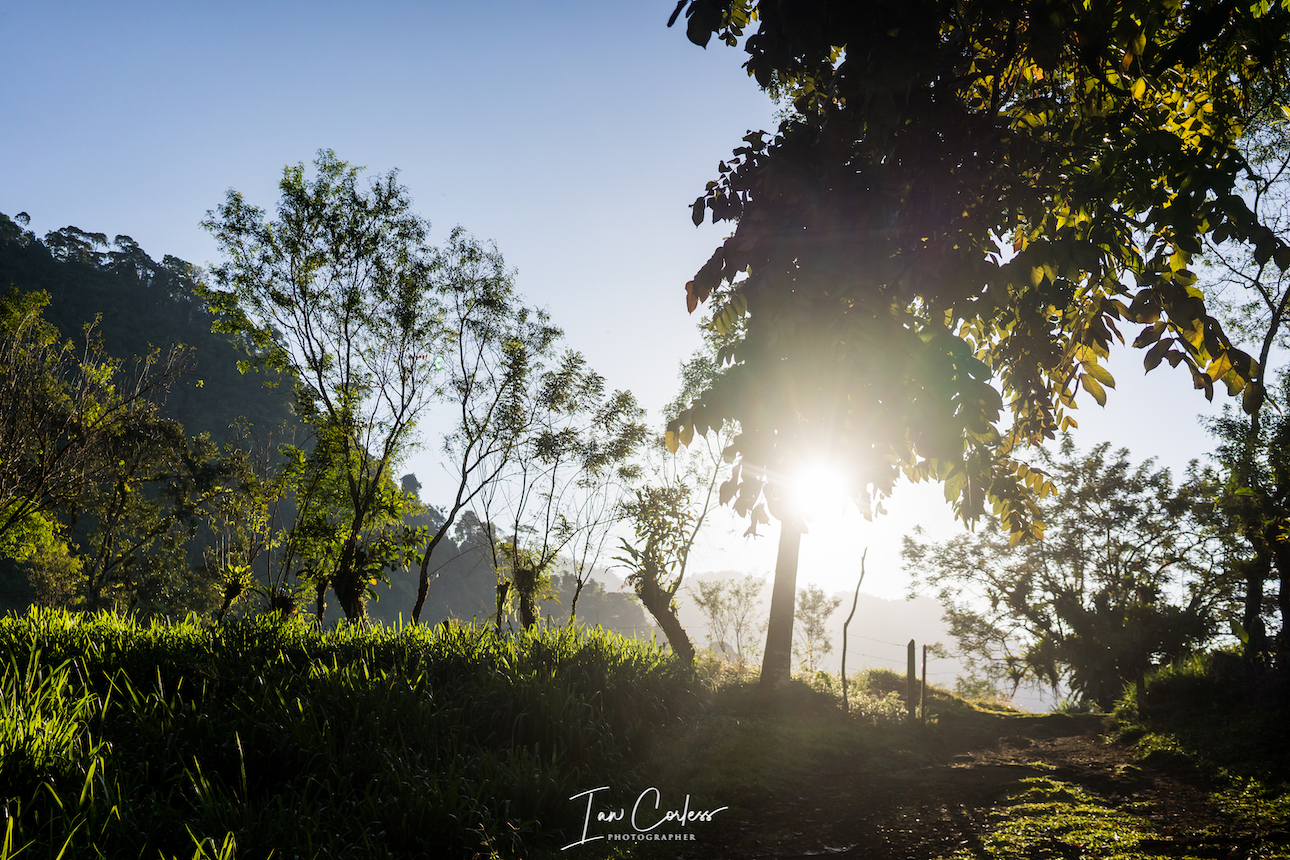
With the late afternoon sun dipping and legs burning, athletes push through forest paths, rocky slopes, and exposed ridge lines. It’s a pure test of power-to-weight and mental grit.
This year’s edition delivered fast times and fierce competition. Luca Del Pero took the men’s win in 47:59, while Maude Mathys claimed the women’s title in 56:39 in a new CR.
For spectators and racers alike, the VK is a reminder that you don’t need distance to create drama – just gravity, guts, and a finish line in the sky is the personification of skyrunning, sea to sky!
Shoes are personal. Run shoes are very personal. Quite simply, we are all unique and our needs when running vary greatly depending on the distance we are running, the terrain we are running on and how long we will be out for. It is why so many shoes exist.
Last year I said my shoe of the year was the Merrell Agility Peak 5. It is a shoe that ticked all the boxes, comfort, great foot hold, excellent grip and a fantastic all rounder for trail and mountain running. If I was only allowed one trail shoe, the Agility Peak 5 would be my choice.
It’s fair to say, that Merrell are still fighting an uphill battle to be taken seriously in the run world, especially when compared to the giants like Hoka, adidas, Brooks, Asics, Salomon and so on… Take note, Merrell should definitely be on your consideration list.
With the announcement of the MTL Long Sky 2 Matryx and my love for the Agility Peak 5, I was very keen to give this new incarnation plenty of testing.
In contrast to the Agility Peak 5, the MTL Long Sky 2 Matryx is a completely different beast. Less cushioning, lower weight, lower profile and lower drop. It’s a very specific shoe.
To draw a comparison, the Agility Peak 5 is like an everyday car for the family, plenty of room, comfort and great for a full day out. The MTL Long Sky 2 is much more a 2-seat sports car that is has a very specific use and some comfort is missing in exchange for speed.
So, although the name has ‘Long’ in the title, don’t be fooled in to thinking this is a long distance shoe. It is not. The most relevant part of the shoes name is ‘Sky’ and the reference to skyrunning which takes place in tough, challenging and technical terrain and mostly over shorter distances between 20 and 50km.
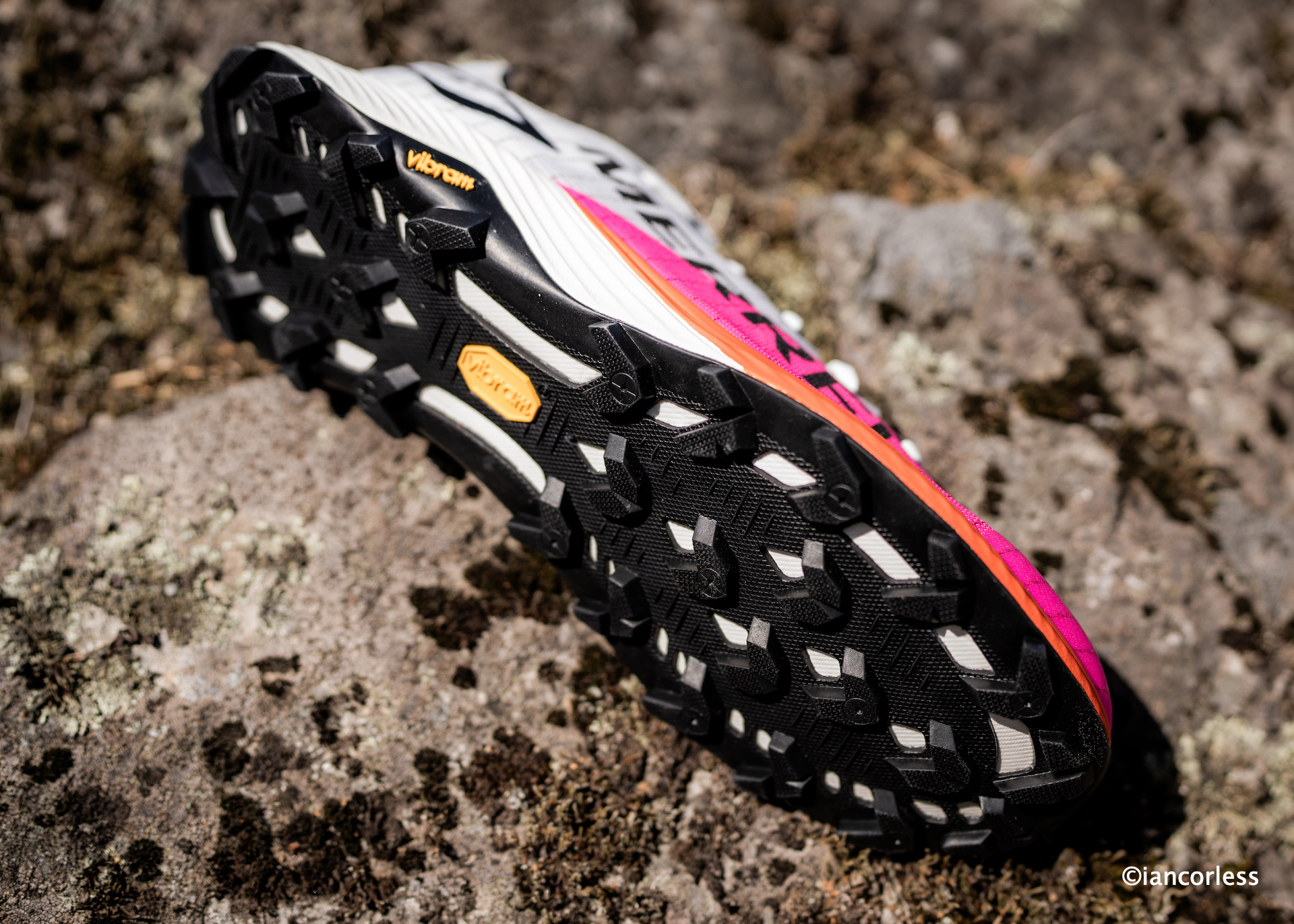
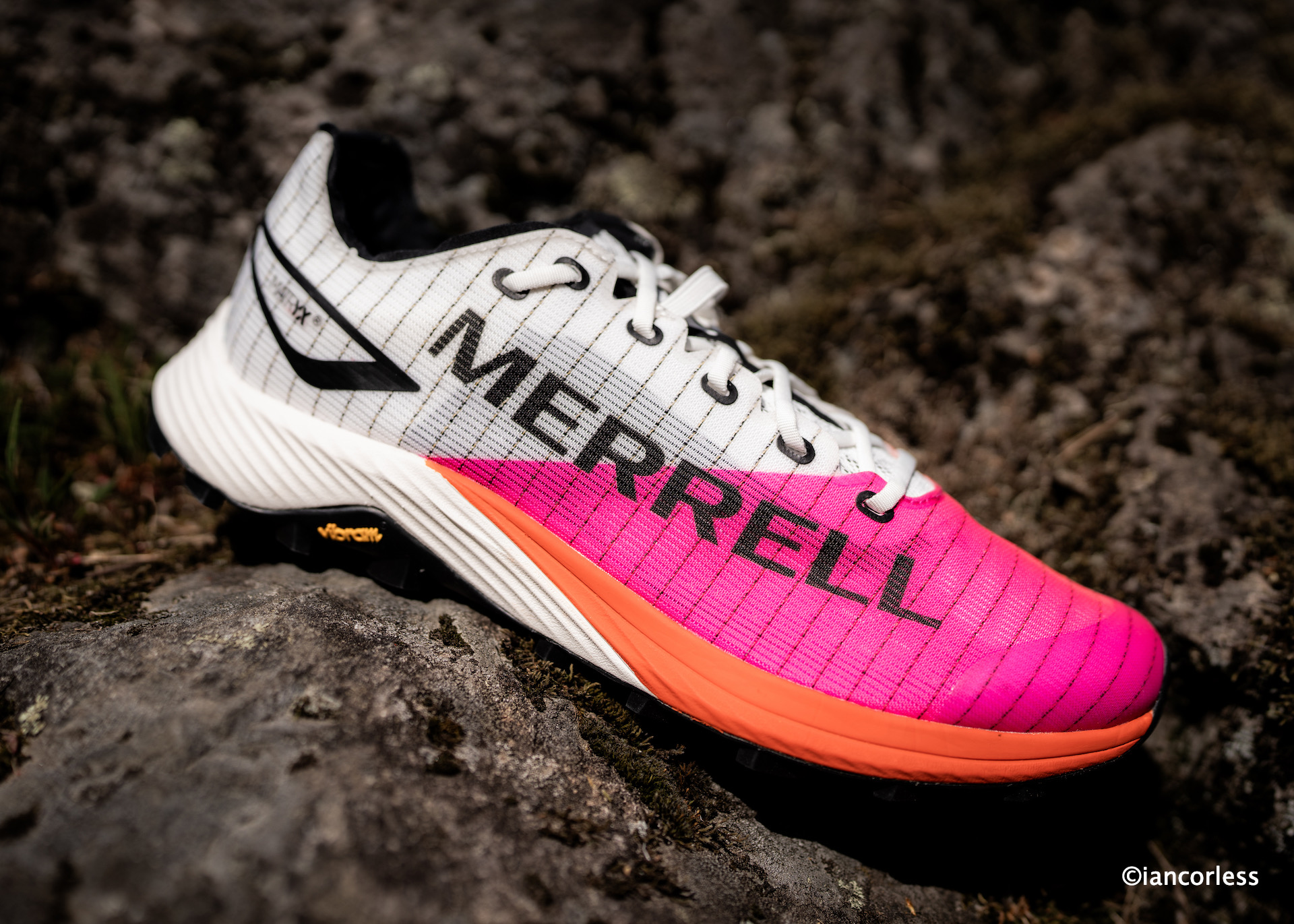
A neutral shoe, in comparison to the previous model (the Long Sky) the drop has been reduced from 8mm to 4mm. This is significant is it gives a much greater contact with the ground and control. Cushioning is 19.5mm at the front and 23.5mm at the rear. The outsole is Vibram MegaGrip with 5mm lugs.
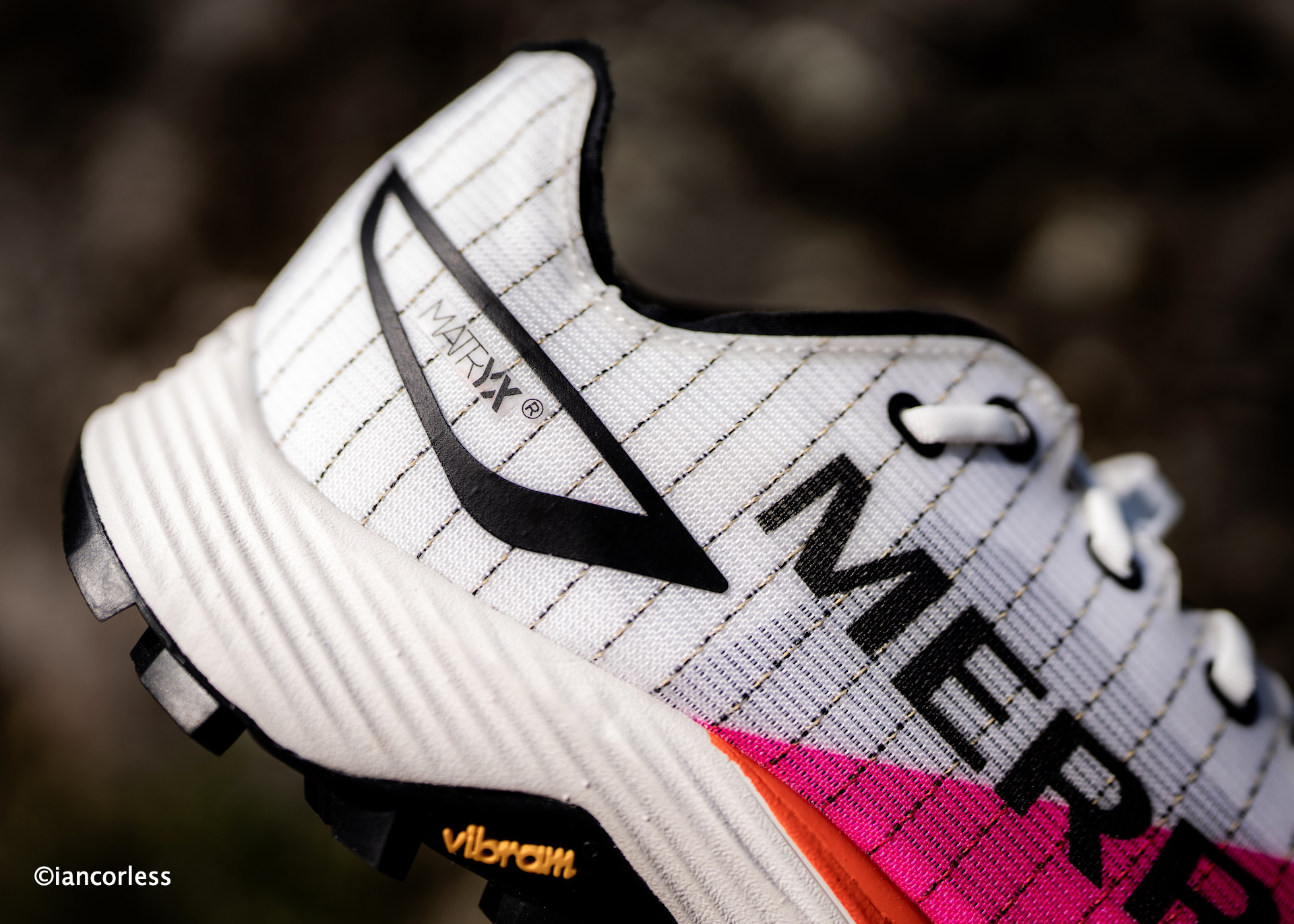
A key feature is the new MATRYX upper which has more durability and is designed to keep the foot cooler with greater wicking.
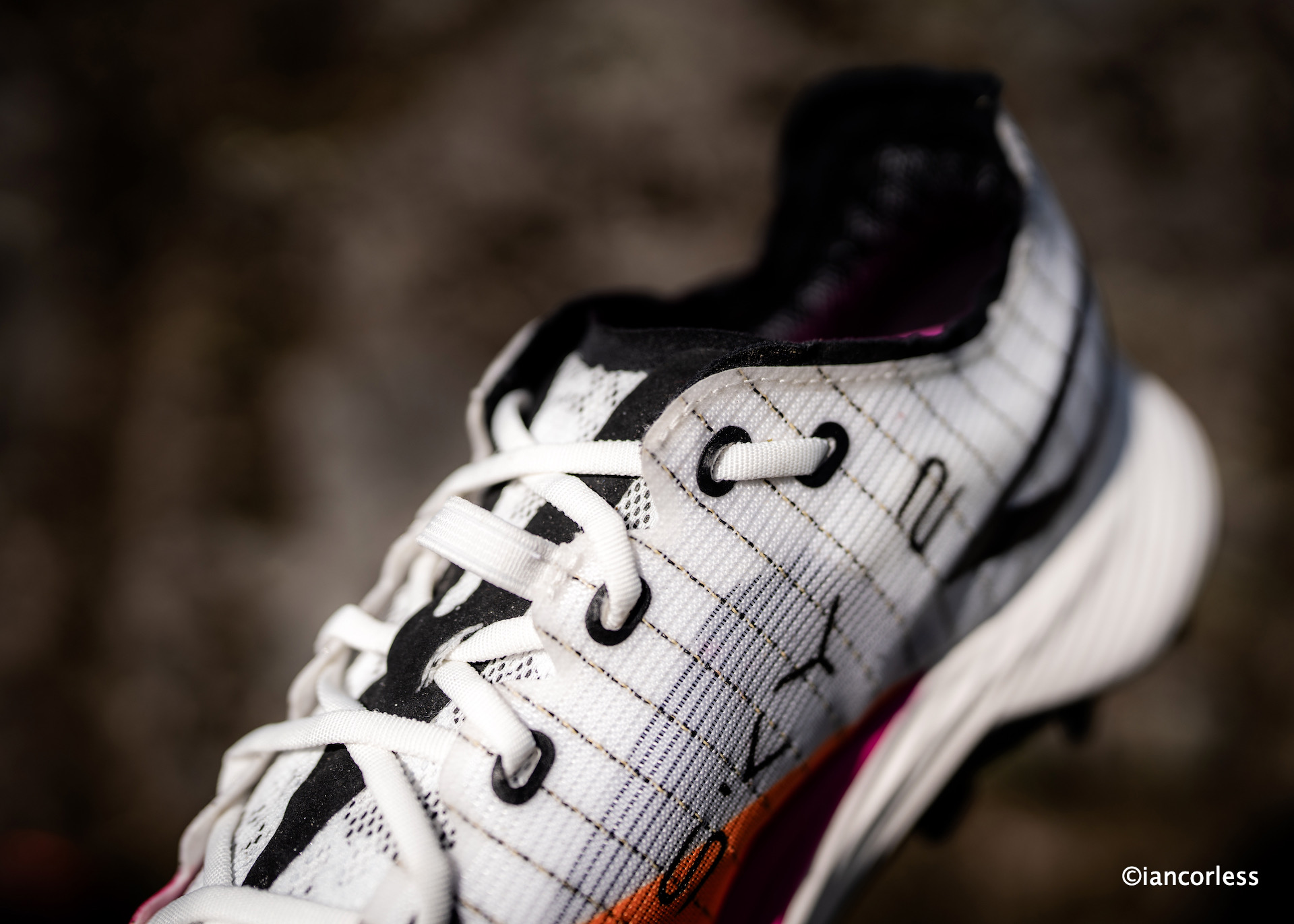
They have a gusseted tongue for excellent foot hold. Cushioning is via EVA foam insole and dual FloatPro Foam.
There is a temperature regulating footbed. A UK9/ EU44 is 259g and sizing is true to size. The shoe is 15% lighter than the previous model
THE SHOE
It’s a great looking shoe and one that immediately says speed. The white to multi fade orange and pink is striking.
Slipping the shoe on, the foot hold is immediately noticeable and with the laces adjusted and the sock-like fit, there is no movement at all. Exactly what you want from a shoe that will handle mountainous and technical terrain. The heel area is very minimal and there is a raised padded area inside that is designed to grip and hold – it certainly does, arguably they are the most secure shoe I have experienced in this area. The front of the shoe opens up to provide enough width for toe splay, but not too much room so that you would lose control when precision is required.
With a 19.5/23.5mm cushioning, this shoe is designed to provide a compromise offering cushioning but not losing ground feel and control. As mentioned before, the ‘Long’ in the name is relative and for most people, this is not a long distance shoe.
The upper construction is minimal and notably so at the front, there is token toe protection. Don’t be fooled though, this MATRYX upper is tough and durable.
The shoe immediately feels comfortable when you put them on. I strongly suggest you play around with socks to find out what works best for you, I noticed a huge difference in feel between a lightweight sock and a slightly thicker merino sock.
Merrell say the shoe is good for up to 50km. For sure, yes, 50km is possible, but this depends on the runner and the speed they are going. A top elite mountain runner may tick off 50km in 4 to 5 hours, whereas, someone else may take 10-hours, so, use caution.
The MTL Long Sky 2 Matryx is designed to be agile and nimble, they are! But this comes at a price on comfort and protection. I had expected more protection and ultimately, for me, that just wasn’t there. I could feel stones, rocks and tree roots through the shoe which did surprise me. They feel thin!
They are very flexible and the propulsive phase is very good. On the correct feet, this is a fast shoe.
The biggest problem for me was the heel area. In one area they are brilliant, the hold is fantastic, they are secure and there is no slipping. However, this hold comes from the raised cushioned area with the heel, no matter what I did or tried, this just rubbed and caused blisters on both feet. I must caveat here, I never get blisters. So, this just made the MTL Long Sky 2 Matryx unwearable for me.
The outsole is Vibram MegaGrip with 5mm lugs. Ideal for technical terrain providing grip when required on rock, gravel, light mud and varying terrain. I am still not 100% convinced or confident of Vibram on wet rock, especially when compared to VJ Sport or the Continental grip on adidas shoes.
Conclusion
There is a great deal to like in the Merrell MTL Long Sky 2 Matryx and if you are looking for something light, nimble, fast with ground feel for short mountain days or racing, this is for you. However, this all comes at a price. It’s a specific shoe for a specific task, just like a Formula One car. This is not the only shoe to have or use. It’s too specific for everyday runs, so, the MTL Long Sky 2 Matryx should be added to an already existing shoe collection and they should be reached for and used on special days. Given that Merrell sponsor the Skyrunner World Series, it’s unsurprising that this shoe is designed to specifically perform on this terrain.
Gonzalo Calisto at the 2016 TCC. It was later we found out he had tested positive for EPO at the 2015 UTMB.
Trail, mountain, and ultra-running is booming and it’s clear to see. Circuits have increased, prize money has increased, ‘pro’ runner numbers have increased, and it must be accepted, with the potential rewards both financially and egotistically, there will be some tempted to dope.
Mark Kangogo at Sierre-Zinal an example. And now, Esther Chesang!
Trail running, unlike athletics, be that on the road or track, is unpredictable; tough and varied, with ups and downs, rocks, scree, and technicality, it draws comparisons to mountaineering, not road running. It’s the experience, the doing, the completing that brings the rewards. Take a marathon, on the road you may be able to complete in say 3-hours… On trail, the same distance could take, 4,5, 6-hours or even longer for the same runner. Road running rules don’t apply, a trail runner’s needs are different, except maybe for the sense of fair play, truth, and integrity.
Well, times are a changing
Look at cycling, athletics, and other financially lucrative sports. Doping has been a problem. Trail has been relatively void of positive cases. Note, I say positive cases, not void of doping. It’s fair to assume that doping has happened, but it’s impossible to confirm at what levels. The 2015 case of Gonzalo Calisto testing positive for EPO at UTMB was the writing on the wall. I wrote at length about the case and issues. Read HERE.
It was a call to awareness with the #cleansport tag being used on social media and many prominent trail runners backed up the call. It all got a little muddy with the blanket of the Quartz Program which effectively was/is as useful as a chocolate teapot.
Now, the iconic Sierre-Zinal has had to suffer and endure two positive tests for the respective male and female winners. Ridiculously, the female positive was announced January 2023! She was confirmed positive in May 2022 after a road marathon! Oh, my word, we have a long way to go.
Is now the time to act, before the sport we love heads in a southern direction? If left alone, we may not be able to turn the tide.
But how prevalent is doping in trail, mountain and ultra?
A research paper published August 2017 (HERE) stated that : ‘estimated prevalence of past-year doping was 43.6%’ (from one event) –from a survey of 2167 athletes at two sporting events. That’s an horrendous statistic. The conclusion, ‘doping appears remarkably widespread among elite athletes, and remains largely unchecked despite current biological testing.’ Now this wasn’t trail running, but, one has to maybe assume, the situation is worse than maybe we think…
Skyrunning in many ways paved the way with testing, admittedly not at all events due to cost. But at key events, World Championships for example, WADA tests were conducted. Here is a quote from 2014:
“In compliance with the WADA protocol,11 anti-doping tests were carried out across the three disciplines, which included two for EPO (Erythropoietin). The tests were based in part on arrival order and in part random which included several members of the podium in each discipline. All results were negative.”
UTMB incorporated testing in 2015 and look what happened, Gonzalo Calisto was caught.
Trail runners are effectively hippies. We are on the outside, a weird and wild bunch of adventure and adrenaline seekers who do not want to be confined by rules. This rings true for well over 90% of us, but for those at the top, the pinnacle, who are now becoming professional, this is a business. In any business, corruption can take a hold and doping steals rewards, glory, and recognition.
ITRA, IAAF, WMRA, USATF, Skyrunning and the list goes on. Is it time for trail, ultra and mountain running to be incorporated within one Global Federation where rules and regulations could be imposed? Until now, the answer has been no, the excuse being trail running would lose its freedom and spirit. Many are opposed that a ruling body should not only dictate rules but also profit from ‘our’ sport. Look at the current divisive arguments on the growth of the ‘by UTMB’ and Ironman merger, they only reflect and affirm these thoughts for some.
Do we want in-competition and out-of-competition rules that includes comprehensive random drug testing?
Pro-runner or not, at the end of the day, I think it’s fair to say that you (we) got into the sport not for rewards, glory, and money but through heart. First and foremost, we had a need for nature, adventure, freedom, and open spaces, this was the motivator, not a podium and a cheque.
Of course, rules do already exist, ‘no doping’ is a rule for all sports, mandatory kit (for some races) is a requirement, and the list goes on. But the list in many cases is left to the RD, race organization and more importantly, budget. There is no one set of rules that should be adhered to worldwide and this can be part of the problem, which is why the IOC had the Lausanne Agreement.
Is it time for this to happen?
The fear of cheating, being ‘found out’ and the ongoing disgrace, public humiliation and shame may well have served as a deterrent in trail, until now.
The IAAF finally stepped in to suppress the ever-growing problems of doping with a set of rules to help control a rising problem. The IOC then took this one step further at the Olympics with one set of codes, rules and regulations that blended all anti-doping restrictions in one with theLausanne Declaration. This was a pivotal moment and within one year, WADA (World Anti-Doping Association) was created.
WADA oversees testing of several hundred thousand athletic blood and urine samples annually: ‘…of which 1–2% test positive. Measures using the Athlete Biological Passport suggest a higher mean prevalence of about 14% positive tests. Biological testing, however, likely fails to detect many cutting-edge doping techniques, and thus the true prevalence of doping remains unknown.’ – August 2017
It was like the Lord of the Rings – One ring (rule) to rule them all.
Simple huh, WADA produce a list of banned substances. You, as an athlete, look at the banned list and DO NOT use anything that is listed.
Argh, but there is always a loophole. The wonderful TUE – Therapeutic Use Exemption. Amazing how many asthmatic runners are out there. Yes, WADA had to accept that some athletes have a legitimate medical condition that allows the use of a TUE.
The TUE has been used to gain an advantage, no question.
And what about NSAID’s? Read a report HERE about Parkrun. Running 5km is a long way from trail and ultra, but it shows a trend. Now WADA do not list these on the banned list, but, UTMB have gone one step ahead HERE.
Should we just relax? After all, if the winner of Sierre-Zinal takes drugs, it doesn’t really impact on me or you, the slow guy or gal who is out running for fun and adventure, does it?
Well yes, it impacts on the core and the ethos of the sport, the sense of fair play.
So here we are, 8-years on from Gonzalo Calisto at UTMB, a pivotal moment, and now we are once again fuelled by discussion of the two positive cases at Sierre-Zinal. Of course, there have been other positive cases in this interim period.
But the doping fire has been re-ignited.
Update, just hours after this post, Kilian Jornet posted THIS on IG.
There is much talk, opinion, and discussion, for me, it’s time to seize the momentum and move in to 2023 with some new impetus.
Bulgaria may well not be on your radar as a location for a stunning skyrunning race, but trust me, it should be. The hub for the Pirin Extreme is Bansko, approximately 2-hours from Sofia.
Located at the foot of the Pirin Mountains, it is a gateway to numerous ski and snowboard slopes which in summer become stunning running and hiking routes. Craggy and rocky alpine landscape, the Pirin National Park, a Unesco Heritage Site, is known for the high-altitude Vihren Peak which is a key marker in the Pirin Extreme race.
Organised by XCoSports, the Pirin Ultra weekend is an action-packed weekend of three races: the brutal 160km (11000m+) the 66km (4200m+) ultra and the 38km extreme.
Starting in Bansko, the route travels around the Pirin National Park taking in Duninoto Kuche, Banski Suhodol, Kutelo, Koncheto, Vihren (2914m), Malka Todorka, Todorka, and then forest and road trails complete the return to Bansko, a total of 3300m of vertical gain.
The heart of the race is a key section of open exposed ridges and technical trail from Duninoto Kuche all the way to Vihren summit; a section that is approximately 4-miles long (6.5km) but for the mind and body, feels considerably longer.
The ridges require 100% concentration, a fall here will not end well! Scrambling, down climbing, rope sections, via feratta, the route always has everything and, a stunning backdrop to accompany the runners.
The 2022 edition was won by Christian Mathys and Oihana Azkorbebeitia, 4:49:28 and 5:50:29 respectively. Nicholas Molina and Anders Inarra completed the men’s podium (4:54:52 and 4:57:33) and Sandra Sevillano and Maite Maiora (5:55:21 and 5:58:07) completing the women’s podium. With an allocated 14-hours to complete the race, for many, the 38km race was a long and arduous day in the mountains.
A new VJ Sport shoe is always exciting, this time, the XTRM2, which I guess is not really a new shoe but a re-working of a VJ classic. The XTRM has been a popular shoe in the trail, fell and mountain running world for a very long time, sitting in the middle ground of the aggressive iRock and the MAXx.
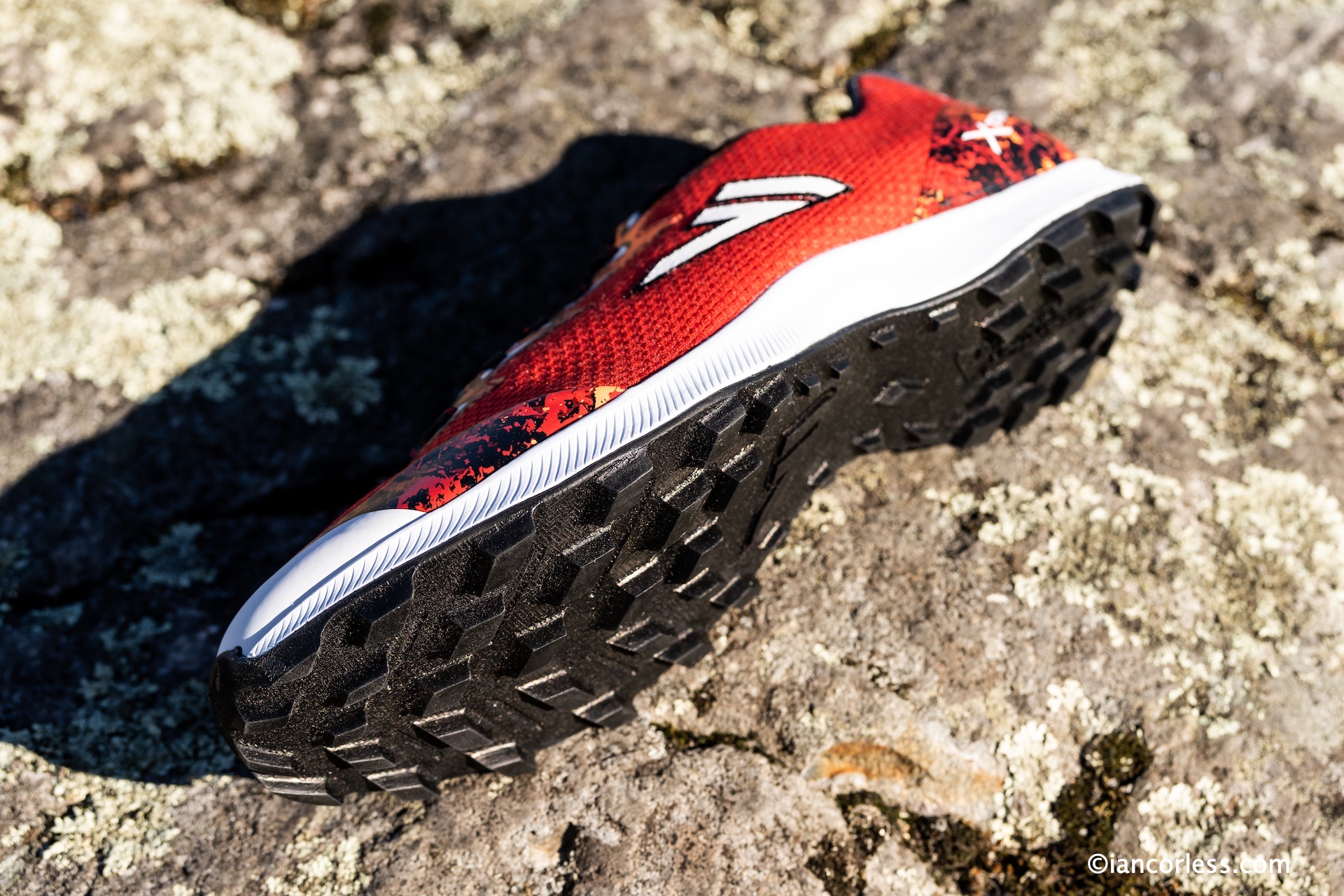
The key to any VJ shoe is the outsole and the incredible grip that this outsole provides. The XTRM had 4mm lugs, the same as the MAXx but not as long as the iRock and therefore it was the ideal shoe for say skyrunning.
However, two things were often heard when fellow runners discussed the XTRM:
I just wish there was a little more cushioning.
I wish they could be just a little wider.
Well, the XTRM2 addresses both these issues and brings a couple of newer developments.
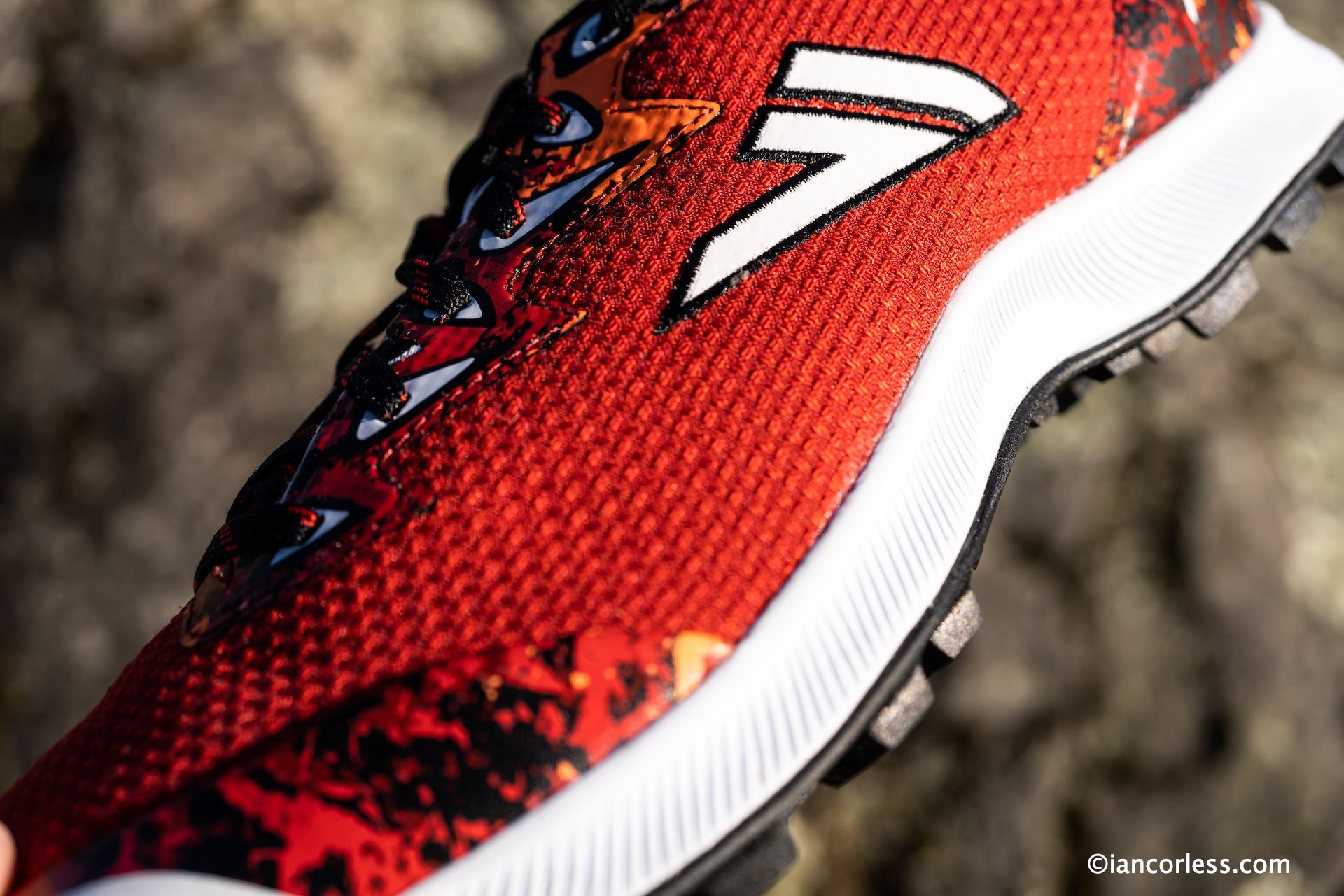
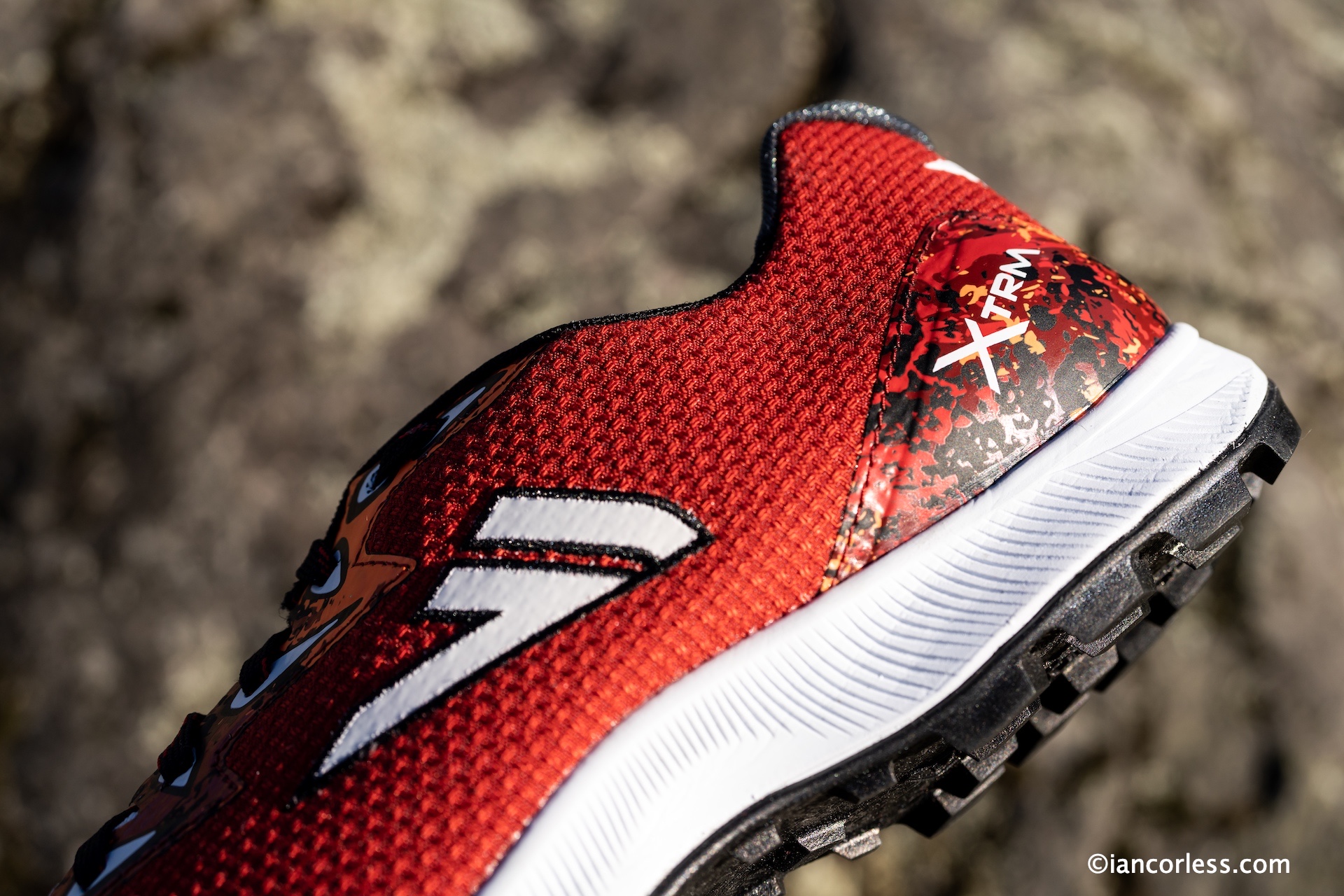
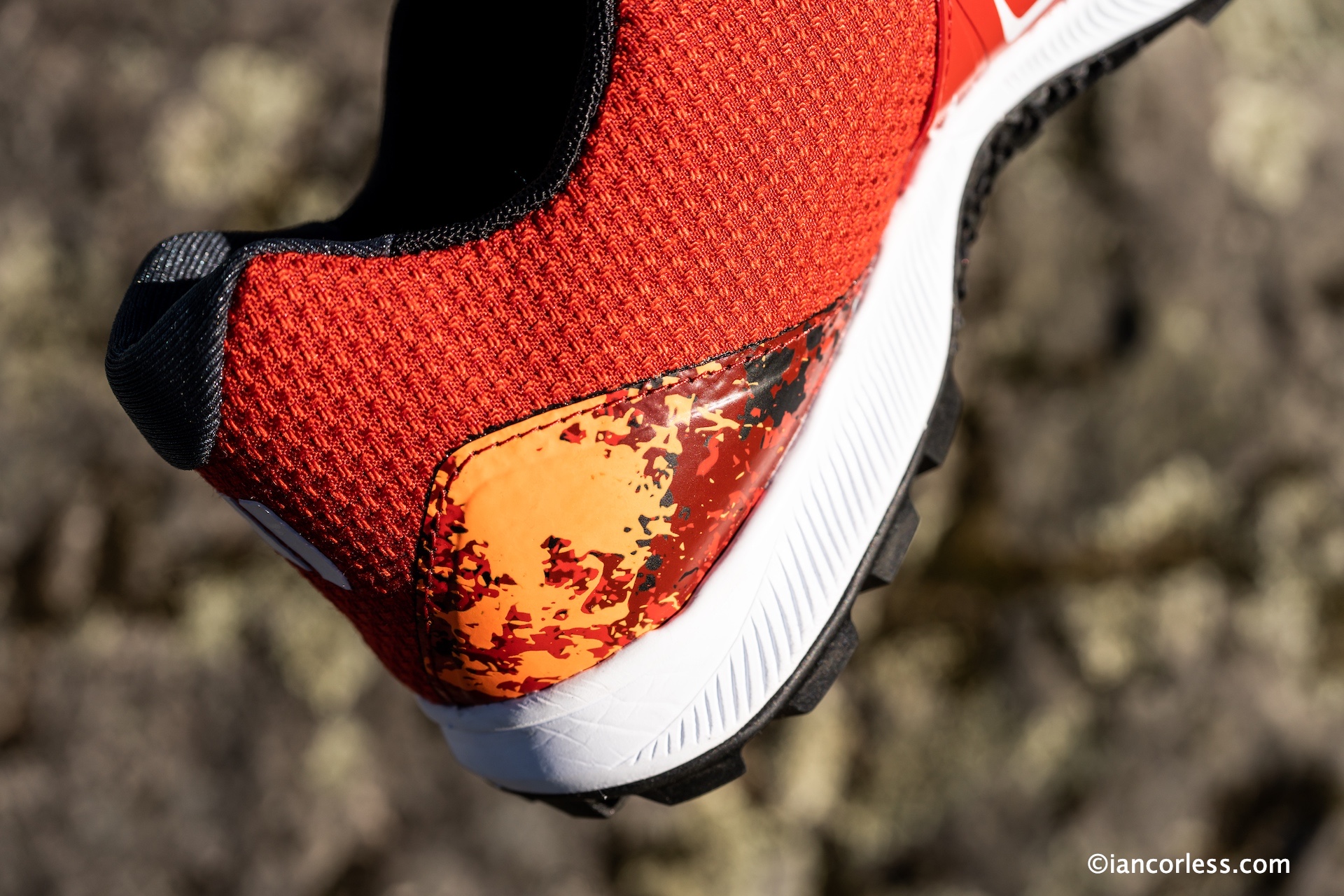
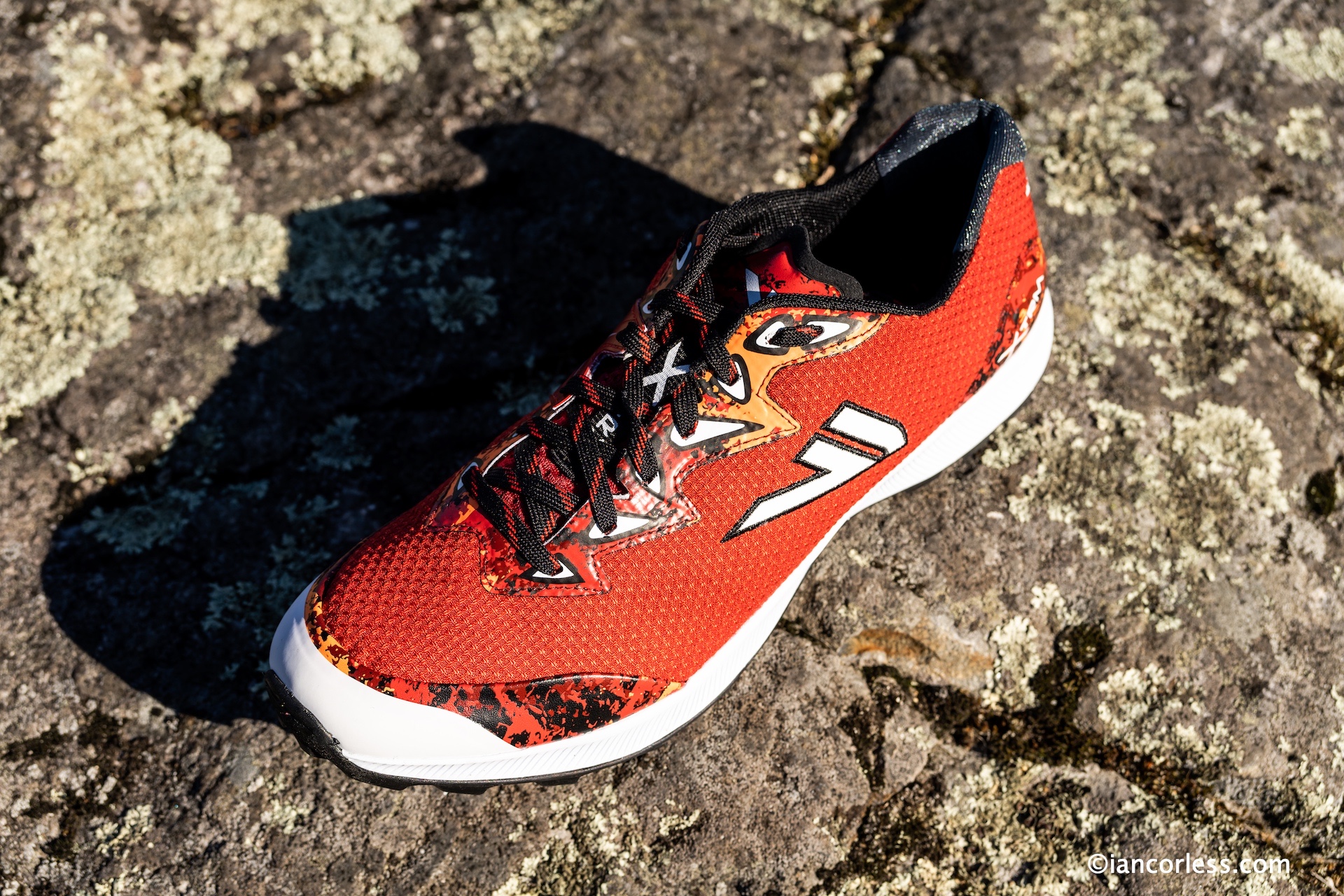
You should never judge a shoe by how it looks, and yes, some of you may love the look of the new XTRM2, I do not! Red is always great and when combined with black, superb. Look at the VJ Sport iRock HERE – now that is a nice-looking shoe! But this XTRM2 looks like someone had a little too much alcohol and dope in Hawaii and then designed the shoe. It’s a ‘me’ thing. Sorry.
Gladly, I can get past the looks because I know that a VJ Sport shoe will do all that I want and do it well.
As mentioned, the XTRM2 is designed to fit between the iRock, which is a short distance and soft-ground shoe and the MAXx which is a longer distance trail/ mountain shoe. Of course, there is now the ULTRA too. That is for the long stuff.
Quite simply, if you loved the XTRM, the XTRM2 is going to make you smile. I had no issues with the original version, however, straight out of the box I welcomed the extra cushioning and the slightly rounder, more spacious toe box.
Drop is 4mm with 10mm cushioning at the front and 14mm at the rear. For perspective, the iRock has 8/14mm and the MAXx 12/18mm.
With a reshaped last, CMEVA cushioning and a rock plate, the XTRM2 is the perfect mountain/ skyrunning shoe.
Pulling the shoe on there is a notable difference with the tongue, it is fastened on both sides. One of the issues in the previous XTRM and MAXx for that matter, was the tongue would move when running – often moving to the left or the right. This has now been addressed and in all my test runs so far, the tongue has remained in place and secure.
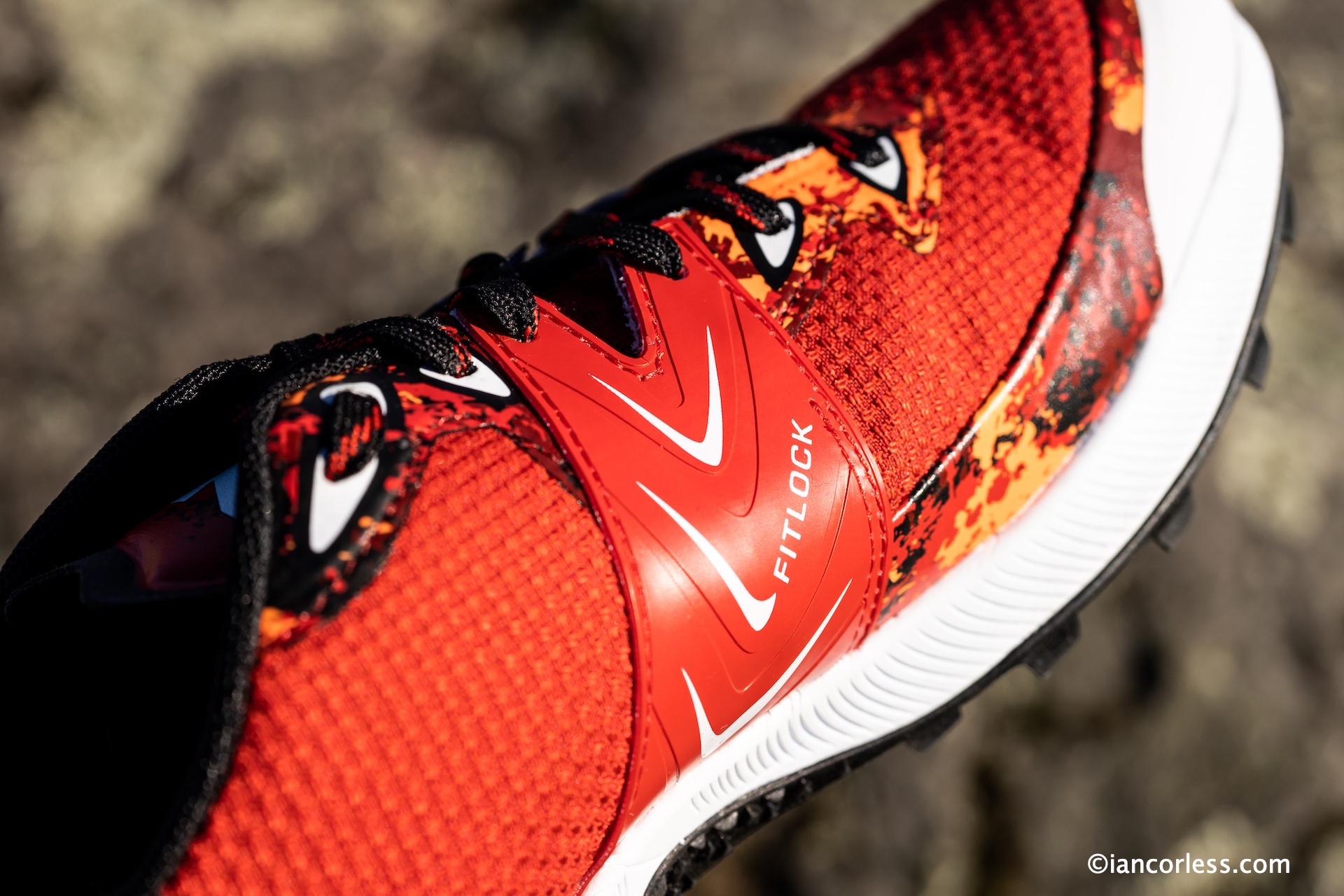
Fitlock is a VJ Sport secret weapon and is one of the USP’s of the VJ brand. Once you have put your foot in the shoe, as you tighten the laces, the Fitlock grabs hold of the instep/ arch and holds it tight and secure – exactly what is required in mountainous and technical terrain when you need the shoe to be precise. With the more spacious XTRM2 toe box, this new Fitlock is even more welcome. I was initially worried if I would lose some of the precise feel at the front end, not so, the Fitlock compensates.
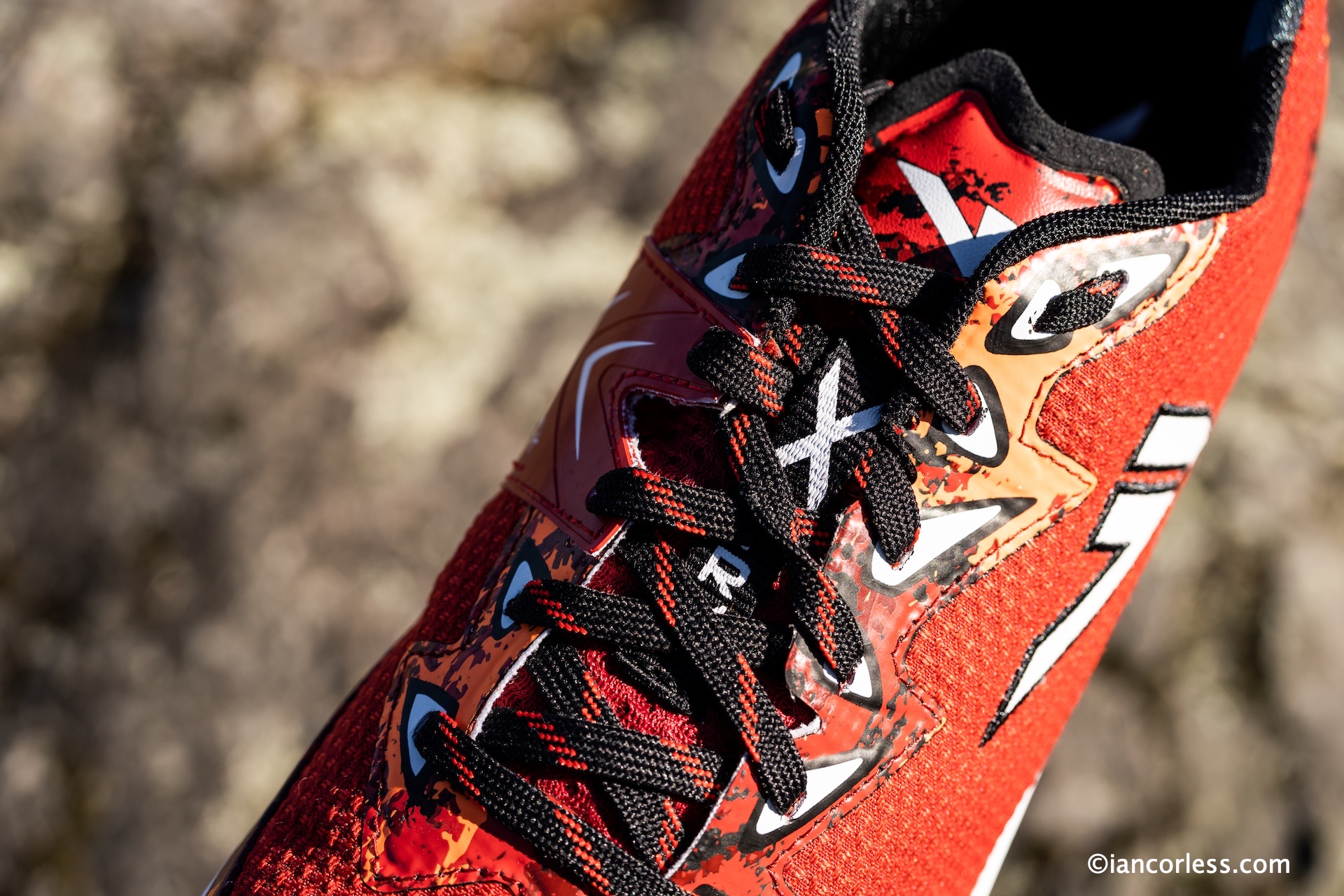
The lacing is classic with 6 eyelets and the addition of a 7th eyelet on both sides should you require to lock lace or similar. There is reinforcement here ensuring that the laces can be pulled tight without causing any issue to the upper.
The upper is Swiss Schoeller Keprotec® which is more durable than previous incarnations of the XTRM and it is also more pliable, allowing it to fit the foot better. Look at the old XTRM HERE – I reviewed this shoe back in 2018. Notably look how different the upper is… The original XTRM had many reinforced panels on the upper with a solid extension from the toe box and heel area. It’s a major change. I wondered, by contrast, if the new XTRM2 would feel less secure and sloppy – no. Foot hold has been excellent. The upper is excellent and repels moisture, water and mud.
Toe protection is adequate but could maybe be a little more? Certainly, in a skyrunning scenario when rocks, boulders and hard mixed terrain will be encountered.
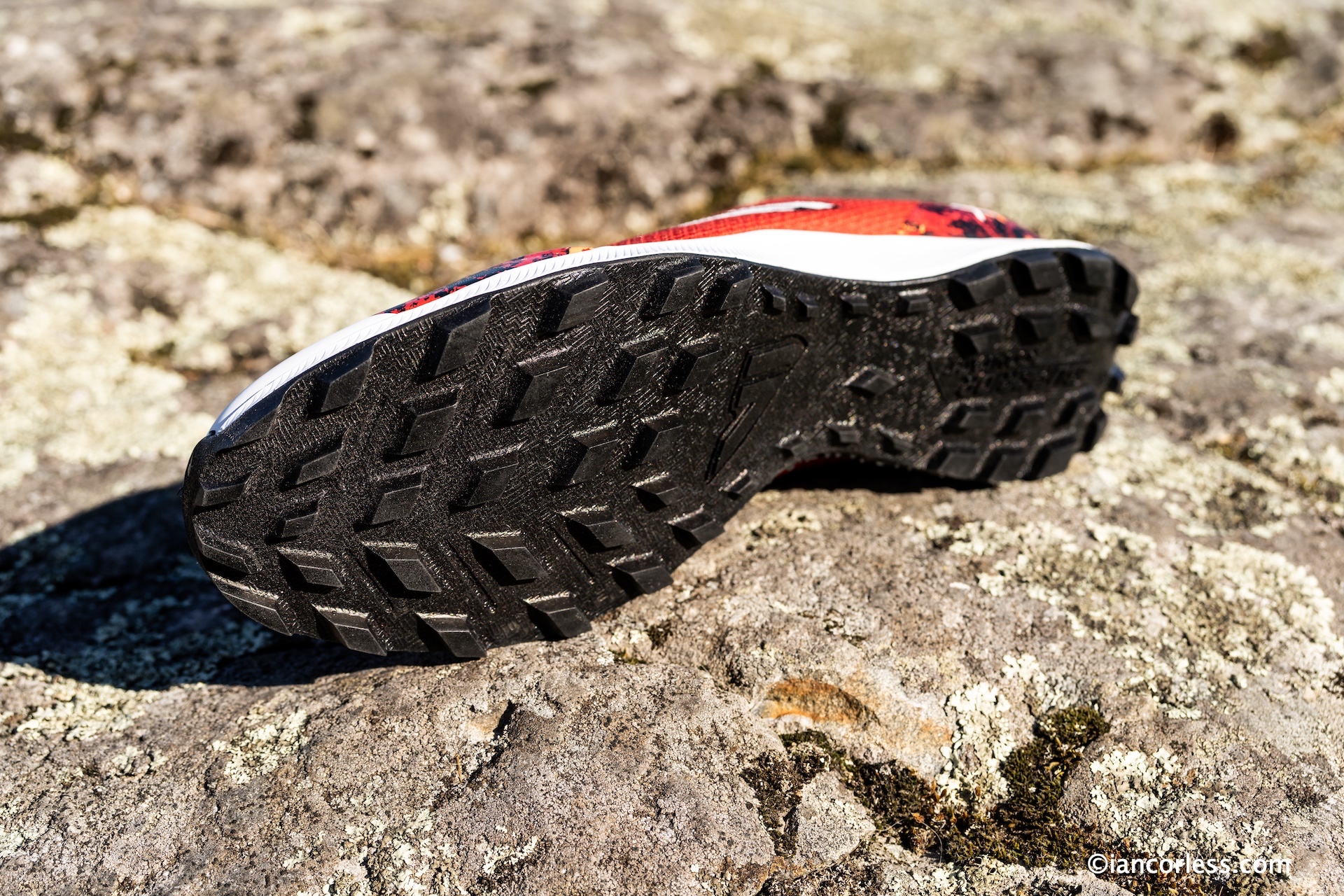
The outsole is a notable difference, the previous XTRM had 4mm lugs, they have now been increased to 6mm and in doing so, they now match the iRock. This is a key and notable change. For me, I would now only need an XTRM2 and MAXx (which has 4mm lugs). I do appreciate though, that the narrower and more precision fit of the iRock would be preferable for some.
The outsole pattern is newly designed to optimize grip on all terrains and with the 6mm lugs, you now have an outsole that can handle softer ground. There is little to say about the grip of the outsole, VJ have the tagline ‘bestgripontheplanet’ and it is. No outsole from any other brand matches the grip, wet or dry, of a VJ outsole. However, be warned, that grip comes from a wonderful soft and grippy superior contact – it will not last and last and if you run too much road, that longevity will be reduced greatly. You cannot have amazing outsole grip and long life.
There is a torsional rigidity in the shoe that is very noticeable when running on uneven and rocky terrain. If you have the Fitlock laced up and tight, the XTRM2 gives superb precision.
Flex and life are superb, and the propulsive phase is superb. There is a real ping behind the metatarsals when pushing off.
Weight is incredible, VJ list 250g for a UK8. My UK10 is 289g.
I am always a UK9.5 in test shoes, however, I have noticed with extended use in VJ that I have often wished I had gone a half-size larger, so, with the XTRM2 and SPARK (review to follow) I decided to go to UK10. It was a good choice; I have found that extra space welcome. So, you may want to check this when purchasing.
CONCLUSION
Fitlock and a VJ outsole and you have a perfect shoe when precision and grip are required. The XTRM2 with a new upper, a new last, more cushioning and lugs increased to 6mm, and you now have the perfect trail/mountain and skyrunning shoe for short to middle distance. There are few shoes out there that can compete with VJ when this combination of elements is required. It is highly recommended.
Are there any negatives? I found prolonged running on hard surfaces (gravel road a good example) eventually tiring, but that is no real surprise. The outsole is soft and sticky and if you use on the wrong terrain, it will not last. I really dislike the look of the shoe, which is a petty thing to say, but the ‘look’ could put some people off before ever having the chance to run in the shoe and then find out how good it is. However, I may be alone in finding the look displeasing?
Ultimately, the XTRM2 is a superb shoe with incredible fit and grip.
Ask any experienced mountain or skyrunner, what is the ‘best’ race and route, more often than not, the answer will be ‘Kima!’
Trofeo Kima in Italy has long been the dream of many a runner who loves a challenge at the max level. Taking place every other year, the race really gained notoriety when UTMB was hit by bad weather and a certain Kilian Jornet decided to take a fast exit out of France and stand on the start line of Kima the next day.
History was made, Kilian has returned again and again and, in his words, it is one of ‘the’ best races in the world that mixes running and alpinism – skyrunning!
Therefore, any shoe that is named after this iconic route had better be good!
Let me just say, from the start, this may well be ‘one of’ the best mountain running shoes I have ever tried. I place it up there with the best that VJ Sport offers in terms of fit, comfort and grip. Trust me, if you read my shoe reviews, you know I regard VJ as the Holy Grail when it comes to perfect shoes. It also matches the best from La Sportiva.
Scarpa in recent years have gone from strength to strength with shoes and design. A huge contributing factor was the arrival of legendary WMRA and skyrunning champion, Marco de Gasperi. Marco was there on the slopes of Alagna, aged just 16 when skyrunning was born. There are few that know the sport better!
And as for the Trofeo Kima route, he has raced it and in recent years set the FKT (7:53:41) for the completion of the course.
“…mountain lovers who face this technical and very hard route take three days, sleeping two nights in the refuges: a journey that is completed by dancing from rock to rock along with eight alpine passes above 2,500 meters (Barbacan, Camerozzo, Qualido, Averta, Torrone, Cameraccio, Bocchetta Roma and Corni Bruciati) before jumping headlong towards the finish line.”
All of the above can be felt in this remarkable shoe.
I could stop here and just say, go buy them! But at £190.00 a pair, you may take a little more convincing.
The Shoe
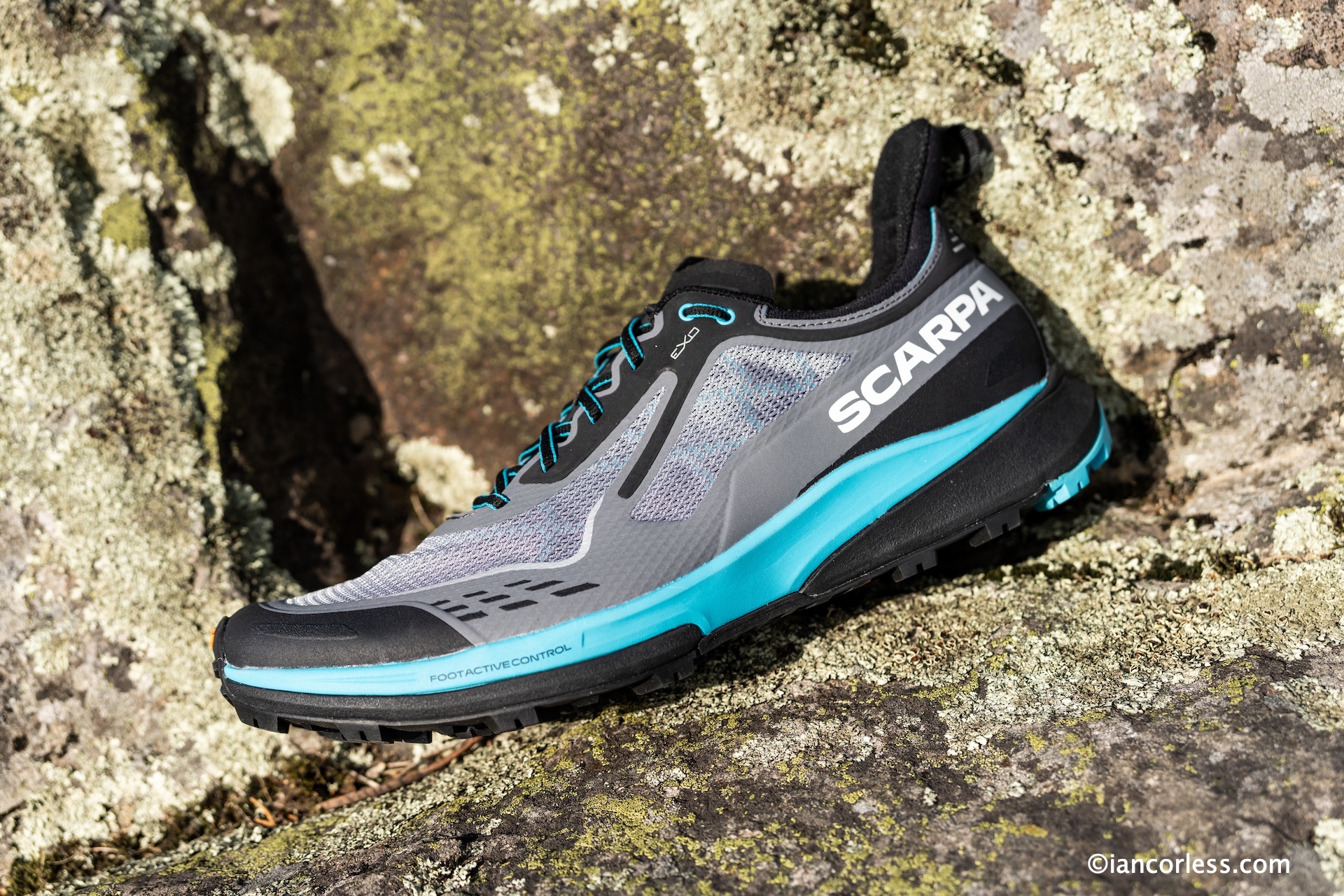
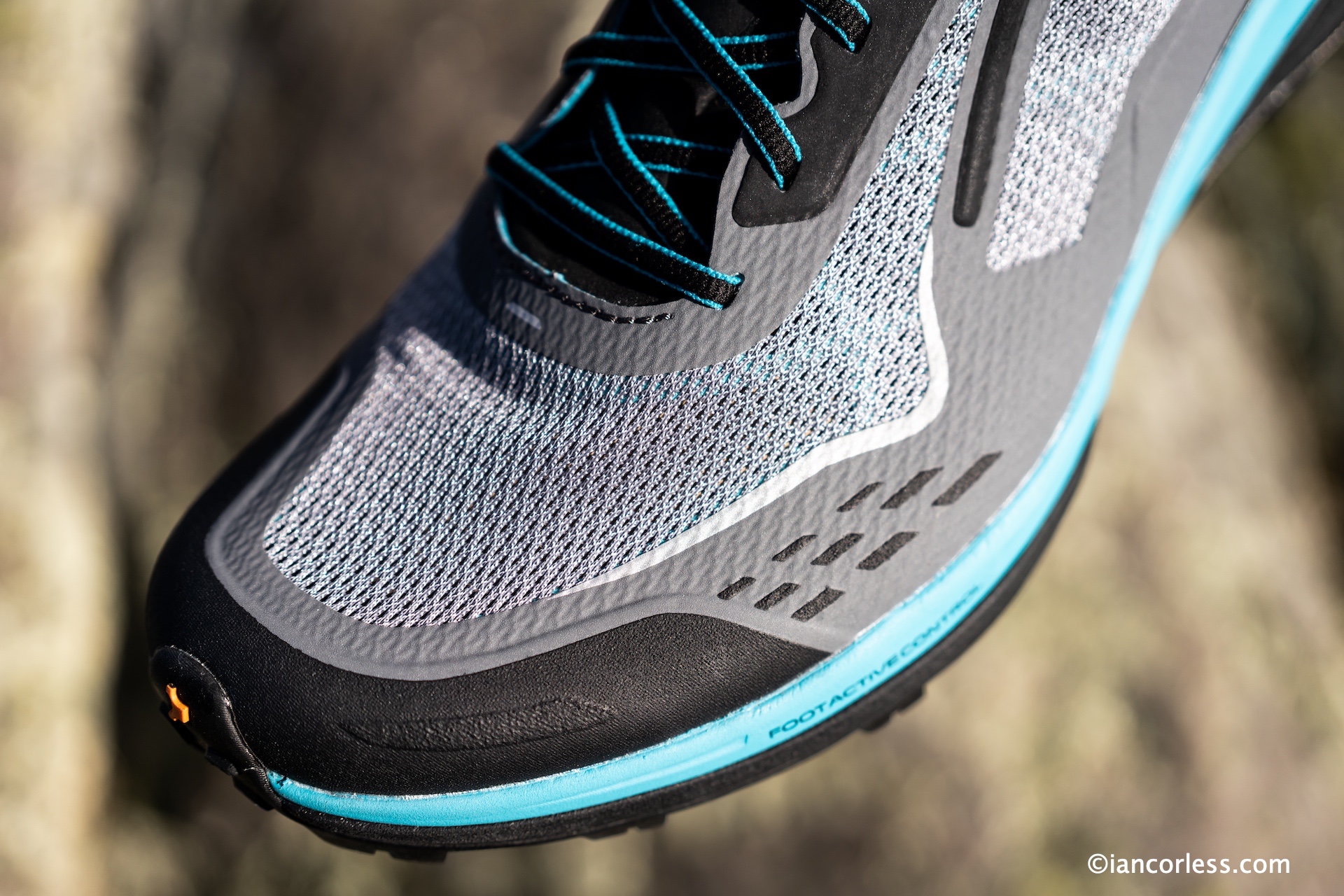
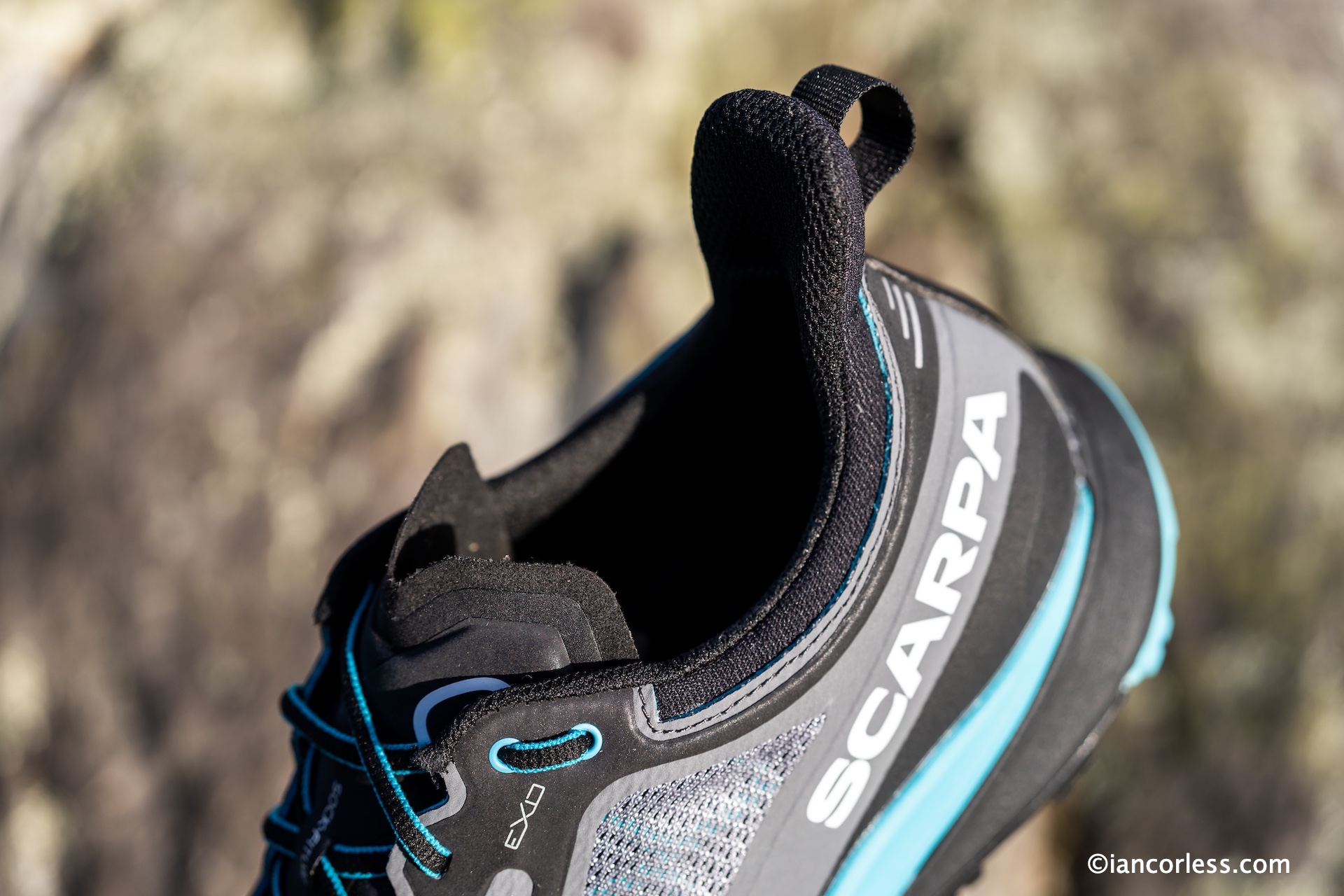
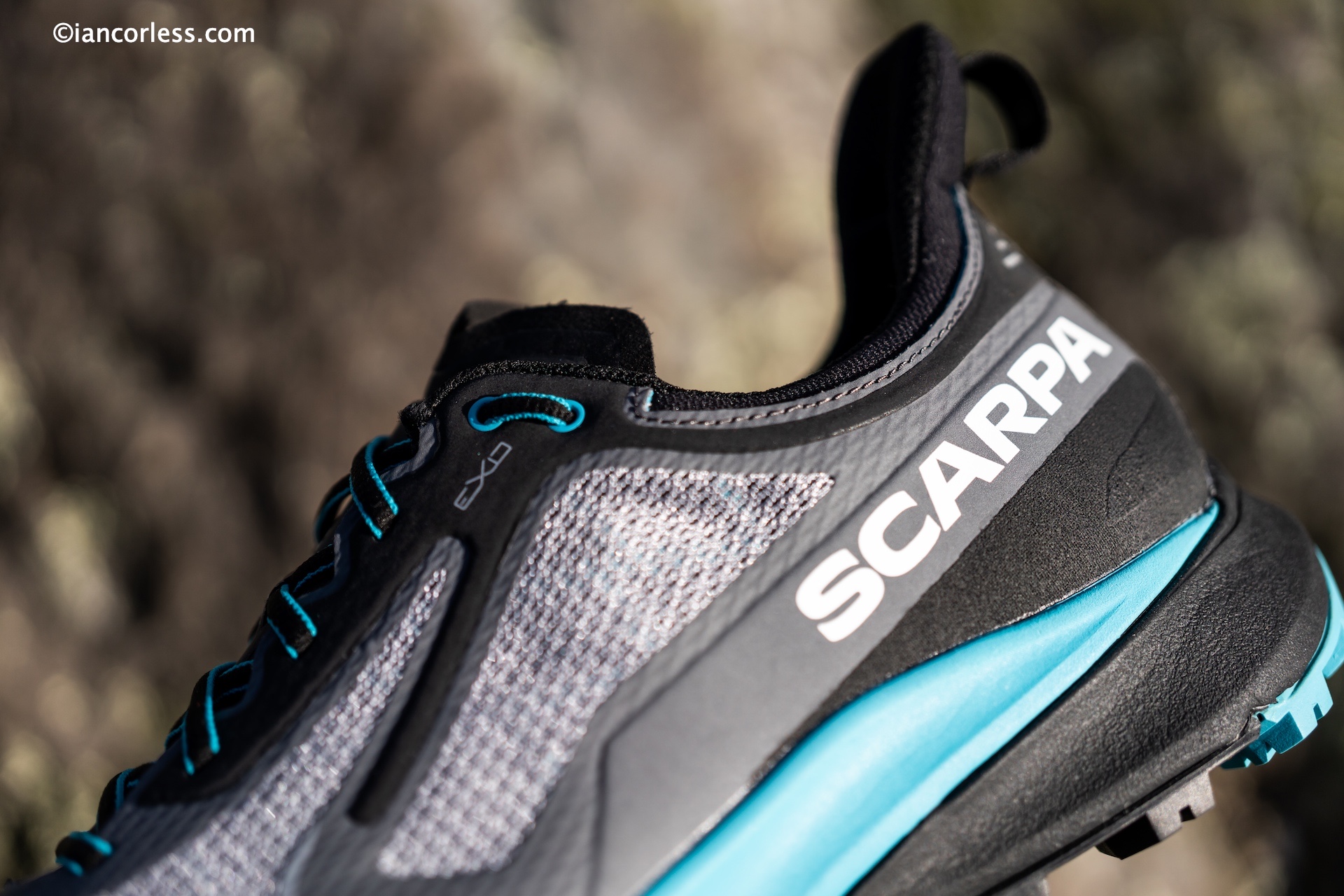
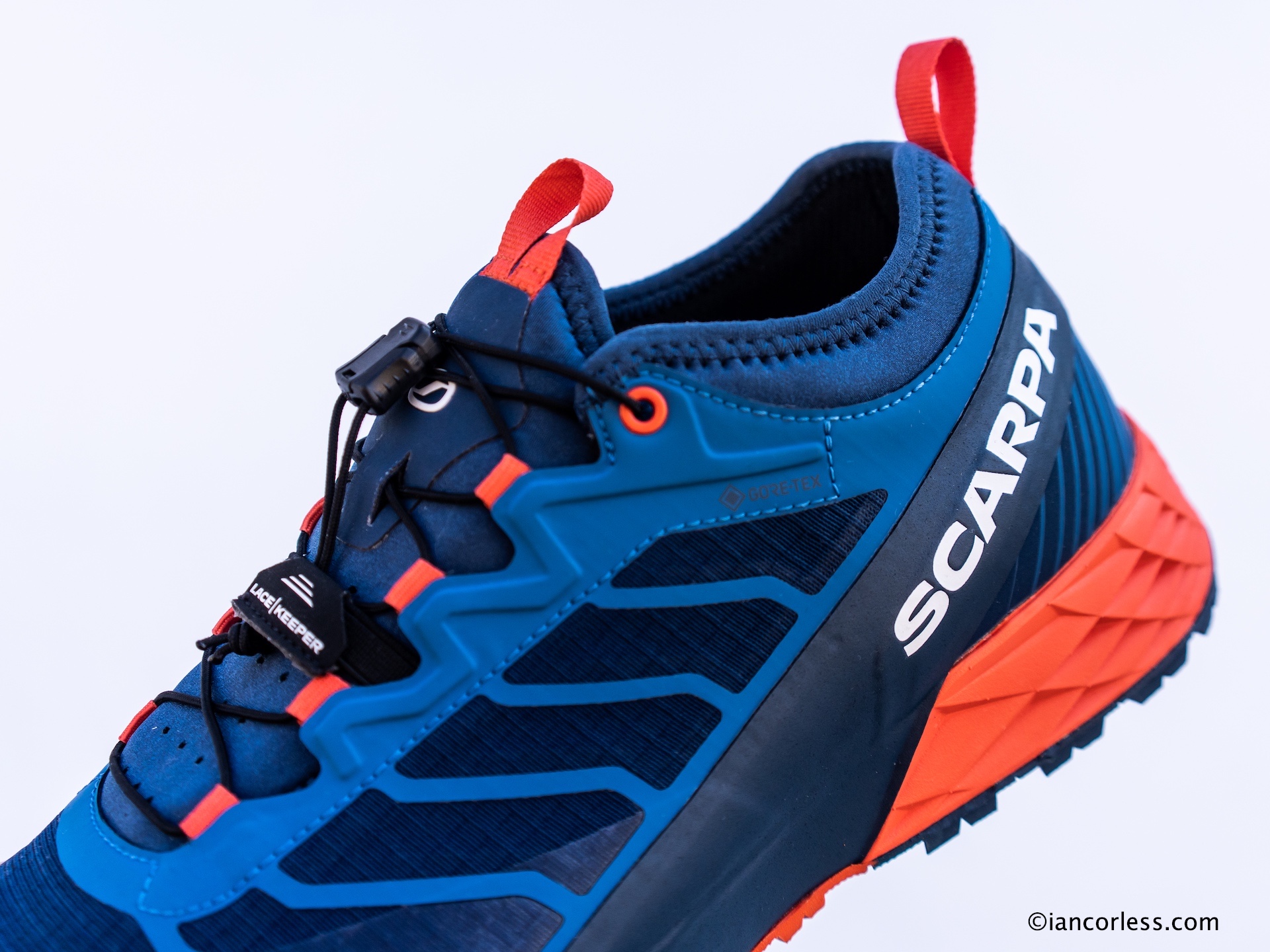
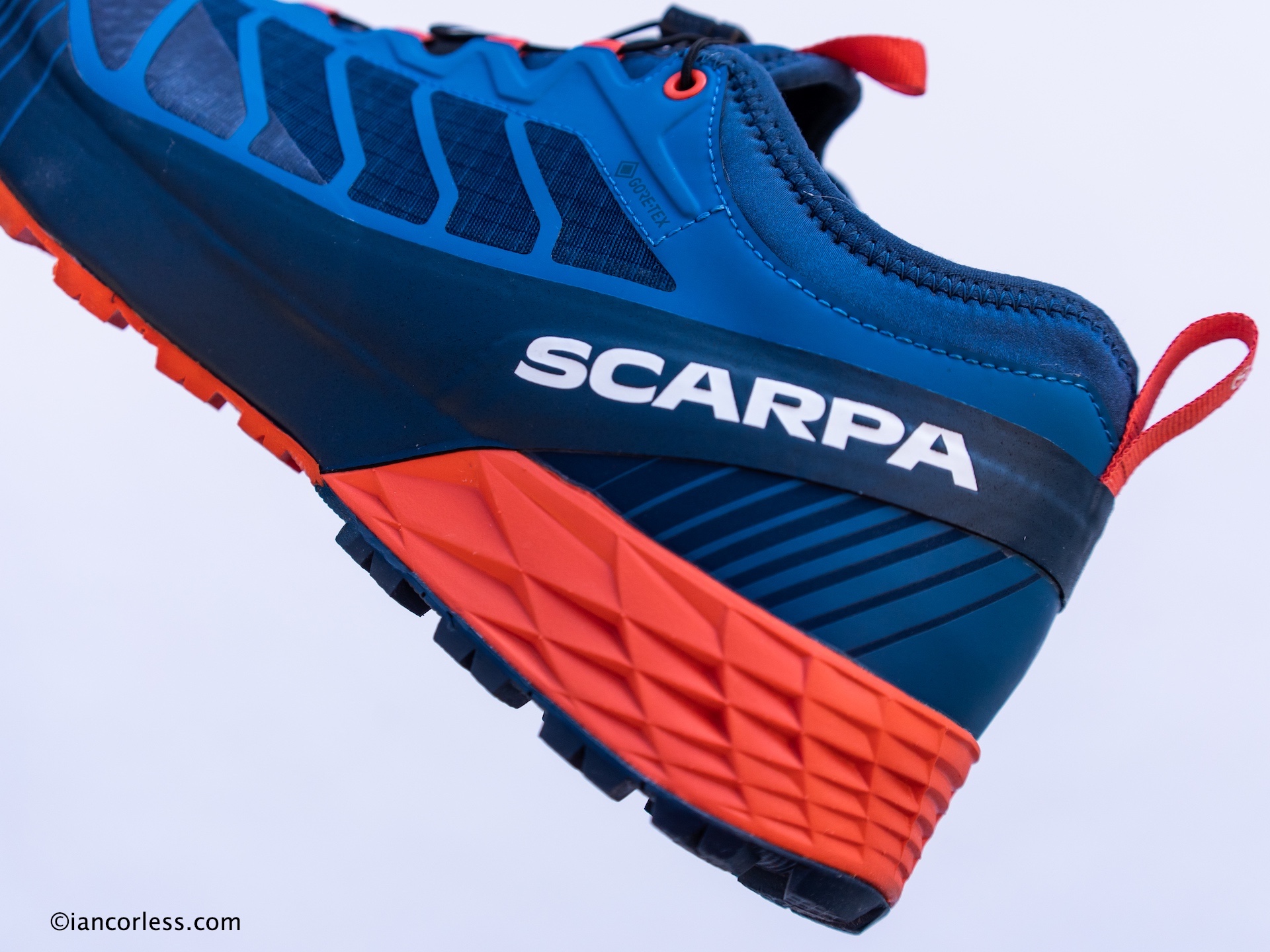
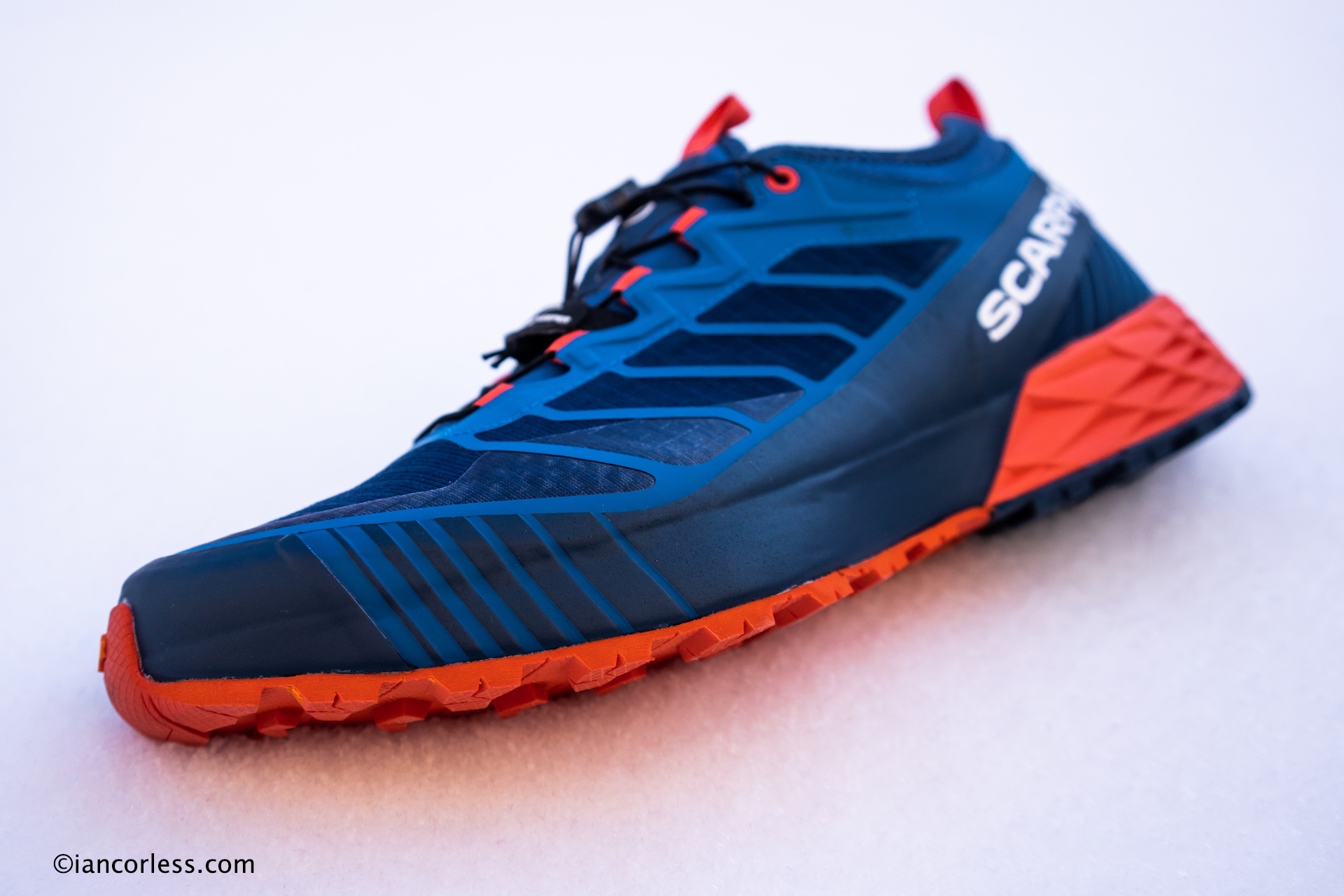
Out of the box, a great looking shoe, a mix of black/blue/grey which Scarpa list as Grey-Azure. The women’s version is light grey/ aruba blue here. They are light, especially for such a robust looking shoe. Noticeable is the toe bumper, the cushioning/ outsole and the high heel area that is designed to protect and support the achilles.
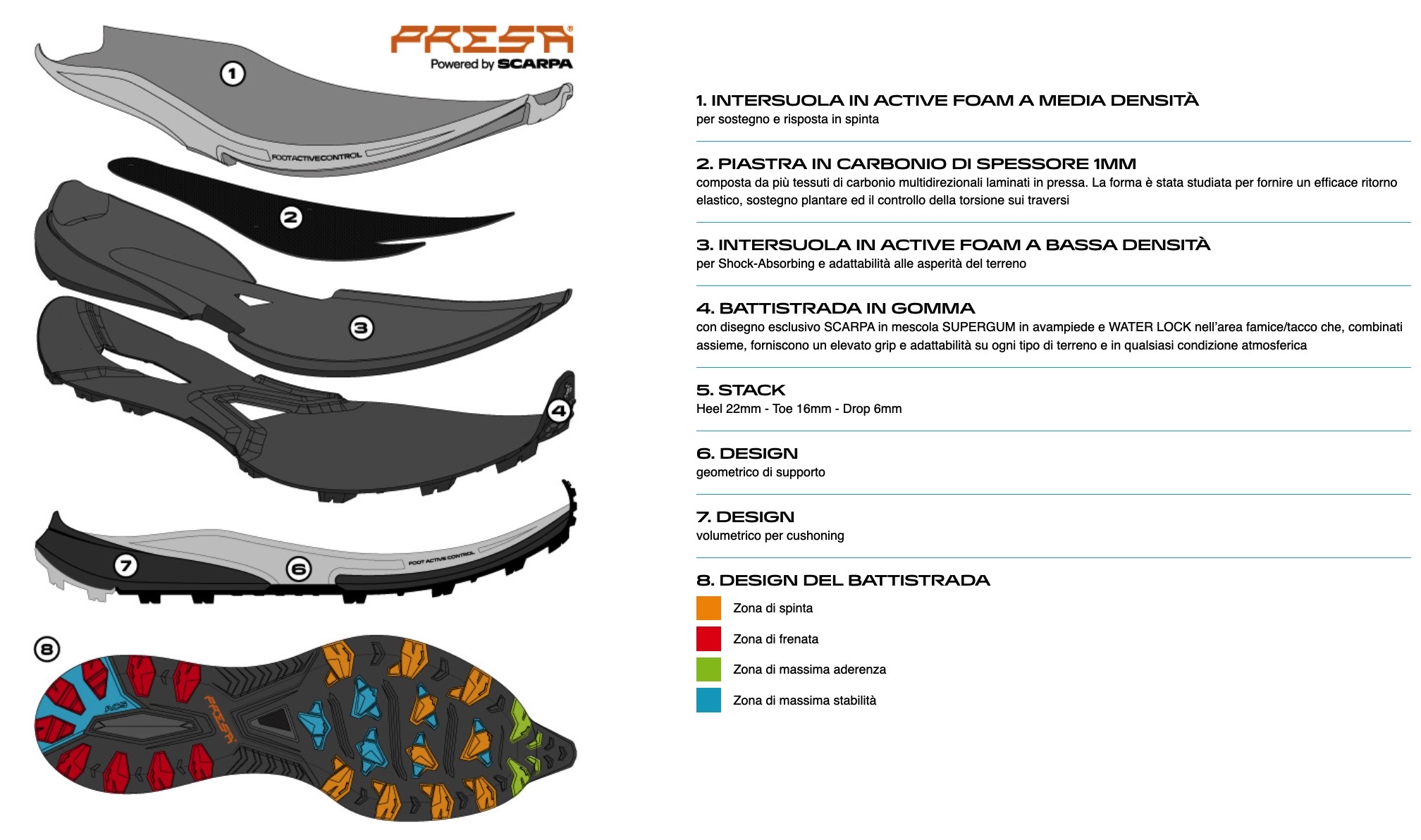
Cushioning is 22mm at the rear, 16mm (women’s 21mm/ 15mm) at the front and the addition of an enclosed carbon plate only makes the 290g (UK8) weight even more unbelievable.
Carbon plate visible in the middle.
When I saw the carbon plate, I flinched a little. My experience so far with carbon plates in trail shoes has not been good – often it has added weight and made for a lifeless feel with little or no flex. Not here in the Golden Gate Kima, on the contrary, I was not aware of the plate until I ran and then two key things were noticeable: 1. There is a return in energy and comfort, particularly on hard, technical trail/ rock. 2. The plate act as a rock-plate offering increased protection. Quite simply, this is the best shoe I have tried with a plate and in all honesty, I am putting it out there now and saying that the Golden Gate Kima is arguably the best mountain shoe I have ever used… A bold statement!
There are so many aspects to this shoe that are so right, that the moment you slip them on, you smile. The fit is just amazing. It has a ‘sock-like’ internal construction which when laced up just holds the foot secure, reassured and comfortable. Everything I want in a mountain shoe. Amazingly, even when laced tight, they manage to avoid hot spots or pressure points.
At the front, the shoe opens up in to a wide toe box, which on a scale of 1-5 (1 being narrow) sits at a 4. This is quite unusual for a shoe that is so obviously designed for technical and challenging running. But it works. There is room for those with wider feet and for those with narrower feet, you get toe splay. Normally this would not work for me in a mountain shoe, I like my foot to feel held, secure and un-moveable, this only confirms how good the middle of the shoe is and how the lacing and sock-like fit gives you all the security you need.
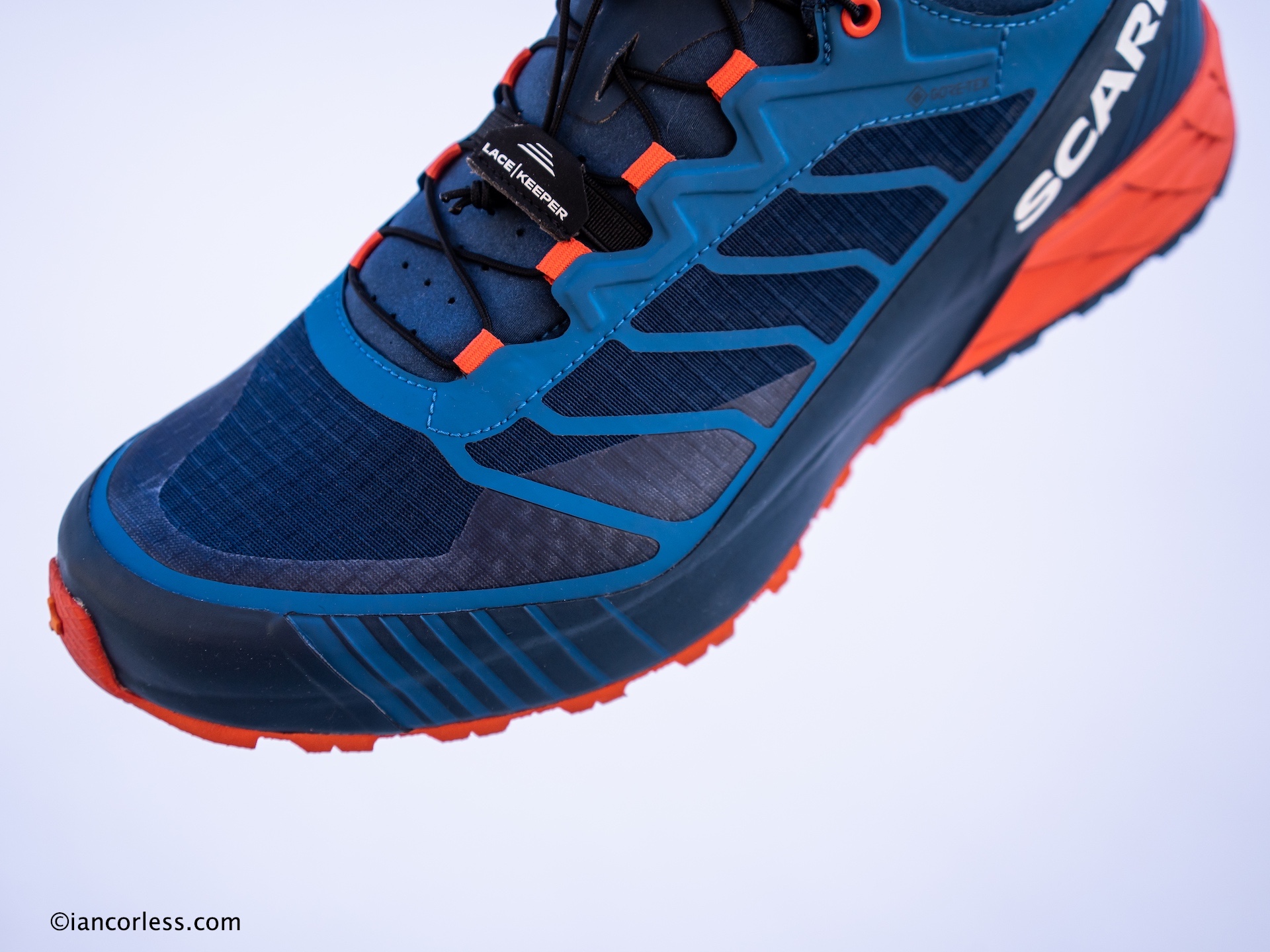
The upper has a double construction with structure coming from microfibre and anti-abrasion mesh which adds durability but still allows for breathability.
Toe box is superb with arguably one of the most protected front ends I have found in a run shoe.
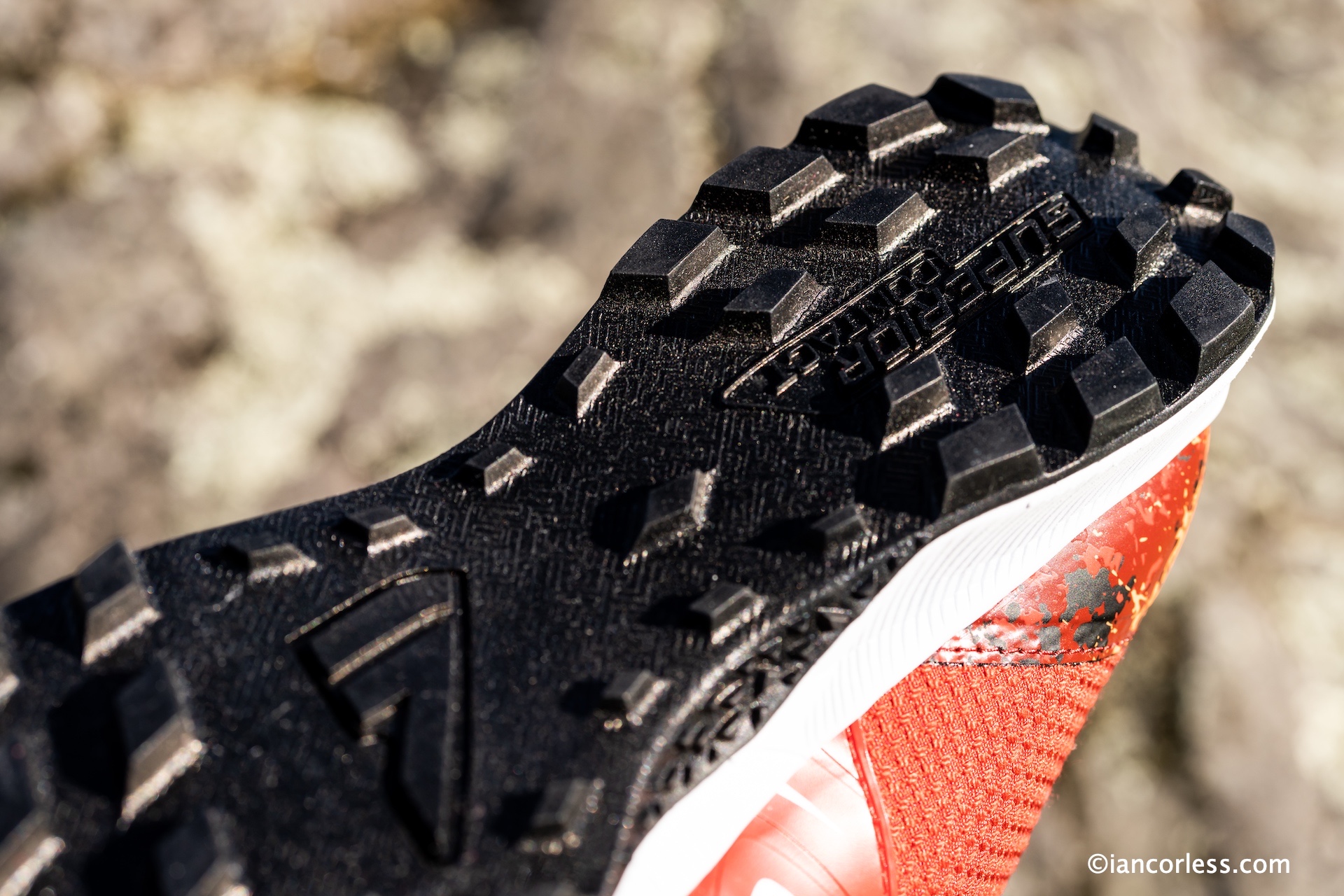
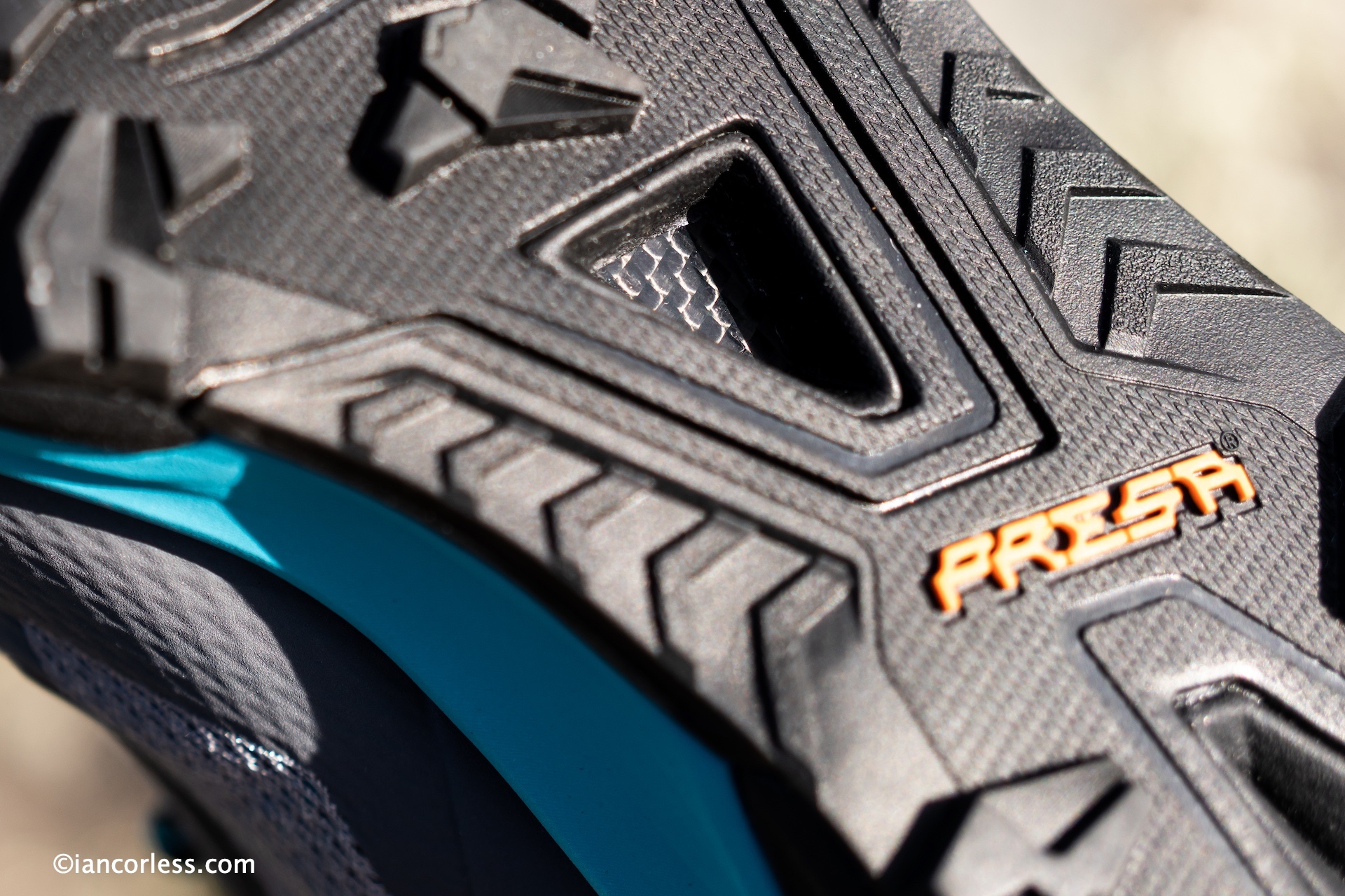
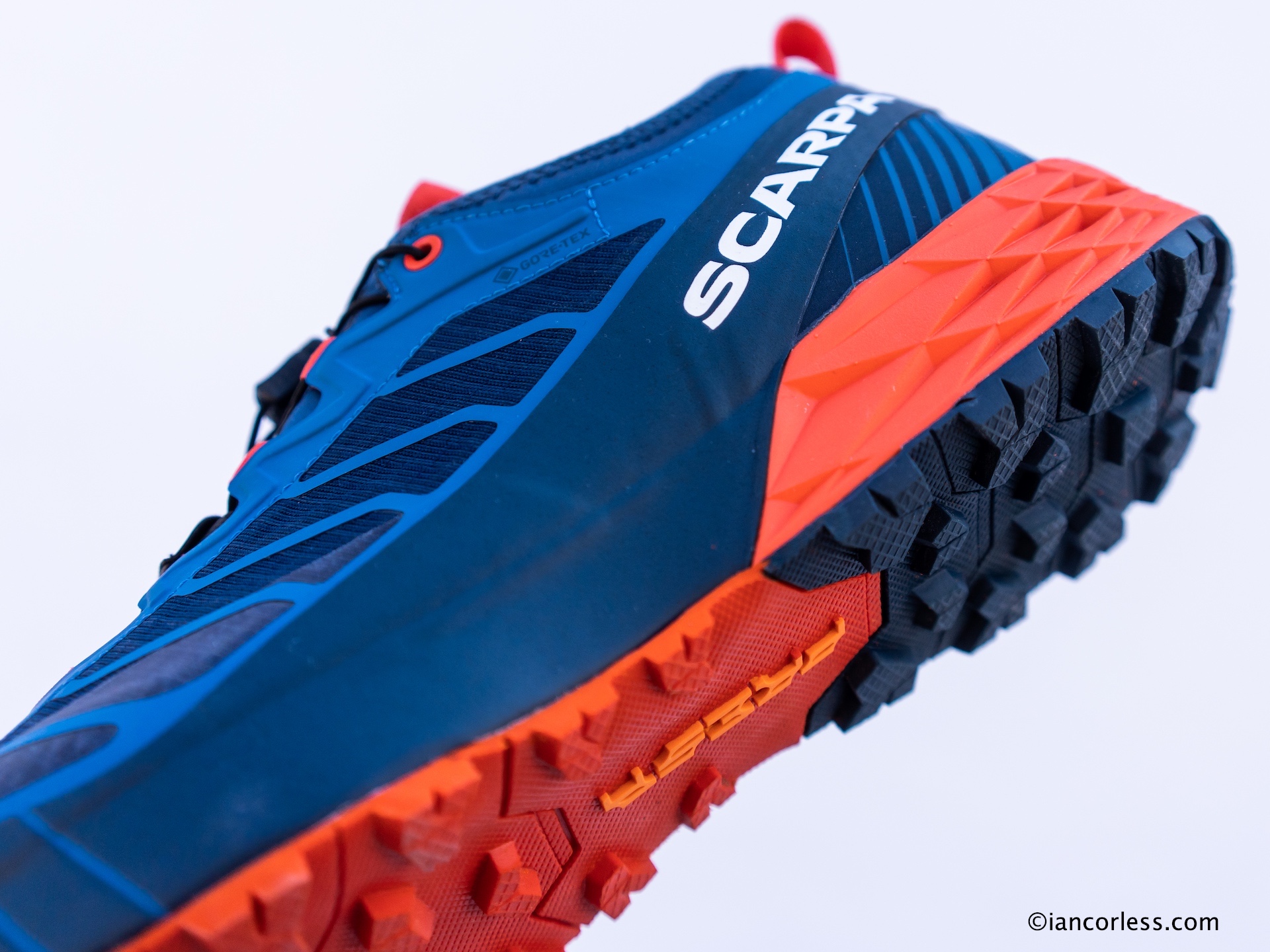
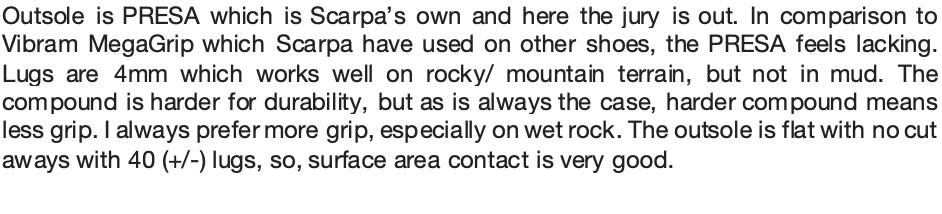
The outsole is Scarpa’s own Presa which I must be honest and say in past Scarpa shoes has left me perplexed. Not here in the Golden Gate Kima. There has been a significant re-working and the ‘SuperGum’ 4mm lugs are a dream on rock offering stunning grip. However, on wet UK Lakeland rock they were less secure.
Cushioning is unusual. They are neither cushioned or firm but sit somewhere beautifully in the middle offering a superb feel for the ground without being harsh. The cushioning allows for comfort but without being squidgy. The combination of elements, which has double density foam wrapped around a 1mm carbon fiber plate gives an amazingly precise, lightweight, cushioned and reassured ride that adds energy to the run. I don’t know how Scarpa have managed it, but they have! This shoe has ground feel, precision, comfort and energy rebound in a package that feels light and fast. Flex behind the metatarsals is superb, so, the propulsive phase is not compromised. It’s difficult to believe a plate is in the midsole, but it is, you can see it.
Women’s shoe with 100’s of KM’s and the 65km Transgrancanaria race in them.
It’s one of the best mountain/ skyrunning shoes I have used. The Golden Gate Kima goes head-to-head with VJ Sports XTRM and MAXx and dare I say it, equals them! The VJ’s are the go-to choice for many based on the stunning outsole and superb foot hold. However, many say that VJ are too narrow and are not cushioned/ protective enough. The Golden Gate Kima addresses all those issues and summary provides:
Cushioned comfort without a loss for ground feel or control.
Incredible foot hold with a superb sock-like fit and lacing.
Superb heel protection.
Wider toe box.
Caron plate which adds protection and rebound without compromising ground feel and control.
I could go on about how great these shoes are. Out of the box and straight in to a 25km run and I was smiling and a little amazed at how Scarpa have upped their game in the shoe world. There was much talk about the Ribelle Run but for me, this Golden Gate Kima places Scarpa at a whole new level.
Hard trail, rock and even some road, the shoes just perform. The compromises coming on muddy ground, the outsole lugs are not long enough and some types of wet rock. This is a mountain shoe designed for hard trail and rocks, be that wet or dry and they perform.
Comfort is superb, energy return excellent and importantly precision and control is top-notch. It’s a shoe that can eat time and miles and most certainly, 6-hours in a shoe like this would not be a problem. Of course, this is personal. If you like Hoka-like squidge, bounce, roll and lack of control, this is not a shoe for you. How long could you run in them? It’s so personal it is hard to say, for me a good mountain day out maxing at 12-hours would be a limit.
Although neutral, there does feel to be a little additional support in the arch of the foot. It is noticeable, but not unpleasant. This is no doubt due to the combination of sock-like fit, dual cushioning and carbon plate.
Buy them! It’s as simple as that… If you are heading to the mountains, running technical trails and want a combination of superb features all wrapped up in a lightweight good-looking shoe, you can’t go wrong with the Golden Gate Kima RT.
I have found it difficult to find fault in the shoe. For some, maybe the cushioning is not enough? But remember, the balance between ground feel, control, precision, and comfort is delicate – these are the best out there that I have found along with VJ. In prolonged runs I got some toe rubbing (2nd toe from the right) on my right foot (only the right) – It is where the toe bumper stops and the upper mesh starts. It may be unique to me, my foot shape etc, but worth noting.
The name ‘Golden Gate’ I find confusing. Scarpa make a shoe called Golden Gate ATR which is highly cushioned and a world away from this Kima RT model. The Golden Gate reference initially made me think it was a development of the ATR model.
It looks as though sizing is whole sizes, EU 40, 41, 42 and so on. This may make a compromise for some. I use EU 44 and they were perfect, true to size for me.
At £190.00 they are not cheap, blame Brexit! Much cheaper in Europe. However, based on how darn good they are, for me, they are worth it.
As always, there are other shoes that offer options and VJ with XTRM or MAXx are definite rivals which maybe get the nod due to the outsole. Also, La Sportiva Akasha are a more robust and cushioned shoe and if I was going longer, wanted more security and more long-term comfort, they would win out. The Goldengate Kima RT is without doubt a shoe that will regularly appear in my shoe rotation.
Following on from the recent announcement that Hayden Hawks and Beth Pascall will join the 2022 The Coastal Challenge, today we announce the participation of Italian duo, Franco Collé and Giuditta Turini.
Short term inconvenience and the sun will shine again.
Franco, a three-time champion (2014, 2018 and 2021) and course record holder legend of the gruelling Tor de Géants330km endurance trail will test himself running along the stunning coastline of Costa Rica, starting in Quepos and concluding in the stunning Drake Bay. He will be joined by Giuditta Turini, a ski mountaineering star and recently also in trail running. In 2021, Giudy has won Orobie Skyward and Etna Trail and had two significant 2nd places at TDS and 90km du Mont-Blanc.
Franco in Sardinia
No doubt, The Coastal Challenge and Costa Rica’s heat and humidity will bring an early season challenge for the duo.
Franco has a stunning set of career highlights (for trail running) starting in 2012 with two victories at Gran Trail Valdigne and Cervino X-Trail but it was here that his love affair with Tor des Géants started with a 5th place. In 2013 at ‘Tor,’ he placed 3rd and wonGran Trail Jensen, Gran Paradiso Trail, Cervino X-Trail and Gran Trail Courmayer. 2014 was a key year bringing his first ‘Tor’ win in 71h 49m. What followed is a stunning CV of mountain, trail and Skyrunning results with top-raking places at Transvulcania, Ultra SkyMarathon Madeira, High Trail Vanoise and more, culminating recently with a ‘Tor’ course record of 66h 43m.
Giuditta leading her team, Monte Rosa SkyMarathon
Giuditta, known for her ski mountaineering was a late starter in the trail world with significant results starting in 2017. In 2019, she hit a purple patch with 4 victories winning DoloMyths Run Sellaronda Trail, Valmalenco Ultradistance Trail, Adamello Trail and Ultratrack Supramonte Seaside. In 2020 she won SwissPeaks 170 and then has had a stunning 2021 season.
Giuditta Ultratrack Supramonte, Sardinia
In addition, both Franco and Giuditta have used their ski and running abilities to excel at the Monte Rosa Skymarathon, a very unique race by the International Skyrunning Federation.
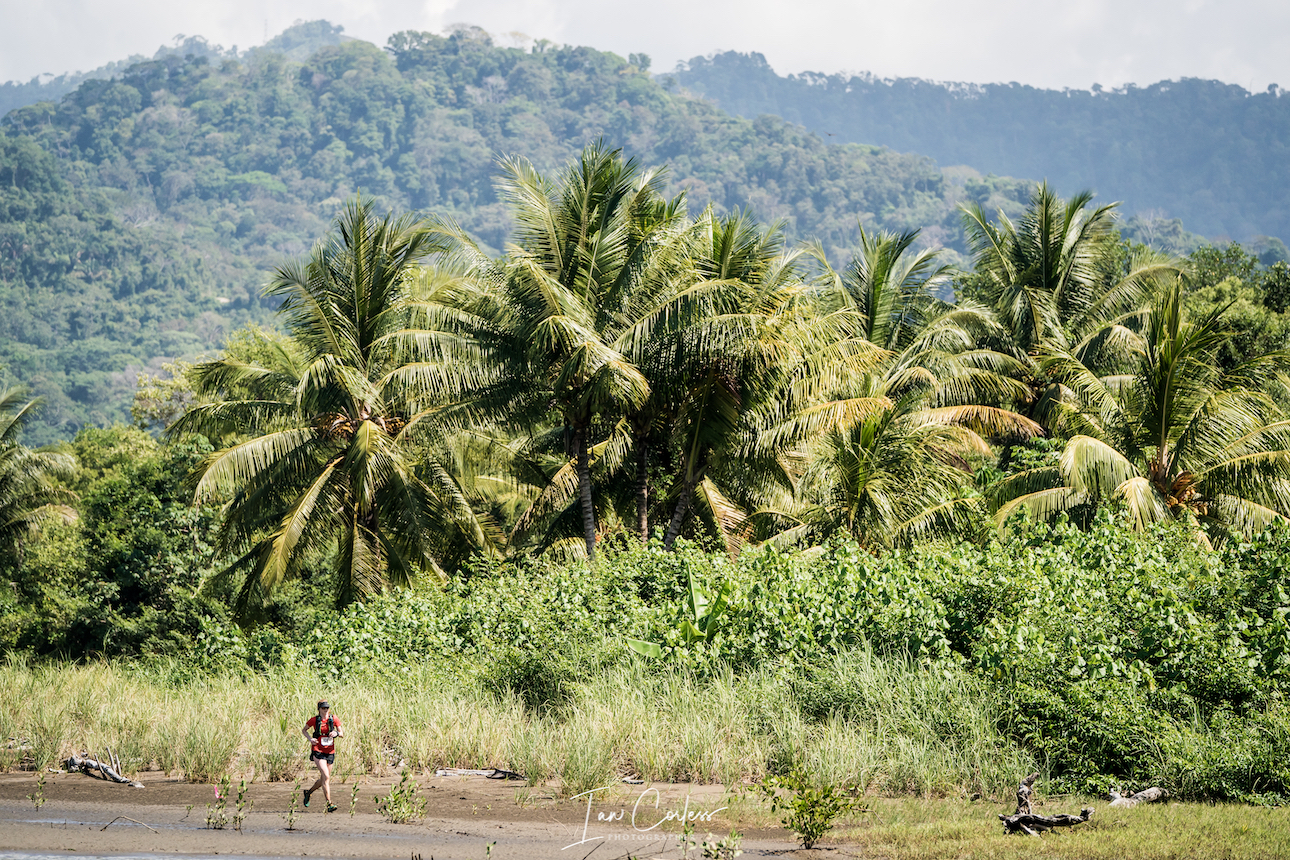
Considered one of the top trail running races in the world, TCC is much more than that. A supported multi-stage trail running race, every runner will test their mental and physical strength. Participants will traverse jungle and rainforest trails, run mountain trail and single track across ridge lines, pass though highlands and coastal ranges; there’ll be beaches, rocky outcroppings and reefs, river and estuary crossings, and miles of river to wade through. Concluding in Corcovado National Park, Drake Bay is one of the premier rainforest experiences in the world as well as a Unesco World Heritage site.
With two races available, an Expedition Run of 230km and an Adventure Run of 155km – TCC is a race not to be missed!
230km and 10.000m+
Join the race in 2022, February 5th to 12th, registration HERE
Please note, TCC requires full vaccination and documented proof will be required.
Please support this website. I believe everyone deserves to read quality, independent and factual articles – that’s why this website is open to all. Free press has never been so vital. I hope I can keep providing independent articles with your help. Any contribution, however big or small, is so valuable to help finance regular content. Please support me on Patreon HERE.
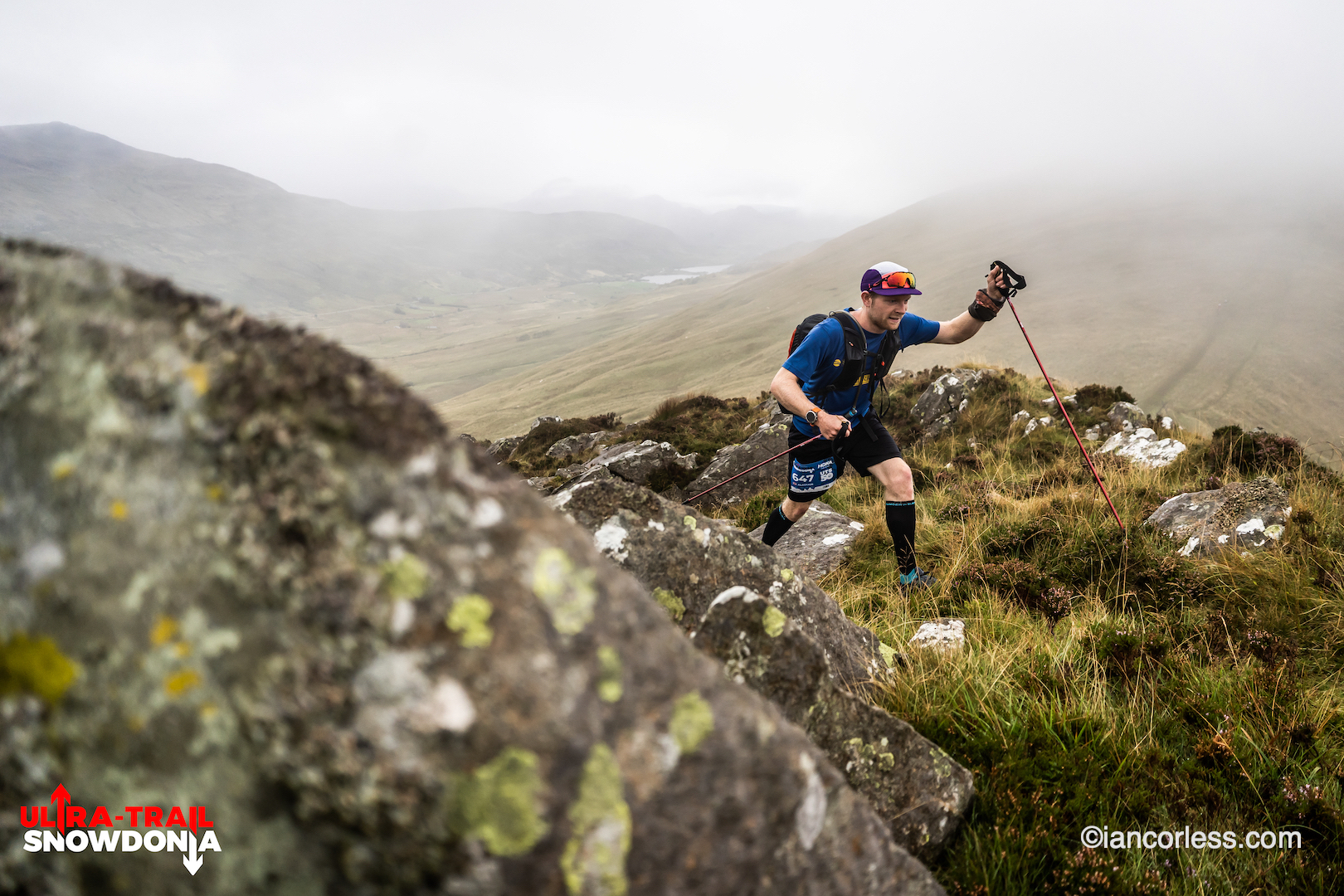
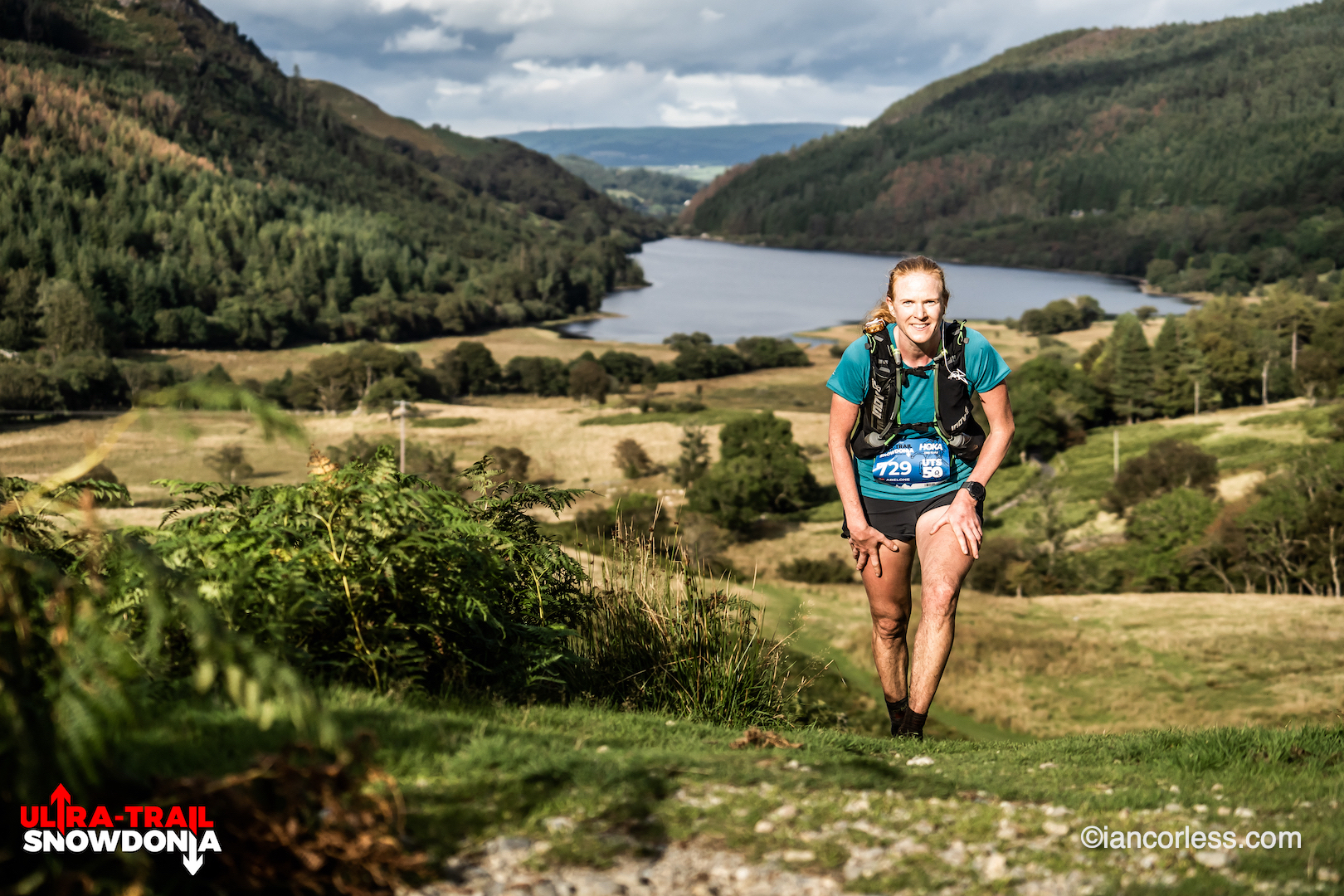
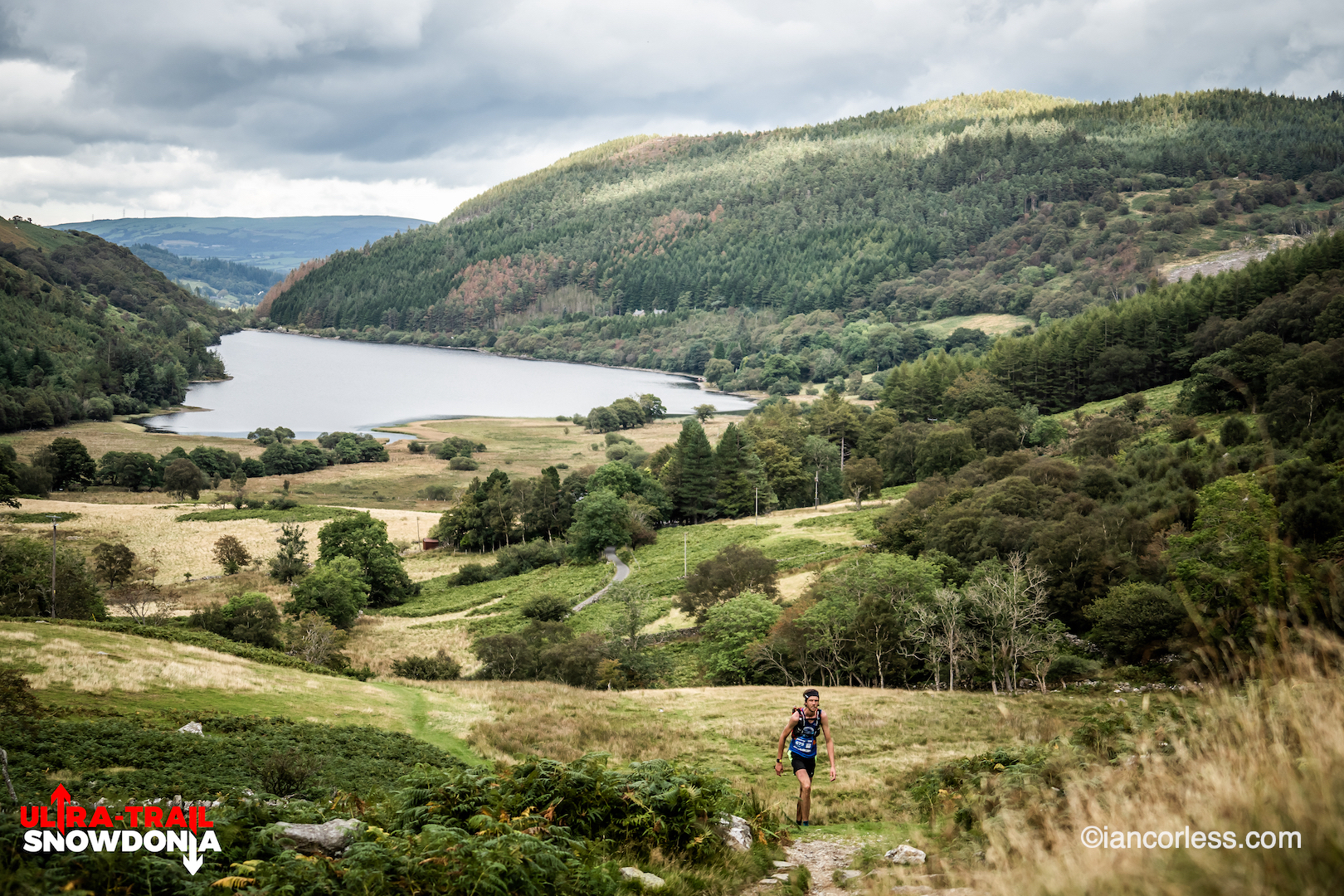
Persistent rain, low cloud, poor visibility, mud, bogs, wet rocks, climbs and descents that made even the most adapted legs scream in pain, yes, that was Ultra Trail Snowdonia 2021.
Missing in 2020 due to the dreaded ‘C’ word, the UTS returned in 2021 to Capel Curig as part of the Ultra Trail World Tour and supported by Hoka One One to confirm the dream of Michael Jones of Apex Running – A big UTMB style weekend of racing in the heart of Wales.
With distances of 50km, 100km and the whopping 165km, one word was touted pretty much everywhere all weekend, brutal! And it was… A savage weekend of racing but as Michael says, ‘beautifully beyond belief, savage beyond reason.’
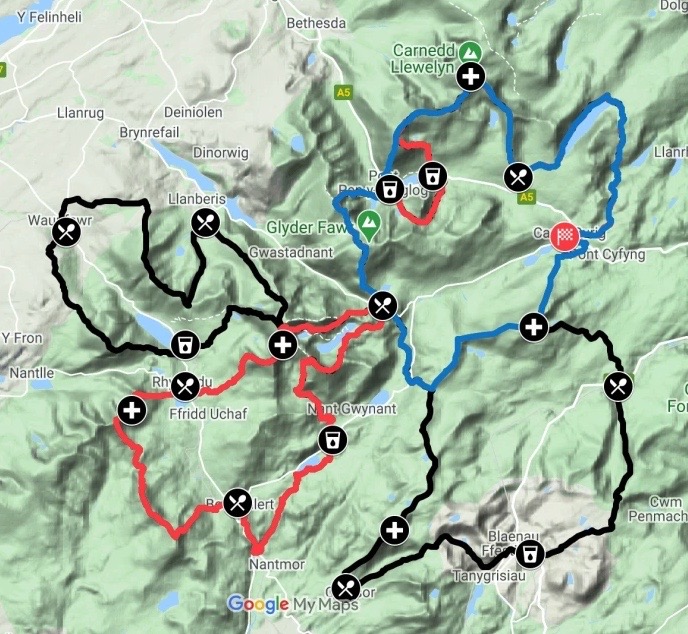
Despite the rain, despite the lack of views, Wales was a stunning playground for trail running. Let’s be clear here, there is no ‘easy’ running at UTS. The 50km is a wonderfully challenging route that may well have surprised many with some of its technical challenges, particularly the climb from Ogwen up to Carnedd Dafydd, compensated for what could be then considered a ‘relatively’ easy run in to the finish via Lyn Cowlyd and Blaen-Y-Nant.
The 100km route followed the early miles of the UTS50 all the way to Pen-Y-Pass but then headed along the Miners’ Track for an extended loop to return via the Pyg Track heading off to Y Garn, a loop around Tryfan and then head up to Carnedd Dafydd via a different route to the 50km and then follow the same run in to the finish.
The 165km is well, just a monster! As expected, it created carnage amongst the competitors. It’s a relentless beasting of mind and body that passes through the whole of Snowdonia. The 100km and 50km routes all utilizing sections of this all-encompassing journey but only the 165km giving the full perspective of how beautiful and hard the Welsh mountains are. As with all races at UTS, it started and concluded in Capel Curig. Heading off to Blaenau Ffestiniog, Croesor it then picked up the 50km and 100km routes to Pen-Y-Pass. Nantmoor, Moel Hebdog, Llyn-y-Gadair and then after Yr Wyddfa it followed the Snowdon Ranger Path for an extended loop before returning via the Snowdon Massif and Pyg Track to Pen-y-Pass. From here, the 100km and 165km routes were identical all the way back to Capel Curig.
Tremayne Dill Cowdry summed it up: “45 hours to do just over 100 miles and every minute of that was a hard slog. Mountains, bog, wet rock, tough nav on a marked course, sleep deprivation, mist, rain and the terrain!! Very little was even runnable. I can’t imagine a 100 miler more difficult than that. Easily the hardest I’ve done and definitely the hardest in the UK. I was going ok although I would have happily dropped given the chance but my feet succumb to the permanent wet and I had to hobble the last 20-ish miles…
Stunning landscape
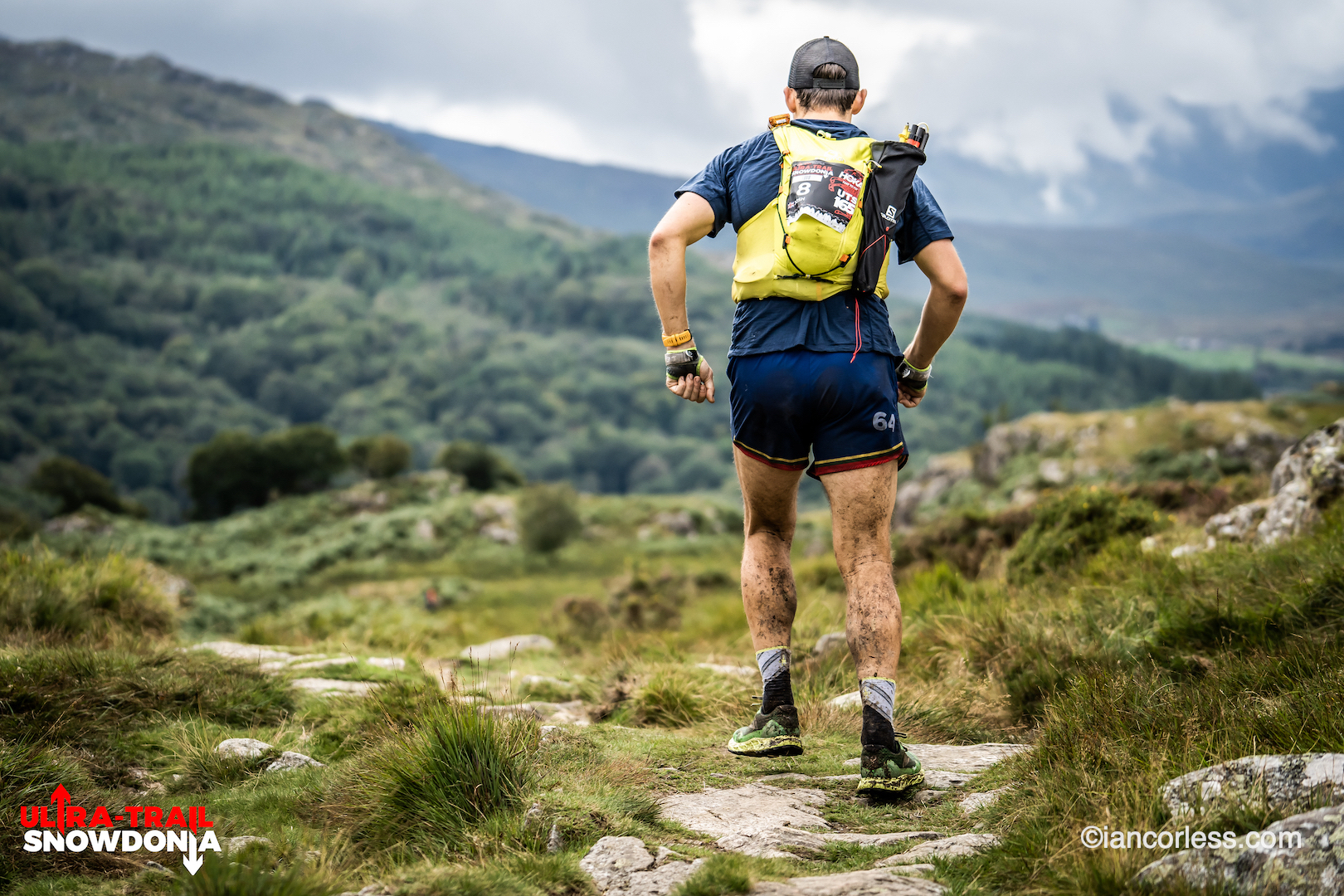
As with all races, someone has to cross the line first, and of course there was stunning performances all weekend. However, the real sense of achievement came firstly from toeing the line and being in with a chance of completing a journey. The second came from completing the journey. Every medal was hard earned.
Josh Bakker-Dyos
In the 165km event, Josh Bakker-Dyos lead from the start and while many expected him to blow up, so fast was his pace, he never did. He was relentless and consistent crossing the line in 28:51:43. It was easy to say, ‘he made it look easy!’ But for every other runner who crossed the 165km line, it was very clear, there was nothing easy on this route! Toby Hazelwood was less than 60-minutes behind in second, 29:45:17, another stunning run! Adam Jeffs rounded the podium with 34:09:54. Alice Sheldon and Becky Wightman were the only female finishers, 45:09:55 and 47:41:06 their hard-earned efforts stopping the clock – a brutal two nights and days out in the Welsh mountains. Only 32 completed the race.
Mark Darbyshire
The 100km route was won, but not dominated by Lakeland 100 champ, Mark Darbyshire ahead of Josh Wade and Jack Scott. Mark crossed in 14:25:47 with 14:33:36 going to second. It was 16:02:05 elapsed before the third crossed the line. Sarah Stavely (21:41:03) won the women’s race with Kajsa Holgersson and Julie Finn in second and third, 22:28:49 and 22:44:53.
Lauren Woodwiss
Harry Jones flew around the UTS 50 route and looked as strong at the finish as when he started, his 6:13:33 a stunning time. It was 6:56:54 elapsed before second place Will Simmons crossed ahead of Spencer Shaw in 7:14:53. Lauren Woodwiss, like Jones, lead from the start dictating an excellent pace over the 50km route and completed her journey in an excellent 7:54:18. Celia Waring placed second in 8:36:18 and Abelone Lyng from Norway, moved up from outside the top-10 women to eventually finish third in 8:43:16 after sprinting for the line ahead of Jenna Shail who was just 13-seconds behind.
As Capel Curig slowly returned to some normality on Sunday, it was easy to see that the UTS will become one of the ultimate trail running events not only in the UK but the world. It may not have all the glamour and glitz of Chamonix and the UTMB. It’s a much more grass roots event, some would say a ‘true’ trail running event. Ultimately though, Wales was the hero of the weekend offering stunning routes. This landscape combined with the vision of Michael Jones of Apex Running and a team of dedicated volunteers and supporters will make UTS a ‘one to do!’ However, if you are thinking about the 165 event? Think long hard and without doubt, train hard, it’s a beautifully brutal beast.
‘beautifully beyond belief, savage beyond reason.’
Please support this website. I believe everyone deserves to read quality, independent and factual articles – that’s why this website is open to all. Free press has never been so vital. I hope I can keep providing independent articles with your help. Any contribution, however big or small, is so valuable to help finance regular content. Please support me on Patreon HERE.
Episode 210 has an interview with Petter Engdahl and Speedgoat Karl co-hosts.
Talk Ultra needs your help! We have set up a Patreon page and we are offering some great benefits for Patrons… you can even join us on the show! This is the easiest way to support Talk Ultra and help us continue to create! Many thanks to our Patrons who have helped via PATREON Donate HERE
La Sportiva CYKLON shoe review HERE listen to Episode 208 of Talk Ultra is a special show with DANIEL FEENEY and Jonathan Wyatt discussing the collaboration between BOA and La Sportiva for the new, Cyklon shoe.
Please support this website. I believe everyone deserves to read quality, independent and factual articles – that’s why this website is open to all. Free press has never been so vital. I hope I can keep providing independent articles with your help. Any contribution, however big or small, is so valuable to help finance regular content. Please support me on Patreon HERE.