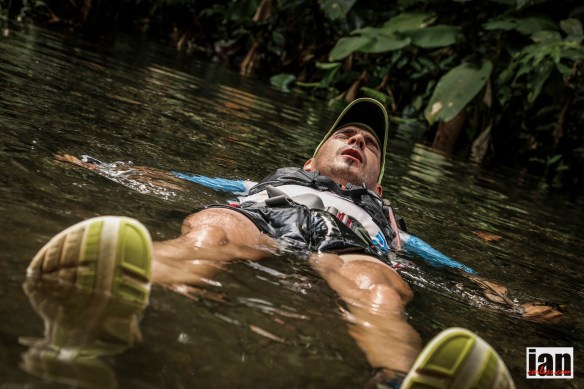
This week we’re starting a series of articles titled ‘environmental physiology’. We’re going to open with a 2 part series relating to exercise in the heat (I say 2 parts, but who knows what could happen by next week). Following that, we’ll take a look at altitude training and potential benefits.
But before we go on, why not catch up on our seven part series of posts on RACE DAY NUTRITION HERE
Too Hot? Call The Police & Fireman…
Exercise in the heat can place a lot of strain upon your body, if you’re used to cooler climates. For this reason, many elite athletes will spend time acclimatising to the higher temperature. Acclimatisation can require up to 14 days, so what if you’re an amateur athlete travelling abroad for an endurance event, who can’t afford to travel 3 weeks before the event? Well this blog is quite timely for me, as I’m off to Lanzarote in less than 4 weeks for the Ironman triathlon and potentially, it could be very hot. There’s probably quite a few people reading this blog who are traveling abroad this year to take part in triathlon or running events in hot places. The purpose of this blog is to explain simple ways, which you can acclimate your body beforehand and explain the physiological changes, which take place to improve your performance.
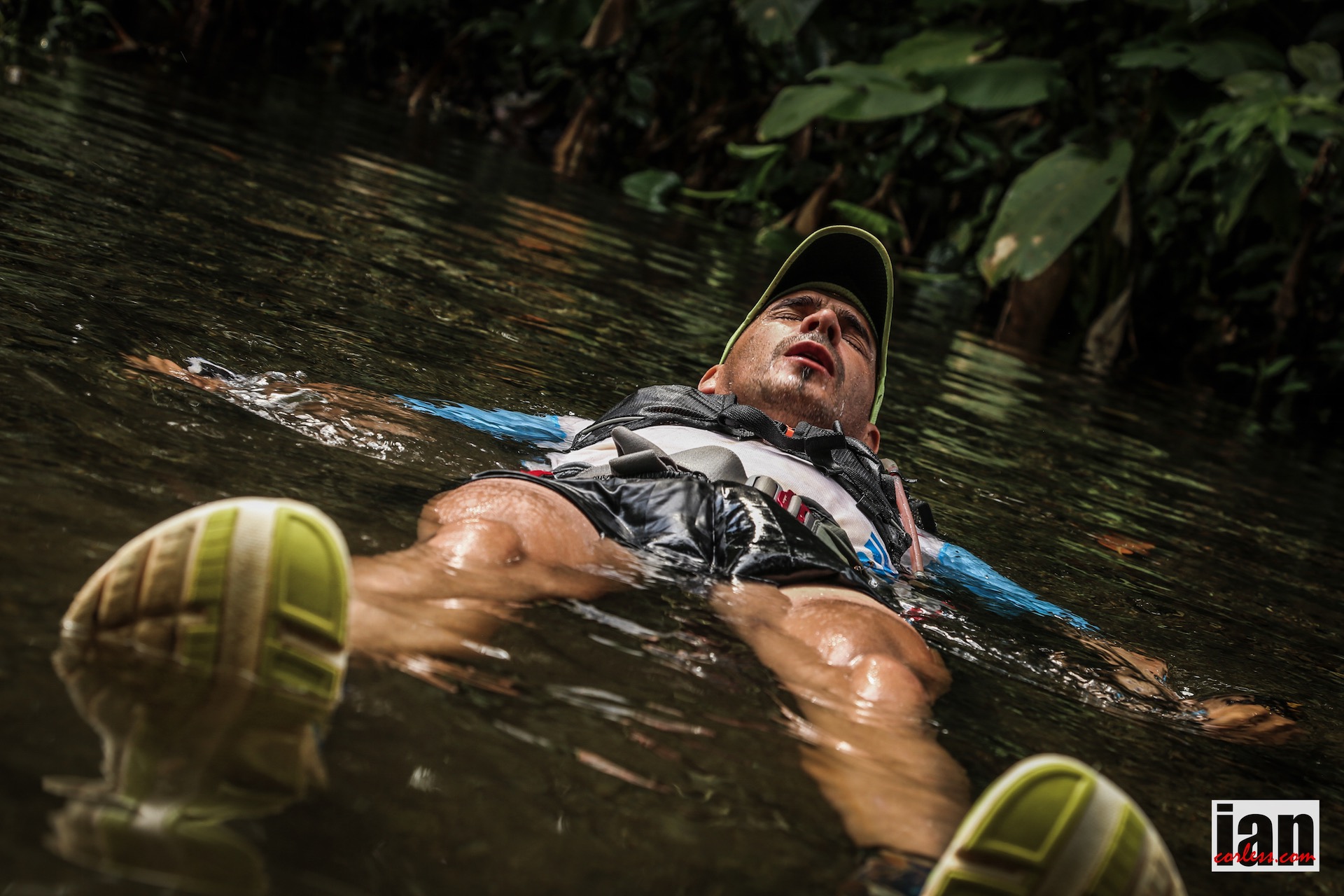
Too hot? You Make A Dragon Want To Retire Man…
In a nutshell, when you exercise in hot climates, your core temperature rises and your performance suffers. If your core temperature rises too much, it could potentially be lethal, so your brain is pretty quick to try and stop that happening, by persuading you to stop!
How do we reduce core temperature?
There 2 main ways, the first is ‘convection’ and the second is ‘sweat evaporation’.
Convection
Think about a car radiator, it’s positioned right at the front of the car as that’s where the wind hits it when you’re driving. Heat is generated in the engine, this in turn heats the water which is then pumped to the radiator. The wind hits the radiator, cools the water and the cool water goes back into the engine to pick up more heat. This cycle continues, to keep removing heat from the engine, which is why it’s important to keep the fluid topped up or your car will overheat! The human body works the same way, heat is generated in the engine and your blood then picks up the heat. The blood is pumped to the coolest part of the body (the skin), where the wind hits it and cools the blood. It then returns back into the engine to pick up more heat and the cycle continues.
If the wind is blowing against your skin whilst you exercise, convection may well be enough to keep you cool and maintain a normal body temperature. It’s easier to do this when cycling, compared to running, as your speed is generally higher, so the wind chill is greater. Runners will notice that treadmill running leads to more sweating than running outside as the air temperature is generally warmer, but also you’re not moving, so there’s no air flow past the skin and therefore no wind chill or convection. The same can be said about indoor cycling or using a turbo trainer, especially if you don’t have a fan blowing.
Let’s use the treadmill running or turbo cycling scenarios as an example. If there’s no air flow past your skin to cool the blood, then in effect, you pump hot blood to the skin surface, it doesn’t get cooled, so the hot blood goes back into the engine / core. That’s a sure fire way to overheat. This is the same as leaving your car engine running on a hot day, whilst stuck in a traffic jam. If you’re not moving, there’s no wind hitting the radiator, so convection cooling can’t happen.
Sweating
Sweating is based on ‘evaporation’. Water from your body cells makes it’s way to the skin and as the hot blood arrives, the heat is passed from the blood into the water droplets (leaving the blood cool). The heated water on your skin, evaporates into the air like water from a boiling pan and takes the heat with it. If you’re running on a treadmill and there’s no convection, you need another method of getting rid of heat, so the sweating and evaporation will kick in.
It’s important to recognise that ‘evaporation’ removes the heat, so any sweat on your skin, clothing or floor, serves no purpose other than to lead to dehydration.
Convection and sweating don’t compliment each other too well
If you’re racing in hot weather, convection isn’t enough so you’ll also sweat to keep your temperature down. As you sweat, you lose fluid from your body and this leads to a drop in blood plasma (plasma is the fluid/water component of blood). The problem is that you need a lot of blood for convection to work well. When you’re exercising, blood is pumped to the exercising muscles and what’s left is pumped to the vital organs. So what happens when you then need to pump extra blood to the skin to cool down? Do you reduce blood flow to the muscles and vital organs? It sounds like a great idea to keep you cool, but where is this extra blood coming from? As if that wasn’t bad enough, you’re now sweating and the amount of blood you have is dropping. So not only do you have to supply muscles, organs and the skin, you’ve got less and less blood available as sweating continues.
Blood is made up of plasma (fluid) and cells (red/white/platelets). When you sweat, you lose plasma, but not cells. This means that the total amount of blood is reduced and it also gets thicker (same number of cells but less fluid).
What does this mean in terms of performance?
As you’ve probably guessed already, this isn’t good for performance. Heart rate is generally higher for any level of exercise. This is due to the fact that you’re trying to pump blood to all areas of your body and your total blood volume is dropping. Your cardiovascular system is therefore working overtime, trying to match the demand with a struggling supply. Due to fluid and salt losses, your body becomes dehydrated and cells cannot function correctly. We’ve mentioned previously that salt is required for transporting fluid throughout the body and as high amount of salt can be lost in sweating, this mechanism is impaired.
Something of great importance, which is less frequently discussed, is the change in substrate utilisation. Whilst the exact mechanism is still under question, it’s pretty clear that you use more carbohydrates and therefore empty your glycogen stores more quickly when exercising in the heat. The simple explanation is that that there’s a lack of ‘spare blood’ going to the muscles, due to the fact it’s going to the skin for cooling. Fat metabolism requires more oxygen than carbohydrate metabolism so there’s a switch from fat to carbohydrate. This may also be explained by a switch from ‘slow twitch’ to ‘fast twitch’ fibres, which use less oxygen.
All in all, this isn’t looking too good. We’ve got an ever-decreasing blood volume, which is being pulled in several different directions. We’ve got decreasing salt levels and an onset of dehydration. We’ve got a heart rate which is significantly higher than it should be for the intensity we’re exercising at and to cap it all off, we’re running out of carbohydrates at a faster rate than normal.
Don’t worry help is at hand. Next week we’ll discuss how acclimatisation helps you to deal with the issues and explain the physiological changes responsible.
Until then, stay cool.
– Marc
About Marc:
Sports Science lecturer for 10 years at St Helens HE College.
2004 established The Endurance Coach LTD sports science and coaching business. Worked with British Cycling as physiology support 2008-2008. Previous Triathlon England Regional Academy Head Coach, North West.
In 2006 established Epic Events Management LTD. Now one of the largest event companies in the NW, organising a range of triathlon, swimming and cycling events. EPIC EVENTS also encompasses Montane Trail 26 and Petzl Night Runner events.
In 2010 established Montane Lakeland 50 & 100 LTD. This has now become the UKs leading ultra distance trail running event.
In 2010 established The Endurance Store triathlon, trail running and open water swimming store. Based in Appley Bridge, Wigan, we are the North West’s community store, organising and supporting local athletes and local events.
Check out the endurance store HERE




















































































































































































 IAN CORLESS