Stage 2 of the 2025 MDS 120 Cappadocia tested every ounce of determination runners had left in the tank.
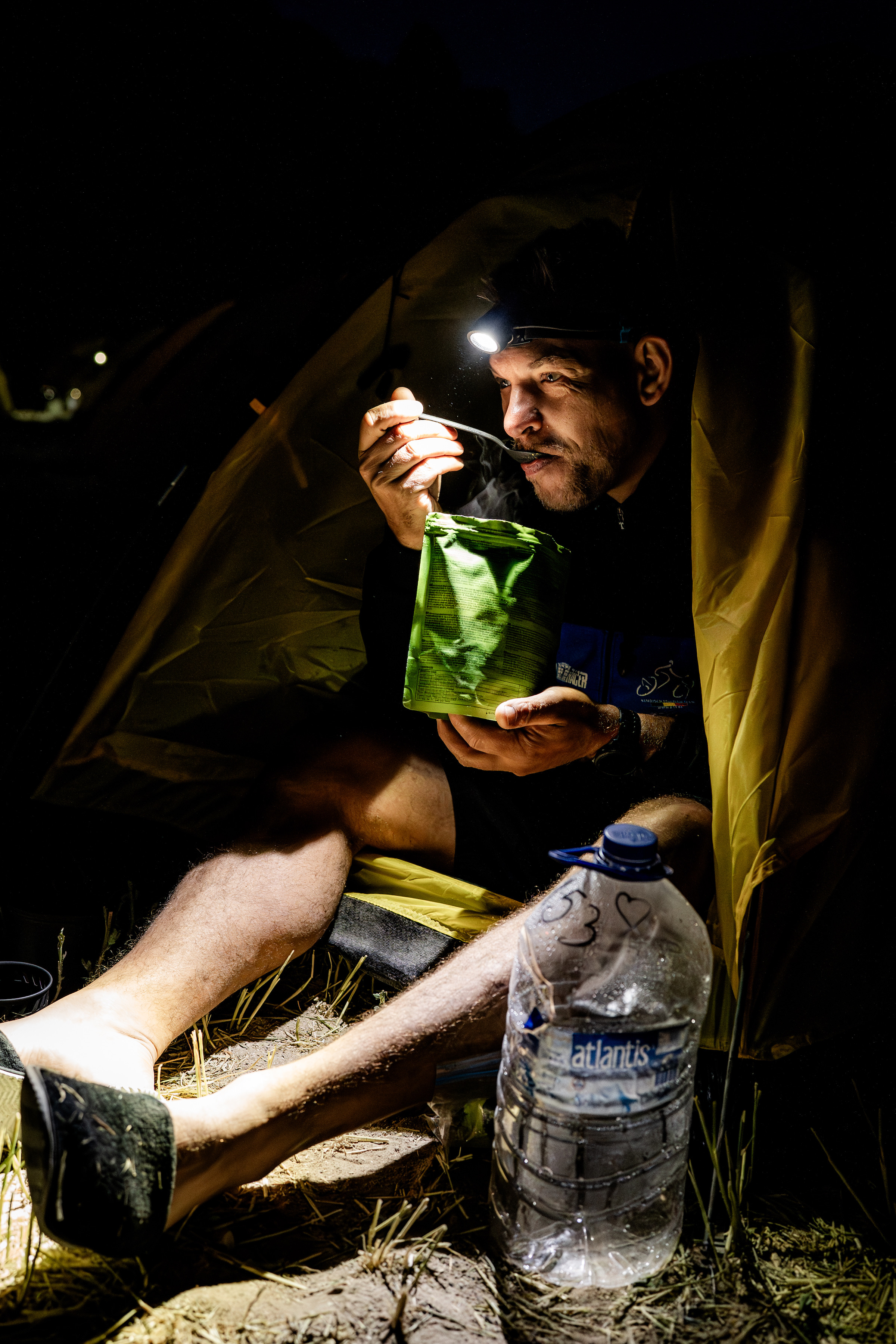
Breakfast bivouac style
The day began with a 4:00 AM wake-up call under a pitch-black sky.
Just WOW!
By the time the starting line buzzed to life, the first glow of sunrise was filled with dozens of hot air balloons over the otherworldly landscape, a surreal and unforgettable sendoff into a brutal, beautiful day. This is what makes MDS 120 Cappadocia so special.
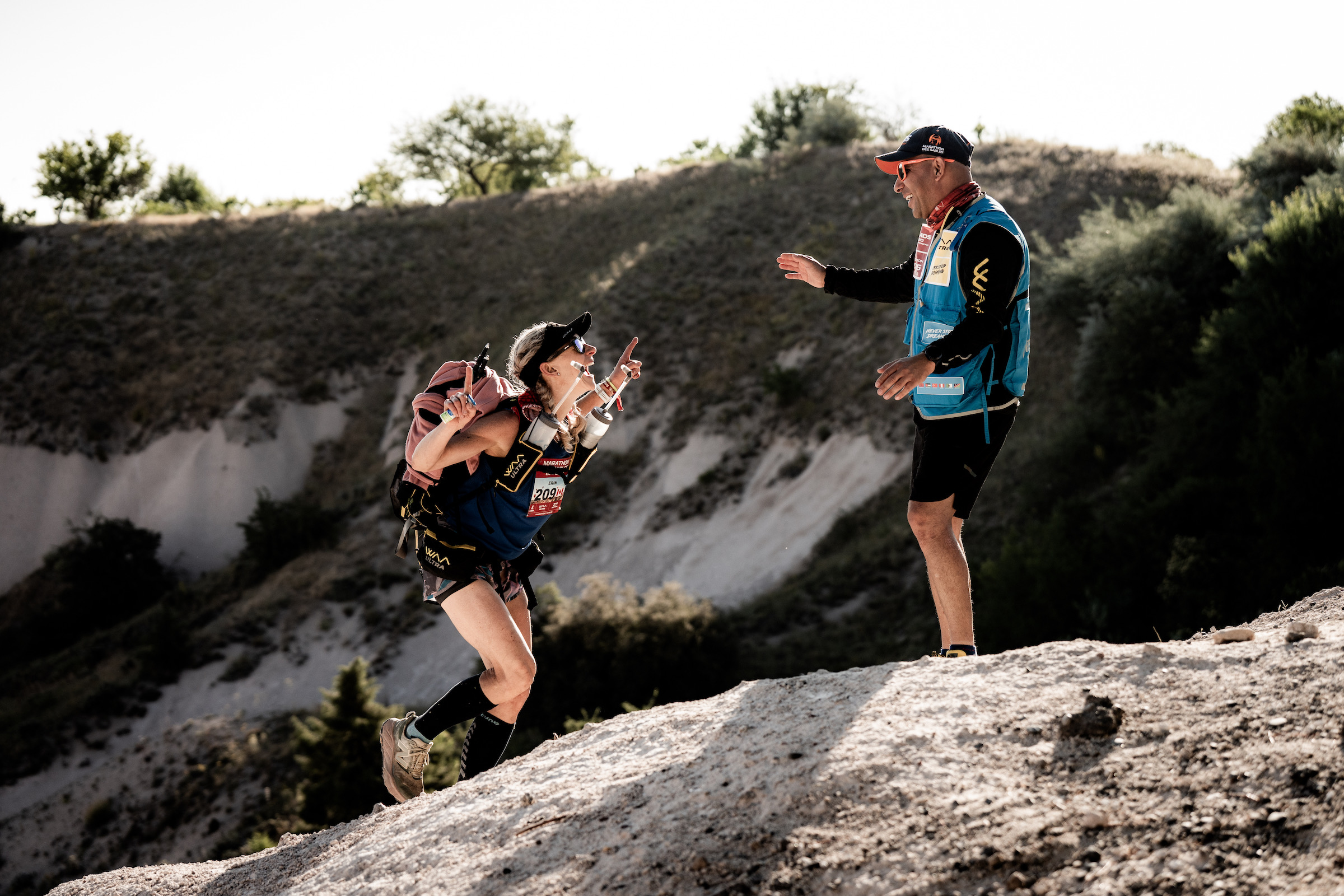
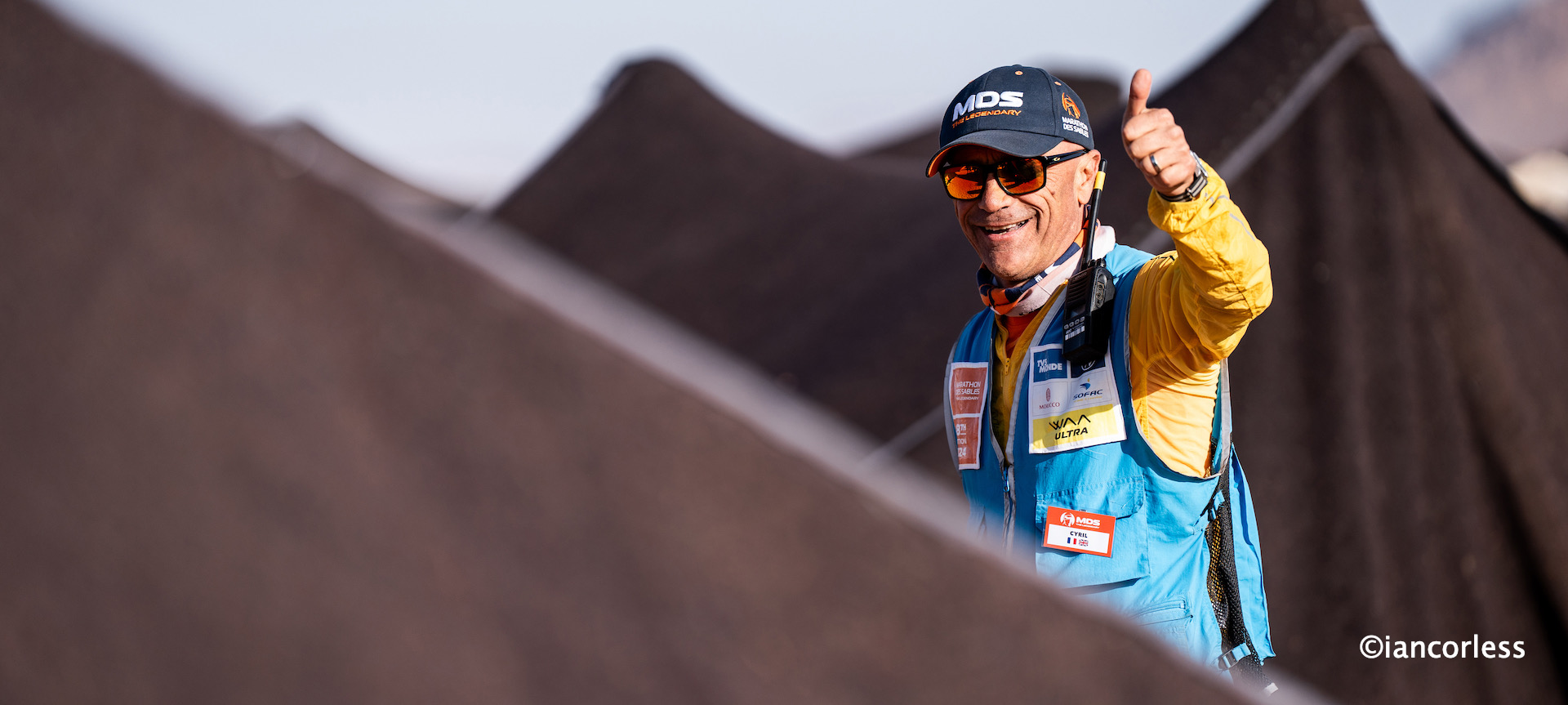
Blue coats, a key and important element of MDS 120.
Participants had a choice: 20km, 40.9km, or 58.6km. Three distances, one shared battle. No matter which course they committed to, the terrain made sure no one got an easy ride.
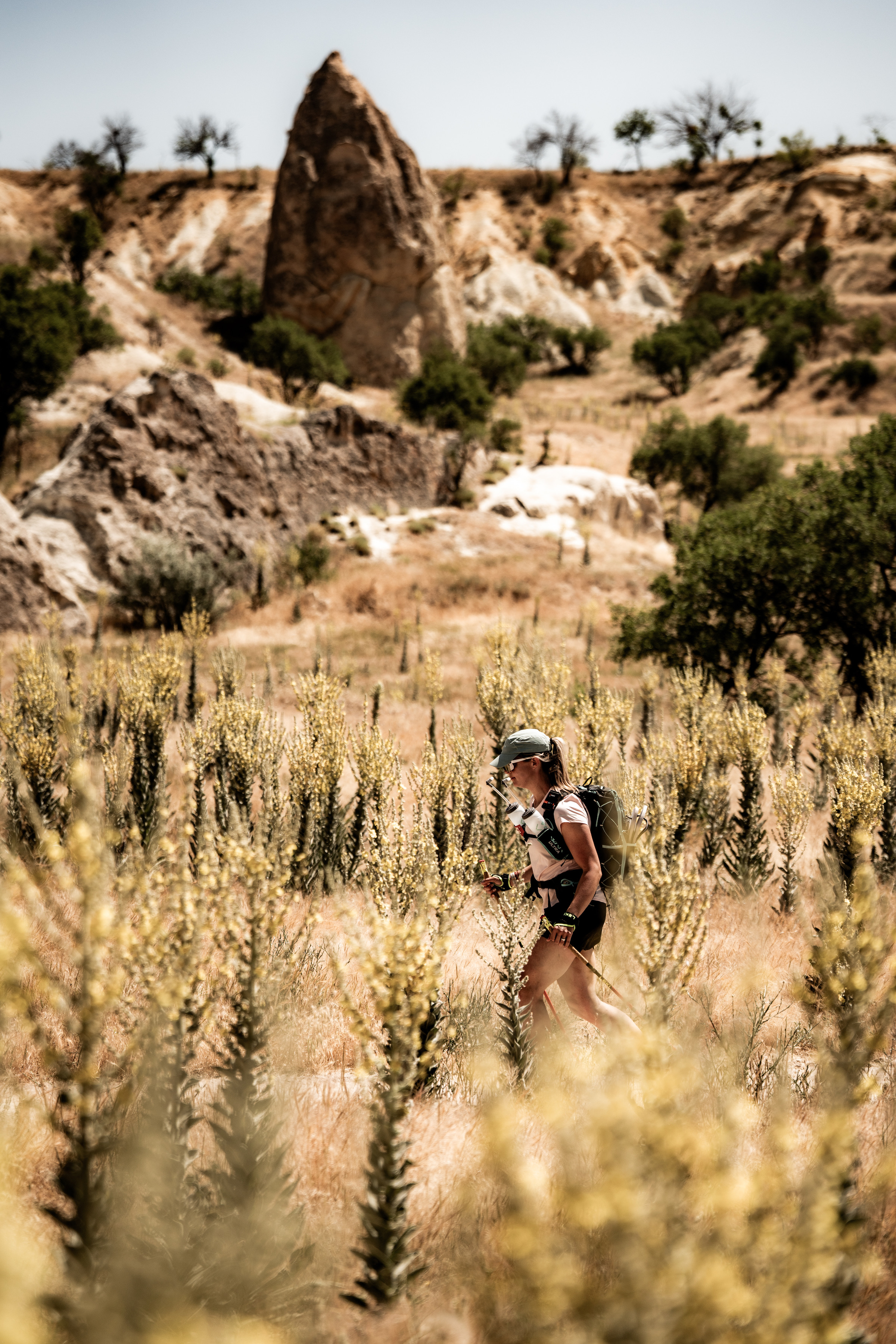
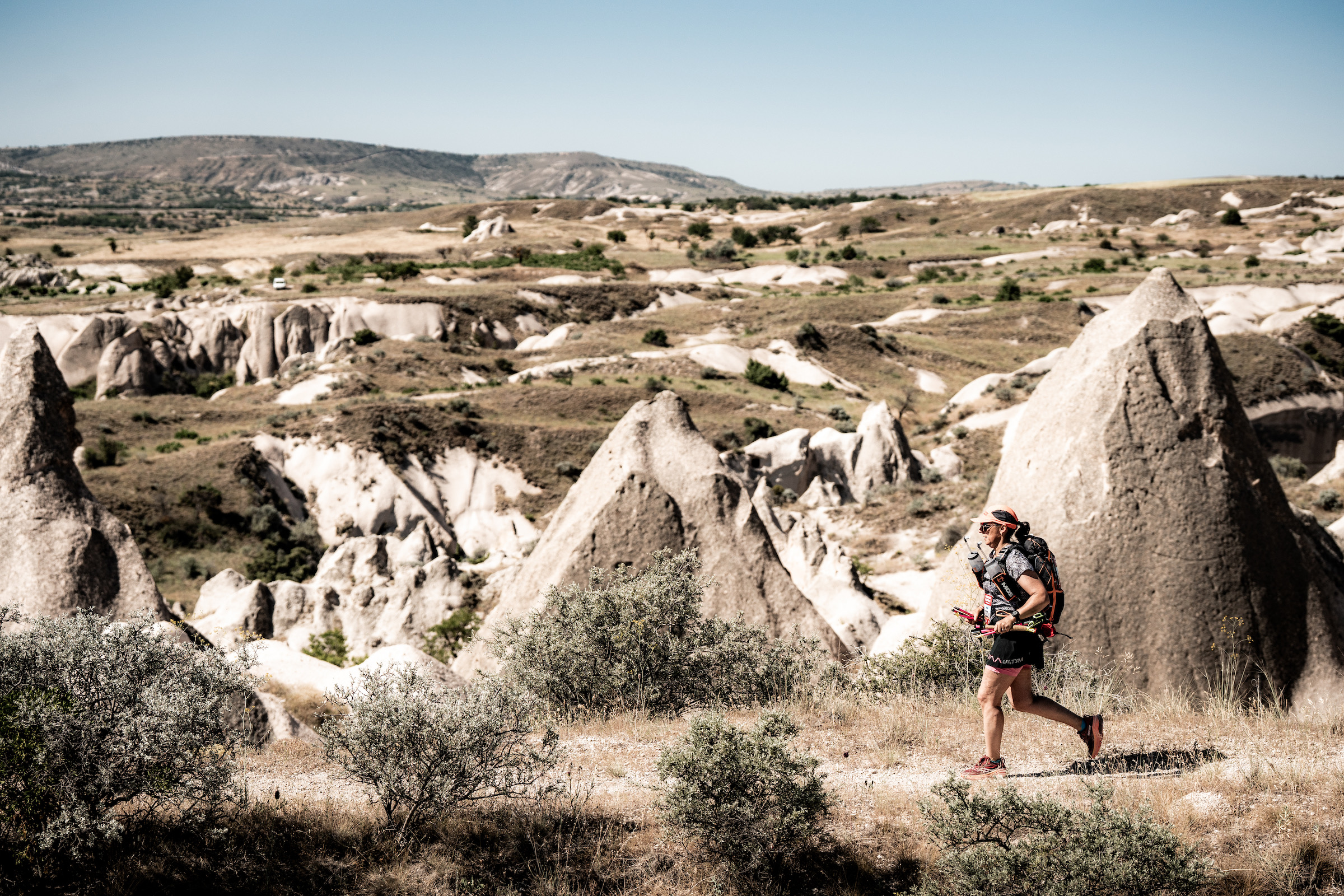
Stunning varied landscape
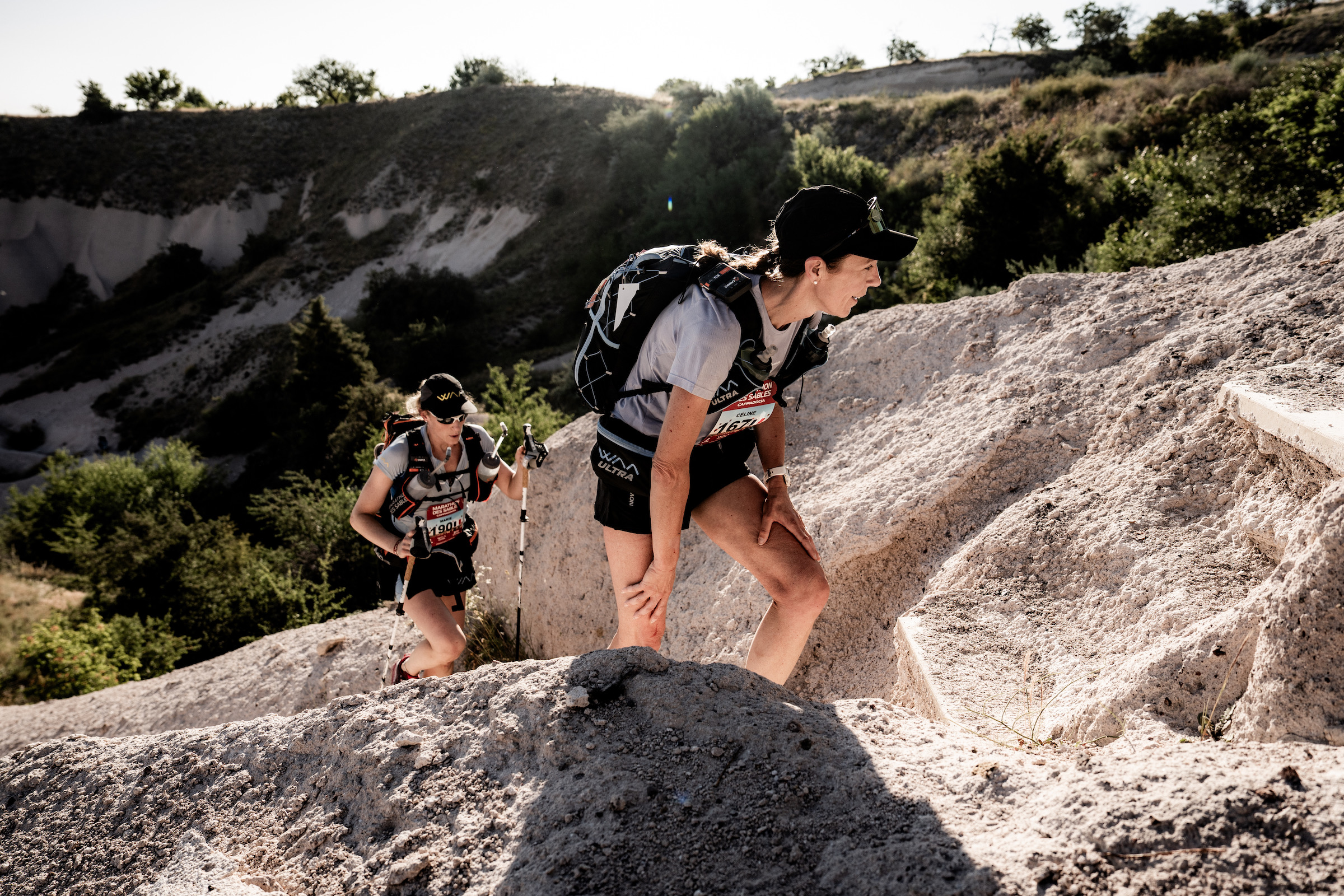
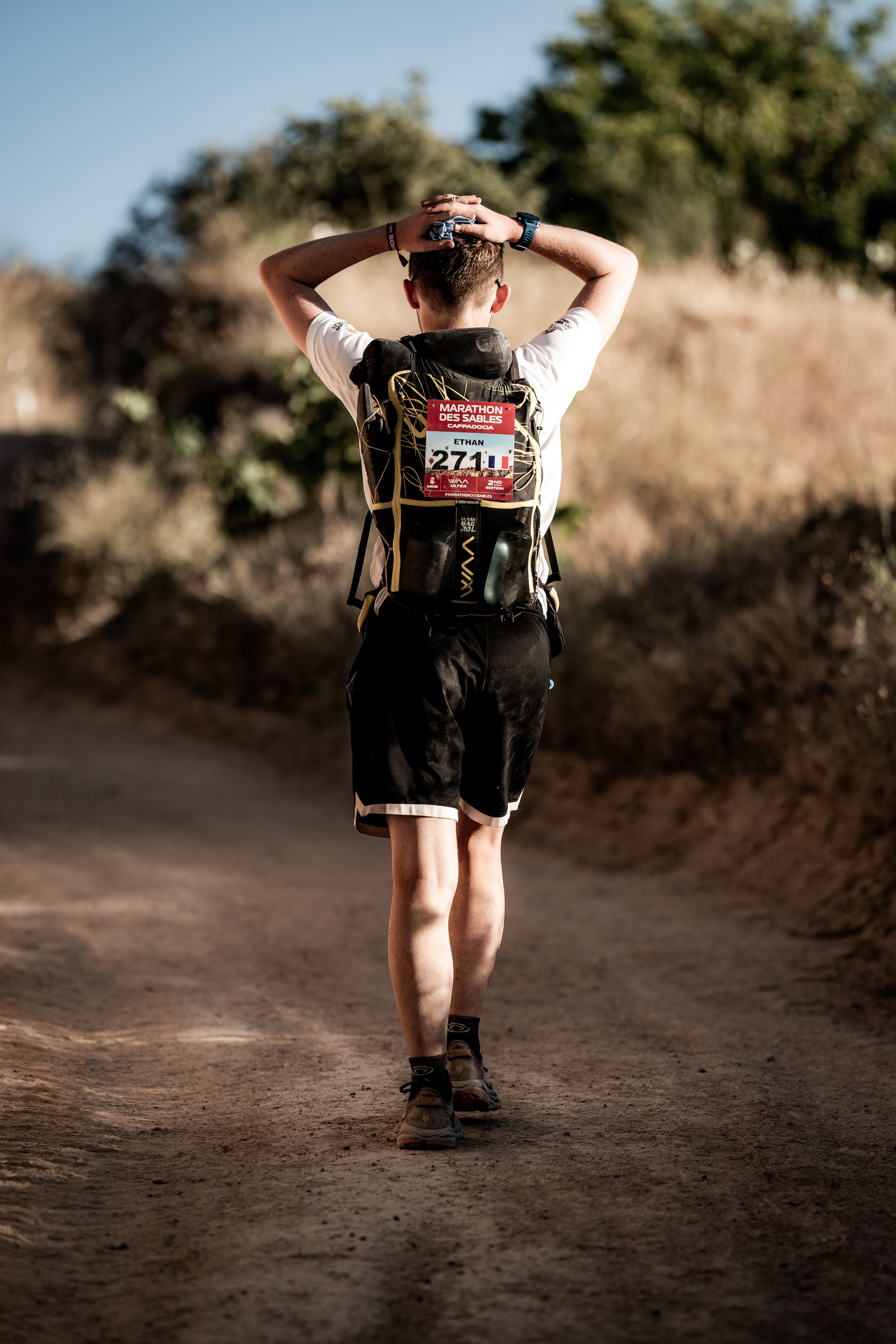
From the start, runners faced a punishing mix of steep canyons, tight tunnels, dusty switchbacks, and rocky plateaus.
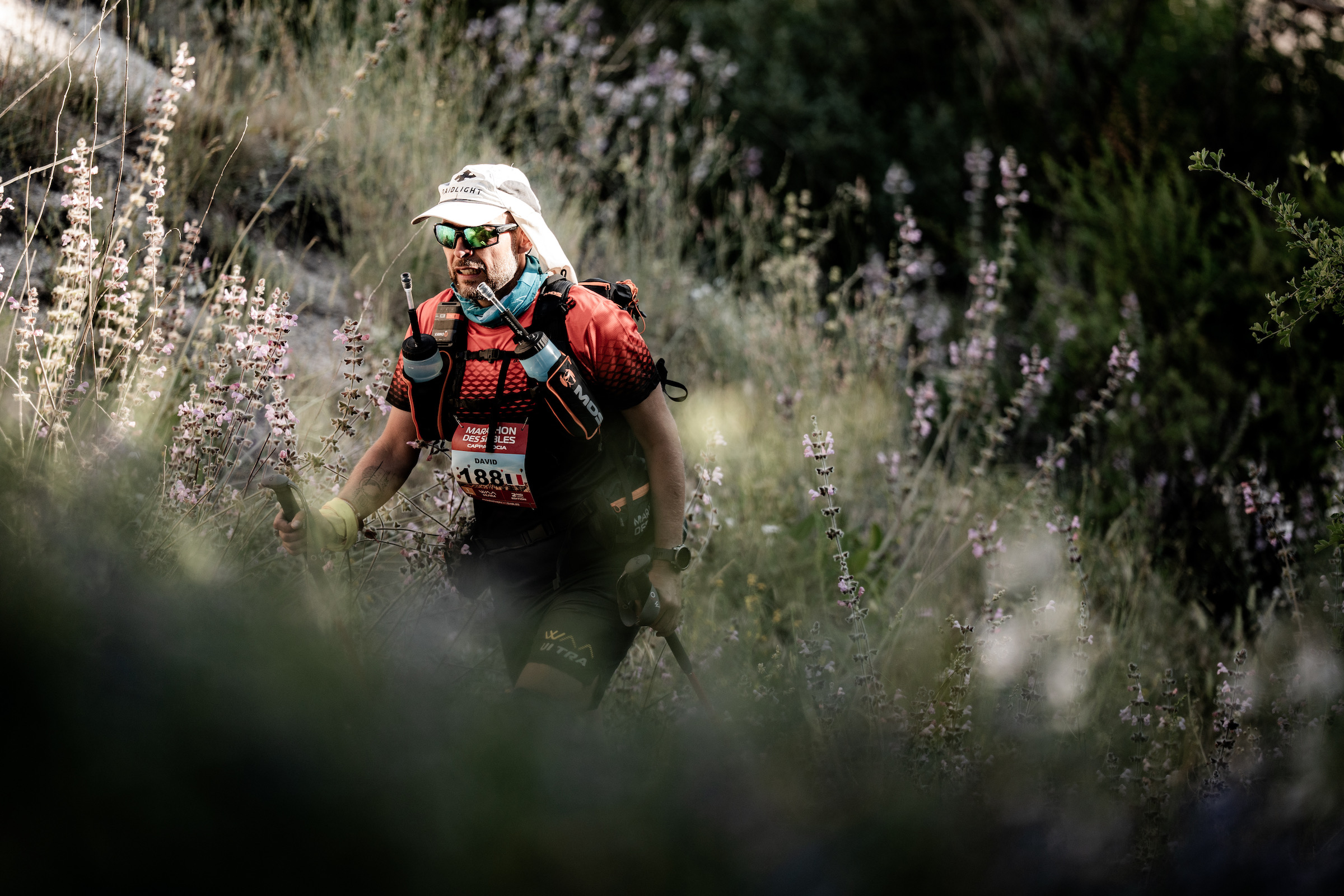
Dense vegetation
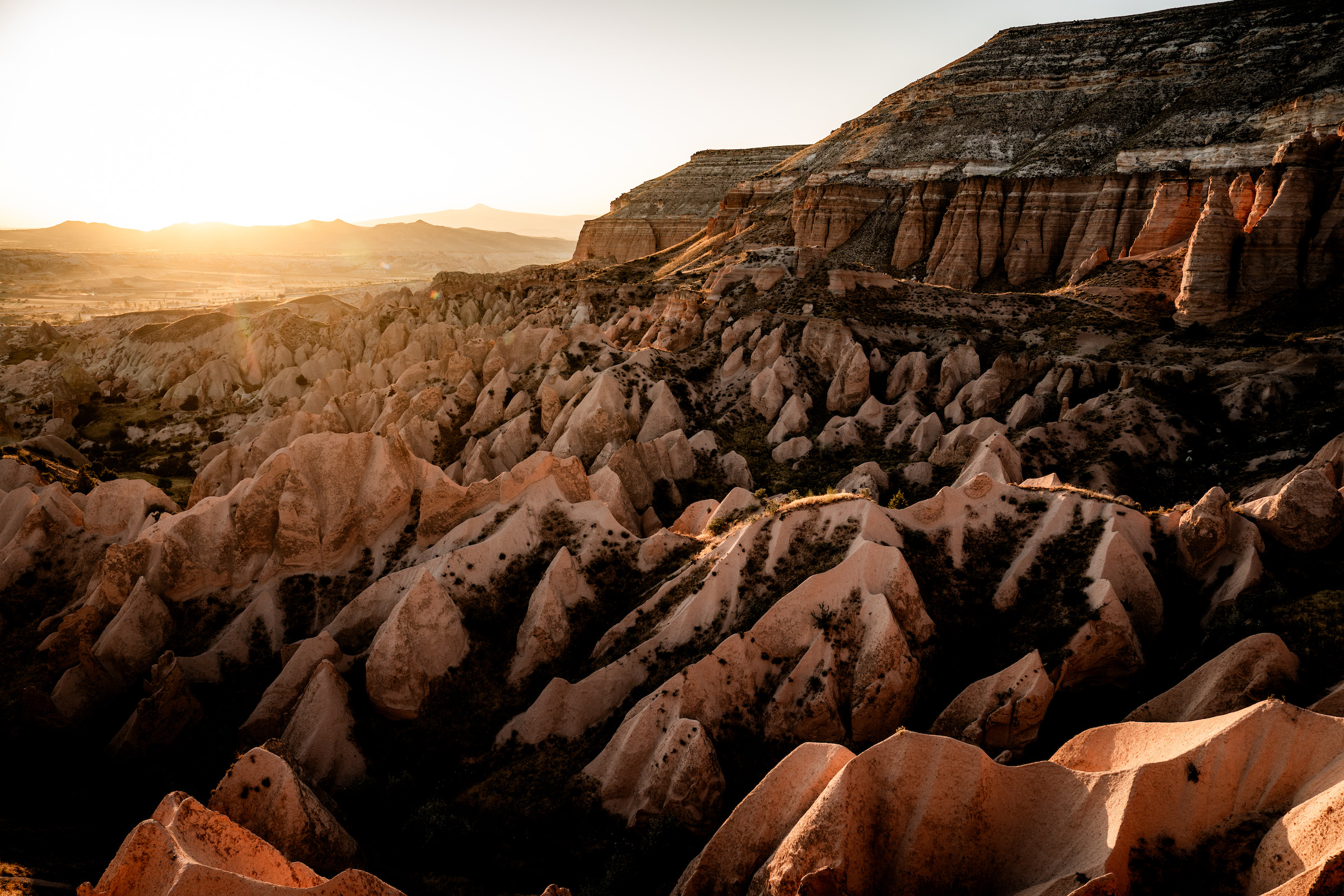
The famed Cappadocia chimneys, towering rock formations sculpted by time and wind rose like sentinels along the route, offering brief moments of awe in between relentless stretches of heat and effort.
Unique landscape
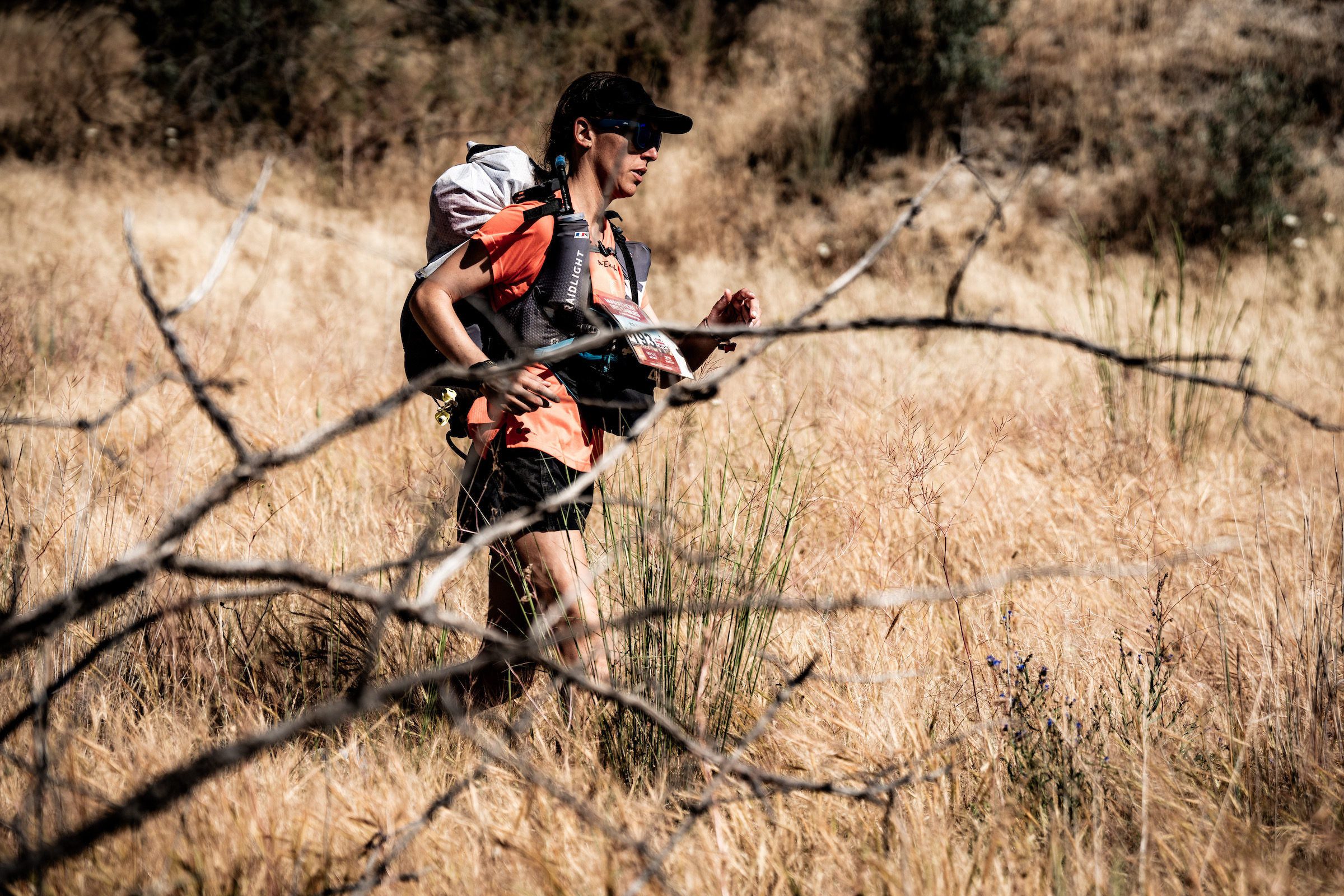
At times, dense vegetation clawed at legs and arms. Elsewhere, there was nothing but the sun, dry air, and the crunch of feet against rock and dust.
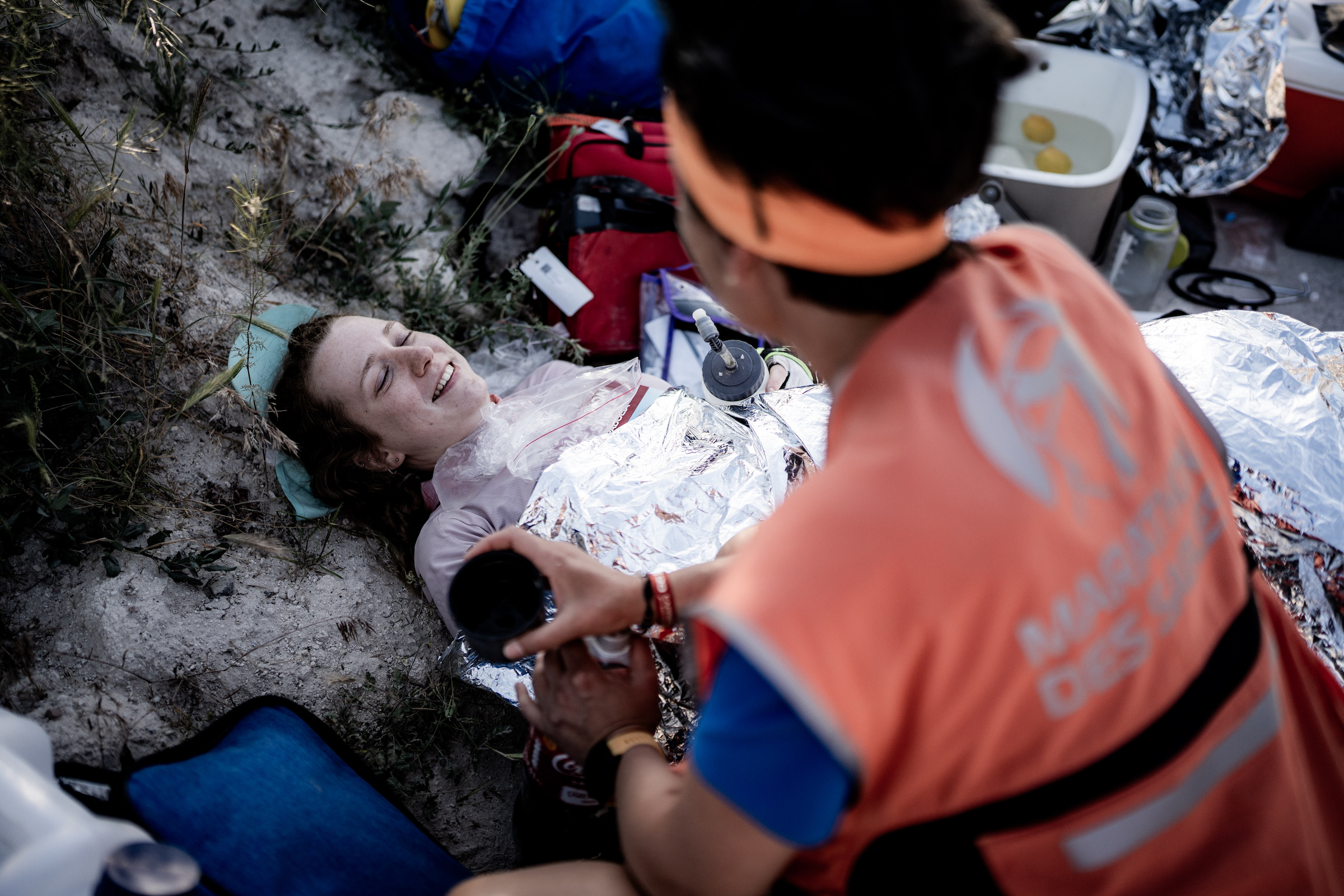
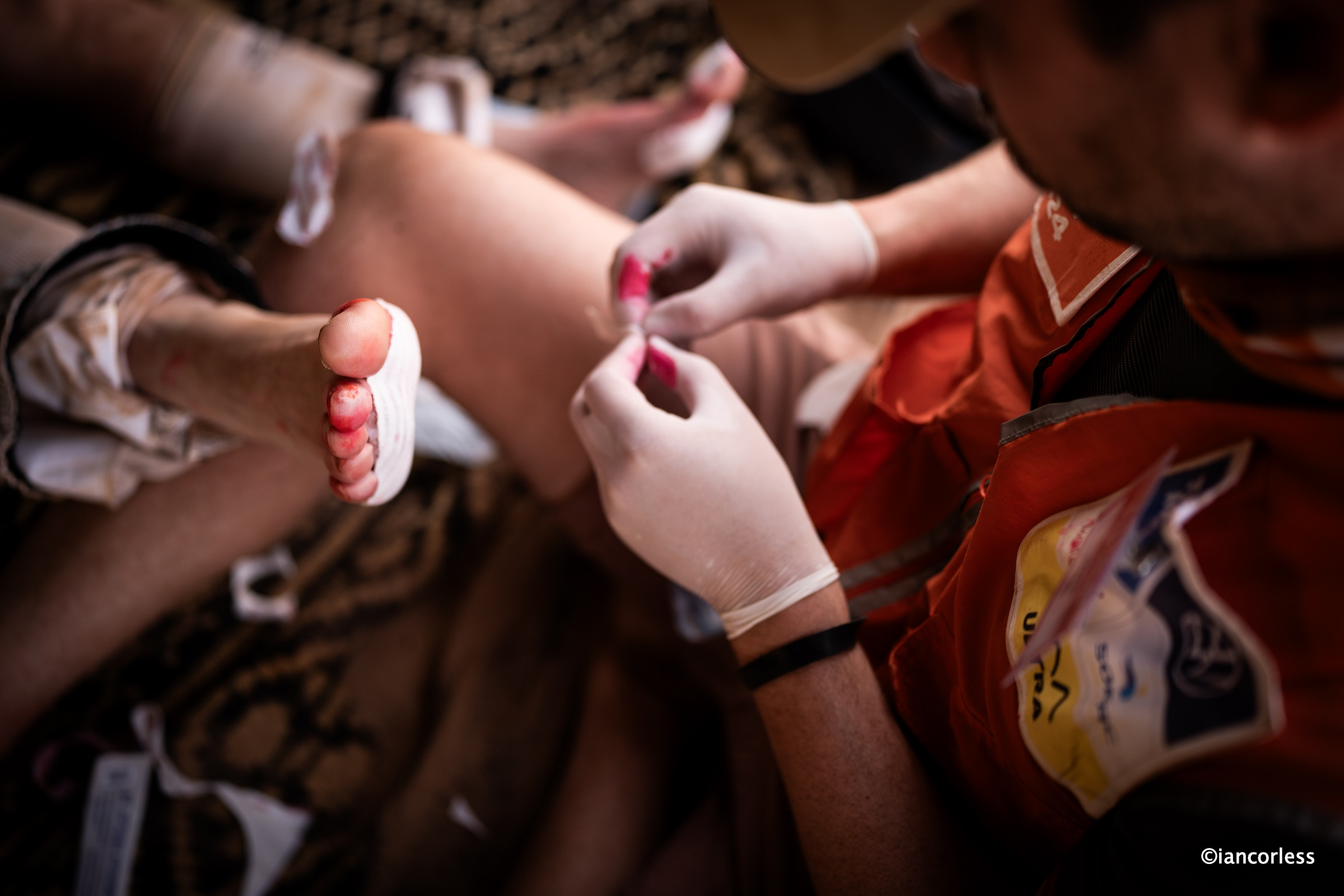
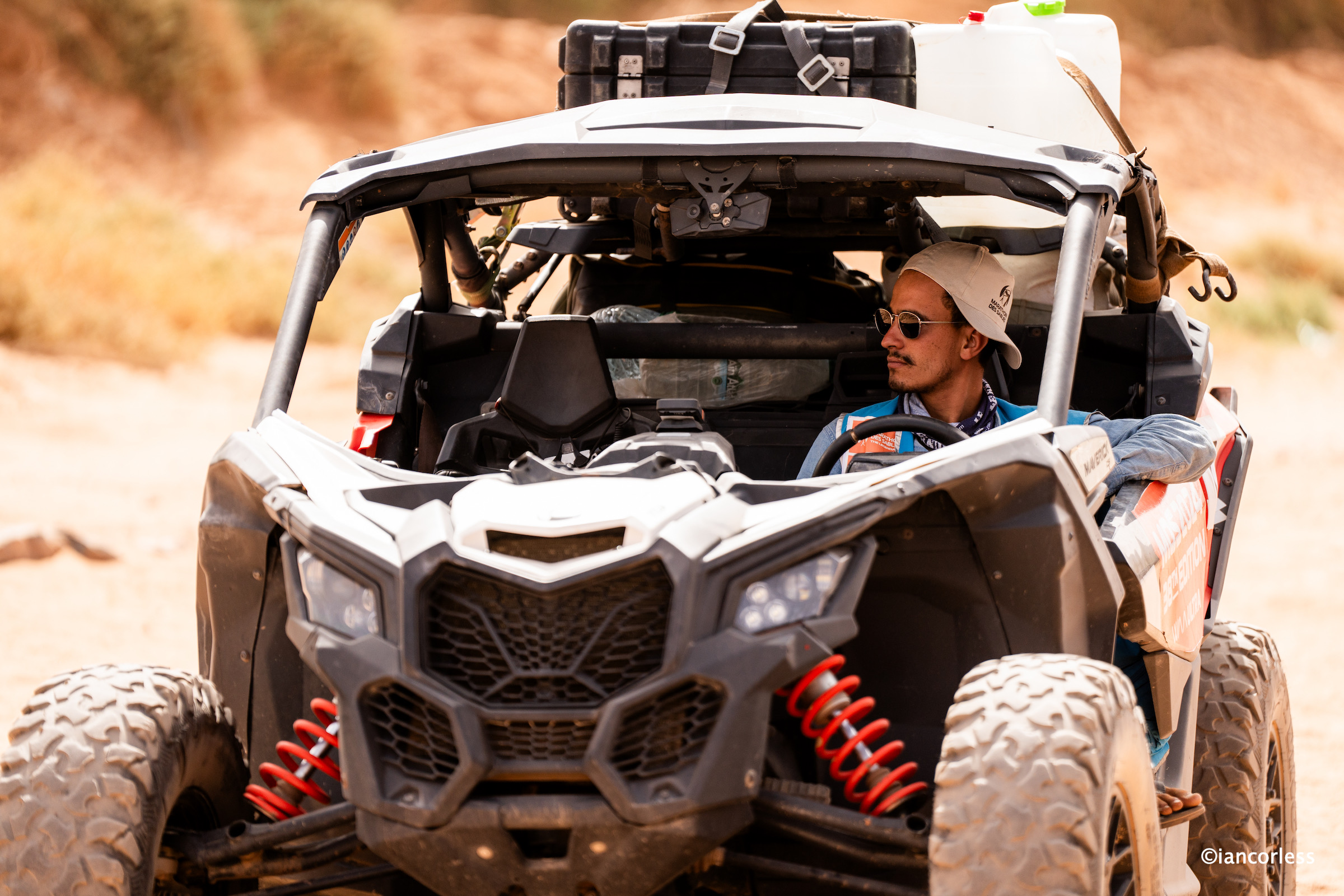
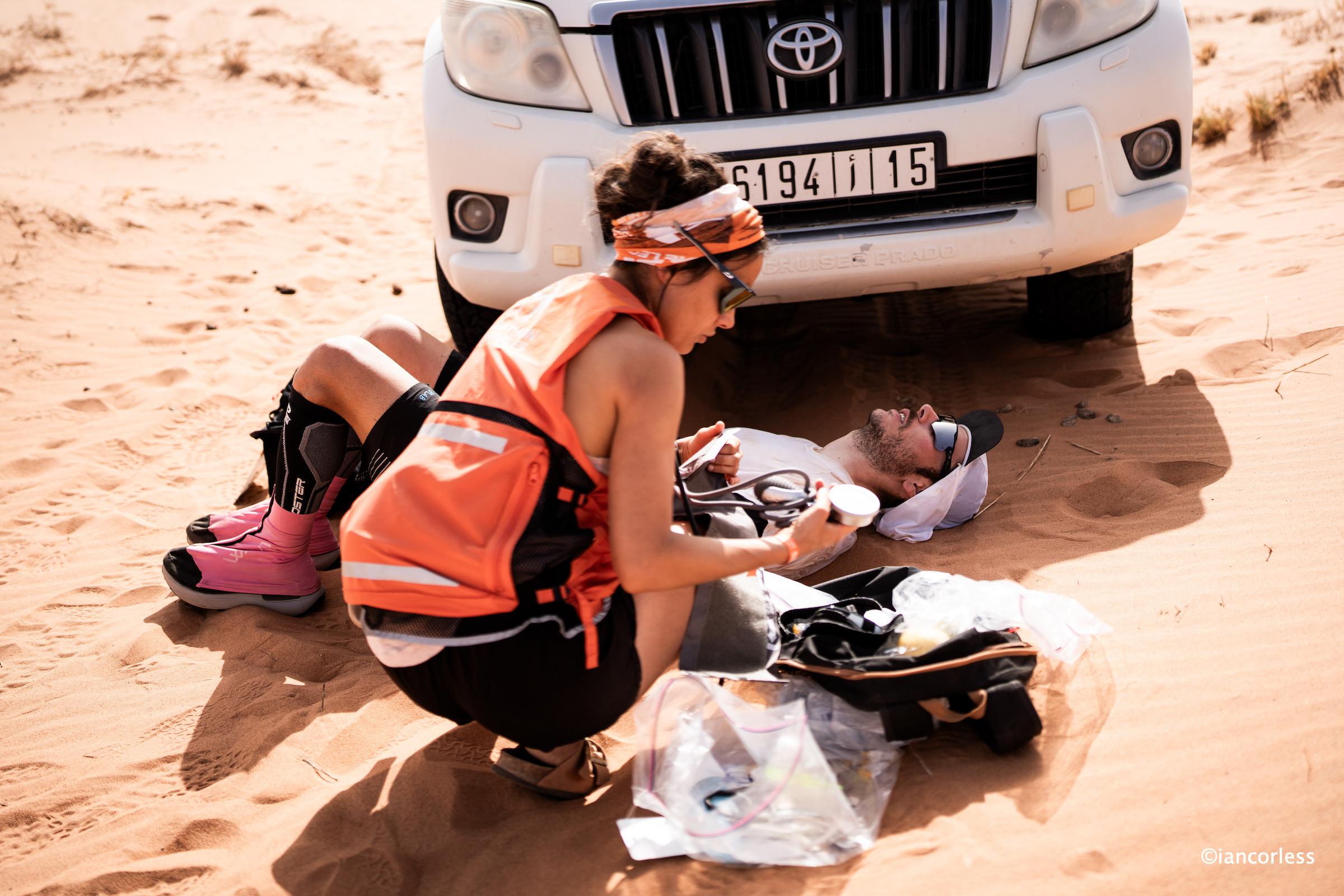
The longer the distance, the deeper the challenge. The sun bore down with intent, turning even the breezes into blasts from a hair dryer. Hydration and mindset became as critical as foot placement. There were stumbles, cramps, and moments of silence where only the sound of breath and grit kept runners going. This is where the MDS 120 orange (medical) and blue (logistics) help keep the runner’s going, importantly, they bring a key safety element to the race.
Maëva, our last finisher receiving treatment just 4km’s from the finish.
But they did go. Every last one of them.
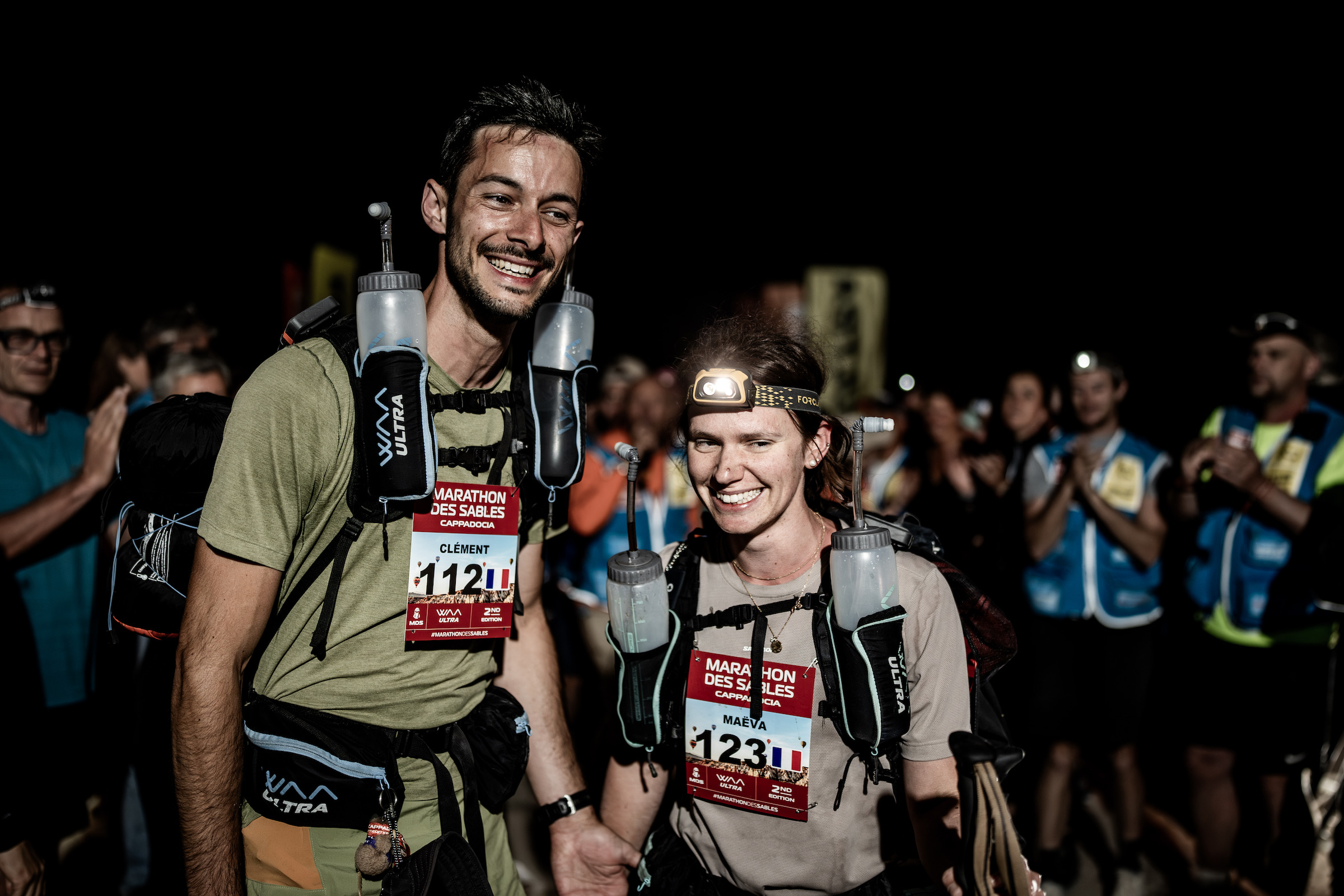
The final competitors crossed the line after an incredible 16 hours and 25 minutes on the move. A huge shoutout to Maëva and Clémment, who showed unreal resilience and heart, pushing through to the very end.
To all who took on Stage 2, no matter the distance, no matter the time, today you didn’t just run through Cappadocia. You conquered it.
Tomorrow brings the third and final stage, concluding in the Love Valley.
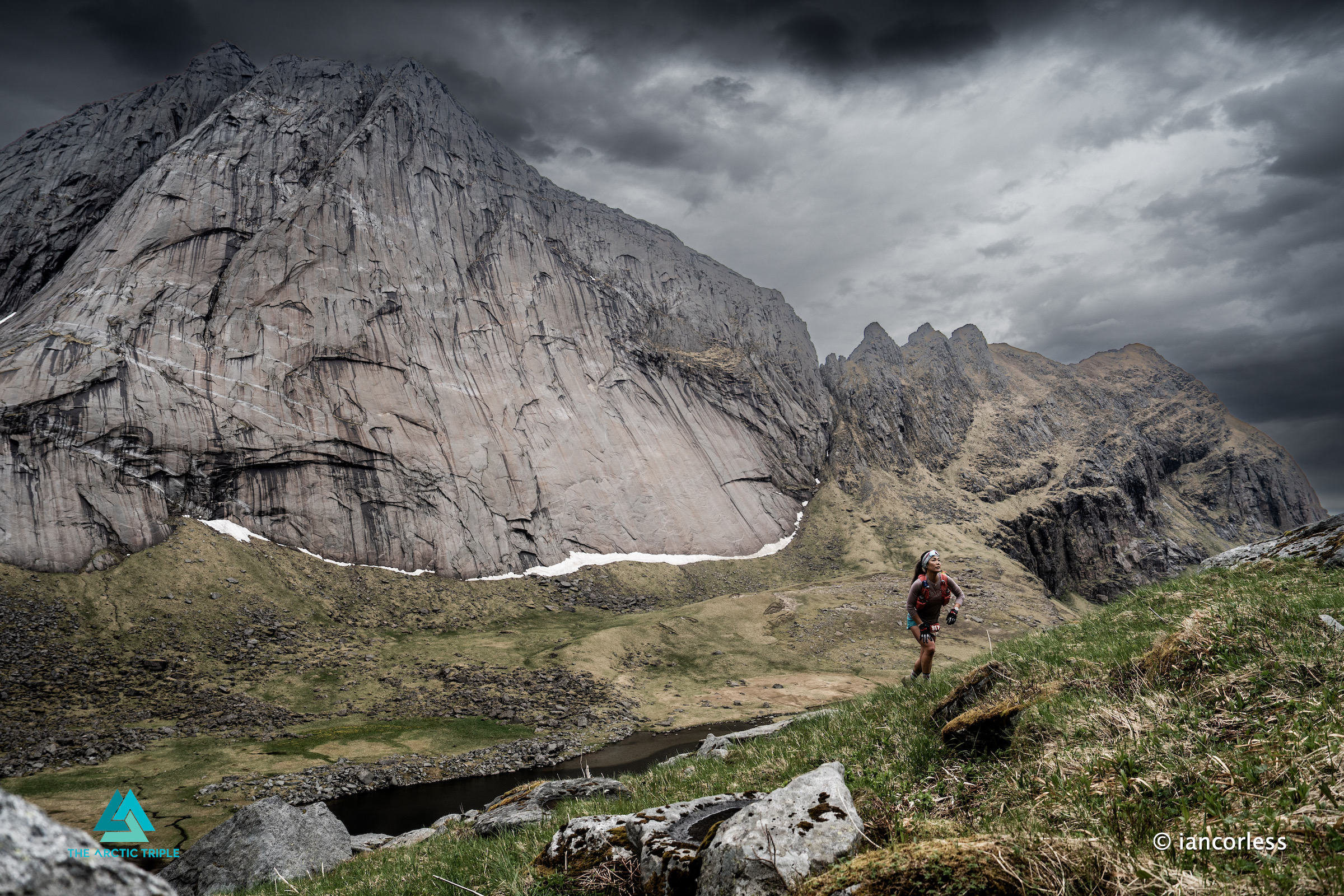
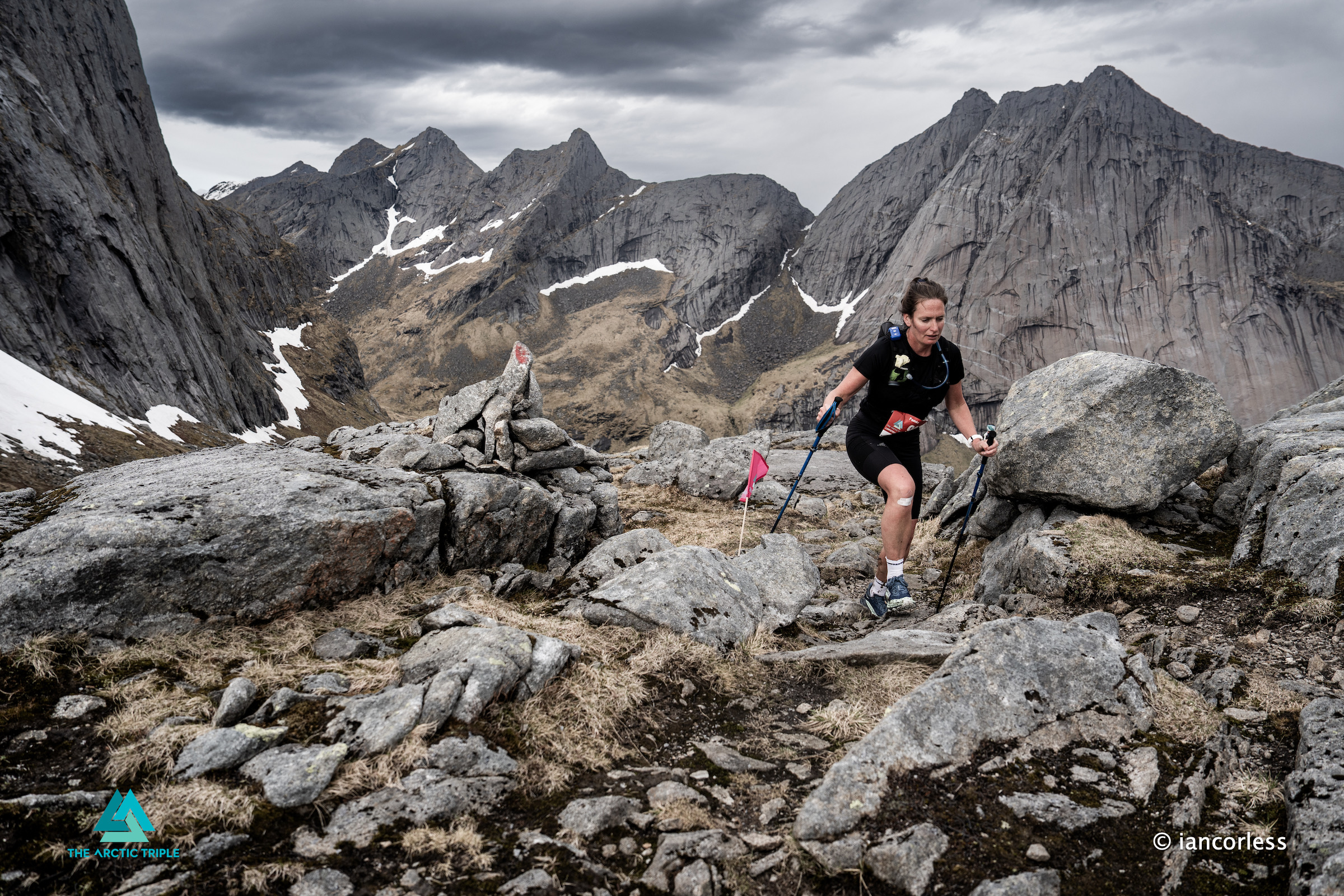
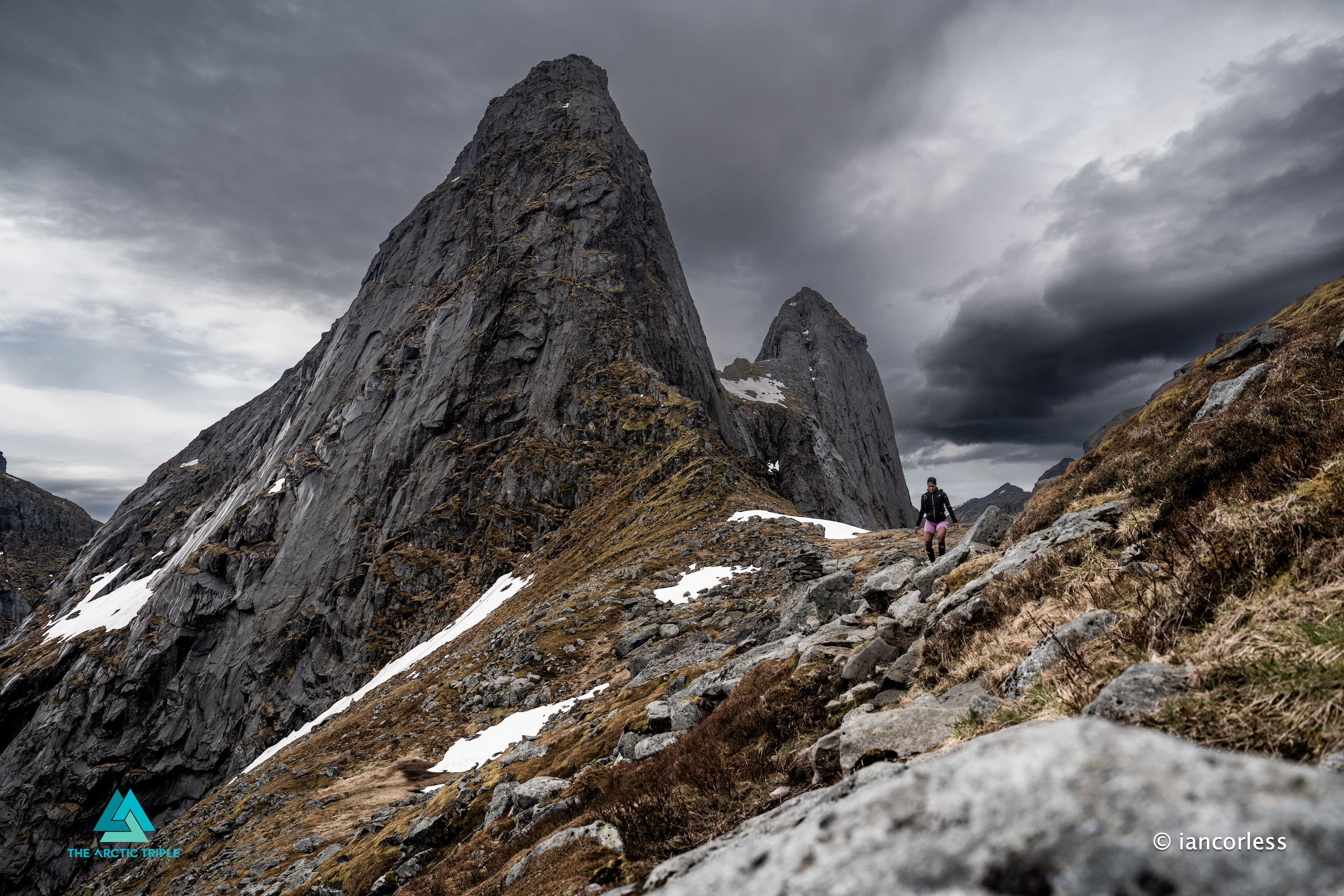
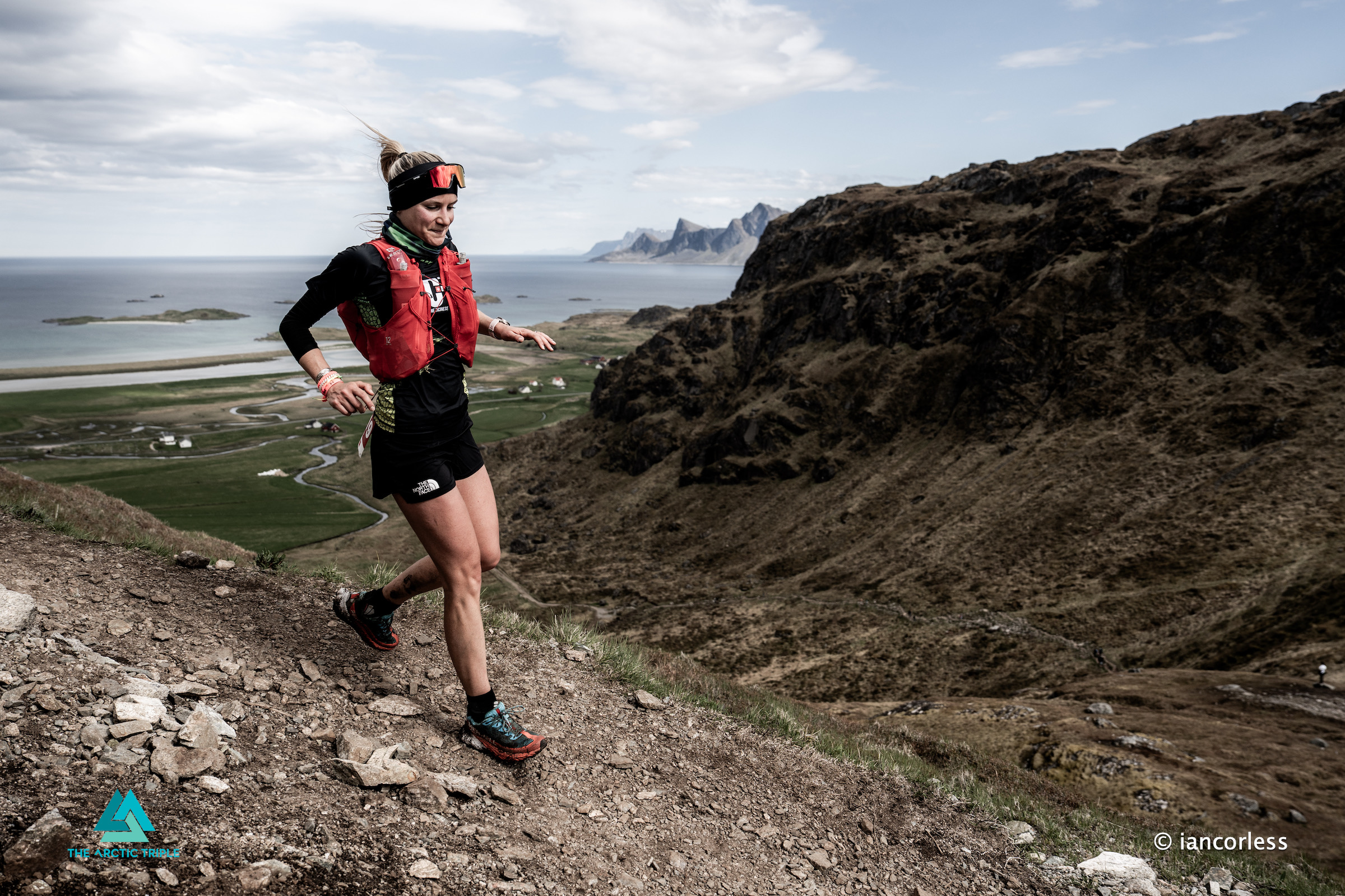
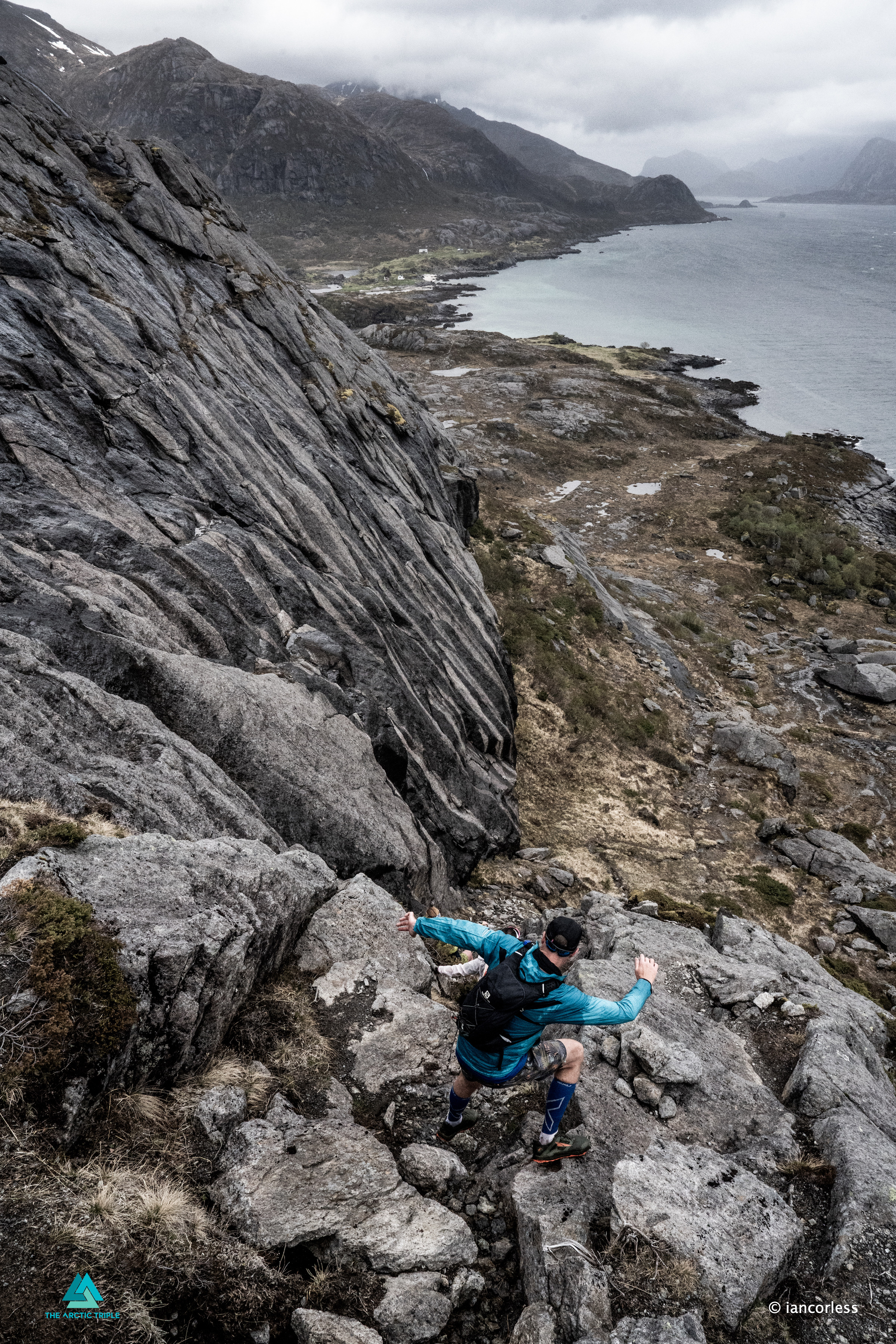
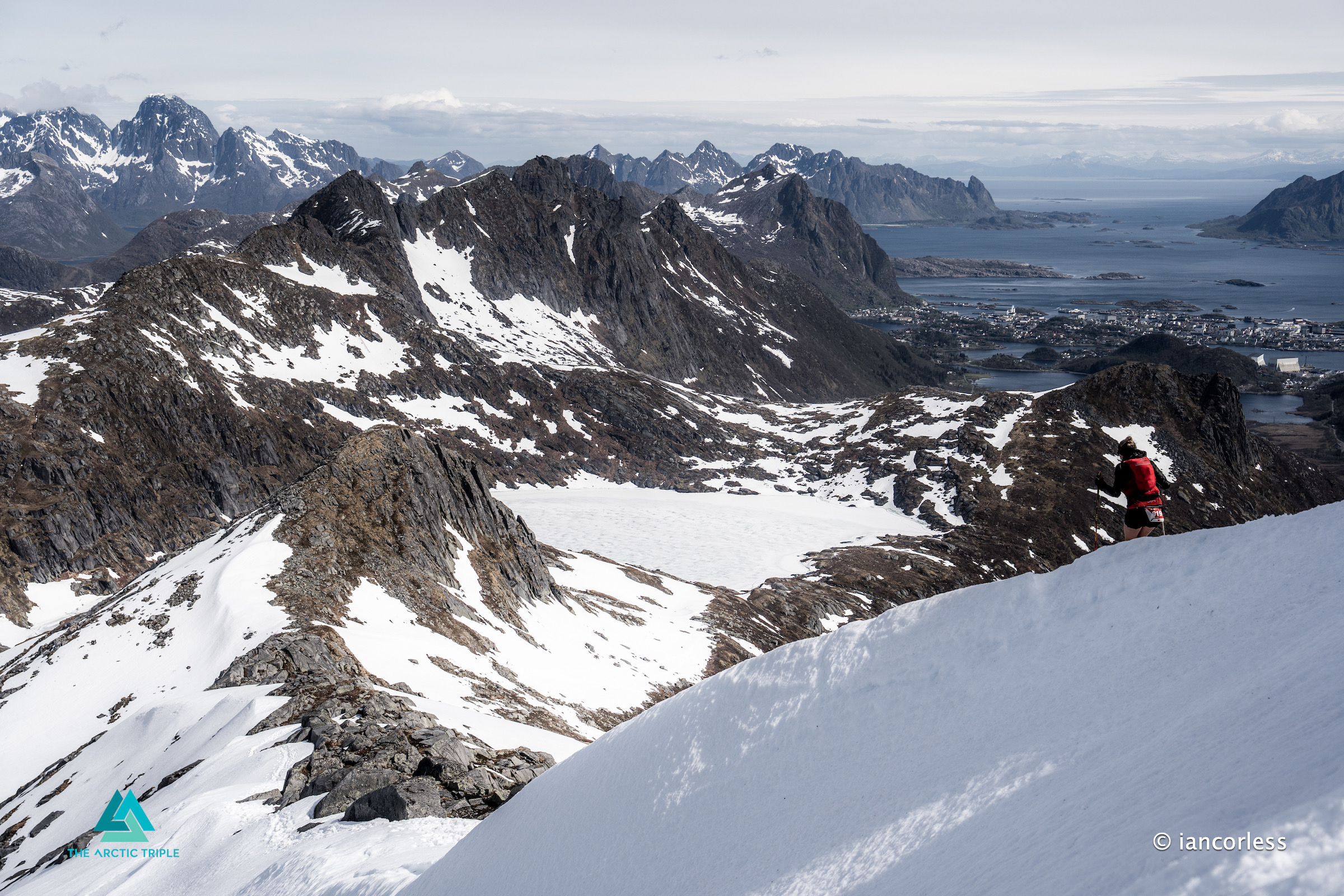
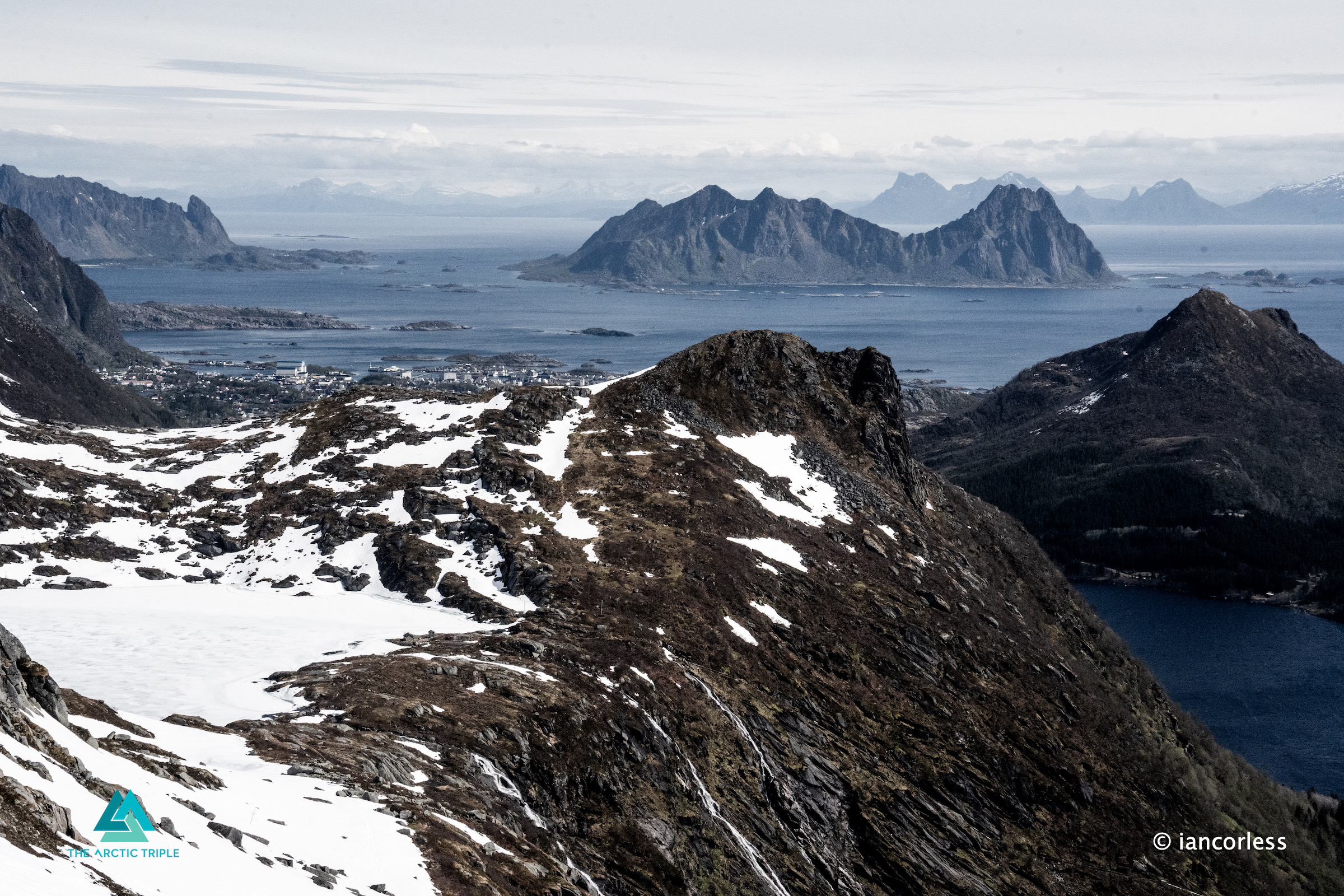
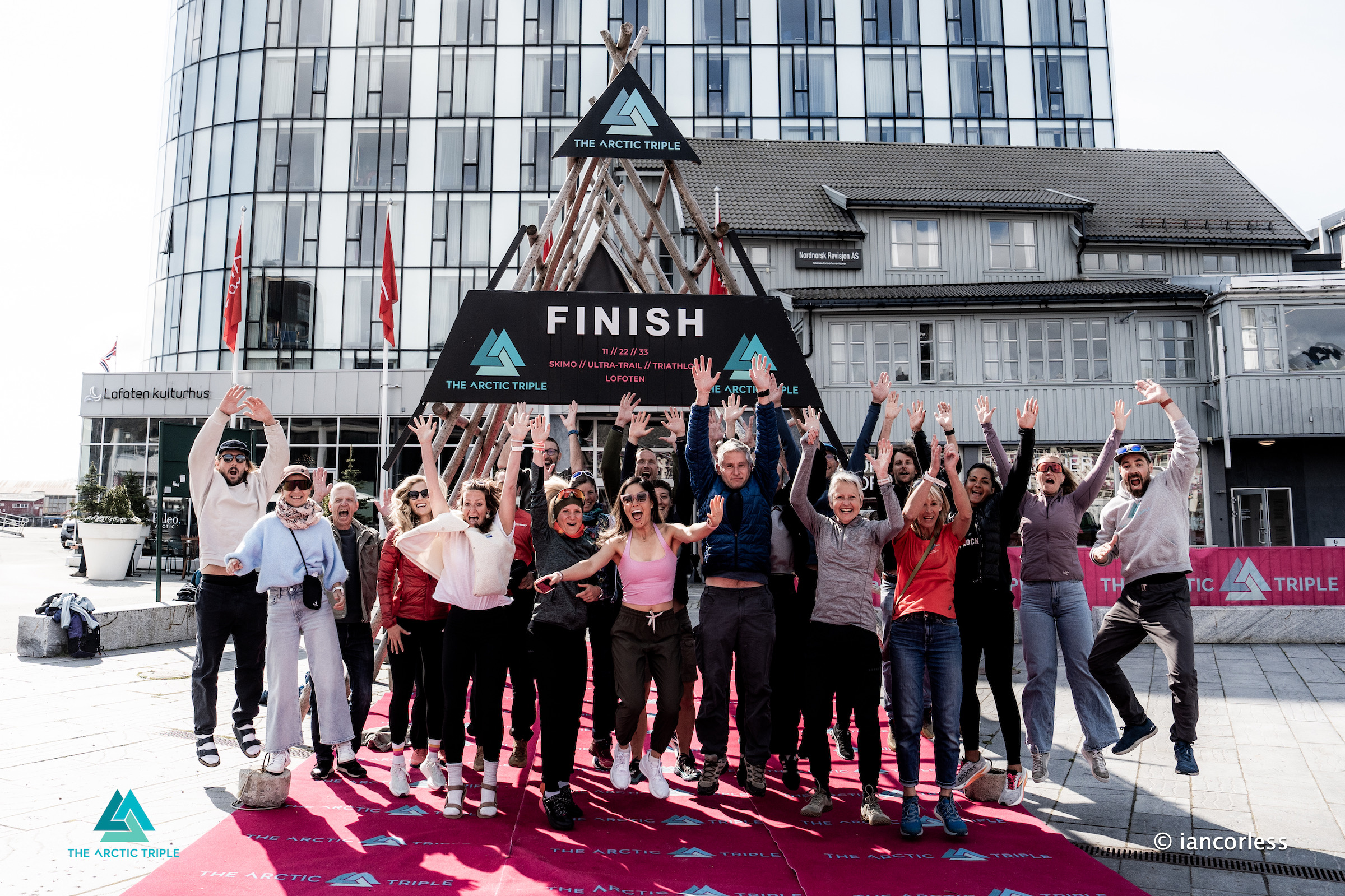
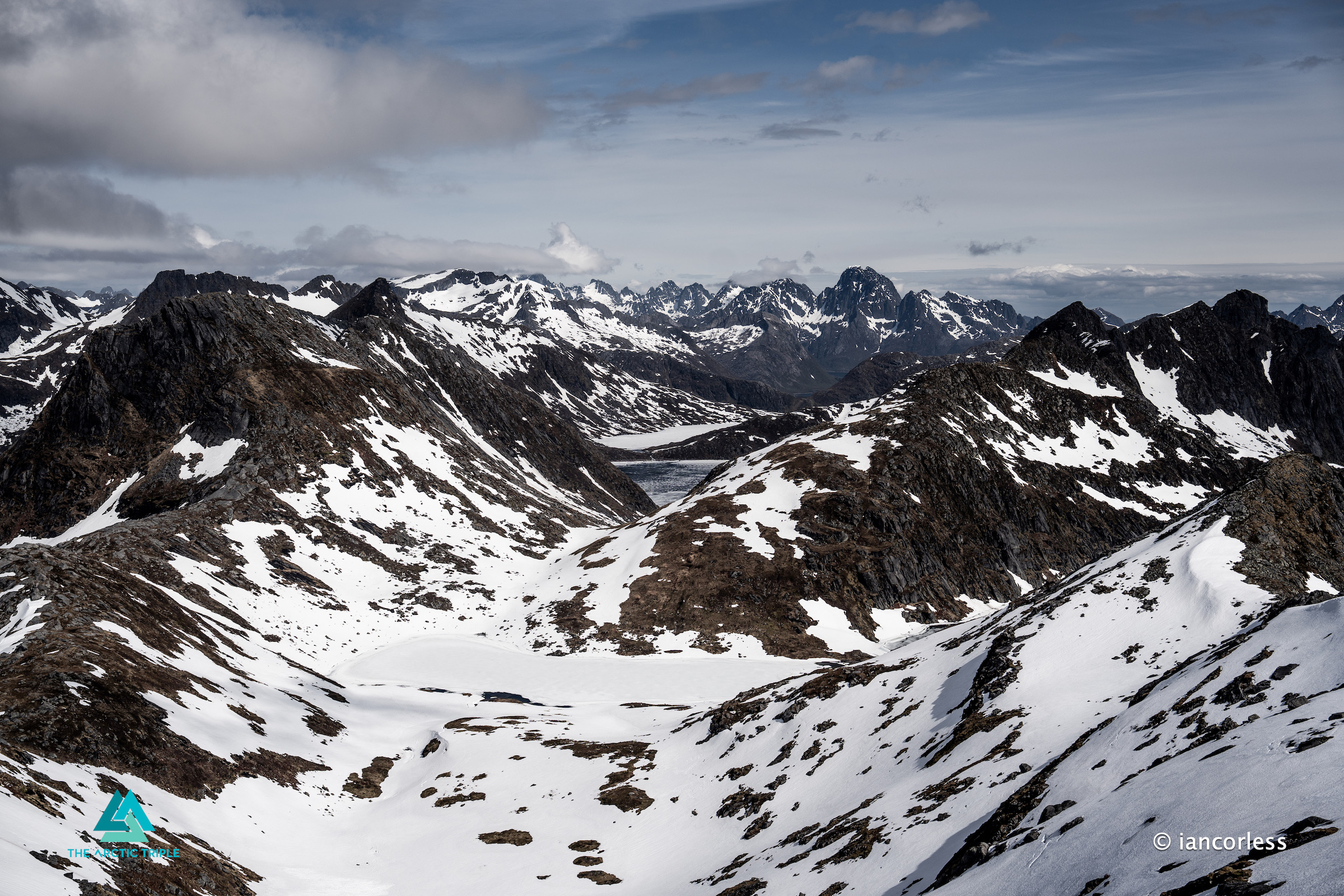
There are races, and then there’s the Lofoten Stage Run by The Arctic Triple team. What unfolded in May 2025 wasn’t just a footrace; it was a deep, soul-grinding, awe-inspiring journey through one of the world’s most arresting landscapes. Four stages. Two distances, 170 km and 100 km.
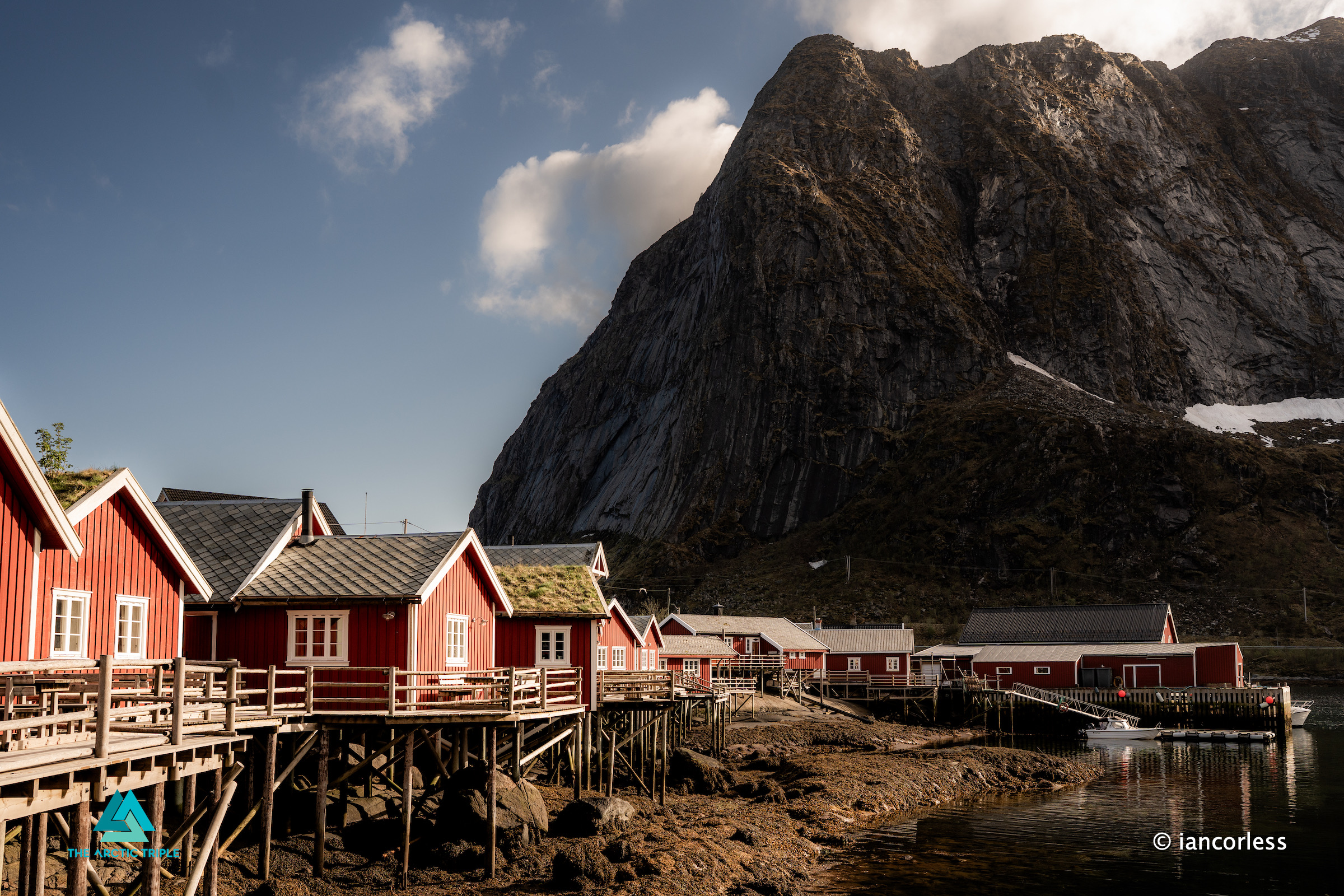
Across wild coasts, knife-edge ridges, fishing villages, and snow-streaked mountains, runners pushed their limits, and often redefined them, surrounded by the raw power and beauty of Norway’s Lofoten archipelago. Sleep came in hytte and seaside rorbuer; rest was fleeting, but memories were burned in.
Stage 1: Into the Wild – Kjerkfjorden to Nusfjord (39 km / 20 km)
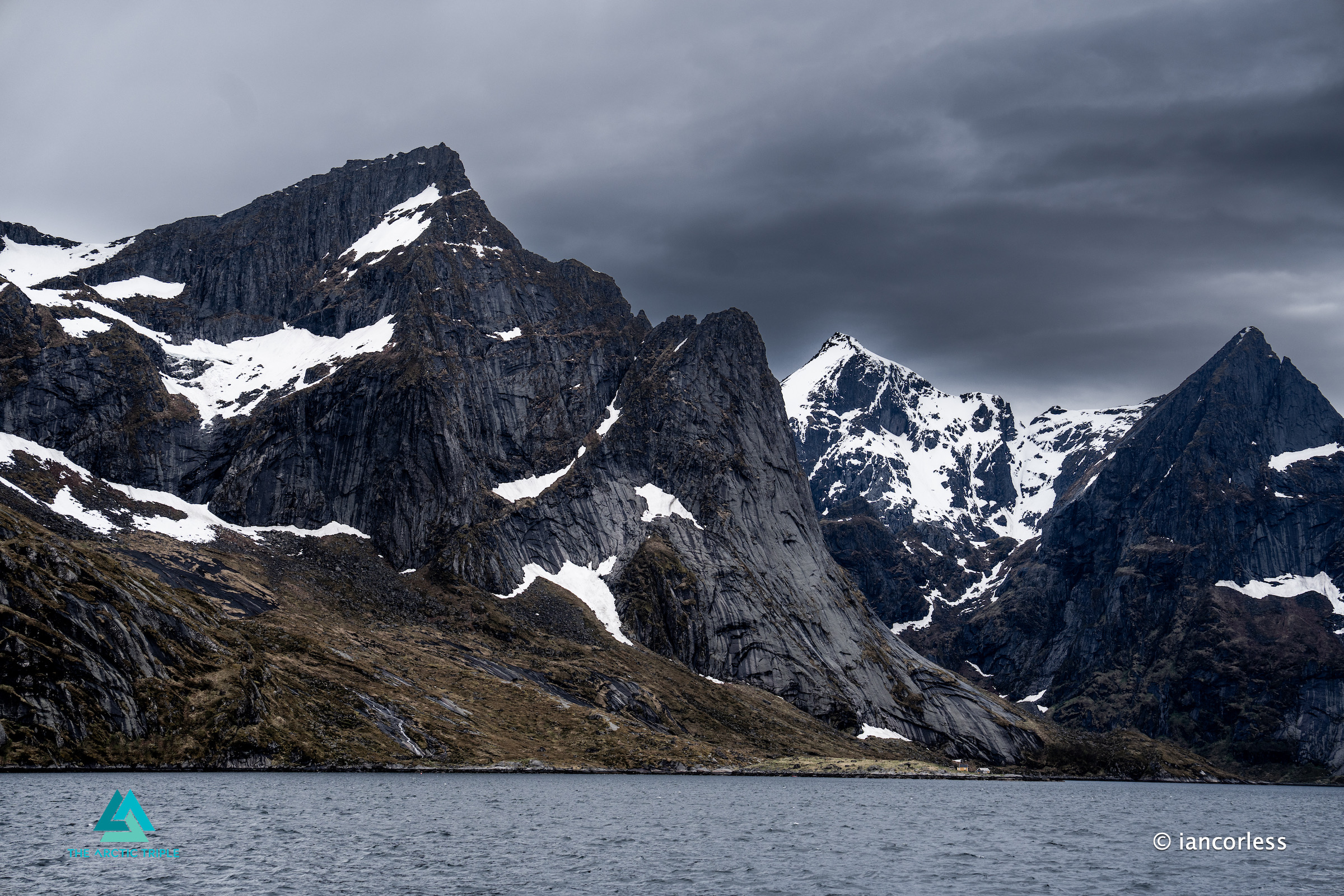
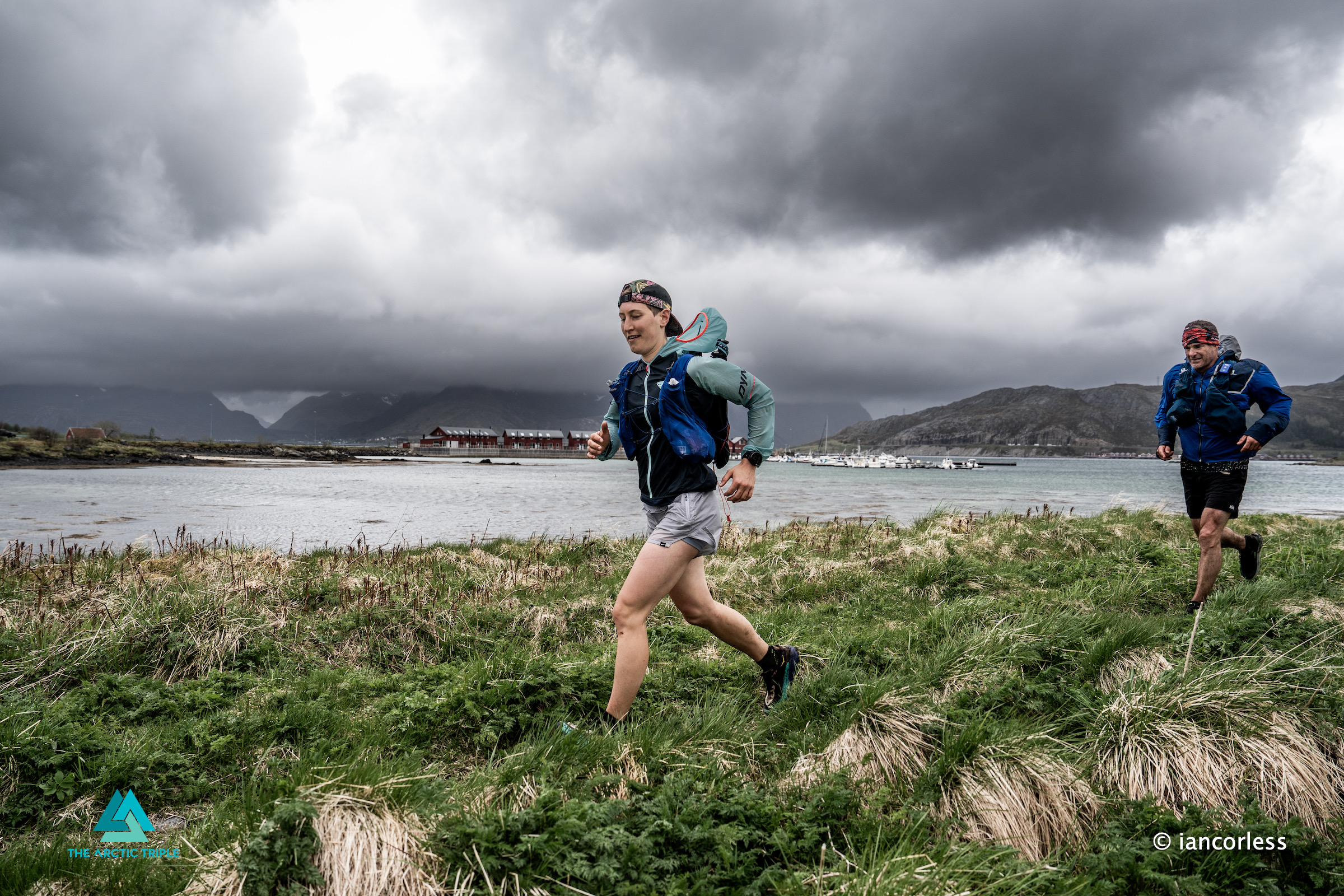
The race began like a dream: a boat ride through cold, steel-blue fjords, cliffs rising on all sides like the jaws of some ancient creature. As runners disembarked at Kjerkfjorden, the silence was broken only by soft footsteps and shallow breaths, nerves on edge, anticipation sharp.
The terrain wasted no time. A steep climb out of the fjord led straight into deep snow patches and slick rock. Then came the surreal beauty of Kvalvika Beach, where sand met snow and the ocean roared its approval. For the 170 km runners, the day stretched long into the day, ending with a technical coastal section into the storybook village of Nusfjord. Legs screamed, but hearts were full.
Stage 2: Edge of the Earth – Nusfjord to Leknes (34 km / 17 km)
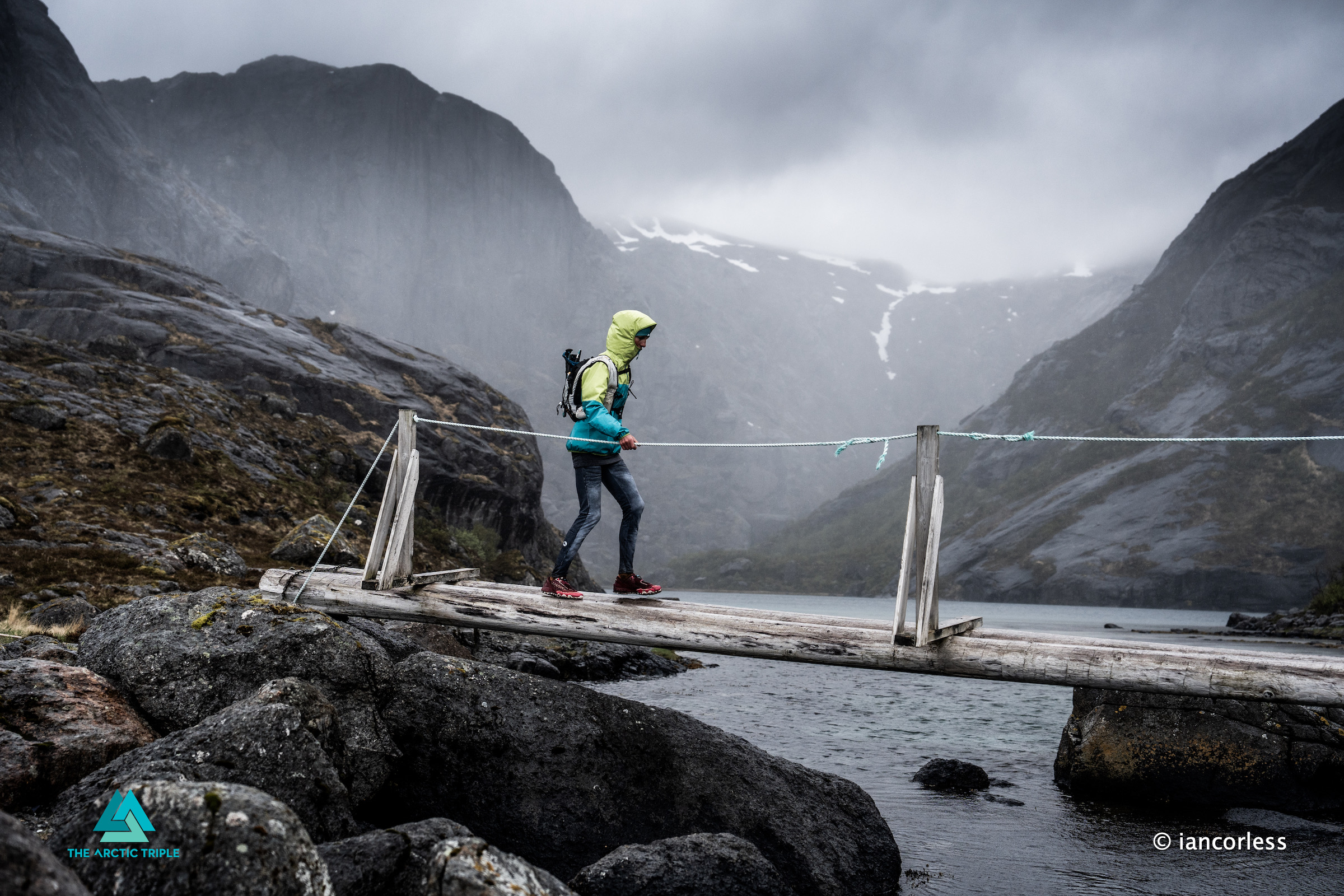
Day two was tougher. Tighter trails, more scrambling. The wind picked up, mist rolling in from the Norwegian Sea like smoke, rain fell, at times, hard and relentless. Between breaths, runners caught glimpses of jagged peaks piercing the sky and turquoise bays far below. This was Lofoten in full cinematic glory, wild, moody, and impossibly vast.
A tunnel under the sea added a surreal twist, legs burning as they climbed out of the darkness and back into the light. Offersøykammen offered panoramic views, but it demanded everything. As runners arrived in Leknes, drenched, scraped, and shivering, you could see it in their faces: wonder, pain, pride.
Stage 3: The Long Haul – Leknes to Rolvsfjorden (52 km / 35 km)
This was the crucible. The longest stage. Bodies were already breaking down, but the terrain opened up, longer runnable sections, smoother single track. The landscape changed too. From rugged coastline to sweeping highlands and serene lakes, this was Lofoten in its gentler form.
As the finish line at Brustranda Fjordcamping came into view, many had run out of words. “This is insane,” one runner muttered, grinning. “But it’s beautiful.”
Stage 4: The Final Push – Rolvsfjorden to Svolvær (45 km / 21 km)
The last day was emotional. Legs were dead weight. Ankles rolled. Minds fogged. But everyone knew what waited: the end, the reward, the moment of elation.
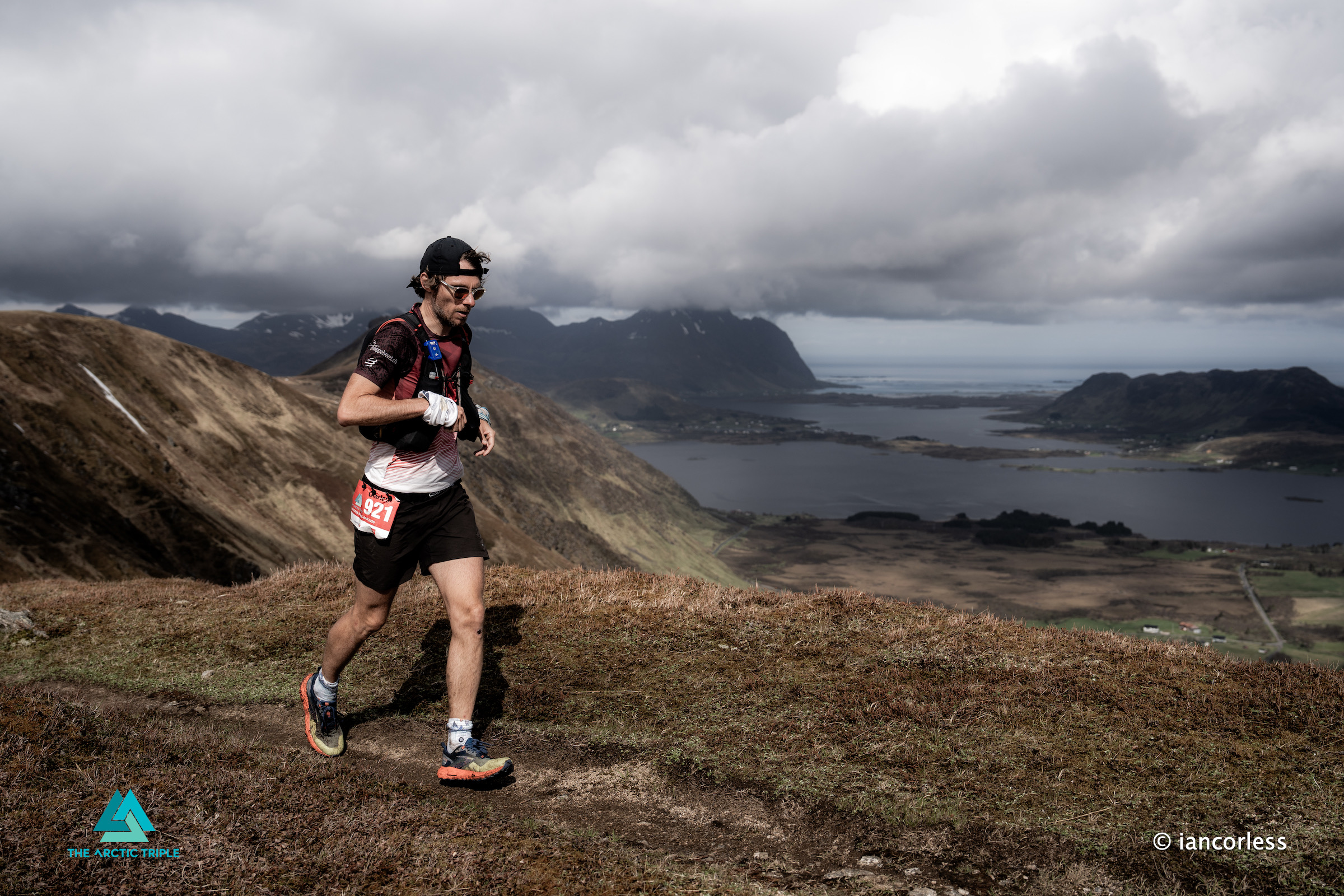
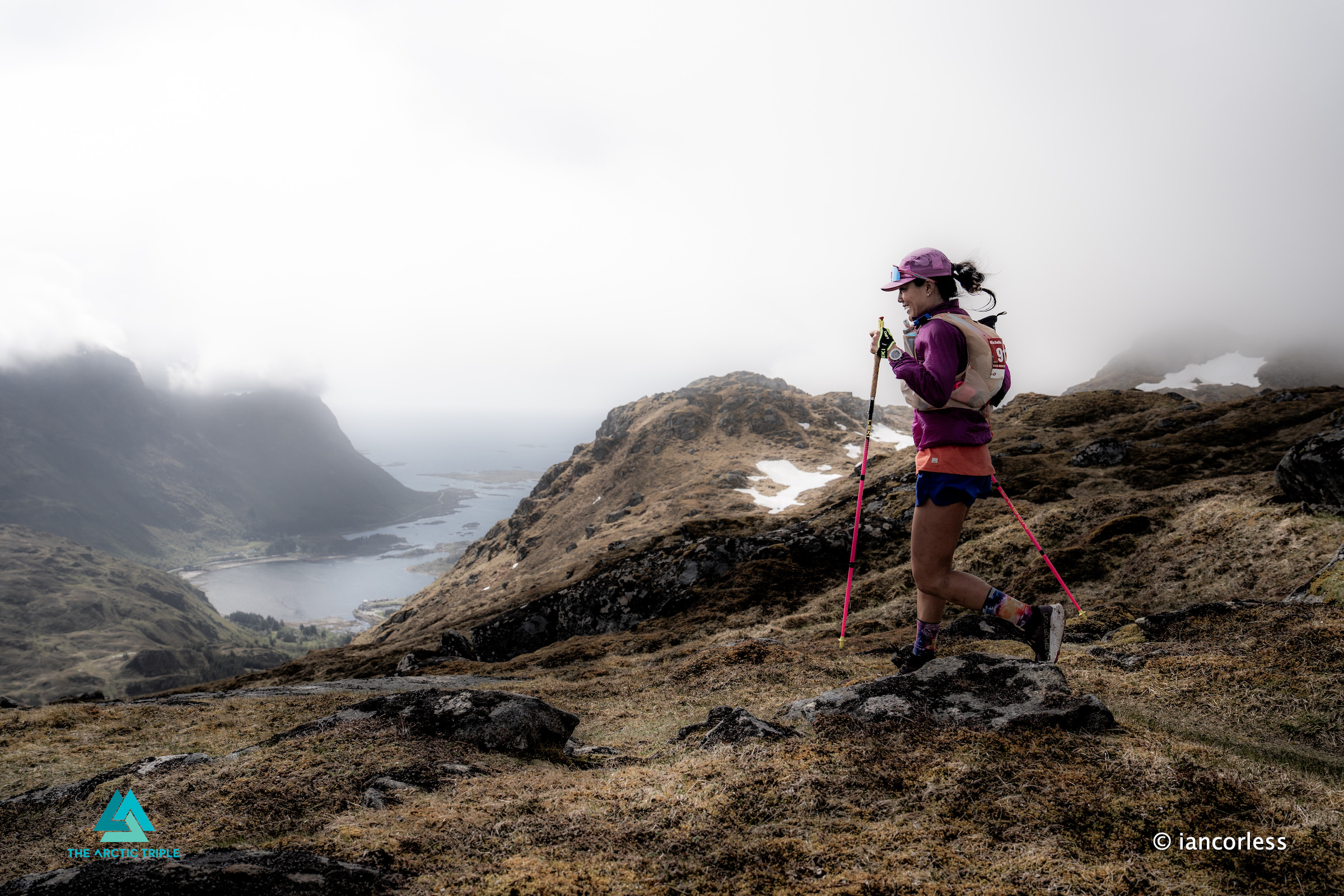
Jordtinden loomed: steep, snowy, relentless. At its summit, clouds lifted like curtains, revealing a 360-degree panorama that stopped runners in their tracks, the ridgeline ahead bringing a sense of awe and fear in equal measure.
This is the queen stage, the terrain bringing together all that makes Norway and Lofoten unique, marvellous and special.
You could see all the way back, mountains, inlets, the journey behind. Some cried. Some screamed. Some just stood there, stunned.
The descent into Svolvær was pure adrenaline, fuelled by joy and relief. The last stretch along the harbour felt like flying. Locals clapped. Teammates waited. People hugged. Some collapsed. Others danced.
More Than KM’s
But the Lofoten Stage Run wasn’t just about distance or finish times. It was about the strange intimacy of shared suffering, of strangers becoming friends over bowls of traditional Norwegian food and stories told in cabins. It was the moment you stepped outside at midnight, sun still hanging low over the sea, and realised how small we are.
It was the rawness of the terrain mirrored in every aching limb. It was the magic of Lofoten, weather that shifted like a mood, peaks that stabbed the sky, and a landscape that didn’t just surround you, it swallowed you whole.
In the end, it wasn’t a race, it never was, the Lofoten Stage Run is an experience, a 360 immersive journey that shocked the mind and the senses and revealed to each and every participant that this route, arguably, is one of the BEST in the world. It was a rite of passage. A storm-chased, mud-caked, heart-thumping reminder that the wild is still out there, and if you’re lucky, it might just let you in.
Since 1986, the Marathon des Sables – The Legendary (MDS) has carved its name into endurance racing history as one of the most gruelling, soul-stripping tests of human resilience. For 39 editions, it has pushed thousands to their physical and psychological limits under the crushing sun of the Moroccan Sahara.
In 2026, this legendary race will celebrate its 40th edition and it promises to be the most unforgettable one yet.
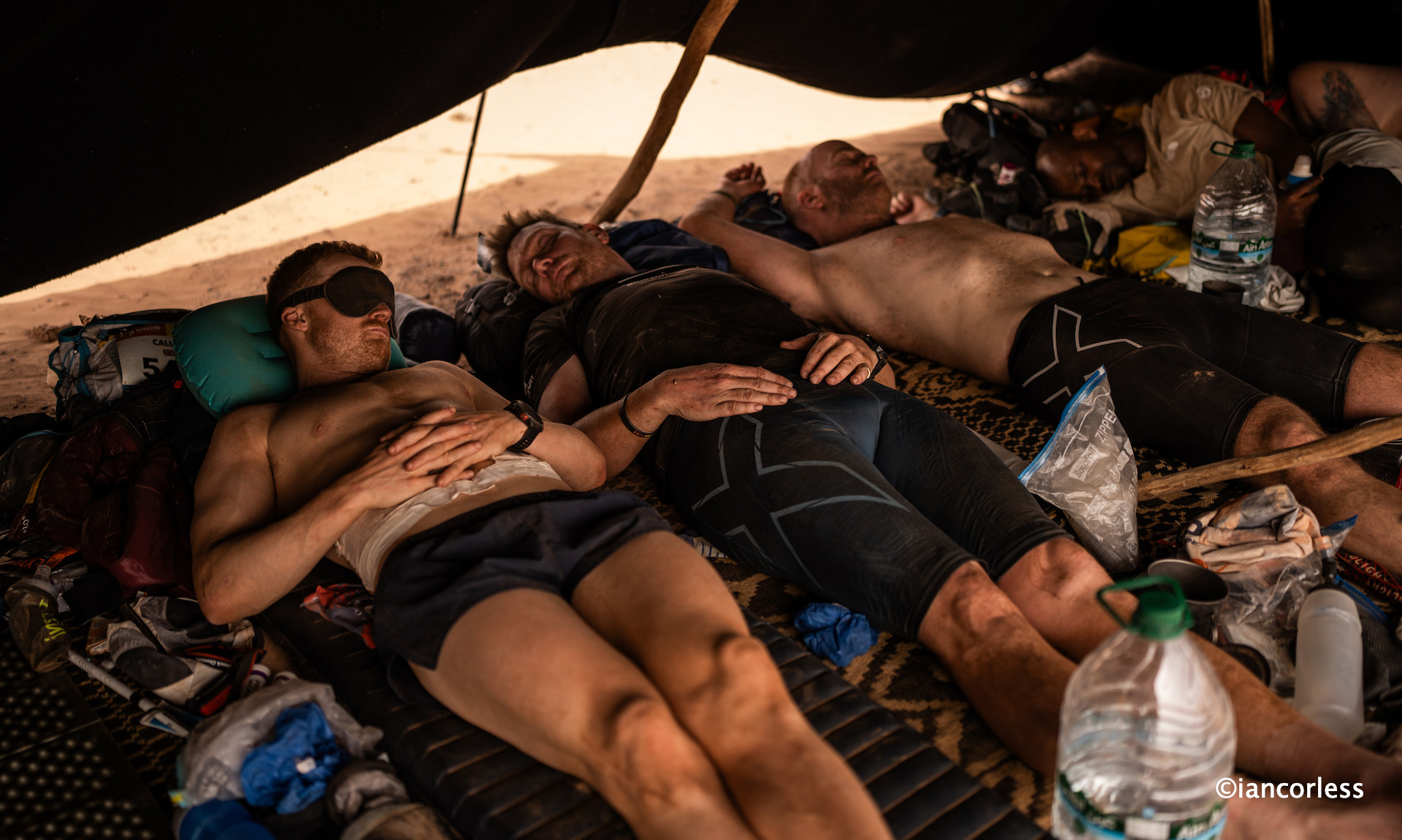
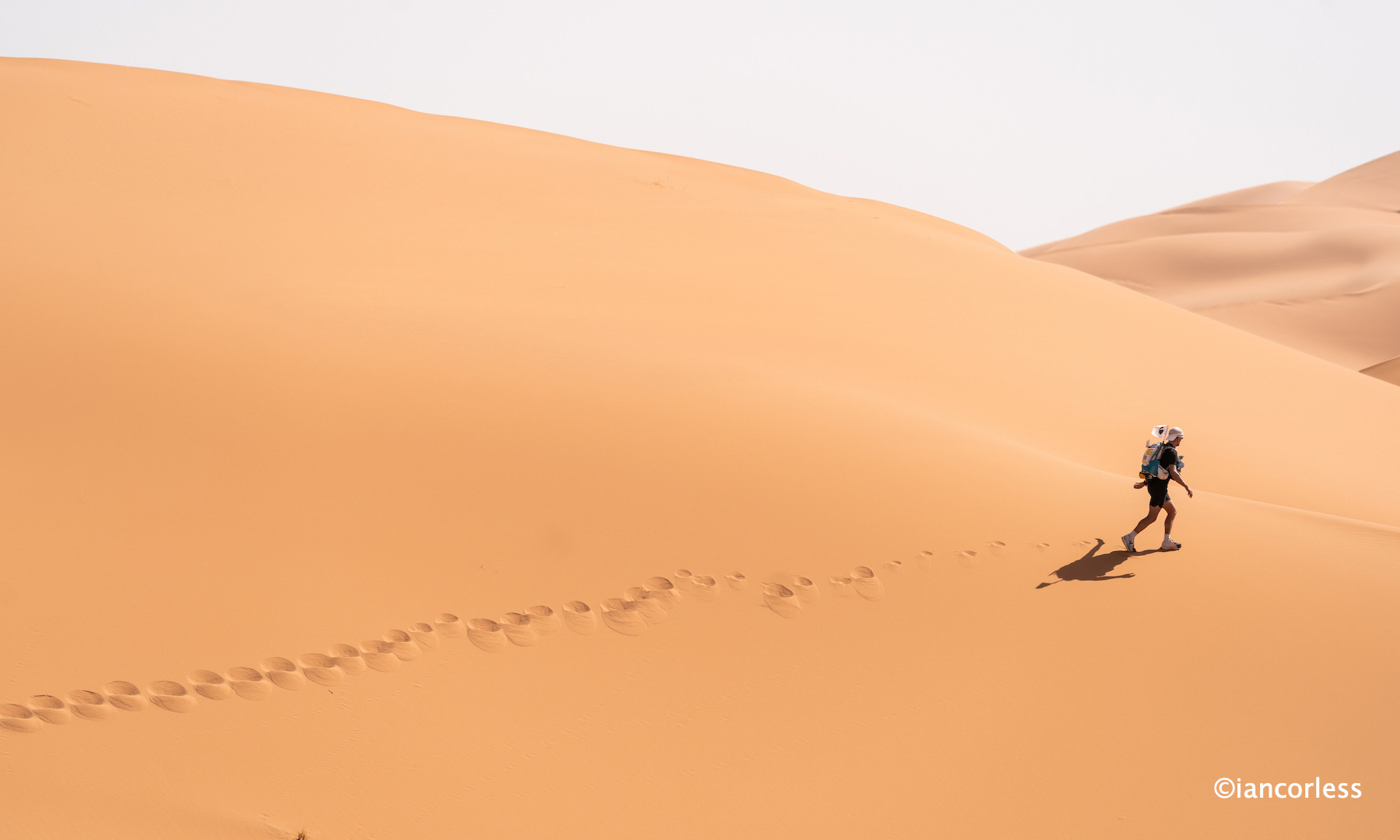
MDS The Legendary is six stages over roughly 250 km (155 miles), on blistering sand, across jagged jebels, and through soul-sapping salt plains. Runners carry everything they need for the week: food, sleeping equipment and clothes. The only luxury provided? A rationed daily water supply and a communal bivouac tent to crawl into at night which is shared with 7 other competitors.
Photo by Ian Corless
Every ounce carried matters. Bring too little and you starve. Bring too much and the weight drags you down. Success depends on ruthless efficiency and mental grit.
For four decades, the The Legendary has become a rite of passage for ultra runners, adventurers, and those seeking to rewrite their limits. It has seen amputees cross the line, cancer survivors, soldiers, CEOs and importantly, ordinary people doing extraordinary things. The terrain has remained the same: raw, relentless, and unforgiving.
Photo by Ian Corless
Despite the challenges, runner’s keep coming back, some for redemption, some for addiction, and all for the transformation.
The 40th Edition: What’s Coming in 2026
Photo by Ian Corless
The 40th MdS won’t just be another race, it will be a celebration of the madness. A tribute to every blistered foot, every tear shed under Saharan stars, every finisher’s medal earned in blood, sand, and sweat.
Photo by Ian Corless
The 40th will honour the legacy with style and fury.
Think You’ve Got What It Takes?
Entries for the 2026 edition open on June 11, 2025. Veteran or rookie, this is the year to go. Not just to run, but to become part of history.Become a Legend!
It is race week, the 39th MDS The Legendary is just days away. Today, Tuesday April1st, for many, will be the last full day of preparation before travel starts. Use the time wisely and use this post Countdown to MDS The Legendary 2025 – Three as a place to start to make sure you have everything.
You may be wondering what the race will look like in regards to distance in 2025? If you know where to look, distances are online and as below:
Stage 132km with 312m+ and 0730am start
Stage 240km 614m+ and 0700am start
Stage 332.5km 468m+ and 0730am start
Stage 4 82.2km 690m+ and 0600am start
Rest Day
Stage 542.2km 424m+ and 0630am start
Stage 621.1km 202m+ and 0630am start
Total 250km and 2710m+
You may be wondering how the 2025 distance and vertical compares to 2024, well, it’s almost identical – 2024 was 252.8km and 2788m+ – The long day was on day 3, so, the order was different, however, daily distances are +/- the same.
The only thing you need to do now is go through the following:
Get your checklist and go through everything and make sure you have all you need.
If possible get some heat exposure – Bikram yoga, heat chamber, sauna, hot bath or similar.
Move – your training is done but your body will appreciate some movement, this can be just walking or some easy running with some short strides to loosen up.
Travel with MDS pack and all equipment (ex poles and knife) and wear race shoes.
Take extra clothing and items in check-in luggage so you can fine tune equipment when in the Sahara.
Remember you are self-sufficient in the desert for the days before the race, have enough food and any drinks you require. Water is provided.
The 2025 edition of the Marathon des Sables – The Legendary is getting close, as we journey through March, we will post weekly articles to help you fine tune your preparation.
Following on from the 2024 edition, the longest in MDS history, the 39th 2025 edition will follow a similar format and distance. The event will take place over 6-stages/ 7-days and notably, the ‘long day’ was stage 3 in 2024, for 2025 it will return to stage 4.
All 6-stages will be timed as in 2024, previously, the charity stage was not timed.
Although the race has fluctuated in distance over the years, a distance of +/- 250km’s should not come as any great surprise and training in the build up to the event should have been planned with this in mind.
6 timed stages does make a considerable difference and that should be considered. In 2024, the long day coming on stage 3 was an extra challenge, for 2025, it returns to stage 4! Depending on how fast you complete the long day, you can have a full day and night as recovery before stages 5 and 6.
Daily distances are typically never disclosed before the race and the jury is out if the distances will be announced pre arrival in Morocco, watch this space! However, it is pretty easy to guess on approximate distances.
The 2025 MDS Legendary will look (potentially) like this:
Stage 1: 32km (day 1) running total: 32km
Stage 2: 38km (day 2) running total: 70km
Stage 3: 36km (day 3 running total: 106km
Stage 4: 80km (day 4 and 5) running total: 186km
Stage 5: 42km (day 6) running total: 228km
Stage 6: 21km (day 7) running total: 249km
Total: 249km
Three key considerations:
Expect more sand, anticipate no Djebel El Otfal and expect Merzouga Dunes. With the above information, you now have at least a template and guide for which to plan around.
“…and for sure it will be tough, I am not going to tell you that it will be easy! The distance will be 250km’s, I am little unhappy because I cannot put the long stage in the third position, I loved this last year, but according to our plan, we need to move it to the fourth stage. It will be tough, very tough and really beautiful. We have some amazing places planned, 80% is new tracks. You will see places never seen before in any MDS. There will be no El Otfal, there will be lots of sand and yes, Merzouga will return.” – Cyril Gauthier
SCHEDULE
Photo by Ian Corless
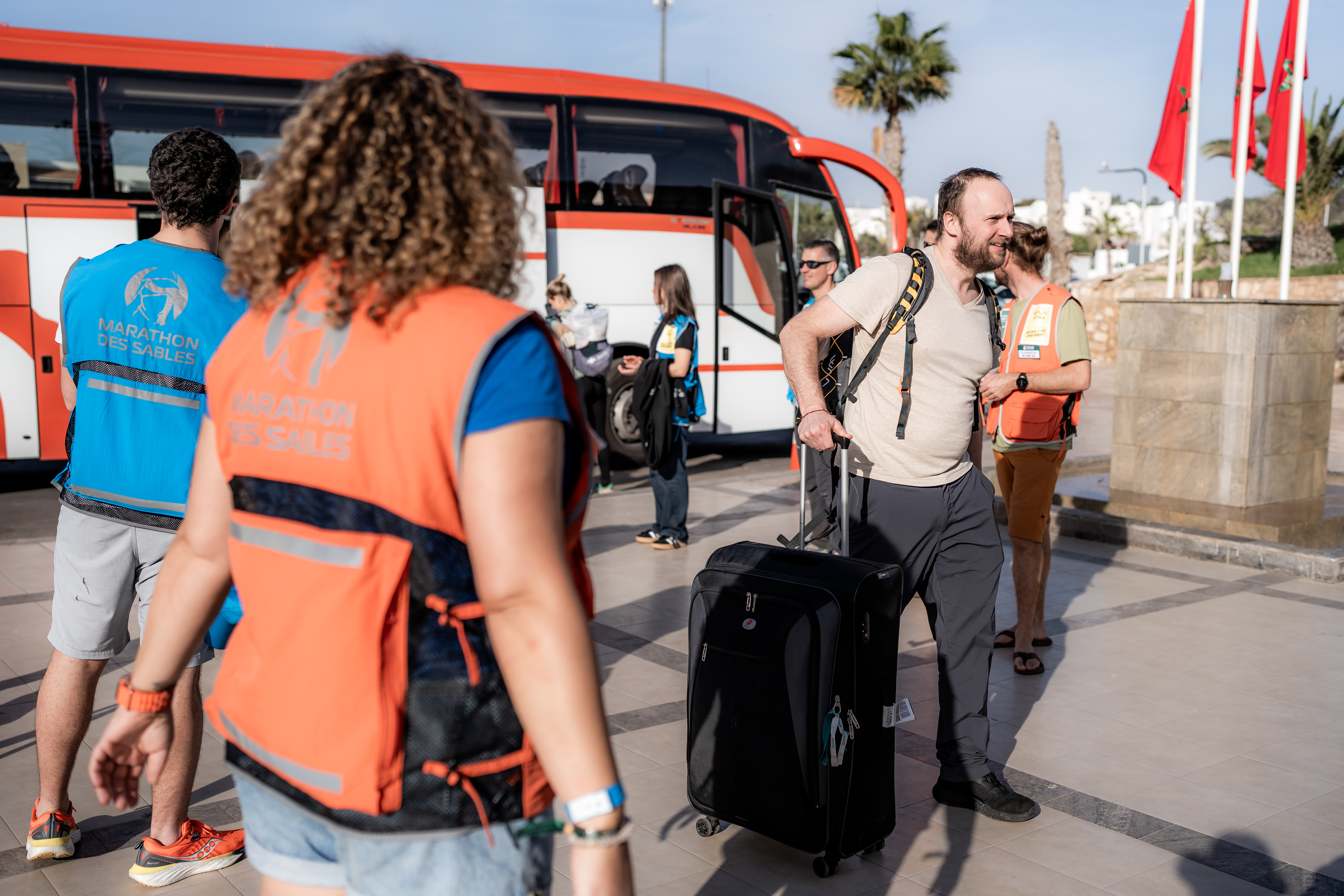
Day 1: Arrival in Morocco, transfer by bus to the bivouac in the desert, installation and overnight stay in the bivouac wih self-sufficiency.
Day 2: Day of technical, administrative and medical checks. Overnight in bivouac with self-sufficiency.
Day 3: First stage, overnight in bivouac.
Day 4: Second stage, overnight in bivouac.
Days 5: Third stage, overnight in bivouac.
Day 6 and 7: Fourth stage, the long one” – lasting 2 days, overnight in bivouac.
Day 8: Fifth stage, overnight in bivouac.
Day 9: Sixth stage, medal at the finish line, then bus transfer to Ouarzazate, overnight in hotel with half-board accommodation.
Day 10: Free day in Ouarzazate, awards ceremony, gala evening. Overnight at hotel with half-board accommodation.
Day 11: End of adventure, transfer back to airport.
BIVOUAC
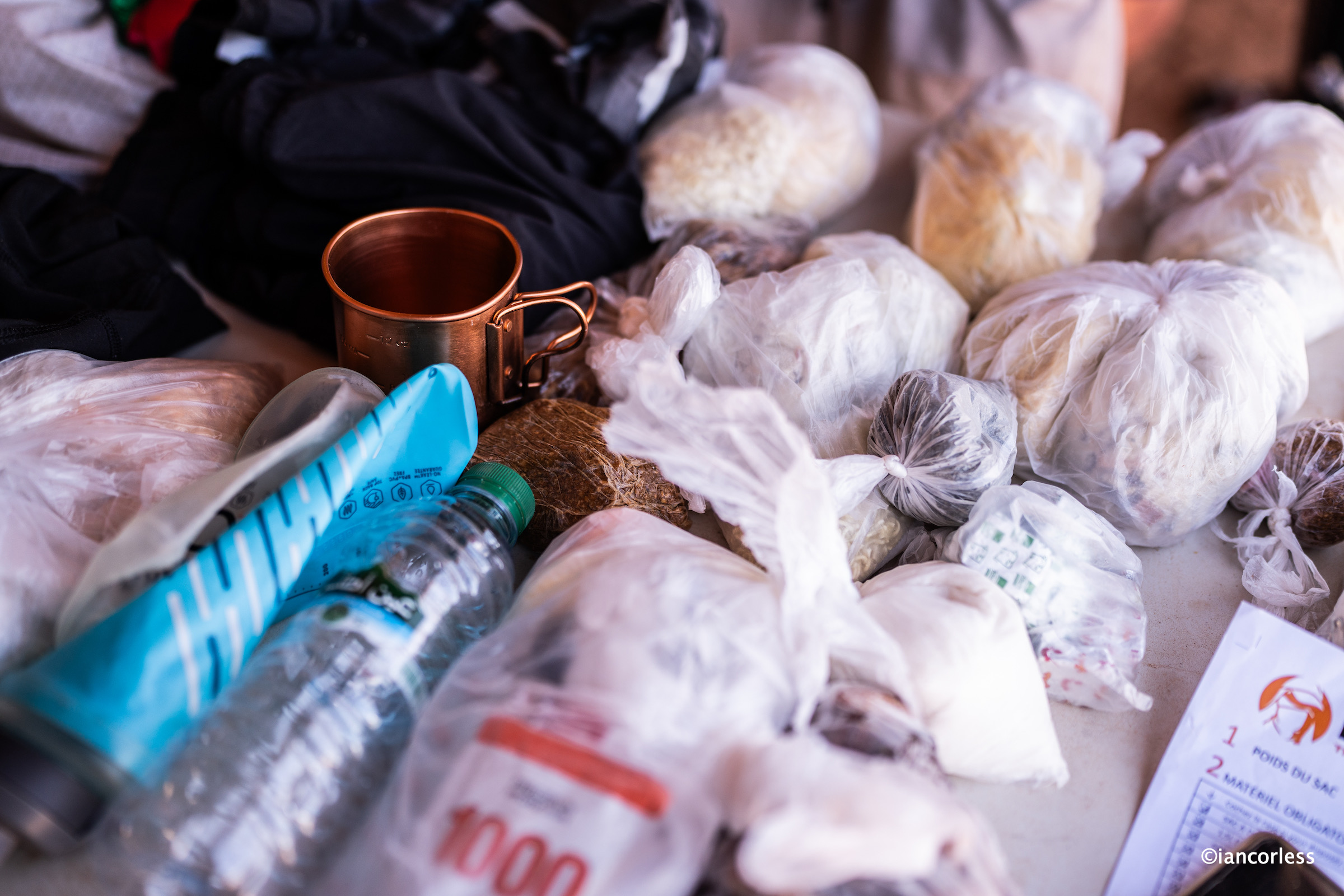
Remember, from the moment you arrive in bivouac you are self-sufficient. So make sure you bring food/drink (water is provided) to cover the days before the race starts. This food can be in any form and weight as you do not need to carry it, so, be creative. Rachid for example makes a Tagine in camp…!
Also remember, you have your luggage with you before the admin protocols. So, bring extra items, warm layers, spare kit etc. That way you can fine tune equipment in a real situation. Particularly helpful when judging climate conditions. DO NOT assume that it will be hot, recent history has shown that temperatures and conditions in the desert are changing – MDS Morocco in October had rain and flooding. The recent MDS Morocco Atlantic Coast had extreme wind, cold temperatures and rain. Be prepared!
ADMIN DAY
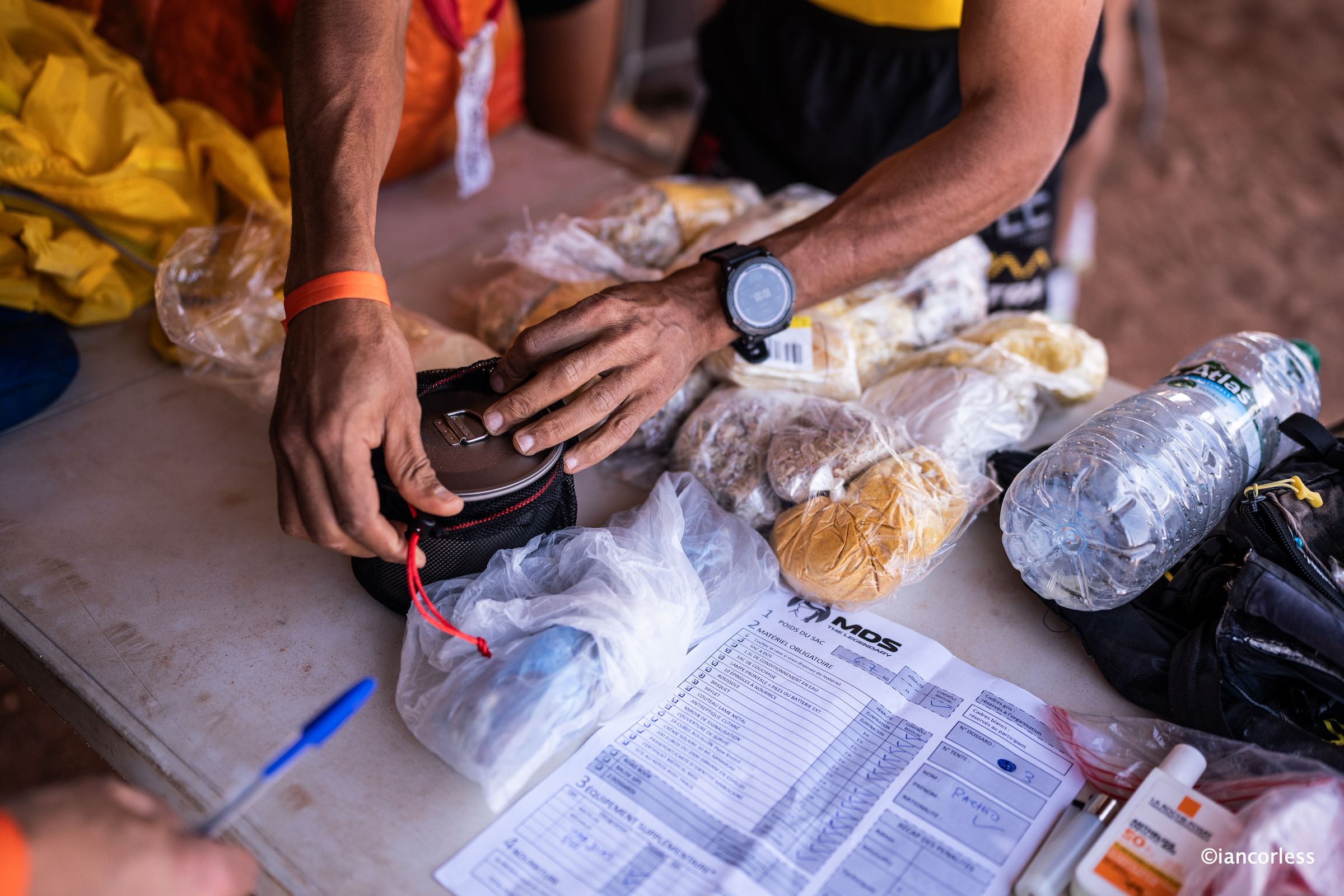
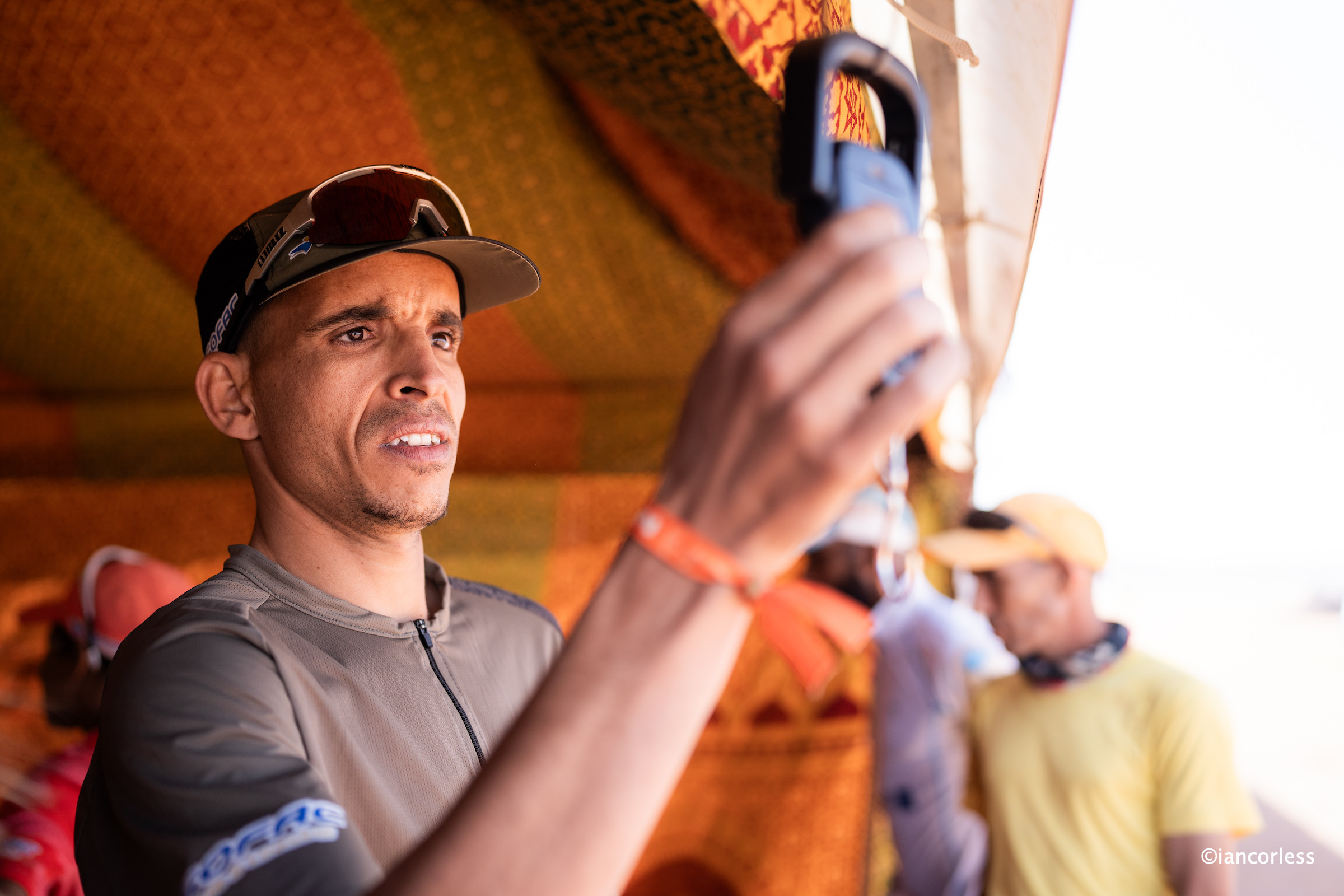
You will have your luggage with you in bivouac before admin day. You can make last minute adjustments if required. Be prepared and make sure you comply with all rules and regulations. A pack must have a minimum weight of 6.5kg PLUS water (1.5L). You must have a minimum of 2000 cals per day. You must have ALL the mandatory kit.
SALT
The new revised mandatory requirement for the race requires 14 broth cubes – these cubes are known to be salty. You have no choice here, you must have them. In 2024 many questioned the validity, however, during and post the event the general consensus was very positive. Take note here, not all cubes dissolve the same in water, so, make sure you find a cube that works such as Knorr. My advice is to plan a strategy that works for you. Listen to my podcast with Andy Blow from Precision Hydration HERE. Remember, this is a self-sufficient race, so, be prepared to be self-sufficient and have a plan/ strategy that works for you.
WATER
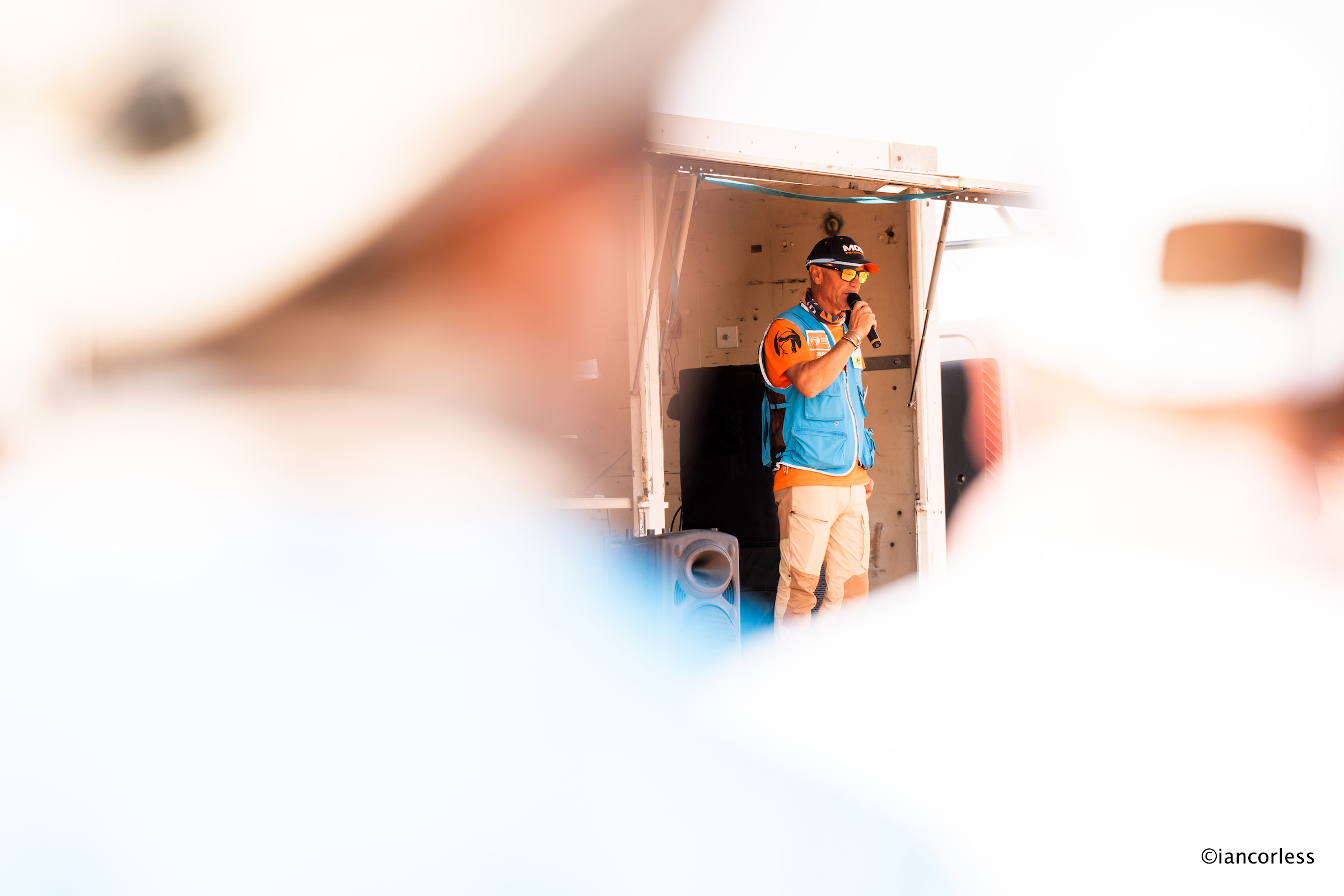
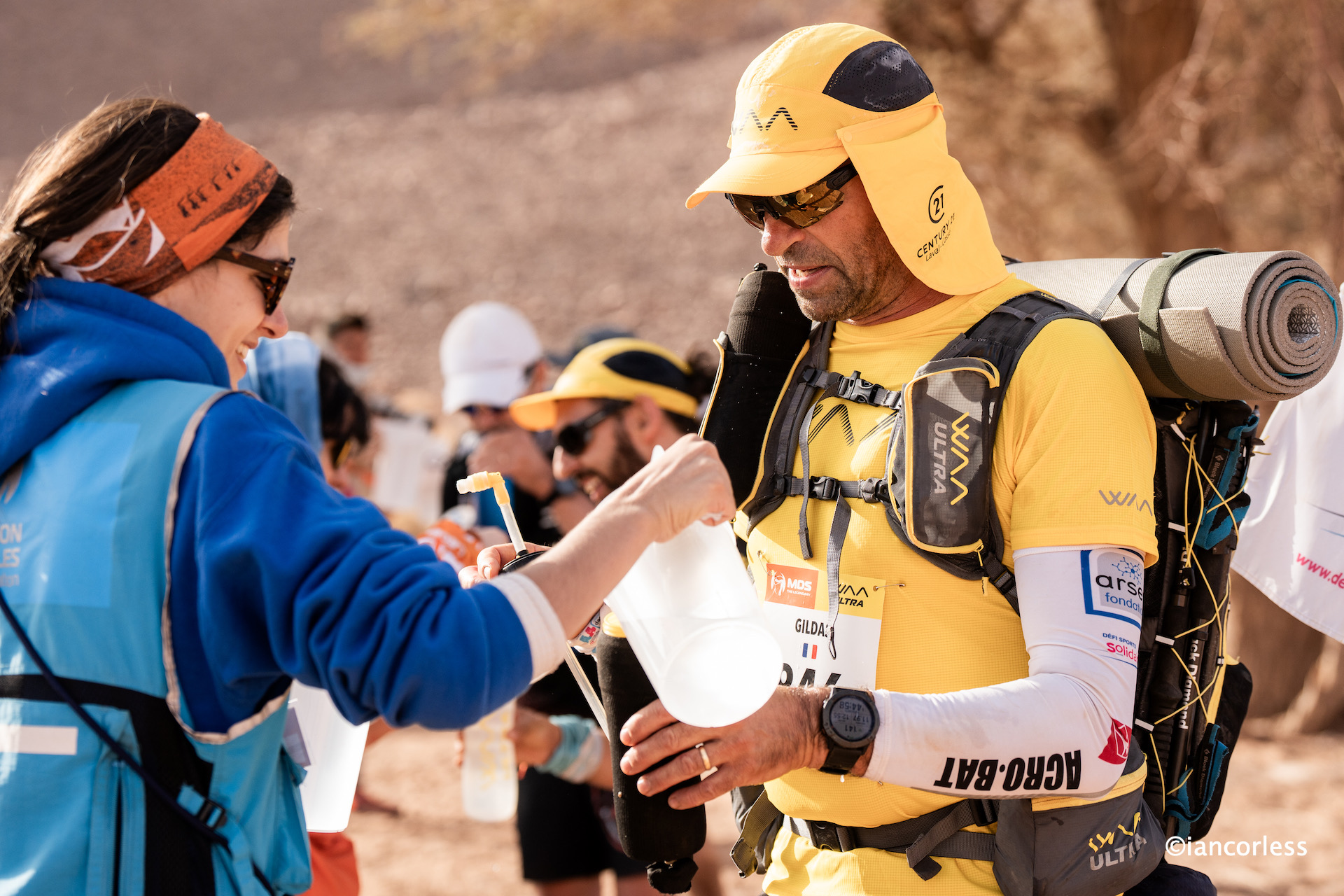
Another key change from 2024 is water and how it is provided. In principal, once you start on stage 1, water is unlimited. No longer are you provided 1 or 2 1.5ltr bottles at checkpoints. Now, the blue coats will pour water from jugs in to your bottles. If you stand at a CP and then drink a full bottle, it will be refilled.
Another key note to consider is that should conditions dictate or should the organisation think that additional water will be helpful, water stations may be added between CP’s. This is very important. Typically (conditions and terrain allowing) CP’s are 10km’s apart, therefore, you may heave an additional water station at say 5km’s.
The long day may (tbc) have a requirement that you can carry extra water capacity? This extra water would potentially be provided in a 1.5ltr bottle, so, either have an extra bottle to decant this to, or, have a system to carry a 1.5ltr bottle.
After the stage finishes, water is then rationed and you are provided with 1 large 5ltr bottle. This water will be needed for your hydration post stage, cooking dinner, cooking breakfast and your water allowance to CP1 the following day. If you want to wash, that also comes from the 5ltr allowance, so, make sure you drink and eat and understand what water capacity you need before taking a wash.
FEET
Along with dehydration, damaged feet are a key reason NOT to finish MDS. Make sure you have correct fitting shoes, the right socks for you and you know how to look after your feet. Read HERE and HERE.
SAFETY
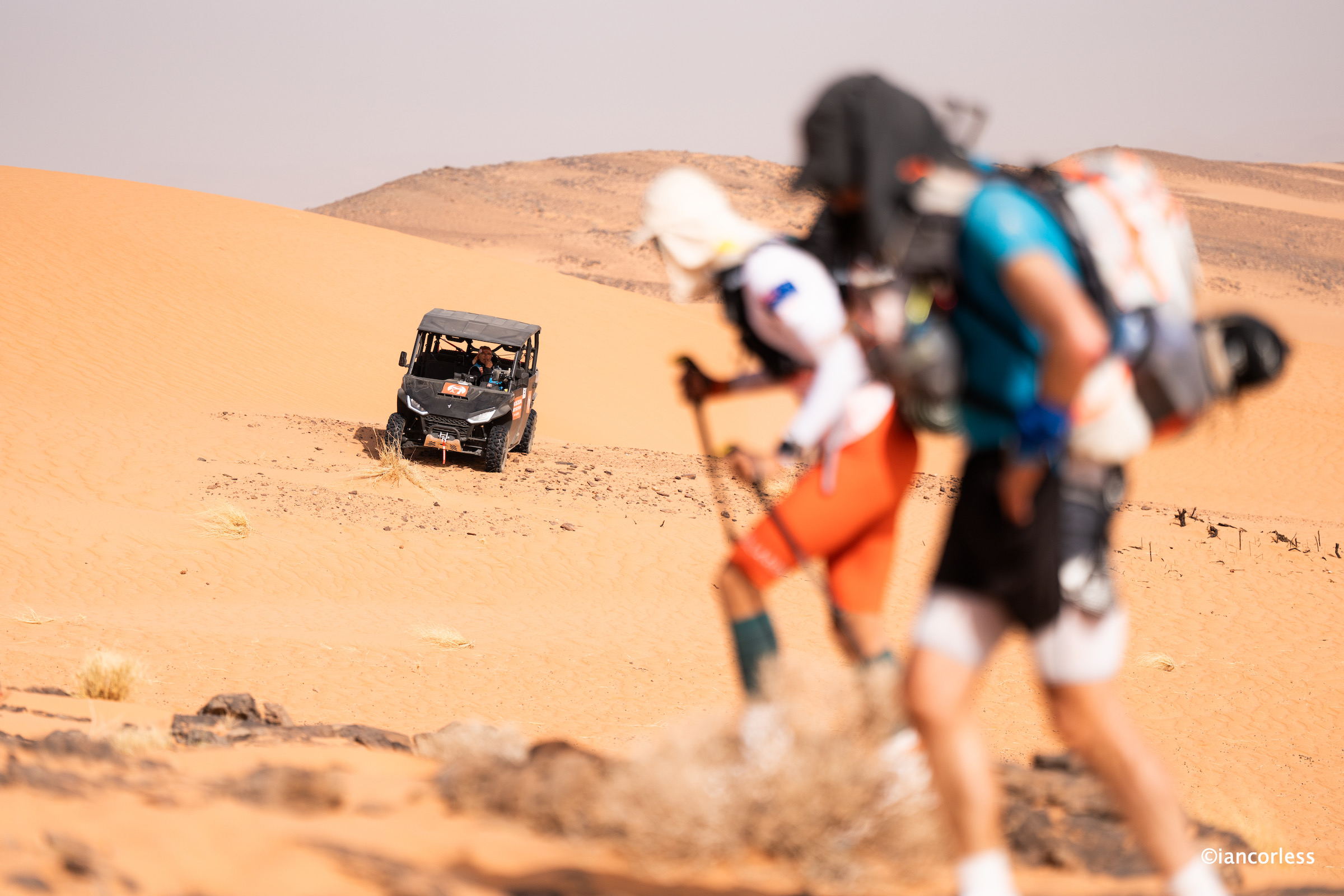
MDS has strict protocols for your safety. You will see fast response vehicles (buggies) designed to gain fast access to the most difficult and challenging parts of the desert. In addition, there are 4×4 vehicles situated throughout the course.
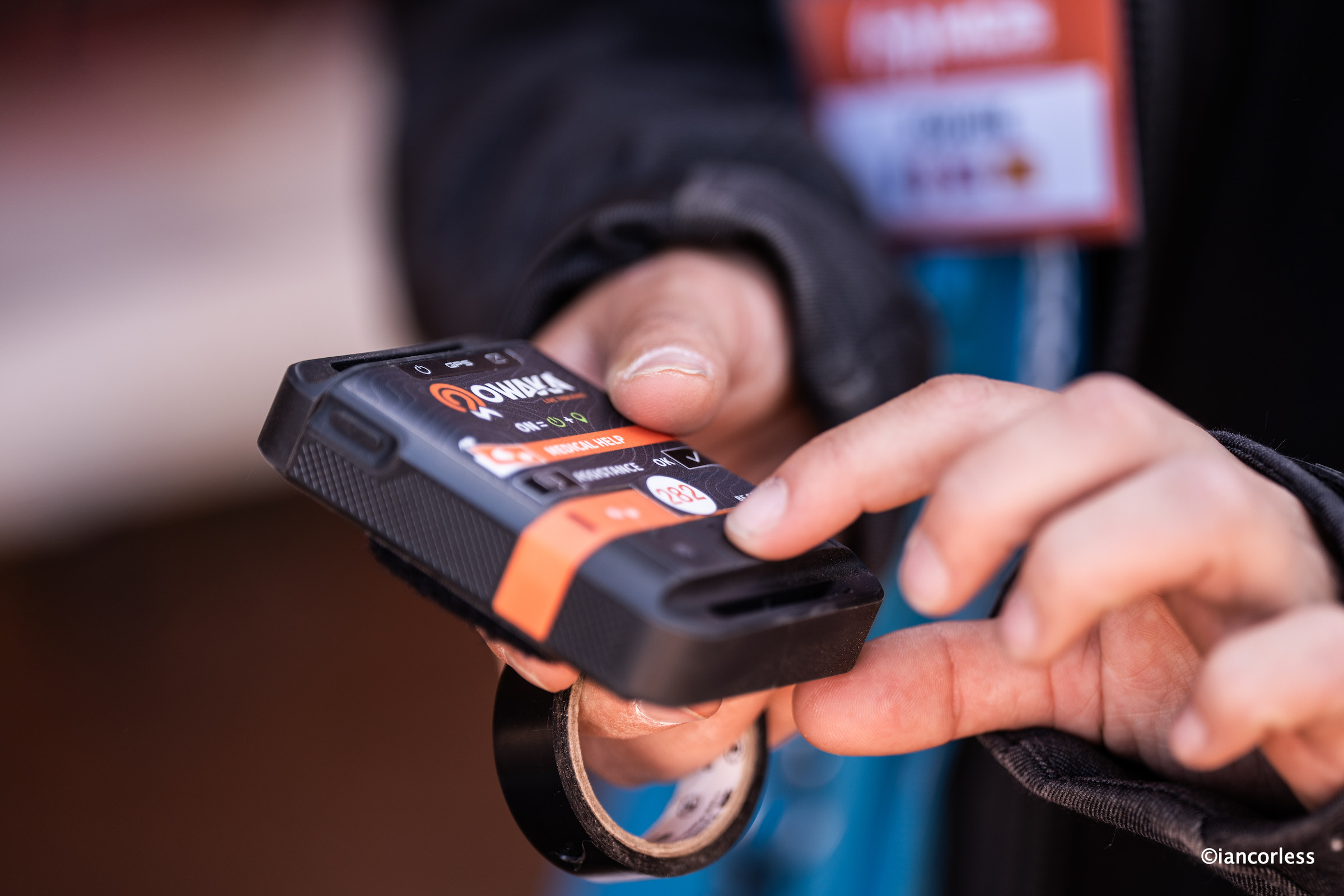
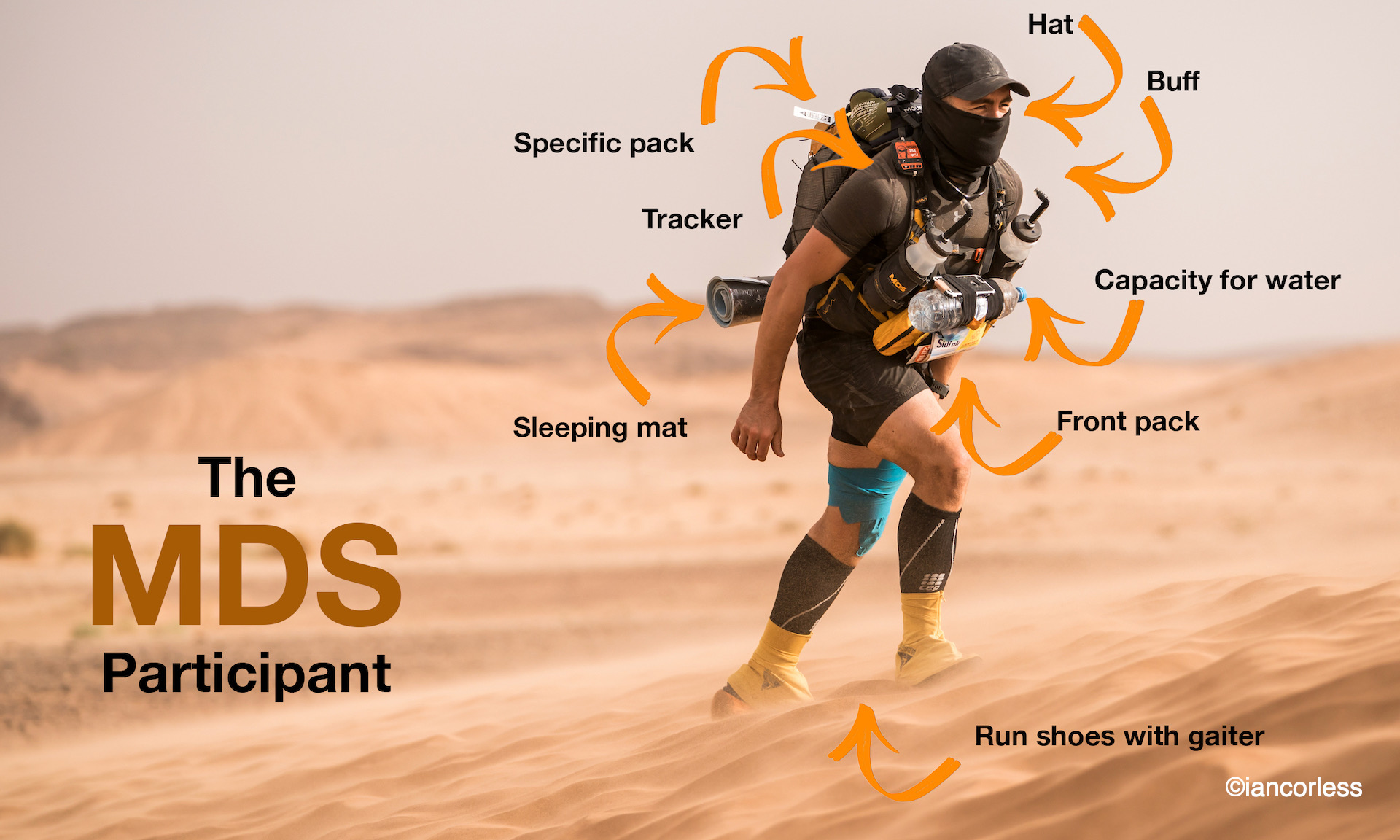
Each runner is using a tracker attached to their pack. This allows MDS to follow you and keep an eye on your position, it also has an emergency button which notifies the MDS team of your need for immediate response and attention.
There are also medical runner’s. These are trained medical staff who will participate during the race. They will be on the course with you and in certain scenarios, they are able to provide immediate care or attention to those who need it. They have a different coloured number so you can identify them.
Medical team personnel are trained and equipped to provide immediate attention at any location within the desert.
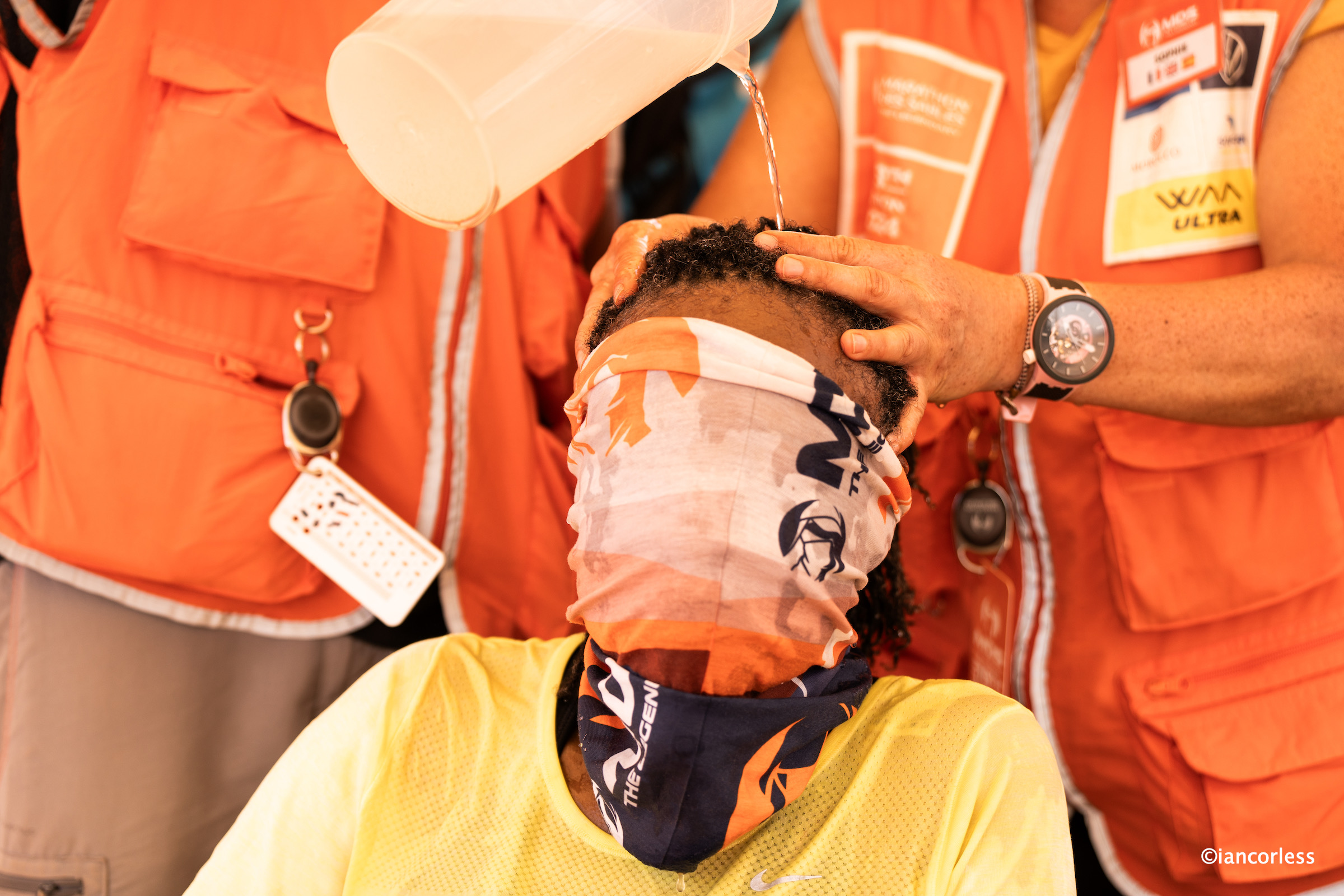
Finally, water is not rationed during the race, so, if you need more liquid, you can have it! Also, at key CP’s, iced water is available to enable cooling. This will be poured on your head via a blue coat volunteer. Orange jackets handle medical emergencies.
MANDATORY EQUIPMENT
Needless to say, despite what some believe, but mandatory equipment is mandatory!
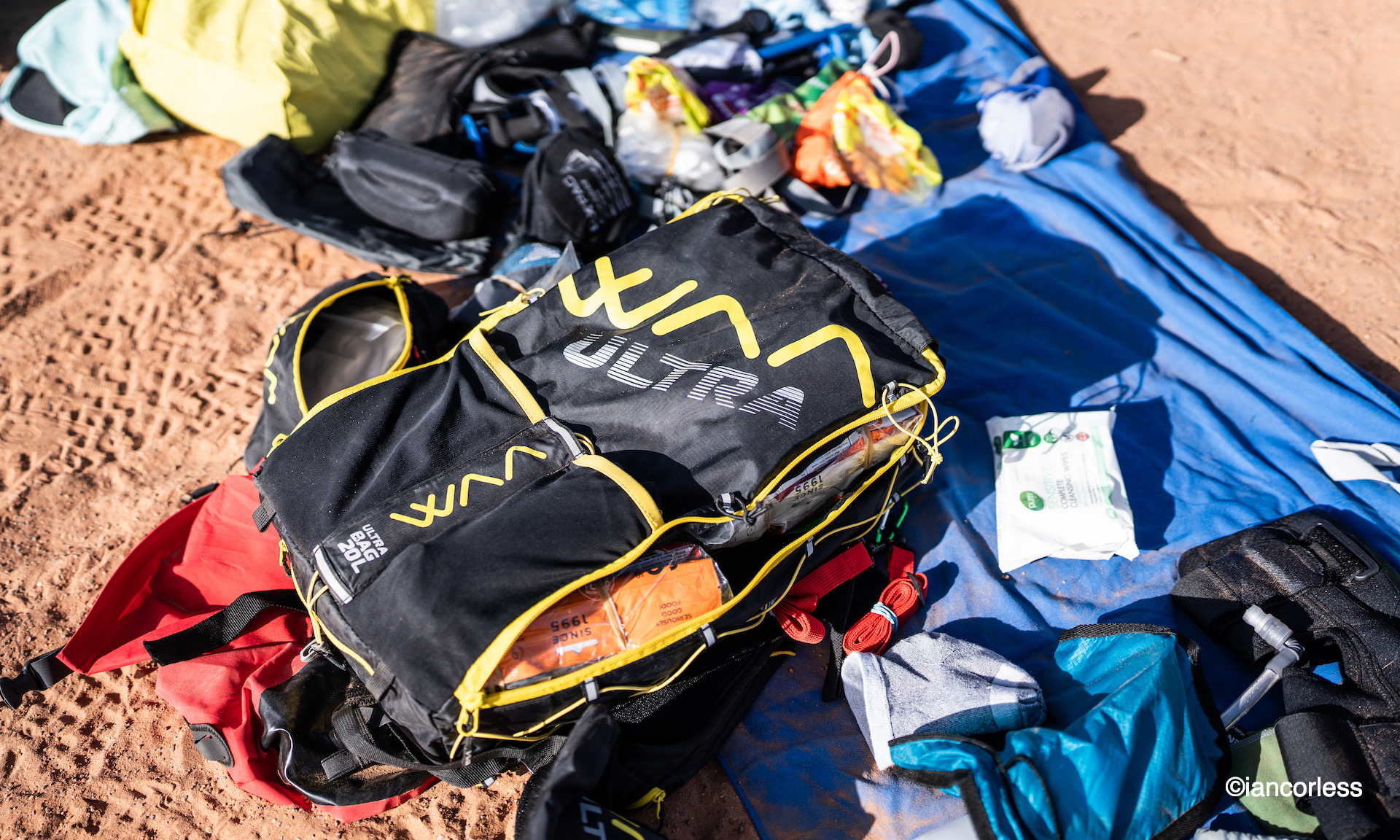
Pack such as WAA Ultra Bag 20L
Minimum capacity of 1.5 litres of water
Sleeping bag
Head torch and spare batteries (you can have a charger/ solar charger)
10 safety pins
Compass with 1 or 2 deg precision
Lighter
Whistle
Knife
Topical disinfectant
Signal mirror
Survival blanket
14 cubes of broth
Sun cream
200 euro or 2000 dirhams
Passport or ID card
ECG (original doc) and medical
Roadbook (supplied on arrival)
Make sure you comply with the very strict regulations and timeline in regard to ECG and medical form.
FOOD
You need ** 14,000 calories of food, 2000 calories per day. However, 12,000 is mandatory. You can of course carry more than this, but I consider 14,000 is the minimum with the rest day. You must be able to prove the calories, so, if you decant food into lighter or different packaging, make sure you keep the nutritional information.
** Adding as clarification:
2000 calories per day, it’s a 6 stage race
BUT remember the rest day.
I see the calories as below BUT YES 12,000 cals to comply with rules.
Stage 1 : 14,000 cals – Day 1
Stage 2 : 12,000 cals – Day 2
Stage 3 : 10,000 pls – Day 3
Stage 4 : 8,000 cals (the long day) – day 4
Day 5* : 6,000 cals (rest day)
Stage 5 : 4000 cals – Day 6
Stage 6** : 2000 cals – Day 7
*Day 5 you may still be running/ walking and/ or in camp for the rest day and will need 2000 cals.
**Stage 6/ day 7 you technically only need breakfast and snacks for the stage.
WHAT YOU NEED
In addition to mandatory equipment and food requirements, you need essential items to complete the race. Use the list below as a guide:
Run top (maybe with long sleeves)
Neck roll/ Buff
Run shorts/ skirt or similar
Socks (plus maybe spare socks)
Shoes with gaiters (make sure you have the gaiter velcro sewn on well in advance)
Hat (consider cover for the neck too)
Sunglasses (make sure they have good protection and if they fit well for protection in sand storms)
Watch
Warm layer (windproof and maybe lightweight down jacket)
Foot care
Hygiene products
Toilet roll/ wipes
Lip balm
Blind fold
Ear plugs
Spoon
Pot/ bowl*
Stove**
Fuel cubes**
Sleeping mat
Pillow
Flip flops or similar
**Stove and fuel only required if you plan to heat water
*Pot/ bowl or similar will be required as now it is no longer possible to cut down a 1.5ltr bottle
Recommended
Many things can happen in a self-sufficient race and yes, equipment can fail. So, think about on-the-go repairs and what you may need.
Zip ties
Gorilla tape
Super glue
Sewing kit
Cord/ thin rope
Top Tips
Keep the pack weight as close to the minimum 6.5kg as possible, additional weight is additional stress that you do not need.
Keep luxuries to a minimum, they only add weight. A super light Mp3 player (with good battery) and earphones is the only luxury I would consider.
Accept that this is a tough challenge, you will be stripped back to a survival mode. You may not wash, you will get dirty, you will get smelly. Accept it.
Start slow and ease into the race.
Photo by Ian Corless
Poles can be a lifesaver and I recommend them but you must learn to use them. Those at the front do not need poles, they can run.
Learn to walk, walk and walk. Many go to the desert with the expectation of running 80% and walking 20%. The reality is it will be the other way around.
Look after your feet and start with the correct shoes for you.
Take a sleeping mat or pad. You only need to do three things: run, eat and sleep. Sleep and comfort is important for recovery.
Make sure you check the full rules and regulations HERE
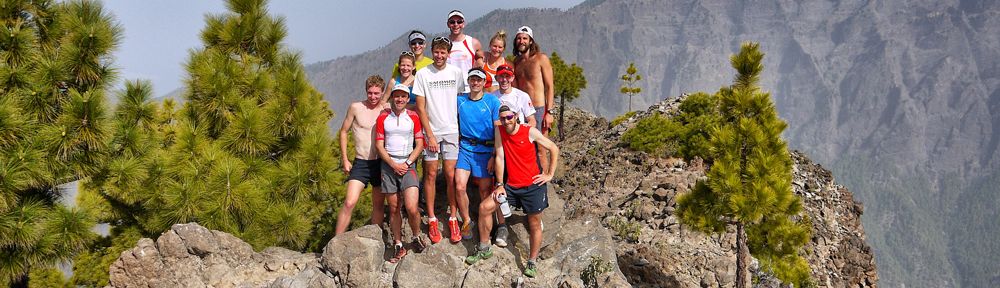
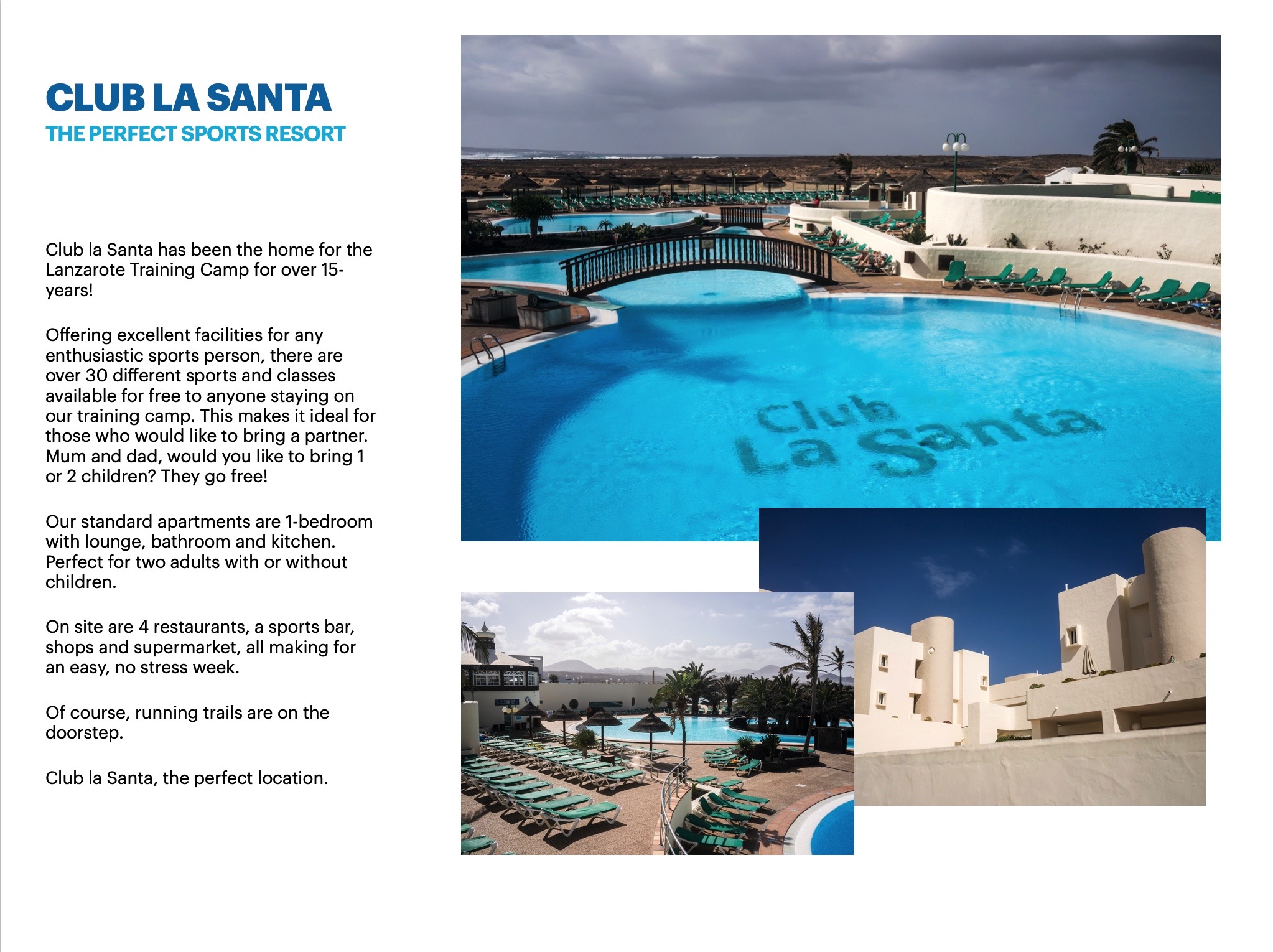
There is no better way to kick-off a new year than arriving in Lanzarote for a week of good weather and all things running.
2025 signifies 19-years of training camps for me in ‘Lanza!’ They have changed and tweaked over the years and for the past 8-years, the current trail running format has been the template on how we tweak and develop each camp.
For 2025, we actually scaled the camp back to a smaller format, despite many requests to attend the camp, we kept it small with under 25 participants.
This was a significant step in ensuring smaller run/walk groups and the ability for everyone to get to know each other. It really worked, I’d go as far to say it was the friendliest and most cohesive camp in many years.
To ensure happiness on the trails, we had a core team of four guides, Pierre Meslet, Abelone Lyng, Hanna Bradshaw and Ian Corless. In simple terms, we break the guides down into groups of:
1. Faster running.
2. Running with some walking.
3. Walk/ run and
4. Walking.
Groups of 3-6 people really work and this was a huge success.
Our days follow a similar format:
0900: Morning a run that extends to the afternoon based on the distance. We have different routes and distances for each day.
A break for lunch.
1500: A talk and or workshop.
1745: Recovery run of 3-5km.
1900: Optional evening meet up for drink/ chat before dinner.
Exception to the above is one evening we do a run and overnight bivouac camp.
The last day is ‘long run’ day which starts at 0800 and covers between 30km to 45km.
Every edition of the camp, we get a great variety of abilities and experience, 2025 was no different. Up at the front we had a multiple MDS podium champion, at the other end, we had a couple who had never run longer than 10km before. It’s what makes the camp great. Mixed abilities and everyone providing knowledge.
Our bivouac night, as always, was special. Due to some glow sticks, a portable speaker and some good tunes, it was even more special. Nothing like a mini rave in a volcano.
If you do all our sessions, typically weekly mileage is around 160km/ 100 miles. It sounds a huge amount huh? It is, but on the camp recovery and downtime plays a huge roll and even the relative novices were accumulating big distances and believe it or not, our duo who had never run longer than 10km before both did just over 30km’s on the last day, a huge success for them and the camp!
A key to the recovery process for each runner is Pierre Meslet offering the option to book massage and Luke Read from Airbornfit offering strength and conditioning.
Of course, nothing is compulsory, participants can miss sessions as they wish, however, this rarely happens. The camp takes hold and neary everyone surpasses persoanl expectations or limits.
We conclude the camp with a group meal; a great opportunity to relax and clebrate the achievements of all.
The only sad moment comes with the closure of the camp and onward travel home.
However, as I told all our 2025 participants, it’s only 51 weeks to the next camp and already, many have signed up with eager anticipation of what will be a 20 year celebration in 2026.
Fancy joining us for one of the best running weeks ever?
Who is the camp for? Anyone who is interested in running. We cater for everyone and we specifically cater for those who are doing stage races such as Marathon des Sables. Ultimately, its just a great week of running, be that for stage races or single stage races of any distance.
A new year and a new race for Marathon des Sables. MDS returns to Morocco, this time, the Atlantic Coast!
First editions are always special, and anticipation is high to explore the white dunes of this magical part of Morocco.
As with all MDS events, Trek excluded, participants will choose either 70, 100 or 120km’s over 3 stages in 4 days.
Located close to Agadir, on arrival in Morocco, participants will spend two nights in a hotel for relaxation and admin protocols. After the race, everyone will return to the same hotel for post-race relaxation and of course, on the final night, a gala dinner, awards and party.
2026 participants will be pioneers of this new Moroccan adventure.
RACE FORMAT
Participants choose 3 different distances: 70, 100 or 120km,divided into 3 stages.
Typical distances are as follows:
Stage 1: 25km
Stage 2: around 20, 40 or 60km
Stage 3: 25km
Stages can be completed at your own pace: walking or running.
PROGRAM
Jan 25th arrival in Morocco and night at hotel.
Jan 26th technical and medical checks, night in the hotel.
Jan 27th transfer to the desert and stage 1, night in bivouac.
Jan 28th stage 2 and night in bivouac.
Jan 29th rest day and night in bivouac.
Jan 30th stage 3 and finish followed by transfer to hotel.
Jan 31st relaxation day with awards and dinner in the eve, night at the hotel.
Feb 1st onward travel.
THE EVENT
Vast streteches of brilliant whiteness, the white dunes of the Atlantic Coast are special and an epic backdrop for this new MDS event. Away from the hustle and bustle of modern life, an epic adventure awaits everyone. Agadir and the surrounding coastline also offers an opportunity for additional exploration; epic coastline, beaches, tradition, culture and an immersive Moroccan experience.
What is the MDS?
The MARATHON DES SABLES is a unique adventure, shared by thousands of enthusiasts since 1986.
To differentiate the full distance race of 250km’s, Marathon des Sables will now be known as MDS The Legendary, reflecting the legendary status of this iconic event and its long history as a pioneer of the stage racing and multi-day format.
The ‘HMDS’ format will still follow the same protocols as before but has now dropped the ‘half’ title and moving forward, events will be called MDS Jordan, MDS Morocco, MDS Cappadocia and so on.
The MDS events are a one-week sporting adventure that combines discovery, travel, meeting new people and physically challenging yourself in a self-sufficient manner.
Since 1986, the MARATHON DES SABLES has crossed the world’s most stunning deserts with several unique concepts: the MARATHON DES SABLES THE LEGENDARY (252 km in the Sahara Desert in Morocco), the MARATHON DES SABLES (70, 100, or 120 km spread over 3 stages), and the new 2024 concept, the MDS TREK (4 stages with a total distance of up to 120 km), offering an accessible adventure with optimal comfort. These international events have seen over 50 editions in various countries such as Morocco, Fuerteventura Island, Peru, Jordan, Turkey, and offer adventures that combine running/hiking in the desert with tourism.
Is Jordan the jewel in the MDS line-up of races? It is hard to pick any one location with so many stunning options, but, Jordan offers something very unique.
Photo by Ian Corless
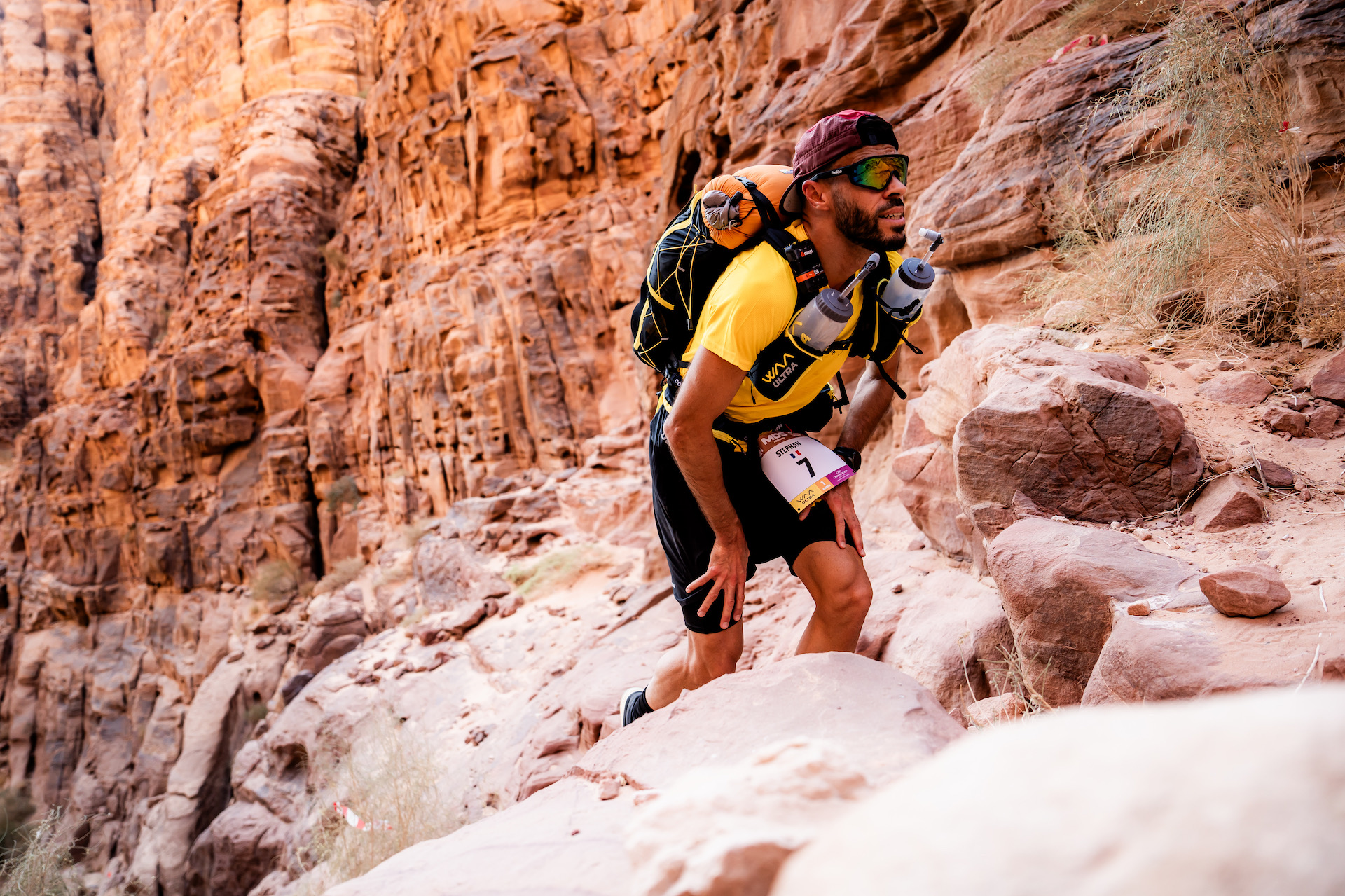
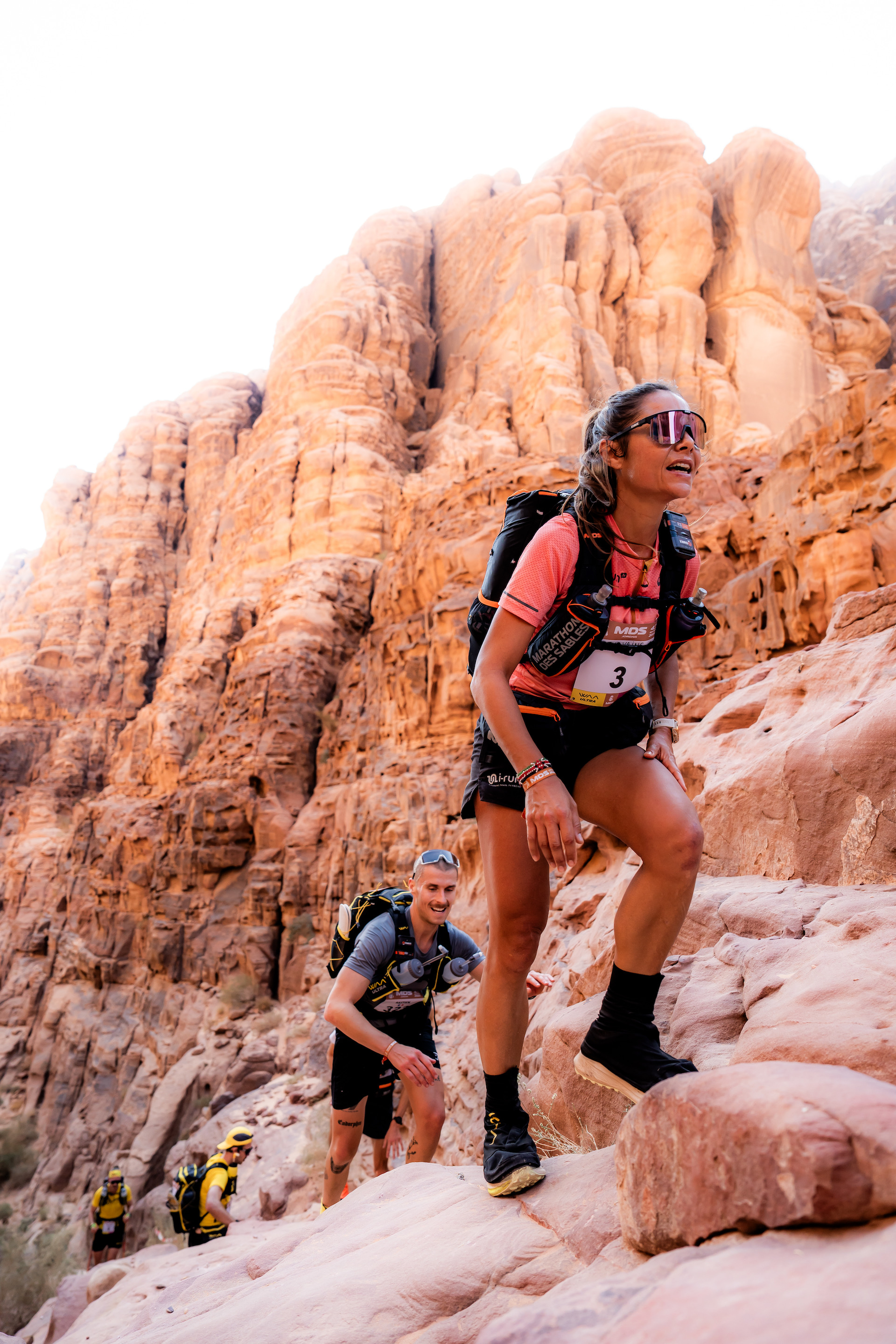
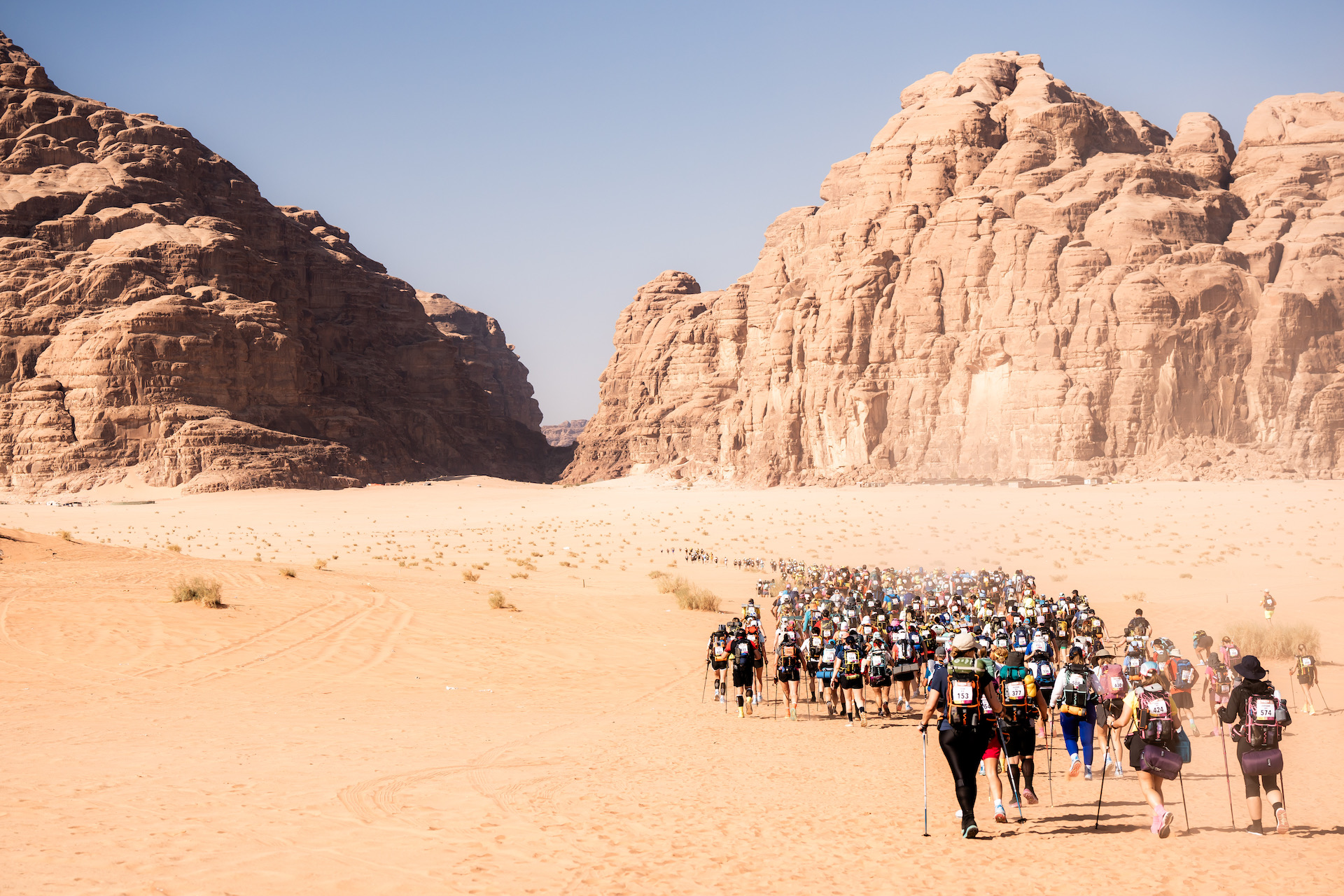
The runner’s are surrounded by ampitheatres of rock, canyons, gorges and the glow of intense light making Wadi Rum a very special place.
Photo by Ian Corless
Stage 1 started with an early wake up and a 4am depart from the race hotel, ahead, a 4-hour journey to the desert.
Photo by Ian Corless
Starting a little after 0930, 550 runner’s were released for the adventure of a lifetime, ahead 27.4km and 980m+.
Photo by Ian Corless
The passage of a narrow gorge and climb came early and then the track weaved through mountains, much of the time, the terrain soft sand. It’s a tough day 1.
Photo by Ian Corless
After cp2, the track is more open and flat allowing for an ‘easier’ run to the finish line of the day and bivouac, home for the next three nights.
Photo by Ian Corless
As with all MDS races, the journey is unique and challenging for each person, run or walk. However, at the front a race takes place and today, Rachid El Morabity was the victor ahead of Theo Detienne and Dorian Louvet, 2:07:52, 2:12:47 and 2:14:58 respectively. Salameh El Alaqra, the Jordanian was 4th in 2:30:44.
Photo by Ian Corless
MDS The Legendary champion in 2022, Sylvaine Cussot was the clear winner for the women, crossing the line in 3:18:24. Pauline Thinus was 2nd and Maine Canas was 3rd, 3:40:10 and 3:43:14.
Photo by Ian Corless
Tomorrow, stage 2, is the long day where participants can choose 20km, 40km or 60km.
Since 1986, the MARATHON DES SABLES has crossed the world’s most stunning deserts with several unique concepts: the MARATHON DES SABLES THE LEGENDARY (252 km in the Sahara Desert in Morocco), the MARATHON DES SABLES (70, 100, or 120 km spread over 3 stages), and the new 2024 concept, the MDS TREK (4 stages with a total distance of up to 120 km), offering an accessible adventure with optimal comfort. These international events have seen over 50 editions in various countries such as Morocco, Fuerteventura Island, Peru, Jordan, Turkey, and offer adventures that combine running/hiking in the desert with tourism.
Stage 1 was a challenging day for many, the 33.6km proving a tough start to the 2024 MDS Fuerteventura. On the positive side, there were no DNF’s.
Stage 2 is called ‘The Long Day’ as this is the day that for 100km and 120km will prove to be the longest of the race. However, the challenge can be as much mental as physical.
An early start
Challenge 1.
After the start, almost immediately, the runner’s are given the option to to turn right and take on the 17.8kmm loop, 20 men and 63 women chose this. Alternatively, you can turn right and start the 40.5km loop. The remainder of the participants chose this.
Challenge 2.
At the end of the 40.5 km loop, you can turn right and run to the finish – 25 min and 41 women chose this.
Challenge 3.
For the brave, a left turn after the 40.5km loop provides the option to complete a final loop and the total long day distance of 56.7km – 75 men and 61 women chose this.
MUJICA GONZÁLEZ
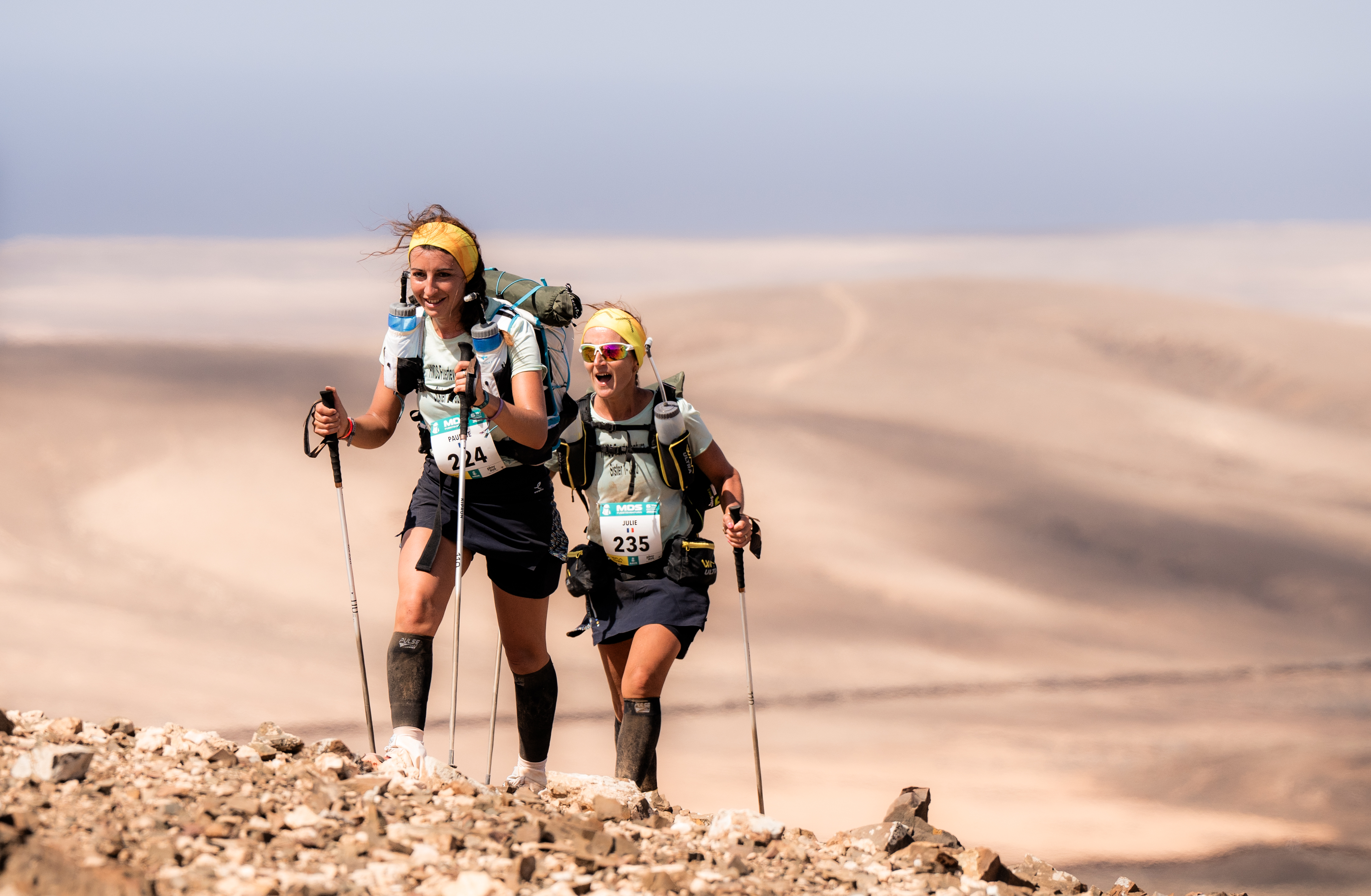
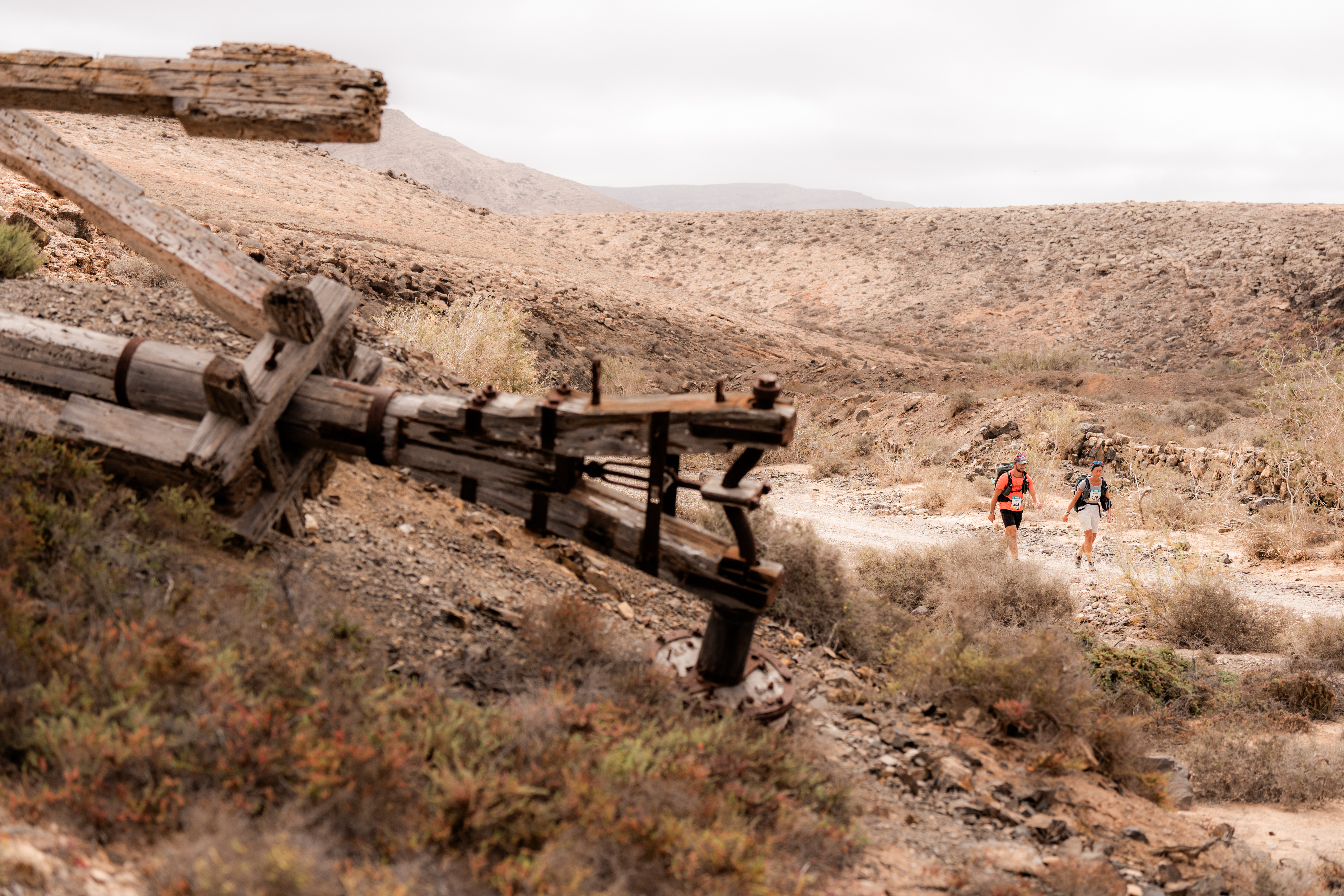
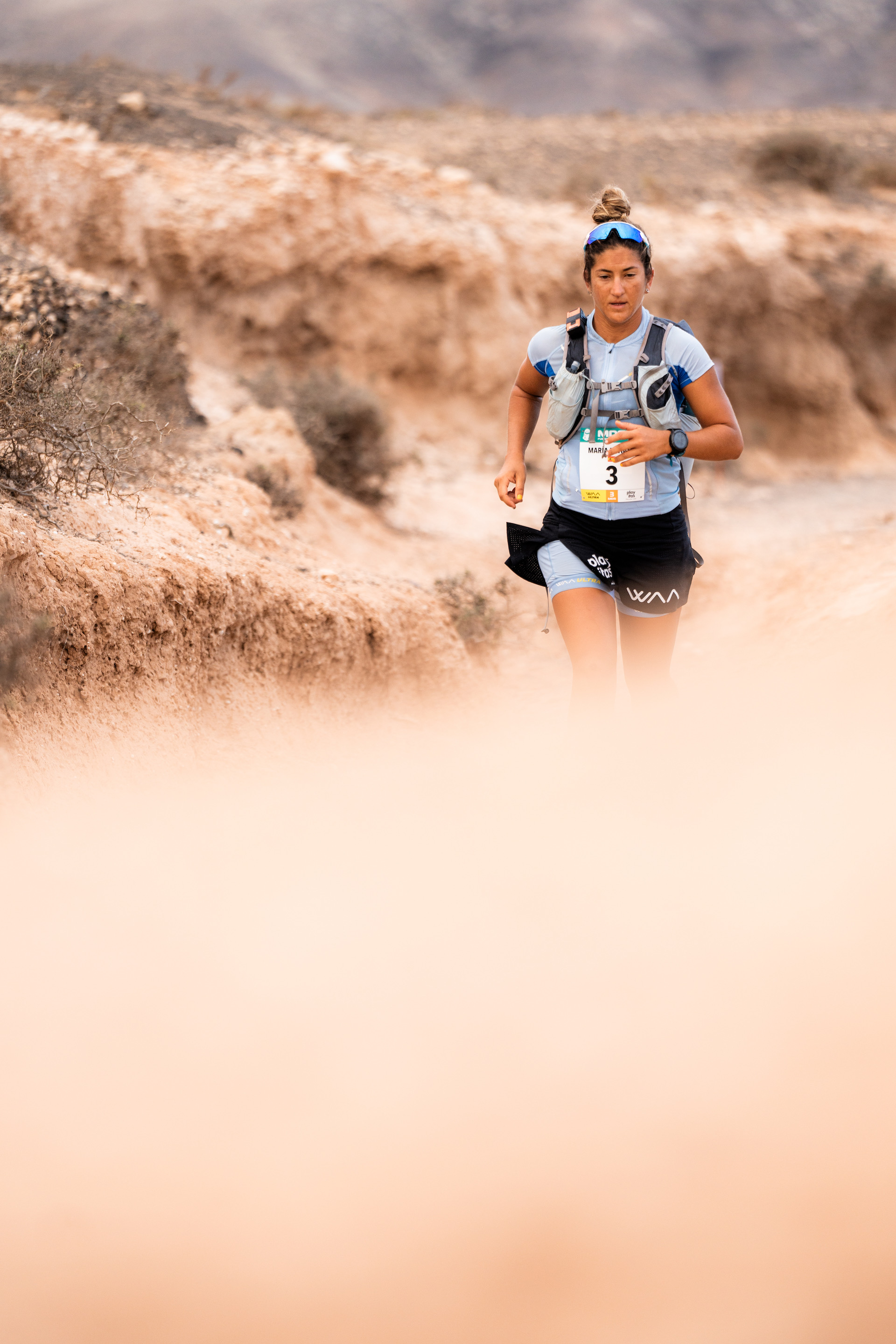
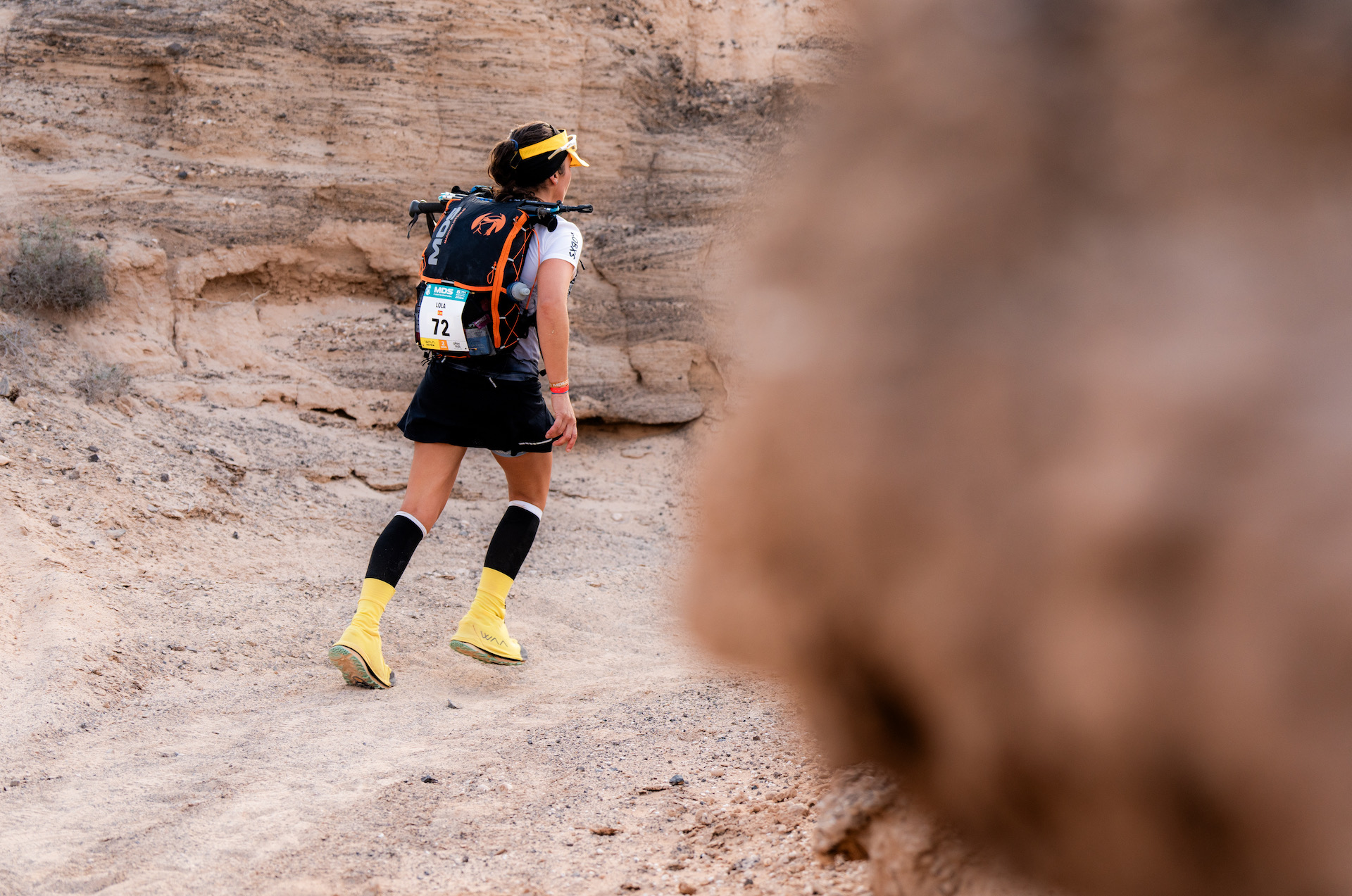
Today’s route followed a figure of 8 shape for the 120km. The terrain mostly sandy and rocky path, the need for gaiters minimal.
Some wonderful small canyons to run through
The day started at 0600 after a warm night under the stars. The winds had calmed but the sky was cloudy and it would remain that way until midday, when a sunny period provide some blue skies. Temperatures reached a high of 28 degrees and running conditions were good.
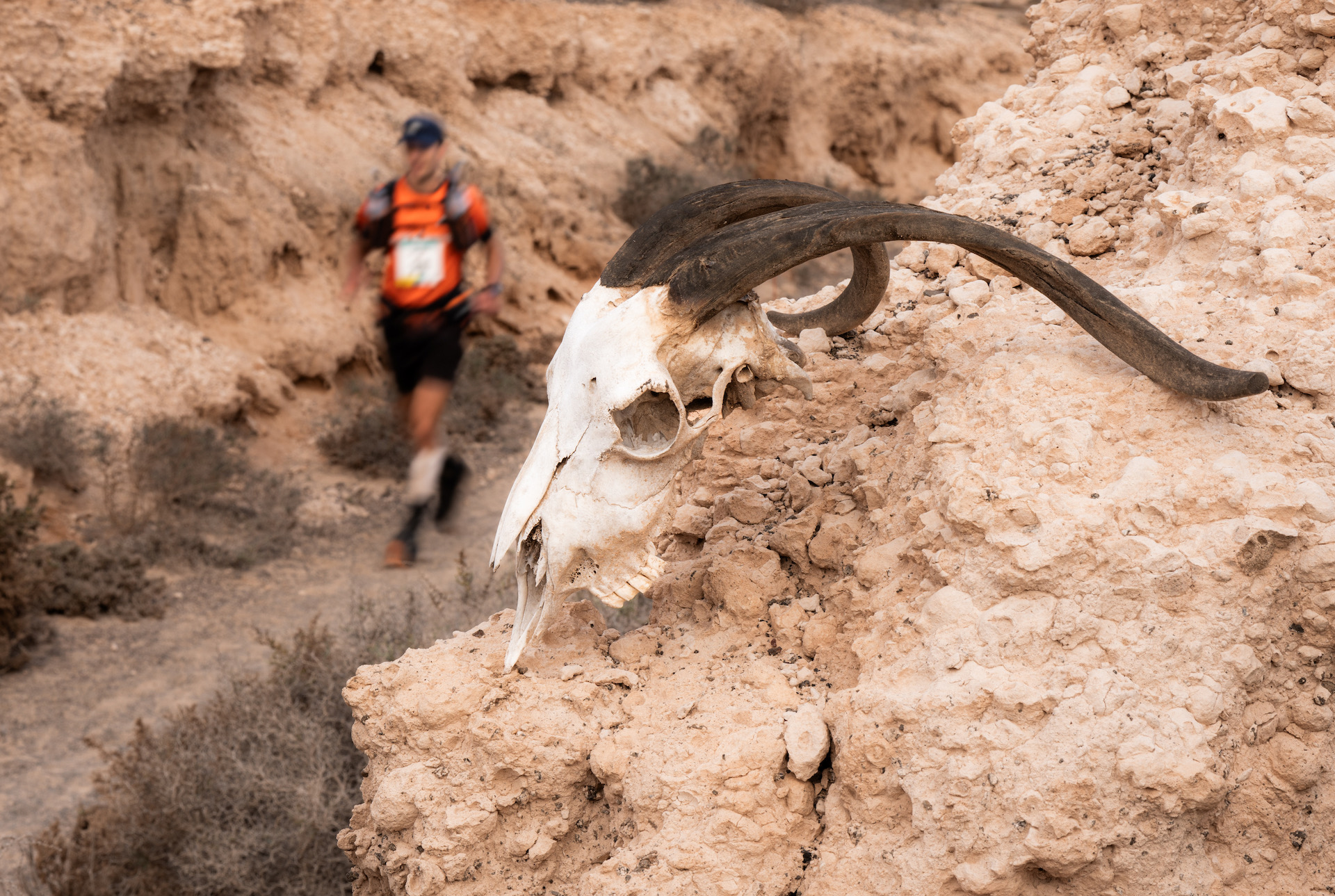
Time to grab the race by the horns
With three race distance options, rankings would change considerably during stage 2, however, in the 120km distance, the main protagonists of SANTANA FERNÁNDEZ, ROGER PÉREZ and FOULQUIÉ PADILLA would remain the same. However, today it was FOULQUIÉ PADILLA who now takes the overall lead with an elapsed time of 7:31:21 closely followed by SANTANA FERNÁNDEZ in 7:32:11. ROGER PÉREZ remains in third.
For the women, stage 1 winner MUJICA GONZÁLEZ started the day slower but then moved up through the field and is now in the women’s overall lead with a time of 8:56:08. BOLLENGIER who was 2nd on stage 1 is now 4th on GC with DEMARQUILLY moving into 2nd 9:55:47 and DEL RIO VALLES 3rd with 10:49:47.
Since 1986, the MARATHON DES SABLES has crossed the world’s most stunning deserts with several unique concepts: the MARATHON DES SABLES THE LEGENDARY (252 km in the Sahara Desert in Morocco), the MARATHON DES SABLES (70, 100, or 120 km spread over 3 stages), and the new 2024 concept, the MDS TREK (4 stages with a total distance of up to 120 km), offering an accessible adventure with optimal comfort. These international events have seen over 50 editions in various countries such as Morocco, Fuerteventura Island, Peru, Jordan, Turkey, and offer adventures that combine running/hiking in the desert with tourism.
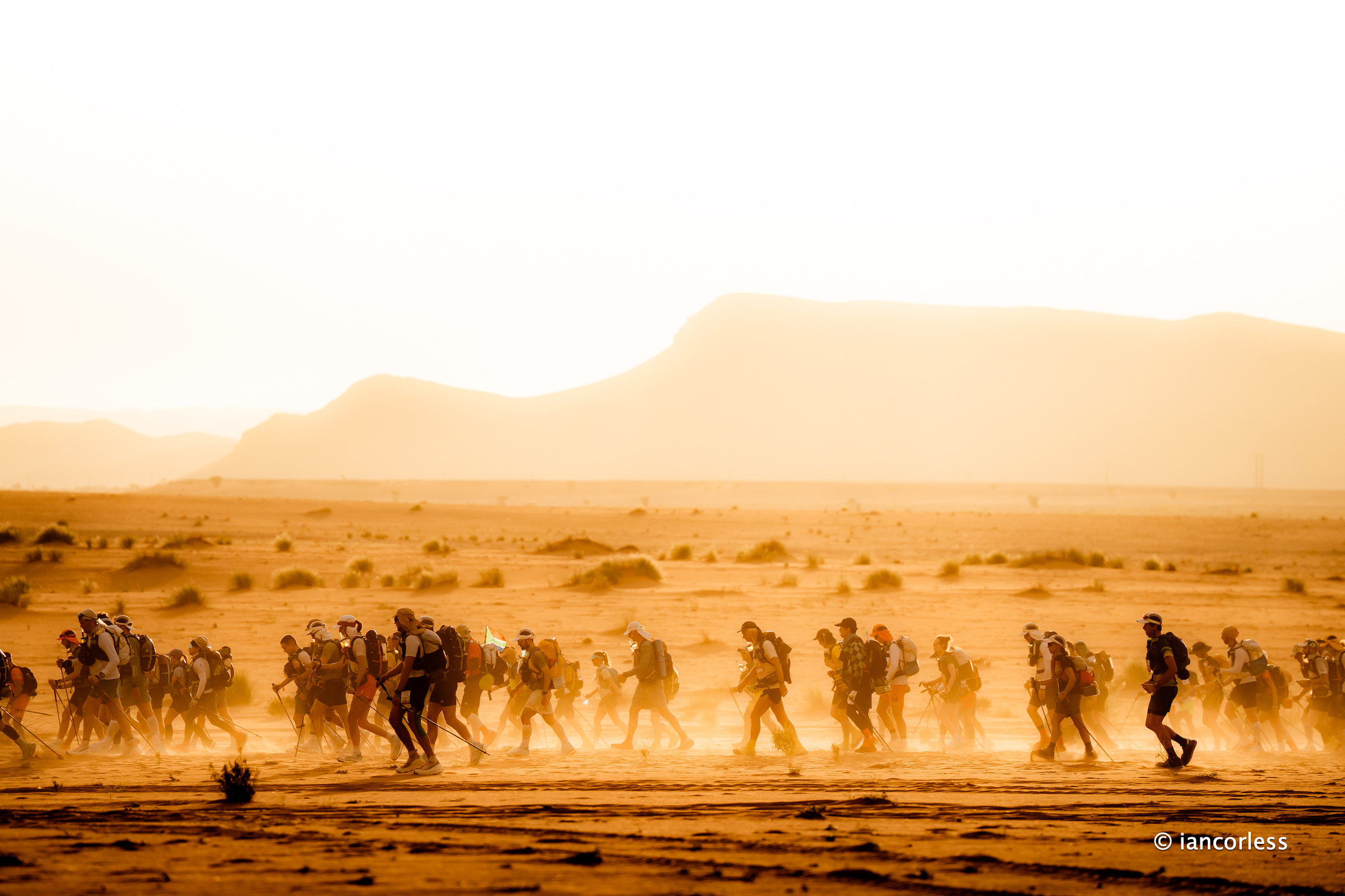
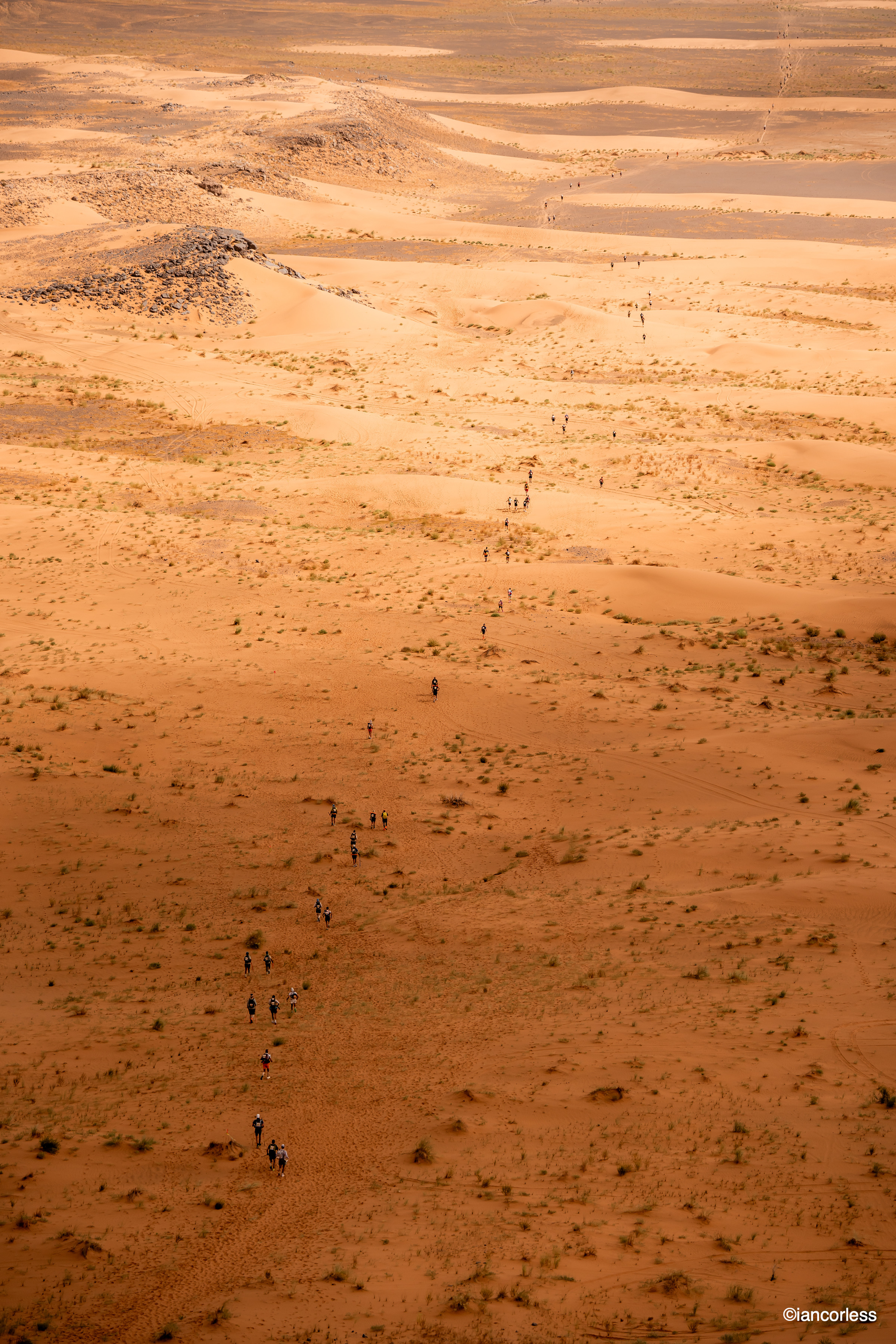
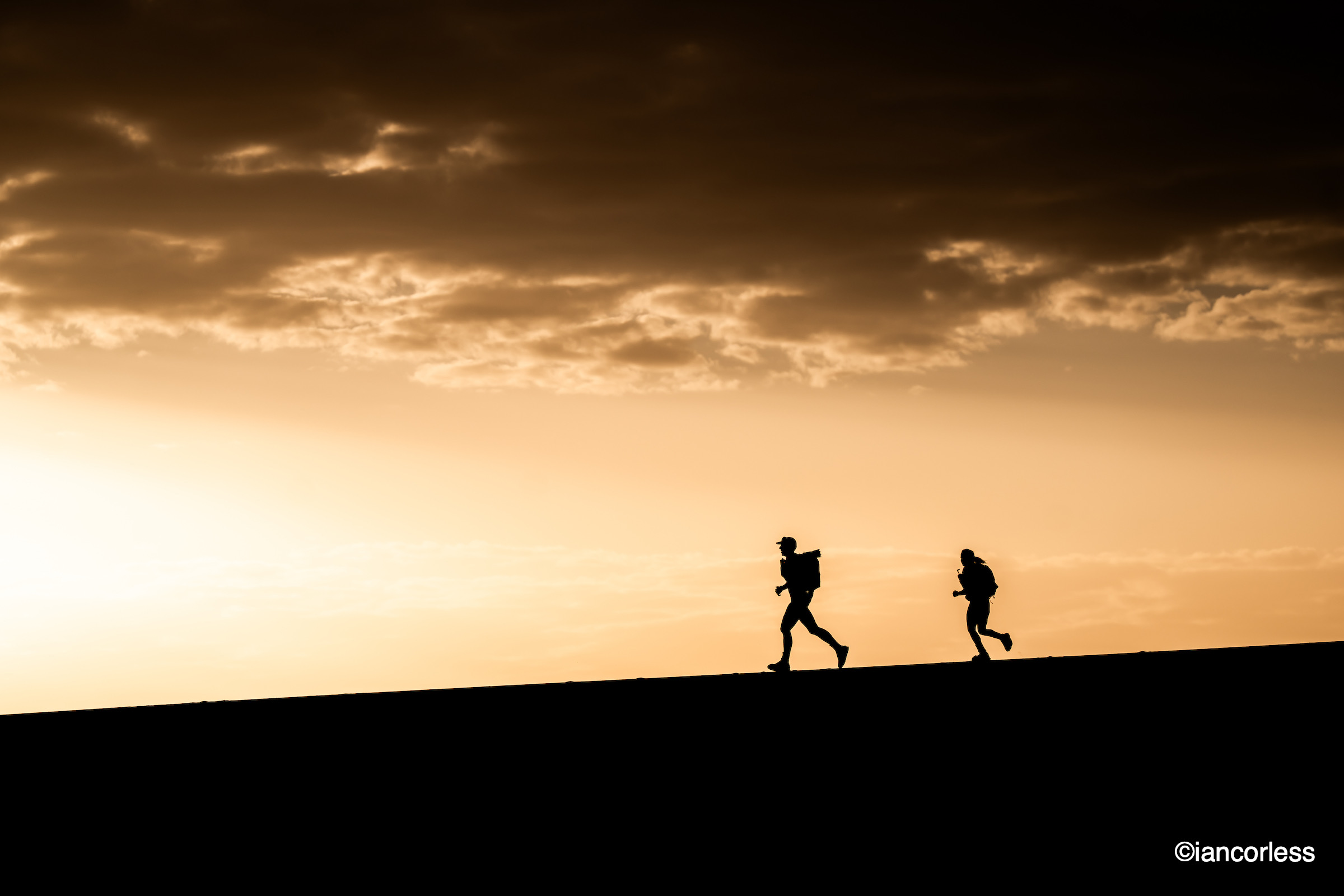
The 2024 Marathon des Sables – The Legendary is over. The race concluded with stage 6 and 21.1km to cover; challenging terrain of stony plateau, small dunes, an ascent to Jebel Mefatigbzef, wadi, and a palm grove finish – the MDS medal hard earned! Rachid El Morabity and Aziza El Amrany the champions!
Camp life
Once again it was an early start as everyone had to prepare for an 0630 start time.
Yoann Stuck
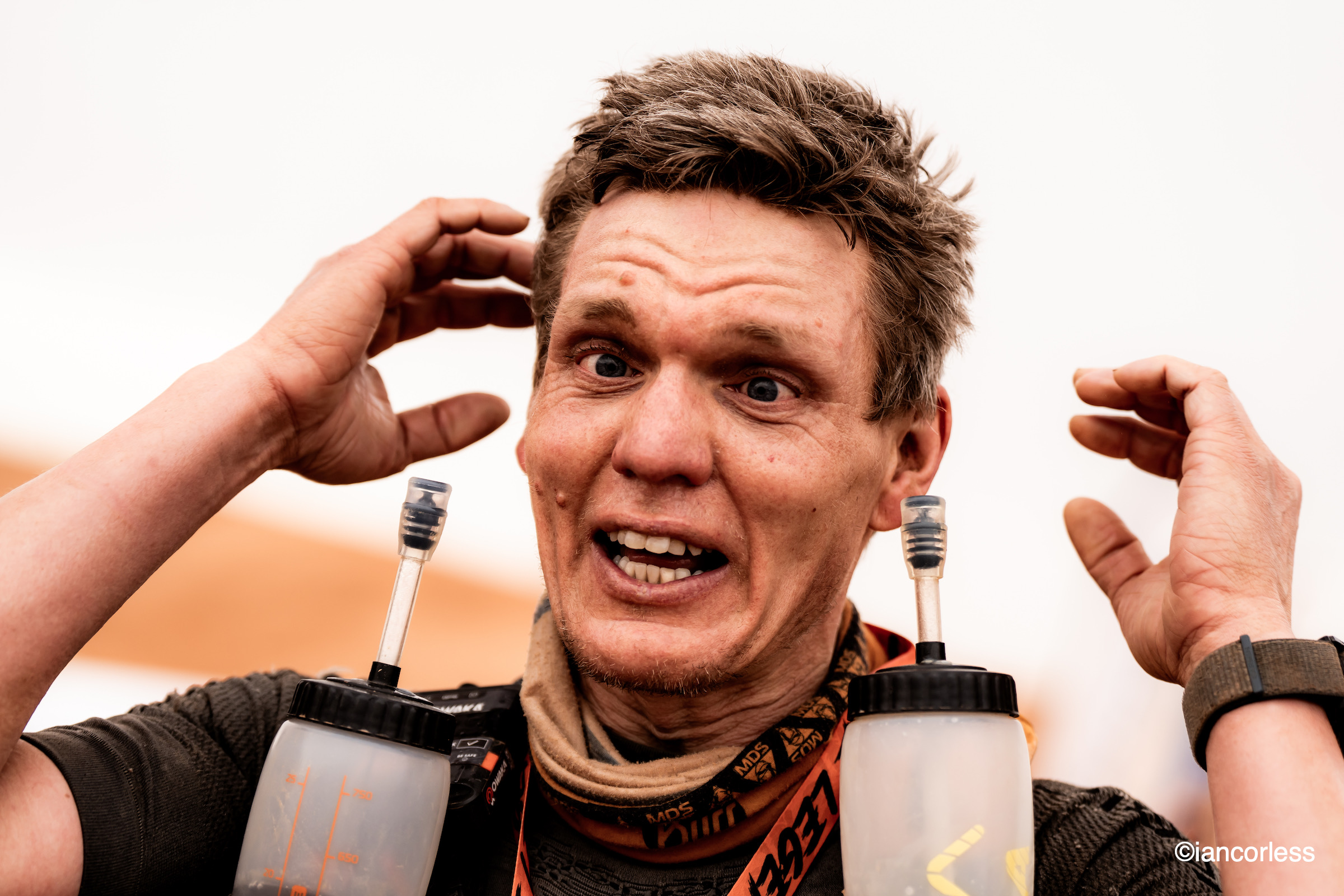
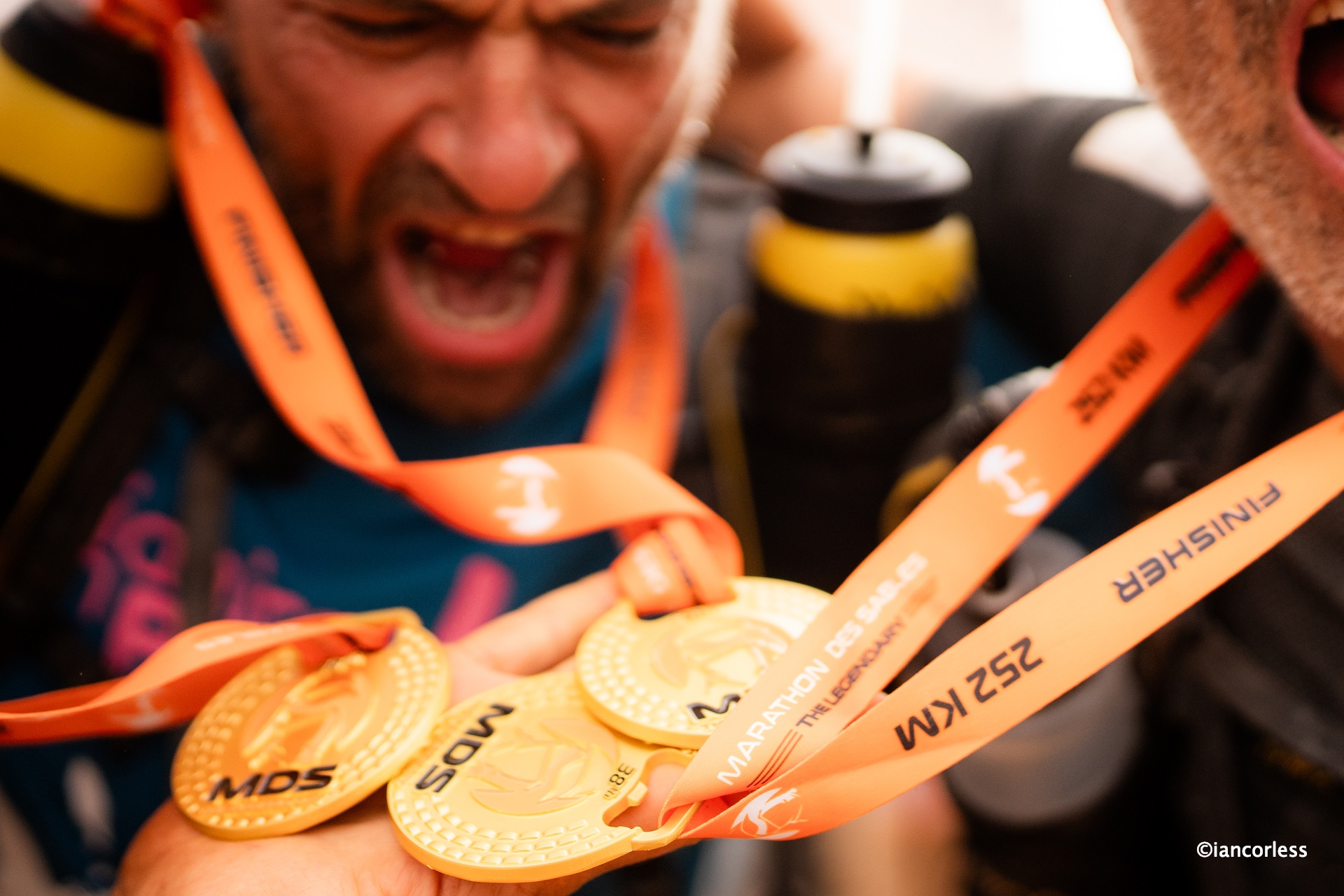
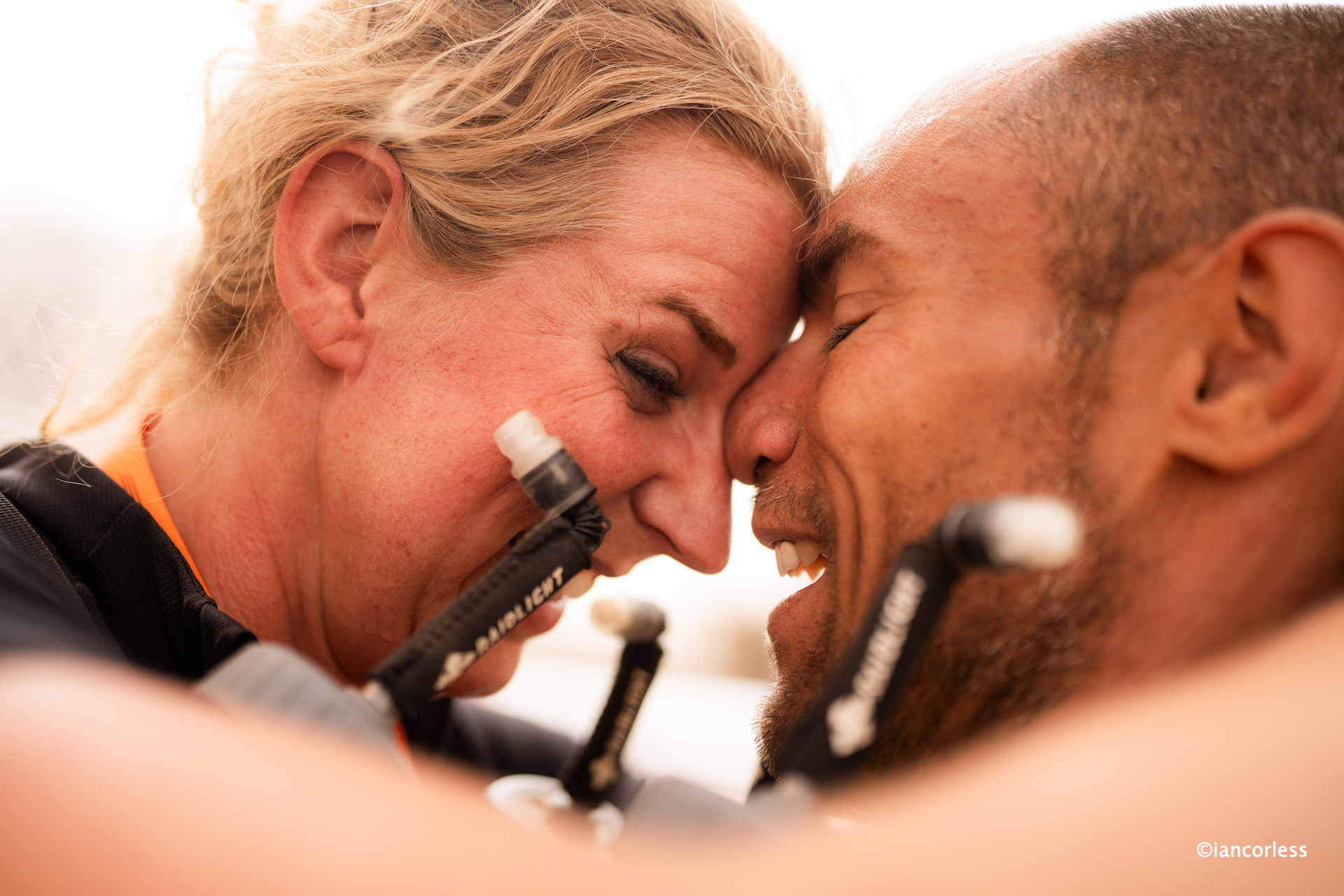
The last day was all about survival and getting the job done as quickly as possible, crossing the line and receiving the medal. The finish line for 2024 incredible, it was full of tears, emotion, relief and laughter; all accompanied by a DJ and party tunes. Quite a way to finish the race.
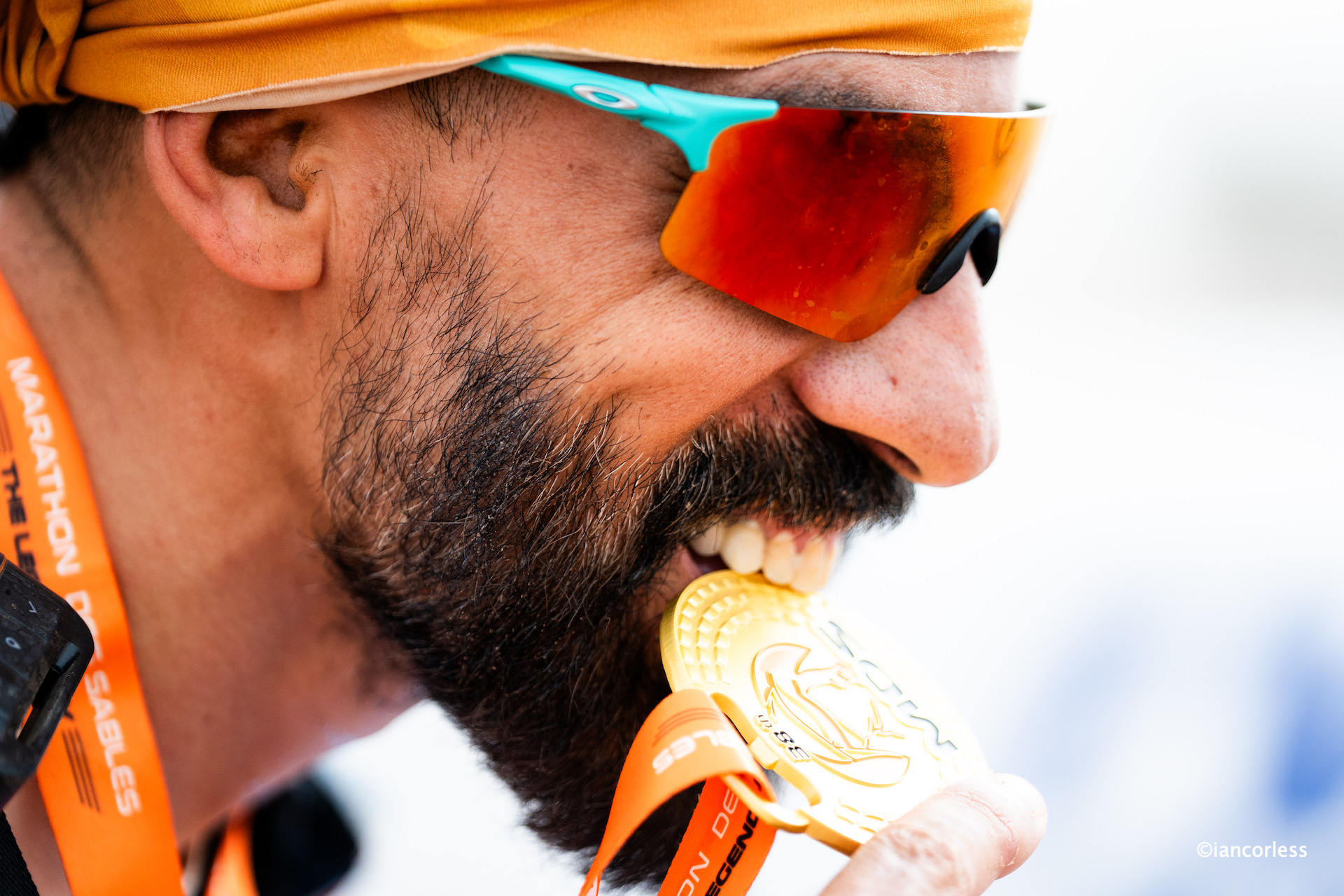
The medal
However, while the women’s race was decided early on and the top-3 places confirmed, the men’s race was a potential nail biter.
The El Morabity brothers had played their trump card on stage 5 and now Rachid could smell a 10th victory, however, he would need to perform at a top level to make this happen and make sure Aziz Yachou did not attack and pull back time.
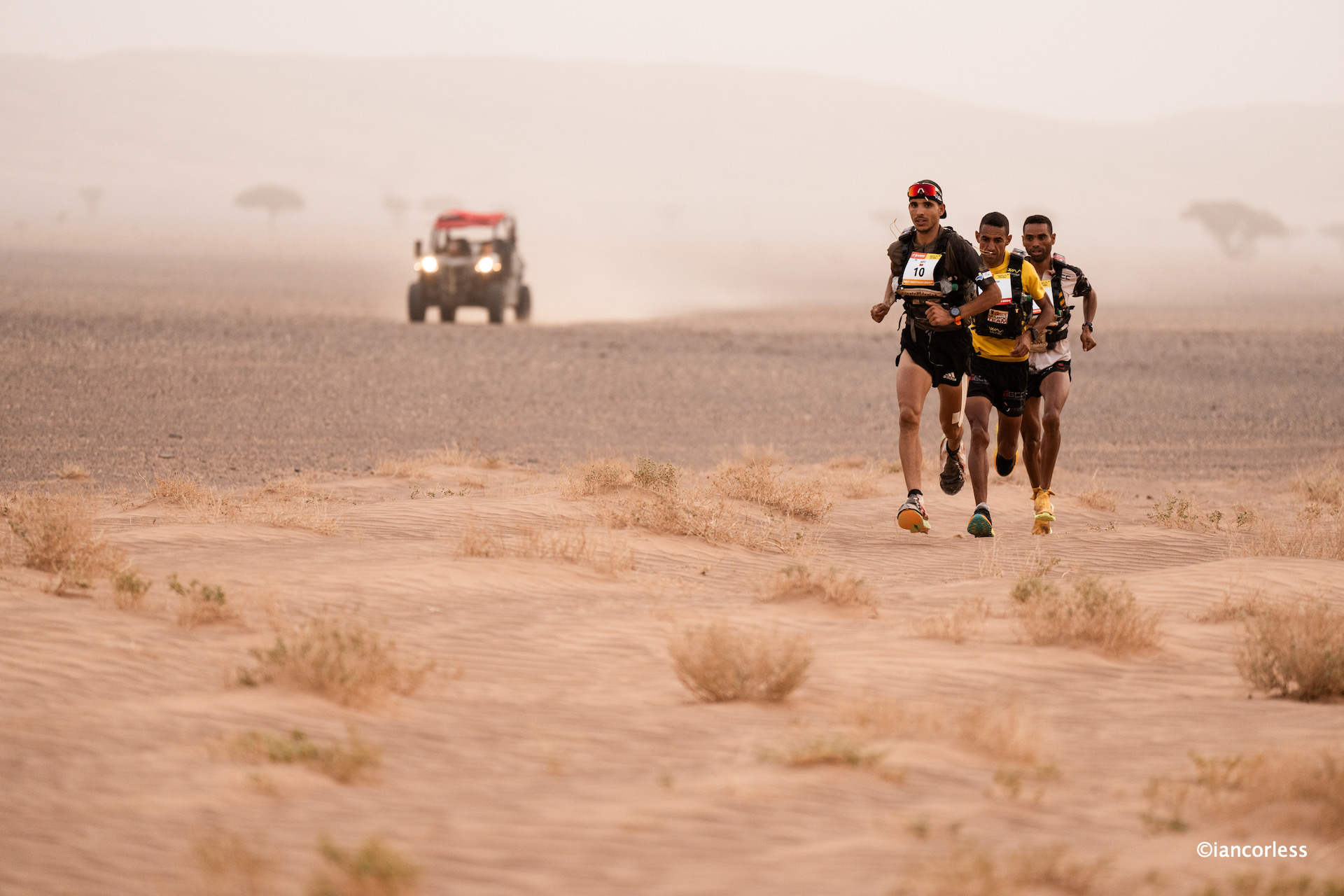
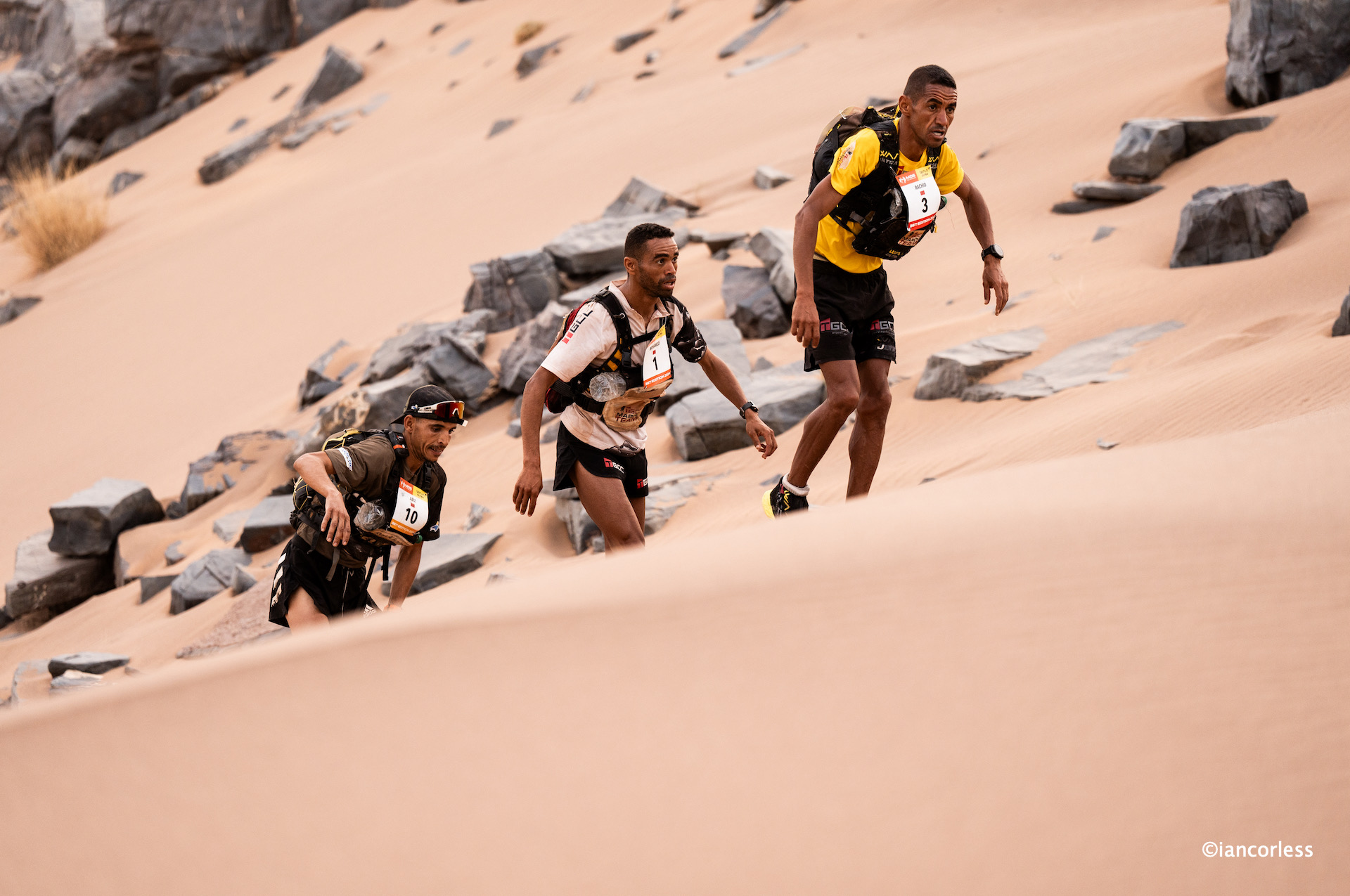
The trio started fast and it stayed that way for the duration of the 21.1km’s. Aziz looking to break Rachid.
No matter how Aziz tried, Rachid responded and as the finish came in sight, the 9 times MDS champion pulled away, removed his Moroccan flag from his pack and secured a 10th victory. Mohamed eased up making sure that Rachid pulled back the required seconds to win overall, but not so many seconds that he would lose 2nd place.
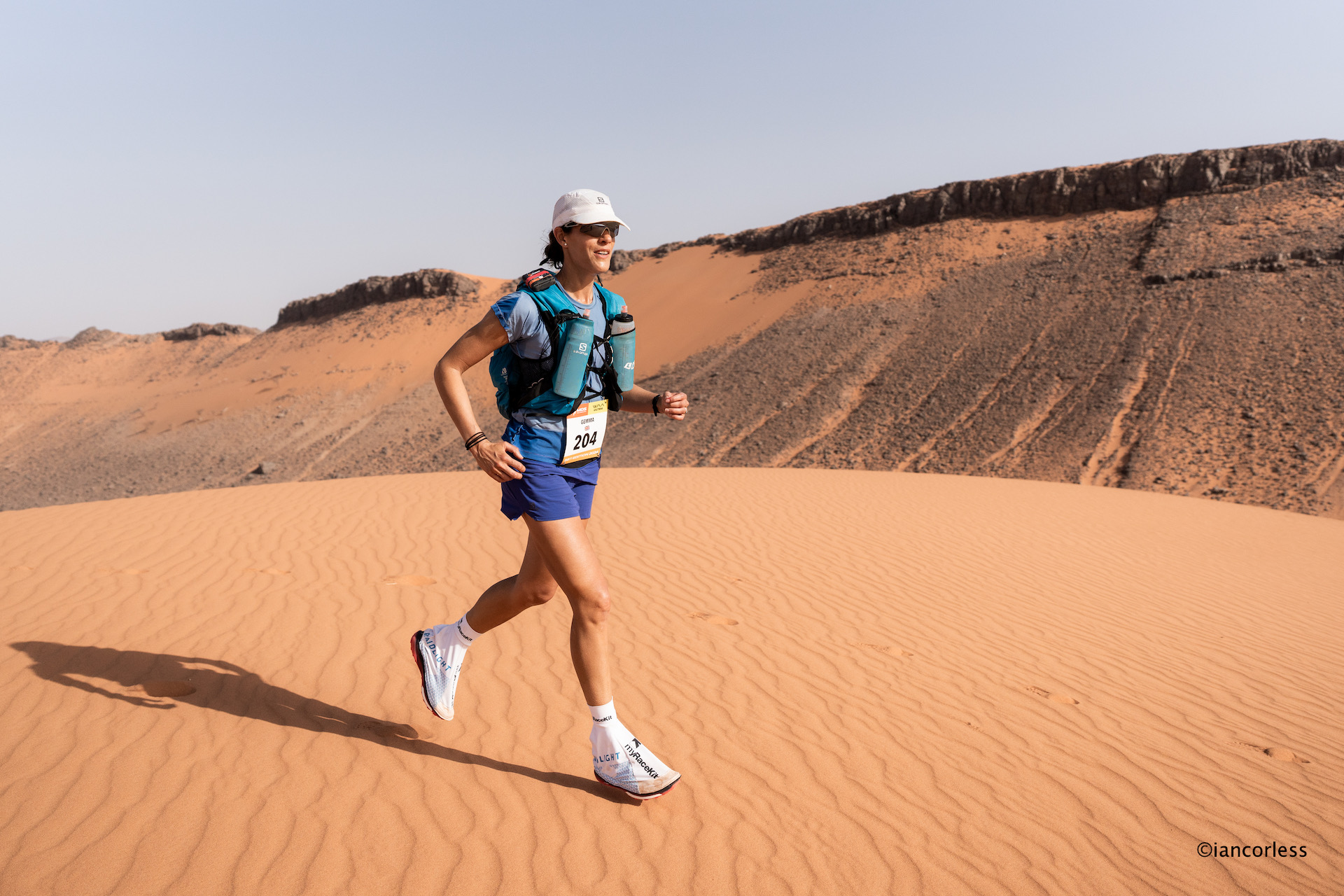
Aziza El Emrany finally took the MDS top slot after many years coming close. It was great to see and one that is really deserved, she was in incredible form this year. Aziza Raji placed and for the third time, Gemma Game placed 3rd again.
The story though was all the legends who crossed the line and achieved greatness in making it through the Sahara to place a medal around their neck.
The 2024 edition has proven to be a memorable one, with a new organisation and many changes, many feared the race would lose something, not so. The opposite, the general consensus has been approval and open appreciation for what repeat MDS participants have said, ‘the best yet!’
As in any race, some don’t make the finish. For the 2024 MDS, at the time of writing, only 60 are DNF’s, this is from 867 starters.

























 IAN CORLESS