
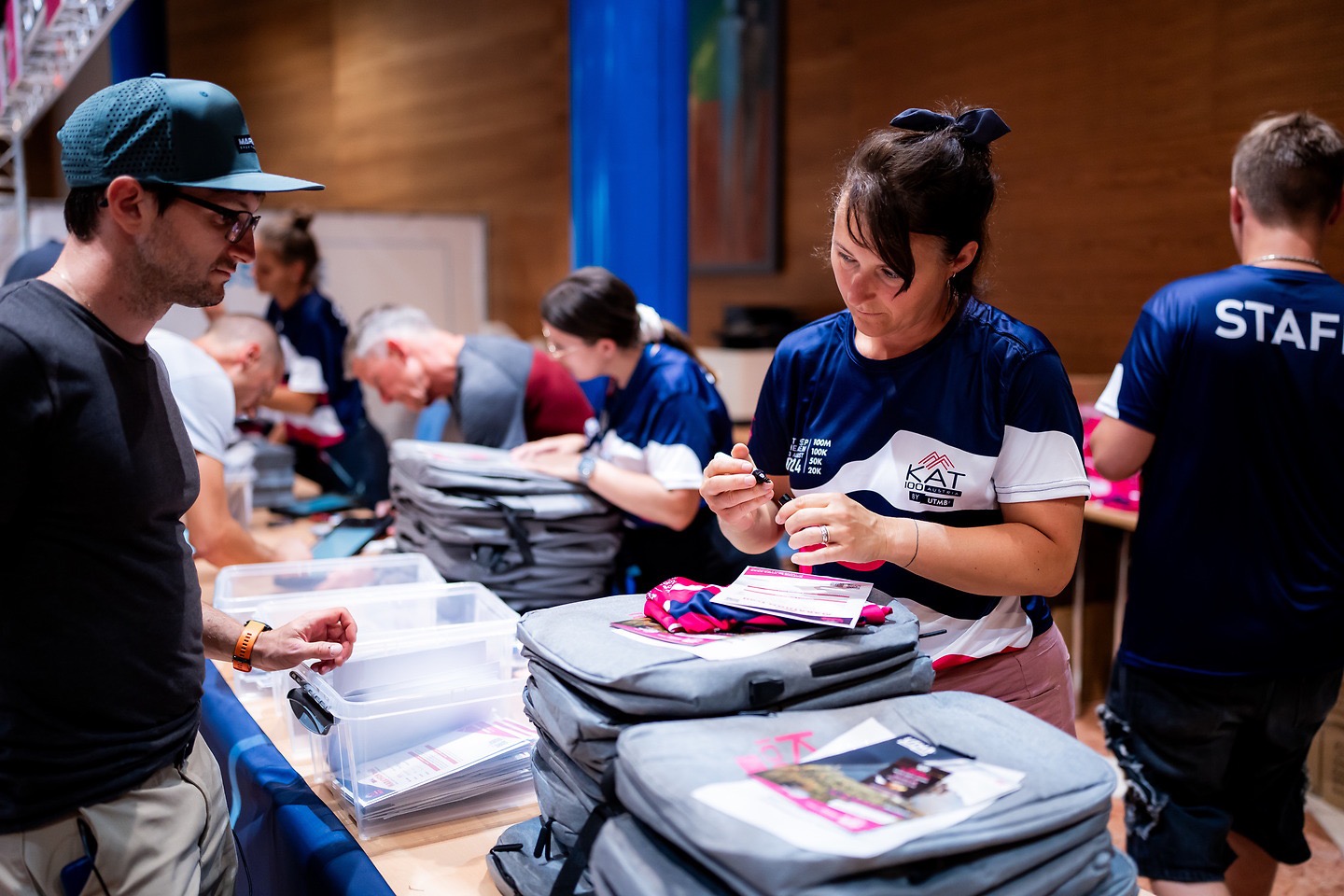
Trail running has always been built on community. Volunteers stand at the heart of the sport, helping races function while creating the atmosphere that makes them special. But as many events have grown into large commercial enterprises, an uncomfortable question emerges: when a race generates significant revenue, should it still rely on unpaid labour? I’m not sure there is a simple answer. The reality sits somewhere between community spirit and business economics, and that’s what makes the debate worth having.
Trail and ultra running likes to present itself as a community before it presents itself as a business. That distinction matters, because the entire volunteer model in mountain racing depends on it.
Volunteering at races is noble and organic: people giving back to a sport they love. Aid stations staffed by local clubs, marshals standing in freezing rain at 3am, finish-line crews catching exhausted runners after 100 miles. The imagery is powerful. It reinforces the idea that trail running is somehow different from mainstream commercial sport.
But modern trail racing, – especially at the highest level – is no longer purely community-driven. Many major events are highly profitable commercial enterprises with corporate sponsors, media deals, merchandise, qualification systems, tourism partnerships and global brand expansion.
And that raises an uncomfortable question: If races are businesses, why are so many of the workers unpaid?
Take Ultra-Trail du Mont-Blanc as the clearest example. UTMB is no longer simply a mountain race organised by local enthusiasts. It is a global endurance brand. UTMB race week, the organization requires approximately 2,000 to 2,500 volunteers to ensure the successful operation of the event. In addition, there are UTMB World Series races across continents, partnerships with major corporations, streaming productions, premium entry fees, lotteries, travel packages and extensive merchandising. The infrastructure resembles a professional sporting enterprise. UTMB generate an estimated €30 million in revenue!
Yet the operational backbone of the event still depends heavily on volunteers. Without them, many races simply would not function financially.
That is the core reality that the sport rarely confronts directly.
A large ultra race requires enormous manpower: registration, bib collection, checkpoints, course marking, sweeping, medical support coordination, parking, logistics, finish-line support, drop bag management, transport and clean-up. Paying market wages for every role would radically alter race economics. Entry fees would rise sharply or profit margins would shrink.
Volunteers effectively subsidise the event.
The interesting part is not that volunteers exist. Volunteers are everywhere in society. The interesting part is that volunteering remains culturally unquestioned even when races become commercially sophisticated businesses.
In most industries, this model would feel absurd.
Imagine a privately owned bank. The owner hires executives, accountants and security staff, but then asks enthusiasts of banking to work unpaid at the cash desks because they “love finance” and want to “be part of the atmosphere.” Society would reject that instantly. The same would apply to airlines, supermarkets or hotels. Once an operation becomes commercial, labour is expected to be compensated.
So why do races escape?
Partly because sport occupies a strange middle ground between commerce and culture.
People volunteer at races not purely as workers but as participants in an identity. They often feel emotionally invested in the event, the region, the community or the sport itself. Volunteering becomes social capital. It offers belonging, prestige, access and meaning. In trail running especially, there is a strong ethic of reciprocity: “someone helped me, so I should help others.”
Key points are to support the outdoor community, maybe secure a guaranteed entry into future event, and enjoy the social atmosphere.
- Volunteers, typically, are ultrarunners or hikers themselves, they want to support their friends, community, cheer, and pay forward the help they received during their own races.
- Volunteers can earn discounted entries, priority for future events or a bonus compensation on apparel/ merchandise.
- There is a huge social benefit, friendship and community.
- Free t-shirts, hat, and/ot other merchandise and more often than not, free food and drink
Eiger Ultra Trail by UTMB (as an example) clearly state the offer via their website:
A successful Eiger Ultra Trail event relies heavily on the help of volunteers. Volunteers have the unique opportunity to actively participate in this international event, to experience the race up close as it unfolds and to be on-hand for support when 4000 competitors from 80 nations attempt to conquer the 101km, 250km, 51km, 35km, 16km or Trail Surprise at the foot of the Eiger.
We offer our Volunteers:
- An unforgettable experience in a breathtaking mountain landscape
- An attractive Volunteer Shirt (male and female fit available)
- Free gondola or train ride from Grindelwald to the race courses
- Refreshments during volunteer service (lunchbag, hot meals from Friday)
- Free accommodation at youth hostel (shared room) if volunteering early morning or late evening and if the assignment cannot be reached in time by public transport.
- Personal expenses of CHF 30.00 per Person, or CHF 60.00 from 20h service
- Volunteer gift
If you are supporter of a competitor and volunteering for us you get a free transport ticket to the race courses.We’re happy to welcome volunteers from the age of 13 – 70. A good physical condition is necessary.
Race organisations understand this extremely well.
The language surrounding volunteers is carefully framed around family, passion and community spirit. Volunteers are celebrated publicly, thanked emotionally and woven into the mythology of the sport. This is genuine – many volunteers truly enjoy the experience – but it also masks an economic truth: their labour has real financial value.
That value is substantial.
A major ultra may require hundreds, if not thousands of volunteer hours. If those hours were compensated at standard labour rates, the event budget would look entirely different. Volunteers are not merely helping. They are replacing paid staffing costs.
Other sectors do use unpaid labour, but usually with controversy attached.
Media companies rely on unpaid internships. Fashion and film industries often offer people to work “for exposure.” Tech startups use open-source contributors whose free work later supports billion-dollar valuations. Universities depend heavily on unpaid academic labour. Charities and grassroots sports clubs naturally rely on volunteers because they are non-profit or resource-constrained.
The key distinction is this: society tends to become more critical when unpaid labour supports private profit rather than public benefit.
That is where trail running becomes ethically complicated.
A local village race organised by a community association is one thing. Few participants object to volunteers there because the event itself may barely break even and any surplus returns to local causes.
A global race brand charging premium prices while still depending on unpaid operational labour is different.
And yet it remains normalised because trail running inherited its culture from grassroots mountain events long before the sport commercialised. The volunteer ethos survived the transition from community gathering to international business model.
There is also a practical reality: many races genuinely could not exist in their current form if every role became salaried. Mountain races are logistically extreme. Remote terrain, long durations and unpredictable weather create staffing demands unlike those of conventional road races or stadium sports. The economics are difficult even before considering environmental permits, safety systems, insurance and medical infrastructure.
And this brings in the point of paid staff. The primary organizers, logistics leads, and business owners who plan the event year-round are paid along with specialized crews such as media, medical teams, mountain safety, technical contractors and so on.
At some point, the question becomes philosophical rather than logistical: When does a community event become a corporation wearing community clothing?
The discomfort around this subject often comes from the fact that both realities coexist simultaneously. Trail races are still authentic communal experiences for many people. Volunteers often derive real satisfaction and pride from contributing. The emotional value is genuine.
Yet it is also true that this culture enables profitable enterprises to operate with labour models that would appear unacceptable almost anywhere else.
The sport rarely interrogates that contradiction because everyone benefits in some way. Runners get lower fees than fully commercial staffing would require. Volunteers gain belonging and access. Race brands preserve their community image while controlling costs.
The arrangement works.
Until someone asks whether it should.
What are your thoughts on the volunteer model? Do you foresee a change in the future – not at the grass-roots, non-profitable level – but are the larger, corporate and very obvious businesses level where profit and high profits are very visible.
Whether this model can survive unchanged at the corporate end of the sport remains to be seen. I do not know the answer, but it is a question we should not stop asking.
Instagram – @iancorlessphotography
Twitter – @talkultra
facebook.com/iancorlessphotography
Web – www.iancorless.com

