The Coastal Challenge #TCC2024 Preview

The Coastal Challenge 2024 is upon us. An event 20-years in the making, this will be a special year! A gruelling multi-stage race, participants will cover 240km’s with 10,000m+ of vertical over 6-stages. The ‘Adventure Run’ covers 145km’s.

An adventure for all, TCC is the ultimate experience and an incredible way to explore Costa Rica. Starting in Quepos, the journey follows the Pacific Coast backed by the Talamanca mountains as participants weave in and out of rainforest, navigate gravel roads, endure long stretches of beach with no shade and of course, climb, descend and scramble rocks, riverbeds and waterfalls. The journey concludes in the Unesco Heritage Site of Drake Bay, a truly remarkable location even for the well travelled.

What can the runners expect?

Stage 1 
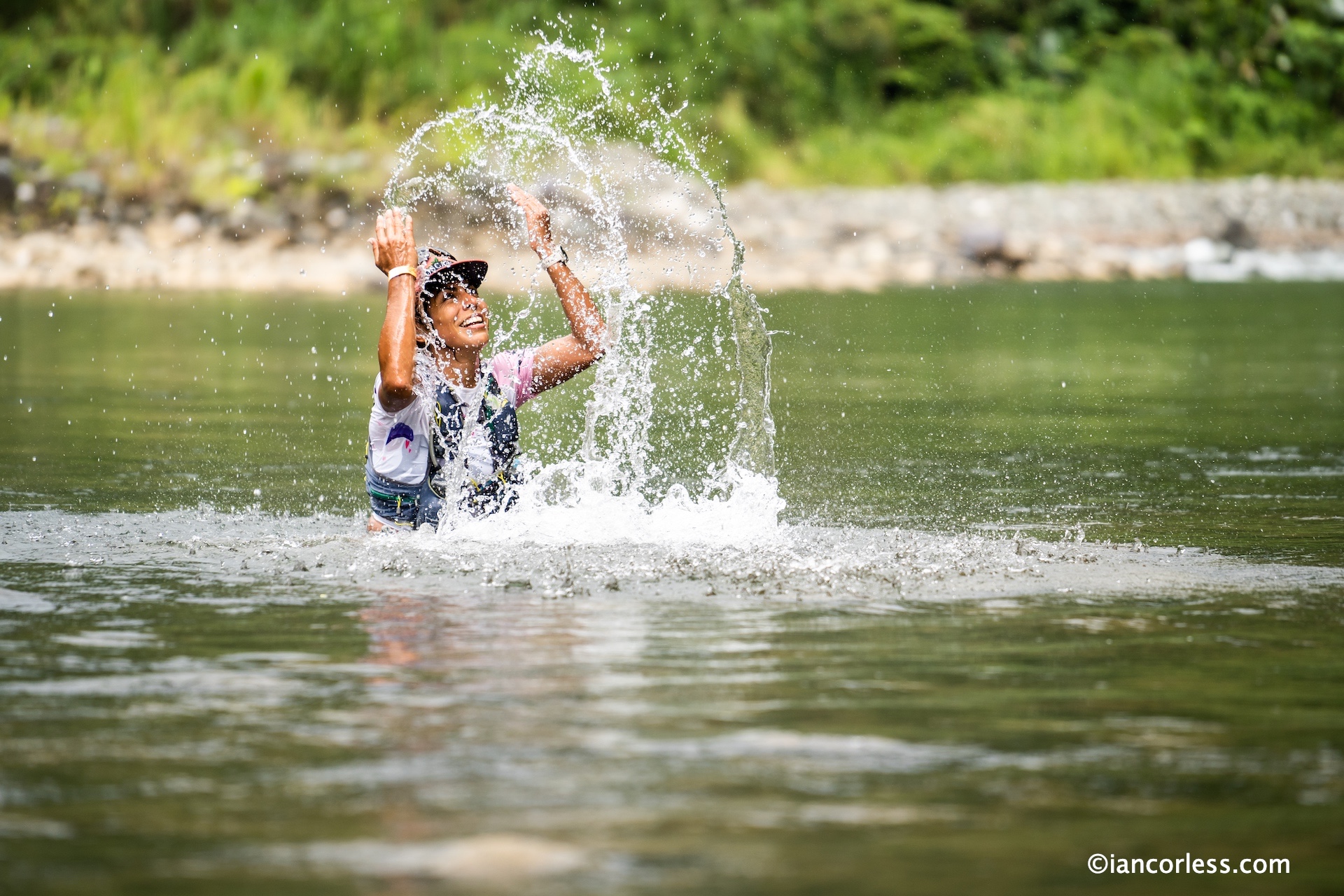
Runners depart San Jose early morning (around 0500) for a 3-hour drive to Playa Del Rey, Quepos. Arguably the toughest day of the race, not because of the terrain or distance, but because of the start time! It’s a day for caution! The 34.6km is very runnable with little vertical and technicality, it welcomes the runners to Costa Rica.

Stage 2 

An early breakfast, around 0400, the race starts with the arrival of the sun! The only way is up from the start with a tough and challenging climb. It’s a tough day with an abundance of climbing and descending and a final tough flat stretch on the beach, just as the heat takes hold.

Stage 3

Tough with 25km of climbing topping out at 800m followed by a drop to sea and a final kick in the tail before the arrival at camp. For many, this is a key day and maybe one of the most spectacular.

Stage 4

A tough and steep climb to start, but once at 900m the route is a roller coaster of relentless small climbs and descents, often littered with technical sections, rain forest, river crossings and boulders. At 30km, it’s a short drop to the line and the finish at 37.1km.

Stage 5

The long day but what a beauty! Tweaked a couple of years ago and now has become iconic with tough trails, plenty of climbing, sandy beaches and yes, even a boat trip. The finish just before Drake Bay offers a calm relaxation with a stunning backdrop and amazing sunset.

Stage 6

The victory lap! For many, this stage is the most beautiful and memorable. It is now a longer day due to the start and finish not being in Drake Bay. However, the experience is not diminished. The loop manages to contain a little of all that has gone before.

“TCC is a unique race and one that we are passionate about. We celebrate 20-years in 2024 and that alone is an incredible achievement and one that we are proud of. The race travels via dense forest trails, river crossings, waterfalls, long stretches of golden beaches backed by palm trees, dusty access roads, high ridges and open expansive plains, we created this race to show of Costa Rica and this beautiful coastline.”

TCC is proud of the elite line-up that has experienced this magical multi-day journey.

Here is the past 10-years winners:

  • 2023: Didrik Hermansen – Katie Schide
  • 2022: Hayden Hawks – Giuditta Turini
  • 2021: Timothy Olson – Felicitas Charpin
  • 2020: Cody Lind – Kaytlyn Gerbin
  • 2019: Pere Aurell Bove – Ida Nilsson*
  • 2018: Tom Evans* – Ragna Debats
  • 2017: Tom Owens – Anna Frost
  • 2016: Iain Don-Wauchope – Ester Alvez
  • 2015: Iain Don-Wauchope – Veronica Bravo
  • 2014: Michael Wardian – Jo Meek
  • 2013: Dave James – Gemma Slaughter

Course records: Tom Evans 21:44:12 and Ida Nilsson 23:36:04

Ones to watch in 2024

2020 champion, Cody Lind returns to celebrate 20-years of TCC. With past experience, he know what to expect from Costa Rica. His ability as skyrunner work well on the demanding and technical trails, in addition, his speed for pure running grounded at Western States (2021, 2022 and 2023) transfers well to the gravel roads and beaches that this route brings.

Cristofer Clemente, an experienced skyrunner and trail runner, he won the 2016 Syrunner World Series for the ultra distance and in 2017 he took a silver medal at the IAU Trail World Champs. He has recently won Tenerife Blue Trail, Ultramaraton Guatemala and Puerta Vallarta Mexico by UTMB. He is without doubt a hot contender for overall victory.

Pierre Meslet placed 6th and 9th at Marathon des Sables, so, is no stranger to multi-day running. TCC will provide a different challenge, while the racing is still over 6-days, this time there is no self-sufficiency, no carrying a pack, just intense heat and humidity.

From Costa Rica, we have Erick Aguero and Carlos Calvo. Erick is arguably one of the most experienced TCC competitors with countless participations and podium places.

Lina and Sanna El Kott Helander (the El Kott twins) are grounded in adventure racing, skyrunning and mountain running. They are an adventure duo that push boundaries. In 2023, they both undertook the PTL; a 300km journey during the UTMB week. The duo are perfectly matched for Costa Rica and the terrain and challenges on offer.

Ester Alves won TCC in 2016 and return this year with a contingent of runners from Portugal. I am sure Ester will say that she is in Costa Rica for the journey and experience in 2024. However, Experience, skill and ability is never lost.

Katie Young will be an unknown name to many, however, in 2023 she was my hot tip for Marathon des Sables and she proved me correct placing 6th. TCC will be a new experience for Katie but watch this space…

Lindsey McElroy Ulrich from the USA joins the TCC party with a long list of ultra results that date back to 2014 on Ultrasignup. In 2022, Lindsey tackled the Marathon des Sables, so, she comes to Costa Rica with multi-day experience. No stranger to long distance, she was also 20th at UTMB.

In addition to the above, we have a wealth of Costa Rican talent who will toe the line

Schedule:

  • February: Saturday 10th to Saturday 17th, 2024
  • Official registration & poolside reception for competitors in San José: February, Saturday 10th
  • Race start: February, Sunday 11th
  • Race finish: February, Friday 16th
  • Race length: 6 days
  • Distance: Expedition Run 240km | Adventure Run 145km
  • Event finish: February, Saturday 17th

Follow on:

Instagram – @iancorlessphotography

Twitter – @talkultra

facebook.com/iancorlessphotography

Web – www.iancorless.com

Web – www.iancorlessphotography.com

Image sales –www.iancorless.photoshelter.com

Marathon des Sables – The Legendary : NEWS ONE – Feb 2024

©iancorless

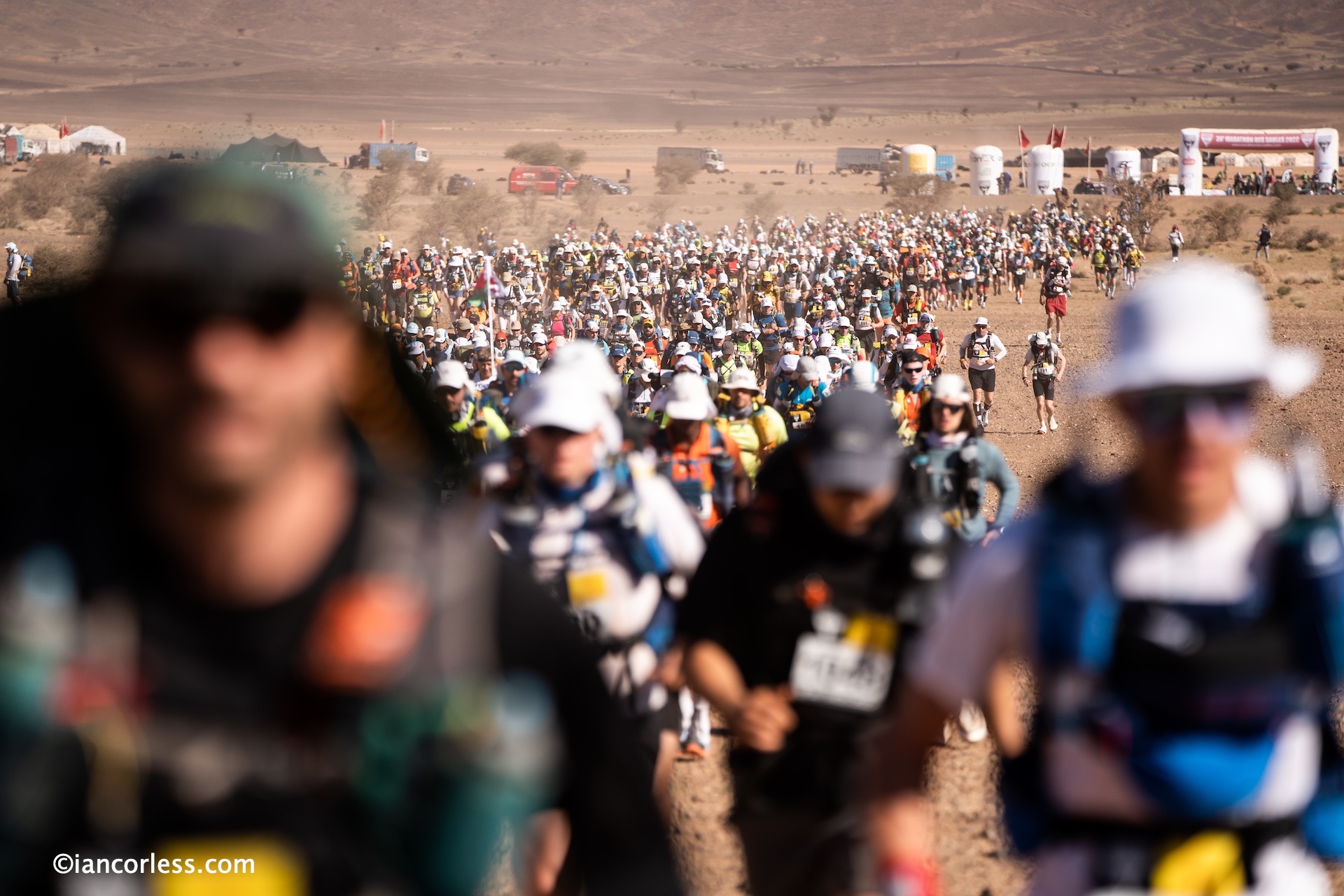
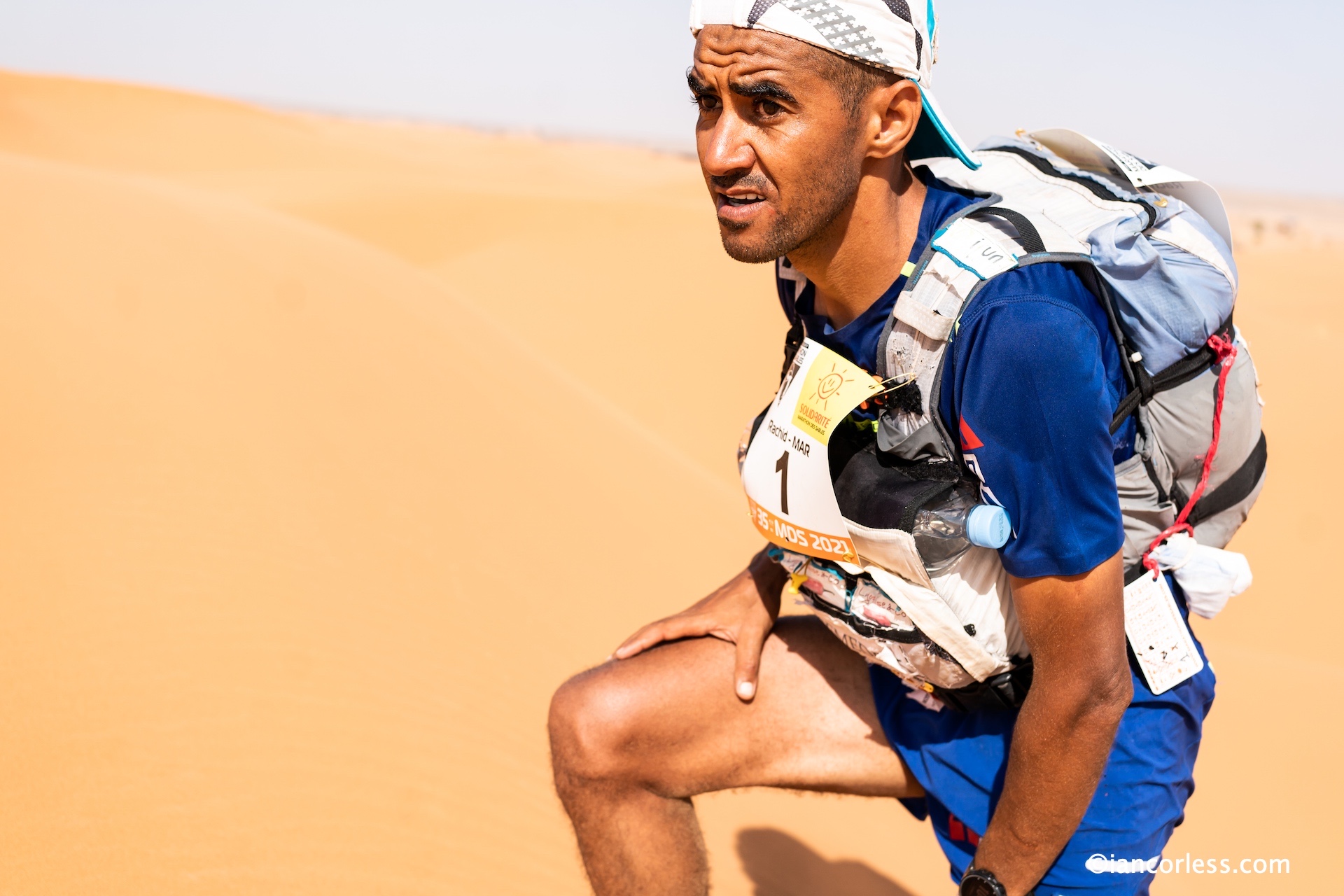
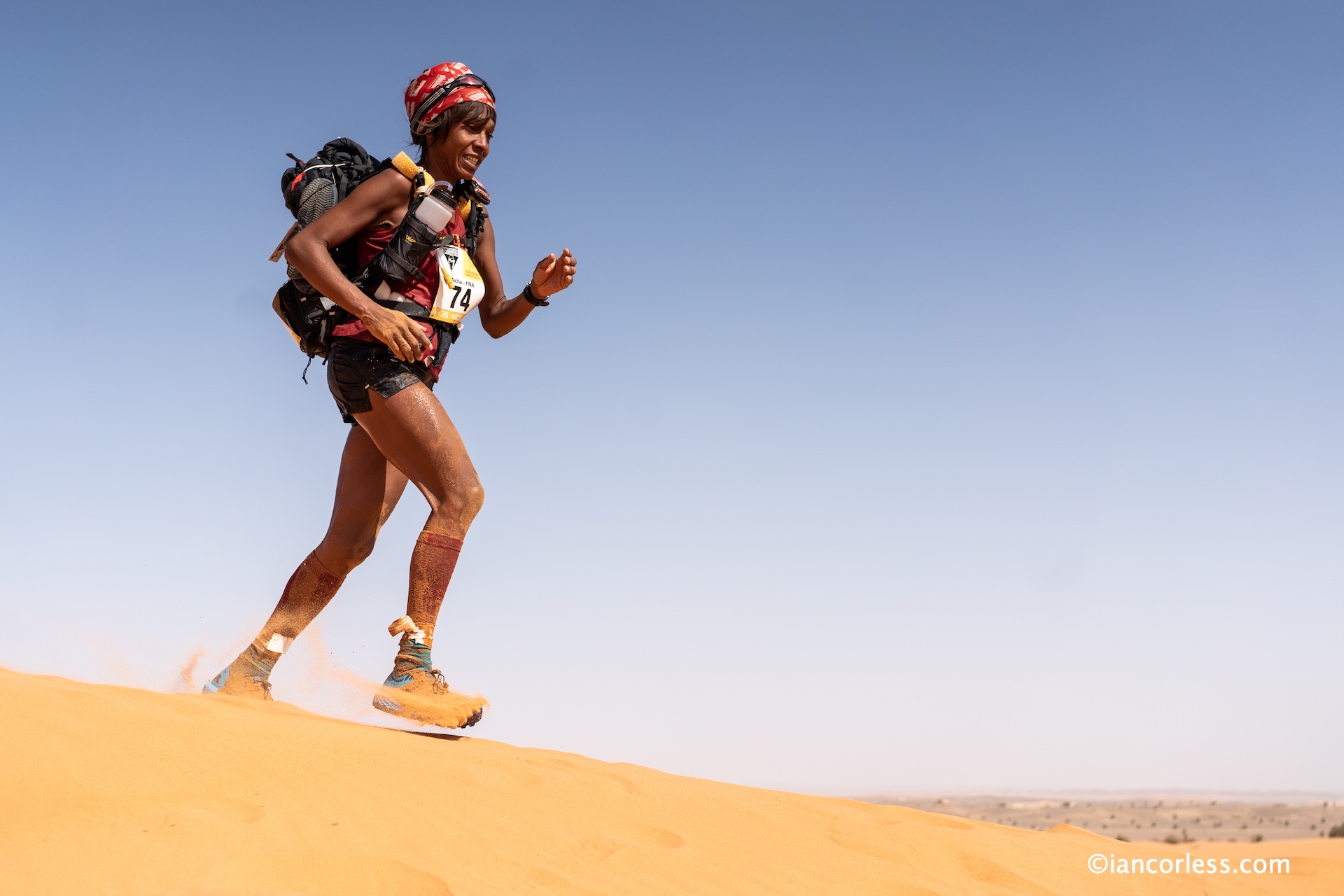
As we countdown to the 2024 edition of the Marathon des Sables – The Legendary, we will be providing a series of monthly updates, articles, interviews and podcasts.

The 2024 Marathon des Sables – The Legendary will be the longest edition in the 37-year history of the race. At 252km, the event will now take place over 6-stages/ 7-days and not 5-stages/ 6-days as announced in late 2023.

It was clear initially that the 6th stage charity stage would disappear, however, on reflection, the new organisation have decided to continue with 6-stages but this time, all stages will be timed. The charity stage in previous editions was not timed.

The infamous long day which typically took place on stage 4 will now move to stage 3 for 2024, this will be day 3 and day 4 of the race as it has an extended time allowance due to the distance.

What does the above mean for the runner?

252km’s is a long way, but the race has always been advertised as 250km’s, so, although the race has fluctuated in distance over the years, the 252km should not come as any great surprise.

The timed stages now numbering 6 and not 5 will make a big difference, especially with the long day coming on stage 3. This will mean that stage 4, stage 5 and stage 6 will need to approximately cover 100km. This makes for a tough end to the week. In past editions, the long day was feared but on completion, many had the mindset, ‘It is just a marathon to go!’ Now it will be significantly more.

The daily distances are typically never disclosed before the race and the jury is out if the distances will be announced pre arrival in Morocco, watch this space! However, it is pretty easy to guess on approximate distances.

Historically, distances for the stages are listed as follows:

  • Stage 1 from 28 to 35 km
  • Stage 2 from 28 to 39 km
  • Stage 3 from 28 to 39 km
  • Stage 4 (The Long One) from 75 to 85 km (over 2 days)
  • Stage 5 (Marathon Stage) of 42.195 km
  • Stage 6 Charity

We know the 2024 edition will be 252km, so, as a guess and guide the following will provide a good estimation, the daily figures are +/-, for example, stage 1 could be 30km and stage 2 40km.

  • Stage 1: 32km (day 1) running total: 32km
  • Stage 2: 38km  (day 2) running total: 70km
  • Stage 3: 83km (day 3 and 4) running total: 153
  • Stage 4: 42km (day 5) running total: 195km
  • Stage 5: 36km (day 6) running total: 23km
  • Stage 6: 21km (day 7) running total: 252km

Total: 252km 

With the above information, you now have at least a template and guide for which to plan around.

OTHER KEY CHANGES

Salt Tablets

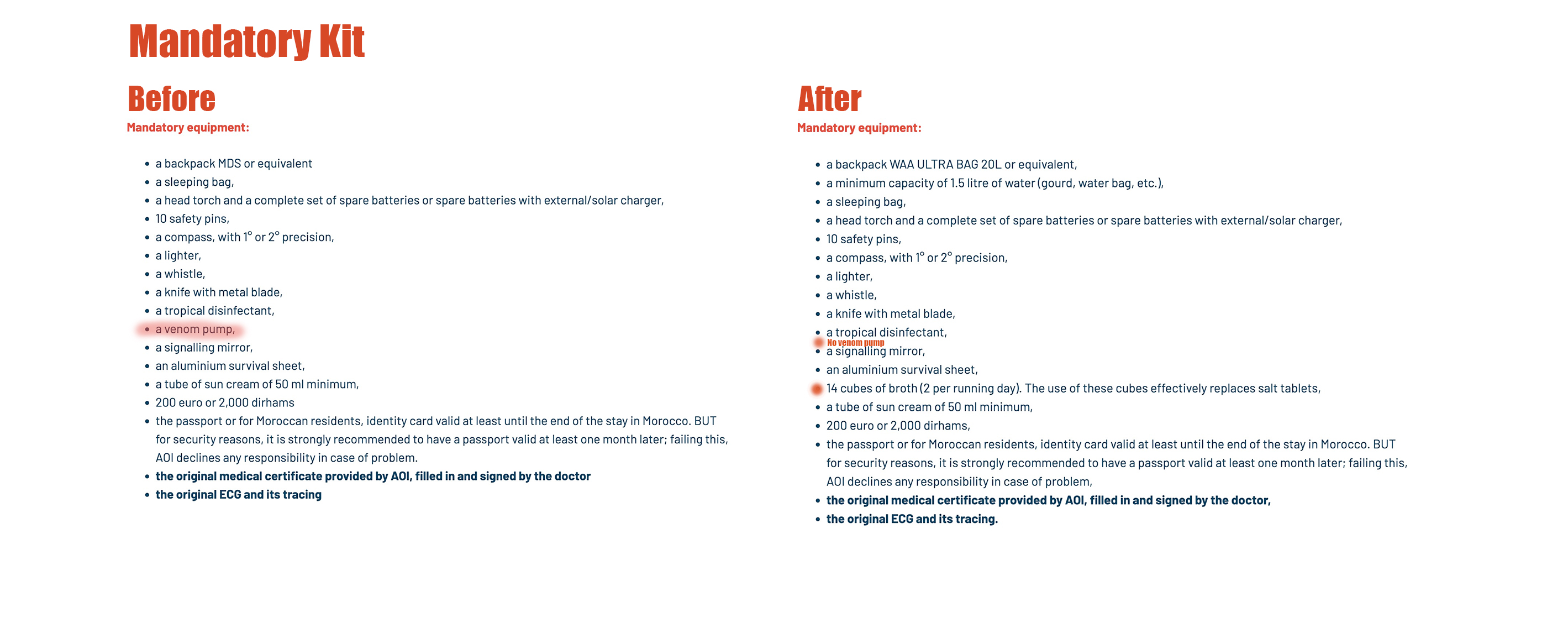
As I announced in 2023, it was my expectation that salt tablets would not be provided for the 2024 race. The new revised mandatory requirement for the race requires 14 broth cubes – these cubes are known to be salty. You have no choice here, you must have them. However, it will be your decision if you use them? My advice is to plan a strategy that works for you. Listen to my podcast with Andy Blow from Precision Hydration HERE. Remember, this is a self-sufficient race, so, be prepared to be self-sufficient and have a plan/ strategy that works for you.

Water Capacity

Another key change was the requirement for ‘A minimum capacity of 3 litres of water’ in the form of bottles, bladder etc. This has now been revised and we go back to 1.5 ltr capacity. This is a good move. Cp’s will be increased so that runner’s will only need to carry 1.5 liters. However, on the long day, an additional 1.5 ltr bottle of water will be provided either at the start or at cp1 (making 3 ltr to carry) therefore the capacity to carry 3 litres on the long day between cp’s is recommend. It is important that you think HOW you will carry this extra 1.5 ltr. Maybe you will have a bladder in or on your pack, maybe two additional 750ml bottles at the rear or if you have the front pack, you can slide the 1.5 bottle on top. It’s not recommended to run with a 1.5 ltr bottle in you hand, so, be prepared…

Water

Water during the stage will not be provided via 1.5 ltr bottles as in past editions. Water will be provided from a series of tables and manned staff with jugs to decant water to your empty bottles. Importantly, there had been concerns about where the water will come from, to clarify: 5L Bottles on CP -> Served in 2L jugs -> Served by staff in the runners’ bottles.

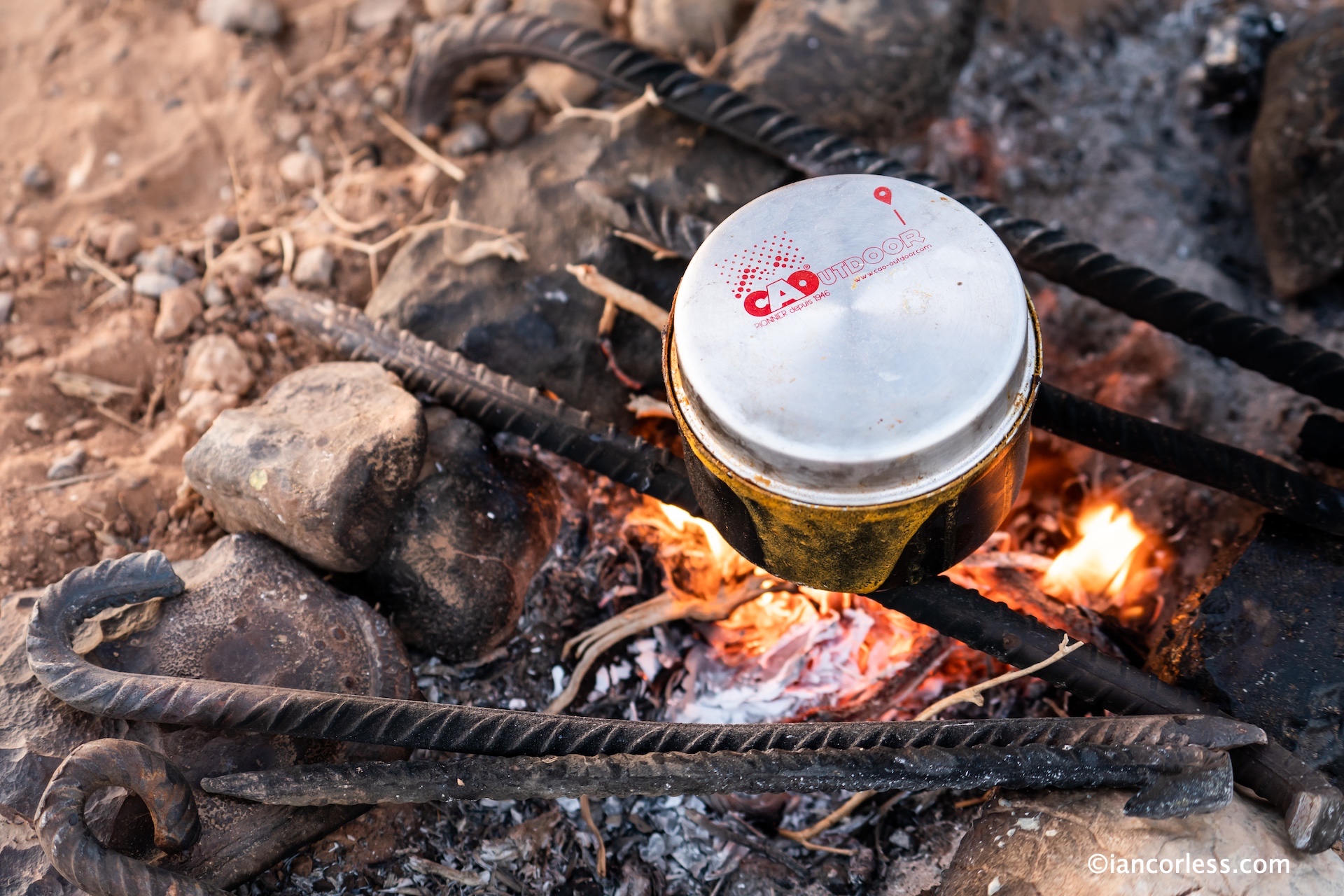
The exception being on the long day as mentioned above when a 1.5 ltr bottle will be provided at the start or cp1 and at the end of each stage when a 5 ltr bottle per participant is provided. This 5 ltr bottle will cover the evening after the stage, the morning of the next day and the required 1.5 ltr capacity starting the next stage to cp1. So, if you had planned to cut down a 1.5 ltr bottle to use as a bowl for dinner and breakfast, this will not be possible. You will now need a suitable pot or similar.

Checkpoints

Will be typically 2 to 7 per stage. On the long day, it is therefore a good assumption that checkpoints will be +/- 12km’s apart and hence the need to require 3 ltrs.

Mandatory Equipment

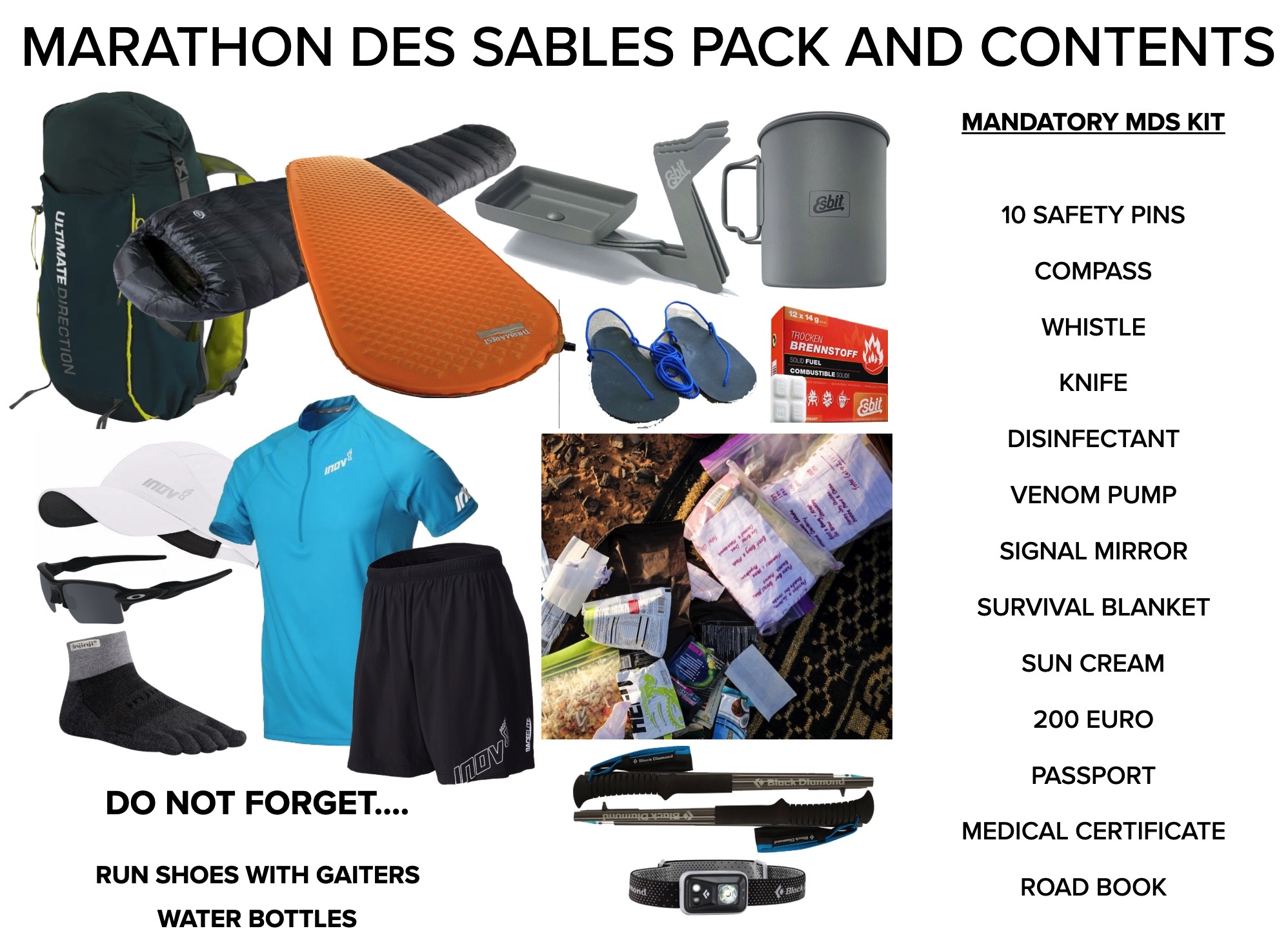
I will list here the mandatory equipment to avoid any confusion:

  • Pack such as WAA Ultra Bag 20L
  • Minimum capacity of 1.5 liters of water*
  • Sleeping bag
  • Head torch and spare batteries (you can have a charger/ solar charger)
  • 10 safety pins
  • Compass with 1 or 2 deg precision
  • Lighter
  • Whistle
  • Knife
  • Topical disinfectant
  • Venom pump *has now been removed
  • Signal mirror
  • Survival blanket
  • 14 cubes of broth***
  • Sun cream
  • 200 euro or 2000 dirhams
  • Passport or ID card
  • ECG and medical

* new change but consider the long day when you will have 3 ltr.

** new change

*** to replace salt tablets

Food Requirement

You need 14,000 calories of food as a minimum, 2000 calories per day. You can of course carry more than this, but 14,000 is the minimum. You must be able to prove the calories, so, if you decant food into lighter or different packaging, make sure you keep the nutritional information.

You

In addition to the above you personally will need:

  • Run top
  • Neck roll/ Buff
  • Run shorts
  • Socks
  • Shoes with gaiters
  • Hat
  • Sunglasses
  • Watch
  • Spare socks
  • Warm layer
  • Foot care
  • Hygiene products
  • Toilet roll/ wipes
  • Lip balm
  • Blind fold
  • Ear plugs
  • Spoon
  • Pot/ bowl
  • Stove
  • Esbit cubes
  • Sleeping mat
©iancorless

Recommended

  • Zip ties
  • Gorilla tape
  • Super glue
  • Sewing kit
  • Cord/ thin rope

Top Tips

Keep the pack weight as close to the minimum 6.5kg as possible, additional weight is additional stress that you do not need.

Keep luxuries to a minimum, they only add weight. A super light Mp3 player (with good battery) and earphones is the only luxury I would consider.

Accept that this is a tough challenge, you will be stripped back to a survival mode. You will not wash, you will get dirty, you will get smelly. Accept it.

Start slow and ease into the race.

Poles can be a lifesaver and I recommend them but you must learn to use them. Those at the front do not need poles, they can run.

Learn to walk, walk and walk. Many go to the desert with the expectation of running 80% and walking 20%. The reality is it will be the other way around.

Look after your feet and start with the correct shoes for you.

Take a sleeping mat or pad. You only need to do three things: run, eat and sleep. Sleep and comfort is important for recovery.

Follow on:

Instagram – @iancorlessphotography

Twitter – @talkultra

facebook.com/iancorlessphotography

Web – www.iancorless.com

Web – www.iancorlessphotography.com

Image sales –www.iancorless.photoshelter.com